Islands
Pacific
Monthly
February, 1959
Vol. XXIX. No. 7.
fstablished 1930
■S#-4 lit WPG.P.Q., Sydntfr^^i t transmission by post as a newspaper ]
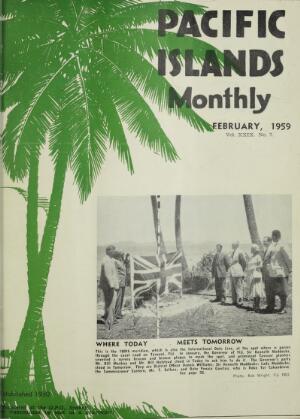
WHERE TODAY . . . MEETS TOMORROW This is the 180th meridian, which is the International Date Line, at the spot where is passes through the coast road on Taveuni, Fiji. In Junuary, the Governor of Fiji, Sir Kenneth Maddocks, unveiled a survey beacon and bronze plaque to mark the spot, and prominent Taveuni planters Mr. Bill Mackay and Mr. Bill Halstead stood in Today to ask him to do it. The Governor's party stood in Tomorrow. They are District Officer Dennis Williams; Sir Kenneth Maddocks; Lady Maddocks; the Commissioner Eastern, Mr. T. Sellers; and Ratu Pe naia Ganilau, who is Roko Tui Cakaudrove.
See page 35 Photo: Rob Wright, Fiji PRO.
Advertisements & other items, pp. 2-6 (5 items)
East
'TOST
THIS WAY'S BEST!
S flights weekly around the world
Circle the globe with the sun or travel round the other way—B.O.A.C.-OANTAS is the best way to go.
Offering a choice of eight weekly flights, the 8.0.A.C.-QANTAS round-the-world route via Australia enables you to fly directly between San Francisco and New York without changing airlines. Experienced travellers will appreciate what it means in terms of convenience, comfort, cuisine and service to fly all the way by intercontinental airliners operating to international standards.
See your 8.0.A.C.-QANTAS travel agent. m mm m
with lIA NT Ai
THE WORLD-WIDE AIRLINE
J82.84.58A
STOVES
*» Model No. 532 E
SILENT TYPE
Fount with Filler Plug of wing
MADE IN ENGLAND
These two Coleman Stoves are of the one burner kerosene type and are available in both silent and roarer models. Their dimensions are height 87 inches, diameter Si inches, approximate weight 2| lb. Both models have the same outstanding features. 1. Full-Size
type.
2. Air release on side of Filler Plug 3. Heavy Brass pressure-tested Tanks. 4. Fount and Burner firmly soldered together. 5. European-type pump. 6. Grate and Grate Supports detachable to reduce shipping space, 7. Spare parts interchangeable with similar European Stoves.
Representatives for the Pacific Islands Model No. 531 E
ROARER TYPE
22 YOUNG ST.,
SYDNEY
ROBERT GILLESPIE Pty. Ltd.
Phone: BU 2221 Cables “Robergill”
ROBERT GILLESPIE (N.G.) LTD.
Lae, Madang, Rabaul, Port Moresby
PEARCE & CO. LTD.,
Suva for Fiji Islands
B-250 sets the pace
for every job!
Here's a tractor you can keep busy all year round—it's economical to operate and runs on low-cost diesel fuel. The B-250 is a versatile tractor —operating equipment from the belt pulley, P.T.0., drawbar, 3 pt. linkage as well as front-mounted hydraulically controlled equipment. You can operate both types of 3 pt. linkage system equipment with this tractor —you can work it in sticky and wet conditions when other tractors can't get traction —because it's got a "diff lock". The amazing 30 h.p. B-250 is a comfortable tractor to drive, safe on hillsides, easy to service and features a completely independent built-in hydraulic system.
In all types of places doing all kinds of jobs the B-250 is proving itself the tractor that sets the pace. It is available to you from Australia through your distributor—you can be sure of service, spare parts and a choice from a big range of low-cost matched equipment. Get full details and prices now!
DISTRIBUTORS
W*S 0 I I i 1 PAPUA AND NEW GUINEA; Steamships Trading Company Limited, Port Moresby and Samarai. Dealers; New Guinea Goldfields Ltd., Wau and Lae. Rabaul Trading Co. Ltd., Rabaul. DUTCH NEW GUINEA. H. Englebert n.v„ Hollandia.
SOLOMON ISLANDS: Mr. K. H. Dal-
rymple Hay, Honiara. NEW CALEDONIA: Agence Automobile, Noumea. TAHITI; Hintze & Company, Papeete. NEW HEBRIDES: Kerr Bros. Pty. Ltd., Sydney.
FIJI: Niranjan's Service Station, Suva.
P1M134.32
INTERNATIONAL HARVESTER
International Harvester Company of Australia Pty. Ltd. District Sales Offices in Capital Cities of Australia. Works: Dandenong, Geelong and Port Melbourne, Victoria.
easy ventilation control... with the
I 6&JURASTfIY„
m it A low-priced, high-quality friction window stay. ★ Easy to fit, easy to use. ★ Smooth easy operation. ★ Opens wide for easy ventilation control. ★ New advanced springing, ★ Electro-galvanised finish. ★ Entirely eliminates hinges. ★ Multiple sizes for a stronger, more efficient fitting.
TRADE
ENQUIRIES
WELCOME
DU R AST AYS . .
made by the manufacturers of well-known Cooper Louvres:
COOPER MANUFACTURING CO. LIMITED
TAKAPUNA, AUCKLAND
New- Quisiea AudtfcMa Jlim
Passenger and Cargo liners:
M.S. "SINKIANG"
M.S. "SHANSI"
M.S. "SOOCHOW"
S.S. "PAKHOI"
Regular services between Aus-
tralia, Papua-New Guinea and
Solomon Islands.
JAPAN, SHANGHAI, HONGKONG TO NEW GUINEA AND FIJI Regular Service with the Motorships: "CHENGTU" "CHUNGKING" "CHEFOO"
Japan, Shanghai, Hongkong, Borneo, Madang, Kavieng, Rabaul, Lae, Samarai, Port Moresby, New Hebrides, Fiji, Sydney, Melbourne, Adelaide. (Returning from Australia to Japan direct).
For further details please apply to agents or refer to the weekly advertisements in the “South Pacific Post .
THE CHINA NAVIGATION CO. LTD.
(A British Company incorporated within the United Kingdom)
AGENTS:
PAPUA: Steamships Trading Co. Ltd., Port Moresby, Samarai .Cables: BRISBANE: Wills, Gilchrist & Sanderson Pty. Ltd., 400 Queen Street.
'Steamships".
Cable: "Wilgilsand".
NEW GIMNEA: Co! y er Wetson (NG) Ltd., Lae, Madang, Rabaul. MELBOURNE: John Sanderson (Shipping) Pty. Ltd., 111 William Street.
Cabte: "Colyeram".
New Guinea Co. Ltd., Kavieng. Cable: "Camohe".
"FIJI: Morris Hedstrom Ltd., Suva. Cable: "Deuba".
NEW HEBRIDES; Comptoirs Francais des Nouvelles Hebrides, Vila, Santo. Cable; "Comptoirs Francais".
NEW CALEDONIA: Etablissements Ballande, Noumea. Cabie: "Ballande".
Cable: "Syndicate' ADELAIDE: George Wills & Co. Ltd., 33 Gilbert Place. Cable: "Willsandco".
JAPAN: Butterfield & Swire (Japan) Ltd., Tokyo, Yokohama, Osaka, Kobe. Cable: "Swire".
EASTERN MANAGERS: Butterfield & Swire, Hongkong. Cable; "Swire".
SWIRE & YUILL PTY. LTD
6 BRIDGE STREET, SYDNEY.
• CABLES: "SWIRESHIP". BU 1712.
I
ACIFIC ISLANDS MONTHLY FEBRUARY, 1959
Ii
FEBRUARY, 1959 PACIFIC ISLANDS MONTH LJ
Iii
• 1 F I C ISLANDS MONTHLY FEBRUARY. 1959
Iv
FEBRUARY, 1959 - MCIFIC ISLANDS MONTH LJ
People
Mrs. Alice Bowring, one of the > oldest and most famous residents >of the Edie Creek end of the Bulolo r Valley, New Guinea, leaves this imonth on a leisurely tour of North lAmerica and Europe. Her travel ing companion is her niece, Miss IDiana Bowring, of Double Bay. iSydney.
In spite of the facts that she fv/as a successful pre-war gold iminer in New Guinea, that she ?went over an Edie Creek precipice iin a car and smashed her hip, jthat she drew the first prize in an lottery, and that she idirected a Red Cross station for -the Americans in Noumea during -four war years, Alice Bowring is Exceedingly spry and energetic at >74, and probably will get as big ta, kick out of world circumnaviga tion as her excited niece.
Mr. Clayton G. Shaw, of Auck land, New Zealand, arrived at Apia, V. Samoa, by plane beginning of :anuary, as managing editor of the Deal weekly, the Samoa Bulletin, leceeding Mr. Terry Dunleavy, who • eld the position for seven years.
Hr. Shaw has been a senior staff uember of the Auckland Star. * * * A Samoan scholarship student, ulao Imo, has gained his medical :Cgree at Otago University, New :€aland, where he has studied since uZ . * * * _Mr. B. L. R. Tattersall, Registrar hd Commissioner of the Western
[?]on ga 's Crown Prince and Prime Minister, Tungi, as reported in January to be planning a visit [?] Japan soon, to discuss trade—particularly [?]pra and a fishing industry. This latest port rait is by Hettig, of Nukualofa.
Samoan High Court, has retired from Government service after 4C years, 35 of which he spent in the Justice Department. A conscientious and popular official, Mr. Tattersall was farewelled by his fellow work ers in an impressive ceremony re cently. ♦ * * The Headmaster of Vaipoul: Boys’ Boarding School in Savaii, W Samoa, Mr. D. H. Lee, has returnee to New Zealand with his family after holding the position for eight years. During his term of office: Mr. Lee effected considerable im provements to the school, dormitories and equipment.
A Parisian newspaper has pubi lished the fact that during the wa;i the present French Premier, M Michael Debre, was registered it the Resistance Movement as beim named Jaquier, and as having bees born on the island of Lifou, om of the Loyalty islands. M. Debre knew, of course, that the Gestapo would have been hard put to it t prove the falsity of the claim. * * * Mrs. Jean Edwards, popular Vice-President of the New Guinei Women’s Club of Sydney, : currently visiting her relatives it Scotland. She left Sydney shortU before Christmas and expects to rei turn there about April. * * * SPC Fisheries Officer, Mr. H. Vas Pel, was in Norfolk Island in Janur ary investigating the possibility o developing the Island’s fishing ini dustry.
A marriage of Islands' interest at Gosfoo[?] NSW —Miss Lois Connerton, for four years nursing sister at Raton Memorial Hospital, Ne[?] Hebrides, to Mr. Bruce Sharp, now with t[?] Lands Department, Kavieng, NG. The coupl[?] who met in the New Hebrides, will live Kavieng. NG guests at the ceremony includ[?] Mr. W. Lovi and Mr. and Mrs. Peter Saunde[?]
Assistant Medical Officer John r, Viliua, of the Niue Island Health [Department, is attending a World [Health Organisation tuberculosis icourse at Suva, Fiji. . After this he will take a six imonth course in anaesthetics at the JCentral Medical School, Suva, and mill go on to work in a New Zea- Jland hospital for two months be- Ifcre returning to Niue at the end x>f 1959.
Nurses Vaitoelau and Katiligi tfiave also left Niue hospital for *Apia, Western Samoa, where they vWill take a three-year nursing :course to become fully-registered nurses with qualifications accepted ctnroughout the Commonwealth.
Mr. and Mrs. Mick Leahy, of tnag, Morobe District, New Guinea, ;ft Sydney by air on January 16 or New York, where Mr. Leahy :ttended General Douglas Mac trthur’s birthday party. The party 1 arranged each year by Major general Jack Sverdrup, of the US irmy Engineers, with whom Mr. eahy worked during the war in New ftiinea. At that time Mick was in ne RAAF, but for some extraord lary reason that would be tenable .aly in war-time NG, he was at •lched to the US Army Engineers.
Sydney Morning Herald" journalist Gavin [?]outer last December was officially invited to [?]company a new penetrative patrol into part [?] the Jimmi River valley, NG, to make first [?]ntact with the Gants tribe. The patrol, led [?] PO Barry Griffin, found the Gants on the [?]adang side of the district. Mr. Souter, [?]ctured here with a member of the tribe, has [?]nce published an excellent and widely-read [?]count of the patrol, which has already done lot towards showing the public the work and problems of NG patrol officers.
Miss Wynanne Legge, daughter o Mrs. Betty Parker, of Rabaul, anc grand-niece of Mrs. Gordon Thomas formerly of New Guinea, wa. married in New Zealand on Jan uary 23 to Dr. Jan J. Saalve, oi the Medical Department of thi P-NG Administration. Theceremon; took place at the home of the bride” grandparents, in Devonport, Auck: land, and Mrs. Joan Brierley (of th.
District Commission staff ii Rabaul), aunt of the bride, wai among those present. The youn, couple expect to live in New Gurnet —Dr. Saalve has just returned fron Britain, where he took post-gradui ate courses in tropical medicim and medical administration.
Mr. Bob Hewlett, who did suoj an excellent job for Fiji tourisß as secretary of the Fiji Visitorc Bureau before he went to Singapoo as Director of Tourism there, hsi a lot of satisfactory publicity ft his new place of business in tU Australian Women’s Weekly January 21. There were 16 pages j coloured photographs, story aix local advertising under the title “Holiday in Singapore and Referring to the Director of t!f Division of Tourism, the Womens Weekly staff writer called hir “blunt, genial Robert Hewlett.” \7 will agree with the “genial”, but Fiji he was always known as Bo£ and blunt is not a word we woujc have used in describing him. It mux be something Singapore has donm * * * Mrs. Ursula Harris, well knovc resident of Rabaul, New Guinea, hrl been spending a month with friem; and relatives in Sydney. She return home late in February.
On a visit to the United Kingdom in February after 45 years in the Fiji Civil Service —[?] Stuart Reay. Mr. Reay joined the service a junior clerk in 1914, and eventually beca[?] the Colony's first Commissioner of Labour, retired in 1954, but was later recalled to [?] come chairman of the Transport Control Bo[?] —with the job of getting Fiji's transport syst[?] into order. He has done it well. After t[?] leave, he hopes to live quietly in Suva.
Mr. E. Flowers, District Officer. -Rabaul, NG, Mrs. Flowers and ■family were passengers to Sydney con the February Bulolo. They will spend extended leave there and ex pect to return to Rabaul towards the end of this year. * * * Mrs. Joan Brierley, of the Secre tarial staff of the District Commis sioner’s Office, Rabaul, returned to 'New Guinea in February. She spent her long leave in Auckland, NZ Xwhere her parents reside), mostly undergoing medical treatment.
Mr. Harry West, who has been Australian liaison officer with the Netherlands New Guinea Adminis tration in Hollandia, is in Canberra on leave. * * * A pioneer missionary of the iivangelical Lutheran Church in 'JG —Rev. A. P. H. Freund —celebrated his silver jubilee at Gawler, South Australia, in January. Mr.
Freund graduated from Concordia seminary, Adelaide, in 1934. * * * Fijian twins Tajun and Khairun who made the headlines in he Australian newspapers last year when they were told they had to their nursing training in Bris bane, and return to Fiji, because their educational standards were not high enough, are now reported to be “doing nicely”. After the out cry, the then Immigration Minister ;?ave them permission to stay another 12 months, provided they
Married in Suva in January, Miss Florence [?]oon, of Hongkong, to Mr. Dick Honson. Mr. [?]onson is a member of one of Fiji's most [?]rominent Chinese families, and more than [?]OO people attended the reception in the beautiful family home in Suva.
Photo: C. L. Cheng.
raised their educational level. The twins, 19, have been receiving coach ing lessons. * * * Born in January, Sina Eller Coleman, the second daughter ano the twelfth child of Governor Peten Coleman, and Mrs. Coleman, o< American Samoa. * * * Mr. and Mrs. G. Hazelman, oi Apia, West Samoa, were involved ii a car accident while holidaying in Savusavu, Fiji, in January. Theh car collided with another carrying Mrs. Hazelman’s mother. Mrs Hazelman and her mother wen both injured.
Dr. F. J. West, senior lecturer ii history, Victoria University College Wellington, NZ, is visiting Eastern Samoa to conduct research intJr political advancement there. He hsx a Southeast Asia Treaty Researco- Fellowship. * * * Rabaul (NG) volcanologist Mlv Jack Taylor visited the BSIP ii January. With BSIP Chief Geologic Mr. J. C. Grover he inspected void canic Savo Island 17 miles northlj west of Honiara.
Miss Dorothy Weaver, who has just passed wi[?] honours her final Law examinations at M[?] bourne University where she has been a pa[?] time student for the last six years. She w[?] practice in Melbourne. Miss Weaver is t[?] eldest daughter of Mrs. L. Weaver of Suw[?] and of the late Captain E. S. Weaver, w[?] died about five years ago in Suva. Over t[?] last 10 years she has written several amusi[?] articles for RIM (one we remember about t[?] Americans in war-time New Caledonia, a[?] another about being nostalgic for a hurrican[?] The Law has claimed all her attention in mo[?] recent years and we have not had as mu[?] from her as we would have liked. Miss Wea[?] has worked hard and richly deserves h[?] brilliant pass.
Back in Tonga after three years’ study at Queen’s College, Brisbane —Rev. John Latukefu and Rev.
Siupeli Taliai, of the Free Wesleyan Church, which sponsored their training at Queensland University.
They are the first Tongan students to gain their Diploma of Education —and will be an asset to the teach ing staff of the 90-years-old Tupou College. ♦ « ♦ Two of Port Moresby’s most prominent couples—Mr. and Mrs.
Ken Donovan and Mr. and Mrs.
Corbet Gore—were being given rounds of farewell parties in January prior to their departure for Australia. Mr. Donovan has : received a new appointment in Melbourne. Mr. Gore has been appointed to an executive position ■ with Hornibrook Constructions in 1 Sydney. * * ♦ Freelance magazine photo -1 grapher, Mr. Kryn Taconis, of - Magnum Photos, New York, was in ’ Fiji in January “looking for some [ thing different to photograph”. : Earlier he had been in Broome, West Australia, on assignment 'with a party of US photographers (and models organising a publicity ► campaign which will boost overseas ’ the waning pearl shell button [industry. World fashion magazines 'will shortly publicise the beauties ►of shell buttons—as against plastic.
Mr. Bengt Danielsson, one of the \Kon Tiki raft crew, now living with mis wife and family in Tahiti, was
Mr. R. D. Moore, general manager of the Bank of New Zealand, which, it has been an [?]nounced, will hold majority of the shares in the new Bank of Western Samoa—see page 125.
Mr. Moore is current chairman of the New Zealand Bankers' Association.
visiting New Zealand in February Mr. Danielsson said on arrival i; New Zealand that he was at pre sent working on the story of Erii de Bisschop’s ill-fated Tahiti Nv raft expedition, based on detail supplied by de Bisschop’s crew. D Bisschop was killed at Rakahangs Cook Islands, last August, whe:: pinned between Tahiti Nui 111 am the reef in attempting to land ther following a4J months voyage fron Callao, Peru. * * * It’s “nice work if you can ge it”, said P-NG schoolteacher Mis Christina Wilson to a Brisban newspaper before returning to he post with the NG Education De partment, after leave. Her previou. posting was at Wabag, with “six c seven blankets and a fire at night; and now she is going to Tari.
Another Islander who made tH news pages, this time in Melbourne was Pastor Solomon Tevita, Seventh Day Adventist missionar. in the New Hebrides, who put o native dress —and a spear—for tH: photographers. Pastor Tevita, wli was attending a mission camp i Melbourne, really wears a suit wh© at home. * * * Mr. L. A. Bridgland, well knowv P-NG Agricultural Dept, seniti agronomist at Kerevat, New Britain left Port Moresby in late Januaus for Accra, Ghana, where he will ac tend a UN cocoa conference as Au;u tralia’s representative. * * * Visiting his home town, PertJ West Australia, in January, after years, was Mr. Ray Sheridan, < Rabaul, author of the section o P-NG music in the recent editioi of the Australian Encyclopaedia, am collector of native music and noisai
Mr. T. W. Canter Visscher, officer-in-charge the agricultural experimental station in Vav[?] Tonga, examines a number of excellent yani[?] beans on the vines in his area. Experime[?] indicate that the vanilla bean could be profitable crop for the Tongan farmer.
i for a recently-released microgroove recording on NG (reviewed in De cember PIM ).
English author Alec Waugh has iecently been visiting Fiji, finishing novel and seeing something of tie Colony. He is the brother of Ivelyn Waugh. * * * There was a happy reunion in >y’au, NG, in January, when leith and Robin Pickard arrived om England to settle in the Terri ory. Mr. Pickard had not seen his Jther, Mr. Bob Pickard, of Wau, or 27 years. ♦ * * Miss Hanifar Sahu Khan repre ;nted Fiji at the Commonwealth louth Conference in Britain in irly February. She is a sister of ir. Sahu Khan, a member of the iji Legislative Council. ♦ * ♦ A new West Samoan judge has ;en appointed. He is Saveaali’i tane, who was sworn in at a special tting of the High Court in Apia, le new appointment will help cope ith the greatly increased work of le Land and Titles Court, and of ie High Court, particularly the rcuit courts. * * ♦ LLae, NG, Golf Club has adopted » e Australian golfing custom of i esenting “One Holer’s” ties. First receive a presentation was George iightingale, who holed in one at ie Bth—the second time that the h has been aced in the Lae club’s •story.
[?]irector of Education in American Samoa, Mr. [?]larvin J. Senter, and his bride, French-Tahitian [?]uise Aimata Wohler, of Papeete. They met during a visit by Mr. Senter to Tahiti. —Pan American Prints.
Advertisements & other items, pp. 7-17 (8 items)
1
ACIFIC ISLANDS MONTHLY FEBRUARY, 1959
Davison Paints Limited
DAVISON PAINTS AND FINISHES
used on
UNILEVER HOUSE, Sydney
m > * ' f<*■ Js»s» - For the ultra modern Unilever House, Circular Quay, Sydney, Davison Paints were approved (architects Turner & Stephenson) where only the highest quality materials were used throughout.
Davison Paints are proud of this fact. Davison manufacture a full range of paints, giving every satisfaction under severe tropical conditions.
So see that Davison Paints and Finishes are specified for your new building.
DAVISON PAINTS LIMITED
Box 24, P. 0., AUBURN, N.S.W.
Obtainable from:— A. H. Bunting Ltd., SAMARAI. Madang Slipways Ltd., MADANG.
Buntings, LAE, GOROKA, POPONDETTA. K. H. Dalrymple Hay, HONIARA, 8.5.1.
Norfolk Trading Coy., NORFOLK IS.
Sole Agents for Territories of Papua, New Guinea, New Britain: LES CLARK & SON PTY. LTD., 27-29 King Street, Sydney
A COMPLETE
IN EVERY
BOTTLE!
«• 'U \ —; m ;<■ o
DON’T SAY GIN... SAY
A
THE INTERNATIONAL
FAVOURITE
Now is the time to have your insurances checked over to see that they are in keeping with your
present requirements.
In fact they should be examined at regular intervals by an expert in Insurance and that is one of the services we give to our clients.
We’ll be happy to check over your insurances and then prepare for you a quotation to meet the requirements of today.
It’s a service we offer without obligation.
For Better Insurance Service
HARVEY TRINPER
Insurance Brokers
MUSGRAVE STREET, PORT MORESBY
Box 104 P.O. Port Moresby. Phone 2373 Agents ‘ORT MORESBY & SAMARAI . Steamships Trading Co. Ltd. rAE & New Guinea Goldfields Ltd. lABAUL .. .. A. Hopper. BULOLO .. A. McKinlay.
HONIARA, B -S-L - La^ MADANG *c.’ W. ‘b. Rock.
Insurances at Lloyd's and Companies
V
PARKE-DAVIS
CAMOQUIN
TABLETS
Effective Single Dose Treatment for
MALARIA
SPECIALLY FLAVOURED TABLETS AVAILABLE FOR
CHILDREN
SUPPRESSIVE DOSE—
For Adults: 3 tablets to be taken as a single dose once weekly, or 1 tablet three times weekly.
For Children: 1-2 years, one INFANT FORMULA TABLET once weekly or half-tablet twice weekly. 3-5 years, two INFANT FORMULA
TREATMENT
For Adults: 3 tablets taken as a single dose. A second dose of 3 tablets may be given in from 24-72 hours if fever has not subsided completely.
For Children: 1-2 years, one INFANT FORMULA TABLET as a single dose.
TABLETS once weekly or one INFANT 3-5 years, two INFANT FORMULA FORMULA TABLET twice weekly. TABLETS as a single dose.
IMPORTANT:— CAMOQUIN should be taken immediately after or during a full meal.
Obtainable from all chemists and suppliers of
PARKE-DAVIS products
PARKE, DAVIS & CO., LTD., SYDNEY
For swift, sure three-way relief from
HEADACHE & ALL PAIN
VINCENTS A RC.
- POWDERS & TABLETS
in one!
ASPIRIN - PHENACETIN • CAFFEINE
m ate
co^ c£
'fh cut AVAILABLE EVERYWHERE AT ALL CHEMISTS AND STORES^
21 (hunky squares
rith satisfying flavour
so smooth ... so LK DA* These are just a few of the many reasons why you’ll like Cadbury’s Dairy Milk Chocolate. Take a deep bite of Cadbury’s Dairy Milk Chocolate. Mmm . . . it’s so smooth ... so creamy ... so satisfying. There’s wonderful eating enjoyment in each of the 21 thick, chunky squares. Nourishing, too; there’s a glass and a half of pure, fresh, full-cream milk in every i lb. Buy a block today.
Cadbury’s Dairy Milk Chocolate
MD2B/HP/9
c
Cl A 2 E BROOK 5
faiioX
Tanox
only paint with
silicone “101”
Tanox Super Gloss cleans itself every time it rains because it contains Silicone "101"; which gives it the smoothest, glossiest surface to which dust and dirt can't cling. Tanox keeps the weather out, too, because Silicone "101" has amazing water repellency. And Tanox lead-free colours retain their freshness and strength for years.
Approach us direct or our Representatives for the Pacific Islands.
DEMKA PTY. LIMITED
2-12 Carrington Street, Sydney, N.S.W.
Organised and Directed for the Comfort
and Pleasure of
TRA VELLERS IN FIJI
Lautoka Hotel,
LAUTOKA
30 Bedrooms and Suites Bo Hotel, BA 15 Bedrooms and Suites I
BEACHCOMBER HOTEL
Deuba, South Coast Attractively Situated—Only One Hour’s Drive from Suva L Opened on December 1
Nodi Hotel,
NADI
16 Bedrooms and Suites Raki Raki Hotel,
RAKI RAKI
15 Bedrooms and Suites
Sigatoka Hotel,
SIGATOKA
12 Bedrooms and Suites
Tovuo Hotel,
TAVUA
9 Bedrooms
NEW CLUB HOTEL, SUVA
Modern and Luxurious Centrally Situated—Overlooking Suva Harbour 18 Air-Conditioned Rooms and Suites
KOROLEVU HOTEL
On Southwest Coast of Viti Levu j Most Famous Pleasure Resort in The South Seas i 26 Separate Bures (Modernly- Equipped Suites) Under the Palm Trees Facing the Lagoon Luxurious Central Dining Rooms, Lounges, Ballroom, Etc. ) All Equipped in Modern Fashion . . . All Licensed to Sell the Best Brands of Liquor . . .Any Kind of Transport (Private Hire Cars, Special Tourist Coaches, Taxis) Can Be Arranged.
For a Leisurely Tropical Holiday, or an Islands Tour, under the Most Pleasant Conditions, Consult—
NORTHERN HOTELS LIMITED
SUVA OR LAUTOKA, FIJI—OR
WHITES TRAVEL SERVICE HUNTS TRAVEL SERVICE
Sydney—Fiji—New Zealand Suva, Fiji
lii pp S - 1* £ Concentrated Germicide A •c *4* '**r m ws.
S 'Ck B <°<Z °*A %
KILLER
eft CTjr
Australia's
Best Selling
GERM
now conies to you n
PICCANINNY "Pit-a-lyptus
Fresh as a new day Piccaninny’s new disinfectant brings ‘Hospital-clean’ protection to your home. Every time you clean use Piccaninny Pic-a-Iyptus. Australia’s most popular germ-killer, is now available to you in the large economy priced bottle.
Powerful, safe and fragrant. at all island stores Made by Piccaninny Manufacturing Company, Manly, N.S.W.. Australia.
IC-A-LYPTUS ... a disinfectant and deodorant
<R
ansomes
create
new fashion
Straight from the House of Ransomes —this sensational new design in lawn mowers! Sells on sight with its elegant streamlined looks—makes all other side-wheel mowers obsolete by its revolutionary ability to cut right up to the edge of the lawn! Saves hours of backaching edge trimming around borders and trees.
The light weight and perfect balance of the Conquest add ease of handling to perfect cutting. ...tn
lawnmowe
design
-the
CONQUEST
A cocktail dress by Spectator Sports as seen in “Vanity Fair”. • Two sizes: 12 - inch with six cutters. 14-inch with five cutters. • Streamlined shell covers cutting cylinder and chain drive; prevents damage to border plants • Self - lubricating bearings no mess, no bother. • High class, bonderised, rust resisting finish. • Durable grass catcher available as an extra if required.
The comprehensive Ransomes ’ range of mowers includes Hand, Motor and Gang Mowers. Machines for the specialist as well as the owner-user. Write for details of these, which include the new 16 in. Domestic Mower with a 4-stroke engine; the Cyclone, a robust, keenly priced 18 in. rotary mower.
RANSOMES SIMS & JEFFERIES LTD. IPSWICH, ENGLAND
Distributed in AUSTRALIA, NEW ZEALAND and the sallowing PACIFIC ISLANDS: Australian Territories: Papua. Norfolk Island. Cocos Island, nust. Trust Territories: New Guinea.
Nauru.
British Crown Colonies: Fiji. Gilbert and Ellice, iritish Protectorate: Solomon Islands.
British Protected State: Tonga. .1.2. Territories: Cook Islands. Niue. .2. Trust Territory: Western Samoa.
Tench Territories: New Caledonia.
French Polynesia.
Anglo • French Condominium: New Hebrides. .5. Territories: Eastern Samoa. Hawaii. .S. Trust Territory: Micronesia (Caroline, Marshall and Mariana).
Dutch Territory: West New Guinea.
Publisher:
R. W. ROBSON.
Editors:
JUDY TUDOR STUART INDER
Manager:
SELWYN HUGHES.
TELEPHONES: General Business, Editorial, Advertising, Subscriptions:
MA 9197-8, MA7IOI, MA 4369,
MAI 395.
G.P.O. BOX 3408, SYDNEY.
I Registered Address for Telegrams, (Radiograms, and Cables: "Pacpub", Sydney.
SUBSCRIPTION RATES:
Australia and N.Z. and N.Z., and (British Pacific Islands .. £1 4 0 'W Caledonia, Tahiti . . . £1 7 q Jewhere $3.50 U.S. or . £1 10 0
BRANCH OFFICE, PAPUA-
NEW GUINEA
:cific Publications (New Guinea) Ltd eeatre Building, Fourth St., LAE, New Guinea. Tel.: Lae 2577. * Miss Pat Robertson, Manager.
BRANCH OFFICE IN FIJI:
i Times Building, Gordon St., Suva.
Tel.: 4043.
REPRESENTATIVE IN N.Z.:
I. D. Whitcombe, P.O. Box 5179 Auckland. Tel.; 42.384.
REPRESENTATIVE in U.K.:
T. Wallis, 13 Rood Lane, London, E.C.3. Tel.: Mincing Lane 8633. iIBOURNE OFFICE: Newspaper House, Collins St., Melbourne, Victoria.
Tel.: 63.7053. :ENTS: All main trading firms and I stores in the Pacific Islands.
IJI TIMES AGENCY IN AUSTRALIA
6: Pacific Publications Pty. Ltd hnipress House, 29 Alberta St'.' liney (Telephone MA 9197-8), is the ritral lan Agent for THE FIJI TIMES, of Suva, Fiji.
3
A C I F I C ISLANDS MONTHLY FEBRUARY, 1959
4
FEBRUARY, 1959-PACIFIC ISLANDS MONTH LJ
6
FEBRUARY, 1959 PACIFIC ISLANDS MONTH L If
8
FEBRUARY, 1959 PACIFIC ISLANDS MONTHL
9
ACIFIC ISLANDS MONTHLY FEBRUARY, 1959
10
FEBRUARY, 1959 PACIFIC ISLANDS MONTH]
Pacific Islands Monthly
Contents:
No. 7. Vol. XXIX
February, 1959
PEOPLE: Personal Para graphs of Islands’ Interest 1 New Year Weather Havoc in the Islands 13 The NG Bukas Haven’t Paid Their Taxes 14 P-NG Makes a Plea to Post pone Income Tax 15 But Some New Guineans Want To Be a Seventh State 16 New Aircraft, New Air Route, But NG Still Not Happy .. 17 New Set-up in the French Union 17 UNO Visitors for the Pacific 18 Overloaded Vessels Flirt With Death 19 Copra Buyers Are Grabbing At Every Ton 19 NG’s New Waterfall 19
Commentary: The Pub
lisher and the Editors Look At Pacific Affairs. .. 21 The Editors’ Mailbag ... 23
Territories Talk-Talk
With Tolala 27 Cost of Fiji’s Public Service Leave ..••• 29 HOME BASE: Sydneysider Reports 32 Comparison of NG, BSIP Taxes 32 Savusavu; Fiji’s Neglected Paradise NG Coffee: A Full Review .. 37 Samoan Coffee For Australia 37 FIJI TALANOA; Vakatawa Talks Of This and That .. 43
Now’s the Time For a Tuna Industry! 49 Tick Case: Verdict For M. J.
Leahy 51 Indian View On the Indian Problem 53 Puri Oil: Letter From An Expert 55 Problem Child Of Fiji’s North-west 61 How Radioactive Are the Cooks? .. .. 65 The Need For Trade In formation 67 New Books Examine NG and Fiji History 69 How To Create Confusion With An Annual Report .. 75 This Hotel Grows Its Own .. 77 Father of the Pacific Copra Trade 79
Magazine Section:
Tropicalities, 81; Crossquiz, 82; Nauru Reborn, 83; Hurricane That Stopped a War, 84; Brett Hilder Profile, 86; Eddie and His Planners, 86: Perils of the Sea, 87; Do You Remember? 87; Book Reviews 88 The Month’s News of Ships and Yachts 101
Pacific Report: Round-
Up of Pacific News and Pictures (Index p. 15) ... 115 OBITUARY: Mr. Harry Penn; Mr. R. C. G. D.
Higginson; Rev. Matthew van Stijn; Mrs. Edward Gosnell; Mrs. Alice Marsh, Mr. G. G. Smith 153 Sports Review 155 Shipping and Airways’ Tables 159 Commerce and Produce .. .. 169
Advertisements & other items, pp. 17-18 (3 items)
A Product of Pacific Publications Pty. Ltd., Technipress
House, 29 Alberta Street, Sydney. (2 , Alberta Street is .0 *' COl " b “ , '’ S * r “'
12
FEBRUARY, 1959 PACIFIC ISLANDS MONTH LI
Nufiasuk
British Paints
Ltd.
Beautiful Dull-Satin Flat Wall & Ceiling Finish
SUPER-DURABLE BECAUSE
-REINFORCED
MAKES PAINTING SO EASY IT'S MISTAKE-PROOF
HERE'S WHY . . .
5k SH Hi
flH 1
CEIUNC
• < *«TV tavtAs
fmMti
*U cocot/fi*.
* YOU CAN GO BACK AND
TOUCH UP IT WON'T
SHOW!
* POSITIVELY NO LAP
MARKS OR BRUSH MARKS!
* FLOWS SO VERY EASILY
FROM THE BRUSH!
* TO CLEAN UP, SIMPLY
BRUSH UNDER THE TAP!
* NO SEALER OR UNDERCOAT
REQUIRED ON NEW FIBRO,
MASONRY, CEMENT
RENDER, BRICKWORK OR
PLASTER, SO EASY SO
QUICK!
MOULD &
FUNGUS RESISTANT
NU-PLASTIK provides outstanding MOULD AND FUNGUS RESISTANCE to withstand tropical climatic conditions.
NOTE: To further INCREASE Nu-Plastik's outstanding fungus resistance add) NU-PLASTIK CLEAR as directed.
On new unpainted or previously painted surfaces, where mould or fungusu growth is evident or suspected always apply British Paints Ltd. ANTI- MOULD SOLUTION before paint application.
Enquiries are invited from storekeepers to act Write to British Paints as authorised agents for British Paints Ltd. quality productsz Ltd., Box 43, P. 0., Bankstown, N.S.W.
Weather
Damage in the BSIP, Cooks, New Caledonia, Fiji New Year Weather Havoc
Fierce January weather brought
floods to parts of the Cook Islands, the BSIP, and Fiji, and helped sink the freighter Natone north of Australia. But most havoc was caused by a cyclone which struck north-east New
Caledonia, causing £A50,000
damage.
THE floods in the Cooks inundated parts of Rarotonga, causing many hom°s to be evacuated and a serious loss of taro; in the BSIP, Henderson Field, near Honiara, was cut off when a bridge was damaged, and plantations were under water; in Fiji, the main road around Viti Levu was covered in parts by three feet of water. (See pages 111, 123).
The New Caledonia cyclone hit on the week-end of the 17th, after coming from the direction of the Banks Islands a few days before, missing the New Hebrides on the way. . , It struck the tourist centres of Hienghene, Touho, Poindimie. Pon crihouen and Houailou, which are also rich in coffee plantations, do-
[?]W CALEDONIA. Two pictures from the north-east section of New Caledonia, which received the full force of the January hurri [?]ne, show the extent of the damage. At left is the wrecked Ponerihouen Town Hall; at right, what was left of St. Michael's Church, Amoa. Photos: Sud Pacifique.
HONIARA. The Lunga Bridge to Henderson Airfield tilts crazily after the floodwaters have receded.
But when this photograph was taken one of the pylons was still slipping slowly into the river.
[?]ROTONGA. These Tutakimoa residents can still smile from their front doorway, although [?]y need canoes to get out. And some people did! (See more pictures next page, and pagE 123).
ing extensive damage to buildings and crops.
It unroofed many homes, blocked roads, broke communications.
Down south, the flooded Yate River carried away two bridges, cut ting communications between the big dam area and Noumea for four days.
Noumea Escapes
But Noumea itself missed the centre of the blow, and received only heavy rain and a few squalls— all of which were welcomed, for southern New Caledonia has been suffering from a drought which was beginning to become serious.
There have been water restric tions in Noumea.
Southern New Caledonia, especi ally the Yate district, is normally the wettest part of the island.
Within hours of the damage be coming known, troops and Red Cross personnel were sent to the northern devastated areas to aid victims and help clear up.
Nobody had been killed but there were many narrow escapes.
In some areas few houses and native huts had been left standing.
Missions suffered badly.
One watrime quonset hut, made of steel and set in concrete, and being used as a coffee storehouse, was picked up bodily by the hurri cane and hurled a hundred yards away.
There will be little or no coffee harvested from the devastated area this year, and copra production will be small for the next three years.
Meanwhile arrangements are be ing made to feed native victims who lost all their food crops. People in ether towns have begun making generous donations.
AFTERMATH. Wreckage of native girls' school at the Tye Mission, after the New Caledonia hurricane. At left, Lever's Lunga Plantation at Honiara after the Lunga River had broken its banks.
Advertisements & other items, p. 19 (1 item)
13
ACIFIC ISLANDS MONTHLY FEBRUARY, 1959
Nearly Killed Her
Headache Cure Nearly Killed Her
A native woman from isle of Pines, some 40 miles south 0 f Noumea, was recently sentenced to two months gaol (sentence suspended) for having practised medicine. the native custom °t treating headaches by "bleed mg”—making an incision in the w lt h a vi6C6 -hnl bottle — the woman had the bad « ™in of her valient.
The luckless patient was saved from bleeding to death only by prompt air transport to Noumea Hospital where blood trans fusions were necessary .
Haven't Paid
A New Year and [?] New Head Tax But The Buka[?] Haven't Paid Last Year's Yet!
From a Special NG Correspondent) WE have just learned that t Head Tax of £2 is on agj for 1959.
In Buka, up to quite early Ja uary, the East Coast villages of le Hangan, Malasang, Lonhan, Suh Sing and a few others in the cent of Buka, had not paid their li. tax. They told the Assistant A ministrator, per deputation, tl they did not intend to pay—tH have been consistent in that spect, with all patrol officers a ADOs that visited them.
Dr. Gunther told them tl must pay. The deputation offe:( some excuses and withdrew fn Sohano, and resumed their stance. No can!
Early in January, the “wh hat" Kukurai, of Hanahan miles north of Sohano, and Buka east coast) harangued people as to advisability of payv the tax. They went for him w knives and axes, and he fled 1 Sohano to report.
ADO Kimmorley left for scene with all the available nab police at Sohano to go into matter. He has not returned. (A later message from another soo says Mr. Kimmorley’s visit was a suoi and that last year’s tax will now be g but the report does not make it clea; all villages will pay. This year’s tae not paid.— Editor.) These natives have the measure of the Administration : are openly defiant. They feel i i worth a trial and that at . rate, they can come to no has They have plenty of copra trochus shell, and there is pleJ of work for them on plantatM.
But they prefer to loaf in tit villages.
"Hotbed"
Myself, I think this is a It bed of future trouble.
Today, on the plantations wlh tax is due, the plantation-ow or manager is forced under ordinance to line his boys for • collecting officer and, if they o not pay, then (under penalty) employer is forced to pay them, and enter it on the ag:§ ments.
Thus we here are faced with r situation that local natives v plenty of potential wealth () stored-up cash) refuse point blfd to pay tax and get away with ri But the poor Aitape and Wes’ backwoodsmen (without any men of making cash at home), who cio
(Continued on page 153)
to work, to collect some cash, to pay the full tax (no con ns to him) whether he is wili er otherwise. This re-acts ;ly against recruiting. ■ is this fair play? It’s pretty d cowardly, I think. )ther thing: The missionaries /heel round in their £1,500 cars ?t off as being unable to pay ead tax! ; Buka east coast villages of an, Malasang, Lonhan, Suhin ling have been centres of dis action ever since 1928, when Buka boys (ex-Samoa) re -1 there. They had been thrown ' Samoa after the Mau trouble and separated from their an women and families, I stand. Ken McMullen was in e at Sohano, then, and was cted to keep them under con 1, in 1932 (the first Cargo Cult e) these villages were the e-shots in Buka, and their s were deported to Salamaua, e, Wewak, etc. They have been I upon by their one-talks, ever as martyrs. vas their spirits, the natives who steered the Jap planes aight in 1942, and it’s their i that are consulted when ad is needed. They are “evil” so far as law and order are med. is there always will be trouble -t area. latest idea over in central is that all natives in Buka throw in a few shillings and Anthony Kere, of Lonhan, over 't Moresby, to see the Admin )r and put the natives’ case
to him—how they are exploited, etc.
For example, the natives want £5 a bag (on beach) for copra—equal to £7O a ton on the beach. They say that if the “abuses” are adjusted they will consider paying tax.
Anthony was trained originally as a Catholic missionary priest, but de he could not go on with it.
Advertisements & other items, p. 20 (1 item)
14
FEBRUARY, 1959 PACIFIC ISLANDS MONTHH
Papua-New Guinea’s Plea
Some Official Arguments "Fallacious, Incomplete"
Papua-New Guinea’s Plea To Postpone Income Tax
It is likely that Mr. Paul Hasluck, Australian Minister for Territories, as a result of strong representations made to him in Canberra on January 30, will take to the Common wealth Cabinet-room the proposed plan to impose income taxation on Papua and New Guinea at an early date, for a clearer decision regarding policy and methods.
'T is hoped, following this, that the Commonwealth authority will set up a competent Commission to xamine the whole of the problems :mnected with taxation in the Dual Eerritory, so that it may operate tore equitably and efficiently than ferns possible under present con ations.
' This important change in the tax :;ion outlook in P-NG has followed ii almost spontaneous resistance mong planters and merchants in ;abaul and Port Moresby to the Review of Territory Finances”. ‘The latter was prepared by De artmental officials for the Minister 'me months ago, and since has 2en extensively circulated.
It was considered by Territories’ iterests that if certain incomplete nd fallacious statements and argu ments set out in this report were (lowed to go unchallenged, taxation : incomes could be imposed at an irly date, on a very bad system. )he economic dislocation and con usion that could follow such a nange were described in January I IM, pages 17 and 18.
Rabaul Chamber of Commerce, :nd Planters’ Association of New ruinea decided to send a deputation ) Canberra to interview the Min- Iter. Similar bodies in Port loresby and Lae also swung into :3tion. Within a few days, the fol ding impressive delegation had -en assembled and was on its way ') see the Minister: >R DUDLEY F. JONES, MLC, barrister sand solicitor. Elected member for New (Guinea Islands; President, New Guinea ’Taxpayers’ Association; councillor, [Rabaul Chamber of Commerce; member, [Rabaul Town and New Britain Advisory (Councils.
IR. T. M. WILTON, bank manager. Presi dent, Rabaul Chamber of Commerce; i senior vice-president, Planters’ Associa tion of New Guinea; member of New [Britain District Advisory Council; repre senting Rabaul Chamber of Commerce.
IR. J. K. DOWLING, company director. (♦Chairman, Rabaul Town Advisory Coun cil; vice-president, Rabaul Chamber of (Commerce; representing Rabaul Cham- Iber of Commerce.
IR E. A. JAMES, MLC, chartered ac countant. Elected Member for Papua; • chairman, Port Moresby Town Advisory
Council; representing Port Moresby Chamber of Commerce.
MR. W. A. LALOR, barrister and solicitor.
President. Papua and New Guinea Public Service Association; representing Public Service Association and Mixed Race Association.
MR. H. V. QUINTON (Sydney), chartered accountant. Member of Papua and New Guinea Copra Marketing Board; repre senting New Guinea Taxpayers’ Asso ciation and Rabaul Chamber of Com merce.
MR. J. McKELLAR WHITE. Director of the Federated Taxpayers’ Association of Australia.
Mr. Hasluck was most co-operative.
He was at his home in West Aus tralia but there was to be a Cabinet meeting in Canberra at the end of
January. So he agreed to meet the delegation there on January 30. (Over)
Then the Cabinet meeting was cancelled: but Mr. Hasluck refused to cancel the P-NG interview. In stead, with the Secretary of the Department, Mr. C. R. Lambert, and other officials, he met the delegation on January 30, and spent 2i hours with the members, in a general discussion; and, later, they all lunched together.
Mr. Dudley Jones, who led the deputation, reported afterwards that the Minister accorded them every courtesy and consideration, and the atmosphere was friendly and helpful.
The following is a summary of the facts and arguments which were laid before the Minister by the delegation, the members of which spoke in accordance with a pre arranged plan:
Deputation's Views
At this stage of the Territory’s development, income tax and com pany tax would be disastrous to its economy.
The deputation expressed dis appointment at the quality of the abridged report on Territory finances tabled in the Legislative Council.
It considered that the report was not based on adequate research; and it urged that a full and adequate survey should be made.
The deputation said P-NG people were disturbed at the lack of a firm public announcement by the Gov ernment concerning whether it was or was not its intention to intro duce this form of taxation and that,
in its opinion, the lack of an an nouncement had already had a detrimental effect on the Territory’s economy, in respect of both capital and staff.
It appealed for an official an nouncement that this form of tax ation would not be considered for at least five years.
The Territory, undeveloped as it was. needed a continued and in creasing flow of both capital and personnel.
The introduction of this form of taxation would cause a substantial reduction in the inflow of capital
and an outflow of capital. This hs already occurred under the thre of taxation.
The bulk of developmental capit was supplied by individuals ai small companies.
The profit of individuals ai companies, particularly those suj plying services and goods, was n as great as the Governme: apparently thought. The expc taxes now paid were a direct U on the incomes of producers.
The normal company, planter ai businessman have already budget; their capital development for t; next five years.
Income tax would cause seve staffing problems in the Admini tration and private enterprise.
(Continued on page 149)
The cost of collection would make this form of taxation uneconomic.
If income tax is brought in, the Government would be embarrassed by a strong demand for social ser vices.
The plural society in the Terri tory (Europeans, Chinese, New Guineans) raised many taxation difficulties. It could not be levied equitably.
The question arose: Would this tax form part of the Commonwealth pool?
isidering the small amount of onal revenue the Government raise, the disturbance and rous effect on the Territory’s my under it is unwarranted, eputation added. ; Minister, in reply, said that epresentations of the delega vould have careful considera- He explained that the De- Lental survey of Territory lies, which had been tabled in jegislative Council, had not ordered or compiled with the ; of squeezing any additional Lie out of the Territory. object of the report was to ain whether taxation could be equitably distributed in the ory. ; must recognise that in fiscal rs it is necessary to plan said the Minister. “In re to fiscal policy, timing is very tant.”
Dudley Jones said that mem of the delegation wished to asise to the Minister that they ot object to the principle of on of income, but they did that its introduction, at this would be unwise. iy strongly recommended that pert and well-balanced Com >n be set up to examine the situation in relation to tax and to call public evidence, at the Minister might receive irt and recommendations based le widest possible considera in relation to the future, pas important, having decided the character and degree of on necessary, to consider the t effective and economical >d of implementation. ■ members of the delegation hat they recognised the Min sincere and consistent interest J Territory, and they believed ould realise that they were rying to be obstructive. They ;d to co-operate with him, if tted, in a constructive con ation of plans, for the ultimate it of the Territory. ;y were sure they could give help, if permitted.
[?]sta Ben...
... and Buka
Pacific Report
Turn to these inside pages
for more highlights of the
month’s news: Economic Survey in New Hebrides— -115; New Caledonia’s TRANSPAC is Thriving: Fiji Says Goodbye to Mr. Dave Butler; Puri Oil Rig —ll5.
Honiara Port Is Busy—ll 7; Bananas Boost W. Samoa’s Business—ll 7; Aircraft Carrier Visits Honiara — 119; What Prince Philip Will See —121; Hopes for New Papuan Desiccated Industry—l 22.
Floods In Rarotonga, Honiara—l 23; NZ Tax Axe Again—l2s; Samoa’s Own Bank Soon—l2s; Honiara Shark Fatality—l 29.
NG Coffee Price Mystery—l 29; Samoa Clears Way For Self Government —129; Hawaii Can Teach South Pacific —131; Pago and Apia Air Services Trial—l 33.
N. Caledonia Hasn’t a Happy New Year—l 33; Niue Stays Polio Free, Papua Has Native Cadet Unit— -135; Canberra Expert to Advise W. Samoa; Recorded Music of South Pacific—l 36.
Norfolk Unhappy About No Tourists —139; Goroka Holdings Issue Writ—l 39; Lloyd Hurrell of Wau; Over Quarter Million Back Pay ments to Planters—l4l; Drought Affects Niue Exports—l 43; NQ Missions Must Teach English— -144.
This Might Do For The Duke, Sir!
Tarawa atoll is busy preparing for one of its rare Great Occasions —the Royal visit by Prince Philip in March. This bevy of beautiful Ellice girls was pic tured in late January practicing the Siva dance they will perform before the Duke at a "batere". An RNZAF aircraft brought it out. For Prince Philip's itinerary, see page 121. Photo: A. C.
Atkinson.
Advertisements & other items, p. 21 (1 item)
15
ACIFIC ISLANDS MONTHLY FEBRUARY, 1959
If They’re Taxed, They Want
But Some Are Philosophical
If They’re Taxed, They Want To Become The Seventh Sla[?]
Not all Papua-New Guinea Territorians are agitated about: the threat of income taxation this year. Many of them are quite; apathetic about this, as they are about most vital questions.,
IT hasn’t happened yet, they say, so why worry until it does! And, they add, if they make up their minds we are to have tax, then there is nothing we can do about it.
Others say the talk of tax is just Australian Government kite flying to see how the Territory—
especially Territory big business; lakes it. The Australian Goven ment should now be under delusions about this, although tt average Territorian has, as usul left the yelling to his communr leaders.
Amongst those who have been j the fore in the anti-tax fight Mr. S. Fox, well known Po Moresby accountant and communr worker.
However, if in spite of everythii. that has been done to delay tt introduction of income taxatioi the Federal Government decio to go ahead—and one of the offico members of P-NG’s Legislate Council told a PIM reporter in Po 1 Moresby in January that the H comes up at the next meeting March —Mr. Fox has alternsi plans.
In the event of taxation, M Fox wants Papua-New Guinea become the seventh State of tJ Commonwealth, immediately.
He says that there has not besi much political interest in this frcn Territorians up to date, becaui most of them laboured under tt delusion that they were untaxej and while they were untaxed thl; were not anxious to become j State.
However, in the last year thl; have been shown that indirect they have been taxed almost much as Australian mainlande}! and if they get income taxatiii as well, they are going to be mor heavily taxed.
Mr. Fox has given the idea j
(Continued on page 151)
NEW AIR LINK In Pago Pago, Eastern Samoa, in January in readiness for the Samoan Airways' survey flight to Apia, Western Samoa—Governor of American Samoa, Mr. Peter Coleman, the director of Samoan Airways, Mr. Lawrence Coleman (the two are brothers) and Samoan Judge Malepeat. Samoan Airways is anxious to inaugurate a twice daily air service between the two centres. Story on page 133. —Pan American Prints.
a seventh State a great deal of thought and what he has worked out is interesting.
Give It Now* He says that the United Nations Trusteeship Council has made it abundantly clear that self-government for the New Guinea side of the Territory is inevitable, and that giving it now would be to our advantage.
He says that there is nothing in the UN Charter or in the constitution of the Australian Commonwealth that would prevent the incorporation of Papua-New Guinea in the Commonwealth as a self-governing State—provided that
the majority of residents of the Territory want it. As the majority of residents of the territory are natives, this would mean that what they wanted, went.
He believes that if a plebiscite were taken among the natives of Papua-New Guinea now, they would ivholeheartedly for joining the Commonwealth. If we wait for 20 years, it might be a very different story.
Once the plebiscite were taken, the rest would be automatic. P-NG would become another State, with a paid legislature and a public service much as the PS of today, It would raise Jts own revenue by taxes—which would be collected by the Commonwealth and reimbursed,
( the case with the other States id in addition to its internal Que, it would have, from the monwealth, as the smaller ralian States already have, ts for specific purposes. These ts could be used for native ire, as annual £lO to £l2 million monwealth grants to P-NG are today.
Fox visualises universal age for all residents of the tory European, Asian and e—and a common roll. But idates who offered themselves Section would be required to educational qualifications— ibly equivalent to the Leaving ficate or University Entrance ination. This would ensure at least in the first 10 years le life of the new State, the nment of the State would be te hands of Europeans. . Fox is evidently prepared to things, after that, in the lap e gods.
Advertisements & other items, p. 22 (1 item)
NG Tax 'Would Be Disastrous'
16
FEBRUARY T 195 9 PACIFIC ISLANDS MONTH LI
NG Tax 'Would Be Disastrous' (Continued from previous page)
P-NG Gets New Aircraft
But It Still Hankers After a Competitor P-NG Gets New Aircraft And A New Air Route
In probably the biggest social doings of the century, Qantas launched its new Sydney-Port Moresby Super Con stellation service with three days of festivities, January 21-23, and so shifted the gravity centre of Papua-New Guinea airlines activity from Lae, where it has been for 30 years.
JACKSON’S (Port Moresby inter national airport) now has a new jet-length runway; a new ‘temporary” overseas terminal, run up by Works Department in a matter of 10 days; and the promise, sometime, of a real £85,000 terminal uuilding and a new £98,000 control lower.
From January 20, there are four services per week from Sydney to Port Moresby by Super Constella tion, flying northwards during [light-time, and southwards in late afternoon and evening.
Inauguration!
It will become an international airport in fact on March 3, when :he first Qantas Super Constellation on the weekly Sydney-Hongkong (service is routed through Port (Moresby instead of Darwin.
This will give a Sydney-Port /Moresby service five times per week.
The inaugural festivities began at •rejuvenated Jackson’s at 8 a.m. on Uanuary 21 (the Super Constellation was Is hours late, having had to
outflaiik a coiipic aircraft by the band PJ pe 4. off p^fl r a islands Regiment; of the P ac r \?fL S n MCleland, and ended when wife of P N sent Southern Mfs? ff away southbound to Sydney onda ™ary 2 3. there had been a * r t v at Government cocktail P a y d buffet dinner House a treme d 200 and courtesy flights ft above Papua for local folk t« cnifp nf the fact that it an toS p?ace in the middle of the "wet”, with the tail-end of yueexis land’s cyclone lashing the area, operation went off with no . and got full marks for p
organisation. cnrial
There probably h a .f events as big in md i vld^ al v 3 vpd the centres. But none had in uplifting of so many repres of commercial, Administra trans planting communities ana porting them to one centre
days of gaiety. Port Moresby’s hotels were bursting at the seams in an effort to cope with the influx of VIP Territorians.
Only Territory Big Names notably absent were those from the New Guinea Highlands. The Coffee Con ference at Goroka overlapped the Qantas celebrations and kept a lot of people at home attending to business.
Second Operator Wanted But—on the good old Territory principle that if it’s good there must be something wrong with it—the last glass of beer had scarcely been sunk, and the last VIP sent happily home wards, when the drawbacks of the new service were being trotted out for general discussion.
Mainly, they settled around the fact that, due to the bigger carrying capacity of the Super Constellations, there will be only four services from Australia to the Territory per week, instead of the half-dozen that has been usual practice with the Sky masters, which the Super Constella tions displace.
This will mean less frequent mail, newspapers and air-freighted cargo.
Even when it was announced that a weekly flight from Sydney to Hongkong would be routed through Port Moresby, giving in effect a fifth service, the complaints continued, because what Territorians really hanker for is another operator on the Australia-New Guinea service.
Director-General Looked
Things Over
They hanker on the principle that competition is good, particularly for the customer.
It was probably no accident that on the first Super Constellation ser vice out of Sydney went Mr. D. G. (Over)
THE NEW AIR HUB. —This obelisk at Jackson's Airport (with Qantas' Super Constellation "Southern Mist" in background) is to the memory of Squadron-Leader John Francis Jackson, DFC, after whom Port Moresby's international airport is named. Squadron-Leader Jackson was killed in action in April, 1942, aged 34. The memorial was erected by the St. George, Queensland, sub-branch of the RSSAILA.
Anderson, Australian Director-General of Civil Aviation, for an inspection tour of all Territory airstrips, and those on the route to Honiara,
Bsip.
In addition, he looked at Territory air-services generally, met representative citizens, and listened to their ideas on how services could be improved.
It is believed that, on Mr. Anderson’s findings, and his yea or nay to the Minister for Civil Aviation, will rest the decision whether or not Qantas will have a rival on the Australia-New Guinea service. And it seems to be generally expected that sooner or later, Qantas will have a competitor—probably one of the mainland operators.
But if Qantas is to have competition on the Australian service, it is logical to expect some rationalisation of existing services within the Territory.
At present, private operators there nnJrlt n thlT™l«^ StriCte< ?-, righ ) t 0 nnentlv as f re : Vh P v Sn resul • of th A t 0 he S A rvi + es muh leaving Qantas
rmftpfwhfeh °£ erate tho . se
routes which can never be economic. nrve Arp Ctiil Racir 3 Das c If the only thing that mattered in Papua-New Guinea airline operations was straight-out competition between rival operators and profits, it is obvious that some areas which now get a service once a week, or once every two weeks, would have Icng ago found themselves without any air service at all.
Before he left Port Moresby at the end of January, Mr. Anderson
made it clear that Territorians could not yet expect to see the last of their old DC3 work-horses, on which major internal operations are based, because the 42 airstrips in the Terri tory capable of taking DC3’s must continue for some time to be the basic factor in operational plan ning.
Although Territorians are natur ally anxious for faster, more corn fortable modern aircraft, most of the turbo-prop types which have re placed DC3’s on overseas domestic routes would be uneconomic in many of the Territory services where not much more than 15 minutes to 30 minutes flying-time separate land ings. Newer type aircraft that reach their maximum economical cruising levels above 10,000 feet would be useless on the milk-run type of New Guinea services, Getting There Faster on snmp other Territorv routes aircraft Ukethe Fokker Friendship would be suitable; but here agalh it is doubtful if the outlay on ex pensive aircraft for restricted use £ ould be warranted, Qantas now has one Skymaster ba s 6 d in the Territory. It provides the feeder service between the Super Constellation calling at Port Moresby, and Lae; and once a week it operates the Port Moresby-Cairns service.
The rest of the Qantas fleet con sists of DC3’s, with Otters for the airstrips not up to DCS standard, Super Constellations on the Syd ney-Brisbane-Moresby service carry about 60 passengers, which means that each has a little more space (Continued on page 25)
QUICK NEW LOOK, interior of the new "temporary" overseas terminal at Jackson's Airport, Port Moresby. It was run-up this far in a matter of 10 days by the Works Department which is still putting finishing touches to it.
ian on the old Skymasters—but ot much.
The reduction of 21 hours in fly ig time is noticed most on the mthbound journey, when scheduled me of arrival in Sydney is 7.30 .m. This is a considerable im -ovement on the midnight to 1 a.m. rrivals of the Skymasters.
But Customs and immigration in jections for Sydney passengers are ow performed in Sydney, Instead in Brisbane. Therefore, the hour’s ait at Brisbane with passengers erded into a “holding room”, and Irmitted no contact with the out de world, is a dead loss as far as ley are concerned. If this wait mid be whittled down by half it ould be a good thing.
The improved comfort of ressurised flight was evident in ie first weeks of the new service, hich operated in bad flying con ations. The big plane was able to de over the worst of the bumps hich, in the unpressurised Sky tester, can make flying around
cyclones un-nerymg.
• apparently as a result of the introduction of Super Constellations, the “on flights from Port Moresby to centres like Rabaul, have improved to the extent of having standard forward-facing seats—not yet up to DC3 airliner standard in Australia, but a distinct improvement on the tin benches along the sides of the fuselage which used to be normal equipment.
Features of New Hormkonn Spruirp rediures or ivew nongKong service The prize in flying comfort, however, will go to the fortunate few who can get themselves to Port Moresby on the weekly Hongkong service, when it begins in early March. This will allow travellers to fly direct from Sydney to Port Moresby in seven hours.
Moreover, the flight will be made in daylight, with a 9 a.m. departure from Sydney and a 4 p.m. arrival in Port Moresby; and, on the southbound flight, a scheduled 9.30 a.m. departure from Port Moresby and a 4.15 p.m. arrival in Sydney.
First-class passengers will have all the room afforded this class of
traveller on international flights, and fully reclining sleeper-chairs with foot stools.
It is not yet certain how many seats will be made available to Terri tory passengers on this service, The number of Sydney-Moresby travellers in luck will depend, of course, on what is considered the fair average number of potential travellers onwards from the Terri tory to the Far East.
The average Territorian expects about three months - leave every couple of years, and is already Far East minded; but when this is broken down into airline seats per week it may still not be very many, The routing of the weekly Hong kong service through Port Moresby is no new thought. It was proposed a couple of years ago, when ex tensions to Jackson's were first dis cussed. At that time it was stated that it would be of no direct benefit to Territory travellers, as Hongkong flights were “always fully booked from Sydney”.
Someone appears to have had further thoughts about it since then.
French Union
New Set-Up In The
The French Overseas Ministry no longer exists. The four re maining colonies of the French Empire in future will fall under the direct control of M. Jacques Soustelle, who is second to the French Premier, M. Debres.
The colonies are New Caledonia, French Oceania, French Somaliland and the islands of St. Pierre and Miquelon.
So far as New Caledonia is concerned, the local Assembly takes over most of the island’s administration, as set out in the Loi Cadre; whilst the services administrated by Franc e Justice, Post and Telegraphs, economic direction and a few other essential services—will be attached to administrative ser vices in Paris.
Much UNO in Pacific
All Over the Place Much UNO in Pacific
• The South Pacific Islands ar . going to see quite a lot of th< Trusteeship Council of the Unitet Nations in March. The prospect i iiot viewed with enthusiasm b> Administration officials who ar' called upon for a great deal of un profitable work.
ONE team, already, is headed fo New Guinea, and will be travel ling through that Territory be tween March 6 (when it lands in Manus) and April 15, when it i. due to leave Port Moresby for Aus tralia. It will also visit Nauru.
The other—a special team whicll is to lay out the plan for the estabi llshment of self-government ii Western Samoa—is due to arrive ii Apia on March 25, and will depar on April 16.
The names of the New Guinei Mission were announced in Feb< ruary. They are:
Mr. Chiping H. C. Kiang, :
Chinese authority on internationaE law. He has held many diplomats posts. He is chairman of the Mission
Mr. Clayes Bouuaert. A
Belgium, who has had much ex: perience as a colonial administratoc in the Belgian Congo.
MR. U TIN MAUNG, who wat editor-in-chief of the New Burmn until the war, and since then hai been an active participant in Antii Fascist organisations, and ha* represented Burma in various dipc lomatic posts.
Mr. Sergio Kocianccich
who is a graduate in political science and has been in the Italian diploc matic service since 1953.
This Mission, as is usual on sucl: occasions, will be conducted to varii ous points of the NG Trustee Territ tory, and permitted to inspect anr part of the administrative machinen in which it is interested.
The special Mission from the Trusteeshrl Council, for Western Samoa, is to follow thi itinerary: March 25 —Arrival in Apia.
March 26—Official and public welcome.
Easter period intervenes.
March 31 —Formal meeting with Fautaua, ais with elected members of Assembly. Recee; tion by High Commissioner at Vailima.
April 1 and 2—Discussions with governments and public bodies.
Aprjl 3 —Tour of districts and inspection.
April 5-9 —Mission visits and inspects Savae April 13-15 —Further discussions in Apia.
April 16—Mission departs from Apia.
The members of the Mission to Samoa (wlw are due in Auckland on March 18, and in Wee ington on March 19, before going to Apia) arts MR. ARTHUR S. LALL, leader of the Mission, ao India's representative at United Nations.
SIR ANDREW COHEN, KCMG, Britain's repia sentative on Trusteeship Council—a dfc tinguished ex-Governor.
MR. OMAR LOUTFI, the permanent representn tive at UN of the United Arab Republic.
Mons. Jacques Kosciusko-Morizet, Repiq
sentative of France on the Trusteeship Couno
Advertisements & other items, p. 24 (1 item)
18
FEBRUARY. 1959-PACIFIC ISLANDS MONTHL
Overloading
Skirting With Death On The High Seas
Concern For
From a Staff Writer in Suva Authorities here are concerned with the utter disregard some local ships’ masters have for
human life, by the way they
flout the regulations governing
the maximum number of passen gers each vessel can carry.
The Fijian, like anybody else, ikes to spend his holidays at home, :.n his own village. If he has to :ravel by sea, he couldn’t care less f the cutter he is on is carrying 50 passengers instead of the stipu lated 25 or 30.
The risk of the vessel being jwamped in the open sea miles from imyhere, because of overloading, never seems to enter his head.
"Indifference"
That is one problem, but add to this attitude of public indifference the contempt some local skippers nave for the marine regulations, and you have a matter needing investi gation.
Some skipers are always certain that “everything will be all right”.
A major tragedy some day will doubtless disprove this attitude.
The Government imposes fines, in most cases, when a captain is pro secuted, but there does not appear to have been enough prosecutions to improve the situation.
Fijians have been sent to prison for up to 12 months for stealing a tin of meat on the waterfront, but i man who flouts the law and sub jects people to risk on the high seas deserves more than a fine.
Nukualofa, Tonga, January 27.
Overloading of inter-island boats iin Tongan waters has in the past brought about the need of strict supervision by harbour authorities.
But this dangerous practice has ;again been brought into the light through the tragic sinking of the 30- Ift cutter, Lupe. A young child was idrowned and 34 other passengers (thrown into heavy seas when the cutter capsized about 20 miles out iof Nukualofa. The cutter was [licenced to carry 10 passengers.
The survivors clung desparately rto the upturned hulk and fortun sately rescue came in two hours 'When the Wesleyan boat, Fetu’u’aho, [happened to pass by.
An inquiry will be held.
In Unexplored Ng
Seen by a European patrol for the first time in December, this waterfall drops 600 ft. on the Madang side of the Bis marck Ranges of NG. Patrol Officer Barry Griffin and Sydney journalist Gav.n Souter (who took this photograph), climbed to the top but were unable to see how many leaps the fall made in that distance. One day—perhaps a long way off—it may be a tourist attracts.
NG has many fascinating waterfal's that have difficult access. One, at the source of the Kanu River, Central New Britain, roars out of a great limestone cavern in the side of a mountain, and later leaps 200 ft.
Buyers Are Grabbing
At Every Ton
Copra Price Should
Remain High
By a Staff Writer
When word reached Sydney in the last week of January that copra had reached fantastic prices on the world market the Carpenter crushing mills in Suva were offering £B6 per ton
Fijian (close to £97 Australian)
on wharf, Suva, for top grade
I made a call on some of the dealers in copra.
WHAT on earth is happening?
I asked the merchants. How long is this going on?
The causes of the high price were easily explained.
“The price of Philippines copra is the yardstick by which all copra values are measured,” said one ex pert observer. “Everyone has known for a long time that there has been a really serious drought in the Philippines, but no one seemed to realise until late in 1958 the effect of the drought on the coconut palms. The reduction in the produc tion of nuts over the past year has been very great.
“Normally, Philippines produce about 2 million tons of copra each year, most of which goes to United States. For some time now, Philip pines production has been down to a rate of about 750,000 tons per annum; and the American demand has been maintained.
“Simultaneously, we have had a shrinkage in Indonesian production of at least 100,000 tons per annum, due to the disturbed political and economic condition of that country.
Risen Sharply
“Not able to get full supplies from Philippines, United States buyers have been entering the European market and copra consumers everywhere, since early December, have been grabbing at every ton they could get. Usually, the price has risen sharply.”
The experts expect the price to remain high, for a while.
Wherever possible, copra buyers are turning to the use of other suit able vegetable oils, which tends to check the copra rise —but the copra price will remain high until normal supplies flow again. , The Philippines drought ended
(Continued on page 148)
some months ago, and there have been heavy rains throughout the archipelago. This, eventually, will fully restore coconut palm produc tion; but many months will elapse before this is reflected in normal copra production.
Meanwhile, the high prices are encouraging increased production in
Indonesia, Malaya and the Ps Islands.
The Sydney commentators e: that the copra price will j rapidly back towards normal di 1959 —but no catastrophic fall ii pected, because the world der for copra shows no sign of sh: ing. On the contrary, it tenc rise.
Happy Copra World
Buoyant prices carried right February, planters and Goa ments who levy export-tax res a harvest much greater than could have imagined at this in 1958.
In the last week in Jam planters delivering to the , crushing mill were being pai( stated, £FB6 per ton for grade. The following week, price had fallen to £FB4/7/6, bi one was grumbling.
The average spot market price for Philippine FM copra ing January was £Stg.92/ c.1.f., UK Continental port. Di the same period, the Papua- Guinea Administration declarec tentative f.o.b. price of New Gv tcp grade as £A93/10/- per ton This is the price on which ei duty is paid (although it is adji later when the actual price th received is known).
On our calculations this m that every ton of copra that out of Papua-New Guinea at period was netting the F Treasury £lO/8/-.
In addition to this planters another £1 per ton which is crei to the Copra Industry Stabilisi Fund.
If this rate of duty were lected on the whole of the y production this would about £1 million in revenue.
It is interesting to note that a the new rates of export duty announced in P-NG about / 1958, the sample duties that issued at the time, and set oi a long list of graduated f.o.b. vi per ton and the duty payable tl on, ended with “When the value is £65 per ton, the duty w: £4/16/- and Stabilisation Fund i tribution, £1”.
Evidently the experts could see copra rising about a f.o.b. a of £65. They must since have agreeably surprised.
What the Experts Think
The following is taken from January Copra Market Re issued by the Papua-New Gi Copra Marketing Board:
i Philippines Copra (the basis ie Unilever contract with Pacific a producers) is quoted in US irs, recent International etary developments following inception of the long-planned ipean Common Market have of interest to the Board. The pean Common Market forges ice, West Germany, Italy, and Benelux Nations into a single omic unit. llowing the ECM move, which not include the UK, the British sury lifted all restrictions on 'ree transfer of sterling held by le living outside the sterling change control is freely con ble into gold or dollars at the al rates of exchange, spite this “external” convert y the rate against the dollar been well maintained which is ,tter of some importance as far ir copra is concerned.
Chinese Soyabean
m so, the dollar rate of ex ge has moved from 2.804 on mber 30 to 2.801 on January 30, 3 copra at 260 dollars on De er 30 was worth £Stg.92/15/6 ;ainst an equivalent 260 dollars muary 30 being slightly less at 92/11/4. avy consignments of soyabeans jresently coming out of China are much delayed owing to 5 and railing difficulties. Ship s of groundnuts are in default ise large quantities reached “se ports in a very moist and iorated condition and were mined. is expected that exports of idnuts from China will be ly increased later this year, and Idition there are rumours that n groundnut oil will soon be ;d for export. On the other , in the two most important Ties exporting groundnuts, ;h West Africa and Nigeria, f decrease in this year’s out las been officially reported, the t generally quoted being 13 per down on last year’s produc-
Prefer Coconuts
hough much has been said time to time on the subject nterchangeable oils—coconut, groundnut and whale —it is us that certain big margarine ifacturers always prefer to use tut oil in the manufacture of arine, because of its stability, iteresting example of this was irly January when Unilevers ed in to buy all that was then ible on the market (15,000 at $265, when it was thought supplies might become lighter I to a hold-up in copra from i pore. has been noted that the 1959 e Catch quota has been in ed by 500 units to 15,000 (blue e basis) for the current season, whaling season opened on
January 7, with the official close of the season on April 7. Twenty factory ships will be engaged nine Norwegian, six Japanese, three British, and one each from Russia and Holland.
There is considerable unrest in the whaling is against any scheme to fix quotas; Russia appears to be increasing her whaling activities irrespective of quotas and Norway is threatening to withdraw from the International Convention on July 1, although no doubt she would not avoid any reasonable ruling on quotas.
With no restrictions on whaling, coconut and other sirqilar type oils could be up against heavy competi tion.
Advertisements & other items, p. 26 (2 items)
20
FEBRUARY, 1959 PACIFIC ISLANDS MONTH LI
Morris Hedstrom Limited
Head Office: SUVA, FIJI :: Established 1868
General Merchants, Importers and Exporters,
Shipowners, Plantation Owners,
Commission and Insurance Agents
SERVICE IN THE SOUTH PACIFIC ISLANDS
Through our Large Establishments in Suva and our Numerous Branches, we distribute a wide and comprehensive range of General Merchandise and provide almost every kind of service. Our departments and associated businesses include:
DRAPERY
MOTOR SALES
AND SERVICE
TOBACCO
TIMBER AND
BUILDING
GROCERY
CONFECTIONERY
HARDWARE
ELECTRICAL
LIQUORS
DRUGS
SEA AND AIR TRAVEL SERVICE
Throughout Fiji, Samoa and Tonga
There is a Branch or Agent of Morris Hedstrom Limited in every Town in the Three Territories.
We are Sole Agents in these Territories for Imperial Chemical Industries Ltd.
Matson Navigation Company.
Max Factor and Co. Inc.
Pacific Islands Transport Line.
Ransomes Sims & Jefferies Ltd.
Vacuum Oil Co. Pty., Ltd.
Yorkshire Copper Works Ltd.
Morris Hedstrom Limited are LLOYD'S AGENTS in Fiji and Samoa.
British Drug Houses Ltd.
"Chula" Copra Dryers.
Electrolux Ltd.
General Electric Co. Ltd, Goodyear Tyre and Rubber Co.
B. A. Hjorth & Co. (Primus Products).
IN AUSTRALIA:
MORRIS HEDSTROM (AUST.) PTY. LTD.
"Wales House", 27 O'Connell Street, SYDNEY
IN GREAT BRITAIN:
MORRIS HEDSTROM LIMITED,
Barclay's Bank Buildings, 73 Cheapside, LONDON, E.C.2
Commentary
m P-NG: Aspects of
The Mick Leahy Verdict
JJINCE the war, and the advent J of Administrations whose think ing is deeply coloured by “native yelfare”, the small European in ividualist in Papua and New IJuinea has not had much official incouragement.
The big corporations have been iiven some help; but the “little ;ellow”, trying to establish himself is a planter, or storekeeper, or en- Ineer, or sawmiller, usually has had 0 fight generally against official iom and especially against certain lentlemen with a Brown Brother omplex. Over many official doors, or 10 or 12 years, unwritten but lainly discernible, was the sign, Europeans not wanted —Keep out!”
Finding themselves thus regarded, ar too many Europeans cashed in snd got out. Differently treated, mny would have left their money ind their relations in the country, ven if forced out themselves by ige or sickness.
The pioneer Leahy brothers, liners and explorers and planters— nd good soldiers, between 1942 and 945—refused to go. in spite of fficialdom. Instead, they ploughed oeir money back into the New luinea Highlands, in cattle and aukau, coffee and sheep and vege ables—rendering a valuable service 1 demonstrating the potentialities f the country, to natives as well s to Europeans.
Therefore, the verdict which Mr.
I. J. Leahy has won in the law Durts against the Administration ill be regarded with lively satisfac on, not only by experienced non fficial residents, but also by many f the senior officials.
More and more senior officials in le field now accept the truth of le argument that the best and uickest way to get in New Guinea higher native living standard is ) establish there more of a suit ble class of European producers, to bow the natives how to achieve reduction and create wealth.
Counting sons and nephews, there iill are only a handful of Leahys i New Guinea. The country wants undreds of people of this type; nd every resource of the Admin itration. in money and in skill, liould be made available to help nd encourage them.
It is a bad show when a pioneer ke Mick Leahy should have to risk is own hard money in an expensive iw action, in order to get bare istice from the Administration.
However, in the decision to finance x-servicemen onto plantations in '-NG, there are signs that Aus ralia at last is going to give active,
practical help to the European in dividualists —“little fellows”, as dis tinct from well-endowed corpora tions —to settle in New Guinea.
There could be no better guarantee of the security of Australia’s huge investment in P-NG-i.e., 8,000 dead servicemen, and £100,000,000 of public money. ☆ ☆ ☆
Fiji Will Note India's
Welcome to Philip
IN Eastern Europe and Northern and Eastern Asia there are nations, tied ruthlessly to Muscovite Communism, whose population is close to 1,000 millions.
That staggering figure includes 640 million Chinese.
If we add together the people of the Western nations, including the United States and the non- Asian countries of the British Commonwealth, we get a total of over 500 millions. That way, we leave the people of Southern Asia and of Africa between the two worlds.
But if we include the 400 millions of India and Pakistan, with their tremendous potential of man power and material wealth, we get a new kind of picture, and a very interesting one. Most Western cvnics, knowing how Communism breeds and works, hitherto have been inclined to give India’s millions eventually to the Communist world.
The socio-political future of India’s 400 millions is of vital importance to Australia and the South Pacific countries. In the long view, we cannot escape Red enslavement if it falls in on top of us, from Asia.
But India and Pakistan, although beset by political troubles, have shown no movement towards Communism. Owing to over population, great masses ot Indians —scores of millions of them —live in bitter poverty; but under Mr. Nehru’s leadership they are striving for better standards of life by the methods of individualism and State socialism, rather than bv the ant-heap technique of Red Cl Ali a this is brought sharply to our notice by the astonishing over whelming demonstrations of popu lar goodwill towards Prince Philip, in India and Pakistan.
India has remained, since in dependence, a member o British Commonwealth; but hitherto, in security calculations m relat to the Cold War, we usually have written India off as a bad riSK.
Pakistan we always have regarded as a closer relation.
But the masses of Indians seem to be in no doubt of where they stand. They welcomed Philip not only as a Mountbatten (it was his famous uncle who, as Viceroy, directed India’s smooth transition from direct British control to in dependence), but also as the Consort of Britain’s Queen, head of the British Commonwealth.
Apparently, India’s masses are happy to be in the British Commonwealth, and quite willing to pay homage to Britain’s ancient throne, That not only is a great tribute to British “Colonialism”; it is also, for the South Pacific, an important and significant development.
It is comforting to feel that, be tween the unpredictable Communist world of Northern Asia, and the small Western countries of the South Pacific, there is this solid wall of 400 millions of Indians, pro-British and anti-Communist.
It is interesting to note that, when we come very shortly to seeking a solution of Fiji’s popula tion and economic problems, Fiji’s 175,000 Indians may be influenced in their thinking by the prevailing friendly sentiment in their home land. It will be so much easier to deal with 175,000 friendly and co operative fellow-Britishers of Indian blood, than with 175,000 unco-operative immigrants from Asia.
In national planning, as in inter national trading, goodwill and understanding can make all the difference. India’s welcome to Prince Philip must have been noted with much pleasure by all classes in Fiji. ☆ ☆ ☆
Japan has not Forgotten
New Guinea and BSI
IN the Japanese Parliament, on February 4, a Conservative mem ber argued that the whole of New Guinea (by which presumably he meant Dutch New Guinea and Trustee New Guinea, which in cludes New Britain, New Ireland and Bougainville), should be— • Placed in the care of the United Nations Trusteeship Council; • “Developed through the use of United States’ money and Japanese man-power.”
A leading Japanese Statesman, Mr. Hideo Sudi, said the suggestion was “only a dream”.
Surprisingly, the Prime Minister, Mr. Kishi, said that the plan “de served serious consideration”.
Again and again, in past years.
PIM has pointed out that Australian and Dutch New Guinea, carrying only 3 million people (when, accord ing to Indonesian or Philippines standards, it could support 60 millions) have been a focal point for much Japanese expansion ist planning—have been, and still are. (Over)
If the Axis Powers had won World War 11. tens of millions of surplus Japanese would by now be pouring into New Guinea, the Bismarck archipelago and the Solomons. That, definitely, was part of Japan’s plan when Togo and Company struck at Pearl Harbour 17 years ago.
A generation of anti-colonial idealists and bearded planners has persuaded the world that the Jap anese now are a nation of little gentlemen who never now turn a covetous eye upon these empty South Pacific islands.
But sometimes —as on this occasion —we are allowed a little glimpse behind the scenes. ☆ ☆ ☆
Some Cold Facts For
A Left-Wing Writer
A GENTLEMAN named Kingsley Martin, described as “Editor of the New Statesman” (which is one of Britain’s very Left-Wing journals) has been advocating a complete reversal of Canberra think ing in relation to Indonesia.
In typical Left-Wing style, he argues that “Australians should cease to support Dutch claims, and that they should think in terms of working with Indonesia rather than with the Dutch, who admit th,at they find the administration of West New Guinea troublesome and ex pensive.”
But, in a thousand denunciatory words, he fails to give one good reason why Australia should abandon the Dutch —who are their West European cousins, and racially pre ferable to any number of Indo nesians—and try to get on-side with the 83 million socially and politic ally useless folk who occupy the East Indies.
He says that the Indonesian leaders are “strongly anti-com munist”, and resent Australia’s sup port of the Dutch.
He says: “All this is a thousand pities. In the immediate post-war period Australia won golden opinions in Asia by supporting the new re public. Unhappily, Australian policy changed when Mr. Mmzies suc ceeded Mr. Curtin.”
He presumably is ref erring to that shameful occasion when Sydney’s Communist wharf labourers refused to load Dutch ships.
We know nothing about Mr Kingsley Martin—obviously, how ever, he is one of the swaggering Pink journalists who have done so much to bedevil the Western lead ers in the post-war world, and push them constantly towards Iron Curtain Ideology. And, obviously he knows nothing of the history’ of events in Indonesia. Here are the facts: Indonesia is not a united nation —never has been and probably never
will be. It was pure accident that the Dutch made one huge adminis tiative area of this mass of archi pelagoes with headquarters at Batavia. Even after ruling the Netherlands Indies successfully for 300 years, the Dutch had not made one country of it.
If they had returned to the Indies in 1945, and been subjected to these post-war nationalist pressures, so that they were obliged to confer self-government where such was justified, the Dutch would have divided the East Indies into at least four separate communities —Java, Sumatra, Borneo, and the group of easterly archipelagoes like the Celebes and the Moluccas. That way, we might have seen the shape of nations to come, like Ceylon and the Philippines and Malaya.
But the Dutch, bled white by World War 11, and harassed at home, like the British, by post-war Socialist administrations, could not resume possession of the Indies without help; and Britain and the United States, guided by Leftist “thinkers”, like Australia’s Evatt, would give no help.
Eventually, the Dutch got back into Indonesia under their own steam but, handicapped at home, and nagged at by UNO, they were forced to compromise with the Jap- nominated “government” of Soekarno.
The history of it all is there, in official documents.
Soekarno’s gang promised general elections, in which the different sections of Indonesia would support local governments, and elect mem bers to a sort of Federal parliament: and Indonesia was to become part of a Union with The Netherlands.
That was only fair and right. The Dutch had given 300 years of colonising work to the Indies; their investments there were enormous; at least half a million people were of mixed Dutch and Malayan blood.
None of that undertaking was carried out. There were no elections, worthy of the name; there is no representative government for any race there, except the Javanese; the pledge to enter a Union with Holland was cynically repudiated; the gov ernment is simply a Soekarno dictatorship; and, as the Dutch people were hunted out, with malice and without mercy, supposedly to make room for Indonesians, the Chinese moved in in an endless stream, to take the places of the Dutch.
The biggest single political organ isation there now is the Communist Party, and it is very strong. The administration is feeble and corrupt, and so inefficient that it sits around crying constantly for economic aid, trying to play off the West against the Muscovite.
These are the people and this is the country with which Mr. Left wing Kingsley Martin thinks Aus tralia should be in alliance!
Dr. John Burton
Cuts Loose Again
PERHAPS because he is the sc of a well known Pacific Islam missionary, but probably b" cause he was briefly in charge Australia’s Department of Extern Affairs during the Evatt regime, te years ago, Canberra’s Dr. Job Burton occasionally presents hin self, through the newspapers, as a expert on Pacific Islands subjects Here are some of his cho i o morsels, delivered in Canberra January in an address to 180 “Youj leaders” from churches in all Aui tralian States, Southeast Ash Tonga, Fiji and Nauru: “Australia’s policy on New Guinu is a classical example of colonia ism.”
“Australia’s policy of exploitatio and discrimination is designed orr to make the native people bettJ servants of their white masters..
“The people of New Guinea at more prepared for self-governme* than most people believe.”
“Indonesia is no more capable administering New Guinea ths Australia, or the Dutch. But it certainly no less capable.”
And more to the same effee; wherein this troublesome Docti finds much merit in Asians ait.
Islanders generally, and very dt plorable traits in Europeans, ar especially Australians.
This is typical of the way in whid our freedom of speech can abused, and great harm done T irresponsible talkers.
The “Youth leaders” of Fii Tonga and Nauru, having heard tld address of a Doctor, can go ban; to their Pacific countries with quite erroneous and dangerous in piession of public opinion in Aiu tralia.
Political nuisances like Dr. JoM< Burton should be kept under son* kind of restraint, and let loose ♦ “Youth leaders” only under licensee
Advertisements & other items, p. 27 (1 item)
21
ACIFIC ISLANDS MONTHLY— FEBRUARY. 1959
Paris Gives the OK[?]
to South Seas MOF[?]
A little assistance to th& struggling Pacific pearl-shell in dustry came recently from the> least likely quarter—one of the* Spring “Collections” in Paris.z And ice understand this is onlyi' the beginning. M. Pierre Balmaim was the man repsonsible here;* and, according to the fashiom < writers, “the colours, line, fabrics.*: and accessories of all his clothes. were inspired by the ‘perla\ oceane’” — that’s mother-of-' pearl to you.
One of Balmain’s suits wa&i reported to have been decorated by the most “precious button zms the world” —it was of shell, set with Australia’s firstz cultured pearl from Broome.
Advertisements & other items, p. 28 (1 item)
22
EBRUARY. 1959 PACIFIC ISLANDS MONTH LJ
The Editors' Mailbag
rfiell Poaching In
)6w Hebrides
k An indignant resident of Santo ci the New Hebrides) writes of dw a Japanese tuna fishing crew, ling obliged to spend some time i an outer island of the New sbrides while undergoing repairs, .proved the shining hour by scrap !g about four tons of trochus shell If a reef there and taking it away, nd subsequently selling it to a ell-known firm in an Islands port.
'There is no evidence that the cpanese are making a deliberate actice of poaching shell, in the ;anner that made them notorious many Islands groups prior to orld War II; but the incident lows that they still are ready to icognise the value of the shell, lerever and whenever they find it.
The Japanese vessel in question a regular tuna fisher. Apparently, ie sprang a leak and had to be nrriedly beached for repairs.
The trading concern which bought e four tons of shell from the ipanese is well known in the New ebrides and it took a risk. That cident could have been and could have been—reported to the ondominium officials.
At the present time, the shell ids in the New Hebrides are under •otection, so that they may recover om the intensive fishing of the ist; and the Government would ,ke an unfavourable view of jaching by Japanese—or anyone se.
he Tennis-Playing
umphrey Berkeley
Mr. A. C. Monckton, now of Syd ly, has something more to say bout Mr. Humphrey Berkeley PIM” for Dec., etc.): I was Hon. Sec. of the Suva Lawn ennis Club at the time (about •06-7 I think), when Humphrey erkeley was a practicing solicitor i Suva. He had been a very good amis player, so it was said.
As we tennis players wanted some enerous donor to give a tennis chal nge cup I approached Mr. Berkeley.
He promised me a cup, but told ie to come and see him later on. approached him again several mes during the next few months, at he always put me off, and told te to go away and see him later.
But one day I heard that he had ist made a profitable deal over anning Island with Father Rougier, ) I made haste to tackle him again, tying, “What about that challenge ip you promised me?” ■ Said he: “Certainly, certainly, I ill give you a cheque now”. And
he did, one for £2O. It was with this money that we purchased the silver cup from Sydney, and called it the “Berkeley Cup” for the Lawn Tennis Championship of Fiji. It is now, no doubt, gracing the home of the present Champion.
On my arrival in Fiji about 1900 I heard that there had been great rivalry between Humphrey Berkeley and Dr. Keith as to who was the better player. A match had been arranged on the Suva Tennis Club courts. It was said that during the match Berkeley had to be fortified with stimulants at every change of ends, and many towels were used by him as a relief to his feelings.
I do not now remember what the final outcome of this match was, as I did not see it. Perhaps someone else can say. However, during my period as Secretary of the Suva Tennis Club I tried unsuccessfully many times to induce Berkeley to enter for tennis tournaments, or even to come and play, but he always refused.
News of a
Copra Cutter
A resident of Vella Lavella, in the British Solomon Islands, refers to an article in PIM of September, 1953, in which there is a description of a mechanical copra-cutter, in vented by a resident of Tahiti. He asks if this, or any other mechanical copra-cutter is available to coconut planters.
The Tahiti invention of 1953 did not get very far —the people con cerned seemed to run into dif ficulties of manufacture and dis tribution.
Soon afterwards, a copra-cutter of a somewhat different type was invented by a resident of California, and the latter showed much energy in trying to market the machine.
There was some suggestion that it could be an infringement of the Tahiti patent although nothing more was heard of the matter here after 1954.
The Californian inventor brought a prototype of his machine to Syd ney, for demonstration, and we be lieve that it was eventually sent to New Guinea, for a hard try-out under plantation conditions, we heard nothing more of the machine in the South Pacific, but there was a report, two or three years ago, that it was being operated in tne
Philippines.
So far as we know, there is no established make of mechanica copra-cutter in general use in tne South Pacific Islands.
Islands Bananas Too
Poor for Overseas Market
A New Zealand reader of “PIM writes wrath fully of the suggestion < made by a Tongan banana shipper, in January issue) that cracks in the packed banana cases from the Islands should be filled with small bananas.
The burden of his song is that Islands bananas as sold in NZ, and whether they come from Fiji, Samoa or Tonga, are horrible enough any way, without including under sized specimens as well. He con tinues: We can have plenty of sympathy with this banana shipper and his surplus undersized fruit (which might better be used as the basis of a small processing industry) but before landing small bananas in New Zealand, the aim should surely be to land sound bananas, of what ever size—and at the present time it is virtually impossible to pur chase a full-flavoured sound banana in New Zealand.
Any Islands grower who doubts this statement should arrange for a reliable friend to walk around the Auckland fruiterers and purchase a pound of the best-looking bananas that he can locate, take them home, peel them, and report accurately on what he finds.
What he will find is that three out of four bananas are rotten at the core for at least an inch from one end. Some will be rotten to some extent for the entire length at the core, though this will not be apparent until the banana is broken. None of them will taste like good quality bananas.
The reason for this condition may be no fault whatever of the grow ers, pickers and packers. It may be that the fruit is picked in too immature a state in order to get it to the New Zealand consumer be fore it is too ripe. It may be wrong shipping temperatures or other faults in ship-stowage, or in storage on arrival in New Zealand.
Whatever the cause of it all, no one appears to show the slightest interest in carrying out research to improve the fruit, or if anything is being done in this direction it is having precious little effect over the years. If anything, the situation as to rotten fruit has worsened in the past year.
Islands bananas as at present ex ported, would be completely un acceptable in competitive overseas markets such as Canada or the United States or Europe, where the fruit is retailed in sound and at tractive condition, whatever it s flavour may be.
The truth is, of course, that every one concerned with the Islands banana industry knows that the New Zealand public is not likely to be offered any other bananas, and that fact governs the present if you don’t like ’em, don’t buy em attitude. (Over)
Changes In
islands Governments
“What is being done to bring the nations into line over Pacific Islands fcvernment?” asks a correspondent.
The answer is, Nothing.
Anyone, looking over the South “acific countries today, can only ixpress a hope that something soon mil be done to bring sense and co ordination into government and ad ministration. At the moment this is written: • A UN Trusteeship Mission is louring Micronesia, Nauru and New S-uinea, checking on American and Australian administration. • An Indonesian Minister is in Canberra, trying to induce Aus iralia to take a more definite line »egarding Dutch New Guinea. • A British Colonial Office Mission s getting ready to visit Fiji and ixamine the constitutional position against a background of racial •roblems. • A UN Trusteeship Mission is in route to Western Samoa, to pre pare a further transfer of NZ "rusteeship towards se 1 f-govern ment. • The French Territories which idhered to the new De Gaulle con jtution of the Fifth Republic await larification of the laws which con :ol their future measure of self rovernment.
There is no connection between ny of these things.
Meanwhile, what has happened j the South Pacific Commission, hich was created as an instru ment of over-all consultation and d ministrati ve co-ordination? Noth ig has been heard for some time.
Advertisements & other items, pp. 29-32 (4 items)
23
ACIFIC ISLANDS MONTHLY FEBRUARY, 1959
Own Your Own Car
Make YOUR Holiday a Happy One
Buy it from us I
Each of these selected cars is covered by a written 30-day GUARANTEE-each is mechanically perfect-your costs will be considerably lower than normal hiring rates—and there is no restriction on your enjoyment.
• Use our SPECIAL HOLIDAY PLAN-
NORMAN G. BOOTH
PT Y. LTD.
(Metropolitan HOLDEN DEALERS ol Motman)
USED CAR DIVISION
259 PACIFIC HIGHWAY, NORTH
Sell it back to us!
SAVE MONEY
Buy one of our guaranteed cars.
Drive anywhere you like.
Drive your own holiday car.
When your holiday is over
BOOTHS will buy it back!
it will cost LESS for that fascinating Holiday
PHONES
XB 8049 XB 9232
SYDNEY
The Monager, NORMAN G. BOOTH PTY. LTD., 259 Pacific Highway, NORTH SYDNEY.
Without obligation, please send me free particulars at your
SPECIAL HOLIDAY PLAN
NAME
ADDRESS...
\ V -I m m
HOMER & HERON
FOR
ACCURATE RADIO
DIRECTION FINDING
AT LOW COST
★ COMPACT ★PORTABLE ★WATERPROOF
★ GUARANTEED 5 YEARS ★ POSITION FINDING
BY RADIO BEACONS & BROADCAST STATIONS
SELF-CONTAINED
NO POWER NEEDED
DESIGNED FOR
LIGHT AIRCRAFT & SMALL SHIPS
PRICE ON APPLICATION. Literature available giving specifications & performance data.
NATIONAL INSTRUMENT CO. PTY LTD
are sole distributing agents for all states in Australia (Except Victoria)
MULLALY & BYRNE PTY. LTD.
9 QUEEN ST., MELBOURNE. Tel. MA 3631
TELEGRAMS. CABLES 'BYRNE', MELBOURNE. VICTORIA
this BRAYBON
MINOR 240 Volt
gsacsssa^
msxs^
/j , ;••• Household Light & Power • Portable Tools TV & Radio • Launches Yachts • Projector Units • 147 lbs. weight Lowest price on market Your enquiry solicited
Braybon Bros. Pty
16-18 —27-23 Washington St., Sydney • Phone MA 6853 (4 lines) Telegrams: Braybonian, Sydney
NEW
PATIO
• • L_ 4 Z-? k wC 7T
WITH
ALSYNITE
Add glamour to your home with a patio covered in rugged Alsynite fibreglass material. Available in an attractive range of fashion colours, Alsynite is ideal for patios because it eliminates fatiguing heat and glare—really lets you enjoy outdoor life on the most trying days.
Start planning your patio now! Send coupon for details.
WHOLESALE
DISTRIBUTORS'
ENQUIRIES
INVITED
★ Translucent and semi-opaque panels . . . fade resistant colours for privacy with soft, diffused light. ★ Shatter and weather proof . . . will not crack, buckle, warp or sag. ★ Economical . . . easily installed at reasonable cost, requiring only light structural supports.
ALSYNITE (AUST.) PTY. LTD.
BOX 59, P. 0., SPIT JUNCTION, N S W., AUSTRALIA.
Please send details on Alsynite to: Name Address
NG Air Moves
25
ACIFIC ISLANDS MONTHLY FEBRUARY, 1959
NG Air Moves (Continued from page 18)
February. 1959 Pacific Islands Month Li
Territories Talk-Talk
By Tolala
Some months ago I bewailed the fact that the gentle art of philately was receiving a severe body blow as a result of the automatic franking of mail matter, more especially in the remote parts of the world, whence collectors in the past dearly loved to receive artistically-designed stamps.
)-NG can now be added to the countries where the office-boy is no longer employed in stamp iig huge stacks of outward corre xmdence and the recipients no mger have the pleasant experience t seeing gay tropic scenes and pupations, gaily-plumaged birds nd dignified police-boys displayed mongst the morning mail.
Recently I received examples of ne Territory’s bulk postage frank iig machines. Admittedly there ppeared the generally-accepted ird-of-paradise in the design, but ne overall impression is one of lediocrity and as a small-time col ctor, it left me cold.
Collectors of franked envelopes ill in future no doubt concentrate n pithy slogans. One of my P-NG imples bore the tag: “Safe Appli nces Mean Safe Homes”.
'of!
0 Chips?
A postscript to last month’s “Cry ig Poor?” par. in Talk-Talk : Thus Sydney columnist last month in immenting on a letter from a New •uinea native to a Sydney jeweller, rdering a ring: “The Fuzzy sent 1 10/- in cancelled 3d. stamps! ! ! t said; T could send money, but amps are easier”. Looks, Joe, as if du’ll have to do it the hard way nd send a bit of loot.”
Several Sydney mail order houses, ho look forward to a remunerative •ade with native coffee and cocoa lanters, have been disillusioned.
Goods sent COD to Rabaul and loresby were seldom collected as ie would-be purchasers only under cod the wording in advertise icnts: “No Cash with Order,” and ffused to conform with the system T Cash on Delivery. They thought ley were for free. ie Tax uestion Native reaction to the introduc on of the £2 head tax is by no leans as favourable as some De artmental Spokesmen would have l believe.
Only recently I heard of a Buka ukurai, who had advised his people I ante up. Their reaction was a esire to do him over with toma
hawks. At least that is the report which reached the local government headquarters.
Other areas in that district were also averse to making donations to the Administration treasury (tax department), despite the fact they had assured the Ack-Ack on his visit there that their liabilities would be met.
And what, I wonder, will the native reaction be when the literates read of the concerted stand by the Europeans against the possible in troduction of income tax? Will they, in their wisdom, differentiate between the finer definition of “head” and “income” tax? And let there be no doubt but that publicity in the Press will be of a high order. (See page 14).
Time:
The Healer
It was somewhat of a coincidence this year that while New Guinea “Befores” were tenderly remember ing Friday. January 23, 1942—the day on which the Japs landed in Rabaul—the official opening of the Japan Trade Fair was taking place in Sydney; same day of the week and month, only 17 years later.
Time certainly alters the channel of our thinking and public pro nouncements. That is Time and Trade. Little did we dream in those grim days that the erst-while victors in the Pacific would one day be called “one of our most-valued customers”.
Bound By
Mutual Sorrow
And speaking of this sacred an niversary recalls a letter received last month from the President of the NG Women’s Association in Melbourne (Mrs. Linda Pratt) who wrote: “Last Saturday we had Mrs.
Foxcroft as our guest-of -honour ax a NG Women’s Association luncheon at the Windsor Hotel, and we did enjoy having her and hearing about former Territorians now resident m Sydney. This Sunday is our memorial service at the JJ? which we join the 2 / 22 nd Battahon.
I am laying our wreath on me Stone of Remembrance.”
Down through the years these
brave women in Sydney, Melbourne and Brisbane—many of them widowed through the War —have welded themselves into a strong band to maintain the friendships and personal relationships first created in the Territory, and which proved so valuable in the dark days of the war years—the silent years when no word came of their loved ones. And much material benefit have they given to deserving cases.
I often wonder why similar bonds have not welded together the male Befores into a composite friendly Unit of Remembrance; other, of course, than the clubs and pubs where such men meet.
Their number is growing each year in Australia as old-timers retire.
United, they could be a useful force for good in the Territory’s future.
Comparisons Can
Be Helpful
It is always interesting and in structive to read how other Trust Territories in other parts of the world have operated under the UN Trusteeship Council.
I was particularly impressed by this fact whilst reading an address given last year in London by Lord Twining, Governor of Tanganyika, 1949-58 (which is also a Trust Terri tory) and his references to the set up there resemble, in great part, the problems which face Australia in its responsibilities in NG. Said he: "It was agreed that under the Trustee ship Agreement. the Administratis power, which is the United Kingdom, was ultimately responsible and that the Trusteeship Council could debate our affairs, could call for an annual report, could send a visiting mission every three years and could receive petitions. But if we did not agree with their views and their resolutions, it was our responsi bility to decide what was best for Tanganyika.”
He refers to the visits of the Trusteeship mission, one of which became “notorious because of its re port which contained a very large number of errors of fact and made recommendations quite unaccept able to the administering authority.”
Referring to constitutional matters he admitted an error was made in omitting the elders of the villages from the Councils.
He said: “Whatever a Council might have decided in its delibera tions, the members eventually went to the elders of the tribe and sought their views. The elders did not always agree with the decisions that had been made and so the delibera tions of the Councils did not always become effective.”
An error to be avoided in the formation of our NG Councils.
The Wringing
Of Withers To Mr. Evan R. Gill (Editors’
Mailbag, Jan. PIM) I extend thanks for his comments on the “Historic ally Casual” par. (Oct. PIM)
He has cleared up the spelling of MacGregor, which had me puzzled after seeing so many variations of the name in authoritative tomes.
My own casualness in referring to the “Papuan Act” is, of course, un forgivable. My only consolation is that I was in good company; for my reference, in this instance, was Stewart’s Handbook (1918 edition, p. 5).
The kernal of my critical nut was really the mis-spelling of the names of three Administrators, which I suggested parenthetically could have been the error of the official handout to the Press, plus a peg on which to hang the remarks in the subsequent par on “Founders or Guiders?”
As for Mr. Gill’s aversion to the name of the capital being contracted to Moresby, that is another story and one which is guided by common usage to which even Fowler bows, with some diffidence, certainly.
Port Moresby is decidedly an un wieldy name for modern journalism: yet I must admit the local Terri torial papers seem to have adopted a "House style” giving the full name.
Come in ERG whenever you feel like it (so far as I’m concerned).
The critic is your friend. I have no false ideas of being infallible and I’d sooner have my whithers wrung to my face than behind my back!
Moving the
Clock Back
To hand from Germany recently a well-travelled copy of The Rabaul Times of March 8, 1935, of the Bad Old Days when BP was selling “Gents Fawn Two-piece Washing Suits” for 22/6 (original price 40/-), Fuji pyjamas at 7/11, and Bleached Fuji Silk at 1/6 a yard. WRC had week-end specials oi tennis shirts for 8/11 and Ladies’ frocks from 12/6 to six guineas, with 20 per cent, discount. . . A round trip by E & A line to Japan, via Sydney from Rabaul cost £9O first class and £56/15/- second, and the single fare to Brisbane from Rabaul was £l6.
An obituary recorded the death of John Bruce, a one-time Lik-lik doctor and plantation manager.
Some time ago in Rabaul there was a controversy as to the pioneer of baseball in the TNG. This from the Bruce obituary: “Deceased will be remembered by old-timers as the originator in Rabaul of the popular game of base ball, when during the visit of the United States cruiser Milwaukee, in 1923, the late John Bruce, ever a popular and energetic organiser, col lected a team of players to compete against the American sailors. This was Rabaul’s initiation into base ball.”
That might settle an argument Three weddings were recordec lan Cartledge, a Commonwealt Auditor, to Muriel Marshall, ♦ Hobart; Tom Goss to popular Nun Mary Elizabeth Margery, of Nam anula. And in Kavieng there ws much rejoicing over the marriage ♦ Bernard Chan to Anna Sui Fong.
Arthur Cresswell was globe-trottir even in those days, and a long traw article on Harbin and Korea appea:. under the initials “AHC”, and is fu of good meat. . . London copi prices were quoted at £l2/2/6 sun dried; 5/- more smoked and anoth». 7/6 more for Rabaul hot air. A item, culled from the officii Gazette, stated there were in all 1* registered ministers of religion ; TNG: 87 RC, 40 Lutheran, .
Methodists, five C of E and on Seven Day. . .
A lengthy editorial centres aroun the need for good Territorii publicity and the establishment of: tourist trade. . . Editor E. A. Jame of The Papuan Courier appears : the Social column as proceeding Sydney on the Van Rees after ss years in Port Moresby without holiday. . . Portable wireless sea had recently been installed at Gox eminent stations at Wanimo, Wewas Marienberg and Ambunti; and o February 26, at 5.40 p.m., the Ao ministrator was present whee Ambunti sent out its first radfc message to the world. . . Shippin. news mentioned sailings of suoj old-timers as Macdhui, Monton < Maiwara, Tanda, Van Rees, Duraw hah, Drina, John Bolton, Friderv and Bremerhaven.
Leisurely living in those days, Ml Masters; no air service acceleratiii the local tempo. There was not much to worry about even if copq in London was only £l2 a to:c Hitler was entertaining Sir Job!
Simon; the King of Siam had jm abdicated and the £ “stands wess against the dollar at 4.85”.
They were really not such bad cd days, at least the atom was m split, nor guided missiles hurtliii through space.
The Soft
Answer It’s going to be a hard task change the ideas of Prof. Blanor Canberra despots regarding tae, ation in P-NG, unless I am muu mistaken. Minister Hasluck, aftll two and a half hours of dealiii with the Anti-Tax deputation froi the Territory, could give them ; definite undertaking on the mattJ: The objections would be “carefun considered”, and so forth.
If past events in the NT may \ taken as a guide it would not surprising to hear that Port Merest had been declared a city as a sale to wounded feelings of Territorial
Advertisements & other items, pp. 33-34 (3 items)
27
ACIFIC ISLANDS MONTHLY FEBRUARY, 1959
28
FEBRUARY, 1959 PACIFIC ISLANDS MONTH!:
Furnished
Maintain your plantation
equipment efficiently!
Let Power Farming and Better Farming Digest assist you with your technical problems.
Box 1813, G.P.0., Sydney Aust. 37/6 per annum (Aust., N.Z. and Pacific Islands); 43/- per annum elsewhere.
Introducing
CORRASCOPE FILMS
in Beautiful Colour!
50 ft. (Bmm. I £Stg. 2.5 100 ft. 116 mm.) £Stg. 5.15
60 DIFFERENT SUBJECTS
Japan Hong Kong Macao Formosa Bali Bangkok • Angkor Malaya Singapore India Suez Riviera Paris Rome Venice Spain Coronation England Switzerland, etc.
Catalogues Upon Request
FILMO DEPOT
313 Marina House, Hong Kong
Furnished
Serviced
Suites
In Sydney
Kanimbla Hall, 19-29 Tusculum St..
Potts Point, 5 minutes city, next Kings Cross, modern, 9 floors, harbour views, restaurant, S.C., furn. serviced suites with separate Lounge. Bed and Bath Rms. and Kitchenettes. Refrig., H.W.. from £2/15/- daily for 2 from £3/15/for 3. Under new management.
Write or Phone: FL 4141 (9 lines); after hours. FL 4149. Telegrams: “Kanimblahall”, Sydney.
Cost Of Public Service
Letter to the Editor
Leave In Fiji
In your article, “Fiji Yells”,
Ihere is (page 151 of December
°IM) an inaccurate statement on
Ihe leave position for Civil Ser
vants in Fiji. The paragraph rtates: EVERY public servant —whether Britisher, Australian, New Zealander or local-born —is entitled to three months’ leave, and \ravelling time to Britain every \hree years, and the cost of this n provision of relief, passages for ihe official and his wife and \amily, is enormous. There is an mnual item in the Budget of be \ween £ BO,OOO and £ lOO,OOO for the payment of these fares, alone.
Other costs can only be guessed it.”
Civil Servants who are not from Uritain are not entitled to leave n Britain every three years. They re allowed only one passage to Uritain in the whole of their :ervice, and this is conditional.
Under the 1951 Leave Conditions, vhen an officer has completed 10 iears’ service and reached a basic alary of £B2O a year, he is eligible or passage grants to the United lingdom on one occasion only.
Under the 1957 Leave Conditions, /hen an officer has completed 10 iears’ service and reached a basic alary of £1,350 a year, he is ligible for passage grants to the Inited Kingdom on one occasion mly.
Certain Proviso
There is a proviso under both ets of conditions that Heads and teputy Heads of Departments, nd other senior officers who have eached a basic salary of £1,750 a ear, may take leave in the United lingdom every six years.
Eighty-nine per cent, of Civil •ervants on the permanent estab lishment are now serving under he 1951 or 1957 Leave Conditions, md this percentage will steadily icrease. The 1957 Leave Conditions pply to all new appointments, icluding transfers.
Leave conditions were revised in 951 and again in 1957. In both ases the revisions were based on he report of a representative com littee which in each case included tiree Unofficial Members of the legislative Council.
The same article on the same age also states: “Every public ervant retires soon after 50 on a enerous pension”.
That is not so. The retiring age 5 45-60 and many Civil Servants
continue in their posts for many years after reaching the age of 50.
It would be appreciated if you would give publicity to these corrections in the next issue of your valued magazine.
I am, etc.,
E. J. F. Hackett,
Public Relations Officer Suva (The statement in December “PIM” was correct generally, so far as it applied to persons engaged for Fiji’s service prior to 1951.
But it was not correct in its general application to persons who have joined the service in the last eight years. The PRO , quite properly, has pointed out the
inaccuracy. In spite of the 1951 and 1957 changes, howwever, the annual cost of providing leave for the Fiji Public Service is between £ BO,OOO and £ loo,ooo —and this is regarded as too much. — Editor.)
Pearl-Shell Industry
To safeguard and foster the black-lip oyster-shell industry in the Cook Islands, the South Pacific Commission has authorised en gagement of a marine biologist for preliminary research.
Cooks’ shell exports for 1957-58 totalled 222 tons of shell, at an average price of £794 a ton.
Advertisements & other items, pp. 35-37 (3 items)
29
ACIFIC ISLANDS MONTHLY FEBRUARY.
\ Pema \
ENGLISH
DRINKING WARE
in all sizes and shapes — plain or decorated.
GOLD RIM DECORATED
WATER SETS
L J, We welcome your enquiries Sole Distributors Pacific Islands:
TALLERMAN A CO. PTY. LTD.
60-62 York Street, Sydney, Australia Cable: "Freshet", Sydney. Phone: BX 3411
C. SULLIVAN (New Guinea] LTD.
Augusta House, Rabaul
Cables: "CHASULL". P.O. Box 214. Phone: 2275
Agents for:
Timex Watches Sea Belle Mackerel Pike and Canned Sea Foods.
Alex Grahame Rotary Motor Mowers.
Crosley Refrigerators, Freezers, Air-conditioning Units, Bendix
Washing Machines.
Blaupunkt Radios and Radiograms.
Golden Band Cigarettes. t Celnik and Power Cutlery.
Crown Bee Sewing Cottons.
Star, Planet, Galaxy, Wattle and Score Records.
Spica Transistor Radios.
IMPORTERS: See us regarding your supplies from Australia and Overseas. Associate offices in Australia, Hong Kong, London, San Francisco.
MUSIC OF NEW GUINEA
An Introduction This is a comprehensive introduction to the authentic native music of New Guinea (Aust. Trust Terr, only) presenting seventy-three examples from fourteen geographic areas. Various styles of singing are heard, both solos and massed choirs. Instruments include panpines, bamboo flutes, bamboo trumpets, stamping tubes, skin drums, slit drums, bamboo jews harp, bamboo dulcimer and others.
This record will appeal to everyone interested in exotic and out of the way music, as well as to specialists. Map and notes included. 12 inch LP Flexible Microgroove D 2.
Owners of tapes of primitive music are invited to contact: — WATTLE RECORDINGS, 131 Cathedral St., Sydney, Aust.
TIMEX
-DL WoM’s most lAJatc/i
aiiiiiiiiiiii
Shockproof Dustproof Waterproof
In the United States of America TIMEX watch sales are easily first, while in England in 1957 more TIMEX watches were sold than all other makes combined.
Made in a wide range of styles from Boyproofs to mens 7 self winding models, also in glamourous new models for the modern miss—beautifully styled and splendid timekeepers—all with unbreakable mainsprings.
Agents for the Pacific Islands
C. SULLIVAN (EXPORT) PTY. LTD.
66 Pitt Street, Sydney
ENQUIRIES FROM DISTRIBUTORS INVITED
Exporters Catering to South Pacific Areas with Branch Offices
in Fiji and New Guinea
C. SULLIVAN (EXPORT) PTY. LTD.
jf 4> \ 66 Pin Street, Sydney (Corner of O’Connell and Pitt Streets) Telephone: 8L5071 (6 lines). Telegrams & Cables: CHASULL, Sydney.
C. SULLIVAN (Queensland) PTY. LTD. 318 Adelaide Street. Brisbane Telephone; B 4958. Telegrams & Cables: CHASULL, Brisbane.
C. SULLIVAN (N.Z.) LTD.
20-22 Swanson Street, Auckland Telephone: 43-307. Telegrams & Cables: CHASULL, Auckland.
BUYERS OF ISLANDS PRODUCE
February. 1959 Pacific Islands Monthlj
Home Base
By Sydneysider
Sydney is the hub of the South Pacific, and its news is your news. Here are some of the things that made Jan.-Feb. headlines.
Best kept secret for twelve months (up to February 9, any way) is the date for the forth coming New South Wales State elections. It is obvious that if Labour Premier Cahill could, he wouldn’t have an election at all.
It has to be before May, but Joe is backing and filling like a coy primadonna, while his ad visers consult the local witch doctors for the most propitious date.
Some political roundsmen, tired of waiting for the date to be announced, calculate that it will be round Easter. Opposition Leader Morton says that Mr.
Cahill’s reticence about the date is “childish”. Mr. Cahill says the Opposition election policy is “fantastic pipedreams”.
Outcome of elections, when they do come, is anyone’s guess The present mob undoubtedly is a worn and beat-up reed, but unfortunately the Opposition, even in prospect, looks like a weak vessel. Lacking anything more inspiring, voters will be swayed according to whether they subscribe to the devil-you-know philosophy or believe in anything for a change. * * * Food for the Old School who think that the present genera tion has gone to the dogs, was the Press pursuit of movie-actress Ava Gardner, who paid two brief visits to Sydney in February dur ing a lull in filming On the Beach, in Melbourne. Thwarted by Ava, who shut up like a clam, reporters nonetheless got their stories. One enterprising news hound followed her through a series of restaurants and supper spots and Daily Telegraph read ers, next morning, were enter tained to a front-page, bite-by bite description of what La Gardner ate. The girl has quite an appetite, but most readers were not amused by the Tele’s antic. * * * Most Important Person treat ment was ordered for Dr Subandrio, Indonesian Foreign Minister who arrived in Sydney on February 10 and was shuttled smartly through to Canberra.
Theme is that though Australians don’t want to see Indonesians in Netherlands New Guinea, they otherwise regard them with neighbourly affection. * * * HEALTH:For the first time in 46 years, NSW had no polio deaths in 1958. It’s attributed to the Salk anti-polio vaccine, plus
a natural low in polio incidence.
Earn Now, Pay Later;
Immoral earnings are taxable, and the worst sin of all is not putting in a tax return, accord ing to a finding in a Sydney court. When Tax-Gatherer Ander son gave evidence at the hearing, it was obvious that he was more concerned about the non-arrival of Dulcie Markham’s tax return, than about how Dulcie earned her dough. “Our records in dicate,” he wailed, “receipt of substantial income of between £7O-£BO per week.” He submitted that Miss Markham, who ad mitted to belonging to the oldest profession, was trying to get it tax free.
Dulcie was fined £5O for her dilatoriness, although her counsel claimed that she had worked only four months in 1957 and was still trying to average out her earn ings over a full year. (Prostitu tion is not legalised in this State, so presumably an habitual thief is also supposed to lodge an in come-tax return.) * * *
Clive In A Fix; Mr. Clive
Evatt, MLA for a suburban elec torate, whose passion for trouble outdoes even that of his elder brother, Dr. H. V. Evatt, has been given a Greek award because he is president of the Australian Committee for Cyprian Self-De termination. But Prime Minister Menzies refuses to ask Bucking ham Palace if Clive can wear it (Austrlian citizens can’t accept foreign decorations without the Queen’s consent). This leaves Clive with the alternative of asking the Queen himself, or of keeping his decoration (Com mander of the Royal Order of the Phoenix) in its velvet case. * * * SPORT: Former Hungarian Olympic Games swimmer Eva Pajor, became a naturalised Aussie on January 29. Eva swam for Hungary at the Melbourne Olympics in 1956, but was one of that team who prudently decided not to return home to a country then in revolt. Eva is now eligible to swim for Australia. * * *
Kind Heart In Court: A
57-year-old woman who bigam ously married a man when she found he was suffering from TB, in order that she could nurse him, returned to her first husband when he was later found to be suffering from a heart ailment.
Her big-heatedness landed her in court in January.
Taxes In New Guine[?]
A Comparison Taxes In New Guine[?] And The BSIP
The following comparison tween taxation in Australian Ne\ Guinea and British Soloma Islands, has been kindly supplie by the Financial Secretary of Tl 1 Western Pacific High Commissic (Mr. Alex M. Wilkie). The artier deals particularly with figures whia v)ere published in December issu of “PIM”.
INACCURACIES regarding taxs tion in the British Soloma Islands appear on pages 17, I and 152 of your December, 195 c issue. They come under thre heads: Income Tax The figures quoted by you ai those which applied prior to 195 c By Regulation No. 13 of 1956 th basic rate of tax was reduced froi( 1/3 to 9d in the £ and certain allow ances were increased. The effect a these concessions is that— A single man on £1,050 P-a. pays £56 5 income tax and not .. £B9 5 as stated by you.
A married man on £1,170 P-a. pays £37 12 income tax and not .. £64 6 A married man with 2 children on £1,536 p.a.
Pays £66 5 1 and not £lO2 6 Sur-tax becomes payable on tax able income in excess of £2,000, am not in excess of £1,500 as was prr viously the case.
Export Duty Your article states “that expo:c duties cover all commodities”. Thr. is not correct.
Export duty is payable on copri trochus and green-snail shell, goM and scrap metal; but there is no: export duty on any other coirr modity. Indeed, in 1956, the Hig§ Commissioner announced that n export duty would be levied <x> cocoa for a minimum period of years commencing on January 1957.
Import Duty Your article states that the Solol mon Islands have “a considerable! higher import duty than that o Papua-New Guinea, particularly foi non-British goods”.
Whilst it is correct that the geru eral rate of duty, applicable t goods from non-Commonwealttl countries, is higher than in Neo Guinea (which has only one rate of duty) the amount of none Commonwealth imports is small. J Preferential rates of duty on thU whole compare favourably with thld rates of duty in New Guinea an<n (Oves.
Ulthough some rates are higher, n many cases for articles in common usage such as petrol, fuel ill. radio receivers, cigarettes, beer md motor cars, the rates are sub stantially less.
A number of items, such as Bement and machinery, which are rutiable in New Guinea are free ci the British Solomon Islands i'rotectorate. I attach a list show cig the comparative rates of duty in a variety of articles.
The British Solomon Islands ['rotectorate rates quoted are those [i operation as from January 1, [959. the duty being levied on the ob value and not cif value, pend tig reconsideration of this pro posal.
Who is Better Off?
That is the end of the Financial Secretary's letter, but our article was to show that the longer the residents of Papua-New Guinea are without income taxation, the better. The BSIP Financial Secretary has not proved otherwise.
No private planter or individual in business in the Solomons has any delusions about how much better off his New Guinea counter-part is —at the present time.
The income tax figures were given PIM by the Sydney agent of the BSIP Government; the spokesman for the BSIP agent was apparently also reading from the pre-1956 schedule, and not the current one. After reading the com plicated legal phraseology for some time, he said: "You had better just quote the actual annual tax various classes of individuals will have to pay. This is what we tell people who are thinking of going there."
The Financial Secretary says there is ex port tax only on copra, trochus, green-snail, gold and scrap metal. That, however, is about the extent of BSIP exports at present. In re
visions for the 1959 edition of the "Pacific Islands Year Book", just received, the BSIP Government lists the principal exports, in order of value ' as c °P ra ' trochus, scrap metal, timber and areen-snail Of that list nnlv timhar of
small'importance " reclnt the
tax net. Of total exports in 1957—the last year for which statistics are available—copra accounted for about £1 million of the gross export value of £1,631,543.
In 1958, there may have been a little cocoa ex P° rte d but no mention is made of it although it is stated that somewhat over 100,000 cocoa trees have been planted. In the post-war years when the NG cocoa industry was being re habilitated and expanded, no export tax was levied there on cocoa beans, The comparative import tariff rates are in teresting, but certainly do not prove that P-NG residents are worse off than those in BSIP The real test is the cost of living in both places. PIM has not checked this for about five years, but at that stage the cost of living in Honiara was far higher than in P-NG. It seems likely this state of affairs still exists.
Comparative Tariff Rates
New Guinea BSI Preferential
Bsi
General % % % ••rated water . agricultural imple- 25 m 35 ments 10 free 12* ► cycles uilding materials— Asbestos cement 15 m 35 sheet Building board. 5 17* 35 e.g. Masonite . 5 17* cwt 35 cwt Galvanised iron 5 2/- 4/- Timber 15 17* 35 ush knives . . 15 free free utter free 2* 20 *nfectionery imeras, projectors, cinematographs & 20 20 37* parts ne film, exposed, for commercial exhibition, per 100 25 20 37* ft 1/- 3d 3d I’ment 5 free 17* rothing igines and machinery (other than 10 17* 35 agricultural) . ■ncy goods, orna- 10 free 12* ments, etc . 30 mainly 17* some 20 35 37* our free free 17* iel oil .. per gal. urniture — 2d Id Id [Household .. 5 17* 35 'Other 10 17* 35 imes and toys .. 20 17* 35 amophones rsecticides and 20 20 37* [fungicides free free 17* 'wels and jewellery 30 25 42* irosene per gal. :quor— 5d 3d 3d IBeer .. per gal.
Spirits, bottled, e.g. whisky, gin. 6/3 4/6 7/etc. per gal. 63/- 67/6 82/6 :2at (tinned) free free 17* otor cars 25 17* 25 usical instruments 20 17* 35 irts for vehicles . 20 17* 25 Itrol . . ger gal. holographic 6d 3d 3d 'materials .. 25 17* 35 •tdio receivers 20 17* 35 Ifrigerators 10 17* 35 cwt free free 2/sap free 17* 35 Ktiles l>acco— 10 20 37* [Cigarettes per 1,000 75/- 37/- 43/8 Cut tobacco per lb 17/6 15/- 16/3 [Stick tobacco per lb actors, a g r i - 3/6 4/9 5/1* -cultural free free 12* •itches and clocks 25 20 37*
Advertisements & other items, pp. 38-40 (4 items)
32
FEBRUARY. 1959 PACIFIC ISLANDS MONTHL
33
ACIFIC ISLANDS MONTHLY FEBRUARY. 1959
Mcilrath's
Always send your grocery order to
Sydney s leading grocery house for
QUALITY, PRICE AND SERVICE
Mail Ordering Made Easy !
Write today for our extensive
"SHOPPING GUIDE" and
ORDER LIST
Specially prepared for your convenience Available post free by return airmail A full ranae of quality groceries, at competitive prices, together with leadina brands of Australian ales, wines, spirits, tobacco and cigarettes at in bond pricces. Wheat, bran, pollard, laying mash, rtoultru vellets Potatoes and onions also available if required.
Alt rrrirp* fob Sydney, no additional charge for ordinary cases or packing Subject to stocks and market fluctuations.
McILRATH'S PTY. LTD.
202 Pitt St., Sydney, Australia Cable Address: “ROTUNDA”, Sydney
Philips provide the best and the most
possibilities
economic v mm No longer the illusion . . . but the reality of spatial sound and depth in your living room! That’s the sensational news behind the name STEREO. But is obvious that with stereo records, the quality of the reproduction depends to an even larger degree upon the quality of the gramophone equipment. Philips provide clrecdy now a wonderful range of stereo-adapted record-players and changers. Why? Because Philips played a tremendous role in the development of stereo.
Stereophony is based on recording the music with two separate microphones, one of which receives the sounds which our left ear would normally hear, the other one the sounds whichwould strike our right ear. The two microphone signals are amplified, recorded and played back separately with separate loudspeakers foreach sound channel.
PHILIPS
AG 3063 Stereo pickup with sapphire stylus for the reproduction of stereo records and of monaural LP records for 33 V 3 and 45 r.p.m.
I AD 5038
I I Acoustical box with a I special loudspeaker.
j Applications:
two boxes with stereo "Hi-Fi" amplifier AG j 9014; one box with radiogram or gram o- I phqne which is suit- I able for stereo in I combination with a j second channel am-
J plifier.
PHILIPS
Names of Philips’ Representatives can be found on page 137.
34
FEBRUARY, 1959 PACIFIC ISLANDS MONTH I
Savusavu-Netewa Wants Share in Tourism
It's Fiji's Neglected Paradise Savusavu-Netewa Wants Share in Tourism
Savusavu-Natewa area of Fiji has everything for tourism except propaganda. The little Savusavu community is now looking hopefully towards Fiji Airways to rectify the position.
P:e Qantas executives who now are the managers of Fiji Air ways, are showing a lively nterest in the tourist possibilities tf southern Vanua Levu. They in jected the area on November 22.
Fiji Airways now have daily service between Viti Levu and iavusavu airstrip; and at last it ;> possible to go, in an hour, from Iji’s sophisticated capital to iavusavu, and thence spend a holi ;ay on the beautiful coast between iavusavu Bay and Natewa Bay.
There is scenery as attractive, rom the tourist viewpoint, as any i any of the South Sea islands.
The coastal road (Savusavu- Tatewa) is as beautiful and iistinctive as the famous coastal Dad in Samoa, from Malifanua to .pia. But the Vanua Levu road stains its original charm, while the (polu (Samoan) road has changed i character, because now it is Tactically a continuous line of Ullages.
Under Qantas drive, something worthwhile may now be done to pen up this Savusavu area to jurists. Hitherto, it has suffered nder (a) lack of easy access and 3) public indifference.
lot Springs are a Rubbish Dump
As an example, one may cite the iavusavu hot springs, situated in little valley one hundred yards •om the hotel. Boiling water abbles from the earth in a dozen iaces.
Except that the people from a :earby Fijian village cook their
food in the pools, nothing whatever has been done with this unique and distinctive thermal phenomenon, The place is partly a mud-flat, partly a rubbish-dump, Handled by people conscious of the benefits of tourism, it could provide hot and medical baths, blow-holes and tropical hot-houses —it might even be harnessed to supply electrical power.
Qn the hill-top overlooking the shpltered deep-water harbour ®where a deep-water wharf is just being completed, to which overseas ships soon may tie up) there is a modernised hotel, quite up to “tourist standard”. The main trading companuies have built three new stores m.' nrp facilities for boating, b ® fishing. The coastal ?oad teads out ten miles, onto the a nd famous Hibiscus Road through new country that p r o bably is unique in the South qooo ° , , „ ...
Plantation Hospitality unereo n , ... 11vp rieht For those who like to
reef islands, 1 ™G.O.
Parr, of Muanicula Estate ume miles from Savusavu) nave y pared a tourist resort. L o ne y rl f 1 tivp built a series of bwres (na . houses see photograph), equipped them with running water, electric light, private oaxn lavatory; and these comior
places may be hired by persons interested in a few days “far away from it all”, where they may fish, go boating, or hunt wild pigs, bush pigeons, etc.
Mr. Parr says that if Viti Levu’s southeast can be called “the Gold Coast”, his section of the brilliant Vanua Levu lagoons and beaches should be called “the Sapphire Coast”. He probably is right.—R.
At left are the attractive holiday bures of Muanicula. At right, the spot where a dozen hot springs bubble from the earth at Savusavu —an acre of dismal, muddy, rubbish-strewn flat, about 100 yards from the harbourside. Steam can be seen issuing from one large spring.
MERIDIAN MONUMENT. The new marker for the 180th Meridian (seen on the cover before its unveiling) is accessible from Vanua Levu— which is another point of interest for tourists.
Taveuni can be seen clearly from parts of Vanua Levu's new Hibiscus Highway. See also Tropicalities, page 82.
Photo: Rob Wright, Fiji PRO.
Advertisements & other items, pp. 41-42 (3 items)
35
ACIFIC ISLANDS MONTHLY FEBRUARY,
36
FEBRUARY, 1959 PACIFIC ISLANDS MONTHL
Mail Order Bargains
Please Cut Out For Reference.
Save 50% or more by having these products mailed to you direct from the manufacturers. We handle only the best.
TRANSISTOR RADIOS
GENERAL pocket models with leather case, auxiliary earphone and antenna — 2\ inch speaker.
Broadcast models—4-transistor, £9; 6-transistor, £lO/10/-.
NATIONAL dual wave 8-transistor table radio £l5/10/-.
MW 535/1605 Kc/s, SW 6-18 Mc/s.
This amazingly powerful set runs 800 hours on 5 ordinary torch cells.
FUJIYA dll transistor portable radio phonograph £2l. Broadcast radio and 3-speed record player running off 6 torch cells.
ELECTRIC RADIOS
GENERAL 5-valve mantel models—dual voltage.
One band— £7/10/-. Two band— £9.
SPORTS EQUIPMENT
GOLF BALLS "Bridgestone Red Q"— £l/17/6 a dozen.
"I hereby certify that I have played with Bridgestone Red Q golf balls and found them fully satisfactory, the only difference between them and the most expensive balls of English manufacture being that the Bridgestone balls last longer."
Signed: T. J. Dunlevy, Senior Champion, Apia Golf Club, 1955 and 1958.
BADMINTON SETS complete with four 3-ply nylon strung raquets, net, poles and three shuttles—£2/10/-.
BADMINTON TOURNAMENT SHUTTLES 6 pcs to a tube £3/10/- per dozen tubes. (State indoor or outdoor.)
SLIDE PROJECTORS
35 mm with carrying case (please state voltage
required).
"RECALL" slide projector 150 w £7 .
"ROMANSLIDE" AF3OO automatic changing
projector with Zumar 4" coated lens f 3.2 blower
cooled 300 w. £l7/10/-.
PHOTOGRAPHIC
EQUIPMENT
" Cl n E 6 o , N 'l “ T MOVIE CAMERA » ith Cinekon ,3 mm fl 8 standard, 1£ m. f T .8 telephoto and 6.5 mm fl.B wide angle lenses—s-speed and simple frame—zoom view finder, through the lens focusing—cow hide leather case—all accessories available.
Unbelievable value at £3O.
NfCCA 35 MM CAMERAS With NIKKOR lens and carrying case. These world famous cameras need no advertising.
Model 5-L fl .4 £52, f 2 £4O. Model 3-L f 1.4 £45, F 2 £34.
Note: the Nicca 3-F f 2 is priced at £126/8/- in "Amateur Photographer".
"NIKKOR" LENSES with leather case.
Wide angle: 28 mm f 3.5, £23/10/-. 35 mm f 3.5, £l7 Telephoto: 85 mm f 1 .5, £49. 85 mm f 2, £26. 105 mm f 2.5, £25/10/-. 135 mm f 3.5, £25.
"ROYAL 35-M" 35 MM CAMERA coupled range finder f 2 .8 built in light meter. (Priced in "Amateur Photographer" £46/8/-.) Our Price—£l7.
"BEAUTY CANTER-35" 35 MM CAMERA. 45 mm focal length 6-element hard coated colour corrected lens, 10 speeds to 1/500, self timer, M-X synchronisation, trimming type coupled range finder, rapid wind, etc. fl .9 £l9, f 2.8 £l5/5/-.
"TOTOCAFLEX" MODEL 118 120 reflex camera, light alloy die cast body with knob focusing, Tri-lauser fully coated 80 mm f 3.5 lens, 9-speed to 1/300 with self timer and European type flash synchroniser, 12 exposures on standard 120 film. (Priced in "Amateur Photographer" over £33.) Our Price—£l2/10/-.
"ETALON" EXPOSURE METER "De Luxe" model with cord and leather case pointer stopping and light value scale changing device —Sensitivity ASA 0.3-6400. Exposure range 100-1/1000 sec.
Diaphragm fl .0-f64. £6/5/-, "MAGNON" TRIPOD with rubber feet and pan head with leather case 9-steps with knurled finish —closed 9 in.—open 3 ft. 9 in. weight 1 lb. £3/15/-.
RECORDS
Most brands 12 in. LP records £l/9/- each with minimum order of £lO. Send list of what required and we shall give details.
SAMOAN RECORDS 78 rpm recorded in Apia—details on request— lo/6 each.
Payment by cash, money order or draft on Bank of New Zealand, Apia.
All prices quoted are in Samoan currency.
PACIFIC MAIL ORDERS, '- 0 -*“ ,3 *
Another Year Like Last Might Mean The
The Product is First Class, But It Needs Buyers Another Year Like Last Might Mean The End of the New Guinea Coffee Industry
From Judy Tudor, in Goroka. NG Coffee producers in New Guinea who have always had doubts about Australian buyers’ criticism of NG coffee on a quality basis, are more sure than ever since the recent Goroka coffee conference that this criticism has been merely diver sionary. What the majority of Australian buyers require is a low grade product for blending in soluble and syrup forms of coffee or in ready-ground proprietary lines. NG coffee is, if anything, too good.
It LTHOUGH the conference (from \. January 20-22) was hampered by the fact that only two of the we merchants invited from Aus -alia attended, it was generally re garded as a success in that it aired ne problems of the industry and /aved the way for a second meeting if interested parties at a date and llace yet to be fixed.
The problems of New Guinea :Dffee producers are not academic, [hey are acute, real and now.
If the marketing conditions of 058 are permitted to continue nrough 1959, when NG coffee pro .uction is expected to be double nat of last year, the infant in .ustry could receive a mortal blow.
There have been too many new nd promising industries that have :een allowed to die of inanition in ;apua and New Guinea.
In the case of coffee, natives have large share in the growing in ustry, and this makes the Adminis •ation vitally interested in whether ue crop can be disposed of in Aus •alia at an economic price.
It is impossible to explain to so icently primitive natives as the ighlanders, the economic laws of ipply and demand. They cannot see ay reason why when a few years go they were getting 7/- a lb for 11 the coffee they could produce, ney now cannot get much more nan half that amount for more ad better quality.
Australia's Poor Effort
In 1&58, New Guinea produced bout 400 tons of coffee; 50 tons iere sold abroad and at the end T the year over 160 tons remained tisold. The remainder was bought i Australia, whose yearly require tents are somewhere around 6,000 >ns.
This year it is calculated that reduction in New Guinea will be )0 tons; and in 1960, 1,350 tons.
If ter that the situation, based on fisting plantings, will remain liatic.
' The growers claim that Australian
buyers could very easily absorb this amount of New Guinea coffee and that the only reason that they have not been willing to do so is long standing buying arrangements made by established importers with over seas suppliers.
The growers claim that buyers in Australia have, in fact, bought inferior East African coffee at a higher price than they have been willing to pay for better grade New Guinea coffee.
Some agents who attended the conference said that they did not know that something close to 200 tons of NG coffee remained unsold
at the end of last year; and some offered to place it immediately, at a price of 3/8 to 3/9, which growers
(Continued on page 39)
Haim is less than the cost of pro motion.
Saving Overseas Funds
The Highland Farmers’ and j.ettlers’ Association, which stated ::s case in a very well-prepared irochure distributed at the confer ence. claims that the Common wealth Government could save 1800,000 per annum in overseas timds by 1962 if buyers in Australia sad to absorb all the New Guinea iroduction of coffee before being lermitted to import from other ources.
The present state of affairs is iirectly attributable to the fact nat the Federal Government lifted icensing controls on coffee in the ;jcond half of 1957 and as a result irices of New Guinea coffee were repressed. Until July, 1957, claims [ie HF and S Association, Aus ralian buyers themselves forced the irice of NG coffee to over 7/- per 0.
Because of the present low price ;t coffee, small farmers who have .ut everything they own or can j,ise into planting, have been forced 0 sell their coffee at any price uey can get, to meet urgent cash equipments. “Some of them,” says ae HF & S, “have been forced to lace their coffee in the hands of • erchants to whom they owe money ad there is little incentive for a lerchant to obtain more for the offee than will cover the extent of is client’s indebtedness.”
It's Not Too Mild, or Inferior
The Association refutes the sug lestion made last year by icrchants in Australia—that New luinea coffee was too “mild” for the ulates of New Australians to whom ne great increase in coffee drinking 1 Australia has been attributed, landom samples (not specially ;e lect e d) have been sent to icrchants in the United Kingdom, iblland and Germany, and all have sen pronounced fully acceptable id equal to the best that Kenya [Ters.
They don’t believe, either, the old •y that, grade for grade, New luinea coffee is inferior to imported offees; they are convinced, how ver, that Australian buyers are ;ot as interested in high grade offees as they once stated they sere (except for the limited con oisseur trade) and that if any iiing, growers have been aiming for md high a standard when the bulk :irchasers really want cheap, low irade coffee including Robusta urieties.
This was borne out when a party : pressmen visited Mr. Jim Leahy’s ilantation outside Goroka at the nd of January and found his saborate and fully mechanised fac »ry at work winnowing bags of ;hat he had regarded as reject uans.
One of the merchant’s represent
atives at the conference had in formed him otherwise; That this coffee was quite suitable for blend ing with better grades to produce one of Australia’s most popular coffees.
Mr. Leahy was offered a 1/- a lb under first grade price and accepted.
He was Goroka’s first coffee planter, got some advantage of the high prices of a few years back and now is more fortunately placed than some of his new neighbours to withstand the current slump.
Some Help for Growers
Two unexpected offers that came during the conference were: • A promised reduction of 40/per ton on the freight rate on coffee between New Guinea ports and Australia by Burns Philp and the agents for New Guinea Australia line. (This brings the rate down to 240/- per ton, which still is high. For a far longer journey, on a much less profitable route, Royal Interocean Lines quote freight rates on coffee, East African ports- Sydney, at 250 - stg. per ton, or about £l5/12/6 in Australian currency). • From the agents’ represent atives a suggestion that they should form an accredited association of buying agents to handle the whole of the New Guinea production in Aust-F^ilici Growers were, naturally, pleased with both suggestions.
Growers do not think that Aus tralia owes them a living by the mere fact that they exist. But they believe that if they can produce a comparable coffee, at a price that will be economic to the planter and reasonable to the consumer, Aus tralia owes them more of a living than it does East Africans who buy little from the Commonwealth.
They feel that Australia should afford them the sort of support that it already gives Papua’s rubber pro ducers and Queensland tobacco growers.
A Marketing Board Proposed
For the short term, it is felt that the Australian Government will be forced to invoke a stricter system of licensing coffee imports. For the long term, the growers are solidly behind the idea of a Coffee Market ing Board. , .
For some reason that is not clear, the P-NG Administration does not favour a Board: neither do Aus tralian buyers. But the reasons why the growers want it are set out logically and fully in the following, taken from the HF & S brochure.
After carefu! consideration of all the factors involved, the Highland Farmer and Settlers’ Association is firmly of th opinion that the future marketing of all coffee should be in the hands of a Coitee Marketing Board. . . . „ The Coffee Marketing Board to be a separate corporate body Government and growers representatives
i and having the sole authority to export • coffee and/or permit the export of coffee I by other persons.
That in order to secure a market for the > Coffee Board and place it in a position lto finance the crop, including, of course, I the native crop, the Federal Government i must regulate so that it be obligatory upon •- Australian importers and buyers of coffee ito first purchase the Australian New > Guinea coffee crop before obtaining coffee Ifrom any other overseas source. Alterna tively, that all coffee blended, processed or 8 sold in Australia must contain a certain ipercentage of New Guinea coffee. The ibroad precedent and outline for either of ithese proposals exists in the current system jof marketing Papua-New Guinea rubber in and Australian tobacco in IQueensland. Both systems can be adopted sand modified to suit coffee sales.
"Rural Credits"
That in practice, the Board would, in ■[recognition of the ready market created cby Government action (in securing pre iference on the Australian market for New IGuinea coffee) be able to obtain Rural from the Commonwealth Bank cand so be able to make appropriate ad vances to growers against the final sale of their coffee.
The Board would ultimately be financed fby a levy upon coffee sold and New .Guinea growers are prepared for this levy lin exchange for a reasonable margin over ;costs to the grower.
In order to achieve some stability in the [marketing of coffee and thus avoid the (menace of Import Restrictions and/or Higher tariffs on African coffee being ap plied to protect New Guinea growers, and 0 lessen the results of world instability in .(his commodity upon the consumer in Australia, there should be a price agree ment between the Board and Australian uuyers to provide reasonable limits of prices to be paid within different grades.
The creation of a Board would ensure Ihe establishment of high export standards, consistent packing and availability and storage pending sale. The continued existence of coffee importers and agents n Australia acting on Commission would lot be threatened. The Board could ap »oint agents for storage and handling, tuthonse internal trading, raise standards md permit overseas exports which would lot depress the price available to the Hoard at any particular time.
Whether the Australian govern ment takes the long term or the short term view, it is obvious that 'something has to be done quickly *’o save the NG coffee industry from
monomic disaster.
Another year hke 1958 and there .vould be few men left in the in
dustry by 1960. We repeat—too many
promising industries have been
tllowed to fold up in the Territory n the past. In most of these only Europeans have been involved. But Ihis time too much Administration prestige is at stake to let coffee sollow in the path of kenaf, cutch, jugar, paper, fibres, minerals and ither potential bonanzas that fizzled mt like damp squibs in the last
)0 years.
Ratu Edward Cakobau, QBE, MC.
[>ne of Fiji’s leading personalities,
ailed from Sydney in January by
‘ & O Iberia, en route to Europe.
He expected to be abroad for some months.
They Carry Coffee
To Newcastle
Although the Highlands of New Guinea abound in coffee at every stage of development—from seedling trees to dried and graded bearis—almost all coffee is drunk in the form of popular Nescafe.
When a visiting Press party was marooned for some hours by rain at Wabag, west of Mt. Hagen, they ob served that coffee trees bordered the airstrip, but their spirits were brightened by a steaming brew of Nescafe provided by the Assistant District Officer.
When they had lunch with a Goroka coffee planter, they ended the mag nificent meal—with Nescafe. (Alth'ougn the planter drank cocoa.) When they later visited Mr. Jim Leahy, whose fully mechanised factory must be the most elaborate this side of Brazil, he said: “Sure, I have a coffee roaster somewhere about—but I never seem to be able to get it just right. Roasting and grinding coffee must be for experts. And all the trouble and fiddling about is saved if you use Nescafe.’’
After that, maybe Nescafe would like to open a factory right there in the Highlands (“Straight from the tree to the can”), where they already have so many enthusiastic customers!
His Samoan Coffee Coes
To Australia
From a Special Correspondent in Apia West Samoa ‘if it is to develop the coffee trade and take advantage of the Australian and New Zealand markets,” should have at Apia a! central treatment plant to process the berries brought in by Samoan growers.
THAT is the opinion of veteran ovmo n crrnwpr Mr F M Jn fm' 30 vears has Jahnke, who tor ju yeais been growing coffee on his 46-acre holding at Fasitoo'uta, near Apia, Originally Mr. Jahnke came out as botanical specialist in the Trerman days, but now he exports his dried coffee beans to Australia ior prices which bring up to £5OO a ton.
He employs 40 to 100 men, accoraing to the crop and the uncertain labour force available.
He considers that New Zealand offers a good market but that “Australia offers the best price”.
Pnffpp has been grown in Samoa for 60 vears But in the early days it was blfghted by a disease known as Himalayan fungus and big areas were mined Thlt made growers shv of coffee for a long time. shy of coffee for a io g So cocoa became the lt promised to be a g
“ckneJs. A cancerous
growth on the trees ate out whole plantations in 12 months.
This brought Mr. Jahnke to Samoa j hicmcpc pxnprt from P St^ tI ? 9^ e h r f Parted as a planter on s own acccnl nt.
Samoan coffee, says Mr. Jahnke, ig a « ver y good quality.” g u t the maintenance of a good aV erage quality is highly dependent on ski p a nd preparation for the market He says coffee can easily be grown big quantities in Samoa and the Department of Agriculture could assist it by setting up an advisory service meanwhile to instruct tne Samoans in the proper way of pre paring coffee for the market, The Western Samoa Trust Estates Corporation produced its first ton of coffee experimentally last year, expects to have 375 acres planted coffee by the end of March, and programme calls for extensive plantings over the next ten years.
Advertisements & other items, pp. 43-46 (5 items)
37
ACIFIC ISLANDS MONTHLY FEBRUARY. 1959
February. 1959 Pacific Islands Month Ii
packeds &r J
1
beat Meat J
% > * V $ SALISBURY" canned meats, SPECIALLY PACKED for the PACIFIC ISLANDS are the popular choice, ALWAYS,
OX TONGUES SAUSAGES AND TOMATO
MIDGET (Cocktail) SAUSAGES STEAK & KIDNEY PUDDIN*
SANDWICH PASTES LAMB & GREEN PEAS
DRIPPING and LARD
Also "WESTFIELD" Brand CORNED BEEF, KEGGED MEATS, CORNED MUTTON, DRIPPING AND LARD
WESTFIELD FREEZING CO. LTD.
Postal Address; Private Bag, C.P.0., Auckland, N.Z. Cable Address: Filalora. Aucklam
CORNED BEEF
CORNED MUTTON
MEATREAT
SHEEP TONGUES
Sr Specialising in Pacific Islands Insurances.
FIRE—MOTOR VEHICLE—MARINE
—HULLS AND CARGO-
EMPLOYER’S LIABILITY.
BONDS —in accordance with Administration Ordinances —COPRA insured from drier to buyer—and all other classes arranged at lowest current rates.
Established Agencies throughout the Territory of Papua and New Guinea.
RABAUL, T.N.G.
Managing Agents: New Guinea Co., Ltd.
Island Representative: G. D. A. Kent, Rabaul Branch.
SUVA, FIJI.
Colony of Fiji Branch Office: W. R. Carpenter & Co. (Fiji), Ltd., Bldg., Suva.
Branch Manager; R. W. Connolly.
Southern Pacific Insurance
Co., Ltd.
Head Office: The Wales House, 66 Pitt St., Sydney.
OlandsMadeYldong
Vigour Renewed
WITHOUT OPERATION
If you feel old before your time or suffer from nerves, brain and physical weakness, you will find new happiness and health in an American medical discovery which restores youthful vim and vigour quicker than gland operation. It Is a simple home treatment in tablet form, discovered by an American doctor. Absolutely harmless and easy to take, but the newest and most powerful Invlgorator known to science. It acts directly on your glands, nerves and vital organs, builds new, pure blood, and works so fast that you can see and feel new body power and vigour In 24 to 48 hours. Because of Its natural action on glands and nerves, your power and memory often
improve amazingly.
And this amazing new gland and vigour restorer, called VI- Stim, has been tested and proved by thousands In America, and is now available at all chemists here. Get Vl-Stlm from your chemist to-day. Put it to the test. See the big improvement in 24 hours. Take the full bottle under the guarantee that It must make you full of vim, vigour and energy, and feel 10 to 20 years younger, or money back. To
Vi-Stimivr
HIGH-FIDELITY RECORD REPRODUCTION
w ih! pA y hth
COLOUB
Designed specially for the outside
Tested and Used
Dulux Hi-Gloss House Paint is the hardest-wearing, longest-lasting paint you will ever use. It resists tropical sun and rain . . . flows on easily and smoothly . . . retains its rich colour and gloss for years and years. •Ml
39
ACIFIC ISLANDS MONTHLY FEBRUARY, 1959
40
FEBRUARY, 1959 PACIFIC ISLANDS MONTH II
NZ Offers Samoa
More Than it Needs
The New Zealand Government has offered to Western Samoa certain grants for the financial year 1959, it was announced by the High Commissioner, Mr. G. R. Powles, CMG, at the opening of the Legis lative Assembly Session at Mulinu’u on January 27.
The grants amount to £NZ257,750 in all, and are as follows: £ll,OOO for the scholarship scheme for Samoan students now in New Zealand; £3,000 for the cost of the Samoan school journal; £23,320 for capital development and half maintenance of Avele Agricultural College; £5,750 as a grant in aid of
Government House expenditure; and £15,000 as a special grant for Lands and Survey and agriculture extension activities.
The Commissioner said that this ver y generous offer would be placed before the Assembly for considera tion when the Budget and Estimates were discussed. The Government proposed that the first four items should be accepted, but that the last £15,000 for lands and agriculture activities be given further consideration in view of the substantial improvement in the financial position of Western Samoa.
It was not fair to ask the New Zealand Government to subsidise expenditure which the country could afford to undertake itself.
Advertisements & other items, pp. 47-48 (3 items)
41
ACIFIC ISLANDS MONTHLY FEBRUARY, 19,5 9
Solicitor "Serviced"
It's Time Your
Your Will . . .
Making a Will is not an end in itse.’f; it is merely the means to an end—the protection and distribution of your Estate. Unless revised regularly, some of its terms can become meaningless. The sale of specific legacies, increased assets, additions to your family , . . every change must be set down in black-and-white. Otherwise, your Will is bound to reveal that it has been neglected for years.
Take advantage, too, of this opportunity to replace your private Executor with Burns Philp Trust Company Limited. Then you will have the satisfaction of knowing that al the Company’s resources will be made available to protect your Estate and those who will benefit from it. ‘‘Hands That Never Leave The Wheel” will give you all the facts. This free, 20-page booklet is available from all branches of Burns Philp (South Sea) Limited, Burns Philp (New Guinea) Limited, Burns Philp (New %> Hebrides) Limited, or from the Trust Company’s nearest office.
DIRECTORS:
: James Burns Joseph Mitchell P. T. W. Black Eric Priestley Lee MANAGER: L. S. Parker
SECRETARY: E. R. Overton, F.A.S.A.
BURNS PHILP TRUST COMPANY
LIMITED
Executor • Trustee • Attorney Head Office: 7 Bridge Street, Sydney Telegraphic Address; “BURNSTRUST”. Box 543. G.P.O. ai™ Registered Offices at Melbourne. Brisbane. Port Moresby Also Register u a) and vna (New HebrideS )
SO EASY TO
HANDLE...
"v m *** c ** % ** *i *K "i H* P S * Carry Packs save breakage, space, weight, and can be chilled quickly and easily.
CANNED BEER IN CONVENIENT
CARRY PACKS
CONTAINING 6 CANS
Sturdily constructed with special locking devices to hold each can securely in position, handy Carry Packs are the modern method of buying and carrying beer in cans.
Same price
as single cans
12/- per pack
(METROPOLITAN AREA'
42
FEBRUARY, 1959 PACIFIC ISLANDS MONTHLJ
fiji talanoa
Vakatawa Talks Of This And That
Following the publication of a new Suva street map, with the “phonetic” spelling customary in maps issued by the Gov ernment of Fiji, the spelling of Fijian place names has popped up again for local newspaper discussion. It is a hardy perennial.
THE local form of spelling, usually known as the “Fijian”, is, oddly enough, more truly phonetic ;than the “phonetic”, the letters * ;< b”, “c”, “d”, “g” and “q” being used ;tc represent specific Fijian sounds.
In the Fijian language, the sound represented in English by the letter “b” does not exist. The Fijian says “mb”.
In similar fashion, the “d” sound m English is automatically, on Fijian tips, “nd”.
The hard “g” sound is “ng”.
The “th” sound, as in “then”, occurs frequently in Fijian, but it is not the sound of “t” followed by “h”, so is not represented phonetic ally by “th”.
In most logical fashion, the early missionaries adopted five conven tions, to which the Fijian people, and ;hose who are willing to spend a ;ew minutes of study of the prin ciples involved, have become entirely accustomed.
The letters “b”, “d” and “g” are used for the Fijian sounds “mb”, ‘nd”, and “ng”. The letter “c” is used for the hard “th” sound, and
“q” is used for the “ng-g” sound as in finger.
In this spelling, the Fijian people easily recognise and pronounce their own names, and the names of their provinces and towns, and Fijian words drop naturally into the syllables which are characteristic of the language.
But in comparatively recent years, certain well-meaning Europeans, with a former Secretary for Fijian Affairs, G. K. Roth, prominent among them, have led a movement to complicate the conventions by spelling out the abbreviations for the benefit of overseas readers and map-users.
So Nadi becomes Nandi, Cakobau becomes Thakombau, Beqa becomes Mbengga and Qaraniqio becomes Nggaraninggio.
The casual visitor or the overseas map-reader pronounces the names wrongly anyhow (or not as a Fijian pronounces them), just as the Englishman’s Paris is quite different from the Frenchman’s.
But the Englishman recognises the name and the place just the
same, and pronunciation is a matter of lesser importance.
The visitor to Fiji finds the local spelling conventions intriguing, en joys working out pronunciations and is very proud of himself when he is able to demonstrate his skill to' locals and to the folks back home when he is showing those coloured slides or movies of his trip.
It certainly seems silly to have two methods in Fiji of spelling the same names.
The Suva street map says “Thakombau Road”. The sign on the road itself reads “Cakobau”, and the visitor can hardly be blamed if he finds it bewildering.
The Fijian people themselves have never liked or wanted the so-called “phonetic” spelling.
And whose language is it, any how?
Odd Angles On
Fiji Immigration
A committee has geen set up to look at Fiji’s immigration laws, which were drawn up in 1947, after the results of the 1946 census had made clear the necessity for doing something about Fiji’s No. 1 problem —a population that is growing too fast and is racially too much out of balance.
But events in the past few months have led to a suspicion that popula tion problems have not been the only considerations behind certain police action.
The law gives wide authority to the Commissioner of Police in his role of principal Immigration Officer. This authority has been guided by a directive issued in 1947 by the Governor-in-Council.
Generally speaking, this divided newcomers, apart from the traveller
The Rewa Valley, with its big [?]ndian population, has for years [?]een devoted to the growing of [?]ugar cane. But it has now become political battleground, and a good [?]any Indian farmers could well be [?]he losers, says "Vakatawa".
[ passing through Fiji by sea or air, i into three categories: • People on holiday, or coming rto Fiji in the hope of finding r work, are given a visitor’s permit, I lasting for four months. • People with definite jobs to > come to, or who get permanent jobs 5 after they arrive, are given permits rto stay for up to four years. They [must report any change of address >or occupation and, theoretically, are ikept under fairly close control. o People who may be given per imits entitling them to become per cmanent residents. The groups from r which these privileged few may be (cnosen are limited in number and 5 are stated specifically in the direc tive to the Principal Immigration »Officer.
They include substantial land icwners, professional men and r women, ministers of religion, em [ployees of Fiji firms who are trans ferred from overseas branches, and [people of independent means who sare not likely to become a charge >cn the State.
By living for five years continu ously in the Colony, and then not i going away for more than twelve : months at a time, it is possible to • qualify for permanent residence.
Advertisements & other items, p. 50 (2 items)
44
FEBRUARY, 1959 PACIFIC ISLANDS MONTHL
Announcing I the AMPLION MOWER equipment
s&J&R m mzl ar
Wft)
Rich Creamy
"COLUMBINE" CARAMELS
made by
Macßo bertsons
The Great Name in Confectionery Factory Fresh. Available at all leading Stores and Confectionery Bars Throughout the Pacific Export Agents for Pacific Islands: S. E. TATHAM & CO. PTY. LTD. 178 COLLINS STREET, MELBOURNE Cables: “Set”, Melbourne ★ Buyers and Shippers ★ Pacific Island Traders
Announcing I the AMPLION MOWER equipment
I An entirely new—unique—and highly efficient combination
% comprising
• A 3 H.P. petrol-driven rotary Lawn Mower (18 in. cut) Model B 2 Mower with Air < • A 12-volt 200-watt Electric Generator Comp fitVe°d r Umt C\ • A 12-volt Edge, Hedge and Bush \ Trimmer 4 • An Air Compressor unit IT WILL mow your lawns Trim lawn edges J" horizontally Trim lawn edges vertically %, I I Trim hedges, bushes, etc. Operate electric power drills, etc. Charge radio, car and truck Mower with 12 v ManTev batteries Operate powerful night lights, etc. - TJB m Electric Power Unit Roto Pump car and truck tyres Operate spray fltted - Trimmer painting equipment Spray insecticides.
Can he purchased as a complete unit or individual units. Compressor Unit includes spm tor the man in the city, outback or Pacific Isles. gun p l ast ic and rubber hose wiir <a\ i • . tyre chuck, etc. (A) Mower only with twin pulley, etc 52 gns. Comprehensive pamphlet gadb (B) Electric Unit 12 volt 200 watts mounted on base plate including forwarded on request.
Pulley Belt, etc . . 26 gns. World patent applied for. (C) Manley Roto Trimmer 12 volt incl. 30 feet flex . . 26 gns. Entirely designed and manufaw (D) Air Compressor Unit mounted on base plate incl. pulley belt, etc. 52 gns. tured in Australia by
AMPUON IA'SIAI PTY. LTD. sydnst. Australia
Fijian Bravery Receives
Government Praise
Well-earned letters of commenda tion have been sent by the Gov ernment of Fiji to seven Fijians who ’ helped to rescue a woman and her baby from drowning.
Through the prompt action of the Fijians, the mother, Mrs. Mary Walker, and her 22-months-old daughter, Kerry, were rescued from a car which plunged into a river form a road bridge at Lami, near iSuva, last November. The car, driven by her husband, Mr. Barry Walker, had skidded on the bridge.
As the car slowly sank in 14 feet 1 of murky water, Mr. Walker escaped through the driver’s open window.
He hauled his small son, Michael, to safety by dragging him out of the car by his foot.
Four Fijians who raced to the scene dived into the river and went underwater several times to try to reach the mother and child who ’ were trapped in the back seat. Three * of them failed to get inside the car.
The fourth man, Kisitino Kele, a 49-years-old carpenter swam into the front of the car but found it empty. After surfacing for breath he went down into the dark, muddy water again. Groping in the murk for the handle of the back door of the car, he managed to wrench it i open. He grasped the mother who ’ was holding the child and brought f both of them to the surface where • other rescuers helped them into a i boat. They had been able to breathe : foi a time in a small pocket of ! : air left in the roof of the car.
The system is fairly complicated, but it has appeared to work reason ably well. A good many newcomers who have got settled jobs have stayed on, some with benefit of per mits and some without.
Suddenly, last year, the police took action against one or two of these technically illegal residents, charged them with re maining in Fiji without a permit, and sought authority to have them deported.
Suspicion grew that the action was the result, at least partly, of personal rather than public con siderations and that the police were setting themselves up as a court of private behaviour.
Men working for the same con cerns were treated differently, one man being brought into court while the permitless condition of others was ignored.
Then the twelve months’ absence question was raised. One prominent Indian business-man was granted, without question, permission to go away for an extended holiday without endangering his residential rights.
Another, owner of a large house in Suva and managing director of a leading trading and manufactur ing concern, was told that if he did not get back within 12 months from a proposed business and holiday trip he would lose his status as a permanent resident.
Court proceedings in this and other cases disclosed some curious features of the law. It could be argued, for instance, that a person born in Fiji could not be stopped from entering the country, but he must have the permission of the Principal Immigration Officer to reside.
If a permit were refused, the man could be deported from his native land. He could then demand the right to re-enter and this could not be refused. But permisison to reside could again be denied, and out he would have to go again on a sense less legal roundabout.
Cane Economics
and the Rewa The Rewa Valley, which has for years been devoted mainly to the growing of cane for the Nausori sugar mill, has become a political battleground with a good many farmers likely to be the losers.
The Colonial Sugar Refining Company have found the Nausori mill uneconomic. It is in the wet zone of Viti Levu and the sugar content of the cane is generally lower than that of the cane grown in the drier areas of the nortn- Fiji has an assured market, and a marketing quota under the Inter national Sugar Agreement, of just under 200,000 tons of sugar in I9bu.
The mills in the dry zone can pro duce this amount, and more. This
; might not have been the case a : few years ago, but the introduction i of new hybrid varieties by the • CSR Co. has transformed the i situation.
Because of these varieties, all ■ production records were broken in 1958, although in many of the cane ; areas there had been both pro longed drought and heavy floods • during the year. All indications are that 1959, and subsequent seasons, will yield crops of a size hitherto
thought impossible.
So even without Nausori’s contri bution there is a danger of over production, with all problems that this involves.
From the overall viewpoint of the ; sugar industry and of the farmers who want to be able to sell all the sugar they grow, there is, therefore, wisdom in the decision to close the Nausori mill.
The company gave three years notice of their intention, and have, with the Government, since spent a great deal of time and money try ing out alternative crops and help ing to smooth the way for a change-over by farmers to the new conditions.
The company’s policy has been enlightened and its actions gener ous, but there is by no means uni versal appreciation.
Farmers who have grown cane all their lives want to stick to cane and they close their ears to arguments about economics and marketing.
They have been encouraged by a group, led by veteran politician Vishnu Deo, who claim that they can finance, build and run a co operative mill at Nausori, and can market the sugar produced.
A company has been formed and subscriptions invited. There has been correspondence with German and Japanese makers of milling machinery, but that, so far as the general public knows, is the extent of the detailed planning to date.
The CSR mill closes at the end of 1959, and no new or ratoon cane grown from now on will be able to be sold to the company.
If the proposed new mill is not a going concern by the beginning of the 1960 season, with markets arranged, the promoters will carry a heavy burden of responsibility for the situation of farmers who have been induced to stick to cane in stead of seeking alternative crops.
The Most Rev. Daniel Stuyven berg, SM, has been named Vicar Apostolic of the South Solomons in succession to Bishop Aubin, who re cently retired. * Bishop Stuyvenberg was born in Holland in 1909, trained for the priesthood in Belgium, and upon his ordination in 1936 was appointed to the Solomons, where he has served ever since. He speaks English, Dutch, French and several Solomons dialects.
Advertisements & other items, pp. 51-52 (1 item)
Filmo Depot
CAINE'S STUDIOS
FOR
Kodak Films, Developing, Printing, Enlarging, Colouring, Cameras, Projectors etc. etc.
Mail Orders Solicited
CAINE'S STUDIOS
(P.O. Box 8) Suva, Fiji
Prices are cheapest
in Hong Kong
NEW ! ! BELL & HOWELI
"ELECTRIC EYE" Cameras available in 8 mm. and 16 mm. Cine AND Photo Models !
BELL & HOWELL 8 mm. and 16 mm. Silent and Sound Projectors and latest models Slide-projectors, etc.
POLAROID "Land" Cameras.
GAMI 16 mm. Subminiature Cameras. 35 mm. AKAREX & ARETTE Cameras.
CASTLE Home Movie Films.
Please write for catalogue and prices.
Sole Agents
FILMO DEPOT
313 Marina House, Hong Kong
FAITHFUL
HALLSTROM S.K.
KERO. REFRIGERATORS
Amazing Low Price One Year G'tee . . . any breakdown, we send you a complete freezer replacement. All reconditioned throughout, NEW baked enamel (colour cream). NEW burner and fittings. Price £Aust.24/10/- F.O.W.
WRITE NOW
for leaflets and more details.
EAST COAST AGENCY CO.
PTY. LTD.
Box 4809, G.P.0., Sydney Reg'd Office: 17 Macquarie
Place, Sydney
I w.
taka, *£,*l
You wouldn’t expect to get into or out of— a situation like this!
To meet every type of road condition, you need the strongest, safest tyres you can get. You need Goodyear tyres! For only Goodyear tyres have miracle 3-T cord the strongest tyre cord in the world. Goodyear tyres can take it!
HERE’S WHY YOU ARE SAFER ON 3-T TYRES In strength lies safety and Goodyear 3-T cord is the strongest tyre cord in the world! The chance of bruise breaks and consequent blowouts is materially reduced. Tyre heat greatest cause of premature tyre failure is reduced to a minimum by 3-T cord.
HERE’S WHY YOU GET MORE MILES FROM 3-T TYRES The extra strength ot 3-T cord means Goodyear tyres meet modern highway conditions better give thousands of extra miles. The stronger body carries a tougher tread for more original miles allows more retreads.
Since the extra value, extra safety of Goodyear 3-T Tyres cost no more to buy . . . Insist on Goodyear! ih
good/Vear
OTYRES
MO99E
Papua's Purari River May
Yet Be Harnessed
According to reports published on page 45 of November PIM, the plan to establish a giant alumina re finery at Hall Sound (between Yule Islands and the mainland of Papua) in the Gulf of Papua, was out of favour.
It was stated that the expert ad visers of Commonwealth Aluminium Corporation had recommended the use of the Blair Athol coalfield, in Central Queensland, for the genera tion of massive electricity for the refining of alumina at giant works at Broad Sound, on the Queensland coast between Mackay and Rock hampton.
This meant that the alumina from the Weipa River fleld on the Gulf of Carpentaria, would be carried by ship around York Peninsula to Broad Sound, instead of directly across Torres Strait to Hall Sound, It now is reported that the ex perts have gone back for another look at the Papuan proposition— namely, that the Purari River should be harnessed, and the hydro electric power carried by landline from the river across to Hall Sound.
Many millions of pounds are in volved in this huge plan, so no hasty decision is expected. The choice evidently lies between Papua’s hydro-electric power from the Purari River, and coal-generated power from Central Queensland’s Blair Athol field.
Advertisements & other items, pp. 53-54 (1 item)
Corrugated Rooting
—beauty at its best
9 *
of home and setting
the home is gracefully and naturally protected with a Wunderlich Corrugated Asbestos-Cement roof.
Modern living
is achieved when
to its surroundings—
casual or formal—one more reason why the specification is for Asbestos-Cement Corrugated Roofing manufactured by Wunderlich.
Appropriate
Write to Dept. “AC" for architect-designed home plans — Wunderlich Limited, Box 474, G.P.0., Sydney. u / U, m Manufacturers of the largest range of Quality Building Materials throughout Australia.
Sydney • Newcastle • Brisbane • Melbourne Adelaide • Hobart • Launceston
62.CR.J
50 fO»
GILLESPIES
Gillespie’s Anchor Flour Is milled from selected high quality Australian wheats and Is entoleted for purity. Its consistent high quality has made it the best-known, most asked-for brand of flour In the Islands. (Entoletion Is a special new purifying process which reduces the risk of insect infection).
NCHOR
FLOUR
GILLESPIE BROS. PTY. LTD., ANCHOR FLOUR MILLS, SYDNEY Cable Adaress: Gillespie. Sydney. GI »7
Energetic in the
tropics ?
OF COURSE i
What a wonderful difference daily ‘AKTA-VITE* makes to the whole family ! And it costs so little !
Delicious ‘AKTA-vite* contains the vitamins you need for bounding health—A, B 1? C, D—with calcium and phosphorus for sturdy growth. Chocolate and malt flavoured, ‘AKTA-VITE* can be taken in hot or cold milk, on fruits, desserts and ice-cream, in sandwiches or straight from the jar. ‘AKTA-vite* makes life in the tropics a daily joy.
Made by Nicholas Pty. Ltd., Melbourne, Australia, i,
AEIS/2048
TRADE MARK
AKTA-VITE
te a 6 donated from Japan gives
If Anybody Wants A Tuna Industry
Now’S The
Time
By a Special Writer • South Pacific interests and gov ernments which have been toying vith the idea of establishing a tuna ,’shing industry based on Japanese mow-how may never know a more \pportune time than the present— )t least in as far as Japanese co \peration is concerned. lIIHE Japanese Fishery Agency— L the government department promoting the fishing industry -is eagerly seeking outlets for its ushing vessels in the joint opera ions type of enterprise now functioning at Pago Pago and Palli i-ulo.
The 1959 Japanese budget makes revision for a sum of 200 million en (£Stg.2oo,ooo) for the promotion f such joint enterprises anywhere a the world.
Plenty of Money
This sum is an increase by 40 limes of the funds allocated for this jurpose last year. The Japanese Government, through the Overseas fisheries Co-operation Association, ’ill assist in the financing of Jap anese fishing companies who are :ble to establish such contacts overseas and not able to raise the necessary finance.
At present, such joint companies re operating at Recife (Brazil), Jaiti and the Dominican Republic, :nd a joint Japanese-Swiss com lany will soon be operating at Haifa ■lsrael). Other companies are segotiating with Singapore and ]lalay interests for the establish ment of tuna fisheries or other fish-
ing enterprises, and a big joint fi&fiery project is expected soon to be established at Tarutau Island, Thailand According to a recent report from Japan, the production target for the Pallikulo station in the New Hebrides is at present 1 about 3,000 tons per annum with 60 per cent. °for'^the te pago aC pago
“ fhe^apiteffn P ?L a pallTkulo
station is heved to be little if any. Japanese capital in the Pago Pagfo p ’ wnere there is now a PF° p ° s giJ? engage some Hawaiian tuna boats to supply the fish.
Present indications are tha P anse fishing companies are ready to supply fish, on a straight P e nage basis, either with or without a capital interest in the enterprise, to who ever cares to make use of tneir services. The Japanese government organisers mentioned here can supply full details.
Rin Tuna Harvest From Big luna na Near rl|l tto -cnov. sir wildlife Service, te a 6 donated from Japan gives
“n a intS report
achieved by JSPXring the
fleets which operated during
whose failed 58 afluST
One of these fleets, consisting of the 3,732-ton motor-ship Tenyo Maru No 3 and 45 fishing vessels, had taken 5,334 tons of fish of a total planned catch of 6,200 tons^ by August 28. Albacore, the top quality kind of tuna accounted for 30 per cent, of this catch and yellowfin accounted for a further first part of the
stftioneT at**. ?o°STI| P miles
durtag W August to^a point g about 70 miles due west of Nadi, the fishing vessels operat ing o ver a wide area round these ce^tral points full planned catch was expected easily to be ac hieved during September, Palmvra Fleet raimyra neer The fleet, consisting of the 2,940-ton motor-ship Kaiko Maru and lg fishing vessels, stationed at a ce ntral point 300 miles ENE of Palmyra, had taken 2,522 tons of fish to the end of August, but only 5h per cent, of the fish taken were albacore, 57 per cent, being yellow fin, ig per cent, big-eye, and the remainder other kinds of fish with swordfish and similar types pre fleets were owned by different companies. They had no connection with the fishing opera- Pag ° OT PalllkUl °'
Tuna fishing is not new to Fiji—but it hasn't been success ful there, because of the different technique used. South Sea Marine Products, Ltd., went into the industry in a big way 10 years ago, but its factory was later sold to the Pago in terests. Picture, above left, shows Fijians manning the fish ing racks of a tuna clipper in Fiji waters. Tuna in the picture,
right, are Japanese catches . for the Pago factory. As the story below reports, Japanese fishermen have been having success in Fiji waters lately, and Japan is seeking customers for joint operations in the Pacific.
Advertisements & other items, pp. 55-56 (3 items)
49
“A CIFIC ISLANDS MONTHLY FEBRUARY 1959
50
FEBRUARY, 1959 PACIFIC ISLANDS MONTH II
industry s
Research
Speed, efficiency, quicker handling and furnace charging and all-round saving in time and money these are the benefits which the new T-shaped alcan* ingot have brought to the aluminium fabricators.
cuts an
This ‘T' ingot saves storage space. 18,000 lb. of T-shape ingot have been safely stacked in an area suitable for only 10,000 lb. of the normal 50 pound ingot.
Loading time is consequently cut. The new ingot is shaped like a flattened T' and is designed to fit squarely in the tines of a fork lift truck.
Customers report that their loading time has been cut by 50 %.
industry s
Produced by precision chill casting, this ingot is part of an active programme which aims at cutting an industry's costs.
Whether your problem is casting, rolling, extruding, anodising or structural fabrication, the Aluminium Limited Group have the facilities to help you solve your problem.
costs
Aluminium is our business. We back every pound we sell with development, research and service. * ALCAN The Aluminum Company of Canada Ltd., principal producing company of the Aluminium Limited Group.
The ALCAN "T'
Technical Details: Weight: 1500 and 750 lb.
Composition: Alcan commercial metal in grade from *f 99.50 to 99.70 minimum aluminium purity. © U tf you would like to take advantage of these facilities why not consult
Aluminium Union Limited
{lncorporated in Canada) OCEAN HOUSE, 34 MARTIN PLACE, SYDNEY, N.S.W. Sales Agents: New Zealand: RICHARDSON, McCABE & CO. LTD., French Oceania: ETABLISSMENTS DONALD TAHITI, Wellington. Auckland, Christchurch. Papeete, Tahiti. fT*’ -W® ste r rn Samoa and Tonga: MORRIS HEDSTROM New Caledonia and New Hebrides: ETABLISSMENTS
LIMITED, Suva, Fiji. BALLANDE.
Cook Islands: A, B. DONALD LTD., Rarotonga, Cook Territory of Papua-New Guinea: BURNS PHILP (NEW ,s,ands - GUINEA) LIMITED, Port Moresby.
[?] Administration To
[?]lict for [?]. Leahy [?] Administration To For Tick Negligence
e Administration of Papua
Guinea entered into a ict to carry on a tick eradi i campaign on the cattle of Mr. Michael J. Leahy. officers to whom the Admin cation had delegated the task id been negligent in carrying eir work, so that Mr. Leahy uffered injury and loss.
Administration must pay Mr. damages amounting to £4,055, 11 costs of the action, t was the substance of the t delivered on January 22 in Moresby by Chief Justice in the case in which well i “Mick” Leahy, New Guinea liner and explorer (he was f the party which discovered Ighlands of New Guinea in and now a farmer and grazier mag (above the Markham , in the Morobe district) sued Iministration.
Leahy’s case was that cattle he had imported from Aus were found to be tick-in that he wished to take t and urgent measures for tick ition, to prevent herd losses; le Department of Agriculture d that the work should be >y its officers: that the work one negligently and ineffici so that the infestation spread h his herd, causing heavy from red-water fever, and oss of business.
A Fighter
y people tried to persuade gainst taking action on the I that it is most difficult for ite individual to get a verdict t a government, which has funds available for use in ite forms of legal defence, ever, Mr. Leahy—always a —insisted that he would “give o”, and he was able to get abaul barrister, Mr. Dudley MLC, to take the case for Fhe case was prepared and ted with great care; and Mr. r Jones was able to assemble expert evidence which ntly impressed the Court.
Is judgment, the Chief Justice that the arrangement between rties was in fact a legal con that, in accordance there- Mr. Leahy allowed Depart i officers on his property and 1 over his cattle to them for ent; that, at this time, the
Department had no powers under which Mr. Leahy could be compelled to let the officials undertake the treatment (those powers were given to the Administration later on); that Mr. Leahy had agreed to pay for the service and that the actions of the officers had been authorised by the Administration; that the officers who were given the task of tick eradication had been guilty of negligence, in that the cattle had not been regularly sprayed, and that this negligence led to increased infestation, and to losses in the herd from red-water fever.
In this regard, His Honour accepted the evidence of Mr. J.
Maunder, of Brisbane, who had
occupied the position of Chief In spector of Stock in Queensland, and was undoubtedly an experienced ex pert on tick infestation, In assessing damages, the Chief Justice allowed the replacement value of such cattle as had been proved to have died from red water, £3,955, plus £lOO damages for deterioration of the rest of the herd, a total of £4,055; plus costs, Mr. N. O’Connell and Sir Colman O’Loghlen, of the P-NG Crown Law Office, conducted the defence for the Administration and the officials cited separately as de fendants. (See commentary “Some P-NG Aspects of the Mick Leahy verdict”, page 21.)
Advertisements & other items, pp. 57-58 (3 items)
51
[ F I C ISLANDS MONTHLY FEBRUARY, 1959
If you buy tyres
You cannot- buy BETTER QUALITY than
HARDIE
the BEST TYRE for miles.
Prices are keenly competitive and the range includes passenger, truck, tractor, grader and industrial tyres in all wanted sizes.
Write for details!
Sole distributors throughout the Pacific Islands:
KERR BROS. PTY. LTD.
4 O’CONNELL STREET, SYDNEY
P.O. Box 3838. G.P.0., Sydney. Cable Address: “Carefulness”.
A. B. DONALD LTD.
AUCKLAND, NEW ZEALAND
Cables and T'grams.: "KINGDOM" Auckland. P.O. Box 1509.
Fruit, Groin & Produce Merchants. General Merchants. Shipowners Cr Island Traders
PACIFIC ISLANDS BRANCHES
General Merchants (Wholesale & Retail) & Shipowners Importers & Exporters
ETABUSSEMENTS DONALD TAHITI
QUAI DU COMMERCE, PAPEETE. Telegraphic address: "DONALD, PAPEETE"
Branches throughout the Marquesas Islands.
A. B. DONALD LTD.
RAROTONGA COOK ISLANDS
Branches throughout the Cook Islands.
1 •O in LON a? fftgfeANO
OHS
L I m "•l
IMPORTED FROM LONDON, ENGLAND
★ Because of the su quality, drinks never thin with Gordon's The secret of mas distilling, main t a i i through the years, is reason why to-day, as i Gordon’s Gin s t a i supreme.
You can qualify for
a big future through
Merchants, Bankers and business organisations are always seeking the fully qualified man. YOU can be that man successful prosperous, with a bright future simply by studying at home in your spare time. The Hemingway Robertson Institute will gladly assist you in your ambition. Since 1897, H.R.I. has been preparing ambitious men and women for all business positions. Our tuition is simple, practical and modern and up-to-the-minute with the latest, thus ensuring success. tinder t1.1t, 1. Vow Make iVo Experiment To Please send me informative literature FREE! fid Carc® r
H.*'- Sl,eeeS C.^r^°?e
!\e »««'?•“ WI.K-
V'^ r ' bU )a rS^r ‘'' n yJ\ercha^ a ' S ' n sub\ eC ' S ' a qe^ e^
IMctninytvety Mtubertsun Institute* * Name *
_a_ Consulting Accountants - . . Professional Tutors Jj Interested ® 126 BANK HOUSE - BANK PLACE - MELBOURNE g Address Age Offices all Capital Cities, Neivcastle and Launceston g 126 bms ®
52
F_E. B R U A R Y , 1959 PACIFIC ISLANDS MONTH
They Need Birth Control
An Indian View On The Indian Problem They Need Birth Control And More Tilled Land
9 The future —and effect —of Fiji’s big Indian population is a object that is being discussed increasingly in the British Colony, dvocacy of birth control as a solution to one of the problems is ot new. But here, Mr. S. M. Mudaliar. an Indian resident of Suva, ibmits that where once most Indians looked on the practice of birth ontrol with disfavour, the outlook of many Indians in Fiji today as changed.
By S. M. Mudaliar
Of Fiji’s population of 357,880, Indians provide the largest
ommunity—some 172,000. This population, increasing rapidly,
5 said by the pundits inside and outside the councils, to be sopardising the living standards of Fiji’s peoples of all races.
Itrong measures are urged to safeguard the people, and the Colony as a whole, from deterioration in living standards and
conomic potentiality.
IE Fiji Indians, mostly the descendants of immigrants brought here from India, under indenture system, between 1879 1916 to work the bushclad my, are conscious of the ever easing number of inhabitants the problems created by the ex ding population. cceptional increase in the Indian illation has been partly due to sracy and ignorance of the prin bs of family planning (or birth :rol) and partly because of their [itional way of life, i the view of an Indian of the school, it is a sin to escape the sequences of one’s own act. To e children is to receive the bless ; of God. ut the outlook of many Indians Fiji today has changed, in the t of living problems caused by appearance of more children a can be properly maintained trained. here are many under-privileged lilies, Indian as well as Fijian ) are known to lack sufficient i at times. Others cannot give r children the essentials of life, i as good clothes, schooling, etc.
See the Need
avoid economic catastrophe the ians are awakening to the need family planning—for a popula i that can take care of itself Drding to the available means, ut although the Indians were scious of the need for reform, re has been no birth control ic or family planning bureau liable —an institution advocated the Fiji Legislative Council by Indian member some years ago. t long last an institution has a set up recently in Suva—but existence is kept so hidden that
hardly any anxious parent knows of it.
I believe that, to avoid social trouble, family planning measures should be widely established in Fiji, and their existence given full publicity; and such services should be available either free, or at a moderate fee. I am sure the Indians would take full advantage of these services, if well established and directed.
Suitable publicity is necessary, to
meet the natural reluctance of Indian women towards a new kind of thinking, in relation to their families.
I confidently believe that birth control, properly directed, would take care of the increasing problem of over-population in the Colony, particularly among the Indians.
The pressing problem in Fiji now, as in many other countries, is how to feed the people adequately while providing a rising standard of life.
Fiji is already facing unemploy ment, and more jobs will have to be found. This could be done, in Fiji, if we had more schemes for develop ing and expanding the local in dustries, secondary and primary.
New Industries There are avenues for opening up new industries in our urban aieas; but for this large capital must be found, local or foreign Without the backing of large ii vestments, and the encouragement, of the Government, new industries will be out of the question.
To overcome the rapidly increas ing pressure of population on land resources, more new and fertile areas will have to be opened, de veloped and cultivated.
In Fiji there are still virgin areas unexploited; and to meet the problem of settling or spreading the increas ing population from the over crowded centres, these areas must be made accessible instead of being kept in reserve.
The Burns Commission, which is to visit Fiji late this year, perhaps will help in achieving this.
Indians first came to Fiji as indentured labourers—but today the Indian population outnumbers the Fijian, and plays a vital part in both agriculture and commerce. These Indian workers are em ployed in a modern, Indian-owned clothing factory in Suva.
Advertisements & other items, pp. 59-60 (3 items)
53
CIFIC ISLANDS MONTHLY FEBRUARY, 1959
54
FEBRUARY, 1959 PACIFIC ISLANDS MONTHL
The Walpamur Co Ltd
BY APPOINTMENT
TO HER MAJESTY THE QUEEN • MANUFACTURERS OF PAINT
DARWEN • LANCS • ENGLAND
announces that its Subsidiary
THE WALPAMUR CO (N.G.) LTD
(formerly TIP TOP PAINTS) has now commenced production at
LAWES RD., KONEDOBU, PORT MORESBY
Telephone: Port Moresby 4420
[?]He Experts
Letter to the Editor
Fight It
[?]Ut On Puri
recent article in PIM, by G. A. V. Stanley, former : geologist, and later consul for Australasian Petroleum
>any in P-NG, brought this
from a critic, who is another
mown expert on the subject
puan oil.
—The contribution to the De r Pacific Islands Monthly, an Oil Strike Could Have 20 Years Ago”, by Mr. G. A. V. ;y, which purports to give the of the discovery of Puri, has ly come to my notice, nd it essential to bring to attention that Mr. Stanley’s it, as far as the circumstances mding initial recognition and ng of the Puri Anticline are •ned, is in greater part lary. the light of comparison be- Mr. Stanley’s legendary story 3 discovery of the Puri An and actual events, I find it erest to note that in the first nent of his “Short History of Guinea”, currently appearing ial form in the South Pacific Port Moresby, Mr. Stanley ims the title of historian, i of straight history, Mr. ;y errs, for it was in August, not 1910, that Mr. L. Lett reported the finding of oil near the Vailala, a few weeks usly.
From the Records
ing Mr. Stanley’s story im, actual events were: Ir. (now Professor) S. Warren was not the only true dis ;r of the structure. He was ipanied by Mr. J. C. Pratt, a Canadian geologist not g experience, when, in early ary, 1937, in the course of a te exploratory traverse be the upper Era River and the i River, they observed a well 'd arch of appreciable size, tig the Puri River, the core lich exposed several hundred )f Miocene limestone, s discovery was reported to y Carey immediately on his i to Base Camp about Feb -12, 1937. bin the same period Mr. . Wilson and myself crossed lastward continuation of the fold, the Puri Anticline, some or eight miles to the east ri Creek; but some days later
than the arch and limestone ex posure on that stream had been observed by Carey and Pratt. 2. Mr. Carey was not attracted to the foregoing discovery by prior discovery of one of the large gas emanations on the Puri fold, as Mr. Stanley relates.
In fact, no indication of petroleum had been observed by any of the five geologists engaged in mapping the region under my leadership, until March 13, 1937, when, in the course of a scout re connaissance up the Era River, west of Puri Creek, accompanied by S. W. Carey, I happened to note on a pebble bank a boulder of sandstone of particular appearance, which on breaking, I found to be lightly impregnated with petroleum as anticipated.
On the return journey (March 15), when examining an outcrop near the crestal belt of the Puri Anticline for micro-fossils I drew Carey’s attention to a faint odour of petroleum and almost immedi ately afterwards, when canoeing in midstream, detected further odours in the atmosphere.
A Precious Blowhole Upon directing the canoe to an adjacent exposure in the river bank, it was found to carry thin sandy beds richly impregnated and slowly oozing oil.
The first observation of a gas emanation audible for several
hundred feet was not made until towards the end of March, 1937, when, inspecting work which had been carried out several miles to the east of Puri Creek by Messrs.
J. C. Pratt and N. Pratt, M.Sc,, I was guided by a native labourer, formerly with the Pratts when mapping the vicinity, together with the Pratts, to a dry vent in the bank of a small creek, audible at some distance and capable of maintaining a flame some eight feet in height.
The native labourer had disclosed its existence to me some days previously but only reluctantly after I had learnt of “talk” among the labour.
Although in close proximity to a camp occupied for several days by the Pratts, this vent had escaped their detection; likewise a number of smaller emanations, some carry ing a little oil, even closer to their camp, where odours had been noted but ascribed to the spilling of a tin of kerosene when pitching the camp.
As the abovementioned gas emanation differs appreciably from that described by Mr. Stanley, I must assume he credits S. W.
Carey with the finding of another and larger gas emanation, which was, in fact, first observed by an Australasian Petroleum Company geologist several years later.
I doubt that S. W. Carey has even seen either of these gas vents, for in 1937 he had no opportunity
cannot recollect when he have had one since.
Mr. Stanley’s account of ; telegraphic recommendation Search Limited fo_’ the im e drilling of th. . uri Anti md the various reactions in r , is true only insofar as in exchange did take place first quarter of 1936, when 1 Search Limited activities onfined to the Sepik District Territory of New Guinea, structure in which District concerned. In any case, Mr. /’s version is incorrect in respects. /ill be clear from the fore account, I was in the field rge throughout the explora f the Era River-Puri region [ Search geologists and all inications reporting on pro )r carrying recommendations, sre from myself direct to the Ir. W. A. Freeman, then lan of Oil Search Limited: . F. Griffin, the Managing )r, being at that time over only communications Mr. could have had with Oil Limited would have been on al matters and have passed h my hands in the first as his Chief. bermore, the late Mr. E L. died on December 25, 1936: ition of Permit No. 5 by Oil geologists under my direc :d not commence until Jan 1, 1937, and, as recounted the Puri Anticline was not until early February, 1937. (
Main Objective
lay, 1937, Oil Search geolog- Papua proceeded on to the objective, namely, the geo reconnaissance mapping of arch Limited Permit No. 5, had been initiated on the iver in January, 1937; the During region having been i by myself as that most 0 yield an intelligible account stratigraphic succession in n Papua, to then practically vn. une, 193 r t " W. Carey took ; Geologisc-m-Charge, 1 Search Limited ana circa [uly/early August, 1937, I a long overdue visit of in n of the work in the Sepik t which had been pro ed for Mr. Stanley and party, be foregoing I have not de . on memory or recollection, .ve written it with copies of Dry Reports submitted to the iry, Department of Lands, and Surveys, Port Moresby, ■y/June, 1937, on behalf of earch Limited (and corre nce with the late Mr. W. A. a,n) at hand. Some of this it least, was available to Mr. y in 1951/52. i not propose to enter into s why the Puri Anticline was
not selected for drilling until the present decade, nor do I propose to discuss Mr. Stanley’s contribution to your journal further, since to do so would entail disclosing matters confidential to the company by whom I was formerly employed.
Yours,
J. N. Montgomery,
Mt. Eliza, Victoria, Australia.
Mr. Stanley's Reply
A copy of Mr. Montgomery’s letter vms handed to Mr. Stanley in Port Moresby on January 21 and Mr.
Stanley wrote this reply: I AM terribly sorry that my article on Puri, in the December issue, has so upset my old friend and former colleague, Mr. J. M. Mont gomery, now at last in retirement
in Victoria. None is in a better position than he to know the facts of the search for oil in Papua and New Guinea, in which he first took part (I hope I’m right) during 1917.
As he truly says, I’m no historian.
Henry Ford I is supposed to have remarked, “History’s bunk”. More recently a British peer (Viscount Tempiewood, better known as Duff Cooper, who married a famous beauty, ijady Diana Manners —I do hope I’m right, for “Monty” knows his Debrett as well as he knows his geology) wrote his memoirs entitled Old Men Forget, probably to prove that he wasn’t old yet.
Napoleon’s account of the Water loo campaign, written at St. Helena without benefit of access to the records, proves that he’d have won the last battle if Wellington had not, v/ith gross stupidity, neglected to
re that he had a line of retreat light), and therefore had to slog it, until, at dusk, the French n to break. id I suppose that if the writ of the Venerable Bede were lined very carefully, errors and sions could be found, which been carried on into the o-Saxon Chronicle, compiled in late 9th Century: and so the ,m of history is vitiated.
irrections —and More Dates
“11, I confess my own errors and sions, and am grateful to be right by Mr. Montgomery, i doing some research, I find it was Garnet A. Thomas, and his partner, Lewis Lett, who led the discovery of a gas ig near Opa Village in August, and another (August 28, 1911) ;he east bank of the Vailala r, 3 miles above Akauda Village. *. Thomas’ actual letter report the finds was made to the est Warden, J. P. Hennelly, RM, lerema, and is dated September 11. But in a letter to the Gov lent Secretary, dated November .911, E. McGowan claims that ras he and his partner (H. ison) who found the gas shows Opa, in June, and that he tioned the fact to Messrs, nas, Lett and others, it 1911 it was, and not 1910, as st wrote. Peccavi. llowing Mr. Montgomery’s cor ons seriatim, I offer the follow explanations : In referring to Messrs. J. C. t, Norman Pratt, W. P. Wilson K. Mackinnon as Carey’s “other lanions”, I had no intention of g them out of any credit due he discovery of Puri; but I in’t remember all their initials, precisely who accompanied n on the several field trips h the six geologists made, more sss simultaneously, from their on the Era River.
"Puri Is An Oilfield"
Well, apparently, I was quite id-up about the actual sequence vents connected with the dis ry of the big gas-blows at the ;rn end of the Puri culmination, ig March, 1937. It just goes to r how fallible one can be when ng on memory alone, still have a strong recollection eing told by Carey of how he erly lit the big “blow” by means lighted paper tied to the end long pole—but I must be mis n.
Well, well—wrong again! And y badly, this time. Of course, Durse, it was the Maimai Dome, :he Sepik District, to which ;y’s telegram to E. L. Walter :red. My deepest apologies to all erned, including you, Mr. Editor, it, thanks to Mr. Montgomery, ast we have in print the true es of all these interesting hi nts.
To conclude: When I wrote the article, I did not, of course, enjoy Mr. Montgomery’s advantages in having at hand copies of the Statutory Reports and other docunfn n i S ',«7 ermg ‘ 6 Pen ° d JanUary JU e ’
But it cannot be gainsaid that Puri could have been discovered 20
Parted* on alone, usfng the tactfcs
developed by the late E. L. Walter.
And I persist in claiming that Puri is an oilfield and that it is bigger than anyone yet realises. And that was the point of my article.
I am, etc.,
G. A. V. Stanley.
Port Moresby.
Advertisements & other items, pp. 61-64 (5 items)
55
IFIC ISLANDS MONTHLY FEBRUARY, 1959
Abdec Drops
Cr
ensure complete
vitamin intake for your baby!
PARKE-DAVIS
ABDEC DROPS
Vitamins A, B Group, C and D in convenient drop form —mixes readily with milk, fruit juices or baby's feeding formula.
Abdec Drops from All Chemists
Large stocks of SPARE PARTS are always on hand for . . . . DIAMOND T and
FEDERAL TRUCKS
Army-Disposal vehicles are well covered Cummins diesel, Perkins diesel and Hercules engine parts readily available for immediate delivery.
H. W. CROUCH PTY. LIMITED
112-124 Parramatta Road, Camperdown, N.S.W.
Cable Address: "CROUMOBILE", Sydney. Phone: LA 3357.
Importers and Distributors in N.S.W. for:
DIAMOND T SEDDON DIESEL FEDERAL
DIAMOND
V iL
W. H. GROVE & SONS LTD
Established 1896.
Island Merchants
16-18 FANSHAWE ST., AUCKLAND
Telegraphic and Cable Address: “Grove,” Auckland. P.O. Box 490, Auckland, New Zealand Entrust your requirements to the firm with more than 60 years' practical experience in the Island trade.
REPRESENTING manufacturers Ini/?wrt? OUT FUI ' SAMOA ' TONGA, NEW HEBRIDES, NEW CALEDONIA, bOLOMON ISLANDS, SOCIETY ISLANDS, COOK ISLANDS, NIUE, PAPUA,
NEW GUINEA ETC.
AKin PE DDfti!^^ LL CLASSES OF NEW ZEALAND MANUFACTURES AND PRODUCTS SPECIALLY PREPARED FOR THE ISLAND TRADE WE HANDLE ALL KINDS OF ISLAND PRODUCE IN FIJI as: W. H. GROVE & SONS (FIJI) LIMITED Office and Sample Room; Bank of New South Wales Chambers, Suva, Fiji.
PLAIN AND
SELF RAISING
FLOUR.
d&k fob*#/
ESTABLISHED 1868
Agents for Fiji, Tonga and Samoa: C. SULLIVAN (PACIFIC ISLANDS) LTD., Suva, Fiji.
The Test of Time . . .
Manufacturers for over 50 years of tough, reliable "S. & L" PIPES and FITTINGS specially made for GAS, WATER, STEAM and other purposes.
Distributors, also, of GALVANISED IRON —plain or corrugated—NUTS and BOLTS,
ELECTRODES AND WELDING EQUIP-
MENT—JOHN VALVES AND SAUNDERS
VALVES (SPECIALLY SUITED FOR
DIFFICULT FLUIDS.)
STEWARTS AND LLOYDS
(DISTRIBUTORS) PTY. LIMITED
Agents for New Guinea Territory: Burns Philp (N.G.) Ltd.
Fiji Agents: Burns Philp (S.S.) Co. Ltd.. Suva
Ammo Andy
/ft
ylf v
“WHATEVER
YOU SHOOT
"Grand Pm I "Maximum "Duxbac / ?
AM4S9S
"Special Trapshooting
...THE CHOICE IS EASY!”
"Icil Special 4 Whether it's pests or game, for consistency and accuracy always choose ICI SPORTING AMMUNITION.
Take Ammo Andy's tip and stock up now, before your next shooting trip - ICI SPORTING AMMUNITION is available in shot sizes and loads to meet the needs of every shooter.
IMPERIAL CHEMICAL INDUSTRIES OF AUSTRALIA & NEW ZEALAND LIMITED
56
FEBRUARY, 1959 PACIFIC ISLANDS M O N T H L
57
I F I C ISLANDS MONTHLY FEBRUARY, 1959
58
FEBRUARY, 1959 PACIFIC ISLANDS MONTH!
Fingers Crossed
And Papua Has Its Fingers Crossed
if THERE only a few months ago Woil search activities in Papua were virtually at a standstill, now there is plenty of activity going on and plenty of hop e among local o p ™ mise of Puri wiU eventually pay on.
In January, a special DC4, belong ing to International Airways, flew special deviational drilling equip ment to Port Moresby from the United States. It will be shipped along the coast and up the Era River to Puri.
Advertisements & other items, pp. 65-66 (3 items)
59
CIFIC ISLANDS MONTHLY FEBRUARY, 1958
Nescafe
.. it's the world's favourite coffee
ft * W c 5 * pure
ive
c
Nescafe
s egd
INSTANT COFFEE
Every tiny particle of Nescafe is flavouractive. Simply add hot water to release a starburst of rich, fullbodied coffee flavour.
Not a trace of grounds or deposits to settle on the bottom of the cup.
Nescafe is pure coffee . . . nothing but coffee.
Every cup is delicious to the last drop.
cqSS
SO *
PURE
A NESTL
QUALITY PRODUCT
N427.58
0$ & £ o 4 <r> u* O sZ ssa^k^
Over 60 Years Experience as
SHIP OWNERS - ISLAND MERCHANTS -
IMPORTERS & EXPORTERS
Merchandise Purchased For Clients From All Parts Of The World At Best Factory & Wholesale Prices.
Cocoa Beans, Coffee, Trocas Shell and All Island Produce Sold on World Markets At Best Prices.
Original invoices supplied—Quotations on request.
SOLE AGENTS FOR;
Skandia Diesel Engines.
Archimedes Outboard Motors.
Aster Canned Fish.
El Trust Shot Guns.
Avrika Axes.
New Hudson Bicycles.
DISTRIBUTORS OF:
Trade Blankets.
Bush Knives.
Cotton Piece Goods.
Rayon Piece Goods.
Copra Sacks.
And All Trade Requirements.
Take Advantage of Our Branch Office: NELSON & ROBERTSON PTY. LIMITED, Stanley Street, South Brisbane—Cables: “Ivan,” Brisbane. or our N.G. Representatives RABAUL TRADING CO. LIMITED, Rabaul and Lae, New Guinea—Cables: “Ivan”, Rabaul; “Ivan”, Lae.
NELSON and ROBERTSON PTY. LTD,
PLANTATION HOUSE, 197 CLARENCE ST., SYDNEY. BOX 5316 G.P.O.
Cables: “Ivan”, Sydney.
•ejiejjsnv '9iunoq|9W '»99J»s sujuoj gZI ”PO ®3 ? meiwei 1 S "luaHy 9/oj « Aq m ape W
Wu'miLiA
mj m sgmmioo m S. m m
60
FEBRUARY, 1959 PACIFIC ISLANDS MONTH II
Fiji's North-West
How B. D. Lakshman Can Call a Strike On and Off The Problem Child Of Fiji's North-West
By R. W. Robson
I put down some reports I had been reading about in strial restlessness in Fiji’s sugar belt, especially at Lautoka exactly is B. D. Lakshman?” I asked.
\ friends made haste to answer. pain in the neck,” said a an with investments in the west. “Thinks he’s God!” said er. seems to have a lot of in e with these sugar-mill work- I said. “Why does he keep ig them up like this, and ening strikes?” their answers were not ex :ory. ouple of days later, in No r, I was in Lautoka. Mr. man had called a public meet ) protest against higher tax -obviously an attempt to ride general surge of public in ion. r as not a successful meeting. 120 silent men—mostly s—listened to Mr. Lakshman’s y. The only noise came, in y and silly interjections, from e group who had partaken usly of malted hops.
I was impressed by Mr. nan —a big, goodlooking man, r, fluent speaker in English industani; forceful enough to s audience (if it had been i of response) but not virulent. : there on the Sportsground istened to the useless ebb and f talk, and wondered what Ir. Lakshman tick. He seemed r; his audience was so bored; ne of Fiji’s community lead iropean, Indian or Fijian— ly notice of him. Yet his con ?r the sugar-mill workers was plete he could dislocate Fiji’s iy at will. •emagogue or Patriot? y of people around that little new the Lakshman history. 3 born in Fiji, but he was d and politically trained in lose to Gandhi. Back in Fiji,, been a school teacher, prin ind owner of a training merchant, button-factory he is a notable demagogue. )ves to talk—and he talks y and well, emphasising to lerprivileged masses the in of many of the inequalities the poor and the not-so ?he organised mill-workers bourers of the Northwest lim blindly. He is the well
paid organising secretary (virtually the boss) of their union.
Was this merely a man holding a paid job as a rabble-rouser, ignorant of the economic laws which govern such situations, and which certainly cannot be altered or im proved by rabble-rousing? Or was
economic problem as I see it—a cruel maladjustment as between over-population, community needs and land usage, which must cause poor living conditions among the Indian working masses until all Fijis communities, by a united enort, can so re-arrange the country’s economy that the pro duction of more wealth, and better hying standards may become pos sible.
We each acknowledged the merit of the other’s viewpoint.
“I believe that you are sincere in your wish to help in improving the lot of these people of the North west,” I said. “But how can you help them when you dislocate the country’s earning power by irre sponsible strikes?”
“But they will not meet me,” he cried. (By “they” I guessed he meant the CSR Co. managers.) “I want to discuss the welfare of our
he a man with a deeper and perhaps more dangerous purpose? He did not seem to me to be a fool.
Next morning, early, I telephoned and asked him to see me. I sat in his house, and took a cold drink with him and his adult son, who is his father’s capable under-study.
They were courteous and quite ready to talk.
Two Sides of a Subject He told me about the bitter poverty and social injustice under which so many of the Nadi-Lautoka- Ba Indians and Fijians worked and li\ed, and of his determination to help them to better standards of life.
I told him of Fiji’s politico
people—more food, better housing, more sanitation. They ignore me.
We use the only weapon we’ve got —the organised union.”
“But you must take the long view,” I said. “Wage rates are not things which can be altered at a week’s notice. No industry, even if it sells its product locally, can carry on that way.
“These CSR Co. managers sell their products in a highly com petitive world market. They make
™3f be° equaHy g lon|-range Other
thev ennnot carrv on and Y everyone suiters.
Mr. Lakshman showed quite a clear understanding of national
Photograph taken a few weeks ago at a public meeting of sugar-workers and cane-growers in Northwest Fiji. Seated at table in the centre: Mr. B. D. Lakshman and Mr. Nat Chalmers. Im mediately behind Mr. Lakshman is his son, who is his assistant in the work of union organisation.
At the extreme left is Mr. O'Neill, a Fiji-European, who is prominent in the activities of the sugar workers' organisation.
omics, and the points I tried to e. ut,” he said, “the biggest factor leir production costs is labour, the biggest factor in the social dit i o n of all the people he Northwest is the wages pay that labour. You would z that they would work closely us, in getting the best con ns for all these workers. But try to ignore us, altogether.” hink he was trying to say that, le economics of the Northwest, i is more to it than just wage lining—that there is the life uture of a big Fiji-Indian com ty.
hat About That Contract?"
ell,” I said, as Len Usher came cart me off to Nadi airfield, hdian leader in the Northwest do a great deal today in an >mmunities effort to solve some iji’s financial and economic ems. You should be with the Indian leaders in Suva, get a wider focus on this thing.”
Usher broke in: “But, Mr. iman, what about this mill ' you have called for Tues tared at the Indian leader in ishment. He had said nothing, j, of an impending strike, jailed it on, last week, because would not meet me to discuss roubles,” said Mr. Lakshman. t what about your wage agree )” Mr. Usher almost howled ords. “Have you no regard for tract! The Company accepted assurances, and made all their accordingly. Don’t you know a breach of that contract en ere will be no strike on Tues said Mr. Lakshman. “I now tiling it off. . .” smile was charming and dis g. He gave me another cold D. Lakshman probably is the nfluential Indian in that area, clever man. If he would, he do very much to help the i folk, and to help Fiji. But e?
Advertisements & other items, pp. 67-68 (3 items)
61
FIC ISLANDS MONTHLY FEBRUARY, 1959
62
FEBRUARY, 1959-F A C I FI C ISLANDS MONT
Hastings Deering
HKfiNB BEiBIG
(NEW GUINEA) PTY. LTD.
Lae Port Moresby Rabaul
ARE NOW DISTRIBUTORS FOR
These world-famous British power units are now available to you from stock for pumping, power or lighting on your property or in your home. The lister range as illustrated is now available as well as other models. Contact Hastings Deering (New Guinea) Pty. Ltd. for genuine Lister parts and service by
trained personnel.
V P? ds/tish
Boitf
LISTER Engines have been operating in Australia for almost 50 years, providing nearly 1-million h.p. for all industries. PETROL
DIESEL in
MODEL "HA3'
30 h.p. (illustrated) Aircooled Diesel.
Mso "HA2 ,k 20 h.p.
Ifek
fi and li to 80 h.p.
MODEL ”D'
(Petrol) 2 h.p.
MODEL 'FRI"
(Diesel) 9 h.p.
MODEL "SLI"-
h.p. (illustrated) Aircooled dies* Also MODEL "SL2 1 — h.p
MODEL "SIT
—) 2\ h.p.
WRITE TO HASTINGS DEERING
WITH LISTER ENQUIRIES
MODEL "6/1"
(Diesel) 9 h.p. — a. 533 0
MODEL ~F R6, ,
(Diesel) 54 h.p
[?]Re Broadcasts
From Bsip
7 broadcasting equipment be
n operating at Honiara in the SIP in January, enabling in
i broadcasting hours. New
are 7 p.m.-9.30 p.m. Monday day, and 8 p.m.-9.30 p.m. on
mds, broadcasting on 1030
and 5960 KC/S. station now operates from an iditioned studio, and plans to wider range of programmes.
Copra Sales
Fiji Amenities From Copra Sales
From the sale of all copra pro duced by Fijians, the Government takes £lO per ton. This money goes into the Fiji Development Fund, created to provide the Fijians (com munities and individuals) with houses, water supplies, schools, agri cultural and industrial equipment and the rehabilitation of coconut plantations.
At the end of July last, there was £614,800 in the Fund. During the
ye^r proceeding, the Fund Road re ??QQ e 7nQ £l o^’ 699 £ nd had disbursed f 1 ??’! 08 .- Smce the Fund wa s estab lished, in 1951, it has received well over £1,100,000. About £500,000 has gone back to the Fijians for the purposes indicated.
“ Ratu Edward Cakobau, QBE, MC;
G* K. ’catobau, OBE;’ £&
Ganilau, DSO; Hon. K. Sikivou, MA,
Advertisements & other items, pp. 69-70 (3 items)
63
’ I F I C ISLANDS MONTHLY FEBRUARY, 1959
give sparkle to all the family drinks!
o o O o give sparkle to all the family drinks!
THE
With a Sparklets Syphon you’re ready for anything—long drinks or short drinks—it gives you as much fresh, sparkling soda-water as you want.
SO HANDY you can refill your Sparklets Syphon at any time—with cold water and a fresh Sparklets Bulb.
SO HANDSOME —there are two models: the new hostmaster, a design very much of to-day in a choice of four rich colours; Dove Grey, Old Gold, Ruby and Emerald—and the De Luxe streamline in gleaming chrome, with red, black or green trim. a d k - ms
* SEE SPARKLETS SYPHONS
AT ALL GOOD STORES
K
syphon a memorable gift
SPARKLETS LIMITS
LON D O
ENGLAND
• To Islands Cordial-makers . . . Pastrycooks . . . Confectioners . . . Canners .
FOLLOW THE EXAMPLE OF
AUSTRALIA'S LEADING FOOD PROCESSORS
WHO FOR 30 YEARS HAVE CONSISTENTLY
USED
GOLD BADGE
FINE QUALITY
COLD
BADGE
BRAND
llliiiiPliil
AND
CO. LTD.
ESSENCES
AND EDIBLE COLOURS
Samples are available for manufacturers We are Flavouring Specialists producing highly concentrated soluble essences for the f industries and invite your enquiries, direct, or through your usual buying channels.
KEITH HARRIS & CO. LTD.
Sefton Road, Thornleigh, N.S.W. 1015 Ann Street, Valley N. 1., Q Cables: Kehor, Sydney. Cables: Keharbris, Brisbane.
SMASH into COtDSaJfU/
Wffh
AS PRO
I* Take 2or 3 ‘aspro’ tablets immediately. 2. Repeat the dose every three hours. 3. Before going to sleep take your 2 or 3 ‘aspro’ tablets with a hot, stimulating drink. ‘aspro’ acts quickly. It breaks up the cold and ‘flu symptoms, clears that heavy head, relieves you of all trace of trouble and discomfort. The important thing is to have ‘aspro’ handy and get in early. Then keep on taking ‘aspro’ as long as the symptoms remain. This way you’ll save yourself days of misery.
FOR SORE THROAT
Mix two ‘aspro’ tablets in half a glass of water, gargle then swallow. The tiny ‘aspro’ particles adhere to the lining of the throat and soothe away the soreness. m m
64
FEBRUARY, 1959-PACIFIC IS’ VDS MONTH
They Ask: How
Real, Honest-To-Goodness Statement- Would Help They Ask: How Radioactive Are The Cooks?
From a NZ Correspondent ightly or wrongly, there has
i some disquiet in the Cook
ids about the possible effect
illouts from nuclear bomb ex
nents carried out near the sh base at Christmas Island.
STATEMENT made by the New Zealand Minister of Health, Mr. lason, recently has not satisfied of the critics, for the very le reason that it didn’t provide gh information. . Mason said: “I know there naturally been great anxiety he Island territories of the ic between New Zealand and Equator because of possible er from radiation; I am there especially happy to assure the e there that the tests made no significant increase in radio ity.” view of what is being said in tonga the Ministerial state , to be effective, should have a great deal more explicit. And is being said? is this—and whether there is basis for it doesn’t, at the mt, matter: What They Claim decision to conduct the h tests in the Eastern Pacific >ne in which New Zealand had ■e a 1 influence (they say). tmas Island is about as isolated tish island as could be found here, having regard to upper irculation and other factors, refore, once the decision was in London, the Cook Islands y became part of a “calculated Everything was done to avoid mination and if any occurred, vould be unavoidable, these circumstances, if con ation did occur the official would be to keep it quiet, all, what would be the point irming the people if nothing could be done about it; and ? pollution was of a border nature, equal to, or anyway mch above what as currently ht to be a maximum dosage? substantiation of this view Rarotonga people submit that fish are being caught at Raro and at Penrhyn—the only s of the group with any geiger srs. s no secret, they claim, that wer a fish with a “count”
above what is considered the danger s P°tted, a scientist is hastily cahed south by air from Christmas Island to examine the fish, which is held meanwhile in the Rarotonga administration freezing chamber A bee-line is made for the freez mg chamber by a Christmas Island boffin as soon as the aircraft arrives which is every few weeks in recent months.
The Rarotonga critics ask why under these circumstances, the test ing of fish at Rarotonga is on a completely haphazard footing, with only an occasional fish being tested --when the man charged with the testing as a sort of spare-time job happens to be round when someone catches a fish.
They ask why this function is in the hands of the Transport Officer —the man in charge of the Admin istration motor garage—instead of under the close supervision of an officer of the Medical Department.
They think if systematic daily tests of fish were taken there would be far more “hot” fish discovered.
Some people have pointed out that the official danger level ‘ counts” regarding fish are based on European and not Isiander dietary habits. Radio-activity is mainly concentrated in the livers, eyes, fins, and tails of fish, which are not eaten by Europeans, but are looked on as delicacies by Islanders.
Therefore, they ask, why under these circumstances is there not an official campaign of publicity warning Islanders to avoid eating these parts at least? The reason given by these people is that the Administration fears that any such publicity cam paign would probably have undesir able effects far beyond the Cook Islands. It would be twisted by in terested persons to mean that there was a dangerous situation existing as a result of the British tests.
May Be Eyewash
All of this could be true, par ticularly in view of the fact that a Honolulu Atomic Energy Com mission official who knows some thing of this subject from America’s unhappy experience in the Marshall Islands, is said to have expressed concern when told that Cook Islanders were freely eating all parts of fish.
But then, it could also be a lot of eyewash, which wouldn’t stand up to examination.
The Minister could clear up this situation, if there is no truth in it, by publishing the actual figures of radio-active counts made in nsh tests, and supplying full details of the system of testing at present in force.
It is a matter of public import ance, and there should be no sug gestion that because some ordinary, well-intentioned persons want some information about it they must be Ban-The-Bomb boys in regular cor respondence with Moscow.
Advertisements & other items, pp. 71-72 (3 items)
65
IFIC ISLANDS MONTHLY FEBRUARY, 1959
Stop Asthma
If you cough, wheeze, can’t breathe or sleep well due to Asthma, Catarrh or Bronchitis attacks, get MENDACO from your chemist or store today.
MENDACO works through the blood and bronchial tubes to dissolve and remove offending phlegm congestion. Then your cough Is curbed, you can breathe freely sleep like a baby, and regain natural energy. Satisfaction or money back Is guaranteed. Save this notice.
RidKidneysof
Poisons&Adds
If you suffer from Rheumatism Sleepless Nights, Leg Paina Backache, Lumbago, Nervousness, Headaches and Coidi Dizziness, Circles Under Eyes, Swollen Ankles, Loss of Appetite or Energy, you should know that your system is being poisoned because germs are impairing the vital process of your kidneys.
Ordinary medicines can’t help much, because you must kill the germs which cause these troubles, and blood can’t be pure till kidneys function normally.
Stop troubles by attacking cause with Cystex—the new scientific discovery which starts benefit in 2 hours. Cystex must prove entirely satisfactory and be exactly the medicine you need or money back is guaranteed. Get Cystex from your chemist or store today.
Fiery Eczema
loicklyCuied
Don’t let ugly, disfiguring Eczema, Acne, Ringworm, Psoriasis, Blackheads or Itching, Cracking. Peeling, Burning Skin Troubles make life miserable and spoil your fun.
Don’t be embarrassed and feel interior because of a bad skin.
Now every chemist has a new American Hospital Discovery called Nixoderm that stops the itch in 7 minutes, kills germs and fungus and in 24 hours begins to heal the skin clear, soft and smooth. No matter how long you have suffered or what you have tried, get Nixoderm from yoUr chemist to-day under positive guarantee to return your money If not entirely satisfied.
-when you’re protected by
WAlinilN DUCK
Whatever the weather, wherever your mooring, covers made from Genuine Warden-proof Duck give you best weather protection.
The war-time development of Genuine Warden paid particular attention to salt water protection. That’s why you’ll find tarpaulins, hatch covers, spray hoods and boat covers made from Genuine Warden give many years longer life.
Genuine Warden-proof Duck is available from your usual canvas supplier who will advise the cover best suited to your job . Be sure —specify Genuine Warden-proof Duck . . . it's branded
WARDEN
on the selvedge.
Manufactured by BRADFORD COTTON MILLS LTD.
414 Collins Street, Melbourne, Victoria. Parramatta Road, Camperdown. N.S.W. 36401
66
FEBRUARY, 1959 PACIFIC ISLANDS MONTH
It's An Example
[?] P-Ng Can, Why Not
Others?
It's An Example Of The Need For Information
By J. P. Shortall
low the South Pacific terri
r governments, through the
could promote small in
tries by making available
ilar and up-to-date market
rmation to the general pub
was demonstrated by a
>rt from Port Moresby in a ary. tE report told of how the New Guinea Registrar of Co operatives, Mr. G. Morris, had sloped from an ordinary rabbit an efficient device for bringing beche-de-mer from the sea om. (See PIM, Jan., p. 138). hat was perhaps more interest than the technical information )lied, was the news in this re that Papuan co-operatives are Iving 7/6 per pound for beche ler.
A Money-Maker
this is a fact it would appear plenty of other people in other s of the South Pacific are miss out on a useful money-maker, i several occasions in recent s Islands people have checked city merchants on the pos- Lties of this item and have ys been told that there is no set. le trouble is that many of the ?r Islands merchants are just interested in marketing these important items, and probably e no attempt to seek a market “heck on its possibilities. The 5 could be said for other minor id produce, which may not rep it big money but still might be ighly remunerative source of ings for a comparitively poor /e community here or there, or in enterprising trader prepared eal in more lowly items than a, cocoa and coffee.
No Guidance
ie present situation, however, (at the pe<pple who might deal these minor items have no of how to find a market and uidance as to what is and what )t valuable in the outside world . month to month. That is •e the SPC’s regular survey of ide range of produce markets
overseas could lend advice and en couragement.
At about the same time there was a report in New Zealand newspapers concerning Western Samoan banana pi eduction. It was suggested that if ever this production reached a level where the New Zealand fresh banana trade was saturated, then it might be possible to slice and can them, puree them, dry them, powder them, or otherwise process them.
This poses the question: why wait until that time?
If it can be shown that there is more money to be made, less ship ping problems, and less waste, in some method of processing bananas, surely it would be worthwhile estab lishing such industries now as a start in a policy of diversification. (See “An Imaginative Approach to Trade Boosting”, PIM, December, 1958.)
Radar Weather
Station at Funafuti
The New Zealand Ministry of Works has just completed the in stallation of a new meteorological radar station at Funafuti, one of several in the South Pacific Islands area, for the observation and fore casting of upper winds for aviation forecasts.
The equipment consists of a ground radar station and a radio receiving station. Large balloons bearing radar reflectors and minia ture radiosonde transmitters are re leased at fixed times each day.
Advertisements & other items, pp. 73-74 (3 items)
67
' I F I C ISLANDS MONTHLY FEBRUARY, 1959
For Qualify and Flavour
be sure its
MEATS
Famous in the Pacific
for over 80 years
PUAKATOR 0
APINGA TIKAI
m IB
PISUPO LOLOLO
TELE
R&W HEUABY LTD
AUCKLAND
NEW ZEALAND
BULAMAKAU
VINAKA SARA
PUAATORO
NUMERA HOE
vm
THE CRACKER BISCUIT
exactly right in size, shape and crispness for perfect savoury servings Made by DAVID WEBSTER & SONS PTY. LTD., Annerley Rd., Sth. Brisbane. Phone: J 1253.
£cHfer*<9syw/ike
How refreshing to sit at ease with a glass of sparkling cool K.B. Lager . . . truly "lager as you like it" . . . truly the favourite of men and women everywhere!
Tooth's
Lag*
•REWED AND BOTTLED BY TOOTH & CO. LIMITED
68
FEBRUARY, 1959-P A C I F I C ISLANDS MONT
They Juggled For A Policy
Two New Books Examine Some Old History Australia In German N. Guinea: They Juggled For A Policy
If you expect to read about some of the colourful near nantic Australian characters that peopled German New inea before Civil Administration was established in 1921 in D. Rowley’s “The Australians in German New Guinea 1914- 21” you will be disappointed.
the other hand, if you want see the spot-light of Truth vealing the political ramiflca that went on, at the highest while Australia was getting »t-hold on its newly con l Possessions in New Guinea, Mr. Rowley’s book is most ;ely your cup of tea. has meticulously combed I records, perused depart -1 files and authenticates just every statement made in the y giving authoritative sources, chapter and verse in handy at the end of the book, i most carefully compiled, as r ould naturally expect from q of the Principal of the Aus i School of Pacific Adminis > only natural, too, that in r , of events that took place i years ago, when neither gov its nor popular opinion had ? so anti-colonial and race ms as today, the writer’s com on the actions and delibera »f that period should incline censorious. that in no way detracts from ue of this most comprehensive idium dealing with those and, no doubt, will instill a aat Pharisaical satisfaction breasts of our present-day ans and officials.
No Instructions writer deals very fairly with popular Terms of Capitula ted by Holmes and Haber, bows where the former I he had had “no precise in ms” how to act in the event apitulation, and had found ssary; ry out my mission with as little e as possible, and with as little rence with existing customs and Is of administration . . . as to that residents would continue to out their ordinary avocations in eful way. iort, the whole business of hing the Australian Force, Holmes, for this important War I appears to have been r less bungled by Bumbledom ly Holmes’ action regarding made the going easier and
“PIM” reviewers here discuss two important new books: “Aus tralians in German New Guinea, 1914-1921,” by C. D. Rowley, Mel bourne University Press, Aus tralian price, 52/6; and “Britain in Fiji, 1858-1880,” by J. D. Legge, MacMillan & Co. Australian price, 34/9.
less expensive in lives, prestige and trade.
Considerable stress is laid on the preservation of commercial activities for Australia, which was considered more important than "native wel fare” at that time.
There are detailed descriptions, culled from official files, of the methods adopted by Holmes in tak ing over control from German officials: the various problems which arise regarding the disposal of copra,
the jockeying for business amongst the Australian firms and the prefer ence shown on various occasions for the Burns Philp Company.
Parenthetically it is interesting to note that the old Burns Philp inter island steamer Moresby, which was the last Australian vessel to trade with Rabaul before the NDL took over in the early 1900’s, was the first Australian merchant ship to return after the capitulation. And v/ell do I remember being told this by W. H. Lucas, who, incidentally, comes in for a lot of criticism (and little wonder, for the one-time super cargo of the island trader, Titus, had become a power in the Pacific).
Honest Appraisal
The author makes an honest appraisal of the Germans’ accom plishments, their methods of admin istration employed and targets aimed at, which were naturally those of a colonial Power at first concerned primarily with economic development of the country, with the welfare of the native to follow.
The details concerning mission activities, labour conditions, native officials, punitive expeditions and native education are particularly enlightening at this late stage. It is of interest that in 1918, when the Allied Powers were seeking evid ence of German mal-treatment of natives, in order to counter any move for the return of colonies to the Germans, Acting Prime Min ister Watt cabled Hughes: "The information available does not show that the Germans were guilty of
(Continued on page 73)
h and unreasonable cruelty in • dealings with the natives, or red any singular disregard for re rights and actions.” ithoritative records are quoted t events during the term of Pethebridge, who took over Holmes in January, 1915; Sea i Mackenzie, who lasted for a id of six months, pending the intment of Johnstone in 1918, i followed by Tom Griffiths and tually Wisdom, who was in the le when Civil Administration over from the Military Occupa
"Juggling"
e juggling, which went on be the scenes during these various ds, makes most interesting ,ng and the publication of ex s from official correspondence reports lifts the lid from many irto hidden secrets and explains official why and wherefore of ns which, at the time, puzzled Man in the Street. In fact it s one’s appetite for a similar in, say, 40 years’ time ex ing some of the events of to ere follow interesting dis res concerning Billy Hughes in pe, fighting for Australia’s latory powers at the Versailles 3 Conference; the Royal Com on on late German New ea, composed of Judge (later tubert) Murray (as chairman), Hunt, Secretary of the Depart of Home and Territories and [. Lucas, late Islands Inspector BP and recently-appointed nical Adviser to the Common h on Pacific Affairs, inquiring the best methods of future ad oration, and the advisability e amalgamation of Papua and Guinea; and nonetheless en uring is the post-mortem on aethods employed to repatriate Germans by deportation and ex •iation and the vain attempts le period at ousting the Ger missionaries. in recent years, political edegook played no small part rese important issues, which d have been above party cs. ese were some of the problems •alia was facing while she was fitted for her mantle of nhood. was inevitable in the Royal nission inquiries that the ideas [urray and Lucas should be apart; Atlee Hunt, swayed by es’ support of Lucas, joined 3 against Murray, whose dream “Papuasia”, with himself as rnor, was shattered by the rity report. sre is little doubt but that had nment policies at that time ed such a tendency towards
racial integration as they have to day the Commission’s report would have been entirely different. Time has at least shown that Murray’s ideals have now become accepted policies and his aim for amalga mation un fait accompli.
Expro Board's Task
The author treats very fairly the activities of the Expropriation Board, with Lucas as chairman, and mentions the immense task it had of taking over the German assets and keeping them working as going
concerns in order that the country’s economy should not be disrupted.
This altogether enlightening volume—full of good solid food for thought and reference—brings the story of New Guinea up to the time of the inception of Civil Adminis tration which, the author says, commenced operation on May 9, 1921, without a native policy, and in the shadow of the Expropriation Board, A “civil government” was declared, in the last of the ANMEF Gazettes “to be established” over the “Territory of New Guinea” under the terms of the New Guinea Act.
Wisdom, the last ANMEF Admin istrator, became the first Admin istrator of the Mandated Territory.
“The only signs of a new order
the doffing of uniforms by holding civilian appointments, le dispossession and shipping if the Germans. Shortly after the Australian Government o present its first report to Council of the League of is on the Mandated Territory v Guinea. But that is another none better qualified than Dwley to write the sequel, if he ys the same candour and aking research he has shown present volume. hort: A valuable contribution srritorial literature, happily from typographical errors , in these days sadly occur ;oo frequently in the best of There are only three queries Id raise: (1) On page 33 the listrator-elect is given the of Major-General, whereas m was a Brigadier; (2) On 56 “Bouka Plantation and ig Co. Ltd.” should be “Buka and (3) On the Map—page abakada is shown in New d, which should read “Kaba ’. The former name is that hllage and a mission station s North Coast out of Rabaul.—
S? academics—the**actual* Wstory of
Britain In Fiji: One Man Made
The Lands Inviolate
Frequently, in the past, one has heard it argued that the rights of the indigenous Fijians to their lands are guaranteed by Britain under the Deed of Cession of 1874, Probably, we shall hear it often in the early future, when plans are being can vassed for anew plan-for-living in Fiji.
SO, opportunely, there arrives a ?|S b ,° B s £s“g* j ri D ( Leg"ge F of
the West Australia!
On the face of it it is another
S? academics—the**actual* Wstory of
a certain period of admmisteatiom carefully assembled and documented and indexed, put into printed form by virtue of some social grant ami serving no discernible purpose in the workaday world. .
But the result is different in tnis case, as with the book revie wea above. Here we have an a PP aren J“y detailed history of the Fijian events of that time—the incidents, developments and pressures which lea to cession to Britain; the exact terms of the Deed of Cession; and tne agonies of interpretation whl c n
followed its acceptance and imple “it'if clear from this book that, on the subject o if the ‘-“ty o
)nst Deed
of Cession than appears on its sur- Tbi set of circumstances can be suprem e importance in Fiji m h vears "i js the y actual claus e of the Deed dealing with ] a nd rights: 4 7 'hat the absolute proprietor \ aW i an ds not shown to be now alienated so as to have become K ona fide the property of Europeans Qr o^er foreigners or not now in ihe actua i use or occupation of some chief or tribe or not actually re- Quired for the probable future sup (Oven
t and maintenance of some Chief ribe shall be and is hereby de ed to be vested in Her said f esty, Her heirs and successors. iccept that, in an introductory igraph, Cakobau and the High “fs say that they are “relying q the justice and generosity of said Majesty”, there is no other ; of the Deed of Cession which a bearing upon native land ts.
Whirlwind of Argument
/en a bush lawyer can see that cle 4 was likely to be a source of ble, when the various interests :ted began to seek interpreta and application. )r example, as Dr. Legge shows, numerous people who had, as r believed, acquired title to lands r to the Deed of Cession (Oc r 10, 1874) wanted to know re they stood. They claimed it the intention of the framers of Deed that lands already alien should remain alienated, it high officialdom was not so . Look at the effect of the words la fide” in the Article. It surely ns that only bona fide sales or sfers were to be recognised. ) was to decide whether any l transaction, once challenged, bona fide or not? id so, within three or four s, the Governor of Fiji (Sir mr Gordon) was involved in a •Iwind of argument, in which Secretary of State for the nies, the Crown’s solemn Law cers, the legal practitioners of and the Governor himself were ;ed to express opinions and fight challenges. the end, it seems that all rests concerned finally accepted principles stubbornly advanced Gordon, a Governor of unusual om and strength, who was de fined that the Fijians should their lands and live upon their s; that alienation —whether in past or in the future—should 'esisted to the utmost degree; that nothing to break down policy should be read into the i of Cession.
don Established Land Policy
irdon fought with various fil es t s —including the Colonial ce —for about four years before stablished what might be called ar-cut land policy, in conformity what appeared to be the idea forth in the Deed of Cession; as Dr. Legge says, “his impor ty eventually had the desired ■t of persuading the C.O. to pt the legislation he desired, :h would give the Crown-in icil the position of final court ppeal on land claims.” early one million acres were tied as having been sold abso y by the Fijians before Cession.'
under 6 MnS lil l ery created SVh .1 1 U fo s i 1 6?! i d clair ? s ad finished with them, claims to only 414,615 a r e nrdnn’<fnl«°n „ ,?i F ,? on s p i an was J. bat the Crown should assert ownership over native lands wherever possible, and then, n? 1 ?ni?/pp a fni l^£ le a H^ hority ’ to act vpnf F S J * an i S a j ld P re " ■ f tbeir lands ’ irre ' spective of their wishes. jy a ?v^ G ? rdon ,a a ctually who coated the legend of the myiolability of Fijian ownership of Fijian l and ; a nd Colonial Office policy has taught the succeeding generations to regard that plan as an undertaking which in all circumstances must be honoured.
But, as Dr. Legge himself says:
“In a controversial field such as that of Fijian land tenure it is dif ficult to establish any contribution to the subject as being beyond any doubt. It is not so much a question of establishing the facts as of in terpreting them.”
When the Deed of Cession was drawn, and the task of interpreta tion was undertaken, and Gordon fought for the establishment of certain principles, no one had any thought of Indian immigration. Must the things done between 1870 and 1880 in relation to land now be re viewed, in the light of the estab lishment in Fiji of 175,000 Indians?
If so, how—and why?
Anyone interested in those vital questions should examine this new
book, with care-
Rwr.
Advertisements & other items, pp. 75-80 (7 items)
69
FIC ISLANDS MONTHLY FEBRUARY, 1959
70
FEBRUARY, 1959 PACIFIC ISLANDS MONTHL
Crammond
The Ultimate in Radio Communications
SHIP-TO-SHIP . . . SHIP-TO-SHORE
INTER-ISLAND COMMUNICATION
CRAMMONDS “CTR 14”
This transciever provides amazing results when used on coastal fishing boats and pleasure-craft. Most suited, too, for inter-island communication. It will receive and transmit up to and over 300 miles.
Operated on 12 volt D.C.
CRAMMOND “TROPIC EAGLE”
Range is unlimited with a “Tropic Eagle”. Completely tropic proofed—available in 7 valves, 240 volts, 50 cycle A.C.—6 valve Vibrator —6 valve, 1.4 volt with heavy duty batteries. Continuous coverage of short wave lengths 16 to 150 metres, also BROAD-
CAST BAND 540-1,600 Kc’s.
CRAMMONDS “CTR 8”
Range of more than 500 miles. Most powerful and operates under most hazardous conditions. Twelve volt D.C. Can be supplied with 1 to 4 fixed frequencies for transmitting.
CRAMMOND “Earphone”
RADIOTELEPHONE
The ideal unit for all mobile transport. Designed for V.H.F. Systems. Can be used in 6 or 12 volt vehicles (interchangeable) models 70-80 MC/S and 100-108 MC/S bands. Also 156-160 MC/S bands.
Range approximately 20 miles. Measurements 10 in. x 10 in. x 5 in. Weight 18 lbs.
When ft’s equipment for communication you can’t do better than rely on CRAMMOND’S experience in this field. You can RELY and DEPEND on
CRAMMOND.
FOR FULL DETAILS WRITE TO
PAPUA & NEW GUINEA AGENTS:
PACIFIC RADIO & ELECTRICAL
P.O. Box 193, Pori Moresby
CKAMMOMO *
m m i m
CRAMMOND RADIO MNFG. CO. PTY. LTD.
103 WICKHAM ST., VALLEY,
QUEENSLAND
Ist Prizes
Royal Show
OTHER
1957 & 1958
FAMOUS
m.
FOUNTAIN
PRODUCTS
sponges
& scones
£3
ZESTED
by won
FOUNTAIN
SELF-RAISING FLOUR
The high prize-winning standard set at last years Royal Easter Show is maintained in special tnple-sealed-for-thetropics 2-lb. packets and in 2-lb. and 7-lb. tins.
Try this Prize-winning Recipe for Scones: 3 cups Fountain Self-Raising Flour 1 teaspoon of salt 1 teaspoon of butter Sift'flour" three times with salt added Rub in butter with fingertips. Mix with a knife. Knead well and bake for 15 minutes in a moderate oven.
FOUNTAIN
W. C. Douglass Limited, Foveau* St.. Sydney, Australia Rich, Red Fountain Brand Tomato Sauce is vacuum sealed to retain its freshness of flavour.
Vitamin-filled Fountain Brand Tomato Juice, served chilled, is a delicious, thirstquenching drink.
Cable: " Tangerine ”, Sydney.
Also at Melbourne, Brisba Adelaide, Perth W. J. BUSH b CO. (AUST.) PTY. LTD. 129 Parramatta Rd., Five Dock, Sydney, Australia.
For • Lemonade
Creaming Soda
Kola
Raspberry
lAJortcl Earned C^uaiitn
ESSENCES
COLOURS
ESSENTIAL OILS
PERFUME COMPOUNDS
FREE TECHNICAL SERVICE
Don’t Hesitate to Write Immediately on all your Technical Problems. •
Orange
Grenadin
Sarsaparill
Ginger A
Islands Representatives: DEMKA PTY. LTD., 2-12 Carrington Street, Sydney.
m mm
GROVE
MItBING*
m mm
W. H. GROVE
& SONS LTD.
Established 1896.
P.O. BOX 490, AUCKLAND,
NEW ZEALAND.
ISLAND
MERCHANTS
REPRESENTING
MANUFACTURERS
THROUGHOUT THE
PACIFIC ISLANDS
In Fiji as:
W. H. GROVE & SONS
(FIJI) LTD.
Bank of New South Wales Chambers, Suva, Fiji.
Office and Sample Room
I’M A HEALTHY CHILD . . .
THANKS TO GLAXO BABY FOOD
Glaxo milk-food gave me the right ttart to a healthy, happy childhood.
It's pure, nourishing and easily digested. There's no check to baby's steady progress with Glaxo.
FULL CREAM
§£sis>
Hit K FOOD
PERFECT MILK-FOOD FOR BABIES
Glaxo Laboratories (N.Z.) Ltd., Palmerston North, N.Z.
THE WORLD'S DEADLIEST
INSECT KILLER
i»ri» TRCSSBUTmu Kan
for everything
except the pest it kills
KAN-KIL WILL
NOT HARM
FOOD
HOSPITALS
USE KAN-KIL
No fly, mosquito or other insect pest can survive Kan-Kil! It’s so easy to kill all insect pests in your home—just spray the rooms for 3 seconds with the Colgate Aerosol Press-button Kan. The penetrating mist of pleasant Kan-Kil floats about the rooms for hours, killing every insect that flies through it. Buy Kan-Kil in 12 oz. or 6 oz. Press-button Kans.
LIQUID SUPER KAN-KIL is also
available for use with spray gun —in 10 oz. Kans and giant, economy 20 oz. Kans. Buy Kan- Kil to-day.
Kai*
Ki#
LGAT
ANTLY
PERfli
« AE mm m
INSECT KILLER
inifinnimnnoiiwnmumor - ■ ■■ ■■■ h refs* THfc mtm nm
PTHER INSECT
w
71
CIFIC ISLANDS MONTHLY FEBRUARY, 1959
72
FEBRUARY, 1959 PACIFIC ISLANDS MONTH
Interesting Disclosure's In NG Book
73
IFIC ISLANDS MONTHLY FEBRUARY, 1959
Interesting Disclosure's In NG Book (Continued from page 69)
74
FEBRUARY, 1959 PACIFIC ISLANDS MONTI
[?] In Pokes
Clearer If You [?] The Answers [?]es, Boxes And [?] In Pokes
By a Special Writer
'he purpose of a government tment’s annual report is pre bly to convey useful in forma o those having need of it. Too the information provided falls id deal short of this require though any suggestion that s so, is often viewed as mere ig criticism by the over ive administrations concerned.
New Zealand Department of land Territories’ report on the Dok, Niue and Tokelau Islands, ng statistics of fruit export reduction, is a current example ;less information. figures don’t mean anything se there is no key to them — you go in search of it your md the chances are that stat ns and others overseas, who nong those most likely to need gures for comparisons, won’t how to start looking. nges, for example are merely as so many “cases” other citrus many cases again; pineapples >ted as of so many li bushel But this pineapple “box”,
IS found on inquiry to be precisely the same as the unspecified “case” used for oranges.
As a result of this discovery it might be assumed that boxes and cases were synonymous names for 11 bushel containers, though the re port continues to make careful dis tinction down its orderly columns.
Bananas are in cases, tomatoes in boxes, as also are mangoes, taro tarua, and avacadoes.
No Enlightenment
The report offers no further en lightenment, but anyone who had the time and energy—and oppor tunity—to make his own inquiries from NZ importers and retailers, would end up with this result: Oranges, pineapples, grapefruit and bananas are packed in 1 1 bushel cases containing about 70 lbs of fruit; lemons are shipped in 1bushel cases containing about 39 lbs of fruit; mandarins and tang erines in cases of two-thirds of a bushel capacity containing about 35 lbs of fruit; tomatoes come in h bushel cases containing about 16 lbs of fruit; and avacadoes and mangoes are in what the trade calls “trays” of about 28 individual fruit, weight not given.
In the face of this conclusion it is surely high time that this annual report gave a little more precise in formation.
At least a bushel is an accepted measure, if an outmoded one. But surely it would not be difficult to establish an average nett weight for the fruit in each container and to give the statistical information in pounds weight, as, for example, is done in Hawaii.
At present, added confusion is given to the situation through the alteration in case sizes down through the years—yet the NZ Territories statisticians go right on talking of citrus and other fruit production in “cases” and “boxes”, apparently ignoring this fact completely.
Complaints
Similarly, edible-coconut exports are listed in terms of “bags , though at least two sizes are cur rently used —the sack used for the shipment of fertiliser in New Zea land, and another sized sack used for copra shipment—and retailers are very careful to see what they are bidding for in the Auckland markets.
Incidentally, these same retailers have lately been complaining bitterly of mandarines and tangerines arriv ing from the Cooks in mixed ship ment with no indication on tne cases as to the nature of the con tents, though the retail value of these fruits differs by 10/- to 12/per case. A protest was lodged with the shippers.
Advertisements & other items, pp. 81-82 (3 items)
75
1 F I c ISLANDS MONTHLY FEBRUARY, 1959
Earn
9%
PER ANNUM
INTEREST WITH SAFETY
Why Take Less?
INVEST IN A GOOD SAFE
HIRE PURCHASE COMPANY
ISSUE OF
£50,000
REGISTERED FIXED DEPOSIT NOTES
1. Your money earns interest from the day of investment. Your interest rate is a fixed rate, not a variable dividend. You have a regular income, your interest is
paid quarterly.
2. Your capital repaid in full at maturity, no market fluctuations, as with shares, to lower the value of your investment. Your money always remains intact. 3. Your interest is paid quarterly direct into your local account or into your account in Australia, as required by you. 4. "Fixed Deposits" have first preference over all share capital. 5. Bank references can be directed to our Australian Bankers A. & N. Z. Bank Ltd., Windsor Branch, Victoria, Australia. 6. A safe and conservative investment.
Deal With A Company Established Many, Many Years
OUR INTEGRITY
IS YOUR PROTECTION
WESTERN ACCEPTANCE
HOLDINGS LIMITED
Hire Purchase Financiers “Western House” 162 Greville St., Prahran, Victoria Please send me without obligation particulars of your issue.
NAME
ADDRESS
Attention, Essence Users!
BLUE ARK" ESSENCES WILL PRODU<
A BETTER PRODUCT !
Established 1882 *\ G H * tP O •A U.
ass
-n r O *9 V
O(y r **
Unsurpassed for—
★ AERATED WATERS AND CORDIALS
★ SYRUPS
★ CONFECTIONERY
★ CAKES, BISCUITS AND PASTRY
Orders should be placed through your usual Islands ' Agents.
ALFRED LAWRENCE
Cr COMPANY LIMITED
439 Kent Street, Sydney, Australia World-wide Suppliers of Essences and Edible Colours
STEAMSHIPS TRADING COMPANY LTE
PAPUA, PORT MORESBY and SAMARA!
Wholesale & Retail Merchants, Shipowners, Planters, Sawmillers, Slipway Proprietors, Engine Cordial Manufacturers, Bakers and Pastrycooks, Cold Store and Ice Manufacturers, Shipp
Customs and Insurance Agents.
MANAGING AGENTS for:
COCOALANDS LTD.
ACME BAKERY COMPANY
MARIBOI RUBBER LTD.
RUBBERLANDS LTD.
KEREMA RUBBER LTD.
AGENCIES:
NEW GUINEA-AUSTRALIA LINE
CHINA NAVIGATION CO. LTD.
LOLORUA RUBBER ESTATES LTD.
HARVEY TRINDER (N.G.) LTD.
SOLE DISTRIBUTORS for:
INTERNATIONAL HARVESTER CO. OF AUST. L
ARMSTRONG-HOLLAND PTY. LTD.
Earth Moving and Logging Equipment.
FOWLER ENGINEERING PTY. LTD.
Transportation and Material Handling Equipment.
WILLYS-OVERLAND EXPORT CORPORATION
Jeep Vehicles.
HILLMAN, HUMBER AND SUNBEAM CARS
International Motor Trucks.
International Industrial Tractors and Equipm McCormick-International Farm Tractors Equipment.
Australian Agents:
NELSON & ROBERTSON PTY. LTD., 197 Clarence St., Sydney and Stanley St., South Brisbane
February, 1959 Pacific Islands Month
[?]y’ll Grow Everything
Experiment In Self Help [?]y’ll Grow Everything [?]m Pineapples To [?]paws And Parsnips
By a Staff Writer
Mr. Barry Philp owns and man the Mocambo Hotel, at Nadi irt, Fiji, through which pass mnds of airways travellers. A ?rtion of them, by arrange with the air transport corn 's, is fed at the Mocambo.
CIR collective appetite, in srms of root crops and salads, ggs and bacon, pawpaws and pples, is simply enormous, herto, supplies have come ands of miles by ship, or reds of lorry miles by road. ;h a planner like Barry Philp, text step was inevitable. He it 500 acres near Queens Park, oga Coast, not far from Dka. There he found a neat, valley, permanent water, some g hillsides. Early in 1958, he Ir. and Mrs. G. L. Wallace in n the place, erected a lot of ngs, provided all sorts of rs and cultivators. i, twice a week, a lorry leaves Kula with at least 1,000 s weight of farm and garden ce, for the insatiable kitchens 5 Mocambo Hotel, the floor of the valley there series of vegetable gardens, iccommodation for thousands r ls and a growing line of pigs, is an irrigation system, throw ater all over this wide area.
Rf of 20 Indians and Fijians production moving, iding in one place, I saw, ig luxuriantly in that hot valley, silver beet, carrots,
celery, pumpkins, lettuce, Spanish onions, English and Chinese cab bage, tomatoes, parsnips, French beans, kolrabbi, pawpaw, yams, mint, pineapples, rockmelons, cucumbers, endives, tapioca—even some heroic English potatoes.
Fascinated The planning of this enterprise, and the results, have fascinated Barry Philp. He spends more time here with Mr. Wallace than at the hotel.
A pleasant hobby—and, on the face of it, profitable.
He and Mr. Wallace have done something interesting in irrigation.
They are siphoning water over a hill and, using gravitation only, are bringing it into the valley sprayers under good pressure.
Up beyond the first hill, they found a gulch, with a narrow neck.
They put a dam in the neck and soon accumulated 6,000,000 gallons.
To get it into the gardens, far below, they had to lift it over a 26 ft ridge.
Local experts said it could not be done. But they tried the siphon
system; and, once they had found a" couple of small leaks in the pipe line, it worked perfectly. Now the dam is being enlarged to hold 60 million gallons.
The Lesson
With all this water, and scientific contour cultivation of the sur rounding hills—now proceeding— Barry Philp’s fruit and vegetable farm at Tubu Kula is going to pay off.
The lesson is: Fiji can produce almost anything in tropical and sub tropical foodstuffs—but you must have solid finance to carry out a large-scale plan involving powered farm implements and controlled irrigation.
Mr. H. P. Williams, a road re search expert from the UK Depart ment of Scientific and Industrial Research, recently spent 10 days in Fiji, inspecting the Colony’s roads.
Part of Mr. Barry Philp's cultivated valley.
Mr. Philp is on the right, with the mana ger, Mr. Wallace, in the centre.
This photo shows how the water is syphoned from the dam (at right) over a 26 ft. ridqe, into the cultivated valley, which is out of the picture, down on the left.
They All Reap
The Fruits
Alexishaven, New Guinea.—Profits from agriculture are used by the Catholic Mission here to keep its educational work going. The entire net profits from the Mission’s copra and coconut plantations last year were used for this work.
The Alexishafen Vicariate, which has a total population of 700,000, covers 32,000 square miles and has nearly 27,000 children in its 602 schools. All Europeans on the edu cational staff offer their services free, and so do plantation super visors.
When the new Kondiu school Is finished this year, the Mission here wul have spent more than £300,000 on new schools from its own funds in three years. The practice of put ting back profits from the land, for the benefit of the natives, has been a consistent Mission policy.
Advertisements & other items, pp. 83-84 (3 items)
77
FIC ISLANDS MONTHLY FEBRUARY, 195 9
78
FEBRUARY, 1958-PACIFIC ISLANDS MONTH
Mont Blanc
is cm m m Lx
MILK PRODUCTS
Yours For Qualify Flavour and Value
Pasture fresh Products from one of Australia’s
most modern Milk Food Producers.
MONT BLANC and JERSEY COW Sweetened Condensed MILK.
Prepared rrom pure, creamy cow’s milk, keeps its wonderful flavour right to the bottom of the can.
MONT BLANC Evaporated unsweetened MILK. t’s richer, creamier and retains all its smooth, farmresh flavour right to the last drop.
SWEETENED condensed MILK in TUBES.
Stops waste. Just the thing for picnics, boating, camping. Keeps for a long period, stays fresh.
TONGALA MILK PRODUCTS LIMITED
MELBOURNE AUSTRALIA
MONT BLANC. Natural pure whole MILK.
Use straight from the can. Sterilised for added purity and long lasting qualities.
MONT BLANC CHOCREAM.
A delicious blend of milk and chocolate that may be used for iced drinks or as a topping for Ice Cream or desserts.
MONT BLANC Reduced Cream.
It’s rich —it’s pure—it’s wholesome—Serve it straight from its flavour-saving gold-lined can. ‘.sscciate of BERNESE ALPS MILK CO.,
SWITZERLAND
TMB/240
Copra Trade
He's Nominated As [?]her of S. Pacific Copra Trade
ter searching through old
lesian records lately for cer historical material, I am ed to hand to the famous
lan, Theodore Weber, the
>f Father of the Pacific copra
try.
HT from the commencement if South Pacific trading, 130 r ears ago, coconut oil was a product of the South Seas — e traders bought it wherever found it. But it was bought and shipped in small casks, nders generally were en ?ed to produce it by resident s, by trading ships which irregularly, and by the early naries. The coconuts were r broken up, thrown onto tar s stretched across sticks, and i the hot sun. The oil, which I through into containers was ito barrels, and carried away. method was expensive, and aality was not exactly FMS. the 1860’s, the system was ing. The traders found it easier to ship and carry the kernel itself (copra) in bags; len crushing mills were estab in Europe the millers soon ered that there was a profit narket for coconut meal. ; change, of course, was going 0 in coconut areas other than Duth Seas; but the new idea ;eized upon immediately by ore Weber, in Samoa.
Tremendous Energy
er, a mere youth, was left in : of the Godeffroy (Hamburg) when August Unshelm was ed in a hurricane between nd Samoa, in March, 1864; le devoted his tremendous es and his organising genius .blishing more and more Ger rading stations all over the Pacific islands, and en ing the traders to buy copra 1 of coconut oil. 880, the Godeffroy empire (it meantime had become the id PG Company) was spread .cross the South Seas, and the )f its huge trade was copra, er (who died in Germany in was a man of fine character utstanding ability. Wherever a chance, he bought Samoan or his Company, and it was ;o carefully that most of his to 150,000 acres in Samoa
were accepted by the International Land Commission in 1891, and titles granted accordingly.
Weber started the systematic planting of those rich lands with coconuts. After World War I, under New Zealand, the plantations be came part of the famous Repara tions Estates; and the latter today are the backbone of the finance of the new self-government of Samoa.
—Rwr.
Rear-Admiral Richard Evenou. commander of the French Navy in the Pacific, escaped injury when his car and another collided near Apia, Samoa, in January. Two occupants of the other car were slightly in jured.
New Broadcasting
Station for Noumea
NOUMEA, which has been broad casting only in the tropical short-wave bands in recent years, has recently come on the air with a station in the standard broad cast band on 1400 kc/s, power 1 K/w.
Broadcasting hours are 0700 to 1030 GMT daily, that is, 5 p.m. to 8.30 p.m. in New Guinea and 7 p.m. to 10.30 p.m. in Fiji.
Reception is good as far distant as Auckland, so coverage in the Islands should be fair, too.
Advertisements & other items, pp. 85-86 (3 items)
79
IFr ** SLANDS MONTHLY FEBRU RY. 1959
Millers Limited
Suva and Loutoka,
Fiji.
G.P.O. Box 296, Suva—Cables: “LUMBA”, Suva
SHIPWRIGHTS AND SAILMAKERS
ENGINEERS AND BOILERMAKERS
MOTOR DEALERS AND MECHANICS
HARDWARE MERCHANTS
JOINERY AND FURNITURE MANUFACTURERS
TIMBER MERCHANTS
BUILDING CONTRACTORS
PLUMBERS
No job is too big nor too small for us to tackle
A KEEN PRICE AND FIRST-CLASS WORKMANSHIP
GUARANTEED
Sole Distributors for : —
Vauxhall Cars Bedford Trucks Chevrolet Cars Rover Cars Land Rovers Frigidaire Refrigerators Johnson Outboard Motors Firestone Tyres Vesta Batteries Allis Chalmers Tractors Priestman Excavators Galion Graders Broomwade Compressors Ruston & Hornsby Engines Hoover Appliances B.A.L.M. Paints G.E.C. Radios S.K.F. Ball Bearings
SOUTHERN CROSS ANNOUNCES
A NEW MULTIPLE JOB ENGINE
LOW PRICE
£l3O OF F.O.R. Toowoomba, Brisbane, Rockhampton, Townsville, Sydney, Melbourne, Adelaide, Perth, or delivered Fremantle.
A 3 H.P.
AIR-COOLED,
LOW PRICED
DIESEL
—that
ttansmfts
power yws/s
Specially engineered for compact unit coupling for many applications, this light-weight engine is ideally suited as a power component of portable units. Lightness has been achieved by the use of steel pressings and well proportioned castings which combine strength and durability with low weight of 158 lbs.
IT IS AIR COOLED, SELF OILING, TOTALLY ENCLOSED and SIMPLY DESIGNED— aII Southern Cross features that save you money and time in overhauls and maintenance.
You can change application to suit job in hand. 1. A flat belt drive can be taken from a pulley which fits on to the crankshaft. 2. Or, alternatively, a vee belt drive. 3. A flexible coupling can be used in place of the flat or vee belt drive. 4. A 2.1 reduction box can be fitted to the engine and a flat belt drive taken off the out-put shaft at half crankshaft speed. 5. A vee belt drive can be used as in (4). 6. A flexible coupling can be used with (4) in place of either the flat or vee belt drive. 7. The engine is provided with a machined face and mounting holes on the drive side for mounting a driven unit straight on to the engine.
SOUTHERN CROSS
TOOWOOMBA FOUNDRY SALES
PTY. LTD.
Cnr. Campbell & Ruthven Streets,
Toowoomba, Q’ld.
SOUTHERN CROSS ENGINE &
WINDMILL CO. PTY. LTD.
Grand Avenue, Granville, N.S.W.
■■ w rb rmm n kb »b mm am na mi on ■ b« bwbwm J Send to Your Nearest Southern Cross Office Please send full details of your 3 h.p. air-cooled diesel engine.
NAME
ADDRESS
S PIM/1-9E
lf for School Project mark X.
80
FEBRUARY, 19 5 9 PACIFIC ISLANDS MONTH
Tropicalities
Pacific Islands Monthly
Magazine Section
r Frey, of New Caledonia
South Pacific was directly presented at one of the great mts of 20th century history [y January—the inauguration nee’s Fifth Republic, and the ition of Charles de Gaulle as mt. new French Government’s dr for Information is Roger /ho, when World War II hit icific, was a modest planter r Caledonia. He was one who to De Gaulle after the sur of France in May, 1940; and tstanding ability was recog vhen, later, he became Gen e Gaulle’s representative at iuth Pacific headquarters of l 1 MacArthur. In the new t, he has succeeded Jacques le, who goes to another post, ues Soustelle and Roger Frey nong President de Gaulle’s trusted lieutenants, in the 1 task of restoring France to ightful place among the n Powers.
Isolated Weavers
ITED Tench Island, a mere - in the ocean 50 miles north Kavieng, New Guinea, has a opulation of only 58, and a 'ea of 120 acres—a great pro of this either swamp or louses are built on the sand ey need no floors, a recent visit by a P-NG stration patrol under Patrol R. W. Hallahan, found it a md lively community. The Island women are capable > and their woven mats of imboo fibre are splendid pro- But they have had to make oms from driftwood as there Dther timber on the island, lese rudely constructed es they turn out delicately mats, bags and other items.
PO Hallahan; “These would )od trade item if only ship ere more frequent. But the rs are fortunate if they see ps a year.” body, no doubt, will find a going into business for them.
That Hula Breeze
cabin of the veteran cruis ketch Te Rapunga in Auck i in January the talk was winds and foul and of the
folly of finding yourself away to leeward of your destination with a fiesh Trade blowing and a very small motor down below.
“I always aim to keep well to windward,” said skipper George Dibbern, “and I lay my courses accordingly: but a few years ago, on a passage between Rarotonga and the Northern Cooks I got a bad fright. I had mail aboard and a few passengers, and it was very im portant that I lay the island. We seemed to be making a good course up to the evening before arrival, and according to my last sights it was a pleasant down-wind run to our destination.
Well, there I was lolling on my bunk feeling pretty pleased with life with the passage all but com pleted. Then suddenly my hair fairly stood on end; there was no mistaking it. Your sense of smell becomes quite acute after weeks at sea—and I could smell what the writers let themselves go on, that soft delicately scented Islands breeze, once smelt never forgotten,
which steals down far over the horizon to whisper of Island Nights to passing mariners.
But it meant only one thing to me; somehow, through compass error maybe, we were to leeward of the atoll and were in for a tough windward beat. I couldn’t believe it.
The sights just wouldn’t admit of such an error yet there it was.
I had an Islands boy as crew at that time. I called him to confirm my disappointment, and as he popped out of the forehatch and bustled aft there was a sickening sweet gust which left no room for doubt —or did it?
Then suddenly it was as though a great weight had been lifted from my shoulders as I realised that this particular island was right here on board —my crew-man, in the midst of his toilet preparations for the morrow—the redolent breeze com ing right off his well oiled head.
Tolais Remember
A MEMORIAL is being built in Rabaul by Tolai native Councils in honour of a former Chief Justice of the Territory, Sir Beaumont Phillips. The memorial will overlook the town and harbour at Rabaul. It will be a type of cairn.
Sir Beaumont died in Australia
YOU'VE GOT TO BE GOOD: This is a ceremonial pig kiling, photographed by a recent Dutch patrol that went out to have a look at a crashed wartime C47 in the Baliem Valley. The pig was presented to the patrol, and killed by having an arrow shot through its heart by a marksman stationed a given number of feet away. The gentlemen squatting behind the two pall-bearers don't appear to have considered the possiblity of the marksman missing the target and sending the arrow in their direction.
KVR Photo .
soon after his retirement, and was held in wide esteem by native lead ers. The memorial is being built to show their appreciation of his help.
Not Just Any Old Parrot
FIJI has got a new four shilling postage stamp which features the Kadavu parrot, found only on the island of Kadavu. The parrot has a vivid scarlet head and breast, brilliant green back, wings and tail, and a bright band of azure blue at the nape of the neck.
Because of its brightness, the stamp is likely to be in great de mand by collectors. What they might like to know is that the parrot represented on the stamp is a pet of the former Governor, Sir Ronald Garvey.
Coming On A Wing and A Prayer MITSUO FUCHIDA, former Jap anese naval air pilot, with the then rank of commander, who lead the flight of aircraft from the carrier Akagi in the attack on Pearl Harbour, will be flying to Australia and New Zealand on a less aggressive mission some time this year.
Now 55-years-old, Fuchida was
converted to Christianity eight years ago and is now a pilot with the American-organised missionary air transport organisation Sky Pilots International of which he is vice president. As such he is also a Christian missionary.
He will be making a lecture tour and will fly a small aircraft across the Pacific to New Zealand from the United States.
The Good Old Days
AMERICANS who served in the South Pacific during the last war will be given a chance to see the growth of some of the towns they knew, when fellow American Miss Julia Miller completes her film on Borneo, Dutch and Australian New Guinea and New Caledonia.
Miss Miller, who is an American travel consultant, has been filming areas in these territories and plans to film for television and for public screenings when she returns to America. She was in Port Moresby in January.
Where Today Meets Tomorrow
THE Governor of Fiji, Sir Kenneth Maddocks, on January 28, un veiled a plaque to mark the line which divides Today and Yesterday.
The plaque is on Taveuni, through which runs the 1 meridian and the Internati Date Line.
The plaque unveiled by Kenneth was donated by his decessor. Sir Ronald Garvey, retired in August and who now : in Essex.
By crossing the 180th meric people either lose or gain a according to the direction they 1 The Taveuni coast road along which the plaque stands is the motor road in the world where driver can gain or lose 24 hour one revolution of his wheels.
That’s the theory of the tl anyhow. But confusion amoun to chaos would be created if of the people of Fiji lived in t< while the other half lived in yes day. To avoid this and to n local administration practicable, date to the west of the meridian is adopted as standard for all Fiji Islands.
The line was previously ma; by a large cross but this fell d many years ago. From then r Sir Ronald provided the plaque, only marking of the spot wa wooden sign erected by the for Road Board.
There was considerable differ of local opinion as to the loca of the meridian. To make sure the monument was erected on exact spot, the area was survi by the Fiji Lands Department.
Not Too Much Progress,
Thank You
Melbourne newspapers wh< ported that proposals had 1 made to build a runway Lord Howe Island, off Austra east coast, to make it r accessible to tourists, started sc thing. Readers shouted “sacrile and wanted to know why at 1 one island couldn’t be left for people who wanted a quiet holi in peaceful and beautiful * islands” surroundings.
And as a matter of fact, r “real islands” people who have i Lord Howe, which is virtuall suburb of Sydney, would agree in beauty and beaches it does 1< much of the “real islands” stand Lord Howe is probably access enough as it is. Those who wan “improve” it, might well be f
on their own petard.
FK.
Advertisements & other items, p. 87 (1 item)
81
FIC ISLANDS MONTHLY FEBRUARY, 1959
Crossquiz
(Solution on page 99)
Across
1. —Who discovered penicillin? 4.—What is the cathedral city of Cornwall? 6. —What device regulates temperature? 8. —What is the term for an old con vict? 10. —Where, in Suffolk, was a treasure hoard of Roman silverware found in 1942?
11. —Who is the patron saint of Scot land? 12. —Which American island was named after the rabbit? 15. —Which Indian State borders China and Burma? 16. What is "Nelson's Blood"? 17. —What is the second city of Portugal? 19. —Which gas is used in signs? 20. —What is the artificial lake in London's Hyde Park?
—do w n 1. —What is the nautical term for six feet? 2. —What are the marshlands and swamp for e s t,s of Florida called? 3. —Which prefix means "new"? 4. —What is the an tonym of opaque? 5. Who wrote "All Quiet on the Western Front"? 7.—What is the term for a French Algerian cavalryman? 9.—When did the raven continually quote in the poem by Edgar Allen Poe? 11.—What was the predecessor of the add ing machine? 13. —Of which country is Sana the capital? 14. —Who led the ill fated expedition to the South Pole in 1912? 18.—In mathematics, what figure is obtained when reciprocals are multiplied together?
Tropic Topic
My wife flew in from a holiday t And looked at our home tha\ hurricane wrecked, She surveyed all the damage and snapped at me, “ You've had a Stag Party — TH. easy to see”!
Advertisements & other items, p. 88 (1 item)
82
FEBRUARY, 1959 PACIFIC ISLANDS MONTH
[?]Nauru Reborn
The small phosphate island of u, 26 miles south of the equator, %ow almost recovered from the *ic pounding it received at the s of Japanese, German and dean bombs during the war.
DAY, extensive rebuilding and xpansion plans are nearing ompletion, and the island hopes 3 producing 1,600,000 tons of phate a year by 1961. pincers are now building a d cantilever loading plant with Dacity of 3,000 tons an hour— peed of loading is essential at u, where ships have no protec from the weather and the ings are amazingly deep, v and colourful communities sprung up on Nauru since the -new homes for European staff a big housing programme for 5,000 Asians and islanders who the deposits. iro cement is easily the most lar building material on Nauru ise of the humid, salt atmos- 3 —and one big Melbourne fibro ifacturer has done record busi there. 3 top photo, showing clearly the Df the island, was taken by an dean bomber during the war, after it had unloaded a parcel Dmbs on what was then Jap -3 territory. Other photos, taken itly, show the non-European mg scheme, and the MV I ter loading phosphate from a cantilever.
Photo: James Hardie and Co.
Advertisements & other items, p. 89 (1 item)
83
CIFIC ISLANDS MONTHLY FEBRUARY, 1959
Seventieth Anniversary of a Hurrican[?]
That Stopped a War
On March 15, 1889—70 years ago—there was acute danger of war in Samoa between United States and Germany, with Britain on the side-lines, and probably in the fight. On March 1889, all probability of war had disappeared, mostly because the snarling nations had nothing in Samoa to fight with.
A crisis was avoided, and an international “situation” wiped out, when a second-class hurricane came out of the north in the evening of March 15 and, in 24 hours, threw three German warships, three American warships, and four merchant ships upon the coral reefs, drowned 116 servicemen and a lot of civilians and forced the Calliope, the only British warship, out to sea.
JT probably was the most spec tacular event in the history of the South Pacific Islands.
The three Powers—Britain, United States and Germany—had been jostling each other in the Samoan archipelago for 30 years—ever since the group was found commercially desirable, and a suitable half-way stopping-place between North America and Australasia. America
wanted Pago Pago and Germany wanted Samoa.
Britain apparently sought neither —she had been invited to annex, again and again, and declined—but she did not want any Power (especi ally Germany) to become established there.
In an endeavour to establish a paramount king and stable govern ment, the Samoans, from the 1860’s,
carried on a series of inter wars and gradually the Power mixed up in those struggles.
After the Franco-Prussian Germany really began to thruj her tentacles in search of a col empire; and her grip on the Sa: especially through planting trading, became stronger and aggressive. Germany backed group of kingmakers.
Following the Meade Trea the early ’Seventies, America be the occupant of Pago Pago. Bu interests in all the Samoas large and growing, and she di( at all like the increasing infli of the Germans, nor Germ arrogance. She backed an group of kingmakers.
Ugly Situation Developed
Britain could not remain i ferent. She did not want Sa but she had huge interests in New Zealand and Australia an ruthlessness of the German t in Samoa and New Guinea Micronesia, not to mention 1 and the Solomons, kept Whit uneasy and fretful.
The tension increased, thi the ’Eighties, as the San squabbled and the Consuls intri Unit by unit, the Powers bui each a little fleet in Samoa; in March of 1889, the situ really was ugly.
The bush around Apia Bay full of armed Samoans, pro l and spying on each other.
Harbour —really little better th sheltered anchorage was fu warships, bristling with guns seething with suspicion.
Mortally stricken, the German warship “Adler" presented a spectacula r sight after the hurricane had taken its tragic toll of lives and s
This recent photo graph, from the same position, shows what is left of the "Adler" 70 years later.
hese naval men, meeting in the tons ashore, bared their teeth at h other.
Ignored the Barometer Tien Rear-Admiral Kimberley ved in his USA flagship Trenton, German commander, instead greeting him ceremoniously, itedly ignored him. This, they at the time, really was getting e to war. rammed within the small lorage were the US warships ' iton, Vandalia and Nipsic; the ish warship Calliope; the Ger i warships Adler, Eher and Olga, four or five merchant ships. :e was so limited that the iton and Vandalia lay on the rard side of the gap in the main ite on the 15th the barometer suddenly to 29.11. This was real jer. But the silly little warships red it—none could forget the leal tension and withdraw to safety of the open sea. But )ta i n C. Kane, commanding er of the Calliope, prepared his for a quick departure if it In’t be avoided. •bert Louis Stevenson has told ;tory in his Footnote to History, y stayed on, daring each other the violence of heaven,” he th the darkness came a wind a sea such as few men on that u coast had ever experienced, [fie waves came crashing in igh the gap in the reef.
Pandemonium
e warships were anchored far gh from each other for normal y. With the sea, they began lash into each other, s Eher, already partially crippled n accident, was first to sink, only four of her men survived, e Olga, damaged by collision,
fought the seas for a while —and then her crew let her go, and she was hurled onto a shore-side reef.
Another ship smashed the Adler’s bowsprit, and Adler’s anchors dragged. Her crew, hoping she would run ashore, cut her loose. But a huge wave lifted her high, dumped her on her side on the reef close to the shore —her ancient bones can be seen there to this day.
The Americans on Nipsic made a fierce fight—they fed barrels of fat pork to their furnaces, in an endeavour to get more steam. It was no use—she beached herself an hour after daylight.
Vandalia, driven early from her anchorage near the entrance, tried to get onto the beach alongside
Nipsic. But she struck the reef, lost her captain and some of her crew overboard, and lay there awash, some of her surviving crew in the tops.
Trenton somehow hung on all that night, and most of the follow ing day. Then her cables parted.
They tried to keep her head to the appalling wind by setting storm sails and filling the rigging with lines of men. But it was no use.
She smashed twice into the help less Olga, and finally piled herself on top of Vandalia, on the beach.
Calliope Fights
When the storm had struck, Calliope lay between Vandalia and Olga, and was in imminent danger of collision with both.
Captain Kane, ready to move when the others weren’t, decided to steam out, in the teeth of the hurri cane; and called on his engine room for a superb effort. He got it.
Inch by inch, Calliope crept into the narrow entrance. There wallowed Trenton, still on her anchors.
It seemed impossible to take Calliope between Trenton and the end of the reef. Just at the critical moment, when it appeared the two ships must crash together, a freakish sea made them roll in opposite directions. As they came back again Calliope’s yard passed just beneath that of the Trenton.
Calliope had allegedly bunkered in Westport, NZ, and the credit for her escape has often been given that superb coal, but Captain Kane’s superb seamanship deserved the honour. , , , As the Calliope crawled out
(Continued next page)
[?]other view of the Apia carnage. At left is the American warship "Trenton", whose crew cheered the British feat.
The British warship "Calliope", repaired and re-equipped in Sydney after her breathtaking escape at Apia, leaves Sydney Harbour for England, her yards manned.
through the gap, into the bellowing tempest, the crew of the doomed Trenton lined the rail and cheered her and the Calliope men cheered back—a little Anglo-American in cident that never has been for gotten. Calliope got clear away into the open sea, her captain weeping as he saw what was happening be hind him. She stayed there for two days.
Olga and Nipsic were afterwards refloated.
Historians say that, while the German garrison remained stiffly at f/ms, during that terrifying March morning, the Samoans abandoned their weapons, formed rescue parties, and displayed great heroism in rescuing scores of men from the raging seas. The Germans lost 92 men, and the Americans 54.
That was the end of the sword rattling in Apia. They still wanted to fight, but they had nothing left to fight with. Within four months, the Samoan problem was settled temporarily by the Berlin Treaty.
“Thus, in what seemed the very article of war, and within the dura tion of a single day, the sword-arm of each of the angry Powers was broken; their formidable ships re duced to junk; their disciplined hundreds to a horde of castaways.” —Stevenson in Footnote to History.
Advertisements & other items, pp. 90-91 (2 items)
84
FEBRUARY, 1959 PACIFIC ISLANDS MONTI
85
IFIC ISLANDS MONTHLY FEBRUARY, 195 9
"Ah, That’s My Boy!"
A Brett Milder Profile
ABOUT 50 years ago the little island of Petats. off the west coast of Buka, was ruled by a luluai named Magum.
This luluai sent his son Namus to the Methodist Mission school at Skotolan, where he learnt the three R’s.
I was passing that way in February, 1939, picking up copra and doing a little blackbirding on the side, when two boys came alongside in a canoe, wanting to “make paper”. They both signed on, and became my house-boys in Rabaul.
The elder and more experienced was Namus. and the younger one’s name was Jupile. He had never seen a township before and his enlightenment was a con tinued source of delight to my family, to whom the boys became most devoted ser vants.
When we left for the war. Namus stayed behind with the ship to finish his time, and w T as back on Petats during the Japanese occupation.
After the surrender Namus did a course at Malahang Hospital, graduated as a Native Medical Orderly, or “doctor-boy and was later appointed in charge of the native hospital on his home island.
The European staff of the Mission hospital at Skotolan view Namus and his works with righteous anxiety, believing that his inspiration comes more from betel-nut than from divine guidance.
The stories about this dyed-in-the-wool, blue-black Bougainvillean suggest that he is roughly half way along the road trom the witch-doctors of Africa to the specialist in Macquarie Street. The following re-
marks are from “PIM” of 1950, by F. P.
Archer, of Jame Plantation: “Namus is Native Medical Orderly at a hospital on the adjoining island. I some times send him patients, as that pleases him, does the natives no particular harm, and it gives him a chance to write me a letter in reference to his diagnosis, with remarks on proper treatment.
“It is pretty to see him at work in his ‘surgery’. With an old stethoscope dang ling from his ears, and a 12-inch ‘cigar’ of vile smelling trade tobacco, wrapped in newspaper, hanging from his mouth, he inspects his clientele, draws a few long whiffs of tobacco and lays it down care fully. He signals to the first patient, adjusts the stethoscope and jabs it onto the victim, then listens intently.
“God knows what he hears; but it seems to cause him anxiety as he twists his lip?, shakes his head, and then reaches for his cigar. After a few whiffs he announces the verdict. It is frequently ‘Pomonia’. or ‘Better me cut ’im this sore . . .’
“I had sent him a native with a bad cold: As the man wasn’t likely to work I thought a day or so off the plantation plus treatment from Namus, would be a break! Soon after I got this note from Namus; “ ‘Dear Masta FPA, —Me talk along you now. This fela man you been send ’in ’e come long me, has a the Pomonia. Now, I tell you he must catch ’im marasln [medicine] three times along one sun morning, appernoon, now along bello too.
Him something me talk along you. Now, ’im too he no can work strong—’e can burum along all house but no can make bik work. Me no got any more talk now —’e finish. Thank you. God Bless you— and ’im too.
“ ‘lt is my name of, NAMUS.’
“My native employee turned up next day, large as life, and completely free of ‘Pomonia’. He said he wanted to go back to work. Asked why he came back so quickly, he said he wasn’t going to stay longer at Namus’ hospital and be filled with dope. He said that he had once had a dispute with Namus and was afraid that, because of it. his treatment might be pro longed and severe. He didn’t, in fact, like the way the medico shook his head when ‘listening-in’ on the stethoscope.
Work was preferable.”
My boy Namus has come- a long way.
Brett Hilder.
Namus.
Of Eddie And Hi[?]
Mr. Hasluck's Re-appointm[?] Strikes a Chord Of Eddie And Hi[?] Red Tabbed Ladies And Gent[?]
T> HADING of the re-app " ment of Mr. Paul Hash*
the Ministry of Territorie
which means that he is back : as Dictator of Papua and Guinea 1 began to thin
Territories Ministers I
known in the past 30 year?
My quaintest experience pro lay in my few brief contacts the Australian Labour Pi Leftist personality, Mr. Eddie T He became Territories Minister ing World War 11.
During the war, he surroi himself with “advisers”—mostl; thropologists and University g: ates, who got commissions as M and Colonels, and strutted ar Papua and New Guinea bearin red tabs of the General Staff.
They were Eddie’s “planne and as soon as the war was their plans were put into shap< was to be expected, they mad provision for the re-entry of pi enterprise—the storekeepers an shipowners were to have no pla the Wardist tropical heaven, the planters were warned thf they didn’t keep their noses ( sociologically speaking, there \ be no future for them, either.
Naturally, the PIM had mu< say about Eddie and his planm If the economic sins of unch< private enterprise breed Comm sentiment, the absurdities of fettered Socialist planners cert create reactionaries; and the 1 reaction to Eddie’s team of tabbed ladies and gentlemen and least add something to the gaie our readers.
No 'Permit 7 for PIM As soon as the war was ov made application for a “permi visit P-NG—I very much want see the war-torn place. But Mil Eddie Ward himself replied thj could see no good reason w. should be permitted to go to Guinea—but I could renew application in six when it would be again “conside I replied, in an editorial, tl would not again make applies to Mr. Ward; and I added: / unlikely that we shall visit Territories in 1946; but we visit the Territories many, r times after Minister Ward, anc (Opposite page, please)
nt Socialist structure he has ;ed in the Territories, has been igned to the limbo of forgotten icians.” •. Ward and his co-Socialists not defeated in 1946 and >ugh Mrs. Judy Tudor was ously allowed to proceed to the itory in that year, I had to wait 1949—when they all went out a resounding electoral bang— e revisiting Papua and New ea. ice then Mr. Ward, and all the Dries he arouses —including the ppy Timber Leases inquiry, and gaoling of Mr. Ward’s famous iman, Jock Garden — have id into obscurity, happily, the Wardist mantle left around the shoulders of Ward-appointed Administrator, lel J. K. Murray; and the PIM imong the vengeful pack which ‘d J. K. Murray down, because as a Ward appointee.
Territories Dictator
it was a mistake. We now J. K. Murray to have been of the most able and most it men who ever filled the job i Australian Islands Admin or. He was unlucky in that he elected by the hated Mr. Ward, /way, he has been well re d. Some time after Ward dis red, the Territories came under linisterial control of the West : r a 1 i a n leader-writer, Paul ck; and for years, now, we had a demonstration of what ms in a country when an mic theorist is made dictator, iven limitless funds, and left — ently unchecked —to do what :es. r one can see the results in i and New Guinea, in the of an unbalanced economy, enthusiastic public service, and gmented native society that two steps sideways or back for every one that it is I, by Canberra, to take rd...
He Didn't Last sveen Ward and Hasluck we Jr. Spender—apparently eager Jly make something of Papua 'Jew Guinea by using private )rise and the driving pioneer of the young Australian ex emen. He lasted only long h to initiate the Colombo -and then he careered oif r ashington to collect an ssadorship and a KCMG, to be ed, a few months ago, by an lational Court judgeship and a Qteed huge pension at the end i judgeship... examination of Territories :ers does not promote the mas spirit of goodwill towards en. Maybe that is what is with the world generally— Western leaders have lost their r facility for putting round
nto round holes.-
Rwr.
Advertisements & other items, p. 92 (1 item)
The Captain Wept
86
FEBRUARY, 1959 PACIFIC ISLANDS MONTI
The Captain Wept (From previous page)
The Perils of the Sea
the N § e w° *Zea la mi rn men t: Smith - Jones ”- a y° un ir scientist in the service of Cook Isia n d s IS .Adm in i s tra t i red The uttfe °T rdue T Raroton g*. so the
only g( accTnT<fdation C^nr^i^ £
1 Trf ?aL.TreTn e ouT
effects were T?eTd CVidently been there some time-her but stern-faceT I tried to' that I 5 *° 40 not bad-looking, and that there was only cLbhi „ bee £ chartered for me, °ffi cia1 ’ SS h^T r giv«i g^r ly pennlssi^n tr to S t^aveTon^T^ thinI h c h r ii h Sl^ nary the sharin e of a cabin with a strange man was some h HT never d ? ne and would not contemplate. “Madame,” I said “I will do anything possible in the cause of gallantry. But this little shin makes C .T atant S Se *- Sick ’ and 1 shall be spending much time in my berth You cannot possibly sleep out on that wet deck. I shall try to behave like a gentle man-but anyway. I shall be too darned sick to think of conventions.” g However, she thought plenty about the conventions. I never have seen a woman more desperateiy harassed. She finally accepted the fact that we must share the cabin. I arranged that I should take my sea-sickness on deck during certain hours in the day; and I think she spent those hours, in the top bunk, sleeping.
At nights (there were two of them) I think she sat up all night in ner top bunk, sleepless and alert, armed with her heavy shoe against this wicked world. She was not actively hostile, but she was not at all friendly. I should have liked to have learned something about the life and outlook of a Mormon woman missionary, and about the differences between Primitive Mormons who were polygamous, and Reformed Mormons, who are not.
But she never lowered her guard; and as she marched away from the landing-jetty in Rarotonga, her uncompromising back expressed nothing but gratitude to whatever power had kept her safe from the perils of the sea.
Do You Remember?
From PIM of 20 Years ago 3
With war not far off, it was not surprising that PlM’s issue of 20 years ago reflected the unsettled state of the world. Japanese ships seemed to be doing more and more poaching in the Pacific (one was arrested at Vila, but escaped a major penalty on a technicality); the US was warning anybody interested that if London and Paris were bombed America would move in to the defence; the Japanese were view ing “in the gravest light” a suggestion that the US might fortify Guam; and Germany, meanwhile, was reported to be helping Japan to fortify the Carolines. Yet there were other, less warlike happenings, too.
In Port Moresby, the Archbold Ex pedition’s flying-boat, “Guba”, made itself popular by taking residents for free joy rides. The children were taken up in batches of 40 at a time. * * * Fiji was more prosperous than it has ever been, retired Comptroller of Customs for Fiji, Mr. W. H. Brabant, told the NZ Press on arrival in Auckland. He said gold was one of the main reasons. * * * From Apia came news that the PWD had started work on part of the NZ Repara tions Estates at Vailele, to prepare a land ing strip. The report said it wasn t known if it was to be a civil or military airport —but probably both. $ * On January 31, the Solomons and the Morobe coast of NG had a severe earth quake. Faisi, Northern Solomons, got a violent shaking and a tidal wave, and there was damage to wharves and some old buildings. . , It was announced officially that Noumea had been selected as a stopping place for
PAA aircraft flying between Australia and America. But everybody, nevertheless, seemed very doubtful that the PAA regular service would ever eventuate. Nothing had happened since the Samoan Clipper was lost in 1937. * * * The Australian Cabinet on February 6 appointed a sub-committee to report on the proposal to amalgamate Papua and New Guinea Administrations. The amalga mation proposals were meanwhile received with “great suspicion” in Germany, one of whose newspapers described it as “swindling the former German pro tectorate”. * ♦ * For 50 years the wreck of the “Adler” had lain on the reef at Apia (see page 84) defying many attempts to remove it. But in January, Apia received a battering by storms more severe and prolonged than usual, and correspondents reported that the ancient wreck had at last taken on a different appearance, was now much re duced in size, and “might soon disappear”.
Advertisements & other items, p. 93 (1 item)
87
IFIC ISLANDS MONTHLY FEBRUARY, 1959
The Month's New Reading
With Judy Tudor
Most Australians would vigorously deny that thsy have anything so pretentious as a mystique —although there probably is no better word for what goes to make up national charac teristics.
IN a full length book on the sub ject—The Australian Legend — Russel Ward sets out to show what makes the essential Australian-ness of Australians, and although it is somewhat academic in its approach (it is, in fact, a revised version of a doctoral thesis) it is sufficiently interesting to hold the attention of even the modest-brow layman.
In the first page, Ward says that according to the “myth”, the typi cal Australian is a practical man, rough and ready in manner, quick to decry affectation in others; a great improvisor, willing to “have a go” at anything, but at the same time ready to leave off when he thinks things are “good enough”.
He is not naturally given to hard and long work, without cause; swears hard, gambles heavily; drinks deeply. He is sceptical of religion and culture; hates authority, especially police and military officers; is very hospi table and will stick to his mates through thick and thin.
Having thus propounded the myth, Mr. Ward then proceeds to prove in the next 200-odd pages that it is not such a myth after all.
What Makes
An Australian
r appears that even after 170 years, Australians have not really grown out of their early be ginnings—the convict system, and at a slightly later date, the cult of the bushman.
The bushmen of the early 19th century were often convicts or ex convicts, and added to the fact that they had small respect for law and order and an acute class hostility, they lived in considerable isolation, and by force of circumstance were forced to develop many of the ad mired characteristics indepen dence, talent for improvisation— mentioned aforesaid.
A surprising degree of cohesion early developed amongst this bush man group of wandering shearers, drovers, station hands, bullock drivers and stockmen.
Up to about 1900, when the cities started to out-distance the rest of the counry in the matter of popu lation, the prestige of the bushman was higher than that of the towns man—it was regarded as romantic to be a “man from up country”.
The bushman played up to the
part—wore a cabbage-tree hat and a coiled stockwhip as a badge of office, and was soon copied by new, free-immigrants, or the Australian born.
To be considered truly “Currency” or colonial, involved the aping of up-country manners, for a bushman was “more Australian”, and in spite of the much derided, ever-deplored convict system, the great majority of convicts were quick to see that there in Australia was a chance they would have never had had in Britain: a country and a way of life that was ideally suited to their own peculiar personalities.
Some composed and others sang sentimental ditties about leaving old England—or more likely, old Ireland: but few really wanted to go back to the conditions they had left and many persuaded their rela tives to follow them to the new land as free settlers.
One factor that had a profound influence on the early Australian outlook, was the preponderance of Irish amongst the early convicts — and later, amongst the floods of free immigrants that followed the convicts—and the very few Scots.
The reason was the difference be tween the English, Irish and Scot tish legal systems. The English, it was said, were deported for small crimes; the Scots for big crimes— and the Irish for no crimes at all.
When free immigration was en
couraged, those Scots who came fused to take jobs and set up themselves. Soon, instead of sup] ing the labour market as had t hoped, they were making dema on it themselves.
Because the Scottish educa system was even then superioi the English and far superior to Irish, which was almost non-e tent, the few Scots convicts, the migrants who came after, an initial advantage. Most beci wealthy—and therefore Austra “upper class”—and thus, s Ward, left few marks on country’s folk lore and ballads The Irish, on the other hs although mostly illiterate, m contented settlers in the lo orders of occupation, and even convicts frequently found coi tions no worse than those they endured in a free state at he They brought with them a res made hatred of English autho —and probably a great deal of antipathy to things English, served in such states as NSW day, can be traced right back this predominantly Irish influe in the first decades of colonisat Another aspect of national ( look that sets the Australian aj from most, was his fervid acc tance of the principles of Union: “It burgeoned in Britain, I Zealand and the United States the same time as in Australia,” s Ward. But in Australia it had essential difference: Although n workers in most Western count are conservative, in Australia it the bush workers, shearers and like, who in the 1880-1890 pe; formed the most numerous gr and bore the brunt of the ba for the new concepts of socialis “The phenomenally rapid gro of the Union probably sprang n from the bushmen’s already ex ing ethos, than from the organis genius and missionary zeal
TROPICAL STYLE. A nice mixture of contemporary and tropical, with dignity, is shown the design of the new palace of the Governor of Netherlands New Guinea, which has [?] cently been built at Hollandia, facing a beautiful stretch of Humboldt Bay.
KVR Photo.
minent leaders. Once the idea of de union combination was put are them, it seemed to most hmen merely a natural exten i of the non-political but rished and familiar sentiments jciated with the concept of keship. i 1914, of course, the Australian hman can be said to have come age. The characteristics long rished of the “typical bushman” e easily transferred to the “typi- Digger”, and the cabbage-tree exchanged for the slouch hat. rom this point on most Austra s have given up thinking of nselves as men from “up itry”. The national mystique, as Ward calls it, now is more ly based on the casual but hard ting soldier. Nonetheless, the c characteristics and outlook ain the same.
He Australian Legend. Published
Dxford University Press. Australian . 45/-.)
ogenarian Looks
k and Forth
’ the age of 82 and with about 90 “works” behind him, one would imagine that Sir Philip )s might, with honour, retire, ever, having been writing since vas sixteen he is evidently de lined to give us the benefit of lotted advice and comments for bile longer. no Now, England? is not so b an Angry Old Man speaking, determined effort to be abso y liberal minded and fair about whole thing, England is not the i as it was in his youth—which says was before electricity in home, before motor cars, es, radio, telephones, refrigera and even bicycles—but in some sets he admits the change has for the better. times, however, his determined npt to see everything with pulous fairness, wears a bit and he comes close to telling and what he really thinks. In j passages he is more like p Gibbs and less like what he mtly fears might sound like an fogey speaking out of turn. one of the few famous war jspondents of World War I, and erary editor of famous dailies re that, he has devoted a whole ter to the London Press. Lon evening papers, like most of Sunday papers, he thinks, have turned into nothing more or than women’s magazines, for h they are rewarded with ad sements for female underwear, tetics and household goods. The ■ of the species has no defence, pt to fall back on the cross i puzzle. ditors of the popular press,” ays, “seem afraid of facing their ers with anything but snippets
and gossipy paragraphs, lest they should suffer from mental fatigue”
This is paradoxical, because we live in an age when greater num bers are being educated.
He blushes for some of the Sun day papers—and records how an other literary man of austere morality deplores the vulgar tone of some of them, yet if he finds them lying around a friend’s house buries his nose in them for hours— just to see how deep they go in degredation.
It causes no surprise, at the end of the chapter on the Press, to find that Sir Philip’s favourite news papers are The Times and Daily Telegraph, the Sunday Times and Observer.
Most people will agree with Sir Philip’s opinion on the modern newspaper; but neither he nor they can give any real reason for this modern phenomenon, which no one likes but every one buys. There must be a great many “literary men of austere morality” buying the rags just for purposes of scientific investigation.
Gibbes might have done better with this book if he had gone for straight-out criticism of the present generation—because what he has to say cannot be confined to Eng lishmen and English institutions.
A summary of this sort is in teresting enough; but it is very much an inconclusive document. (HOW NOW, ENGLAND? Published by Angus and Robertson, Ltd., Australian price, 21/-.)
Homme Fatal
ALTHOUGH Pamela Frankau has kept her name before the pub lic with only a modest number of novels, all her writing has the same stamp of technical skill, meti culously executed —but warmed by a rare understanding of character.
He latest story, Ask Me No More, is a full-scale document in which the characters themselves provide all the complications, the theme and the twist of a sophisticated novel.
It covers the lives of two women, Alex and Perdita, over a 20-years period; and the beginnings and ends and portion of the lives of several men—particularly Geoffrey whose passion for collecting women had a dedicated quality.
Alex, the strong character, privately despises herself for loving, too well, two men who are fundamentally unworthy. Perdita, a latter day versitpn of the lady who sat on a satin cushion and lived upon strawberries and cream, indulged in little soul-searching.
The same men provided conflicting influences in both their lives, yet circumstances drew the two women together, into an outwardly ill assorted but lasting friendship.
This is a story of London, with excursions to Europe and the United States. But primarily it is
a story of people, not places; of weak men and enduring women, of tragedy and comedv; a story told with wit and in good writing.
This is not a particularly conventional novel, although it still could be said to have a moral in it. (ask me no more. Published by Wm.
Heinemann. Ltd. Australian price, 20/-.)
18 Months With
Red Women
ANY resemblance between Dymphna Cusack’s excellent novel of war-time Sydney (Come in Spinner) and her latest piece of writing, Chinese Women Speak, is purely coincidental. The latter is not, of course, a novel, but re-
portage; and in the former she was accompanied by Florence James.
For some reason not explained, Miss Cusack recently spent 18 months in China (Red), and her book is the result of interviews with Chinese women of the new regime wom en from all ranks of life. One must suppose that in going to China in the first place, the author is a woman of advanced thought, and that she was following the well-worn path of most intellectuals who today find food for their souls in Red China where a previous generation got the same sort of satisfaction from Russia, Miss Cusack proves conclusively —and she could scarcely be wrong, anyhow—how much better off the
women of China are today thi the pre-revolutional times they were little more than j in their husband’s establishn In telling the stories of women—such as that of Teng ' chao, wife of Chou En-lai—a £ what sketchy outline of the cesses that led to the presen is also given, and, probably i tentionally, some inkling of world force that this united China will have in the futun The writer gets in early denies any political affiliation bias, yet it is impossible to e the conclusion that throughou 18 months in China, she perpel used her rose-coloured spect The inference continually is Red China is doing so much 1 than the West; that its thought is so much bigger brighter and superior to any osophy ever conceived by us.
There is no space here to di just how free the individual Chinese is. But doubtless an a with the opposite view-poir Miss Cusack could prove equa] well that he has simply sold a servitude to buy himself a master.
No one of intelligence can to be impressed by the mirac Red China; and in so far as China is composed of the viduals about whom Cusack m her book has merit, although more entertaining and intere book about the contemporary in China was Mandarin R( small Comet Book reviewed h month or so ago.
James Cameron, the ai although fathered in China b; same crop of guides and i prefers as Dymphna Cusack, also sympathetic (or, at any € with no antipathy) to the re produced a far more realistic —probably because he is a mar thinks with his head and not his emotions.
(Chinese Women Speak. Pul
by Angus and Robertson, Ltd. Aust price, 25/-.)
Bony's Most
Famous Case
ABOUT 30 years ago A: Upheld was riding a sectic the longest fence in the y —it stretches 1,130 miles south of Broome to the south of Western Australia. The id( the fence was to keep rabbits the State’s best agricultural £ and Upfield’s section was 170 : north from the Kalgoorlie ra: to a camel-breeding station c Dromedary, where young ce were trained to draw covered-< for the patrol men.
Maintaining the fence wa* particular problem, and Upheld usually hnished by noon. Di the rest of the day and in the e ing he got into the dray away
mts, to read, or at the old table he had built, to write, was in these circumstances he produced The Sands of ee. It was his fourth novel, the second adventure of part ?inal Detective Inspector leon Bonaparte. Upheld had he idea for this now world is character, when in the NSW ck he had met Leon, an edu black-tracker. He had used first in Barrakee Mystery. the last 30 years, Bony and •eator have both gone a long but although Bony is still g “cases”, Upfield no longer fences and writes in camel original edition of The Sands ndee, was published in Eng and only just recently, after xs, has it had Australian pub n—an interesting event for vho joined the Upfield band n only somewhere along the iough written in the 20’s and ps less polished and more than later Upfield stories, it he original ingredient that his writer completely apart other thriller writers; The f getting the Australian out authentically onto paper, ough numerous thrillers have based on real crimes, The of Windee reverses the pro md had the distinction of used as the basis of a series I murders, and its writer being i the witness-box at a real :n Upfield was writing the ind searching for the perfect •f. completely disposing of a vith what is at hand on any k station, he was presented he method by a visitor to the tending camp, for a £1 bet. victim was to be lured into ish, shot and burned on the rhe remains of the fire were to be sifted, all metal rem such as buttons, boot sprigs ) forth, were to be dissolved sulphuric acid; the burnt were then to be pulverised in specter’s dolly-pot and the Dssed for the wind to scatter, n case some busy-body had nl around the fire analysed aces of organic matter, the ses of a couple of kangaroos to be burned over the spot the body had been destroyed, “fool-proof” method of dis of the body, and Upfield’s generally, were discussed I camp fires on many occa md one man stowed the in i°n in the back of his mind ture reference. weeks ran into months; The of Windee had been pub and had been a mild success, the Government Inspector pfield that his old camp ac ance, Snowy Rowles, was in trouble. Rowles had been g with a man named Carron
hunt was on fo? RowFes d ' Th With the devil-may-care Snowv emerging as something of a S monthought P thi d hlTad b me e t d him at 2 000 S£S tSTd in wit°h tb i? C RoS’ h 0 ™ Xt out With the mystery of the missing u^ scdv cd, the police began to look for Rowles’ two previous mates, Ryan and Lloyd, who Au°fv? e f meci to h * ve disa PPeared. eV6r oUn .d 9 f any of rom several big fires in d b ® e burned, and together the clues did not fill
a one-ounce cooking essence bottle. aniH 6XpeC JS d and . overlook ed was from afi ng ’ recovered mitl T h aliaS Snow y h-nged’ in g been foF n t d he gU utmt 0 y f
Sss Fs^Hj^Ssss 8
That he had put into effect the method of body disposal used bv Upfield in the Sands of Windee was certain, although had not been as careful in carrying out the recipe to exact requirements as had the fictitious killer, ultimately tracked down in the story by De
ive Inspector Napoleon Bona be.
HE SANDS OP WINDEE. Published Lngus and Robertson, Ltd. Australian i, 17/6.)
ertainment by
iham Greene
tAHAM GREENE divides his writings into “novels” and “en tertainments”. Our Man in ana is an entertainment, the for 17-odd years, as all his ;r-day pieces have been novels. ; an entertainment it lives up ts name, being an airy-fairy 3 of satire, mostly; with a few :er overtones. It is a change i Mr. Greene grappling with 5 and Roman Catholicism, r. Wormold became British et Service agent No. 59200 5, our man in Havana, in the tory at Sloppy Joes. He was ered into the fold in the Gents a perfect stranger, before he v , what had happened, what he liked about it was the lar money, because his amazing : age daughter Milly was an ex ive item. ladquarters in London soon thinking of 59200 5 as their lan of the Caribbean network; Mr. Wormold, of course, knew ' r - In order to keep the pay ues coming, he obligingly in ert some sub-agents, 59200/5 1, )/5/2, etc. He even invented a ;t weapon, which was being m the mountains of Cuba of imaginary agents, ) 5/3. at great risk to himself. 3 a drawing of this—copied one of the more complicated um cleaners for which Mr. nold in his more private capa was agent. ings began to get lively when
ion headquarters, impressed by
magnificent effort being made heir man in Havana, shipped um one secretary, trained to )est pattern of Ml 5, and a radio itor. , e ra dio operator remained a igure; but Beatrice, the secre is as zany and eccentric in way as her new boss, when, unfortunately for Mr nold, the figments of his imag on are taken seriously by ' s and it leads to a couple of rea * deaths, and a lot of )le. t as this is a fairy story, Mr. ne allows himself a happy end ;wr lth a job in England, for Wormold, training other secret ce agents how to run foreign ms, and the QBE. is is a delightful and whim piece of writing: Entertain as promised, on the surface, vith a barb in its tail.
IR MAN IN HAVANA. Published by Hememann, Ltd. Australian price,
The Man With
rU rt z
Ihe 6 tt 6 in. Appetite
Presumart V
in b o ni ~,6 18 some sale the collected^w UStralia , for Thnrrmc .] etters of a Uttle ' bUt must be ver y Let us confess: Your reviewer must still have been eradnntw from Hopalong Capsid v Grant BruSe and Edgar S the time Wolfe wafThterar^cha?- 4 oftL^O’f^nd^ffs^nri rf meriCa heard of him umn ?h?» ne T 'acted letters aS^ar^VcX 001 '
e Thomas Wolfe was, we are told, ® in. tall and weighed over 17 ston e. Hi s appetites and senses wer , e scale d to this size, and he could out-eat, out-drink out-love 2? d out i alk several ordinary men His one fear was of death.
Perhaps it was premonition; but thls put-eating and out wl- {j a d something to do with it. ? e dled of a bram infection, fol- V ne ? monia > following a chill, ber th l938 arly 386 ° f 37 ’ ln Septem ‘ fl Loofc Homeward, Angel, was his and acc <? r <llng to critics!
ith, he produced nine others ich he apparently wrote more for own satisfaction than to make ney or please his publishers. He ; of the generation that believed t the world is well lost for art. st authors today cannot allow h soul-satisfying reason to inter - ! with the regular pay cheque. !is collected letters (edited by ;abeth Nowell who was on the f of Scribner’s until he quit n, and who then was his literary nt until he died), begin in 1908 m Wolfe was seven, and con ic until within a few weeks of death. They can, in a way, be aded as a somewhat disjointed )biography, and discuss in great ill every aspect of life and busi ; as he found it. iteresting enough in their way )ut meeting an author, long 1, through his “selected letters” bviously a poor substitute for ting him through his novels, criticisms of critics, his feuds 1 publishers, just lack the point might, with longer acquain e, have had.
Ie Selected Letters Of Thomas
PE. Published by Wm. Heinemann, Australian price, 31/-.)
:inating Formosan
ht for Frank
E printers of Sydney town nust be working nights of late ihurnmg out books by Frank e * Hardly have we recovered Tale of Tahiti, than Frank is igmn this time to, of all on (he sa ys so elf), A Holiday and Fact Find- Tour of Nationalist China’s ■ess of Freedom and the Ports ongkong and Macao. is gives Mr. Clune opportunity scuss everything including the m Wars of long ago; the cor- Manchu rulers; Hongkong, present and future; the per lon of Catholics in Red China -3 da Gama’s great voyage (to o), and sundry other fascin- Onental subjects. len this is sprinkled with s Confucius and photo is of the Generalissimo flanked ir. and Mrs. Clune, it gets, in iterary sense, just about as far from the selected letters of ms Wolfe as you could hope ivel in a month’s reading. 2 only thing that makes this ent from all the other Clune that we have read is that ustomary plug for the airline appens to be travelling by, is bough he devotes (as usual) 1^ S 4.v. foui i pa Se.s to a descrip pf the plane (it was a “Super ie with radar in its nose”); iileage flown, the mph and the Stic details of high flying, 1958
iirl I fne n ge t t.° ne mention does the It appears that between Svdnev anti Dm™ the P lane ran into a lot of rough air and Frank confines his remarks on this occasion to S h °w much better off ar?
W i th sl f epin § berths in anc J. c ° mfor table cabins in ships, and how dull all airline waiting-rooms are, anyhow It sounds so unlike Frank that we are tempted to urge him to send in the old stamped addressed en- JJSSf f ? r u 0 ° wn recommended brand of high-flying, bump level ling travel pill. (PLIGHT TO FORMOSA. Published by Angus and Robertson. Ltd. Australian price. 25/-.)
Tots Department
AFTER some of the things we have been reading this month, a little number called Little Red Fox and the Magic Moon, which t® lls i. °J a Badger family that adopted an odd fox as foster child is just about our dish. The adven tures of Rufus, the Little Red Fox, began when he decided that green nettle soup and herb pudding were for cissies (or Badgers) and went fishing for something he could really get his teeth into.
Although warned by Mrs. Badger that he would likely meet a man or a foxhound, or even a crocodile off he went and before long was
sd with water nymphs, edu fish and a moon that shone ,t of the stream instead of from the sky. ell-written (by Alison Uttley) veil-produced story in the h manner for very small tots.
Xe Red Fox And The Magic
Published by Wm. Heinemann. an price, 15/6.) sthing with an Australian •, though, is Dumper and the by Evelyn Bartlett, who has / introduced Dumper to lots mg readers in Dumper the roo. Dumper decides to join ight lights of the circus, and lappens after that is the ex or a readable storybook of iges, clearly illustrated by vlaher. Angus and Robertson i it, at 15/- Aust. tifully produced picture in English are not confined ish and American publishers, nt productions are also
from Europe—particularly
folland and Italy. The Cow ell in the Canal is printed land for World’s Work, in The reason for this is far lear as the Australian price (13/3), in comparison with cheaper productions in this
es Tahiti
cano!
Devil at Four O’clock is a i novel by Max Catto. It a fast-moving, colourful, itten story of how the in □f a hospital were rescued, le midst of a volcanic erup \ a missionary priest and ahiti convicts. Mr. Catto’s ave been successfully filmed;
and there is material for a film in
this sulphurous story.
The story shows Mr. Catto’s craftsmanship, but a sad lack of
geography. The exploding volcano
is called Taluha. Not only is there no Taluha island anywhere near Tahiti, but there is no semblance of volcanic activity anywhere in
French Polynesia.
Why could not the setting have been Samoa or New Hebrides or New Guinea, where there are vol
canoes a-plenty? Because (presum
ably) the kind of people who buy these books like to read about Ta hiti. The really volcanic islands haven’s enough glamour and sin.
(The Devil At Four O’Clock. Pub
lished by William Heinemann, Ltd. Aus tralian price 18/9.)
What's New in Paper Jackets
DYING WE LIVE: A collection of letters written by political prisoners in Germany while awaiting execution during the latter end of the Nazi regime. As this small book is one in the Fontana religious series, the emphasis is on the Faith with which the people concerned committed themselves to the hands of the executioner and God.
The testimonies come from all manner of people—farm boy, cabin-boy, aristocrat, soldier, priest—all of whom had been found wanting by their Nazi masters; or whose consciences rebelled against National Socialism.
All—according to their letters—went to their deaths with prayers on their lips and believing that what awaited them was no “cause for sorrow but rather great joy”.
These people were probably the lucky ones. Doubtless there were thousands of others who were executed by the Nazis but whose letters do not appear in the book for the simple reason that they did not get any particular joy out of the hangman’s noose.
Some people, of course, may find this sort of religious emotionalism, inspiring.
A great many others might ask why God who, according to the old Sunday School hymn, “watches each sparrow fall” coulrt have been so unconcerned over the fate of such obvious saints. (Fontana, yeilovv spine).
HUNT THE TORTISE. by Elizabeth Ferrars. A whole collection of interesting people gather at the Hotel Bienvenue, in the small French fishing village of La Merette—including Cecilia Kent who had been there before the war. She found that the war had changed the Hotel Bienvenue and other things. But in addition to the emotional currents that were evident amongst proprietors and clientele, there were shortly several violent deaths to help things along. (Fontana, yellow spine), HARRY BLACK, by David Walker: This somewhat unimaginative title hides an exciting adventure story of India and the tracking down of a man-eating tiger.
This writer has other best selling novels to his credit, including “Geordie”, which was based partly on the Melbourne Olympic Games before they happened.
“Geordie” was made into a motion picture.
“Harry Black” has also been filmed —with Stewart Granger in the star role. (Fon tana, yellow spine).
STONE COLD DEAD IN THE MARKET, by Christopher Landon: An ingenious thriller woven around the nasty end of a nasty stockbroker, Hubert Greezley, right on his
own stamping ground—the London Stock Exchange. No one touched him; everyone saw it happen—and a lot of people had good reasons for bumping off Mr. Greezley. (Great Pan).
PETER ABELARD, by Helen Waddell: A romance based on fragments of legend and history and set in Paris of the early 12th century. This story of Heloise and Abelard is claimed to be one of the great love stories of the Middle Ages. It is written with great charm by Miss Waddell who is an acknowledged authority on Medieval History. (Fontana, yellow spine).
Death And The Dancing Footman;
An early war-time novel from Ngaio Marsh, which bears reading again by fans who get all too little from this Whodunit writer these days. Miss Marsh, a New Zealander, is alleged to have gone into the mystery writing business because she could do as well as Agatha Christie.
Having proved her point, she seems now content to rest on her laurels. Christie still produces far more books than Marsh, although she has been at the game much longer. (Fontana, yellow spine).
The Journals Of Kierkegaard: A
translation of the diaries of Soren Kierke gaard, an accepted genius of Denmark, 1813-1855, in an era when being an intellectual giant was an end in itself.
The journals—which he kept from his days at the University until near his death —are a combination of diary and philo sophical essays. Kierkegaard was an early 19th century poor-mixed-up-kid, and no doubt today the psychologists would have a word—and a cure—for it.
Most of his trouble (apart from being a genius) appears to have stemmed from his home environment which was com pounded of gloom, melancholy and an un enlightened belief in the wrath of God. (Fontana, yellow spine).
Skeleton In The Clock; Carter
Dickson has his famous Sir Henry Merri vale romping through this fear-clutching murder mystery in which the skeleton is in the grandfather clock instead of the -closet. (Great Pan). (Our copies from Wm. Collins (Over seas), Ltd. Australian prices; Pan, 3/-; Great Pan, 3/6; Pan Giant, 5/-; Fontana, yellow spine, 3/6.)
Advertisements & other items, pp. 94-105 (13 items)
88
FEBRUARY, 1959 PACIFIC ISLANDS MONTHI
89
FIC ISLANDS MONTHLY FEBRUARY, 1959
Burns Philp (<£,) Ltd.
GENERAL MERCHANTS, GENERAL AGENTS
SHIPPING, CUSTOMS
Known everywhere os
DISTRIBUTORS OF:
Trucks, cars, motorcycles and all automotive equipment.
Tractors, machinery fertilisers and chemicals for production and processing copra, rice, coffee, peanuts, cocoa, rubber.
Building Materials.
Tools, radios, stationary engines, motors, lighting plants.
General hardware Photographic materials, piecegoods, drapery and native trade lines.
Wines and spirits and groceries, etc., etc.
The
HEAD OFFICE:
PORT MORESBY,
BRANCHES:
Port Moresby Samaras Madang Kavieng Kokopo Wewak Goroka V Rabaui /
\ Bulolo /
\ Daru /
\ \ Wau
Lae iW
sign of service
AGENTS FOR:
Burns Philp (South Sea) Co. Ltd.
Burns Philp (New Hebrides) Ltd.
Burns Philp Trust Co.
Ltd.
Queensland Insurance Co. Ltd.
The Shell Co. of Australia Ltd.
Lloyds of London.
AUSTRALIAN
AGENTS;
Burns, Philp & Co.
Ltd.
AH States
LONDON AGENTS;
Burns, Philp & Co.
Ltd., London House, 35, Crutched Friars, London, E.C.3.
SAN FRANCISCO
AGENTS:
Burns-Philp Co., of San Francisco, 510 Matson Building. 215 Market Street.
San Francisco 5.
Exporters of Island Produce
COCOABEANS, COFFEEBEANS, PEANUTS,
RUBBER AND TROCAS SHELL
OVERSEAS TRADE ENQUIRIES
INVITED
BURNS PHILP (<£,) LTD.
A. H. BUNTING LTD.
SAMARAI and POPONDETTA
Buntings
LAE and GOROKA
WHOLESALE AND RETAIL MERCHANTS SHIPOWNERS IMPORTERS AND EXPORTERS, PLANTERS SHIPPING, CUSTOMS, AND INSURANCE AGENTS
SAMARAI & POPONDETTA
LAE
Vacuum Oil Co. Pty. Ltd.
South British Insurance Co.
National Mutual Life Association.
Webley & Scott Ltd- Ekco Radio.
Davison Paints Ltd., N.S.W.
South British Ins. Co.
Ekco Radio.
Webley & Scott Ltd.
Davison Paints Ltd.
Agents: BUNTINGS BISCUITS
GOROKA
Vacuum Oil Co. Pty. Ltd.
Mandated Air Lines.
South British Ins. Co.
Ekco Radio.
Webley & Scott Ltd.
LTD. RABAUL
% COTTON WASTE
>|C STOCKINETTE
CLEANING CLOTHS
& REDDING MATERIALS
Quality raw matei improved techniques the modern equipmei a large factory corr to make AUSTRA COTTON products first choice of Austr industry. When yoi quire Cotton W Stockinette, Indus Cleaning Cloths and holstery & Bed Materials, always spi
AUSTRALIAN COT
Service is prompt efficient.
I
£g'VM>ANVL U/WITE
AUSTRALIAN COTTON
MANUFACTURING CO. LTD.
90 O'Riordan Street, Alexandria, N.S.W.
C~if wo yft
[ YOVUiOVC
1 I iagsr goioen
SfXPOBTSPECIA^
rxy/Tfo#
WAYS
gn^yoo'/^e f/,e Terence
THE
Cuts fine lawn and jungle growth
with equal ease!
• Automatic Height Adjustor
• Foldaway Handle
• Safety Ring Guard
• 3.6 H.P. Victa Engine Obtainable jrom: SUVA MOTORS LTD., Suva, Lautoka.
ISLAND PRODUCTS LTD., Port Moresby.
NEW GUINEA CO. LTD., Rabaul, Madang, Lae, Kavieng, Kokopo.
C£> o D O o IT
and
you think of
HUTTENBACH
RUBBER
MACHINERY
Producers throughout the Tropics have learned to depend upon Huttenbach.
They know that Huttenbach Sheeters —hand or power driven, high or moderate speed—all work on the same principle: to produce the thinnest, toughest sheet rubber in minimum time.
COPRA PRODUCERS!
“Chula” Copra Dryers give purer copra and cut labour costs. Power, Natural Draught and Oil Fired.
Huttenbach can help you, too. Sheeters are constructed to suit all sizes of plantations. Creping Batteries, and Dryers for crepe or sheet rubber, also give high grade results in less time, for less money.
TYNESIDE FOUNDRY & ENGINEERING CO. LTD.
SKINNERBURN ROAD, NEWCASTLE UPON TYNE, 4, ENGLAND Agents : PAPUA: The B.N.G. Trading Co. Ltd., Port Moresby.
NEW GUINEA: Burns Philp (New Guinea) Ltd., Port Moresby, Rabaul, Lae, Madang and Kavieng.
FIJI, SAMOA, TONGA: Morris Hedstrom Ltd., Suva, Fiji.
SOLOMON ISLANDS: Mendana Enterprises Pty. Ltd., P O. Box 73. Honiara.
CATERPILLAR
i* \ J when, where and the way you need it . . . No, you'll not need mechanical service on Cat Diesel Tractors very often, but, when you do, service is close by. Give us a call, and our factory-trained serviceman will be there in short order, equipped with labour-and-money-saving tools to cut your down time to a minimum. He'll carry the Caterpillar spare parts you need for a perfect repair job, too. And these parts have the precision fit and fitness of ones that came on your Caterpillar Diesel Tractor.
Full information & prices from
HASTINGS PEERING
(NEW GUINEA) PTY. LIMITED
Lae
CATERPILLAR
Caterpillar and Cat are Registered Trademarkso( Caterpillar Tractor Co.. U.S.A, HD425 Milford Haven Road Box No. 61 Blanche Street, Rabaul, New Guinea New Guinea Telephone: Lae 2487 Port Moresby, Papua Box No. 138 Telephone: Kone 4328
If it's a
BETTER RUM
you're wanting..
V Overproof, underproof, In quarts, pints and 5 oz. flasks "S 6f6Mf€C(
Established 1870 Cable Address:
“WEYSEAS, SYDNEY”.
Place yourselves in the hands of
Specialists for your requirements
in
FRESH FRUIT & VEGETABLES
POTATOES & ONIONS
★ We invite your enquiries
WEYMARK & SON (Overseas) Pty. Ltd.
14-18 STEAMMILL STREET, SYDNEY, N.S.W.
1 w f
for service
GENERAL MERCHANTS PLANTATION PROPRIETOR
SHIP OWNERS
Direct Exporters of Cocoa, Coffee, Trocas and green Snail Shell to world markets
Agents for
The China Navigation Co. Ltd.
New Guinea Australia Line Distributors of Chrysler Cars, Dodge Trucks Humber and Hillman Cars Commer Trucks Willys Jeeps, Trucks V.B.W. Tools Coventry-Victor Engines Bentall Coffee Machinery British Ropes Ltd.
Pental Soaps G.E.C. Refrigerators The Hong Kong New Guinea Line Lombard Insurance Co. Ltd.
Union Assurance Society Ltd.
Charles Hope Refrigerators Primus Appliances Erres Radios Vaughan Radio-Telephones Sherwin-Williams Paints Robbialac Paints Killrust Paints Lodge Spark Plugs Nordex Hardboard Panelyte Ushers Green Stripe Scotch Whisky
COLYER WATSON (a&) LTD.
RABAUL, MADANG, GOROKA, LAE
Associated with COLYER WATSON PTY. LTD., Sydney, COLYER WATSON & CO. LTD, Wellington, Melbourne, Brisbane, Fremantle Auckland, Christchurch
TOORALAC
SWEETENED
full cream
condensed
MILK
P *ODUCE OF AUSTRAL'*
TOORALAC
Tooralac quality milk products are made from pure, fresh, pasteurised dairy milk. For flavour, nourishment and creamy richness use Tooralac milk products.
Also manufacturers and distributors of
FRESH and TINNED BUTTER
Manufactured by:
BRITISH UNITED
DAIRIES PTY. LTD.
33-35 King Street, Melbourne, Australio Cable Address: “Handbury”
Your enquiries would be appreciated either to us direct o through our export representatives for the Pacific Island
DEMKA Pn. Limited
2-12 Carrington Street, Sydney, Australia
BE SURE OF THE BEST!
j
WHITE
ROSE
3L Perfect 3Lur
WHITE ROSE FLOUR MILLING
CO. PTY. LTD.
Ultimo, Sydney, N.S.W. BA 4027 Cables; “WHITEROSE”. Sydney.
BURNS PHILP (SOUTH SEA) CO. LTD.
Registered Office: SUVA, Fiji
Code Address: “BURNSOUTH.”
GENERAL MERCHANTS AND SHIPOWNERS
BRANCHES:
Fij
• • • i:-
Samoa :■
Suva.
Levuka.
Lautoka.
Labasa.
Savu Savu.
Ba.
Sigatoka.
Tavua.
Rotuma Island.
Taveuni.
Norfolk Island.
Apia.
Pago Pago.
Tonga:-
Nukualofa.
Haapai.
Vavau.
Niue Island.
Agents for;—
• Queensland Insurance Co. Ltd. • Burns Philp Trust Co. Ltd.
Shell Company (P. 1.) Ltd.
ALSO AGENTS AND REPRESENTATIVES FOR:
• N. V. Appelton Pty. Ltd. (Naco Sun-
sash Louvres).
• Ardath Tobacco Co. • Brush International Ltd. • A. J. Caley & Sons (Confectionery). • Dunlop Rubber Co. Ltd. • General Motors-Holden's Ltd. • Charles Hope Ltd.-Cold Flame
Refrigerators.
• Hercules Cycle & Motor Co. Ltd. • Huntley & Palmers Ltd. (Biscuits). • Joseph Lucas (Exp.) Ltd.
Shipping, Customs and
• Massey-Ferguson (Export) Ltd.
• S. Maw Son & Sons (Surgical
Dressings).
• McAlpine Refrigeration Ltd.
• McLeay Duff & Co. (Whisky). • Mullard (Overseas) Ltd. (Radios). • OXedar Ltd. (Oils & Mops). • S.F. Appliances Ltd.
• Slazengers (Aust.) Pty. Ltd.
• Sleepmakers Pty. Ltd.
• Standard Motor Co. • Stewarts & Lloyds (Aust.) Pty. Ltd.
Forwarding
Shipping Agents for
THE NEW ZEALAND SHIPPING CO.
LTD.
(Regular First Class, One Class and Tourist Class Passenger Services from NEW ZEALAND
PORTS to UNITED KINGDOM, via PANAMA.)
SHAW SAVILL & ALBION CO. LTD.
(Regular First Class, One Class and Tourist Class Passenger Services from NEW ZEALAND PORTS to the UNITED KINGDOM, via PANAMA; and
via AUSTRALIAN PORTS and SOUTH AFRICA.)
PORT LINE LTD.
(One Class Passenger Services from NEW ZEA-
LAND PORTS TO UNITED KINGDOM, via
PANAMA.)
Also INTERNATIONAL AIR TRANSPORT
QANTAS EMPIRE AIRWAYS LTD. ::
TRANSPORTS AERIENS
BLUE STAR LINE
(Regular One Class Passenger Service to UNITED
KINGDOM.)
CUNARD LINE
(General Passenger Agents for Trans-Atlantic Services, Canada and U.S.A., to and from Europe.)
COMPAGNIE DES MESSAGERIES
MARITIME S
(Regular First Class and Tourist Class Passenger Services from FRENCH OCEANIA to MAR-
SEILLES, via PANAMA.)
BANK LINE LIMITED
BRITISH INDIA STEAM NAVIGATION
CO. LTD.
ASSOCIATION REPRESENTATIVES for
TASMAN EMPIRE AIRWAYS LTD.
INTERCONTINENTAUX
90
FEBRUARY, 1959 PACIFIC ISLANDS MONTH
91
CIF I C ISLANDS MONTHLY FEBRUARY, 1959
92
FEBRUARY, 1959 PACIFIC ISLANDS MONTI
93
IFIC ISLANDS MONTHLY FEBRUARY, 1959
94
FEBRUARY, 1959 PACIFIC ISLANDS MONTH
95
C I F I C ISLANDS MONTHLY FEBRUARY, 1959
96
FEBRUARY, 1959 PACIFIC ISLANDS MONT
97
1 F I C ISLANDS MONTHLY FEBRUARY, 1959
98
FEBRUARY, 1959 PACIFIC ISLANDS MONT
[?]Ossquiz Solution From
PAGE 82
Have-Nots
The Haves And The
"A pastor in the province of Atua, being a handy, busy man, bought a boat for 100 dollars, 50 of which he paid down. Pre sently, after relatives came to him on a visit and took a fancy to his new pos session. 'We have long been wanting a boat,' they said. 'Give us this one'. So when the visit was done they departed in the boat. „ „ , . .
“The pastor, meanwhile, travelled into Savaii the best way he could, sold a parcel of land, and begged mats among his other relatives, to pay the price of the re mainder of the boat that was no longer “Some customs, it might be argued, being double edged, will ultimately right themselves. But it is otherwise in practice.
Such folk as the pastors harpy relatives will generally have a boat, and will never have paid for it; such men as the pastor may have sometimes paid for a boat, but they will never have one. It is there it is with us at home; , the . me ?* ur ® abuse of either system is the blackness of the individual heart.'' R. L. about Samoa, in "A Footnote To History , 1892.
Advertisements & other items, pp. 105-106 (3 items)
99
FIC ISLANDS MONTHLY FEBRUARY, 1959
100
FEBRUARY, 1959 PACIFIC ISLANDS MONTH
dMtilp
*- s 4 -A* . *• - J u 11 "
t2S ag - -
.* ..i. i» -,- ... '. Mj HP ** Ml Wft;. 1 r - - -- iPi>-' .VI . .. - *% \^ , p|ps -
dMtilp
' ' a&“ f ■ \ j4H. wan : fcf ' ■ ■ . gggsggsm. ... .1 m * H
BE? V 1
Mii r%t ■ :.- ■HU
WOOD AND STEEL
SHIP BUILDING, SHIP
REPAIRS AND ALL
FORMS OF MARINE AND
GENERAL ENGINEERING
Cargo, copra, island vessels fishing boats and yachts.
Cargo winches and windlasses, etc.
Quotations invited.
Ballina, Richmond River, N.S.W.
I UK m i j M.V. "Southern Cross" built for the Melanesian Mission, 1958.
Ships slipped up to 300 tons
Owned bv:
S. G. WHITE PTY. LIMITED
WORKS:
10 Lookes Ave., Balmain, N S W.
Phones: WB 2170, W 82171, W 82119.
Diesel and General Engineers
SYDNEY
CITY OFFICE:
30 Grosvenor St., Sydney.
Phone: BU 5062.
Pacific Shipping And Crubintg Yachis
The Norwegian flag is familiar enough in the South Pacific and phosphate trades but rarely is a general cargo carrier small as the 606-ton Slevik seen in these waters, least so inter-island trade. Slevik loaded at Suva for Tarawa and was urning from there to Australia during January.
IFIC cargo shippers are apt to »rget that for a great many )ars the Norwegians have been ng and supplying ships for all of trades on fixed runs in all of the world. ly such ships, once despatched e service of the chartering my, never again return to ;gian waters—if they ever there. They are manned by )gian officers, and often by ;gian crews, sent out from iy. such ships are seen in the c Islands trade but one pro it example is the vessels of Dahl operated by the Pacific is Transport Line, the well i Thorisle and Thorshall. ik is on charter to the Eriama itions Co. of Papua (which has—or had—the Australian -ship Natone on charter— Isewhere) and was presumably ed for the Tarawa trip dur n interval in the charterer’s
l 1 cargo operations between
ilian ports and New Guinea. ; there were no Suva or r a-based vessels available at me, it can only be assumed :he sub-charterer was offered more favourable than could t by local ships which norm lift such cargoes, t Slevik’s owners, Karlander ing Co., or managers Egil :n Co., of Fredrikstad, can find
plenty of pickings for similar small ships in distant waters is seen in the fact that they have four, each of about 500 tons gross, based at Singa pore.
It j s interesting to speculate whether the New Zealand Depart ment of Island Territories has fully explored the comparitive cost of building a replacement for the Maui Pomare as against letting a long-term charter to an overseas shipping company to provide a specified service to the Cook Islands.
Such a service mi S ht be less costly ?wn vessel - Certainly, with world freight rates at their P resent level there could scarcely be a better time for f*SSL ,nto on SUCh a sui oyeci.
There is little doubt that Nor wegian or other overseas snip operators could P ro j?P^ y r cluce a Passenger-and-refrigerated ca fg° vessel of a type sultaDle lor s trade.
. • Suva Launching: Launch
jngs in Suva and other Island ports have been rather few over the past several years, so the launching ,ol f 4 lP f a t n x A r,inrn rt^fwi£e| The vessel was built by *iji
Public Works Department’s Suva yard and launched by Lady Maddocks, wife of the Governor.
Powered by twin 48 hp Gardner diesels, Cagimaira takes up a name last held by a 39-ton privately pwned craft which was condemned m Suva in 1953.
The new Cagimaira will be operated by the District Commis sioner, Western, and will operate to the Yasawas and other islands in that district. She will carry a four man crew and has accommodation for four cabin passengers. She is equipped with echo sounder, radio telephone, and all controls are led to bridge from engine room. She made about nine knots on trials at Suva in mid-January. The cost was given as £FIB,OOO (£A20,000). • WHAT GOES ON: One of the various activities of the unidentified submarines seen from time to time was suggested by an American news columnist as a somewhat off-key note during the tour of America by Mr. Mikoyan in January. The columnist said that the US Navy had located over 20 radio-active steel marker devices on the ocean bed along the Atlantic and Pacific coasts of the United States and Canada, in some cases within the three-mile limit, and in depths of up to 70 fathoms.
According to the columnist, the Navy was convinced that these markers were intended as precise underwater navigational aids for the launching of missiles onto American targets in the event of war.
He said that the Navy was also convinced that many other similar markers still remained unlocated.
It was suggested that the location and removal of these markers has been given a high priority by the US military authorities. The devices brought up were said to be un mistakably of Russian make.
These markers were reported in an American technical journal about a year ago, but so far as is known, have never been the subject of any official announcement. (Over)
[?]-Ellis", 11,760-ton latest addition to the British Phosphate Commission fleet. See page 109 Photo: J. P. Shortall.
[N There Rooting For
Cable Companies; While
)lame for radio active markers be pinned on the Russians it s that the blame for sabotage :ean cables can be attributed lother unlikely source—sperm ;s. ording to a recent report, cable any records show that there it least 14 recorded cases of sea cable damage by sperm ‘s, which are capable of div ;o over 600 fathoms. Ten of cases occurred in the Pacific pths of between 500 and 620 ms. It is not necessary for a aph cable to be broken to put it of action. The slightest ge to the insulation is suf t. In the cases cited, the sperm which has a long narrow jaw and feeds on cuttle fish, >een hauled up with the cable i round its jaw, flukes, or fins.
LANDED OVER: The two id steel 242-ton passenger • oner Te Vega, which has ted in Polynesian waters in t years, was handed over to iperators at English Harbour, ua, British West Indies, in De ;r. voyage from Papeete to na took 34 days, and from on to Antigua another 14 The crew were then flown to nique, where they boarded the iner Tahitien for repatriation hiti.
Vega, which was registered in ame of a Liberian company, perated in the Pacific by Cap onier Darr, of Honolulu. It is nown whether the vessel has sold or merely re-chartered to interests. She is probably now more lucrative area for the Df luxury cruise business for she is fitted.
JNK—OR SEIZED?: Although ig has been heard of the 500mstralian auxiliary schooner 'vouch since she made radio ;t with Hongkong at 8.50 a.m. eptember 27, the day after I from there on her delivery e to Adelaide, it is possible something will be heard some Lhe possibility that the vessel eized by Chinese pirates, or by Chinese Communist naval seems by no means improbable, w of the fact that there were phoons in the area. the ship was evidently iled to call at Manila it must ssumed that the incident
■ed between Hongkong and
port, and that she was never d near New Guinea, n had she by-passed Manila is evidently a very definite r at present of a small ship seized by well organised s in the Sulu Sea-Celebes Sea vhere the Philippines govern has just increased its anti
piracy and anti-smuggling patrol force to twelve naval craft The British also maintain patrols round Borneo, where there are many cases of piracy.
It was proved conclusively that the men sighted on an atoll 280 miles north of Labuan, Borneo were Chinese fishermen from Malaya and had no connection with I °n Crouch. The fishing vessel which landed the men on the reef later picked them up and returned to her home base. (See p. 113).
• Drowned—Or Kidnapped
BY SPACE MEN?: The flying saucer protagonists in New Zealand were all of a-dither in January,
when an Australian wine bottle con taining a note, allegedly from a per son who had been aboard the American vessel Joyita when she went missing October-November, 1955, was found by some Auck landers on Whirtoa beach, eight miles north of the town of Waihi on the east coast of the North Island of New Zealand on January 8 i Z 1 ? 6 note ’ which included a sketch of a flying saucer, read as follows: “Abandoning ship. Strange circular metallic object forcing us aboard it. Help us. Stewart. Joyita.
Apart from the fact that there is no record of anyone with the sur name or first name of Stewart hav ing been aboard Joyita when all
s went missing, the possibility bottle drifting from the area of Samoa-Fiji to where this ound seems slight, though not >sible.
J drift would be southwestward ?h the Solomons-New Hebrides l into the East Australian it, which would carry it first past Lord Howe Island, then -east across the Tasman past i Cape, where an eddy current ; carry it down to where it was larine biologist who examined •ottle judged from its heavy station of barnacles that it have been in the water at least ears —but the only people who taking the matter at all seri were the local flying saucer nists.
George Adamski, American r of some of th 6 more sensa space literature, arriving in Zealand to commence a lecture shortly after the bottle was , overlooked the silliness of the ng of the message, and ex id the opinion to an Auckland )aper that the event described e note was quite feasible. 1 line of reasoning taken by Adamski, who claims to have led in space ships and spoken Venusians, was that the space -he assumed they would be Venus—would realise that the 2 aboard Joyita would be 1 on as insane if they went and said that they had been ig to Venusians. They would been confined in mental urns. Therefore, said Mr. iski, out of the goodness of hearts the Venusians probably the crew off to a happier fate.
All of which was no doubt lapped up by the Adamski Correspondence Groups in New Zealand and Aus tralia, who have financed the costly lecture tour.
• Reported For Sale: South
Pacific Shipping Company’s Suva registered Babinda and Southern Cross Shipping Company’s Suva registered Verao are reported for sale through disagreements as to operating policy. Though the com panies are separate, certain share holders have interests in each.
Babinda recently made a voyage
from Australia to Fiji and the Gilberts but normally both vessels are on the trans-Tasman trade where they have been operating successfully. The 655-ton Babinda carried timber and molasses in drums after purchase by her pre sent owners in 1955. Last year the 469-ton tanker Ransdorp was pur chased and renamed Verao and commenced a new trade in bulk shipment of molasses from Queens land to Onehunga, NZ.
To speed handling at Onehunga it was recently decided that a pipe line and bulk tanks be established there. In January, Babinda brought a cargo of bitumen from Whangarei to Australia for the first time. It is possible that any sale of these vessels will be merely a reshuffling of shares, with some shareholders con tinuing their interest.
There were also reports that the Suva-b as e d Hongkong-registered Kurimarau, owned by Berg & Co.
Ltd., of Sydney, is for sale. This 297ton vessel has been operating in the Pacific Islands petroleum trade since late 1956, transporting oil in drums to the Gilberts, Tonga, Samoa and the Cooks and operating charter voyages to the Tokelaus from Apia for the New Zealand Government.
The fact that she is for sale may have little significance as a large number of Islands craft are reported for sale —at a price.
• Longer Than Planned:
Following trials at Hongkong of the GEIC Government vessel Ninikoria, which was launched there last Sep tember 3, it was decided to lengthen the vessel by 8 ft 9 in. from her original 118 ft 2 in., reportedly to improve stability. The beam is 26 ft and moulded depth 8 ft. The gross tonnage was one-inally to be approx
[?]ew that took the "Ninikoria” to her new owners, the Gilbert and Ellice Islands Colony, photographed as the vessel left Hongkong. See below, right.
itely 240 tons but will now larently be nearer 260 tons, he original design was very ilar to that of the BSIP Gov tnent’s Melanesian, which was with all hands last July while present vessel was building, ire was never any suggestion t Melanesian was of unstable de i in the subsequent marine in ■y, but the cause of her loss never ascertained.
Tien this appears, Ninikoria will e arrived at Tarawa, as she left igkong on December 26.
Office Closed: The Union
,mship Co. has closed its Papeete :e after many years of opera s. Its business has declined ifcly since the days of the trans ific “mail boats” prior to the i’s, when the Papeete office died many passenger bookings, company continues, however, to 3 representation at Papeete. The ; busy British and American mlates have also both been 3d there in recent years.
The Trade Ships; The
fic saw the birth of a new mari i phenomena in 1958—the Trade ). Prior to the recent Eastern 5e of the Australian trade ship •s, Japanese business men had e a similar cruise to South East ports, and in December the •-ton Atlas Maru, of OSK Line, d for Callao, Valparaiso, and r South American ports. A lar cruise may be made later to ;ralia and New Zealand.
• Oceanography And Fish
ERIES: Another technically in teresting maritime event of 1958 was the appearance of several Russian and Japanese oceano graphic and/or fishery research vessels in South Pacific waters, and more such Japanese vessels are likely to be seen in the future.
Umitaka Maru, of the Tokyo Fisheries University, which did a few chores for the New Zealand Oceanographic Institute and the University while at Wellington in December, later took aboard some
CSIRO oceanographers at Sydney and with them cruised along a line from a point about 250 miles off Brisbane, northwards towards Port Moresby, taking soundings and sea water samplings to check deep currents in the Coral Sea. The vessel left Sydney January 5 and arrived at Port Moresby, where the CSIRO men were landed, on January 15.
Two other Japanese fishery re search vessels are known to be scheduled for South Pacific cruises.
The first of these is the 1,200-ton Koyo Maru, of the Shimonosekl Fisheries Institute, launched last October at a cost of £5tg.417,000.
This 218-ft vessel, with 45 fishery students, plus her normal crew and instructors, was to make a tuna survey of the Australian Bight, Tasman Sea, and waters southeast of Hawaii this summer.
She was to be followed by the 600-ton Shoyo Maru, of the Jap anese Government Fishery Agency, which was also scheduled to in vestigate Australian Bight and Tas man Sea waters between January and March —followed by a cruise to the Caribbean via Honolulu and Panama.
These are but two of the fishery research vessels operated by various organisations, and which are con stantly reaching further afield in the search for new fishing grounds.
A recent survey of Japanese fish ing shows that the industry provides a livelihood for about three million fishermen, who harvest about 17 per cent of the annual world catch.
Fish' exports yield about $167 million in foreign exchange and only about 9 per cent, of the annual s^-million ton catch is exported. The J*e mainder provides 70 per cent, of the Japanese animal-protein diet m taAbout 87 per cent, of the fish used in Japan is for human consumption
The yawl, "Mary K", at Suva in January. See Yachting Notes, page 113. -stinsons.
The new RCS "Coral Queen", personal vessel for the Western Pacific High Commissioner, dresses up on her arrival at Honiara in December. For details see January "PIM".
13 per cent, is converted to lal fodder and fertiliser. Of the ►,OOO gross tons of vessels en d in the industry some 230,000 are small craft without motor ;r. the total annual catch, about »er cent, is brought in from nt waters by the far-ranging fleets. e figures given above do not de whaling operations and are idication of the importance of fishing industry to Japan and fiy so much money is put into rch and training. fHEY’RE AT IT: The Ant : whaling season opened on ary 7. On the way south gh the tropics the six Japanese ry ships and their 69 chasers taken 1,780 sperm whales up cember 27. They hoped to take Blue Whale Units of the total issible catch .-)f 14,500 Blue e Units during the controlled i for the non-sperm varieties, all there were to be 20 factory and about 240 chasers en jn the Antarctic, assuming the Russians used the same er of chasers—2s, this year as Pear. All other nations had 1 on specific numbers of :’S. addition, the Japanese have grated supply vessels running hale meat back to Japan and le fleets will be served by 's. There is also the Japanese ;on fish meal factory ship.
Maru —formerly the Finnish ;er Vassa— which is working in iction with the Netherlands i| factory ship William whale meat is being pur l by the Japanese, who have i aboard the Netherlands ship ng it. The processed meal will i in Europe. The Ginyo Maru ' first vessel of her type ed by the Japanese since the Commissioned last year she st completed a season of fish sing in the Bering Sea, where s fed by a fleet of 20 trawlers, his is being read there are ly about 20,000 men occupied e short Antarctic whaling 's non-s top operation. By the Japanese fleets will be hunting the sperms in the as they head back home se of this great annual event, ler fleets will head for Europe idian Ocean and South c waters.
3 Met The Queen: Second
.Willie Schutz, of Tarawa, in a British tramp, received rprise of his life while in lam some months ago. We from a somewhat delayed “I mentioned that I was to have a close look at Queen th II on her State visit to lam.
FlZf Mls^on th wherrHer
Majesty was to pay a visit and hi very good luck I was one of’ the few
hamfs* gff
tSfffa questions
about the Gilberts. q
cracking 6 jokes''?n The Xft
Princess fex- by the cess Beatrix. • FIFTH pot? pop t7> t T7iT7rn
Tri Bp P 1 Fleet -
l n-ELLis, the fifth and largest vessel of the British Phosphate
g*Z I B ta, H fl P et ' ? aid her first to Auckland m mid-January. Like Hfnip2? m r Janion ®^- this one h as the tf » f & thP tfhnfnhaL d?e i P ‘ S^ a moorin S s at “
pow?sS wmdfasses
and sturdy bow-sheaves for this though these are not visible from the wharf in the case of Tri-Ellis Of 11,760 tons gross as compared
the 9,994 tons of Tri-Aster— last addition — Tri-Ellis has mger accommodation for only ; compared with 48 in the other She is fully air conditioned, six holds, and has 60 tons of jerated cargo space, e BPC ships— Trienza, Triona, lie (ex Levuka ), Triaster, and lllis —in addition to their well n phosphate duties, also pro the only really regular nger shipping connection be i the Gilbert Islands and the ie world, via Ocean Island. -Ellis, named for the late Sir t Ellis, discoverer of the Ocean i deposits and long-time New nd member of the British )hate Commission, was wel -1 in Auckland by the mayor 1 large gathering of prominent is and shipping people at a ion held on board. The vessel mmanded by Captain G. G. ing.
R Atone Ex Wyatt Earp
': The 40-year-old wooden -rigged cattle ship Natone, ting under charter to Eriama itions Ltd., Papua, went ashore Double Island Point, Queens on January 24, and was a total 5 430-ton sturdily built craft 2 best remembered in the out /orld as the Arctic and Ant expedition supply ship Wyatt purchased in Australia by e interests after the war and ied Wongala. er that name she traded to Guinea and across the Tasman. 7 in the explosives trade. Two ago she was sold and renamed e, and replaced in the ex 's trade by the new Hongkong three-masted steel schooner ila— a similar vessel to the g lan Crouch, built at the yard. me’s purchasers fitted the out especially for the carriage • cattle—she could carry just one hundred—between Aus and Port Moresby. The ing occurred in bad weather.
ITCH AGROUND: The ketch oha, about 50 tons, went id in shallow water off the of Kadavu, Fiji, on January e ketch, operated by Hurley’s ng Agency of Suva, was un \ empty banana cases along kadavu coast. After being id all night the crew hoisted i the morning and managed the Tainatoha off. But the changed direction and the vent up on the sand a second She remained there till the ide that night, after being d (with the exception of a mutes when she was tem- Y refloated) for about 24 Fijian captain stated in his tnat he had gone to sleep the discharge of banana
SSS SS* and th at the mate had started the engines and had attempted to navigate the ketch without his permission. • SUVA POPULAR: Suva’s ship repairing and marine engineering facilities seem to be gaining in popularity with overseas shipowners with vessels up to the 500-ton mark The Japanese tuna fleet at Pago Pago has decided to send units of the fleet to Suva for slipping and overhaul when they become due.
The Takuyo Maru arrived in Suva in November with a damaged pro peller shaft, and the Koei Maru was slipped shortly before Christmas A third ship, the Koei Maru 6
sailed on January 12 after slipping and overhaul. • S E ,9. EI 11 AT WORK: The new Fiji Public Works Department vessel Degei 11, which arrived from Hongkong in November, has started her service round the Fiji Group, i eplacmg the 18-year-old Degei, which has been retired. The new ship, which will carry Government cargoes and maintain lighthouses and beacons in Fiji waters, has not earned the criticism which was dealt out to the Ra Marama. The public is probably satisfied that the Degei 11, with her cargo capacity and passenger accommodation, will “earn her keep”. (o ver>
TAIL CHASING: So far only ship, the Union Company’s -island vessel Matua has ged her timetable so as to i the burden of the increased charges now applying at Fiji’s : the Port Line has got some s own back by announcing r freight rates between the d Kingdom and Fiji, s was to be expected. Higher rates to ensure that the y’s ports are made self-sup tg and not incumbent on the yer, naturally means that ng companies will be tempted :rease freight rates—which in means a rise in the price of ner goods. ch ever way you look at it, Citizen still pays, anyhow.
ISITORS: the Gilbert and Islands Government auxiliary Te Matapula, arrived in Suva muary 18 for slipping and 'UI her first visit since she ransferred from the Colony sale Society’s fleet to the r Government’s establishment, n J. E. Kenny said that the apula’s duties include voyages the Gilberts on Government >s and frequent trips to the nd Phoenix Groups. fine new £90,000 sterling Raoi, which arrived in i last September from Hong vhere she was built, is soon ) make her second visit to where she will load general or Tarawa.
W HOME BASE: The United Fish & Wildlife Service has 7 opened a new terminal for sels engaged in the Pacific ’ Fishery Investigations pro roject POFI. Formerly, these -Charles H. Gilbert and M. Smith—were based at [arbour. Now a $70,000 head s has been established on a peninsula on the Diamond ide of the channel entrance Kewalo Basin yacht and aft harbour at Honolulu, ock-side building includes laboratory, equipment store The base is shared with the Hawaiian Territory 1 °f Fish & Game, who the research vessel The joint base will assist *i? a^on of research work the two organisations.
of Cruising Yachts
:E UNLIKELY: The Auckland trans-Tasman Race seemed un eventuate as these notes were ite In January. Five sure entries nred and un to January 23 the entrants were Mr. H. E. Dood tOßA—which he brought out from a couple of years ago—and jeorge Dibbern’s TE RAPUNGA. hers showed interest, but their
interest appeared to be subject to a good number of other entries being received.
Entries were to close January 31 and the race was to commence from Auckland on February 21. • EOS, 33-ft. Sydney sloop, manned by Tom and Kevin Flower, Michael Glosking horne, and Davis Linton. arrived at Whangaroa, NZ, on January 20, 16 days from Sydney. The yacht was to continue on to Auckland later in the month. Future plans unknown, but this yacht was said to be one of the “possibles” for the trans- Tasman Race. e JELLICLE, which Lieut.-Commander Michael Bailes, RN, sailed to Auckland from England in 1955-56 and sold, is to have a successor. Bailes, soon to be dis charged from the Navy, is preparing a similar 25-ft. sloop-rigged Folk Boat for a repeat cruise. The voyage should com mence from England about June. • WINDSONG, the 48-foot Melbourne ketch in which Captain Jack Walker, re tired Port Philip pilot, has been cruising the Pacific since last May, left Auckland for Sydney via Lord Howe on January 17.
Bing Copeland and Rick Stoner, the two American professional life guards ex the Honolulu yacht JINNI, who had joined the Australian yacht at Borabora after JINNI sprang a mast at Moorea, went ashore in Auckland and will return to the US from there.
Still aboard with Captain Walker are the three Australian crew members and there was a possibility that another man might be picked up at Whangaroa where the yacht was to call before clearing New Zealand. • JINNI, after springing her mast at Moorea some time ago, had her plans in terrupted. Owners Bill and Jean Schallen berg intend remaining now in French Polynesian waters until the end of the hurricane season. • MOONFLEET, ex-KONA, well known in these columns, was being advertised in Suva in January at £ F 1 ,600 (SUS4,OOO). • VIXEN, of Miami, Fla., which cruised the islands 1957-58 and was last reported
at Brisbane last May, reached Durban November 15 and was to sail from there for Capetown and home about March. The Starks called at Thursday Island, Cocos, Rodriguez and Mauritius in the 35-footer.
Sailing almost in company with them across the Indian Ocean, and calling at the same ports en route, was the Australian 38ft. ketch LARAPINTA, west-bound around the world. • UNIDENTIFIED so far is a junk yacht manned by a group of young Spaniards which cleared Hongkong for Spain on January 17. They have been preparing for the cruise for some time and the junk was built for them at Hongkong. Details of route are not known, but in view of the unsettled state in South-East Asia waters it seems possible that the voyage may be a trans-Pacific one. • MIRANDA, which John O’Donnell, of Australia, recently brought back to Auck land from a Polynesia cruise, was sold to Bill McQueen, of Wellington, and sailed there late December. Boat-builder Mc- Queen formerly owned CHRISTINA which made a trans-Tasman cruise some time ago. • MARY-K. ex-WAYWARD, purchased by Melbournite Geoffrey Rawson at Whan garei, NZ, over a year ago, and which sailed for Fiji in November, was the source of inquiries from Melbourne in December —through the yacht entering Fiji by the back door. She was located in the Yasa was. With the owner on the cruise is- Graeme Tait, also of Melbourne.
The 34-ft. Islander-type ketch was offered for sale in Fiji, but when unsold departed for Tonga, Samoa, and the Coo* Islands from Suva on January 13, hurri cane season not-withstanding. • WANDERER, a 98-ft. schooner owned by the film star Sterling Hayden—who formerly sailed round the w r orld in the Johnson’s YANKEE —cleared a California port on January 16 for Papeete. Some days later the event received publicity when .t was alleged that Hayden, recently divorced, had defied a court order not to take his four children along.
In The News This Month
Atlas Maru Babinda Charles H. Gilbert Cagimaira Degei II Delos Eos Ginyo Maru Hugh H. Smith lar. Crouch Joyita Jinni Jellicle Kurimarau Koyo Maru Larapinta Moonfleet Miranda Moana Raoi Matua
Makora Maui Pomare Mary K Natone Ninikoria Shoya Maru Slevik Te Vega Tri-Ellis Te Matapula Tainatoba Takuyo Maru Te Rapunga Umitaka Maru Verao Vixen Windsong Wanderer William Barentz
Advertisements & other items, pp. 108-118 (12 items)
102
FEBRUARY, 1959 PACIFIC ISLANDS MONT
Cargo Vessels
Hi i : i • Photo shows the 60 feet l< Class Copra Vessel, built b us for Steamships Trading Co. Ltd. of Port Moresby here carrying 420 bags o copra on a draft of only [ feet 6 inches These vessels and also 4( feet Army Workboats are it regular production in ou yards.
For all types of Island vessels
BJARNE HALVORSEN LTD.
John Street North Sydney, N.S.W. Cable Address; "BERRYSBOAT", Sydney
KOWLOON DOCKS, HONG KONG
i *
SIS
e«*Sg^*rß> ::: ' ' , ( ,v m M •■*' - ■ m Gilbert & Eiiice Islands Government vessel "Ninikoria" on trial in Hong Kong, December, 1958.
For Inter-Island
Passenger- Cargo
Vessels
FIVE BUILDING BERTHS.
FULL FACILITIES FOR ALL TYP
OF SHIP AND MACHINEF
CONSTRUCTION AND REPAIR
HONG KONG & WHAMPOA DOCK CO. LIE HONG KONG (Founded 1863) Telegrams: "KOWLOONDOCKS", Hong Koni
Pacific Islands Shipbuilding Co. Ltd.
■long Kong
SPECIALISTS IN THE DESIGN
AND CONSTRUCTION OF:
• Trawlers • Steel Tugs • Barges Backed by sound experience and early prompt delivery service to any point.
New Zealand & Pacific Islands Representative:
CAPTAIN G. W. DUNSFORD
Marine Surveyor, Nautical Adviser, Assessor-Adjuster, Broker, Navigation Correspondence Courses.
F.A.C. BUILDINGS, CUSTOM STREET
EAST, BOX 3269, AUCKLAND, N.Z.
Cable and Telegraphic Address; "Dunship PHONES: Business 34-043; Private 547-637. • Dredges • Coasters • Pilot and Buoy Vessels • Launches and Small Craft Zinc sprayed as desired Inquiries are invited for construction of wooden vessels.
Fibreglass craft supplied.
Suppliers of ship chandlery and nautical instruments.
Ocean towage contracted.
KERR BROTHERS for BIAXLAND CHAPMAN
LAUNCHES
Modern sleek Chapman Launches hold unchallenged supremacy for reliable and long trouble free service in all climates under all conditions. They are clinker built in 12 ft., 14 ft. and 16 ft. open and 16 ft. and 18 ft. half cabin deluxe models. the choice of You have nine Blaxland Chapman engines to power your Chapman Launch.
Sole Pacific Distributors:
KERR BROTHERS PTY. LTD.
4 O'Connell St., Sydney
Box 3838, *° " ‘-.hi... "Carefulness”
Gardner,
MARINE DIESEL
ENGINES
ANOTHER FINE VESSEL M.V. "MAGI"
BUILT FOR THE INSTITUTE
OF ECONOMIC SERVICES,
PAPUA
By
CAPRICORN CHARTERS
Maryborough, Q'ld.
Powered with
GARDNER MARINE
LW Series
6 CYLINDER ENGINE
72 BHP at 1200 RPM
New Rating for Heavy Duty Commercial Use: 28-42-56-70-84 B.H.P.
Available from Stock and Short Delivery.
SALES SERVICE SPARE PARTS
From ■ ill f ■
FERRIER & DICKINSON PTY. LTD.
SOLE AGENTS FOR PAPUA-NEW GUINEA & SOUTH WEST PACIFIC ISLANDS Herbert St. St. Leonards, N.S.W.
Telegrams: “FERREOUS”, Sydney Telephone: JF 1215
CAPTAIN W. L KENNEDY
(Established 1031)
SHIPBROKERS, BUSINESS Cr REAL ESTATE
63 Pitt Street, Sydney
’Phone: BU 3797. Cables: “CAPKEN,” Sydney.
LISTING:
nrrsFT CARGO VESSEL, 912 tons dwt., built 1956, 2 large hatches, 3 S/S engine aft., delivery Pacific. Consider £90,000 Stg. Terms HTFSFI CARGO VESSEL. 113 ft. x 23 ft. x 8 ft., 170 tons dwt., 2 winches/derricks, cuSc capacity 8,200 cu. ft., in Survey. £ 22.500 Stg. niF«Fi CARGO VESSEL 106 ft. x 23 ft., carry about 2ao tons cargo, built 1946, flfn S screw hold. 4 winches, derricks, etc. £15,000 Stg. Delivery this side. Owners would consider offer.
ATIXIfIARY TRADING KETCH, 85 ft. x 22 ft., built 1946, wood, copper sheathecl "duty diesel, has earned 100 tons dwt cargo, accommodation for crew and several passengers. £lB,OOO. Consider oner.
CARGO VESSEL, 66 ft. X 18 It. In Survey and working. 100 h.p. diesel installed 4O ft. X 13 ft., O.M. diesel, well kept, echo sounder radio, etc. £4,150. 22 FT. WORKLAUNCH, twin cylinder Simplex marine engine, large cockpit. £7ao. and
Only AfOfk f/ Shafting
Gives You All These Advantages
CORROSION-RESISTANT..NON-RUSTING
and 72 to 105% STRONGER . . 42% STIFFER . . OVER 85% TOUGHER ... 57% HARDER . . . than shafting of other materials.
In your boat, you want a propeller shaft on which you can always depend—no other shafting offers such an outstanding combination of properties as Monel."
So ... if you're building a new boat or replacing a shaft, make sure your new shaft is just as safe and dependable as
possible by specifying MONEL.
Further information about Monel propeller shafting will gladly be forwarded by: WRIGHT & COMPANY PTY. LTD., 81 Clarence St., Sydney Sole Australian Distributors of Monel :: :: Phone: BX 1211 (Six Lines) •Monel Is a registered trade-mark covering a rich nickel alloy, mined in Canada and rolled in Great Britain :
• TUGS
• PUNTS
• BARGES
• LAUNCHES
• COASTERS
• PONTOONS
• WORKBOATS
u Cf^ t
S V<* S
by * One of two 150 H.P. Pusher tugs for service in N.G. m \ One of four Dumb Barges 60 ft. long by 20 ft. beam.
In full technical collaboration with:
THE FAIRMILE CONSTRUCTION CO. LTD.
ENGLAND
Enquiries welcomed—advice freely given.
WALKERS LIMITED
P.O. Box 211, Maryborough,
QUEENSLAND, AUST.
TAIKOO DOCKYARD
HONG KONG
• MI Above: M.V.
“HERVAR", one of two motor cargo vessels built for Messrs.
Bruusgaard Kiosterud Drammen, Norway.
SHIP AND ENGINE
BUILDERS AND REPAIRERS
(DOXFORD AND SULZER LICENCEES)
SALVAGE OPERATORS
■ 1 . / * ■ .
Left: M.V.
“TARAWERA",
all refrigerated motor cargo vessel built for the Union Steam Ship Co. of New Zealand Ltd.
Right: “LUNG SHAN“, one of two bunkering vessels built to the order of Shell Tankers Ltd., for use in Hong Kong, supplying fuel and lubricating oils to ships at harbour moorings. ■ * s 111 fl ■■l General Representatives:
AUSTRALIA:
SWIRE & YUILL PTY. LTD.
6 Bridge Street,
SYDNEY
NEW ZEALAND:
C. W. F. HAMILTON & CO., LTD.
Lunns Road, Middleton,
CHRISTCHURCH
All over the world Smart people —
START the day right
with a Kiwi Shine
/ / From New York to Timbuctoo— From Birmingham to Hawaii— From London to Papua Smart people start the day right with a Kiwi Shine.
Kiwi puts a gleam on your shoes that lasts all day.
They’re well worn, but they’ve worn well, thanks to
KIWI
8156
TURNERS & GROWERS LTD.
AUCTIONEERS FRUIT & PRODUCE MERCHANTS
AUCKLAND NEW ZEALAND
WE SPECIALISE IN THE EXPORT TO THE TROPICS
OF NEW ZEALAND PRODUCE, POTATOES, ONIONS,
APPLES AND FRUITS IN SEASON
All Inquiries to our Export Organisation:
Turners Supply Company Limited
Box 1370, Cables: Auckland, N.Z. -lusco,” Auckland
A 200 TON
TWIN-SCREW COASTAL FREIGHTER
.1 s m
AGENTS:
NEW ZEALAND &
PACIFIC ISLANDS
Captn. G. W. Dunsford P.O. Box 3269 Auckland, N.Z.
Cable Add. "Dunship" w - ; r
AGENTS:
AUSTRALIA & NEW
GUINEA
Henderson Trippe
Shipping (Aust.) Pty. Ltd, 76 Elizabeth St.,
Sydney
Cable Add. "Hetriship' Cargo Winch k! -V- -5 One of the two H.P. Diesel Engines This vessel can be constructed and delivered to your order within 120 days. Take advantage of today’s low steel prices to expand or replace your fleet.
Generator windlass and winches all powered by same make of diesel.
Spare parts minimised.
Generator and Service Pump Tugs, Barges, Dredges, Coasters, River Craft, Launches, Yachts, Hopper Barges
Harbour Craft, Buoy Vessels.
PACIFIC ISLANDS SHIPBUILDING CO., LTD.
Kowloon, HONG KONG
P.O. Box 8321, Sham Shui P.O. Cable Address: racsh.pco
FlyTox Aerosol
Insect Killer
kills more insects
more economically
With you FlyTox Aerosol Insect Killer simply press the button for few seconds end enough deadly FlyTox mist is released to kill all the flies In the room; and because FlyTox Aerosol Insect Killer is stronger, less spray kills more insects.
FlyTox keeps on killing long after you've finished spraying. For the utmost in economy from FlyTox Aerosol Insect Killer, use It according to the instructions on the container Standard size Large size.
We have been providing efficient
W. S. TAIT Cr CO.
PTY. LTD.
BUYING
and
WE 8 Spring Street, Sydney Cables; "SUCCESS specialise in the requirements of the Pacific Islands.
The experience of 69 years blended with the vigour of youth offers YOU a world-wide buying and selling network which cannot be excelled.
SELLING
SERVICE
Since 1890
Ta*Unn&M
m / £
?f*6Trut**4
TavJtn*^^
MX&
9EUVK
G&Y®F
la
IMAMU
in*®2 a 9 ft*'
otdaMt and tmide
• Sparkling Enamelised BUTEX resists sun and sea air. Leadfree!
Luxurious practical REVELITE « Wonder interior matt WALL ENAMEL lasts for years GAYDEC can be washed longer and again. —and they’re both lead-free.
Sole Distributing Agents: NEW GUINEA: NEW GUINEA CO. LTD. Kavieng, Rabaul, Kokopo, Madang, PAPUA: STEAMSHIPS TRADING CO. LTD. Port Moresby and Somoroi.
103
1 F I C ISLANDS MONTHLY FEBRUARY, 1959
104
FEBRUARY, 1959 PACIFIC ISLANDS MONTH
105
CIFIC ISLANDS MONTHLY FEBRUARY, 1959
106
FEBRUARY, 1959 PACIFIC ISLANDS MONTH
107
CIFIC ISLANDS MONTHLY FEBRUARY, 1959
108
FEBRUARY, 1959 PACIFIC ISLANDS MONTH]
109
F 1 C ISLANDS MONTHLY FEBRUARY, 1959
110
FEBRUARY, 1959-PACIFIC ISLANDS MONTI
111
F 1 C ISLANDS MONTHLY FEBRUARY, 1959
February, 1959-Pacific Islands Mont
"Lan Crouch" Inquiry Opens Against
"A Background of Rumours”
“Ian A Crluch’ >C^n rt h°Jr I SSh!S! int ° the loss of the Australian schooner (“PIM" Tnni/nrr? n 6 Q7? ellVer V °y age Horn Hongkong to Australia a hnrtnrnvnH ° per ed ™ Hongkong on February 1, against the kind of rumours that have persisted since this vessel turn up m Port Adelaide as expected in late October. hdng freely stated that when she sailed she had two heavy cranes on deck that had not been supplied by her builders and that these may have caused her to turn over in a sea way. Neither the builders of lan Crouch” (who did not erect the cranes, if any), or the shipbuilders wno are alleged to have erected them, would make any statement before the inquiry began. ‘‘lan Crouch” left Hongkong on September 26 and has not been sighted, since, although a radio message was received from her the day following her departure. Extensive air and sea searches were made for her in New Guinea waters when an airline pilot and a local smallships skipper reported having seen her off the south coast of New Britain in November.
Later, a RAF Shackleton bomber crashed into the South China sea with the loss of all on board, when searching for survivors in that area.
Mr. Justice Gregg will preside at the Hongkong inquiry. He will be assisted by four marine assessors and will hear about 15 witnesses.
Among those who will attend the inquiry are Captain D. S. Bull, Commonwealth Director of Navigation ; Mr. R. N. Bannerm.an, of the Australian Attorney-General’s Department ; and Mr. R. N. Crouch, of Adelaide, who will represent the owners of the ship.
Advertisements & other items, pp. 119-120 (3 items)
113
1 c ISLANDS MONTHLY FEBRUARY, 1959
114
FEBRUARY, 1959 PACIFIC ISLANDS MONT
QM&pifliffil S&IAHM
ii.
Buying Agents for all Pacific Territories
and Authorised Agents for
LOTUSLAND
INNERSPRING
MATTRESS
The Lotusland "40"
Winker Innerspring Mattress has soft, flexible prebuilt borders which cannot sag or break down with use; attractive, uniform button tufting. The spring unit is manufactured entirely in the Lotusland Factory. Look for the "40" Winker label.
COLEMAN
LANTERNS
AND STOVES
Coleman Appliances, Lamps, Lanterns, Irons and Stoves have for many years been bringing better ways of living to people everywhere. They bring greater comfort and happiness with better light, easier and faster ironing and better cooking.
MASSE
DRY-FRESH
BATTERIES
They're One-Pak. Everything including dry-charged battery, polythene bottles, each with its own pourer, containing acid of correct specific gravity ready to pour.
Springs into life immediately acid is added. Has Permassep Separators and Massaloy Plate grids.
ROBERT GILLESPIE PTY. LTD.
22 YOUNG STREET, SYDNEY
Phone: BU 2221 Cables: “Robergill”
Associate Companies ROBERT GILLESPIE (N.G.) LTD. ROBERT GILLESPIE (FIJI) LTD Lae, Madang, Rabaul, Port Moresby Victoria Parade, Suva
Pacific Report
The month’s round-up of news and pictures of people and mts, from PIM correspondents in the South Pacific.
Dtnic Survey
. Hebrides
revenues of the New Hebrides minium, to the extent of 80 nt., depend upon copra pro 1, said the Joint Presidents of dvisory Council (Mr. J. S.
British Commissioner, and A. Bijon, acting for the i Commissioner), when re l the Condominium’s financial onomic conditions at an Ad- Council meeting in Vila. They the following points: production of copra was ris adily, and an interesting ex nt was being made in the ex )f consignments to United for dollars. export of fish, from the new Pacific Fishery at Santo, was d to total 3,000 tons for 1958. ive the beds a chance of re after over-fishing, all fishing Jhus and greensnail had been led and there would be no ' therefrom. 900 prospecting licenses had sued and it was hoped that ible deposits of minerals be found, so that the Con im s economy might be led. istoms expert had been en -0 advise the Joint Adminiss r< Tariff ng & revision of the mmittee was set up to ex the present laws regarding ply of liquor to natives and recommendations for any considered necessary, is decided to increase the membership of the New s Advisory Council to eight.
eeze Plane
on Palmyra
►. Navy DC3 supply aircraft ation Deepfreeze in the Ant nade a forced landing at 1 Island 900 miles south of u on January 22. d by Major James F. Foster, the aircraft was north -00 miles from Canton Island, ngine trouble developed. A nding was made on the i ally used war-time-built of the atoll, which is now to be uninhabited since the le IGY scientific programme r as under way there. ’ent years the interests of
the Honolulu owners have been taken care of at Palmyra by Mr Otto Hornung, who died some months ago, while doing IGY work at Jarvis Island.
New Caledonia's TRANSPAC
Is Thriving
Not all Islands air services show a profit, but one that is exceeding the brightest hopes of its founders and shareholders is New Caledonia’s
Transpac.
Established in 1955, the company operates services from Magenta Airfield near Noumea to Lifou, Mare, and Ouvea in the Loyalties, to Isle of Pines, and also to the north of New Caledonia. A few flights were also made to the New Hebrides until that service was taken over by
Tai.
The service was commenced with one 8-passenger de Havilland “Dragon Rapide” aircraft and now has three of these and a four engined de Havilland “Heron”.
In 1955, the company carried
1,038 passengers, 823 kilos of mail, « nc Lx 2,66B tons of freight in 113 flights out of Magenta. In 1956, 505 flights were made and the loadings had risen to 5,464 passengers, 3.772 tens of mail, and 18.332 tons of freight.
In 1957, the figures were: 737 flights, 7.243 passengers, 7.158 tons of mail, and 71,615 tons of freight.
The figures for 1958 are not available but the latest annual re port on the economy of New Caledonia says that the traffic of the company has surpassed the most optimistic prognostications and plans had to be completely modified to meet the situation. Ninety per cent, of the passengers carried have been natives.
Fiji's Reluctant Goodbye
To Mr. Dave Butler
Fiji will miss Mr. David A. C.
Butler, about to retire from the managership of the Union SS Co.
Ltd., at Suva, after serving the Co. for 20 years in Fiji. He has done a fine job for the Union Co., often under difficult and harassing con ditions; he has taken a prominent and useful part in public affairs; and he and his charming wife have made for themselves a place in the social life of the Colony that will not be easily filled by others.
In the course of 20 years, an army
The Australasian Petroleum Company in January applied for a permit to investigate 8,930 square miles of country in its search for Oil in Papua The application also sought to vary two other permit areas, one of which will add 45 square miles to an exisiting area only 15 miles away from the Puri oil rig, where the first promising quantities of oil were struck in November. It is understood that the application for the 8,930 square mile block includes a big area of land the company h eld a Sikorsky. This photo shows the Puri oil rig that produced Papua's first crude oil. It was taken from a Sikorsky 558 helicopter flying alongside.
Pho to: Geoffrey Luck.
wtential enemies have marched igerently into the Union Co.’s a office eager to fight someone something because of shipping dules missed, or passenger re ations upset. evitably, after a soothing ■ter-hour in Dave Butler’s office, came away (often without the ;ed reservations) convinced that Union Co. was their friend, and all was for the best in the best 11 shipping worlds, rupulous attention to details— r send away an enemy when can turn him into a friend — i seem to have been the Inal points of Mr. Butler’s 20 > of successful service; and they off. i usually has been singularly r in the quality of the men by the big Australian and New md corporations to guard their tments in Fiji. Mr. Butler is ;e in point.
Butler will be succeeded in h by Mr. A. E. McPherson, now :h manager for the Union SS t New Plymouth, NZ.
isands Fly to
ham Is.
February flight to the lams by the specially fitted out iF passenger Sunderland fly- Dat had a very large passenger L 50,000 honey bees, mies of bees are taken to these is regularly—usually by sea— they are essential to the rs for the transpollination of s and crops. /ever, they appear to be in le of acclimatising themselves and invariably the colonies die ithin a year or so, when more to be imported. Failure to latise is apparently due to :e of sufficient suitable honey ig plants.
sra Imports Them, Too
Santas airfreighter left Sydney lew Guinea on February 3 ng (amongst other cargo) honey bees for Netherlands Guinea. The bees will be shipped at Lae to the weekly s service to Hollandia. so it is stated, has no bees, and such vegetables as fins and fruit as paw-paw ;o be hand-pollinated, rue, this is remarkable. The than side of the Territory ds in native bees, which look like black house-flies than san bees, don’t sting but are it pest to people on patrol I bush as they seem to be ted by human perspiration. / do not do such a good job llination as European bees, ey appear to do it sufficiently 3r the natives to be relieved e task of “marrying” the
paw-pa ws° f th6ir pumpkins an d
Honiara a More
Popular Port
Popularity of Honiara as a port of ca ll is on the increase. In 1954, ?i? ly^30 vessels called, and in 1958 the figure was 59, latest figures from the Port Authority reveal.
Some of the reasons; The Bank Line vessels now call more regularly and Burns Philp’s monoply of the Australian export trade to the Solomons was broken in late 1957 when the Australia-New Guinea Line included Honiara in its north bound schedule to New Guinea.
And now the China Navigation Company has announced that, sub ject to inducement, Honiara will be a port of call on its new schedule Japan, Hongkong to the New Hebrides and Fiji. However, with imports and exports probably near to saturation point now, induce ments might not be easy to offer. But it’s encouraging.
Bananas Boost
Business in W. Samoa
The end of 1958 found Western Samoa in a much better economic position than could reasonably have been expected at the beginning of the year.
The Improvement was due mainly to the greatly increased production and export of bananas to New Zealand; but higher prices for cocoa beans and copra at the end of 1958 also contributed greatly.
According to official figures, the export of bananas increased in 1958 /005% 084 cases valu ed at £1,016,700 (328,700 cases valued at £370,840 in 1957). Before Xmas banana growers on the island of Upolu were paid a bonus of £17,000, while Savai’i pro ducers will be paid a bonus in
January.
The Department of Agriculture expects that banana production in 1958 should reach over one million cases.
This startling increase in pro duction of bananas may be attribu ted to an energetic production campaign by the Department of Agriculture, to the availability of more shipping space to the New Zealand market and to better reading facilities on Upolu and Savai’i providing transport for bananas in outside districts.
The banana marketing division of the Department of Agriculture which handles banana exports has a permanent staff of 16 and 150 casual labourers for loading bananas.
Prospects for banana exports from Western Samoa have lately improved as a result of recent storms in the Fijian banana pro ducing area which may be felt right through 1958 and make New
and even more dependent on ;ern Samoa for requirements, •wever, it is certain that New and cannot absorb more than illion cases of bananas from ern Samoa and with consider new planting going on and expected further large increase reduction, it will be necessary look for additional overseas :ets for Samoan bananas, ative enquiries are being made le USA and Canada, though, Fiji’s experience, prospects to be discouraging, lile copra production in 1958 rery low, with 8,697 tons shipped 902 tons on hand at the end he year, the minimum 1958 act obligations with the !yer concern could just about ilfilled. the end of the year, due to increased rates paid to pro 's, copra production increased derably and December, 1958, iction, with 1,278 tons, was the ;st for any one month since st, 1957. yery good cocoa crop has just harvested and sold at good 5. Another good cocoa crop, favourable weather con- I s ’ may be expected beginning 59. The present prices offered m the basis of £8275-285 per t.o.b. for first grade.
Jed on a production of about tons in 1959, the 1959 contracts de for 4,000 tons of copra to upplied to Unilever, London; tons go to Abels Ltd., New nd and 2,000 tons to be sold ie open market. ight rates with the present ir T s . of copra to England, the Line, have been reduced from
£l3/10/- per ton to £8 per ton. This reduction should benefit producers appreciably.
Aircraft Carrier
Visits Honiara
V 15115 Honiara
assn
evasion ° f gala aWay fr ° m the Extremely rough seas prevented launches from making the journey K or the iocals to visit them had to be can- , Contact between ship and Si nPQnitp s tho helicopter.
Despite the bleak weather, the town oval was cnpwded with sightseers as the helicopters made regular trips for stores.
Sir John and Lady Gutch, together with a number of VlP’s, were entertained on board the Albion by Rear-Admiral Begg, who is secondm-command of the Far Eastern oquadron.
»S a Kind of
Red Plot
Russia has been asked several a^ 65 ? b 7 * he p apua-New Guinea Administration for information
fsrir
, T he Assistant Administrator, Dr. and to the Russian Government for f? etails of the machine nothing had been heard from Russia.
The success of a tea industry in Fapua-New Guinea depends on the development of a successful tea plucking machine. At present the Administration has been experi menting with one but it weighs more than a hundredweight and is too heavy to operate Dr. Gunther said it was hoped to build a tea factory at Garaina this year—a statement which may or may not be realised, for that factory
been part of Administration for a good many years now, jortions of the actual factory been in storage for some time, tainly all the delays can’t be d on the Russians.
And What The
■ Will See
PI M’s tame poet, Tui, pre in January, Prince Philip, : his forthcoming tour of the and the Gilbert and Ellice rch-April, will meet the local and thus, break some old traditions, se there ain’t no politicians. the detailed itinerary for his rart from the missing politici las a terribly familiar ring it, nevertheless. ;e Philip is obviously not going allowed to get too far away recognised protocol—-not on anyhow.
Resident Commissioner’s office' ,rawa was announcing de f dress in its HQ Notes even y as December 12, eg: ss—On first arrival at i, His Royal Highness will be ? Naval uniform. For remain ns, His Royal Highness will l suit except for dinner at sidency on March 25. Dress •n this occasion will be an d later.” the chances are that the visitor will get into shorts dw a beard for some part of ir, which starts at Gizo on 18 and ends at Christmas on April s. And Tarawa, at te, has selected some of its t island belles for a batere riki. The girls have been ng their dances for some parts of the itinerary are: h 18: Prince Philip lands eminent wharf, Gizo, from r acht Britannia . at 9.45 a.m., et by High Commissioner, lew hospital, entertained by school display, gives a re aboard Britannia, later is ashore in a canoe to see mces, and receive gifts. 1 19: At Honiara, makes in is, drives about the local is given a native welcome, :ption at Government House, I by dinner party aboard the matches fireworks display at ruz. 1 20: Arrives Laulasi, ' 9.30 a.m., watches demon s, including making of shell r < visits Auki for more ■S and inspections, and re fer all races at District sioner’s residence, before I Britannia that evening.
' 22 ■ Reaches Graciosa Bay, Miz, and after being wel ae walks through villages, native feast and Eastern *
Solomons dancing display, and may go for a sale in a large sailing canoe, before embarking on the Bnttama in the afternoon for the CjtEIC.
March 25: Arrives Tarawa, lands at Bainki and carried in a cere monal chair to parade ground to meet VIPs and island people, at tends official dinner at Residency, followed by batere.
March 26: Tour of Bairiki, visits to Bikenibeu, Eita, Betio on in spections, followed by big evening reception on board Britannia.
March 27: Leaves Tarawa for Ocean Island.
March 28: Arrives at Ocean and leaves same afternoon for Vaitupu.
March 30: Arrives Vaitupu and leaves same afternoon for Christmas Island.
At christm as Island, where the itinerary at the moment appears to be top secret.
Doing a Spot of
Public Relations
MEMBERS of Fiji’s Legislative Council and the heads of several Government depart ments visited Savusavu, and Levuka 111 January “ in Q uest of knowledge”.
The visit was sponsored by Mr.
W. G. Johnson, a nominated mem ber of Legislative Council, who is also managing director of W. R.
Carpenter and Co. (Fiji) Ltc Mr. Johnson placed the Cart motor ship Tovata at the dij of the party, and the main pu of the visit was to inspect th< road out of Savusavu, which hoped one day, will link the with Labasa in the north.
The work on the road had abandoned after about two had been cut.
There was a well justified ( from the Vanua Levu area the Standing Committee on FL cut the estimates by £50,000 visitors inspected the two mi completed road and saw some < country the road would have t< through.
The Financial Secretary E R. Bevington), asked if the ernment had come to any elusions as a result of the vi the Government members, sai< members now had “a much c picture of the problems anc plications involved.” But just this might mean is, of course body’s guess.
BSI Copra Production
Up Only 16 Tons
The annual accounts of the Copra Board for the year ( September 30, reveal a h enough state of affairs, final speaking anyhow.
A net profit of £19,760 transferred to accumulated account which now stanc £199,022. Of this amount £75 on interest-bearing deposit.
Total output in the Solomo the year was £20,287 tons of 15,988 tons were purchased t Board —the remainder being I copra shipped direct to Aus However, the total prod showed only a slight incres 16 tons over the previous yea the high export duty impoi looked upon by some as a det to increased production.
The Board paid £155,600 in duty on copra purchased by i in January negotiations we progress with the Governme: a reduction in the current i One interesting point: Copn duced throughout the Sol (excluding Lever’s) is divided £ equally between European native producers. The figun 50.9 per cent, for native; 49 cent, for European.
The Rossers Will Try
More Desiccated
Planters in Papua are wa with interest the efforts of B Tommy and Harry Rosse Sibigolo Plantation, Rigo D to begin again the product] desiccated coconut.
s Rossers’ was one of half a desiccated coconut factories down in the Territory in following a typhoid scare in alia. In 1952-53, about £332,000 . of desiccated was exported the combined Territory, but it has shrunk to nothing, vas never conclusively proved P-NG coconut was the cause e typhoid outbreak —but the stion was enough to break idustry. t desiccated sold in Australia is from Ceylon and any ct from P-NG will have quite tie to break into the field. 7er, the Rossers are deter desiccators; they have their luipment intact and have in l new steam sterilising and improved plant, er planters—who are satisfied he price plain copra is bring lese days—take their hats off se brothers who are prepared ve the Australian market sr go, even when they know lew health regulations in the ory and prejudice in Aus will not make it easy. f
us Floods
arotonga
ost 12 inches of rain in 36 flooded parts of Rarotonga, le Cooks, on January 12, g evacuation of many homes me drowning—and a severe ge of taro which is likely t for the next six months, s the staple in the Cooks, so tuation is not good, drowning occurred at Tupapa, a 19-year-old Tupapa boy, Keu, was found dead in nine ■ water. Another boy had a r escape when he was sucked i concrete pipe that passes the main road at the airstrip, nions had given him up for 'hen he reappeared at the md, suffering from shock but ise all right. floods were not as serious as
those of 1936, when almost the same amount of rain fell in 24 hours, instead of 36, but they were serious enough.
Worst-affected area was Tuta kimoa settlement in the main town of Avarua, which is always liable to flood, and as a consequence its houses are on high foundations.
But they weren’t high enough this time, and almost every house was flooded, including a fairly new Administration house occupied by the Chief Surveyor, Mr. A. Bailey.
Trucks were sent to evacuate Tutakimoa residents to temporary accommodation at Avarua’s two picture theatres, but many preferred to make their own arrangements.
They hurriedly stored their possessions in house ceilings or carted them away in canoes and all manner of smallcraft, which turned the roads into canals.
The main road around the island was blocked in many places, and at one point a stream found a new course which promises to be per manent, leaving the PWD faced with the problem of a new bridgeless river and an old riverless bridge.
Blocked intakes and broken mains caused a failure of water supplies, but PWD teams did a smart job on repairs and saved the diesel ower station from packing up be cause of lack of water cooling.
The flooded rivers carried silt into Avatiu and Avarua harbours, making them shallower than when dragline operations started a year ago. The draglines have been operating day and night since the flood.
And Honiara
Follows On
While Rarotonga was still clean ing up after its flood, parts of Honiara, in the BSIP, were fighting one of their own. It was caused by the tail-end of the New Caledonia cyclone, and Honiara flew the cyclone flag, an unusual sight, for two days.
With a rainfall estimated at any thing up to fifty inches in the hills
IT' S WETTER THAN USUAL AT RAROTONGA. Headmaster of Avarua School, Mana Strickland, with his wife, found during the Junuary floods that the best way of leaving their new home was by canoe. And above, European resident Mrs. E. Dive, with Rima Nicholas, chose to walk out of their flooded home -umbrellas up, of course although it doesn't appear that they could get much wetter!
\ the coast, the Lunga River 20 feet within two days, break its banks and causing the lation of a native village; also ;ing Henderson Airfield and •egular Qantas DCS from New ea, which had landed there, s Lunga Bridge—a Bailey e—set on two concrete piers, recently been moved further stream to provide a more direct to the airfield. But the bridge w a write-off as the decking wisted, and the piers are at a rious angle. Access to the Id, now that Lunga bridge is is by smallship down the to Lever’s Lunga Plantation, one stage the airfield was letely flooded and the DCS was nger of being swept away by current. The water rose to eight of the main wheels. ;re was great excitement at ler stage when a floating tree led a bend, with two men e it. iy were swept past the site of d bridge to the airstrip, with nswering shouts of onlookers, bly because of the roar of the . One of the two was believed ied later, and police made a i. elief plane arrived on Satur- January 17, and after an aul the flooded plane took off lukum airfield (much nearer ra, and in use up to the time ;rson was recommissioned), it picked up passengers and or Rabaul—five days behind ale. h the Lunga bridge likely, to se into the Lunga River at moment, the Public Works tment, with finance short as is faced with a ticklish m of repair or replacement.
! Islanders Fear
Taxation Axe
3n the New Zealand Govern late in 1958, found its over balances shrinking fast, it ced and, to prevent money g New Zealand, took measures caused a lot of inconveni ind injustice. t have heard of the con it threat to the Fiji banana and of the difficulties en ured by visiting Australian ants, who had to fight off a for tax on that portion of income they had received or :redited to them while they in New Zealand.
November, PIM described the of New Zealanders who were ; from New Zealand for a , engaged in profitable activ in other Pacific countries, ally, they thought they would e of NZ taxation on income i by them while away from nd obtained from other than urces. the NZ tax-collector could not
see it that way at all—when the unhappy fellow returned to his home-land, he was pounced upon and wrung dry of tax, just as if he had earned that income while re siding in NZ.
That comment caught the at tention of Mr. A. H. Nordmeyer NZ’s Finance Minister and he has written to say that the taxpayer re ferred to had not transferred his residence from NZ—that in fact he had a business and a home in NZ. and therefore he was taxable on the income he had earned in New Hebrides.
“It woulcj be unusual to treat a person who has been absent from NZ for a humber of years, and who does not maintain a home in NZ, as a resident for taxation pur poses,” said the Minister. “The fact that a person was not called upon to pay tax in the country where he has taken up residence does not alter the position. No action would be taken on a subsequent return to NZ to collect tax on income derived while a person was resident over seas.”
This seems to indicate a modi fication of NZ taxation laws; but the assurance still is vague, and does not fit in with the known tax collection facts reported from NZ in recent months.
For example, we know a New Zealander who resides in New Guinea, while doing a special, highly-paid job. He, of course, has paid no income tax, for there is none in NG yet—but he has paid the very high cost of living im posed by the NG system of taxing imports.
He wishes to return to NZ shortly, but he very much fears NZ’s new tax machinery, and plans to remain in the Islands a while longer, until the NZ political horizon clears a little.
W. Samoa's Own
Bank Soon Functioning
Preparatory to its attainment of self-government, Western Samoa is to have a banking institution of its own. The Bank of Western Samoa
Bill was before the Legislative As sembly at the session which com menced at end of January and it is likely that the bank will com mence operations at the beginning of April.
The initial capital of the new bank is to be set at £lOO,OOO divided into 1,000 shares each of £lOO, of which 450 will be owned by the Government of Western Samoa and 550 by the Bank of New Zealand.
Shares will not be transferable.
No goodwill is to be paid to the Bank of New Zealand and land, buildings and other assets are to be transferred at fair valuation.
Apart from the normal business of banking, the new bank will have two additional functions —the estab lishment of a Savings Bank Depart ment (which at present is admin istered by the Apia Post Office); and a special Development Depart ment, The bank will also be authorised to issue notes if deemed necessary.
The Board of Directors is to con sist of five persons, two to be appointed by the Government of Western Samoa and three by the Bank of New Zealand. The Directors will elect their own Chairman. A joint management committee is also to be formed, the members of which will reside in Western Samoa.
The controlling interest in man agement will be placed in the hands of the Bank of New Zealand, which is considered a very desirable feature. This will provide general
advice, facilitate the handing overseas funds and provide necessary trained staff.
The High Commissioner, Mr. ( Powles has expressed the than! the Government of Western Sa to the Directors of the Ban!
New Zealand, particularly to General Manager, Mr. R. D. Mi and to the bank’s Apia mam Mr. N. O. Maitland, for their £ help and co-operation in settini the new bank.
Mr. R. D. Moore, General Man of the Bank of New Zealand, statement issued in Wellington, Zealand, pointed out, that the es hshment of the Bank of Wes Samoa would mean that the pre Apia branch of the Bank of Zealand would be closed afte: years service to the people Western Samoa.
However, the Bank of New land would have a substantial terest in the new institution am trained officers would be avail to staff the new bank. The bank would provide the same vices as those provided at pre by the Bank of New Zealand.
Fish Want The
Mod. Cons.
South Pacific fishermen will interested to learn that if they not having any luck with the then there are new ways of fi it,
ISLANDS ROMANCE. When Sydney boat-builder Paul Jones was in Port Moresby, Papua, re[?] he met visiting Samoan nurse Luania Fa'agau, of Pago Pago. Romance blossomed. In Pag[?] month, at Luania's village, Matu'u, the couple were married by Rev. Neems, of the IMS M[?] In attendance (on the right) were Nurse Merapi, bridesmaid, and Dr. Fiafia, the best ma[?] Fiafia was in Port Moresby attending a World Health Organisation meeting at the ti[?] couple met. —Pan American
jnt research on the Californi ist and in Japan waters shows the present-day fish is de ng good housing, soft lights, erhaps sweet music, and that these things he’s prepared to down in your particular area, erhaps even take a hook once vhile. eriments carried out by the rnia Department of Fish and along a piece of coastline arly devoid of bottom-feeding las conclusively proved the for housing. sea-bottom in this area is md devoid of plant life and r. In the experiment 20 old -car bodies were dumped in lace and a shipload of large in another. Fish and many of marine organisms moved nediately , and later last year ton tram-cars were dumped bird area in about 10 fathoms ter. d is now being transplanted hese dumps and there is every tion that they will become *ite sport fishing spots, nwhile a technical paper on Tect of coloured lights as an n crayfishing has recently mblished in Japan, and seems )w that the commercial fish f this kind of shell-fish can :atly aided by the use of blue :en floodlights. lous methods were tried. The Japanese method is to em-
Sees" 1 * 8 not W ‘ re ° r basket ° . .. , Best results were obtained by designing a floodlamp which could be attached to the bottom edge of the net and which shone into the belly of the net as it trailed along the bottom. The method can be employed equally as well with cage traps.
A line of such lights along the bottom and leading into a trap was also found highly effective. Results with green and blue lights were about the same. These colours appeared to attract plankton and other small fry as well as crayfish and crabs.
° ther overseas experiments have shown that certain kinds of fish can be attracted by certain sounds produced electronically The whinnies and grunts of many kinds of fish have been successfully re corded, proving that fish are by nc means dumb, Some researchers now believe that the fisherman of tomorrow will have his tape recorder with loud speaker on end of fishing line, Depending on whether plump bass or old-man groper are desired, the correct tape will be selected from the bait kit, and very soon the plump females or the tasty males will come running.
Coffee—Who
s the Eight Bob?
ie of the things discussed at Goroka coffee conference in Guinea in January (see special le on page 37), was the omics of having small private ;es as opposed to large, com r estates as in other parts of world. owers agreed with buyer rep itatives at the conference that, an economic point of view, big es have an advantage, but, they ted out, the existing land laws le Territory and the Adminis on’s obligation to the native, does not permit of large estates ?t in a very few instances, is estimated that 40 acres of ted coffee, averaging a produc of I a ton of coffee per acre -nnum are needed to adequately ort one individual planter. It Decause of this factor that local :ers were sceptical of famous bi being able to support a com , when its planted area mted to only about twice that ige. ne will see who is right. :gest item in recurring expendi for planters in the Highlands e cost of air transport to the al shipping point for dried 3, and the cost of bringing in > and equipment from the same . Even when the road from highlands to Lae is completed 1-weather standard—and that >e some time yet—it is doubtful nmercial road haulage will be to compete with air freight to Madang, which average out sen 3d and 4d per lb for charter s. ight adds fantastically to the of commodities in the High . Cement is about £5B per ton; fertiliser £9B per ton. ■ly in the piece, planters ;ht they could do without iser but following advice from than coffee expert Professor i Goto, that trees could do with every other month, they tried
it out and even at a landed cost of alrrupst £lOO per ton, find that it pays dividends.
One the mysteries not solved a* the Goroka conference was whv the retail price of coffee in Sydney’s fancy coffee shops differs very little now when NG planters can get only 3/8 for their coffee, from what it was a couple of years ago when pianters were getting twice as much.
Coffee that brings no more than 4 - a pound to planters, c.i.f. Syd ney, sells for anything up to 12 6 retail. Who gets that eight bob?
Planters would certainly like to know.
Samoa Clears Way
For Self-Government
With the ceremony which attends openings of all Parliaments in British countries, the third session of the Fourth Legislative Assembly of Western Samoa opened at the Fono House, Mulinu’u, Apia, on January 27.
As the New Zealand High Com missioner, Mr. G. R. Powles opened proceedings in the big, open fale v/here the destiny of the new State of Samoa is soon to be decided, a brass band blared out the National Anthem, the Flag of Freedom (Western Samoa’s aggressively notional anthem) and a guard of honour of police, clad in khaki lava lavas and pith helmets with green bands, paraded.
There was much, bowing between Mr. Speaker, the Honourable Luafatasaga Kalapu, members of the Assembly and the High Com missioner.
Big issues lie before the Assembly, which hopes to complete its delib erations by April—after a short adjournment before the departure of the United Nations special in vestigating mission due in Apia in March.
The Assembly will consider the Bank of Western Samoa Bill, which will give the Territory a partnership in the operations in Samoa of the Bank of New Zealand. Then it is to discuss a Road Traffic Ordinance Amendment Bill —traffic control as Western countries know it hardly exists in Samoa.
But most of all it will make nom inations for the Working Commit tee on Self-Government. And on the filling of positions on this com mittee, will depend much of the future course of Samoa.
The broad task of the committee will be to discuss and make pro visional decisions on all matters concerning the attainment of self government. There will be a con stitutional adviser both for Samoa and New Zealand, which administers the Territory as a trusteeship of the United Nations.
Constitutional matters to be con sidered by the Committee include issues associated with the transition, by 1960, to Cabinet Government, to
ter with the selection of the le Minister, the Ministers, the ers or functions of the Council State, the position of official ibers and the circumstances in :h the Prime Minister or Min s should resign. ley will also include the means nsuring a truly representative rnment. That is, what improve ts can be made in the electoral m within the principles already ed upon. her constitutional matters to iiscussed are the method of intment and the future role of joint Heads of State, questions nationality, citizenship and ;s, the protection of sectional ests (land and electoral rights), Judiciary (questions of appoint independence and appeal ;dure) and the means of ensur n impartial non-political Public ce. -tters then arise under the ing of Samoa’s future relation with New Zealand and whether : should be a formal agreement le lines of that between Tonga the United Kingdom. Practical ers for consideration include ing and currency, the possibility nancial assistance from New ,nd for the Western Samoa De ment Plan, the field and terms chnical and administrative as ice, the entry of Samoans into Zealand and of New Zealanders Samoa, the formulation of New nd’s responsibilities for ex -1 affairs and defence, the inery for New Zealand repre tion in Samoa and Samoan sentation in New Zealand, and •an participation in the work ternational organisations, ore agreeing to the termina of the trusteeship agreement, Jnited Nations would probably re to be satisfied on most of matters. v Zealand thinks that when ommittees in Western Samoa New Zealand have completed deliberations there should be iations between the Samoan littee and representatives of Few Zealand Government, dur hich the provisions of the draft itution would be discussed and erms of the final relationship mined. The United Nations Dn will have to decide what 3d of ratification is to be ed for the Samoan committee’s ons. ? committee held its first meet i early February.
000 Library for
oan Capital
: clearance has been corn ed and the foundation work tegun adjacent to Apia’s RSA for a new £15,000 library. : finance is being provided by of £5,000 by the Nelson family, by the New Zealand Govern
and a grant of £5,000 from the Western Samoa Trust Estates Corporation.
'T° rk = is , ex P“ ted to be com pleted in September, 1959. The building will be of white concrete smgle storey and with an area of 4,000 SQ. ft.
Apia has a good collection of books in its existing library. These a suitable home and the basis of bigger Pacific collection in the future.
And another indication that the Territory is growing up; Western Samoa’s traffic problems have grown to the extent that a
temporary bus-parking area—to be
used until a proper bus terminal can be built—has been established on a site near the police station in
Apia.
There are 66 buses in Apia and when not on their runs they have been parked anywhere there is space.
Hawaii Can Teach
Us Diversification
Expanding populations and im proved living standards of South Pacific communities must inevitably encourage diversification of agri culture and industry in Pacific territories and in this, Hawaii can teach us a great deal.
What is surprising is that so little interest appears to be shown, in South Pacific territories, in the agriculture and industries of that
by tropical territory. i doubt there is some slight est at government level, but as as the average South Pacific less man or plantation is con 3d, Hawaii could be on another st. en the South Pacific Corn ion’s interesting Quarterly 3S little if any use of that :e of ideas —which is surprising ew of the spate of instructive, esting, and well produced pub ons covering this field in lii. table amongst these are the cations of the University of lii’s Agricultural Experiment in, and the week-end editions e Honolulu newspapers which special articles in the agri ral and industrial fields of (St. its search for diversification ii has tried its hand at many crops and industries and in irocess has recorded its ex ice, its failures and successes, production, handling, and 3ting problems. this costly time-consuming imentation is there for the ig. Much of it might show vay to some profitable new ;ry for south of the Line and fears in getting it established, er British tropical territories, e the Pacific, have experience ter, too, but it is doubtful er any of them have it ble in such well-produced lentary form, or whether they :ompare with Hawaii in the r of mechanisation and mentation in up-to-date ds in so many fields, laps more than anything else, outh Pacific territories need stirred into a realisation that are other crops, other ds of production or use, and untapped markets, and that has been done for the past irs need not be done for the 30. For anyone prepared to along these lines, Hawaii has i deal to offer.
a-Samoa Air
ne Gets A Start
two Samoas—American n and NZ Western—had not ’ly February been connected the mooted twice daily air ; irom Pago Pago to Apia IM January), but there was action. mrtered DCS of Samoan Air a company controlled by Mr. rice Coleman—was sent on I*** sui ! ve y flight, loaded down /IPs, including the Governor nencan Samoa, Mr. Peter an.
“formalities” have yet been between the two territories irove the service for regular
Samoan Airways new DCS, with which it is hoped to inaugurate the new Pago-Apia air service. The aircraft will take 32 passengers. — Pan American Prints. flights, nor have the details been fully considered by Western Samoa.
But W. Samoa High Com missioner, Mr. G. R. Powles, said prospects for a regular service appeared “quite favourable”.
The Samoan plane on the survey flight remained only an hour at Faleolo, Apia’s airport.
If the two-way service goes into operation, it will be allied with plans for a new two-million dollars, five-storey, 150-bedroom hotel which it is hoped will be started in Pago Pago about April 1, and completed in 1960—according, anyway, to announcements by Mr.
Lawrence Coleman, who is behind the scheme. Mr. Coleman also wants to inaugurate a regular air service between Honolulu and Pago.
So many announcements have been made in the last few years about planned new hotels and air services in the South Pacific that most people can be forgiven for believing nothing until it happens.
But they are wishing all the schemes the best of luck.
Pago Will Have
Naval Visitors
Advice has been received by the Governor of American Samoa at Pago Pago that the Commander, Service Force, US Pacific Fleet, may conduct a survey this month at Pago Pago to determine the feasibility of removing the sunken tanker Chehalis, which has been lying at the bottom of the harbour since 1949.
Plans are also to remove the fuel remaining in the tanks of this vessel.
A United States destroyer division will visit Amercian Samoa on February 12 and 13. In March two Canadian Communication vessels. The Sussexvale and the St. Therese are scheduled to call for three days, commencing on March 14. They will bring 350 officers and men.
N. Cal. Hasn't Had a
Happy New Year
The New Year was received glumly in New Caledonia, chiefly because the economic position of the country promises little.
The recent economic upheaval in France, resulting in the change over to the Common Market, means considerable to the island.
As with all French colonies. New Caledonia was included in the Common Market bloc. However, ris ing prices on such items as wine, oil, etc., on the French market will be reflected there. In addition, the 17 per cent, devaluation of the French franc also means extra hardship.
All food imported from Australia, and most perishables come from there, will go up at least 20 per cent, shortly.
In an endeavour to halt the rise of land prices, the Assembly has double the tax on unimproved land not only in Noumea, but also on the outskirts. Extra taxation is also to be levied on unproductive large
ierties in country districts, ost of the best land in New donia is in the hands of about indlords.
Ided to all this, is the intro ion of new social services levies inciple one being accident “in nce” for workers. Already exist n France for some considerable , the system started in New donia in January. This system ists of a central fund adminis -1 by a semi-government body, to which every employer in New donia has to subscribe —to the it of 15 per cent, of the salary iays each employee. ie employee is thus insured for lent to him whilst at work whilst on his way to and from :. These extra expenses, of se, will be passed on to the inner. This can mean a hefty in the cost of living. Some late that in the next few ths cost of living there will rise last 40 per cent.
Nickel Troubles
Solved Yet
certain quantity of New Cale an nickel ore was sold to nese buyers towards the end 1958, and this was supplied stock. It leaves present nickel stocks at about 80,000 tons, e quantity to be bought by n this year is not yet known ie financial year in this latter try ends in March, that stage the quantity which be permitted to enter Japan be established. wever, certain indications give miners hope that between 00 to 300,000 tons will be ht. This will permit certain s which have retained skeleton 3 to re-open. ring the month of December officials from the International si Co. controllers of world lies of nickel (also controllers e Nickel Co. at Noumea) visited d installations in New Cale i. They expressed themselves Red with what they saw.
New Caledonia s
f. * .
One-and-threepenny Eaas
r ' New Caledonia is a nation of poultry eaters—imported poultry, at that. The fact that in 1958 something like £50,000 worth of frozen pouitry from France, Holland and Denmark was imported to incensed local thP extent that a bill was recently introduced into the local Council to put an end to it.
The opinion is that New Caledonia should be able to raise all the poultry and eggs that it requires, and if not, New Caledonians should do without.
There should be a great future in poultry raising (a small-time farming industry that has been done to death in most countries) in New Caledonia. Local eggs are currently selling in New Caledonia for the equivalent of 15/- per dozen -
Panua Has Native
Cadet Units Now
v.duer umis HOW Although without uniforms and equipment until the end of this month, the first group of native school cadets in Papua-New Guinea has been receiving training at Sogeri, near Port Moresby.
Lieutenant-Colonel K. Murdock,
commanding officer of Area Com mand said in Part Moresby on January 20 that the boys received the same basic drill and training as similar school cadet units in Australia.
They would be drilled with rifles and receive instruction in weapon training, map and air-photograph reading and field work.
The c ° mmand h °P es to establish WaL^f laBUna tra ' n - Iscnooi1 scnooi at Kaoaui. un Jts will consist of 30 cadets each, with European school teachers acting as officers,
Some NeWS From
. 1 r,um
An E icp k
The mission ship John Williams brought a Christmas present to Funafuti, Ellice Group, in the form of a new LMS missionary, with his wife and children, a correspondent on the island reports that a vigorous building programme is now changing the old, dull look of the mission station, which is near the outskirts of the settlement area and near the weather side of the island. A NZ construction team is building the cement foundations of the buildings, Local inhabitants are now taking a keen interest in the cultivation of the new banana plots which are growing well. Clearing land for more plots continues.
Canberra Expert to
Advise W. Samoa
Arrangements have been c pleted for the appointment c Constitutional Adviser to Western Samoan Working C mittee on self-government seven members of which are t( nominated at the current ses of the Legislative Assembly).
Contitutional Adviser will also after Samoan interests at the c ing negotiations between New : land and the United Nat Trusteeship visiting mission.
The appointment as Consl tional Adviser has been offeree Dr. J. W. Davidson, of the i tralian National University, C berra, and in early February he on his way to Samoa for pre! inary discussions. At that date, mission for him to act in capacity had not been grantee the University, but it was expe that it would ultimately be give The Samoan appointment w> not mean that Dr. Davidson w sever his connection with the 1 versity. He would be required t( to Western Samoa only occasion Dr. Davidson is well knowr Samoa where in 1949-50 he Trusteeship Officer in the Sarr Government and in this caps was a member of the then Le lative Assembly. He was chain of the Special Committee on L Government, which made an tensive investigation and prese: a most important report.
Dr. Davidson is a recogr authority on the history and velopment of the Pacific peo and is well versed in constitute matters.
Here's More Recorded Mi
From the S. Pacific
About six months ago, PIM asked by a reader where he c purchase gramophone records authentic Islands music, but a from putting him on to a few \ known discs that are sold c mercially in Fiji, the staff c not help him much.
But following the publicatim an article in December (“They’re Looking for More M from the South Pacific”) w! told how Wattle Recordings Sydney had released a LP dis New Guinea music and noises, struck real pay dirt.
And from the South Pa Commission, no less —an ir tution that probably will go d in history as the best hidei lights under bushels in the century.
The SPC, through its S( Development department, has at eight discs available for pure!
One is a microgroove recording the others 78’s, but all are
lingly modest prices ranging 10/- for the cheapest of the irds, to 14/- for the micro i disc. ive understand it, if the Com n were encouraged, it would more of its recordings of s music on disc. At present lave a great wealth of material pe—most of it gathered with dea of supplying authentic for various of the Islands 3asting stations. > hoped, says the Commission tly, that this experiment of ing on disc for general sale, ead to a wider appreciation land music and ultimately t the interest of commercial ing companies, t of the items already ribed onto disc are modern songs which show the in e of European popular songs »erforming styles. But they nonetheless, retained a :tive local character which them attractive to both eans and Islanders. 3rs for the recordings listed should be addressed to: Development Section, South “ Commission, Box 5254 GPO,
Y, Nsw.
: is what is available now— few notes about each;
Mon Dokei And Hts Solomon
ERS. PRS 55 7 in., 45 rpm, Ex- Play, 14/- Aust. 1: Walk about long Chinatown; a buloqu—Sad heart. Side 2: Aukl g; Puni munu munu—Morning dew. is probably the first microgroove g ever made of Solomon Islands The songs have all been composed nt years, two of them being in English and two in Roviana, one
of the languages of the Western Solomons.
The singers are three young nursing trainees, and the band consists of steel guitar, guitars, ukulele and slap bass.
Western Boys’ String Band Pr
2791. 10 in.. 78 rpm. 10/- Aust.
Side 1: Koa kuliusu pa qua kinoa—Deep in Sorrow. Side 2: Kare ka chaqo—There is nothing to worry about.
These are Roviana love songs, performed in modern style by a string band in Honiara.
Group Of Solomon Islands Songs.
PRX 4048, 12 in., 78 rpm, 12/- Aust.
Side I: Two songs by the people of Sasavaie village, New Georgia. Side 2- Four songs by the girls of Bunana Mela nesian Mission School.
The original tapes from which this and the following disc were made were re corded in the field by Mr. N. K. Wallis of Sydney. The songs on Side 2 are from Gela, Guadalcanal. San Cristobal, and Sikaiana, and are sung unaccompanied: details of the Sasavaie songs are not available.
Simbo Island Bomboo Band. Prx
4049, 12 in., 78 rpm. 12/- Aust.
Side 1; Beautiful body. Side 2: Living alone in the sunset.
This is one of the most interesting of the Solomon Islands recordings, because the rhythm is provided by bamboos and guitars. The bamboos are of different sizes, each with its own note, and are either pounded on the ground or hit with a slapper. The guitars are tuned to the bamboos. The words of the songs are modern, but the melodies are based on traditional rhythms.
Four Cook Islands Songs. Prx
4135, 12 in., 78 rpm, 12/- Aust.
Side 1: To moemoea—Your dreams; Maine e tangi mai iaku—Dearest have pity on me. Side 2: Mama e, e vaka—Mother, I see a canoe; O mai taku ei e mama— Give me my ei mother.
These are all modern Cook Islands songs, with guitar or ukulele accompaniment.
Two of the items are sung by a young woman schoolteacher, who has a very pleasant singing style.
Cook Islands Rhythms And
CHANTS. PRX 4136, 12 in.. 78 rpm. 12/- Aust.
Side 1; Manihiki drums; Kua ao ote po —Nigh* and day. Side 2: Ute; Atiu chant. first item is rhythmic drumming bv the Manihiki islanders, using wooden pates (hollowed logs of varying sizes), a goatskin-covered drum and a' kerosene tin.
The second item is a modern love song, performed by Katai’s Avatiu Band. The ute, or traditional ballad type chant, tells of copra shipments to Tahiti from Atiu.
The rhythm of the ute is usually the same, but new words are composed from time to time to commemorate important events.
The chant from Atiu Island is a traditional one, so old that the young people do not know the meaning of many of the words. (Over)
:r cook islands songs, prx 12 in., 78 rpm, 12/- Aust. 1: Tiare ora varu—The eight i flower; Maai nga maroro maoa— owns these two cooked flying fish? 2: Marama; Te oriori nei au i te aiai—l was strolling in the shadows evening. se four songs are performed ia n style, with guitar and ukulele ac niment. The first item on Side 1 ig by a group of Atiu boys, and ma” (a girl’s name) is sung by a )loist. with chorus by the pupils of ki School.
) Cook Islands Songs. Pr 2893,
78 rpm, 10/-, Aust. 1: Kua kamo mai koe kiaku e ou winked your eyes at me. my love. !: Moe mai ra e taku roti—Go to my love. roup of Sanatorium patients sings two modern love songs, with guitar kulele accompaniment.
>ka Holdings of New
lea, and a Writ
tie months ago, a writ was I out of the Supreme Court of
, by Lionel Dare, Reed and
n, solicitors, acting for Goroka
ngs Ltd., of New Guinea,
ing from the newspaper •ver, of Sydney, and from
alist Michael Baume, £5,000
;d damages in respect of an
e published in the Observer on 26, 1958. ; NSW Supreme Court is over -1 with actions awaiting at m and it is considered unlikely
the hearing of this particular
action will be reached at an early date. Nevertheless the defendants were busily assembling evidence for their defence last month.
In 1957, a concern called Arabica Coffee Ltd., of New Guinea issued a writ against the Publisher of Pacific Islands Monthly claiming £lOO,OOO damages. The cause was not stated—but it subsequently was learned that the claim was based on a telephone conversation between the Publisher and Mr. Frank Powell, who was directing the sale of “share units” in a coffee-planting enterprise in New Guinea. The action was not proceeded with.
Documents recently issued by Goroka Holdings Ltd. which is in terested in coffee planting in New Guinea describe Mr. Frank Powell as “general manager”, and “field superintendent”.
More for the NG
Party Fund
The New Guinea Women’s Club cf Sydney, which has been in recess since its Christmas parties, began the new year with its February meeting.
The Club has issued a list of donations to the children's Christmas Tree Party fund, additional to those which appeared in January PIM.
They are: Mrs. J. Dunbar-Reid, £2/2/-; Mrs. U. Adams, £5/5/-; T.
Prince, Esq., £3/3/-; Mrs. K. Robins, £1; Pacific Publications, £2/2/-; Mr. and Mrs. V. B. Pennefather, £5/5/-: Mrs. G. Sturgeon, £1; Mrs. M.
Normoyle, £l.
W. Samoa Thinks
About Desiccated, Too
Because of the need for diversify ing industry in W. Samoa, Mr. P.
Kelly, general manager of the Western Samoan Trust Estates Cor poration, has left on a mission to the United States to investigate methods of processing the coconut.
He is expected to leave Los Angeles again on February 23 and to be back in Apia by March 3.
Opened during the war years to supply anything up to 800 tons to the New Zealand market, a desic cated coconut plant was operated for five or six years about 20 miles from Apia, but it was forced to close down some years ago through undercutting of prices by Ceylon, which dumped a Government sub sidised product on the New Zealand market.
There are a lot of traps in the production of desiccated coconut. It is subject to moisture troubles and deterioration. And at present, copra is bringing a high price, with less trouble.
Cost of rehabilitating and modern nising the desiccating plant in Samoa would be £lO,OOO and it is doubtful if the market potential in NZ warrants this outlay.
He Found Port
Moresby Hard Going
Things are not what they seem in Papua-New Guinea—and the Australian Boilermakers’ Union is right on the war-path. (Over)
In March 1957, this Junkers, tri-motored plane slewed off the runway at Wau New Cuinea, when a motor failed on take-off, sliced through the Qantas waiting room, ripped off a wing and broke its back. Almost years and £8,000 later it was ready for operation agin when this photo was taken at Goroka, Eastern NG Highlands. When the plane crshed, the Civil Aviation authorities said the owners could write it off-but Gibbes had brough it out from sweden only a month or two previously, and decided to try to repair it. They dismantled it and took it by road to Wau. Parts of it were taken over the land route to the Highlands; other Pieces were flown in to Goroka. Spare parts and tools come from the United Kingdom and Sweden. The plane was then completely re built ny Gibbes' engineers, of whom three were Germans who had worked on similar
aircraft at home.
Just before Christmas, a boilermaker from Wollongong, NSW, took a job in Port Moresby cutting down war-time fuel storage tanks and reerecting them six miles from Port Moresby. These are some of the things he said he found: • He had been told his wage would be £22 a week plus one shift overtime each week ... , When he got to the job he found that the £22 included £1 for living in the Territory and £2 for messing allowance. He had to pay £5/10/- a week for board, £1 a week for washing and 2 6 a week for soap, leaving his pay at £l5/17/6. , , , . , . , • The food was deplorable and no meals were provided on Christmas Day or public holidays.
No fresh milk or water were proviQOQ.
Powdered milk had to be mixed Sl£mr W nf had * Str ° ng flavour of chlorine. • German sausage and frozen meat were provided but this was
very unpalatable after the Papuan boys had cooked it. . •The sleeping huts were filthy, with holes m the bare boards on the floor.
The ma ttresses were damp and mildewed, and had an unpleasant smell. • No mesh was provided on the windows, and the mosquitoes “had to be seen to be be iieved.” • The boilermaker said that no medical attention was available on the job, and if a man became sick cr was injured he had to find his own way in his own time to Port Moresby, six miles away, That was on the domestic side: be bad a lot complaints on the tcclmicsl side £tlso Probably he’s got something but to get at the real truth it would be * ecessary to add it all up and take away the number you first thought of.
It is a fact, however, that i of the living conditions, away ; private homes, like the boilerr er’s mosquitoes, have to be see be believed. Territorians appes have become used to them, but are a shock to newcomers. ] some of the hotels, where he w have had to pay nearer £3 a than £3 .a week, would not tolerated in any other commu The piece about a poor be maker finding himself sick or six miles from Port Moresby pathetic touch. Being abandone the jungle is a terrible thing it would be pretty difficult to act it within three times that dist of sprawling suburban Moresl
Help for N. Cal's
Slumping Chrome Industr
The elected Assembly measures recently to aid chrome mining industry in Caledonia. The export tax chrome has been reduced seven per cent, to five per cen The chrome industry has in the doldrums for the last years but now shows some sig improving.
More than 200 empk have been dismissed from the American-controlled Tiebaghi i at Paagoumene. This company an export programme of 32,000 to be exported to the USA there is some hope that the fi may be raised later in the ye To encourage the opening small mines, the Assembly decided to make export tax 3 1 cent, up to the first 5,000 ton chrome ore exported.
France's High-Cost
Overseas Territories
New Caledonia’s share tow the expenses of Metropolitan ernment services in New Caled this year is to be nearly £1,00( This sum which is imposed the Metropolitan government the same as last year but at same time, the sum expendec the Metropolitan government New Caledonia has increased five per cent.
The imposition of this sum aroused considerable criticism the local Assembly, but it shoul noted that the amount of monej vested by France each year in island is collossal. The total is known, but it runs into mil] of pounds with Army, IS police, civil aviation, radio c munications, etc.
Actually, New Caledonia is a drain on the French taxpayer.
The notice stating the surr be paid by New Caledonia, ri tioned also that the French ( ernment paid a subsidy of r
£2 million, to the Nickel Co. 58 to permit this company to ts product on a competitive
I Meat For
esby and Goroka
last they are getting close to ig their own fresh meat ies in Papua-New Guinea — it has been quite a time since talking stage just after the of the war. Things move y in the Territory—particularly each imported beast costs ling up to £lOO landed.
January, Mr. Jim Leahy, of ka, said that his herd, from lally imported stock, had now up sufficiently and he proposed ng a butchery business. He s that he will be slaughtering two beasts a week. Mr.
Leahy raises pigs and poultry as well as cattle.
He has all his butchery equip ment ready, including a freezer.
In Port Moresby in early February local housewives for the first time could buy beef killed locally. The cattle are being killed by the Fairfax Cattle Company which has a 11,000 acre property outside Port Moresby. The com pany expects to be able to kill about five beasts a week. Most o f these had been brought from North Queensland and fattened locally.
Eventually the company hopes to be breeding enough cattle for local purposes.
W. Samoans at
South Pacific Conference
Two Western Samoan delegates are to attend the next South Pacific Commission Conference to be held at Rabaul, New Guinea, from April 29.
They are Miss Theresa Hunter, BA, lecturer at Apia Teachers’
Training College, and Mr. Sosene Feagai, Samoan medical practitioner of Fagamalo, Savaii.
The Hon. Tualaulelei, Minister of Lands, is accompanying the delega tion as Adviser. A paper entitled “Broadcasting in the Life of Pacific Peoples”, prepared by the Director
of Broadcasting (Mr. C. H. Turner'. will be presented to the Conference by the Samoan delegation.
Over Quarter-Million
Back Payment to Planters
Approximately £A270,000 will be paid out to Papua-New Guinea copra planters this month, as back payment on copra that they de livered to the Papua-New Guinea Copra Marketing Board during 1958.
This means that £ASB per ton is the amount that has now been paid out for top grade (Hot Air) copra in that year. (With £AS7 per ton for FMS and £AS6/7/6 for smoked dried) .
This is still not the final price for 1958. This will be arrived at only after the Board has closed its 1958 accounts. Planters are “guess ing” that they will get around £A6S per ton when everything is averaged out over the whole of 1958.
That is an agreeably long way from the “tentative” f.o.b. price of £A47 per ton fixed by the Board in January, 1958.
Nearly All-Maori
Radio Staff
The Radio Department of the Cook Islands Administration now
Mr. Lloyd Hurrell, one of the [?]ost successful farmers of the [?] au district, New Guinea, [?]plains a point about coffee [?]ocessing to a party of visit [?]g pressmen in January. Mr. [?]urrell was an Assistant Dis [?]ct Officer at Wau when he [?]t the Administration about [?]e years ago to take up land the area. What he and his [?]fe have accomplished since a minor miracle—of the [?]nd accomplished only by [?]terprise and hard work. [?]ey have some of the best [?]ffee trees in the Territory, a [?]mfortable homestead, model [?]our houses. They raise [?]ultry, pigs and vegetables, [?]. Hurrell says they would [?]ve been much better off if [?]ey hadn’t given up extensive [?]getable production early in [?]der to plant permanent crop coffee. But that’s just the [?]ck of the game—coffee was high price when Hurrell [?]nted up. He still has a lot faith in the future of mixed [?]rming in the Territory—and [?]e Territory has a lot of faith people like the Hurrells.
ily two Europeans on its staff, uperintendent and a super - All senior operators are now s. ipite of this, difficulty is being enced in persuading young Islanders leaving school to as radio operators and tech s.
Cook Islands radio com ations system includes a t station at Rarotonga, which ains contact with Wellington rincipal Pacific centres as well h 12 sub-stations in the outer s. Last year the parent station ed more than 48,000 radio for a revenue of £8,400.
ght Affects
Exports
ruse of the nine-m on t h nt on Niue in 1957-58, exports duce last year were disappoint y 580 cases of bananas were jd, compared with 6,124 in ind 4,070 in 1956. orts of kumera rose to 6,835 compared with 1,377 bags the before, but fell far short of 953 and 1954 figures, 19,192 3,537 bags respectively, ra exports began well, but fell the last four months of 1958. igh the total, 815 tons, was : than 1957’s 740 tons, extra ;ds did not make up for de nes in other trade figures, kets and plaited ware to a of £5,200 were exported, com with £5,498 during 1957. available land is now being ;d in bananas and kumera to ? good exports for 1959, and hoped to organise much :r copra production to take tage of recent rises in price.
This Pub's Got
As Well
Honiara, BSIP, they seem to wersing the usual order of > —a local correspondent says
there is a drift away from the local club to the pub. „ , „ o The pub is the New Mendana Hotel, owned by Mr. Ken Dalrymple-Hay, and under me management of Kay and Tommy says our correspondent, claim that it is the best hotel in the islands.
Much use has been made of local bamboo in the hotel to give a tropical touch throughout the building which contains two large
dfnfng S and^fflee^ 0 A juke'-box
S: at the
fiafef
lnd a f shark a pryf o W—g pool t 0 (The C ™ew™Mendana. we presume
Mendana hld-but our Torres-
pondent evidently forgot to men tlon ltK
y\Zh ere the Fathom IS
Treated SeriOUSly
There is in Tonga a curious survival of the old days w^en sailor-men more or less ruled the pacific Islands, a common standard of measuie ment is the fathom (two h J ar ’ which is the span of the out l?a'
h r 7o» t?Ue» ten
rf^^f^no^S
tt 81 acres of land-whlch measuring 100 fathoms, each way.
CTYIFS IN CHURCHES. The ecclesiastical architecture in Rabaul, New Guinea, ranges from the near conventional to the ultra modern. These three photographs show the new Roman catholic cathedral (conventional) in course of erection; the not-quite-completed United Church -Methodist, Presbyterian and Congregational-Which is in pleasing modern design; and (below) the Seventh Day Adventist Church (very modern).
P-NG Missions Must
Teach English—or Else
There was criticism from mi bodies—particularly from the con Missionary Society—when i announced by Brigadier D.
Cleland, Administrator of Pa New Guinea, recently that gn in-aid to mission schools in I which did not teach Fnglish v cease at the end of this Brigadier Cleland’s announce: outlined a plan laid down by Department of Education for versal literacy in English.
He said that grants-in-aid v cease at the end of this yea: schools not complying with the
and that mission schools teacl a “foreign” native tongue to prir schools would be closed in 196( Brigadier Cleland said, howi tnat the use of local native dial would be permitted in lo' standard, as a medium of inst tion while children were being troduced to oral English.
The London Mission Society on February 5 that it would pi to bring up children so they 1 proficient in their mother tong The Rev. P. Chatterton, of LMS, said children above noi intelligence could continue to terrnediate and secondary set and develop their English.
However, other children who school early had neither a i knowledge of English nor of t mother tongue. “The society’s pi is that for the first two years seek to establish basic literac;
vernacular, side by side with ruction in oral English”, Mr. tterton said.
Hiring subsequent years we seek istablish and maintain English acy side by side with vernacular acy.” r. Chatterton said, “The mission ;eply concerned about the large ber of pupils in our primary ols who never reach the levels intermediate and secondary ation. Under the system ad ted by the administration they nothing but a knowledge of ish, too rudimentary to be of real use to them, and they leave d 1 bewildered and disillusioned, his system is education for racy, and creation of this army menage illiterates is education a confession of failure, and, lly, an invitation to unrest, politically, a prelude to dis- Director of Education, Mr. oscoe, said an Ordinance which wered the Director to deter the language to be used in »ls had been brought down said there was a definite need ach English in schools in the tory. was something that had to be ;ht in quickly and not in 25 . “The position is changing .pidly all the time but I do think some of the missions e it,” he said. ?re had to be a universal age in the Territory, ny of the missions were in cing vernaculars foreign to parts of the Territory, the natives were to be taught :eign language it should be sh,” he said.
faki Selected For
ien's Interest Project
: SPC’s recently appointed m’s Interests Officer Miss )ne E. Stewart, of London, will her work on Aitutaki, in the s Stewart will be assisted by v Zealand “counterpart”, to be nted through New Zealand’s i Territories Department, and Cook Islands secretary-inter ’, Miss Ina Robati, Rarotonga, mer head prefect of Tereora * ;e, the secondary school for ook Islands. 1 second South Pacific Confer in 1953, recommended the ission to consider ways in ■> by personal contact and ex mg information, the various n’s organisations in the South c could be helped to co te. commission made a survey 'ganisations connected with o’s interests, and the type of they did.
Commission has now been id to establish its project by
ant of funds from United ;h Women of the United States nerica. i SPC hopes that, though the ct will initially be located on aki, it may be possible during srm of Miss Stewart’s appoint to extend the work to the ;h Solomon Islands Protect and also to have her make visits to other territories, i principal aims of the pro ire listed as; :o promote the interests of n, in partnership with exist gencies and village and com :y authorities: ?o develop women’s groups as f the means of furthering the ss of adult education toward y and community betterment; :o assess the need for, and re iend the lines on which terri governments might develop, 3r vocational opportunities for n; and ’o prepare for the work to con rafter the end of the project
Fighting
d War II
least two Japanese service are still fighting World War
II in the Philippines, despite a number of efforts to convince them that the war has ended.
At the end of January there was a report from Manila that one of a pair of known Japanese stragglers on Lubang Island had recently shot and wounded a local villager. The circumstances of the shooting were not given. Last year attempts were made by the Philippines Army and by Japanese Embassy officials; using loud-hailers and other means, to pdrsuade the men —known to be Second-Lieutenant Onada Hiroo and Sergeant Kotosuka Kischichi —to give themselves up. They had been spotted while raiding native gardens and their identity was established through other Japanese who had surrendered at about that time.
In some quarters in Japan it is still believed that there are Japanese servicemen at liberty in New Guinea. Four Japanese air men, flushed from Aitape when the Americans landed there in 1944, surrendered to Dutch New Guinea authorities in August, 1954, and were later returned home in the Japanese merchant-marine training ship Taisei Maru which called at Rabaul and other New Guinea ports to uplift the ashes of
Japanese servicemen at that time.
Those four men said that they believed there were other Japanese servicemen still in hiding.
No Home Leave if
They Can Help it
Presumably as a consequence of New Caledonia’s altered status in the French Union, a rumour was circulating in Noumea in February to the effect that under the French labour-code, colonial employers of French metropolitan labour must provide employees with a paid holiday to France, and fares each way, every three to five years.
This is usual, of course, in Aus tralian and British Territories —but employers were not taking kindly to the notion in New Caledonia.
Our Noumea correspondent says that questions on the subject have been asked in the Assembly Terri toriale, but the only information the vice-president (Mr. Lenormand) could offer was that a test case had been made in an African territory and that the case had been upheld.
Both political parties agree that the clause is completely inapplic able in New Caledonia, but it re mains to be seen whether the clause needs the assent of the Assembly to become law.
If employers were under this sort of obligation, says our corres pondent, then none would employ a Metropolitan Frenchman, and those now employed would be un loaded.
Noumean's Water Supply
Comes Plain or Flavoured
Noumea’s water supply authori ties had a mystery on their hands in early February.
For more than a week piped water in the town developed a strong medicinal odour and taste, very similar to iodine.
Head of the water supply, in vestigating the problem found no solution.
Water leaving the reservoir at Dumbea River some 20 miles from Noumea, was found to be fresh and sweet, whilst at its arrival at Noumea it had developed what was described as a “noxious odour and taste”.
New Broadcast Station
For Tarawa
The Gilberts will have a new and improved broadcasting service next year if present plants are realised.
Under a Colonial Development and Welfare Grant of £ A 13,000 a new transmitter has been ordered in Australia for delivery in Sep tember, 1959.
It will be capable of operating on any assigned frequency in the 3
to 15 megacycles short-wave range and will have an output power of 21 kilowatts and the entire equip ment will be duplicated in accord ance with standard broadcasting practice.
Unlike the present transmitters, which are not designed for music broadcasts, the new equipment will comply with full broadcasting re quirements.
At present station VTW, at Betio, Tarawa, broadcasts a very restricted programme on 844 kc/s in the broadcast band —from 7.30 p.m. to 8.30 p.m. on Fridays only, and also from VSZ-10 on the shortwave frequency of 6050 kc/s from 4.30 to 5.30 p.m. on Sundays.
Advertisements & other items, pp. 121-124 (5 items)
115
FIC ISLANDS MONTHLY FEBRUARY, 1959
February, 1959 Pacific Islands Mont
Colgate
JUST ONE BRUSHING WITH
Dental Cream
CLEANS
YOUR BREATH
Your very first brushing with Colgate’s each morning removes up to 85% of the bacteria that cause bad breath! Yes, scientific tests prove that Colgate Dental Cream stops bad breath instantly in 7 out of 10 cases that originate in the mouth! When you brush your teeth with Colgate Dental Cream, you can actually feci how smooth and clean they are. \ /
STOPS
TOOTH DECAY
BEST
9*
while it CLEANS
YOUR TEETH
Scientific tests over a 2-ycar period show a startling reduction in tooth decay for those who brushed their teeth with Colgate’s right after eating! In fact, X-rays showed no new cavities whatever for almost 2 out of 3 people.
GET THE FAMILY ECONOMY SIZE
AND SAVE!
KEEPS CHILDREN’S TEETH HEALTHY
Scientific tests showed that the Colgate way of brushing teeth right after eating stopped decay for more people than ever before reported in all dentifrice history.
Your teeth are whiter—brighter—and you are assured of round-the-clock protection against decay-causing enzymes.
COLGATE DENTAL CREAM IS AUSTRALIA’S LARGEST —AMERICAS LARGEST —THE WORLD’S LARGEST SELIING DENTALJIRE
MUNGO SCOTT PTY. LTD.
Established 1894
AUSTRALIAN
CC UJ
SYDNEY
AUSTRALIA
FLOUR MILLERS
SUMMER HILL, NEW SOUTH WALES
Cable & Telegraphic Address: SUPERB, Sydney
simple) efficient
vVsw mmnimk
H .1 V ; vr * v P*, ,*’ > 4TV r %lr . 4 » rw/
TELE RADIO
I 1 ! 1 / 1 / 1 I 1
RADIO TELEPHONE
ON LAND
The A.W.A. Teleradio 5A breaks down the barrier of isolation in outback areas. In the remote islands of the Pacific, or in the many undeveloped areas of the world, the 5A can be an invaluable help.
AT SEA
Small ships engaged in any trade can benefit by fitting the A.W.A. 5A radiotelephone. There is a widespread network of shore stations available for speech communications. Trained operators are not required.
The Teleradio 5A uses the most modern valves and design features to provide simplicity of operation and
efficiency.
Further information gladly given
SIMPLICITY
Only six controls, no technical skill required.
COMPLETE
SERVICE
A.W.A. provides a complete equipment ready for connecting to the battery. Full details BATTERY POWER 9iven on aerials The 5A works on a 12 Volt battery. Only 3.2 Amps, drain when re- RECEPTION ceiving. High - performance receiver tunes over a SIZE useful portion of the In one attractively fmf- short-wave band, to shed case, 9" x 16" provide general enterx 20". tainment.
Manufactured and Guaranteed by
AMALGAMATED WIRELESS (AUSTRALASIA) LIMITEI
47 YORK STREET, SYDNEY
117
[FIC ISLANDS MONTHLY FEBRUARY, 1959
118
FEBRUARY, 1959 PACIFIC ISLANDS MONTH
Without a "P"
[?] Pub’s Not a Pub Without a "P"
Ihe new Club Hotel In Suva lost its (first letter of “Public Bar”) at the d of January, and there were roars anguish from the management, rhe sign had been specially made in gland, and the P could not be re iced in Fiji. (“Serves you right!” d unfeeling commentators. “You )uld not be so glamorous!”) rhe P had no apparent value. Its noval —quite a painful process—was dently a festive joke, probably in red by too much beer—beer that s purchased at the bar further ng the street, of course, lb one took it seriously except the ;el manager. Every time he looked and saw “ÜBLIC BAR” he had a t of fit. Finally, he wailed in the ce of the “Fiji Times”, and the tor wrote a sympathetic paragraph. . few hours later, the missing P 5 back. A dweller in the suburbs I found the thing, miles from the el, and, not knowing its purpose, I been using it as an ash-tray, bw the hotel manager insists that tands for Power of the Press.
Advertisements & other items, pp. 125-128 (5 items)
119
1 F 1 c ISLANDS MONTHLY FEBRUARY, 1958
Holt) fetil
•t UK Offers fine food, fine services and every modern facility to make your holiday a dream of tropic ease.
There is a magnificent swimming pool for your FREE use and pleasure. It's safe, too —fully filtered for your pro tection.
Make your reservations
NOW
Manageress:
MRS. DOROTHY M. STEWART
Tel.: Lae 2321 Cables: “MORTEL”, Lae
B R
COLONIAL
N So T E & i . t^ e
,fIP
vOc°^ o.® d
mutto*
CORNED «
product of * u 5 r ■:i
BRONTE'' & "COLONIAL" BRANE
SPECIALLY PACKED FOR THE PACIFIC ISLANDS
CORNED BEEF CORNED MUTTON SHEEP TONG
CORNED BEEF with CEREAL. ROAST MUTTON OX TONGUE
MINCED BEEF LOAF CURRIED MUTTON
ROAST BEEF
CURRIED BEEF
Available in 12-oz., and 2-lb. cans.
Products of THE COLONIAL WHOLESALE MEAT CO. PTY. LTD.
Canning Factory:
STATE ABATTOIRS, HOMEBUSH, SYDNEY
N.S.W., AUSTRALIA
TELEPHONE: UM 8436. CABLES: "WOOLMILL/' SYDNEY
MARINE
We offer a range of Marine Diesels—l 2 to 145 H.P 16 B.H.P. 2-cylinder. Robust, positive, 2-1 Reverse Reduction gear. Simple Automatic Hand Starting. Fresh Water Cooling. Very accessible. CAV Equipment.
Economical and easily operated. Accepted by Lloyds
& M.O.T.
This 100 per cent. Marine Diesel engine has been based on the design of the Worldfamous Handybilly petrol kerosene engine which has proved so successful over the past 20/25 years and retains all the most desirable features and characteristics. Ideal for Islands operation.
Type RJD2
GOOD DELIVERIES. GOOD SERVICE.
AMPLE SPARES AVAILABLE.
i / s,.'s
STuarT
MARINE ENGINES
l i 4 BBMP
Stuart Generating Sets for both marine and land operation a r e popular in the Pacific Islands. Quiet and vibrationless they range from 300-3,000 watts in all voltages.
THORNYCROFT (Aust.) PTY. LTD.
Jox 2622, G.P.0., Sydney. FF 4224. Cables: "Thornmotor", Sydney.
z vP <SI % 3 »r & V v if'.
The Best Protection
—for YOUR Savings
The Commonwealth Savings Bank offers you the best protection for your savings right throughout the Islands.
No matter where you go, you will find an office of the Bank.
There are branches at the following places: Port Moresby Rabaul Bulolo Goroka Kavieng Lae Madang Wewak Norfolk Island Honiara In addition, 64 agencies operate throughout Papua- New Guinea, 6 agencies in the Solomon Islands, and others at Fanning Island, Norfolk Island, Lord Howe Island, Nauru, and at Vila and Santo (New Hebrides).
For all your savings bank needs, use the Commonwealth Savings Bank the bank that serves you best throughout the Islands and Australia.
commonwealth
BANK
Guaranteed by the Commonwealth Government of Australia
120
FEBRUARY, 1959 PACIFIC ISLANDS MONTI
121
IC ISLANDS M Oft T H 'Y -- FE BR U A ! 19 5 9
122
FEBRUARY, 19 59 PACIFIC ISLANDS MONT
[?]inkers Will Have To Be Good Sports
Be Good Sports
! ew Caledonia’s Territorial As nbly in January put an iitional special tax on alcohol •ut local brewed beer and *le wines are exempt. n hs purpose of the tax will eive some applause from the i-drinking community. It is be spent on sport and youth ication, provided it does not n,g in more than £A50,000 a r. Any sum over £ 50,000 will into general revenue.
Advertisements & other items, pp. 129-132 (4 items)
123
IFIC ISLANDS MONTHLY FEBRUARY, 1959
Electrolux
ss
MODEL L 73
... the refrigerator
with a difference...
ELECTROLUX
the universal
refrigerator
for every
household need.
• A convenient full-width frozen storage section. • Trays with easy release handles for ice cubes, ice cream, frozen desserts. • Rustless food shelves with special provision for upright bottle storage. • Vitalisers to keep fruit and vegetables fresh and dewy crisp. • Glacier blue porcelain enamel lining with oven-baked enamel exterior in Cream or Polar White. • A special compartment in the door for butter or cheese . . . racks for eggs and for bottles. Chrome plated cover strips protect the front edges of these racks. • The cabinet interior is illuminated with an electric light which comes on and goes off automatically when the cabinet door is opened or shut. The light can be connected to a 6v. or 12v. battery ... to your own homelighting plant ... or to a town supply.
Motorless, ever-silent freezing unit has no moving parts and is guaranteed
for FIVE (5) YEARS.
See your local Electrolux agent now: NEW GUINEA CO. LTD., Rabaul, Madang, Lae, Kavieng, Kokopo. ISLAND PRODUCTS LTD., Port Moresby. 5.C.1.E., Noumea. R. C. SYMES PTY. LTD., Honiara. F. J. R. SIMMONDS, Norfolk Island
W. R. CARPENTER & CO. LTD.
THE WALES HOUSE, 27 O'CONNELL STREET, SYDNEY, NSW PHONE BL 5421
FOR SALE
25 K.V.A. SOUTHERN CROSS, 415/240
volt, 3 phase, 1,000 R.P.M., electric start, B.G.C. diesel plant. Running time has not exceeded 800 hours.
Price: £685/-/-, t.0.b., Sydney
BRAYBON BROS. PTY. LTD.
27-33 Washington St., Sydney, Aust.
Cable: "Braybonian", Sydney. Phone: MA 6853.
AIR PHOTOGRAPHS
Every city and town in New Zealand. including rural and scenic areas.
Norfolk Is., Lord Howe, Noumea.
Suva, Lautoka, Nukualofa. Apia, Aitutaki, Rarotonga, Papeete, Moorea. Kermadecs. Rabaul. Port Moresby, Lae.
Size 10 by 8 inches—7/6 (N.Z.) ea., plus 1/- pack and post. Enquiries Invited for colour or larger sizes.
WHITES AVIATION LTD.
P.O. Box 2040, Auckland.
New Zealand.
The Pacific Islands Society
(Founded 1937) Visitors from the Pacific Islands to Sydney, or persons interested in Islands affairs, are invited to communicate with the Honorary Secretary of the above Society which was formed to constitute a social and cultural centre for those interested in the Pacific Islands.
Regular meetings and social gatherings, with lectures, are held at the Feminist Club Rooms, 7th Floor, 77 King St., Sydney, on the fourth Thursday of each month, at 8 p.m.
Address for correspondence:—
THE PACIFIC ISLANDS SOCIETY,
Box 2434, G.P.0., Sydney.
The UNITED
Insurance Co. Ltd.
(Inc. in New South Wales)
FIRE, MARINE AND ACCIDENT
INSURANCES EXPERTLY
ARRANGED
LAE, T.P.N.G.
Branch: 18a Central Ave., Lae.
G. V. Spurrier, Manager.
PAPUA, T.P.N.G.
Chief Agents: John Stubbs & Sons (Papua) Ltd.,
PORT MORESBY.
FIJI
Branch: McGowan Building, Thomson Street, Suva.
C. H. Cornish, Manager.
125
IFIC ISLANDS MONTHLY FEBRUARY. 1959
126
FEBRUARY, 1959 PACIFIC ISLANDS MONTH
[?]He Trials Of
Travel
merican Mormon missionary, Al Harrington, 23, starting n Honolulu, made two at pts to get to Eastern Samoa January, but missed both 3S. e started off by air to con l. with another aircraft at i, which would take him on American Samoa. However, tuse of a misunderstanding did not have any travel iments, and was refused nission to land in Fiji. ) PAA took him on to Syd at their expense, hen they flew him back to i—again at their expense— he hope of making an im iate connection with the 10a plane, which was even '■ back to make things easier, it he missed that, too—and he went to Honolulu again, tart all over a second time, r. Harrington’s trouble was he thought he could travel wen two American terri fs —Hawaii and East Samoa thout travel documents, but orgot he would have to call British Fiji on the way.
Advertisements & other items, pp. 133-134 (3 items)
127
IFIC ISLANDS MONTHLY FEBRUARY. 1959
wrap
Pistols, Revolvers
Rifles & Shotguns Ammunition & Accessories gt (Licenses required for Handguns)
HANDGUN REPAIRS BY EXPERIENCED
LICENSED PISTOLSMITHS
Australia’s Finest Service for Firearms and Equipment
P. G. MORTON FIREARMS
Box No. 28, P. 0., Port Kemblo, N.S.W., Aust.
FREE LIST. Write today for Free List and your requirements.
wrap
tip..
your packaging and protecting troubles in economical Sisalkraft —the only material that protects against all conditions. In the home, in industry.
Sisalkraft uses are limited only by your ingenuity. Take home a roll to-day!
si^ucmft
At leading stores everywhere .
Because
.It ti M MA A M .
its VACUUM PACKED
•V. *.- ■ is 9 u <a l 5 SN % ** >N d H O
SfREHGf^
FINE P^^L*-'''^
U ; VACUUM PACKED, your Capstan fine cut Tobacco is always fresh in the new Vacuum Sealed Tin.
TO OPEN, TWIST A COIN. The patented sealed lid is easily opened by merely inserting a coin and twisting.
CAPSTAN
FLAKE FINE CUT & NAVY CUT—FRAGRANT VIRGINIA
TOBACCO
128
FEBRUARY, 1959 PACIFIC ISLANDS MONTH
Killed by Shark
at Honiara
A 15-year-old boy who was ■tending his Christmas school olidays in the Solomons was lied by a shark near Honiara.
He was Donald Battye, son of r. D. Battye , of the Secretariat, e was swimming in shallow ater at Trench’s Beach with s younger sister.
The shark brushed past her id attacked Donald.
Police later issued a warning the dangers of swimming ywhere along the nearby coast.
Advertisements & other items, pp. 135-138 (4 items)
129
1 FI C ISLANDS MONTHLY FEBRUARY. 1959
Don't forget
QUEENSLAND
INSURANCE
CO. LTD.
(Incorporated 1886 in Australia) Assets Exceed £12,500,000 Head Office:
QUEENSLAND INSURANCE
BUILDING, 80-82 PITT STREET,
SYDNEY.
Specialists in South Sea Fire, Marine & Accident Insurance Apply to:— FlJl.—Branch Office: J. F. Drury, Manager.
Burns Phllp (South Sea) Co. Ltd.
NOUMEA.—W. Johnston.
VlLA.—Burns Philp (N.H.) Ltd.
SANTO.—Burns Philp (N.H.) Ltd.
NEW GUlNEA.—Manager for the Territory of Papua and New Guinea, R. D. Kennedy.
PORT MORESBY—SAMARA!—LAE
—MADANG—KAVIENG—RABAUL.
Burns Philp (New Guinea) Ltd.
Resident Officer at Rabanl: K. Johnson.
Resident Officer at Lae: D. J. Granter.
PAGO PAGO.
Burns Philp (South Sea) Co. Ltd.
G. H. C. Reid & Co.
OTHER SOUTH SEA ISLANDS
Burns Philp (South Sea) Co. Ltd.
Also to any of the Company’s Offices in Australia or N.Z.
Don't forget the Mustard
COLMAN'S
of course!
NEW
DOUBLE-WRAPPED
MOISTURE-PROOF
PACKETS
m * h % % m 9 K m 09 O £ 3 h u *
WHEN NOT IN USE,
KEEP IN A CLOSED
TIN TO MAINTAIN
CRISP FRESHNESS.
Qrnott's
flunoui
Biscuits
There is no Substitute for Quality x/exs n
INQUIRIES ARE INVITED
Concerning the Distribution and
Sale of All Types of
Merchandise in the
Pacific Islands
WE ARE AUSTRALIAN AGENTS FOR—
MILLERS LTD., Fiji.
8.5.1. TRADING CORPORATION
G. Cr E.I.C. WHOLESALE SOCIETY, Tarawa
MAX HALECK, Pago Pago, American Samoa.
Original Invoices Supplied. Quotations on Request. ☆
Morris Hedstrom (Aust.) Pty. Ltd.
ISLAND MERCHANTS
Wales House, 27 O'Connell St., Sydney Box No. 2512, 0.P.0., Sydo.y, Cob.. Addr.s,: ■•MOKSTROM", S,d«y.
BANKERS: BANK OF NEW ZEALAND. SYDNEY.
ECONO
ALUMINIUM
BUILDINGS
precision cut for simple, speedy erection • structural members eliminated • standardised sections give added economy • lightweight—easier and cheaper to transport
CUT
BUILDING
COSTS
► -Frameless Aluminium
• ECONO
Store • ECONO—Frameless Aluminium 5-room Cottage Kingstrand Frameless Aluminium Buildings by ECONO are designed for erection on any level foundation, quickly and easily, by unskilled labour —a spanner and screwdriver are the only tools required.
Specially formed aluminium sheet walls are load-bearing, thereby eliminating all columns, studs and framework. Constructed entirely of standard sections and parts that do not require painting means reduced material, erection and maintenance costs. And transportation costs are considerably less —a typical 750 sq. ft. unit packs into a single crate weighing less than 2,000 lbs. gross, measuring only 39 cu. ft. Termite proof, corrosion resistant, ECONO Frameless Aluminium Buildings are ideal for houses, stores, hospitals, garages, etc. Write for full details and prices.
ECONO STEEL COMPANY
Division of Tulloch Limited ■, -p AUSTRALIAN MANUFACTURERS OF KINGSTRAND FRAMELESS BUILDINGS Concord Road, Rhodes, N.S.W.—UF 1231 • 140 Robinson Road, Geebung, Q'ld.—LX 3021 DOWSETT ENGINEERING (AUSTRALIA) PTY. LIMITED, 12 Crescent St., Hunter's Hill.
Distributors for Australasia, Papua, New Guinea & South Pacific Islands.
130
FEBRUARY, 1959 PACIFIC ISLANDS MONTH
132
FEBRUARY, 1959 PACIFIC ISLANDS MONTH
Fire Razes Honiara
Home
Mr. John Morris, popular BSIP Marine Superintendent, lost his Honiara home by fire on January 25.
The fire apparently started from a wood fire in the kitchen, but it spread so rapidly that the whole house was gutted in 25 minutes and the fire brigade could do little to help.
The Morris’ lost all their per sonal possessions.
The Red Cross and Honiara townspeople made donations to give them a new start.
Advertisements & other items, pp. 139-140 (3 items)
133
1 F I C ISLANDS MONTHLY FEBRUARY, 1959
134
FEBRUARY, 1959 PACIFIC ISLANDS MONTH
Eaaents
Time"
OirtP ut
Save
|mpf° ve
with
HOWA rD
EAAENTS
IMPL
I m mi B ■ H m mi % *1 m ...» ■■■ ? i i ■■■- * -:tr "■ ■■ •■> : : #s ... k \ I I \ ■ m mm HOWARD kFI PIF a 5.2 h -p- ride-on garden tractor with drawbar p nvVVHI\U IXCLrIC ... 5 00 lbs. Attachments include tool bar with depth w scarifying tynes; 9 in. and 15 in. furrowers; 12 in. disc harrows; all steel tip ca nozzle spraying outfit; adjustable angle-tilt dozer 3 ft. blade. Plough (illustrated) 8 in. mouldboard.
HOWARD TERRIER
4.2 h.p. 14 in. cut rotary hoe, • complete cultivation to seed bed stage in one operation. Four forward speeds and reverse if required.
Optional- attachments include toolbar and tools (furrower, hi Her, tynes, weed hoes); spray outfit; trailer cart; 36 in. front mounted sickle mower; furrower; belt pulley. m
HOWARD
JUNIOR
HOWARD JUNIOR MARK II . . . 6 h.p. 20 in. cut rotary constant height handle be forward speeds and reverse. Optional attachments include hiller and furrower; 2spray outfit; trailer cart; pasture renovating rotor; belt pulley.
HOWARD FARMETTE SYSTEM .
whereby one 4 - stroke 2\ engine powers different i ments obtainable separately; including—2-wheel tractor and toolbar; rotary tiller; 20 in. swing saw; 20 in. rotary mower; 16 in. cylinder mower; single wheel cultivator.
HOWARD TERRIER
UAIAIADH CA VIC 2 * h.p. single wheel power driven rotary cuf nUVVAKU rUAIC ... 6 in. or 9 in. cut for inter row cultivation.
HOWARD DH226 TRACTOR AND ROTARY
HOE .
for effective control of kunai, lalang, and heavy weed growth in plantations. These units are used on the P&T Estates, Java, and on rubber plantations in Sumatra, Malaya, etc. Width of cut 4 ft. and 4 ft. 6 in., hydraulic lift, powered with a 35 h.p. Howard o.h.v. wet sleeve engine. 10 forward speeds and 2 reverse.
Write for literature on the above Howard imp ments to your nearest distributor, or direct Howard Distributors; Distributors: New Guinea; N. F. Moloney & Co., P.O. Box 49, Port Moresby.
Britain, New Ireland and Bougainville: J. K. Dowling & Co., i Avenue, Rabaul. Noumea: Agence Automobile, Avenue Marechal Noumea, New Caledonia.
OWAR
H Manufactured Wholly in Australia by
A uro CULTIVA TORS PTY. LTI
WINDSOR RD„ NORTHMEAD, N.‘
of Polio
Niue Stays Free of Polio
Quarantine imposed on all ward passengers and Niue irgo workers for three sue issive monthly visits by the lands steamer “Tofua”, be use of polio danger, has now i en lifted.
Although Fiji and Tonga suf red epidemics and cases were ported in Western Samoa, no ses occurred on Niue. Nearly W 0 Niue children will have eir third polio injection in me or July.
A Nice Craft In A Cyclone
Thic catamaran showed up unexpectedly in Port Moresby on January 21 and narrowly This catamaran snoweu up k f Napa Napa as it tried to anchor in the escaM being '“"/T" '^b.nr'in 1'north-west gala" The Harbour Master's launch t m ewld “' to the ma°n wharf «h“r. it is shown here tied up alongside the local vessel Hekaha . t.. nf i, m pn Henrv Maizonnier and John Onaet, are sailing the 35 ft.
Two ad / enturo “ fh p ac if,c' They expect to go on later to Fiji and then Tahiti plywood craft across the Kacitic. iney k 3 , oks , t sai)ed out 0 f Darwin into Apparently the catamaran is * missing But although the voyagers expected a cyclone and was for a to Port Moresby and actually took four, the vessel apparently* suffered* V ride the wa.es lit,, a duch. I. I.ohs a very uncomfortable way of having un.
Advertisements & other items, pp. 141-142 (3 items)
135
■ I F I C ISLANDS MONTHLY FEBRUARY,
136
FEBRUARY, 1959 PACIFIC ISLANDS MONTH
Going places?
Your trip will be much happier if you know that every detail has been settled in advance but there is no need to do it yourself. Much time and trouble can be saved by letting the Bank of New South Wales Travel Department assist you.
What the 46 Wales” Travel Department offers you Whether your journey is in Australia or overseas, the “Wales' will gladly plan itineraries, make transport bookings and hotel reservations, arrange travel finance, and, for trips overseas, advise on passport, visa, and taxation clearance procedure.
Travel finance The modern way to carry money safely is by Bank of New South Wales Travellers’ Cheques, which are readily accepted by all bank* and by principal tourist bureaux, transport offices, hotels, restaurants and stores.
FIRST AND LARGEST TRADING BANK OPERATING IN AUSTRALIA, NEW ZEALAND, FIJI. PAPUA AND NEW GUINEA
BANK OF
NEW SOUTH WALES
These services are available through all branches of the (INCOEPOKATED IN NBW BOCTH WALIB WITB LIMITED LIABILITY) 45447 a
SIL ROHU, 143 ELIZABETH ST., SYDNEY —MA 3540 To our many Friends and Clients in the Islands. We invite you to consult us in your problems and wants in Shooting requirements—Rifles, Ammunition and Accessories, etc.
Also Fishing Tackle to tackle your fishing—large or small. Queries, etc., promptly answered.
Underwater Spear Fishermen also very adequately catered for.
Mail Orders Our Speciality Write For Our Catalogue
[?]he New Hebrides
[?]-or 10 Per Cent .
luring a recent debate on the mmon Market in the New ledonian Assembly Terri iale, Mr. Lenormand, Vice •sident and Deputy, intro '.ed a motion that if Eng d insisted on forcing France d its scheme of establishing ree trade zone which would !lit in Francs losing the efit of the 10 per cent, doms duty of the Common rket, then in recompense Hand should be asked to ndon sovereignty in the New mdes. he motion was passed unan 'usly and it was despatched General de Gaulle. • cannot be imagined that nch residents of the New mdes would be too happy if such move succeeded. The / thing which makes life rable in the New Hebrides he existence of the English the Australian pound.
Advertisements & other items, pp. 143-144 (3 items)
137
HC ISLANDS MONTHLY FEBRUARY, 1959
Philips
YOUR NEXT
LEAVE
Modern up to the minute homes between Dee Why and Palm Beach available to Island Residents for Holidays.
Write for information to;—
J. T. STAPLETON
PTY. LTD.,
ESTATE AGENTS,
133 PITT STREET, SYDNEY.
BL 5305, BL 1737.
or any of the Branch OlTioes located at Dee Why, Narrabeen, Mona Vale, Avalon or Palm Beach.
PHILIPS
4* 4>.
PHILIPS
designed ftp
your home.
Representatives in the South Pacific area British Solomon Islands Trading Burns Philp (New Guinea) Ltd., Burns Philp (New Hebrides) Ltd.. - V^auund Burns Philp (South Sea) Co Ltd., Nuku Alofa, Vfin /au an Burns Philp (South Sea) Co. Ltd , Pago P«9°j Burns Philp (South Sea) Co. Ltd, jlPtuqOn^ Comptolrs Franpais des Nouvelles Hebrides, I_ • ...J .
Etablissements Ballande, Noumeo New Caledon.a Fiji Trading Co. Ltd., Suva, F«|f Islands.
Rarotonga Rarofongo.
Sgst. firs. •>*-* Biok ' soro "on
cts
I •y Islands. pal.
See also advertisement on page 34.
Every answer to
every painting problem
VO* covovi* GVi\o^ TO v\o^ \o pv*\ct 55s
Your complete gui
to home decorati
u 10/-
A COPY
at ail leading
hardware stores
90 pages 75 full-colour plates of inter and exteriors 426 alternative colour scheme!
Preparation of surfaces New ideas on colour harmony contrast Details of specifications Painting problems clearly solv How to ref I ect your own personc What paint to use for each ef Practical advice on painting br
British Paints Ltd.
MACQUARIE
COLOUR SERVICE
weatherboard, stucco, wall-bo fibro and other surfaces At all leading hardw stores
OR POST THIS COUP
offers you this amazing book
ONLY
Enquiries are invited from storekeepers to act as authorised agents for British Paints Ltd. quality products. Write to British Paints Ltd., Box 43, P. 0., Bankstown, N.S.W.
BRITISH PAINTS LTD.
MACQUARIE COLOUR SERVICE
Ist Floor, Bisley House, 387 George St., Syd Please send me, by RETU MAIL, my copy of “DESIGN F COLOUR” for which I enclose 1(
NAME . .
ADDRESS
TOWN ISLAND
138
FEBRUARY, 1959-PACIFIC ISLANDS MONTI
[?]Rfoik Unhappy About
Tourist Fall-Off
Norfolk Island is looking for lys to increase its tourist iffic.
The Tourist Bureau in January ked the Administrator for Ip, proposing that “vigorous insures” be taken to prevent e tourist trade disappearing together.
Norfolk had only 600 visitors ring 1958, a drop of 32 on the ures for 1957. Traffic has zn decreasing for the last few irs.
The Bureau thinks that an crease in the air service from stralia to three aircraft every ir weeks, instead of one every tnight as at present, would Ip, because “most people have ■ee weeks leave and are not ipared to spend only two eks on Norfolk rhe Administration will con er helping the Bureau out h a publicity campaign, but s asked the Bureau to supply with a plan first.
Advertisements & other items, pp. 145-150 (6 items)
139
IFIC ISLANDS MONTHLY FEBRUARY, 1959
140
FEBRUARY, 1959 PACIFIC ISLANDS MONTH
Feel Relaxed!
Ease that tension Chew P.K. Gum.
Pleasant chewing reduces strain. ttea i eS^n^* 14 Delicious!
TULLOGH
GUARANTEED LONG LIFE
irrr
SHOVELS SPADES SCOOPS
NEW BOOKS
We search the world successfully for rare and out-of-print books SPAN An Adventure in Asian and Australian writing (edited L. Wigmore). Fascinating anthology of more than 80 Asian & Australian writers. £l/5/-. Post 1/6.
SONGS AND TALES OF THE SEA KINGS. (J. Frank Stimson). Interpretations of the oral literature of Polynesia. £3/14/6. Post 1/6.
INSECT LIFE IN THE TROPICS. (T. W. Kirkpatrick). An introduction to the natural history of tropical Insects. Illustrated. £2/17/-. Post 2/-.
THE NEW ILLUSTRATED FLORA OF THE HAWAIIAN ISLANDS BOOKS, 1-4 (O.
Degener). Illustrated. £4/10/-. Post 4/-.
THE GOLDEN BOUGH (J. G. Frazer). Penguin-Abridged edition. 2 vols. 18/6. Post 9d.
sr swr assr
-a
N. H. SEWARD PTY. LTD.
457 BOURKE STREET, MELBOURNE, AUSTRALIA. MU 6129
KOPSENS
MARINE
EQUIPMENT
SPECIALISTS
AILSA CRAIG MARINE DIESELS
* ■ S * 4
NOW A MAILABLE
The new "R.K." models with twin disc reduction gear.
Solid heavy duty diesels for continuous daily use. Attractive under bond prices.
R.F.I 10 h.p. and R.F.2 20 h.p. models available for immediate delivery.
YOU CAN RELY ON AILSA CRAIG ALWAYS Catalogue Available
PORTLIGHTS, ALOIS SIGNALLING LAMPS,
CLEAR VIEW SCREENS, ANCHORS, CHAIN,
VENTILATORS, SEARCHLIGHTS, MARINE
TOILETS, NAVIGATION LAMPS,
COMPASSES, BAROMETERS, PETROL
FITTINGS, STEERING WHEELS, WINCHES,
PUMPS, ETC.
RENTA
5 h.p., 4 cycle, marine diesel.
This fine new model for boats up to 20 ft.
Watercooled.
AGENTS FOR SIMPLEX
MARINE ENGINES
Reverse and reduction gear.
LIFEBOUYS, LIFE JACKETS, HOLMES
LIGHTS, DISTRESS FLARES AND ROCKETS,
INTERNATIONAL CODE FLAGS, FIRE
EXTINGUISHERS, ETC.
Weight 285 lb.
Write for details. ,0
W. KOPSEN & CO. PTY. LTD
Phone; BX 6331 (11 lines) 376-380 Kent St., Sydney Cables: 'KOPSEN", Sydney
s/} . <JP
vtmejpeeuil
EXTRA FINE
OLD WHISKY
Sdi<46ia£(Z's*n</ Sdertt/stru&l
■sAii/itied,
THE DISTILLERS CORPORATION PTY, LTD.
THE CORIO DISTILLERY. CORIO
MANAGING AGENTS.
M ELBOURMC, AUSTRALIA /
NET CONTENTS
EDWD. WATERS & SONS
HOTICE
IS HEREBY GIVEN that the Label shown in the margin is the sole and exclusive property and proper
TRADE MARK of THE DISTILLERS
CORPORATION PROPRIETARY
LIMITED, of Byrne Street, South Melbourne, Victoria, Australia, Distillers; used by them in respect
WHISKY
and the Trade and Public are hereby cautioned against any infringement or improper use of the same.
Legal proceedings will be instituted against any person or persons selling or offering for sale goods, not the manufacture of the aforesaid The Distillers Corporation Proprietary Limited, bearing any representation of the said Trade Mark of any colourable imitation thereof.
Patent and Trade Mark Attorneys, 428 Collins Street, Melbourne, Victoria, Australia
EXTRA FINE
OLD WHISKY
Me Sfyte it Smx'js- <rW the otsrruens corporation pty. ltd.
THE CORIO OISTflXEfty. CORIO.
MANAGING AGENTS.
M ELBOURMf,, AUSTRALIA.
MET CONTfNJfr
EDWD. WATERS & SONS
AVIS
L'etiquette ci-contre est la propriete et la veritable marque de fabrique
de la DISTILLERS CORPORATION
PROPRIETARY LIMITED, de Byrne
Street, South Melbourne, Victoria, Australia, Societe de distillation, et utilisee par elle pour le
WHISKY
et les commercants et le public sent mis en garde par le presente centre toute contrefacon ou tout usage impropre de ladite estiquette.
Des poursuites legales seront entamees centre toute personne vendant ou offrant pour le vente des produits non-manufactures par la Distillers Corporation Proprietary Limited et portant une contrefacon de ladite marque de fabrique ou toute imitation.
Avoues aux Brevets et Marques de fabrique, 422-428 Collins Street, Melbourne, Victoria, Australia
141
!FIC ISLANDS MONTHLY FEBRUARY, 1959
142
FEBRUARY, 1959 PACIFIC ISLANDS MONTH
143
IF I C ISLANDS MONTHLY FEBRUARY, 19 0 9
Tapa Cloth
A Newspaper o[?] Tapa Cloth
From some old family recor Miss Edna McDonald, of .
Macquarie Street, Sydney—t is a niece of Mr. “Bill” Peai of Suva —recently unearthed copy of the “Fiji Times”, February 21, 1911.
There is nothing remarka about the date, that we knon but what is remarkable is tl the newspaper (a 4-page broc sheet) is printed entirely on sheet of tapa cloth.
Miss McDonald gave us t\ freak newspaper and we he sent it on to the heads of t “Fiji Times”, in Suva, and ash them if they can see any reas why tapa should, on tl occasion, have been substitui for newsprint. We also sugg* that, as it is a historic curiosity, it might be offered Mr. R. A. Derrick, at the F Museum.
Incidentally, the tapa h taken the type and the ink qu well—the newspaper is cleai and sharply printed.
Advertisements & other items, pp. 150-152 (4 items)
144
FEBRUARY, 1959 PACIFIC ISLANDS MONTH
145
1 F I C ISLANDS MONTHLY FEBRUARY, 1959
Avis
V - DISTILLED IN AUSTRALIA AND BOTTLED IN BOND UNDER THE
SUPERVISION OF THE COMMONWEALTH EXCISE.
THE UNITED DISTILLERS PTY. LTD.
MELBOURNE, AUSTRALIA.
EDWD. WATERS Cr SONS
Avoues aux Brevets et Marques de fabrique
422-428 Collins St., Melbourne, Australia
AVIS
L'etiquette ci-contre est la propriete et la vertiable marque de fabrique de la de Byrne Street, South Melbourne, Victoria, Australie, Societe de distillation, et utilisee par elle pour le
GIN
et les commercants et le public sent mis en garde par le presente centre toute contrefacon ou tout usage impropre de ladite etiquette.
Des poursuites legales seront entamees centre toute personne vendant ou offrant pour la vente des produits nonmanufactures par la United Distillers Proprietary Limited et portant une contrefacon de ladite marque de fabrique ou toute imitation.
% >*y m
““xsKif isssssxrissr™
THE UNITED DISTILLERS PTY LTD.
MELBOURNE, AUSTRALIA
EDWD. WATERS Cr SONS
Patent and Trade Mark Attorneys
422-428 Collins St., Melbourne, Australia
HOTICE
IS HEREBY GIVEN that the Label shown in the margin is the sole and exclusive property and proper TRADE MARK of
THE UNITED DISTILLERS
PROPRIETARY LIMITED, of
Byrne Street, South Melbourne, Victoria, Australia, Distillers, used by them in respect of
GIN
and the Trade and Public are hereby cautioned against any infringement or improper use of the same.
Legal proceedings will be instituted against any person or persons selling or offering for sale goods, not the manufacture of the aforesaid The United Distillers Proprietary Limited, bearing any representation of the said Trade Mark or any colourable imitation thereof.
NEW
BP >a#nri
Berger
Paint
OP ee »«
LEAD-FREE
OIL PAINT
FOR THE
MAXIMUM
DURABILITY
Made from the highest quality materials, B.P. is the paint to protect and beautify outside surfaces. It is ideal for interior decoration, too! m * r ★ Flows on so easily. ★ Ready for use. ★ Lasting popular new colours. ★ Tropic tested in Berge world laboratories.
NEW SUPER-GRADE
A plastic
mixes with one penny sealer or surfaces, every wall. emulsion paint that water. Costs less than per square foot. No undercoat on most Lovely colours for
YOU'LL GET U GALLONS FOR
THE PRICE OF ONE
Take a bucket from the laundry.
Mix new Kem-tone and water in proportions of one gallon Kemtone to \ gallon of water; use, then wash the bucket and brushes out in water. No one will ever know they have been used.
L
ehav*
146
FEBRUARY. 1959 PACIFIC ISLANDS MONTI
Rabaul's Untagged History
Just for the heck of it. I took this photo of the Marquis de Rays old mill >ne outside the Commonwealth Bank in Rabaul, recently. This is apparently e approximate site of the old pre-war Department of Works, outside of which e mill-stone was then erected. At that time it had a bronze plaque on it, ying that it was a relic of the de Rays near-criminal colonising effort on ■w Ireland about 1870. The stone was knocked about a bit during the war. d the bronze plaque lost. The New Britain Historical Society has been trying : some time to find a replacement plaque that was lost in a Government jeon-hole. After I took the photo, I went across to the fellow sitting in a ilden car and said, “They evidently haven’t found the bronze plaque for the i mill-stone, yet?” He looked at me in astonishment; didn’t know what I s talking about—obviously didn’t know that it was a mill-stone or why it was ;re. He said he had been in Rabaul for nine years.—JT.
Advertisements & other items, pp. 153-158 (7 items)
147
IFIC ISLANDS MONTHLY FEBRUARY, 1959
Copra Price Should Remain
148
FEBRUARY. 1959 PACIFIC ISLANDS MONTE
HIGH FOR THE PRESEN
(Continued from page 19)
o V.msiA%£tL
Have a Wall Safe built into your
Bungalow or Office
These safes have the
following features:
• Fitted with Automatic Duplex Locking Gear. • Corners are bent, not welded, giving greater strength. • Fire Chambers are filled with fire resisting composition of the
highest efficiency.
• Hardest Broken Hill Pty. steel used in their manufacture. • Over 60 years of Safe manufacturing experience behind each safe. \ 9i in. x 5i in. x 5 in. £22/10/-
PRICE
• Ducoed in best grey duco with 12 in - x in - x 5 roi/m/ chromium-plated fittings. price £3l/ 10/ •
o V.msiA%£tL
STATIONERS, PRINTERS AND SYSTEM ATI STS
8$ PITT STREET, SYDNEY.
PHONES BL3ZII
6 LINES
Primary and Secondary
Education for Boys
in healthful, seaside surroundings!
DE LA SALLE
COLLEGE
SCARBOROUGH
(near Brisbane) Queensland, Australia • Vacancies for boarders exists now! • Magnificent brick New College Block, just completed, provides spacious, airy dormitories and classrooms, with latest modern scholastic equipment. • Sandy beaches and modern swimming pool. • Five ovals, tennis courts and all other sporting facilities. • Superb sea and mountain views.
For full information, fees and bookings apply: Brother Superior, De La Salle College, Scarborough, Queensland, Aust.
Phone Redcliffe 1368
MITHE
\r 0 *\ 0
latest
FROM
NEVIS
Order now from your Nearest Supplier
HOT PACKS
16-oz. Vegetables & Steak. 16-oz. Braised Beef Steak Stew. 16-oz. Steak & Kidney Pudding. 16-oz. Steak & Tomato. 16-oz. Irish Stew. 16-oz. Beef Steak Pudding. 12-oz, Steak & Onions. 8-oz. Steak & Onions. 8-oz. Irish Stew. 8-oz. Steak & Kidney. 8-oz. Vegetables & Steak. 8-oz. Vegetables & Sausages.
COLD MEATS
12-oz. Trim (Pork & Beef). 12-oz. Meatreat. 12-oz. Camp Pie. 12-oz. Corned Beef W/C. 12-oz. Taper Corned Beef. 6-lb. Taper Corned Beef W/C. 6-lb. Taper Corned Beef. 12-oz. Taper Corned Beef W/C. 12-oz. Al-Tayib Hal a I Corned Mutton. i2-oz. Al-Tayib Hal a I Curried Mutton.
CANNED FRUITS
16-oz. Grapefruit Segments. 29-oz Peaches. 29-oz. Pears. 29-oz. Apricots. 16-oz. Apricots. 29- Two Fruits. 16-oz. Raspberries. 16-oz. Loganberries. 16-oz. Cherries. 16-oz. Solid Pack Apples. 30- Crushed Apples. 16-oz. Sliced Apples. 16-oz. Gooseberries. 16-oz. Peaches. 16-oz. Pears. 16-oz. Grapes. 29-oz. Grapes. 16-oz. Fruit Cocktail.
STOP PRESS
CHEESES
Processed 'Rex" 12-oz.
Cheese.
FISH
8-oz. Flair Fish Cutlets. 12-oz. Flair Fish Cutlets.
Canned
CANNED
SAUSAGES
16-oz. Beef Sausages. 16-oz. Oxford Sausages. 16-oz. Cambridge Sausages. 16-oz. Pork Sausages. 8-oz. Vienna Sausages. 4-oz. Vienna Sausages.
MUSHROOMS
8-oz. Sliced Mushrooms.
TONGUES
12-oz. Sheep Tongues. 12-oz. Lamb Tongues. 12-oz. Calves' Tongues. 12-oz. Lunch Tongues. 2-lb. Ox Tongues.
CONDENSED MILK
14-oz. Sweetened Condensed Milk.
Unsweetened Evaporated Milk. 12-oz. Chocream. 8-oz. Reduced Cream. 14-oz. Natural Milk. 7-oz. Tubes Sweetened densed Milk.
Con-
"RIVERMEDE" BUTTER
56-lb. boxes Bulk Butter. 1-Ib. pats Butter.
Hb. Butter. 12-oz. tins Butter. 16-oz. tins Butter.
FRUIT JUICES
16-oz. "Berri" Tomato Juice. 30-oz. "Berri" Tomato Juice. 16-oz. "Berri" Orange Juice. 30-oz. "Berri" Orange Juice. 16-oz. "Berri" Grapefruit Juice. 30-oz. "Berri" Grapefruit Juice. 16-oz. "Berri" Apricot Nectar. 30-oz. "Berri" Apricot Nectar.
PEEK FREANS BISCUITS
IN 4-LB. TINS & 8-OZ. PKTS.
Bourn Vita Creams.
Caramel Crunch.
Cheddar Crackers.
City.
Crackerette.
Custoda.
Custard Creams.
Digestive Ovals.
Ginger Slice.
Honey Snaps.
Lattice.
Treasure.
Vita Weat.
Wheat Crunch.
Wafers.
Wilton Raspberry Cream.
Dairy Milk Arrowroot.
NOW! REAL
BREAKFAST WINNEI
Imperial Hot Meals in
8 oz. Cans
Imagine a delicious hot brea fast prepared in less time th* it takes to shave. Economic* convenient 8-oz. cans are no available in the Pacific Island Choose your favourite di;
from—lrish Stew, Vegetabl
and Steak, Vegetables ar
Sausages, Steak and Kidne Steak and Onions.
MARGARINE
DRIPPING
56-lb. boxes Cake Margarine 56-lb. boxes Pastry Margarine. 16-oz. Tins Dripping. 37-lb. Tins Dripping.
AGENCIES: FISH CANNERIES OF TASMANIA PTY. LTD., T< ("Flair" Canned Fish). TONGALA MILK COMPANY, Victoria.
Cow" and "Mont Blanc" Condensed Milk). PORT HUON GROWERS' CO-OP. ASSOCIATION LTD., Tasmania. ("Huoncry"
Fruits and Jams). MAIZE PRODUCTS LTD., N.S.W. ("KrearrV flour, "Acme" Starch, "Cameo" Custard Powder). PEEK (AUST.) PTY. LTD., (Biscuit Manufacturers).
W. ANGLISS & co. (aust.) pty.
RIVERSTONE MEAT CO. PTY. LTD.
'lmperial" House, 255-257 George Street, Sydney, N.S
REDBANK MEAT WORKS PTY. LTD.
154-206 Stanley Street, South Brisbane, Queensland.
CAMP
Piet"'
PIMMS
4*
CUP
\ No
BASE
g\n the \a/\th No 4
c up
WITH
the base 4 v Available: — Hotels, Clubs & Store*
Calling
All Traders and
Storekeepers!
A widely-experienced Plantation Manager confirms that
HYTEST CANOE ADZES
are preferred by natives because they have what the natives need fine bevelled cutting edges, light construction, and weigh only li lbs. Immediate delivery from your Island Merchant insist on Hytest no substitute!
HYTEST AXE & TOOL PTY. LTD
Collins Street, Alexandria, N.S.W., Australia
No other tread
looks like it...
grips like it...
wears like
it...
DUNLOP B 5
Trffli/o Tread!
Only B 5 has it Tractive Tread, the active tread that puts more rubber flat on the road, beating slide and wheel spin, ending fear of skids.
See DUNLOP B 5 tyres at your service station or tyre dealer today! &
DUNLOP
100% FRESH power-packed
DUNLOP
Dry-charged
BATTERY
The life and guarantee do not begin until your dealer adds the acid.
Can’t get old before it’s sold.
High Quality Oxfords for men and boys
DUNLOP
"WELDONS"
Sturdy, long wearing shoes with pressure welded soles that will not scuff at the toes.
Black or Tan.
Men’s sizes 5-11 Youths’ 2-4
Ng Income Tax
149
(Continued from page 16)
IFIC ISLANDS MONTHLY FEBRUARY, 1959
150
FEBRUARY, 1959 PACIFIC ISLANDS MONT
NG 'Would Join Commonwealth Now'
151
NG 'Would Join Commonwealth Now' (Continued from page 16)
IFIC ISLANDS MONTHLY FEBRUARY, 1959
152
FEBRUARY, 1959 PACIFIC ISLANDS MONTI
Deaths Of Islands People
Mr. Harry Penn
Mr Henry Penn, 40. branch man ager for Morris Hedstrom Ltd . at Faasageleaga, Savai’i, Western Samoa, was accidently run over by a copra truck and killed on Jan uary 18. He leaves a wife and five children.
The heavily loaded truck stalled near the top of a hill at Lefatu, so he told his boys to unload all but 30 sacks of copra and carry them to the top. Then he stood on the running board, took hold of the steering wheel and started to reverse the truck to a point lower down the hill in order to get a better approach run.
But just as it reached level ground, and was being backed round a slight bend, he slipped off the run ning board and fell partly beneath the truck. With the wheels in a reverse lock, the front ones passed over him, pinning him by the shoulders face down as it slipped into a ditch. He was killed instantly.
Mr. Penn had been with Morris Hedstrom, Ltd., for about ten years and a branch manager on Saviai’i for the past eight years.
Mr. R. C. G. D. Higginson
Mr. R. C. G. D. Higginson, who was a magistrate in Fiji for many years and a former puisne judge, died in Suva on January 22. He was 74.
Mr. Higginson went to Fiji in 1907 from England and had served in the Colony ever since, except for 11 years in Tanganyika between the wars.
Rev. Matthew Van Stijn
Rev. Matthew van Stijn, SVD, 40, a Divine Word Missionary from the Alexishafen Vicariate of New Guinea, died at the Madang Hos pital on January 19 from abdominal complications. He was the third Divine Word Father of the Alexis hafen Vicariate to die within eight months.
Born in Hellegom-Lisse, near Rotterdam, Holland, Father van Stijn was 13 years old when he joined Divine Word Missionaries in Holland. He was ordained a priest in 1944, and three years later went to New Guinea.
Except for a short period of leave after ten years, Father van Stijn
served in New Guinea all that time, being stationed in the Highlands at Nera Gaima, Mingende, Nondugl and Banz.
For the past four years he had been preparing the way for Our Lady of Fatima Agricultural College in Banz which will teach Highland natives improved methods of farm ing.
Before returning to New Guinea last May, Father van Stijn spent eight weeks in the United States visiting agricultural experimental stations to become posted on all latest agricultural developments.
Father van Stijn is survived by two sisters in Holland.
Mrs. Edward Gosnell
The death has occurred in Syd ney of Mrs. Edward Gosnell, a foundation member of the Polynesi an Association of Sydney.
Mrs. Gosnell was born in Rotuma; she had lived in Levuka and Suva, and for the past 40 years had lived in Sydney.
Mrs. Gosnell, whose Rotuman name was Fesaitu, was a chieftainess. of two tribes of that island, Itamuta and Hanap’mata. Her father was the Rotuman chief Vaenuk’Hanap ’mata.
She was the granddaughter of Captain Kenneth Arthur Ray, who was a pioneer navigator in Fijian waters in the early days of the Colony.
Mrs. Gosnell left a husband, and a family of one daughter, four sons and many grandchildren.
Mrs. Alice March
The death occurred in Suva, Fiji, on February 4, of Mrs. Alice March, a well-known resident of the Colony.
Mrs. March had been before her marriage, a Miss Durant, and for some years assisted her mother in conducting the Melbourne Hotel in Suva, of which Mrs. Durant held the lease.
All members of Mrs. March’s family predeceased her. Her son, Martyn (Bunny), who was a well known athlete and a member of the Public Works Department, died several years ago.
Mr. G. G. Smith
The death occurred in Bendigo, Victoria, on February 9, of Mr.
Gerald Gaudy Smith, at one time a well-known resident of New Guinea. He was 56.
Mr. Smith has had no business connections with NG since World War 11, and for the past six years has been licensee of the Shamrock Hotel in Bendigo.
He is survived by his wife, Joyce, a brother and two sisters —one, Mrs.
H. R. Wales, also at one time a well-known resident of NG.
Advertisements & other items, pp. 159-160 (3 items)
hey Haven't Paid
153
IFIC ISLANDS MONTHLY FEBRUARY, 19a9
hey Haven't Paid (Continued from page 14)
154
FEBRUARY, 1959 PACIFIC ISLANDS MONTI
CHtCK *J^iß
MUlt
Of cflWSl W 1
NILE
NILE
must wsw
NILE
NILE
TOWELS^^
and TEA TOWELS
and
NILE
\ PILLOW
CASES
Sports Review
>a Comes Up
fhting
From Reg Spowart, in Suva WA claims the Pacific’s only woman boxing promoter. She’s 48-year-old Fijian widow Ana 0, mother of four adult sons and daughters. na for 25 years has been pre nt of a Fiji-wide young women’s 1, the Matanisiga Club, but last : she decided that what the • needed was a new approach noney making.
Ve used to run dances, but they I’t pay,” she said. “But the club led money, and somebody told to try boxing promotion.” t first the club’s seven-women mittee wouldn’t hear of it. Fijian len had not taken up that kind iromotion before. But Ana con ed . them it was worth a try. ) Ana will head the club when akes over the new Matanisiga ing Stadium in Toorak, Suva, i the builders in February, will be the largest indoor box stadium in Fiji, and will fill a I that Suva has felt since the venue, the Lilac Theatre, was id to boxing last June, nee then, boxing tournaments i been held at other centres Viti Levu, Vanua Levu and 3uni. la has shrewdly recognised the I in Suva, and has gone on the scheme to construct the •ak stadium from a former dance id she’s not letting the grass r under her feet with the pro ng, either.
The heavyweight boxing cham pionship of Fiji has been in the offing for several years, since veteran Mike Ravula won it.
Mike has been loathe to accept any challengers because he says the purses have not been high enough; boxing promoters claim, however, that his figure is beyond the reach of promoters in the Colony.
Ana, with her feminine approach, seems to be making more headway with getting Ravula to change his mind.
“He wants £l5O for a bout, but I am trying to bring him down to £100”, she said, smiling.
“I think he’ll break soon!”
Ana has staged three fights in Viti Levu since she started promot ing in November.
A non-title bout between Ravula and Nasaku, a challenger from Nadi Airport, in mid-February, will officially open the new stadium.
Racing Stages a
Territory Comeback
STEPS to bring back “The Sport of Kings” are being made in different centres throughout Papua-New Guinea.
At present Rabaul holds race meetings fairly regularly.
Port Moresby, which boasted a race track before the war, hopes to stage regular meetings again on a new track which is nearing comple tion. It has held occasional ones since the war.
Now the latest move is for Lae to form a New Guinea Amateur Turf
Club. The club is drawing up its Constitution.
Meanwhile the chief racing in terest in Port Moresby still centres round the Australian meetings, which are broadcast on Saturday after noons.
French Champ for
Pacific Tour
From Fred Dunn, in Noumea FRANCE’S middleweight cham pion, New Caledonian born Frances Anewy has returned to Noumea from France, and plans a boxing tour of the Pacific.
Anewy says he intends to fight in Australia, New Zealand and the Philippines.
Meanwhile, there is a strong pos sibility that he will defend his title in Noumea against challenger Michel Diouf.
Fiji Girts on
The March
LAST September a girls’ marching team from Wellington went to Suva to take part in the Hibiscus Festival, and they caught the imagination of the locals with their precision drill.
If New Zealand can do it, why not Suva, they argued, and then they proceeded to do something about it.
Mrs. Matilda Wendt, a keen sportswoman, had a chat to Harry Charman, of boxing fame, and Harry agreed to coach the girls.
The first parade, held in secrecy at the Boys’ Grammar School in Suva, was more than moderately successful.
Mrs. Wendt pleaded for secrecy in the early stages for she feared that the girls, all of them a little shy, might become confused before
Abaul Races. But
[?] more leisurely pace, more leisurely days. early photograph [?]s a pre-war race meet [?] near Matupi, but the [?]se is not there any [?]. Racing is only now [?]ning to return to the [?]tory with any strength, new Rabaul race course [?] the other side of the our, southwards of [?]nt Vulcan.
ritical and cynical audience of ig men, and lose heart, ut initial worries over she and girls, with Harry coaching n are going ahead, and there already talk of inter-house
petitions.
e Ashes Were
npened
From Norman Baxter, in Suva ICKET enthusiasts in Fiji have little chance to see the ;ame played at an international , so they have decided to do ‘thing about it. A band of srs in Suva got together and led that England and Aus a could have > their mythical es”. ii would have its own dravusa an for ashes) and the com ion would not be confined to and and Australia only, but Zealanders would be invited in. one Sunday towards the end anuary the Kiwis set out to the Kangaroos’ tail at Suva’s rt Park. t they reckoned without Suva’s dous wet season, and after t an hour’s play, in which the ’s defied the Kangaroo attack ue sporting fashion, rain took md. e players braved the elements a short time, but eventually to take shelter under a big tree, where they waited hope for a break in the weather, the break never came, so the
“internationals” conssled them selves with a handy-sized keg of a new brew manufactured in Suva.
Arrangements are now in train for another game, weather per mitting, with the Lions growling in the sidelines, all ready with a challenge for the winner/
Indians May Make
A Fiji Tour
WINTER is still a long way off and while it may be odd to talk about winter sports at the height of a Fiji summer, in these days of international sports tours have to be arranged well ahead.
So even though it is early Feb ruary the Fiji Hockey Association, a new body (formed less than six months ago, and representing all races), is preparing to act as host to a team from India in the com ing winter.
A visit from an Indian team would be a great impetus to the game there as the Indians are re cognised as the best players in the world.
An Indian team is expected to visit New Zealand in the coming season, and the present proposal is that it return home the long way round, via Fiji.
Fiji hopes the visitors will play seven games in the Colony.
Cost, always a bugbear when talk ing about international sports tours in Fiji, should not be high, as the visitors will pay their own fares there.
Fiji will be up for internal travel and accommodation which is always billeting in Fiji.
Actually such a tour could result in a profit for Fiji for if No. 1 ground at Albert Park in Suva were enclosed there would be decent “gates” to see the visitors.
Last winter the ground was en closed twice and in each case the promoting sporting body made a handsome profit.
Maybe the Indians will not only be able to teach Fiji a little bit about hockey, but they might help to fill the coffers of the Fiji Hockey Asso ciation.
Lae Sets The Ball
Rolling Officially
From Pat Robertson, in Lae LAE has been suffering drought over the last few weeks —but on January 24 the Lae Bowling Club greens stood out like an oasis in a withered wilderness.
And they couldn’t have been greener at a riper time—for Jan uary 24 was the club’s official open ing.
District Commissioner Horne Niall sent along the first bowl after the jack had been set up by Associ ate president Mrs. Pat Farmer— and then it was officially “on” in Lae.
The secret of the green rinks was the club’s own supply of bore water.
Sprinklers were kept going night and day before the big occasion.
Now the club wants a new club house and a night green.
Advertisements & other items, pp. 161-164 (5 items)
155
CIFIC ISLANDS MONTHLY FEBRUARY. 1959
156
FEBRUARY, 1959 PACIFIC ISLANDS MONTH
Paradise
Then
m <•1 i. spi ! f m If the world is your oyster, then New Zealand is the pearl. In this Paradise of the South Pacific, there is an open season on pleasure . . . . .in thermal regions that dwarf Yellowstone . . > snow sports in alps where Hillary trained to conquer Everest . . . 500 lb. swordfish and 20 lb. rainbow trout . . . rugged
beauty of glaciers, sub tropical
forest, fiordland and lakes . . . unlimited deer and wild boar hunting . , . the charm of the colourful Maori folk and the
quiet hospitality of their
white lellow-New Zealanders.
All this in a genially temperate climate, fever-free and without noxious insects or ,reptiles, among a pleasant English-speaking people.
And all within on hour or two of the nearest airport.
For although our islands, have an area only the size of Colorado, it’s a thousand miles from the Bay of Islands to Invercargill, and that’s why so many visitors travel by N..V.C. N.A.C.’s fleet links 20 principal cities, towns and tourist resorts, and connects with other airlines servicing many more centres. 4
NEW ZEALAND NATIONAL
AIRWAYS CORPORATION
□is for T iiitirock
hardboard
... the inexpensive, versatile building board. Gramless, it won't split or splinter. Easy to saw, easy to paint. Its Hex, hie enough to bend around curves. TIMBROCK hardboard that is always white-ant proofed.
Builders and handymen use and recommend TIMBROCK. for interior linings and scores of home building projects.
Manufactured by The ColonialSaqarßeSnirq Co. Ltd..
Building Materials Division. Sydney Sole Export Agents for the Pacific Islands
DEMKA PTY. LIMITED
CSR9I3
Wlanufaclureri
2-12 Carrington Street, Sydney, N.S.W.
to and from America
A A
5.5. MARIPOSA
5.5. MONTEREY
the Pacific’s Most Experienced Line!
Enjoy the world’s best in travel . . . delicious food, headline entertainment, sports, spaciousness and relaxation . . . all with a friendly service that’s essentially American. Comfort comes first on these yacht-like ships your living room by day is a bedroom by night, each room has adjustable temperature and its own private shower. Both ships are stabilised for enjoyable travel.
Details from your Travel Agent or 82 Elizabeth Street, Sydney 73 Queen Street, Auckland Morris Hedstrom Ltd., Suva, Fiji B. F. Kneubuhl, Pago Pago, Samoa Etablissements Baldwin, Papeete, Tahiti
NIOI
SAILING DATES:
SYDNEY
Mar. 20 Apr. 15 May 6 May 29
AUCKLAND
Mar. 24 Apr. 18 May 9 June 2 (Northbound)
SUVA
Mar. 27 Apr. 21 May 12 June 5 and sailings approx, every 3 weeks thereafter. % A!
SI
157
IF I C ISLANDS MONTHLY FEBRUARY. 19 ° 9
158
FEBRUARY, 1959 PACIFIC ISLANDS MONTH!
Shipping Pime-Labies
1 sailings are approximate and may vary by as much as two weeks.
iydney-Papua-N. Guinea
7 Montoro sails from Melbourne for ey, Brisbane, Port Moresby, Samarai, ,ul. Madang, Lae. Port Moresby onal). Last Sydney sailing Jan. 30. sailing March 21. r Malekula sails from Sydney for iane, Port Moresby, Samarai, Rabaul, ak. Alexishafen, Madang, Lae, Sydney, sailing March 3.
' Malaita sails from Sydney for Bris- Port Moresby, Samarai, Rabaul, mg, Lombrum, Lorengau, Madcng, Samarai, Sydney. Last Sydney sail- Peb. 13. Next Sydney sailing about 7.
Bulolo, modern liner, sails about six weeks: Sydney, Brisbane, Port sby, Samarai, Lae, Madang, Lom , Rabaul. Last Sydney sailing Feb. *ext Sydney sailing about April 10. ;ails from Burns, Philp and Co., Ltd., idge Street, Sydney.
Pak Hoi: Leaves Sydney for Bris- Port Moresby, Rabaul, Lae. Next sy sailing approx March 28.
Soochow: Leaves Sydney for Bris- Port Moresby, Samarai. Next Sydney g March 13.
Sinkiang: Leaves Sydney for Bris- Honiara (BSIP). Rabaul, Madang Lae. Next Sydney sailing March 17.
Shansi: Leaves Melbourne for ;y, Brisbane, Port Moresby, Samarai.
Madang. Kavieng, Rabaul. Next jy sailing April 8. ails from Swire and Yuill Pty., Ltd., dge St.. Sydney.
Sydney-Dutch N.G.
•ee weeks service by MV’s Sigli, Silin- Sibigo and Sinabang carrying pas rs and cargo from East Australian to Hollandia and Sorong, DNG (with and/or Manokwari if inducement), e Borneo, Bangkok, Singapore, thence alia direct. Next Sydney sailings: ang March 10, Silindoeng March 27, 3 April 14. ails from Royal Interocean Lines. 255 je St., Sydney.
ar East-S.W. Pacific-Fiji-
Australia
ng S.W. Pacific ports on south-bound journeys only.) mgtu; Departs Japan Feb. 2, Hong- Feb. 9, Sandakan Feb. 15, thence Guinea ports, Santo, Suva, Lautoka, iea, arrive Sydney March 27. ingking: Dep. Japan March 2, Hong- JVlarch 10, then Sandakan. Tarakan, Duinea ports, Suva, Lautoka, Noumea, ? Sydney April 24. :fu; Dep. Japan March 26, Hongkong 3, thence Sandakan, Tarakan, New 3a ports, Vila, Suva, thence Aus n ports. s three vessels call at all four Aus n ports, Brisbane, Sydney, Melbourne Adelaide, and load there cargo for last including Shanghai where a call ade (if inducement) on the south l voyage between Japan and Hong-
Australia - New Zealand - Canada - USA Sailings of Orient and P. & O. Line Passenger Ships 1958-59
Himalaya Orcades Orsova Oronsay
Details from New Guinea Australia Line (Swire and Yuill Pty.. Ltd., agents), 6 Bridge St., Sydney.
The Australia-West Pacific Line motor vessels Aros, Citos, Delos and Milos main-
tain regular services between Australian ports and Japan. Northbound vessels call at Manila, Hongkong and Japan; south bound vessels call at any or all of the following: Hongkong, Manila, Sandakan, Rabaul, Lae, Brisbane, Sydney, Melbourne
Sydney
Auckland
depart arr/dep Mar. 18 Mar. 21 Apl.
May 28 1 May 22 May 25 June June 23 26
Suva
arr/dep Mar. 24 May 4 May 28 June 29
Honolulu
arrdep Mar. 29 May 9 June 2 July 4
Vancouver
arr/dep April 4 May 15 June 8 July 10
San Francisco
arr/dep April 6-10 May 17-18 June 10-11 July 12-13
Los Angeles
arr/dep April 11 May 19 June 12 July 14
Honolulu
arr/dep Return May 24 June 17 July 19
Suva
arr/dep Different May 31 June 24 July 26
Auckland
arr/dep Route June 3 June 27 July 29
Sydney
arrive June 6 June 30 Aug. 1
Adelaide, with quarterly calls at Gizo f, Honiara and Vanikoro. in BSIP; it Santo and Vila, New Hebrides, os: Dep. Rabaul Feb. 10. Honiara 14, Vanikoro Feb. 19, Santo Feb. 22, Peb. 24, thence Australian ports; dep. ;y northbound March 25. s: Northbound from Sydney Feb. 25. os: Dep. Rabaul March 4, Lae March Australian ports; dep. Sydney north l approx. April 8. os: Northbound from Sydney Feb. 6. ails from Wilh. Wilhelmsen Agency Ltd., 30 Pitt St., Sydney, or Islands s (R. Tebb, Lae; Town Transport, il; A. Strachan, Madang, BSIP Trad orp.. Honiara; Messrs. D. J. Gubbay :0., Santo; Wm. Breckwoldt and Co.,
Zealand-Fiji-Tonga-Samoa
Tofua maintains a service from md to Suva, Nukualofa, Vavau, Pago Pago. Apia, Suva and return :kland. Next sailings from Auckland: 4, March 24.
Matua maintains a service from md to Lautoka, Suva, Apia, Lyttle- Wellington, and return to Auck- Next sailings from Auckland: March rly April. ills from all offices of Union Steam :o. of nz.
fdney-New Hebrides-BSI-
Bougainville, Etc.
Tulagi, 10 passengers, makes a round Norfolk Is., Vila, Santo. Honiara SI ports, Bougainville ports, leaving r about once every six weeks. Next r sailing: March 9. ils from Burns, Philp and Co., 7 Street, Sydney.
iney-N. Caledonia-Tahiti
els of Messageries Maritimes Line, ; from Marseilles, via West Indies anama, call about every six weeks »eete. Vila (New Hebrides), Noumea ydney, and return by same route. :sent on this run are the motor- Tahitien and Caledonien and a red vessel, Melanesien. Next Sydney s: Melanesien approx. April 6, nien May 17, Tahietien June 30.
Polynesie (Messageries Maritimes) ,ins about monthly passenger sail ►etween Sydney and Noumea and :w Hebrides. Next Sydney sailings: 13, April 10, May 1. ils from Sydney agents: Messageries nes, 36 Grosvenor Street, Sydney.
Iney-S. Africa-UK-Pacific
Ports-Sydney
Savill’s one-class all-passenger Southern Cross makes four round rid voyages per year, two west then two east-bound, calling at and Papeete every trip. Current ; Leaves Southampton March 3, via a for Sydney calling at Papeete i 27-28), Suva (April 2), Sydney 11). Dep. Sydney bound Southamp l South Africa April 13. ils from agents: Shaw Savill and Co., Ltd., 8a Castlereagh Street. ; Burns Philp (SSi Co., Ltd , Suva, Etablissements Donald Tahiti, e, Tahiti.
N. Zealand-Cook Is.
The passenger vessel Maui maintains a regular service I Auckland and the Cook Islands.
Details on application to NZ C ment Department of Island Ten Wellington, or to any office of the SS Co. of NZ, Ltd.
N. America-Fiji-Hebrides,
Pacific Islands Transport Line’s Thorsisle and Thorshall maintain a service from Pacific Coast North Ai ports, with sailings over 35-40 days ports depend on cargoes offering.
Thorshall: Dep. New Westminste 18, San Francisco Mar. 25, Papee 9, Pago Pago Apr. 15, Apia Apr. 1' Apr. 22. Noumea Apr. 27, Pago Pai 4, Los Angeles May 18.
Thorsisle: Dep. New Westminst« 21, San Francisco Apr. 28, Papee 12, Pago Pago May 18, Apia May 2 May 25, Noumea May 29, Pago Pag 4, Los Angeles June 18.
Details from General Steamship poration Ltd., 432 California St Francisco, USA, and Island Agents
US-Tahiti-Pago Pago-F
Australia
Matson-Oceanic Line of San Fi operates a regular five-weeks pas cargo service from Los Angeles w Ventura, Alameda, Sierra and £ Southern terminal ports vary with offering. Vessels call at Papeete Pago and Suva, depending on « Next sailings approx., Sierra: ex-Au; ports Feb. 4; Alameda: due Sydney March 26; Sonoma: ex-Australiar approx. March 16; Ventura: due early April.
American Pioneer Line has eigh (Pioneer Gem, Isle, Glen, Reef, Cov Tide, Gulf) on Australia - Panai Atlantic Coast service with a Papeete on southbound voyage. I approx, every 3 weeks.
Sydney-Fiji-Vancouvei
Pacific Shipowners, Ltd., of Suvs sidiary of W. R. Carpenter an operate a service three times year the 10,000 ton, 98-passenger vessel L along the above route. Accomm is entirely First Class, two-berth with calls at Suva, Lautoka and H< Next sailing from Sydney about D Details from American Tradin Shipping Co. Pty., Ltd.. 19 Brid Sydney.
Sydney-(or NZ)-Nortf
America
The cargo vessels, Waihemc Waitomo, owned and operated !
Union Steam Ship Co. of NZ, Ltd., tain a monthly service across the from Sydney to Vancouver and US./ via Suva, Lautoka. Nukualofa am as cargoes offer. Occasional calls ai at Fanning Island. They have passenger accommodation. Waitom rently northbound. Next Sydney Waihemo late April.
The Waitemata, from NZ ports. 3-4 trips yearly to Vancouver (via tonga and Papeete).
\merica-Hawaii-Fiji-Samoa
hiti-N. Zealand-Australia
son Line’s Mariposa and Monterey round passenger trips from Pacific Coast American ports to Australia, icific Islands ports and New Zealand.
Iposa: Dep. San Francisco Mar. 22, mgeles Mar. 23, Papeete Mar. 31- 2, Auckland April 8-9, Sydney April Auckland April 18, Suva April 21, Pago April 22, Honolulu April 27-28, rancisco May 3-6, Papeete May 15ckland May 23, Sydney May 26. terey: Dep. Sydney Mar. 20, Auck lar. 23-24, Suva Mar. 27, Pago Pago 8, Honolulu April 2-3, San Francisco 8-12, Los Angeles April 13. Papeete 21-23, Auckland April 29-30, Sydney -6, Auckland May 9, Suva May 12, Pago May 13, Honolulu May 18-19, •ancisco May 24. ils from Matson Lines, Berger 82 Elizabeth Street, Sydney.
Italian Sitmar Line (Panama flag) Castel Felice, a twin-screw turbine ger liner of 12,150 tons, fully air oned, will sail from Sydney for via Auckland, Papeete, and a in mid-May and has accom on available to Papeete. The Sitmar which recently commenced an ir service along this route, providing moderately priced sea connection
in the eastbound direction only with Tahiti, has arranged the extra sailing as a result of heavy bookings. Castel Felice was scheduled to make a sailing also in February. Also on this run is the Line’s Fairsea, which sailed in January and will sail again late in the year.
United Kingdom-Australia-
Port Moresby
The Federal Steam Navigation Co., Ltd., has extended its regular quarterly UK- Australia service to Port Moresby.
The vessels sail from Liverpool via Suez to Sydney. Brisbane, Townsville, Cairns, Port Moresby.
Kildare: Left Liverpool Dec. 23, due Port Moresby Feb. 27.
Sydney agents: Birt and Co. Pty., Ltd., 4 Bridge St. Port Moresby agents: Burns Philp (New Guinea), Ltd.
Tonga-Fiji Shipping Service
The Tonga Shipping Agency, as agents for the Tonga Copra Board, operates a regular monthly cargo and passenger service between Nukualofa and Suva with MV Aoniu, 500 tons gross. Sailings from Nukualofa are scheduled for Mar. 14. April 11. May 9. Departures from Suva are about two days later, and the Agents there are W. R. Carpenter and Co.
Advertisements & other items, pp. 165-168 (5 items)
159
2IF I C ISLANDS MONTHLY FEBRUARY, 1959
Pacific
Linking the
Islands with
EUROPE
WEST INDIES
NEW ZEALAND
AUSTRALIA AND
SOUTH AFRICA
The 20,000 tons all Tourist Class liner s.s. Southern Cross emphasises the modern trend in travel with the latest in amenities: • Every cabin air-conditioned • Two swimming pools Unencumbered sports decks Children’s play rooms and deck
Spacious lounges
Air-conditioned Dining Room Orchestra Cinema Theatre • Stabilisers
SOUTHERN CROSS
S 3 iff iff* rr For full particulars apply . nf Rnrns Philo (Sooth Sea Co. Ltd.). Cable Address: J illt Dy TAHITI— Donald Tahiti. Papeete. Cable Address: Donald, ipeete.
Fly to Europe
direct from
Biak
and
save
Interested? Of course . . . especially when you travel Super Constellation by KLM, the World’s First Airline. Vour saving by this direct route may be up to £lBO on the round trip to London. • Your local travel agent or KLM will gladly tell you all about this moneysaving route. • KLM also provide direct services from Biak to Manila and Tokyo as well os Bangkok and all ports en route to Europe.
KLM
lOYAI DUTCH
AIRUMIS
KLM ROYAL DUTCH AIRLINES
58 MARGARET STREET, SYDNEY
at
stay
* #* \W of Sp G( C jdljy
,be s
topics. ' p *s,^ 5/}/ P rv? Ce of »L e ftected
aapacif -’l7 a c^ap^
LONDON-SUVA
direct
VIA
PANAMA
For Sailings and Further Particulars Apply To: — BETHELL, GWYN & CO. LTD., BURNS PHILP (SOUTH SEA)
138 LEADENHALL ST., CO. LTD.,
LONDON, E.C.3. SUVA, FIJI
U/ Q. <?>
BURNS PHILP (New Hebrides) LTD.
Registered Office: VILA, NEW HEBRIDES Branch office at SANTO
Exporters, Importers and General Merchants
Commission, Shipping and Customs Agents
Representatives for BURNS PHILP TRUST CO. LTD., QUEENS- LAND INSURANCE CO. LTD., and LLOYD’S OF LONDON, Agents for SOCIETE DES PETROLES SHELL DES ILES FRANCAISES DU PACIFIQUE, and numerous overseas manufacturers of all classes of merchandise.
Sydney Agents: BURNS PHILP & CO., LTD., 7 Bridge St.
San Francisco Agents: BURNS-PHILP CO. OF SAN FRANCISCO INC., 215 Market St.
London Agents: BURNS. PHILP & CO., LTD.. 35 Crutched Friars, E.C.3.
PACIFIC ISLANDS TRANSPORT LINE
Owners: Thor Dahls Hvalfangerselskap A/S Sandefjord, Norway Motor Vessels "THORSISLE" and "THORSHALL"
Regular Freight and Passenger Service between Pacific Coast Ports of U.S.A. and Canada and TAHITI - SAMOA - FIJI NEW CALEDONIA -
NEW HEBRIDES - NEW GUINEA
GENERAL STEAMSHIP CORPORATION LTD.
432 California Street, San Francisco 4, California, U.S.A, General Agents PAPEETE —Etablissements Donald Tahiti.
SUVA—Morris Hedstrom Ltd.
PORT VILA— Comptolrs Francais des Tahiti. APlA—Morris Hedstrom Ltd.
NOUMEA —tiaoussemenis oallande.
LAE—Burns Philp(New Guinea) Ltd.
SYDNEY—BIrt & Co. (Pty.) Ltd.
Nouvelles Hebrides.
I 0 i i r n ir
world’s fastest, smoothest jet-prop airliner
i'/i WLt The magnificent new 8.0.A.C.
Britannia is now serving U.K., U.S.A., East, Central and South Africa, Middle East, Pakistan, India, Ceylon, Singapore, Malaya, Australia, Hong Kong and Tokyo.
The Britannia is the pride of 8.0. A.C.’s world-wide fleet ... to fly in one is to enjoy perfection in air travel !
Speed, comfort, courtesy ... all these words mean so much more than ever before. Every minute of your journey will be a revelation ... a new, wonderful experience.
Remember —whether you fly de Luxe, First Class or Tourist —8.0.A.C. has the reputation for the world’s finest, most dependable passenger service.
Discover for yourself why 8.0.A.C. leads the world in air travel !
Information and bookings from all leading Travel Agents and Qantas Empire Airways ( 8.0.A.C. General Sales Agents for Australia).
World leader in air travel ... ?L takes good can of you BRITISH OVERSEAS AIRWAYS CORPORATION WITH QANTAS, TEAL, S.A.A. AND C.A.A.
160
FEBRUARY, 1959 PACIFIC ISLANDS MONTH
161
IFIC ISLANDS MONTHLY FEBRUARY, 1950
162
FEBRUARY, 1959 PACIFIC ISLANDS MONT
Airways Time-Tables
Ins-Pacific Services
Australia (or NZ)-Fiji-
Hawaii-N. America
•st and Tourist Class available all Services)
Y Pan-American Airways
Super 7 Clippers, using Sleeperettes and Berths*) Cue., Thurs., Fri.; Dep. Melbourne Sydney, Nadi, Honolulu, San icisco or Los Angeles.
Jeparts San Francisco for Hono- Nadi, Sydney and Melbourne.
Dep. Los Angeles for Melbourne le route).
Dep. Seattle for Melbourne via land (same route). i Skymasters are used on a con service between Auckland and (see table 18); and also twice y between Nadi and Tafuna, in Samoa (see table 20).
Qantas Empire Airways
Super Constellation Service)
Northwards
ind Sat.; Melbourne, Sydney, Nadi ), Honolulu, San Francisco, New London.
Melbourne, Sydney, Nadi, Honolulu.
Francisco. ydney. Nadi, Honolulu. San Fran , extending to Vancouver alternate rdays (Feb. 21, March 7, 21, etc.).
Sydney, Nadi, Honolulu, San cisco.
Southwards
.nd Fri.: London, New York, San
Francisco. Honolulu, Nadi. Sydney, Mel bourne (Tues. service only).
Thurs.: San Francisco. Honolulu, Nadi, Sydney.
Sun.: San Francisco, Honolulu Nadi, Sydney, Melbourne (commencing at Vancouver on alt. Saturdays—Feb. 21, March 7, 21, etc.).
Mon.: San Francisco, Honolulu. Nadi, Sydney. (Note: International Dateline crossed be tween Nadi and Honolulu).
Qantas Super-Constellation aircraft, under charter to TEAL, from Melbourne and Auckland connect at Nadi on Sundays with Qantas northbound flights, and on Mondays with southbound flights (see table 17).
TEAL Super DC6 aircraft from Auck land, NZ, connect with the Qantas north bound flights at Nadi on Tues. and Fri.; and on Sat. and Wed. at Nadi for the southbound flights.
Qantas Wed. and Fri. services ex- Sydney connect with BOAC London services at San Francisco (dep. Thurs. and Sat.).
BOAC services ex-London Tues. and Thurs. connect at San Francisco Thurs. and Sat. with southbound Qantas ser vices.
By Canadian Pacific Airlines
(With Super DC-6B Aircraft—Britannia on Vancouver-Amsterdam Service) Every Wed.: Sydney (dep 11 p.m.), Nadi.
Honolulu, Vancouver, Amsterdam.
Every Fri.: Dep. Auckland 10.45 p.m. for Nadi. Honolulu, Vancouver, Amsterdam.
Every Sat.: Dep. Amsterdam at 11.15 p.m. for Vancouver (dep. 10.30 a.m. Sun.), Honolulu, Fiji and Sydney.
Every Mon.: Dep. Amsterdam at 11.15 p.m. for Vancouver (dep. 10.30 am. Tues.) for Honolulu. Fiji and Auckland. (Note: Crosses Dateline en route).
Sectional Services In
Pacific
2. Sydney-New Guinea
Service by Qantas Empire Airways (Super-Constellations)
Northbound
First Class Tues. & Sat. Wed. & Sun.
Dep. Arr.
Sydney, 10.30 p.m. Brisbane, 12.45 a.m, Wed. & Sun.
Dep. Arr.
Brisbane 1.30 a.m. Pt. Moresby, 6.30 a.m, Dep. Arr.
Pt. Moresby*, 7.15 a.m. Lae, 8.35 a.m, First & Tourist Class Thur. Fri.
Dep. Arr.
Sydney, 10.30 p.m. Brisbane, 12.45 a.m.
Fri.
Dep. Arr.
Brisbane, 1.30 a.m. Pt. Moresby, 6.30 a.m.
Dep. Arr.
Pt. Moresby*, 7.15 a.m. Lae, 8.35 a.m.
First & Tourist Class Sun.
Dep. Arr.
Sydney, 9.15 p.m. Brisbane, 11.30 p.m.
Mon.
Dep. Arr.
Brisbane, 12.15 a.m. Townsville 3.05 p.m.
Dep. Arr.
T’ville, 3.50 a.m. Pt. Moresby, 6.30 a.m.
Dep. Arr.
Pt. Moresby*, 7.15 a.m. Lae, 8.35 a.m.
Southbound
First & Tourist Mon.
Dep. Arr.
Lae*, 9.25 a.m. Pt. Moresby, 10.45 a.m.
Dep. Arr.
Pt. Moresby, 11.30 a.m. T’ville, 2.10 p.m.
Dep. Arr.
T’ville, 2.55 p.m. Brisbane, 5.45 p.m.
Dep. Arr.
Brisbane, 6.30 p.m. Sydney, 8.30 p.m.
First Class Wed. & Sun.
Dep. Arr.
Lae*, 9.25 a.m. Pt. Moresby, 10.45 a.m.
Dep. Arr.
Pt. Moresby, 11.30 a.m. B’bane, 4.30 p.m.
Dep. Arr.
Brisbane, 530 p.m. Sydney. 7.30 p.m.
First & Tourist Class Fri.
Dep. Arr.
Lae*, 9.25 a.m. Pt. Moresby, 10.45 a.m.
Dep. Arr.
Pt. Moresby, 11.30 a.m. B’bane. 4.30 p.m.
Dep. Arr.
Brisbane, 5.30 p.m. Sydney, 7.30 p.m. * Between Lae and Port Moresby pas sengers are carried in DC4 aircraft.
Port Moresby-Cairns-Townsville
Port Moresby—Townsville—Port Moresby, Douglas DC4. Dep. Port Moresby Wed. 12.15 a.m.. arr. Cairns 3.05 p.m.. dep- Cairns 3.50 p.m., arr. Townsville 5 p.m., dep. Townsville Thur. 9 a.m.. arr. Cairns 10.10 a.m., dep. Cairns 11 a.m., arr. Port Moresby 150 p.m.
3. P NG Internal Services
Operated by Qantas LAE-HOLLANDIA (Dutch New Guinea)
(Dcs)
Alt. Wed. (Feb. 4. 18. March 4, 18 etc.).
Departs Lae 11.00 a.m.. calls at Madang and Wewak. and arrives at Hollandia 215 p.m. Every alternative Thurs.
Peb. 5, 19, March 5, 19, etc.) departs ollandia at 10 a.m., and, with calls t Wewak and Madang, arrives Lae at 50 p.m.
Srt Moresby-Kikori-Baimuru
(DH Otter) rule Island, Kerema, Baimuru. Kikorl, t. Mon., returning same day via limuru, Kerema, Yule Is. (Feb. 9, 23, arch 9, 23, etc.).
Rt Moresby-Kikori (Dh Otter)
rule Is., Baimuru: Alt. Mon., return g same day (Feb. 2, 16, March 2, 16, , etc.).
Cerema. Baimuru; Alt. Thurs., return g same day (Feb. 12, 26. March 12, , etc.).
Port Moresby-Daru (Dcs)
Baimuru: Alt. Thurs, returning same ,y via Balimo (Feb. 5, 19, March 5, , etc.).
Kerema, Baimuru: Alt. Weds. (Jan. b. 4, 18. March 4, 18. etc.) returning :. Fri. (Feb. 6, 20, March 6, 20, etc.).
It Moresby-Samarai (Dh Otter)
Moresby. Abau, Samarai each Tues. d Sat., departing Fort Moresby 7.45 n. On alt. Sats. extends to Esa’ala.
Sat.: Esa’ala, Samarai, Abau, Pt. >resby, dep. Esa’ala 11.50 a.m.. arr. >resby 3.25 p.m. (Feb. 7. 21, March 21, etc.). and alt. Sat.; Dep. Samarai 10,55 n. arr. Pt. Moresby 1.40 p.m. (alt. t. Feb. 14, 28, March 14. 28, etc.).
Lae-Madang-Wewak-Manus
Kavieng-Rabaul Service
(Dcs)
Dep. Lae 6.30 a.m., Madang arr. 35 a.m. Wewak, Manus, Kavieng, ,baul, arr. 3.45 p.m. : Dep. Rabaul 6.30 a.m., Kavieng, mus, Wewak, Madang, Lae, arr. 55 p.m. ;.: Dep. Lae 6.30 a.m., Madang, far, Wewak, Manus, Kavieng, Rabaul, r. 4.05 p.m.
Dep. Rabaul 6.30 a.m. Kavieng, mus, Wewak, Madang, Lae, arr. 55 p.m.
Central Highlands (Dcs)
Lae (7.45 a.m.) to Baiyer River, lling at any of: Goroka, Nondugl, nj, Mt. Hagen, Baiyer R., Kainantu. rival back at Lae dependent on stops.
Lower Highlands
(DH Otter) Lae (7.30 a.m.) to Goroka, calling any of Nadzab, Gusap, Aiyura, Rin >e, Kainantu, Goroka, Arona. Arrival ck at Lae depends on stops made.
Lae-Bulolo-Wau
(DH Otter) Dep. Lae 7.30 a.m., arr. Wau 8.10 n.
Dep. Wau 8.25 a.m., via Bulolo, arr. e 9.25 a.m.
Sat.; Dep. Lae 9 a.m., arr. Wau 0 a.m.
Sat.: Dep. Wau 9.55 a.m., via ilolo, arr. Lae 10.55 a.m.
. Moresby-Wau-Bulolo (Dcs)
Sat.: Dep. Pt. Moresby 7.45 a.m., r. Bulolo 8.55 a.m.
Sat.: Dep. Bulolo 9.25 a.m., arr. au 9.40 a.m., dep. Wau 10.10 a.m., r. Pt. Moresby 11.15 a.m.
Idang-Goroka- Madang (Dcs)
5.; Dep. Madang 1 p.m., via Mt igen and Minj, arr. Goroka 3.30 p.m., p. Goroka 3.50 p.m,. arr. Madang 4.25 tn.
Madang-Lae (Dcs)
Sun.; Dep. Madang • 7 a.m., arr. Lae 8 05 a.m.
Pt. Moresby-Mt. Hagen-Madang
(Dcs)
Mon. and Fri.: Dep. Pt. Moresby 7.45 am. via Goroka, Minj, arr. Mt, Hagen 11.25 a.m.; dep. Mt. Hagen for Madang (either direct or via airfields as re quired) 11.55 a.m.
Madang-Pt. Moresby (Dcs)
Mon. and Fri.: Dep. Madang 7.55 a.m., via Goroka, arr. Port Moresby 10.50 a.m.
New Guinea-New Britain
(Dcs)
Wed., Sun.: Dep. Rabaul 5.45 a.m., direct to Lae, arr. 8.15 a.m.
Wed., Sun.: Dep. Lae 10.30 a.m., Finsch hafen 11.30 a.m., Rabaul 1.45 p.m.
Mon.: Dep. Rabaul 5.45 a.m., Pinsch hafen 8.10 a.m., arrive Lae 8.45 a.m.
Mon.; Dep. Lae 10.30 a.m., Finchhafen 11.30 a.m., Rabaul arr. 1.45 p.m.
Fri.: Dep. Rabaul 5.45 a.m.. Finschhafen, Lae, arr. 8.45 a.m.
Fri.; Depart Lae 10.30 a.m., Finschhafen 11.30 a.m., arrive Rabaul 1.45 p.m.
Rabaul-Buin-Rabaul (Dcs)
Alt. Thurs.: Dep. Rabaul 9 a.m., arr. Buka 10.20 a.m., dep. Buka 10.50 a.m arr.
Buin 11.45 a.m., dep. Buin 12.15 p.m.. arr. Buka 1.10 p.m., dep. Buka 1.40 p.m., arr. Rabaul 3 p.m. (Feb. 3, 17, March 3, 17, 31, etc.).
Rabaul-Hoskins-Rabaul (Dcs)
Alt. Thur.: Dep. Rabaul 9 a.m., via Jacquinot Bay, arr. Hoskins 10.55 a.m., dep. Hoskins 11.15 a.m.. arr. Rabaul 12.20 p.m. (Feb. 12, 26. March 12. 26, etc.).
Services By Mandated Airlines
Scheduled flights with DCS Aircraft Mon.; Depart Lae at 7.30 a.m, for Goroka, Madang, Wewak, Madang, Rabaul— remaining overnight. Depart Lae 7.30 a.m. for Goroka, Wau, Port Moresby, Wau, Goroka, Lae.
Tues.: Depart Rabaul at 6.30 a.m. for Madang, Wewak, Madang, Goroka, Lae.
Wed.: Depart Lae 7 a.m. for Madang, Wewak, Momote, Kavieng, Rabaul.
Depart Lae 7.30 a.m. for Goroka, Wau, Port Moresby. Wau, Goroka, Lae.
Optional call at Goroka on this flight.
Thurs.: Depart Rabaul 7 a.m. for Kavieng, Momote, Wewak, Madang, Goroka, Lae.
Fri.; Depart Lae at 7 a.m. for Madang, Wewak. Momote, Kavieng, Rabaul—re maining overnight. Depart Lae 7.30 a.m. for Goroka, Wau, Port Moresby, Wau, Goroka, Lae.
Sat.: Depart Rabaul at 7 am. for Kavieng. Momote, Wewak, Madang.
Goroka, Lae.
4. Aust.-Dutch N. Guinea
By KLM Royal Dutch Airlines (Super Constellation Service) A weekly service between Sydney and Amsterdam with a call at Biak (DNG) and Manila (Philippines).
DC3 aircraft link Biak with Hollandia.
Sorong, Merauke, Tenah Merah. Manok wari, Niemfoer, Ransiki, Genjem, and Kokonao.
5. N. Guinea-Solomons
By Qantas with DCS Aircraft Every Monday depart Lae 6 a.m.: Rabaul.
Buka, Munda, Yandina, Honiara (Bbi), arriving 5 p.m.
Every Tuesday depart Honiara 7 a.im: Yandina. Munda, Buka, Rabaul, Lae, arriving 3.45 p.m.
6. Paris-Saigon-Noumea-
Auckland
By Transports Aeriens Intercontinentaux DC6B aircraft depart Paris every Sun. for Athens, Cairo, Karachi, Saigon, Djakarta, Darwin, Noumea, Auckland. Leaves Auckland every Mon. on return.
7. Sydney-Lord Howe Is.
By Ansett Airways Pty., Ltd., with Sandringham Flying-boats Return flight usually each Tuesday and Saturday.
8. Sydney-Norfolk Is.
(By Qantas, with Skymaster) Alt. Fri. (Feb. 27, March 13, 27, etc,): Dep. Sydney midnight, arr. NI 6.45 a.m. Sat.; dep. NI 5.30 p.m. same day for Sydney, arr. 9.30 p.m. (Flight ex tends NI-Auckland-NI. See table 12 below).
9. Sydney-Noumea
By Qantas, with Skymasters Dep. Sydney alt. Thurs. 7 a.m., arr.
Noumea 2.15 p.m. Dep. Noumea 3.45 p.m., arr. Sydney 9.15 p.m. Service operates on Feb. 19, March 5, 19, etc.
10. New Caledonia-New
Hebrides
TAI with DCS Aircraft Tue. and Fri.: Dep. Tontouta (N. Cal.) at 8 a.m., arr. Vila 10.15 a.m., dep.
Vila 10.45 a.m., arr. Santo 12 noon, dep. 1.30 p.m., arr. Vila 2.45 p.m., dep. 3.15 p.m., arr. Tontouta 5.30 p.m.
11. New Caledonia-Fiji-
Wallis Is.
TAI with DCS Aircraft Dep. Noumea 6 a.m. second Sat. each month (Feb. 14, March 14, etc.), arr.
Wallis Is. (via Nadi, Fiji) at 3.45 p.m. dep. Wallis 7 a.m. third Mon. each month (Feb. 16, March 16, etc.), arr.
Noumea 2.45 same day
12. Norfolk Is.-Auckland
TEAL, by Qantas (charter) Alt. Sat. (Jan. 17, 31. Feb. 14, 28. etc.): Return flight Norfolk (dep. 8 am.) Auckland (arr. 11.45 a.m.. dep. 1.15 p.m.) Norfolk (arr. 4.15 p.m.). (See Table 8 above).
13. Auckand-Sydney
Tasman Empire Airways, with DC6 aircraft Daily Service (Except Feb. 21): Dep.
Auckland 9.30 a.m., arr. Sydney 1.15 Mon.. Wed.. Fri.. Sun.; Dep. Auckland 6 p.m., arr. Sydney 9.45 p.m.
Daily Service (Except Feb. , 17 - Sydney 3 p.m., arr. Auckland 9 50 p.m.
Wed.. Fri., Sun.: Dep. Sydney 11.30 arr. Auckland 6.20 a.m. following day- Tues.: Dep. Sydney 7 a.m., arr. Auckland 1.50 p m.
14. Christchurch-Sydney
Tasman Empire Airways, with DC6 aircraft Sun.: Dep. Christchurch 5 p.m., arr. dney 8.55 p.m. , Thur.: Dep. Christchurch 7.45 p.m., r. Sydney 11.40 p.m.
Wed., Fri., Sun.: Dep. Sydney 8 n . arr. Christchurch 2.50 p.m.
. Christchurch-Melbourne
Tasman Empire Airways, with DC6 aircraft Wed. (Except Feb. 2, 16): Dep. xistchurch 5 p.m., arr. Melbourne 5 p.m.
Thurs.; Dep. Melbourne 10.15 a.m., ■. Christchurch 5.50 p.m.
6. Auckland-Melbourne
Tasman Empire Airways, with DC6 aircraft i.: Dep. Auckland 8 a.m., arr. Mel anie 12.45 p.m. : Dep. Melbourne 2.30 p.m., arr, ckland 10.15 p.m.
7. AAelbourne-Auckland-
Nadi (Fiji)
y Tasman Empire Airways, with Super Constellation aircraft chartered from Qantas Dep. Melbourne 7.30 a.m., arr. ckland 3 p.m.. dep. Auckland 4 a., arr. Nadi 9 p.m. Return, ’>ame ite, following day. e: This service connects with Qantas Constellation service from Sydney
18. New Zealand-Fiji
an Empire Airways, with Super DC6 ft and Qantas Super Constellations Fri., Sun.: Dep. Auckland 4 p.m., •. Nadi 9 p.m.
Wed., Sat.: Dep. Nadi 10.30 a.m, -. Auckland 3.30 p.m. day flights ex-Auckland, and Monday 3 ex-Nadi are operated by Qantas charter to TEAL (see above).
American Airways, with Skymasters Tues., Thurs.: Dep. Auckland 10.50 n., arr. Nadi 5.55 a.m.
Tues., Thurs.: Dep. Nadi, 5.30 a.m., r. Auckland 12.50 p.m.
19. Fiji-W. Samoa
Tasman Empire Airways, with Solent Flying-boats (Service Fortnightly) Suva alt. Thurs., 9 a.m., crosses teline, arrives Satapuala (Western moa) Wed. 1.55 p.m.
Satapuala alt. Mon. at 8 a.m., isses Dateline, arr. Suva Tues 10.55 n.
Suva Feb. 19, Mar. 5, 19. etc.).
Iditional service will also leave Suva March 26.
0. Fiji-American Samoa
Pan American Airways with DC4 aircraft 3at.; Dep. Nadi 7 a.m., arr. Tafuna .30 p.m. (Fri.).
Alt. Fri.: Dep. Tafuna 1.30 p.m., arr.
Nadi 5.5 p.m. (Sat.). (Note: This service crosses International Dateline—the two-way flight is actually made on the one day.)
21. Fiji-Tahiti
Tasman Empire Airways, with Solent Flying-boats Dep. Suva 9 a.m. alternate Thurs., crosses International Dateline, arr. Satapuala (W. Samoa) 1.55 p.m. alternate Wed.; dep. Satapuala 2 a.m. alternate Thurs., arr. Aitutaki (Cook Is.) 7.30 a.m.; dep. Aitutaki 9.30 a.m. arr. Papeete (Tahiti) 2 p.m.
Services dep. Suva Feb. 19, March 5, 19, etc.
Dep. Papeete 7.30 a.m. alt. Sun., arr.
Aitutaki 11 a.m.; dep. Aitutaki 12.30 p.m. arr. Satapuala 5 p.m.; dep. Sata puala 8 a.m. alt. Mon., crosses Inter national Dateline, arr. Suva 10.55 a.m. alt. Tues. Services dep. Papeete Jan. 11, 25, Feb. 8, 22, etc.
22. New Caledonia-Tahiti
TAI with DCGB aircraft and Sandringham Sun.; Departs Paris for Athens, Cairo, Karachi, Saigon, Djakarta. Darwin, Brisbane, Noumea. Connecting flights by DC6B for Nadi. Bora Bora. Trans fer to flying-boat for flight to Papeete.
Dep. from Papeete on return flight every Thurs.
23. Fiji Internal Airways
Fiji Airways, Ltd., Drover aircraft Suva-Nadi-Suva: Two flights—Mon., Tues., Wed.. Thurs.. Fri. Three flights— Sat. One flight—Sun.
Suva-Nadi: One flight—Wed., Fri., Sun., afternoon.
Nadi-Suva: One flight—Mon., Thurs., Sat., morning. (The three Suva-Nadi and Nadi-Suva flights are additional to the above return flights.) Suva-Labasa-Suva: Two flights—Tues., Thus., Fri. One flight—Mon.. Wed., Sat.. Sun.
Suva-Savu Savu-Suva: One flight—Mon., Tues., Sat., Sun.
Suva-Taveuni-Suva: One flight—Mon., Fri., Sun.
Labasa-Taveuni-Labasa: One flight Mon., Fri., Sun.
Labasa-Savu Savu— Labasa: One flight— Tue., Thurs., Sat., Sun.
Labasa-Taveuni-Labasa; One flight—Mon., Fri.
Suva-Tavenui-Savu Savu-Suva: One flight —Wed.
Suva-Savu Savu-Taveuni-Suva: One flight —Thurs.
24. N. Caledonia-Loyalty Is.
Internal Service
Societe Caledonienne de transports Aeriens (TRANSPAC), with Heron and Rapide aircraft.
Noumea-Mare: Tues. )dep. Noumea 2 p.m., Mare 4 p.m.) and Fri. (dep.
Noumea 8 a.m., dep Mare 10 a.m.).
Noumea-Ouvea: Wed.. Fri. and in (^ e ?' Noumea 8 a.m., dep. Ouvea 10.30 a.m.), Noumea-Lifou: Tues., Wed., Sat., (dep. 1 p.m.
Noumea-Kounie (Isle of Pines): Mon., Noumea 8 a.m., dep. Lifou 10 a.m.); Thur. (dep Noumea 11 a.m., dep. Lifou Sat. (dep. Noumea 10.30 am., dep.
Kounie, noon).
Noumea-Koumac; Mon., Sat. (dep. Noumea 1 p.m., dep. Koumac 4 p.m.); Wed. (dep. Noumea 2 p.m., dep. Koumac 5 p.m.). Note: On this flight a call will be made at Plaine des Gaiacs if re quired.
25. French Polynesia Inter-
Island Service
Reseau Aerien Interinsulaire with flying-boats Twice weekly service to the Leeward Group.
Wed.: Papeete, Huahine, Raiatea, Bora Bora, Raiatea, Papeete.
Thurs.: Papeete, Bora Bora, Papeete.
Booking agents in Papeete; Messageries Maritimes.
26. Micronesia
Trans Ocean Airlines Using Grumman Albatross twin-motored amphibious flying-boats, TOA operates a service throughout the Trust Territory of ment. Details from Trans Ocean Airlines, Micronesia on behalf of the US Govern- Agana, Guam.
Advertisements & other items, pp. 169-172 (5 items)
163
IFIC ISLANDS MONTHLY FEBRUARY, 1959
164
FEBRUARY. 1959 PACIFIC ISLANDS MONT
Australia-West Pacific Lim
JC Serving Manila, Hong Kong, main Japane and Shanghai —returning via New Gui and Island Ports. Regular sailings by Milos.
Delos, Arcs and Citos with general an* refrigerated space available. Also special mechanical ventilation for fruit, vegetables, * in ’tween decks. Luxurious passenge accommodation in single or two-berth cabins.
Plj-j
Speedy Service
to the Far East and Island Po BY
AUSTRALIA-WEST PACIFIC LIM
General agents,
WILH. WILHELMSEN AGENCY PTY. LTD.
66 Pitt Street, Sydney, BU 6301 51 William Street, Melbourne, MA :
NO OTHER AIRLINE OFFERS YOU SO MUCH! & m »s I VI For example:
WORLD-WIDE LEADERSHIP
Wherever in the world you’re going, go Pan American the airline that gives you the priceless advantage of round-theworld experience on every flight.
First across the Pacific, first across the Atlantic, first throughout Latin America and first round the world —Pan American’s record of flying experience is unmatched by any other airline anywhere.
Choose the Leader on your next flight overseas. For fares and reservations, call your travel agent or Pan American.
Pm American World Airways, Inc., Ltd.. Incorporated in U. S, A.
Finest Service Round the World
PAN AMERICAN
WORLD’S MOST EXPERIENCED AIRLINE
165
CIFIC ISLANDS MONTHLY FEBRUARY. 1959
166
FEBRUARY, 1959 PACIFIC ISLANDS MONTH
Pacific Air Fares
(Approximate Only)
NOTE: To obtain the equivalent of Australian currency in other currencies (Sterling, Fiji, New Zea land, French Pacific francs) see page 171.
From Std Net (Aust.
currency) TO— Single Return Table £ S. d. £ s. d.
NO.
Moresby . . . 51 5 0 92 5 0 2 Lae 62 15 0 112 19 0 2 Rabaul ... 72 9 0 130 9 0 2, 3 Noumea . . . 51 4 0 92 4 0 0 Honiara . . . 94 5 0 169 13 0 2. 5 Norfolk Is. . . 27 10 0 49 10 0 8 Lord Howe . . 12 15 0 25 10 0 7 Nadi 76 0 0 136 16 0 1 Suva 81 3 0 147 2 0 1, 17 Auckland . . . 52 10 0 94 10 0 13 Christchurch 52 10 0 94 10 0 14
From Sydney (Aast.
currency) TO— Honolulu . . - 252 5 0 454 1 0 1 S. Francisco 312 10 0 562 10 0 1 Vancouver 312 10 0 562 10 « 1
Apia
109 5 0 197 14 0 1, 17 Papeete . . . 183 15 0 331 16 0 1, 21 Aitutaki . . . 150 0 0 271 0 0 1, 21 Biak 90 0 0 162 0 0 4
From Auckland
i (NZ currency) TO— Apia . . ■ Aitutaki . . . 61 17 6 111 12 0 18, 19 92 16 0 168 6 0 18, 21 Nadi 39 7 0 70 17 0 18 Norfolk Is . .
Papeete . . •
19 113 15 7 0 0 35 206 11 2 0 0 12 18. 21
From Suva (Fiji
currency) TO—
Apia
Aitutaki . . •
Papeete . . •
25 57 82 0 15 14 0 0 0 45 103 148 0 19 18 0 0 0 19. 21 17. 21 17. 21 Fares quoted are Tnnrist Class fares > First-Class, (approx. 20 Cheaper per cent. lower) are available to most ports fares tn noints east of Nadi include air connection to Suva by Fiji Airways.
Advertisements & other items, pp. 173-174 (3 items)
167
!IF I C ISLANDS MONTHLY FEBRUARY, 1959
168
FEBRUARY, 1959 PACIFIC ISLANDS MONTH
HOTEL, Suva, Fiji
Classified Advertisements
Per line, 3/-; Minimum, 4 lines.
FOR SALE
IRISH SETTER PUPS, ex Australia’s premier bitch, triple State champion.
Myrmidon Machushla, best gun-dog bitch Melbourne Royal and twice challenge winner at Royal Sydney Shows, twice best bitch in Show Gun-Dog Society. Sire champion Tatlow Terrence, Sydney and Melbourne Royal shows challenge winner and numerous best in show awards Pups from 20 guineas. Tara Kennels, 36 Cannon St., Stanmore, N.S.W.. Australia.
COPRA ESTATE. The “Naqilai” freehold copra plantation on the beautiful island of Taveuni, Fiji, comprising 303 acres, is offered at £25,000 cash. Copra output , *°, ns -. soun dly built homestead, plentiful piped water, outstanding copra dryers, store premises, labour lines, IVz ton truck, cattle, etc. Further particulars are available from Messrs. Munro, Warren, Leys & Kermode, Solicitors, Suva, Fiji. ’
FLEETS.—IB ft. cabin launch, 3 years old, 6 h.p. CLAE. £3OO. 30 ft. Tahitian ketch built 1952. near new 20 h.p. mar. diesel, fully found. £3,150. New 45 ft. sharpie workboat hull, fully planked but not decked, £2,100 as is. 45 ft. carvel workboat Gray diesel. £4.750. Fleets, 525 Stanley St., South Brisbane, Queensland, Australia.
ISLAND VESSELS under construction. 40 ft. army-type workboat, wheelhouse and accommodation fwd., and large open c o ck Pif 40 ft- raised-deck workboat wheelhouse, and large hold for cargo below decks. 45 ft. raised-deck workboat, for cargo and personnel. Above vessels are of sturdy construction, built to rigid specifications. Delivery at short notice Specifications, price, etc., will be supplied on request. Builders: Wynne S. Breden NSW* ’’ Phoenix Shipyards”, Newcastle,
DRIVE YOURSELF CARS
DRIVE YOURSELF CARS —At your service In Brisbane. Lloyd-De Laurler Pty.
Ltd., Rowes Cafe Lane, Edward St., Brisbane, Queensland. Phone: FA 1091 Enquiries Invited.
CAHILL'S
DRIVE YOURSELF CARS
93 GEORGE ST„ BRISBANE
B 0505—8 0506—8 4132
1958 HOLDEN SEDANS
Unlimited Insurance Cover Available.
Open Sot.-Sun. 8 a.m. to 12 noon.
AFTER HOURS, PHONE NOS.
38.1596—98.3414 91.4323 6.2476 Write or Phone for Price List.
ACCOMMODATION
FURNISHED FLATS, Cremorne, Sydney.
Water frontage, large, comfortable, two bedrooms, linen and cutlery, 10 minutes to city. Enquiries: Nelson & Robertson Pty. Ltd., Q.P.O. Box 5316, Sydney, Aust.
BOOKS, MAGAZINES
ALL BOOKS AND JOURNALS ON AUS-
TRALASIA AND THE PACIFIC BOUGHT
AND SOLD. Catalogues issued and sent free on application. Correspondence invited. Berkelouw, 114 King St., Sydney.
Telephone: BW 7874.
PENFRIENDS WANTED
WORLD-WIDE REGISTRATION SOCIETY,
a non-profit organisation, offers you the opportunity to meet friends of all ages anywhere in the world. Many of our members in U.S.A.. Canada and South America will shortly be visiting Australia.
New Zealand and the Pacific Islands. For membership, send full particulars by airmail to: Secretary, 11 Sutherland Ave., Toronto 13, Ontario, Canada.
FIJI—“The Crossroads of the Pacific”
Headquarters, World’s leading Societj (Est. 1933) providing world-wid< correspondents interested in British Colonies and Pacific Islands study and friendly exchange of ideas and hobbies as Philately, Conchology, etc. Write for specimen copy Club journal “Island Life” and application form, to Secretary, South Sea Island Correspondence Club Natuvu, Fiji Is.
SERVICES
WATCH REPAIRS to all brands of watches. Send your repairs directly to the only Swiss watchmaker giving service to the Pacific Islands. Rapid service—all work guaranteed. Swiss - Clox Watch Service, 9 Garner Avenue, French’s Forest.
Sydney, Australia.
STAMPS WANTED
WANTED TO BUY, used French O (Polynesia) stamps on cover. Will t per 20 covers. R. L. Jorgensen, 1743 ' man St., Glenview, Illinois, U.S.A.
TRADE ENQUIRIES
C. S. & JOHNSON YOUNG CO., P C 3038, Hong Kong. Cable address: “ Hong Kong Manufacturers’ Repre tives. Inquiries cordially solicited, on application. Samples available.
TENDERS INVITED
GRAND PACIFIC
HOTEL, Suva, Fiji
Offered on 99-yec
Lease
Tenders are invited by t\
Government of Fiji for a 9
year lease of the world famo Grand Pacific Hotel, Suva.
A ground rental of £5 per annum be charged for the first 25 years of t lease, provided the successful tendei is prepared to modernise, and enlar the hotel as a condition of the lea: Tenders should, therefore, take the foi of: (a) capital sum for purchase hotel building and other improvemenl (b) description of intended modern!' tion, with capital valuation therei Tenders close at noon iFijian time) Tuesday, March 31, 1959. Further c tails and other requirements of tendei together with an illustrated brochu showing the hotel and its attract! surroundings may be obtained by boi fide applicants from the:
PUBLIC RELATIONS OFFICE
Government Buildings, Suva, Fiji.
AMERICAN DOLLARS
FOR BUTTERFLIES
From all islands in the Pacific
Any boy or girl scout, student, teacher, hobbiest or nature lover, in fact anyone on an island in the Pacific can earn American dollars from this fascinating hobby. We woul like to receive butterflies from any Islanders who are now collecting and know how t send perfect butterflies. Specimens from New Guinea, Indonesia, Borneo and Malaya especially required. Will pay for any perfect specimens received. Write for free instruc tions, concerning collecting, packing, etc.
BUTTERFLY ART
289-297 East 98th Street, Brooklyn 12, N.Y., U.S.A.
Pacific Commerce and Produce
aspects Of NG
Id fie Ids Ltd.
tere has been some movement i.e shares of New Guinea Gold s Ltd. lately—probably the re of the reported discovery of a new lode in the area feeding Golden Ridges mill. But any ard movement has been slight. le shares —nominally worth 3/6 ve been quoted at about 2/8 2/9, and as there seems to be gular dividend of 3d. per share (of 3/6) this gives the investor it 12h per cent.
E Directors have played down the value of the new lode —its advantages cannot be assessed [ it has been explored. a frank statement at the lal general meeting in December, rman J. Kruttschnitt said the pany was faced with some loss •evenue because of the huge slide of December 31,1957, which lally ended the Company’s joint ations with Koranga Sluicing, h hitherto had returned a iy income. The future of the ; operations is still obscure, tis had been countered to some it by increased revenues from nilling and from trading, and 3 could be more profit also from e-growing. le chairman said: “With the mlties that have still to be gome as a result of the Koranga slide, and the absence as yet ay clear lode formation follow our extensive exploration and lopment—although these show rise—l do not feel justified in icting that the outcome for the snt year will be any better than of the year just reviewed.”
Wau, in January, Mr. John
Cliffside, the mining property the Upper Bulolo Valley, owned by Mrs. Doris Booth, d worked hy her for about years, is now being worked Bulolo Gold Dredging on bute.
Mrs. Booth worked the lease rself for years, hut after the ir was assisted by her brother, r. Norman Wilde. Since Mr. tide’s death, a couple of years o, she has been back on the b again. The new arrange ment gives her a lot more free m—either to live in her house ar the Wau airstrip, or to ivel.
Hohnen, Managing Director of NGG, said that the new lode was in teresting but as yet quite unproven.
Publicity Run Wild
He attributed the publicity about it to the over-enthusiasm of a journalist visiting Wau. Mr, Kohnen had offered to seek authority from his Board to give the official story of the lode to the journalist; but before anything could be done, the journalist had written his own story; this had been taken up in Port Moresby; and finally the Australian newspapers had chased after the rabbit.
The unjustified publicity probably caused the Board of NGG some embarrassment. The annual general meeting of the shareholders had been held three days previously and there was no mention there by the Directors of the “sensational strike” —for the excellent reason that they had the value of the “discovery” in its right perspective.
If the lode lives up to its original promise—and due to the extraord inary geological formation of New Guinea, lodes frequently do not — then NNG sharehollers may be get ting higher dividends next year.
But to broadcast that the dis covery “would revive the life of Morobe goldfields” is sheer nonsense.
Increased Gold Price
Vita! To NG Industry
WHAT would be a shot-in-the arm to New Guinea goldmin ing generally, would be a rise in the price of gold, which has re mained at the fixed price of £l5/12/2 per fine ounce since 1946-47.
Since the war, the cost of gold mining has gone up about 500 per cent.; but the price of gold is only about double what it was in 1939.
In the heyday of the Morobe rush, gold was around £4 per fine ounce, although Morobe alluvial miners did not get that, as alluvial gold there abouts is about half silver (as NNG returns show today). However, they got it in fantastic quantities and at a relatively low cost. As a result, many fortunes were made.
On the Sepik goldfield, alluvial gold had a very low silver content and miners there got around £7 per ounce for it in the mid-thirties. With one exception, no fortunes were made on the Sepik field, although numerous miners made a able living from large sluicing Cl The'Sepik field is now virtually abandoned by Europeans, and tne Morobe field looks as though
could soon follow suit. Apart from native mining (mostly in the New Guinea Eastern Highlands) there can be no real future for the in dustry without a rise in gold price.
A rise of even a few pounds per ounce would make “fringe areas” immediately workable and would permit big concerns like New Guinea Goldfields and Bulolo Gold Dredg ing to work large areas that are now completely uneconomic.
The fixed price of gold is com pletely unreal in relation to the price to which other basic com modities have soared since the end of World War 11. If gold had kept pace with other commodities, It would now be at least £6O per ounce.
It needs little imagination to see what a transformation would come over the industry in New Guinea if anything remotely like that price were possible.
The United States —into which is sunk most gold from the Western world —has, up to date, remained adamant that gold should remain at its present fixed price.
The only factor that mitigates against the New Guinea gold in dustry sinking completely out of sight is the Australian Common wealth Government’s gold subsidy.
This has kept the industry alive in spite of all the Papua-New Guinea Administration could do in the reverse direction.
During the war, gold-mining in stallations were virtually wiped out and companies and individuals had to start again from scratch. Re habilitation was assisted by war damage compensation, but for some it was an uphill battle to get started again.
The Administration, from the re commencement of goldmining, in sisted on its 5 per cent, royalty on each ounce of gold exported. This does not sound excessive; but, In the immediate post-war years, in companies like New Guinea Gold fields, the gold royalty actually ate up 75 per cent, of net profit of the company.
In the last couple of years gold royalty has been reduced to £1.5 per cent.
Enterprise Gets Its Oil Permit Back Enterprise of New Guinea Gold and Petroleum Development, which has been trying since the middle of last year to get an explanation as to why Its permit to search for oil in the Sepik District of New Guinea, first issued in 1954, was not renewed; and (b) to have it renewed, were informed in January that subject to certain conditions, the permit has been approved from March 1, 1959.
The conditions are that the company has sufficient funds to conduct an aerial photographic survey of a portion of the permit area; to complete the gravity traverses from the eastern to the western edge of the sedimentary basin and the proposed core drilling programme planned for 1957.
In order to do this the directors pro pose to immediately offer the unissued shares in the hands of the company at
par (1/- per share) to sharholders who may apply on the basis of one share for each two shares at present held, or for any such greater or lesser number of shares they desire. (The whole of the amount subscribed for these schares is now an allowable deduction for Income Tax purposes).
On the goldmining side, the mine manager in the Territory reports that a parallel lode has been located 40 feet west of the No. 1 lode, and that a cross cut is being driven in from the No. 1 level (75 ft. from surface), to try to inter cept the lode. Values in the new lode have tested at 10 to 15 dwt. to the ton.
A new adit has been commenced below No. 2 level to find out how the lode be haves between No. 2 and No. 3 levels.
NGG January Production
New Guinea Goldfields operating report for January shows that from Golden Ridges mill, 1.082 oz of fine gold and 1,273 oz fine silver were recovered from 4,333 tons of ore treated (gold assay: 0.273 oz per ton). Golden Ridges alluvials produced 53 oz of gold bullion; there was no clean-up at Koranga alluvials; tributes produced 33 oz of gold bullion; and timber production was 139,503 su. ft.
BP Trust Pays
Bigger Dividend
Burns Philp Trust Company has raised its dividend again—from 6 per cent, to 7 per cent. Last year the company increased dividend from 5 per cent, to 6 per cent.
However, this is only the third time it has declared a dividend in the 21 years of its existence.
The company was formed as a Burns Philp subsidy in 1938 and since has made steady if unspectacular progress. The chairman (Mr. James Burns) said at the annual general meeting in January, that the company has been receiving a fair share of trustee business.
Norfolk Is. Board
Is Unchanged
Messrs. S. G. White and M. L. Hopkin son, retiring directors of Norfolk Island and Byron Bay Whaling Co., Ltd., have been re-elected by poll. The nomination of Mr. G. H. Leaver was defeated.
Bulolo Gold's Dwindling Values
Slowly and steadily, as the ground is worked out, the earnings of Bulolo Gold Dredging. Ltd.—once a spectacular money maker—are dwindling. There now is only one dredge operating, where once there were eight.
In the three months ended November 30 last, the yardage dredged was 1,614,900, compared with 1,793,400 in the same quarter of 1957. In the same comparison, the fine gold recovered fell from 9,192 ounces in 1957 to 5,716 in 1958. The value per yard was 12.79 cents in 1958, and 17.94 cents a year earlier.
Advertisements & other items, p. 175 (2 items)
169
DIFIC ISLANDS MONTHLY FEBRUARY, 1950
Yorkshire
THE
INSURANCE
CO. LTD,
(Incorporated in England)
ALL CLASSES OF
INSURANCE
Including
Fire Accident Guarantee Motor Workers Marine
PAPUA AND NEW GUINEA BRANCH
James Arcade, Cuthbertson St., Port Moresby.
Manager: 0. S. Pudney.
CHIEF ISLAND REPRESENTATIVES
Port Moresby . . . E. A. James & Co.
Rabaul . . . A.S.P. (Overseas) Pty. Ltd.
Lae Paul Hyman Manus ... Edgell & Whiteley Ltd.
Honiara, 8.5.1. P. . . E. V. Lawson, Ltd.
Madang Roy Macgregor Suva ...
Noumea . . .
Norfolk Island Apia Williams & Gosling Ltd.
R. Laubreaux A. E. Martin E. A. Coxon & Co.
BOOK FOR SALE
PRIMER OF POLICE
MOTU
BY PERCY CHATTERTON, LCP
New Edition Now Available— For Use in Papua and New Guinea Price, Postage Paid, 4/6 From Bookshops in Port Moresby and Lae or from the Publishers Pacific Publications Pty. Ltd., 29 Alberta Street, SYDNEY. (The Dialect of Motuan which was adopted for use by the Papuan Police is extensively used in Papua instead of Pidgin English; and this Primer, by the Rev. Perc y Chatterton, contains an outline of Grammar and Sentence Construction. with lists of the commoner words).
The Stock Market
During the month under review, the Sydney Stock Exchange index for ordinary shares moved up a few more points, to reach 233.54 on February 6.
This upswing, which was evident in the second week In January, had nothing to with the slightly improved outlook for wool, which rose by about 5 per cent, in late January-early February.
In the first week of February, also, came a brief statement of Australia’s
national profit-and-loss account fi last six months of 1958. This show clusively that if it had not been fo: some people are calling a “freak” of foreign investment capital, An and Australia’s Territories would be in for more drastic import-cuts.
In the last half of the year, Au had a trade deficit of £l3O mi caused principally by the low price have prevailed for wool. In the period, the rate of private capital from abroad jumped about £6O n to a rate of £lBO million per anmi is very gratifying; but financial € are wondering why, and asking figures can be believed.
Biggest industrial news of the was the announcement that a syr rubber plant will be built at Altona Melbourne. Victoria, in conjunction Standard-Vacuum’s refinery there, tralian consumption of synthetic • (all imported) was 16,000 tons in It was used mainly in motor tyre; 1962 it is expected that consumptio have risen to upwards of 25,000 tor year.
Production from the Altona pla not expected to affect the marke natural rubber, 34,000 tons of which consumed in Australia last year, synthetic and natural rubber have individual uses but, up to the pr natural rubber has had the edg synthetic when it came to price, not expected that the Altona plan' produce cheaper synthetic rubber; t contrary. But it will mean a savi: Australia of dollar currency.
Sydney Sales Prices
Jan. 9 Feb.
Burns Philp ... 61/6 64/ Burns Philp (SS) . . 48/- 48/
C.S.R
£42/17/6 £43 Dylup Plantations 16/- 17/ Hackshalls . . 48/9 48/ Kauri Timbers . . .
N.Q. 19/ Kerema Rubber . 10/6 10/ Koitaki 13/3 13/ Lolorua 6/9 7/ Mariboi 7/- 7/ Norfolk Is. Whaling 2/9 2/ Queensland Insurance 68/- 70/ Rubberlands . 5/11 6/ Sthn. Pac. Insurance 16/- 16/ Steamships Trading . 50/- 53/ W. R. Carpenter Hold. 17/- 16/ Timor Oil 6/3 6A
Oil And Mining Shares
Fiji
July 9. ’58 Jan. 9, ’59 Feb.
Emperor . b5/9 89/- NQ Loloma . . b30/b31/
Papua-New
Guinea
Bulolo . . . b35/b33/b34/ N.G.G. Ltd. bl/9y 2 b2/7 b2/l Oil Search b2/6 b8/2 b9/9 Ent. of N.G. b7d b6d b7d Papuan Apln b9d b4/6 b4/8 do. opt. . beVbd h2/3Vz 2/2 Placer Dev. b86/6 b91/6 b93/ Sandy Creek b4d b3d b6d
Islands Produ[?]
(Unless otherwise stated, quotations In Australian currency. Aust. £ eq approximately 16/- Stg., NZ, or Samoa; 18/- Fiji; 20/- Tonga, Solomon WPHC areas; 188 Pac. Frs.; SUS 2.20-2.
Copra
The British Ministry of Food 9-yi Contract, which governed Copra pr in Papua and New Guinea, Fiji, Wesl Samoa, Solomon Islands, and Gilbert Ellice Colony (and. to some extent, Tonga and Cook Islands) expired on
)er 31, 1957; since when each Terrl has made its own arrangements for ctlon and marketing of copra.
PUA-NEW GUINEA; —All production elivered to Copra Marketing Board, rolled by six members, including three ters’ representatives; and the Board ts distribution and sales, and makes lents to the producers. Production mainly to (a) Unilever (under con covering 1959), (b) Australia (for consumption) and (c) crushing-mill labaul. Prices generally arranged in rdance with ruling rate in Philippines ;et, with premiums for hot-air dried.
Tentative” Price For New Guinea »m January 1, 1959, P-NG Copra 1 announces “Tentative Prices”, for i delivered main ports: Hot-Air Dried, i per ton; FMS, £AS4 per ton; ;e-Dried £AS3/7/6 11; —No Government control —producers where they wish. Bulk of copra goes rushing-mill in Suva, whose price harf, Suva, is announced each week.
February 2, prices were, HAD,
:/7/6; Fmi, £Fb3; Fm2, £Bl/15/-.
ISTERN SAMOA: —Official Copra i receives all production, and sells and makes payments to producers. 5 proportion goes to Unilever, at ppines FM grade rates, plus pre is up to £Stg.3 per ton for hot iried Prices announced December, to operate till further notice: Hot- Iried £S.6I/10/6 per ton; sun-dried 1, £8.59/0/6; sun-dried, No. 2, 5/10/6.
NGA: —Sales are under Government 01. Part of production goes to Europe, r arrangement with Unilever con d by Philippines prices, and part ) open market.
LOMONS: —All production marketed [gh official Copra Board, at prices on Philippines market. Price de i February: Ist grade, £A7O; 2nd , £ A6B; 3rd grade, £A64 per ton, BSIP ports.
LiBERT AND ELLlCE;—Production eted in Europe through official Copra 1, at prices based on Philippines , less “stabilisation fund” charges, SAMOA: —Producers receive 4 cents lb. 19.6 or £A4O approx, per long ton), lie bonus, if average proceeds exceed buying price and expenses. (V HEBRIDES:—On January 30 price £A6S per ton, delivered Vila/Santo. ame date, price was 125,000 Metrop. s per metric ton, c.i.f. Marseilles.
DK ISLANDS:—Price fixed for first )f 1959, approx. £NZ69 per ton f.0.b., onga, plus allowance 25/- for top ; sun dried and £1 for bags. Charges ;ht, storage, etc.) greatly reduce price in outer islands.
Other Produce
Islands prices are based on the for Ghana cocoa which, on Feb. 6, £ 5tg.272/10/- per ton, c.i.f., London, ge W. African crops is expected this a and prices may ease further.
SAMOA:—Nominal price quoted in ;y early February £S2BO, f.0.b., Apia.
ST.G.: February 6, £A335 ex-wharf, jy- FFEE; —P.-N.G.: February 6,4/- per if. Sydney, was generally quoted, les continue plentiful, e January quotes for Kenya coffee, ton, c.i.f. Sydney, were; A grade, .434; B grade. £Stg.37o; C grade, .325; undergradings, £Stg.27o.
LNUTS:—P.-N.G.: Feb. 6: Kernels 1/8 '9 into store; virtually no sale In ;y at present for nuts in shell.
BBER; —P.-N.G. price is based on pore rate, which on Feb. 6. was: No.
S, spot, SBVs Straits cents per lb i Aust.).
VANILLA BEANS: Victor Karp, Tulk & Co., Sydney, reported on Feb. 6: New crop, c.i.f., Sydney, Tahiti White and Yellow label, processed standard packs 72/-, Green 70/-.
BICE (Australian):—Price from May 1, 1958—P.-N.G.: Dry brown and dressed, 112 lb bags;, 5 tons and over, £6l/10/per ton, f.0.w.; under 5 tons £62 per ton. Vitamlsed and enriched white, 112 lb bags, 5 tons and over, £6B per ton f.0.w.; under 5 tons, £6B/10/- per ton!
Other Pac. Islands: Dry, brown, etc., £7O per ton, f.0.w., Sydney or Melbourne.
PEARL SHELL.—February quotations by independent pearlers for: Sound. £A7SO; D, £ASSO; E, £A225: EE, £AISO (in store Sydney). Manihlki lagoon still closed; Penrhyn, £Stg.4ls, f.0.b., Raro tonga, nominal.
TROCHUS:—Supplies now plentiful but no demand; nominal £A325, ex-wharf, Sydney.
GREEN SNAlL:—Supplies light and could be increased to meet demand. £A3SO per ton, ex-wharf quoted.
London) and US Quotations
Copra: London, February 6, Philippines in bulk, $260 per ton c.i.f.. UK/North European ports. Straits/Borneo FMS, del. weights, c.i.f., UK/North European ports £ Stg.93. New York: February 6, Philip pines, $252 per ton c.i.f. Pacific coast ports. (£1 Australian is about equal to 2.25 US Dollars.) Coconut Oil: London, February 6, Ceylon in bulk, £ Stg.l3l per ton, c.i.f. UK/North European ports. Straits/Borneo, £ Stg.l32 per ton c.i.f.
Rubber: London, Feb. 6, RSS No, 1, spot, 25 J /sd Stg. per lb; April-June, 25%d Stg. per lb; Dec., ’59, 25y 8 d Stg. per lb.
Advertisements & other items, p. 176 (1 item)
170
FEBRUARY, 1959 PACIFIC ISLANDS MONTH!
Cooks-Niue-Tokelaus
Exchange Rates
FlJl—Through BANK OF NSW, ANZ BANK and BANK OF NZ. Australia on Fiji, basis £lOO Fiji: Buying, £Alll/2/6; Selling. £ All 3. Fiji-London, basis £lOO London: B. £llO/15/-; S. £ll2. NZ-Fiji, basis £lOO NZ: B. £lll/11/9; S. £llO/4/3.
SAMOA.—Through BANK OF NZ. Aus tralia on Samoa, basis £lOO Samoa: B. £ A123/12/6; S. £124/10/9. Samoa-
London, basis £lOO London: B. £99/7/6; S. £lOl/10/-. Samoa-NZ, basis £lOO NZ: B. £100; 8. £lOO/10/-. Samoa-Fljl, basis £lOO Samoa; B. £111; s. £llO.
NORFOLK IS.—Commonwealth Bank quotes exchange rate Australia - Norfolk Island: 5/- per £AIOO.
Papua - Ng.—Commonwealth Bank
(Pt. Moresby, Lae, Rabaul, Goroka, Bulolo, Kavieng, Madang. Wewak), BANK OF NSW (branches: Port Moresby, Lae, Bulolo, Rabaul, Madang, Samara!, Goroka; agencies: Wau, Boroko, Kokopo), ANZ BANK (Port Moresby, Lae, Rabaul) and
National Bank Of A/Asia. (Port
Moresby) quote exchange rate Australia- Papua-NG: 10/- per £AIOO.
FR. PACIFIC COLONIES —Pacific francs, most valuable of the three franc groups in French Union, are used in New Cale donia. New Hebrides, and Fr. Polynesia.
FRENCH BANK (Comptoir National D’Escompte de Paris) in Sydney Jan. 1959, quotes: Selling, Noumea, 195 Pac. francs to £ Aust.; Papeete, 194 Pac. francs to £ Aust.; 246 Pac. francs to £ Stg.; 89.05 Pac. francs to US $. Selling 13.76 heavy "rancs (1,376 ordinary Metrop. franc,•*> o £ Stg.
Cooks-Niue-Tokelaus
Copra Sales
All Cook Islands, Niue, and Tokelau Islands copra is at present purchased by Abels, Ltd., of Auckland, who own the only copra crushing mill in New Zealand.
The exporters are not bound to sell to this firm, but in actual practice these terri tories do not produce sufficient copra to warrant a call by vessels loading for any but the New Zealand market. Further the price paid by Abels. Ltd., is fully in line with the Unilever Contract price as received in a number of other Territories, including Western Samoa.
The Cooks-Niue-Tokelau price is adjusted every six months and is set at the average Unilever price of the preceding six months.
The price for the second half of 1958 was £ NZSO/15/- basic, plus £l/5/- per ton for first grade kiln dried, plus £1 per ton allowance on cost of sacks—there is no bulk shipment. Thus the top price was
£ Nzs3.
The price for the first half of 1959 was to be approximately £NZ69, f.o.b.
Rarotonga-Niue-Tokelaus.
Advertisements & other items, pp. 177-178 (2 items)
171
3IFIC ISLANDS MONTHLY FEBRUARY, 1959
Ventura Trading Co. Pty. Ltd.
247 GEORGE STREET, SYDNEY
Island Merchants and Buying Agents
SOLE AGENTS FOR:
• ARMSTRONG SIDDELEY DIESEL ENGINES
• AJAX MARINE DIESEL ENGINES
• NORMAN PETROL ENGINES
• SALDANHA CANNED FISH
• V.T.C. CORNED BEEF
Distributors for all plantation, farm, trade requirements and merchandise.
Highest Prices obtained for Cocoa, Coffee, Shell and other produce handled on consignment.
Write direct to cur Islands Expert Manager over 35 years experience in the Islands,
CABLES: VENTUR A SYDNEY
mm View of the Ranges from the Goroka Hotel For a cool, exhilarating holiday visit the Eastern Highlands of New Guinea.
Goroka Hotel offers all those amenities that will make your stay a happy one.
The cuisine is excellent and the tariff moderate.
Goroka Mold
Under the management of Tom Abberton.
TELEPHONE: GOROKA 18. CABLES: “MORTEL”
Bookings may also be made by writing P.O. Box 91, Port Moresby A Unit of Morobe Hotels
Warnock Bros. Limited
AUCKLAND, N.Z.
Manufacturers of well known brands of Laundry Soap
"KIA ORA'' AND "NATURU
Obtainable from Auckland and Island Merchants
Index to Advertis[?]
Akta-Vite ... 48 Aluminium Union . 50 Amplion ... 44 Angliss, W. & Co. 150 Arnott, Wm. . .130 Aspro 64 Aust. Cotton Co. . 90 A. 118 Ballina Slipway . 100 BALM Paints . . 40 Bank of NSW . 136 Berger Paints . 146 Bethel I, Gwyn . 161 Blaxland-Rae . . 103 Booth N. G. . . 24 B. 162 Bradford Mills . . 66 Braybon Bros. 25, 125 British Paints 12, 138 British United Dairies ... 96 Brunton & Co. . 57 Bunting, A. H. . 90 Bush, W. J., & Co. 72 Butterfly Supply . 168 B. 41, 89, 98, 161 Cadbury ... 6 Caine's Studio . . 45 Carlton Breweries 42 Carpenter Ltd. cov 4, 124 Cecil, The Hotel . 119 Colgate . . 74, 116 Colman's Mustard 129 Colonial Meat . 120 Colyer Watson . 96 C'wealth Bank . 122 Crammond Co. . 70 Cooper Manufac turing Co. . . ill Crouch, H. W. . . 56 C. Co. . . . 157 Cystex ... 65 Davison Paints Ltd. 1 De La Salle College . . . 149 Donald Ltd. . . 51 Douglass, W. Co. 71 Dunlop Rubber . 152 Dunsford, Capt.
G 103 Econo Steel . . 132 East Coast Agency 45 Filmo Depot . 28, 45 Frigate Rum . . 95 Gardner Eng. , . 104 Gillespie Bros. . 48 Gilbey, W. & A. . 2 Gillespie, R. . i, 114 Glazebrooks Paints 7 Glaxo Lab. ... 71 Goodyear Tyre Co. 46 Gordon's Gin . . 52 Goroka Hotel . . 172 G.P.H. (Suva) 160, 168 Grove Ltd. . 56, 72 Halvorsen, B. . 102 Harris, K. ... 64 Harvey Trinder . 3 Hastings Diesels . . 62, 94 Hellaby Ltd. . . 67 Hemingway Robert son Institute . 52 Honk Kong Dock Co 102 Howard Auto- Cultivators P/L 134 Hytest Co. . . . 152 1.C.1 58 Industrial Enter prises Ltd. . . 80 International Harvester . cov. it Kanimbla Hall . . 28
Kennedy, Capt.
Kerr Bros. . .
Kiwi Polish .
K.L.M. . . .
Kopsen & Co.
Lawrence, A. .
Mcllrath's . .
Mac. Robertson Matson Lines .
Mendaco . . .
Millers Ltd. .
Morton, P. G.
M. H. Ltd. . 2 Mullarly & Byi Mungo Scott .
Nathan & Wye' Nestles . . . , N. & R. . . .
N.G. Aust, Line Nile Products .
Nixoderm . . .
Northern Hotels
N.Z.N.A.C. . .
P.A.A
Pacific Mail Ore Pac. Shipbuildin Co Parke Davis .
Penfold, W. C.
Philips . . . 3- P. I. Line . .
Piccaninny Wax Qantas . . , Old. Insurance Ransomes, Simr & Jeffries Ltd Rohu, Sil . .
Scott & Bowne Seward Ltd. .
Shaw Savill .
Sisalcraft . .
Sparklets Ltd. ,
S.T.C. Co. . .
Stapleton, J. .
Stewarts Lloyds S. P. Brewery .
Sthn. Pac. Ins.
Sullivan Ltd. . ( Tait, W. S. . .
Taikoo Dockyarc Tallerman & Co.
Tatham, S. E. .
Taubmans Ltd.
T. . . . ( Thornycroft Co.
Tongala Milk , Tooth & Co. , Tulloch Ltd. . , Turners & Growers . . , Tyneside Eng. .
United Insurance U.
Ventura . . . .
Victa Mowers .
Vincent's APC .
Vi-Stim . . .
Walkers Ltd. . .
Warnock . . . .
Walpamur Co. Lt Waters, Edwd. .
Webster, D. . .
Western Accept.
Westfield Meats Weymark Pty. Ltc White Rose Flou Wilhelmsen, W. .
Wills Ltd. . . .
W. J. Manufactur ing Co. . . .
Wright & Co. . .
Wrigley's . . .
Wunderlich Ltd. , Yorkshire Ins. .
Advertisements & other items, pp. 178-180 (3 items)
Published by PACIFIC PUBLICATIONS PTY. LTD., 29 Alberta Street, Sydney. (Telephone; MA9197). Wholly set up and printed
printed in Australia by the Sydney and Melbourne Publishing Co. Pty. Ltd., 29 Alberta Street, Sydney.
„ . R T F I C Islands Monthly
FEBRUARY, 1959 PAC! F
What is a neighbour?
c V(w \ \ Who can say? Definitions change with time. People separated by hundreds of miles of Pacific Ocean can rightfully claim to be neighbours.
Flying by TEAL you can, in a matter ot hours, visit a distant friend, make an overseas business trip or send merchandise to once remote places in the South Pacific.
TEAL’S business—and pleasure —is serving the South Pacific, making near neighbours oi widely separated peoples.
Enquiries or reservations your Travel Agent or nearest TEAL office
New Zealand’s International Airline
I N
SERVING THE SOUTH PACIFIC
SSOCIATION WITH QAN T A S AND 8.0.A.C.
-API6~
m & % m I
GENERAL MERCHANTS
zsm
Capital £2,500,000
ESTABLISHED 1914
GENERAL MERCHANTS
PROViDORES
TRADE THROUGHOUT THE PACIFIC
OVER FORTY YEARS OF PACIFIC ISLANDS DEVELOPMENT AND SERVICE
WHOLESALERS AND RETAILERS
BUYERS AND EXPORTERS OF ALL KINDS
OF ISLAND PRODUCE, COPRA, COCOA,
M.O.P. SHELL, TROCAS SHELL, ETC.
AGENTS FOR AUSTRALIAN, EUROPEAN
AND AMERICAN MANUFACTURERS.
DISTRIBUTORS OF EVERY DESCRIPTION
OF MERCHANDISE.
Through our Sydney office, branches and agents, we distribute a wide and comprehensive range of genera! merchandise
W. R. CARPENTER & CO. LTD.
Head Office THE WALES HOUSE, 27 O'CONNELL STREET, SYDNEY, N.S.W.
Cable Address: Telephone: Postal Address: “CAMOHE.” BL 5421 G.P.0., Box 168, Sydney. hi London: W. R. Carpenter Cr Co. (London) Ltd., 13 Rood Lane, London, E.C.3.
ASSOCIATED COMPANIES THROUGHOUT THE PACIFIC:
IN NEW GUINEA:
IN PAPUA;
New Guinea Company Limited, Rabaul, Lae, Madang, Kavieng, Kokopo.
Island Products Ltd., Port Moresby.
IN FIJI:
Morris Hedstrom Ltd., Suva.
W. R. Carpenter & Co. (Fiji) Ltd., S
Page scans (180)
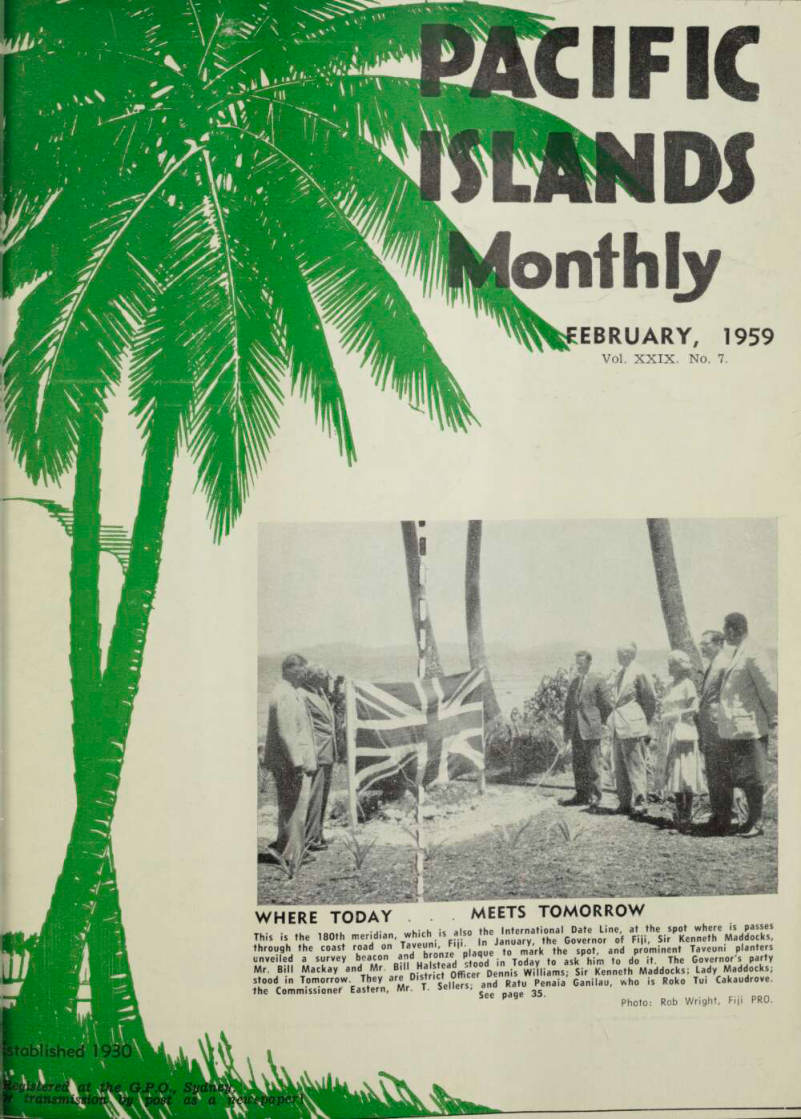 1
1 2
2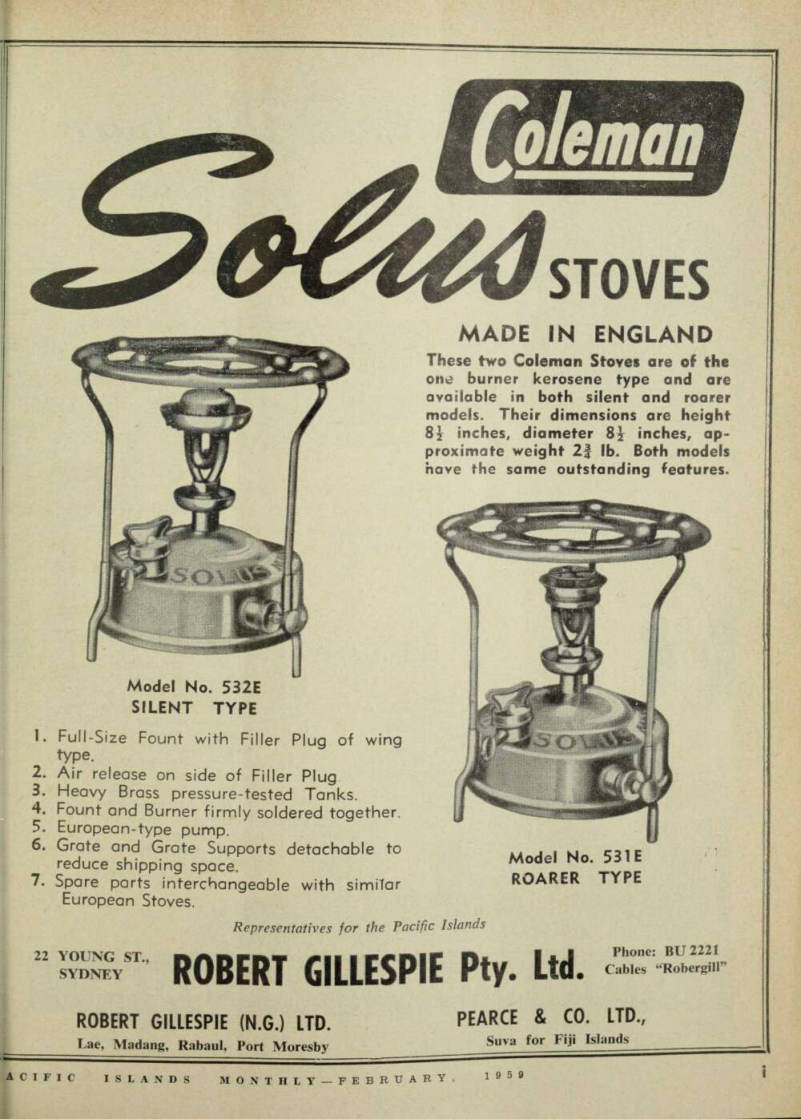 3
3 4
4 5
5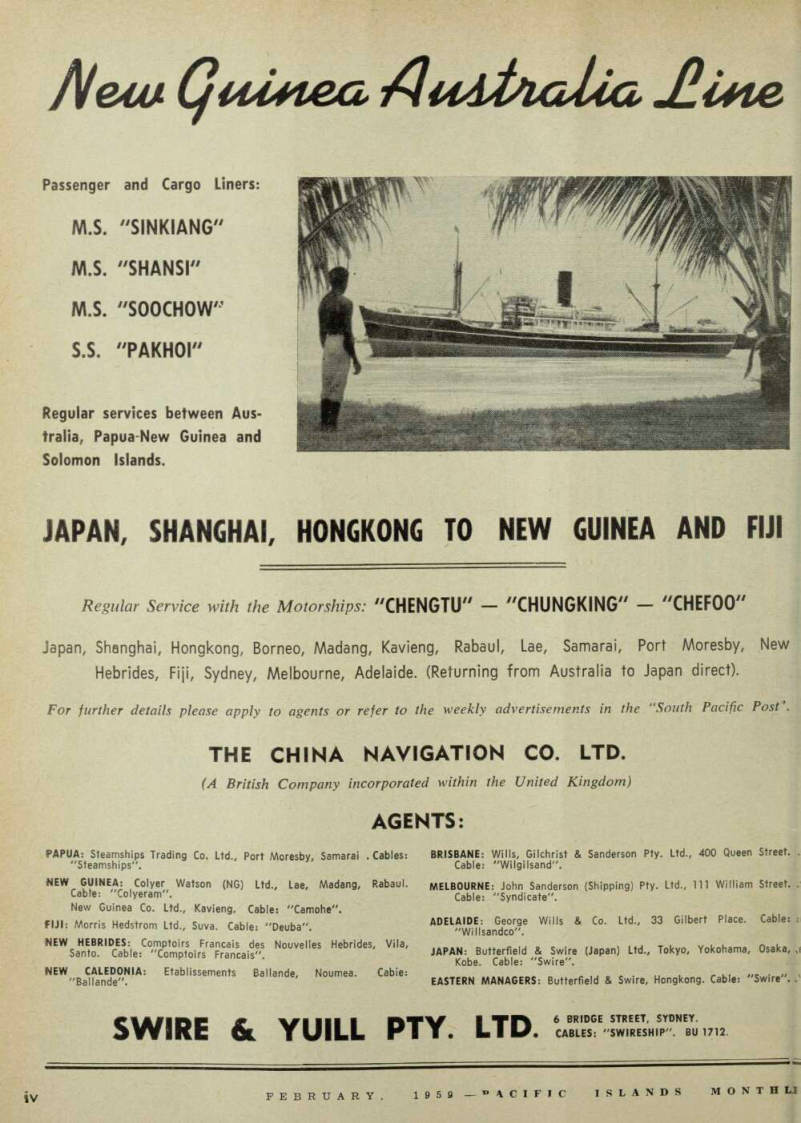 6
6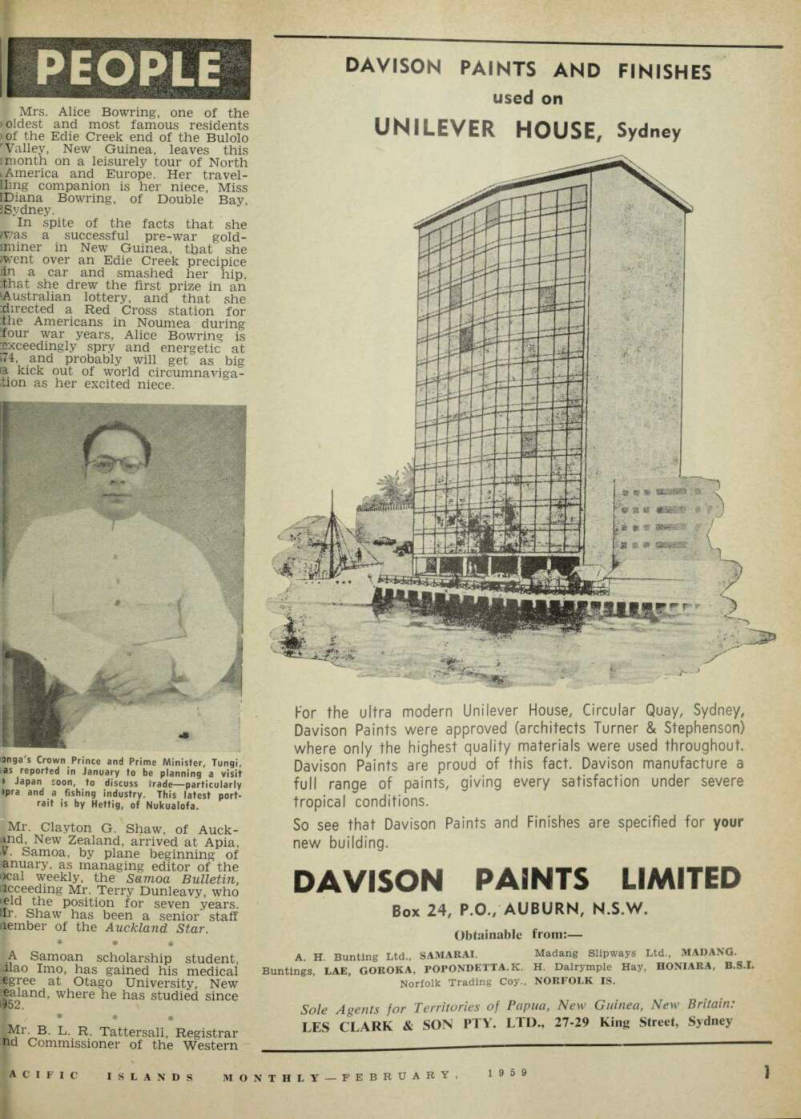 7
7 8
8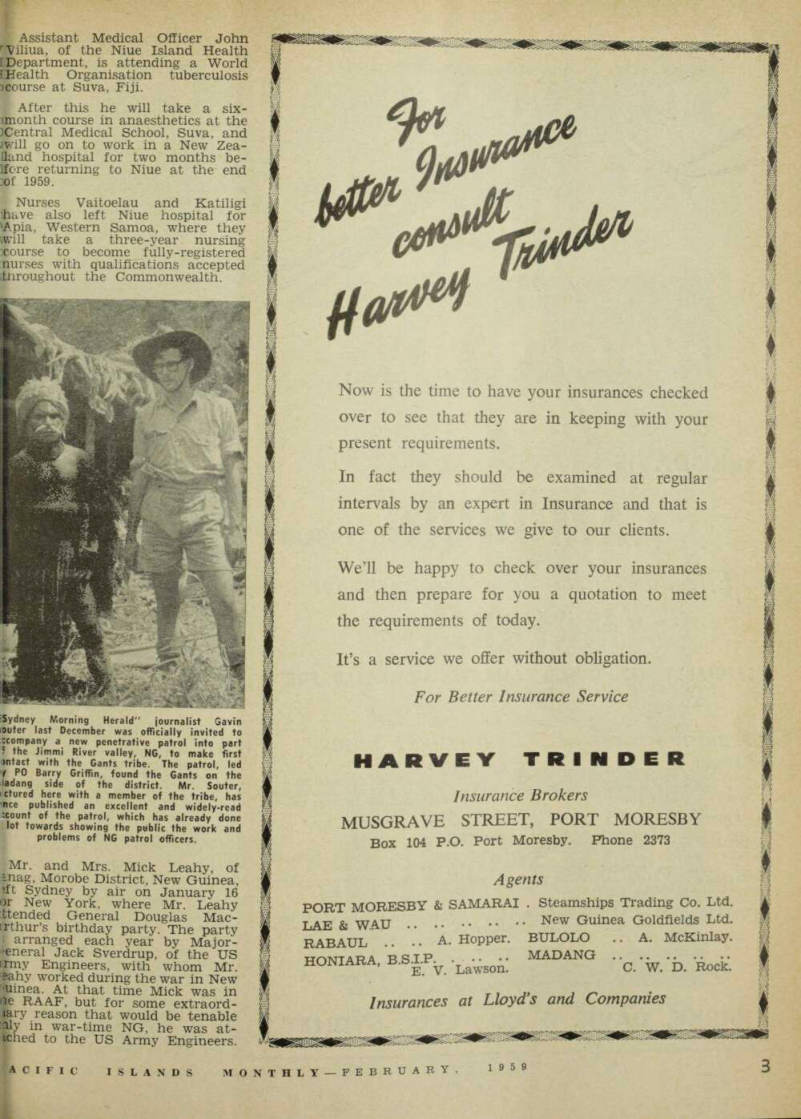 9
9 10
10 11
11 12
12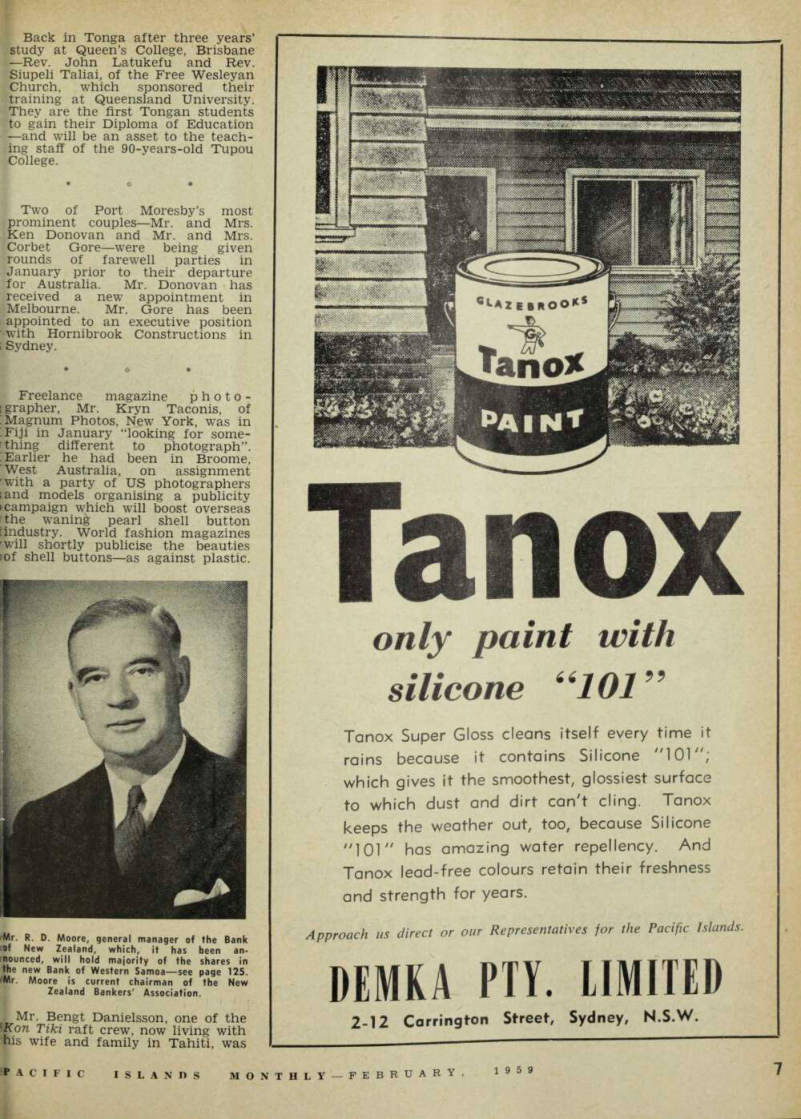 13
13 14
14 15
15 16
16 17
17 18
18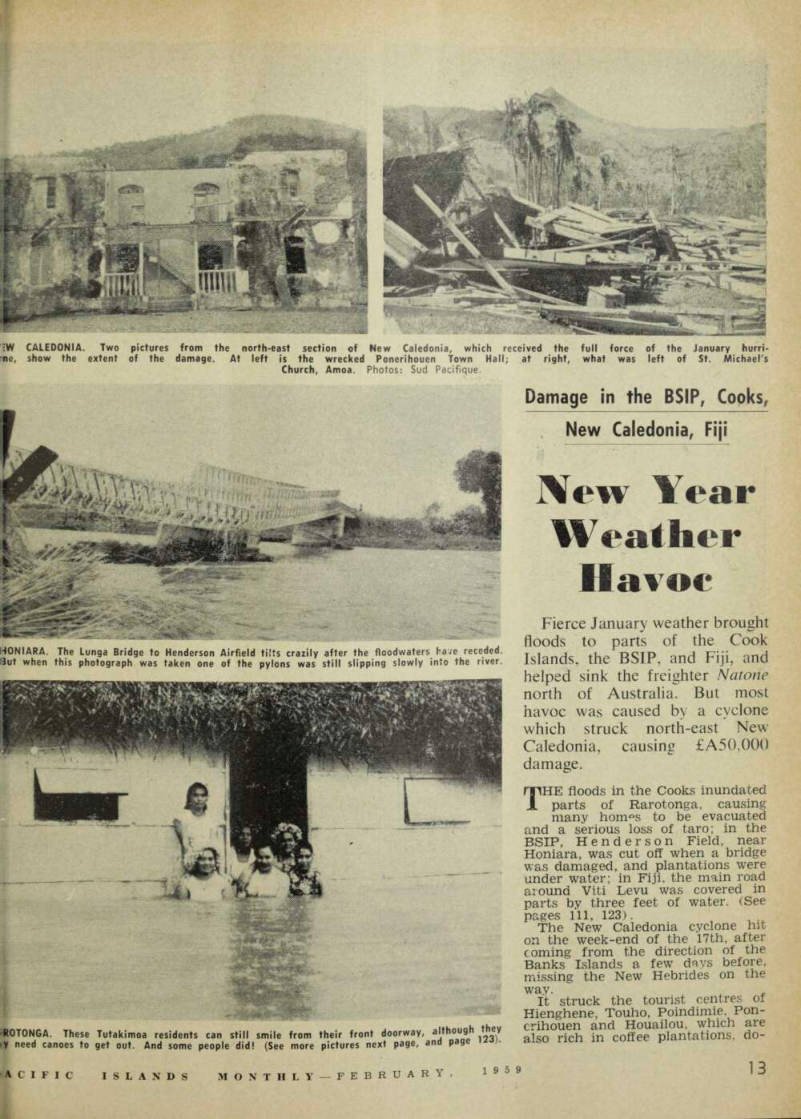 19
19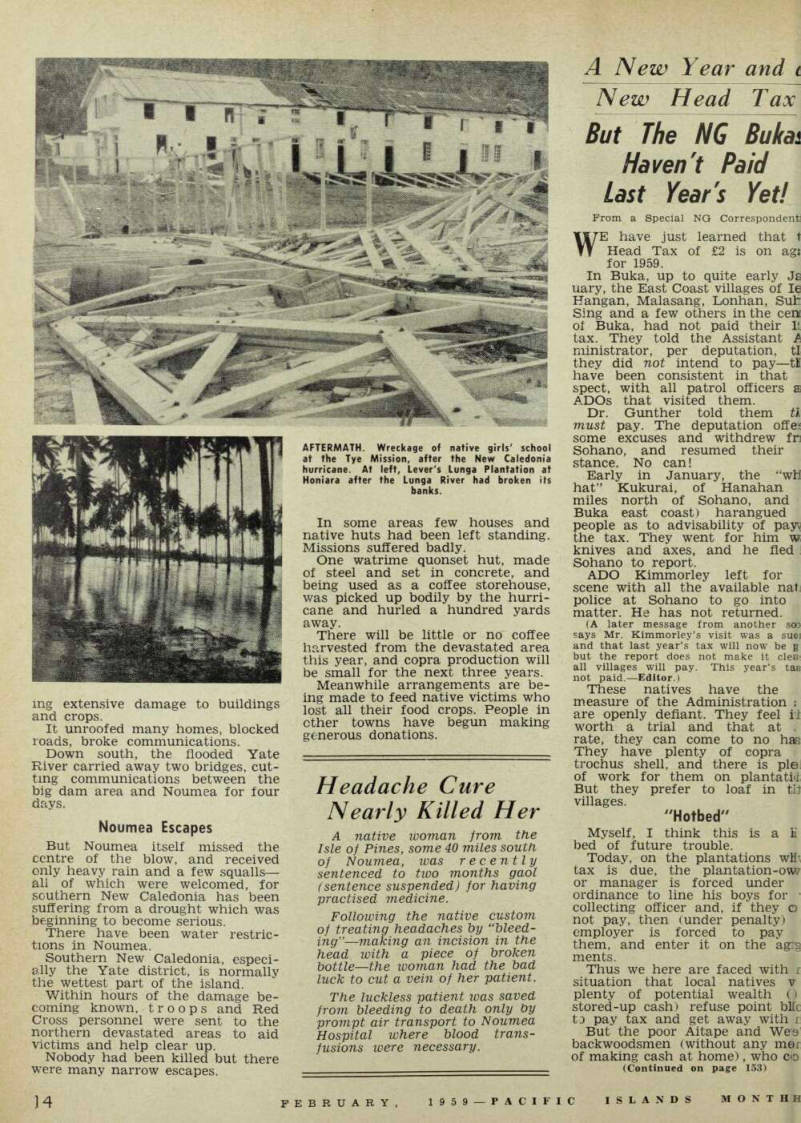 20
20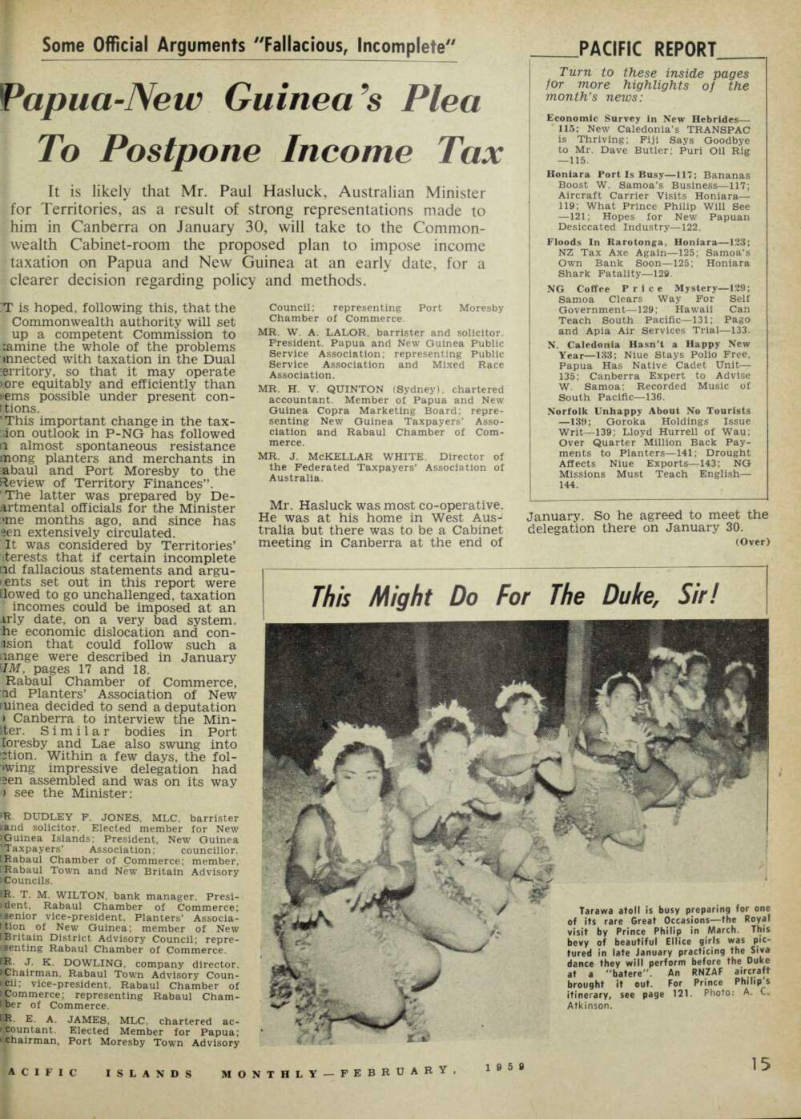 21
21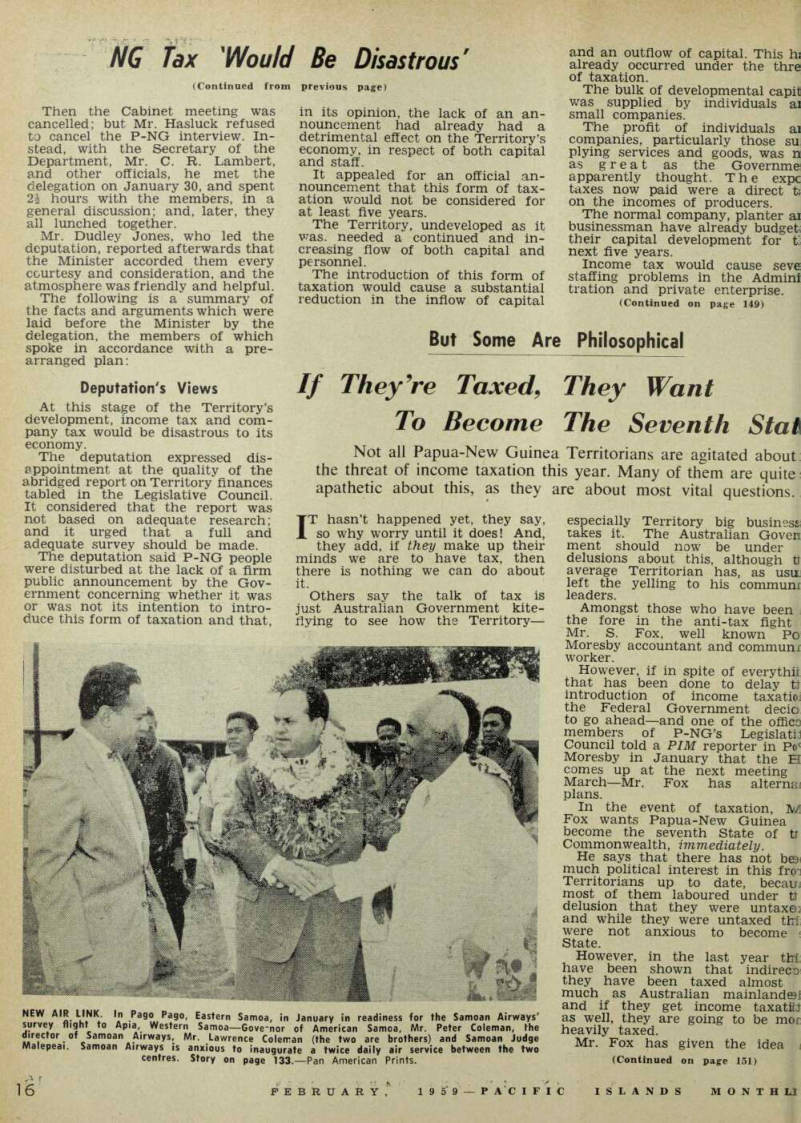 22
22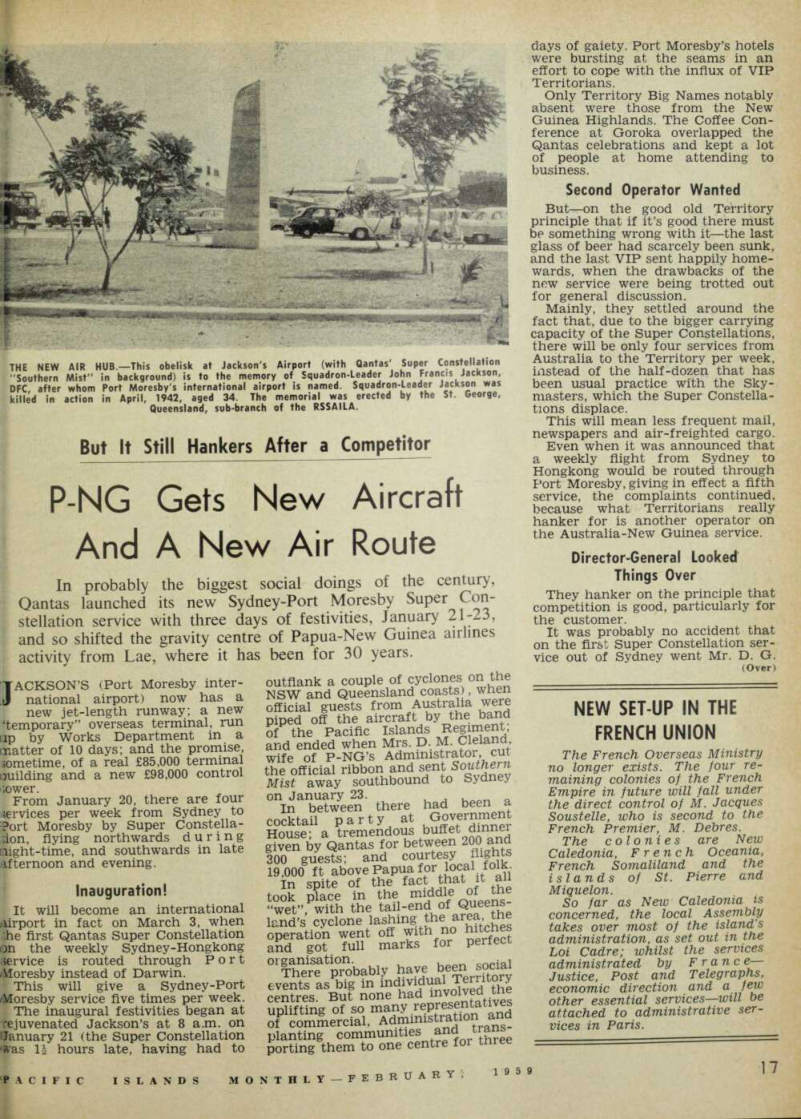 23
23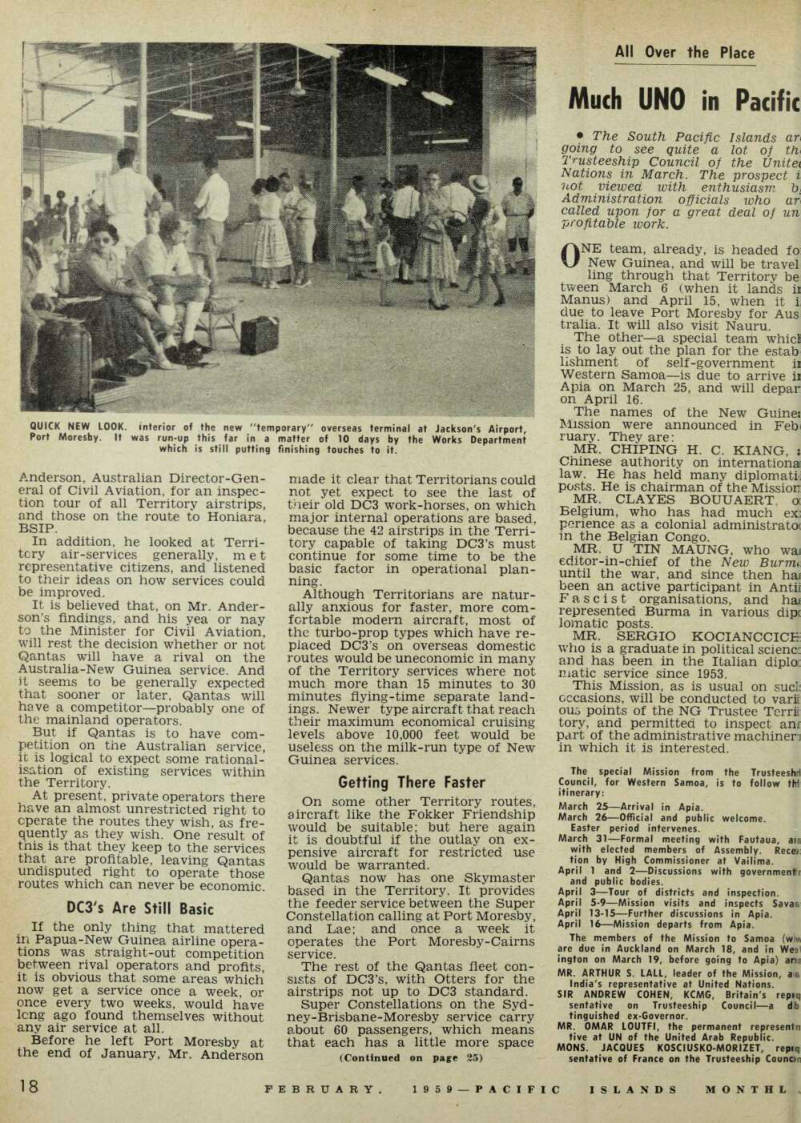 24
24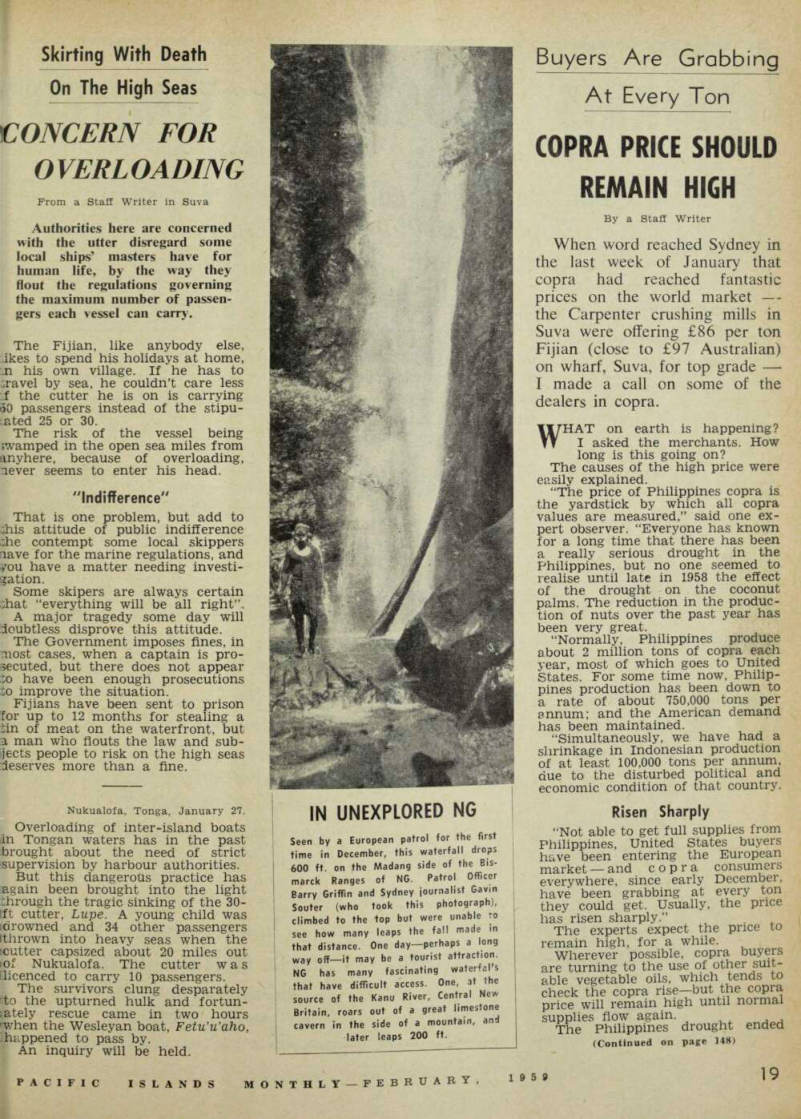 25
25 26
26 27
27 28
28 29
29 30
30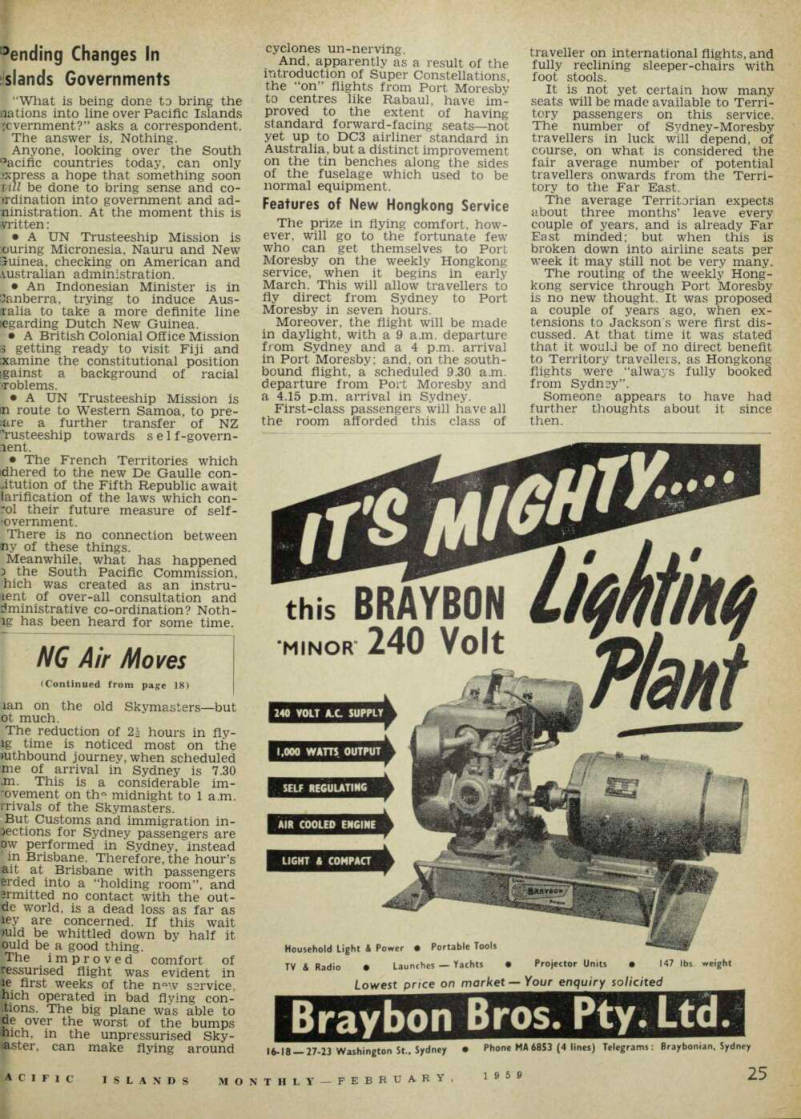 31
31 32
32 33
33 34
34 35
35 36
36 37
37 38
38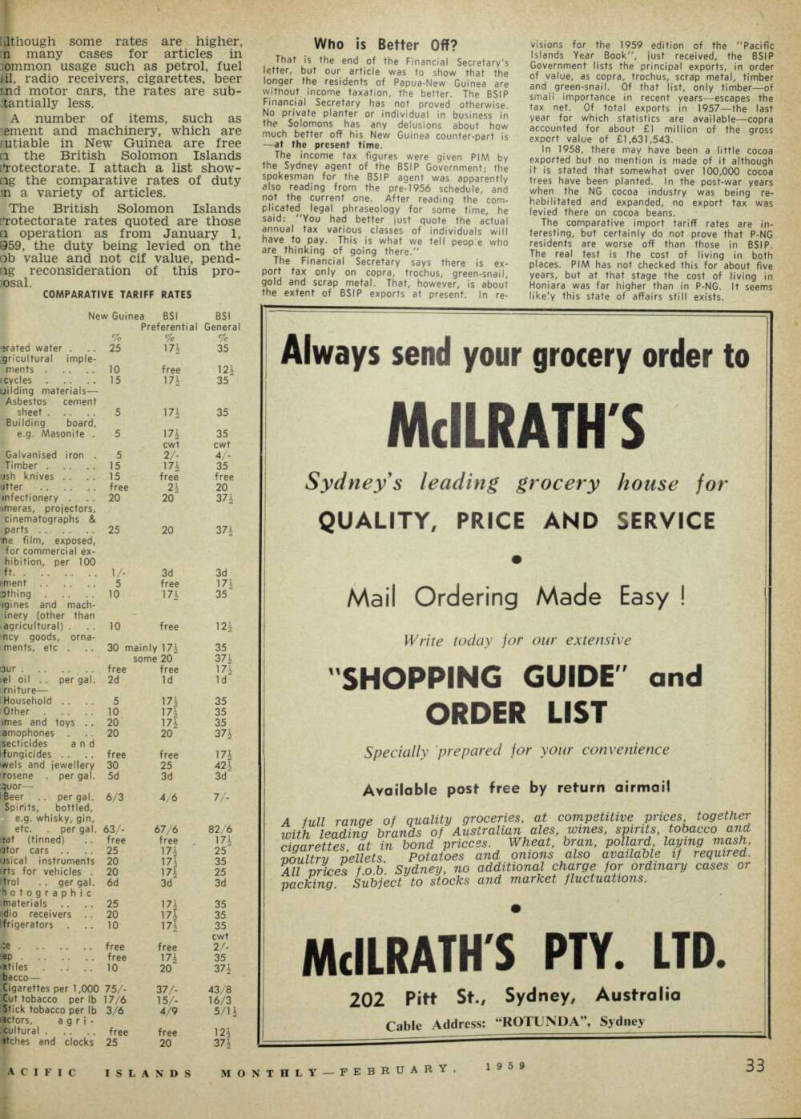 39
39 40
40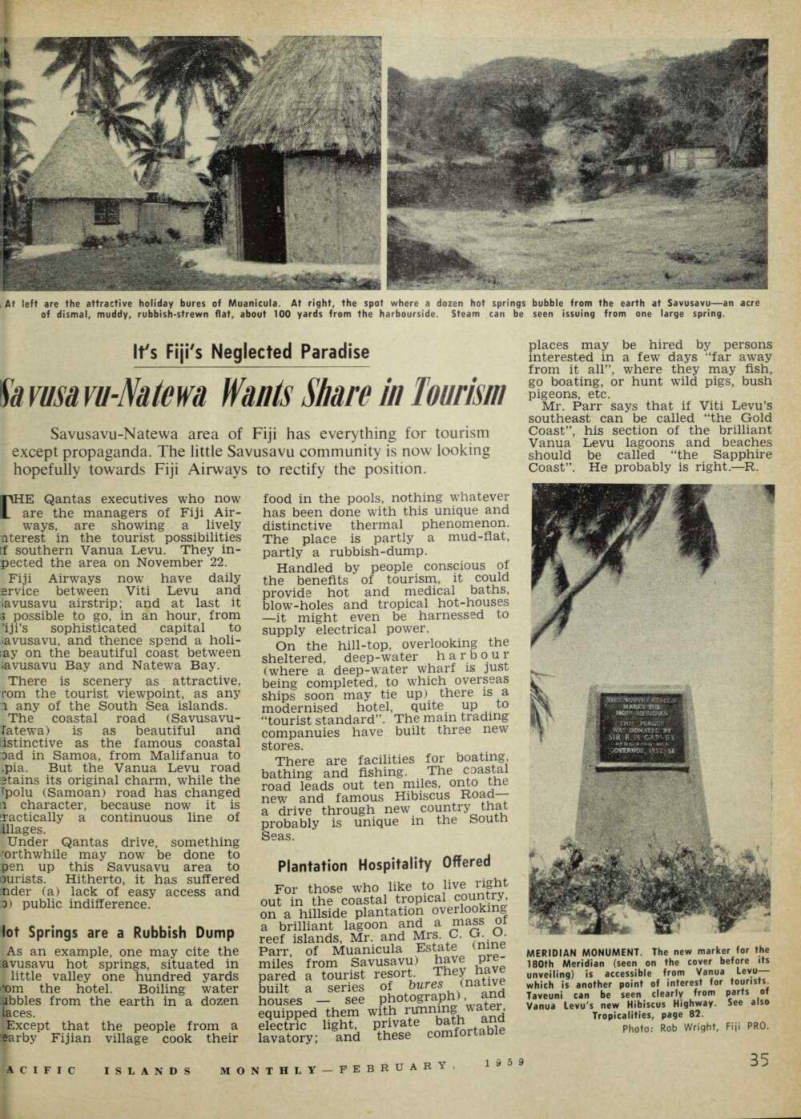 41
41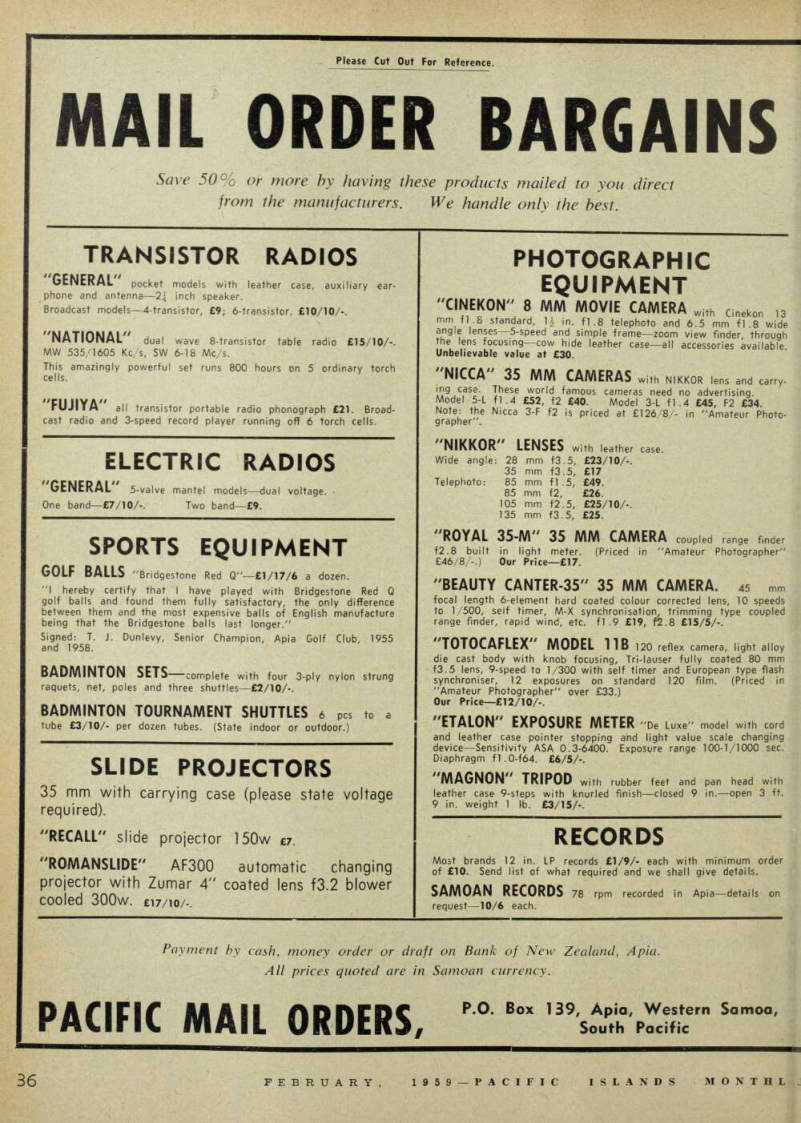 42
42 43
43 44
44 45
45 46
46 47
47 48
48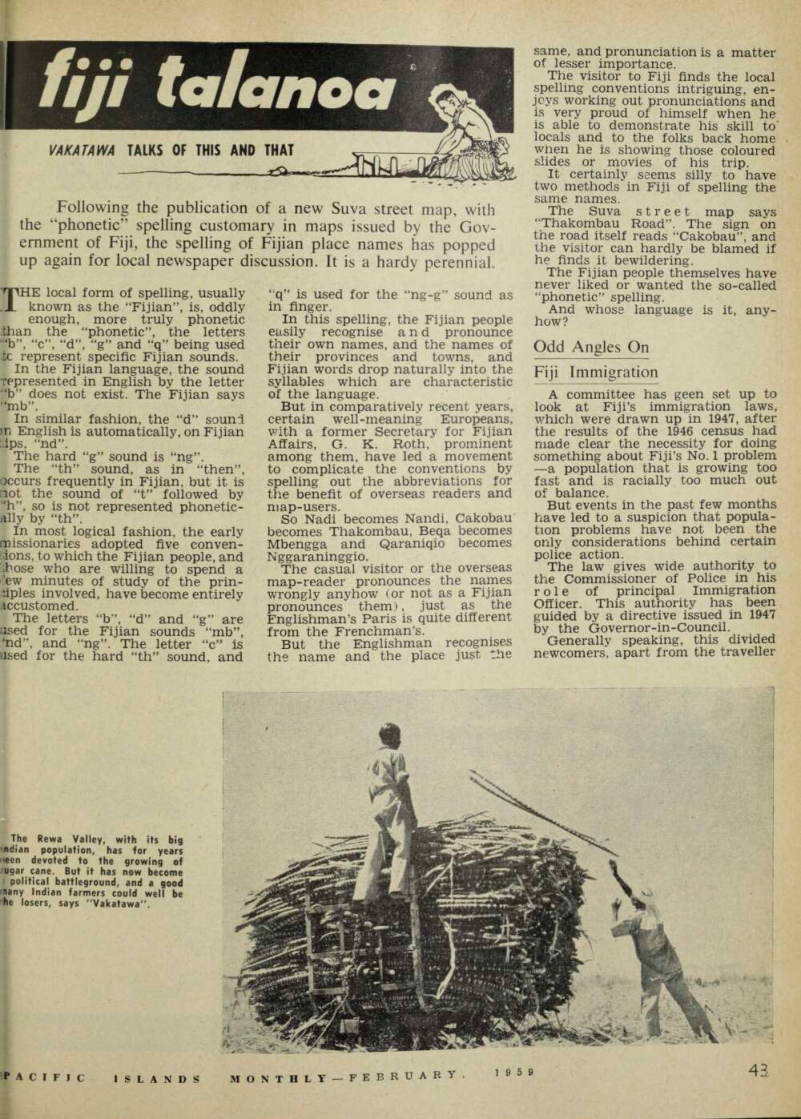 49
49 50
50 51
51 52
52 53
53 54
54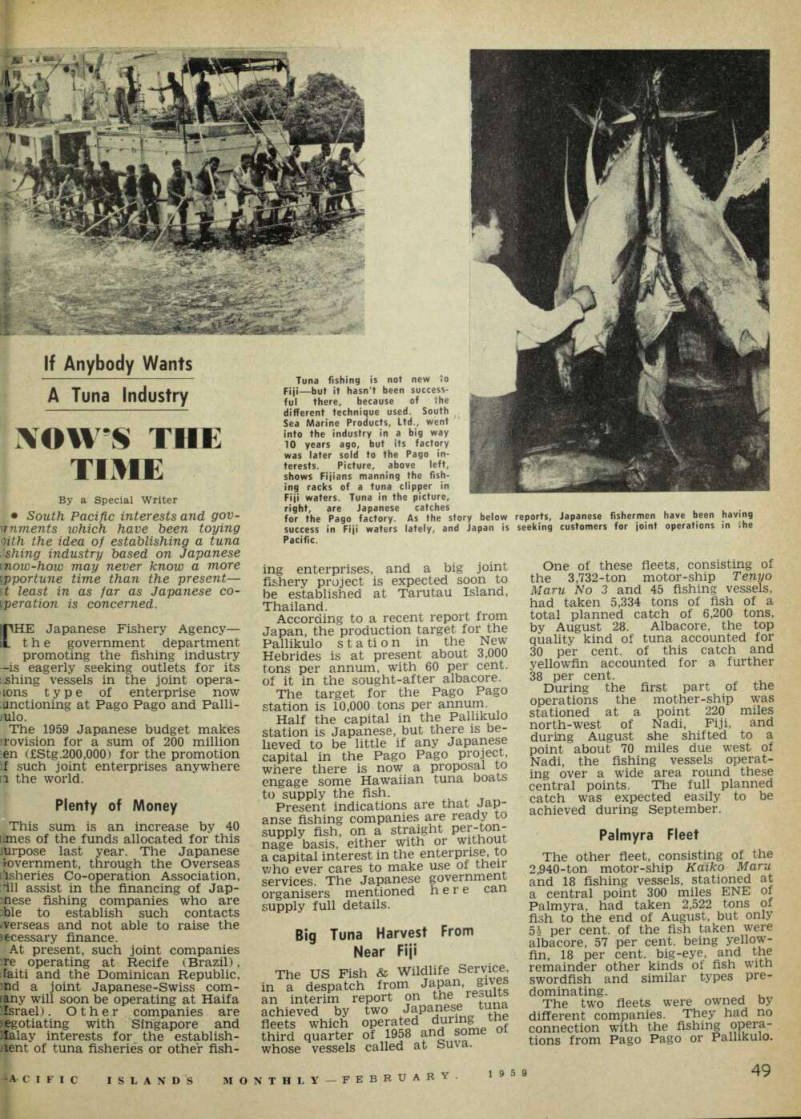 55
55 56
56 57
57 58
58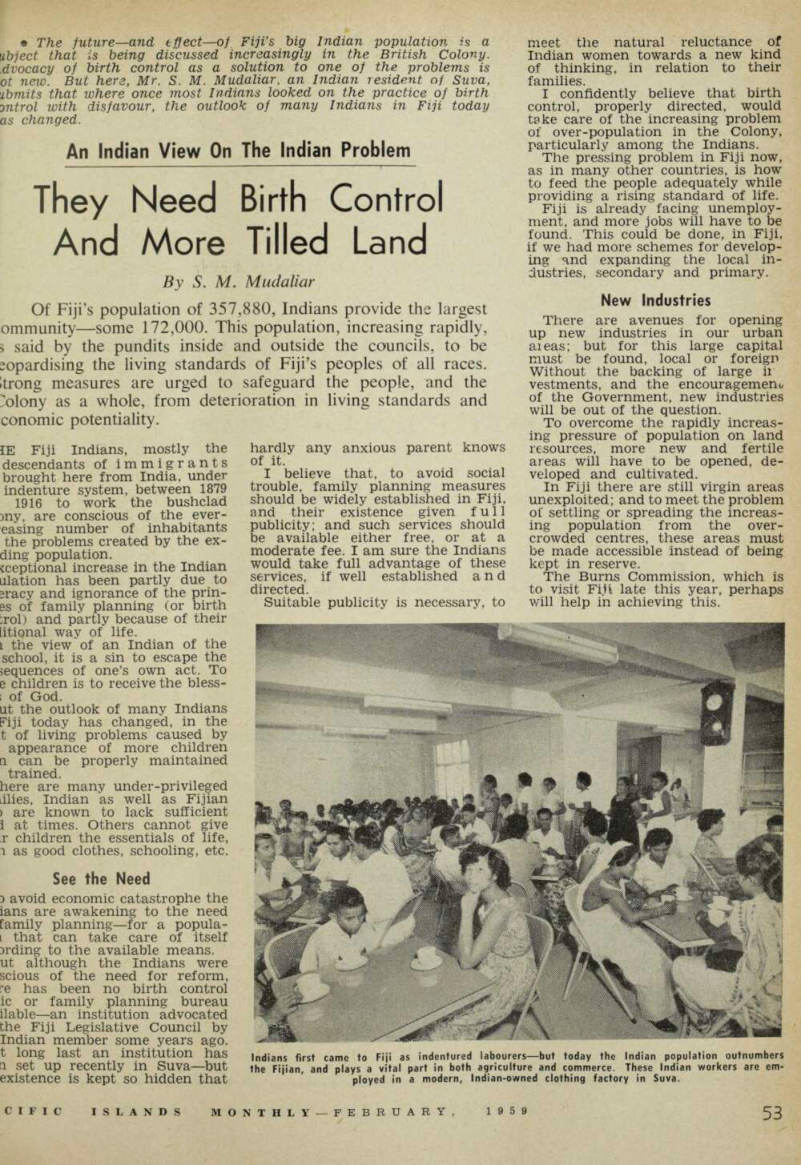 59
59 60
60 61
61 62
62 63
63 64
64 65
65 66
66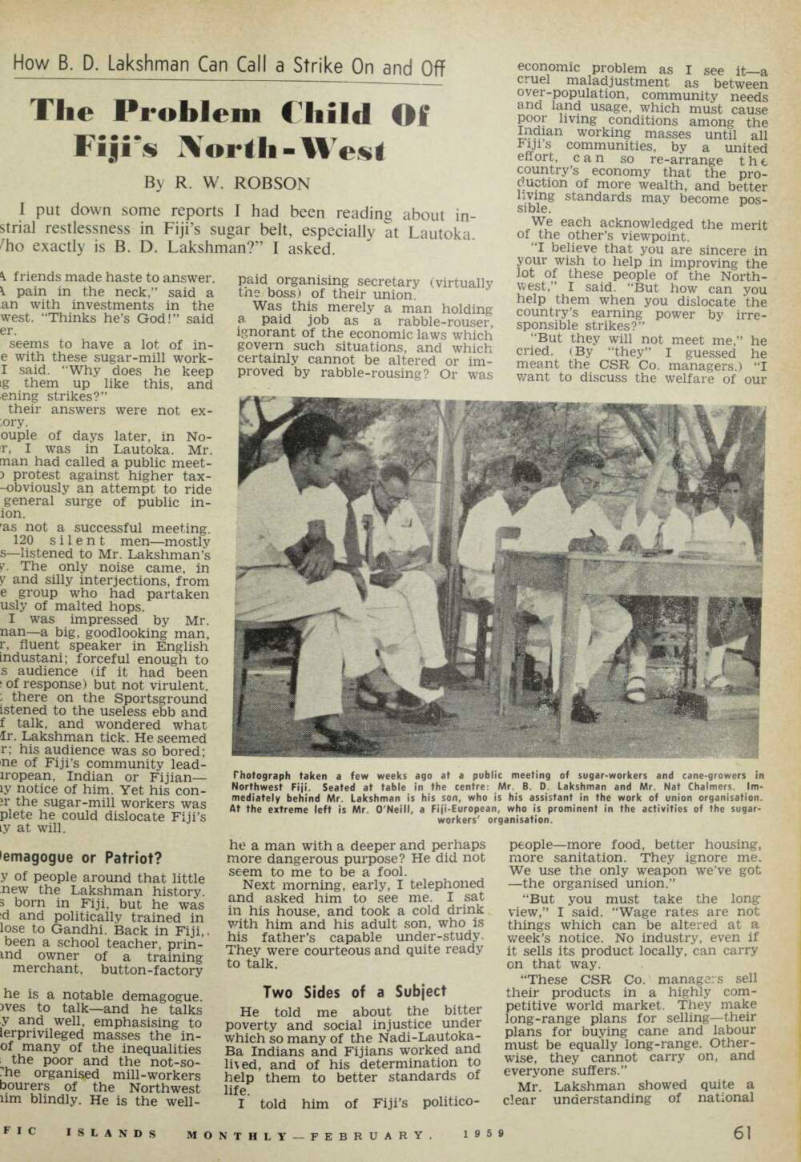 67
67 68
68 69
69 70
70 71
71 72
72 73
73 74
74 75
75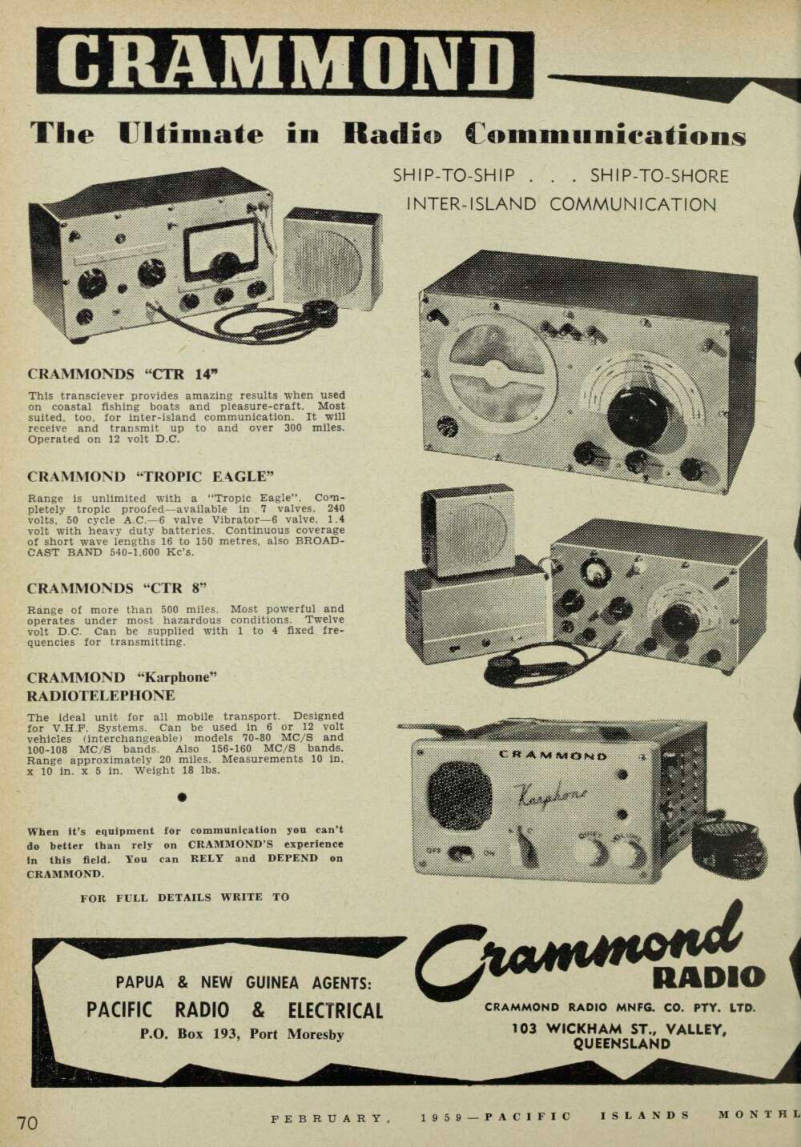 76
76 77
77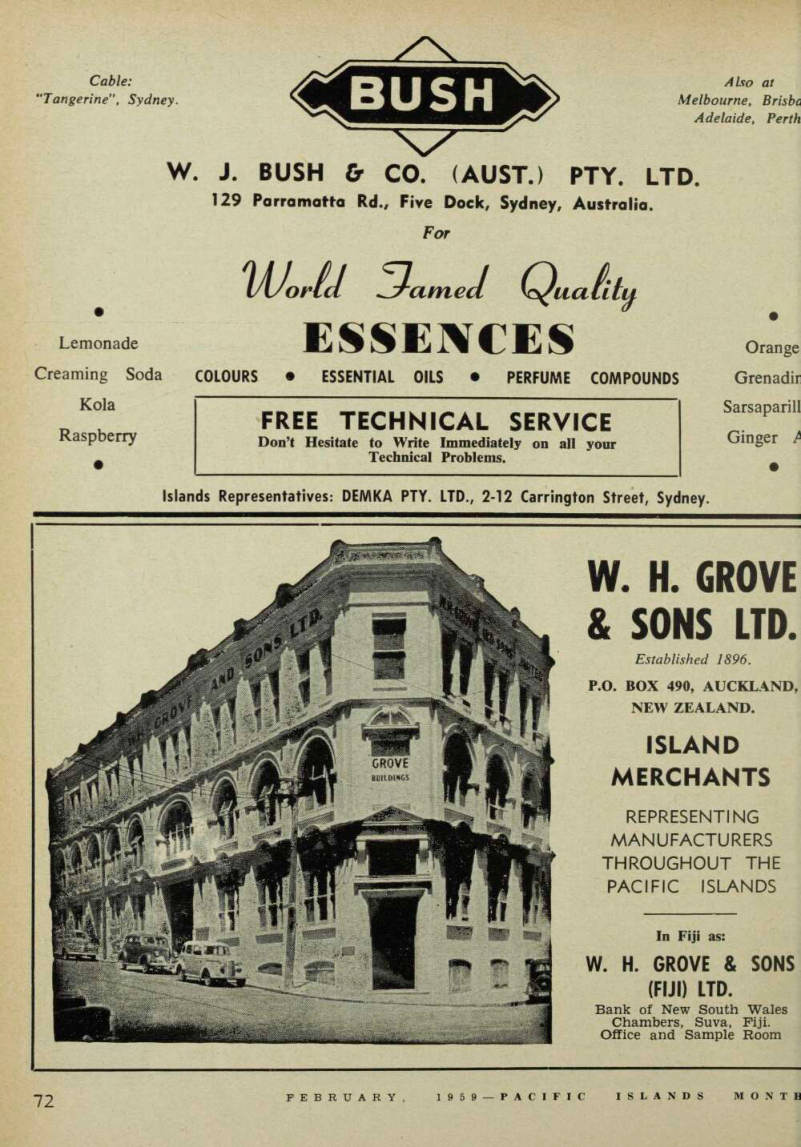 78
78 79
79 80
80 81
81 82
82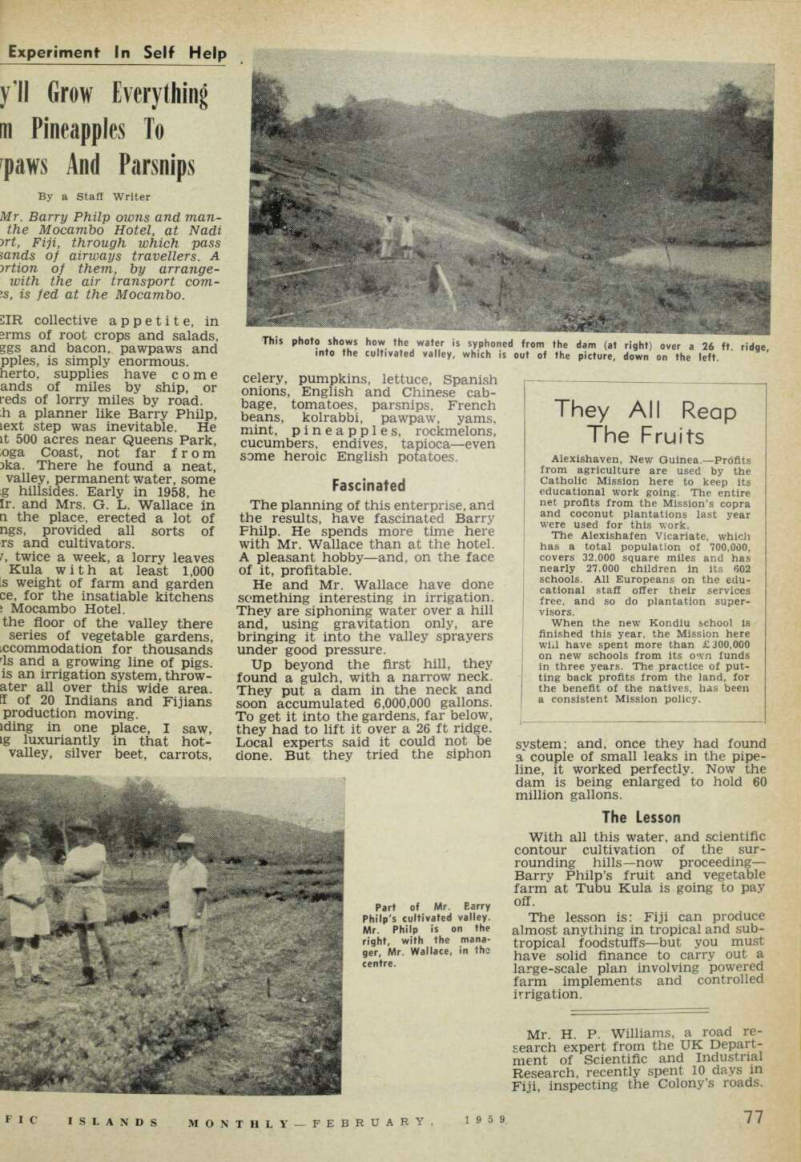 83
83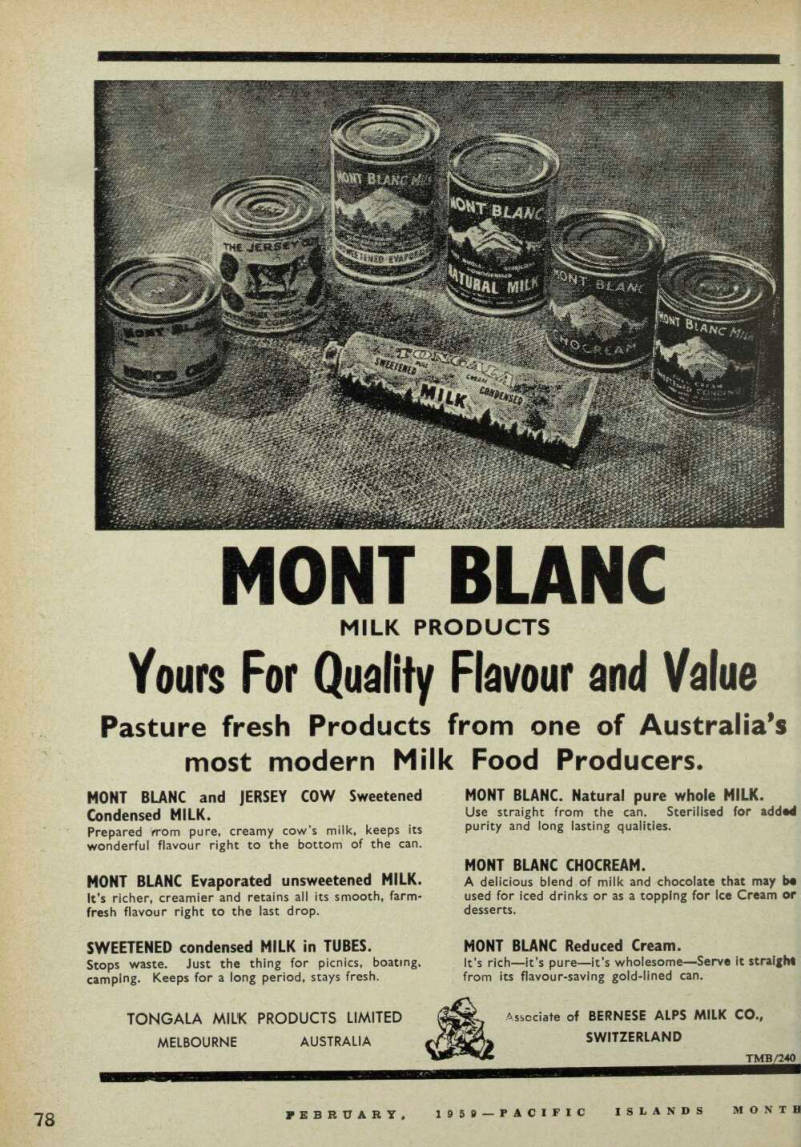 84
84 85
85 86
86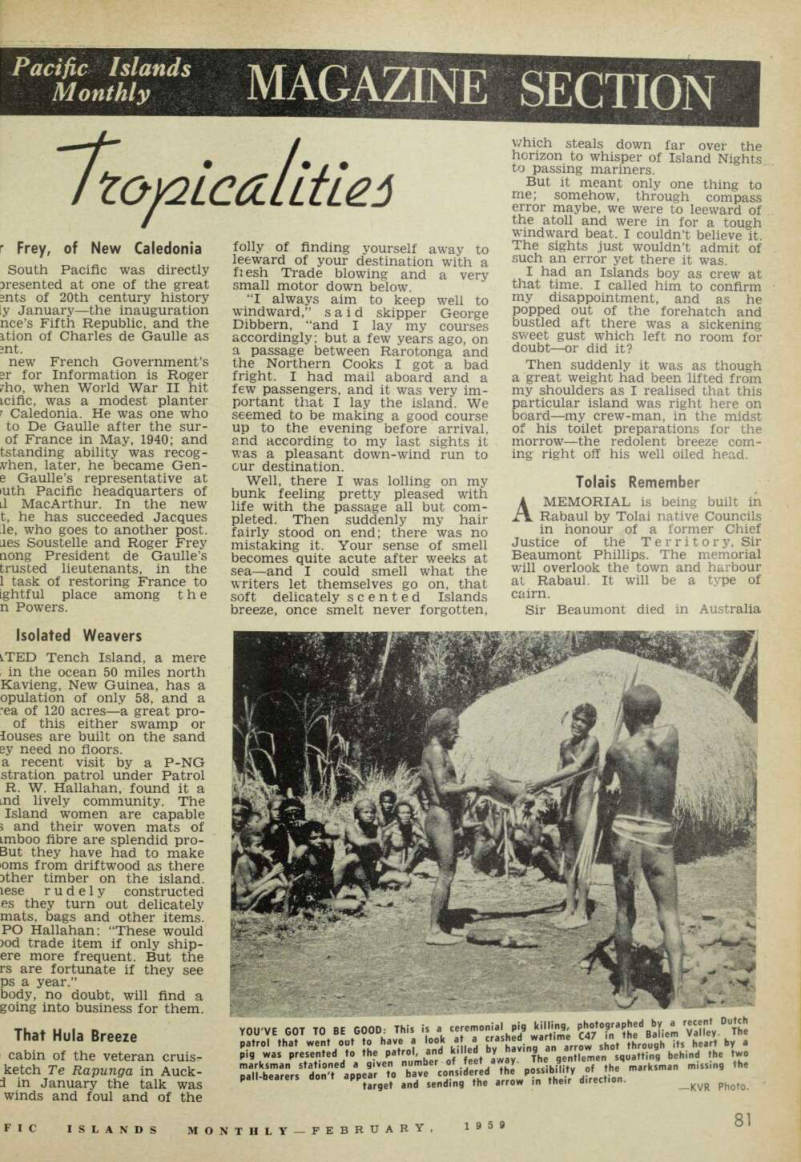 87
87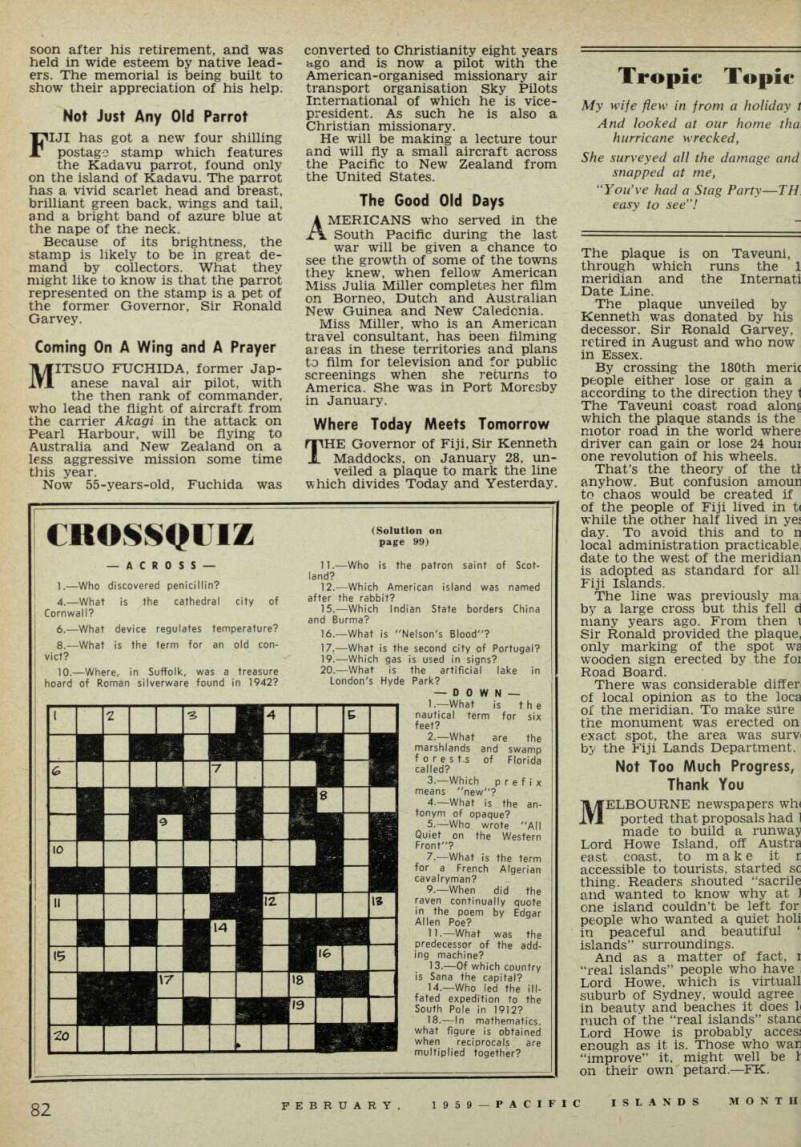 88
88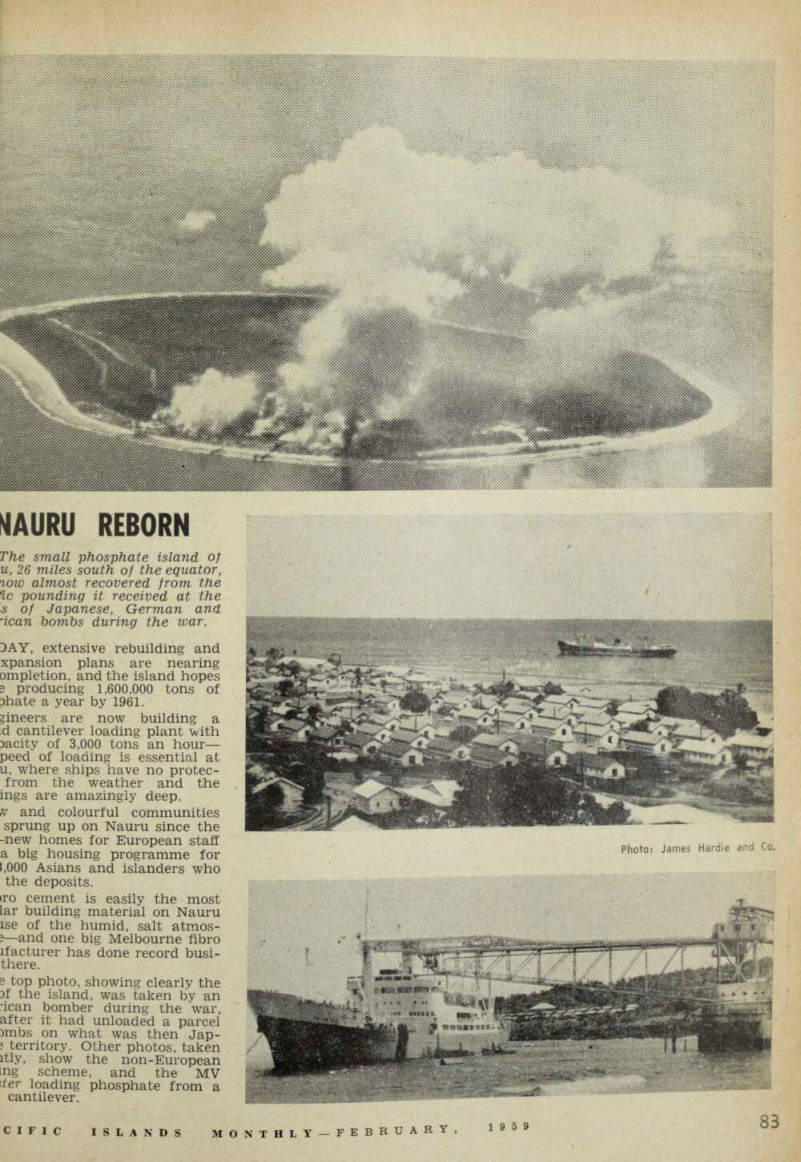 89
89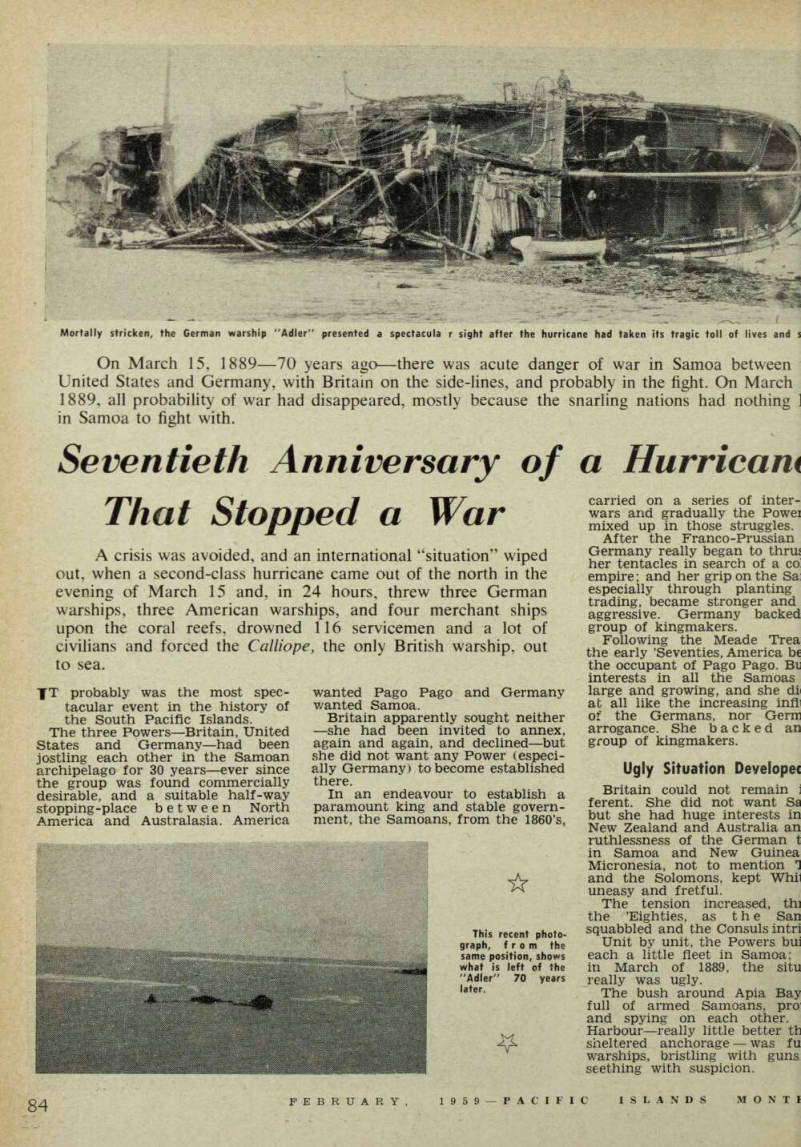 90
90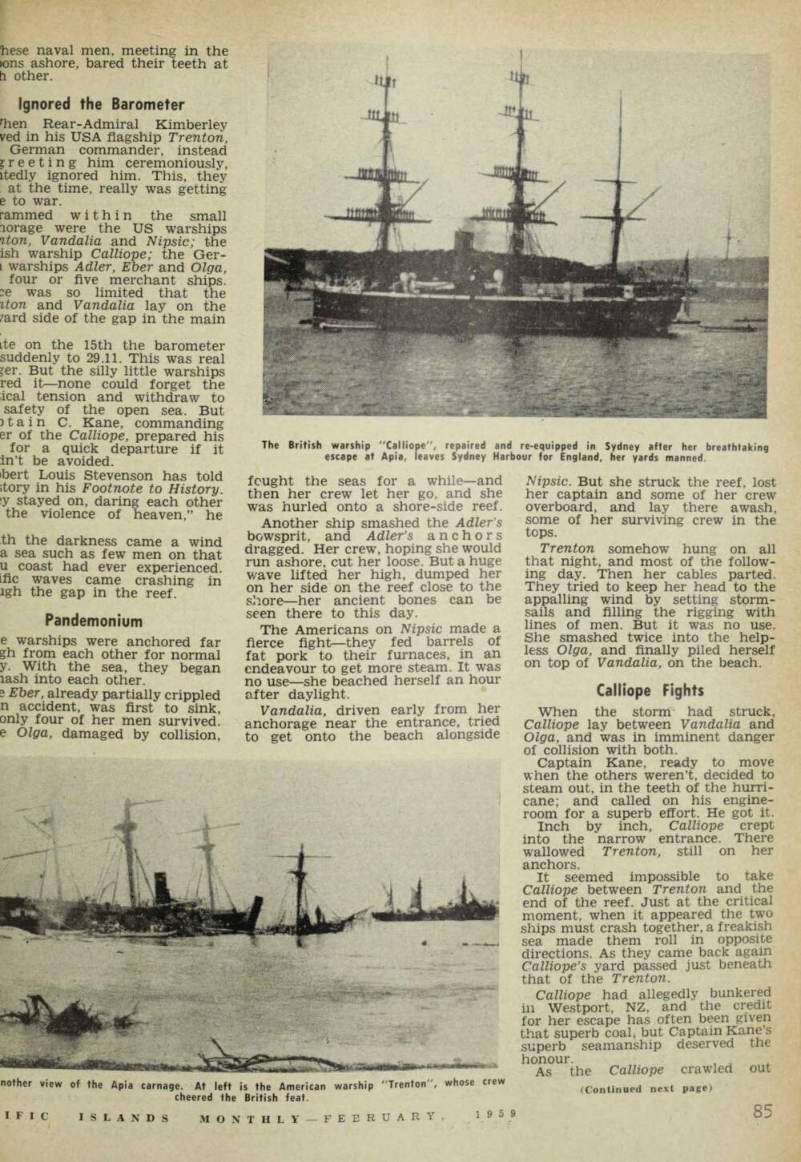 91
91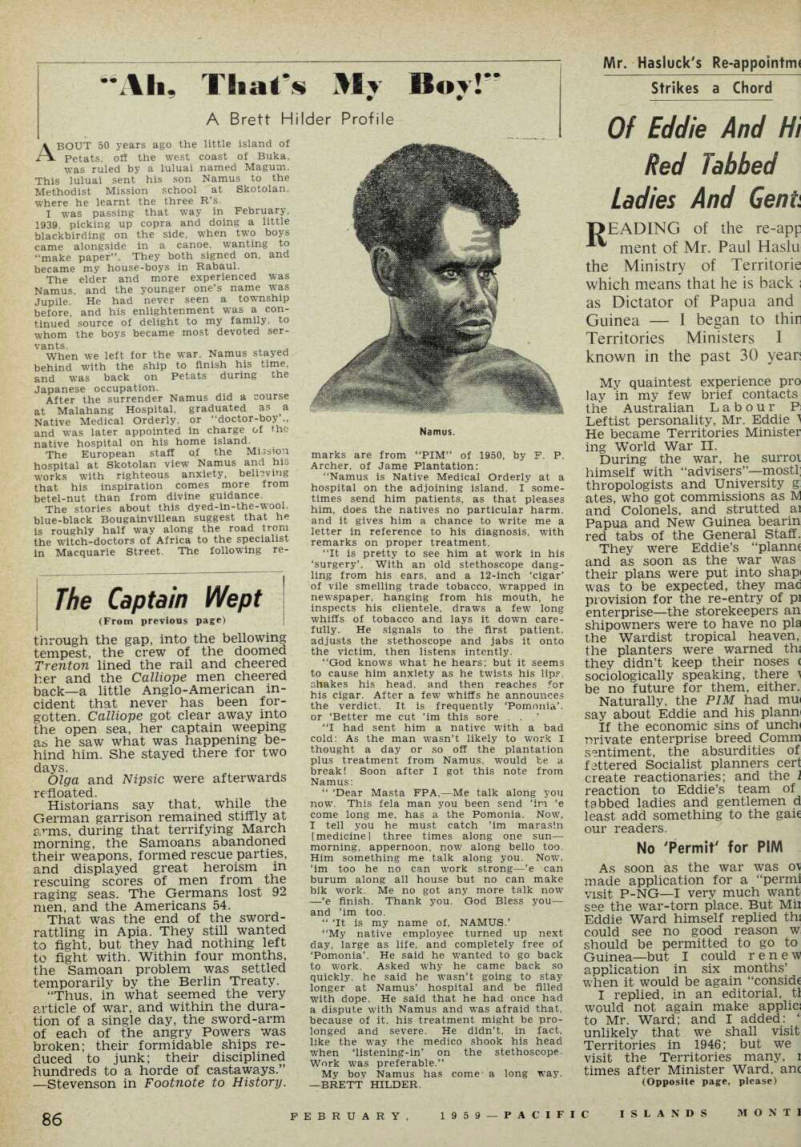 92
92 93
93 94
94 95
95 96
96 97
97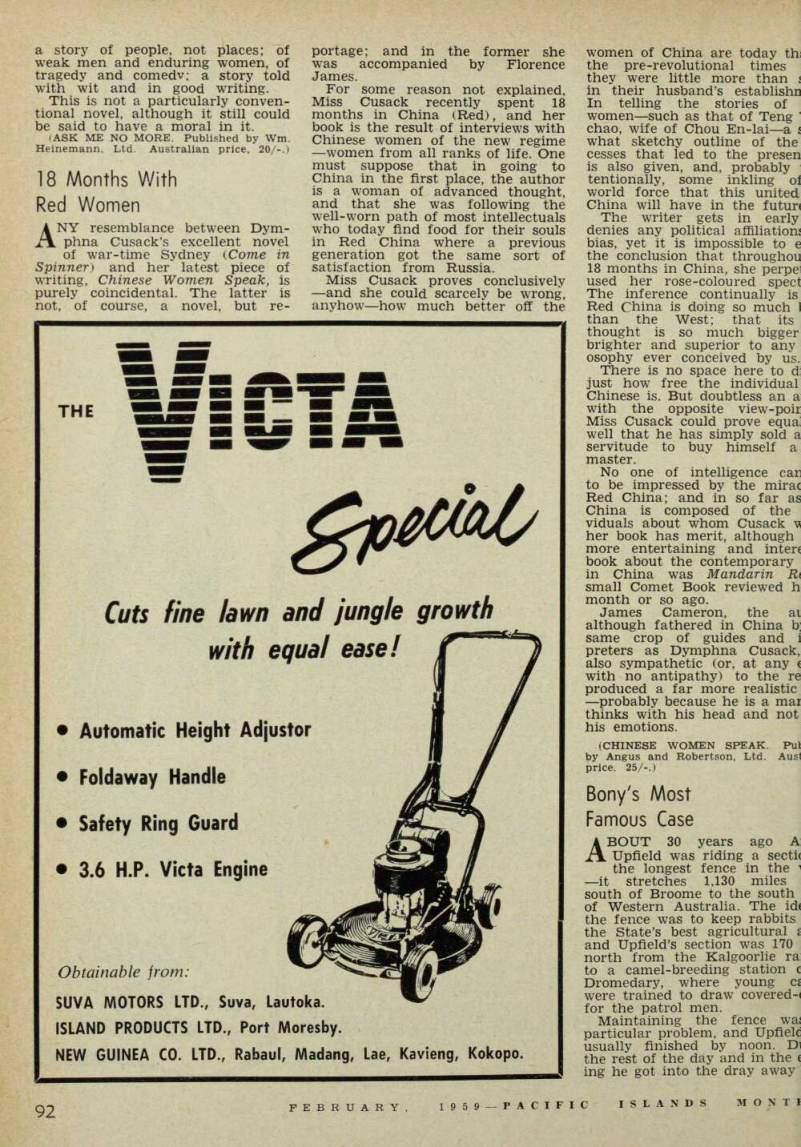 98
98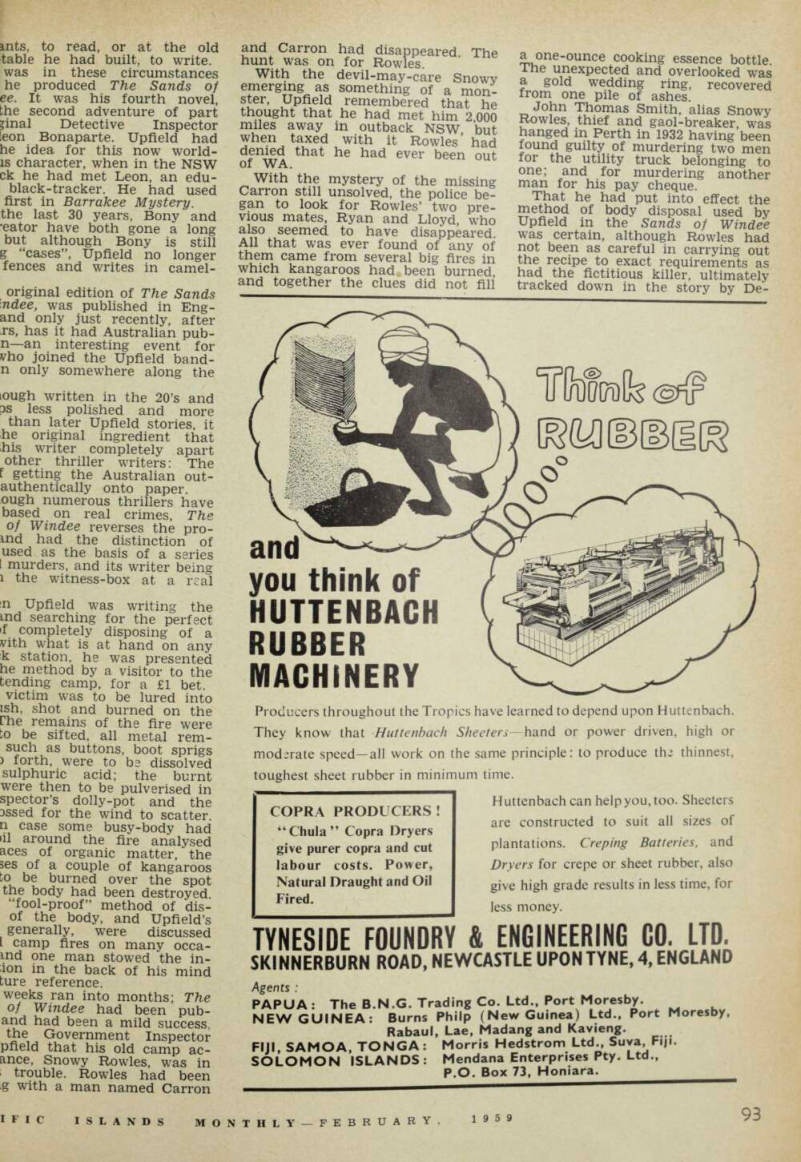 99
99 100
100 101
101 102
102 103
103 104
104 105
105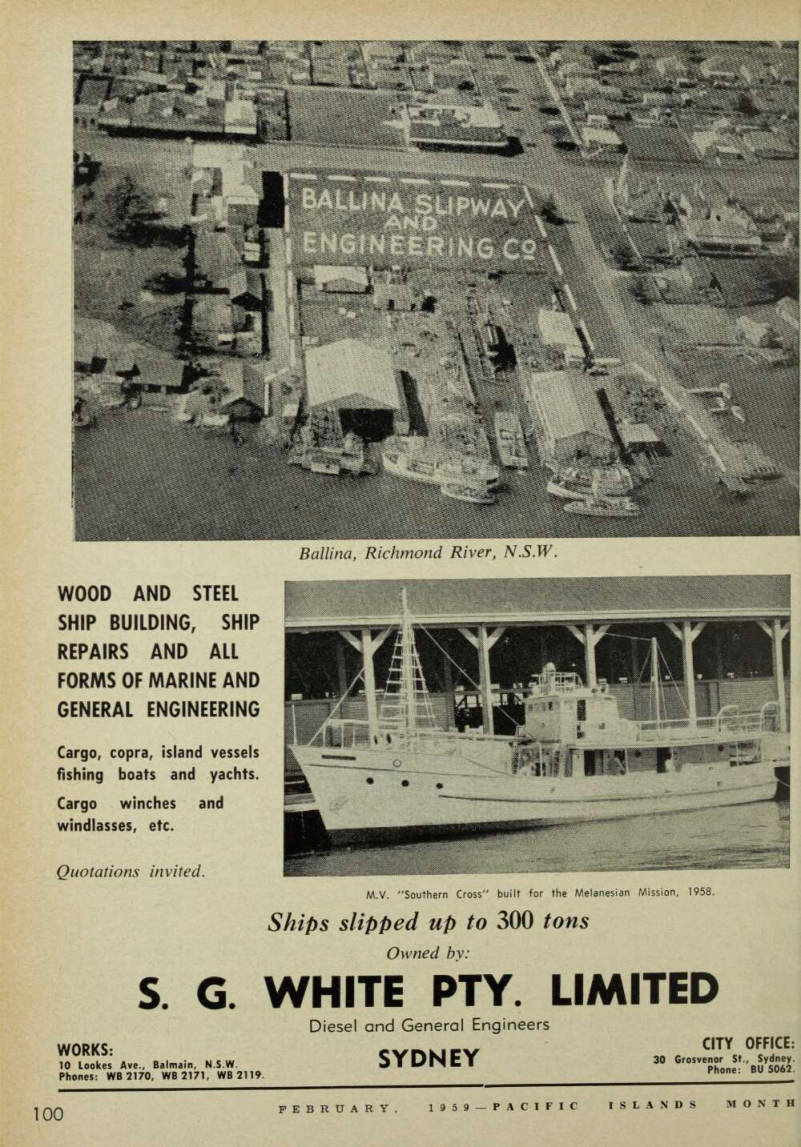 106
106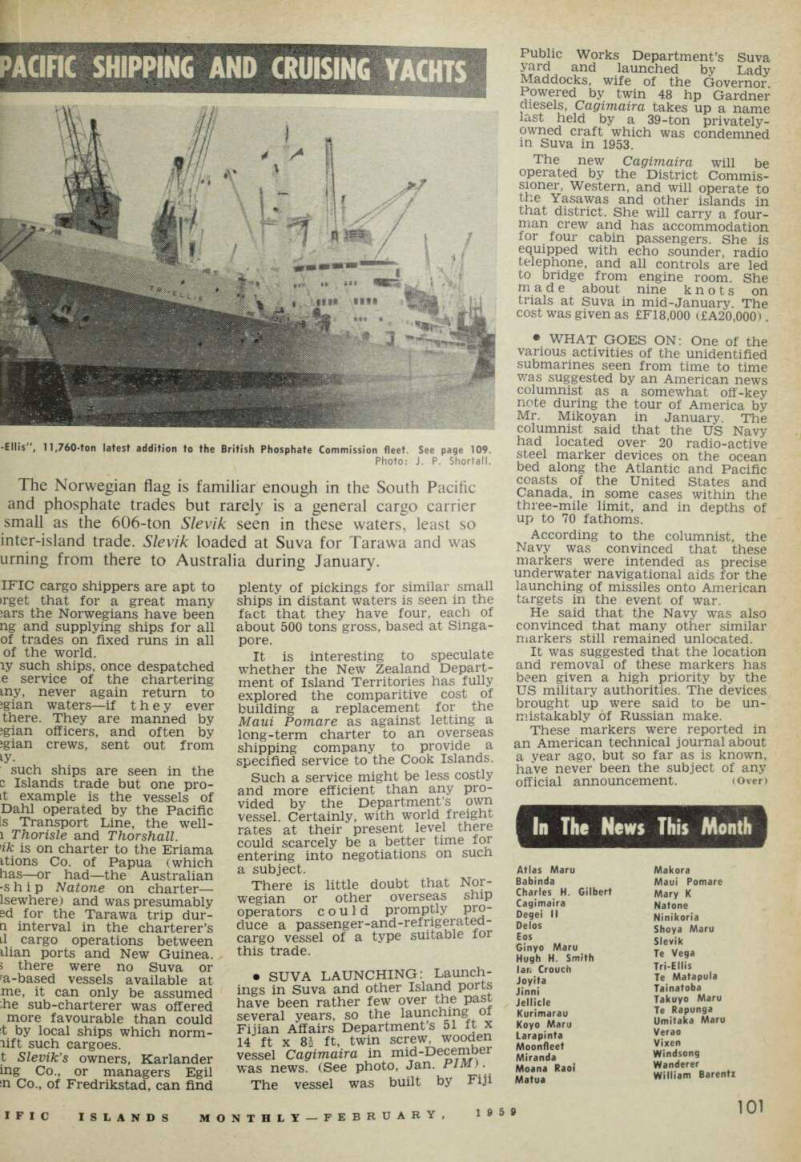 107
107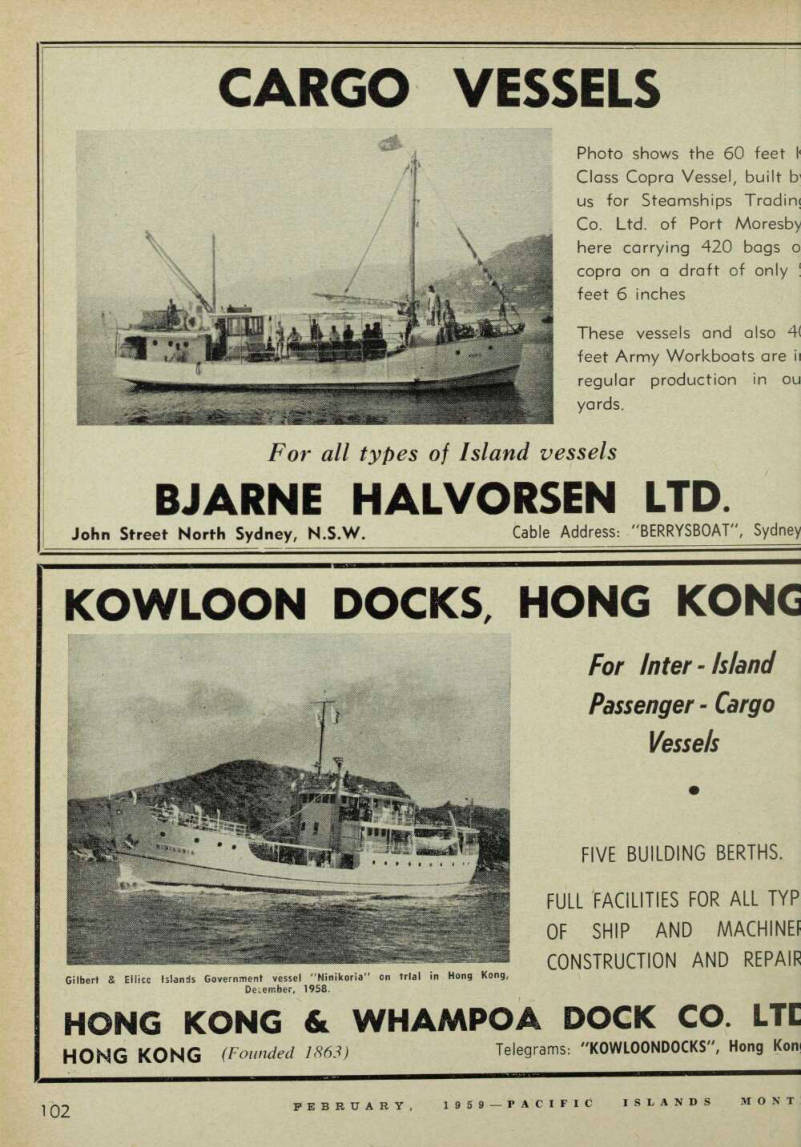 108
108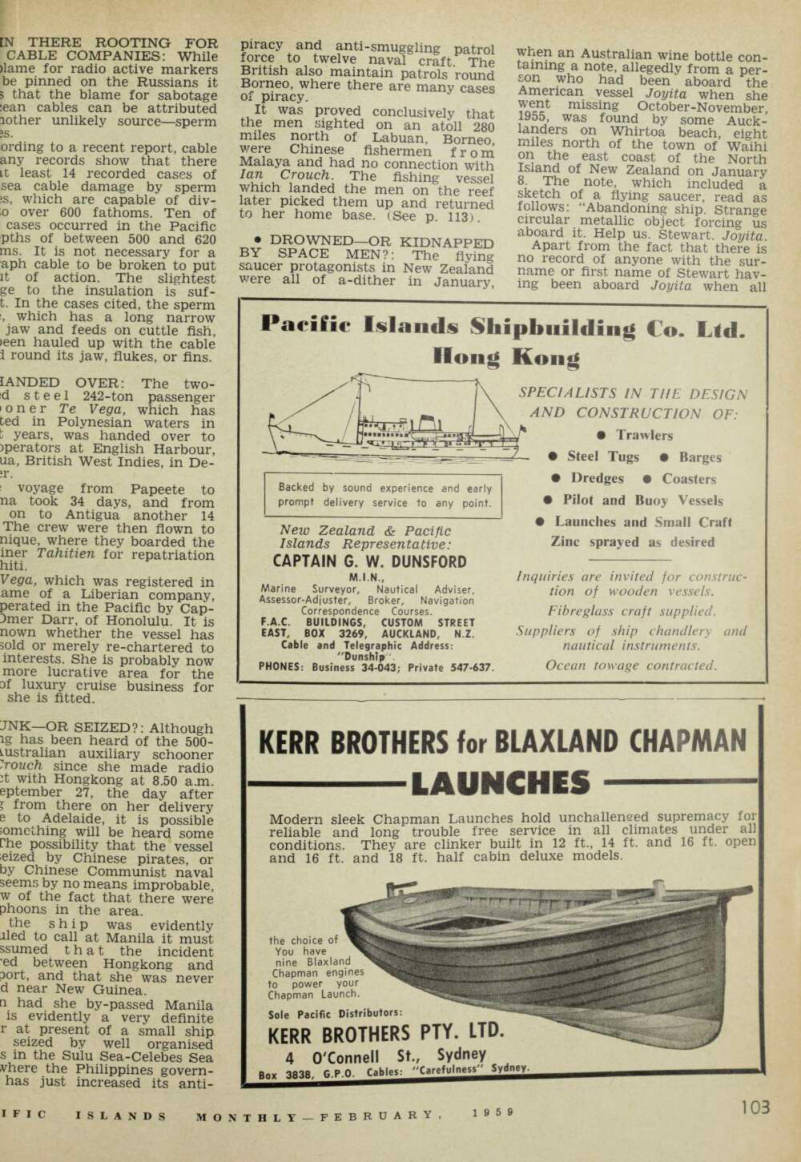 109
109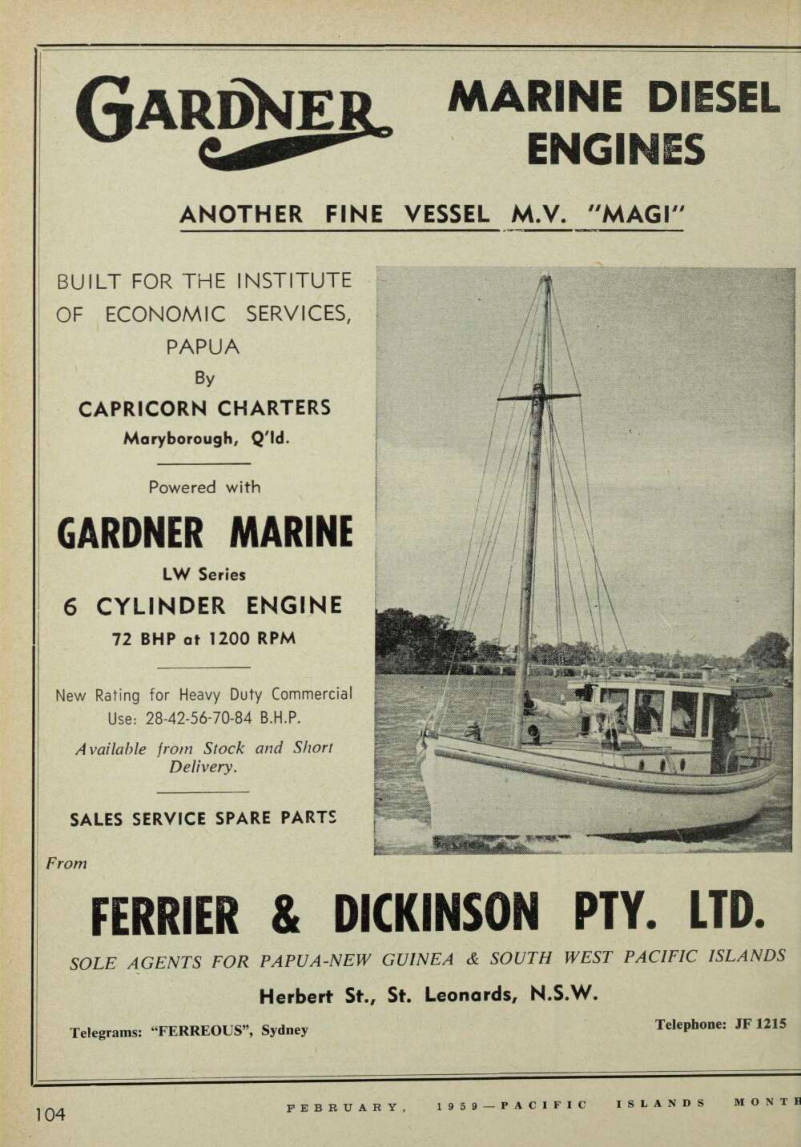 110
110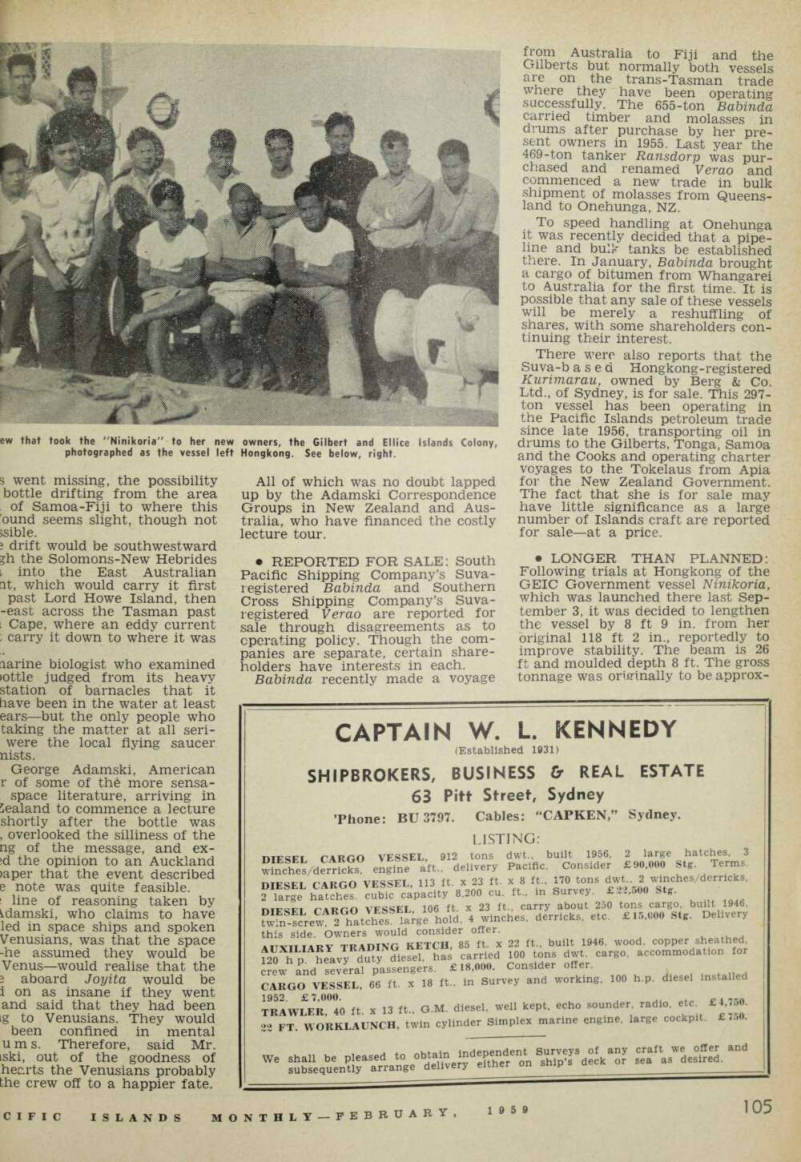 111
111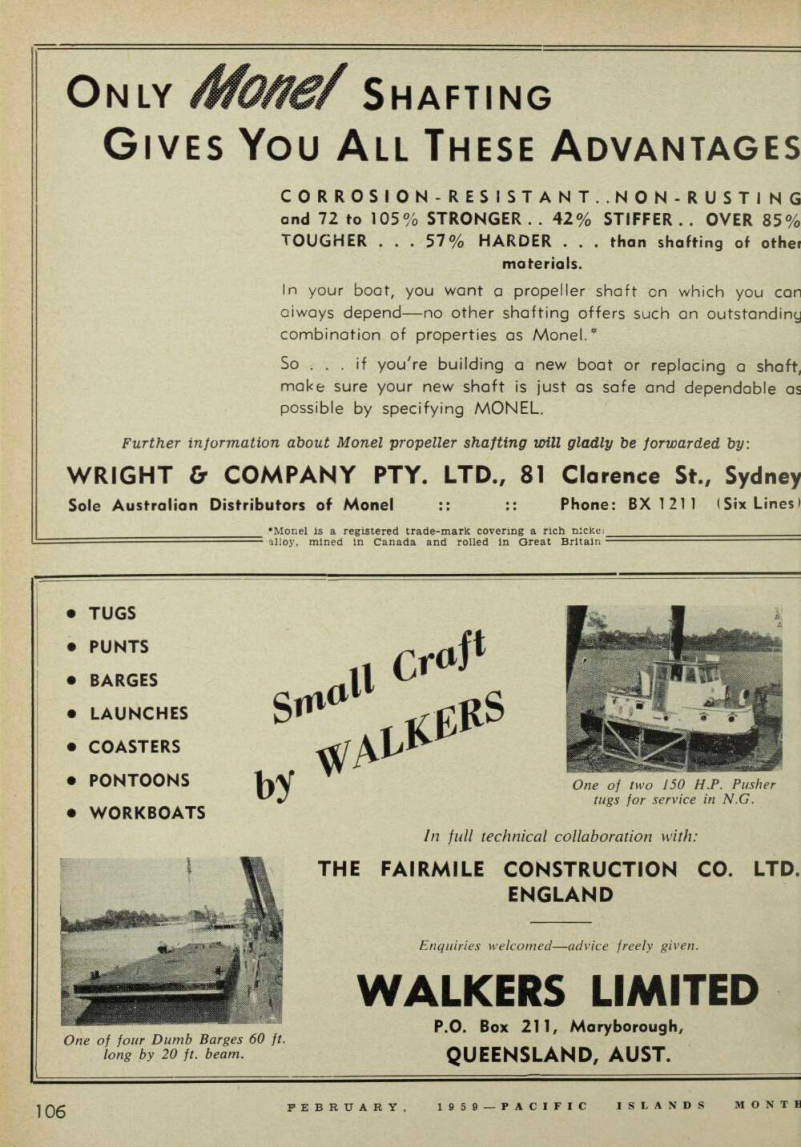 112
112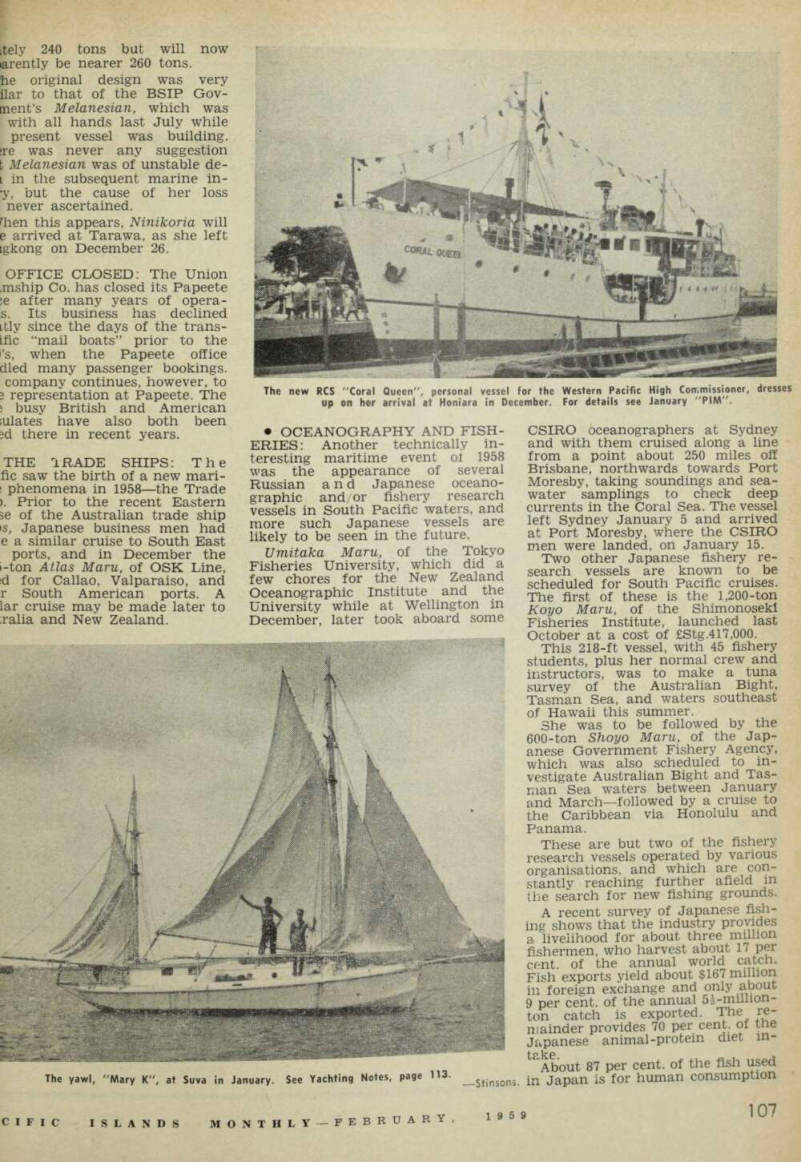 113
113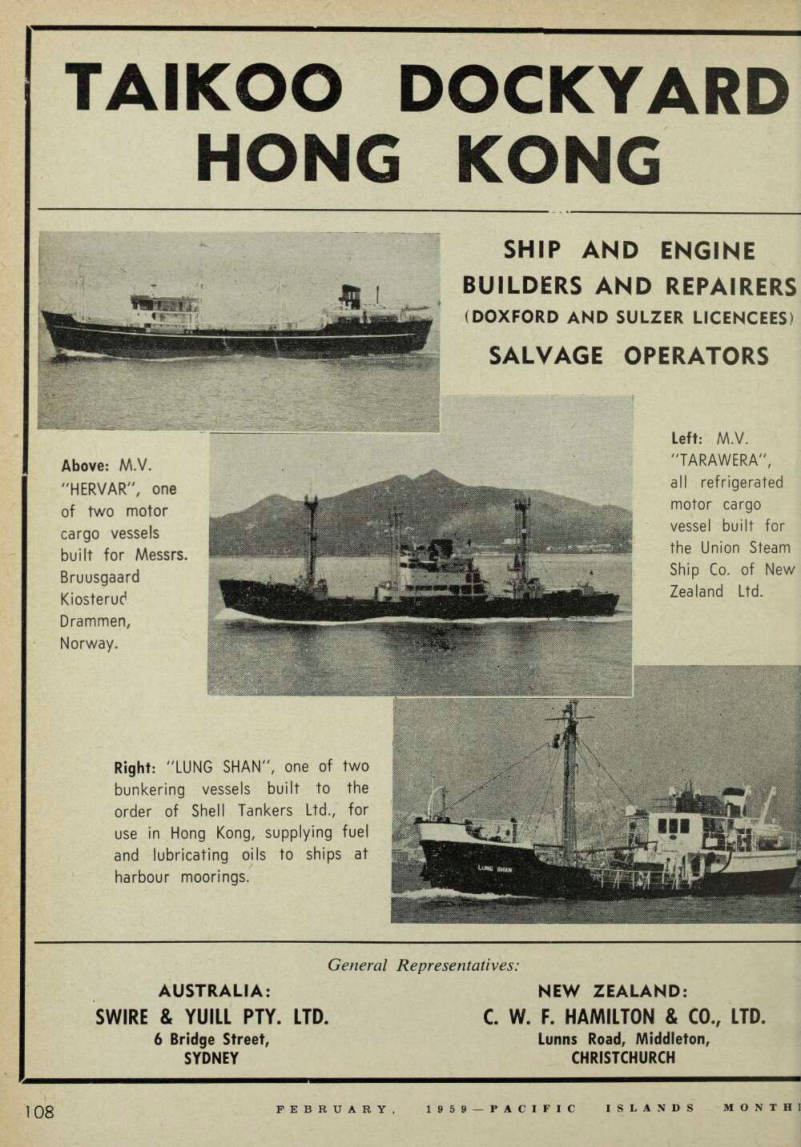 114
114 115
115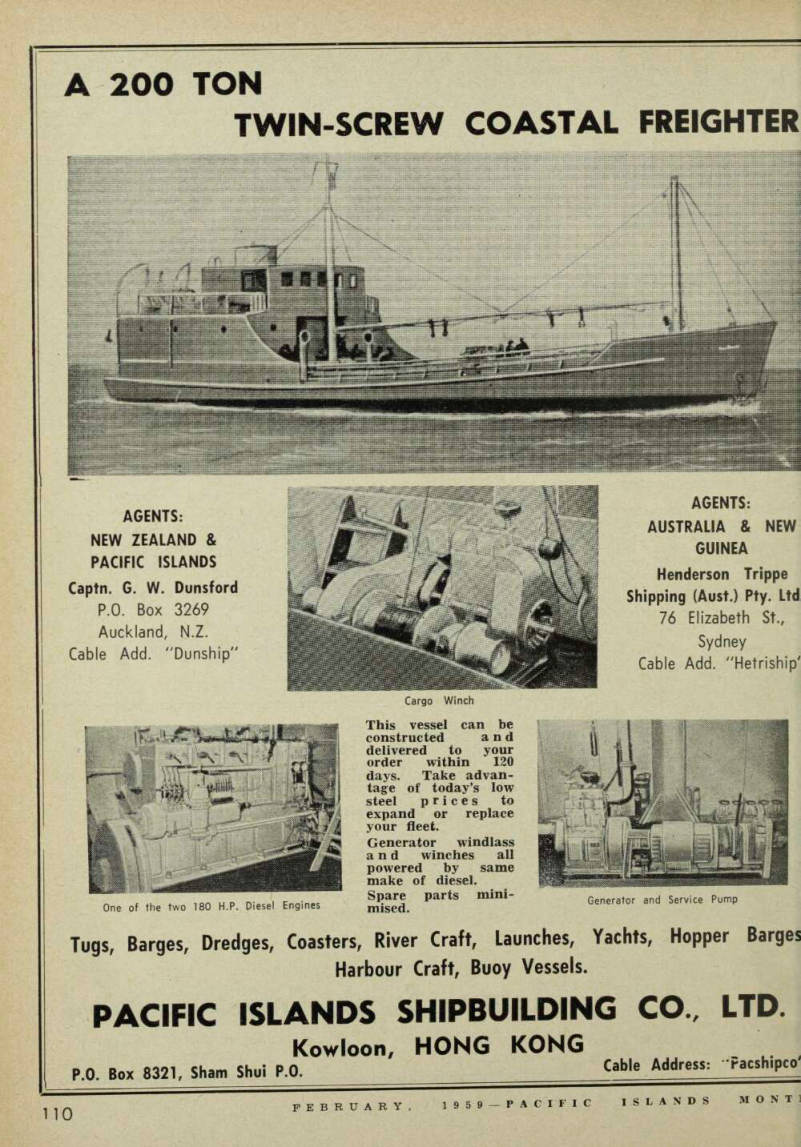 116
116 117
117 118
118 119
119 120
120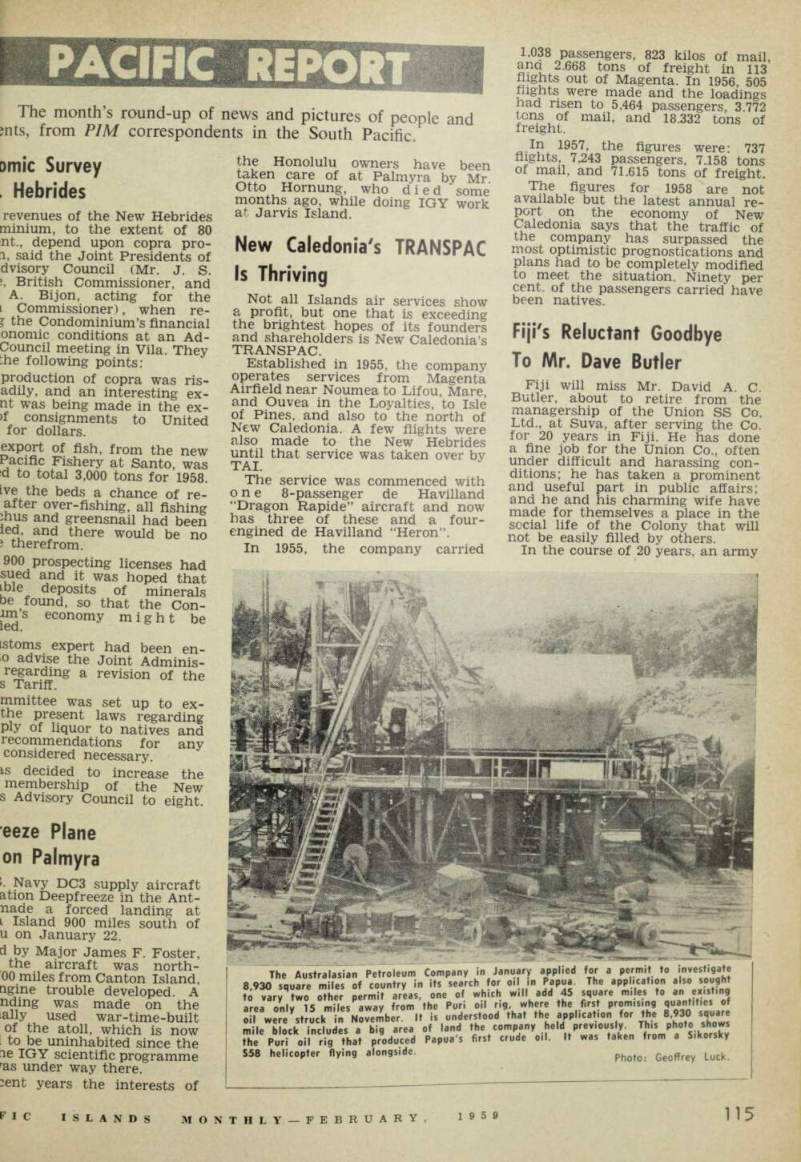 121
121 122
122 123
123 124
124 125
125 126
126 127
127 128
128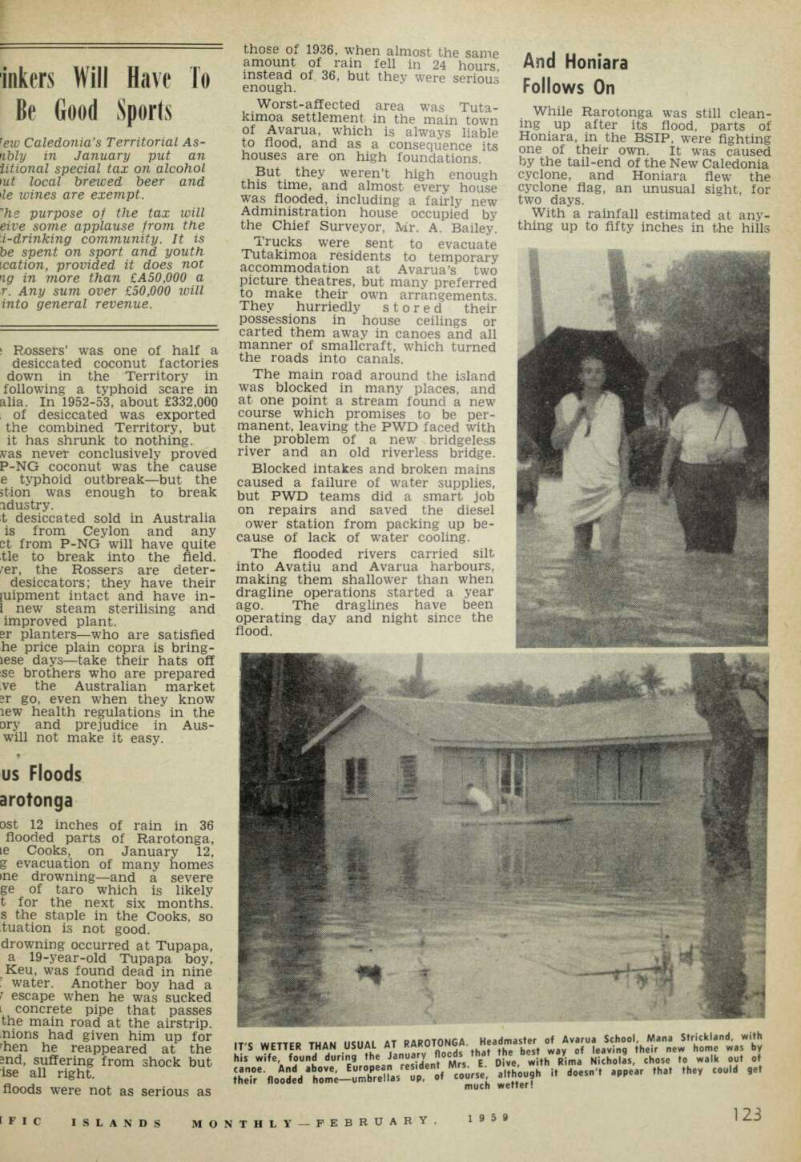 129
129 130
130 131
131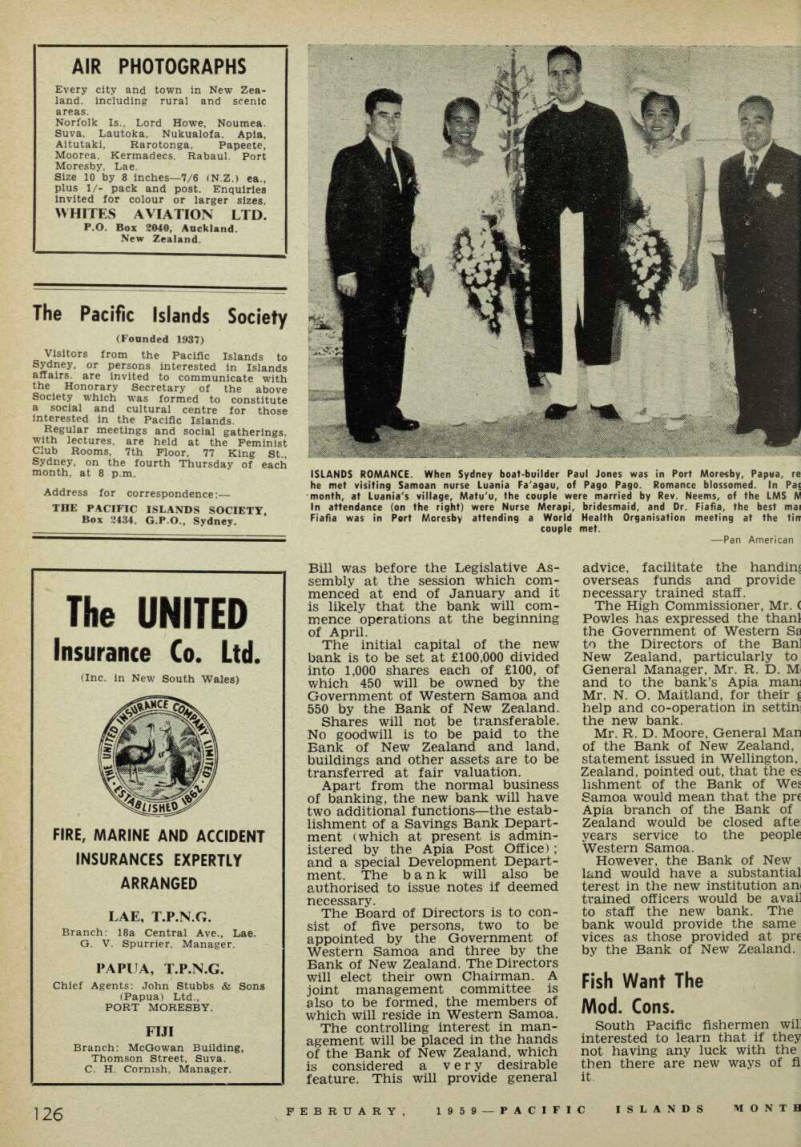 132
132 133
133 134
134 135
135 136
136 137
137 138
138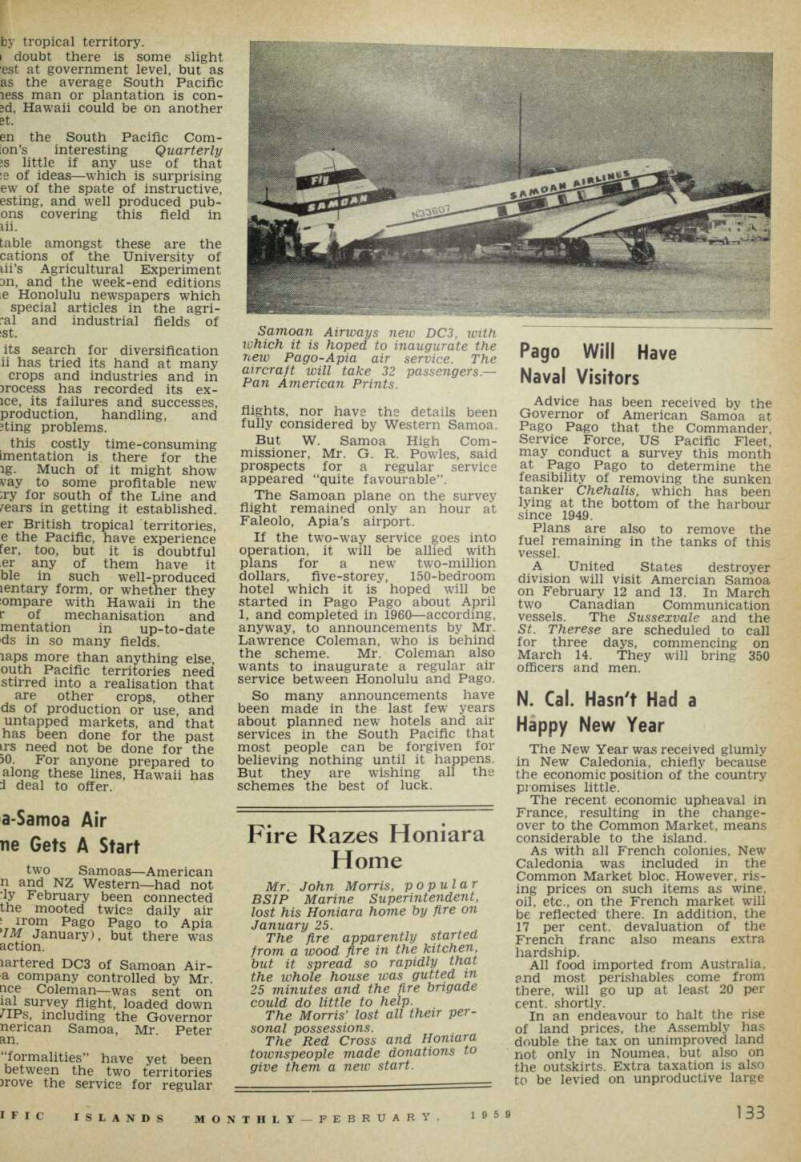 139
139 140
140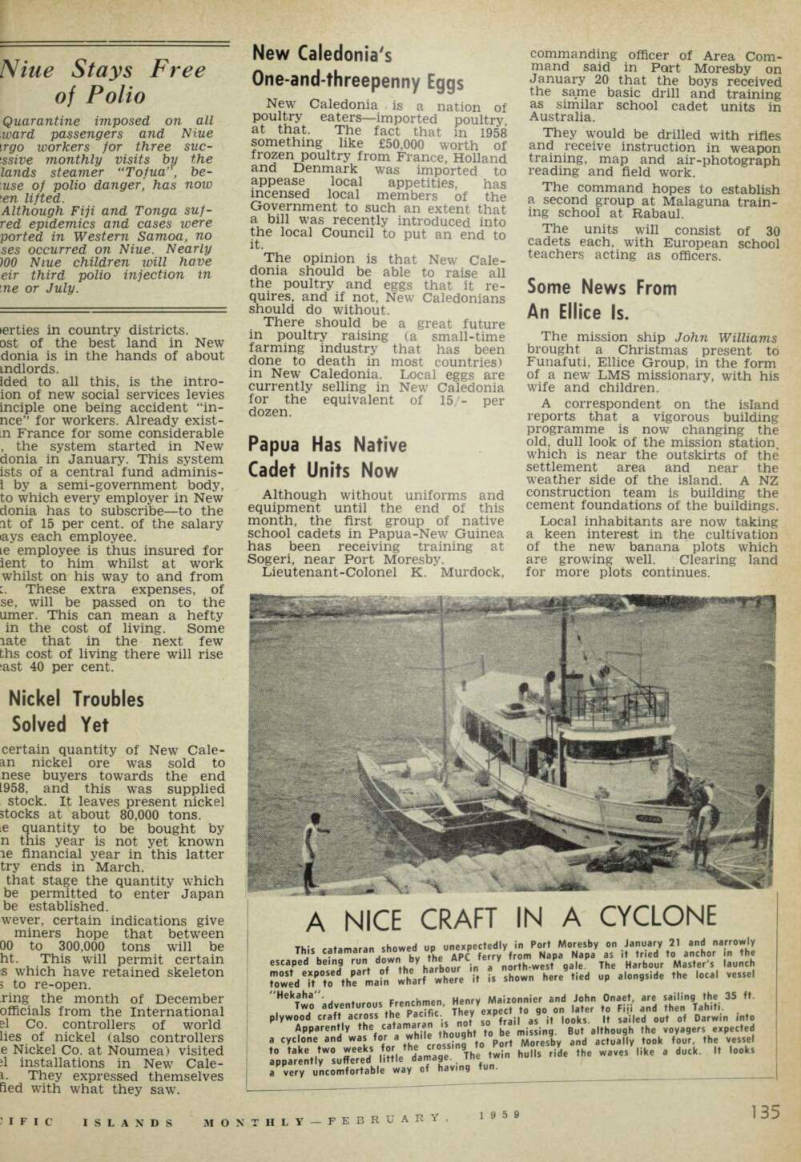 141
141 142
142 143
143 144
144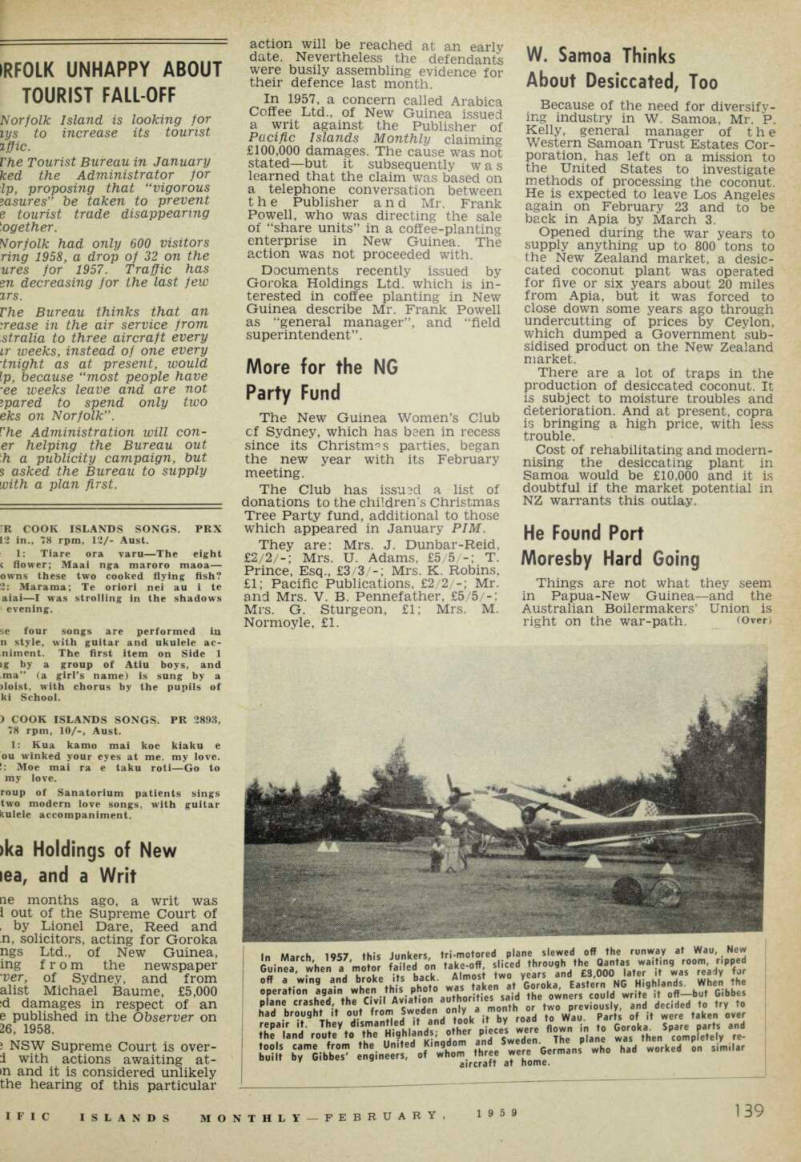 145
145 146
146 147
147 148
148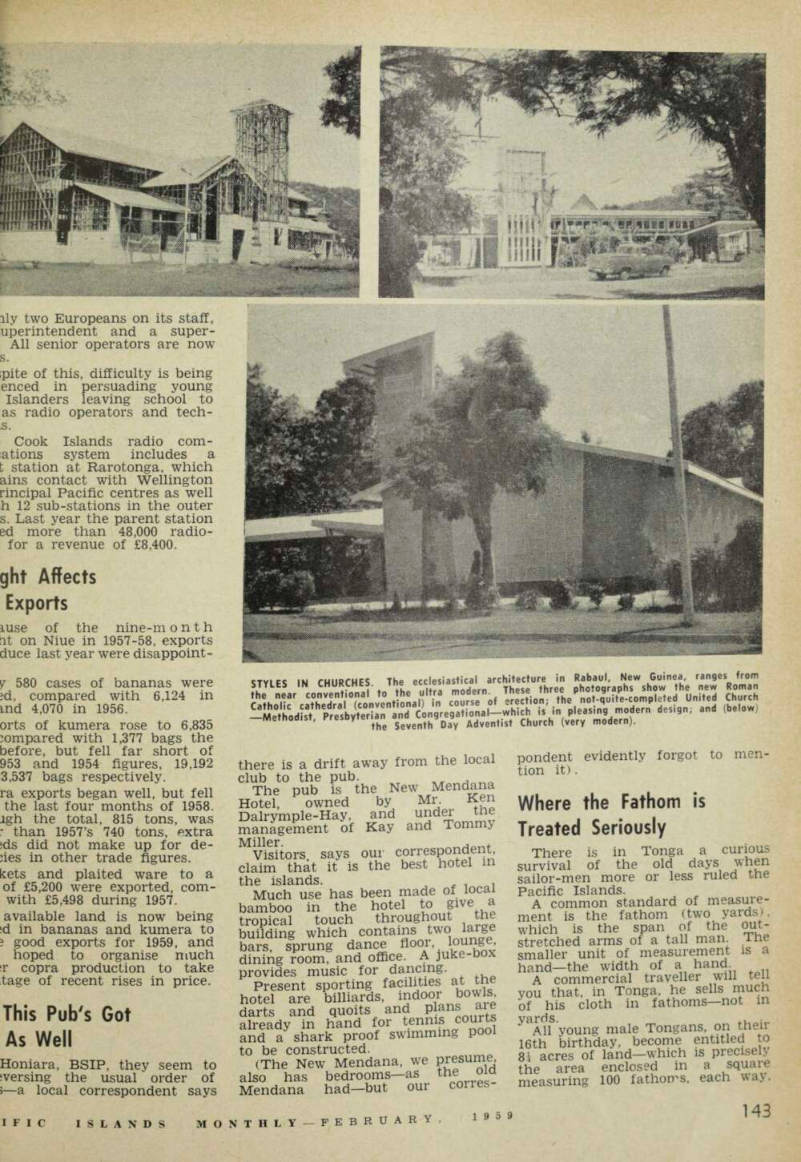 149
149 150
150 151
151 152
152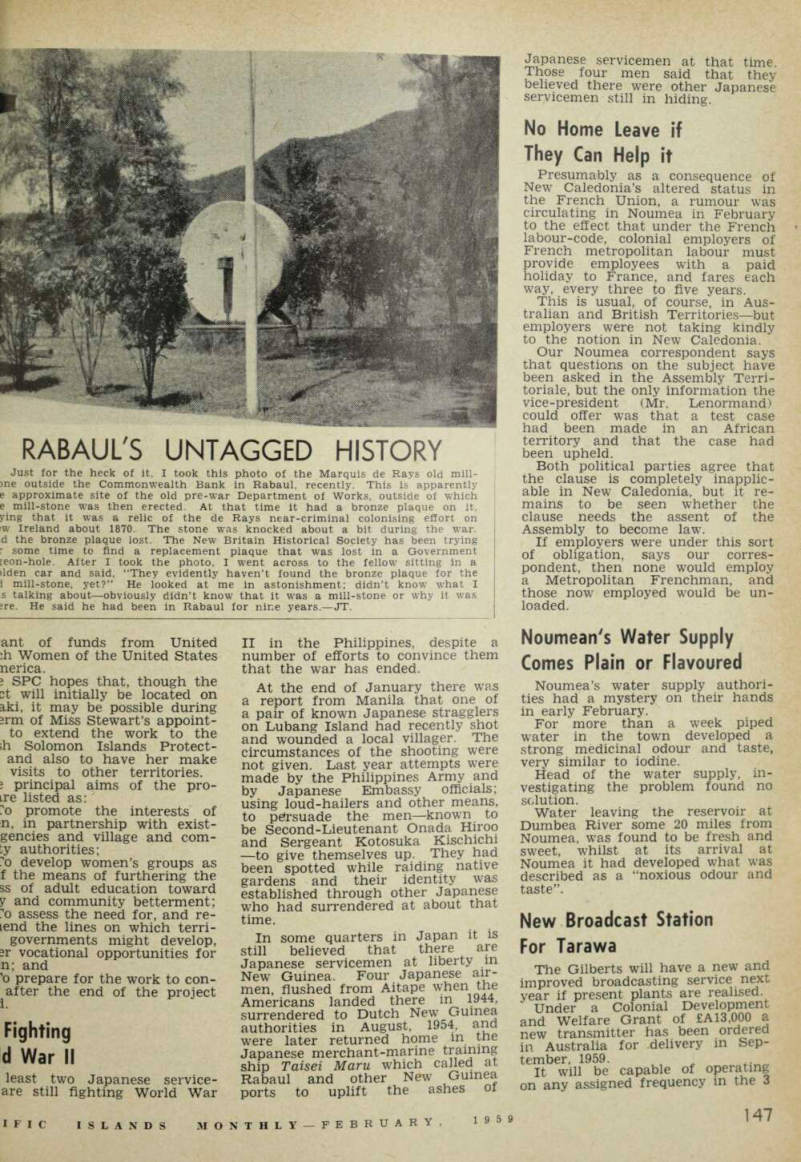 153
153 154
154 155
155 156
156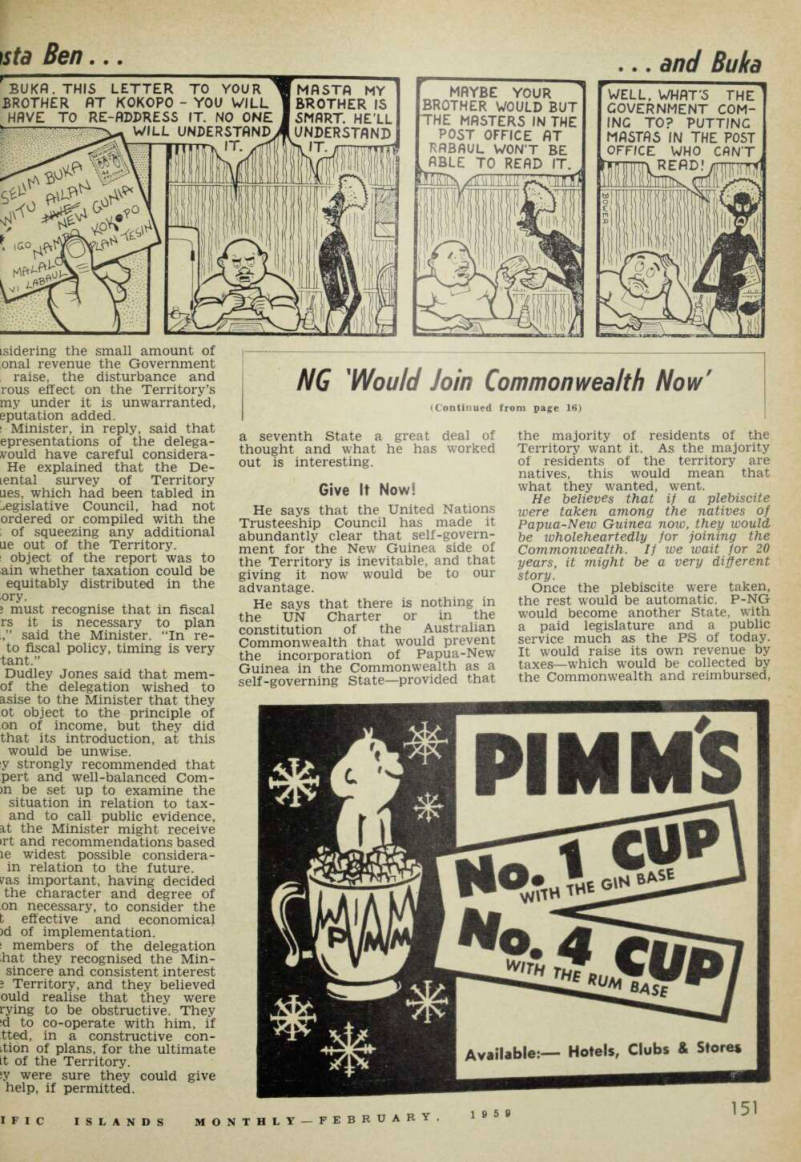 157
157 158
158 159
159 160
160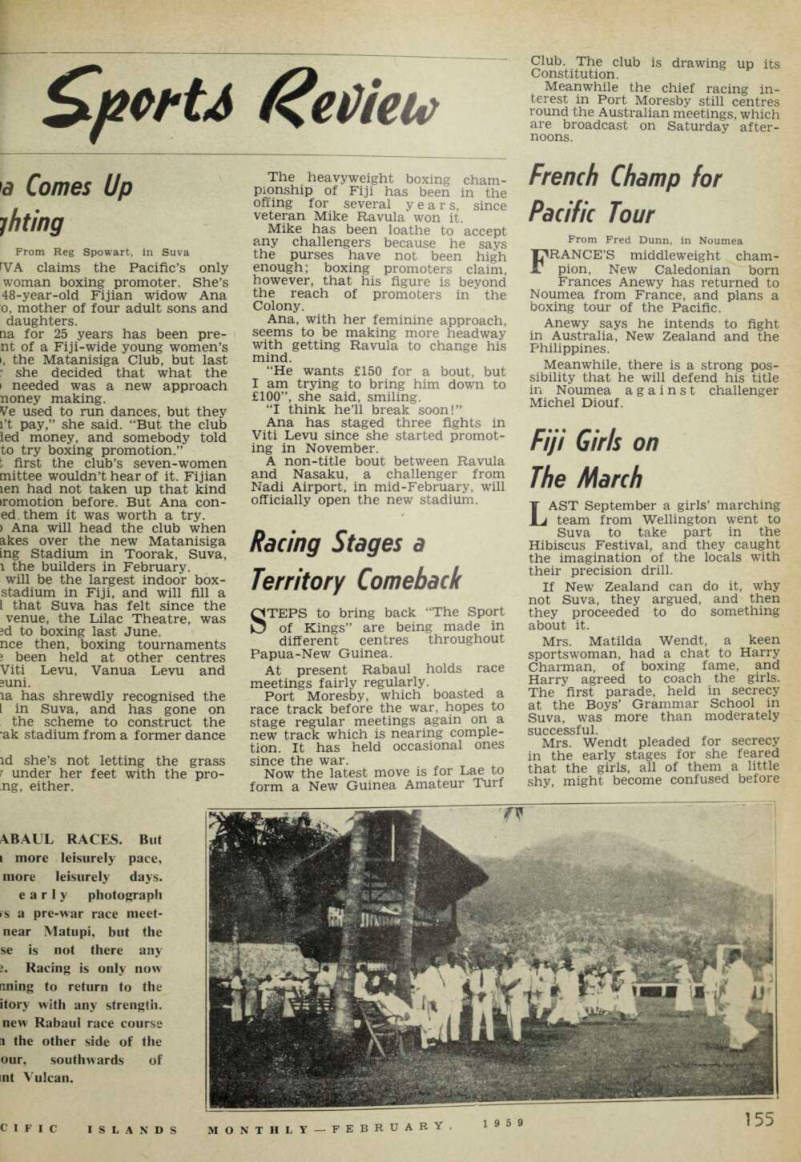 161
161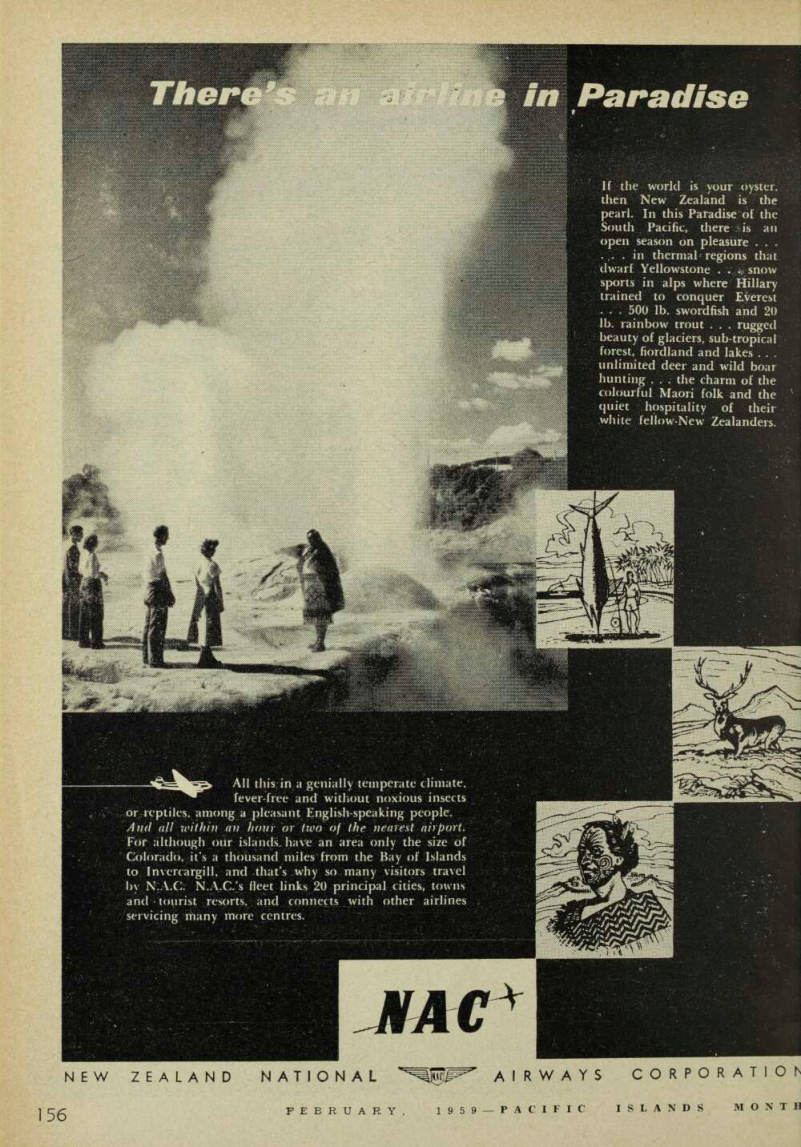 162
162 163
163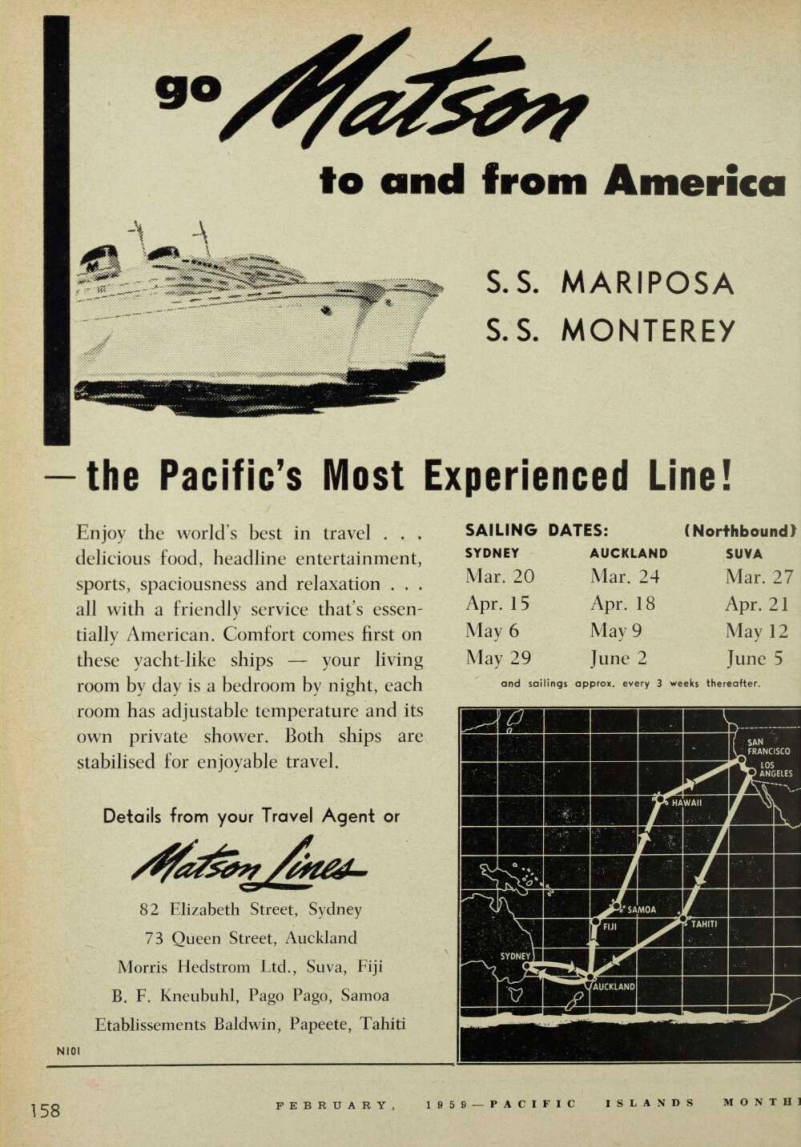 164
164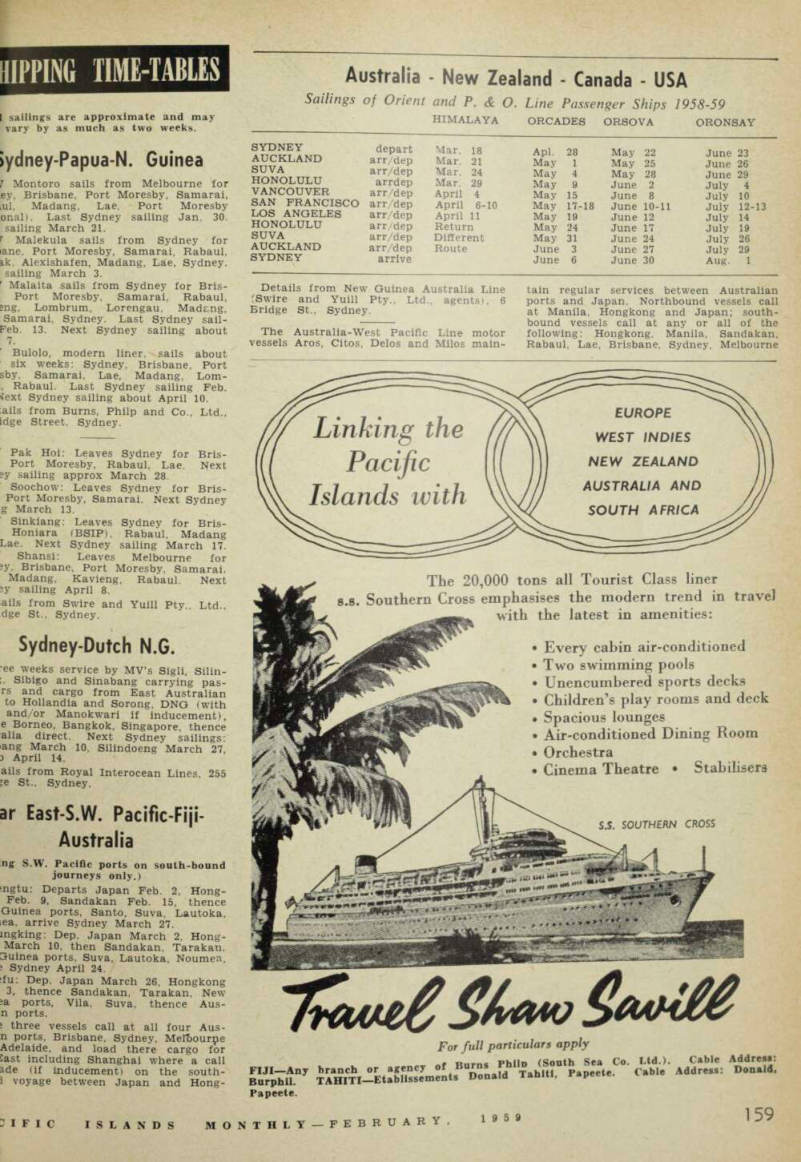 165
165 166
166 167
167 168
168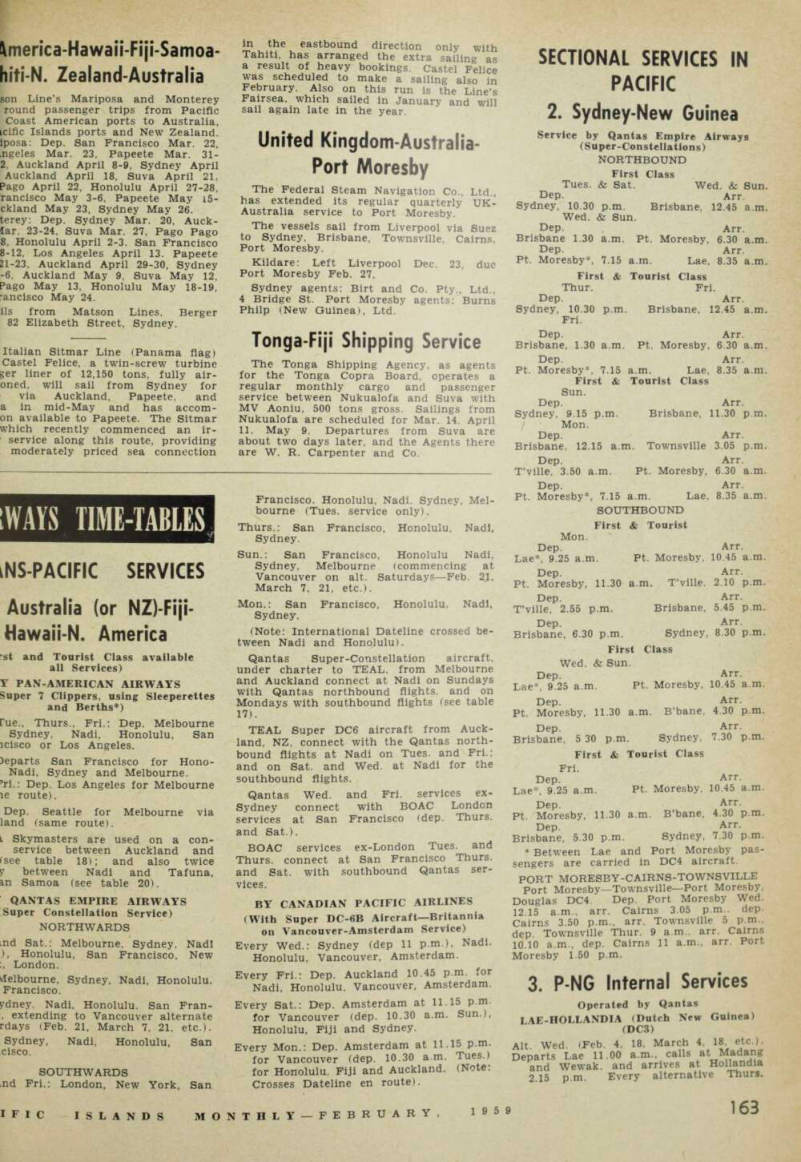 169
169 170
170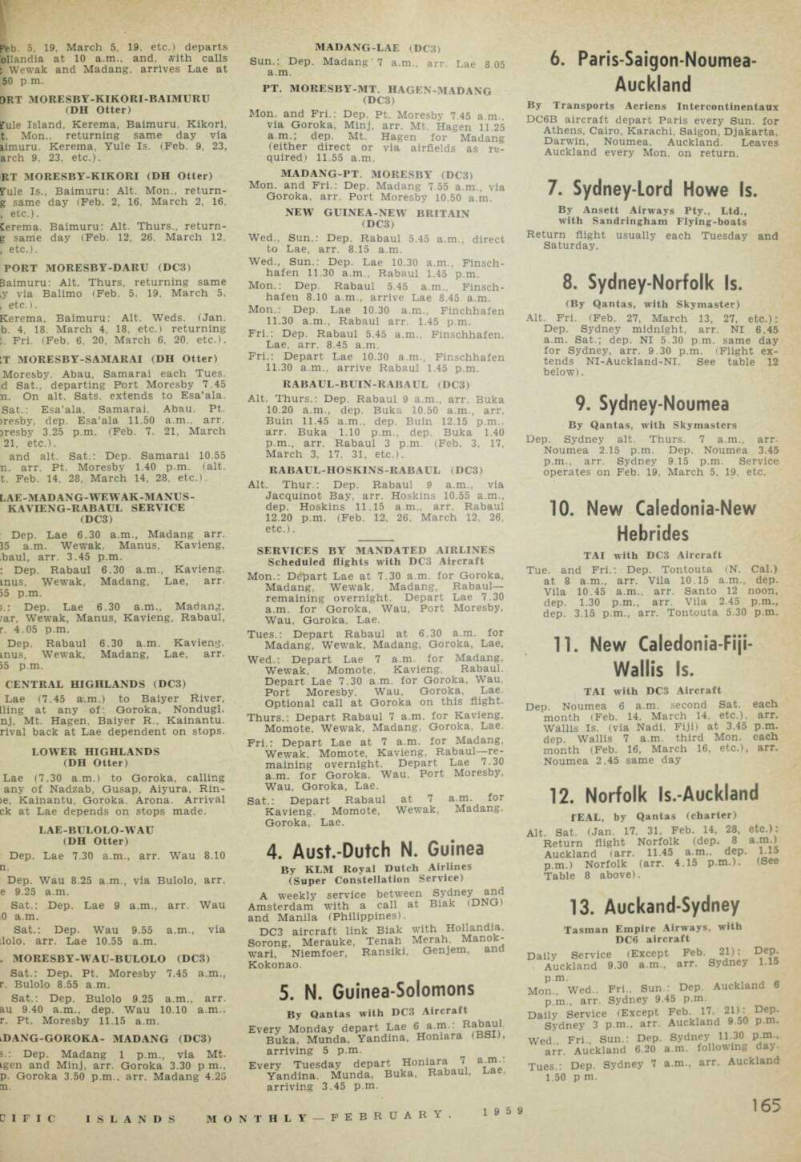 171
171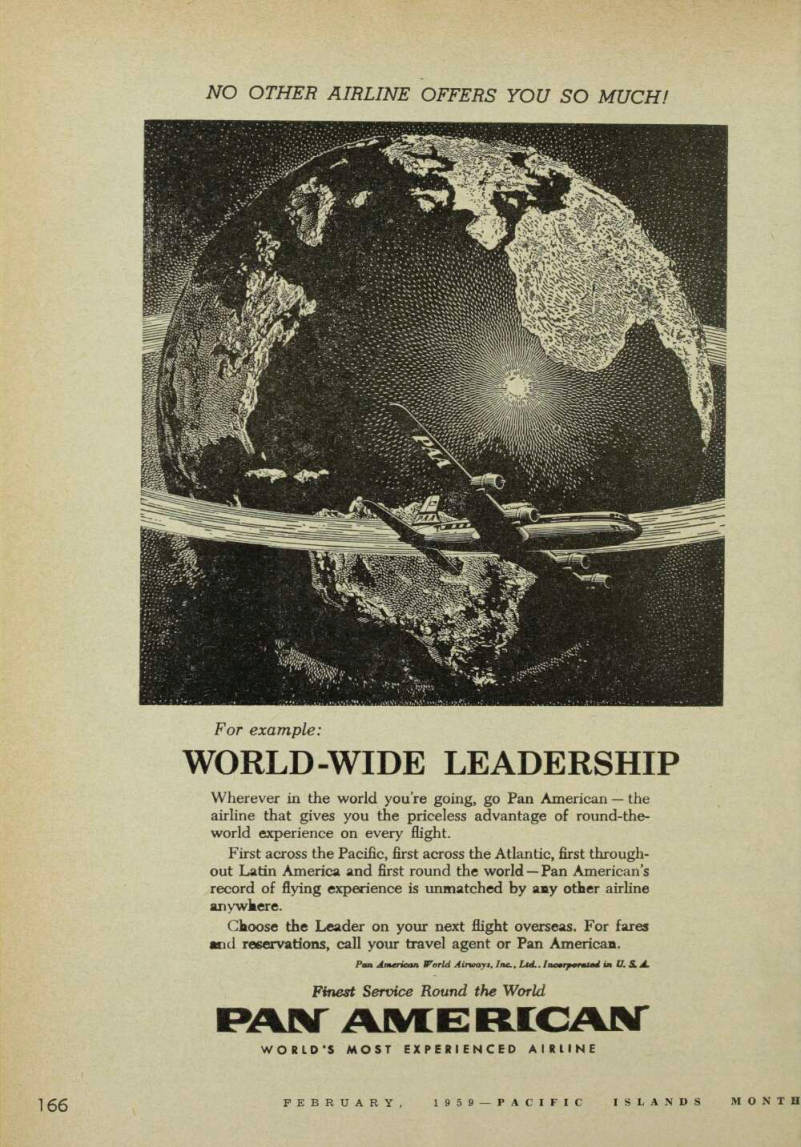 172
172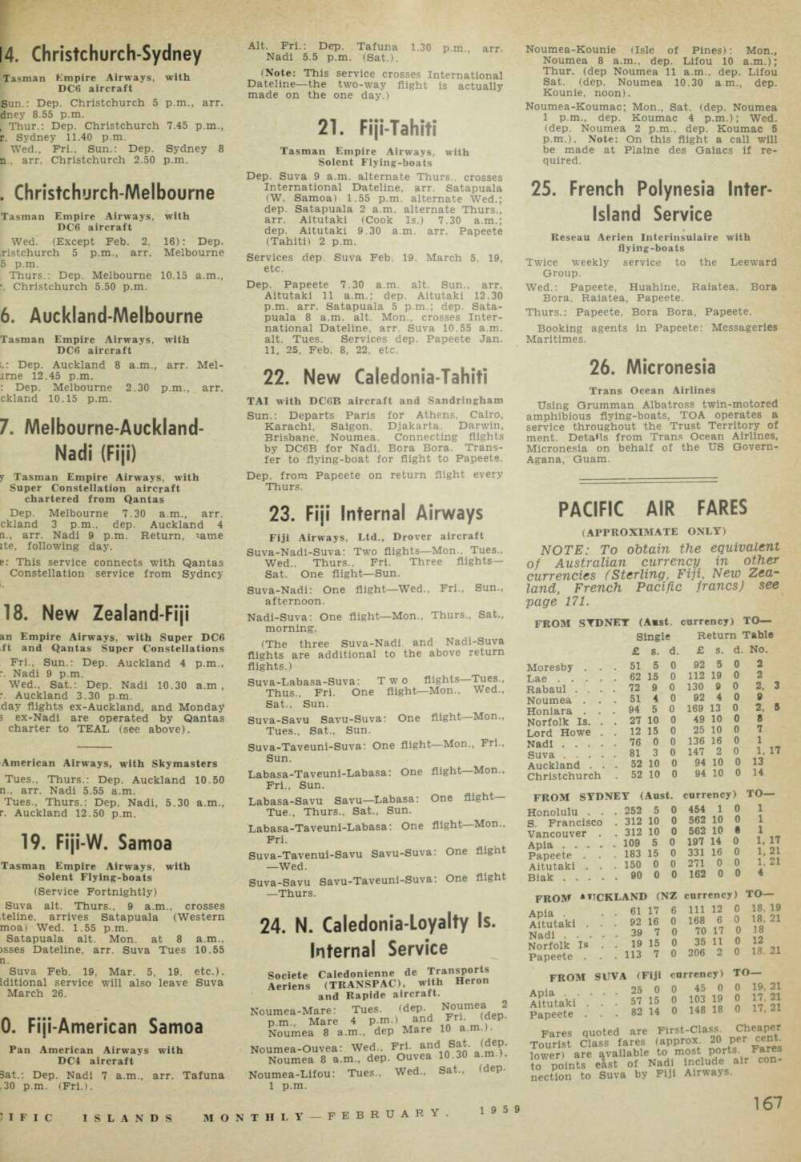 173
173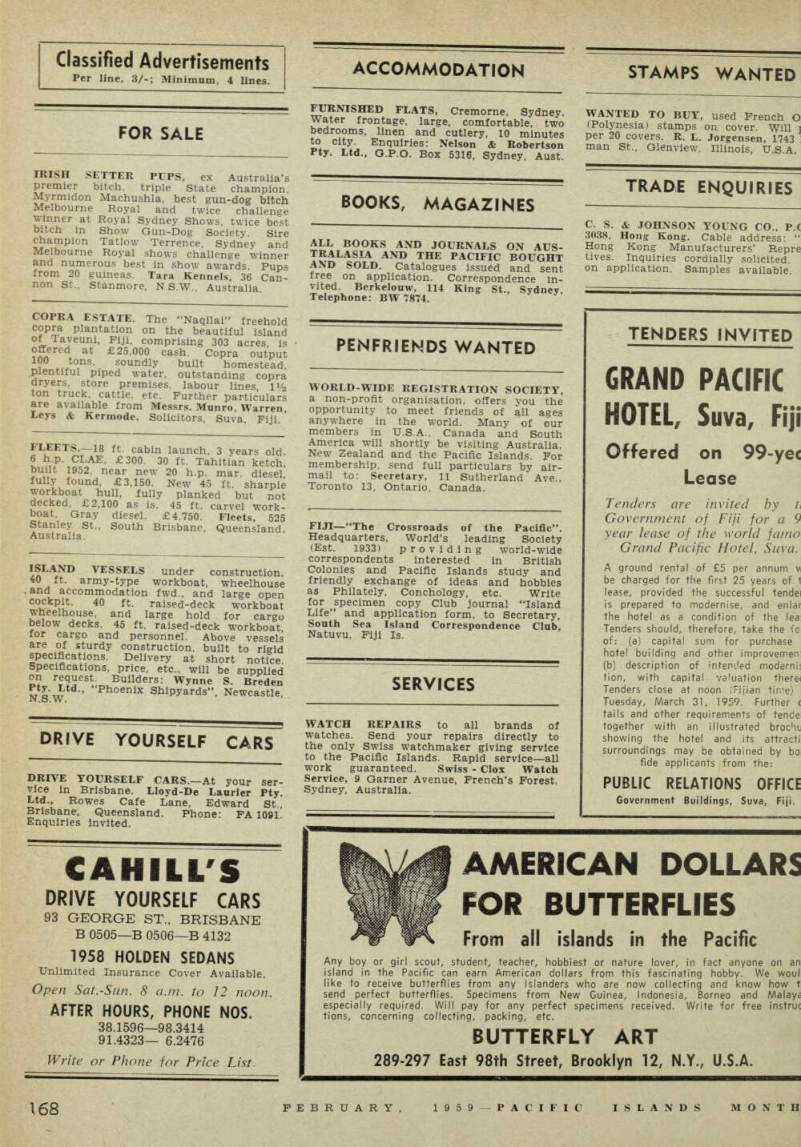 174
174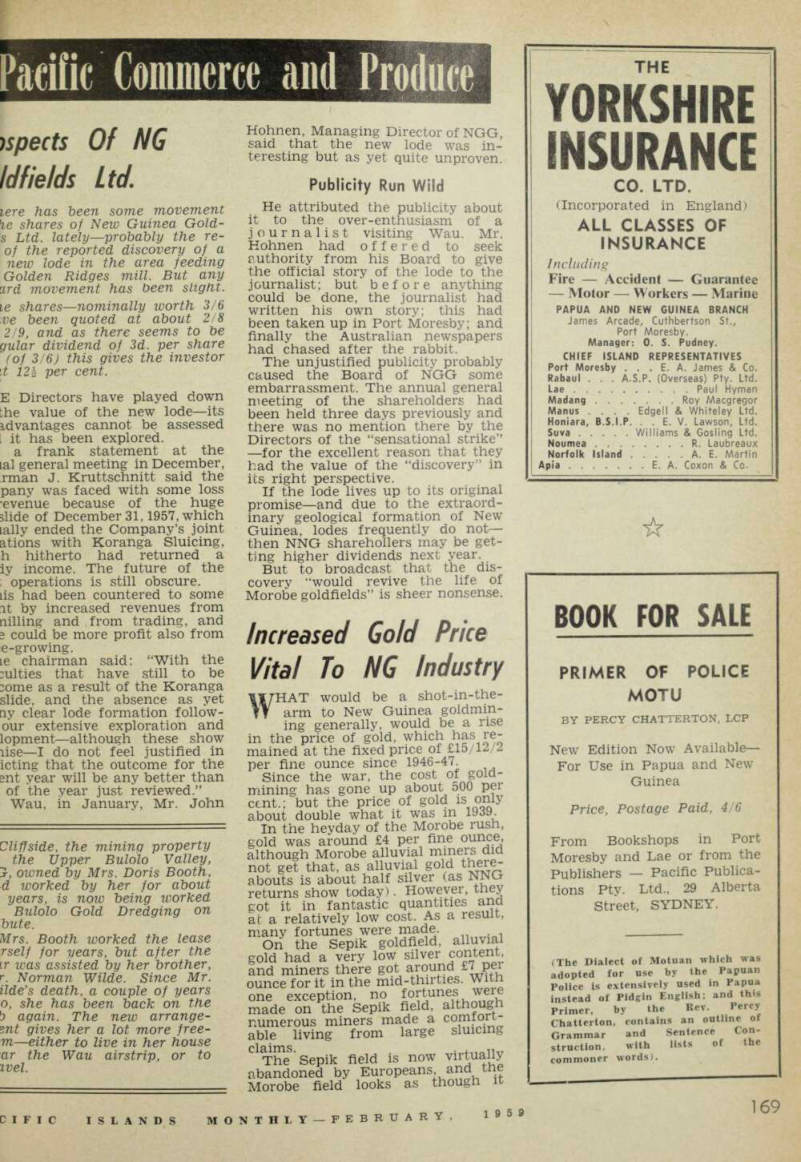 175
175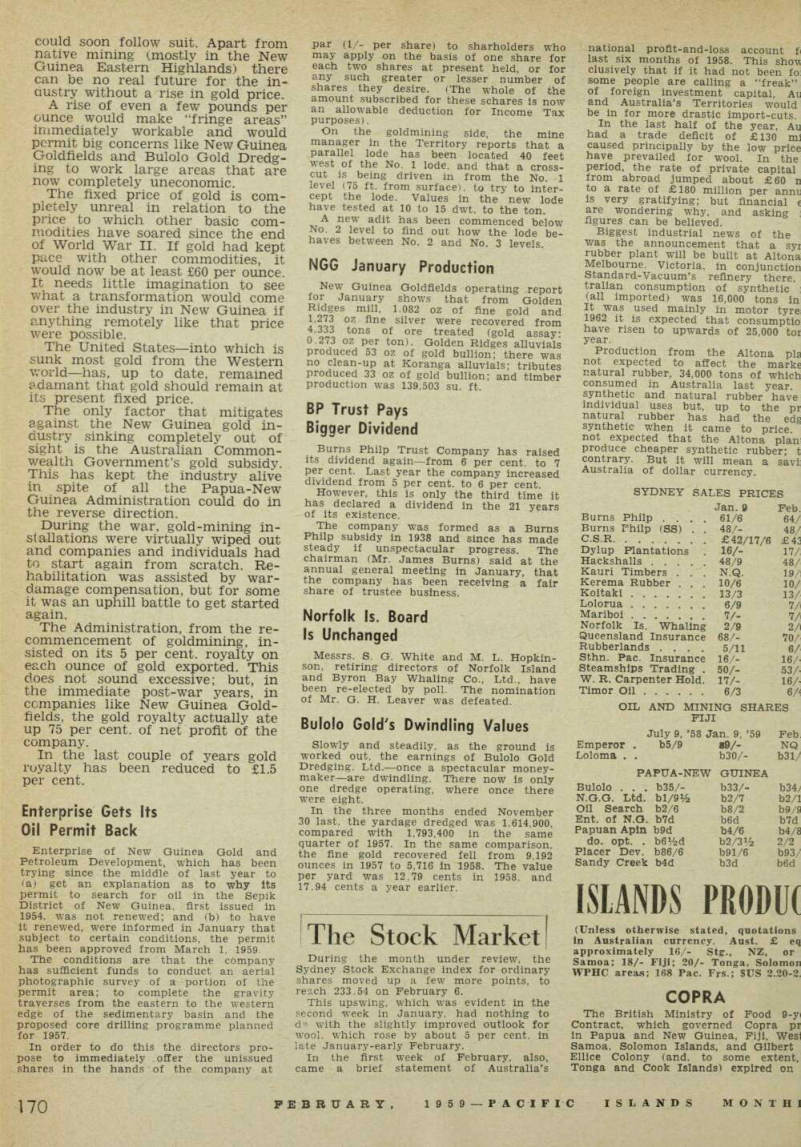 176
176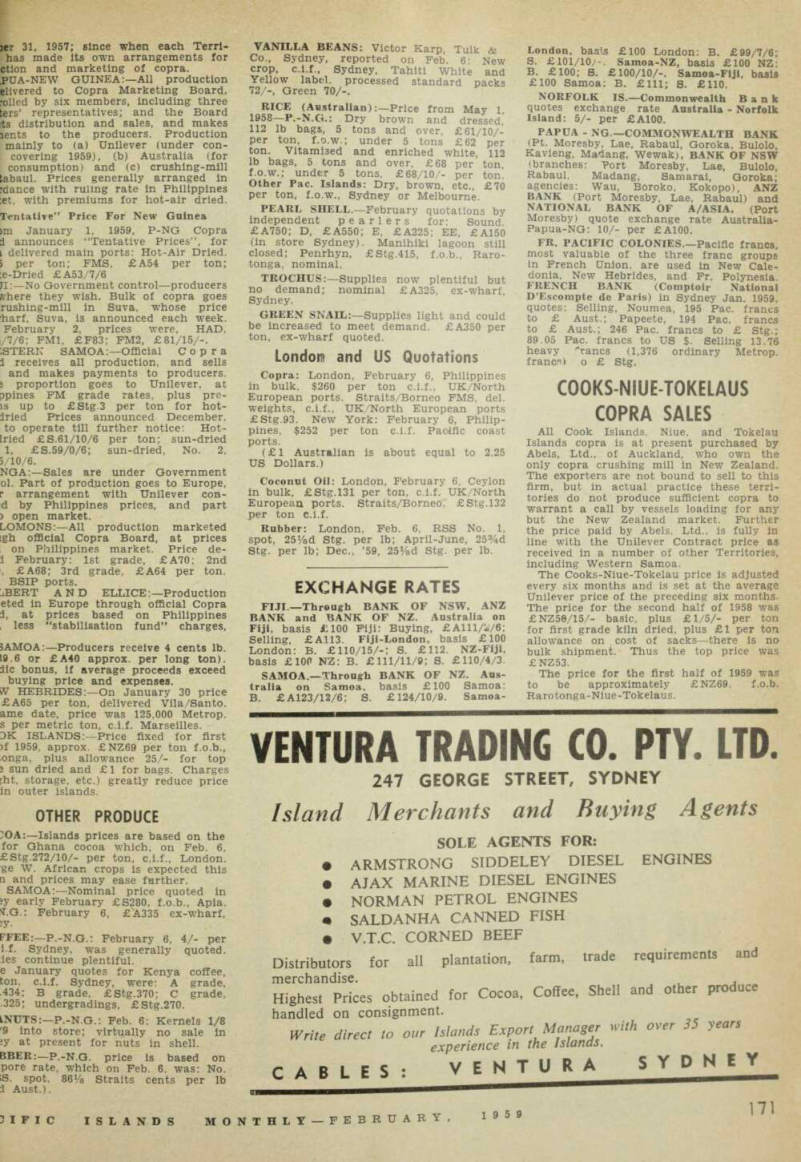 177
177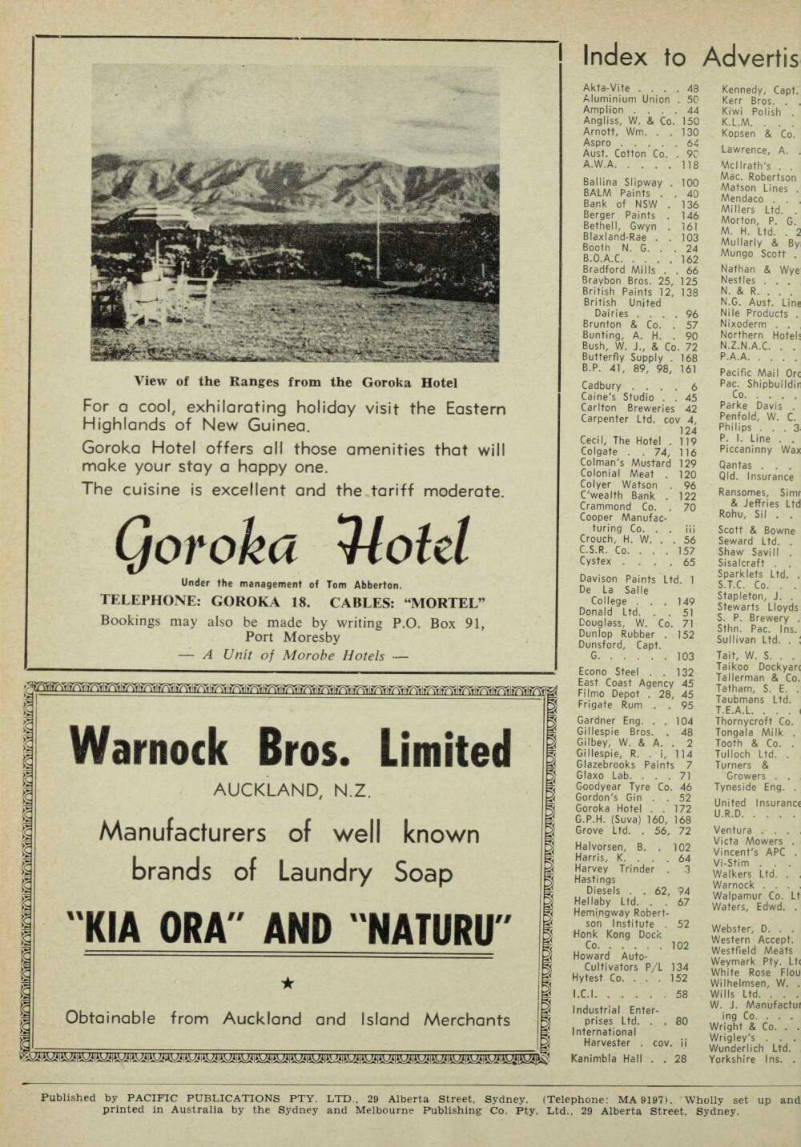 178
178 179
179 180
180