Pacific Islands Monthly
News Magazine Of The South Pacific
March, 1971
Australia, Nz, Geic, Bsip 50C
P-NG, FIJI, COOKS, TONGA, W. SAMOA, N. HEBRIDES 45c
Nauru, Norfolk, Niue 45C
AMERICAN SAMOA 70c HAWAII 80c MICRONESIA 90c NEW CALEDONIA 65 CFP FRENCH POLYNESIA 75 CFP
Our Cover
There's something restful about this month's picture.
It's late evening in Western Samoa, outside the village, and the family is out collect ing clams. Last rays of the sun throw mellow reflections.
Photo is by Tony Hillhouse.
Advertisements & other items, pp. 2-16 (3 items)
The long and short of the COLT GALANT
k With the Colt Galant, the distance between two points is short, with long intervals between stops for fuel. Low fuel consumption and trouble free performance make the reasonably priced Colt Galant long on economy. The long sloping hood and short deck give the Dyna-wedge Colt Galant a fresh sporty look. Spacious interior, reclining urethane foam seats, tilt steering wheel and multi-use control lever are but a few of the features that make the Colt Galant longer on luxury and safety. Choose either of Colt Galant's two powerful Saturn engines, 87or 95 HP. See your dealer today for the long and short of the Colt Galant! * i 4 . rM -
MITSUBISHI
MOTORS CORPORATION
>c s^: :\L
THROUGHOUT THE PACIFIC
FIJI,SAMOA,TONGA.NIUE Is,NORFOLK Is.
BURNS PHILP
(SOUTH SEAT
REGISTERED OFFICE: SUVA, FIJI,
TELEPHONE NO: 22661
TELEX NO; FJ1127
Code Address: "BURNSOUTH'
SHIPPING AGENCIES
The New Zealand Shipping Co. Ltd.
Shaw Savill & Albion Co. Ltd.
Blue Star Port Line (Management) Ltd.
Bank Line Ltd.
General Steamship Corporation Ltd.
Compagnie des Messageries Maritimes Royal Interocean Lines Daiwa Navigation Company Ltd.
Sitmar Line Flotta Lauro (Lauro Lines) Australasia Pty. Ltd.
Tonga Shipping Agency.
EXCLUSIVE
DISTRIBUTORSHIPS
INCLUDE
Akai Taperecorders Sunbeam Appliances Dunlop Products Hitachi Electronics Holden Motor Vehicles Rolex Watches Revlon Cosmetics Pentax Cameras Massey-Ferguson Tractors Olympic Tyres Penfold Wines
AGENTS FOR
Queensland Insurance Co. Ltd.
Shell Company (P. 1.) Ltd.
Bureau Veritas
ASSOCIATED COMPANIES
Burns Philp (New Hebrides) Ltd.
Burns Philp Trustee Co. Ltd.
Automotive Supplies Co. Ltd.
Corrie & Co. Ltd.
Wrought Iron and Steel Construction Co. Ltd.
Bish Ltd.
SPECIALISED SERVICES
Expert advice on Shipping,- Forwarding; Customs formalities; Insurance.
COMPLETE TRAVEL
SERVICE
accredited agents for the
INTERNATIONAL AIR
TRANSPORT ASSOCIATION
OVERSEAS AGENTS: SYDNEY • LONDON • SAN FRANCISCO
m j.
The world's motoring
writers had an
Italian love affair.
i
With the all new Hat 128.
'lnternational Car ofthe\feari
No new car has ever won more awards.
The Fiat 128 was voted 'Car of the Year by no less than seven important magazines. In Holland, England, Germany, Denmark,
Sweden, Czechoslovakia and Italy.
Now you can see the remarkable new front wheel drive 128 at your
Fiat showrooms.
It could be the beginning of your Italian love affair.
Specifications:— 1,116 cc transverse engine. Overhead cam. Five bearing crankshaft. 55 bhp. Front wheel drive. 84 mph. All synchromesh gearbox. All independent suspension. Front disc brakes. Radial ply tyres. Rack and pinion steering. Dual brake system. Heater/demister. 21 cu. ft. boot.
asm
American Samoa Silver Star Transport Inc.,, P.O. Box CB-4, pago pago!
Fiji Motibhai & Co. Ltd.,
P.O. Box 40, BA.
New Caledonia Agence Automobile S.A.,
P.O. Box 842, NOUMEA.
New Guinea New Guinea Motors Pty. Ltd.,
P.O. Box 1027, BOROKA.
FIAT CONCESSIONAIRES
New Hebrides Societe Bourgeois & Cie.,
P.O. Box 28, PORT VILA.
New Zealand Torino Motors Ltd.,
P.O. BOX 6240, AUCKLAND.
Norfolk Island Red Rental Ltd.,
P.O. Box 147, NORFOLK ISLAND.
Solomon Islands Chan Wing Motors Ltd.,
P.O. Box 820, HONIARA.
Tahiti Agence Tahiti Poroi,
P.O. BOX 83, PAPEETE.
Western Samoa E. A. Coxon & Co. Ltd.,
P.O. Box 38, APIA.
SOME OF THE FIRMS
WE REPRESENT ARE:
A. W. Allens (Confectionery) Sunshine Biscuits Sunrise (Confectionery) Flamenco (Instant Coffee) Cremota (Quaker Oats, Jets Pet Foods) Merchants (Canned Soft Drinks) Highness (Canned Vegetables, Canned Fruit Drinks) Lunchtime (Honey) South Pacific Canneries (Scallops.
Abalone) Safcol (Canned Tuna, Salmon) Hancock's (Spaghetti, Cereals) Melbourne Canning (Jams, Bleach) Water Wheel (Flour, Sharps, Wheat) General Food Corporation (Twisties, Twirlies) Edward Zorn (Margarine, Cooking Fats) Robert Timms (New Guinea Gold Coffees, Teas) Bx Plastics (Sandals) Homy Peds (Sandals) Magnet (Mattresses) Esteel (Cookwear) Teco (Cafe Bars) Mitchell's (Abrasives) Regent (Swiss Watches) Gainsborough (Furniture) Tamco (Melanie Crockery, Nylon Hardware) Elmaco (Plastic Household Goods, Electrical Fittings) Brownbuilt (Pre-fabricated Houses) Ryline (Fluorescent Lights) Chargemaster (Fluorescent Lamps) Franklite (Light Fittings) Electronic Industries (Electrical Household Appliances) Jex (Steel Wool) Austramax (Pressure Lamps) Preservene (Soap Products) Charles Tims (School Requisites) Ascow and Philadelphian (Shirts) Lawn Chair and Tubco (Garden Furniture) Sunrise Lustretone (S.S. Sinks, Plumbers' Supplies) Kerex (Kerosene Burners) Arena (Football Boots) Ferrari (Men's Shoes)
S. E. TATHAM
& Co. Pty. Ltd.
MELBOURNE, AUSTRALIA
Q.P.O. Box 8, Cables “SET Telephone 60-1125
EXPORT AGENTS
PACIFIC ISLANDS
AGENTS
Australian buying
and shipping agents for the Gilbert and Ellice Islands Colony
Wholesale Society
DIRECT ENQUIRIES WELCOMED
Associate Company
E. TATHAM (FIJI)
Suva, G.P.O. Box 671.
Lautoka, P.O. Box 366.
SINCI 1924
LTD.
COFFEE
BANANA
CARROT
1 \
COCOA
mm
RUBBER
nr\ 111
TOMATO
I
ONION
Make every year a bountiful year.
Increase your crop yields with Showa Denko's fertilizers. And make every year a year of abundant harvests. A leading producer of chemical fertilizers, Showa Denko is prepared to meet ail your plant nutrient requirements. Its urea, diammonium phosphate, 15:15: 15 and other N-P-K formulations are your guarantee of bigger, better, more beautiful crops.
For detailed information on how Showa Denko's fertilizers can help you, we invite your inquiry to Showa Denko or its agents in your area. ♦SHOW DENKO KJ( ■ 34, Shiba Miyamoto-cho, Minato-ku, Tokyo Distributed by.THEO THOMAS & CO., PTY LTD, Rabaul Office: P.0.80x 535 TEL: 2261
great bunch
of flours.
Robert Hutchinson makes the greatest bunch of flours in the Pacific. Bakers’ flour.
Superlite cake and sponge flours.
Biscuit flour and cracker flour.
Wheaten sharps and wheaten meal.
We’re particularly proud of our bunch of flours. So we have a technical advisory service to help you use them properly.
So next time you see a Robert Hutchinson flour (or even one of our Hutmill stock feeds), remember it’s just one of the bunch. m i i 1 m i m a - > * m m tV V m tm.
fiSi
1
ROBERT
HUTCHINSON
LIMITED
flie flour people
Hartington Street, Glenroy, Victoria. Australia. 3046. Telephone Melbonme 306 7261
RHIO2
If you have dentures to keep clean, aches and pains to stop,
/ BUD"
HP227
DS&PRffM
cuts and scratches to heal ...trust us.
For Trade Enquiries: Reckitt & Colman Pty. Limited, Wharf Road, West Ryde, N.S.W. Australia.
Cables: Reckitts Sydney.
fghydfh
»■» m *
N£w Zi£ ALA ND
STtINiMIR
s f%*z 4*
STRONGER!
Australian construction
equipment goes everywhere
' 'V ' , 1 -'-'fl M i * *■ ** *3; ** ■*» JL What s in Australia for you ? A huge range of Australianbuilt graders, tractors, scoops, rollers, rippers, dozers and mobile cranes. Ready to contribute to your projects, as fast and as well as they are developing Australia's massive mining schemes, hydro-electric projects, new cities and ports. This equipment is rugged, dependable—it has to be, to beat tropic mud, arid deserts and winter freeze. And it goes everywhere. South East Asia. Africa.
South America. This is your year to look to Australia, for construction equipment that's competitively priced for both importer and contractor, and available by fast and frequent shipping services.
Australian Department of Trade and Industry,
what’s in p
Australia
for you? m
Find out today. All you have to do is contact the Australian Government Trade Commissioner who will put you in touch with suppliers of Australian products: Ramson House, 18 Pratt St., SUVA, Fiji. (P.O. Box 1252). Tel: 25624.
UH/PC/DV/7S*
The best rule to workto
is the one you cant break
Here's good news for carpenters. Rabone Chesterman now introduce the 1300 Longlife Rule madefrom revolutionary 'Makrolon'-the closestyet to the unbreakable rule.
Because this unique material has the highest safety factors of rigidity a/7c/flexibility, the 1300 Longlife Rule springs backunharmed fromthe roughest handling and calmly survives most on-site accidents.
Added to which you get some very unique features. Like a bevel edge along the entire length of the rule makingfor easier and more accurate measurements.
Black markings againsta white background give the best possible legibility. Special patented knuckle joints cannot become floppy under normal usage and graduations in £ths and thsfrom both ends means you can work instantly, anyway up.
The centre joints are in satin steel chrome and like the knuckle joints, they are selflubricating. We've probably had more experience in making carpenter's rules than anybody else; 185 years to date. So when we make a new one it's right for the job. And this time we might have gone too far- after all, you may never have to buy another rule again.
W t.* •
ntr! i: si riirlrn
Rabone Chesterman
Rabone Chesterman Ltd. Whitmore St. Birmingham 18, England.
For
RUM
at its best...
say
ifritpife
OVERPROOF AND UNDERPROOF
In 5 oz. and 13 oz. flasks and 26 oz. and 40 oz. bottles.
BLENDED AND BOTTLED BY JOHN WALKER & SONS LIMITED.
V m y
JWO7M
world
quality
«p- -si id
one
Only the world’s finest Virginia tobaccos are blended to produce ...
PLAYER’S
GOLD
LEAF
8593/2/70
NEW WORLD
LIGHTWEIGHT
CHAMPION
IN THE MARINE DIESEL CLASS
CUMMINS DIESEL
ise ■ 1 ■ -4 W f : ■ ■ % f Length 611" Height 30|* Width 32^
CUMMINS
VB-185M
185 bhp ... at 3300 rpm . . . from 1750 lb woa* For pleasure craft or workboats, this new V engine is the naval architect's dream— a marine diesel without a weight problem!
Cummins logged 2,000,000 hours of service with the VB-185 before it was released to marine users, and it's under warranty for two years or 3600 hours, whichever occurs first 'woa—weight overall, i.e., engine with all standard accessories, including marine gear.
CUT 18
Bank of Hawaii is the bank of the Pacific.
You can bank on it...in Guam 22m Koror iSt. Yap t Roi Namur JJtWike 2F mL Kwajalein JltPonape
MidwayJSf Tahiti
3* American Samoa.
All in all, we have over 65 branches throughout Hawaii and the Pacific offering full banking services. May we help you?
Bank of Hawaii the bank of the Pacific * affiliate of Banque de Tahiti
-6* °<!> /C> o -v «> A
Lunch size, snack size
SAO biscuits
are the right size!
Crisp, fresh Amott’s Sao biscuits ... right size to satisfy, right size for snack foods, too! Cheese for lunch? A big slice fits just right on Sao. So does a slice of ham or salami.
Prefer jam or spread? Or how about tomato? Simply serve with Sao—the right-size biscuit that makes all the crisp difference to lunches at home and at school or outof-doors. The triple-wrapped pack keeps the biscuits crisp and fresh.
Qrnotts/®™* Biscuits
There is no Substitute for Quality
7
pacific: islands MONTHLY MARCH, 1971
11
PACIFIC ISLANDS MONTHLY M A R C H . 1971
Up Front
with the Editor
The Kingdom of Tonga’s Sabbath Observance laws are a quaint leftover from another era. Today they are not really enforceable, but we can expect a number of new confrontations before the govern ment admits this to itself.
The recent swoop by Nukualofa police on people who were cooling off on three of Tongatapu’s beaches on a Sunday has again made the issue a lively one. Since it was a hot and humid day, it is not sur prising that the swimmers resented being moved on—especially those people who were picnicking on the beaches and who were ordered home just in case they attempted to go into the water when the police had gone. That sounds like an excess of authority to me. The police that day also stopped three busloads of par ents and children who were heading for the beach, and turned them back.
“We cleared the water of the swim mers and sent them off packing,” said a constable.
Tonga’s constitution says the sab bath shall be “sacred forever”. But the law which enables the police to enforce sabbath observance is the Order in Public Places Act, which says among other things: “Whoever shall do any work on the Sabbath day such as engaging in any trade or the purchase or sale of any goods or chattels, house building, boat building, gardening, fishing or con veying any thing on boat or wagon except in cases of emergency, and whoever shall discharge a firearm in the town or country or engage in any game such as cricket, football, lawn tennis, golf, bowls or similar games and dancing, lakalakas, fa’ahiula and such like pastimes, shall be liable to a fine not exceed ing five pounds or be imprisoned with hard labour for not more than three months in default of payment.”
Cabinet can suspend this section in case of an emergency. The sab bath day is defined in the act as the period from 12 midnight on any Saturday until 12 midnight on the following Sunday.
All sorts of arguments can and
have been advanced both for and against Sunday observance for Tonga.
One of its critics, Father Culling, pointed out in a letter to the Tonga Chronicle of January 29, that the founders of the law appeared to be under the impression that physical rest was the essence of Christian worship. But the essence of Christian worship, he submitted, was not rest but activity, and rest was involved insofar as it gave the Christian the freedom to perform the public com munal act of worship. “Different churches with different backgrounds have formulated their own laws to ensure this freedom for their people, and the whole matter of Sunday ob servance would be better left for them than be written into a con stitution,” said Father Culling.
Good, But I don’t believe Tonga is going to resolve the problem through debate as to whether the public should or should not be forced to rest on Sunday.
The essence is probably to be found more in the complaint of a Mr. Lancaster in the same newspaper, that somebody had stolen, killed and eaten his dog, and that although con victed the man had neither paid his fine nor gone to gaol (see “Islands Press”, p. 129), although the police were very good at hounding people off beaches.
It is inconsistency which will be the downfall of the Tongan observ ance laws.
As Tongans have been pointing out, Tonga generates electricity on Sunday, and the hospitals, telegraph and broadcasting services are in op eration. Government vessels depart on Sundays, the cooks, waiters and barmen of Nukualofa’s big govern ment hotel work on Sundays, and the King gets driven around on Sun days.
The outspoken Bishop John Rod
gers of Tonga admitted that he him self was guilty of “conveying my self by wagon to my cathedral every Sunday morning” and that this sounded like a violation of the act to him. Thus he would be relieved, he said, if the Hon. Minister con cerned would be kind enough to resolve for him his “crisis of con science”.
There will always be these incon sistencies, and they will grow in number, and become more irritating as Tonga gets more visitors, and be comes more involved with the world.
Tonga currently is a backwater, but she won’t always be.
The Sunday observance law will become harder and harder to police, and a law that cannot be policed is a bad law, for it falls into disrepute and, with it, respect for authority declines.
The sooner Tonga stops policing this law and lets the act of Sunday observance find its own level, the better. I can’t exactly see the fabric of Tongan society falling apart as a result. ☆ Who knows where Papua-New Guinea is headed?
I don’t. And I would be interested to know who does. But that doesn’t mean that planning should cease forthwith; that there should be no more outside development capital put into the territory for fear it might be lost.
Somebody with a problem asked me the other day, “If you had a million to invest in an operation in New Guinea, and it would have to stay there for 10 to 15 years if you were to do what you were trying to do with it, would you invest it?”
My answer was, yes I would— with one proviso apart from the regular business ones, and that is that I would offer a decent local equity in the business.
I believe that large developments in the territory in future must have local equity. This won’t protect them from accusations of “exploitation”, but it will help.
I don’t go along with those people who won’t invest because they fear a blood-bath, with their investment confiscated. I don’t see it happening.
But what we don’t know is what commercial links a self-governing New Guinea might seek—what trade restrictions it might want to apply, and to whom. In 10 to 15 years this situation might be clearer, but I wouldn’t worry overmuch in the meantime.
Stuart Inder
Pacific Islands
Monthly
Established 1930: 41 st Year of Publication.
Owned And Published By
Pacific Publications (Aust.) Pty. Ltd.,
29 Alberta St., Sydney, N.S.W., 2000.
Postal Address: G.P.O. BOX 3408, SYDNEY,
N.S.W., 2001.
Telegraphic Address: PACPUB, Sydney.
Telephones: 61-9197, 61-7101, 61-4669.
Chief Executives: Managing Director: R. W. Robson.
Executive Director/Publisher: Judy Tudor.
Executive Oirector/Business Manager: Selwyn Hughes.
Executive Director/Chief Editor: Stuart Inder
Pacific Islands Monthly
Editor: Stuart Inder.
Advertising Manager: W. A. Gasnier.
Branch Offices
Fiji: Pacific Publications (Fiji) Ltd., Fiji Times Building, 20 Gordon Street, Suva. Tel.: 25601.
Fiji Times Office, Mayfair Building, Namoli Ave.. LAUTOKA. Telex: 1144. Tel.: 60-422.
Papua-New Guinea: Pacific Publications (N.G.) Pty. Ltd. Representatives: PORT MORESBY, P.O.
Box 16; LAE, P.O. Box 227; RABAUL, Mr.
Steve Simpson, P.O. Box 433 (c/- Rabaul Photographic. Tel.: 2677).
Representatives
Victoria: Advertising—Wilke & Co. Ltd., 37 Brown's Road, Clayton, Vic., 3168. Tel.; 544-8222.
Queensland: Advertising—Beale Media Services. 232 St. Paul's Terrace, Fortitude Valley, Qld.. 4006. Tel.: 51-5827.
New Zealand: General.—J. D. Whitcombe, C.P.O.
Box 2229, Queen St., Auckland. Tel.; 456056.
Advertising.—J. E. Sanders, P.O. Box 25-015, Auckland. Tel.: 583-563.
United Kingdom: S. R. Warman, Park House. 22 Park Street, Croydon, CR9 3NP. Tel.: 01-6884177.
Overseas Newspapers (Agencies) Ltd., Cromwell House, Fulwood Place, London, W.C.I. Tel.: 01-242-0661. Cables: WESNEWS, London, DS4.
Japan: Advertising—Universal Media Corpora tion, C.P.O. Box 46, Tokyo. Tel.: 666-3036.
Agents
All main trading firms and stores in the Pacific Islands.
Pacific Publications Pty. Ltd. is the Australian agent for THE FIJI TIMES.
Subscription Rates;
"Pacific Islands Monthly" is air-freighted to all subscribers and agents in the Pacific Islands; copies to other areas go by surface mail.
Australia (including Lord Howe and Thursday Is.), 8.5.1. P., Gilbert and Ellice Is.: $5.50 Aust.; Papua-New Guinea, Norfolk Island, Nauru, Tonga and New Hebrides: $5.00 Aust.; New Zealand: $5.50 NZ; Fiji, Cook Islands, Niue and Western Samoa: $5.00 (local currency); American Samoa: $B.OO US; U.S. Mainland, Micronesia (including Guam): $lO.OO US; Hawaii; $9.00 US; New Caledonia: 750 French Pacific francs; Tahiti and French Polynesia: 850 French Pacific francs; United Kingdom and elsewhere; £3/5/- Stg.
Copyright ©, 1971, Pacific Publications (Aust.) Pty. Ltd.
Advertisements & other items, pp. 18-22 (1 item)
Happiness.
Good health.
Australian
Dairy Foods.
They go together—
naturally.
Australian Dairy Foods provide you with the body-building goodness that you and your children need.
Concentrated energy from Australian butter. Vital protein and calcium from Australian cheese.
Australian Dairy Foods contain the natural health and strength giving properties that all of us need— every day.
Always the best. Australian Dairy Food products include: Butter, Ghee, Cheese, Full Cream, Skimmed and Malted Milk Powders, Baby Food and Invalid Food. xr* W* For good health . . . look for the word 'Australia' on the label. *0
All over the world, on six continents, in 160 countries, on 100 airlines and 150 shipping lines, the swing is to Rothmans, the world’s largest-selling King Size Virginia. Rothmans choice mild tobaccos and finer filter are known throughout the world for the cooler, smoother, more satisfying taste they give. Try them now and you’ll agree, Rothmans King Sizereally satisfies.
WORLD'S LARGEST SELUNG KING SIZE VIRGINIA
T, PPID
50
ft»« s
step.
ovek t oys»
f° R MOST T R ( „ THf
tHT .ijoS- '-
t . 0»» islaH**
Clf ,C
(jilleApie J
&NC
HOR
ANCHOR
FLOUR
MAINTOP HIGH PROTEIN
BISCUIT FLOURS AND WHEATMEALS
Gillespie flours are milled from selected High quality Australian wheats and are entoleted for purity. Their consistent high quality has made them the best-known, most asked-for, brands of flour in the Islands. (Entoletion is a special purification process which reduces the risk of insect infection.)
GILLESPIE BROS. PTY. LTD
HEAD OFFICE:
Union St., Pyrmont, Sydney, N.S.W. (G.P 0. Box 2518, Sydney, 2001).
Phone: 660-4933
CABLE ADDRESS:
"GILLESPIE",
Sydney and Brisbane
BRISBANE OFFICE:
Albion, Brisbane, Queensland. (P.O. Box 8, Albion, Brisbane, 4010), Phone; 6-1121
ililfes?
mgr 1
M.
The Stylish Seventies
Let's face it, looks are important. When a new car comes out, body styling is the first thing you notice. Note the graceful wave-form body lines of the all-new CAPELLA 1600 Sedan. It's styled for the seventies. Just the right amount of chrome.
But when you have to decide what car is for you, performance, comfort and safety all play a part. Concealed in this stylish family sedan is a quiet 4cylinder OHC powerplant that puts out 104 hp at 6,000 rpm. Effortless ball and nut steering system and a surprising 4.7 meter turning radius make driving a dream. Specially designed seats to fit every driver or passenger, two independent ventilating systems and plenty of leg and shoulder room add up to luxurious comfort.
For safety's sake, you get power-assisted brakes all round with discs up front, laminated safety windshield, hazard warning flasher, padded dash, collapsible interior fixtures. Seat belts (opt.).
All this at a price competitive in its class from the world's first mass producer of the revolutionary rotary engine. ( 4ZD4
CAPELLi
I
IIDUIJ bLUAJ
From the world's most creative automaker Toyo Kogyo Ca,Ltd., Hiroshima . Japan New Zealand/CHAMPION MOTORS LTD. Durham Street.
Christchurch. P 0 Box 1344. Tel 60-783 Paoua/PNG MOTORS LTD. P O. Box 1394. Boroko Western Samoa/H. & J RETZLAFF P.O Box 195. Apia American Samoa/MAX KELECK INCORPORATED Pago Pago, American Samoa 96920 Fi)i/NIRANJAN'S AUTO PORT LTD. G P.O Box 450. Suva
what’s
the
freshest
milk
In the
islands?
N ESTLE
sunshine
It
NET
RA LB « Nestle s SUNSHINE 16 pints of fresh, full cream milk in every 3 lb. can!
Sunshine the freshest milk keeps fresh for months, in any climate, without refrigeration. Keeps its added vitamins at full-strength !
Takes only seconds to whisk up creamy fresh milk for drinking, for cooking.
Every spoonful of Sunshine adds double richness and creaminess. Baking a cake?
Sift Sunshine in with the flour. So easy!
Save money ! Save time ! Buy Nestle's Sunshine and you'll never be fresh out out of milk again !
Nestle’s SUNSHINE
—— NLS9I79
In This Issue
American Samoa
Short on law and order 48 Historic cannon displayed 49 Boxing enquiry 91 More shipping 104
British Solomon Islands
Accommodation shortage 28 Bishop Patteson centenary 35 D. C. Horton's book 87
Cook Islands
Racial discrimination 32 Dance team in Papeete 36 Lost newspapers 81 Shipping troubles still 101 "Tagua" still stranded 103 New unions 104
Fiji
"Inflation danger" 26 Aust., NZ "paternalism" ... 27 Immigration tightened 32 Part-European Association 35 Mystery cave 36 Role in moon mission 37 Land problems 40 Deuba "doing well" 42 Bob Hunter's departure 43 Pre-Games plans 51 Poor people of paradise ... 53 Squatter problems 57 Mrs. Gandhi to visit 90 Stolen boat found 105 Asian Dev. Bank aid 109
Commerce news 112 Diplomatic "coup" 115 Lottery mistake 115
French Polynesia
Visa rules eased 33 Census result 33 Ready for the Games 52 Communes bill 115 Mrs. Bryant dies 124
Gilbert And Ellice Islands
Death of SPC leader 25 Strange coconut palm 36 Sailors of the world 93 Canadians in Fanning? 110 Father Grandgeorge dies 124
Nauru
Welfare State? 24 Australia-Nauru Association 45 Youth on the way up 45 "Enna G" breaks down 101
New Caledonia
First Caledonia-based bank 109 Safari 121
New Hebrides
Archaeologist arrives 90 Jimmy Stephens in Fiji 27
Copra plan delayed 110
Norfolk Island
Own shipping line? 97
Papua-New Guinea
Where is it headed? 16 Crash victims buried 28 Missiles in Irian? 30 Be nice to tourists! 33 Canadian volunteers ... 37 Percy Chatterton's view 39 Pre-Games problems 51 Tom Grahamslaw recalls: When troops looted Moresby 77 Education delegation 90 New Guineans in Fiji 91 Freight increases 99 Rotary aid in Sepik 11l Highlands businessmen 112 Communications service 115
Pitcairn Island
Shipping promise 68
Tonga
Sunday observance troubles ... 15, 26 Rugby for the Games 51 New ship arrives 95 Army post 115 Damages claim 115 Memories of the "Snark" 123
U.S. Trust Territory
Congress burns down 22 New social service administrator ... 91 Fast gunboat arrives 99
Western Samoa
Afoafouvale dies 25 Tamasese returns from Singapore ... 29 Dusting off the past 61 Policeman burgled 90 Regional shipping? 96 "Betty Lou" writ 99 Steel boat launched 104 Cannery keeps going 11l Family planning support 115
DEPARTMENTS: Up Front with the Editor, 15; Editor's Mailbag, 29; New Guinea Diary, 30; Tropicalities, 32; Footnotes with Percy Chatterton, 38; Magazine Section, 77; Yesterday, 85; Book Reviews, 87; People, 90; Pacific Shipping, 93; Cruising Yachts, 105; Business and Development, 109; Produce Prices, 113; Nutshell, 115; Shipping and Airways Information, 117; Deaths of Islands People, 124.
Some Micronesian unity
Pacific Islands Monthly
Some Micronesian unity goes up in smoke
From a correspondent on Saipan.
It was, members of the legislature said, a “sad day for the people of Micronesia”. But sadder days may yet be on the way in the political affairs of this trust territory administered by the US—which, with New Guinea, is one of only two trust territories left in the world. The sad day was February 20, when unknown arsonists burned to the ground the Senate and House chambers of the Congress of Micronesia.
The fire occurred in the early morning when nobody was in the building. But Congress had been in session —having sat for 40 days of what was to have *een a 50-day meeting. With no home (eft, and with copies of bills and other legislation destroyed, the Congress decided the same day of the fire that there was no point in continuing, tmd adjourned sine die, leaving most of the legislative work still undone.
A special session may be called, but that uocision is being left to High Commissioner Edward Johnston, who is currently visiting Honolulu and who was absent when the buildings were destroyed.
The fire was discovered soon after
5 a.m. in the main building, but nothing could be saved there. In an adjoining building, which houses the legislature offices, including the office of the Senate president, the fire was put out before it could destroy the building. Desks and files had been torn open by the arsonists, and paper piled around the offices and set alight.
What was behind this arson?
Probably one or both of two politi cal measures which have in the last week caused excitement here on Sai pan—taxation, and a strongly worded resolution passed by the Marianas District Legislature demanding that the Marianas District be allowed to secede from the trust territory.
The tax bill was one of the few
measures that had been passed by both houses before the fire, but it still requires approval by the High Com missioner.
The bill seeks to put a 3 per cent, tax on all incomes in the TT from July 1, and a business revenue tax of SUS4O on the first $lO,OOO of gross revenue, and 1 per cent, on revenue above $lO,OOO. It is designed to bring in more than $2 million in its first year, about $1 million of this coming from the wages of US employees at Kwajalein missile range, in the Mar shalls.
The Marianas representatives in Congress violently opposed the new taxes, saying that public excitement was very high because the greatest
After the fire. T he legislative chamber in ruins.
Photo: "Micronesia Star".
burden would be on the Marianas people and the least burden on the other five districts. They strongly objected to the fact that it is a flat rate tax, with no concessions for dependants, so that those with larger families and smaller incomes would be worst hit. Majority of the Marianas people are Catholic, with large families The Mayor of Saipan, Mr. Vincent Sablan, told Saipan’s new weekly newspaper, The Micronesia Star, that there was “a huge uproar” and he “did not want to see the people act against the government”.
The bill was passed in the Senate on February 12.
On February 19, the Marianas District Legislature adopted a resolution advising the UN Security Council and Trusteeship Council that “the Marianas Islands District of the Pacific Islands will secede from the Trust Territory of the Pacific Islands by force of arms if necessary and with or without the approval of the United Nations.”
The resolution said that over the years the Marianas had made “every effort to live and work with the Congress of Micronesia, but it has now
become clear that aII hope for , he people of the Marianas, of working harmoniously with the people of the Eastern and Western Caroline Islands j s i os t.”
Thus has developed the first serious split in the plan for a self-governing, unified trust territory.
The Marianas have already played G dd man out in the Congress’ bid to fi nd a satisfactory future political status for the TT. Congress last year rejected a US offer to grant the TT Commonwealth status, insisting on cither complete independence or free association with the US.
There is at present a stalemate
between the Micronesian Congress and Washington on the matter, al though the Marianas people have made no secret of the fact that they would happily take Commonwealth status and tie themselves completely to Uncle Sam - „ „ .
Administration attitude following t h e fire is to play down the situation, in the hope of tempers cooling. For tbat reason it is relieved that Con gress bas ad J° urned * Meanwhile, there is another politi cal problem still to be resolved—the matter of honest elections in Palau.
The three Palau seats in the House Representatives were declared yac an* as f month because of serious irregularities in the general elections November, and new' elections held in March. The three men did not sit at any time in the current session.
Although a Senate committee re commended that the Senate seat won by Roman Tmetuchi should also be declared vacant (PIM, Feb., p. 32), the Senate finally decided to allow Tmetuchi to be seated, although it accepted the report of irregularities at the poll.
Where It's Fun At The Dentist,
And No-One Ever Dies
From BETTY SANFT, in Nukualofa
A most unusual celebration took place recently on the tiny island of Mo’unga’one in the central Tongan Group. The 300 inhabitants held a combined service of thanksgiving followed by a feast, when it was realised that no-one had died on the island for over two years.
The islanders, who live in thatched houses and subsist on a frugal diet of sea food, root vege tables and fruit, will make this an annual event as long as their luck lasts. There is no resident medical officer, and local women prescribe massage and herbal remedies for the variety of ail ments they meet.
On a neighbouring island of equal size is a crude stone monu ment erected some 40 years ago during a similar celebration. On this occasion there had been no deaths for over 10 years.
The Tongan race are, in fact, naturally healthy—due to the ex cellent climate, abundance of natural foods, a healthy and ener getic way of life and a cheerful approach to it.
Today Tonga is well served with hospitals in the three main centres and a resident medical officer for the remote northern islands. But there are only two overseas trained doctors, assisted by 20 medical officers trained at the Fiji School of Medicine.
There is only one overseas trained dentist, nine assistants trained in Fiji and four untrained assistants. The outer islands have no resident practitioner, but three years ago Australia donated a mobile dental unit and officers visit these islands regularly.
This willing team of hard work ing doctors and dentists attend to the free health of the entire popu lation of 88,000 —a ratio of 4,400
patients for each doctor and 8,800 for each dentist.
In Tonga a visit to the dentist is almost a pleasure. There is no professional humbug—no dental nurses —and usually no waiting.
The qualified dentist makes a check and straight on to the job.
If it is only a clean an assistant takes over. If more is required, treatment begins and each patient finished wherever possible.
The four or five dental chairs are occupied for eight or more hours a day and there is no pro fessionalism involving extra ap pointments for temporary fillings, or X-rays if they are not essential.
The boss is a Doctor of Dentistry—young, efficient and knowledgeable, and needs to be.
After all, the population is increas ing at the rate of 3.5 per cent, annually, which for him means more work, but not more income.
Advertisements & other items, p. 26 (1 item)
St&SaM
Should Nauruans contribute to the welfare state?
President Hammer Deßoburt, recently re-elected President of the Republic of Nauru for his second term, told Nauruans in an address on the third anniversary of independence on January 31 that progress continued to be made, but perhaps it was time that Nauru’s welfare state should be examined to “ascertain whether we as in dividuals should not contribute to it”.
His statement raised the question of whether the President was suggesting that some kind of taxation should be introduced to Nauru.
Nauruans are not taxed at present, High government returns from phosphate sales have enabled the government to carry on a policy of nontaxation that existed before independence, when all the expenses of the Australian administration were met by the British Phosphate Commissioners The BPC has since been bought by Nauru, and the phosphate industry Corporation * ' he NaUrU PhoSphate
spoßetf sms P D h“
s?a&A-jsaii
memories*
indepentienee in ,968, and he conunuea.
It is not wrong for Nauruans to look after themselves and conduct their own affairs, and to achieve that natural state should present no cause for regrets to anyone. For us to achieve a right to own ourselves or become sovereign unto ourselves is also not to be regretted. It is not right that, on Nauru itself, Nauruans should continue to be wards of foreign countries, however benevolent such countries may be, and I could go on in that vein.
“In gaining such natural rights, I don’t think it should be any cause for regret that in so doing, we have not hurt any country nor deprived them of any natural right and entitlement. We also have not hurt ourselves in the process. Therefore to feel some pride is not unjustifiable, “Indeed, I find it a pleasant task to remind the people of Nauru that the sovereign independence they have gained was not only approved by the
rest of the world without exception but encouraged and, at times actively assisted. This approval, encourage ment and assistance continues to this day. Let us therefore be unceasing in our endeavours to justify the faith and trust the rest of the world has in us. We owe that to them « T Tc . ~, . . '* *
S Ut ?V thls
„ n H pnnr i w ;ii J?-? 6 /2 o 'l relatl 9 ns definitely f exists f c P untr fi° f t u t ’ ta^ n
accor/’ official Recognition of" toe
ES° u B e uSr I l’
St&SaM
£ penmen? of SwedenV. been
£fion7o gove^menf’'ofthTrl:
public, and they did that with warm £ 0 d ’ ish • Ta nllarv ms go °, wisnes in January ' 1968 •• • As Nauru enters its fourth year of independence I can reaffirm my belief that progress continues to be niade both in the internal and exter nal affairs °f nation. Government continues to consolidate and although that task has not been without some disappointments and frustrations, we are confident we shall overcome, “It continues to be my duty to re mind us all of our obligations to future Nauru. The future is more im portant than the past. We know that the main wealth of this nation comes from one sole asset—its phosphate, The supply is expected to run out in 20 years time. The population, by then, is expected to be more than double what it is now. There looms, therefore, a future which offers a serious challenge to us of today. That future will largely be what we make of it and how we shape it today.
We should not be unmindful of these facts of life.
“In these days of relative affluence, therefore, let us continue the delibe rate practice of putting aside some of today’s wealth for the well-being and enjoyment of our children and these children’s children. Let us not be wasteful. Let us also preserve for them as much as we can some of the culture of Nauru.
“Against the background of a future which will not be without problems, should we not even exam ine the welfare state of Nauru, to ascertain whether we as individuals should not contribute to it, or if we were already contributing we should not contribute more, or whether the contrary would be the wiser course to adopt permanently.
“Turning now to another import ant aspect of life on Nauru, we are conscious of the presence of a large non-citizen portion of the total popu lation, and more so their contribution in the major undertakings of the nation. 1 am referring to those people from friendly countries who have been induced to come to Nauru to work.
“In working to earn their means of livelihood, they are contributing to Nauru’s prosperity. To them, may I say on your behalf that we welcome their friendly presence in our midst and much appreciate their efforts which contribute very significantly to Nauru’s progress. May I also say to them, to all of them, that my govern ment will continue its maximum efforts to protect their legitimate rights and interests while they are working here for this country.
“Finally, I ask this of the Nauruan people and those who support and work for them: that for the sake of the nation, they should increase their efforts at work and, in unity of pur pose with their government, re dcdicate themselves to face the chal lenges of the many tasks which lie ahead.”
• See "Younger Nauruans on the way up," p. 45.
Secretary-General
Of The Spc Dies
In Tarawa
By a staff writer
Afioga Afoafouvale Misimoa —first Islander to have been ap
pointed secretary-general of the
South Pacific Commission —died in office on February 18 on Tarawa, where he had been making an official visit. He was 70.
His unexpected death shocked the South Pacific territories, where Afoa fouvale was affectionately known as “Uncle Harry”. He had taken over the post in January, 1970, and was beginning to put his own stamp on the secretary-general’s role.
He was a man of his word, with no time for humbug, and in his short time did more for the Pacific-wide image of the SPC than any pre decessor. It is important to the future of the SPC that his work should be carried on by another Islander.
Afoafouvale in February was visit ing Tarawa with his wife and was staying with Sir John and Lady Field at the Residency. He had been in good spirits at a dinner party on the Wednesday evening, but complained of severe head pains on his return. He died within a few hours, after having been taken to hospital.
He was buried on Tarawa on the Friday but there is likelihood his body may be removed to Western Samoa, where he was born.
A memorial service to him, held in Apia on February 21, was attended by the Head of State, the cabinet and representatives of American Samoa.
Anglican Archbishop Emeritus C.
Whonsbon-Aston, said Afoafouvale was a great man with a great heart.
The Samoa Times, Pago, said he stood for a stronger SPC and closer regional ties.
Tributes to Afoafouvale have been pouring in to SPC headquarters from all over the Pacific.
Afoafouvale was the son of H. J.
Moors, an American trader in Samoa who was a close friend of Robert Louis Stevenson, and of a Samoan mother. He was educated at Auck land Grammar School and in the US at Belmont Military Academy and Stanford University.
In World War I he served in Europe with US forces and returned to join the Samoan Public Service.
Afoafouvale was a brother-in-law of O. F. Nelson, and from 1928 to 1934 he worked for O. F. Nelson and Co.,
leaving to found a dairy company.
In 1938 he joined the Samoa Defence Force and did much to build its effi ciency during World War 11.
After the war he was a leading member of the Samoan legislature, and was very active in civic affairs.
He did a great deal to develop sport ing facilities in Samoa.
He was Senior Commissioner for Western Samoa on the SPC at the time of his election as secretary general.
He was one of three nominated for the high post, and although the commissioners all agreed on his quali fications for the post, some felt the job might be too onerous for a man who was then approaching 70—for the secretary-general’s post requires Pacific travel.
But “Uncle Harry” met the new challenge with enthusiasm, and felt his age was an asset, not a handicap.
“In Polynesia, a man with some years on him earns more respect, not less,” he said at that time.
The late Afoafouvale Misimoa.
"Uncle Harry" Had
No Time For
Bureaucrats
From Gerald Rousseau
in Noumea Those who had the memorable opportunity of knowing Afoafouvale were speedily conquered by his sense of humour and readiness to recount the most hilarious stories, often belying a marvellous shrewdness and appreciation of human character.
These qualities no doubt aided him considerably as an Islands leader and diplomat, particularly in recent times: He managed to get on equally well with the metropolitan French (never an easy lot to handle) and the Caledonians, though the two uphold two different conceptions of the “Pacific”.
Islanders thinking of “Uncle Harry”, as he was affectionately called, would be prompted to de scribe him as a most “colourful figure”. But those who have seen him at various South Pacific Con ferences, particularly the one held in Noumea in 1968, must remember him for his colourful shirts.
It was in 1968 that Islands dele gates were first debating the possi bility of the SPC having its own flag.
Some rather ordinary designs had been proposed, when the UK Com missioner, Mr. Webber, suggested humorously that a fine flag could be made from the large, colourful shirt of the delegate from Western Samoa . . .
The next day, a large parcel was handed to the conference chairman, who opened it in hushed silence to find it contained Afoafouvale’s colourful shirt, with a note hoping that if it became the flag of the SPC “may it fly over us for Webber and Webber”.
The many friends Afoafouvale leaves after his year in Noumea will share the sorrow of his family, par ticularly his wife, Faletua Taualofa, and young children, Johnny and Stella, who had settled in well at Anse Vata.
Uncle Harry had been a man of action who had little time for lengthy bureaucratic talk that had no mean ing to convey. The many friends who honour his memory in Noumea must be inspired to remember him as the kind of man a growing Pacific needs.
Inflation Danger
Worries Fiji
Prom a Suva correspondent “Costs climb; Inflation looms!” Familiar-enough headlines else where, but new to Fiji. According to recent reports, government officials are seriously concerned about rising prices and the need for “belt tightening” measures.
Fiji’s consumer prices index has in creased by nearly 12 per cent, since July, 1968. Food prices have soared; land is rocketing in value; city rates are rising and it costs a small fortune to build a medium-range home.
Wages are creeping up—yet there are still hundreds each month who can’t find work.
In January, for instance, only 25 out of 255 people who registered as unemployed were able to be placed in jobs. Among those who registered were 54 school-leavers. Only one of these found work.
The need for increased productivity has become urgent. At the same time, some government and Opposition offi cials feel there is a case for some form of price and wage control— although most recognise it as a step that should be taken as a last resort only.
For young couples planning or in the process of building a home, soar ing costs of building materials have hit hard. Some building contractors are so busy that they can’t commit themselves to building a house—at any cost.
Others have so much on their plate that they quote prices they readily admit would have been much lower nine months or a year ago. In recent years, costs have risen from $5 or S 6 a square foot to $lO or $l2 for a comfortable home.
The construction manager for one of the biggest building contractors was quoted recently as saying the cost of materials was “rising almost every day.”
Another contractor told PIM that the cost to the contractor of building a home had risen by 10-15 per cent, in about six years. The cost to the buyer bore no relation to the cost of construction, he said.
“Mind you, Fiji is one of the few places in the world where one can have a house built for $20,000 —then turn around and sell it for $40,000 the day it’s completed,” he added.
Finance for homes isn’t easy to ob tain, although recent measures by the government have enabled its lending agency, the Housing Authority, to make loans available to a wider cross section of wage-earners.
Rents are at an all-time high, with the shortage of so-called “executive” accommodation made more acute in recent months by the influx of high commission staff and big companies like the First National City Bank, which was rumoured to be offering around $4OO a month for the right type of home.
Spokesmen for Fiji’s five banks have said they are very conscious of inflationary trends and the balance of trade situation in Fiji—and will give government every co-operation in any moves to ease the current trend.
In the House of Representatives in February, Minister for Commerce, In dustry and Co-operatives, Mr. Vijay Singh, gave assurances that a joint government, trade union and em ployers’ committee would be set up to study aspects of inflation and measures to curb them.
“In addition to this, the govern ment believes that while waiting for the report of the committee, we should reactivate the presently mori bund consumers’ association and set
Up other branches of it,” Mr Singh said.
It was encouraging to hear that Fiji’s government intends taking the first cautious steps towards positive action—but as The Fiji Times im mediately pointed out in an editorial, there is an urgent need to curtail, or at the very least, postpone much plan ned government spending.
“This requires political courage,” the editorial challenged, “but if the government itself sets an example of discipline and restraint, the easier it will be to persuade the rest of the community of the need for similar action.”
At the same time, the Suva Cham ber of Commerce called for a gov ernment-sponsored drive to increase productivity. Members expressed con cern over the fact that wages were increasing ahead of productivity.
Some members felt that the pro ductivity of the labour force had fallen off in recent months —in fact, since independence.
“One of the causes of the reduc tion in productivity is that a shortage of skilled and semi-skilled labour has been aggravated by the expansion in the economy, especially in the build ing and engineering sectors,” said the president, Mr. B. D. Lawlor.
One way of overcoming this, he said, was to expand technical train ing and to establish direct incentive schemes, to encourage people to work harder and produce more.
9 See "It's tough in Honiara", p. 28, and "Concern over Fiji land", p. 40.
One in the bread basket
Tonga's Sunday observance laws got a serious battering in February when a judge held that as far as they applied to work or trading on Sunday the laws were unworkable and therefore invalid.
Mr. Justice Roberts, sitting in Nukualofa as Chief Magistrate, dis missed a charge brought against a master baker, Frank Cowley, that he had exercised his trade on a Sunday contrary to the Order in Public Places Act.
Mr Justice Roberts said the practice of baking bread on a Sunday in Tonga (although not the sale of bread) had been a Tongan custom for many years. Other customs included the supply of light and power, the care of hospital patients, the operation of the police force, the broad casting of church services by radio.
These things went on, as everybody knew, and in his view the appli cation of the provisions of the act were impossible to enforce and un workable.
Until the legislature clarified the law relating to work and trade in Tonga on Sunday so as to make it enforceable, the courts had to apply the law established by custom, Mr. Justice Roberts added.
In Nukualofa recently police have been attempting to enforce the Sunday observance laws with some vigour—and have even forbidden people to swim on a hot day (PIM, Jan., p. 27). Their actions have brought protests, and sparked a lively controversy. See “Up Front with the Editor”, p. 15.
says Fiji
We're partners in the Pacific, says Fiji
What was regarded as political paternalism by a former Austra lian cabinet minister was criti cised in Fiji in February.
Mr. Peter Howson, former Aus tralian Minister for Air, speaking on NZ radio, said, “It is Australia and New Zealand’s task to take over re sponsibility for these new nations in the Pacific particularly because Bri tain is quietly getting out of its re sponsibilities in the area.”
He and Mr. Hugh Watt, Deputy Leader of the NZ Labour Opposition, supported the formation of a Pacific parliamentary union which would ultimately become a body which made recommendations to govern ments. Political contacts would not be confined to exchanges between ministers, they said; parliaments would be involved.
There was a need for meetings of policy makers to guide bodies like the South Pacific Commission.
Mr. Howson and Mr, Watt had been attending a regional conference of the Commonwealth Parliamentary Association in Wellington, at which the idea was discussed.
Fiji’s governing Alliance Party ap peared interested in the idea of a parliamentary union. However, the way in which the proposals were couched annoyed Fiji’s Leader of the Opposition, Mr. S. M. Koya.
He said in Suva he had “grave reservations” about the proposals.
“They are assuming that because Bri tain is pulling out from the Pacific, they should take the role of Great Britain,” he said. “This is wholly unacceptable to me. This would be another form of imperialism as far I am concerned.
“The sooner Australia and New Zealand realise we are sovereign and independent countries, the better it will be for all of us, because we can start talking. They still treat us like a colony and dependent on them.”
Mr. Koya said NZ and Australia should act as partners with the Paci fic countries.
An Alliance spokesman said the interest of the CPA was welcome and the Alliance would wait to study its final proposals.
“However, as Fiji is now an inde pendent country, the relationship between the dominion and Australia and New Zealand is now one of part nership and co-operation,” he said.
Beating The
New Hebrides
Land Drum
Chief Moses James Topou Stephens, the man behind the New Hebrides native land reform movement, Nagriamel, was in
Fiji recently to drum up support
for his cause.
He didn’t start much of a furore but at least one publication, the Alli ance Party news magazine, Nation, thought Fiji should become the vehicle to carry Stephens’ cause onto the world stage.
“With our land controversies to cope with,” said Nation, “the prob lems of a strange people 800 miles to the west may seem unimportant and remote. But the people involved are remarkably similar to Fijians, and their plight is a poignant demonstra tion of how our dominion might have faced even greater problems were it not for various land institutions which today are coming under heavy attack.
“Perhaps of even greater import ance is the fact that with indepen dence and entry into the United Nations, Fiji has assumed the respon sibility of being a Pacific voice in the world forum, and a channel of com munications for other Pacific peoples.
The New Hebrides may prove to be Fiji’s frst test.”
The editorial suggested that when Fiji joined the UN committee on colonialism, it might table the topic
of the New Hebrides and Stephens’ desire for land commission enquiry, for discussion.
The New Hebrideans’ plight, as ex plained by Stephens to the Nation, was that the native people were being slowly pushed off the land — their last asset. Nagriamel had been form ed to protect traditional land rights and push for a lands commission which would settle ownership of land.
Stephens told Nation he felt the movement was getting nowhere fast.
Its aims would never be achieved until independence was achieved for the New Hebrides — and for that, outside help would be needed. “We want independence of course,” he said, “but we know the New Hebrides is a small place, far away and will need help.
“We know independence cannot come today. But nothing is being done to prepare for tomorrow. There is no sign of making the people ready.”
He claimed that produce grown on Nagriamel land was only bought in small quantities by the big firms, and the government had applied an economic squeeze by refusing to al low him to sell the crops overseas.
As a result most of the harvests rotted.
Nagriamel wanted to import its own secondary school teachers from Fiji but the government “blocked their papers”.
In an attempt to present the Nagriamel case to the UN, Chief Moses said he retained the Fiji soli citor and politician, Mr. K. C. Ram rakha, and paid him over $2,000.
“Nothing has happened so far,” he added. “Our case is still not with the UN.”
Stephens told Nation that some de velopers now interested in Fiji had acquired New Hebrides land, some of which, he claimed, was in dispute.
“Sometimes we wonder how the land was sold,” said Chief Moses, speaking generally, “and what our grandfathers really got for it. But we accept it. We do not want to take back what happened in the past. But we must not lose more land today.”
The Nation said what was clearly needed in the New Hebrides was an independent board of enquiry on the same lines as Fiji had, after Cession, a land commission to study all sales of land. • Mr. A. G. Mitchell, Secretary of Financial Affairs at the British Residency, New Hebrides, was to leave on February 15 to take up a new appointment as Administrator in the Turks and Caicos Islands in the West Indies.
Jimmy Stephens, in Suva.
It's tough finding a place
to sleep in Honiara
Prom a Honiara correspondent An acute housing shortage for government officers is bringing a booming trade to Honiara’s hotels, which are already well booked with tourists. Vacan cies are scarce and available for only a few days at a time.
The Hotel Mendana is going ahead with plans to double its ac commodation, but all the hotel own ers regret that they did not expand sooner. A few expatriate officers have built their own homes, and, if they were wise enough to build in the wife’s name, are now doing very nicely thank you. They can live in their government quarters, for which they pay only a nominal rent, and lease out their own house at an open market rental.
The accommodation pinch began to be felt soon after Christmas, when officers returning from leave found that they were allocated to one or another of the three hotels for some weeks until a government house was vacated. The Government picked up the bill for accommoda tion and three meals a day, but life was a bit dreary and circumscribed.
Later arrivals fared still worse, as no promise of a house within the foreseeable future could be given to them. Then came the hardest part when an influx of tourists who had been booked into the hotels months before, drove officers out to find temporary refuge with friends.
In the BSIP Civil Service, only a few senior officers enjoy the privi lege of ‘tied’ houses, the remainder having to relinquish their quarters when they go on leave every two years and take whatever is offering when they return.
The crisis is yet to come, accord ing to reports from the Establish ment Branch of the government. The graph of un-housed officers is said to reach a peak in April and then fall away gently for the rest of the year; by September it is hoped that the worst of the emergency will be over.
How the housing shortage was ever allowed to develop is beyond everyone’s comprehension, but it was bound to come when the building programme for higher grade houses was halted and expatriate officers were still recruited in increasing numbers.
No recriminations have been made publicly, but Messrs Martin and Hall of the British Overseas Development Administration, who are currently in Honiara investigating the problem
of the supply of specialist manpower, are sure to get an earful.
Perhaps it’s all a ploy (but an ex pensive one) to gain acceptance of the dreaded new type of economy house—the P.l—for which permis sion to build is at present awaited from London.
“Better a Pell house than nothing at all,” may be the expected reac tion. For the Pell house, named after the not-really-popular economist who has been doing the axeman’s job in formulating the protectorate’s sixth development plan, has no veranda and has all its rooms in one straight line.
This was the sequel in February to the crash of a RAAF Dakota in Dutch New Guinea 26 years ago. It was only in 1968 that the wreckage and remains of 27 passengers and crew were found hidden in a mountain ravine at 13,500 ft, and last December they were recovered (PIM, Jan., p. 24). This was the scene in Bomana War Cemetery, Port Moresby, in February, when 59 relatives attended a memorial service to those killed. From left — Messrs. L. and A. Smith, and Mrs. R. Osborn, of NSW. Their brother, Private Donald Smith, was one of those killed.
Church Unity?
The Anglican and Roman Catholic churches in Papua-New Guinea have begun official talks to find out how the two churches can grow closer together.
Similar talks between the two churches are expected to begin soon on a South Pacific-wide basis.
In a statement in February, the Anglican and Roman Catholic churches announced that they had set up a joint commission in Papua-New Guinea. The commis sion’s aim was to overcome ignorance between the churches of each other’s life and doctrines, and to see how they could begin to grow closer together. The joint commission is composed of theo logians and priests engaged in pastoral work.
The statement said that the commission had been established as a result of growing awareness of Christian disunity in Papua- New Guinea.
What did Samoa's
Tamasese mean by "suspicion" ?
From FELISE VA’A in Apia Western Samoa’s recent dele gation to the Commonwealth Conference of Prime Ministers did not return with any “laurels of victory”. But it did not go there to fight for any principles,
although Tupua Tamasese did
denounce the violation of Samoa’s territorial waters by Oriental fishermen based in nearby American Samoa.
Tamasese had good reason to de plore the actions of Oriental fisher men, for recently fishing projects began in the villages to make Western Samoa self-sufficient in fish. Already there is enough trouble trying to catch the fish.
Some people here felt Western Samoa should not have refrained from commenting on world affairs such as the arms sale to South Africa, at the conference. It is the duty of every country to show where it stands on any issue.
When the delegation returned, members of the Western Samoan Cabinet, top government officials and the New Zealand High Commis sioner, Mr. R. B. Taylor, turned out to welcome them.
There were smiles all round as the Prime Minister alighted from the air craft and greeted the Acting Prime Minister, Polataivao Fosi, who had done a splendid job during Tama sese’s absence.
Tamasese, in Apia, called for a joint “summit” meeting of Islands leaders. He said he had suggested such a meeting in Singapore, but “no firm decision was made”. He added, rather surprisingly, that perhaps by holding such a meeting “we can arrive at a point of mutual trust by remov ing the suspicion that seems to exist in our relationships”.
This remark led to some puzzle ment as to what Tamasese was getting at. Political roundsman of The Fiji Times, Matt Wilson, suggested it might have something to do with Paci fic leadership. Western Samoa, first independent Pacific nation, saw itself as political pioneer, and there might be some friction with up-and-coming Fiji’s new “leadership” in Pacific affairs, he said.
The Editor's Mailbag
Bad Fashion
Sir, —I am 15-years-old and a student. I’d like to have a little say about magazines.
The thing I want to say is, why do you draw or put pictures of girls who are half dressed on covers of magazines or inside them. It does not look nice to see girls in those kinds of dresses. It is not really a modest thing to do.
Many girls think it’s a very bad fashion putting women on the front covers of magazines without even being dressed in modest ways.
How do you feel when you put those silly things? If you want to do that well you can put nice pictures.
When educated people get those books they think it’s good for modern world, but when some uneducated people take them (e.g. look at pic tures, when they come across these sorts of pictures) what do you think they’ll say? They’ll say that the European people are showing us the bad habit. And also some of them say they come into our country just to have good times.
P.S.: If you think that I’m wrong please just write and tell me in your reply.
Cecilia Limo.
Our Lady of Mercy College, Yarapos (Wewak, NG.).
Sir, —I enclose my subscription.
This is an excellent publication, for which I thank you. But you spoil it with your picture of sex on the front page of January’s issue.
Sex is a good thing created by God for a definite purpose. Like all good things it has its proper time and place. The front page of your paper is neither the time nor the place. A good magazine does not need sex to sell it.
I renew my subscription now, but I shall hope to see decency respected in further copies, unless, of course, you prefer me to cancel it.
Thank you, and happy New Year.
Bro. Patrick, Sm.
St. Patrick’s Agricultural School, Mabiri, Bougainville, P-NG.
Sir, —As a photographer I find that the cover photo of your January issue is aesthetically disturbing. The com position is all wrong, and to anyone who has studied art, the cause is obvious. The bikini. It should be deleted.
Suva, Fiji.
Rob Wright, Snr.
Fruit Jugglers
Sir, —With reference to the PIM article, “Tonga’s Jugglers” (Jan., p. 69), the game of hico, or hiko to give it correct Tongan spelling, is still played very widely and expertly here.
My own secretary can very ade quately handle seven balls. Actually, oranges, lemons and passionfruit are most generally used. The game is seasonal and probably depends on the availability of the fruit. It is per formed by most young Tongan girls and at certain times of the year the craze sweeps through the villages.
I have never seen boys hiko —it seems to be confined to the ladies.
Maybe a worthy cause to be taken up by the Male Liberation Front!
Michael J. Birch.
Liahona High School, Nukualofa.
Samoan Politicking
Sir, —I refer to an article from your Apia correspondent in PIM (Jan., p. 27), “They are politicking in W. Samoa”.
I think this article is historically misleading. Your correspondent says that New Zealand “planned for Malietoa and the late Tupua Tama sese to be the Joint Heads of State and for Mata’afa to be Prime Min ister. It was an imposed solution”.
This, of course, is incorrect.
New Zealand advisers assisted the Samoan leaders to develop and form the structure of their independent government but the NZ advice, which in any case was certainly not an imposed solution, had no refer ence to particular personalities.
A few minutes study of the pro ceedings of the two constitutional conventions, or of the relevant meetings of the Legislative As sembly, from time to time, will dem onstrate this beyond doubt.
Thus it is also incorrect to say that the “New Zealand decision” had the effect of delaying a two-party system. New Zealand made no such decision. What happened was in full accord with the long-developed tra dition of the Samoan people. “Poli ticking”, to use your correspondent’s unfortunate word, has been an im portant part of the fa’a samoa since long before the arrival of the palagi.
When your correspondent says,
Continued on p. 123
“The key word these days is loyalty —loyalty to two individuals—and the two-party system is thus developing”, he is referring to a traditional fea ture of Samoan life, in which loyalty to individuals always has been an extremely important factor.
Incidentally, your correspondent starts his article by stating that the Samoan Parliament is moving to wards a “multiple party system” and finishes by stating that “the two party system is thus developing”. I think your correspondent should really consider again what he means by “a party system”.
All friends of Samoa wish the new government well, but the political situation will develop in true Samoan ways and will not fit readily labels applied by the palagi.
Guy Powles.
Wellington, NZ. • Sir Guy Powles is a former NZ High Commissioner in Western Samoa.
Correction: Senate Salaries
Sir, —The Duke of Edinburgh truly said last November or December that journalists and radio commentators could wreck the Commonwealth.
The latest local instance of journal istic irresponsibility is that of your Suva correspondent in the PIM article, “The High Cost of Fiji Indepen dence” (Jan., p. 27).
The committee appointed “to review the emoluments for members of the Fiji Senate” was not a com mittee of the Senate, as the article wrongly states. For the record its members were Mr. Alex E. Muir, MBE (elected as chairman), Dr. A.
Ali Asgar, and MLCs K. C. Ram rakha, C. A. Shah, W. B. Toganivalu and R. H. Yarrow, with Mrs. L. B. Ah Koy as secretary. No member of the Senate was on the committee.
R. L. Munro,
President of the Senate.
Suva, Fiji. • PI M’s report was wrong. We apologise to the senators and we send our compliments to the Duke of Edinburgh.
Sechstroh River
Sir, —I have an enquiry about a river and an island in New Guinea, and though I am one of the Befores, a resident of that area for over 30 years, I am unable to answer the question, and I am hopeful that you might be willing to insert an enquiry in PIM seeking some information.
My questioner lives in Bremerhaven, in Germany, and is a member of the Papuan Philatelic Society, of which I am one of the foundation members.
I quote the relevant portion of his letter.
“Professor Finsch undertook a re search trip with the schooner Samoa along the north and east coasts of New Guinea in 1884. The first mate of the crew was a Mr. Sechstroh of Bremerhaven. The Sechstroh River and Sechstroh Island were named in his honour. Is it known what names the river and the island have today?
It would be most interesting for me a citizen of Bremerhaven and a collector of TP&NG stamps to find the answer to the question. —B.
Marquardt.
(Rev.) A. H. Voyce.
Postal History Society of New Zealand, Inc., 17 Prospect Terrace, Milford, Auckland 9.
"Snark" In Ha'apai
Sir, —Russ Kingman’s article in PIM (Jan., p. 71), unfortunately does not solve the riddle of the where abouts at present of Jack London’s yacht Snark, and the following in formation will help to end their fruit less search for this vessel.
I joined BP (South Sea) Co. Ltd, Sydney, in late 1922, just after the South Sea company was formed, Mr.
Warwick Black offered me a position in Ha’apai, Tonga, which I accepted, and left Sydney on the Marama, De cember 24, 1922, for Auckland, where I was booked to proceed to Ha’apai on the old Navua.
Among the old shellbacks I found there were Frank Wall, Gerald Batty, Jack Protheroe, Dr. Andrews and a West Indian who ran the bakery.
Darky George used to say I was the first white man in Ha’afeva to bake bread, and he was black as ink. He could bake and cook.
BP had a two-masted sailing ship named the Malololelei, in charge of
Captain Fifita. In Ha’apai there was the Hihifo Co., Tongalileka, of Pagai Ha’apai and they owned a sailing vessel named the Makamaile, which plied throughout the Ha’apai group and down to Tonga and up to Vavau.
I have been on board this vessel, which had a small auxiliary engine in addition to sails. Gerald Batty and Frank Wall told me that the Maka maile was once Jack London’s yacht and the Hihifo Co. bought it from an Englishman in London, The ship was very sturdily built, with a very wide beam. When I left Tonga and came to Western Samoa in December, 1927, the Makamaile was still in service.
My memories of this ship were awakened when T read Russ King man’s article. In Ha’apai, also in my time, were Norman Pine, Collector of Customs, and Frank Cunningham, Harbourmaster in charge of Buoys and Beacons, Rivers and Lakes.
Where the rivers and lakes were is anyone’s guess, but those were his official titles in those days.
Often at weekends we would all meet and polish off a few bottles of JDKZ gin and invariably the topic would turn to the Makamaile and a discussion on Jack London’s books would ensue.
That the Makamaile was the old Snark was emphatic and vouched for by the old timers. Since reading your article, a very old friend of mine, a Tongan gentleman named Manase Tui, whose father was in the Tongan Government Treasury office, Nuku alofa, during World War I, told me that the Hihifo Co., Tongalileka of Pagai Ha’apai, went broke during the depression, and that the remains of the Makamaile are up on the hard in front of the courthouse in Pagai, Ha’apai.
Manase has offered to write to the Government of Tonga for photo graphs of the Makamaile and I am going to look through my old albums to see if I have a photograph of this ship, and if so, will send it to you.
Of the personalities I have men tioned, I think that maybe there are only about three of us left. Harry Gray, last heard of with BP as coun try manager in NSW for chain stores, and Lawrence Stanford, last heard of as being a director of BP Co. Ltd, Sydney.
We three were in our early twen ties. I celebrated my 21st birthday in Ha’-apai on April 12, 1923, and the other two, who lived in the company batch alongside the store, were not much older than me I am sure.
The happiest days of my first entry into business working for the South
Sea Company were spent in Ha’apai in the company of 11 other Euro peans who worked and played in harmony, I was the first person to bring in a wireless receiving set, a Gilfillan Super-heterdine set worked on a six volt wet battery. I had two and the purser of the old Tofua, Dave Butler, used to take one and have it charged and drop it off on his return and pick up the other one. Reception from Australia in those days was excellent.
When I went to Vavau in 1926 I took it with me and entertained the Tongans, who just couldn’t believe what they heard as coming from Australia. I still have the original No. 1 licence issued from Nukualofa and stamped and signed by the Nuku alofa Wireless Officer, Mr. Jack Land.
It’s interesting to look back over the years and bring to memory the good times we all had, with food so cheap and where £25 per month was considered top pay. Gin was 4/2d a bottle and a fifth of good Scotch 5/6d a bottle, with beer (Australian) Tooths at l/2d a quart. Heigh-ho, may God continue to instil longevity.
Henry Cyril Krone.
Secretary, S. V. Mackenzie and Co. Ltd, P.O. Box 586, Apia. • Who in Ha’apai can shed further light on the “Makamaile”, possibly ex-“Snark”?
What "Muritonga" Means
Sir, —Following your paragraph in PIM (Jan., p. 117), we have learnt that Muritonga, the name our yacht is to revert to, means SSE Wind in Rarotongan.
We wonder if you could help us further. In order, eventually, to reg ister our craft with the British reg ister of shipping, it is necessary to know where our vessel was built.
We are slowly tracing her history back to 1948 when we believe she was launched from the Lyttelton Shipyard, NZ.
We are having some difficulty in tracing Mr. R. L. McGaffin from whom Mr. Basil Fleming purchased her in late 1963/early 1964. Mr.
Fleming, now owning Cutty Sark. may know from whom Mr, McGaf fin purchased Muritonga and when.
Perhaps he is one of your readers!
Although Muritonga is now schooner rigged our shipwright thinks there is a possibility that she was once rigged as a ketch.
H. M. Timperley.
6 Cooper Street, Fannie Bay, Darwin, NT, 5790.
Diary
New Guinea
With John Ryan
Are There Missiles In Irian?
If 11 necessarily nameless people have been speaking the truth, then Australia, New Zealand and the United States have been collaborating to build an anti-missile pad in Indonesian West Irian. , I agree . . . it’s a fantastic proposition!
The complicating factor in trying to sift fact from fiction is the willingness of eight of the 11 to talk about the project, and their demonstrable belief in what they’ve said. . . .
To name any of the 11 would cause them to lose their jobs. I spent 15 days talking to a lot of people and travelling 1,000 miles to try to find out if their jobs are worth saving . . . and I’ve come to the conclusion (based on what they have said about the ANZUS Pact project in West Irian) that there could be enough truth in the report for the three govern ments to make firm statements on the claim.
That experienced old South-East Asia traveller, journalist Peter Hastings (Sydney Morning Herald) describes to me as “emphatically wrong” the claims that an anti-missile pad is underway in West Irian.
Hastings knows Indonesia pretty well, and he may know exactly what the Indonesians are or are not doing in West Irian. . .
First report of the rumoured electronic gimmick m West Irian came to me from an American in an unsolicited telephone call from overseas, and I began back-checking in Australia. Two Australians in work allied to aero-space engineering were quick to confirm that they “knew what was happening in West Irian and that my primary source was “one of the top men in his field”.
To make sure that nobody was misquoted or mis interpreted during the back-checking of this difficult piece of primary information, all conversations were tape-recorded and hidden away on a master tape.
First publication of the claim (in the newsletter Inside New Guinea) about the work in West Irian brought a reaction from Djakarta that the US, in feet, was building a missile pad in East New Guinea the Australian-administered territories of Papua and New Guinea. To this, one Washington Government man snorted a denial. Another American spokesman denied that the Americans were building anything electronic “anywhere near New Guinea”.
In the middle of the furore, newspapers carried the story that Britain had just given the US permission to build a missiles communications centre on Canton Island, north-east of New Guinea. Nobody is suggesting there’s any connection between Canton and the claims about West Irian, but the timing of the news release was interesting to say the least. . .
In Port Moresby, other people were beginning to talk about what was rumoured happening in West Irian.
Speaker of Parliament, Mr. John Guise, was “briefed” by one source of information. Later, an Australian political adviser to Minister for External Territories,
Mr. Barnes, received a Port Moresby letter saying that the “missiles cat is out of the bag”.
In view of the fantastic claim about the missiles pad, there was surprisingly little reaction from Canberra . . . and even the Labor Opposition Party appeared unwilling to press the government for a statement.
The claim either was being ignored as a crazy rumour, or was being carefully sidestepped.
The primary source for the information had said (on tape) that “a bogus airline” was being used to help supply the men working on the missile pad buildup, and that “one of the oil exploration firms in West Irian is a ‘front’ for the work” on the pad. There are many firms at present exploring West Irian, including the highly respected American Kennecott and Freeport Sulphur companies.
It didn’t take long to discover that two Ansett DC3s each with top-level Australian crews were doing some unusual work in West Irian, along with an Indonesian Air Force DC3, and later a Bali-based DC3 with an American captain and an Indonesian crew.
Kennecott Copper Corporation began working a couple of years ago in the very expensive search for copper in north-western Papua, and Kennecott and its geologists and core-test drillers are now well across the un-marked border into West Irian. Kennecott needs a lot of Avtur fuel for its small fleet of Alouette turbo-helicopters originally based at Oksibil airstrip, 40 miles on the Indonesian side of the border. . .
Freeport Sulphur is in the final stages of pre-mining 11,000 feet above sea level in the range originally known as Carstensz Toppen north of Kokonao, a long way further west of Oksibil.
The two Ansett DC3s (now increased to four) began working flat-out in January from Vanimo, 20 miles from the West Irian border in the West Sepik of P-NG.
Daily, they flew across the border to West Irian’s capital Djajapura (40 miles from Vanimo) to load up to 15 drums (each of 44 gallons) of Avtur to be flown 200 miles south-west to Wamena, in West Irian’s so far undeveloped central highlands. The Indonesian DC3s were taking five drums to another airstrip in the foothills.
The Ansett pilots were not sure what it was all about, and in February when one of them asked, he received a very curt “mind your own business it’s only distillate” from an Indonesian Army officer.
At Wamena, the Indonesians using village “volunteers” had dramatically upgraded the short airstrip to Indonesian Air Force Hercules standards, and 15 Hercules landings were made from August, 1970, to February this year.
Another 87 tons of equipment, reportedly including tarseal, was being flown by Ansett DC3s from Biak Island to Wamena, and missionary and Ansett pilots reported that Wamena runway was being sealed.
Kennecott is a big company and Wamena could become a strategic airstrip for Indonesian civilian development work among the tribes . . . but the activity
was highly unusual. There was no apparent connection between the Wamena project and the fantastic claim about an anti-missiles pad. However, there were far too many unanswered questions.
Until the Wamena project began, the Indonesians had only once ventured in strength into the un-mapped, mountainous 50,000 square miles of country between Wamena and the border with P-NG. That was at the end of 1968 to shoot (by their own public admission) dozens of Jele tribesmen who’d killed and ceremonially eaten missionaries Stanley Dale (from Smithton, Tas mania) and P. C. Masters, from lowa.
Sentani airstrip outside Djajapura was breaking up through sheer lack of maintenance, yet nearly $1 million was being spent in fuel, charter costs, earthworks and sealing in the huge and (in the face of any official statements to the contrary) somewhat mysterious business at Wamena, From Canberra, the Indonesian Embassy’s weekly newsletter reported that Djakarta was about to spend huge amounts to upgrade major airstrips throughout the republic. A list followed ... but it did not include Wamena.
Action On Papua?
New Zealand-born British Peer Sir Denis Allen had done his homework on P-NG much too well to make a careless mistake.
It was Australia Day (February 1) and everybody in P-NG, including the village crowd at Kabwum Patrol Post in the Morobe District, was on holiday.
It was no mistake then that Sir Denis chose, at Kabwum on Australia Day, to say publicly that there’ll be quite a few words about Papua in his United Nations Visiting Mission’s report back home in New York.
Throughout the mission’s tour of the New Guinea Trust Territory to check on Australia’s performance there since 1968, the four-nation team (Britain, Sierra Leone, Iraq, France) had been questioned about Papua’s relationship to New Guinea, and had heard suggestions on what should be done with Papua.
Way back in 1883 the British colonists in a convention at Sydney had virtually blackmailed Britain into declaring (effective 1884) a colonial interest in the south-eastern portion of the New Guinea Island . . . because Holland
had the western half, and Germany was grabbing the north-eastern slab of the main island, plus the outlying islands groups.
In 1906 Britain gave its slice British New Guinea back to the newly-Federated Australians. They called it Papua, and it became Australian soil and its villagers Australian citizens and British subjects. By 1949, Papua remained unchanged except for Canberra’s decision to administer Papua and the New Guinea Trust Territory as a single administration unit . . . from the “capital”
Port Moresby in Papua.
Not until now has the United Nations Visiting Mission been asked to show any official interest in Australian owned Papua, and the mission is looking now only because New Guinea and Papua village people have been demanding that something be done about the separate statuses of the two territories.
Some Papuans want to sheer off from the New Guinea and take up their very dubious “Australian citizenship”.
Uther Papuans, including a good many working in New Guinea, have told the UN that Papua should become a Trust Territory like New Guinea so that both territories approach a common future with a common, if very basic, constitutional foundation.
In the West Sepik section of the UN tour, Sir Denis decided that he’d better explain the UN standpoint a little further, on the question of Papua.
The decision, he said, would have to be made by the village people themselves. Having fobbed the thorny problem of Papua back to the tribes, Sir Denis doubtless began thinking of the diplomatic way in which (in his report to the Trusteeship Council) he would urge for quick action on Papua.
Secret Service Changes
Papua-New Guinea’s “secret service” is being re vamped and transferred from police to civil control.
The Police Special Branch was formed in 1965 by Dr. John Gunther when he was still Assistant Adminis trator for Services ... and the branch got off to a bad start! Its security took a tumble when, somehow, the first new positions in the branch were advertised openly in the Government Gazette.
Now, after five years of operations as the early warning system enabling central government at Kone dobu to anticipate and to try to head off trouble (disaffection in the Public Service, questionable political activities, etc.), Canberra and Konedobu are taking the Police Special Branch out of the Police Department and giving it to the Administrator’s Department.
This means that former Director of District Adminis tration (the boss of all patrol officers), T. W. Ellis, will strengthen his paper-work control over the “secret service.”
With P-NG becoming more sophisticated, there’s another strong factor in the change: almost all of the existing Special Branch officers are policemen . . , and they’re known far and wide by appearance and reputa tion.
Minimum entry standards to the new force are going to be increased, and existing police officers will be given the chance to re-enlist if they choose. The long-term effect of the transfer of secret service control will be that there’ll be a lot of unknown faces wandering around the country on secret service work—an eminently reasonable situation if they want to maintain their own personal “security” while working.
Some native leaders are worried about the service being transferred from police to civil control, and warn darkly that it will make it just so much easier for un scrupulous leaders of the future to get their political administrative hands on the service for their own purposes.
John Ryan points at one of the chartered DC3's.
Tropicalities
A bill which in February had its second reading in the Cook Islands Legislative Assembly, has been termed “racial dis crimination at its worst” and “likely to discourage foreign invest ment”, by local residents.
The bill amends the Cook Islands Entry and Departure Ordinance 1963 and gives the Minister of Immigra tion additional power to deport any one who is not a Polynesian (50 per cent, or more) born in the Cook Islands or a child of such a person.
Permanent residents (those who have lived in the Cooks continuously for five years) would in future have only immigrant status, and no se curity. They cannot opt for citizen ship.
Specified in the amendment is that deportation is justified “if in the opinion of the Minister the immigrant has been conducting himself in a man ner that is undesirable, having regard to the attitudes, standards or require ments of the community.” A pretty wide clause!
One writer to the Cook Islands News, Mr. A. Armistead, protested that this meant the minister could virtually deport people at will—no consideration given to a person’s in vestment in the Cooks, his family relationship or any matter.
He added, “This legislation is likely to discourage overseas investment at a time when we most need it, and it certainly does nothing to encourage many people who have an interest in the future of the Cook Islands, and who are at present permanent resi dents, to settle here and take an active part in planning and working for a better future for the people of these islands.”
He urged the Legislative Assembly to throw the bill out.
Another writer, Mr. O. B. Mulhane, said, “It does seem strange that at the very time when the Commonwealth Prime Ministers’ Conference has re cently passed a resolution condemning racial discrimination, and at a time when the United Nations Charter of Human Rights is also endeavouring to stamp out racial discrimination through the world, the Cook Islands Government has tabled in our Legis lative Assembly an amendment to the Entry and Departure Ordinance, which in effect would give political sanction through law to racial dis crimination at its worst.”
"Racial discrimination at its worst"
“I believe that this government honestly believes that such amend ments will only apply to extreme cases,” he said. “However, it is not the intended use of the law that mat ters; it is what it could become under less benign circumstances, its abuse, that must chill the spine of all per manent residents.”
He added that particularly when Cook Islanders are accepted totally, for both their worth and failings, in New Zealand, the Cooks should ac cept its permanent citizens with full rights. The government was quite justified in choosing its naturalised subjects from its aliens, but once they were chosen, the laws of the land should apply equally to all citizens, born and naturalised alike.
He called for a new bill giving equal status to all citizens.
With good reason, in our view. The Cooks’ amendment stinks of discrimi nation. But worse, it can too easily be the means of depriving citizens of human rights. It’s a detestable amendment that should go no fur ther.
Fiji also tightens
immigration
Fiji’s Minister for Labour, Ratu Sir Edward Cakobau, in February moved a bill in the House of Repre sentatives, to replace the present Immigration Ordinance, to require long-time Fiji residents who did not take up Fiji citizenship to apply for permits to enter the country.
But Ratu Sir Edward said, moving the bill, that it would be his policy to give such people permits to enter and reside which would be valid for a considerable number of years.
“Belongers” could meanwhile move in and out of Fiji freely until October
10 next year, the deadline by which they had to make a decision about citizenship.
He explained that some “be longers” in government service did not want to take citizenship because they would lose pensions due to them under the British Overseas Aid Scheme. His advice to them, Ratu Sir Edward said, was to continue in the scheme until retirement and then decide about citizenship.
Most of the new immigration legis lation followed the lines of the existing laws, but there were some important changes. The powers of
That's showbiz
A Fiji girl without immigration worries is Litia Kotobalabu, on the verge of big time showbiz. She's currently touring New Zealand, New Caledonia and Tahiti as the only female member of the Platters, the famous Negro singing group. Litia—her stage name is Lydia de Vada —is Fiji's most talented female musician. She's a high school teacher and mother of three sons as well. She joined the Platters in New Zealand in January after their girl singer Jackie Richardson returned to the States for health reasons. After the South Pacific tour, which will take in Fiji in April, she may continue on with the group to Hawaii and the States. Photo: Alex Wendt.
Principal Immigration Officer would be transferred from the Commis sioner of Police to the Permanent Secretary in the Ministry of Labour.
The Immigration Appeals Tribunal would be abolished and appeals would be made to the minister, whose decision would be final. The name “visitor’s permit” would be changed to “tourist’s permit”.
Ratu Sir Edward said non-citizens who worked in Fiji in breach of their permits would commit an offence for which they and their employer would be prosecuted.
In February, a House select com mittee was studying the legislation the government proposes to cover the conditions of citizenship, the issue of Fiji passports, the deportation of non-citizens and immigration.
The Attorney-General, Mr. J. N.
Falvey, told the House he hoped the committee would report back before the end of the February session so that the four bills con cerned could be sent to a meeting of the Senate due to open on March 1.
Tahiti's visa
rules eased
Australian, United States and New Zealand tourists may now visit Tahiti and other islands of French Poly nesia for 30 days without a visa, in stead of 15 days as previously.
The extension was recently an nounced in the Journal Officiel de la Polynesie Francaise.
Visitors to French Polynesia are divided into three categories: French citizens, who do not need visas; citi zens of the Common Market coun tries, who may stay for three months without visas; and others, such as Australians and New Zealanders.
The relaxation in favour of visitors in the third category recognises the fact that they make up about 70 per cent of French Polynesia’s tourists.
Figures released recently by Tahiti’s Tourist Office show that in the first nine months of last year 61.9 per cent, of the territory’s tourists came from the United States, 8.42 per cent, from France, 5.95 per cent, from Australia, 5 per cent, from England, and 4 per cent, from Canada.
To the end of September, the terri tory had 37,299 tourists compared with 34,202 for the whole of 1969.
'Be nice to visitors,
they have dough!'
Tourists to Papua-New Guinea are being asked to wear badges in the territory emblazoned with the legend,
“New Guinea visitor.” The idea is that they will then receive better treat ment from people who take the trouble to read the message.
As part of the campaign to have tourists treated in a better manner (we didn’t know they were treated badly), the Papua and New Guinea Tourist Board has also been placing large advertisements in the local Papua-New Guinea Post- Courier, featuring the badge and sug gesting, “When you see this badge . . . it is a sign of progress.”
The message then runs, “The wearer of a Tourist Board Visitor’s Badge has travelled many thousands of miles to spend some time—and monev—in our country. This makes
Them' Very Important
People”.
It goes on to say, “Visitors to the territory may be interested in invest ing thousands of dollars to promote industry in the country . . . some may
simply come here for a holiday—but may spend up to $5OO in a fortnight.
Many visitors spend over $l,OOO dur ing a short stay.
“Tourism is a REAL benefit to any country. It will bring millions of dol lars to Papua and New Guinea and thus help to provide better facilities for us to use. Treat tourists as a vital part of your income. Welcome them —make them feel wanted—make them feel at home.”
Our own view is that the kind of people who will wear these badges are the kind of people who are so obviously visitors that they won’t need to wear them.
Tahiti: "Populoss
country" again
A census held in French Polynesia in mid-February is expected to reveal that the population of Tahiti has now passed the 100,000 mark.
The census was only the second scientifically-conducted count to be held in the territory.
The first, in 1962, showed Tahiti’s population as 84,551, compared with an estimated figure of 24,820 in 1946.
The island’s population has thus approximately quadrupled in the past 25 years, and it is now possibly in the region of what it was when HMS Dolphin discovered it just over two centuries ago.
George Robertson, the Dolphin’s master, described Tahiti as “the most populoss country I ever saw,” and added: “I dare venter to say their is upward of a hundred thousant Men, Women and Children on it.”
However, when Captain Cook was in Tahiti in 1774, he estimated the population at not less than 204,000, while George Forster, one of his scientists, put it at 120,000.
Later visitors were much more con
servative. Maximo Rodriguez, a Spaniard, who lived on the island for 12 months in 1774-5, estimated the population at approximately 15,000; while James Morrison, of the Bounty, who was there for a couple of years in 1788-91. put the figure at “near 30,000.”
These and other widely varying estimates for Tahiti’s population around the time of its discovery have greatly puzzled modern demographers and historians, although most have felt confident that it was very much less than Robertson, Cook and For ster estimated.
Perhaps when the latest census figures are published they will have another think, for there are still parts of Tahiti—Tautira and the Papenoo Valley, for example—which seem to have considerably fewer people than in Captain Cook’s time, although the heavy present-day concentrations in Papeete and environs did not then exist.
Watch where you
walk in Suva
The times they are a-changing in Fiji . . and not always for the better.
The latest imitation of overseas trends seems to be in the manner and attitudes of some of Suva’s young people, who’ve taken to loiter ing in gangs, molesting others and sometimes taking part in unprovoked bashings in dark streets.
According to recent reports in The Fiji Times, violence and robbery has swept an area of about one square mile in central Suva.
The newspaper cited five cases of robbery over a six-week period, all of them taking place in heavily populated areas.
In reply to an article headed “Bashing Gangs Terrorise Central Suva Area”, the Fiji Government is sued a statement declaring that the heading was not justified and may arouse unnecessary alarm.
The statement criticised what it described the “alarmist nature of the heading and report” and said that only in one of the cases report ed was a group (or gang) found to be involved.
The following day The Fiji Times quoted a Fiji Senator, Senator Felix Emberson —a doctor and president of the Part-European Association— as supporting the violence and rob bery report.
He was quoted as saying that he had been concerned for some years about misbehaviour in the streets.
“In countries like Australia where people come out of the bars, they
do not fall all over the place, but here the police seem to accept it as the normal thing,” he said.
Other citizens supported the reports and complained of poor street lighting and thick foliage overhanging footpaths, giving protection to prowlers.
Another unpleasant development has been the attitude to visitors of souvenir-sellers and vendors in the market. Women have complained of being pinched and pulled to various sians. The same kind of behaviour has been reported as having happened in duty-free stores as well, particularly on days when cruise ships are in port.
And WQtch where
you walk in Goroka
The times are changing, too, in the Eastern Highlands of New Guinea.
Similar reports of gangs and bashings are coming from Goroka.
There is one gang there reported to be calling itself The Rascals, and their object seems to be to wage war on coastal natives working in the area. It’s Highlanders against The Rest, and young school dropouts and unemployed are at the root of the
trouble. A number of people are concerned at the trend, when there is need for unity among New Guineans,
Jijcf rnll mq
T-Um U 5
Eu ronpsinn^f
Call us Vasu or even Euronesian— but dont call us part-Europeans.
That’s the call that has gone out from Fi ii’ s newest political party, the Pari- European Association, Senator Felix Emberson, 37, presi dent of the association, which only began last year, said in Suva in Feb ruary that the name part-European was like holding a red flag to a bull.
The searcb f° r a new name would be one of the party’s main tasks for 1971.
“Up to Ratu Sukuna’s time, the part-European was called a half-caste by the British Government,” he added. “I believe Ratu Sukuna ob jected and recommended the term part-European. This was an improve ment, but they still object to it. They think it contains derogatory connota lions.”
When the association finally de cided on a new name, it would ask
the government to make it official.
One name suggested was Vasu, the senator said. This meant you were re lated to a particular community, in Tongan or Fijian. Another suggested name was Euronesian.
Senator Emberson said he did not favour racial organisations in prin cipal. But they were a fact of life, and to protect the interests of part- Europeans this “retrograde” step had to be taken. “It is going backwards, but it is the only way we can cope with the problems of a multi-racial society,” he added.
Home of a sea god
found in Fiji
A mystery cavern with possible archaeological and legendary signifi cance has been uncovered on the island of Beqa, home of Fiji’s famous firewalkers.
The discoverers are the people of Rukua village, who believe that the cavern and its connecting subter ranean tunnel were the home of the powerful Fijian seagod, Dakuwaqa.
The villagers believe this because —although it has never been seen before—the cavern is mentioned in the words of a chant for a meke.
The hole itself is about 9 feet deep and contains fresh, although murky, water. The subterranean tunnel, high in some parts, extends 400 yards from the coast to the cavern.
The discovery was made during excavation work by the Fiji Public Works Department, which is cutting away a headland and using the material to reclaim land in front of the village.
After inspection, the Minister for Communications, Works and Tour ism, Mr. C. A. Stinson, said work would continue. Efforts would be made to avoid damage to the cavern, but if this couldn’t be done, consider ation would be given to either filling it in or leaving it as a small, open lake.
He's in charge of
SRC celebrations
Australian Victor Carell, well known name in the arts, has been appointed executive director of the South Pacific Arts Festival, planned for Fiji next year.
The Fiji Government is giving offi cial support to the festival, which will be held in Suva between May and August, 1972, to mark the 25th anniversary of the South Pacific Com mission.
An organising committee in Fiji was set up last September under the chairmanship of the Minister for Social Services, Mr. Jonate Mavoa.
Planning will include the formation of local committees to organise vari ous aspects of the festival. They have already been set up in the New Hebrides and the Gilbert and Ellice Islands.
Other territorial administrations have been asked by the SPC to form local subcommittees so that they will be in a position to discuss ideas and problems with Mr. Carell.
Mr. Carell and his wife—writer, critic and dance expert, Beth Dean — have studied dance and music culture for many years in the South Pacific.
Mr. Carell has an impressive list of achievements—including that of opera singer, film director and producer, arts tours’ director, pageant director and author.
In 1969, at the invitation of Mr.
Albert Henry, the Premier of the Cook Islands, Mr. and Mrs. Carell helped launch the successful Cook Islands National Arts Theatre. During last year’s bi-centenary of the landing of Captain Cook in Australia, Mr.
Carell produced the Ballet of the South Pacific, which included the Cook Islands National Arts Theatre, and was presented to enthusiastic Australian audiences.
Victor Carell leaves Sydney for Suva to take up his new post on March 6, and his wife will follow a few weeks later. He expects to do a lot of travelling from now on.
A few days before he was due to depart he heard that his latest film, a documentary on New Guinea poli tician Brere Awol, had been accepted by the Australian Broadcasting Com mission for general viewing.
Cooks dance team
a hit in Papeete
Which reminds us, when the 52strong Tereora College Cultural Dance Team from Rarotonga recently spent a few weeks in Tahiti, they were entertained and feasted by Cook Islanders living there.
Delegates from the team visited the Governor of French Oceania and the Mayor of Papeete, and the same day girl members of the team made a TV appearance.
A few days later the dance team gave two shows at the Opel Theatre on successive nights—and were a sell-out on both occasions. Although extra seating had been provided in the hall, hundreds were turned away.
Fascinating
figures
Fiji taxpayers were fascinated to learn that, according to recent figures, nearly one fifth of the $lO million paid in income tax in 1969 came from only 142 people.
These up-status earners, with salaries of more than $lO,OOO per annum, paid almost $2 million into the government’s coffers.
They represented only 0.66 per cent, of all individual taxpayers, but they earned nearly per cent, of the total income and paid more than 17 per cent, of all individual income tax!
The figures are given in the 1969 Inland Revenue Department report.
They show that the income tax
Was it a rhino?
What caused the damage to the fronds of the coconut palms next to the Otintai Hotel, at Bikenabeu, Tarawa (see above). To the un trained eye it appears that the rhinoceros beetle has been at work, but the Agriculture Department in the GEIC prefers to believe some thing else caused the damage. If it was the rhino’ which did the damage, the consequences could be serious.
PIM showed the picture to Mr.
Barney O’Connor, in Sydney. Mr.
O’Connor, who was a senior ento mologist in the Fiji Department of Agriculture, retired in 1965, said he considered the damage was caused by the rhino’. “It certainly looks like it, but you can’t be absolutely cer tain,” he said. The straight cuts across the fronds were similar to fronds attacked by the beetle in Fiji.
Sometimes, however, a close exami nation of the frond revealed frayed edges on the cut, and in that case something else had caused the damage. Mr. O’Connor said a definite sign of the rhino’ was a hole near the base of the frond, often as big as an old type penny, and even bigger. So what about it, GEIC.
Rhino or not? —Photo: A. G. Shearer.
collection of $9,863,904 in 1969 was 16 per cent, higher than in 1968.
Of the total, $4,338,000 was derived from company taxation; $3,046,000 from workers; $2,169,000 from self-employed persons and $310,000 was paid in dividend tax.
The yield would have been even higher if not for the free-of-tax con cessions to some new industries, ac celerated depreciation and the invest ment allowance concessions in respect of building and extending hotels.
New industries received tax relief totalling $42,511; hotel investment allowances totalled $18,752 and cash grants for new hotels or ex tensions to existing ones totalled $17,929.
Canada joins
the NG volunteers
Pierre Trudeau’s Canada has answered a call from the Australian Government for skilled volunteer workers to help out in Papua-New Guinea.
A few years ago, Port Moresby and Canberra “killed” repeated sug gestions for American Peace Corps volunteers in P-NG, apparently because of delicate “international considerations”.
Now, the government-backed Canadian Volunteer Service Overseas organisation has placed nine volunteers in P-NG, all graduates with desperately-needed technical and professional skills ranging up to ac countancy for P-NG’s troubled co operatives movement.
The CVSO Resident Director, Mr.
Fred Harland, hopes to have another 30 or 40 young Canadian volunteer graduates reach P-NG in July-August and, according to his research so far, P-NG badly needs technically qualified middle level people like mechanics, carpenters, plumbers, etc.
Volunteer ages range from 18 to 80, and one already in P-NG is 56.
The Canadian Government finances CVSO 90 per cent., and the rest comes from private subscriptions.
All postings are decided by the
organisation itself, and normal pro cedure is for CVSO to pay fares to and from a host country.
The volunteer spends two years on a posting, is housed by his employer or the employer-organisation—but paid only the native wage for the job. This is why the scheme looks so attractive to P-NG organisations, whose salary overheads for a CVSO volunteer are reduced by up to two thirds of the salary for an Australian doing the same job.
Fiji plays its part
in moon mission
Fiji played an important role in the Apollo 14 splashdown in Feb ruary, after the successful moon mission by American astronauts Alan Shepard, Edgar Mitchell and Stuart Roosa.
Four US Air Force ECl3s’s, crammed with millions of dollars worth of sophisticated electronic equipment, were based at Nadi Air port.
They conducted successful experi ments which improved relay to the Houston Space Centre of telemetry
data from the space capsule, during its re-entry into the earth’s atmos phere.
On previous missions such data reached Houston after a consider able time lag, the information being picked up by EC 135 aircraft which in turn relayed it to a Cl4l Star lifter.
After recording the data, the Star lifter would then fly to the space centre, where the data was processed and analysed by mission control.
In the Apollo 14 experiment, in formation was fed direct to space control via a communications satel lite station over the Pacific.
A senior officer with the task force. Colonel Richard Smith, said the task force had been praised for its direct voice relays of the astro nauts’ conversations during the re entry and recovery phases of the mission.
“The astronauts and NASA offi cials have reported that the quality of voice relays was the best ever ex perienced on an Apollo mission,”
Colonel Smith said. He added that he expected the task force to return to Fiji to take part in the Apollo 15 programme, scheduled for late July.
They have tree-climbing kan garoos in Papua-New Guinea, but not fellows like this kangaroo, who is pure Austra lian. Admiring him are three New Guinean members of a party of 20 young New Guineans who recently spent five weeks in Australia on a visit sponsored by the Madang Youth Travel Association.
A Pacific Red-Letter Day
Just in case you hadn’t noticed, we hereby draw your attention to the fact that March 6 this year is the 450th anniversary of the sighting by Western man of his first Pacific Islanders.
The event we celebrate is Magellan’s discovery, on March 6, 1521, of the islands of Guam and Rota, from which a number of islanders came out to greet him in swift outrigger canoes.
The islanders proved to be expert thieves, for which reason Magellan called their islands the Ladrones.
Magellan reached the Ladrones (now the Marianas) 98 hungry days after leaving the strait that now bears his name. He was exceedingly irritated by the pilfering propensities of the islanders . and took 40 armed men ashore, burned 40 or 50 houses and several boats, and killed seven men. This was “vengeance which may he called ample,” as the historian J. C. Beaglehole once put it.
Bougainville objects to mixed marriage
mixed marriage
Kieta Council passed a motion advocating a ban on mixed marriages between white men and Bougainville girls in February. The motion said that white men must only come to work in Bougainville, not marry local girls.
The motion called on the three Bougainville MHAs to raise this at the next meeting of the House of Assembly. One councillor said: “The Bougainville people are happy with the colour of their skin and they want to stay the way they are.”
The council said it was worried about the number of white men and other Papuans and New Guineans marrying or befriending Bougainville girls. It said most of these men were employees of companies working on the Bougainville copper project.
Advertisements & other items, p. 36 (1 item)
fifths
The rage in the U.S. A.- now here in Australia! ¥7" it TflflU CIVTITTTTT Kaiser Stuhl Cold Duck is a new and K Alfthll I I I|| I i exciting sparkling light red wine which AiiIAUUiV KJ A XJAAJLJ wiM become an “in” drink with I I Vf 'WC Australian wine lovers.
J jßiillilHF Cold Duck is a wine style new to Australia and is a blend between Champagne and Sparkling Burgundy.
It is an elegant, smooth, easy to drink wine with a slight trace of sweetness but with a pleasant dry finish.
fifths
i
SMSES
cold
mmiAmi urn *i\ KAISER STUHL COLD DUCK, from the famous Barossa Valley
Memories Of A Murder
The Anglican diocese of Melanesia, which has Us headquarters in Honiara, is celebrating a “holy year” to mark the centenary of the martyrdom of its first bishop—John Coleridge Patteson.
Bishop Patteson was killed on Nukapu Island in September 1871, in revenge for the kidnapping and killing of some native people by white men.
The “holy year” was promulgated last September by the present Bishop of Melanesia, Bishop John Chisholm. It will culminate in special services and a pilgrimage to the place of martyrdom in September this year.
Meanwhile, the “holy year” is being observed with other rituals and projects. In Honiara, in January, some relics recovered from London were ceremonially installed in the Patteson Shrine in St. Barnabas cathedral; and three new buildings—part of a $lOO,OOO diocesan complex due to be completed in the “holy year”—were dedicated by Bishop Chisholm.
The relics consisted of five knotted palm fronds placed by the native people on Bishop Patteson’s body to represent the five of their number who had been abducted and killed; a cross made out of the hut in which the bishop was killed; and a small piece of the bishop's burial mat.
The buildings dedicated are for the use of the Society of St. Francis and the Sisters of the Church, who have just started a joint programme for social work in Honiara. The brothers and sisters will work, eat and worship together—probably an entirely new experiment in the South Pacific area.
A block housing diocesan offices and a club and conference room has also been completed. Another building which will be a printery and a bulk store is expected to be ready within a few months. At present, the church press is at Taroaniara on Gela Island. When it is moved and re-equipped in its new building, it will he the biggest press in the Solomons.
Advertisements & other items, p. 39 (1 item)
37
NTHLY MARCH, 1071
PACIFIC ISLANDS M
Footnotes
Ng: Dawdling
On The Way To
The Dentist
]V|R. PAULUS AREK, MHA, much tried 1 A chairman of our select committee on con stitutional development was recently reported as claiming that Papuans and New Guineans were being more thoroughly consulted about their future than the people of any other “emerging nation” in the world.
In the light of recent events in Niugini (it now looks as if “Pagini” was a bad bet after all) the truth of this claim can hardly be questioned.
First we had Gough Whitlam and his merry men. Then simultaneously, and crossing each other’s tracks in places, the four-man United Nations visiting mission and our own select com mittee. Niuginians may well be pardoned for becoming confused, and it is said that at one place in the Highlands an impassioned speech was brought to an abrupt halt when someone ex plained to the speaker that it was the UN mission
he was addressing, and not, as he had thought, the select committee.
Does any sort of pattern emerge from this furore of consultation and this spate of mutually contra dictory and sometimes angry words?
I think that there does.
It is clear that, whether we give Gough Whitlam the credit for it or not, there has been an enormous swing during 1970 in
Niuginian public opinion on the
subject of timetables and target dates for home rule. This change
in thinking has manifested itself not only in the coastal and island areas, but even, though as yet
timidly, in the Highlands.
It is also clear that, in spite of the bandying around of the catch phrase “political education”, many Niuginians, alike among those who are shouting for self-government tomorrow and those who want to put it off for as long as possible, have very little idea of what it is all about, and no idea at all of the extent to which we are
already self-governing.
It is an indictment of our educational system when high school students write to the news papers to explain condescendingly to their less “educated” compatriots that we are not yet ready for self-government because we have no factories turning out transistor radios. And it is a sad
With Percy Chatterton
in Port Moresby
commentary on our brave new world that a Niu ginian has urged that before we can govern ourselves we must have more machine guns.
It is, I think, also clear that, if we except the “home rule tomorrow” faction at one end of the political spectrum and the “sometime, never” faction at the other, the reasonable radicals and the reasonable conservatives are only a matter of a few years apart in their estimate of a date for home rule, and are prepared to sit down to
gether for a dialogue on ways and means on the assumption, whether implicit or explicit, that it will in fact come around about the mid point of the decade.
As our Administrator has pointed out, we are quite a long way along the road to home rule already. He suggests that we are more than half way there and he may well be right. But how many people, brown or white, in Niugini have any clear idea of what the additional steps are which are needed to reach the goal of com
plete internal self-government.
I suggest that what we need more than any thing else at this juncture is the setting up of a commission, committee or study group (call it what you will) to determine and report on what these additional steps are, and to submit pro posals for a time table for them.
This would be a more intelligent exercise than nominating target dates out of the blue, and a more useful exercise than arguing as to whether the bird of paradise on our future national flag should be white or coloured.
I believe that, underlying the reluctance of many Niuginians, brown and white, to face up to the realities of self-government, is the thought that if we delay the transition from kiap rule to self rule till we have more educated leaders and a
better understanding of political matters at village level the transition will be easier and less troublous—self-government without tears, as it were.
I am sure that this is an illusion.
The widely held view that the new nations in Africa would have had a more trouble-free passage to independence if they had delayed the change is pure assumption, unverified and unveri fiable. The uncritical faith of many Niuginians In western-style academic education is just cargo cult.
Government is basically decision making, and the history of the old-established nations does not support the view that the best educated leaders make the wisest decisions and the fewest mistakes. In my experience, Niuginians who have had little or no formal education are often capable of making very intelligent and sensible decisions.
Like their counterparts in the older nations, our leaders, when they have made their decisions, will have to hire experts to carry them out. If they can’t get them locally they will have to get them from overseas and pay the market price for them.
One hears a lot of argument about whether or not we are “ready” for self-government. What does being “ready” mean? If it means that we must have the right clues for solving all our social and economic problems, we are not ready.
Neither is Australia. Nor America. Nor any of
the countries of the western world, not to speak of the newer nations. On the other hand, if being “ready” means that our leaders can carry out their task of decision making without making more mistakes than their counterparts elsewhere, I think that we’re ready now.
The mistakes have got to be made. The early years of self-government and independence in this country will be stressful, perhaps stormy, ones.
They will not be made less so by putting them off. As a septuagenarian I might perhaps be for given for saying “Let’s put them off till I’m dead”. But I say “Let’s get on with them and get them over”. At present we’re like a man dawdling on his way to the dentist.
A ND now to finish on a less serious note. Prior to 1963, Niuginians were forbidden by law to obtain, possess or consume alcoholic beverages. Some who rejected the white man’s claim that what was good for him was bad for them resorted to all manner of exotic concoctions.
A favourite in at least one part of Papua was reputed to consist of methylated spirit laced with
shoe polish.
I was reminded of this fragment of territory history when I heard that shoe polish manufac turers in Australia are buying up wineries. What does this foreshadow? Are we to anticipate that in future Australian sherries will be given an extra kick by a judicious admixture of the firm’s other product?
First it was Gough Whit lam, then the committee on constitutional develop ment, then the four-man UN visiting mission so pardon everybody's politi cal confusion! The UN mis sion was still in the terri tory in March. Here its leader, Sir Denis Allen, of Britain, meets Papuan politician Lepani Watson, introduced by P-NG Ad ministrator Mr. Les John son.
Land-And Speculators
Growing Concern In Fiji Over
From SUE WENDT, in Fiji Land is Fiji’s greatest asset~and one of its biggest headaches. Land in all its facets is currently a controversial subject in the newly-independent dominion. One important aspect is the growing criticism of speculative land transactions. “Speculator” is just about the most insulting word in Fiji right now, and even genuine investors are having to talk hard and fast to disprove the image.
Propositions relating to residen tial subdivisions, where there is no obligation for buyers to build with in a specified time, are particularly suspect. Many people are conscious of the Hog Harbour “non-develop ment” in the New Hebrides. Land laws securing Fiji’s future are long overdue.
Most ardent advocate of protec tive legislation in recent months has been the Nation, a locally-published bi-monthly newsmagazine supported by the Alliance Party.
Nation’s anti-speculation articles no doubt point to the fact that some sort of legislation will be forthcom ing in due course. The astonishing thing is that its urgings haven’t been acted upon already.
The problem is to formulate laws designed to discourage the wheeler dealers, without inhibiting the bene ficial activities of genuine investors.
But it is taking caution to ludi crous, and irreversably dangerous, lengths to allow the present situation whereby outsiders can reap huge profits without paying a cent in tax to Fiji to continue in the midst of the current land-buying boom.
Best-known sub-division develop ment is no doubt the Pacific Harbour development at Deuba (see p, 42 for the latest moves on that) but new schemes are being announced every week, it seems.
Other Fiji
land moves
Other Fiji land moves include an application for the lease of crown land around Denarau Island, by Com mercial Investment Properties Ltd.
Leasing of the 180-acre island in Nadi Bay was completed several weeks ago, according to the director of the company, Mr. Dennis McElrath. Plans for development include the erection of a multi-million dollar hotel.
The company is now asking for a 99-year lease covering about 350 acres near the mouth of the Nadi River (between Denarau and Buabua Islands), 44 acres between the river mouth and Buabua and four acres
off the north-west point of Denarau.
Permission has also been sought for the company to remove soil from the sea bed over an area of about 180 acres at the river mouth.
If the leases are granted, the com pany will undertake to reclaim, road and drain the area within 10 years.
Commercial Investment Properties started to clear Denarau Island for the building of access roads and bridges late last year.
Mr. McElrath told PIM that it was hoped that work on a 300-room hotel, to cost around $4 million, would start at least before the end of 1971. The master plan calls for five hotels to be built over seven years.
More than 450 Fijians - members of 11 mataqalis in the area will benefit from the rental and share participation provided for them under the lease for Denarau Island.
Another development proposal is a $1 million scheme planned for part of a 2,030 acre plantation at Buca Bay, on Vanua Levu. The property is owned by Nukudamu Estate Ltd.
A spokesman for the developing company, J. H. Mair Ltd., said plans included provision for an initial 100 home sites, which would be made available to local and overseas inves tors.
“These will be run on a condo minium basis and made available for rental to visitors,” he said, “First step in the development will be the erection of a two-storey colonial-style hotel on the beachfront, at a cost of around $400,000, with 40 three-room air-conditioned suites.
“Tenders are due to go out within the next couple of months and work should start by mid-1971.”
The spokesman said the cost of developing the residential resort, in cluding putting in reading, a golf course, tennis courts and a dam for water reticulation is expected to be more than $1 million over the next five years.
“Some of the finance is being pro vided by a Honolulu investment group and some of it from local sources,” he said.
The plantation, which has a sweep ing view of Buca Bay and the Islands
of Kioa, Rabi and Taveuni, was one of the first established on Vanua Levu. Over the years it was divided into three separate properties. Last year they were bought for a total of $200,000 by Nukudamu Estate Ltd and re-established as a single operating plantation. It’s located 45 miles along the Hibiscus Highway from Savusavu.
Meanwhile, in yet another Fiji land deal, an American called George Isaacs is believed to be planning a big subdivision project on Soqulu Estate, a 3,600-acre Taveuni planta tion.
He was in Fiji in February, to hold discussions with government officials.
Apparently his plans for subdivision of the land into 3,000 lots has met with some opposition.
The estate is owned by Soqulu Estate Ltd, in which Mr. Isaacs is a principal shareholder. His biggest company, however, is the huge Inter national Land Marketing Corporation, which has offices in Honolulu and Los Angeles.
The corporation is reputed to have participated in the development, sale and purchase of more than one mil lion acres of land in Western USA.
Land needed
for "that" road
A real estate headache for the Fiji Government is the prospect of securing sites necessary for the re routing of the proposed Nadi-Suva Road.
In February, Minister for Com munications, Works and Tourism, Mr. Charles Stinson, appealed to landowners to co-operate with the government over the acquisition of land for the project.
Emphasising the need for urgency, Mr. Stinson said he had had dis cussions with World Bank officials about negotiations for the bank to finance the project estimated (somewhat optimistically) at SFI3 million.
He stressed that it was important to apply officially to the be fore the end of its current fiscal
year in June. It wouldn’t help Fiji’s case at all, he said, if only a few people had agreed by June to trans fer their land.
Compensation, he explained, would be based on the value of the land. This would be a matter of agreement between the owner and the Lands Department, which had already started property inspections and negotiations on the Suva-Galoa section.
All landowners would be con tacted and supplied with individual plans and information explaining how their interests were effected. If landowners who include Euro peans, Indians and Fijian mataqali could not come to an agreement with the government, the alternative was legal compulsion.
'Misunderstood 7 rates Current legislation relating to the rating of Fijian-owned land is one of the most confused issues of all.
Controversial head of the Native Land Trust Board, Dr. Rusiate Nayacakalou, describes it as “the most misunderstood piece of recent legislation in Fiji”.
The system, which was designed by Dr. Nayacakalou, is the means for collecting money from Fijians to pay for the administration of their respective provinces. It has come under fire from several directions, most vociferously from the Opposi tion’s Pacific Review.
Four of Fiji’s 14 provinces are now employing the system on an experi mental basis. The remaining 10 are still using the old system of provincial tax.
The people of Tailevu, which is following the new system, have com plained that their rates are higher than the rents they receive for their land.
Replying to the criticism recently, Dr. Nayacakalou said ill-conceived pronouncements had been made about the land-rating system and in some cases, political propaganda had been made out of the issue.
He claimed that the legislation provided ways and means by which a provincial council could waive in whole or part, the rates charged on any particular mataqali land.
Fijian landowners could set aside areas not needed for their own use and could then ask the Native Land Trust Board, through the provincial council, to try to lease this land in
Swift-changing Suva, where land values are rising steadily. This latest aerial view, by Nitin Lal, shows the city's heart. Top right, next to the smooth sweep of Albert Park, are the Government Buildings (with clock tower), with the relatively new air conditioned wing on the left. Travelodge and the Grand Pacific hotels are in top righthand corner of the picture. Fore ground, Sukuna Park, Stinson Parade and the odd-shaped Civic Centre.
order to obtain the money required for their provincial rates.
“Where lessees cannot be found either by the landowners or the pro vincial council, the council is required to waive the whole of the rates until lessees can be found or until the landowners use the land themselves or allow others to use it,” said Dr.
Nayacakalou.
The whole legislation had a double barrelled aim, he said. The first was to raise provincial revenue and secondly to “expedite the development of Fijian land”.
Cases had been quoted where the income from the land is infinitesimal compared with the rates levied on it.
The most likely answer, Dr. Naya cakalou said, was that only a small proportion of the land had been
leased.
The land rate needn’t cause any difficulty if the provincial administra tors knew the regulations covering its use and were not afraid of making the deductions allowable under the regulations, ne added.
Prospective investors see this model of the Pacific Harbour project, before being taken to the site by the company's sales manager in Fiji, Charles Scott. Lower left, on the beach front, is the site for the $2.6 million American Airlines hotel. Below: A flamethrower is being used to clear away jungle and bush at Deuba.
Graders, bulldoxers, Ioaders and a "swamp" dozer are among the fleet of PDC machines operating in the area. A massive dredge is working a 20-hour day.— Photo: Bal Ram.
This scheme so far confounds the sceptics
From SUE WENDT, In Suva.
In the midst of growing concern over the current land-buying epidemic in the Islands, the men behind the Pacific Harbour resort and residential development in Fiji seem to be doing a fair job of confounding the sceptics. Fiji people who travel regularly along the pot-holed highway between Suva and Nadi, past the Pacific Harbour site at Deuba, still find it hard to envisage a luxurious, leisure-oriented community springing up out of the marsh and jungle.
But even the most dedicated doubters have to admit that things are beginning to move down Deuba way.
Large tracts of land have already been cleared and dredged by Project Development Corporation, the Australian company which last year won a SF6 million contract to prepare the first 1,100 acres for commer cial, hotel and residential development.
By December, the company behind the project, Pacific Hotels and Developments Ltd., had already paid the Fiji Government some $45,000 in port and customs entry tax and duty.
According to managing director, Mr. Ralph Grier son, the company is currently paying out around $4,000 a week in wages to local people. “The wage bill for locals will amount to about $H million over the next three years,” he added.
International tenders have been called for the erection of the first 50 homes, to be built this year.
The contract provides for an additional 50 or more homes to be erected every six months.
The first demonstration house, on a custom-land scaped site fronting the Queen’s Road, is due for com pletion in June. It will contain two air-conditioned bedrooms, each with its own bathroom, a lounge, din
ing and kitchen area, servants’ quar ters, patio, pool area and carport.
The ultimate package for a model home on a i-acre block will be around $A40,000, but prices will vary according to the location of the site.
The company expects to see a well established community of around 300 homes by the end of 1973 —plus at least one, and probably two hotels, a golf course, lake and interlinking canals. The master plan also provides for a 15-acre shopping complex in the first phase of the development.
Work on the first hotel, the 84room Flagship Beachcomber, was due to start in February and a replica of one of the luxurious bedrooms was opened on the site, for visitor inspec tion.
Sales of home sites are progressing well, says managing director Ralph Grierson, who was a partner in a Fiji firm of engineering consultants before joining Pacific Hotels. Since selling started in London last May, some 10 per cent of the blocks have been snapped up, mainly by UK, Fiji and Hong Kong buyers. Nearly half of the sales have been to Fiji residents, he says.
The company now has selling offices in London, Hong Kong and Sydney and agents in New Zealand, Beirut, Zurich and Brussels.
In the plush Pacific Harbour office in Suva, coloured markers decorate a large wall chart of the Deuba de velopment. They indicate the number of sales in January, already $850,000 worth.
Working out at roughly a dollar a square foot, the home sites range from around $7,000 to $30,000, with a special discount for Fiji locals. The most expensive sites, classified as estate lots, are almost exclusively located on a high ridge. They have a water frontage, or back onto the pro posed Robert Trent Jones golf course, due for completion at the end of 1973.
Buyers, says Mr. Grierson, include “four titled Englishmen, a member of the Italian royal family, now living in Liechtenstein, and one of Europe’s best-known playboys.”
First steps towards this vision of a unique leisure-orientated community were taken back in 1963 when three astute young businessmen, Peter Munk, David Gilmour and Pat Samuel, from Canada, formed a com pany to buy the old Beachcomber Hotel at Deuba.
The company now owns 7,500 acres at Deuba, bought for a total cost of $750,000. The land for sale in phase one, including the five hotel sites, the 1,200 residential sites and the commercial and recreation areas, is valued by the company now at $l3 million.
The big British financier and invest ment group, Slater Walker Ltd, ac quired a half-interest in the project in 1969. Last year the P & O shipping company took 11 i per cent, and the Hong Kong financiers Jardine Mathe son 5i per cent. Slater Walker and the founders now have 4li per cent each.
The founders are still very much involved in Pacific Harbour and keep a watchful eye, during frequent visits to Fiji, on progress made. The com pany is sensitive to public opinion and recently took on a full-time PR man whose job will include keeping an eye on local feeling towards the project.
In Fiji in February, fair-haired Peter Munk (sporting a broken leg after a skiing accident in Switzerland) explained that the company’s intention was not to make as many sales as possible in a short time, but to en sure that the project attracted the right kind of buyers.
“We have no intention of selling sites to people who don’t intend to build—hence our mandatory building commitment, which stipulates that a home be built to approved standards within three years,” he said.
Investors will be able to choose one of the model home designs, or select a design or their own. An estate management organisation formed by the developing company will super vise building operations if the owner is not on the site.
“The owners will also be able to rent their homes to holidaymakers, through the same estate management organisation,” said Ralph Grierson.
“The homes will be block-booked to the travel industry—agents, air lines, shipping companies, etc. This will add to the visitor accommodation plant in Fiji and provide the owners with a handsome return on their in vestment.
“The estate management organisa tion will be responsible for rubbish collection, maintenance of roads, canals and lakes, the sewer reticula tion and treatment plant and provi sion of a minimum fire service.
“Cost to the owner of these ser vices will be approximately 1 per cent, of the purchase price per annum.”
Mr Grierson said the project had had nothing but support from the Fiji Government—“evidence of this is the fact that government is putting in the water supply at its cost. We are also coming to an arrangement with the Fiji Electricity Authority.”
Pacific Hotels recently became a major shareholder in Fiji’s domestic airline, Air Pacific (which is expected to change its name, using the word Fiji).
South Seas
Did His
Bubble Burst?
Prom a Suva correspondent
Despite his optimistic public
utterances right up to the last minute, the South Seas bubble seems to have burst for affable real estate man, Bob Hunter.
News of his departure from Fiji, where he has been one of the biggest and certainly the most publicised land-buyers of all, was a shock to most who’ve known him during his two years of operations here, includ ing the Fiji Government.
There has always been talk about supposed financial difficulties and people suspected that Hunter was rapidly over-extending himself. But he talked cheerfully of “infusion r>f new capital” and doubts were lulled.
Then suddenly he and his attractive Fiji-born wife, Annette, were gone.
One of his business associates. Mr.
J. L. P. “Pat” Macassey, has replaced Bob Hunter as managing director of South Sea Lands Ltd, which has its headquarters in the Development Bank buildine, Suva.
Latest reports are that Mr. Hunter is still selling land, this time in the
Bob Hunter.
States. He is reported to be in charge of sales in North America for South Sea Lands.
Mr Macassey told PIM in Febru ary that none of the options for land in Fiji has lapsed. This included the option for Laucala Island, which was reportedly “bought” from Morris Hedstrom Ltd last year for $1.2 mil lion. In fact, it is still only an option.
Mr. Macassey said he should have news of future plans for Wakaya Is land—Bob Hunter’s first big Fiji ac quisition—in March.
“Shareholders in Wakaya Ltd are meeting at Denver on February 26”, he said. “I will know more after that”.
Mr. Hunter was relieved of his posi tion as managing director of Wakaya Ltd. (the company formed to develop the island) at a meeting of share holders in Seattle in mid-December.
Pat Macassey has been appointed interim manager.
Before leaving Fiji, Mr. Hunter, who is reported to be in Seattle, re signed from the post of managing director of Air Pacific.
Since there has been no public an nouncement of his intention to do any thing else, the supposition is that the youthful real estate man will not be returning to Fiji.
There is also the matter of the Her vey Islands acquisition in the Cooks.
This has nothing to do with the South Sea Lands, but is a private arrange ment between Bob Hunter and the owners. Apparently Bob Hunter had an option to purchase under certain conditions.
South Sea Lands is intending to go ahead in the near future with the de velopment of Matana, a 1,300-acre property on Koro. The company has been appointed by Wailolo Ltd, owners of the property, to supervise the development.
Plans include a tourist resort, with privately-owned holiday homes, plus an airstrip.
During a recent visit to Suva, one of the shareholders in Wakaya Ltd, Mrs Louise Harper, spoke of plans for the development of Wakaya.
There had been a hold-up, she said, because the company was look ing for finance.
“This has been difficult to find, in some ways because of the economic depression that has affected America in recent months,” said Mrs. Harper, “We are optimistic, though. None of us want to sell the island.”
Two studies have been done relat ing to development of Wakaya. One was prepared by American architect Mr. Sam Sloan, the other by the firm of Harris, Kerr Foster.
Advertisements & other items, p. 46 (1 item)
~Tahitis
jjMand ctf fade
ROBERT LANGDON
m m •:* Tahitians attacking the “Dolphin” in Matavai Bay, Tahiti.
The only book telling the vivid history of Tahiti from its discovery by Europeans to the present day.
CRITICS 1 PRAISE
The author writes in a pleasantly relaxed style . . . and has captured the essence and feel of the island. —Times Literary Supplement.
Vivid and often politically complex history . . . expertly documented.—George Farwell, The Advertiser, Adelaide.
PRICE: SOFT COVER; Australia and P.-N.G., $1.95 Aust., plus 25c posted; Pacific Islands and overseas countries, $1.95 Aust., plus 33c posted; U.S.A. $2.75 U.S. posted.
Order from the publisher, or direct from Islands or Australian booksellers. it
Pacific Publications
(Australia) Pty. Ltd.
29 Alberta Street, Sydney, 2000. (Box 3408, G.P.0., Sydney, N.S.W 2001).
Younger Nauruans
on the way up
• Twenty people attended the in augural meeting of the Australia- Nauru Association in Melbourne on January 31 — appropriately, the third anniversary of Nauruan independ ence.
A provisional committee was set up, headed by the Nauru Govern ment representative in Australia and New Zealand, Mr. J. F. Pilbeam, and this will function until the first an nual general meeting is held in May.
Mr. Pilbeam said the idea of form ing an association stemmed from Nauru’s President, Hammer De- Roburt, who felt that a considerable number of Australians had worked in Nauru or had other strong con nections with the island, while many Nauruans were now in Australia, and friendships would be fostered by an association.
President DeRoburt is patron-in chief of the association, whose con stitution provides for two members of the Australian Commonwealth Parliament and two members of the Victorian State Parliament to be patrons.
Among those present at the inaug ural meeting of the association were RAAF Squadron-leader R. Hicks, former Bandmaster of the RAAF Band, who composed the Nauruan anthem; Mr. R. S. Leydin, former Australian Administrator on Nauru, and now chairman of the Nauru Phosphate Royalties Trust; Mr. L. J.
Dooling, a member of the Trust; and Mr. T. W. Star, Nauruan Welfare Officer in Melbourne.
Above: The founders, from left to right, standing, Mr. V. P. Browne, Mr. J. Greig, Mr. J. K. Proudfoot, Mrs. Leydin, Miss F. Wende, Mrs.
Hicks, Sq. Ldr. Hicks, Mrs. Proud foot, Mrs. Dooling, Mr. J. Baldwin, Mrs. Baldwin, Mr. L. J. Dooling.
Seated, Mr. R. S. Leydin, Miss M.
Berry, Mr. G. Harris, Mr. J. F.
Pilbeam, Mr. F. Thistlethwaite, Mr.
T. W. Star.
From a Nauru correspondent The mini-state of Nauru may yet show the world what grass roots democracy can do. At independence (January, 1968) the re public had about 1,000 voters (the number was achieved by making the voting age 18) out of a population then of about 3,000.
The population has grown since then, but the number of votes cast at the recent general election was 880 (formal 859, informal 21).
Unless the franchise has been changed, there ought to be at least 1,200 Nauruans eligible for the vote by now, which suggests that perhaps 12 per cent, of the electorate failed to vote, guessing that about 50 Nauruans may have been absent from the island on polling day, and say 100 voters enrolled in the un contested seat of Anabar.
There has not yet been room for parties in the politics of Nauru.
The first Parliament consisted pre cisely of the nine men who were already members of the Nauru Local Government Council, with nine others, mostly younger men who came in as “junior” members in each electorate. Not in the US sense of “the junior senator”, i.e. more re cently elected, but in each case the two-member electorate returned the new man as the voters’ second choice.
After a three-year term, there has been no major shake-up. As usual citizens turned out in force for the nominations, and in several instances the candidate had nearly as many names on his nomination paper as he secured votes at the poll. The “old guard” was not strongly challenged
in the electorates. The four new members are young. Australian educated, and they displaced mem bers on the second group of the original members.
The notable casualty was the Rev.
Itubwa Amram, first Speaker of Parliament, and head of the Nauruan Protestant Church. Mr. Amram had probably the best combination of education and experience of the rank and-file members of the first Parlia ment, and thus was a natural choice for the chair.
His relegation in favour of young ANU graduate Kinza Clodumar prob ably reflects a view in the Aiwo con stituency, which would comprise an overwhelming proportion of ad herents of the Nauruan Protestant Church, that politics could now spare their minister for his prior role in leading the church.
While political parties may not be just around the corner, a very clear division has now come to light be tween the old and the young. Each of the contested electorates returned one of the “old guard” as its first choice and a young, mostly tertiary educated man as its second. The same trend occurred in the composite seat of Übenide, which elects four members, where the division was two and two.
Observed in passing is that there
was not a woman among the 48 candidates and two unopposed mem bers. There has been an attempt made by the girls to gain a share of power at earlier elections, but this appears to have been dropped.
The election of Kenas Aroi as Speaker makes an interesting point to watch in Nauru. Mr. Aroi is a most astute young original parliamen tarian, and whether his new office will silence him, win him for the Establishment, or provide him with a power base to become effective leader of the “youth group”, remains a question to be answered.
The office of Speaker in Nauru is quite different from that in most parliamentary democracies. He is chairman of the House, but since the President of Nauru is simul taneously head-of-state and govern ment leader in the legislature, it is given to the Speaker to sign into law the bills passed by the Parliament.
He thus exercises a function more like a figurehead president, while the President is effectively more like a prime minister.
President Hammer Deßoburt is clearly confirmed in power for another term. He secured the highest percentage in the primary election, and was unopposed in the parlia mentary ballot for the Presidency.
A curious fact, in passing, is that Speaker Aroi is the “junior” member in the same constituency as the President.
In the Cabinet, which is the same as before, Vice-President Austin Bernicke is a staunch contemporary of President Deßoburt.
Heir-apparent for many years, Buraro Detudamo, remains in minis terial office. He is the youngest Cabinet Minister, but despite his grooming and lineage (his father was a former and illustrious Head Chief) he will need to look to his laurels when the time comes for the presi dential shoes to be filled; the new young men are breathing down his neck. • Crown of thorns starfish are not just a problem in the Pacific. An outbreak has been reported off Port Sudan in the Red Sea. British re search worker Mr. James Ward is to record their location and size and bring back samples for laboratory tests on their life cycles. Recent ob servations on the coral eater have found that the Cheilinus Undulatus may also be a predator on the starfish.
It will join the Giant Triton as a possible cure for the starfish plague —but this creature, a member of the wrasse family—grows up to 7 ft long.
Advertisements & other items, pp. 48-49 (2 items)
Accommodation...
THE CREST OFFERS
YOU MORE THAN JUST
iifiiil!(!!! !l|||!l Hi
llliiiii
■ 1111111 i % ■..
We offer superb cuisine . . . intimate cocktail bars . . . proximity to the showground, cricket ground and beaches' . . . free parking ... TV, radio and 'fridge in every room . . . extensive harbour views . . . and a modern shopping mail. you see . . .
WE ARE NOT JUST
A HOTEL,
but more a way of life!
> i A ▲
111 DARLINGHURST ROAD
KINGS CROSS, N.S.W. 2011
Tel. 35 2755—Cable "CRESTED
HOTEL
SYDNEY
<-jCimited stod?6 slid
S stilt aval ? . . .
CUMULATIVE INDEX
to the
PACIFIC ISLANDS
MONTHLY
(Volumes 1-15)
The index covers the 15 vital years from August, 1930, to July, 1945, when many of the events which shaped the Pacific of today took place. But PIM in those years (as is the case today) did not only concern itself with current affairs. It abounded also in articles on every aspect of Islands life both past and present—from agriculture, anthropology and aviation to shipping, tourism, vulcanology and the weather. Islands history was (as it still is) a PIM speciality.
Now, with the aid of the new cumulative index, you can find in a few seconds everything PIM ever published from 1930 to 1945 on any subject, whether it was a twoline snippet or a major article.
The index is one of the most detailed productions of its kind ever published. It is divided into nine sections— aircraft, authors of articles, biographical entries, book reviews, companies, letters to the editor, poems and short stories, ships, and territories. Nearly 10,000 people are listed in the biographical section, and there are some 200,000 entries relating to them. The territories section, which deals with Islands groups such as the Cook Islands, Fiji, French Oceania, Papua, etc., is equally minutely indexed and cross-indexed under a wide range of headings.
The index contains 228 closely-printed, but easy-to-read pages measuring 11 by 8i inches. It is cloth-bound and printed on tough, long-lasting paper.
PRICE: Australia and P-NG, $25.00 Aust., plus 80c posted (includes registered postage); elsewhere, $25.00 Aust., plus $1.05 posted (includes registered postage); USA, $30.00 U.S. posted (includes registered postage).
Available from:
PACIFIC PUBLICATIONS (AUST.) PTY. LTD.
29 Alberta Street, Sydney, N.S.W. 2000, Australia (Postal address: Box 3408, G.P.0., Sydney, N.S.W. 2001)
47
THLY MARCH, 1971
PACIFIC ISLANDS MON
They're
short on law and order
From a Pago correspondent
The judiciary, the police and the attorney-general’s department are in a state of near paralysis in American Samoa.
No police chief. No attorney general. No Chief Justice a sad state for this small group of islands, administered directly from Washington, to be in.
The job of police chief has been vacant since Chief Moaa liitele (Larry) Tuufuli was sum marily dismissed about a year ago for administrative reasons.
Captain Tulifua Siva was made acting chief of police, but the job of police chief was never actually filled. When Siva went to the States for a six-week training course late last year, there wasn’t an acting chief of police available in Pago either.
Meanwhile, the police depart ment is seething with uncertainty and discontent. There is a strong faction which wants Tuufuli to be reinstated. Another faction supports either Captain Logo or Captain Leiato for the job of police chief. A third faction sup ports the acting chief Siva.
In a group of islands which has the highest cost of living ratio in the Pacific much higher than in Hawaii police men average $4O per week, and practically no overtime.
In our territory a pound of tomatoes costs 60 to 80 cents; New Zealand beef, $2 to $2.50; eggs, 80 cents a dozen, and so it goes on. In the first six months of this fiscal year we imported 34 per cent, more than in the same period of 1969, while our exports increased only 3.8 per cent. It’s expensive in Pago.
As is to be expected, a wave of burglaries is increasing rapidly.
Bold thieves even broke into the
houses of Chief Justice Donald Crothers and the former attorney general, Tom Thorpe.
Thorpe suddenly resigned his $25,000 a year job in American Samoa last October. At that time he had only served in Pago one year of his two-year contract.
Thorpe has not yet been replaced, and the department is now run by Don Williams, acting attorney general, a highly competent young lawyer from Oregon, who, however, has been plagued with illness.
Recently, Williams had to spend four weeks in hospital re cuperating from a kidney ailment.
During that time not only was there no attorney-general in Pago, but not even an acting attorney general available all the time to make decisions. Often the two young assistant attorney-generals who recently arrived from the US had to go to Williams’ sick bed for advice.
About the middle of last year it was decided to appoint a third American judge in Pago. But this badly-needed reinforcement to the judicial branch never pitched up. Last Christmas Eve, Chief Justice Donald Crothers went to hospital with a heart attack. He has been away to Honolulu re cuperating ever since and no re placement, temporary or other wise, was made.
The public safety department incorporating the police, the fire department, etc. has also been in trouble. Public Safety Commissioner Ray Smythe sud denly resigned last October, about the same time as Thorpe re signed, after onlv serving five months of his two-year contract in Pago.
He was replaced by Barney Issel. the former police chief of the small Oregon town of Cot tage Grove. Issel came to Pago to find that the fire department was in a shocking state. The fire equipment was outdated, and what was available was poorly serviced and therefore not oper ating properly.
The fire of the Fono (Legis lature) last November, which wiped out that ancient building and also the temporary premises of Burns Philp (South Sea) .Ltd., showed again that there is a serious inadeauacy in fire fight ing equipment and trained per sonnel to operate it.
Now the Public Safety Com missioner has brought three fire fighters from Oregon to assist in the training of American Samoan firemen.
American Samoa’s budget for the fiscal year 1972 has been fixed at $20.1 million, an in crease of a third over the $l5 million budget for 1971. More than three-quarters of this amount is generously contributed by the US, in the shape of grants, subsidies, allocations of various kinds.
In view of the territory’s small population 29,000 all told this means that Uncle Sam is chipping in with enough money to allocate $730 for every man, woman and child in American Samoa, So it isn’t a question of lack of funds which has caused all this delay in replacing key per sonnel. The problem lies in the improvidence and procrastination with which certain government departments in Washington and Pago seem to be plagued.
brief moment of glory
Pago's new cannon recalls a brief moment of glory
By ED ENGLEDOW, in Pago
Eighty-four years ago, the Kingdom of Hawaii dis patched its entire fleet to the South Seas in a “display of power” against Germany, England and France in a struggle for control of vital Pacific islands.
One-fourth of the awesome firepower of that fleet was recently presented to the Government House Museum of American Samoa—where it now stands in one corner of a small room!
The muzzle-loading cannon was one of four six pounders carried by the HHMS Kamailoa, a 171-ton steamer which hauled guano for 16 years before it became the only warship in the fleet of King Kalakaua of Hawaii.
The historic weapon, which weighs nearly a ton in its beautifully restored wooden cradle with four wooden wheels, was presented to the museum by High Talking Chief Situe Fuiava of the nearby island of Aunu’u. It had lain on his property there for decades.
The 82-year-old chief was born just two years after his cannon, and the other three from the Kamailoa, ended up in Samoa under hardly the most glorious of circumstances. The story is outlined in detail by James Michener and A. Grove Day in their book, Rascals in Paradise.
The Kamailoa was the brainchild of an American, Walter Murray Gibson, who was somewhat of an international scoundrel, before launching a controversial career in Hawaii culminating in his appointment as premier by King Kalakaua.
Gibson indoctrinated Kalakaua with the idea of Pacific domination to such an extent that the US minister to Honolulu advised his superiors in 1880 that the king was “inflamed with the idea of gathering all the cognate races of the islands of the Pacific into a great Polynesian Confederacy, over which he will reign”.
Gibson, confident that he would remain in power behind the throne of any such confederacy, encouraged Kalakaua to acquire the old British steamer and dis patch her to the South Pacific, where the world’s major powers were jockeying for positions of strength.
The Samoas were chosen as a likely spot for the display of Hawaiian power, as the islands already were torn by a war between two opposing chiefs.
The 63-man crew of the Kamailoa included a skipper with a love for gin and 24 youths from the Oahu Reform School—2l of whom were assigned to the ship’s band. The first of three mutinies occurred before the ship left the Honolulu dock.
The Kamailoa managed to reach Apia, Western Samoa, on June 15, 1887, but the worm-eaten vessel failed miserably in its “display of power”. The German corvette Adler scared the crew half to death by firing
a shot across the Hawaiian ship’s bow for failing to make proper identification.
After a very brief stop, the Hawaiians decided they might fare better in Eastern Samoa so they headed for Tutuila—with the Adler following close behind.
The German corvette was ordered to destroy the trouble-making Hawaiian warship if necessary, but ironically, the Adler managed to save her on two occasions.
The Kamailoa’s gin-soaked skipper became ill on the voyage to Tutuila, and the Adler had to send a German officer to take charge of the Hawaiian ship for the rest of the cruise. The Hawaiian crew mutinied again early in July and was preparing to destroy the Kamailoa when the Adler pulled alongside and ordered the crew men back to work.
A third mutiny occurred later that same month, so disgusted Hawaiian officials ordered the one-ship fleet to return home.
The Kamailoa made it back to Hawaii, but not be fore making an unscheduled stop in Pago Pago—where the crew traded the ship’s cannons for pigs and other food, and the skipper pawned the vessel’s silverware tor bananas and gin.
Here it is one fourth of the awesome firepower of the Hawaiian fleet.
Advertisements & other items, p. 52 (1 item)
Meet the QS-1 stereo system, from Sansui, a historic new achievement that
makes four-channel stereo possible from two-channel sources.
The key tout is the newly-developed Quadphonic Synthesizer (QS-1), a revolutionary, yet inexpensive, device which is ab!£*to render two-channel stereo with the brilliant, four-channel presence you experience in a concert hall.
To make the most of the QS-1, you'll want a very fine tape deck, one like the 3-motor 4-head SD-7000, complete with advanced refay/solenoid controlled tape transport section, which offers unprecedented tonal quality along with a wealth of tape protection devices. And you'll want a quality, high precision turntable like the 2-speed SFMOSOC with induced magnet cartridge.
Control amplifiers? Choose the 85 watt AU-555A with Triple Tone Control circuit, and the compact 50 watt AU-101. And you don't need a lot of high-powered speaker systems, either. Two sets of high linearity bookshelf type systems will do very nicely. Systems like the 40 watt SP-150 and the 30 watt SP-70.
Four-channel stereo is where it's at in music today. In the South Pacific or anyplace else. And your nearest authorized Sansui dealer has it.
The Symbol of Quadphonic Sound PRABHU BROTHERS LTD. P.O, Box 183, Nadi, Fiji Islands Tel. 70183 / SERVONNAT Rue des Tah^e4th Street 2? O OCEANIA INDENT AGENCY P.O. Box 5518, Boroko, Port Moresby, Papua & New Guinea. Tel. 56406 PAUL MOW &_CO. 9th Street O.
Box 449, LAE. Tel: 2954/CHIN H. MEEN & SONS P/L Tabari Place, P.O. Box 1106, Boroko Tel: 56546/Kamarere Street PC). Box 2_4, Rahaui Tel- M62/MICHAEL CHOW & CO P/L Okart Street, P.O. Box 1106, Boroko Tel: 56338 SEETO KONG & SONS P L Taurama RoSd P OBox 1218 BnrckcTelWRINGS (MT HAGEN. P/L P.O, Box 165, M, Hagen Tel: 385/BOUGAINVILLE COPPER Canteen, Panguna/PHOTOSONIC P.O. Box 519, Madang Tel: 2503,/SANSUI ELECTRIC CO., LTD. 14-1, 2-chome,izumi,Sug.nam.-ku,Tokyo, japan
Islanders sort themselves out, with only
six months to the Papeete Games
• Only six months to go to the Fourth South Pacific Games at Papeete and just about all the Islands terri tories have their problems as the pace of preparation mounts. A meeting between Tahiti and Fiji was almost abandoned, New Guinea has lost some of its best swimmers, Tonga is having transport problems, and Tahiti is hard at work getting things ready.
A combined athletics and swim ming meeting between Fiji and Tahiti, providing valuable experience for both territories in preparation for the South Pacific Games in Tahiti, was almost abandoned in February because of an unfortunate breakdown in arrangements.
According to Fiji reports, the meeting was first proposed by Fiji in April last year, but it was not until last November that Tahiti agreed to send a team to Suva for a February contest.
When acceptance came through, the Fiji Amateur Athletic Associ ation and the Fiji Swimming Asso ciation went ahead with arrange ments.
Then the Tahiti authorities an nounced their intention of flying their 36 athletes and eight swim mers in a French military DC6. But they had no diplomatic clearance to fly a military aircraft into Fiji and there was also some concern in Fiji that Qantas or UTA might object to a military plane flying civilians on their air route.
The meeting was cancelled. And then it was on again. UTA and Qantas agreed to the flight and diplo matic clearance came through. The Tahiti team was due in on February 23.
It was also announced in Fiji in February that Fiji’s team at the Games would be managed by Mr.
Derek Robinson, secretary of the Fiji Rugby Union. He also heads a committee to raise funds to send the team.
Each participating sport will have one representative on the commit tee. Each sport will aim for a tar get of SF2OO per representative and will be responsible for raising its own funds. The remainder of the money will be raised by the central fund-raising committee.
Mr. L. R. Martin has been re elected president of the Fiji Amateur Sports Association. Captain Stan Brown is senior vice-president. The four other vice-presidents are Derek Robinson, Mr. Don Dunckley, Mr.
Edmund March and Miss Ruth
Lechte. Mr. Brian Wightman is sec retary and Mr. Jack Naidu treasurer.
Fijian Samu Yavala won the Auckland provincial 400 metres championship in New Zealand in February. Fie clocked 47.25, lower ing his own personal best time of 47.8 s by .6s.
His new time was .2s outside the Auckland record held by New Zea lander Barry Robinson and .3s out side the NZ record held by Kenyan runner Charles Asati, who is Com monwealth 400 metres champion.
Fiji’s Miriama Kadavu, gold medal winner in the 1969 Games long jump, is now reportedly clear ing a consistent 18ft 6in in NZ, and once returned 18ft Biin. She’ll be pretty hard to out-jump in Tahiti.
Peceli Kina, the Fiji field events athlete who recently went to Auck land for training with Yavala, has ben training hard at the Western Suburbs Athletic Club, and is learn ing much from some of the top rank NZ discus experts.
Two Fiji track stars who look certain of gold medals at the Games are Saimoni Tamani and Usaia Sotuto, under training at the moment at Brigham Young Univers ity, Utah, U.S. Mr. Willard Hirschi, assistant coach at the university, considers 'that Saimoni, who re cently ran 55.8 s for the 500 yards on boards, is world class. He also thought Usaia might “surprise with the type of training he is getting at
Byu”.
Saimoni took the 400 metres and 800 metres golds at the Port Moresby Games in 1969, while Usaia took the 10,000 metres and the 3,000 metres steeplechase.
Swimming set-back
for New Guinea
New Guinea’s swimming chances at the Games took a blow in Febru ary with announcements that Neal Bostock and Nigel Cluer would not compete, and Kevin Peni was a doubtful starter.
Bostock, who took the 400 metres freestyle gold in Moresby, is leaving to go to university in Brisbane, and Cluer, with 100 metres backstroke, 200 metres breaststroke and 200 metres individual medley golds at Moresby, has already gone to America.
To train a team of 12 from what is left of the territory swimmers, two coaches have been appointed.
They are Joe Kuth, coach at the last Games, and Mrs. Jenny Russell, Boroko swimming instructress.
Tonga will
play Rugby
News from Tonga is that, after all, a Rugby team will be sent to the Games. Last year Tonga an nounced, following Fiji’s decision not to send a team, that it would also not be represented in Rugby (PIM, Aug., p. 37). However, the Tonga Rugby Football Union president, Mr. Lupeti Finau, said in February that the team would go— providing that Tonga’s latest vessel, the renamed Olovaha, was available to take them.
The Tongan Rugby side has a busy time ahead. In 1972 Fiji tours Tonga, 1973 Tonga tours Australia, and 1974 Tonga tours Wales, Rumour has it, though, that both
Rugby and basketball have lost favour in Tonga since King Taufa’a hau began encouraging soccer, and his daughter, Princess Pilolevu, volley ball. But the Tongans are in experienced at both new sports as yet.
Priority for the Games is being given to those who have the best chance of winning medals. Athletes and boxers have been in training since early this year and are pro gressing well. Keta longi, who won four gold medals at Port Moresby, may contest different additional
events in Tahiti, and she should be very hard to beat.
The 1971 Tongan championships will be commencing shortly, and should be closely contested. Most established boxers will be competing, as well as those newly registered.
New sports at the Games, soccer, volley ball and underwater fishing, have attracted a lot of interest in Tonga, but it looks as though the financial situation will dictate that, not including Rugby, only 15 con testants will represent Tonga.
Everything smooth
in Papeete
Finally, in Papeete itself, work on preparing sporting facilities is go ing well. Fautaua Stadium has had a facelift and will sport new dress ing room facilities and stands for 1,500 under cover. In addition, the cycling track is being completely re made, five new tennis courts are be ing built with a modern clubhouse, and a multi-sport area is under way.
Competing in these top-class con ditions, the territory teams will face a formidable array of French Poly nesian athletes performing on their
home ground. French Polynesia’s best performances for 1970 were: SENIOR MEN; 100 metres, 11.25, Alexandre Aunoa; 200 metres, 23.65, Alexandre Aunoa; 400 metres, 53.25, Jean Tetuanui; 800 metres, 2m 5.65, Michel Paillie; 1,500 metres, 4m 39.05, Michel Faille; 5,000 metres, 17m 25.95, Villemin; 400 metres hurdles, 1m 0.75, Jean Tetuanui; 110 metres hurdles, 15.85, John Salmon; 400 metres relay, 45.55, J. Salmon, A. Maurin, S. Ella cott, M. Thunot; high jump, 1.95 metres, John Salmon; broad jump, 6.48 metres, John Salmon; hop, skip and jump, 12.61 metres, Pierre Chun; shotput, 12.44 metres, Alfeo Pihatarioe; discus, 32.55 metres, Steven Vairaaroa; javelin, 49.91 metres, Preaudat.
SENIOR WOMEN: 100 metres, 13s, Dominique Chaze; 200 metres, 27.65, Dominique Chaze; 400 metres, 1m 7.95, Francoise Roche; 800 metres, 2m 49.35, Francoise Roche; 400 metres hurdles, 565, E.
Lehartel, E. Temahahe, M. Drollet, Y. Harry; high jump, 1.52 metres, Yvonne Harry; broad jump, 4.91 metres, Yvonne Harry; shotput, 10.13 metres, Claude Maitere; discus, 31.34 metres, Claude Mai tere; javelin, 33.73 metres, Yamial Dehors.
Advertisements & other items, p. 54 (1 item)
Port
The authentic account of the first 97 years of Port Moresby’s history
ORESBY
yesterday and today
lAN STUART
In Port Moresby's short life, history has washed over it. There was a change of ownership, from Britain to Australia, early this century.
There were wars, depressions, royal commissions, scandals, witchhunts, pioneering fortitude, acts of self-sacrifice, self-reliance and bravery—all the normal behaviour of people thrown together in an isolated, tropical outpost.
Port Moresby is a mine of information for those seeking knowledge of the town or the Territory of Papua; to people who have been actively connected with either, and believe they know them well, the book brings new awareness and insight.
Price: Australia and P.-N.G., $5.50 Aust., plus 26c posted; Pacific Islands and overseas countries, $5.50 Aust., plus 70c posted; U.S.A., $7.00 U.S. posted. (We are also accepting orders for a limited edition of 250 numbered copies, bound with a Port Moresby tattoo design, and each signed by the author. Priced at $lO a copy, posted.
This edition can only be ordered from the publishers and must be accompanied by your remittance.) STANDARD EDITION AVAILABLE FROM YOUR BOOKSELLER OR DIRECT FROM THE PUBLISHERS. *
Pacific Publications (Australia) Pty. Ltd.
29 ALBERTA STREET, SYDNEY, N.S.W. 2000.
(Postal Address: Box 3408, G.P.0., Sydney, N.S.W. 2001.) ft When ordering ask for our Pacific book catalogue.
Poor
The
People Of
Paradise
From SUE WENDT, in Suva
Poverty in Fiji? Land of happy, smiling people and booming investment? Where islands sell for a fortune—and tourists treat dollars like water?
Ridiculous! Nobody starves in the Islands, you know—even if there’s no money, there’s fish in the sea and dalo in the ground. Fijians can always go back to the village, can’t they?
And didn’t one of our elected rep resentatives, a Fijian himself, declare in the House the other day that there were no poor Fijians? He was sick and tired of hearing it, he said—and who’d ever seen anyone dying in the streets from hunger in Fiji?
Perhaps nobody—but that particu lar politician’s remarks seemed extra ordinarily out of touch in the light of recent publicity given to the efforts of an organisation called HART (Housing Assistance and Relief Trust).
Sponsored by the Fiji National Council of Churches, HART is a charitable trust aimed at providing low-cost housing for Indian and Fijian families living in desperate circum
stances, with incomes of less than $lO a week.
These include thousands struggling to survive on government destitute allowances of $5 per month per adult, $8 per couple and $1.50 for each de pendent child.
Nobody knows just how many exist at poverty level in Fiji. A small in dication perhaps is the fact that dur
ing a single month recently, 4,420 pe 2l? le destitute allowances.
There may be many more who are either unaware that such help exists or who are unable to qualify because there is an able-bodied though job less—potential breadwinner in the family.
HART organisers estimate that in t^e Suva area alone at least 1 000 people (“And that’s a very conserva tive estimate,” says treasurer David Thomson) live in miserably ram shackle “squatters’ ” shacks, Many are threatened with eviction
HART found Kaselia Tubuna and her spastic daughter (right) living in heart-breaking conditions just five minutes by car from Suva. There was no sanitation, no electricity, no water. Her husband earned perhaps $4 a week as a casual gardener.
They received no destitute allow ance. Above, rotting wooden walls, no windows, a tin roof and damp floors . . . this Indian family in Suva calls it home.
Sickness and squalor
because of new redevelopment and subdivision schemes. Unless they have incomes of more than $lO a week they can’t qualify for help from the Housing Authority—which faces its own problems of spiralling building costs.
But figures mean nothing to a com placent public. To get the message across, HART launched a public ap peal for funds in November-Decem ber and The Fiji Times presented a series of stories and photographs about destitute families living right on Suva’s doorstep.
HART’S helpers found scores of Indians and Fijians ekeing out miser able existences in lean-to dwellings and shacks, slung together from scraps of rusting tin, grass and even paper.
They discovered sickness and squalor in Toorak tenement build ings, where many families crowd to gether, paying exorbitant rents for no facilities whatsoever, A mother and three children were found to be living in a cow shed. The husband was in prison—so the only income was the meagre monthly destitute allowance. There was no water, no electricity, no sanitation.
In a rusting iron shack on a wet, muddy patch at Samabula, HART found a man, his wife and six sons living on $lO a month. The father’s health was ruined through tubercu losis, so he couldn’t work. The eldest son, aged 15, had just got a job sell ing peanuts for $2 a week.
There were many similar cases, each seeming more pitiful than the last. Most of the stories were about Indians, for whom housing and land ownership have always been a prob lem in Fiji.
But there were Fijians, too—proof that the drift from villages to urban areas is becoming a one-way move ment.
In the old days a Fijian could always go back to the koro if the bright lights palled. Now, perhaps through pride or because they feel they have no roots, many city-born Fijians remain in the only surround ings they know.
Some, too, feel that they’ve sunk so low that they can’t face the vil lage. Like the sweet-faced woman from Kadavu, whom HART found sitting listlessly in a rusted lean-to, nursing her nine-year-old spastic daughter and clutching a worn Bible.
She couldn’t walk, because she was swollen with filariasis and had a crippled foot. Each morning her hus band prepared the day’s food,
walked a quarter of a mile for a bucket of fresh water —and went out to look for a gardening job.
If it rained there was no work.
If it was fine and he was lucky, he’d earn a few dollars.
The woman felt that she’s had so much misfortune, including the death of her other daughter two months before, that surely she was being punished for something? How could she face the village?
The appeal for funds was highly successful. Firms and individuals gave a total of $lB,OOO and four complete houses were donated by big companies.
HART has already built four homes at Wainibuku. It now hopes to acquire another 24 suitable sites early this year and has applied for lots in Crown Land and Housing Authority subdivisions.
Initially, it will build houses made of iron, 22ft by 16ft, containing one main room, kitchen with water to sink and a shower recess/laundry.
This type of dwelling costs $5OO.
Rehabilitation of families is a vital part of HART’s programme. Partly to remove any stigma of charity, families with incomes of more than $6 a week will be asked to pay one sixth of this in rent.
“Self-help is important,” explains Mr. David Thomson. “But we’re mindful of the fact that many people need a leg along first, before they can gather together their shattered dig nity.”
HART’s programme is to be a con tinuing one. When the present funds are spent, a further appeal may be
launched and assistance sought from overseas aid agencies.
Ideally, it will work in co-operation with the longer-established Nasinu Housing Trust, an organisation with similar aims which began with a substantial private donation in 1964.
The Nasinu Trust has already built 60 low-cost homes and it has 32 more sites in a new subdivision. Two of these sites have been offered to
Hart.
For low-income workers earning more than $lO a week, the Government Housing Authority—which operates on loan money—is doing its best. It has already built more than 2,500 low-cost homes, which the occupants can pay off over a 20-year period. By 1975, the authority hopes to have completed more than 7,000 such units, centred mainly around Suva and Lautoka.
For those with regular jobs, future expansion of the authority’s building
programme offers some hope for the future.
But what of those who cannot find work, and the money to pay off even the lowest priced home?
Government policy is to encourage as much as possible the establishment of new industries and job opportuni ties, but even for the most optimistic it must seem like a losing battle.
As the Minister for Labour, Ratu Sir Edward Cakobau, put it recently: Fiji is like the old woman in the shoe who had so many children she didn’t know what to do.
He described the addition of 6,000 school-leavers a year to Fiji’s man power resources as a “terrifying” figure. Like many others, he doubted whether Fiji would ever be able to make new jobs fast enough to absorb the growing number of job-seekers.
“It is a pity we did not adopt family planning 20 years ago,” he added.
This low-cost house was built by HART at Wainibuku, eight miles from Suva.
The $5OO dwellings are a vast improve ment on the un
healthy "squatters"
shacks clustered on the outskirts of Suva and Lautoka.
Advertisements & other items, pp. 56-58 (1 item)
India
South
Palm-fringed tropical beaches, quiet waterways, luxury hotels.
J urn V 1 Smiles as wide as all India 2 Tropical Exotical Beach at Kovalam 3 Awe-inspiring temple art and architecture 4 Main street In a southern village 5 Canal at Cochin the Venice of India Cochi Kovalam with BO AC and Qantas It doesn't happen quickly.
You discover South India piece by precious piece. Your gateway is the great city of MADRAS with its bustling bazaars and fascinating beach temples at MAHABALIPURAM. From here you cross South India to TRIVANDRUM, a tropical city of infinite charm. Relax on palm-fringed beaches at kovalam lapped by the warm waters of the Arabian Sea. Live in a Maharajah's beach palace.
From TRIVANDRUM a side trip to the famous PERIYAR GAME SANCTUARY, or a short car ride to the breathtaking beauty of the three ocean coastline at CAPE COMORIN. India's southernmost point. At COCHIN on the west coast, board a powered canoe and explore the labyrinth of canals that weave and wind between tree-lined villages. For COCHIN is the Venice of India.
Then a plane-hop via COIMBATORE for a scenic drive high into the hills to OOTY. A spectacular climb through lush forests to this hill station resort nestled 7.000 feet above the prolific green of India's garden southland. Inland to BANGALORE, commercial heart of the South. Thriving. Wealthy.
Exquisitely beautiful.
And then a decision. Whether to head North to the romantic Lake Palace at Udaipur and the majestic Taj Mahal at Agra, to press on to Europe, or to head back home rich in knowledge and ladM with treasures. Or whether to dwell forever in the bosom of India. The incredible South.
Fly there soon. See your travel agent and make it easy.
AIR-INDIA
The airline that treats you like a Maharajah worldwide.
Suva Office: Victoria Parade, Suva. (Tel. 25 561 and 25 646) Nadi Office: Terminal Building. Nadi Airport. (Tel. 72 344 and 72 552)
A252.86.KK)5c
a • m S' m i ms ¥ w P M i
Princess for the day
Some may live in wretched poverty for 364 days of the year, but if on one day a daughter is getting married, an Indian family will make it one to remember. This lovely Fiji-lndian girl could be rich or poor. But on this day of days her family will do all they can to make sure she becomes a princess in gold, silk and lace. Lee Pearce took the photo in Fiji.
tiß V> *0 s 8 ins
Only Massey-Ferguson Slashers
have this flywheel
MF7127
It keeps them
going in conditions that would
stop others short
The rugged range of MF Slashers will make short work of any shredding, clearing or cutting job. Nine models, in mounted and trailed designs provide an extensive range of cutting widths from four to six feet. And, each model has a range of attachments that equip it for a wide range of slasher applications. Top-quality construction and advanced design pay off with superior performance and longlife dependability. Among many refinements, two features stand out —unique, large-diameter disc with four swing-back blades, that utilises the fly-wheel principle to maintain constant drive revs, even under the most severe cutting conditions. In addition, it drastically reduces the horsepower requirement. The fully shrouded design of the output shaft is another outstanding feature. It eliminates any possibility of fencing wire or other foreign material wrapping around the shaft to cause damage to
& MASSEY-FERGUSON
a PACE-SETTER IN MODERN MECHANISED FARMING the machine.
ASK YOUR MF DISTRIBUTOR FOR MORE INFORMATION ... THE MAN TO SEE IS HERE.
Distributors South Pacific Area, Ela Motors Ltd., P.O.
Box 75. Port Moresby, Papua. Branches throughout Papua-New Guinea R. C. Symes Pty. Ltd., P.O.
Box 83, Honiara, Guadalcanal, British Solomon Islands Protectorate Pentecost Pacific S.A., Port Vila & Santo, New Hebrides Burns Philp (South Seas) Co.
Ltd., P.O. Box 255, Suva, Fiji.
Branches throughout Fiji, Tonga, Western Samoa and other South Pacific Territories Pacific Motors S.A., 9 Rue Jean, Jaures, Noumea, New Caledonia Etab Donald Tahiti. P.O. Box 131, Papeete, Tahiti
Suva Squatters Cause Problems
The problem of squatters with no legal rights to their land seems to be getting worse around Suva. Recently there have been at least two cases of groups of squatters resisting attempts by development companies to move them.
Squatters on one Suva sub-division off Mead Road, Tamavua, dug their toes in, refusing to move despite threats of court action. Their shacks are in the way of a $200,000 project, on land owned by the New Zealand company, Unit Sub-divisions Develop ment Ltd. The company bought the land from a Suva lawyer, Mr. Diven dra Pathik—reportedly for $135,000.
A spokesman for the owners claimed
the squatters had ignored written notices to quit and refused offers of financial assistance and temporary alternative land.
“You find us some land where we can move a simple home and we will go gladly,” said 70-year-old Mrs.
Sakai Dip. The others agreed that there was nowhere to go.
However, later in the month, it ap peared all but a few of the 30 squat ters had accepted $l5O compensation from the company. The company said they would be re-settled on land fur ther down Mead Road. The threat of legal action still stood for the rest.
Fiji’s Minister of Social Service, Jonate Mavoa, was drawn into an
other squatters’ rumpus in late Janu ary. He addressed a gathering of squatters on land off the Kings Road at Samabula, who had been served eviction orders by the owners, the Fiji Muslim League.
He told the squatters to have patience while their re-settlement problem was examined. More than 123 families occupied about 60 acres of what was formerly the Sdhan- Jagroop Estate. Some of them had lived there for more than 25 years.
Mr. Mavoa said the government intended to find enough land to build 750 homes a year, but on Suva Penin sula there was only about 200 acres of Crown land that could be de veloped for low-cost housing.
Advertisements & other items, pp. 60-62 (1 item)
Work up? Start With
TOYOTA HK.UX TOYOTA STOU
You get rich upholstery in this one-ton 82HP Hi-Lux pickup. Plenty of legroom, too.
Safe thickly padded dash deck. And a choice of two roomy and rugged cargo beds. Loaded or empty, you hold the road thanks to independent coil springs in the rear!
Ride the big horse pickup.
The Toyota Stout packs a 95HP engine. Plus, the front and rear axles, suspension, and power brakes have the stoutness of those used in heavier duty trucks. Big cab and cargo box, too.
Plenty of legroom in front and space in back.
And the split bench seat features cushion comfort!
N
TOYOTA
DISTRIBUTORS: TERRITORY OF PAPUA & NEW GUINEA: ELA MOTORS LIMITED: Burns Philp House, Musgrave Street, Port Moresby, Papua/U.S. TRUST TERRITORY; MICROL CORPORATION; P.O. Box 234, Saipan, Mariana Islands, Trust Territory of the Pacific Islands /FIJI ISLAND: AUTOMOTIVE SUPPLIES CO., LTD., P.O. Box 355, Suva / AMERICAN SAMOA: BURNS PHILP (SOUTH SEA) CO., LTD.,
The Land Cruiser
Tackle any job. The Toyota Land Cruiser does.
Via 4-wheel drive. 6-cylinder 155 HP engine.
Fantastic gear combinations of six forward speeds and two reverse. Rugged chassis and heavy duty axles. Sturdy body with canvas or vinyl top.
All this, yet it doubles as a versatile family fun car, too.
TOYOTA DYNA TOYOTA TRUCK
fake your pick of dual rear wheel Dyna vehicles. Heavy duty pickups. Bigger payload platform trucks. Even double cab and delivery van /ehicles. With a husky 95HP gasoline engine.
Dr an economical 70HP diesel job. Heavy duty Drakes and shock mounts. From body to chassis, Dynas are rugged and ready for any type of road Dnd work. With big foam padded seats and fresh air ventilation!
You have a choice of six models. Built to take the rough and tough. With either diesel or regular fuel engines under an alligator bonnet.
The 130 HP Toyota diesel boasts a Bosch type fuel injection pump and adjusting mechanism to cut down fuel costs. And the high compression, two barrel carburetor, regular fuel engine displaces an amazing 3,879 cc yet building up a full 155 HP! \ X T r •iivjr Pago Pago / WESTERN SAMOA: BURNS PHILP (SOUTH SEA) LTD., Apia / GUAM: RICKY’S AUTO CO., P.O. Box 1458, Agana / NEW HEBRIDES: BURNS PHILP (N.H.) LTD., Vila / SOLOMON ISLANDS: ZEPHYR SERVICE STATION PTY LTD., Honiara / NEW CALEDONIA: SOCIETE D’IMPRORTATION AUTOMOBILE DU PACIFIC, Noumea /TAHITI: ETABLISSEMENTS EMILE A MARTIN & FILS, B.P. 61 Papeete
We have an awful lot in common. Yet we visit each other so seldom. Times are changing fast. It’s possible to travel round the islands quickly and comfortably these days in 40-seater jetprop aircraft. Get a Timetable and Fares folder from Fiji Airways, or your travel agent.
Fiji Airways Limited, P.O. Box 112, Suva.
General Sales Agent
for BOAC, QANTAS
and TAA in East Fiji and Tonga. Also General Sales Agent
for BOAC, QANTAS
and Air New Zealand in British Solomon Islands Protectorate, New Hebrides, Gilbert and Ellice Islands Colony and Nauru.
why not visit the neighbours ?
\s^ = 3ks^sw>; Nt □ a o
nauru
Q no $r J^Ss.
SOLOMON
\ ISLES 3
CD
NEW
GUINEA
m
samoa
K a
new *
hebrides
o a o o mo mi m
5,00 OCO=-
jn/ > WG w COVERING 4,500,000 SQUARE MILES OF THE SOUTH PACIFIC 1269
They're dusting
off Samoa's colourful past
By Judy Tudor
Like all places with a colourful past, Western Samoa has a number of ancient monuments largely ignored by the local people although being dusted off now by tour operators as tourist sights.
It also has some monuments that aren’t so visible and a great deal of old history of the 1850-1920 period that is now almost forgotten and in which few take any interest.
One of the few residents who have taken an interest in the country’s European period is Mr. P. W. H.
Kelly, who has just retired as general manager of Western Samoa Trust Estates Corporation, the successor in 1957 to New Zealand Reparation Estates, the instrumentality formed after World War I to administer expropriated German estates.
But unless Mr. Kelly spends part of his retirement putting the result of his researches into permanent form, that link, too, will probably be lost, WSTEC operates from what is probably the most ancient of all European relics in Western Samoa— Trust Estates Corporation headquarters, over the road from the Apia waterfront in the Sogi area.
The building, plain without, but masses of dark, polished wood within, like an old-fashioned shipping company office, was built in 1857, just a century before the creation of WSTEC, and has served the same purpose throughout its entire life.
In the first half of the 19th century, the Hamburg firm of Johann (or Jon) Cesar Godeffroy had estabhshed itself in the Indian Ocean, built a copra mill at Cochin and had a - m Y al P ar ?i s °- From this branch m the mid-1850s it sent August Unselm to explore the Pad-
fic. He set up a branch of Godeffroys in the Tuamotus, now part of French Polynesia, and went on to Samoa, where he was so impressed by the possibilities he decided to stay.
He established himself at Matafele, midway along Apia Bay and in 1857 purchased, further along the bay side at Sogi, an acre of land from Messrs.
J. W. C. Devoe and W. Barrie. The price was $BOO, and building com menced immediately. From this HQ Unselm expanded Godeffroy interests in Samoa and extended to Fiji and to Vavau in Tonga.
After Unselm was drowned during a hurricane in Fiji in 1864 Theodor Weber, whose dreams of empire were tremendous, took up the task of fur thering Godeffroy enterprise. As well he drew up elaborate plans for Ger man colonisation in the Pacific Islands and in Samoa alone acquired for his company 75,000 acres of the best plantation land on Upolu.
But Weber and Godeffroy reckoned without the Franco-Prussian war which came in 1870, caused the blockading of Hamburg and great economic loss for the Godeffroys.
The original company went bank rupt in 1879, but the Pacific ventures were saved by forming the “Deutsche Handels und Plantagen Gesellschaft der Sudsee Inseln Zu Hamburg,” known more easily for the next 40 years as the D.H. & P.G., or the “ Long Handle Firm.”
The D.H. and P.G. continued to operate its Samoa plantations to great
profit until the outbreak of World War 1 in 1914 ’ when a New Zealand
“ad^ua
tion.
The German estates were expropri ated after the war, but were not sold off to individuals, as was the case in New Guinea, but administered as one entity by an instrumentality set up in 1926 by the government and called New Zealand Reparation Estates.
In 1957 the NZ Government passed over to the Samoan people the land and assets of Reparation Estates and they have been run since as the Trust Estates Corporation, In all there are now 11 estates, all on Upolu, valued conservatively at S2J- million and covering a combined area of 32,000 acres—about one-third the area originally taken over from the Germans by Reparation Estates.
During the NZ period 60,000 acres were passed back to the Crown as surplus to requirements—a great mistake in many ways, according to Mr. Kelly, as much of it has never been put to productive use, while the Trust Estates continue to expand its activities.
The present corporation, inheritors °f the far-sightedness and enterprise of those German traders of over a century ago, not only continues to expand, it makes handsome profits, large slices of which are paid into Western Samoa’s consolidated revenue. In recent years it has in vested heavily in Samoan government loans as well.
In all those years that Unselm’s building has sat there in Apia with all the vicissitudes and turmoils that
The 114-year-old home of Western Samoa Trust Estates Corporation in Apia.
Withstood it all
the country has passed through Samoan wars, pushing traders, colon ising Great Powers, two foreign ad ministrations, economic depressions, two World Wars—there has none theless been remarkable continuity in the business of tending Samoa’s biggest business.
From 1857 only 11 men have sat in the front office: Unselm, Poppe, Weber, August Godeffroy, Weber again for a period, Riedel, Hansen, and, for New Zealand, Cowley, Gotz, Eden and Kelly, and now, of course, we have the first Samoan. It is likely that Mr. Kelly will be the last Euro pean in Trust Estates general mana gership. All the more reason then why he should get busy and record something of the romantic story that began with Unselm and looks like going on for a long time yet. % sk Half a dozen years ago, R. W.
Robson and I were invited to a UN happening in the garden of the old Casino Hotel in Apia. During the speeches we became far more in terested in what was hidden in the middle of a large piece of shrubbery —a black stone cairn with dis coloured plaques upon it of J. C.
Godeffroy, 1813-1885, commemorat ing the fact that “here was founded” the Samoan branch of his firm.
In November, 1970, I was back again in Apia and revisited the Casino, now more delapidated than ever. I noticed that the bush around the old cairn had doubled in size, but I finally beat my way into the middle of it, only to find that some one had removed the plaques from the stone work.
I mentally cursed whoever had done it, but was cheered next day when I went to call on Mr. Kelly to get some Trust Estates production statistics. There, halfway up the stairs, were what I took to be better preserved duplicates of the plaques and a typewritten note underneath which said, in part: Plaques presented on the 100th anniversary of the birth of J. Cesar Godeffroy in 1913 to the D.H. & P.G. This building has been in continuous use since 1857 — J. C.
Godeffroy & Sohn, 1857-1882; D.H. & P.G., 1882-1920; Crown Estates, 1920-26; New Zealand Reparation Estates, 1926-57; Western Samoa Trust Estates, 1957.
My business with Mr. Kelly was finished in about 10 minutes, but we spent the next half-hour metaphoric ally back in the stirring days at the end of last century. The plaques on
the stairway were the originals from the Casino monument, he said. He’d rescued them from the bulldozers in the previous year or so, during one of the periods when it was planned to raze the Casino and build there a modern hotel—plans which have so far come to nothing.
He’d spent much time cleaning the grime of 50 years’ neglect from them and in his opinion they are now where they should always have been.
It was there, not in the Casino grounds, that the first Godeffroy branch was established. The Casino was built only in 1910 at a cost of 100,000 marks (about £Stg.soo-600) as a D.H. and P.G. boarding house.
The reason for placing the memorial plaques there in 1913, and not at the company headquarters, is not now known.
When our talk ended, I went back along the road to Mulinuu to photo graph more relics of this period. Not far from Sogi, on the left-hand side of the road, is the German monu ment to their 92 men who were lost when the warships Adler, Eber and Olga were caught inside the reef and sank during the disastrous hurricane of March 16, 1889.
The eagle on the monument is in need of repainting, but the column stands in a fenced area that is kept clear of encroaching grass and scrub, possibly for the benefit of tour parties who are taken out to Mulinuu to see Western Samoa’s Parliament House and a number of Samoan tombs.
But the stone cairn on the edge of the bay further along towards Mulinuu stands neglected in tall grass, It marks the spot where the German flag was first raised in Samoa.
The Americans lost three warshins
anH <A ™itZ iffSl
and 54 men in me 1889 hurricane ttq or. • (one US and one German warship were later though nn A • . i’, .J? r .
American monument marks this fact.
But just before you enter the Mulinuu reserve, there is a British-American granite monument to another tragedy—stuck out on its own beside the road like an orphan in a storm, with some sort of commercial or domestic activity now going on all round it.
It is a memorial to the six men of USN Philadelphia and the six men of HMS Royalist who were “killed in action” in 1899 in what Mr. Kelly calls the “four-day war.” For once Germany was a bystander during the action, but these US and British war , • un ships shelled Apia, sending one shell through the German consulate. Most Europeans left the town in a hurry . ~Jc „ • , . * * "£'' e **„ S ?“°* nsremamed t 0 loot at 1 e V c u • Later that year the three Great Powers ended the skirmishing over the Samoan islands that had occupied them ever since Weber had made his plans of empire. By treaties Germany was permittted to annex Western
Not far from Sogi is this German memorial to 92 men lost from three war ships sunk in the famous hurricane of 1889 in Apia.
" Calliope" relic
Samoa; the United States was per mitted to exercise sovereignty over Eastern Samoa as a territory under Navy control; and Britain gave up ail claims to Samoa in return for Ger many renouncing her rights in Tonga, Niue and all the Solomons east and south-east of Bougainville.
Most of these ancient relics can be seen during a car ride around Apia Bay, but there remains another that cannot. It is the giant steering wheel of HMS Calliope, the seventh warship caught by the 1889 hurricane and the only one which battled out through the reef passage to the safety of the open sea. Calliope lived to fight an other day, but was finally broken up in England. Some time in the 1950 s the wheel was sent to Samoa as a memento and failing some better place to put it was erected in, of all unlikely places, the dimness at the back of the main court room. It was shown to me there recently by Mr.
Fritz Thomsen (Samoan title, Su’a Leituposa II), Secretary for Justice, although normally it is seen by few except litigants, prisoners and court officials.
The wheel is, in fact, two wheels, fixed six inches apart on a spindle and decorated with brass letters that spell out FEAR GOD, HONOUR THE KING. It is five or six feet across, wooden and of many spokes ending in handles. It must weigh a ton and looks as though it needed four seamen to manage it.
It nonetheless is a beautiful piece of work as well as being of historical interest. It should have a more access ible home than the back of a court room.
It seems that, failing a continuing effort on the part of Mr. Kelly, what Apia really wants is an enthusiastic historical society. • Western Samoans may be in terested to learn that in the United States Potlatch Forests Inc. was recently singled out for mention dur ing US Federal hearings on air and
water pollution.
Potlatch’s huge paper and pulp plant, at Lewiston, Idaho, gurgled out 40 tons of organic waste into a nearby river every day, the hearings revealed. As well, Potlatch admitted, Lewiston’s atmosphere was dense, with an annual supply of million tons of sulphur gases and nearly two million tons of particulates.
In Samoa, Potlatch is progressing with a multi-million dollar timber development on Savaii.
Advertisements & other items, pp. 64-70 (1 item)
Anything you can do, I can do better.
They’re both right. And they both have their place on a Qantas jet. That’s why Qantas introduced stewards in the first place. Because they do some things better than hostesses. Then again, hostesses have a few things over stewards.
It all adds up to the best service you’ll find on an airline. That’s why we’re the world’s favourite.
CkHNTHS
Australia’s round the world Arline.
QANTAS, with AIR INDIA, AIR NEW ZEALAND, BOAC, MSA and S.A.A.
JW1.8217
I need rest
baby’s exhausted, too
What would you do?
I’ve tried to be an attentive mother but so many times I’ve felt at a loss to know just how to comfort my little one.
Baby, having arrived so much later than Tim and Jen, I’d really forgotten the distressing symptoms that come with teething troubles.
Then, in desperation I remembered Fisher’s Teething Powder.
You’d be amazed what an effective and soothing aid they are to baby’s sore gums, digestive disturbances and intestinal upsets which are natural teething disorders.
Another great virtue of Fisher’s Teething Powders is their safety. They do not contain Calomel, Opiates, Bromides or any harmful substances. Even if the babe by mischance should eat several, they could do no harm.
By giving your baby a Fisher’s Teething Powder as needed, you not only keep the little one happy and well, but save yourself all those upsets and nervous tensions that beset a mother when her baby suffers distress. Be sure to get a supply of Fisher’s Teething Powders from your chemist or store. Only 30 cents for 20 powders. If you have any difficulty buying Fisher’s Teething Powders, write direct to Fisher & Co., Manufacturing Chemists, 17 May St., St. Peters, N.S.W.
Postcode 2044.
in Fiji is not complete without a stay at
KOROLEVU BEACH HOTEL
Korolevu, the South Pacific's most famous resort, is a must for all visitors to Fiji. Situated on the beautiful Coral Coast of Viti Levu, Korolevu is a holiday-maker's dream. The beautiful curving white sand beaches and the shimmering palm fronds make a stay at Korolevu a truly memorable occasion.
Other Northern Hotels at Suva, Sigatoka, Nadi, Lautoka, Ba and Tavua.
KOROLEVU BEACH HOTEL,
KOROLEVU-I-WAI, NADROGA, FIJI.
Sales Representative: Shaul International, Hotel Representatives, 34th Floor, Australia Square, Sydney, N.S.W., 2000, Australia.
Telephone: 27-4601. Cable: "Rephotel", Sydney.
Shaul International, 6th Floor, 330 Collins Street, Melbourne, 3000, Victoria, Australia.
fibreglass
islander 43'
CRAY BOAT-TRAWLER FOR
LONG RANGE FISHING OR EXTENDED
PERIODS AWAY FROM HOME BASE...
• Cruising range 1,500 miles . . . speed 8.7 knots . . . fuel consumption, 2i gallons an hour with a 5 L. W. Gardner * Comfortable onboard living for four or more * $38,000 to $42,000 absolutely complete with retrigeration, machinery, motor—yes, even food! * Has a current N.Z. Marin© Department Survey Certificate * Length 42ft 6in, Beam 12ft, Draught sft, Displacement 16 tons and up to 10 ton refrigerating capacity * Can be modified to suit any conditions or regulations For full details contact:
GEORGE & ASHTON LTD
PRUFPLY Another First for Klinkii !
An Interior
plywood to
RESIST all
TERMITE and
INSECT attacks!
• Arsenic-treated glueline offers
permanent, positive protection!
• Prufply is economical and ideal for all interior applications. • Prufply saves time and cuts repair and maintenance costs.
PrufplY
PJM/ 4
Available from: New Guinea Co. Ltd. : Burns Philp (New Guinea) Limited Steamship Trading Company Limited Island Products Limited branches Collins and Leahy Pty. Ltd. branches Arshak C. Galstaun branches Waso Limited Port Moresby Goroka Angoram Wapenamanda
BENEFIT FROM 84 YEARS
OF INSURANCE EXPERIENCE
QUEENSLAND
INSURANCE
Company Limited
(INCORPORATED 1886 IN AUSTRALIA)
HEAD OFFICE: 82 Pitt Street, Sydney FIJI —Branch Office, Suva, Manager for Fiji: K. Galloway.
LAUTOKA, BA, LEVUKA, LABASA—Bums Philp
(South Sea) Co. Limited. District Manager at Lautoka: U. Singh.
PAPUA & NEW GUlNEA—Branch Office, Port Moresby: Manager for Papua & New Guinea: D. J, Granter.
SAMARAI, LAE, MADANG, RABAUL, KAVIENG,
MT. HAGEN—Bums Philp (New Guinea) Limited.
District Manager at Rabaul: J. S. Bell. District Manager at Lae: J. D. Mac Lean. District Manager at Mt. Hagen: G. F. Donnelly.
HONIARA (b.s.i.p.) —Breckwoldt & Company (s.i.) Pty. Limited.
NOUMEA—T. A. Hagen, Ste W.A. Johnston S.A.R.L.
VlLA—Bums Philp (New Hebrides) Limited.
SANTO—Bums Philp (New Hebrides) Limited.
NORFOLK ISLAND—Bums Philp (South Sea) Co. Limited.
OTHER SOUTH SEA ISLANDS—Bums Philp (South Sea) Co. Limited.
Assets exceed $A6O,OOO i OOO
KENWOOD
3ptimum Combination for Audiophiles
For the optimum in Hi-Fi sound reproduction, there's no beating the KT-7000 Solid State AM/FM Stereo Tuner and 180-watt KA-6000 Solid State Stereo Amplifier combination. The 3-FET, 4-IC and 2-Crystal Filter tuner is specially designed to provide greatest selectivity, superb sensitivity and spurious response ratio in combination with the powerful KA-6000 Amplifier.
Fill your home with the pleasures of Hi-Fi sound by
choosing KENWOOD.
TT-10: 4-Track, 3-Head, 3-Speed Solid State Stereo Tape Deck KL-5080: 4-Way, 5-Speaker System (Input power 70-Watt) KL 5080 10 KT 7000 I m KA $ the sound approach to quality
KENWOOD
-6000
TRIO ELECTRONICS, I JVC.
For minute information, write to: 3P SECTION, TRIO ELECTRONICS, INC. 6-5. 1-chome, Shibuya, Shibuya-ku, Tokyo, Japan
The most versatile “twin” is Islander
(10 people or 1 ton of cargo) The Islander carries 9 passengers plus pilot comfortably. Stow the seats (quickly and simply) and you have a cargo capacity of over 1 ton. It’s the ideal plane for transporting people or freight, or both.
Costs less to buy, less to keep. Finance from 10% deposit, repayments up to five years. Immediate delivery. Get the facts, write:
Islander Aircraft Sales Pty. Ltd.,
Australian, T.P.N.G. and South Pacific Distributors, P.O. Box 130, Lakemba, N.S.W. 2195. Sydney 70-0692. 270M82
MORE SERVICE/MORE
MORE OFTEN
CARGOES WITH
I€JU*LJU\IDER
Services to and from: Sydney • Brisbane • Port Moresby • Rabaul • Lae • Samarai ® Madang • Wewak • Vanimo • Manus Is. • Buka • Kieta • Kavieng • Honiara • Vila • Santo • Norfolk Island • Lord Howe Island.
KARLANDER NEW GUINEA LINE LTD.
MANAGING AGENTS: KARLANDER (AUSTRALIA) PTY. LTD.
37-49 Pitt St. (6th Floor), Sydney, N.S.W., Australia. Tel.: 27 6301 Brisbane: F. H. Stephens Pty. Ltd., 30 Albert St. Tel.: 31 1476 Agents: Port Moresby—New Guinea Co. Ltd.
Samarai—Burns Phi Ip (N.G.) Ltd.
Kieta—Breckwoldt & Co. (N.G.) Pty. Ltd.
Wewak—Burns Phi Ip (N.G.) Ltd.
Rabaul —Rabaul Trading Co. Pty. Ltd.
Madang — B. J. Back Pty. Ltd.
Lae — N.G.G. Trading Company.
Honiara — E. V. Lawson Pty. Ltd.
Keep your family safe
from mosquitoes
Tt is of the utmost importance to keep your family safe from mosquitoes. The spread of malaria, directly attributable to the bite of the female mosquito, is still one of the costliest diseases known to man, killing a million people a year.
Today malaria is fought on a global scale at its source— with the eradication of the mosquito itself. Programmes for control are made easier by the fact that the insects must breed in water. The elimination of any possible breeding sites near the home, such as old tins and bottles, roof gutters, flower pots, fire buckets and drains, is a natural precaution to observe.
The mosquito is also a carrier of such serious diseases as yellow fever, dengue, encephalitis and filariasis.
There is no need, however, for you or your family to run formidable risks. Tremendous scientific advances made by A.N.I. Chemical Research now place the powerful effects of high-potency Pea-Beu aerosol insecticide at your disposal, an ideal means for eliminating the mosquito menace and for rapidly killing all insect pests on a pattern similar to fumigation.
As mosquitoes prefer shadowed and darkened areas, always spray the Pea-Beu fine mist spray towards pelmets, curtaining, the shadowed sides of furniture and dark room corners where mosquitoes lurk. The wide “umbrella-spreading” action of this concentrated insecticide will keep all your home and family safe from these disease-carrying pests and ensure that every mosquito is killed off. Pea-Beu is pleasantly perfumed, and can be sprayed freely with safety throughout the home.
Improve, Promise
Shipping Will
To Pitcairn
Pitcairn Island ended a tough year on a much happier note in December. A five month drought ended in late November with falls of light rain, and two ships arrived with long awaited mail and supplies. The island had been without stores for months.
The ships brought the news that the British Administration handling Pit cairn affairs was now aware of the island’s problems and was “prepared to make every effort to remedy the lack of shipping.” In fact the local Pitcairn Miscellany pointed out that had it not been for representations from the High Commissioner’s office in NZ the Tasmania Star would have left NZ with no stores whatsoever for Pitcairn.
Pitcairn’s plight was reported in January PIM, and also got a lot of publicity in the Australian and NZ Press.
Before relief the Pitcairners had been reduced to sending out search parties for water after their local spring at Browns Water had dried up, and a boat had to be sent out to chase one ship, the Cap Melville, which had been spotted out at sea and didn’t look like stopping. The islanders stopped the ship and were able to buy some supplies, although they were not allowed on board.
It all added up to a dismal situ ation. Gardens supplying fresh vege tables had dried up, food was scarce, sickness was prevalent and the islanders didn’t even have a cinema to go to as there were no films on the island.
Then in a space of a few days the rain came down and no less than 68 bags of mail and well over 10 tons of supplies arrived on the Port Bris * bane, November 24, and the Tasmania Star, November 25.
By then the sea was so rough that one boat carrying supplies from the Tasmania Star sank in Bounty Bay.
Luckily the tide was out and the cargo well covered, and there was little loss.
As the Pitcairn Miscellany pointed out, “With such a small population the load is sometimes a heavy one for a few. However, it is a load which has to be carried to keep Pitcairn going.”
Advertisements & other items, pp. 71-78 (1 item)
urre
a ■V - e r\ 5 ' J*i nn an V V \ \v, 10 #1 K m h
IP® 3
tmQ
i * .** ■ I
uwhgo scorn
FINEST °
u)wJ|l r<
Jlfrv O
Scares
O *0 55 1 r
lAN
i j \ ,
'QMey AUSTRALIA
W 1 mag* ! c-" y mm
SSS
<■■ •> -V- -‘ -v. i f ifcftpeeiw ina
Flour that’s milled fresh
when called for by your shipping agent Milled fresh—when called for—then packed in clean, strong sacks or drums. That's the reason why Mungo Scott's have the largest output of any mill in Australia.
Mungo Scott's skilled laboratory staff put to practice every modern method to ensure you receive the finest quality entoleted flour.
Since 1894 . . . Mungo Scott "a good firm to do business with". We pride ourselves on documentation.
BAKERS FLOUR • SHARPS • MEALS
CAKE FLOUR p BISCUIT FLOUR P SPONGE FLOUR
MUNGO SCOTT -
FLOUR MILLERS
A DIVISION OF ALLIED MILLS INDUSTRIES PTY. LTD.
Summer Hill, N.S.W., Australia Cable & Telegraphic SUPERB Sydney, Phone: 797-8333
SUPERB I
lilllßßlia.
lilli llpiiii liiilil V S^ N The M.S. Taiyuan leaves Sydney every twenty-one days for Brisbane, Noumea, Lautoka and Suva.
She is a fully mechanised ship providing a fast, reliable and safe cargo service. The Taiyuan carries her her own fork-lifts for the speedy loading and unloading of unitised cargo, including wiretainers, seatainers and miniflats. She carries all kinds of cargo: large and small, light and heavy, frozen and chilled —
even vehicles. Special packaging
prevents damage and pilfering.
The M.S. Taiyuan gives you a transport deal over this route that cannot be bettered by any other carrier.
If you’d like us to put your cargo on the map, just contact one of our local agents for further details. And leave the rest to us.
JL-— -1 A □ _7
[jQOL^GcT
MEMBER OF THE SWIRE GROUP
General Agents: SUVA-Morris Hedstrom Ltd. SYDNEY-Swire & Gilchrist Pty. Ltd. Agents in: MELBOURNE-F > &0 .Lines; of Australia Pty.
Ltd. BRISBANE—WiIIs, Gilchrist & Sanderson Pty. Ltd. NOUMEA—Etablissements Ballande, Service Maritime. LAUTOKA—Morris Hedstrom Lto.
Qi(
r Ns
Its an old custom
shipping goods by
the China Navigation Company
The China Navigation Company commenced operations in 1872 with two paddle steamers, the
‘Glengyle’ (above) and the ‘Tunsin,’ serving
the Yangtze River trade.
Today, the Company has a fleet of twenty-six ships serving over forty ports, with an area of operation extending from Japan to New Zealand, and from the U.S.A. to the Malay Peninsula.
The China Navigation Company carries (on a regular liner basis) over a million tons of cargo every year. Live cargoes, refrigerated cargoes, bulk liquids, ore and grain are carried by ships that are custom-built for the trades they serve.
The China Navigation Company—the name that has become synonymous with experience . . . reliability . . . speed . . . service.
For further details and all enquiries there are Agents at the following ports-.
Melbourne: P. & 0. Lines of Australia Pty. Ltd.
Brisbane; Wills, Gilchrist & Sanderson Pty. Ltd.
Papua and New Guinea: Steamships Trading Co. Ltd., Port Moresby, Samarai, Lae, Madang, Rabaul, Kieta.
Wewak: Kavieng: Burns Philp (New Guinea) Ltd.
Fiji: Morris Hedstrom Ltd., Suva, Lautoka.
Western Samoa: Morris Hedstrom Ltd., Apia.
Tonga: Morris Hedstrom Ltd,, Nukualofa and Vava’u. m Tahiti: Etablissements Donald, Papeete.
Japan: Swire McKinnon, Tokyo, Yokohama, Osaka, Kobe and Nagoya.
Eastern Managers: Butterfield & Swire, 9 Connaught Rd., Central, Hong Kong.
New Caledonia: Etablissements Ballande, Noumea. 8.5.1. P.: British Solomons Trading Co. Ltd., Honiara.
New Hebrides: Les Comptoirs Francais des Nouvelles-Hebrides, Vila and Santo.
SWIRE & GILCHRIST PTY. LTD.,
General Agents in Australia, 8 Spring Street, Sydney. Phone: 27-4701.
THE CHINA NAVIGATION CO LTD
921/FP
* > w* 1 % * H
< T m V m m & - “Seldom can one find such tangible proof that the manufacturer makes the product better than it has to.” No idle boast where the DATSUN 1600 is concerned, for this is the nocompromise, four-door, five-passenger sedan that is winning rallies and beauty shows all over the globe.
Rally-wise, the 1600 cc, 96 HP OHC engine with its top speed of 100 mph, and the Nissan Unitary Body Construction on the 4-wheel independent suspension are powering the DATSUN 1600 across the finishing line ahead of all competition time after time.
In the beauty department, the classic lines of the 1600 are designed for beauty experts who demand a blending of speed, efficiency and economy. The interior DATSUN luxury is a legend.
There is room to relax, room to stretch and room to put the 1600 through its paces. DATSUN offers you so much more in comfort, safety and extras. The maximum performance for the minimum upkeep. Get wise, get with it, get the DATSUN 1600.
NISSAN MOTOR CO., LTD.
Available at:
BOROKO MOTORS LTD.
Port Moresby, Lae, Madang, Mt. Hagen.
RABAUL GARAGE LTD. Rabaul.
SUVA MOTORS LTD. Suva, Lautoka.
MORRIS HEDSTROM LTD. Apia.
E.D. PENTECOST. Noumea.
PENTECOST PACIFIC S.A. Port Vila, Santo
R.C. SYMES PTY. LTD. Honiara.
B.F. KNEUBUHL. Pago Pago
SIRIUS SERVICE STATION Norfolk.
SOCIEDADE AGRICOLA
PATRIA E TRABALHO LDA, Dili
JACOB ENTERPRISES Nauru.
DATSUN
take
psst
the side
entrance!
□□ hi R] o No offence meant, of course! We’re talking of side-port unit-loading —the fast, safe way to load and unload your cargo.
Side-port loading is standard procedure in the “Island Chief,” the “Coral Chief” and the “Papuan Chief.” These three vessels provide regular and efficient services between Sydney, Brisbane and Port Moresby, Samarai, Lae, Madang and Rabaul, Kavieng and Honiara in Papua New Guinea and The British Solomon Islands.
So, if you would like to know more about how to cut down your inventories, tell the New Guinea-Australia Line that you want to see the twenty-minute film ‘Cargo Revolution.’ This will tell you how to get your exports from A to B the fast, safe way.
For specialised assistance, please contact: I
New Guinea Australia Line
MEMBER OF THE SWIRE GROUP
PTY. LTD.
General Agents: PORT MORESBY—Steamships Trading Co. Ltd. SYDNEY—Swire & Gilchrist Pty. Ltd.
Agents at: BRISBANE—WiIIs, Gilchrist & Sanderson Pty. Ltd. NEW GUlNEA—Steamships Trading Co. (For “Papuan Chief” —Burns Philp (N.G.) Ltd.) 9 17 / 1 §
With Bacardi rum
The worlds great rum:
With Bacardi rum do your own thing, tonic ... soda ... dry ... Coke; One jigger of Bacardi and they all become something else. / . - "Coca-Cola" and "Coke" aie registered Hade maiks ol Ihe Coca-Cola Company Limited Bacardi and Bat device are registered trade marks of Bacardi & Company Limited.
If youliked the first 57
youTl love the rest
omo* UN? i
TA T 0 11
TT^HI
V\£INZL.
Mang°J
Chulneyf >/ i.l l 5 A
[\VEI NZ k
IbyonnaN
SAL^ n
V. 5 k \W*Nz i
Piccai^ 1
horse.
StV*-‘
SALA°
WrffiTh
Remember those good old Heinz 57 varieties? Of course you do.
They’re still available.
But now they’ve got company.
World-wide company. Hundreds of other tasty Heinz products from American Hamburger Dill Pickles and British Stuffed Manzanilla Olives to toothsome Australian Salads. From Mango Chutney to Green Tomato Piccalilli Relish.
In fact Heinz now make one of the world’s largest ranges of foods. And they’re all as good as the good old 57 that made our name famous.
Magazine Section
When Undisciplined, Poorly Led
Troops Looted Port Moresby
By Tom Grahamslaw
When the Japanese attacked Pearl Harbour in December, 1941, I was Collector of Customs and Postmaster at Samarai, Papua. By the end of that month all commercial activity had ceased and the European women and children were being evacuated to Australia.
Civil administration was suspended on February 14, 1942. Then followed an instruction from Army HQ, Port Moresby, for the remaining civilians at Samarai, mainly officials, to go to Port Moresby. We went on the Administration vessel Elevala , and my last duty as a civilian was to hand her over in Port Moresby to the Australian Navy.
I wandered around Port Moresby.
It was very noticeable that morale among the troops was at a low ebb.
Because I was dressed in civvies, and presumably knew something about the territory, I was frequently asked by soldiers for advice as to the best way they could get to Dam, en route to Thursday Island, “when the Japs landed”.
Many of the troops were untrained lads of about 19. Their equipment was inadequate and their officers, particularly the junior ones, were in experienced, and lacked control over the men. It is no wonder that the men were disorderly and un disciplined.
The town was deserted at night because of enemy bombings. The troops slept in the bush, returning the following morning. With this sort of example it was not surpris ing that there was a general exodus of native labourers after the first air raid.
The civilian population had been evacuated to Australia, leaving their household possessions behind them.
Looting was rife, and apparently the military police did nothing to
prevent it. This attitude was, no doubt, due to the widespread feeling that the Japs would soon invade the place.
For the first few days after my arrival in Port Moresby I stayed with Arthur Wardrop in a cottage on Port Road immediately above the power house, and at sundown each evening Wardrop and I would sit on the verandah and watch RAAF men, each of whom carried a large, empty sack, trudging into town from the marine base. An hour or so later we would see them staggering back with laden sacks, containing goods looted from civilian homes.
These goods were subsequently flown to Townsville in Sunderland flying boats which would otherwise have been returning empty.
Rivalry between RAAF and army looters was pretty keen, but I would say that, overall, the air force chaps were more successful because they had a more reliable method of getting the stuff back to Australia.
The army looters had to smuggle their stuff out by ship, and they had to trust to the honesty of the crew to ensure that it reached its destination. It is not surprising that in many instances the final owners had no connection whatever with those who did the looting.
The majority of Territorians who were absorbed into the army early in 1942 remained as privates for some time, and a number of them were employed on tasks such as un loading transports in Port Moresby harbour. However, it was not long
Tom Grahamslaw today lives at Gosford, on the NSW coast above Sydney, but for 45 years he was with the Papua and New Guinea Administration, from which he retired as Chief Collector of Customs, and a member of the Legislative Council. He is 70 this month.
During World War II, Tommy Grahamslaw was an officer of the Australian New Guinea Administrative Unit, ending the war as a lieutenant-colonel, and in possession of an OBE (Mili tary) for his exploits. This is the first in a series of three articles in which he describes Papua at war, and the war’s effects on people of all races.
The series also gives vivid insight into the work of Angau, no history of which has yet been published. Second article in the series will be published next month.
before the army found a better use for their talents.
Practically all the natives em ployed in Port Moresby had deserted after the first enemy bombing.
Coastal ships were without crews.
Gaols were opened and prisoners released. All these people returned to their villages, and soon there was a feeling abroad that now the government had gone the people could do as they pleased. Reports of inter-tribal fights and killings started to trickle into Port Moresby.
As maintenance of law and order was now an army responsibility, it was decided to create a special unit which, in addition to operational duties, would be responsible for the administration of native affairs, and for recruitment and control of natives employed by the armed services.
Major S. Elliott-Smith, who had been a senior Assistant Resident Magistrate in the Papuan administra stration, and was acknowledged as one of its most capable officers, played a major part in the planning and creation of the new unit.
The military organisation which resulted was first designated as the Papuan Administrative Unit. It sub sequently became the Australian New Guinea Administrative Unit, soon known as Angau.
One of Angau’s first tasks was to persuade native labourers and ships’ crews to return to their jobs.
Lieut. A. H. Baldwin was placed in charge of this task. He was a fluent Motu speaker who had spent most of his life in the territory; he was liked and respected by Papuans and in the early days of Angau he did more than any other man to induce native workers to return to Port Moresby and remain there, despite the frequent bombings.
Another immediate task was to man the seven districts in Papua with army personnel who had experience in native administration. My ex perience at Daru and other out stations, which included service as an Assistant Resident Magistrate, made me eligible for that job, and as I had now joined the army I nomina ted the Northern District and was appointed District Officer forthwith.
But I was told to make my own arrangements about getting there, and in selecting my men. Thus it came about that Lieutenants Peter Brewer and Gerry Brown became members of my team.
Our first need was to obtain a ship.
Happily, I was offered the Elevala.
The problem of a master was solved when I met Captain L. Austen, who was awaiting repatriation to Australia because of his age, about 60. Austen was a master mariner who had serv ed in the Royal Navy in World War I. After retiring from the sea he was employed by the Papuan Administra tion as Controller of Native Coffee Plantations, with headquarters at Higaturu, in the Northern District.
He had no wish to leave the territory and readily volunteered.
I next ran into Warrant Officer Oberdorf, who, in civilian times, had been working as an engineer in the desiccated coconut factory at Gili Gili. He had a large tropical ulcer on his leg and was awaiting move ment to Australia for medical treat ment. Oberdorf also had no desire to leave the territory and he willingly agreed to go as engineer.
The original native crew of Ele vala, mainly from the Samarai area, gladly re-joined the vessel.
When we boarded Elevala we found that every thing movable had been taken. The looters had been there, too. What to do about it?
At that time Port Moresby Harbour lacked protection from bombing raids, and the practice when ever an air alert was sounded was for the ships’ crews to make their way to dugouts ashore and stay in them un til the siren sounded “all clear”.
The very next day Port Moresby was visited by nine enemy bombers with a Zero cover. This was the big gest air raid so far, and there was a hasty exodus from ships in the harbour. We took the opportunity to board various smallcraft, where we had no difficulty in finding the miss
ing equipment.
Next, we had to ration the ship.
RIGHT, wartime Port Moresby, target for Japanese bombers. BELOW, the "Macdhui" was bombed and sunk by the Japanese in Port Moresby Harbour in Grahamslaw's time, and her bones may still be seen there.
We were able to obtain supplies of essential stores from the army, such as bully beef, biscuits, M. & V. rat ions, tea and sugar but precious little else. And we knew that when civil administration was suspended Burns Philp’s store was filled with many of the good things of life such as tinned fruits, asparagus, marmalade, fancy biscuits, and a wide variety of canned meats.
BP’s stocks were reserved for the army “higher-up’s”, and to ensure that the decision was implemented a strong armed guard was kept in the store at all times.
Our investigations revealed that whenever an alert was sounded by the harbour siren the guards retired to nearby dugouts, leaving the store unattended. We berthed Elevala at the nearest jetty to the store, bor rowed a truck, and took advantage of the next air raid to remove a balanced load of groceries to the holds of Elevala.
As there was still a little stowage space left we decided to also cash in on the next air raid. Unfortun ately, the raid was short and we were caught red-handed by the guard. The captain in charge threatened me with a court martial. What worried me was that I was wearing a lieutenant’s pips before I had actually received my commission (because it was im possible to get anything done unless you had officer status).
We were made to return the goods from the partly-loaded truck, but fortunately, nobody was aware of the first load!
On the night before our de parture a sergeant and eight privates arrived on board with instructions that we were to establish them in pairs at selected places along the north-east coast, where they were to conduct spotting stations. The aver age age of these lads was 20, and all that each was equipped with was a rifle, a few rounds of ammunition, one change of clothing and eating utensils. The job of equipping them with cooking gear, medicine, mos quito nets and rations thus became my responsibility, and the things I did that night, with a view to pro perly outfitting the spotters, would have got me into trouble with a few more officers if only they had known about them.
When I asked if there was any mail for Administration officials who had remained at their posts on the north-east coast, and for the Anglican missionaries who had chosen to remain at their stations, I was told that all mail arriving for civilians was being returned to Aus tralia. Further enquiries revealed that much civilian mail was strewn about
in the post office, So Brewer, Brown and myself went through all the mail in the post office and succeeded in filling several bags with letters and papers.
We left Port Moresby harbour at daylight on February 28, 1942, load ed to the limit with stores, mail and personnel. As we steamed past HMAS Laura bada (formerly the Administrator’s yacht), its com mander, Ivan Champion, engineer Jim Ritchie and the Papuan crew gave us a rousing cheer. Laurabada, with the intrepid Champion still in command, subsequently evacuated hundreds of Australian civilians and army personnel from New Britain under the noses of the Japanese.
We were completely ignored by a number of Japanese aircraft which attacked the harbour as we left, sink ing three Catalinas which were lying at anchor off marine base.
I had counted on Samarai as being a place where deficiencies in equip ment could be made good, only to find that most of the town had been destroyed by the army as scorched earth policy. The few remaining houses on the hill were empty.
The evidence of the town’s death was there for all to see. Charred timbers from the wharf were tumbled into the sea. A tangle of twisted iron and crumbled concrete, with burnt galvanised iron roofing, were the sole remains of the business section.
Pre-war Samarai was a well-kept, beautiful place; its houses surround ed by flowering shrubs of every con ceivable hue, and all its thorough fares and paths lined with crotons and hibiscus. The Samarai I knew, with its two excellent hotels, its cric ket ground with a surface like a billiard table, the adjoining tennis courts, and the swimming baths where the water was always clear because of the currents sweeping through China Strait, was an ideal place for a sport-loving man. It was known as the “Paradise of the Paci fic”, and I had always looked for ward to my tours of duty there.
The sight of its ruins and desola tion filled me with a great loneli ness, Samarai has never recovered its pre-war beauty or gaiety.
We took Elevala on to Milne Bay where Lieutenant Alan Timperley was in charge of Angau activities.
Timperley had had the foresight to transfer substantial stocks of stores and equipment to Milne Bay from Burns Philp, Steamships and Bunt ing’s stores on Samarai before car rying out the army’s orders to des troy the buildings.
Timperley, a man of quiet cour age, carried out a number of diffi cult and dangerous tasks during the next few months. One of his achieve ments was to proceed to New Brit-
Continued on p. 133
ain in a small, 4-knot launch, to as sist in assembling European evacuees at a pre-determined embarkation point for Laurabada to rescue them.
His task completed, Timperley re turned to Milne Bay in the same launch after braving the elements and enemy aircraft which dominated the skies at the time.
We unloaded Elevala at Gili Gili wharf. Then all hands set to the task of making up a three months’ supply of stores for each spotting unit, and for the government sta tions at Tufi, Buna, Kokoda and loma.
When we heard over the air that night that Salamaua had been occu pied by the Japanese, I got an un easy feeling that if we didn’t shake it up the Japs might reach Buna before us. So we worked all that night re-loading Elevala, and dawn found us heading for East Cape and the north-east coast of Papua.
Ours was the first ship to travel up the north-east coast after the suspension of civil administration.
Naturally, we received a warm wel come from the missionaries and of ficials who had stayed put. The mail we brought was the first they had received for almost three months.
At Tufi we were met by the ADO, Lieutenant George Andersen, who reported that everything was under control. While at Tufi the Anglican Mission vessel, MacLaren King, ar rived from Buna with the Bishop of New Guinea (Bishop Philip Strong) on board. The bishop told me that the MacLaren King had been shot up by a Japanese float plane while lying at anchor at Buna the previous afternoon. The plane straffed the sta tion before it turned its attention to the ship.
The bishop had a narrow shave.
He was in the cabin writing when the plane attacked, and a bullet pierced the prayer book near his right hand, and another left a gap ing hole in a tin of Sal Vital on his table.
The ADO at Buna, Alan Cham pion, had an equally narrow shave.
When the plane was shooting up the MacLaren King he endeavoured to call Port Moresby on his radio set. This must have attracted the at tention of the plane, for it returned and shot up the office building. Bul lets whistling through the roof and past his ears made him postpone transmission of his message until the plane left.
The bishop’s news caused me to
The war in Papua
decide to do the remainder of our travelling at night. We left Tufi in the late afternoon and arrived at Oro Bay at first light. The native village at Biama was deserted but we were able to contact some of the village people at their garden places. As they were uncertain about the situa tion at Buna I decided to leave Ele vala at anchor while, accompanied by Brewer, I pushed on to Buna by canoe.
At Buna we were greeted by Champion and Lieut. H. I. lesser, who was in charge of a detachment of PIB based on Buna. We brought Elevala up with a radio signal, and Elevala became the mainstay of the Northern District until the Japanese landed at Buna on July 21. She brought stores and mail at six-week ly intervals. Captain Austen left her after the second trip and returned to Higaturu, where he got the native coffee industry going again. The Japs sank Elevala at Milne Bay in August, 1942, Shortly after my arrival at Buna, Lieut, Clen Searle reported to me for duty, after walking overland from Port Moresby. Searle had been a rubber planter whose plantation was situated at Awala, which was about half way between Buna and Kokoda.
My instructions were to set up Northern District headquarters at a centrally-situated place, from where I could maintain close contact with sub-stations of Kokoda and loma, as well as Buna. Searle suggested that I base on Awala, where I could make use of his plantation buildings to accommodate Europeans and natives. He pointed out that good native tracks led from Awala to loma. Searle’s advice was sound.
One of my first tasks was to make Awala also the headquarters of the district spotting stations, of which there were nine. Warrant Officer Jack Mason, who had been a planter before he joined up, was placed in charge of communications. Jack was an enthusiastic wireless ham, and he possessed an intimate knowledge of teleradio sets. It was quite aston ishing what Jack could do with a pair of pliers and a screwdriver.
In addition to keeping the station set in top condition, Jack always had a spare set in full working order for instant despatch to any of the spot ting stations for which we were re sponsible. The arrangement we had was that if any station was off the air for 24 hours we would despatch a
The war in Papua
replacement set from Awala with re lays of carriers. The defective set would be brought back to Awala for repair.
My first important court case in Buna was the trial of a village con stable named Kenneth, whose vil lage was situated in the Sangara area.
Shortly after the fall of Rabaul a party of European men and women, led by the New Guinea Director of District Services, the late R. M. Mel rose, had gone by small craft from Salamaua to Buna. The Resident Magistrate at Buna, the late O, J.
Atkinson, assigned Kenneth to ac company Melrose’s party on the walk to Kokoda, where the nearest aerodrome was.
On arrival at Kokoda one of the European members of the party pre sented Kenneth with a ring as a token of appreciation of his services.
Kenneth spoke English fluently.
Listening to the conversation of some members of Melrose’s party, coupled with the obvious fact that they were fleeing from the territory, must have convinced him that the Japanese would soon be taking over.
When Kenneth returned to his vil lage he announced that the King of Japan had appointed him as King of the Sangara region. As evidence of his appointment, he displayed the ring which he said had been sent to him by the King of Japan.
Kenneth called a meeting of his people and informed them that when the Japanese came they would re quire an aerodrome for their planes and barracks for their soldiers. He then appointed a number of men as “captains”, and placed them in charge of villagers and began to build barracks and clear land for an airstrip.
When the news reached Alan Champion at Buna he arrested Ken neth on a charge of sedition. I sen tenced Kenneth to a term of im prisonment and as I felt he would be a dangerous man to have about the place in the event of an enemy landing, I sent him to Port Moresby to serve his sentence.
I mention this case to illustrate the thinking of some elements of the Orakaiva people at that time. The people from Kenneth’s village and adjacent areas subsequently assisted the Japanese in many ways, and were responsible for the betrayal of missionaries and other Europeans to the Japanese.
From the middle of March until the Japanese landing at Buna in July
The war in Papua
I was almost constantly on patrol.
In addition to regular inspections at Buna, Kokoda and loma I visited all the spotting posts, each manned by two members of a signals unit.
Theirs was a lonely and largely monotonous job. They had to keep a 24-hour watch for enemy aircraft and shipping, and I found regular visits by Angau patrols did much for the morale of these men.
On my first patrol to Kokoda I was within less than an hour’s walk from the station when I saw the shooting down of a Japanese bomber by two Australian Kittyhawks.
The bomber was one of a number returning to New Britain from a raid on Port Moresby. They were flying in perfect formation with a Zero cover when the Kittyhawks dived out of the clouds, attacked the lead ing bomber, and then darted back into the clouds with the Zeros in hot pursuit. I watched the bomber crash into a mountain behind Kokoda station.
On arrival at Kokoda I found that Peter Brewer was about to depart with a small party of native police in search of the bomber, so I joined him. With the help of a village con stable we found the wreckage of the bomber, with its dead crew, at a height of about 7,000 ft.
We made two discoveries there which we felt would be of major interest to army intelligence. The first was a figure code book with English numerals. The other was an excellent map of the territory and of northern Queensland. The part which related to north Queensland had several ringed markings on it which we thought had some special significance to the enemy.
Another interesting find was a machine gun which appeared to be an exact replica of the Lewis gun held in Kokoda station (we subse quently found that its parts were interchangeable with the station gun).
In those days most of us had the feeling that it was only a matter of time before the enemy landed, so we prepared the native population for this possibility. We made our propaganda simple. The gist of it was that the Japanese were a land hungry people who wanted to settle in New Guinea, and that in addi tion to taking the natives’ land, they would kill off the menfolk and take the women as wives.
We stressed that if the Japanese did come, we, the Angau officials, would go to Port Moresby and then
The war in Papua
lead back large numbers of soldiers to drive off the enemy.
One problem was how to give a description of Japanese to people who had seen only other natives and Europeans before. This problem was simplified when we acquired our first Japanese prisoner in April. He was captured by Lieut. Eric Turner (who subsequently became manager of Burns Philp Ltd., Samara!).
Turner was on a routine patrol about a week’s walk in from loma when some natives ran up and said that a white man was coming. Tur ner was wondering as to who could possibly be in such a remote area without his knowledge, when they met face to face. Turner aimed his rifle as the Jap tugged at his re volver. The Jap was a Zero pilot who had made a forced landing.
Turner brought the prisoner to me at Awala, where I kept him for sev eral days so that the natives could come from far and near to inspect him.
This man had the distinction of being the first Japanese to complete ly traverse the Kokoda Trail. He, of course, did it as a prisoner-of-war.
We were also involved during those months with the problem of recruiting native labourers for work in Port Moresby, and this was diffi cult because Angau HQ had instruct ed me that I was to offer them 6/- a month, which was the going rate in the adjoining Mandated Ter ritory of New Guinea. But minimum rate in Papua had always been 10/-.
As exaggerated stories were al ready rife among the native people of the effects of enemy bombing in Port Moresby, the low pay rate made it virtually impossible for us to get anybody. HQ peremptorily re plied to my message querying the rate, ordering me to start recruiting.
But since all our efforts to get re cruits at 6/- failed, I took it upon myself to recruit the 500 men they wanted at 10/-. These were assembl ed at Kokoda and sent overland, with a note from me explaining my reasons for the pay “increase”. I heard nothing more on the subject.
A new request for another 500 men took all the persuasive powers of Brewer, Searle, Champion, Jack McKenna (loma) and myself to convince the native people that the services of their young men was a necessary part of the war effort.
When this lot went over the Kokoda Track I took the opportunity to make it clear to HQ that quite a deal of resentment was felt by the native
The war in Papua
population, and I expressed the hope that the Northern District would not be called upon to provide any more recruits.
Meanwhile, the Japs were appar ently becoming very interested in Buna, because in April I got a re port from the ADO at Morobe, Lieut. J. A. Costelloe, saying that a launch had arrived from Salamaua with enemy troops seeking informa tion from the natives about the road from Buna to Kokoda and about the Kokoda Track to Port Moresby. An ex-sergeant of native police spoke to the Japs in the launch without re vealing his former position, and it was he who reported the conversa tion. This news was transmitted to Port Moresby without delay.
Early in May I was returning to Buna in a powered skiff after in specting the spotting station at Am basi when Constable Christian Arek drew my attention to two large ves sels which appeared to be steaming in the direction of Buna. They look ed like transports or supply ships, and were obviously Japanese, and my first thoughts were that they were part of a Buna invasion force. How ever, to my great relief, they changed course in the direction of the D’Entrecasteaux group of islands.
Army headquarters at Port Mores by was radioed, and we learned later that these ships were headed for an unexpected rendezvous in the Coral Sea, and that Christian Arek was one of the first people to re port the approach of enemy shipping for the Coral Sea Battle.
We had the job of scouring the coast for survivors, with no result.
Tufi station was now bombed, and at Gona, I resumed my endeav ours to persuade the Rev. James Benson to send the two Australian Anglican Mission sisters back to Australia. The most telling point I made was that if the enemy landed, lives of Angau personnel could be endangered while endeavouring to rescue the womenfolk.
Benson said that he had already taken up the matter with mission headquarters at Dogura and had re ceived a reply to the effect that the women could go if they wished, but the bishop considered it was their duty to remain. Miss May Hayman and Miss Mavis Parkinson, being dedicated women, had elected to re main.
This, as it turned out, was a tragic decision. • Next month: "Behind the Jap lines"
Advertisements & other items, p. 82 (1 item)
(ora window shopper)
Are you a
window
dresser?
(ora window shopper)
We are. Unashamedly. We dress our windows in superb aluminium and the finest of glass, with all the skill at our disposal and thats considerable. We dress them up. So they’ll stay up; stay looking as good as new almost indefinitely. And not just looking good . . .
They never jam, never rattle, never rust, never need painting. For a lifetime. Especially for window shoppers like you.
P.S.: We make aluminium doors, too. With just the same carel
ALUMINIUM WINDOWS & DOORS
Wunderlich Limited—Head Office & Showroom: 393 Cleveland Street. Redfern. N.S.W. Australia 2016. Phone 69 0366
Cook Islands History Is Buried
In Its Lost Newspapers
By Dr. W. G. COPPELL, a former Deputy Director of Education in the Cook Islands.
Historians are searching for rare issues of the Rev.
James Chalmers’ Cook Islands newspaper, Manu Rere, which provides a rare insight into Cooks life around 1870. This period of the Cook Islands history is not well documented, and discovery of new copies of the paper would cause jubilation among those interested in this particularly valuable period of Pacific Islands history.
Manu Rere was not the first Cooks newspaper. One of the remarkable achievements of the London Missionary Society missionaries in the Cook Islands from 1823 to 1900, was the establishment of a printed Maori literature. As early as 1828 the Epistles of Paul to the Galatians was translated into Rarotongan by the Rev.
John Williams and printed at the LMS press at Huahine, and this was to be the first of a long succes sion of works in Rarotongan, some ecclesiastical and others practical.
The great translators were the missionaries John Williams, Aaron Buzacott, Charles Pitman, and the brothers George and William Gill. With few exceptions the printing was done at presses set up first at Avarua on Rarotonga, and later at Oneroa on Mangaia. (A few years ago, when secretary of the Cook Islands Library and Museum, I was able to arrange for the preservation at Avarua of the Oneroa printing machine.) Several very ambitious works came from the pen of Aaron Buzacott, who translated The Pilgrim’s Progress and printed the work in 1846 and also com piled and printed in 1854, Te akataka reo Rarotonga — A Rarotongan and English grammar with Maori and English words printed in parallel columns. The latter book was intended primarily for use at the Takamoa Theological Institution on Rarotonga.
In 1843 the Rev. William Gill commenced a weekly native periodical called Puna Vai (The Fountain), intended to be a record of events on the island and to give general information gained from the outside world. This little work was paid for in arrowroot and had a large issue.
Later The Fountain was laid aside, and the Manu Rere (Flying Fish ) was printed: this was a more pretentious production and had a wider circulation.
Sets of Puna Vai exist in a number of libraries and it is possible to admire the efforts of its publisher, who obviously worked under severe restraints. Editor was Aaron Buzacott, who also printed the paper for eight issues during 1843 and 1844.
Each issue is printed in the vernacular and has a differently coloured wrapper; frequent use is made of woodcuts of Biblical scenes.
The first issue was in March, 1843, and publication ceased with the December, 1844, issue. Although the
paper is largely concerned with scriptural matters it does contain some items of very considerable historical im portance.
In the March and June issues of 1843, there is the account written by the great Maori missionary, Ta’unga, on the trip of Buzacott and others “to take Rarotongan teachers and to inspect the heathen islands”. The March, 1844, issue also embodies a census of Rarotonga, Mangaia, Aitutaki, Atiu, Mauke and Mitiaro.
It’s far more difficult to document the history of the
At right, first edition of "Puna Vai", the first official Cooks newspaper, started in 1843 by the Rev.
William Gill.
Search for "Manu Rere"
rare Manu Rere. Its guiding light was the Rev. James Chalmers, famous for his missionary endeavours in the Cook Islands and New Guinea, later to die a martyr in New Guinea.
Chalmers, who arrived in Rarotonga in 1869 wrote, “For some time we have felt it desirable to interest the natives in what was taking place outside our island, so we began a monthly newspaper of four pages. It contains short articles on subjects that happen to be uppermost at the time, shipping news, news from other islands, pieces culled from newspapers and books, letters from natives, articles on history and also small pieces on Scripture. The natives are much interested in it and look out for the first of the month when it is issued.
Our printing press is bad and our materials few. The children say they will buy a new press, but it remains to be seen if they can secure enough.”
The paper is commented upon by the Earl and the Doctor, authors of the book, South Sea Bubbles, who said, “nor would the Raritongan for a moment admit the lessened civilisation. For not only has Raritonga a newspaper printed in pure Raritongese, and therefore highly available to the general reader, but she has a stone church—a church as the churches of Britain.”
Searching for a set of Manu Rere I wrote to most of the libraries likely to hold old island newspapers. Miss
Irene Fletcher, librarian of the LMS library at Living stone House, London, could find no trace of the news paper in the records of the mission but eventually the issue of December 1, 1870, was located at the Alexander Turnbull Library, Wellington.
The Union List of Serials in New Zealand Libraries stated that the Auckland University Library held a copy of the November 1, 1870, issue, but, when ap proached, the librarian reported that the paper was missing from the collection.
The issue in the Turnbull Library, printed in the vernacular, is an intriguing historical item. Shipping news includes the arrival of the schooner Sea Breeze, Captain Probert, from Auckland; the schooner Ngariki, Captain losua, from Rimatara; and the cutter Forth, of 12 tons, Captain Hamlyn, from Aitutaki, Manuae and Atiu. It reports, on November 1, 1870, the Moa left Rarotonga for Coral Queen Island carrying J. T.
Arundel and R. B. Chave and 60 men destined for work on the guano islands. There is a warning against accepting Bolivian money and a message to the readers from Mr. Goodman, the British Consul at Rarotonga.
There are news items from districts on Rarotonga, from Manuae, Rimatara, Hawaii and London. The editor obviously had an eye for the educational message and there are sets of questions to test the skill of adults and children in calculating weights and measures and the parts of a pound in shillings and pence.
Other issues of Manu Rere, if they exist, would provide extremely valuable information. Let’s hope somewhere, someone has a copy.
Advertisements & other items, pp. 84-86 (1 item)
that’s really
Here’s an airline
going places
ills
ill iili
ill
An airline that’s flying high, wide and handsome. An airline that’s helping forge the Territory—with new flights; new aircraft and improved services. From the seaboard to the highlands, and on to the furthermost slopes —Ansett Arlines of Papua-New Guinea is a symbol of friendliness and progress.
Ansett Airlines of Papua-New Guinea have played a major role in the development of the Territory. Air transport has brought the world to Papua-New Guinea. In a land where skyways have made the present possible —• Ansett Airlines of Papua-New Guinea are proud to be the airline that’s really going places. * M iLrnm
OF PAPUA NEW GUINEA
in conjunction with Ansett Airlines of Australia.
VANIMO ■ WEWAK ■ MADAN® ■ WABAG ■ WAPENAMANDA ■ MT. HAGEN ■ BANZ ■ MENDI ■ KUNDIAWA ■ GOROKA ■ KAINANTU ■ LAE ■ BULOLO ■ WAU ■ TAPINI ■ KOKODA ■ PT. MORESBY ■ BEREINA ■ KAIRUKU (YULE ISLAND) ■ AROA ■ RORONA ■ WAITAPE ■ POPONDETTA ■ PAILI ■ CAPE RODNEY ■ TUFI ■ WANIGELA ■ SAFIA ■ AGAUN ■ RABA RABA ■ WEDAU ■ GURNEY ■ LOSUIA ■ VIVIGANI ■ BALIMO ■ DARU ■ KIUNGA ■ MOMOTE ■ KAVIENG ■ RABAUL ■ BUKA ■ WAKUNAI ■ KIETA ■ BUIN 759/105'
SKIN & SCUBA
m : Jm : f <
EQUIPMENT
The TABATA line offers the importer a complete range of RUBBER
SKIN & SCUBA DIVING
EQUIPMENT and ACC-
ESSORIES for both the professional and amateur. Years of specialized manufacturing experience has establidied our line’s
REPUTATION FOR QU-
ALITY. ATTRACTIVE
and PRACTICAL DESI-
GNS and VERY COMP -
ETITIVE PRICES. We a-
Iso offer a varied line of rubber sundries for golfing, skiing and other popular sports.
For full particulars on our lines, write to:
Manufacturers TABATA CO., LTD.
Yajima 81dg..2-2Yoshi-cho, Nihonbashi .Chuo-ku,Tokyo CabIe;"EASTABA”Tokyo TELEX:2S2 *2806 EASTABATA TOKTeI: (663)8651 ~5.
G^ morn Sixi
°Oc/ Go V 0 ? 0 morning! u /7 Wc siii|g* i M I You’ll get just as many good mornings out of the new-look Weet-Bix pack as you got out of the old one.
And a hearty helping of 100% whole grain Weet-Bix natural wheat goodness.
So you see, nothing important has changed.
SANITARIUM HEALTH FOOD CO., SYDNEY, AUSTRALIA.
7082
Yesterday
March, 20-years-ago, was a month in which PIM aired old problems and added news of a few new ones. But in between the criticisms we added some optimistic items which, if they didn’t exactly turn the South Seas into Eden, at least suggested that life had its compensations.
For instance, there was the news that the ramshackle appearance of old Apia was being steadily improved.
Concrete structures were taking over from wooden buildings along The Beach, and thanks to the terri tory’s copra-cocoa prosperity, the Samoan capital was taking on the appearance—for better or worse— of a “civilised” town.
Following on repellents for mos quitoes and the bush tick, a British doctor in Ceylon claimed to have produced a boot polish that was pure anathema for leeches. Follow ing World War 11, quite a bit of research had been devoted to beat ing the leech, with little result. The good British doctor, however, found a boot polish of oil, wax and dimethyl phthalate, which, although it smelt “rather like squashed mos quitoes,” appeared to do the trick in Ceylon. We’ve never heard of it since.
Sporting traditions of the British were well upheld in Honiara when residents from Australia and the UK played a series of local “test” cricket matches. In March, the English team, captained by Mr. J. R.
Wrightson, and the Australian team, captained by Mr. K. J. Angel, had a win each.
And not to be outdone on Niue, the LMS had introduced soccer to the island. PIM reported that teams rather unsportingly clapped when their own side scored, but gene rally the standard was reaching the point where teams from visiting warships would find their hands full. Arrangements were also under way to introduce the delights of basketball to the island girls, who in the years since have improved their skills to championship stand ard.
Something new in the Rabaul District of Papua-New Guinea, was the establishment of three separate movie theatres for natives. Hitherto, natives had been allowed into local houses only on what were called “boy nights.” Residents generally wished the venture well, although some feared that “natives might pick up Communist propaganda at the movies.”
Port Moresby residents no longer
had to walk the streets in darkness.
Seventy street lights had been fitted and another 70 promised soon.
Final crowning glory was expected to be suspension lights along Ela Beach.
But there was plenty to complain about in March.
In London, well-known BSIP planter and member of the Advisory Council, Mr. R. C. Symes, man aged, with some difficulty, to get an audience with Secretary of State for the Colonies, Mr. Griffiths.
After hearing of the “high rate of taxation” levelled at the planters of BSIP, Mr. Griffiths promised to “look into the matter,” and, follow ing further brow-beating from Mr.
Symes, suggested also that the BSIP Planters’ Association address griev ances directly to him in future, in stead of through the BSIP Resident Commissioner or the Western Paci fic High Commission.
“Government racketeering” might seem a mild term to describe the way native producers in the GEIC were receiving only £2O a ton for copra, PIM said. The GEIC Gov ernment took all native produced copra and “slugged” them for freight, storage, shrinkage, insur ance, handling duty, export duty, etc. It then sold the copra under the MOF contract for about £55, when world price was much higher.
The South Pacific Commission needed capable personnel and men of vision if it was to survive, PIM said, shortly before the opening of the seventh session of the SPC in Noumea. PIM felt that secretary general, Mr. W. D. Forsyth, who was resigning to return to the Aus tralian Public Service, was a cap able man, and that the SPC would be worse off without him.
Kukum wharf, last of the Ameri can-built BSIP wharves to remain operative, was completely destroyed by heavy seas in late February, 1951.
The wharf where overseas shipping discharged and loaded nearly all Guadalcanal’s cargo, had been in a
dangerous condition for some time.
Cargo was now being unloaded off Honiara by lighter.
The New Zealand Soil Bureau had completed a survey of Niue’s “preci ous” soil. It recommended that an agricultural officer be appointed to the island immediately and that the people—virtually all of whom de pended on the soil for their liveli hood—should receive instruction in good soil management. Niue, of course, is more coral than soil.
A New Zealand university lec turer announced that the Cook Islands were a “forgotten frontier.”
Mr. W. B. Jackson, having spent six weeks on Rarotonga, said no ships had called there between August and November. Some supplies had run out while others were very ex pensive. Although the Cooks used to be a big exporter of fruit, he said, natives had tired of seeing their crops rot through lack of ships to collect them. They were now turning to wage-earning jobs.
The management of Trans Oceanic Airways of Sydney must also have been feeling frustrated when it received yet another delay to TOA’s proposed flying-boat ser vice from Brisbane to Port Moresby.
First, the company had been refused government permission to stop at Townsville during the flight; then the company’s newly ordered Solent crashed off Malta on its way to Aus tralia, and latest news was that there was a strike in the British factory of Short Bros., makers of Solents, and a new plane for TO A would be held up indefinitely.
PIM understood that a four nation UN mission to Papua-New Guinea in 1950 would recommend that Australia spend $lO million on building a road from Madang to Mount Hagen. PIM thought a better proposition would be to build it from Lae (as it later was), but felt it was not worth while anyway, unless the Highlands were thrown open to European settlement. (The latest UN mission, led by Sir Denis Allen, has been in the territory since January).
Norfolk Island, which made £15,448 out of the sale of liquor by permit system in 1950, refused a leading guest house permission to open a house bar. There were no pubs on the island and many had thought the hotel had a good chance of a licence. Then the local clergy took a hand and the Advisory Council said no. Today all liquor is still imported by the government.
Advertisements & other items, p. 88 (1 item)
Within seconds...
J a m % n ■ i Wild Dl 10A IR-Aiming Head on the Wild T 2 Universal- Theodolite Wild Dl 10A IR-Aiming Head set on the Wild GWI Tilting base
distances of up to 1000 metres
to the centimetre
with the new Wild Dl 10 Distomat Infra-red Distancer Its aiming head can be placed on the telescope of the Wild T 2 Universal Theodolite as well as on a tilting base.
Advantages; digital read-out of the distance ... continuous distance measurement display in setting-out work ... low power consumption . . . internal battery. . . no warm-up time, therefore immediately ready for measurement... simple operation ... sturdy construction.
Please ask for brochure G 1 322 \92l m
VA'WO
WILD
HEERBRUGG
WILD (AUSTRALIA) PTY. LTD.
291-295 SUSSEX STREET, SYDNEY, N.S.W. 26-6945
5 ERROL STREET, EAST PRAHRAN, VICTORIA. 51-9101 S.A.:
TAS.:
OLD.;
INTERSTATE
E. Treliving & Son Pty. Ltd., Adelaide.
J. Walch & Sons Pty. Ltd., Hobart, Watson Victor Ltd., East Brisbane.
AGENTS
W.A.: Henderson Inst. Co. Pty. Ltd., Subiaco.
N.T.: J. R. Roe & Co. Ltd., Darwin.
T.P.N.G.: B. Bell & Co. Pty. Ltd., Boroko.
Book Reviews
Behind the lines in the wartime Solomons
It’s surprising that so long after the end of World War II an important source book on a Pacific campaign can still appear, and virtually unheralded at that, but such a work is D. C. Horton’s Fire Over The Islands.
It’s a first-hand account of the work of the Coastwatchers in the Solomons, of whom Dick Horton was one. Like M. Murray’s Hunted, which dealt with some exploits in New Ireland, and Malcolm Wright’s If 1 Die (New Britain), it just has to go on the shelf alongside that first, best and overall reference work, Eric Feldt’s The Coast Watchers.
For depth and interest, Fire Over The Islands is the next best thing to The Coast Watchers.
Although Horton bases his book on his personal story, he branches off frequently to give detailed reports on the exploits of his companions-in arms, using their own accounts as much as possible. Thus he gets the whole Solomons campaign in focus for us, with stress on the part played by the Coastwatchers and the native scouts.
As a pre-war District Officer on Guadalcanal, in the time when Tulagi, not Honiara, was adminis trative headquarters, Horton is eminently qualified to report on the affects of the war on the Mela nesians, and especially those of Guadalcanal, and his book is as much an account of, and tribute to, their work as that of the Coast watchers.
He stresses frequently their valu able ability at scouting—of their in telligent approach to the task, without fuss.
Horton says, “By nature the Solomon Islander is very observant and capable of very shrewd judgment of character but, until he knows someone well, he appears shy and undemonstrative. Yet it would be a great mistake to underrate his courage and intelligence, which are allied to a nature which is at once practical and interested in things spiritual, whether it be the worship
of his ancestors, or his clan totems, or the comparatively newly estab lished Christian sects.
“Therefore the blossoming of the varied talents lying dormant in the islanders until the war called them forth was more easily understood by the Coastwatchers and others who had been in the islands for some time than by the Americans, who were in clined to equate them as somewhat intellectually below the Negroes of the United States.”
As one of many cases in point Horton refers to Aliki, an Ysabel man who was attached to the Coast watching unit in position behind the Japanese base in Rekata Bay, on the north coast of Ysabel.
“Aliki looked a complete fool, but he had a very shrewd brain and any amount of courage,” writes Horton.
“When the Japanese first estab lished themselves in Rekata Bay he
walked into their camp with fish and vegetables for sale. He was im mediately seized and taken before the naval commandant, closely in terrogated, then lined up as though he was to be shot. The commanding officer asked him if he was not afraid of being shot, to which Aliki replied: ‘Shoot me if you like, but I am a friend of Japan’s’.
“Eventually the commanding officer was satisfied of his innocence and made him a personal friend, telling him such things as when and how he was going on leave by sub marine, allowing Aliki to move all over the camp and see the gun positions, the barracks and other ar rangements. All this information
Martin Clemens, whose exploits are detailed in Horton's book, is second from left in this picture taken when he returned to Kukum Beach, Guadalcanal, after the war. Honiara is in the distance.
Dick Horton.
Aliki took back to the Coastwatcher in charge of the station (originally Geoffrey Kuper, then Snowy Rhoades and then Fit. Lt. Corrigan, followed by Andy Andresen).
“After one particularly successful raid engineered on information sup plied to Corrigan, Aliki went back into the camp, commiserated with the commander, counted the dead and wounded, assessed the damage done and the guns knocked out, and returned and reported to Corrigan, who was then able to signal a report to the base on Lunga of the actual damage done for comparison with the accounts of the pilots taking part in the raid.”
There are detailed stories here of the work of some famous Coast watching names—Martin Clemens, D. G. Kennedy, Ken Dalrymple- Hay, Carden Seton, among many others—and this book enhances the reputations of all of them. And not the least it enhances the reputation of the self-effacing Dick Horton him self, the District Officer and Coast watcher who after the war became a schoolteacher in England until he was called back to the Solomons in 1968 to conduct the first full census of the protectorate.
His recent two-year stint on his old stamping grounds (he is back in England again now), no doubt helped him put this narrative into focus, and to fill in many of the little details that make the account so use ful and interesting.
The account of the daily life of the little team of Coastwatchers led by Lt. Cdr. Hugh Mackenzie from a foxhole on Guadalcanal just after the
American landing is in itself a gripping story, made all the more hairraising by the matter-of-fact approach that Horton has in telling it.
“The Coastwatching headquarters was probably the least impressive headquarters I have ever seen,” he recalls. “It was in a Japanese dugout just to the north-west of the runway —a site selected because it was free from electrical interference. This dugout was four feet deep and about three feet wide, covered with logs and sandbags, and when it rained— as it frequently did—the flood rushed past our feet. The precious teleradio sets were housed above the floor but apart from them and a few spares, everything else had been begged, borrowed or scrounged.
“A shrapnel-blasted Japanese tent nearby served for coding and decoding messages and as a primitive mess hut. Another dilapidated affair served as a sleeping tent but was empty more often than not as we tumbled into the slit trenches which
were the first things dug on the site.”
Some of Dick Horton’s early chapters on how the war came to the Solomons, and how the civilians were evacuated in the nick of time, are reminiscent of experiences in parts of nearby New Guinea, notably Rabaul, where the civilians were not so lucky. In Rabaul, the hide-bound administration in Canberra let the residents down, being incapable of grasping the urgency of the situation, Dick Horton is critical of the attitude to the Solomons war in Suva, and makes it clear that many people besides himself were relieved when Sir Philip Mitchell took over from Sir Harry Luke as High Corn missioner for the Western Pacific, D. C. Horton’s valuable, fascinat ing record is well illustrated with photographs and maps, if you ignore the dustjacket, which is a cheap abomination unworthy of the con
tents.-
SI.
ISLANDS ' A ' H ' and
This photo of Carden Seton was taken just after he had completed an extensive Coastwatching job on Choiseul Island, graphic details of which are given in Horton's book. Seton died last November and some of his story, in his own words, was given in PIM's obituary (Dec., p. 137).
Advertisements & other items, p. 90 (1 item)
Rave/Odce
ass
: HiHH
•v.W.v ; 'JHiiHii:*U Wi U:i :: i& m ■ .VA-.
I!:::-:::-* :A wav.*.* v.**.w ■ :
mjjll
&i 9 , !
Ms -
NADI \
AND
TAVEUNI
NOW
. OPEN! /
«JP
Nadi
Taveuni
Suva
Savusavu
What tourist could ask for anything more?
Suva, Savusavu, Nadi, Taveuni. Four places as idyllic as their names. All linked by a daily air service. And all with the relaxed and friendly South Seas style of accommodation that only Travelodge can offer. Modern, air conditioned rooms, swimming pools, restaurants, cocktail bars- Travelodge offers them all. And then some!
And each Travelodge prides itself on its friendly service and unequalled value for money. For the individual, honeymooners, groups—the fabulous Travelodge Fiji Fun Package offers everything you could ever wish for, so ask your Travel Agent to put Travelodge into your next trip to Fiji.
RAVE/ODCE
OPENS THE DOOR TO A GREAT DEAL MORE For reservations phone: Sydney 31 0601, Melbourne 387 1233, Brisbane 91 5101, Adelaide 234734, Perth 233811, Canberra 49 1424, Hobart 342911, N.Z. Auckland 58 3139, U.S.A. 800 (Toll free) 255 3050, Fiji Suva 2 4600, N.G. Rabaul 3411.
M06388/70A
Time of Pacific romance
The legend of South Seas Islands romance took shape a century ago. It was based mainly on early voyagers’ tales of a work-free existence on islands of great beauty, where the tropical lands were cooled by a consistent trade-wind, and man’s days rendered delightful by shapely and complaisant women.
Of all the books which shaped the legend, none achieved more than those written by the adventurous sailor, Herman Melville, who was among the first Europeans to settle in among the light-brown peoples of what is now French Polynesia. His most notable books, Typee and Omoo, describing his experiences among the friendly, happy Poly nesians of the Marquesan archipelago and especially his love-life with Fayaway greatly stimulated Euro pean interest in the South Pacific Islands, already stirred by the reports of Wallis, James Cook, Bligh, and the early French explorers.
Melville’s books still are among the most popular of the South Pacific’s early records; and now that indefatig able research scholar and writer, Pro fessor A. Grove Day, of the Univer sity of Hawaii, has given us, in a new book, Melville's South Seas, a sum mary of Melville’s Polynesian tales, in more modern English and with helpful comment.
It is a useful and timely compila tion, for pleasureable reading and as a source of reference. It is the more valuable because it really marks the end of the Pacific Islands’ romantic era.
Only remnants remain of the once numerous populations of Eastern Polynesia, especially the Marquesan and Hawaiian Islands. They were destroyed in the last 70-100 years by European “culture”, including poxes, black-birding, epidemic diseases, and politico-economic creeds which are not applicable to the Polynesian temperament.
The peoples whom Melville and other early recorders met in the Polynesia of 150 years ago were healthy, virile and completely content in the semi-communal life which they had evolved in a (supposed) thousand years of occupancy of their lovely islands. The Polynesians of today, greatly reduced in numbers and in spirit, trying awkwardly to adapt themselves to Western ways and shib boleths, are a vastly different people.
Grove Day’s new book makes it very clear that modern readers of the original Typee are in for rude shocks if they expect to find a Fayaway in the Marquesa Islands of today. Hundreds still go to Tahiti, looking for romance. Instead, they
find a gin-sodden Quinns.-
Rwr.
(Melville’S South Seas. Edited By
A. Grove Day. Published by Hawthorn Books, Inc., New York.)
People
• Mrs. Mii Matapo has been ap pointed Matron of Rarotonga General Hospital, the first Cook Islander to fill this position. She was trained in New Zealand and returned to Raro tonga in 1964 as a ward sister. In her new position, Mrs. Matapo is now also responsible for the overall administration and management of nursing services throughout the Cook Islands. • Mr. Jose Garanger, French archaeologist, arrived in Vila in early February for a brief stay before attending a conference in Canberra on archaeology in the Pacific. Mr.
Garanger, a professor at the Paris Sorbonne, did archaeological work on Hat Island, off the coast of Efate, some years ago. • Patrice Nieli, New Caledonian painter, whose work was exhibited in Vila last year, returned to the New Hebrides in February to hold another exhibition. His new series included oils, ink sketches and some 30 water colours of New Hebridean subjects.
O Two Nauru Phosphate Corpora tion senior assistant civil engineers, John Jolly and Malcolm McLean, left Nauru recently. Mr. Jolly, who had been on Nauru for seven years both with NPC and the BPC, returned to Australia, and Mr. McLean, eight years with both companies, left for New Zealand. • Western Samoa’s chairman of the Public Service Commission, Tufuga Samuelu Atoa, has resigned for per sonal reasons. His post has been advertised. • A first child, Sonia Jane, was born to Helen and Gerald Rousseau in Sydney on February 7. Gerald Rousseau is a member of New Caledonia’s Territorial Assembly and publisher of the magazine Ditto.
Helea Rousseau is PIM Noumea cor respondent.
O Mr. Richard A. Hughes, trust officer for the Bahamas International Trust Co. Ltd., has been seconded to manage the Melanesia Trust Co.
Ltd. in Vila. ANZ Banking Group acquired a substantial interest in the Melanesia Trust Company late last year. Mr. Hughes is a Law graduate from Leeds University and joined Bahamas International Trust Com pany in 1965. • Prime Minister of India, Mrs.
Indira Gandhi, is to visit Fiji, but no
details have yet been announced. The decision was taken following the visit to India late in January of Fiji’s Ratu Sir Kamisese Mara. • Police officer in charge of Fiji’s Western Division, Senior Superinten dent R. Bateson, was the victim of crime in early February. A thief broke into his Lautoka home while he was absent and stole a transistor radio. • Sir Alec Rose, the famous lone yachtsman, visited Fiji on February 4 with a party of leading UK yachts men and their wives. The party spent two days touring Viti Levu, and then left for San Francisco. • Well known Islands agent Lex Strahan has left Unilever Australia Export Pty. Ltd., where he had been sales manager, and joined Les Clark and Sons Pty. Ltd., Islands brokers and manufacturing agents. Mr. Paul Dormer has been appointed Unilever regional representative in P-NG, and Mr. Robin Pitts representative for Fiji, Tonga and the Samoas. • Australia’s new High Commis sioner for Fiji, Mr. Rowen Osbom, is settling in to his new post in Suva with his wife and daughter. He has served in diplomatic posts in Karachi, Tokyo and London, and for the past 3i years has been attached to the Australian Department of Foreign Affairs in Canberra. • Fiji’s new Secretary of Finance, 32-year-old Mosese Qionibaravi, who takes over from Mr. R. V. Cole, holds a master of commerce degree
Auckland University. He began his government service in 1965 when he became assistant secretary in the Central Planning Office. In 1967 he spent nine months in Bangkok at the Asian Institute for Economic Plan ning, on a UN fellowship. Before his new appointment ,Mr. Qionibaravi — whose wife, Anaseini, is a member of the Senate —was deputy chief plan ning officer in the Central Planning Office. • Papua-New Guinea’s Ministerial Member for Education, Mr. Matthias Toliman, headed a territory education delegation to the Fifth Common wealth Conference in Canberra in February. With Mr. Toliman at the conference were Mr. Tau Boga, a district superintendent of schools for the East Sepik District; Mr. Nason Paulius, inspector, attached to the Department of Education headquar ters in Port Moresby and Mr. Kumalo Kalo, district superintendent of schools for the Northern District. Mr.
Toliman said this was the first com pletely indigenous P-NG delegation to attend an international conference. e Mr. Graham Douglas has been appointed to the newly created
with honours in economics from Two pretty young sisters from Santo, New Hebrides, studying in Rabaul. On the right is Ivana Wing Seeto, 15, and next to her is Helen Wing Seeto, 13. They are at Rabaul High School. Mr. Gabriel Wing, their father, was born in Kieta, Bougain ville, and has lived in Santo for the past 20 years, and his father, Mr. Seeto Kui, is a Kieta trader.
position of First Assistant Treasurer (Financial Policy) within the Papua- New Guinea Department of the Trea sury. Mr. Douglas is in charge of the Financial Policy Division of the Treasury, and is the first of two new appointees to arrive in the terri tory in moves designed to strengthen the department in its expanding fields of accounting and financial and econ omic policy formulation. Mr. Lavin, from the Commonwealth Sub- Treasury Hobart, was also to join this department in February as Assistant Treasurer (Accounting Services). • Dr. R. R. Wilcox, consultant venereologist at St. Mary’s Hospital, London, has been named Consultant in Venereal Disease to Papua-New Guinea by the World Health Organi sation. Dr. Wilcox will spend three months there from March, and will assist the Administration in reviewing the nature and extent of the venereal disease problem and the venereal disease programme, particularly diag nostic and control aspects. He will consider all venereal diseases, but of prime concern will be the outbreak of syphillis in the Highlands. • Visiting Sydney briefly from Wellington in February, where he is part-time Reader in Political Science at Victoria University, was Mr. T. R.
Smith, a former secretary, Western Samoa Government, and who was secretary-general of the South Pacific Commission, 1958-63. Mr. Smith, who gave up full time activities at the university last year, is currently up to his neck in the compilation of the first history of the SPC, which he hopes can be published to coincide with the SPC’s 25th anniversary next February. It’s not an “official” history any official history would be sure to have all the stuffing knocked out of it by the time the various national commissioners got through with the text but T. R. Smith is ideally qualified to produce an unofficial one, which would put the SPC into focus.
It is being produced under the auspices of the NZ Institute of Inter national Affairs. • New Guineans in Fiji; When Assistant Ministerial Member for Local Government in P-NG, Mr.
Kaiabelt Diria, arrived in Fiji re cently with a group of ministers on an educational visit, he said he had heard rumours that, because of indepen dence, industries in Fiji were being closed and foreign investors leaving.
“We have observed the opposite,” he said. Pictured left to right are; Mr.
Meek Singiliong, P-NG Assistant Minister for Corrective Institutions; Mr. W. P. Ryan, secretary to the
Administrator’s Executive Council; Mr. John Knight, of the Australian High Commission in Suva; Mr. T.
Kapena, Ministerial Member for Labour; Mr. Malakai Gucake, Fiji Office of External Affairs; Mr Siwi Kurondo, Assistant Ministerial Mem ber for Forests; Mr. K. Diria; and Mr. A. Wabiria, Ministerial Member for Lands and Surveys. The party spent a week in Suva before continu ing on to Western and American Samoa and NZ. • Captain Irving and Electa John son, well-known in the Pacific through their operation of the brig Yankee (whose bones are on the reef at Raro tonga, having piled up there under different ownership), continue their tourist cruises of European water ways, and their lecture tours of the US. From Connecticut they send greetings to their many Islands friends, and comment: “The size and scope of PIM these days amazes us.”
Last year the new Yankee visited many ports in the Adriatic, cruised to the top of the Po River, miracu lously escaped a hurricane which damaged Venice, and in November bedded down for the winter in Malta. • Mr. Jack Evans, 38, of Suva, has passed the 3rd class marine engi neer’s certificate at Sydney Technical College. Mr. Evans, who works as a motor fitter for the Royal Australian Navy at Garden Island, Sydney, now plans to go for his 2nd class certifi cate. Before coming to Australia about 15 months ago he worked on a number of Burns Philp ships in Fiji and the New Hebrides, and also served for a period as second engi
neer in the Ai Sokula, owned by W.
R. Carpenter in Fiji. • Miss Vaaifetu Sumeo, of the West Samoan Broadcasting Depart ment, and Mr. Tuu Faasavalu, of the Public Service Commission, both of Apia, are currently attending a six month course in intensive English in Sydney, under the Australian South Pacific Aid Programme. • The West Samoan Minister of Education, Amoa Tausilia, and the Director of Education, Dr. Fanaafi Larkin, recently attended the Com monwealth Conference on Education in Australia. On his way to the con ference, Mr. Tausilia attended a credit union conference in Fiji. • With the naming of Yosiwo P.
George as administrator of the US Trust Territory Social Security Ser vice, the programme is now run entirely by Micronesians. Mr. George was chosen to replace Harry U.
Brown, who came from the US to start the programme in 1968. He is a graduate from the University of Hawaii and has also studied at the College of Guam and the Pacific Islands Central High School on Ponape, Mr. George, originally from Kusaie, will be responsible for a pro gramme covering some 14,000 wage earners and 400 private businesses. • Mr. John Sarnia, American Samoa’s Sports Supervisor, is making a study of professional boxing in the territory. He is checking on payments to boxers, the alleged mixing of pro. and non-pro. boxers on cards and on reports of unruly behaviour at Lee Auditorium during fights.
Advertisements & other items, p. 94 (1 item)
EOBIPPED Mill Braybon
• . AIDOIIARV POWER UMTS
in 'r m ms % s rm m r 3 ■ m > - Three new Australian-designed and built giant landing barges for operation in the S.-W. Pacific area are equipped with Braybon Auxiliary Power Units. These new 70 kW Cummins-Diesel powered alternators also have many industrial applications on land.
Illustrated above is the engine room of one of the three barges showing the alternators in situ.
We design and manufacture a complete range of diesel alternating sets for industrial, marine and domestic applications up to 100 kVA capacity. Both mobile and stationary units are available.
DEAL DIRECT WITH THE MANUFACTURERS
Write for fully illustrated literature and obligation-free quotation.
BRAYBON SERVICE EXTENDS
THROUGHOUT THE S.-W.
PACIFIC AREA
Braybon Bros
v PTY. LTD.,
2 ROTHWELL AVENUE, CONCORD WEST 2138.
Tel.: 73-3246. 886032/1170
Pacific Shipping
GEIC sailors take to the seas of the world
From a Tarawa correspondent Fifteen German merchant ships this year will change from German to Gilbert and Ellice Islands crews. At the end of 1970, the South Pacific Marine Service, which represents eight German ship ping companies, employed 244 Gilbertese seamen in 17 ships.
The Gilbertese seamen are from the Teraka, the floating Merchant Marine Training School, set up at Betio, Tarawa, in 1967. This marine training scheme is now starting to pay off. The islanders have proved themselves good mariners.
In 1970, the school provided 165 seamen. Twenty-four seamen have started a second contract with SPMS companies. By the end of 1971 there will be 32 ships under the German flag manned by Gilbert and Ellice Islanders. In 1970 10 seamen passed an AB examination and a further three qualified as stewards.
Unfortunately as examinations in marine engineering are not possible, German shipping employers are not able to put potential engineers on higher levels of pay as originally intended.
Demand too great
The number of men who can se cure work on SPMS ships is governed by the annual output from the school. The demand exists in Ger many but the school is unable to meet it.
Coming from an archipelago of scattered atolls, the men from the GEIC are natural seamen, and they have proved this in the more sophis ticated shipping world into which they are moving.
Between April, 1968, and Janu ary, 1971, only 18 of the number engaged have been dismissed from their ships, mainly for drunkenness and assaulting other crew members.
Most of these 18 were capable sea men; only two have been dismissed because they were not capable of working in a ship.
There are a few other problems with them, one of which is home sickness. Experience has shown that they need three to four months be fore they feel at home in a ship and attain the ability to work their ship. Then it takes another six to nine months to get used to life in the world outside, and adjust them selves accordingly.
In every case so far the seaman leaving the GEIC for the first time has not had the slightest knowledge of the environment into which he was moving, and what he would have to put up with in foreign ports.
The school has now adopted a policy that no more crews will be sent overseas made up only of sea men direct from the school. Now seamen are being mixed with school leavers, and then sent on board.
This system has already proved itself to be beneficial to seamen and em piovers.
Union Tnt Terms
"Just A Formality"
The takeover of the Union Steam Ship Co. by Thomas Nationwide Transport now seems to be a mere formality. The owners of the USS Co., the P. and O. group, early in February, agreed to sell to TNT and both sides have agreed to the terms of sale.
Fiji, both Samoas, Tonga and Niue are vitally interested for they enjoy regular services from several New Zealand ports. The USS Co. provides these services with the Tofua, Waimate and Taveuni. It is these ships which carry Islands bananas to New Zealand.
The sale price of USS Co. is un derstood to be between $6O million and $7O million. The deal is subject to approval by the NZ Government and the Treasuries of Australia and the UK.
Mr. E. H. P, Abeles, managing director of TNT, said approval by the two Treasuries was a formal matter. He had to go to NZ to dis cuss the matter further with the NZ Government. xMr. Abeles said it was planned to
The "Teraka".-Photo: Captain A. G. Shearer.
maintain existing management of the USS Co. everywhere. His company had received firm offers of equity participation from very solid, major NZ companies for a 50 per cent, holding in the trans-Tasman service, and a 75 per cent, holding in the NZ-Pacific Islands service.
TNT planned to divide the areas of operation.
One slightly sour note in the whole deal is a report that P. and O. told the NZ Government that if official approval of the deal was not given, the USS Co. would cut out existing uneconomic services. Un fortunately that sounded like a threat, although probably intended as common business prudence.
The Australian Government wel comed the deal, as it meant that Australian-owned ships would soon operate the trans-Tasman service.
The Australian Shipping and Transport Minister, Mr. P. J. Nixon, said Mr. Abeles had told him he expected the USS Co, assets in the Australian coastal service would be supervised by Bulkships Ltd,, in which TNT had recently acquired an interest. Mr. Abeles had also said he was confident that modern ships would be needed in addition to those already in the trans-Tasman service.
The USS Co. has a fleet of 43 ships.
The NZ company, RAO Holdings Ltd., which had earlier indicated it would make a bid for the USS Co., did not withdraw from the race. In stead, it stated that it would put in a bid for the USS Co.
Meanwhile, the Union Steam Ship Co. is experiencing an officer shortage, described by the co’s chief marine superintendent, Captain J.
F. Collins as “the worst officer shortage for 30 years”. He said the company could probably place up to 30 junior navigation and engineering officers. In addition, if the officers were available, up to 100 seamen could also be employed.
The shortage is so acute that five freighters are laid up. The Merchant Service Guild advances three reasons for the shortage: • Shore attractions; • Pressure of wives; • The irresponsible attitude of a section of ratings to their duties and unofficial hold-ups resulting from that attitude.
Some of the stoppages were in no way connected with union activities, the guild said. It was a case of ratings taking the law into their own hands.
In The News This Month
Aoniu Akatere Asheville Beaverbank Betty Lou Bodmer Cathay Cedarbank Chitral Eki Aki Endeavour II Fangalefuka Fleetbank Fonoulei Foylebank Goldsborough Hifofua Jean Philippe Kao Kaselehlia Laganbank Lolomanaia
Lynde McCormick Mariposa Maunganui Monterey Nessbank Niuvakai Olovaha Oceania Oriental Queen Pakeina Queen of the Isles Robert Hine Spirit of Barbary Tagua Taveuni Teraka Thallo Tofua Ulufonua Waimate Westward Willowbank
Advertisements & other items, p. 96 (1 item)
Millers Limited
MARINE & GENERAL ENGINEERS
BARGE & BOAT BUILDERS FOUNDRYMEN
BOILERMAKERS SHIP REPAIRERS
METALOCK AGENTS
LARGEST BARGE BUILT IN
Vessels up to 1,000 tons can be overhauled and fitted out at Millers 7 wharf and slipping facilities are available to Millers on the Government slipways. Millers have the largest workshops in Fiji, which house the latest machinery, providing FIJI —by MILLERS of course! prompt and efficient service. Millers can handle almost any job—Building Construction, Automotive Engineering, Joinery, Air Conditioning and Refrigeration plus Furniture and Upholstery factories.
L- I I\SI I
P.O. BOX 296, SUVA, FIJI. PHONE 23031.
'Olovaha' makes a splash
The arrival in Nukualofa in Feb ruary of the Queen of the Isles, Tonga’s latest addition to her mari time fleet (PIM, Nov., 70), promises a complete change in the kingdom’s internal sea travel. The Queen re named the vessel Olovaha, which means the platform between two an cient canoes where the chiefs travelled.
In choosing that name King Taufa’ahau signified that “now the people of Tonga can travel like chiefs”. After the naming, about 100 guests enjoyed a cruise around Nukualofa harbour in the vessel.
Seven other Tongan ships, laden with passengers, followed in line astern.
While the Olovaha anchored off Pangaimotu, the king’s island, the rest of the fleet circled her in forma tion amidst great rejoicing. An added highlight was the late arrival of the ocean-going tug Hifofua from Vavau with sirens blaring, to join the cele brations.
A few days later, the Olovaha left for her first proving trip to the north, laden with 200 passengers. At Ha’apai hundreds of small boats turned out
for the welcome and, it appeared, the whole population as well.
Although she was two hours late at Vavau and it was 11 p.m., thousands were on the wharf and foreshore. The bands were out, the people were dancing and singing and the place ablaze with improvised lights. After passengers disembarked and the cargo was discharged, the ship was open to the public until she left next morning.
The manager of the Tonga Ship ping Agency, Captain Chris. Hill- Willis, has for the first time been able to formulate a new shipping schedule. The whole fleet will supply a balanced service on a regular time table to embrace all the islands of the group.
The ships will be wholly manned by Tongan crews, and they will be serviced by a team from the marine workshops on Vuna Wharf, which comprises a first class marine en gineer, electricians, welders and fit ters and turners.
Olovaha will take over mainline service to Ha’apai and Vavau twice weekly.
Fangalefuka will be attached to
Above: The "Queen of the Isles". Right: Queen Mata'aho renames her the "Olovaha", with champagne.
Rainbow Studios,
Ha’apai to service that group and the volcanic islands of Kao and Tofua.
Fonoulei will be stationed at Vavau for use in those islands, and Pakeina will operate from Vavau to the Niuas in the north. Service to the Niuas will be augmented by Aoniu on her regular trips to Apia and the Tokelaus.
Ulufonua will remain on the Eua service.
Kao has been remodelled to take cars, construction and farm machinery anywhere in the kingdom.
Hifofua will continue her oil run with the barge, Lolomanaia to Fiji and the Niuvakai will remain on the Sydney run.
This new schedule was expected to be operating by the end of February after the new fishing vessel Eki Aki arrived from Tokyo to replace the Pakeina as Tonga’s new fishing vessel.
Up till now the operation of the fleet has been a difficult hit and miss affair, but the addition of the regular, fast main trunk link, Olovaha, will introduce a new era, Tonga hopes.
Master of Olovaha is Captain Polonga Tau’alupe, formerly of the Aomu.
Queen of the Isles was launched in 1965 for the Isles of Scilly Steamship Company for the fruit and vegetable trade and to ferry passengers between Penzance and the Scilly Isles. But in creased use of helicopters made her redundant. A Tongan crew brought her from the UK via Panama.
She has covered seating accommo dation for 300 passengers, plus 70 to 80 on the open deck, and can carry 100 tons of cargo. She is 500 tons gross, about 150 ft long and with a speed of 14 knots. British aid funds purchased her tor Tonga.
Regional Line?
A regional shipping line akin to the regionally-owned Fiji Airways has been suggested by the Prime Minister of Western Samoa, Tupua Tamasese Lealofi.
He wants Islands governments to form a joint shipping line to maintain in the first place a service between the Pacific Islands and New Zealand.
Tupua Tamasese announced in Apia that he had asked Fiji, Tonga, and Nauru to meet and discuss co-opera tive shipping.
Already he had received the support of President Hammer Deßoburt of Nauru and the Cook Islands Premier, Mr. Albert Henry, he said. The joint shipping venture proposal was partly a matter of economics and partly a device intended to avoid the increas ing freight rates of the Union Steam Ship Co.
Advertisements & other items, p. 98 (1 item)
Marine Accessories Co. Pty. ltd.
"MAKO" MARINE PRODUCTS
EXPORTERS THROUGHOUT THE ISLANDS
"MAKO" NYLON, POLYETHELENE,
KURALON FISH NETS
"ARALDITE" BOAT SHEATHING KITS
"FERROPRO" RUST CONVERTOR
"FERROPRO" COLD GALVANISING
"FERROPRO" META SEAL N.F.
"FERROPRO" LAQUER COATING FOR
BRASS, ALUMINIUM, COPPER, CHROME
"FERROPRO" ANTI-FUNGICIDAL AND
FLUORESCENT PAINTS
"ALSAFE" LIFEJACKETS, BUOYANCY VESTS
"SO I LAX" BILGE CLEANERS
AZLON NYLON FISHING LINES
"CHANDLERY" ALL YACHT, PLEASURE CRAFT,
AND SHIPS CHANDLERY
Please write and we will forward you our full catalogue on all stocks available.
Marine Accessories Co. Pty. ltd.
c/- P.O. BOX 112, GLEBE, N.S.W., 2037
CABLE ADDRESS: "MAKO" SYDNEY
Norfolk Wants
Its Own Line
A group of Norfolk Island resi dents is trying to establish a ship ping service to trade from the island to Japan, Australia and New Zea land.
Mr. Jim Paton, one of the pro moters told a meeting of 24 inter ested residents that the object would be to form a company known as Norfolk Island Shipholders Co. Ltd., which would buy a suitable ship.
That company, in turn, would char ter the ship to Norfolk Island Ship ping Co. Ltd.
The service would mainly be needed to bring supplies into the island, but one of the problems in operating the service would appear to be securing outgoing cargo from Norfolk Island.
Much will depend, of course, on the ultimate service, whether it is flexible or fixed. Lord Howe would like to be included. Provided the ship had refrigerated space it could fill a gap which occurs in services to Lord Howe (PIM, Jan., p. 86).
Again there would probably be little difficulty in securing sufficient cargo on any leg of the service Aus tralia-Japan (or vice versa), Aus tralia-New Zealand (with some Jap anese cargo) or to Norfolk Island from either Australia or New Zea land.
The initial plans were built round being able to buy a ship the size of Maunganui, of 1,100 tons, which was suitable for palletisation of cargo and consequent quick loading and unloading. But this NZ ship was not available.
The promoters hope to avoid in dustrial trouble which often plagues the waterfronts of Australia and New Zealand, by negotiating con tracts with Sydney and Auckland watersiders to allow the watersiders to undertake all stevedoring.
Similarly, by manning the ship with Norfolk Islanders, it is hoped to avoid disputes with seamen’s unions in the two countries.
The memorandum of association for the proposal emphasises security recommendations about the condi tion of the ship, before completion of purchase, and for the profitability of its operation under “bare boat charter”.
The charter provides for a mini mum annual dividend of 10 per cent, for Norfolk Island investors.
There is provision for reserves against depreciation and contingen cies so that, if the venture should not continue beyond the original charter period of five years, the
shareholders would be assured of the return of their subscribed capital, in addition to dividends.
A number of influential business men with interests in or company registrations in Norfolk Island are likely to support the venture.
Uk Trade To Fiji
'Holds Up Well'
London-based ship broker, Bethell Gwyn and Co., which has been trad ing to Fiji for 89 years, is confident the recent 12i per cent, increase on UK-Fiji ship freights will not harm UK and European exports to Fiji.
Bethell, a wholly-owned subsidiary of P & O, annually sends 36,000 to 40,000 tons of manufactured products and foods to Fiji, on various ships.
In January, Bethell’s managing direc tor, Mr. D. L. Herman, visited Fiji for a week, meeting new Cabinet Ministers, including Mr. Charles Stin son.
He told PIM in London that a minor proportion of Bethell’s busi ness went to Apia, Western Samoa.
In recent years, traditional Euro pean cargoes, such as cement, fer tilisers and some steel products had been produced locally in Fiji or imported from closer countries, such as Australia, New Zealand and Japan. However, tonnages had “held up remarkably well,” he said.
The "Bear" Replaces
The Matson "M"
The huge “M” which has adorned the funnels of the Mari posa and Monterey for many years has disappeared. It has been re placed with a Californian bear.
The change comes with the new ownership of the liners, which are now under the control of the Pacific Far East Line. PFEL, with the ac quisition of Matson thus moves to the South Pacific. Now it covers the whole of the Pacific basin for it has been operating in the north Pacific to the Orient for about 25 years, and in the central Pacific to Guam for a number of years.
PFEL will probably make a num ber of changes, but at this stage it has said it will maintain the exist ing published passenger sailing schedules “into January. 1972”. It is also retaining all former Matson staff in Australia.
Mr. Sam N. Mercer, vice president, passenger division, PFEL, said at a news conference aboard the Mariposa in Sydney on February 11, it might be wondered why PFEL took such a bold step and invested considerable funds in face of diffi culties which faced the US merchant marine.
“I can tell you, first of all, that we have taken this step with great
confidence —a confidence soundly based on our many studies of all the issues involved,” he said. “We be lieve that the expanding economies of both our countries gives ample substance to these studies and heralds a bright future for a healthy exchange ot passengers and commo dities between the United Stales and Australia.
“Let me also make this clear— there is a continuing growth of American tourist interest in Austra lia and in the attractive ports of call through the South Pacific which we offer aboard these ships.”
Mr. Mercer said PFEL also felt that the northbound voyage through the Islands and the many fascina tions of the American continent still were a great lure for Australian passengers.
Referring briefly to cargo services, Mr. Mercer said two large container ships would be added to existing services.
PFEL has started an advertising campaign in Pacific newspapers to assure potential passengers that although “the bear has replaced the M” on Mariposa and Monterey funnels, the Grand Manner of Mat son cuisine and service has not been changed.
New Ships For
The Bank Line
The Bank Line is confident it will transport much of the palm oil exports out of New Britain, New Guinea, when shipments start late this year, according to the company’s London director, Mr. I. S. McEwen.
He told PIM in January that small exports were expected this year, but it was not until the end of 1972 that major shipments would begin to Europe and other destinations.
Bank Line also hoped to carry in creasing exports of tea, coffee and cocoa from New Guinea, overseas.
Cargoes on the company’s outward Europe runs were steady with exports from Britain, but industrial and vehicle products from France to Noumea were increasing.
With exclusive produce carrying contracts from the copra boards of New Guinea, the Solomons, the GEIC and Western Samoa, Bank also transports virtually all of Tonga’s copra.
The company has placed orders worth £Stg.33 million in British ship yards (Swan Hunter-William Dox ford) for 10 new ships for its 52-ship world fleet.
The new ships will be delivered from late 1972 and then will gradu ally replace four 16-year-old 5,690tonners familiar to the Islands—
Foyle bank, Laganbank, Cedar bank and Nessbank. Two other Islands copra shippers, the Beaverbank and the Fleetbank, were sold last year.
A privately-owned Glasgow-regis tered, but London-based company, Bank Line is controlled by Inverforth family interests.
Andrew Weir (later Lord Inver forth, who died in 1955, aged 90) began the company in Glasgow, Scotland, in 1885 with the purchase of the Willowbank, an 800-ton sail ing vessel.
Services through the Islands began in the early 1900 s and Bank is best known as the shipper of copra or coconut oil from large and small (Washington and Fanning Islands twice a year) Islands ports.
Writ Served Against
"Betty Lou" Owners
A writ for $W525,000 damages was filed in February against the owners of the Betty Lou, which sank in March last year while making a crossing between Salelologa and Muli fanua, Western Samoa. The Public Trustee, Mr. Se Apa, is acting on behalf of the widow and four chil dren of Mr. Keli Maualaivao, who drowned along with another in the sinking.
Mr. Se Apa said, however, no action would be taken against owners, O. F. Nelson and Co. Ltd, on behalf of one-year-old Melefaauuga Taaga, the other fatality, as she left no de pendents.
After months of investigation last year into the sinking, a commission of inquiry placed blame for the sink ing of the Betty Lou on the owners, Captain Asotau, and the Western Samoan Government (PIM, Nov., p. 89). The report found, among other faults, that the vessel sailed with al most twice the number of permitted passengers, and was not equipped with essential equipment.
Fast Gunboat Guards
Micronesian Fishing Grounds
The US Navy squadron guarding the fishing grounds in Micronesia has been reinforced by the gunboat, Asheville, one of the fastest naval gunboats in the world. The squad ron strength is now nine.
The Asheville (pictured) is power ed by twin diesels for conventional cruising and by a modified gas tur bine for high speed (more than 40 knots) surveillance operations.
She is built of aluminium hulls and fibreglass superstructures. She is particularly manoeuvrable and is capable of accelerating from stop to 40 knots in 60 seconds. She can come to a dead stop from full speed in less than two ship lengths.
There are now nine gunboats in the squadron, known as US Navy Coastal Surveillance Squadron Three, which is based at Apra Har bour, Guam. While the primary mission of the squadron is to oper ate with coastal surveillance forces in South Vietnam, the increasing entry by Japanese, Okinawan and Taiwanese fishing ships into Micro nesian waters is causing concern in the Trust Territory.
There have been many arrests of ships and crews for poaching. Micro nesian radio operators in the outer islands make many reports of these illegal incursions.
P-Ng Unhappy At
Freight Rate Increase
There was sharp Ministerial re action in Port Moresby to the announcement that three shipping companies proposed to lift freight rates by 15 per cent, on cargoes from Sydney and Brisbane to P-NG and the BSIP and vice versa (PIM, Feb., p. 71).
Mr. Angmai Bilias, Ministerial Member for Trade and Industry, said the large increase was a matter
The high - speed "Asheville" See below.
for ‘great concern’. There had been no consultation with the Administration beforehand, although at least one of the companies had given an assur ance that there would be prior con sultation.
While agreeing that some of the costs of shipping companies were rising, the increases were ‘disap pointing’ because shipping companies had the benefit of technological changes and improvements.
Mr. Bilias said the higher rates would have repercussions through out P-NG as prices rose. The higher rates would also make it more dif ficult for P-NG primary producers to sell their products in competition with other countries.
He suggested that now might be the time for interested parties such as producers, exporters and import ers to negotiate with shipping com panies about freight rates, routes, frequencies of services, etc.
Still Cook Islands
Shipping Troubles
Auckland watersiders on Febru ary 8 began unloading the trouble bound Thallo, idle in port for some three weeks while the NZ Seamen’s Union pressed owners, South Pacific Transport Co. Ltd., to replace the Cook Islands crew with New Zea landers.
But in mid-February it was still not known whether the dispute had been fully settled. It appeared then to hinge on whether or not the Raro tongans should join the NZ union and thereby become acceptable as ship’s crew. The Cook Islands is in the process of forming its own sea men’s union and there is some ques tion of the two being affiliated.
Before the “compromise” there was also NZ union criticism of the state of the Thallo . Secretary of the Auckland branch, Mr. L. R. Ander son, said the ship was poorly fitted out with no decent amenities and not even washing facilities. In answer, Mr. Athol Rusden, managing direc tor of SPT, said in each cabin there was a fan and hot and cold water.
The ship had run between Ireland and Holland for four years before his company bought it and during that time there had been no com plaints of the conditions.
The compromise may well have been speeded up by publicity in the NZ Press that the Cook Islands were getting “desperately short of food”.
The Cooks’ Advocate-General, Mr.
E. J. V. Dyson, said on February 5 that the Thallo would sail anyway if the dispute was not soon resolved.
Thallo would pick the food up in Fiji if necessary, he said.
The Jean Philippe left Whangarei,
NZ, for Rarotonga on February 3 five weeks after her arrival. The ship had been held up by strike, by the collapse of a derrick (PIM, Jan., p. 88) and finally by a flood in the engine room. She was carrying 1,000 tons of cement and 100 tons of gen eral cargo for the Rarotonga airport project.
At the end of February, water siders at Auckland went on strike for a pay increase of 41 cents an hour on their present pay of 11.19 an hour.
The strike threatened to delay the departure of the cargo ship Taveuni from Auckland for Pacific ports by a week, and threatened the depar ture of the Tofua and Waimate.
Shipping briefs
• Karlander New Guinea Line has chartered the Golden Swan, about 4,500 tons, from Hong Kong, to cater for increasing cargo on the run from Australia to Honiara, Kieta and Rabaul. The first voyage out of Syd ney is scheduled for April 22. A Karlander spokesman said the increase in cargo was developing from the Bougainville copper project. Golden Swan was formerly the Enaren and operated from Sweden on the trans- Atlantic run. • The 9,336 ton Nauruan vessel
Enna G developed engine trouble while en route from Australia to Nauru in February, and returned to Rabaul, where she spent several days. • Tagua, the 158 ton Cook Islands ship stranded since December on Mangaia Reef, may not be salvaged.
After an examination of the Tagua by a Lloyds surveyor, the London Salvage Association apparently has decided to abandon her. If the Tagua, owned by the Rarotonga company, Boyd and Silk, looks likely to be driven into Mangaia harbour, how ever, she might be moved.
The Cooks internal shipping ser vice is thus one ship short, with the Akatere and the Bodmer in service.
No doubt some people are sorry that the Cook Islands Government at the end of last year didn’t go ahead with a shipping licence which earlier it had promised to Captain Hugh Williams.
Captain Williams had offered to put into service a 500 ton ship doing 101 knots, giving a 25 per cent, cut on deck passenger rates and a 10 per cent, cut on freight for five years.
After being told he could have the licence Captain Williams was negotiating to buy a ship, when ob jections were lodged to the granting of the licence, and the offer was withdrawn.
Captain Williams left the Cooks for Australia in October, breathing fire against “the monopoly” in a paid advertisement in English and in Maori in the Cook Islands News. • The Oriental Queen, the tour vessel owned by Toyo Yusen Com pany of Tokyo, and which runs a tour operation into Micronesia and Guam, ran aground in Saipan, in the Marianas, in January. She was grounded on a reef on the north side of the channel and all 103 pas sengers were shuttled ashore. She was pulled off later with the help of the US coast guard cutter Bass wook. A buoy mooring chain was found to have become wrapped around the ship’s port shaft.
About the same time a Liberian cargo vessel, the Oceania, en route from Noumea to Japan, hit an atoll reef at Ngatik. about 80 miles SW of Ponape, and sank. The 31 crew men, all Greeks, were rescued by Trust Territory supply ship, Kase lehlia and taken to Ponape.
O A sit-down strike on Suva wharf of 200 noisy seamen, delaved the departure of the liner Southern Cross by 90 minutes on February 15. The seamen were complaining at a decision to cut their overtime because the liner had not got a capacity load of passengers. The situation became even noisier when
as the Royal Fiji Military Forces Band played “Isa Lei” to the motion less ship, the crew sat on the wharf singing, “We Shall Overcome”. The strikers went back on board when, apparently, the captain agreed to their demands. • Cook Islander friends of pas sengers on board the luxury liner Bergensfjord have heard that the vessel hit an “unidentified object” recently near Peru. It turned out later that there had been an earth quake under the ship. Passengers had gone to bed when there was a terrific shaking of the ship. They were called to life-jackets and boat
stations and the captain said the ship was being examined for leaks after she had “struck something under the surface of the sea”. Fin ally the ship was declared safe and everyone had free drinks in the ball room. A radio check with America the next day indicated that the ship had passed over the epicentre of the quake. 9 Endeavour 11, Canadian 2,000 ton sailing barque, left Brisbane re cently for UK via Fiji, after being held up by a legal action. A judge ordered her release after her owners came to a settlement about writs alleging debts totalling $44,000 on
the ship. But on February 23 she was abandoned in Parengarenga Har bour, NZ, in heavy seas. She was aground inside the harbour bar and in danger of breaking up. The crew of 14 and a woman were safe, although the captain broke an arm and the woman suffered shock. • What had been the only workers’ union in the Cook Islands for many years, the Cook Islands In dustrial Union of Workers, was deregistered on January 15 by the Registrar of Unions in the Cook Islands. This was because the union had failed to deliver a statement of accounts to him for 1967 to 1970, inclusive.
On December 15 last year a new union was formed for waterside workers, the Cook Islands Industrial Union of Waterside Workers. Cook Islands seamen are not eligible to join this union, and this appears to be one of the reasons why the New Zea land Seamen’s Union have refused to work the island freighter MV Thallo.
The NZ Seamen’s Union wants the Thallo’s Cook Islands crew replaced by New Zealand seamen, and the NZ watersiders went on strike in sym pathy. • American Samoa registered im pressive increases in shipping during the first half of the fiscal year, ac cording to Port Director, Fred Uhrle.
Not counting fishing vessels, 434 ships visited Pago between July 1 and December 31, 1970—a 19.88 per cent, increase over the 362 ships visiting during the same period in 1969. • The E and A ships, Cathay and Chitral began a regular monthly ser vice between Australia and the Far East, taking in Port Moresby and Rabaul, in February. Both are com parative newcomers to the trade; Cathay completed her inaugural voy age on the route in November, 1969, and Chit ral began only last Novem ber. Both are air-conditioned and carry a total of 274 adults and 16 children. • Two American warships, the guided missile destroyers USS Golds borough and USS Lynde McCormick, were due in Suva on February 15.
The destroyers are 3,540-ton ships of the Charles F. Adams class and each carries a crew of about 350. • The first steel boat to be com pletely built in Western Samoa was launched in early January. Ordered by the American Samoan Govern ment, it is 32 ft long and has a 10 ft beam. Chief builder, Mr. R. F. Thom son of Gilberd 1.E.P., hopes the boat, admired by many, is the first of many such vessels to be built in Western Samoa.
Advertisements & other items, pp. 99-106 (1 item)
For Sale
SARIBA SLIPWAY
EASTERN PAPUA
Property consists of 300 acres of Freehold land situated on Sariba Island, 2i miles E.S.E. of Samarai, Eastern Papua. Business consists of slipping and repairs to vessels up to 200 tons. Three slips, two wharves, good all weather anchorage. Completely equipped machining, electrical and welding workshops. Diesel injection and fuel pump calibrating equipment.
Well equipped shipwright shop with boat-building extension. Small sawmill, tractor, radio transceiver, 16mm sound projector. 43 ft cabin cruiser, 25 ft work boat, 14 ft speed boat, dinghies, punts, etc. Large stocks of ships' chandlery and general engineering equipment.
Accommodation consists of four basically furnished houses for senior staff, married and single quarters with ablution blocks for about 60 employees.
This well-established, self-contained business will be sold on a walk-in walk-out basis. The property would make an excellent fisheries base or cannery having a good anchorage with repair facilities on the site and overseas shipping within three miles.
For further particulars apply direct to the Proprietor, Sariba Slipway, Post Office Box 11, Samarai, T.P.N.G.
“this is
noplace tor
sissies”
you’ve got to be tough to survive . • • ' ’ ' Timber country is the world’s toughest Franklin is better than ever—with □ centre country... timber getting one of the oscillation □ 80,000 lb. winches □ car world’s toughest jobs ... Franklin doesn’t steering wheel □ ‘Orbitrol’ steering valve just survive in the world’s worst □ mechanical brakes □ deflection-tested country. Frahklin thrives... performing canopy for safety □ contoured easily with a reliability, strength and bucket seat □ rugged GM diesel with sheer guts no other log skidder can touch, power-shift transmission 4 models—□ 133BPS—97hp □ 170BPS—130 hp □ 190BPS—160hp □ 195BPS—250hp
FRANKLIN
BLACKWOOD
HODGE
m m v \ ?.vV r m Sydney • Melbourne • Brisbane • Adelaide • Perth • Hobart • Grafton (NSW) Darwin (NT) • Mt. Isa • Townsville (Qld.) • Pt. Hedland (WA) • Lae (TPNG)
BIG SIGNAL! MARINA 150 X
the top 150 watt power
transceiver
for V.l.P’s
❖ PERFORMANCE
TRANSMISSION: Maximumtransmitter power and range with 150 watt input. Delivers genuine 5 x 5 signals over hundreds of miles.
RECEPTION: EXTRA LONG
RANGE with its 18 transistor, 3 band receiver now using the latest design F.E.T. tuned R.F. stage.
* RELIABILITY
Exhaustively tested and approved by the P.M.G. Department under specification RB2OB and the
Navigation (Radio) Regulations.
Designed and built by FERRIS — a Hawker Siddeley Company.
MARINA 30
Popular and efficient 60 watt power for local use.
MARINA KINGFISHER 65
The powerful 60 watt transceiver, very popular in Australian waters.
"lllllllTim*
•ihHiiniili
<5 «
MADIMA
irmnnvn
TRANSCEIVERS
SEND FOR FULL DETAILS
Brookvale, N.S.W. Australia 2100.
BTo: Ferris Bros. Pty. Limited, 752 Pittwater Road, Broo I I
PIAA 2/71
NAME
ADDRESS
PHONE
POSTCODE
FOR DEMONSTRATION:
Sydney, 93-0221; Melbourne, 387-1899; Brisbane, 68-4344; Adelaide, 57-8153; Townsville, 3444; Rockhampton, 2-4041; Canberra, 95-0325; Perth, Tedco Pty. Ltd., 21-2561; Tasmania, C. H Smith & Co., Hobart, 2-4813, Launceston, 2-2271; W. & G. Genders Pty. Ltd., Hobart, 34-4311, Launceston, 31-2511; T.P.N.G. (including New Britain), Taurama Sound Centre, Port Moresby, 5-6037; New Caledonia, Tahiti, Ballande (Aust.) Pty. Ltd., Sydney, 27-1682; New Hebrides, Electronic Service, Santo; Western Samoa, C. Bartley & Sons, Apia, 102; 8.5.1. P., Solomon Radio, Taroniara; Singapore, Ferris Industries (Malaysia), 664-665; Hong Kong, Wicklow & Co. Ltd. Sales and Service through franchised retailers throughout the Commonwealth and Pacific Islands.
MANUFACTURED BY:
FERRIS BROS. PTY. LTD.
:ode A Hawker Siddeley Company F85774/870
Ajistralian Holidays . . .
Next time you are in Sydney for your leave let
C. V. HOLLAND'S USED CARS OF
ROCKDALE
solve your transport problems We have an extensive range of at least 150 models to choose from, all thoroughly prepared and warranted vehicles which we will guarantee to buy back at the termination of your holidays.
For further information please contact: Jack Swiff, Used Car Manager.
C. V. HOLLAND PTY. LTD.
Authorised General Motors Dealers 601 Princes Highway, Rockdale, SYDNEY, 2216.
Phone: 59-3711
AIRVIEWS OF
NEW ZEALAND
Photographs of every district . . . also pictorial ground scenes. Representative views of South Pacific Islands.
Pictures available for use in books or feature articles —send for price list.
WHITES AVIATION LTD.
C.P.O. Box 2040, Auckland, New Zealand.
COLEMAN
ALSO MAKES THESE
WORLD FAMOUS PRODUCTS:
The Coleman
Cold Makers
Coleman Air Conditioners have special "Tropical capacity" coils, Tecumseh compressors, (5 year warranty) for reliable heavy duty performance. They dehumidify, filter out dust, dirt and pollen. Coleman Air Conditioners will keep you cooler and more comfortable than you've ever been.
They operate safely, efficiently and quietly year after year. dll
EXPORT DIVISION
The Canadian Coleman Company Limited, 9 Davies Avenue, Toronto, Ontario, Canada-
* a '■'iQ S'A / mmm ipi ■ 1 Two vital commodities in building the Territory.
Caterpillar Tractors and fresh meat... typical examples of the variety of cargo which Conpac carries from Australia to Papua/New Guinea. Conpac is equipped to carry all kinds of cargo safely and surely.
From refrigerators to precious pottery .. . galvanised iron to steel girders. Conpac offers you the safety,
convenience and flexibility of containers, refrigerated
containers, pallets or flats. Why not try Conpac next time you import cargo from Australia. Contact your local Conpac Agent for details of sailing dates.
Conpac’s regular sailing schedule from Australia:
M.V. SAMOS M.V. NIMOS M.V. DELOS
Sydney, Brisbane to Sydney, Brisbane, Adelaide, Melbourne, Port Moresby every to Lae every Sydney to Lae and 18 days. 19 days. Madang every 44 days.
CONTAINERS PRCIFIC EXPRESS LINE
A joint enterprise of Burns Philp and Australia West Pacific Line.
SYDNEY: 7 Bridge Street, Telephone 2 0547.
BRISBANE: 133 Mary Street, Telephone 31 0391.
MELBOURNE: 340 Collins Street, Telephone 67 8941.
ADELAIDE: Dalgety Australia Ltd., 35 Baker Street, Pt. Adelaide. Telephone 4 1191.
PORT MORESBY: Musgrave Street, Telephone 2369.
LAE: Macdhui Street, Telephone 2269.
MADANG: Coastwatchers Avenue, Telephone 2023,
The greatest and safest investment . . . ever ! be with the strength and buy
LAND
in and around
BRISBANE
anything from home sites
50 acres
See your local Representative or contact:
BARRY JONES REAL ESTATE
170 ALBERT ST.,
BRISBANE, QUEENSLAND. 4000.
k v •> m
ewi
THE UNITED DISTILLERS PTY. LTD.
MELBOURNE, AUSTRALIA
EDWD. WATERS & SONS
Avoues aux Brevets et Marques de fabrique
30 Russell Street, Melbourne, Australia
AVIS
L'etiquette ci-contre est la propriete et !a vertiable marque de fabrique de la de Byrne Street, South Melbourne, Victoria, Australia, Societe de distillation, et utilisee par elle pour le
GIN
et les commercants et le public sont mis en garde par le presente centre toute contrefacon ou tout usage impropre de ladite etiquette.
Des poursuites legales seront entamees contre toute personne vendant ou offrant pour la vente des produits nonmanufactures par la United Distillers Proprietary Limited et portant une contrefacon de ladite marque de fabrique ou toute imitation.
THE UNITED DISTILLERS PTY. LTD.
MELBOURNE, AUSTRALIA
EDWD. WATERS & SONS
Patent and Trade Mark Attorneys
30 Russell Street, Melbourne, Australia
NOTICE
IS HEREBY GIVEN that the Label shown in the margin is the sole and exclusive property and proper TRADE MARK of
THE UNITED DISTILLERS
PROPRIETARY LIMITED, of
Byrne Street, South Melbourne, Victoria, Australia, Distillers, used by them in respect of
GIN
and the Trade and Public are hereby cautioned against any infringement or improper use of the same.
Legal proceedings will be instituted against any person or persons selling or offering for sale goods, not the manufacture of the aforesaid The United Distillers Proletary Limited, bearing any representation of the said Trade Mark or any colourable imitation thereof.
Cruising
Yachts
• Over 40 yachts will take part in the Whangarei-Noumea yacht race on April 17. Entries closed in mid-February with what looked like a record number of contestants. • Spirit of Barbary, 27 ft gaff rigged cutter, is to be sold by Jock and Bern Watt, who at present are working in Port Moresby and plan ning to build a larger boat. Former crew were John Cotter and his wife who sailed her from San Diego to Auckland. • Fiji Police and Marine officials in mid-February finally tracked down the elusive yacht Gannet, believed to have been taken without the owner’s permission by her Fijian crew and used for illegal passenger carrying trips be tween Vanua and Viti Levu. Gannet was found locked and deserted near Savusavu. She did not appear damaged.
In mid-February the 24 ft yacht had been gone six weeks and Ameri can owner, Mr. J. Crum, had also enlisted in the search the aerial sup port of Fiji Airways pilot, Captain Gordon Bretag, who originally sold him the yacht.
The last time Mr. Crum saw Gan net was when he left her with the Fijian crew in Savusavu. Since then she had been seen two or three times sailing near Cakaudrove and Bua waters, but had always vanished be fore she could be intercepted. • Westward, 99 ft schooner of the Oceanic Foundation, Hawaii, arrived Pitcairn recently from Tahiti, Man gareva and Oeno Island. Carrying an expedition concerned with marine biology and Polynesian archaeology, the Westward planned to go on to Henderson, Ducie, Rapa, Austral Islands and the Cook Islands. Physi cian on board, Dr. Guy S. Haywood, was able to provide Pitcairn with much-needed medical help. • Sea Spray, luxury schooner, well-known for its part in an Aus tralian TV series, “Adventures of the Sea Spray”, has been chartered for the Duke of Edinburgh’s March visit to Fiji to take him to Waya Island in the Fiji Yasawa Group. Sea Spray cancelled her normal itinerary for the day to be available. She recently had another distinguished traveller, Sir Alec Rose, the famous round the-world lone yachtsman.
Advertisements & other items, pp. 107-110 (1 item)
fiSS
-sny ‘auanoqiajvi ‘IS jjassna 08 ‘s^aujonv JJABi\i V |iw|«d
SNOS
SHaxvM awaa 830 Sp 9Sn3IO9dS uoj|B|jun a u n b n b no 3p sab ap ej|nß,i no 3Unj 3p UOI|B|U3S -sjdsa aunonß |ub| -AOd ‘pajiuipi AABjaiAd -oad sj3in|sia PmiuQ 3IIP-BI aßd ssanioßj sßd |uos 3u mb S3S{pUßt[oa3Ul S3l ‘3|U3A 31 anod iubjjjo no
lUBPU3A 3UUOSJ3d 3|nO|
3j|uoo saanjijsui juoAas xnßSaj sapaooid saa •sanbJßjt sao ap snqß no apnßJj 3|no| aAjuoo aauouoß a|jao ABd snußAajd |uos oiiqnd 31 |3 apiisnpui.i
‘wan pub
mio ‘AdNvaa
‘AMSIHAV
luaujaouoo mb aa us xna JBd saAojduia :sjnainisia • b i i b a i -sny ‘BjAojaiA ‘aujnoq -lajtt |Jod[ ‘|33J|S asnoa z ap ‘aanwn i a V X aiHdOHd saaaaixsia aaxiNn «i »p sanbiaava aa saflbavw
S3IBJA S3I |3 d|3UdOJd
aAisnpxa.i jnsuai) -UJBUI |UOS p-inpo 3P
3SJBUI ai SUBP SB3JI
-uom sajjanbija sai anb snossap-to auuop |S3
3DIJLON
A s s
fiSS
-r-
-•BI1BJI
-sny ‘aujnoqpitt ‘'is IpssnH OS ‘sAauuouy qjBK apBJX V |ua|Bd
SNOS
SH3XVM OMOa
joajaqi uoijbjiuii ajqß
-jnOIOO AIIB AO S2{ABJ\[
apBJX piBS am jo J3q|ja jo uot|B|U3saad3J Aub SujAßaq ‘pajitan
AJB|3UdOJd SJ3nt|SIQ
pajiuQ aqx pißsaaojß aqj jo aanjoßjnußui am |ou ‘spoo3 aiBS aoj Suuajjo ao Suinas suosaad ao uosaad Aub jsuibSb pajn|i|sui aq lliav sSutpaaooid jßSaq •auißS am Jo asn AadOAd -uii ao juauiaSutAjui Aub jsutbSb pauoijnßO AqaAaq Bab oiiqna Pub apßAx am pub
‘JMfIH Rub
MID AONYHa
‘AXSIHVV
jo joadsaA ui raam Posn ISAaini -sia ‘Bijuaisny ‘bij6| -oja ‘aujnoqjai\[ i’aoj ‘|aaA|S asnoy g jo ‘aaxmn xavxaiad -OHd s a a a a i x -sia aaxmn am jo saavw aavax AadoAd pub AjAadOAd aAjsnjoxa am sab joaAaq uiSabuj am ui umoijs sjaqßi am |Bqj NaAio iaaaan si
S fi 5
3DIION
A S o rr-
All this Packs like This!
Y ...
t iSsagfflL- : Bs*
31 FONTANA FIBREGLASS RIBBED TANKS FOR THE MARSHALL ISLANDS. SO LIGHT AND EASY TO PACK, SHIP AND ASSEMBLE.
: ontana covers
he Pacific with
fibreglass water
storagetanks
for every purpose
No others match the versatility of Fontana fibreglass ribbed tanks. Available in sizes from 100 gals, up to 20,000 gals, with or without reinforced covers.
Ribbed tanks come to you in light compact "knock-down” form ready to assemble from simple instructions. Nothing to rust or corrode, no maintenance. Guaranteed to outlast all others.
Fontana Fibreglass ribbed tanks are being used throughout the Pacific Islands by Government Institutions, Works Departments, Health Departments, Hospitals, Schools and Missions, Plantations, Military Establishments, Lighthouses, Weather Stations, Research Stations, Factories, etc. /
FONTANA FIBREGLASS TANKS
HAVE PROVED TO BE THE MOST
RESISTANT TO EARTHQUAKES
AND TREMORS.
Fibreglass makes them ideal for a variety of uses; drinking water (No tainting), fruit juices and oils, mineral oils and other fuels, cooling tanks for engines and airconditioners, highly corrosive Brine storage, fermentation tanks and all situations where plentiful supplies of soft water are needed.
Also ideal bore water storage.
Fontana, unconditionally guaranteed against corrosion.
For full details write to;
FONTANA DISTRIBUTING CO.
Railway Parade, P.O. Box 54 Sanyo, Old., Australia 4014 Phone 60 5129 Telegraphic Address: Fontank. 1:3:71
m m B Assembled and installed according to our directions Fontana spherical tanks will give a lifetime of service and will survive against corrosion in any weather condition.
Several 5,000 gals, spherical tanks (as shown) have been installed at the government weather station on Willis Island and at most lighthouses on the Queensland Coast, some many years ago, and all are still in perfect condition.
The Willis Island tanks have survived 11 Cyclones at wind velocities of up to 150 M.P.H. without damage.
Fontana fibreglass means lightness with great strength.
Even the largest tanks can be man handled easily during assembly with no special equipment needed. Perfect for places where handling equipment is not available.
For shipping, the spherical halves nest within each other and are light, compact and economical to ship.
Fontana, unconditionally guaranteed against corrosion.
For full details write to:
FONTANA
DISTRIBUTING CO.
Railway Parade,RO. Box 54 Banyo.Q., Australia 4014 Ph6o 5129 Telegraphic Address: Fontank.
FIBREGLASS
SPHERICAL
TANKS
*-• Illustration shows the completed 5,000 gal. tank prior to installation. 2:3:71
i
w*wi
m The International 434 has proved itself on farms in the tropics from Queensland to Papua and New Guinea.
It’s got the power to plough and haul and the extra big tyres give you a lot of extra traction when the ground is soft.
Gears and transmission are right for the conditions around you. You’ll find the International 434 will beat all the others both in the better equipment it offers and the better performance it gives. Why buy anything else? None of the others come anywhere near the 434 for value.
Just ask for a demonstration.
INTERNATIONAL FARM EQUIPMENT
INTERNATIONAL HARVESTER COMPANY OF AUSTRALIA PTY. LTD.
Details available
from:
FIJI: Niranjan's Auto Port, Suva and Lautoka.
NEW GUINEA: N.G.G. Trading Co., Lae.
Steamships Trading Co. Ltd., Rabaul.
New Guinea Goldfields Ltd., Wau.
Wewak Engineers, Wewak.
Govt. Council, Mt. Hagen.
NEW CALEDONIA: Marine Agricole Electrique, Noumea.
TAHITI: Produits Shelltex, Papeete.
PAPUA: Steamships Trading Co. Ltd., Port Moresby.
SOLOMON ISLANDS: Solomon Motors Ltd., Honiara.
NEW HEBRIDES: Kerr Bros. Pty. Ltd., Sydney. 5668/EX/49
Business and Development
Noumea Gets Its First
Caledonia-Based Bank
New Caledonia’s rich nickel ore deposits are responsible for a scramble among France’s top banks to get in on the ground floor.
But until only a few years ago, the Paris-based Banque de I’lndochine had the monopoly on banking throughout the territory and even had the privilege of issuing its own bank notes.
About two years ago, the BIC lost the right to issue such notes and at the beginning of 1969 the government - controlled B a n q u e National de Paris opened an office in Noumea.
Towards the end of 1970, several other French banks applied for the right to operate in the territory. The Banque de Paris et des Pays Bas (Paribas), the “Societe Generale” and the “Credit Lyonais” were the most active.
Finally, on January 16, 1971, the Banque de Paris et des Pays Bas be came the talk of the town when it announced the formation of the first Caledonian-based bank. A French holding company called “Caldev” holds 70 per cent, of the capital and the Bank of America the remaining 30 per cent.
The sudden introduction of the Bank of America in partnership with Paribas lent support to the whisper that French financiers were short of cash for the big mining development planned by Paris for New Caledonia.
Significantly, Paribas is a shareholder in the Cofimpac nickel refining pro ject with Inco of Canada.
Caledonian mining circles were quick to contrast the ease with which the Bank of America was allowed in, while the Paris-based Societe Le Nickel request to Japanese financiers for a SUSI9O million loan to build a nickel ore smelter at Poum (the Someca project, with Patino) was a “little slow” in being granted.
The French bank Paribas used a novel technique for setting up its new operation. First it took 67 per cent, in a holding company called Caldev (Societe Neo-Caledonienne de Developement et de Participa tion) and distributed the remaining 33 per cent, to Caledonian investors.
The main Caledonian shareholder is Mr. Edouard Pentecost, a leading nickel ore miner and exporter. Mr.
Pentecost is also second vice-president of the Territorial Assembly and was until recently an active member of the Gaullist mino r it y in the Assembly. (Mr. Pentecost stopped paying his SUS3OO monthly party dues in May, 1970, after the Paris government introduced a limitation on nickel ore exports to Japan.) Caldev then took 70 per cent, and the Bank of America 30 per cent, in a bank set up in Noumea under the name “Banque de Paris et des Pays de Nouvelle Caledonie”. The pro moters were quick to point out that as the new bank was registered and had its head office in Noumea, it was the first “real” Caledonian bank.
To sign the company agreement in Noumea, Paribas Bank was repre sented by Mr. Pierre Decker, assis tant managing director of the Paris head office.
The Bank of America sent Mr.
Scudder Mersman, senior vice president, Europe and Middle East, and Mr. James Drumwright, vice president, Asia Division. At the Press conference held in Noumea on January 15, a newsman was heard to say of Mr. Mersman, “But he speaks French with a Tahitian accent . . .”
Which was true, as Mr, Mersman spent some of his childhood in Tahiti, when his father was posted at the US Consulate there.
Meanwhile, the site of the new bank was still under discussion when its creation was announced. However it is expected that it could open in the middle of this year.
Asian Development
Bank aid for Fiji
The Asian Development Bank will give Fiji technical assistance worth $90,000, to assist with the re organisation of the Fiji Development Bank.
An agreement on the terms of the assistance was signed in Suva in February by the Prime Minister,
Visiting president of the Asian Develop ment Bank, Mr.
Takeshi Watanabe, and Fiji's Minister of Finance, Mr. Wesley Barrett, look happy at the start of Mr.
Watanabe's four-day visit to Fiji in February. Fiji is now a member of the bank.
Ratu Sir Kamisese Mara, and the president of the Asian Development Bank, Mr. Takeshi Watanabe.
Three officials of the Asian De velopment Bank will spend a year working with the Fiji bank, although the actual date has not yet been de cided.
Their terms of reference will be to assist the Fiji bank in forming a policy statement and deciding op erational guidelines; to advise on and help with the bank’s reorgani sation, to set up an industrial loans division of the bank and to train its staff.
The Asian bank’s experts will ad vise on how the bank can assist in diversifying industry in Fiji and on the expansion of its work in ac cordance with sound financial principles.
Canadians interested
in Fanning
Burns Philp and Co. Ltd. has been asked by a syndicate of Canadian businessmen if its Central Pacific atoll plantations on Washington and Fanning Islands are for sale.
An initial enquiry by a titled Eng lishman to the company’s old Crutched Friars London headquarters, on behalf of the syndicate, was re ceived late last year. It’s been fol lowed up by an approach to BP’s Sydney office.
Run by a BP subsidiary, Fanning Islands Plantations Ltd., the two atolls are part of the GEIC group.
In good years, the plantations pro duce over 2,000 tons of some of the best copra available in the South Pacific.
Twelve months on
the London markets
The London market, which deter mines much of the world’s prices for commodities, was a mixed bag for the Islands during 1970. And potential is equally mixed.
Most metals (including nickel, cop per, bauxite and manganese), rubber and cocoa all declined, while sugar, coffee and coconut oil rose. Copper fell £Stg.26B a metric ton to £431/15/- a ton, which will hasten some re-estimates of potential Boug ainville copper profits. Rubber fell with the general malaise of the world economy; spot closed at 18 9-16 d lb, a drop of 5 7-16 d over the year.
Hopes are an upturn in the US car industry will soon help prices.
Sugar did best of all, increasing over 50 per cent, and in early Janu ary it hit a 6k-year peak of £46 per ton. Producing countries, including Fiji, start 1971 with export quotas at 100 per cent., against 90 per cent, a year ago, so prospects are excellent.
Cocoa had a record year in Lon don, with a five million-ton turnover.
Prices opened at £335 a long ton and gyrated widely throughout the year because of unpredictable statements from the major producers in Africa.
Closing price was £285/5/- and the market estimated that if the Ghanian crop totalled 360,000 tons, it would drop to £250.
Coffee future under the Robusta contract rose £53 a long ton over the year, closing at £390/10/-. Eyes are now turned on Brazil to see if recent diseases have been overcome.
Coconut oil terminal activity disap pointed, with UK consumption drop ping, and the big buys being for the Continent and the US. Price rose £ll/10/- to £155/5/-.
New Hebrides copra
plan delayed
Ballandes, the diversified French trader and shipper in New Caledonia and the New Hebrides, is the party with which Burns Philp (New Hebrides) Ltd. has made a joint pro posal to build a copra crushing mill in the New Hebrides.
The Hebrides Government has not yet given a go-ahead on the project, but the two firms are not pressing a decision until it is known if coconut oil will be allowed into Britain should she enter the European Common Market.
Light industry moves
into Nausori
The small town of Nausori, out side Suva, is being turned into an important centre for light industry.
Companies with plans to manufac ture products ranging from yoghurt and clothing to nails and parquet flooring have already bought land on a new industrial estate being established near the town.
One of the biggest factories on the 12-acre first stage of the estate, will be occupied by Union Woods (Fiji) Ltd., a new public company which will manufacture parquet flooring.
The Hines Construction Corpora tion intends to invest about SFBO,OOO in establishing a new head quarters at Nausori. The company at present operates from Suva^ A new company, Gang Nail Fiji Ltd., has plans to build a factory to manufacture special nails for construction work. It will manufac ture roof trusses and bridge com ponents also.
Oceania Foods (Fiji) Ltd., will operate a yoghurt factory on the estate and another company.
Cotnit Products Ltd., will manufac ture clothing.
There are plans too for a bakery, rice mill and factory to produce con crete blocks.
Coconut boards
to meet
Fiji and Tonga have called a meeting of renresentatives of the nine South Pacific copra boards, to be held in Nukualofa on April 15-16.
The meeting is to decide whether
the boards should take regional membership of the Asian Coconut Community.
The agenda will also include dis cussion of a proposal to establish a regional coconut research centre, copra marketing, coconut pest con trol and the setting-up of more coco nut-processing industries in producer territories.
Apia cannery to
keep going
Marketing Management (Western Samoa) Ltd, an almost wholly New Zealand-owned pineapple canning firm, would be out of receivership by March, a director said in Auckland in February.
The firm, which has operated out of Western Samoa for about a year exporting to NZ, was recently placed in receivership. Its plant is now being operated by a local concern, Para dise Canneries Ltd.
A director of Marketing, Mr. J.
R. Pulham, said positive steps were being taken to get the firm back in operation. Earlier there had been some concern in Samoa that the failure of the cannery would have a bad effect on overseas investment. A senior official in Apia said high over heads and lack of guaranteed pine apple production contributed to diffi culties in marketing management.
Apparently canned papaw juice failed to interest the NZ market.
Rotary aid for Sepik
swamp dwellers
Rotary clubs in Massachusetts and Western Australia nearly 10.000 miles apart are working together so that villagers in the lower reaches of New Guinea’s Sepik River can snap-freeze their fish for market.
An American girl on a Rotary exchange with New Guinea, worked during 1969 in the Pagwi area of the Sepik River, and was quick to see that if the fishermen could freeze their fish long enough, then there’d be a good market at Wewak.
Back home in Massachusetts, the American girl talked about the idea.
Soon, all of the Rotary clubs in Massachusetts began working on a 5A5.600 project to give Pagwi a snap-freezer capable of handling 1.000 lb of fish at a time.
International Service Director of the Carnarvon Rotary Club in West ern Australia, Mr. Ted Cockram, got involved ... to the extent of visiting the Senik.
Roman Catholic missionary.
Father Joseph Egan, is in charge of the Pagwi proiect covering the Pagwi-Bimi area in the Sepik. He says the villagers are building a large
two-hull canoe to carry the freezer, and it will start working late March or early April.
Father Egan says that if the market at Wewak is as good as the fishermen hope, then the Massachusetts- Western Australia Rotary clubs’ freezer could be the first step in a co-operative leading to a fish-canning industry.
The Sepik swamp people certainly could do with a few luxuries out of life for a change.
D* L.
Kicn manganese
finslc in Fiii TinaS in njl The Australian-backed mining concern. Investment Corporation of Fiji Ltd., has reported rich deposits
of manganese ore at Sigatoka and Nayavu.
The company, which holds six month options on four prospecting licences for sites at Sigatoka, Ba and Nayavu, has been prospecting for several months in Fiji, The corporation’s resident secre tary in Fiji, Mr. M. D. Richmond, describes the deposits at Sigatoka as very big. “We are hoping to exercise our option on this site with in the next two or three months and begin mining operations,” he said in February.
Assay results of the Sigatoka and Nayavu deposits showed a high per centage of manganese ore about 57 per cent., he said. The deposits at Balevuto, Ba, had not yet been fully investigated.
Japanese cars most
popular in Fiji
Japan has cornered the car mar ket in Fiji and Britain has slipped to third place.
Most recent figures released by the government in February, show that in November last year Japan sold 157 cars in Fiji, Australia sold 90 and Britain sold only 85.
Britain formerly held the mono poly on the Fiji motor market, but industrial disputes and strike delays appear to have affected its export production during the past few years.
Five years ago, Britain sold 1,060 cars in Fiji during a 12-month per iod in which Australia sold 613 cars and Japan only 374.
In 1969 Japan took the lead with 881 sales, compared with 843 Brit ish sales and 672 Australian sales.
During the first 10 months of last year, Japan sold 1,018 vehicles, Brit ain sold 826 and Australia sold 632.
There were also 21 sales from other European countries, six from the US and Canada and three from New Zealand.
And tuna fishing
for Fiji?
Fiji Islanders may soon be using barbless hooks to haul in tuna around the Fiji coast. A UNDP/FAO and Fiji Government two year, $450,000 project to start a local tuna industry began in January with the arrival in Suva of Hawaiian tuna expert, Mr.
Robert Lee.
Mr. Lee said the project’s first three months would be spent searching for live tuna bait in an 80 ft tuna boat chartered from Japan and crewed by Fijians under a Japanese skipper. He hopes Fiji Islanders will take to the technique of catching tuna by hook ing them with barbless hooks when they swim round the ship attracted by the live bait. It’s a technique used widely round Australia’s coast, and it could lead to a big reduction in Fiji’s canned fish import bill. (Twenty years ago the late Mr, Harold Gatty tried to start a tuna industry using the same catching methods, but the project was not a commercial success).
Kege has an
ear for business
Miles from anywhere along a country road in the Eastern High lands of Papua-New Guinea, comes the unexpected sound of pop music.
The music comes from a tiny trade store owned by Kege Yasinamo of Anumpa Village, in the Okapa area,
and successfully draws the village customers.
Kege is one of Okapa’s leading entrepreneurs, a man with only four or five years’ education, but con siderable business acumen. He ex plains that he has allowed his land to be used for the local market, and has sited his store on the edge of the market place.
Kege, about 29, had a few years’ education at the Seventh-day Adventist School at Bena Bena, near Goroka. When he returned to Okapa he was at first more interested in politics than business. He stood un successfully for the 1964 House of Assembly and with the formation of the Okapa Council in 1965 was elected a councillor, and appointed a president for the first term.
A man with definite views on national as well as parochial issues, Kege says he will stand again for the House of Assembly in the 1972 elections.
It was through Kege’s work as a councillor that he acquired perhaps his most important asset —a sawmill.
Previously owned by the council, Kege took over the sawmill in an attempt to make it into a profit maker. He says it cost him $1,600, and he has come to an arrangement to continue providing timber for council projects to clear the debt.
He employs 20 workers at the mill site, felling and cutting the timber, estimating output at 1,300 super, ft a month. He has been run ning the mill for two years, and intends to apply for a Development
Bank loan to improve his machinery.
Kege’s store has been open only a matter of months, but already ap pears to be a thriving business, re paying him the $l,BOO he has out laid to establish it.
His other assets include two trucks which he uses for coffee buying as well as for carrying stock for the tradestore. and work in the sawmill.
Like most other Highlanders, Kege also has his own coffee garden, and a well established fish pond.
And he built his
business on scones Scones provided the foundation for Harry Gotaha’s business empire at Goroka, New Guinea, now valued at about $60,000. Harry, in his thirties, began his working life as a house boy.
Being an enterprising character, he bought flour with his weekly wages, and while his employer was out of the house surreptitiously used the stove to bake his own scones.
These he sold to the village people and at the market. He saved the profits and in 1962 had enough to buy his own stove. He set this up in a small store, and with the help of his family made scones, pies and cakes for sale.
The food business prospered, Harry learned more about business manage ment, and kept saving the profits.
From this small beginning has grown the $lO,OOO restaurant he now has at Goroka.
As his food business expanded, Harry decided to tackle a new pro ject, and in 1964 opened a trade store, This was also successful, and by 1968 he was able to afford his present substantial store, built at a cost of $12,000.
Demands made by store customers encouraged Harry to move into the pig-raising business.
Now he has nearly 100, housed in concrete floored pens of permanent materials, and is building a second piggery to demonstrate how this can be done economically using mainly local materials.
Apart from being impressed by the profits from keeping pigs, Harry thinks in the traditional way as far as pigs are concerned. “A man can have money, but unless you have pigs you aren’t a real man. A man with pigs is a big man. Every father knows that his son must have a pig,” he says.
Harry’s other assets include a herd of cattle, a petrol station, and a coffee garden. TTiree trucks are an important part of the enterprise, which employs more than 20 people.
Kege Yasinamo.
Advertisements & other items, pp. 112-113 (2 items)
110
FIC ISLANDS MONTHLY
MARCH, 1971 PACI
Bing, Harris
AND COMPANY LIMITED
ESTABLISHED 1858
• Manufacturers and wholesale distributors throughout New Zealand of all Textile and Hardware lines. • Familiar with exporting to the Pacific Islands • Stocks of a wide variety of products held in Auckland, Wellington, Christchurch and Dunedin.
Enquiries are invited from buyers in the Pacific area.
All communications should be to The Manager,
Bing, Harris and Company Limited
P.O. Box Box 1434, 20-22 Emily Place, Auckland, or P.O. Box 1299, Cnr. Victoria and Willeston Streets, Wellington.
Travel or retire
without a care
in the world
With Burns Philp Trustees at your service, getting away for a hardearned rest is easy. No fuss, no worries—simply appoint us to act as your Agents or Attorneys. There's nobody better qualified to handle the day-to-day management of your business, real-estate and other investments and assets. And you'll find nobody to take a more personal and professional interest in your financial affairs.
Then, of course, there are the services we provide to help you do the very most for the security of your family. Services like Will planning; farm, portfolio and business management; action as your Executor. For further information, or for the free (and obligationfree) brochure explaining our services more fully, contact:
BURNS PHILP TRUSTEE COMPANY LIMITED
T*U In Fiji: Mr. A. W. Cooper (Resident Manager), In Papua-New Guinea: Senior Trustee Executives regularly visit main centres.
Write to us at Head Office.
Fiji Board of Directors: Sir Maurice Scott, C.8.E., D.F.C., D. M. N. McFarlane, C.8.E., H. A. Baker.
Fiji Manager; A. W.. Cooper. Fiji Office: Rodwell Road, SUVA. Telephone 2-4661.
Directors: J. D. 0. Burns, P. T. W. Black, E. P. Lee, L. N. Stanford, A. H, E. Furze.
Managing Director; A. H. E. Furze. Secretary: J. M. MacCallum.
Head Office: 51 Pitt Street, Sydney, Australia, 2000.
Telephone: 241-1021. Telegrams: "BURNSTRUST", Sydney.
Branch Offices: 446 Collins Street, MELBOURNE. Also Registered Offices at BRISBANE, PORT MORESBY (Papua) and VILA (New Hebrides).
Canberra Agent- BURNS PHILP TRUSTEE COMPANY (CANBERRA) LIMITED, 86 Northbourne Avenue, Canberra City, A.C.T., 2601..
Produce Prices
(Unless otherwise stated, quotations are in Australian currency. Australian dollar equals $l.OO New Zealand; 98-99 cents Fiji; 110 French Pacific francs; $1.24 Western Samoa; $l.OO Tong* 46 new pence UK; $l.ll USA.)
Copra
Copra industries are controlled through copra boards in NG, the Solomons, the GEIC, both Samoas, Fiji, Tonga and the US Trust Territory.
New Hebrides, the Cooks, French Polynesia and New Caledonia don't have boards and copra is either sold individually by growers to overseas buyers or used for local making of soap, etc.
The boards were born after World War II and their functions, which vary among terri tories, include orderly selling overseas, main taining stabilisation funds, raising government revenue and developing copra on long-term bases.
NEW GUINEA: The board, with planters' reps, directs distribution and sales and pays planters. Buyers include: Unilever, of the UK, Australia and Japan, and coconut oil and desiccated coconut mills (controlled by Car penters) on New Britain.
Recent prices, delivered main ports, were: hot-air dried, $l3B per ton; FMS, $135 per ton; smoke-dried, $133 per ton.
FIJI: —The board fixes prices on Philippines copra, taking into account freight, taxes, selling costs, shrinkage, etc. Prices recently were: Ist grade, $F153.75; 2nd grade, $F143.75;
Cas, $F124.75
WESTERN SAMOA: The board makes pay ments to producers through its agents—local firms —and sells the copra on the open market with a portion to Abels Ltd., NZ. Recent prices were SWSIIB for Ist grade, SWSIIB for Ist grade sun dried, and SWSIOS for 2nd grade.
TONGA: All copra is sold to the board which sends it to Europe and the open market. Recent prices to growers were $T115.50 Ist grade, and $1103.50 2nd grade, per ton.
Per coconut, 2c.
SOLOMON IS.: —All production through board at prices based on Philippines rates. Output goes to the UK, Japan, Australia and the rest
to the open market. Recent prices were: Ist grade, $130; 2nd grade, $126; 3rd grade, $ll6 per ton, BSIP ports (Honiara, Yandina and Gizo).
GILBERT AND ELLICE: —Board pays growers $78.40 per ton and receives $143.05 per ton overseas; 2nd grade price 3£c per lb.
NEW HEBRIDES: Copra sold direct by planters to France and Japan. Official market price on Feb, 15 was $BO (8000 Pac. francs).
Marseilles, 1,147 francs, Feb. 10.
COOK IS.: —Copra goes to Abels, Ltd., of Auckland, who operates NZ's copra crushing mill. Prices for January 1 to March 31 were fixed, subject to freight adjustment, at $NZ174.18 Ist grade, hot air dried; $NZ172.09 Ist grade, sun dried, and $NZ170.53 standard grade.
US TRUST TERRITORY:—Board pays $U5112.50 per ton, grade 1; $lOO per ton, outer islands.
Other Produce
BECHE-DE-MER: Chang Sing Loong Co., Suva, quote F3sc (4 in, to 7 in.) to F4oc (9 in. to 11 in.) Ib depending on quality.
Honiara. —Live slugs, over six inches, black six for 10c, other colours —12 for 10c.
CHILLIES. —Solomons, Honiara, Tabasco, grade one, dried 22c per lb; long red, grade one, dried, 12c per Ib.
COCOA. —Islands rates are based on Ghana prices. Ghana price on Feb. 22 (Mar./Apr. shipment) was stg. 231/3 per cwt., c.i.f., UK Continent Spot.
Feb. 22, Quote No. 1: In store Rabaul, export quality $3BO per ton, delivered ex wharf Sydney $440. Quote No. 2: Best quality ex-wharf Sydney $470, in store NG ports $4lO (for immediate UK, Continent and USA ship ments).
Forward prices: May/July, $415 (in store, NG ports).
W. Samoa. —Nominal quotation for Feb. 20 was Ist grade, £Stg.2ss; 2nd grade, £Stg.23s, f.o.b. per ton.
Solomons. —4 cents a Ib delivered to a fermentary, 3 cents a Ib at buying points.
COFFEE.—P-NG r Feb. 22, good quality A grade 44c per Ib; B grade 42c; C grade 40c; X grade 42£c and native X grade 41c (ex store Sydney).
W. Samoa.—Recently, WSTEC ground and dried beans, 49 sene per Ib (wholesale).
CROCODILE SKINS. Recent Sydney buyers quoted for 12 in. and over, Ist grade quality as follows: 8.5.1., Honiara—sl.Bo to $2.20 per in.; Gizo: $2.10 per in.
Green Snail Shell. $350-$4Oo A Ton,
f.o.b.
PAPUAN GUM.— Graded gum $215 per ton, f.0.b., NG ports.
PASSIONFRUIT. — Cook Islands, Islands Foods Ltd. pays growers NZ2.5c per Ib for good fruit.
PAPAW. —Cook Islands, Island Foods Ltd. pays growers NZ2c per Ib for good fruit.
PEANUTS. P-NG; Sydney agents reported recently f.0.b., Lae; Kernels —white Spanish 17.25 c Ib.
PEARL SHELL.— Torres Strait Pearlshellers' Assn, has no recent quotes because of the current off-season. Solomons. —Honiara, mother of pearl blacklip 15c Ib, goldlip 20c Ib. Cook Islands. —Penrhyn, 20-25 c per Ib, del. Raro tonga 33-35 c per Ib. French Polynesia.
—Tuamotu, Gambler shells, to $l,OOO per ton, Papeete.
PYRETHRUM. —NG growers 17c lb, flowers.
RICE (Aust.): Prices, until Mar. 31, 1971, are —P-NG: Dried brown rice, $132 per ton, f.o.w. Sydney. Vitamin-enriched white rice, $146.50 per ton. Other Pacific Islands: Polisheo white (56 lb bags) or dried brown rice (112 lb bags), $156 per ton, f.o.w.
RUBBER.—P-NG price is based on Singapore rates which on Feb. 22 were: No. RSS prompt shipment (Malayan cents a kilo) b 102 c; Mar. b 101.50 C; Apr. b 104 c.
SANDALWOOD. —New Hebrides, landed on the beach, Vila and Santo, $250 a ton.
SHARK FINS; Chang Sing Loong Co., Suva, offers 55c per lb for well-dried fins of commercial quality.
TROCHUS. —Honiara—3c to 4c per lb—NG —slso-$ 160 per ton.
TURTLE SHELL.—BSI: First grade unmarked 60c to $1.50 a lb at Gizo.
VANILLA BEANS. Prices recently were: White and yellow label processed standard packs, $7.50; green label $7.40, c.i.f., Sydney.
Tonga.—sT4.2o, f.0.b., Nukualofa; $T4.50, Mel bourne.
Uk, Us Quotes
COPRA.— LONDON, Feb. 17, Philippines, in bulk, SUS2I7£ per long ton, c.i.f., UK/North European ports; US Pacific coast, b SUSIBS,
S Susi9S.
Coconut Oil.—London, Feb. 17, £Stg.L7L.
RUBBER.— LONDON, Feb. 22, No. 1 RSS Spot (per kilo), b 15.6 new pence; Mar. 5, 15.1 np; May, b 16.3 np.
Exchange Rates
FlJl.— Through Bank of NSW, ANZ Bank, Bank of NZ, Bank of Baroda. Sterling dollar on Fiji dollar, buying £1 = $F2.11; selling $2,085. Aust. dollar on Fiji dollar, buying $ A 1.0117 = SFI; selling $A1.0288 = SFI.
WESTERN SAMOA.— Through Bank of Western Samoa, controlled from NZ, seller $A1.2470 to SWS Tala 1.
Norfolk Is., Papua-New Guinea. Aus
tralian currency used: no exchange payable in transactions with Australia.
FRENCH PACIFIC COLONIES.— Pacific francs *CFP) are used in New Caledonia, New Hebrides (jointly with Australian dollars), Wallis and c utuna Islands and Fr. Polynesia. French Bank, Sydney, on Feb. 22, quoted: Selling, Noumea and Papeete, 109 Pac. francs to $ Aust.; approx. 97 Pac. francs to US $; Noumea 100 Pac. francs equal 5.5 French francs. Paris- London: Buying 13.20 francs to £. Also, £ equals 240.04 Pac. francs.
Stock Market
Sydney Stock Exchange share price index for ordinaries on Jan. 20 was 498.37. On Feb. 22 it was 492.82.
Sydney
Sellers
Jan. 20 Feb. 22 ANG Hold. 1.00 . . 1.00 1.00 Bali Plantations .50 .54 .53 Burns Philp 1.00 . . 2.90 2.80 Burns Philp (SS) 2.05 3.00 b3.10 Carpenter .50 . . . 1.90 1.85 Choiseul Plntn. 1.00 2.70 2.70
C.S.R. 1.00 ...
6.00 6.16 Dylup Plntn. .50 . . .70 .70 Fiji Industries 1.02 . 2.45 b2.50 Kerema Rubber .50 . .22 .26 Koitaki Rubber .50 . ,70 b.55 Lolorua Rubber .50 . .32 ,32 Makurapau Plntn. .50 .60 b.60 Mariboi Rubber .50 . .24 .24 P-NG Motors .50 . . .51 .50 Plantation Hldgs. .50 .72 .70 Queensland Ins. 1.00 3.10 3.05 Rubberlands .50 . . .19 .17 Sogeri Rubber .50 .55 .55 Sth. Pac. Ins. .50 1.05 bl.05 Steamships Tdg. .50 .60 .58 Territory Brewery .50 .36 .40
Oil And Mining Shares
Buka Min. .10 . . .04i .04
C.R.A. .50 ... .
10.20 11.10 Cultus Pacific .25 .28 .20 Emperor .10 ... . .38 .40 Highland Gold .20 . .19 .20 NG Gold Ltd. .35 . .40 .40 Oil Search .50 . . . .27 .21 Pacific 1. Mines .25 .14 .10 Placer Dev.* . . . . 31.00 31.00 Southland .25 . . 2.40 2.58 * No par value
Trade Briefs
'-p , . , .. fh^ T °cfv m Pf* roleum agreemen with the six-member consortium—Shell, British Petroleum, Aquitaine, Ampol, Gulf and Republic—was signed in ° n ??, bru f ary 3 by , tbe , n ‘l er for natural re sources and the manager of Tonga Shell, representing the participants.
Prince Tuipelehake the Tongan witnessed the ceremony which confirmed concession rights covenng 6,000 square miles onshore and offshore, including the main islands and adjoining waters, and approved two years of exploration and drilling.
Geological and seismic surveys have been completed and the con sortium is now awaiting results from The Hague B 0 Q ne of New Zealand’* hiaaect earthmoving equipment suppliers, clyde Engineering Ltd., has moved i n t G Fiji.
It has formed Clyde Engineering (Pacific) Ltd., a Fiji company in which the local firm, Reddy Con struction Ltd., has a two-fifths share holding. The New Zealand company, which was established in 1936, sup plies earthmoving, tunnelling, drilling and mining machinery, plus a wide range of other heavy equipment.
Manager of the new Fiji company, Mr. J. Fiebig, said Clyde Engineer ing had been selling equipment to Pacific Island customers for many years. It now planned to base Pacific Island business in Fiji. • Relations between the London Times and New Guinea planters may become strained. In a recent article by Stewart Harris, the paper looks at wage costs and says: “Grossly unjust native wages are be ing improved.” • Talks were going on in Auck land in February between the Leader of the Australian Opposition, Mr.
Gough Whitlam, and the NZ Deputy Leader of the Opposition, Mr. Watt, about the possibility of a joint Aus tralia-New Zealand shipping line. Mr.
Whitlam was quoted as saying the line would serve the South Seas as well as Tasman trade. • About 140 Fijians have been recruited by the NZ Tobacco Growers’ Federation to work in the tobacco growing area at Motueka in the South Island. Employed by about 40 growers, the men will be in NZ about four months. It is the first time Fijian labour has been used for such a purpose and is the result of a labour shortage. • An area of 580 acres at Namosi in the interior of Viti Levu, Fiji, has been taken over by a Canadian min ing company, Namosi Mining Ltd. It has acquired the prospecting rights for base metal originally held by a local syndicate. • The first national group of New Zealand manufacturers to visit the Pacific since 1965 was due to leave NZ on February 28. The 17day tour was to include New Cale donia, Fiji, the two Samoas and Tahiti. The 15 members of the group represented everything from travel bags to animal vaccines. • Western Samoa’s Minister of Land, Polataivao Fosi, signed two leases in February for hotel develop ment involving several million dollars.
The first allows Mr. R. H. Hadley of Washington to lease 60 acres of government and customary land at Taumesina for 20 years for a 300room hotel. The second allows Seagai Saimana Faumuina, hotel promoter of Hawaii, to lease 40 acres at Lefaga. Not less than 25 per cent, of the Taumesina shareholding will be open to Western Samoans; the lease will cost $3,000 a year.
Local participation will also be allowed in the 200-room Lefaga hotel; that lease will cost $5OO a year, rising by $5OO every five years.
Advertisements & other items, p. 116 (1 item)
Employers
SELECT YOUR EXPATRIATE STAFF
FROM NEW ZEALAND
New Zealanders are constantly proving their value to industry in the Pacific.
Mr. Herbert Cavit, Managing Director of Cavit's Pacific Transtaff Ltd., can give applicants factual and up-to-date information on working and living conditions in the South-West Pacific. He will also adequately screen applicants on technical skills and moral character before making recommendations.
Fees are reasonable and you cannot do better than appoint Cavit’s as your Staffing Agents.
CAVIT S PACIFIC TRANSTAFF LTD.
STAFFING CONSULTANTS FOR THE PACIFIC
SIXTH FLOOR, WINDSOR HOUSE, 58-60 QUEEN STREET,
AUCKLAND 1, NEW ZEALAND.
P.O. Box 1345. Phone: 362-582. Cable: "TRANSTAFF", Auckland.
Appointments in Fiji, Samoa, Tonga, New Hebrides, Solomon Islands, Papua New Guinea.
Nutshell
• A new pilot science course, text books and materials will be used in 140 Fiji schools and 50 schools in other Islands territories this year.
Some teachers in February attended a three-day course at the University of the South Pacific School of Educa tion to study the new syllabus, which is for Form II pupils. Last year they tried out a pilot science course for Form I pupils. The courses are part of an overall programme to pro duce a completely new secondary education curriculum and examina tion system in the South Pacific (PIM, Feb., p. 59). • A New Zealand army officer is to be appointed commander of the Tongan Defence Force—responsible solely to the Tongan Government.
NZ Prime Minister, Sir Keith Holy oake, also announced in February that NZ was establishing an aid pro gramme set at $lO,OOO a year for three years, to help equip and train the Tongan force. The programme is similar to the military assistance given by NZ to Fiji.
However one of Britain’s leading soldiers in Fiji in February said he felt Fiji would be wasting money if it concentrated too much on defence spending. “All that is needed here is a small military force and a police force for internal security,” General Sir Geoffrey Baker, Chief of General Staff, said. Stopping off in Fiji on a pre-retirement trip visiting army per sonnel round the world, Sir Geoffrey added that there were at present no threats to Fiji’s security and the dominion had no need to enter into defence arrangements with other countries. • Research workers should have to get some kind of official approval before carrying out projects in the territory, Papua-New Guinea Minis terial Member for Health, Mr. Tore Lokoloko, said recently while open ing the Institute of Human Biology in Goroka. At the moment an overseas research worker could step off a plane one day and be collecting vil lage specimens the next. Mr. Loko loko said the official approval should depend on sound planning and such things as the informed consent of the subjects of research, the value of the research to the territory and making results available quickly. He stressed, however, that the control should be positive . . . encouraging, but not inhibiting medical research.
• An automatic telephone and tele graph service will soon be in opera tion on New Britain and Bougain ville. Linked with the mainland of New Guinea, it will also open up direct communications between these two islands and the rest of the world.
The installation of a wideband com munications network, which will make this possible, is being undertaken by Page Communications Engineers Pty.
Ltd. of Sydney. • Karlander Line’s Slidre Timur, 1,395 tons, went aground on Parker Reef, near Mackay, Queensland, on February 25 while on a trip from Sydney to Port Moresby and Samarai.
She was carrying a crew of 24, all of whom were saved. Late February she was reported breaking up. • A Ceylonese who was attacked by an escaped prisoner while employed as estate officer for the Tongan coco nut replanting scheme, has filed a $50,000 claim for damages against the Tongan Government. He was stabbed and beaten with a rifle butt at his home at the government quar ters, Kauvai.
Mr. Fred Withana, 52, had been alone at his quarters last October when the escaped prisoner attacked him. He said that he later drove his car 11 miles to hospital with a frac tured skull, damaged right eye and an arm wound. • Gonorrhoea is on the increase in Fiji. A total of 133 cases were recorded in January, considerably higher than the monthly average, and probably attributable, according to a Medical Department health bulletin, to “uninhibited celebration of the New Year.” • Fiji has pulled off a diplomatic first in London. The registration num ber of the official High Commission car is FIJ 1, but the letters and the number (with the co-operation of the authorities) have been run to gether to appear as FIJI. Fiji is thus the only diplomatic mission in Lon don to have the name of the country on its registration plate. • The Western Samoan Govern ment has officially declared its sup port for a national family planning programme. A family planning ex pert is expected from WHO and the UN has also been asked for assist ance in a five year plan. It comes none too soon; the Samoan rate of population increase is estimated at 4 per cent, and would shoot from 150,000 today to 360,000 in 1991 if nothing was done. A proposed 33 per cent, cut in the “fertility” rate would give a population of 310,000 by 1991.
• King Taufa’ahau of Tonga has come up with a romantic name for the new hotel being built on Vavau by a group of Tongan and Australian businessmen (PIM, Oct., p. 29). It’s the Port of Refuge and recently Prin cess Pilolevu paid a visit to the site for an entertainment. The Tonga Chronicle reported the royal party enjoyed dancing at “go-go” speed and then retired to sleep at Neiafu. • A bill to establish a series of com munes in French Polynesia, each with its own budget and power to handle its own affairs, passed the first read ing stage in the French National As sembly on December 20 by 340 votes to 92. The bill was passed despite strong opposition from the radical majority in French Polynesia’s Terri torial Assembly (PIM, Jan., p. 24).
It must now go to the French Senate for further consideration before be ing returned to the National Assembly for its second reading. • Fiji people with friends and relatives living in California spent several anxious days following the earthquake which shook the San Fer nando Valley in early February. They were much relieved by a message from Mr. Ankur Prasad, who lives in the valley, saying that no Fiji people had been injured in the huge ’quake.
Mr. Prasad said that although many former Fiji residents live in the affected area, none had been hurt.
And All For
Nought!
It’s a dull game putting money into lotteries month after month and winning nothing. But the kind of excitement a Fiji laundryman felt when he opened the mail and found he had won $lO,OOO in an Australian lottery, we can all do without.
Mr. Santosh from Lautoka had bought a ticket in a Melbourne lottery. He received notice from the lottery organisers which seemed to indicate he had won $lO,OOO and which advised him to fill in a statutory declaration about his ticket purchase.
The lottery agent handling Mr.
Santosh’s subsequent claim for the money checked an official prize list from Melbourne to find the prize drawn by the ticket was, in fact, only $lO.
An agency spokesman said it was bad luck that there had been too many noughts.
Mr. Santosh could only sigh and agree.
Advertisements & other items, pp. 117-118 (2 items)
115
TACIFIC ISLANDS MONTHLY MARCH, 1971
The Bank Line
MONTHLY SERVICES
U.K., CONTINENT to PAPUA-NEW GUINEA & SOLOMON ISLANDS PAPUA, NEW GUINEA to NORTH AMERICA & U.K., CONTINENT SOLOMON ISLANDS, FIJI, TONGA, SAMOA AND TARAWA to U.K.,
CONTINENT
☆ U.S. GULF/AUSTRALASIA VESSELS CALL AT FIJI WHEN REQUIRED &
FOR PARTICULARS APPLY:
THE BANK LINE (AUSTRALASIA) PTY. LTD., SYDNEY, N.S.W.
m
NEDLLOYD LINES
MANAGERS ■ NEDERLAND LINE ■ ROYAL DUTCH MAIL • AMSTERDAM
ROYAL ROTTERDAM LLOYD ROTTERDAM
REGULAR SAILINGS BY FAST, MODERN, CARGO VESSELS
from CONTINENTAL PORTS vio PANAMA to
PAPEETE, APIA, SUVA, LAUTOKA, NOUMEA and
NEW ZEALAND
other ports called at subject to sufficient inducement
heavy-lift facilities—refrigerated space—cargo deeptanks
Ets. Donald Tahiti, Papeete.
Carpenter's Fiji Ltd., Suva.
For further particulars apply to agents
0. F. Nelson & Co. Ltd., Burns Philp (South Sea) Co. Ltd., Agence Maritime Pentecost, Apia. Nukualofa. Noumea.
Russell & Somers (Wellington) Ltd., Wellington, N.Z.
Shipping
& Airways Information
Sydney - West Irian - Indonesia
P.N. Djakarta Lloyd Shipping Company operates a six to seven weeks' cargo service from Indonesia to Sydney, Melbourne and Fremantle; there are inducement calls at Djayapura and Brisbane.
Details from John Manners and Co. (Aust.) Pty. Ltd., 4 Bridge Street, Sydney (27-9164).
Sydney - Fiji
CSR operates a passenger/cargo run with the MV Rona, departing Sydney every three to four weeks for Suva and Lautoka and return.
Details from Colonial Sugar Refining Co.
Ltd., 1 O'Connell Street, Sydney (2-0515).
SYDNEY - NZ - FIJI/TAHITI - UK Chandris, with Australis, Britanis and Ellinis, maintain a two-monthly passenger service from Sydney via NZ, Suva (Australis and Britanis), Papeete (Ellinis) to Britain.
Details from Chandris Line, 135 King Street, Sydney (28-2451).
Sitmar Line, with two liners, operates a six-weekly passenger service from Sydney, Mel bourne or Brisbane to Southampton, UK via Balboa, Panama, via NZ or Papeete.
Details from Sitmar Line, 22 Bridge Street Sydney (27-4521).
Sydney - Lord Howe
A Karlander vessel calls every month at Lord Howe from Sydney.
Details from Karlander Aust. Ltd., 19-31 Pitt Street, Sydney (27-6301).
Sydney - Norfolk Island -
New Caledonia
Jacques del Mar (owned by Societe Maritime Caledomenne, Noumea) operates a three-weekly passenger-cargo voyage from Sydney to Norfolk and Noumea.
Details from F. H. Stephens Pty. Ltd., 5 Macquarie Place, Sydney (27-8311).
Charqeurs Caledoniens, with the Ville de Noumea operates three-weekly Sydney-Noumea Details: Hetherington Kingsbury Pty. Ltd 4 Bridge Street, Sydney (27-1671).
Sydney - Geic - Honolulu
Columbus Lines operate monthly passenger cargo sailings from West Coast, US to Aus tralasia, returning via Tarawa, GEIC and Hono lulu to Nth. America.
Details from Columbus Overseas Services Pty.
Ltd.. 333 George Street, Sydney (29-2101).
Sydney - New Caledonia - New
Hebrides - French Polynesia
Messageries Maritimes Line passenger-cargo vessels, Tahitian and Caledonien from Mar seilles via West Indies and Panama, call regularly at Papeete, Taiohae (Marquesas Group), Vila, Noumea and Sydney, and return to France via S. Africa or Panama.
Polynesia maintains three-weekly passenger sailings—Sydney, Noumea, Vila and Santo Details from France Australia, 261 George Street. Sydney (27-2654). 9 SYDNEY - NOUMEA - LAUTOKA - SUVA China Navigation Line's MV Taiyuan offers a regular three-weekly service from Sydney and Brisbane to Noumea, Lautoka and Suva Details from Swire and Gilchrist, 8 Spring Street, Sydney (27-4701), Morris Hedstrom Ltd., Suva and Lautoka.
SYDNEY • NZ - FIJI - HAWAII
Canada - Uk
P. and 0. liners call regularly at Auckland, Suva and Honolulu on eastbound and westbound voyages between Sydney and the US; occasional calls at Pago Pago ana Tonga.
Details from P. and 0. Lines of Aust. Pty.
Ltd., 55 Hunter Street, Sydney (2-0317).
SYDNEY - NZ - FIJI - AM. SAMOA -
Hawaii - Cooks - Tahiti
Shaw Savill's Northern Star, Southern Cross and Ocean Monarch make seven round-the-world voyages each year, and also cruise in Pacific.
They sail from Southampton, alternately via South Africa and Panama, calling at Sydney, Wellington, Auckland, Suva, Pago Pago, Hono lulu, Rarotonga and Papeete.
MELBOURNE - FIJI - W. SAMOA -
Tonga - Nauru
Nauru Pacific Shipping Line operates regu larly from Melbourne to Suva, Lautoka, Apia, Tonga and Nauru.
Details from Nauru Pacific Shipping Lines, Wales Corner, 227 Collins Street, Melbourne.
AUSTRALIA - FIJI - US - NZ Karlander (Aust.) Pty. Ltd. operates 25-day cargo services from Melbourne and Sydney for Suva, Lautoka, Los Angeles, San Francisco and Auckland with sideport door ships, Woolgar, Slevik and Wyvern.
Details from Karlander (Aust.) Ltd., 19-31 Pitt Street, Sydney (27-6301); F. H. Stephens Pty. Ltd., 554 Flinders Street, Melbourne (62-3333); Burns Philp (SS) Co. Ltd., Suva and Lautoka.
Australia - New Caledonia -
Fiji - New Hebrides
Messageries Maritimes Line with Erwin Schroeder operates monthly service from Adelaide, Melbourne, Port Kembla (occasional), Sydney, Newcastle (occasional) and Brisbane (occasional) to Noumea, Suva, Lautoka, Port Vila and Santo.
Inquiries from France Australia, 261 George Street, Sydney (27-2654).
Australia - P-Ng
Compac Pacific Express (Bums Philp and AWP Line) operates three-weekly passenger cargo service from Melbourne, Sydney and Brisbane to Lae with Nimos, and to Port Moresby with Samos; every six weeks from Adelaide, Melbourne and Sydney to Lae and Madang with Delos.
Details from Burns, Philp and Co. Ltd., 7 Bridge Street, Sydney (2-0547).
New Guinea Australia Line's vessel Coral Chief operates every 15-17 days from Sydney to Brisbane, Port Moresby and Samarai (alt. voyages); Island Chief operates every 21 days from Sydney to Brisbane, Lae, Madang and Rabaul; Papuan Chief operates every 21 days from Sydney and Brisbane to Rabaul, and alt. voyages to Honiara and Kavieng.
Details from Swire and Gilchrist, 8 Spring Street, Sydney (27-4701).
Karlander New Guinea Line's six cargo vessels call at Brisbane, Lord Howe, Port Moresby, Samara?, Rabaul, Lae, Madang, Wewak, Kieta, Honiara, Gizo, Yandina, Manus, Vila, Santo, Norfolk Island. Three carry passengers.
Details from Karlander Aust. Ltd., 19-31 Pitt Street, Sydney (27-6301),
Amplex NG, with Jette Bue, operates monthly Sydnev-Rabaul-Lae, Fulleborn, Wilelo and Bakada.
Details: Hetherington Kingsbury, 4 Bridge Street, Sydney (27-1671).
Nauru Pacific Shipping Line operates regu larly from Melbourne to Rabaul, Madang, Lae, Moresby, Kieta and Guam.
Details from Nauru Pacific Shipping Lines, Wales Cnr., 227 Collins Street, Melbourne.
Australia - P-Ng - Far East
Austasia, with Malaysia, runs two-monthly Aust. ports Moresby - Djakarta - Singapore.
Details: Macquarie Travel, 183 Macquarie Street, Sydney (221-3799).
E. and A. Line passenger ships, Cathay and Chitral, call at Port Moresby monthly on round trip from Melbourne, Sydney and Brisbane to Manila, Hong Kong, Keelung, Kobe, Yokohama and Rabaul.
Details from E, and A. Line, 55 Hunter Street, Sydney (2-0317).
FAR EAST • FIJI • NEW ZEALAND China Navigation operates a monthly cargo service from Hong Kong to Lautoka, Suva, NZ ports, Manila, Kaohsuing, Keelung, Hong Kong.
Details from Swire and Gilchrist, 8 Spring Street, Sydney (27-4701).
EUROPE - TAHITI ■ W. SAMOA - TONGA •
Fiji - N. Caledonia ■ Nz
Nedlloyd Lines operates from Europe three weekly via Panama to Tahiti, Apia, Fiji and New Caledonia; every alternate month from the Continent to Tahiti, New Caledonia and NZ.
Details from Royal Interocean Lines, 261 George Street, Sydney (2-0573).
North Europe - New Caledonia
Hamburg/Sued operates monthly services from Dunkirk and Le Havre to Noumea, via Panama.
Details from Columbus Overseas Services Pty. Ltd., 333 George Street, Sydney (29-2101).
Far East - New Guinea -
South Pacific
China Navigation Co. Ltd. operates monthly from Japan to NG and South Pacific ports.
Details from Swire and Gilchrist, 8 Spring Street, Sydney (27-4701).
Europe - Tahiti - New Caledonia
Messageries Maritimes operate four services a month from north and Mediterranean Euro pean ports to Papeete and Noumea, one return ing direct from Papeete, one returning direct from Noumea, one returning via Japan (after Noumea) and one returning via NZ (after Noumea).
Details from Messageries Maritimes, 332 Pitt Street, Sydney (61-6664).
Far East - Fiji • Nz
Royal Interocean Lines operates three weekly with four ships from Manila, Pt. Swettenham, Singapore, Bangkok, Hong Kong to Suva, Lautoka and NZ.
Details from Royal Interocean Lines, 261 George Street, Sydney (2-0573); Burns Philp (SS) Co. Ltd., Suva and Lautoka.
Far East - P-Ng - Bsi
China Navigation operates monthly from Japan and Hong Kong to Wewak, Madang, Lae, Rabaul, Kieta, Honiara, Port Moresby.
Details from Swire and Gilchrist, 8 Spring Street, Sydney (27-4701).
Geic - Hebrides - Sydney
The GEIC Wholesale Society operates a 12-weekly cargo service between Tarawa and Sydney, using Moanaraoi, with occasional south ward calls at Santo or Vila.
Details from Kerr Bros., 65 York Street, Sydney (29-5703).
JAPAN - SAMOA - FIJI - N. CALEDONIA -
N. Hebrides - West Irian
Daiwa Line runs a monthly passenger/cargo service from Japan via Guam to Apia, Pago Pago, Suva, Lautoka, Noumea, Vila, Santo, Djayapura, Biak and Sarong.
Details from Burns Philp (SS), Suva.
Japan - New Guinea
Mitsui and China Nav. vessels provide fortnightly services from major Japanese cities to major NG ports, and return.
Details from Swire and Gilchrist, 8 Spring Street. Sydney (27-4701).
New Zealand - Cook Is.
NZGS Moana Roa (40 passengers) make: monthly trips from Auckland to Rarotonga with calls at Niue and other Cook Islands when cargo warrants.
Details from NZ Department of Island Territories, Wellington (71-846) or any office of Union SS Co. of NZ, Ltd.
Nz - Cook Is. ■ Tahiti
Holm Shipping Co. Ltd. operate a 24-day service from NZ to Rarotonga and Papeete.
Details from Holm Shipping Co. Ltd., John Bates Building, 10 Customs St. E., Auckland (33-946).
NZ - FIJI - TONGA - SAMOAS Union Steam Ship passenger-cargo vessels Fofua, Waimate and Taveuni (cargo only) leave Auckland alternately every two weeks. Tofua calls at Suva, Niue, Pago Pago, Apia, Vavau, Nukualofa, Suva and Auckland. Taveuni calls at Lautoka, Suva, Pago Pago, Apia, Nukua lofa, Suva and Auckland. Waimate leaves Tauranga for Auckland, Lautoka, Suva, Apia, Nukualofa.
Details from USS, Quay and Commerce Streets. Auckland (379450).
NZ - N CALEDONIA - NG - NORFOLK NZ Export Line operates a 14-day service from Auckland to Noumea, Pt. Moresby, Lae, tabaul, Norfolk Island, and return.
Details from Maritimes Services Ltd., 22 Kitchener Street, Auckland, or Shiptraco, Sydnev '27-41491.
Holm and Co.'s vessel Holmburn operate? fortnightly between Auckland and Noumea.
Details from Holm and Co. Ltd., 10 Customs Street East, Auckland (49930).
NZ - NORFOLK IS. - NEW CALEDONIA
New Hebrides • Fiji
Sofrana, with three ships, operates regularly out of Auckland to Tauranga (NZ), Noumea, Vila, Santo, Suva, Futuna, Lautoka, Wallis, and return.
Details from Sofrana, 57 Customs street, Auckland (37-2228, 36-4521).
Tonga - Fiji - Australia
Tonga Copra Board vessel Niuvakai operates a five-week cargo service from Nukualofa, Apia, Suva and Sydney.
Details from Burns Phi Ip and Co Ltd.. 7 Bridge Street, Sydney (2-0547) UK - PANAMA - SAMOA • FIJI The Fiji Direct Service is maintained by Conference vessels, sailing at regular monthly intervals out of London, via Panama, for Apia, Suva and Lautoka Details from Burns Philp (SS), Suva UK - PAPUA - NG - BSI Bank Line operates a monthly direct service from Europe via South Africa to Pt. Moresby, Samarai, Lae, Madang, Wewak, Kavienq, Rabaul and Honiara, occasionally extending to Tarawa GEIC, Vila and Santo, New Hebrides, Noumea Kieta, Djavapura and Yandina.
Details from Bank Line (A/asia.) Pty. Ltd., 269 George Street, Sydney (27-2041).
Us/Japan - Micronesia
Ml LI, with several inter-island passenger cargo ships, operates regular services out of the US west coast and Japan, via Honolulu and Guam, to all major Micronesian ports Including Saipan, Yap. Koror, Ponape, Truk, Kusaie, Kwaielein. and Majuro Details from American Trading, Box 168 GPO, Sydney (25-5421).
Us ■ Hawaii/Samoa . Australia
Pacific Far East Line operates monthly ser vice from Los Angeles with the Sonoma, and Ventura to Sydney, Brisbane, Melbourne, Pago Pago and Los Angeles.
Details from PFEL, 50 Young Street, Sydney (27-4272).
Us • Fiji/Tahiti - Australia
Bank Line Ltd., operates regular services from US Gulf ports to Australia and NZ.
Calls at Suva, Lautoka and Papeete on demand.
Details from Bank Line (A/asia.) Pty. Ltd., 269 George Street, Sydney (27-2041).
Pacific Far East Line Mariposa and Mon terey operate regularly from San Francisco, Los Angeles, Bora Bora, Papeete, Auckland, Sydney, and return via Suva, Niuafoou, Pago Pago and Honolulu to San Francisco.
Details from PFEL, 50 Young Street, Sydney (27-4272).
USA - TAHITI - SAMOA - FIJI - NEW
Caledonia
Pacific Islands Transport's Thorsgaard, Thorsisle and Thor I operate three-weekly from West Coast Nth. American ports to Papeete, Pago Pago, Apia, Suva, Lautoka, Noumea, and occasionally Santo, Vila.
Details from Trans-Austral Shipping Pty.
Ltd., 19 Pitt Street, Sydney (27-2441).
Airways
Trans Pacific Services
US - HAWAII - BRISBANE - SYDNEY Qantas, with 707's, operates Brisbane and Sydney, departing from San Francisco to Sydney on Tues.
SYDNEY - FIJI • TAHITI - MEXICO Qantas, with 707's, operates twice weekly out of Sydney on Tues. and Fri. and return out of Mexico City on Tues. and Sat. Stops at Acapulco.
SYDNEY - FIJI - HAWAII - CANADA CP Air, with DCS's, operates weekly services out of Sydney on Sat. and Vancouver on Thurs.
SYDNEY . NZ - HAWAII or TAHITI ■ USA Air-NZ, with DCS's, operates out of Sydney and Los Angeles on Wed., Fri. and Sun., re turn Wed., Fri. and Sun.
SYDNEY - FIJI - HAWAII - USA Qantas, with 707's, operates daily services, from Sydney to San Francisco, and San Francisco to Sydney.
BOAC, with VClO's, operates from Svdne to Los Angeles on Mon., Tues Wed., T hur« and Sat., and Los Angeles to Sydney daily.
American Airlines, with 707's, operates two daylight flights from Sydney to Nadi and Honolulu and one non-stop daylight flight to Honolulu, returning to Sydney from Honolulu on Thurs., Fri. and Sat., the Thurs. service being direct.
SYDNEY or NOUMEA - USA (via FIJI
Nz Or Tahiti)
UTA, with DCS's, operates out of Sydney on Mon. and Fri. and Noumea on Mon., Wed. and Sat.
SYDNEY - USA (VIA N. CAL., FIJI
Or Hawaii)
PanAm, with 747'5, arrive Sydney from Los Angeles, via Honolulu and Nadi, on Sun. and Thurs., and leave on return flight the same dav.
PanAm, with 707's, operates five days a week return trans-Pacific service out of Sydney and Los Angeles; Mon., Wed. and Fri. flights to Australia go to Melbourne and return to Sydney the same day. Mon. Sydney-LA flight is via Noumea and Honolulu. Jets connect with services to London, Europe and Far East. Jets fly Sydney-Hawaii non-stop both ways Tues., Wed., Fri. and Sat.
NZ - AM. SAMOA - TAHITI OR
Hawaii - Usa
PanAm, with 707's, operates out of Auck land, via Tahiti, on Tues., and via American Samoa and Honolulu on Thurs. and Sat. for Los Angeles and San Francisco.
American Airlines, with 707's, operates out of Auckland to Honolulu via Pago Pago on Wed. and via Nadi on Thurs., and out of Honolulu for Pago Pago and Auckland on Mon. and for Nadi and Auckland on Tuesday.
Fiji - Hawaii
American Airlines, with 707's, operates out of Honolulu to Fiji on Tues., Wed., Fri., Sat. and Sun., and out of Fiji to Honolulu on Tues., Thurs., Fri., Sat. and Sun.
Indonesia Or Malaysia • Usa (Via
Darwin, Noumea, Nz Or Tahiti)
UTA, with DCS's, operates a weekly service out of Djakarta to Los Angeles on Tues. and return on Thurs. A non-stop Noumea-Singapore flight operates on Mon., Tues. and Thurs.
Australia-Far East
Sydney - P-Ng - Far East
Qantas, with 707's, operates services out of Sydney on Mon., and Wed. to Port Moresby and Hong Kong, and return from Hong Kong on Tues. and Sun. Wed. and Sun. flights via Manila.
Australia-New Zealand
Qantas, Air-NZ, BOAC and PanAm operate regular trans-Tasman services. The Qantas and Air-NZ services link major NZ cities wit* 1 Australian east coast cities.
Australia-Pacific Islands
(For other schedules touching these Island* see also trans-Pacific services.)
Brisbane • Nauru
Air Nauru, with a Falcon Fan jet, operates weekly Brisbane-Honiara-Nauru but takes no passengers for Honiara (Solomons).
Details: Nauruan Government Office, 227 Collins St., Melbourne.
Sydney - Fiji
Air-1 ndia, with 707's, operates weekly services to Nadi on lues., returning to Sydney on Wed.
Sydney . Lord Howe Is
Airlines of NSW, with flying-boats, operates four times weekly, return services from Rose Bay, Sydney, to Lord Howe. Extras on holidays.
Sydney . New Caledonia
Qantas and UTA operate Sydney to Noumea Mon. (2 flights). Wed., Fri. and Sun.; and Noumea to Sydney on Mon., Wed., Fri., Sat. and Sun.
Sydney - New Zealand - Fiji
BOAC, with 707's, operates services out of Sydney on Mon. and Sat., and out of Nadi on Tues. and Sun. NZ call is at Auckland.
Sydney - Norfolk Is
Qantas, with DC4's, operates three times weekly. More in holiday periods.
Australia - P Ng
TAA and Ansett, with 727's or DC9's, operate 14 times a week from Sydney or Melbourne to Pt. Moresby. .
TAA Fokkers operate Townsville, via Cairns, for Port Moresby on Tues. and Brisbane, Townsville, Cairns, Port Moresby on Mon., Port Moresby, Cairns, Townsville on Mon. and Port Moresby, Cairns, Townsville, Brisbane on Fri.
Ansett, with Fokkers, operates Wed. service Townsville-Cairns-Port Moresby-Cairns-Towns ville-Brisbane, and a Thursday service Port Moresby-Cairns-Townsville.
New Zealand-Pacific Is.
(For other schedules touching these islands see also trans-Pacific services.)
Nz ■ Am. Samoa
PanAm, with 707's, operates from Auckland to Pago Pago on Thurs. and Sat., and returns on Wed. and Fri.
Nz - Cooks
RNZAF planes make regular calls, Auckland- Rarotonga return. Passengers are carried.
Nz - Fiji
Air-NZ, with DCB's, operates daily return services from Auckland to Nadi with BOAC, using 707's.
Nz - Fiji • Am. Samoa
Air-NZ, with DCB's, operates services out of Auckland on Tues. and Sat. and from Pago Pago on Tues. and Fri.
Nz - Tahiti
UTA, with DCB's, operates weekly from Auckland on Thurs. and returns Wed. Air-NZ, with DCB's, operates weekly, Auckland on Sun., returning Sat.
Nz - New Caledonia
UTA, with Caravelles, operates weekly from Noumea on Tues. and returns Wed. Air-NZ, with DCB's, operates from Auckland on Sun., returning Sat.
Nz - Norfolk Is
Air-NZ, with chartered Qantas DC4's, operates twice weekly, leaving Nl on Wed. and Sat. and Auckland on Sun. and Thurs.
Nz - Fiji - Hawaii
Air-NZ, with DC8's, operates out of Auck land to Fiji and Honolulu on Thurs., and out of Honolulu to Fiji and Auckland on Thurs.
Inter - Territory Services
Chile - Easter Is. - Tahiti
Lan-Chile, with 707's, operates weekly, leaving Santiago on Thurs., leaving Papeete on Fri. (returning to Santiago on Sat,). Stop over at Easter Island is about six hours.
Details from Lan-Chile, 88 Pitt Street, Sydney (28-9629).
Geic - Nauru
Fiji Airways and Air Nauru each operate fortnightly between Nauru and Tarawa (weekly service).
Nauru - Marshall Is.
Air Nauru makes a fortnightly flight Nauru- Maiuro and return, till this service can be resumed by Air Micronesia.
Fiji - Western Samoa - Tonga
Fiji Airways, with 748's, operates one service a week from Suva to Apia and Nukualofa, via Nadi, leaving Monday, and one from Nadi to Apia and Nukualofa, leaving Wed. Return services, one to Suva and one to Nadi on Mon. and Fri.
FIJI - NEW HEBRIDES - BSIP ■
Port Moresby
Fiji Airways, with 748's, operates from Suva on Wed., Fri. and Sun., via Vila and Santo, to
Honiara. Planes leave Honiara on Tues., Thurj. and Sat. for Suva. On Mon. 748's fly direct to Pt. Moresby from Honiara and return to Honiara same day; staying overnight before flying to Fiji Tues.
Fiji - Tonga
Fiji Airways, with 748's, operates from Suva to Nukualofa four times a week.
Hawaii - Am. Samoa
PanAm, with 707's, operates from Honolulu to Pago Pago on Wed. and Fri.
Hawaii ■ Am. Samoa - Tahiti
PanAm, with 707's, operates to Tahiti, via Pago Pago on Thurs. and to Tahiti direct on Tues. and Sat.
Hawaii - Nauru - Micronesia
Air Micronesia, with 727'5, operates from Honolulu on Wed. and Sun., via Midway (refuel only), Kwajalein, Majuro, Ponape, Truk, Guam and Saipan, and returns on Wed. and Sat.
Hawaii - Tahiti
UTA, with DCB's, leaves Papeete Tues. for Honolulu and returns same day,
New Caledonia - New Hebrides
UTA, with Caravelles, operates four return services a week, out of Noumea on Mon., Wed., Fri. and Sat., making a call at Vila.
NEW CAL. - WALLIS IS. - NEW CAL.
UTA, with Caravelles, operates a twice monthly service, leaving Noumea on the second and third Thurs. of the month.
New Guinea - West Irian
TAA, with DC3's, leaves Madang on alternate Sat. for Djayapura and returns the same day.
P-Ng • Solomons
TAA, with Fokkers and DC3's, operates twice weekly. Wed. planes leave Moresby to Honiara, returning Thurs. Sat, leave Rabaul via Buka, Kieta, Munda, Yandina to Honiara, re turning Sun.
Tahiti - Usa
UTA, with DCB's, operates on Mon., Tues., Thurs., Fri. (2 flights) non-stop from Papeete to Los Angeles, and return the same day.
PanAm, with 707's, operates to San Francisco, via Los Angeles on Mon. and Fri.; to San Francisco, via Honolulu on Tues. and Sat.; and to San Francisco, via Pago Pago and Honolulu on Sun. and Thurs.; from San Francisco via Honolulu and Pago Pago, to Tahiti on Sat., and from San Francisco, via Los Angeles, to Tahiti on Wed. and Sat.
Air-NZ, with DCB's, flies to Los Angeles from Papeete on Sun., leaves Los Angeles Fri.
W. Samoa - Am. Samoa
Polynesian Airlines, with DC3's, operates between Apia and Pago Pago at least twice a day (all flights, 45 min.).
W. Samoa - Tonga
Polynesian Airlines, with 748's, operates twice weekly Apia-Nukualofa.
W. Samoa - Fiji
Polynesian Airlines, with 748's, operates from Apia on Mon., returning to Nadi on Fri.
FIJI ■ AM. SAMOA - COOK IS.
Fiji Airways (chartered by Air-NZ) with HS74B's, operates fortnightly service from Nadi to Rarotonga, via Pago Pago (technical stop), returning via Aitutaki and Pago Pago. Service leaves Nadi on Thurs. and returns on Fri. (Fiji time).
Internal Services
Am. Samoa - West Samoa
Three charterers operate: Air Samoa Ltd. of Apia and South Seas Airways and Air Samoa Inc. of Pago Pago.
Apia's firm, with Islanders, flies Fagalii, Faleolo and Asau; South Seas, with a Cherokee seaplane, to Pago, Manua, Rose and Swains and Air Samoa Inc., with Cessnas, to Pago and Faleolo.
Fiji
Fiji Airways, with HS74B's, DC3's and Herons operates regular services to Labasa, Matei, Nadi, Nausori and Savusavu.
Details: Qantas, BOAC or Air-NZ.
Air Pacific, with Beech Barons, operates to Ovalau Island, Korolevu, Natadola, Ba and Vatu koula and with Grumman Mallard Amphibian to Vanua Balavu, Kadavu and Lakeba.
Details from Air Pacific Ltd., P.O. Box 1259, Suva (Telephone: 22666).
French Polynesia
Air Polynesia, with DC4's, Twin Otters and a Bermuda flying-boat, operates to Bora Bora, Huahine, Moorea, Papeete, Raiatea and Rangiroa.
Details from RAI, Quai Bir Hakeim, Papeete, or any UTA office.
Air Tahiti and Air Moorea, with light air craft, operate charter services from Papeete to Moorea, Raiatea and Bora Bora.
Air Tahiti with Piper Aztec and RAI with Twin Otter operate services from Papeete to Ua Huka.
Gilbert And Ellice Islands
Fiji Airways, with Herons, operates regular services between Tarawa, Butaritari, North Tabiteuea and Abemama.
Guam • Us Trust Territory
Air Micronesia, with 727's and DC6's. operates regular services connecting Saipan with Guam, Yap, Koror, Ponape, Truk, Kwajalein, Maiuro and Rota.
Details from Air Micronesia, Saipan and Honolulu.
Air Pacific, with Piper Navafos, operates regular services linking Guam, Saipan, Tinian, and Rota, and charter services are available to other Trust Territory islands.
Details, Air Pacific Inc., Saipan.
Papua - New Guinea
TAA, operates to Baimuru, Baiyer River, Bali, Balimo, Banz, Biaila, Buin, Bulolo, Buka, Cape Gloucester, Cape Hoskins, Chimbu, Daru, Djajpura, Esa'ala, Finschhafen, Garaina, Goroka, Gurney, Ihu, Jacquinot Bay, Kainantu, Kandrian, Kavieng, Kerema, Kieta, Kikori, Lae, Madang, Malalaua, Manus, Mini, Misima, Mt.
Hagen, Munda, Namatanai, Nissan Is., Popon detta, Pt. Moresby, Rabaul, Talasea, Tol, Wabag, Wakunai, Wau, Wapenamanda, Wewak, Yandina.
Ansett operates to Aroa, Balimo, Banz, Bereina, Buin, Buka, Bulolo, Cape Rodney, Daru, Goroka, Kainantu, Kairuku, Kavieng, Kieta, Kokoda, Kundiawa, Lae, Losuia, Madang, Mendi, Momote, Mt. Hagen, Paili, Popondetta, Port Moresby, Rabaul, Rorona, Samarai, Tapini, Tufi, Vanimo, Vivigani, Wabag, Wakunai, Wanigela, Wapenamanda, Wau, Wewak, Woitape.
Papuan Airlines operates to Aroa, Balimo, Bereina, Cape Rodney, Daru, Gurney, Kairuku, Kokoda, Losuia, Mendi, Mt. Hagen, Paili, Popondetta, Pt. Moresby, Rorona, Tapini, Vivigani, Wanigela and Woitape, Girua, Rorona, Tufi, Safia.
Also, Aerial Tours operate in the Sepik area, and Territory Airlines in the Highlands.
New Caledonia
Air Caledonie, with Twin Otters, Herons and Islanders operates regular services to Hienghene, Houailou, Isle of Pines, Isle Ouen, Kone, Kouaoua, Koumac, Lifou, Mare, Noumea, Ouvea, Poindimie, Touho, Voh.
Details from Air Caledonie, Noumea.
New Hebrides
Air Melanesia, with Norman Islanders, operates to Erromanga, Lamap, Longana, Lonorore, Norsup, Santo, Tanna, Tongoa, Vila and Walaha.
Details from Air Melanesia, Vila.
Solomon Islands
Solair, with Beech Barons and Doves, operates to Auki, Avu Avu, Barakoma, Gizo, Honiara, Kira Kira, Marau, Munda, Parasi, Sege, Yandina, Santa Cruz, Mono and Rennell Is.
Details from Solomon Islands Airways Ltd., Box 23, Honiara, BSIP.
Advertisements & other items, pp. 121-122 (1 item)
Micronesia Interocean Line Inc.
Regular freight and passenger service between
U.S. PACIFIC PORTS - HAWAII - JAPAN - MICRONESIA
(OTHER PORTS ON INDUCEMENT)
Home Office: Micronesia Interocean Line, Inc., P.O. Box 471, Saipan, Mariana Islands, 96950, Trust Territory of the Pacific Cables: 'Mili' U.S. General Agents; Interocean Steamship Corp., 680 Beach Street, San Francisco, California 94109, 'Phone (415)-771-6400
TWX 910-372-7388 RCA 27-337
Cables; 'lnterco' Hawaii Agents; Hawaii Freight Lines Inc.
P.O. Box 1601, Honolulu, Hawaii 96806.
'Phone 567-031 Telex: 723-407 Cables: 'Freight' Far East General Agents: Interocean Shipping Corporation, Room 627, lino Bldg., 1-1, Uchisaiwai Cho, 2-Chome, Chiyoda-ku, Tokyo, Japan.
Telex: 781-2335 Cables: 'Oceaninter'
POLYNESIA LINE LTD.
Regular freight and passenger service between
U.S. PACIFIC PORTS - CANADA - TAHITI - SAMOA U.S. General Agents; Interocean Steamship Corp., 680 Beach Street, San Francisco, California 94109, 'Phone (415)-771-6400
TWX 910-372-7388 RCA 27-337
Cables: 'lnterco'
(OTHER PORTS ON INDUCEMENT)
Tahiti Agents; Maison Morgan-Vernex, Papeete.
Cables: 'Morex' Samoa Agents; B. F. Kneubuhl, Pago Pago.
Cables: 'Kneubuhlinc' Australian Agents: American Trading Shipping Co. (Pty.) Ltd., G.P.O. Box 168, Sydney, N.S.W., 2001, Australia Telephone No.: 25-5421 Telex: AA20486 Cable: 'Amtraco', Sydney
DIRECT MONTHLY SERVICE
JAPAN/GUAM & SOUTH PACIFIC
M.V. "ELLICE MARU" V-21
« Guam Mar. 5- 6 Apia Mar. 21-22 Suva Mar. 15-16 Noumea Mar. 27-29 Lautoka Mar. 16-17 Vila Apr. 6- 6 Pago Pago Mar. 20-21 Santo Apr. 7- 8 AGENTS; GUAM: Atkins, kroll (Guam) Ltd.
APIA: B urns Philp (South Sea) Company, Ltd.
PAGO PAGO: B.F. Kneubuhl., Inc.
NUKUALOFA: Tonga Shipping Agency.
SUVA: Burns Philp (South Sea) Co., Ltd.
LAUTOKA: Burns Philp (South Sea) Co., Ltd.
NOUMEA: Agence Maritime Pentecost.
SANTO: South Pacific Fishing Co. (N.H.) Pty. Ltd.
VILA: Burns Philp (New Hebrides) Ltd.
HONIARA: British Solomons Trading Company Ltd.
PAPEETE: Etablissements Baldwin.
Heavy lift and reefer cargo space available. Subject to alternation with or without notice.
Next Sailing: M.V. "FIJI MARU" V-30 Middle March AGENTS: H.K.: Dietrich Air Freight Service (H.K.) Ltd.
S'Pore: The Borneo Company (Singapore) SDN BHD Djajapura: P.N. Pelajaran Nasional Indonesia Biak; P.N. Pelajaran Nasional Indonesia Sorong: P.N. Pelajaran Nasional Indonesia Dili: Sang Tai Hoo Next Sailing: M.V. "SHUNKO MARU" V-12 Middle June
THE DAIWA NAVIGATION CO-LTD.
OSAKA: "DAILINE" TOKYO; 'FUNEDAILINE’'
JAPAN/WEST IRIAN
M.V. "SHUNKO MARU" V-
Djajapura Apr. 15-17 Sorong Apr. 22-23
Biak Apr. 19-20 Dili Apr. 26-27 Subject to alternation with or without notice.
New Caledonians win
toughest safari yet
A record field of 11 overseas drivers flew into New Caledonia for this year’s motor rally around the island, the fourth Safari Caledonien.
Eight Australians, one Britisher and two metropolitan Frenchmen com peted with 34 Caledonian teams— and it turned out to be the toughest safari yet.
Among the crack internationa’ drivers competing were Scotsman Andrew Cowan (winner of the Lon don-Sydney marathon in December, 1968), Jean-Claude Ogier and his wife Lucette (winners of the previ ous two Caledonian Safaris), Claude Laurent and his wife (the second team from France), and such Aus tralian rally veterans as Fred Logan Doug Stewart, Bob Holden and Colin Bond.
Scheduled for the cyclonic month of January, the safari was almost cancelled at the last minute, as heavy ram lashed the island and cut num erous roads. The Administration was reluctant to authorise the trial, under
such dangerous conditions. But, one of the rally directors, Dr. Serge Chaubet, was adamant that the cars should leave as planned. His insist ence managed to sway the bureau crats and obtain the necessary auth ority to start on schedule.
Nevertheless, the itinerary had to be severely modified. The east coast run from Amoa to Houailou (call ing for seven river crossings by punt) was cancelled and replaced by a west coast leg. Forty-five cars took the start; 39 in the sports and six in the tourist category (the tourist section was intended for amateurs and beginners).
As the cars hurtled north along the west coast, finally to return to Noumea by Sunday night, it became obvious that this was the toughest Safari Caledonien to date. More than a third of the drivers failed to complete the trial.
After the last two safari victories going to metropolitan French driver Ogier and his wife, Caledonians were pleased to triumph for the first time this year: First place went to Andre Dang and G. Trany in a Toyota Corona. Second place was won by another Caledonian team, A. Taieb and V. Neugy, in a Citroen DS2I.
Advertisements & other items, pp. 123-125 (2 items)
Union Steam Ship Co. Of N.Z.
LIMITED
Serving the Pacific for nearly 100 years.
Regular Sailings by Modern Vessels
From Auckland to Lautoka, Suva, Pago Pago, Apia, Niue, Vavau, Nukualofa. Also from Lyttleton, Tauranga to Lautoka, Suva, Apia, Nukualofa. Regular sailings from Australia to New Zealand to enable transhipment of cargo to all the above ports.
Ship your cargo by a Union Company Vessel.
BRANCHES AT ALL MAIN AUSTRALIAN, NEW ZEALAND AND ISLAND PORTS.
PACIFIC ISLANDS TRANSPORT LINE
Owners: Thor Dahls Hvalfangerselskap A/S—Sandefjord, Norway.
Motor Vessels "Thorsisle", "Thorsgaard" ond #/ Thor I"
Regular Freight and Passenger Services between Pacific Coast Ports of U.S.A. and Canada and TAHITI - SAMOA - TONGA - FIJI - NEW CALEDONIA
NEW HEBRIDES
GENERAL STEAMSHIP CORPORATION LTD.
400 California Street, San Francisco, California, U.S.A.
APlA—Burns Philp (South Sea) Company, SYDNEY—Trans-Austral Shipping Pty. Ltd.
General Agents Ltd.
PAPEETE Agence Maritime Inter- SUVA—Burns Philp (South Sea) Company, Ltd.
LAE/RABAUL—Burns Philp (New Guinea) nationale Tahiti.
PAGO PAGO—G. H. C. Reid & Co.
NOUMEA—Etablissements Ballande.
Comptoirs Comptoirs Francais do
Classified Advertisements
Per line, 95c Anst.; Minimum rate. 4 lines.
ACCOMMODATION
ARE YOU WONDERING where to spend your next leave? The Entrance on the beautiful Central Coast of N.S.W. offers you excellent accommodation at reasonable rates, especially from May to November. Enjoy swimming, fishing, golf, bowls, etc., in our relaxed and friendly atmosphere. Warren Taylor (7 years Pacific Islands), will be glad to advise you on your next holiday arrangements.
Write to: Bob Lilburn Real Estate, 90 The Entrance Rd., The Entrance, N.S.W 2261. Phone: Gosford 32-2380.
THE RIDGE MOTOR INN. Cnr. Leichhardt and Henry Streets, Brisbane, Qld., 4000.
Ultra modern, superbly appointed selfcontained suites Including telephone, TV, radio, piped music. Fully air-conditioned, refrigerator & tea making facilities.
Licensed rooftop Restaurant with the best band in town. On warm days you can relax by the pool and take refreshments in the poolside snack bar. Write for attractive 4 colour brochure; Tel.: 21-5000 or Telex thru 40099.
GOODWIN TOWERS, Gold Coast, Queensland. Completed August, 1969. 35 luxury home units with panoramic views of the Gold Coast from each one. Off-season tariff: $5O per week. We have many other flats, home units, houses and motels from $lB p.w. off season. All tariffs are subject to special rates for long term bookings. Write for brochure. Personal attention to every inquiry. Pat Long, trading as A.E.T.S. (R.E.1.Q.), Box 197, Burleigh Heads, 4220. Phone 5-2112 or 5-2375 Gold Coast.
METROPOLITAN MOTEL. Cnr. Leichhardt and Little Edward Streets, Brisbane, Qld., 4000. Quiet, old established, moderately priced. Self-contained suites including telephone, TV, air-conditioning, radio, frig, tea making facilities. Licensed Restaurant. Tel.: 21-6000. Brochures available. Telex 40099.
PROFESSIONAL
MARINE CONSULTANT. Qualified Engineer available for inspections, etc. Experienced advisory service. Familiar with Islands conditions, requirements. Enquiries: “Engineer”, c/o PIM, GPO Box 3408, Sydney, 2001, Australia.
FOR SALE
BODEN’S BOAT DESIGNS PTY. LTD.,
695 George St., Sydney. 2000. Get your Bodens Boat Designs and Boat Building Book from newsagents everywhere. Posted direct $A2.20 surface mall.
CONCRETE BLOCK MACHINE. Makes
blocks, flags, edgings, screen-blocks, garden stools—up to 8 at once and 96 an hour. SAIO7 c.i.f. main ports. Send for leaflets. Forest Farm Research, Londonderry, N.S.W., 2753.
FLEETS, 50 ft refrig, trawler, profess, bit. 1958, hdwd. hull, beech decks, 6L3 Gardner diesel, 10,000 lbs. stainless steel lined refrig. unit, all life-saving gear. $25,000.00. Fleets, Rowe’s Bldg., Edward St., Brisbane. Cable: Fleets, Brisbane.
CARGO VESSEL, wooden (1968), 51 ft. x 16 ft. x 6 ft., 35 tons. Rolls-Royce 65F diesel 134 hp. 914 knots, 430 gal. fuel, berths, toilet, radio, two alum, dinghies.
Contact: Qnan Hong & Co. Ltd., Box 209, Honiara, 8.5.1. P.
MAURICE CRISP
Ship, Launch, and Yacht Broker.
Huddart Parker Building.
Post Office Square, Wellington,
NEW ZEALAND.
For all types of commercial and pleasure craft, whether buying or selling. For further information, write C.P.O. Box 854, Wellington, or Phone 44-009.
After hours 888-307. Telegrams "Nautilus"
New Zealand and Pacific coverage.
FISHING VESSEL. 55 ft. x 16 ft. 8 in. x 6 ft. Steel construction, launched only July, 1970. Engines: twin 94 hp diesels, range 1,500 miles, fuel 1,000 galls., fresh water 250 gals., 5 berths forcastle, wheelhouse/galley forwd., engines aft. 16 ton/ 1,000 cuft. refrigerated hold amidships.
Equipment; Stove, Sink, Refrigerator, Radio, Echo Sounder, Automatic Pilot.
Currently shark fishing, Southern Waters.
Ideal for conversion to prawn fishing or cargo. Owner requires larger craft. Steel Boat Building Co., 3 South Wharf, South Melbourne. 69-1489, AH. 37-98507.
CRUISING YACHT, $5,500. Gaff rigged Cutter, ‘‘Spirit of Barbary.” 27ft x Bft 4in. x sft 4in. Carvel const. Fully fibeglass sheeted. 7 h.p. diesel, 70 gall. fuel. Full cruising inventory, self steering, built USA i 966. Cruised extensively since leaving San Diego 1967, P.O. Box 3367, Port Moresby.
T.P N.G.
EDUCATIONAL
THE RAPID RESULTS COLLEGE. World
famous postal tuition for G.C.E., School Certificate, Accountancy, Banking, Insurance, Law, Marketing, Secretaryship, etc. Our Airmail Service gives you the full benefit of expert London tuition without delay. Write to-day for your FREE copy of “Your Career” to the
Principal, THE RAPID RESULTS COL-
LEGE, Dept. ZDI Tuition House, London, S.W. 19, England.
POSITIONS WANTED
YOUNG LADY, 27, seeks permanent employment Islands, prefer airline, travel, hotel/mot'el, spent 3 years T.P.N.G., exairline hostess, vast exp. public relations, knowledge all office procedures, acc. mach., type, tele., recept., etc. Manageress or hostess position desired, if possible. Please write: Anne Branagan, 9/50 William Street, North Sydney, 2060, Australia.
SWISS CHEF DE PARTIE, Australian Receptioniste, require positions in same area from May, 1971, in Australia, New Zealand, South Pacific area. Please send replies to: P.O. Box 108, Norfolk Island, 2899.
VISITING BRISBANE?
Stay at TOWER MILL MOTEL. First class air-conditioned accommodation, T.V., private bathroom and verandah with a delightful view. Two restaurants.
From 510.00 per day.
Book through your Travel Agent or Airline office or direct to 239, Wickham Terrace, Brisbane. Telephone 31*1421.
BOOKS, MAGAZINES, ETC.
ALL BOOKS AND JOURNALS ON AUS-
TRALASIA AND THE PACIFIC BOUGHT
AND SOLD. Catalogues issued and sent tree on application. Correspondence invited. Berkelouw, 114 King St., Sydney. 2000. Telephone: 28-7874.
THE SACRED HENS. 45 fascinating Samoan legends. Soft cover. Equiv. $U.5.2.25 post paid, M.O. or cheque. G.
Wright, Box 587, W. Samoa.
Stay at —
JOHN OXLEY
MOTEL
491 WICKHAM TERRACE,
BRISBANE.
(750 yards City Hall) Every possible facility.
At very sensible rates.
SEND FOR BROCHURE
PEN FRIENDS
TEACHER wants to correspond with South Seas Islanders. Interested in biology, adventures and stamps. Christian Mnehlner, 2851 Sellstedt, Bremerhaven, Birkenweg 21, West Germany.
WANTED
FREEHOLD LAND
Am interested in buying a large tract of freehold land in the South Pacific. Might pay cash.
Please write: "PAM", c/- Box 3408, G.P.0., Sydney 2000, Australia.
RAMBLER'S GUIDE TO
NORFOLK ISLAND
$1.25 at bookstalls or from Pacific Publications (Aust.) Pty. Ltd., Box 3408, G.P.0., Sydney (plus 15c postage).
BUY IN BRISBANE
SHIPCHANDLERY—YACHT FITTINGS
Rigging work a specialty at
THE SMALL SHIPS CENTRE
177 Wellington Rd., East Brisbane, Queensland, 4169, Australia.
PROMPT MAIL ORDER SERVICE.
The Editor's Mailbag
123
PACIFIC ISLANDS MONTHLY MARCH, 1971
Continued from p. 29
Deaths of Islands people
Mrs. Jeanne Bryant Mrs. Jeanne Bryant, a heroine of the German bombardment of Papeete in World War I, died in Tahiti in early February at the age of 76.
Mrs. Bryant, nee Drollet, was a 20-year-old telephonist when the German cruisers Scharnhorst and Gneisenau, under Admiral Von Spec, appeared off Papeete on September 22, 1914, intent on capturing the town’s stocks of coal to fill their bunkers.
However, when Von Spee found that the pass into Papeete harbour had been blocked by the French gun boat Zelee and that the local troops had set fire to the stocks of coal, he ordered 49 shells to be fired on the town, apparently to express his annOy anCe. ,Ml • Most Tahitians fled to the hills in panic as houses and other buildings collapsed in ruins or caught fire. But Mrs. Bryant (or Miss Drollet, as she then was) stayed at her switchboard to serve as a link between Papeete’s military headquarters and the local troops.
Mrs. Bryant’s reminiscences of Tahiti’s brief experience as a World War I battleground were published several months ago in the Papeete newspaper, Le Journal de Tahiti.
Father Lucien Grandgeorge Father Lucien Grandgeorge, mis sionary in the Gilbert Islands for 35 years, died at Bikenibeu Hospital on January 22 after a stroke. He was 62.
A Frenchman, he was ordained in 1935 and chose the Gilberts as his field. He arrived at Betio in 1936 with Fathers Ramuz and Durand.
The next year he was made parish priest of North Tarawa, stationed at Taborio, where he spent the next 20 years of his life.
In 1942, when the Japanese cap tured Tarawa, Father Grandgeorge stayed where he was and managed to save the lives of many of his own flock and the South Tarawans who had been deported to his parish. For some time he enjoyed the protection of General Kum Saki.
Father Grandgeorge went home on leave once —in 1957—and then became parish priest of Nonouti where, after eight years, hemiplegia sickness brought him back to Tar awa. From 1966 until his he stayed at Teaoraereke, and occasion ally at Bikenibeu, in hospital. He was admired by all for his serenity and patience in the sickness, which also left him unable to read or write for the five years prior to his death.
Mr. Hugh Augustus Ragg
Mr. Hugh Augustus Ragg, ISO, a former Deputy Postmaster-General in Fiji and one of the country’s well known identities, has died in Adelaide at the age of 60.
A grandson of Hugh Hall Ragg and Jacob Paul Storck, both pioneer ing names in Fiji, Mr. H. A. Ragg spent 40 years in Fiji Government service. He had a deep knowledge of the language and customs of the local people.
From 1942 to 1946 he served with the Fiji Military Forces and in 1946 was transferred to the British Solo mon Islands as Postmaster. He re turned to Fiji four years later and was appointed Deputy Postmaster- General in 1962. After his retirement from Fiji Government service several years later, he settled in Australia.
Mr. Ragg leaves his wife Dorothy, and children Lynette, John, Glenys and Peter and a son and daughter from a previous marriage, Hugh, of Labasa, and Mrs. Judy Clark.
Mr. R. A. Colyer Mr. Rupert Alexander Colyer, a founder of the well-known Islands trading firm of Colyer Watson, died in Sydney on January 5, aged 81.
He started his career in the Pacific with the Pacific Cable Board in Suva more than 60 years ago. In Suva he married Miss Neville Walker, and they returned to Australia just before World War I.
After service with the Ist AIF he set up in Auckland as a hide ex porter, and soon after he formed Colyer Watson and Co. Ltd., with the “Watson” part of the firm as a junior partner.
Later Colyer Watson set up m Australia, and eventually diversified from a hides, skins and tallow com pany, into a shipping agent, copra buyer and importer. Colyer Watson (NG) Ltd. was also formed.
The Pacific War ended much of the company’s activities for a few years, but after the war the company went back to New Guinea and ex panded steadily, with Mr. R. A.
Colyer again playing a leading role.
He was a shrewd and greatly re spected businessman. With his sons he helped to develop the PNG cocoa, coffee and peanut industries.
Early in the 1960’s Colyer Watson was taken over by Steamships Trading Co. Ltd.
Mr. Colyer is survived by his wire, two sons, Eric (still a Colyer Watson director) and Keith, and two daughters, Mesdames Joyce Scott and Helen Suttonfield.
Advertisements & other items, pp. 127-130 (2 items)
125
ACIFIC ISLANDS MONTHLY MARCH, 1971
Here’S To
* c i A
TAST>
mm 1
lpHEE<s
Ii& / W cfS* kra f ! . Cream i Sp' et,a
KRAFT
SHUNK style Kraft V^*2>
HERE’S TO
GOOD EATING
Wherever you find good eating, you’ll find foods, fresh from Kraft, Australia. ®CRAF‘ ‘Rcg’d Trade Mark 059-P-164
The finest Flours and Sharps!
in the South Pacific.^V^^
V X Seafoam Mills at Brisbane, Toowoomba, Roma, Maryborough, Rockhampton
SEAFOAM FLOUR MILLS
Queensland's Largest Flour Milling Organisation a division of
The Queensland Co-op Milling Assn. Limited
Head office—Box 7 P 0. South Brisbane, Qld. Cable Address: "Seafoam", Brisbane. manufacturers of High Quality Products from Queensland Hard Wheats SEAFOAM (high protein baker's flour) iunw (protein i SILVERSPRAY (export flours) SHARPS
EXCELSIOR and
MEALS
All products packed under Agents brands Flours and sharps manufactured to suit your requirements—Enquiries welcome.
NAURU PACIFIC SHIPPING LINES
HEAD OFFICE: NAURU, CENTRAL PACIFIC
Melbourne Agency Office: Woles Corner, 227 Collins Street, Melbourne.
Cables: "Deimanu", Melbourne. Telex; 31158. Telephones; 654-4977, 63-2481. fa Q £) Sr x i lp
NAURU
EW rm
TONGA
1A
NORTH
SERVICES
NAURU MELBOURNE PORT MORESBY LAE RABAUL
KIETA NAURU MELBOURNE SUVA LAUTOKA
NUKUALOFA APIA
Other South Pacific Ports subject to inducement.
AGENTS:
Carpenter Shipping Agencies Ltd. (Port Moresby, Lae, Rabaul). Carpenters Fiji Limited (Suva). Morris Hedstrom Ltd. (Lautoka). Tonga Shipping Agency (Nukualofa). 0. S. Nelson & Co. Ltd. (Apia). Russell & Sommers Ltd. (Auckland). Toei Kaiun Sangyo Kaisha Ltd. (Tokyo). Wallsm & Co. (Philippines) Ltd. (Manila).
For all particulars apply:
NAURU LOCAL GOVERNMENT COUNCIL
227 COLLINS STREET, MELBOURNE, 3000
Pillar Naco Steel Buildings
; ard
DESIGNED FOR QUICK, EASY ERECTION
No skilled labour required.
Pillar Naco Steel Buildings are available at a cost far lower than you imagined.
For, with Pillar Naco prefabricated Portal Frame Steel Buildings you have all the economies of mass
production. Engineer-
designed Pillar Naco Steel Buildings are easily erected by unskilled labour. Sizes up to 100 ft. clear span.
Cladding can be supplied if required.
STANDARD DESIGNS,
OR CUSTOM BUILT
Almost any business can benefit with versatile Pillar Naco Steel Buildings —as examples pictured above demonstrate. Pillar Naco offers standard designs in an unlimited size range, or your new premises may be custom built with the same economy and efficiency.
Pillar Naco will supply all details and materials for your own construction facilities.
naco
Pillar
Naco
Pty.
Limited
Pillar Naco Steel Buildings provide you with new premises faster and at less cost than you thought possible.
Enquiries to Pillar Naco Pty. Limited.
Export Division, Box 715, G.P.0., Brisbane, Queensland, Australia.
G 552
From the Islands Press
J 4 The director of health, Dr, A A J. Williams, Professor El liott, Dr. S. Kavana and Dr, M. Strickland were involved in an accident today. The accident oc curred at approximately 8.45 a.m. on the Sanatorium road in which the director’s car, driven by Dr, Wil liams, collided with a CAA Land rover, driven by Mr. Kavaghner. No one was injured but the director’s car was badly damaged on the driver’s side.
In an interview, Dr. Williams stat ed that neither party was really to blame since this accident happened on the worst corner of the Sanator ium road. The road is narrow and is often in very poor state. Several attempts have been made to widen this road but nothing has been done.
“Now that this has happened to me,” said Dr. Williams, “I will make certain that this road is improved at the earliest date. I do not want this to happen to any doctor or to any patient or indeed to any mem ber of the public.”— News item in the “Cook Islands News”, Raro tonga.
V Sir, —So Mr. Paulus Arek, the chairman of the Select Committee on Constitutional Development, consid ers that Papua-New Guinea should not accept ideas from foreigners?
It would be interesting to know where this country would be today if that had always been the attitude of its local leaders. If Mr. Arek had said that he didn’t want the ideas of foreigners forcefully imposed on the territory, I would agree with him. But that is not what he said.
Apparently he objects to ideas from outside simply because they are alien. That is the most retrogressive rubbish we have heard for a long time.— Extract from a letter from A.
Oliver, of Lae, in Port Moresby’s “Post-Courier”.
If you think a taxi stopping in front of you on the road is one of the more irksome things that can slop up your day, put yourself in the position of the Continental Air- Micronesia pilot who had to circle the island four times with his jet while a taxi with a flat tyre stood immobile on the approach runway.
Evidently the driver thought the taxi should come before the plane.— News item in “Micronitor”, Majuro.
Q Following discussions with Trea sury, it has been decided that a one dollar coin will be issued as currency for usage within the Cook Islands
from January 13. This coin will be in addition to the one dollar notes already in circulation, but it is hoped that the coins will eventually replace most of these dollar notes. The main reason behind this move is due to the very short life of a one dollar note in the Cook Islands because of the climate and other factors. This can range from as low as one week, up to three months at the most. This problem is not so noticeable on Rarotonga, where the National Bank of New Zealand is constantly re placing unissuable bank notes, but on the outer islands where the bank is unable to perform this service, some bank notes have deteriorated to the extent that they are almost unrecognisable. —Announcement in the “Cook Islands News”, Raro tonga.
There is a continuing loss of elec tric light bulbs from the wards and the other hospital blocks. The hos pital lights are very important. The doctors and nurses need good lights when they are attending the patients.
If you take the bulb they will have
no light and the patient suffers.— Official appeal in the “Tohi Tala Niue”, Niue. >1 _._,,, „ . . , Sir,—l have been following with interest the articles and letters in the “Tonga Chronicle” concerning police raids on Sunday bathers. It is very confusing to me about this since the man who stole, killed, and ate my American dog was convicted about six months ago, but did not pay his fine nor go to serve his term in prison.
I’ve inquired several times about this lack of justice, however no action seems to come about. Maybe the police find it easier to round up citizens relaxing and cooling off at the beach on Sunday than to round up convicted felons.
In most civilised nations, with which Tonga has elected to align herself, stealing and dog-eating are far worse than performing duties on Sunday which attribute to peace and public welfare.
If Tonga is really interested in building up a tourist industry, it had better change its ideas of justice since most civilised people consider dogeating half a step from cannibalism, —Letter from L. J. Lancaster, in
the “Tonga Chronicle” (which had reported police action against people swimming on Sunday in violation of Tonga’s Sabbath Observance laws).
V Sir, —A plea! Like many men I’m concerned with the length of dresses.
I don’t like the idea of a few de signers dictating to Fiji women what they should wear. I think Fiji women are among the most beautiful—and with the prettiest legs. They should show them. The midi had to come.
It was a sign of the times and an advancement to suit this fast modern space-age. Please girls, stay with that great Fiji look—and keep looking young and vibrant instead of going backwards with the midi. —Letter from S. Kapoor, of Ba, in “The Fiji Times”.
V A leather-back turtle, claimed to be the largest ever seen in the area, was killed and eaten recently at Nuhu village, in the Shortland Islands. The turtle was said to be eight feet long.
The villagers caught it and tied it to a tree with a wire because it was too large to turn over on its back. It was later cut up and the meat divided between nearby vil iages.—News item in the “BSIP News Sheet”, Honiara. ’ v . Arrows were fired at a man after his truck had accidentally killed a small child on the Highlands High wa V this wee k. The three-year-old child ran across the road m front °f the truck at Asaro, near Goroka.
Angry villagers stoned the driver, Horihe Kokoe, as the truck stopped arrows were shot at the driver, lie drove off and reported the ac cident to Goroka police. News item * n “Post-Courier”.
JK As a company at present holding the franchise to retail liquor in one of the outer villages, we note with some surprise the comments in yes terday’s Press to the effect that pri vate enterprises will “exploit” the sale of liquor. Since September, 1969, our company has sold cases of beer at our Titikaveka store. Our nett profit on its sale is just over one
cent per can, giving us a profit mar gin of under seven per cent.
The people writing in the Press yesterday may feel this modest profit margin to be exploitation, but we would be interested to hear from the trust committee what profit mar gin they would aim for,— Paid ad vertisement in the “Cook Islands News”, from Island Merchants Ltd.
V Sir, —Lunch in Spain is not an hour for a meal but several hours for a siesta. All the business houses and government departments close up shop and everyone goes to sleep.
It seems P-NG and the land of the brave bulls have something in com mon besides the sun. It’s not im possible to do business here in the lunch hour, but it comes close to it.
Shops stay open and banks and hotels and service stations. But the Administration offices, the police traffic registration branch, insurance companies and others close down ... The only way for some people to register a car or buy insurance or query an account is to do it in the boss’ time. It would be interest ing to add up all the “working hours” people spend on personal business simply because they have no alternative.— Letter in Port Moresby’s “Post-Courier”.
V
Escaped Prisoner: At About
0530 hours last Saturday morning just as the islet residents were rising to begin another day’s activity, a person believed to be suffering from mental illness escaped from the cus tody of the police at the Bairiki Police Station. Pursued by the police, he broke into the Residency’s bed room, where His Honour [Sir John Field] and Lady Field were lying asleep. With a broom handle he as saulted both occupants before the police caught up and re-arrested him.
In the short struggle both the Resi dent Commissioner and Lady Field received some minor injuries, which are rapidly responding to treatment.
They were attended on the spot by the resident medical assistant.
Phone calls were quickly made to appropriate authorities conveying the message during the course of the incident; a doctor arrived from Bikenibeu very shortly, followed a little while later by the Acting Chief Police Officer, from Betio, News of the incident got round Bairiki when it was all over ... Strong protec tive wire is being fitted to the Resi dency windows.— News item ■■ Bj buried in “Colony Informotion Notes”, Tarawa. J
Advertisements & other items, pp. 132-148 (3 items)
Dunlite Electrical
A.C. POWERPLANTS
In capacities from 2 to 150 KVA —single and 3-phase—manual, remote control and automatic starting. "Single-unit" designs with accurate regulation, trouble-free life.
D.C. GENERATORS
New Brushless type in all voltages ana capacities. Constant voltage or constant’ current units —available as bare shaft or complete engine driven units.
WIND DRIVEN
GENERATORS
Suitable all conditions and climates. Geared to operate in lightest breeze. Totally enclosed, dust and waterproof.
Absolutely reliable.
Capacities 300-1,500 watts.
BATTERY CHARGERS
Range of types for 2-36 V. batteries. Simple to operate— robust portable low operating cost —maintenance free. Supplied complete. Approved all Aust. authorities.
Name
your
power
generating
need
we can
more than
match it •. •
WITH AUSTRALIA'S
LARGEST RANGE
FROM AUSTRALIA'S
MOST EXPERIENCED
MANUFACTURERS
OF POWER PLANTS.
PORTABLE A.C.
"POWER PACKS"
Can be carried anywhere Rugged compact lightweight. 2 KW and 4 KW.
Choice of petrol or diesel engine.
Accurate voltage control.
BELT DRIVEN
ALTERNATORS
Convert stationary engine to 240 V. supply. No intricate wiringsimple to install —easy to maintain. 2-30 KVA single phase; 6-150 KVA 3-phase.
BRUSHLESS ALTERNATORS
Self-exciting, self regulating, self protecting. Available as shaft drive or complete engine driven units.
Your choice of 10 leading makes of engine.
There's a Dunlite plant to exactly suit . . built for a specific load capacity. Each is a ready to run, tropic-proofed package unit, with no special installation instructions. Ask your nearest dealer.
DUNLITE ELECTRICAL
COMPANY PTY. LTD.,
21-27 Frome Street, Adelaide, South Australia 5000.
Telegrams: "Dunliteco", Adelaide.
RURAL SERVICES PTY. LTD.,
BRISBANE.
Distributors:
65 IPSWICH ROAD, WOOLLOONGABBA,
• COLYER WATSON (N.G.) LTD.,
• N.G.G. TRADING COMPANY LTD., LAE.
• NEW BRITAIN ELECTRICAL CO., RABAUL.
GOROKA.
€ r-< • M • tsi
H ELLABY’S
CANNED MEATS
ff
CROWN
"PACIFIC”
ARROW
m il n,f*
CORHtDB^
NOW YOU CAN HAVE A CUMULATIVE INDEX TO THE
FIRST 15 YEARS OF RIM
You can find in a few seconds anything PIAA ever published from issue No. 1, August 1903, to July 1945, on any subject, whether a two-line snippet or a major article. Nearly 10,000 people are listed in the biographical section alone. This valuable, detailed index contains 228 pp. measuring 11 by inches, cloth bound, printed on tough paper.
Price in Australia and P-NG, $25.00, plus 80 cents registered post; elsewhere $1.05 registered post; USA, $30.00 US, including registered post.
PACIFIC PUBLICATIONS (AUST.) PTY. LTD.,
BOX 3408, G.P.0., SYDNEY, N.S.W. 2001.
* s Established 1890 offering merchants in the Pacific, buying service giving prompt, careful and expert attention to all requirements.
For that service with a difference, cable "Success", Sydney.
Sole Distributors in the Pacific for: , Plastevic antifouling paints, Fulda tyres, Succe & Tiara footwear, 4711 Eau de Cologne, Hilite batteries, Woodcemair prefab houses, Ross frozen foods, Balgay jams, Success canned fish, kerosene refrigerators, jute sacks, ice cream, torches, textiles, furniture, electric appliances. *\N.S
HIGHEST PRICES OBTAINED ON WORLD MARKETS
FOR YOUR
SHELL - COCOA - COFFEE - COPRA - ETC.
31 MACQUARIE PLACE, SYDNEY, N.S.W. 2000.
G.P.O. BOX 5315, SYDNEY, 2001.
'SUCCESS'—Sydney
CABLE ADDRESSES
'TAlTCO'—Sydney
• © • • m a.: w
DUDB
Western cut denim
byleisuremaster
LEISUREMASTER MAKERS OF SLACKS,
JEANS, SHORTS AND JACKETS
FOR GUYS AND BIRDS.
Trade Enquiries:
LEISUREMASTER PRODUCTIONS
COMPANY,
4 Railway Parade, Burwood, N.S.W., 2134
♦ SULLIVAN EXPORT SERVICE *
C. SULLIVAN (EXPORT) PTY. LTD.
4th Floor, Kemblo Building,
60 MARGARET STREET, SYDNEY, 2000, N.S.W.
Telephone: 29-8144 (6 lines). Telegrams and Cables: CHASULL, Sydney.
MELBOURNE
C. SULLIVAN (EXPORT)
PTY. LTD.
59 William Street, Melbourne, 3000, Vic.
Telephone: 62-6600.
Cables and Telegrams: CHASULL, Melbourne.
Also at: PORT MORESBY • LAE
BRISBANE
C. SULLIVAN (Q'LAND)
PTY. LTD.
Empire House, cnr. Queen & Wharf Sts., Brisbane. 4000 (G.P.O. Box 1697 V, Brisbane, 4001.) Telephone: 24958.
Cables and Telegrams: CHASULL, Brisbane.
• RABAUL • SUVA • LAUTOKA
NEW ZEALAND
C. SULLIVAN (N.Z.)
LTD.
Levein Building, cnr. Paul & Alrdale Sts., Auckland, 1.
Telephone: 36-0472.
Cables and Telegrams: CHASULL, Auckland.
• LONDON • SAN FRANCISCO
OFFERING A COMPREHENSIVE BUYING SERVICE
TO ISLANDS CLIENTS
Make light work of it!...
v
OTHER HANOI PRODUCTS!
'Handi' range of quality products also includes: a portable Twin-Burner Stovette and 'Handi' Pumpless Petrol Iron.
Keep a
HANOI handy!
No need to fumble and fume! Throw light on the subject with a 'Handi'. It's twice as bright as electric light. Completely stormproof. Simple and safe to use.
PRESSURE OPERATED
One filling gives 12 hours of brilliant 300 candle-power lighting. Built to last, with chromed, rust-proofed finish. Petrol or Kerosene models.
Ask for Handi! Everywhere!
HANOI WORKS PTY. LTD.
Compo Rd., Salisbury North - Ph. 472122
[BRISBANE, QUEENSLAND, AUSTRALIA
For \outli till
Ccmplexion Beauty
You can have a complexion that is exquisitely smooth and finegrained in texture and realise your secret dream of cherishing a youthful, flawless complexion all your life.
The modern scientific discovery of a unique tropical moist oil with remarkable skin-beautifying properties has made it possible to help nature bring a youthful dewy bloom and a superb, petal-soft appearance to every complexion.
When smoothed over your face and neck daily and used as an ideal powder-base beneath makeup, the isotonic properties of this moist oil of Ulan maintains the perfect balance of natural oil and moisture on the skin surface, easing out tiny lines and smoothing away any tendency to wrinkledryness.
Regular use of this tropical moist oil of Ulan will beautify the skin at depth giving the complexion a truly youthful beauty.
Established Cable Address:
1870 “ WEYSEAS, SYDNEY ”
Place yourselves in Hie hands of Specialists for your requirements in
FRESH FRUIT & VEGETABLES
POTATOES & ONIONS
★ We invite your enquiries WEYMARK & SON (Overseas) Pty. Ltd.,
14-18 STEAMMILL STREET, SYDNEY, N.S.W. 2000
SCOTTS
the
BIG" Challenger
100% better—that's Scotts Fly Spray. The new "GIANT” (16 oz) destroyer of disease-carrying flies, mosquitoes and all other household pests.
Scotts Fly Spray contains no harmful substances to "burn" or damage your family's delicate nasal or lung tissues . . . completely safe to spray near children, food and pets. The scientific formula of Scotts assures you the strongest, yet safest insecticide against filthy flies.
And Scotts Fly Spray is so economical . . . just a short spray of the super fine mist is all you need for a complete "killing" job . . . and the super fine spray won't mark your furniture or clothes.
Another nice thing about Scotts Fly Spray is its pleasant perfume ... a delightfully fresh citrus tang that breathes the freshness of summer into your home, right through the year.
So, when your family's health and happiness depends upon the insecticide you use. Mum— demand the best—SCOTTS FLY SPRAY—SO% stronger—so% safer —100% BETTER.
Look for the
"GIANT" SIZE (16 oz.) CAN
A product of:
SCOTTS DETERGENTS
(A/ASIA.) PTY. LTD.,
P.O. Box 22, Botany, N.S.W., Australia.
THE
"GIANT"
IN
FLY SPRAY
50%
STRONGER—
-50% SAFER
kills flies
mosquitoe 5
16 Ot
SWiBO
THE NEW LONGER-LIFE
KNIVES THAT HAVE THE EDGE
OVER ALL OTHERS
Swiss design and manufacture
OBTAINABLE
FROM THE
LEADING
BUTCHER
SUPPLIERS
Sole Importers:
PETER FISHER
TRADING PTY.LTD.
321 Pitt Street
SYDNEY
Telephone 26 1109
THE
YORKSHIRE INSURANCE
CO. LTD.
(Incorporated in England)
A MEMBER OF THE GENERAL ACCIDENT GROUP OF COMPANIES
ALL CLASSES OF INSURANCE
AUSTRALIAN HEAD OFFICE: 10-12 Spring Street, Sydney, Group Manager for Australia: R. M. Trotter.
PAPUA AND NEW GUINEA BRANCH: Douglas Street, Port Moresby.
Manager: J. L Walters, A.A.1.1,
CHIEF ISLAND REPRESENTATIVES
Port Moresby, James Services Pty. Ltd.; Rabaul, A.S.P. (N.G.) Ltd.; Lae, Radio Cabs (Lae) Pty Ltd.; Madang, W. Stokes; Manus, Edgell & Whiteley Ltd.; Honiara, 8.5.1. P., E. V. Lawson, Ltd.; Suva, Williams & Gosling Ltd.; Noumea, R. Laubreaux; Norfolk Island, Martin's Agencies; Apia, E. A. Coxon & Co.
. . . because only Cadbury Dairy Milk Chocolate has a glass and a half of pure, fresh, full-cream milk in every half-pound. It’s so smooth . . . so creamy. A good reason for
always saying C I want Cadbury’s’.
CADBURY
DAIRY MILK CHOCOLATE
the biggest selling block chocolate in Australia
Felling, cutting,
parting, carpentering
DOLMAR
solves your problems
Distributors:
BRECKWOLDT & CO. (N.G.) PTY. LTD
P.O. Box 222, RABAUL.
P.O. Box 1549, Boroko, PORT MORESBY.
P.O. Box 185, MAOANG.
P.O. Box 557, LAE.
P.O. Box 72, KIETA.
P.O. Box 237, MT. HAGEN.
P.O. Box 178, WEWAK.
BRECKWOLDT &
P.O. Box 47, APIA.
BRECKWOLDT & CO. (5.1.) LTD.,
P.O. Box C 5, HONIARA.
DOLMAR
Hamburg/Germany
Guide Bar Saw Type CL Ripping Saw Type S 150/200 C For big trunks of tropical hard wood with diameter up to 80"
w I f
AUSTRALIA’S FOREMOST
GLASS MERCHANTS AND
MIRROR MANUFACTURERS
• SHEET, FIGURED ROLLED & PLATE
GLASS
• "ARMOURPLATE” GLASS
• ANTI-GLARE & HEAT ABSORBING
GLASS
• LAMINATED & TOUGHENED
AUTOMOTIVE GLASS
• GLASS LOUVRE BLADES
• GLASS BENDING
• GLAZING BARS
• "COPPERBAK” MIRROR—
CUT-TO-SIZE & STOCK SIZES
• FRAMED & UNFRAMED
DECORATIVE WALL MIRRORS
• CHEVAL MIRRORS
• VANITY TABLE MIRRORS
• ONE-WAY VISION MIRRORS
• SHOP FRONTS
• METAL MOULDINGS
• "KAWNEER” ALUMINIUM SECTIONS
• ENTRANCE DOORS & SCREENS
• "ARMOURPLATE” DOORS
• "AQUALITE” SHOWER SCREENS
• MODULAR PARTITIONING
• “U-RECT-IT” STORE EQUIPMENT
• GLASS & SHOP FITTING TRADE
TOOLS. HARDWARE & SUPPLIES
• “COWDROY” & "LIDCO” SLIDING
GLASS DOORS & WINDOWS
• CARD KEY SECURITY SYSTEMS
ORDERS AND ENQUIRIES THROUGH THE GENERAL MERCHANTS IN YOUR AREA Catalogues and Price Lists Available
FRANK G. O’BRIEN LTD.
223 Botany Rd., Waterloo, N.S.W. 2017—Telegrams: FOBRON, Sydney
TELEPHONE SYDNEY 69 0466
FG21.44
"PANEL" 0 HOUSING
LATEST SYSTEM OF PRE-FABRICATED HOUSE BUILDING.
POLYURETHENE PANELS, 8 FT x 4 FT SECTIONS. • NO SKILLS REQUIRED • FULLY INSULATED
• MANY DESIGNS, SIZES, STYLES.
Send for the “PANEL” Brochure now
GEORGE HUDSON, Homes Division,
186-190 Hume Highway, CABRAMATTA, SYDNEY, N.S.W. 2166.
D
lapua new guinea
printing co. ply. ltd.
Supplying the Territory with:
• COMMERCIAL JOB PRINTING
• PAPER RULING
• STATIONERY REQUIREMENTS
• RUBBER STAMPS
Mail Orders Invited P.O. Box 633, Port Moresby Cables & Telegrams: P.O. Box 759, Lae Printer Port Moresby P.O. Box 30, Mount Hagen and Lae
SADDLERY AND RIDING EQUIPMENT
L Send for FREE illustrated catalogue of:— Saddlery Horse rugs Breaking-in-gear Whips (Stock and riding) Yarding canes (sheep and cattle) Riding clothing Riding boots (elastic-side and Polo) Polo equipment Driza-bone raincoats Pony Club and Hunting Caps
HOME TANNING OUTFITS
For tanning all kinds of skins. Kangaroo, rabbit, sheep, crocodile, bullock hides, etc Price $3.50 Post FREE.
JOHN CHARLTON & CO. PTY. LTD.
168-170 PACIFIC HIGHWAY, ST. LEONARDS, N.S.W., 2065 Phones: 43-1010, 43-6087. After Hours: 451-4718.
Telegraphic & Cable Address: "CHARLTONS", Sydney.
W. H. GROVE & SONS LTD.
Established 1896
Island Merchants
16-18 FANSHAWE STREET, AUCKLAND
Telegraphic and Cable Address: “Grove”, Auckland. P.O. Box 490, Auckland, New Zealand Entrust your requirements to the firm with more than 70 years 7 practical experience in the Island trade.
REPRESENTING MANUFACTURERS
THROUGHOUT FIJI, SAMOA, TONGA, NEW HEBRIDES, NEW CALEDONIA, SOLOMON ISLANDS, SOCIETY ISLANDS, COOK ISLANDS, NIUE, PAPUA,
NEW GUINEA, ETC.
SHIPPERS OF ALL CLASSES OF NEW ZEALAND MANUFACTURES AND PRODUCE SPECIALLY PREPARED FOR THE ISLAND TRADE IN FIJI as: W. H. GROVE & SONS (FIJI) LIMITED
FOR CONSISTENT HIGH QUALITY
USE
FLOUR
Terry Road, Dulwich Hill, N.S.W. 2203 PT I • LTD. Cables: "Beacon and Brunton". Phone: 56-1448.
Established 1868 Australia’s oldest export ffourmillersi
SPECIALIST EXPORTERS
POTATOES ONIONS
GARLIC BLUEPEAS
FRESH FRUIT AND VEGETABLES
N.Z. DAIRY BOARD GHEE
GERRARD WIRE TYING EQUIPMENT
GENERAL MERCHANDISE COOLER
FREEZER
Current Quotations from:
Turners Supply Company Limited
P.O. Box 1370, AUCKLAND. Cables "TUSCO" Auckland.
PACIFIC EXPORT DIVISION of TURNERS & GROWERS LTD. Wholesale Fruit and Produce Merchants, Auckland, New Zealand.
IS
MICK SIMMONS LTD.
THE MODERN HOME OF SPORT
adidas ROME
A strong very good looking shoe and for a long time our best seller.
Oxhide white upper, adidas Arch support, toe cap and reinforced heel counter. Now fitted with our newest patent, the "Achilles Protector".
Padded tongue and white non-slip Olympia sole. Excellent for outdoor training and competition.
PRICE $11.95
SPECIAL ATTENTION GIVEN ALL MAIL ORDERS
ORDERS AND ENQUIRIES TO MICK SIMMONS,
720 GEORGE STREET, HAYMARKET, N.S.W. 2000, AUSTRALIA
YOUR NEXT LEAVE
Modern up to the minute homes at Palm Beach, Avalon. Newport, Church Point.
Mona Vale, etc., available to Island Residents for Holidays. Write for information
J. T. STAPLETON PTY. LTD.
ESTATE AGENTS,
133 PITT STREET, SYDNEY, 2000. 25-5305, 25-1737 also Box 32, P. 0., Avalon Beach, Sydney 2107. 918-2221.
MORRIS
HEDSTROM
LIMITED
HEAD OFFICE: SUVA, FIJI
LONDON OFFICE:
MORRIS HEDSTROM LTD.,
Park House, 22 Park Street, Croydon,
CR9 BNP
• GENERAL MERCHANTS
• PRODUCE BUYERS
• IMPORTERS AND
EXPORTERS
• PLANTATION OWNERS
• COMMISSION AND
INSURANCE AGENTS
AUSTRALIAN
REPRESENTATIVE:
W. R. CARPENTER & CO. LTD.,
(Merchandise Division) The A. & N.Z. Building, 68 Pitt Street, Sydney, 2000.
Registered Cable Addresses: • DEUBA—SUVA • CAMOHE —SYDNEY • SUVAMARK—LONDON • MORRISCO—NUKU'ALOFA
• DEUBA—APIA • CODES: ALL.
AGENTS AND DISTRIBUTORS FOR:
• Bacardi International • China Navigation Co. • Crittall Hope Export • John Dewar Cr Sons Ltd. • Electrolux Limited • Elizabeth Arden • Evinrude Outboard Motors • Ford Motor Co. • Glaxo Laboratories • Goodyear Tyre & Rubber Co. • Guinness Exports Ltd. • Jas Hennessy & Co. • Imperial Chemical Industries e Mobil Oil Australia Ltd. • Max Factor & Co. Inc. • McWilliams Wines Pty.
Ltd. • Napier Bros. Ltd. • Parker Pen Company • Proctor & Gamble • Rootes Ltd. • Ronson Products Ltd. • Rowntree & Co. Ltd. • Tanqueray Gordon & Co.
Ltd. • Taubmans Ltd. • Viners of Sheffield • Yorkshire Imperial Metals Ltd.
Morris Hedstrom Ltd. are LLOYD'S AGENTS in
FIJI and WESTERN SAMOA.
For friendly service and complete satisfaction it's Morris Hedstrom Ltd. in
FIJI - WESTERN SAMOA - TONGA
ft k o
time's
w
TIME TO TURN
GRASS
INTO LAWN!
1 A model available to suit all conditions and every purpose.
Obtainable from:
SUVA MOTORS LTD.
Suva, Lautoka.
ISLAND PRODUCTS LTD.
Port Moresby.
NEW GUINEA CO. LTD.
Rabaul, Madang, Lae, Mount Hagen, Minj, Goroka.
SOUTHERN PACIFIC INSURANCE
COMPANY LIMITED
Head Office: Equitable Life Building, 80 Alfred Street, AAilsons Point, N.S.W., 2061.
Specialising in Pacific island Insurance requirements for over 30 years. • FIRE • FIRE AND VOLCANIC ERUPTION • HOUSEHOLD COMPREHENSIVE • MOTOR VEHICLE • COMPULSORY THIRD PARTY • COMPULSORY WORKERS' COMPENSATION
• PUBLIC LIABILITY • MARINE
Enquiries invited for all classes of insurance from special representatives at» RABAUL; Jack T. Ray—Manager for Papua & New Guinea, Mango Avenue. P.O. Box 123.
LAE: Alex B. Barker—Manager at Lae, Kam Hong's Building, Central Avenue. P.O. Box 758. PORT MORESBY; H. A. K. McKee —Manager at Port Moresby, Maloney's Building, Cuthbertson Street. P.O. Box 136. SUVA-FIJI: L. M. Rolls —Manager for Fiji, McGowan's Building, Margaret Street. P.O. Box 521.
ovvepi
UFOV
MARe
mveuz-cm&pomb
ILF
DBS P S
GROUPE
GROUPE PENTECOST
34, RUE DE L'ALMA.
TELEPHONE; 21 14/NOUMEA.
• AGENCE ALMA /2, rue de I'Alma—Tel. 30 02 / Distributor for: Citroen Nissan Jeep Willysi —-Vespa• v e!oso!ex —-dark .
John Deere Evinrude Topper Craft General Tire Dymo CRC etc. . . • AGENCE CALEDONIENNE DE i r^. e A g, I'Alma—Tel. 28 65 / Insurance Agents: fire, accident, burglary, motor, transport—Marine and Life insurance arranged. • AGENCE MARI- TIME PENTECOST / Shipping Agents / 26, rue Georges Clemenceau Tel. 21 14 / Agents for: Nedlloyd Lines Mitsubishi Shipping Co. Shinwa Kaiun Kaisha Daiwa Navigation Co. Ltd. Lloyd Triestino Flotta Lauro Royal Inter Ocean Line Holm Co.
Ltd. • CALTRAC /7& 9, rue Jean Jaures —Tel. 34 60 / Caterpillar dealer. • CLAUDE FRANCE / 34, rue de I Alma—Tel. 34 51 / Everything from Paris French perfumes Fashionwear for Ladies, Children and Babies Garment Lux lingerie Chnstofle glassware ove ‘ es - • C. 0.8.5. CINE OPTIC BUREAU SERVICE / 24, rue de I'Alma—Tel. 38 14 / Distributor for: Japy and Hermesjyßewriters-^^cit— Fnden— 3A^- Gestetner—Kodak—Zeiss Ikon Rollei—Gillette—Werk—Bolex. • ELECTRIC RADIO / 35, rue de I Alma Tel. 48 2 4 / Everything dealing with radio and TV—Electric supplies—Fittings—lnstallations and repairs / Distributors for: Norge Sanyo Ray-O-Vac Onan >9 n 'S p / - etc. ... ESTATE DEPARTMENT 'J 34, ru. de “EJUiIITirwSIMWE “ S3* rue "TaU -Elna sewing machines. 34, rue de I'Alma—Tel. 21 14 / Magazines—Books—School and office requisites—Stationery. • fi .. / Tel. 29 76 / Complete kitchenware—Crockery—Cutlery—Plated ware—Pottery Ornamental brass ware—Garden furniture , . • METO /2& 5, rue de I'Alma—Tel. 34 84 / Repair workshops—Motor cars—Tractors—Boat engines / D'stributors for: Mencedes Aijt« o Union —Daf—Hyster—Dunlop—Subaru—Bosch—etc. ... • MINING, GROUPE MINIER PENTECOST / 34, rue. de I . AlmatrcTe^ 2l J 4 / N'cke! Ch^ Manaanpsp Tunastene—Conner— etc —Exoortation of Nicke ore to Japan—Agents of Mitsubishi Shop Kaisha Ltd. (Tokyo) and ot Sumitomo S&TKhta L?df 'v^o) PP .P AC IFIC P MOTORS sV/ 9, rue 34 75 / Distributor Ch r Y s ' 41 Hyster—Johnson—"Lawn Boy"-Rust-Oleum—Feather Craft-De Havilland boats—etc. •PENTECOST AVIAT lON / Magenta A. rPort—Tel .4119 / Cessna distributor-Cessna 150, 172, 185, 206, 310 D, 310 P-Aircrafts for hire • SCAT. SERVICE CALEDONIEN D ACCONAGE ET DE TRANS PORTS /4, rue de la Republique—Tel. 27 91 / Stevedoring—Transport on the whole te "'tory—Cartage • VOYAGENCE, PENTECOST TRAVEL SERVICE / 26, rue Georges Clemenceau—Tel. 20 85 / Travel agents: UTA—Air France-Air Caledonia-Air Pan American Airways—Air India—etc.—Passenger sales agents. • PENTECOST PACIFIC S.A. /In Port—Vila and Santo—New Hebrides. • SAT nui.
SOCIETE D'ACCONAGE TAHITIEN / 613, rue des Remparts—Papeete, Tahiti / Stevedoring—Transport on the whole territory Cartage.
PENTECOST
* ' >1 ■
iiTTakl
•Ml v\
iURNS n'“
SS
fir
'»11» r M
JIM
pHlLPt**CiJiHt_ BU □
HeadOffice:PORTMORESBY/PAPUACabIe:BURPHIL
agents for Burns Philp Trustee Co. Ltd.
Queensland Insurance Co. Ltd.
Lloyds of London Stewarts & Lloyds Distributors Pty. Ltd.
Shell Company (Pacific Islands) Ltd. overseas agents Burns Philp & Co., all Australian States Burns Philp & Co. Ltd., London Burns Philp Co. of San Francisco Inc.
TRADE INQUIRIES INVITED
shipping agents for Austasia Line Bank Line Ltd.
Burns Philp & Co. Ltd.
Cogedar Line Campagnie Des Messageries Maritimes Chandris Line Cunard Steamships Co. Ltd.
Nederland Line Royal Dutch Mail P.&O. Orient Line Royal Rotterdam Lloyd The Indo-China Steam Navigation Co. Ltd Union Steamship Co. of N.Z. Ltd. air line agents for Ansett-A.N.A.
Trans-Australia Airlines Qantas Empire Airways International Air Transport Representatives travel department Consult our experienced personnel for planning world wide travel
DBi
9 distributorships include Beresford Pumps Briggs & Stratton Engines British Paints Buckingham and Carnatic Textiles Citizen Watches “Cecoco” Machinery Conditionaire Air Curtain Doors Hardie’s Building Products International Majora Paints ■ John” Valves Joseph Lucas Electrical & C.A.V. Equipment Massey-Ferguson Tractors and Equipment Mikimoto Pearls National Radios & Appliances Noritake Chinaware Rover Power Mowers Sunbeam Appliances Tempair Air Conditioners Vauxhall Cars & Bedford Trucks exporters of Coffee & Cocoa Beans, Peanuts, Rubber & Trochus Shell branches and shopping centres PAPUA: Port Moresby, Boroko, Samarai, Popondetta and Daru NEW GUINEA: Rabaul, Kokopo, Kavieng, Lae, Wewak, Madang, Goroka, Wau, Bulolo, Kainantu and Mt. Hagen
BURNSPHILP (IMew Guinea) LTD.
Head Office Port Moresby Telex PM 116 Telegrams all centres Burphil
WORLD TRADERS
IN THE PACIFIC
$ S c 3 M V % V .
SUVA
GOU
MARKS
'Jt LD C/ I SR 1971
SYDNEY
CX3 M
NEW ZEALAND
AUCKLAND
The W. R. Carpenter Group has been a major trader between the Pacific Islands and the rest of the world for more than 55 years. As a grower, buyer and processor of island produce such as copra, coffee and cocoa beans the Group has contributed to the economic progress of the area and of its peoples.
Associated companies of the Group in the Pacific Islands include:
PAPUA AND NEW GUINEA
W. R. Carpenter (T.P.N.G.) Limited Coconut Products Limited New Guinea Company Limited Boroko Motors Limited The Group is also a wholesaler and retailer and holds many
leading agencies, including
• NISSAN/DATSUN • FORD • DEWARS WHISKY
• ELECTROLUX • GORDON'S GIN
• EVINRUDE • VICTA
FIJI
W. R. Carpenter (South Pacific) Limited Carpenters (Fiji) Limited Morris Hedstrom Limited Millers Limited Island Industries Limited Suva Motors Limited
W. R. CARPENTER & COMPANY LIMITED
68 PITT STREET CABLES: U.K. OFFICE;
i!:I«*t>MU.
The war in P
(Continued from p. 79)
Published by PACIFIC PUBLICATIONS (AUST.) PTY. LTD., 29 Alberta Street, Sydney. 2000. (Telephone: 61-9197). Wholly set up
and printed In Australia by The Sydney and Melbourne Publishing Co Pty. Ltd. a Street -Sydney 2000.
REGISTERED AT THE GPO SYDNEY FOR TRANSMISSION BY POST AS A NEWSPAPER CATEGORY B.
Page scans (148)
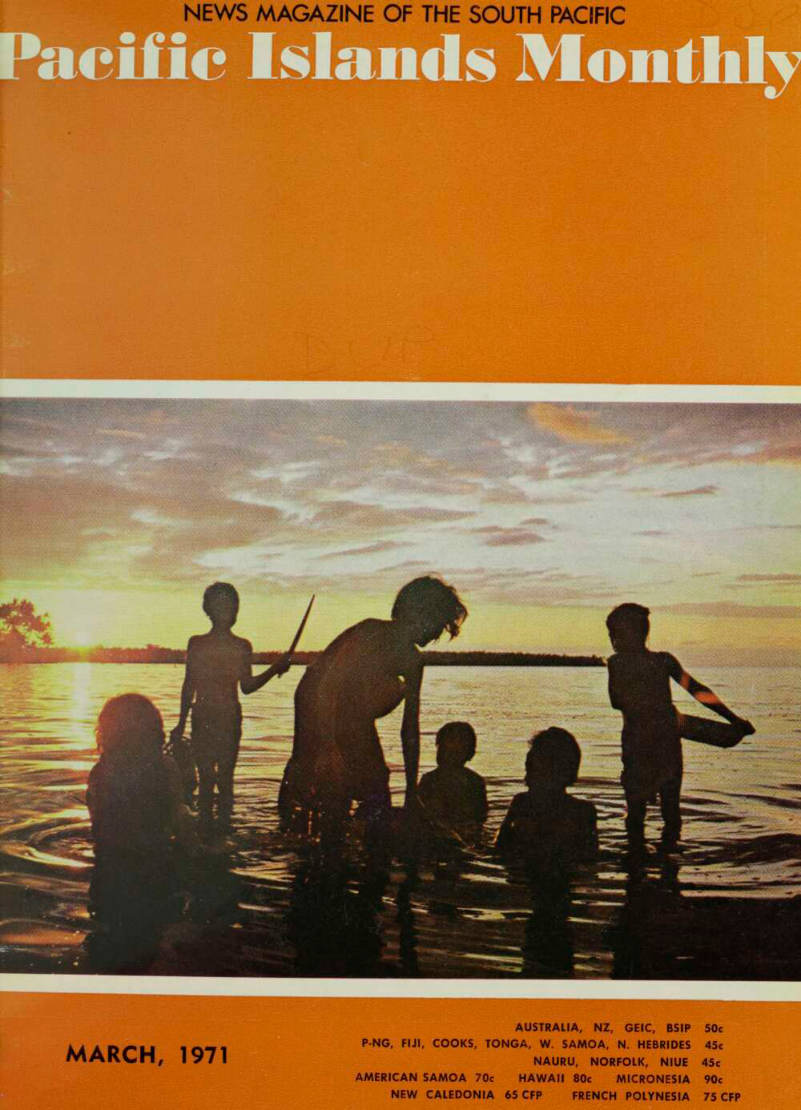 1
1 2
2 3
3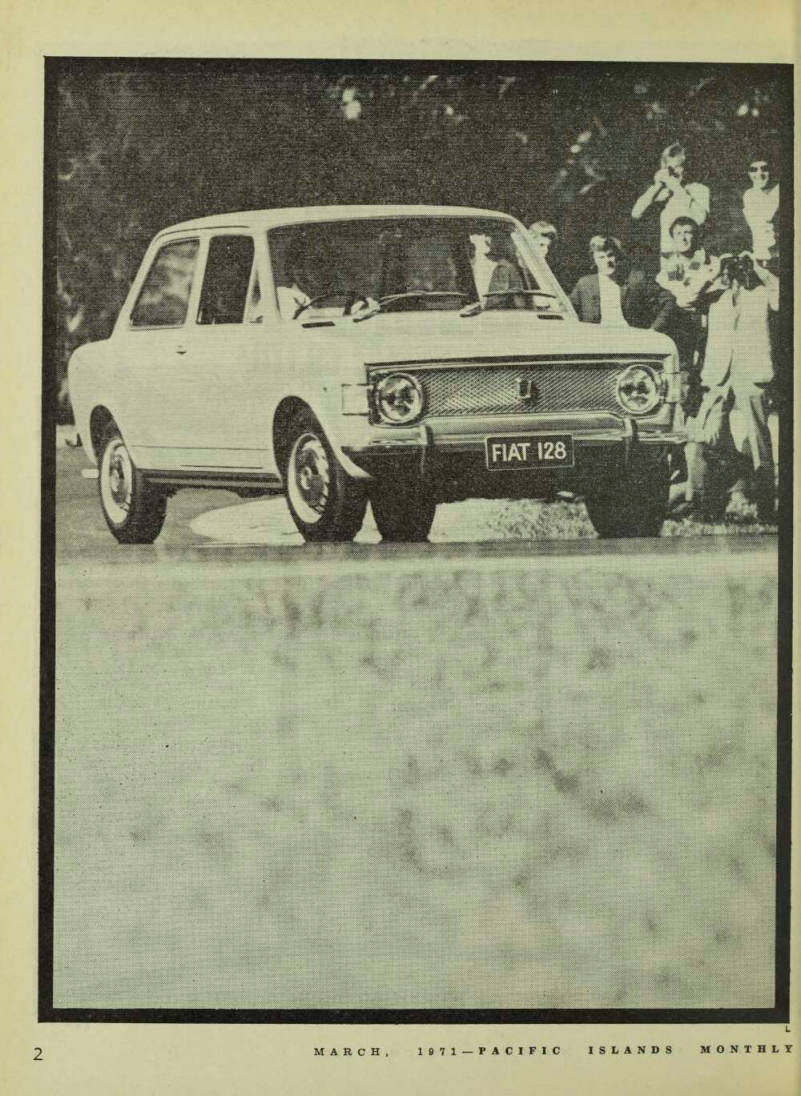 4
4 5
5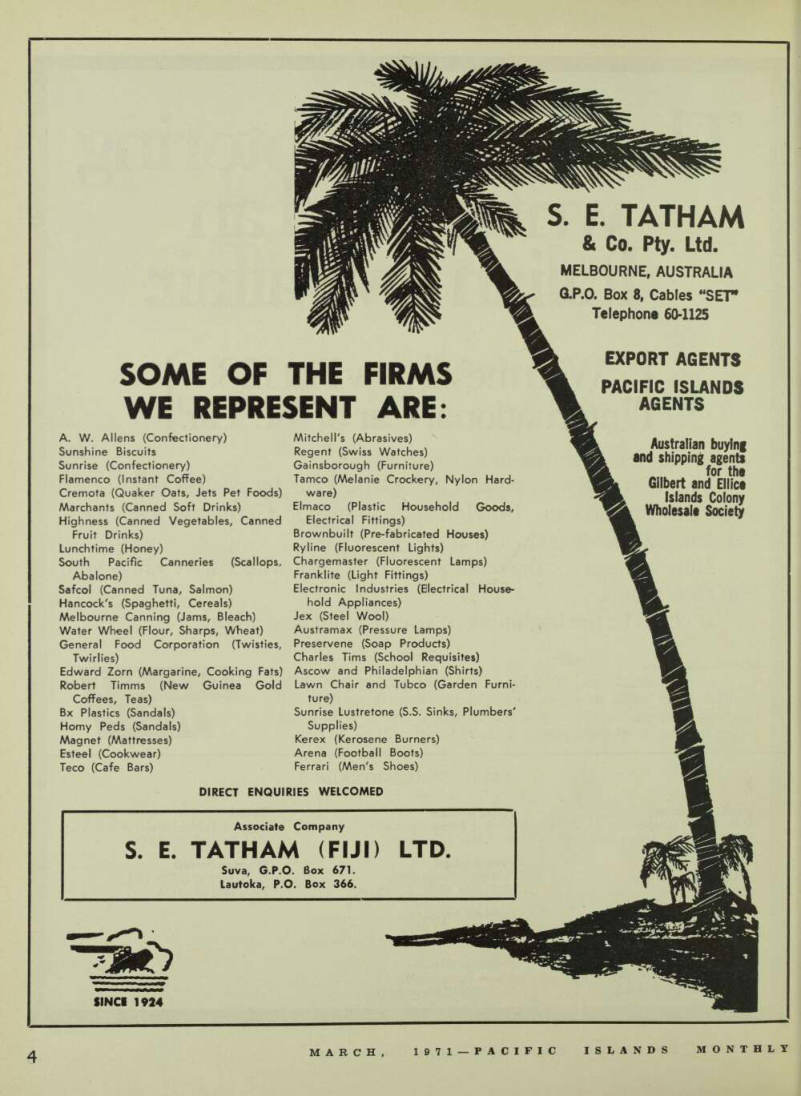 6
6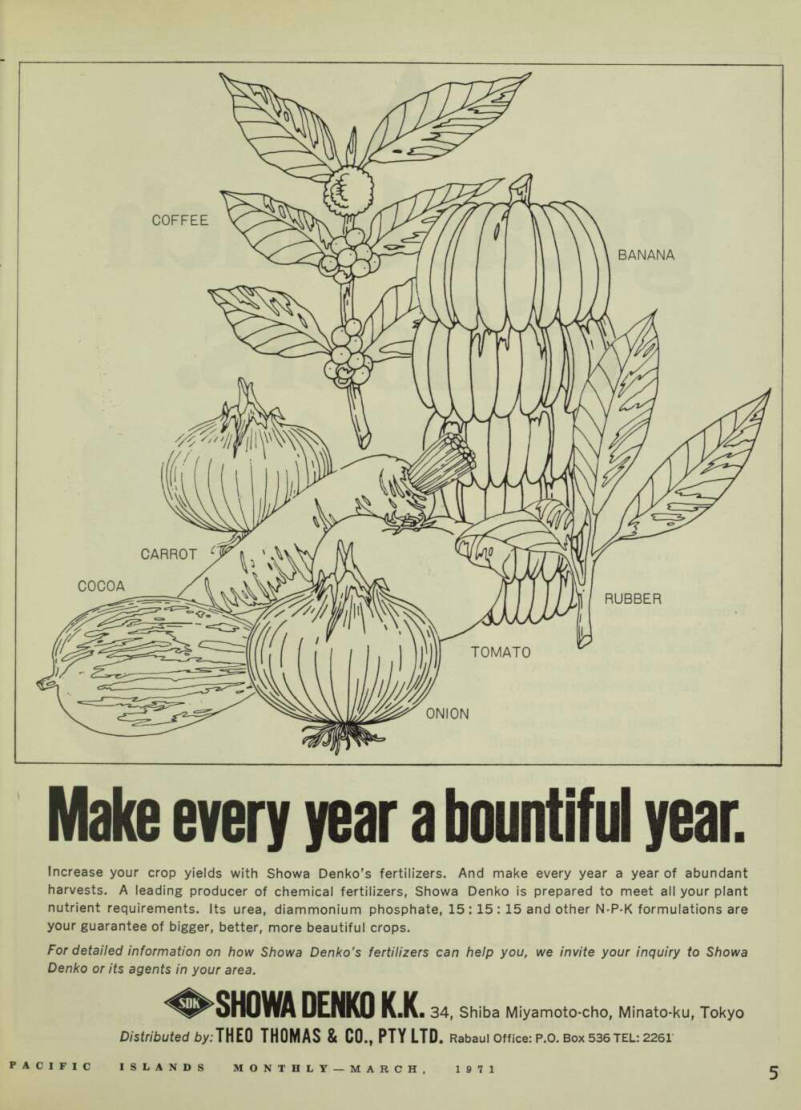 7
7 8
8 9
9 10
10 11
11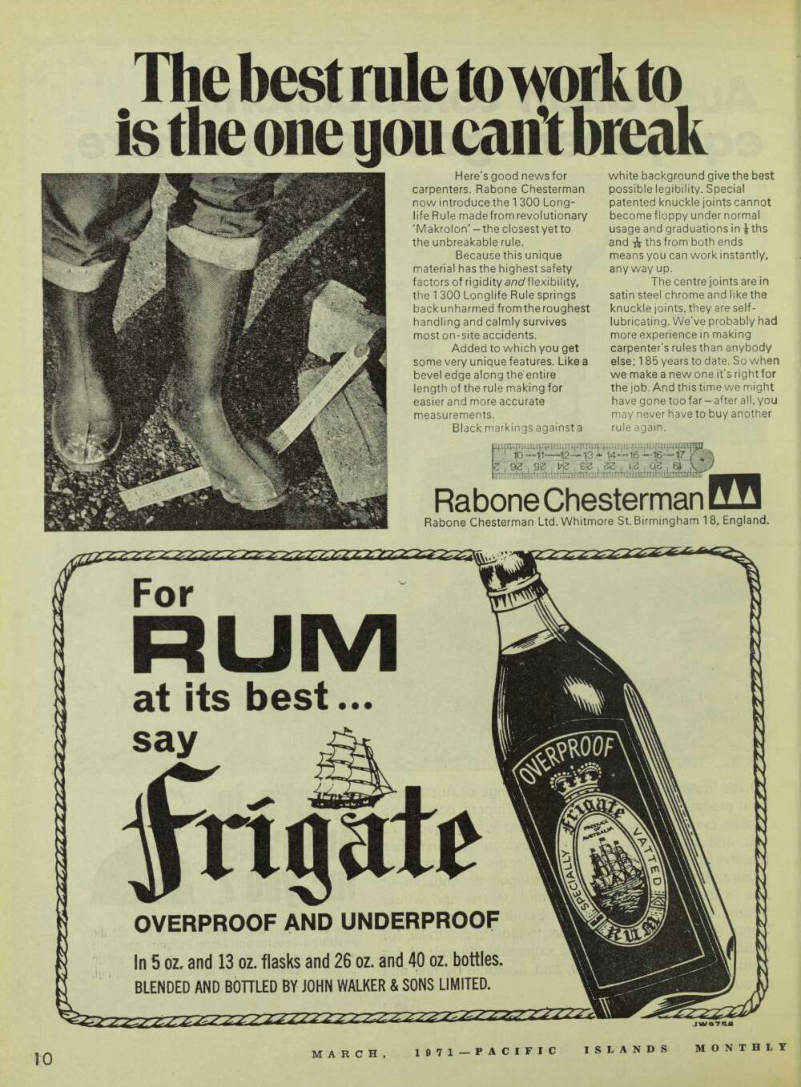 12
12 13
13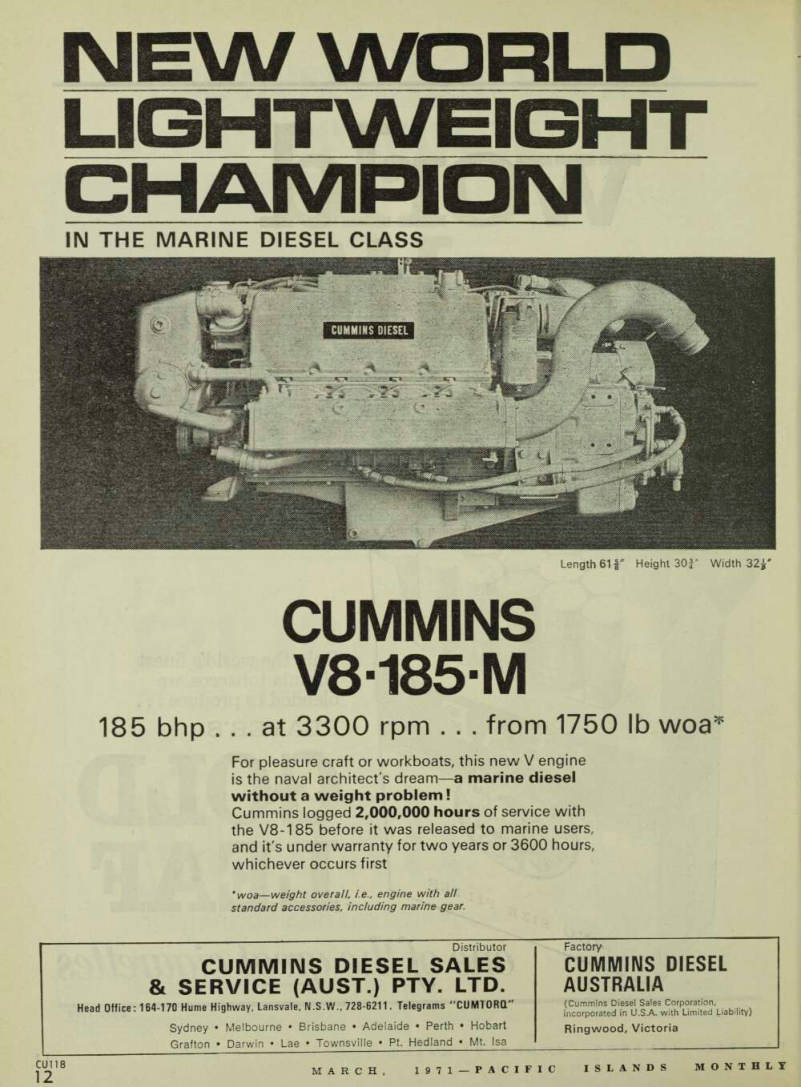 14
14 15
15 16
16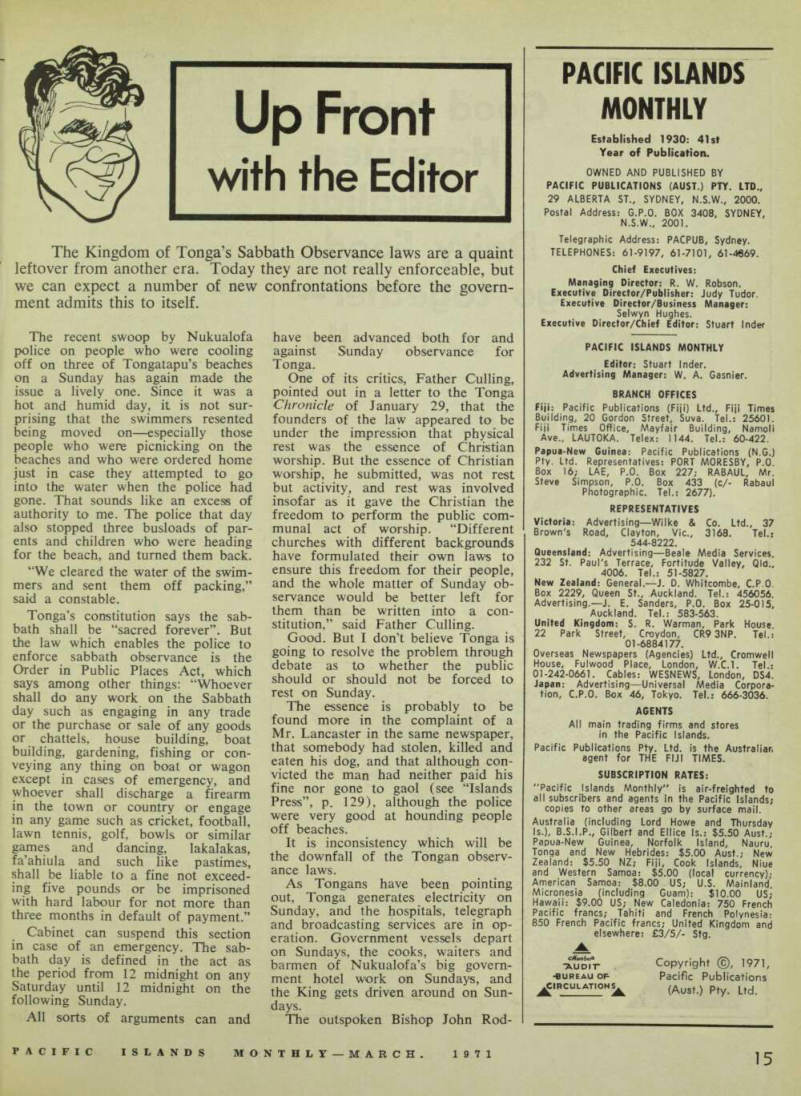 17
17 18
18 19
19 20
20 21
21 22
22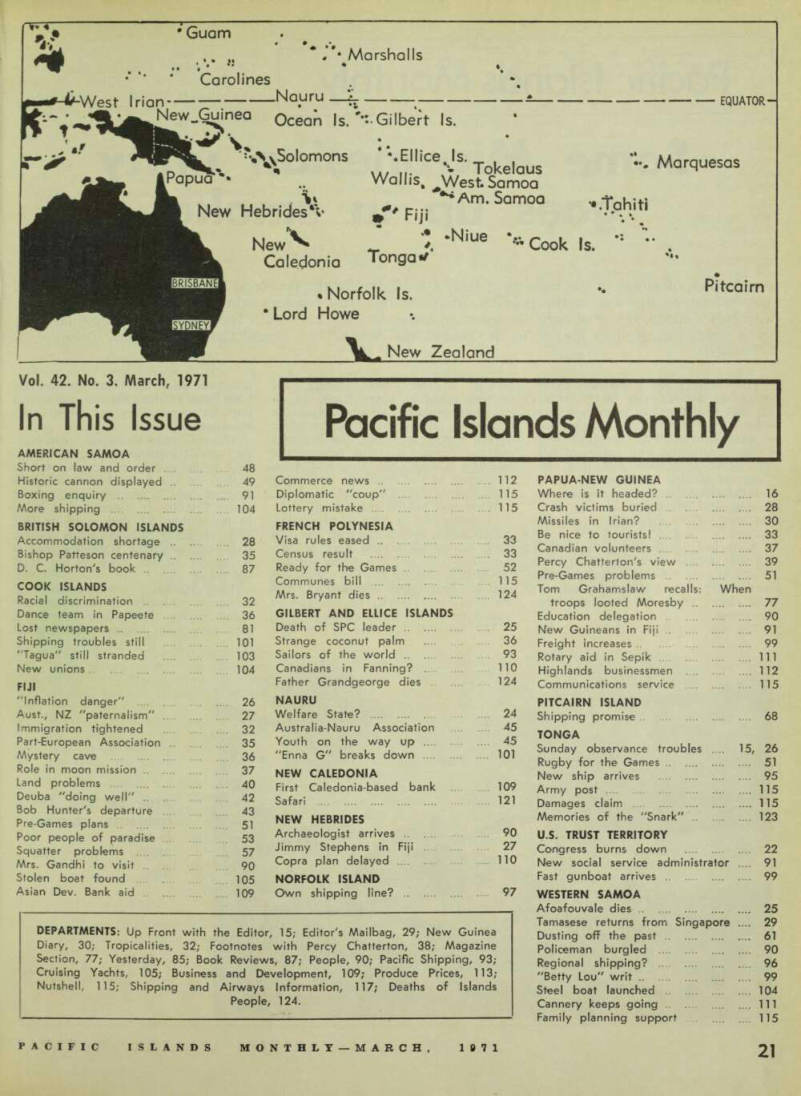 23
23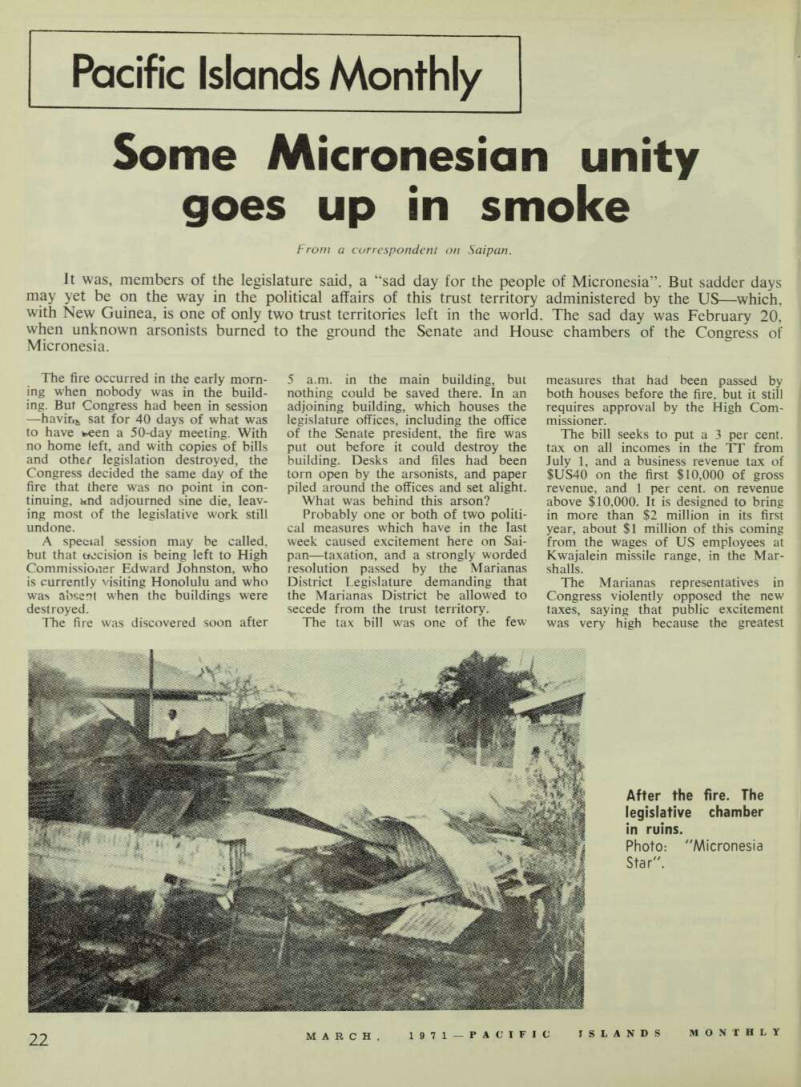 24
24 25
25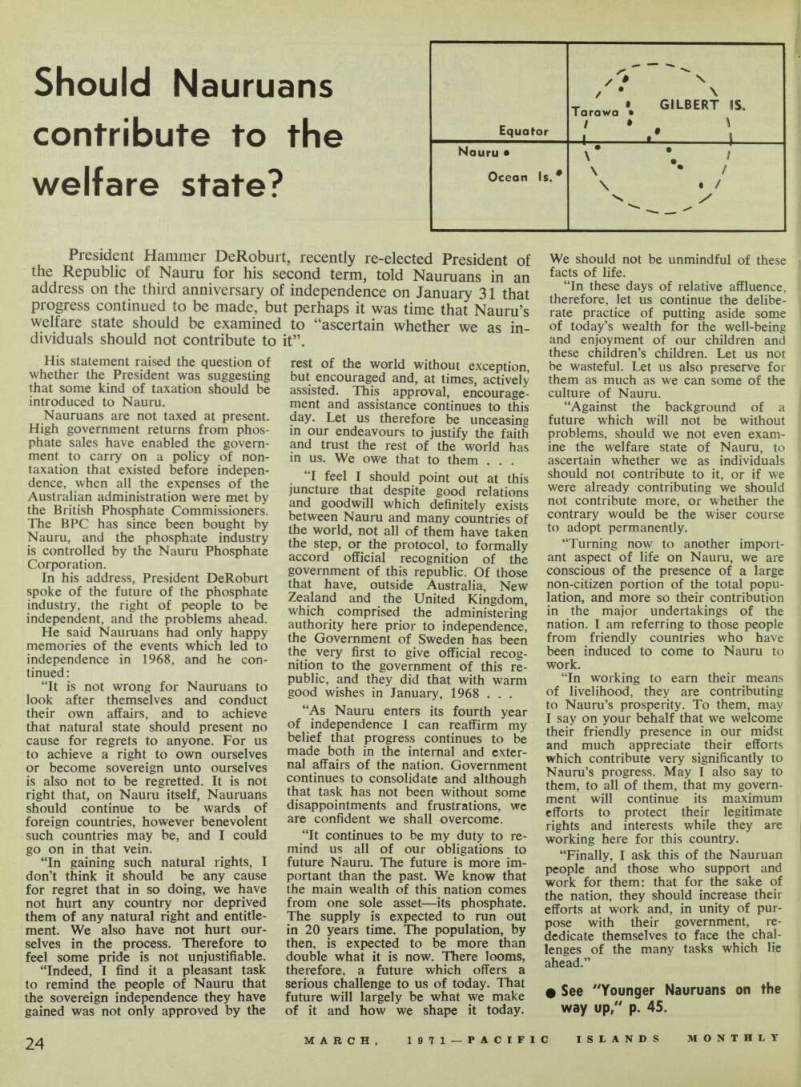 26
26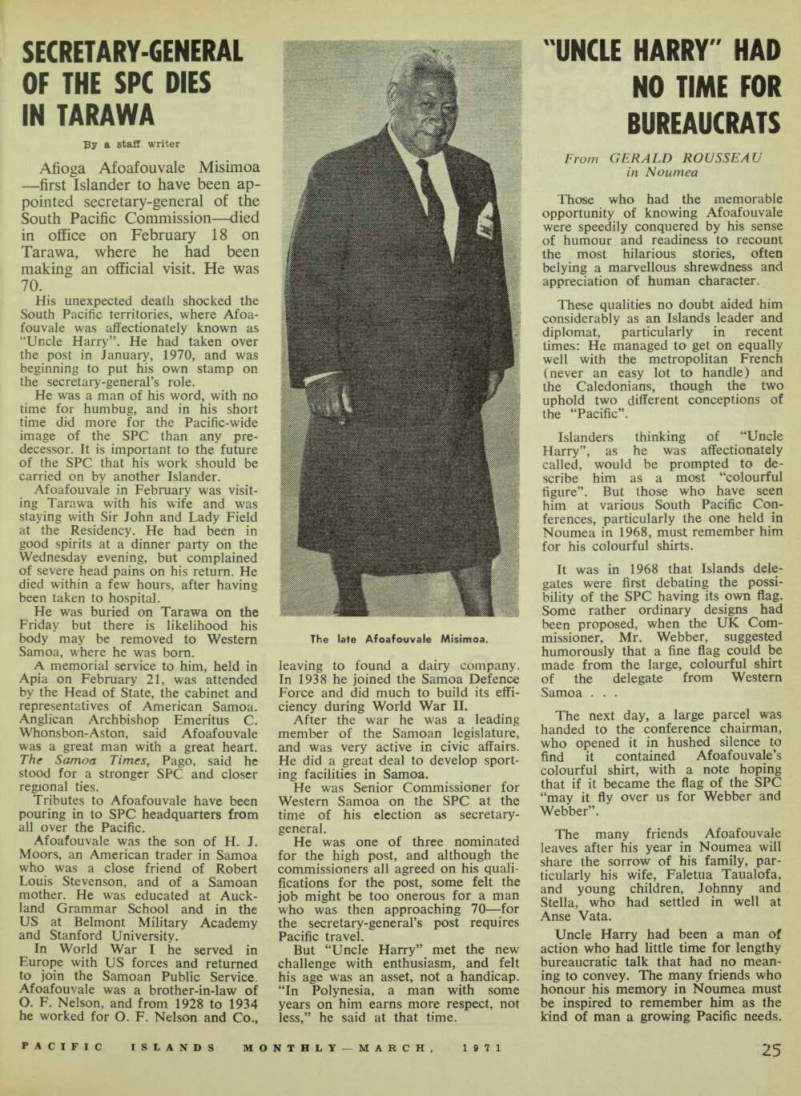 27
27 28
28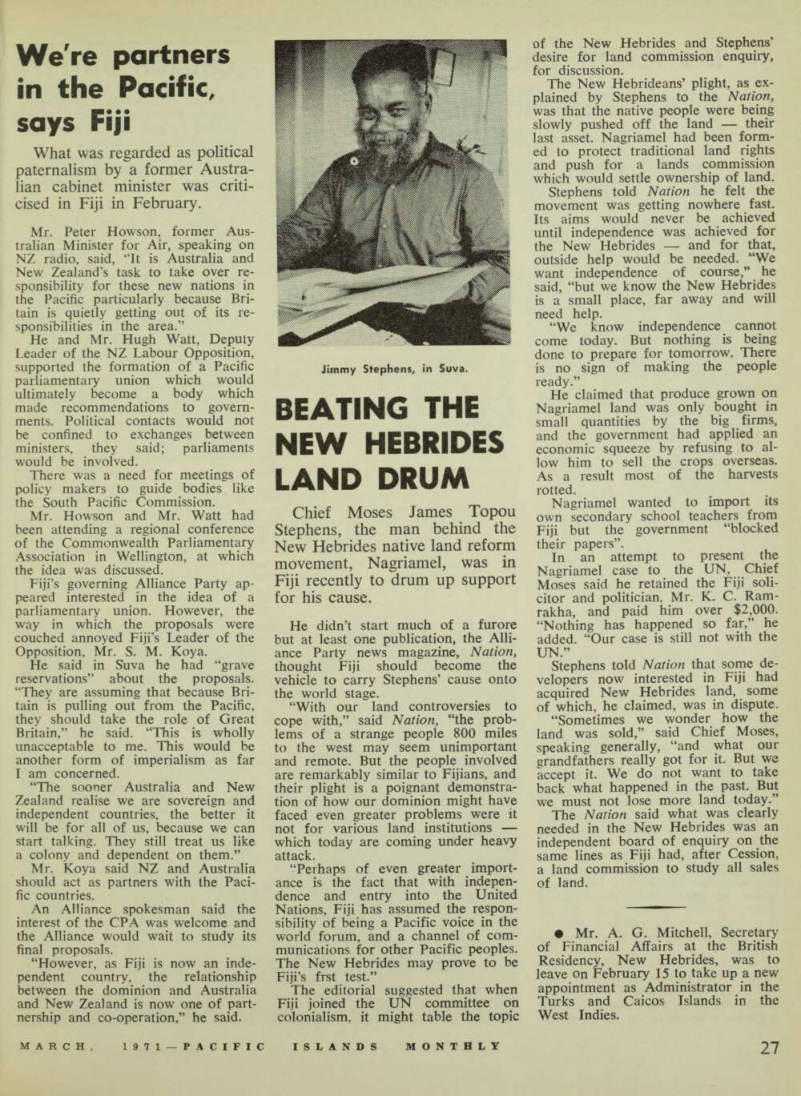 29
29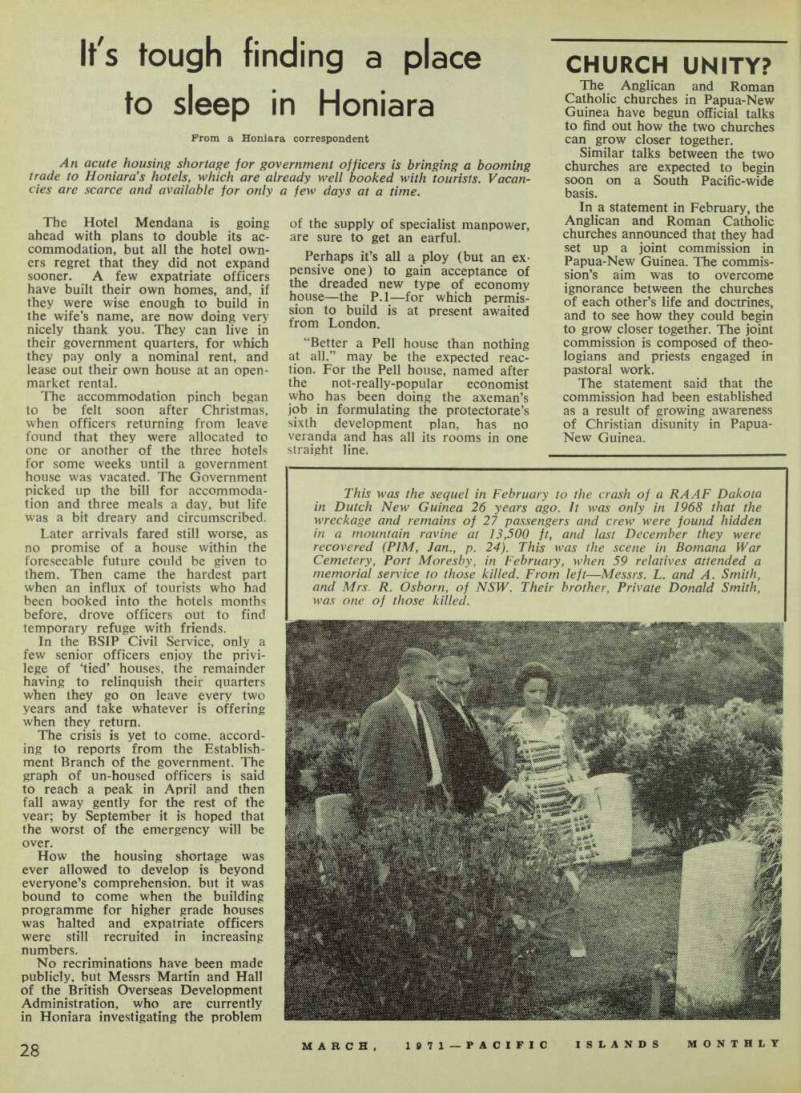 30
30 31
31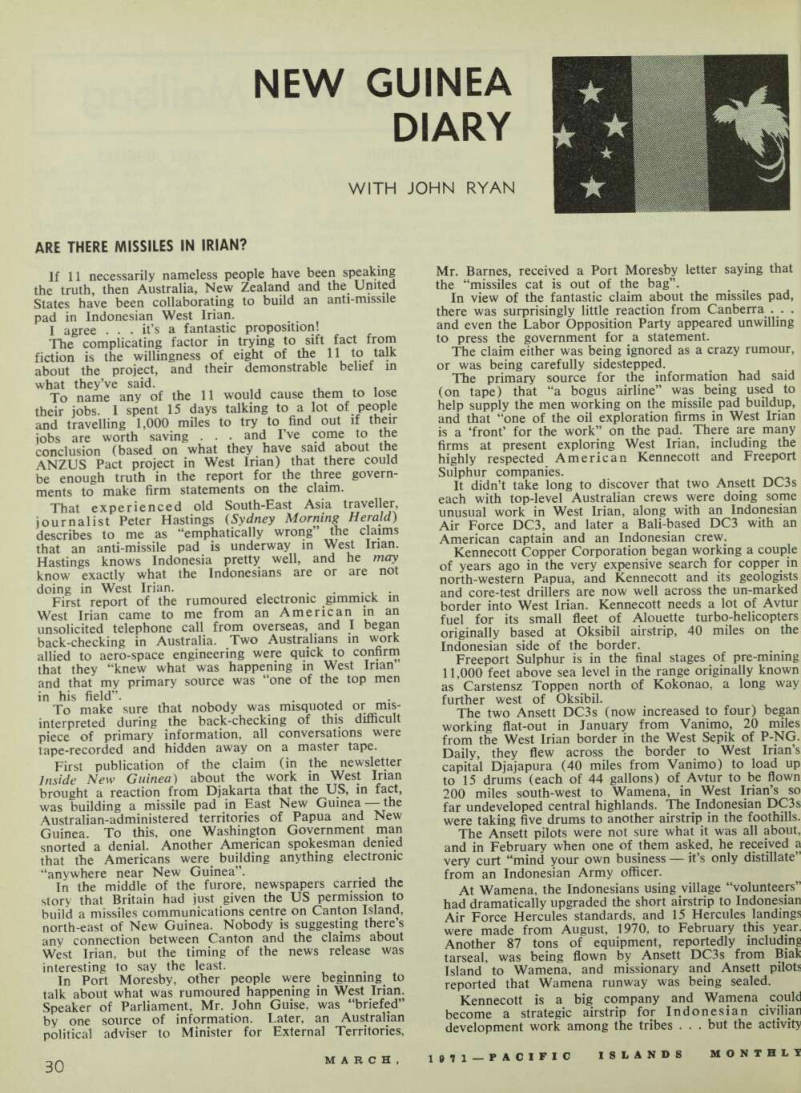 32
32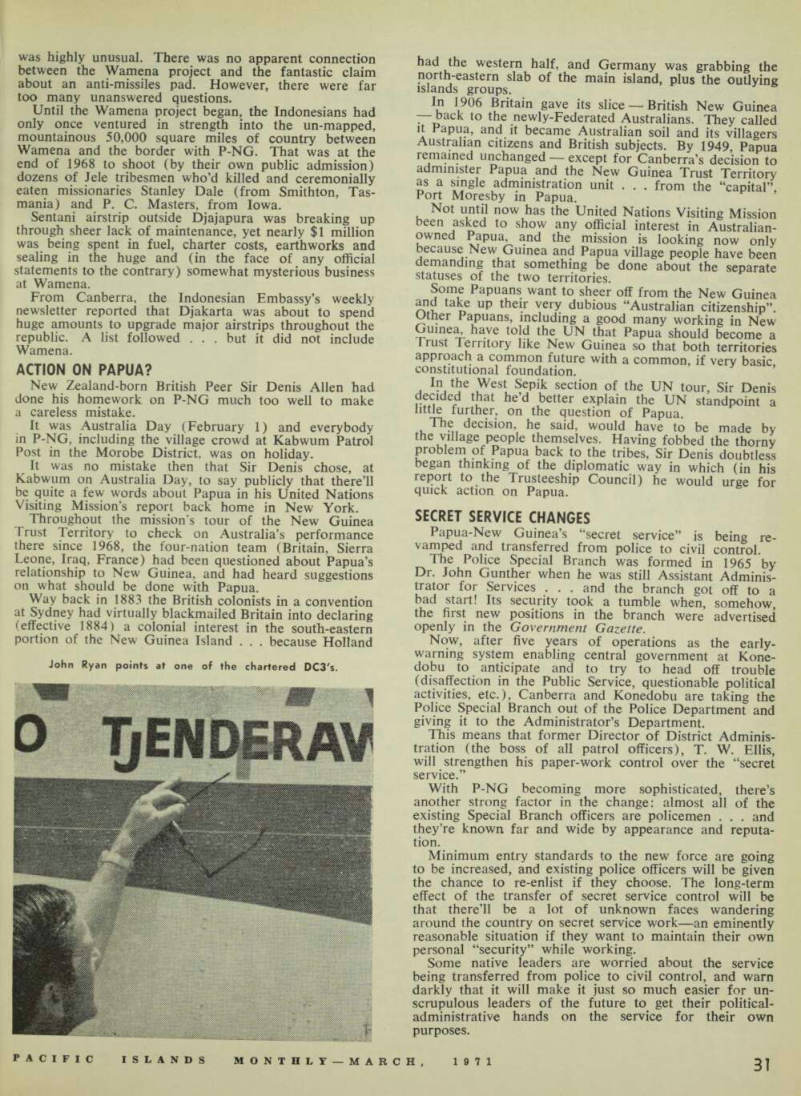 33
33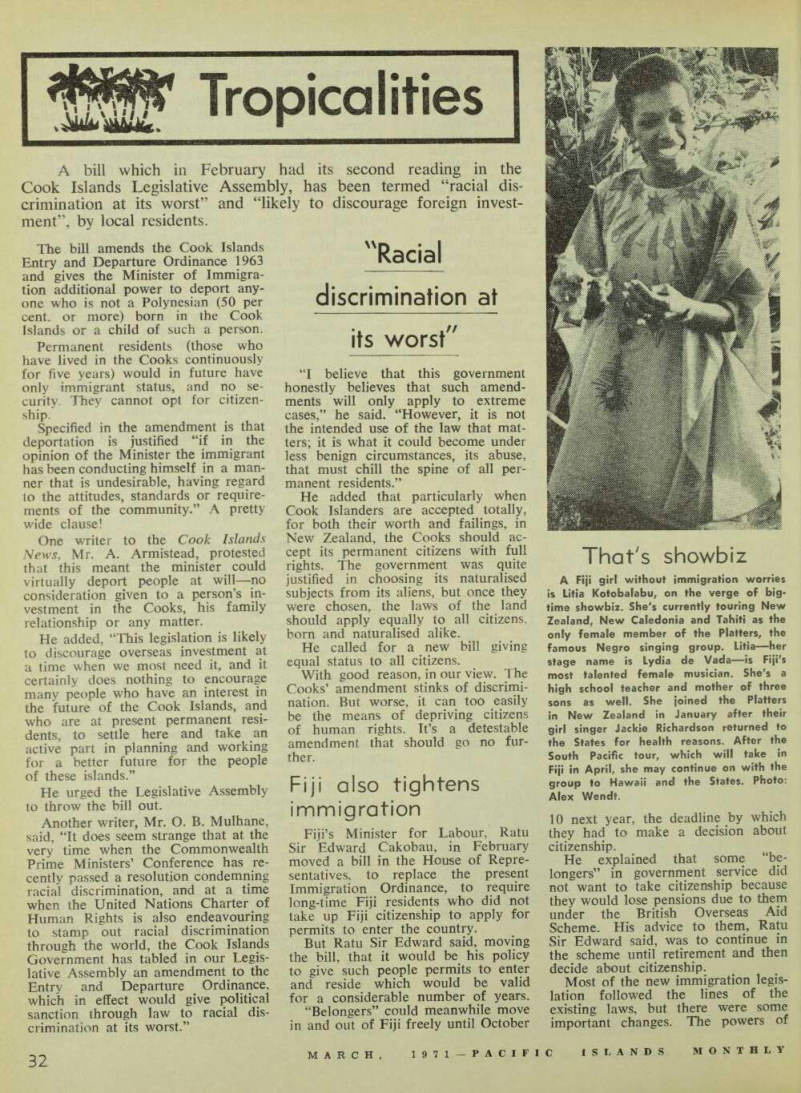 34
34 35
35 36
36 37
37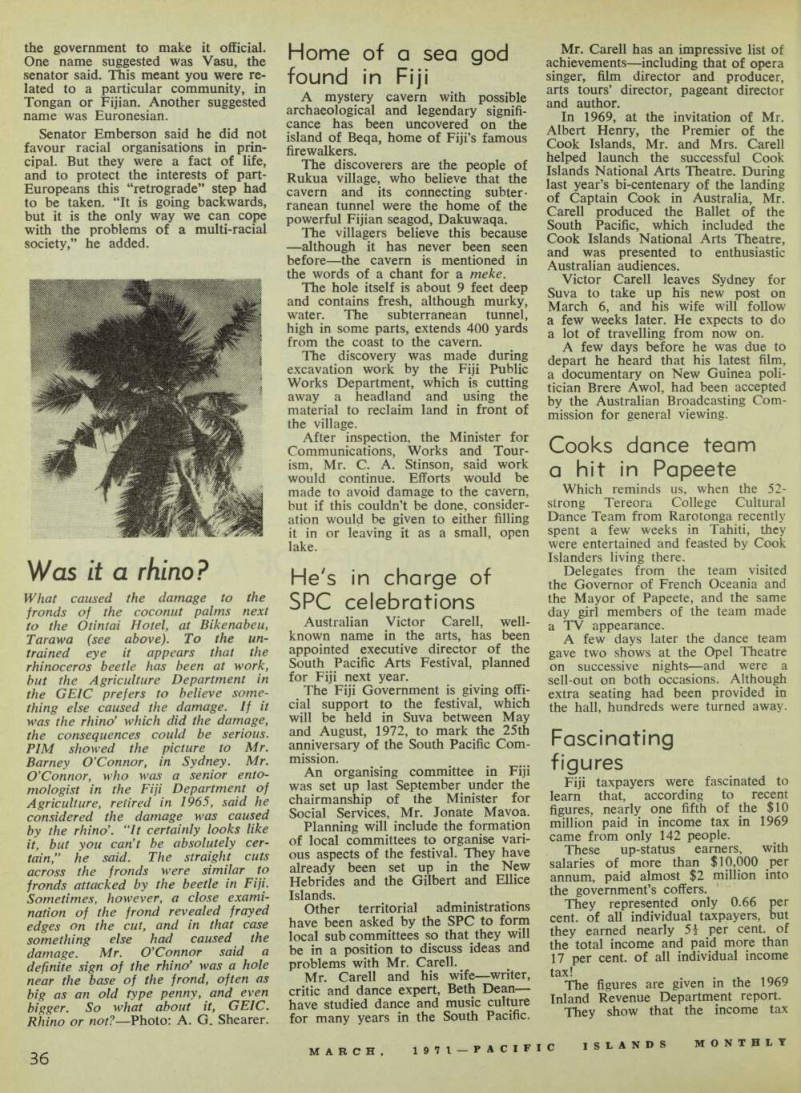 38
38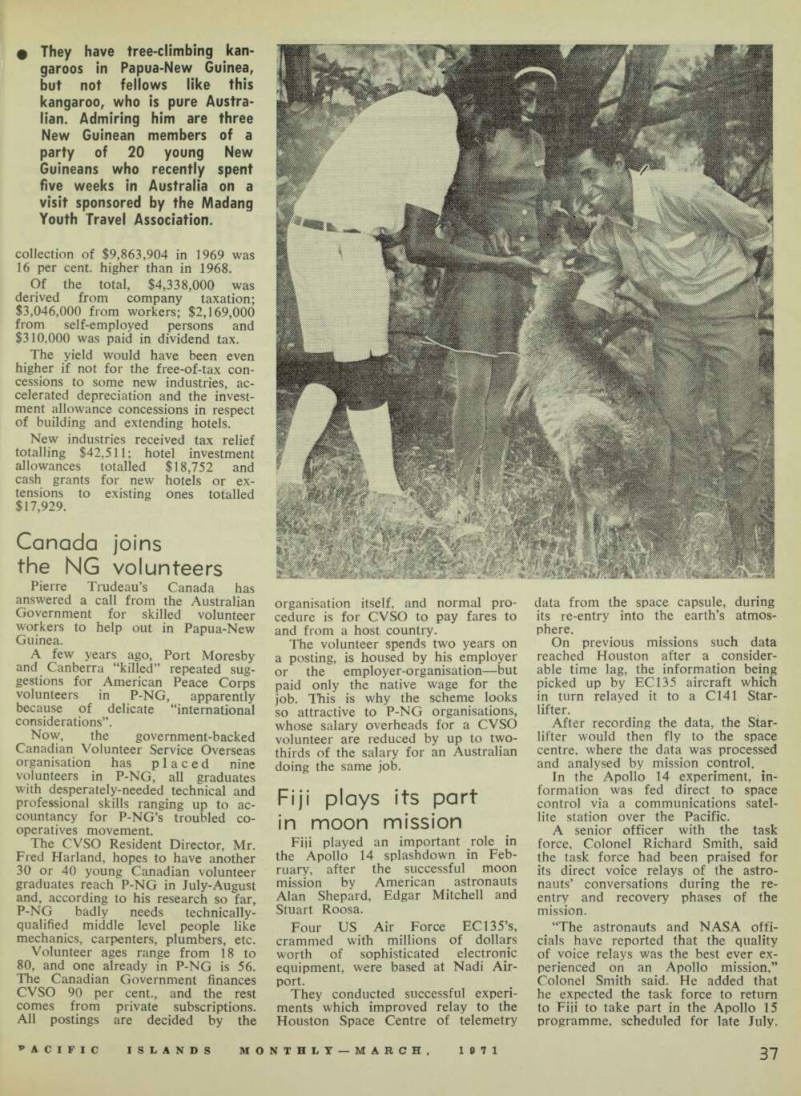 39
39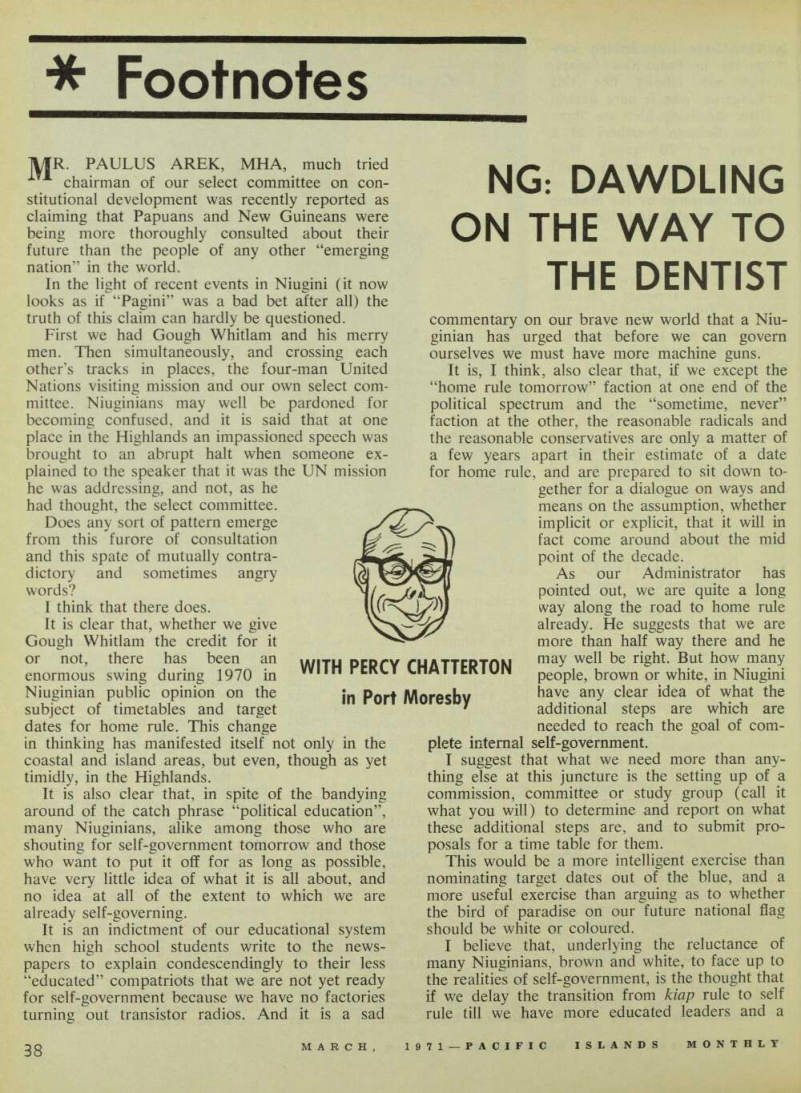 40
40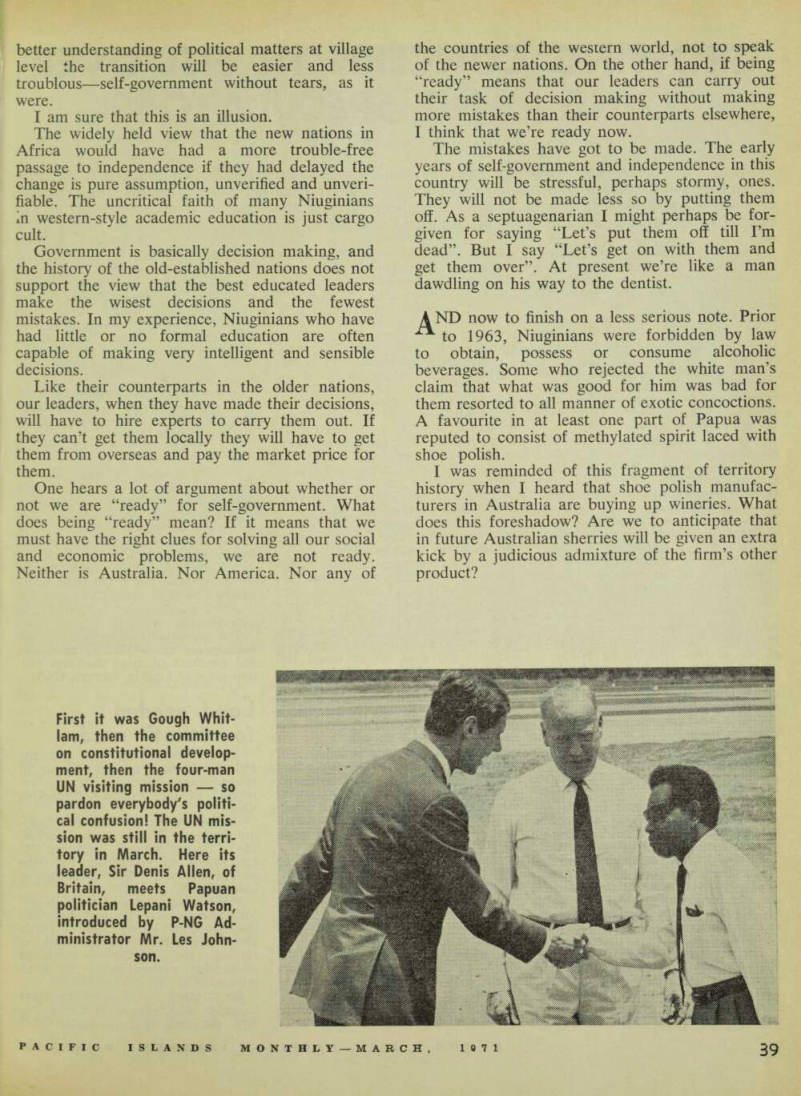 41
41 42
42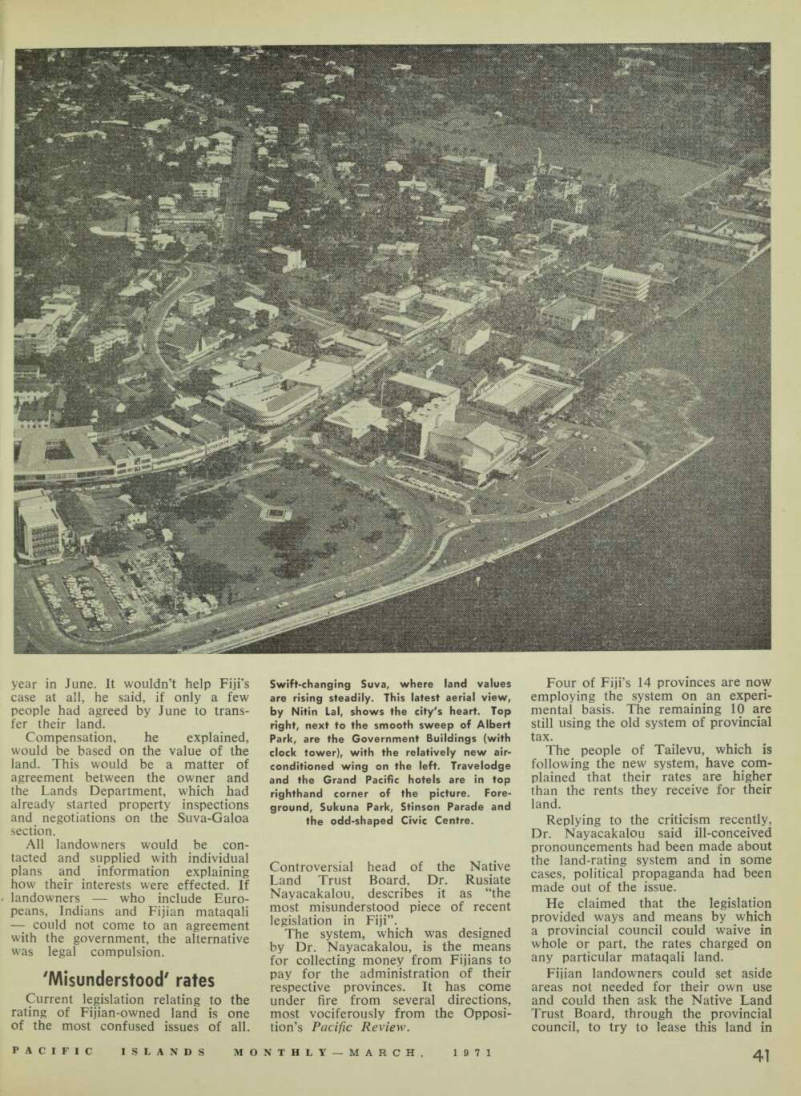 43
43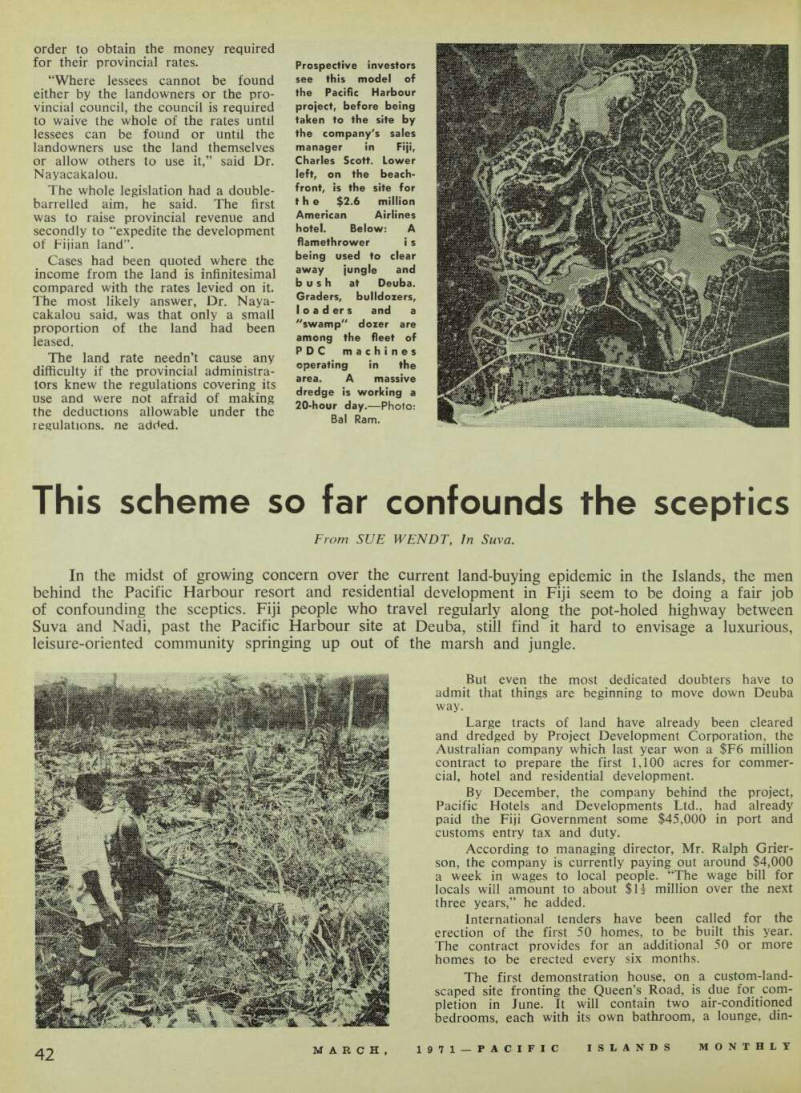 44
44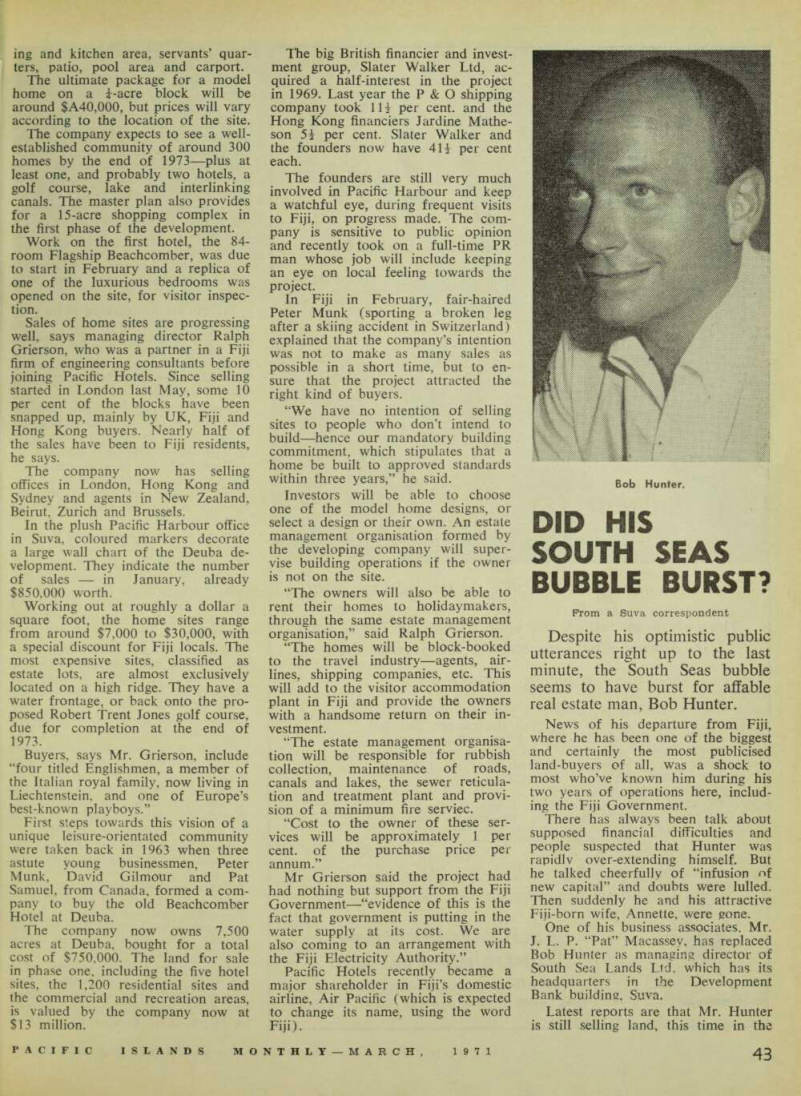 45
45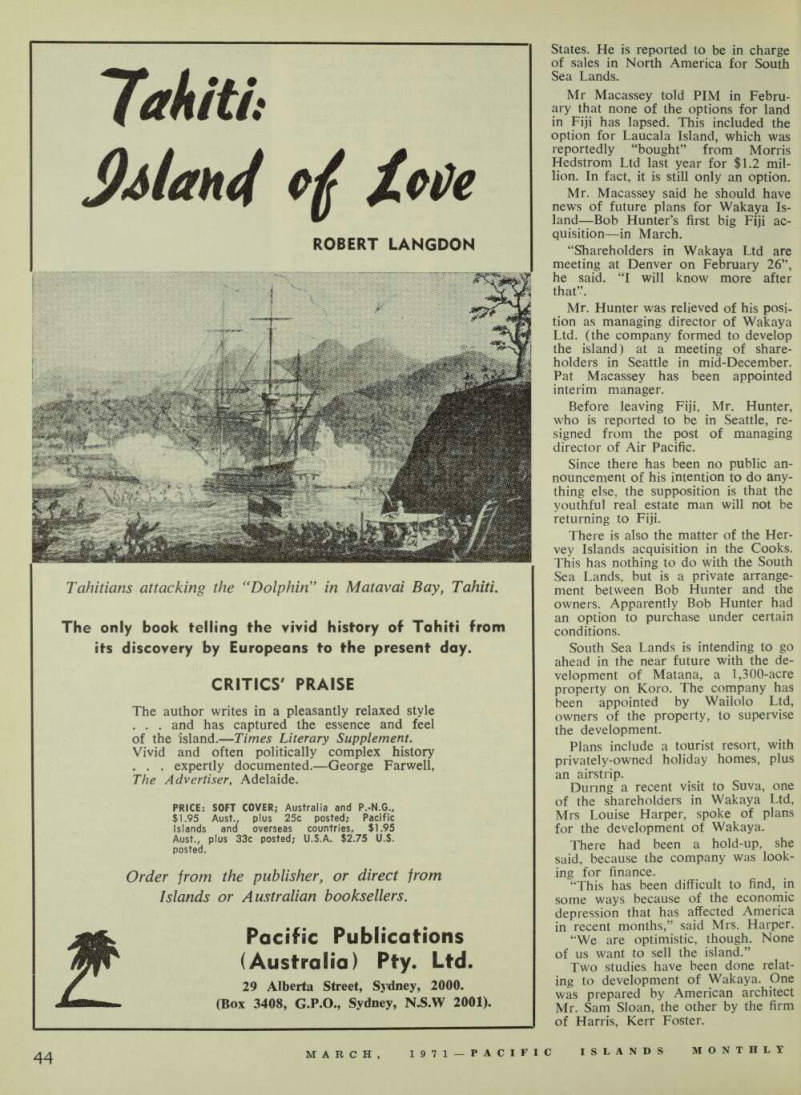 46
46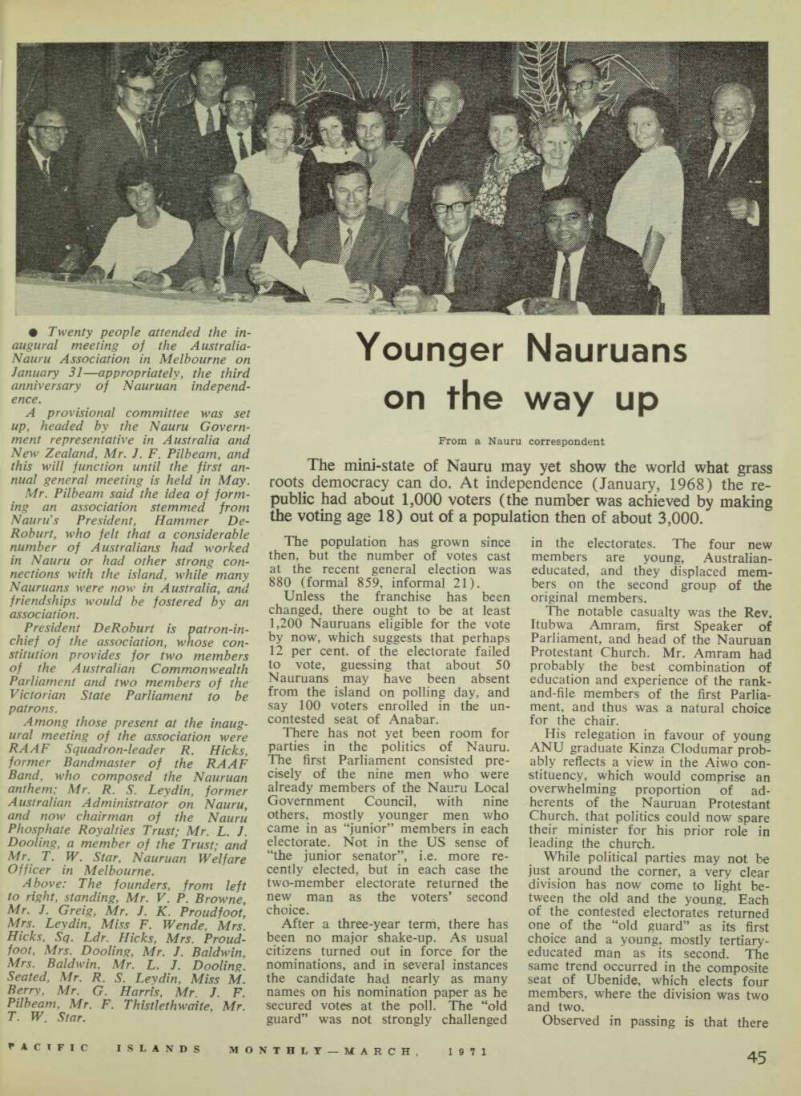 47
47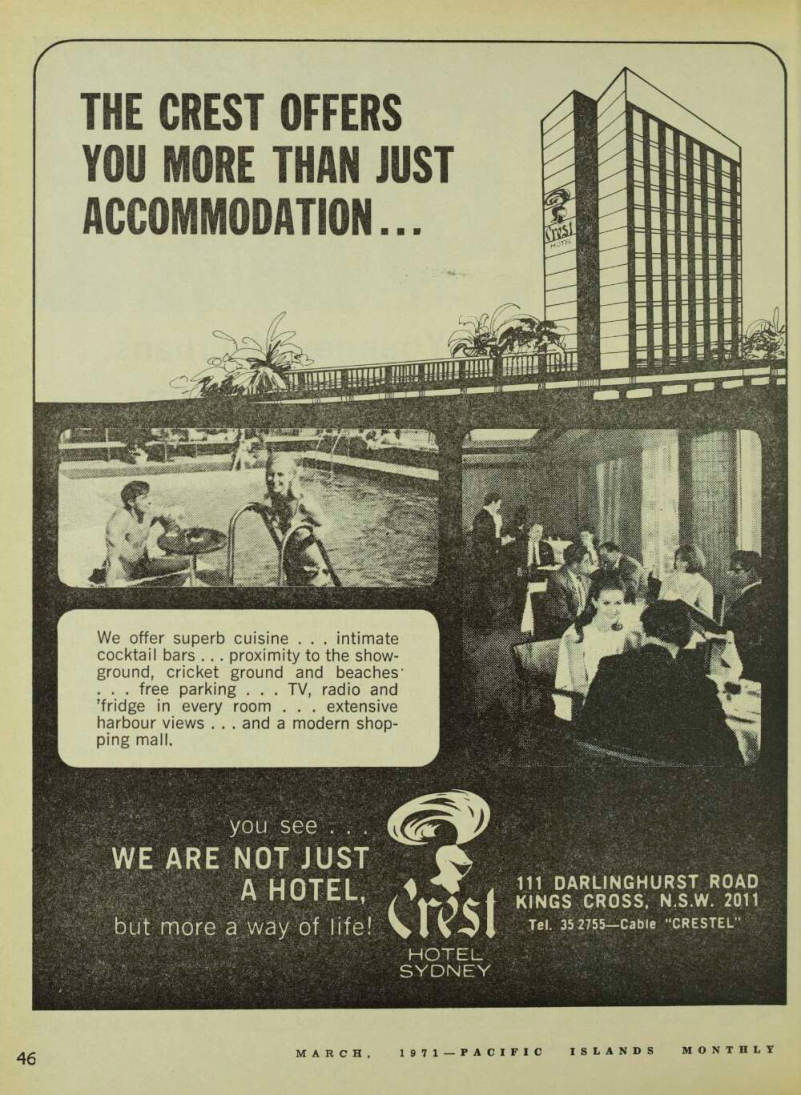 48
48 49
49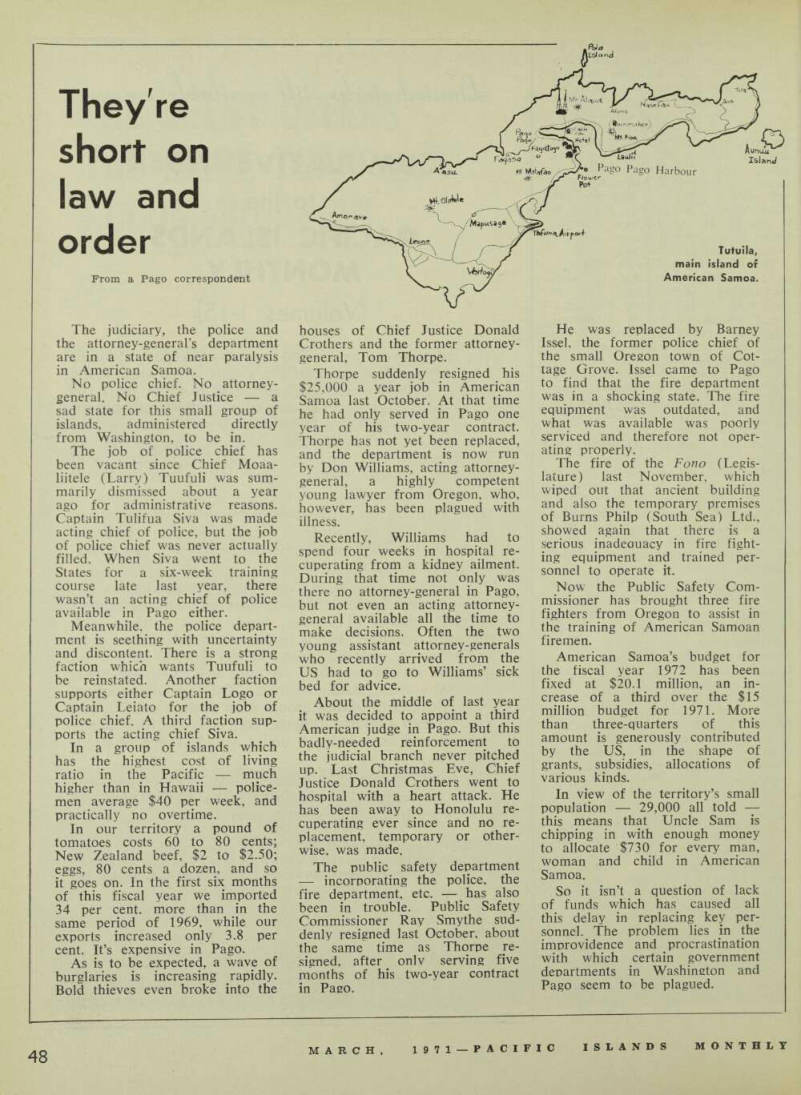 50
50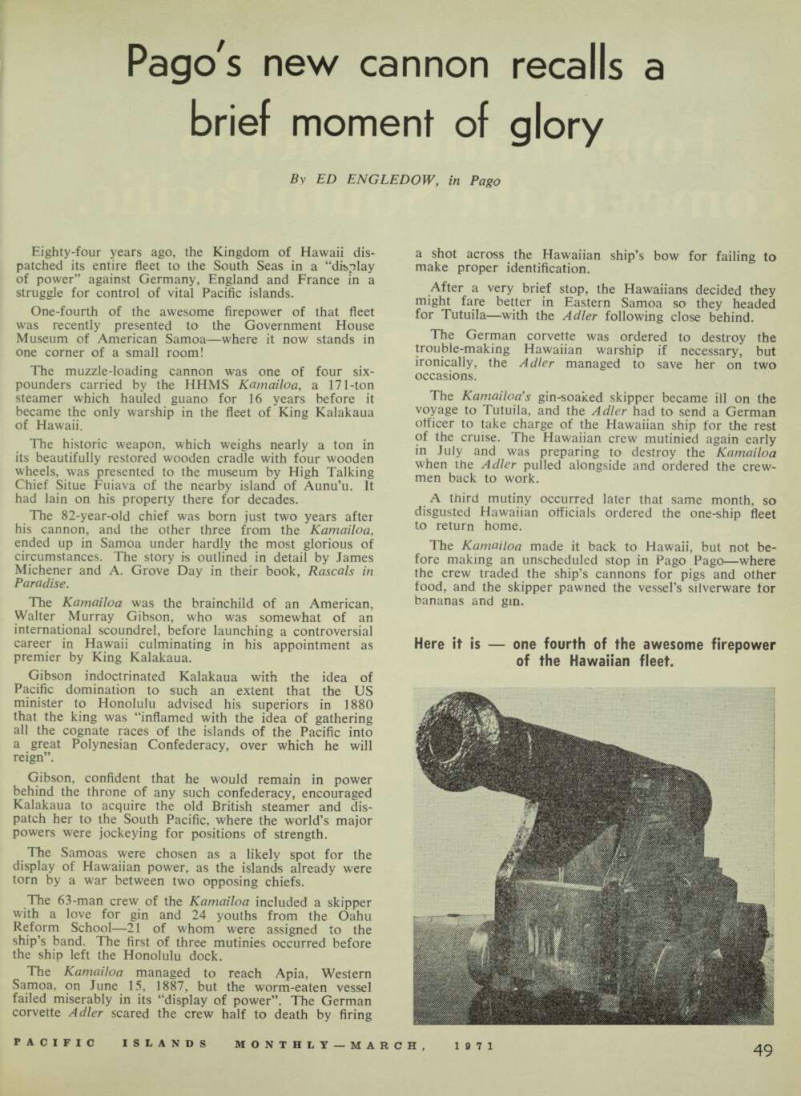 51
51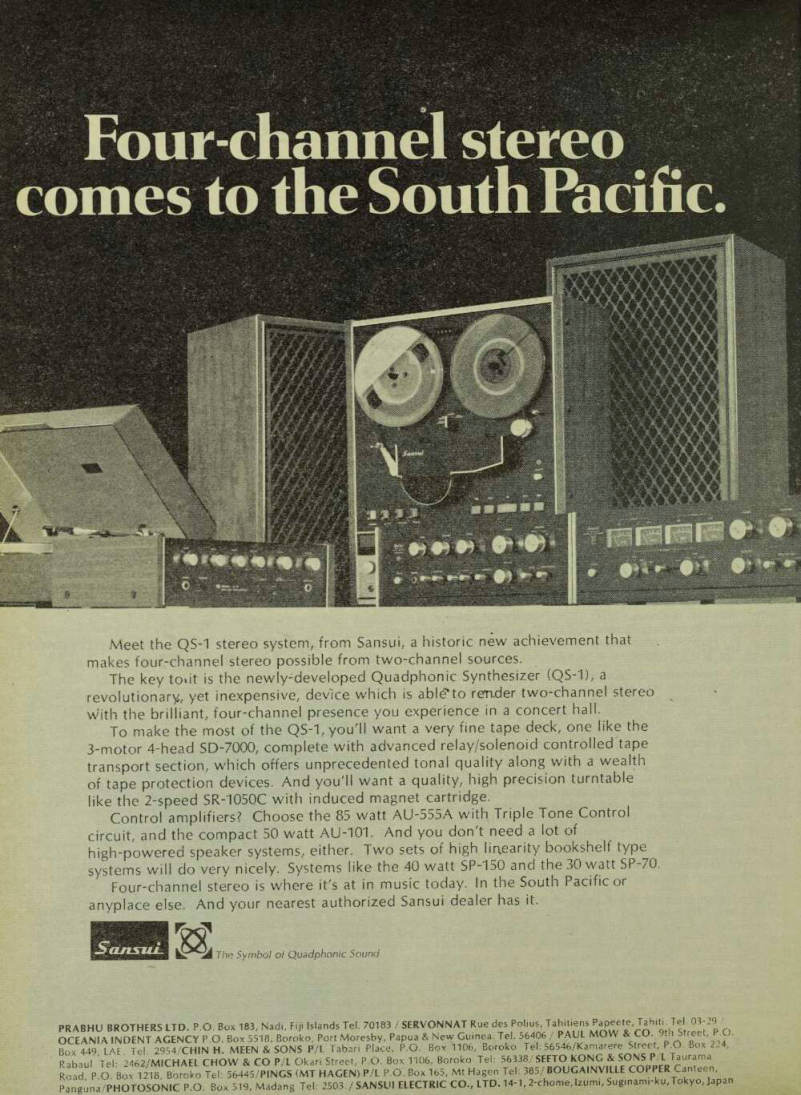 52
52 53
53 54
54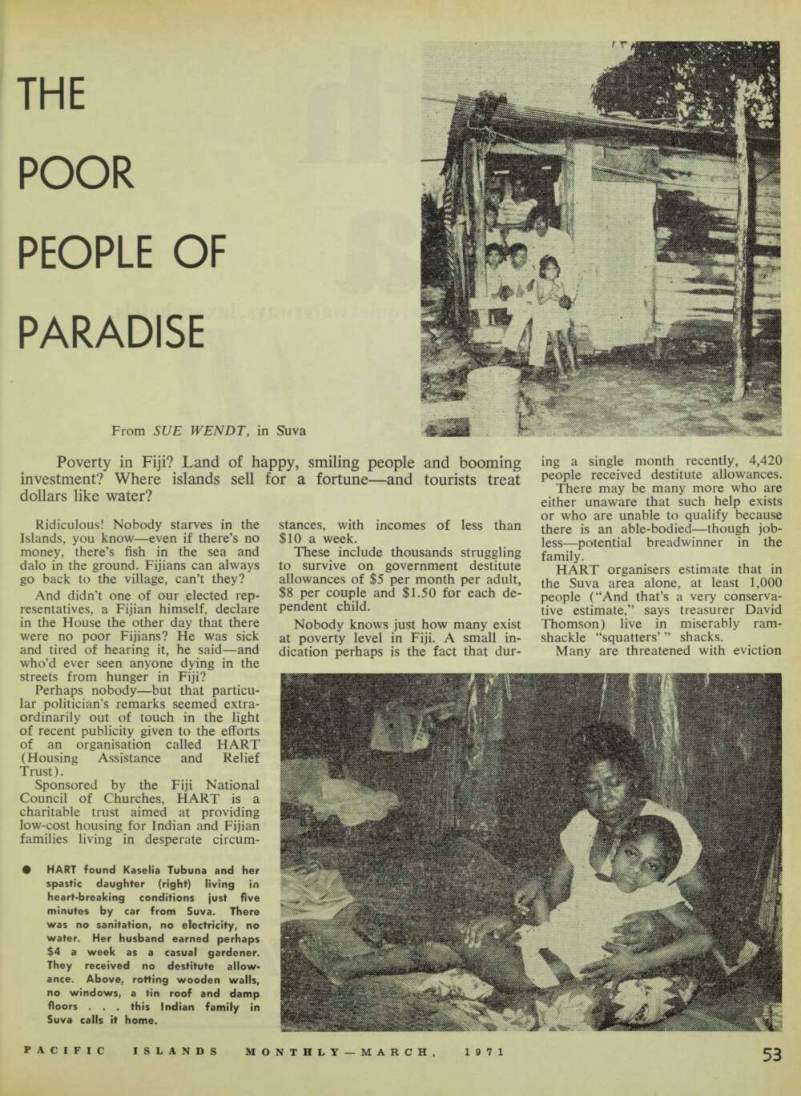 55
55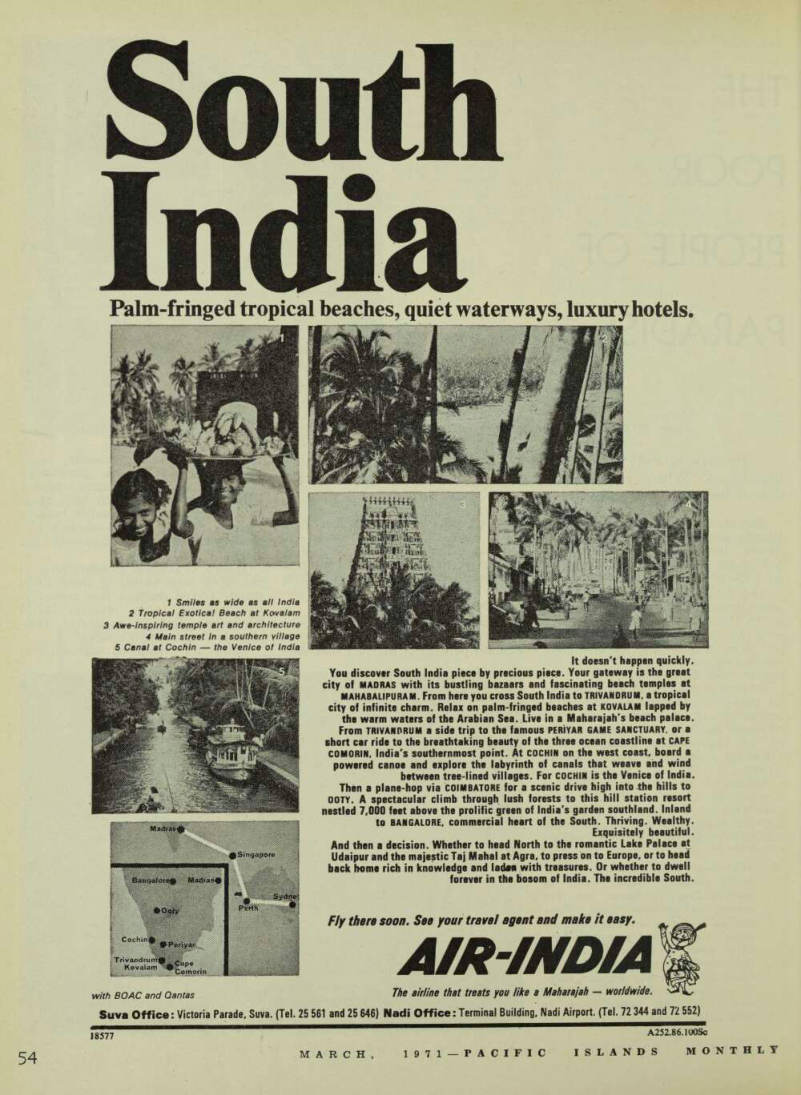 56
56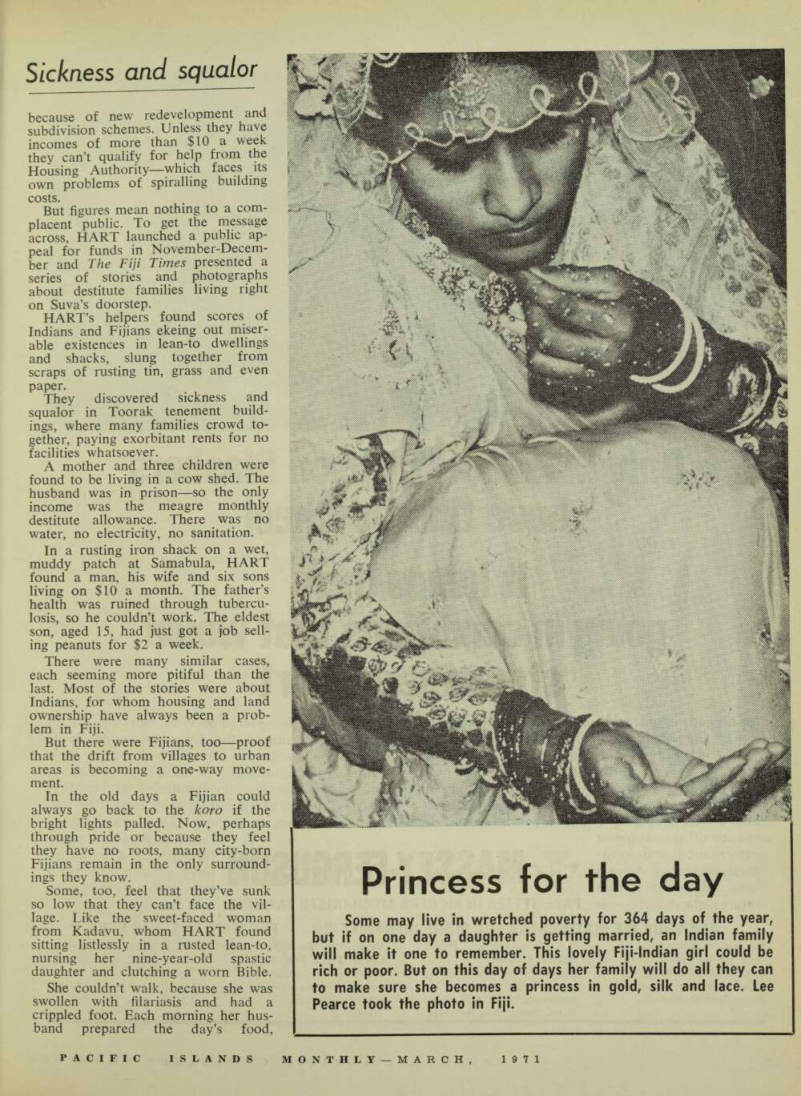 57
57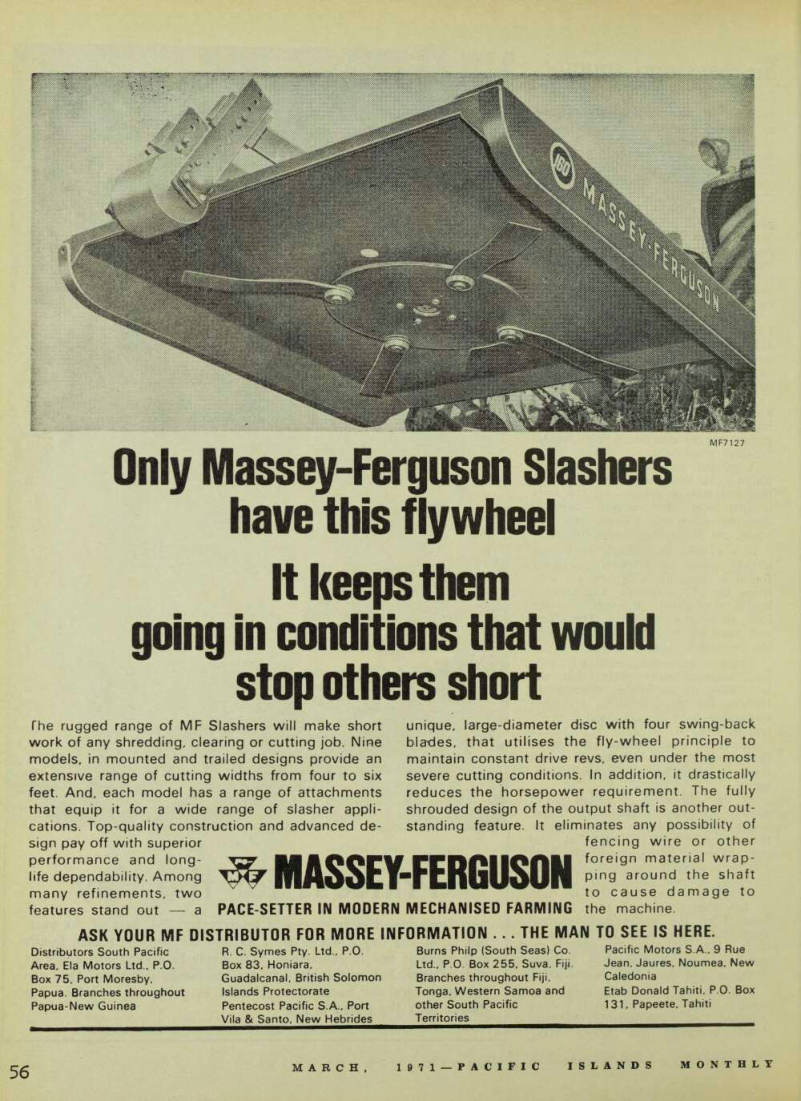 58
58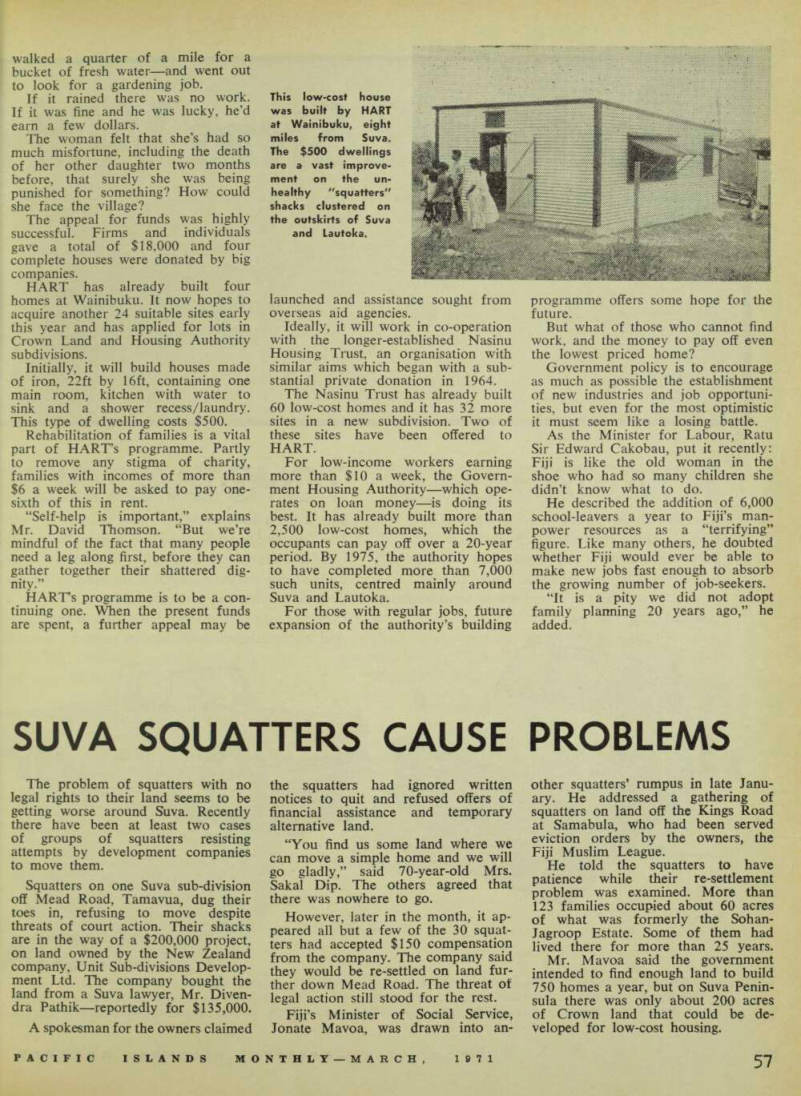 59
59 60
60 61
61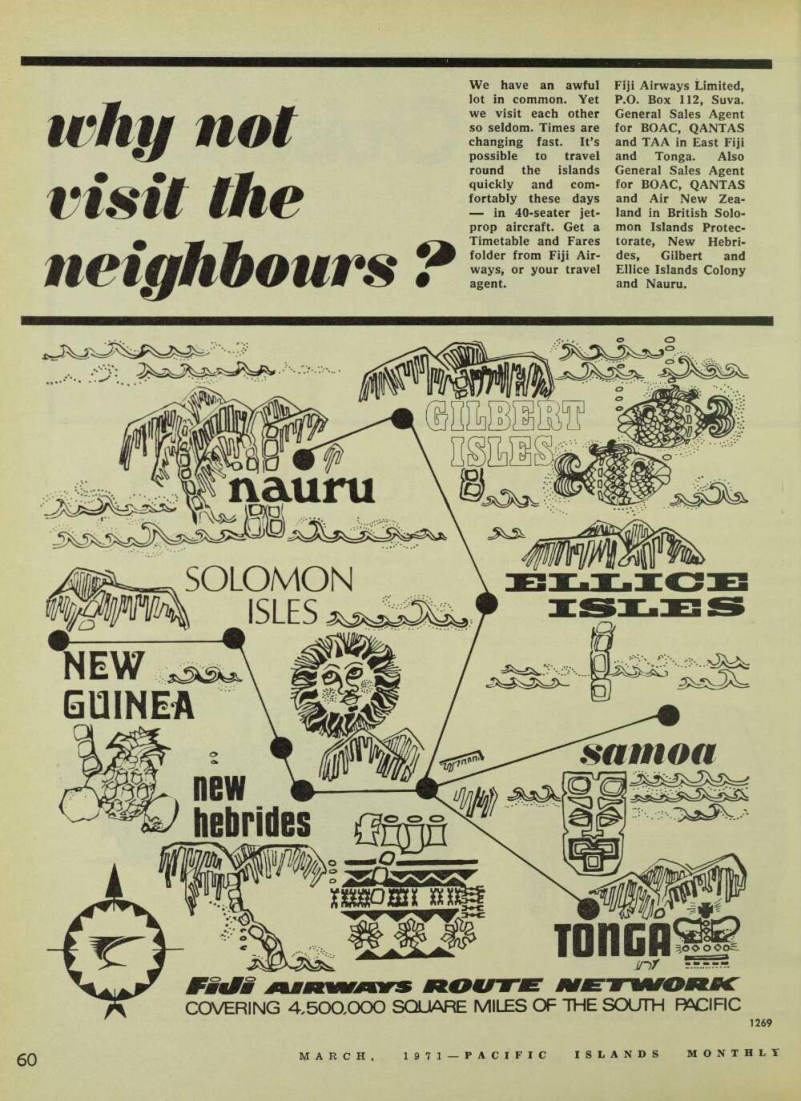 62
62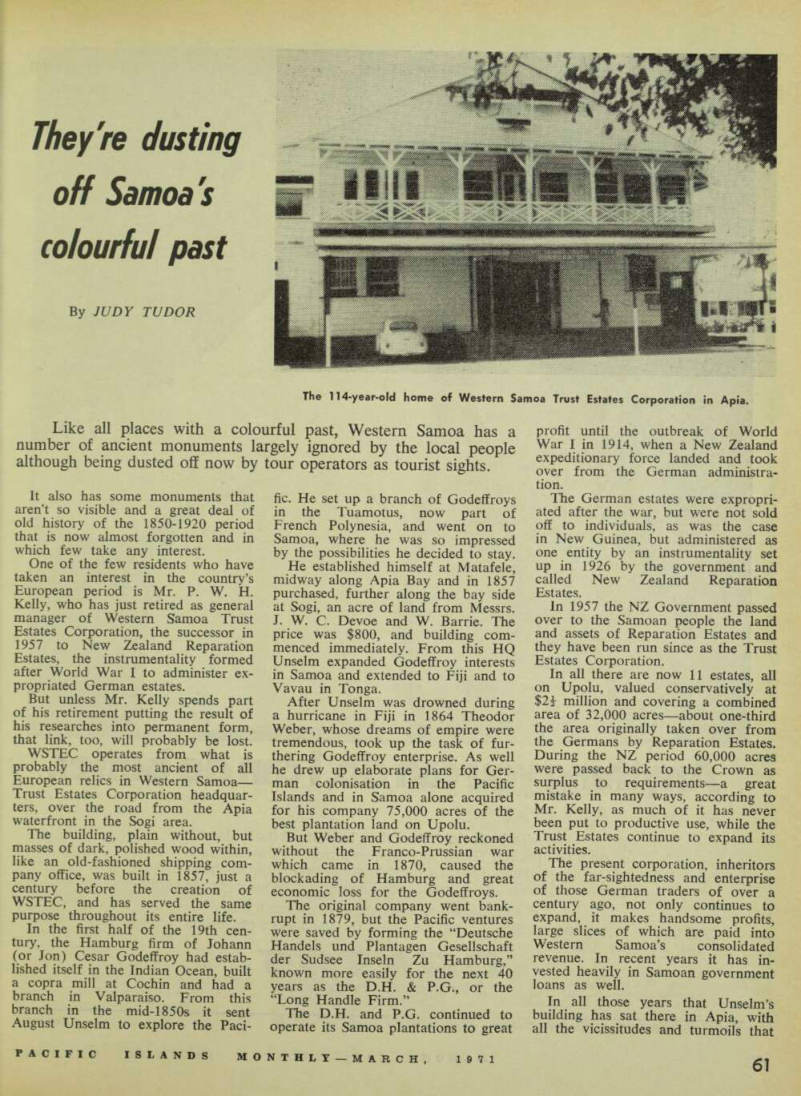 63
63 64
64 65
65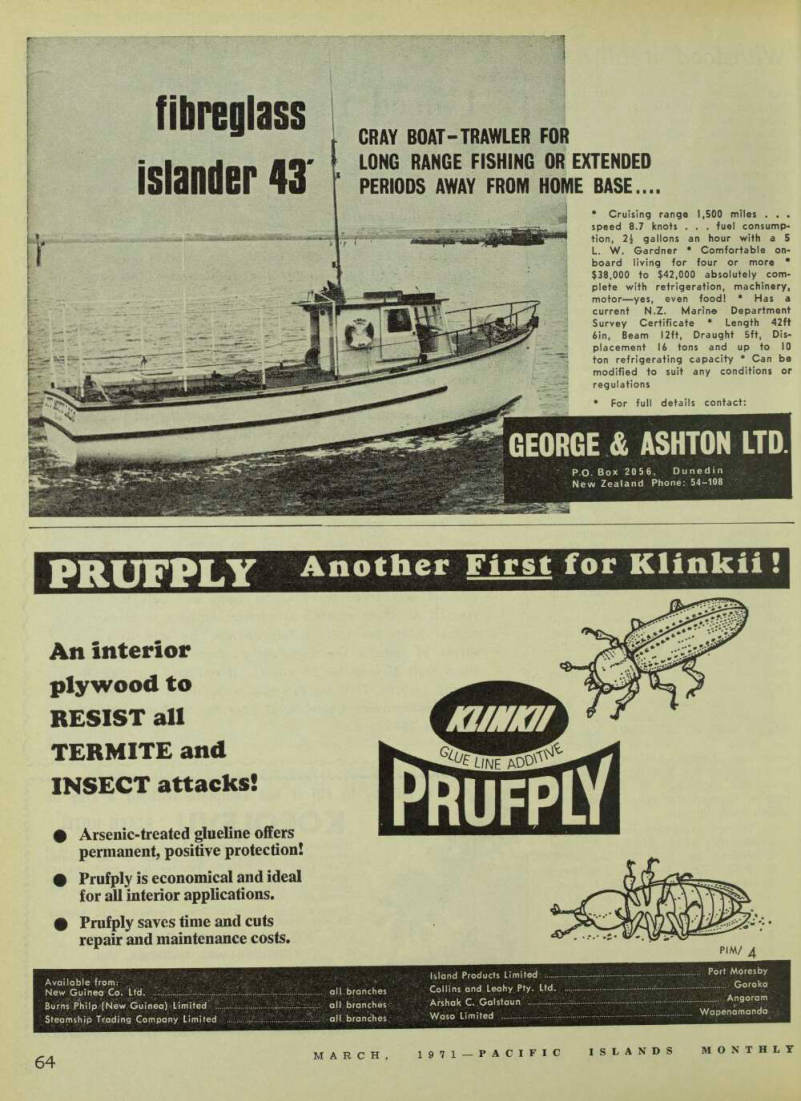 66
66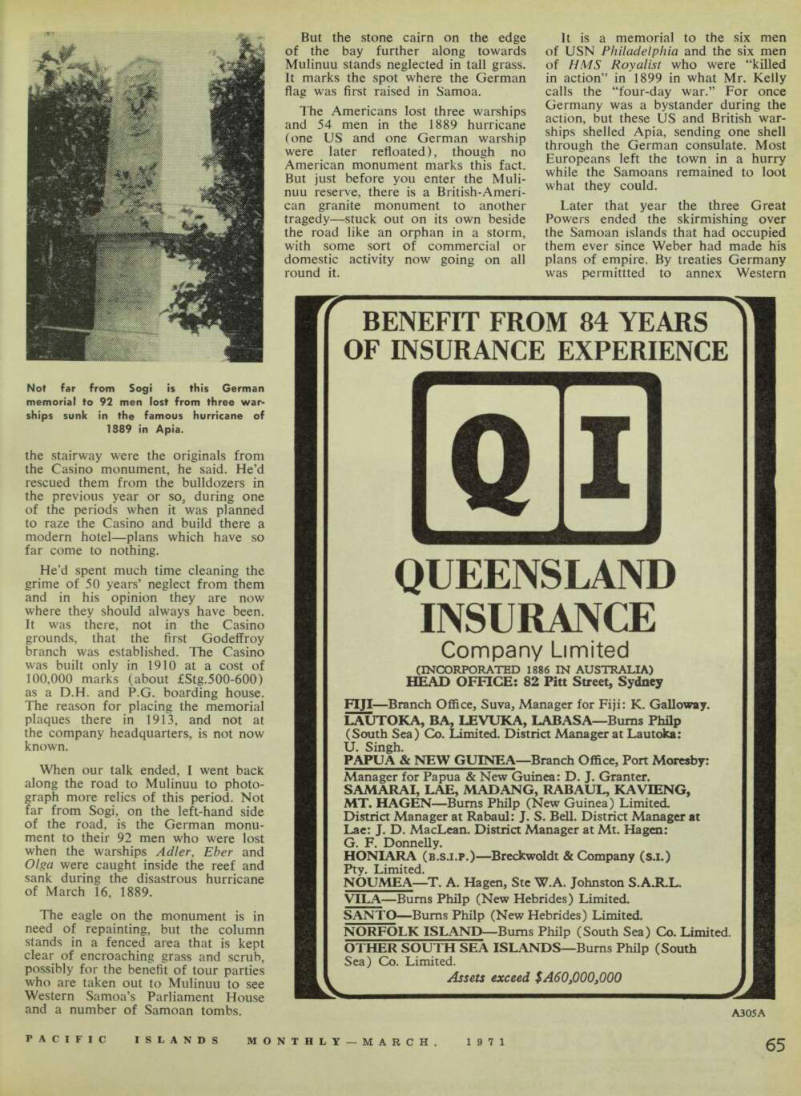 67
67 68
68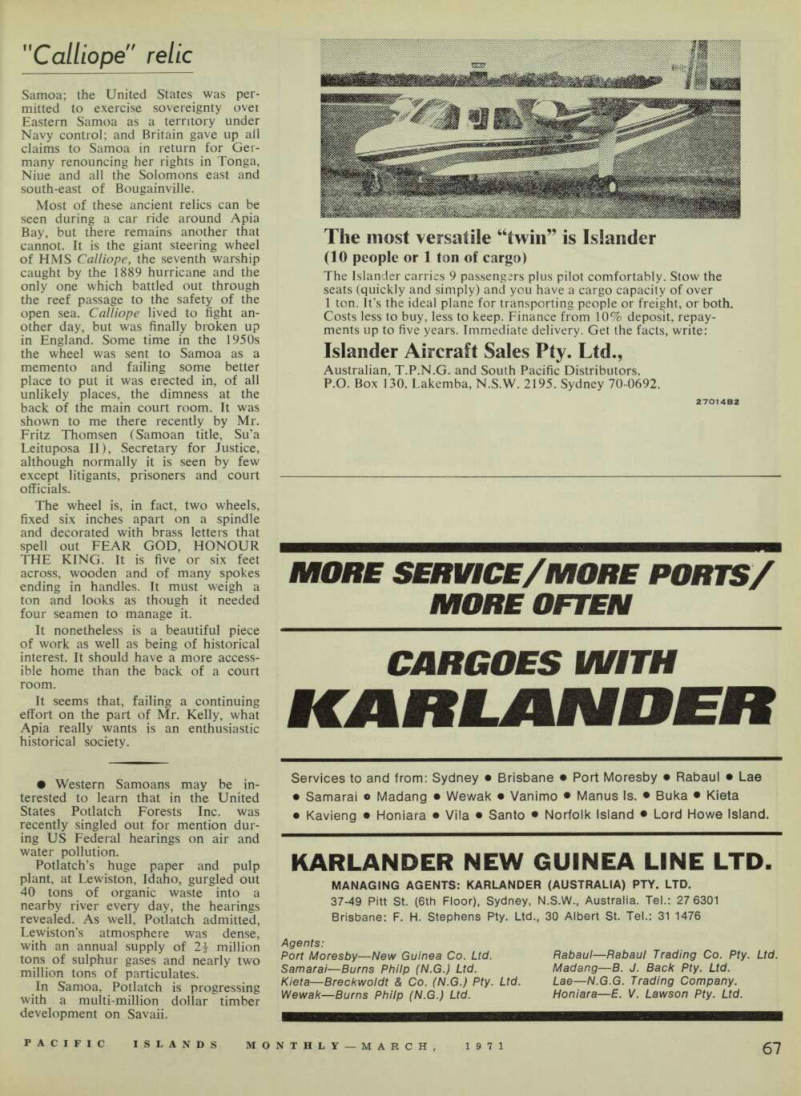 69
69 70
70 71
71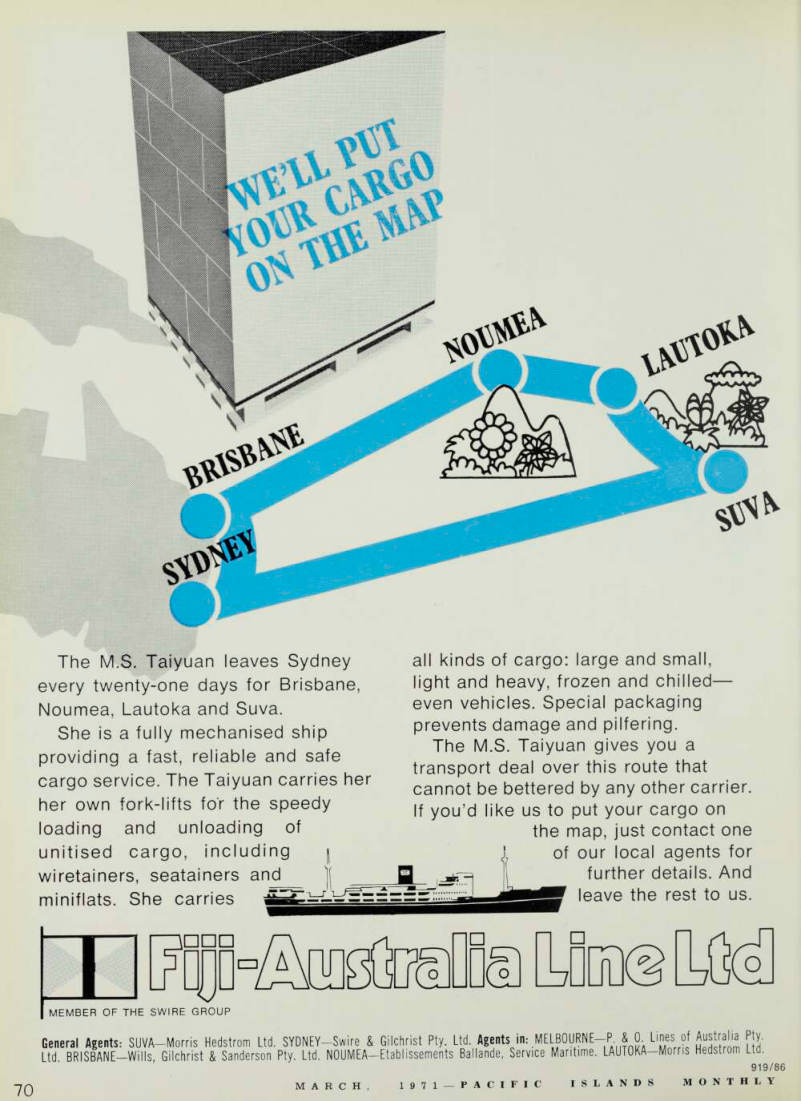 72
72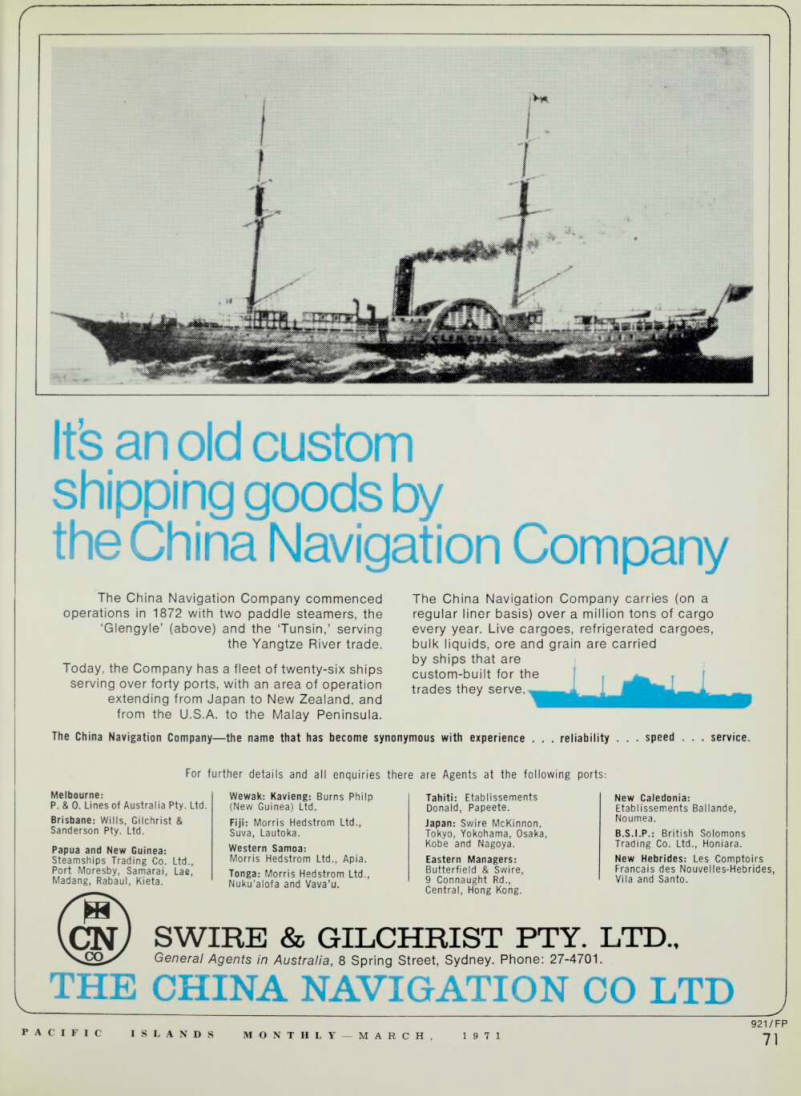 73
73 74
74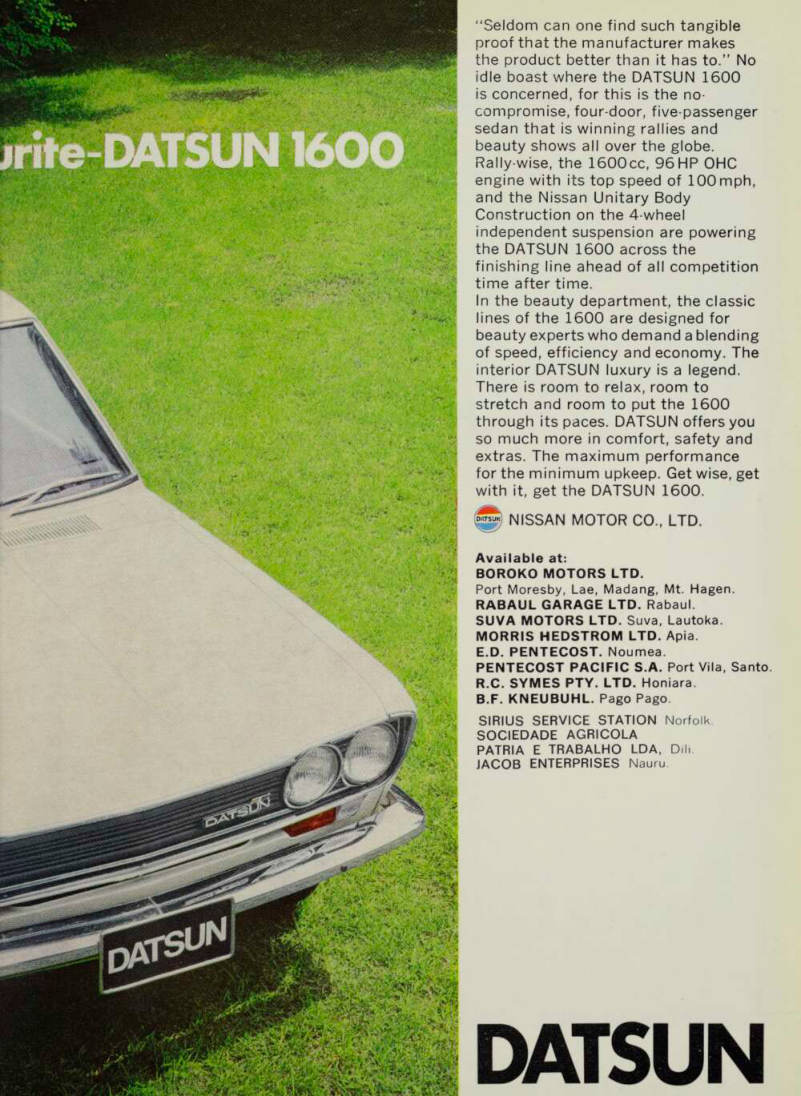 75
75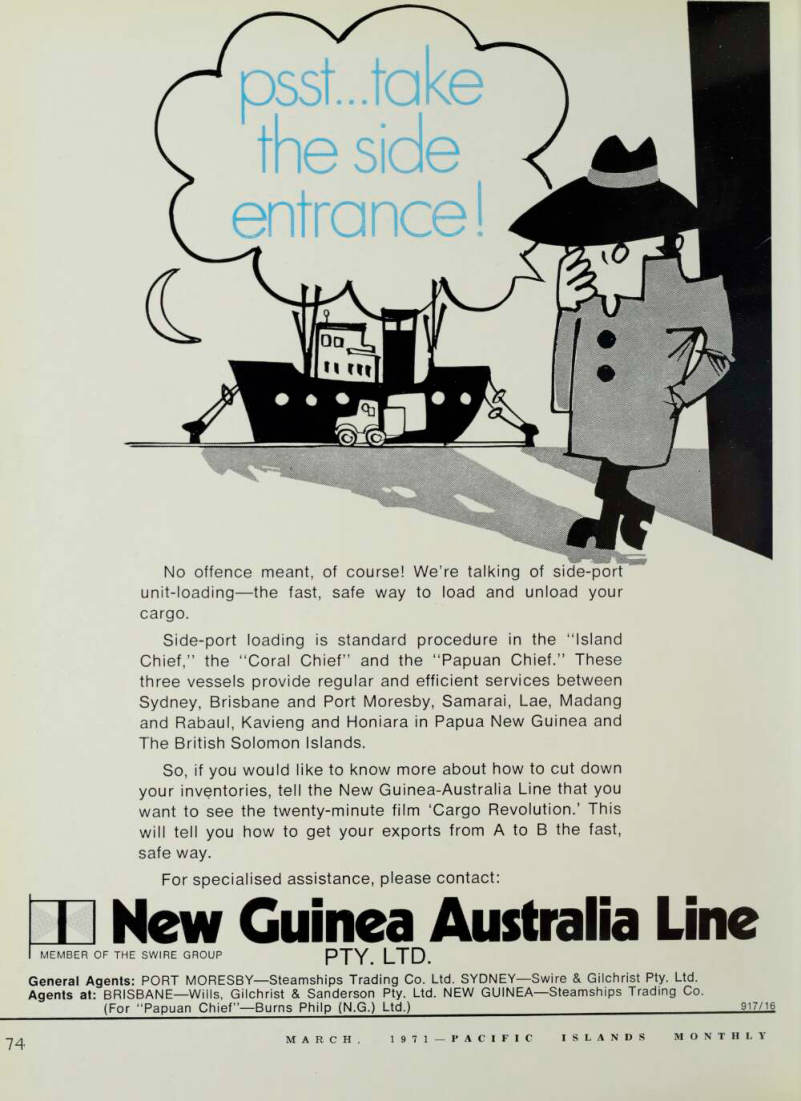 76
76 77
77 78
78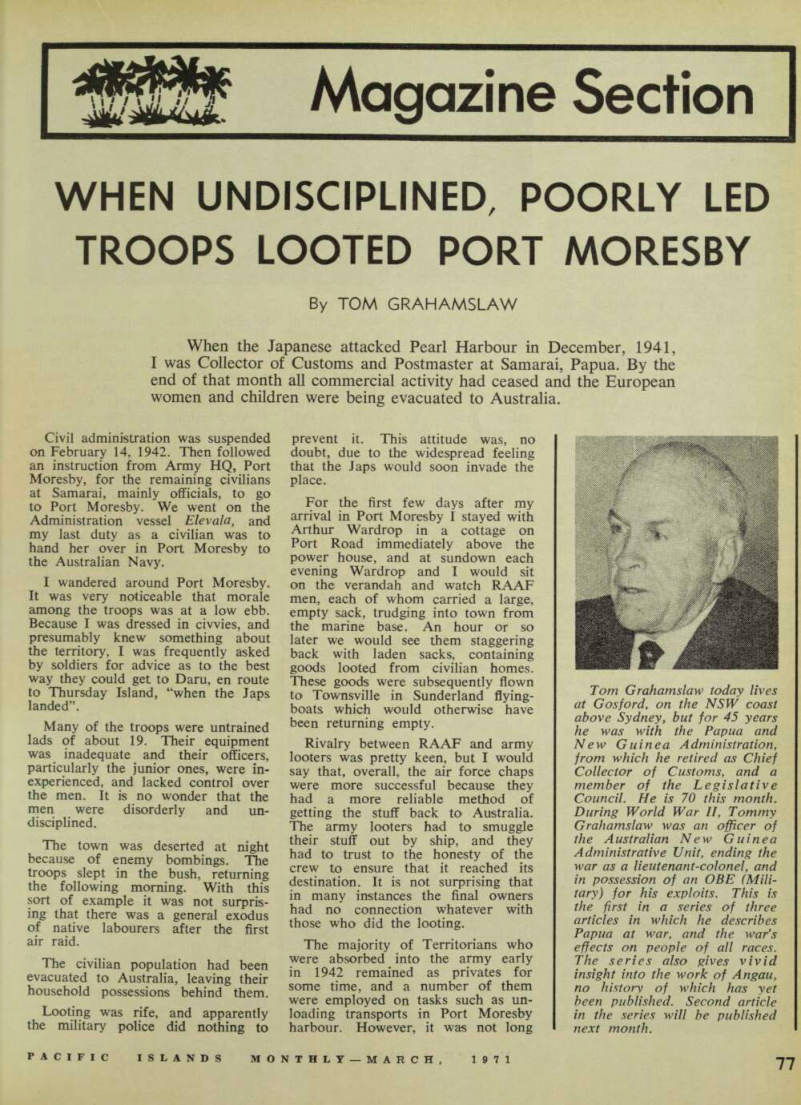 79
79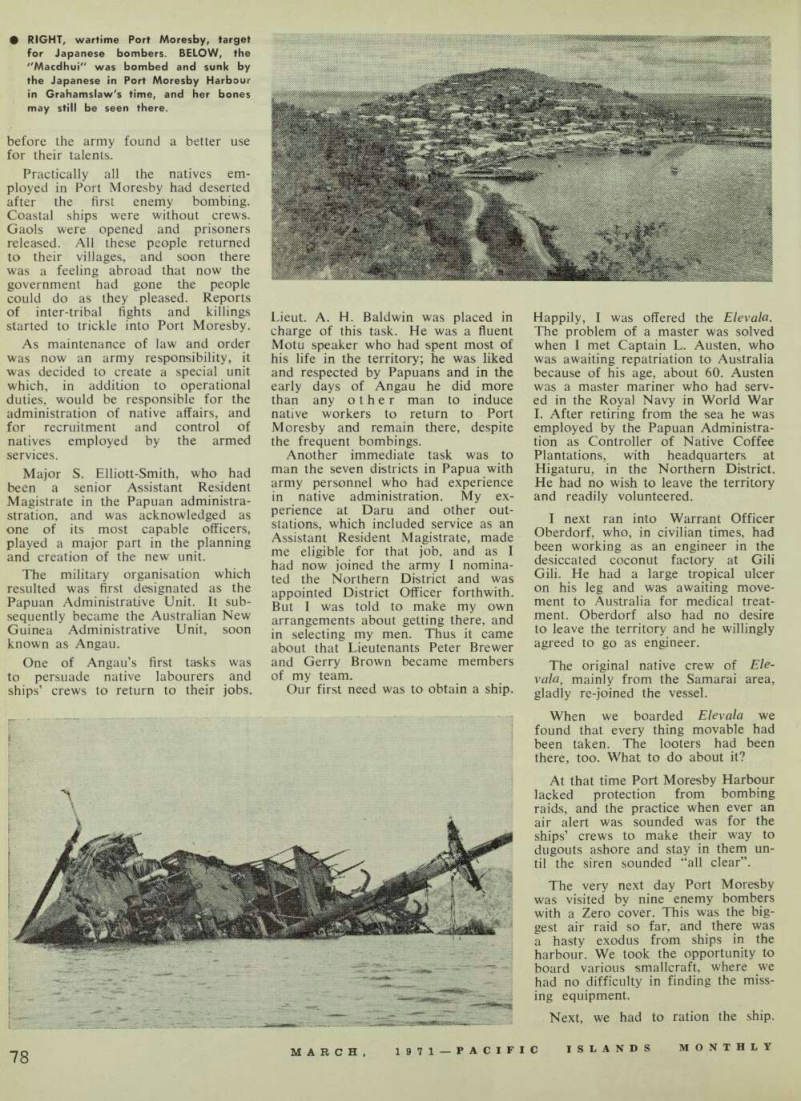 80
80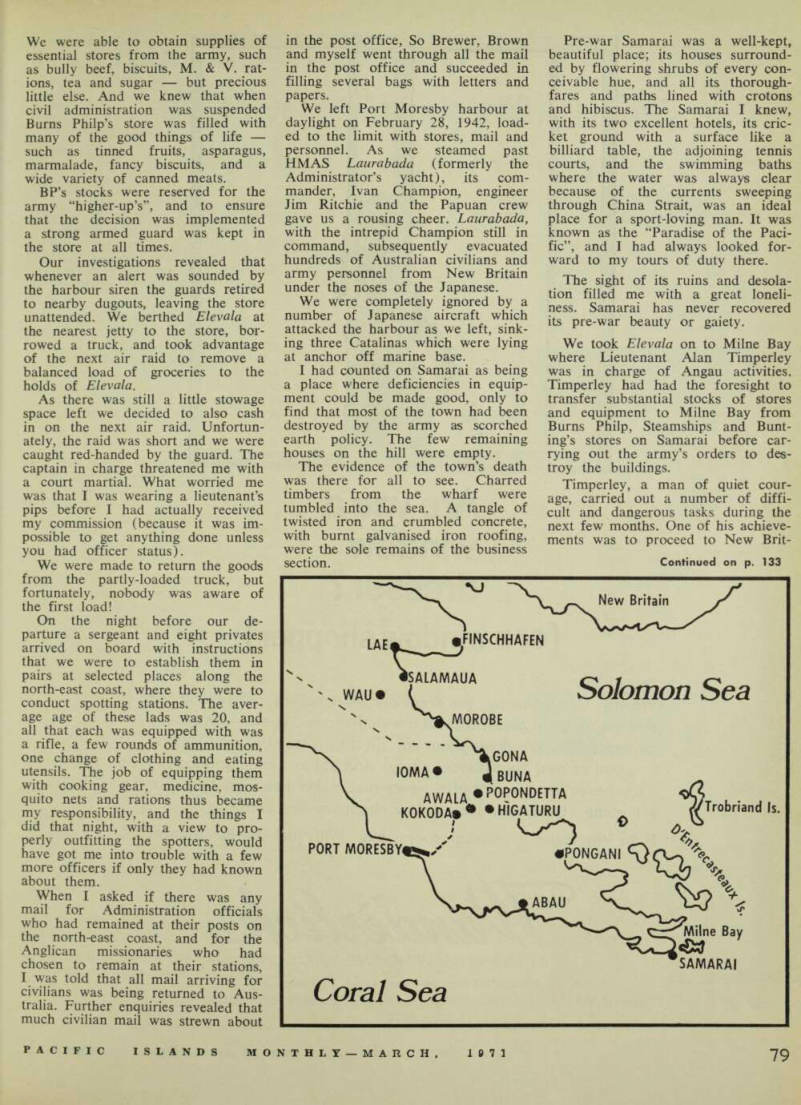 81
81 82
82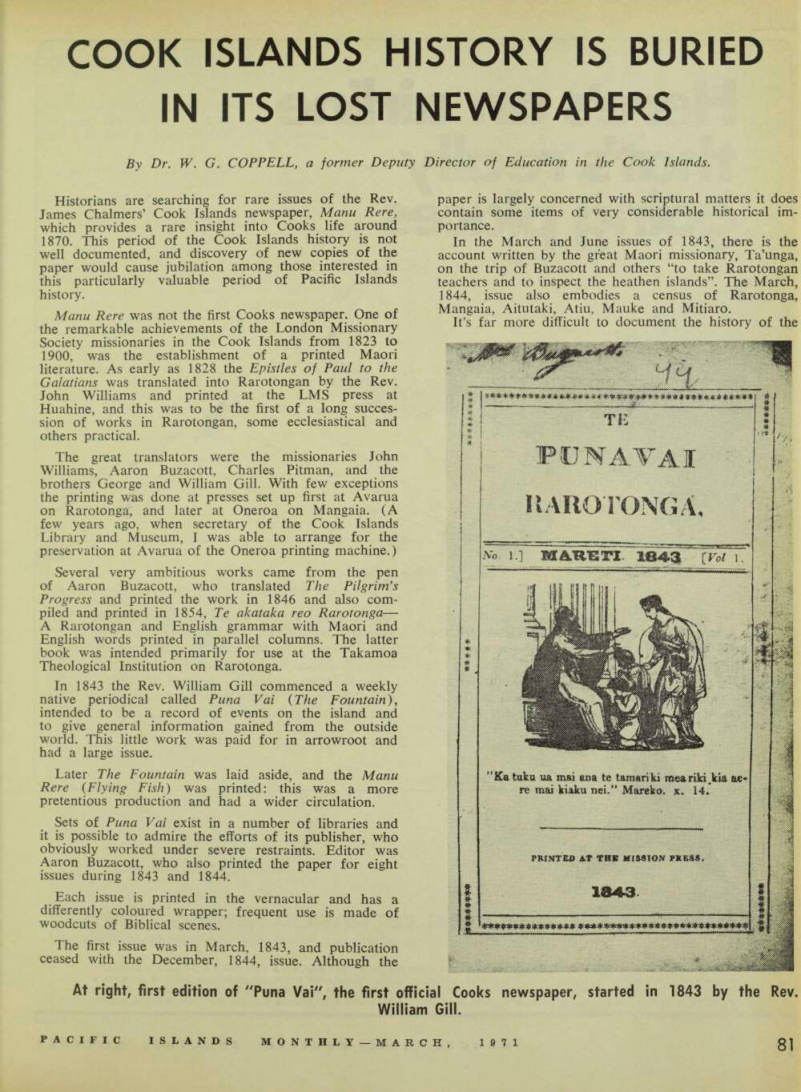 83
83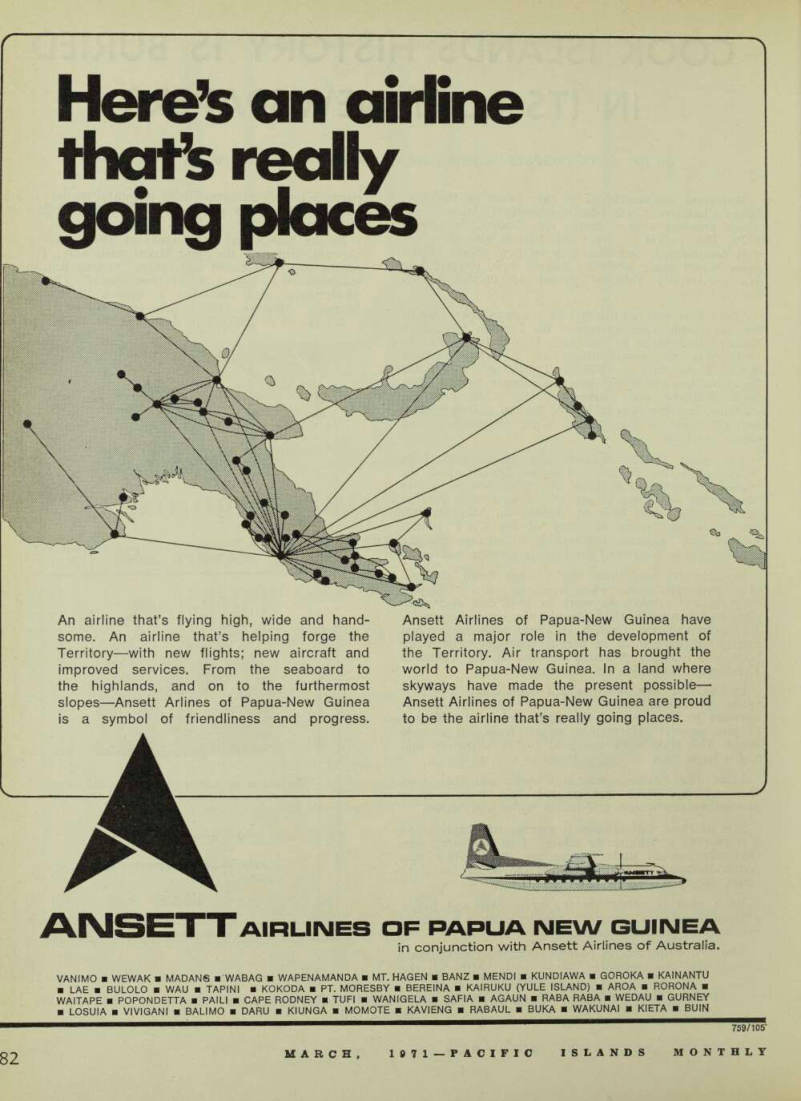 84
84 85
85 86
86 87
87 88
88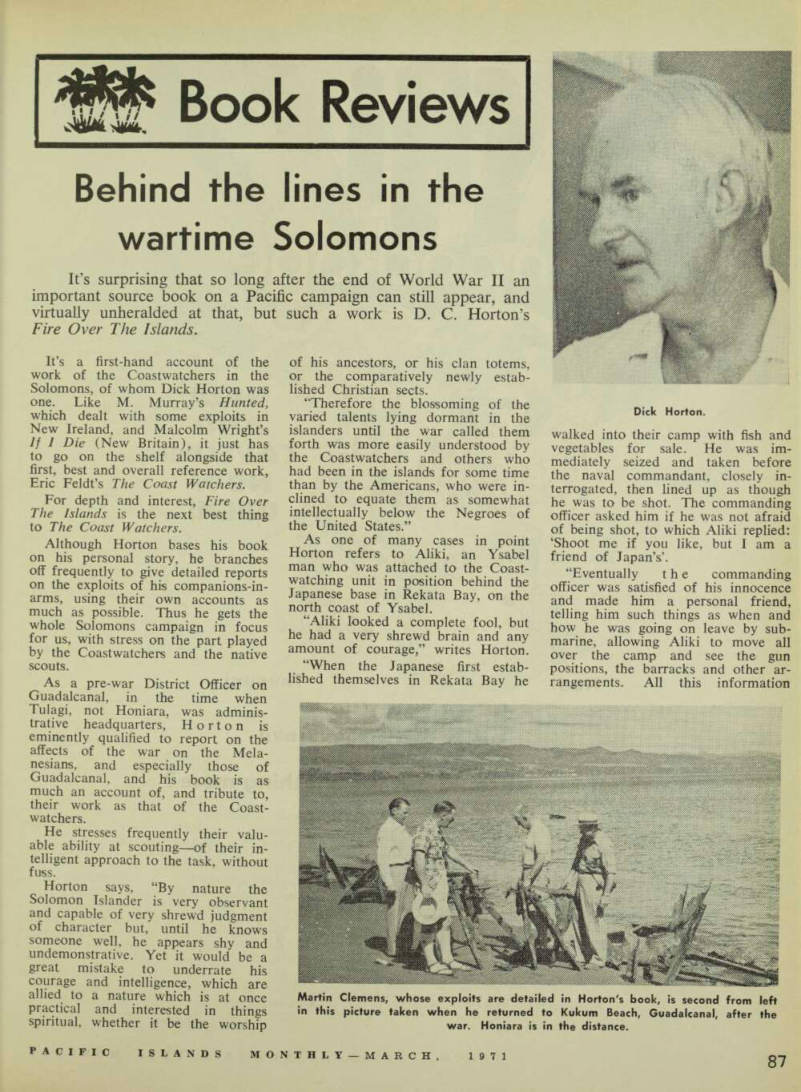 89
89 90
90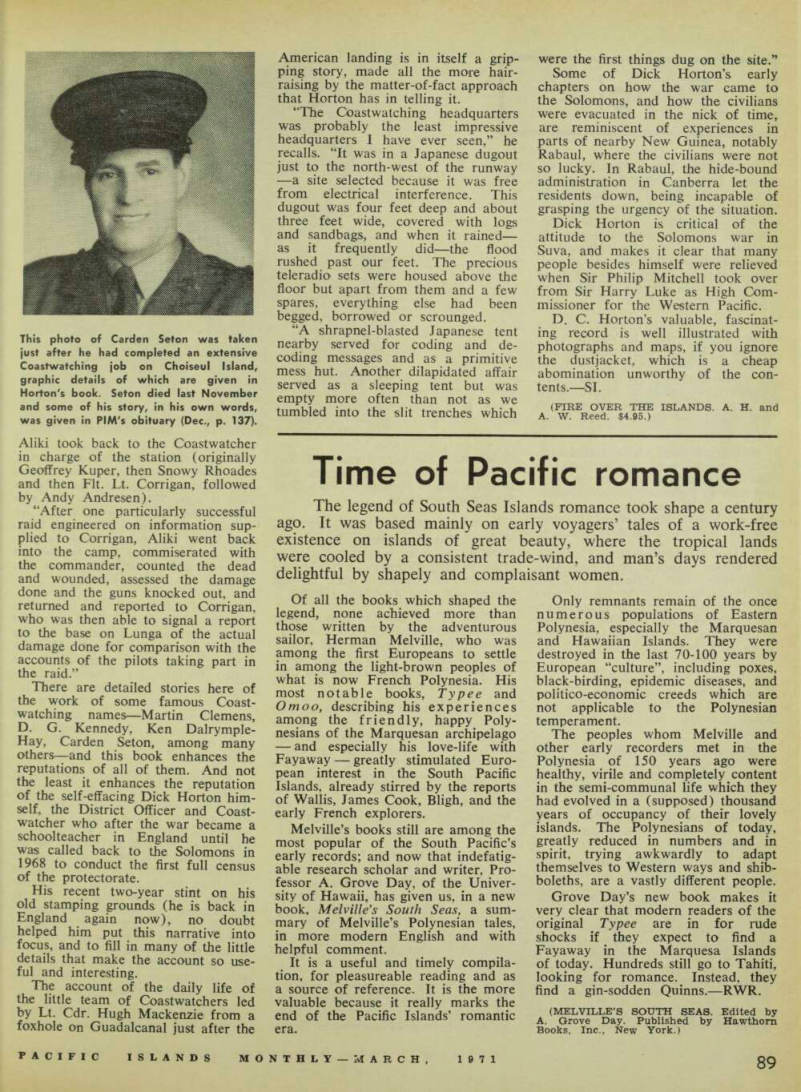 91
91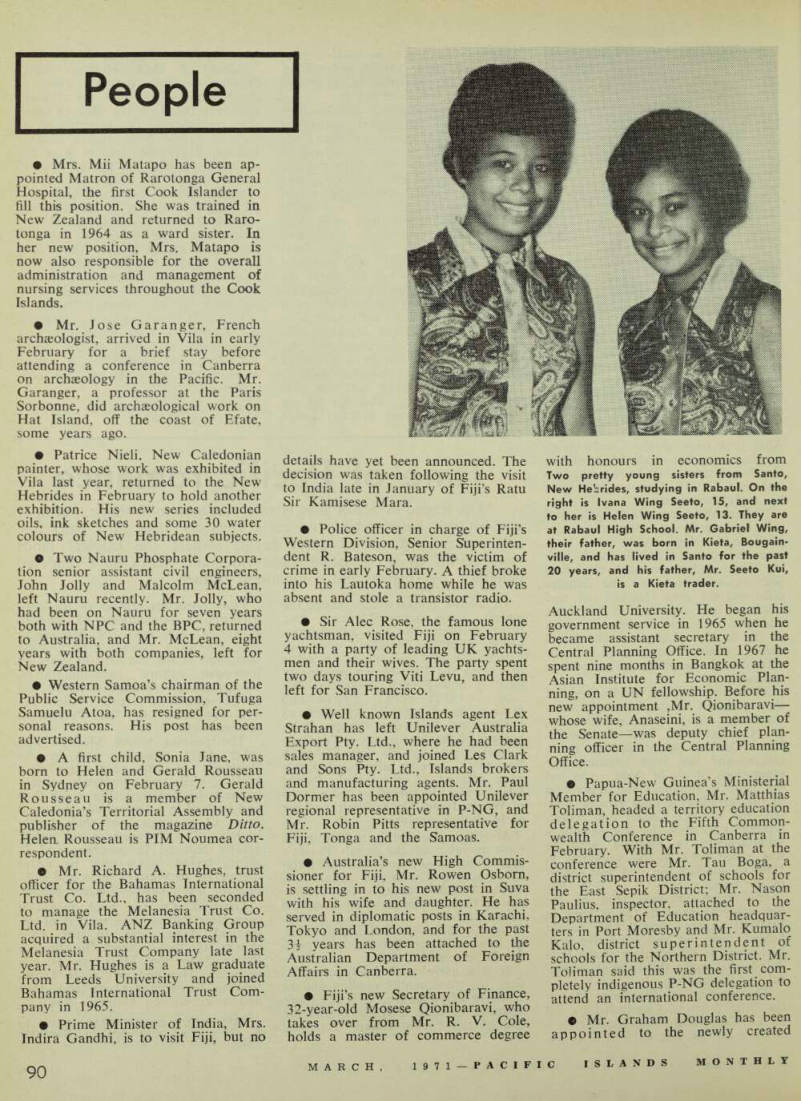 92
92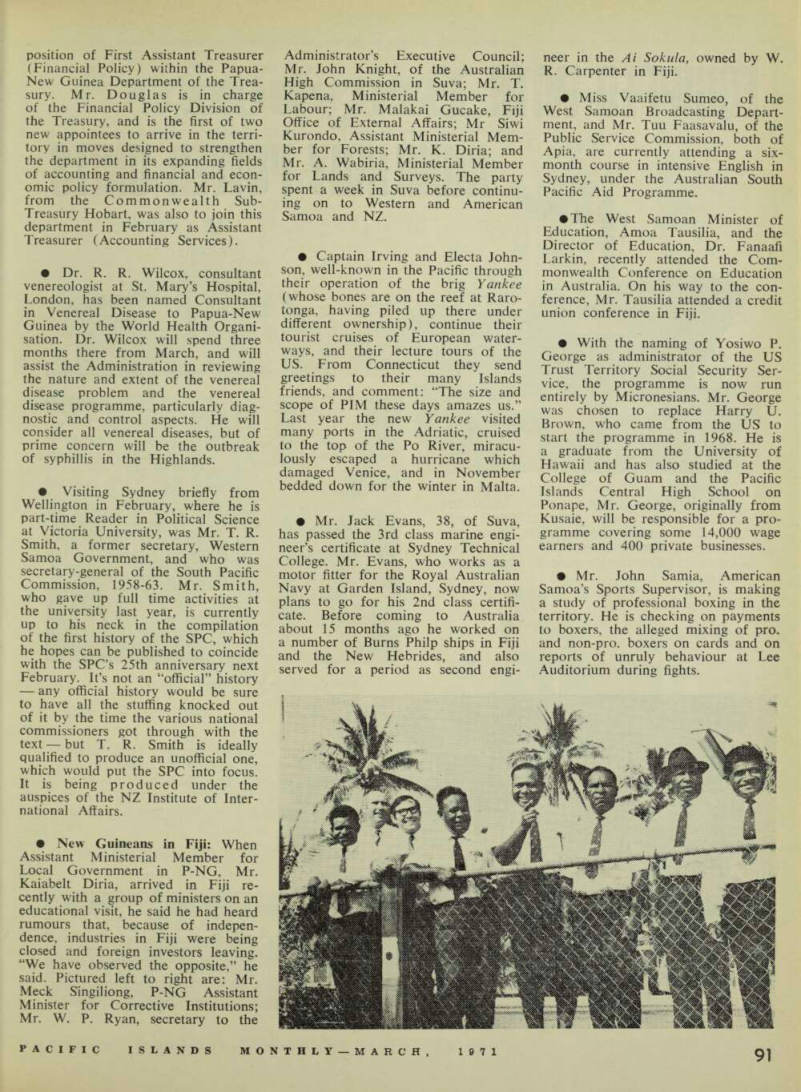 93
93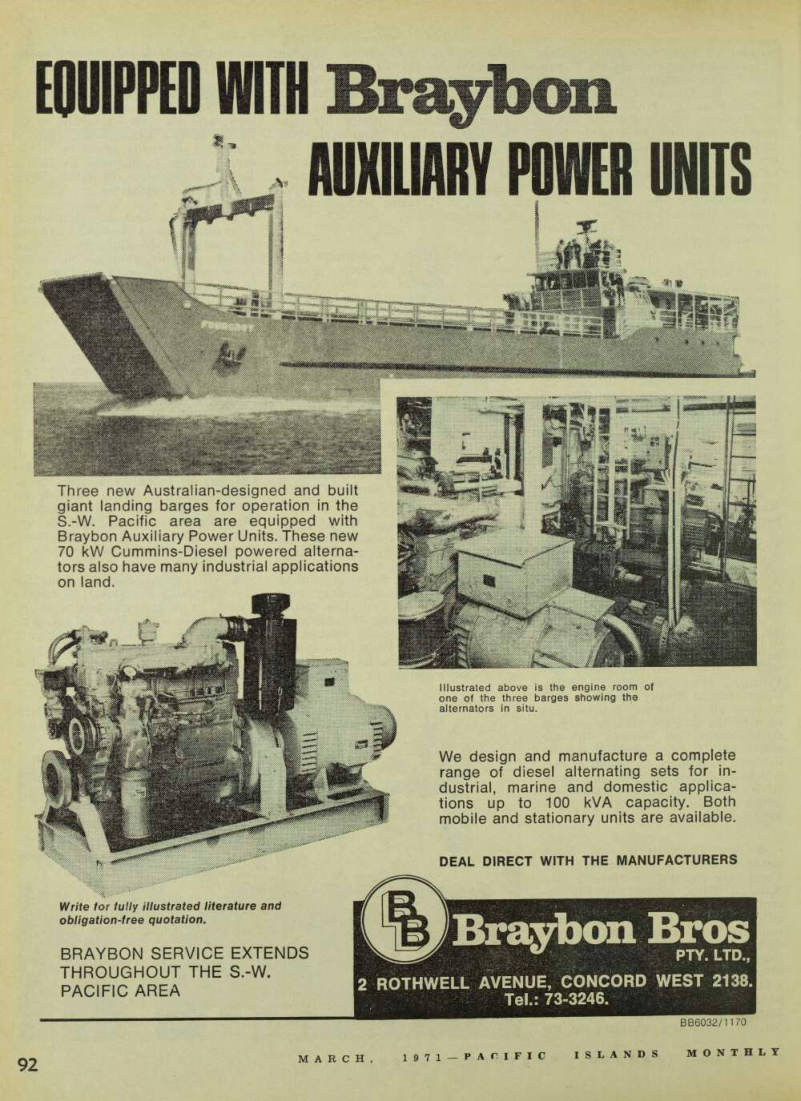 94
94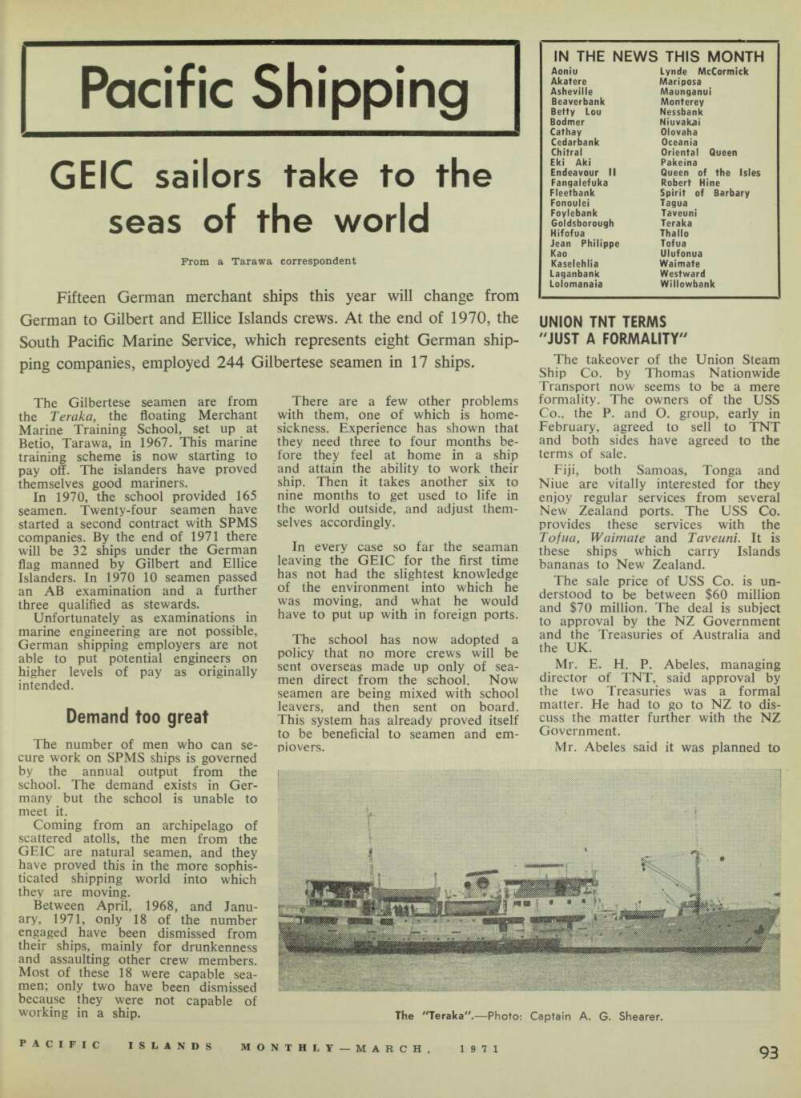 95
95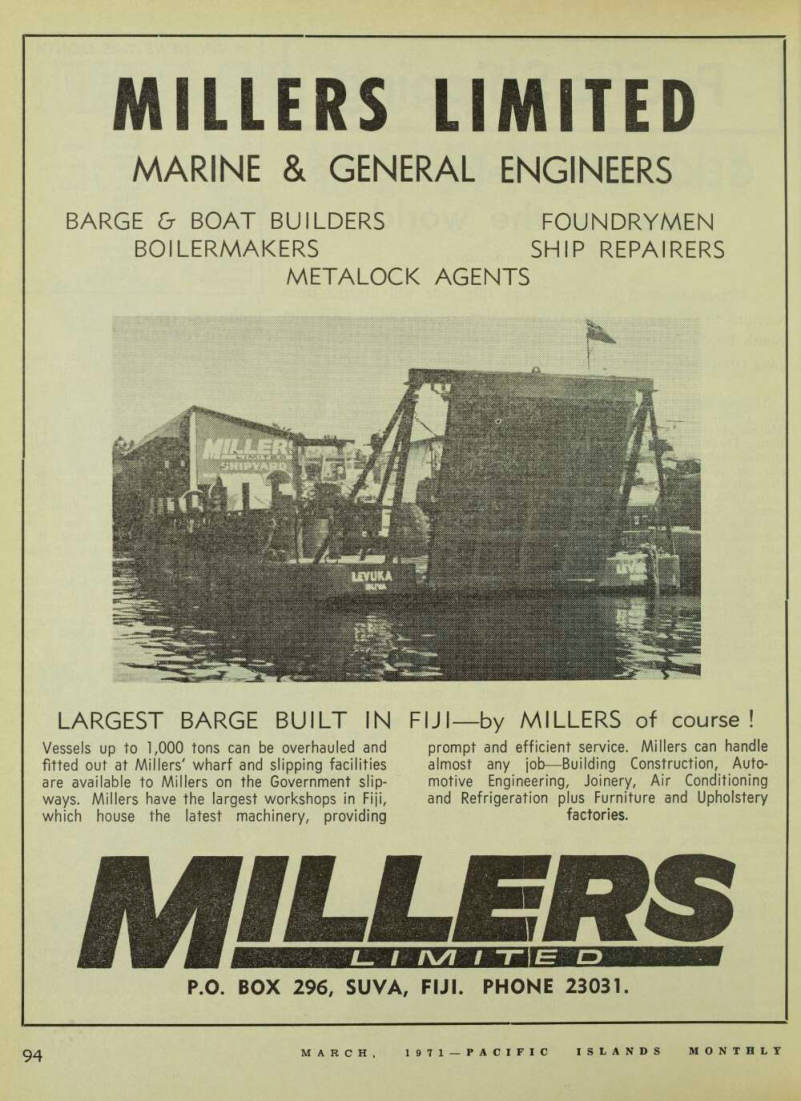 96
96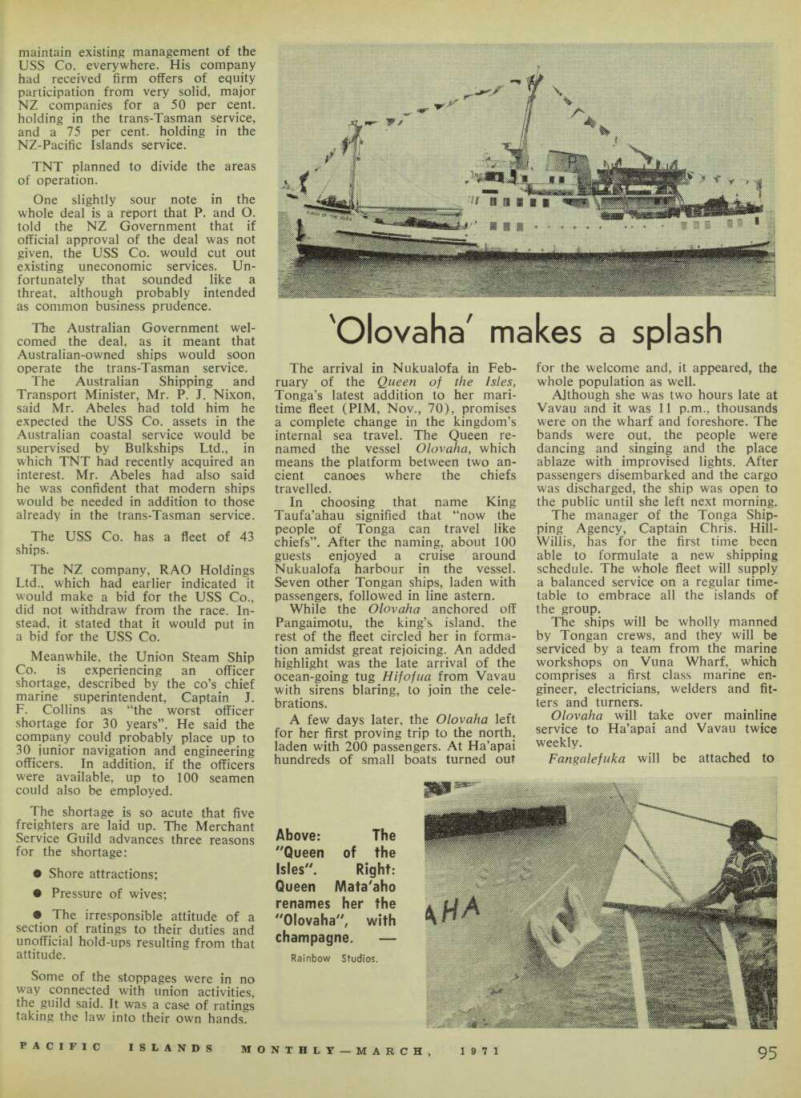 97
97 98
98 99
99 100
100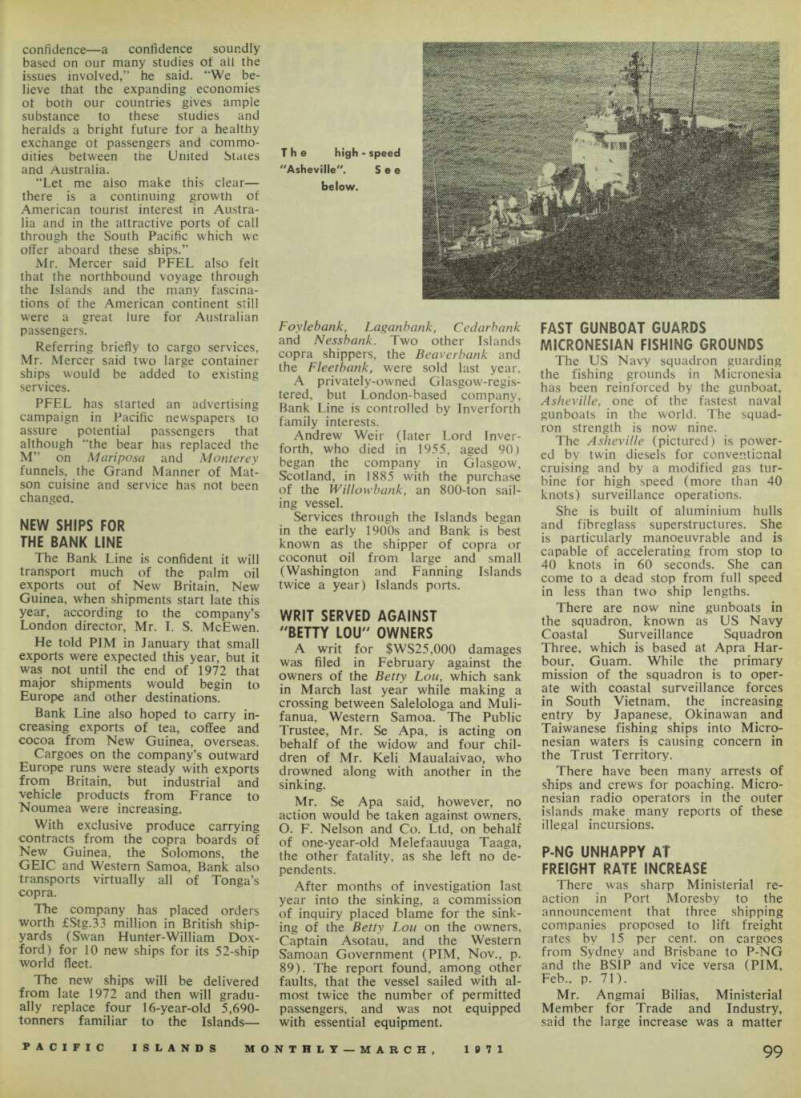 101
101 102
102 103
103 104
104 105
105 106
106 107
107 108
108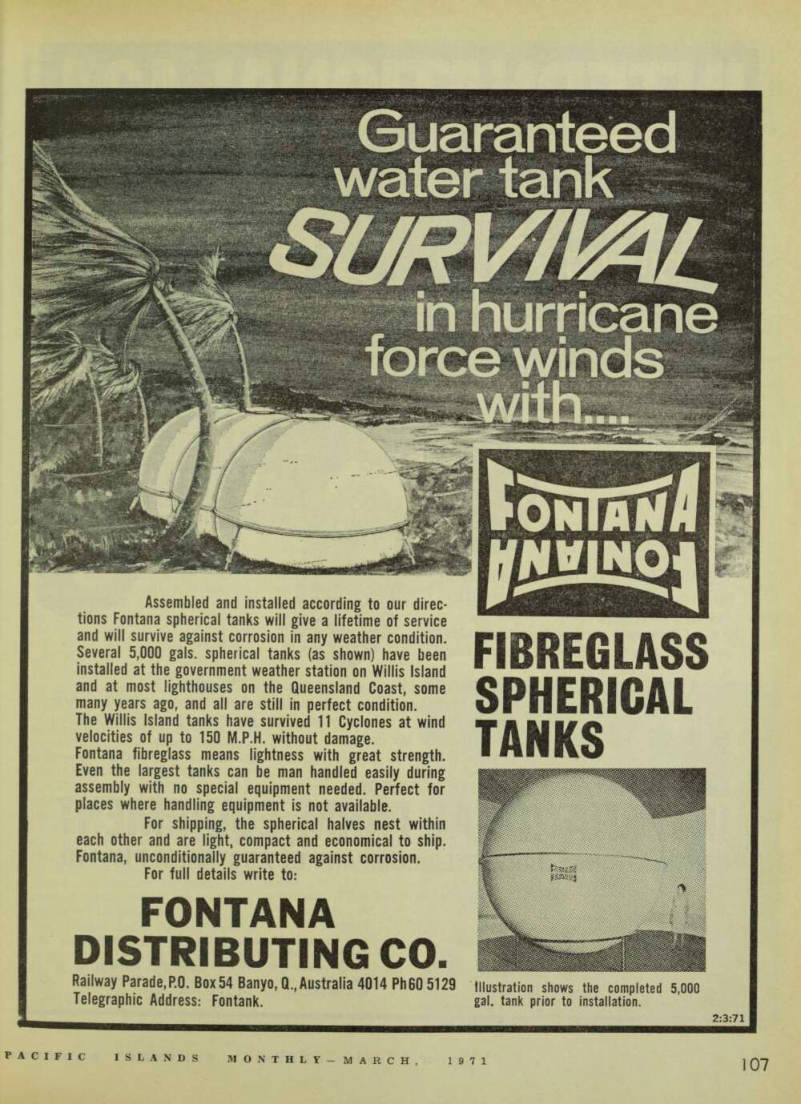 109
109 110
110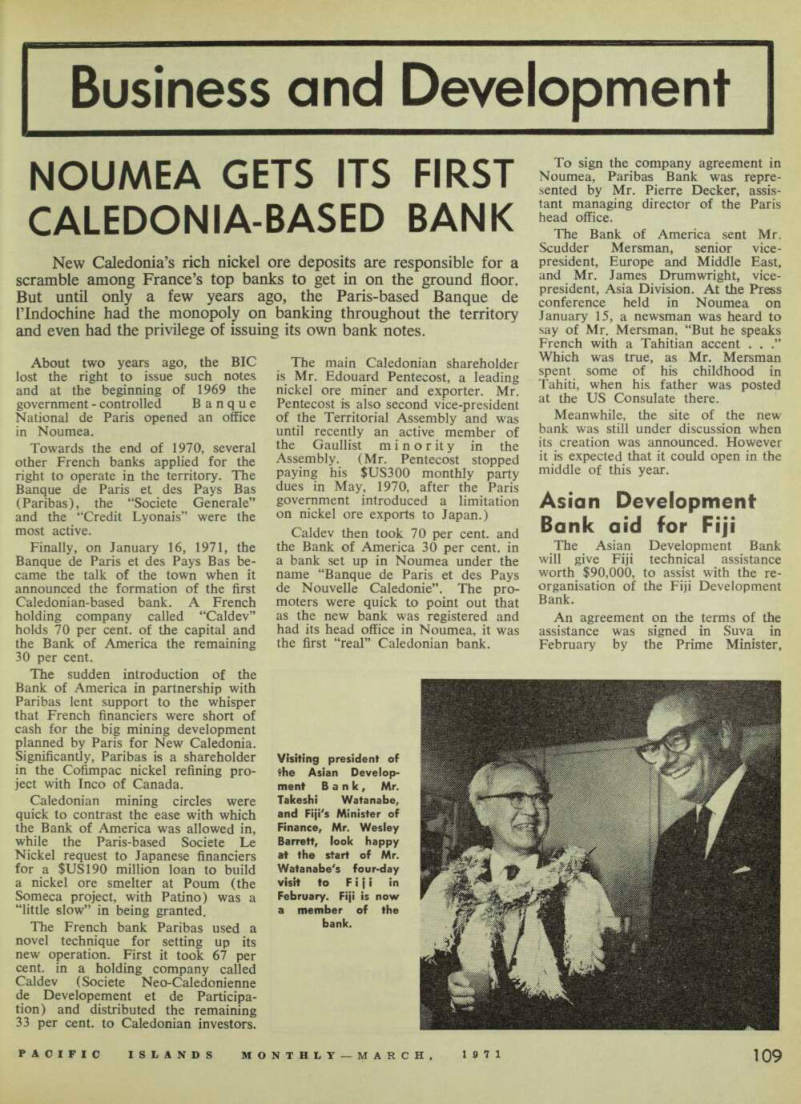 111
111 112
112 113
113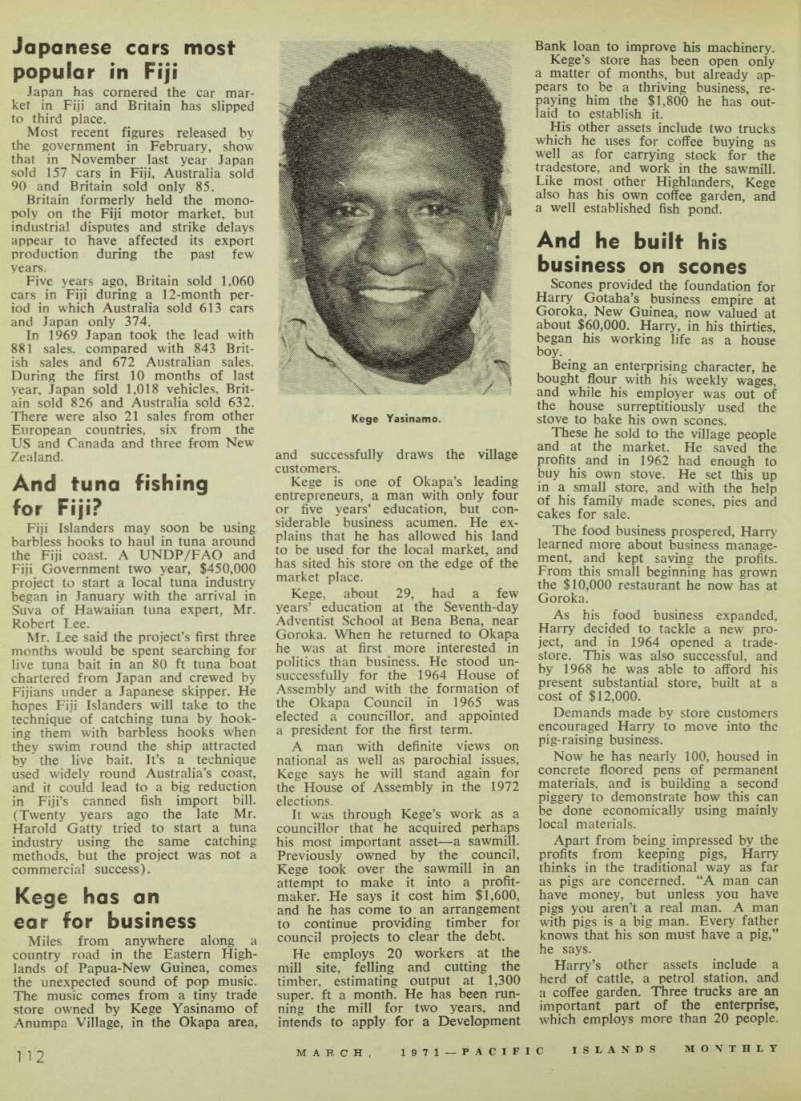 114
114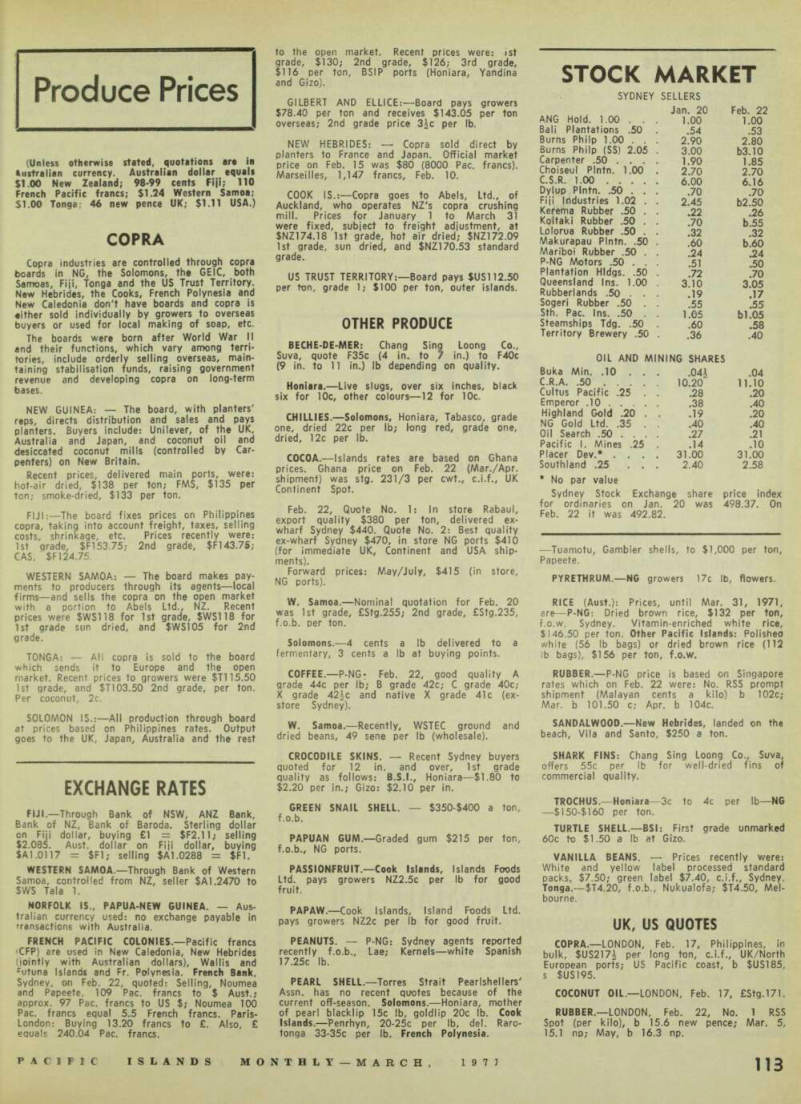 115
115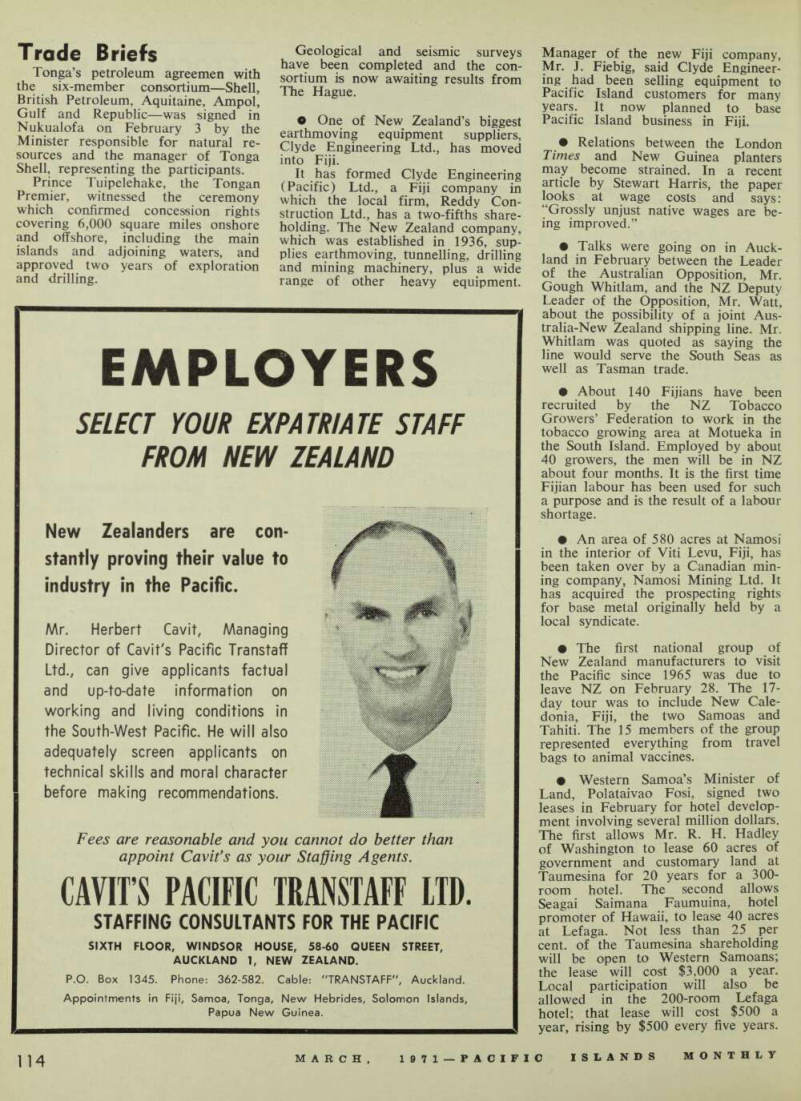 116
116 117
117 118
118 119
119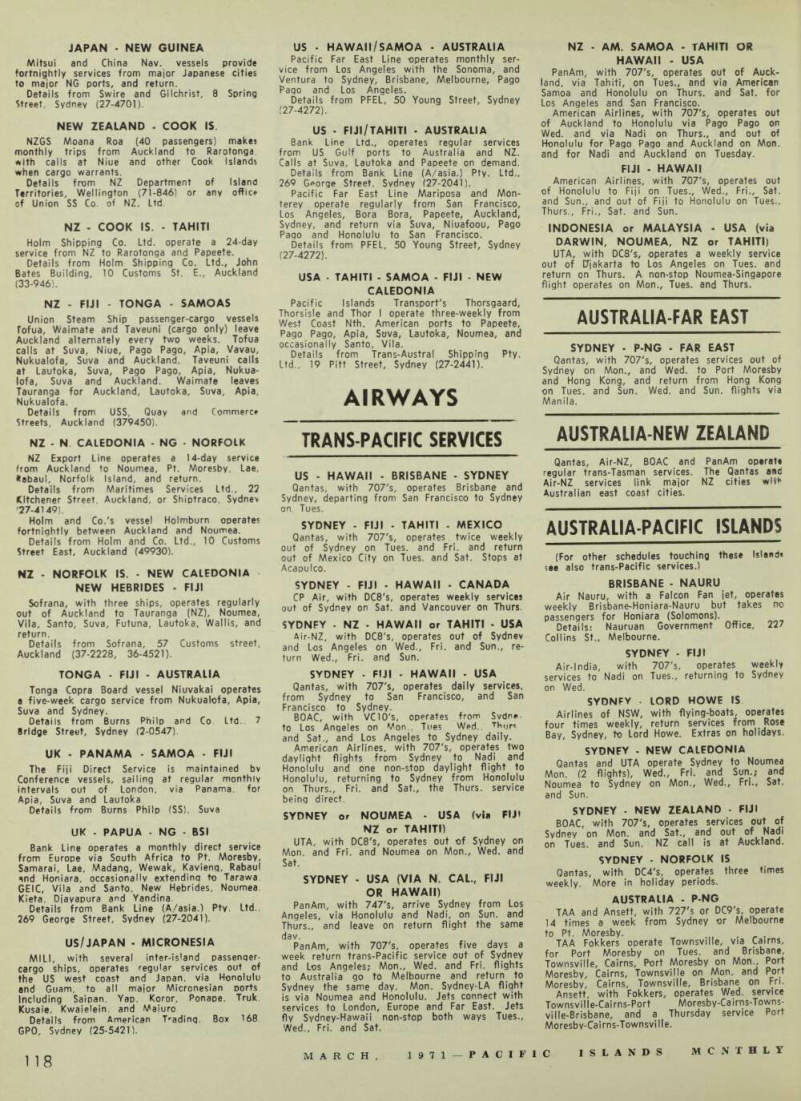 120
120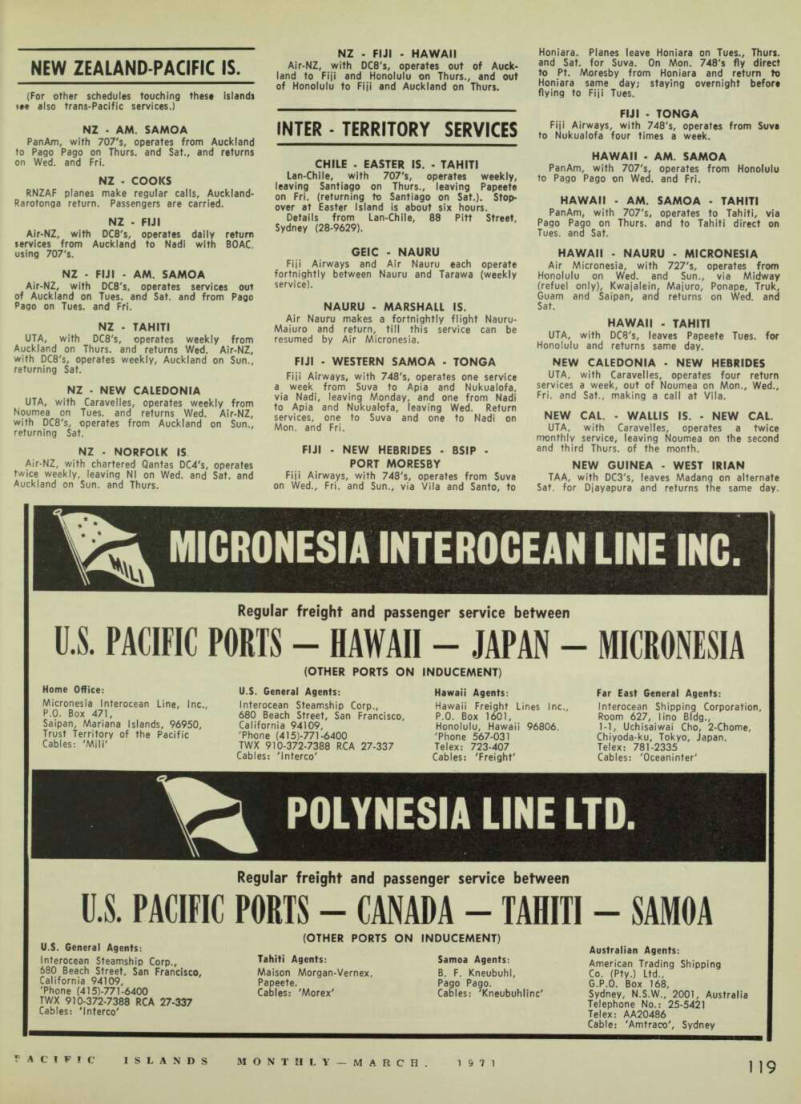 121
121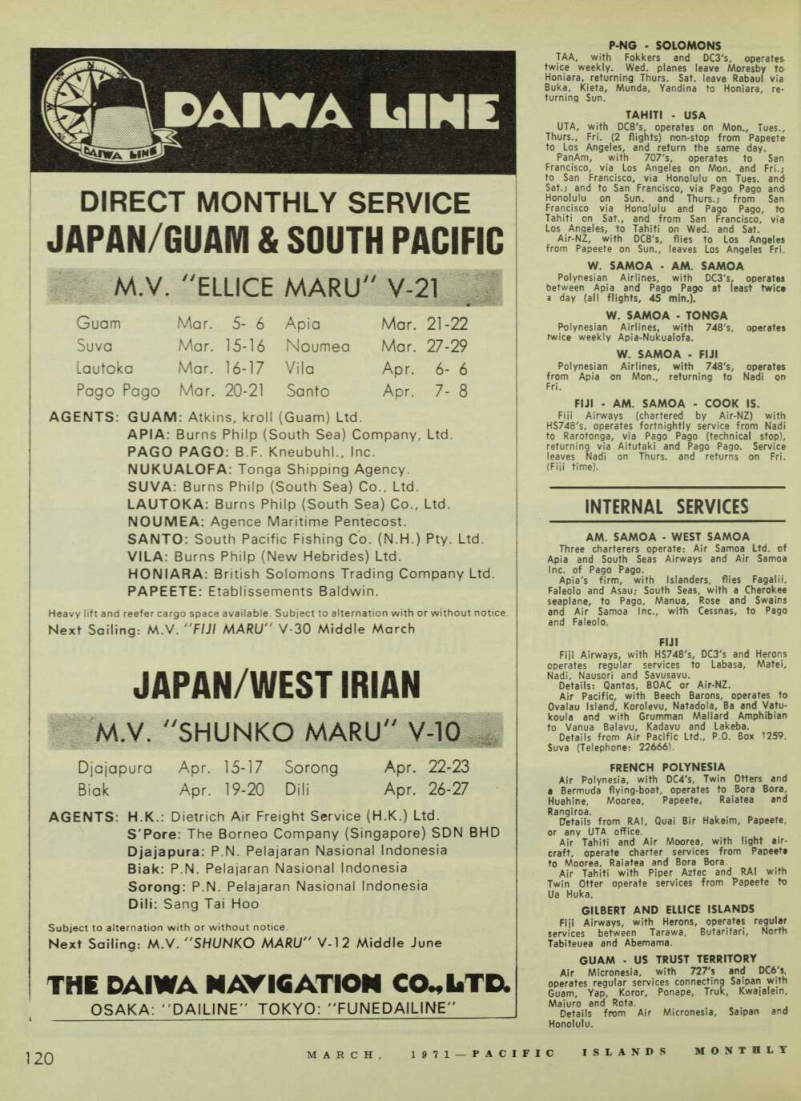 122
122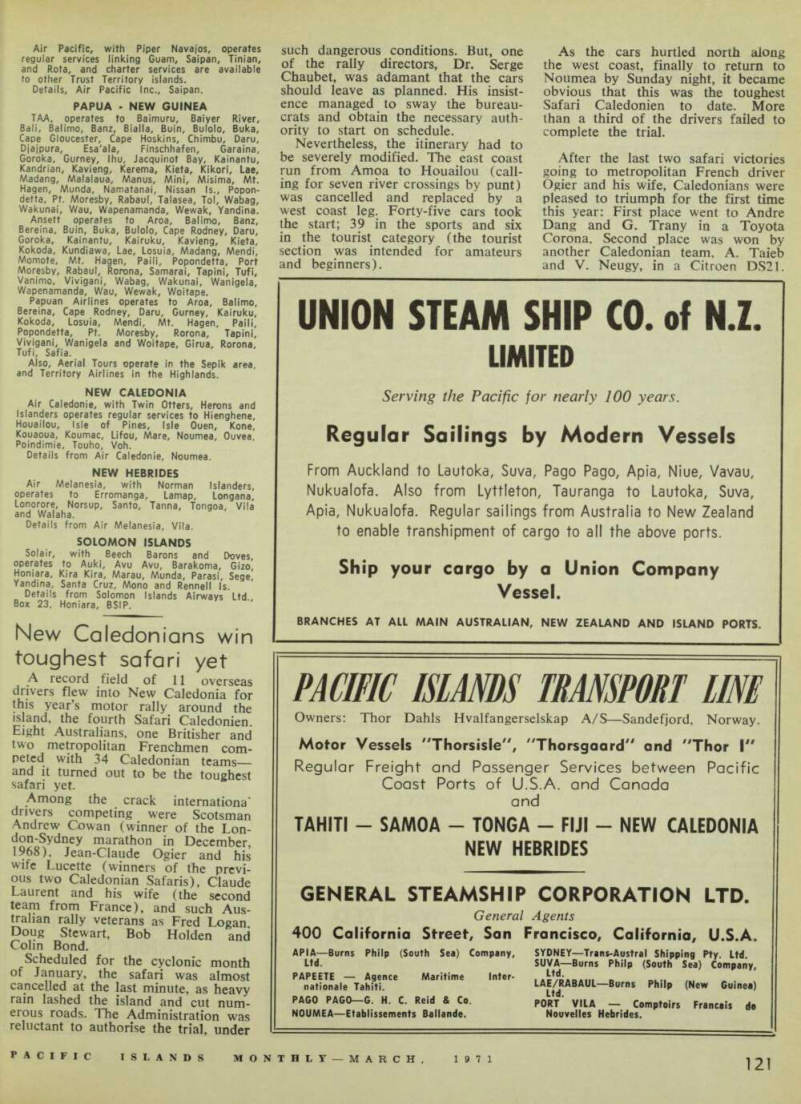 123
123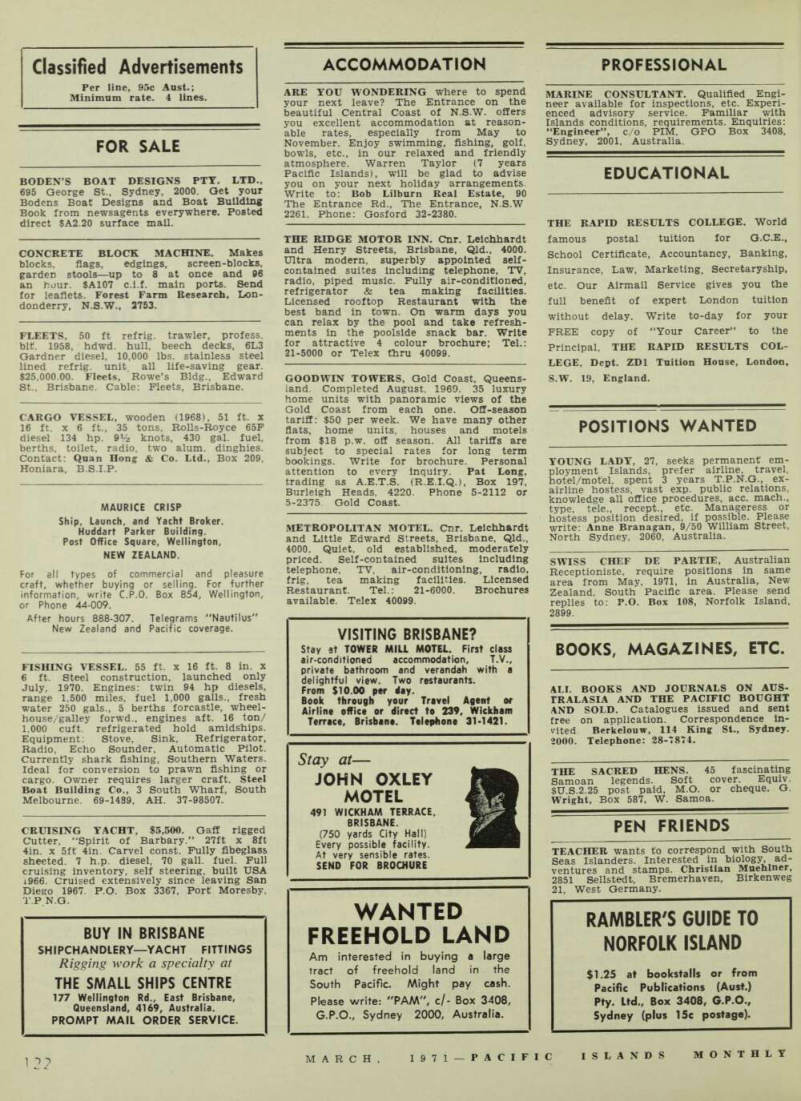 124
124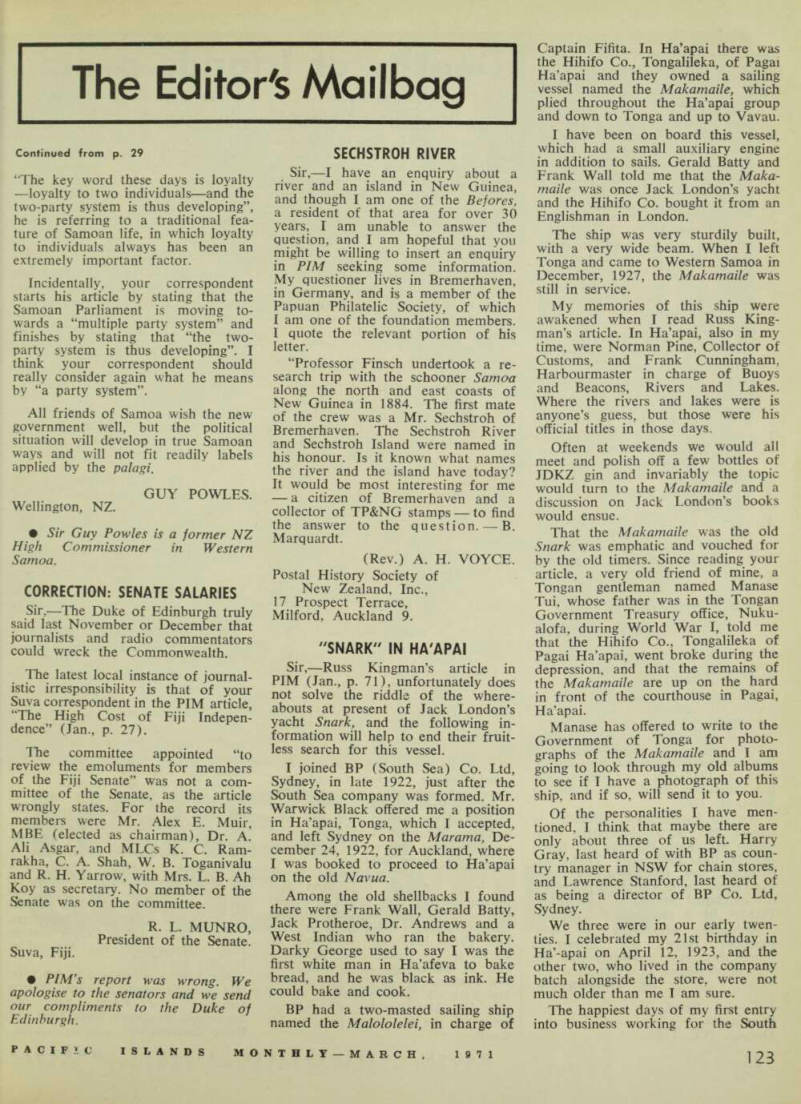 125
125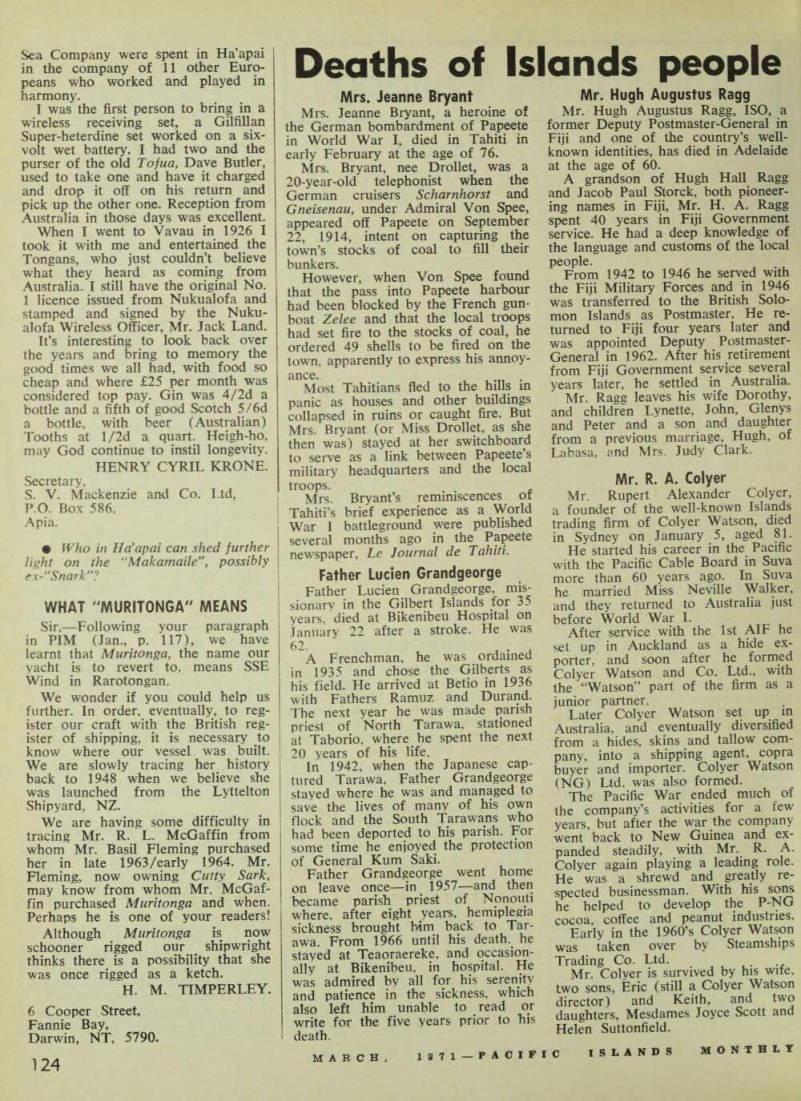 126
126 127
127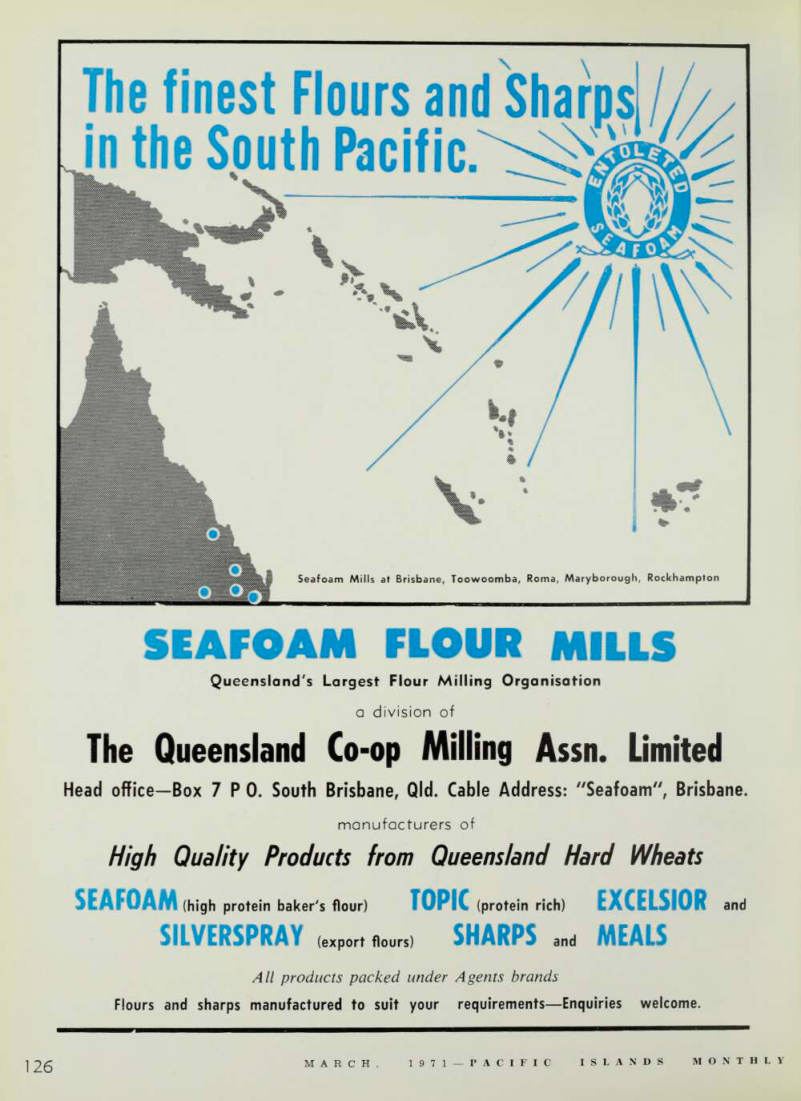 128
128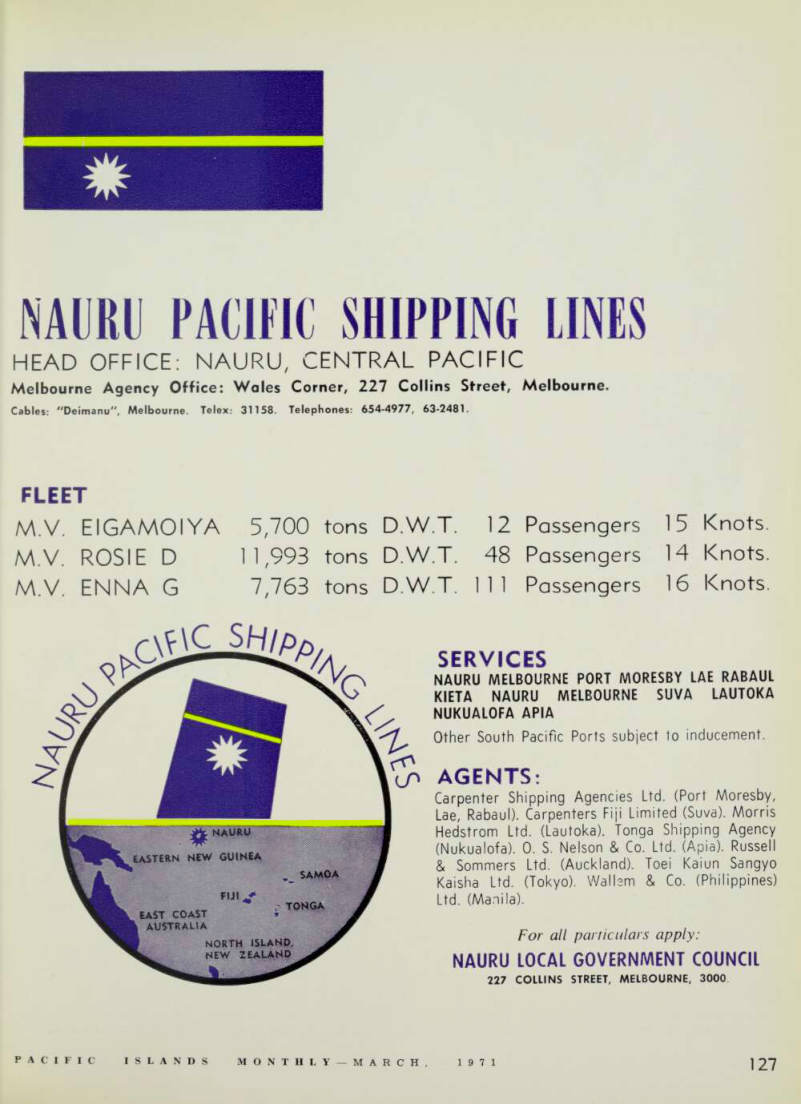 129
129 130
130 131
131 132
132 133
133 134
134 135
135 136
136 137
137 138
138 139
139 140
140 141
141 142
142 143
143 144
144 145
145 146
146 147
147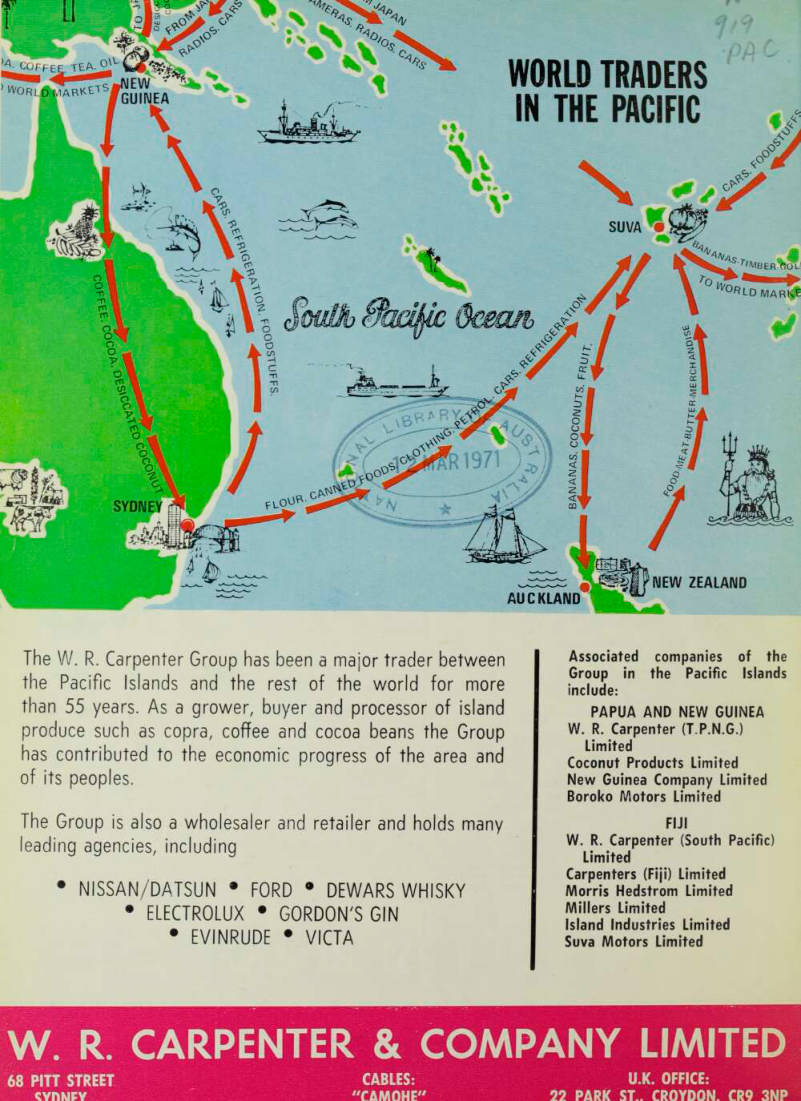 148
148