Advertisements & other items, pp. 1-4 (4 items)
Monthly
Pacific Islands Monthly
lOVEMBER, 1961
VOL XXXII. NO 4
6
e/ed at G.P 0 , Sydney, for Mssion by post as a newspaper
Suhbird Services
FLY
throughout the Territory of Papua New Guinea and to the mainland.
Sunbird Services throughout the Territory
TAA operates ‘Sunbird Services’ throughout the Territory of Papua New Guinea and to adjacent islands. Whether your destination is Mt. Hagen in the New Guinea Highlands, Honiara on Guadalcanal or any other of the 45 Territory ports served by TAA you will enjoy friendly service WHEREVER you fly with TAA Sunbird Services.
Sunbird Services to the Mainland Regular TAA services from Lae and Port Moresby to the mainland link the Territory to more than 90 ports throughout Australia. From any location in the Territory you need only one call, one ticket, one airline. TAA operates a huge network of more than 40,000 miles throughout the Territory, to Australia and within Australia.
For your flight to anywhere in Australia, low cost Tourist or Luxury First Class, TAA is the Friendly Way.
SAVE ON TAA TOURIST CLASS FARES BETWEEN PORT MORESBY AND THE MAINLAND.
For example, you save £B/15/0 (return) when you fly TOURIST to Brisbane with TAA.
Tourist fares from Port Moresby to Brisbane . £34/13/0 single, £69/6/0 return.
First Class fares from Port Moresby to Brisbane . £4l /4 /0 single. £7B/1 10 return.
PLY TAA THE FRIENDLY WA Y
For TAA Sunbird Services within the Territory and to Australii iruk.' y. ur reservations at the following addresses: GOROKA: Airport, Phone 8. LAE: Coronation Drive, Airport Centre, Phone 2311.
MADANG: Kaislan Avenue, Phone 78 or 166. PORT MORESBY; Musgrave Street, Phone 2101.
RABAUL; Mango Avenue, Phone 2567 or 2702 or any authorised TAA Agent.
TAA97O'
hr safe, economical COOKING...
m K LL S Busy housewives will appreciate the economy and ease of cooking on a Coleman kerosene stove . . . brought to the Pacific Islands by Robert Gillespie’s. These well-known stoves are manufactured from heavy-gauge steel . . . precision made, and provide many years of truly economical cooking. Grates are warp-proof . . . fuel bowl and bottle designed to prevent tipping . . . and burners and fuel pipe are aligned to ensure accurate, successful cooking at all times. Three smart models available: No. 341 B—one-burner stove; No. 3428—tw0 burners; No. 344—threeburner stove mounted on a strong stand which has a handy shelf for pots, pans and other utensils. Coleman non-pressure stoves are easily serviced and spare parts are readily available.
Representatives for the Pacific Islands: Cole I
:T GILLESPIE PTY. LTD.
22 Young St., Sydney
4 Queen St., Brisbane Cable: "Robergill".
ROBERT GILLESPIE (N.G.) LTD.
Rabaul, Port Moresby
Lae, Madang
PEARCE & CO., LTD.
Suva
STOP BAD BREATH
»» COLGATE
WHILE YOU F!
Fight Tooth Decay All Day!
'i / S- \
JUST ONE BRUSHING
WITH COLGATE
STOPS BAD BREATH INSTANTLY
FIGHTS TOOTH DECAY ALL DAY
AS NO OTHER TOOTHPASTE CAN
any colour, ANY KIND.
Colgate Dental Cream
CLEANS YOUR BREATH
while it
CLEANS YOUR TEETH
Use Colgate Dental Cream to stop bad breath and fight tooth decay. Colgate’s active, penetrating foam gets into hidden crevices between your teeth, removing decaying food particles, the cause of much bad breath and tooth decay.
Protect your teeth the Colgate way.
To stop bad breath, to fight tooth decay, to keep your teeth sparkling white, brush your teeth with Colgate.
Children love its extra minty flavour.
You will love it too.
FOR WHITE TEETH AND
FRESH BREATH . . . MORE
PEOPLE BUY COLGATE
0 THAN ANY OTHER DENTAL
CREAM IN THE WORLD! J
0
QI7I
1
F I c ISLANDS MONTHLY NOVEMBER. 1961
2
NOVEMBER, 1961 - PACIFIC ISLANDS MONTT
Pacific Islands Monthly
ublisher: R. W. ROBSON.
Editors:
R Tudor Stuart Inder
anager: SELWYN HUGHES.
ONES: General Business, Editorial,
9197-8, Ma 7101, Ma 4369.
P.O. Box 3408, Sydney.
>hic Address: PACPUB, Sydney.
Rial Subscription Rates:
Includes surface postage) ific Is. —Papua-N.G., Samoa, Norfolk, i, B.S.I., Cook Is., i, G.&E. Grp., Niue, Hebrides, and other acific Islands .. £1 4 0 ch Pacific Territories Dutch N.G £1 7 0 ralia and N.Z. . £110 0 British Common- I t h Countries, and 3n (40/- Stg.) . .. £2 10 0 A. and U.S. Pacific ories ($6.50 U.S.) . £2 17 0 Zopies (postage extra) 2 6
Inch Office In Papua-Ng
Publications (NG) Ltd., Theatre ), Fourth St., LAE. Tel.; 2577. ss Pat Robertson, Manager.
Ranch Offices In Fiji;
iji Times Building, 20 Gordon St.
Tel.; 4043. i: A. J. C. Foster, Vitogo Pde.
Tel.: 420.
Representative In N.Z.:
. Whitcombe, P.O. Box 5179, Auckland. Tel.: 22.570.
Iepresentat1Ves In U.K.
Ashburn, 13 Rood Lane, London, 3. Tel.: Mincing Lane 8633. /Mackenzie, 4A Bloomsbury Square, ", W.C.l. Tel.: Holborn 3779.
URNE OFFICE; Newspaper House, r Collins St. Tel.: 63.7053. 5: All main trading firms and 'res in the Pacific Islands.
Publications Pty., Ltd., is the I'an agent for THE FIJI TIMES.
Contents
No. 4. Vol. Xxxii.
November, 196
People 5
Final Obstacles Cleared for West Samoan Independence 15 Queen Salote for Sydney 15 Samoan Commonwealth Status Not Yet Decided 16 What the Samoa Bill Does 16 Big Sugar Loss Worsens Plight of Fiji 17 Fiji Tuna Canning By Next Year 18 New Guinea Target Dates Offer Nothing New 19 Will the Targets Be Reached? 20 Chinatown Comes to Port Moresby 21 Flag, New Name for NNG 21
Commentary 23
Editors' Mailbag 24 Changes in P-NG Legal Set-Up 25 Mr. Bernacchi Retires from GEIC 25 What Now in the Colonial Office? 26
More Money Needed for Out stations Eclipse to be Viewed from Lae Capital Leaves New Guinea Top Honours for Rabaul Cadets SPECIAL REPORT: South Seas Liquor Survey TERRITORIES TALK-TALK, with Tolala They Want Fiji Raintrees Interest in NG Trade Fiji Footballers Join the Cash Ranks
Canberra Commentary
Sydneysider Goes Walkabout
Sixty Years in New Caledonia
Magazine Section
News Of Pacific Shipping
PACIFIC REPORT: The Month's News of the South Seas
Travel Talk
Shipping, Airways Timetables Commerce and Produce
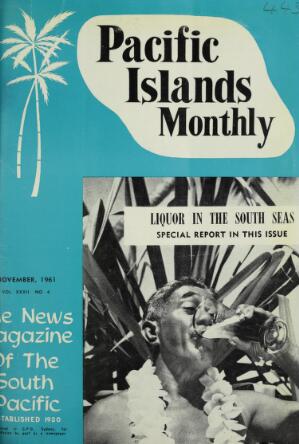
THE COVER: He's a Tahitian, and he's in Tahiti—the chances being that if he were anywhere else he probably wouldn't be allowed to dr.nk .n ox,cating liquor. We assume that what he has in that glass .. '" seating, although it could just as easily be beer with a good dash of lemonade, or lemonade straight. For a survey of the South Seas liquor situation telling you who can drink, and who can t—turn to page 33.
Photo: Studio Mackenzie
Advertisements & other items, pp. 5-6 (3 items)
A Product of Pacific Publications Pty. Ltd., 29 Alberta Street, Sydn
4
NOVEMBER, 1961 PACIFIC ISLANDS MONTH!
» Goodyear
w i r rN SL r r d pi
This is
Australia’s finest, SAFEST
If you want a larger measure of security when you drive a w'ider margin of safety drive on Goodyear Imperial Nylon Tyres. Tread, cord and body of this tyre are engineered by Goodyear world’s biggest, most experienced rubber company to meet the hot, twisting strains of high-speed driving. The self-adjusting tread gives fulltime, positive traction and responds instantly to brake or accelerator.
The cord body, acknowledged the strongest in the industry, is built with Goodyear’s exclusive 3*T Nylon cord, tempered like steel to give greater resistance to bruise damage, high-speed tyre heat and constant flexing. The extra strength and safety of 3‘T nylon costs but little more than ordinary tyres. Why be satisfied with less?
See your Goodyear dealer, garage or Service Station.
» GOODYEAR
People
Territorial Assembly of Polynesia has still got an imongst its members despite ent death of Deputy Marcel and the banishment of his Pouvanaa a Oopa, to France e of years ago. The new mem- Mrs. Marcel Oopa, widow of e member. She is the first to be elected to the Assembly ti and polled double the num votes of her nearest rival.
new Commander of French in the Pacific, Colonel Fer- Barboteux, who arrived in a by ship at the end of Octo s preceded by a reputation for real soldier’s soldier. He is a e of St Cyr and at the capitu )f France in 1940 was in the -had area of French West He immediately placed him the head of a column of soldiers and they headed for in Libya. There, General Lec pointed him military comman the first enemy territory occu lt the Free French, iter participated in all Leclerc’s
priest on the NG mainland to reach dotal Golden Jubilee is 76-year-old ter Ladener, SVD, of the Divine Word He celebrated it on September 29 [?]afen, near the spot where he first on NG soil 49 years ago. For 40 years. Father Ladener has lived the Halopa mission, a four-hour walk [?]om the Alexishafen coast north of Madang.
ligns in France and was one of rst to enter Hitler’s old head irs at Berchtesgaden, and i the French flag there. After far he soldiered-on in South tm and in French West Afri ;rritories. He was commander ; Western Sahara zone when ited to the Pacific post. He is mmander of the Legion of ir.
i staff changes of Pacific t announced in October: Mr.
Whitts, senior clerk in the NZ ment of Island Territories, has ippointed secretary-treasurer of Mr. H. J. Powell, acting secretary of Norfolk Island, :en appointed official secretary mi.
ish author Richard Pape was Iney in November en route to on a writing job and also to out the chances of establishing f the famous Cheshire Homes
tart a nursing career at the Townsville Hospital is Diane Passlow, 17, of Territory pilot, the late Captain slow. Diane is a member of an old family, and her grandfather, one-time [?]er, Andy Villiers, still lives in Lae, [?]ince leaving school Diane has been yed by TAA at the Lae terminal.
Photo: Pat Robertson
Gibson, popular TEAL representative Airport has joined the Fiji Visitors Off duty he is a keen sportsman has won trophies for rifle shooting.
e sick in Papua, where some of ;roundwork has already been >y P-NG Chief Justice Mann committee. The founder of omes, British hero Grp.-Capt. ire, VC, will himself make a trip to Port Moresby by the end.
irtant post of director of ilu’s Bernice P. Bishop m has been given to Dr.
W. Force, curator of Oceanic ology and Ethnology at o Natural History Museum, der Spoehr has resigned as r to become chancellor of the 'est Centre for cultural and al interchange which was re established at the University vaii. * * * ttle older and with another ad -5 to his credit, Captain Brian on was back in Sydney in No r. Currently he is recovering being shot up in the Congo he was flying for a Belgium He had just completed a flight to a sticky spot with when a Katanga jet fighter 3ver and shot a rocket into his Monkton collected a piece of el from the rocket, some burns he fire that followed and spent ime in hospital in Leopoldville ter in Brussels. pite this incident, he says he is
vernment Printer, Mr. W. S. Nicholas, [?]r of the Territory's senior and popular soon due for retirement. But that [?]e before next year, and in October celebrating his birthday at the Port Yacht Club, where he is president.
Papuan Prints
the side of the Katangans and ike some day to meet the pilot ot him up. In his opinion, the ops have behaved very badly mga and UN policy there is ed. lin Monkton pioneered a of South Pacific air services > Trans Oceanic Airways fly s in the years after the last iutes that are now run by ompanies with land planes, also one of the prime movers h Pacific Airlines service be- Jonolulu and Tahiti—but by e this airline finally got off md, Monkton was no longer hcture. These days he spends them summers as an airlines Europe and the Southern s sailing off Australia’s eas ast.
Fr. Pierre Guichet, whose nent as Catholic Bishop of >erts was recently announced Pope, was very ill with nia plus complications when rd the news at Oba-Oba, He spent the next two weeks before he was able to head ice for his consecration. He 3 his appointment early next Mgr. Guichet had been 14 Papua. * * * specks in the South Seas have tting attention from film units In October, three cameramen, Mewington, Jim Allen and Fox, returned to the UK after the first professional film of . The film was commissioned -sh Petroleum. In October a t of the Commonwealth News ormation Bureau, led by pro 7. N. Bagnall, was making a e photographic coverage of
[?] Lae in October, Mr. Daniel Patrick Miss Shirley Tronerud. The bride iece, Debbie Hilliard, made a pretty I. There were 200 guests at the [?]emony. Photo: Pat Robertson.
John Barnaby, of the Papua- Guinea Education Department, Moresby, took time off from in October and completed an iys’ walk to the top of Mt. ia—at 13,363 ft the highest in the Owen Stanley Ranges, ibject of the hike was to ex ; ham-radio calls with his 2,000 miles away in Dubbo, They got in a few “hullos” atmospherics got in the way. iition, he was exploring caves, photographs for the National aphic Magazine and collecting r and flower specimens for Kew ns, England.
attractions of Sydney as a retirement have finally won far as Mr. W. F. (“Steve”) son is concerned. He has been century in Fiji but retired in :r and will leave the Colony • He went there in 1911 for denial Sugar Refining Co. and ed with the company for 38 before retiring. When, in 1952, [ricultural and Industrial Loans was established in Fiji he be secretary and now carries with o Sydney an inscribed silver to commemorate his nine years : office.
Palmar Annandale, of Apia, Western since last February has been an Arts duate at Sydney University. Miss le took a correspondence course with Education Department while she was as a librarian in Apia and thus passed university Entrance examination. Her include anthropology and psychology hopes when she has completed her to do some research in Samoa "to some misconceptions about Islands people".— Tele-Photos.
Advertisements & other items, pp. 7-16 (11 items)
5
[ FIC ISLANDS MONTHLY NOVEMBER, 1961
cmdmad%e/i Ll5O
A MARVELLOUS JOB ON A PLANTATION
/) WITH THE
A* A Lsr- Landmaster Ll5O is the 4 h.p. machine that does many dif ferent jobs from ploughing to transporting and has been developed under searching tests in the hottest climates and the toughest soil conditions in the world. Users are always writing to tell us how good Landmaster Ll5O is. For example, Capt. J. H. Bailey, Director of Morro Estates Ltd., is enthusiastic over having cultivated 175 acres of coffee in 525 hours for a fuel consumption of one gallon per acre. “A marvellous job,” he says. This machine is ready to do a marvellous job for you, too.
GARDENMASTER SBO the Landmaster ° ff t h f. . c ° upon machine for the home garden. Perfect for /v Jj t e i 0 ° n w a £Lt the 21° job DIGGING, WEEDING, CULTIVATING, HEDGE versatility of the Land- TRIMMING, LAWN MOWING, PUMPING, Jester Ll5O and the ROUGH GRASS CUTTING. Garde„m, s .er SBO.
DISTRIBUTORS: TOM F - UOmRD, GENERAL ENGINEERS, BOX 8, PORT MORESBY 9903 Island Distribution from Company's Plant, Ballarat, Victoria
To: FIRTH CLEVELAND PTY. LTD 5
P.O. BOX 198, BALLARAT, VIC., AUSTRALIA ■ Please send me, completely free and “ without obligation, details of the Land- ■ master L 150 and Gardenmaster S 80. ■
11 NAME ■
ADDRESS
Matt-finish Plastic Paint for *** inside and outside Dries in 20 minutes No sealers or undercoats required Scrubbable Brushes wash clean under the tap / can go to room iu sf n ,f 1 a .. 5 Pain ted with
GAY DEC
. . ALL THIS PLUS THE FACT THAT . . .
TAUBMANS
Dtio-PlastiC
* brings
say d ec
you the
L O R
ROC
s T new, exciting paint colours that stay fresh year after year
g SYDNEY $
mrm)
PERSONAL
SHOPPING
BUREAU
Makes Christmas shopping
easy
All you have to do is write a note to Farmer’s Personal Shopping Bureau (explaining clearly what you want) and a trained shopper from the Bureau will go into the store and select your goods with care. They are then wrapped and sent straight back to you. Farmers is the largest single department store in the heart of Sydney, so you are assured of an unsurpassed selection of goods. When you are in Sydney, come up to the P.S.B. (eighth floor) and a member of the Bureau will show you around the store. Write to Farmer s Personal Shopping Bureau, Box 497, G.P.0., Sydney.
YOU ALWAYS DO BETTER AT FARMER'S.
a
the COCOA DRYER
Most Planters Prefer
m
I Wii
ASP Universal Cocoa Dryer that conquered Papua and New Guinea, 8.5.1. P., Netherlands New Guinea,
British North Borneo.
For Combined Sun Hot Air Drying
® EASY TO RUN • INEXPENSIVE TO MAINTAIN • CHEAP TO OPERATE The ideal dryer to meet emergency conditions during flush cropping.
Capacity: 11,000 lbs. wet beans —at the very least.
Equipped with oil-fired heat exchanger for either diesel or electric drive.
Ask also for particulars of the A.S.P. ROTARY COCOA DRYER. 26 Ridge Street,
North Sydney,
N.S.W.
Telephone: 92-0271.
Telegrams: "Chatspa", Sydney.
Sole Agents for Papua & New Guinea: A.S.P. (NG) LTD., Box 166, Rabaul, T.N.G.
To: A.S.P. (Overseas) Pty. Ltd., Please send me full information on your ROTA COCOA DRYERS [ ] and/or SUN/FORCED HOT-.- SLIDING ROOF COCOA DRYERS [ ] (tick in squs for information required).
NAME 4
ADDRESS
P.L
LIQUID PETROLEUM
GAS WASH BOILER
Operated by safe clean, non Efficient—Economical Safe poisonous, portable gas, this c Malleys wash boiler gives efficient, economical service.
Low installation costs. Instant lighting—simply turn the tap and light. Capacity 12 gallons.
Finished in vitreous porcelain enamel in Cream, Green or White. 33£ in. high x in. wide x 25£ in. deep. Approved by Australian Local Authorities.
Suitable for all liquefied petroleum gases.
rmm
KEROSENE
WASH BOILER
Uses only pints of low-cost kerosene to boil a full copper of clothes in less than 45 minutes! No installation costs.
No moving parts to wear out.
No pressure or pumping. Approximately 12 gallon capacity. Beautifully finished in Cream porcelain enamel.
Provide gallons of hot water for only a few pence. o
KEROSENE
BATH
HEATER
0* Easy to install, regulate and clean.
Works on high and low water pressure systems. Compact design, only 11 in. diameter. Two-tone Cream and Bronze baked enamel finish, or chrome-plated on copper. Available with or without shower.
Order through your usual
Islands’ Agents
BUILT BETTER TO SERVE YOU BEST
Adelaide V 194 Steaming hot water m minutes Sydney • Melbourne • Brisbane
I I 1 I' V Mi i i IS
iill
CROP DRYING
PROBLEMS?
mm ■ • i ■W By new methods developed by Woods, cereals, coffee, tea. rubber and other crops can be dried quickly and economically making you Independent of weather and climate and yielding a higher quality produci Write for catalogues.
WOODS
COFFEE DRYING ■ TEA WITHERING ■ COCOA DRYIM
GRAIN DRYING • RUBBER DRYING
WOODS OF COLCHESTER LTD • AGRICULTURAL DIVISIO DEPT. C 4 COLCHESTER • ESSEX • ENGLAND ror/wnF-n
YOUR FAMILY
NEEDS VITAMIN B 1
EVERY DAY!
Get Vitamin B 1 in many different
ways, with delicious:
VEGEMITE
SPREADS so SMOOTHLY on toast SO NOURISHING in sandwiches Every member of the family needs Vitamin B x every day for
VITALITY.
Vegemite is the only pure concentrated yeast extract, and yeast is the richest known natural source of Vitamin B x the vitality vitamin.
But remember! The body cannot store up Vitamin B x —it needs
a fresh supply daily. So enjoy
Vegemite every day —for Vitality.
DELICIOUS on biscuits ENRICHES gravies KR3
TELEPHONE PARTS AND
ACCESSORIES
PLUNGER KEYS, 2 Change-over, non-locking INDUCTION COILS A.S.T.I.C. No. 21A,for Generator phones INDUCTION COILS A.S.T.I.C. No. 27, for Autophones MICROPHONES-INSERTS, NO. 13, for Automatic or Generator use BAKELITE FUSE-HOLDERS, low Voltage, takes standard Auto-fuse "M" type HOOKS, complete with Gravity Switch No. 2 or 3 PLUGS, 2 Conductor PLUGS, 3 Conductor 4 PIN FLAT PLUGS, complete with Sockets 4 PIN ROUND standard PLUGS and Sockets BELLS A.C.2 Gongs for Generator, Auto. 500 ohms coils BELLS UNDER-DOME, Single gong, A.C. 500 ohms coils BELLS D.C. Trempler type 4 to 12 Volt, Switch-board type
TERMINAL-BLOCK, 2 pair
LAMP-JACKS NO. 2, suit standard Telephone lamps LAMP-JACK STRIPS, Banks of 20 (per strip) RECEIVER-INSERTS NO. 10, with Diaphragm EAR PIECES, MOUTH-PIECES, for 164, or 184 Hand- Sets 3/6 ea
DROP-SHUTTERS, EYE-BALL INDICATORS, with coils
from 100 to 1,000 ohms
DROP-SHUTTERS, MOUNTED, Banks of 5
DROP-SHUTTERS, MOUNTED, Banks of 10
FOUR DIGIT REGISTERS 0 to 9999, compact SWITCH-BOARD EXCHANGE, Magneto type, 20 Lines plus Dial-calling to Main Exchange SWITCH-BOARD EXCHANGE, Magneto type, 40 Lines plus Dial-calling to Main Exchange
HAND-GENERATORS, "C" type "ALNICO" 90 Volts
A.C BAG-SET TELEPHONES, ex-U.S. Army, checked and tested, good condition (ea.) RELAYS, 3000 type, from RELAYS, high-speed Creed model No. 27V, new (ea.) 12/9 ea. 17/6 18/6 7/6 5/- 25/6 4/6 5/6 8/6 14/6 17/6 15/6 11/6 6/- 2/- 37/6 8/6 ea. ea. ea. 4/6 ea. 15/6 £5 0 £8 15 16/6 ea. 0 0 ea. £45 £65 £2 10 0 £6 10 12/6 £lO 10
M. RUTTY & CO
PTY. LTD.,
118 Alexander Sh, Crows Nest, Sydney,
Australia. Tel.: 43-0281
Table Model Telephone
BRAND NEW
'De-Luxe Model
PRICE INCLUDING BATTERIES £lO/10/-
Sturdy compact table model phones of good appeara latest design, polished bakelite, complete with P.M.G. hand-set high powered magneto generator for distance ringing bells enclosed appearance and des makes this phone suitable for lounge, dining roonr bedroom.
Portable Telephones
A strongly structed port battery open phone with cc ing strap, po< ful 90 volt H generator, encM bell. Similar in sign to type ■
by P.M.G. II
men and fire ft ing brigades.
Price including L e . ries £9/10
Telephone Cable
9l K « N A £5/10/-
PER MILE
Mile drums 8 cable, ruHi covered, braided I weather-proofee
EACH PHONE INDIVIDUALLY CHECKED BEFORE 3
DESPATCH.
FOR AN EASIER WAY TO SAVE
O 3t open an easy to operate
AN Z. SAVINGS
BANK ACCOUNT
and save time, effort
and money!
It’s so easy to put a regular weekly sum into your A.N.Z. Savings Bank Account at any one of the friendly A.N.Z. branches. 3i% per annum on sums deposited up to £3,000.
PortMoresby Mr. C. G. Teitzel, Manager Lae - - - Mr. G. P. Poulsen, Manager Rabaul - - Relieving Manager Suva - - Mr. A. K. Jackson, Manager Lautoka - - Mr. J. A. Mace, Manager
ANZ
6*
ijcru'QH QaMjz, ha*t\ci*ig at
W ANZ BANK
AUSTRALIA AND NEW ZEALAND BANK LIMITED
AUSTRALIA AND NEW ZEALAND SAVINGS BANK LIMITED Cheque Accounts - Savings Accounts
ANZ6SO. 24
Completely eliminates waxing and polishing
i ■v£ r 'hsh Paints 10 X, ' OR application
British Paints Limited
Floor-Plastik
Interior Brilliant Gloss Clear Liquid Plastic Coating
THE MODERN TREATMENT
FOR LONG-LASTING BEAUTY
Floor-Plastik is not a wax or polish. It is a specially formulated liquid plastic coating for application by brush on interior surfaces such as NEW Timber or Newly-sanded Wooden Floor, New Cork Tiles, Furniture and Panelling.
Floor Plastik’s brilliant gloss provides a permanent, durable surface which stands up to the heaviest floor traffic without scratching or scuffing and Floor-Plastik requires no waxing or polishing each time the floor is cleaned Floor-Plastik’s dazzling shine gleams as if it were just applied. It does away with the continual drudgery of waxing and polishing and saves you time and money.
Ask your local British Paints Limited authorised agent for a free Floor-Plastik technical leaflet. (Warning! Floor-Plastik is not formulated for use over new or used linoleum.) „
MAXIMUM RESISTANCE TO MOULD AND FUNGUS.
Manufactured to withstand all
FOR COMPLETE PROTECTION
OF ALL METAL SURFACES
British Paints Limited
® SILVAR BRILLIANT ALU-
MINIUM ENAMEL is easy to apply with either brush or spray and withstands tropical sun, lashing rain, dust-laden winds and salt sea spray. • Silvar is non-poisonous and
Brilliant Aluminium Enamel
• SILVAR’S hard, glossy surface actually resists dust and dirt collection. When applied on roofing, SILVAR’S heat-reflective “aluminium” will reduce internal temperatures by at least 10°. is harmless to drinking water. iVi/YvU gaaa
BRILLIANT
WAu
INIUM
EL
MAXIMUM RESISTANCE II
MOULD AND FUNGUS.
SOLD AND RECOMMENDED BY:
Burns Philp (New Guinea) Limited: Samarai.
Burns Philp (New Guinea) Limited: Port Moresby.
Burns Philp (New Guinea) Limited: Wau.
Burns Philp (New Guinea) Limited: Bulolo.
Burns Philp (New Guinea) Limited: Lae.
Burns Philp (New Guinea) Limited: Madang.
Burns Philp (New Guinea) Limited: Goroka.
Burns Philp (New Guinea) Limited: Wewak.
Burns Philp (New Guinea) Limited: Kavieng.
Burns Philp (New Guinea) Limited: Rabaul.
Burns Philp (New Guinea) Limited: Kokopo.
Burns Philp (New Guinea) Limited: Daru.
Burns Philp (New Guinea) Limited: Kainantu.
Steamships Trading Company: Port Moresby.
Kam Hong: Lae.
Scotts New Guinea: Lae.
Tang Mow: Wewak.
Laurie Chan: Rabaul.
Wong You: Buka Passage-Bougainville.
HONIARA, 8.5.1. P.
A. C. Blair Ltd., Honiara F. C. Symes Pty. Ltd., Honiara Burn Philp (South Sea) Co. Ltd., Suva.
Burns Philp (South Sea) Co. Ltd., LautoM
NORFOLK ISLAND
Burns Philp (South Sea) Co. Ltd., Norn Island.
6
NOVEMBER, 1961 PACIFIC ISLANDS MONTI
7
' I F I C ISLANDS MONTHLY NOVEMBER, 1961
8
NOVEMBER, 1961-PACIFIC ISLANDS MONT
9
IFIC ISLANDS MONTHLY NOVEMBER, 1961
10
NOVEMBER. 1961 PACIFIC ISLANDS MONTH
11
IF IC ISLANDS MONTHLY NOVEMBER, 1961
12
NOVEMBER, 1961 PACIFIC ISLANDS MONT
13
1 F I c ISLANDS MONTHLY NOVEMBER, 1961
14
NOVEMBER, 1961 PACIFIC ISLANDS MONT
West Samoan Independence
Final Obstacles Cleared For West Samoan Independence
“I would not like to say that West Samoa is perfectly ready ndependence, but then, what country is?”
1 speaker was West Samoa’s rime Minister, Fiame Mataafa, the occasion was his formal >s to the UN Trusteeship :il in October, when he asked he termination of the UN :eship Agreement, administered Z, to enable West Samoa to le independent next January 1. ; Council agreed unanimously e determination and a few later the final obstacle was re -1 when the General Assembly I. h measures were formal. The obstacle was surmounted earlier sar, in May, when West Samoa for its independence at a jonsored plebiscite held through- Vest Samoa. Earlier still, a tutive assembly had hammered pproval of a constitution for will be the first Polynesian :ign and independent state to emerged from colonialism. it Samoa will celebrate her mdence during five days of ng from January 1. ne Minister Mataafa was intro to the Trusteeship Council by hairman of the New Zealand tion (Mr. F. H. Corner), who
said that his Government had “done its best to guide the Samoan people towards full self-government.”
“My Government believes that Western Samoa is ready to assume sovereign status,” Mr. Corner said.
Mataafa said Western Samoa did not intend to seek immediate United Nations membership after it became independent, but “may well join certain of the specialised agencies whose work has particular relevance to Samoan problems”.
The Prime Minister, who delivered his prepared text in Samoan, said he had to “confess frankly that certain aspects of our journey into the future cause me concern”, but his people needed “the spur of freedom” to fully accept their responsibilities.
Lacked Officers He said that Samoa lacked trained people to run its services, and was, therefore, “all the more appreciative of the five-year New Zealand educa tional aid programme, which is at present running at more than £BO,OOO a year”.
He said that Samoa’s economic situation, in common with that of other primary producing nations, was “rather sombre”.
It was thus not surprising that his Government was “most concerned at the low prices being received for copra and cocoa in the world markets, and by the prospect of the loss of markets to specially favoured com petitors.
“Our first intention,” he said, “is to help ourselves. We are reviewing our expenditure and increasing taxes.
“We shall not hesitate to look at our overseas exchange position if imports get out of hand.”
The Prime Minister emphasised that “Western Samoa would prefer to rely first on its ability to trade, rather than on aid, and would support all measures to provide fair and stable prices and equal access to markets for the world’s primary pro ducers.
“Since we cannot expect sufficient provision from trade alone, I should state equally frankly that we shall certainly need capital and technical assistance from abroad. ... I hope
we can rely on the United Nations, its agencies and its members to supplement the efforts of our friends in New Zealand”.
He said his Government did not intend to make any “sudden decision” and would evolve a foreign policy “according to our needs”.
Naturally, he said. Western Samoa would “look to relations with our
close neighbours”.
Mr. Corner said New Zealand had confidence in the ability of the Samoan people, through their Parlia mentary form of government, “to control the full range of their internal and external affairs.”
“Over the years, New Zealand has done its best to guide the Samoan people towards full self-government,”
Mr. Corner said. “It has made mis takes. But it has, I believe, learned from those mistakes.
“The very close relationship which
Mataafa, Western Samoa's first Prime [?]r, who will take a leading part in the [?]ependence celebrations in January.
Queen Salote
For Sydney
Queen Salote of Tonga will spend Christmas in Australia this year.
She will arrive in Sydney in mid- December. While in Sydney she will have a routine medical check and will probably do some research into early Tongan records at the Mitchell Library. The Queen was last in Sydney about 18 months ago, when she was a popular figure, given much attention by the news papers. Photo: Rob Wright
has been built up between the Samoan and New Zealand Governments is proof, I think, of the fact that New Zealand has conscientiously striven to promote the welfare of the Samoan people and has respected their uniqueness and their dignity.”
Mr. Corner said Western Samoa had to grapple with the problems created by one of the fastest growing populations in the* world, too great a dependence on a narrow range of export crops, occasional financial difficulties caused by falling world prices for its products, and a shortage of experts and specialists.
Other delegates joined in offering congratulations to the Samoan people.
Mr. C. R. Mclntyre (Australia) expressed appreciation for the Prime Minister’s “extremely moving, wise and modest words” and said it would be “an honour” for Australia to co sponsor a draft resolution terminating the trusteeship agreement.
Sir Hugh Foot (Britain) said it was a “day of triumph” for Western Samoa and the United Nations trusteeship system.
Mr. Jacques Koscziusko-Mirizet (France) said New Zealand had dis charged its trusteeship responsibilities “with honour” and its officers had done “magnificent work”.
Red Attitude The only discordant note was struck by Mr. Rastislav Lacko, of Czechoslovakia, who congratulated the Samoan people on behalf of the Communist bloc but warned them against the “dangers of neo colonialism” and “economic depen dency which changes political in dependence into an illusion”.
The draft resolution was sponsored by 21 countries, including Britain, Australia, Canada, Malaya, India, the United Arab Republic, Nigeria, Pakistan and Sierra Leone.
When a few days later the General Assembly approved, by acclamation, the determination of the agreement, the Assembly president, M. Mongi Slim, of Tunisia, extended sincerest congratulations to the people of Western Somoa. He also expressed the hope that Western Samoa would join the United Nations, and praised New Zealand for recognising the right of all people to independence.
Mataafa said he was most grateful to the United Nations and particu larly the Trusteeship Council for the valuable work done for his country.
Western Samoa’s accession to in dependence would be an occasion of momentous importance and rejoicing
and its people would work to justify the General Assembly’s confidence, “We work not only for ourselves but for the well-being of all the people of the South Pacific area,”
Mataafa told the Assembly. “We will work in friendship with New Zealand —a friendship which has been built on a strong foundation.”
He repeated what he had told the Trusteeship Council—that Western Samoa did not intend to apply for UN membership immediately after its independence. It hoped to remain linked with the United Nations by joining some specialised agencies which were concerned with Samoa’s problems.
In Apia in October workers put in place a three-ton monolith that will mark West Samoan independence, and Chinese members of the community were planning a site for a 40 ft tower which will be needed for a huge fireworks display during the celebrations.
Advertisements & other items, p. 17 (1 item)
15
CIFIC ISLANDS MONTHLY NOVEMBER, 1961
What The Same
Bill Does
The Independent State Western Samoa Bill, which ceived its second reading in New Zealand House of Rep sentatives on November declares that the Queen sh have no jurisdiction over Wests Samoa after the termination \ the Trusteeship Agreement tween the United Nations t New Zealand.
The bill provides for West Samoa to be treated under N Zealand law as if she were member of the Commonweal It also repeals or amends i New Zealand legislation nom force in Western Samoa, continuation of which would\ incompatible with the statusi Western Samoa as a fully dependent sovereign state.
West Samoa's Commonwealth
Status Not Yet Decided
Prom a Wellington Correspondent
Western Samoa has not yet decided what relationshipc will retain with the British Commonwealth after independent
BUT Commonwealth Prime Ministers were told at their con ference in London in May that Samoa should be treated as a Commonwealth country until its relationship to the Commonwealth is determined.
The NZ Minister for Island Terri tories, Mr. F. L. A. Gotz, told the House of Representatives in Welling ton on November 1 that Samoan goods entering NZ in the meantime would enjoy the Commonwealth preferential tariff, and he hoped other Commonwealth countries would extend these preferences after in dependence.
"Milestone"
Mr, Gotz was moving the second reading of the Independent State of Western Samoa Bill, the debate on which was regarded as an historic milestone in NZ Parliament.
As the Prime Minister, Mr. Keith Holyoake, said during the debate, it is unique for NZ to be passing a
bill granting independence to at country.
Introducing the bill, Mr. Gott he looked forward to even relations between New Zealami Western Samoa after independe: He said because the Cover: of Western Samoa did not wi people to be treated as British jects but to retain Samoa c: ship, Samoans would become as far as New Zealand law concerned. But the New 7al Government had decided to es Samoans in New Zealand frorm registration.
The New Zealand Departing Island Territories would act as* for Western Samoa, at the Gi ment’s request, until it was ab appoint its own representatives.* “New Zealand has been to and understanding and endeavoured to educate the ; of Western Samoa to take g responsibility for their own ah said Mr. Gotz.
“We are committed for somea
i to assistance for Western )a, and I am sure we will not them.” e Prime Minister, Mr. Holyoake, that he did not think the people Western Samoa were completely r for all the problems of in ident self-government, and i; “I don’t think any newly endent people are. But it is by grappling with the problems If-government and independence any country can gain the sary experience to control its affairs”. . Holyoake said Western Samoa short of specialists and experts ;ry sphere, which, he said high d the difficulty of handing over one government to another, it with the help they expect and I am sure, receive from their s, notably New Zealand, rn Samoa will be able to face iture with confidence,” said the Minister.
Treaty of Friendship
J. Mathison, the Minister of Territories from 1957 to 1960, hat the Opposition (the Labour ► welcomed the bill. He hoped ity of friendship between New id and Western Samoa would »ned after independence. He oped that Western Samoa would ' New Zealand assistance to 1 her security.
Leader of the Opposition, Mr. r Nash, paid tribute to many ! associated with Western i. He referred to “earlier itsmen” of Samoan indepen such as Mr. Peter Fraser, Sir a Webb and Mr. T. L. onald. Sir Guy Powles, rly High Commissioner in rn Samoa, had been one of the Bt contributors to independence.
Praise for Mr, McEwen member for Southern Maori, ruera Tirikatene, paid tribute . J. M. McEwen, Secretary for Territories, for his knowledge understanding of Polynesian ige, customs and way of life.
Eruera expressed goodwill from aori people to the Samoans and itulations on gaining indepen- He said that the British were masters but they prepared
1 thoroughly for independence,
granted it readily when the ame. re had always been friendly ents between the Maoris and ms as to who was the elder r and who the younger brother
(Continued on p. 141)
Polynesian family but he was to concede that the Samoan r was the senior member, is reply Mr. Gotz said: “Many are prone to forget some of who laid the foundations of n society and government as them today”. He recalled Sir ; Richardson, Sir Stephen Sir Alfred Turnbull, Sir t Hart and Judge Morling, and ecently Sir Guy Powles. lay, as High Commissioner, we lack Wright,” he said, “and 3se Jack Wright he will remain end of time, known in every [ the Pacific, as is the present try for Island Territories, Mr, IcEwen.”
Gotz said he had seen Western change from a land of purely n customs to one blending its ad British customs, mly hope that, as an island of pure blood, they will long ; to retain their Samoan back and way of life.” the New Zealand Parliament eaker of the House seldom, if Bakes a speech about a bill, the end of the second reading Mr. Algie contributed to the ance of the occasion by ask ' leave of the House to speak, said: “In passing this bill the
House gives effect to one of the finest traditions of our race. When we pass over to our friends in Western Samoa the right to govern themselves, we do what our kinfolk in Britain did for us, for Australia, and for Canada.”
The bill comes into effect on January 1.
Advertisements & other items, p. 18 (1 item)
16
NOVEMBER, 1961 PACIFIC ISLANDS MONT
Plight Of Fiji
Big Sugar Loss Worsens Plight Of Fiji
From a Correspondent
The people and Government of Fiji are being faced this month with a number of awkward problems and difficult economic adjustments.
Among them:
• It is vital that early steps be taken to implement the recommendations of the Sugar Commission published early in September.
The Government has not yet announced the appointment of the “independent chairman” of the sugar industry, around whom is built the whole scheme of regenerating and strengthening the industry. A private letter from a person of unquestionable authority, received in Fiji in October, reported that the position had been offered in London to a “retired admiral” who turned it down because he did not wish to live in Fiji. • Because the 1960 Patel-led strike of growers dislocated production of cane, the mills, which had hoped to make 200,000 tons of sugar in this (1961) season, are ceasing operations. Labasa, Lautoka and Penang
are closed and Ba will close on Nov ember 17.
The millers have announced that in consequence of the failure of the cane supply, this year’s crushing will produce only 145,000 tons. This means a direct loss in the Colony s income of £2,000,000, at a time when it can least afford a loss, , Appeals for Action The CSR in a challenging state ment pu bli s hed in The Fiji Times on November 3 announced that it is “ w iHi ng to adopt, without any varia tion, the cane contract as recom mended in the report of the Commis sion, provided the legislation (which the Government is expected to intro duce shortly) adheres to the report in spirit and in fact .
It is generally believed that this
MISS SUGAR. Thousands flocked to Lautoka, Fiji, for the Cession Day celebrations in October, which were complete with a Miss Sugar contest. The celebrations, organised by the Lautoka Junior Chamber of Commerce, were a wonderful success, and they may be an annual event in Lautoka now. Miss Sugar is bank clerk Betty Benjamin (centre) and the runners-up, officially termed ladies-in-waiting, were Miss Lena Harman (left) and Miss Tui Muni. Pretty Miss Benjamin, 22, was born in Suva, and educated there. Photo: S. A. Whippy.
public statement was inspired by a belief that the Government is planning to alter in some important way the structure of the plan as submitted by the Commission. It also is ealeulated to hurry the Government into action.
The CSR emphasises that the Commission’s recommendations are “a completely integrated, interconnected, inter-dependent scheme which must be accepted as
a whole. , . . ...
The company s insistence on this may perhaps be explained by the fact that the recommendations of the Burns Commission m 1960 were similarly submitted as a complete plan, but the Fiji Government accepted only part of the recommendations and ignored two or three of the most important. • If the sugar industry is to function fully in 1962, and give the Colony a chance of economic recovery, it is vital that the new scheme of industry control—and especially the new form of contract to operate between millers and growers —be brought into operation quickly.
The Legislative Council is to meet on November 8, and non-official classes are combining to put pressure on the Government, so that it will make definite pronouncements in this session on what it proposes to do to give effect to the Sugar Commission report It is apparent that unless new contracts are signed between company and growers within the next few weeks, there will be insufficient provision for planting and cane production in 1962, and that the Colony’s economy Will Suffer accordingly.
• Meanwhile the Government is adjusting itself to the unexpected arrangement made in mid-October, under which the Secretary for Finance, Mr. E. R. Bevington, was appointed to the new post of De velopment Commissioner (created under a recommendation of the Burns Report).
"Development" Plans
pj e as OCCU pi e( j offices in the Vic toria Arcade, opposite the police station, and is gathering around him a new sta ff—mostly men who had g a j ne( j experience as administrative offidals in the District offices.
There was immediate newspaper criticism, which pointed out that the Burns Commission had recommended the establishment of a Natural Re sources Council, comprising six de partmental heads and six non-official persons, with the Development Com missioner as chairman and executive officer. Burns apparently intended that the Development Commissioner should be advised and guided by non official as well as official people in his vital work of developing the country’s resources, and co-ordinating the various public and private instru mentalities which are directed to that purpose.
It is understood that the official reply to that criticism is that, in the Government’s opinion, a Natural Re sources Council could serve no use ful purpose at this time, because the first work being undertaken by the Development Commissioner is to bring more land into usage, in ac cordance with the plan of the newly established Land Development Au thority. A Committee, including non
(Continued on p. 141)
IN STYLE. The Fijian island of Vatu Lele is famed for the fact that it has red prawns.
When Mr. P. D. Macdonald made an official visit there recently in his capacity as Acting Governor, the islanders also displayed some of the local hospitality by picking up his boat, plus passenger, and carrying it from the reef to the beach. Only once before had Vatu Lele been visited by a Governor. Photo: Rob Wright.
official people, has been set up to help the Commissioner in this direc tion.
The issues here seem to be narrowed down to the point that the Fiji Government considers itself capable of deciding for itself what shall be done in relation to develop ment, and does not want any un official interference. • Because of the early closing of the sugar mills and the heavy reduc tion in the Colony’s income through the lesser sugar output, there is grow ing fear of unemployment in the country—especially in the Nadi- Lautoka-Ba area.
The Government is seeking urgently to counter this by commenc ing large public works, like the re building of the Suva docks, on funds being made available from British sources, like the Colonial Develop ment Fund. But the outlook is not good, whether the viewpoint is poli tical, economic, or social.
Most of these matters, in some form or other, will come before the November Legislative Council. But there may be little sting in the de bates, simply because there is no one to whom public criticism can be directed.
The Governor is responsible for most of what is going on, or is pro posed; and, nowadays, with the Colonial Office so preoccupied with Africa, West Indies, etc., it is no use appealing to London for help or advice!
Advertisements & other items, p. 19 (1 item)
17
3lp IC ISLANDS MONTHLY NOVEMBER, 1961
Fiji Tuna Canning
By Next Year
The Pacific Fishing and Car Co. Ltd. hopes to be in operath 1962, the company chairman ,, Maurice Scott, said early in No her. He said the foundations fa proposed cannery at Levuka \ been checked.
THE next step would be pro tion of the plans for thes nery. Quite a lot of details han to be tied up.
Mr. Scott said the company received a favourable reply froi< Government about proposals t up the factory, and all the inf] tion had gone to Japan. The Go ment still required a few mon tails, which would be supplied..
Early this month a represera of Banno Bros., one of the orgs tions interested in the ventures in Japan, discussing the project a Mr. Matsuda, a fishing experr a member of the Japanese H ment, “A great deal of interest has shown in the venture, both insid outside Fiji,” Mr. Scott said! fact we could have sold 3,000 to tuna to America only a short! ago had we been in operation.) order has gone to Santos it New Hebrides.”
The company, which has a noc capital of £250,000, was register Suva on August 15. The £1 : will be available to the public Fish will be available for thes market and for export. The con intends to export fish to Hawaii United States, Europe and I and to New Zealand and Am if there are markets.
The fishing ships will be Jap:( manned, and the experts in the ture will be Japanese. There vw employment for local people.
Trial By Jury Gob
Trial by jury in Fiji was abco in November when the Legia Council approved a bill whicH vides that all trials for all races: be by a judge and assessors, bill was moved by the AttJ General, Mr. A. M. Greenwood) said it was in accordance with T policy that any remaining privi based on race, which might n in Colonies, should go. Sineea the normal method of trial in Fi ; been by assessors and in the 1:1 years there had been only twoc of trial by jury.
Advertisements & other items, p. 20 (1 item)
18
NOVEMBER, 1961 PACIFIC ISLANDS MONT
Offer Nothing New
New Guinea Target Dates Offer Nothing New
From our Canberra Correspondent
The UN Trusteeship Council can hardly be expected to tp praise on the five-year plan for social, educational and momic advancement in Papua - New Guinea which the nister for Territories, Mr. Hasluck, introduced on the last 9 of the Twenty-third Parliament.
plan contains no change in >licy. It frankly reiterates that )licy is, “by steady degrees and the limits of our financial and istrative capacity, to promote Ivancement of the people so Itimately they will choose for :lves their own constitution heir future relationship with figures in the five-year targets ine the phrase “by steady de plan is the one Mr. Hasluck idowed in July, e of the objectives is any way Tibitious, so the plan seems to run up against objections those UN critics who claim he Australian policy of uni development is too slow for n needs. 5e are the five-year objectives lich Australia will strive “with ; vigour and resources at our md”. *LIC SERVICE: At least expatriates and 2,500 natives be recruited, making a total Service of 10,000, of whom a '12.5 per cent, at present) will ives.
The question of including native “Administration servants”—teachers, clerical assistants, field workers, health assistants, drivers, postal workers, firemen and tradesmen—in the Public Service is being con sidered.
The 10,000 of these who would be affected would lift the proportion of native public servants to two-thirds, A central administrative training college is to be established by 1963 and by 1967 this and existing train ing institutions should have at least 3,500 enrolled.
EDUCATION: Secondary schools, technical schools and professional training to be developed during the five-year plan, with special attention to teacher training, By the end of the five-year plan, enrolments at post-primary and secondary schools are expected to total 10,000; technical schools, 2,000; and teacher training schools 2,000.
School enrolments are expected to rise from 150,000 to 350,000 and, by the end of 1975, all the estimated 750,000 children of school age will be within reach of schools.
HEALTH: Rebuilding of older hospitals is to continue; construction
of 70 new small hospitals is planned; and the number of medical aid posts is to be increased, by 340 to 2,000.
The number of infant and mater nal welfare centres is to be raised from 150 to 200.
It is planned to raise the number of doctors from 100 to 180; assistant medical practitioners from 11 to 44; European nurses from 220 to 280; native nurses from 30 to 550; and European medical assistants from 170 to 200.
The groundwork in the five years is intended to lead towards a major build-up in the succeeding five years.
This effort will give one doctor, or assistant medical practitioner, for every 10,000 of population, or one trained member of the medical staff for every 1,750 of population.
By 1967 the Government hopes to increase the number of pre-school children attending child-health clinics, and the number of native women re ceiving ante-natal care, from 20 per cent, to 60 per cent, of the popula tion.
NATIVE AFFAIRS: There is yet another set of target dates for bring ing the Territory under control.
Similar ones have been set before.
The whole of the Territory is to be brought “under influence” by the end
HMM, LET'S SEE NOW. What would you say about these vegetables? Not bad? And this painting? Mr. Tot Chapman takes a long, close look at the vegetable display and Mr. Lew Pennett judges the art section at Norfolk Island's Agricultural and Horticultural Show in October. It was a great success. The trophy for the Most Successful Exhibitor at the show went to Mrs. Betty Laing, and Mrs.
Amy Bathie won the “Bounty" shield presented by the Minister for Terri tories, Mr. Hasluck.
Photos: Raymond Hoare
of 1963 and “under control” by the end of 1966.
Native Local Government Councils are to be extended to serve 800,000 people, instead of 380,000 as at pre sent,
Economic Advancement:
Production of both cocoa and coffee is expected to double by 1963.
Rubber output will rise by 50 per cent, by 1966, sawn timber by 50 per cent, by 1965.
Plywood output is expected to re main stable, and copra is likely to show an increase of only about six per cent.
Over the next five years 7,500 new blocks for native settlement are to be provided.
Cattle numbers will be increased to 50,000, and 2,500 cattle will be dis tributed to native cattle projects.
The number of agricultural col leges will be increased from one to four, agricultural extension stations from 11 to 15, and agricultural ex tension centres from 45 to 110.
A Rabaul correspondent in October said that reaction of business people there to the five-year plan was that it would bring trouble if it forced social and economic development ahead of the Territory’s economic ability to absorb the change.
They want a parallel programme of investment and economic ex pansion to accompany the plan.
Mr. J. L. Chipper, chairman of the Rabaul Chamber of Commerce and an elected member for New Britain in the Legislative Council, said the new development plan was “good in itself, but not by itself’.
Australia, he said, was already providing £l7 million a year as an outright grant to Papua-New Guinea.
This was well spent if properly applied, but it could commit Aus tralia to untold new expenditure if it were used on impractical develop ment schemes. (See comment, next column ) Speaking to a meeting of econo mists in Sydney in October, the Territories Minister, Mr. Hasluck, said it might be necessary in the future to attract substantial amounts of private investment in the Territory and that some sort of assurance of security of capital, and repatriation of it, after independence might be necessary.
He said the Government’s present policy was to keep taxation low enough to encourage development.
He added that Australia would have to continue to underwrite the bills in P-NG long after independence.
Canberra
Ceremony
The P-NG Administrator, Sir Donald Cleland, was knighted in the Queen s Birthday Honours List of last June, and in Canberra, in October, he received the accolade at the hands of Aus tralia's Governor- General, Viscount De L' Isle. Sir Donald was one of 13 knights who received the accolade.
Advertisements & other items, p. 21 (1 item)
19
IPIC ISLANDS MONTHLY NOVEMBER, 1961
Will The Targets Be Reached?
By R. W. Robson
There is only one commentary to make on “Mr. Hasluck’s Nei Five-Years Plan” — namely, that too much unpractical haste is planner.
It will be little short of miraculous if such targets can be achieved bi 1966-67, or even 1976-7.
IN this connection, it may be noted that The Sydney Morning Herald, in a leading article on October 28, savagely attacked Mr. Hasluck for (a) sneaking in his plan in the dying hours of the Commonwealth Parlia ment, so as to dodge debate; and (b) submitting a plan that took no heed of the United Nations’ demand for more and more haste in bringing the New Guinea natives to self-govern ment. As the publisher of PIM, I thereupon addressed the following letter to the editor of The Herald : I have been, myself, a frequent critic of what Australia’s Minister for Territories has done in Papua and New Guinea; but that is no reason why I should not protest against the very unfair attack you have made upon him over his Five-Years Plan.
I believe that that statement was not introduced in the dying hours of Parliament as you claim simply to block discussion and commit a new Government to something that had not been debated. It appears to me much more likely that the announce ment had been awaiting a place on
the Order Paper for several days, , finally came before the House ati last moment only because the Mirv insisted that the Administration wv be gravely embarrassed if it ' held over any longer.
I suggest that you seized on circumstance as a means of earn on your campaign against the P c Minister —you miss no opportunity getting in a blow at Mr. Mem no matter how foul it appears neutral onlookers.
Challenge
/ challenge the accuracy of statement that the Minister deliberately seeking “to com mi new Government to a highly troversial approach to the dew ment of the Territory”.
No one has kept a closer hin than I over the administration Territories since the end of FW War 11, and the Canberra pon which shape and control the adn' stration; and I say that Mr. Hasl\
(Continued on p. 141)
Five-Years Plan, whether good or bad, is completely consistent with what he has been doing there, and trying to do, for the last 15 years.
I can see little new in his plan, except that he proposes to expand more rapidly the Administration’s various measures for introducing an increasing number of trained natives into the services, and to hurry on with all developments calculated to
give the natives economic sufficiency and political stability under the con ditions of self-government now being shaped for them by Westerners.
You are condemning him, editorially because, in your view, he is not moving fast enough. In my opinion, he is moving too fast —the New Guineans, at this stage of their development, simply cannot take responsibility at the rate we now are trying to force upon them.
In the last 20 months, I have personally examined conditions in a score of countries, in Africa and Asia, which now are being hurriedly driven from protected colonialism into so-called self-government, by the types of unrealistic thinkers you so conspicuously represent; and I can only hope, for the sake of Australian interests in New Guinea, that Mr.
Hasluck can be persuaded to slow down, rather than accelerate, the pace of his Five-Years Plan.
Your argument is that there is great urgency in the need to give self government to the primitive peoples of these Colonies, otherwise there will be revolution and a swing towards Communism. That is not borne out by my observations.
In Kenya, for example, last July, I talked to many Africans —and the great majority of them apparently would be quite content to carry on under benign British rule—until their children and grandchildren, having acquired more education and Western know-how, were ready to accept self-government.
In my opinion, based on 50 years of observation, and very much travel, all this post-war hullabaloo in the former and present Colonies of the European nations has been brought about by an unholy combination of native political gangsterism in the colonies, cleverly-shaped propaganda by the Muscovite Communists, and the hysterical outbursts of the headline-hunting dreamers in news paper offices.
Under wise control, the natives of New Guinea are tractable, and generally well-disposed towards whites, and quite capable of being moulded into a self-governing com munity within two or three genera tions.
But if irresponsible politicians and newspapers are to continue with the mischief-making which has marked most of their contacts with New Guinea in the last 10 years, these New Guineans could become just as difficult and dangerous as their counterparts in Africa.
The letter was not published in The Herald.
Advertisements & other items, p. 22 (1 item)
20
NOVEMBER, 1961-PACIFIC ISLANDS MONTHI
Port Moresby
'Chinatown' Comes To Port Moresby
From a Correspondent
Papua, one of the few South Pacific territories without a ring centre that can be loosely, if colourfully, referred to as latown”, is about to have one.
beginnings of a Chinese busi ess section has started in Port by’s Koki area, and the suburb roko, too, is about to be in- Port Moresby town area, business sites are at a pre has not yet seen a Chinese ssman but it is not expected tsition will remain that way for e before the war, Port Moresby id only one Chinese shop—Luk Vai’s tailor shop at Koki. At popular Luk calls it a tailoring and he is a tailor, but he also Jongkong nicknacks, transistor suitcases, and all the huge ' of Eastern ware so familiar uth Pacific travellers every from Dutch New Guinea to has no window displays. What > to sell is hidden behind the /alls of the building which also as his home, and his custo lave to seek him out. ay, Luk can stand at the front and point to a new Chinese ;oing up across the street, and i to you that another one is up just around the corner. right alongside his shop he how you the vacant blocks he explains will be leased soon iree more Chinese stores. A r native cafe has been bought by lese woman, who is running it,
and who is putting her son up in a new store opposite the cafe, Trade stores are being taken over, and more stores selling the usual Hongkong goods are planned.
At the beginning of this year Luk Poy Wai was virtually in Port Moresby on his own. Today he will tell you there are nine Chinese families in business in Port Moresby
(Continued on p. 140)
main road from Port Moresby to the airport passes through Koki, which has a fas-ting shopping centre—destined to grow even faster. The building being erecteed on the right is a Chinese store—one of several new ones in the area.
Luk Poy Wai.
and more on the way.
The explanation for the sudden influx has nothing to do with a sud den realisation by the Chinese busi ness world that Port Moresby has possibilities, Papua is distinct from New Guinea in that it is an Austra lian territory, not an Australian-ad ministered trust territory.
Immigration laws have kept Chinese business people on the other side of the border. This has been changed in the last 18 months follow ing the Australian Government’s de cision to allow certain Chinese New Guinea residents to become natura
lised Australian citizens.
Following granting of citizenship they naturally have the right to move anywhere they want within Austra lia or her territories. The Chinese who are now taking an interest in Port Moresby have come mostly from Lae and Rabaul, and include names like Chow, Lee and Seeto.
Luk Poy Wai thinks that Koki will be the main Chinese business area, although it is possible Boroko might take the honours. Rows of Chinese shops will certainly give Koki, which is predominantly a native area, some added colour and make it real tourist bait.
Luk is not concerned about the forthcoming competition. He says he’s had a “fair go” since he first arrived in Port Moresby from Hongkong in
1934 on a tailoring contract will local firm. Two others had ant a month before.
They had five-year permits to main in Papua, but by the time tr were up, China was at war, Australia looked like being in it One way or another nobody sees anxious for them to go so Luk stss in business on his own in 1939.
During the Pacific war he stjj in NG with the 10th Australian vanced Depot.
These days he owns, besides? store, a station-wagon and a model Chev, and has eight childre two of whom are being educate* Australia. The eldest works withe Administration.
And Luk is a happy man.
Flag, New Name
For Dutch Ng
Netherlands New Guinea ex pects soon to have a flag, a national anthem and a new name.
THIS follows some swift moves in Hollandia in October. An Administration-sponsored 17 man “National Committee” was formed after 50 prominent Papuans from many parts of NNG met on October 17.
The National Committee elected Williem Inury as president, Nicolaas Jouwe vice-president and M. W.
Kaisiepo secretary. Jouwe and Kaisiepo are members of the NNG Council.
The meeting drew up a manifesto urging the Netherlands Government to hoist NNG’s own flag alongside the Netherlands tricolour, to play NNG’s own national anthem after the Netherlands anthem and to give the territory the new name of "Papoea Barat”, which means simply West Papua.
The meeting chose the flag from three designs, and adopted as the anthem a song composed by a missionary, Rev. Kijne.
The flag shows one-third red, on the left, with a white star in the centre of the red. The remaining two-thirds of the flag, on the right, is divided into horizontal stripes, six white stripes on a blue field.
The National Committee decided to establish local sub-committees to help determine a target date for the transfer of sovereignty, and mean while referred its recommendations on the flag, anthem and name to the New Guinea Council.
The Council on October 31 officially requested the Governor, Dr.
P. J. Platteel, to put the proposals into effect.
It said it was convinced that the new names and symbols would have a stimulating effect on political development.
Dr. Platteel replied on November 2, saying their wishes would be treated “with full sympathy”, and the Government was prepared to legislate “within the framework of the existing regulations”. It would also be pleased to discuss with the Council the date when the new flag should be hoisted! for the first time (the “Committee” had suggested November 1).
Advertisements & other items, p. 24 (2 items)
10R1 Pacific Islands Monti
NOVEMBER. 1961 rai,
Morris Hedstrom Ltd
y ?< i D (Artist's impression of Morris Hedstrom's modern new store in Thomson Street, Suvv
General Merchants, Produce Buyers, Importers and
Exporters, Ship Owners, Plantation Owners, Commission
and Insurance Agents.
HEAD OFFICE :: SUVA, FIJI
AUSTRALIAN REPRESENTATIVE:
Morris Hedstrom (Aust.) Pty. Limited, Wales House, 27 O'Connell Street,
SYDNEY
REGISTERED CABLE ADDRESS:
LONDON OFFICE:
Morris Hedstrom Limited,, Barclay's Bank Buildings 73 Cheapside,
LONDON, E.C.2
Deuba-Suva, Morrished-tevaka, Morrisco-Nukualofa, Dauba-Apia.
SOLE AGENTS FOR:
A. B. Bahco Primus Products British Drug Houses Ltd.
China Navigation Co. ‘Chula’ Copra Dryers Electrolux Limited Ford Motor Co.
General Electric Co„ Ltd.
Goodyear Tyre & Rubber Co.
Imperial Chemical Industries Ltd, Matson Navigation Company Max Factor & Co., Inc.
Pacific Islands Transport Line Ransomes Sims & Jefferies Ltd.
Rootes Ltd.
Vacuum Oil Co. Pty. Ltd.
Yorkshire Imperial Metals Morris Hedstrom Limited are LLOYD’S AGENTS in Fiji and Samoa For Friendly Service and Complete Satisfaction it’s Morris Hedstrom Limited in
FIJI - SAMOA - TONG/-
Commentary
■level Bog-down
Citizenship
a year since a PIM corres andent after visiting Rabaul “If you are a native in New a these days the possibilities are s. ... If you are a European, Dn’t like your own future, you it out. If you are Chinese you icome naturalised and do the ;hing. But if you are of mixed and some of it’s native, you ick with it, and the indications at you’ll be left to rot where e.” t article went on to say that the jsians of the Territory— dy between 300 or 400 of them -could, because they were only :ted Persons” and not Austra tizens, spend their entire work es in the P-NG Public Service, /er be more than “temporary”; lot join the military forces; and heir children, although edu in Australia, could never stay lermanently. unsatisfactory legal status of ironesian people of P-NG was w discovery a year ago. For the Australian government has rged by European residents of luinea and by various organisa n the same Territory, to do ing about the anomalous posi f these people who, through lit of their own, fall into the able position of being virtually ;s persons. request for Australian recogni as made before the privilege ranted to the New Guinea e in 1957—it was, in fact, the ;sians who asked for Australian lisation and the Chinese who in spite of all the requests e urgings and the obvious un s of the situation, we find that conference between the Ad ation and the Missions in Oc this year, when Bishop Leo J of Wewak and the Rev. W. of Rabaul brought the matter lin, they were fobbed off with me excuse that has now been t for years: “The matter is consideration at top level.” damentally, it is the Australian themselves who are concerned citizenship is to be conferred tsiders. Yet, when it was sud announced in 1957 that the
New Guinea Chinese were to be given the privilege, there was not one serious word of dissent. They felt capable of absorbing any number of New Guinea Chinese who wished to become Australians and they would be equally capable of ingesting the few hundred Euronesians who would seek citizenship.
A few months ago, the Australian Government announced out of the blue, and without asking anyone’s permission, that when the phosphate on their home island was exhausted Nauruans would be invited to trans fer to Australia, even though, from all accounts, the Nauruans don’t par ticularly want to go. Yet against that, we have the picture of the whole Australian Cabinet, “at top level”, sitting up at nights, with a wet towel around its collective head and crying into its collective beer, while it is emotionally torn to shreds over the terrible problem of saying “yea” or “nay” to 300 or 400 Mixed-Race people!
It is one of the silliest pieces of political dithering in the last genera tion and there may still be some de lay before decision is reached. The old Parliament ended its life in Oc tober; Federal elections come in De cember and it will be well into 1962 before any legislation can be ex pected from the new Parliament. ☆ ☆ ☆
Britain To Close The
Famous Open Door
INDIANS in British Colonies—in cluding Fiji—have been express ing unhappiness about their future right to go unchallenged into Britain, and reman as long they wish.
The poultry-farmers of Australia also are unhappy, because Britain is purchasing fewer overseas eggs, and the industry’s outlook is gloomy.
The two developments, apparently poles apart, are directly connected.
Britain, unable to adequately main tain her export markets (through which she gets the wherewithal to buy overseas foods and materials, and to keep her ever-increasing millions in employment) is taking some un foreseen and drastic steps.
More and more, the fertile soil of Britain is being used to grow for Britain, and that includes more eggs, dairy produce, meat, grain.
And, to keep the available jobs for persons born within the British Isles, Britain is closing her hitherto open door of immigration. Until now, almost anyone—and certainly anyone who officially is a citizen of any part of the British Common wealth and Empire—could go and live in Britain. Countless people of all races, since World War 11, have gone in through that open door and settled there.
Most noticeable of these are the Jamaicans—people mainly of the negro race, born in the British Colony, and driven out of their island by sheer over-population. They have entered Britain in recent years in hundreds of thousands, got all the benefits of the “Welfare State”, and now fill so many unskilled jobs that they are an industrial and social em barrassment.
Britain’s own home-grown popula tion has increased rapidly in the last decade, to 51 millions. While there was an export market for more and more goods, produced by more and more hands, the arrival of overseas people was not a problem for Britain.
But now the overseas markets are fiercely competitive, and Britain must produce at home an increasing pro portion of what she hitherto has im ported.
In plain words, the change in the economic roundabout means that Britain cannot accommodate in Britain any more overseas people who enlarge the fundamental problems of food, shelter and clothing.
Henceforth, persons visiting Britain will enter on the same terms as they enter all other countries. If they are visitors, and give proof that they are provided for, they stay as long as they like. But if they wish to reside in Britain, and support themselves, they in future must submit to a strict quota system, which is to be applied irrespective of condition, colour and race. ☆ ☆ ☆
Jamaica Says 'No 7 to
Federation Plan
OF all the reverses and humilia tions which the British Colonial Office has suffered in the last 18 months, none was greater than the decision taken by popular vote by Jamaica in September. Jamaica re fused to remain in the West Indies Federation. The Federation came imo being, provisionally, in April, 1958.
Jamaica has had internal self-govern ment since 1959. (Over)
The British Government, soon after World War 11, began to move to wards a West Indian Federation, to embrace the eight British Colonies, ranging from the big islands of Jamaica, Trinidad and ‘ Barbados to the smaller Leeward and Windward groups. A Constitution was drafted; a provisional Federation inaugurated; sovereignty promised.
Colonial Office planners eventually fixed May 31, 1962, as the day when the Federation would become “inde pendent”; and Port-of-Spain, in Trini dad, was to be the Federal Capital.
But it appeared that opinion in Jamaica (which has 1,800,000 out of the 3,000,000 people in the proposed Federation) was sharply divided.
“Yes” (for continuance in the Federa tion on the new, enlarged basis) was advocated by Premier Norman Manly; while “No” was urged by his cousin, the leader of the Opposition, Sir Alexander Bustamente.
A referendum on September 19 gave a large majority for “No”. The Premier must have had his tongue in his cheek when, having accepted the popular vote, he announced that on May 31 next (which had been fixed by Britain as “Federation Day”) Jamaica would decide by popular vote whether to seek complete indepen dence.
Jamaicans (over 60 per cent, of whom are illiterate) took the view that Federation had nothing for them that they need all their economic strength for the solution of their own problems. Without Jamaica, there is little likelihood of Federation pro ceeding further. , , It had been hoped that the Federa tion would be joined and strengthened by the two mainland British colonies, Honduras and Guiana. But British Guiana, in August, elected an anti- British, pro-independence govern ment- and British Honduras seems to be in a growing state of political dis turbance.
ik "k
Indonesian
"Responsibility"
Addressing the un General Assembly in November, the Indonesian Foreign Minister, Dr.
Subandrio, said once independence was declared in Netherlands $ New Guinea, Indonesia would be “com pelled” to crush the proclamation, “even if it meant war”. If anybody ever had any illusions about Indo nesia’s sense of responsibility, they should now be shattered. Indonesia cannot be trusted.
Advertisements & other items, p. 25 (1 item)
23
IFIC ISLANDS MONTHLY NOVEMBER. 1961
The Editons' Mailbag
Praise For Tonga's
Royal Family
PIM has a wide and a long cur rency so it is not a surprise this month to receive a note from Tupou Posesi Fanua, of Nukualofa, Tonga, about a picture and story we printed in June, 1960. She writes: In your picture of our Ist Nukualofa Brownie Pack appear two of our little Princesses and it is men tioned that they are the first two of the Royal Family to be Brownies.
I would like to correct that state ment, Princess Siu’ilikutapu, who is now having her education in New Zealand, was the first of the Royal Family to be enrolled as a Brownie, but not the first to be attached to Guiding. Princess Halaevalu Mata’aho, wife of our Crown Prince, was and is still the first Commissioner for Tonga. The keen interest and ever-readiness to help which she dis plays is a great source of encourage ment to our girls.
We Tongan women are always proud of the fact that our Royal Family takes a lively interest in the progress and welfare of our women folk.
Princess Mata’aho and Princess Melenaite both take lively interest in the well being of their people and are ever organising little individual groups to help their less fortunate countrywomen. We can truly say they are walking in the footsteps of their Royal mother-in-law and in doing so, give to us Tongan women hope for the future of keeping the torch that our beloved Queen has lit. Tonga is indeed blessed in her Royal Family.
BSIP 'Suffering Through
Drink and Gambling'
Honiara businessman Alvin J.
Blum feels he ought to elaborate on his statement in September PIM about the incidence of native gambling in Honiara following the introduction of the Lotteries and Gaming Act.
Mr. Blum was quoted as saying, simply: “The losers spend less but the winners spend more.”
He now writes: “It could appear from this state ment, there was an attitude of in difference on my part to this prob lem of gambling. This is an erroneous impression, as in principle I am against gambling of any kind.
“I was quoted without any km ledge that the casual conversae with the writer of this article in fact to be included in a plam article for PIM and is comp am to a statement out of context, s was referring particularly to thes night game that was going on i door. ‘The losers spend less and J winners spend more.’
“I would like to say here that j erally speaking, not only for my b ness in Honiara and Auki and ofi whole of the Solomon Islands, gambling and drinking is having adverse effect. We find whole farm suffering from lack of food duej drink and gambling and the men in crime can be traced to this fae too.
“This is being written to correct views on the matter of gambling drink and I would appreciate ▼ printing this letter so they are kni to the public. Thank you.”
Mr, Blum is welcome to space which to clarify his views. In ness to PlM’s correspondent, whr a conscientious reporter, it shoulo added that the correspondent Mr. Blum made the statement with reservation or elaboration.
The New Hebrides Scene:
Local Viewpoint
A New Hebrides’ reader writs As an onlooker of long expend in the New Hebrides, it has been teresting to note gradual progress the ever-changing tide of adminii tive officers. It appears that therea many who are zealous and full of* joys of spring for the first four eight months after Long L. abroad. There are: Home remodellers: The addin or pulling-down kinds. Amazing some of these older wooden tern riddled houses stand up to conn changes. To cope with the eva creasing bulk of officials, it is as j that new government dwellings < being built with reinforced cem Whether such walls may be har about and refitted at random, rent to be seen. . . .
Planters and Chopper-dowr Some feel artistically inclined anoj gin a campaign for shade trees i flowers. Police boys are instru to bring out the prisoners fon task. After long tedious years* growth, a new man comes along*] gives counter-orders. Much ado tree-chopping and plant-uprootif
1 yet another kind: The ones couldn’t-care-less. At least es are avoided one way or an il residents are also amused competitive spirit between the national governments over • and better cruisers” fully ed with the best of mod. cons, ter-island tours. It is well to lat there is an over-flow in cer irses. Those of us who tinker with agriculture pray fervently mebody may notice our main Some of the above-mentioned low” could be used to fill up es and thus relieve constant on cars and trucks. Springs res are costly items for the
y working-class.
b Are The Maps
ie South Seas?
C. Marston, an officer of the lagi, writes us with a problem: n experiencing some difficulty
tiring a comprehensive single
! the South West Pacific and be thankful if you could give ie information on this subject, re seems to be a shortage of naps on the South Pacific y, and it seems to me that the increased number of now coming into the area 5-makers could well do some ibout it, to their own and dy’s advantage.”
Drobably not much consola r Mr. Marston to learn that i’t got his problem on his although we especially lise with assistant pursers we assume, try to make ;rs happy by recommending easonable maps—not merely which show every coral head : two big for easy handling, t alleged “maps” which take whole expanse of ocean and the islands as mere dots d around like hundreds and is. of the Islands put out sle maps, usually leftovers ie war, but no map-maker 0 have made the effort to the gaps and put them all in a reasonable size, at a 3le cost, with reasonable
E To “Old Terri
N”: If you would like to us with your name and ad a sign of good faith, or send to us for forwarding on to 1 you want to contact, we can u.
Advertisements & other items, p. 26 (1 item)
24
NOVEMBER. ISSI-FACIFIC ISLANDS MONT Ha
A Scheme
Drastic Changes in P-NG
Those Court Houses Are Part Of A Scheme
From our Canberra Correspondent Drastic changes are to be made in the administration of
justice in Papua-New Guinea*
following a report by Professor
D. P. Derham, Professor of
Jurisprudence at the University
of Melbourne.
THE Minister for Territories, Mr.
Hasluck, who received Professor Derham’s report last December, an nounced the changes just before Fed eral Parliament rose in October.
He said that decisions had not yet been made on all Professor Derham’s recommendations, particularly those on the structure of the Supreme Court.
Mr. Hasluck said that policy direc tions had, however, already been given to:— • Abolish any jurisdiction based on race; • Establish a system of local courts for native affairs; • Replace other courts of sum mary jurisdiction with a unified sys tem of district courts; • Repeal legislation relating to native administration; • Separate the police force from the Public Service; • Train native candidates as magistrates, clerks of courts and in terpreters; • Appoint selected native justices to sit with a magistrate in local courts (without powers of decision at this stage); and • Review the role of Native Local Government Councils (which have developed a tendency to conduct in quiries into disputes and to appoint their own constables).
One of the adopted recommenda tions—on the building of new court houses—has already caused an upset in the P-NG Legislative Council ( PIM , October, 1961).
One of Professor Derham’s recom mendations was that the status of Supreme Court judges should be im proved and that “proper court buildings should be provided at all centres where the courts sit regu larly”.
Members of the P-NG Legco
(Continued on p. 140)
thought that the £70,000 being s? on court houses could be useo better advantage.
Mr. Hasluck said Professor I ham considered that the basic w. ness in the system of administras of justice today lay in the relat between the executive and the judt arms of Government at all levels He considered that the Terri was experiencing a transition ft pure executive government of a ernal kind to a form of governc more in accord with Western notf of parliamentary and constitute government.
If this transition were to be ni tiated successfully it was impon to provide that the judicial sys served the law quite independent!;] the executive.
“The course of development ini Territory has produced a situaf in which the sharp division betw the executive government and judiciary, while observed in fo can become blurred in practice,”
Mr. Hasluck.
“It is not only inevitable, but vantageous, that in areas of first o tact with primitive people, the Nas Affairs Officer should undertake: functions of Government.
“He conducts the census, keeps i peace, settles disputes, crime, and in his capacity as a ma? trate of the Court of Native Affi dispenses justice.
“Professor Derham did not recc mend substantial changes in the ministration of justice in remote ar of first contact.”
Mr. Hasluck said that Profes: Derham had recommended combii courts of summary jurisdiction Papua and New Guinea, at pres; constituted separately.
suggested that in the process of hing them into a single system, specially concerned with matters should be so consti that, as the need for them icared, they could easily be amated with the district courts.
Hasluck said that a particular m was that of finding some of associating the people of with the administration of fessor Derham had therefore mended training and employ of suitable natives as clerks of and interpreters, had also proposed that as soon >sible native candidates should ined for appointment as magis- Hasluck did not table the Der leport. made his statement so late in e of the Parliament that there ) chance to debate it. even if he had produced it the Parliament would have lampered in any discussion by e of the document on which based.
Mr. M. Bernacchi
Retires From
Geic
After nine eventful years as Resi dent Commissioner in the Gilbert and Ellice Islands Colony, Mr. M. L.
Bernacchi, CMG, OBE, departed Colony headquarters on October 24 to proceed to New Zealand via Ocean Island on pre-retirement leave.
AT an informal ceremony on Bairiki, before a large gather ing of senior staff, His Honour and Mrs. Bernacchi were presented with a silver salver on behalf of all the officers of the Colony, those in the WPHC and those in other territories who had asked to be associated with the gift.
The Wholesale Society manager, at the same time, presented a silver tea service on behalf of his staff. These ceremonies were the culmination of several weeks of private and public functions to say farewell to two people who have made themselves the mainspring of life in the small Colony over the last decade.
Mr. and Mrs. Bernacchi both re corded messages before they were taken out to the Moana Raoi on a decorated barge crowded with choirs singing songs composed especially for the occasion.
Mr. R. Davies is Acting Resident Commissioner.
Mr. Peter Plowman, MLA, a well known resident of Apia, West Samoa, is reported to be planning to publish a newspaper article soon giving a new slant on the Joyita mystery of 1955. Mr. Plowman helped at pre liminary inquiries into the tragedy.
Mr. and Mrs. M. L. Bernacchi.
Advertisements & other items, p. 27 (1 item)
25
FIC ISLANDS MONTHLY NOVEMBER, 1961
Colonial Office[?]
Iain Macleod 'Goes Upstaii[?]
What Now In Th[?]
The circumstances disappearance of lain Macleod i the office of British Secretary c State for the Colonies are of int\ to South Pacific Islands dwellers, ,■ more especially those in Fiji, S mons, New Hebrides, Gilbert Ellice—he was their supreme I ministrative head.
Lain Norman Macleod,,
is hated by the die-hard of the British Conservative They dislike the cold-blooded 1 struction he has wrought in BriL Colonial Empire in his brief yeaif office; and they resent his cleaiu termination to be the next Constg tive Prime Minister.
In Africa, in July, I the incredible mess made them the Macleod policy of liquidating Colonial Empire, and I heardfc curses upon his name uttered by thousands of British men and wo' who had been persuaded to settt: the African colonies, and now an ing pushed out.
In London, in August, by a cun chain of accidents, I found rrn among a section of Consent who would quite willingly the Party wide open, and destnl the Macmillan Government, in < to halt Macleod’s performances ii Colonial Office.
But they were afraid of Maoi as a strong and ruthless dominating one section of the H and they were reluctant to pull the Government at that stage; cause of the crises created by the lin situation and the Common Mb plan.
But I sensed a grave uneasinei British political circles, and somei approaching demoralisation inn British Colonial Office, where tffir style officials were regarding dew ments in Africa, West Indies, Gib South-east Asia, even Fiji, with • thing like panic.
Britain's Grave Problems* Writing from London in AA to Pacific Islands Monthly anor Times. I expressed, in view of 3 conditions, my own unhappinei relation to the future of Fiji.
So in October, in America, ! not surprised to learn that ther hard Tories had solved the pm
arily by pushing Macleod up- He displaces R. A. Butler as of the House, and becomes Chairman, and he now is and openly in line as next Minister. The very able Butler horn it is said that he surely have been Prime Minister, in )f Macmillan, if he had not Roman Catholic—is moved ) take charge of the critical m Market situation. , adroitly, Macmillan has got out of the heap of troubles surrounded him in August, say most observers, it is a ary respite. How long can lan ride the bitter winds that wing upon him from Berlin, ind more strongly? Berlin is the label on a steadily ng situation.
Germany now is committed to n to challenge Russia and re er place in Central Europe, chev is equally determined to ermany now, before she gets onger. America is supporting ly, and dragging Britain and with her. The great mass of people are most unwilling to a Third World War to help ay, after suffering so much in ler World Wars in order to Germany’s lust for power. . . es Bureaucracy Return? eod has gone; and into the il Office Ministry comes an icuous political figure, Regin tudling, aged 44, who knows h about the complex adminis economic, political and social is which now bedevil the Colonial Office as the Bishop lingham knows about Bahai, eod may not have been right; is a man of great organisa ability, with a prodigious f, and he had a mastery of .1 Empire detail that staggered w-moving bureaucrats of the 1 Office. At least, he was boss too soon yet to see whether •pointment of Mr. Maudling
means a reversal of the policy of rapidly liquidating the Empire, or that policy’s continuation in milder form; or merely a return to nominal rule by the Minister, while the top ranking bureaucrats run their slow moving machinery.
If it is to be the latter, then bureau cracy probably will finish what the dynamic Macleod began.
Examples of British Colonial Office failure may be seen all across the world—but we need go no further than Fiji.
It was known there, 20 years ago, that racial, population and economic conditions demanded a measure of skilled planning and administrative strength in the government, if poli tical trouble was to be avoided. Some of the Governors sent out by London saw the Colony’s needs, clearly enough.
But Colonial Office lethargy and lack of imagination defeated all plans for the future of Fiji, and broke the spirit of more than one Governor; so that today the Colonial Office bureaucrats are trying most hastily— with the mad dogs of subversion and unemployment snapping at their heels —to do for Fiji in a matter of months what should have been attempted, under far easier conditions, ten or twenty years ago.
The situation is bad in Fiji. It is far worse in many other British Colonies. Bureaucracy is responsible for these conditions. Is it to be assumed that, with the removal of lain Macleod upstairs, and the ap pearance of Mr. Maudling, we re turn to the pre-Macleod conditions in the Colonial Office?
The question is of great im portance to Fiji. We should soon get some indication of the answer.
R. W. Robson.
The engagement was announced in November of Miss Patricia (Patty) Evans to Mr. Warren Milsom, son of Mr. and Mrs. R. C. T. Milsom, of Concord, NSW. Patty might be re garded as a third generation New Guinea Territorian, having been born in Madang the year before the Jap anese balloon went up, the first child of Mr. and Mrs. Hallon W. Evans and grand-daughter of Mr. and Mrs.
H. Beilby Evans who had plantation interests in Bougainville. Hal Evans went to the Territory as a very small boy and when he left it on retirement a couple of years ago, to take his young family to live in Sydney, was a very well-known member of the Territory Public Service, especially in Madang and Kavieng.
Mr. lain Macleod.
Advertisements & other items, pp. 28-30 (4 items)
26
NOVEMBER, 1961 PACIFIC ISLANDS MONTI
IyJJJJJfcj
GARBAGE BINS
SELF-LOCKING,
(GALVANISED IRON
>or health's sake, get a AAalleys garbage bin with the patented pest-proof 'LOX-IT-ON' lid—the lid that stays securely, firmly in place, keeping out flies and other disease-carrying vermin.
Strongly built in heavy gauge iron, galvanised and reinforced.
Sizes: 7\ gal. and 11| gal. Also 17 gal. with standard lid only.
I’Mllin HOUSEHOLD BUCKETS
• 3 gal. capacity bucket finished in vitreous porcelain enamel, in white, pink or blue. Matching lids available. • 2i-gal. capacity heavy gauge galvanised bucket.
mnm
GALVANISED SANITARY PANS
ENGINEERED FOR
SAFE SANITATION
• Locks securely with airtight seal to keep in odours, keep out pests. ® Lid has solid clamps to lock on brass lugs of pan. • Durable heavy-gauge galvanised steel. ® Strengthened base.
Model A (Also Model B, Austral, Zollner, Davis).
Order through your usual Islands’ Agents
BUILT BETTER TO SERVE YOU BEST
Sydney Melbourne Brisbane Adelaide A '
27
1 F I C ISLANDS MONTHLY NOVEMBER. 1961
Potatoes & Onions
Established Cable Address:
1870 “WEYSEAS, SYDNEY
Place yourselves in the hands of Specialists for your requirements in
FRESH FRUIT & VEGETABLES
POTATOES & ONIONS
★ We invite your enquiries WEYMARK & SON (Overseas) Pty. Ltd.
14-18 STEAMMILL STREET, SYDNEY, N.S.W.
IF4 Always the best ask for
TOORALAC
MILK
'(Advertisement)
Stop Dry
Skin
When the harsh weather robs the skin of moist oil quicker I than those little oil ducts can replace it, the results are wrinkle dangers. Those of you with dry skins should take a little extra care at this time of the year by smoothing oil of ulan over the face and neck daily before you make up and again before retiring. This hygroscopic (moisture attracting) oil will give the complexion a youthful bloom and is the finest protection against wrinkle dryness. Your cosmetic counter will have oil of ulan. . . . Margaret Merril.
The Pacific Islands Society
(Founded 1937) Visitors from the Pacific Islands *, Sydney, or persons interested in Isl *nds affairs, are invited to communicate with the Honorary Secretary of toe above Society which was formed to constitute a social and cultural centre for those Interested in the Pacific Islands.
Regular meetings and social gatherings, with lectures, are held at _J h * e “ 1^ i t st Club Rooms. 7th Floor, 77 King St„ Sydney, on the last Thursday of each month, at 8 p.m.
Address for correspondence:—
THE PACIFIC ISLANDS SOCIETY,
Box 2484, G.P.0., Sydney.
Advertisement
Outdoor
Complexion
That lovely fair complexion of yours was never meant to stand up to drying weather. Be kind to it and see that it is protected when you are at sport or anywhere in the great outdoors. To keep free from sun stains, coarseness or dryness of the face, neck and hands, there is nothing finer than your oil of ulan. Always smooth it on under your make-up before you venture out and don’t forget your shady hat and smart sun glasses to prevent screwing up your eyes. Your chemist or store will have oil of ulan. ... Margaret Merril
'More Money Needed'
Kieta's Medical Problem
'More Money Needed' For Outstations
From a Bougainville Correspondent All sections of the community in the Kieta area of Bougainville, are very concerned with the Public Health Departments present policy of send ing the only European Medical Assistant out on prolonged patrols.
WHILST the EMA is on patrol the hospital is in charge of native medical orderlies. Whilst not detracting from the work done by the native medical orderlies, they are not qualified to cope with serious cases.
Kieta hospital such it is serves a large area and population. Kieta is also a port of entry for overseas ships.
If the native medical orderlies are sufficiently trained to be in charge of a hospital, surely they would be capable of doing patrols, sending serious cases to the hospital. The man with the highest qualifications available should be stationed at the hospital. What is the use of a hospital with all the instruments, drugs, etc., when the only person able to use them is three days walk away over the hills, doing a patrol mainly concerned with finding out the diet of village natives?
Some 48 years, ago Kieta had a doctor, but not now. Even the week end emergency radio service with District Headquarters has been curtailed.
The time is overdue when the Public Health Department must spend
more on the outstations, insteas £500,000 hospitals in main cen No doubt a couple of these hos]£ make a bigger splurge in the i papers of the world, compares numerous £20,000 hospitals pc in strategic areas with a comp staff to run them.
The recent statement in Parlias by the Minister for Territories some 77 new hospitals in the t five years is a hopeful sign, be least let there be some comp person in charge of outst< hospitals at all times now.
Kieta hopes shortly to have an overseas —or any wharf! At present cargo is and unloaded with surf boats. Those working here are from the "Tulagi". new wharf will be built off the pointr at left in the background, near the b[?]
Eclipse to be View
From Lae
LAE, New Guinea, will be the e point next February 5 of ' of astronomers from Japan,,!
United States and possibly Ausi to observe a total eclipse of thei Lae has been chosen as the best i ing spot.
Australia would normally b©< resented by the CSIRO, but they; other commitments so a team i the Sydney Amateur Astrontn hopes to go with support from CSlRO—and with some financias port which has yet to be arram
Advertisements & other items, pp. 30-32 (3 items)
28
NOVEMBER. 1961-PACIFIC ISLANDS MONT:
29
1 r I C ISLANDS MONTHLY NOVEMBER 1961
Irvices
enouncing
Jl AIRWAYS
;heduled
IRVICES
Jl-
EW HEBRIDES - SOLOMON IS
{Subject to Final Government Approval) Commencing 19th NOVEMBER and fortnightly thereafter si DAY
NDAY
:SDAY
DNESDAY
Suva-Nadi-Vila Vila-Santo-Honiara Honiara-Santo-Vila Vila-Nadi-Suvc For further particulars contact — Fiji-Airways, Suva Burns Phi Ip, Vila and Santo Trading Corporation, Honiara Travel Agents
I AIRWAYS also operate once weekly
VA-NUKU'ALOFA and commencing November 9 I operate a fortnightly SUVA-APIA direct service on Thursdays, returning Fridays
AIRWAYS LIMITED
ictoria Arcade
SUVA
Phone 4035 P.O. Box 112,
SUVA
Fresher, livelier tea comes to the Islai Kinkara ... the fresher, livelier tea . . . lias been preferred in Australia for over 60 years. \ow that it has reached the Islands, you can enjoy its "just-made” freshness, appreciate its “most- & eups-to-the-pound” economy. Look for Kinkara when you shop . . . although it may not he available everywhere, you’re sure to see it soon. When you try it you’ll know why so many families “start the day well with Kinkara.”
Have you tried these other qual\ products? Mother’s Choice Sel\ Flour with “Aerophos” . . . 1 Choice Plain Flour . . . Spanish s\ Flummery, Jelly Crystals. Mock and Cordial Base.
K{N|fApA
r l'' I > 4 I 4 ¥7' CT T lilt T II?C 4\T 4 II 4 111
the fresher, livelier
i; TUDnnrn vnilß RIIYINL AO
Capital Lea ring
few Guinea”
, Special Correspondent in Rabaul Australian Minister for Terri- Mr. Paul Hasluck, in Sydney f .ober told a meeting of the branch of the Economic of Australia and New Zea something about Papua-New \’s economic needs. Among things he said ; n addition to a programme of iblic investments and the ig up of land development, the ry needs investment to make e the expansion of secondary rtiary industries. night also be necessary to con ome sort of assurance regard ! security of investments in the ry after self-government.” icy are going to inject a little xmfidence into the thoroughly d resident property-holders potential investors of NG) ill have to hurry, and stop the ious outflow of capital that has ;oing on for some time. )le tell each other: “This y has had it—there’s no y here”. Those who would like r and invest money, and those tave some money invested in properties and/or business, are to decide if it is better to cur ieir exes, or to quit at first :. Listen to any thoughtful talking, and the theme is the For Australia or Administration people are g forward to the end of their so they can get out before i starts. ly people have shifted their to Australian securities.
Chinese are getting Australian ality as fast as they can—and g a lot of capital to Australia flats and such like. I know I rich Chinese in Rabaul who ots of money in Australia now. e naturalised, and all will tell lat if there is trouble here they lack up and go to Australia, s my country now, you know— naturalised Aussie.” is surprising to learn of the it of capital that has “fled” to ilia because there is no guaran garding what will happen when Tag” arrives. innot see any capital being en here under the circumstances.
People suspect—and with good reason—that these natives who chir rup “We want the Australians to stay with us—we need them to help us,” are doing so with tongue in cheek. Some interested people are suspected of putting these words in to their mouths so that the flow of cash from the best milking cow they will ever have (Australia) will not soon be turned off!
In the Australian Financial Re view of August 11, 1960, there was an article dealing with the way USA insured their foreign investments —a kind of national scheme. It was brought to notice of the RSL people by George Whittaker, and to the Executive of the Planters’ Associa tion of New Guinea. They put it to Mr. C. R. Lambert when he came up. On both occasions (as I under tand) Mr. Lambert advised them
strongly not to do anything more about the matter, as the Minister would not entertain any such idea.
He appealed to them to trust the Commonwealth Government to do the right thing, if ever such an emergency arose.
It does seem to me that the Com monwealth Government should here and now —start such a scheme as the War Damages Commission (for instance) and ensure that people with capital invested in the Territory —a plantation, a business, a store, ships, houses and even to a few sticks of furniture— anything worth money—should be able to cover it against the danger of confiscation, destruction, pillage, arson, riots, etc.
Give P-NG people a > guaran tee of protection and repatriation of their capital and many will take a risk and continue investing.
Advertisements & other items, pp. 33-34 (3 items)
31
IFIC ISLANDS MONTHLY NOVEMBER, 1961
Top Honours For Rabaul School Cadets
A .
Three Rabaul, NG, boys took top honours at the annual marching-out parade of Holy Cross College cadet unit at the Sydney suburb of Ryde on October 8. The parade, which was commanded by Cadet Under-Officer Herman Hitipeuw, of Rabaul, was reviewed by the Minister for the Army, Mr. J. O. Cramer (seen at right with Under-Officer Hitipeuw).
Mr. Cramer later presented Hitipeuw with the schools top tribute—the award of Outstanding Cadet of the year. Cadet Warrant Officer, Class 11, Harry Kamachu, of Rabaul (top), received the award of Best NCO of the unit. Warrant Officer Kamachu is the unit regimental sergeant-major. The Junior Shooting Trophy was awarded to Rabaul Cadet Francis Rocca (lower left).
There are 38,000 school cadets throughout Australia. Several former cadets from Holy Cross College are attending the Royal Military College, Duntroon. The Army Minister urged the cadets to continue their training after leaving school in the Citizen Military Forces.
TRUCKS with TRACTION
INTERNATIONAL aa 120 and aa 160 4 WHEEL DRIVE TRUCKS Where bad roads and rough tracks make work difficult then an International allwheel-drive truck is the answer. You will travel safer, too, for the 4-wheel drive gives outstanding traction and, as well, better control on wet, muddy roads.
Powerful, reliable, 6 cylinder, engines that are flexible, economical, and easy to service. The AA-120 4-wheel drive model carries one-ton payload and has a 1 35 H.P. engine. The AA-160 4-wheel drive model has ton capacity and a 142 H.P. engine.
Power take-off from both trucks transfer case drives pumps, generators or winches.
Buy a truck designed for rugged conditions. But an International all-wheel drive truck. k ■ I «■ m ' ■ Wm w mm u n ■a □ If To move big payloads safer, and more reliably in rugged conditions, buy 4-wheel-drive International Trucks
DISTRIBUTORS
DUTCH NEW GUINEA: H, Englebert n.v., Hollandia. SOLOMON ISLANDS: Solomon Motors Pty. Ltd., Honiara. NEW CALEDONIA: Agence Automobile, Noumea. TAHITI: Hintze & Company, Papeete.
NEW HEBRIDES; Kerr Bros. Limited, Sydney. FIJI: Niranjan's Service Station, Suva. PAPUA AND NEW GUINEA: Steamships Trading Company Limited, Port Moresby and Samarai. Dealers: New Guinea Goldfields Ltd., Wau, N.G.G. Trading Co., Lae, Rabaul Trading Co. Ltd., Rabaui.
INTERNATIONAL HARVESTER
International Harvester Company of Australia Pty. Ltd. District Sales Offices in Capital Cities of Australia. Works: Dandenong, Geelong and Port Melbourne, Victoria.
32
NOVEMBER, 1961 PACIFIC ISLANDS MONTH
Special
Pim
Special Report
Of the many problems that oc jy the islands of the South cific, the problem of liquor is ' most general and the most xstant.
Who should drink and how \ch and how often?
There is no general rule —each ritory handles the matter dif ently—and with the exception •haps of French Polynesia, ere there are no restrictions, no ritory considers the problem r been solved.
In most islands, the problems - debated fairly regularly, offi lly and unofficially, but changes > slow for there is seldom any animity on what should be ne for the best.
During discussions in most ices the word “discrimination” heard frequently. It is claimed it in islands where Europeans ? allowed to drink but where ligenous people aren’t, the in ]enes are the victims of dis mination and that they resent The same criticism has been ide of the permit system.
In islands where the law is cumvented by using the pretence it liquor is being consumed “for •dicinal purposes only” (and ?st Europeans are therefore vays in a state of ill-health), it s been suggested that the in *enes would prefer to see this item continued rather than have replaced with a permit system, cause a permit system would iscriminate”.
In areas where drinking is her banned for the indigenes tightly controlled, senior Gov xment officers are continually ding themselves embarrassed ten they offer hospitality to xed gatherings.
When an educated native, tally forbidden to drink, ac pts liquor from the drink tray, xat is the host to do? More and ore the answer is to do nothing, d thus the law is brought into srepute. This in itself is one of e factors which cause many in lligent people to press for alt era ms to local liquor laws.
South Seas Liquor Laws
There Is No Uniformity In South Seas Liquor Laws
PIM correspondents during October gave us the follow ing quick picture of the South Seas liquor situation.
Papua-New Guinea
The Law Says: That indigenous people may not drink intoxicating liquor of any kind.
How Does It Work Out?
Generally speaking there is no de mand for liquor in the outpost areas, but in the larger towns there is, and the natives obtain supplies on the black market, or manufacture it from illicit stills. There have been cases from time to time of natives dying after drinking home-made hooch. For most of the sophisticated natives in urban areas, slygrog is not hard to obtain at reasonable prices, and illicit drinking is growing.
Is There Legislation Pending?
None has been announced. In the Territory liquor is regarded as a hot subject. Many leading people, in cluding Administration officials, pub licly advocate its introduction, but others oppose it. The matter has been discussed in the Legislative Council from time to time, and a plan for a permit system was shelved some time ago.
The Cook Islands and Niue
The Law Says: Liquor legislation is based on the New Zealand Cook Islands Act of 1915 which states that intoxicating liquor cannot be made locally, nor
sold nor consumed. This applies equally to Europeans or Cook Islands Maoris and the exception—that it can be supplied on medical grounds— also applies equally to both races.
How Does It Work Out?
The Cook Is.’ only hotel, at Raro tonga, is dry but liquor is imported by the Government and sold through the Bond store on a permit issued by the Health Department. Each adult is entitled to two bottles of spirits per month or an alcoholically equi valent amount of beer or wine. Addi tional amounts can usually be ob tained on request for parties, etc.
There is no racial discrimination in issuing drink permits but the cost of imported liquor puts it beyond the reach of the average Maori wage earner. He therefore resorts to bush beer, which is made from the fer mented juice of oranges, bananas, tomatoes or any other fruit that hap pens to be in season. Locally-made home-brew, or malt beer, is also popular—and illegal. There is no way of controlling the alcoholic con tent of any of these brews and most home-produced liquor is exceedingly potent. A person who acquires a taste for it finds imported beer no more exciting than lemonade.
Because of local brewing there is a good deal of drunkenness at Raro tonga and somewhat less in the other islands. Most drunkenness follows week-end bush-beer parties and a great deal of the time of the Courts
n up with offences arising out illicit trade.
re Legislation Pending?
ifications to bring Cl liquor nore into line with modern g have been discussed many In 1957 a select committee t up to investigate the matter ade a report to the Legislative 1. It was not until September r this year, however, that the ealand Parliament put through endment to the Cook Islands 1915 in so far as it concerns At this writing—end of Oc -it had not actually become i change will be the abolition pseudo-medical certificate and place a permit will be issued ocal liquor control authority, rs of which will be appointed, legislation, while it will re some of the comic opera ts from legal Cl drinking, □thing, of course, to overcome ;onomic factor behind bush ■inking—it will still be cheaper v than to buy beer and while ate of affairs prevails local are unlikely to change their g habits.)
British Solomons
w Says:
e is no restriction on the pur- Dr consumption of any sort of ating liquor by non-native resi- It is sold through hotels, 1 clubs and liquor stores. A may drink beer only, and only las a permit to do so. Permits led by District Commissioners, qualify a native must be over rs of age; be receiving an in n excess of £lOO per annum; good character and have a ecord. loes It Work Out? general opinion amongst local ts is that the drinking permit has worked out fairly well, has been a gradual increase in imber of permits issued and tnplaints from Europeans about n natives. It is unlawful for of any race in the BSIP to >xicated in a public place and natives have had their permits arily withdrawn for this of- Fewer still have had their per vithdrawn permanently. It is d that some natives do drink :han they can afford but such s do exist because of this fact inor in comparison with the imbling craze that has de -1 since the Gaming and Lot
teries Bill (which gives Melanesians an open go at gambling) became law earlier this year.
Is There Legislation Pending?
The Government, which holds the voting power in the BSIP Legislative Council, will introduce new legisla tion at the December meeting which will abolish the permit system and allow beer drinking for all. The new legislation will make a number of other changes in liquor laws, includ ing some relating to hotel trading hours and hotel and club licences (of which there will then be two kinds, one covering all forms of liquor and the other for sale of beer only).
Western Samoa
The Law Says: The liquor legislation in force in the Territory is still that set out in the Samoa Act of the New Zealand Parliament in 1921. Under it, Samoans are not entitled to drink in toxicants and no one in Samoa may purchase liquor except for “medicinal, sacramental and industrial purposes”.
Liquor can be imported only by the High Commissioner, but this authority is now vested in the Coun cil of State which recently set up a Liquor Control Board (although it was subsequently found that the
1 of State had no legal ty to do this). The Liquor 1 Board consists of the Prime r, the Superintendent of Police lan), the Director of Health e member of the public. oes It Work Out? pite of what the law says, is made available on a points All applicants for liquor per e treated the same regardless her they are Samoan or Euro nd in allocating the amount of each applicant is entitled to, arital status, salary received lether or not the applicant’s position calls for entertain ire all taken into considera kenness is not considered a olice problem in Western although probably an average persons per year are gaoled offence. Illegal home-brewing ever, carried out on a large id is a major nuisance to the Europeans have no real diffi obtaining all the liquor they ink. The Superintendent of issues temporary permits for and for residents facing social events, such as wed \ dozen or more clubs pro mgenial drinking conditions lir almost invariably well -1 patrons, who none-the-less ; breaking the law. lawful for members to give lub authority to draw their points, if they pay for the )n the spot and take redeem upons in exchange. It is un it the club collects the mem liquor, gives coupons in ;e but does not receive pay ir it. In other words, it is un to pass money over the bar lent for individual drinks, and e of years ago the police got i this score; there were several id subsequent convictions. For then clubs acted within the f the law but more recently lave drifted back to “normal”, embers paying only when and drink, and the police appear ;urning a blind eye—possibly the Liquor Board itself is legally constituted body, any
'e Legislation Pending?
ern Samoa becomes an inde ; country in January, 1962, lether the new Government ickly do anything about exist lor laws is uncertain. Various i to the existing system have iggested from time to time but Sgestions for liberalising liquor
laws have always been defeated by the Samoans themselves.
The only legislation pending is that in relation to home-brewing. New legislation giving police more powers of search without warrant for illicit liquor, and seizure of liquor, has been prepared since 1956 but the Legisla tive Assembly has not yet got around to considering it.
American Samoa
The Law Says: Beer of not more than 6 per cent, alcoholic content is available to everyone over 21, irrespective of race.
Other liquor is sold in stipulated quantities to anyone, Samoan or European, who can prove that they have resided for five years or more somewhere outside the Territory where liquor was available.
How Does It Work Out?
There is no illicit home-brewing as in the neighbouring Territory of Western Samoa and the liquor laws are pretty well obeyed although at parties and receptions, liquor other than beer is available to all guests, Samoan or otherwise. Some chiefs would like to have unrestricted right to consume “hard liquor” but are not pushing it. Generally, Samoans prefer to drink beer—they have the pleasure of consuming more and it sells for a lot less. Beer costs about $4 per case while “hard liquor” can cost that much per bottle.
Is There Legislation Pending?
There is none as far as is known and the Legislature has not discussed liquor for more than two years.
Netherlands New Guinea
The Law Says: Everyone, irrespective of race, is permitted to drink but some restric tions prevail in certain districts where Resident Commissioners have used their discretionary powers.
How Does It Work Out?
There is a certain amount of con fusion due to the powers vested in Resident Commissioners of districts to make local liquor regulations. In Hollandia, for example, liquor may not be served to natives before 12 noon. Again, in Waroppen coastal area, it is now illegal for natives to carry on their old tradition of mak ing an intoxicating drink from the sago palms; and in Mimika area there is a total ban on drinking, although a native has only to walk the short dis tance to Fakfak to be able to drink as much as he likes. (Over)
It is an offence for anyone, iii pective of race, to be found dii in a public place but generally \ incidence of drunkenness is not —certainly no more in NNG in Holland.
Is There Legislation Pending?
There is said to be some as tion amongst the people for unili liquor laws for the whole Term and representations have been n to members of the New Gu Council to have something done as these lines.
The New Hebrides
The Law Says: There is no restriction on the chase and consumption of liquoc non-natives but native New HI deans legally cannot drink.
How Does It Work Out?
The law is broken and nas manage to get drunk, particular!;! days of national holiday when thority appears to turn its back it, even when liquor is sold pubc The largest number of cases be* the native courts are over lii offences but it is not an exces percentage of the native populas Main suppliers of illegal liquoc natives are allegedly Tonkinese..
Is There Legislation Pending?
A Select Committee on liquox cently submitted its report to< Condominium authorities but t has been no public announcemen is believed that the Committee re*c mended that New Hebrideans allowed to drink.
New Caledonia
The Law Says: Adult non-natives may drink thing they fancy but native Caledonians may drink only unless they are chiefs, returned! vicemen or one of the few go* ment servants who have a special* pensation.
How Does It Work Out?
Cases of intoxication amu natives are declining—not beo; natives are drinking less but beo; they are learning to drink mom telligently. The Government has i a big effort to give the native p<c something to do with leisure hou t building sports grounds and encore ing such games as football basketball. In Noumea, natives to drink with their own kind in II class bars although there is no*
event their drinking with Euro anywhere else.
ere Legislation Pending?
;re has been some discussion in 'erritorial Assembly about per g natives to drink wine in rants but so far nothing has of it. Few natives frequent the Df restaurants which have wine es. Some natives feel that they eing discriminated against be they are permitted to drink beer and it is thought that members of the Assembly will this up again next year when dension of military training to s puts them in the position of ; to assume all the responsibili f French citizenship.
:h Polynesia
aw Says:
r one, of either sex and any ality, over the age of 18, may what he chooses in French ;sia.
Does It Work Out? 5 are open from 7 a.m. to 11.30 n Papeete and to an even later in country districts. Favourite is the local beer, although red >unch made of wine, lime-juice tgar is also popular. Tahitians drink spirits. lie drunkenness is not con -1 to be a major police problem iquor laws are generally re i. Police crack down on bar » who serve under-age persons wners are watchful about this, also illegal for them to serve 3 who shows signs of drun ;s.
Is There Legislation Pending?
None has been announced, the general opinion being that French drinking laws are practical and work well.
Fiji
The Law Says: Since February, 1958, adult males of all races have had unrestricted access to beer. Previously Indians and Fijians had to have a permit to drink beer—and they still have to have it if they want to drink wine or spirits. There is not and never has been any restriction on what Europeans may drink.
How Does It Work Out?
In spite of the dire forebodings of some people, giving Fijians an “open go” with beer hasn’t meant mayhem. But there are many cases of drunkenness, and the de-restrictions haven’t cured all the ills they were supposed to cure, either. Some Fijians still drink dangerous concoctions of methylated spirit and other crude alcohol; they haven’t all learned to hold their liquor like gentlemen.
Whether the privilege of drinking beer is abused more since the aboli tion of permits is very much a matter of personal opinion and because opinion was divided in Fiji, the Gov ernment set up a committee in June, 1960, to make an exhaustive inquiry into all aspects of local liquor laws.
The Committee produced a monu mental report 12 months later.
Is There Legislation Pending?
Perhaps—but the Government, to date, has not acted on any of the recommendations made by the Com mittee. The most important recom mendation was that all racial dis crimination on drinking liquor should be abolished—that is, that anyone over the age of 18, male, female, black, white or in-between could drink anything.
Other recommendations related to hotel hours (to bring them into line with the UK system of having hotels closed all afternoon); to the brewing of beer with a lower alcoholic con tent (which pleased neither consu mers nor local brewers); and to the establishment of off-licence premises that could sell by the bottle.
Tonga
The Law Says: Liquor is provided to both Tongans and Europeans under a permit sys tem.
How Does It Work Out?
There is no difficulty in a Euro pean obtaining a permit and also high ranking Tongans. But the ordin ary Tongan is not given one, and per mits generally are tightly restricted and policed. Those who hold per mits can usually obtain all the liquor they require, although the per mit must be presented to the retailer on each occasion and the amount bought is marked down. Tongans have illicit bush beer parties, but the illicit drinking is not as high as in the Cooks or West Samoa. Neither illicit drinking nor drunkenness is regarded officially as a big problem in Tonga, possibly because of the long and close interest of the Methodist Church in Tonga affairs.
Is There Legislation Pending?
None has been announced. • For more on the Liquor re port, turn the page.
Kava Not Alcoholic
Most people without Islands experience wrongly assume that kava is alcoholic. Kava (it is called yaqona in Fiji, where Queen Elizabeth the Queen Mother is here seen drinkin 0 a cup during her visit in 1958) is made from the pounded roots of a plant of the pepper species, and its effects are much misrepresented. Kava drinking is one of the most ancient and honoured customs of the Polynesian islands.
These two New Caledonians have just come out of a bar. They are legally entitled to drink beer, but not spirits.
Photo: Fred Dunn
Advertisements & other items, pp. 35-42 (8 items)
33
CIFIC ISLANDS MONTHLY NOVEMBER, 1961
34
NOVEMBER, 1961 PACIFIC ISLANDS MONTB3
Raybon
jfzPojW
◄ BRAYBON 2KVA 240 VOLT. A.C.
Diesel Electric Lighting Set, fully self contained. Price packed f.0.r./b. Sydney: £265
BRAYBON "JUNIOR" ►
750 Watt 240 Volt, portable electric petrol set, weight only 70 lbs. Price: £9B/10/- f.0.r./b. Sydney. oa
i BRAYBON "MAJOR"
240 Volt 1,500 Watt portable petrol electric set. Weight 158 lbs. Price: £166/10/f.0.r./b. Sydney.
BRAYBON BROS. PTY. LTD
27-33 Washington Street, Sydney
TELEPHONE: MA 6853. TELEGRAMS: "BRAYBONIAN", SYCT
Distributed by: TUTT BRYANT (PACIFIC) LTD., Port Moresby, Rabaul and Goroka.
The sign of Quality Products
m r u ’"Wi Sand castles are an expression of a child’s desire to build, to create something solid. Their castles in the air their dreams of the future will have much more chance of coming true if they learn to save while they are young.
It’s always easier to realise ambitions if you have some money behind you, and the surest way of achieving this is to start saving now.
BANK OF NEW SOUTH WALES
SAVINGS BANK
LIMITED
(Incorporated in New South Wale#)
1C
AMMUNITION
FOR EVERY SHOOTER
S
NEE
S 3 pH A ■
SHOTGUN CARTRIDGES
All-purpose ‘Blue Star’.
Long Range ‘lcil Special’ and ‘lcil Magnum’. ‘Maximum’ (including Rifled Slug). ‘Grand Prix’ 12, 16 & 20 gauge. ‘Fourten’ & ‘Fourlong’ .410 gauge.
.22 RIMFIRES
New improved ‘Civic’ Long Rifle Solid. ‘lmperial’ Hollow Point. ‘Standard’. ‘Civic’ Short Solid. ‘Regulus’. ‘Pennant’.
Tenex'. .22 Shotted.
CENTREFIRE METALLICS
‘lmperial’ .22 Hornet. .243 W.
COMPONENTS
A complete range of re-loading components is available for .22 ‘Hornet’ and .243 W.
SLUGS & PELLETS
‘Wasp’ Pellets No. 1 and No. 2 and ‘Blackboy’ Slugs.
ICI Sporting Cartridges ai backed by a company wit] years of experience in making cartridges of unsurpassed quality and value.
There’s an ICI Cartridge specially designed and perfected for your partici; shooting need.
AtM Ask for and insist on
SPORTING VMM INITIO
manufactured by IMPERIAL CHEMICAL INDUSTRIES OF AUSTRALIA AND NEW ZEALAND LIMf
THE
YORKSHIRE
INSURANCE
CO. LTD.
(Incorporated in England)
ALL CLASSES OF
INSURANCE
Including
Fire Accident Guarantee Motor Workers Marine
PAPUA AND NEW GUINEA BRANCH
James Arcade, Cuthbertson St., Port Moresby.
Manager, K. S. Ewing.
CHIEF ISLAND REPRESENTATIVES
Port Moresby . . . 'E. A. James & Co.
Rabaul A.S.P. (N.G.) Ltd.
Lae Paul Hyman Madang Roy Macgregor Manus ... Edgell & Whiteley Ltd.
Honiara, 8.5.1. P. . . E. V. Lawson, Ltd.
Suva Williams & Gosling Ltd.
Noumea R. Laubreaux Norfolk Island A. E. Martin Apia E. A. Coxon & Co.
Vigour Renewed
WITHOUT OPERATION
If you feel old before your time or suffer from nerves, brain and physical weakness, you will find new happiness and health in an American medical discovery which restores youthful vim and vigour quicker than eland operation. It Is a simple home treatment In tablet form, discovered by an Amerlean doctor Absolutely harmless and easy to take, but the newest and most powerful Invlforator known to science. If acts directly on your glands, nerves and vital organs, builds new pure blood, and works so fast that you can see and feel new body power and vigour In 24 to 48 hours. Because of Its natural action on glands and nerves, your power and memory often Improve amaalngly.
And this amasln* new eland and vigour restorer, called VI- Stlm, has been tested and proved by thousands In America, and Is now available at aU chemists here. Get Vl-Btlm from your chemist to-dav Put It to the test. See the big Improvement In 24 hours Take the full bottle under the guarantee that It must make you full of vim. vigour and energy, and feel 10 to 20 years younger, or money back. re
Vl-Stlm
5
fascinating cheese flavours
- KRAIT SPREADS
for quick-spreading on sandwiches and savouries Kraft
Blue
cheese
pread
Blue Cheese Spread
KRAFT
Gorgonzola
cheese spread
Gorgonzola Cheese Spread kraft
Cream Cheese
Spread
MET 4% OIS.
Cream Cheese Spread
KRAFT
Smokay
cheese spread m Smokay Cheese Spread Cheddar Cheese Spread These Kraft Spreads come in slim and attractive re-usable glasses which will prove very handy.
KRAFT
Just look! 5 easy-to-spread treats all deliciously different. Kraft Spreads bring new, tasty variety to party savouries —or spread on toast fingers or biscuits for quick snacks ideal for sandwiches, too.
Be sure you always have Kraft Spreads in your pantry there’s a flavour to delight every member of your family.
KRI
I
BORE PUMPS, FLOODLIFTERS, CHANNELIFTERS.
Self contained end portobie. the 12" Chonnelifter will operate- at cmy angle for fiows to 6 cuscc at lifts to S feet tot eieefric motor, engine or P.T.O. drive.
One of three high ho eocb pumping up i imp. <5,P.«. for CZ New Sooth Woles, til supply and a tract; Osnat at Tara, Qaet f tumping very hot |: corrosive wofet ttoew o,«J. artesian botes.
A typical Floodtiftar engineered to contend with high tevei, High velocity Hash floods the format, lower iett, indicates the si*e of the instoliotion, 24" fioodfifters will pomp to 35 «psoo at beads to 90 feet. 17 of the 40 high head Orne! samp pumps on the Snowy Mountoins Mr. 'Oakcy' 6lebm, Tunnelling Pfoiacf Supt,: "These pomps do the job." , Phalograpb by courtesy of Kaiser-Retral-Morrison-Royman'd.
Five smtilar Otrw pumpmg 44,000 !mp.< brine obaut 400 per * te>»eenhfotod than * from 140-ft. deep*;;, casings at Centred QJ Sait Industries, Reel: Qlteenslond,
GUARANTEES THE GREATEST ECONOMY PUMPING
: Ornel pomps used by the Electricity Com. ; mission of Hew Sooth Wofos, include 9"
Fleodliftets, eocb pumping 650 imp, G.P.M. :of fidoi see woter tot spraying ashes ot ; Mascot Airport.
A 16" Fioadilffer 90 feet from suction to engine pumping 5,009 imp. O.P.M, at 39 foot iift from the Doriing Hive* at "Corranyalpo", Tilpo via Saarhe, New Sooth Woles.
Horizontal spiro! bssvei gear drive coupled ta o dieso! engine pumping 49,000 imp. <3,P.H. irrigation and 30-900 imp. G.fJ irrigation at a constant spaed. 08NIL PUMP COMPANY PTY. UO, 110 HIGH STREET, MASCOT, N.S.W. ouheupum.
35
IFIC ISLANDS MONTHLY NOVEMBER, 1061
November, 1961 Pacific Islands Mont
37
fFIC ISLANDS MONTHLY NOVEMBER, 1961
38
NOVEMBER, 1961 PACIFIC ISLANDS MONTH!
39
FIC ISLANDS MONTHLY NOVEMBER, 1961
[?]n Tahiti , The Drinking
Laws Work Well
From Beryl Sawyer, in Moorea If you are over 18 years of age, reasonably sober and have v francs to spend, bartenders are ready and willing to serve the drink of your choice in Tahiti. This applies to males females of any race or mixtures thereof.
:an slake your thirst in town > from 7 a.m. until 11,30 d in certain bars outside the lits until 2 a.m. bars have music—from the places where it is de rigeur me’s own guitar, to the larger establishments like Quinn’s here is an orchestra for from 8.30 p.m. irst juke box has recently appearance at Papeete’s Bar ere for ten francs one can le’s choice between a Poly >ve-song or imported rock n’
I time is signalled in the irs by a fast Tahitian dance le tamure, when everyone lat it is time to finish that e of beer, say goodnight to les and go home. In case fulness, the local gendarmes >ably be by to make sure )ars are closing according to
Little Drunkenness
sre is little public drunken ahiti. It is forbidden by law anyone who shows signs of 2ss and bar owners are re ) evict and refuse service to “ring. ahitians favourite drink is ade Hinano beer. Second red wine punch, which is th wine, lime juice and )oonfuls of sugar. Many hitians and especialy md both men and women
ter islands—prefer to drink
ade pink fizzy lemonade, ; y sometimes mix with a beer. It is rare to see drinking hard liquor such or gin. f the water-front girls will Dtch with the tourists— > prove their sophistication Y honestly prefer the local g laws are generally re ut bar owners have to be with the under 18 age
group, and, if in doubt, will ask for evidence of legal drinking age.
Tahitians mainly go to the bars on Saturday and Sunday nights. Not specifically to get drunk—but to have fun, make new friends—and conquests
—and to dance. There being ; social life apart from the ciri Tahitians love to sit in the bam gossip and dance.
Saturdays and Sundays occasions to make or buy t crowns for the hair and flowen to wear around the neck, I together with a group of fnendc a few bottles of Hinano been lemonade, make for an eveniii sociability, Tahitians who are tempo financially embarrassed, or drinking age will crowd the paves outside the bars, listening t*J music and watching the others 1 fun.
Tahitians are served in all the tourist hotel bars, but prices higher than elsewhere and the s phere less relaxed than in the town bars.
French drinking laws are pn and work out well. There s moves being made to altes legislation—none that has
publicised.
Saturday Night
Moorea, a lovely island situs miles from the island of Tahiti,, a population of under 3,000„ villages and six bars which d«J biggest trade on a Saturday nr Saturday night begins dinner at Hotel Aimeo on Cookl Guests are invited to join aj members of the staff led 1 Austral Island chef Arii and hd Tuaro.
A large 35 seater true is for the evening, guitars and u are gathered up, and with muo ing of the pou, meaning cone: but in these days meaning the true sets off for its first nearby Paopao village.
Villagers hearing the mus join the crowd, tables are friends greeted with a kiss or cheek, and the evening begins? host Papa Teihotu brings • accordion, bottles of cold b*< lemonade are set on the tabd the ball begins.
There is a shortage of wo:( Moorea —as on many of thn French Polynesian islands. vahines are inclined to abandf unspoiled island homes temporary or semi-permanentf Papeete.
So all available women aro to dance—and it is difficult! ‘no’ to a handsome young Pm dressed in his Saturday best, s a sweet-smelling three-tier tim blossom crown on his head..
He will make a deep bow 1
in a gesture worthy of Sir as Drake as he asks a local «• a tourist for the pleasure of ce. Polynesians dance well and fully—and if he should step on toe, he is probably barefooted, is painless. ; floor is crowded with happy rs and the tables loaded with orange and white ‘lemonade’ ly accompanied by large bottles lano beer. One drinks as much e likes—or as little—and one one’s own mixture of beer :monade according to taste, sever has money pays for the , and those whe have none are I, anyway. music and singing is con s. When one group stops to l rest, another begins. Those it guitars or ukuleles tap out the is with spoons or clap their in time to the music.
Polynesian love songs, )nal songs and fast tamures are avourites, together with an mal popular French tune or ‘Alexander’s Ragtime Band”— n Polynesian, of course, e couples leave and others Old people and children will around the doors listening
to the music and joining in with the singing. An old mama rua, grandmother, arrives with a group of young children, and they squat outside or make little beds for the sleepy children on mats on the ground.
Dogs roam at will under the tables or congregate in sociable groups outside.
Then, with no given signal, it is time to up and go. The true is filled to capacity, but there is always room for one more, plus a few on the roof.
It is 11 p.m. but the evening is not yet over. A few miles down the coast at the new Matiehani Hotel, music and dancing will continue until
2 a.m.
Here, the music is perhaps a little louder, laughter more frequent, but it is Saturday night in Moorea and everyone is having fun.
If one of the men has obviously had enough to drink, his friends will pour him no more—and he will respect their judgment and finish the evening on fizzy lemonade.
Dancing continues in the open air on the outside terrace. Beyond the dancing area are grouped villagers with their children, big transporta tion trues and bicycles stacked together awaiting the arrival of their owners. Everyone is a little sleepy but few will leave until the last fast tamure signals closing time.
Guitars are gathered up, good nights are said, kisses exchanged be tween friends, sleeping children are found, and everyone climbs aboard the trues or on bicycles for the villages—and sleep.
But the music never stops and as the trues roll away, depositing a couple here and there at their simple homes, there is the sound of singing and laughter until the last tired Poly nesian—and tourist—reaches home. • For more on the Liquor re port, turn the page.
The drink is champagne and the place is New Caledonia. Photo: Fred Dunn.
Advertisements & other items, pp. 43-46 (5 items)
41
ISLANDS M ONTHLY NOVEMBER, 1961
Eau De Cologne
Saturday Night
In Tahiti
French Polynesia—which for most people means Tahiti—is the only South Pacific Islands group where restrictions on liquor have been removed entirely, so we asked correspondent Beryl Sawyer for a detailed report on how it works. She came up with this colourful account of a Saturday night out among the happy-go-lucky Tahitians.
Qhe t ( ejfreshing
touch
Cool and crisp
' 47IT EAU DE COLOGNE
revives as it refreshes. And for those extra hot days and nights ■
4711 ' ICE" EAU DE COLOGNE
mm
f^ncdtie
EAU DE COLOGNE
All Imported from Cologne
MUNGO SCOTT PTY. LTD.
Established 1894
AUSTRALIAN
QC U 4 M
SYDNEY
AUSTRALIA
FLOUR MILLERS
SUMMER HILL, NEW SOUTH WALES
Cables & Telegraphic Address: SUPERB, Sydney
TRAVEL TROUBLE FREE
IN SYDNEY
RENT A CAR from o modem fleet of vehicles and know the exact cost.
Take advantage of: • DELIVERY ON ARRIVAL. • COMPREHENSIVE SERVICE.
• FULL INSURANCE. • MODERATE CHARGES.
• COLLECTION ON DEPARTURE. • ACCURATE QUOTING (guaranteed).
ACADEMY DRIVE YOURSELF PTY. LTD.
110 Pacific Highway, North Sydney, Aust.
PHONE: XB 2693.
Kodak gifts say “OPEN ME FIRST”
STAR
LET
and picture your Christmas fun
BROWNIE STARLET
CAMERA OUTFIT
Brownie Starlet Outfit has everything for taking pictures outdoors or indoors by flash.
Consists of Camera, Flasholder, flashbulbs, batteries, Kodak Black-and-white Film and instructions. Takes colour, too! Attractively priced. -S3
BROWNIE FLASH II
CAMERA OUTFIT
Anyone, any age, can take sparkling big snapshots by daylight or flash with this complete outfit. Contains Brownie Flash Camera, Flasholder, flashbulbs, batteries, Kodak Black-and-white Film and complete instructions.
BROWNIE STARFLASH
CAMERA OUTFIT
An acceptable gift for lasting pleasure —the Brownie Starflash Outfit. Will give hours of fun-packed enjoyment to the lucky. Contains Camera (with inbuilt flash), flashbulbs, batteries, Kodak Film and full instructions. urn 1
KODAK RETINETTE
CAMERA OUTFIT
Enjoy life with this complete 35mm. colour photography outfit. Contains a precision German-made Retinette 1A 35mm. Camera, carrying case, Flasholder, flashbulbs, batteries, Kodaslide Pocket Viewer, Kodachrome Colour Film and instructions.
All cameras available separately
KODAK (Australasia) PTY. LTD.
From Kodak Dealers throughout the Islands
Most regular travellers ■ fly
ANSETTANA
... every time For helpful, cheerful, reliable service ring Ansett-ANA or any Travel Agent
,„ . . Pacific Islands Moni
NOVEMBER, 1961 PACIFIC
43
1 F I c ISLANDS MONTHLY NOVEMBER, IXI
44
NOVEMBER. 1961-PACIFIC ISLANDS MONU
On Liquor
[?] Makes War On Liquor
iere is no place for liquor
e South Pacific Islands, says st H. J. Steed.
THERMORE, he believes in ushing the message home, which reason why in the last few s he has made anti-liquor Drming tours through the South Torn New Guinea to Samoa, e promises more to come. ;st Steed is an Australian, a of the Seventh-day Adventist i and the church’s Director of Relations for Australasia i covers an area from Perth to n). is also secretary of the Aus- National Committee for the tion of Alcohol; secretary of ustralian Temperance Society; ditor of Alert, the society’s ly magazine. or Steed is no wowser. He lappy family man, noted for :onstant cheerfulness and iasm, and he is such a success public relations job with the that frequently his newspaper urge him lightheartedly to ut on your own and really i packet!” recent seven-weeks anti-liquor of New Guinea and the ms, Pastor Steed held 56 meet t which he addressed 26,000 More than 4,000 natives up at one open-air meeting >aul, and when 1,000 natives 3 a Rabaul picture theatre were still another 2,000 left vas amazed at some of the
crowds myself,” says Pastor Steed.
“The natives want to hear about liquor and what it does. They see Europeans drinking but they don’t know anything about it. Nobody tells them. What New Guinea needs is an adult education scheme to point out the dangers and problems that come from liquor. The Government could sponsor that, as is done in Queensland.
“I had some interesting talks with the Administration and I am sub mitting a plan for an educational programme.”
Pastor Steed conducts his meetings with the help of films and big illustrated posters with simple mess ages that can be got across to mixed audiences. in Tonga, Pastor Steed interviewed Prime Minister and Crown Prince Tungi, who wrote this for Alert magazine: “I wish to say I support total abstention from both liquor and tobacco, not only because there is ample ground for believing that they are harmful to one’s own personal health, but that they do not promote any worthy social objective”.
In Western Samoa, Prime Minister Mataafa wrote for publication: “It is pleasing to see how firm our people are against the free use of alcoholic drinks in our country. Being a conscientious people and devotees of Christianity I am sure our people will never vote for the free and un restricted use of liquor in Western Samoa. For, so long as I am Prime Minister of this Territory, I shall always advise against the free and unrestricted use of liquor in Western Samoa, because we have seen it and are satisfied that it is injurious to health, and an evil, undoubtedly, to society and mankind”.
Although he is off to a very good start, Pastor Steed says his anti liquor campaign in the South Seas has yet hardly begun.
lustrated, coloured posters like this one displayed to New Guinea Highlands' help to spread the anti-liquor message in the South Seas.
Western Samoa's Prime Minister Mataafa inspects a copy of the temperance magazine "Alert", handed him by its editor, popular Pastor Ernest Steed, of Sydney.
Advertisements & other items, pp. 47-48 (3 items)
45
[FIC ISLANDS MONTHLY NOVEMBER, 1961
Neck
Advertisement
A Smooth
For sheer loveliness In womanhood there is little to equal a beautiful well-cared-for neck.
If your neck is short, help to lengthen it with off-theshoulder hair styles and low “V” necks. Keep your neck scrupulously conditioned.
Bleach, tone and refine with lemon delph and soften and protect against wrinkle dryness with oil of ulan. This will give the skin that becoming dewy look and check the drying effect of powder on the bare skin. ... Margaret Merril
“PACIFIC ISLANDS YEAR BOOK”. World
famous work of reference. A “must” for all interested In the Pacific. 37/6 plus 2/3 posted. Pacific Publications Pty’
Ltd., Box 3408, G.P.0., Sydney, Aust.
Specialising in Pacific
islands Insurances.
FIRE—MOTOR VEHICLE—MARINE
—HULLS AND CARGO-
EMPLOYER’S LIABILITY.
BONDS —in accordance with Administration Ordinance —COPRA insured from drier to buyer—and all other classes arranged at lowest current rates Established Agencies throughout the Territory of Papua and New Guinea.
RABAUL, T.N.G.
Managing Agents: New Guinea Co., Ltd.
Island Representative: G. D. A. Kent. Rabaul Branch.
SUVA, FIJI.
Colony of Fiji Branch Office: McGowan’s Building, Margaret St., Suva.
Branch Manager: L. M. Rolls.
Southern Pacific Insurance
Co., Ltd.
Head Office: The Wales House, 66 Pitt St., Sydney.
B R
COLONIAL
N T E ■■l m <*” & V - .<£ n 01 M
CORNED MUT»“
PRODUCT Of- :
u
BRONTE" &. ’ COLONIAL" BRAN
SPEC.IAI.I.VPACKED FOR THE PACIFIC. ISI.ANDS
CORNED BEEF
CORNED BEEF with CEREAL.
MINCED BEEF LOAF
CORNED MUTTON
ROAST MUTTON
CURRIED MUTTON
SHEEP TOI
OX TONGU
OAST BEEF
URRIED BEEF
I' Available in 12-ozJ6-oz. and 2-lb. cans. * Products of THE COLONIAL WHOLESALE MEAT CO. PTY. LTD.
Canning Factory:
STATE ABATTOIRS, HOMEBUSH. SYDNE
H.S.W., AUSTRALIA
.-nuz-NKii:. 7A.n-JO7 CARLES: "WOOLMILL", SYDNEY.
__ io-« pacific islands m o n;
io-« pacific islands m o n;
NOVEMBER. 1961
Territories TALK-TALK
With Tolala
As was to be expected the Soviet and its henchmen launched the usual smear campaign in the United Nations Trustee Committee on Australia’s work in New Guinea when the latest report on trustee territories came up for debate. Their criticism has followed such a set formula of condemnation over the years that other members of the Committee have grown accustomed to a series of false accusations.
PRIME Minister Menzies in reply ing to a Dorothy Dix from Wentworth, MHR, in the House re cently said, “The record of this country in New Guinea and the Mandated Territory of Papua is a magnificent record.”
Russia and its satellites are not so much concerned about Papua as they are about New Guinea; nor is Papua a “Mandated Territory”. Surely a Public Servant preparing the Prime
Minister’s reply should have been aware of that, even if Mr. Menzies did not realise the difference be tween an Australian territory and one under mandate to the League of Nations.
Canberra’s annual cornucopia spills out lavish largess to Papua, while New Guinea has to come, practically, cap in hand for crumbs from the Master’s table. And despite the fact it is by far the greater producing and revenue-earning portion of the amal gamated Territory.
Remarks made in the recent Legco meeting emphasise this preference.
Education Director Roscoe quoted UN critics as saying: “We give far too much attention to Papua and not enough to New Guinea.” And MLC Downs in quoting disproportionate expenditure on engineering works and service to the Central District of Papua, remarked: “Centralisation will never develop the country, es pecially if it is the wrong place.”
Well Deserved Credit I was glad to read of Director Roscoe’s remarks in the Legco Sep tember meeting crediting the Christian missions for their great work in edu cating the natives of both Papua and New Guinea.
So often these days the Govern ment wants to grab all the kudos for the results of civilising influences which are now becoming more ap parent as the years go by. And this is anything but fair for those pioneer ing missionaries.
Speaking personally, I recall events of some 50 years ago. As a lay mis sionary with the Methodists in Ger man New Guinea, besides being the mission printer, I was a tutor in the George Brown College at Watnabara, in the Duke of York Group, where the standard of education then would be rated particularly high even in these days. (Over)
[?]AUL SCENE. Enterprising Rabaul [?] Joe Russo has opened R abaul's first chips shop (top). It is now a thriving Lower picture shows one of the detached concrete houses being built Administration for native families in They have two bedrooms, the usual es and the furniture is built in.
Photos: M. R. Hayes
The dressing sheds at Rabaul swimming pool are being rebuilt, at long last. Recently the pool was emptied for two weeks because there was a lack of public interest in form ing a pool committee.
Pool is in the back ground of this picture, showing how the old sheds have disappeared.
Lower photo shows the new house being built for the manager of the New Guinea Club, Mr.
Len Kent. The point of the picture is Mr.
Kent's present house, left, which can be seen sitting on a concrete mound—which happens to have been the war time operations centre for the Japanese Naval command for the South west Pacific Area!
Photos: M. R. Hayes
ie students had been selected the village mission schools in Britain, New Ireland and Duke r ork. Subjects included, besides three R’s, geography, history, ture, music, elocution and ne. d well do I remember a trip de one time in a whale boat st a strong south-easter to the *aia district on the south-west of New Ireland, where I held inations in the village mission Is and, even in this isolated area, : there were only a few Chinese its and no European planta the pupils made a good show i their slates. There were about schools, with an average of / pupils in each. ... the missions have done »d job with the slate and the )oard, in leaf and grass houses native teachers and European isation and supervision. They made the natives literate in own language. re was no “crash” programme se days, but above all there was tion to the work. There was wernment subsidy, but the mis were permitted to import goods fee, ; financial year the government ed £405,260 as grants-in-aid for ducational work the missions :arried out, with their 3,116 s, 4,262 teachers and 161,947
teresting
worthy of note that the Duke ks is probably the most histori and group in New Guinea and insignificant as it may ap n charts and neglected insofar sent-day interest is concerned.
Molot (which was originally Port Hunter) is the site of st mission settlement in New i- It was the home of Dr.
' Br own, who founded the aist Mission in that part of icific in 1875 and from that iradually penetrated the wilds w Britain and New Ireland.
Mioko Island there was (and iay exist, for all I know) a ry dating from the days that Emma and Farrell made their larters there, before Emma d over at Ralum. ny time, Mioko was the NG of the Long Handle Firm (the C of Samoa). Mioko was a et-up trading station and re ? base for the three-masted oamoa, whose skipper was the >earded Capt. Peters, a jovial
old sea-dog who specialised in recruitmg Buka labourers for the firm’s Samoan Plantations.
Incidentally, that well-known coconut estate, Jame, owned by Fred Archer until recently, was one of the few properties belonging to that company in New Guinea On another small island in the group Tarawa—can still be seen remams of the first government buildmgs where the Germans had their first temporary headquarters in the colony, and nearby lies the isle of Kabakon, the old home of sunworshipper August Englehardt, whom I often visited when I was at the mission station on Ulu island and
found a most erudite, if somewhat eccentric, personality He was a graduate of Bonn Uni versity, with a theory that living in the sun without clothing and exist ing solely on coconuts should be the aim of humanity in order to attain physical fitness, longevity and moral rectitude, On my visits to him, however, he often fell from grace, and we both consumed quantities of tinned food and bottled beer. He died in an in ternment camp during World War I still a comparatively young man.
Yes, an interesting group was the Duke of Yorks some fifty years ago But now ... I expect many of those
historical spots have long been gotten. Perhaps the post-War II ‘ torical Society of New Britain ear-marked some of the spots. I hope so, anyway.
That Rendezvous!
Returning to the Big Smoke t my rest Beyond the Black Stum renewed my search for the • Guinean Rendezvous in Sycb which I mentioned in Sept. PIM with due respect to naval tradit approached the Quarter-deck att Castlereagh Hotel where I was welcomed by the skipper, 0 Thompson, and signed a brand!
New Guinea log book. But nai Territorian face did I see.
It is a homely, quiet spot; « and comfortable and I enjoye meal well-served at a reason cost, occupying my time at a wint seat watching the non-observano Sydney’s motorists at the zebra o ings at the intersection of Castlei and Park Streets.
Thence to the Sportman’s and plorers’ bars at the dice; on to Pfahlerts (wheree ‘Colonial’ bar sign still hanji challenge to global thought), the meet up with only city_ execi; looking types discussing management.
Where have they gone, these, inhibited leave-mongers from i coastal towns and highland fastn of our most precious territory,, at one-time foregathered at Us I would like to know.
That Confusing
Pidgin
A par. in the Rabaul “Talk (Times Courier, 23/8/61) con ing McGregor Dowsett’s ‘V bilong mekim win” and the bag? arrive instead of a tyre pumii minds me of an incident which did happen in the German days < Steve Whiteman was throwing a party in the Rabaul Botanic Gat where there was a kunai rotun favourite out-door drinking spc( The intake of Girl Brand bee developed an urge amongsk guests for a modicum of gam Steve beckoned to his majon and instructed him: “You go house, now you catchem boxisi Savee?”
Yes, the boy savee-ed and went. Time passed and no retid the boy, while Steve became ; and more impatient. Eventual saw approaching half-a-dozen i staggering under the heavy lo an ice box!
Censorship prevents the pubd of Steve’s remarks to his major-i
ious Creek ably the most famous creek v Guinea is Edie Creek. And ;spite its fame, I have come two different methods of spell : name recently, oy Struben’s Coral and Colour Id (PIM, Sept., p. 84) he t Edi; explaining that it is not after some girl-friend but was )y Bill Royal after a certain of bicycle he rode when a on cyclist. ; recently I have been brows ough Errol Flynn’s Wicked, Ways and he spells it Edey. wed Hero" apropos of Errol Flynn, a Sunday paper’s book reviewer ing of Flynn’s book, in the aver edition, refers to him as d, self-accused show-off, the ho hated himself for earning dollars a year posturing in ictures. ... It is an extra / book irritating by its blather tamly dealing loosely with the but from it emerges an c portrait of a flawed hero of times”. : was one thing that impressed le edition of his Wicked Ways published in England by ann. Flynn’s libellous re dout DO Ted Taylor (PIM, y, 1960, p. 15) had been de itirely; the direct result, I un 1, of legal action instituted by inst the New York publishers, ffiat I hear recently it seems 1 if there will be any finality
in the case. But Ted Taylor needn’t worry about his reputation. That is sans reproche, and I think Keith McCarthy made that clear at a Legco meeting last year.
Playing With Fire Orchids to Magistrate F. J. Winkle for his remarks made last month in the Rabaul District Court anent Aus tralian women wearing scanty cloth ing in front of natives. The case was one of a house-boy assaulting a young married woman who was wearing “very short trousers” around the house.
The native was sentenced to two months’ gaol, but was released on a 12 months’ bond because of “inno cent, but mitigating circumstances on the part of the woman”.
Despite the progress we are making in P-NG to eradicate racial prejudices we must not forget that the Old Adam still exists even in house-boys. And this reminds me of a remark made by S. W. Reed, the sociologist, in his The Making of Modern New Guinea (p. 250): The white women look on the boys as hardly human, and sometimes ap pear before them in stages of undress which they would consider extreme in the presence of white men. It seems somewhat strange that the sight of an unclad European female should be sexually exciting to men inured to almost complete nudity among their own women. ... A Gov ernment officer told me of his once being detailed to serve certain papers to a married woman in Rabaul. He went to the latter’s home and knocked on the porch railing. The lady of the house suddenly appeared at the door clad in the flimsiest of negli gees. Her salutation is worthy of note. “Oh, pardon me,” she said, “I thought it was a boy”
Then there was the incident in the early ’Thirties when some of the Bright Young Things of Rabaul started appearing on tennis courts in the shortest of shorts and Judge “Monte” Phillips, an official of the Tennis Club and a keen player, de spite his gamey leg, issued an edict that such costumes could not be worn on the courts. And “Monte” knew his natives.
Magistrate Winkle will, no doubt, be soundly criticised by many of the modern madames, proud of the charms with which Nature has en dowed them, and accuse him of being an old blue-nose, but he is on the right tack and realises that sex de sires know no racial discrimination.
[?]magistrate F. J. Winkle, who has [?]ething to say recently about women scanty clothing in front of natives.
"Tolala" discusses it here.
Advertisements & other items, pp. 49-54 (7 items)
47
IF IC ISLANDS MONTHLY NOVEMBER. 1961
48
NOVEMBER. 1961-PACIFIC ISLANDS
Air-Cooled Diesels
SOUTHERN CROSS • FOR POWER • FOR WATER
AUSTRALIAN DESIGNED
AUSTRALIAN ENGINEERED
Australia's Own
AIR-COOLED DIESELS
TOUGH DEPENDABLE COST SAVING
SOUTHERN CROSS
With SOUTHERN CROSS you get FREE the Manufacturer's Advisory Service to ensure selection of the correct power unit. Owners enjoy the Manufacturer's own After-Sales Service for the long life of the engine, and the Manufacturer's own Parts Service from Cairns to Perth —for manufacturing and sales companies are all one Organisation. The Manufacturer's own Finance Plan means you get the best 'easy to meet' terms. These special SOUTHERN CROSS services ensure security of your investment. m >7
3i H.P. MARK EF-D
This lightweight Diesel can be used with flat or vee pulley, flexible coupling or 2:1 reduction gearbox. £156 C.1.F., New Guinea ports. m
6 H.P. MARK EF-E
Accessories include flat or vee pulleys, flexible coupling, 18 gal. fuel tank for wall mounting, 2:1 reduction gear, and automatic stopping fittings. £l9B C.1.F., New Guinea ports.
12 H P. MARK EF-H
As With all SOUTHERN CROSS Air-cooled Engines, it is totally enclosed and self oiling and genuinely easy to start by hand.
Accessories as for 6 H.P. engine. £290 C.1.F., New Guinea ports.
24 H.P MARK ED(
High h.p.-to-weight rat ideal for mobile unit. F and vee pulleys, flexili coupling, 18 gal. wall tan and electric starting . available as extras. £2: C.1.F., New Guinea ports.
TOOWOOMBA FOUNDRY
SALES PTY. LTD.
SOUTHERN CROSS
MACHINERY PTY. LTD.
Cnr. Campbell and Ruthven Streets,
Toowoomba, Queensland.
POST THIS COUPON NOW!
Please send full details of your
1 Grand Avenue, Granville, N.S.VS
1 (If for School Project—mark X)
PIM/E
LOCAL DISTRIBUTORS:
J. L. CHIPPER & CO., RABAUU
T. F. LEONARD, PORT MORES
(Upper Port Road).
V. BRYANT, LAE
(Cnr. 15th and 17th Streets). ,
K. D. PRYDE, BANZ,
Western Highlands Division.
/ \)u>ULaq o-v CoMhehhou *?
STAY AT A
HOTEIS
where you will enjoy superb accommodation
and cuisine in an atmosphere of distinction mnd comfort. Personal attention to every detail is a feature of Rex service.
REX INTERNATIONAL HOTELS
p. : THE CARLTON-REX HOTEL, in
the heart of Sydney. Fully air-conditioned. All suites I*"’ and bedrooms with private * bath, TV, radio and phone.
"THE REX AT CANBERRA"
HOTEL. In the Nation’s Capital. Fully air-conditioned.
All suites and bedrooms with private bath, radio and phone.
FOR HOLIDAYS AND BUSINESS
First choice for families and businessmen
THE HOTEL REX, KING’S
CROSS. In cosmopolitan Macleay Street. Continental cuisine, luxury loungesnightly entertainment in the Canberra Lounge.
THE AINSLIE-REX HOTEL at
Canberra. Spacious suites, bedrooms and lounges. Ideal facilities for receptions, conventions and weddings.
THE REX AT BONDI, at Sydney’s favourite seaside resort. Superlative convention, function and entertainment facilities.
CONVENTIONS
REX hotels in Sydney and Canberra are acclaimed for dignified and efficient staging of conventions and receptions. REX provides convention facilities and accommodation for up to 400 guests.
S
BOOKING OFFICES
CARLTON REX HOTEL. 56 Castle-
reagh Street, Sydney. Phone: 28-5541. Cables: "HOCAR."
“THE REX AT CANBERRA”
HOTEL. Northbourne Avenue, Braddon, A.C.T. Phone: 4-5311.
Cables: "REXBRAD.” or through your usual Travel Agent REX HOTELS —one of the HOOKER GROUP of Companies R.E.2
The
Yardstick of
QUALITY
• • • • A.C.AA. have been leaders in the field of cotton products for over 22 years. This 22 years of research and manufacturing technique have proved to the trade that when they deal with A.C.AA. they deal with the best. Only high grade raw materials are used in ALL A.C.AA. products and this is your guarantee of top quality. A.C.AA. have borne in mind the everincreasing demands of the buying public for durability, long life, strength and extra comfort from your products. A.C.AA. have developed through their vast wealth of production knowledge, economical and first quality materials your guarantee of finer functional finish to your products. You'll find the quality of A.C.AA. products equally matched by their ability to always deliver orders on time.
Remember, when you think of cotton, think of A.C.AA.
COTTON WASTE
CLEANING CLOTH
STOCKINETTE
INSULATING AND CARPET UNDER-
FELT
FLOCK AND GARNETTED WADDING
GLAZED WADDING AND BORDER
WADDING
NU-FELT
TEASED FIBRE
FIBRE PADS
Consult the Leaders
ff ik * * t 3 S 3
AUSTRALIAN COTTON
MANUFACTURING CO. LTD.
90-92 O'RIORDAN STREET, ALEXANDRIA, N.S.W.
Phones; MU 2505-6-7, MU 1301-2-3.
NAME OR COMPANY
ADDRESS
FOR DETAILS OF AGENCY—PLEASE SEND ME CONDITIONS
your next
LEAVE
Modern up to the minute homes between Dee Why and Palm Beach available to Island Residents for Holidays.
Write for information to:—
J. T. STAPLETON
PTY. LTD.,
ESTATE AGENTS,
133 PITT STREET, SYDNEY.
BL 5305, BL 1737
or any of the Branch Offices located at Dee Why, Narrabeen, Mona Vale, Avalon or Palm Beach.
QUEENSLAND
INSURANCE
CO. LTD.
(Incorporated 1886 in Australia)
Assets Exceed <£14,500,000.
Head Office:
QUEENSLAND INSURANCE
BUILDING, 80-82 PTXT STREET,
SYDNEY.
Specialists in South Sea Fire.
Marine & Accident Insurance Apply to:— FlJl.—Branch Office: J. F. Drury, Manager.
Burns Philp (South Sea) Co. Ltd.
NOUMEA.— W. Johnston.
VlLA.— Burns Philp (N.H.) Ltd.
SANTO.— Burns Philp (N.H.) Ltd.
NEW GUlNEA.— Manager for the Territory of Papua and New Guinea. R. D. Kennedy.
PORT MORESBY—SAMARAI—LAE
—MADANG—KAVIENG—RABAUL.
Burns Philp (New Guinea) Ltd.
Resident Officer at Rabaul: K. Johnson.
Resident Officer at Lae: D. J. Granter.
HONIARA (8.5.1. P.)
Wm. Breckwoldt & Company.
PAGO PAGO.
Burns Philp (South Sea) Co. Ltd.
G. H. C. Reid & Co.
OTHER SOUTH SEA ISLANDS
Burns Philp (South Sea) Co. Ltd.
Also to any of the Company’s Offices in Australia or N.Z.
AUTOMATIC
PHOTOGRAPHY
Completely automatic exposure control with filter compensation does away with all exposure worries and makes photo technical knowledge unnecessary. Black and white or color with the fully automatic ROLLEI - MAG 1C requires simply: a glance, a click for a perfect ROLLEI picture. Nothing could be easier or quicker.
Every problem is solved for you. No guessing about sharpness or composition. The future picture is seen on the super clear focusing screen with bright corners, clear and full of color.lt is sharpand in full size just as itwill appear finally as it is automatically photographed by
ROLLEI-MAGIC.
AUTOMATIC
PR OJ ECTOR
The new ROLLEI PROJECTOR for all sizes of slides, from miniature to 6x6 cm image size.
Further ROLLEI programs: ROLLEI- FLEX T • 3.5 F • 2.8 F TELE-ROLLEI-
FLEX • ROLLEI RENTA PRISM
ROLLEI MICRO ATTACHMENT
Visit your photo dealer, he will gladly advise you.
BE FAcrr
49
ISLANDS MONTHLY NOVEMBER, 1981
50
NOVEMBER, 1961-PACIFIC ISLANDS MONT
51
FIC ISLANDS MONTHLY NOVEMBER, 1961
52
„ iQfti PACIFIC ISLANDS MC3
NOVEMBER, 1961 PAClfi^
Fiji Raintree
hey All Want The Fiji Raintree
By a Staff Writer
Raintrees, which were first introduced to the tropical *ic Islands early in the last century by missionaries and r s> have now taken on an importance beyond that of beino rnamental shade-tree.
imber has become an item of imerce and, so far as Fiji is Jd, a matter of controversy those who want to do some ith it on the spot and some iterests who want to export log. awaii, which first exploited led brown and yellow timber, ed Monkeypod and the bowls, d other items that are made have been built into a large met to the tourist industry.
Hawaiian Demand iian demand soon outstripped urces of supply of the raw and manufacturers turned to ppines, and, more recently, to •out 73,000 su. ft of raintree ;re exported from Fiji to _n 1959; in 1960 exports shot >O,OOO su. ft, and the first six of this year shows another :rease. r ago, a section of the Whan :tion Co., of Suva, under the direction of Mrs. Matilda >n, began manufacturing nd trays from the wood for illy. At current rate of pro file company is using about m. ft of raintree timber per If the overseas market for hed article goes on develop
ing, they could soon be requiring twice that amount of timber.
How long can Fiji’s relatively small stands of raintree take this rate of cutting? The guess is that all the timber could be cut out in a few years. In late October, Mr. D.
Brewer, of the Fiji Forestry Depart ment, was setting out to try to find the answer to how much and how long by making an aerial survey. It could be that as a result of what he finds, a recommendation will be made to the Government to restrict exports.
At present, most of the raintree stands are on private land and no plan for controlled cutting can be made.
Apart from the two firms exporting the logs to Hawaii, everyone is agreed that it is better to use what trees there are right there in Fiji. There are probably a score of men employed under Mrs. Emberson’s direction manufacturing bowls, trays and tables. A new routing machine has recently been imported and with it bowls and trays of irregular leaf design are now being made, as well as the circular bowls, trays, etc., which are turned up on a lathe.
The Fiji articles sell for less than the Hawaiian and Mrs. Emberson has had customers from all over the world. Even the small coffee tables, which are made of a slice of rain
tree, with an inlaid map of the Fiji Group in the centre, can have their legs screwed out and be posted as an 11-lb parcel.
As a sideline to the raintree busi ness, an old fellow sits out in the factory yard carving Easter, Island figures and Polynesian tikis for other satisfied customers. This may not be primitive native art, as the native
In her showroom in Victoria Parade, Suva, Mrs. Matilda Emberson displays some of the bowls and tables made from raintree timber.
At top left, a shipment of raintree logs on Suva wharf awaits export to Hawaii.
rs of New Guinea’s Sepik River it, but American tourists, who assionate about these things, are s happy with the carvings that from Suva. : raintree (Sa mane a saman ) is ed to be a native of tropical America and was probably lit to Fiji with the early mis ies before 1840. It will grow • everywhere in Fiji but the is much better when produced s dry side of Viti Levu. iropagates quite readily from ind in the right conditions pro a millable tree in 25 years. :a’s famous avenue of rain which was partly cut down a ars ago to make way for road ements, was 50 years old at ne. Being able to fix the exact these trees enabled forestry to make valuable calculations the local growth-rate of the trees grow in other islands of cific. Some of the best speci from a shade-tree point of ire at Madang, New Guinea, they were planted by the Ger arly this century, e demand for raintree timber continue, the planting of the 5 a long term plantation crop 1 South Africa, farmers plant ie of their land with the Aus eucalypts—might be worth ring. There are large areas of canal, BSIP, for example, that latively the same annual rain the dry side of Viti Levu and he utilisation of land is virtu al present.
Advertisements & other items, pp. 55-56 (3 items)
53
F 1 C ISLANDS MONTHLY NOVEMBER, 1961
Discovery
(Advertisement)
Cockroach
During a non-related manufacturing procedure it was noted in a laboratory that a great number of cockroaches had an irresistible desire to touch a talclooking powder with their feelers after which their death followed within a short period. Tests have since proved that premises can be proofed against cockroaches with this Pea Beu Powder indefinitely. It is everlasting in action, non-poisonous and odourless, in fact Pea Beu Powder is now the standard method of cockroach control in most parts of the world where there is a major cockroach problem.
TEAL
TEAL pioneered air travel through the South Pacific and provides swift, frequent air services in pressurised airliners from fabulous Tahiti
FROM TAHITI
to the friendly and colourful islands of Fiji; from serene Norfolk Island
TO FIJI, NORFOLK
through to Cosmopolitan Australia, a vast and varied vacationland,
AUSTRALIA AND
and to luxuriant evergreen New Zealand where there are
NEW ZEALAND
more scenic surprises per square mile than any place under the sun.
New Zealand's International Airline
SERVING THE SOUTH PACIFIC
November. Ihi-Ficiho Islands Mont'
Closer Interest
Australia Takes Closer Interest In NG Trade
From a Correspondent
Canberra
Australian Government rried about the way in other countries are mov -0 the worth-while Papua- Juinea market. is getting an increasing re of the imports of manu goods.
Zealand, faced with Common dangers in its traditional sales 1 the United Kingdom, is be increasingly aggressive in foodstuffs to the Pacific, lunter these trends, the Aus- Government has sent its
newly-appointed Trade Commissioner to the Pacific, Mr. D. M. Walker, on a five-weeks’ market survey of both Australian and Dutch New Guinea He is spending the whole of Nov ember in the area for talks with traders in all main centres.
New Guinea trade is not peanuts so far as Australia is concerned. Last year it was worth £2O million.
In the House of Representatives last month, Mr. Bruce Wight (Liberal, Qld.) expressed concern at the way in which Queensland in dustrialists were unable to compete with European and Asian suppliers
when tenders were called by the P NG Administration.
He pointed out that the Asians had the advantage of cheaper labour, and the Europeans that of lower freights.
Freight rates were lower from Europe than from Queensland, the closest industrial area to P-NG.
Mr. Wight suggested special con sideration for Australian tenderers.
The Territories Minister, Mr.
Hasluck, replied that all tenderers outside P-NG were on the same level. Tenders were quoted, duty paid, at port of delivery.
Advertisements & other items, pp. 57-58 (3 items)
55
FIC islands monthly November; '' i 9 6 1
Turners Supply Company Limited
TURNERS & GROWERS LTD.
AUCTIONEERS FRUIT S PRODUCE MERCHANTS
AUCKLAND NEW ZEALAND
WE SPECIALISE IN THE EXPORT TO THE TROPICS
OF NEW ZEALAND PRODUCE, POTATOES, ONIONS,
APPLES AND FRUITS IN SEASON
All Inquiries to our Export Organisation:
Turners Supply Company Limited
Box 1370, Auckland, N.Z.
Cables: “Tusco”, Auckland.
FOR OVER
FOR OVER 50 YEARS
tough, reliable S. & L.
PIPES and FITTINGS have been specially made for gas, water, steam, etc.
STEEL MERCHANTS and
DISTRIBUTORS also of
GALVANISED IRON
plain or corrugated
ELECTRODES and WELD-
ING EQUIPMENT JOHN
VALVES and SAUNDERS
VALVES (specially suited for difficult fluids).
SO YEARS
STEWARTS AND LLOYDS
(DISTRIBUTORS) PTY. LIMITED
Agent* for New Guinea Territory:
Burns Philp (N.G.) Ltd.
Fiji Agents: Burns Philp (S.S.) Co. Ltd., Suva:
mm
Slip "Jjj
l*.: aLAAMai r *&»!£ an s
W. H. GROVI
& SONS LTD
Established 1896.
P.O. BOX 490, AUCKLANI
NEW ZEALAND.
ISLAND
MERCHANTS
REPRESENTING
MANUFACTURERS
THROUGHOUT THE
PACIFIC ISLANDS
In Fiji as;
W. H. GROVE & SO
(FIJI) LTD.
22 It
to QUALIFY!
Spend only a short time training ... be well-paid, successful and secure for the rest of your life. . . .
Business success is frequently measured by the practical yard-stick of weekly A home of your own, money for emergencies, a car . . . these are some of the tangible rewards of success in business.
There is one sure, proven approach to advancement in business Accountancy qualification. In Accountancy —as in any other profession you must be qualified to rise to the senior executive positions A tew hours set aside each week for study is all you need to qualify as an executive accountant.
Hemingway Robertson Institute, the most experienced business training organization in the southern hemisphere has, smce 1897, been preparing people for the top positions m the Accountancy field.
You t P oo, P can B trainquickly, surely and conveniently through H.R.I.
Take the initiative-post the coupon for FREE informative literature today!
UNDER H.R.I. YOU MAKE NO EXPERIMENT
Hemingway ttabertsan institute
Consulting Accountants - - ■ Professional Tutors 2?
126 BANK HOUSE. BANK PLACE, MELBOURNE
126 BARRACK HOUSE. 16 BARRACK ST.. SYDNEY rs; Name Address.. .Age- Interested in..
56
p a r I F I r ISLANDS MONI
NOVEMBER, ia6l PACIFIC
Join The
Risi And Jo
Ash Ranks
m Norman Baxter, in Suva of Fiji’s best known Rugby lers, Orisi Dawai and Jo have left the Colony to join h ranks of the Rugby League i Lancashire. [ toured Australia twice (in 54 and 1961), as captain of 61 tourists, while Jo went mes (in 1952, 1954 and 1961). ave toured New Zealand and went with the good wishes t of the people of Fiji who ike to see them capitalise on dents in the limited playing ey have left to them. Both e now 30 years of age, and ves a big question mark. are going into a code of /ery few people in Fiji have id knowledge. Rugby League Jgh game and both men are to run up against a type •r they have never met before, English Rugby League forward likened to a man-eater. ieir age neither Orisi nor Jo more than two or three HDtball left in them, and each ped from the pedestal which un famous. Five or six years wai was a centre of world fid Jo had few superiors as a liar winger.
English League clubs, unable to poach either Union or League men from Australia and New Zealand, have had to turn to South Africa for new faces, and it may be that they are now looking towards Fiji.
They will be watching Orisi and Jo with discerning eyes and unless those two men can reach back over the years to bring out something approaching their best, the English men may be inclined to tar all Fijians with the one brush.
Several younger Fijians may have been much better investments. Four who come to mind are Kaiava Bose, a brilliant five-eighth and a particu larly good handler, Nete Logavatu another fine five-eighth* gifted w ith
an unusual Rugby sense, Inoke Tabualevu, at present at Victoria University, Wellington (NZ) a grand attacking inside back, but often a shade weak on defence, and Joni Nabou, a tough forward from Nadi, who has the ability to mix it with the best.
The club which Orisi and Jo have joined, Rochdale Hornets, pays about £lO for a win and £5 for a draw, This means a minimum of £lO a week, but recently the players have averaged £lB a week On top of that the players are guaranteed work throughout the year With the basic wage in Fiji about £3 a week Jo and Orisi should feel like millionaires.
Jo Levula shows his style.
Advertisements & other items, pp. 59-60 (3 items)
57
ISLANDS MONTHLY —NO ; V EMBER. 1961
■gjlglgl
IffCH
testEE
EN
TRIPLE
SEALED
for the
■gjlglgl
The superior quality of Foumain Self-Raising Flour is maintained from the mill to your kitchen by the special 3-individual ping-for-the-tropics packs. 2 lb. packets or 2 lb. and 7 lb. tins.
FOUNTAIN Self-Raising FLOUR
Fountain Self-Raising Flour is a FIRST
PRIZE WINNER at the ROYAL EASTER
SHOW, SYDNEY.
Try this Prize-Winning Recipe for Scones 3 cups Fountain Self-Raising Flour 1 teaspoon of salt 1 teaspoon of butter, J pint of milk Sift flour three times with salt added. Rub in butter with fingertips. Mix with a knife.
Knead well and bake for 15 minutes in a moderate oven.
W. C. DOUGLASS LIMITED, FOVEAUX STREET, SYDNEY, AUSTRALIA. 1121/
STAINLESS STEEL SINKS
\eep their loveliness for
Made from high-quality nickel-chrome steel, they simply cannot rust or become discoloured. rounded corners no ledges or corners to collect grease or to harbour germs. Flat-top fluting gives extra convenience and safety the smallest glass won’t tip over. Gentle slope towards bowl ensures positive drainage. Deep recesses prevent water spill-over. Choose a Malleys Emerald sink to make your kitchen a brighter place!
SIZES AND TYPES
CENTRE BOWL MODELS in 4 ft., 4 ft. 6 in., 5 ft., 5 ft. 6 in. and 6 ft. lengths.
END BOWL MODELS (with choice of left or righthand bowl) in 4 ft. and 4 ft. 6 in. lengths.
Choice of 2 bowl sizes for all Centre Bowl sinks (except 6 ft.): 18 in. x 12\ in. or 14 in. x 12\ in. All other models have 18 in. bowl.
Spotless stainless steel tubs that will never tarnish, never mark your clothes, housed in a handsome steel cabinet, beautifully finished in tage of a handy storage cupboard for soap powders, etc. Complete with chromium-plated plugs and washers. (Tubs available without cabinets).
Cream, Pink. Twin-tub Model, White.
DOUBLE BOWL MODELS in 5 ft., 5 ft. 6 in. and 6 ft. lengths.
Bowl and drainer are formed in one piece, with
IN A FULL RANGE OF POPULAR
CENTRE BOWL
END BOWL
DOUBLE BOW'
STAINLESS STEEL LAUNDRY UNI'
ADD GLAMOUR AND CONVENIENCE
TO YOUR LAUNDRY
full-gloss oven-baked enamel. Gives the advancabinet colours: Single-tub Model, White,
TWIN-TUB
SINGLE-TUB
•c" - 17"
BUILT BETTER TO SERVE YOU BEST
Sydney • Melbourne • Brisbane • Adelaide
ORDER THROUI
YOUR USUAi
ISLANDS' AGEH
58
„ , a - , PACIFIC ISLANDS MONT NOVEMBER. 1961 P A C 1 » »
S?wastes
Canberra
Commentary
im our Canberra Correspondent ie Norfolk Island Adminis
m is gradually catching up
its annual reports, which nly 16 months behind. many years the Administration as many years behind in its s. But recently Prime Minister es has been rapping Govern authorities for tardiness in re l to the Parliament on their es. )ctober, the Minister for Terri- Mr. Hasluck, tabled the Nor sport for 1959-60. what a report it was. Not a n fell on Norfolk without its being noted. The report barely counting the feathers, the sparrows apparently ob the eagles, for there is not a E murmurings of political un i the island. The lateness of fort has something to do with I course, because real trouble y started in the last 12 months.
National Parliament is mean regaled with these fascinating blic conveniences at the swim beaches were regularly at ’d to. ie ounce of Eucalyptus macu seed was sown. e annual job of clearing the growth, silt and other ob ’s from Kingston Creek was in February. Other storm ■ drains and culverts were regular attention, e avenue of young pines in n Elizabeth Avenue, which are ng good progress, was weeded, ences were repaired, small area was fenced in ty Row and two Norfolk Is pines planted to replace es in earlier plantings. r ty fence posts were cut . . . ie report did not mention that ind’s third biggest export— lale oil and bean seeds—was i empties (beer kegs, cylinders ms, presumably petrol drums), fact was kept for the small •les in the appendices, in the Canberra Press Gallery rfolk Island report wins the f the largest collection of the inute facts presented to Par each year.
Four matters of concern to Papua- New Guinea were dealt with in the Parliament 1865 ° £ ““ Twenty ' Third
S?wastes
a u „ Another was the five-year plan for vancement ’ 5 ° economic ad f U a . 4 , .
Both of these were introduced in the form of statements by the Min- 1St p f ° - 7 er f lto . neS ’ Mr. Hasluck, By , producing them in the crowded last week of the Parliament, Mr. Hasluck came in for criticism s' 0111 some People who felt that he thus ensured that they could not be
debated.
Some critics thought the Govern ment also sought to stifle criticism on two other matters—both of which had been the subjects of criticism of the Government by two of its own statutory bodies.
The Australian Broadcasting Com mission revealed in very guarded phrases in its annual report that it had clashed with Cabinet.
The clash occurred over the ABCs membership of the International Television Federation, known as Ini tertel.
This body proposed that its mem bers should make a series of docu mentary films dealing with matters
iternational political moment, le ABC ran into trouble when is assigned to make “Living with riant”, an examination of the lems experienced by Canada in I in the shadow of the United s. inisters felt that an objective dis- Dn of such a subject by a Gov ent instrumentality might ge Australian relationships with Jnited States. t a secondary objection was the of what might happen if the eas members of Intertel came Australia—or its Territories—to documentaries of those facets istralian life which interest other ries. ne Ministers feared that over nterest might be centred in such ds as our stewardship in New ;a or the treatment of abori ;y feared that although the Gov ;nt would be expected to pro facilities for Intertel to make ms, the treatment might not be ithetic to Australia. 5 ABC properly insisted that the nment could have no influence :ommercial organisations which come to Australia to make r films. >ointed out that if it was not a er of Intertel, the Australian :y might be filled by com il TV interests.
I it took the line that so long ABC retained its membership tertel it could hope to wield influence on Intertel policies, final matter brought up late the annual report of the than National Airlines Com ti, operators of TAA. report was not tabled until de vas complete on the contro- Airlines Bill. bill extended the Government al guarantees to Ansett-ANA further 10 years from 1962, le report contained the Com a’s criticisms of some of the which were being hotly 1 Commission complained that ationalisation agreement was ing Ansett services at the ex of TAA.
Anted out that Qantas had been a break even on the internal services, but because of the \ arrangement with Ansett, had become a losing proposi n' TAA. (See Pacific Report.) * * * aen in P-NG were catching up aen as a result of the policy
of equal opportunity in education, Territories Minister Hasluck told the House of Representatives.
For a long time, women in the Territory progressed much more slowly than men, he said.
But now the results of the educa tion policy were being seen in the emergence of women teachers, nurses and administration employees in offices.
Mr. Hasluck said that in addition to the work for the younger women, the lag had to be overtaken in the middle generation.
A good deal of work was being done with women’s clubs in the vil lages to help housewives to keep pace with the advancement of their men folk.
Advertisements & other items, pp. 61-62 (3 items)
59
PIC ISLANDS MONTHLY NOVEMBER, 1961
Grocery Wholesalers
PTY. LTD.
ALWAYS WELCOME YOUR GROCERY ORDERS
QUALITY BRANDS AT ECONOMY PRICES.
SPECIAL ATTENTION TO EVERY ORDER.
We stock and supply a complete selection of quality groceries and provisions at competitive prices—together with leading brands of Australian ales, wines, spirits, tobacco and cigarettes at competitive "in bond" prices.
Wheat, bran, pollard, laying mash, poultry pellets, potatoes and onions also available.
All prices F. 0.8. Sydney—no buying commission or additional charges for ordinary cases or packing.
Sydney’s Leading Export Grocery and
Provision House
BAY AND KELLY STS., BROADWAY
SYDNEY, AUSTRALIA
DEMOLITION BARGAINS
SALVAGED BUILDING MATERIALS
★ DOORS. Thousands in stock. All types, sizes, prices. ★ FLOORING. Hardwood and softwood in many widths. ★ HARDWOOD. All sizes, all denailed, all in set lengths. ★ CORRUGATED IRON. All sized sheets in qualities ranging from near new to decking quality. ★ PIPES. Black, galvanised and copper in most of the popular sizes. ★ OREGON. Recut and normal. Quality material from the days when only big matured trees were milled. All denailed and in set lengths. ★ CORRUGATED FIBRO. Either the wide deep corrugation for industrial use or the small domestic variety. ★ STEEL. Girders, angles, rounds and flats. ★ WINDOWS. Hundreds in stock. All types from plain sashes to boxframes, casements, hoppers and sliding units.
★ BATHS, BASINS, SINKS, STOVES.
And the many other plumbing items associated with them. ★ HUNDREDS of other items in the acres of demolition stocks at the nation-wide demolition service:
ACOUSTEX INTERNATIONAL ffi:
30-44 Waratah Street,
Ermington (Sydney), N.S.W., Aus
Now! Your
soft drinks can
capture the flavour
of fresh fruit
choose from the House of Bush range of true-to-the-fruit flavours, made with the finest oils, extracts and juices.
The large Bush range includes Lemon, Orange, Lime, Mandarin and Pineapple fruit flavours, plus many other For full information, essences. contact:
W. J. BUSH & CO.
(AUSTRALIA) PTY. LTD.
129 Parramatta Rd., Five Dock
ISLAND REPRESENTATIVES:
DEMKA PTY. LTD.
2-12 Carrington St., Sydney
November, 1961 Pacific .Slands Mont'
Cook Islands' Juice
"Great Success" With Cook Islands' Juice
New Zealand reports in October said exports of canned orange juice from Rarotonga, Cook Islands, which began recently, had met with great success in NZ. Supplies are being rationed to wholesalers in two de liveries, one in October and one in December. Further supplies will be available next April.
The Rarotonga company is also making a start this year on canned pineapple and pineapple juice for ex port to New Zealand.
Advertisements & other items, pp. 63-64 (3 items)
61
IFIC ISLANDS MONTHLY NOVEMBER, 1961
frigate
If it s a
BETTER RUM
you're wanting...
frigate
Overproof, underproof, in quarts, pints and 5 oz. flasks 'tP //s Mend
PLAIN AND
SELF RAISING
FLOUR,
eukfou#/
ESTABLISHED 1868
Agents for Fiji, Tonga and Samoa; C. SULLIVAN (PACIFIC ISLANDS) LTD., Suva. Fiji
mw- &"»/ I % ■ 1 H *r g *££N P“. wr £» »*?vA :v; :^-^iWV«S5se&K v >W*
fast!
When it comes to fast painting, DULUX Hi-Gloss puts you in the jet class! Boy, how you can fly through the job! No wonder! DULUX Hi-Gloss gets its speed from c amazing SELF-LUBRICATING RESIN exclusive to Hi-Gloss.
easy!
And that same self-lubricating resin makes Hi-Gloss the easiest outside paint to apply! Forget all about arm-drag and wrist-ache; they went out when Hi-Gloss came in! You can cover hundreds of square feet in record time with long, easy, effortless strokes!
—AND HOW IT LASTS !
DULUX Hi-Gloss lasts because it’s TOUGH. And it’s tough because it’s FLEXIBLE! It expands and contracts with the weather, without cracking, flaking, blistering or peeling. You’ll be happy with Hi-Gloss!
SpRING 12
yourkl/cbeD
\\)c wb ok
rounc/ 1
Everything glossy, glamorous, radiant with brilliant colour! It’s a pleasure to work in a DULUX kitchen!
ISESEI
SUPER
ENAMEL
cflistens!
latest
and am
CA/V B (yy /
<- .1
PASTE L
sy
WfIAMfR
stop mould spoiling
your home!.. use
IUSHEi
Why? Four Jolly Good Reasons • Dries rubber-tough in 20 minutes! • Easiest plastic paint to stir! • Easiest to apply, brush or roller! • Brushes and rollers wash clean under cold tap!
DULUX Linseed Oil House Paint is a highly efficient mould-resistant paint which dries to an extremely hard, smooth, glossy surface, hard for fungus to cling to. Leadfree and specially formu lated for the tropics.
HOUSE
Jsw"t-
-for colour and quality
8P690.(»
November, 1961-Pacific Islands
America In Split-Level
Sydneysider Goes Walkabout America In Split-Level And 3-D
Crossing the United States by bus is regarded there by people who matter in the same light that people who matter in the Soviet Union probably regard crossing Siberia, third class, by rail.
RAVEL by bus in America is not what it is in Europe—a recognised m of tourist locomotion. In the tes it is a stern form of getting m one place to another, at low t. Americans with more sense more money and less spirit of ad ture take the plane, train or drive ir own cars. But there is this to said for this method as tourist rel—it shows you a side of the lerican way of life you don’t see the movies, and in this department s well worth the price to be paid, d I don’t mean dollars, fhe equipment you need is a mini m of luggage—because you will quently be called upon to lump it redibly long distances; and a cast i digestion for exotic dishes like id corn-meal mush, thick wedges butterless bread and meat (sand hes); cold fatty doughnuts and 3ges of pie in seven flavours and ours, in the 15 to 20 minutes )wed for eating at rest-stops, r'inally, you’ll need the disposition an angel for coping with bus vers, all of whom must have been ruited from the American equiva t of regimental sergeant-majors;
bus line personnel generally; and the dispensers of food in the Post Houses, all of whom are convinced that the customer can never be right, if indeed, he can be regarded as a customer at all.
Forewarned, admonished and pleaded-with by friends and well wishers, the Boss and I nonetheless recently decided, in the interests of scientific research, to cross America by Greyhound bus (the third member
of the party having prudentl; elected to return to Australia fron the UK by ship).
When it got down to the realitie of the situation, the Boss stood it ; little less well than I did—mostly be cause he took a dim view o struggling each morning with 40 othe bus travellers for the privilege o NOT sitting in the seat that is li inches from the lavatory door.
And, to a lesser degree, becausi the food got him down. I shal always cherish a picture of him re turning dejected to the table afte winding through the Post Housi cafeteria with two convergent bu loads of people. It had been a dawi start and this, at 9 a.m., was th( breakfast “rest stop”, but on th( metal tray he carried was a glass o: raspberry cordial, two iced dough nuts and two slices of raw tomato.
Why? Because (a), among all tha “array of God-awful food”, they wen the only things he could recognise
Split-level travel from what is probably the most famous bus line in the world. The drivers are wizards at their job but frequently anti-social.
LIKED. The squirrels in the parks. If yo sat still they took you to be a fixture, crawle under your legs to dig a hole and bury a acorn. NOT LIKED. Fifteen minutes amongs the variegated pies of the careteria.
1 (b) every time he hesitated, the Dured man immediately behind i in the queue had nudged him ily in the back with a tray, lut rigorous though the ex ition turned out to be, it was -stuff in comparison with the way > tackled by many Americans who t their travels at the Atlantic side journey on, in the same bus, night day until after 3,000-odd miles, r time-zones and several climates, / hit the Pacific. Whole families ;rate in this fashion, the poorest hem with the minimum of luggage existing on stale rolls out of er bags and numerous cups of ee. i Full Hotel atment Ve spread our crossing over about 30 miles in 11 days, with a day’s ak every third day, and carefully aring those that Greyhound recom ided, chose hotels several notches the scale.
Tiis move, as it turned out, tended ards psychological confusion as in space of a short taxi ride we ild be whisked from the queues 1 regimentation of the bus station ■ pitched into an expense-account el, where more often than not a ivention was at full boil. There
were Morticians in Niagara, Episco palians in Detroit, Allied Industrial Workers’ Association, in Chicago, in Oklohama City, blind people with their seeing-eye dogs, and various other organisations, elsewhere.
Then would follow a half-hour of adjusting to our hotel rooms and their gadgets, curtains, blinds, door locks, plumbing, water works (scalding, cold or iced from the same tap according to the button pressed), the piped hot air that can fry you, the air conditioning that can freeze you, the TV set and the free hotel literature that goes with the set up, all of which is absolutely guaranteed to differ in
working method from what was sup plied in the hotel of the previous night. A degree in electronics and a diploma in space-heating and re frigeration is a help in getting real benefit from this sudden exposure to the American way of life, but when really flummoxed you can always ring the bell captain for advice.
In comparison with this elevated life, Greyhounding is a simple, if de flating, experience.
The bus stations vary from the occasional modern edifice that’s a close relation to an air terminal, to the more usual barn-like structure, with its hot cafeteria at one end, the
[?]S STATESIDE. Fiji-born Mackie McCown, [?]hter of well known Levuka businessman G. McCown, has been living in Honolulu [?] last year when she married Major J. [?]olb, Jr., of the USAF. Recently the major posted to Nadi as liaison officer for the USAF Deep Freeze operation to the retie, so the Kolbs are in Fiji until [?]mber. Mackie loves her life in Hawaii.
>” and “Women’s” at the other, he information desk in the , where getting advice is as is extracting teeth, ted into odd corners are the ir shop, candy bar and slot ics which accept nickels and in return for an assortment of mdise including rock n’ roll the Lord’s Prayer inscribed on dal (“wear it for a lucky ’), your own personal horo or your weight. stations come in different is but always along one side m is a series of glass doors h which you will eventually to struggle with the impedi of travel so as to join your Tiere are no booked seats; first 5 first pick. When you and ms begin the journey, at the >oint, you have as much chance rest. When you join a trans mtal bus at an intermediate fou take what no one else is When all the seats are full, npany puts on another bus. At >int four of us left-overs rode For 500 miles, with a mid-way of drivers, in a huge air oned bus. buses come in two varieties— lecker and split-level. They ivatories, adjustable seats, heat cooling, as required.
The drivers come in three varieties: Top Sergeants; Funny Men, who are carried away by the fact that they are supplied with a microphone and perhaps the notion that a Hollywood talent-scout may be with them travelling in disguise; and Human Beings.
The first category tar outnumbers the second and third.
The customers, of course, come m just about every variety there is for a nation of 180 million people to come, but the economics of it make it unlikely that you will be travelling with the upper crust.
Erskine Caldwell fhararfprc T ~... . - , addition, t^? er ® 18 a reasonable sprinkling of Latin American tourists; S® encountered the Registrar of Hobart University and his wife be t)veen Missouri ancl New Mexico; in Arizona, a Scots nurse who had been working in Canada; and m California, an English woman tourist, As usual, the majority of the travel lers are middle-aged to elderly females travelling to or from family visitations. But each bus holds a quota of the younger members of the
[?]ATSON CHIEF. Mr. William F. Meeske [?]ved in Sydney from the United States [?]up his duties as vice-president in [?]of all Matson Lines' operations in the pacific area. He succeeds Mr. Terence [?], who officially retires on November 1. [?]eske, after graduating from the Uni [?]of Southern California, joined Matson [?] the pursers department of the SS [?]sa", forerunner to the present liner, his appointment to the South Pacific various executive posts for Matson New York and San Francisco.
aore often than not in tight, white matador pants, led blouse, painted toe-nails, hed face, mascaraed eyes and hair. Escapees from an e Caldwell novel, re are rough-clothed men with 'en faces and others in business dozing, staring out of the vs, brooding. Going somewhere, here, and why in a bus in this y, where there are more cars ad of population than anywhere i earth, you’ll never know, illy there are the coloured gers, with their God-given gift y-boned. relaxed patience and nbelievably good children who ched in grandma’s hot arms for ds of miles without a wriggle diimper. le the human element settles and the driver takes his bus augh the gears to a steady 60, he will maintain for hour after R the four- and six-lane high that now all but cross the States, the great continent of :a slides by outside the tinted vs of the bus. here The
begins
lush green of the Hudson of New York State, the fruit f southern Ontario and the flat ds that stretch endlessly i Ohio up into Michigan, Indiana and down into Illinois come and go. iss the sluggish Mississippi and ito Missouri’s rolling green . and on to Oklahoma “where 1 West begins” and with it the ards.
In serried rows they march, mile after mile, along the road, begging the traveller to See Real Rattlesnakes (or Alligators, Jack Rabbits or Pet Brama (?) Cows); to eat Chicken Dinners, Hamburgers (in king, medium or ordinary sizes), or the Biggest Broiled Steaks West of the Mississippi; to buy Mexican Jackets, Hand-Tooled Leather Holsters, Western Hats, Indian Headdresses, Navajo Rugs.
Every mile or so, for hundreds of miles, you are warned to fill your water bags, or perish in the desert; and when things are really dull, you can calculate on getting a grin out of the advertising antics of a firm of shaving-cream manufacturers who. in
a series of boards, which at 60 mph you read in short pants, tell you that: “Dear Lover Boy Your Picture Came But Your Darned Beard Won’t Fit —The Frame.” Or, alternatively: “Angels That Guard You When You Drive Usually Retire At 65.”
Back to the Pacific And so, across the dried-up trickle of the Rio Grande in upper New Mexico to the blue skies, thin air, Autumn-golden aspens of Arizona’s mountains, down into the Californian desert—and to the Pacific, The Pacific at Los Angeles isn’t blue and, for the most part, isn’t even
;. It hides under a vast blanket og composed primarily of car lonoxide pumped from millions r exhausts and suspended in must be a natural sea mist, held in place over LA by the ains behind and the hot desert d that creates an air lock over the smog cannot escape.
LA beaches, south of the city, i grey and uninspiring, crowded i jumble of hideous suburban i, interspersed with literally nds of pumps, pecking away lonstrous giant birds and ex g wealth from the petroleum arth. As an example of what s things man can do to his ament, Los Angeles and its e cities can leave any of the coalfields for dead, t people have some one iional preconceived idea of :a but the reality of it that i second and third dimension an impact that can be shatter fhis is particularly so, when fleet that the people who have it what it is, in the material either came from countries I in tradition or descended )eople therefrom, hard to understand how these ts from beautiful cities like i and Rome, from the soft sss and flowers of the English inside could, in the New World,
□blimated everything to utility’
and hurry.
To have created the hideous do mestic architecture that crowds each San Francisco hill; to have created the traffic problems and solved them with the loops, double clover-leaves and whorls of overhead roadways that make their cities look like a Wellsian nightmare; and to have used natural phenomena like Niagara Falls for their own purpose—set its air a-quiver with chemical stinks; diverted water here, pumped it there and flood-lit what remains of it in rainbow colours for those who still want merely to look at it.
Individual Americans are, para doxically, something else again.
Australians who, as a Nation, pride themselves on being friendly are cold and withdrawn in comparison. Hospi tality, help and friendliness are what you can expect from the vast majority of Americans, and as a result the average Australian feels more at home there than in England where the English traditionally still regard him as the rough-neck cousin from Down Under.
What We Liked Most: Ameri
cans; the squirrels in Central Park, New York, and their smaller cousins, the chipmunks, in the National Parks of the West; the mountains of Arizona. WHAT WE FOUND
Hardest To Bear: New York
City and Los Angeles; most bus drivers; the over-sweet food, and what was worse, the huge helpings in which it was served.
Advertisements & other items, pp. 65-70 (7 items)
63
LCIFIC ISLANDS MONTHLY NOVEMBER, 1961
64
NOVEMBER, 1961-PACIFIC ISLANDS MONTH I.
Portable "on-the-job
■ = m , ■ . ■ •.••... ■>' mm
accommodation that's
so easy to erect!
ff
Portable*
Patent applied for
Here is the answer to your problem of providing easily transportable, quickly erected, comfortable all-weather housing for men who have to live on the job. It's so easy to erect, anybody can do it and no tools are needed!
The portable BILLY-HUT is made in Australia from specially tested and proven high grade, weather resistant materials. The carrying case provides a wooden weather proof flooring and specially designed, close fitting joints, together with fibre glass screening keep out the wind, rain and insects. The BILLY-HUT Unit is light in weight yet remarkably strong and rugged when erected and has proved highly satisfactory even in the most adverse conditions.
Materials used in the construction have been treated against white ants, termites, timber rot, etc.
Illustrated are the progressive steps in the erection of the BILLY-HUT, from the case containing the complete unit, to the finished accommodation.
The BILLY-HUT Unit provides a floor space of 8 ft. x 8 ft. giving ample living room for two or sleeping accommodation for four. It is being used extensively in Australia and New Guinea by Construction and Repair Gangs, Geological and Oil Exploration Parties, Government Departments and the Armed Forces.
BASIC UNIT (Illustration 5) £142 BASIC UNIT with additional canvas fly (Illustration 6) .. .. £157 BASIC UNIT with additional canvas fly plus fibre glass screening fitted to lower half of unit (Illustration 7) £165 The above prices are F. 0.8., BRISBANE. Special discounts are available for quantities.
BILLY-HUT UNITS can also be erected in line, under one roof giving room areas 8 ft. x 16 ft., 8 ft. x 24 ft., etc. Details and prices on application.
Seismic supply (aust.) pty. ltd.
DUNCAN & KURILPA STS., WEST END, BRISBANE
Make your own Mayonnaise
to your own taste-in two minutes!
Just use mustard, vinegar and Nestle’s Milk 1 All you need: l / 2 tin Nestle’s Sweetened Condensed Milk; l / 2 teaspoon salt, y 2 cup vinegar, i teaspoon mustard. Mix all the ingredients thoroughly and stir until mixture thickens. 2 Allow to stand for a few minutes to stiffen and test for your individual taste. It’s a deliciously different dressing to balance summer budgets.
INESTIES
MILK
NM.122.12
EASY WAY TO KILL
COCKROACHES & ANTS
BEDBUGS, FLEAS, TICKS
JOHNSTON'S NO-ROACH:
*ll
k/LLS
«OACHES-A$
*»«.*** Vj Simply brush No-Roach on chairs, beds, and furniture to kill bedbugs.
Brush on cabinets and sinks to kill cockroaches. Apply to table legs and windowsills to control ants.
Brush on bookshelves to kill silverfish. Brush where dogs lie, and dab on fur, to kill ticks and fleas. Colourless, odourless coating is effective for months. No need to move dishes or breathe harmful sprays, when you apply No-Roach, the modem way to control household insects. Available in 8 ounce, and pint bottles.
Also ask for Johnston's HADABUG —the safe to breathe, pleasantly scented fly and mosquito killer. a Lj* Brush on once lasts for months.
Distributed exclusively by:
BURNS PHILP CO., INC
Available at All Branches.
Manufactured by: Gaston Johnston Corporation, LIC 3, N.Y., U.S.A.
GILLESPIES
Gillespie’s Anchor Flour hi milled from selected higU quality Australian wheats and is entoleted for purity. ItsJ consistent high quality ha;j made it the best-known, mosig asked-for brand of flour in th« Islands. (Entoletion is a special purifying process which reduces the risl? of insect infection).
NCHOR
FLOUR
GILLESPIE BROS. PTY. LTD., ANCHOR FLOUR MILLS, SYDNEY Cable Address: Gillespie, Sydney
GBNU I N B
4 Genuine Arborite, Canada's finest plastic laminate, defies chipping and cracking . . . resists heat . . . wipes clean in a jiffy! Beautify your kitchen, bathroom . . . every room in your home with carefree, life-lasting Genuine Arborite!
GENUINE ARBORITE for:
COUNTER TOPS, CUPBOARD DOORS, SHELVES, WALLS, SKIRTING BOARDS, TABLE TOPS, VANITIES, PARTITIONS, BAR TOPS.
For more information contact
MILLERS LIMITED,
General Merchants, Suva and Lautoka, Fiji OR The Arborite Company Limited, 385 Lafleur Ave., La Salle (Montreal) Quebec, Canada.
A. B. DONALD LTD.
AUCKLAND, NEW ZEALAND
Cables and T'grams.; ' KINGDOM'' Auckland. P.O. Box 1509.
Fruit, Grain Cr Produce Merchants. General Merchants. Shipowners Cr Island Traders
PACIFIC ISLANDS BRANCHES
General Merchants (Wholesale & Retail) & Shipowners Importers & Exporters
EIABtISSLMLNTS DONALD TAHITI
QUAI DU COMMERCE, PAPEETE. Telegraphic address: "DONALD, PAPEETE"
Branches throughout the Marquesas Islands.
A. B. DONALD LTD.
RAROTONGA COOK ISLANDS
Branches throughout the Cook Islands
Behind the Shell man is a positive army of people specialists with the widest knowledge of all petroleum products and their every application.
From the oil field to the refinery to you all along the line, his unseen assistants are applying their knowledge and world-wide experience to ensure that you get the best in petroleum products when you buy Shell.
Whatever your petroleum needs, whenever you have my lubricating or fuel problems, see your Shell man.
YOU CAN BE SURE OF
Your
SHELL
man
is
many
men...
SHELL
THE SHELL COMPANY OF AUSTRALIA LIMITED
65
&CIFIC ISLANDS MONTHLY NOVEMBER, 1961
66
NOVEMBER. 1061- PACIFIC ISLANDS MONTH II
67
IFIC ISLANDS MONTHLY NOVEMBER, 1961
68
NOVEMBER. 1981 PACIFIC ISLANDS MONTH
Warning
Malaria Warning
■ BS/P’s Chief Medical Officer, D. Macgregor, has been warn cal people that recent research therlands New Guinea proved strain of malarial parasite had ed in that area which was com ' resistant to two well-known a suppressives, and is in fact r aged to multiply if these drugs are used for malaria preven- Macgregor said anybody tak her of these drugs as a personal dactic should change over to as soon as possible.
Macgregor drew attention to esults of the second inter nal Malaria conference held in \dia recently, when this matter scussed.
Advertisements & other items, pp. 71-72 (3 items)
69
fFIC ISLANDS MONTHLY NOVEMBER, 1961
Yard Ley
Love the fragrance of
■v
YA R D L E Y
m & n April Violets Skin Perfume.
Lavender Perfume.
Red Roses Talc.
Lavender Hand Soap. ‘Bond Street’ Perfume : ‘Bond Street’ Skin Perfume.
YARDLEY • LONDON • SYDNEY • PARIS • NEW YORK
happy crispness always . . .
for every party!
guests! or just to please yourself
CRISPO
If quality Is Important to yon, insist on Webster’s Crispo: quality first biscuits from DAVID WEBSTER & SONS PTY. LIMITED, BRISBANE.
"Hi folks! I’m a biscuit . .
Webster’s CRISPO . . . frese crisp and happy, and if Yl haven’t already met me, let I tell you that I’m really qui different from other biscut similar to me.
“First is my size: although II big enough to take a whole rout of tomato, I’m quite compat easy to handle and to eat; at I don’t crumble when you be me. Yet I stay more crisply fre . . There’s Cenovis Yeast me too . . . for vitamins 81, and D. Webster’s CRISPO . . ask for me by name or look : my pack at your store: yori find you can save money on n Webster’s CRISPO . . . I manufacturers guarantee i quality . . . and ... oh : ... I taste better.”
AUSTRALIA-WEST
PACIFIC LINE
M.V.
Linking
SAM
PACIFIC ISLANDS
with the FAR
EAST and AUSTRALIA
Phone: 27-6301.
Further particulars may be obtained from: MANAGING AGENTS IN AUSTRALIA: WILH. WILHELMSEN AGENCY PTY. LTD., 13-15 Bridge St., Sydney.
Branch Office at Melbourne: 51 William St. Phone; MA 3031.
AUSTRALIAN AGENTS: Brisbane & Adelaide—Gibbs Bright & Guinea)—A H Bunting Ltd. Rabaul (New Britain)— ISLAND AGENTS: Madang (New Guinea)-B. J. & J R. Back. L T a fJJ e w ’Gnine*) Corooration Espirtta Santo (New Hebrides)— Transport Limited. Honiara (Solomon Islands)-Britlsh Solomcm lslands Gubbay and Co. (New Hebrides) Pty. Ltd. Vila (New Hebndes)-Burns Philp (N.H.) Ltd.
FAR EASTERN AGENTS: Japan and Hong Kong—Dodwell & Co. Ltd.
70
NOVEMBER. 1961-PACIFIC ISLANDS MONTBB
Sixty Years In New Caledonia
From Fred Dunn, in Noumea On September 23, 1901, a Breton woman of 26 offered to God ter youth and her life by joining the Roman Catholic Order of he Sisters of Joseph de Cluny. Soon afterwards the young woman ook the name of Sister Pauline, and went off to New Caledonia . eventually she became Mother Pauline, and never returned to home and or family.
For 60 years this noble woman devoted her energies and love o the children of New Caledonia, teaching in the Catholic girls’ chool at Noumea. Girls she taught are now grandmothers. She was miversally loved.
Early this year, her health failing, Mere Pauline was put in harge of the school door. A month or two ago she had to take to er bed.
Then, in September, in a moving ceremony in her sick room , this •aliant women renewed her vows at a special private Mass said by ionseigneur Martin, Bishop of New Caledonia, with all the clergy f Noumea present.
The Bishop presented the Mother with gifts and amongst them ’ as a crucifix sent by Pope John, and blessed by him personally.
Though only able to whisper, the dying Mother Pauline expressed er joy. Two days later she passed away peacefully in her sleep. Her or rowing colleagues carried her to her last resting place, and a lass saw Noumea s cathedral filled with sorrowing grandmothers, wthers and children—all who had known “Mere Pauline”.
Advertisements & other items, pp. 73-74 (3 items)
71
1 F I C ISLANDS MONTHLY NOVEMBER, 1 9 6 J
Hthna
If you cough, wheeze, can’t breathe or sleep well due to Asthma, Catarrh or Bronchitis attacks, get MENDACO from your chemist or store today MENDACO works through the blood and bronchial tubes to dissolve and remove offending phlegm congestion. Then your cough Is curbed, you can breathe freely, sleep like a baby and regain natural energy. Satisfaction or money back Is guaranteed. Save this notice.
RidKidneysof
PoisonsiAdds
If you suffer from Rheumatism Sleepless Nights, Leg Pains Backache, Lumbago, Nervous ness, Headaches and Colds Dizziness, Circles Under Eyes.
Swollen Ankles, Loss of Appetite or Energy, you should know that your system is being poisoned because germs are impairing the vital process of your kidneys Ordinary medicines can’t help much, because you must kill the germs which cause these troubles, and blood can’t be pure till kidneys function normally Stop troubles by attacking cause with Cystex—the new scientific discovery which starts benefit in 2 hours. Cystex must prove entirely satisfactory and be exactly the medicine you need or money back is guaranteed. Get Cystex F rom your chemist or store todav
FieryEczena
OuicklyGh
Don’t let ugly, disfiguring Pimples, Eczema, Acne, Ringworm, Psoriasis, Blackheads or Itching, Cracking, Peeling, Burning Skin Troubles make life miserable and spoil your fun.
Don’t be embarrassed and feel inferior because of a bad skin.
Now every chemist has a new American Hospital Discovery called Nixoderm that stops the itch in 7 minutes, kills germs and fungus and in 24 hours begins to heal the skin clear, soft and smooth. No matter how long you have suffered or what you have tried, get Nixoderm from your chemist to-day under positive guarantee to return your money if not entirely satisfied
Fastest Jets in international service
NEW
QANTAS
AUSTRALIA'S ROUND-WORLD AIRLINE
72
NOVEMBER. 1961-PACIFIC ISLANDS MONTH
Magazine Section
Pacific Islands Monthly
The Girls Are Hand Picked
The him that Lewis Cotlow shot in Papua-New Guinea and therlands New Guinea a couple of years ago made its United igdom debut before an invited audience in the basement cinema of stralia House, London, recently. The film has already been seen by lencan audiences.
Mr. Cotlow has made a speciality of primitive people, both in his is and books, and has gained an international reputation for what has brought back out of the Amazon and Africa. This was his first ish with raw New Guinea and the film is called Primitive Paradise. r Ur n ? one y’ PHhdtive NG was a bit too grim to be any sort of ka o Ut u e -^ ery American dictionary paradise is synonymous h tS C «? Ut • 1 • and weVe given U P trying to them otherwise, ine mm itself—in colour—ranges through the Sepik River, Maprik, Highlands and Menyamya in Australian Territory; and into the Jem Valley in NNG. It is excellently photographed and produced if anything is likely to help the wished-for New Guinea tourist ustry, this is it.
None of the places where the film was shot presents any hair ing problems of access these days—all the ground has been well H! 1 5 >t ev , e ? the severest Territorian critic could say the film inauthentic— although clever scripting and directing certainly put the t possible face on what the Territory has to offer and makes the Die journey seem like exciting adventure. , u f, one thing is obvious to the practised eye—someone hand e native girls who appear in it. NG women are not famous having the right kind of vital statistics and we didn’t know there e so many shapely wenches in the whole Territory as appear in this * s ell . a ? the bare-torsoed girls, a number of well ministration officials also make appearances—the Adminis or, f District Commissioners, patrol officers, medical officers, police- JrnhQki f • n ° n u of those comm ercial and planting types—which aradtl these dTys 8 “ ° f 866 Guinea as n/u;! Gotlow S ets Personal pleasure as well as fame and profit of < nd x 1? this case he has > as well > done a g reat i’s f fir.t b lL re - atl ° nS , for , New Guinea - He was in London for the thern Lmm f S then ,l wise man > beat [t out of the sieged ■V York in m id4%,temb S e°r U _JT Fra " Ce ' He Pla " ned ‘° be h ° me
White men in New Guinea, or the
“pioneers of trade and civilisation”,
as they are called, are pretty much the same as the pioneers of any other new country.
IT is true that the pioneers of civilisa tion are frequently but half-civilised themselves: but they are, with all their faults, a class of men for whom I have a respect. They have a creed of their own in respect to black fellows, to which they act up. . . . The “pioneers” are not as a rule the men who reap the reward of their own labours. That fate is reserved for their more cautious neighbours, who remain quietly at home till they are in possession of information sufficiently safe to justify them in investing their capital.
Our pioneers form a class quite distinct from any other. Always to be found on the outskirts of civilisation, the atmosphere of towns, or even of bush townships, seems distasteful to them. They lead a life of hardship and privation, always looking forward to the time when some lucky coup may render them independent of future work.
Should they succeed in making their own coup, as they do sometimes, and find that they have money to spend and can live in comfort for the rest of their lives, they become restless and miserable, and long for the time when they lived their free life, thoroughly independent and happy.
They are men who are easy to lead but impossible to drive, and are purely a product of the übiquitous Anglo-Saxon race. As a class they should be treated with all honour; as individuals they are no better nor worse than their neighbours, and rarely become famous.
The Pioneer
From “From My Verandah in New Guinea”, by Hugh Hastings Romilly, Acting Special Commissioner for New Guinea, published in London by David Nutt in 1889.
Advertisements & other items, p. 75 (1 item)
73
1 F I C ISLANDS MONTHLY NOVEMBER, 1961
Fought The
When The Americans Fought The Battle Of Malolo
By. Capt. S. B. Brown
When the battles of Guadalcanal, and the Pacific campaign in general, were still in the planning stage, Nadi Bay in Fiji, close by the present international airport, was an anchorage and base for those of the big ships of the United States Pacific Fleet that had survived the holocaust of Pearl Harbour.
ris often assumed that this was the first appearance of the United States Navy in an aggressive role in those waters.
In fact, well within sight of the Fleet anchorage, a squadron of the United States Navy went into action on July 26, 1840, against Fijian warriors of the two villages of the island of Malolo.
It was an amphibious operation m the style which the same Navy was to make famous a hundred years later. Landing parties were in action against the villages ashore while ship’s boats were involved in fights with war canoes.
The ships of the squadron, the United States Exploring Expedition, were in Fiji at the time engaged in the survey that was to produce the first complete chart of the group.
The big ships, sloops of war, Vincennes and Peacock, were at anchor in Bua Bay, one hundred miles to the northeast. The tender Flying Fish, a former New York pilot cutter, and the boats from the bigger ships were surveying in the Nadi Bay area under command of the Com modore of the Expedition, Charles Wilkes, USN.
The brig Porpoise under command of Lt.-Commander Ringgold, USN, had just arrived in the area after
surveying operations in the Yasawa Group and had anchored off Malolo Island.
On the morning of July 24, after a Maori interpreter attached to the Squadron had visited the village of Solevu on Malolo and had been assured that supplies of provisions would be available for sale, Lt.
Underwood had been given per mission to land and make the pur chases.
Few Arms Underwood’s boat grounded on the reef on the way in to the village and he allowed some of the natives from shore to assist the boat’s crew to drag the boat closer in shore. This enabled the villagers to discover what at that time was unknown to the Squadron Commander that to lighten his boat, Lt. Underwood had taken most of the armament off. Of 10 rifles he had been issued, and ordered to keep in readiness at all times, he had retained only three.
He landed with seven men, their only arms being one riffle, two cutlasses, and a sheath knife, and his own two pistols. The boat party left in charge of the boat, had two rifles, and two cutlasses, and in addition had on board a hostage from the village, this
being a common practice when I ing personnel of the Squadron.
Lt. Alden and Lt. Emmons, were both in their own surv© boats, noticed large and appar excited crowds clustering around men who had just landed, so shipman Wilkes Henry, nephew oc Commodore, was given permissio land and assist Lt. Underwood, was armed with a “Bowie pistol”.
It was at this stage that the hot left in the boat of Lt. Unden escaped while the attention ofl boat party was being kept on ceedings ashore. Although a shot fired above his head, he conti to run and dodge and finally i the shore.
The crowd of natives now stl to press and push. Lt. Undervv realising his danger for the first now gave orders for the men to< together and return to the boats.
Midshipman Henry, how moved away from the party to : at a Fijian who had dealt him a and was immediately felled by a from a club. This was the s for a general melee, Lt. Underv who bore the brunt of the ai was soon felled.
The other boats were by this? close to the shore and fired as attackers, who were driven off. bodies of Lt. Underwood, par stripped, and of Midshipman K completely naked, were rescued the beach and taken off by the 1 The news of the deaths brought to Commodore Wilkes*
Advertisements & other items, p. 76 (1 item)
74
NOVEMBER. 1,61-PAC.F.C ISLANDS MONT*
They "Exacted Retribution"
ne when he was just completing a t of observations that virtually ided the work in that area.
He states in his narrative that he cided immediately to exact retri ition. Meanwhile, he proceeded to ganise the burial of the two officers.
He chose a small sandy island off ida Point, the island of Kadavu tilai, and after interring the two dies purposely left no stone to irk the spot, rather obscuring foot irks and covering the area with ives so that the bodies should not dug up and eaten.
He named the island Henry Island, and the small group of which it is a part, he named the Underwood Islands, He then issued orders for the attack on the island. Only men on the sick list were to be left on board Porpoise to man the guns and thus prevent any natives escaping across the reef to Malolo Lailai. During the ensuing action the brig was only required to fire once, when two natives attempted to cross the reef.
The landing party of 70 officers and men in three divisions were under the command of Lt.-Commander Ringgold. The Squadron Com mander took charge of the tender and boats. The tender grounded on a coral patch when getting under way and took no further part in the action that followed.
The plan of the attack is best seen from the diagram. The land ing parties were to land and destroy the village of Solevu and then to march across the island and cut off the defenders of Yaro village while it was under attack from the boats on the seaward side. All canoes met during the action were to be sunk or destroyed on the beach and in addition it was planned to destroy all gardens and crops.
Fully Armed
All the men were fully armed and the parties were equipped with ship’s rockets, which had already proved useful in starting fires and in im pressing the Fijians, who had christened them “Fiery spirits”.
Main resistance occurred at Solevu where men from Yaro had also gone to assist in the defence. Their fort, a strong palisade of coconut logs overlaid with wickerwork with a wide moat outside had already, in the past, withstood attacks from other Fijian war parties.
The defence, at first, appeared impervious to attack with bullets, and a strong fire by muskets and bows and arrows was kept up. Eventually a rocket was successfully launched and started a fire within the stockade and the defenders commenced mak ing their escape through a gate that was not under attack.
Eventually they were driven out and the stockade and all the houses were destroyed by fire. Soon after the party had landed two canoes were sighted off the east point of (Continued on p. 97)
Palm Tree Tank
Viwa, a flat fertile island 14 miles to the north of Waya in the Yasawa Group of Fiji, has no water supply other than rain water caught in tanks. As a precautionary measure against drougnt, the islanders in the past chopped holes in the trunks of coconut trees, with channels leading into them. This hole in the bole of the trunk would hold about 1½ gallons.
Photo: Rob Wright
They were attacked by the nd sunk and their occupants nt aboard the brig, ommander Ringgold, after ing all the gardens and id root crops, marched his ross the island for the attack ) but arrived to find the village in flames. The boat party ;t with slight resistance, and n easy landing—the shore reef quite narrow at this place. canoes which were found I had also been destroyed, e meantime, Lt. Emmons had i search of five canoes which jen sighted earlier, and his :rew had pulled almost com around the island before sight canoes. The canoes made no to escape, but closed together, their sails, and advanced to the boat. Their crews fought ichind a breastwork designed ect them from the shot. what is described in the idore’s narrative as a “short rce engagement” one canoe 1, one was sunk and three were d. Lt. Emmons returned to >rpoise at midnight with his •rizes. day a peace overture was >y a woman, but this was re by Wilkes who knew enough Fijians’ customs to realise that peace would never be recog as a defeat. Eventually the •s came and begged forgiveness ■rendered themselves to Wilkes, mded one of the earliest US mgagements in the Pacific, iously Wilkes had destroyed llages on Vanua Levu, one of
yesterday
Twenty years ago (a month
before Pearl Harbour),
“PlM’s” editor looked into his
crystal-ball and came up with
this: “Probably before this
journal is in distribution, Japan
will have made a decision
which will mean peace or war in the Pacific. If it is to be
war, all British and Allied
communities in the Pacific will
enter a period of great dif
ficulty and danger, the inevit
able end of which will be the
removal of a menace which,
for too long, has rendered life
uneasy under the Southern
Cross”.
Here are other extracts from “PIM” of November, 1941; The South Pacific Copra Market ing Pool, set up to try to revive the industry which had collapsed with the withdrawal of shipping from the Pacific at the beginning of World War 11. began what was to be a short life. The copra outlook was much improved, it was reported, sales at £B/10/- f.o.b. per ton having taken place at Rabaul. ♦ • * New Hebrides was concerned at the sudden freezing of the supply of Tonkinese labour to its planta tions. Indentured labour from Indo-China was something French planters had enjoyed since 192! and the privilege had been extended to British planters in the NH just before France collapsed in June, 1940. As a result of this collapse, French Indo-China and the French Pacific colonies found themselves on different sides of the political fence—French Pacific rallying to de Gaulle but Indo-China support ing the Vichy administration. * ♦ As well as copra troubles, the whole SW Pacific area was in the grip of drought. The coast of New Britain was reported brown and dry where it wasn’t blackened by bush fires. Alluvial mining opera tions were being affected in Morobe by lack of water; on the Sepik, sago swamps were drying up and many were burnt out. Port Moresby was “drought-stricken”, while further east things weren’t much better. Even Woodlark Island, notorious for excessive rainfall, was short of water. In New Caledonia, the drought had gone on for many months and cattle were dying in hundreds. * * • Nine European officers of the “Notou”, sunk by a German raider between Sydney and Noumea a year previously, had been released in Paris by the Germans. The Master was a Breton but the others were New Caledonian-born.
Advertisements & other items, p. 77 (1 item)
75
CIFIC ISLANDS MONTHLY NOVEMBER, 1961
A Guide To The Gilbert And Ellice
By a Staff Writer
There are still places on earth where life can be a comparative uncluttered affair of owning a basic wardrobe of a half-dozen pairs of white shorts and ditto shirts; and setting up house with government issue of the regulation number of chairs, beds and tables (plus one Ant Cupboard , presumably for keeping ants out and not in).
WHERE is this place? The Gilbert and Ellice Islands Colony—and they have recently issued a roneoed book about it, for the encouragement of new and/or intending Government officers.
Whether it is successful or not in this aim we wouldn’t like to bet, but if it gets into the wrong hands it could result in a stream of refugees from this world of traffic jams, nuclear fall-out and TV advertising, beating on the door of the Principal Immigration Officer for a “permit to reside”.
There are, says the booklet, no newspapers, no banks and only ‘ very irregular” mails. And if this doesn’t get them in, it goes on to record that there are no air services and that overseas shipping (except to Ocean Is.) runs on schedules of “three times a year” or “once every 15 months”.
For travel by land, officers and their wives already in possession of bicycles are advised to bring them.
Those who have none may buy them locally at £24 apiece.
But you want to travel about, inter-island? Well, this we have, and we quote: “Travelling is usually undertaken
in the small Colony vessels. Island travelling involves frequent embar kations and disembarkations in ships’ boats or native canoes, often through surf. Articles such as ex pensive watches, cameras and other things which may be ruined by im mersion in sea water should be adequately protected.
Inter-island travelling involves comparatively long voyages out of sight of land. The currents, or sets,
in these seas are strong, varialf and often unpredictable. Due low-lying and small atolls it is n easy to make a reliable landfall at at many islands there are anchorages. Navigation in t Colony is accordingly more diffic: than in more compact groups high islands.”
However, as compensation for g ting your best camera ruined and t possibility that, due to sets and di cult navigation, you may end up the Solomons, you are assured in t next paragraph that the fishing very good: “Travelling can give plenty opportunity for fishing; kingfr barracuda, tuna, etc., can be taK with a trolled feather near the n when approaching or leaving island.”
On the domestic front houses described as ranging all the way fn “full European construction w plumbing, etc.”, to “native type dwv ings . . . sand box toilets attach© Foodstuffs usually are imported! though it is possible to buy fresh ft chickens, eggs, pawpaws, taro t breadfruit. The booklet lists se;
(Continued on page 95)
The Residency in the Gilbert and Ellice Islands used to be on Ocean Island, but the Japanese wiped it out during the war. This is how the old Residency looked recently during the first official visit to Ocean Island of Mr.
David Trench, Western Pacific High Commissioner.
Government Headquarters are now on Tarawa.
This old brass gun, which came from the old Residency, will be 100 years old next year.
It is situated on the Police Barracks Square on Ocean Island although police headquarters is being transferred to Tarawa this year.
that aren’t available locally food, books and magazines, ics, shoes, clothing, contra s and gramophone records) lot that are—at a price (all in Australian currency)! is 1/1 per lb; flour, 7id; sugar, 9d; a 12 oz can of beef and cereal, 3/4; butter, er lb; a 12 oz can of powdered 4/5; tea 10/6 per lb and coffee Potatoes and onions vary in 3ut are generally around 1/7
per lb, and oranges, when procurable, 10/- per dozen. Eggs are 7/6 per dozen imported and 6/- if you prefer the very small local ones. Sausages are 4/6 per lb, bacon 10/-, ham 7/9, veal 7/6, topside steak 5/6 and grill ing steak from 8/- to 9/-. Lamb is 6/9 per lb and sirloin 6/6 to 7/6.
But if the high cost of eating is get ting you down, you’ll be cheered to know that, by comparison, the cost of drinking is dirt cheap. Gin is 19/a quart bottle; whisky 24/6 per quart bottle; beer 3/4 per quart bottle; brandy from 16/9 to 40/- per quart.
Domestic servants are in reasonable supply, at reasonable prices.
Socially, officers and their wives are
warned that they must “be prepared to a large degree to make their own amusements and hobbies”. And that, although the “Colony is not a dressy place”, everyone is expected to do the right thing on occasions. Mrs. Official, for example, will need a hat and gloves on the Queen’s birthday and “for visits to the High Commissioner, etc.” (Having presumably first ridden there on her bicycle.) Men will be able to get by on the six pairs of white shorts afore said, plus a pair of longs for night and black trousers and mess jacket “on occasions”.
Finally and a wealth of ex perience of spreading infant feet and
vn footwear seems to have ito this sentence “Children wear shoes but need them for ling on leave”. ve said in the beginning, we mow how this little booklet ike the “joining officer” or his ut for our money it’s like a out of the old-time Pacific of s isolation. A place where you ; got at by plane, train or mass ion media and only occasion ship; where problems shrink y-day size instead of remaining 50 megaton range, les which, apart from an oc -1 fling on a three-and my can of corned beef and (to say nothing of a piece of eak and a quart of whisky), light even manage to save
them, by coincidence, also called Solevu, but at that time had met with no resistance.
On his return to the United States after commanding a very successful expedition for four years, Wilkes was court-martialled “for murder and cruelty to natives” as his two reprisal raids were described by disgruntled officers who had been disciplined and returned home before the return of the Squadron.
A statement declared that the victor of Malolo had made the natives crawl to him on their hands and knees.
This was merely the traditional Fijian method of acknowledging a victor in battle.
He was acquitted on all charges, but few Naval Commanders, after a four years’ absence, engaged in work that is still widely valued today, can have been accorded such a poor welcome.
The two villages on Malolo still exist—Yaro on the original site while the village of Solevu has been moved to the east coast, close to the point where Lt.-Commander Ringgold landed with his men to attack.
Nearly 20 years ago they were to see another squadron, which shortly grew into a fleet, take up positions off their islands, but on this occasion their target was Tokyo, to be reached three years and many battles later!
Advertisements & other items, p. 78 (1 item)
76
NOVEMBER, '‘ VS 61-PACIFIC ISLANDS MONTH I
The Fun Of The Fai
ABOVE: Hermit crabs and cone shells draw a large white clam shell in which the Public Works Department's Central Sports Club candidate for Miss Hibiscus, Alanieta Volavola, sits. It was one of the most colourful floats in the procession. RIGHT: The New Zea land Ministry of Works in Suva presents a large coconut-crab steed for its entrant. Miss Marie Curtis.
ABOVE: A massive library book represents Suva City Council's contribution. RIGHT; Burns Philp's piece de resistance was this iced birthday cake.
All photos by Rob Wright
Gaiety, music and all the fun of the fair a[?] promised for those who attend Fiji's annu, Hibiscus Festival, in Suva. On this page a[?] some of the floats which helped make th year's parade one of the best in year
Advertisements & other items, p. 79 (1 item)
77
CIFIC ISLANDS MONTHLY NOVEMBER. 1961
That Tortoise Again !
By a Correspondent
The antecedents of That Tortoise of Tonga came up for discussion again recently. Mr. R. J. A. W. Lever, writing in the September issue of Corona the journal of Her Majesty’s Overseas Service, said the evidence didn’t seem to substantiate the legend that the tortoise was a gift from Captain Cook.
r wasn’t the first time that has been written, and it won’t be the last.
That Tortoise is Tui Malila, who wanders about the Royal Palace grounds in Nukualofa these days, occasionally being filmed by visiting TV teams and reporters, and on one famous occasion being introduced to Queen Elizabeth and Prince Philip.
Tui Malila is supposed to be the sole survivor of a pair given by Captain Cook to a Tongan chief either in 1773 or later. That is what the legend says, but Mr. Lever makes the note, as others have done, that none of Cook’s reports leaves any record of the fact —and Cook was a detailed historian.
Cook gave a lot of details of gifts
and various items given in exchange for food, but there is no mention made of Tui Malila.
Mr. Lever also points out that a naturalist on board with Cook, Mr.
J. R. Forster, kept daily records and wrote them up in Voyage Around the World, published in 1777, under the name of Forster’s son, George (be cause the Admiralty wouldn’t let Forster’s name appear). There is nojecord of the tortoise in that, Mr. Lever also notes that there is no mention of the tortoise in the book Notes by a Naturalist, published after the visit of HMS Challenger to Tonga in 1874, although details of fauna, etc., ashore, are given. Nor does Sir
Basil Thomson mention Tui in hr Diversions of a Prime Minister.
Mr. Lever could have gone furthi and pointed out that there does n< seem to be any reference to thi tortoise in any book published up the end of last century. The pr sence of Tui Malila seems to been noted only in recent times.
Mr. Lever says he sent photograph of Tui Malila to the British Museum where an expert said it was probab: Testudo radiata from Madagascar, i island never visited by Cook.
Adds Mr. Lever: “I suggest thr there seems to be no proof either fra contemporary or nineteenth centuj records that such a gift [of a tortoi from Cook] was ever made. Vi ourselves have had to change oc ideas about Stonehenge and tJ history of Easter Island without beii any worse for it, and it seems best regard this tortoise as having con to Tonga subsequent to any voyat of Captain Cook. So let us leave TI Malila —blind, battered and burnt! and wish him many more years eat pawpaw and other delicacies his pleasant South Sea Island hoim Unless the Tongans can get otU evidence, that seems to be about tt
true position.
Tui Malila, that famous tortoise of Tonga, lives in the grounds of the Royal Palace, Nukualofa, where he is a favourite of Queen Salote. Here is Tui with one of the palace guards— the palace in the back ground. Tui means chief, and he is venerated as one.
Advertisements & other items, pp. 80-84 (6 items)
78
NOVEMBER, 1961 PACIFIC ISLANDS MONTHL
79
1F 1 C ISLANDS MONTHLY NOVEMBER 1961
Ncm/ Lii-X
CHINA NAVIGATION CO. LTD
(/-I liritish Company incorporated within the United Kingdom)
J I \ V Passenger Liners:
M.S. "SINKIANG"
NI.S. "SHANSI"
M.S. "SOOCHOW"
Regular services between Australia, Papua-New Guinea and Solomon Islands. pillar monthly service with modern motorships:
HENGTU"
"CHEFOO"
"CHEKIANG"
go only)
necting Japan, Hong Kong, \j Guinea, Solomon Islands, New rides, New Caledonia, Fiji and ga, returning Japan direct. ... farther particulars please apply to Agents or refer to the weekly advertisements in the "South Pacific Post 'A. Steamships Trading Co. Ltd., Pert Moresby, Samarai Cables: Steamships".
GUINEA: Co Iyer Watson (N.G. Ltd., Lee, Madang, Rabaul Cables: "Colyeram".
AEA: Etablissements Ballande, Rue de L'Alma, Boite Postale 18, Noumea.
AGENTS:
ARA: British So'omon Islands Trading Corporation. : Les Comptoirs Francaise des Nouvelles-Hebrides.
General Agents in Australia
HUE & YUILL PTY. LTD
JAPAN; Butterfield & Swire (Japan Ltd., Tokyo, Yokohama, Osaka, Kobe. Cables: "Swire".
FIJI: Morris Hedstrom Ltd.
SANTO: Les Comptoirs Francaise des Nouvelles-Hebrides APIA: Morris Hedstrom Ltd NUKUALOFA; Morris Hedstrom Ltd.
TAHITI: Etablissements Donald.
EASTERN MANAGERS: Butterfield & Swire Ltd.. 9 Connaught Road Central, Hong Kong. Cab'es: "Swire"
6 BRIDGE STREET, SYDNEY
CABLES: "SWIRESHIP". BU 1712
Gitkpid
W:-
SIMMONS
Coil spring construction mattresses are now available through GILLESPIES. These top value mattresses, scientifically designed with "auto-lock" springing and crush-proof 1 borders, give correct, relaxed support in all sleeping positions. All single and double; bed size Simmons Mattresses have fresh air vents, complete insulation padding anc handles for easy turning . . . and are available in a fine selection of long-wearing, fashion-styled tickings. Each mattress is kept fresh and clean from factory to customer! by its individual protective cover.
ROBERT GILLESPIE (N.G.) LTD.
Lae, Madang, Rabaul, Port A/loresby. Cables: "Argee"
r service
i
Simpson’s
Simpson*
s
AINBW
MIX
CAXt
w m * * \ / wives will appreciate the economy and ease of Simpson's Rainbow Cake Mix . . . distributed by Simpson s Rainbow Cake is made in a jiffy . . . simply add an egg, water or milk, to the contents ibow Cake Mix pack and, in short time . . . presto ... a truly colourful and delicious cake to whole family. Other favourite Simpson Cake Mixes are obtainable in vanilla, cherry, orange, md fruit flavours. Additional preparations in the Simpson range of good food products include, ix. Scone Mix, Pastry Mix, Self Raising Flour and Jelly Crystals.
ROBERT GILLESPIE PTY. LTD.
22 Young Street, Sydney. 'Phone: BU 2221. Cables.- "Robergill.' 334 Queen Street, Brisbane, Q'ld. 'Phone: 2.7778. Cables: "Robergill.'
3BERT GILLESPIE (FIJI) LTD.
Victoria Parade, Suva, Fiji. Cables: "Argee
GENERAL MERCHANTS SHIPOWNERS
SHIPPING, CUSTOMS AND FORWARDING AGENTS
Fiji:—
SUVA.
LEVUKA.
LAUTOKA.
LABASA.
SAVU SAVU.
BA.
SIGATOKA.
TAVUA.
ROTUMA ISLAND
TAVEUNI.
BRANCHES
Samoa:—
APIA.
PAGO PAGO
Tonga:—
NUKUALOFA
HAAPAI.
VAVAU.
NORFOLK ISLAND
NIUE ISLAND
Agents for: —
QUEENSLAND INSURANCE CO. LTD.
BURNS PHILP TRUST CO. LTD.
SHELL COMPANY (P. 1.) LTD.
Shipping Agents for:
THE NEW ZEALAND SHIPPING CO LTD
(Regular First Class. One Class and Tourist Class Passenger Services from NEW ZEALAND PORTS to UNITED KINGDOM, via PANAMA.)
SHAW SAVILL & ALBION CO LTD.
Regular First Class. One Cass end Tourist Cass Passenger Services from NEW ZEALAND PORTS to the UNITED KINGDOM, via PANAMA and via AUSTRALIAN PORTS and SOUTH
AFRICA.)
PORT LINE LTD
(One Class Passenger Service from NEW ZEALAND PORTS
to UNITED KINGDOM, via PANAMA.)
BANK LINE LIMITED
GENERAL STEAMSHIP CORPORATION LTD
(Pacific Is'ands Transport Line. M.V. "Thor I" and M.V.
"Thorsisle".)
BLUE STAR LINE
(Regular One Cass Passenger Service to UNITED KINGDOM.)
CUNARD LINE
(General Passenger Agents for Trans-Atlantic Services, Canada and U.S.A., to and from Europe.)
COMPAGNIE DES MESSAGERIES MARITIMES
(Regular First Class and Tourist Class Passenger Services from FRENCH OCEANIA to MARSEILLES, via PANAMA.'
BRITISH INDIA STEAM NAVIGATION CO LTD
ROYAL INTEROCEAN LINES
(Regular sailings to U.K./EUROPE, via PANAMA and SU r Z.
First Class, Tourist Class and One Cass Passenger Services.)
AGENTS AND REPRESENTATIVES
FOR:-
N.V. Appelton Pty. Ltd. (Naco Sunsash
Louvres).
Ardath Tobacco Co.
Bradford Insulation Industries Pty. Ltd.
Brush International Ltd.
A. J. Caley & Sons.
Dunlop Rubber Co. Ltd.
General Motors-Holden's Ltd.
Hercules Cycle & Motor Co. Ltd.
Charles Hope Ltd. (Cold Flame Refrigerators).
Huntley & Palmers Ltd.
Joseph Lucas (Exp.) Ltd.
Massey-Ferguson (Export) Ltd.
S. Maw Son & Sons (Surgical Dressings).
McAlpine Refrigeration Ltd.
McLeay Duff & Co.
Mu Hard (Overseas) Ltd.
O'Cedar Ltd.
Robinson, Thomas & Son Pty. Ltd.
S.F. Appliances Ltd.
Slazengers (Aust.) Pty. Ltd.
Sleepmakers Pty. Ltd.
Standard Motor Co.
Stewart & Lloyds (Aust.) Pty. Ltd.
INTERNATIONAL AIR TRANSPORT ASSOCIATION REPRESENTATIVES for
QANTAS EMPIRE AIRWAYS LTD. TASMAN EMPIRE AIRWAYS LTD,
TRANSPORTS AERIENS INTERCONTINENTAL^
REGISTERED OFFICE:! SUVA, FIJI
Code Address: duknsuui n
80
NOVEMBER. 1961 - PACIFIC IS LA X D S MONT
81
t I F I C ISLANDS MONTHLY NOVEMBER, 1961
82
NOVEMBER 1963 PACIFIC ISLANDS M«N T H L
Beautiful Story Of
[?]He Month S New Reading
Beautiful Story Of The Outback
Australian playwrights may have discovered the cities ee Great Outback continues to interest the writers of ks.
ELS of the Outback appear )m time to time as they always je review below), but lately end appears to favour the of fact, and some factual of absorbing interest have ap in recent years, more of the factual kind this month, A. M. Duncan- Our Channel Country, and Bird’s Born to Fly. The very : Our Channel Country will ' it as an Outback book, but o Fly is something of a sur- It’s as much a book of Out iterest as of flying interest. author of Our Channel y also is a woman. Mrs. i-Kemp grew up in the chan mtry of south-western Queens ;o-called because it is naturally d by a maze of channels fed he rivers that flow towards yre, including the Diamantina.
Duncan-Kemp is now a in her sixties, still living in land, book covers the years up to ■ly adulthood, and the result eautiful piece of writing, a hat surrounds that amazing if country with a sense of —almost at times having the of a Dreamtime. drama of the book is the quiet that unfolds as Mrs. Duncan tells of the harmony and the ; of the channel country people e pioneers, the aborigines, the nd animals, the droughts and
Particularly is it a story of animals, and even of insects; particularly is it the story of the aborigines—the full bloods whom the author says have never intruded upon the European— “for blacks never intrude—they only ask to be left alone”.
Other writers have said, as Mrs.
Duncan-Kemp says somewhere, that “living close to the bush and its creatures gives you a vague and curious sense of participating in the mysteries of nature herself”. But here
is a writer who makes the phrase mean something, and Our Channel Country is a work which should be come an Australian classic of Out back life—the kind of Outback life that might already have disappeared.
Nobody who reads the social columns of the Sydney newspapers could fail to be aware of Nancy Bird in her role of Mrs. Charles Walton— wife of a big department store execu tive, and a prominent worker for charity. They live in a big house in
Bread and jam in the raw—one of the draw ings by the author in Norman Lindsay's "Saturdee", reviewed on p. 85.
Pymble, on Sydney’s upper - crust North Shore.
Most people have realised that Mrs.
Walton has a “flying” background of some sort before the war, when aviation for women was in its infancy, but the details have probably been forgotten even by those who were in a position to know them.
It is a straightforward account, with no writing frills, yet somehow through it there shows a sympathy and even a love for the Outback of NSW and its people. Her chronicle of her early battles, which resulted in her becoming Australia’s first com mercial woman pilot and the youngest commercial pilot (of either sex) in what was then the British Empire, will make the reader take off his hat to her.
Flying Bug at 13
Nancy Bird got the flying bug at 13, when she read everything she could on the subject. What her family took to be a passing infatuation turned out to be the real thing, and August, 1933, found her at Sydney’s Mascot airstrip receiving her first flying lesson from Charles Kingsford Smith —paid for from money she had saved up.
“Smithy” had only just opened his Kingsford Smith Flying School, and his need for pupils was as urgent as Nancy Bird’s need to fly. “Smithy” at that time was planning his record breaking England-Australia solo run in the Miss Southern Cross.
There are many passages in this book about the great “Smithy” that his admirers will want to read. Their trails crossed on many occasions, for the flying fraternity was a small and close-knit club in those days and Nancy Bird was absorbed in it almost to the point of hero-worship.
Aviation names—and viewpoints on them—are sprinkled through every page—Reg Ansett, Arthur Affleck (now Regional Director of Aviation in P-NG), John Stannage (now manager of the Fiji Broadcasting Commission), G. U. “Scotty” Allan (chairman of Fiji Airways), Sir Gordon Taylor.
Flew "Southern Cross"
She is the only woman to have flown the Southern Cross. When news came that “Smithy” and Tommy Pethybridge were missing over Ran goon in Lady Southern Cross Nancy Bird was winging her way west from Sydney in her Leopard on charter work. The year was 1935 and Nancy Bird was 19. She had got her private licence at 17, her commercial licence
two years later and already had been barnstorming the West and operating charters in a Moth—making her job keep her despite the opinions of the people who said it couldn’t be done.
It was a tough business then, with many problems, but Nancy Bird happily tackled it on her own, so that her name became a by-word in the Outback and they composed songs and poems about her. Two horrible examples: The birdies have nothing on Nancy Bird, T ra-la-la-la-la!
There’s Smithy and Lindy and Wiley Post too, In the blue, in the blue, But Nancy we take off our hats to you, T ra-la-la-la-la!
And, Here’s to Australia’s bravest girl, To Sweet Nancy, Nancy Bird!
Where ’er the Empire’s flags unfurl Let the gallant tale be heard!
The women of the Outback peered up from their stoves as Nancy Bird’s aircraft droned by and envied her her life, and on the ground men were amazed when they found the charter pilot who had just landed on the clay pan was a young woman.
It was about that time that Nancy Bird began to work for the Far West Children’s Health Scheme and on fly ing doctor work in the Outback and her fame spread even wider. There are many warm and moving passages about her work with the Scheme.
Gave It Up The author admits that something in the nature of a nervous breakdown eventually forced her to give up her commercial flying career. There was too much work, too much responsi bility for one woman. Suddenly she hated flying; suddenly she had to sell her aircraft and get out. This she did just before the war.
But the war brought her close to aviation again as NSW Commandant of the Women’s Air Training Corps, and afterwards —this time as a hobby —she got her private licence again and twice took part in America in the Women’s Powder Puff Derby—the all-women air race.
But the pages that tell of her ex periences in the Outback, and of the people who make the Outback, are the ones that make Nancy Bird’s book
worthwhile.
S.I.
(Born To Fly, 25/-. Our Channel
COUNTRY. 28/6. Both published by Angus and Robertson.i
The Fringe Dwellers
One of the interesting aspects of the growth of Australian literature in the last decade has been the high proportion of women writers among the successful authors. The latest on the scene, Nene Gare, in her first novel “The Fringe Dwellers”, deals with the problems of assimilation of Australian aborigines through the eyes of two girls, Noonah and Trilby.
LIKE many Australian women writers, Miss Gare tells her story competently and with real humour, but with a lightness of touch which fails really to convey “real life” as it is lived outside the evasions of magazine writing.
A certain lack of objectivity is common to these writers who tell a story without passing judgment on its characters, perhaps because women inhabit a less ruthless world than men —a world of intrigue, rivalry and ambition.
Anyway, Miss Gare illustrates the effect that several years’ boarding at a mission school has on the girls
when they return to their parents’ broken-down shack in an “abo camp” near Perth.
Trilby, who has come to under stand that ambition and energy con trol the lives of white people, cannot settle down to the make-shift and happy-go-lucky atmosphere of her parents’ home.
She is brought by her insight into the other world to rebel against the inertia of her race and family and to embark on a destructive journey be yond the confines of the aboriginal camp.—AF. (THE FRINGE DWELLERS. Published by Heinemann. 21/-.)
Author Joins
Battle
The name of Sydney ai
pologist D’Arcy Ryan is
well-known to local tele: audiences, who from time tc have seen him discuss the lems of Papua-New Guines member of a panel.
HE has made several visits U Guinea, and has spent, ai about two years in the Mendl In October Mr. Ryan tri* hand at writing a book review Sydney weekly Bulletin, a ms which was once a famous ma literary names, but which for' years now has gone in no direc all.
Mr. Ryan reviewed Canniba Human, by Helen McLeod who 10 years in NG where her h Jock McLeod is a Native officer. Mrs. McLeod now li Springwood, NSW, and Jock IV has recently been acting I Officer in Rabaul. PIM re: Cannibals Are Human in C saying it deserved its place » growing shelves of worthwhih Guinea books because it stn blow for the European women Territory and gave a point o: which was typical, and valuab< Mr. Ryan dismissed the boc few sentences. He had noth say at all about what point c it was written from. He w terested only in one or two i of anthropology, and on the s< of such questions as whether girdles were woven or otherw
Mrs. Jock McLeod, housewife-author whi of New Guinea life from a woman of view.
1, apparently, that the book worth anybody buying, as obvious that whatever quali is Mr. Ryan might have for his aological research he had the point of the book because ildn’t see the jungle for the normally would have been the the matter, except that critic underestimated the wrath of thor. Mrs. McLeod was not :o take in silence this ignorant al of her first literary effort, ic turned up at the Bulletin insisted on space for a reply, ot it. Bulletin readers on r 14 enjoyed the spectacle of jologist Ryan being put in his ave as much regard for ac as D’Arcy Ryan, and probably so,” she wrote. “His state lat ‘tiny, trivial slips’ constitute disregard for accuracy’ is an against logic, but it becomes erous when each and every one attempted corrections of what siders my errors is disputable monstrably wrong.” then proceeded to give in which seemed to indicate that yan might not be so know le as he thought instances the following week brought an back in print to defend his d accuracy. her final barbs could well be 1 at other experts besides Mr. >’Arcy Ryan knows more about }uinea than I do,” said this hly annoyed housewife-author, let him write a book of his show his superior knowledge, of trying to ‘show off by try shoot down my book with his d arrows. tralian taxpayers, who spend llion a year on developing New , are entitled to receive infor not only from anthropologists, a from Old Hands, you feel justified in employ professional anthropologist to late my book, and to hold me idicule merely because I write Kperience, and not solely from k theory?”
Advertisements & other items, p. 86 (1 item)
84
NOVEMBER. 1961-PACIFIC ISLANDS MONT
Showed Him A Mountain
r writer can bring life to a com story it’s Colin Simpson, who in got right away from his Pacific id his European travels and pro 3how Me a Mountain”, which tells rise of the Australian petroleum r , Ampol. The beautifully pro olume is published by Angus and m, who were subsidised by Ampol, sells for 30/-. Simpson makes pany’s early fight to survive against ol giants actually sound thrilling.
Bufflehead And The Boys
It was inevitable that Norman Lindsay’s Saturdee, the story of Australian boyhood, would be compared with Tom Sawyer, the famous story of American boyhood, yet I can’t see that it matters much.
“T>OOK for book, I enjoyed and still " enjoy Saturdee more,” says Aus tralian critic and poet Douglas Stewart. “It is more consistently amusing than Tom Sawyer, it is more lifelike, a more authentic picture of boyhood; and consequently it evokes and sustains more firmly those recol lections of one’s own boyhood which are one of the chief pleasures such essentially reminiscent works pro vide.”
All this, Australian readers, new and old, will heartily agree with, and because such books do evoke recol lections of one’s own boyhood, American readers will probably still prefer to stick to Mark Twain’s work for their reminiscencing. Boys might be boys, but their spheres of opera tion are different.
Discover Girls Norman Lindsay’s boys grow up in Redheap, a fictional town in the Ballarat district of Victoria, where Norman Lindsay himself grew up.
Saturdee was originally published in 1934, so this new edition just pro duced by Ure Smith will re-introduce Lindsay’s scallywags to a new genera tion wno will get just as much enjoy ment out of Ponkey, Stinker, Buffle head and the gang, and their views on Mums, Uncles, and Other Blokes, and their discovery of Girls.
Uncle Ferdinand, for instance, “was long and lank, with a furtive, tender nose and mournful beer - strainer moustache . . . bent on putting for ward a fiction that he was a spritely fellow, whereas he was the dankest uncle alive. Not a wink in him”.
Pointer Brindle was “a boy much denounced by mothers and therefore well worth going with. He had a sharp, foxy face looking out from between a large pair of ears, which had got a start in the race for life and arrived at Manhood before the rest of Pointer Brindle”.
'The Lasher' And there was the gang’s view of Rev. Critchet—the “lasher of rumps”.
“What is one to make of such a man, who emerges from the remote potterings of his adult status to in trude actively on the real world of your affairs? Adults, under any terms, are hard to classify, always ex cepting grooms—a noble race—and school teachers, whom you all know about by an enforced investigation of their idiosyncrasies. Chinamen are known by your business relations of theft, gambling and the sport of being chased by them. Old fossickers you know, because they frequent your do main of the creek levels, and are a leisured race, sitting on mullock heaps to smoke while you puddle with their pans and sluice boxes. But this Reverend Critchet . . . at a rough classification he was a bloke who’d give yer a chase, although old Monkey Ah Soon would do that.
What of his terrible proficiency with his flexible walking-stick, not being a schoolmaster and licensed to lash?
For not only did he play his instru ment on the backside of Snowy Critchet, his legitimate property, but he practised freely on rumps going strictly about their private affairs . .
Today Norman Lindsay is 82 and behind him stretches a lifetime of writing, drawing, painting, etching and cultural activity, yet he has several works yet to be published.
s.I.
(SATURDEE. Published by Ure Smith, Sydney. 21/-.)
Aboriginal Detective
On the Job Again
SINCE this seems to be Australian Outback Month among the book publishers, what could be better than to have another of Arthur Up field’s mysteries starring aboriginal Detective-Inspector Napoleon Bona parte of the Queensland Police?
In Upfield’s new book Napoleon investigates two stranglings at Wirra gatta station in the far west of NSW —crimes with a cold scent. But Napoleon Bonaparte fans won’t be disappointed. (WINDS OP EVIL. Published by Angus and Robertson. 17/6.)
Advertisements & other items, pp. 87-88 (3 items)
85
trie ISLANDS MONTHLY NOVEMBER, 1961
86
NOVEMBER. 1961-PACIFIC ISLANDS MONT
BANKof New Zealand
W. H. GROVE & SONS LTD.
Established 1896
Island Merchant's
16-18 FANSHAWE STREET, AUCKLAND
Telegraphic and Cable Address: “Grove”, Auckland. P.O. Box 490, Auckland, New Zealam Entrust your requirements to the firm with more than 60 years' practical experience in the Island trade.
REPRESENTING MANUFACTURERS
THROUGHOUT FIJI, SAMOA, TONGA, NEW HEBRIDES, NEW CALEDONIA SOLOMON ISLANDS, SOCIETY ISLANDS, COOK ISLANDS, NIUE, PAPUA
NEW GUINEA, ETC.
SHIPPERS OF ALL CLASSES OF NEW ZEALAND MANUFACTURES AND PRODUCTS SPECIALLY PREPARED FOR THE ISLAND TRADE WE HANDLE ALL KINDS OF ISLAND PRODUCE IN FIJI as; W. H. GROVE & SONS (FIJI) LIMITED
the Islands you can rely on the B.K.Z.
In 1861 the BNZ was established in New Zealand. A few years later —in 1876 —the BNZ extended its services to the Pacific Islands. Today, in its Centennial year, the BNZ continues to give a complete commercial and personal banking service in the Pacific Islands. In addition, all branches in Fiji conduct a Savings Bank Division. 1861 A Century oj progress 1961
BANKof New Zealand
Established in the Pacific Islands since 1876.
Full branches at: SUVA, LAUTOKA,
LABASA, NADI, BA (Fiji).
Agencies in Fiji at: Marks St. (Suva), Nausori, I Nadi Airport, Tavua. Represented at Apia ihJjlj Bank of Western Sam ° a )* Centennial 1
BNS
PM
The Secrets of Alexander Harris
Those interested in Australiana—and there is a growing body of iaders ready to absorb all the early work on Australia that they can if t —will be interested in “The Secrets of Alexander Harris”, which clears p a literary mystery.
Lexander Harris” Was The
■ author of Settlers and Convicts, Recollections of 16 years’ Labour tie Australian Backwoods”, which first published in 1848, and later Emigrant Family, or “The Story an Australian Settler”; and A ie to Port Stephens in New South es. he first of these was published lymously, and it was always as ed that when the name of ixander Harris” did appear that as simply a pen name. In the 10 years there has been renewed est in Australian literary circles 3 the real identity of the author, se work gave such an insight into f life in the Colony, with the It that the matter came to the ition of Mr. Grant Carr-Harris, )ttawa, Canada. r. Carr-Harris was able to reveal “Alexander Harris” doesn’t re ; quotation marks, because he a real person, in the form of his dfather. He had been born in and in 1805 and had died in ida in 1874. Furthermore, he published in the Saturday Evening in 1858 his autobiography titled igio Christi”, lis is the autobiography which is published in Australia for the time, under the name of The zts of Alexander Harris. It has Production by Carr-Harris and a ice by Alec Chisholm, president he Royal Australian Historical ;ty, plus notes and explanations, work sheds further light on early ralian history.
[E Secrets Op Alexander
lIS. Published by Angus and Robert -30/-.)
Thomas Gray with his gentle sense of humour to Nannie who never feels that Vanessa has outgrown the nursery and still requires supervision morally and as to nails, hair and teeth!
The complications caused by the arrival of Don Temple, a small por tion of Vanessa’s past, are many but at least they clear the way for several people’s happiness by helping them to make up their own minds.
If one feels that they have been a long while getting to grips with their problems at least one realises that the solutions provide a charming and amusing story. It’s a book for feminine readers.
DON ALBERTO, by P. AA. Learoyd.
Peter Davies, 20/-.
This is a novel of high comedy, with moments of boisterous farce.
Don Alberto Di Glew, born Albert Glew, returns from South America and descends on his unsuspecting niece in the Yorkshire town of Brigthorpe. She is living happily married to a local councillor, Henry Micklethwaite, who has hopes of becoming Brigthorpe’s next mayor.
Don Alberto is an elderly, jaunty, reprobate who galvanises one way or another the lives of a lot of people
in Brigthorpe, but most particularly that of Henry Micklethwaite.
The Exile Of Capri, By Roger
Peyrefitte. Seeker and Warburg,
22/6.
It deals in fictional form with events and personalities of the decade that immediately preceded World War I.
The exile of the title is Comte Jacques d’Adelsward-Fersen, the young Parisian son of a millionaire French steel-owner, who as a result of a too blatant display of interest in schoolboys is denounced to the police and sent to prison. After his release he settles down on the island
Capri in a fabulous villa with an pted peasant boy. acques’ companions on the island homosexuals almost to a man.
Peyrefitte handles his material i great skill and describes his racters with much wit, but even t is a very dull novel. Is Jacques lomosexual? One never knows, »use M. Peyrefitte is too clever tell. He certainly evinces an aordinary interest in all things aining to homosexuality, and has means and leisure to indulge his ms, but whether he ever steps • the dividing line is left to the ler to decide. me feels it was a pity that the lor devoted his very obvious tits to such a boring subject.
QUEST, by Frederick Karl,
leinemann, 22/6.
. reminder of the vandalism of is provided in this novel dealing i the occupation of Florence by Germans. Retreating before the ish, the Nazis blew up the cen ss old bridges across the Arno, i the three-arched Santa Trinita, ched by Michelangelo and built Ammanati more than 400 years hider the strains of occupation, Signora, her lover Pauli, and her her a Partisan leader, are borne ig towards the inevitable solution their personal conflict. Whether erican author Karl intended it or the city of Florence, rather than nhabitants dominates the book, as urely dominates the lives of its ens today.
MPEDE, by Reginald L. Ottley.
/erner Laurie, 19/6.
ic, the hero of this Australian back yarn—it is hardly a novel— i hard drinking, foul mouthed le drover who incredibly never as to get beyond Goddamit! in cs on every other page. The y, such as it is, concerns the rts at relaxation—usually ending i drunken brawl—made by Ric his mates Mick and Joe, cul ating in a cattle stampede. Ric’s fectual romance with Joan, if any g, supports the theory held by e psychiatrists that “mateship” >ng Australians might have less to with surface friendship than with at homosexuality. The author, inald Ottley, has worked on out c stations, broken and trained :-horses. He has also worked in the Solomon Islands, and New sdonia. Recently he went to land to “take a chance on writ ’. This is his first novel.
A PEAK IN DARIEN, by Roswell G.
Ham. The Bodley Head, 18/9.
... T i .
The next thing I knew he was in my sleeping bag with me. I was drowsy but remembered that if there was anytime I could make a baby this was it. I grabbed the first thing I could reach—a log beside the fireplace and pounded him on the back of the head with it until he stopped.”
Anyone who doubts the strength of the American female should read more of Virginia’s romantic reminiscences in this novel which revolves about Wink Marshall, a television news-caster who upsets his sponsors by falling in love with Virginia, his
neighbour’s 22-year-old daughter.
Banished to England, Wink returns with a sensational scoop and takes Virginia at last to an honourable bed.
However, the book moves at a fairly slow pace.
GILLIAN, by Frank Yerby,
Heinemann, 22/6.
Gillian Mac Allister was a remark ably beautiful woman, but when Geoffrey Lynne returns from Europe to his hometown in Alabama, he finds nobody who could even pretend to be very sorry that she had been murdered. Geoffrey’s own brother, Gregory (the author could have
avoided some confusion here by sell ing two names not so very simil is accused of the murder and c fesses, but Geoffrey was determii to save him and starts by unravel! the angle of love and hate wa round the murdered woman. TH is depravity and sadism in pie; excitement and romance in the 1 Frank Yerby style set amid the he days of early industrialism in South.
MEN AND ANGELS, by Robin Wh
The Bodley Head, 20/-.
Lucas Barber learns that his fat an American missionary, has dieo South India. His recollections of early youth are bitter and, despite knowledge that his father was insensitive and inept man, he forth for India to investigate father’s death and seek his < peace of mind. He learns his fa had abandoned the mission, giver his possessions, adopted In attitudes and finally ended his lif an anguish of body and mind. Li also discovers Sarojini.
Robin White is already well km for his two earlier novels —Elepi Hill and House of Many Rooms. new book conveys, always 1 sympathy, often with humour, atmosphere of the India he know well.
The Blazing Straw, By Hi
Fowler. Angus & Robert: 18/9.
The story opens in a suburb Dublin in 1960, with the sun shi; through the windows of the 1 library on the people coming going to exchange books and vol Irish chatter with Kit Bentley, girl in charge. The placid sur conceals suspense, peril and trag There has been an IRA raid ac the Border, and now there i wounded man to be hidden prisoners to be rescued. Kit Ber is an Australian (one wonders \ on earth she is doing in Irela and then there is Bill Slade, ano Australian who has dropped in chance and sensed that troubh brewing and decides to “s around”. So for them the afterc moves on with mounting ten towards the hours of darkness, time of action and danger.
Helen Fowler is a native of Syd now living in London. Her novel, The Shades Will Not Vai published in America under the of The Intruder, was the Amer Literary Guild choice for Ma 1953.
NG FREE, by Joy Adamson,
oil ins, 35/-.
iis is the sequel to Joy Adamson’s seller, Born Free, the famous [ which told how Mrs. Adamson her husband raised Elsa the ss from a cub, trained her for ee life in the bush of Kenya, lat Elsa continued her friendship after returning to the wild, reviewed Born Free in June, i, and the latest volume is as ididly produced, with plenty of Dgraphs, and as fascinating to as that first book, lose who have Born Free will to have this one, where the is continued from the time that mated with a wild lion until her were a year old. month after this book was led Elsa died in the bush after llness, her cubs went wild and finally caught and taken 700 to Tanganyika, where they now e story of the events following s death are promised in a third ne. No doubt the three volumes nake a triology of animal stories tvill come to be regarded as being ig the greats.
Case Of The Nervous
'COMPLICE, by Erie Stanley
irdner. Heinemann, 16/-.
iother Perry Mason thriller, with ecipe as always—and as always, reading for Mason fans. Perry red to get to the bottom of a iry involving a husband who is )sed to have the five-year itch cheating with a dish who has big soulful—and suspicious— What’s her game? Perry enters the spirit of the job.
Women Can't Quit, By
A. Fair. Heinemann, 16/-.
A. Fair is Erie Stanley Gardner, ostead of Perry and Della Street ’s the Donald Lam and Bertha combination. Donald and a between them get mixed up in moured truck robbery, in which olice have been accused of hav dirty hand. Donald, as usual, Is a lot of his time looking over ladies—-and peering down the of his secretary’s dress—but are other kinds of action as well.
Snake Has All The Lines, By
an Kerr. Heinemann, 13/3.
m Kerr is the author of Please 1 Fat the Daisies, which won her
genuine humourist since Robert Benchley”. Personally, we prefer the late Benchley, but her latest slim volume helps to while away an hour or two. It comprises 15 short humourous pieces on subjects such as flying, looking after the kids at the beach and composing letters of protest that are never sent. Most, or perhaps all, have been published by various American magazines. Some of them are very slight, and some are a little forced, so that one gets the impression that Mrs. Kerr is going to be a humourist even if it kills her.
Advertisements & other items, pp. 89-93 (4 items)
87
CIFIC ISLANDS MONTHLY NOVEMBER, 1951
Are Suspicious
Advertisement
Cockroaches
Cockroaches will make a cautious approach to any suspicious object. They will even stand back a little to “sniff’ succulent food and make careful prods with their feelers before feeding.
The insecticide, therefore, that spells their doom is one that has no odour or caustic effect.
This is why odourless nonpoisonous ever-proofing Pea Beu Powder is proving so successful.
They walk into it without fear and do not associate it with danger as it kills them off. Simply spread Pea Beu everywhere.
BOOKS FOR EVERYONE
We search the world successfully for rare and out-of-print books.
PAPUA & NEW GUINEA—A Contemporary Survey (Brian Essai), illustrated, £l/17/6.
Post. 1/6.
GOOD HEALTH & COMMON SENSE (D. D. Alexander), £l/6/-. Post. 1/6.
CANNIBALS ARE HUMAN (Helen McLeod), Stone-Age Natives of New Guinea, illustrated, £l/5/-. Post. 1/6.
SATURDEE (Norman Lindsay), reprint of his famous novel, illustrated, by Author, £l/1/-. Post. 1/6, THE PINEAPPLE (J. L. Collins), complete guide to history, botany, cultivation and uses, illustrated, £4/6/3. Post. 3/-.
GRIEF, GAIETY & ABORIGINES (W. E. (Bill) Harney), illustrated, £l/2/6. Post. 1/6.
THE HARD WAY (Frank Hardy), Story behind “Power Without Glory”, £l/6/-.
Post. 1/6.
Also new and secondhand books on Australia, Art, Natural History, Gardening, Orchids, Biographies & General Literature. Lists Free.
We are Specialists in Microscopes, Prismatic Binoculars, Day and Astronomical Telescopes, Magnifiers, Compasses, Barometers, etc.
N. H. SEWARD PTY. LTD.
457 Bourke St., Melbourne, Australia. MU 6129
GENERAL READING
IRN TO TODAY, by Margerie
ott. Peter Davies, 18/9. turn to Today handles the subof feminine emotions with tivity and humour, both in deal- /ith Vanessa, the attractive young w with a surfeit of suitors, and a-Teresa, the circus performer, possible baroness. In fact all the icters are true to life, from
anchor
COHOE* 5 *
ILK
Ilk *ltt I
|ke teSi
%\and
The Famous "ANCHOR" Family includes . . .
• ANCHOR UNSWEETENED (EVAPORATED)
CONDENSED MILK
• ANCHOR FULL CREAM MILK POWDER
• ANCHOR SKIM MILK POWDER
• ANCHOR PAT BUTTER
• ANCHOR CHEDDAR CHEESE
Also ACORN BUTTER (in tins) and SNOWFLAKE
UNSWEETENED CONDENSED MILK
SOLE DISTRIBUTORS: AMALGAMATED DAIRIES LTD.,
AUCKLAND, N.Z.
W 2 i i
JUST PUBLISHED
Navigator
IN THE
South Seas
By BRETT HILDER
Royal Svo. 240 pages. Three-colour jacket. 87 drawings by the author, with two-colour endpapers giving a map of the area of the South Seas dealt with in the book.
TTERY few people who have had such a colourful and varied career as * Capt. Hilder have the ability of using the twin crafts of writing and drawing to bring their adventures so vividly to life. This is what the author has done in his autobiography. He is a proficient artist whose work is well known to readers of this magazine.
Brett Hilder served in the Merchant Service, the Royal Australian Navy, the Fishing Fleet and also had a distinguished career in the R.A.A.F., attaining the rank of wing commander. “Navigation” either in the air or at sea is the central theme of his book and he recalls many thrilling incidents as, at the age of 50 and a senior captain in the Burns, Philp Line, he looks back over a rich and eventful life.
"He has collected every marine certificate any sailor can aspire to; he is one of Austra ha s most highly regarded in the field of navigational science. ... No book written by this fellow could fail to contain something for anyone who shares even one of his™n^u/v "I found it an excellent story and most interesting, little written of, especially by competent seamen."
That part of the world has been very
ALAN VILLIERS
31s. ( Australian ) from your bookseller. Published by PERCIVAL MARSHALL, 19-20 Noel St., London, W.l
Ziiii
Thinking
of
Leave?
If you're planning a trip don't overlook the money angle.
Start a "Holiday Account'' at the Commonwealth Savings Bank.
Save something every week.
That's the way to ensure your money lasts longer than your leave.
X * £ ▲
SAVINGS BANK
m A HEALTHY CHILD . . .
THANKS TO GLAXO BABY FOOD
Glaxo milk-food gave me the right •tart to a healthy, happy childhood.
It's pure, nourishing and easily digested. There's no check to baby's steady progress with Glazt*.
PERFECT MILK-FOOD FOR BABIES
1.8 GLAXO LABORATORIES (N.Z.) LTD., PALMERSTON NORTH. N.Z.
vv\w\\\ \\
88
NOVEMBER. 1961-PACIFIC ISLANDS MONTH
89
CIFIC ISLANDS MONTHLY NOVEMBER. 1961
What’s New in Paper Backs
T'HE most interesting group of paper backs this month is three in Macmillan’s St. Martin’s Library series.
The library produces in paper back form good quality works by such writers as Thomas Hardy and Shaun O’Casey, Lewis Carroll and Sir Osbert Sitwell. Now we have three of Rudyard Kipling’s— Kim, Puck of Book’s Hill and The Jungle Book.
They are nicely produced on slightly better paper than the usual paper
k. and their prices, 7/6, 6/- and respectively make them well th having. he remainder of the month’s re es come from William Collins erseas) Limited, in the Pan Books Fontana Series, selling for 4/- :pt where otherwise stated. There entertainment enough here for body.
Ast Side, West Side, By
cia Davenport, is the famous y of a week in the life of beautiful, ited Jessie Bourne. Her life has i ruined by a wrecked marriage, enter General Mark Dwyer, ntana Monarch, 7/6).
He Conquest Touch, By
teley Gray. A dishevelled girl ; in front of Norman Conquest’s and finds that he is the only man to grapple with the cunning of pursuer. Even Superintendent iams is forced to overlook the [Rcial methods Conquest uses in thriller to bring the culprit into light. (Fontana).
Arget For Conquest, By
teley Gray. Another Conquest ctive story. A man is murdered n Conquest fails to intervene in case. That policeman Williams bout to arrest Conquest for the der but Conquest, of course, )ws one of his inspired hunches adventure begins. (Fontana).
3Uth By Java Head, By
tair Mac Lean. Action comes fast furious when a group of soldiers, es and civilians runs to escape Jap advance on shattered apore. The succession of disasters light by the Japs, and the hatred :h grew between the survivors e this gripping tale in the typical Lean manner. (Fontana). by Oakley Hall, orical events and invented ones woven together in this novel based the town of Warlock when the ens agreed to hire a gunman be their Marshal but he can :r succeed in upholding the law. eal wild western. (Pan Giant,
He Passionate City, By Lan
irt Black. War, espionage and ance when David Stuart, a school her regarded as a spy becomes First Love of an heiress to one Rome’s most powerful military ilies. In this thriller they solve r problems against a backdrop of tical intrigue. (Great Pan).
Hunter’S Tracks, By J.
Hunter. Is full of breath-tak encounters with man-eating animals Africa during a hunt for iv« poachers. It is a true story of r adventure, with a spectacular Afrit background. Illustrated (Great Pa
The Years Of Enduranc
1793-1802, by British historian Arthur Bryant is English history those years when she stood agai France. Graphic, witty, wonder reading. (Fontana Monarch, 7/6) GEORGIA BOY, by Ersk Caldwell, is a story of small to life in the Deep South, told in typical Erskine Caldwell style. Wh means sex. (Great Pan).
Return To Coolami,
Australian writer Eleanor Dark. Ft start their two-day trip from Sydi to Coolami where they hope to f new happiness. But their journey one of near disaster. (Fontana, 5/
Anna And Her Daughtei
by D. E. Stevenson. All went v for Anna Harcourt and her daught until the death of her husband 1 them to face poverty. The change fortune reveals the true qualities each of the girls. An entertain: light novel especially for the ladi (Fontana).
Among The Cedars,
Dorothy Wright. Tells of the lo: liness of a little girl who spends m of her time in a whirl of hotel roo and planes as she is shuttled bj and forth between a beautil immoral mother and a preoccup father. (Great Pan).
The Pan Quiz Book. Compi
by Hubert Phillips, it contains ‘sets’ of twenty questions, coveri literature, astronomy and history, e Just the thing for a rainy day— for swotting up before a TV pai programme. (Great Pan).
Queen’S Bureau Of I
VESTIGATION, by Ellery Que< Eighteen typical Ellery Que mysteries go into this book. It’s good buy for mystery lovers. (Gn Pan).
Come Back Miranda,
Anne Duffield. A sea voyage and princess join together to sh( Miranda that the man she rejecl two years before was not the ph boy and philanderer he pretended be. A story of regained lo 1 (Great Pan).
Means To An End, By To
Rowan Wilson. The son of
an millionaire who renounces isiness world finds himself up in it again when he is by his conscience and the he loves. A fast moving, )vel of big business. (Fontana, LOW THE SAINT, by Leslie is. Another mystery starring Templar. When Simon r meets up with the beautiful the plot unfolds, and it can m for granted that no Saint will be disappointed. (Great
[Ato Cain And Other
ES, by Nigel Kneale. Horror, • and irony go together in )k of short stories. (Fontana).
Advertisements & other items, pp. 93-96 (5 items)
91
' I F I C ISLANDS MONTHLY NOVEMBER, 1961
92
NOVEMBER, 1861-PACIFIC ISLANDS MONTH
Electrolux
?r /
Fresh Foods
The C 80 will conserve up to 100 lb. dry weight of pre-frozen packaged foods.
Even fresh foods may be kept for several weeks or many times longer in the CBO than in an ordinary refrigerator.
R ItlHllHlllii P is s
Cold Drinks
Up to 80 bottles can be stored in the four wire baskets supplied with the C 80; beer and all kinds of soft drinks are rapidly and economically cooled even in places where there ii no electricity available.
The C 80 cooling unit carries a 5-year guarantee; the chest and other parti are guaranteed for one year.
KEROSENE-
OPERATED
The C 80 is the first cooler in the world to operate without eleetriehj or blocks of ice. Economic in use pays for itself in a short time.
ELECTROLUX
I. R. CARPENTER & CO. LTD., The Wales House, 27 O'Connell St., Sydney. BL 5421 Ju* GENTS: New Guinea Co. Ltd., Rabaul, Madang, Lae, Kavieng, Island Products Ltd., Port Moresby.
C.1.E., Moumea. 8.5.1. P. Trading Corporation, Honiara, Gizo. Burns Philp (NH) Ltd., Vila, Santo. . simmnnH«. Morfo k Island.
A Swedish quality product
Concentrated Germicide A k f4* c Se ">
s 'n2S
* ATh *ooms °Ra r ws <?0 RK
Australia's
Best Selling
GERM
KILLER
now comes to you!
PICCANINNY “Pk-a-Lyptus
Fresh as a new day Piccaninny s new dlsl Pjf ctant b c T a 8 n ‘Hospital-clean’ protection to your home. Every time you cl use Piccaninny Pic-a-lyptus. Australia s most popular killer, is now available to you in the large economy priced bottle.
Powerful, safe and fragrant. at all island stores Made by Piccaninny Manufacturing Company, Manly, N.S.W.. Australia. iuauc uy i iwauutuj
IC-A-LYPTUS ... a disinfectant and deodorant
\ K Ml L
i!py*
• . . because there is a glass and a half of pure, fresh, full-cream milk in every half pound of Cadbury’s Dairy Milk Chocolate
AAD2S/HP/9
93
CIFIC ISLANDS MONTHLY NOVEMBER, 1961
94
NOVEMBER, 1961 PACIFIC ISLANDS MONTHI
Old Cooking
[?]ew Facts On Old Cooking
> knew that many dishes now led as American were once h and went off to the New with the early pioneers? The include Pumpkin Pie, Chiffon sveet Waffles, and Waldorf Salad, f which were traditional to id many hundreds of years ago. is and Robertson in October led a fascinating recipe book ;len Cox, “Traditional English ig”, which gives all the old 5, but tested for modern jhs. t makes the book so fascinating introductions which the author to each recipe. Readers will that “most people think Friar’s t is a breakfast dish but ihire people know better”, and ; was not until 1830 that English accepted tomatoes as being although they had been intro as far back as 1554; that ice first came to England in the 13th y; and that although institutions, , provinces and even mountains ieen named after Queen Victoria is only one recipe, “Victoria ich”.
Utional English Cooking,
led by Angus and Robertson.
Advertisements & other items, pp. 97-100 (5 items)
ide To The GE/C
95
IFIC ISLANDS MONTHLY NOVEMBER, 1961
ide To The GE/C (Continued from p. 76)
Hellaby’S
rc f/i xy
CROWN BRAND
' . o. ■-■■ ' \ V, c /.• “ V., ■ V,* * •‘a-.y '■' ■ •V* r^v t v^ canned meats
R.& W BELLA LTD.
AUCKLAND
m
HOT PACKS
16-oz. Vegetables & Steak. 16-oz. Steak & Kidney Pudding. 16-oz. Irish Stew. 16-oz. Vegetables & Sausages. 8-oz. Irish Stew. 8-oz. Vegetables & Steak. 8-oz. Vegetables & Sausages.
COLD MEATS
J2-oz. 12-oz. 12-oz. 12-oz. 6-lb. 6-lb. 12-oz. 12-oz. 12 oz.
Trim (Pork & Beef).
Camp Pie.
Corned Beef W/C Taper Corned Beef.
Taper Corned Beef W/C.
Taper Corned Beef.
Taper Corned Beef W/C.
Al-Tayib Halal Corned Mutton.
Al-Tayib Halal Curried Mutton. 16-oz. 16-oz. 16-oz. 16-oz. 16-oz. 16-oz. 16-oz. 16-oz. 16-oz. 16-oz. 29-oz. 29-oz. 29-oz. 29-oz. 29- 30-
CANNED FRUITS
Peaches.
Pears Apricots.
Grapes.
Two Fruits.
Cherries.
Loganberries.
Gooseberries-
FRUIT JUICES
Raspberries.
Solid Pack Apple.
Peaches.
Pears.
Apricots.
Two Fruits.
Grapes.
Crushed Apples. 16-oz. 30-oz. 16-oz. 30-oz. 16-oz. 30-oz. 16-oz. 30-oz.
"Berri" Tomato Juice.
"Berri" Tomato Juice.
"Berri" Orange Juice.
"Berri" Orange Juice.
"Berri" Grapefruit Juice.
"Berri" Grapefruit Juice.
"Berri" Apricot Nectar.
"Berri" Apricot Nectar.
MARGARINE
56-lb. 56-lb. boxes Cake Margarine, boxes Pastry Margarine.
SAUSAGES
16-ow 16-oz. 16-oz. 16-oz. 8-oz. 4-oz. 8-oz.
Beef Sausages.
Oxford Sausages.
Cambridge Sausages.
Pork Sausages.
Vienna Sausages.
Vienna Sausages.
Frankfurters.
"RIVERMEDE" BUTTER
56-lb. boxes Bulk Butter. 1-lb. pats Butter. £-lb. pats Butter. 12-oz. tins Butter. 16-oz. tins Butter.
DRIPPING
16-oz. Tins Dripping. 37-lb. Tins Dripping.
TONGUES
12-oz 12-oz 12-oz 12-oz 2-lb.
Sheep Tongues.
Lamb Tongues.
Calves' Tongues.
Lunch Tongues.
Ox Tongues.
PEEK FREANS BISCUITS
In 4-lb Tins and 8-oz Packets.
Caramel Crunch, Cheddar Crackers, Digestive Ovals, Ginger Slice, Honey Snaps, Lattice, Vita Wheat, Wafers, Dairy Milk Arrowroot, Wheat Crunch, Dainty Creams, Mocha Creams, Custard Creams, Coquette Creams, Petite Creams.
AGENCIES: EASTERN TASMAN I
FISHERMAN'S CO.OP. SOCIETY. (I
Canned Fish). TONGALA MILK COMP/ Victoria. ("Jersey Cow" and "Mont BU Condensed Milk). PORT HUON FR
GROWERS CO-OP. ASSOCIATION L
Tasmania. ("Huoncry" Canned Fruit
Jams). PEEK FRPAN (AUST.) PTY. I
(Biscuit Manufacturers).
CONDENSED MILK
14-oz. Sweetened Condensed Milk. 14i-oz. Unsweetened Evaporated Milk. 12-oz. Chocream. 8-oz. Reduced Cream. 14-oz. Natural Milk. 7-oz. Tubes Sweetened Condensed Milk Economical, conv 8-or. cans are now able in the Pacific Is Choose your favouritt from Irish S t Vegetables and !
Vegetables and Saui
CANNED FISH
12-oz. Flair Fish Cutlets.
MUSHROOMS
8-oz. Sliced Mushrooms.
NEW
HOT
W. ANCLISS
& CO. (AUST.) PTY. LTD,
RIVERSTONE MEAT CO. PTY. LTD.
Imperial" House, 255-257 George Street
Sydney, N.S.W.
REDBANK MEAT WORKS PTY. LTD
154-206 Stanley Street South Brisbane, Queensland
NUTS?
Unlike the monkey in our illustration, whose service is somewhat whimsical, we, at Colyer Watson, offer a service which you can thoroughly rely on.
Also, unlike the monkey, we are able to offer you a complete range of first class products to satisfy your every need. So, if you do want nuts, you can have them; but, if you want a car too (Humber, Hillman or Sunbeam) it's yours—through Colyer Watson, of course.
Our prices are most competitive, too!
A t W 2 Colyer Watson for —Efficient Service —Top Quality Products
—FOR EVERYTHING YOU NEED
Distributors of: Humber, Hillman and Sunbeam Cars. Commer Trucks. Willys Jeeps and Trucks. Bentall Coffee Machinery. Coventry-Victor Diesel Engines. Metters Refrigerators. Sherwin- Williams Paints. Killrust Paints. Primus Appliances. Vaughan Radio-Telephones.
V.B.W. Tools. Rental Soaps. British Ropes Ltd. Ushers Green Stripe Scotch Whisky.
COLYER WATSON (.a| LTD.
RABAUL • MADANG • GOROKA • LAE
GENERAL MERCHANTS
PLANTATION PROPRIETORS
SHIP OWNERS
ASSOCIATED WITH:
Colyer Watson Pty. Ltd., Sydney, Melbourne, Brisbane, Fremantle Colyer Watson & Co. Ltd., Wellington, Auckland, Christchurch
NEW —Smart - Modern - Soundly Engineered
BE SURE-WITH THE FINEST
EQUIPMENT AVAILABLE
This new CRAAAMOND transceiver has been
specially designed for complete use in tropical
areas. Ship-to-ship, ship-to-shore and Inter-
island.
I I i i i
P.M.G.
Approval
throughout
Australia,
Papua and
New Guinea
CRAMMOND
CTR2B
TRANSISTOR POWERED H.F.
TRANSCEIVER
Special Features of
CRAMMOND'S CTR 28 —
1. Transmission on any of five crystal controlled channels in the tuning range 1.6 to 10 megacycles, available at the turn of a switch. 2. The CTR2B having a PI tuning network will load into all types of aerials. 3. Standby switch saves power when receiver only is operating. 4. Netting switch enable accurate tuning of the receiver to the transmitter frequency in use. 5. Switched Noise Limiter designed to suppress static, ignition and other noise of the impulsive type. 6. Provision for the connection of extension speakers. 7. Cadium plated metal work finished in blue hammerdoc, combined with the black and silver anodised front plate and contrasting dial, speaker grille and satin chromed surround, combine to make a most attractive unit. 8. The carbon microphone with "press and talk" switch is made of tough fibreglass and clips to a stainless steel bracket on the side of the case. 9. The receiver with its edge lighted dial, tunes the broadcast band 530 to 1610 Kc's., 2 to 5 megacycles and 5 to 10 megacycles. 10. Meter for efficient transmitter tuning.
The CTR2B comes to you complete with valves, crystals, microphones and input cable, spare fuses, dial lan and instruction book.
Designed and Engineered by
CRAMMOND RADIO
MNFG. CO. PTY. LTD.,
BRISBANE, QUEENSLAND.
Territory Distributors
AMALGAMATED ELECTRONICS
PORT MORESBY
LTD.
NEW BRITAIN ELECTRONICS RABAUL.
NEW GUINEA ELECRONICS LAE.
96
NOVEMBER, 1961 PACIFIC ISLANDS MON
ittle Of Malolo
97
IFIC ISLANDS MONTHLY NOVEMBER, 1961
ittle Of Malolo (Continued from p. 75)
98
NOVEMBER, 1961 PACIFIC ISLANDS MONT
Pacific Shipping And Cruising Yachts
There is still room for enterprise in the South Pacific hipping world judging by several new services, or new vari itions of old services, that are being inaugurated.
IE Burns Philp Line has added Mackay, North Queensland, to so-called Australian coastal ser , and MV Malekula showed the flag there for the first time in -October. She discharged cargo a Melbourne, Sydney and Bris -2 and then went on to other th Queensland ports before con ing the usual run around the New nea group and back to Sydney, he Burns Philp ships used to :e regular calls at Cairns and msville until the late 1930’5, then idrew from these ports until a months ago. The call at Mackay, previously on a BP route, was at request of local authorities. :kay was without a general cargo »ping connection with southern ts. l number of the BP ships are now ing at North Queensland ports, uding the Malaita which left ney on October 20. There have n persistent rumours recently in (ua-New Guinea that Malaita has n sold and will be withdrawn from Islands service. We understand t she hasn’t, and she won’t. (How r, if a buyer came along with the it amount of money in his hand, ier for the Bulolo or Malaita, the
owners probably wouldn’t throw him out of the Bridge St. offices.) Two vessels belonging to the Tas man Pacific Line Cap Domingo and Cap Corrientes may, in future, be regular callers at Suva with cargo direct from Napier, Hawke’s Bay, New Zealand. The vessels have been carrying frozen meat from NZ to the USA and Tahiti, and if sufficient in ducement is offering, will include Suva in the service.
An initial cargo of canned beer and other canned goods left Napier on Cap Domingo late in September and it is hoped that the direct link with the islands will open up new markets for Hawke’s Bay district producers.
At present, it costs as much to rail goods to Auckland from Napier as it does to ship them from Napier to Suva. Napier agents for the Tasman- Pacific Line are Colyer Watson Ltd., a name well-known in the S-W Paci fic. (C-W was established in New Zealand before developing Islands in terests.) The Crusader Shipping Co. has ap pointed Messageries Maritimes their agents in Noumea, New Caledonia, for the new shipping service linking New Zealand with that port and with Vila, New Hebrides. The two vessels
which will operate the service are Crusader and Saracen. Both carry re frigerated as well as general cargo.
The service is expected to begin in mid-November.
One of the jobs of Mr. K. W.
Davies, New Zealand Trade Commis sioner for the Pacific Islands, on his recent visit to the New Hebrides and New Caledonia, was to promote local interest in the Crusader Shipping Company’s new plans.
• Back In Business; Accord
ing to our Noumea correspondent.
Captain H. J. Helme has bought a new vessel (name not given), for the New Caledonian coastal service. He lost his small island trader Manava on August 14, off Mare Island ( PIM, Sept., 1961), but subsequently was successful in getting the contract for the subsidised coastal service for the next five years. He will shortly take delivery of the new vessel—said to have cost him about £AIO,OOO.
• First Blow Struck: Work
on the long talked-about new Suva Wharf got under way on October 17 after the Fijians had officially launched the project with the tradi tional yaqona (kava) ceremony and the contractors had driven the first pile. (There are 899 other piles to follow).
The Acting Governor, Mr. P. D.
Macdonald, and other VlP’s were there to see the beginning of the £F2i million project which will be carried out by Christiani-Nielsen & Gammon, the same contractors who built the Lautoka wharf, which opened for business earlier this year.
[?]sistent rumours in Papua-New Guinea that BP's "Malaita" (above) is to be withdrawn [?]m the Islands run are not correct. That doesn't mean "Malaita" wouldn't be sold if [?]nebody made the right offer for her. And probably the same goes for the "Bulolo".
Both events seem remote at the moment. See below.
End Of Another Jap
JEL; Wreckage sighted floating e sea 150 miles off the New ides by a Fiji-based RNZAF ;rland flying-boat was identified ►ctober 16 as the Kinsei Maru 8. The Japanese tuna fishing [ had got parted from other of the fishing fleet and had missing for about two weeks, other vessels could not give the i until they were joined by the er-ship, Ginyo Maru, which left Fiji, on October 8. A surface i was carried out initially but ictober 15 the RNZAF Sunder and a French Lancaster based ontouta, New Caledonia, were cd into the search.
First Birthday: The New
nd Government’s motor vessel la Roa completed a year of itions in October, and according ook Islands sources, has already d a special corner in the hearts ook Islands residents who travel :r. ter the old Maui Pomare, which eplaced, they say they appreciate omfort of travel in the new ves- What’s more, she has already red the “friendly atmosphere” le old ship. Maui Pomare was le run for 32 years and earlier was sold East. As the May ?r she now trades out of Hong —probably giving a lot of ese passengers that well-known feeling around the region of the OLD AND NEW: The Gilbert Ellice Islands Colony ship au, which was sold to Mr. :rt Reimers of Majuro, Marshall ds, in September was due for ery to her new owner in Octo- The delivery crew was then ex ;d to go on to Hongkong to take ery of the 137-ft Nivanga which seen launched there by the Hong ; and Whampoa Dock Co. ie Nivanga replaces two older smaller G&EIC vessels — Nareau, h was the Resident Commis jr’s touring vessel until two years and the Tematapula.
Shipping Man Retires:
Terence E. Rowe, vice-president Large of Matson operations in South Pacific, retired on Novem 1. The Sydney-based task is be taken over by Mr. William F. ske (see photo on p. 67). [r. Rowe retires after a long and urful career in shipping. A Cana by birth, he went to sea as a on Alaskan trawlers, became a
radio operator, graduated to purser with Dollar Line vessels, then rep resented the Dollar Line ashore in Europe, Japan and Honolulu, where he later joined the prominent Island company, Castle and Cooke. He moved to Matson and was vice president in charge of the Marine De partment until his appointment 4J years ago to the South Pacific.
• Captain Hugh Williams
RETIRES: After nearly 10 accident free years of inter-island trading in the Cook Group, Captain Hugh C.
Williams has retired.
Recently, Skipper Williams sold his 135 tons gross Dobiri to the Cook Islands’ Co-operative Society,
and even more recently, his 296 tons gross Apanui to D. C. Brown and Sons Ltd., of Rarotonga.
Hugh Williams, an Australian, first visited Rarotonga in 1951 in the Inspire, a Brixham trawler he had bought in England and was sailing to Sydney for conversion for Islands’ trading. The following year he re turned to the Cook Group and began trading with the Inspire. His en gineer, Mr. Les Livingstone, also an Australian, had known Captain Williams for some years, and was to spend several more with him as en gineer on a succession of ships.
The Inspire kept a good sailing schedule, even during hurricane seasons when all other local vessels
left for the safety of Auckland Papeete. She carried 43 tons of ► and 11 cabin passengers. Two is gave her a cruising speed of nots.
June, 1956, Captain Williams the Inspire to Mr. D. C. Brown, ok Islands’ trader and shipowner, bought a larger ship, the MV a. e Melva, 265 tons gross, was in Auckland during the latter ; of World War 11, one of six ar vessels ordered by the United s Navy. For some years after war the Melva was used for :ting scrap iron from the Pacific ds battlegrounds, mainly New ea. e vessel’s two 160 hp diesels her a service speed of eight >, and to keep his numerous Cook ds deck passengers amused, Cap- Williams installed a 16 m.m. e projector and a Hi-Fi record ng unit worth £2OO. When Tahi music was played on the Hi-Fi lative passengers went wild. irotonga’s two tiny harbours at ua and Avatiu can only accom ate small vessels, and are un when strong northerly weather ails, consequently the Melva t a lot of time lying in the road l. There was talk of deepening harbours, but little real pro 1, and Captain Williams decided avour of a smaller vessel, e sold the Melva in Sydney,
bought a 135 tons, shallow draft, wooden motor vessel, the Dobiri, at Port Moresby and sailed her against headwinds and seas to Rarotonga. In November, 1958, the Dobiri made her first Cook Islands’ voyage—from Rarotonga to Aitutaki.
Although the Dobiri’s shallow draft enabled her to enter Avarua and Avatiu harbours, Captain Williams was still dissatisfied with harbour facilities. He said that unless they were improved within a reasonable time, he would leave.
In January, 1961, he took the Dobiri to Auckland for a refit. Late the following month he bought the Apanui, a German-built steel single screw vessel, from the Northern Steamship Company of Auckland.
The Apanui was built in 1938, is 296 tons gross and is powered by a single diesel. The New Zealand Gov ernment had decided to subsidise inter-island vessels which were “in survey” with firms such as Lloyd’s, or the NZ Marine Department, and the Apanui qualified for the subsidy.
Skipper Williams had put up the Dobiri for sale, but decided to operate her with the Apanui in Cook
Islands’ waters in the meantime. He had the Apanui converted to take 16 passengers and 385 tons of cargo, then both vessels sailed for Raro tonga where they arrived on May 5.
The Dobiri was sold late in Sep tember to the Cook Islands Co operative Society, and in early Oc tober Mr. D. C. Brown bought the Apanui.
After more than a decade of work ing together Hugh Williams and his mate, Les Livingstone, split up, Les continuing to act as the Dobiri’s engineer, and Hugh going into retire ment.
Captain Williams plans to settle in Sydney with his wife and child and will probably leave the Cooks in November. He is determined that all future voyages he may make will be as a passenger.
• Already Afloat: The
Melanesian Mission vessel Southern Cross IX was launched at the Ballina Slipway and Engineering Co. yard in northern NSW in late September, and if all goes well she should be in ser vice in the South West Pacific in De cember. (It was incorrectly reported
[?] Hugh Williams will retire to live in [?]. This photo was taken in Auckland [?]rear just before he departed for the Cooks with his new "Apanui".
; last month that she would not launched until December.) 'he new vessel replaces Southern ss VIII, also built at Ballina, but in gales off the Guadalcanal st in mid-1960 when she had been icrvice only two years, he new vessel, at 87 ft 1.0. a., is biggest wooden vessel to be built NSW since the end of the war. i her predecessor, she will be used he floating home of the Bishop of anesia, the Rt. Rev. A. T. Hill 10 is himself a Master Mariner), [veil as for the transport of mis i personnel and stores. According the last issue of the Melanesian sion magazine, a Master is still ig sought for her. lo one seems to have got on to et, but there must be a book in history of the nine vessels called them Cross that have served the lanesian Mission in the South jt Pacific over a century of time, le of the nine outlived their mis i usefulness and were sold to other iers; other ships came to adven >us ends while still in Mission dee. \ CRUISES AHEAD: Plans are ady made by the big shipping ipanies for cruises to the Pacific nds next year—and some have n made for 1963. he 42,000 tons Oriana will make 11 day “Winter cruise” leaving ney on June 13, and returning -eto on June 24 after having ted the Barrier Reef island of Honiara, BSIP; and Suva, . On August 24, 1962, the tourist ;s P&O liner Orion will leave Syd for a cruise that will include ;kland, NZ, Suva, Fiji, Rarotonga, jk Islands, and Papeete, Tahiti, n February, 1963, Rarotonga, ?k Islands, will have two Ameri cruise ships within a week of h other. The Swedish-American
Line vessel Kungsholm will arrive there in February 8 and spend five hours in the port. On February 14, the Norwegian-American Line ves sel Bergensfjord will spend 10 hours there.
• The Fisheries Front:
Australia has one of the longest coastlines of any country in the world—but imports more than half the fish consumed locally. It is hoped that the new Fisheries Training School at the CSIRO Marine Labora tory, Cronulla, NSW, which was opened on October 9, will be one means of rectifying this unbalanced situation. Fisheries officers from all States will attend for training then return to work “in the field” as advisers to their departments.
As Australia’s population increases, imports of fish rise also, much of it in varieties available in coastal waters.
Australia has some problems pe culiarly her own, including the long distances between ports; and what appears to be a natural decline in the catches of some varieties in re cent years.
On the other side of the picture, however, there has been a spectacular growth in the tuna fishing industry, and crayfish exports last year pro duced a valuable $Bl million. (Ex porters of crayfish tails must be dis appointed that their wares are never heard of in the United States although “New Zealand” Lobster Tails feature on every menu of any pretentions in every State of the Union.) At the same time that the Cronulla school was opened, news came from Honolulu that the US Fish and Wild life Service there had received an appropriation of $1,763,400 for a new research ship.
Design of the vessel and super vision of its construction will be the responsibility of W. C. Nickum and Sons Co., naval architects and marine engineers of Seattle, Washington. The Nickum firm has handled a wide range of specialised ship design tasks for private and Government clients, including the designing of the John N. Cobb and the conversion of the Oregon and the Washington for Fish and Wildlife Service exploratory fish ing work.
The general specifications of the new ship call for a large and versa tile vessel with a 10,000-mile cruising range and accommodation for 10 scientists and 20 crew. The oceano graphic installations will permit col lection of water samples and water temperature measurements to any
Port Moresby
Yacht Club
Port Moresby Yacht Club's club-house has a new look. More than £7,000 worth of ex tensions have made it an attractive building, and it was crowded out on the evening of September 30 when the
P-NG Administrator,
Sir Donald Cleland, officially opened it. The club-house overlooks the harbour near the marine base, but un fortunately a busy road separates it from the water.
THE SMALLEST This is "Spartan Spirit", 18 ft 6 in. Bermuda-rigged sloop which is sailing round the world east-about. If she makes it she will be the smallest craft to have done the voyage "Trekka" was about 18 in. longer. As far as we've heard, "Spartan Spirit" got away from Avonmouth in September, after having left Bristol on August 26 on the start of the voyage. Owner-skipper Jim Wakefield and two shipmates were aboard. Wakefield spent two years in RN submarines.
i and the towing of a variety of [ton nets and mid-water trawls sampling the smaller members ic marine animal community, ina and other large fish will be :ted for study by means of long gill-nets, and trolling gear. The oard laboratory will have ria for experiments in the hatch nd rearing of fishes and for hold ive specimens for observation, iderwater glass viewing ports at and stern, which were first em d for the study of tuna be ur in the Laboratory’s present I. the Charles H. Gilbert, will be a feature of the new ship.
French Vessel In Suva:
French minesweeper La erquoise was on the slipways iva in October, for inspection, ship replaced the Tiare which been decommissioned and sent to France. La Dunkerquoise built in Canada and went to :e in 1954 to join the mine )ing forces, but after a short she was put in “mothballs”. Her in, Lieutenant-Commander J. >illot, said in Suva that the ship recommissioned in January, and was sent to Noumea to re- Tiare. He expects to be back iva with his ship in about six bs, when she is to be slipped . He explained that this has to me at regular intervals to keep vood hull clean of fungi and damage. La Dunkerquoise is 0 tons, has a cruising speed of 16 knots, and carries 32 men hree officers.
Matson Liner For
MEA: A vice-president of lie Steamship Co.’s Matson has recently visited Noumea, Caledonia. He had some hard > to say about the lack of port ies and the high cost of poor es in the town. It was later an :ed the Monterey will be routed gh Noumea in January as a is call”, (See “Pacific Report”.)
Trouble For Kendec
TUNO : The pilot boat Ken which was the object of search rescue operations a few days msly, arrived in Noumea under iwn power but escorted by the h frigate Francis Gamier, on >er 24. She seemed little the 1 for wear. 2 vessel was built for the New lonian government in Mary igh, Qld., by Capricorn Char md was on her delivery voyage oumea when she struck a sub ed object 630 miles NE of ane and began to take in water iavy seas.
The distressed vessel was located by a RNZAF Sunderland and the frigate Francis Gamier was directed to her aid. She was pumped out with the aid of a motor pump from the frigate and restarted on her voyage.
The delivery crew of five Austra lians was headed by Captain G. A.
Wyeth.
The ketch Tuno which went ashore at the entrance to Havanah Passage, New Caledonia, on October 18, was refloated three days later with the as sistance of the Leon Vincent, a tug owned by the Nickel Co. The vessel which is owned by a Mare Island co-operative society was on a voyage
to Noumea when the engine failed off Havanah Passage. Gale force winds washed the vessel onto a coral plat form.
• Fate Of Woollambi :
Woollambi, ex-Delfino, ex-Westralia, which has looked like becoming a fixture in Sydney Harbour where she has been tied up for some time, may have new owners after November 6.
Tenders for her purchase were called some time ago and closed early this month.
Westralia, 8,174 tons gross, was well-known in the Australian inter state passenger trade until a few years
vhen she was bought by the In tional Shipping and Import cy and converted to carrying i across the Pacific to America, e vessel was registered in Suva, for a while had a Fijian crew, name was changed first to Del and later Woollambi. The opera proved uneconomic, and accord o Court evidence last April, the rs owed the Standard Insurance of New Zealand over £900,000. insurance company has since ed.
Captain Wilding On The
L PATH: Captain Bill Wilding, le BP Line Bulolo takes a dim of visitors to his ship in Port :sby. He says that local residents their cars on the wharf and f approaches and crowd round wharf itself, thus delaying the round of ships and increasing hazards of the waterfront ers. len Bulolo was in Port Moresby ictober 8, there were 68 private and 270 people obstructing wharf ng. Some of the cars were parked iat it was almost impossible for s lorries to manoeuvre. ptain Wilding has put his com ts in a letter to the Minister for tories. ere is probably something in he says, of course, but it all up to the fact that the era when t day” was the big event of the h has now departed. There has a system of wharf passes for going on to Port Moresby wharf everal years, so it seems that if :les are cluttering up Captain
Wilding’s wharf, the problem could be solved by restricting the number of passes.
News of Cruising Yachts
• PHOENIX left on her anti bomb cruise September, as reported in October PIM, but before sailing from Hiroshima, Japan, owner-skipper Dr.
Erie Reynolds sent out a circular letter to friends and newspapers. He said his destination was Vladivostok and the object of his voyage was to protest against tests of nuclear weapons. He asked people who were
with Phoenix in spirit to write to newspapers, world political leaders and to the United Nations.
At least it can be said that Phoenix and her crew are taking their pro tests to the right place. If they can organise some anti-bomb demonstra tions amongst the Russians they might be achieving something.
Writing letters to political leaders of the free nations of the world, who aren’t letting off bombs, seems fruit- On Oct. 29, Reynolds and his party were turned back from a Rus sian port by a warship. The Phoenix is now back in Japan.)
[?]s for the "Woollambi", closed in early [?]ber. The vessel is almost a fixture in [?]y Harbour these days. See below.
SEA WYFE arrived at Auck- NZ, on October 22 about a i out from Tahiti which she a September 23. This last leg of ney which started in Seattle two ago, was a “succession of 5 or flat calms”, said owner ir Curtis Ashford, who was ac inied by a crew of one— a, a Tahitian from Tahaa Is. rd expects to spend at least six is in NZ refitting the 9-ton ier.
TAMAN SHUD, which arrived ckland earlier in October also sd calms on the last leg from -to such an extent that the was reported overdue at one The passage took 23 days—the t trip in six Pacific voyages, ling to owner-skipper S. Holder ickland. The 30-ft cutter left and on May 13 and visited and American Samoa as well i.
LEVUKA, the 24-ft Fiji yacht ch eight people almost came to Icy end in early October, has ocated by a Fijian in 20 ft of between Malolo and Tavua off Nadi Bay in NW Viti Earlier a search from the air :en called off. The owner of the Mr. P. Doyle of Nadi, does link that he will be able to r her.
October 7, Mr. Doyle and other people left Nadi for a on Malolo Is. The yacht cap n heavy weather and the occu were thereafter in the water for urs. They finally managed to to Malolo from where they
were rescued. Apart from Mr. Doyle, all were members of TEAL or PAA flight crews. Survival drill, which they immediately put into operation once they were in the water, probably is responsible for the fact they are all alive. (See PIM, p. 133, Oct.) • THREE YACHTS from overseas, were for the first time that anyone can remember all at Alofi, Niue, together in mid-September, They were Atea, from New Zealand; Svea (also reported as Sver) of America; and Ben Gunn, also of America.
Niue has no sheltered anchorage and is a nightmare to commercial shipping which just hangs off and on while unloading and loading cargo. The yachts, of course, anchored right at the Alofi jetty where they were described as “looking a pretty sight”. Nonetheless, as even the surf boats are taken out of the water at Alofi, the skippers probably kept an eye on the weather. • NEW WORLD, 30-ft ketch owned by Mr. and Mrs. W. Graeber, of Vancouver, arrived at Whangaroa, NZ, on October 23. They had taken two weeks from Suva, Fiji, and roughly a year from their home port.
Plans are to work in New Zealand for the next few months to finance the next leg of their round-the-world „ rill -„„ 6 • A DIOS and Tom and Janet Steele should be somewhere around
Aden or the Red Sea at the moment, if they are on the schedule planned when we last heard of them—at Diego Garcia Is., one of the outliers of Mauritius, Indian Ocean, We had previously reported them from Portuguese Timor from where they attempted to sail to Bali but had to give the idea up due to contrary winds and currents. They spent a couple of pleasant weeks at Christ mas Island at the end of May and an other 25 days at Cocos where they seem to have been enthusiastically adopted by Qantas staff, the cable station and the Clunies-Ross family. • MANU RERE, schooner owned by Wesley Hurr, arrived in Honolulu in mid-October 29 days out of Papeete, . , • AWAHNEE, going m the op posite direction, left Honolulu about the same time and expected to be in Tahiti at the end of October. She is owned by Dr. Robert L. Griffiths and both ship and owner are well known in Australasian waters where last year they entered both the Trans- Tasman and Sydney-Hobar y races. ~.r iIX7r7D/n . Uq c nn
• Marinero, T E .
Diego yacht was expected to leave Rarotonga, Cook Is., i , , for Tonga and the "
Aboard her are the owner and tus wife, Floyd and Doris Christenson, and their two children, aged 4 and Keren, 2 months. Also aboard is
D? This is the "Levuka", which Doyle thinks he might not be able to recover.
SURVIVED. These are the eight who survived the sinking of the 24 ft yacht "Levuka" off Nadi Bay, Fiji, in October. They lashed themselves to the yacht and carried out survival routine which undoubtedly saved their lives. All but one are employed by air lines. See below, and also October, p. 133. From left, standing, they are: Captain lan Gemmell, TEAL; Captain Jack Adriance, PAA; Fit./Engineer Derek Stubbs, TEAL; Fit./Officer Keen Langhorne, PAA; Mr. P. Doyle, of Sky Lodge, Nadi (the yacht's owner). Seated from left are Misses Gudran Meisner, Stella Navarro and Peggy Kircher, all flight hostesses with PAA. Miss Meisner cannot swim. Photo: S. A. Whippy.
Sibthorpe, an American crew ;r. Marinero has been in Raro since the first week in Sep • On her trip from Tahiti to nga, the rudder was carried while hove-to in a severe SW The boat was steered the rest way into Rarotonga by means n spinnakers and sea-anchors, imall marine railway there, was built after the tidal wave Tie back, was too deteriorated , so the boat was weighted in the bow, and her stern hard aground at spring ide. A temporary steel-plate was then welded on the -post at low tide, and the floated off again at high In NZ her engine, which :en inoperative since she left arquesas 18 months ago, will laced.
EA FEVER owned and sailed arry, Margaret and young r Alexander, left Rarotonga in iber for Vavau, Tonga and Fiji. A Rarotongan sailed with is crew. ~>IANA of England, which we lorted a year ago as just enter “ Pacific for her second-time (owner-skipper Norman Young ir out here in 1957), was in Fiji, in October. Skipper expected to be leaving there end of that month for New d. Since leaving Balboa in Sep ’ 1960* the 24-ton yacht has :ruising in French Polynesia, and Fiji, Normally she carries r of four or five but the only aember who has been with her ir any length of time is Unga natangi of Nukualofa who is
a veteran of cruises on Manawanui, Nereides and Trade Winds. (In June PIM, p. 107, Brian Ferraz, who sailed in Diana in her 1957 rmice cr a ten: col !fs G t e n -iSrs Diana and telling him that Colin Gallon and his Raider disappeared about two years ago somewhere west of the Cape Verde Islands.) • MERIDIAN, 44 ft cutter with American couple Richard and Abbie Stafford aboard, arrived in Vila, New Hebrides, on October 18. The popular Staffords are en route to the
Solomons before finally heading home.
They are real veterans now. The Staffords and the Meridian left Panama in 1956 for their South Seas’ cruise—being in no hurry, they said.
They have taken a good long look at many islands on their easy-going tour, and spent the last two years on the Australian coast. b Their trip will probably go into the records as one of the most suc cessful of the long “just cruising” cruises of the Pacific, for they have taken life as they have found it, worked hard and long when the need arose, and annoyed nobody. And what could be more successful than that!
In The News This Month
Apanui Atea Adios Awahnee Bulolo Bergensfjord Ben Gunn Cap Domingo Cap Corrientes Crusader Cook Charles H. Gilbert Dobiri Diana Francis Gamier Ginyo Maru Inspire John N. Cobb Kinsei Maru No. 8 Kungsholm Kendec Leon Vincent Levuka La Dunkerquoise Malekula Malaita
Manava Moana Roa Mayflower Melva Mann Rere Mariner© Nareau Nivanga
Neyp World
Oriana Orion Oregon Phoenix Raider Saracen Southern Cross ® ea Wyfe Svea Sea Fever Tematapula Tiare Tuno Taman ! hUd Washington Wpollambi Westralia
Advertisements & other items, pp. 102-114 (12 items)
100
NOVEMBER, 1961 PACIFIC ISLANDS MONTH
Tested And Proved
Photo shows the 60 feet "K"
Class Copra Vessel "Keba", built by us for Steamships Trading Co. Ltd. of Port Moresby.
This is the seventh "K" boat built for this company and the fourteenth built in recent times.
Is any better recommendation needed?
These vessels and also 40 feet Army Workboats are in regular production in our yards. i *•'s. * i
For all types of Island vessels
BJARNE HALVORSEN LTD.
John Street, North Sydney, N.S.W. Cable Address: "BERRYSBOAT", Sydney.
Attention, Essence Users u
BLUE ARK" ESSENCES WILL PRODUC
A BETTER PRODUCT
Established 1882 * <P O 4 u. i -n ki r v Unsurpassed for—
★ AERATED WATERS AND CORDIALS
★ SYRUPS
★ CONFECTIONERY
★ CAKES, BISCUITS AND PASTRY
Orders should be placed through your usual Islands' Agents
ALFRED LAWRENCE
tr COMPANY PTY. LTD.
437 Kent Street, Sydney, Australia World-wide Suppliers of Essences and Edible Colours
THE
lrnm(j
Cuts fine lawn and jungle growth with equal ease!
• Instant Height Adjustor
• Foldaway Handle • Safety Ring Guard • 3,6 H.P. Victa Engine m Obtainable from: SUVA MOTORS LTD., Suva, Lautoka.
ISLAND PRODUCTS LTD., Port Moresby.
NEW GUINEA CO. LTD., Rabaul, Madang, Lae, Kavieng, Kokopo.
w- f! ®l K 91, ... «
SSMSm
. \ ■ * i Ballina, Richmond River, N.S.W.
WOOD AND STEEL SHIP BUILDING,
SHIP REPAIRS
AND ALL FORMS OF MARINE
AND GENERAL ENGINEERING
Cargo, Copra, island vessels, fishing boats and yachts, cargo winches and windlasses, etc.
QUOTATIONS INVITED
Ships slipped up to 300 tons Owned by:
S. G. WHITE PTY.
Diesel and General Engineers
SYDNEY
LIMITED
WORKS:
10 Lookes Ave., Balmain, N.S.W.
Phones; WB 2170, W 82171, WB 2119
CITY OFFICE:
30 Grosvenor St., Sydney.
Phone; BU 5062.
Specialists in Building all Kinds of Vessels
Up to 300 feet in Length
★ Since the War over 270 vessels and small ships have been built for: Singapore, Thailand, B. N.
Borneo, Brunei, Solomon Islands, Korea, United States of America, Malaya, Indonesia, Sarawak, Vietnam, Australia, Marshall Islands. ★ ' « L “3?
MV "MOANA RAOI", Twin Screw Wholesale Vessel for Government of Gilbert and Ellice Islands Colony. Delivered July, 1958.
CHEOY LEE SHIPYARD
KOWLOON, HONG KONG
Cable Address: "CHEOYLEE", Hongkong.
REPRESENTATIVE IN AUSTRALIA
F. H. Stephens (Vic.) Pty. Ltd., off 544 Flinders Street, Melbourne Cl, Victoria, Australia.
Always ask for the best *..
CREAMY VALLEY
CONDENSED MILK
MARINE
PROPULSION
MARINE
AUXILIARY
m
DIESEL
ENGINES
The GARDNER 413
Marine Diesel Engine GARDNER L3B Series 150 and 200 b.h.p.
GARDNER 6LX Series 110 b.h.p. at 1,300 r.p.m.
GARDNER LW Series 28 to 94 b.h.p. 2 to 6 cylinders 1 Sole Agents for Papua-New Guinea and South West Pacific Islands
FERRIER & DICKINSON
Telegrams: "FERREOUS", Sydney.
PTY. LTD.
SALES SERVICE SPARE PARTS:
Herbert Street, Artarmon, N.S.W., Australia P.O.
Telephone; 43-1215.
POSTAL ADDRESS:
Box 21, Artarmon, N.S.W. Austral
CUMMINS MARINE DIESELS
m f :v . - P : >;T> : --- r I' f t- %X' g^sa t 4| Jf Mr. F. Correia’s 62-ft. craft now has two Cummins NHS-6M engines of 190 S.H.P. each
and a speed of knots
This 65-ton Cray Boat, after one year’s operation, was repowered with CUMMINS Diesel Engines fitted with Twin Disc hydraulic forward and reverse marine gears (MG-512). She is 17 ft. beam, 6 ft. 6 in. draft and is operating out of Fremantle, Western Australia. With 190 h.p. at 1,850 r.p.m. on each shaft, “Miss Portuguesa’s” top speed has been raised to 10.44 knots.
Here is yet another Australian example of an experienced boat owner choosing Cummins Diesels for the kind of power he needs. Cummins build a complete line of rugged lightweight marine diesels in 24 models from 100 h.p. to 1,120 h.p., with correctly matched power to type of boat, size, speed, and type of work. The exclusive Cummins PT fuel system ensures greater reliability and fuel economy than in any other type of engine.
Ask your nearest Cummins Sales Office for complete specifications of the Cummins marine engine most suitable to your boat. CM3/61
CUMMINS DIESEL SALES & SERVICE
SYDNEY:
52-54 Phillip St., Sydney. 27-4721/22.
(AUSTRALIA) PTY. LIMITED
MELBOURNE:
Princes Highway, North Clayton. 746-8691.
BRISBANE:
Links Avenue, Eagle Farm. 68-2146.
HOBART: P.O. Box 824 H.
ADELAIDE;
Cavan Road, Kiiburn. - 62-3331.
PERTH:
Norma Industrial EsM Melville. 30-2106.
6/8 H.P. GREYHOUND.
for over 50 years Blaxland
Chapman Marine Engines
Renowned for over 50 years for long, unfailing service in all climates and under all conditions. Nine precision built models from 2 h H.P. to 20 H.P., each completely equipped and fitted with patented, vertically mounted “Bounce” start magneto.
Sole Pacific Distributors:
KERR BROTHERS PTY. LTD. f
4 O'Connell St., Sydney, Box 3838, G.P.O.
Cables: “Carefulness”, Sydney.
CAPTAIN W. L. KENNEDY
(Established 1931)
SHIPBROKERS, BUSINESS & REAL ESTATE
32-34 Bridge Street, Sydney
Phone: BU 3797. Cables: “CAPKEN,” Sydney.
STEEL AUXILIARY SCHOONER, in full Commonwealth Survey and working, carry 225 tons cargo. Good gear and accommodation, £36,000.
TWIN SCREW DIESEL CARGO VESSEL, about 200 tons dwt., engines aft, 2 holds/ hatches, 2 winches/derricks, accommodation suitable Island Trading, 2 lifeboats and equipment, condition generally good throughout, £7,350 Aust.
CARGO VESSEL, about 200 tons dwt., diesel, 2 holds/hatches, good cargo gear and accommodation. Owners definite sellers, £10,500 Aust. Consider o WORKBOAT, 66 x 18—100 h.p. diesel, carry about 40 tons, in Survey. £B,OOO.
WORKBOAT, 42 x 12.6, 4LC Gardner Marine diesel, 72 h.p., all new 1957, well constructed, £5,000.
LAUNCH, 30 x 10, Lister Diesel, large cockpit, new 1956, £2,275.
WE HAVE SEVERAL HULLS, under construction from 36 cases these cam be application.
We shall be pleased to obtain i J l ? de P enclent . subsequently arrange delivery either on ship s d n i j ijLio T uuuci finished to buyers' requirements. to 45 ft. In some Further details on
AN ENTIRELY NEW
MARINE TWO-WAY
RADIO OF SUPERIOR
PERFORMANCE AND
FINISH AT A NEW
LOW PRICE
SEAFARER
MARINE RADIOTELEPHONE
5 CRYSTAL-CONTROLLED TRANSMITTING AND
RECEIVING CHANNELS AND TUNABLE
BROADCAST BAND.
COMPACT AND LIGHTWEIGHT
Front panel 10" x 6"; weight 12 lbs. Equally suitable for installation in all types and sizes of craft from ocean racingj yachts to outboard runabouts.
DEPENDABLE PERFORMANCE
Through robust construction and partly transistorised circuitt with all components working well within manufacturer's recommended ratings.
SIMPLIFIED OPERATION
Crystal locked receiver positively ensures simple and accurate tuning.
UNIVERSAL MOUNTING BRACKET
Optionally available for mounting set against a bulkhead or other vertical surface; may also be used as illustrated.
EXTERNAL SPEAKER
7" x 5" Unit included in basic equipment ensures better quality and durability. Inbuilt speaker alternatively available.
Call, Phone or Write for more details of the "Seafarer 20".
With a Bendix Auto-
matic Pilot it's "like
having an extra hand
aboard". Ask us to send
you details and prices.
Manufactured and Guaranteed by:
AMALGAMATED WIRELESS (AUSTRALASIA) LIMITED
SYDNEY: 47 York Street. 2 0233. NEWCASTLE, Wharf Road. B 3791.
MELBOURNE, 167 Queen Street. 67 9161. SOUTH BRISBANE, 70 Merivale Street. 4 1631. PORT ADELAIDE. I McLaren Parade. 4 2305. FREMANTLE. 30 Mouatt Street. L 2881. HOBART > 123 Murray Street. 3 3836.
WYNNE S. BREDEN CK;
Phoenix Shipyards, Newcastle, N.S.W.
SHIPWRIGHTS, BOAT BUILDERS, MARINE ENGINEERS
Builders of:—
• ISLAND CARGO VESSELS
• H/DUTY WORK BOATS
• BARGES, TUGS
• FISHING BOATS
WE SHALL BE GLAD TO QUOTE FOR NEW VESSELS. 40 ft. workboat now under construction.
PHOENIX SHIPBUILDING &
ENGINEERING Co. Pty. Ltd.
Shipbuilders & Repairers in Steel
& Wood
BUILDING CAPACITY UP TO 150' LENGTH. FOUR
SLIPWAYS OF UP TO 700 TONS
Marine & General Engineering & Steel Fabrication
WOODS POINT, DEVONPORT, TASMANIA
VOLVO-PENTA aouamati
★ THE POWER PACKED PROPULSION UNIT OF THE FUTURE ★ The eyes of the world are now on this amazing new marine unit.
Winner in its class in the
INTERNATIONAL OFFSHORE POWER
BOAT RACE from Cowes to Torquay,
August 19.
No outboard finished the race.
FT PROOF that Volvo Penta Aquamatic is the propulsion unit of the future.
U.S.A. RECORD Ist in Class
I96O—MIAMI to NASSAU RACE.
1959— MIAMI to NASSAU RACE.
1959—ORANGE BOWL REGATTA.
1959—GOLD COAST REGATTA.
1958—ORAMGE BOWL REGATTA.
-K ALSO has just recently broken the SYDNEY
to NEWCASTLE RETURN RECORD.
M.L. YO-YO. Winner in class in the Cowes-Torquay Race.
THE INBOARD ENGINE
WITH THE OUTBOARD DRIVE
The combination of the best features of an inboard and an outboard, giving the perfect marriage of power and propulsion.
Suggestions for your boat
I
EVERY MODERN FEATURE
INCLUDED
• With half the fuel consumption of an outboard • It tilts, trails and beaches • Easily installed • Little vibration • Quiet and efficient No space waste in cabin • Rugged, reliable • A 4 cycle 80 H.P. Power Package. u
ALLOY DRC
ROWLOCKS
Very light-weight,, extremely strong, for any size ro’i boat. Cheaper tham vanised or brons
NAVIGATION
LAMPS
Made in copper and brass case, oil or electric. All sizes 3 in. to 10 in. Port, Starboard, Masthead or Stern. Approved by the Navigation Department.
Cut your Hull Maintenance Con
Use TREVARNO
GLASS BOAT FABRIC
Protects against— • water logs; • marine growths • scuffing, leas • worms and rot, ideal for island ditions • Trevarno fabrics have a tec strength greater than steel. It lasts a time on your hull and needs no m tenance. A must for your boat. , ★ Australia's Leading Marine Specialists ★
W. KOPSEN
& co.
PTY. LTI
Phone: BX 6331 (11 Lines)
376-382 Kent St., Sydney
Cables: "Kopsen", Sydr
TAIKOO DOCKYARD
HONG KONG
1 fir*ri ta. u.i
SHIP AND ENGINE
BUILDERS AND REPAIRERS
(DOXFORD AND SULZER LICENCEES)
SALVAGE OPERATORS
1 Above: M.V.
"HERVAR", one of two motor cargo vessels built for Messrs.
Bruusgaard Kiosterud Drammen, Norway.
Left: M.V.
"TARAWERA",
all refrigerated motor cargo vessel built for the Union Steam Ship Co. of New Zealand Ltd.
Right: "LUNG SHAN", one of two bunkering vessels built to the order of Shell Tankers Ltd., for use in Hong Kong, supplying fuel and lubricating oils to ships at harbour moorings. i 111
AUSTRALIA:
SWIRE & YUILL PTY. LTD.
6 Bridge Street,
SYDNEY
General Representatives :
NEW ZEALAND:
C. W. F. HAMILTON & CO., LTD.
Lunns Road, Middleton,
CHRISTCHURCH
101
CIFIC ISLANDS MO NT H L Y N O V EMBER, 1961
102
NOVEMBER, 1961 PACIFIC ISLANDS MONTH L
103
CIFIC ISLANDS MONTHLY NOVEMBER, 1961
105
ICIFIC ISLANDS MONTHLY NOVEMBER. 1981
106
NOVEMBER, 106 1 —I P 1 A ! O IF IC ISLANDS MONTH L
107
2 I F I C ISLANDS MONTHLY NOVEMBER. 1961
108
NOVEMBER, 1961 PACIFIC ISLANDS MONTH H
109
CIFIC ISLANDS MONTHLY NOVEMBER, 1961
110
NOVEMBER, 1961 PACIFIC ISLANDS MONTH
112
NOVEMBER, 1961 PACIFIC ISLANDS MONTH
here Are You ?
7 here are you, yachtsman? > long will you be there?
're are you headed for next? it are the names of your '? “PlM’s” yachting columns for the convenience of ts cruising the South Pacific, years they have been a post e in which cruising yachts keep in touch with each r’s movements. The best way ave the movements of your t listed in “PIM” is to drop line regularly yourself. Do ?m port to port. A few lines card will do. ’ll others, through “PIM”!
Advertisements & other items, pp. 115-116 (3 items)
113
IFIC ISLANDS MONTHLY NOVEMBER, 1961
MILLERS LIMITED, Suva & Lautoka, Fiji
SHIPWRIGHTS AND SAILMAKERS
ENGINEERS AND BOILERMAKERS
MOTOR DEALERS AND MECHANICS
HARDWARE MERCHANTS
JOINERY AND FURNITURE MANUFACTURERS
TIMBER MERCHANTS
BUILDING CONTRACTORS
PLUMBERS
No job is too big nor too small for
us to tackle
A KEEN PRICE AND FIRST-CLASS WORKMANSHIP
GUARANTEED
Sole Distributors for:-
Vauxhall Cars Bedford Trucks Chevrolet Cars Rover Cars Land Rovers Frigidaire Refrigerators Johnson Outboard Motors Firestone Tyres Vesta Batteries Cosley Prefab, Buildings Allis Chalmers Tractors McKinnon Rice, Cocoa, Coffee and Sugar Milling Machinery Nu-Swift Fire Extinguishers Pioneer Chain Saws Telehoist Tipping Gear Cressi Underwater Fishing Gear Priestman Excavators “Coles" Diesel Electric Cranes Gallon Graders Taylor “Jumbo" Cranes Broomwade Compressors Ruston & Hornsby Engines Hoover Appliances Belling Electric Stoves B.A.L.M. Paints G.E.C. Radios S.K.F. Ball Bearings
MILLERS LIMITED, Suva & Lautoka, Fiji
G.P.O. Box 296, Suva Cables: "LUMBA", Suva
ARNOTTS
TRIPLE-WRAPPED
MOISTURE-PROOF
PACKETS
A.-. m m t v ■I c? u % gf t s* A Hi C? * <*
WHEN NOT IN USE
KEEP IN A CLOSED
TIN TO MAINTAIN
CRISP FRESHNESS
Qrixott’s
flunoua
Biscuits
There is no Substitute for Quality
X/EXS/6
114
NOVEMBER, 1961 PACIFIC ISLANDS MONTHI
Pacific Report.
The month’s round-up of news and pictures of people and events, from PIM correspondents in the South Pacific.
yere Jolf From
Sugar Cut
he Fiji economy received a severe late in October when the CSR ipany announced that the nated sugar production for 1961 expected to reach only 145,000 . This was the fourth estimate i the company this season, i the early part of the season the pany announced that it expected :rush 195,000 tons, only a few isands short of what Fiji may sell sr her quotas. he next estimate dropped the re 10,000 tons, and hopes for a i year in 1962 dropped accord y. ftiile business was adjusting itself the prospect of a quarter of a ion or more less in circulation, e came another blow in September ic estimate was down to 165,000 This represented a cut of at t £780,000 in sugar earnings on most conservative of prices, tow the figure is 145,000 tons, and sems to be firm this time for at time of writing three mills had ;ed crushing and Rarawai mill ) was to close about November 17.
'he figure of 145,000 tons is a e less than the total crush for 1960 :n farmers went on strike and >hing was seriously delayed at all is. ugar is spoken of in Fiji as an ,000,000 a year industry, on about ,000 tons of sugar. With the figure m to 145,000 tons the loss would about £2,000,000 on pre-Sep ber-October Geneva conference :es. ’he company has advanced a num of reasons for the drastic re tion, among them the late start the crush in 1960 and the con aent delay in the ratoon (second wth) crops. lecause of the late harvest the )on cane missed the benefit of spring growth. The lack of fer ;er on the farmers’ ratoon was a jor factor, for the ratoons in the
company’s estates, properly treated, produced excellent results. The ratoon cane which did reach the mills was of excellent quality, but there was not enough of it.
Fiji under her quota could have exported this year from the 1961 harvest (in long tons): British Commonwealth Sugar Agreement, negotiated price, 126,000 tons; British Commonwealth Sugar Agreement, free market quota, 44,000 tons; International Sugar Agreement, free market quota, 14,367 tons; locally and in neighbouring islands, 15,000 tons; total, 199,367 tons.
TAA Loses Money In
Papua-New Guinea
Trans Australia Airlines showed a trading loss of £45,166 on opera tions in Papua-New Guinea during the year to June 30.
If the dividend commitment of 5i per cent, on capital employed in P NG is included, the cost of opera tions in the Territory rises to £75,000.
But the profits on the Australia- P-NG service support most of these losses.
The figures are given in the annual report of the Australian National Airlines Commission, tabled in Fed eral Parliament. (See “Canberra Commentary”, P. 59.) The report contains thinly-veiled criticism of the way in which the Government’s two-airline policy is favouring Ansett-ANA.
It points out that TAA took over the Qantas internal P-NG services
WEWAK DECORATIONS. Sepik District Commissioner R. R. Cole at Boram in late September presented two Papua-New Guinea policemen with long service medals at this pa Mr.
Cole is in white P and standing in front, of him waiting to receive their medals are Cpl- Langa Arum, who has been with the service since 1948, and S/ Corp. Palitak Sanusama, who was with the police from 1950 until last y ear and is now , with Corrective Institutions.
Cpl. Langa's record includes "exemplary patrol duties in the Uncontrolled area of Telefomin.
Photo: D. W. Hawksley
iptember, 1960, “in conformity the Government’s wishes”. 2 report adds: “The Port sby-Lae service, previously ted by Qantas, and which was nly internal sector operating at sonable profit, became part of mainland route and so was 1 with our competitor, ith the take-over of Mandated es by Ansett Transport In es Ltd., the company obtained nee to operate direct flights be- Lae and Rabaul. us meant that the two routes of ;st traffic density in P-NG were d to our competitor. Our jes were reduced accordingly, le internal P-NG network, was operated at break-even s by Qantas, has thus become ng proposition to the Commis i a number of P-NG routes je falls far short of cost of ■ion, and they offer little pros )f attaining a break-even figure, lese routes, however, provide transport facilities for small s of people and the Commis iccepts them as part of its obli i as a national airline.” the much-discussed reduced ids enforced last February by epartment of Civil Aviation, the ■fission says that the runway im ment programme will reduce Tects of the new limitations, addition, TAA planned to in :e jet-assisted take-off equip for its DC3’s and to operate 1 Freighter aircraft. :se steps would provide more nt operations to offset the mic disabilities caused by the tions.
k of Interest"
jva Elections
: Mayor of Suva, Cr. Charles n, voiced the views of think ;ople in the capital of Fiji when plored the lack of interest in ctober council elections, had a tilt at the Fijian com y when he mentioned that in uva Ward only 29 Fijians had :red as voters to elect three illors (only three nominated so ection was unnecessary). : Fijians this year have the lise in the city council elections le first time. The Mayor was ;d to be kind to them when jgested, after criticising the poor ise, that as it was the first time would have the vote they were bly feeling their way. o Fijian political parties, which ored candidates did not appear
iake any effort to rouse interest e poll, apparently regarding their as finished when they announced lames of their candidates. icy had previously come to an ;ment that they would not set up idates in opposition to each other h, in retrospect, was a bad move, would have been much better they nominated one or two more required in each ward just to them experience in electioneering. l they should have made a deter d effort to ensure that those >le to vote were on the rolls, ley missed a golden opportunity learn something early about ioneering in a local body poll, thing which would have stood i well if they ever aspired to national body—the Legislative icil. Local government often ss an excellent stepping stone to nal politics, le Mayor did not spare the peans or Indians, either. He )red their apathy and mentioned even though he was entering his year as a councillor he had to the electors once only. Too Y elections have gone by default this year was no exception, le Indians did force a three 2red election in one ward, but in tier the sitting councillor was re :d unopposed. The last time i was an election for a Euro councillor was in 1959, and : had not been an election for last three years before that.
Fiji Crime Figures:
Drunkenness Increases
There was again a substantial in crease in the total number of offences against the person and offences against property in 1960, according to the annual report of the Fiji Com missioner of Police, Mr. R. H. T.
Beaumont.
There was an appreciable number of offences against property in the Western District (of Viti Levu) dur ing the cane dispute and in particular, the figures for arson, setting fire to crops and malicious damage showed a sharp increase in the period of the dispute.
“There has been a marked increase
in cases of drunkenness,” Mr. Beau mont said.
In the Suva area the figures were more than double those of the previ ous year. The Colony total of con victions for drunkenness was 1,131.
“Cases of murder have increased by one, and there were three at tempted murders,” Mr. Beaumont said.
“This figure is still far too large for a Colony of this size. Most of the murders occurred in country dis tricts.”
The police investigated 13 cases of murder and nine of attempted murder. Four persons were convicted for murder and one for attempted murder. (Over)
A. Stinson (see story below) in October [?]lected Mayor of Suva for his third term.
Mr. Beaumont said that the notice le unrest among farmers in the gar industry, starting in May, in isified and increased to the stage len the police were gradually )bilised and fully deployed in riot its.
The Special Constabulary, which is below establishment, was mobil d as fully as possible. The Fiji ilitary Forces became fully de }yed, and later it became necessary enlist more than 900 emergency lec i a 1 constables to guard lines communication and to patrol ocated areas in the cane fields of ti Levu.
In the event, security forces, work g from 18 to 20 hours a day, were le to contain the situation to the d of the dispute. All security forces ;re stood down by October 15.
artime Echo in
ibaul Tragedy
Three young native children were led when a wartime Japanese inel near Rabaul collapsed while ;y were playing in it on their way me from school in October.
The children’s parents dug out 2- bodies after a night-long search r the missing children.
They said they had repeatedly irned the children not to play in 2 tunnel, one of several hundred 2 Japanese built 19 years ago as )re rooms and quarters during the 2w Guinea occupation.
Clever Be Asked To
‘ave New Guinea"
New Guinea matters were among e most important discussed by the ith annual congress of the Aus dian Returned Servicemen’s League Canberra in early November.
The congress carried a motion seeking from the Federal Parliament a clear statement of policy on the welfare of ex-service residents of P-NG before the granting of self determination.
The P-NG delegate, Mr. R. F, Bunting, warned the congress that there would be great slaughter in the Territory if the natives were left un controlled.
“Should independence come to P-NG too soon, the great danger would not be for Australians,” he said.
“But there would be great blood shed among natives themselves.
“Our biggest problem is to get the
many tribes to weld into one race.
There is hatred among them.”
Mr. Bunting said that Russian talk in UN made the natives nervous that a UN resolution might request Aus tralia to leave the Territory and give the natives independence immediately.
“The natives look to us for guidance and we believe they will do so for a long time,” he added. “We believe we will never be asked to leave the Territory.”
Mr. Bunting said that the soldier settlement scheme had done a great deal to bring natives to a realisation that Australia was there to help them.
Mr. Bunting said that he preached
to all natives “pride of race”.
Therefore he could not subscrh to a Victorian resolution urging t RSL to work towards having Nit Guinea admitted as the seventh sW of Australia. (The resolution was later wii drawn.) “Even though I was born in P-M I feel too much for Australia suggest that we take two milliJ native people into this country wW we have only 10 million of our owi\ he said.
“We have to be careful that we not find ourselves facing the problet which America has with the Negro and Britain has with the West Indiar “Most of all, we would be < grading the native to suggest that come here and tag along as the © part of Australia.”
The P-NG State Secretary of t RSL, Mr. J. V. Knight, told t congress that mixed-bloods were t Cinderellas of the Territory.
Recent legislation which enabx Territory Chinese to becoK naturalised Australians allowed th«x to come to Australia.
But mixed-bloods could not co;c without a permit.
Congress decided to ask 1 Federal Government to ext© citizenship rights to ex-servicemen j mixed-blood.
Congress also reaffirmed its suppc of Dutch sovereignty over West Nt- Guinea and endorsed a policy eventual self-determination for 1 native population.
A Different Fish
Story from Fiji
It’s 80 years since the tH Governor of Fiji, Sir William ♦ Voeux, pledged on behalf of Quo Victoria that Fijians would not deprived of any fishing rights becau of cession of the Islands to Britai i In October this year, the Natl Lands and Fisheries Commission ; busy in the Nadi area to determr the ownership of native fishing rigH; This will just about complete i work so far as the main island Viti Levu is concerned—although nard to imagine what the local Fij;j fishermen have been doing in i interval since Great-Great-Gr© Grandfather’s time.
Record Low on
The Copra Market
As a result of lower than avers rainfall earlier this year, Philippic copra exports have dropped and litti improvement is expected right ini
t. However, although this should ;ood news to South Pacific copra ucers, the position will be offset larger supplies coming from on and the abundant production ilternative oils and fats, notably :an groundnuts and American beans. lis is the position as seen by the rman of the Papua-New Guinea •a Marketing Board, Mr, lan lonald, in his monthly report d from Port Moresby on Nov jr 1. le c.i.f. UK/Continental copra : averaged out at £Stg.s7/10/- for ber and it is on this price that j November shipments will be i. At one period during the ;h prices touched a new record of £Stg. 56/16/3.
I Where Do Those
;ans Want to Go?
iere appears to be exasperation most every word of this message shed in an October issue of the ightly Niue Newsletter, over name of Mr. H. A. Coleman, jrnment Transport Officer; LAFFIC SAFETY; There seems : a lot of people on this island want to die quickly! If they vould they please jump into the rom the top of a cliff instead of ing on to moving trucks. Nearly r day we see someone doing this. are often people who should r better—school teachers, village rs and other responsible folk, makes no difference whether it Government truck or a private . When it is moving it is dan is. The driver is usually looking i and cannot see if anyone slips
and falls under the back wheels of his truck. Those who sit on the edge or sides of a moving vehicle are also looking for certain death.
Those of you who insist on sitting on the sides of a moving truck had better stop to think why we bother to advise you not to do this. We are not writing this because we like to read what we write. We are only try ing to show you that it is not a safe practice and that it can be fatal.
Already one person has been killed and if you continue to jump on to moving vehicles or sit on the sides, then I have no sympathy for you.
It is better to have a slow walk home or sit in a safe position than a quick ride to heaven (or wherever else you want to go).
Nadi Is Tops
With Them
About the same time in October that the International Air Transport Association, which represents the major airlines of the world, was meeting in Sydney, a smaller body, the South Pacific Air Transport Council, was meeting at Korolevu Beach Hotel in Fiji.
The Council consists of repre sentatives of Australia, Britain, Canada, Fiji and New Zealand. It was its 15th meeting.
One question that concerned all delegates, was the continuing impor tance of Nadi as an international air port. It had been suggested at the time that jets were being introduced to the world’s air services, that bigger, longer-range aircraft would cut out intermediate stops like Nadi.
The Governor of Fiji, Sir Kenneth Maddocks, who opened the meeting, said that Nadi was increasingly important to Fiji and its growing tourist industry and he thanked the other Commonwealth countries who
had made possiblex the development of a first class modern airport and terminal building there.
Dr. K. N. E. Bradfield, leader of Australia’s delegation, said that so far as Qantas, Australia’s international airline, was concerned Nadi would continue as a stopping place both eastbound and westbound. Extension work planned at Kingsford-Smith airport at Sydney was based on the assumption that Nadi would continue to be used as an intermediate stop.
He was supported by Mr. B. R.
Rae, leader of the delegation from New Zealand where jets don’t yet operate because of runway in adequacies, who said that he shuddered to think where NZ would get the money to build the kind of runway necessary to get a jet off the ground with sufficient fuel to over-fly Nadi in a non-stop Auckland- Honolulu flight.
Steam Ship Scholarship
For West Samoa
The managing director and chair man of directors of the Union Steam Ship Company, Mr. H, Dobie, at a special ceremony in October at Avele Agricultural College, Apia, announced that to mark the occasion of Samoa’s coming independence and as a goodwill gesture resulting from long association between the Union Company and the South Pacific, the company was awarding two scholar ships annually to Avele students.
One scholarship would be to a Samoan, the other to another islander to study horticulture in a New Zealand agricultural college.
League Tour of
New Guinea Planned
The NSW Country Rugfby League plans a comprehensive tour of
Golf is popular through out the South Pacific, and everywhere women are prominent, with their interest in the game increasing each year. This is especially so in Papua-New Guinea, one of whose women players—Mrs. Florence Wilkinson, of Goroka— recently won the 1961 Lux Pacific Islands Golf Trophy, which was played for among 14 clubs of associates in the Pacific. These cheerful women are Port Moresby golfers— the retiring committee of the associates.
Papuan Prints
them Queensland and New nea for the 1962 season.
Tie League in October authorised etary, Mr. John O’Toole, to imence negotiating with New nea for the tour, he tour will be the most jitious ever undertaken by a com ;d country team. cague in New Guinea attracts the >est following of any sport and ling Sydney referee, Darcy Lawler, sed the play when he visited there ier this year to officiate at the r-territorial grand final.
riga Gets Australian
lined Police Dogs
dsatian police dogs now being ned in South Australia will soon active members of the Tongan ice Force. he dogs are undergoing training Weapons Research Establishment, sbury.
'wo Tongan police officers, Sgt. >rge A’Kauola and Constable Paul ili, in late October had corn ed the first half of a six weeks’ rse with the dogs, hey will take home four dogs, fully trained, two semi-trained, a puppy. 0 far the course has covered dience, patrol and attack work. final three weeks will be devoted nly to tracking work.
1 Corporation Sale
le Extended
dosing date for purchase of assets goodwill of the British Solomon nds Trading Corporation, the Gov
ernment-sponsored instrumentality that conducts the majority of trade in the Protectorate has been extended from October 31 to November 30.
Considerable interest has been shown by various organisations and the decision to extend tendering date was made early in October to give longer time for tenderers’ repre sentatives to examine the Corpora tion’s stock, small craft, plant, and land and buildings at Honiara and Gizo.
After World War 11, the big private commercial firms operating there before 1941, did not re establish. The BSI Government formed a Trade Scheme, virtually a department of the Government and, later, as the scheme grew, it was made a separate entity with the name of the British Solomon Islands Trad ing Corporation.
The Corporation became the principal retail store in Honiara, with a branch at Gizo (where it is agent of the Copra Board, handling the purchase, storage and shipping of some 7,000 tons of copra per annum). It has a number of profit able agencies and acts as distributor for well known overseas manufac turers. Last year, gross sales were £340,000, plus gross commissions of £45,000 including stevedoring and lighterage.
The Corporation at present is con trolled by a chairman and four members (equivalent to company directors), with a manager and nine European male staff and a number of European female office and store employees.
Earlier this year, the BSI Govern ment decided that the Corporation’s operations and the Protectorate’s economy had developed to the stage when it was possible—and desirable —to allow private enterprise to take over and run the expanding business.
No Imported Chops
For New Caledonia
Imports of lamb and mutton will be prohibited in New Caledonia from January, 1962. This follows com plaints made recently by sheep farmers of the French territory that they were being driven out of the local market.
Tourists in Rabaul
Rabaul, New Britain, saw an influx of tourists in late October when the "Himalaya", seen in the background, called in on a voyage between Sydney and Japan. Most of the passengers were elderly. Here is a boatload disembarking at the wharf.
Photo: M. R. Hayes
G&EIC Wholesale Soc.
Has a Share Issue
Native-run co-operative societies the Gilbert and Ellice Islands Colon are to receive a share in the prosperir of the Wholesale Society under a n© scheme announced in early Octobeir The societies will be given a fn issue of non-redeemable and no: transferable shares according to tU business each does with the WhoI( sale Society. Interest will be pas annually at a rate to be fixed by fit board of directors. Initially a shas issue of £30,000 will be issued.
Before the war, Burns Philp au Co. and W. R. Carpenter and C (trading as On Chong & Co. Ltd,! had branches throughout the G&EK but they did not re-establish thei; selves after the war.
The whole of the commerce the group is now in the hands local co-operatives which are uncb the supervision of a European At ministration officer. The wholess trade of the Colony is handled by ti Wholesale Society which buys cor from co-operatives and ships it, a;i imports merchandise which the o operatives in turn distribute throut retail outlets.
Questions Asked on
Norfolk Tourist Service
More frequent air services to No! folk Island would involve a larg subsidy, the Australian Minister f Civil Aviation, Senator Paltrid|J told the Senate in October.
Senator Paltridge was replying Senator Nancy Buttfield (Liben SA) who asked for a weekly instes of a fortnightly air service to hei to develop the tourist trade. (Qamr will begin a weekly service in D cember, for the duration of the ho day season.) A subsidy had been paid untill few years ago to Qantas to provr a fortnightly service, which had volved a substantial loss, Senati Paltridge said.
The Administration was keen develop tourist traffic, because t island’s economy was not ve' soundly based.
In exploring ways of developic tourism, the Administration had n overlooked the aid that would given by more regular air service but no decision had yet been mas on providing a subsidy.
Senator Buttfield was the secoo Parliamentarian in a few weeks sing the praises of Norfolk.
Earlier, in the House of Repress tatives, Mr. Clyde Cameron (Laboc SA), noted for his biting condemn
of the Administration of P-NG, Dositively lyrical in his references orfolk. lator Buttfield asked for more 1 on the island. 2 also suggested that the Govern should approach the Australian mal Travel Association to see ier a small branch could be set i the island to encourage tourists Australia and abroad, lator Paltridge said that the l’s economy presented “some ' acute problems”, d there was a note of criticism e islanders on the question of production. idly enough, the islanders have nport foodstuffs—eggs, for in ;—which one would expect to oduced on the island,” he said.
Will Strike
)wn Matches
ne time early in 1962 it is ted that Fiji residents will be to strike matches made in Fiji, Fiji timber by Fiji workers, company which will make them new factory in Suva is Pacific facturers Ltd. and their sales or is Mr. M. H. Akbar who ;ly returned to Suva after ning match industries in Aus- Hongkong, Formosa, Japan tie Philippines.
Akbar took with him to Japan all log of local kavula wood a firm turned into 100 match and reported that kavula was to work with than the Russian r currently used in Japan, s expected that the new factory va will initially employ about ople. ne years ago the big Islands nf W. R. Carpenter & Co. ex -1 the possibilities of a brewery match factory in Suva. They launched the brewery, in ;rship with Carlton United
Englishe" scenes like these make Norfolk Island, 900 miles north-east of Sydney, a fascinatingly different South Seas island At left convict built Bloody Bridge, centre, historic St. Barnabas' Memorial Chapel to the murdered Bishop Patteson, and at right the seat of Government at Kingston.
Breweries of Victoria, but they ( not go ahead with the maix factory.
Increased Interest
In Hovercraft
Australia’s cattlemen are viewv the development of hovercraft asj potential new means of transp} for their cattle, says the firm Vickers Armstrong South Marsh a member of the Vickers Groc which will have a 24-seater co mercial hovercraft in production m year.
These are the aircraft which hx also interested some South Pao islands which have no airstrips, hovercraft travel on a cushion air.
A Vickers Armstrong official sa “We have received several enquii about our hovercraft from Austral] cattle-owners, who think their U cattle would arrive at market in bee shape if alternative transport, se as hovercraft, was available, have also been told that in Austrs hovercraft could be used for Im porting men and materials for fo repairs. It would enable themx cover greater distance in less tinui Vickers Armstrong expect tU craft will be ready for demonse tions by next (European) spn when they will be in a position] invite orders.
Niue To Be Photographed
From the Air
The little 100 square mile isl; of Niue, east of Tonga, is han trouble getting itself photograph!
In September for the second t this year a New Zealand Civil Af tion Administration aircraft had) postpone taking aerial photogrs because of clouds over the tarn They’ll try again in a month or i
Race Discrimination
Discussed in Rabaul
A native alleged price discrirm tion against his people in some RaU shops and a Chinese attacked thee white policy of Rabaul Swimm Club at a meeting in RabauEi October.
White and non-white speakers v addressing a symposium on race e crimination convened by the T Britain Council of Social Servioi The council is a non-statutfi Government-sponsored organises which surveys social problems.
Ephraim Jubilee, a Tolai schl
t and a Government-nominated er of the Papua-New Guinea ative Council, said some store 's charged one price for natives lower price for non-natives, le stores will not allow trade nts to small native storekeepers, ive passengers in New Guinea got sub-standard accommoda id food. lee added: “Without necessarily ding that a native should drink, believe that he should have ght to make the choice. At the right to drink should be sal”. y Kwan, a New Guinea-born ie, who is a commercial artist, labaul Swimming Club opened )1 to people of European racial ion only. is attitude is a strong one of discrimination and is causing ’ he said.
Rev. Father Albert Haley, of Rabaul Church of England, iscrimination based on racial Is alone was bad, but when it to protect a group on r evolutionary scale of society different. •tective discrimination is for od of the people it concerns ust be considered in this light,” led.
The Rev. Wesley Lutton, chairman of the Methodist Overseas Mission at Rabaul, said discrimination worked against the non-native in many ways as well as against the native.
The Rev. lan Pardon, minister of Rabaul Memorial Church, said the present system smacked somewhat of paternalism, where the non-native was the top dog and decreed what should be done for the good of the native.
He added, “If we really want to help the natives, we will have to get in the position where he is the employer, dictating policy and we will stand or fall by our own skills and training .
K| Oia/ /V.
NeW Guinea Warning
On Srantv flnthinn
" LIOTIimg
Rabaul, NG, magistrate in H^ n ° be . r Au^trali^ n . women g °l v ! sltmg New Guinea not We f ar shorts or sunsuits in front xu „ T „ 7 . be ma B lstr ? te > MrF. J Winkle, Court^^ 1118 RabaU Dlstnct He' said that the innocent action of a young married woman in wear ing a brief sunsuit in front of her native house servant had been a factor in the native’s assault on her.
Sem Warak, 30, a native domestic
servant, pleaded guility to assaulting the woman by placing his hands around her waist.
Mr, Winkle sentenced Sem to two months’ jail.
But Sem was released on a 12 months’ good behaviour bond be cause of what Mr. Winkle described as “innocent, but mitigating circum stances” on the part of the woman.
Sem told the Court that the woman always wore “very short trousers” around the house.
One day she sat on the floor ex posing her thighs, he said.
Sem had grabbed the woman’s waist in his excitement.
Sem said that as soon as he be came aware the woman objected, he had run from the house and confessed his action to police at Rabaul.
Mr. Winkle said the factors in the case were the coming together of two different types of social culture.
In Sem’s society, a woman who revealed her thighs was a wanton or at the best was throwing out en couragement.
Sem had reacted in this way with the white woman who employed him and had freely admitted so.
The woman’s manner of dress had been in ignorance because she
was a comparative newcomer to N© Guinea.
Mr. Winkle said: “The facts this case compel me to again issi? a warning against womenfolk weariii scanty clothing if they come to Hi in this country”. (See also Tolala’s “Talk-Talk”, p. «
Mission Conference Sees
Problems, Few Solutions
The seventh conference betw© members of the Christian missio operating in Papua-New Guinea a£ officers of the Administration opem in Port Moresby on October 16.
Discussions were interesting 1 cause delegates got right down to t grass-roots of the problems that feet a changing primitive society; as important because this is the or sound way in which the sort society everyone hopes for in P-M will ultimately evolve.
In his opening address the A ministrator. Sir Donald Cleland, iterated Administration policy mission co-operation, and handed ♦ some good advice—some of whi the Administration itself has i always adhered to in the past.
He said that in the last finano year, the Administration had pc vided £405,200 in grants-in-aid educational supplies and support mission schools, which now numi 3,116. In the same period the A ministration provided £305,264 mission medical institutions.
Later in his opening speech said “One of the great truths the natii have to learn is the Biblical les:< that As Ye Sow, So Shall Ye Rea In other words, the rewards peo: receive reflect the efforts they mu to achieve their aims. Mostly, to s tain a primitive standard of livi' natives do not work very hard. I hi heard it said that few native men,i their villages, average more than eii hours of work per week—rated J terms of actual work.
“But Australians, who prow almost all the money needed to the Territory, do that much workd a day, at least five days a we from youth to old age.
“Now, we must be fair to Papuans and New Guineans. It cm be easy for them to believe tr European civilisation —as they sett operate—provides all kinds of goc and services for them free of chaii They could easily believe that,, their needs increase, so these n© will be satisfied free of charge, as “Of course, we do provide 1 assistance. ... But surely we sis defeat our own purpose if we do (
e it clear, all the time, that they progress faster, not by accepting and doing nothing, but by learn to help themselves. A great part le work of educating natives and ing natives to help themselves, with missionaries.” ission delegates then got down liscussing specific problems and ugh in too many cases, officials able to offer only the old stock that the matter was “under deration”, bringing the problems the open possibly achieved thing. shop Leo Arkfeld, of the Catho [ission, Wewak, and the Rev. W. m, of the Methodist Mission, ul, both had something to say on lesire of the Territory’s mixed community to acquire Austra citizenship. present, although Asians are ile for this, people of part-native nt are not and it is a matter of derable heart burning. Leaders her communities in the Territory been urging the extension of nship to these people for years— have got nowhere. All that Mr.
Vatkins, Secretary for Law and man of the conference, was able
to say was that the question “was under consideration at top level”.
A great deal was said by mission delegates about various practical as pects of education. This was a mixed bag of complaints and observations covering grants-in-aid, absenteeism of native pupils, transportation and ac commodation, etc. But probably the most significant observation made on education generally was from Dr. J.
Kudger, of the Lutheran Mission, Lae, who said he was concerned about thousands of native pupils who would soon complete their education and probably not be able to find em ployment commensurate with their educational level. He said that not only would there be a host of children leaving school soon but the amount of money required to achieve the pro fessed aims of universal education seemed at this stage of P-NG de velopment, prohibitive.
Another subject that took up a lot of time and produced a frank ex change of views on both sides—with out reaching any conclusion at all— was the subject of the drift of native people to the towns. This was raised by the Rev. P. Chatterton, of the London Missionary Society, Port Moresby.
The drift itself created a dual prob lem—it created shanty areas in the towns and, back in the village, it re sulted in a loss of the more vigorous younger people and the consequent disheartening effect on those remain ing.
Suggestions made to remedy the situation included taxing those who left village for town or making village life more attractive. The Rev. D. E.
Ure, of the LMS, said that one reason for the drift was the emphasis placed on the academic side of edu cation instead of tackling the prob lem of the basic economy of the
Territory’s people who would have to live out their days in a village com munity.
Most other delegates also felt that the problem should be tackled from the village end and that nothing would be achieved by prohibiting the movement of people to the towns.
Mr. D. Marsh, District Officer, Central District, said the heaviest drift to the towns had occurred in Port Moresby, largely because of the poor economic prospects in districts to the west. But the same lack of economic potential would bring about movement of village popula tions to other towns. It was inevitable that this trend would continue, and the very movement of population in tensified the desire to get away from village life as those who remained had to carry increasingly heavy com munity responsibilities.
Experience had shown that build ing houses in the towns for the new population from the villages did not solve the shanty area problem, for once provided with a house, the oc cupants immediately invited others from the villages to share it. Thus, instead of having 4.8 people to the house, as should be the average, Port Moresby had 10.1. And when new houses were built to replace shanty shelters, other new families occupied the shanties before they could be pulled down!
Fiji is Closer to
Being in the Black
Fiji in 1960 was able to get her unfavourable trade balance down to more reasonable proportions— £FBBB,6l3 compared with £F3,033,- 865 in 1959.
But while this pleased local econo
mists it did not please
Mr. A. R.
NG. When 17-year-old Jenny Morgan [?]ae, NG, in October to begin training [?]urse at Royal Melbourne Hospital, there [?]crowds of young people at the airport [?]h her luck—including a queue of young [?]ll anxious for a goodbye kiss. The [?]t got off just in time —the queue had [?]icgun to double up. Jenny's parents been in the Territory since 1935. [?]s brother John, now at Melbourne Uni [?], was carried out of Wau in a basket the war, just one step ahead of the Japanese.—Photo: Pat Robertson.
Bruce, British Trade Commissioner in Australia, who was visiting Fiji in October in the course of his duties.
Mr. Bruce said that Fiji’s imports from Britain were about £300,000 lower in 1960 than in 1956 while the UK’s percentage of total Fiji imports had dropped from 30 per cent, to 25 per cent. He wanted to look into it.
However, in spite of Mr. Bruce’s complaints, the UK did twice as much trade (imports and exports) with Fiji as anyone else; Australia, Canada, New Zealand and Japan came next in order of importance.
Over 17,000 passengers arrived in Fiji by air in 1960, and transit pas sengers reached the highest total ever —41,000. The number of ships that visited Colony ports was 343—a150 a record.
Greasy Poles and Objets
d'Art at Wau and Wewak
Although some people think there should be a bit more rationalisation in agricultural shows in Papua-New Guinea ( PIM, October, p. 25), two more were held in the last week of October. Both were regarded as re sounding successes.
The Thirteenth Wau District Show was held on October 22 and was at tended by an estimated 6,000 natives and 1.000 Europeans, some of the latter including overseas visitors.
Wau is deficient in indigenous in habitants —except for the nomadic Kukukukus —but about 4,000 natives from other districts who are em ployed locally, made up the defi ciency. Half the showground was re served for their sing-sings which pro vided a non-stop variety show—and a field-day for European visitors who shot off thousands of feet of colour film.
As usual, half a dozen charter air craft took visitors on day trips from Lae and Port Moresby.
Over 2,000 exhibits were entered
in the vegetable, fruits, farm produi live-stock, flowers and cooking sc tions. Most of the prizes went to b; prominent local citizens—the Hum brothers. Lloyd, who is the Europe MLC for the New Guinea Mainlac electorate, took five prizes and 1 brother Frank six. To keep the ffl flying on the distaff side of t family, Mrs. Frank Hurrell took t prize for the best garden.
The event that caused the most fi and at times something like a rit was the greasy pole climb. The pt was 30 feet high and three feet rout and coated with a thick layer heavy grease. There were a lai number of prizes at the top for t first native who could climb it.
The event started at 2 p.m., aE natives were soon climbing and sll ping back continuously, at tinr forming human pyramids and scali over one another. After the first ho the crowd of natives and Europes watching the event resembled an A. tralian football crowd and after t: hours of unsuccessful effort, ws competitors heavily covered in greaE the crowd was urging the climbers i greater and greater efforts.
Excitement was electric at 4. p.m. when one competitor got witH inches of the top and wild cheeri greeted another climber when ffi minutes later he at last made it. far as the Wau crowd was concern*! it was far more exciting than i Edmund Hillary’s conquest Everest.
The Sepik District’s Second Sho] held a week later at Wewak, was a little quieter than Wau’s being farther away, did not attrs so many European visitors. The. were, however, about 8,000 nativ there and 300 Europeans and Mr.
H. Reeve, Assistant Administrah
(Economic Affairs) officially opem
it.
What this Show lacked in exhibd from European producers (there a
At the Wau Show in October, the cross-cut saw competition created some hard barrackin[?] and even harder work.— P-NG Official Photo.
few in this large district), it up for in the displays of native igs and other artifacts—the sort ings that, as primitive art, sell ibulous prices in places like New The Show was a collectors’ ise—if the collectors had been contrast between the old and ew was the Australian Army’s ition of heavy equipment and mbunti natives’ rival attraction, onial skin cutting, ny Sepik River natives have a onial pattern of weals on their approximately in the place a soldier wears a uniform --patch. This is done by cutting ;sh with a sharp instrument and ig in some foreign material— is ashes. When the wound heals /es a raised pattern on the skin, unteers for the skin-cutting young men who were ready for ion as full members of the clan.
ilar Air Services
i Fiji to Samoa, BSIP
Airways, jointly owned by n, NZ and Australia and ted by Qantas, is developing vigorous international operator.
November 9 it added another ;as route to its timetables with rst scheduled flight to Fale’olo, rn Samoa. s restores Western Samoa’s link with Fiji, which has been ig since the TEAL flying-boats withdrawn.
Heron aircraft will be used on :rvice, which will be fortnightly, light from Fiji to Samoa takes 4i hours and the return flight the following day. The Inter lal dateline will be crossed— is, the flight leaves Suva on ;day and 4i hours later arrives
i n s amoa on a Wednesday. The fare j s £ 25 single In October, training flights were made to Hihifo, Wall! Is, 470 miles from Fiji> which wj „ be one of (he cutting a terna ti ve airstrips on the service, Xafu American P Sa moa, will be the other Fij j Ai jn Novemb er was also sche i ul e d to run its first regular ser vices to Honiara, BSIP, via the New Hebrid a nd to Tonga. The regular service h ’ as been de|a B yed for a B , ong time because of various difficulties, mostly political ones (PIM, October, p. 20). Charter services have been operating at the request of the Wes tern Pacific High Commission, , T t he f ™ ce . using Herons, will £ e fortnightly from Sunday, Novem -19, flying from Nauson (near Suva) to Nadi, Vila (overnight), Santo, Honiara (overnight) and re turn with another overnight stop at Vila. are f rom Nauson-Homara is BSIP people will receive the regu ar service Wlt h mixed feelings, The Government sees it as an im portant link with the main Pacific traffic stream, as do most private 2S,xTi^ sl - ness P eo P^ e ’ f? rsee BSIP being put on the tourist routes at l ast - However, many Government em ployees realise the more direct route will mean a cut in their leave en
titlements. Because of the present indirect route through Sydney, they are given liberal travelling time, which is regarded as part of the holiday.
The Herons take only seven pas sengers and obviously Fiji Airways will have to select a bigger aircraft eventually.
The service is subsidised by the British Government.
The French have been showing in terest in running a parallel route in competition.
Already Fiji Airways maintains fortnightly flights to Fua’amotu Air port, Nukualofa, Tonga. This service will soon be changed to weekly.
Noumea's Racing Season
Ends with Fatality
The racing season in Noumea, New Caledonia, ended on October 15 on a tragic note when a jockey was killed in the first race. He was Pierre Gaze, a tiler by trade, who arrived from France about 10 years ago. He had been a jockey in his youth and took up riding again in Noumea.
He was in demand in New Cale donia where there is a shortage of good jockeys, especially since owners now no longer bring riders from Aus tralia.
Duty Increase Sought to
Save P-NG Coffee Industry
P-NG Highlands coffee growers’ president, Mr. lan Downs, told a hearing of the Tariff Board in Syd ney on October 23 that their industry was threatened with collapse unless it was placed on a sound basis and allowed to develop.
Growers are seeking an increase of 1/- lb. in the duty on imported green coffee beans from all sources other than P-NG.
They ask that the duty be remitted if Australian manufacturers buy 35 per cent, of their coffee bean require ments from the Territory at a mini mum price of 4/- lb.
At present, P-NG coffee enters Australia duty-free, while other coffee-imports pay 3d lb (British pre
At Apia's Fale'olo air
port, a Fiji Airways' Heron on the new regular service and a Polynesian Airlines' Percival Prince. Poly nesian Airlines operates between Western and American Samoa with two aircraft. The air craft in the picture was recently damaged and flew to Auckland for repairs. See below.
Photo: S. A. Whippy
Mission Head
In Ng
In Papua-New Guinea in October, where he paid a visit to the 210 Divine Word Mission aries scattered over four dioceses, was Very Rev. John Schuette, SVD, the Superior General of the order.
He did a lot of flying so as to meet every body in the three weeks he had in the Territory. He made at least two dozen flights in mission aircraft.
ferential and most-favoured-nation rates) and 4d lb general rate.
Under a stop-gap measure last August, following the Australian coffee users’ decision to purchase only between 1,650 and 2,050 tons of P-NG’s available 3,300 tons 1961 crop, the Federal Government agreed that the duty on overseas coffee would be remitted when 28 per cent, of the processor’s total re quirements were purchased from P NG. This operates until April next.
Evidence against the new tariff proposals was given by major Aus tralian coffee manufacturers, who claimed such a duty would put “im possible limitations” on their busi ness, and that 35 per cent, was too high a percentage for acceptance.
All the roasters, however, sup ported a proposal to increase the duty on imported packaged and roasted and ground coffee. One manu facturer asked for a 2/- duty on im ported instant (soluble) coffee, point ing out that 1 lb of instant coffee is equal to 4 lb of raw coffee beans.
The inquiry was adjourned to November 13, in Melbourne. Later, Tariff Board members will visit some of the major coffee-growing centres in the Territory and will hear evi dence in Port Moresby early in De cember.
Tin Can Mail
Is Back in Business
The Tin Can Mail to Niuafo’ou, one of the Tongan Group, will begin again in January—but the only people who will benefit will be philatelists and passengers on the Matson ships who will make the call. Some unkind people might call it a gimmick.
Matson vessels Monterey and Mariposa, from January 17 onwards, will stand off Niuafo’ou for one hour on the day after they leave Suva northbound and mail will be dis-
patched from the ship to the island.
It will be taken off by Tongans in canoes. The mail will be taken ashore and franked and then picked up by the next Matson vessel that comes along and delivered to the ad dresses.
For the moment, anyway, only pas sengers on Matson ships will be able to dispatch letters to Niuafo’ou in this way. If you post a letter to the island, from anywhere else in the world, it will go to Nukualofa, Tonga’s capital in the usual way, and when there is a local vessel to Niuafo’ou, it will go forward to its destination.
The Tin Can Mail was originated by a man called Charles Ramsay sometime after the First World War.
He used to swim out to passing vessels with the local mail tied to a pole and bring incoming mail off in a sealed can. With variations, the sys tem continued right up to 1946 although at the end it was collected by canoes and not swimmers. The letters franked on Niuafo’ou—or Tin Can Island as it came to be called— were valued by stamp collectors.
In 1946 the island was devastated by a tremendous volcanic eruption and the entire population was evacu ated to another part of the Kingdom of Tonga. Parties sometimes went back there to cut a little copra, and in the last year or so permission has been given to go back there and live permanently. About 200 Tongans currently live on Niuafo’ou.
Tonga's Planned Deficit
Brings Criticism
Queen Salote Tupou closed the sixty-first session of the Legislative Assembly of Tonga on September 28.
In her speech she praised the way Tongans had shouldered the burdens of rehabilitating the areas of Vavau and Haapai that had been badly hit
by hurricanes earlier this year.
The Queen expressed general sai faction of the progress being made; Tonga—although some residents the Kingdom had not been so ho]< ful earlier in the session when 1 budget was presented.
The next year’s Estimates for an expenditure of £815,000 as revenue of £697,000, the deficit to paid for out of Government surp> funds.
Some critics described Public s* vants’ salaries as “staggering” and F moaned the £15,000 per year that tr new broadcasting station is costing..; The ever downward trend of cofj —which is Tonga’s biggest incom earner—is not making the amato economists feel happier, either.
AAadang Now Has
Industrial Agreement
The industrial agreement tH originally affected only the natii: workers in the three towns of Po
The Tin Can Mail is to go back in business —but not in the same way as it has been operated in the past. This pre-war photograph shows the mailman swimming—the mail in a waterproof container and a stick in his hand to help keep him afloat.
by, Rabaul and Lae, New i, has now been extended to ig cement has been reached be the Madang Chamber of Com the Madang Workers’ Assn, her native workers in the town Lhe agreement provides for a am cash wage of £2/15/- per :or unskilled workers who will ave to provide their own ac xiation and food—or, if it is id for them, have a stipulated educted from their wages, agreement does not apply to engaged in stevedoring, planta r domestic service, who are 1 by other regulations.
Have Baliem
f Down on Film
American film expedition has been six months in NNG’s Valley finished its work in her. member of it, Mr. M. Rocke -23-year-old son of the Gov- Df New York, who made the recordings, will stay another tionths in NNG to gather d of the primitive art of the people. An anthropologist, . Heider, of Harvard Univer ill remain another year in the to gather material for a thesis, expedition was financed by the y Museum, the American al Science Foundation and the Government. It was lead by Gardner, anthropologist of the y Museum. Much of the film il will be conserved in the n for scientific purposes, but it so be the basis of a docu y.
First Manganese
From Hebrides
The New Hebrides mining venture, the Forari manganese mine, on Efate Island, had produced over 600 tons of exportable ore by the end of Octo ber.
It is hoped to have 5,000 tons ready for the first shipment from Vila, in mid-January, 1962. (See PIM, October, p. 116.) The road-improvement scheme between Vila and Forari, which was financed by British and French grants, is now almost completed and will greatly facilitate the project.
Infested by Bureaucrats,
They Claim
The wrath of the New Zealand Government came down on the col lective heads of the NZ Constitutional Society in October for an article in the society’s official organ, Liberator.
According to Liberator, the Cook Islands are “infested with bureau crats” who haven’t anything better to do than spend taxpayers’ (NZ as well as Cl) money and make Cook Islanders “wait around for permission to plant oranges”.
Also, according to Liberator, the NZ subsidy for the Cooks, which was only £19,000 in 1942-43 has risen to £575,971 in 1960-61. Other complaints were that internal taxation in the Cooks has risen in the past 10 years from £156,913 to £509,041; and that the population of just over 18.000 requires 896 officials—lo 4 of them imported from NZ—to look after them.
The inference of the article was that the Cook Islands were better off 20 years ago before any of this happened.
Replying in the NZ House of Rep resentatives, the Minister for Island Territories, Mr. Gotz, said that the article was “a very unfair attack on very worthy people” and that the Government was having very good results in its efforts to catch up on 50 years of arrears in development of the Cook Islands.
Cook Islands Population
Is Exploding
The Cook Islands are having a population explosion that could soon be an embarrassment to the New Zealand Government.
Biggest factor in the population in crease is the decline in the infant mortality rate—it has taken a pheno menal nose-dive from 262.29 per 1.000 live births in 1948 to 34.33 last
[?]AEN. Back in Lae from Port Moresby [?]lar Territory cricketer Fred Seymour. [?]ls expect he will rejoin his old team, [?]ependents, and take a few wickets [?]f of sports-minded Lae. Fred Seymour the Shell company, which will have sporting identity with it in the Terri- November —Olympic quarter-miler Kevan who will be Rabaul manager. Shortly, Territory will get a brief visit from john Landy (who isn't employed by however). Photo: Pat Robertson.
year. This, in turn, is attributable better health services and the effd of the Government in helping people improve their hygiene living conditions.
The boost in natural increase more than compensated for loss population by migration to New 2 land.
A census taken in September year shows the total population of] Group as 18,369 —an increase about 10 per cent over the last cen in 1956. One of the problems at ciated with the natural increase that more than half the popular is of school-age or less—which me that it is largely unproductive but! quires more in educational and pm health facilities than an adult popt tion.
The population of Rarotcr showed a population increase ofl per cent, since 1956 and this era ing into the main island from more remote islands of the Groujj in itself, a serious problem. Most; the people from the outer isls crowd into the narrow strip of II between Avarua, the administrai centre, and Avatiu, one of the sn harbours.
In comparison with the Co»( Niue Island shows only a 3.6 cent, increase in population si; 1956. Population is 4,868 —668 m than when New Zealand took ove; 1901. As in most Polynesian cc munities, the population declined contact with Europeans increased it was not until 1928 that V reached its lowest point (3,7* After remaining static for some y 1 population then began to rise.
There is a considerable amoum migration from Niue to New 2 land.
Dollar Windfall
For American Samoa
The Congress of the US granted American Samoa an at tional s4t million to bring its ro< power facilities and educatio programme up to date. $H mill will be used to pave the dusty\ pot-holed roads, build five junior H schools and two other high sell buildings. Results will permit students who complete junior H school to enter the local second or high school, whereas only 25 cent, manage to do so now bees of limited facilities.
All Public Works roofing will! replaced, the marine railway vamped, power facilities improri and some pay adjustment in Education and Hospital staff scheduled.
Governor Lee and the chiefs <
a thanked Congressman Michael irwan, who visited American a with his staff on October 10- «■ their aid in getting this special priation approved. Governor ;aid that Congressman Kirwan, verful figure in Washington, is a for his aid to worthy causes hat Samoa was most fortunate ;eive his co-operation. Congress- Kirwan in a brief speech to the hlouse and Senate of the Samoan ature, told the members to use new funds wisely and make it good to their islands.
Weather Fatalities
merican Samoa
sty winds and rain on October used the hood of a government e to fly up and strike Mau a, general foreman at Tafuna rt, American Samoa, so hard le died three days later. The fractured four or five vertebrae 5 spine when the worker re- I the full force of the hood. No tiield was on the truck at the :ew days earlier a woman and ge youth lost their lives when ing boat sank between Aunu’u and Tutuila, The weather was y and the boat filled with water mk just off the reef of the main . Over a dozen people were in oat and in the confusion Mrs. a Lutali, 53, and Misi Tui, 16, beneath the waves. The body rs. Lutali was recovered a few later.
lush To
British Army
ny hundreds of Fijians offered elves to the British Army re ig team that was in Fiji in Oc —but only 200 were chosen. Re included Fijians, Indians and -race. : 200 that will be taken from eems a drop in the bucket of n’s total Army requirements, whole idea behind recruiting ial troops is to avoid conscrip it home—Britain plans an army 0,000 by 1963 and experts are i that she hasn’t a hope of dng this number by voluntary War Office spokesman said in in in October that they would all the recruits they could get the Colonies; were particularly as to have them from the West ; and that Ghurkas from Nepal being considered, netheless, in spite of this an :ement, recruitment from the
Seychelles and Fiji—the only two colonies where recruiting teams have yet been—has been restricted.
The numbers in which the Fijians were volunteering in October makes it obvious that many times the number stipulated could be recruited without difficulty—although whether this would be a good thing for Fiji is another matter.
The recruitment of Indians had the blessing of Mr. J. Madhaven, elected Indian member of the Legislatiye Council, who made a speech urging young Indians to enlist.
The chosen recruits will be ab-
sorbed into the regular British Army and will not serve in special units, Service in the British forces has always been open to non-European colonials but this is the first time there has been an active campaign to recruit them, At the same time that the recruit ing team was in Fiji, the Colony had a visit from Lieutenant-Colonel Hen derson, WRAC, from the General Headquarters of the British Far East Land Forces, Singapore. She was investigating the possibilities of re cruiting local girls for overseas ser vice with the Corps. She signed 12.
The Edge
The Ladies Have The Edge
Niue Island now has more women than men.
A census in September shows that out of a population of 4,863 there are 2,468 women compared with 2,395 men. There are 903 homes on the island, which twice in recent years has been flattened by hurricanes which blew away many houses.
The biggest centre of popula tion is in the main town, Alofi, which has 1,111 people, includ ing Europeans.
Most Niue people are adherents of the London Missionary Society (4,126) and next in line are the Latter Day Saints (Mormons) with 438 and Roman Catholic (177), then Presbyterians (23) and Jehovah’s Witnesses (22). There is also one solitary agnostic (a European ).
Niue is a NZ dependency.
Advertisements & other items, pp. 117-124 (6 items)
115
iCIFIC ISLANDS MO NT H L Y-NOVE IvTb E R . 19 6 1
116
NOVEMBER, 1961 PACIFIC ISLANDS MONTH!
Ainsue's
Your old favourite Even the name has the true Scotch flavour
SCOTCH WHISKY
is available again throughout the Pacific Ask for it by name and be sure of quality Agents: HALLORAN MANTON PTY. LTD., 4 O’Connell St., Sydney PITT, SON & BADGERY LTD., 4 O’Connell St., Sydney
We have been providing efficient:
I WE k k k k
SELLI
W. S. TAIT & C<
PTY. LTD.
22 Jamison Street Sydney Cables: "SUCCESS"
ltd
Since 1890
that s the number of creamy rich caramels you enjoy in every long packet of Ml, y m \
MAC. ROBERTSON'S
Columbines
BUY ENERGY RICH . . . GLUCOSE RICH
“COLUMBINES” TODAY . . .
SOLE PACIFIC AGENTS:
S. E. TATHAM & CO. PTY. LTD. 414 Collins Street, Melbourne ” ' Z 716
SINCE 19:4
★ Columbine Caramels ★ Macßobertson's Confectionery ★ Lifeguard Condensed Milk ★ Keidon Canned Meat ★ Preservene Soap Products ★ Mac's Lilydale Cider ★ Twisties Cheese Krackle Snaps ★ Wing Lee Chinese Foods Available at all Leading Stores throughout the Pacific Export Agents for Pacific Islands: S. E. TATHAM & CO. PTY. LTD.
Phone: 60-1125 4 1 4 COLLINS STREET, MELBOURNE Cables: "Set", Melbourne ★ Buyers and Shippers ★ Pacific Island Traders
• To Islands Cordial-makers . . . Pastrycooks . . . Confectioners . . . Canners .
FOLLOW THE EXAMPLE OF
AUSTRALIA'S LEADING FOOD PROCESSORS
WHO FOR 30 YEARS HAVE CONSISTENTLY USED
GOLD BADGE
FINE QUALITY
ESSENCES and EDIBLE COLOURS
BRAND
CO. LTD.
Samples are available fou manufacturers We are Flavouring Specialists producing highly concentrated soluble essences for the i industries and invite your enquiries, either direct or through your usual buying channell
KEITH HARRIS & CO. LTD.
Sefton Road, Thornleigh, N.S.W.
Cables: Kehar, Sydney 1015 Ann Street Valley N. 1., Cables: Keharbris, Brisbane*
Put your
Responsibilities
that
Where they belong
A* \\ The Many financial and business problems are foisted on to private Executors and trustees—people without the knowledge and experience to handle them, but who feel obliged to try at all costs. If you find yourself in this plight, remember that Burns Philp Trust Company Limited specialise in the skilful management of other people’s affairs.
A 20-page booklet explains the Company’s many services. You owe it to yourself—and to those who depend on you—to read this booklet. It will convince you that the transfer of your unsought burden to the Company will benefit not only you, but also those who depend on you.
Copies of this free booklet are available at any branch of Burns Philp (South Sea) Limited, Burns Philp (New Guinea) Limited, Burns Philp (New Hebrides) Limited, or from the Trust Company’s nearest office.
DIRECTORS: James Burns Joseph Mitchell P. T. W. Black Eric Priestley Lee MANAGER: L. S. Parker
SECRETARY; E. R. Overton, F.A.S.A.
BURNS PHILP TRUST
Executor • Trustee • Attorney Custodian Trustee • Administrator Head Office: 7 Bridge Street, Sydney.
Telegraphic Address: ■BCBNSTEBST”, Sydney. Box 543, 0.P.0.
COMPANY LIMITED
EXPORTERS .. . Catering to the South Pacific
C. SULLIVAN (EXPORT) PTY. LTD.
66 Pitt Street, Sydney (Corner of O’Connell and Pitt Streets) Telephone: 8L5071 (6 lines). Telegrams & Cables: CHASULL, Sydney.
C. SULLIVAN (Queensland) PTY. LTD. 318 Adelaide Street, Brisbane Telephone: B 4958. Telegrams & Cables: CHASULL, Brisbane
C. SULLIVAN (N.Z.) LTD.
Windsor House, Queen Street, Auckland Telephone: 43-307. Telegrams & Cables; CHASULL, Auckland.
Offices at: London, San Francisco, Hong Kong, and at Suva and Lautoka, Fiji; Rabaul and Lae, New Guinea
BUYERS OF ISLANDS PRODUCE
fresh ... sparkling ... cooling
RESCH’S
SPECIAL EXPORT
PILSENER
Specially brewed for tropical climates . . . never affected by even the hottest temperatures . . . refreshing . . . cooling . . . invigorating.
MORRIS HEDSTROM
(AUST.) PTY. LTD.
We are Australian Agents for:
MORRIS HEDSTROM LTD., Fiji, Tonga,
West Samoa.
W. R. CARPENTER (FIJI) Cr CO. LTD., Suva
MILLERS LTD., Fiji.
NEW GUINEA CO. LTD., Rabaul, Kavieng, Madang, Lae.
ISLAND PRODUCTS LTD., Port Moresby.
8.5.1. TRADING CORPORATION, Honiara,
Guadalcanal.
G.&E.I.C. WHOLESALE SOCIETY, Tarawa
MORRIS HEDSTROM
(AUST.) PTY. LTD.
ISLAND MERCHANTS
Wales House, 27 O'Connell St., Sydney Box No. 2512, G.P.0., Sydney. Phone: 8L5421 Cable Address: "Morstrom", Sydney Bank of New Zealand, Sydney ; Bank of New South Wales, Sydney.
PARKE-DAVIS
CAMOQUIN TABLETS
Effective Single Dose Treatment for
MALARIA
SPECIALLY FLAVOURED TABLETS AVAILABLE FOR
CHILDREN
Adult Dose —2 Tablets to be taken on the same day of every week.
CHILDREN:
Infants and Toddlers— Up to 2 years of age—y 2 tablet (50 mgm) of INFANT FORMULA CAMOQUIN, as a single weekly dose. —From 3 to 4 years—l tablet (100 mgm) of INFANT FORMULA CAMOQUIN, as a single weekly dose.
Older Children -7 to 10 years—l ADULT FORMULA Tablet as a single weekly dose. —ll to 16 years —lVz ADULT FORMULA Tablets as a single weekly dose. —Over 16 years—2 ADULT FORMULA Tablets as a single weekly dose.
IMPORTANT:— CAMOQUIN should be taker immediately after or during a full meal.
Obtainable from all chemists and suppliers of
PARKE-DAVIS products
PARKE, DAVIS & CO., SYDNEY
117
IFIC ISLANDS MONTHLY NOVEMBER, 1961
118
NOVEMBER, 1961 PACIFIC ISLANDS MONTH
119
CIFIC ISLANDS MONTHLY NOVEMBER, 1961
Now the Neighbours
Had Better Pray
Religion takes people all ways but it’s fortunate that it doesn’t take everyone in the same way as an Indian in Fiji recently.
Neighbours complained that he beat drums, sounded horns and rang bells late into the night.
Finally he was brought before a Magistrate’s Court.
When he explained that he was only “saying his prayers” and preparing for a fire-walking ceremony the Magistrate ac quitted him—a verdict that seems a bit tough on his neighbours.
Advertisements & other items, pp. 123-124 (2 items)
121
ACIFIC ISLANDS MONTHLY NOVEMBER, 1961
122
NOVEMBER. 1961 PACIFIC ISLANDS MONTH 11
Fiji’s Songs
NZ will Hear Fiji’s Songs
A dozen New Zealand North and towns will hear the choir >m Adi Cakobau Girls’ School Fiji from December 23 to wary 22.
The tour is being sponsored the Napier Thirty-Thousand ub but the Fiji Government ll make a grant of £F2OO to irds expenses and the Fiji sitors’ Bureau will weigh in th another £F 2OO towards out ing the girls.
The school is the leading tool for Fijian girls and the ungsters will be the best kind ambassadors for their country.
Advertisements & other items, pp. 125-130 (7 items)
123
CIFIC ISLANDS MONTHLY NOVEMBER, 1901
124
NOVEMBER, 1961 PACIFIC ISLANDS MONTHL
Steamships Trading Company Ltd
“SILVER SPRAY”
MILLED FROM PRIME SELECTED QUEENSLAND WHEATS.
QUALITY ENSURED BY CAREFUL BLENDING AND TESTING IN OUR MODERN
LABORATORY.
ENTOLETED FOR PURITY.
FLOUR AND MEALS AVAILABLE THROUGH YOUR
IN ALL PACKS INCLUDING LOCAL MERCHANT OR
TINS AND DRUMS. QUEENSLAND BUYER.
THE QUEENSLAND CO-OPERATIVE MILLING ASSOC LTD., Sth. Brisbane
CABLE ADDRESS: "DOMINION", BRISBANE.
STEAMSHIPS TRADING COMPANY LTD
PORT MORESBY, SAMARAI and POPONDETTA
Wholesale & Retail Merchants, Shipowners, Planters, Sawmillers, Slipway Proprietors, Engineers Shipping, Customs and Insurance Agents
MANAGING AGENTS for: AGENCIES:
:OCOALANDS LTD. NEW GUINEA-AUSTRALIA LINE
rfARIBOI RUBBER LTD. CHINA NAVIGATION CO. LTD.
lUBBERLANDS LTD. LOLORUA RUBBER ESTATES LTD.
CEREMA RUBBER LTD. HARVEY TRINDER (N.G.) LTD.
SOLE DISTRIBUTORS for:
INTERNATIONAL HARVESTER CO. OF AUST. LTD
\RMSTRONG-HOLLAND PTY. LTD.
Earth Moving and Logging Equipment.
FOWLER ENGINEERING PTY. LTD.
Transportation and Material Handling Equipment.
iVILLYS-OVERLAND EXPORT CORPORATION
Jeep Vehicles.
SILLMAN, HUMBER AND SUNBEAM CARS
International Motor Trucks.
International Industrial Tractors and Equipment.
McCormick-International Farm Tractors anc Equipment.
Australian Agents : NELSON & ROBERTSON PTY. LTD., 197 Clarence St., Sydney and Stanley St., South Brisbane
— Advertisement —
Face Spots
The quickest and easiest way to remedy these little skin blemishes and pimples is to dab them over with lemon delph and then, before powdering or making up, see that they are protected against possible infection and the entry of acne germs by smoothing on your oil of ulan. This, in itself, is mildly antiseptic and covers the area with a protective film. You will be delighted to see how quickly your skin will clear using this method. ... Margaret Merril.
Always ask for the best
TOORALAC FULL CREAM
POWDERED MILK
LOCK UP WITH
t&a/uo&ocC
<A\
VPFV
9 tiAL>r
for top security..
Don’t take risks when your valuable
and often irreplaceable possessions are
at stake. Invest in a first class padlock —
a Lockwood —for “top security”.
Up to 78,000 different key combinations
ensures that only your key will open your padlock. The shackles are of casehardened steel or all brass, and are available in various lengths. Most
Lockwood pin-tumbler padlocks can be
“master-keyed”.
No 100 No Ml
mechamsm.AvaiJ-
able with or without smb. Nos. 100. 201 and 206 illustrated.
Mo 211 illustrated. No. 2UU rostile” also available.
S7 . O |" i " CYUNDERM ORT.CI
LOCKS.
Precision, depend ability, security Moving parts solid brass Over 30 ap- Plications in ajj Av ail a b I a « a
‘master-key' system
307
LATCH.
Just push door to °Pen, pull it to close!
Easy to install and features strong snib.
NO'. 300. 300/101 LATCH.
Sturdy. Attractiv .e. Can be stubbed from in- *£» side. 300/101 bas exterior lever handies.
PNEUMATIC CLOSER NO.
401. For all doors up to 40 lbs. weight.
NO'. 403. 404 HYDRAULIC
CLOSERS.
For all doors. Brackets and arms for every installation.
OGDEN
INDUSTRIES PIT.
Edward Street, Huntingdale, Victoria.
LIMITED
Largest manufacturers of cylinder locks in the Southern Hemisphere.
special occasion -
- or for any occasion. Under any conditions Kiwi Shoe Polish, : Black or Tan, is best for purshoes! Kiwi protects against moisture and gives a shine that lasts the whole day through. r 6 w
RODS
Warnock Bros. Limited
AUCKLAND, N.Z.
Manufacturers of well known brands of Laundry Soap
"KIA ORA" AND NATURU"
Also: "Foam" Soap Powder Detergent "Electric" Pumice Sand Soap Obtainable from Auckland and Island Merchants
Choose from these elegant models
Left, right and centre, they’re all Sparklets Syphons, the sodamaking syphons, superbly designed, beautifully finished. Part of modern life in any home or bar today.
With a Sparklets Syphon and a supply of Sparklets bulbs your soda-water problems are solved you make it yourself: the purest, freshest soda you ever tasted. Just as much as you want.
Whenever you want it.
Sparklets
THE BRITISH OXYGEN COMPANY LTD
SPARKLETS WORKS* LONDON Nl7 • ENGLAND
125
CIFIC ISLANDS MONTHLY— NOVEMBER, 1961
126
NOVEMBER, 1961 PACIFIC ISLANDS MONTH 1!
127
I F I C ISLANDS MONTHLY NOVEMBER, 1961
128
NOVEMBER. 1961 PACIFIC ISLANDS MONTH®
'Youngest Bishop'
For Polynesia
The Assistant Bishop of elaide, Rt. Rev. Dr. J. C. ckler, has been elected Bishop Polynesia. ie will leave Adelaide early :t year for his enthronement the Cathedral of the Holy nity, Suva. r he Diocese of Polynesia is largest in the world, and hop Vockler, 37, will be the ingest diocesan bishop in the glican Communion. n he former Bishop in Poly ia, Rt. Rev. Dr. L. S. Kemp rne, has been in his position 38 years and is the senior hop of the Anglican Com mon. He will live in Suva owing his retirement shortly.
Ushop Vockler is unmarried.
Ie was consecrated bishop in Peter’s Cathedral, Adelaide, 1959, and appointed Coadjutor hop of Adelaide, Archdeacon Eyre Peninsula and Vicar veral with the title of Bishop Mount Gambier.
Advertisements & other items, pp. 131-134 (5 items)
129
IFIC ISLANDS MONTHLY NOVEMBER, 1961
Thornburgh
PRESBYTERIAN AND METHODIST SCHOOLS' ASSOCIATION
AND
BIACKHEATH COLLEGES
CHARTERS TOWERS. NORTH QUEENSLAND
For BOYS AND GIRLS from GRADE 3-UNIVERSITY-MATRICULATION
Courses available:—ACADEMlC, COMMERCIAL, INDUSTRIAL, HOME SCIENCE.
MUSIC and ART OF SPEECH taught.
Excellent sporting facilities, swimming pool, good climate.
First term 1962 commences on January 30 Prospectus from the Principal, G. E. Thomson, 8.C0m., or Secretary, City Mutual Bigs., 90 Queen Street, Brisbane, Queensland.
CLYDE "DRYPAK"
THE ULTIMATE IN CAR, TRUCK AND TRACTOR
BATTERIES
WILL NOT GO FLAT IN STORAGE
NO CHARGING NECESSARY IN TROPICAL AREAS
WILL ONLY COME TO LIFE WHEN ACID IS ADDED Write for particulars to Sole Pacific Islands Distributors —
KERR BROS. PTY. LIMITED
4 O'Connell Street, Sydney P.O. Box 3838, G.P.0., Sydney Cable Address: "CarefulnMt-
LANGUAGES
GERMAN FRENCH ITALIAN
Learn your favourite language by correspondence.
Studying a language with our most up-to-date method is a real pleasure.
Write for details to:
LAGODA SCHOOL OF LANGUAGES,
366 Bourke Street, Melbourne.
We also specialise in Foreign Books and language records
IN JARS
SKIN
BALM
w Soothe* your
OR TUBES
hands
deserve the
PROTECTION of
PARKE-DAVIS
SKIN BALM
Available from Your Chemist
1 ■J*m. a mm ■ i i... Mlm.
W
IMP
& / Sportin’ Cars . . . Courtin’ Cars?
OTH! THE RENAULT DAUPHINE AND PEUGEOT HAVE MORE OF WHAT MOST PEOPLE WANT! Figure up le features that make Dauphine and Peugeot the most versatile “performance” cars in the world: NEW SUSPENSION on Dauphine and all-round coil springs on Peugeot flatten the bumps; economy inning; park and manoeuvre easily; 4 DOORS . . . easy in, easy out; RALLY-WINNING PERFORMANCE in )me of the toughest tests in the world; you get trouble-free motoring; the most comprehensive new car jrvice; a full six months’ warranty regardless of mileage . . . including free labour and parts. Where else ill you find cars that adapt so handily and handsomely to anything you want a car to do? A test drive will rove that you can’t get as much as Renault Dauphine and Peugeot offer unless you pay a great deal more, 'hy not come in and see for yourself . . . today?
RENAULT DAUPHINE
PEUGEOT 404
KRIEWALDT’S
PORT MORESBY, PAPUA, NEW GUINEA. PHONES: 5388, 5256
jflQ
ddl
—-T—
-SWEDISH
Electrolux
Specially designed to give more cooling power from less electricity, the new range of Electrolux refrigerators is the ideal choice.
These elegant refrigerators have many luxury features and all are fitted with the economical new Electrolux cooling unit to keep down running costs.
And there's a size of cabinet in this superb Electrolux range that's just right for you — come to our showrooms and choose it now!
We also have available a full range of Swedish Electrolux electric and kerosene operated refrigerators as well as a complete range of household appliances. u* £ Distributed by: NEW GUINEA CO. LTD. ISLAND PRODUCTS LTD Rabaul, Madang, Lae, Kavieng, Kokopo Port Moresby 5.C.1.E., Noumea 8.5.1. P. TRADING CORP., Honiara, Gizo BURNS PHILP (N.H.) LTD., Vila, Santo F.J.R. SIMMONDS, Norfolk Island
130
NOVEMBER. 1961-PACIFIC ISLANDS MONTH
131
1 F I c ISLANDS MONTHLY NOVEMBER 1961
132
NOVEMBER 1961-PACIFIC ISLANDS MONTH
Information Centre
New Guinea To Get Un
From our Canberra Correspondent The United Nations is to set up an Information Centre in Port Moresby.
Australia’s announcement in UN of its acceptance of this principle has marked the end of its opposition to a proposal which other nations have been putting forward in the Trusteeship Council for years.
Hitherto, Australia has opposed the idea on the ground that the number of natives capable of staffing such an office is limited.
It has held that those who are capable could be more usefully employed on more practical aspects of P-NG development.
It is believed in Canberra that the office will be headed by an international civil servant, aided by a local staff.
The office will be mainly concerned with ensuring that the people of P-NG are kept informed of UN activities.
Advertisements & other items, pp. 135-137 (4 items)
133
CIFIC ISLANDS MONTHLY NOVEMBER, 196 1
134
NOVEMBER, 1981 PACIFIC ISLANDS MONTH LI
\ Yoouiovi
\ If YOOUft S&K
1 tAGffl
GQBDEN
SfXPOBTSPEOAI/
1J MY/Tro* 100 S ant/yooWfioftce tie J/ffereflce
135
!IFIC ISLANDS MONTHLY NOVEMBER, 1961
By Request
Mo Missiles By Request
In the Paris Chamber of Dei puties in October, M. Maurice Lenormand, New Caledonia* Deputy, expressed the fear than New Caledonia would be madh a missile base. He was assurer by the Minister for French Oven seas Territories, M. Jaquinot that there was no intention oc basing missiles in New Cale* donia. But in spite of this ast surance New Caledonians, ano others, were quick to point ouv that whatever is the French Gov* ernment’s intention the Minister would have been bound to deny any rumour at the moment.
The story has been circulating in New Caledonia for severer weeks that if France has to abandon the Sahara atomic tesfi ing ground through pressure from Algeria, she will look to the Pacific for a new testing base.
The build-up of military ana naval expenditure in New Calei donia fed the idea that New Caledonia had drawn the um lucky marble.
More than a year ago there were similar rumours abom atomic experiments taking place in the Pacific. On that occasion s the French High Commissioner spoke over the Noumea radio station and declared the idea completely false.
Advertisements & other items, pp. 138-143 (6 items)
136
NOVEMBER, 1961 PACIFIC ISLANDS MONTHL.
137
[FIC ISLANDS MONTHLY NOVEMBER, 1961
Furnished
Serviced
Suites
In Sydney
Kanimbla Hall, 19-29 Tusculum St., Potts Point, 5 minutes city, next Kings Cross, modern, 9 floors, harbour views, restaurant, S.C., furn. serviced suites with separate Lounge, Bed and Bath Rms. and Kitchenettes, Refrig., H.W., from £3/3/- daily for 1, plus £l/1/- extra per day for each extra person. Some leased flats for longer periods from £l7/17/- weekly. Write or Phone: FL4141 (9 lines); after hours, FL 4149.
Telegrams: ‘Kanimblahall”, Sydney.
WHITES PICTORIAL REFERENCE
OF NEW ZEALAND
A superb complete visual reference of New Zealand of over 400 pages of whole page representative aerial views of cities, towns and counties, with informative and useful text and maps. Standard binding, ENZ6/6-. De Luxe presentation, £NZ7/7/-.
Also available 10 in. x 8 in. (NZ7/6d) or larger aerial black and white prints Norfolk Island, Apia, Rarotonga, Papeete, Moorea. Coloured enlargements suitable decoration—send for full price list.
WHITES AVIATION LTD.
C.P.O. Box 2040, AUCKLAND,
New Zealand
Introducing
CORRASCOPE FILMS
in Beautiful Colour!
50 ft. (Bmm.) £Stg. 2.5 TOO ft. (16mm.) £Stg. 5.15
80 DIFFERENT SUBJECTS
Japan Hong Kong Macao Formosa Bali Bangkok Angkor Malaya Singapore India Suez Riviera p ar j s Rome Venice Spain Coronation England Switzerland, etc.
Catalogues Upon Request
FILMO DEPOT
313 Marina House, Hong Kong
viy
GILBEY ’ S
I||| GUIDE to
JB COCKTAILS
||i»gfLONG DRINKS
PERSONALITY
OF THE
MONTH
Here is an old and valued friend in a new dress the revised edition of Gilbey’s Guide to Cocktails and Long Drinks that break the ice.
Agreeable in appearance, handy to use, the Gilbey Guide has everything you want to know about familiar drinks, like the four versions of the Martini, the Manhattan or the Whisky Sour, plus all kinds of fascinating new uses for Pierre Smirnoff vodka and Dubonnet as well as brandy.
You’ll like the names (and the flavours) of these drinks. In these troubled times why not console yourself and your guests with a Kennedy? One pan Pierre Smirnoff vodka, f part Gilbey’s Kummel, £ part Lime or Lemon Juice Cordial.
Shake briskly with ice and serve to warm applause.
Or a Rumbonnet: One pan Skipper Rum, one part Dubonnet, two dashes Angostura Bitters. Shake with ice and pour with finesse.
Or what about that classic of cocktails, a Brandy Crusta? To \\ ozs. Brandy Royal add oz.
White Curacao and 1£ oz. fresh orange juice. Shake well with crushed ice and strain. Dip rims of glasses into orange juice and then press into castor sugar for the final master’s touch.
Not feeling exotic? Have a Bondi Tram (happy memories) or a Lasseter’s Last, or reef off a Barrier Reef.
Like to know them better?
Ask for the new Gilbey’s Guide to Cocktails and Long Drinks.
GILBEYS LIMITED
TALLERMANI
& CO. PTY. LTD.
Sole Pacific Islands Agents for
Ibodmann
QUALITY TOOLS
[ LINDEMANS
TABLE WINES
GUMPTION
PRODUCTS LTD.
McMURTRIES
FOOTWEAR
SMOOTH PASTE
CLEANERS
"MANSFIELD"
"LOMBARD"
"HUSKIES"
Offers and catalogue on application
TALLERMAN & CO. PTY. LTD.
60-62 York St., Sydney, Australio.
Cables: "FRESHET" Sydney. Phone: 8X2411.
We export anything anywhere!
BURNS PHILP (New Hebrides) LTD.
REGISTERED Office: VELA, NEW HEBRIDES
Branch office at SANTO
Exporters, Importers and General Merchants
Commission, Shipping and Customs Agents
Representatives for BURNS PHILP TRUST CO. LTD., QUEENS- LAND INSURANCE CO. LTD., and LLOYD’S OF LONDON, Agents for SOCIETE DES PETROLES SHELL DES ILES FRANCAISES DU PACIFIQUE, and numerous overseas manufacturers of all classes of merchandise.
Sydney Agents: BURNS, PHILP & CO., LTD., 7 Bridge St.
San Francisco Ag«nts: BURNS-PHILP CO. OP SAN FRANCISCO INC., 215 Market St.
London Agents: BURNS, PHILP & CO., LTD., 35 Crutched Friars, E.C.3.
For all overseas Air, Sea or Rail
reservations
Consult the specialists
WORLD TRAVEL SERVICE (N.S.W.) PTY. LTD.
Agents for all major transport companies No booking fee—Free personal services, include Hotel reservations and detail planned itineraries.
For all travel particulars write to r WORLD TRAVEL SERVICE (N.S.W.) PTY. LTD., (French Bank Building) 12 Castlereagh Street, SYDNEY. AUSTRALIA. BW 5731
139
I F I C ISLANDS MONTHLY NOVEMBER. 1961
Moresby Business
140
Judicial Moves (Continued from p. 35)
NOVEMBER, 1961 - PACIFIC ISLANDS MONTH!
Moresby Business (from p. 21)
P-NG Targets
141
P-NG Targets (from p. 20)
Fiji's Problems (from p. 18)
I F I C ISLANDS MONTHLY NOVEMBER, 1961
Samoa's Status (from p. 17)
Travel
Talk
A Pacific
Bargain Voyage
The once bargain-priced round-trip Suva-back-to-Suva by Union Steam Ship Company ship has gone up steeply in price in recent years—like all fares—but it is still good value for money.
The 10-days round trip from Suva in Tofua, calling at Nukualofa and Vavau, Tonga; Niue Island; Pago Pago, American Samoa; and Apia, Western Samoa, costs £Aust.s6/5/-. (Approximately £49 in Fijian cur rency, £42 in Stg. or SUSI 26.) This works out at about £AS/12/- per day for board, lodging and transportation which, on today’s rates, is a bargain.
The price quoted, of course, is for minimum rates—probably a three berth cabin. Better cabins—and par ticularly the few single-berth cabins available—carry a surcharge.
Tofua was built in 1952 and at 5,299 tons gross is of sufficient size to ensure comfort in those waters.
Rough weather can, of course, be ex perienced there as elsewhere, on occa sions, but the hauls between ports are short and frequently made at night.
A day is spent in most ports and in Apia, Western Samoa, anything up to 2i days.
The great advantage of a Tofua trip is that there are no worries over shore accommodation in these less publicised Polynesian islands.
Nukualofa, which is usually the first port of call after leaving Suva, is the capital of the Kingdom of Tonga. It’s on the island of Tongatapu which is almost completely flat. Most visitors want to see Queen Salote’s Palace, which is right on the water front; and the huge new Methodist Church, but after visiting the town it is a good idea to arrange to go by motor vehicle to see some of Tonga’s historic sights. About seven miles from the capital is the ancient forti fied town of Houma; and in the same vicinity, the Blowholes where the Pacific rollers coming up through
holes in the reef shoot waterspouts 60 or 70 feet into the air.
At Mua are the burial places of the Tui Tonga, or sacred kings; and further on, the Haamonga, two enor mous pillars of stone with a third morticed in across the top to form an arch 17 ft high. Who erected the ancient stones and why is not now precisely known.
Apart from these recognised monu ments, a drive through the villages, plantations of coconuts and fruit, is pleasant enough in itself.
Neiafu is the port of Vavau and is reached by steaming up a long sound of considerable beauty. The
island of Vavau, unlike Tongatapu, is hilly and covered with lush tropical growth.
It is more dif ficult here to take
car trips but usu ally launch trips are arranged from the ship so that tourists may visit some of the local caves. The most famous of these is Mariner’s Cave— so called because it was mentioned by Mariner in his book—but ad mittance is only by diving and there fore is off-limits for most tourists.
The cave most frequently visited is Swallow’s Cave which is nearly 100 ft high and 200 ft in circumference.
The launch goes right inside.
Niue, about 300 miles eastward, is a New Zealand dependency. It is one of the up-thrust coral islands of the Pacific, its general formation be ing that of two terraces that rise abruptly out of the sea. The port and Administrative centre is at Alofi; steamers anchor off here and cargo and passengers are landed on the jetty at the foot of the cliffs.
There are about 100 miles of road on the island and it is possible, at times, to get transport to visit some of the villages. However, most tourists will find plenty to interest them around Alofi. The Niue Islanders pro-
duce some of the best plaited-v in the Pacific—bags, baskets, i and hats may be bought here (pq cularly just before the ship is diu leave) for a few shillings.
American Samoa’s claim to t is the deep sheltered harbour of I Pago which was for 50 years • 1951, an American naval base, setting of Pago Pago, with err mountains in the background, is s tacular. The American administrs hopes to develop the Territory tourist resort now that it is Hi with the US by air through Ha’j The port of entry in Wes Samoa—at the moment a Trustee Territory administered by New land but from January, 1962, an dependent territory—is Apia. T lies out between two reefs and loading and unloading is done surf boats. There are good roadd the main island of Upolu and nui out taxis for hire.
Things to see in the town Vailima, currently Government HI but once the home of Robert L Stevenson; and, if you are the e getic type and don’t mind walkin the tropics, RLS’s tomb on the; of Mt. Vaea.
The town itself, which stretch]
mile or two at the bay, is pn it has three hi but owing to local liquor none of then licensed. With]
few miles of town there are bathing beaches; « you prefer it, there are fresh w bathing pools in the nearby I Papaseea, or Sliding Rock, where; can slide down a waterfall intoi pool beneath is about four miles fl Apia and well-worth a visit by pe who like new sensations.
There are no problems in arr ing long drives out through villages or the coconut or cot
plantations.
Western Samoa, like all the isl;J visited by the Tofua, produces tinctive plaited ware and other ha crafts for sale to tourists.
Home port of Tofua is Auckll NZ, and a round trip can be arrai from that port also—at extra cosi; course. But wherever the traw intends to board this ship, it is ne sary to book passage long in advas Tofua leaves Auckland at ah monthly intervals but for one mtj out of the 12 she is withdrawn ft service for overhaul.
The "Pacific islands Monthly" is a member of the Australian National Travel Association (ANTA) and the Pacific Area Travel Association (PATA), which are pledged to promote tourist travel in the areas covered by these organisations.
Can Visit Macau
Hongkong
September we discussed Hong at some length. But if you have ime to spare and want to get er angle on China, you can try o, the tiny Portuguese Colony e South China coast, the oldest yean settlement in the Far East.
Hongkong it’s easy, gently Pan American Airways 1 a bulletin about it and this is sting enough to be republished almost in its entirety. In spite of lean-up programme it describes, is still plenty of atmosphere in o.
ICAO is conducting its first clean-up campaign in 400 years, waterfront has been cleared of and stray cats, sidewalks are daily and public buildings are scrubbed or repainted once a 2 opium dens have been closed, he gambling casinos have been fled. The colony is quietly lied by Portuguese policemen in arm bands and puttees, and s from Portuguese Africa stand outside public buildings. Hotels been refurbished, and the first y inn, the Tai Yip Villa, has :d its doors. The Villa, an air tioned hostelry with swimming bar and restaurant, offers double
room with bath for $l2 (£AS/7/2) and up.
Current plans now call for the building of an air-strip and more hotels. All of this face-lifting is de signed to attract tourists from pros perous Hongkong, 40 miles away across the Pearl River Estuary. The free port of Hongkong, bargain centre of the Far East, is now drawing close to 75,000 Americans per year.
Until Macao opens an airport, tourists will continue to arrive by ship from Hongkong. Three steamers, operated by the Tai Yip Company, make the voyage across to Macao in a matter of three hours at a round-trip fare of $6 (£A2/13/7). Standard tours from Hongkong to Macao run $25 (£AII/3/3) for transportation, sightseeing and meals.
Since Macao consists of a small peninsula two miles long and one mile wide, plus two rocky atolls, tourists can take in the major sights in an afternoon.
Although Portugal founded Macao as a trading post in 1557, the colony is 99 per cent. Oriental. Narrow streets are festooned with laundry and Buddhist prayer flags and are noisy with the clop of wooden clogs and the jingle of pedicabs. The store fronts are splashed with crimson Chinese characters and the fragrance of incense drifts from Chinese temples.
The memorable sights of Macao in clude the Temple of the Goddess of Mercy, where the first United States- China treaty was signed in 1844; the house where Sun Yat-Sen lived be fore he founded the Chinese Republic; the ruins of St. Paul’s Cathedral, built by Japanese Catholics; the
church built by the East Indies Trad ing Co., and its cemetery for Ameri can dead.
Barrier Gate, at the neck of the Macao Peninsula, offers a glimpse across and into Red China. Here, Portuguese soldiers and Chinese sentries guard the border, and in spect traffic moving back and forth through this so-called “hole in the bamboo curtain”. Through the Gate rolls the food supply for Macao on apple-green rickshaws, bamboo poles and bicycles. Incidents are rare, and the peace is undisturbed, as it has been for the last four centuries.
The big business in Macao is gambling, a sport which has helped the colony maintain its gaudy repu tation. Here, everyone gambles— coolies in black pyjamas, tycoons in gold-brocaded tunics and everyone in between. The popularity of gamb ling has caused Macao to be described as the “Monte Carlo of the Orient”.
Headquarters for those who want to try their luck is the 11-storey Hotel Central, tallest building in Macao.
Half a dozen floors, complete with spittoons, gas mantles and fluorescent lights, are devoted to such games as dice and fan tan. On the sixth floor the customers can drink, dine and dance.
Admission to the casino is free, and the favourite game is fan tan, perhaps because it is so simple. The dealer, who usually resembles a placid Buddha, presides over a heap of pearl buttons, hidden beneath a bell. When the bets are placed, he raises the bell and draws the buttons away, four at a time, with a long wand. The betting is on whether one, two, three or four buttons will be left at the end.
While the Chinese dominate the colony, Macao retains its link with Portugal. Pale yellow baroque churches and pastel mansions with dark shutters hint of colonial origins.
Church bells chime the hour, and the pace is gracious and unhurried.
Everywhere there are bits and pieces dear to the mother country —a bronze bust of Vasco da Gama, a portrait of Prince Henry the Navigator, a grotto sacred to the Portuguese epic poet, Luis de Camoens.
Once the Asian headquarters for pirates and soldiers of fortune, Macao is still an exotic place. Any evening on the terrace of the Pousada Hotel, one can glimpse Portuguese girls m high-collared gowns dancing to American music with men in turbans or tropical whites. Here, too, one can dine within view of the green hills of Red China on a menu listing Can tonese duck, Russian caviare, French foie gras and Portuguese wines.
The "Tofua" stands off the landing stage at Alofi, Niue.
Advertisements & other items, pp. 144-149 (4 items)
142
NOVEMBER, 1961 PACIFIC ISLANDS MONTH
143
’ I F I C ISLANDS MONTHLY NOVEMBER, 1961
144
NOVEMBER, 1961 PACIFIC ISLANDS MONTH?
between luxury
Consider the difference
cruising with Matson
or “just going by sea”
SYDNEY^
In a world of changing values "luxury" is a word too freely/ used. Where can you now frl its true meaning? At sea on a Matson ship. These all First Class, yacht-like ships lin the luxury to 340 passengers each sailing. They sail every three weeks from Sydney air Auckland to San Francisco a Los Angeles. Space will not permit us to tell you all the things which distinguish Lux« Cruising with Matson from "just going by sea," but we most strongly advise you to ft out more about this incomparable lifetime adventure by asking any Matson Office list before making your plans.
SEA/AIR ITINERARIES
with benefit of Round Trip fare saving are easy to arrange. Matso ships link with all Pacific air servit
FARES
include accommodation and meals between embarkation and destinatio on Matson Lines.
HAWAII TO CALIFORNIA
There's a 4-ship service between Honolulu and San Francisco or Lot
Angeles LURLINE, MATSONIA,
MARIPOSA and MONTEREY provide a sailing every 5 or 6 days. ■ : * .
W i ; , \ #» ; ■ i *»»•♦" ■ * $ ** *** -*'4 It- i w* ', i- NS » £
MATSON LINES
Contact: SYDNEY: 82 Elizabeth Street. FIJI: Morris Hedstrom Ltd., Suva. AUCKLAND; 73 Queen Street. SAMOA; B. F.
Kneubuhl, Pago Pago. TAHITI: Etablissements Baldwin, Papeete. 7
A TRADITION OF LUXURY
PACIFIC ISLANDS LINE
Owners: Thor Dahls Hvalfangerselskap A/S Sandefjord, Norway Motor Vessels "THORSISLE" and "THOR I"
Regular Freight and Passenger Service between Pacific Coast Ports of U.S.A. and Canada and TAHITI - SAMOA - TONGA - FIJI - NEW CALEDONIA
NEW HEBRIDES - NEW GUINEA
GENERAL STEAMSHIP CORPORATION LTD.
General Agents 432 California Street, San Francisco 4, California, U.S.A.
PAPEETE—Etablissements Donald Tahiti. SUVA—Burns Philp (South Sea) Company, PAGO PAGO—G. H. C. Reid & Co. Ltd.
APIA —Burns Philp (South Sea) Company, LAE/RABAUL—Burns Philp (New Guinea) Ltd. Ltd.
NOUMEA—Etablissements Ballande. PORT VILA--Comptoirs Francais des Nouvelles SYDNEY—Birt & Co. (Pty.) Ltd. Hebrides.
FIJI DIRECT SERVICE
VIA PANAMA
Regular Sailings from
London to Suva & Lautoka
Through Bills of Lading to LABASA - LEVUKA - APIA - PAGO PAGO
NUKUALOFA - VAVAU - NIUE
For further particulars apply to
BETHELL, GWYN & CO. LTD.
138 Leadenhall Street London E.C.3
BURNS PHILP
(SOUTH SEA) CO. LTD.
Suva
S.S. SOUTHERN CROSS
EUROPE, WEST INDIES,
NEW ZEALAND, AUSTRALIA
AND SOUTH AFRICA
The 20,000 tons all Tourist Class liner s.s. SOUTHERN CROSS emphasises the modern trend in travel with the latest in amenities: • Every cabin air-conditioned • Two swimming pools • Unencumbered sports decks • Children's play rooms and deck • Spacious lounges • Airconditioned Dining Rooms • Orchestra • Cinema Theatre • Stabilisers.
For full particulars apply FIJI —Any branch or agency of Burns Philp (South Sea Co. Ltd.).
Cable Address: Burphil. TAHlTl— AAessageries AAaritimes, Papeete. Cable Address: Messagerie, Papeete.
Sipping Time-Tables
ydney-Papua-N. Guinea
sailings are approximate and may rary by as much as two weeks.
Malekula sails from Sydney for ,ne, Townsville, Port Moresby, 1, Wewak, Alexishafen, Madang, Sydney. Next Sydney sailing; Dec.
Malaita sails from Sydney, Bris- Cairns, Port Moresby, Samarai, 1, Lombrum, Lorengau, Madang, Lae. ai, Brisbane, Sydney. Next Sydney Dec. 6.
Bulolo sails about every six weeks: 7, Brisbane, Nth. Qld. ports, Port jy, Samarai, Lae, Madang, Rabaul, ai, Pt. Moresby. Next Sydney sail )ec. 13.
Montoro sails from Melbourne for 7, Brisbane, Nth. Qld. ports, Port oy, Samarai, Rabaul, Kavieng, c, Madang, Lae, Port Moresby. Last 1 sailing; Nov. 17. Next Sydney : Jan. 23 (approx.). ,ils from Burns, Philp and Co., Ltd., ige Street, Sydney (B 0547). iang: Leaves Sydney for Brisbane, Moresby, Samarai, Rabaul, Madang, ort Moresby, Sydney. After charter with British Phosphate Commission an Is. and Nauru, re-entered service Sydney Nov 17 for Pt. Moresby amarai only. Next Sydney sailing NO ports: Dec. 8. isi: Leaves Melbourne about every eeks for Sydney, Brisbane, Port >y, Samarai, Lae, Madang, Wewak, g, Rabaul, Port Moresby, Sydney.
Sydney sailing: Nov. 14. Next • sailing; Dec. 26 (approx.), aow: Leaves Melbourne for Sydney, le, Pt. Moresby, Rabaul, Madang, 't. Moresby, Sydney. Next Sydney s: Nov. 28, Jan. 5 (approx.), ils from New Guinea Australia Line and Yuill Pty.. Ltd., agents), 6 St., Sydney (BU 1712). beth Boye: Leaves Sydney ap ately every five weeks for Port y, Rabaul, Madang, Lae. Next sailings: Dec. 7, Jan. 9 (approx.), k: Leaves Sydney monthly for oresby, Lae and Rabaul (calling Howe Is. en route, occasionally).
Sydney sailing: Dec. 8 (approx.).
Is from Karlander NG Line (F. )hens Pty., Ltd., agents), 13 Bridge dney. (BU8311).
Malacca and Matupi (Austasla maintain a regular service between ian ports (turn round at Adelaide) ipua-New Guinea, with every third extending to Borneo, cca: Dep. Sydney Nov. 29, Brisbane Pt. Moresby Dec. 7, Rabaul Dec. dang Dec. 15, Lae Dec. 17, thence to Australian ports (Sydney Jan. pi: From Borneo, due Adelaide 2, dep. Sydney Dec. 28, Brisbane Pt. Moresby Jan. 6, Rabaul Jan. .dang Jan. 15, Lae Jan. 17, then to Australian ports (Sydney arr.
Is from Blue Star Line (Aust.) Pty., 1-19 Bridge St., Sydney. (BU 1271).
Sydney-NG-Far East
■alia-West Pacific Line’s motor maintain services between Aus ports and Japan. Southbound ves
sels can at: Hongkong Manila, Sandakan. (Quarterly), New Hebrides (irregularly), and Australian ports.
Northbound vessels from Sydney call regularly at NG ports, Manila and Hongkong - Samos: From Japan and Hongkong, at Madang Nov. 27-28, Lae Nov. 29-Dec. 1 Rabaul Dec. 2-4, Honiara Dec. 6. vamkoro Dec 8-n, Santo Dec i2-i3, Vila Dec. 14-15, Brisbane Dec. 18-20, Sydney Dec. 22.
Milos: From Sydney, due Lae Nov. 22-24, Madang Nov. 25, Rabaul Nov. 26-27, Manila Dec. 3-4, Hongkong Dec. thence Japanese ports. Dep. Japan (Moji) southwards, Dec. 19, Hongkong Dec. 23-24, Nth. Borneo Dec. 27-30, Tarakan (for bunkers), Rabaul Jan 6-7 Lae Jan. 8-10, Brisbane Jan. 14-16. Sydney Ja ?' 18 „ , Arcs: Dep. Sydney Dec. 18, Brisbane
Dec. 20-21, Lae Dec. 25-27, Madang Dec. 28. Rabaul Dec 29-31 Manila Tan 7-a Hongkong Jan. 10-11,’ thence Japanese ports. Dep. Japan (Kobe) southwards Peb - 2 direct to Sydney.
Details from Wilh. Wilhelmsen Agency. 13 Bridge St., Sydney. (BU 6301). r . .. .. ,
bydnev-Netherlands NG
' ' p OU r weeks service by Dutch motor vessels carrying passengers and cargo from East Australian ports to Hollandia, Blak and Sorong (every two months), NNG; thence Manila, Hongkong and China thence West Africa and return to Aus tralia. Last Sydney sailing Tjimanuk Nov - 20 - Next Sydney sailing: Schouten Dec - 30 (approx.).
Details from Royal Inrprocean Lines 255 George St., Sydney. (8U6771). (Over)
Australia-NZ-Fiji-Canada-USA
USA-Tahiti-Cook Is.-NZ-Sydney-Fiji-Samoa-Hawaii
Netherlands NG - P-NG
MV Karossa (Dutch KPM Line) operates from Singapore about ewery three months to Portuguese Timor, Netherlands New Guinea ports (Sorong. Manokwari, Biak, Seroei, Sarmi, Hollandia, Fak-Fak, Kaimana, Kokonao, Merauke), and Port Moresby in Papua-New Guinea; return by same route. Next Port Moresby call: Dec. 11.
MV’s Kaloekoe and Kasimbar, three monthly services on route as above —but omitting call at Port Moresby.
MV Sungei Bila operates from Manokwari to Geelvink Bay ports; and occasionally from Hollandia to Wewak, Madang, Lae and Rabaul, in P-NG.
UK-Papua-NG-BSI
Bank Line (Andrew Weir & Co. Ltd.) operates a direct service from Europe to Papua-New Guinea and British Solomon Is., vessels going on to Australia for cargo loading and returning to UK via Suez.
Loading brokers in London are Bethell, Gwyn and Co. Ltd. Next vessels: Pirbank: Prom Continent, due Pt.
Moresby Dec. 20, Samarai Dec. 22, Lae Dec. 23, Madang Dec. 26, Wewak Dec. 28, Rabaul Dec. 29, Kavieng (opt.), Honiara Jan. 1.
Weirbank: From Continent, dep. London Dec. 7, due Pt. Moresby Jan. 11. Samarai Jan. 13, Lae Jan. 15, Madang Jan. 17, Wewak Jan. 19, Rabaul Jan. 22, Kavieng (opt.), Honiara Jan. 26.
Details from Bank Line (A/asia.) Pty.
Ltd., 269 George St., Sydney. (BU2041).
Europe-Tahiti-Noumea-BSI-
P-NG - Netherlands NG
A regular service from the Continent and UK, via Panama, to New Caledonia, BSI, P-NG and Netherlands NG is operated jointly by Nederlands Line Royal Dutch Mail and Royal Rotterdam Lloyd.
Rotti (NL): From Continent and UK, due Noumea Dec. 22, Honiara Dec. 26, Pt. Moresby Dec. 29, Rabaul Jan. 1, Lae Jan. 4, Madang Jan. 6, Hollandia Jan. 9, Biak Jan. 15, Manokwari Jan. 18, Sorong Jan. 21, thence Europe via Borneo, Far East and Suez.
The call at Papeete (Tahiti), formerly made by vessels of this service will be omitted in future, due to rearrangement of services; Papeete now will be a scheduled port on the Europe-Panama- USA-NZ service. Next calls: Marne Lloyd (RL) Dec. 15, Batjan (NL) Jan 15.
Details from Royal Interocean Lines, 255 George St., Sydney. (BU 6771).
NZ-Papua-N. Guinea
Cargo vessels of Crusader Shipping Co. (UK), running between New Zealand and Japan, call at Pt. Moresby (Papua) and Lae and Rabaul (New Guinea) on their northbound run.
Next vessel: Port Montreal, ex-Auckland, due Pt. Moresby Nov. 30, Lae Dec. 1, Rabaul Dec. 2, thence Japanese ports.
Details from Shaw, Savill Line, agents, 101 Queen St., Auckland. (Tel. 30-310).
Far East-Sth. West. & Central
Pacific
China Navigation Co., Ltd., vessels maintain monthly service from Japan southwards through P-NG, BSI, New Hebrides, Fiji and N. Caledonia: usually return to Japan direct.
Chekiang: From Japan and Hongkong, due Wewak Dec. 1, Madang Dec. 3, Lae Dec. 6, Rabaul Dec. 9, Pt. Moresby Dec. 14, Honiara Dec. 17, Suva/Lautoka Dec. 21, Noumea Dec. 27, Bourail Dec. 28, thence direct Japan, arr. Jan. 18. Dep. again next southwards voyage: Jan. 27.
Chengtu: Dep. Japan Dec. 14, Hong kong Dec. 18-22, Madang Dec. 30, Lae Jan. 2, Rabaul Jan. 5, Samarai Jan. 7, Pt. Moresby Jan. 13, Santo Jan. 17, Vila Jan. 19, Suva/Lautoka Jan. 22, Noumea Jan. 28, then direct Japan, arr. Feb. 18.
Dep. again next southwards voyage: Feb. 28.
Chungking: Dep. Japan Dec. 31, Hong kong Jan. 4-8, Madang Jan. 16, Lae Jan. 19, Kavieng Jan. 22, Rabaul Jan. 24, Pt.
Moresby Feb. 3, Honiara Feb. 6, Suva/ Lautoka Feb. 12, Apia Feb. 15, Noumea Feb. 24, thence direct Japan, arr. Mar. 9.
Details from China Navigation Co., Ltd. (Swire and Yuill Pty.. Ltd., agents), 6 Bridge St., Sydney. (BU1712).
Sydney-New Hebrides-BS
Bougainville, Etc.
MV Tulagi makes a round trip Ncd Is., Vila. Santo. Honiara and BSI e Bougainville ports, leaving Sydney i once every six weeks. Last Sydney ing: Nov. 9. Next Sydney sailing: 23.
Details from Burns, Philp and Co. 7 Bridge Street, Sydney. (B 0547).
Sydney-New Caledonia-
New Hebrides-Tahiti
Vessels of Messageries Maritimes from Marseilles, via West Indies Panama, call about every six weeH Papeete. Vila, Noumea and Sydney,, return by same route.
Next inwards voyage, ex-Marseille: Tahitien; Papeete Dec. 29-Jan. 2, Jan 9-10, Noumea Jan. 11-15, Sydney; 18.
Next outwards voyage, ex-Sydney:: Caledonian: Dep. Sydney Dec. 14, No Dec. 17-20, Vila Dec. 21-29, Papeete: 4-9.
Polynesia maintains monthly pass sailings between Sydney, Noumea, and Santo. Next Sydney sailings: 8, Dec. 22, Jan. 19.
Details from Messageries Maritime Grosvenor St., Sydney. (8U2654).
NZ-Noumea-Vila
Vessels of Crusader Shipping Co. now call at Noumea and Vila (as reqi on their way from NZ to the Far Saracen inaugurated the service Auckland on November 11 (Noumeaj 14, Vila Nov. 15). Next vessel: Cru dep. Auckland Dec. 16 (Noumea De: Vila omitted).
Europe-Sydney-Noumea
Cargo vessels of Messageries times run monthly between Prance Noumea via Fr. East Africa and Aust: ports. From Sydney, vessels g Brisbane and Noumea; return to E via Australian coastal ports.
Next sailings from Sydney for Noi Ventoux Dec. 15, Vosges Jan. 12.
Other MM vessels run between I and Sydney, via Panama CanalJ Pacific ports. Next vessel; Kouang-Si: Papeete Dec. 5, Noumes 15, Sydney Dec. 25, Vila Dec. 31, N< Jan. 2, returning to Dunkirk via tralian ports.
Details from Messageries Maritime Grosvenor St., Sydney. (8U2654).
NZ-Fiji-Tonga-Samoa
Tofua maintains a service from land to Suva, Nukualofa, Vavau, Pago Pago, Apia, Suva and retuj Auckland. Next Auckland sailings: 12, Jan. 9.
Matua maintains a service Auckland to Lautoka, Suva, Nukv Apia. Suva, Lyttelton, Wellington m turn to Auckland. Next Auckland sa* Dec. 22, Jan. 18.
Details from Union Steam Shijj of NZ, Quay and Commerce Sts., land. 'Tel. 49-430).
Sydney-Pacific Ports-
Panama-UK
Shaw Savill’s liner Southern Cross four round-the-world voyages per two west-bound, then two east-1calling at Fiji and Tahiti every trip
Orsova
Orcades
Canberra
Iberia
Sydney
depart Dec. 6 Jan. 3 Jan. 29 Feb. 17
Auckland
arr/dep Dec. 9 Jan. 6 Feb. 1 Feb. 20
Suva
arr/dep Dec. 12 Jan. 9 Feb. 23
Honolulu
arr/dep Dec. 17 Jan. 14 Feb. 7 Feb. 28
Vancouver
arr/dep Dec. 22-24 Jan. 19-20 Feb. 11-12 Mar. 5-6
San Francisco
arr/dep Dec. 26-27 Jan. 22-23 Feb. 14-15 Mar. 8-9
Los Angeles
arr/dep Dec. 28 Jan. 24 Feb. 16 Mar. 10
Honolulu
arr/dep Jan. 2 Jan. 29 Feb. 20-21 Mar. 15
Suva
arr/dep Jan. 9 Feb. 5 — thence
Auckland
arr/dep Jan. 12 Feb. 8 Feb. 28 to Far
Sydney
arrive Jan. 15 Feb. 11 Mar. 2 East Details from P. and O.-Orient Lines of Aust.
Pty., Ltd. ,, 2-6 Spring St., Sydney. (B 0532),
Mariposa
Monterey
Mariposa
Monterey
San Francisco
depart Nov. 24 Dec. 18 Jan. 7 Jan. 31
Los Angeles
arr/dep Nov. 25 Dec. 19 Jan. 8 Feb. 1
Papeete
arr/dep Dec. 3-5 Dec. 27-29 Jan. 16-18 Feb. 9-11
Rarotonga
arr/dep Dec. 6 Dec. 30 Jan. 19 Feb. 12
Auckland
arr/dep Dec. 11 Jan. 4 Jan. 24-25 Feb. 17
Sydney
arr/dep Dec. 14-17 Jan. 7-10 Jan. 28-31 Feb. 20-23
Auckland
arr/dep Dec. 20 Jan. 13 Feb. 3 Feb. 26-27
Suva
arr/dep Dec. 23 Jan. 16 Feb. 6 Mar. 2
Pago Pago
arr/dep Dec. 24 Jan. 17 Feb. 7 Mar. 3
Honolulu
arr/dep Dec. 29-30 Jan. 22-23 Feb. 12-13 Mar. 8-9
San Francisco
arrive Jan. 4 Jan. 28 Feb. 18 Mar. 14 Details from Matson Lines, Berger House, 82 Elizabeth St., Sydney. (BU 4272).
:t voyage: Dep. Southampton Dec. 5, anama, due Papeete Dec. 29-30, Suva 4 Sydney Jan. 13-15, thence via Africa to Southampton, arr. Feb. 19. ails from Shaw Savill Line, 8a sreagh St., Sydney. (BW 1828).
'Jew Zealand-Cook Is.
)S Moana Roa (40 passengers) makes cimately monthly voyages from ind (NZ) to Rarotonga (Cook s). with calls at Niue and some Cook Islands when cargo warrants, lils from NZ Department of Island jries, Wellington (Tel. 45-117), or Bee of Union SS Co. of NZ. Ltd.
America-Tahiti-Central
Pacific-NG
Re Islands Transport Line’s vessels sle and Thor I maintain approxi six weeks service from Pacific Nth. America ports to Pacific ■ I: From USA, at Papeete Nov.
Pago Pago Nov. 24-25, Apia Nov.
Suva Nov. 30-Dec. 1. Noumea 1-5. Rabaul Dec. 9-12. Pago Pago L 7-20, Los Angeles Jan. 1-4. San sco Jan. 5. sisle; Dep. San Francisco Jan. 3, igeles Jan. 4-6, Papeete Jan. 17-20, Pago Jan. 23-25, Apia Jan. 26-27, Jan. 30-31, Noumea Feb. 2-5, Apia Pago Pago Feb. 17-20, Los s Mar. 6-7, San Francisco Mar. 8.
Lis from General Steamships Cor n Ltd., 432 California St., San sco, USA. and Islands Agents.
i-Tahiti-Pago Pago-Fiji-
Australia
on-Oceanic Line of San Francisco s a regular five-weeks passenger service from Los Angeles with the i, Sierra and Ventura. Terminal in Australia, vary with cargoes Vessels call at Papeete, Pago Suva, Sydney, Brisbane, etc. trans-Pacific sailing: Sonoma Nov. >m Brisbane. Next sailing from le: Sierra Jan. 10.
Is from Matson Lines, 82 Elizabeth dney. (BU 4272). ican Pioneer Line has seven ships :r Gem, Isle, Glen, Reef, Surf, Star on US Atlantic Coast-Panama service with periodical calls at an southbound voyage. Next Papeete ioneer Reef Dec. 29.
Is from Wilh Wilhelmsen Agency ge St., Sydney. (BU 6301).
ydney-Fiji-Vancouver
c Shipowners, Ltd., of Suva (sub of W. R. Carpenter and Co.) a service three times yearly with 00 ton, 98-passenger vessel Lakemba he above route with calls at Suva, 1 and Honolulu. Next Sydney Jan. 22 (approx.).
Is from American Trading and g Co. Pty., Ltd., 19 Bridge St., (BU 4147).
Sydney-Fiji
Rona (4.500 tons) leaves Sydney mately every three weeks for Suva utoka with cargo and passengers nodation for eight). Last Sydney Nov. 16. Next Sydney sailing: Dec.
Is from Colonial Sugar Refining Co Bent St., Sydney. (B 0151).
Sydney-(or NZ)-North
America
Cargo vessels Waihemo and Waitomo, and others. operated by the Union Steam Ship Company of NZ. Ltd. main tain a monthly service across the Pacific from Sydney to Vancouver and USA ports via Suva, Lautoka. Nukualofa and Apia as cargoes offer. Occasional calls are made at Fanning Island.
Next Sydney sailings for USA. via Islands ports: Nov. 20 (Kawaroa), Dec. 21 (tentatively Waitomo).
The Waitemata. from NZ ports, makes 3-4 trips yearly to Vancouver (via Raro tonga and Papeete).
Details from Union Steam Ship Co of NZ Ltd., 247 George St., Sydney (2-0528).
UK-Panama-Samoa-Fiji
The Fiji Direct Service is maintained by Conference vessels, sailing at regular monthly intervals out of London, via Panama, for Apia, Suva and Lautoka.
Bethell, Gwyn and Co., Ltd., act as Load ing Brokers in London.
Next sailing date from London (subject to alteration): Dec. 28.
Far East-Fiji-NZ-Sydney
Royal Interocean Lines operate a service from Singapore to Fiji. NZ, and Aus tralia, with three vessels (Van Cloon, Van Noort and Van Neck) calling periodically at Suva and/or Lautoka.
Next calls at Fiji: Van Neck Suva/Lautoka Dec. 21-23, Van Cloon Suva/Lautoka Jan. 22-24.
Details from Royal Tnterocean Lines. 255 George Street, Sydney. (BD 6771). (Over)
Sydney-Tahiti-Europe
The Nederland Line Royal Dutch Mail’s MV Johan van Oldenbarnevelt and MV Oranje sail irregularly from Sydney for Europe, via NZ, Fiji, Tahiti and Panama Canal, giving Sydney-Papeete connection; occasionally calls are made at Papeete on southbound trips.
Next inwards call at Papeete: Oranje Dec. 8-9.
Next outwards voyage: Oranje dep.
Sydney Jan. 10 (at Papeete Jan. 17-18).
Details from Roval Interocean Lines, 255 George St., Sydney. (8U6771).
The Italian Sitmar Line (Panama flag* vessels sail from Sydney for Europe, via NZ and Panama at irregular intervals with eastbound calls two or three times yearly at Tahiti.
Next outwards Sydney sailing: Falrsky Dec. 26 (Papeete Jan. 5-6).
Details from Navcot Aust. Pty.. Ltd.. 58 Margaret St., Sydney. (8U3464).
New Zealand-Tahiti
New Zealand Shipping Co. Ltd. vessels, operating between NZ and UK, via Panama, make a two-monthly call at Tahiti, northbound and southbound.
Next northbound voyage: Ruahine, ex- Wellington, due Papeete Dec. 18 (approx.).
Next southbound voyage: Rangitoto ex- London, due Papeete Dec. 13 (approx.).
Details from NZ Shipping Co. Ltd., Customhouse Quay, Wellington. NZ.
Regular two-monthly calls at Papeete and occasionally at Suva are made by Tasman Pacific Services (a West German shipping company) with its vessels Cap Corientes and Cap Domingo, running between NZ ports (including Napier) and the west coast of Nth. America.
Tonga-Fiji Shipping Service
The Tonga Shipping Agency, as agents for the Tonga Copra Board, operates a regular monthly cargo and passenger service between Nukualofa and Fiji (Suva and Lautoka) with MV Aoniu, 500 tons gross. Calls are made, as required at Haapai, Vavau, Niuatoputapu and Niuafoou; also occasionally at Apia, Western Samoa. Turn-round in Suva is usually two days, and the Agents there are W. R. Carpenter (Fiji) Ltd.
Present voyage: Apia Nov. 24, Tokelaus Nov. 24-Dec. 1, Apia Dec. 1, Vavau Dec. 4, Nukualofa Dec. 5. Next voyage: Dep.
Nukualofa Dec. 9, Suva Dec. 11, Rotuma Dec. 11-18, Suva Dec. 20, Vavau Dec. 22, Nukualofa Dec. 23.
Advertisements & other items, pp. 147-149 (3 items)
145
I F I C ISLANDS MONTHLY NOVEMBER, 1961
146
NOVEMBER, 1961 PACIFIC ISLANDS MONTH
147
IFIC ISLANDS MONTHLY NOVEMBER, 1961
Airways Time-Tables
Transpacific Services
1. Australia (or NZ)-Fiji-
Hawaii-N. America
By Qantas Empire Airways
(Boeing 707 V-Jets)
Northbound
Tues., Thurs. and Sun.: Sydney (dep. 7 p.m.), Nadi (arr. 12.35 a.m., dep. 1.30 a.m.), Honolulu, San Francisco.
Wed. and Sat.: Sydney (dep. 7 p.m.), Nadi (am. 12.35 a.m., dep. 1.30 a.m.), Hono lulu, San Francisco, New York, London.
Fri.: Sydney (dep. 7 p.m.), Nadi (am. 12.35 a.m., dep. 1.30 a.m.), Honolulu, San Francisco, extending to Vancouver.
Southbound
Mon. and Fri.: London. New York, San Francisco, Honolulu, Nadi (am. 4.10 a.m., dep. 5.15 a.m.), Sydney (arr. 7.15 а.
Tues., Thurs. and Sun.: San Francisco.
Honolulu, Nadi (am. 4.30 a.m., dep. 5.15 a.m.), Sydney (arr. 7.15 a.m.).
Sat.; Vancouver. San Francisco, Honolulu, Nadi (arr. 4.10 a.m., dep. 5.15 a.m.), Sydney (am. 7.15 a.m.). (International Dateline is crossed be tween Nadi and Honolulu.) Qantas Electra International Mk. II aircraft, under charter to TEAL, from Auckland, connect at Nadi on Thursday and Saturday with Qantas northbound flights, and on Thursday and Saturday with southbound flights (see Table 17).
TEAL Electra International Mk. II air craft from Auckland, New Zealand, con nect with Qantas northbound flights at Nadi on Wednesday, Sunday and Monday and Thursday (from Christchurch con necting at Auckland with chartered Qantas aircraft) and at Nadi on Tuesday and Sunday (to Auckland) and Wednesday (to Christchurch) for southbound flights.
By Pan American Airways
(Intercontinental Jet Clippers*) Tues., Thurs. and Sun.; Dep. Sydney 5 p.m. for Nadi (arr. 10.55 p.m., dep. 11.59 p.m.), Honolulu and Los Angeles (am.
Tues., Thurs. and Sun. 4.30 p.m.). Con nections at Honolulu for San Francisco, Portland and Seattle.
Tues., Fri. and Sun.: Dep. Los Angeles 8.30 p.m. for Honolulu, Nadi (am. 5.45 a.m.
Thurs., Sun. and Tues., dep. 7 a.m.) and Sydney (am. 9.15 a.m., Thurs., Sun. and Tues.). (International Dateline is crossed be tween Nadi and Honolulu.) * PAA use DC7C aircraft on connecting services Auckland, Nadi, Tafuna (Am.
Samoa), and Honolulu (see table 21).
By Canadian Pacific Airlines
(Super DC6B, Bristol Britannia and DCS Jet) Sat.: Dep. Sydney 8 a.m. by DC6B for Auckland, Nadi (am. 9 p.m., dep. 10 p.m.), Honolulu (arr. Sat. 12 noon, dep. Sun. 3 a.m. by DCS), am.
Vancouver 7.35 a.m., dep. Sun. 3 p.m. by Bristol Britannia for Edmonton, Amsterdam (am. Mon. 4.10 p.m.).
Sat.; Dep. Amsterdam 1.25 p.m. by DCS for Edmonton, Calgary, Vancouver, Honolulu (arr. 10.50 p.m., dep. Sun. б. p.m. by DC6B) Nadi (am. Tues. 5 a.m., dep. 6 a.m.), Auckland, Sydney (arr. 4 p.m.). (International Dateline is crossed be tween Nadi and Honolulu.)
Far East Service
IA. Sydney-Pt. Moresby-
Manila-Tokyo
By Qantas Empire Airways
(Super Constellation) Wed.: Dep. Sydney 3.30 p.m., Pt. Moresby am. 10.30 p.m., dep. 11.30 p.m., Manila arr. 7.30 a.m. (Thurs.), dep. 9.30 a.m., Tokyo am. 5.15 p.m.
Fri.: Dep. Tokyo 11.59 p.m., arr. Hong kong 7 a.m. (Sat.), dep. 1 p.m., Manila am. 4 p.m., dep. 5 p.m., Pt. Moresby arr. 5 a.m. (Sun.), dep 6 a.m., Sydney arr. 1.15 p.m. [Note: As this is an International service, Qantas is not permitted to carry Sydney-Pt. Moresby or Pt. Moresby-Sydney passenger traffic.]
Sectional Services Ik
Pacific
2. Sydney-New Guinea
Trans Australia Airlines and Ansett operate from Sydney to Lae and re with DC6B’s. TAA runs the sck Mondays, Wednesdays, Saturdays; Ant ANA Tuesdays, Thursdays, Fridays.
Northbound
Mon., Wed. and Sat. (TAA) Dep. Arn Sydney, 9.45 p.m. Brisbane, 11.50 Tues., Thurs., Sun. Tues., Thurs., Dep. Arn Brisbane, 12.40 a.m. Pt. Moresby, 6.101 Dep. Arn Pt. Moresby, 7 a.m. Lae. 8 Tues., Thurs. and Fri. (Ansett; Dep. Arn Sydney, 9.45 p.m. Brisbane, 11.45 Wed., Fri., Sat. Wed., Fri., Sat..
Dep. Arn Brisbane, 12.45 a.m. Pt. Moresby, 6.05 Dep. Am Pt. Moresby, 6.50 a.m. Lae, 7.50
Southbound
Tues., Thurs., and Sun. (TAA) Dep. Am Lae, 9.15 a.m. Pt. Moresby, 10.15 Dep. Am Pt. Moresby, 11 a.m. Brisbane, 4.15 Dep. Am Brisbane, 4.50 p.m. Sydney, 6.55 Wed., Fri. and Sat. (Ansett) Dep. Am Lae. 9.30 a.m. Pt. Moresby, 10.30 Dep. An Pt. Moresby, 11.30 a.m. Brisbane, 4.40 Dep. Am Brisbane, 5.30 p.m. Sydney, 7.35
2A. Qld.-New Guinea
Cairns-Pt. Moresby-Lae-Townsv
TAA, with Fokker Friendship Prop Alt. Mon.: Dep. Cairns 2.45 p.m., am Moresby 5.05 p.m. (Nov. 27, Dec 25, Jan. 8. 22, etc.).
Alt. Wed.: Dep. Lae 12.30 p.m., am Moresby 1.30 p.m., dep. Pt. Moi 2.15 p.m., am. Cairns 4.45 p.m., 5.30 p.m., arr. Townsville 6.30 (Nov. 29, Dec. 13, 27, Jan. 10, 24,
Cairns-Pt. Moresby-Cairns
Ansett, with Fokker Friendship Proi Alt. Sat.: Dep. Cairns 3.35 p.m., am Moresby 5.45 p.m. (Dec. 2, 16, 30, 13, 27, etc.).
Alt. Sun.; Dep. Pt. Moresby 9.05 am. Cairns 11.15 a.m. (Dec. 3, 17 Jan. 14, 28, etc.).
Cairns-Pt. Moresby-Brisbani
Ansett, with DC4 (Air Cargo Onli Alt. Mon. (Dec. 4, 18, Jan. 1, 15, 29, i Dep. Cairns 6.30 a.m., arrive Moresby 9.25 a.m. Dep. Port Mos 11.30 a.m. (same day), arr. Bria 6 p.m.
3. P-NG Internal Service
Operated by TAA
Pt. Moresby-Lae-Pt. Moresbi
(Fokker Friendship Prop-Jet) Alt. Tues.: Dep. Pt. Moresby 6 a.m., Lae 7 a.m. (Nov. 28, Dec. 121 Jan. 9, 23, etc.).
Alt Wed.: Dep. Lae 12.30 p.m., arn Moresby 1.30 p.m. (Nov. 29, Dec 27, Jan. 10, 24, etc.).
LAE-RABAUL-LAE (Fokker Friends: Prop-Jet) Alt. Tues.; Dep. Lae 8.45 a.m. Rabaul. 10.45 a.m. (Nov. 28, Dec. 12, 26, 9, 23, etc.).
Alt. Wed.: Dep. Rabaul 10.10 a.m.,, arr. 12 noon (Nov. 29, Dec. 13f Jan. 10, 24, etc.).
Drt Moresby-Baimuru-Kikori
(Catalina) ; Dep. Pt. Moresby 8 a.m. for erema, Baimuru, Kikori, returning me day via Baimuru. Kerema.
Port Moresby-Daru (Dcs)
Fri.; Dep. Pt. Moresby 8.45 a.m. for iru, via Baimuru, returning same day a Balimo (Dec. 1, 15, 29, Jan. 12, t etc.). (Catalina) Thurs.: Dep. Port Moresby 6 a.m. a Daru, Lake Murray, D’Albertis, arr. .10 a.m., returning same day via iru, Kerema (Nov. 23, Dec. 7, 21, ,n. 4, 18, etc.). kT MORESBY-SAMARAI (Catalina) fourth Mon., dep. Port Moresby 8 tn. for Samarai, returning same day )ec. 4, Jan. 1, etc.).
Mon.: Dep. Port Moresby 8 a.m. r Samarai, Esa’ala, returning same ,y (Nov. 27, Dec. 11, 25, Jan. 8, 22, c.). fourth Monday, dep. Port Moresby a.m. for Samarai, Deboyne, return g same day (Dec. 18, Jan. 15, etc.).
L Ae-Madang-Wewak-Manus
Ivieng-Rabaul Service (Dcs)
, Fri.: Dep. Lae 7 a.m., Madang arr. )5 a.m., Awar (on request), Wewak, anus, Kavieng, Rabaul, arr. 3.45 p.m. , Sat.; Dep. Rabaul 7 a.m., Kavieng anus, Wewak, Awar (on request), adang, Lae, arr. 3.55 p.m.
:Ntral Highlands (Dh Otter)
Dep. Lae 7 a.m. for Wabag, calling at iy of; Goroka, Nondugl, Minj, Banz, t. Hagen. Baiyer River, Wapena anda, Wabag. Arrival back at Lae pends on stops made.
Ower Highlands (Dh Otter)
Dep. Lae 7.30 a.m. for Goroka, •Hing at any of: Aiyura, Kaiapit, ainantu, Gusap, Goroka, Arona. •rival back at Lae depends on stops ide. (Note: Fortnightly calls at impu Nov. 28, Dec. 12, 26, Jan. 9. , etc.).
Moresby-Wau-Bulolo-Lae (Dcs)
3., Sun.; Dep. Pt. Moresby 10.30 a.m., au arr. 11.25 a.m., dep. 11.45 a.m., ilolo arr. 12 noon, dep. 12.15 p.m., e arr. 12.45 p.m. 5., Sun.: Dep. Lae 7 a.m., Bulolo r. 7.30 a.m., dep. 7.45 a.m., Wau arr. a.m., dep. 8.20 a.m., Pt. Moresby r. 9.25 a.m.
Madang-Mt. Hagen (Dcs)
Dep. Madang 10.30 a.m., Banz arr. 20 a.m., dep. 11.40 a.m. Mt. Hagen r. 12 noon, dep. 12.30 p.m.. Madang r. 1.30 p.m.
Dep. Madang 3 p.m., arr. Mt. igen 4 p.m.
Lae-Goroka-Madang (Dcs)
: Dep. Lae 9 a.m., Goroka 9.55 n., then via Minj, Banz, Mt. Hagen, idang arr. 1.30 p.m.
Vioresby-Goroka-Madang (Dcs)
Tues., Thurs.: Dep. Pt. Moresby 8 n., Goroka arr. 9.50 a.m., dep. 10.30 n., Madang arr. 11.05 a.m.
Tues., Thurs.: Dep. Madang 7 a.m., 'roka arr. 7.35 a.m., dep. 8.05 a.m., rt Moresby arr. 9.55 a.m.
Lae-Rabaul-Lae (Dcs)
, Thurs.. Sun.: Dep. Lae 9.30 a.m., r. Rabaul 12.05 p.m.
Tues., Thurs.: Dep. Rabaul 6 a.m., r. Lae 8.35 a.m. : Dep. Rabaul 8 a.m., Hoskins 9.30 n., Finschhafen 11.05 a.m., arr. Lae 40 a.m. 5.*: Dep. Lae 9.45 a.m., Finschhafen .35 a.m., Hoskins 12.15 p.m., Rabaul !5 p.m. alls at Kandrian. Jacquinot Bay Britain), on request.
Mt. Hagen-Lae (Dcs)
Thurs.: Dep. Mt. Hagen 6 a.m., then Banz, Goroka, Lae arr. 8.40 a.m.
Lae-Finschhafen (Cessna)
Tues.: Dep. Lae 7.15 a.m., arr. Finsch hafen 7.50 a.m., dep. 8.10 a.m., Lae arr. 8.45 a.m.
Rabaul-Buin-Rabaul (Dcs!
Fri. and Alt. Mon. (Nov. 27, Dec. 11, 25, Jan. 8, 22. etc.); Dep. Rabaul 7 a.m., Buka, Wakanai. Aropa, Buin arr. 11 a.m., dep. 11.30 a.m., Aropa, Wakanai, Buka, Rabaul arr. 3.30 p.m.
Operated by Ansett-Mandated Air Lines Ansett-MAL DC3’s, connect at Lae with the Sydney-Lae-Sydney DC6B services as follows: — Wed., Fri., Sat : Dep. Rabaul 5.45 a.m., Lae arr. 8.25 a.m., dep. 9.20 a.m., Rabaul arr, 12 noon.
Wed., Fri., Sat.: Dep. Madang 7 a.m., Lae arr. 8.45 a.m., dep. 8.55 a.m., Madang arr. 10.35 a.m. (11 a.m. Fri.).
Wed., Fri., Sat.; Dep. Goroka 7.55 a.m., Lae arr. 8.45 a.m., dep. 8.55 a.m., Goroka arr. 9.45 a.m.
Fri.: Dep. Lae 8.55 a.m., Wau arr. 9.25 a.m., dep. 9.45 a.m., Goroka arr. 10.40 a.m., dep. 11 a.m., Madang arr. 11.35 a.m.
Other Ansett-MAL scheduled internal P-NG services (by DC3 unless otherwise stated) include: Mon.; Dep. Lae 7 a.m. for Goroka. Wau.
Pt. Moresby. Wau. Goroka, Lae.
Dep. Lae 7 a.m. for Goroka, Madang.
Wewak, Rabaul.
Tues.: Dep. Rabaul 7 a.m. for Madang, Wewak, Madang, Goroka, Lae.
Dep. Minj (by Norseman) 2.30 p.m. for Goroka, and return Minj.
Wed.: Dep. Lae 7 a.m. for Goroka. Wau.
Pt. Moresby, Wau, Goroka. Lae.
Dep. Lae 8.55 a.m. for Goroka, Madang.
Dep. Lae 7 a.m. for Goroka, Madang.
Wewak, Momote. Kavieng, Rabaul.
Dep. Madang 8 a.m. for Minj. Banz, Mt. Hagen, Madang.
Dep. Wewak (by Norseman) 8.30 a.m. for Lami, Nuku. Wewak.
Dep. Wewak (by Cessna) 8.30 a.m. for Maprik, Yangoru, Wewak.
Thurs.; Dep. Madang 7.30 a.m. for Goroka, Wau. Pt. Moresby, Wau.
Goroka, Madang.
Dep. Rabaul 7 a.m. for Kavieng.
Momote. Wewak, Madang, Goroka, Lae.
Dep. Wewak (by Cessna) 8 a.m. for Telefomin, and return Wewak.
Fri.: Dep. Lae 7 a.m. for Goroka, Wau, Pt. Moresby, Wau, Goroka, Lae.
Dep. Lae 8.55 a.m. for Wau, Madang.
Dep. Lae 7 a.m. for Goroka. Madang.
Wewak, Momote. Kavieng, Rabaul.
Dep. Madang 8 a.m. for Minj, Banz, Mt. Hagen, Madang.
Dep. Goroka (by Piaggio) 11 a.m., for Minj, Banz, Mt. Hagen, Wabag, Mt.
Hagen, Banz, Minj. Goroka.
Dep. Minj (by Norseman) 7.30 a.m. for Mendi, Erave, Kagua, lalibu, Mendi, Minj.
Dep. Wewak (by Norseman) 8 a.m. for Aitape, Vanimo, Sissano, Aitape.
Dagua, Wewak.
Dep. Wewak (by Cessna) 8 a.m. for Angoram. and return Wewak.
Dep. Wewak (by Cessna) 9.30 a.m. for Ambunti, Burul, Wewak.
Sat.: Dep. Lae 8.55 a.m. for Goroka, Madang.
Dep. Minj (by Norseman) 7.30 a.m. for Mendi, Tari, Mendi, Minj.
Dep. Rabaul 7 a.m. for Kavieng, Momote, Wewak, Madang, Goroka, Lae.
3A. P-NG - Netherlands NG
LA F-HOLT, AND! A (Neth. New Guinea) TAA, with DCS aircraft Dep. Lae 6 a.m. alt. Fri. (Dec. 1, 15. 29,
Jan. 12, 26, etc.), calls at Madang, Wekwak, and arr. Hollandia 10.35 a.m.
Dep. Hollandia 11.35 a.m. alt. Fri. (Dec. 1, 15, 29, Jan. 12, 26, etc.) and with calls at Wewak and Madang, arr. Lae 5.05 p.m.
Biak (Nng)-Lae
NNG Airlines with DCS Aircraft De Kroonduif NV (Netherlands New Guinea Airlines) maintains a fortnightly service between Biak. Hollandia and Lae with DC3 aircraft. It connects with KLM’s DCS service to Europe (see table 4).
Alt. Sat. (Dec. 9, 23, Jan. 6, 20, etc.): Dep. Biak 2 p.m., arr. Hollandia 4.10 p.m.; next day (alt. Sun.) dep.
Hollandia 8.30 a.m.. arr. Lae 12.30 p.m.
Alt. Mon. (Dec. 11, 25, Jan. 8, 22, etc.); Dep. Lae 6.15 a.m., arr. Hollandia 9.05 a.m., dep. 10 a.m., arr. Biak 12.05 p.m.
Nng Internal Services
NNG Airlines DC3 aircraft link Biak with Hollandia (see above), Sorong, Merauke, Tenah Merah, Kaimana, Manokwari, Kebar, Wamena, Ransiki, Genjem; Twin Pioneer to Seroei, Steenkool, Manokwari, Noemfoer, Inawatan, Teminabuan, Sorong: Beaver to Wasior, Fakfak, Kaimana, Teminabuan, Ajamaroe, Napan, Wisselmeren, Kokonao, Inawatan.
4. Aust.-Netherlands NG
KLM Royal Dutch Airlines Weekly DCS service between Sydney (dep. Fri. 10.45 a.m.) and Holland, calling at Biak, NNG (arr. Fri. 3.30 p.m., dep. 4.40 p.m.), Manila (Philippines) and Amsterdam (arr. Sat. 12.25 p.m.). Dep.
Amsterdam Wed. 2 p.m., via Manila and Biak (arr. Fri. 12.35 a.m.) for Sydney (arr. Fri. 7.30 a.m.).
DCS aircraft dep. Biak Mon. and Fri. 5.15 p.m. for Japan, en route to Amster dam (arr. Tues. and Sat. 8.35 a.m.). Dep.
Amsterdam (Wed. 2.20 p.m.) and Sat. 3.15 p.m. for Japan and Biak arr. Fri. 12.50 a.m. and Mon. 1.40 a.m.
5. N. Guinea-Solomons
TAA, with Fokker Friendship Prop-Jet and DCS Aircraft Alt. Tues. (Fokker): Dep. Lae 8.45 a.m. for Rabaul, Buka, Munda (BSD, Honiara arr. 4.10 p.m. (Nov. 28, Dec. 12, 26, Jan. 9, 23, etc.).
Alt. Wed. (Fokker): Dep. Honiara 6.45 a.m. for Munda, Buka, Rabaul (NG), Lae arr. 12 noon (Nov. 29, Dec. 13, 27, Jan. 10, 24, etc.).
Alt. Mon. (DC3): Dep. Lae 6 a.m. for Rabaul, Buka. Munda, Yandina, Honiara arr. 4.20 p.m. same day (Dec. 4, 18, Jan. 1, 15, 29, etc.).
Alt. Tues. (DC3): Dep. Honiara 7 a.m., for Yandina, Munda, Buka, Rabaul, Lae arr. 3.05 p.m. same day (Dec. 5, 19, Jan. 2, 16, 30, etc.).
6. Sydney-Noumea
QANTAS, with Boeing 707 Jet (From December 7) Thurs.: Dep. Sydney 11 a.m., arr. Noumea 2.30 p.m.
Thurs.: Dep. Noumea 3.45 p.m., arr.
Sydney 5.45 p.m.
7. Paris-Sydney-Noumea-Fiji-
Tahiti-USA-Paris
TAI, with DCS Jet Aircraft Dep. Paris Mon. 2 p.m., eastbound for Athens, Teheran, Karachi, Bangkok, Saigon, Darwin, Sydney (arr. Wed. 7.05 a.m.).
Dep Sydney Wed. 8.20 a.m. for Noumea (arr. 12.05 a.m., dep. 3 p.m.), Nadi (arr. 5.50 p.m., dep. 6.50 p.m.), crosses
International Dateline, Papeete (a: Wed. 1.10 a.m., dep. 10 a.m.). I Angeles, Montreal, Paris (an*. Thu 9.35 a.m.).
Dep. Paris Wed. 4.45 p.m. westbound ; Montreal, Los Angeles, Papeete ias Thurs. 7.20 a.m., dep. Sat. 1.40 a.m crosses International Dateline, N;1 arr. Sun. 4.20 a.m., dep. 5.20 a.m Noumea (arr. Sun. 6.30 a.m., di 8.30 a.m.), Sydney (arr. 10.30 a.m.)( Dep. Sydney Sun. 11.40 p.m. for Darw* Djakarta, Saigon, Bangkok, Karac Teheran, Rome, Paris (arr. Mon., p.m.).
7A. Tahiti-Hawaii
TAI, with DCS Jet Aircraft Thurs.: Dep. Papeete 9.30 a.m. for Hoi lulu, arr. Fri. 3.05 p.m.
Fri.: Dep. Honolulu 5 p.m. for Papeo arr. 10.30 p.m. same day.
8. Sydney-Lord Howe Is.
Ansett Flying Boat Services Pty. Ltdl with Sandringham Flyingboats Regular return flight from Rose Bay b» each Tuesday and Saturday (with ex; flight Thursday as required).
9. Sydney-Norfolk Is.
QANTAS, with Skymaster DC4 aircrai Sat. (weekly from Dec. 2): Dep. Sydi 8 a.m., arr. NI 2.45 p.m.; dep. NI m day), Sun. (weekly from Dec. 3): D 2.45 p.m. for Sydney, arr. 6.45 pi Flight extends NI-Auckland-NI. ! table 12.)
10. New Caledonia-New
Hebrides
TAI with DC4 aircraft Tues., Fri.: Dep. Noumea (N. Ci 7 a.m. for Vila (arr. 8.55 a.m., dl 9.30 a.m.), Santo (arr. 10.45 a.m., dl 12.15 p.m.), Vila (arr. 1.30 p.m., dl 2.05 p.m.), Noumea (arr. 4 p.m.).
11. N. Caledonia-Wallis Is
TAI with DC4 aircraft Monthly (second Wednesday), fri Noumea on Dec. 13, Jan. 10, etc.
Dep. Noumea, Wed., 7 a.m., arr. Wa Is. 2.30 p.m.; dep. Wallis Is. Thu 11.30 a.m., arr. Noumea 5 p.m. sa day.
12. Norfolk ls.-Auckland
TEAL, by Qantas Skymaster (Charte: Sat. (weekly from Dec. 2): Dep. Norf 4 p.m., arr. Auckland 7.45 p.m. E next day, Sun. (weekly from E 3): dep. Auckland 10.30 a.m., a Norfolk 1.30 p.m.
13. Auckland-Sydney
QANTAS and TEAL jointly, with Elec: International Mk. ll’s Daily: Dep. Auckland 9 a.m., arr. Sydi 11.20 a.m.
Fri., Sun.; Dep. Auckland 7 p.m., g Sydney 9.20 p.m.
Thurs.: Dep. Auckland 10.30 a.m., g Sydney 12.50 p.m.
Daily (except Mon.): Dep. Sydney 1 p.. arr. Auckland 6.35 p.m.
Tues., Wed., Fri., Sat.; Dep. Sydney 12 a.m., arr. Auckland 6.05 a.m.
14. Sydney-Christchurch
QANTAS AND TEAL jointly, with Elec International Mk. ll’s Mon., Wed., Thurs.; Dep. Sydney 9 a. arr. Christchurch 2.50 p.m.
Sun.: Dep. Sydney 12.30 a.m., s Christchurch 6.20 a.m.
Wed., Pri.: Dep. Christchurch 4 i„ arr. Sydney 6.20 p.m.
Dep. Christchurch 8 a.m., arr. ney 10.20 a.m.
Christchurch-Melbourne
kS and TEAL jointly, with Electra International Mk. II Thurs.: Dep. Christchurch 4 p.m., Melbourne 6.55 p.m.
Fri.: Dep. Melbourne 8.30 a.m., Christchurch 2.40 p.m.
6. Sydney-Wellington
LS and TEAL jointly, with Electra International Mk. II Dep. Sydney 12.15 p.m., arr. lington 6.15 p.m.
Dep. Wellington 4.30 p.m., arr. ney 6.45 p.m.
r . Auckland-Melbourne
iS and TEAL jointly, with Electra International Mk. II Dep. Auckland 6.30 p.m., arr. bourne 9.50 p.m. »ep. Auckland 10.30 a.m., arr. Mel •ne 1.50 p.m.
Sun.: Dep. Melbourne 11 a.m., arr.
Idand 5.25 p.m.
Dep. Melbourne 11.59 p.m., arr.
Island 6.25 a.m. (Sat.).
18. Auckland-Fiji
with Electra International Mk. ll’s Sat., Sun.: Dep. Auckland 8.30 p.m., ladi 12.15 a.m.
Fri.*; Dep. Auckland 8.30 p.m., arr. i 12.15 a.m.
Sun.: Dep. Nadi 8.45 a.m., arr. sland 12.35 p.m.
Dep. Nadi 1.30 p.m., arr. Auckland p.m.
Sat.*: Dep. Nadi 5.30 a.m., arr. sland 9.25 a.m. d., Fri. flights ex-Auckland, and Sat. flights ex-Nadi are operated itas under charter to TEAL.
19. Fiji-Christchurch
with Electra International Mk. II Dep. Nadi 8.45 a.m., arr. Auckland j a.m., dep. Auckland 2.20 p.m., Christchurch 4 p.m.
Dep. Christchurch 6 p.m., arr. eland 7.30 p.m., dep. Auckland 8.30 , arr. Nadi 12.15 a.m. rated by QANTAS under charter iL.
. Fiji-Am. Samoa-Tahiti
with Electra International Mk. II Dep. Nadi 3.30 a.m., crosses Inter °nal Dateline, arr. Tafuna Sun. a.m., dep. 7.45 a.m., arr. Papeete 12.50 p.m.
Dep. Papeete 7 a.m., arr. Tafuna > a.m., dep. 11 a.m., crosses Date arr. Nadi Tues. 12.40 p.m.
l. NZ-Fiji-Am. Samoa-
Hawaii
PAA, with DC7C Aircraft uckland 5.30 p.m.. Sun. and Thurs.
Nadi 10.15 p.m.; dep. Nadi Mon. 12 noon, crosses International dine, arr. Tafuna (American oa) 4.05 p.m., Sun., dep. Tafuna m. arr. Honolulu 5 a.m. Mon. anolulu 12.45 a.m. Tues., arr. Tafuna a.m. Tues.; dep Tafuna 9.15 a.m., ses International Dateline, arr. Nadi ) a.m. Wed.; dep. Nadi 7.15 a.m. , Thurs.. arr. Auckland 12.05 a.m.
22. Fiji Internal Services
Fiji Airways, Ltd., with Heron and Drover Aircraft and Beaver Amphibian Suva-Nadi-Suva: Two flights daily (Wed. and Sun. morning timetables half-hour earlier); Dep. Suva 8 a.m., arr. Nadi 8.45 a.m., dep. Nadi 9.15 a.m., arr. Suva 10.05 a.m.; and dep. Suva 3 p.m., arr.
Nadi 3.45 p.m., dep. Nadi 4.10 p.m.. arr. Suva 5 p.m.
Suva-Labasa-Suva: Dep. 11 a.m. Wed., Thurs., Fri., Sat.
Suva-Labasa-Savusavu-Labasa-Suva: Dep. 11 a.m. Tues.
Suva-Savusavu-Matei-Suva: Dep. 11 a.m.
Mon.
Suva-Savusavu-Matei-Savusavu-Suva: Dep. 11 a.m. Wed.
Suva - Savusavu - Labasa - Savusavu - Suva: Dep. 11 a.m. Thurs., Sat., Sun.
Suva-Ura-Suva: Dep. 7.45 a.m. Thurs., Sun.
Suva-Labasa-Matei-Labasa-Suva: Dep. 11 a.m. Mon.
Suva-Matei-Labasa-Matei-Suva; Dep. 11 a.m. Fri.
Suva-Levuka-Suva: Dep. 8 a.m. Tues., Wed.
Suva-Kadavu-Suva: Alternate Fri., dep. 2.30 p.m. (Nov. 24, Dec. 8, 22, Jan. 5, 19, etc.) and alternate Mon. dep. 8 a.m. (Nov. 27, Dec. 11, 25, Jan. 8, 22, etc.).
Details from Fiji Airways, Ltd., Victoria Arcade, Suva.
22A. Fiji-Tonga
Fiji Airways, Ltd., with Heron aircraft Alt. Thurs. (Nov. 30, Dec. 14, 28, Jan. 11, 25, etc.); Dep. Suva (Nausori) 7 am., arr. Nukualofa (Pua’amotu air field, Tongatapu) 11.15 a.m.
Alt. Fri. (Dec. 8, 22, Jan. 5, 19, etc.): Dep. Suva 7 a.m., Nukualofa arr. 11.15 a.m., dep. 12.30 p.m., arr. Suva 2.45 p.m.
Alt. Sat. (Dec. 2, 16, 30, Jan. 13, 27): Dep. Nukualofa 9.30 a.m., arr. Suva 11.45 a.m.
Details from Fiji Airways, Ltd., Victoria Arcade, Suva.
228. Fiji-Western Samoa
Fiji Airways Ltd., with Heron aircraft Alt. Thurs (Dec. 7, 21, Jan. 4, 18, etc.): Dep. Suva 7.45 a.m., crosses Inter national Dateline, arr. Apia i Faleolo airfield, Upolu) 1.25 p.m. alt. Wed. (Dec. 6, 20, Jan. 3, 17, etc.).
Alt. Thurs. (Dec. 7, 21, Jan. 4, 18, etc.) : Dep. Apia 10 a.m., crosses Inter national Dateline, arr. Suva, alt. Fri.
Dec. 8, 22, Jan. 5, 19, etc.).
22C. Fiji-New Hebrides-BSI
Fiji Airways Ltd., with Heron aircraft Commencing November 19 Alt. Sun. (Nov. 19, Dec. 3, 17, 31, etc.); Dep. Nausori 8.30 a.m., Nadi arr. 9.15 a.m., dep. 10 a.m., Vila arr. 1 p.m.
Next day (alt. Mon.) dep. Vila 8.30 a.m., Santo arr. 9.50 a.m., dep. 11.05 a.m., Honiara arr. 3.50 p.m.
Alt. Tues. (Nov. 21, Dec. 5, 19, Jan. 2, etc.): Dep. Honiara 8 a.m., Santo arr. 12.45 p.m., dep. 1.30 p.m., Vila arr. 2.50 p.m. Next day (alt. Wed.) dep.
Vila 8 a.m., Nadi arr. 1 p.m., dep. 1.45 p.m., Nausori arr. 2.35 p.m.
Pare: Suva-Honiara or Honiara-Suva, one way, £57/9/- Fijian; return fare less 10 per cent, (approx.).
23. Hawaii-Tahiti
South Pacific Air Lines with Super-G Constellation aircraft Weekly from Honolulu to Faaa Inter national Airport, Papeete.
Wed.: Dep. Honolulu 8.30 p.m., arr. Papeete Thurs 6 a.m.
Sat.: Dep. Papeete 10 p.m., arr. Honolulu Sun. 7.30 a.m.
Details from South Pacific Air Lines, 311 California St., San Francisco, USA.
24. New Caledonia-NZ
TAI with DC4 Aircraft Sun.; Dep. Noumea 9.45 a.m. for Auckland, arr. 4.25 p.m.
Mon.: Dep. Auckland 9.30 a.m. for Noumea arr. 2.30 p.m.
25. Samoan Inter-Island
Polynesian Airlines Ltd., with Percival Prince aircraft Between Western Samoa (Faleolo airfield) and American Samoa (Tafuna aerodrome).
Dep. Faleolo (W. Samoa) Sat. 9.15 a.m., Sun. 7.15 a.m., 2.30 p.m., Mon. 9.15 a.m., 2 p.m., Tues. 8 a.m., Wed. 9.15 a.m., Pri. 9.15 a.m., 2 p.m.
Dep. Tafuna (Am. Samoa): Sat. 10.30 a.m., Sun. 8.30 a.m., 4.30 p.m., Mon. 11 a.m., 3.15 p.m., Tues. 9.30 a.m..
Wed. 10.30 a.m., Pri. 10.30 a.m., 3.15 p.m.
Booking agents: Gold Star Travel Service, Apia; R. E. Pritchard, Pago Pago.
26. French Polynesia
Reseau Aerien Interinsulaire with Bermuda flyingboat Service to the Leeward Group (Isles Sous le Vent), Society Islands.
Mon., Tues., Wed., Thurs., Fri.: Dep.
Papeete 7.30 a.m., Raiatea arr. 8.30 a.m., dep. 9.15 a.m., Bora Bora arr. 9.30 a.m.
Mon., Tues., Thurs.; Dep. Bora Bora 3 p.m., Raiatea arr. 3.15 p.m., dep. 3.35 p.m., Papeete arr. 4.35 p.m. (Over)
Wed., Pri.; Dep. Bora Bora 10.15 Raiatea arr. 10.30 a.m., dep. 11 Papeete arr. 12 noon.
Details from RAI, Quai Bir Haj Papeete, or any TAI office.
27 u N. Caledonia Interns
TRANSPAC, with Herons and Rapii Noumea-Mare: Tues., Wed. dep. Noun p.m., Mare arr. 2.50 p.m., dep. p.m., Noumea arr. 4 p.m.
Noumea-Lifou: Tues., Wed., Fri.
Noumea 8 a.m., Lifou arr. 8.50 dep. 9.10 a.m., Noumea arr. 10 Sat.: Dep. Noumea 2 p.m., Lifou: 2.50 p.m., dep. 3.10 p.m., Non arr. 4 p.m.
Noumea-Ouvea: Tues. dep. Noumes a.m., Ouvea arr. 11.50 a.m., dep. p.m., Noumea arr. 1.30 p.m. Sat.: Noumea 8 a.m., Ouvea arr. 8.50 dep. 9.10 a.m., Noumea arr. 10 ai Noumea-Koumac; Wed., Sat. dep. Noi 1 p.m., Koumac arr. 2.30 p.m., 3 p.m., Noumea arr. 4.30 p.m.
Noumea-Isle of Pines: Mon., Wed., Sat. dep. Noumea 10.45 a.m., Pines 11.15 a.m., dep. 11.30 a.m., Noumea 12 noon. Sun.: Dep. Noumea 8 Pines arr. 8.15 a.m., dep. 4.30 Noumea arr. 5 p.m.
28. Micronesia
Trans Ocean Airways Using Grumman Albatross twin-moi amphibian flyingboats, TOA operati service throughout the Trust Territoi Micronesia (Caroline, Marshall Mariana groups) on behalf of the Government.
Details from Trans Ocean Air Agana, Guam.
Advertisements & other items, pp. 150-154 (5 items)
148
NOVEMBER, 1961 PACIFIC ISLANDS MONTH!
149
C I F I C ISLANDS MONTHLY NOVEMBER, 1961
150
NOVEMBER. 1961 PACIFIC ISLANDS MONTH LI
With Boac
--V m w 4« r « * f
FAR-AWAY PLACES COST FAR LESS
... BY BOAC ECONOMY FARES!
From Australia, BOAC’s world-wide jetliner services speed you in superb comfort to more places in more countries than you ever imagined. BOAC’s vast global network offers you such a wonderful choice of routes.
Save pounds and pounds on BOAC’s low economy fares, yet stopover for as long as you like, wherever you like . . . there’s no extra air fare.
Enjoy superb BOAC First Class service—or save on Economy Class fares —to London and on around the world. 7 Comet Jet Services weekly from Sydney—3 from Melbourne For full details of BO AC's First Class and Economy services , stopover facilities and “Fly Now — Pay Later" plan , consult your local Travel Agent or Airline Office.
ALL OVER
THE
WORLD
OH
TAKES
GOOD CARE
OF YOU
BRITISH OVERSEAS AIRWAYS CORPORATION in association with Air-India, Qantas (BOAC General Sales Agents for Australia) and TEAL.
A73AU.84
ENGLAND - U.S.A. - EUROPE
CANADA - SOUTH AMERICA -
JAPAN
Burness will arrange steamer and air reservations on all principal services for travel anywhere.
BOOK NOW FOR 1962.
No service fees charged To see AMERICA travel GREYHOUND
STEAMER AIR RAIL
GREYHOUND RESERVATIONS
COMPLETED.
Itineraries Prepared Free Tour Planning, Maps and Brochures Supplied Book Now With
JAMES BURNESS TRAVEL
Direction; John Rigg
ST. JAMES BUILDING,
107 Elizabeth Street, Sydney, N.S.W.
Phone BW 1417
OFFICIAL PASSENGER BOOKING AGENTS
i I 4 (Incorporated under the Companies Act of New South Wales on Bth March, 1950)
(ASSETS EXCEED £8,000,000)
CC94G
REGISTERED FIRST MORTGAGE DEBENTURE STOCK
Funds may be withdrawn in a personal emergency Increased interest rates apply on renewal of Investments Interest paid quarterly FREE of Exchange through the BANK OF N.S.W.
Prospectus and Application Forms
obtainable from: Any Branch of the BANK OF N.S.W.
OR The Company's Offices, Suite 53a, sth Floor, T. & G. Building, 137 Queen Street, Brisbane 'Phones: 24-509. 26-981 Any Member of a Recognised Stock Exchange OR Underwriting Brokers: RALPH W. KING & YUILL, 340 Queen Street, Brisbane (Members of the Sydney Stock Exchange) CORRSE & CO., 400 Queen Street, Brisbane (Members of the Brisbane Stock Exchange)
LEONARD G. MAY & SON
(Members of the Stock Exchange of Melbourne) Trustee for Stockholders: Bankers & Traders' Insurance Company Limited Investigating Accountants for the Underwriting Brokers: Smith Johnson & Co.
Registrar: Bank of N.S.W. Nominees Pty. Ltd..
Registers: Brisbane, Sydney, Melbourne, Adelaide, Canberra Applications for the debenture stock accepted only on one of the forms of application attached to a printed copy of the prospectus. p.i.m. n/6i
151
I F I C ISLANDS MONTHLY NOVEMBER, 1961
Pacific Air Fares
(Approximate Only)
[NOTE: Exchange rates for equiv of Australian currency in other Territc Aust. £1 equals approximately 16/- NZ, or West Samoa; 18/- Fiji; 20/- T< Solomons and WPHC areas: 196 Pac $U52.25.]
From Sydney (Aust.
currency) TC Single Return T £ s. d. £ s. d.
Moresby . . . 48 14 0 92 5 0 Lae 59 13 0 112 19 0 Rabaul . . 69 18 0 130 9 0 Noumea . . 56 18 0 102 8 0 Honiara . 91 14 0 169 13 0 Norfolk Is. . 27 10 0 49 10 0 Lord Howe . . 16 9 0 32 18 0 Nadi 85 9 0 153 17 0 Suva 92 0 0 167 0 0 Auckland . . . 53 15 0 96 15 0 I Christchurch . 53 15 0 96 15 0 T Wellington . . 53 15 0 96 15 0 I Honolulu . . . 282 12 0 508 14 0 San Francisco 350 9 0 630 17 0 Vancouver . . 350 9 0 630 17 0 Papeete . . . 181 5 0 326 5 0 1- Biak 103 15 0 186 15 0
From Auckland (Nz
currency) T Nadi 41 7 0 74 9 0 I Norfolk Is. . . 19 15 0 35 11 0 I
Papeete . . .
114 10 0 206 2 0 I
From Suva (Fiji
currency) TO- Nadi 5 16 0 11 12 0 2 Levuka . . . 5 17 0 11 14 0 Nukualofa . . 18 10 0 34 0 0 2 Apia ... 25 0 0 45 0 0 2 Honiara . . . 57 9 0 103 7 0 2 Vila 26 10 0 47 13 0 Santo ... 34 2 0 61 8 0 2
From Nadi (Fiji
currency) TO- Noumea ... 32 13 0 58 16 0 Papeete . . . 87 0 5 157 1 0 Fares quoted are First Class.
Advertisements & other items, p. 154 (1 item)
November, 1961 Pacific Islands Month
Pacific Commerce and Produce
Improvement in
Fiji Trade
ji’s unfavourable balance of e trade remains on the g side of the ledger, but the figures showed a big im minent on those of 1959 and . The 1960 deficiency was
,613, against £3,033,856 in
and £3,050,770 in 1958. total trade for the year was (1,919,971, which was £1,241,651 than 1959, but £234,713 less the record of £32,154,684 in usual, sugar earned most of the ; income. At £8,705,667 sugar orth more than half of the total i r t s which were valued at >15,679. >ra, coconut oil and coconut earned £2,396,982, compared' £2,246,155 in 1959, and gold from £990,208 in 1959 to )2,655 in 1960. The banana gs showed a spectacular rise to >18 in 1960 from £84,731 in evious year. year’s exports totalled 15,679, against £13,822,232 in but they were £198,720 less the record of £15,714,399 of 1960 imports were valued at 4,292 which was less than the figure of £16,856,088 by r 96.
Colony received £2,428,542 import duty in 1960, an increase 49,485 over the previous year. 5 ort and Customs Service Tax -d from £509,769 in 1959 to ,290 in 1960. total customs, excise and Port larine Department collections at r 2,353 were £95,313 higher he total revenue collections of iorts from Australia in 1960 vorth £4,521,349, and from the 1 Kingdom, £4,169,172. Other iports were from New Zealand, (,552; Indonesia, £1,094,370; apan, £1,054,117.
United Kingdom was easily the t purchaser of Fiji exports at r 8,678. Canada was next at r 8,069, and others above the lillion mark were New Zealand ,995 and Australia £1,325,306.
Placer Offers to
Buy Bulolo GD
Placer Development Ltd., the big Canadian mining company with in terests in Nth. and Sth. America, Australia and New Guinea, has made a take-over offer for the assets of Bulolo Gold Dredging Ltd., probably the Territory’s most successful en terprise.
PLACER already holds a 20 per cent, interest in BCD and will buy the remainder of the shares on a 1-Placer for 3-Bulolo basis, to be satisfied by an issue of 187,602 fully paid shares in Placer.
Bulolo GD would then become an investment company holding 333,334 shares in Placer—which are worth today around £10 each on Sydney Stock Exchange.
The sale would mean a reduction in dividend for BGD shareholders: the holder of 3-Bulolos now receiving 150 cents a year would get only 85 cents from 1-Placer. On the other hand, Bulolo’s total sharemarket value at date of the offer (October 11) was $6£ million, while the value of its shareholding in Placer would rise to $8 million after the sale.
In addition, of course, BCD’s life as a gold dredger is limited, and it would become dependent for revenue mainly on its present Placer dividends and its income from 749.999 £1 shares in Commonwealth-New Guinea Timbers Ltd.
Bulolo shareholders will meet early next year to consider the offer.
Two Australians, the late Messrs.
W. A. Freeman and C. A. Banks, founded Placer Development Ltd. and registered it in British Columbia in 1926. Two years later it undertook the exploitation of the rich but hither to inaccessible gold-bearing gravels in the Bulolo River, New Guinea.
This led to the formation of Bulolo Gold Dredging Ltd. in 1930 (also registered in BC), through which Placef drew its earliest profits.
Plantation Holdings Ltd.
Cuts Dividend to 5 Per Cent.
Plantation Holdings Ltd., New Guinea, will pay a 5 per cent, dividend for the year ended June 30 after a fall of £7,439 (or 35 per cent.) to 13,324 in net profit.
The company had omitted an interim dividend, after paying 12 per cent, the previous year.
The 5 per cent, final dividend takes £10,630.
Latest result is after tax £1,418 (down £2,130) and depreciation £8,620 (up £2,274).
The company has subdivided part of Ravalien plantation (which it bought with Matanatar in August, 1960) as residential, commercial and industrial allotments and some of them have been sold. This followed the Administration’s proposal to extend the town of Kokopo.
Directors report that the company’s Rabaul store has been sold at a loss, because no means could be devised to prevent continued thefts from it.
Values Down, Volumes Up
In P-NG's 1961 Trade
Though Papua-New Guinea exported more during the year ended June 30, 1961, than in 1959-60, lower world prices ac counted for a drop of £2,213,473 in their over-all value—from £18,819,915 to £16,606,442.
Territory produce earned £14,257,064 and the balance was for miscellaneous items not of P-NG origin (scrap metal, returned goods, etc.).
Coffee (with 2,295 tons valued at £1 105,960), gold (£681,395) and crocodile skins (£ 128,157, up almost 100 per cent.) showed the only increases in values.
Details of coconut products were in teresting: copra 76,524 tons, £5,113,314; coconut oil 20,429 tons, £2,360,776; oil cake and meal 10,289 tons, £284,037; whole coconuts 403 tons, £11,457; total: £107,645 tons, £7,769,584 (compared with 103,607 tons worth £10.298,776 in 1960).
Other 1961 exports were: Cocoa 7,291 tons, £1,666,324; rubber 4,373 tons. £1,292,151; plywood and timber £1,173,561; and peanuts 2,019 tons, £280,119.
Disappointing Results of
Makurapau Estates
Makurapau Estates Ltd., of New Britain, NG, in its first public accounts, has reported a net profit of £2,215 for the seven-month period to June 30.
Directors have decided against payment of an interim dividend.
Makurapau Estates was registered in Rabaul in August, 1960, to purchase Mr.
Ted Pulton’s cocoa and copra plantation 25 miles from Rabaul.
Though the directors, in their prospectus issued last November, forecast payment of yearly dividends of 10 per cent., results have not been up to expectations. In vestors on Sydney Stock Exchange, on
which the company is listed, have taken a poor view of its prospects—and its 57shares have been below par all the year.
Current quotation is: Buyer 2/-, Seller 2/3.
NG Goldfields Ltd/s Profit
Lifted by 50 Per Cent
New Guinea Goldfields Ltd.’s profit rose 50 per cent, in the year to June 30, 1961, following higher mining and trading profits. It earned £60,607, against £40,179 last year.
Result before tax was made up of £6,610 mining profit, against a loss of £5,927 previously; £65,394 trading profit, up £10,710; and £463 from dividends.
The company’s trading operations now including sawmilling and logging, road transport, a coffee plantation and various shipping and motor agencies.
The mining loss last year was the result of a loss of £ 17,233 from joint operations with Koranga Gold Sluicing Ltd.
This year’s profit is after £2,860 higher tax at £11,860 and £44,778 depreciation and redemption. Gold subsidy to June 30, estimated at £33,470, has been in cluded.
The company will pay a steady annual dividend of 3d a share, absorbing £55,904, wholly from gold mining profits reserve.
Norfolk Is. Takes Its
Whale Quota
The permitted quota of 170 whales for its NT station was taken by October 31, reports Norfolk Island and Byron Bay Co. Ltd. At that date, 140 of the Byron Bay quota of 150 whales had also been caught.
Earnings of both these stations will be profitable, but the company ran into difficulties earlier in the year with its NZ subsidiary. Barrier Whaling Co. Ltd., which will affect over-all results.
The run of whales at Barrier Island, which is one of the two whaling stations in NZ, was markedly poor and Norfolk Is. Whaling decided to discontinue opera tions there. A receiver was placed in charge of the NZ subsidiary.
However, NT Whaling Co. in its latest report says that the receivership now has been withdrawn, and a New Zealand group may attempt to work the station on a profit-sharing basis, with an option to purchase the assets.
Mr. E. V. Crisp Leaves
"Steamies" in Good Shape
Veimauri Estate, 45 miles west of Ft.
Moresby, in Kanosia District, has been acquired by Steamships Trading Co. Ltd., Mr. E. V. Crisp (chairman) told share holders at the annual meeting last month.
The property comprises 600 acres of rubber and 400 acres of coconuts and brings to eight the number of planta tions owned by Steamships, comprising more than 3,000 acres of coconuts, 900 acres of rubber and 1,100 of cocoa.
Over-all net earnings from coastal vessels showed a decided improvement, due to increased cargoes handled and reduced
operating costs. Delivery of a new steel vessel nearing completion in Hongkong is expected soon. It has been designed for timber freighting with which it will be continuously employed. The company’s slipways and engineering works have been working to capacity.
Output of timber from the sawmills in Western Papua showed an appreciable increase and even better results should be forthcoming during the current year’s operations as the entire output of 1,500,000 super ft of sawn timber has a ready local market.
Mr. Crisp told the meeting that he was retiring on October 31, the 35th anniversary of his joining Steamships Trading Co. (familiarly known throughout P-NG as “Steamies”). His place as chairman of directors and managing director would be taken by Mr. H. D.
Underwood.
Suva Puts Up More
Homes and Buildings
A large increase in building activity in Suva is disclosed in figures just issued by the Suva City Council.
In the first nine months of 1961, the value of building work carried out in Fiji’s capital was nearly £190,000 more than in the corresponding period of 1960 £539,255 compared with £349,914.
Biggest increase was in new homes and new commercial buildings.
Bali Plantations'
Profit Falls
Net profit of Bali Plantations Ltd., New Guinea, copra and cocoa plantation owners, fell by £7,720 to £46,523 for the year ended August 31. Directors reveal this in a preliminary profit statement released early in November.
Result was after tax provision of £3,284, compared with £11,137. Lower tax in the current period was brought about by over-provision last year, directors pointed out.
Depreciation charge was higher at £10,946 (£7,249 for 1960).
Directors said that details of final dividend will be announced on completion of the audit.
Change of Name for
Choiseul Plantations ltd.
Choiseul Plantations Ltd., of Bougain ville, NG, which is one of the sweetest subsidiaries of Burns Philp and Co. Ltd., is to change its name to Choiseul Planta tions (Holdings) Ltd.
Directors have called a special meet ing for November 24 to consider the change, believed to be the preliminary step in a reconstruction of the company.
Following this, it will probably seek admission to the Sydney Stock Exchange official list. It has been for years called on the “unofficial” list.
Profit of Choiseul for the year ended November 30, 1960, at £109,125 equalled 72.7 per cent, on capital of £150,000.
Dividend of 40 per cent, was paid.
Choisuel Plantations derives its i from Choiseul Is., ESI, where it W operations as a copra planter in However, it found the original sites suitable for development and subsequt emigrated to Bougainville Is., now pae the Australian-controlled Territory* Papua and New Guinea.
Choiseul owns and operates five plsJ tions on Bougainville, a rich volt island eminently suitable for copra, cocoa planting.
Its £ 1 shares were unofficially qij in early November at buyers £B—wiff sellers.
Advertisements & other items, pp. 155-156 (2 items)
153
IFIC ISLANDS MONTHLY NOVEMBER, 1961
Clarence Degenhardt & Co.
Stock & Share Brokers
C. HUMPHREYS J. W. DUNCAN
MEMBERS OP THE SYDNEY STOCK EXCHANGE
Mercantile Mutual Building, 117 Pitt Street, Sydney.
Telephones: BW 1751 (5 lines). BL 3327 (3 lines) Telegrams: WARDANKO, Sydney. Cable Address: OGIANI, Sydney
A. B. S. WHITE & CO.
Stock and Sharebrokers
H. S. LLOYD, E. C. S. WHITE. O. B. LLOYD,
J. L. KING, K. H. WATERHOUSE.
MEMBERS OF THE SYDNEY STOCK EXCHANGE
16 O’Connell Street. Sydney. 181 Church Street, Parramatta.
BL 6111, BW 1346 YL 0478
CABLES & TELEGRAMS; “WHITLOYD”. SYDNEY.
Economic Outloo[?]
AFTER being becalmed for alma month. Sydney Stock Exch showed signs of upward movement the index of “ordinaries” swung ovei 300 mark early in November. It at 301.74 on November 7.
Australia’s October trade surpluu £27.7 million continued the encourr trend of the past three months, thougl: Government’s critics were not slot point out that this is partly the i of unexpected wheat shipments, allie an abnormally low level of imports.
With credit restrictions off and bank lending, business generally is c ing along—awaiting the outcome of Federal elections on December 9. Me appears confident that the Liberal-Coi Party coalition Government, which held office for a record 12 years, be returned. Political observers an dined to agree, though they predi loss of anything up to 10 seats —the million young people and New Austra voting for the first time are an predictable factor.
Sydney Sales Prices
Oct. 9, ’61 Nov.
Bali Plantations . . 9/3 Burns Philp ... 91/3 S' Burns Philp (SS) . . 49/- 41 Choiseul Plntn. . . . bl45/- 19!
C.S.R. Co
£63/10/- £61 Dylup Plantations . 7/9 Fiji Industries . . . 15/- 1J Hackshall’s ... 14/6 1J Kauri Timber ... 12/3 1.
Kerema Rubber . . . 6/- Koitaki Rubber . . . 16/6 1'.
Lolorua Rubber . . . 8/9 Makurapau Plntn. 2/9 Mariboi Rubber . . . 8/- Norfolk Is. Whaling , 2/6 Pacific Is. Timbers . 5/3 Palgrave 4/2 Plantation Holdings . 3/5 Queensland Insurance 120/-
Ioc
Rubberlands ... 5/9 Sangara 2/8 Sogeri Rubber . . . 8/3 Sthn. Pac. Insurance 29/6 3E Steamships Trading . 41/9 4f W. R. Carpenter Hold. 33/- 3 Watkins Consolidated 5/8 Timor Oil 5/7
Oil And Mining Shares
Fiji
Dec. 4, ’58 Oct. 9, ’61 Nov..
Emperor . . b9/b2/10 be Loloma . b30/b42/6 b:
Papua-New Guinea
Bulolo G.D. b32/b52/6 be N.G.G. Ltd. b2/3 bl/9 be Oil Search . b9/9 b2/l be Oriomo Exp. — b2d be Ent. of N.G. slid s4d br Pac. I. Mines — b90/bit Papuan Apin. b4/6 b2/6 b;c Placer Dev. b91/bl92/6 b:<
Advertisements & other items, p. 156 (1 item)
154
NOVEMBER. 1961 PACIFIC ISLANDS MONTH
Lands Produce
aless otherwise stated, quotations are ustraiian currency. Aust. £ equals aximately 16/- Stg., NZ, or W. •a; 18/- Fiji; 20/- Tonga, Solomons & C areas; 196 Pac. Frs.; 5U52.25.)
Copra
e British Ministry of Food 9-years •act, which governed copra prices ipua and New Guinea, Fiji, Western a. Solomon Islands, and Gilbert and Colony (and. to some extent, In a and Cook Islands) expired on De er 31, 1957: since when each Terrl has made its own arrangements for tion and marketing of copra. 3 UA - NEW GUINEA:—AII production ilivered to Copra Marketing Board, oiled by six members, including three ers’ representatives; and the Board ;s distribution and sales, and makes ents to the producers. Production mainly to (a) Unilever (30,000 tons contract covering 1961), (b) Aus (3o,ooo tons for local consumption), 'ushing-mill in Rabaul (40,000 tons), (d) Japan (300 tons per month or if available). Prices generally tally ruling rate in Philippines, with ums for hot-air dried, m January 1, 1961, P-NG Copra i’s Tentative Purchase Prices, for delivered main ports: Hot-Air Dried /10/- per ton; FMS, £AS3 per ton; e-Dried, £AS2 per ton.
I: —No Government control—producers rhere they wish. Bulk of copra goes ushing-mills in Suva. On Oct. 7 were; HAD £F4S/17/6, FM /7/6. :ST E R N SAMOA:—Official Copra takes all production, sells same and i payments to producers. In 1961, 4.000 tons will go to Abels Ltd., NZ ;rs, and about 6,000 tons to Unilever, »ut of an estimated 15,000 tons pro m. —Sales are under Government >l. Part of production goes to Europe, arrangement with Uniliver con -1 by Philippines prices, and part open market.
OMON IS.:—All production marketed ;h official BSI Copra Board, at prices on Philippines rates. Of the dorate’s 1961 output (about 20,000 14,000 tons will go to Unilever, 4.000 tons to Australian crushers; tie balance sold on the open market. price in Nov.: Ist grade, £49/-/-; :rade, £47/10/-; 3rd grade £45/-/n, f.0.b., BSIP ports.
BERT AND ELLlCEProduction ted in Europe through official Copra , at prices based on Philippines less “stabilisation fund” charges. / HEBRIDES:—On Nov. 1, the copra was approx. £A34/10/- (6,900 Pac. ) per ton delivered Vila/Santo. a price then was 79 heavy per metric ton, c.i.f., Marseilles. >K IS.:—Subject to the copra ct provisions between Cook Is. rs and Abels, Ltd., of Auckland, iperate the only NZ copra crushing the price paid is average London for previous three months, less ng charges. Price fixed for last t of 1961 is £ NZS2/13/3 Ist grade, 1/8/3 standard grade—both f.o.b. ’ )nga. lELAUS; Price is based on the ;e London price for the month prior pment to Auckland crushers.
Other Produce
rftrn . . , w COCOA:—lsiands prices are based on the rates for Ghana cocoa which on Nov. 9 was £Stg.l9o/10/- per ton, c.i.f., Sydney.
W. SAMOA:—Nominal price quoted in J' a grad 6 1 £S23O) grade 2 £S2IS, f.0.b., Apia.
P.-N.G.: Nov. B—Quote No. 1: £2lO (top grade), £2OO (medium), £l9O (low).
Quote No. 2: £2OO (good quality). £l9O (medium), £lBO (low).
COFFEE.—P.-N.G.: Nov. 8, good quality A grade, per lb, 4/- to 4/2; B grade, 4/-; C grade, 2/6 to 3/-, c.i.f., Sydney.
Overseas c.i.f. coffee prices were reported on Nov. 8 as: Kenya A, f.a.q., £Stg.436, B £ Stg.3s6, C £ Stg.32l, TT £Stg.3l6; Tanganyika A £Stg.426, B £Sstg.346, C £Stg.3l6, TT £Stg.3l6; Buguishu AA £Stg.39o, A £Stg.37o, B £Stg.3so, PB £Stg.3Bs; Uganda Robusta £Stg.l43
Peanuts: P.-N.G.: F.0.B., Lae. Nov 8
Kernels: White Spanish, 1/4 lb; Red Spanish, 1/2; Virginia Bunch, 1/7. In shell, 1/- lb. (del. buyer’s store, Sydney).
RUBBER:—P.-N.G price is based on Singapore rate, which on Nov. 3 was- No. 1 RSS, Spot, 75% Straits cents per lb (26.32 d Aust.). vantita kfaxio —-. . m „ VANILLA BEANS: Victor Karp, Tulk & Co Sydney, reported Nov. 8; White and yellow label, processed, standard packs, 47/-; green label, 45/-, c.i.f., Sydney.
RICE (Aust.): Prices as from May, 1961—P.-N.G.: Dry brown and dressed, 112 lb bags, 5 tons and over, £56/10/- per ton, f.0.w.; under 5 tons ™r; S6d and enriched white, 112 under g 5 £O3/10/'**' nt] he f p W ' :
Islands: to„”‘and
I £ o 6 w.!°Sydney d or Melbourne £6s P ” ton ' pp.p, . .. , .
PEARL SHELL.—Quotations for Australian M.O.P. Shell on Nov. 8 by
Sydney independent shell agents were; Sound £ A 825, D £ASSO. E £A3OO. EE £AI9O (in store Sydney). Cook Islands; Penrhyn £NZSOO (approx.), f.0.b., Raro tonga.
TROCHUS: Quote No. 1— Papua-N G £145 per ton - clt - Sydney; 8.5.1.- £ 150 per ton, c.i.f., Sydney. Quote No. 2: Papua-NG, 8.5.1. £l5O per ton, with downward price trend.
Green Snail Shell.—Quote No. 1-
£460 per ton; Quote No. 2: £460.
CROCODILE SKINS: 12 in. and over small scale, first quality: P.-N.G.—Quote No. 1 15/- per in.; Quote No 2 16/-- B.S.l.—Quote No. 1 15/- ner in • Quote No. 2 16/-.
PAPUAN ruTW *or f buve?? P 1 delivered ® Sydney - BECHE-DE-MER: Chang Sing Loong Co..
Suva, quote F 2- to F 4- lb for well processed commercial varieties.
SHARK FINS: Suva merchants offer P3/per lb for well-dried fins of commercial quality.
London and IK Oimtatirmc
Lonaon dHO U 3 yUOTaiIOnS . ? 0 P r a:LONDON Nov. 7, Philippines, in bulk . $ l6B us P er long ton, c.i.f., UK/ Nth - European ports. Malayan. FMS, delivered weights, c.i.f. UK/Nth. European ports, £Stg.s9/15/- per long ton NEW YORK; Nov. 7, Philippines $155 US per short ton. c.i.f. Pacific Coast ports.
CEYLON: 780 Rupees per ton, c.i.f. (£1 Australian is equal to about 2.25 US Dollars; £1 Aust. equals approx. 10y 2 Rupees).
Coconut Oil: LONDON, Nov. 7 Ceylon I% > in bulk - £Stg.B7/-/- per ton. c.i.f.!
P ° rtS ' Stra “ S ’ 3% ’
Rubber; bONDON Hoi-. 3, c.i.f., RSS No - 1 > s P ot . 22%d. Stg. per lb.; RSS Jan., 1962, 23y B d. Stg. lb.; Nov. shipment 22>/ 4 d Stg. lb.
Advertisements & other items, pp. 157-158 (3 items)
155
3IFIC ISLANDS MONTHLY NOVEMBER. 1961
Ventura Trading Co. Pty. Ltd.
Members of The Sydney Stock Exchange
RALPH W. KING & YUILL
33 BLIGH ST., SYDNEY. 2-0137 • 84 WILLIAM ST., MELBOURNE. 67-5089 • 340 QUEEN STREET, BRISBANE. 31-2191 Telegrams and Cables: "Ralphking", Sydney, Melbourne, Brisbane, Grafton, Tamworth and Armidale.
VENTURA TRADING CO. PTY. LTD.
247 GEORGE STREET, SYDNEY
Island Merchants and Buying Agents
SOLE AGENTS FOR:
• ARMSTRONG SIDDELEY DIESEL ENGINES
• AJAX LIQUID ALARM RELAYS
• NORMAN PETROL ENGINES
• DUNEDIN ENGINE TESTING EQUIPMENT
• HOLLANDIA CANNED FISH
Distributors for all plantation, farm, trade requirements and merchandise. , , Highest Prices obtained for Cocoa, Coffee, Shell and other produce handled on consignment.
Write direct to our Islands Export Manager with over 35 years experience in the Islands.
CABLES: VENTURA SYDNEY
Classified Advertisements
Per line, 4/-; Minimum rate, 4 lines.
FOR SALE
MAKE OFFER ON PROPERTY. Two
Adjacent Blocks Land, two roods each, Town Water Front, close Administration Offices and Wharf. Home furnished, adjacent store. Small cottage furnished, Flag Pole, Out Kitchen, Boy House, workshop 20 x 30, shed 30 x 40. Galv.
Iron and Timber. Battery “set-up” and town electricity. Hand Saw Set, Tropical fruits. On Daru, Western Papua.
Please enquire to: L. Maidment, 172 Vimiera Road, Eastwood, N.S.W.
SHIPBROKERS (AUCKLAND) LTD., offer
a wide range of craft. Consult us for your requirements. Box 1679, Cables: “Shipsales”, Auckland. Fiji representative F. B. Blakey. Phone 4850, Suva.
FLEETS 33 ft. cutter, terylene and japara sails, mar. petrol engine, rigged for ocean cruising and racing, £2,500. 66 ft. diesel cargo boat, in survey. £B,OOO. 300 ton wooden cargo ship, £12,000. Fleets, Rowe’s Building, Edward St., Brisbane, Qld., Australia. Cable: “Fleets”, Brisbane.
“OUTBOARD ENTHUSIASTS”. Convert
your Victa Mower (Special or Standard) into light outboard. Complete underwater unit £25 (Aust. Currency). H. C. Wegert, 213 Kennedy Terrace, Bardon W 4, Brisbane, Queensland, Australia.
PENFRIENDS WANTED
FIJI—“The Crossroads of the Pacific”
Headquarters. World’s leading Society (Est. 1933* providing world-wide correspondents interested In British Colonies and Pacific Islands study and friendly exchange of ideas and hobbies as Philately, Conchology, etc. Write for specimen copy Club journal “Island Life” and application form, to Secretary, South Sea Island Correspondence Club.
Natuvu, Fiji Is.
WANTED
OLD COINS, currency, tokens, primitive moneys. Excellent condition only. Write details and prices desired before sending.
Mrs. J. C. Ostheimer, 811 West 7th St., Los Angeles 17, California, U.S.A.
STAMPS WANTED
TOP PRICES PAID FOR ISLAND
STAMPS. Current issues, old accumulations (used or unused), covers, collections.
Seven Seas Stamps Pty. Ltd., Sterling Street. Dubbo, N.S.W., Aust.
POSITION WANTED
ACCOUNTANT, 36 years of age, single with excellent knowledge and experience store admin., shipping, insurance, etc. At present in NW Australia desires position in Islands. Replies: “Accountant”, c/- Box 3408, G.P.0., Sydney, Aust.
TRADE ENQUIRIES
MAKE PURCHASES THROUGH MAIL.
Hong Kong house handling all lines including tailoring will efficiently supply your requisites to your satisfaction. Prompt despatch. Write for quotations for your requirements to P.O. Box 13202, Hong Kong.
C. S. & JOHNSON YOUNG CO., P.O. Box 3038, Hong Kong. Export Hong Kong Chinese manufactured goods. Import Island produce. Enquiries welcome.
ACCOMMODATION
FURNISHED FLATS, Cremorne, Sydney.
Water frontage, large, comfortable, two bedrooms, linen and cutlery, 10 minutes Co city. Enquiries; Nelson & Robertson Ply. Ltd., G.P.O. Box 5316, Sydney, Aust.
BOOKS, MAGAZINES
ALL BOOKS AND JOURNALS ON A 1
TRALASIA AND THE PACIFIC BOUG
AND SOLD. Catalogues issued and s free on application. Correspondence vited. Berkelouw, 114 King St., Sydß Telephone: BW 7874.
COMPLETE
REFERENCE BOOK
ON PAPUA
AND NEW GUINEA
"Handbook of Papua am
New Guinea"
3rd edition.
Still on sale—order your copy now either direct from the publishers:
PACIFIC PUBLICATIONS ?U
LTD.,
Technipress House, 29 Alberta Stre» (G.P.O. Box 3408), Sydney, Aust. or through your bookseller.
PRICE: 15/-
(Plus postage 1/3 within British Commoi wealth; 2/3 Foreign) or $2 U.S. includin postage.)
SURFERS PARADISE
Your Accommodation Problem is our Business.
Houses, Hotels, Flats, Motels, to Suit any Size, Party or Budget.
Also "Kinkabool" Tower Units.
DOLBY & RANKINE (Accommodation)
PTY. LTD.,
P.O. Box 64, Surfers Paradise, Qld., Australia. Phone: 9-2151/2.
MR. PLANTER! Do you hove equipment maintenance
problems?
If so you will find "Power Farming and Better Farming Digest" an invaluable source of helpful information. In each issue you will find over 40 questions and answers ex* plaining clearly and simply many of the problems which constantly arise on your plantation. Write NOW for a FREE SAMPLE COPY.
SYDNEY AND MELBOURNE PUBLISHING CO., Box 1813, G.P.0., Sydney, Australia.
Subscription Rates: 37/6 p.a. (Aust., N.Z. and Pacific Islands); 43/- p.a. elsewhere.
THE FIJI TIMES
Established 1869 Published Every Morning Except Sunday, The Fiji Times is the only English Language Daily Newspaper in the Southern Pacific Islands. Ii is Distributed by Fiji Airways and Road Bus Services, Every Day, all over Fiji.
Details of this Effective Advertising, Medium May Be Obtained ai The Fiji Times’ Australian Office PACIFIC PUBLICATIONS PTY LTD., Technipress House, 29 Alberta Street, Sydney, and Newspaper House, Collins Street, Melbourne.
Proprietors: FIJI TIMES AND HERALD LTD. 20 Gordon St., Suvo, Fiji
WANTED
STAMPS - washed or on pieces.
CRAFTS native art, weapons, etc.
PROMPT CASH
TREASURE ISLAND, 119 Town & Country Village, Palo Alto, Calif., U.S.A.
156
NOVEMBER, 1961 PACIFIC ISLANDS MONTHI
Index to Advertisers
my Drive Yourself P/L 42 tex International P/L 60 ; Industries 28, 28, 45, 53, 87, 125 amated Dairies Ltd. . . 88 s, W„ & Co 96
-A.N.A 44
Bank Ltd 13 te Co. Ltd., The . . 67 , William, Pty. Ltd. .. 114 (Overseas) Pty. Ltd. 8 Canvas Promotion mittee 160 Cotton Manufacturing Ltd 50 (A/sia.) Ltd 108 1 Slipway & Eng. Co. 102 A. Paints Pty. Ltd. . . 62
)F N.S.W 33
of New Zealand . , 86 52 , Gwyn & Co. Ltd. . . 145 Robert, Pty. Ltd. . . 41 id-Rae Pty. Ltd. . . 107 : 150 n Bros. Pty. Ltd. . . 34 , Wynne S„ Pty. Ltd. 109 Paints Ltd 14 United Dairies 27, 103, 125 t & Co 61 J. (Travel) Pty. Ltd. 151 V. J. & Co. (Aust.) P/L 60 82, 119, 140, cov. iii /-Fry-Pascall Pty. Ltd. 94 Jge Credit Corp. Ltd. 152 fer Ltd. 92, 132, cov. iv Lee Shipyard . . 103 Palmolive Pty. Ltd. 2 I Meat Co. Pty. Ltd. 46 Watson (NG) Ltd. . 97
Commonwealth Bank of Aust. 90 Crammond Radio Co 98 Cummins Diesel Sales & Service (Aust.) Pty. Ltd. 106 Cystex 71 Degenhardt, C., & Co. ..153 Donald, A. 8., Ltd 67 Douglass, W. C., Ltd 57 Farmer & Co 7 Fiji Airways Ltd 29 Filmo Depot 137 Firth Cleveland Pty. Ltd. . . 5 Franke & Heidecke 52 Frigate Rum 61 Gardner Engineering . . 104 Gilbey, W. & A., Ltd. .. 138 Gillespie Bros. Pty. Ltd. . . 66 Gillespie, R., Pty. Ltd. 1,80,81 Glaxo Labs. (NZ) Ltd. .. 91 Goodyear Tyre & Rubber Co. (Aust.) Ltd 4 Grocery Wholesalers Pty. Ltd. 59 Grove, W. H. & Sons Ltd. 56, 86 Halvorsen, 8., Ltd 100 Handi-Works Co 136 Harris, Keith & Co. Ltd. .. 118 Hastings Deering Ltd 159 Hellaby, R. & W., Ltd. . . 95 Hemingway Robertson In stitute 56
1.C.1.A.N.Z. Ltd . 36
Industrial Enterprises Ltd. . . 48 International Harvester Co. 32 Johnston, Gaston, Corporation 66 Kanimbla Hall 137 Kennedy, Captain W. L. . . 107
Kerr Bros. Pty. Ltd 129 King, Ralph W. & Yuill .. 155 Kitchen, J. & Sons Pty. Ltd. 158 Kiwi Polish Co. Pty. Ltd. .. 127 Kodak (A/sia.) Pty. Ltd. . . 43 Kopsen & Co. Pty. Ltd. .110 Kraft Food Co 11, 38 Kriewaldt, E. E. & Co. Ltd. 131 Lagoda School of Languages 130 Lawrence, Alfred, & Co. P/L 100 Love, J. R. & Co. P/L . . 30 Mac. Robertson Pty. Ltd. .. 117 Malleys Ltd 9, 26, 58 Matson Lines 144 Mendaco 71 Millers Ltd 113 Morris Hedstrom Ltd. . 22, 121 Mungo Scott Pty. Ltd. . . 42 Nestle Co. (Aust.) Ltd. . . 65 N.G. Aust. Line 79 Nixoderm 71 Ogden Industries Pty. Ltd. .. 126 Ornel Pump Co. Pty. Ltd. .. 110 Pacific Islands Transport Line 145 Pacific Islands Society . . 28 Parke Davis & Co. . . 122, 130 Percival Marshall & Co. 89 Phoenix Shipbuilding Co. . . 109 Pitt, Son & Badgery Ltd. .. 116 Piccaninny Manufacturing Co. 93 Queensland Co-operative Milling Assoc. Ltd., The 124 Qld. Insurance Co. Ltd. .. 51 Qantas 72 Rex Hotels 49 Royal Interocean Lines .. 157
Rutty, M. & Co. Pty. Ltd. .. 12 Seismic Supply (Aust.) P/L 64 Seward Ltd g 7 Shaw Savill & Albion Co. Ltd. 147 Shell, The, Co. of Aust. Ltd. 68 South Pacific Brewery , . 134 Sparklets Ltd 128 Stapleton, J. T., Pty. Ltd. . . 51 Steamships Trading Co. Ltd. 124 Stewarts & Lloyds Pty. Ltd. 55 Sthn. Pac. Ins. 0 45 Sullivan Ltd. 120 T.A.A cov. ii Taubman's Ltd 6 Taikoo Dockyard 112 Tait, W. S. & Co. P/L .. 116 Tallerman & Co. Pty. Ltd. . . 139 Tatham, S. E. & Co. P/L .. 118
T.E.A.L 54
Thornburgh College . . 129 Tooth & Co. Ltd 120 Treasure Island 156 Turners Supply Co. Ltd. . . 55 Ventura Trading Co. P/L . . 155 Victa Mowers 101 Vi-Stim 37 Warnock Bros. Ltd 127 Webster, David, & Sons P/L 70 Weymark Pty. Ltd 27 White, A. B. S. & Co. .. 154 Whites Aviation 137 Wilhelmsen, W., Agency, P/L 70 Woods of Colchester Ltd. .. 10 World Travel Service (N.S.W.) Pty. Ltd 140 Yardley of London (Aust.) P/L 69 Yorkshire Insurance Co. Ltd. 37
Advertisements & other items, pp. 159-164 (6 items)
157
IFIC ISLANDS MONTHLY NOVEMBER. 1961
European Ports And Ux. Via Panama
NEDERLAND LINE ROYAL DUTCH MAIL ROYAL ROTTERDAM LLOYD
AMSTERDAM, HOLLAND ROTTERDAM, HOLLAND
Regular sailings by Fast, Modern, Cargo Vessels from
EUROPEAN PORTS and UX. via PANAMA
to
PAPEETE, NOUMEA, HONIARA, PORT MORESBY, RABAUL
LAE and MADANG
Vessels are equipped with refrigerated and (deep) freezing cargo space.
Also equipped with facilities for self-loading and discharging of heavy^ cargo of up to 240 tons.
Most vessels are equipped with comfortable, air-conditioned, passenger accommodation.
For further particulars apply to Agents — ETS. DONALD TAHITI, AGENCE MARITIME PENTECOST, BURNS PHILP (NEW GUINEA) LTD., Papeete. Noumea. Port Moresby and Lae.
WM. BRECKWOLDT & CO., NEW GUINEA COMPANY LTD., Honiara. Rabaul and Madang.
/ m &
ir-V*
\ s: k
to tame
Lightning!
to save the wealth of
the South Pacific
It takes fifteen years for a coconut palm to become reproductive. It takes less than a second for lightning reduce it to a charred stump.
This lesson was quickly learnt by the Lever men, v pioneered the copra industry in ®he South Pacific. Con quently, wherever possible, they planted their palms in : containing ironstone. They worked on the theory that ironstone would help to disperse and tame the tremend electrical charges and thus save the trees.
Of course there were many other hazards plant discs insect pests, and the devastation of war.
But through the years, hazards and uncertainty, particula economic uncertainty, have been pushed steadily into background. This is due in great measure to the role pla by the Unilever organisation in developing the economy of islands. By promoting the world-wide sale of products rm from copra, Unilever is working to make the future of t area more secure.
Each year the bulk of all copra exported from the Pacifi< bought by Unilever. And each year, ships that take out copra bring in a wide range of famous Unilever produi ranging from toilet soaps to packaged foods . . . produ synonymous with good health and better living the world o^ Unilever’s simultaneous export and import, a unio two-way traffic, assures for the Pacific area continu prosperity and future progress.
These famous Unilever products are available throu. wholesale, retail and indent houses in all areas J-
RINSO
LUX TOILET SOAP
LUX FLAKES
LUX LIQUID
LIFEBUOY
EXPORT DIVISION,
KITCHEN & SONS PTY. LTD.
SUNLIGHT SOAP
PERSIL
SURF
VELVET
PEARS SOAP
SOLVOL
PEPSODENT
REXONA
CONTINENTAL SO®
MELLAH DESSERTI
Representatives for the Unilever Organisation, Le Brothers Pty. Ltd., J. Kitchen & Sons Pty. Ltd. a World Brands Pty. Ltd.
JK.62FR
LOGS TO LUMBER
atAAIMIMUMcost
V. %L Of \\ All Caterpillar track-type Tractors are available with Hyster Towing Winches, for increased puli and easier logging even across hills or swamps. The further addition of o Hyster Logging Arch allows a greater volume to be hauled faster and cleaner. ha o
CATERPILLAR
Caterpillar and Cal ara Beeistfffd Trademark* of Caterpillar Tractor Ce.. O.I JL For loading logs, Caterpillar builds log and lumber lift forks, Interchangeable with the buckets of Its Traxcavators. The buckets are useful In road building, sawdust handling and many other jobs.
Whether powering a tractor or a sawmill, a Cat Diesel Engine It a real profit-maker. It burns non-premium fuel without fouling, and It responds quickly to load changes. Its component ports are made for the most severe duty.
The proper choice, application and maintenance of machinery help the logger to operate at minimum cost. Our equipment specialists will gladly supply the facts for your consideration.
Full information
HASTINGS
(NEW GUINEA)
& prices from
DEEPING
PTY. LIMITED
HD437 Milford Haven Road, Lae, New Guinea Box No. 61 Telephone: Lae 2487 Port Moresby, Papua Box No. 138 Telephone: Kone 4328
m
dress
i A I V / / 1 canva
*Lut
ott 1857 It's very simple to make a corner of your home 100 l just like this! It's easier than you think if you enlise the talented, expert advice of any leading retailer.
Gay awnings in lively stripes or solid colors to cheat ho sun rays, wading pools, divans, yacht chairs, car port coven and shady umbrellas are but a few of the wonderful {term made from Australian cotton canvas.
Australian-made cotton
URNS PHILP (NEW GUINEA) LTD
NEPAL MERCHANTS
NEPAL SHIPPING
CUSTOMS AGENTS
For service throughout London Agents is, Philp & Co. Ltd., London, C. 3.
OVERSEAS
TRADE
ENQUIRIES
INVITED
DEPOTS;
Koinontu Popondetto 6u «-o LO Son Francisco Agents: is Philp Co. of San Francisco
EXPORTERS OF:
FEE BEANS, COCOA
NS, PEANUTS, RUBBER
TROCAS SHELL
ll FERTILISiR
tractors
AND
machinery
ELECTRICAL
GOODS
OO^V
'o?
STATIONERY
r Sfi, “
0 PAPERY
Sugar
URNS PHILP (NEW GUINEA) LTD
n i r i i i I 4 * ►
APITAL £10,000,000
/& '6l f£m\ •*£'* »
ASSOCIATED
NEPAL MERCHANT
COMPANIES
Forty-six years of Development and Service in the Pacific Islands
NEW GUINEA;
New Guinea Co. Ltd., Rabaul, < Madang, Lae, Kavieng.
Coconut Products Ltd., Rabaul.
PAPUA:
island Products Ltd., Port Meresby.
Wholesalers and Retailers.
Buyers for Island trade of all classes of merchandise from World Markets.
Buyers of Island Produce: Copra, Cocoa and Coffeebeans, etc.
Agents for Australii European and Amerin Manufacturers includii Electrolux, Chrysler, Fo McCallum's Whisky, Vi' Mowers, Enfield Engine
FIJI:
W. R. Carpenter & Co. (Fiji) Ltd.
Morris Hedstrom Ltd., Suva.
Suva Motors Ltd., Suva.
Island Industries Ltd., Suva.
BUYING ENQUIRIES
LONDON: Morris Hedst■ „«n Ltd., 73 Cheapside, London, E.C.2.
SYDNEY; Morris Hedstrom (Australia) Pty. Ltd., 27 O'Con St., Sydney.
CARPENTER & CO. LIE
27 O'Connell St., Sydney, Australia Established 1914 Cable Address;
"CAMOHH"
Telephone BL 5421 Postal Addresse G.P O Box 168, Syfi
158
NOVEMBER. 1961-PACIFIC ISLANDS MONTHS
159
CIFIC ISLANDS MONTHLY NOVEMBER, 1961
Published by PACIFIC PUBLICATIONS PTY. LTD.. 29 Alberta Street, Sydney. (Telephone: MA 9197). Wholly set up and printed
printed in Australia by the Sydney and Melbourne Publishing Co. Pty. Ltd.. 29 Alberta Street, Sydney.
Pacific Islands M O N T Ii L A' November. 1961
Page scans (164)
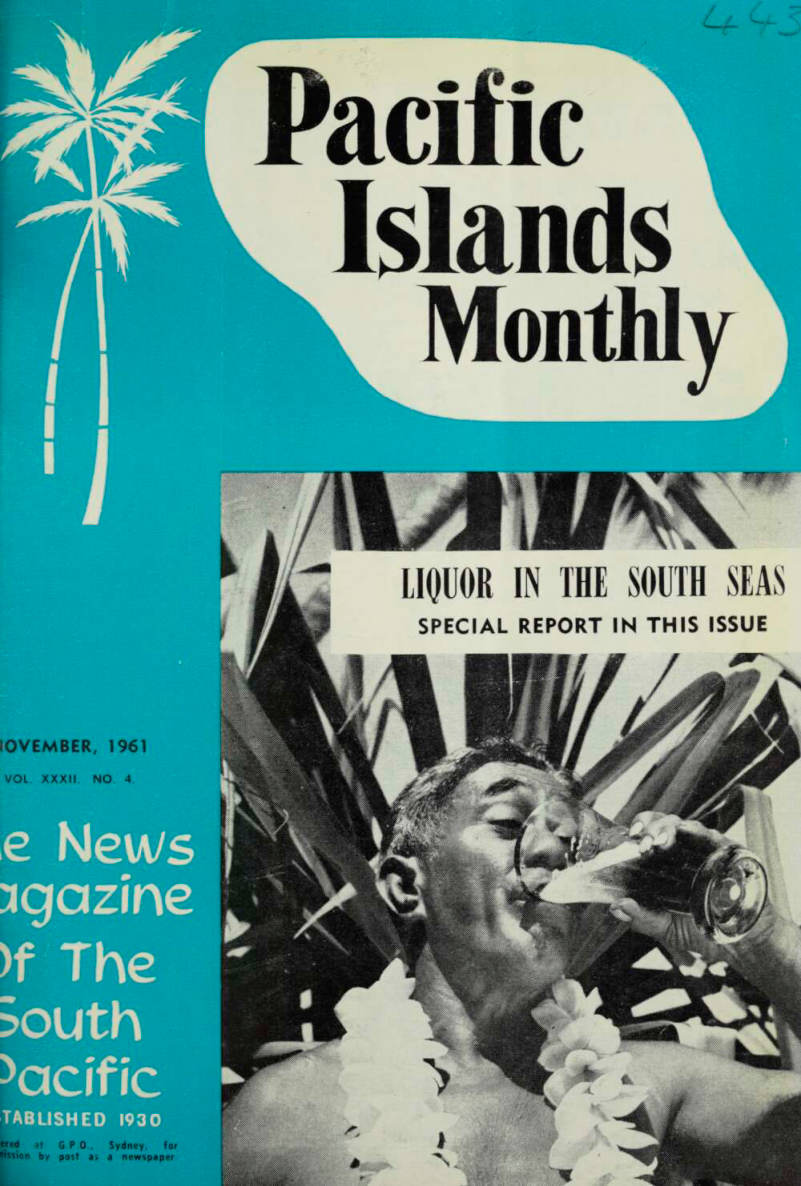 1
1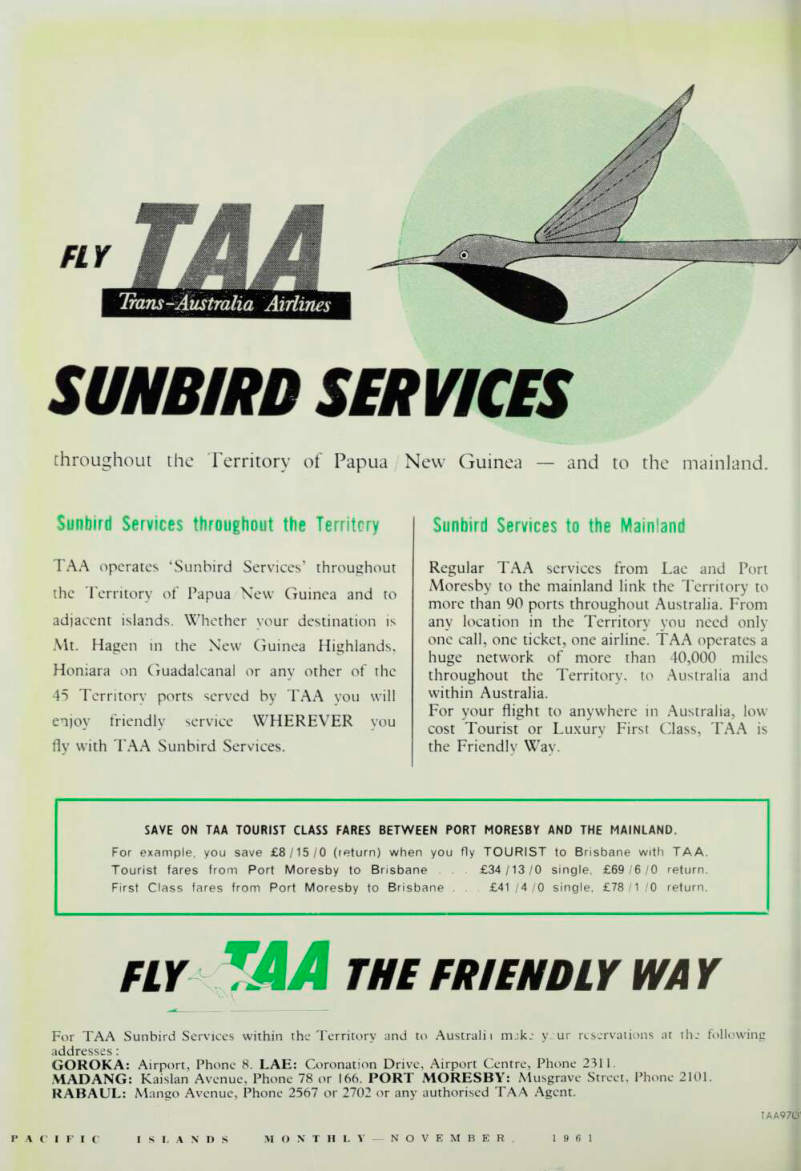 2
2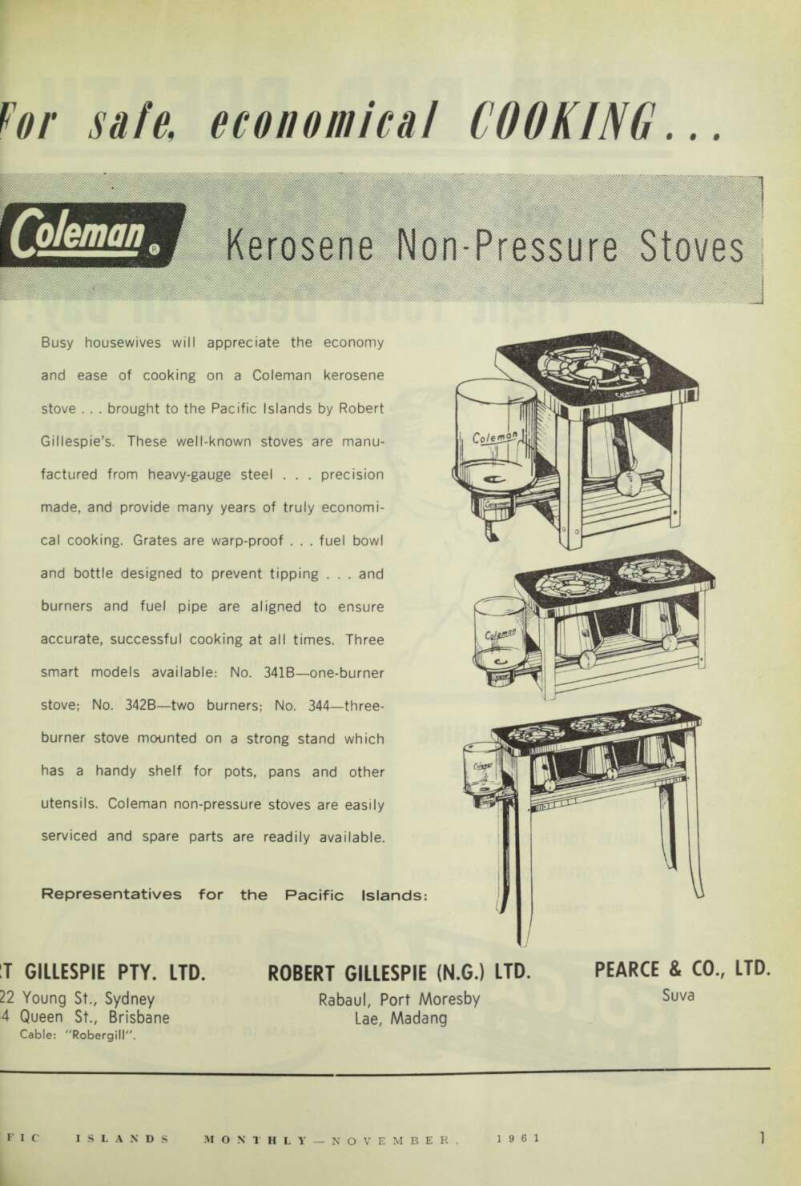 3
3 4
4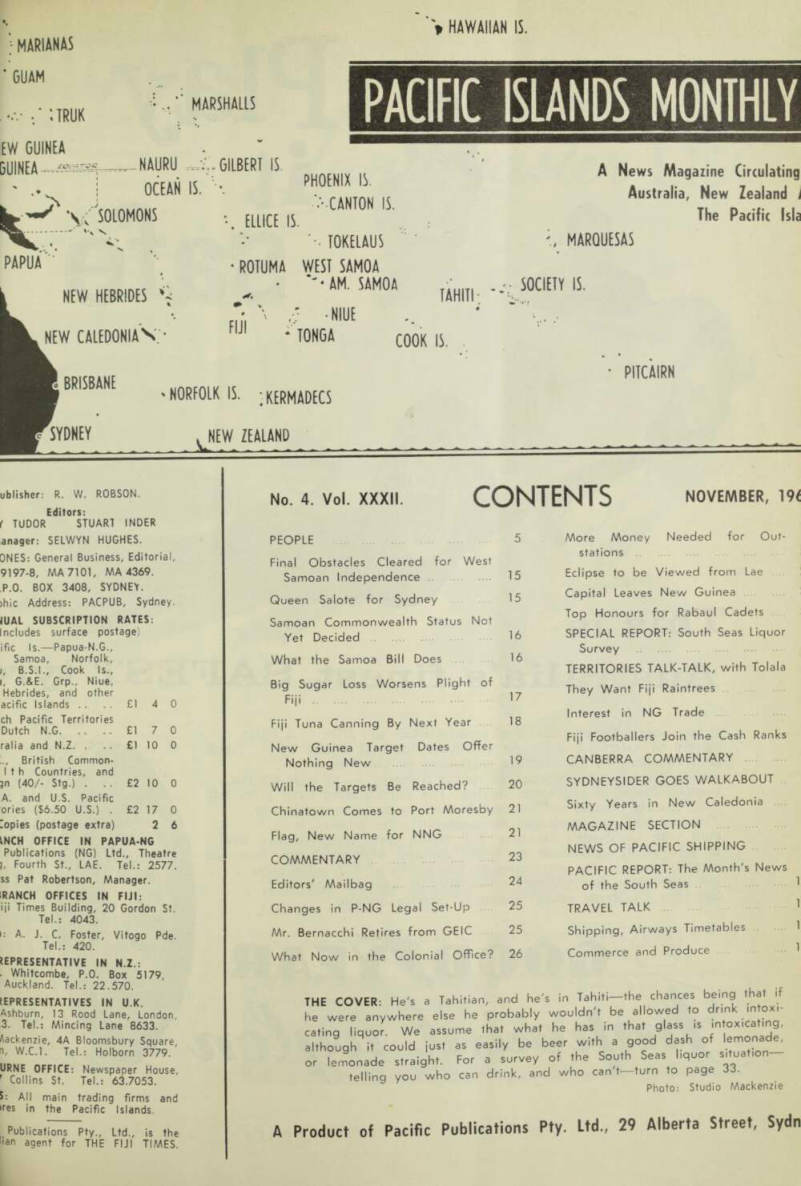 5
5 6
6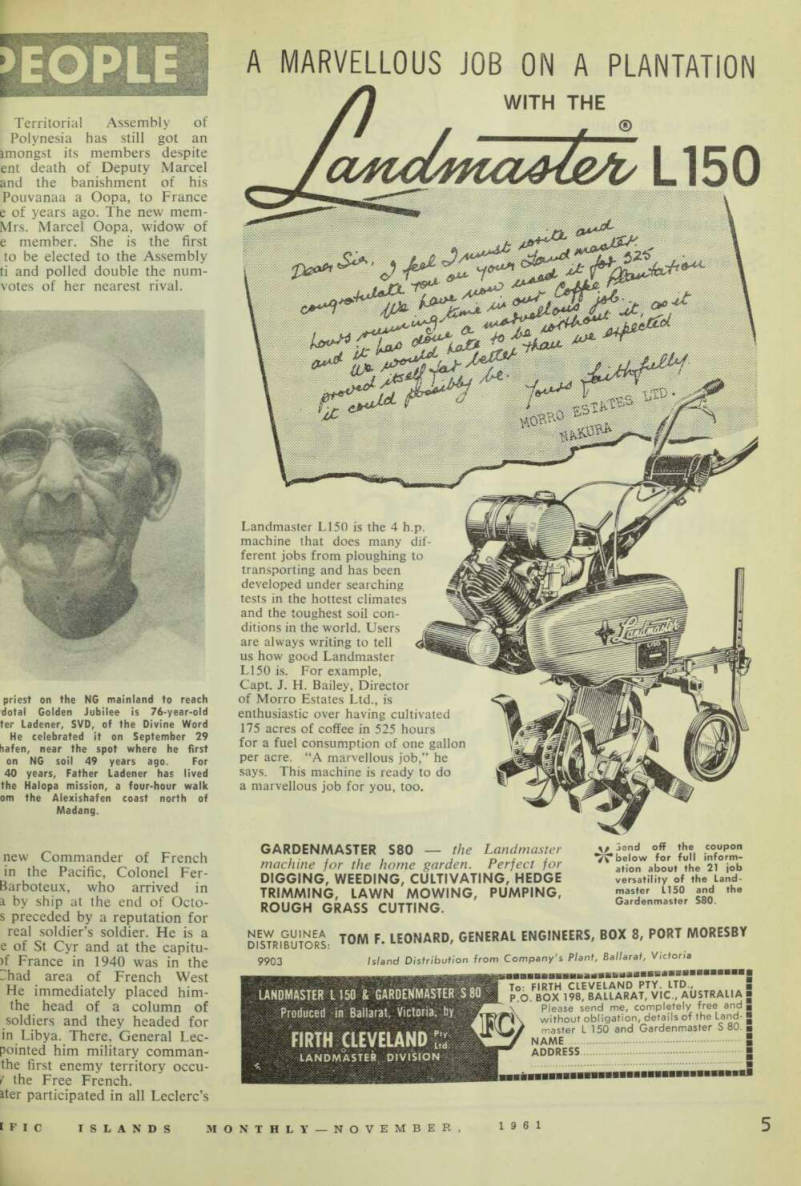 7
7 8
8 9
9 10
10 11
11 12
12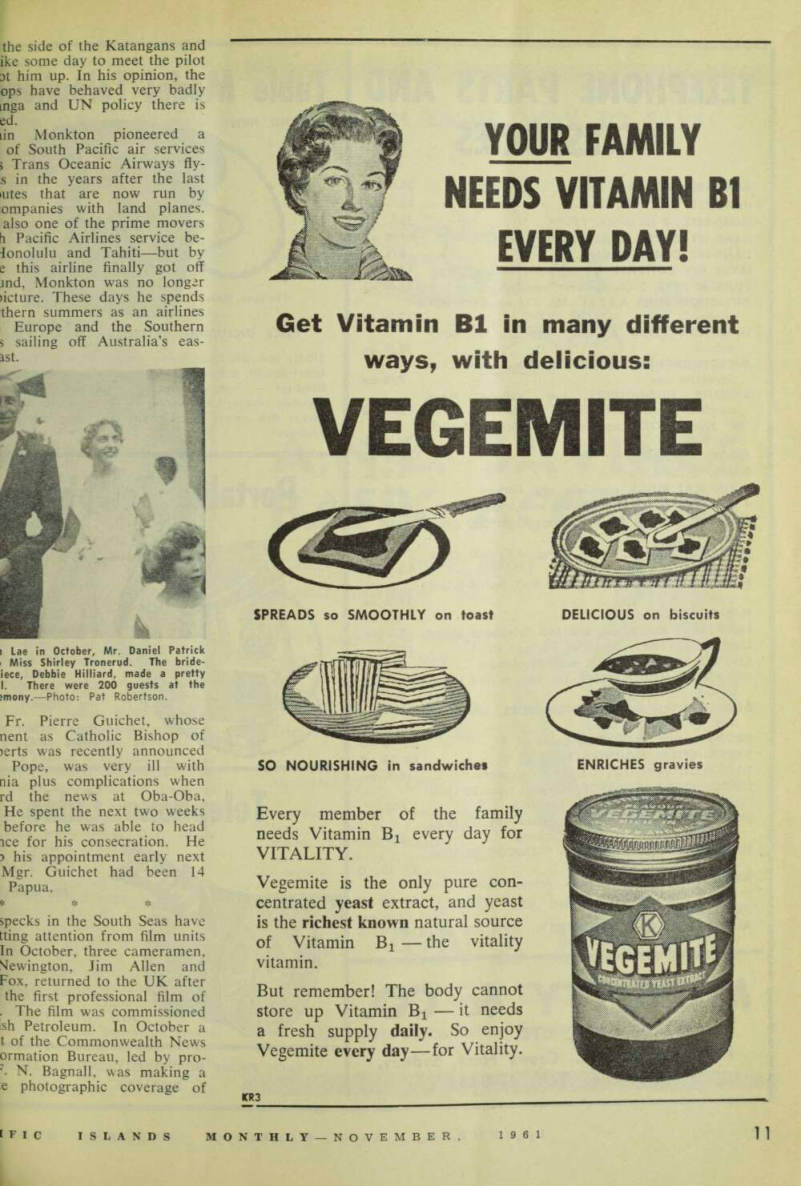 13
13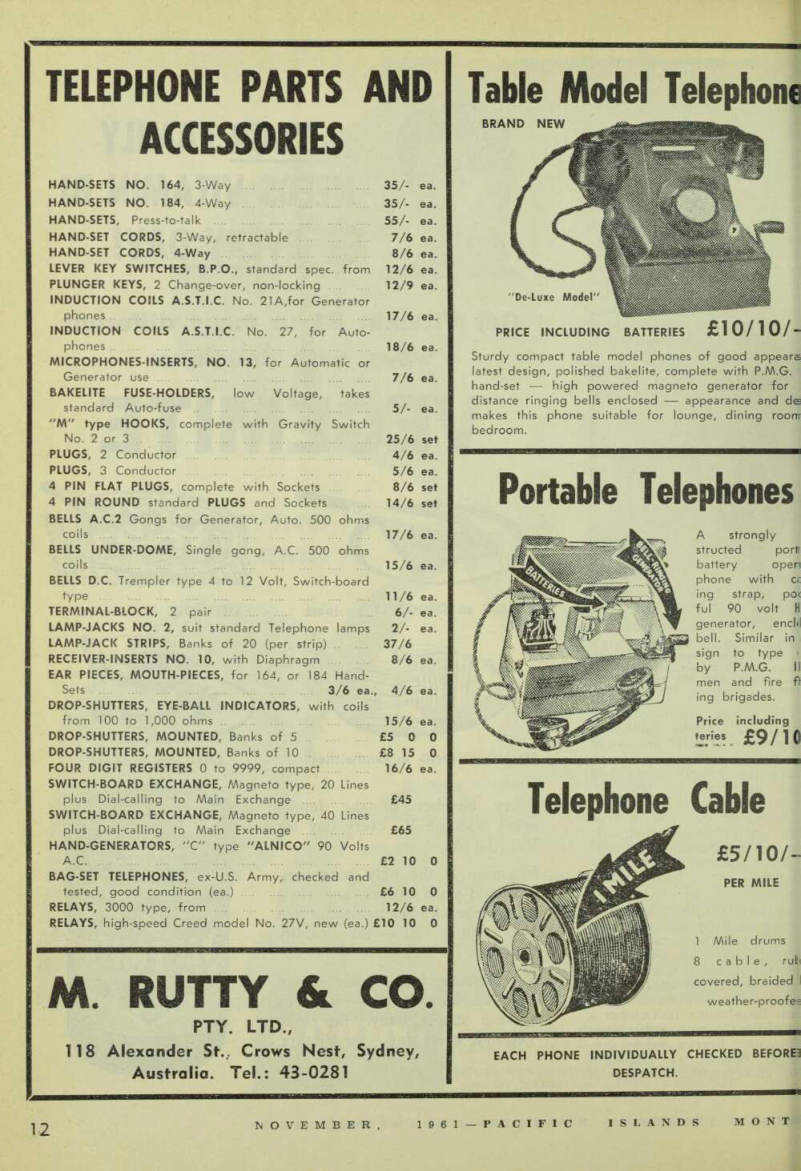 14
14 15
15 16
16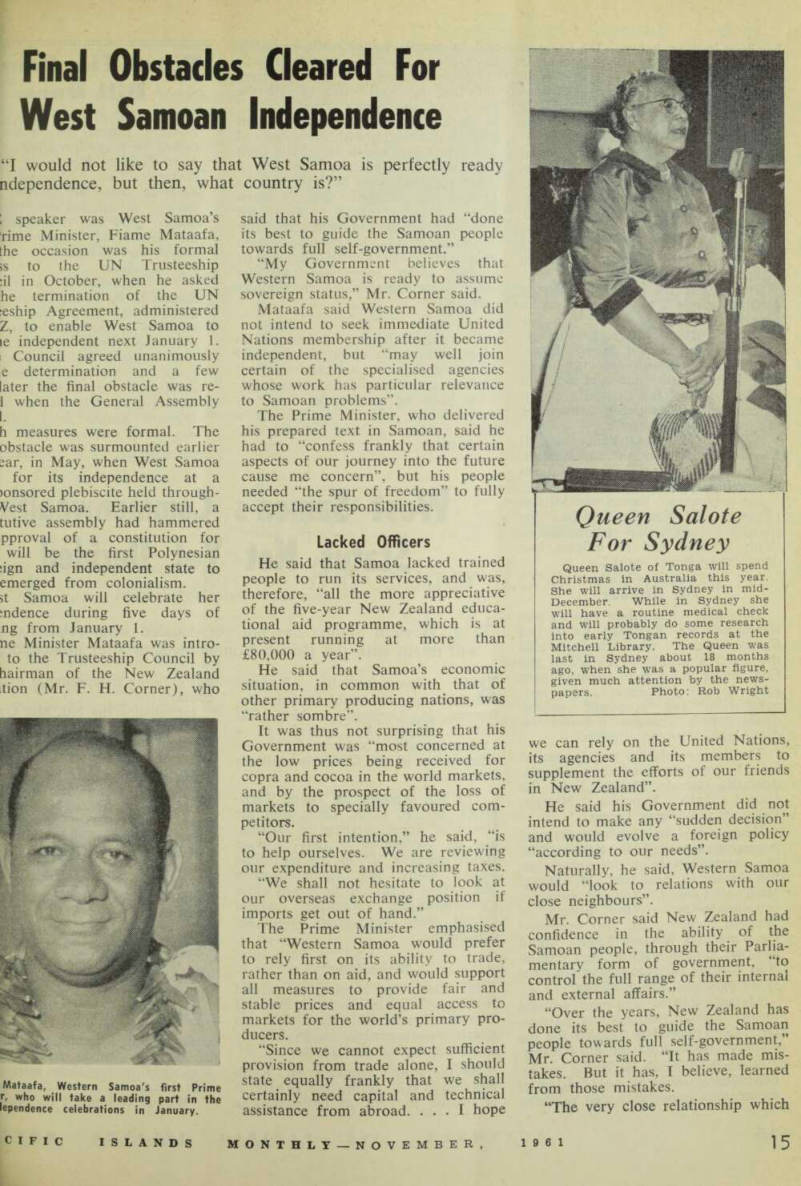 17
17 18
18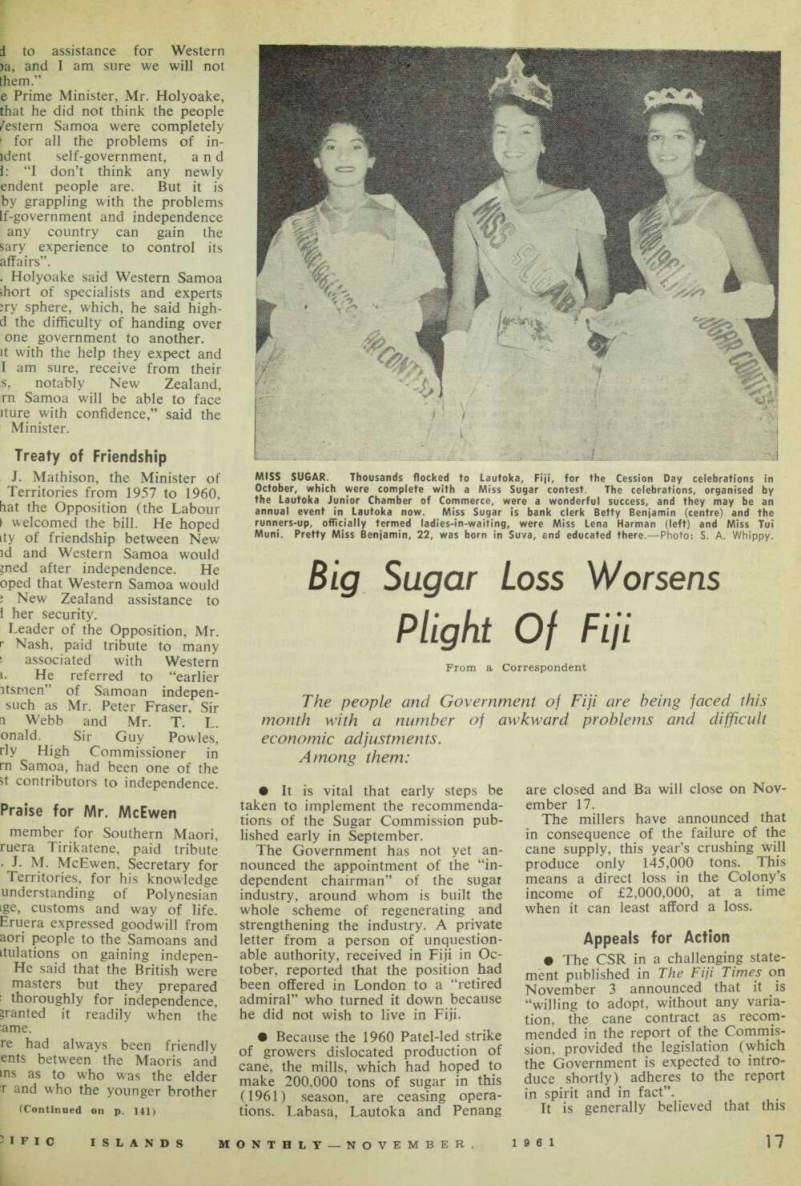 19
19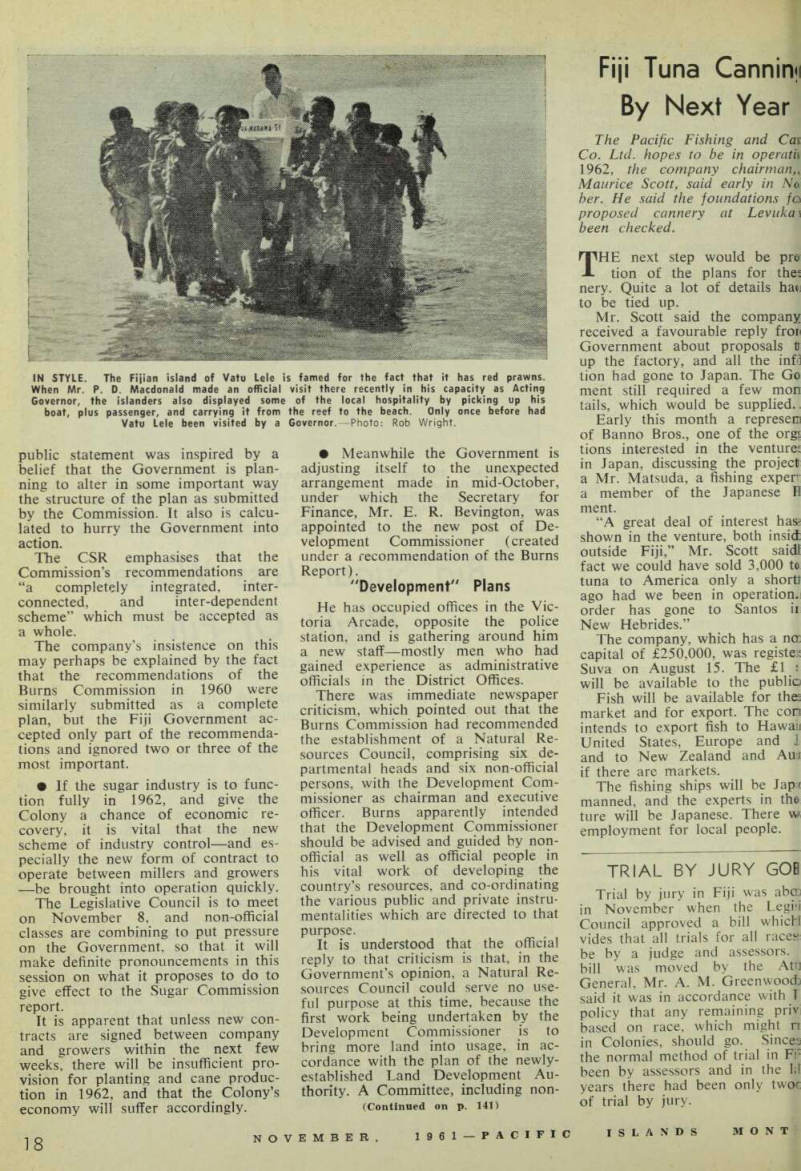 20
20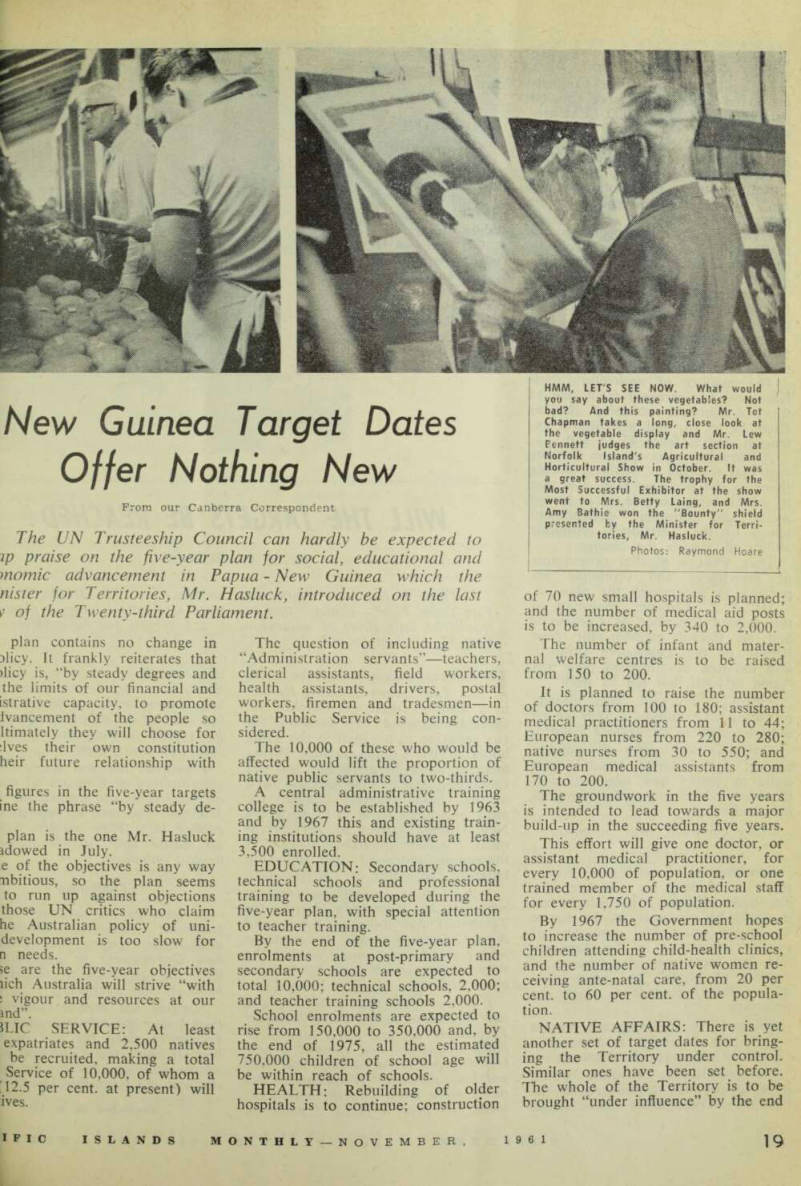 21
21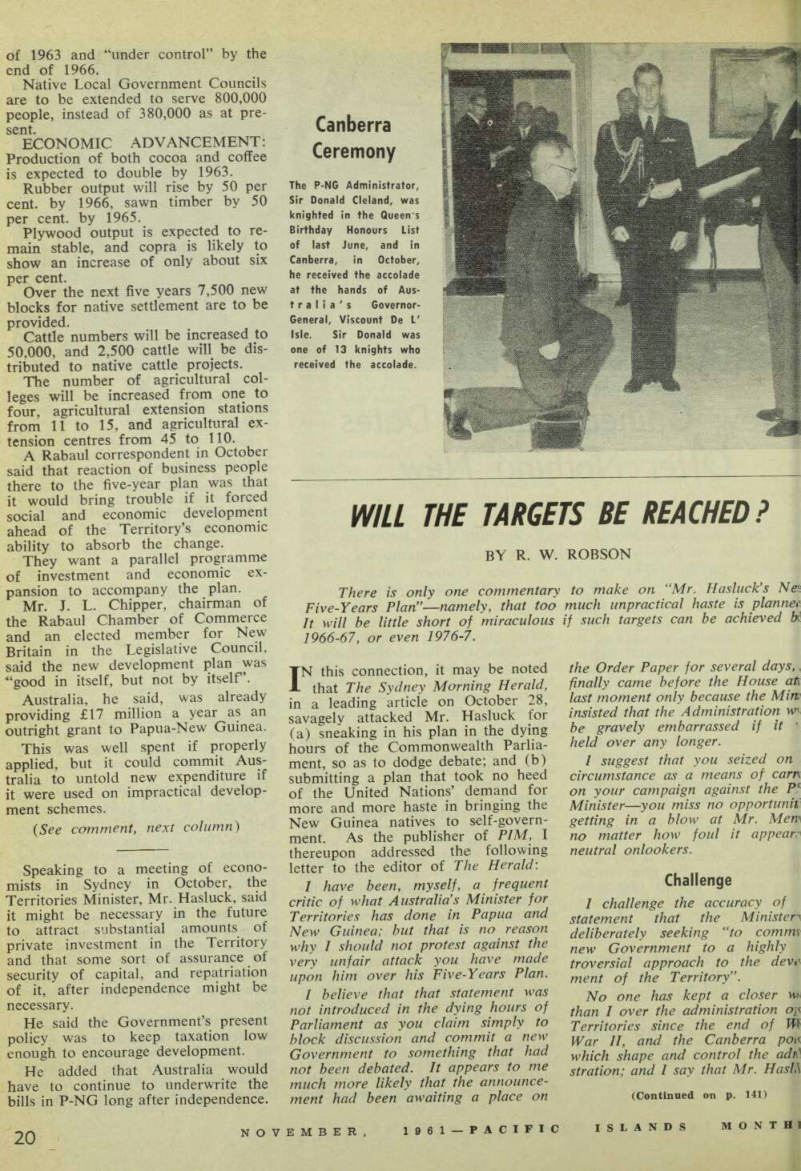 22
22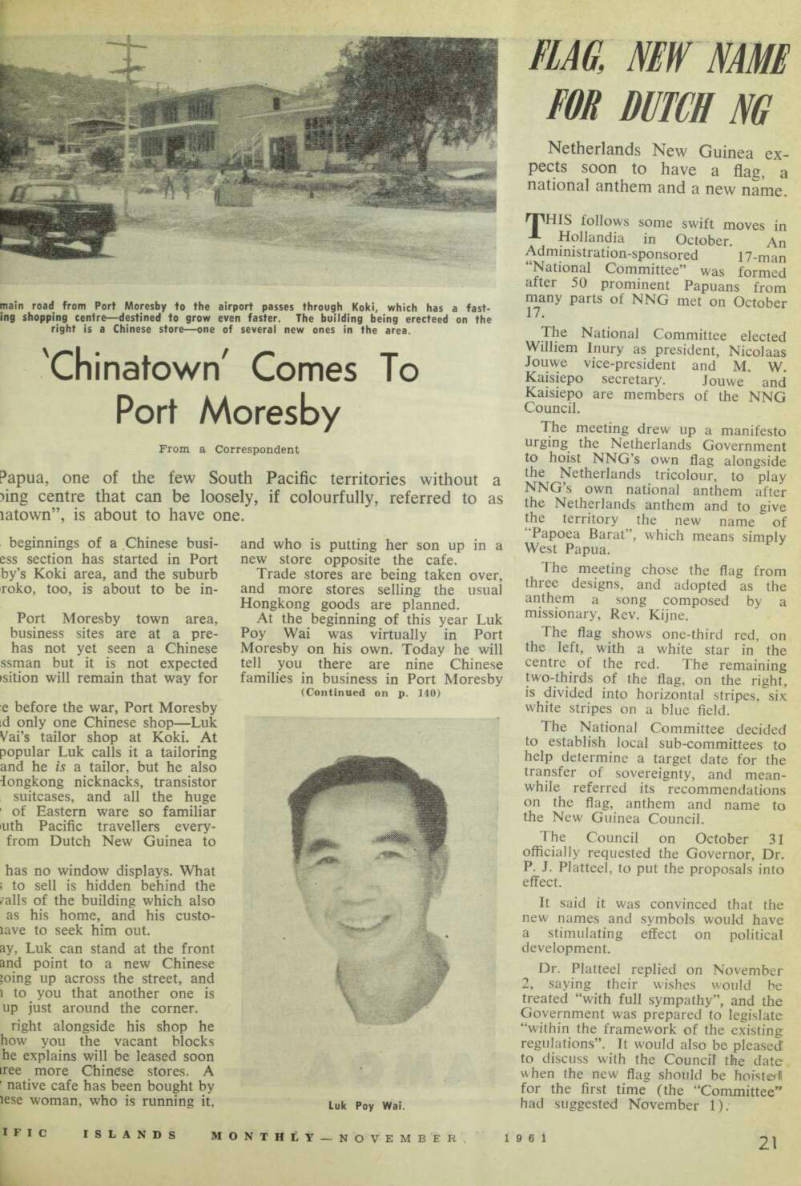 23
23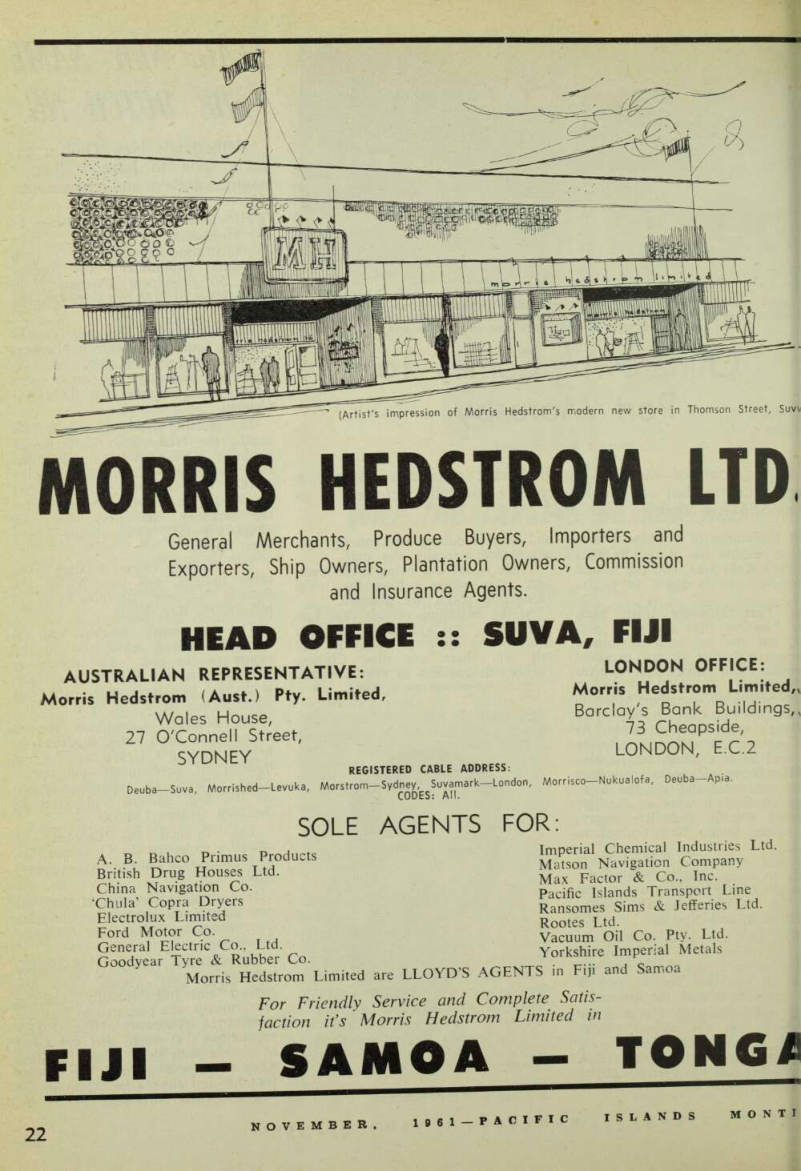 24
24 25
25 26
26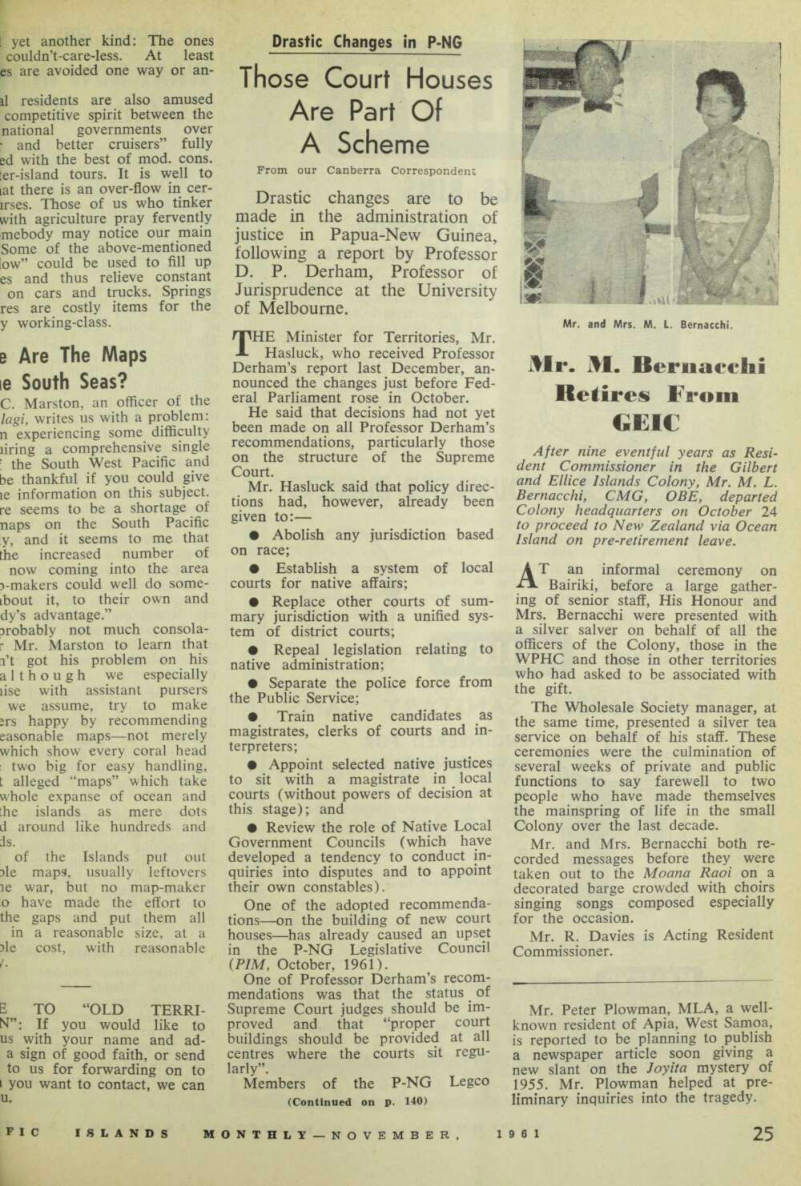 27
27 28
28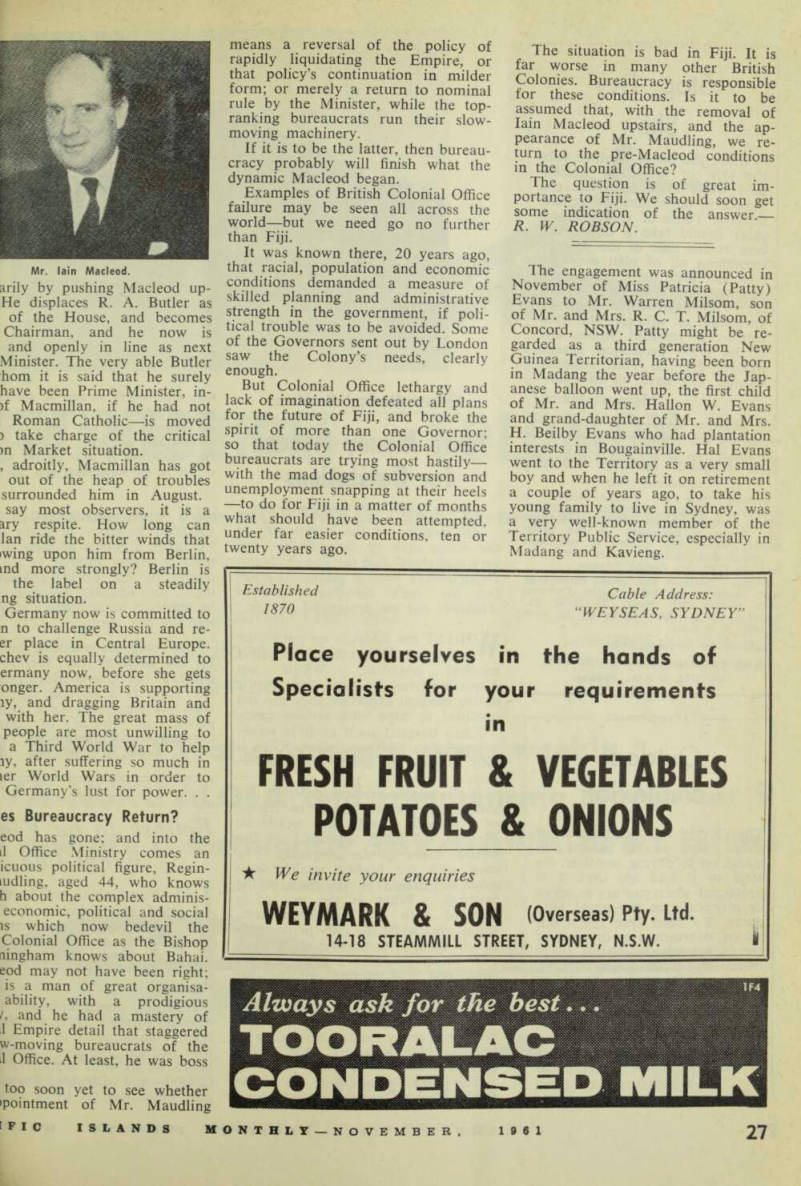 29
29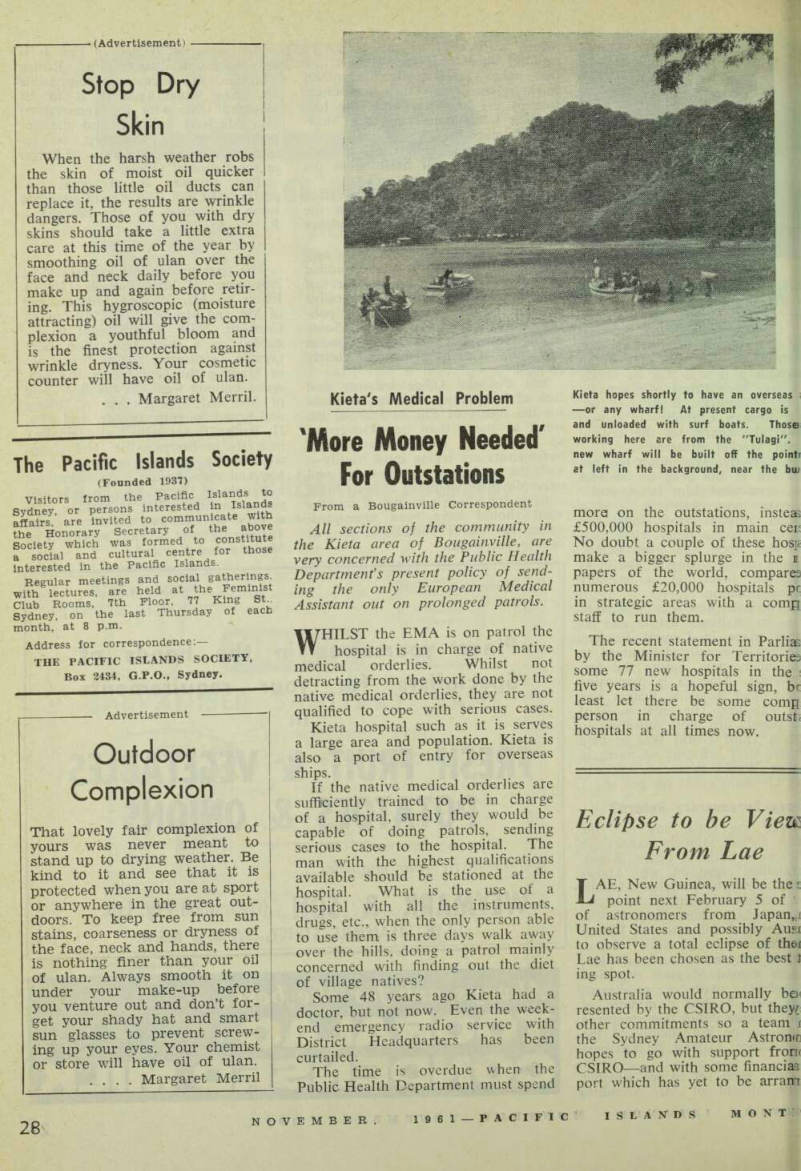 30
30 31
31 32
32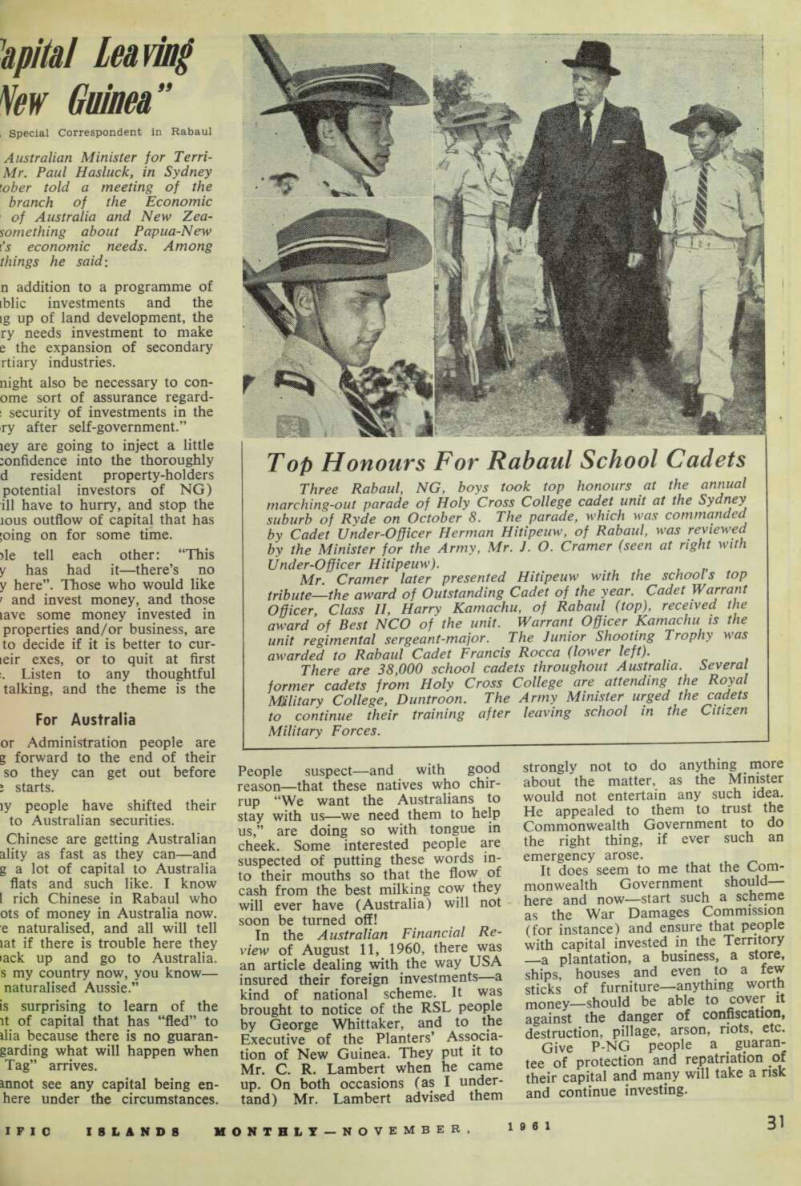 33
33 34
34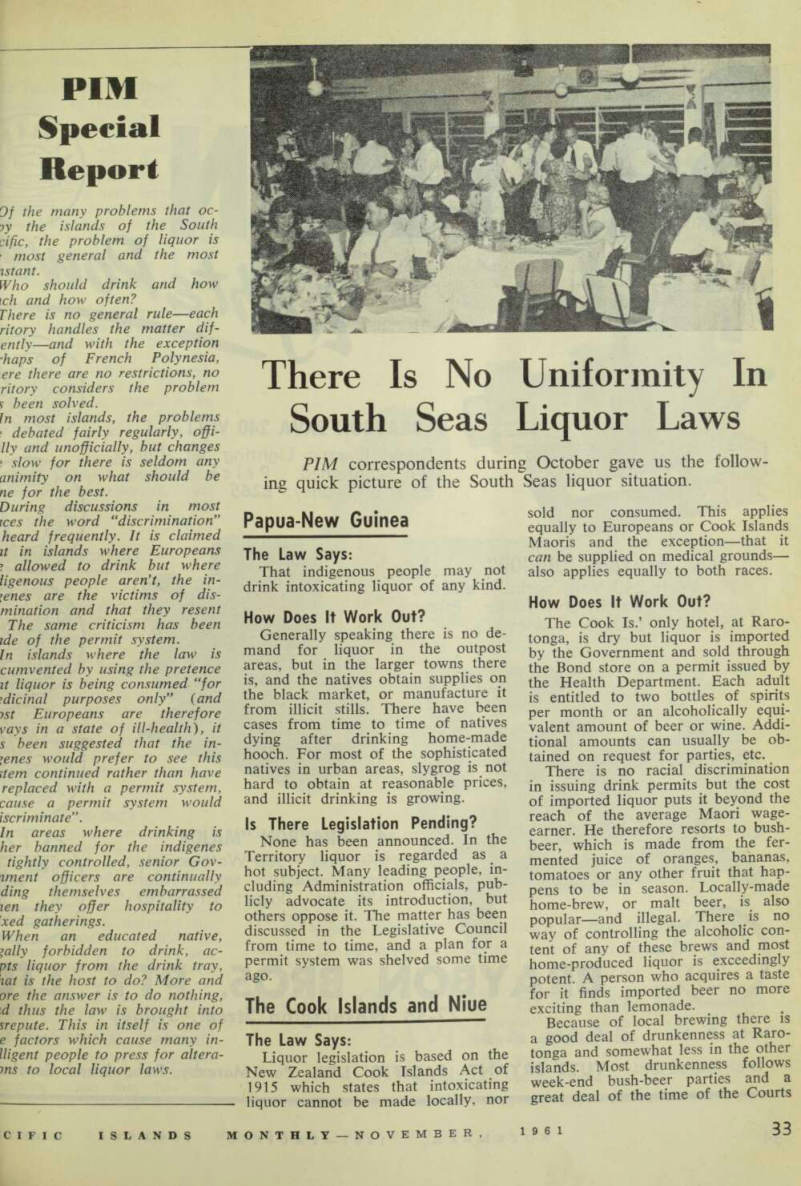 35
35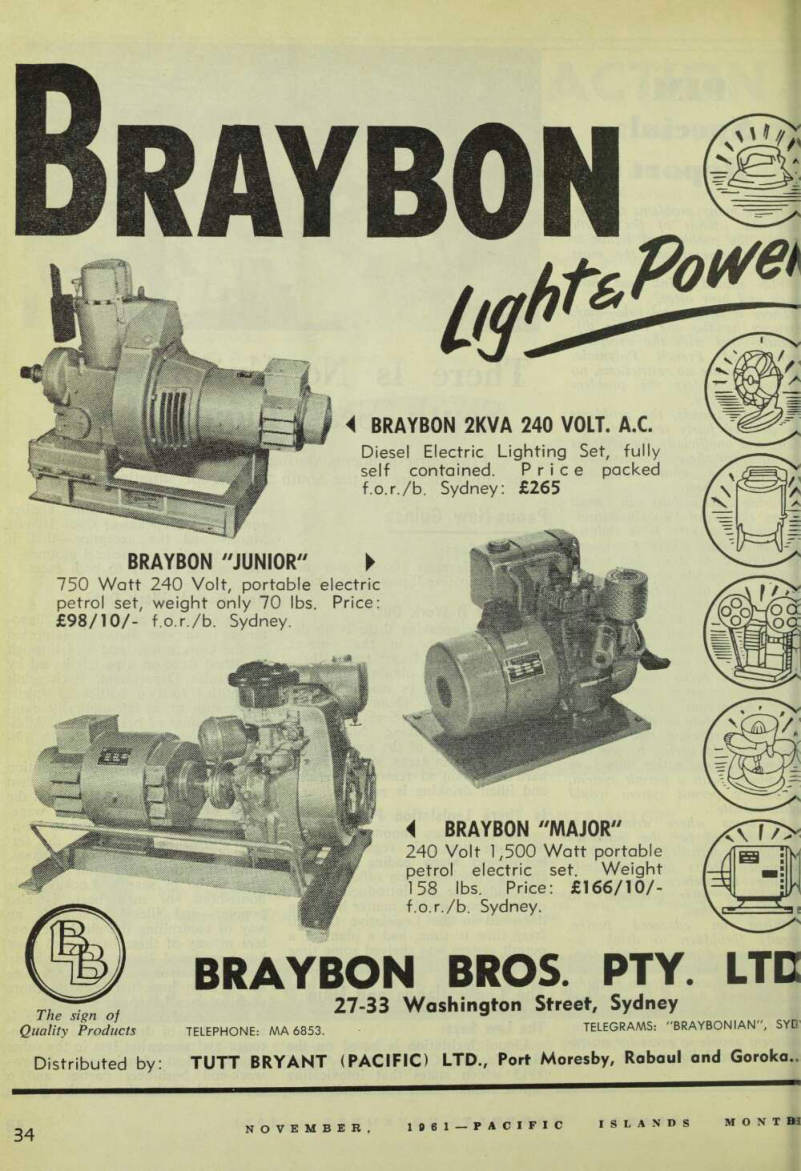 36
36 37
37 38
38 39
39 40
40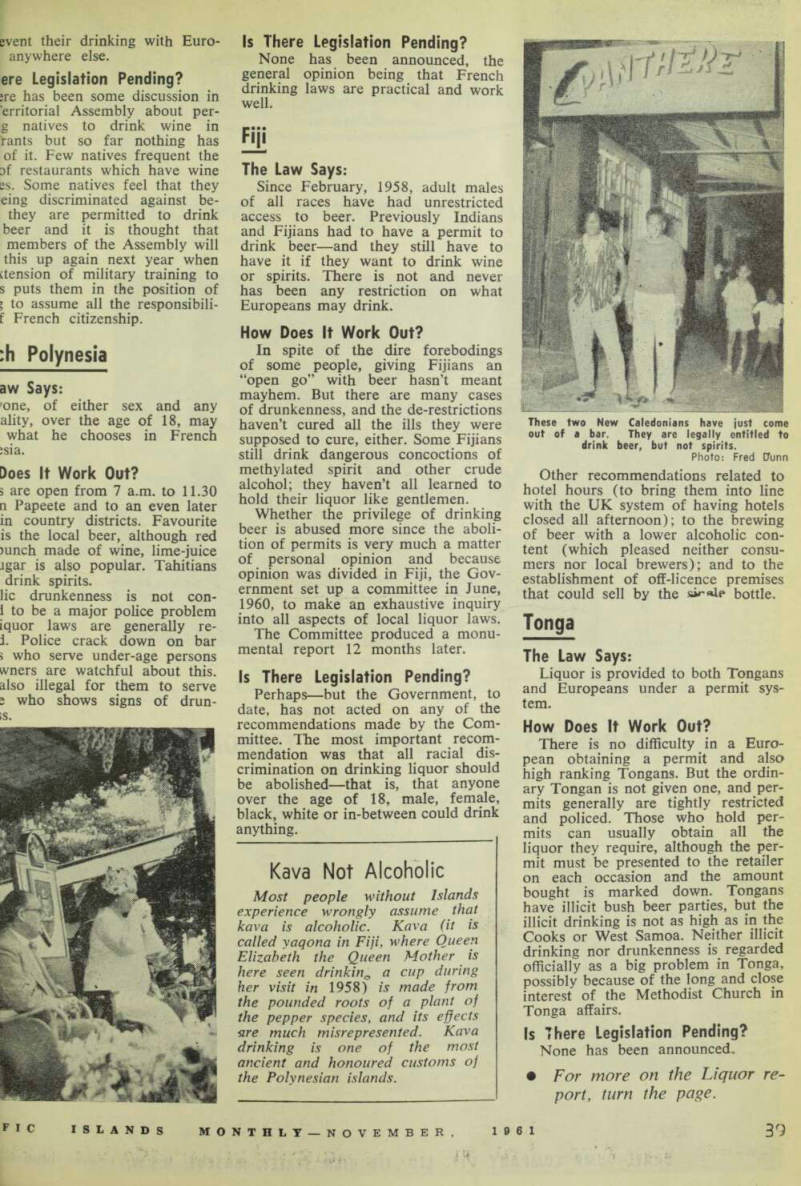 41
41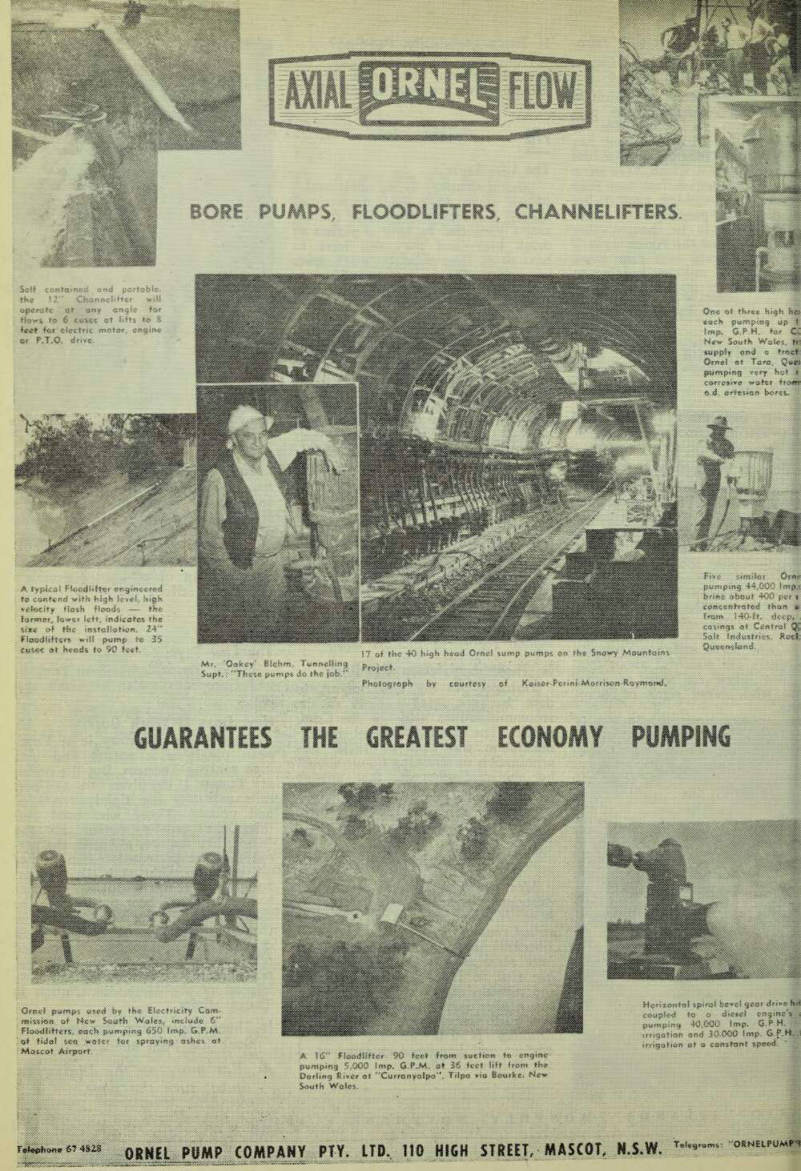 42
42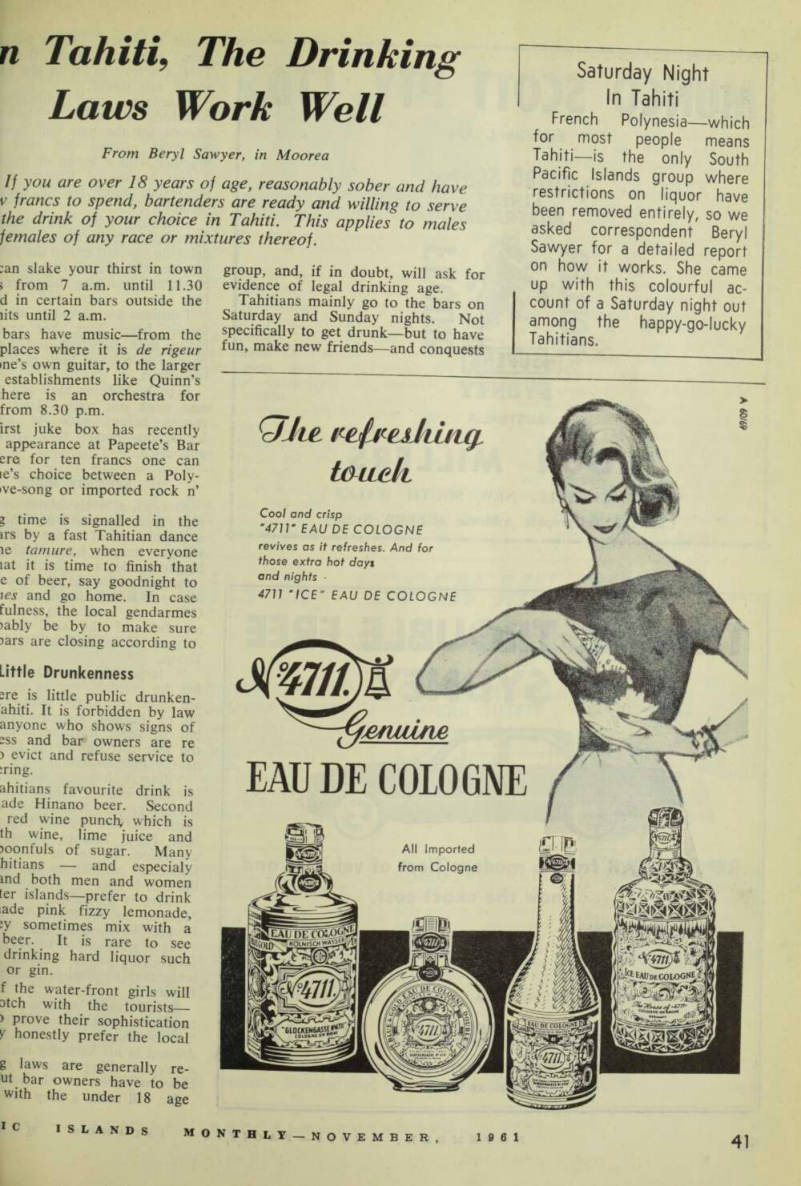 43
43 44
44 45
45 46
46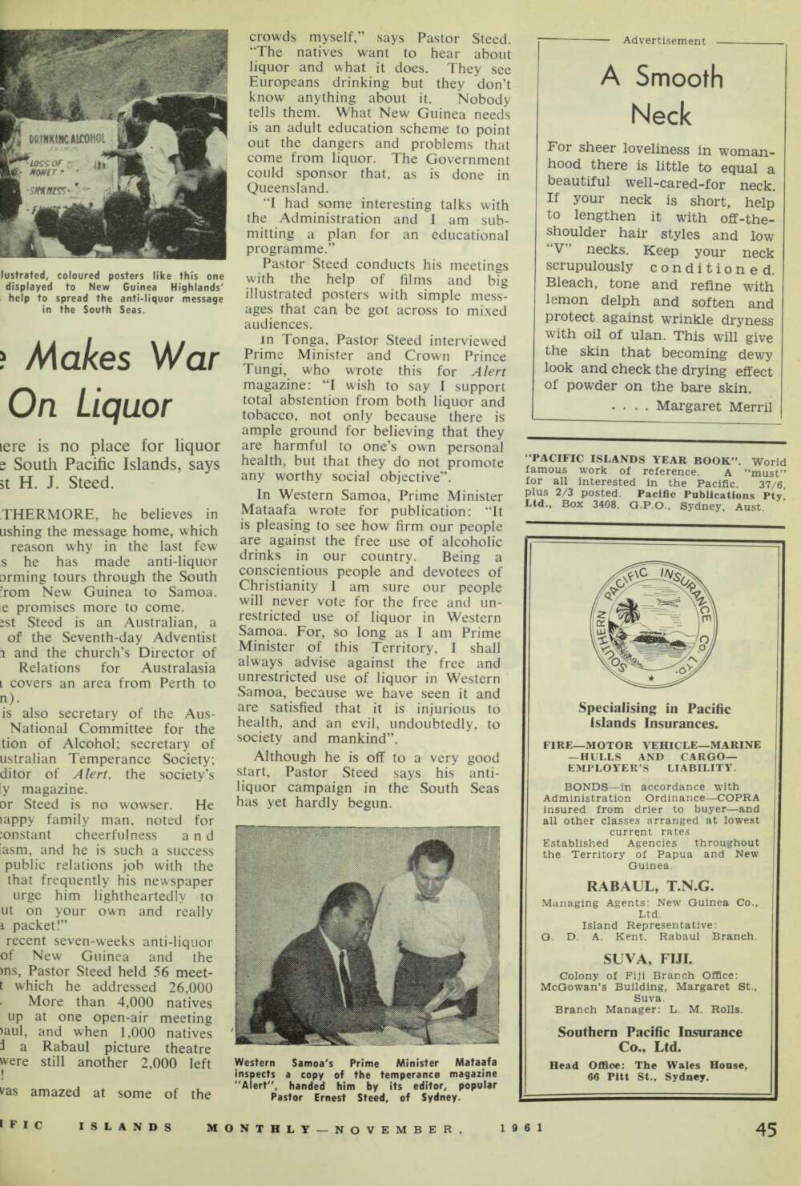 47
47 48
48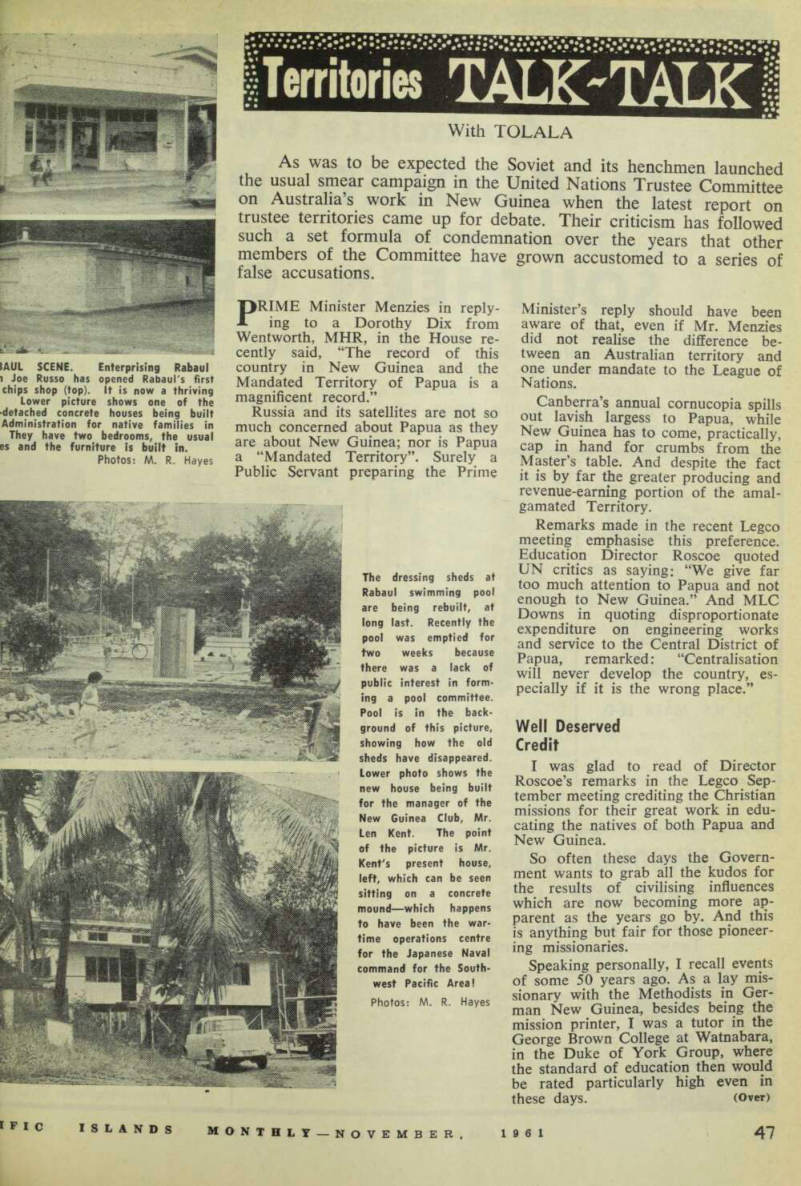 49
49 50
50 51
51 52
52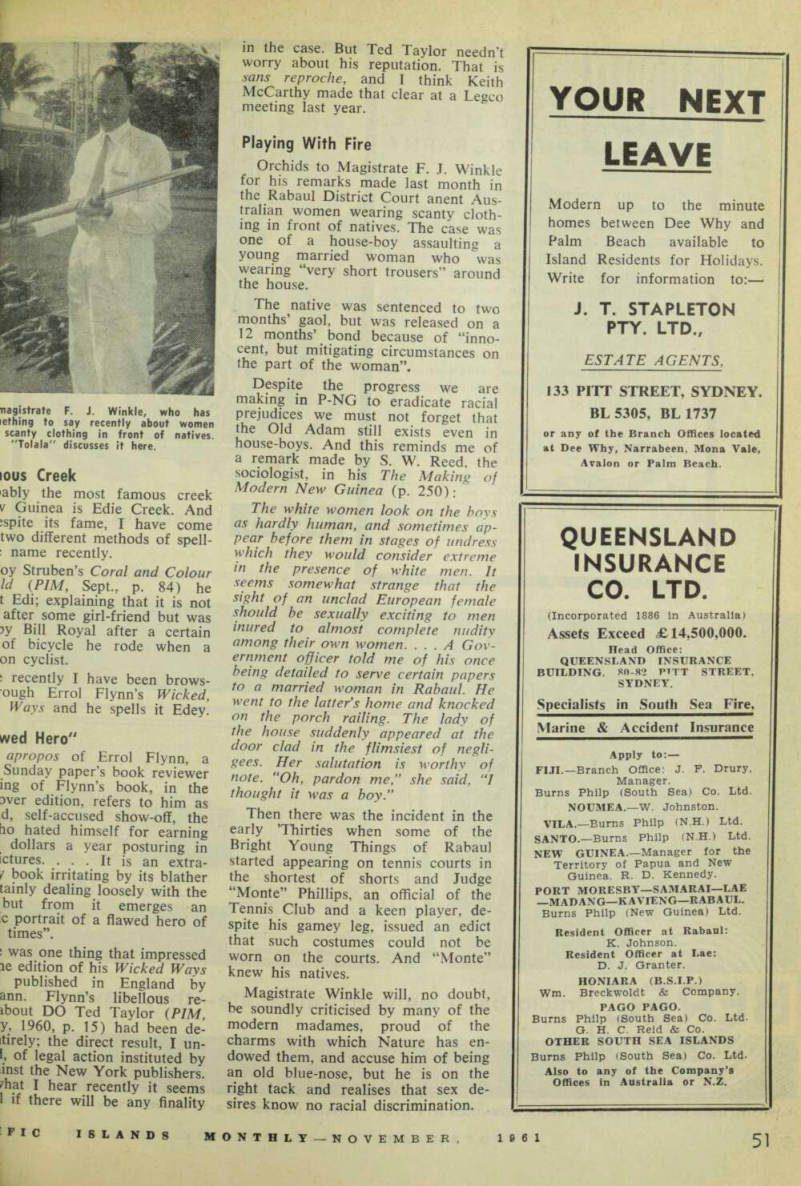 53
53 54
54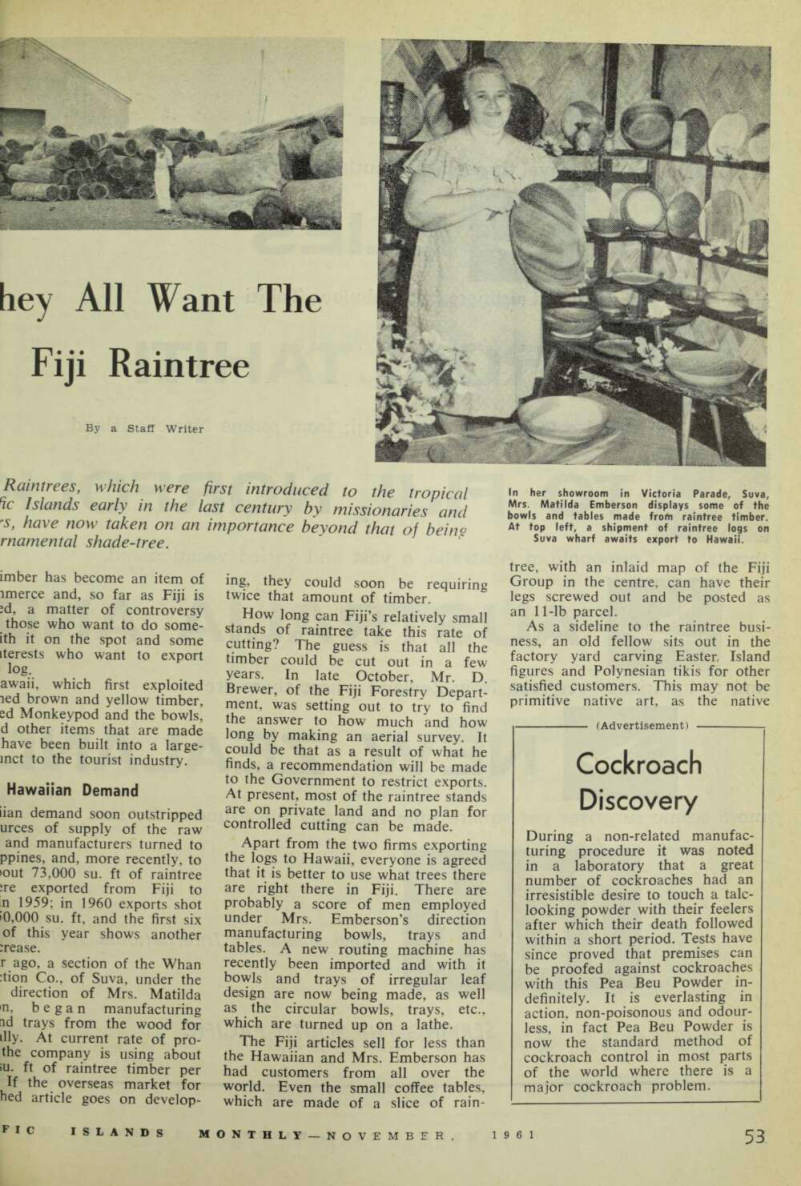 55
55 56
56 57
57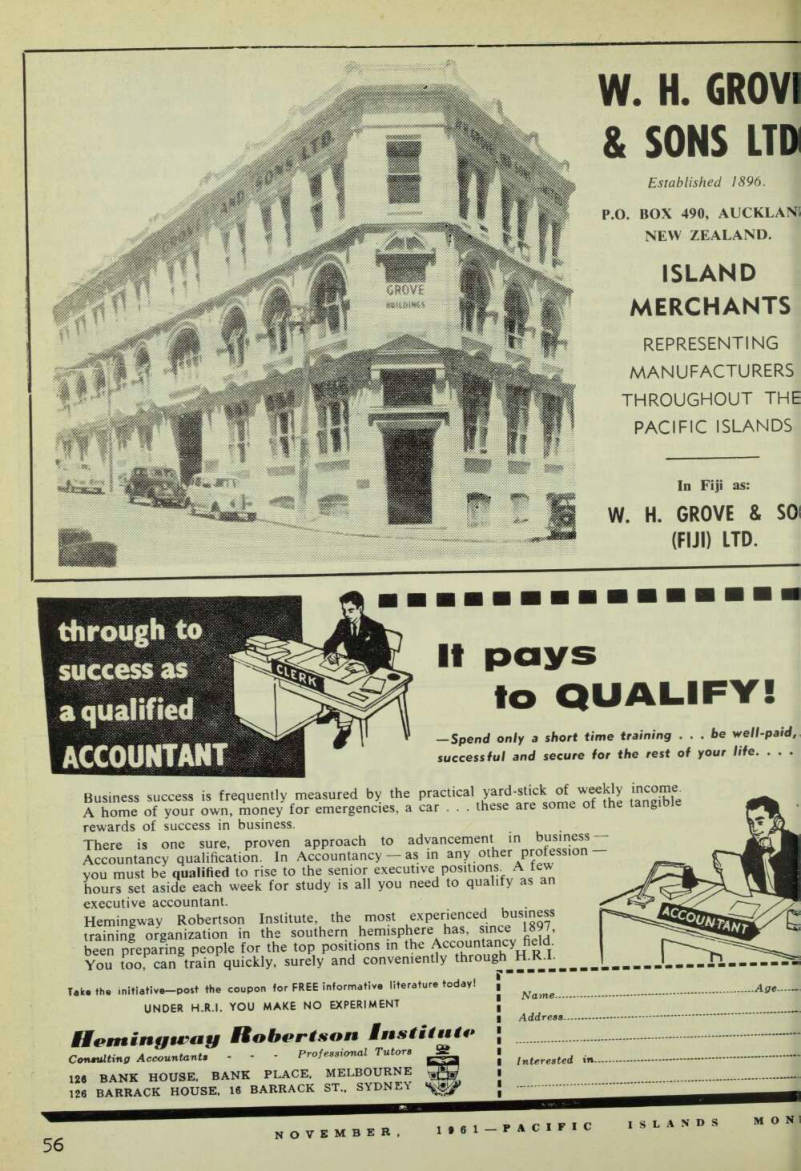 58
58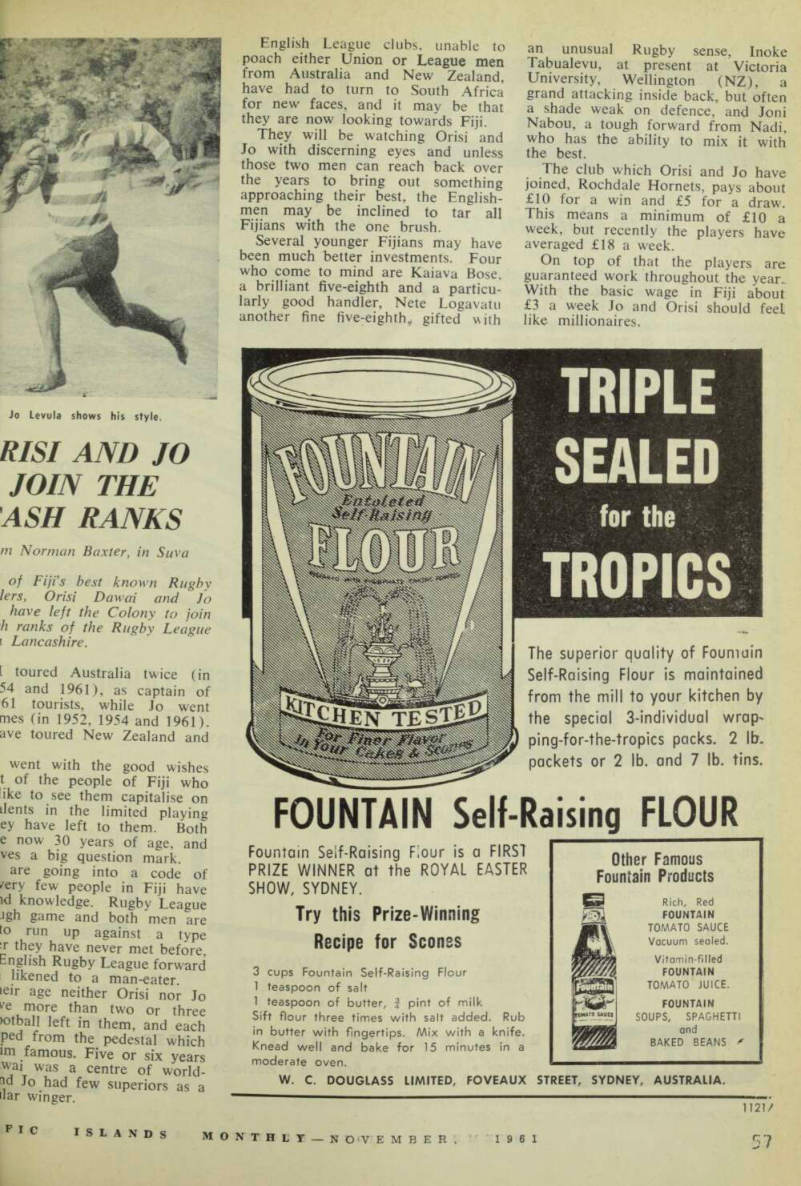 59
59 60
60 61
61 62
62 63
63 64
64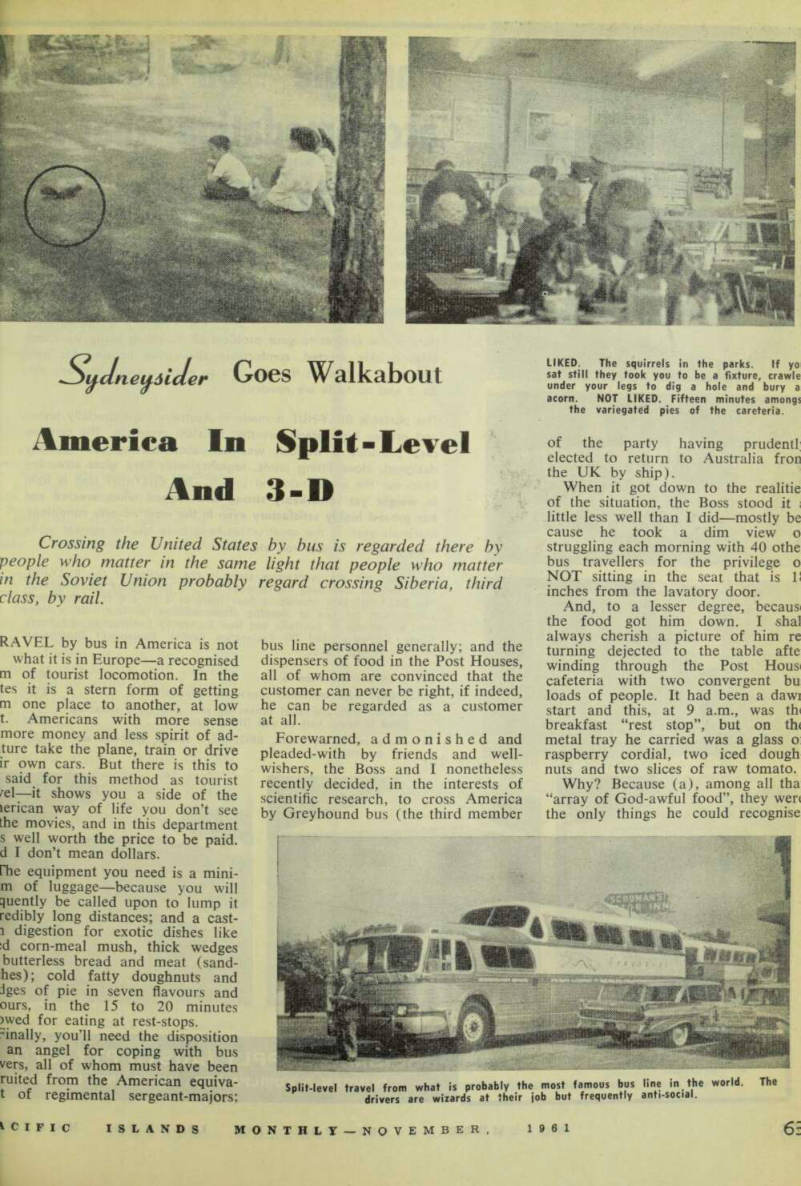 65
65 66
66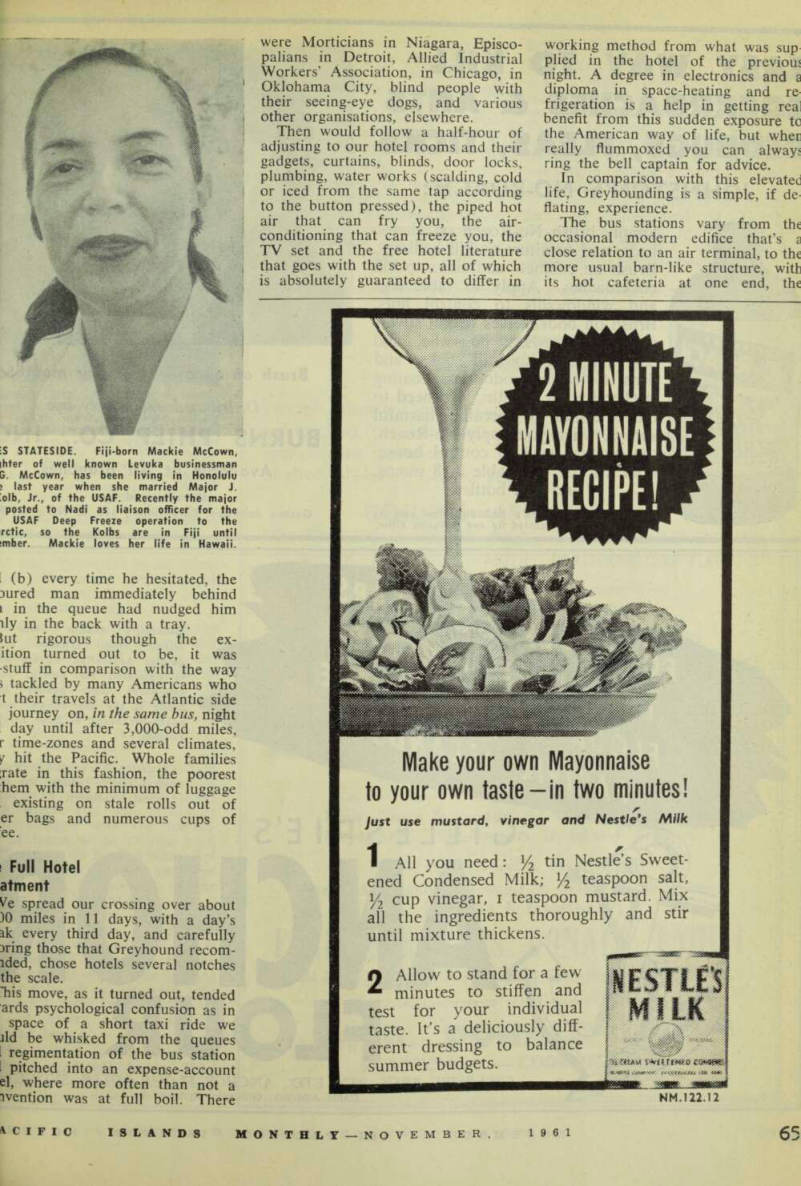 67
67 68
68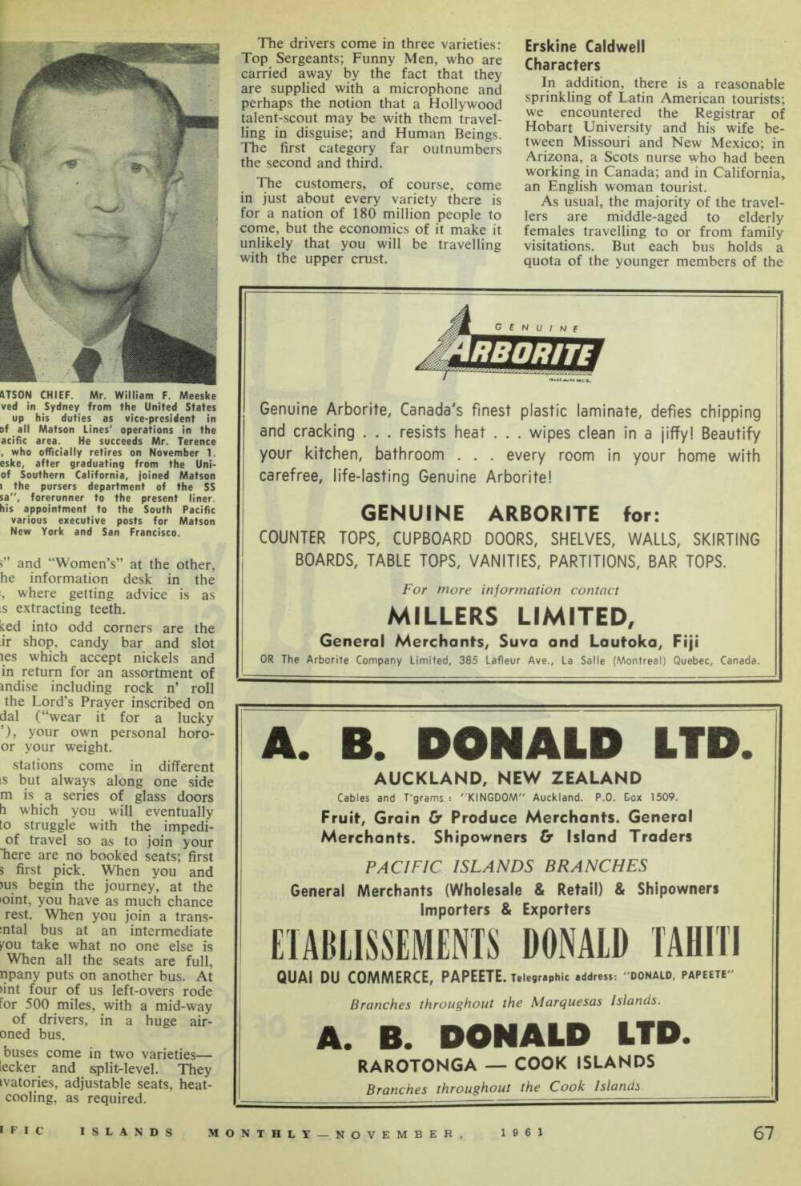 69
69 70
70 71
71 72
72 73
73 74
74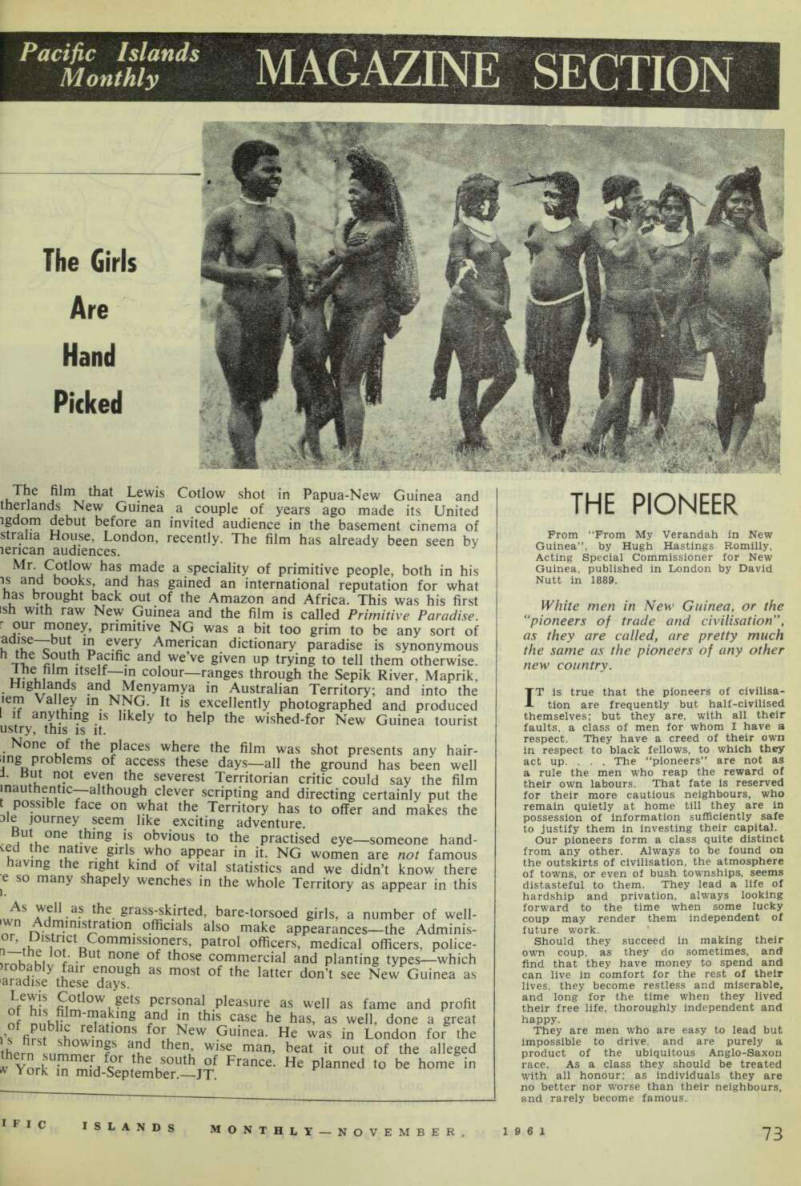 75
75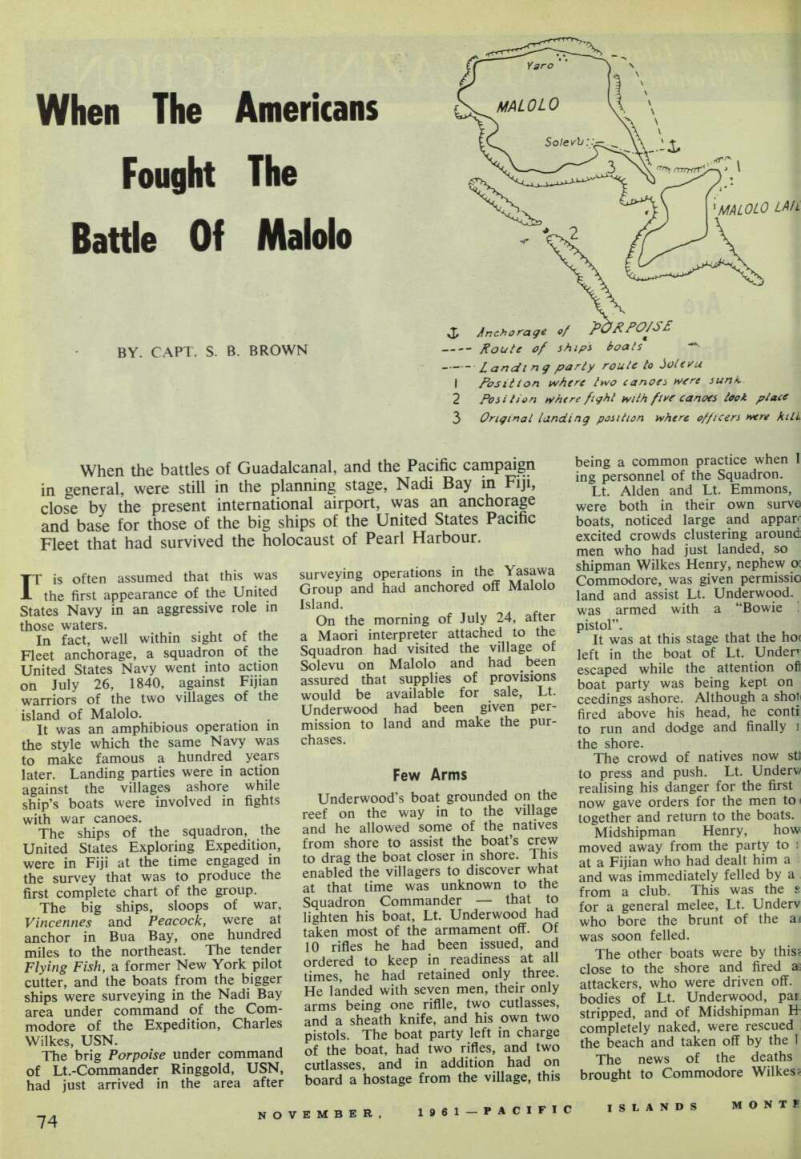 76
76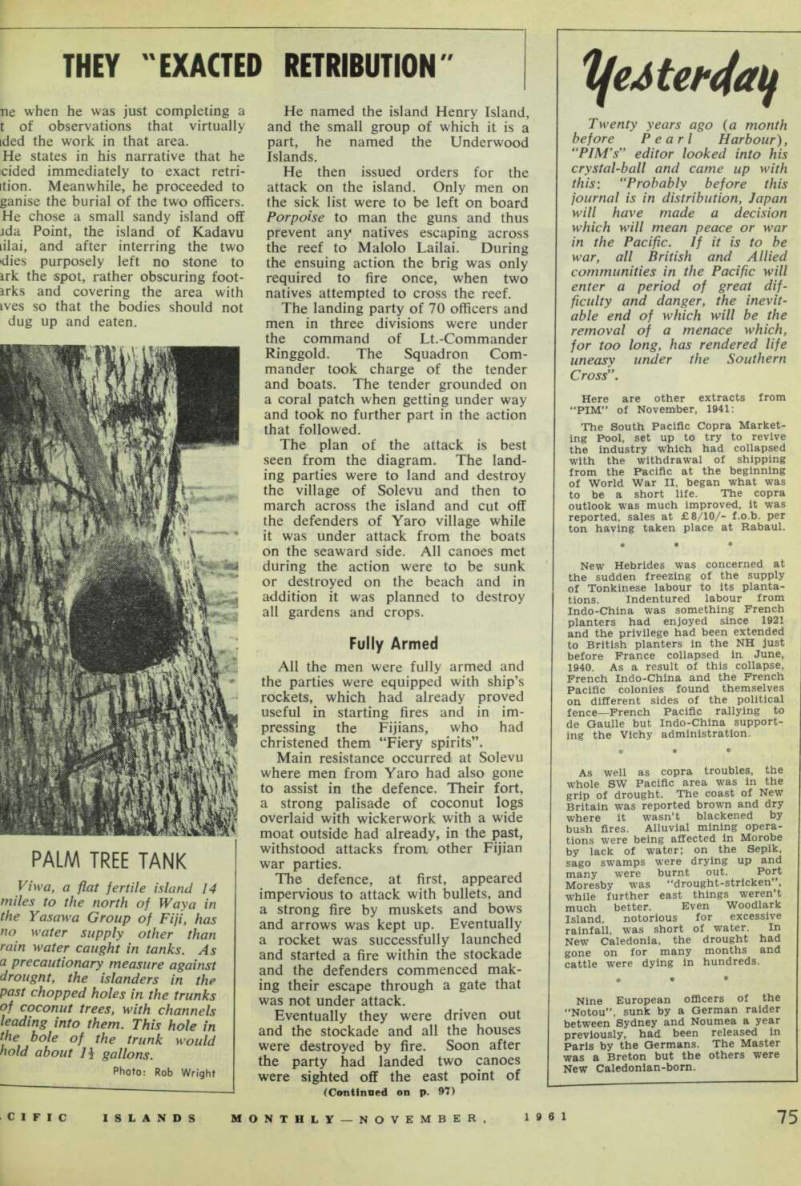 77
77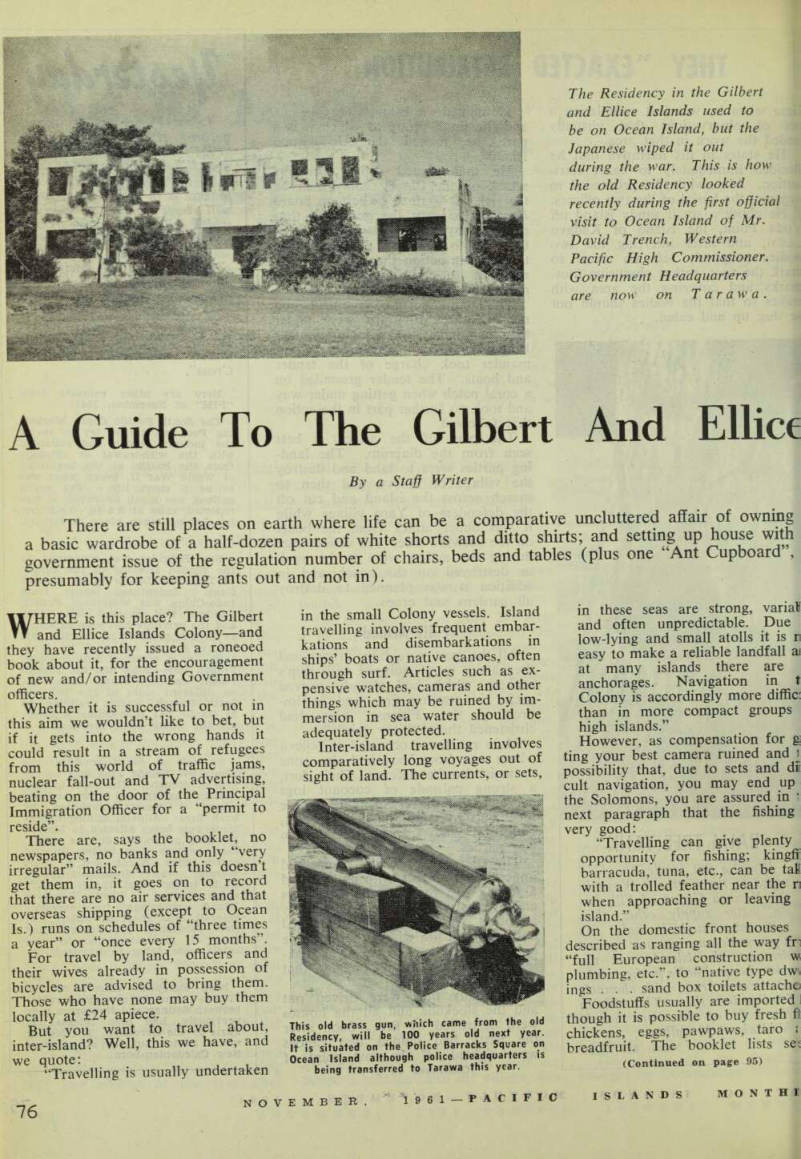 78
78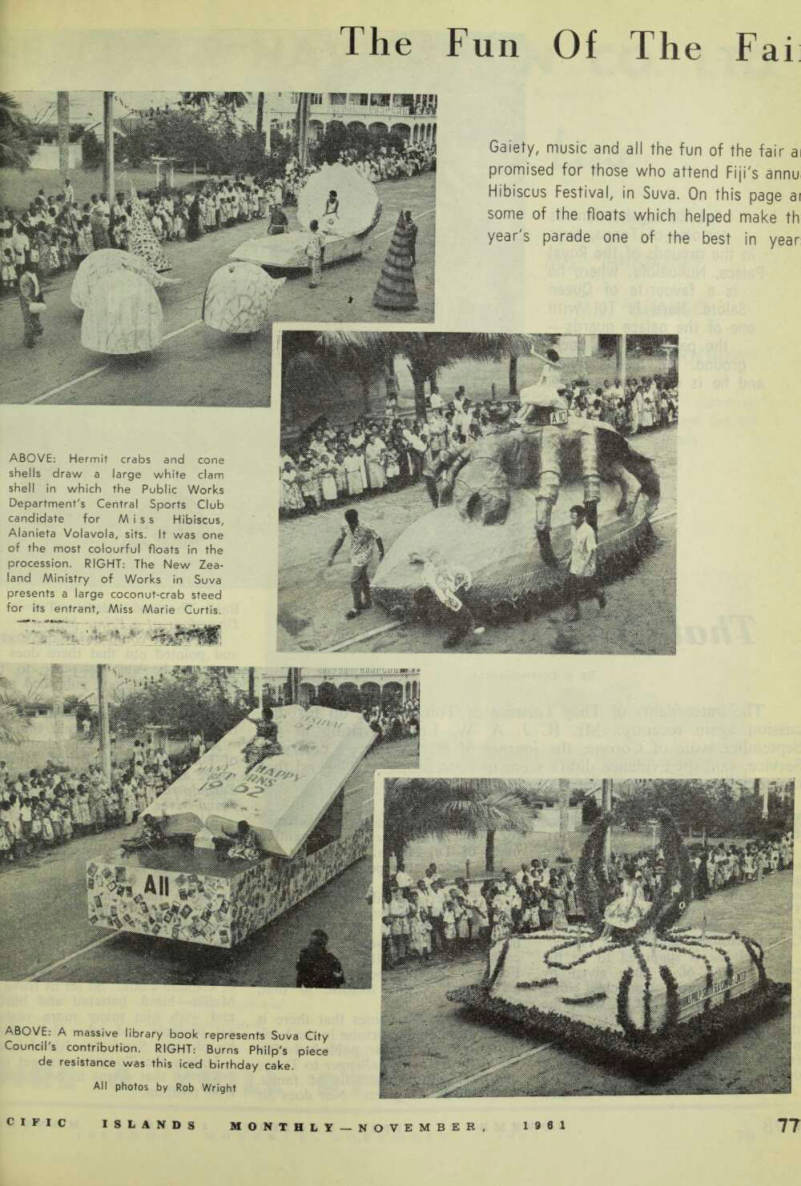 79
79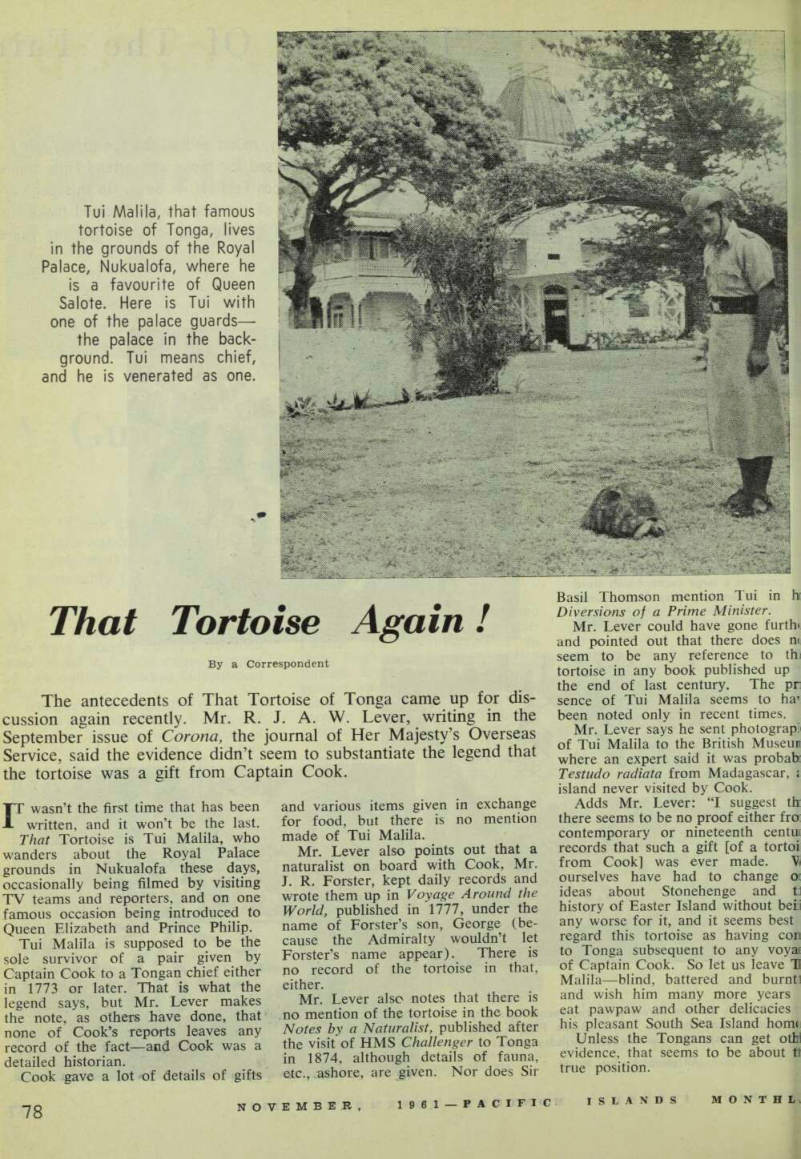 80
80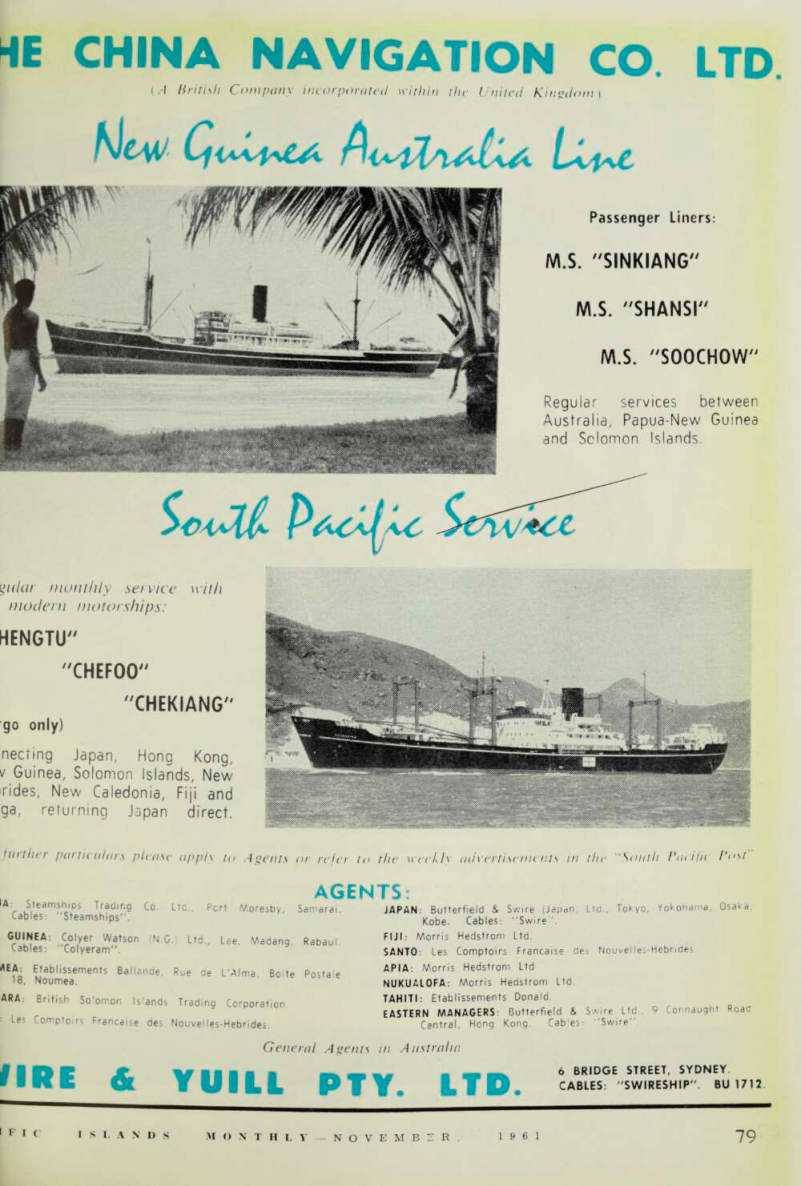 81
81 82
82 83
83 84
84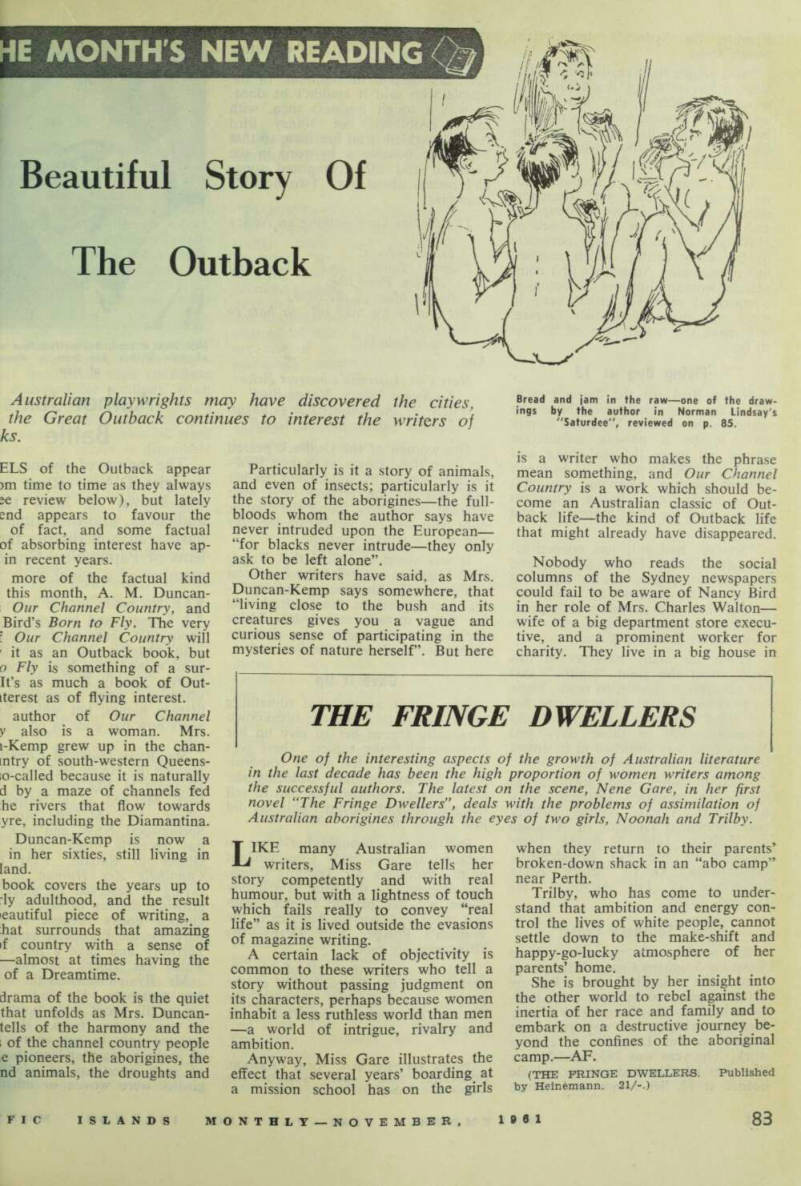 85
85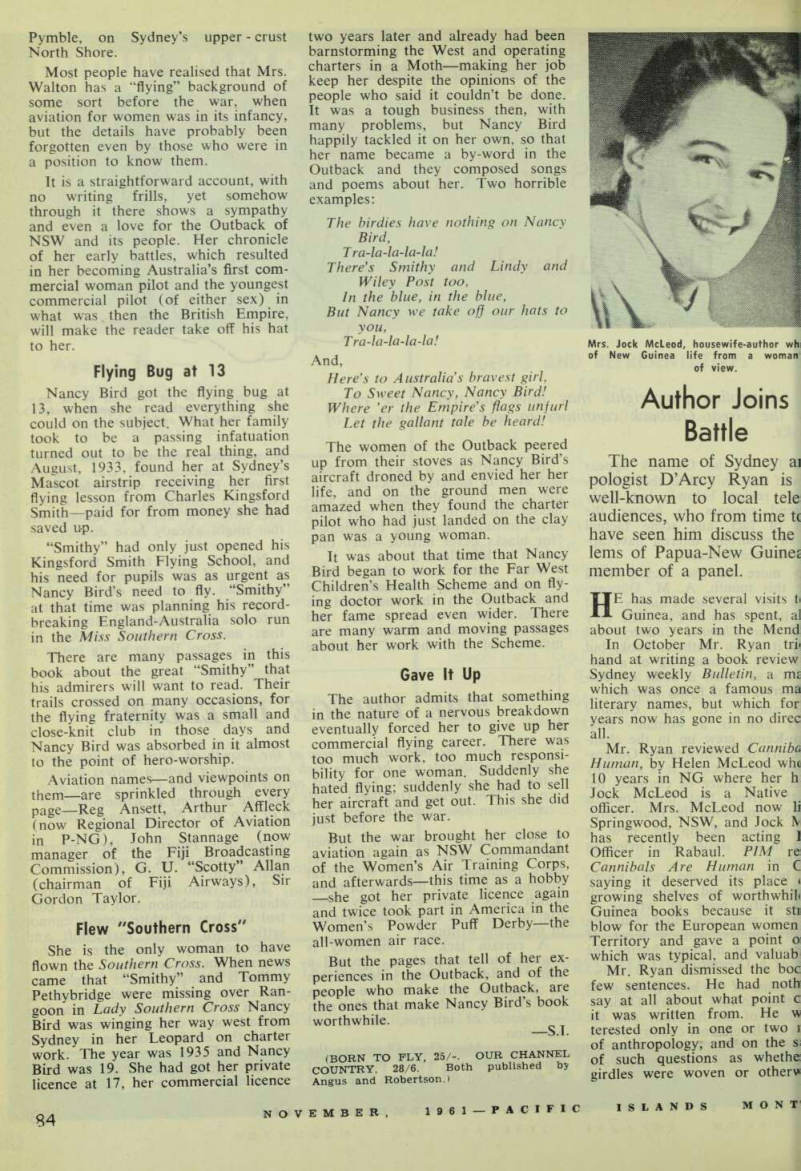 86
86 87
87 88
88 89
89 90
90 91
91 92
92 93
93 94
94 95
95 96
96 97
97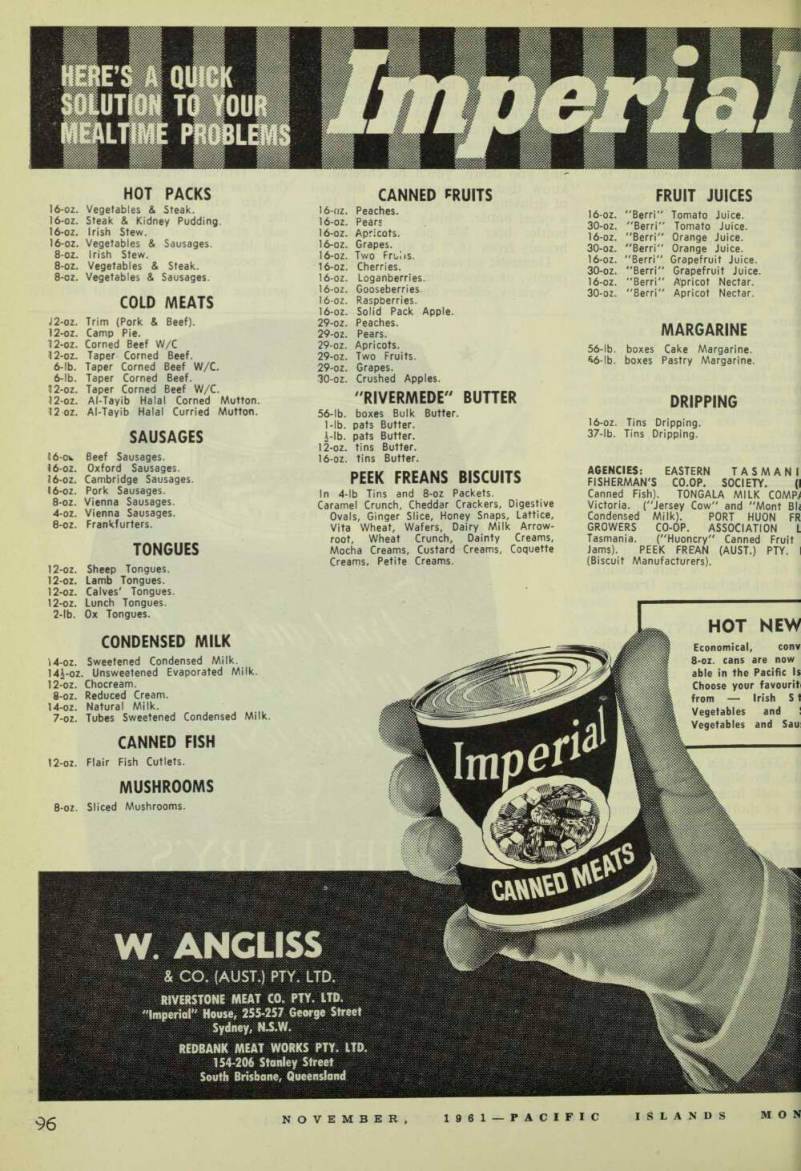 98
98 99
99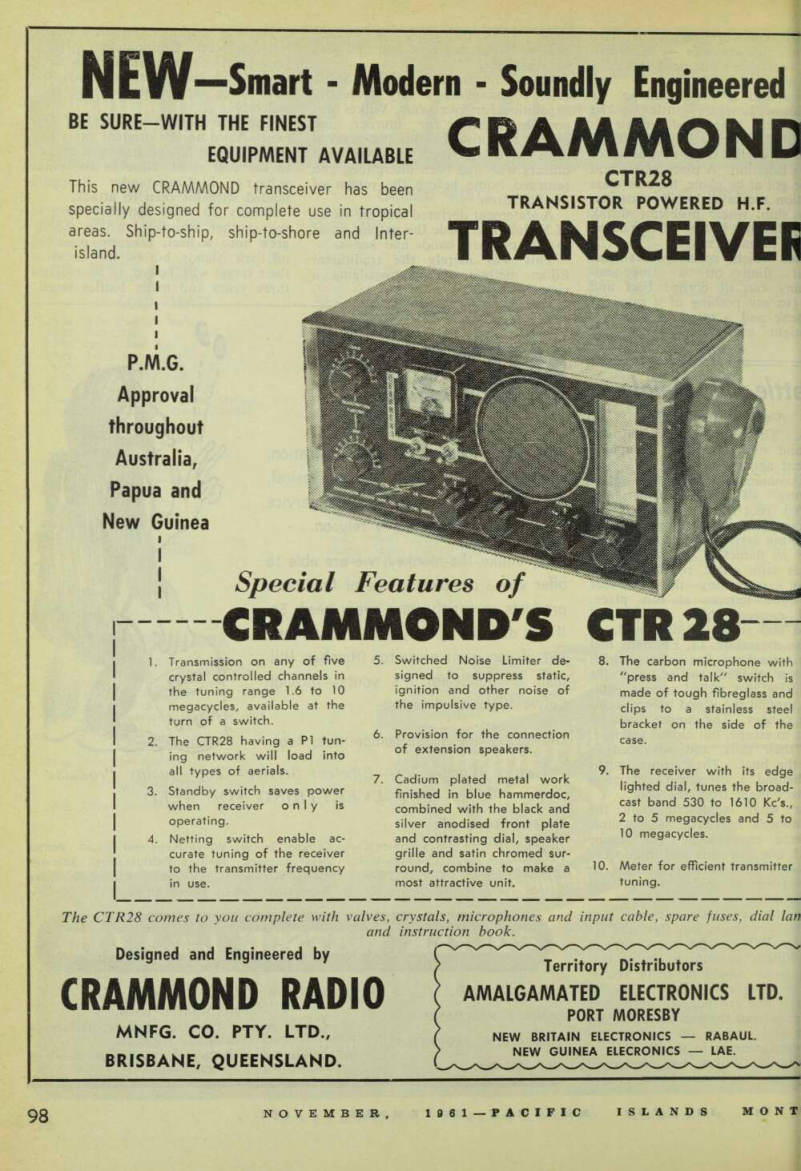 100
100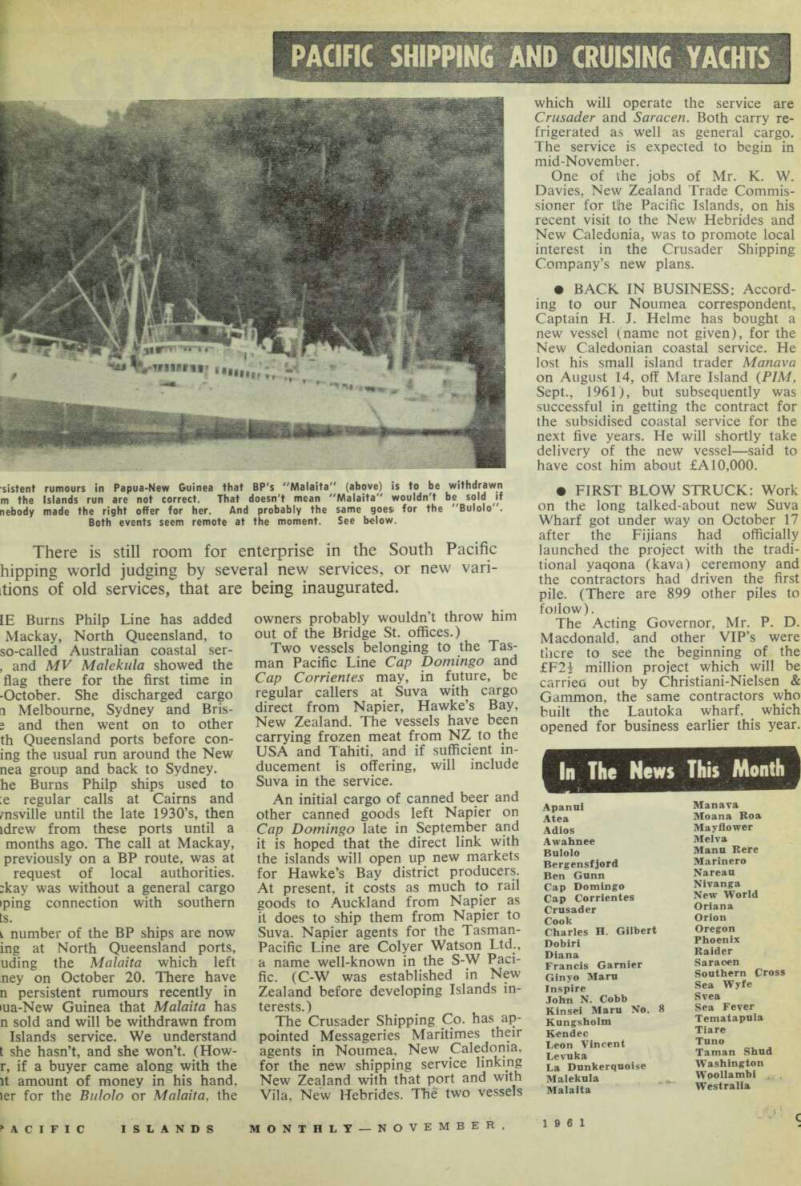 101
101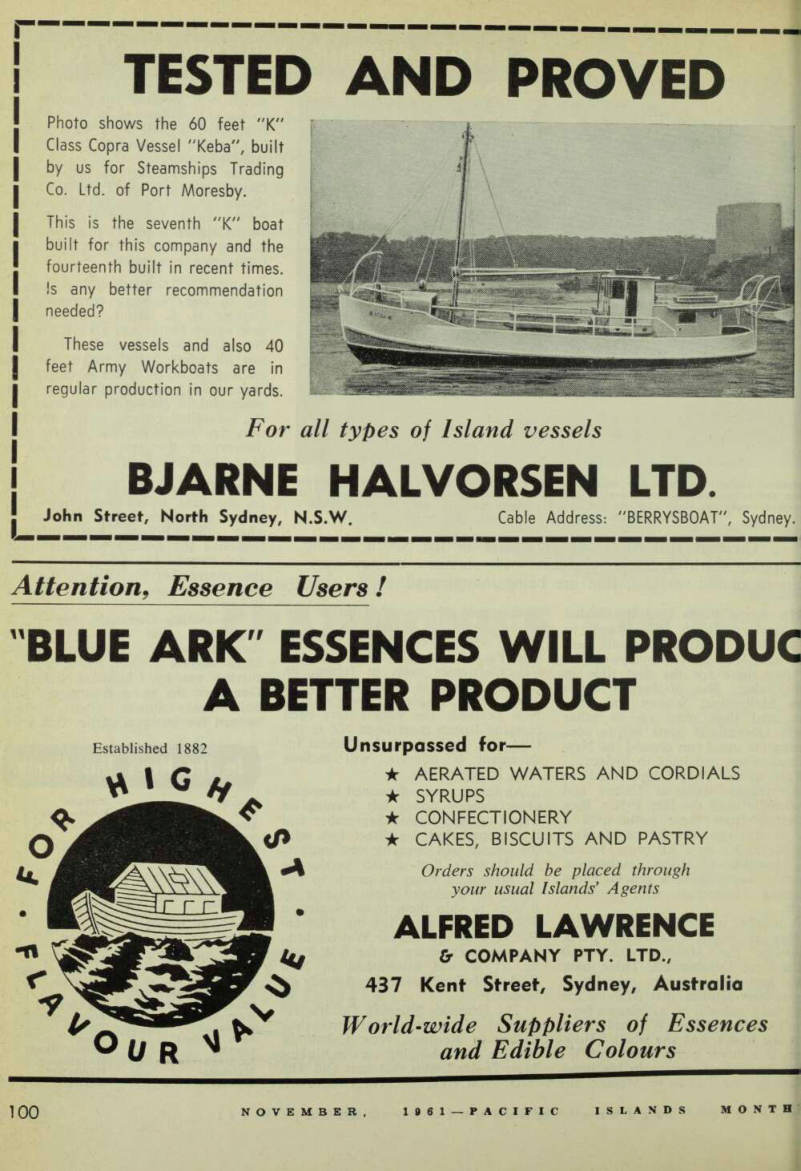 102
102 103
103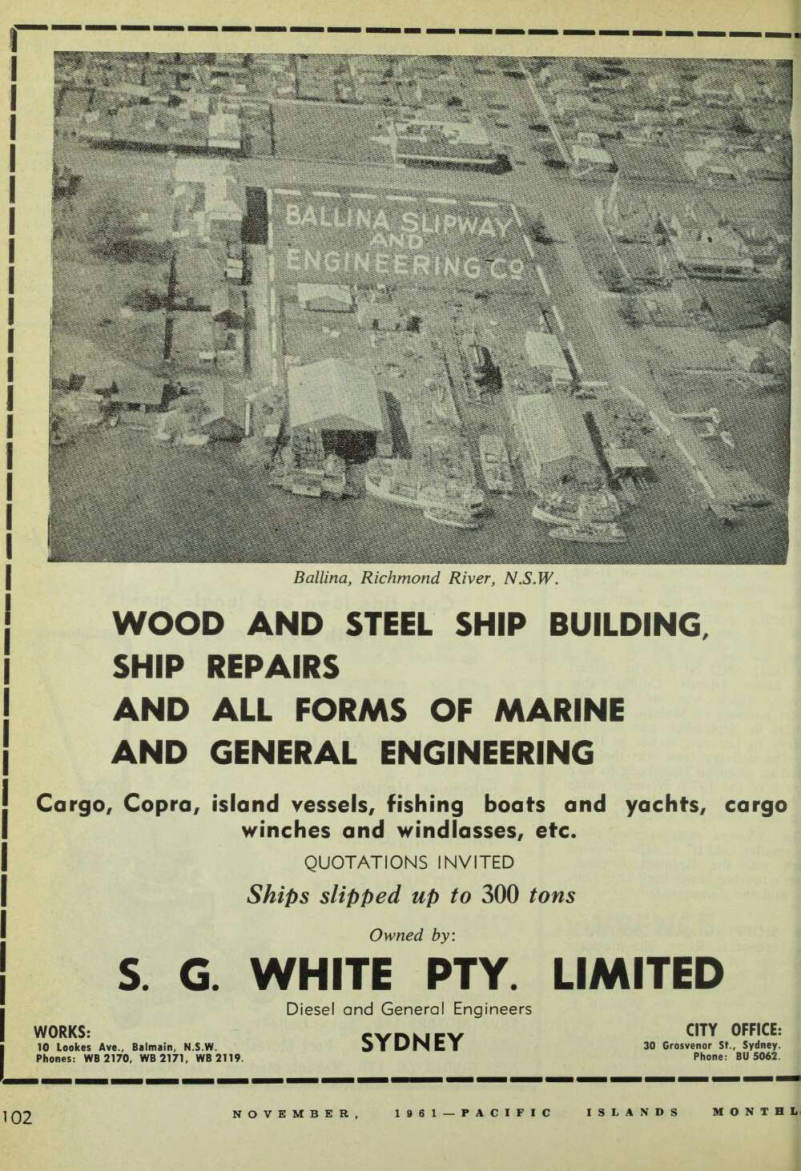 104
104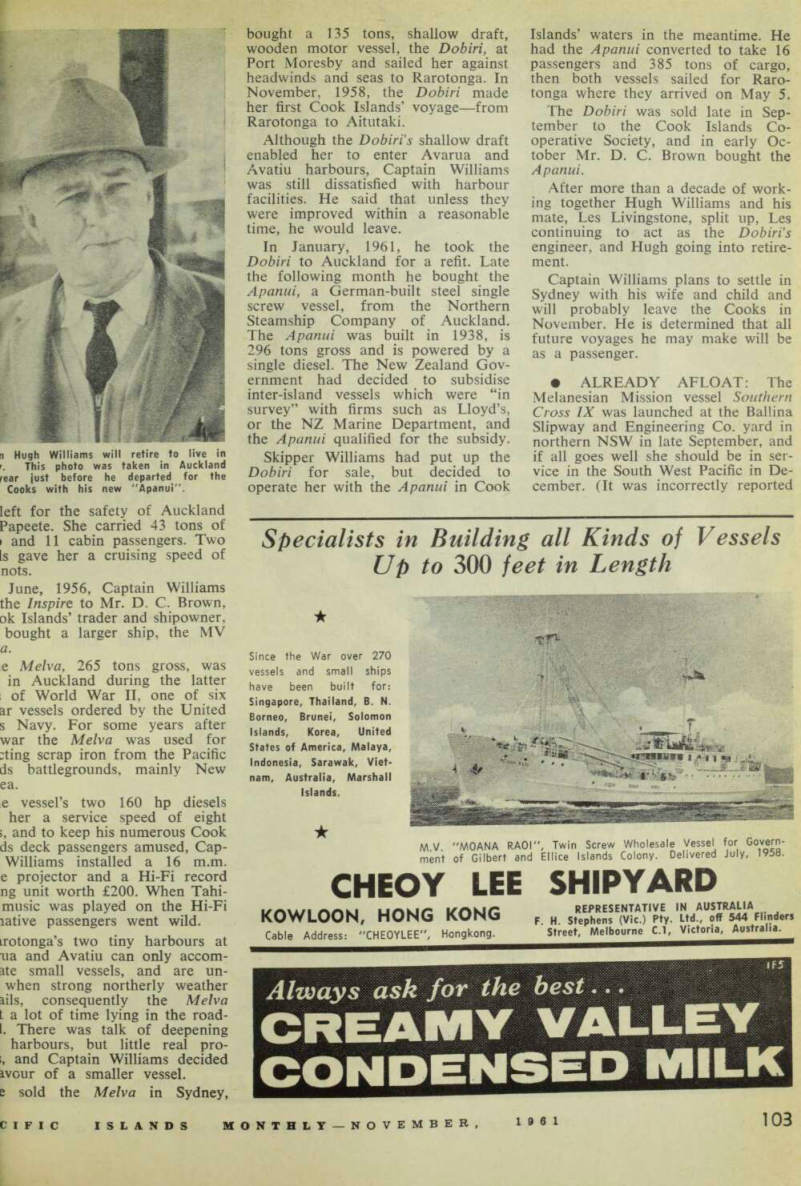 105
105 106
106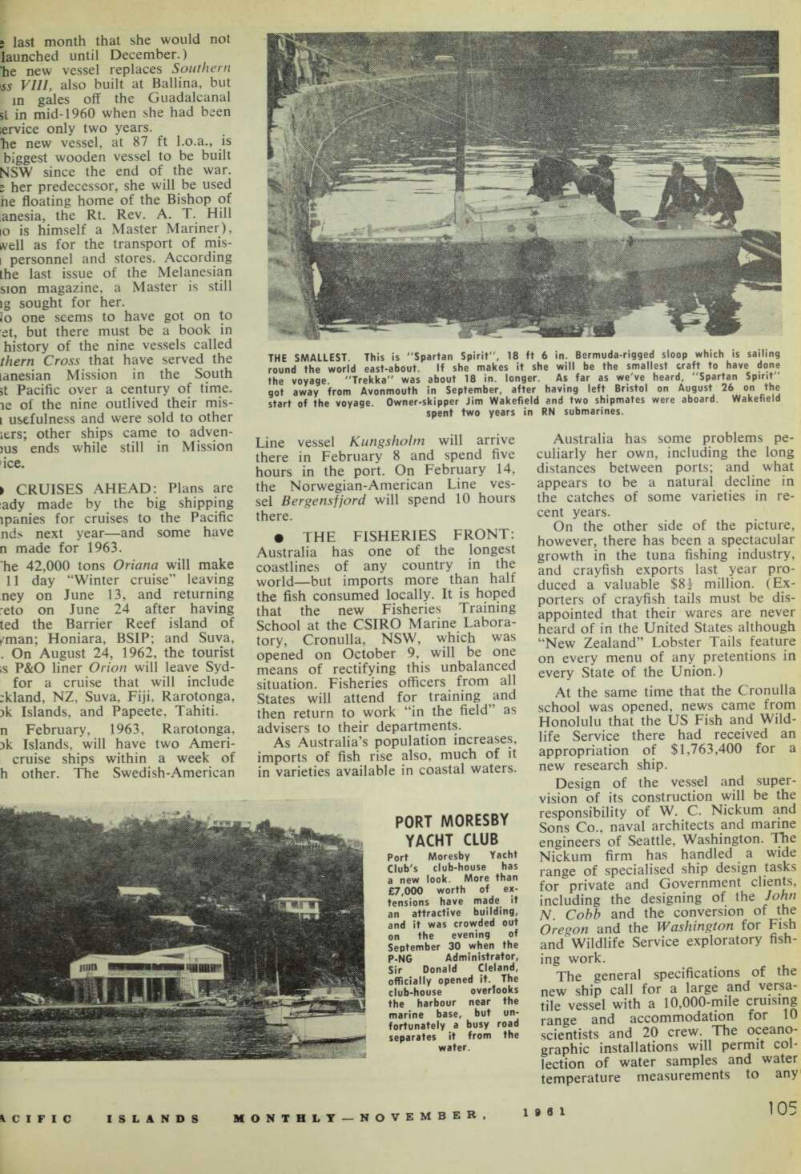 107
107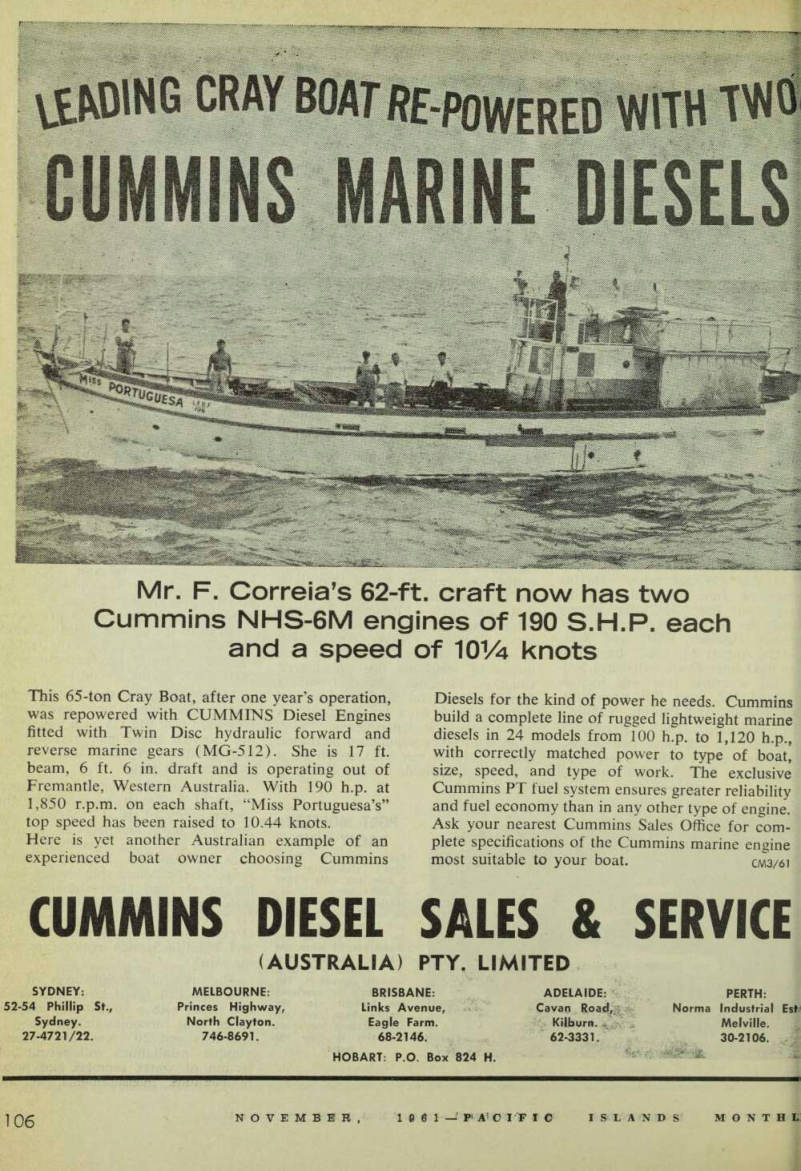 108
108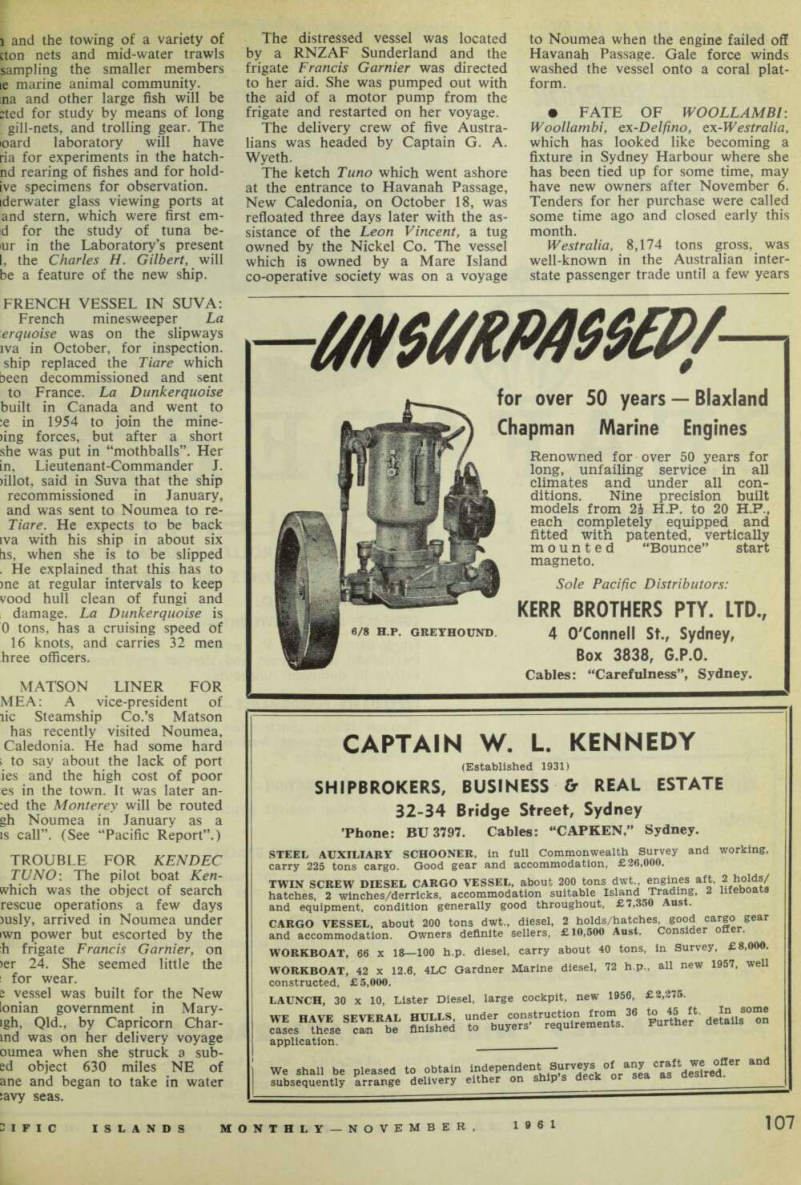 109
109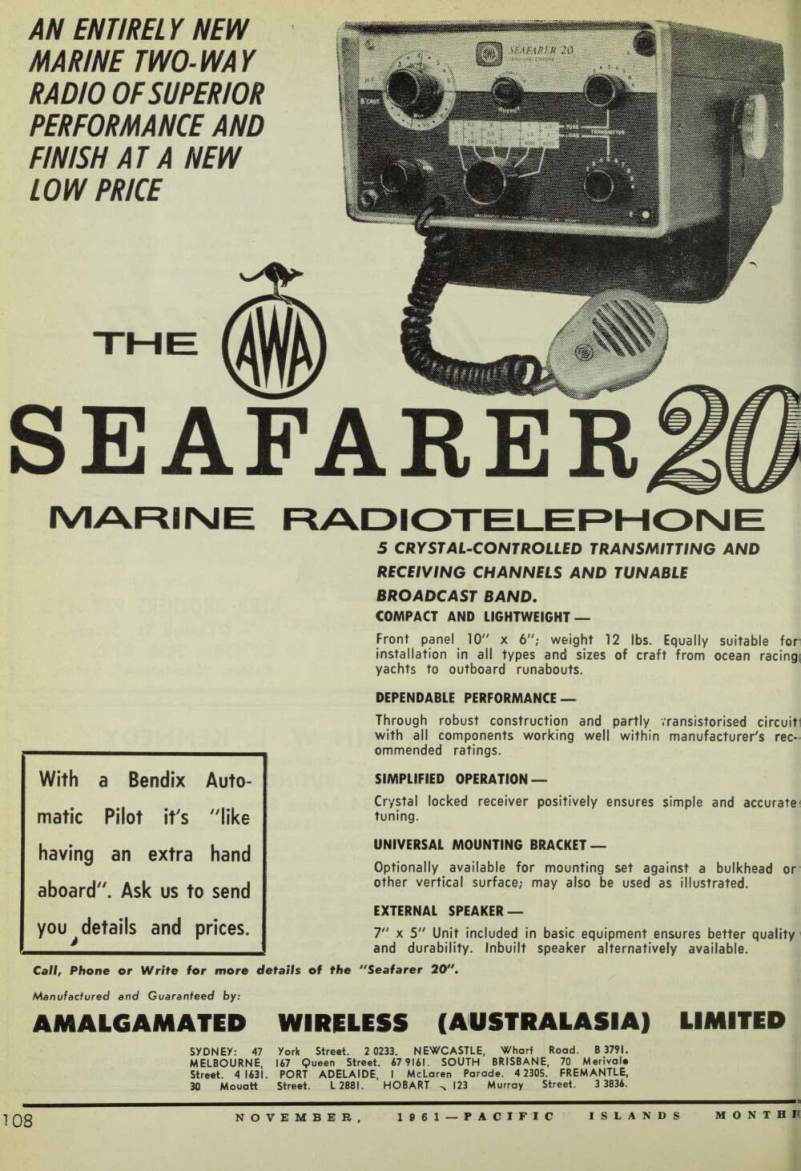 110
110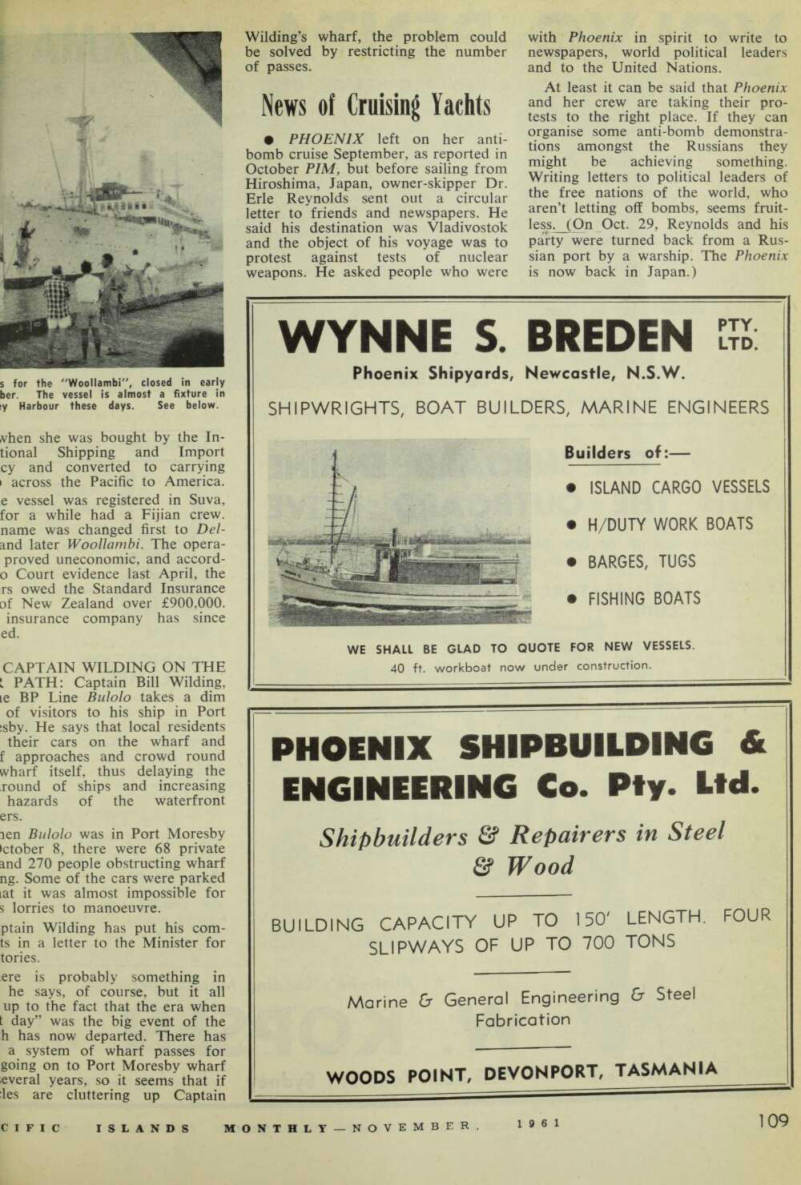 111
111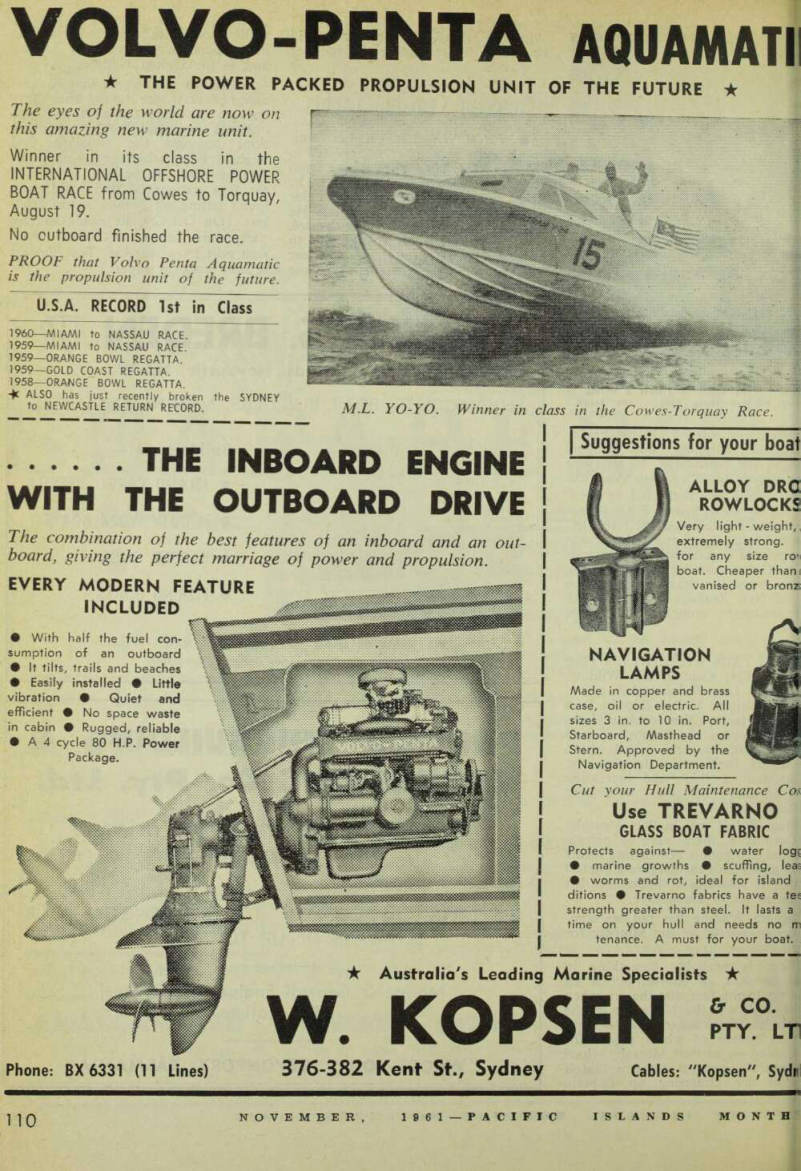 112
112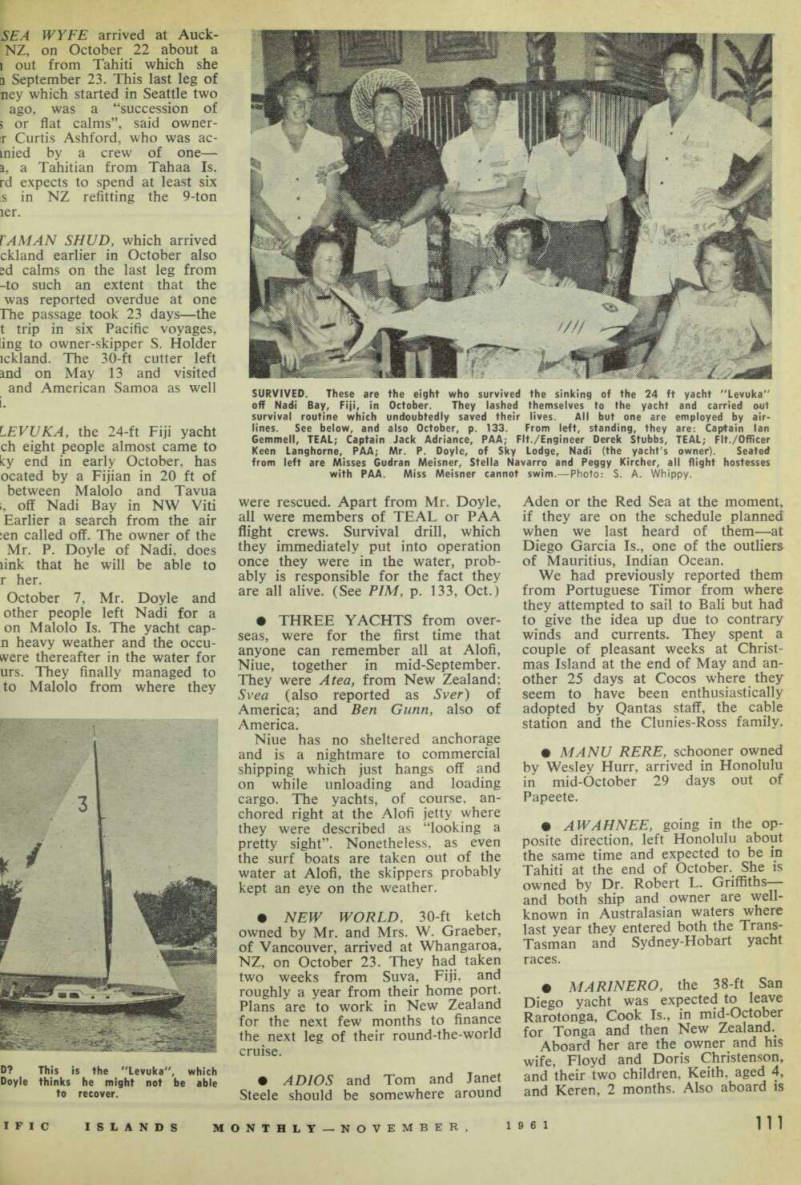 113
113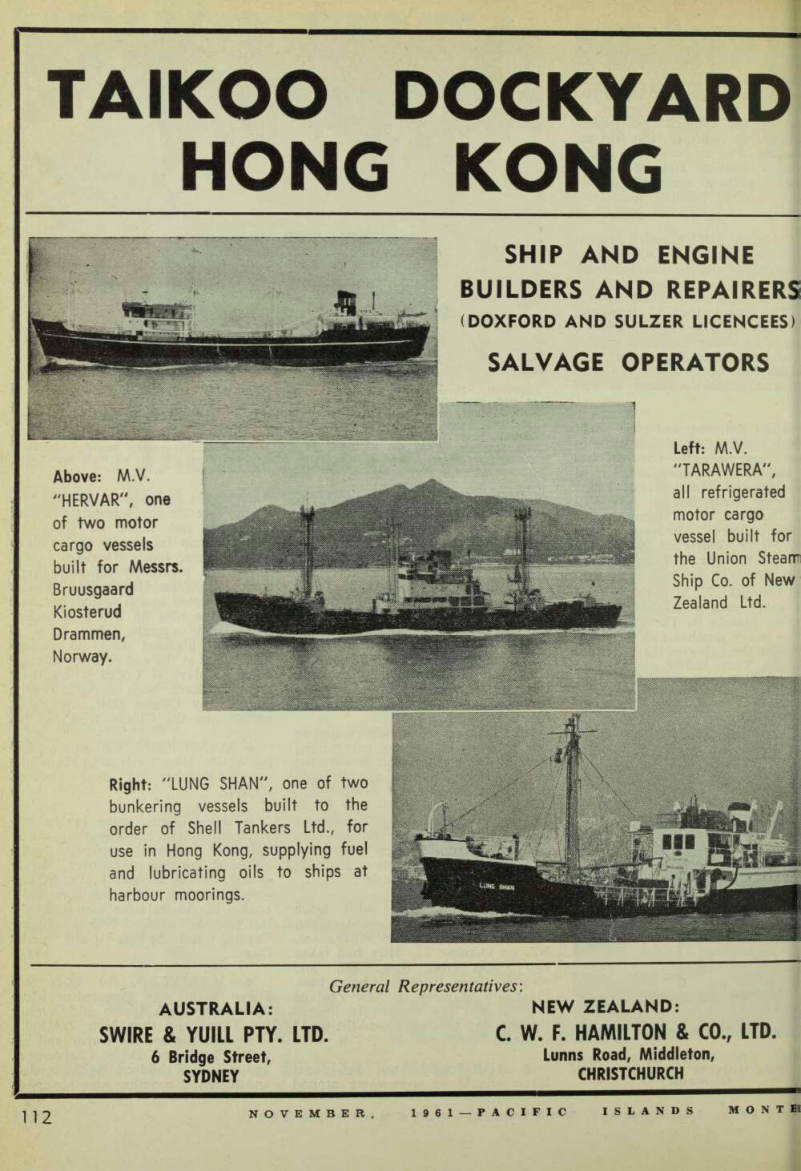 114
114 115
115 116
116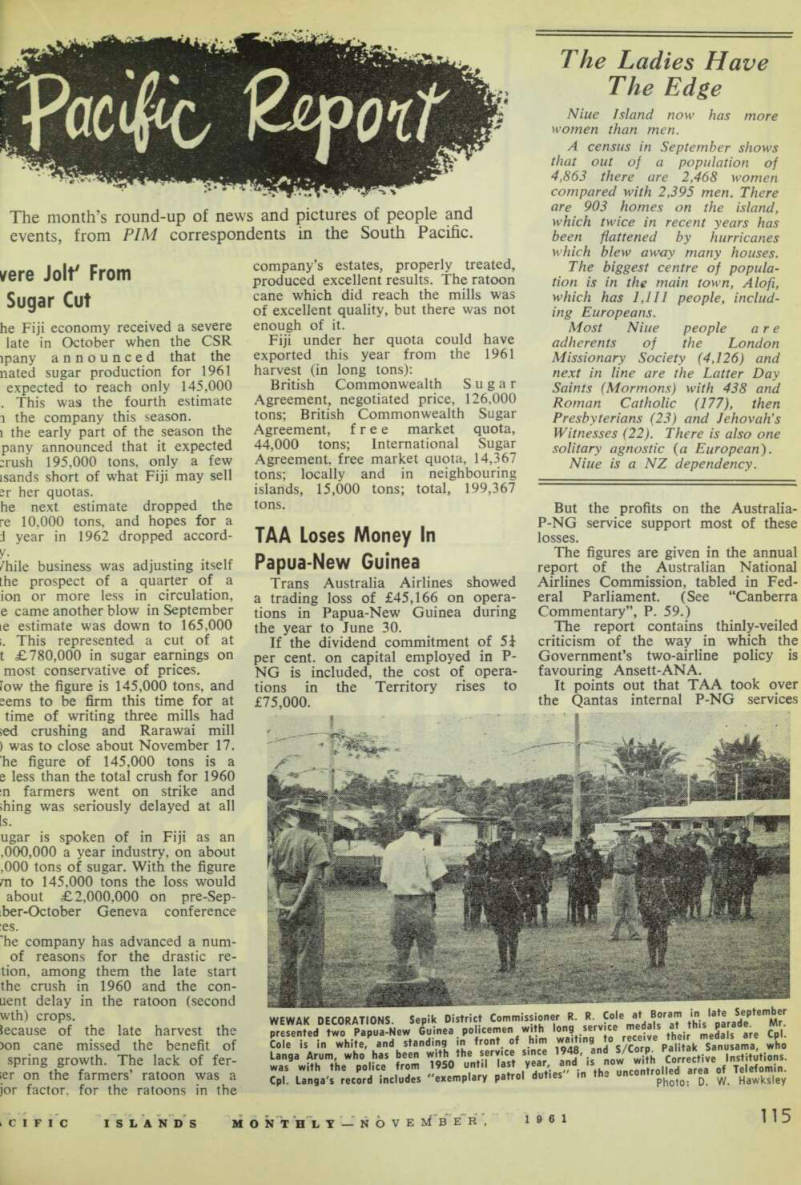 117
117 118
118 119
119 120
120 121
121 122
122 123
123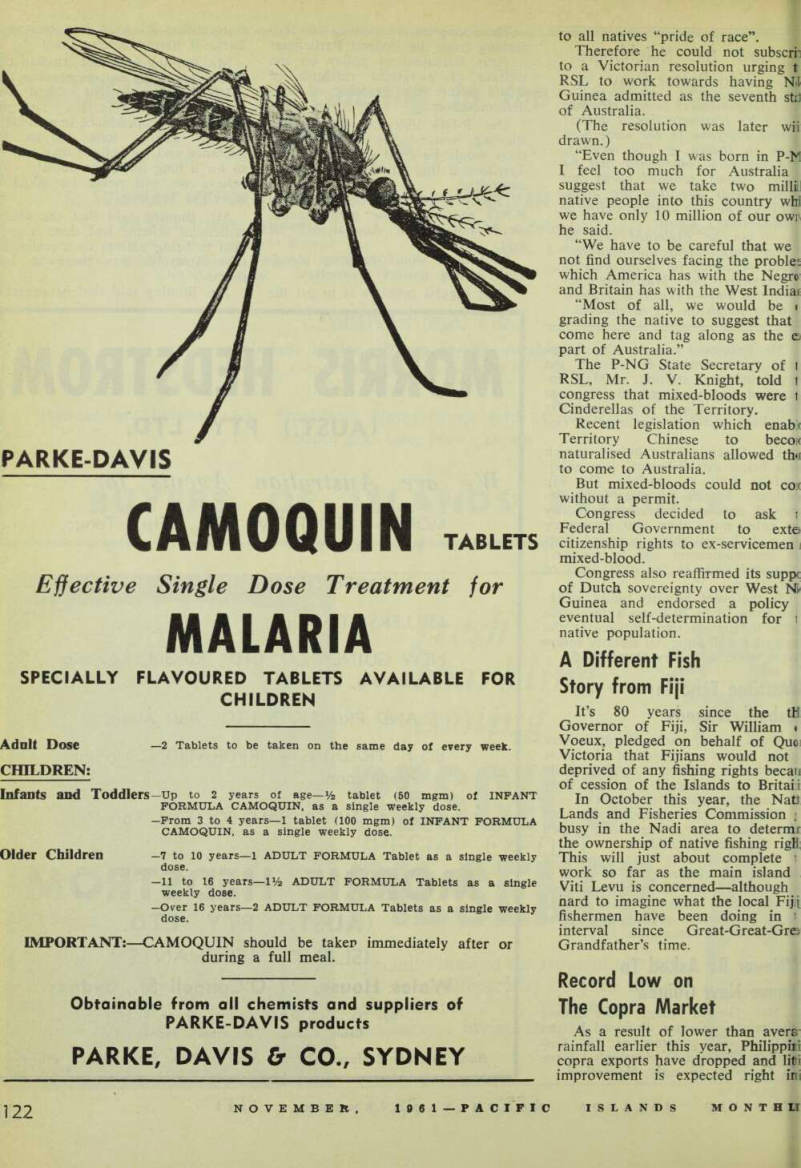 124
124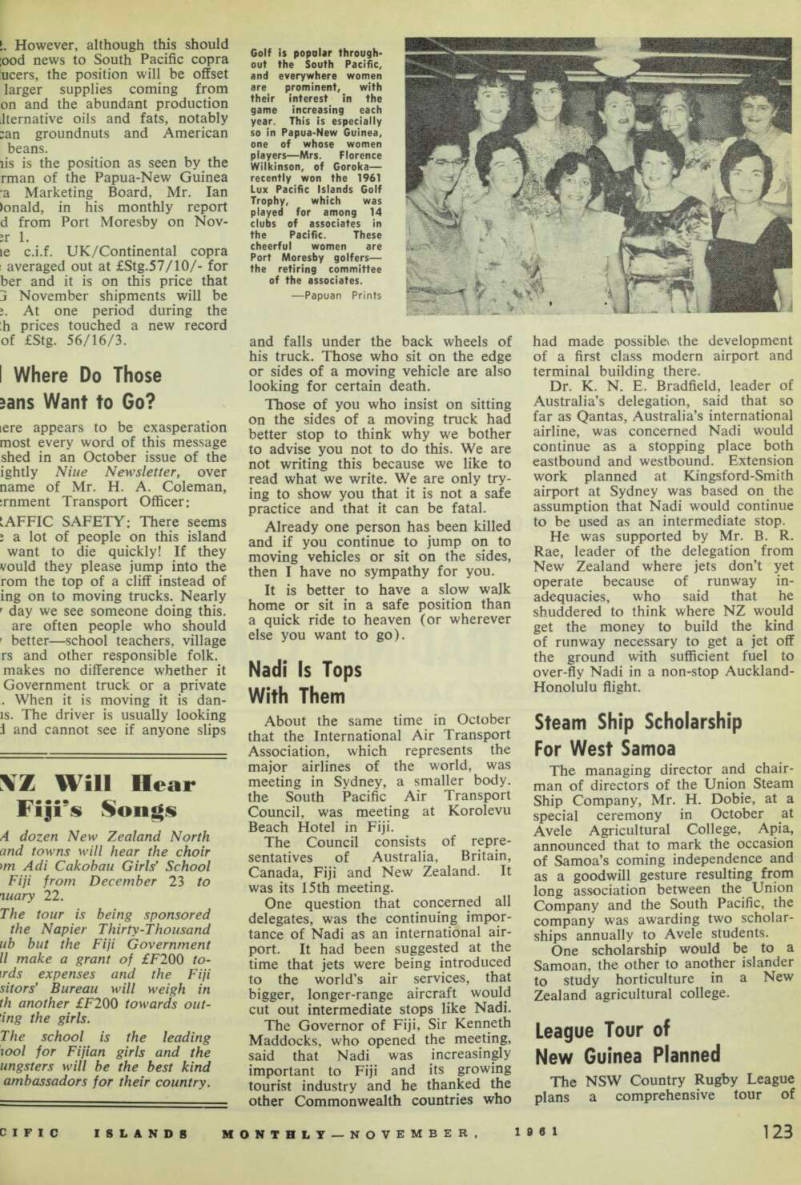 125
125 126
126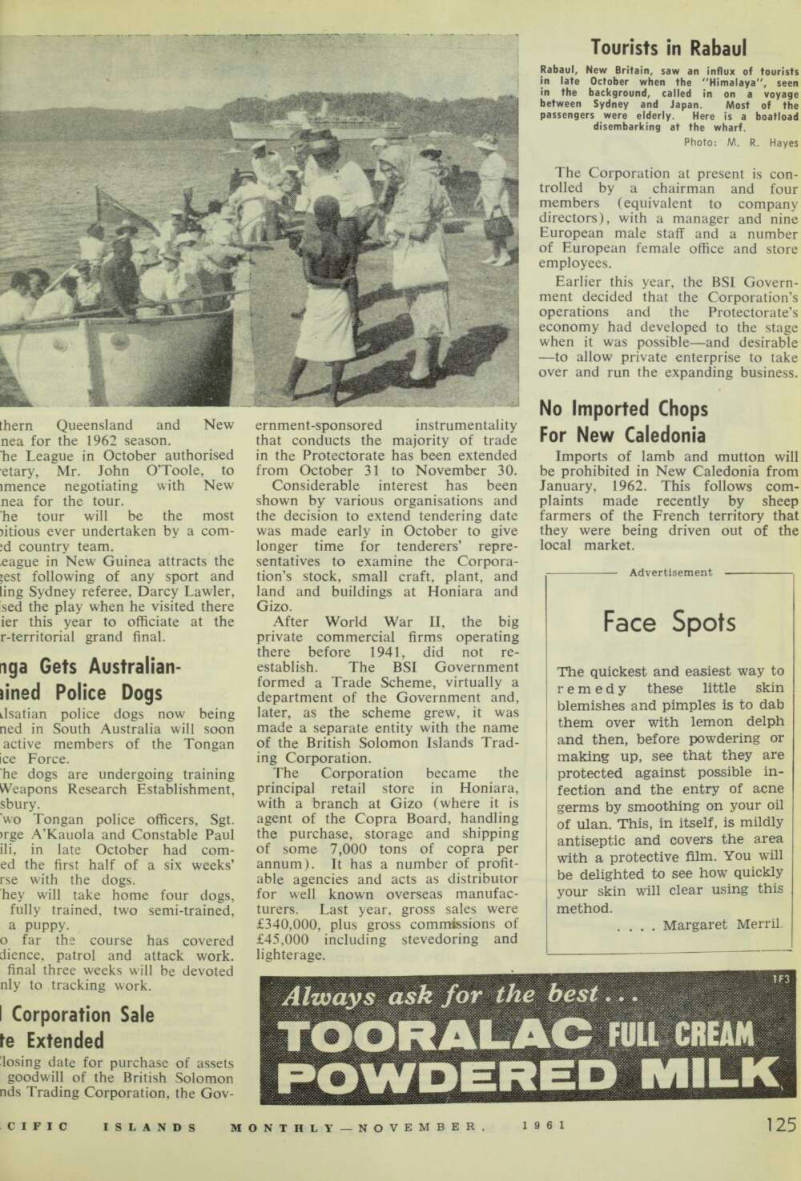 127
127 128
128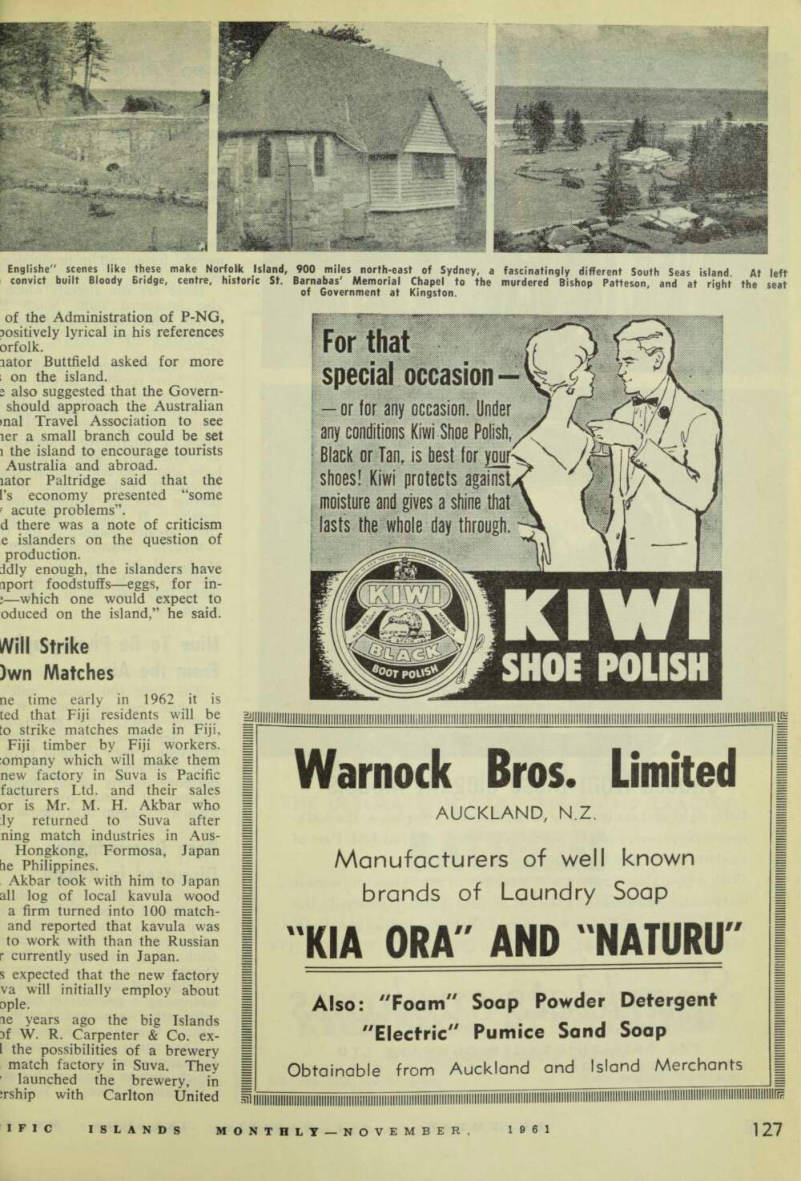 129
129 130
130 131
131 132
132 133
133 134
134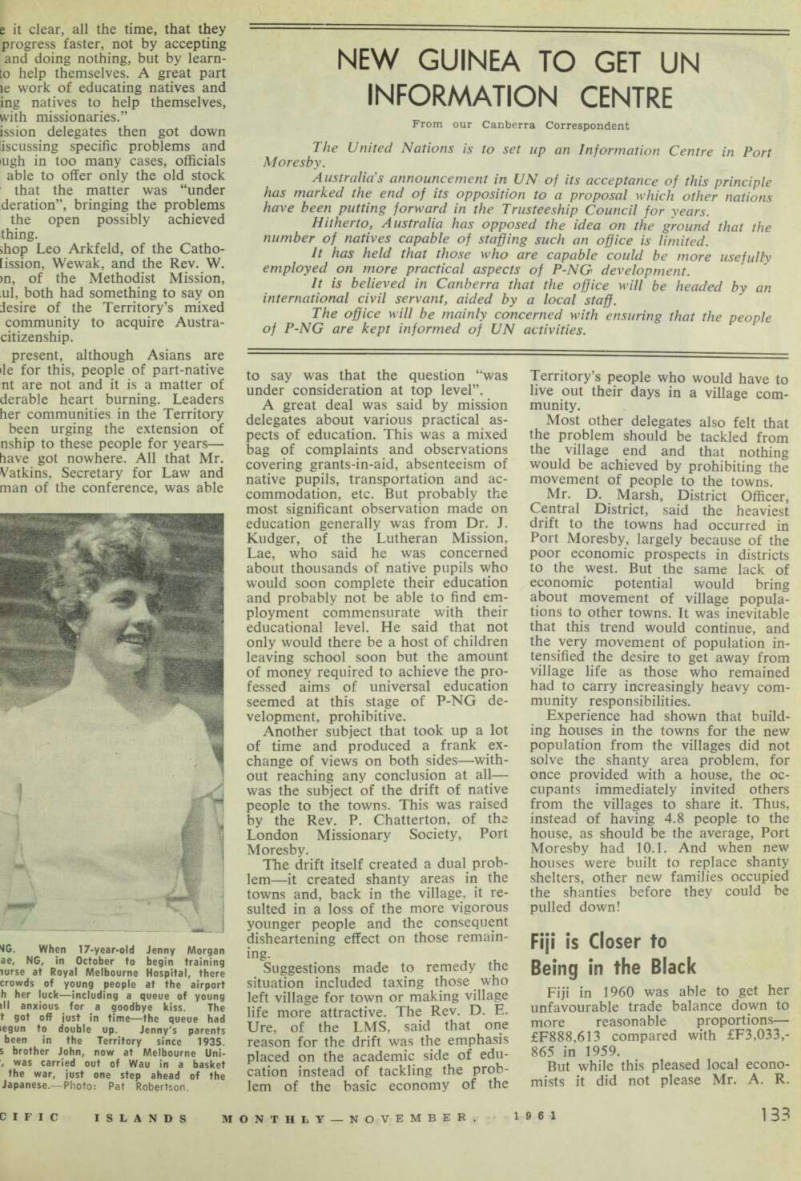 135
135 136
136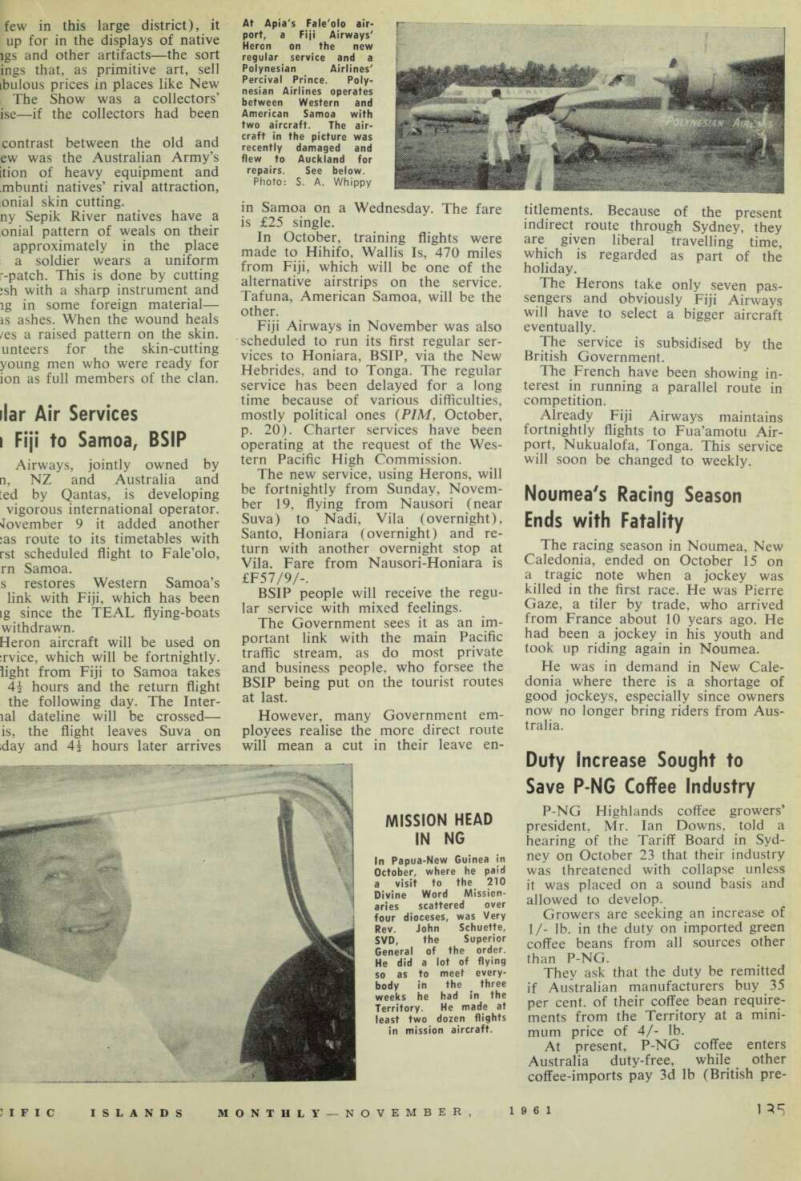 137
137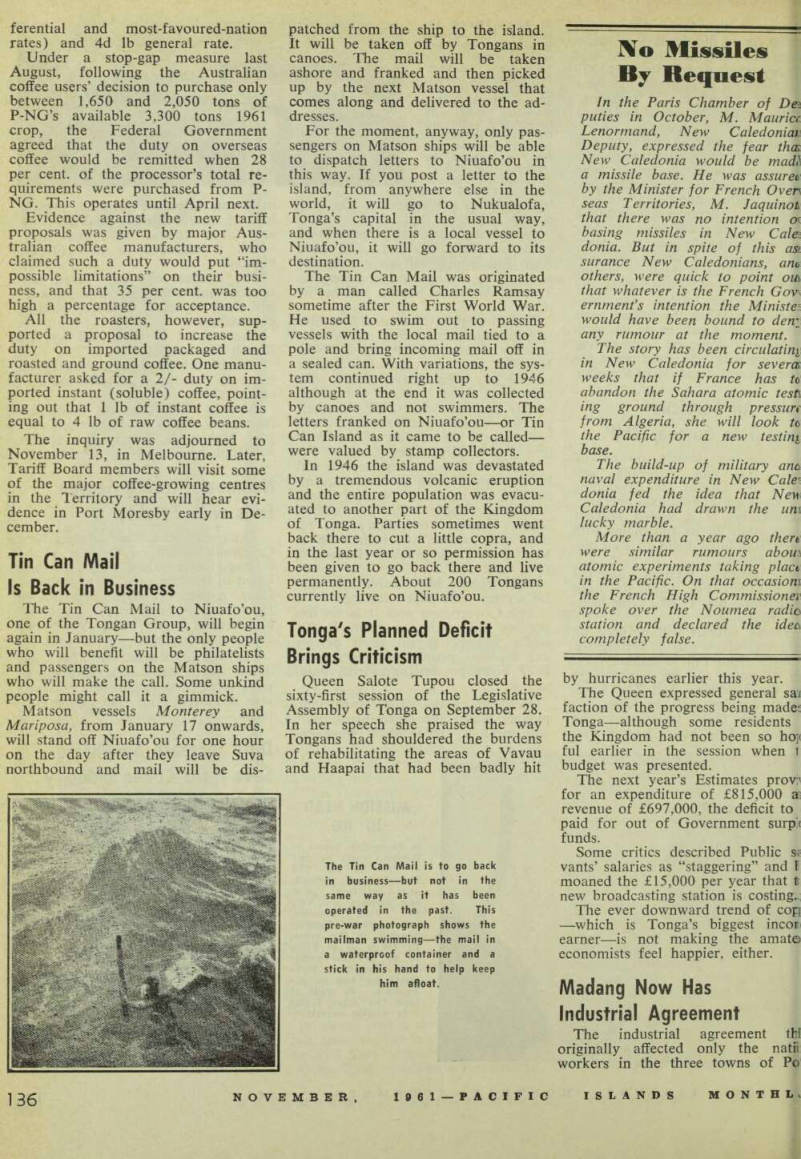 138
138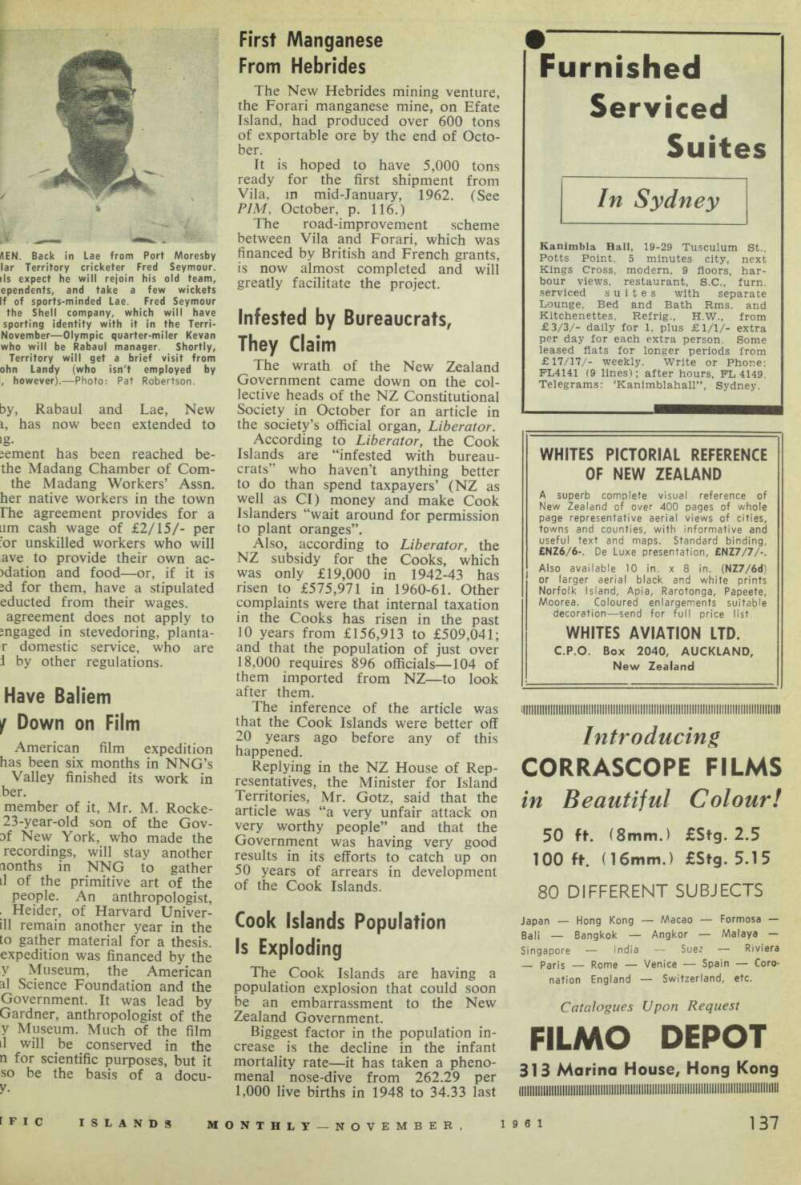 139
139 140
140 141
141 142
142 143
143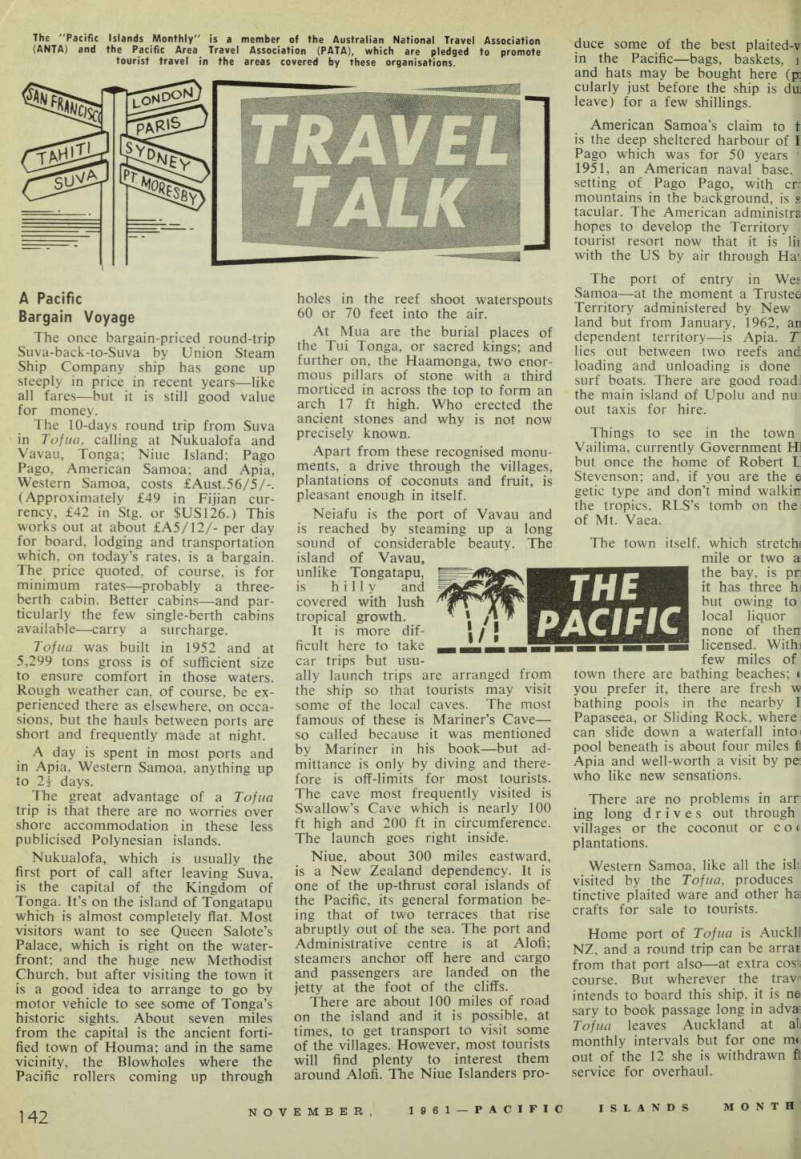 144
144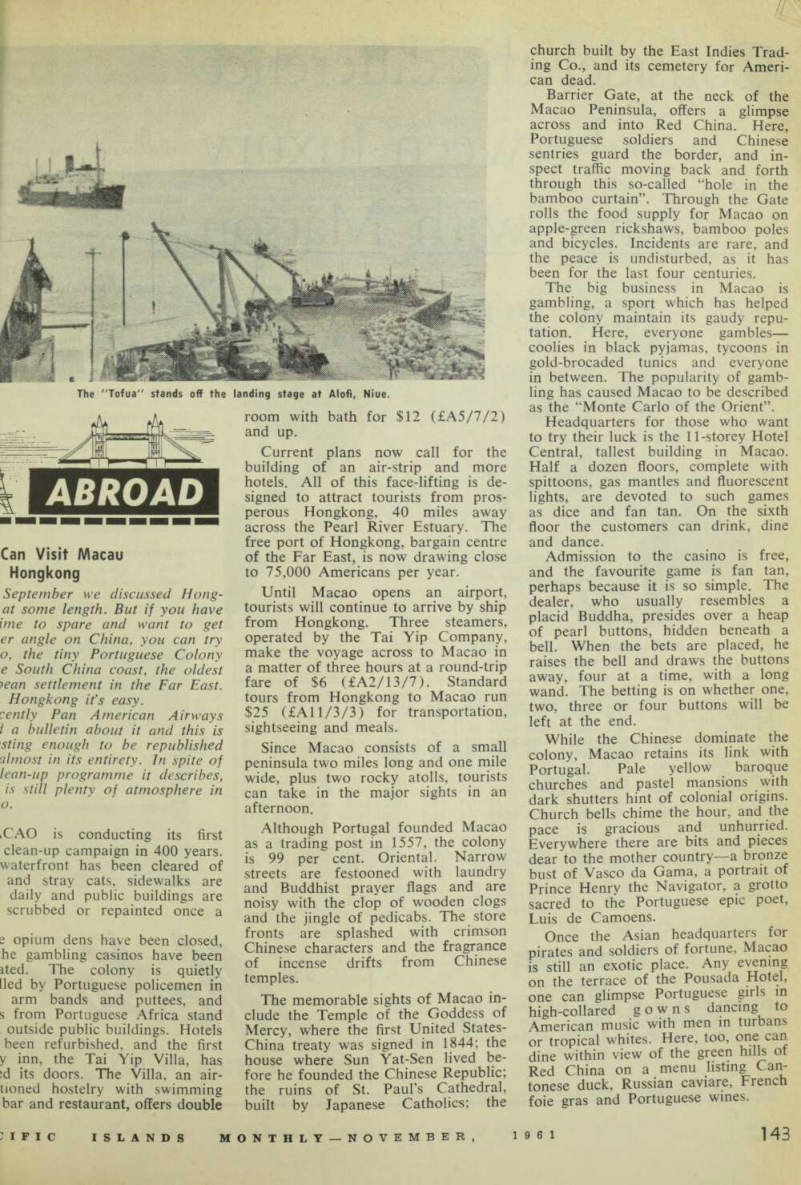 145
145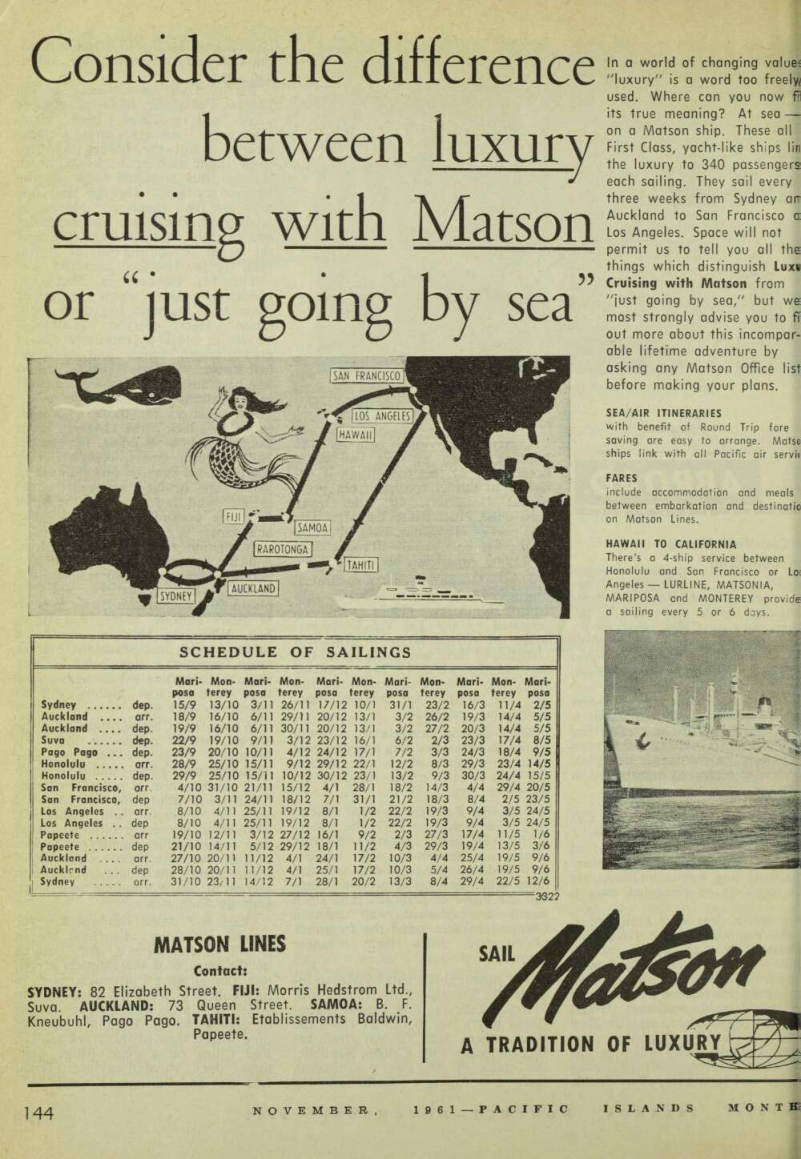 146
146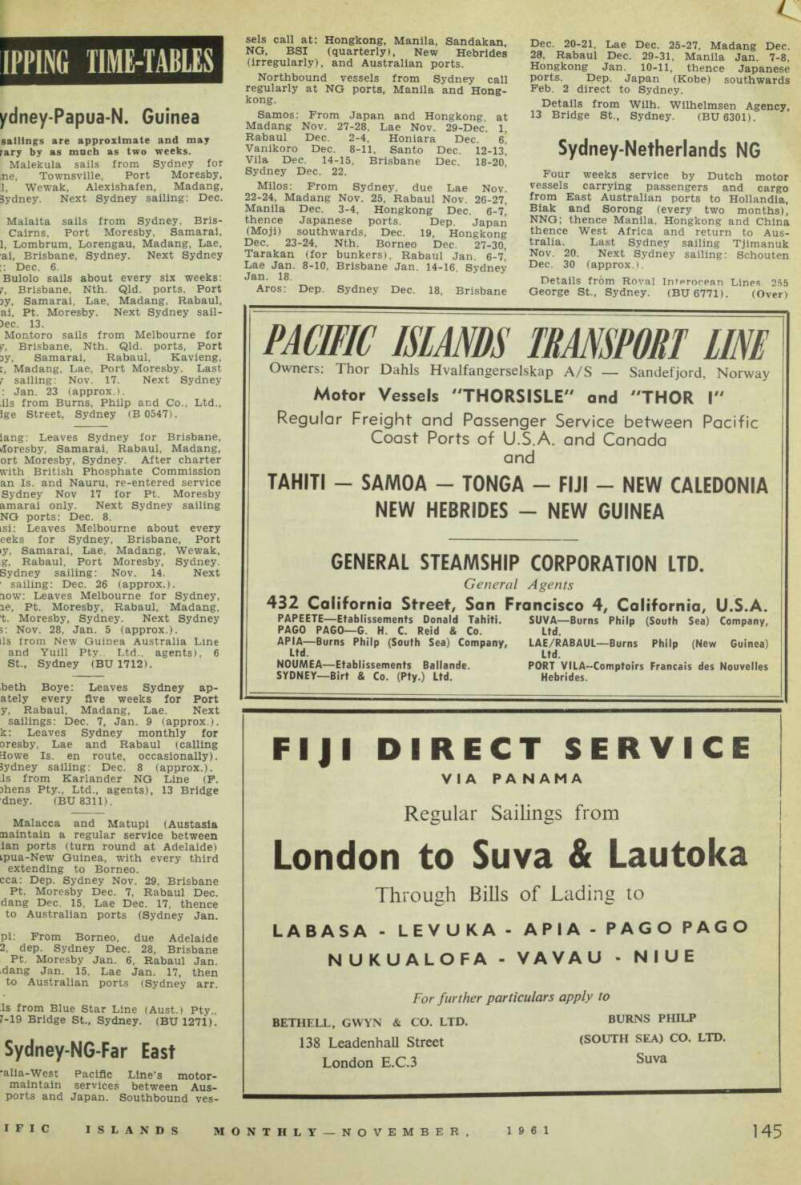 147
147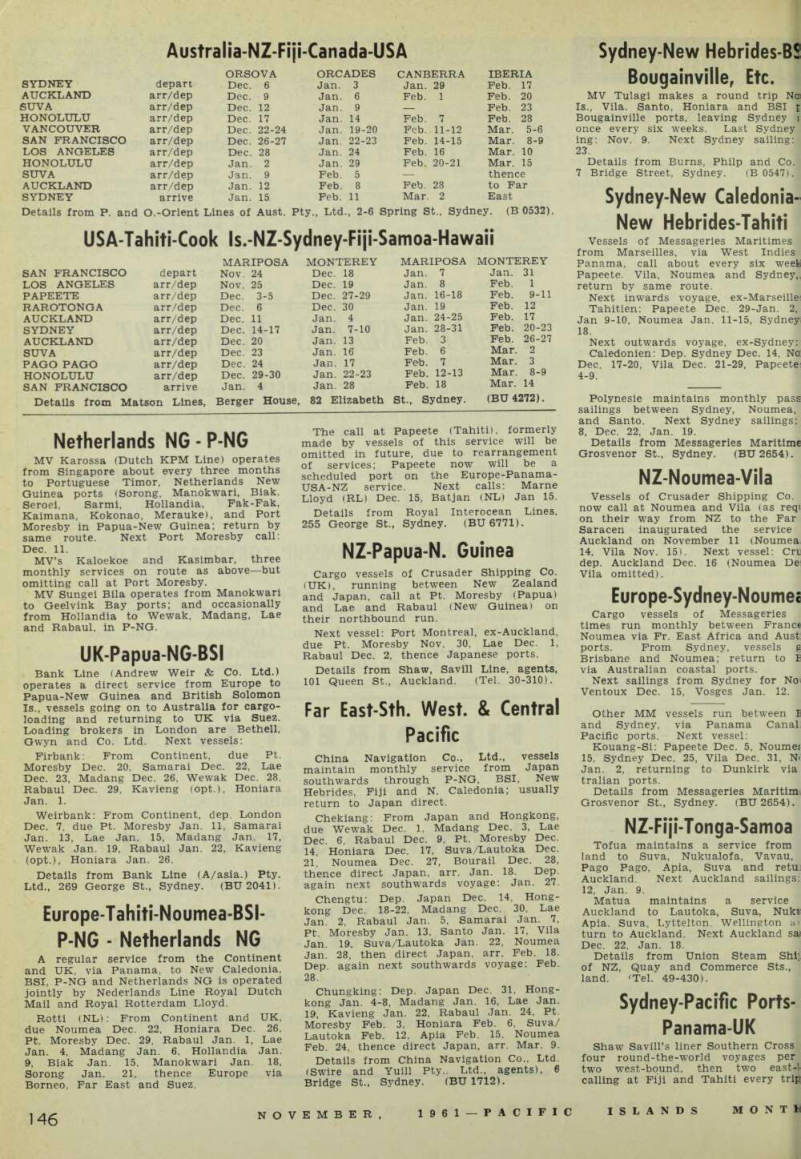 148
148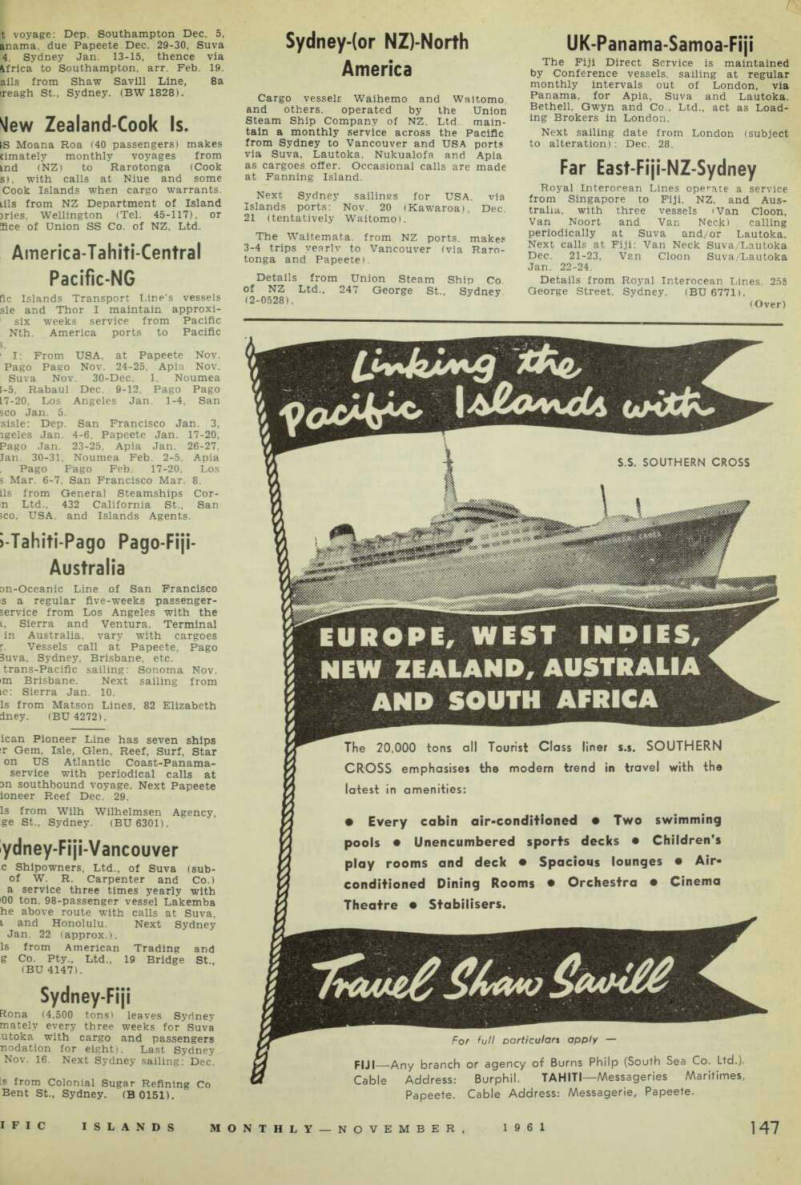 149
149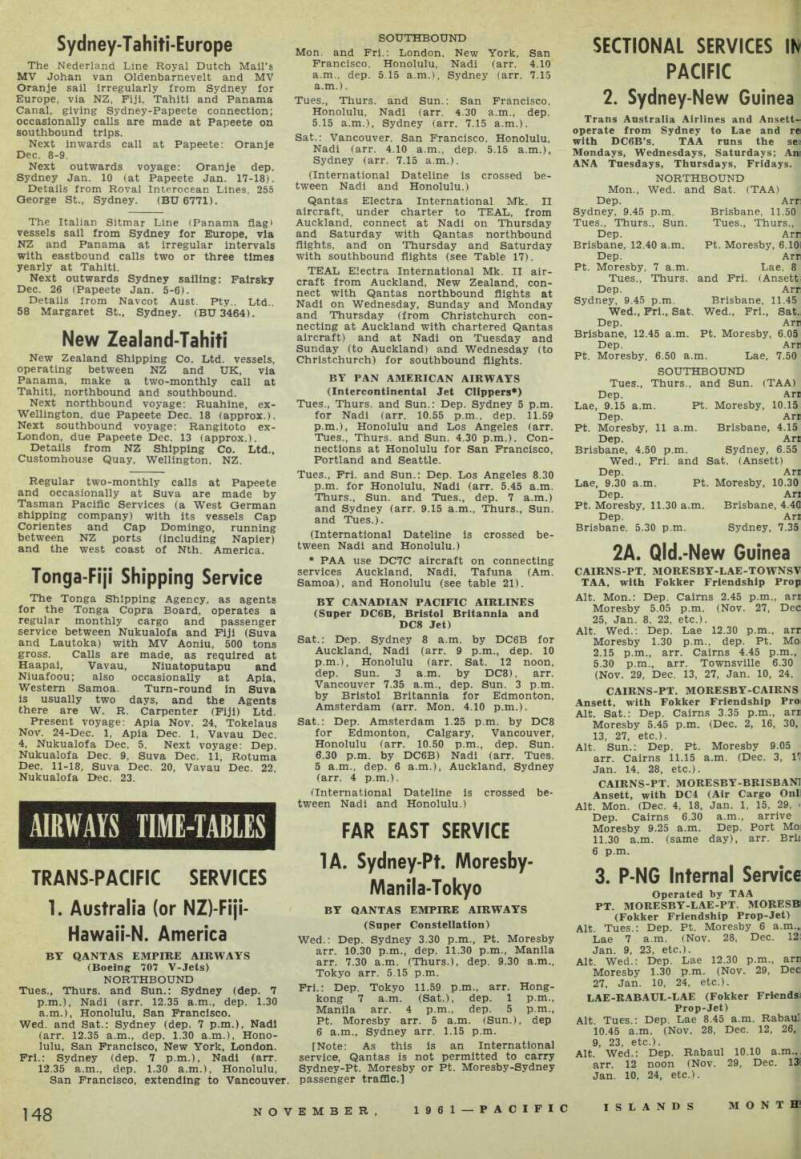 150
150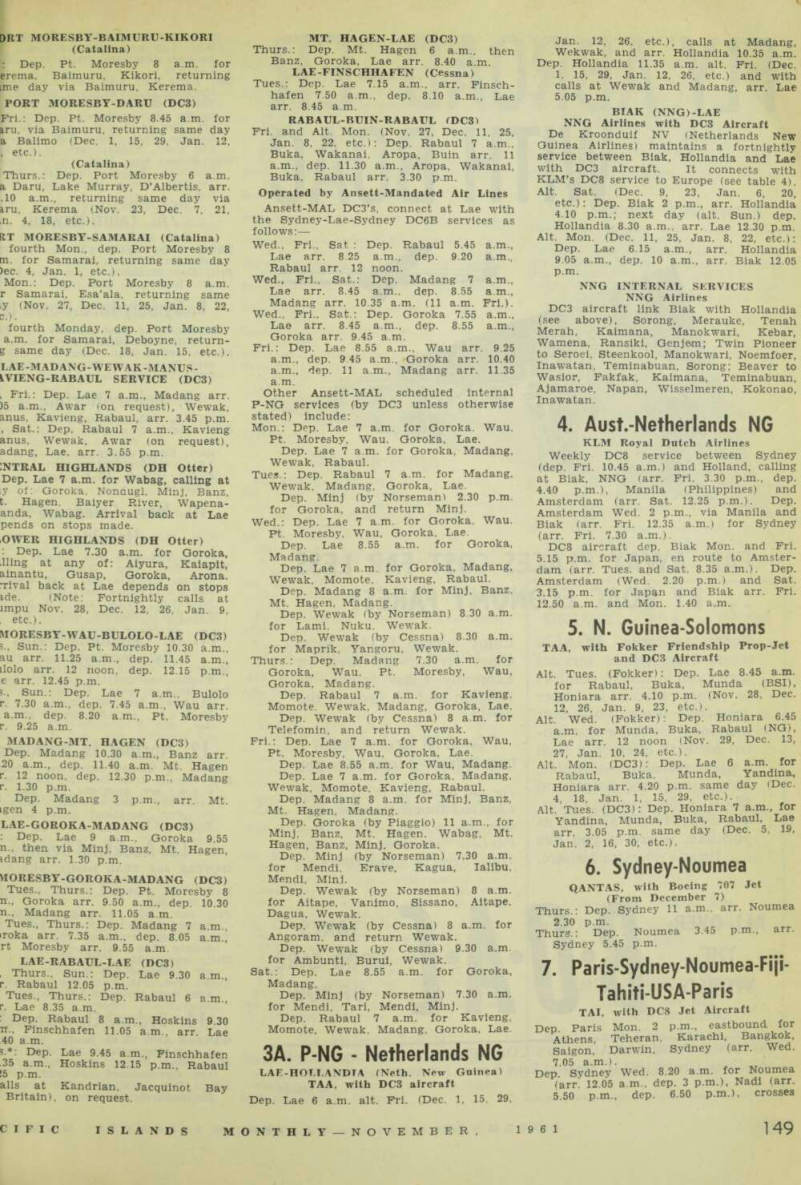 151
151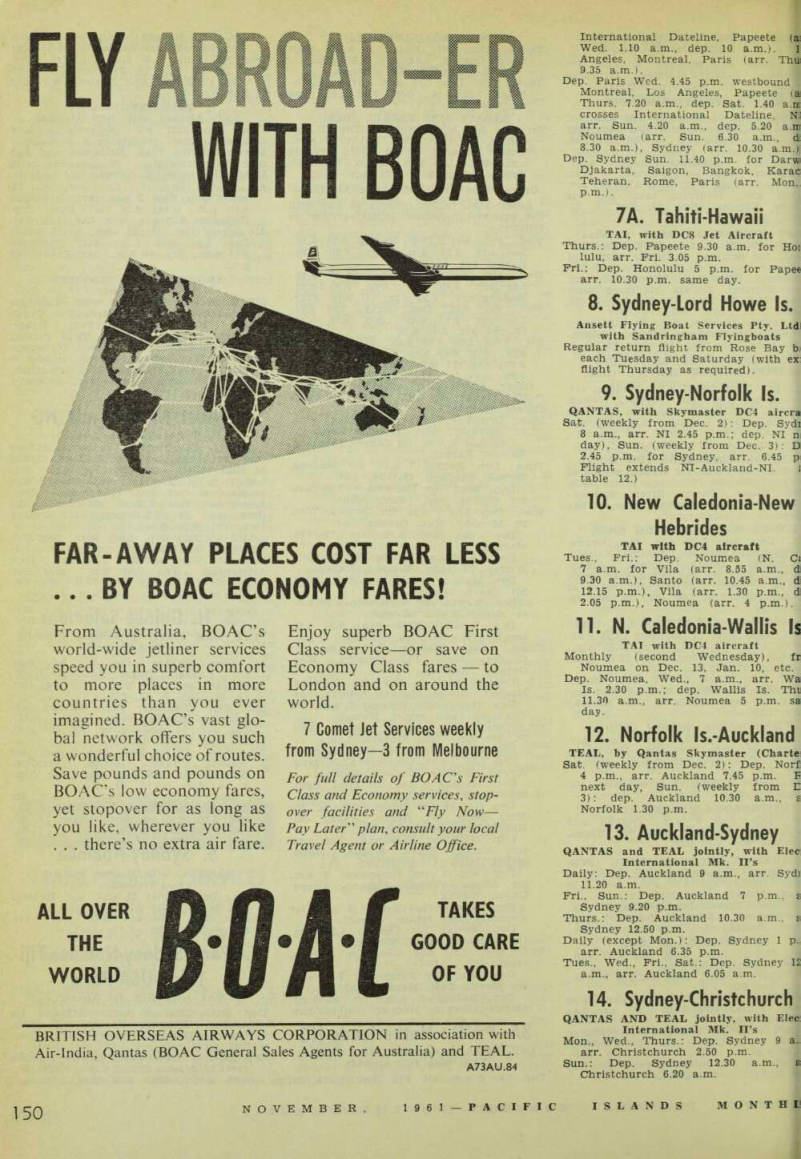 152
152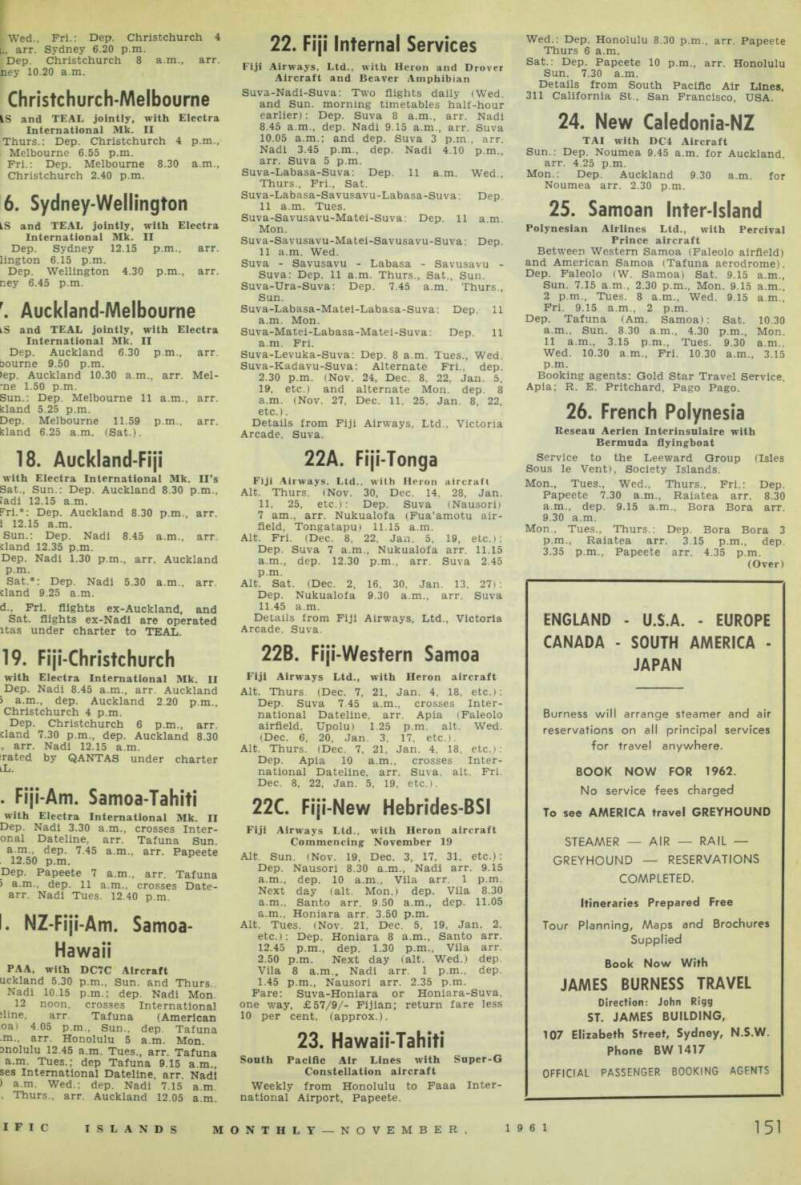 153
153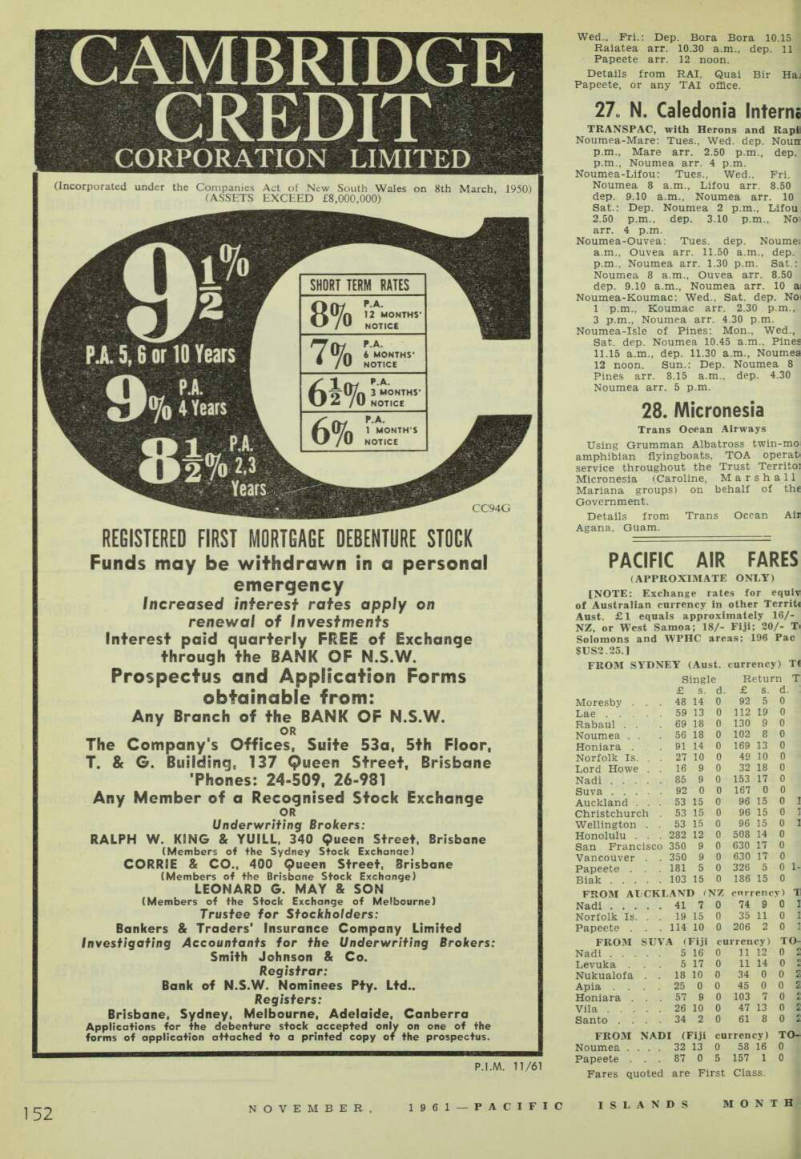 154
154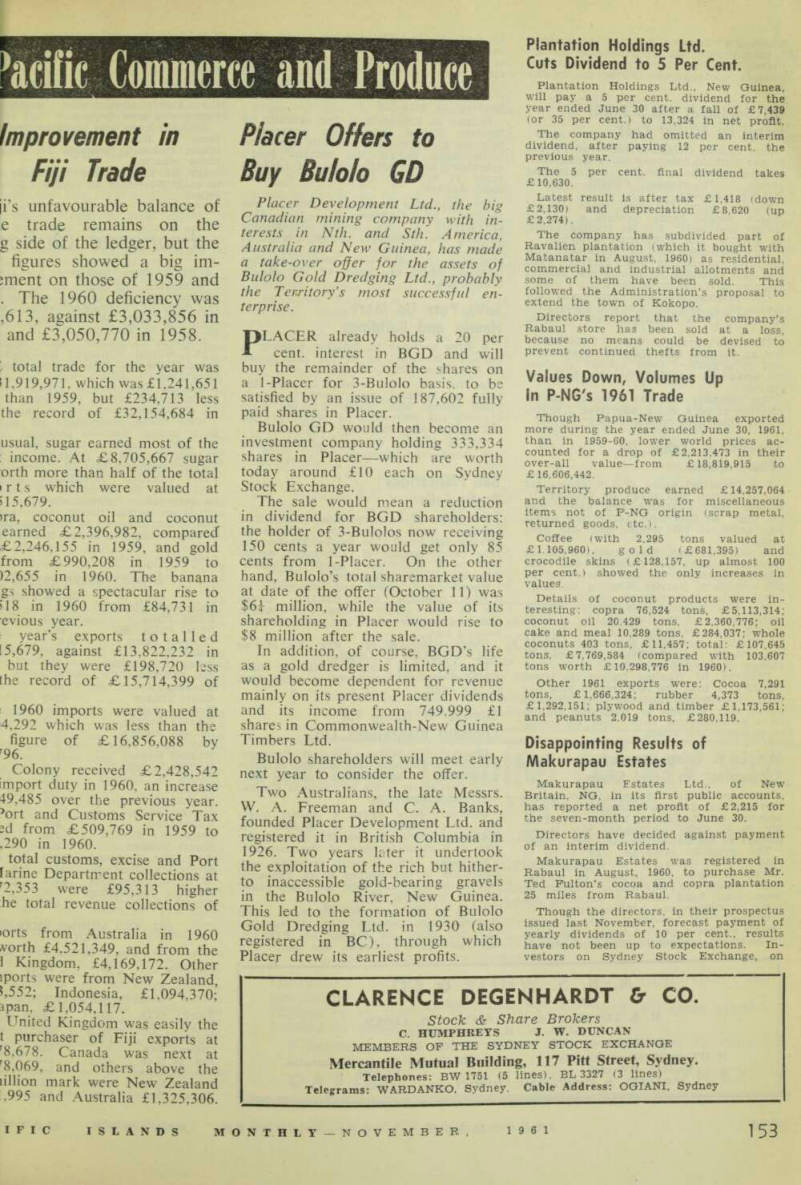 155
155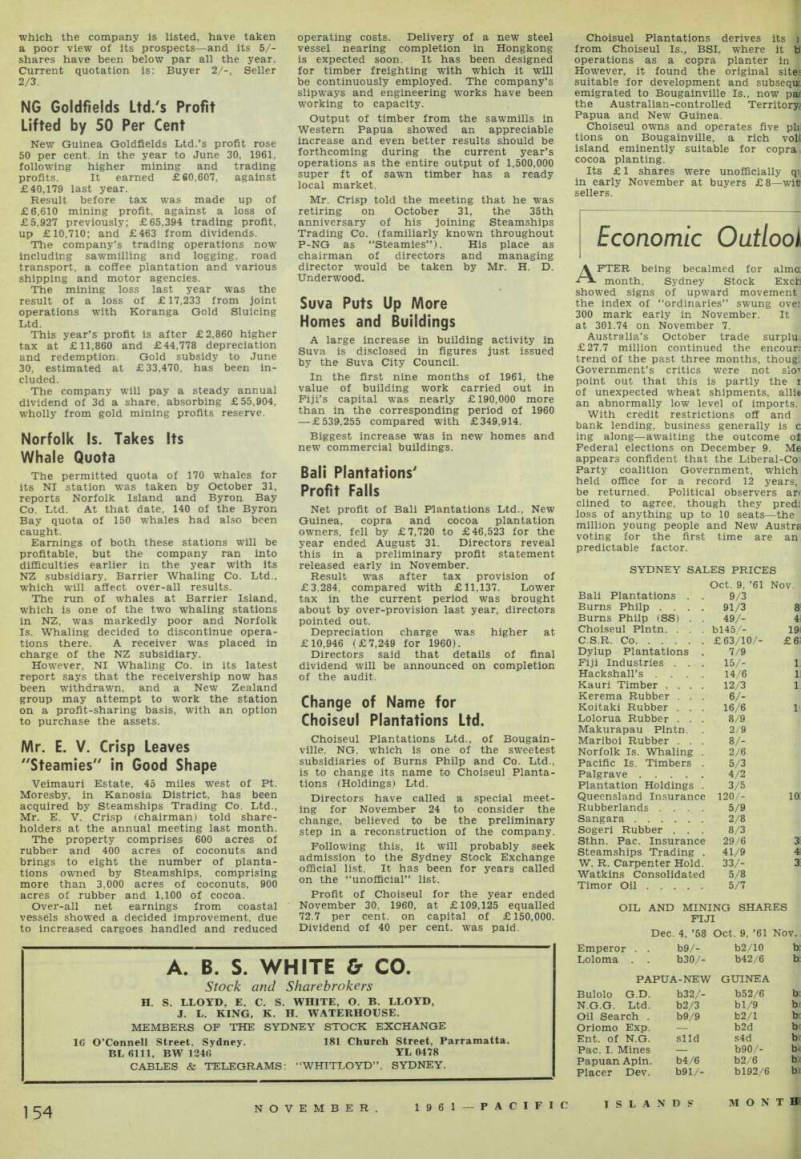 156
156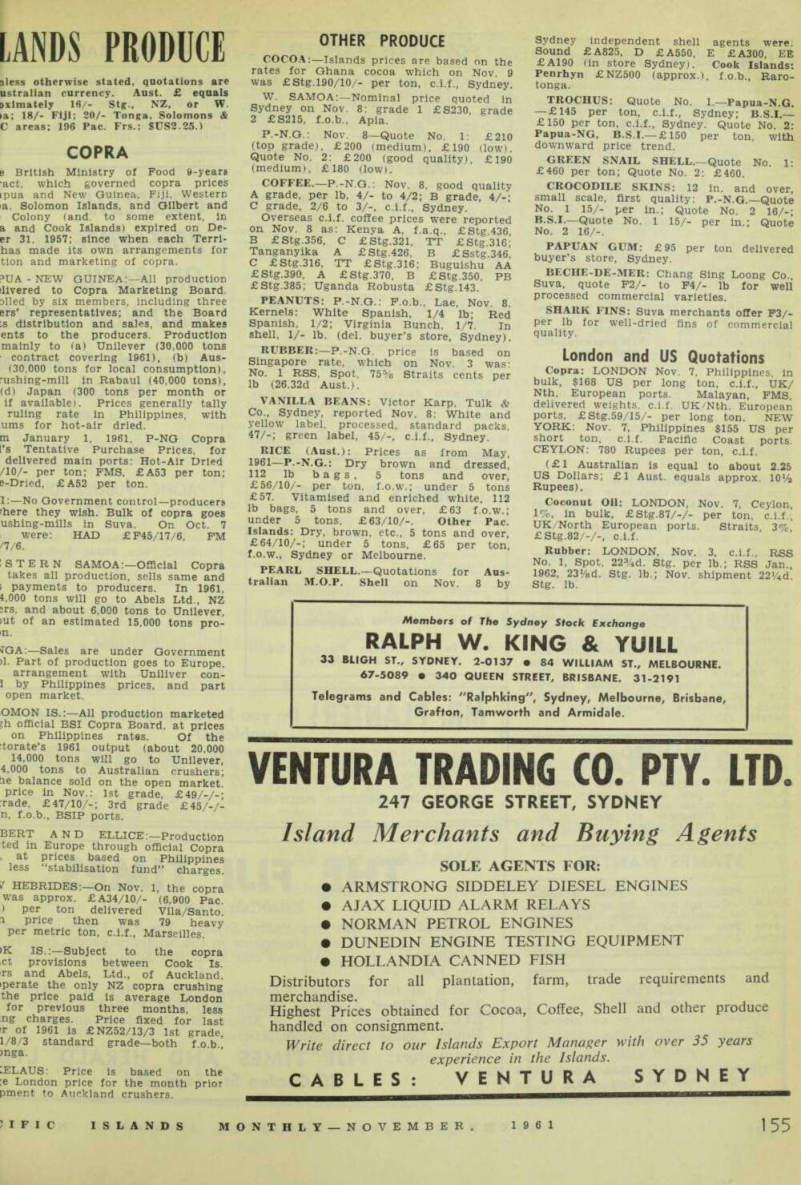 157
157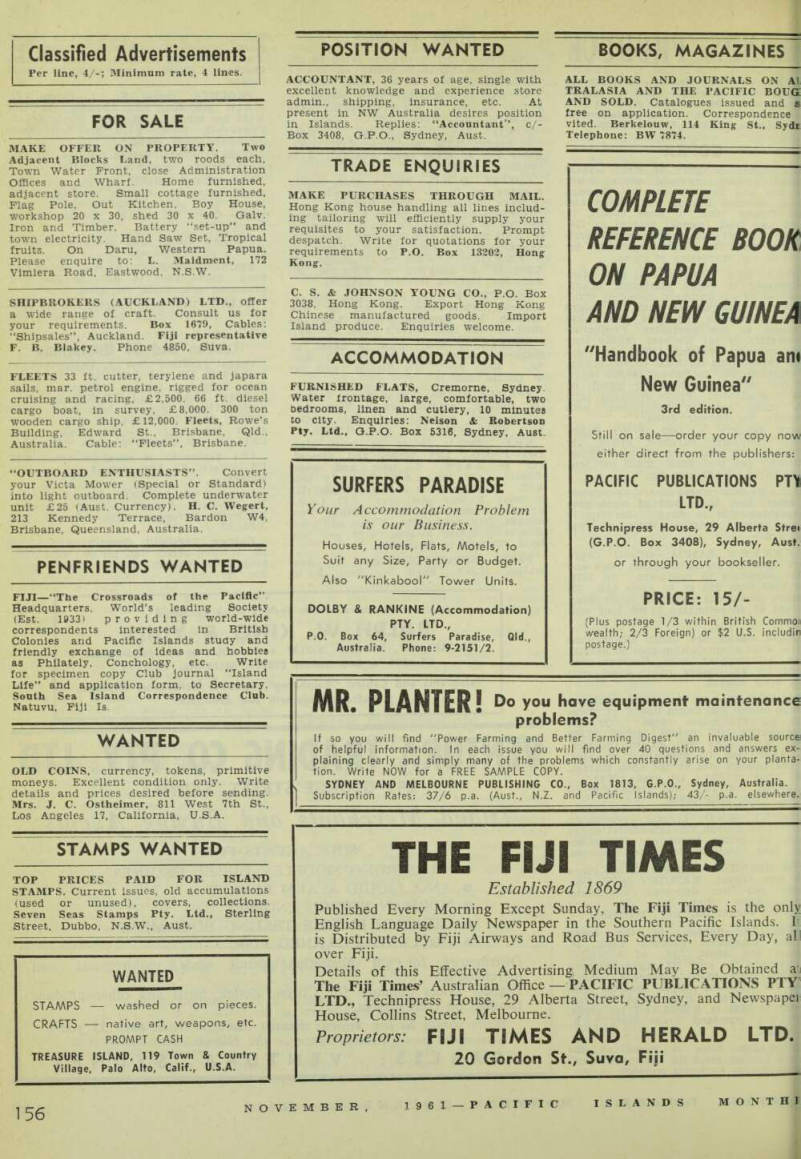 158
158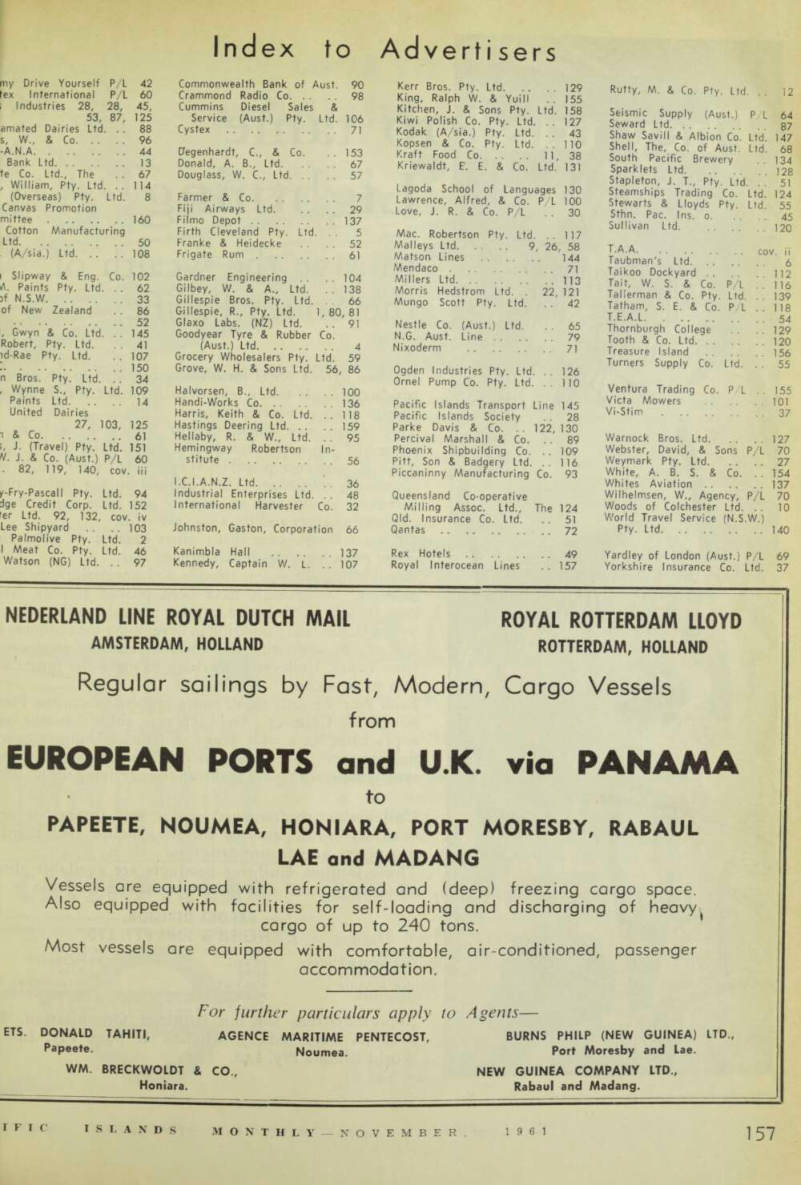 159
159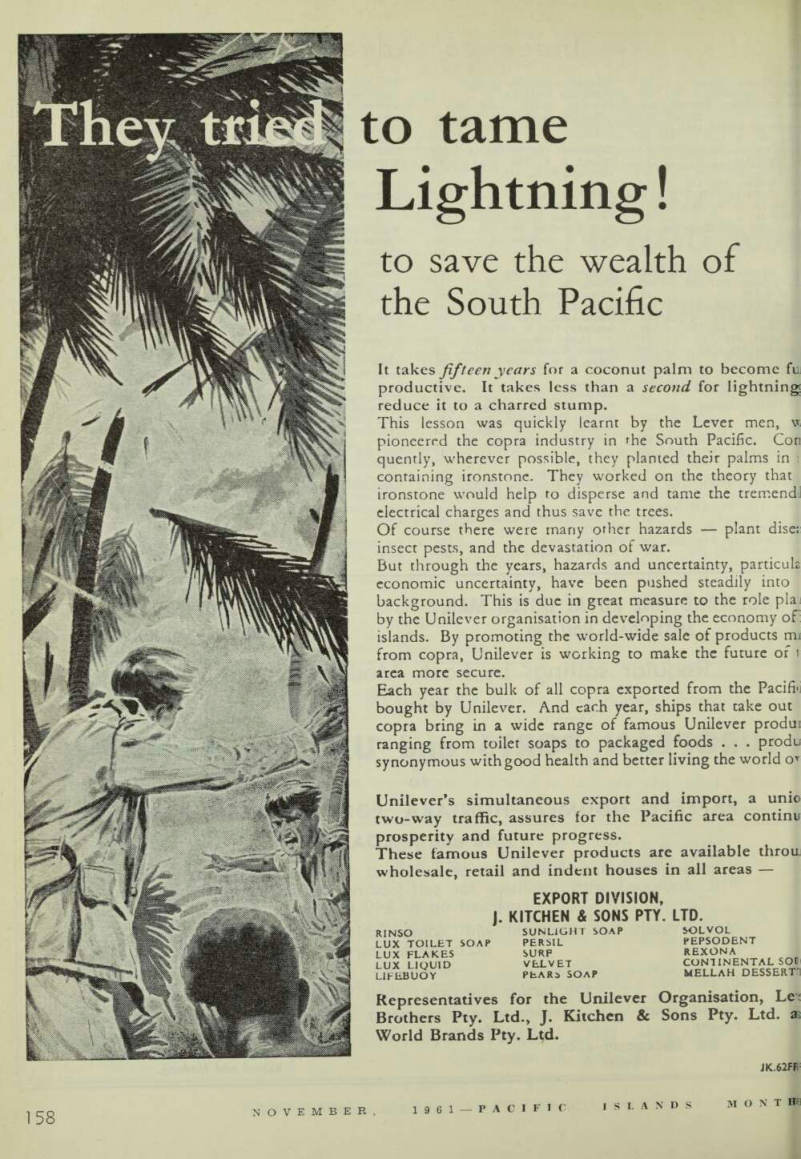 160
160 161
161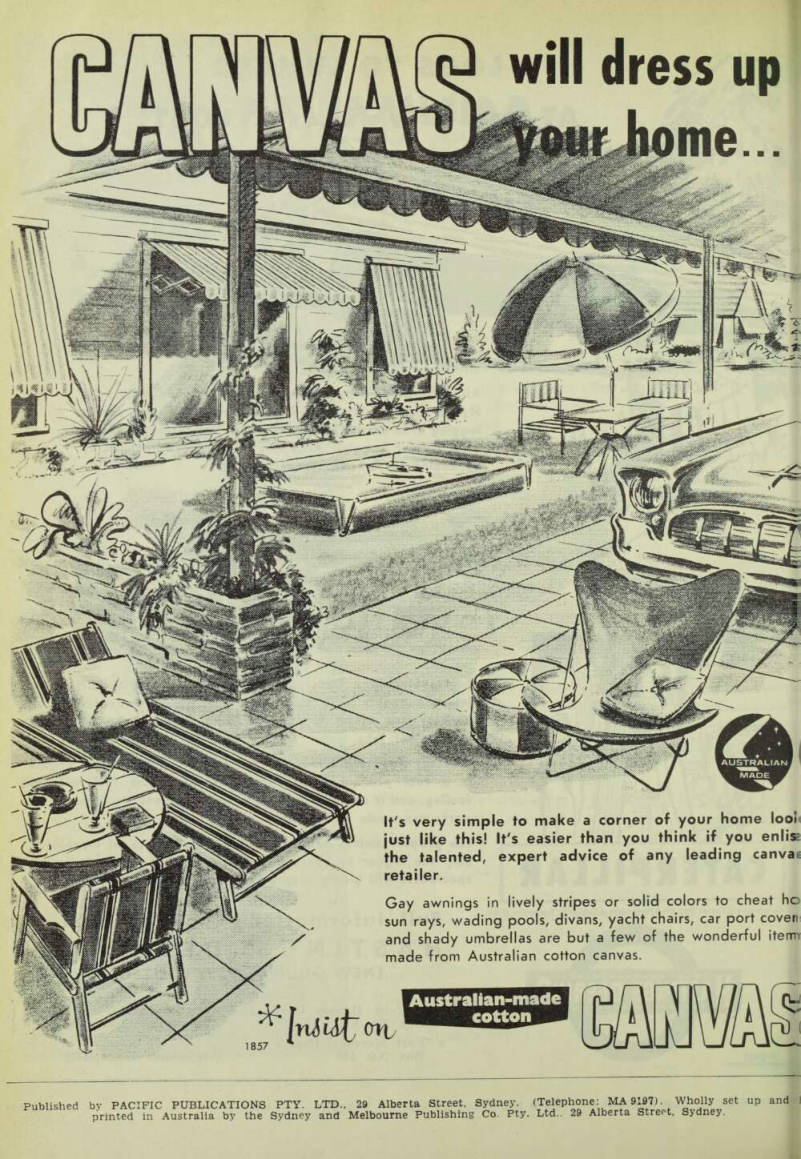 162
162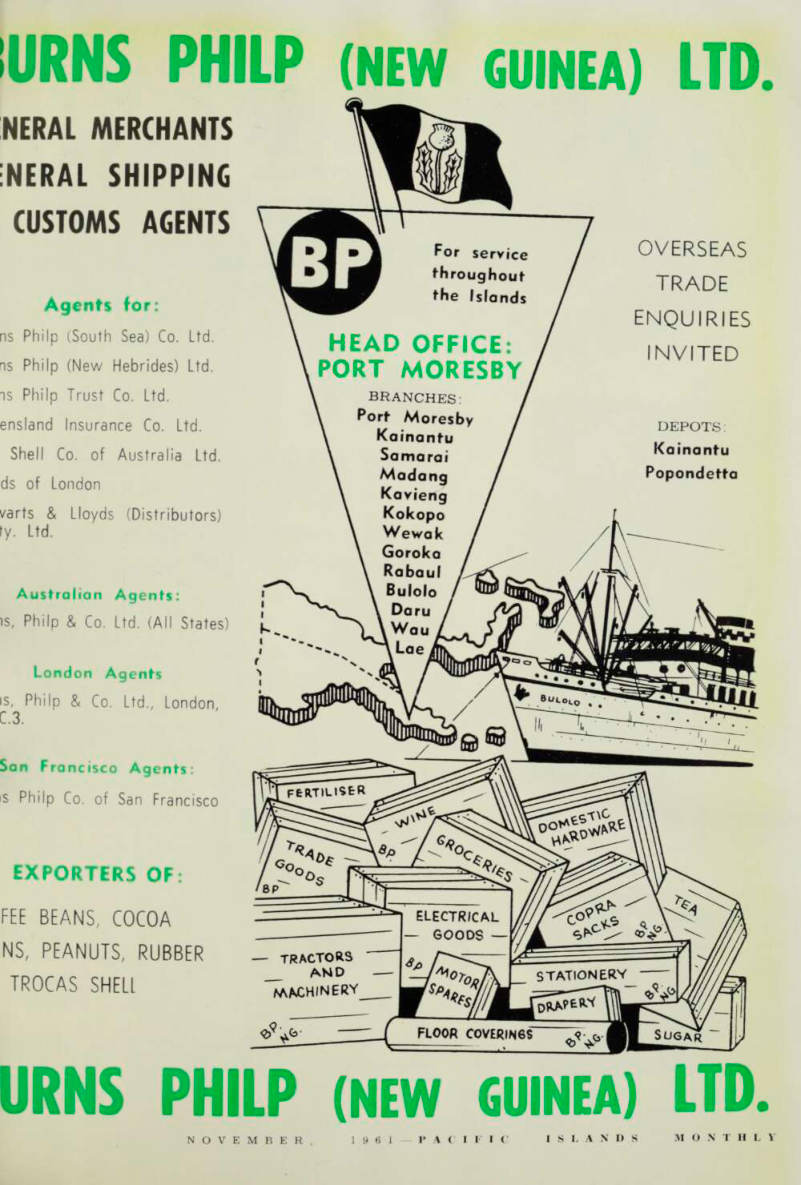 163
163 164
164