Monthly
Pacific Islands Monthly
October, 1961
Vol. Xxxii No 3
le News agazine )f The South Pacific
Tablished 1930
terefl at G.P.O , Sydney, for Mission by post as a newspaper
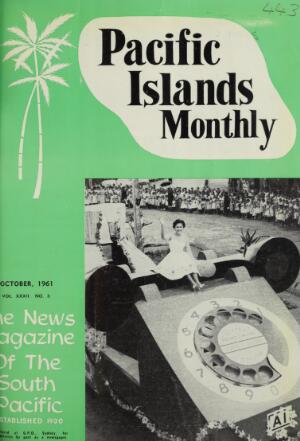
THE COVER: It's all the fun of the fair at Fiji's Festival, now^a^real tourist attraction in Suva each September. e P ara e Telearaphs thousands, and the first prize this year went to th.s Posts an'Telegraph.
Department float with its outsize telephone, plus Miss June Gibson, whose number any young blade would be keen to acquire.
Photo: S. A. Whippy
Advertisements & other items, pp. 2-4 (3 items)
Suhbird Services
FLY
Trans-Australia Airlines
m throughout the Territory of Papua New Guinea and to the mainland.
Sunbird Services throughout the Territory
TAA operates ‘Sunbird Services’ throughout the Territory of Papua New Guinea and to adjacent islands. Whether your destination is Mt. Hagen in the New Guinea Highlands, Honiara on Guadalcanal or any other of the 45 Territory ports served by TAA you will enjoy friendly service WHEREVER you fly with TAA Sunbird Services.
Sunbird Services to the Mainland Regular TAA services from Lae and Port Moresby to the mainland link the Territory to more than 90 ports throughout Australia. From any location in the Territory you need only one call, one ticket, one airline. TAA operates a huge network of more than 40,000 miles throughout the Territory, to Australia and within Australia.
For your flight to anywhere in Australia, low cost Tourist or Luxury First Class, TAA is
the Friendly Way.
SAVE ON TAA TOURIST CLASS FARES BETWEEN PORT MORESBY AND THE MAINLAND.
For example, you save £B/15/0 (return) when you fly TOURIST to Brisbane with TAA Tourist fares from Port Moresby to Brisbane £34/13/0 single, £69/6/0 return.
First Class fares from Port Moresby to Brisbane . . £4l/4/0 single, £7B/1/0 return.
FLY TAA THE FRIENDLY Y
For TAA Sunbird Services within the Territory and to Australia make your reservations at the following addresses: GOROKA: Airport, Phone 8. LAE: Coronation Drive, Airport Centre, Phone 2311.
MADANG: Kaislan Avenue, Phone 78 or 166. PORT MORESBY: Musgrave Street, Phone 2101 RABAUL: Mango Avenue, Phone 2567 or 2702 or any authorised TAA Agent.
TAA<
KEEP FOOD and DRINKS COLD
and FRESH WITH A . . . * U
Snowlite” COOLERS
■ i ; ■ i i Coleman’s range of plastic-lined coolers are now available through Robert Gillespie’s. Solid Therma Lock styrene insulation all round keeps food colder . . . longer. The exclusive “Royalite” plastic-base covering prevents rust, scuffing, leaks or stain , . . adds strength and resists dents. Wipes clean instantly. The plastic “Royalite" interior is strong and smooth and has no joins. All coolers are constructed from heavy gauge steel, welded and riveted for extra strength and longlife. Deep tray for dry food storage. Choose from three attractive baked enamel colours-, green, patio pink, or aqua. Coolers are available with the Mag-Lock latch or Bail handle. The Mag-Lock latch is a magnetic device which is popular on many modern refrigerators.
The Bail handle locks upright in an easy-to-carry position. £4 is Representatives for the Pacific Islands:
ROBERT GILLESPIE PTY. LTD.,
22 Young Street, SYDNEY. Cable “Robergill” 334 Queen Street, BRISBANE. Cable “Robergill”
ROBERT GILLESPIE (N.G.) LTD.,
Lae, Madang, Rabaul, Port Moresby. Cable “Argee
B R
COLONIAL
N E So ?> e s'- $o N ) . <*S vO- C o^ (V® ■
CORNED
MMm?- j|jjp j| kwf 15 02. «- T a
MOTtOf
PROD U c ? OF * * 1 \\
BRONTE’’ & "COLONIAL ’ BRANE
SPECIALLY PACKED FOR THE PACIFIC ISLANDS
CORNED BEEF CORNED MUTTON SHEEP TONO
CORNED BEEF with CEREAL ROAST MUTTON OX TONGUE:
MINCED BEEF LOAF CURRIED MUTTON
ROAST BEEF
CURRIED BEEF
Available in 12-ozl6-oz. ami ‘2Ah. cans.
Products of THE COLONIAL WHOLESALE MEAT CO. PTY. LTD.
Canning Factory:
STATE ABATTOIRS, HOMEBUSH. SYDNEY
N.S.W., AUSTRALIA
TELEPHONE: 76-0397. CABLES: "WOOLMILL", SYDNEY.
1
F 1 c ISLANDS MONTHLY OCTOBER. 1961
2
OCTOBER, 1961 PACIFIC ISLANDS MONI
Pacific Islands Monthly
iblisher: R. W. ROBSON.
Editors:
Tudok Stuari Indek
anager: SELWYN HUGHES. )NES: General Business, Editorial, 9197-8, MA 7101, ftAA 4369.
P.O. Box 3408, Sydnfct
ihic Address: PACPUB, Sydney
Lual Subscription Rates
ncludes surface postage ific Is. —Papua-N.G., Samoa, Norfolk, i, 8.5.1., Cook Is. i, G.&E. Grp., Niue Hebrides, and other acific Islands ..£l4O ch Pacific Territories Dutch N.G £1 7 0 ralia and N.Z. . £i 10 0 British Common- It h Countries, and jn (40/- Stg.) . .. £2 10 0 A. and U S Pacific dries ($6 00 U S.) . £2 12 6 Copies (postage extra) 2 6
(Nch Office In Papua-Ng
Publications (NG) Ltd., Theatre luilding, Fourth St., LAE.
Tel.: 2577. ss Pat Robertson, Manager
Iranch Offices In Fiji:
iji Times Building, 20 Gordon St.
Tel.: 4043. n A. J. C. Foster, Vitogo Pde.
Te!.: 420.
Representative In Nz
■ Whifcombe, P.O. Box 5179, Auckland. Te! : 22.570.
Lepresentative In Uk
Asnourn, 13 Rood Lane, London, .3. Tel.: Mincing Lane 8633 URNE OFFICE: Newspaper House, J Collins St. Tel.: 63.7053.
S: All main trading firms and sres in the Pacific Islands Publications Pty., Ltd., is the lian agent for THE FIJI TIMES.
Contents
No. 3. Vol. Xxxii.
October, 19I
People 5
NNG Throws its Hat into the Ring 15 Tourism: In Defence of Suva 15 New Mood of Hope Follows Sugar Report 17 Johnny Frisbie in the South Seas 17 Reds "Active" in Western Pacific 17 From Debating Society to Legco 18 UPP Is Not Yet Dead 18 VIP Lunch With a Difference 18 Have Japanese Nickel Interests in Indonesia? 19 New Frogs for Old! 19 BSIP Plans to Ease Liquor Laws 20 New Air Age for the NG Highlands 20 Rivalries Delay International Air Service 20 RNZAF to Reduce Fiji Strength 21 What Is Samoan Trade Policy? 21
Commentary 23
The Editors' Mailbag 24 What is the Future of New Guinea Shows? 25 Norfolk Island's Political Troubles 28
P-NG Budget: Beer and Transistors v. Courthouses When the Traffic Lights Went on in Suva TERRITORIES TALK-TALK, with Tolala New Look for Bounty Bay Increase in Crime in Fiji Wide Support for South Pacific Inter-church College No Home for the ''Joyita'' Summary of the Fiji Sugar Report London Predicts a Lean Time for Coconut Planters Solar House Could Bring Comfort News Roundup from West Samoa
Magazine Section
Sydneysider Goes Walkabout
Pacific Shipping PACIFIC REPORT: The Month's News from the South Pacific Deaths of Islands People
Travel Talk
Shipping, Airways Timetables Commerce and Produce
Advertisements & other items, pp. 5-6 (2 items)
A Product of Pacific Publications Pty. Ltd., 29 Alberta Street, Sydi
David Brown
IMPLEMATIC
proven
tractor
in the
tropics
In Jamaica, Cuba, Africa, New Guinea ... in any tropic climate . . . David Brown Im pi emat'ic’s rugged reliability means easier, better farming.
PLANTATION OWN-
ERS AND MANAGERS
in the Pacific Islands— buy the latest models direct from the manufacturer at special export prices. Save hundreds of pounds on initial outlay . . and future maintenance.
A i f
niff
m r "m Before you buy an ordinary tractor, learn what David Brown Implematic can do for you . . . the world’s most versatile diesel tractor.
DAVID BROWN (A/ASIA) PTY. LTD., P.O. BOX 71, LIDCOMBE, N.S.W., AUSTRALIA Please forward details of David Brown Implematic Tractors, and Special Export Prices.
NAME
ADDRESS
People
i Cabinet re-shuffle in London rtober 9, British South Pacific >ries found themselves with a Secretary of State for the es—Mr. Reginald Maulding. places Mr. lain Macleod, who recomes the Chancellor of the of Lancaster, the Leader of ouse of Commons, and chair f the Conservative Party. Mr. ing was president of the Board ide.
the job in Fiji in early October Mr. E. R. Bevington, the :ial Secretary, who had just re a surprise appointment as Fiji jpment Commissioner. This was >ost which Sir Alan Burns, Bet of the 1960 Burns’ Report iji, recommended should be ished. Sir Alan attached great tance to its creation. Mr. gton started off his new duties y, and there was great interest tether he would turn out to e man for the job. Mr. H. P. ie will act as Financial Secretary. • ♦ • [. Father Pierre Guichet, the ior at the Catholic Mission at Island, Papua, has been ap 'd Vicar Apostolic of the Gilbert Is. He replaces Bishop Terrienne, left the Colony in February.
[?]re Mrs. Alexander Andrews is well [?]n the Solomons and Fiji, but under her name of Joanne Manning. She is the of Mr. and Mrs. Tom Manning. Mr. is now BSIP Comptroller of Posts [?]egraphs, and Joanne spent most of her [?]fe in the Pacific. In September, in [?]n home in Berkeley, California, she e the mother of a baby daughter.
1 that West Samoa is about to e independent it will have to some statistics. NZ Govern- Statistician, Mr. J. V. Baker, ► visit West Samoa in October Jvise the Government on shing a statistical section. Prime jr Mataafa himself asked for tatistician when he visited gton recently.
Knox Jamieson, popular 1 superintendent of the Paton ial Hospital, Vila, will shortly the New Hebrides. Dr. m will be followed at the hospital by Dr. A. L. Ander ho is expected to arrive from ia in November.
bribed as the “most emphatic ent of its kind made for many . the Fiji Governor, Sir Kenneth >cks, said in October that the i Government stood firmly
(Above), has the distinction of being (BA with honours), and now has [?]rship to study at Cambridge, where [?] to take his MA. Before going to [?] in 1955 he was at the Tonga High He entered Harvard in 1957 and this year. A report from a in September said Langi was to Mr. and Mrs. E. Shore, whose had enabled him to study in the States. —Photo: Hettig.
in Suva recently, Mr. and Mrs. J. A.
The bride was Miss Nora Morvick. [?]e is second officer on the LMS ship [?]hn Williams VI".—Photo: Caines.
the Deed of Cession and the uent promises made on owner l Fijian land. He said he had ed some of the recent Fijian and fears with the Secretary of or the Colonies when he was idon recently.
mea’s Rex theatre is not only air-conditioned, but proprietor Katavinica announced in Sep that he was negotiating to a 400-car drive-in theatre on the beaches —the first in the Pacific territories, but the in the South Pacific (Port >y opened the first a few i ago).
ugly situation which could bring :r to New Zealand’s doorstep ieveloping in Fiji, said Dr. R.
Matters, senior lecturer in aphy at Victoria University of igton, in an address to a igton club in early October.
' essential need was for the s and Indians to subordinate
[?]a first visit to the Polynesian Associa [?]ile on an Australian holiday... are Aull, daughter of the late Mr. [?]G. Aull and Mrs. Aull, of Suva.
[?] in Port Moresby recently, Mr. Donald [?]f Otamata Plantation, and Mrs. Peg formerly of Queensland. Mr. Mott [?]ell known planter and a big number Moresby people attended the reception.
Photo: "South Pacific Post"
larrow racial interests for the f Fiji, he said.
Indians must be given a better i the land, he said. This did ;an that the two races should alised on the subject of land wernight. his were done, the Indians soon be in an economic i in which they could te the Fijian.
Watters also discussed Fiji in r published in the September f Pacific Viewpoint. He said Fiji as a land of living flesh, ves threaded together in dark > that threatened to engulf the “If the solution is not found”, , “it is no exaggeration to say ; may have something like a in the South Pacific . . .” ng officially looked over the and Ellice Group, the Western High Commissioner, Mr. D. rench, at the end of September for the British-French Con jm of the New Hebrides to s first official look there. He ely to find far more is than in the northern group.
Sydney in early October on n to the East, Mrs. Sarah Hall, of author James Norman Hall, ie Press that to her disgust i jet tourists these days climbed er her private beach near i and even turned up on her popping cameras at her. expect to find a nice fat old n lady sitting among her raw d coconuts”, explained the slim Sail, who is one-eighth Poly- She added that Marlon ), who has been seen a lot in filming Mutiny on the Bounty, i very nice but very complex ter, and the Tahitians under him. They don’t care about rities but they like his parties”.
Rabaul marriage of interest, Mr.
Seeto, with his bride who arrived in [?]rom Hongkong. Photo: C. H. Meen
n TEAL made its inaugural flight to American Samoa in ber en route to Tahiti, TEAL chairman G. N. Roberts pre- American Samoa Governor H. e with a New Zealand Saturday ; newspaper—on a Saturday g in Samoa. TEAL, said Mr. 5, would make it its business there on time (and no doubt efore time while there is still rnational Dateline).
and Mrs. Allen Innes, ex dans domiciled in Sydney, are Europe and show no signs of home yet. They were in a in early September pausing going off to Scotland for a . and recently returned from ; Russia, Hungary, Austria, Slovakia and the Baltic, thing they liked, however, hat youth in these places io time for being Beatniks, ■boys or the Australian equiva bodgies or widgies. The Innes have met up with a number ier former New Guinea Terri > including Mrs. Elma Good, June Ewen and Mrs. Hazel yell who lives permanently in these days while her daughter s the Sorbonne.
son, aged four, on a Sydney beach is [?]sia Bowman who, before her marriage Australian clerk, lived in the Western village of Fale-fa, having only slight with European ways. Her success in into suburban life demonstrates the [?]le adaptability of the Polynesian, [?]re years' absence, Mrs. Bowman is [?] in Samoa where she hopes to stay [?]ugh to see the Independence celebra tions in January.— Tele-Photos
Advertisements & other items, pp. 7-16 (10 items)
5
IFIC ISLANDS MONTHLY OCTOBER, 1961
Lysaght
wmm Mg
How
to
ensure
maximum tank life
You can get years of extra life from your new rainwater tank. Simply hang a Lysaght TECT-A-TANK unit inside as shown above.
The first filling will then activate the unit to deposit an effective anti-corrosive film on the inside walls. Guaranteed not to affect water. Costs only shillings. From aU plumbers and hardware merchants.
ORB
LYSAGHT
TOW 1
Trade Enquiries: John Lysaght (Australia) Limited, Head Office: SO Young Street, Sydney N.S.W.
TTB7MC
TO TOUR
as as 16-oz. 16-oz. 16-oz. 16-oz. 8-oz. 8-oz. 8-oz.
HOT PACKS
Vegetables & Steak.
Steak & Kidney Pudding.
Irish Stew.
Vegetables & Sausages.
Irish Stew.
Vegetables & Steak.
Vegetables & Sausages.
COLD MEATS
J2-oz. 12-oz. 12-oz. 12-oz. 6-lb. 6-lb. 12-oz. 12-oz. 12 oz.
Trim (Pork & Beef).
Camp Pie.
Corned Beef W/C Taper Corned Beef.
Taper Corned Beef W/C.
Taper Corned Beef.
Taper Corned Beef W/C.
Al-Tayib Halal Corned Mutton.
Al-Tayib Halal Curried Mutton. 16-oz. 16-oz. 16-oz. 16-oz. 16-oz. 16-oz. 16-oz. 16-oz. 16-oz. 16-oz. 29-oz. 29-oz. 29-oz. 29-oz. 29- 30-
CANNED FRUITS
Peaches.
Pears, Apricots.
Grapes.
Two Fruits.
Cherries.
Loganberries.
Gooseberries.
Raspberries.
Solid Pack Apple.
Peaches.
Pears.
Apricots.
Two Fruits.
Grapes.
Crushed Apples.
FRUIT JUICES
16-oz. "Berri" Tomato Juice. 30-oz. "Berri" Tomato Juice. 16-oz. "Berri" Orange Juice. 30-oz. "Berri" Orange Juice. 16-oz. "Berri" Grapefruit Juice. 30-oz. "Berri" Grapefruit Juice. 16-oz. "Berri" Apricot Nectar. 30-oz. "Berri" Apricot Nectar.
MARGARINE
56-lb. 56-lb. boxes Cake Margarine, boxes Pastry Margarine.
SAUSAGES
16-ow 16-oz. 16-oz. 16-oz. 8-oz. 4-oz. 8-oz.
Beef Sausages.
Oxford Sausages.
Cambridge Sausages.
Pork Sausages.
Vienna Sausages.
Vienna Sausages.
Frankfurters. 56-lb. 1-lb.
Mb. 12-oz. 16-oz.
"RIVERMEDE" BUTTER
boxes Bulk Butter, pats Butter, pats Butter, tins Butter, tins Butter.
DRIPPING
16-oz. Tins Dripping. 37-Ib. Tins Dripping.
TONGUES
12-oz. 12-oz. 12-oz. 12-oz. 2-lb.
Sheep Tongues.
Lamb Tongues.
Calves' Tongues.
Lunch Tongues.
Ox Tongues.
PEEK FREANS BISCUITS
In 4-lb Tins and 8-oz Packets.
Caramel Crunch, Cheddar Crackers, Digestive Ovals, Ginger Slice, Honey Snaps, Lattice, Vita Wheat, Wafers, Dairy Milk Arrowroot, Wheat Crunch, Dainty Creams, Mocha Creams, Custard Creams, Coquette Creams, Petite Creams.
AGENCIES: EASTERN T A S M A N 11
FISHERMAN'S CO.OP. SOCIETY. (I)
Canned Fish). TONGALA MILK COMPA' Victoria. ("Jersey Cow" and "Mont Blsl Condensed Milk). PORT HUON FRfl
GROWERS CO-OP. ASSOCIATION U
Tasmania. ("Huoncry" Canned Fruit
Jams). PEEK FREAN (AUST.) PTY. I
(Biscuit Manufacturers).
CONDENSED MILK
14-oz. Sweetened Condensed Milk.
Unsweetened Evaporated Milk. 12-oz. Chocream. -oz. Reduced Cream. 14-oz. Natural Milk. 7-oz. Tubes Sweetened Condensed Milk
CANNED FISH
12-oz. Flair Fish Cutlets.
MUSHROOMS
8-oz. Sliced Mushrooms.
THE JERSEY COW
POWDERED MILK
This fine quality fur cream powdered milk now available in tit Pacific Islands. Economic and convenient for housi hold, and cooking pu poses. Wonderful as food for infants. Anothrt famous Tongala Produu
COVi
I e Con«' n *
ihr.
HJU.C*
Mil
W. ANCLISS
& CO. (AUST.) PTY. LTD.
RIVERSTONE MEAT CO. PTY. LTD.
Imperial" House, 255-257 George Street
Sydney, N.S.W.
REDBANK MEAT WORKS PTY. LTD
154-206 Stanley Street South Brisbane, Queensland
Give Dad a man-sized
breakfast
*>- -r, si K > «£ * «
Is!ip
m m i 8? »«* ' ; Serve this
3 BISCUIT
BREAKFAST
Make this “Be Kind To Husbands”
Month! Pamper your man with THREE of his favourite Weet-Bix Whole Wheat Biscuits every morning.
Being 100% whole wheat, fortified with added Vitamin Bi and enriched with pure malt, Weet-Bix will send him off to work fit for the hardest morning. It’s the THIRD golden-brown Weet-Bix biscuit that makes it such a man-sized breakfast that every man enjoys ! Sold by grocers everywhere.
WEET-BIX
t i
PROTECTS
/ 6 r > . ft Solid Insurance against rain, sun and dust Cut losses caused by deterioration. Ensure that your stock, grain and equipment is fully protected with Australian made cotton canvas.
Canvas is the ideal protection for grain or machinery left standing in the open.
Safeguard your valuable assets with specially made canvas covers tailored to your requirements.
Seek the advice of your canvas retailer.
*\nmt
ori
Australian-made cotton 186?
■ t Concentrated Germicide
er^cZ° s
: s **4SS*r
/C/ 0p R °Ous °s
Australia's
Best Selling
GERM
KILLER
now comes to you!
PICCANINNY
f/ Fresh as a new day Piccaninny’s new disinfectant brings ‘Hospital-clean’ protection to your home. Every time y use Piccaninny Pic-a-lyptus. Australia’s most popular g ’ is now available to you in the large economy pn Powerful, safe and fragrant.
AT ALL ISLAND STORES
Made by Piccaninny Manufacturing Company, Manly, N.S.W., Aus ra
IC-A-LYPTUS . .
a disinfectant and deodorant
0?
V/ 0 9
Fresh Foods
The C 80 will conserve up to 100 dry weight of pre-frozen packag. food*.
Even fresh foods may be kept several weeks or many times lont in the CBO than in an ordimi refrigerator.
Cold Drinks
Up to 80 bottles can be stored in four wire baskets supplied with C 80; beer and all kinds of si drinks are rapidly and economicas cooled even in places where there s no electricity available.
The C 80 cooling unit carries a S-yr guarantee; the chest and other ps are guaranteed for one year.
KEROSENE-
OPERATED
The C 80 is the first cooler in the world to operate without electrics blocks of ice. Economic in use pays for itself in a short tin
ELECTROLUX
W. R. CARPENTER & CO. LTD., The Wales House, 27 O'Connell Sf., Sydney. BL 5421
\I£CUC-
Juv AGENTS: New Guinea Co. Ltd., Rabaul, Madang, Lae, Kavieng, Kokopo. Island Products Ltd., Port Moresby. 5.C.1.E., Moumea. 8.5.1. P. Trading Corporation, Honiara, Gizo. Burns Philp (NH) Ltd., Vila, Santo. F. J. R.
Simmonds, Norfolk Island.
A Swedish quality product !
THE
HANDBOOK
PAPUA
NEW GUINEA
mj Buy Your
SB Copy
"HANDBOOK OF
PAPUA AND
NEW GUINEA''
3rd Edition The Handbook of Papua and New Guinea, 3rd Edition, was published in May. Price is 15/- (posted: 1/3 extra within British Empire; Foreign, 2/3) or $2 U.S. (including postage). It may be ordered direct, or obtained from booksellers throughout the Islands and Australia.
Comprising over 300 pages, with special map of the two Territories, it contains all details of the Administration and commercial organisations in both Papua and New Guinea, plus a complete list of all European residents.
There is a description of each of the 15 Districts, with some local maps; a list of all Departmental officers, showing correct names, titles and positions,* lists of all trading firms in each District,* details of all communications —shipping and air services, radiophone networks, etc.,* lists of fees and taxes,* Customs tariff.
The structure of the Administration is described with an outline of the activities and responsibilities of each Department.
A section is devoted to the Statistics of the combined Territory.
There are particulars of commerce and industry and of the Missions.
Pacific Publications Pty. Ltd.
Technipress House, 29 Alberta Street (P.O. Box 3408), Sydney PACIFIC PUBLICATIONS (N.G.) LTD., Theatre Block, Fourth St., Lae, N.G.
IN MELBOURNE: Pacific Publications Pty., Ltd., Newspaper House, 247 Collins St.
Available from: or from the Papua-New Guinea agents:
STOP BAD BREATH
•“ COLGATE
WHILE YOU f“!
Fight Tooth Decay All Day!
i / "V i_y \
JUST ONE BRUSHING
WITH COLGATE
STOPS BAD BREATH INSTANTLY
FIGHTS TOOTH DECAY ALL DAY
AS NO OTHER TOOTHPASTE CAN
any colour, ANY KIND.
Colgate Dental Cream
CLEANS YOUR BREATH
while it
CLEANS YOUR TEETH
Use Colgate Dental Cream to stop bad breath and fight tooth decay. Colgate’s active, penetrating foam gets into hidden crevices between your teeth, removing decaying food particles, the cause of much bad breath and tooth decay.
Protect your teeth the Colgate way.
To stop bad breath, to fight tooth decay, to keep your teeth sparkling white, brush your teeth with Colgate.
Children love its extra minty flavour.
You will love it too.
FOR WHITE TEETH AND
FRESH BREATH . . . MORE
PEOPLE BUY COLGATE
THAN ANY OTHER DENTAL
CREAM IN THE WORLD!
QI7I
PERSONAL
SHOPPING
BUREAU
IS THE
BEST MAIL ORDER
SHOPPING PLAN FOR YOU
Farmer’s is the largest single department store in Sydney, selling everything from fashions to frying pans, and no matter where you live Farmer s Personal Shopping Bureau is the quickest and most efficient mail order plan you can use. Write to Farmer’s describing clearly what you want, and a trained shopper from the P.S.B. will carefully select your goods. When you’re in Sydney come to Farmer’s Personal Shopping Bureau (it s on the eighth floor), and a member of the Bureau will show you around the store. Write Farmer s Personal Shopping Bureau, Box 497, G.P.0., Sydney.
YOU ALWAYS DO BETTER AT FARMER'S.
MANUFACTURED TO
LONG LASTING BEAUTY &
UNDER ALL TROPICAL
GIVE
PROTECTIC
CONDITIONS
You Won't Repaint
For Years
if You Paint With
EBB
J?.
Pflfnu
Paints EXTtl*! i up ER
ENA
ER| 0r
! GLOSS
COLOURS
So
BRITISH PAINTS
LIMITED
r / m
upalusfa
SUPALUSTA will stana up to the most rigorous climatic conditions.
SUPALUSTA is reinforced with the new sensational resin, Penta-Alkyd, , guarantees longer lustre life—a toughness and flexibility which prevents and cracking under the harshest weather conditions.
SUPALUSTA gives the easiest brushing of all enamelised finishes. Its i porcelain-like finish that resists dust and dirt, is the highest, finest gleaming of any exterior house paint.
It actually washes clean every time it rains.
SUPALUSTA withstands burning sun and salt sea spray, and is highly resis all fungus and mould growth.
See the delightful range of colour fast shades at your British Paints Limited depot or store.
EXTERIOR GLOSS PAINT
IMPORTANT;
For maximum protection against fungus and mould growth r treat new or previously painted surfaces with British Paints I! anti-mould solution.
Enquiries are invited from storekeepers to act as authoriseo for British Paints quality products.
Write to British Paints Limited, Box 43, P.O., Bankstown, N.S.W., Australia.
SOLD AND RECOMMENDED BY:
Burns Philp (New Guinea) Limited: Port Moresby.
Burns Philp (New Guinea) Limited; Samarai.
Burns Philp (New Guinea) Limited: Wau.
Burns Philp (New Guinea) Limited: Bulolo.
Burns Philp (New Guinea) Limited: Lae.
Burns Philp (New Guinea) Limited; Madang.
Burns Philp (New Guinea) Limited: Goroka.
Burns Philp (New Guinea) Limited: Wewak.
Burns Philp (New Guinea) Limited: Kavieng.
Burns Philp (New Guineii) Limited: Rabaul.
Burns Philp (New Guinea) Limited: Kokopo.
Burns Philp (New Guinea) Limited: Daru.
Burns Philp (New Guinea) Limited: Kainantu.
Steamships Trading Company: Port Moresby.
Kam Hong: Lae.
Scotts New Guinea: Lae.
Tang Mow: Wewak.
Laurie Chan: Rabaul.
Wong You: Buka Passage—Bougainville.
HONIARA, B.S.I.P.
A. C. Blair Ltd., Honiara.
R. C. Symes Pty. Ltd., Honiara.
FIJI
Burns Philp (South Sea) Co. Ltd., Suva Burns Philp (South Sea) Co. Ltd., Lae Narain Construction Co., Suva.
NORFOLK ISLAND
Burns Philp (South Sea) Co. Ltd., Island.
6
OCTOBER, 1961 PACIFIC ISLANDS MONT
7
IFIC ISLANDS MONTHLY OCTOBER, 1961
9
' I F I C ISLANDS MONTHLY OCTOBER, 1961
10
OCTOBER, 1961 PACIFIC ISLANDS MONT
11
IFIC ISLANDS MONTHLY OCTOBER, 1961
12
OCTOBER, 1961 PACIFIC ISLANDS MONTI
13
IFIC ISLANDS MONTHLY OCTOBER, 1961
14
OCTOBER, 1961 PACIFIC ISLANDS MONTI
Dutch Throw New Guinea
Hat In The Ring
From our Canberra Correspondent ’he Dutch plans for UN supervision of West New Guinea direct challenge to the UN on self-determination.
: ect, the Dutch have told the that if those countries which often about self-determination uine, then here is their chance omething more than talk, me in Canberra doubts that tch plan was anything but the if pressure. the external pressures which long been applied to the ands has been added increas essure from sections of the people themselves, plan which the Dutch Foreign r, Dr. J. Luns, put before the 1 Assembly in September pro ar: :tive supervision by the UN inistration and development; :ceptance of a UN decision guaranteeing the right of self nation to the people of NNG; dinquishing of sovereignty to mlation of NNG; 'ansfer of present Dutch to an international authority could gradually take over Abilities and prepare the Jon for early self-determina ider stable conditions; and Dntinued financial contributions present level of about $3O Luns told the UN that his iment was prepared to ask its ;rvants at present in NNG to as long as necessary as inter il civil servants.
Send Commission isked for a UN commission to NNG to investigate political, and economic conditions and ssibility of an early plebiscite, n Australia’s point of view s the most significant thing the Dutch offer is that it leaves ay open for the UN to urge lia to hold a plebiscite on self lination. tralia has never made any bones its ultimate intention to seek inion of the people of its Terri the Dutch offer could force a dte on her much earlier than *d intended.
Never, the Australian Govern
ment’s advisers are confident that if a vote were taken the people of P-NG would overwhelmingly want Aus tralian administration to continue.
The Dutch proposals attracted curiously little attention in the Aus tralian Parliament.
A full day passed before questions were asked, and discussion of the Territories Estimates, which would have been a natural time to examine the matter, was devoted almost entirely to Northern Territory affairs.
The Prime Minister, Mr. Menzies, made Australia’s position clear when he was questioned in the House.
He described the Dutch plan as a “very constructive proposal” and emphasised Australia’s deep attach ment to the principle of self determination.
He pointed out, too, that Indo nesia, which had always rejected the principle of self-determination, was likely to maintain that position.
“Indonesia claims that NNG is part of Indonesia and that therefore nothing is left to argue about,” he said.
“According to Indonesia, outsiders are not to ask for self-determination for NNG any more than they are to ask for Java, Sumatra, the Celebes or any part of Indonesia’s territory.”
Later, when Mr. Clyde Cameron (Labour, SA) asked whether Aus tralia proposed to make a proposal to the UN in respect of Papua, Mr.
Menzies was biting in his reply.
“That is a remarkable question,” he said. “It must astonish the Leader of the Opposition himself.
“Is not Mr. Cameron aware that we administer our trust territory under the Trusteeship Council, one of the agencies of the UN itself?
“Is he unaware of the fact that we have, by a perfectly voluntary action, associated both our trust Territory and the other area in one general scheme of administration?
“And is he not aware that from first to last we have stated that in respect of both our territory and the Trust Territory the object is self determination after an adequate preparation of the native population to exercise that right?”
In Defence
An End to Petty Rivalry!
In Defence Of Suva
From a Correspondent Fiji has come out in a rash of festivals this year. We’ve al ready had Nadi’s Commerce Week, in September we hailed Hibiscus Week and early October saw Lautoka’s Cession festivities complete with a Miss Sugar.
ADMIRABLE, each in its own way, the fun and games unfortunately underline yet another issue on which Fiji is in danger of being split—the scramble for tourists. Always, it seems, Suva is the villain.
Ensnaring the precious tourists into its beautiful harbour, it divests them of dollars or sterling to the benefit of Suva’s businesses and traders . . . while the rest of Fiji, for the most
Photo: S. A. Whippy "Miss Hibiscus", crowned in Suva at the Hibiscus Week Festival in September, is Miss Laurayne Thurley, 17, here seen waving to crowds of well-wishers. See also p. 115.
part as beautiful, is ignored and neglected, Korolevu’s cash customers excepted.
This seems to be the tenor of thinking of the non-Suva residents, whether they be from Lautoka or Labasa, whether they voice their opinions in Legco or local councils.
But surely it is very muddled thinking.
Suva is the capital of the Colony and as such is it asking too much of the rest of Fiji to take some pride in it, as the people of NSW for in stance like to brag about the Sydney Harbour Bridge and will be the same no doubt about the already world famous Opera House now shooting skyward?
As Fiji’s capital, Suva is the name most well-known to people overseas, the place they are naturally most interested to look at if they ever visit the islands.
Yet, to hear some Lautoka spokes men, one would think they would like to see Suva a ghost city with Lautoka a flourishing tourist mecca as well as being the headquarters of the Colony’s chief industry.
Each centre has its role to play and while there is nothing wrong with the parts overlapping, as when Lautoka entertains interested travellers, or Suva establishes in dustries, for Lautoka to try and steal Suva’s tourist personality would be like Suva trying to capture the ship ping of sugar.
Short Sighted
To one temporarily living in Suva and raking in not a single tourist shekel, this jealousy of Suva seems very short-sighted.
There is no doubt that apart from its name, Suva has a few other undeniable tourist attractions. To wit, Albert Park where “Smithy” landed on his historic Pacific flight, the quite fascinating Museum in the Botanical Gardens and the Grand Pacific Hotel with the romance of years past that have put it on a par with Singapore’s Raffles and Cairo’s Shepheard’s.
Till recently it had yet another attraction which probably outshone all the rest in the eyes of just-landed tourists—the colourful policeman under his little yellow awning on Burns Philp corner. It does seem a pity that he should have had to be sacrificed in favour of impersonal traffic lights in the City Council’s determination to be up-to-date.
But anyway what is the point of the undignified rivalry?
Every tourist that comes to Fiji and spends money, be it in Suva or any where else, is assisting the Colony’s shaky economy and everyone benefits from that.
And isn’t the best principle, like Mrs. Beeton’s perhaps wrongly attributed formula, to “catch your tourist first?” And the way to do this, in a small country with a very limited amount to spend on tourism, is to concentrate on making the place sound so good that people will feel they just have to come. And not only “sound good” but be good so that returning travellers will urge their friends to take the trip.
With its Hibiscus Festival, Suva started something which just seemed to fill this bill. As the Governor (Sir Kenneth Maddocks) said in his Festival message this year: “As the hibiscus is the floral symbol of Fiji, so is the Hibiscus Festival a symbol of the friendliness of Fiji.
“The festival provides a week of gaiety, spectacle and colour for our people in Fiji and for the tourists who visit us at this time. It also gives us valuable publicity. . .
Ay, there’s the rub. Because the Hibiscus Festival has now become a symbol of Fiji overseas where before the white-sulu’d policeman practically fought a lone battle against Tahiti’s glamour girls and the various gimmicks of other tourist-seeking spots.
But instead of the rest of Fiji being happy about this and giving the Hibiscus Festival wholehearted support, we find Nadi (primarily an airport, after all) doing its best to pounce on the would-be traveller for its Commerce Week, and Lautoka running its Miss Sugar contest
simultaneously with the Miss Hi quest.
It was noteworthy that then not a single entrant from L:. in the Miss Hibiscus contes?
year—one seriously questions m
this was because no Lautoka gi worthy of sponsoring when they filled high places in previous Having got the tourist hef means of the policeman oc Hibiscus Week, by all means, persuade him to see as much rest of Fiji as possible. This i by one who is just dying to Nadi when it has its race mx Indeed the rest of the Colony be doing itself a great servr clamour for the making of a ] swimming beach in or near Sv< has been done in Hawaii.
I have visited Lautoka as a and swam at Saweni).
All Would Benefit By making use of Suva’s estaU name and giving people mon more reason to come here, they soon find themselves benefitim only indirectly from the Suva tt but from those tourists who I looked at the capital for a coibj days, then seek to fan out else’e These local festivals are a wv ful and very laudable institutioi the residents of Fiji, and LautoH Nadi would do well to extendi; gracious invitations to the peoc Suva to take part.
But, to a former tourist, thri overseas should be to present a front and use all the publicity \ able to strengthen the attrs’ already well known not try to mine them by petty rivalry whioi only create confusion.
Advertisements & other items, p. 17 (1 item)
15
itFIC ISLANDS MONTHLY OCTOBER, 1961
Cook Islanders in Wellington
In Wellington in September Mr. Teariki Tuavera (second from lej; and Mr. Dick Brown, members of the Cook Islands Legislate Assembly, discuss Islands affairs with the Minister of Islan Territories, Mr. F. L. A. Gotz (right), and Mr. J. M. McEwe* Secretary for Island Territories (left). Mr. Tuavera is a plants and Mr. Brown a trader and ship owner. They have been visitin NZ to study marketing conditions, and to investigate the prospect of increasing the NZ market for agricultural products from the Cook)
Advertisements & other items, p. 18 (1 item)
16
OCTOBER, 1961 PACIFIC ISLANDS MONT
ohnny In The South Seas
South Seas
mny Frisbie, 29-year-old Poly n dancing daughter of the late rt Dean Frisbie, is returning le Cooks in October. She and American husband will stay for months at Rarotonga, which ny left in 1950 for the bright 3 of Hawaii and later Japan. art from seeing relatives again vill be doing some work in the s to further her ambition of an authority on Polynesia, she will also get on with her nal writing. ractive Johnny is the author, her writer father, of “Miss es from Puka Puka”, and later er own “The Frisbies of the i Seas”, which she published in York last year. She is now ing on her first novel—an rical novel of the South ic. i and her husband —Hawaii TV nality Carl Hebenstreit, and children, Ropati, 4 and Carla, ave been living in Auckland, since June. They have no • to go back to the US, and Hebenstreit is looking for a ce to make a name for himself elevision in this part of the mny was in Sydney in early ber, on a promotion arranged ’EAL and Woolworths, during h she taped some TV appear -5 to be released later in the to. The photograph above in Hawaiian dress was taken on arrival at Sydney. • there are opportunities here, tfould like to come to Sydney lanently,” said Johnny.
Sugar Report Sponsors
New Mood Of Hope
From a Correspondent Anything carrying so colourless a title as “Report of the Fiji Sugar Inquiry Commission”, would not ordinarily expect to do much for the morale of anybody.
BUT there is a new spirit and a new vigour abroad in Fiji, and especially in the Northwest districts where sugar is the real life-blood of the people, following publication in September of the little blue-covered book with that name.
The sugar inquiry was ordered at the end of last year in an effort to sort out the economics and the many troubles of the industry upon which this British Colony depends.
The inquiry should have been got moving even earlier than it was, but in any case it was done earlier this year and all races of Fiji in Septem ber have been absorbing every word written by Sir Malcolm Trustram Eve and his two fellow commis sioners. (For a summary of the re port see p. 57.) Even the man-in-the-street, the fellow to whom sugar is something to sweeten his tea with, has been dis cussing the report intelligently, for it has been the main topic of conver sation. Farmers, shopkeepers, traders, all seem happier. The main message in the report is that there is good hope the sugar troubles will be solved, and that is good news for the entire economy.
Inclined to Wait When the report was released the Government felt inclined to wait un til the millers, growers and mill workers first mulled it over and came to some agreement as to what they thought. But fortunately it soon rea lised that a Government’s job was to give a lead, so it came out and said what it felt—that it supported the report’s principal recommendations about the need to set up a Sugar Board and a Sugar Advisory Coun cil. It promised to introduce legisla tion to the Legco “at the earliest possible moment”. (A bill has already been prepared.) The Government said it would take urgent steps to meet the Commission’s recommenda tion for an independent chairman— not from Fiji, Australia or India.
It is understood to be looking for a really top man, for it has accepted Trustram Eve’s view that the right man in this position is vital.
Various other Government moves
were made, all designed to show a note of urgency, as well they might.
The CSR, through the chief manager in Fiji, Mr. J. C. Potts, an nounced it considered the Commis sion’s report was a blueprint for the industry, and designed to provide a stable industry. It said the key to progress was the arrival of the in dependent chairman, and it hoped the Government passed bills very soon.
In the canefields they have been saying the same things. The report will do quite well—speed is now what is wanted. There has been one suggestion that a board is not wanted —that a conciliation commissioner could be appointed—but there has been little support for that.
And the factions that have been anti-mill at all costs are visibly losing ground, and many farmers who de layed planting this year are openly regretting their actions.
If the Government really does act quickly, if a first class chairman is appointed and gets working straight away, if the Government firmly meets any effort to intimidate farmers (in timidation after the style of last year’s tactics) then there is a very good chance that a new cane con tract will be signed while the present mood of hope lasts.
Everyone agrees that delay will just mean more problems again for everybody.
West Pacific’
Reds ‘Active in West Pacific’
Communists were active in the Western Pacific, said the NZ Minister of Island Territories, Mr. Gotz, in the House of Rep resentatives, Wellington, in Sep tember.
But he declined to give any details, “for security reasons”.
He said there was no evidence of Communist influence in the Island Councils of New Zea land’s territories.
Mr. W. A. Fox (Labour) said details of Communists should be made known to the House so the problem could be dealt with.
Advertisements & other items, p. 19 (1 item)
17
FIC ISLANDS MONTHLY OCTOBER, 1961
Yet Dead
Party Is Not Yet Dead
Papua-New Guineas first political party the United Progress Party—is not dead, but it is not exactly firing on all cylinders.
THIS is the main point that emerged from a meeting which the party called in Port Moresby in September to dis cuss its future.
A foundation member, Mr.
R. F. Bunting (above), said it was clear the party was too early. There was no real sup port for it.
Mr. Ron Slaughter, MLC, (below), was sorry the party hadn’t snowballed as he had hoped. A party was useful. But party politics might be a little premature after all.
Mr. lan Downs, MLC, said he still thought the party was a good thing, and members would be there when people woke up to the need for a party.
Chairman of the meeting, planter Mr. Colin Sefton, said a decision on the next meeting could be left to the elected members when they decided the time was ripe. This was agreed to.
Legislative Council
How That Legislature Has Changed!
From Debating Society To Legislative Council
By Stuart Inder
The time I last saw the Papua-New Guinea Legislu Council working it was a debating society with neither thusiasm nor hope. In Port Moresby in September I foum operating as a Legislative Council.
r’s not yet a parliament, but noth ing is now going to stop it from attempting to become one, for it has, for the first time, begun to feed from within.
The pressures of its own expanding confidence will defeat anybody or anything that attempts to repress it.
Personalities are being built, alliances are being formed, critics are being forged and party politics are develop ing—party politics in the sense that political attitudes and a political conscience are being evolved, what ever party tags they may one day bear.
I have been a regular listener to the P-NG Legco since 1953, but I never thought I would find myself writing this only a few months after the Council had got going as a reconstituted body.
Settling Down
Certainly there had been walk-outs and revolt at the Government’s refusal to make a legislature worthy of the name. But having got what they asked for —and even a little more— who could have predicted that within six months of its first meeting in April, the working parts would be settling down. The September meet ing was only the third for the recon stituted Council of 37 (15 Govern ment members including the president, 22 unofficial members including 12 elected).
I heard complaints that the recom position was unfair —but the com plaints were from Government members, who felt the Government should never have been forced into lobbying for support on touch-and-go occasions. But if that’s an error in composition, then it’s an error on the right side of the ledger. Nobody forgets the Government still has friends in high places who can reverse
its defeats—although that met] going to become more risky Council gains still more confic What use is a legislature th not got a fighting opposition who is an opposition to fighi isn’t a Government? If figH just another word for debaj Council would be back where last year.
This Council has an opp* despite the pretence that dish the members all over the House elected European members woi
(Continued on p. 141)
team, but then, they always did. t is more interesting is that the id native members are develop a pattern despite earlier fears n the Council that they would ime ducks. “Brown brother” is ng out not to be brown brother I, but another bloke with a point iew—and if that isn’t political •ess then I’m a Tolai! >t only have the Europeans :d to tell the native members they think of their views— id of sitting quietly while some em made painful asses of them >; but the natives are also oping political views about each •sonalities stand out. The native aer developing most prominently > to be Somo Sigob, a shrewd man representing New Guinea ;al. He looks like being a natural can. □ben Taureka, hailed only a time ago as being a Papuan r, is now politically dead—killed overnment patronage. t-European John Guise still has roblem ahead of him—whether e identified with the native e or the European. He has a in both camps yet, and stands ance of being politically un ar in both. His gift of the he is a better speaker than European members—may even out to be a handicap.
: parliamentary traditions are
on people like these, for they eople to examine, and for the time Council members are rung to examine each other. j Government members too have given a new lease of life. The lays have gone when most sat Sepik carvings and left all the g to one or two. ire was a great deal of give and in the September debates, with Government members giving as as they got. At one time the ;ary for Law, Mr. W. W. ins, was even willing to dive in »ffer Mr. Downs an explanation ) why P-NG now had two ant Administrators, but fortun for the Government Mr. Downs leaded off with an adjournment n so the back-room boys could time to think out an explanation.
John Gunther has developed a real Government leader, with aajor fault—he continues to take attack on the Government as a
personal whack on his own head, an attitude which is guaranteed to create ulcers for himself but none for the opposition.
But men like that are also in the parliamentary tradition.
VIP Lunch Wi
A Difference
From a Honiara Correspond®] The regular monthly infoz business luncheons with the i Commissioner for the Wes Pacific, Mr. D. C. C. Tre now being held in Honiara, R are proving very popular.
Mr. Trench adopted the ' tern not long ago to give r\ bers of the Honiara bust community the chance to dh informally their local problem The luncheons are held at Mendana Hotel. Attendances usually around the 40 mark,' planters, Chinese storekes and European businessmen turn up.
Mr. Trench has freqm undertaken to look into sow the questions which are brer up at these informal luncM Convenor of the luncheon Mr. A. Macartney , manage the Commonwealth Bank Honiara, and he, too, has cc: bated to their success.
Advertisements & other items, p. 20 (1 item)
18
OCTOBER, 1961 PACIFIC ISLANDS MONT
panese Nickel
Interests In Indonesia?
From a Correspondent
Noumea
article reprinted here from sian newspaper has caused amongst nickel producers.
DRDING to the article, the panese are soon- to start im nickel ore from Celebes in da. These importations will in part the nickel ore now d in New Caledonia. The ;e refineries will submit a pro i to the Indonesian Govern s follows: in to advance five million ars to get the mines produc luction of the mines (at ent 3,000 tons) to be ex- Jed to 10,000 tons and ulti ely 40,000 tons per month, richest mineral will be ex ed directly to Japan. The rer minerals will be utilised ndonesia. i this comes about, it will do t amount of harm to New lia’s economy, which is based on nickel production. Stop f exports to Japan from here greatly diminish the present and ultimately cause a de i locally. ipan can procure richer and ■ ore from Indonesia it will that Japanese refined nickel come even more competitive world market where New lian nickel is just holding its Japanese firm of Banno and ay, widely represented in the Seas before the war and par y active in Fiji in the last few has recently established a de ent company in P-NG. neers have taken particular in n the yet unworked iron ore s of Woodlark Island, eastern and also have looked at black eposits on Bougainville.
Australian BHP company was ed in the Woodlark deposits years ago but their investiga ame to nothing. However, at ne iron ore could not be ex and restrictions on Australian were lifted only a few ago.
New Frogs
For Old!
From a Correspondent There’s a lot of little boy in every grown-up man! Well that’s judging by the numbers of dads that turned up along with the
young fry on Saturday, Septem
ber 16, in Lae, for the purpose of exchanging a live toad for a
chocolate frog.
HERE’S what happened: Wau farmers have been suffering heavy losses to their crops due to a pest, the Army worm. It was decided that a contingent of Lae’s dense toad population be sent to Wau to make war on the pest. (Lae’s toads originated in Mexico, were sent to Hawaii, then to Queens land to eradicate the cane beetle there. From Queensland they were introduced to Lae by George Whit taker.) The problem of sending a toad army to Wau lay in catching enough of the rather repulsive-looking, cold skinned creatures that exude a slight poison when captured.
Mac. Robertsons, the chocolate makers of Melbourne, who also have planting interests near Lae, provided a solution by offering a chocolate “Freddo Frog” in exchange for every toad brought in alive. Ansett-ANA offered to fly the “Freddos” up free
of charge.
So the hunt began. For several nights before the call-up, dads and their offspring could be seen out in their gardens and along the roadsides hunting the toads down with torches.
It takes two to catch a toad. The torch bearer shines the torch in the toad’s eyes and be becomes immobile.
The catcher then sneaks up behind him.
Mum Helped
Most mums did not take an active part in the toad snaring, but most were willing to help by carrying the cardboard boxes into which the toads
were dropped.
And so Saturday, in the heart of Lae town, saw the hand-over take over of toads versus frogs.
Only thing was there were not enough “Freddos” to go around, be cause the dads and their young-uns brought in the grand number of 13,000 live toads!
That’s why some of the kiddies— and dads—came away with I-O-U promissory notes for “Freddos”.
These will be honoured by Mac.
Robertsons when another batch is flown up from Melbourne.
Wau farmers will not be getting their toads for free. They are being asked to pay a small sum for each toad and the proceeds will go to the National Heart Appeal.
Five-year-old Johnnie Irvine, is a freckled faced boy who received 20 chocolate frogs cash payment, and holds an I-O-U for 20 more.
The one in his hand didn't last any time at all.
Photo: Pat Robertson
Toads —loads of toads —were the order of the day. They arrived bright and breathing in boot boxes, paper bags, carry-alls and anything else that a toad would stay put in.
Photo: Pat Robertson
Advertisements & other items, p. 21 (1 item)
19
FIC ISLANDS MONTHLY OCTOBER, 1961
Ease Liquor
Bsip Plans To
Laws
From a Correspondent A bill to enable Solomon Is landers to drink beer without restriction will be introduced into the BSIP Legislative Council in December.
THE new bill will retain the present ban on the drinking of wines and spirits.
It is unlikely that the bill will be defeated, as the Government has a majority in the Council, but the measure will be sure to receive some criticism.
Most people give the Administra tion credit for its boldness in daring to introduce drink legislation so soon after the controversial Gaming and Lotteries Bill, which has virtually given the Melanesians an open go at gambling (see “Monte Carlo of the Pacific”, PIM, Sept., p. 17).
The present liquor situation in the BSIP is that natives may drink beer only, and then only with a permit issued by a District Commissioner.
To qualify for a permit, a native must be over 21, be of good charac ter and receive an income of more than £lOO a year.
Permits Easier Very few permits have had to be withdrawn, and in the last few months there has been a very big in crease in the number of permits issued. The increase has amounted to a liberalisation policy, designed no doubt to ease the natives into a posi tion where restrictions could be lifted.
The new Liquor Bill will make a number of other changes, including a reduction in hotel hours, with a closing of bars in the afternoon.
There will be two kinds of hotel and club licences issued—one cover ing all forms of liquor, and a re stricted licence for the sale of beer only.
Instead of a Protectorate Liquor Control Board, each district will have its own Liquor Licensing Board, with the District Commissioner as chair man.
It is impossible at the moment to predict how the Melanesians will take their new freedom, but the permit liberalisation policy seems to be working quite satisfactorily, and there are few drunks seen.
New Air Age For
The Highlands
The architect of New Guinea’s most fantastic show, Western Dis trict Commissioner Tom Ellis (above) is now about to concentrate his renowned organising ability on another objective—that of establish ing the Highlands’ first major air strip. (For the show story see p. 25).
THE pegs are already in the ground for the strip which will have a main runway of 9,000 ft with a 2,500 ft cross strip for light aircraft.
The main runway will take aircraft up to DC6A freighter standard.
The site is at Kagamuga, near Korn agricultural station, about six miles out of Hagen.
Hagen’s present strip—the one that took all the aircraft for the big show —is to be closed and the area used for housing. The present strip is 4,110 ft, and with an average of 300 DC3 movements a month, mostly from Madang, it has virtually reached saturation point. More than 4i million lbs of freight were brought in to Hagen in 1960-61 on that strip.
Tom Ellis plans to get his big new gravel strip down in the next few months. Later it will be sealed.
It will be more than just another air strip for Hagen—it will usher in a whole new era of Highlands avia tion, and make it possible for big aircraft to land right in the heart of New Guinea from Australia.
Internationa
Rivalries Dela Internationa Air Service
By a Staff Writer
International wrangling over * to fly through the New Ha Condominium has been delayiri Airways’ projected fortnights service from Fiji to Honiara, vi and Santo. The service was pc to start last year, but could rr permission because of interne complications.
WHEN these were sorted out nical considerations delayer of the service. These were ad: and then the operators had toe approval of a British Govei subsidy, which was expected an In the meantime they begai ning regular charter services the route at the request of the; ern Pacific High Commission.!
In the last few months then been further delays, caused W the French Government has he; Fiji Airways has no rights licence since the company i:i part-owned by Britain. The owners are New Zealand ano tralia, which have no reciprocal! in the New Hebrides.
In early October new high conferences were being held effort to overcome this stalem;i Meanwhile in Sydney, Mn Barthelemy, manager in Austn the French TAI airline, tolo that TAI was having a look possibility of competing wifi Airways on the Fiji-BSIP rov He said he visualised his cce using DC6 aircraft, but this require improvement in some airfields. (Fiji Airways are seven-passenger Herons.) He added that “a number o culties associated with landing in the British territories woul! to be smoothed out before TAi establish its own service”, f hoped something might be doit< year.
The long-suffering Honiara who see in an air service a w ful opportunity to end some Protectorate’s isolation, are still ful that international rivalrid jealousies will be resolved., don’t really care who puts ft vice through—the more the —so long as it goes through!
The proposed route will m big movement of traffic direo
(Continued on p. 140)
the Far East through Melanesiar the Central Pacific and return, passing Australia.
It will also probably mean am ternal air service for the BSIP cause there will be tourist trs enough to support one.
Float planes would probably be : suited for this area, and many Pap New Guinea fliers in September w casting their eyes towards the BS in the belief that invitations to fo' local air companies might soon i made.
There are a number of sm healthy P-NG charter services op<( ting now, and others are be< formed.
Although there has been no offin announcement, Qantas in Decern will use Boeing 707’s on its Sydn Noumea service, to replace the weekly Electras. The Electras hi had to compete with TAPs DC The Qantas service to Noumea i “political” service—it’s not econoc —and the Qantas attitude seems be that in the circumstances they 1 better off competing against TAI out with the bigger jet.
Advertisements & other items, p. 22 (1 item)
20
OCTOBER, 1961 PACIFIC ISLANDS MONT
Fiji Strength
ZA F To Reduce Fiji Strength
JEW ZEALAND Government ecision to reduce the size of NZAF station at Laucala Bay will have serious repercussions i. The New Zealand Govern expects to make a substantial of overseas funds through its n. loss to Fiji will be twofold— reduction in the number of F men and their families in ill mean reduced spending in ;ores, and consequently less in circulation. iy local men employed on the are highly skilled, and will ittle chance of finding suitable tive employment. There will : a reduction of skilled men in Z Ministry of Works which s the station. >r servicing of aircraft in will be carried out in New 1. The Sunderland flying-boats, re than 20 years old, will be i, but they will be pro ;ly reduced in number till a 3 is made on a replacement almost certainly land RNZAF has become part and of the life of Fiji, particularly i. The personnel take part in mmunity affairs, while the ■ of mercy missions flown to I islands and to islands out le group is almost beyond The reduction will begin Vpril 1, 1962.
[?]EIC VESSEL. The Gilbert and Ellice Islands Colony is soon to take delivery of this win-screw c argo and passenger vessel, which was launched at the Hongkong and oa Dock Co. yards, Hongkong, in September. She is the "Nivanga", 137 ft, with modation for 56 passengers, 23 officers and crew. See "Pacific Shipping", p. 99.
What Is Samoan Trade Policy?
From a Correspondent Did Prime Minister Mataafa speak out of turn when he said in New Zealand during his visit in August that West Samoa would welcome foreign investment? That question is being asked in Apia following publicity given to his New Zealand statements.
MATAAFA said in Auckland that Samoa would welcome capital particularly from Commonwealth
countries, and when he was told by a reporter that Samoa had once dis couraged a New Zealand ice cream factory from establishing itself in the Territory Mataafa replied: “That was before my time”.
All this has been an unexpected revelation, representing an almost startling departure from the traditional conservatism, and regard for unanimity, that marks Samoan politics.
The Samoan Government has never revealed that it has any policy of support for foreign investment.
The use of foreign capital is, in fact, one of the many subjects now being thrashed out by the Economic Development Committee, which is formulating a development plan soon to be presented to the Legislative Assembly. If adopted, the plan would become Government policy.
Since his return to Samoa, Mataafa has observed a studied silence on the matter. He has not been available for interviews with the Press. At the same time, he has not denied the remarks attributed to him in New Zealand.
GOOD FISHING. Apia, West Samoa, fishermen have had a good year's fishing so far this year, with a number of outsized catches. Here is Cyril Curry, with a 156 lb yellow fin tuna he landed about 10 miles out from Apia—the largest yellow fin caught with rod and line by an Apia fisherman. Mr. Curry caught a 142 lb fish in the same spot a couple of years ago.— Photo: Samoana.
Advertisements & other items, pp. 23-24 (3 items)
21
1F I C ISLANDS MONTHLY OCTOBER, 1961
22
OCTOBER. 1961-PACIFIC ISLANDS MON
Morris Hedstrom Ltd
General Merchants, Produce Buyers, Importers and
Exporters, Ship Owners, Plantation Owners, Commission
and Insurance Agents.
HEAD OFFICE SUVA, FIJI
AUSTRALIAN REPRESENTATIVE:
Morris Hedstrom (Aust.) Pty. Limited, Wales House, 27 O'Connell Street,
SYDNEY
REGISTERED CABLE ADDRESS:
Deuba—Suva, Morrished—Levuka, Morstrom— Sydney Suvamark—London, LUUto I Mil*
LONDON OFFICE:
Morris Hedstrom Limiter
Barclay's Bank
73 Cheapside,
LONDON, E.C.2
Morrisco —Nukualofa, Deuba —Apia.
SOLE AGENTS FOR:
A. B. Bahco Primus Products British Drug Houses Ltd.
China Navigation Co. ‘Chula’ Copra Dryers Electrolux Limited Ford Motor Co.
General Electric Co.. Ltd.
Goodyear Tyre & Rubber Co.
Morris Hedstrom Limited are Imperial Chemical Industries Ltd.
Matson Navigation Company Max Factor & Co., Inc.
Pacific Islands Transport Line Ransomes Sims & Jefferies Ltd.
Rootes Ltd.
Vacuum Oil Co. Pty. Ltd.
Yorkshire Imperial Metals LLOYD’S AGENTS in Fiji and Samoa
FIJI
For Friendly Service and Complete Satisfaction it’s Morris Hedstrom Limited in
SAMOA -
TONG
Commentary
Problems Of
nds Federation
1 matter of federation in the slands has come up again. From can Samoa there has come talk the possibility of a union be- American and Western Samoa, i the Western Pacific there is talk of an association between P-NG and the BSIP (see be- South Pacific politics progress, in expect more and more of kinds of proposals, and one t need to be a prophet of an brilliance to predict that lay there will be unions of s sorts in the South Pacific, ; there has been, and continue in Europe. And, as in Europe, ents for and against them will : as the Islands themselves ;. Nothing at all can be lost by I the ball about regularly, for lever knows what the game reveal. v practicable is a Samoan fed i at the moment? latest talk from American has been spurred by the g independence of Western in January. A New Zealand report says the move in Ameri imoa is “strong”, and that in ag term there is a prospect of being included in a Pacific » Federation with the two s. don’t agree that the move in can Samoa for a union is but there has certainly been talk, all of it informal. One loesn’t make a union and most can Samoans scoff at any idea mion with the west, the first place, they wouldn’t o be dominated by their neigh (whose chiefs could outrank , and secondly they haven’t any on at all of dropping dear old Sam and his dollars. American ’s revenue in the last financial was $1,168,000, but payroll for Samoan employees alone > $1,400,000, and people from ites get an additional $318,000. those figures must be enough licate that American Samoans dly in need of money to do all ings that have to be done in ad to paying Government em s. They are certainly not likely t any money from Western even if Western Samoa was
at all interested in an association, which she certainly isn’t, any more than Tonga is. And with an American Samoan population of 20,000, half of them of school age, things are not likely to get any better.
In short, American Samoans don’t want union with West Samoa, any more than they want independence, because either way it would mean the end of the gravy train.
But for the long-term future, who can tell? ☆ ☆ ☆
Make a Move Towards
Melanesian Union
HOW practicable is a Melanesian federation between Netherlands New Guinea, Papua-New Guinea and the British Solomon Islands Protec torate?
Speaking in Sydney in September, Mr. A. M. Healy, of the Australian National University, Canberra, made the very good point that if anybody thinks the idea is at all practicable, the time to start moving towards it is now, when it is possible to put the thought into local minds and have them get used to the idea.
Mr. Healy enlarges on his Sydney comment in the latest issue of the journal of the British Overseas Ser vice, Corona. He says if a federa tion could be accomplished, there is little doubt that in the long run the result will be much more viable than any of the three territories separately.
Practical moves towards an associa tion made soon, he says, will not pre judice the right of the native people ultimately to decide for themselves —they will simply facilitate what seems to be the best solution.
This is talking sense.
There is not much point to con tinual discussion on a federation in every pulpit except the ones that count—those in the three territories concerned. But very little is heard on the subject in the Islands.
What is official thinking on the subject?
The people who shape policy in both Netherlands New Guinea and the BSIP would like to see a federa tion, and are in fact quietly work ing toward one. In Papua-New Guinea there is no such enthusiasm.
Economically, the western and eastern sectors of an association would be the weaker partners, and P-NG is jealous of its own potential in that
regard. It does not want to carry the other two territories.
But this view is a narrow, short term one. There are many reasons why an eventual association between the three territories is desirable. The idea has been broached many times by many people over the years—long before Mr. John Kerr, QC, made it a topical subject for discussion in 1958.
If the Australian Government sees anything at all worth while in a political association of some sort among the three territories then— without prejudice—it can do no harm and probably a lot of good by saying so. ☆ ☆ ☆
A Sugar Scheme
To Build On
WHAT can be said on the subject of the Fiji Sugar Inquiry Report that hasn’t already been said in the report itself? The report is all that anybody could have hoped for—it’s the blueprint for the future that everybody wanted—and to argue de tails now is merely to quibble.
Certainly final designs don’t always follow blueprints exactly, but adjust ments can be made here and there as the building job progresses. The first task is simply to get cracking.
And that’s the Government’s job.
There must be no delays from now in getting the framework of the new design erected—the length of time taken so far is already too long.
The big job of construction is still ahead. Surely nobody expects the architects of the plan to get in there with hammer and chisel and build the whole thing as well! ☆ ☆ ☆
The West New Guinea
Problems Draw Nearer
WHAT would the Dutch do if Indonesia mounted a large scale invasion of Netherlands New Guinea soon? PIM asked, and answered, that question in August. “The Dutch”, we said, “would contain the invasion just long enough to hand the whole mess over to the United Nations, for they haven’t the military forces to be able to do any more”.
Those were Dutch intentions in August, and thus the moves the Dutch made in the United Nations in Sep tember to offer the UN the chance to take over the country now, with certain safeguards, are of special interest.
Do the Dutch suspect that the
Indonesians have finally worked themselves into a state to launch a full scale attack on the mainland?
It could well be. And it would be better, of course, to hand over responsibility to the UN before that kind of trouble started. One might ask what else are the Dutch to do to extricate themselves from the position forced on them by their enemies.
With these recent events, the problems of the island of New Guinea are brought even closer. Already P-NG has felt the pressures which the Dutch have imposed on their side of the border, for the recent increased tempo of political and economic advances in P-NG is due to a very big extent to these NNG pressures, no matter how Canberra might deny it.
Perhaps the time is not far off when the internal problems of politics and economics will be added to by the physical problems of border control.
Do we know now just who does cross our borders?
There always has been an inter mingling of natives along the Terri tory’s border areas and recently there was even one report that a native group well inside the Australian border honestly thought it came under Dutch control. But that is one thing.
Mr. G. A. V. Stanley, DSC, a geologist well known in P-NG after 30 years residence in close contact with the natives, believes that num bers of Dutch New Guineans move right round the P-NG coastal areas continually without anybody realising it. Many come from as far off as the north west of NNG, out there towards the Indonesian islands, and work their way around the coast, stopping here and there en route, and so back to their own Territory. They are attracted by the bright lights and the urge to travel, as are many natives in the South Pacific, and they easily find jobs as technicians of a sort, and as motor drivers. The big use of native labour by the oil companies working in the west in the last few years has made it easier for these people to reach the big smoke. Mr.
Stanley says there are probably as many as a 100 to 150 of them work ing in Port Moresby. Some get married and go no further.
Could the Indonesians now, or some time in the future, possibly make use of some of these people for intelligence work on the P-NG side of the border —just as they have made use of Indonesian sympathisers in the western isles of Dutch New Guinea during landings on that coast?
Problems like these will, as we have said, grow more rather than less.
Advertisements & other items, p. 25 (1 item)
23
IFIC ISLANDS MONTHLY OCTOBER. 1961
The Editors' Maillag
An Expedition
For Paradise
Brisbane radiographer R. M.
Taylor is hopeful of forming a group of 30 young married couples, anxious to start from scratch on an island of their own in French Poly nesia.
He wrote to us recently asking for any information we could give him on conditions on Hiva-oa, 23 miles long by 10 miles broad, a fertile island of the Marquesas (it was once called “bloody Hiva-oa” because it resisted the French long after the other islands had been tamed, and was the last stronghold of canni balism, fierce feuds and terrible cus toms). Paul Gauguin is buried on Hiva-oa.
We asked Mr. Taylor for more in formation about his own scheme, and in an informative and pleasant letter he tells us he has taken up with the Government in French Polynesia the matter of getting some land for his settlement scheme— private land, because no crown land is available.
He thinks a group of people, after a few years of solid work, could de rive a reasonably good living from coffee.
He adds, “Strangely enough, the matter is being treated quite seriously by the many people I have discussed it with here in Brisbane. Persons ex perienced in coffee work have offered to teach the group all they can on coffee cultivation and husbandry.
“Two City Council engineers are working on the problem of electricity supply, members of the Royal Aus tralian Army Medical Corps are working on a course of instruction in sanitation and general hygiene for an island community using such de tails as are slowly coming to light on the nature of the island and its health conditions. Several doctors have offered to do the physical on the members of the group when it is formed and while it is being formed, and to advise us on detailed matters of physical fitness maintenance and numerous other important points re lative to the health of the com munity.
“A senior lecturer in the Depart ment of Psychology at the Univer sity of Queensland has offered to arrange testing of the individuals volunteering to join the group and of the group itself to make sure that it will work successfully as a group under the conditions it will have to
meet. After all, if the environnn satisfactory the only other thira can go wrong lies in the psyck of the members—their attitudes lives, intelligence and so on.
“The general scheme is to lish the exact nature of the err ment in every possible detail then to pick people who will! factorily fit into such an en ment.”
Mr. Taylor says that if he g far as selecting a party, married couples aged between i 22-26 will probably be best.
History seems to show thatf expeditions into paradise neves out as planned. But we wish grapher Taylor luck, and leave that.
Where Is The Early
Mining History?
Pacific Island Mines Limitd Papua, who are especially intd in gold on Misima, Eastern at the moment, have joined the seekers after Pacific inform Company secretary Johu S. W writes to say they are hopeful! body may be able to turn ir records of some of these H companies which at one time op< in the Misima and Sudest areas?, want the information to helpq in their own operations.
Mr. Willcox adds, “In pam we want information, including! pectuses, reports to sharehrl technical reports, plans, etc., following companies: MLI Block 10 Misima Gold Mine:s 1914-22; Gold Mines of Papu:r 1935-40; Misima North Ltd.,, 39. SUDEST; Any informatid companies that worked there World War I, and on Loo Gold NL.
“We are prepared to pay a t able price for any informationn may be forthcoming.”
Anybody who can help the ; of progress—and be paid fo' should send their material note but to the secretary of Pacifica Mines, 117 Pitt Street, Sydney* Mr. I. A. Henry, 75 Tauhinuj Miramar, Wellington, E 4, is 1 for early history of the Union n Ship service to Fiji, Tonga and I The earliest records don’t seerm available. Can anybody helpl
Advertisements & other items, p. 26 (1 item)
24
OCTOBER. 1961 PACIFIC ISLANDS M O N IT
What is the Future
of N. Guinea Shows?
From a Staff Correspondent Nobody doubted that New Guinea’s fabled Western Highlands could do it, although few could have believed they would do it with such fantastic success.
But having done it, they have now precipitated a crisis of sorts: How can P-NG’s growing programme of agri cultural shows be brought under con trol?
TERRITORIANS now organise agricul tural shows as often as Cook Islanders organise packing shed dances. There are agricultural shows from Wewak to Popon detta, from Kokopo to Sogeri, from Dam to Manus. The Morobe and Goroka shows especially have been turning into “musts” on the sightseeing calendars, and now that Mt. Hagen has added all the colour and weight at its command, the problem is to arrange some kind of rationalisation.
The Administrator, Sir Donald Cleland, and the tourist and travel organisations, both would like to see changes in show dates, but for different reasons.
To Sir Donald it’s a matter of maintain ing enthusiasm—of encouraging the natives in genuine displays, instead of their turning up with coloured beach towels around their waists and beer labels stuck on their fore heads. Too many shows reduce enthusiasm and spontaneity, apart from making great inroads into their time and lots of other people’s.
The comment of a TAA official I spoke to in Port Moresby is typical of the tourist agency view.
They like shows —but they would like to see the districts confine themselves to hold ing them on firm dates so that the publicity and tourist machinery can get moving ahead of time. Overseas tourists, especially Ameri cans, plan their schedules a long way ahead —often two years. (Over)
AT THE SHOW. Among the many eating al fresco lunches from cardboard boxes at the Hagen show grounds was Lady Cleland (seated left), wife of P-NG Administrator Sir Donald Cleland. Dozens of tables and seats were especially built for the show crowds and two show rings provided a continuous spectacle of horse riding, cattle drafting, polocrosse, go karting. Five of P-NG's six elected European members were at the show (centre). From left: Messrs. Lloyd Hurrell, John Stuntz, Ron Slaughter, John Chipper and lan Downs, represent the entire Territory except the New Guinea Islands, whose member, Mr. Paul Mason, remained in Port Moresby. Neighbouring Wahgi, township of Mini tweaked Hagen's nose with its slogan (bottom), for Hagen claims it's a pretty good coffee town, too.
The Hibiscus Festival orgam Suva have found that their September date each year is ; off. Shipping companies uoti special cruises to coincide wiii If Goroka and Mt. Hagen ing to be Highlands show comr it’s probably best to start some 3 alisation there.
Said Sir Donald to me at tho “It shouldn’t worry Tom Fill he’s had his crack at putting bigger and better show thas body!”
Popular Western Highland trict Commissioner Tom Ell man who always manages toe unhappy, although its probatcl a trick of his facial expressio
MODERN DRESS. A necktie—not in slender style, either —and a bath to[?] the waist, are sing-sing dress for tl[?] in September, not at Hagen but ate Britain Agricultural Show at Kokoo kind of thing upsets Sir Donald C[?] many others. —Photo: M. R. H
In Sydney the Reception House was place where people of unsound mil taken, as the wag who placed this: the reception officer's grass hut at at airstrip well knew. Mr. Frank H[?] Wau, stands by.
he certainly should have noth be unhappy about at his organ i of the Western Highlands’ first iltural Show in September. It all records.
I town of only 39 permanent [ 1,500 Europeans turned up, t least 50,000 natives! Every and private building was d to the plimsoll, with bales mkets distributed army style, s of new round houses were Steak barbecues blazed the en :ekend to feed the mob—many >m didn’t go to bed anyhow— i natives were reported to have ough at least 200 tons of kau n astonishing demonstration of ing, reception officer Mike Cook, ticked off names from card index as tourists poured aircraft arriving with the regu of Bondi buses. Sixty-nine in ; day is an unbelievable record 'Jew Guinea airstrip. )1 Officer Barry Griffin, in of the native sing-sing s, shouted above the din that as he could tell 20,000 to natives were putting on their :h day in a weaving medley of rease, spears and birds-of e feathers. Many of them me from a week’s walk away, yere real primitives, many of ind they put on displays that l-timers had not seen before, body is likely to see again.
Showgrounds Built
showgrcrunds appeared from e after months of work.
Danny Leahy, who was show pointed me out a nearby hill grounds at one stage and com , “Funny to think that that /here we had the big fight with Ives when we first reached Mt. before the war!” anybody ever know how many s and stayers” attended the Country Club for the Show lir Donald and Lady Cleland lome at 1.30 a.m.—nobody ever remember them being t a function—and Senior In- Dave Crawley’s Police Band 1 itself with further glory by eed instruments for the first • produce dance music. 5 was formal—so the invita d, and there was certainly one of tails in the hall. But there Iso monkey jackets, business horts, white-drill outfits, ber jackets and Lloyd Hurrell, was in a polo-necked sweater, ong as there is a Mt. Hagen never forget the first Big Show at anything that was ever done
Advertisements & other items, pp. 27-28 (3 items)
25
FIC ISLANDS MONTHLY OCTOBER, 1961
26
OCTOBER. 1961-PACIFIC ISLANDS MONI
Personality
U/
GILBEY’S
GUIDE to J&L
COCKTAILS
©LONG DRINKS
that break the ice Here is an old and valued friend in a new dress the revised edition of Gilbey’s Guide to Cocktails and Long Drinks that break the ice.
Agreeable in appearance, handy to use, the Gilbey Guide has everything you want to know about familiar drinks, like the four versions of the Martini, the Manhattan nr the Whisky Sour, plus all kinds of fascinating new uses for Pierre Smirnoff vodka and Dubonnet as well as brandy.
You’ll like the names (and the flavours) of these drinks. In these troubled times why not console yourself and your guests with a Kennedy? One part Pierre Smirnoff vodka, f part Gilbey’s Kummel, \ part Lime or Lemon Juice Cordial.
Shake briskly with ice and serve to warm applause.
PERSONALITY
OF THE
MONTH
Or a Rumbonnet: One pan Skipper Rum, one part Dubonnet, two dashes Angostura Bitters. Shake with ice and pour with finesse.
Or what about that classic of cocktails, a Brandy Crusta? To 1J ozs. Brandy Royal add J oz.
White Curacao and \\ oz. fresh orange juice. Shake well with crushed ice and strain. Dip rims of glasses into orange juice and then press into castor sugar for the final master’s touch.
Not feeling exotic? Have a Bondi Tram (happy memories) or a Lasseter’s Last, or reef off a Barrier Reef.
Like to know them better?
Ask for the new Gilbey’s Guide to Cocktails and Long Drinks.
GILBEYS LIMITED
goes to the Show
Air-Winded n. guinea goes to the Show
This is what Mt. Hagen airstrip, more than 5,000 ft. up in New Guinea’s famed Wahgi Valley, looked like on the occasion of the Western Highlands’ First Agricultural Show on September 23-24. Mt. Hagen that week-end was the meeting place of all New Guinea, and these are only some of the aircraft which were used to get them there.
Sixty-nine aircraft arrived on the first day, and at one period 42 were parked, empty, along both edges of the strip and in special parking bays. In the background of the lower picture are the showgrounds black with some of the 50,000 natives who poured in from all directions.
Advertisements & other items, p. 29 (1 item)
27
[ FIC ISLANDS MONTHLY OCTOBER. 1961
Young Adams of
The ‘Bounty
There is a new Adams of the “Bounty”. Here I is—Norfolk Island’s latest John Adams, sixth genen tion descendant from the original John Adams the “Bounty”, through his grandson, Josiah Adaira who landed on Norfolk from Pitcairn during O big move in 1856. The latest bearer of a famoo name is the son of Guildford and Joy Adams, Anson Bay. Mrs. Adams is originally from Net Zealand. The last Adams to take the name John on Norfolk was John R. S. Adams, who is present in his fifties and still lives there. I descended through one of Josiah’s brothers. T 1 original John Adams was the assumed name Alexander Smith, the only mutineer to survive W quarrelling and bloodshed of the first years Pitcairn. Smith-cum-Adams emerged a spiritual changed man and assumed leadership of the smu community, laying its deep religious and moi( foundations.
No Bananas?
Is It Yes, They Have
From a Correspondent It will be some months yet before Norfolk Island has the chance of telling the Australian Government —once and for all just what kind of Government it wants for the future. It will get its chance at a referendum, which was promised the island by the Australian Minister for Territories, Mr. Hasluck, in August.
HOWEVER, the Australian Federal elections in December have made it impossible for anything to be done before the end of the year, and it will probably be well into next year before Norfolk goes to the polls to attempt to clear up some of the confusion which has been baffling everybody for so long.
Just what does Norfolk want?
Small communities have a habit of becoming split on questions now and again, but it must be a long time since any community was split as wide as Norfolk has been over the Local Government question, and even longer since any issue has been so confused.
The louder some Norfolk groups cry their wants, the darker the picture becomes, and the referendum is the only possible way out. Even then, the whole thing will hinge on just what questions are to be asked the electors, and no doubt there will be a great deal more confusion —and no doubt some recriminations before this is worked out.
As the Minister has said„l are probably four political pm to be looked at on Norfolk: scheme whereby the Norfolk : Council will assume some • functions of Local Government.} present Council has (b) a t whereby the Council merely ; an advisor to the Administrae the old Council did (c) a schea the Council to be given wicb powers of lawmaking and com the budget, which is what most? bers of the new Council waiu (d) a kind of Council-of-Statea ing with the Administrator.
Mr. R. S. Leydin, Administrator of Norfolk Island, who had a heart aţack in Augu[?] was flown to the Mercy Hospital in Melbourne in a special flight by RAAF Hercule making "satisfactory progress" at the end of September and was expected to ret[?] Norfolk by the end of October. Meanwhile Norfolk has an Acting Administrator in W. McConaghy, a special projects officer with the Department of Territories, Canberras Hercules, which can land on a short strip, was the first Norfolk had seen, and this[?] was taken as she came in over the island to pick up Mr. Leydin.
! Minister made it clear during sit that he did not regard the al views held by the majority i present Council as necessarily the will of the people. The al, he said, did not have a ite because people voted for nt reasons. ey may have thought they had e either for apples or oranges > they voted for either apples mges,” said Mr. Hasluck. “In ome of them probably wanted is.” e the decision was made to hold ;rendum (which is what the il wanted) feelings on the island teen running less high. At the )f the Minister’s visit it was ly armed warfare, with both iccusing each other of attempt divide and rule. There were— till are—allegations of Red Nobody, fortunately, has ted that any members of the unist Party are behind the :, but it has been suggested that icople are using well-tried Corn tactics because they happen to eir purpose.
Minister himself, during his ame face to face with a ham d-sickle which somebody had 1 on the outside of the door he and Council members were d in committee. The hammer kle obviously wasn’t meant 5 Minister, who was extremely :d anyhow at having to hear ouncil’s views behind closed Council explained later that it deluded the public “to avoid isleading reports which might iise Council’s negotiations le Minister”—an extraordinary Minister met this problem by virtually nothing at the closed (except to stick up for the istrator when somebody on the il alleged that he, too, was at ig to divide and rule).
Obsession open session followed the meeting, but the public had home by then. The Minister take any chances of any con 'eports getting out this meeting, sooner had he returned to Can than he had sent back for I distribution a report on vas said. folk’s obsession with politics has overshadowed its other big m—how it can earn an income own. It still lives on handouts
from Australia, whose Territory it is.
There is no income tax, and very little to export. Norfolk lately has made some headway in getting New Zealand to relax some of her trade restrictions and take fresh green beans from the island, but there are still problems.
Tourism still looks the most likely possibility for the future. Qantas in December will turn its fortnightly service to Sydney into a weekly one, for the summer, and this should help get an increased flow.
Mr. Reg Ansett, of Ansett-ANA,
still says he wants to build a tourist hotel on Norfolk, although most people had thought he had dismissed the idea when he failed to get a licence to operate air services to Norfolk. He has made no arrange ments for getting land for a hotel.
Norfolk deserves to become a first class tourist resort. The climate is excellent, the scenery beautiful, the convict ruins fascinating, and Nor folk Islanders themselves are among the friendliest people in the South Seas. So long as you are not discuss ing politics, anyhow.
Advertisements & other items, pp. 30-33 (5 items)
28
OCTOBER, 1961-PACIFIC ISLANDS MONT
29
1 F I c ISLANDS MONTHLY OCTOBER 1961
SBlffiif,;s
THoihe^
Choices*
SELF-RAISING
HOUR
—w v* mnu, mu psmif*
•Botlven^
v v-«
V mk, n
ENt?!CH£P
ntuii
TTlotheW
»''ot££>
4 \2fltap
»*T. sft a*
SBlffiif,;s
UN ,uR N|| it * LfS* 1
SELF-RAISING FLOUR
HER S CHOICE con-
•‘Aerophos” the raisngredient that needs ture plus oven heat to activate it. en in New South Wales Mother’s Choice best for leir cooking, because it’s liable, no matter what climate. That is why it is top selling Self Raising
tested-
best
for the
tropics
YOUR scones, biscuits, cakes and pastries will always rise to perfection when you use Mother’s Choice Self Raising Flour.
They’ll be better for you too, because Mother’s Choice is Vitamin enriched.
Buy Mother’s Choice Self Raising Flour in 2 lb and 4 lb cartons, and in 5 lb, 25 lb Calico bags. Ask for Mother’s Choice Plain Flour too, it’s of the same high quality.
TRADE SUPPLIES AVAILABLE THROUGH YOUR SYDNEY BUYING AGENTS Other Mother's Choice quality tested products available are Spanish Delight, i/ixii/aha mery. Jelly Crystals. Mocha Whip and Cordial Base. And for a really good cup of tea try klln^k.a.
LVSI/bl
BOTH! THE RENAULT DAUPHINE AND PEUGEOT HAVE MORE OF WHAT MOST PEOPLE WANT! Figure the features that make Dauphine and Peugeot the most versatile "performance” cars in the world: NB “AEROSTABLE” SUSPENSION on Dauphine and all-round coil springs on Peugeot flatten the bumps; econonc running; park and manoeuvre easily; 4 DOORS . . . easy in, easy out; RALLY-WINNING PERFORMANCE : some of the toughest tests in the world; you get trouble-free motoring; the most comprehensive new o service; a full six months’ warranty regardless of mileage . . . including free labour and parts. Where eh will you find cars that adapt so handily and handsomely to anything you want a car to do? A test drive vw prove that you can’t get as much as Renault Dauphine and Peugeot offer unless you pay a great deal moo Why not come in and see for yourself . , . today?
PEUGEOT 404
RENAULT DAUPHINE
32696
KRIEWALDT’S
PORT MORESBY, PAPUA, NEW GUINEA. PHONES; 5388, 5256
TALLERMANI
& CO. PTY. LTD.
Sole Pacific Islands Agents for
QUALITY TOOLS
\ LINDEMANS
TABLE WINES
GUMPTION
PRODUCTS LTD.
SMOOTH PASTE
CLEANERS
"MANSFIELD"
"LOMBARD"
"HUSKIES”
Offers and catalogue on application
McMURTRIES
FOOTWEAR
TALLERMAN & CO. PTY. LTD.
60-62 York St., Sydney, Australia.
Cables: "FRESHET" Sydney. Phone: 8X2411.
We export anything anywhere!
30
OCTOBER. 1961 - PACIFIC ISLANDS MONTI
31
IFIC ISLANDS MONTHLY OCTOBER, 1961
Beer and Transistors
Highlights of the P-NG Budget Session
Beer and Transistors v Court Houses
From a Staff Writer in Port Moresby Now who would have guessed, before this 1961 Budget Session of the P-NG Legislative Council got going in its swank new Council Chambers in September, that the trappings of justice in the form of £70,000 worth of new court houses would have made such an impression on its members?
IT was a long session, but those court houses came up for heated discussion during the first hours, and were still being hurled about the chamber, as it were, at the closing stages.
One way or another, everybody, including the spectators, learned things one wouldn’t expect to learn from a court house.
The court houses were listed in the Works Programme, which happened to mention that new ones were to be built on the outstations of Kerema, Tapini, Popondetta, Finschhafen and Kavieng and that additions were to be made to the court house at Kai ruku.
Not Unnoticed Ordinarily they would have passed unnoticed among the print, but not this time. For this was the time Harold Reeve, the Territory’s brand new Assistant Administrator for Economic Affairs, unfortunately chose to tell the House that cash was short and that the Administra tion planned to whack up the price of beer, spirits, lolly-water, cameras, radios and cars to balance the budget.
Tariff increases on all these things and a few others, said Mr. Reeve, would get the country another £85,000 for the remainder of the year.
The elected members didn’t think this was a very good way of balanc ing the budget.
“In private enterprise when you plan to spend more money than you have,” said nominated member B.
Fairfax-Ross, “you cut your spend ing plans!” Whereupon he moved that the bill for the tariff increases be shelved for six months—which is the same as wanting to throw it out.
The Government got mad at this, and what followed then—and again later in the session when the question again came up—was rather fascinat ing.
Twice the opposition put their at tack to the vote, firstly in the attempt to throw out the bill, and secondly in an effort to reduce the estimates by shelving the court houses until next year. They never came near to suc cess either time.
All through the fighting, most op ponents insisted that they weren’t moving a vote of no confidence—they didn’t want to overthrow anybody— they just wanted to indicate how some money could be saved.
Government members, although not by a long shot unanimous in their attitude until leader of the House Dr. John Gunther was able to get among them, took the stand that any attack on a financial measure was an attack on the Government and couldn’t be allowed to succeed.
This is the attitude any Govern ment has to adopt, but it’s not a principle that’s accepted in the Terri tory yet, where members are liable to shoot from the shoulder, frontier fashion—and leave the finer points of political strategy to the Canberra professionals.
As lan Downs said, once tan creases are put on they are in<i to stay on. Because every dt mental head happens to be since his appeal for things to be adeb the Works Programme, it dt mean that they should be pro T c and the opposition’s job is toe money.
Mr. Fairfax-Ross, still the: speaker in the House, said 9S cent, of the increased charges T fall on the white population. Tlf patriate community at present! resented li per cent, of the ; population, yet found about 5 95 per cent, of the revenue. Thee munity was already carrying as as it should be expected to bean nobody could tell him that j could not be served this year out those court houses. There been an increase in tariff on II items in 1959, when income ta:r been introduced.
Wau planter, former-ADO Hurrell said a lot of things cou looked at with the idea of s money—such as Administration r entitlements.
Perilous Mr. Keith McCarthy, Direct: Native Affairs; Why didn’t your of that when you were an AU Mr. Hurrell: I have only; covered it since I have had years without leave in private prise!
Although this was not the H debate it became perilously nn at times as the Government mes somehow found themselves g up to defend (a) the need fon wretched court houses and (W need for just about everything in the budget.
Chief Collector of Customs ; Chambers, who interrupted his s
Tolai Vin Tobaining, an elected representative for New Britain, heard the Tolais referred to as spoiled children from rich parents.
Mr. Lloyd Hurrell, an elected member New Guinea Mainland, was short on hi[?] entitlements.
ustralia to attend the meeting, figures designed to show that f’s tariffs on most of the items were to go up were still lighter in many other South Pacific ;ories. , Gunther backed up the recital ;ures with a straight-out state that the items the expatriates complaining about would still eaper than anywhere else in the Pacific. is, though, was a pure shot in lark which hit home because ly on the other side of the j had the facts to dispute it. facts are that, whatever tariffs say to the contrary, many of terns are cheaper in Fiji, and e cheaper much closer to home the Australian territory of Nor island, which for years has been pping bonanza for ship and air rews lucky enough to call there.
Lower Elsewhere e popular Japanese transistor which sells in Sydney for !/-, is priced in Port Moresby 12/10/ —but in Fiji at £AI6. competition among Indian •s willing to cut mark-ups dras f for quick turnovers makes this of price in Fiji possible—but figures won’t show it. : it didn’t matter, anyhow. Said Gunther, more than normally i, “As one of those charged advising on the fiscal policy I 1 like to say that we accepted avy responsibility and this we to discharge with our best en »ur. We wrestled with this year’s ems ... it is essential that the nistration be allowed to govern his of course means it is ready troduce its fiscal policies.’’ d so it was.
rpHE New Britain Tolai in many A respects is “like a spoiled child from rich parents—unable to see the necessity for planning for the future or for self-discipline”.
So said New Britain District Commissioner J. R. Foldi.
“What we really want is to pass a bill to make the Tolai loyal to his own people!” So said Rabaul businessman John Chipper.
“The Tolais must put their own houses in order,” said Agricultural Director Frank Henderson.
“The Tolais should see that we are not going to give them the right to monopolies,” said Wau planter, former ADO, Lloyd Hurrell.
The Tolais were certainly copping
it from all sides. Here was a case where the native businessman was coming into competition against his fellow capitalist, and thus finding he was in a different kind of world.
The Administration took a hard headed approach, yet not so hard headed that it was entirely devoid of a paternalistic sympathy, and the mixture seemed to be to the taste of both sides of the House.
The occasion was the Cocoa Bill, which sought to help the Tolais out of the mess they have got themselves into with the Tolai Cocoa Project, Under this scheme, the Tolai cocoa growers of New Britain’s Gazelle Peninsula have received Government guaranteed loans of £170,000 to set
[?]ith Chambers, Chief Collector of Customs, [?]uced some interesting tariff figures.
up and operate central fermentaries.
The management has been in their hands, and the 17 fermentaries in their area have been producing high quality cocoa as well as being a valuable training ground in business and agricultural problems.
The project has received universal plaudits as a success, but in the last year or two it has struck trouble.
When the project started there were no other fermentaries, but competition from outside interests has brought things to a stage where new private fermentaries are handling almost as many beans as the project fermentaries, with the resultant loss of project revenue.
Traders are touting for business, sometimes carting unfermented beans long distances by truck, damaging their quality. Some accept beans at
night, and the Government thinks this might be encouraging theft. One planter recently complained that thieves had stolen £lO,OOO worth of beans from his trees in 12 months, Some “bootleg” fermentaries (as Mr. Foldi called them at one stage of the debate) are run by traders with many other interests, who close the fermentaries when cocoa prices drop and start up again when they improve. In the poor times the pro ject fermentaries carry the baby, What was to be done about protect ing the Administration - guaranteed loans and bolstering the declining pro ject business without bowing to Tolai pressure to have everybody forced to sell their beans to the project—or worse, to have native management given the powers to restrict compe tition in other ways?
As Dr. John Gunther said, ] to restrict free enterprise wouii be delegated from central Gd ment to anybody. To force anr to sell was too drastic.
The answer has been to drs a bill designed to give the Ten breathing space so they can irrr on their competitive tactics, and) to attract back from their own \ the beans that are going to thr siders.
The new law forbids transpK unfermented beans to outside it controls the number of fermen; in the Tolai area and ration competition; it restricts movemr beans to daylight hours. Thu provision for appeals and traden have a complaint can demau explanation.
Intelligent
Majority opinion during th telligent and earnest debate was it wasn’t the kind of bill that body would like to see befon House, but that it was probabd best compromise available, and 1 a trial.
John Chipper made the good that since the present fermei: were not going to be (although new ones probably co start) their registrations in good would “be as valuable as somei tralian taxi-plates” (where poss; of a set of plates can be won more than the cab to put them i And Morobe District Commisi H. H. Niall was frankly unhapp the bill was going to set a pres and that the natives everywhere : demand similar assistance with i and copra. In Finschhafen thr already started.
When the bill was passed thee a thoughtful air in the House. .
IT was difficult to distinguisi tape from industrial act: at one stage of the session, an confusion for a time was proo The trouble started followii troduction of a bill on ind safety, health and welfare, sought to make every village : drier a “factory”, with a licentr inspectors and the normal rec associated with registration, was more to the bill than th;r it also sought to give additions tection to genuine factories.
The united European nw launched an attack—not on thir ciple of the bill as it affects i (“all members will support said Mr. Fairfax-Ross) but bf they said it went so far that ridiculous. It should be redran The aims of the bill com achieved without the necesse,
ing and binding the natives :d tape”, and involving in costs at a time when the y couldn’t afford them if we ill to believe Mr. Reeve’s Christopher Colombus and Cook subscribed to all the egulations we have today, the nd the Arunta would doubt lain undisturbed in their hunt mds in the continent of North i and in Australia,” com- Mr. Fairfax-Ross, who was 1 at this further instance of sing taken from Australia and willy nilly on to the Terri here conditions were so dif 'eship rules in a rowing boat,” . lan Downs, who used to be "Lethal" e is no more lethal weapon ands of a native than an iron 3tary mower, but neither is here,” said Mr. Jack Chipper, led that in any case the num iccidents in Rabaul in the last s could be counted on the Jf one hand, and that he had I a sawmill for sixteen years t anyone losing a finger”, h Director Roy Scragg came that and threw some figures ie floor of the House that surprised Mr. Chipper and dy else. ie last five years, said Dr. 190 natives had died in the y in industrial accidents, out tal employment figure in in of 7,000. 118 of these acci
dents had occurred on the New Guinea side.
There had been 200 industrial accidents a year in the Territory in the last five years and this was a higher rate than in Australia. These figures were for natives only.
The bill was needed, said Dr.
Scragg, who felt that “certain things said by certain members” had in dicated an “unawareness of the im portance of industrial accidents”.
The private members wouldn’t have that, and stressed again they weren’t objecting to industrial pro tection but to slow strangulation from red tape.
Yet there wasn’t any doubt that somewhere along the way, despite their best intentions, the accident angle kept getting prominence and anyone could be pardoned for think ing the opposition was attacking what it said it wasn’t.
You could probably put it down to the enthusiasm of the debate.
There were some surprised looks when things turned out better than most people had hoped for. The Ad ministration adjourned the debate and altered the bill in committee so as to delete some of the battleship rules for rowing boats. Village copra driers were not now “factories”.
IT’S a good thing for most of the outer areas of Papua-New Guinea that there is usually somebody to champion their needs every so often
in the Legislative Council. Most people in the Sepik, Bougainville or New Ireland probably suspect that without a mention in Legco now and again Port Moresby would forget they were there. Maybe Port Moresby already has, as it continues to add stretches of kerb and guttering out there in Boroko.
Biggest blast in support of the un derdog this session came from John Stuntz, ex-Manly lifesaver, ex-patrol officer, now turned planter and elected member for Eastern Papua.
He summed it all up very neatly when he said that the natives of the wide spread Milne Bay district of Papua were friendly and tractable and thus the district was ignored by the Government. The district had a “wonderful potential” but nobody was doing anything about it.
Free of Cults The district had a population of 8,700 natives and 600 others, pro duced £925,000 worth of copra, rubber, shell, cocoa and coffee a year, was “remarkably free of cults and the attitude of the local native people towards the Europeans is the best I have seen in the Territory”.
Mr. Stuntz said what the district needed was a larger scale planting, and use should be made of some of the 130,000 acres of uncleared, un used Crown land in the district. Some of the land was poor but there were 5,000 acres of land available in the Sagarai Valley which had proved it self as good rubber land. The valley could be reached by sea from Mul lin’s Harbour and a road of only a few miles could link it with Milne Bay. There was also some good land on Goodenough Island. (Over)
Bates, a nominated member, had to say on behalf of her home town of Madang.
Mr. John Stuntz, elected member for Eastern Papua, spoke up for Milne Bay, but here he is with a short highlander at Hagen in September.
Mr. Keith McCarthy, Director of Native Affairs, frequently heckled Mr. Lloyd Murrell, but privately they're friends.
the areas could be developed nly a few roads, and what was was a campaign to advertise lands for settlers.
Stuntz said local people I to see more money spent on is for the district—particularly ima and one in the Es’ala dis sum up,” said Mr. Stuntz, “we ncerned by the lack of recent JS.”
Roma Bates, widow of a Madang District Commis put a word in for her home as a “ghostly town” these days d, because it was covered with om the roads, with wear and n drivers, pedestrians, throats es as the dust fogged the town, cal natives walked about with of rag or handkerchiefs cover sir faces to keep out the dust, was coral and abrasive, years people had promised to le roads, but Madang people isking, “How much longer?”
STUNTZ paid tribute to the ccess of the Ex-servicemen’s icheme in the Popondetta area by European and native ex men are given long-term loans mting) and suggested the time rived to extend it to people than ex-servicemen, this matter was taken up in ietail by Mr. John Chipper, of I, speaking shortly after Mr.
He said there were men who mething to offer the Territory ad been too young to partici n the war, or who had been to join the services for various s. re were many men who had capital and were prepared to it and work it up in the in
terests of primary production, if there was a scheme that would give them assistance.
Territory bankers were already tied to a credit policy “formulated for, and in, Australia, and for some time past virtually no funds have been available from the banks for new primary development.”
Mr. Chipper said even if funds were released in the future by the banks they would not be of the order which could help this kind of de velopment.
Mr. Chipper * suggested a Credit Development Scheme which proposed that loans of a £25,000 maximum be made available to men not older
than 50, who had lived for at least three years in the Territory, who could provide at least 15 per cent, of the total development cost.
The borrowers would have to prove they had financial ability enough to conduct their development.
Interest and repayment would be along the lines of the present Ex servicemen’s Loan Scheme.
Footnote : The ex-servicemen’s scheme has been operating for three years and has made 90 loans to European ex-servicemen, with an other 12 at present being handled, and 70 loans made to native ex servicemen. Loans approved total £1,970,000.
Brokam, elected member for the New Islands, took a special interest in the cocoa bill.
Advertisements & other items, pp. 34-40 (8 items)
32
OCTOBER, 1961 PACIFIC ISLANDS MONT
33
CIFIC ISLANDS MONTHLY OCTOBER, 1961
Bank Of New South Wales
Another “ Wales ” Service n BP Wherever you go, the “Wales” can be a willing and expert companion. The Travel Department will plan your itinerary, book your passage, and assist with reservations, accommodation, passport, visas, and taxation clearances. THERE IS NO EXTRA
CHARGE.
And carry “Wales” travellers’ cheques they’re more convenient and much safer than cash.
You can bank on the “Wales”.
BANK OF NEW SOUTH WALES
FIRST BANK IN AUSTRALIA
(INCORPORATED IN NEW SOUTH WALES WITH LIMITED LIABILITY)
BURNS PHILP (New Hebrides) LTD.
REGISTERED Office: VILA, NEW HEBRIDES
Branch office at SANTO
Exporters, Importers and General Merchants
Commission, Shipping and Customs Agents
Representatives for BURNS PHILP TRUST CO. LTD., QUEENS- LAND INSURANCE CO. LTD., and LLOYD’S OF LONDON, Agents for SOCIETE DES PETROLES SHELL DES ILES FRANCAISES DU PACIFIQUE, and numerous overseas manufacturers of all classes of merchandise.
Sydney Agents: BURNS PHILP & CO., LTD., 7 Bridge St.
San Francisco Agents: BURNS-PHILP CO. OF SAN FRANCISCO INC., 215 Market St.
London Agents: BURNS, PHILP & CO., LTD., 35 Crutched Friars, E.C.3.
HERBERTON METHODIST STUDENT HOSTEL
North Queensland, Australia (.Established 1924) Providing separate accommodation, and study facilities for girls and boys attending Herberton State High and Primary Schools.
Extra supervised sporting and other activities in excellent climate 3,000 ft. above sea level, at week ends.
Students coming by plane, met at Cairns airport.
School reopens 30th January, 1962. Limited accomodation available for 1962.
For further particulars apply: SUPERINTENDENT D. W. LANGFORD, P.O. Box 36, Herberton, Queensland, Australia.
TRUCKS with TRACTION
INTERNATIONAL aa-120 and aa-160 4 WHEEL DRIVE TRUCK!
Where bad roads and rough tracks make work difficult then an International allwheel-drive truck is the answer. You will travel safer, too, for the 4-wheel drive gives outstanding traction and, as well, better control on wet, muddy roads.
Powerful, reliable, 6 cylinder, engines that are flexible, economical, and easy to service. The AA-120 4-wheel drive model carries one-ton payload and has a 1 35 H.H engine. The AA-160 4-wheel drive modd has ton capacity and a 142 H.P. engine Power take-off from both trucks transfe ; case drives pumps, generators or winchee Buy a truck designed for rugged con ditions. But an International drive truck. & r.
M □ H To move big payloads safer, and more reliably in rugged conditions, buy 4-wheel-drive International Trucks
DISTRIBUTORS
DUTCH NEW GUINEA; H. Englebert n.v., Hollandia. SOLONMV ISLANDS; Solomon Motors Pty. Ltd., Honiara. NEW Agence Automobile, Noumea. TAHITI; Hintze & Company, Papeet NEW HEBRIDES: Kerr Bros. Limited, Sydney. FIJI: Niranias Service Station, Suva. PAPUA AND NEW GUINEA; SteamsM Trading Company Limited, Port Moresby and Samarai. Deal© New Guinea Goldfields Ltd., Wau, N.G.G. Trading Co., Lae, Rabd Trading Co. Ltd., Rabaui.
INTERNATIONAL HARVESTER
International Harvester Company of Australia Pty. Ltd. District Sales Offices in Capital Cities of Australia. Works: Dandenong, Geelong and Port Melbourne, Victoria.
THE GENUINE
Australia's No. 1 portable cooler offers you:— 1. Exclusive 'Eskimo' insulation to keep your food cooler. 2.
Glamorous new basket-weave finish. 3. Gold-anodised food
liiiiiill tray. 4. Tough steel body,
zinc-chromate sprayed. 5. Airtight lid with permanent seal, locks firmly when handle is set in carrying position. 6.
Reversible rack holds bottles firmly. 7. Handy bottle opener. 8. Choice of 4 beautiful colours.
For hot drinks and food anytime, anywhere . . .
MALLEYS PICNIC KETTLE. Holds enough water for 12 cups of tea. Burns any fuel twigs, paper, etc. Boils water in minutes, safely. Heats food, too. Only 14 ins. high.
FOR TRADESMEN and HANDYMEN . . .
MALLEYS
'PORTABOX"
Robust multipurpose carrier box, made in 22-gauge steel, durable enamel finish. Saves time, temper and tools.
MALLEYS TOOL BOX
Rugged construction, durable enamel finish. Cantilever tray moves into lid when closed.
Holds screws, small tools, etc., securely.
SYDNEY
Order through your usual Islands’ Agents built better to serve you best
MELBOURNE • BRISBANE . ADELAIDE
Advertisement
A Beauty
Hint
Give your skin a delightt bloom to last through 1 harshness of summer. It’s i simple trick, for a tired sM damp a cloth in the cold was from your frig, and smooth: over your face and neck, better still, cool your bottles lemon delph and use this. H the skin relish the toning, s the lemon delph refining act!; Now to nourish and to h the bloom, smooth on your of ulan and keep it th always under your make-upc protect against the weather a to give the skin that dewy lo . . . Margaret Men
\ K Ml 9* oM =S! f • . . because there is a glass and a half of pure, fresh, full-cream milk in every half pound of Cadbury’s Dairy Milk Chocolate
MU2S/HP/9
“PACIFIC ISLANDS YEAR BOOK”.
famous work of reference. A * for all who have interests in the Islands. Pacific Publications Pty, Box 3408, G.P.0., Sydney, Aust.
Specialising in Pacific Islands Insurances.
FIRE—MOTOR VEHICLE —MARK
—HULLS AND CARGO— •
EMPLOYER’S LIABILITY.
BONDS —in accordance withr Administration Ordinance—COH insured from drier to buyer—iall other classes arranged at low current rates.
Established Agencies through! the Territory of Papua and E Guinea.
RABAUL, T.N.G.
Managing Agents: New Guinea Ltd.
Island Representative: G. D. A. Kent, Rabaul Brarj
SUVA, FIJI.
Colony of Fiji Branch Offices McGowan’s Building, Margaret Suva.
Branch Manager; L. M. RolllJ Southern Pacific Insurance
Co., Ltd.
Head Office: The Wales Homa 66 Pitt St., Sydney.
34
OCTOBER, 1961 PACIFIC ISLANDS MONTT
35
F 1 C ISLANDS MONTHLY OCTOBER, 1961
36
OCTOBER. 1961-PACIFIC ISLANDS MONTI
37
Ip IC ISLANDS MONTHLY OCTOBER, 1961
38
OCTOBER, 1961-PACIFIC ISLANDS MONTT
The Day The Lights
Came On In Suva!
From Elspeth Robbins Visitors to Suva on the Mariposa on September 22 must e been astonished at the large numbers of people congre ng on some street corners.
IE were people of all races d judging by the animated ex is and swooping arm gestures, ould suppose they were dis the results of a gigantic fish tnpetition or were making a i-Bomb protest.
Mariposa visitors were quite e that something entirely new ppening in Suva, irst intimation that the traffic vould be “on” that day oc at breakfast time. My hus knowing my Friday morning >ns to the market, butcher and would take me past the newly 1 lights on Burns Philp’s read out the announcement shind the Fiji Times. ng a mental note not to for take two pep pills straight reakfast, I promptly rose to yer his shoulder at the big page spread of diagrams pub under large headlines SUVA
Ic Lights In Opera-
Very Technical
mpanying the diagrams was f technical description (quote) hide-actuated installation con traffic detectors, a controller : signal faces within the con ne which extends about 100 3m each signal light”. e up at this point because my 1 intensely dislikes sharing his md said so. (Also one child to know where his socks
were, another clamoured for 1/6 for a school photo and the third was feeding the cat—bacon of all things, at 7/6 lb!) I was, however, interested to note that the little street just over Nubu kalau Creek was called Margaret St.
I didn’t know that before.
“Which light do I look at when I want to go around to the market?”
I enquired.
“I don’t know—just get into the right lane,” responded my husband, adding cautiously, “The diagrams are not exactly elementary.” Quite apart from the fact that I had had only a cursory glance at the diagrams, nothing is elementary at that hour.
After delivering the children to school, we continued towards town.
With another muttered reminder about “just keeping in the right lane”, my husband disappeared into the comfortable, safe precincts of a Suva building.
I was surprised to find the thing was simple (my IQ rapidly rises as the early-morning-rush subsides) and the change over was a credit to the traffic control people and whoever else was responsible.
The intersection was literally studded with constables who directed the traffic together with the lights— and continued to do so throughout the day. There were lots of happy smiles and encouraging beckonings to help us on our way!
Chaos—Almost The only time the situation ap proached anything like chaos was during the CROSS NOW signals on the pedestrian crossings. While the buzzer buzzed and the light flashed, pedestrians quickly caught on and stepped briskly across the road.
When, after only six seconds, most of them were still bunched half way across the road as the buzzer ceased to buzz and lights flashed DON’T CROSS NOW, they stopped like be wildered sheep. Then some continued on, some began to retrace their steps, and the majority still stood stock still, till a highly amused constable leapt off the footpath and shooed them towards the equally jovial con stable who opened up his arms to re ceive them on the other side.
This little drama was enacted over and over again, and how the watch ing crowds loved it!
After work, the whole family em-
Suva’s busiest corner now has traffic lights. The famous traffic policeman under the yellow stand ( below ) won’t be seen there again, for his stand has now been removed.
Photos: S. A. Whippy
I upon a Traffic Light Tour, t every other car-owning i was doing the same thing, tour was like a horse being •ound the hurdles before a chase. We crossed back and icross the intersection from all and lanes, the children in the sat whooping loudly when the vere green and groaning madly hey turned red against us, n my husband concluded I impletely orientated with all :hes, turnings and filterings, ded for home with scarcely a at the Hibiscus Festival lights about in the trees. Thank ss—only a policeman there— ght as we swept past one dy, there’s no lights and no an on this corner,” remarked ingest as we turned again, with a genuine tinge of sad c say farewell to that much aphed figure of the policeman yellow stand at BP’s corner, xists, from now on, only on tcards.
Advertisements & other items, pp. 41-42 (3 items)
39
ISLANDS MONTHLY— OCTOBER. 1961
40
OCTOBER. 1961 —.PACIFIC ISLANDS MON'
For Clean, Healthy Rice
€l|:f% i . '> ' Rice fields at Koronivia Experiment Station, Fiji, kept clean with Nocweed M.C.P.A., the SODIUM salt formulation .
/VOCW££P MCPA
Lane's Nocweed M.C.P.A. is the sodium salt of M.C.P.A., the formulation recommended by the Weeds Officer of the Department of Agriculture, Fiji, for selective weed control in rice.
DIELDRIN 15%
Lane's Dieldrin 15% Emulsion effectively controls leaf hopper in rice. Apply at the rate of 2 fl oz. per 3 gallon knapsack sprayer. 45 gallons of spray are required to treat one acre of rice.
Further information about all other Lane's weedkillers, fungicides, insecticides, fertilizers and disinfectants may be obtained from their exclusive agents for Fiji—Carpenter & Co.—or by writing directly to Lane's Pty., Box 59, P. 0., Bankstown, N.S.W., Australia. Cable address:
Harbas, Sydney.
W. R. CARPENTER 6l CO. (FIJI) LIE
RODWELL ROAD, SUVA
P.O. BOX 299
TELEPHONE: SUVA 38
[?]d Like a Rubber
Road
ample of an inventive turn d is seen in a 20 ft. stretch d near the Sineada patrol
i Papua’s celebrated Milne
rubber road—the brainchild Clive Single, of Baniara, a noted ideas man (recently ;n reported working on a flying curred to Single some months at if the local roads were sed, rubber trees could be on each side of them so lance material would be right 3. There is a lot of rubber d from the Milne Bay district. his experiment Single used be white liquid rubber straight ie tree, which he bought from planter for a few shillings a With a hand pump he 1 this on to a 20 ft test strip Ith of a wheel track, and be set, put a thin sprinkling of i it. The next day he sprayed id coat of rubber and another I, and repeated this procedure eral more coats, me across the result late one ainy night when I was hiking
the two miles from the bay to the station. I wasn’t expected and the station staff had long gone to bed, and I wasn’t sure of the road anyhow’ but despite the heavy rain and the circumstances I stopped at this stretch,
puzzled.
What was it?
It was smooth like concrete, yet it wasn’t concrete. It wasn’t any coral mixture, although it showed up light against the gravel of the rest of the road. I gave up and kept
walking.
Clive Single is not now at Sineada, but PO Des Pike has been keeping his eye on the experiment, and when I
was given a closer look next day— this time with the aid of a Land- Rover—Des showed me that the test strip was beginning to peel here and there in fine strips. Otherwise it was still sound.
“Probably he should have put a few more layers on it,” said Des. “It certainly fills the potholes anyhow.”
The idea isn’t probably too practic able using the ADO’s methods, but there may be some other method that is. I don’t know. Anyhow, it’s an idea and it’s a sample of initiative— and Native Affairs officers have never been accused of being deficient in
either.
SI.
Advertisements & other items, p. 43 (2 items)
41
1 F I C ISLANDS MONTHLY OCTOBER, 1961
Mcilrath's
Always send Your Grocery Order to
for Complete Food Service !
Our efficient Island order staff specialise in attention to every order—large or small—and your requirements have the same personal attention, as if you shopped in person.
QUALITY
PRICE
SERVICE
We stock and supply a complete selection of quality groceries and provisions at competitive prices—together with leading brands of Australian ales, wines, spirits, tobacco and cigarettes at competitive “in bond ,y prices.
Wheat, bran, pollard, laying mash, poultry pellets, potatoes and onions also available.
ALL PRICES F O B. SYDNEY—NO BUYING COMMISSION OR ADDITIONAL CHARGES FOR ORDINARY CASES OR
PACKING.
Sydney's Leading Export Grocery and Provision Store
202 PITT STREET, SYDNEY, AUSTRALIA
Cable Address: "ROTUNDA", Sydney.
territories TALK-TALK
With Tolala
There were no punches pulled when Vin To Baining, the elected member for New Britain in the Legislative Council, spilled the beans about the Tolai Cocoa Project at the Council meeting in June. His candid comments on the operations of both native growers and “hungry” traders and the neglect to patronise the official fermentaries, put the spot light on a situation which has unofficially been known to exist for many a moon, and he challenged the government to do something about it and thus enable the £lOO,OOO still owing on the loan to be repaid. And in the September Legco something was done about it.
Keith McCarthy’s somewhat naive reply, after his diplomatic opening ambit, congratulating the speaker on his eloquence and clear explanation, pointed out eventually that the government could make an iron law to compel growers to sell cocoa beans to only government sponsored fermentaries but this, he added, was against our principles. “I do not think we are right in inter fering with trade.”
This brought forth an interjection from Horrie Niall of: “The Copra Board!”
I think the doughty Keith must have had his tongue in his cheek when he uttered that remark. Usually he is very down-to-earth and prac tical in his analogies.
But surely he could not have for gotten the numerous bureaucratic Boards that flourish in Australia con trolling trade, prices and production of such things as eggs and milk, potatoes, fruit, wool, wheat and a dozen other of our primary products.
Incidentally, the present position of the Tolai cocoa growers is somewhat reminiscent of the early thirties in the Gazelle Peninsula, especially when the much discussed Two Mile Limit Ordinance was being debated in the TNG Legco. In those days planters were complaining of the loss of many coconuts from their estates when it was the practice for trading stations to be operating close to the boundaries of plantations and the nuts were sold to traders in the husk. Steps were taken to cancel such trading stations and a limit of two miles was stipulated for the granting of trading licences to other than the plantation owners. But profits were peanuts in those days of low copra prices; nothing compared to present potential profits on cocoa and/or copra.
Alerting Salesmen
It was only a few weeks ago that P-NG newspapers were complaining of missing out on the Australian
Trade Mission that was touring the Pacific to drum up trade, spurred on by the European Common Market.
Now that some financial wizards in Rabaul have worked out that there should be over £lO million hoarded away in native hiding places, we may expect to see an exodus from Australian commercial centres of high-pressure salesmen, eager to get their hands on this hoarded money and bring the careful New Guineans into line with the money-spending natives of Australia, who have such weak control of their appetites that they go into the red to the extent of over £4OO million on H.P. (or is it merely an altruistic urge to maintain employment in secondary in dustries?).
It will be interesting to see whether the government is prepared to en courage this natural tendency amongst the natives to hoard or whether they will allow the experts at separating a man from his money all the privileges of changing the
present-day satisfied native in individual intent on keepin with the white Joneses.
The potentialities of modenr tralian economics being whai are it is a moot question whether some of the hoarding Guineans could not be benes used in Australia to give us lessons in the gentle art of living within our limitations.
But hoarding is an old I Guinea custom. I remember terview with a new Ireland some forty years ago, whi opened a medium-sized cau wood trade box in his hut a £ eyes popped out when I saw it : filled with gold and silver cor A large percentage of thes consisted of the old Neu < Compagnie bird-of-paradise cv; which I vainly attempted to . by offering him twice their face but there was nothing doing.
Much of this hoard, I unde was purchase money paid fo down on the east coast of Nil land.
We have successfully taug New Guineans to relinquish! of their old tribal customs; then become adept in the use and) of alcoholic liquor, embezzs forgery, drunken driving and) other of our civilised vice: virtues, so I suppose we will . satisfied until we teach them become spend-thrifts and nn their souls for the goods they \ need but which we want them.
On with the rat race in the name of progress!
AT LAST. The dusty Nonga-Rabaul R[?] Britain, is at last being sealed after mas of agitation. When this photogras taken in September near the Catholic Volavola, the road had been sealed ft than half its length. Photo: M. I
FIREMAN. Station Officer Ken Bonnett, of Rabaul fire station, wears the new badges of rank for members of the fire brigade, now separated from the police. Shoulder badges for Station Officer are two silver bars on black epaulettes (for Fire Officer, one bar) The new cap badge is the Commonwealth coat-of-arms and crossed fire axes.
Photo: M. R. Hayes
Rabaul nt i might have imagined that, ing the Rabaul fracas at the f July, there would have been ;e of letters to the editor ap l in southern newspapers deal th the matter, offering varying s and solutions but, insofar as 'dney papers were concerned, rate, this was not the case, ley editors, probably, and wisely, realised the initial had greatly over-played the t and “least said, soonest i”. icy’s modernised Bulletin 1) did, however, run a post i from the pens of V. H. nder, “formerly an employer >ur in Rabaul”, as the period scribed him but better known Is in the Territory as a scribe ■ Rabaul Times some six years id D’Arcy Ryan, “an anthro t with wide experience in New ”. Neither of whom broke rticular new ground.
F.’s “obvious solution” was triate the Sepiks. “It takes two :e a quarrel and this action eliminate one of the two. But lically it would be ruinous to businesses, which depend for f their labour on the Sepiks.” ; has something there, for un ed “foreign” tribesmen allowed tin in areas, hundreds of miles heir homes, are bound to rouble in the end. agrees up to a point with but suggests “one of the first e could take in that direction be to avoid the patronising 3t for natives shown by Mr. ider. His attitude is unfor r typical of many Europeans Guinea and has done noth ncrease our popularity there”, includes; riots in Rabaul are just an episode underlining New s general problem : the don’t like us, they don’t like her, and they lack any imme ’conomic incentive to work nd develop their country. It be naive to suggest that ~er to them and pay them would solve a problem as c as this one; but it might be start. e September 23 issue of The our old friend “Kassa” nd had a finger in the pie. Of timers none is more capable ssing the position, especially }8 the Sepiks whom, he it was absurd to class as one and in conclusion said; J years of administration and
exploration in New Guinea, I found no evidence of any racial clash.
Headhunting and other tribal affrays there were, to be sure, but invariably caused by trespass and more often than not between peoples speaking the same language. The Rabaul riot was serious enough; and might have been much worse, but for Heaven’s sake let us not make a Congo out of it.
The “post riot” peace feast, which received much publicity, was appar ently another incident well over played by the Press, which is greatly to be pitied. Surely it is time that
accredited newspaper correspondents in P-NG adopted a more moderate and more truthful attitude towards local incidents for the good of Aus tralia generally and the retention of confidence in their news value in particular.
My own advice to “foreign labourers” in Rabaul, if they desire to avoid such incidents in the future, is to stop pinching the bottoms of female Tolais.
It may be an old Roman custom, but it is definitely frowned on in Rabaul, sophisticated and all as it may be! (Over.
They Fade
Away
Bill Watson, DSO, DCM,, and bar, passed to his rest in i York on September 11, and an colourful old NG identity take count. He was one of the on members of the AN&MEF in j to take over NG from the Gen I remember Bill as one oc early Exproboard employees stau on the east coast of New Irelanr one of the Red Cycle Mob, included such well-known chan as “Blue” and K. T. Allen, Braddon, “Tony” Edgell, Tom ! and the Moccatto Brothers, Frankie Saunders sitting at his in Kavieng as District Super dent.
Several of them owned Red ! motor cycles, which tore up down the road at regular intd They were all a good teamr Bill (perhaps because he was. tain of the AIF Rugby Unionc in the UK in 1919), was an ao ledged leader.
He spent some time on the M goldfields after leaving the and later on he and Herk Bn had a gymnasium and fl school in Sydney before Bill hi the land of the Stars and S He was Australian Vice Cone New York for a period. . . M rest peacefully.
Left or Right Foot?
“Supercargo’s” story about the Recruits Went Home”
PIM, p. 76) had some good m it, and I was glad to see the a to debunk the idea that all birders were unscrupulous s so’s.
The writer’s reference Charles Read, the elongated : that boarded island vessels * into Sydney to give pratique, . back vivid memories of So.
Islands’ and New Guinea pas? leaning over the rail when tH tor’s launch came alongside t«j fully watch which foot he first! on the gangway.
It was an old Islands cus? those days for passengers to whether it would be the right; foot. And I have seen big change hands over this flutto; That New Guinea
Seaport
Last month I tossed a casual tion into the pool of suggest!!; garding “Lae and Leahy” anu result, received several lettoi and against.
a cross-word enthusiast: it do you suppose those mys is gentlemen who construct word puzzles would do if they their three-letter word for A Guinea seaport?” He’s got some there, of course. But I still Leahy is a good idea. i in i talking about P-NG ports, it nesting to compare the amount ide carried on in the Papuan Vew Guinea ports respectively ie nine months ending March, Total imports were 16,658; exports £11,333,685. uch a healthy balance. In de-
le wonder that occasionally re are passed favouring decen tion. ood Kanda" ;ctor of Forests Suttie is I as saying there is a £100,000 [ export market for rattan cane the Territory. ms always surprised me why atural product of P-NG has been properly organised and es established for the manu ; of cane furniture for the nds of new homes being 1 for Administration officials 1 of importing the weird 1 modern chairs, tables, and lots which have become a la in the Jones’ home over the ecade or so. Sales promotion isly on the part of southern ire dealers. why not organise some sales tion for P-NG cane furniture, is the natural material to be n tropic countries all over the 1 ’Tis an industry awaiting de lent and working cane comes 1 to the native people of both and would not be competing either Australian primary or lary industries.
I as an adjunct, what about um (often incorrectly called baskets? They stand on their a that particular line of goods.
Imports Exports (in (in £ millions) £ millions) [oresby 6.6 2.0 li .6 .4 4.2 4.5 3.5 2.1 7 9 * * 2.9 1.5 g .3 .7 1U .1 .1 .7 .04
Advertisements & other items, pp. 44-48 (6 items)
42
OCTOBER, 1961-PACIFIC ISLANDS MONT
43
PIC ISLANDS MONTHLY OCTOBER, 1961
Tooralac
Advertisement
Elbow
Softening
It is so easy to improve the elbows should they have that “crinkled” crepe paper look.
This shows that they are in need of a rich vitalising oil, so work in ulan night cream regularly before retiring. When making up, do not forget your elbows when applying your youth retaining film of oil of ulan; apply liberally on the elbows and work well in. You should see an immediate improvement. Your chemist will have oil of ulan. ... Margaret Merril.
Introducing
CORRASCOPE FILMS
in Beautiful Colour!
50 ft. (Bmm.) £Stg. 2.5 100 ft. (16mm.) £Stg. 5.15
80 DIFFERENT SUBJECTS
Japan Hong Kong Macao Formosa Bali Bangkok Angkor Malaya Singapore India Suez Riviera Paris Rome Venice Spain Coronation England Switzerland, etc.
Catalogues Upon Request
FILMO DEPOT
313 Marina House, Hong Kong
CREAM SALAD
MUSTARD
When the meal calls for mustard—make it French’s! French’s is always fresh and ready to serve. Just taste the delicious difference it makes to all sorts of food— steaks, fish, poultry, salads or sandwiches— plain and fancy.
READY TO SERVE RIGHT FROM THE JAR
CREAM SALAD
mustard
Always ask for the best
TOORALAC
CONDENSED MILK
A MARVELLOUS JOB ON A PLANTATION
SI WITH THE
awclwui&leA/ Ll5O
... 7*f> M 4**^ V „ T ,a ♦ - , Landmaster Ll5O is the 4 h.p. machine that does many different jobs from ploughing to transporting and has been developed under searching tests in the hottest climates and the toughest soil conditions in the world. Users are always writing to tell us how good Landmaster Ll5O is. For example, Capt. J. H. Bailey, Director of Morro Estates Ltd., is enthusiastic over having cultivated 175 acres of coffee in 525 hours for a fuel consumption of one gallon per acre. “A marvellous job,” he says. This machine is ready to do a marvellous job for you, too.
GARDENMASTER SBO the Landmaster machine for the home garden. Perfect for
DIGGING, WEEDING, CULTIVATING, HEDGE
TRIMMING, LAWN MOWING, PUMPING,
ROUGH GRASS CUTTING.
■jf 4 J I yr Send off the coupon below for full information about the 21 job versatility of the Landmaster Ll5O and the Gardenmaster SBO.
NEW GUINEA DISTRIBUTORS; ILIMO FARM PRODUCTS, PORT MORESBY ISLAND DISTRIBUTION from Company's Plant, Ballarat, Victoria 9313
LANDMASTER 1150 & GARDENMASTER S
Produced in Ballarat. Victoria, by
FIRTH CLEVELAND £•
LANDMASTER DIVISION
msc r Sg>
To FIRTH CLEVELAND PTY. LTD.,
P.O. BOX 198, BALLARAT, VIC., AUSTRALIA
Please send me, completely free and without obligation, details of the Landmaster L 150 and Gardenmaster S 80.
NAME
ADDRESS
MUNGO SCOTT PTY. LTD.
Established 1894
AUSTRALIAN
U 4
SYDNEY
AUSTRALIA
FLOUR MILLERS
SUMMER HILL, NEW SOUTH WALES
Cables & Telegraphic Address: SUPERB, Sydney
SKIN BALM
fW'
fN JARS
OR TUBES
your hands deserve the
PROTECTION of
PARKE-DAVIS
SKIN BALM
Available from Your Chemist
Wunderlich Aluminium
Windows Economical
Adaptable Beautiful
Modern home-building requirements demand windows to meet the highest standards of strength
beauty—quality—and ease of operation.
WUNDERLICH ALUMINIUM WINDOWS are styled
for permanence and performance —priced to suit your budget. Offering wider vision—better lighting —and freedom from painting—lowest maintenance ever.
Choose from these . . .
DOUBLE-HUNG
WINDOW
SLIDING
PICTURE WINDOW J
PICTURE WINDOW
HORIZONTAL
SLIDING WINDOW
FREE CATALOGUE
on application to
WUNDERLICH LIMITED
BOX 474, G.P.0., SYDNEY
/ Head Office & Showroom: CLEVELAND STREET, REDFERN. 'Phone 69-2411
44
OCTOBER, 1961-PACIFIC ISLANDS MONTI
45
1 F 1 C ISLANDS MONTHLY OCTOBER. 1961
46
OCTOBER. 1961 PACIFIC ISLANDS MONT
Bounty Bay
New Look For Bounty Bay
From a Correspondent
Pitcairn’s famous Bounty Bay
is not what it was. In one of the
biggest undertakings on Pitcairn
for many years, improvements are being made to the island’s
only safe landing spot.
THE new project is still only half completed, but steady progress is being made and the end should be seen next year.
The harbour is being deepened, im provements will be made to the slip way, the boat houses, jetty and flying fox.
The jetty has been built up to connect three rocks which previously acted as the only breakwater. A rail way line runs along the top of the
us Bounty Bay on Pitcairn is being improved. Top left shows the Bay looking down above, with boats just about to set off from the landing to meet a ship. At right, Pitcairners manhandle rocks from the harbour as part of the improvement scheme.
GOES! An explosion sends the waters of the bay a hundred feet into the air blasting operations to improve the harbour. Below is a close-up of the boat houses, are to have steel bearers instead of the wooden slipways. At right, men of Pitcairn are the tricky surf in the Bay as they head out to sea to meet an incoming ship.
Photos are by M. D. Howse.
md the wagon takes the heavier as it is unloaded from the boat 40 ft. to the tray of the flying wall is to be built along the ■east side of the boatshed to it the erosion which is at present gering buildings at the landing, present wooden slipway will be ed by steel bearers, and a new and flying fox engines have ordered. Erection of permanent ouses hasn’t got past the in ation stage at the moment, st of these plans were worked ist year by a visiting engineer, 7 . Brocklehurst, and by Mr. F. iam, a public works supervisor Fiji, who followed him to super he harbour deepening, eral tons of explosive were used, hard type of rock encountered progress much slower than was ted. ce loosened, the rocks had to be andled by local labour working ■ very trying conditions in the r surf. They had no mechanical and boulders weighing many redweight often had to be shifted arrows made from 44 gallon s. . Bradnam left because of illness the work has continued under vision of the Education Officer, M. D. Howse, and the Island icil.
Government subsidy in addition nds raised by the Pitcairners has it possible to buy an engine tie new motor boat which is at nt being built. When the boat
is finished the island will have two reliable motor boats, together with three 38 ft. rowing boats.
The motor boats will ease the present problem caused by the shortage of oarsmen. There is an increasing desire on the Part of the younger *° " n Tv K and at present there are only 19 men under 60 on the island.
Under the best conditions, six men are required to man each rowing boat.
And increasing amounts of cargo have made it necessary in recent years o take out the three boats at a time to meet the incoming ships.
Nevertheless the recent improvements to Bounty Bay are going to be a great help.
A report from Suva in September said British Petroleum recently made a special effort to deliver an order 0 f 1?0 00 gallons of petroleum to Pitcairn. The order would have cost f 3 300 to deliver which would not make i( economical but company officials decided that it was worth the , . n .
S° odwll >’, espec ! a ly as they could also send a film unit to make a film of the island. film unit shot a fine film hi h wi „ be shown throughout the . likely to be in keen , ’ , J demand. The company will divide the c ? s f . between its sales and film divisions.
works supervisor from Fiji, Mr. [?], prepares charges in empty tins at Bounty Bay.
Photo: M. D. Howse
Advertisements & other items, pp. 49-52 (5 items)
47
CIFIC ISLANDS MONTHLY OCTOBER. 1961
48
OCTOBER, 1961 PACIFIC ISLANDS MONTI
Torture Tested
umbrella your home with
■a Butex protects this Motel on Brampton Island
BUTE*
Facts speak louder than words! Despite the tortures of brilliant tropical sunshine, salt air, tropical rains, these smart villas on Brampton Island, Queensland, built by Carapark Motels Ltd., glisten with dazzling Butex colo Give your home this same protection, matter where you live Butex will give the most durable paint finish of all.
greatest paint protection ever offere
Colours never before possible! Lilacs, soft blues, strawberry red, cyclamr ALL TAUBMANS PAINTS ARE NOW IN "tricky" colours once—can be used. Taubmans colour process makes it poss;
Love the fragrance of
YARD LEY
v*.r*' s I yardley * April Violets Skin Perfume.
Lavender Perfume.
Red Roses Talc, Lavender Hand Soap. ‘Bond Street* Perfume, •Bond Street’ Skin Perfume.
YARDLEY • LONDON • SYDNEY • PARIS • NEW YORK
Behind the Shell man is a positive army of people specialists with the widest knowledge of all petroleum products and their every application.
From the oil field to the refinery to you all along the line, his unseen assistants are applying their knowledge and world-wide experience to ensure that you get the best in petroleum products when you buy Shell.
Whatever your petroleum needs, whenever you have any lubricating or fuel problems, see your Shell man.
YOU CAN BE SURE OF
THE SHELL COMPANY OF AUSTRALIA LIMITED
Your
SHELL
man
is
many
men..
SHELL
49
CIFIC ISLANDS MONTHLY OCTOBER. 1961
October, 1961 Pacific Islands Mont
Crime Major
[?]rease In Crime Major Fiji Problem
From a Correspondent e increase in crime in Fiji
f.her disturbing.
LING the last two or three lonths there have been cases of r, thuggery, assault, arson, ng, forgery, theft and house ng, with cases of rape thrown Tie whole calendar of crime to have found its way into the reports. re has been an increase in i of violence against the person, ;he Police Commissioner has d people not to fall for the old of offering a light when asked at night. s type of thuggery has been pre in Suva lately and cases have reported of people being as i and robbed. Victims have i from young Indians to oldish cans. the juvenile courts there have red youngsters of 13 or 14 who been charged and convicted of s of all kinds. trying to get an answer to the problem, I have interviewed of the solicitors and barristers, officers and even some of the :ted persons. ire are many theories but there i to be a common factor in most :m: Unemployment, great many of those convicted no work. A significant pro m of the criminals are repeat lers. These have, mostly, never id. sily the biggest proportion are is who have either never been j villages or have left village life ' years ago. ey owe no allegiance, or at least, it give any, to their chiefs. is drift of Fijians towards urban ; has worried the Fijian Ad oration for a long time, for it mdermined many of the precepts ijian customs. here a Fijian leaves village life has found a job—and there are sands who do—no serious harm me. This type of Fijian invari honours his koro obligations, mgs of drifting hooligans, with obligations, have infested the ts of Suva to such an extent in last two years that locals will go alone after dark in some iities for fear of an assault.
The fact that the police have not been able to clean up the gangs is not due to any lack of interest by the police. It is out of the question for police to patrol all the streets all the time.
The crime question does not apply only to Fijians of course. Nor is the increase in crime a local phenomenon —it is world wide.
But Fiji has special problems which have to be overcome, and this problem of urbanisation is one of the biggest. When the people are attracted from the country districts to the bright lights of the towns, where do they live?
A report in May PIM pointed out there is far less chance of rearing good citizens in slum conditions. And the fact is that a very big percentage of the Fijians and Indians responsible
for the increase in crime have come from unappetising surroundings— often plain squalor, And in the towns they have been camping in dismally depressing rooms or huts. Cheap, improved housing— better living conditions generally— are urgent.
But there are people who say there are other ways of overcoming the problem—and one is by rounding up the men who have never worked and getting them out of the towns into un employment gangs. This, though, is a desperate measure, temporary at best, and surely it could be used only as a last resort, The problem is ahead and it is one for the Central Government and the Fiji administration. Energy, de termination and initiative are ob viously required for its solution.
Advertisements & other items, pp. 53-54 (3 items)
51
CIFIC ISLANDS MONTHLY OCTOBER, 1961
CJke refaesliing
to noli
Cool and crisp
•471 V EAU DE COLOGNE
revives as it refreshes. And for those extra hot days and nights -
4711 •ICE" EAU DE COLOGNE
f£rudn£
EAU DE COLOGNE
£1 IP All Imported from Cologne i>Z*
mrnmm
fe m
mm*
EAU DE
•47//J9
MSP
CLOCKEN
at
ANNOUNCEMENT
Pre-cut, Ready -to-Erect Buildings no
available to all Pacific Territories
Petersen Bros, of Bundaberg, Queensland announce that arrangements are now being made to export their ready-to-erect buildings from Australia to all Pacific Territories including Papua-New Guinea, the Solomons, Fiji, New Caledonia, the Samoan Islands, Tonga and other territories. The company's Managing Director, Mr. F. K. Petersen, will be visiting most of the centres during the month of October.
Renowned Throughout Northern Australia
Pre-cut, ready-to-erect buildings by Petersen Bros, have, over many years, won an unrivalled reputation for excellence in design, quality and workmanship. Petersen Bros buildings are designed to suit the tropical climate of Northern Queensland and provide the maximum ventilation, coolness and comfort. The huge Bundaberg factory covers an area of 50,000 sq. feet and approximately 100 skilled tradesmen are continuously employed in the production of ready-toerect buildings.
HOMES BY POST
d '7k
FREE!
PETERSEN BRC
1962 “Homes by
CATALOGS
The 1962 Catalogue contains 48 pages . . , with plans specifications, illustrations all details of 21 Homes (from 486 sq. feet to 1,892 sq. feet), 10 Workers' Accommodatf Buildings (from 192 sq. feet to 2,041 sq. feet), 2 Laundry and Shower Rooms, a AM House, 2 Steel Framed Machinery or Storage Sheds and 1 Garage. Full particulars also given on painting, plumbing, furniture, joinery and hardware.
PETERSEN BROS. PTY. LTD.
P.O. Box 402, East Bundaberg,
QUEENSLAND, AUSTRALIA.
NAME
ADDRESS
Please send me by return rrr a copy of your FREE 19 Catalogue.
52
OCTOBER, 1961 PACIFIC ISLANDS MONT
Inter-Church College
Vide Support for South Seas' Inter-Church College
By Rev. L. D. Fullerton
fhe coconut curtain has been lifted and things will never be une again. The Church in the Pacific is breaking out of its on.
POSALS to establish an !5,000 Central Theological ; in Suva, for example, are ig wide support from churches Pacific. rches in nine Pacific territories, nting Anglican, Congrega- Lutheran, Methodist and terian traditions, have officially d to participate in the scheme ibstantial donations (totalling )) towards the cost of estab it have already been promised, proposal provides for a central lurch college in Suva, which esent an advanced course of rial training for up to 50 s. The scheme was formulated ; request of the Samoa Con of Churches and Missions) by mltation on Theological Edu held in Suva in May, which •ganised by the International lary Council.
John Havea, the very able i leader, said, with obvious at the final session of the :ation: “Many of you won’t how much these proposals 0 us Pacific Islanders. We’ve oping for this day for so long, s hard to believe that we have 1 this stage. Setareki Tuilovoni irst discussed a central college is more than 10 years ago— ve were students in America.”
Twelve Churches r the Consultation, the in, Congregational, Lutheran, list and Presbyterian churches various Pacific areas were y invited to participate in the ill the end of September, the ng support had been received: churches had decided form affiliate. TONGA—the Free an Church of Tonga; SAMOA Samoan Church (LMS); FIJI todist (Fijian and Indian
Is); Polynesia The
in Diocese of Polynesia; ISLANDS Cook Islands m Church (LMS); DUTCH GUlNEA —Evangelical Christ church (Dutch Reformed); V-NEW GUlNEA—Lutheran
Rev. L. D. Fullerton, chair man of the Fiji-Indian District of the Methodist Church of Fiji, was recently appointed organis ing secretary of the Central Theological College for the South Pacific, which is to be established in Suva—an impor tant development in the work of all South Pacific churches. In the September PIM, Mr. Fuller ton told how a vital new era in the work of the Pacific churches had opened up following an historic conference in Samoa earlier this year, and in this article he underlines the signi ficance of the establishment of the new Theological College.
Mission; NEW HEBRlDES—Presby terian Church; MARSHALLS—Mar shaII Islands Church (Congrega tional); TAHlTl—French Protestant; MELANESIA—The Anglican Dio cese of Melanesia.
Donations totalling £51,000 to wards the cost of establishment, were from: The Samoan Church (LMS), £2,000; The Australian Council of Churches (Department of Inter- Church Aid), £4,000; Methodist Board of Missions (Sydney), £5,000; International Missionary Council (Theological Education Fund), £40,000.
Some of the decisions to affiliate were taken with more than usual enthusiasm. When the Assembly of the Samoan Church decided to affiliate, one of the delegates rose and said: “I will pay the £5O”.
When the Fiji-Indian Methodist Synod resolved to affiliate, one of the Indian delegates, who moved the resolution, said: “It would be a good gesture if we paid the fee ourselves”.
Members agreed and the money was subscribed before the delegates left.
A little more time will be allowed to enable other churches to make formal decisions at their annual church courts. Steps will then be taken to call a provisional meeting
of the College Council, which will consist of representatives of the par ticipating churches which have paid their affiliation fee.
This provisional council will draft a constitution for the college and submit it for approval to the par ticipating churches.
When approval is received, an official college council (of 10 mem bers) will be formally constituted and incorporated. The council will be responsible for getting the college built, staffed and functioning.
The college will be based upon a standard of Christian doctrine to be agreed upon by the co-operating churches. Participating churches will be free, if they desire, to direct the discipline and devotion of their own students.
All students and staff will dine to gether but churches will be allowed to provide separate residences for their students if they wish. Plans pro vide for a student body of up to 50 and a teaching staff of six. The college, however, will probably begin with 25 or 30 students and four lecturers.
Unanimous for Suva Suva was unanimously chosen as the site for the future college—“at a place conveniently near to the heart of a future university”, the proposal says.
The existence of a similar institu tion in Suva—the Central Medical School—was considered important.
Current suggestions to make Koro nivia Farm Institute (near Suva) a training centre for the South Pacific
ivelopment of more than passing it. new college plans to provide a year course leading to the rd of the Diploma of Theology j London University. For an period, a two year prepara ,. Th. (Licentiate in Theology) will be provided. It is planned sr higher courses of study as is students are ready for them ibly the Bachelor of Divinity from the London University, college will attempt to secure ition by one of the universities ;rnational repute, college staff, it is hoped, will hly qualified lecturers, not only vestern countries but also from or Africa—and, at the first e opportunity, qualified Pacific :rs themselves. syllabus will be geared to the needs of Pacific students, xample, Church History will dequately with the history of lurch in the Pacific; courses in iology and anthropology of the will be given. ents will begin with a basic ion approximating to matricu level. It is hoped that the best ;s from the Pacific churches me to the central college to ad their ministerial training. It is also that the college will attract Ist students from Australia, Zealand and further afield.
The Background
Suva Consultation proved to fery representative body. Pre ere nationals of New Guinea, Samoa and Fiji; English, New d or Australian missionaries iamoa, Fiji, the Gilbert Islands, New Hebrides and Cook Is a French missionary from a Dutchman from West New i, Americans from the Caro md New Guinea, and repre
sentatives of the International Mis sionary Council and the Australian Council of Churches.
Chairman was the Rev. Dr. Charles W. Forman, Professor of Missions at Yale University, USA. Professor Forman has travelled extensively in Asia, Africa and Latin America over the last couple of years advising on the development of theological educa tion.
Bishop Lesslie Newbigin, General Secretary of the International Mis sionary Council, was present as chap lain and adviser.
The churches represented were Methodist, Anglican, Presbyterian, Congregational, Lutheran, Dutch Re formed, French Reformed and the Church of South India.
In discussion, four strong reasons were submitted for establishing a central college. • To break the isolation of Pacific churches—separated from one another and the outside world by great stretches of water. • To train ministers for a chang ing Pacific. Again and again delegates insisted that the Church is not taking “seriously and adequately enough the changing conditions of life in the Pacific”, The new college would pro vide opportunities for research as well as teaching. • To provide a higher level of theological training actually in the Pacific environment. Lecturers in the different theological colleges scattered in the Pacific are able and devoted men. But they are grossly over worked.
Urgent Need
Professor Forman told the Suva Consultation: “I know no other part of the world where theological colleges are as poorly staffed as they are in the Pacific”. He was also very surprised that there are so few Pacific Islander lecturers. It is clear that the churches individually haven’t the re sources to provide the theological training the modern Pacific needs. • To enrich the whole Church.
The central college will be a bridge that will enable the world Church and the Pacific Church to share their insights. It will also help the Church in the Pacific to express its own characteristics.
Bishop Lesslie Newbigin spoke of “the absolutely clamant necessity” of establishing an inter-church college such as the one proposed. Asia, Africa and Latin America have all had inter-church ministerial training colleges like this for years. It seems that now the Church in the Pacific considers that this is a project to get on with.
Advertisements & other items, pp. 55-56 (4 items)
53
Ip IC ISLANDS MONTHLY OCTOBER, 1961
Proofing
— Advertisement
Easy Cockroach
The discovery of an everlasting system of cockroach proofing has put an end to the old nuisance of continually battling with these loathsome pests. The treatment is non-poisonous and odourless, so it can be used with safety throughout the home. In addition to long-lasting cockroach proofing of shelves, cupboards, radio and range, the latest method is to sprinkle Pea Beu Powder on sheets of newspaper which can be laid on the floor each evening and re-used over and over again. This wipes out the night intruders and cockroach problems are gone forever.
54
OCTOBER, 1961 PACIFIC ISLANDS MONTH
Crispo
STEAMSHIPS TRADING COMPANY LT
PORT MORESBY, SAMARAI and POPONDETTA
Wholesale & Retail Merchants, Shipowners, Planters, Sawmillers, Slipway Proprietors, Engim Shipping, Customs and Insurance Agents
AGENCIES;
NEW GUINEA-AUSTRALIA LINE
CHINA NAVIGATION CO. LTD.
LOLORUA RUBBER ESTATES LTD.
HARVEY TRINDER (N.G.) LTD.
SOLE DISTRIBUTORS for:
INTERNATIONAL HARVESTER CO. OF AUST r
MANAGING AGENTS for:
COCOALANDS LTD.
MARIBOI RUBBER LTD.
RUBBERLANDS LTD.
KEREMA RUBBER LTD.
ARMSTRONG-HOLLAND PTY. LTD.
Earth Moving and Logging Equipment.
FOWLER ENGINEERING PTY. LTD.
Transportation and Material Handling Equipment.
WILLYS-OVERLAND EXPORT CORPORATION
Jeep Vehicles.
HILLMAN, HUMBER AND SUNBEAM CARS
International Motor Trucks.
International Industrial Tractors and Equipmes McCormick-International Farm Tractorsz Equipment.
Australian Agents :
NELSON & ROBERTSON PTY. LTD., 197 Clarence St., Sydney and Stanley St., South Brisbc
happy crispness always . . .
for every party!
guests! or just to please yourself
CRISPO
If quality Is Important to you, insist on Webster’s Crispo: quality first biscuits from DAVID WEBSTER & SONS PTY. LIMITED, BRISBANE.
“Hi folks! I’m a biscuit . , Webster’s CRISPO . . . t crisp and happy, and if haven’t already met me, lel£ tell you that I’m really different from other bis similar to me.
“First is my size: althoughc big enough to take a whole n of tomato, I’m quite como easy to handle and to eat;; I don’t crumble when you j me. Yet I stay more crisply . . . There’s Cenovis Yea&j me too . . . for vitamins and D. Webster’s CRISPO . ask for me by name or looK< my pack at your store: 3 find you can save money ora Webster’s CRISPO . . . . manufacturers guarantee quality . , . and . . . oM ... I taste better.”
Vila Church Rebuilt
Church at Mele village, near destroyed in the 1960 hurri tias now been re-built and re 1 at a service attended by the Resident Commissioner in the lebrides, Mr. J. S. Rennie, and Jennie, and a representative of •ench Residency. The service inducted by the Rev. T. J. K. on, medical superintendent of iton Memorial Hospital, Vila, ane relief from the Australian terian Board of Missions d part of the cost of re ig, and village people also con id to the work.
“Joyita”
No Home For
From a Correspondent The Suva City Council is not par ticularly interested in the fate of the “Joyita”, which now lies a rotting hulk on the beach at Nasova, near Levuka. At their September meeting they considered a letter from artist Miss Mary Edwell-Burke suggesting that it might be moved to the Suva Botanical Gardens and used as a nautical museum.
MISS EDWELL-BURKE claimed that because of its history the derelict ship should be preserved for posterity, and that it would be a wonderful tourist attraction.
The Joyita went missing on a trip between Apia and the Tokelaus in October, 1955. She was later found floating about 90 miles north of Labasa in Vanua Levu and towed to Suva. There was no sign of the 25 passengers, and their fate has never been established.
The Mayor, Cr. C. A. Stinson, after reading the letter, asked: “What shall we do with the JoyitaV Cr. Mark Israel: Leave it at Levuka. , , The council decided that there was no suitable site at Suva for the Joyita, and as far as they are concerned it can rot at Nasova.
One man who is interested in the "Joyita"— Viscount Maugham, nephew of Somerset Maugham. He was in Fiji recently where he is planning to make a movie about the "Joyita".
Photo: S. A. Whippy
Advertisements & other items, pp. 57-58 (3 items)
55
IFIC ISLANDS MONTHLY OCTOBER, 1961
56
OCTOBER. 1961-PACIFIC ISLANDS MONT
ceuzd
w i A m
Pardon us, your trip is showing!
And, if we might be so bold showing magnificently! It’s what knowledgeable globehoppers call “The Qantas Look” ... the exhilarated expression of people who have enjoyed the friendly Australian service, epicurean food, sublime comfort of Qantas.
You’ll see it wherever Qantas planes touch down (which is just about everywhere —5 continents, 26 countries). So next time you’re travelling, book with Qantas and experience this rare and wonderful feeling for yourself.
AUSTRALIA'S ROUND-WORLD AIRLINE
ceuzd
Qantas, in association with Air India, 8.0.A.C., S-A.A. and TEAL.
A Close Look
At Vital
Sugar Report
Prom R. W. Robson
LONDON, September 16 ere are very few people here are competent to discuss the
ram Eve Sugar Report, and
(from Colonial Office or
associations) to talk; but
ic comments I have heard lost favourable.
Y say that this is an exceed igly able summary of the situ of the Fiji sugar industry— is and down-to-earth; that the for the future control of the ry is realistic and practicable; lat the need for the early imple tion of the plan will really put cid test upon both the com ■Y of the present Governor and iture intentions of the CSR. e is a short summary of the sals, with London commentary Lhe Report is directed to the nor of Fiji, and the obligation :ept or reject it (and, if it is ed, to give effect to the recom itions) is, in the final analysis,
placed squarely upon the Governor.
This is not made clear in the Report.
The Governor, presumably, will take the Report to the Executive and Legislative Councils. The latter will have the right to reject or amend all or any of the recommendations. The plan is submitted by the Commission “for acceptance as a complete scheme”.
Neither Commissioners nor com mentators may forget that the equally impressive Burns Report of 1960 was submitted as a “complete scheme”, but was so emasculated by the non acceptance of the principal recom mendations as to be virtually useless; and that the valuable Shephard Re port on the sugar industry, although officially approved, was never im plemented, again as the result of Governmental weakness. 2. The Fiji Government is to ap point, at the earliest possible moment, an “independent chairman of the sugar industry” who is to live in Fiji, and devote the whole of his time to supervising the sugar industry gener ally, and co-operating with govern ment, millers, growers, millworkers and farmworkers in securing the smooth and profitable operation of the industry.
The chairman would be assisted by a part-time vice-chairman and a part-time accountant; and these three men together would be the members of an executive and statutory Fiji Sugar Board, which would be con stituted, and its authority and duties defined, by Ordinance. 3. The main machinery of super
the Fiji sugar industry? The Sugar Report, released in September and sed below, is a blueprint for the future.
aver the sugar industry would ided by a Fiji Sugar Advisory 1, consisting of— “independent” chairman, vice lirman and accountant of the ard; representatives of the millers SR); representatives of the growers; i representatives of the mill rkers; representatives of the Govern nt.
Council of 18 members would isory; but it would have, the chairman, considerable in relation to the settlement jtes within the industry. If 'isory Council fails to get a nt, the chairman will have y to invoke the aid of the and the Chief Justice there ould appoint an assessor to the dispute and make an No practising barrister or and no member of the Legis auncil, could become a mem tie Sugar Advisory Council, lures and legal machinery ned, under which any person iration defying the findings of unal or assessor ultimately with disputes would be Jy punished. reduction Controlled tal sugar production in Fiji e controlled; and the official escribed above will have the lility of deciding how many sugar will be produced each and of allowing the tonnage to be produced by each farm, port very strongly recom lat all possible steps be taken e that Fiji’s annual sale of United Kingdom be increased ►0 tons. rough the same instrumen the payments to be made to 'ers for cane delivered to the ire to be regulated; but the sion lays down a basic system 'hich this will be done, by g an elaborate form of con between millers and growers, ries of formulae under which ‘ will be regulated.
Jars that the Commission took, estimate of the total proceeds ; sale of sugar, and then de rom same the actual cost of the sugar. The remainder it as being the “basic cake”— the amount to be divided be liller and grower. The pro of the division has been, of a source of dispute between and millers for years.
Commission has decided that
it should be 82i per cent, to the growers and \l\ per cent, to the millers; and the contract and formulae referred to above are based on that, That responsibility of interpreting and policing the contract is placed upon the bodies assisting the chairman of the industry (presumably, upon the Sugar Board, and not the Advisory Council). 6. It is proposed that the contract normally shall cover a period of 10 years, so as to assure the industry of normal working; but the first contract shall extend from the adoption of this system until 1970, and will cover the prices to be paid under the agreement of March 26, 1961.
Every person interested in the future of Fiji should, as a matter of duty, read this Report from cover to cover—it shows the precariousness of the Colony’s present economic position, and how it can be much strengthened, if all parties concerned with the Colony’s major industry will recognise the facts and pull together.
Some of the important points and comments made: Blame for recent troubles and con fusion in the industry is placed un equivocally upon Government, CSR and Indian growers.
Indian community attempts to re establish a sugar mill at Nausori and a series of small co-operative mills
are sharply condemned as unrn and “stupid”.
Sugarmill workers are uu recommended to introduce a ne better system of trade union or;: tion.
The CSR is urged to abolii present system of remote < (from Australia) over the Fijii industry and, instead, place it hands of a Fiji subsidiary coi with opportunity for local capiii directorial personnel to have s in same.
Neither miller nor growers! present conditions can expeo: more net income from Fiji’s H acres of sugar-growing land; bui more efficient organisation and of the industry, along the lines mended, it is indicated that siderably larger net income parties could be provided—esj if provision could be made 1 sale abroad of 250,000 instd 200,000 tons per annum.
The vice-chairman of the < Board should be a Fijian; andl should be made to employs Fijians and Indians in resp; positions in the industry.
The Commission recommenr the sugar-growers’ representab; the Council be appointed Governor from panels of : growers prepared for him aft ings of the growers’ gang sird The growers’ claim that the ments for cane should be comr with prices paid in Queenslam carefully examined —and firm missed with the remark that tJ ditions are not comparable Queensland growers work harder and their methods arc more efficient.
But it is suggested that the pc Advisory Council should giv stant attention to the need for: the gap between Queensland s conditions, so that there mi greater rewards for the Fiji hi The cost of making this and producing the Report is es; at £F 10,000.
This year’s Christmas get-t -of members and friends of tl; Guinea Women’s Association bourne will be held on Decerrr The New Guinea Women” ciation continues to meet n and the Association welcoir Territorians at meetings anoj functions. Ihe secretary, Mrs- Hayne, Box 9, Northcote, (phone Melbourne JW 1838 supply details. President of thi ciation is Mrs. F. G. Lewis a:i presidents are Mrs. Linda Pit* Mrs. W. C. Groves.
Advertisements & other items, pp. 59-62 (5 items)
57
IFIC ISLANDS MONTHLY OCTOBER, 1961
\ Golpt*
I ' f YOOUiOVI
I iAGSR
T&irro* 10AK ffe difference
ft mm m
yipi
W. H. GROVE
& SONS LTD.
Established 1896.
P.O. BOX 490, AUCKLAND
NEW ZEALAND.
ISLAND
MERCHANTS
REPRESENTING
MANUFACTURERS
THROUGHOUT THE
PACIFIC ISLANDS
In Fiji as:
W. H. GROVE & SONI
(FIJI) LTD.
through to
success as
a qualified
ACCOUNTANT
£2
It pays
to QUALIFY!
Spend only a short time training ... be well-paid, successful and secure for the rest of your life. . . .
Business success is frequently measured by the practical yard-stick of weekly income.
A home of your own, money for emergencies, a car . . . these are some of the tangible rewards of success in business.
There is one sure, proven approach to advancement in business Accountancy qualification. In Accountancy —as in any other profession you must be qualified to rise to the senior executive positions. A few hours set aside each week for study is all you need to qualify as an executive accountant.
Hemingway Robertson Institute, the most experienced business training organization in the southern hemisphere has, since 1897, been preparing people for the top positions in the Accountancy field.
You too, can train quickly, surely and conveniently through H.R.I. rs; Take the initiative—post the coupon for FREE informative literature today!
UNDER H.R.I. YOU MAKE NO EXPERIMENT
Hemingway Rahertsan Institute
Consulting Accountants - - - Professional Tutors Sf
126 BANK HOUSE. BANK PLACE, MELBOURNE
126 BARRACK HOUSE, 16 BARRACK ST.. SYDNEY Name— Address. .Age.
Interested in. 126/eN
PRESBYTERIAN AND METHODIST SCHOOLS' ASSOCIATION
THORNBURGH
AND
BIACKHEATH COLLEGES
CHARTERS TOWERS, NORTH QUEENSLAND
For BOYS AND GIRLS from GRADE 3-UNIVERSITY-MATRICULATION
Courses available:—ACADEMlC, COMMERCIAL, INDUSTRIAL, HOME SCIENCE.
MUSIC and ART OF SPEECH taught.
Excellent sporting facilities, swimming pool, good climate.
First term 1962 commences on January 30 Prospectus from the Principal, G. E. Thomson, 8.C0m., or Secretary, City Mutual Bigs., 90 Queen Street, Brisbane, Queensland.
NEED HELP?
Our Trained Personnel Officers * are fully qualified to screen and select your staff. We will I make all travel arrangements, clearances, etc.
H. J. LAWRENCE & ASSOCIATES
Staff Selection Service Eastbourne House, 62 Wellington Parade, East Melbourne, Vic.,
PHONE 41-5035
I' IP
KRAFT
oz.
Hrr *%:■
Australia’s finest
processed cheese
KRAFT CHEDDAR
AVAILABLE IN 2 OZ., 4 OZ., 12 OZ.
BLUE CANS, AND 8 OZ. BLUE CARTONS KR.179
58
OCTOBER, 1961 PACIFIC ISLANDS MONT HE
59
P 1 c ISLANDS MONTHLY OCTOBER, 1961
60
OCTOBER, 1661-PACIFIC ISLANDS MON
Ugar Report
Letter To The Editor
Will Restore
Confidence
—The Sugar Inquiry Re
s a model for its lucidity, of presentation and ex :e, which if acted upon
bring lasting benefits to
see it—so important has the gar industry become to the lie well-being of Fiji—that •y powers are being sought to it against irresponsible acts one who might hinder the in- No longer is it to remain the ng of hitherto irreconcilable s. Another important measure to control the very valuable nds, the total acreage of which lively small (125,000) com o the overall acreage of arable most vital recommendation is se the one seeking co-operation veryone connected with the in and if this means to succeed, crimination must be laid aside, fresh start made.
"Good Fortune" much emphasis cannot be laid good fortune that Fiji enjoys iarticipation in the quota allo o her by the Commonwealth Agreement, which has eight to run, having regard to the critical market situation, due world prices and over produc fhe benefits should be obvious but they should be brought ;o those people in Fiji who do ireciale them. e allocation of an extra 50,000 E sugar to Fiji's quota comes as recommended, through the races of the other participating ts of the Commonwealth Sugar sent, the Colony can indeed her lucky stars. But in any he industry must show that it ible of taking up its full quota ly for the benefit of Fiji gener □d acting responsibly, and not te its good fortune and heritage ourse to strife and internal dis f, otherwise the Colony could isastrous consequences if it lost its valuable quota. The Sugar T must realise that it has an ding responsibility to the
Colony to make full use of its con cessions, as well as insisting on its rights.
The Fiji Government, it is hoped, will act with speed to implement its part of the report. It must also assist in bringing harmony to the industry thus restoring confidence in the Colony, which is badly needed, as it took a bad shaking as a result of the unfortunate happenings last year.
The millers will no doubt ex peditiously attend to their side of the bargain. They have made their mis takes, mainly in the field of public relations and dissemination of infor mation relating to their activities. For instance reluctance to give informa tion about their fixed Fijian assets when they were re-valued and in other matters, caused some doubts to be cast by some people on their business integrity.
Fringe Benefits
It was pleasing to see, however, that their reputation did not suffer on this score when these matters and their accounts were investigated and found in order.
It is also my opinion that the millers’ services to their Fiji workers and to the growers would be better appreciated by both the latter, if the fringe benefits were lumped to gether and the benefit shown in cash and deductions made or charged for the benefits received.
No answer was given to the ques tion why the millers’ fixed assets were revalued in Fiji in 1957 and not in Australia. It appears to me that the industry in Australia being com paratively stable and not having to face the same issues as prevailed in Fiji, it therefore did not pose the same problems. Apart from bringing values up to date my guess is that the millers’ directors, as prudent business men in re-valuing the fixed Fijian assets, had a two-fold purpose in mind (a) to bring values up to date and help towards a bonus issue, and (b) to meet any possible threat, had they been faced with no alternative but to get out of Fiji as best they could.
Yours,
David P. Ragg.
Suva and Sydney.
A series of checks carried out by the Fiji Public Works Department over the last six months has re vealed that water has been running to waste from defective pipes in the Suva area at the rate of 37 million gallons a year. This is the loss of water on private property, with the leaks between the meters and the houses, so that consumers have had to foot the bill.
Advertisements & other items, pp. 63-64 (3 items)
61
1 F 1 C ISLANDS MONTHLY OCTOBER. 1961
Vigour Renewed
“PACIFIC ISLANDS YEAR BOOK"
BTH EDITION
Price 37/6. Postage: British Commonwealth, 2/3; Foreign, 4/-; when ordering direct. (In U.S. Currency, $5.00 including postage.)
PACIFIC PUBLICATIONS PTY. LTD.,
Technipress House, 29 Alberta St., Sydney. (Box 3408, G.P.0., Sydney, N.S.W., Aust.)
Furnished
Serviced
Suites
In Sydney
Kanimbla Hall, 19-29 Tusculum St., Potts Point, 5 minutes city, next Kings Cross, modern, 9 floors, harbour views, restaurant, S.C., furn. serviced suites with separate Lounge, Bed and Bath Rms. and Kitchenettes, Refrig., H.W., from £3/3/- daily for 1, plus £l/1/- extra per day for each extra person. Some leased flats for longer periods from £l7/17/- weekly. Write or Phone: FL4141 (9 lines); after hours, FL 4149.
Telegrams: ‘Kanimblahall”, Sydney.
Vigour Renewed
WITHOUT OPERATION
If you feel old before your time or suffer from nerves, brain and physical weakness, you will find new happiness and health in an American medical discovery which restores youthful vim and vigour quicker than gland operation. It Is a simple home treatment In tablet form, discovered by an American doctor. Absolutely harmless and easy to take, but the newest and most powerful Invlgorator known to science. It acts directly on your glands, and vital organa, builds new. pure blood, and works so fast that you can see and feel new body power and vigour In 24 to 48 hours. Because of Its natural action on glands and nerves, your power and memory often Improve amaalngly.
And this amaaing new gland and vigour restorer, called VI- Stim. has been tested and proved by thousands In America, and Is now available at all chemists here. Get Vl-Btlm from your chemist to-day. Put It to the test. See the big improvement In 24 hours. Take the full bottle under the guarantee that It must make you full of vim, vigour and energy, and feel 10 to 20 years younger, or money back. To
Vi-Stimi".” 4
SINCE 1924
★ Columbine Caramels ★ Macßobertson's Confectioner ★ Lifeguard Condensed Milk ★ Keidon Canned Meat ★ Preservene Soap Products ★ Mac's Lilydale Cider ★ Twisties Cheese Krackle Snaps ★ Wing Lee Chinese Foods Available at all Leading Stores throughout the Pacific Export Agents for Pacific Islands: S. E. TATHAM & CO. PTY. LTD Phone: 60-1125 414 COLLINS STREET, MELBOURNE Cables: "Set", Melboun ★ Buyers and Shippers ★ Pacific Island Traders
Bakers and Merchants!
Since the 1920’5, WHITE ROSE products
have been supplied throughout the Pacific..
Be assured of quality and uniformity . . . order these White Rose products:
it “WHITE ROSE” BAKERS EXTRA
it “SNOWSTREAM” STARCH-REDUCED
it “UNRIVALLED”—THE PASTRYCOOKS’
FRIEND
it “WHITE ROSE” WHEATMEAL
it “LILAC” SHARPS
If you hove ony difficulty in obioining please write to WHITE ROSE FLOUR MILLING CO. PTY. LTD. 349 Bulwara Road, Ultimo, Sydney, Australia
fix.
I .1]
BAKERS
EXTRA
WHITE RO E
% FLOUR
ISO LBS GROSS
WR.329.PIMJ
62
OCTOBER, 1961 PACIFIC ISLANDS MONTHS
For Coconut Planters
South Seas Should Look to the North
London Predicts Lean Time
Prom Judy Tudor, in London South Pacific copra producers who are currently having a lean may he in for an even leaner one in the next year. At least, s the opinion of London experts.
Y base their view on the fact lat all other alternative vege- Dils will be in abundant supply, give as just one example of this per cent, increase in soya bean :tion in the United States, the same time, the Mediter i countries are expected to have iper olive crop; Nigeria, which he world in production of palm dm kernel oil and groundnuts, tected to carry on the good while the contribution of the to both departments—small tion to the rest of West Africa till coming through in spite of tongo troubles”. the animal-oil front, new ’s whale oil is expected to be jndant supply before that of ;ason’s is entirely cleared; cer .atm-American countries, not eru, are producing more edible om anchovies than they can
reasonably expect to export; and the same thing is being done with other small fish in the Northern Hemis phere.
Probably when the recent history of copra comes to be written it will be seen that the extraordinary boom in copra prices in 1959-60, which considerably enlarged South Pacific Islands planters’ bank accounts, was a great misfortune to the industry at that time.
In theory, any vegetable oil can be substituted for another in the pro duction of margarine and edible fats.
In practice, the boys who actually have the job of doing it are reluctant to change formulae —but, once having done it, they are just as reluctant to change back. The change-over prob ably takes six months and that change from coconut oil took place during 1959-60 when copra prices were hit ting new records.
The industry in UK and the Continent then became geared to al ternative oils, and short of some panic shortage in those oils, it is going to be very difficult for copra to get back into the picture to the degree that producers would like.
Here in the United Kingdom, quite apart from the relative cost of the raw materials, groundnut (peanut) oil is favoured for the manufacture of mar garine. This gives the product that appeals most to the consumer —and that, of course, in the ultimate analysis, is what matters to the pro ducer.
In UK and the Continent, Unilever is dominant in the vegetable oil mar ket, to the extent that the require ments of even its nearest rival are small beside those of this vast firm.
What Unilever does and thinks, there fore, cannot help but be of interest to the South Pacific copra producer.
I remember, in the Depression of the 1930’5, when Unilever was always thought of as a forked-tailed octopus, if such an animal is possible; and it was alleged about them that they dealt in all vegetable oils in order to manipulate one against another and
so keep the prices at a low level.
Today we have got a much more realistic idea of the whole situation and call it by a much politer name— that is, “interchangeability”.
The end products of Unilever and their rivals—that is, margarine, soap, washing powders and liquids—have above everything else to be cheap and to be within the reach of the lowest income group. It is obviously of little interest to the housewife whether Nigerian groundnuts or New Guinea copra go into these products—to them it’s the ha’ penny off that matters.
It can be regarded, therefore, as only normal business practice that the manufacturers of those products use the raw material that will give the consumer what she wants while still maintaining profits.
Probably what was not fully realised in the copra depression of the ’3o’s was the advances made by science in making almost any vege table or animal oil suitable for use in table or cooking margarine and fats. Even linseed oil has been made into margarine, experimentally; and oil from such a high-smelling com modity as anchovies can be success fully deodorised for the same pur pose.
All this being so, and “interchange ability” being accepted as an un pleasant fact, what is the future of South Pacific copra? Today, in London, I asked the question of Mr.
J. C. A. Faure, Unilever executive who is well-known in the Pacific.
According to Mr. Faure, the long term outlook is reasonably good so long as the Islands producer does not look continually to the UK and Europe. The expansion of the Pacific market, he thinks, should be in the direction of the Far East —to Japan and China, particularly.
He does not think that the market that South Pacific copra has already got in Europe will be unduly affected, if and when England is accepted into the Common Market —about which event he seems to entertain doubts The matter of duties, or lack of
months ago Solomon Islands boy, [?]nly child of a Solomon Islands couple, d Mrs. Joseph Koilong, was flown to under the care of TAA hostess. Miss [?]lcFarlane, for on operation at the Royal [?]ra Hospital for Children. Andy suffered [?]le hare lip and a cleft palate. The [?]n was successful and Andy should be fly home very soon now almost com pletely cured.
s, would work both ways and ountries which stand to lose out le vegetable oil market, in the of the Inner Six becoming the Seven, would then likely be 0 and Indonesia, both of whom cut their ties with their old 3ean partners. e tremendous population in ;s in China and Japan, plus a standard of living, make them tentially important market not for edible oils but for washing 5. interesting to know that al ii just after the war the story hat South Pacific copra was use inless it was of such a high that it could be used in mar !, copra is now being used ex ely in detergents. :ergents work just as well with thering—but the housewife likes with her washing liquid or sr, and demands it. This the facturer obligingly supplies, and athering agent is very readily factured from copra.
How Chairman Sees the SW Pacific ilever chairman, Mr. G. J. Cole, leted a visit to Australasia, Port >by and the Solomons and ar back in London at the end of This was his first trip to that of the world and although he mpressed by the up-and-coming and what he called “almost :onfidence” of the Australians, isn’t inclined to express the same lents about the BSIP, where his any has a very small piece of empire. s the company’s intention hence he said, to plough such profits make there back into the Pro ate. And, as I understand it, fen went to the extraordinary 1 of intimating to the BSIP urer that they would not mind taxed more heavily if they I help the BSIP over some of ore difficult financial troubles— ution that probably doesn’t get far, as it is suspected that the amount made in tax would be ted from the Colonial Develop and Welfare Fund grant. . Cole was not happy over the r position in the BSIP either— blem that has been a continuing iince the end of World War II 1 with many other people who had to make do with short contract labour in the S.W. c, feels that it needs a com y new approach and a new line nought. He thinks that Nigeria lot to teach us in the South ic about these labour problems.
Advertisements & other items, pp. 65-66 (3 items)
63
IFIC ISLANDS MONTHLY OCTOBER, 1961
64
OCTOBER, 1961 PACIFIC ISLANDS MONTH
Philips
... to look at
... to listen to I
L 2 X 05 T
Easy-to-carry camera style portable, offering worldreception on 3 waveranges. 1 X M.W. + 2 X S.W.
L 2 X 97 T
All-transistor pocket radio, with’a battery driven Swiss alarm clock. 7 Transistors and 1 germanium diode.
PHILIPS
!s a »ssSS?ss
PHILIPS
FOR LASTING VALUE
QUALITY SERVICE GUARANTEE
I Uhl I Ml lnr ™ Names of Philips’ Agents/Distributors can be found on page 97.
Bring Comfort
Solar House Could
The sun’s intense heat which has turned a large area of Aus tralia into desert might soon help to populate the regions it has condemned. rVO university lecturers are harnessing solar energy to enable people to live comfortably in the hot, dry outback. They have designed a
house which uses the sun’s heat to provide air-conditioning, a hot water service and perhaps even cooking facilities.
A three-eighth scale model of the solar house has been built in Queens land University.
The lecturers—Mr. N. R. Sheridan and Mr. M. Juppenlatz—report that tests with the model have been “more than encouraging”.
Their two-storey “Solair” house has 11 squares of living space. It is an eas i 1 y-transportable, prefabricated type which can be readily assembled
emi-skilled labour. Clusters of to six of the houses could form ip housing to ease the social and iclogical problems of isolation.” eir “Solair” house relies on the hat in large areas of the outback lun provides the equivalent of ; one kilowatt (one unit) of elec r a square yard for each hour of rht. the model, part of the sun’s heat insferred to water in a solar ber —copper sheeting with in tubes—which covers the roof, revent the heat from escaping the house, this copper tube in has been laid over a layer of reed aluminium foil insulation . 4i-inch thick slab of mineral
Energy will be obtained from the main storage tank to drive a refrig erator for the air-conditioning plant.
The tank also will provide hot water (about 160 deg. Fahr.) for domestic use.
Experimental work is proceeding towards using solar concentrators to provide heat for cooking. It is estimated that once the main storage tank achieves its operating tempera ture, the system could continue to function for at least 48 hours with out sunlight.
Mr. Sheridan, senior lecturer in mechanical engineering, designed the solar plant and Mr, Juppenlatz, senior lecturer in architecture, designed the house to accommodate it.
Advertisements & other items, pp. 67-69 (3 items)
65
C I F I C ISLANDS MONTHLY OCTOBER, 1961
Thanks To Glaxo Baby Food
m A HEALTHY CHILD . . .
Glaxo milk-food gave me the right •tart to a healthy, happy childhood* It's pure, nourishing and easily digested. There's no check to baby's steady progress with Glax^*
PERFECT MILK-FOOD FOR BABIES
GLAXO LABORATORIES (N.Z.) LTD.. PALMERSTON NORTH. N.Z. 1.8
Your old favourite
AINSLIE’S
SCOTCH WHISKY
is available again throughout the Pacific Ask for it by name and be sure of quality Even the name has the true Scotch flavour Agents: HALLORAN WANTON PTY. LTD., 4 O’Connell St., Sydney PITT, SON & BADGERY LTD., 4 O’Connell St., Sydney
Now! Your
soft drinks can
capture the flavour
of fresh fruit
choose from the House of Bush range of true-to-the-fruit flavours, made with the finest oils, extracts and juices.
The large Bush range includes Lemon, Orange, Lime, Mandarin and Pineapple fruit flavours, plus many other essences. For full information, contact: A
W. J. BUSH & CO.
(AUSTRALIA) PTY. LTD.
129 Parramatta Rd., Five Dock
ISLAND REPRESENTATIVES:
DEMKA PTY. LTD.
2-12 Carrington St., Sydney
53
llsh
tfsTEP
EN and The superior quality of Founiain Self-Raising Flour is maintained from the mill to your kitchen by Pthe special 3-individual wrap-
ping-for-the-tropics packs. 2 lb.
DO packets or 2 lb. lb. tins.
FOUNTAIN Self-Raising FLOUR
ntain Self-Raising Flour is a FIRST
ZE WINNER at the ROYAL EASTER
)W, SYDNEY.
Try this Prize-Winning
Recipe for Scones :ups Fountain Self-Raising Flour teaspoon of salt teaspoon of butter, % pint of milk t flour three times with salt added. Rub butter with fingertips. Mix with a knife, ead well and bake for 15 minutes in a •derate oven.
W. C. DOUGLASS LIMITED, FOVEAUX STREET, SYDNEY, AUSTRALIA. 11217
66
OCTOBER, 1961 PACIFIC ISLANDS MONTK
Good Men Being Lost
The Month in Samoa
To Samoa
From “PlM’s” Apia Correspondent While the Government con tinues to spend money on hur
riedly training personnel in New
Zealand who will be badly needed next year when inde pendence comes, the steady exit of people who are already trained continues.
LAST month Public Works painter, former scholarship student and tradesman trained in New Zealand, Matisone Poka, left with his New Zealand wife to settle in that country where rates of pay and educational opportunities for children are so much better than in Samoa.
At the same time a Samoan radio grapher trained in New Zealand under the scholarship scheme and who is also married to a New Zealand girl, put in his resignation in protest against conditions of employment in Samoa, He too, intends to settle in New Zealand.
Another well-qualified person who could find no recognition for his talents in Western Samoa left for American Samoa early in September,
Part-Samoan Sven Ortquist (left), 22, of Apia, executed this carving of Christ for the renovated Catholic Cathedral at Mulivai, Apia. He dis covered his talent at Makogai Leper Colony, Fiji, where we went at the age of nine, returning to Apia only this year. He hopes to find a market in the US for his carving work. Photo: Samoana
5 he has been appointed Assistant tor of Agriculture. is Frank B. Moors, who re el from the United States several ago with a B.Ag.Sc. from the srsity of California. He was d a job by the Department of ulture in Apia at half the salary >rmer less-qualified seconded ■ was getting. So Frank Moors i to the commercial world, and is instrumental in getting under i large scale pig-breeding project F. Nelson and Co.’s plantation lauli, Savaii. v he’s gone, and meanwhile West i’s third group of “crash” train ublic servants left for NZ by early September. Some will be for about seven months, others ur months, and one man, Jonas of Public Works, will be there year.
N can you convince a well fed, :isure-loving people that they I work harder and grow more?
Samoa’s lagging economy con to show no signs of improve the energetic and conscientious er of Finance, Mr. G. D. F. n, and his knowledgeable r. Financial Secretary Paul , are coming more and more tie news. ir problem is not so much ig what should be done, but ting the people to support the nment in any plan of economic pment. ti this end in view, a Com for Economic Development ecently formed with members Government, the Legislative bly and representatives of the ercial world. Membership has made as broad as possible so wareness of the necessity and of development will eventually down to all sections of the unity. In a society where, ac g to one village survey by nist lan Fairburn, average ig hours per week are around urs, and where food is still so obtained, it is difficult to get the right ideas. It is hoped mmittee will have an economic eady by November.
SELY connected with the □estion of economic, develop is the system of land tenure, nove that was surprisingly pro 's, last year’s Constitutional ntion passed recommendations iting changes in the traditional 1 of land tenure that would give r security of tenure and lease rights to land users. A com was set up to draw up legisla
tion to this effect and during Sep tember, Mr. Ken Williams, Commissioner of the Maori Land Court at Rotoura, made his second visit to Samoa for consultations with this Committee. However, while all the experts agree that changes on land tenure are essential and that security of tenure and persona] ownership of land are necessary, especially in connection with loans for development, Samoan members of the committee are reported somewhat apathetic and it appears that it will be some time before legislation will be enacted.
A GROUP of five Japanese scientists, four men and a woman, spent September travelling round Savaii measuring skulls, collect
ing hair samples and doing general anthropological study. They are Pro fessor G. Shima, Dr. M. Suzuki, Dr.
K. Terakado, Dr. N. Harada and Miss S. Hatanaka.
This trip follows a preliminary survey done by Dr. Suzuki and a Mr. Iwasa last year, and they have aroused considerable speculation, especially as none of the visitors speaks particularly good English or any Samoan, and have apparently never heard of the studies of Margaret Mead, the late Felix Keesing or other well known students of Polynesia.
MAIN event of importance in Western Samoa in September has been the Women’s Interests Seminar held by the South Pacific Commission at Papauta Girls’ School
out of Apia. Attended by 43 en from 15 Pacific territories, seminar is the first of its kind was the culmination of 2i years’ ling by Miss Marjorie Stewart, active SPC Women’s Interests zr. ie seminar was held from August > September 21 with a full time from 9 a.m. to 9 p.m. each day ding Saturday. idies include the opportunities ducation and the development of ties for women throughout the I. the status of women in the ic, the opportunities and respon ses of women in meeting family immunity needs, planning com ty education programmes, or ing and conducting group ties, means of communication, he needs to be met for continu nprovement in family life, e South Pacific Commission has helped in this project by a ous grant from the United :h Women of America, and g those attending the seminar as Hants are Dr. Mary E. Keister, j Economic Officer of the Food Agriculture Organisation, from ;; Miss Nicole Friderich, from Department of Education at SCO in Paris; and Miss Freda iam, from the Commonwealth lical Aid Scheme in London.
Miss Stewart said: *’lhere is the slightest doubt that this lar has achieved a great deal in lating the thoughts of all who taken part”. 4NIS has received a real boost n this area as a result of its ;ion in the First Pacific Games held at Suva in 1963 and there k of the Pago team making a lly visit for matches over endence Week. ia tennis enthusiasts are con lating themselves on the clean ) made by Western Samoan rs in the annual match against ■ican Samoa for the Ernest Reid orial Trophy. This is the first in four years that Western a has won the trophy and is the st victory margin in memory, teams were, Western Samoa G.
M. Westerlund, R. Heke (Capt.) T. Anetipa, R. Rankin and L.
'll, T. Leupolu and A. Maluai; 'ican Samoa, P. Reid (Capt.), unkin, S. Ho Ching and Hunkin, and R. Pritchard, H. Webb and paia.
DEPENDENCE Week, by the ay, should really be something— te the chance of rain (PIM
September, p. 16). The odds are a 55 per cent, chance of rain every day from January 1-5, when the celebrations take place. Samoana had suggested that the formal events take place in January and the spectator events take place in June, when the annual Flag Raising Day celebrations are always held in fine weather.
Nevertheless, they will go on as planned and a great deal of work has been put in by a committee under the energetic leadership of Secretary to the Prime Minister Eddie Stehlin.
Sub-committees are dealing with everything from accommodation for the big influx of visitors expected, to the establishment of first aid posts and extra lavatories!
Events include marching, singing, dancing, band competitions, boat races, fireworks (by the Chinese com munity), float parades, horse racing, balls, and numerous cocktail parties.
Shops will be closed for the week, but they can open on the Wednesday if they like.
Among the official visitors invited are NZ Prime Minister Holyoake and the former NZ High Commissioner in Samoa, Sir Guy Powles, who is now NZ High Commissioner to India.
The Auckland Latter Day Saints’
Band, which is comprised mostly of Samoans, has announced it will come over to take part in the band contest and a big number of Samoans living in NZ will also be here.
Tualaulelei Mauri, An In
fluential and sometimes con troversial figure on the Samoan political scene over the past 20 years, died suddenly in his Apia home on September 8. He was 57.
A former Cabinet Minister and at one time in the running for the Prime Ministership, Tualaulelei was a mem ber of the Samoan delegation to the first South Pacific Conference in Suva in 1950 and leader of the Samoan delegation to the second Conference at Noumea in 1953, He was a member of the Samoan Parliamentary Delegation to New Zealand in 1955 and represented Samoa, together with T. R. Smith, at the first meeting of the Pacific Copra Boards in London in 1955.
Tualaulelei was defeated at the elections in February this year by Mr. Harry Moors, a former European who took Samoan status under the name of Afoafouvale Misimoa. Be cause of his occasional expression of anti-European sentiments, Tualaule lei’s political motives were generally suspect by Europeans in Samoa but he was a very capable Minister.
Advertisements & other items, pp. 69-74 (6 items)
67
IFIC ISLANDS MONTHLY OCTOBER, 1961
October. 1961-Pacific Islands Monti
Woods
CROP DRYINO
PROBLEMS?
COFFEE DRYING
n I
TEA WITHERING
RUBBER DRYING
COCOA DRYING
WOODS
GRAIN DRYING
By new methods developed by Woods, cereals, cofffl tea, rubber and other crops can be dried quick and economically, making you independent of weatH and climate and yielding a high quality produi.
Woods warm air drying equipment cuts labour costs at drying time, too. Let us tell you more; we has
world-wide representation. Write for catalogut
COFFEE DRYING
GRAIN DRYING
TEA WITHERING
RUBBER DRYING
COCOA DRYIi'
WOODS OF COLCHESTER LTD AGRICULTURAL □
DEPT. C 4. COLCHESTER, ESSEX, ENGLAND
SHIPWRIGHTS AND SAILMAKERS
ENGINEERS AND BOILERMAKERS
MOTOR DEALERS AND MECHANICS
HARDWARE MERCHANTS
JOINERY AND FURNITURE MANUFACTURERS
TIMBER MERCHANTS
BUILDING CONTRACTORS
PLUMBERS
No job is too big nor too small for
us to tackle
A KEEN PRICE AND FIRST-CLASS WORKMANSHIP
GUARANTEED
Sole Distributors for:-
Vauxhall Cars Bedford Trucks Chevrolet Cars Rover Cars Land Rovers Frigidaire Refrigerators Johnson Outboard Motors Firestone Tyres Vesta Batteries Cosley Prefab, Buildings Allis Chalmers Tractors McKinnon Rice, Cocoa, Coffee and Sugar Milling Machinery Nu-Swift Fire Extinguishers
MILLERS LIMITED,
G.P.O. Box 296, Suva Pioneer Chain Saws Telehoist Tipping Gear Cressi Underwater Fishing Gear Priestman Excavators "Coles" Diesel Electric Cranes Gallon Graders Taylor "Jumbo" Cranes Broomwade Compressors Ruston & Hornsby Engines Hoover Appliances Belling Electric Stoves B.A.L.M. Paints G.E.C. Radios S.K.F. Ball Bearings
Suva & Lautoka, Fiji
Cables: "LUMBA", Suva
p£ & * £ o * to LP o Over 60 Years Experience as
SHIP OWNERS - ISLAND MERCHANTS -
IMPORTERS &
Merchandise Purchased For Clients From AH Parts Of The World At Best Factory & Wholesale Prices.
EXPORTERS
Cocoa Beans, Coffee, Trocas Shell and All Island Produce Sold On World Markets At Best Prices.
Original invoices supplied—Quotations on request.
SOLE AGENTS FOR:
Skandia Diesel Engines.
Archimedes Outboard Motors.
Aster Canned Fish.
El Trust Shot Guns.
Avrika Axes.
New Hudson Bicycles.
DISTRIBUTORS OF:
Trade Blankets.
Bush Knives.
Cotton Piece Goods.
Rayon Piece Goods.
Copra Sacks.
And All Trade Requirements.
Take Advantage of Our Branch Office: NELSON & ROBERTSON PTY. LIMITED, Stanley Street, South Brisbane—Cables: “Ivan”, Brisbane. or onr N.G. Representatives RABAUL TRADING CO. LIMITED, Rabaul and Lae, New Guinea—Cables: “Ivan”, Rabaul; “Ivan”, Lae.
NELSON and ROBERTSON PTY. LTD.
PLANTATION HOUSE, 197 CLARENCE ST., SYDNEY. BOX 5316 G.P.O.
Cables: “Ivan”, Sydney.
mono
.pump
• Compact, silent, self priming. Needs no foot valves. Once installed, will operate continuously for years without attention of any kind. • Handles any proportion of air and water.
Handles all liquids, all waters, slush, sludge and solids in suspension with equal ease. • Efficiency not impaired when sand, silt or corrosives enter the line.
Only one moving part. No valves or gears. Gives positive suction lifts of up to 25 ft. discharges against heads of up to 300 ft.
Types available for all industrial, agricultural, irrigation, domestic and marine needs. Contact your nearest agent or write now for details. AGENTS' ENQUIRIES INVITED. mi
PUMP
THE
PTY. LTD.
HEAD OFFICE: 132 BURWOOD RD., BURWOOD, VIC.
N.S.WALES: 982 ROCKY PT. RD., KOGARAH.
QLD: ALFRED SNASHALL, ANTHON, PTY. LTD.,
BRISBANE. S.A.: FOXALL INSTRUMENTS PTY.
LTD., ADELAIDE. W.A.: ATKINS (W.A.) LTD.
N.Z.: DALHOFF & KING (N.Z.) LTD.
MP6d
SdtoHMi
Miuto
If you cough, wheeze, can’t breathe or sleep well due to Asthma, Catarrh or Bronchitis attacks, get MENDACO from your chemist or store today.
MENDACO works through the blood and bronchial tubes to dissolve and remove offending phlegm congestion. Then your cough is curbed, you can breathe freely, sleep like a baby, and regain natural energy. Satisfaction or money back is guaranteed. Save this notice
SKIN ITCH
Mi7Mh
Don’t let ugly, disfiguring Pimples, Eczema, Acne, Ringworm, Psoriasis, Blackheads or Itching, Cracking, Peeling, Burning Skin Troubles make life miserable and spoil your fun.
Don’t be embarrassed and feel inferior because of a bad skin.
Now every chemist has a new American Hospital Discovery called Nixoderm that stops the Itch in 7 minutes, kills germs and fungus and in 24 hours begins to heal the skin clear, soft and smooth. No matter how long you hare suffered or what you have tried, get Nixoderm from your chemist to-day under positive guarantee to return your money if not entirely satisfied
Siop Kidney
PoisoningTooay
If you suffer from Rheumatism, Sleepless Nights, Leg Pains, Backache, Lumbago, Nervousness, Headaches and Colds, Dizziness, Circles under Eyes, Swollen Ankles, Loss of Appetite or Energy, you should know that your svstem is being poisoned because germs are impairing the vital process of your kidneys.
Ordinary medicines can’t help much, because you must kill the germs which cause these troubles, and blood can’t be pure till kidneys function normally.
Stop troubles by attacking cause with Cystex—the new scientific discovery which starts benefit in 2 hours. Cystex must prove entirely satisfactory and be exactly the medicine you need or money back is guaranteed. Get Cystex ’rom your chemist or store today
CATERPILLAR
wdJ? m when, where and the way you need it . . . No, you'll not need mechanical service on Cat Diesel Tractors very often, but, when you do, service is close by. Give us a call, and our factory-trained serviceman will be there in short order, equipped with labour-and-money-saving tools to rut your down time to a minimum. He'll carry the Caterpillar spare parts you need for a perfect repair job, too. And these parts have the precision fit and fitness of ones that came on your Caterpillar Diesel Tractor.
Full information & prices from
HASTINGS DEERING
(NEW GUINEA) PTY. LIMITED
. Milford Haven Road, Lae, New Guinea Box No. 61 Telephone: Lae 2487
CATERPILLAR
Catarpllljt and Cat are Registered Trademarks of Caterpillar Tractor Co.. U.SA HD425 Port Moresby, Papua Box No. 138 Telephone: Kone 4328
October, 1961 Pacific Islands Month
71
CIFIC ISLANDS MONTHLY OCTOBER, 1961
72
OCTOBER, 1961 PACIFIC ISLANDS MONT
Magazine Section
Pacific Islands Monthly
When Gentlemen Wanted To Colonise New Guinea
From Judy Tudor, in London The fact that a move made in London in the 1870’s to colonise the shores of far-off New iiinea with English “gentlemen” didn’t eventuate wasn’t because of any lack of determination the sponsors.
The colonisation move, in fact, caused quite a stir in the London of the day, and at one point leading missionaries petitioned the Colonial Secretary to prevent the gentlemen from being led to the land of milk and honey by one gentleman in particular — Lieut. R. H. Armit, RN (retired).
UT. ARMIT has another claim > fame. He is the probable r of Wanderings in the In of New Guinea, a tale of iry and imagination, whose rship has been disputed since 5 first published in London by nan and Hall in 1875. ; cover of that book gives the - as “Captain J. A. Lawson”, yhen I came to England four ago I was determined to ish once and for all who Captain m was. v, having been hot on a trail :ars’ cold, I’m of the opinion nlikely—failing something turn ) from a private source —that it jver be proved who did the erings job, although circum il evidence is something else is while I have been on this that I have uncovered some sting facts about Lieut. Armit’s Guinea Colonising Association a little known facet of New a history. those who haven’t read May, and July PIMs, Wanderings in terior of New Guinea purported an account of an expedition i from near present-day Daru 3ua. it, J. A. Lawson, alleged that md 32,000 ft mountains, Papuan called moolahs and other nens of flora and fauna which never been equalled. A few “ in London believed what he Others regarded it as a cal joke. o Lawson really was, and ier he had written the book for e or for gain, has remained a 'ing newspaper and magazine ry ever since, first in England, nore recently in Australia.
At the Australian end, there has been a belief that Lawson was, in fact, W. E. Armit, an ex-policeman from Cooktown, Qld., who in 1883 led an expedition into the Astrolabe Ranges of Papua for the Argus news paper of Melbourne. This idea was based entirely on the fact that two people have gone on record that they were told so by a son of W. E.
Armit.
I have always found this hard to believe (a), because it seemed un likely that Policeman Armit, who led a real expedition to Papua in 1883, would have written about an imaginary expedition 10 years pre viously; (b) because it didn’t fit in with the little I knew of W. E.
Armit and his family, who established themselves in Port Moresby after the 1883 expedition; (c) because when the book was published in London and reviewed, the author was right at hand there to answer his critics, and was not being a policeman in far-off Cooktown, Qld.; (d) because in some of the English witch-hunts for the culprit, a Lieut. Robert Armit was said to be the author and that it was the result of a £lOO wager made in his club; and (e) because in an old publication which PIM re cently brought to light, it was stated that around 1875, a New Guinea Colonisation Association was formed in London and that its chief architect was a Lieut. R. H. Armit, RN, who had been “surveying on the coasts”.
As soon as I heard that there was a Lieut. R. H. Armit who was in London at the time Wanderings was published, and who had the necessary background for the job, my money was on the Royal Navy. The point was, of course, that we knew less of Lieut. Robert than we did of Police
man W. E. That was to be my task in London—to try to get some
thing of Robert’s background.
The publishing firm of Chapman and Hall is still in existence at an address near Fleet St., but the last Chapman and last Hall bowed out many years ago and the company is now just one of the Methuen Group.
The Fred Chapman, who in May PIM, is recorded as being a personal friend of “Lawson”, died in 1890, The present executive of the com pany had never heard of Wanderings, or of the mystery that had surrounded Capt. Lawson all these years. Their records didn’t go back to 1875 and they hadn’t a copy of the book they had published 86 years ago.
The Lords of the Admiralty That was the end of the road as far as the publishers were concerned.
My next line of attack was the Admiralty.
It’s easier to get into heaven than get an audience with the Lords of the Admiralty or even one of their minor minions, but after two attempts I got as far as the Press Relations department. This branch may be equipped to dispense news of the latest atomic submarine but not to deal with a case like mine. The period I was interested in was, they said, almost 100 years ago—really!
It was in actual fact 86 years ago, and Navy records must go back further than that, but I was finally persuaded to leave and put it down in a letter to the Secretary to the Admiralty.
I did, and their reply was that there had been a Lieutenant Robert H. Armit who served in the Royal Navy between September, 1866 and
March, 1871, at which latter date he was placed on the retired list, from which he was finally removed at his own request in 1883.
While he was on active duty he had served in HMS Challenger and HMS Virago, both of which were “engaged on survey duties on the Australian Station”.
The existence of Lieutenant Armit and his presence in Australia at the right period and in a position to hear about and become interested in the big island of New Guinea, was thus established.
Captain Lawson is known to have written two books, the second in 1880 called The Wandering Naturalist —a Story of Adventure. The British Museum library has both of them listed in its general index; but it took two visits to the library to find that their rare copy of The Wandering Naturalist had been lost during the Blitz.
During my first visit to the Museum, however, it had occurred to me that if Capt. Lawson were Lieut.
Armit, Lieut. Armit might also have written under his own name—and here I struck pay-dirt.
The Museum library has three of his works: The Wind and His Circuits —the Origin and Cause of Circular Storms, etc., published in 1870; Light as a Motive Power —a series of meteorological essays, published in 1875; and the History of New Guinea and the Origin of the Human Race, published in 1876.
The NG Colonising Association The last-named turned out to be, in fact, part of a prospectus issued in 1876 with the idea of getting the Colonising Association Ltd. (New Guinea) off the ground.
The immediate objective of the association was to organise and equip a trading expedition to NG (meaning present day Papua), to set up settle ments there if feasible (making them “model in every respect”), in anticipa tion of NG’s eventual annexation as a British Colony.
The expedition was to consist, in the first instance, of about 50 men under the “guidance of from 10 to 12 gentlemen” and was to be despatched in one or two suitable vessels provisioned for two years.
The expedition would be under the command of Lieut. R. H. Armit, “. . . a gentleman whose personal qualities, attainments and experiences render him eminently fitted for the position”. The expedition was to be “furnished with every requisite” for conducting every kind of scientific survey as well as for trading.
No land was to be occupied unless
through friendly arrangements with the natives to whom the blessings of Christianity and civilisation were to be brought; and missionaries of all denominations were to be allowed to practise in the settlements, so long as they didn’t interfere with secular affairs.
The expedition was to be financed —and here came the rub I imagine— by the sale of 700 debentures at a nominal value of £5O, but issued at £25 (or at a discount of 50 per cent.) and carrying interest of 5 per cent.
In addition, Gentlemen wishing to join the association with a view to taking part in the expedition would be asked to contribute 250 guineas; and Gentlemen or Noblemen who desired to assist the objects of the association could become patrons, presidents or vice-presidents and these should communicate with the sec retary.
There were two London directors; and about a dozen from “abroad” of whom Lieut. R. H. Armit “late Admiralty Asst. Surveyor, formerly employed on the Australasian hydro graphic surveys”, headed the list. (An R. S. Armit, an engineer, was also a director).
All this information took up a few pages fore and aft of the real meat of the 37 page booklet—Lieut.
Armit’s own theories on New Guinea generally, the origin of race, and a letter-by-letter account of his fight with the London Missionary Society which bitterly opposed his colonisa tion scheme.
At the beginning of this booklet, Armit outlined the discovery and exploration of New Guinea up to the survey made by Captain John Moresby, in Basilisk, in 1873—and it probably was the fact that Moresby had recently published the report of this voyage, plus what Armit had himself learned of NG in Australia that was the inspiration behind this attempt to form a colonisation as sociation.
The Antarctic Garden of Eden So far as the discovery of New Guinea was concerned, Armit was accurate enough.
It was when he attempted to explain the origin of the races—and how black New Guinea man got there— that he employs the same imaginative talents as did Capt. Lawson. Armit was evidently a Fundamentalist —that is, he believed in the literal interpreta tion of the Bible—and he went to great lengths to fit the story of the Garden of Eden into a very badly assimilated idea of the recurrent ice ages and intervening “hot” periods that the Earth has undergone. (Over)
arting,” said Armit, “with the thesis that the account in the Bible is a correct account of ion as far as the Caucasian, istoric race, is concerned . . . nd that in the Northern Hemis one white man and one white in were created, but no mention ide of a black man or a black m. . . ;nce had recently proved, he on, that the North Pole had at stage been semi-tropical and that st of the world had been frozen It was reasonable to suppose, ore, that the warm North Pole irst called life into existence, lat this was, so far as the white 'as concerned, where the Garden ;n was located. a similar line of reasoning, he it, it was reasonable to suppose ic South Pole—being completely jd in order from the North -would be the cradle of the races—in fact, their Garden of He went on to enlarge on nique theory to show how the ces could have met and mingled 1 the equator about the time he e interested in New Guinea, was able to assure prospective >rs that the part of New Guinea his association intended to was “salubrious” (although early missionaries had already riven out by fever); and stated ley expected to find gold, tin, , iron, sulphur, seed and pearl beche de mer, Indian teak, wood, cotton, nutmegs, cinna ago, coconuts and breadfruit— which would have a ready ; in Australia and Asia he t. he fauna he reports; “Captain )y saw only wallaby in a wild and pigs and dogs in a tame He noticed, however, the spoor tne large animal which he es to be rhinoceros”, ven’t read Capt. Moresby’s ac of his voyage, but he didn’t a be the sort of man to suppose ig of the sort; but Lieut. Armit n: “The Basle missionaries re 'ild hogs and leopards in the coast. The Dutch mention bones having been brought to it Triton Bay. Mr. M’Farlane 5 missionary stationed on Cape Peninsula who made several ons to the Gulf of Papua], having seen the spoor of in the mud along the river • . His party also saw, without 1 of magnifying glasses, a bird ! be capable of carrying away ton of dugong in its claws”.
(Continued next page)
If Mr. M’Farlane really said this, it appears that, as a liar, he was in the same class as Captain Lawson, whom Armit also quotes in his description of the fauna of early Papua: “Lawson reports having shot a tiger or leopard which he calls a moolah. He also shot buffalo, deer, monkeys. . . .
Truly, New Guinea is a wonderful land if all these accounts be true”.
The proposals of the Colonisation Association soon had the LMS up in arms. They were led by two doughty fighters in William Wyatt Gill and A.
W. Murray whom Armit accused, with some truth probably, of wanting to keep the islands the sole preserve of missionaries.
They were joined by the Anti- Slavery Society and other do-gooders and from late 1875 well into 1876 there seemed to be a continual ex change between these gentlemen and Lieut. Armit in two publications— the Anglo-Australasian and the Hour.
At one stage, the LMS organised a delegation to the Colonial Sec retary of the day, and petitioned Lord Carnavon to prevent Armit leading a party to Papua.
Nothing came of this attempt to form a colonising company, but I don’t know why.
I have searched through the files of the Times for the years 1875, 1876 and 1877 and there is no men tion that I can find of Lieut. Armit or why this first organised attempt to settle New Guinea was abandoned.
This theorising, while proving noth ing, leaves us at least with the con viction that there were certain re markable resemblances between Captain Lawson and Lieutenant Armit and that their writing styles were almost indistinguishable. It has never been certain whether Lawson’s Wanderings was published as a joke or as an attempt to cash in on the interest there then was in strange lands.
Lieut. Armit’s prospectus for the Colonising Association Ltd. (New Guinea), was written with the inten tion of interesting investors.
He knew, even if his potential customers did not, that most of it was based on hearsay, wishful-thinking and theorising. In the light of present day knowledge of Papua, Lieut.
Armit’s account of that country was only slightly less ridiculous than that of Lawson.
Whether Armit and Lawson were one man or two, looking back on it after 86 years, their conduct seems odd for Officers and—as they would have described themselves —Gentlemen.
Advertisements & other items, p. 75 (1 item)
73
C 1 F I C ISLANDS MONTHLY OCTOBER, 1961
yesterday
In Suva, 20 years ago, gam
of workmen were putting th
finishing touches to the na
seaplane base at Laucala Ba
in preparation for the low
awaited overseas air link, t
Pan American Airways Clippa
on their flights between t\ United States and New Za land. This was the main Pach
development that October,
Islands residents cast unecc. eyes towards the Far Ei
when American-]apanese tab
on Pacific “stability” appears
to be getting nowhere.
Here are other extracts frr “PIM” of October, 1941; Rear Admiral Thierry D’ArgenLJ arrived in Tahiti to take over t post of Free French High Coc missioner in the Pacific: a quj beginning to a stormy career, was the controversial figure \w caused an explosion in New Cas donia some months later by di missing the popular Governor, Hes Sautot, who had earlier ralll Frenchman in the Pacific to 1 Free French flag. D’Argenli himself was eventually forced leave New Caledonia. ♦ * * Regulations came into force set up the New Guinea Cop Marketing Committee to handle sales of the Territory’s copra at guaranteed price. This was i first step in the projected Sou Pacific Copra Pool. ♦ * * The two-years’ task of traj ferring 2,000 Gilbertese from i over-populated Gilbert Islands the Phoenix Group (Hull, GardJ and Sydney Islands) was coo pleted. But the last shipload v attended by tragedy—Mr. G.
Gallagher, one of the most able? the Western Pacific High Co mission young officers, who H been in charge of the project, (h suddenly at Gardner fro peritonitis. * * * Another death recorded was t)d of BSI pioneer “Joe” Binskin. spent 50 years in the Solonu running schooners, trading a£ finally, planting (at an estate had carved out of the virgin fon of Bagga Island, West!
Solomons). * * * Unlike today, when Territok Minister Paul Hasluck seems toe a permanent fixtures at Canbei; there was another new holder h the Territories portfolio this mom a Western Australian Senator, !
James Fraser. The eighth Minisi in four years, he had had personal acquaintance with Territories over which he assun control—and the comments fr; Papua and New Guinea vw acidly.
Advertisements & other items, p. 76 (1 item)
74
OCTOBER. 1961-PACIFIC ISLANDS MONTH
Minding Is Catching
There's a lot of “minding” going on around P-NG these days.
Apart from the professional “minders” there are even dog-minders, cat minders as well as baby-sitters for dogs.
Professional minders—of children—in all centres charge £3 per week for looking after small charges while Mums go out to work. A reliable baby-sitter can earn a £1 a night for looking after juniors while Mums and Dads have a bit of a break at a dance.
Charge made by most male baby-sitters is usually just a few cans of beer. Male baby-sitters are not always so popular though. One in Moresby was fired after lacing the baby's milk with rum in a desperate bid to get it off to sleep.
And how about the dog-minders? There’s Buster the Alsatian whose job it is to stand guard over Ngaire and Nia, the Curtis twins of Lae. Buster is descended from a long line of watch dogs. His ancestors were introduced to the Territory as police dogs by the Japanese during the war.
But it is not always babies who have dog-sitters.
Some dogs have baby-sitters! Like Toby and Trixie, two pedigree foxies whose owner says she can’t go out of an evening without her dogs “playing up”. On one occasion they chewed up two mats and three cushions between them. So now she employs Koki. Koki is an excellent “minder” and makes his charges go off to sleep. His fees? One shilling per hour. Several other people interviewed admitted to employing baby-sitters for their dogs at night!
And the cat-minders? Here’s a battle-scarred Red who once terrorised Lae’s R 2 area with his misdemeanours of stealing and fighting. All that has changed now—since Lucy, a little white stray kitten with a ginger tip on her tail walked into his life a few weeks ago.
Red adopted Lucy and looks after her like a mother, now stops home
minding his small charge and minding his own business.
NC.
Advertisements & other items, p. 77 (1 item)
75
1 F 1 C ISLANDS MONTHLY OCTOBER, 1961
Early Links With
A Brett Milder Profile
Early Links With Levers
Joseph John Wells Is A
living link with the earliest period of Lever Brothers’ interests in the Pacific.
HE was born in London on August 27, 1888, did his schooling there, and sailed for Australia, via the Cape, in November, 1906. After trying Melbourne, Adelaide and Western Australia, he came to Sydney and took a job with Levers as deputy assistant supercargo in the SS Upolu.
This vessel was of 1,141 tons, and was bought by Levers in 1903. In 1907 her officers included Captain Miles Menmuir, Chief Officer Barron, Chief Engineer Loder, Chief Steward Cullen, Supercargo Mr. Danvers, and assistant Mr. Buchanan.
Jack Wells spent two years in the ship, making three or four round voyages to so many islands in the Pacific that he lost count after the first 100. At this time Levers had bought a lot of properties from the Pacific Islands Company Ltd., includ ing three large estates in Fiji, and the following islands: Flint, Sydney, Hull, Christmas, Suwarrow, Caroline, Burnie, Vostock, Gardner, Phoenix and Canton.
Their properties in the Solomons, purchased in 1905, included 25,870 acres from the natives, 12,000 from Government, and 51,000 from Captain Svensen, with headquarters at Gavutu. They also set up 17 trading posts to keep the home fires burning while the plantations were being cleared and planted.
The Upolu used to visit the Solomons and the eastern islands, the Gilberts and Ellice, the Union Group and Samoa, where a total of 300,000 seed coconuts were obtained for planting up the Solomons.
Copra was collected and taken to Sydney, where it was sold to Lever Bros, at Balmain. Other cargo con sisted of ivory nuts and tortoise-shell.
The currency used for trading was mainly dogs’ teeth, imported from London, and porpoise-teeth, collected by fishermen in Sydney.
In 1906, the great repatriation of kanakas from Queensland began, and the work of landing the returned labour to their homes in the Solomons kept the ships and staff busy for a whole year.
In 1910 Levers built two vessels,
the Kobiloko, of 170 tons, at Sy i and the Kulamhangara, 2,005 tot Scotland; these vessels took ove Solomons trade and the Upolu sold in 1911 to the Brisbane M Company.
The eastern islands were fom be of little value to Levers, andl put up for sale. The UpoliA obtained gold-lip shell from Thu Island and this was planter Christmas and Suwarrow ire lagoons, but there was no div at the time.
Flint, Suwarrow, Caroline Vostock were sold to S. R. Mat of Auckland, and the six isles « Phoenix were sold to the Ss Trading Company. Christmas: sold to Father E. Rougier in and Levers concentrated their im in the Solomons.
Long before this, Jack Well swallowed the anchor, or rath'i tally-book, and he worked in S until he joined the 19th Bad AIF. He was later transfenr the Ist Cyclists’ Battalion and ft at the end of the war, to the: unit which later grew into thei Graves Commission. Jack married in 1916—his bride beini Hermione Guilda Carroll.
When Sydney Smith’s Weeki started, Jack got a job in the and he was still there, as payn when the paper went out of a tion nearly 26 years later.
Although during his Island) periences he had met Jack II in his Cutty Sark at Apia, ano other characters who claimed M sailed with “Bully” Hayes, < claims his time with the ft
(Continued on page 78)
Smith’s as the most interesting of his life.
Smith’s also published the R the Arrow, and the Daily Gm They employed a medley of and back-and-white artists, fu or freelance, whose names ft large Who’s Who in journal! those years.
When Smith’s folded, JackJ into the temporary obscuriti deadly respectability of an ins office, from which he emerr 1958 to regain his freedom inj ment.
He and his wife now spem of each year in Sydney, and Goroka in the Eastern Highly New Guinea, where their tw\ live.
Both sons were wartime pilots with the RAAF but Johm a coffee-planter and trader, anu is the manager of Cottee’s Passe New Guinea. The Wells’ alse a daughter, Cynthia, living hi Delhi, where her husband, Gillick, is Senior Trade Commij
for Australia.-
Brett Hilds
Advertisements & other items, p. 78 (1 item)
76
OCTOBER, 1961-PACIFIC ISLANDS MONTI
War On The Stevenson Legend
Robert Louis Stevenson’s claim to fame during his residence in Samoa was not as a story er but as a man with money. He was known to the Samoans not as Tusitala (“Teller of les”) as history has it, but as Miliona (“the millionaire, the rich man”). And the Samoans ren’t terribly happy about his interference in local politics.
This will all sound like heresy to admirers of Stevenson, but the authority for it is West Samoa’s sent Chief Judge, C. C. Marsack. His recently published book, “Samoan Medley” (reviewed in September i) contains an attack on what the author calls the “Stevenson legend” which could have Stevenson fans king their fists from one end of the globe to the other!
idge Marsack’s estimation, the venson Legend has snowballed it has “acquired a size and out of all proportion to the lets”.
Judge says a little soft-hearted icism about RLS and his con i with Samoa can do no harm, lodern Samoans in fact felt
gratitude to his memory because his work had the effect of putting the country on the map.
Rllt f tU , ® ut a P art from that • • .
Tourists with preconceived ideas make a habit of visiting Stevenson’s tomb, says the Judge.
Visitors from foreign parts, he
says, and especially from the United States, “visitors who would not think of making a pilgrimage to Stratford on-Avon, or to the Abbey, to the tombs of the real glories of British letters, feel that something funda mental in their visit to Apia would be lost if they did not toil up the muddy, stoney, and badly kept track
BOVE: Photograph
ken from Mt. Vaea, [?]ere Robert Louis evenson was buried in
[?]94. Right: The
evenson tomb on Mt.
Vaea.
which leads to the last resting place of this minor poet and novelist.”
He continues: “The track is sentimentally called ‘The Road of Loving Hearts’. One would not think so, to look at it.
Colonel Voelcker had it cleaned up and planted with an avenue of hibis cus of all colours and shapes, but the hearts of the Samoans in the vicinity were not loving enough either to keep the track in good order or to care for the hibiscus cuttings.
Very deplorable, and no credit to the persons concerned, and most upset ting to the sentimental tradition so dear to the souls of the tourists.
“Still, it must be admitted, if what I am told is correct, that those who complete the arduous climb are re warded with a fine view from the summit of Vaea, and with a quickened heartbeat as they read the slightly misquoted Requiem engraved on The Tomb.”
Judge Marsack thinks the Steven son tradition owes much to the poetic translation of the word Tusitala as the “Teller of Tales”.
He goes on: “I have talked to several old chiefs who knew him per sonally. They never refer to him as Tusitala and say that he was never known in the Territory by that name.
Tusitala is a plain Samoan word meaning author or writer . . . thus merely described his occupation . . .
I am told that during the four years or so he lived in Samoa he was re ferred to as Miliona, or shortly Ona: the millionaire, the rich man.
That, according to my informants, was his claim to fame in Samoa.
He could be relied on to dispense the traditional hospitality with a lavish hand; those Samoans who called upon him could be sure of being supplied with all the food they could wish.
“He did not, as many have tried to show in writing of Stevenson, en dear himself to the natives by help ing them along the road to a better understanding of the principles of civilisatic n. ... In fact they were not very happy about his interference in local politics. But they forgave him much for . . . his splendid ob servance of Samoan custom in the matter of the entertainment of his guests with the appropriate food and drink.”
Advertisements & other items, p. 79 (1 item)
77
1 F 1 C ISLANDS MONTHLY OCTOBER, 1961
The 51 Million-To-One Chance
Jos. Holmes, former NG Terri torian, a resident of Leatherhead, in Surrey, had gone half across England, to the edge of the New Forest, and was contemplating the purchase of a house in Verwood.
He and his wife Florrie lived at a small inn in Ringwood, while Jos. dealt with a solicitor.
Coming one morning out of the lawyer’s office, Jos. was caught in a sudden fierce downpour. He dived into a doorway beside the inn.
In the doorway, similarly storm bound, was a young woman, with three small children. A five-year old boy pranced before Jos. “I’m going to Australia today,” he chanted.
The Holmes’ nose twitched.
“Australia, hey?” he said. “And what part of Australia, son?” — half hoping he’d say Sydney.
Mother interposed. “Not really Australia,” she said. “But it’s on the way. We’re going to a place called New Guinea.”
This was interesting. Jos. looked her over—she was easy to look at —and kidded, “Isn’t there a place called Rabool?”
“Ra-bal,” she corrected, cour teously. “Yes, I know it.”
“And Lae — isn’t that in New Guinea?”
“Yes. Do you know New Guinea, then?”
Jos. proceeded warily. “There’s a lass out there named Heather “Not Heather Seale?” she cried.
“Heather Seale is right,” said Jos. “She’s my daughter!”
The lady literally yelled. “But she’s my friend. And yow- —why you must be Jos. Holmes!”
The downpour had stopped.
She rushed outside, and around into the inn’s backyard, where a man was gloomily attending to the needs of a touring car.
“Bill,” she cried, “look who’s here! It’s Jos. Holmes. He and Florrie are staying here, in this hotel, with us!”
The husband, having sorted out the coincidences, dived for his
pocket-book, and produced a
letter, signed by District Commis sioner Seale, addressed to Jos.
Holmes, at Leatherhead, and com mending to Mr. and Mrs. Holmes his good friends the Parry’s, of the Department of Agriculture, now going on long leave. “Been
away touring on the Continem explained Mr. Parry. “Never g around to Leatherhead. Came this little town yesterday, to j\ the car in — we’re sailing fro Southhampton this afternoon.”
The Parry s, I under star caught the liner with minutes spare. Mr. Parry, having met J\ Holmes, naturally took him h the inn, where they accomrn dated a disproportionate quant of old English ale.
Hs 4* H* Jos. told us the story, seated\ the lounge of their new home' Verwood, to which recently tk moved.
“A fifty-one million to o chance,” 1 said.
The argumentative old N Guinean cocked an eye at a “Where do you get that odd n lion from?” he demanded, path the whole thing down to X Holmes’ luck.
But there are now over fifty-* million people in the Uni Kingdom, and the chances meeting some one from NG sk tering in the same doorway m
be at least that-
R.
Robson.
Advertisements & other items, pp. 80-85 (6 items)
A Brett Hilder Profi
78
OCTOBER, 1961-PACIFIC ISLANDS MONT
A Brett Hilder Profi (Continued from page 76)
PacJl^C
HE CHINA NAVIGATION CO. LTD
(A British Company incorporated within the United Kingdom )
Mi# Lii^C
I i Passenger liners-
M.S. "SINKIANG"
M.S. "SHANSI"
M.S. "SOOCHOW"
Regular services between Australia, Papua-New Guinea and Solomon Islands
PacJl^C
egular monthly service with e modern motorships:
CHENGTU"
"CHEFOO"
"CHEKIANG"
argo only) Jnnecting Japan, Hong Kong, sw Guinea, Solomon Islands, New ebrides. New Caledonia, Fiji and )nga, returning Japan direct. *r farther particulars please apply to Agents or refer to the weekly advertisements in the “South Pacific Post v w:
AGENTS:
iPUA Steamships Trading Co. Ltd., Pert Moresby, Samarai.
Cables; "Steamships". ;W GUINEA: Colyer Watson (N.G. Ltd., Lae, Madang, Rabaul.
Cables: "Colyeram". lUMEA: Etablissements Ballande, Rue de L'Alma, Boite Postale 18, Noumea.
INIARA: British So’omon Islands Trading Corporation.
LA- Les Comotoirs Francaise de; Nouvelles-Hebrides.
JAPAN; Butterfield & Swire (Japan Ltd Tokyo, Yokohama, Osaka.
Kobe. Cables: "Swire".
FIJI: Morris Hedstrom Ltd.
SANTO; Les Comptoirs Francaise des Nouvelles-Hebrides.
APIA: Morris Hedstrom Ltd NUKUALOFA: Morris Hedstrom Ltd.
TAHITI: Etablissements Donald.
EASTERN MANAGERS: Butterfield & Swire Ltd., 9 Connaught Road Central, Hong Kong. Cab'es: "Swire".
General Agents in Australia
WIRE & YUILL PTV. LTD.
6 BRIDGE STREET, SYDNEY
CABLES: "SWIRESHIP". BU 1712
missi
lb § J(P *** * *
bring you
Robert Gillespies’ only market product: of proven standard and quality. Thei extensive range of merchandise include electrical household items; grocerie and liquors; cigarettes; kerosene app lianoes; and many other lines. Whethe you write, cable, or shop personal!
Gillespies' are always promptly attentiv
ROBERT GILLESriE PTY. LTD.
ROBED
22 Young Street, Sydney. ’Rhone*. 8U22 2 1. 334 Queen Street, Brisbane. ’Phone: 277 7 8. Cables: “Robergill”
Victoria P BfeL
I
t of the world's products
nick ... so simple to make. a success every time. Ask • the other flavours, they’re detoo. Simpson’s also make ng Mix, Scone Mix, Pastry Mix, iaising Flour and Jelly Crystals.
Hi </ y
flflS
Si#
Epson's
M 0 CA & r a&** Salem adds a new quality to rich tobacco.
Through Salem’s pure-white, modern filter flows the freshness cf menthol, and the rich-taste of full-flavoured fine tobaccos. Buy a pack and discover real smoking pleasure. o(p W ■-r-'
(FIJI) LTD,
ROBERT GILLESPIE (N.C.) LTD.
Cables: “Argee” Lae, Madang, Rabaul, Port Moresby
RG.4.DPSC
GENERAL MERCHANTS AND SHIPOWNERS
SHIPPING, CUSTOMS AND FORWARDING AGENTS
Fiji:—
SUVA.
LEVUKA.
LAUTOKA
LABASA.
SAVU SAVU.
BA.
SIGATOKA.
TAVUA.
ROTUMA ISLAND
TAVEUNI.
BRANCHES
Samoa:—
Tonga:—
APIA.
PAGO PAGO
NUKUALOFA.
HAAPAL
VAVAU
NORFOLK ISLAND.
NIUE ISLAND.
Agents for:—
AGENTS AND REPRESENTATIVES
QUEENSLAND INSURANCE CO. LTD
BURNS PHILP TRUST CO. LTD
SHELL COMPANY (P. 1.) LTD.
Shipping Agents for;
THE NEW ZEALAND SHIPPING CO LTD
(Regular First Class. One Class and Tourist Class Passenger Services from NEW ZEALAND PORTS to UNITED KINGDOM, via PANAMA.)
SHAW SAVILL & ALBION CO LTD
(Regular First Class. One Class and Tourist Class Passenger Services from NEW ZEALAND PORTS to the UNITED KINGDOM, via PANAMA; and via AUSTRALIAN PORTS and SOUTH
AFRICA.)
PORT LINE LTD
(One Class Passenger Service from NEW ZEALAND PORTS
to UNITED KINGDOM, via PANAMA.)
BANK LINE LIMITED
GENERAL STEAMSHIP CORPORATION LTD
(Pacific Islands Transport Line. M.V. "Thor I" and M.V.
"Thorsisle".)
BLUE STAR LINE
(Regular One Class Passenger Service to UNITED KINGDOM.'
CUNARD LINE
(General Passenger Agents for Trans-Atlantic Services, Canada and U.S.A., to and from Europe.)
COMPAGNIE DES MESSAGERIES MARITIMES
(Regular First Class and Tourist Class Passenger Services from FRENCH OCEANIA to MARSEILLES, via PANAMA.
BRITISH INDIA STEAM NAVIGATION CO LTD
ROYAL INTEROCEAN LINES
(Regular sailings to U.K./EUROPE, via PANAMA and SUEZ.
First Class, Tourist Class and One Class Passenger Services.)
FOR:-
N.V. Appelton Pty. Ltd. (Naco Sunsash
Louvres).
Ardath Tobacco Co.
Bradford Insulation Industries Pty. Ltd.
Brush International Ltd.
A. J. Caley & Sons.
Dunlop Rubber Co. Ltd
General Motors-Holden's Ltd.
Hercules Cycle & Motor Co. Ltd.
Charles Hope Ltd. (Cold Flame Refrigerators).
Huntley & Palmers Ltd.
Joseph Lucas (Exp.) Ltd.
Massey-Ferguson (Export) Ltd.
S. Maw Son & Sons (Surgical Dressings)
McAlpine Refrigeration Ltd.
McLeay Duff & Cc.
Mullard (Overseas) Ltd.
O'Cedar Ltd.
Robinson, Thomas & Son Pty. Ltd.
S.F. Appliances Ltd.
Slazengers (Aust.) Pty. Ltd.
Sleepmakers Pty. Ltd.
Standard Motor Co.
Stewart & Lloyds (Aust.) Pty. Ltd.
INTERNATIONAL AIR TRANSPORT ASSOCIATION REPRESENTATIVES for
QANTAS EMPIRE AIRWAYS LTD. TASMAN EMPIRE AIRWAYS LTD.
TRANSPORTS AERIENS INTERCONTINENTAL^
REGISTERED OFFICE: SUVA, FIJI
Code Address: BUKNjUU I n
80
OCTOBER, 1961 PACIFIC ISLANDS MONTH
81
1 F I C ISLANDS MONTHLY OCTOBER 1961
82
OCTOBER I*6l PACIFIC ISLANDS MONT
The Month's New Reading
Drawings from Helen McLeod's book, "Cannibals are Human".
(And Woman] In New Guinea
The Future Of The White Man (And Woman] In New Guinea
That most unpopular word to the official mind, ”in scurity”, is discussed this month by two New Guinea authors /riting in books which otherwise have about as much in ommon as Paul Hasluck has with Mick Leahy.
4E writer looks at the situation from the point of view of the linistration official who wants to :e his career in the Territory. The ;r, the wife of an Assistant Dis- Offlcer, says bluntly what she ks about the situation as it affects ife and mother. he Administration official’s view it is given by Mr. Brian Essai, merly principal of the P-NG lie Service Institute, in Papua New Guinea: A Contemporary vey. He has since left P-NG. he book is published by Oxford, ch manages, I think, to give the mg impression in its dust cover :b about the contents. The blurb, ch is usually the piece read by a son in a bookshop while he is iding whether to buy or not, says t Brian Essai’s book is meant to sent “for the first time within the
pages of a single volume”, a compre hensive survey of the Territory and its developmental activities. The book, says the blurb, is designed to take the facts and put them together as a whole, and make them available to the public in a concise and easily read form.
Thus, the suggestion is that the book is a Papua-New Guinea hand book, and that there is no handbook available. But The Handbook of Papua-New Guinea has been avail able since 1954, and its third edition, 1961, was published earlier this year.
It sells for 15/-.
Brian Essai’s book is in reality what the cover says it is, “a con temporary survey”, and it does what the author himself in a foreword says it is meant to do—it accents descrip tion and interpretation.
There is the difference. The Hand
book gives the plain untarnished facts of the Territory, including a business directory, and makes no effort to interpret, and if this is what the reader wants there is no reason why he shouldn’t save some shillings and buy the Handbook.
Mr. Essai’s book also gives the facts, but he interprets them. He does a good and accurate job of this and his book can be recommended to anybody wanting a simple overall picture of what is going on in the Territory, and what the aims of the Government are for the future—all of it laced with facts and figures.
The book covers, briefly, the his tory of the Territory, its geography its native people (including such things as co-operative enterprise and cargo cults) the government, public facilities, economy, education and health. There is also a very short bibliography—much too short prob ably—and statistical tables. All this gets into 255 pages.
A preface by Dr. John Gunther, one of the Territory’s two Assistant Administrators, comments on the author’s views about an elite. He says he does not agree with Mr.
Essai’s contention that the elite will be thwarted by the Administrations policy of uniform development. Dr.
Gunther says that if the philosophies of the elite are sound the Adminis tration will not frustrate them
(although who, one wonders, is to decide whether they are sound?) Dr. Gunther’s preface has nothing to say about Mr. Essai’s comments on insecurity of employment for Administration officers—which are just as important for NG as his views on the place of an elite.
Mr. Essai makes an appeal for the Government to rethink its policy in positive terms, not only for the benefit of the natives “but for the European resident who cannot be anything but unsettled in view of the uncertain political and economic future of the country.”
He speaks up in particular for the young Administration officers who have 40 years of work ahead of them in the Territory, and who will face an uncertain future because they do not known how speedily the Papuanisation of the service will proceed and how speedily local political agitation will result in their being kicked out of the country • . , , .^ b f n I ffi M r mameS a ,? d , h 'f fh P™ blems a ; e ,. mUl , P lied 0 What of his children and their future?
JV ere will he and they go when he has to leave the country?
This problem has, of course, been iiscussed frequently in PIM and slsewhere, and it is good to see Mr.
Essai taking up the cudgels publicly.
Tis appeal, generally, is for the Government to think much more serimsly of the future of the very men vho are bringing the natives towards
self-government, and one hopes that the suggestions he makes will be listened to in Canberra, In Cannibals are Human, Helen McLeod, wife of ADO J. S. McLeod strikes a blow for the European women of the Territory, There is nothing statistical about h er book, which relates, in a breezy form, some of the highlights of 10 years in the Territory, during which she and her husband were posted to Yule Island, Mendi, and Misima.
Mrs. McLeod barely touches on h er Misima days and promises to tell that story in another book—which no do, i bt w ' l l be l’ ust as forthright. The authorr lives near Sydney although ber . husband 18 n 9 w posted to ? abau ’ but sh ?^ as ln , the Tem fory *T om to 1958, and one gathers she was an independent spirit who had 29 sympathy for white women in the Territory who regarded their destiny ? s bem S £ ept ba F efoot and pregnant m the k,tchen • she proves her metal m accompanying her husband on a Patrol from Mendi to Lake Kutubu and back at a time when Mendi had just been opened and a stretch G f on |y a f ew m ji es around the station was offlcially safe . That was a fantastic trek and Mrs. McLeod does not exaggerate any of the hard ships—on the contrary. She was un doubtedly the first white woman to do it and possibly the fact that she was a woman saved the entire party from being attacked on two or three occasions during that patrol.
Mrs. McLeod can be critical oc fellow residents, but even whem is being her most rude, Tern readers will have to admit she is being colourfully and refreshd accurate.
As for instance her descriptio Port Moresby on her arrival: “Itl a breeding ground for rumours? gossip. A plentiful supply of nn house servants left the wives of v residents with little work to do. T idleness bred malice and scandsl the almost daily cocktail parties? bridge parties, where sandwiches? friends were cut into little pieces; one of the first of these castebK cocktail parties I attended, the host regarding me with haughty, lam condensation and a disapproving j said with bored, remote aloof!
“Oh, we are getting all sorts up since the war. Once the place select, and one didn’t have to criminate. These days we havr choose our acquaintances fromi rabble that is all that is left in Moresby.”
She refers in more than one stance to “boong” lovers, and labels her husband with this tJ (She also comments, in the forew that he has never read the book}: She says it seems to her that} “boong lovers” of New Guinea to educate the boongs to u against the Europeans and tH them out. This ideal may not} realised for a long time yet, bu appears to be the ultimate objeo; of the boong lovers’ policy”.
Many New Guinea women sympathise with Mrs. McLeod w she says in an epilogue that she : New Guinea, perhaps for ever, cause it is no place in which to bd up three infant white boys who entitled to belong mentally, physio and spiritually to their own race nation”.
She adds: “Even though I H friendly feelings for the boongs: most times, I do not care enco about them to dedicate my whole ; and the boyhood of my sons to tt emancipation from the superstiti ignorance, bloodlust and laziness have been their ingrained charao istics for thousands of years .
“In the interests of the Austras people and of the wider causes peace in the world, a willing parti} ship between the white guiders protectors on the one hand and many disparate native peoples of M Guinea, Papua and the islands on j other, is highly desirable. To att} that end, however, it will be nets sary to make those territories not o
Pap u a and New G uinea's telephone services have expanded considerably in the last decade, says Brian Essai, in his book, "Papua and New Guinea: A Contemporary Survey", yet the Territory is "Sti l l a bad last the world in the number of telephones per head of population. the P-NG figures is 0.24 100 persons ". This Photograph was taken in Port Moresby
Post Office. —Official photo
; fit for the natives to live in.
Iso for white men —and their nfolk and children — to live in, the full amenities of civilised j solution of problems will be
in perpetual philanthropy,
must be give and take on both -not all give on one side and ke on the other,” its own small way, Helen Dd’s Cannibals are Human de its place on the growing shelves irthwhile New Guinea books.—
>Ua And New Guinea; A
iporary Survey. Published by Oxford sity Press. 37/fl. CANNIBALS ARE N. Published by Angus and Robert -15/-.)
E Fourth Pan Book Of
ISWORDS contains 150 cross puzzles for a rainy day, thought divided into Easy, Hard and ;r, but no Impossibles. (Great
Advertisements & other items, pp. 85-86 (2 items)
83
i C I F I C ISLANDS MONTHLY OCTOBER, 1961
84
OCTOBER. 1961 PACIFIC ISLANDS MONTH!
Accurate Look At The Islands
“How People Live in the Islands of the South Pacific is a book igned for children, but it's adult fare too.
RE, for example, is the intelli gent way the author explains of the differences between racial is in Fiji. ians: “In some villages there is ergetic or well-trained man . . . re a lead. Very often one young will decide he wishes to become )re successful farmer and earn money by selling the crops he s. He may start off well but he ble to find his relatives come and nost of his profits from him . . . can see how today kerekere may bad custom.” dians: “You may think Ram [the farmer] has to work very hard long hours. Generally speaking is not true. Many of the jobs he to do take only a day or two help from his family. During of the year, such as harvest , he is very busy, but at other 5 he may do very little work for ek at a time. People have calcu i that if all the jobs farmers like have to do were spread evenly the whole year, each man would to work only three days per r uropeans: “Even though Peter and i Chapman have lived in Suva for years they have really not seen h of Fiji. They have made ral trips around Viti Levu by road one visit to Vanua Levu, Like y of the European residents of a, however, they have never
stayed overnight in a Fijian village or visited an Indian cane farm. Gener ally it is only those Europeans whose jobs take them to such places who have done more than look at the villages and farms from a car on the main road.”
The book is one of a series on How People Live, each written by some body who knows his area at first hand. The series dosen’t intend to cover every country, but it will cover all the most important regions of the world. The South Pacific is dealt with by taking a close look at Fiji and West Samoa, with text, maps and photographs.
The author of this volume is R.
Gerard Ward, Lecturer in Geography at the University of Auckland, who has recently been appointed Lecturer in Geography at University College, London. He has in the last few years done a great deal of research in both Fiji and Samoa.
If the rest in the series have the same standards of accuracy and clarity as this one on the South Pacific Islands then the publishers deserve the applause of the world’s geography teachers—not to mention their often suffering students. It is also a hand some little book.
(How People Live In Islands Of
THE SOUTH PACIFIC. Published by rae Educational Supply Association Ltd Shaftesbury Avenue, London. Price 8/b sterling.)
Their Shorts fell You Who
Those who didn’t come in contact with Englishman David Attenborough during his two trips to the South Pacific in re cent y ears have probably heard about him in the last few months that the films of his expedition have been getting such a , r , . ° £ ° T i A wide distribution. They have been seen m many of the Islands and are currently causing comment on Australian TV.
To date he has shown us, in some detail, the New Hebrides, Fiji, and Tonga and they are a pleasant change from another series at present being shown on national TV—a series hav ing to do with Adventures in Paradise, allegedly sponsored by James Michener, but probably written by the copy boy—not that Michener himself has a reputation for sticking very close to the truth in his South Pacific writings.
In Quest in Paradise, Attenborough gets the same material as his TV
shows into a book. Chapters on the New Hebrides, Fiji and Tonga deal with a visit he made to those places last year, but the first half of the book is comprised of an earlier trip to the Jimi Valley, in the New Guinea Highlands, to film the dance of the Bird of Paradise. On that expedition he went on patrol with PO Barry Griffin, whose work gets a flattering amount of attention as a result. PO Griffin, incidentally, has since then been host, on a patrol, to Gavin Souter of The Sydney Morning Herald, dur ing which Souter wrote a series on New Guinea which won him a Walkley Award for Journalism —Australia’s Pulitzer.
Attenborough’s account of his New Guinea visit, and indeed, of his visit to the other islands, is generally accurate and of interest, although he breaks no new ground. The result is a well-illustrated travel book.
Among some of his local descrip tions is this one I like: “Vila, New Hebrides, the seat of this curious administration, is even more cos mopolitan than one might suspect, for there are people of many more than two or three nationalities to be seen in the untidy main street which straggles along the waterfront. The diagnostic character, the distinctive field mark (to use ornithological jargon) which enables you to dis tinguish between various Europeans is provided by the short trousers they wear. If the trousers are exceedingly abbreviated and in some such colour as tomato or powder blue, then you can be reasonably sure that the wearer is a Frenchman. If, on the other hand, the shorts are so long that they flap around and half conceal the kneecap, and are in a more severe colour such as white or navy blue, then the owner is very probably English. Intermediate lengths usually indicate either a New Zealander or an Australian”.
Attenborough’s book gives an ac count of the Beqa firewalkers of Fiji, the Jon Frum cargo cult movement of Tanna, New Hebrides, and the Pentecost land divers, who jump from high towers with vines around their ankles.
In explaining the tradition con
nected with his unusual Pent! practice, Attenborough forgets! mention that it is only the paymo quite a decent sized lump sum v these days gets the local genti] jump, and that without paymenn practice would probably die a ns
death.-
SI.
(Quest In Paradise. Lutteir
Press. 27/-.)
Advertisements & other items, p. 87 (1 item)
85
CIFIC ISLANDS MONTHLY OCTOBER, 1961
The Far South
A Good Book Fro.
I HAVE an idea that Bechervaise when writing his about Antarctica, The Far South out to arouse the interest ofl man-in-the-street. He succeeds ao ably.
John Bechervaise has spent nearly four of the last seven year the Antarctic, having been the 1© of three Australian National Antas Research Expeditions wintering in far south. He is now a mast© Geelong Grammar School, Corio His account, vigorous and ranging, covers the history ' Antarctica, its physical make-up ( climate, its bird and animal life,, the important scientific work has been carried on there.
The Far South is an ideal hi duction to Antarctica. It is aid splendid piece of writing. Ther the incredible and moving story ok emperor penguin’s battle to perpet its species and the description ofi breath-taking beauty of the auu and the endless ice.
John Bechervaise enjoys wn phrases that delight and surprises readers. One such passage is qur here; “Inland in Antarctica cherm action is inhibited and bacteria doo survive outside their living hosts, whole world spins in a deep fr© the air and the snow are dry. Md do not rust, wood does not rot flesh is incorruptible”.
Describing how ice is formeo: Antarctica by a slow continuous cess, the author explains how, onr plateaux one may pass down thro history, penetrating snows that fele former years. “A cone lifted byi ice-drill may bring to the eye precipitation of the year that Capq Cook circumnavigated the pack : and commenced our history in the south. You could meet ice-crys\ for your evening drink that had frozen since the time of Christ”,.' The book is well illustrated J
many excellent photographs.
EN.
(THE FAR SOUTH. Angus & Robe son. 21/-.)
Advertisements & other items, p. 88 (2 items)
86
OCTOBER. 1961 —-PACIFIC ISLANDS MONTH
Lock Up With
for top security..
Don’t take risks when your valuable and often irreplaceable possessions are at stake. Invest in a first class padlock—
a Lockwood—for “top security”.
Up to 78,000 different key combinations
ensures that only your key will open your padlock. The shackles are of casehardened steel or all brass, and are available in various lengths. Most
Lockwood pin-tumbler padlocks can be
“master-keyed”.
night latches.
Sturdy, reliable mechanism. Available with or without stub. Nos. IW. 201 and 206 illustrated.
STREAM LATCHES.
Many popular durable finish*.
No. 211 illustrated. No. 200 Nar rostile” also available.
ri “ CrUNDER M 0 RT.C,
LOCKS.
Precision, depend
security; Moving parts solid Over 30 ap- ©3 I Pbcations in Available a, a master-key' system. 307
“ LATCH.
J ust push door to open, puh lt to closel Easy to install and features strong snib.
NO'* 300. 300/101 LATCH
Sturdy. Attract- H lv „ e - Can be smbbed from in- m M% stoe. 300/101 “as exterior lever handles
PNEUMATIC CLOSER NO.
401. For all doors up to 40 lbs. weight.
NO’s 403, 404 HYDRAULIC
CLOSERS.
U", For all doors. Brackets and arms for every installation.
OGDEN INDUSTRIES PTY. LIMITED
Edward Street, Huntingdale, Victoria.
Largest manufacturers of cylinder locks in the Southern Hemisphere.
The Birth Of
A Bank
I story of banking in Australia nd in NZ from the early days onial settlements to the present s recounted in a 450 pp. volume ilia and New Zealand Bank by isor S. I. Butlin (Professor of imics, Sydney University), in October to mark the 10th ;rsary of ANZ Bank Ltd. ; Bank of Australasia (formed and the Union Bank of Aus- Ltd. (1837) merged in 1951 m Australia and New Zealand Ltd., now probably the second t free-enterprise bank in the :rn hemisphere, and the history j two institutions parallels the il economic development of the Duntries they primarily served. nds readers will note with >t that the Union Bank estab a branch in Fiji in 1880—a in clinched when CSR Co. i its business. First site was vuka, then Suva in 1883; but sed over its customers to the of New Zealand, Suva, in the mic depression of 1890. ANZ renewed the connection by open- Suva branch in 1951, then later utoka. mgh the Union Bank opened up isiness in Port Moresby, Papua, 10 it did not see out a decade; was not until September, 1953, le merged ANZ Bank re-opened Later it extended to New a, with branches at Rabaul and h banks, at various times re l—and turned down—requests Noumea merchants to establish ;w Caledonia, particularly after >llapse of the local Bank of New onia in the 1870’s (the Bank ustralasia was involved in sub al exchange dealings with it and ;red the steamer Waratah to a senior bank official to the h Colony to try to minimise )ss).
II produced and written in an readable style, this book should a wider audience than the al run of company histories. Its lustrations and colour plates help the changing life of Australia SfZ from the early 19th century e present day.
[Stralia And New Zealand
- Published by Longmans Green and <td. 45/-.)
General Reading
Moonlight On A Lake In Bond
STREET, by Shephen Watts. The
Bodley Head, 20/-.
Stephen Watts is known as a critic, and this collection of pieces is his third book. It’s in the form of a brief autobiography, dealing with the author’s activities in the British Army during the war. It’s all light hearted in the English blase manner, with understatement all the way through, but somehow these occasional pieces grow on you. They’ll bring back
memories for ex-army men—what ever army, and whatever rank.
The Primal Yoke, By Tom Lea.
Macmillan, 22/6.
Tom Lea is known best as the author of The Brave Bulls and as a painter. He was first war corres pondent artist for Life magazine in World War 11, and he ilustrates this novel of a returned American war hero with his own drawings. They add a great deal to the book. The text is about Hank Spurling, who heads back to Wyoming to take up his dream of life as a guide in the mountains, but strikes trouble. It’s an UnUSUaI novel. (Over)
Implacable Hunter, By
aid Kersh; Heinemann, 20/-.
: Kersh Rabelaisian approach is lere, but there is a unique plot nakes this novel different. The ; is Caesar’s Empire at the time sus—or more accurately, just he crucifixion of Jesus. Diomed, n prefect in Tarsus, like any District Attorney would, be suspicious when he hears ac ; of how Jesus is supposed to •isen from his tomb. Who has ed the body? What is behind ot? Diomed gets his boys on >b —and Christians everywhere )e pleased to learn that he t manage to upset history.
SS OF POTAGE, by Natala de
: erere; Macmillan, 20/-.
i family was never the same drinking Grandmother . . ie narrator of this light-hearted 14-year-old Louis Pierre, right beginning. He then goes on >lain that Grandmother’s ashes len drunk, and enjoyed, by the in mistake for soup powder, at afterwards things were never the same . . . Anybody who iated Gabriel Chevalier’s ?merle will want this irreverent book written in the same de -1 vein.
ROSE LESS, by Pat Flower;
Smith, 16/-.
> murder mystery by a writer las come to be regarded as an than although she was born in will while away a well spent Dr two. The locale is Sydney’s North Shore, and the mystery nds a redhead with a number /friends. It holds your interest, lower is married to Australian Cedric Flower.
IOOTING STAR, by Wallace
gner; Heinemann, 22/6.
erican author Stegner, whose has been a bestseller, is being d to Steinbeck as one of the important and readable novelists lerica. He is readable and he rite, but he isn’t Steinbeck yet. lovel is about a poor little rich who is bored with her doctor nd and plays around a bit. But i bored with that, too. That’s the extent of the plot, and it ;omething for Mr. Stegner that n keep the readers reasonably sted.
Ohemian Affair, By Ray
thew; Angus & Robertson,
6. s selection of thirteen short
stories lets the reader follow Will, the observant and quick-witted hero, from boyhood in the country town of Gungahla (Australia) to young man hood in Sydney. In the city he be comes involved with the Bohemian set hard-drinking, hard-talking, amoral, crafty and arty-crafty. It is with much skill and humour that Ray Mathew makes the simple country people and the more complex city ones equally lovable and entertain ing.
Kings Cross, that unique and fascinating section of Sydney, is particularly well-drawn its bed sitters, its all-night parties, its strange love-affairs, its very human weak nesses and foibles. The author was born in Sydney in 1929 and left last year to travel and to work in London.
In these short stories he is obviously writing from experience—that is why his characters are so vital and con vincing and easy to read.
Hospital Careers For Girls, By
Joan Llewelyn Owens. The
Bodley Head, 18/9.
This book is intended as a guide for those girls who feel strongly that they would like to work with the sick and injured, but who are unsure how their capabilities can best be used. Some people know instinctively that medicine or nursing is their vocation, so medicine and surgery, nursing and midwifery are all in cluded, but here also is information about the almoner, dietetics, medical laboratory technology, occupational therapy, physiotherapy, and radio graphy. Each chapter follows a similar pattern with clearly marked
sections giving details of the type of work, the personal qualities necessary, educational requirements, length and cost of training, present salary scales (in the UK) and the prospects for employment and ad vancement in the future.
Good Health And Common
SENSE, by D. D. Alexander. The
World's Work (1913) Ltd., 26/-.
This book sets out to tell you how you can have better health, prevent
illness, look younger, live longq using common sense and eatinjr right foods at the right times.
Good health depends upon of things. Environment, for insk which we cannot do much abouu pre-natal influences, a matter in t we are also rather helpless. Onr make the best of the good H one has by not indulging to e the many many vices to whichr (and woman) is prone. By so one dodges a lot of unnecessau ness. But who wants to look yoc or live longer? Quite frankly I sg hate to think I looked anything the modern teenager, draped in ill-fitting pants and sloppy pulll and with the threat of atomr hydrogen bombs hanging over ;
us, why live longer?-
EN.
Die All, Die Merrily, By\
Bruce; Peter Davies, Lot
17/-.
The gifted amateur who so m solves the crime which has all thr brains of the police force gu« is always rather an irritation to < who know something of the widespread and exceedingly effl police force maintained on ratepc money—that is yours and However, Leo Bruce is quite con ing in his latest book and carrii ingenious plot through to a satin conclusion.
If the reader has a shrewdt what the conclusion will be probably because the author play and shares the evidence and at clues with his readers. He has a j wit although his characterisatii or rather caricatures—are often i what cruel and his humour lies ] in the dialogue than in amusing ; tions and characters. Incidea could there possibly be a schco like Rupert Priggley?
However, the connoisseur of: done-its will enjoy this new oft and find it good reading.
Advertisements & other items, pp. 89-92 (4 items)
87
CIFIC ISLANDS MONTHLY OCTOBER, 1961
I .Miu+J
FORMED STEEL BATHS and BASINS
with Australia's finest porcelain enamel finish Formed in one-piece steel for perfection of shape and immaculate smoothness, with a high-quality mirror-glaze finish of 'deep colour' vitreous porcelain enamel that resists acids, heat and hard wear for a lifetime of lustrous beauty. Choice of 7 popular colours: Primrose, Aqua Blue, Fawn, White, Turquoise, Pink, Grey.
BATHS
in 3 sizes; 4'3", s', 5'6".
Also a compact Corner Bath.
MALLEYS
PUSH-BUTTON
CISTERN
For years of smooth, troublefree service. Modern styling. Colours to match baths and basins. Three models: Mid-level, Low-level and 7V2pint for septic systems. Guaranteed for 12 months.
I .MIU+J
Order through
BUILT BETTER
BASINS
In a range of wallmounted and pedestal styles. usual Islands’ Agents
TO SERVE YOU BEST
your
A N E
ADELAIDE
R I S
MELBOURNE
SYDNEY
This famous Australian brand
is your guarantee of a longer-lasting
more heavily galvanized steel sheet
O 0
ALSO AVAILABLE:
The life of a galvanized steel sheet is dependent entirely on the weight and quality of its zinc coating. Thus, because Lysaght RED ORB Steel Sheet is extra heavily galvanized it actually carries 1.75 ozs. or 2 ozs. of zinc per square foot (in accordance with Australian Standard Specifications) you can rely on it to give you years and years of extra service under the most difficult
tropical conditions.
In addition, and because Lysaght RED ORB Steel Sheet is made especially strong and rigid it has no equal for roofing and walling, can be handled easily even by unskilled labour, used over and over again. It is also completely weatherproof, fireproof, shatterproof and vermin proof. Make Lysaght RED ORB Steel Sheet first choice for your new home, packing sheds or storage warehouse. Stocks now freely available throughout the
Territory.
Lysaght BLUE ORB Corrugated Steel Sheet, carrying the same heavy galvanized coating as Lysaght RED ORB Corrugated Steel Sheet but made more ductile and especially suitable for the construction of rainwater tanks and where curving is necessary.
Lysaght QUEEN’S HEAD Flat Steel Sheet, also heavily zinc coated for maximum service under tropical conditions and essential for forming guttering, downpipes and general rainwater goods.
JOHN LYSAGHT (AUSTRALIA) LIMITED
Head Office: 50 Young Street Sydney, N.S.W.
GN24M.
Advertisement
Cockroaches:
What To Do
The most simple, effective and economical measure to take against cockroaches is to lay paper in every cupboard and drawer in the house, under which sprinkle a layer of everlasting cockroach proofing powder. Also sprinkle behind refrigerators, heating system range and in the back of the radio. Cockroaches entering the house will take shelter under the paper covering the Pea Beu Powder and will die out. Block tile cracks and spaces round the kitchen tap or along door jambs with plaster of paris.
Place Pea Beu on sheets of newspaper and spread on the kitchen floor each evening. This enables you to use the powder over and over again. You will find that these simple measures are all that you will require to clear premises of cockroaches.
BOOKS FOR EVERYONE
We search the world successfully for rare and out-of-print books.
PAPUA & NEW GUINEA—A Contemporary Survey (Brian Essai), illustrated, £l/17/6.
Post. 1/6.
GOOD HEALTH & COMMON SENSE (D. D. Alexander), £l/6/-. Post. 1/6.
CANNIBALS ARE HUMAN (Helen McLeod), Stone-Age Natives of New Guinea, illustrated, £l/5/-, Post. 1/6.
SATURDEE (Norman Lindsay), reprint of his famous novel, illustrated, by Author, £l/1/-. Post. 1/6.
THE PINEAPPLE (J, L. Collins), complete guide to history, botany, cultivation and uses, illustrated, £4/6/3. Post. 3/-.
GRIEF, GAIETY & ABORIGINES (W. E. (Bill) Harney), illustrated, £l/2/6. Post. 1/6.
THE HARD WAY (Frank Hardy), Story behind “Power Without Glory”, £l/6/-.
Post. 1/6.
Also new and secondhand books on Australia. Art, Natural History, Gardening, Orchids, Biographies & General Literature. Lists Free.
We are Specialists in Microscopes, Prismatic Binoculars and Day and Night Astronomical Telescopes, Magnifiers, Compasses Barometers, etc.
N. H. SEWARD PTY. LTD.
457 Bourke St., Melbourne, Australia. MU 6129
URh -fe
PARKE-DAVIS
CAMOQUIN TABLETS
Effective Single Dose Treatment for
MALARIA
SPECIALLY FLAVOURED TABLETS AVAILABLE FOR
CHILDREN
Adult Dose —2 Tablets to be taken on the same day of every week.
CHILDREN;
Infants and Toddlers— Up to 2 years of age—y 2 tablet (50 mgm) of INFANT FORMULA CAMOQUIN, as a single weekly dose. —Prom 3 to 4 years—l tablet (100 mgm) of INFANT FORMULA CAMOQUIN, as a single weekly dose.
Older Children -7 to 10 years—l ADULT FORMULA Tablet as a single weekly dose. —ll to 16 years— lV2 ADULT FORMULA Tablets as a single weekly dose. —Over 16 years—2 ADULT FORMULA Tablets as a single weekly dose.
IMPORTANT; —CAMOQUIN should be taker immediately after or during a full meal.
Obtainable from all chemists and suppliers of
FARKE-DAVIS products
PARKE, DAVIS & CO., SYDNEY
88
OCTOBER. 1961 PACIFIC ISLANDS MONTH
89
3IFIC ISLANDS MONTHLY OCTOBER, 1961
What’s New in Paper B[?]
Leap In The Dark, By
Randall. Jeanne leaves the trs* a small deserted station in F" and secures a job as a comp} to the Comtesse de Clemenr While there another girl turn using Jeanne’s name. (Fontana..j
You Cant Believe
EYES, by Joan Fleming. Therea three people in the room Rangward died of cyanide poisi
wife and her two lovers. But :es the instinct of blind Mr. dell to provide the answer to
ystery, (Fontana).
E Merry Andrews, By
Randall. A film director is wandering in the garden of Duse of Dr. Andrews and his , and this finding leads to all af things happening before the mts of the house find their real ies. (Fontana).
Gentleman Called, By
tiy Salisbury Davis. When an ous rising lawyer took the case middle-aged bachelor sued for ity, he found more to it than >ats. And when the DA’s in itors took an interest in the case, ound themselves in hot pursuit filer with the mind of a latter luebeard. (Great Pan).
St Of Characters, By A 1
in, is an anti-Hollywood novel Budd Schulberg tradition—be the scenes in the film colony, t Pan).
AL BY TERROR, by Paul ►, is fiction based on fact. An can “confesses” in Hungary, so Tierican reporter goes to find hy for himself—and finds out. is a second printing—the first >er-backs was in 1957. (Great
Ep For The Wicked, By
y Howard. Mix together a ; detective, an old lady with too money, a beautiful but bored and a few other assorted ters, and you end up with the iolence, murder and kidnapping, ana).
E Endless Colonnade,
bert Harling. A chance meeting m a nuclear physicist, with ; to disclose, and a psychiatrist, >ed in a passionate love-affair i Neapolitan beauty, brings the ' into a relentless pursuit across with the Communist Under- J, that results in a terrifying t. (Great Pan).
Ree Men For Belinda, By
Shann. Belinda was 20 when vas jilted by her fiance in ca. But, she had her job as a , and there were other men ound her interesting. Then, her ard ex-fiance returns, and ications appear on the horizon elinda. (Fontana).
The Woman In The Woods,
by Charity Blackstock. When a skeleton is discovered in the woods outside a small English village, and it is identified as being that of Queenie Holroyd, the inhabitants of the village recall memories of Queenie and these memories cause the mask of sanity to be ripped off the man who had thought himself safe. (Great Pan).
The Hibiscus Hedge, By
Marjorie Warby. Romance in Kenya.
A brother from Ceylon brings hap piness to the two families separated by the Hibiscus Hedge—his socialite
sister and her rich and influential husband, and a poor but fiercely independent brother and sister. (Fon tana).
The Executioners, By John
D. MacDonald. An ordinary suburban family’s life is suddenly changed when a man whose mind is filled with insane malice appears from nowhere. Sam Bowden is forced to become the law to protect his family —and as a last resort—an executioner. (Great Pan). (Our copies from William Collins (Overseas) Ltd. All priced at 4/-.)
Advertisements & other items, pp. 92-94 (4 items)
90
OCTOBER. 1961 PACIFIC ISLANDS MONT
91
IFIC ISLANDS MONTHLY OCTOBER, 1961
For Over 50 Years
genuine
mum
Genuine Arborite, Canada's finest plastic laminate, defies chipping and cracking . . . resists heat . . . wipes clean in a jiffy! Beautify your kitchen, bathroom . . . every room in your home with carefree, life-lasting Genuine Arborite!
GENUINE ARBORITE for:
COUNTER TOPS, CUPBOARD DOORS, SHELVES, WALLS, SKIRTING BOARDS, TABLE TOPS, VANITIES, PARTITIONS, BAR TOPS.
For more information contact
MILLERS LIMITED,
General Merchants, Suva and Lautoka, Fiji OR The Arborite Company Limited, 385 Lafleur Ave., La Salle (Montreal) Quebec, Canada.
FOR OVER 50 YEARS
FOR OVER 50 YEARS
tough, reliable S. & L.
PIPES and FITTINGS have been specially made for gas, water, steam, etc.
STEEL MERCHANTS and
DISTRIBUTORS also of
GALVANISED IRON
plain or corrugated
ELECTRODES and WELD-
ING EQUIPMENT JOHN
VALVES and SAUNDERS
VALVES (specially suited for difficult fluids).
STEWARTS AND U.OYDS
(DISTRIBUTORS) PTY. LIMITED
Agcnfs for Now Guinea Territory:
Burns Philp (N.G.) Ltd.
o
the COCOA DRYER
Most Planters Prefer
ASP Universal Cocoa Dryer that conquered Papuai and New Guinea, 8.5.1. P., Netherlands New Guinea*
British North Borneo.
For Combined Sun Hot Air Drying
• EASY TO RUN • INEXPENSIVE TO MAINTAIN • CHEAP TO OPERATE The ideal dryer to meet emergency conditions during flush cropping.
Capacity: 11,000 lbs. wet beans—at the very least.
Equipped with oil-fired heat exchanger for either diesel or electric drive.
Ask also for particulars of the A.S.P. ROTARY COCOA DRYER.
O 26 Ridge Street,
North Sydney,
N.S.W.
Telephone: 92-0271.
Telegrams: "Chatspa", Sydney.
Sole Agents for Papua & New Guinea: A.S.P. (NG) LTD., Box 166, Rabaul, T.N.G.
To: A.S.P. (Overseas) Pty. Ltd., Please send me full information on your ROTA!/ COCOA DRYERS [ ] and/or SUN/FORCED HOT-A SLIDING ROOF COCOA DRYERS [ ] (tick in square for information required).
NAME
ADDRESS
P.I.M.
92
OCTOBER, 1961 PACIFIC ISLANDS MONTH
[?]Ar From The Madding
dneysider Goes Walkabout
Crowd's Ignoble Strife
No one in their right mind would choose to live next door an Australian pub—for some of the reasons set out in June M. But when we were offered this house on Littlewick een, Berkshire, separated by only a lane and a strip of grass >m the Cricketers’ Arms, we had no qualms about accepting it.
far our optimism has been istified. The glorified beer —that new type hotel of Aus i suburbia that has everything a drive-in bottle department to >r show on Saturday nights— invaded England yet. : honours still go to the übi is pub that, ranging all the way the depressingly decrepit to agrantly picturesque, flourishes lusands upon every road, by and village green, dispensing slightly flat (to the Australian ), dark beer in pints and half in the dozens of brands in beer comes in this country; onal nips of spirits; ham sand ; and wedges of Melton ray pie. loesn’t pretend to be anything hat it is—a calling place for ayfarer who wants a pint and :k in a hurry; and the nightly ig place of local customers yant a place to relax, to chew the state of the crops, the of the Clay Pigeon Club and □nday’s cricket match, archaic law, more honoured breach, that in Australia re a publican to provide food xommodation as well as drink “stabling for his horse”) has tossed into the discard in the id that originated it. Inns are impelled to provide accommo or meals and few do, other d supply those doubtful victuals “snacks”.
Mrs. Publican of the Cricket hms does not “do” morning > or snacks in the ordinary but on Saturday nights things at sausages come in in a large, : pan and go into circulation; you are above that, there is :ued chicken. business part of our inn con if a “public” and a “saloon”, about as big as an ordinary ian living room; and a “bottle ig” that is a hatchway through ter wall patronised by the local ;sters buying Pepsi and Coke.
No Swill for The Odd-bods Mr. and Mrs. Publican, with at weekends a third helper, serve in both public and saloon simultaneously by using the opening behind the bar, and can carry on a conversation in one while drawing beer from the wood in the other.
They’ve been a fund of informa tion to us—about local history and current affairs as well as about run ning an inn. And for our part, we’ve been able to give out about such things as the six o’clock swill, after hours trading, sly-grogging and the rest of Australian folk-lore.
They reckon that they have never heard of any of them and with this plus our strange drinking habits— we are the only people in the village
Sydneysider's cottage in Maidenhead, and the Cricketers' Arms Hotel next door.
who go for a pre-dinner drim seven instead of post-supper d> ing from 8 to 10.30 p.m.—they; in no doubt that we are odd from somewhere across the seac Our Cricketers’ Arms is thouga have been built about 1808, whii modern. This house we live in is to be 300 years old, which is paratively modern. The two o houses in the village are of the : timbered variety white-pas brick with dark beams of oak: ning through them.
At one, “The Thimble”, high man Dick Turpin once holed up casionally when operating onr Great West Road to Bath, v runs near here; the other, the “ nut Tree”, is said to be 600 years (Getting away from antique an to 20th century glamour—atf corner of the lane, beyond the ’ brick wall, is the house where ; Novello lived until his death)!
Most of this antiquity is a m of village legend rather than res and with the exception of the probably a good 20 per cent, of : years could be lopped off all of t Farmlands now stretch on eithen of the road to Bath but the w area was once part of Windsor ft in which Henry VIII and his 0 hunted. It is hard to believe thau small domestic building such au “Walnut Tree” could have stood I two centuries before that.
More easily authenticated is age of the Parish Church of St. 0 Stoke Poges—better known to \ Colonial youngster as the where Thomas Gray sat under as tree and reputedly composed thi verses of the Elegy Written Country Churchyard. This chun known to have been in existence 1107 and there probably Saxon church on the same spoc fore that.
Stoke Poges is less than 10 from here and lured by a lam the same name just outside Slol we set off to find whether there a country churchyard and a lowing herds to wander slowly \ still left in that borough ofi attractive 20th century industry\ housing developments. We founi all right—about 37 years afterr National Trust and the more mercial elements of the Establl Church had got together to pres it for tourism for all time.
Paperweight Upkeep
For Rude Forefathers In a special parking area large motor coaches were disgoc tourists of four nationalities, ar dozen private cars were doing same thing in smaller quantities..;
[ us converged on the ancient i like an advancing army, shly keeping to the path and ie grass as instructed by the 5. churchyard has been enlarged since Gray’s day, the part t the road being modern. But i go up to the church porch, ;ely turn your back on the i group which is looking suit )lank while a guide instructs ralubly in their own language; jrmans who are taking photos odd angles; and swarms of :ans who are interested in the lat the adjacent Manor once ed to the Penns, and that Penn -both before and after n who became a Quaker, sailed ie New World and founded Ivania—lie in the family vault the church; you will recapture chyard not very different from . Like he said . . . h those rugged elms, that yew f shade, here heaves the turf in many a mould’ring heap, n his narrow cell for ever laid, ie rude forefathers of the hamlet sleep. i graves have subsided un -1 into the turf since those >ut many ancient headstones and even a few of the i “hurdles” that seemingly i graves at an earlier period, yew tree is still there—bigger, gnarled and just as church ly sombre. Today they use the hat drop off to make polished i paperweights and paper which are on sale in the porch with postcards, pamph d history books. was buried in a tomb in the in August, 1771—that is, Australia became a penal or had even been visited by before the mutiny on the that gave Tahiti its first niche )ry; and at a time when any Islands on the map were here as a result of accident than design. )ugh he wrote other poems— Favourite Cats drowning in h Bowls and Distant Prospects n College—the Elegy is his iduring monument and has, as one a deal of good for the of St. Giles which inspired church, of course, is an monument in its own right such is attacked by death beetle (not the Black Watch, ;ard a tourist say), and other eparable from age. For these the church, the grounds and
even the “lea”, which is maintained by the National Trust separately from the church, support the finest set of collection boxes I’ve seen.
These with the profits from the yew tree paperweights and the postcards in the porch, help stave off the march of time.
The amount of money needed an nually to prop up Britain’s ancient monuments must be fabulous and although it is a good thing that this work should be done, most visitors to this country would probably be glad to make a lump sum payment towards this on entry, and for the rest of their time in the UK be left
to their illusions and enjoyment of history in peace.
The guardians of ancient monu ments in other parts of Europe seem to manage better—at least there you can enter a cathedral without being informed by cunningly contrived notices that the whole edifice is in danger of collapsing on top of you if you don’t immediately put a few lira, francs or marks in the collection box.
In England, ancient edifices other than public, are maintained far beyond the time when they would naturally fall down. This house we live in, for instance. (Over)
lectrician's tare tarted life as two cottages, down the middle with a party t has long since been made le house and is owned by a i solicitor as a week-end re 'he money that has been spent since it was built, perhaps at i of the 17th century, would uilt several modern houses but ould have spoiled its atmo which here is more important he latest in domestic con ies. s most recent form it has had lathrooms added; it’s been d; wired for electricity in a on of unconduited wires and : flex that would make an ian building inspector swoon; ntrally heated from a thermo' ly controlled, oil-fired gadget iasement. dining room, and the drawing hat opens onto the garden at ir, are charming; the kitchen, not being quite 1661 is cer early 1900 (apart from a refrigerator and an electric and the whole thing is full irises—like guessing where the staircase must have been, and isting surviving staircase that eady thrown one member of ty, on her nose, into the centre hall mat; and the five oddly bedrooms; and the cellar we know was there until we put m ironing-board and it disap through what we had imagined
broom cupboard.
the house comes an amiable woman who has never lived
anywhere else, to scrub and polish (on her knees—no electric polisher); and a gardener, two days a week, who has never lived elsewhere either.
His working costume is tweed trousers, shirt with collar and tie, ™ S ‘™' . a f nd , “ ea P. He, looks like y' d .l °, Lady Chatterley s lover, £nri„, k him ’~ ° °-e xce P t for the four-letter words.
We have passionate conversations about there being too much loime, loike, in the soil, a lot of which (in his estimation) is no good for noth ing. Nonetheless, just at the moment this poor soil is producing apples,
rhubarb, cabbages, cauliflowers, beet, vegetable marrows, carrots and so many scarlet-runner beans we bulge in the middle trying to cope. Lady C’s pal tells me that the damned things will go on producing, loike, until the first frost.
While I have been writing this we have been having a junior heat wave and on several days of the last week I have been able to wear, for the first time in England, ever, shorts and a sun-top.
In these circumstances, the late warmth, this house with its antique quaintness, the pub, the Green, Gray’s Elegy church and the hired help, combine into what might be called the expatriate Englishman’s fanciful dream of home.
Alas, the weather boys promise us, tonight or tomorrow morning early, a cold front and a deep de pression moving on the British Isles from Iceland, accompanied by high winds and rain. In such moments the bubble of the expatriate’s dream— and mine—bursts. The house looks dark; the central heating is pushed up a notch or two; and we all climb back into wool suits.
But while the sunshine lasts, all that every homesick Englishman ever wrote from outposts of far-flung Empire comes true. And, even if the fantasy of it has to be financially supported by sixpences and shillings extracted from tourists and from the sale of paperweights hewn from famous yew trees, it’s awfully easy to take.
TONGA. Once Nukualofa, Tonga's capital, was noted for its streets of grass. But arch of progress and the increase in traffic, has now made that impossible and these lukualofa's main street, above, looks no different from those in most South Pacific towns.
Photo: Rob Wright
Advertisements & other items, pp. 95-100 (7 items)
93
I F I C ISLANDS MONTHLY OCTOBER, 1961
The United
... on the table and in the kitchen U m P %
COLMAN'S
MUSTARD
os essential as pepper and salt
The UNITED
Insurance Co. Ltd.
(Inc. In New South Wales)
FIRE, MARINE AND ACCIDENT
INSURANCES EXPERTLY
ARRANGED
PAPUA AND NEW GUINEA
Branch: 18a Central Ave., Lae.
O. V. Spurrier. Manager.
FIJI
Branch: McGowan Building.
Thomson Street. Suva.
N. E. Ashmore, Manager. mm &
that s the number of creamy rich caramels you enjoy in every long packet of Mi Ya m
MAC. ROBERTSON’S
Columbines
BUY ENERGY RICH . . . GLUCOSE RICH
“COLUMBINES” TODAY . . .
SOLE PACIFIC AGENTS:
S. E. TATHAM & CO. PTY. LTD. 414 Collins Street, Melbourne Z 7 16
Perfect for
creaming
tea
or coffee!
m & m & H dVt* 9 pot'a* if* 1D4713.12
Most regular travellers fly
ANSETTANA
...every time For helpful, cheerful, reliable service ring Ansett-ANA or any Travel Agent 2300
PHILIPS
designed fop| Vour c
PHILIPS
F
your
home
on Representatives in the South Pacific area British Solomon Islands Trading Corp. Honiara, Sot Burns Phitp (New Guinea) Ltd-, Somarai.
Burns Philp (New Hebrides) Ltd., Vila and Luga Burns Philp (South Sea) Co. Ltd., Nuku Alofa, Vavau ana Burns Philp (South Sea) Co. Ltd, Pago Pago, Eastern Sam.
Burns Philp (South Sea) Co. Ltd , ApsQ/ Western ; Comptoirs FranQais des Nouvelles Hebrides, Vila add Lugon Etabiisscments Ballande, Noumea, New Caledonia.
Fiji Trading Co. Ltd,, Suva, Fiji Islands.
Rarotonga Wholesalers, Rarotonga. . ; . Ltd., Rabaai, Port Robert Gillespie (New Guinea Societe franco Oceani Nigimij N.V., Hollandia Societe franco Ocbjmfenne, Papeete, Tatuti._ Fqk-Fak, Merauko, Sorong
CCS
Islands.
WM dresbfy Madktw# an# tai Mcnokwari, Biak, Seroei.
See also Advertisement on page 64.
m n ■ ■ m *** m
MARINE
PROPULSIOE
MARINE
AUXILIARY
DIESEL
ENGINES
The GARDNER 413
Marine Diesel Engine GARDNER L3B Series 150 and 200 b.h.p.
GARDNER 6LX Series 110 b.h.p. at 1,300 r.p.m.
GARDNER LW Series 28 to 94 b.h.p. 2 to 6 cylinders rr
Ifet;
V Sole Agents for Papua-New Guinea and South West Pacific Islands
FERRIER & DICKINSON
PTY. LTD.
Telegrams: "FERREOUS", Sydney.
SALES SERVICE SPARE PARTS:
Herbert Street, Artarmon, N.S.W., Australia Telephone: 43-1215.
POSTAL ADDRESS;
P.O. Box 21, Artarmon, N.S.W. Aus».
94
OCTOBER, 1961 PACIFIC ISLANDS MONTE
95
fFIC ISLANDS MONTHLY OCTOBER, 1961
96
OCTOBER, 1961 PACIFIC ISLANDS MONTT
97
1 F I C ISLANDS MONTHLY OCTOBER, 1961
98
OCTOBER. 1961-PACIFIC ISLANDS MONTI
Pacific Shipping And Cruising Yachts
The GEIC’s new twin-screw cargo and passenger vessel, nga, was launched in Hongkong on September 11 by Mrs. J. ewitt, wife of the Hongkong Government’s Director of Marine.
I Nivanga, 137 ft. overall, 28 ft. noulded breadth, and 10 ft. led depth, is similar in design :onstruction to the GEIC vessel oria, which was launched at oon docks almost three years Nivanga was launched at the kong and Whampoa Dock Co. yards, and she will be used in island service in the Gilbert and Group and for voyages to Fiji. 3 Nivanga (see photograph in news pages of this issue) has imodation for 56 passengers, 23 rs and crew. in machinery comprises two [ier BL3B marine diesel engines, developing 200 bhp at 1,000 with a reduction gear giving a Her speed of 333 rpm under
normal conditions. Auxiliary mach inery is also Gardners.
The Nivanga will replace two smaller Colony vessels, the RCS Tematapula and the RCS Nareau, both of which have been sold to concerns in the Marshalls.
• Explosion. Mr. H. J. Hem
pel was taken to Honiara hospital in a serious condition with burns and shock following an explosion aboard his 50 ft. trading vessel, New Life, at the small jetty at Point Cruz, Honiara, on September 21. Mr.
Hempel is a private contractor, and in the engine room he was welding the fuel tank when it exploded. Mr.
Hempel and the bosun, John Toliole, who was assisting him, were both thrown by the blast to the other side of the engine room, and two natives on deck fell down the hatch to the engine room. Some others dived overboard. One of the natives who fell down the hatch, Joe Dickinson, and Mr. Hempel, were both un conscious. Toliole acted quickly, got both unconscious men out, and then extinguished the fire with bags soaked in water.
• Weather Troubles. The
New Hebrides British Residency vessel Euphrosyne 11, which doesn’t like bad weather anyway, really turned its nose up when it was due to leave Vila for Tanna and the southern islands on September 14. She was delayed 48 hours, and when she finally did get away she returned to
harbour after three hours’ sailing.
Finally on September 16, en route for Tanna, she was forced to heave to for five hours. • OFF THE AIR. The Colorado del Mar dragged and broke the sub marine telephone cable between Vila and Iririki Island while dropping anchor on September 15, leaving the British Residency and Baton Memorial Hospital, both of which are on the island, without communi cations to the mainland. Within a few days emergency cable was being laid.
"John Williams VI", the IMS ship based on Suva, is to be replaced next year by a new ship half her size. The new ship will be based at Tarawa, in the Gilberts. Building of the new ship will start in the UK at the end of this year. See p. 101.
Photo: S. A. Whippy
Western Pacific High Commissioner, Mr.
Trench, comes ashore at Ocean Island his first official tour of the GEIC recently, met by the Resident Commissioner, Mr. chi. Mr. Trench travelled in the "Coral Queen".
Photo: David Lopian
MISHAP TO VITI\ Although ss signals were sent out by the m motor ship Viti after she : a rock pinnacle off Whangarei > on September 9, she was able ich Auckland unaided, ned now by Mr. C, A. Odell, /as bringing timber from Ballina, , when she struck Bream Rock .10 a.m. about a mile off garei Harbour entrance, and a oot hole was ripped in the bow 5 water line. Fresh water tanks d the point of impact are said v& cushioned the shock. i’s distress call was heard as far as Honolulu. A preliminary •y was to be held into the ;nt.
Same Name, New Ship:
Williams VI, the London anary Society vessel based at is to be replaced in 1962 by a ship, to be based at Tarawa in filberts. No new name has been n for the new ship, but it will ibly be John Williams VII. The at JW, has accommodation for :ck and seven saloon passengers, /as built in Hull in 1946, bought le LMS in 1948 and converted, was launched by Princess aret and named after the 19th ry missionary, murdered in the Hebrides in 1839. e new vessel will have a steel i and keel, accommodation for issengers, and a wooden hull so repairs can be made at Tarawa.
DOUBLE CANOE: Possibly ast double canoe ( drua ) to be in Fiji arrived in Suva on Sep er 18, from Kabara in the Lau p. Named Gaunavou the canoe ‘ the journey specially for the Hibiscus Festival. She was on ay and took people for cruises ad the harbour. On arrival, the
crew in traditional dress pursued a number of fleet footed young women through the city as part of the Fijian custom known as cere. • US VISIT: The United States Navy ship Burton Island is scheduled to visit Suva, Fiji, from October 20 to 22. • A BOOK ON JOYITA : Some one advertised in the Samoa Bulletin on September 15, offering to pay “good prices” for any photographs or negatives if possible, of Captain “Dusty” Miller of the ill-fated Joyita or any of the passengers and crew who left on board the vessel in
October, 1955. Personal information was also sought. Maybe someone has a book in mind, or perhaps Viscount Maugham wants authentic material for the film script he is writing based on the story of Joyita’s disappearance.
• No Coals From New
CASTLE: Figures published in Noumea show that the Nickel Co. received during August more than 20,000 tons of coke from Bremen, Germany, delivered by three British ships, Ashburton, Waybank, and Southbank. Other shipments are to arrive. According to the Nickel Co,, German coke is not only cheaper but better quality than Australian coke.
R'S VISIT. From the Antarctic to the the Norwegian owned tanker [?]ov", seen here in Lae, New Guinea, she recently brought a first shipment dard Vacuum super grade petrol. Both and Vacuum announced simultaneously [?]ility of the new petrol in Port Moresby [?]e. The "Thorshov" had just returned efuelling one of the whaling fleets in the Antarctic.
Photo: Pat Robertson
SHIPPING CALLS: There has i marked increase in shipping t Avarua, Cook Islands, in the 1 months. Southbound ships of atson Line began making regu its to Rarotonga in mid-1960 ad made six calls by March, aelping to improve contact with ands and the outside world. :tober, 1960, the old Maui e was replaced on the New d-Cook Islands run by the larger and faster Moana Roa. calls included five by vessels of ion Company, and two each by usader Line and Reefer Ship 3. The cruise ship Bergensfjord anje also visited Rarotonga.
ISH BITES MAN; Returning to a Malaita, BSI, village in I canoe after dark, a man was 1 in the right knee joint by r s of a fish, the terminal three of both jaws breaking off at n level and remaining in the •int. Each jaw was about half i wide at its broken end and Jtween 24 and 30 teeth, a of an inch long. The fish is a “Bokofu” on Malaita. It is ly four feet long, and is thin ake like, after the pattern of h. It is reported to use great o follow flying fish, and it is : to have been after one of when it attacked the man in loe. [RST LINK: The first section round the world Common telephone cable—across the '■ —is nearing completion. The
British cable ship Monarch sailed from Southampton early in Sep tember, to lay the last 500 mile stretch. Approximately 2,100 nautical miles of submarine cable and 86 submerged repeaters or amplifiers, will have been used for the trans- Atlantic section. The second section of the £Stg.Bo million cable project will link Canada with New Zealand and Australia in 1964. A start will be made on laying the cable between Australia and New Zealand next year.
Proposals for the third section, providing telephone connection be tween Australia, Malaya, and Hong kong through New Guinea and North Borneo are now being studied by the Governments concerned.
• Floating Church: Ex
pected to be launched in December, 1961, at the Ballina Slipway (NSW) is the 87-ft Southern Cross IX for the Church of England Diocese of Melanesia, which includes the Caroline, Marshall, Gilbert and Solomon Islands groups. The new vessel will replace Southern Cross Vlll which was lost in heavy seas about a year ago at Guadalcanal. On board the new ship will be an altar and a sick berth accommodating 24 people. It will be the floating home of the Rev. A. T. Hill, Bishop of Melanesia,
• Tarawa Master Re
TIRES: Captain Bill Farrell, Gilbert and Ellice Islands senior ship’s master, has left Tarawa on pre-retirement leave. Captain Farrell first went to the Colony in 1950 and for 11 years had been Master of RCS Nareau which until the arrival of RCS Ninikoria in 1959 was the Resident Commissioner’s touring vessel. RCS Nareau has been sold. • VITYAZ : The oldest ex peditionary vessel of the Academy of Sciences of the Soviet is to resume work in the Central Pacific, involv
APPROACH. When HMNZS "Royalist” approached Suva wharf recently carrying the ealand Governor-General, Viscount Cobham, who had been making a South Pacific the ship came in at too wide an angle and was put astern for a third of the [?]ance of the dock and had to make a second approach. Here she is coming in.
Photo: Rob Wright
STRUCK TROUBLE. The American owned "Yankee Doodle", in Suva recently with its owner, a former school teacher turned manufacturer of school athletics equipment, Mr. Jack Marston (pictured), his wife and 11 year old daughter. Also on the yacht were an Auckland couple, Mr. and Mrs. John Smith, who joined at Honolulu "Yankee Doodle's" next port of call is Auckland where the Smiths will leave her, and the Marstons will go on to Sydney. They are due back in Mr. Marston's home town, Portland, Oregon, in September next year.
"Yankee Doodle" struck Belcher's Rocks about 10 miles from Suva, on August 22, but there was no damage to the steel hulled yacht.
Photo: S. A. Whippy
:ismic and acoustal soundings, ivestigation of circulation and ire of water masses. Vityaz ) visit Honolulu for the Pacific e Congress where light was to d on the results of its 12 years in the Pacific and Antarctic hen proceed to Tahiti before g a large oceanic survey to
>Uva-Levuka Boat Race:
meting of Suva boat owners d in September that the Suva a boat race should be revived sssion Weekend in Fiji. It will e a yacht race but one open craft. Entry fee will be £l/1/-. e race will start in the Kaba it is hoped that cutters and ships will take part. Corn organising the event on the sr 7 week-end comprises n Hough, Messrs. Harry Houng Valter Whippy, Wilfred Bentley, wins and Willoughby. Mr. W. mson won the Vacuum Oil Cup •0 in the motor ketch Argo.
Shipping Cattle; Kar-
New Guinea Line 600-ton (see PIM, August, p. 97) has orted over 500 head of cattle w Guinea in the past year. It ed the old Slevik which trans i many cattle while chartered iama Estates. The No. 2 hold evik is partitioned to take 90 ) cattle. On a recent trip from 5 to Lae, 86 head of Zebu cross s were loaded at night direct road transports. At first some
took fright when the vessel sailed, but all settled down and arrived in Lae, remarkably clean after a week on board - • NFW boat FOR crr>. a • N£ W BOAT FOR STC: An 83-tl motor vessel Pip, has been launched in Hongkong for the Steamships Trading Company of Shipbuilding 1 launched in September will join a fleet of 16 others on the coastal trade.
• New Zealand Tuna
FISHING: J. Wattie Canneries Ltd., has purchased the Bluff crayfishing vessel Olwyn with a view to establish-
ing a tuna fishing industry at Gisborne. The company has engaged an American expert, Mr. Dari W.
Phillips, who will operate the 57-ft boat - Although the Olwyn is smaller than Ja p ane se craft used in the Gan, Pacific and not ideal for , h industry, she was the best available a t the time and will be adapted for '“>* « investigations proVe s “ ( ccessful the company will approach the NZ Government for licences and if warranted, larger boats will be used. Four attempts by the cannery to import Japanese tuna have been refused by the NZ Government because of import restrictions.
/een 70 and 80 Japanese fish- Dats are now in the South based at Samoa, and the Hebrides, hauling an £ of 17,000 tons of tuna a Japan is exporting frozen tuna e quantities, particularly to the States, which took 134,000 i 1959. iSIP ADDITION: A recent n to the BSIP commercial fleet L ilihina, built and fitted out by Roderick J. Cox, of “Lilihina” ion, Marovo Lagoon, New a. ship, a 38-ft copra and general vessel is of 10-ton capacity, as designed by Sydney naval ct, Arthur N. Swinfield. It ;onstructed mainly of local by Mr. Cox, with one native it. It is double planked and i on heavy scantlings. Beam feet 4-inches, draught 4-feet, ower is a 6-cylinder diesel )ing 85-hp. vessel is busily plying general and copra in the Western t.
Cox has had experience in g dinghies and large sea-going rans, mostly in Queensland. hipping line without : When the 4,324-ton liner ? (built 1926) left Sydney for t time on August 15, its owners
the Australian Oriental Line, had no ships in service. Captain Eric Beehan, in command on this final voyage to the Hongkong shipbreakers, also took another AO Line vessel Changte, to the breakers’ yards earlier this year.
Taiping’s regular master, Captain T.
Haworth was to join the ship in Brisbane. The ship has been on the Australia-Far East run for many years.
News of Cruising Yachts
• L’EOLE, 30-ft two masted yacht owned by the late Guy Clabaut who died from the rigours of his around world voyage (see PIM, Sep tember, 1961) has been sold in Noumea for about £l,OOO at auction.
New owner is Andre Gaillard, a local business agent, L’Eole has an electrically welded metal hull, no motor and has about a 12-foot beam. • DOROTHEA, a 31-ft cutter built in England in 1934, was due to leave Papeete for Honolulu in Sep tember with skipper Peter Tangvald, of Norway, aboard. With a French friend, Tangvald has spent the last three months sailing the Tuamotus, Tahiti, Moorea, Bora Bora, Huahine, Raiatea and Tahaa. Dorothea has no engine, no electricity, no winches, radio, etc. • TIBURON, owned by American Ed Vessey, which sailed from Samoa to Fiji and New Zealand, was due to leave Auckland in September on
its way back to Tonga and Samoa.
While in American Samoa earlier this year, Ed married a Samoan girl Volita who is cruising with him. • SEA CHANTY, skippered by E.
C. Monk, left Whangarei, NZ, on September 16 on a return trip through the Pacific to Canada. Sea Chanty arrived in NZ about two years ago after a two year voyage. Crew for the return trip is Messrs. L. Connell and J. Bauer, of Whangarei, and M.
Turk, of Auckland, with Canadian E. C. Monk at the helm. • MAKOA, also from the US, left Papeete about the same time with
"Si Yi Pambili" was wrecked in the Austral Group in August. See p. 111.
Mr. and Mrs. Don Gillum mage daughter aboard.
EA STAR, from Seattle (US) oner with three people aboard Papeete recently according to e dropped to RIM, from ' Floyd Christenson (Marinero). iARINERO, 38-ft ketch, from ido (California), with Mr. and 7 loyd E. Christenson and son aboard which has been in e, since January was due to end of August for the Cook irotonga and Fiji, with crew t Fred Sibthorpe. iOOD NEWS, 55-ft yawl, on a the world voyage, and one of its in the Tahiti-Honolulu race, Suva in September. iANU RERE, 34-ft gaff rigged er skippered by Wes Herr was ye Papeete in September for i with one Tahitian, one Aus , and one American aboard.
EA FEVER, owned by Larry argaret Alexander, with young •hnny aboard, left Papeete in ■ for the Leeward Islands, nga, Tonga and Fiji. *HOENIX, the 30-ton yacht made world headlines when
Dr. Earl Reynolds sailed her into the Bikini atoll area as a protest against American nuclear tests in 1958, may well be on the front pages of the Press during October. For the pacifist Dr. Reynolds left Hiroshima, Japan, on September 25 bound for Vladivostok to protest against Russia’s resumption of H-Bomb tests. He was accompanied by his wife, son, daughter and one crew member. Some 1,500 people fare welled the yacht which has six months food and water aboard but no Russian entry visa. • FAIR WEATHER, a 57-ft gaff rigged schooner, on a 10 year world
cruise has left Acapulco, Mexico, and is bound for the Marquesas. On board are the Adams family, Bill, wife Suttie, and children Rick 19, Jon 16, Suttie 11 and Patrick 7.
Making up the crew is Vern Hansen. • DIANA, 41-ft ex-Falmouth quay punt, has been the floating home for seven years of Mr. Norman Egerton Young, CB, CMG, MC, aged 69. In 1954, when he retired Mr.
Young boarded the yacht to cir cumnavigate the world and has since visited 201 ports and anchorages.
Most of recent years’ sailing has been done in the Pacific and New Zealand waters, although during September he
laking his third visit to Fiji, g Gibraltar in 1954, Mr. arrived in New Zealand in then sailed 1,000 miles along eat Barrier Reef on the Aus coast in company with , the smallest craft to sail handed around the world.
Bade Winds, A 40-Ft
-sail cruiser” was expected to it the end of September on a from Lake Macquarie (NSW) ua-New Guinea, with Mr. and fames Hedwell and children, i, 17, Phil, 11 and Pam, 14. ledwells bought the cruiser Winds last year and said that ilready proved its seaworthiness ip to Noumea with a previous In New Guinea, Mr. 11 will look for work and con loing anything, including “skin- EW WORLD, 28-ft yacht with id Greda Graeber, a young a couple who are now ised Canadians, was due to Auckland in September, if keep -1 .their original plan from ! in May. While in Papeete, irked as an extra on “Mutiny Bounty”. iAYLIS, a 60-ft over-all ketch craft, has now probably in Papeete after sailing i Panama Canal on delivery from France. Owner Capt.
Jarnois, was aboard with crew
(all who live in Papeete) Serge Amour, Laris Kindinis, and one woman, Joulette Goiran, aboard.
PlM’s last report came from our man in Fort Amador, Panama Canal Zone. • SI Yl PAMBILI, 42-ft ketch, with five men on board was wrecked on the reef at Rurutu, in the Austral Group, 300 miles south of Tahiti about August 21. The ketch on a pleasure cruise, and owned by two Rhodesians, called at Rurutu to take on water before continuing from Tahiti to Auckland. When leaving the island’s lagoon, heavy seas smashed the ketch against the reef.
All were saved including an Aus tralian J. C. Harvey, 27, of Adelaide, who returned to Australia by air on September 25 from Tahiti. Accord ing to Mr. Harvey the men spent three weeks on the island before being picked up by the trader Paraita and taken to Tahiti. • SEPTEMBER SONG, having stopped over in Port Moresby, P-NG, for the last 10 months, was due to depart in September for return to the United States via Colombo, Ceylon, Aden, Suez and the Mediterranean. Finance for this stage of the journey was raised by Mrs. Lee working in the Magistrate’s Court and Dr. Lee practising dentistry and making a number of ABC talks. • S. K. WING, aboard the ketch John Hanna, at Watchorn Anchorage, San Pedro, California, writes a friendly letter asking for informa tion about the schooner Canton —or more likely, any piece of it—in Canton Island in the Phoenix Group.
Mr. Wing, who is a descendant of
a long line of Englishmen despite his name, says his great-great-grandfather discovered Canton by accidentally running aground on it and he would like to hear of anyone with any knowledge of the disaster or of the location of any remains. • ATE A, from the Bay of Islands, NZ, arrived in Avatiu Harbour (Cook Is.) via Tahiti in August with owner R. M. Mcllvride, his wife and daughter Patricia, Harry Hudson and William Roberts. Leaving Tahiti on July 20, Atea called at Moorea, Raiatea and Bora Bora. Next port of call for Mcllvride, who is commodore of the Bay of Islands Yacht Club, will be Suva, Fiji. • TANGANUI, also arrived in August at Avatiu (Cook Islands) from Tahiti with W. N. Alfred and B. T. Clifford, Auckland yachtsmen aboard. Tanganui will also head for Suva. • SVEA, an American yacht from Tahiti, in the Cooks in August with R. Y. Kettredge, Mary Kettredge and Robert Kettredge aboard, was to go on to Nukualofa, and then join the yachting procession to Fiji. • KEHUA, made the fourth yacht from Tahiti to arrive in Avatiu Harbour in August. • EVE, 29 ft yacht, reached Vila from Tahiti on September 3, and fol lowing a battery explosion on board the craft in Vila harbour, one of the crew members, M. Sauzier was taken to hospital in a serious condition. • NELEH, 34 ft ketch, with Captain Louis Reese, and Teero Raa, was in Honolulu from Tahiti after a 56 day passage reported by the Cap-
BAUL. Rabaul interests recently pur the "Talama" from Australasian [?]m Company, Port Moresby, but instead [?]g her to Rabaul she was shipped aboard "Soochow". Here she is arriving in Rabaul.
Photo: M. R. Hayes
HERE AGAIN. Back in South Pacific waters again, the Russian re search vessel "Vityaz".
See p. 103.
to be very rugged—two good and 54 days of storms. Also in lulu from Tahiti is the Farida, ketch with Mr. and Mrs. Claude on and two crewmen, and ess, schooner with Bob Ferris hree crewmen, 31 days out of Bora.
PATSY JEAN, 33 ft ketch, is in lulu with Brian White and two len, after a leisurely cruise from through Christmas and ng Islands. One member of the Amosa Arena, of Rarotonga, a Honolulu correspondent he njoying Hawaii and sent his re to family and friends back WESTWARD HO, a yawl re bought by a missionary with iling experience for a planned ar trip in the South Seas con g the natives, returned to Hilo, ii, a few hours after putting out,
beset by sea sickness and a leaking ship. • POSEIDON, with Jack and Leah Wheeler and family, is reported out ward bound from Honolulu to Truk, where Jack has a Government job in the radio field. The Wheelers cruised extensively through the Pacific several years ago in their ketch Gemini. • RAMONA, motor sailer with Captain Malcolm MacDougall, has sailed from the Marquesas to Maui, Hawaii in 22 days. Crewmen include Ralph Sprague, of Auckland, who is living aboard the Ramona in Hono lulu. • C’EST LA VIE, 23 ft sloop left Sydney on October 2 bound for New Zealand and Tahiti. On board
were two Sydney men, Lyall Price, 26, of Dee Why, and John Pryke, 25, of Queenscliff.
[?]irst's "Staghound", a 40 ft ketch which [?]n seen in the New Hebrides, the Solomons [?]abaul lately. Hurst is an American.
In The News This Month
Ninlkoria Nareau New World Nivanga New Life Noleh Olwyn Oranje Pipi Gari Phoenix Paralta Patsy Jean Poseidon Ramona Sonthbank Southern Cross IX Slevik Sea Shanty Sea Star Sea Fever Si Ye Pambiii September Song Svea Tiburon Trade Winds Tanganui Taiping Viti Vityaz Waybank Westward Ho
Ashburton Argo Atea Burton Island Bergcnsfjord Canton Changte Columbia Colorado del Mar C’est La Vie Dorothea Diana Duchess Euphrosyne II Eve Fair Weather Gaunavou Good News John Williams VI Joyita John Hanna Kehua L’Eole Moana Roa Monarch Monterey Makoa Manu Rere Marinero Maylis
Advertisements & other items, pp. 101-106 (7 items)
99
DIFIC ISLANDS MONTHLY OCTOBER, 1961
100
OCTOBER, 1961 PACIFIC ISLANDS MONTH
Tested And Proved
Only MOffS/ Shafting
Gives You All These Advantages
CORROSION-RESISTANT. NON-RUSTING;
and 72 to 105% STRONGER . . 42% STIFFER . . OVER 85%0 TOUGHER ... 57% HARDER . . . than shafting of othen materials.
In your boat, you want a propeller shaft on which you canr always depend—no other shafting offers such an outstanding: combination of properties as Monel.* So ... if you're building a new boat or replacing a shaft,, make sure your new shaft is just as safe and dependable as= possible by specifying MONEL.
Further information about Monel propeller shafting will gladly be forwarded by: WRIGHT fir COMPANY PTY. LTD., 81 Clarence St., Sydney* Sole Australian Distributors of Monel :: :: Phone: BX 1211 (Six Lines)( • Monel is a registered trade-mark covering a rich nickel : alloy, mined in Canada and rolled in Great Britain.
TESTED AND PROVED
Photo shows the 60 feet "K"
Class Copra Vessel "Keba", built by us for Steamships Trading Co. Ltd. of Port Moresby.
This is the seventh "K" boat built for this company and the fourteenth built in recent times.
Is any better recommendation needed?
These vessels and also 40 feet Army Workboats are in regular production in our yards.
I I LsaSJS fey liip^ Mm
For all types of Island vessels
BJARNE HALVORSEN LTD.
John Street, North Sydney, N.S.W. Cable Address: BERRYSBOAT , Sydney.\
NEW!
RF6T) 86 H.P.
MARINE DIESEL ENGINE
' ■i The Diesel Successor to the Thornycroft Ford VB—the engine used so successfully in hundreds of wartime vessels and later in general craft.
This set has many desirable features, is ideal for islands use, and very moderately priced. It is approved by Lloyd's and M.O.T. and service facilities are world wide.
Ak THORNYCROFT (AUSTRALIA) PTY. LTD
Box 2622, G.P.0., Sydney. 663-4224. Cables: "Thornmotor", Sydney.
a: i . =*SS Ballina, Richmond River, N.S.W.
WOOD AND STEEL SHIP BUILDING,
SHIP REPAIRS
AND ALL FORMS OF MARINE
AND GENERAL ENGINEERING
Cargo, Copra, island vessels, fishing boats and yachts, cargo winches and windlasses, etc.
QUOTATIONS INVITED
Ships slipped up to 300 tons Owned by:
S. G. WHITE PTY. LIMITED
WORKS:
10 Lookes Ave., Balmain, N.S.W.
Phones: WB 2170, W 82171, W 82119 Diesel and General Engineers
SYDNEY
CITY OFFICE:
30 Grosvenor St., Sydney.
Phone: BU 5062.
v m.
Distributed by:
TUTT BRYANT PACIFIC LTD.,
Port Moresby, Rabaul & Goroka
ILLUSTRATING . . .
The "Braybon" 2 KVA LOW PRICE
240 Volt A.C. LIGHT WEIGHT Ful
Self-contained
DIESEL
ELECTRIC
LIGHTING
SET
Price packed f.0.r./b.
Sydney £265/-/- Write for further details and lea fie
BRAYBON BROS. Pty. Lt*
27-33 Washington Street, Sydneyv
¥ V rc
BEREC
batteries with longer life —
they save
you money 03 03 m m 73 73 m
BERE
TRADE MARK
kCTORY REPRESENTATIVES:— DEMKA AGENCIES PTY LTD
SHELL HOUSE
2-12 CARRINGTON ST
SYDNEY
101
CIFIC ISLANDS MONTHLY OCTOBER, 1961
October, 1961 Pacific Islands Month I
103
FIC ISLANDS MONTHLY OCTOBER. 1961
104
OCTOBER, 1961 PACIFIC ISLANDS MON/
Lis Bottle Business!
'he growing popularity of ving bottles with messages the sea leads “PIM” to fear in some far corner of the ific there is a veritable >asso Sea of amber and clear ainers destined to impede the age of all but the stoutest t. rom Norfolk Island comes s of a 245 day “float” of a le thrown into the sea from on Point, north west end of folk Island on December 25, 9. One of two bottles sent their way by Mr. Raymond \re to humour his eight year daughter Ann, this one was id in Mulligans Bay, south of chinbrook Island, 60 miles h of Townsville on the north ensland Coast. inder was W. C. Barnes. The ition now is “Who has Ann’s r bottle?”
Advertisements & other items, pp. 107-108 (3 items)
105
IFIC ISLANDS MONTHLY OCTOBER, 1961
Engineering Co. Pty. Ltd.
PHOENIX SHIPBUILDING &
Shipbuilders & Repairers in Steel & Wood BUILDING CAPACITY UP TO 150' LENGTH. FOUR
SLIPWAYS OF UP TO 700 TONS
Marine £r General Engineering & Steel Fabrication
WOODS POINT, DEVONPORT, TASMANIA
KERR BROTHERS PTY. LTD. FOR . . . ★ Blaxland Chapman marine engines ★ Famous Chapman launches ★ "8.R." pumping units ★ "8.R." engineering products Engineered for heavy sustained operation, minimum up-keep, Blaxland Rae’s products are ideal for Island service.
Sole Pacific Distributors: Box 3838,
KERR BROTHERS PTY. LTD.,
4 O'Connell Street, Sydney . p 0 Cables: "Carefulness" Sydney
'JihteylaAA U the
PROGRESSIVE POLICY PAYS DIVIDENDS
"LIUTASI", supplied to S.S.E.M., June,
1959—HAS PROVED 100 PER CENT.
SUCCESS-OWNERS STATE:-
"Our experience with many ships in the Solomons dates over 50 years; and the exacting conditions of the tropics are well known.
"The experience with the 'Liutasi' to date encourages us to believe that this type of vessel gives us the satisfaction we have hoped for, under these conditions." 36 ft. Mission Boat “Liutasi”. 40 H.P.
Thorny croft gives 8 Knots. ■ii
2,000 MILE DELIVERY VOYAGE
SUCCESSFULLY ACCOMPLISHED
45 ft. Passenger Workboat for THORPEI TRANSPORT, Thursday Island. Gardna 6 LW gives 10 Knots.
ALL OUR VESSELS are produced by unique method of manufacture, which is described by Dept, of Supply to the Armea Forces, as being a significant break through in the fibreglass boat field. This method prevents faulty laminates througj resin drainage.
One piece moulding with inbuilt fuel and water tanks, forming double bottoms with Water Tight Bulkheads, meann greater cargo capacity and safety at sea.
Immunity to Teredo, Dry rot, strength/weight ratio stronger than steel, means, no costly repair bills, with maximuii running time. Accidental damage to hull can be repaired on the spot in a few hours by unskilled labour.
Competitively priced. For all types up to 75 ft.
ENQUIRIES:
C. F. HADDOCK PTY. LTD.
Cable Address: Glassboat, SYDNEY. Telephone Nos.: Day, WX3114; Night, WX 37311
106
OCTOBER, 1961 PACIFIC ISLANDS MONT
The Volcanoes
Below Us!
[.ccording to a new chart of Pacific being prepared by the sian Institute of Oceano )hy based on its own explora s and those of other ntries in recent years, there some 10,000 volcanoes under ?r and on land in the ific. These volcanoes, active of various ages explain why Pacific is regarded as the ? of biggest earthquakes, resumably these discoveries ? made during the IGY k in the Pacific by ships of nations, which also revealed the Pacific Ocean is cut by essions from 1,200 to 1,800 s long and from six to seven s deep. has been established that ? are immense mineral re ces at the bottom of the fic, especially vast deposits of ganese, nickel, tungsten, iron the “rare element” thallium.
Advertisements & other items, pp. 109-110 (3 items)
107
[p l C ISLANDS MONTHLY OCTOBER, 1961
Cheoy Lee Shipyard
Specialists in Building all Kinds of Vessels
Up to 300 feet in Length
r m; n
'■ vis Since the War ove; 270 vessels and small ships have been built for: Singapore, Thailand, B, N.
Borneo, Brunei, Solomon Islands, Korea, United States of America, Malaya, Indonesia, Sarawak, Vietnam, Australia, Marshall Islands.
M.V. "AKTlNA"—Lighthouse and Buoy Vessel for the Federation of Malaya, Penng. Delivered to Penang on 25/6/1958.
CHEOY LEE SHIPYARD
KOWLOON, HONG KONG
Cable Address: "CHEOYLEE", Hongkong.
REPRESENTATIVE IN AUSTRALIA
F. H. Stephens (Vic.) Pty. Ltd., off 544 Flinders Street, Melbourne C.l, Victoria, Australia
m
Portable "on-the-job"
accommodation that's
so easy to erect!
Portable
Patent applied for
Here is the answer to your problem of providing easily transportable, quickly erected, comfortable all-weather housing for men who have to live on the job. It's so easy to erect, anybody can do it and no tools are needed!
The portable BILLY-HUT is made in Australia from specially tested and proven high grade, weather resistant materials. The carrying case provides a wooden weather proof flooring and specially designed, close fitting joints, together with fibre glass screening keep out the wind, rain and insects. The BILLY-HUT Unit is light in weight yet remarkably strong and rugged when erected and has proved highly satisfactory even in the most adverse conditions.
Materials used in the construction have been treated against white ants, termites, timber rot, etc.
Illustrated are the progressive steps in the erection of the BILLY-HUT, from the case containing the complete unit, to the finished accommodation.
The BILLY-HUT Unit provides a floor space of 8 ft. x 8 ft. giving ample living room for two or sleeping accommodation for four. It is being used extensively in Australia and New Guinea by Construction and Repair Gangs, Geological and Oil Exploration Parties, Government Departments and the Armed Forces.
BASIC UNIT (Illustration 5) £142 BASIC UNIT with additional canvas fly (Illustration 6) .. £157 BASIC UNIT with additional canvas fly plus fibre glass screening fitted to lower half of unit (Illustration 7) £165 The above prices are F. 0.8., BRISBANE. Special discounts are available for quantities. rrs * BILLY-HUT UNITS can also be erected in line, under one roof giving room areas 8 ft. x 16 ft., 8 ft. x 24 ft., etc Details and prices on application.
Seismic supply (aust.) pty. ltdi
DUNCAN & KURILPA STS., WEST END, BRISBANII
108
OCTOBER. 1961 PACIFIC ISLANDS MONTI
Fred Tells How
new factor appears to have I introduced to travel by son Lines. One can no longer aboard to “see”, one must j to paint a picture and shoot stars as well. ir Matson, who offer their ember “Monterey” passengers art instruction from 'enzo, now offer as the “piece resistance” of the same ige, Captain Fred E. Lawton, ran navigator of 30 years, will conduct a seamanship se for all interested, red, who skippered the mca Cup winning yacht \umbia” in 1958, is a well vn speaker on marine safety te US. n the three week voyage from ley to San Francisco, pas ers who attend the course meet a group of American tsmen completing a round cruise.
Matson keep these courses g, “PIM” feels that to go to will be the last place to away from it all”.
Advertisements & other items, pp. 111-114 (5 items)
109
1 F I C ISLANDS MONTHLY OCTOBER. 1961
Ketch For Charter
Ketch STAGHOUND is available for charter in the
SOLOMONS, NEW HEBRIDES AND NEW CALEDONIA
Rates: £l2 per day; £72 per week • 40 ft. x 32 ft. x 10 ft. 6 in. x 6 ft. • 5 Berths. • 900 mile cruising range under power. • Refrigerator. • 110 gallons water. • 75 watt Radiophone. • Mercedes-Benz Diesel: 36 h.p. • Radar Target. • Gibson Girl with Antenna supported by Helium Balloon. • 2 Life Rafts and Dinghy. • Parachute Flare Gun.
Contact owner and skipper: PAUL HURST, General Delivery, Rabaul, T.N.G.
WYNNE S. BREDEN ES
Phoenix Shipyards, Newcastle, N.S.W.
SHIPWRIGHTS, BOAT BUILDERS, MARINE ENGINEERS
Builders of:—
• ISLAND CARGO VESSELS
• H/DUTY WORK BOATS
• BARGES, TUGS
• FISHING BOATS
WE SHALL BE GLAD TO QUOTE FOR NEW VESSELS. 40 ft. workboat now under construction.
TAIKOO DOCKYARD
HONG KONG
*r:'r i -■ Above: M.V.
"HERVAR", one of two motor cargo vessels built for Messrs, Bruusgaard Kiosterud Drammen, Norway.
Right: "LUNG SHAN", one of two bunkering vessels built to the order of Shell Tankers Ltd., for use in Hong Kong, supplying fuel and lubricating oils to ships at harbour moorings.
SHIP AND ENGINE
BUILDERS AND REPAIRER*
(DOXFORD AND SULZER LICENCEES
SALVAGE OPERATORS
m m Left: M.V.
"TARAWERA",
all refrigerated motor cargo vessel built fon the Union Steal Ship Co. of New Zealand Ltd.
t: Hi
i General Representatives :
AUSTRALIA: NEW ZEALAND:
SWIRE & YUILL PTY. LTD. C. W, F. HAMILTON & CO., LTD. 6 Bridge Street, lunns Road, Middleton,
SYDNEY CHRISTCHURCH
New England Presbyterian Ladies 1 College, Armidale, N.S.W., Australia
BOARDING and DAY SCHOOL
FOR GIRLS
r m m i mmrnmmm Beautifully situated 3,400 feet above level, the College overlooks the I versify City of Armidale. Its exten grounds cover 70 acres, and excel playing fields are available. The i centrally-heated dormitory block vides splendid accommodation. Fur dormitories are in the course of erec Full academic curriculum, kindergc and primary to Intermediate Certifio Leaving Certificate and Matriculai is provided.
Subjects: English, French, Latin, Me matics, History (Ancient and Mode Geography, Chemistry, Physics, Needlework, Home Economics, C singing.
Extra Subjects: Music, German, Gi Ballroom Dancing, Ballet, Elocu Tennis-coaching, Commercial subje« Artist's sketch of a newly completed dormitory block Please address enquiries to: THE PRINCIPAL, Miss D. J. Humby, M.A., Dip. Ed All sports are catered for. (Oxon)
Attention, Essence Users !
"BLUE ARK" ESSENCES WILL PRODUt
A BETTER PRODUCT
Established 1882 1 ff * <P O .A <4.
I rrc *</ r -7 v 000O 0 o 4** Unsurpassed for—
★ AERATED WATERS AND CORDIALS
★ SYRUPS
★ CONFECTIONERY
★ CAKES, BISCUITS AND PASTRY
Orders should be placed through your usual Islands’ Agents
ALFRED LAWRENCE
& COMPANY PTY. LTD.,
437 Kent Street, Sydney, Australia World-wide Suppliers of Essences and Edible Colours
110
OCTOBER, 1961 PACIFIC ISLANDS MONTI
111
F 1 C ISLANDS MONTHLY OCTOBER, 1961
112
OCTOBER, 1961-PACIFIC ISLANDS MON IT
There Are You?
Where are you, yachtsman? >w long will you be there? iere are you headed for next? tat are the names of your w? “PlM’s” yachting columns • for the convenience of :hts cruising the South Pacific, r years they have been a post ice in which cruising yachts n keep in touch with each ePs movements. The best way have the movements of your ■ht listed in “PIM” is to drop a line regularly yourself. Do rom port to port. A few lines a card will do. rell others, through “PIM”!
Advertisements & other items, pp. 115-116 (3 items)
113
IFIC ISLANDS MONTHLY OCTOBER, 1961
Flour,
WHITES PICTORIAL REFERENCE
OF NEW ZEALAND
A superb complete visual reference of New Zealand of over 400 pages of whole page representative aerial views of cities, towns and counties, with informative and useful text and maps. Standard binding, ENZ6/6-. De Luxe presentation, £NZ7/7/-.
Also available 10 in. x 8 in. (NZ7/6d) or larger aerial black and white prints Norfolk Island, Apia, Rarotonga, Papeete, Moorea. Coloured enlargements suitable decoration —send for full price list.
WHITES AVIATION LTD.
C.P.O. Box 2040, AUCKLAND,
New Zealand
PLAIN AND
SELF RAISING
FLOUR,
dak fete, -it'/
ESTABLISHED 1868
Agents for Fiji, Tonga and Samoa: C. SULLIVAN (PACIFIC ISLANDS) LTD., Suva, Fiji
A. B. DONALD LTD.
AUCKLAND, NEW ZEALAND
Cables and T'grams : '“KINGDOM" Auckland. P.O. Box 1509.
Fruit, Grain Cr Produce Merchants. General Merchants. Shipowners & Island Traders
PACIFIC ISLANDS BRANCHES
General Merchants (Wholesale & Retail) & Shipowners Importers & Exporters
ETABLISSEMENIS DONALD TAHITI
QUAI DU COMMERCE, PAPEETE. Telegraphic address: "DONALD, PAPEETE"
Branches throughout the Marquesas Islands.
A. B. DONALD LTD.
RAROTONGA COOK ISLANDS
Branches throughout the Cook Islands.
DEMOLITION BARGAINS
SALVAGED BUILDING MATERIALS
★ DOORS. Thousands in stock. All types, sizes, prices. ★ FLOORING. Hardwood and softwood in many widths. ★ HARDWOOD. All sizes, all denailed, all in set lengths. ★ CORRUGATED IRON. All sized sheets in qualities ranging from near new to decking quality. ★ PIPES. Black, galvanised and copper in most of the popular sizes. ★ OREGON. Recut and normal. Quality material from the days when only big matured trees were milled. All denailed and in set lengths.
★ CORRUGATED FIBRO. Either the wide
deep corrugation for industrial use or the small domestic variety. ★ STEEL. Girders, angles, rounds and flats. ★ WINDOWS. Hundreds in stock. All types from plain sashes to boxframes, casements, hoppers and sliding units.
★ BATHS, BASINS, SINKS, STOVES.
And the many other plumbing items associated with them. ★ HUNDREDS of other items in the acres of demolition stocks at the nation-wide demolition service: ACOUSTEX INTERNATIONAL LTD. Ermington (Sydney), N.S.W., Aus
SHIP-TO-SHIP
SHIP-TO-SHORE
RADIO-COMMUNICATION
INTER-ISLAND
is an Essential BE SURE WITH THE FINEST EQUIPMENT AVAILABLE
CRAMMONDS "CTR 20
J!
Latest in the Crammond range is that 50 wall CTR 20, the most powerful radio telephone manu-i factored. It is designed and built specially for the Fishing Industry. Available in 24 volt D.C., 24C volt A.C.
CRAMMOND
RADIO
Manufacturing Co. Pty., Ltd.,
463 VULTURE ST., EAST BRISBANE,:
QUEENSLAND
TERRITORY DISTRIBUTORS:
AMALGAMATED ELECTRONICS LTD
NEW BRITAIN ELECTRONICS RABAUL
PORT MORESBY
NEW GUINEA ELECTRONICS LAB
114
OCTOBER. 1961 PACIFIC ISLANDS MONTH
Pacific Report
The month’s round-up of news and pictures of people and events, from PIM correspondents in the South Pacific.
i's Hibiscus Festival
'Best Yet'
e 1961 Hibiscus Festival came vent at Suva in September and al opinion was that it was the yet, in spite of unfavourable ter. Suva had a week of fun with y h variety to satisfy even those ed to be choosey about their tainment.
He events which featured in vals in years gone by were )ed (the wheelbarrow derby, and night of feasting and dancing - the coconut trees at Nukulau 1 were two examples), w this year were a radio and ical goods exhibition, a trade a handicraft exhibition and a lesian night. e Miss Hibiscus contest when of the most beautiful young en of the Colony vie for a orous trip overseas again took of place. years gone by the name of Miss ;cus was not known till about p.m. on the last night of the r al. But the Suva Junior Cham »f Commerce, who runs the con had to bow to the wishes of the 'al organisers, and announce the ; early in the week so that Miss ;cus could be guest-of-honour at various functions, issing this year was the mounting ement and tension as followers le candidate speculated on their ;e’s chances, and the breaking of ension as the winner’s name, after ble delays, was finally announced ; the balcony of the Grand Pacific 1. The public was so critical of 961 procedure, that 1962 is likely ee a reversion to the 1957-60 tice. lis year’s contest was flat—not use of the 18 beauties who vied the title and a 42-day Pacific ;e by one of the Matson liners other fine prizes—but because of change. tie 1961 Miss Hibiscus is 17-year- Laurayne Thurley, a stenographer
employed by Hunt’s Travel Service, who sponsored her. Her prizes were worth between £1,200 and £1,300.
Second was Miss Mary Keni, 23, a hospital nurse, and in third place was Miss Lois Gibson, 18, a broad casting panel operator.
Unfortunately this year there was no Manoora to bring free-spending Australians to Suva for the fun. But the Oronsay and Mariposa provided compensation. The Oronsay on a trip south delayed her departure for an hour so that passengers could watch the Fijian firewalking cere mony.
The climax to the festival was a procession of floats through Suva on the last day, a procession which was gay and colourful and thoroughly en joyed by upwards of 23,000 people, in spite of the threatening rain. This annual procession seems to get better
and better every year, and is the result of much thought, imagination,
ingenuity and improvisation.
Many persons thought the Club Hotel float the best of all. It featured its “Starlight” barbecue and wonder of wonders those on the float produced real barbecued chicken and the real liquor to go with it. This float deservedly won first prize in its section!
When the spectators became tired of looking at the floats and trying to work out what they represented they were able to concentrate on the Miss Hibiscus candidates who were float passengers. And one previously as-
COUNTRY CLUB. The Mt. Hagen Country Club, above, was an important scene of festivities during the Mt. Hagen Show in September, but there is a possibility the Administration may buy the clubhouse for use as a new District Office for Hagen. Many club members would like to see a new home built near the golf course and the present building would be ideal for the Administration just where it is.
FATHER GOUPILLAUD HONOURED. During the visit of the French Frigate Francis G to Pago Pago in September, Rear Admiral Andrew H. S. Martinet and Captai n french Cross Father Alexandre Goupillaud, of American Samoa by presenting him with the French Cross of the Legion of Honour in recognition of his 52 years in Samoa his w here loyal citizen of France and the care he has maintained of the graves a Massacre Bay where in 1787, twelve Frenchmen lost their lives in the ill-fated La Perouse expedition Following two days of receptions and festivities, Mass was held on the ship, Catholic Church Mrs. H Rex Lee, their daughters, numerous department officials and a Catholic Church choir. Father Goupillaud officiated at Mass. He is 78.
piring Miss Hibiscus, apart from drawing admiring glances from the crowd, thoroughly disconcerted the float driver as he tried to look past a pair of shapely legs to the road att r* ‘ 11 j r , It was all good fun and now Suva waits for the 1962 festival. rn/- n • n
SPC Begins Its
qq j Coceinn ZZnu session Progress made during the past year by the South Pacific Commission in its three main fields of work—economic development, health, and social
development—will be reviewed at the Commission’s twenty-second session, which will open in Noumea on Oc tober 12.
Among the topics for discussion will b e Commission’s activities wit h the three training schools— in literature production, boat build in S’ anci fisheries — now running in the British Solomon Islands; the just-concluded women’s interests seminar in Western Samoa, and health education training courses held in various territories throughout the year.
The Commission will also study,
and decide action on, recommo tions it has received from mees held under its auspices earlier in year. These include the South Ps' Games meeting in March, see technical meeting on co-operativr April, health education conferenoi May, youth study group in 1 symposium on tropical crops August, and urbanisation adw committee meeting in September The Commission will also res plans being finalised for the holt of the fifth South Pacific Confen in Pago Pago, American Samoa, July. The Conference is a regi; meeting of Pacific Islands pea convened by the Commission e three years.
Work Starts On
Forari Manganese
Extraction has begun of n ganese ore from the deposits Forari, on north-east Efate, Hebrides. It’s at present being dertaken on a trial basis to s any teething troubles, but the Fa CFPO company hopes to load! first ship for export in Decemben Operations are open cut.
The company has put roads the area, built a complicated cn ing, washing and conveyor sys and a jetty to take ships up to 6c tons. A special loading system j ships at the jetty is now h erected.
Rabaui—At Last—Gets
Its Own Radio Station
From a small hut in Rabaui October 2, local people began H ing from a new radio station with call sign of VL9BR. Announcerm came over largely in Tolai, the I vernacular, with some in English.
Pidgin.
The new station is the first ♦ number to be established in P' by the Administration. But this won’t be run by the Administrs for long, because it’s now beeni nounced that the ABC will take • Rabaui broadcasts soon.
Since the war a broadens, monopoly has been held by the tralian Broadcasting Commiss; which has both short and medb wave transmitters at Port Mores?
There have been no transmii outside of the capital, although fi time to time there have been a plaints in the Islands areas that tn mission from Port Moresby is satisfactory because of the mu tains.
This year’s P-NG Budget prow for money for the new Rabaui stas which is meant to be the forerun
assibly six stations located hout the Territory, all with :overage only.
Rabaul one has a frequency 40 k/c in the 60 metre band, i power of only 250 watts. It ig the normal communication litters of the Posts and Tele- Department, and the Exten- Services Branch is providing mmes and studio staffs. ;n the ABC gets going in 1 it will put in a separate studio ransmitter. A site has already selected for the ABC in 1. mwhile, new station manager ic Administration’s VL9BR is Loger Wilson, who has been a :ast officer with the Adminis i’s Broadcast Section for two He will be the English an er, and Samson, of Nodup, will ilai announcer. adcast times will be from 5.55 ;o 9 p.m. Mondays to Fridays, /eek-ends broadcasts will be 6.40 p.m. to 9 p.m. The even icws sessions will be relayed the ABC in Port Moresby. : new Rabaul station will be d officially on October 30. ison behind the Administration’s st in having its own broadcast tations is that the ABC must illy cater for European ices and cannot be expected to a big percentage of its time to tiinating the kind of official ial the Administration wants lay to the natives.
ABC, as a separate commis of the Commonwealth, is not ident in any way on the Ad tration, nor does it take in ions from the Administration— int which many P-NG people, ling Admin, officials, are not e of.
One of the most enthusiastic sup porters of a separate station for Rabaul has been the New Britain District Commissioner, Mr. I. R.
Foldi, who has felt, like other local residents, that the Islands area has been badly done by with radio broad casting. Many people listen regu larly to Radio Honiara, because the reception is often better than recep tion from Port Moresby.
Shortage of Tradesmen
Holds Back NC Building
As everybody forecast, the build ing industry in New Caledonia, now enjoying a boom, is finding itself
short of technicians following the de parture of the Vietnamese. Good bricklayers, masons and plasterers are worth their weight in gold. Foremen tradesmen especially are hard to find.
A survey of the labour shortage in the building trade was recently conducted by a local newspaper and the various builders of Noumea aired their grievances and offered a few suggestions. These ranged from train ing young labourers at night courses, to suggestions that tradesmen be brought from France.
The young New Caledonian does not seem to favour entering into the various branches of the building trade. He would much rather drive a truck or work at the smelters, earn
[?]npretentious building—formerly the Commissioner's office —is headquarters [?]ul's new radio station, to be officially on October 30. It has been air conditioned. See below.
Photo: M. R. Hayes
higher pay. Others favour serv in shops whilst a considerable ber continue their studies in ce for the higher professions. sumea’s oldest established builder the shortage of tradesmen is ing back the industry. He cited ise where he had to lop two ;s off a building, being unable omplete it in the time needed to lack of tradesmen. ! himself is turning more and ! to Australian techniques. He already constructed several ;d buildings by the “lift slab” lique and others are going up. of the builders are in favour ringing specialised labour from ce, the main objection being that pecialists brought out may take ;o their heads to become build themselves instead of working mployers. This has happened in al cases recently, e most popular solution seems ; to give accelerated training to youngsters already in the trade.
End To
oration Carrot''
e New Caledonian Government -eptember 1 stopped “Operation Dt”, under which, by arrange with a New Caledonian firm, as flew to Noumea from Sydney week family pack cartons of ables ( PIM, August, p. 15).
Government stopped Australian rts of potatoes and vegetables to ct local production, which has led glut proportions. However, oes and vegetables are still ling New Caledonia from pe. igetables should become scarce i before the end of the year, i locals hope “Operation Carrot” begin again.
lezzlement Charge:
I to "Stop Drinking"
member of one of Papua’s most linent native families was put on -months good behaviour bond in Papua-New Guinea Supreme t in September on a charge of jzzling £95 from the funds of native Local Government Coun or whom he works, le native, Rima Gavera, clerk Hanuabada Council, Port esby, is the brother of Willie sra, an unsuccessful candidate le last Papua-New Guinea Legis e Council elections, tie Chief Justice, Mr. A, H. n, granting Gavera a bond, ned him to stop drinking alcohol.
Rains Cause Delays
in the New Hebrides
Heavy rains in September caused serious flooding of Vila’s Bauer field, resulting in the airstrip being closed to TATs Skymaster from Noumea. The aircraft was diverted to Santo on several occasions.
Partway through the month Vila had recorded more than 10 inches of rain, although the average for September is less than four inches, and the record for a September is 11.44 inches.
The rains did not make any easier
the work on construction of Vila’s important new Central Teacher Training College, although the frame work was erected by mid-September and the entire contract is expected to be finished by the end of November.
The construction is being handled by an Australian firm.
P NG Offers Help
On Rattan Industry
The development of an export rat tan cane industry which could ulti mately be worth at least £lOO,OOO yearly to the Territory was envisaged
in September by the P-NG Direc of Forests, Mr. W. R. Suttie.
Mr. Suttie said surveys carried by the Forest Project Manager, Ron Prior, during the past months, had shown that there w excellent supplies of natural c: suitable for the manufacture of c: furniture. Commercial varieties rattan cane grew in tropical i forest areas and in the foothills? the coastal rain forests.
Samples of this natural cane ! been sent to Australia during last few months to trade test Australian market. Manufactun reports from Australia w “promising”.
It was now proposed to se samples to Hongkong, where the port of cane for furniture manua ture during a six-months’ period year amounted to more tl £700,000.
Australia spent about £150„ yearly importing cane, principc from Malaya, for furniture mas facture. Australian buyers paid tween £235 and £325 per ton rattan.
Mr. Suttie said it was anticips that first quality rattans from Territory could be competitiv marketed in Australia. Prelimim basic surveys gave every indicat that there were first class projects ; private enterprise—European and i digenous— to exploit the Territoc rattan cane potential as a n economic project.
To gain the confidence of the ov seas markets, Mr. Suttie contino it was essential that standard gras for cane be strictly observed.
Papua and New Guinea expom should concentrate on high quae
BACK AT WORK. After 12 months' leave, of it spent in Australia, Rabaul police o t Inspector E. B. (Ernie) Young, has retu[?] to Rabaul to take up his duties.
Photo: M. R. H
initially, and should also be in sition to guarantee continuity of y. ■. Suttie estimated that the ill preliminary cost for a private idual to start a rattan cane ex ig business was somewhere be i £5,000 and £lO,OOO, which 1 be spent mainly on buildings, ng, drying racks, and treatment and chemicals. art from the Australian market was a big potential in the Ter r, not only among Europeans mong the natives who were en l an increasingly high standard dng, and who were looking for conventional type furniture, said the Department of Forests 1 be happy to supply anyone :sted in the potential of the i cane industry with all avail information, and would also con to provide extension services.
M. G. Ragg
es Fiji
pular Mr. M. G. (Mossie) Ragg, ;rly Fiji police quartermaster and laster, who became secretary of iloyal Suva Yacht Club on his ment in 1960, left the Colony in September to make his home uckland. He was succeeded by A Hawksley, local-born like Mr. , but who had lived in New md for the last 16 years.
1“ a "Secret Army"
Dreak in Noumea?
Noumea one night in Septem unknown persons painted on us buildings in black paint the s “OAS” (Organisation Army t). Buildings so labelled were in offices of the High Commis t, the office of the Secretary ral, the Post Office and a Hotel, Laperouse. The letters “OAS” itute the sign of the secret army Mgeria and France. Members sworn to keep Algeria as ch territory by every means pos- Noumea correspondent says that *Jew Caledonian cares one hoot ) what may happen in Algeria, that it would be unwise to ne that the many metropolitan ch are of the same mind. The e are hoping that the signs are work of a prankster, but are ig nothing for granted.
Years For
Arsonist
tssing sentence of 10 years’ im )nment on a man found guilty
ting fire to a neighbour’s house a mother and seven children sleeping, Mr. Justice Knox r said in the Supreme Court utoka, Fiji, in September: e gravity with which the legis has rightly viewed the offence son is not perhaps sufficiently dated in certain quarters. This a particularly shocking case. were seven children sleeping kum Chand’s inflammable little when the accused, a neighbour Id acquaintance, wilfully set it He did this with stealth and ; dead of night. By the grace rod all the children were out unharmed. I consider the • sentence is one of ten years’ onment.” accused was Ram Swami , alias Rama, a farmer of Yasi Tavua.
a Gets First
lon Tower
en Salote and her sons, Crown Tungi, Premier of Tonga, and Tu’ipelihake, Minister of , were present on a great in for the Seventh-day Adventist n in Tonga recently the tion of the largest church be g to the denomination in the d Pacific. dedication was a nice blending iristian and Tongan custom, lurch is in Nukualofa, m the Queen arrived, she was J by Pastor A. G. Jacobson, int of the Advent Mission in
Tonga, and together they walked up the church driveway covered by the traditional “red carpet” of Tonga— a single piece of native tapa 100 feet long and nine feet wide, prepared for royal occasions.
Beulah Mission school children in white formed a guard of honour, young girls reclined gracefully on either side of the church steps, and the band played the Tonga National Anthem.
The Queen unlocked the church door, and then pressed the button to start the chimes ringing out loud and clear from Tonga’s first carillon tower.
Pastor R. R. Frame, assistant secre
tary of the Australasian Division of SDA’s, in Sydney, gave the dedicatory address, and Pastor O. D. F.
McCutcheon, president of the Central Pacific Union, offered the dedicatory prayer. Dr. C. M. Churchward, of the Free Wesleyan Church and translator of the revised Tongan Bible, pronounced the benediction.
Much of the work of building the modern church was done by church members from 3 a.m. till they had to go to their daily employment, and again in the evenings. The basement of the building is a youth hall.
There were nearly 1,000 people at the feast following the service. The banquet “tables” extended for 300 yards and carried literally tons of food. The British Consul and his wife, Mr. and Mrs. E, J. Coode, and many officials of Government and other mission bodies were among the visitors at both service and feast.
BSIP's Serious 'Flu
Outbreak On Wane
Honiara’s Asian ’flu outbreak in August turned out not to be Asian ’flu but a different type of influenza.
Nevertheless, it was still a serious outbreak, with several deaths follow ing complications and with about 70 per cent, of the native population of Honiara affected ( PIM, Sept., p. 20). . , , „ , The Central Hospital was full to overflowing and because there was only a skeleton staff on at the hospi tal (due to sickness among the staff) all surgical operations were cancelled for a week. , t Red Cross volunteers helped at the hospital.
In September the epidemic was on the wane in Honiara although cases
The Seventh-day Adventist's new church in Nukualofa, Tonga. See below.
Photo: K. Fanaika
began to appear along the Guadal canal coast and on other islands.
The same epidemic took a toll in the Gilbert and Ellice Islands Colony in July, and there is no doubts held in the BSIP that the epidemic was brought back from the GEIC aboard the Coral Queen , the Government ship. The Government has been criticised.
It'll Be Toot-toot
In Suva Soon!
Suva will soon hear the toot of a train whistle. The Suva wharf con tract involves casting about 900 pre stressed concrete piles some distance
from the wharf site, and as these piles will range between 80 and 100 feet in length they will need something substantial to carry them.
The contractors for the wharf, Christiani-Nielsen and Gammon (Fiji) Ltd., have laid a railway from the casting site, across the Queen’s Road, thus creating something of a level crossing hazard. The gauge is 3 feet 6 inches (the same as Western Australia from where the contractors obtained their locomotive wheels and shafts) and much wider than the CSR train lines in north-western Viti Levu.
But the contractors are not leaving themselves open to action for
damages, for they plan to install elaborate warning system motorists. The first appearance; the train led by a diesel loconw is likely to cause much raising eyebrows among the Fijian Indian population who have n seen a train before.
In 1932 the firm of Fiji Buii laid rails across the Queen’s H while a loco with 20 waggons cs; spoil for a reclamation job. A 3 6 inch gauge line ran to se T ; places in the town.
Three Fijians Die After
Eating Fish
The bodies of three Fijian yoi( aged 18, 14 and 13, were all fo lying not far from each other Labasa, Vanua Levu, in Septenr It is believed the boys all ate poist; fish. The three boys had left horn go fishing and it is thought they; sumusumu fish, which is knowi the “puffer fish” because it inft itself when it is touched. II poisonous during the spawning see and its roe is particularly viruhl
P-NG Enters The
'Questioning Phase'
Some interesting points on nar alism—and how it is likely to as Papua-New Guinea—were mad«l Sydney in September by Mr. A.- Healy, of Kenya’s Education vice, who is at present on a resea scholarship at the Australian Nati; University, Canberra. Mr. H was addressing a symposium on Guinea organised by the Austrn Institute of International Affairs Among the points Mr. Healy n were: • Internationally, Australis very much on the defensive over Guinea. Its special social and pr cal limitations are being pleades extenuation, but this is beginnim wear a little thin, for “one m almost imagine that there ares primitive peoples anywhere else” • What has been done in Guinea represents a compromise tween what the old guard wantsz what new ideas and new pres?? compel. There is still emphasis!
Government from above, on grati ism. Australian policy is in “founded on the theory of an state; founded on a presumption! what the natives become and will accord with Australian iii tions”. • If modern colonial hi:i shows anything it is that event! a point comes at which poll' liberty, in the sense of the rejeo
netropolitan control, becomes lount, and to that everything yill be sacrificed. It is Baldwin’s i that “good government is no tute for self-government”.
The colonial nationalist has, in wn way, a stereotyped and un d notion of liberty, but he re it as a fundamental right is being withheld. Anything 10 matter how well intentioned, nt, or benevolent, he regards as suit and an imposition. For this i the very governments which their own preconceptions about ays in which nationalism should )p, and the pace at which it 1 develop, are the least prepared adle it. No government has yet a way round it. Britain began ognise the new order of priori t the end of the war.
Because a prior sense of com y is lacking in colonial nation nationalists usually appear to iistrators as merely political 3rs. The result is the familiar sion of “prison graduates” be g political martyrs, becoming ministers, for which British es are so renowned.
New Guinea is just beginning iter the questing, questioning which will test our basic as ions.
Fhe principle of self determina mplies not only that dependent ;s choose what their futures be, but that they choose the it which to choose. To say that etermination may come sooner ve expect is not to advocate it, to advocate hasty Australian :awal; but “if we recognise that y come, we should be better red when it does come.”
As An Example
-NG Troops
at’s wrong with the Pacific s Regiment? Why has it been
bedevilled by mutinies and near mutinies?
And why is it not spreading en lightenment through its former mem bers in the way that the Indian Army spread knowledge through the Indian villages?
These were some of the questions posed in the Australian House of Representatives when the Defence Estimates were under discussion in September.
Mr. Dan Mackinnon (Liberal.
Vic.) suggested that some of the trouble might be due to the size of the unit. If it were expanded to brigade strength it might be possible for its officers to make service in P-NG a career, he said. (Over)
DANS IN NZ. This group of West Samoan public servants is the third group to undergo training in New Zealand, where they recently arrived. Their training is arranged by Department of Island Territories and other NZ Government departments, with the cost by NZ under its scheme of educational aid for West Samoa, which is designed among things to help the Samoan Public Service take over when independence comes next ary. Occupations in this group include those of stores officer, clerk, immigration officer road foreman. Photo: Samoana
Mackinnon said that the short of service with the regiment it impossible for Australian s and NCO’s to learn either mguages of their men or how atrol native troops, te average Papuan is not an man to handle,” he said. “He an approach completely dif from that adopted by officers J Australian Army toward the they command. we maintain the idea of hav i Pacific Islands Regiment it be as well for ourselves and -NG if the officers achieved a understanding of their men.”
Mackinnon suggested that the 1 of the Fiji Regiment should msidered when examining the •ility of increasing the size of IR. ie Fiji Regiment was of great to Malaya in the campaign it Communist terrorists,” he ‘‘lts service in Malaya reflected glory and credit on the Fijians comprised it.” • Mackinnon said that when in he had heard that it was not s easy for members of the PIR ■establish themselves when they tie force.
In many instances they were no longer fitted for village life and they became disgruntled, he said.
Mr. Mackinnon suggested that the PIR could be given technical and trade training which would enable its members to play a useful role when they returned to civilian life.
Mr. Bryant (Labour, Vic.) sup ported the plea for trade training, particularly in engineering services.
He urged, too, the granting of commissions to native members of the regiment.
If a free and independent New Guinea were to be developed, the country must have its own people running its affairs, Mr. Bryant said.
“Surely one place in which we could start to develop that kind of spirit is in the defence services,” he added.
“If these men are good enough to be made warrant officers, they are good enough to become commis sioned officers.”
Mr. Bryant’s suggestions were more constructive than those of his col league, Mr. Johnson (Labour,
Nsw).
Said Mr. Johnson: “Moving about the Territory one sees nothing of de fence significance apart from the Pacific Islands Regiment, playing its Scottish band, and half disciplined, as recent events have proved.” (Over)
Suva, Like Tonga,
Wants Roller Skating
A Fiji firm, the Whan Com tion Company, has asked the; Council for permission to I roller-skating rink in a buildii Ellery Street, Suva. A director < company, Mr. Eric Embersonr in September that if the applii was approved the company hog have the rink operating in Deo: at the latest.
Suva had a temporary skating during the war, but it was down afterwards.
Mua, a few miles oc Nukualofa, Tonga, has had a skating rink since about 1957. owned by a Swiss, Mr. Julius J
Sudden Death in Suva
Of Tongan Delegate
A Tongan delegate to the I Youth Fellowship Conference j near Nausori, Fiji, in Septerm Tevita Solofoni, 35—died in a few hours before he was dt return to Tonga.
He had become ill suddenly o morning of September 16, ano taken to the Colonial War Men Hospital Suva, but died two later. More than 300 people, ii ing Tongans living at Suva, attf his funeral.
Rev. and Mrs. S. G. C. Co<
Retire from Fiji
After 25 years in Fiji, the man of the Methodist Mission Mr. S. G. C. Cowled, and Cowled, left Suva at the end oi( tember on retirement. Because ■ ness Mr. Cowled was not at! accompany his wife to all the: well functions arranged in honour. A long report of the of Mr. and Mrs Cowled in Fiji published in PIM in August, pc They will settle in Sydney.
Suva Hopes For Regular
South Pacific Trade Fair
Suva may become the homes South Pacific-wide Trades an.r dustries Fair. This is the hope o T. Blanchard, chairman of the ? mittee which organised the Hir Festival Trades and Industries? in Suva in September. The Smw was the first of its kind in Fiji was confined to firms tradiii Fiji.
Mr. Blanchard said the orgar were looking ahead to make thl
next year and hoped it would :e other islands in the South He said already considerable t had developed in the UK, lia and New Zealand. plan is to run the fair in :tion with the Hibiscus Week les each year.
in Fiji At
\ge of 101
Indian who first went to Fiji the indentured labour system 2 died at Muanivatu, Fiji, on her 8 at the age of 101. vas Mr. Ghulam Hussain, who his term of indenture at Koro md then settled at Muanivatu rest of his life. He left a wife, hildren, 57 grand-children and jat-grandchildren.
uva Point Airport
t Least Five Years
i Nausori Airport, about 12 Prom Suva, is to be kept ser _e for the next five years, so ities will have time to decide :r an airstrip to replace it can It on the coral at Suva Point, was decided by the Develop
ment Priorities Committee in Suva in early October, when the question came up as to whether money should be spent on improving Nausori or whether a new airport should be built at Suva. It is a subject that has been discussed a lot in Suva in the last 12 months.
The Committee decided that there was no prospect of funds becoming available for large scale work at either Nausori or Suva. However, they agreed that one of the improve ments necessary at Nausori in the interim would be the sealing of the road from the town of Nausori to the airport, which would give air passengers an all-sealed road from Suva.
Arrests Made By
Papuan Patrol
P-NG Administration patrols in vestigating tribal killings 22 miles south of Menyamya, made a number of arrests in September.
The killings occurred in a tribal clash on the Papuan side of the Papuan-New Guinea border, and earlier reports (PIM, Sept., p. 119) said about 30 were dead.
The patrols were led by ADO A.
T. Carey, and PO T. Steen, of Kerema, and ADO J. Hastings, of Menyamya.
The killings occurred among the Kukukuku people, who are well
known for their fierceness and fight ing abilities.
While the native people in the vicinity of Menyamya are friendly now, Kukukukus who live on the Papuan side of the border, in very rough, mountainous country, are still liable to carry out traditional fighting raids.
Copra Prices Continue
A Gloomy Descent
Copra is continuing its gloomy descent and the lowest price this year for Philippine FM copra was recorded during September when the average for the month was £Stg.sB/17/6 a ton.
The Papua-New Guinea Copra Marketing Board predicted in its Sep
tember report that “such is the gloom over the market at present many dealers believe we will see even lower levels in the near future”.
Most European consumers are well covered for the next two or three months, and there are still plenty of supplies coming forward.
The P-NG report says prices are causing considerable concern in the Philippines and the Government there is reported to be planning some kind of control over pricing and marketing, although it is not known what measures are proposed. Indo nesia is said to be actively support ing the Philippine scheme.
Indonesia has already declared copra an essential commodity and the Government now controls mar keting and distribution.
Copra is still getting active cok tition from other oil seeds, pan larly soya bean. Recently the of edible oils has dropped and J dictions are that coconut oil pj will follow them down. (For a more detailed repon the influence of other oils one copra market see p. 63, “Lot Predicts a Lean Time for Coo Planters”.)
Gilbert Islanders
In Copra Boycott
Natives on several central isi< in the Gilberts in September tl a copra boycott.
They were reported to be gruntled with the 2id a lb they receiving for Grade 1 sun copra, and refused to cut.
The islands concerned are Mae Tarawa and Butaritari, but a correspondent reporting in tober said it was possible the boc might have spread to other isla* The correspondent said that di September many letters had sent from Tarawa to all isll asking islanders to stop cutting c: The letters bore no signatures? were postmarked Tarawa. The Id sent to northern islands boref legend, “From Your Brothers ii South”, and letters going to< south bore the signature “From Brothers in the North”.
Gilbert and Ellice Islands’ o production is marketed in Eu through the official Copra Boan prices based on Philippines less stabilisation fund charges.
New Luxury Hotel
Opens at Nadi
Fiji’s newest luxury hotel, thes Mocambo, opened on Namakai near Nadi Airport, on October The hotel has a 24 hour a la meal service.
The hotel was created in just d 200 working days, with ownen Barry Philp on the job aboiu hours a day. There are 32 bedn so far available.
Like the old Mocambo at thej port, the new one has Fijian » in many places, with a buree decorated with masi and bam The ceiling of the lounge is alsl masi and bamboo and coconut til hold up the ceiling there. Cote thatch is used for decorative < in other places in the modern 1 which has air conditioning.
There is also a swimming p}
ht Rescued After
ssing 24 Hours
light persons were rescued from island of Malomalo, about 10 ;s off Nadi Bay, Fiji, in early aber, after their yacht had been rdue at Nadi for more than 24 rs. hey were Mr. Paddy Doyle, of th Pacific Hostings, Nadi; Cap- Jack Adriance, Flight Officer K. ghorne, Flight Stewardess Peggy :her, Flight Stewardess Stella arro, Flight Stewardess Guldrun sner, all of Pan American Air s, Captain lan Gemmell and ht Engineer Derek Stubbs, of he party left Nadi for a picnic Malomalo aboard the yacht ika, and were on their way home n she capsized. The party was in water for about 22 hours. [iss Navarro could not swim and was helped by the others with aid of an inflated car tube. Over t the party lashed themselves to overturned Levuka, making a call every five minutes to help themselves awake and as a k that everyone was there, ley saw flares fired by searching s during the night but they were found. During the next day they unable to attract the attention passing boat or a searching air ley finally decided to abandon the t and swim for Malomalo with aid of anything buoyant, but ig this successful move they some bad moments with two by sharks.
rt Story Over
iged Wreck
series of stories published in earlier this year about an old k believed to be that of HMS lora, of mutiny of the Bounty !, had a sequel in Sutherland, 1, Court on October 6. 31-year- yachtsman was charged having obtained a cheque for ' by falsely pretending that he discovered a wreck, and re red a bell from it, on the North msland coast last year. The tsman is Donald Frederick h, mercer, of Munro Avenue, iwee. He was alleged to have ined the cheque from John Ed -1 Linghan of Killara, NSW, on :h 20. :cording to the charge the bell iscribed “the gift of Lady Her daughter of Sir John Knatch of Mearchim Hatch, in Kent, in Kingdom of England, Nov. 30,
1711”. The charge said that a syn dicate called the Pandora Salvage and Recovery Syndicate had been formed to recover the wreck “and that for payment of £5OO Linghan would receive one-eighth share of all income from the wreck”.
Police described Smith’s story of the finding of the wreck as “a giant hoax”. They said the bell claimed to have been recovered from the wreck had been at Lockhart River Mission for 35 years, and that the charge stemmed from publicity given to the
wreck in newspapers all over the world.
Smith was remanded to Nov. 3 on bail.
NZ Takes a Closer
Look at Islands Trade
Following the success of Australia’s recent South Pacific trade mission, which visited New Caledonia, Fiji, Samoa and the New Hebrides, the Wellington (NZ) Manufacturers’ As sociation will make an urgent in vestigation into ways of building up exports of NZ manufactured goods to the Islands.
In September the association ap pointed a committee to look at the possibilities of boosting exports, in cluding a private enterprise trade mission to undertake a sales survey in the South Pacific.
The retiring association president, Mr. G. S. Amos, told the association how he had met in Noumea and Fiji members of the Australian trade mission, and how he had been im pressed with the way the task was handled.
Another member, Mr. D. Hudig, said, “If we leave it to the Austra lians, we will be denied this market for all time.”
Elsewhere at about the same time, the NZ Trade Commissioner for the Pacific, Mr. K. W. Davies, who al ways works hard in the interest of
FRENCH VISIT TO SUVA. When the French navy frigate “Francis Gamier" sailed into Suva in September after visiting Tahiti and American Samoa, Rear-Admiral Martinet, Commander-in- Chief of the French Forces in the Pacific, was given an official welcome at the wharf by the Fiji Military Forces. Later the Governor, Sir Kenneth Maddocks, returned a call made by Rear-Admiral Martinet to Government House. The "Francis Gamier" was launched in 1937 as an Italian naval frigate. She has 170 officers and men, most of whom were able to take part in Suva's Hibiscus Festival celebrations. The vessel later left Suva for Noumea.
See also photo on p. 115.—Photo: Rob Wright.
boosting NZ trade, urged NZ manufacturers to support the Government in actively increasing exports to the Islands. He emphasised the necessity for personal contact with Islands importers.
He said NZ would make use of increased shipping services to New Caledonia and the New Hebrides when they began soon.
In the same month, NZ Prime Minister Holyoake said the Pacific offered an expanding outlet for NZ’s exports, but the task of getting it “would require enterprising salesmanship.”
He said Western Samoa, following its independence, should become a
market of increasing importance to NZ.
This last comment of the Prime Minister’s brought a reply from West Samoan businessmen, They agreed that NZ had a po tential market in West Samoa, but they said NZ prices were often too high.
Mr. Angus Macdonald, president of the Apia Chamber of Commerce, said NZ goods had to be competitive, “It seems that after all these years of protection and shortages, that the New Zealand businessman has grown used to the customer accepting with out question what is offered,” said Mr. Macdonald. “However, it must
be remembered that Samoa is 1 to buy from anywhere in the woe and, in such conditions, no busim man is going to pay £1 for someth! from New Zealand that he can 1 for 10/- elsewhere.”
Mr. Macdonald said that, in sj< of the relatively large volume trade with New Zealand, few N Zealand salesmen visited Sam ‘Those who do come usually i resent old established lines.”
Mr. S. V. MacKenzie said that w businessmen from the rest of world interested in the Samoan nr ket, the time was passed when Islands could be regarded ase “dumping ground for poor quas produce”.
A major point of criticism agar New Zealand exporters and mas facturers is that they make practice no effort to see that their prodi are made known to the buying p} lie, said Mr, R. F. Rankin, manag director of Samoa Newspapers LJ and editor of Samoana.
“During the past year,” he se “we have carried a large advertisements for Australian, Aim can, English and German goods, during the whole of that period only New Zealand goods advertit were a best selling brand of tobas and washing soap.”
He said that falling trade figu; were the result of complacency inaction on the part of New Zealf businessmen.
;y're Hoarding
)m. {They Say)
cards of notes and silver total £lom. are hidden in natives’ ics and villages throughout aa-New Guinea, a committee of aul accountants has estimated, he accountants believe that the ■d will increase without benefit nyone unless a wide policy of in ment education comes into opera he accountants are supporting es for safe and attractive in ment so that the native people learn to use the money, i the Legislative Council in Sep ber an elected member for New ain (Mr. John Chipper) appealed a unit trust investment plan on lines of plans now operating suc fully in Australia. ’e suggested an honorary board of nessmen and Government officers dminister the trust. e said the plan would put idle ley to work, give investors a e of proprietorship in their itry, assist economic progress provide maximum returns consis with safety of capital, practising accountant, Mr. Ray id Lord, said in Rabaul that Mr. 3per’s suggestion followed an ex ive survey of taxation and in ment Rabaul accountants recently ied out. usinessmen in Rabaul said that n natives’ hoards existed for :ific purposes, which meant that money was not lost to circula but was merely delayed, i Rabaul motor trader, Mr. J. K. vling, has told how one group of ves paid entirely in silver for a >OO truck. They brought the aey from their village in sacks boxes.
Senator Thinks Papua's
Oil Find is Sealed Off
The old bogy of international cartels manipulating oil finds—this time in Papua—was trotted out by Tasmanian Labour Senator Justin O’Byrne during the second reading of the Petroleum Search Subsidy Bill, 1961, in the Senate at Canberra on October 3.
Senator O’Byrne had earlier re ceived answers to questions upon notice about Oil Search Ltd., and Australasian Petroleum Co. Pty. Ltd., and whether the Minister for National Development would investi gate a report that oil was present in
the two Papuan wells drilled at Bari kewa and lehi but had been sealed off for future reference.
During the debate on the bill.
Senator O’Byrne urged the Govern ment to investigate the circumstances of developments in the Barikewa-lehi basin. He referred, in particular, to an article about drilling there writ ten by Dr. Gerrit Mulder, Fellow of the Australian National University, which contained “certain deductions and certain statements, the authen ticity of which should be tested to the ultimate”.
Senator O’Byrne alleged that a vital section of lehi well, between 5,790 ft and 8,923 ft, had been left
Mr. John Chipper, MIC.
untested. Why is not further testing being done now? he demanded.
“1 believe there is oil there, in the Barikewa-lehi area,” said Sena tor O’Byrne. “I believe that that is the only place in Australia or in its territories from which we shall get oil. I do not believe that we will find oil in commercial quantities on the Australian continent. This continent is too old for that purpose. It came up from the sea too long ago.
“Papua, however, came up from the sea comparatively recently, geo
logically speaking. The sedimentary
basins there are newer than those on the Australian continent. Plankton is compressed under the sea to form oil pockets. The strata in which those pockets are held in Papua rose to the surface comparatively recently. There is more likelihood of our getting oil from Papua than from anywhere on
the Australian continent, “There is oil all over that archi pelago. In Sumatra, to the north, there is oil in plenty, and Sumatra is on the same continental shelf as Papua. . . .
“I agree with Dr. Mulder when he says that the presence of oil in the Barikewa-lehi basin has been more or less established, but at the moment it is in the hands of the powerful international oil organisa tions.”
The Senator went on to give de tails of alterations in shareholdings in the operating company in Papua agreed to by British Petroleum Co. and Standard Vacuum Co., following meetings by their top representatives in London and New York. He indi cated that these transactions could mean that, over a period of four years, BP and Vacuum could be pay ing only 60 per cent, of future oil drilling costs while the balance would be maue up of 20 per cent, from Aus tralian investors in Oil Search Ltd.
and 20 per cent, from Federal Go subsidies.
In a brief reply, Senator Spooc (Minister for National Devell ment) said: “There is not the slig est ground for any thought that a £ wnere in this field of oil search thr has been any concealment of resuj To think that there has been is i being foolish. If ever a door v wide open, it is the door of tt company. It is open to the officers? my Department and of the Pag and New Guinea Administratii Those officers see the results as t! come to hand.”
Nauruans Told To
Leave Guest-house
Racial discrimination by Austral! hotels has been causing the Comrm wealth Government some embarra ment, says PlM’s Canberra conr pondent.
A Townsville publican was pc licly rebuked by the Prime Minisi after he had refused a drink to Kenya education officer, Mr. Gen Kalya.
Said Mr. Menzies: “I deplore a discourtesy to any visitor to tr country from overseas, whatever
CHASED TO TAHITI. In a hectic threes 10,000 mile flight along the TEAL Coral R[?] to Tahiti, host-compere of the Austra[?] television programme "Revue 61", Digby [?] (right) and scriptwriter Chris Beard (left) filmed in a "chase" sequence for a se[?] of a national programme. The "chase" [?] commenced in the TEAL Sydney travel of continued through the South Pacific inclu[?] New Zealand, Fiji, Eastern Samoa and clim[?] in Tahiti with Digby borrowing the local engine in his endeavour to catch Chris Be
r of his skin and from what country he comes. I am sure Australians will share my feel •n this.” e hotel-keeper did nothing to matters when he explained that id not know of Mr. Kalya’s I had known who he was I i have told him to go into the te bar, have a couple of drinks hen go,” he said, e ink on newspaper reports of surprising remark had barely when three Nauruan women ran racial discrimination in Mel ic. ey were asked to leave a guest : by a proprietress who sought ggest that her rooms were re -1 for “naice” people (like diplo -2 Nauruans were Miss K. Keke, Elinor Harris and Mrs. Agnes , who were returning from the en’s Interests Training Seminar ged by the SPC in Apia in mber. 2 guest-house, described as a ry private hotel” at South i, told the women there had been •take in their bookings, and the :n then stayed at a Salvation hostel. The Nauruans behaved dignity and told the Press they want to comment. The mana
geress said she had been “shocked” at their arrival.
The incident got wide publicity in Australian newspapers, and among the people who wrote to the Press at tacking the guest-house’s action was the Rev. John Robinson, now Chair man of the Congregational Union of NSW, who was on Nauru for seven years until 1953. He said both Agnes Waga and Elinor Harris w?re his friends and both had stayed in his own home.
He added: “Such treatment as this is worse when viewed in the light of the fact that it is not many months since the Australian representative on the UN Trusteeship Council in New York said that the Australian Government was prepared to consider receiving the Nauruan community (numbering about 2,000) into Australia when, due to the total removal of the phos phate deposits, Nauru is no longer habitable.
“Should this come to pass, is this the sort of treatment they may ex pect?
“It needs to be remembered, sir, that such happenings as this could very well have very serious reper cussions for Australia in the Trustee ship Council.
“Let it not be forgotten that the phosphate deposits on Nauru are vital to Australia.
“We have been responsible for bringing about an almost complete change in the ways of life of the Nauruan people and surely this puts us under some obligation to them.”
60 Indonesian
"Invaders" in NNG
About 60 Indonesians, heavily armed, “invaded” Netherlands New Guinea south of Sorong in mid-Sep tember. Local natives reported their arrival from prows, and police caught six of the party the first day.
The military then moved in and rounded up others, but not before police Sergeant W. E. Carli was caught by the infiltrators and killed.
A number of Indonesians was also killed.
A Hollandia correspondent said morale of the group appeared not to be high—on one occasion a number of them fled when troops appeared and left their weapons behind, includ ing mortars, and sabotage material.
By the end of September most of
SIGN CLOCK. New Zealand has got its first direct read sign clock, which now operates at the foot of Emily Place, Auckland, and can be seen along Custom Street and across the Queen Street intersection. The clock operates 24 hours a day, with five foot figures in lights changing the time every minute.
nvaders had been either killed or ired. me of those captured said the ose of the landing was to cause st among the natives, and stir ;rouble against the Administra
ks 7 Departures
ious Problem 7
ie September call of the Matson Mariposa to Rarotonga com d the first twelve months of iar calls to the Cooks by Matson :1s on their southbound voyages, ie figures show that for the 12 ths 376 people travelled from the cs to NZ by Matson vessels— ; than 330 of them Cook ders. great majority were people in vorking age group, and many of left jobs to seek higher paid in NZ. report from Rarotonga in Sep er said that “if migration of g people continues on the pre scale for another year or two, >uld lead to a serious shortage ibour here for essential services pose some serious problems for Government”.
i an Old
Blank
;w Zealand and America were lly to blame for the fact that ern Samoa was at present a c in the archaeological world, J. Crate Larkin, Jun., of the ropology department of the ice P. Bishop Museum, Hono said at Pago Pago. ■ • Larkin claims the area was Jcted from an archaeological :t, because America thought New and was covering the field and Zealand thought it was being lied by America through Hawaii.
Consequently, neither had done any research.
Dr. Larkin would like to see a combined American-New Zealand re search team move into West Samoa.
75 Years Of
Tongan Stamps
The seventy-fifth anniversary of postal services in the Kingdom of Tonga will be commemorated by a special issue of stamps to be put on sale on December 1.
The stamps were designed by Mr.
D. M. Blakely, of Nukualofa, and will be on sale for nine months or until stocks are exhausted. There will be five stamps, Id, 2d, 4d, sd, and Is, and first-day covers will be available from the post office in Nu kualofa on the day of issue.
Samarai For a
Nautical School?
The Milne Bay District of Papua would like the Samarai area to be
considered as the site of an Adminis tration nautical school. Mr. John Stuntz, MLC, said in the September meeting of Legco in Port Moresby that he understood the Administra tion was looking for a slipway for a nautical school, and Milne Bay people suggested that the Samarai area was the place for it because it was “the most geographically central point in the Territory”, The bulk of the Administration’s small-ship fleet was centred at Samarai, and a slip way was already handy.
Germans "Should Get Credit
For W. Samoa''
It was essential that NZ realised the whole foundation of West Samoan development had been laid by the German Administration of the
Matson liner "Monterey" at Rarotonga on one of the regular southbound calls. Cook riders now make use of her to head for the bright lights—and not come back. See below.
Territory, said Father A. J. McKay, in Christchurch, NZ, in September.
Father McKay was a Roman Catholic missionary in the two Samoas for many years and returned to Christchurch last year, where he is now teaching.
“To be fair, New Zealand only had to carry on where the Germans left off,” he said. “We did no real pioneering but were just content to follow.
“With their dignity, integrity, their capable training of leaders, and their whole administration, the Germans did a brilliant job in spite of some mistakes. I don’t believe this is fully appreciated in New Zealand.”
Probably New Zealand’s initial mistake in the whole administration had been her entering into the assign ment “without any clear idea of just what she wanted to do. And she pro ceeded to do the wrong thing in the most blatant way possible,” he said.
And now with self government im minent, New Zealand had shown no clear-cut policy of preparation for the change.
The responsibility for the deficiency in New Zealand’s administration should lie at the feet of the politi cians, said Father McKay. Frustra tions in Western Samoa had been largely caused by their general in difference.
In spite of such criticism, howe; there was much that could be ! on the credit side of New Zealai administration in Samoa. A g]; deal has been done in the fields; health, medicine, education and administration of justice.
It was still possible to feel cc dent about the future. With goodl on the part of Western Samu leaders who were “wise, shrewd prudent”, the nation’s independe could be furthered happily andl prosperity, he said.
Advertisements & other items, pp. 117-124 (9 items)
115
CIFIC ISLANDS MONTHLY OCTOBER, 1961
116
OCTOBER. 1961 PACIFIC ISLANDS MONTH]
Turners Supply Company Limited
Hill
For that
special occasion -
- or for any occasion. Under any conditions Kiwi Shoe Polish Black or Tan, is best tor yof shoes! Kiwi protects against moisture and gives a shine that lasts the whole day through.
POLISI
TURNERS & GROWERS LTD.
AUCKLAND NEW ZEALAND
WE SPECIALISE IN THE EXPORT TO THE TROPICS
OF NEW ZEALAND PRODUCE, POTATOES, ONIONS,
APPLES AND FRUITS IN SEASON
All Inquiries to our Export Organisation:
Turners Supply Company Limited
AUCTIONEERS FRUIT & PRODUCE
MERCHANTS
Box 1370, Auckland, N.Z.
Cables: “Tusco”, Auckland.
MORRIS HEDSTROM
(AUST.) PTY. LTD.
We are Australian Agents for:
MORRIS HEDSTROM LTD., Fiji, Tonga,
West Samoa.
W. R. CARPENTER (FIJI) & CO. LTD., Suva.
MILLERS LTD., Fiji.
NEW GUINEA CO. LTD., Rabaul, Kavieng, Madang, Lae.
ISLAND PRODUCTS LTD., Port Moresby.
8.5.1. TRADING CORPORATION, Honiara,
Guadalcanal.
G.&E.I.C. WHOLESALE SOCIETY, Tarawa.
MORRIS HEDSTROM
(AUST.) PTY. LTD.
ISLAND MERCHANTS
Wales House, 27 O'Connell St., Sydney Box No. 2512, G.P.0., Sydney. Phone; BL 5421 Cable Address: "Morstrom", Sydney Bank of New Zealand. Sydney: Bank of New South
AUTOMATIC
PHOTOGRAPHY
Completely automatic exposure control with filter compensation does away with all exposure worries and makes photo technical knowledge unnecessary. Black and white or color with the fully automatic ROLLEI-MAGIC requires simply: a glance, a click for a perfect ROLLEI picture. Nothing could be easier or quicker.
Every problem is solved for you. No guessing about sharpness or composition. The future picture is seen on the super clear focusing screen with bright corners, clear and full of color.lt is sharp and in full size just as itwill appear finally as it is automatically photographed by
ROLLEI-MAGIC.
AUTOMATIC
PROJ ECTOR
The new ROLLEI PROJECTOR for all sizes of slides, from miniature to 6x6 cm image size.
Further ROLLEI programs: ROLLEI- FLEX T • 3.5 F • 2.8 F TELE-ROLLEI-
FLEX ■ ROLLEI PENTA PRISM
ROLLEI MICRO ATTACHMENT
Visit your photo dealer, he will gladly advise you.
JUI
Qollei
YOU SEE WHAT YOU GET
FRANKE & HEIDECKE • BRAUNSCHWEIG . GERMANY
Gillespie’s Anchor Flour milled from s-elected hig quality Australian wheats an is entoleted for purity. I consistent high quality h: made it the best-known, mo asked-for brand of flour in tE Islands. (Entoletion is a special purifyin process which reduces the ris of insect infection).
GILLESPIE'S
NCHOR
FLOUR
GILLESPIE BROS. PTY. LTD., ANCHOR FLOUR MILLS, SYDNEY Cable Address: Gillespie, Sydney
Warnock Bros. Limited
AUCKLAND, N.Z.
Manufacturers of well known brands of Laundry Soap
KIA ORA" AND NATURU"
A!so: "Foam" Soap Powder Detergent "Electric" Pumice Sand Soap Obtainable from Auckland and Island Merchants
For all overseas Air, Sea or Rail
reservations
Consult the specialists
WORLD TRAVEL SERVICE (N.S.W.) PTY. LTD.
Agents for all major transport companies No booking fee—Free personal services, include Hotel reservations and detail planned itineraries.
For all travel particulars write to
WORLD TRAVEL SERVICE (N.S.W.) PTY. LTD.,
(French Bank Building) 12 Castlereagh Street, SYDNEY. AUSTRALIA. BW 573 TD., 1 *1 I
YOUR FAMILY
NEEDS VITAMIN B 1
EVERY DAY!
Get Vitamin B 1 in many different
ways, with delicious:
VEGEMITE
M% SPREADS so SMOOTHLY on toast DELICIOUS on biscuits SO NOURISHING in sandwiches Every member of the family needs Vitamin Bi every day for
VITALITY.
Vegemite is the only pure concentrated yeast extract, and yeast is the richest known natural source of Vitamin the vitality vitamin.
But remember! The body cannot store up Vitamin Bj —it needs a fresh supply daily. So enjoy Vegemite every day —for Vitality.
KR3 ENRICHES gravies
Choose from these elegant models
Left, right and centre, they’re all Sparklets Syphons, the sodamaking syphons, superbly designed, beautifully finished. Part of modern life in any home or bar today.
With a Sparklets Syphon and a supply of Sparklets bulbs your soda-water problems are solved you make it yourself: the purest, freshest soda you ever tasted. Just as much as you want.
Whenever you want it.
Sparklets syphons
THE BRITISH OXYGEN COMPANY LTD
SPARKLETS WORKS- LONDON Nl7- ENGLAND
p*o o*.
ORIENT journeys
are all to
Big P& O - Orient liners have all the normal charms and comforts . . but they also have an extra touch of distinction that makes them perfect havens of relaxation and enchantment.
The handsome lounges and galleries, colourful cafes, high-style restaurants, theatres and libraries are thoughtfully designed for the gentler displays of animation. There are Swimming Pools and vast Games Decks for more energetic pastimes. Cabins, many with private bath or shower, are supremely comfortable. The service is both personal and complete.
Against this gracious background you will meet companionable, fun-loving people from all over the world in light-hearted shipboard social and sporting activities.
P & 0 - ORIENT LINES’
WORLD-WIDE SERVICES
Left: s.s. ‘Canberra,’ 45,000 tons, in Sydney Cove.
EXPORTERS. . . Catering to the South Pacific
C. SULLIVAN (EXPORT) PTY. LTD.
66 Pitt Street, Sydney (Corner of O’Connell and Pitt Streets) Telephone: 8L5071 (6 lines). Telegrams & Cables: CHASULL, Sydney.
C. SULLIVAN (Queensland) PTY. LTD. 318 Adelaide Street, Brisbane Telephone: B 4958. Telegrams & Cables: CHASULL, Brisbane.
C. SULLIVAN (N.Z.) LTD.
Windsor House, Queen Street, Auckland Telephone: 43-307. Telegrams & Cables: CHASULL, Auckland.
Offices at: London, San Francisco, Hong Kong, and at Suva and Lautoka, Fiji; Rabaul and Lae, New Guinea
BUYERS OF ISLANDS PRODUCE
117
!IFIC ISLANDS MONTHLY OCTOBER, 1961
118
OCTOBER, 1961 PACIFIC ISLANDS MONTH II
119
CIFIC ISLANDS MONTHLY OCTOBER, 1961
120
OCTOBER, 1961 PACIFIC ISLANDS MONTH
121
CIFIC ISLANDS MONTHLY OCTOBER, 1961
122
OCTOBER, 1961 PACIFIC ISLANDS MONTH
New Departures From Old Customs
It is said that one of the greatest barriers between free social tings of European and Indian is the tendency towards segregation womenfolk by the Indian. In Suva, more cosmopolitan than the th and West districts, this has not been so marked, but it still exists j large degree.
In the West there is a slow drift towards European dresses, particu t where there are girls working in stores. And the number of these ' is rapidly increasing as parents overcome their antipathy.
A strong impetus towards slackening of racial customs was recently n in Nadi under the leadership of Mrs. Doris Prasad, wife of a rmacist, who was educated in New Zealand and there graduated MA.
Mrs. Prasad is president of the Nadi Women’s Cultural and Sports b and in August started her members on a programme of basketball, lis, hockey and badminton, together with home pursuits such as ing, cooking and child welfare.
About 500 people attended the opening of the basketball season, five women’s teams played in the tournament. This was a real arture from established customs for a predominantly Indian town i as Nadi. Reaction from other Indian women was altogether good, amongst the crowd it was noticed that there were many teenagers ring standard pattern European dresses—another ne\y departure.
A prominent Indian pointed out the part that women in India were ’ playing and gave his opinion that Fiji Indian women should follow
r example.
AJCF, Nadi.
Advertisements & other items, pp. 125-128 (5 items)
123
IFIC ISLANDS MONTHLY OCTOBER, 1961
124
OCTOBER, 1961 PACIFIC ISLANDS MONTH
frigate
If it's a
BETTER RUM
you're wanting..
<s^
frigate
©verproof, underproof. Hi quarts, pints and 5 oz. flasks 6f6N(f€o
F. 4.6 KJ
tv? y77V77wrrr7?7?T7 /
Established Cable Address:
1870 “WEYSEAS , SYDNEY ”
Place yourselves in the hands of Specialists for your requirements in
FRESH FRUIT & VEGETABLES
POTATOES I ONIONS
★ We invite your enquiries WEYMARK & SON (Overseas) Pty. Ltd.
14-18 STEAMMILL STREET, SYDNEY, N.S.W.
Cuts fine lawn and jungle growth with eqi
• Instant Height Adjustor
• Foldaway Handle • Safety Ring Guard • 3.6 H.P. Victa Engine Obtainable from:
SUVA MOTORS LTD., Suva, Lau
ISLAND PRODUCTS LTD., Port Moresby.
NEW GUINEA CO. LTD., Rabaul, Madang, Lae, Kavieng, Kokopo.
fresh ... sparkling ... cooling
RESCH’S
SPECIAL EXPORT
PILSENER
Specially brewed for tropical climates . . . never affected by even the hottest temperatures . . . refreshing . . . cooling . . . invigorating.
IVe have been providing efficient:
riNG
SELLI
WE specialise in the requirements of the Pacific Islands.
The experience of 70 years blended with the vigour of youth offers YOU a world-wide buying and selling network which cannot be excelled.
W. S. TAIT Hr CO
PTY. LTD.
22 Jamison Street, Sydney Cables: "SUCCESS
Since 1890
125
IFIC ISLANDS MONTHLY OCTOBER. 1961
October, 1961 Pacific Islands Month
Sydney-Vila
Phone Link
D lM’s Vila, New Hebrides, •respondent Reece Discombe October 9 spoke to a PIM tor, Stuart Inder, in Sydney in ? of the first radio-telephone Is to be made between the ) centres.
The call was put through from a at the invitation of the 'ineer-in-charge of the New brides Radio Telecommunica w Department, Mr. R. binson, as one of a series of s. 1 permanent radio-telephone nee between Australia and a is expected to commence retime in the next few weeks, ?n official approval is given. ? link will probably be open 45 minutes a day and sub bers in Vila and in Australia \ be able to make calls direct n their telephones, n recent months, New Heb ?s subscribers have been given y ct telephone services to Santo r to Honiara, BSIP.
"he signal during the Sydney s of October 9 was excellent, h perfect reception.
Advertisements & other items, pp. 129-130 (3 items)
127
IFIC ISLANDS MONTHLY OCTOBER, 1961
Every
All Care and
that
Responsibility
The Executor, Trustee, Attorney, Administrator, Agent . . .
Burns Philp Trust Company Limited serves its clients in such highly-responsible capacities every hour of every day. The very young and the very old, invalids and carefree voyagers—these are but some of the people whose assets are safeguarded by the Company.
The Company’s Trust Officers are constantly engaged with taxation, probate, investments, the management of real estate and businesses. Their expert knowledge, experience and versatility will prove invaluable to you. Ask for the Company’s free, 20-page booklet at any branch of Burns Philp (South Sea) Limited, Burns Philp (New Guinea) Limited, Burns Philp (New Hebrides) Limited, or the Trust Company’s nearest office.
DIRECTORS: James Burns Joseph Mitchell P. T. W. Black Eric Priestley Lee MANAGER: L. S. Parker
SECRETARY; E. R. Overton, F.A.S.A.
BURNS PHILP TRUST COMPANY
Executor • Trustee • Attorney Custodian Trustee • Administrator Head Office: 7 Bridge Street. Sydney.
Telegraphic Address: “BURNSTRUST”, Sydney. Box 543. G.P.O.
LIMITED
Also Registered Office at Melbourne, Brisbane, Port Moresby (Papua), and Vila (New Hebrides). Canberra Agent. Burns m j. (Ponhorrol T.imitPn. isterea unite di mciuuuiuv/, « and Vila (New Hebrides). Canberra Agent: Burns Philp Trustee Company (Canberra) Limited.
CLYDE "DRYPAK"
THE ULTIMATE IN CAR, TRUCK AND TRACTOR
BATTERIES
WILL NOT GO FLAT IN STORAGE
NO CHARGING NECESSARY IN TROPICAL AREAS
WILL ONLY COME TO LIFE WHEN ACID IS ADDED Write for particulars to Sole Pacific Islands Distributors —
KERR BROS. PTY. LIMITED
4 O'Connell Street, Sydney P.O. Box 3838, G.P.0., Sydney Cable Address: "Carefulnwt'’
TRAVEL TROUBLE FREE
IN SYDNEY
RENT A CAR from a modern fleet of vehicles and know the exact cost.
Take advantage of: • DELIVERY ON ARRIVAL • COMPREHENSIVE SERVICE.
• FULL INSURANCE. • MODERATE CHARGES.
• COLLECTION ON DEPARTURE. • ACCURATE QUOTING (guaranteed).
ACADEMY DRIVE YOURSELF PTY. LTD.
110 Pacific Highway, North Sydney, Aust.
PHONE: XB 2693.
Always ask for the best...
CREAMY VALLEY
CONDENSED MILK
128
OCTOBER, 1961 PACIFIC ISLANDS MONT
Parachuting —In Three Lessons
Three Lessons
rench instructor for New •donia’s Parachute Club, M. er Malaussena, gave Vila , r Hebrides, people a thrill ntly when he made three onstration jumps over Bauer , Vila. is jumps, arranged by the \etic Association, were from zw Hebrides Airways Drover, ed by Australian Paul Bur nfortunately, the wind was ible and in his first jump i a low altitude M. Malaus landed in a coconut plan n. is second, a free fall from 00 ft to 1,300 ft before he led the chute, was spectacu including the finish, when he ed in some trees. his third fall he jumped 1 5,000 ft, and planed down a little more than 1,200 nth the aid of a pair of iman’s wings”, before he ?d his chute. He landed with -2 ft of his ground marker, bout 500 enthusiastic people hed the demonstration.
Advertisements & other items, p. 131 (2 items)
129
IFIC ISLANDS MONTHLY OCTOBER, 1961
Hot-Water Comfort
THE KEROSINE-OPERATED
pay-as-you-go
I I • A Challenger kerosine-operated Bath Heater means genuine pay-as-you-go economy ... 3 to 4 steaming hot baths and numerous showers from one single quart of kerosine . . . no unpleasant quarterly electricity or gas bills. • The Challenger is heavily plated in gleaming nickel over sturdy, corrosion-proof and brass construction for durability and trouble-free operation. • Challenger is attractive . . easy to instal . . . and suitable for tank or mains supply. • Price complete with flu and cowl, £22/7/6 F.O.R. Sydney.
OBTAINABLE FROM THE BATH HEATER DEPT. OF YOUR
LOCAL STORE
Manufactured by:
EVERYDAY PRODUCTS PTY. LTD.
105 RESERVE ROAD, ARTARMON, N.S.W.
The End of an Old Tradition
Vale Mocambo! There were many sad faces on Saturday, September 30, at the closing down of the Fiji Mocambo Hotel at Nadi. Many thousands of travellers through Nadi had stayed a while there, and gone away intrigued with its Fijian atmosphere.
The famous transit lounge, dimly lit, walled with bamboo and masi, with the thatched hut bar in the corner has been the scene of many parties, many meetings, and has watched many strangely dressed people pass through it. For its good-bye party, Tony Wilkinson, the manager, staged a party in the old tradition, with all races taking part in a wildish ‘houlie’ which lasted till the small hours. Many of the fittings were souvenired, and the notice ‘Male showers’, which has tickled the fancy of travellers for many years, was early missing.
There are still a few who remember the Mocambo as a converted Army barracks, whose partitions did not reach the ceilings in the bedroom blocks until 1952, when Barry Philp took it over.
Never classed as a luxury hotel, it was comfortable, homey, attractive to drink in and had an atmosphere which will probably never be duplicated.
Of late years, particularly since it was the staging point for USAF crews, the back wall of the bar, the refrigerator door, and the fittings have borne decorations of all sorts of peculiar things from drawings to USAF and RAF service banners and badges.
The new, plush, carpeted, Mocambo on the hill above the air port will carry on the name—but it won’t be quite the same.—AJCF.
Advertisements & other items, pp. 132-134 (4 items)
130
C ISLANDS MONTI
OCTOBER. 1961 PACIF
131
IFIC ISLANDS MONTHLY OCTOBER. 1961
A.N.I. Perkins S
THE SHAPE OF POWER iS
BRIGGS & STRATTON
si V m m m
rjr
iSSUi' ase !S£ j.t Throughout the world, one name stands out in the small engine
field, BRIGGS & STRATTON,
America's most used engine, with the world’s largest sales, now in Australia in a range of models to more than satisfy the needs of every manufacturer of self-powered equipment. To designers who plan engines for original equipment, w to manufacturers who depend on reliable power for products and the man who buys a replacement engine, comes this guarantee: “Continuity of supply to meet demand backed by Australiawide sales service and parts.”
A.N.I. PERKINS s
A Division of Australian National Industries >td
AEIB
N.S.W : 16 Parramatta Road, Lidcombe. 648-2951 VIC.: Capel and Queensberry Streets, North Melbourne FY2231 OLD.: 112 Montague Road, Sth. Brisbane. 44141 S.A.: 154 West Terrace, Adelaide. 51-6074 W.A.: 265-267 Great Eastern Highway, Rivervale, Perth 6-3316 TAS.; 15 Salamanca Place. Hobart 2-5568
flcS
a ir®
JLcu> Co At
SWEDISH
Electrolux
Specially designed to give more cooling power from less electricity, the new range of Electrolux refrigerators is the ideal choice.
These elegant refrigerators have many luxury features and all are fitted with the economical new Electrolux cooling unit to keep down running costs.
And there's a size of cabinet in this superb Electrolux range that's just right for you come to our showrooms and choose it now!
We also have available a full range of Swedish Electrolux electric and kerosene operated refrigerators as well as a complete range of household appliances. <S9 V* & n ) Distributed by:
NEW GUINEA CO. LTD.
Rabaul, Madang, Lae, Kavieng, Kokopo 5.C.1.E., Noumea
BURNS PHILP (N.H.) LTD., Vila, Santo
ISLAND PRODUCTS LTD(
Port Moresby 8.5.1. P. TRADING CORP., Honiara, Giro F.J.R. SIMMONDS, Norfolk Island
132
OCTOBER 1961-PACIFIC ISLANDS MONTH
Got Stuck
Into It
A man belonging to Leleppa Island, not far from Vila, New Hebrides, has a couple of shark’s teeth in his possession to prove his fish story.
He was in his canoe near the island recently when a large shark which had been following his outrigger suddenly decided to attack. It bit the outrigger, overturned the canoe and sent the native into the sea. He hurriedly clambered out on to the overturned canoe and watched the shark make off — presumably with toothache, be cause it left two of its teeth em bedded in the outrigger.
Advertisements & other items, p. 135 (1 item)
133
CIFIC ISLANDS MONTHLY— OCTOBER, 1961
Recruiting Team
In Fiji
From a Correspondent Fijian soldiers will agaii\ serve with Commonwealth forces. A recruiting team from Britain was in October interviewt ing and testing applicants fo: service in the British Army os British terms of service and cn British rates of pay.
The team’s arrival recalls . statement by Ravuama Vunn valu, MLC, president of the Suvs branch of the Fijian Associen tion a few months ago, suggest ing that a battalion of Fijiaiv be recruited for service anyi where in the Commonwealth as a means of easing local urn employment.
Major G. H. Worsley, leader of the team, said in Suva then 100 men of all races in Fiji win be selected—and that 200 applies on the first day’s testing.
Advertisements & other items, pp. 136-138 (5 items)
134
OCTOBER, 1961 PACIFIC ISLANDS MONTH
\hotelsJ
STAY AT A
UUf
where you will enjoy superb accommodation
and cuisine in an atmosphere of distinction and comfort. Personal attention to every detail is a feature of Rex service.
REX INTERNATIONAL HOTELS
THE CARLTON-REX HOTEL, in
the heart of Sydney. Fully air-conditioned. All suites and bedrooms with private bath, TV, radio and phone.
“THE REX AT CANBERRA”
HOTEL. In the Nation’s Capital. Fully air-conditioned.
All suites and bedrooms with private bath, radio and phone. w II Wfi
FOR HOLIDAYS AND BUSINESS
First choice for families and businessmen
THE AINSLIE-REX HOTEL at
Canberra. Spacious suites, bedrooms and lounges. Ideal facilities for receptions, conventions and weddings.
THE HOTEL REX, KING’S
CROSS. In cosmopolitan Macleay Street. Continental cuisine, luxury lounges nightly entertainment in the Canberra Lounge.
THE REX AT BONDI, at Sydney's favourite seaside resort. Superlative convention, function and entertainment facilities.
CONVENTIONS
REX hotels in Sydney and Canberra are acclaimed for dignified and efficient staging of conventions and receptions. REX provides convention facilities and accommodation for up to 400 guests. (SK-
BOOKING OFFICES
CARLTON REX HOTEL, 56 Castle-
reagh Street, Sydney. Phone: 28-5541. Cables: “HOCAR.”
“THE REX AT CANBERRA"
HOTEL, Northbourne Avenue, Braddon, A.C.T. Phone: 4-5311.
Cables: “REXBRAD.” or through your usual Travel Agent REX HOTELS —one of the HOOKER GROUP of Companies R.E.2
135
CIFIC ISLANDS MONTHLY OCTOBER, 1961
Hellaby’S
hell A BY" m
GROWN BRAND
canned meats
R AT HELLA BY LTD.
AUCKLAND
THE
YORKSHIRE
INSURANCE
CO. LTD.
(Incorporated in England)
ALL CLASSES OF
INSURANCE
Including
Pire Accident Guarantee Motor Workers Marine
PAPUA AND NEW GUINEA BRANCH
James Arcade, Cuthbertson St., Port Moresby.
Manager, K. S. Ewing.
CHIEF ISLAND REPRESENTATIVES
Port Moresby . . . E. A. James & Co.
Rabaul A.S.P. (N.G.) Ltd.
Lae Paul Hyman Madang Roy Macgregor Manus ... Edgeil & Whiteley Ltd.
Honiara, 8.5.1. P. . . E. V. Lawson, Ltd.
Suva Williams & Gosling Ltd.
Noumea R. Laubreaux Norfolk Island A. E. Martin Apia E. A. Coxon & Co.
— Advertisement
Soak Out
Wrinkles
The secret of smoothing out wrinkles is to simply saturate the skin with moist oil. Smooth it on layer upon layer. You will be amazed how much the skin will absorb until the furrows are swelled out with moisture.
Have this saturation treatment once or twice a week and make sure you use this oil under your make-up every day. This will enable the moist oil of ulan to protect against further wrinkle dryness besides eradicating any damage already done. Your cosmetic counter will have oil of ulan. ... Margaret Merril.
LANGUAGES
GERMAN FRENCH ITALIAN
Learn your favourite language by correspondence.
Studying a language with our most up-to-date method is a real pleasure.
Write for details to:
LAGODA SCHOOL OF LANGUAGES,
366 Bourke Street, Melbourne.
We also specialise in Foreign Books and language records
136
OCTOBER, 1961 PACIFIC ISLANDS MONTH!
Old Wreck
Found
Vila businessman Reece Dis unite believes he has discovered mains of a sandalwood vessel 'ecked at Dillon Bay, Erro anga, New Hebrides, in 1848.
The vessel was the “Eliza th”, possibly from China, lich is referred to in several rly histories as being wrecked the spot where Mr. Discombe und her during a diving expe 'ion. It is believed all the crew 're lost except for two Poly sians who were later eaten the local cannibals.
Erromanga is the famous lartyr isle” where in 1839 the uth Seas missionary Rev. John illiams was killed and eaten.
Mr. Discombe was at Erro mga on a contract to re-float d take to Vila a small vessel ? “ Tebakor” when he read a ok, “Erromanga, the Martyr e” which told of the wreck the “Elizabeth", so he went 'ing for it. He located iron tenings and nails, among ler things.
Advertisements & other items, pp. 139-142 (4 items)
137
IFIC ISLANDS MONTHLY OCTOBER, 1961
Powdered Milk
NOW! ROBINSON'S BABY RICE CEREAL
The New Pre-Cooked
Weaning Food
Here's a new weaning food to add an appetising change to baby's diet. It is pre-cooked rice in easily digested powder form. Robinson's Baby Rice is prepared in an instant by mixing into warm (previously boiled) milk.
Also available Robinson's Baby Oats Cereal, and Robinson's Baby Mixed Cereal.
Try Robinson's wonderful 3-in-one weaning plan today with the TRIPLE PACK!
BabyK
Always ask for the best ...
TOORALAC Hill CREAM
POWDERED MILK
T
introduce their
NEW
Mark 111 Welder
a
NEW
concept
A.C.
arc welding
in ★ Continuous "smooth arc" welding up to 225 amps. ★ High power factor. ★ No voltage-correction condensers needed. ★ Low-cost operation. ★ Air cooled. ★ Half the size of equivalent rated units. ★ Welds cast iron, sheet metal, stainless steel; brazes, cuts and hard-surfaces. ★ 12 months' unconditional guarantee.
a "NEW LOW”
in welder prices
>£63 plus accessories 275-amp. output continuous welding 16g. to 6g.
POST NOW
To ABEL WELDERS, 253 Trafalgar Lane, Annandale, N.S.W.
Please send full details of the Mark 111 Welder to:
NAME
ADDRESS
P.I.M. OCT.
COMPLETE
REFERENCE BOOh
ON PAPUA
AND NEW GUINEA
"Handbook of Papua an
New Guinea"
3rd edition.
Order your copy now either direct from the publishers:
PACIFIC PUBLICATIONS PT
LTD.,
Technipress House, 29 Alberta Str< (P.O. Box 3408), Sydney. or through your bookseller.
PRICE: 15/-
(Plus postage 1/3 within British Comm wealth; 2/3 Foreign) or $2 U.S. includ postage.)
He'd do better with a
HANOI
KERO-PET
Stormproof
LANTERN !
Twice as bright as electric light!
Don't put up with dim, eye-straining light get a HANOI Pressure Lantern for brilliant 300 candle-power lighting in your home, caravan, for fishing, boating ANYWHERE!
The HAND! is completely stormproof, easy, safe to use and one filling gives you approximately 12 hours of brilliant lighting.
Beautifully finished, rustproofed. You can pay a lot more for a lantern, but you can't buy better.
AVAILABLE IN KEROSENE AND PETROL MODELS
Other HAND! quality products include: The HANOI Portable Twin- Burner Stovette and the HANOI Pumpless Petrol Iron. Ask for HANOI!
Wm s i I I / i i m X V
ITTTT7T7
WORKS Viy.Ltd.
Compo Road, Rocklea, Phone 47 21 I
BRISBANE QUEENSLAND AUSTRALIA!
Advertisement
Hair Setting
Tip
For your hair to dry quickly and with a nicer wave, don’t dampen with water but rather use a little lemon delph skin freshener. The delph gives a firm wave without being hard and it dries very quickly. It also removes film and adds pretty highlights. To tame unruly tresses, just touch here and there with your oil of ulan and your waves will be neat and pretty. ... Margaret Merril
Wanted
COPRA PLANTATION
LEASE OR PURCHASE
TERRITORY OF PAPUA
From 100 tons dry per annum. Property must be suitable for interplanting cocoa or for development.
Full particulars to:
A. J. VAIVARS
434 a Toorak Road, Toorak, VICTORIA, AUSTRALIA
NUTS?
Unlike the monkey in our illustration, whose service is somewhat whimsical, we, at Colyer Watson, offer a service which you can thoroughly rely on.
Also, unlike the monkey, we are able to offer you a complete range of first class products to satisfy your every need. So, if you do want nuts, you can have them,* but, if you want a car too (Humber, Hillman or Sunbeam) it's yours—through Colyer Watson, of course.
Our prices are most competitive, too!
' * A ‘ i %
vuts
Colyer Watson for —Efficient Service—Top Quality Products
—FOR EVERYTHING YOU NEED
Distributors of: Humber, Hillman and Sunbeam Cars. Commer Trucks. Willys Jeeps and Trucks. Bentall Coffee Machinery. Coventry-Victor Diesel Engines. Metiers Refrigerators. Sherwin- Williams Paints. Killrust Paints. Primus Appliances. Vaughan Radio-Telephones.
V.B.W. Tools. Rental Soaps. British Ropes Ltd. Ushers Green Stripe Scotch Whisky.
COLYER WATSON (S.) LTD.
RABAUL • MADANG • GOROKA • LAE
GENERAL MERCHANTS
PLANTATION PROPRIETORS
SHIP OWNERS
ASSOCIATED WITH:
Colyer Watson Pty. Ltd., Sydney, Melbourne, Brisbane, Fremantle Colyer Watson & Co. Ltd., Wellington, Auckland, Christchurch
October. 1961-Pacific Islands Mont He
139
CIFIC ISLANDS MONTHLY OCTOBER, 1961
Coffee Inquiry
The Australian Tariff Bo arc will visit P-NG early in Decenv her to investigate the coffee im dustry. This follows the plea from T erritory growers foz greater protection against rising imports into Australia of oven seas coffee.
Before it goes to the Territory for a first-hand inquiry, the boar ? will hear evidence in Sydney, ck October 23, and in Melbourne on November 13.
The board’s terms of reference include the needs of the Territory industry and Australia’s respon sibilities towards P-NG.
Advertisements & other items, p. 142 (1 item)
Pacific Airlines
(Continued from p. 20)
Deaths Of Islands People
Ron Pickwell The death occurred in Sydney on September 8 of one of New Guinea’s pioneer Medical Assistants, Ron Pickwell, who had been holidaying in Queensland from his home in Mel bourne. He was accompanied by his wife and was staying a few days with his eldest son, Dennis, in Sydney when he suddenly became ill from a heart condition and died two days later.
Ron Pickwell went to New Guinea for the Exproboard shortly after World War I, in which he served, and was posted as a plantation overseer to the Manus district. Later he was appointed a medical assistant on Kalili (New Ireland) plantation, during the time of Mr. Mirow, whence he transferred to the Admin istration in the same capacity. He served as Senior Medical Assistant in Rabaul, Kieta, Sohano, Madang, Namatanai and other stations.
In 1942, when the Japs landed, he and a party of Europeans and natives, numbering over 90. walked from the Wewak area to Daru in Papua, a strenuous trek. One of the party was Jack Thurston. Later on, Pickwell joined up with ANGAU.
Ron was a great favourite with all whom he met and his home, with his charming wife, Ruth, was ever a popular rendezvous for itinerant islanders.— G.T.
Ratu George Cokanauto Tuisawau A Fijian whose grandfather signed the Deed of Cession under which Fiji was ceded to Britain, died in Suva in September. He was Ratu George Cokanauto Tuisawau, OBE, paramount chief of Rewa. He was 60.
He was a grandson of the Roko Tui Dreketi who signed the Deed of Cession.
Ratu George was installed as Roko Tui of his own Province of Rewa in 1936. In the following year he became a member of Legislative Council with which he was con nected for 20 years.
The Hon. Charles Arthur Banks The Hon, Charles Arthur Banks, CMG, chairman of Placer Develop ment Limited and formerly president and managing director of that com
pany, died in Vancouver on Sept. 28, aged 76.
The late Mr. Banks was bom in NZ and had a distinguished career in the field of gold mining engineer ing and his talents were also used in public responsibilities in Canada.
From 1946-50 he was Lieutenant- Governor of British Columbia.
Mr. Banks was instrumental, with the late Mr. William A. Freeman of Sydney, in forming Placer De velopment Limited in 1926 and was managing director through the next 31 years. He played a major role in the formation and development of Bulolo Gold Dredging Limited. His guiding hand in the New Guinea en terprise was recognised in the 1937 Award of the Gold Medal of Mining of the Metallurgical Society of America, for the development of re mote mines by air transport The world-wide interests of Placer Development Limited grew from the vision of Mr. Banks.
He leaves a widow, Mrs. “Bunty”
Banks.
Mr. J. B. Stinson A pioneer Fiji businessman, Mr. J.
B. Stinson, collapsed and died in Suva on October 2. He was 80.
The late Mr. Stinson was born in Toronto, Canada, and went to Fiji in 1902 to visit his uncle, Rev. Wil liam Floyd, who established the Church of England in Fiji. Mr. Stin son set up a photographic busine-s at levuka. He married in Fiji, returned to Canada in 1907 but four years later he and his wife returned to Fiji, where he took up a copra plantation, which he later sold.
He opened a photographic business in Suva in 1938, and in 1946 handed the management of this business to his son, Mr. C. A. Stinson, the present Mayor of Suva.
The late Mr. Stinson’s wife died last year. He left seven children.
William Thornton Watson The death occurred in New York on September 10 of William Thornton (“Wid”) Watson, a NZ-born pioneer of New Guinea. He was in his 74th year. In his early years he was an international footballer, and went to New Guinea after Warld War I with the Expropriations Board. He became prospector and trader. In World War 11, although he was rejected as being “too old” (he was decorated in World War I) he joined the Militia and soon made a name for himself in training the Papuan Battalion. He left a wife and two children. See “Tolala’s tribute”, p. 44.
Advertisements & other items, p. 143 (1 item)
P-NG Legco
141
' I F I C ISLANDS MONTHLY— OCTOBER, 1961
P-NG Legco (Continued from p. 18)
Pacific
Travel
Talk
What do tourists look for during their tours? How are they attracted to one place more than another? American tourist and travel expert Bill Mullahey gave some of the answers in Port Moresby in September—and what he had to soy is of more than ordinary interest to South Pacific islands other than Papua-New Guinea.
MR. MULLAHEY is Pan American Airways’ Regional Director for the Central and South Pacific, and also chairman of the Research and Survey Committee of the Pacific Area Travel Association, He had just taken in a week’s tour of the Territory and will make a report on its tourist potential to the 11th annual conference of PATA in Hongkong in January. P-NG is look ing around at the moment for ways of building up its tourist income.
Mr. Mullahey said that while the tourist potential of the Territory was unlimited, a lead from the Govern ment was essential. He said that for every £1 the Government contributed towards the development of a tourist trade, it would receive many more times the amount back in various ways.
The Government profited from excise on liquor and customs duties, and when employment was created, it benefited from increased earnings, because more income and company taxes were paid.
In Hawaii, it had been established that the Government received back, in direct and indirect taxes, 20 to 30 more times the amount of money it spent to attract tourists.
Mr. Mullahey said he was particu larly impressed by the NG Highlands, and also by Madang. He suggested that accommodation facilities should be planned along tourist roads, so that the places where visitors stayed over night had the external appearances of native villages.
The sites, localities, basic layout, and planning of these “visitor villages” should be controlled, so that an initial installation of, say, 20 units, could be easily increased to 40, or 80 more units. It was important to plan such essentials as the dining room, lounge room, office and kitchen,
so that pre-planned additions could be easily made to the central block.
Mr. Mullahey said that the build ings could be constructed with local materials, but it was essential that the design should be unique to the Territory.
For instance, the pagoda and tori were unique to China and Japan, and the haus-tambaran could become a unique Territory symbol, bringing to the mind Papua and New Guinea whenever it was seen in pictures or illustrations.
Decorative motifs should be drawn from a wide variety of indigenous and colourful artifacts, handicrafts, and arts. Unique food dishes could be invented, using local foodstuffs, fruits, nuts, and vegetables.
New cocktails and mixed drinks should also be invented and presented
in a variety of
indigenous gourds,
bamboo, or other containers.
Menus, and drinks menus could be written i n Pidgin English, or
one of the colourful local dialects, with translations in brackets.
Mr. Mullahey stressed that con sideration should be given to the world “image” of Papua and New Guinea.
This “market image” or identifica tion should take as many forms as possible. For Hawaii, the Diamond Head, lei, hula girl, aloha shirt, perfumes, maitai drink, and other identifications had been established.
For Papua and New Guinea there was, perhaps, some headland, volcano, or frequently photographed mountain view which could uniquely identify the Territory. Other suggestions could include a decorated shield, face
mask for the Sepik, or the hf tambaran.
Visitors would be as interesteo “life-seeing” as they would “sight-seeing”. Therefore, village should be made accessible, while: intefering with or altering indigei cultures.
Mr. Mullahey stressed that country built up a tourist trade w out effort, and some countries relied almost exclusively on toui for their livelihood.
Development capital should made available to reputable
The
Pacific
dividuals and o panics, perh with the endo ment of the 0 ernment who s? to gain a great; out of it. One t of tourist
penditure immediately accrued! taxes, while the total penetrated! elements of the local economy, viding employment and training* the local people.
A healthy tourist trade encoun the development and the quality 1 variety of locally grown foodst; encouraged the direct sale of cot< industry products and curios.
On balance of payments, relatil minor amounts were spent foreign products, such as • refrigerators, wines, liquors, major expenditures were made wv the local economy, the money H spent on employees’ wages, struction materials, labour, and!
A haus-tambaran —will it do for the Guinea tourist image?
ruction and promotion of the of local goods. , Mullahey concluded: “What ins, now, to be done, is for body, the Government, business s, particularly hotels, and the e generally to co-operate fully veloping the tourist trade. With ing and sufficient support and iragement, the tourist trade become the Territory’s most able industry”. s The Time To Norfolk Island RFOLK Island seldom rates a nention in the Federal Parlia but in September it found an >ected champion in Mr. Clyde iron. returned from a holiday in )lk Island full of praise for its t attractions. s island was the best and pos the cheapest place in Australia quiet holiday, he said. . Cameron urged the Govern to seal the island’s air strip, raised the Government’s decision ;nd £20,000 on restoring the old ct relics. is all very well for Norfolk lers to say, ‘Let us forget about ,” he said. was a tragedy when the early rners decided to set fire to the elics and burn the settlements, ever we have an opportunity to nber how inhuman were the ; of the British Empire not much than a hundred years ago, we only to go to Norfolk Island to le evidence.” . Cameron appealed to the rnment to preserve the cottage Norfolk Island in which the lal W. C. Wentworth was born. . Cameron’s praises of Norfolk 'ell deserved, and now is a good to plan a holiday there. Qantas,
the only company to provide air ser vices, in December will begin a weekly Skymaster service from Syd ney for the summer.
At present the service is fort nightly, which means you spend either one night or a fortnight on the island. After calling at Norfolk from Sydney, the Skymaster goes on to Auckland and returns to Norfolk and Sydney the next day. Times are in PlM’s air schedules.
You can also get there aboard BP’s Tulagi from Sydney, taking five days, but the Tulagi makes a six weeks’ trip to northern groups too, and since she has passenger accom modation only for 12, she is always booked out.
By air is the best way to visit Norfolk. Distance is 900 miles from Sydney and 600 miles from Auck land.
Climate is equable (mean tempera ture 80 and minimum 50). There are an amazing variety of walks on the five by three mile island —some of them strenuous ones. There is horse riding and plenty of excellent fishing, golf, tennis and bowls. There are several taxis on the island but one guesthouse offers free transport, Norfolk is mainly for those look ing for a quiet restful holiday with plenty of interesting scenery and friendly people. The famous Norfolk Island pines present a backdrop not seen anywhere else in the South Seas and the convict ruins of the old penal settlement are good for several days of solid study.
There are few stores, but the shop ping is extremely cheap—cheaper probably than anywhere in the Paci fic except Hongkong.
The only hotel has been recently extended, and more extensions are on the way. It will be able to take 52 guests from December 23. The hotel is at Kingston, but the guest
houses are in the centre of the island, two miles from the beach. The Hotel Paradise is about a quarter of a mile from the beach.
The hotel is licensed but the guest houses aren’t. At the guest houses,
guests can have their own liquor
which they buy from the Administra
tion-run Liquor Store at prices
cheaper than in Australia or New Zealand. The Scotch is usually bottled
in Scotland!
Norfolk Island has its own Tourist
Bureau, which has a lady in charge
who handles all inquiries and will
make bookings free of charge.
Here are accommodation details: PARADISE HOTEL. Proprietor Mr. T.
Hamilton. Fifty-two guests from Decem ber. Tariff, £ Al 7, £NZI3/13/- a week, full board.
Burnt Pine Guest House (Mr. J.
Carr). Six guests, £AI2/12/-, £ NZIO/10/- a week, full board.
CENTRAL GUEST HOUSE, formerly Island Lodge. (Mrs. A. Hall). Six guests, £A2, £NZI/12/- a day, full board.
Norfolk Guest House (Mr C.
Ferguson). Twelve guests, £ A 2, £ NZI/12/- a day, full board.
Redleaf Guest House (Mr R.
Ombler). Ten guests, £ A2/5/-, £ NZI/16/- a day, full board. Free transport available.
The following flats are available for rent.
Hillsdene. (B. M. &F. N. Bowman).
Mount Pitt Road. Three bedrooms lounge, kitchen, and bathroom. 240 volt mams power. Linen and crockery, etc., Provided.
Laundry of household linen included in rent. Rent per week, £A4/5/- for two, 5/- per head extra.
Mrs. Doll Christian’S Flats.
(Mrs. D. Christian). Taylor’s : Two bedrooms, lounge-sunporch, kitchen and bathroom. 240 volt mains power. Linen and crockery provided. Household laundry done by landlady free of charge.
Rent per week, £AS/10/-.
PACIFIC COTTAGE. (Mrs. Channer).
Taylor’s Road. Two bedrooms (upstairs) lounge, dining room, kitchen, share bathroom. 240 volt mains power. Rent per week, £5.
Norfolk Island is more rugged than most people realise.
Advertisements & other items, pp. 144-146 (4 items)
142
OCTOBER, 1961 PACIFIC ISLANDS MONTE!
143
CIFIC ISLANDS MONTHLY OCTOBER, 1961
144
OCTOBER, 1961 PACIFIC ISLANDS MONTHI
Australia-West
NEDERLAND LINE ROYAL DUTCH MAIL ROYAL ROTTERDAM LLOYD
AMSTERDAM, HOLLAND ROTTERDAM, HOLLAND
Regular sailings by Fast, Modern, Cargo Vessels from
EUROPEAN PORTS and U.K. via PANAMA
to
PAPEETE, NOUMEA, HONIARA, PORT MORESBY, RABAUL
LAE and MADANG
Vessels are equipped with refrigerated and (deep) freezing cargo space.
Also equipped with facilities for self-loading and discharging of heavy cargo of up to 240 tons.
Most vessels are equipped with comfortable, air-conditioned, passenger accommodation.
For further particulars apply to Agents — ETS. DONALD TAHITI, AGENCE MARITIME PENTECOST, BURNS PHILP (NEW GUINEA) LTD., Papeete. Noumea. Port Moresby and Lae.
WM. BRECKWOLDT & CO., NEW GUINEA COMPANY LTD., Honiara. Rabaul and Madang.
AUSTRALIA-WEST
PACIFIC LINE
Linking
PACIFIC ISLANDS
M.V “ SAM\
with the FAR EAST and AUSTRALIA
Further particulars may be obtained from: MANAGING AGENTS IN AUSTRALIA: WILH. WILHELMSEN AGENCY PTY. LTD., 13-15 Bridge St., Sydney. Phone: 27-6301.
Branch Office at Melbourne: 51 William St. Phone: MA 3031.
AUSTRALIAN AGENTS: Brisbane & Adelaide—Gibbs, Bright & Co. _. . . , „„ . , ISLAND AGENTS: Madang (New Guinea)—B. J. &J. R. Back. Lae (New Guinea)—A. H. Bunting Ltd. Rabaul (New Britain) T Transport Limited. Honiara (Solomon Islands)—British Solomon Islands Trading Corporation. Espintu Santo (New Hebrides) II Gubbay and Co. (New Hebrides) Pty. Ltd. Vila (New Hebrides) —Burns Philp (N.H.) Ltd.
FAR EASTERN AGENTS: Japan and Hong Kong—Dodwell & Co. Ltd.
Ipping Time-Tables
ydney-Papua-N. Guinea
sailings are approximate and may r ary by as much as two weeks.
Malekula sails from Sydney for ne, Townsville, Port Moresby, 1, Wewak, Alexishafen, Madang, lydney. Last Sydney sailing Oct. 6.
Sydney sailing: Dec. 4.
Malaita sails from Sydney. Bris- Cairns, Port Moresby, Samarai. :, Lombrum, Lorengau, Madang, Lae, ai, Brisbane, Sydney. Next Sydney s: Oct. 20, Nov. 28 (approx.).
Bulolo sails about every six weeks: ', Brisbane, Nth. Qld. ports. Port y, Samarai, Lae, Madang, Rabaul, li, Pt. Moresby. Last Sydney sail jpt. 15. Next Sydney sailings: Oct. :. 12 (approx.).
Montoro sails from Melbourne for ’, Brisbane, Nth. Qld. ports, Port y, Samarai, Rabaul, Kavieng, , Madang, Lae, Port Moresby. Next sailing: Nov. 18 (approx.), ils from Burns, Philp and Co., Ltd., ge Street, Sydney (B 0547). si; Leaves Melbourne about every ;eks for Sydney, Brisbane, Port y, Samarai, Lae, Madang, Wewak, g, Rabaul, Port Moresby, Sydney, lydney sailings: Nov. 14, Dec. 26 f.).
Soochow: Leaves Melbourne for Brisbane, Pt. Moresby, Rabaul, Lae, Port Moresby, Sydney, dney sailing: Oct. 13. Next Sydney : Nov. 28, Jan. 5 (approx.).
Is from New Guinea Australia Line and Yuill Pty.. Ltd., agents). 6 St., Sydney (BU 1712). oeth Boye: Leaves Sydney ap itely every five weeks for Port 7, Rabaul, Madang, Lae. Next sailings: Nov. 5, Dec. 6 (approx.). :: Leaves Sydney monthly for iresby, Lae and Rabaul (calling [owe Is. en route, occasionally), ydney sailings: Oct. 26, Nov. 24 .).
Is from Karlander NG Line (P. hens Pty., Ltd., agents), 13 Bridge Iney. (BU8311).
Malacca and Matupi (Austasia laintain a regular service between an ports (turn round at Adelaide) pua-New Guinea, with every third extending to Borneo. )i: From Sydney, due Pt. Moresby , Rabaul Oct. 26, Lae Oct. 30, Nov. 1, thence Borneo and c ports. Dep. Labuan for Adelaide ca: Dep. Adelaide Nov. 15, Mel- Nov. 22, Sydney, Nov. 29, Brisbane Pt. Moresby Dec. 7, Rabaul Dec. lang Dec. 16, Lae Dec. 19, thence to Australian ports, s from Blue Star Line (Aust.) Pty., -19 Bridge St., Sydney. (BU1271).
iney - Papua-NG - BSI
iinkiang: Leaves Sydney for Brls ’ort Moresby. Samarai. Honiara.
Madang, Lae. Port Moresby, At present under charter to British ite Commission, on voyage to ts. and Nauru. Re-entering P-NG
BSI service next month; due dep. Sydney Nov. 17 (approx.).
Details from New Guinea Australia Line (Swire and Yuill Pty., Ltd., agents), 6 Bridge St., Sydney. (BU 1712).
Sydney Papua-NG-Far East
Australia-West Pacific Line’s motor vessels maintain services between Aus tralian ports and Japan. Southbound ves sels call at: Hongkong, Manila, Sandakan NG, BSI (quarterly*, New Hebrides (irregularly), and Australian ports.
Northbound vessels from Sydney call regularly at NG ports, Manila and Hong kong.
Arcs: Dep. Hongkong southwards Oct. 30 for Nth. Borneo, Tarakan (for bunkers) Rabaul Nov. 14-15, Lae Nov. 16-18 Brisbane Nov. 22-24, Sydney Nov 26
Samos: Dep. Japan (Mojl) Nov. 14 for Hongkong, Madang Nov. 27-28, Lae Nov. 29-Dec. 1, Rabaul Dec. 3-4, Honiara Dec. 6-7, Vanikoro Dec. 9-12, Santo Dec. 13-14, Vila Dec. 15, Brisbane Dec. 18, Sydney Dec. 22 (approx.).
Milos: Dep. Sydney Nov. 15 for Brisbane Nov. 17-20, Lae Nov. 24-25, Madang (opt ) Rabaul Nov. 26-27, Manila Dec. 3-4, Hong kong Dec. 6-7, thence Japanese ports. Dep.
Moji Dec. 19 southwards for Hongkong, Nth. Borneo, Rabaul, Lae, Brisbane and Sydney, due Jan. 18 (approx.).
Details from Wilh. Wilhelmsen Agency, 13 Bridge St., Sydney. (BU 6301).
Sydney-Netherlands NG
Four weeks service by Dutch motor vessels carrying passengers and cargo from East Australian ports to Hollandia,
Australia-NZ-Fiji-Canada-USA
USA-Tahiti-Cook Is.-NZ-Sydney-Fiji-Samoa-Hawaii
Biak and Sorong (every two months), NNG; thence Manila, Hongkong and China thence West Africa and return to Aus- NOV Ia 6. T) Sn„?S : TJiHwong Details from Royal Interocean Lines. 255 George St., Sydney. ,BU 6,71,.
Netherlands NG - P-NG
MV Karossa (Dutch KPM Line) operates from Singapore about every three months to Portuguese Timor, Netherlands New Guinea ports (Sorong, Manokwari, Biak, Seroei, Sarmi, Hollandia. Fak-Fak, Kaimana, Kokonao, Merauke), and Port Moresby in Papua-New Guinea; return by same route. Next Port Moresby call: Dec. 11.
MV’s Kaloekoe and Kasimbar, three monthly services on route as above—but omitting call at Port Moresby.
MV Sungei Bila operates from Manokwari to Geelvink Bay ports; and occasionally from Hollandia to Wewak, Madang, Lae and Rabaul, in P-NG. ... nn
Uk-Papua-Ng-Bsi
■ „ T . , , Bank Line (Andrew Weir & Co. Ltd.) operates a direct service from Europe to Papua-New Guinea and British Solomon Is., vessels going on to Australia for cargoloading and returning to UK via Suez.
Loading brokers in London are Bethell, Gwyn and Co. Ltd. Next vessels: Lindenbank: From Continent, due Pt.
Moresby Nov. 8, Samarai Nov. 10, Lae Nov. 12, Madang Nov. 14, Wewak Nov. 15, Rabaul Oct. 17, Kavieng (opt.), Honiara Nov. 21.
Firbank: From Continent, dep. London Nov. 15, due Pt. Moresby Dec. 20, Samarai Dec. 22, Lae Dec. 23, Madang Dec. 26, Wewak Dec. 28, Rabaul Dec. 29, Kavieng (opt.), Honiara Jan. 1.
Details from Bank Line (A/asia.) Pty.
Ltd., 269 George St., Sydney. (BU2041).
Europe-Tahiti-Noumea-BSI-
P-NG - Netherlands NG
A regular service from the Continent and UK, via Panama, to Tahiti, New Caledonia, BSI, P-NG and Netherlands NG is operated jointly by Nederlands Line Royal Dutch Mail and Royal Rotterdam Lloyd.
Madison Lloyd (RL): From Continent, due Papeete Nov. 17, Noumea Nov. 25, Honiara Nov. 29, Pt. Moresby Dec. 2, Rabaul Dec. 5, Lae Dec. 8. Madang Dec. 10, Alexishafen Dec. 12, Hollandia Dec. 14, Biak Dec. 20, Manokwari Dec. 23, So’rong Dec. 26, thence Europe via Borneo, Far East and Suez.
Karachi (NL): From Continent, dep.
London Nov. 20, due Papeete Dec. 17, Noumea Dec. 25, Honiara Dec. 29, Pt.
Moresby Jan. 1, Rabaul Jan. 4, Lae Jan. 7, Madang Jan. 9, Hollandia Jan. 12, Biak Jan. 18, Manokwari Jan. 21, Sorong Jan. 24, thence Europe via Borneo, Far East and Suez.
Details from Royal Interocean Lines, 255 George St., Sydney. (BU 6771).
NZ-Papua-N. Guinea
Cargo vessels of Crusader Shipping Co. (UK), running between New Zealand and Japan, call occasionally at Pt. Moresby (Papua) and Lae and Rabaul (New Guinea) on their northbound run.
Next vessel: Port Montreal dep. Auckland Nov. 25 for Pt. Moresby Nov. 30, Lae Dec. 1, Rabaul Dec. 2, thence Japanese ports.
Details from Shaw, Savill Line, agents, 101 Queen St., Auckland. (Tel. 30-310).
Far East-Sth. West. & Central
Pacific
China Navigation Co., Ltd., vessels maintain monthly service from Japan southwards through P-NG, BSI, New Hebrides, Fiji and N. Caledonia: usually return to Japan direct.
Chungking: From Japan and Hongkong, due Madang Oct. 25, Lae Oct. 28, Kavieng Oct. 31, Rabaul Nov. 2. Pt. Moresby Nov. 8, Honiara Nov. 11, Suva/Lautoka Nov. 15, Labasa and Apia (dates to be fixed), Noumea Nov. 30, thence direct Japan, arr.
Dec. 19.
Chekiang; Dep. Japan Nov. 13, Hong kong Nov. 21, Wewak Nov. 29, Madang Dec. 1, Lae Dec. 4, Rabaul Dec. 7, Pt.
Moresby Dec. 14, Honiara Dec. 17, Suva/ Lautoka Dec. 21, Noumea Dec. 27, thence direct Japan, arr. Jan. 18.
Chengtu: Dep. Japan Dec. 8, Hongkong Dec. 16, Madang Dec. 24, Lae Dec. 27, Rabaul Dec. 30. Samarai Jan. 1, Pt.
Moresby Jan. 7, Santo Jan. 11, Vila Jan.
13, Suva/Lautoka Jan. 16, Noumea J 23, thence direct Japan, arr. Feb. 9.
Details from China Navigation Co., 1 (Swire and Yuill Pty.. Ltd., agents);; Bridge St., Sydney. (BU1712).
Sydney-New Hebrides-BS<
Bougainville, Etc.
MV Tulagi makes a round trip Noe Is., Vila, Santo, Honiara and BSI p<c Bougainville ports, leaving Sydney ar once every six weeks. Next Sydney sailx Nov. 9 (approx.).
Details from Burns, Phllp and Co Bridge Street, Sydney. (80547).
Sydney-New Caledonia-
New Hebrides-Tahiti
Vessels of Messageries Maritimes 1 from Marseilles, via West Indies Panama, call about every six weeks Papeete. Vila, Noumea and Sydney, return by same route.
Next inwards voyages, ex-Marseill Caledonien: Papeete Nov. 19-23, Vila . 30-Dec. 1, Noumea Dec. 2-6, Sydney 9 Tahitien: Papeete Dec. 29-Jan. 2, Jan 9-10, Noumea Jan. 11-15, Sydney 18.
Next outwards voyages. ex-Sydn Melanesien: Dep. Sydney Nov.' Noumea Nov. 7-11, Vila Nov. 1 Papeete Nov. 27-Dec. 2.
Caledonien: Dep. Sydney Dec. 14, Noic Dec. 17-20, Vila Dec. 21-29, Papeete 4-9.
Polynesie (Messageries MaritJ; maintains about monthly passenger ings between Sydney, Noumea and Hebrides (Vila and Santo). Next Sy sailings: Oct. 27, Nov. 17, Dec. 8.
Details from Messageries Maritimes Grosvenor St., Sydney. (8U2654).
Europe-Sydney-Noume»
Cargo vessels of Messageries ! times Line maintain regular moo service between France and New Caleo' via Fr. East Africa, Ceylon and Austi; ports. Each has accommodation ffl passengers. From Sydney, vessels j Brisbane and Noumea; then retun France via Australian coastal ports..: Next sailings from Sydney for Novi Velay Nov. 17; Ventoux Dec. 15.
Other Messageries Maritimes vessels run regularly between Franc*: Sydney, via Panama Canal and H ports. Next vessels: Iraouaddy; Sydney Nov. 6, Vila No Noumea Nov. 14, returning to Dunkhi Australian ports.
Kouang-Si: Papeete Dec. 5, Noumea: 15, Sydney Dec. 25, Vila Dec. 31, Ne-1 Jan. 2, returning to Dunkirk via . tralian ports.
Details from Messageries Maritime Grosvenor St., Sydney. (8U2654).
NZ-Fiji-Tonga-Samoa
Tofua maintains a service from land to Suva, Nukualofa, Vavau, Pago Pago, Apia, Suva and retuu Auckland. Next Auckland sailings::; 7, Dec. 12.
Matua maintains a service Auckland to Lautoka, Suva, Nuku; Apia. Suva, Lyttelton, Wellington arj turn to Auckland. Next Auckland sae Nov. 23, Dec. 22.
Details from Union Steam Shill of NZ, Quay and Commerce Sts., land. (Tel. 49-430).
Oriana
Iberia
Orsova
Orcades
Sydney
depart Nov. 7 Nov. 21 Dec. 6 Jan. 3
Auckland
arr/dep Nov. 10 Nov. 24 Dec. 9 Jan. 6
Suva
arr/dep Nov. 13 Nov. 27 Dec. 12 Jan. 9
Honolulu
arr/dep Nov. 17 Dec. 2 Dec. 17 Jan. 14
Vancouver
arr/dep Nov. 21-22 thence Dec. 22-24 Jan. 19-20
San Francisco
arr/dep Nov. 24-25 to Dec. 26-27 Jan. 22-23
Los Angeles
arr/dep Nov. 26 Mexico, Dec. 28 Jan. 24
Honolulu
arr/dep Nov. 30 Panama Jan. 2 Jan. 29
Suva
arr/dep Dec. 6 and Jan. 9 Feb. 5
Auckland
arr/dep Dec. 9 UK Jan. 12 Feb. 8
Sydney
arrive Dec. 11 Jan. 15 Feb. 11 Details from P. and O.-Orient Lines of Aust. Pty., Ltd., 2-6 Spring St.. Sydney. (B 0532)
Monterey
Mariposa
Monterey
Mariposa
San Francisco
depart Nov. 3 Nov 24 Dec. 18 Jan. 7
Los Angeles
arr/dep Nov. 4 Nov. 25 Dec. 19 Jan. 8
Papeete
arr/dep
Nov. 12-14 Dec. 3-5 Dec. 27-29 Jan. 16-18
Rarotonga
arr/dep Nov. 15 Dec. 6 Dec. 30 Jan. 19 24-25
Auckland
arr/dep Nov. 20 Dec. 11 Jan. 4 Jan.
Sydney
arr/dep Nov. 23-26 Dec. 14-17 Jan. 7-10 Jan. 28—31
Auckland
arr/dep Nov. 29-30 Dec. 20 Jan. 13 Feb.
Feb.
Feb.
Feb.
Feb. 3 C
Suva
arr/dep Dec. 3 Dec. 23 Jan. 16 D
Pago Pago
Honolulu
San Francisco
arr/dep arr/dep arrive Dec.
Dec.
Dec. 4 9-10 15 Dec.
Dec.
Jan. 24 29-30 4 Jan.
Jan.
Jan. 17 22-23 28 rj 12-13 18 Details from Matson Lines, Berger House. 82 Elizabeth St..
Sydney. (BU 4272).
Sydney-Pacific Ports-
Panama-UK
v Savill’s liner Southern Cross makes round-the-world voyages per year, vest-bound, then two east-bound, at Fiji and Tahiti every trip, ent voyage: From Southampton h. Africa, at Suva Oct. 24, Papeete 28-29, thence via Panama to mpton, arr. Nov. 23. voyage: Dep. Southampton Dec. 5, nama. due Papeete Dec. 29-30, Suva , Sydney Jan. 13. ils from Shaw Savill Line, 8a •eagh St., Sydney. (BW 1828).
lew Zealand-Cook Is.
S Moana Roa (40 passengers) makes imately monthly voyages from nd (NZ) to Rarotonga (Cook i). with calls at Niue and some Cook Islands when cargo warrants, ils from NZ Department of Island ries, Wellington (Tel. 45-117), or sce of Union SS Co. of NZ, Ltd.
America-Tahiti-Central
Pacific-NG
ic Islands Transport Line’s vessels lie and Thor I maintain approxi six weeks service from Pacific Nth. America ports to Pacific I; Dep. San Francisco Nov. 4, Los ; Nov. 5-7, Papeete Nov. 17-20, Pago *ov. 24-25, Apia Nov. 26-27, Suva 3-Dec. 1, Noumea Dec. 3-5, Rabaul -12, Pago Pago Dec. 17-20, Los i Jan. 1-4, San Francisco Jan. 5. sisle: Dep. San Francisco Dec. 23, geles Dec. 24-27, Papeete Jan. 7-9. >ago Jan. 12-13, Apia Jan. 14-16, an. 19-20, Noumea Jan. 22-24, Apia Pago Pago Feb. 5-7, Los Angeles -24, San Francisco Feb. 25.
Is from General Steamships Cor n Ltd., 432 California St., San co, USA, and Islands Agents.
i-Tahiti-Pago Pago-Fiji-
Australia
m-Oceanic Line of San Francisco s a regular five-weeks passenger service from Los Angeles with the i, Sierra and Ventura. Terminal in Australia, vary with cargoes :. Vessels call at Papeete, Pago Suva, Sydney, Brisbane, etc. trans-Pacific sailing: Sonoma Nov. n Brisbane.
Is from Matson Lines, 82 Elizabeth dney. (BU 4272). ican Pioneer Line has seven ships r Gem, Isle, Glen, Reef, Surf, Star on US Atlantic Coast-Panama service with periodical calls at an southbound voyage. Next Papeete Moneer Surf Oct. 24, Pioneer Reef 3.
Is from Wilh Wilhelmsen Agency, ge St., Sydney. (BU 6301).
ydney-Fiji-Vancouver
ic Shipowners, Ltd., of Suva (sub of W. R. Carpenter and Co.) a service three times yearly with 100 ton, 98-passenger vessel Lakemba he above route with calls at Suva, i and Honolulu. Next Sydney Jan. 22 (approx.).
Us from American Trading and
Shipping Co. Pty., Ltd., 19 Bridge St Sydney. (8U4147).
Sydney-Fiji
MV Rona (4,500 tons) leaves Sydney approximately every three weeks for Suva and Lautoka with cargo and passengers (accommodation for eight). Next Sydney sailings: Oct. 20, Nov. 20 (will extend to Apia and Nukualofa).
Details from Colonial Sugar Refining Co Ltd., 9 Bent St., Sydney. (B 0151).
Sydney-(or NZ)-Norfh
America
Cargo vessels Waihemo and Waltomo, and others, operated by the Union Steam Ship Company of NZ. Ltd., main tain a monthly service across the Pacific from Sydney to Vancouver and USA ports, via Suva, Lautoka, Nukualofa and Apia,
as cargoes offer. Occasional calls are made at Fanning Island. They have limited passenger accommodation.
Next Sydney sailings for USA, via Islands ports: Waiana Oct. 18 (approx.), Waihemo early Nov. (after survey).
The Waitemata, from NZ ports, makes 3-4 trips yearly to Vancouver (via Raro tonga and Papeete).
Details from Union Steam Ship Co. of NZ Ltd., 247 George St., Sydney. (2-0528).
UK-Panama-Samoa-Fiji
The Fiji Direct Service is maintained by Conference vessels, sailing at regular monthly intervals out of London, via Panama, for Apia, Suva and Lautoka.
Bethell, Gwyn and Co., Ltd., act as Load ing Brokers in London.
Next sailing dates from London (subject to alteration) are as follows: Nov. 16, Dec. 28. (Over)
Far East-Fiji-NZ-Sydney
Royal Interocean Lines operate a service from Singapore to Fiji, NZ, and Aus tralia, with three vessels (Van Cloon, Van Noort and Van Neck) calling periodically at Suva and/or Lautoka.
Next calls at Fiji: Van Noort Lautoka Nov. 7, Suva Nov. 8; Van Neck Lautoka Dec. 17, Suva Dec. 18.
Details from Royal Interocean Lines, 255 George Street, Sydney. (8U6771).
Sydney-Tahiti-Europe
The Nederland Line Royal Dutch Mall’s MV Johan van Oldenbarnevelt and MV Oranje sail irregularly from Sydney for Europe, via NZ, Fiji, Tahiti and Panama Canal, giving Sydney-Papeete connection; occasionally calls are made at Papeete on southbound trips.
Next outwards voyage: Oranje dep.
Sydney Jan. 10 (at Papeete Jan. 17-18).
Next inwards call at Papeete; Oranje Dec. 8-9.
Details from Royal Interocean Lines. 255 George St., Sydney. (BU 6771).
The Italian Sitmar Line (Panama flag' vessels sail from Sydney for Europe, via NZ and Panama at irregular intervals with eastbound calls two or three times yearly at Tahiti.
Next outwards Sydney sailing: Falrsky Dec. 27 (Papeete Jan. 5-6).
Details from Navcot Aust. Pty.. Ltd. 58 Margaret St., Sydney. (8U3464),
New Zealand-Tahiti
New Zealand Shipping Co. Ltd. vessels, operating between NZ and UK, via Panama, make a two-monthly call at Tahiti, northbound and southbound.
Next northbound voyage: Ruahine, ex- Wellington, due Papeete Dec. 18 (approx.).
Next southbound voyage; Rangitoto dep.
London Nov. 17, due Papeete Dec. 13 (approx.).
Details from NZ Shipping Co. Ltd., Customhouse Quay, Wellington. NZ.
Regular two-monthly calls at Papeete and occasionally at Suva are made by Tasman Pacific Services (a West German shipping company) with its vessels Cap Corientes and Cap Domingo, which run between NZ ports (including Napier) and the west coast of North America and return.
Tonga-Fiji Shipping Service
The Tonga Shipping Agency, as agents for the Tonga Copra Board, operates a regular monthly cargo and passenger service between Nukualofa and Fiji (Suva and Lautoka) with MV Aoniu, 500 tons gross. Calls are made, as required at Haapai, Vavau, Niuatoputapu and Niuafoou; also occasionally at Apia, Western Samoa. Turn-round in Suva is usually two days, and the Agents there are W. R. Carpenter (Fiji) Ltd.
Next scheduled voyages from Nukualofa are: Oct. 30 (Pago Pago Nov. 2, Apia Nov. 3); Nov. 11 (Suva Nov. 13-16); Nov. 18 (Pago Pago Nov. 23, Apia Nov. 24, Tokelaus Nov. 24-Dec. 1, Apia Dec. 1).
Advertisements & other items, pp. 147-149 (4 items)
145
FIC ISLANDS MONTHLY OCTOBER. 1961
Pacific Islands Transport Line
Owners: Thor Dahls Hvalfangerselskap A/S Sandefjord, Norway Motor Vessels "THORSISLE" and "THOR I"
Regular Freight and Passenger Service between Pacific Coast Ports of U.S.A. and Canada and TAHITI - SAMOA - TONGA - FIJI - NEW CALEDONIA
NEW HEBRIDES - NEW GUINEA
GENERAL STEAMSHIP CORPORATION LTD.
General Agents 432 California Street, San Francisco 4, California, U.S.A.
PAPEETE—Etablissements Donald Tahiti. SUVA—Burns Philp (South Sea) Company, PAGO PAGO—G. H. C. Reid & Co. Ltd.
APlA—Burns Philp (South Sea) Company, LAE/RABAUL—Burns Philp (New Guinea) Ltd. Ltd.
NOUMEA —Etablissements Ballande. PORT VILA--Comptoirs Francais des Nouvelles SYDNEY—Birt & Co. (Pty.) Ltd. Hebrides.
FIJI DIRECT SERVICE
VIA PA N AMA
Regular Sailings from
London to Suva & Lautoka
Through Bills of Lading to LABASA - LEVUKA - APIA - PAGO PAGO
NUKUALOFA - VAVAU • NIUE
For further particulars apply to BETHELL, GWYN & CO. LTD. BURNS PHILP 138 Leadenhall Street (south sea) co. ltd.
London E.C.3 Suva
S.S. SOUTHERN CROSS
::y
EUROPE, WEST INDIES,
NEW ZEALAND, AUSTRALIA
AND SOUTH AFRICA
The 20,000 tons all Tourist Class liner s.s. SOUTHERN CROSS emphasises the modern trend in travel with the latest in amenities: • Every cabin air-conditioned • Two swimming pools 9 Unencumbered sports decks • Children's play rooms end deck • Spacious lounges • Airconditioned Dining Rooms • Orchestra • Cinema Theatre • Stabilisers.
For full particulars apply FIJI —Any branch or agency of Burns Philp (South Sea Co. Ltd.).
Cable Address: Burphil. TAHlTl— Messageries Maritimes, Papeete. Cable Address: Messagerie, Papeete.
146
OCTOBER. 1961-PACIFIC ISLANDS MONT
147
IFIC ISLANDS MONTHLY OCTOBER. 1961
Airways Time-Tables
Transpacific Services
1. Australia (or NZ)-Fiji-
Hawaii-N. America
(First and Economy Classes)
By Qantas Empire Airways
(Boeing 707 V-Jets)
Northbound
Tues., Thurs. and Sun.: Sydney (dep. 7 p.m.), Nadi (arr. 12.15 a.m., dep. 1.30 a.m.), Honolulu, San Francisco.
Wed. and Sat.: Sydney (dep. 7 p.m.), Nadi (arr. 12.55 a.m., dep. 1.30 a.m.), Hono lulu, San Francisco, New York, London.
Fri.: Sydney (dep. 7 p.m.), Nadi (arr. 12.15 a.m., dep. 1.30 a.m.), Honolulu, San Francisco, extending to Vancouver.
Southbound
Mon. and Fri.: London. New York, San Francisco, Honolulu, Nadi (arr. 4.10 a.m., dep. 5.15 a.m.), Sydney (arr. 7.15 a.m.).
Tues., Thurs. and Sun.: San Francisco, Honolulu, Nadi (arr. 4.30 a.m.. dep. 5.15 a.m.), Sydney (arr. 7.15 a.m.).
Sat.; Vancouver. San Francisco. Honolulu, Nadi (arr. 4.10 a.m., dep. 5.15 a.m.), Sydney (arr. 7.15 a.m.). (International Dateline Is crossed be tween Nadi and Honolulu.) Qantas Electra International Mk. II aircraft, under charter to TEAL, from Auckland, connect at Nadi on Thursday and Saturday with Qantas northbound flights, and on Thursday and Saturday with southbound flights (see Table 17).
TEAL Electra International Mk. II air
craft from Auckland, New Zealand, con nect with Qantas northbound flights at Nadi on Wednesday, Sunday and Monday and Thursday (from Christchurch con necting at Auckland with chartered Qantas aircraft) and at Nadi on Tuesday and Sunday (to Auckland) and Wednesday (to Christchurch) for southbound flights.
By Pan American Airways
(Intercontinental Jet Clippers*) Tues., Thurs. and Sun.: Dep. Sydney 5 p.m. for Nadi (arr. 10.55 p.m., dep. 11.59 p.m.), Honolulu and Los Angeles (arr.
Tues., Thurs. and Sun. 4.30 p.m.). Con nections at Honolulu for San Francisco, Portland and Seattle.
Tues., Fri. and Sun.: Dep. Los Angeles 8.30 p.m. for Honolulu, Nadi (arr. 5.45 a.m.
Thurs., Sun. and Tues., dep. 7 a.m.) and Sydney (arr. 9.15 a.m., Thurs., Sun. and Tues.). (International Dateline is crossed be tween Nadi and Honolulu.) * PAA use DC7C aircraft on connecting services Auckland, Nadi, Tafuna (American Samoa), and Honolulu (see table 20).
By Canadian Pacific Airlines
(Super DC6B, Bristol Britannia and DCS Jet) Sat.: Dep. Sydney 8 a.m. by DC6B for Auckland, Nadi (arr. 9 p.m., dep. 10 p.m.), Honolulu (arr. Sat. 12 noon, dep. Sun. 3 a.m. by DCS), arr.
Vancouver 7.35 a.m., dep. Sun. 3 p.m. by Bristol Britannia for Edmonton, Amsterdam (arr. Mon. 4.10 p.m.).
Sat.: Dep. Amsterdam 1.25 p.m. by DCS for Edmonton, Calgary, Vancouver, Honolulu (arr. 10.50 p.m., dep. Sun. 6.30 p.m. by DC6B) Nadi (arr. Tues. 5 a.m., dep. 6 a.m.), Auckland, Sydney (arr. 4 p.m.). (International Dateline is crossed be tween Nadi and Honolulu.)
Far East Service
IA. Sydney-Pt. Moresby >
Manila-Tokyo
By Qantas Empire Airways?
(First and Economy Classes) (Super Constellation) Wed.: Dep. Sydney 3.30 p.m., Pt. Mom arr. 10.45 p.m., dep. 11.45 p.m., Mil arr. 7.30 a.m. (Thurs.), dep. 9.30 i Tokyo arr. 5.30 p.m.
Fri.; Dep. Tokyo 11.59 p.m., arr. W kong 8 a.m. (Sat.), dep. 2.15 ; Manila arr. 4.15 p.m., dep. 5.15 ; Pt. Moresby arr. 5 a.m. (Sun.), 6 a.m., Sydney arr. 1.15 p.m. [Note; As this is an Internatj service, Qantas is not permitted to t Sydney-Pt. Moresby or Pt. Moresby-Syj passenger traffic.]
Sectional Services In
Pacific
2. Sydney-New Guinea >
Trans Australia Airlines and Ansett d operate from Sydney to Lae and rr with DC6B’s. TAA runs the so Saturdays, Mondays, Wednesdays: An ANA Tuesdays, Thursdays, Fridays.
Northbound
First and Tourist Classes Sat. and Mon. (TAA) Dep. Arr Sydney, 9.45 p.m. Brisbane, 11.45 c Sun., Tues. Sun., Tues.
Dep. Arr Brisbane, 12.45 a.m. Pt. Moresby, 6.155 Dep. Ar - Pt. Moresby, 7 a.m. Lae. 88 First and Tourist Classes Tues., Thurs., and Fri. (A/ANI Dep. Ar:i Sydney, 9.45 p.m. Brisbane, 11.453 Wed., Fri., Sat. Wed., Fri., Sai Dep. Ar ’
Brisbane, 12.45 a.m. Pt. Moresby, 6 Dep. Al " 1 Pt. Moresby, 6.45 a.m. Lae. 7.453 First and Tourist Classes Wed. (TAA) Dep. Ari Sydney, 8.20 p.m. Brisbane. 10.20 Wed. Thurs.
Dep. Arr Brisbane, 11.20 p.m. Townsville. 2.15 Thurs.
Dep. An Townsville. 3.15 a.m. Pt. Moresby. 6.11; Dep. An Pt. Moresby, 7 a.m. Lae. 81
Southbound
First and Tourist Classes Tues., Thurs.. and Sun. (TAA).
Dep. An Lae. 9.30 a.m. Pt. Moresby. 10. 3 d Dep. An ' Pt. Moresby, 11.30 a.m. Brisbane, 4.411 Dep. Ait.
Brisbane, 5.30 p.m. Sydney, 7.351 First and Tourist Classes
Wed. (A/Ana)
Dep. Alj Lae. 9.30 a.m. Pt. Moresby. 10.3 d Dep. Alj Pt. Moresby. 11.30 a.m. Townsville, 2.1 t Dep. AtJ Townsville, 3.05 p.m. Brisbane, 5.51 c Dep. Au Brisbane, 6.25 p.m. Sydney, 8.38 First and Tourist Classes Fri. and Sat. (A/ANA) Dep. Au Lae, 9.30 a.m. Pt. Moresby, 10.38
sp. Arr. oresby, 11.30 a.m. Brisbane, 4.45 p.m. ep. Arr. me. 5.30 p.m. Sydney, 7.35 p.m
2A. Qld.-New Guinea
Is-Pt. Moresby-Lae-Townsville
with Fokker Friendship Prop-Jet (First Class Only) [on.: Dep. Cairns 3.10 p.m., arr. Pt. resby 5.30 p.m. (Oct. 30, Nov. 13, Dec. 11, 25, etc.).
Ked.; Dep. Lae 12.30 p.m., arr. Pt. resby 1.30 p.m., dep. Pt. Moresby i p.m., arr. Cairns 4.45 p.m., dep. i p.m., arr. Townsville 6.30 p.m. v. 1, 15, 29, Dec. 13, 27, etc.).
Airns-Pt. Moresby-Cairns
with Fokker Friendship Prop-Jet (Commencing Oct. 21) it.: Dep. Cairns 3.35 p.m., arr. Pt. ■esby 5.45 p.m. (Oct. 21, Nov. 4, 18, . 2, 16, 30, etc.). un.: Dep. Pt. Moresby 9.05 a.m., Cairns 11.15 a.m. (Oct. 22, Nov.
L 9, Dec. 3, 17, 31, etc.).
Irns-Pt. Moresby-Brisbane
(A, with DC4 (Air Cargo Only) bn. (Nov. 6, 20, Dec. 4, 18, etc.): Cairns 6.30 a.m., arrive Port esby 9.25 a.m. Dep. Port Moresby 0 a.m. (same day), arr. Brisbane m.
P-NG Internal Services
Operated by TAA
Moresby-Lae-Pt. Moresby
(Fokker Friendship Prop-Jet) ies.: Dep. Pt. Moresby 6 a.m., arr. 7 a.m. (Oct. 31, Nov. 14, 28, Dec. 26, etc.). ed.: Dep. Lae 12.30 p.m., arr. Pt. esby 1.30 p.m. (Nov. 1, 15, 29, 13, 27. etc.).
RABACL-LAE (Fokker Friendship Prop-Jet) ies.; Dep. Lae 8.45 a.m. Rabaul arr. j a.m. (Oct. 31, Nov. 14, 28, Dec. 26, etc.). ed.: Dep. Rabaul 10.10 a.m., Lae 12 noon (Nov. 1, 15, 29, Dec. 13, :tc.).
T Moresby-Baimuru-Kikori
(Catalina) Port Moresby, Kerema, Baimuru, •ri, returning same day via Baimuru, :ma.
Ort Moresby-Daru (Dcs)
i.: Via Baimuru, returning same via Balimo (Nov. 3, 17, Dec. 1, 15, stc.). (Catalina) urs.: Dep. Port Moresby 6.30 a.m. □aru, Lake Murray, D’Albertis, arr. a.m., returning same day via i, Kerema (Nov. 9, 23, Dec. 7, 21).
MORESBY-SAMARAI (Catalina) oresby, Samarai each fourth Mon., rting Port Moresby 8 a.m., re ing same day (Nov. 6, Dec. 4). n. Port Moresby, Samarai, Esa’ala, Port Moresby 8 a.m., returning ! day (Oct. 30, Nov. 13, 27, Dec 25). loresby, Samarai, Deboyne each th Monday, dep. Port Moresby 8 returning same day (Nov. 20, Dec tc.).
E-Madang-Wewak-Manus
[Eng-Rabaul Service (Dcs)
n ri.: Dep. Lae 7 a.m., Madang arr. a.m. Wewak, Manus, Kavieng, iul, arr. 3.45 p.m.
Sat.: Dep. Rabaul 7 a.m., Kavieng us, Wewak, Awar (on request), ang Lae. arr. 3.55 p.m.
Fral Highlands (Dh Otter)
;p. Lae 7 a.m. for Wabag, calling at
any of: Goroka, Nondugl, Minj, Banz, Mt. Hagen. Baiyer River, Wapena manda, Wabag. Arrival back at Lae depends on stops made.
Lower Highlands (Dh Otter)
Tues.: Dep. Lae 7.30 a.m. for Goroka, calling at any of: Alyura, Kaiapit, Kainantu, Gusap, Goroka, Arena.
Arrival back at Lae depends on stops made. (Note: Fortnightly calls at Dumpu Oct. 31, Nov. 14, 28, Dec. 12, 26.)
Pt. Moresby-Wau-Bulolo-Lae (Dcs)
Thurs., Sun.: Dep. Pt. Moresby 10.30 a.m., Wau arr. 11.25 a.m., dep. 11.45 a.m., Bulolo arr. 12 noon, dep. 12.15 p.m., Lae arr. 12.45 p.m.
Thurs., Sun.: Dep. Lae 7.30 a.m., Bulolo arr. 8 a.m., dep. 8.15 a.m., Wau arr. 8.30 a.m., dep. 8.50 a.m., Pt. Moresby arr. 9.55 a.m.
Madang-Mt. Hagen (Dcs)
Sat.: Dep. Madang 11 a.m., Mt. Hagen arr. 12 noon, dep. 12.30 p.m., Madang arr. 1.30 p.m., with calls at Minj and Banz as required.
Wed.: Dep. Madang 3 p.m., arr. Mt.
Hagen 4 p.m.
Lae-Goroka-Madang (Dcs)
Tues.: Dep. Lae 9.05 a.m., Goroka 10 a.m., then via Minj, Banz, Mt. Hagen, Madang arr. 1.30 p.m.
Mt. Hagen-Lae (Dcs)
Thurs.: Dep. Mt. Hagen 6.20 a.m., then Minj. Goroka, Lae arr. 9 a.m.
Pt. Moresby-Goroka-Madang (Dcs)
Sun., Tues., Thurs.: Dep. Pt. Moresby 8 a.m., Goroka arr. 9.50 a.m., dep. 10.30 a.m., Madang arr. 11.05 a.m.
Tues. and Sun.: Dep. Madang 7.30 a.m., Goroka arr. 8.05 a.m., dep. 8.30 a.m., Port Moresby arr. 10.20 a.m.
Thurs.: Dep. Madang 7 a.m., Goroka arr. 7.35 a.m., dep. 8.30 a.m., Pt. Moresby arr. 10.20 a.m.
Lae-Rabaul-Lae (Dcs)
Tues., Thurs., Sun.; Dep. Lae 9.20 a.m., arr. Rabaul 11.55 a.m.
Sun., Tues., Thurs.: Dep. Rabaul 6.15 a.m., arr. Lae 8.50 a.m.
Sat.*: Dep. Rabaul 8 a.m., Hoskins 9.30 a.m., Finschhafen 11.05 a.m., arr. Lae 11.40 a.m.
Thurs.*: Dep. Lae 9.45 a.m., Finschhafen 10.35 a.m., Hoskins 12.15 p.m., Rabaul 1.25 p.m. * Calls at Kandrian, Jacqulnot Bay (New Britain), on request.
Lae-Finschhafen (Cessna)
Tues.: Dep. Lae 7.15 a.m., arr. Finsch hafen 7.55 a.m., dep. 8.15 a.m., Lae arr. 8.55 a.m.
Rabaul-Buin-Rabaul (Dcs)
Fri. and Alt. Mon. (Oct. 30, Nov. 13, 27, Dec. 11, 25): Dep. Rabaul 7 a.m., Buka, Wakanai, Aropa, Buin arr. 11 a.m., dep. 11.30 a.m., Aropa, Wakanai, Buka, Rabaul arr. 3.30 p.m.
Operated by Ansett-Mandated Air Lines Ansett-MAL DC3’s, connect at Lae with the Sydney-Lae-Sydney DC6B services as follows: Wed., Fri., Sat.: Dep. Rabaul 5.45 a.m., Lae arr. 8.25 a.m., dep. 9.20 a.m., Rabaul arr. 12 noon.
Wed., Fri., Sat.: Dep. Madang 7 a.m., Lae arr. 8.45 a.m., dep. 8.55 a.m., Madang arr. 10.35 a.m. (11 a.m. Fri.).
Wed., Fri., Sat.: Dep. Goroka 7.55 a.m., Lae arr. 8.45 a.m., dep. 8.55 a.m., Goroka arr. 9.45 a.m.
Fri.: Dep. Lae 8.55 a.m., Wau arr. 9.25 a.m., dep. 9.45 a.m., Goroka arr. 10.40 a.m., dep. 11 a.m., Madang arr. 11.35 a.m.
Other Ansett-MAL scheduled internal P-NG services (by DCS unless otherwise stated) include;
Mon.: Dep. Lae 7 a.m. for Goroka, Wau, Pt. Moresby, Wau, Goroka, Lae.
Dep. Lae 7 a.m. for Goroka, Madang, Wewak, Rabaul.
Tues.: Dep. Rabaul 7 a.m. for Madang, Wewak, Madang, Goroka, Lae.
Dep. Minj (by Norseman) 2.30 p.m. for Goroka, and return Minj.
Wed.: Dep. Lae 7 a.m. for Goroka, Wau, Pt. Moresby, Wau, Goroka, Lae.
Dep. Lae 8.55 a.m. for Goroka, Madang.
Dep. Lae 7 a.m. for Goroka, Madang, Wewak, Momote, Kavieng, Rabaul.
Dep. Madang 8 a.m. for Minj, Banz, Mt. Hagen, Madang.
Dep. Wewak (by Norseman) 8.30 a.m. for Lami, Nuku, Wewak.
Dep. Wewak (by Cessna) 8.30 a.m. for Maprik, Yangoru, Wewak.
Thurs.; Dep. Madang 7.30 a.m. for Goroka, Wau, Pt. Moresby, Wau, Goroka, Madang.
Dep. Rabaul 7 a.m. for Kavieng, Momote, Wewak, Madang, Goroka, Lae.
Dep. Wewak (by Cessna) 8 a.m. for Telefomin, and return Wewak.
Fri.: Dep. Lae 7 a.m. for Goroka, Wau, Pt. Moresby, Wau, Goroka, Lae.
Dep. Lae 8.55 a.m. for Wau, Madang.
Dep. Lae 7 a.m. for Goroka, Madang, Wewak, Momote, Kavieng, Rabaul.
Dep. Madang 8 a.m. for Minj, Banz, Mt. Hagen, Madang.
Dep. Goroka (by Piaggio) 11 a.m., for Minj, Banz, Mt. Hagen, Wabag, Mt.
Hagen, Banz, Minj, Goroka.
Dep. Minj (by Norseman) 7.30 a.m. for Mendi, Erave, Kagua, lalibu, Mendi, Minj.
Dep. Wewak (by Norseman) 8 a.m. for Aitape, Vanimo, Sissano, Aitape, Dagua, Wewak.
Dep. Wewak (by Cessna) 8 a.m. for Angoram, and return Wewak.
Dep. Wewak (by Cessna) 9.30 a.m. for Ambunti, Burui, Wewak.
Sat.: Dep. Lae 8.55 a.m. for Goroka, Madang.
Dep. Minj (by Norseman) 7.30 a.m. for Mendi, Tari, Mendi, Minj.
Dep. Rabaul 7 a.m. for Kavieng, Momote, Wewak, Madang, Goroka, Lae.
3A. P-NG • Netherlands NG
LAE-HOLLANDIA (Neth. New Guinea) TAA, with DCS aircraft Dep. Lae 9 a.m. alt. Sun. (Nov. 4, 18, Dec. 2, 16. 30, etc.), calls at Madang and Wewak, and arr. Hollandia 1.35 p.m.
Dep. Hollandia 10 a.m. alt. Mon. (Nov. 6, 20, Dec. 4, 18, etc.) and with calls at Wewak and Madang, arr. Lae 3.25 p.m.
Biak (Nng)-Lae
NNG Airlines with DCS Aircraft De Kroonduif NV (Netherlands New Guinea Airlines) maintains a fortnightly service between Biak. Hollandia and Lae with DC3 aircraft. It connects with KLM’s DCS service to Europe (see table 4).
Alt. Sat. (Oct. 28, Nov. 11, 25, Dec. 9, 23, etc.): Dep. Biak 2 p.m., arr. Hollandia 4.10 p.m.; next day (alt. Sun.) dep.
Hollandia 8.30 a.m.. arr. Lae 12.30 p.m.
Alt. Mon. (Oct. 30, Nov. 13, 27, Dec. 11, 25, etc.); Dep. Lae 6.15 a.m., arr.
Hollandia 9.05 a.m., dep. 10 a.m., arr.
Biak 12.05 p.m.
Nng Internal Services
NNG Airlines DC3 aircraft link Biak with Hollandia (see above), Sorong, Merauke, Tenah Merah Kaimana, Manokwari, Kebar, Wamena. Ransiki, Genjem; Twin Pioneer to Seroei, Steenkool, Manokwari, Noemfoer, Inawatan, Teminabuan, Sorong: Beaver to Wasior, Fakfak, Kaimana, Teminabuan, Ajamaroe, Napan, Wisselmeren, Kokonao, Inawatan. (Over)
4. Aust.-Netherlands NQ
KLM Royal Dutch Airlines Weekly DCS service between Syiy (dep. Mon. 9 a.m.) and Holland, cas at Biak, NNG (arr. Mon. 2.05 p.m., 2.50 p.m.), Manila (Philippines) Amsterdam (arr. Tues. 10.30 a.m.).
Amsterdam Sat. 10 a.m., via Mil and Biak (arr. Sun. 10 p.m.) for Sy l ? (arr. Mon. 6 a.m.).
DCS aircraft dep. Biak Mon. and I 4.35 p.m. for Japan en route to Aim dam (arr. Tues. and Sat. 7.30 a.m.).
Amsterdam Wed. (3 p.m.) and Satj p.m.) for Japan and Biak arr. Fri. a.m.) and Sun. (11.20 p.m.).
5. N. Guinea-Solomons
TAA, with Fokker Friendship Propc and DCS Aircraft Alt. Tues. (Fokker); Dep. Lae 8.45 for Rabaul, Buka, Munda Q Honiara arr. 4.50 p.m. (Oct. 31, 14, 28, Dec. 12, 26, etc.).
Alt. Wed. (Fokker): Dep. Honlan а. for Munda, Buka, Rabaul (I Lae arr. 12 noon (Nov. 1, 15, 29, , 13, 27, etc.).
Alt. Mon. (DCS); Dep. Lae 6 a.mr Rabaul, Buka, Munda, Yarn Honiara arr. 4.40 p.m. same day б, 20, Dec. 4, 18, etc.).
Alt. Tues. (DCS): Dep. Honiara 7 a.mn Yandina, Munda, Buka, Rabaul, , arr. 3.25 p.m. same day (Nov. 8 Dec. 5, 19, etc.).
6. Sydney-Noumea
QANTAS, with Electra International M Fri.; Dep. Sydney 9.15 a.m., arr. Noo 1.45 p.m.
Fri.; Dep. Noumea 2.45 p.m., arr. S:< 5.35 p.m.
7. Paris-Sydney-Noumea-I
Tahifi-USA-Paris
TAI, with DCS Jet Aircraft Dep. Paris Mon. 1.10 p.m., eastbounr Athens, Teheran, Karachi, Bam Saigon, Djakarta, Darwin, Sydney 1 Wed. 7.05 a.m.).
Dep. Sydney Wed. 8.05 a.m. for Ncn (arr. 11.40 a.m., dep. 3 p.m.), Nadii 5.50 p.m., dep. 6.50 p.m.), c;i International Dateline. Papeete Wed. 1.10 a.m., dep. 2.25 p.m.), Horn Los Angeles, Montreal, Paris (am 7.55 a.m.).
Dep. Paris Wed. 5.30 p.m., westbounn Montreal. Los Angeles, Honn Papeete (arr. Thurs. 7.55 p.m.,.
Sat. 1.40 a.m.), crosses Interna* Dateline, Nadi (arr. Sun. 4.20 dep. 5.20 a.m.), Noumea (arr. 6.30 a.m., dep. 8.30 a.m.), Sydneys 10.40 a.m.).
Dep. Sydney Sun. 11.40 p.m. for De< Djakarta, Saigon, Bangkok, Kas Teheran, Rome, Paris (arr. Fri. 1
7A. Tahiti-USA
TAI, with DCS Jet Aircraft Thurs.: Dep. Papeete 10.30 p.m. foo Angeles, arr. Fri. 8.25 a.m.
Fri.: Dep. Los Angeles 12.30 a.mr Papeete, arr. 6.45 p.m. same day^
8. Sydney-Lord Howe h
Ansett Flying Boat Services Pty. 1 with Sandringham Flyingboats a Regular return flight from Rose Bayj each Tuesday and Saturday (withr flight Thursday as required).
9. Sydney-Norfolk Is.
FAS, with Skymaster DC4 aircraft at. (Nov. 4, 18, Dec. 2, then weekly): p. Sydney 8 a.m., arr. NI 2.45 p.m.; >. NI next day, alt. Sun. (Nov. 5, Dec. 3, then weekly) 2.45 p.m. for iney, arr. 6.45 p.m. (Flight extends ■Auckland-NI. See table 12.)
0. New Caledonia-New
Hebrides
TAI with DC4 aircraft Fri.: Dep. Noumea (N. Cal.) 1. for Vila (arr. 8.55 a.m., dep. i a.m.), Santo (arr. 10.45 a.m., dep. 5 p.m.), Vila (arr. 1.30 p.m., dep. p.m.), Noumea (arr. 4 p.m.).
N. Caledonia-Wallis Is.
TAI with DC4 aircraft ly (second Wednesday), from imea on Nov. 8, Dec. 13, etc.
Noumea, Wed., 7 a.m., arr. Wallis 2.30 p.m.; dep. Wallis Is. Thurs. 0 a.m., arr. Noumea 5 p.m. same
!. Norfolk Is.-Auckland
by Qantas Skymaster (Charter) t. (Nov. 4, 18, Dec. 2, then weekly); Norfolk 4 p.m., arr. Auck -1 7.45 p.m. Ret. next day, Sun. v. 5, 19, Dec. 3, then weekly) dep. kland 10.30 a.m., arr. Norfolk 1.30
13. Auckland-Sydney
lS and TEAL jointly, with Lockheed International Mk. ll’s Dep. Auckland 9 a.m.. arr. Sydney ) a.m. un.: Dep. Auckland 7 p.m., arr icy 9.20 p.m.
Dep. Auckland 10.30 a.m., arr ley 12.50 p.m. except Mon.): Dep. Sydney 1 p.m,.
Auckland 6.35 p.m.
Wed., Fri., Sat.: Dep. Sydney 12.30 , arr. Auckland 6.05 a.m.
Thurs., Fri.: Dep. Sydney 10 ajn Auckland 3.35 p.m.
!A. Auckland-Brisbane
S and TEAL jointly, with Lockheed International Mk. II )ep. Auckland 9 p.m., arr. Bris -11.35 p.m.
Dep. Brisbane 12.30 a.m., arr. land 6.25 a.m.
. Sydney-Christchurch
S and TEAL jointly, with Lockheed International Mk. ll’s Ved., Thurs.: Dep. Sydney 9 a.m Christchurch 2.50 p.m.
Wed., Fri.: Dep. Christchurch 4 arr. Sydney 6.20 p.m.
Christchurch-Melbourne
5 AND TEAL jointly, with Lockheed International Mk. II ?hurs.; Dep. Christchurch 4 p.m., Melbourne 6.55 p.m.
Fri.; Dep. Melbourne 8.30 am Christchurch 2.40 p.m.
5. Sydney-Wellington
5 AND TEAL jointly, with Lockheed International Mk. II Dep. Sydney 12.15 p.m., arr ngton 6.15 p.m.
Dep. Wellington 4.30 p.m arr ey 6.45 p.m.
17. Auckland-Melbourne
QANTAS AND TEAL jointly, with Lockheed International Mk. II Tues.: Dep. Auckland 6.30 p.m., arr.
Melbourne 9.50 p.m.
Sat.: Dep. Auckland 10.30 a.m., arr. Mel bourne 1.50 p.m.
Wed., Sun.: Dep. Melbourne 11 a.m., arr.
Auckland 5.25 p.m.
18. Auckland-Fiji
TEAL, with Lockheed International Mk. ll’s Tues., Sat., Sun.: Dep. Auckland 8.30 p.m., arr. Nadi 12.15 a.m.
Wed., Fri.*; Dep. Auckland 8 30 p.m., arr.
Nadi 12.15 a.m.
Wed., Sun.; Dep. Nadi 8.45 a.m., arr.
Auckland 12.35 p.m.
Tues.: Dep. Nadi 1.30 p.m., arr. Auckland 5.20 p.m.
Thurs, Sat.*: Dep. Nadi 5.30 a.m., arr.
Auckland 9.25 a.m. • Wed., Fri. flights ex-Auckland, and Thurs., Sat. flights ex-Nadi are operated by Qantas under charter to TEAL.
19. Fiji-Christchurch
TEAL, with Lockheed International Mk. II Wed.*; Dep. Nadi 8.45 a.m., arr. Auckland 12.35 a.m., dep. Auckland 2.20 p.m., arr. Christchurch 4 p.m.
Wed.*: Dep. Christchurch 6 p.m., arr.
Auckland 7.30 p.m., dep. Auckland 8.30 p.m., arr. Nadi 12.15 a.m. * Operated by QANTAS under charter to TEAL.
20. NZ-Fiji-Am. Samoa-
Hawaii
PAA, with DC7C Aircraft Dep. Auckland 5.30 p.m.. Sun. and Thurs. arr. Nadi 10.15 p.m.; dep. Nadi Mon. only 12 noon, crosses International Dateline, arr Tafuna (American Samoai 4.05 p.m., Sun., dep. Tafuna 5 p.m., arr. Honolulu 5 a.m. Mon.
Dep. Honolulu 12.45 a.m. Tues., arr. Tafuna 8.30 a.m. Tues.; dep Tafuna 9.15 a.m., crosses International Dateline, arr. Nadi 11.20 a.m. Wed.; dep. Nadi 7.15 a.m.
Sun., Thurs., arr. Auckland 12.05 a.m.
21. Fiji-Am. Samoa-Tahiti
TEAL, with Lockheed International Mk. II Mon.: Dep. Nadi 3.30 a.m., crosses Inter national Dateline, arr. Tafuna Sun. 7.10 a.m., dep. 7.45 a.m., arr. Papeete Sun. 12.50 p.m.
Mon.: Dep. Papeete 7 a.m., arr. Tafuna 10.25 a.m., dep. 11 a.m., crosses Date line, arr. Nadi Tues. 12.40 p.m.
22. Fiji Internal Services
Fiji Airways, Ltd., with Heron and Drover Aircraft and Beaver Amphibian Suva-Nadi-Suva: Two flights daily (Wed. and Sun. morning timetables half-hour earlier): Dep. Suva 8 a.m., arr. Nadi 8.45 a.m., dep. Nadi 9.15 a.m., arr. Suva 10.05 a.m.; and dep. Suva 3 p.m., arr.
Nadi 3.45 p.m., dep. Nadi 4.10 p.m., arr. Suva 5 p.m.
Suva-Labasa-Suva: Dep. 11 a.m. Wed., Thurs., Fri., Sat.
Suva-Labasa-Savusavu-Labasa-Suva; Dep. 11 a.m. Tues.
Suva-Savusavu-Matei-Suva: Dep. 11 a.m.
Mon.
Suva-Savusavu-Matei-Savusavu-Suva: Dep. 11 a.m. Wed.
Suva - Savusavu - Labasa - Savusavu - Suva: Dep. 11 a.m. Thurs., Sat., Sun.
Suva-Ura-Suva: Dep. 7.45 a.m. Thurs., Sun.
Suva-Labasa-Matei-Labasa-Suva; Dep. 11 a.m. Mon.
Suva-Matei-Labasa-Matei-Suva: Dep 11 a.m. Fri.
Suva-Levuka-Suva: Dep. 8 a.m. Tues., Wed.
Suva-Kadavu-Suva: Alternate Fri., dep 2.30 p.m. (Nov. 10, 24, Dec. 8, 22, etc.) and alternate Mon. dep. 8 a.m.’ (Oct 30, Nov. 13, 27, Dec. 11, 25, etc.).
Details from Fiji Airways, Ltd., Victoria Arcade, Suva.
22A. Fiji-Tonga
Fiji Airways, Ltd., with Heron aircraft Dep. Suva (Nausori) 7. a.m. alternate Thurs. (Nov. 2. 16, 30, Dec. 14, 28, etc.) arr. Nukualofa (Fua’amotu airfield on Tongatapu) 11.15 a.m.
Dep. Nukualofa 9.30 a.m. on return flight alternate Sat. (Nov. 4, 18, Dec. 2, 16 30 etc.), arr. Suva 11.45 a.m.
After December 8 An additional flight, alt. Fri. (Dec. 8, 22, etc.), will increase the frequency of this service to weekly.
Dep. Suva 7 a.m., Pua’amotu arr. 11.15 a.m., dep. 12.30 p.m., Suva arr. 2.45 same day.
Details from Fiji Airways, Ltd., Victoria Arcade, Suva.
228. Fiji-Western Samoa
Fiji Airways Ltd., with Heron aircraft Commencing Nov. 9 Dep. Suva (Nausori) 7.45 a.m. alt. Thurs (Nov. 9, 23, Dec. 7, 21, etc.), crosses International Dateline, arr. Faleolo (Western Samoa) 1.25 p.m. alt. Fri. Nov. 10. 24, Dec. 8, 22, etc.).
Dep. Faleolo 10 a.m. alt. Sat. (Nov. 11, 25, Dec. 9, 23, etc.), crosses Inter national Dateline, arr. Suva 1.40 p.m. alt.
Fri. (Nov. 10, 24, Dec. 8, 22, etc.).
23. Hawaii-Tahiti
South Pacific Air Lines with Supq Constellation aircraft Weekly from Honolulu to Faaa lej national Airport, Papeete.
Fri.: Dep. Honolulu 10 p.m., arr. Pajj Sat. 7.30 a.m.
Sat.: Dep. Papeete 10 p.m., arr. Honir Sun. 7.30 a.m.
Details from South Pacific Air U Hotel Stuart, Quay Bir Hackeim, Papq Tahiti, or 311 California St., San Fi cisco, USA, or TAA offices in Australi
24. New Caledonia-Newt
Zealand
TAI with DC4 Aircraft Sun.; Dep. Noumea 9.45 a.m. for Aucld arr. 4.25 p.m.
Mon.: Dep. Auckland 9.30 a.m. .
Noumea arr. 2.30 p.m.
25. Samoan Inter-Islam
Polynesian Airlines Ltd., with Pei* Prince aircraft Between Western Samoa (Faleolo ain and American Samoa (Tafuna aerodr#- 45 minutes, each way.
Dep. Faleolo (W. Samoa) Sat. 10 3 p.m., Sun., 2.30 p.m., Mon. 9.30 2 p.m., Tues. 8 a.m., Wed., 10 Thurs. 10 a.m., Fri. 10 a.m.
Dep. Tafuna (Am. Samoa): Sat. a.m., Sun. 8.30 a.m., 4.30 p.m., 11 a.m., 3.15 p.m., Tues. 9.30 Wed. 11.15 a.m., Thurs. 11.15 Fri. 11.15 a.m., 3.15 p.m.
Booking agents; Gold Star Travel Se Apia; R. E. Pritchard, Pago Pago.
26. French Polynesia
Reseau Aerien Interinsulaire witl Bermuda flyingboat Service to the Leeward Group Sous le Vent), Society Islands.
Mon., Tues.*, Thurs.: Dep. Papeete: a.m. for Raiatea (arr. 8.30 dep. 9.15 a.m.), Bora Bora (am a.m.).
Mon. Tues.*, Thurs.: Dep. Bora BE p.m. for Raiatea (arr. 3.15 p.m... 3.35 p.m.), Papeete (arr. 4.35 n * Tues. flights will cease after No Details from RAI, Quai Bir Hi] Papeete.
27. N. Caledonia Interne
TRANSPAC, with Herons and Ran Noumea-Mare: Tues., Wed. dep. Nomi p.m., Mare arr. 2.50 p.m., depq p.m.. Noumea arr. 4 p.m.
Noumea-Lifou: Tues., Wed., Fri.
Noumea 8 a.m., Lifou arr. 8.50 C dep. 9.10 a.m.. Noumea arr. 10 Sat.: Dep. Noumea 2 p.m., Llfoc 2.50 p.m.. dep. 3.10 p.m., N? arr. 4 p.m.
Noumea-Ouvea: Tues. dep. Noumn a.m., Ouvea arr. 11.50 a.m., depq p.m., Noumea arr. 1.30 p.m. SatJ Noumea 8 a.m., Ouvea arr. 8.500 dep. 9.10 a.m., Noumea arr. 10 Noumea-Koumac: Wed., Sat. dep. 1 p.m., Koumac arr. 2.30 p.m. i 3 p.m., Noumea arr. 4.30 p.m.
Noumea-Isle of Pines: Mon.. Wed..i Sat. dep. Noumea 10.45 a.m.. Pine 11.15 a.m., dep. 11.30 a.m., Noumtr 12 noon. Sun.: Dep. Noumea 8?
Pines arr. 8.15 a.m., dep. 4.300 Noumea arr. 5 p.m.
Advertisements & other items, pp. 150-154 (6 items)
148
OCTOBER, 1961-PACIFIC ISLANDS MONT
149
IFIC ISLANDS MONTHLY OCTOBER, 1961
150
OCTOBER. 1961-PACIFIC ISLANDS MONTI
Bo Ac
‘stopover’ plan
gives you a choice of
31 EUROPEAN
CITIES
.at no extra air fare!
See—ROME • NAPLES • VENICE
MILAN • GENEVA • ZURICH
BASLE • PARIS • LYONS
NICE • MARSEILLES • LONDON
BRUSSELS • LUXEMBOURG
VIENNA • AMSTERDAM
ATHENS • FRANKFURT
COPENHAGEN • MUNICH
DUSSELDORF • STUTTGART
ISTANBUL • BERLIN
MADRID • PRAGUE
BELGRADE • BUDAPEST
HAMBURG • COLOGNE
HANOVER
Fly Rolls-Royce Comet Jetliner to London. Six services weekly via Singapore, Gateway to the colourful East and on through Continental Europe. Enjoy a fascinating sightseeing tour on your way. By BOAC and Associated airlines you can visit a selection of these cities and break your journey at no extra air fare.
For full details of Luxury or Lowfare services, see your Travel Agent or Qantas Empire Airways Ltd., (BOAC General Sales Agents in Australia ). 6 Comet Jet Services Weekly from Sydney 3 from Melbourne
WORLD LEADER IN JET TRAVEL
BOAC
BRITISH OVERSEAS AIRWAYS CORPORATION IN ASSOCIATION WITH AIR-INDIA,
QANTAS AND TEAL. A6Bb.AU.B4N
ENGLAND - U.S.A. - EUROPE
CANADA - SOUTH AMERICA -
JAPAN
Burness will arrange steamer and air reservations on all principal services for travel anywhere.
BOOK NOW FOR 1962.
No service fees charged To see AMERICA travel GREYHOUND
STEAMER AIR RAIL
GREYHOUND RESERVATIONS
COMPLETED.
Itineraries Prepared Free Tour Planning, Maps and Brochures
Supplied
Book Now With
JAMES BURNESS TRAVEL
Direction: John Rigg
ST. JAMES BUILDING,
107 Elizabeth Street, Sydney, N.S.W.
Phone BW 1417
OFFICIAL PASSENGER BOOKING AGENTS
CAMBRIDGE
» k
CORPORATION LIMITED
(Incorporated under the Companies Act of New South Wales on Bth March, 1950)
(ASSETS EXCEED £8,000,000)
CC94G
REGISTERED FIRST MORTGAGE DEBENTURE STOCK
Funds may be withdrawn in a personal emergency Increased interest rates apply on renewal of Investments Interest paid quarterly FREE of Exchange through the BANK OF N.S.W.
Prospectus and Application Forms
obtainable from: Any Branch of the BANK OF N.S.W.
OR The Company's Offices, Suite 53a, sth Floor, T. & G. Building. 137 Queen Street. Brisbane 'Phones: 24-509, 26-981 Any Member of a Recognised Stock Exchange OR Underwriting Brokers: RALPH W. KING & YUILL, 340 Queen Street, Brisbane (Members of the Sydney Stock Exchange) CORRIE & CO.. 400 Queen Street, Brisbane (Members of the Brisbane Stock Exchange)
LEONARD G. MAY & SON
(Members of the Stock Exchange of Melbourne) Trustee for Stockholders: Bankers & Traders' Insurance Company Limited Investigating Accountants for the Underwriting Brokers: Smith Johnson & Co.
Registrar: Bank of N.S.W. Nominees Pty. Ltd..
Registers: Brisbane, Sydney, Melbourne, Adelaide, Canberra Applications for the debenture stock accepted only on one of the forms of application attached to a printed copy of the prospectus.
P.I.M. 10/61
151
F IC ISLANDS MONTHLY OCTOBER, 1961
152
OCTOBER, 1961 PACIFIC ISLANDS MONT
Pacific Commerce and Produce
[?]Antas Figures
Reflect Loss
Of P-Ng
>m our Canberra Correspondent s of Papua-New Guinea ser -s is reflected in the accounts Qantas Empire Airways, Ltd., vented to Federal Parliament October. chairman, Sir Hudson Fysh, aid that the company’s with -1 from the Sydney-NG service be internal P-NG services was in the modest increase of only r cent, in the number of pas s carried. the 12 months to March 31, the company carried 204,121 igers, compared with 201,051 e year ended December 31, itas withdrew from the Sydney "rvice in July, 1960, and from nternal Territory services in nber, 1960. > followed a Commonwealth nment decision to include the ;s in the Australian domestic rk. lis report, Sir Hudson recalled ig and happy association which impany enjoyed with P-NG. association began with war >ervice in 1942 and continued h the Territory’s post-war de icnt period. arly half our present inter al captains received invaluable g and experience in New a,” he said. nditions there were particularly able for pilot training.”
Hudson thanked the Adminis and customers for the valuable t. also paid a tribute to the staff eir loyalty and splendid work, under very arduous conditions, [ding up a good record of effi ur services in the Territory, tas’ profit fell from £853,963 9 to £671,892 in the 15 months rch 31, 1961. £283,968 was earned in the tree months and only £387,924 final 12 months, longer period covered by the its was due to a change in the e date.
Hudson Fysh warned that the
carrying capacity of international air
lines, with the introduction of jet
travel, was growing faster than
traffic.
P-NG Development Corp.
Takes Over From Hamac
The Hamac group of eight hotel, plantation, shipping and trading com panies was finally removed from liquida tion proceedings by order of the P-NG Supreme Court, effective midnight on October 6.
Thus, the way was cleared for Papua and New Guinea Development Corporation Ltd. to take over control of the com panies, as it now holds over 90 per cent, of the paid capital of the parent concern, Hamac Holdings Ltd.
There was a P-NG Supreme Court hear ing on October 5 when the interests seek ing liquidation of Hamac claimed that the conditions imposed by Mr. Justice Mann in July, in his conditional judgment, had not been complied with. But His Honour ruled in favour of re-instating the Hamac group.
In a Press statement, issued in Sydney on October 11, P-NG Development directors announced that it would pay 7Vs* per cent, dividend on ordinary shares for the current year; steps would be taken to obtain Sydney Stock Exchange listing; and a complete overhaul of the Hamac companies was now in progress.
P-NG Development has arranged to acquire the Cosmopolitan Hotel, Rabaul.
Its cattle-raising and meat production division would contribute steadily to income, as well as providing fresh meat for its hotels. The plantations were in creasing in value and productivity each year.
WRC Group's Profit
Higher—Dividend 15 Per Cent.
W. R. Carpenter Holdings Ltd., Islands traders and merchants, raised their ordinary dividend from 13% per cent, to 15 per cent., after earning group profit of £982,181 for the year ended September 30. This is an increase of £138,186 on the 1959-60 profit of £843,995.
Group results this year do not include the accounts of Mandated Airlines Ltd., New Guinea, which was sold to Ansett Transport Industries Ltd., as from July 1, 1960.
Profit of the parent company itself is up from £412,517 to £1,742,496.
Despite the increase in group profit, provisions are lower. Tax provision is cut by £113,625 to £500,644 and deprecia tion by £58,151 to £314,110.
The company is paying a final dividend of 4 1 / 2 d a 5/- share — IV 2 per cent. This confirms the 15 per cent, annual rate indicated by the interim TVs per cent, paid earlier in the year.
Koitaki Rubber Co.'s
Profit Eases
For the year ended June 30, 1961, profit of Koitaki Para Rubber Estates Ltd. fell by £3,741, to £39,864. This was after unstated tax and depreciation and an unchanged special amortisation provision of £5,000.
The company will pay a final dividend of 12 per cent., making 22»/ 2 per cent, for the year. Dividend will take £33,754, the same amount as the previous year’s dividend, which was equal to 45 per cent, on capital before a one-for-one bonus issue.
Fiji's Own Cement
Expected Soon
The company’s new cement works at Wailekutu, near Suva, will be producing in a few months’ time, Mr. Maurice Scott (chairmani told shareholders at the first annual meeting of Fiji Industries Ltd. in Suva on September 5. Many difficulties have been faced and overcome, and the Fiji Government has given every assis tance in this new venture, he said.
Mr. Scott added that it was “significant and encouraging’’ to note the keen interest taken by ordinary individuals in Fiji who had subscribed to the company, and particularly that so many young Fijians had invested money in the project.
Principal shareholders include CSR,
Burns Philp (South Seas). W. R. Carpenter, Dickson Primer, and Development Finance Corporation.
The company was incorporated on April 8, 1960, and has not yet begun trading.
Its loss of £7,620 to June 30 last repre sents the difference between expenses £11,669 and income received on deposits (less income tax) £5,049. This has been charged against establishment costs.
PI Mines to Concentrate
On Misima's Umuna Lode
Prospecting has been actively continued on Misima Is., south-eastern Papua, during the past six months reported Mr. G. W.
Noe, chairman of Pacific Islands Mines Ltd. on September 15. Principal con clusions drawn from the results of this work are; (a) Although grade on a tonnage basis is still to be determined by further in vestigation, prospects for establishing adequate reserves to support a large, profitable mining industry on Misima have become clear. This view is supported also by independent mining groups presently showing interest in the property as a possible field for large capital investment. (b) The dominant lode structure already known on Misima is the Umuna lode, which will be the principal factor in determining the economics of the field. (c) Determination of reserves will in volve deep exploration and the logical target for this Is the Umuna lode. So the Board proposes to direct the com pany’s resources largely towards the prov ing of this lode structure.
An exclusive prospecting licence cover ing 25 square miles on Sudest Is., 60 miles south-east of Misima, has been granted to the company. Between 1888 and 1912, Sudest was an important pro ducer of alluvial gold. The lode prospects on the island, comprising widespread occurrences of gold-bearing quartz, are virtually untested. The geological environment is similar to that of Misima.
There is no organised mining on the island at present.
Directors say the present financial position of PI Mines Ltd. is “very satis factory”. Existing funds are sufficient to maintain the Misima operations on the present scale for at least 12 months.
Steady 12 Per Cent. Dividend For
Steamships Trading Co.
Presenting the Directors’ Report to the 37th annual general meeting of Steam ships Trading Co. Ltd., shipowners and merchants, Papua, on October 16. Mr. E.
V. Crisp (chairman) said net profit for the year ended June 30, 1961, was £246,455, a rise of £49,050.
Profit was reached after tax of £56,000 (up £11,000), and depreciation £63,189 (up £1,689).
Dividend on the 1,176,316 ordinary shares is the same as last year— l2V2 per cent.; and 10 per cent, on 50,000 preference shares.
General reserve holds £1,250,000; and £206,096 has been carried forward in the profit and loss account.
P-NG Will Borrow
More Money
Papua-New Guinea is to continue its borrowing programme, which has already gained it £600,000 since the first Terri tory loan was launched two years ago.
The Administration passed a bill in the September session of the Legislative Council which will enable the Territory to borrow a further £ 1 million for general works and services, without limiting the borrow ing to the present financial year.
The Australian Loan Council has limited
the Territory to borrowings of £500,000 for 1961-62, but the bill will enable the Territory to extend if the opportunity arises.
Queenslanders Out To
'Kill 7 NG Peanut Industry
Queensland peanut growers are still up in arms about the importation into Aus tralia of New Guinea peanuts, and they are making a! concerted effort to “kill” the industry.
Last May, the Commonwealth Tariff Board refused to grant a protective tariff on NG peanuts. The Queensland Peanut Marketing Board has recently requested an emergency tariff, pending a further inquiry by the Tariff Board.
Chairman of the QPM Board (Mr. N. J.
McAllister) said: “We are not going to stand by and watch this invasion of our market. The use of native labour to grow peanuts in NG to undersell Queens land-grown peanuts is having an adverse effect on the industry.
“We have met the New Guinea growers and discussed a common marketing plan.
Our suggestion so far has not been accepted; now we are prepared to fight to retain what is ours.
“Anyway, New Guinea peanuts are inferior in quality and taste,” he added.
New Tax Procedure
For P-NG Investment
Changes in tax return procedures aimed at facilitating investment in Papua- New Guinea, were announced by the Assistant Administrator for Economic Affairs, Mr.
Harold Reeve, in September.
Mr. Reeve told the Legislative Council that in future only a single tax return would be necessary from residents in Australia whose territory income was solely derived from dividends, interests or pensions.
In the past they lodged two returns— and it had been claimed that this dis couraged Australians from investing in the Territory.
“No Australian taxpayer receiving divi dends, interest or pensions as sole income from the Territory need henceforth lodge a Territory return,” Mr. Reeve said.
Fiji Not Yet Self-Supporting
In Rice
Rice imports into Fiji in 1960 were 5,100 tons but, while lower than the 1959 figure of 8.092 tons, were still too high, stated the Director of Agriculture (Mr. J. M.
Watson I in his 1960 report issued in Sep tember.
Commenting on the rice industry in the Colony, a Suva correspondent says that Fiji should soon approach the point at which rice production will take care of the Colony’s rice consumption—namely, around 19,000 tons per annum. Fiji expects to grow 18,000 tons this year.
In recent years, rice production tended to decline, while rice importations in creased, with consequent pressure upon Fiji’s valuable overseas exchange.
A duty on imported rice was imposed, to stimulate local production; but it was discovered that some unscrupulous importers ' were juggling their supplies, so as to get higher prices for Fiji-grown rice, which they represented as imported.
A law was passed, to stop this commercial thievery.
Attempts are being made, by both Gov ernment and CSR Co., to establish rice growing as a major industry in the Rewa Valley, to take the place of the sugar cane production which was abandoned there in recent years. It is felt that Fiji should not only consume much larger quantities of rice, but that eventually Fiji should itself be a rice exporter.
Advertisements & other items, p. 155 (2 items)
153
FIC ISLANDS MONTHLY OCTOBER, 1961
Gold, Silver
Purchasers at Full Market Prices on Assay Value of
and PLATINUM
Also Platinum Group Metals
Some of Our Services:
ASSAYERS & ANALYSTS.—Assays
of Bullion, Ores. etc. Analyses of Metals, Minerals, Alloys, etc.
SCIENTIFIC AND INDUSTRIAL
METALLURGISTS.—Our range of precious metal manufactures covers all industries Gold and Silversmiths. Electrical Trades, Dental Profession, Glass Silverers, Electro- Platers, etc., etc.
REFlNERS.—Purchasers and Re finers of Bullion, Scrap, Mining By-Products, and Trade Residues of every description carrying Precious Metals.
GARRETT, DAVIDSON &
MATTHEY PTY., LTD.,
824 George St., Sydney. Works: Surry Hills & Chippendale, N.S.W.
Official Assayers to Bank of N.S.W.
Gazetted Agents of Commonwealth Bank, under the Gold Regulations of the National Security Act.
CLARENCE DEGENHARDT & CO.
Stock & Share Brokers
C. HUMPHREYS J. W. DUNCAN
MEMBERS OP THE SYDNEY STOCK EXCHANGE
Mercantile Mutual Building, 117 Pitt Street, Sydney.
Telephones: BW 1751 (5 lines), BL 3327 (3 lines) Telegrams: WARDANKO, Sydney. Cable Address: OGIANI, Sydney
Economic Outlook
Fluctuation of the “ordinau index on Sydney Stock Exchange e confined within a narrow margin of a point or two daily throughout the m0nth—299.67 on September 11, 299.5'i October 13.
The market has been listless, buyers mainly standoffish. Annual rep of firms listed on ’Change, many closing lower profits as the result ofi late 1960 economic “squeeze”, did littf encourage investment.
Some activity was injected into market on October 11, when Broken j South Ltd. and Consolidated Zinc Pty. two of Australia’s largest mining grc announced £5Vs million plans to re old copper mines at Cobar, far west M and, at the same time, Broken Hill revealed a takeover offer of £I7V2 mu by Ben Union Corp., registered in bourne with an issued capital of whose board include several Chinese nessmen from Hongkong. The offer' later withdrawn.
Two well known Sydney pastoral ag firms, Dalgety and Co. Ltd. and the Zealand Loan and Mercantile Agency Ltd., are merging in a £6 million to be ratified by shareholders in De ber. The new concern, known as Dae and New Zealand Loan Ltd., will be biggest pastoral company in the worl Dalgety’s are familiar to most Isi people—for many years they have agents in Sydney for the Fiji Govenu During the past 18 months, however, Fiji began calling for tenders, in l for much of its overseas purctl Dalgety’s have been concerned nr with personnel recruitment for the Co The combined firm will continue asa representatives.
Sydney Sales Prices
Sept. 5, '61 Oct.
Ball Plantations . . 10/3 9A Burns Philp ... 92/6 9U Burns Philp 1SS1 . . 50/6 49/, Choiseul Plntn. . . . 160/bl45,i
C.S.R
£60/5/- £ 63,, Dvlup Plantations . 8/6 7/ Fiji Industries . . . 15/- 15/i Hackshall’s ... 13/- 14/: Kauri Timber ... 13/9 12,!
Kerema Rubber . . . 6/- 6J Koitaki Rubber . . . 15/6 16,!
Lolorua 8/6 8 • Makurapau Plntn. 3/- 2S Mariboi Rubber . . . 9/- 8f Norfolk Is. Whaling . 2/8 2S Pacific Is. Timbers . 5/6 5c Palgrave 3/10 41 Plantation Holdings . 3/9 31 Queensland Insurance 98/6 1200 Rubberlands ... 6/2 55 Sangara 2/7 2S Sogeri Rubber . . . 8/3 « Sthn. Pac. Insurance 30/- 293 Steamships Trading . 43/- 411 W. R. Carpenter Hold. 30/6 335 Watkins Consolidated 6/3 53 Timor Oil 6/- 5c
Oil And Mining Shares
July 9, ’58 Sept. 5, ’61 Octj
Emperor . . b5/9
b2/6 b2< Loloma . . — s41/b 4 (
Bulolo . . • b35/-
s55/bit N.G.G. Ltd. bl/flVb bl/9 bit Oil Search . b2/6 b2/0 % blc Oriomo Oil . — blVad bit Ent. of N.Q. b7d b2V2d s4; Pac. I. Mines — b96/b!c Papuan Apin. b9d b3/l b!c Placer Dev. b86/6 bl73/be
Advertisements & other items, p. 156 (1 item)
154
OCTOBER, 1961-PACIFIC ISLANDS MONT
Ands Produce
ess otherwise stated, quotations are stralian currency. Aust. £ equals dmately 16/- Stg., NZ, or W ; 18/- Fiji; 20/- Tonga, Solomons & areas; 196 Pac. Frs.; SUS 2-25.)
Copra
British Ministry of Food 9-years ct, which governed copra prices ua and New Guinea, Fiji, Western , Solomon Islands, and Gilbert and Colony (and. to some extent, in and Cook Islands) expired on De -31, 1957; since when each Terrl is made its own arrangements for on and marketing of copra.
JA - NEW GUINEA:—AII production vered to Copra Marketing Board, led by six members, including three s’ representatives; and the Board distribution and sales, and makes its to the producers. Production ainly to (a) Unilever (30,000 tons contract covering 1961), (b) Aus -30.000 tons for local consumption), shing-mill in Rabaul (40,000 tons), ) Japan (300 tons per month or available). Prices generally tally uling rate in Philippines, with ns for hot-air dried.
January 1, 1961, P-NG Copra Tentative Purchase Prices, for elivered main ports: Hot-Air Dried 0/- per ton; FMS, £AS3 per ton; Dried, £AS2 per ton. —No Government control—producers sre they wish. Bulk of copra goes hing-mills in Suva. On Oct 7 / were: HAD £F4S/10/-, FM TERN SAMOA:—Official Copra akes all production, sells same and payments to producers. In 1961, 'OO tons will go to Abels Ltd.. NZ and about 6,000 tons to Unilever, ; of an estimated 15,000 tons pro- A:—Sales are under Government Part of production goes to Europe arrangement with Uniliver con by Philippines prices, and part pen market.
IS.:—AII production marketed official BSI Copra Board, at prices m Philippines rates. Of the rate’s 1961 output (about 20,000 14.000 tons will go to Unilever, •00 tons to Australian crushers; balance sold on the open market, rice in Oct.: Ist grade, £49/-/-; de, £47/10/-; 3rd grade £45/-/f.0.b., BSIP ports. i R T AND ELLlCE:—Production 1 in Europe through official Copra at prices based on Philippines 2ss ‘stabilisation fund” charges.
HEBRIDES: —On Oct. 5, the copra is approx. £A3S/-/- (7,000 Pac. per ton delivered Vila/Santo price then was 80/81 heavy er metric ton, c.i.f., Marseilles.
IS.: —Subject to the copra provisions between Cook Is. and Abels, Ltd., of Auckland, rate the only NZ copra crushing e price paid is average London >r previous three months, less charges. Price fixed for last of 1961 is £NZS2/13/3 Ist grade, i/3 standard grade—both fob :a. -AUS: Price is based on the London price for the month prior lent to Auckland crushers.
Other Produce
ra^ C ? A:_ r I h landS PriC6S a^ 6 baSBd ° n the was £Stg.KX/-% C cX f o^ y , 9 W. SAMOA:—Nominal price quoted in ?£e e 2l 5 0 "f?b 6 A D fa rade 1 £S23 °' Bratie 2 £S2IS, f o b., Apia.
P.-N.G.: Oct. 9—Quote No. 1: £195 Onnfp gr Mn e) 9. £ i B i s oo (n ) edi ’i m) - £ 175 (low ’ ■ (medium)*, £l6O (low* q ua ”ty), £l7O COFFEE.-P.N.G : Oct. 9, good quality C frade 2/6 to 4/ '’’
C grade, 2/6 to 3/-, c.i.f., Sydney.
Overseas coffee prices were reported on Oct. 10 as; New season, Kenya A, f.a.q., £Stg.443, B £Stg.36s, C £Stg.33o TT £Stg.32s; Tanganyika A £Stg 435 b £Stg.3ss, C £Stg.32s, TT £Stg’.32s; Buguishu A £Stg.34s, B £Stg.33o.
Peanuts: P.-N.G.: F.0.B., Lae, Oct. 9,
Kernels: White Spanish, 1/4 lb; Red Spanish, 1/2; Virginia Bunch, 1/7. In shell, 1/- lb. (del. buyer’s store, Sydney).
RUBBER;— P.-N.G price is based on No nga i P °RSS ra Spot W St^affs^cents W pe S r lb (29.34 d Aust ) VANILLA BEANS: Victor Karp. Tulk & Co., Sydney, reported Oct. 9: White and yellow label, processed, standard packs, 47/-; green label, 45/-, c.i.f., Sydney.
RICE (Aust.): Prices as from May, 1961—P.-N.G.: Dry brown and dressed, 112 lb bags, 5 tons and over, £56/10/- per ton, f.0.w.; under 5 tons £57 Vitamised and enriched white. 112 lb bags 5 tons and over, £63 f.0.w.; under 5 tons, £63/10/-. Other Pac.
Islands: Dry, brown, etc., 5 tons and over.
Memo"^ 65 P ' r t<>n ’
Melbourne.
PEARL SHELL.— Quotations for Austrail an M.O.P. Shell on Oct. 9 by
Sydney independent shell agents were; £ Al9O an 0 Island?
£Nzso ° <»«»“•>•
TROCHUS; Quote No 1 Panua N r T £l « P« ton? c.l.f No Syiney‘ PB*st £ !50 per ton, c.i.f., Sydney. Quote No 2- Papua-NG, £l5O per ton.
Green Snail Shell.—Quote No 1-
£460 per ton; Quote No. 2: £460.
smTsc^e™flrs^quality 2 E-NG^uote
No ‘ 1 15/ ‘ in = Quote No 2 B.S.l.—Quote No. 1 15/- per in - Quote No 2 16/- 7 p ” uote PAPUAN GUM: £95 per ton delivered buyers store, Sydney.
BECHE-DE-MER: Chang Sing Loong Co Suva, quote F 2- to F 4- lb for well Processed commercial varieties.
SHARK FINS: Suva merchants offer F3/- P er lb for well-dried fins of commercial quality.
London and US Quotations
\ Philip . p i nes ; * n bulk, $165 US per long ton, c.i.f., UK/ Nth. European ports. Malayan, FMS, delivered weights, c.i.f. UK/Nth. European ports, £Stg.s9/-/- per long ton. NEW YORK; Oct. 6, Philippines $l5l US per short ton, c.i.f. Pacific Coast ports.
CEYLON: 765 Rupees per ton, c.i.f. (£1 Australian is equal to about 2.25 US Dollars; £1 Aust. equals approx. lOV2 Rupees).
Coconut Oil: LONDON. Oct. 6. Ceylon 1%, in bulk, £Stg.B6/5/- per ton, c.i.f.’
UK/North European ports. Straits, 3%, £StgBl/-/- cif K “ LONDON ' °<= b KSS No. j Spotj 24 3/ 4d gtg per lb . Rgg Jan 1962, 24 7 / B d. Stg. lb.; Oct. shipment 24%d Stg. lb.
Advertisements & other items, pp. 157-158 (3 items)
155
FIC ISLANDS MONTHLY OCTOBER, 1961
Ventura Trading Co. Pty. Ltd.
PRING, DEAN & CO.
H. H. Dean, V. J. Berner, W. L. Hunt, J. A. Hudson Members of the Sydney Stock Exchange
STOCK AND SHARE BROKERS
Level 9, Kindersley House, 20 O’Connell Street, and 33 Bligh Street, Sydney.
Telephones: BW 4011, BW 5505 (6 lines).
Telegrams Address: Prlng Stock Exchange, Sydney. Cable Address: Ltnwar, Sydney.
VENTURA TRADING CO. PTY. LTD.
247 GEORGE STREET, SYDNEY
Island Merchants and Buying Agents
SOLE AGENTS FOR:
• ARMSTRONG SIDDELEY DIESEL ENGINES
• AJAX LIQUID ALARM RELAYS
• NORMAN PETROL ENGINES
• DUNEDIN ENGINE TESTING EQUIPMENT
• HOLLANDIA CANNED FISH
Distributors for all plantation, farm, trade requirements and merchandise.
Highest Prices obtained for Cocoa, Coffee, Shell and other produce handled on consignment.
Write direct to our Islands Export Manager with over 35 years experience in the Islands.
CABLES: VENTURA SYDNEY
FOR SALE
MAKE OFFER ON PROPERTY.
Adjacent Blocks Land, two roods Town Water Front, close Administn Offices and Wharf. Home furnt adjacent store. Small cottage furni Flag Pole, Out Kitchen, Boy HI workshop 20 x 30, shed 30 x 40.
Iron and Timber. Battery “set-up’" town electricity. Hand Saw Set, Tr«’ fruits. On Daru, Western P c Please enquire to: L. Maidment,, Vimiera Road, Eastwood, N.S.W. :*
SHIPBROKERS (AUCKLAND) LTD.,
a wide range of craft. Consult ul your requirements. Box 1679, CJ “Shipsales”, Auckland. Fiji represem F. B. Blakey. Phone 4850, Suva.
COMPOSITE CARGO LIGHTER, f
114 ft., beam 23 ft. 6 ins., draws 6 ins., 143 net tons, carries 240 i cargo. Planking 3 in. New Zealand I twin Gleniffer diesel engines 160 h.p.
Two winches and four derricks. £7,000. Please reply: Matt Taylor & Palmer St., Townsville. Q’ld., Austras FLEETS. 38 ft workboat, built 1957,1 Gardner, 4,500 lb refrigerated box, ! radio, echo sounder, etc., £7,000. steel workboat, built 1956, 90 hp Gai ideal cargo, towing, or bulk fuel, £ 300 ton diesel cargo ship, elec, wir etc., £13,000. Fleets, Rowe’s Buj Edward St., Brisbane, Q’ld., Aust.
Classified Advertisements
Per line, 4/-; Minimum rate, 4 lines.
TRADE ENQUIRIES
HONGKONG EXPORTING HOUSE holding
many important exclusive agencies and handling all Hongkong and Japan products wishes to appoint Agents. Free samples supplied. Interested parties write direct to P. 0., Box 13202, Hong Kong.
C. S. & JOHNSON YOUNG CO., P.O. Box 3038. Hong Kong. Export Hong Kong Chinese manufactured goods. Import Island produce. Enquiries welcome.
WANTED
OLD COINS, currency, tokens, primitive moneys. Excellent condition only. Write details and prices desired before sending.
Mrs. J. C. Ostheimer, 811 West 7th St., Los Angeles 17, California, U.S.A.
BOOKS, MAGAZINES
ALL BOOKS AND JOURNALS ON AUS-
TRALASIA AND THE PACIFIC BOUGHT
AND SOLD. Catalogues issued and sent free on application. Correspondence invited. Berkelouw, 114 King St., Sydney.
Telephone: BW 7874.
STAMPS WANTED
TOP PRICES PAID FOR ISLAND
STAMPS. Current issues, old accumulations (used or unused), covers, collections.
Seven Seas Stamps Pty. Ltd., Sterling Street. Dubbo. N.S.W., Aust.
PENFRIENDS WANTED
FIJI —“The Crossroads of the Pacific”.
Headquarters, World’s leading Society (Est. 1933) providing world-wide correspondents interested in British Colonies and Pacific Islands study and friendly exchange of ideas and hobbles as Philately, Conchology, etc. Write for specimen copy Club journal “Island Life” and application form, to Secretary, South Sea Island Correspondence Club.
Natuvu, Fiji Is.
ACCOMMODATION
WHEN IN SYDNEY. Stay at the South Seas Adventurous Guest House. Details: Pacific Islands Tourist Bureau & Agency, 43 Phillip Street, Sydney, N.S.W. BU 5510 FURNISHED FLATS, Cremorne, Sydney.
Water irontage, large, comfortable, two bedrooms, linen and cutlery, 10 minutes to city Enquiries. Nelson & Robertson Pty. Ltd., Q.P.O. Box 5316, Sydney. Aust.
TUDOR HALL
Elizabeth Bay, Sydney Harbour Views, bed and tray or breakfast, from 25/per day, special tariff for longer stay, TV Lounge, 5 minutes city.
TUDOR HALL, 106 Elizabeth Bay Road, Sydney, Australia. FL 3603
QUEENSLAND
INSURANCE
CO. LTD.
(Incorporated 1886 in Australia*
Assets Exceed £14,500,000
Head Office:
QUEENSLAND INSURANCE
BUILDING. 80-82 PITT
SYDNEY.
STREH
Specialists in South Sea Fii
Marine & Accident Insuraci
Apply to;— FIJI. —Branch Office: J. F. Drui Manager.
Burns Philp (South Sea) Co. U NOUMEA.—W. Johnston.
VlLA.— Burns Philp (N.H.) Ltt; SANTO. — Burns Philp (N.H.) U NEW GUINEA.— Manager for Territory of Papua and New\ Guinea. R. D. Kennedy.
PORT MORESBY—SAMARAI— Li.
MAD ANG—KAVIENG —RABAUQ
Burns Philp (New Guinea) Ltd Resident Officer at Rabaul: K. Johnson.
Resident Officer at Lae; D. J. Granter.
HONIARA (8.5.1. P.)
Wm. Breckwoldt & Companr
PAGO PAGO.
Burns Philp (South Sea) Co. If G. H. C. Reid & Co.
OTHER SOUTH SEA ISLANDU
Burns Philp (South Sea) Co. If Also to any of the Company’ l Offices in Australia or N.Z..
SURFERS PARADISE
Your Accommodation Problem is our Business.
Houses, Hotels, Flats, AAotels, to Suit any Size, Party or Budget.
Also "Kinkabool" Tower Units.
DOLBY & RANKINE (Accommodation)
PTY. LTD.,
P.O. Box 64, Surfers Paradise, Qld., Australia ; Phone 9-2151/2.
YOUR NEXT
LEAVE
Modern up to the minute homes between Dee Why and Palm Beach available to Island Residents for Holidays.
Write for information to: —
J. T. STAPLETON
PTY. LTD.,
ESTATE AGENTS,
133 PITT STREET, SYDNEY.
BL 5305, BL 1737
or any of the Branch Offices located at Dee Why, Narrabeen, Mona Vale, Avalon or Palm Beach.
THE Complete Guide on
Tractors and Farm Machinery!
1961 Power Farming
Technical Annual
Many changes have been made in the past 12 months, particularly in the Tractor, Implement and Farm Machinery field It is important, as well as profitable, that plantation operators know of these changes—this edition will keep you up to date with new developments.
Order now through your bookseller or direct from the Publishers: Sydney and Melbourne Publishing Co. Pty. Ltd., Technipress House, 29 Alberta St., Sydney, Australia.
156
OCTOBER. 1961-PACIFIC ISLANDS MONT
Index to Advertisers
Welders 138 !iny Drive Yourself P/L 128 tex International .. 114 5 Industries 38, 43, 53, 89, 136, 139 is, W., & Co 6
‘-A.N.A 96
te Co. Ltd., The . . 91 I, Wm 160 (Overseas) Pty. Ltd. . . 92 Canvas Promotion imittee 8 Nat. Industries .. ..131 3 Slipway & Eng. Co. 102 of N.S.W 33 lO4 I, Gwyn & Co. Ltd. . . 145 R 61 id-Rae 105 : 150 m Bros. Pty. Ltd. . . 104 , Wynne S 109 Paints Ltd 14 United Dairies 43, 128, 137 David (A'sia.) Pty. 4 n & Co 113 5, J. (Travel) Pty. Ltd. 151 A/. J. & Co. (Aust.) P/L 66 34, 82, 127, cov. iii / 38 dge Credit Corp. Ltd. 152 er Ltd. 10, 132, cov. iv Lee Shipyard . . 107 Palmolive .. 12 's Mustard 93 I Meat Co. Pty. Ltd. 2 Watson (NG) Ltd. .. 140 md Radio Co 114 7l
Degenhardt, C., & Co. ..153 Donald Ltd 113 Douglas, W. C., Ltd 67 Everyday Products Pty. Ltd. 129 Farmer & 0 13 Filmo Depot 43 Firth Cleveland Pty. Ltd. . . 44 Franke & Heidecke .. 118 French's Mustard 43 Frigate Rum 124 Gardner Engineering . . .. 98 Garrett Davidson & Mathev . . 153 Gilbey, W. & A., Ltd. .. 26 Gillespie Bros. Pty. Ltd. .. 118 Gillespie, R., Pty. Ltd. 1,80,81 Glaxo Labs. (NZ) Ltd. . . 65 Grove, W. H. & Sons Ltd. 58, 157 Haddock, C. F„ Pty. Ltd. .. 106 Haivorsen, 6., Ltd 100 Handi-Works Co 138 Hastings Diesels 72 Hellaby Ltd 135 Hemingway Robertson In stitute 58 Herberton Methodist Hostel 34 Hurst, Paul 109 International Harvester Co. 36 Kanimbla Hall 61 Kerr Bros 128 Kiwi Polish 116 Kopsen & Co. Pty. Ltd. . . 159 Kraft Food Co 60, 120 Kriewaldt, E. E 30 Lagoda School of Languages 136 Lanes Pty. Ltd 40 Lawrence, A 112
Lawrence, H. J., & Associates 59 Love, J. R & Co. Pty.
Ltd 29 Lysaght, J 5, 88 Mcllrath's 41 Mac. Robertson 94 Malleys Ltd 37, 87
Mendaco ‘7l
Millers Ltd 69 Morris Hedstrom Ltd. . 22, 117 Mungo Scott Pty. Ltd. . . 45 Mono Pumps (Aust.) P/L . . 70 Nelson & Robertson Pty. Ltd. 70 Nestles 95 New England Presbyterian Ladies College 112 N.G. Aust. Line 79 Nixoderm 71 Ogden Industries 86 Pacific Islands Transport Line 145 Parke Davis & Co. .. 45, 90 Petersen Bros. Pty. Ltd. . . 52 Philips 64, 97 Phoenix Shipbuilding Co. . . 105 Pitt, Son & Badgery Ltd. . . 66 P. I. Society 156 Piccaninny Wax 10 P. & 0. Orient Lines .122 Pring Dean 155 Qld. Insurance 156 Qantas 56 Rex Mote's 124 Robinson's Baby Cereal . . 137 Royal Interocean Lines . . 144 Sanitarium Health Food Co. . 7 Seismic Supply (Aust.) P/L 108 Seward Ltd. 89 Shaw Savill 147
Shell, The, Co. of Aust Ltd. 50 South Pacific Brewery . . 57 Sparklets 121 Stapleton, J 155 Steamships Trading Co. Ltd. 54 Stewarts Lloyd 91 Sthn. Pac. Ins 33 Sullivan Ltd 122 T-A.A cov. jj Taubman's Ltd 43 Taikoo Dockyard no Tait, W. S. & Co. Pty.
Ltd 122 Tallerman & Co. Pty. Ltd. . . 31 Tatham, S. E. & Co. P/L 62
T.E.A.L .]5 B
Thornycroft (Aust.) Pty. Ltd. 101 Thornburgh College 59 Tooth & Co 122 Turners Supply Co 116 United Insurance Co. Ltd. . . 93 Vaivars, A. J 139 Ventura Trading Co. P L . . 15J Victa Mowers 125 Vi-Stim 61 Warnock Bros. Ltd 119 Webster, D 54 Weymark Pty. Ltd 124 Whites Aviation 113 White Rose Flour Milling Co. Pty. Ltd 62 Wilhelmsen, W., Agency, P/L 144 World Travel Service ..119 World Travel Service . . 117 Wright & Co 100 Wunderlich Ltd 46 Yardley 51 Yorkshire Ins 136
Advertisements & other items, pp. 159-164 (5 items)
157
1 F 1 C ISLANDS MONTHLY OCTOBER 1961
W. H. Grove & Sons Ltd.
Established 1896
Islond Merchant's
16-18 FANSHAWE STREET, AUCKLAND
Telegraphic and Cable Address: “Grove”, Auckland. P.O. Box 490, Auckland, New Zealand Entrust your requirements to the firm with more than 60 years' practical experience in the Island trade.
REPRESENTING MANUFACTURERS
THROUGHOUT FIJI, SAMOA, TONGA, NEW HEBRIDES, NEW CALEDONIA, SOLOMON ISLANDS, SOCIETY ISLANDS, COOK ISLANDS, NIUE, PAPUA,
NEW GUINEA, ETC.
SHIPPERS OF ALL CLASSES OF NEW ZEALAND MANUFACTURES AND PRODUCTS SPECIALLY PREPARED FOR THE ISLAND TRADE WE HANDLE ALL KINDS OF ISLAND PRODUCE IN FIJI as: W. H. GROVE & SONS (FIJI) LIMITED
/ m vt 7 m m \ m c.
S m smooths out travel in the South
with 800 m.p.h. PRESSURISED AIRLINERS
Rounding the rough edges off South Pacific travel. " Shrinking distance, stretching time.
Turnina widely separate peoples into “near neighbours.” This has been TEAL’s purpose the" South Pacific. It still is! Your TEAL oft or agent is on the spot to serve you.
New Zealand's International Airline
SERVING THE SOUTH PACIFIC
TEAL
.UCKLAND • WELLINGTON • CHRISTCHURCH . SYDNEY • MELBOURNE . BRISBANE . FU, • NORFOLK ISLAND »
* * * AUSTRALIA’S LEADING MARINE SPECIALISTS ( 1878) * * *
W. KOPS
& CO.
PTY. LTD
Presents
The RUGGED 22ft. WORKBOAT
IDEAL FOR ISLAND CONDITIONS
A strong husky boot
Here is a real workboat built especially for island conditions and heavy work. Capacity —
• 2 TONS OF STORE SPACE
• PLUS 10 PASSENGERS
A draught of 2 ft. and a beam of 8 ft. The boat can be fitted with any modern extras. A 15 ft. mast and auxiliary sail is standard. The Australian Simplex or the Swedish Penta Marine Engine can be installed if so desired. •V
Ifettiß
THREE MUSTS FOR YOUR BOAT
• HENDERSON PUMPS
o TEAK STEERING WHEELS
® C.Q R. ANCHORS
i Quality English wheels in genuine teak wood, with brass centres and bands. Sizes 18, 22 and 24 inches.
A high capacity marine bilge pump that will shift 7\ gallons per minute.
Ideal for Island conditions, it is non-corrosive, self-priming and will deal with any solid matter that can pass through the inlet pipe. An English patent pump approved by the Maritime authorities for all ships' lifeboats. The ultimate in pumps.
W. KOPSEN & CO. PTY. LTD.
376-382 Kent St., Sydney.
Phone; BX 6331 (IT lines) Cables: 'Kopsen'' Sydney Known for their terrific holding capacity this British Plow anchor relies on design not weight for holding power. Sizes from 5 lbs to 170 lbs.
COUPON
FOR FURTHER DETAILS ON ANY OF THE ABOVE, PLEASE POST THIS COUPON TO W. K. & CO.
(ADDRESS LEFT).
(1) WORKBOAT [ ]
(2) HENDERSON PUMPS 1 I
(3) STEERING WHEELS [ 1
(4) C.Q.R. ANCHORS [ ]
GENERAL
NAME
ADDRE’SS
P.I.M. 10
ARNOTT’S
TRIPLE-WRAPPED
MOISTURE-PROOF
PACKETS
★ * * #•3 m S* >v Ft • .:n> » IS % o O r * I ♦ * * ★ * ★ * ' * * % * ★ *
WHEN NOT IN USE,
KEEP IN A CLOSED
TIN TO MAINTAIN
CRISP FRESHNESS
Qrnott's
Biscuits
There is no Substitute for Quality
X/EXMA/5
ENERAL MERCHANTS
ENERAL SHIPPING
CUSTOMS AGENTS
Agents for: 'ns Philp (South Sea) Co. Ltd. ■ns Philp (New Hebrides) Ltd. ns Philp Trust Co. Ltd. jensland Insurance Co. Ltd. i Shell Co. of Australia Ltd. of London warts & Lloyds (Distributors) ’ty. Ltd.
Australian Agents: ns, Philp & Co. Ltd. (All States) London Agents ns, Philp & Co. Ltd., London, C. 3.
Son Froncisco Agents: ns Philp Co. of San Francisco
EXPORTERS OF:
: FEE BEANS, COCOA
\NS, PEANUTS, RUBBER
I TROCAS SHELL
OVERSEAS
TRADE
ENQUIRIES
INVITED
DEPOTS:
Koinontu Popondetto For service throughout the Isionds
HEAD OFFICE:
PORT MORESBY
BRANCHES;
Port Moresby Koinontu Samaroi Madang Kavieng Kokopo Wewak . \ Goroko / \ Rabaui / \ Bulolo / \ Daru / \Wau / .
Loe Bu <-0,.0 0© fertiliser nH % BP
ELECTRICAL
GOODS
tractors
AND
MACHINERY
STATIONERY
<d J*
FLOOR COVERINGS
Sugar
URNS PHILP (NEW GUINEA) LTD.
ASSOCIATED
COMPANIES:
GENERAL MERCHANT
Forty-six yeors of Development ond Service in the: Pocific Islonds
NEW GUINEA:
New Guinea Co. Ltd., Rabaul, Madang, Lae, Kavieng.
Coconut Products Ltd., Rabaul.
PAPUA:
Island Products Ltd., Port Moresby.
FIJI;
W. R. Carpenter & Co. (Fiji) Ltd.
Morris Hedstrom Ltd., Suva.
Suva Motors Ltd., Suva.
Island Industries Ltd., Suva.
W. R.
Established 1914 Wholesalers and Retailers.
Buyers for Island trade of all classes of merchandise from World Markets.
Buyers of Island Produce; Copra, Cocoa and Coffeebeans, etc. buying enquiries Agents for Australi.
European and Americ Manufacturers includii Electrolux, Chrysler, Fa McCallum's Whisky, Vi Mowers, Enfield Engine Cheapside, London, E.C.2.
Ltd., 27 O'Conr LONDON: Morris Hedstrom Ltd., 73 SYDNEY: Morris Hedstrom (Australia) Pty.
St., Sydney
CARPENTER & CO LIE
27 O'Connell St„ Sydney, Australia Cable Address Telephone Postal Address i "CAMOHE' 8L 5421 GPO Sox 168, Sy,
158
OCTOBER, .Hl--*OmC ,SLA N D S .M ON T :
159
CIFIC ISLANDS MONTHLY OCTOBER 1961
Published by PACIFIC PUBLICATIONS PTY. LTD.. 29 Alberta Street, Sydney ( 7fi ep Aih^ a 9l 4leet 561 UP
printed in Australia by the Sydney and Melbourne Publishing Co. Pty. Ltd., 29 Alber.a Street, Syd y.
Page scans (164)
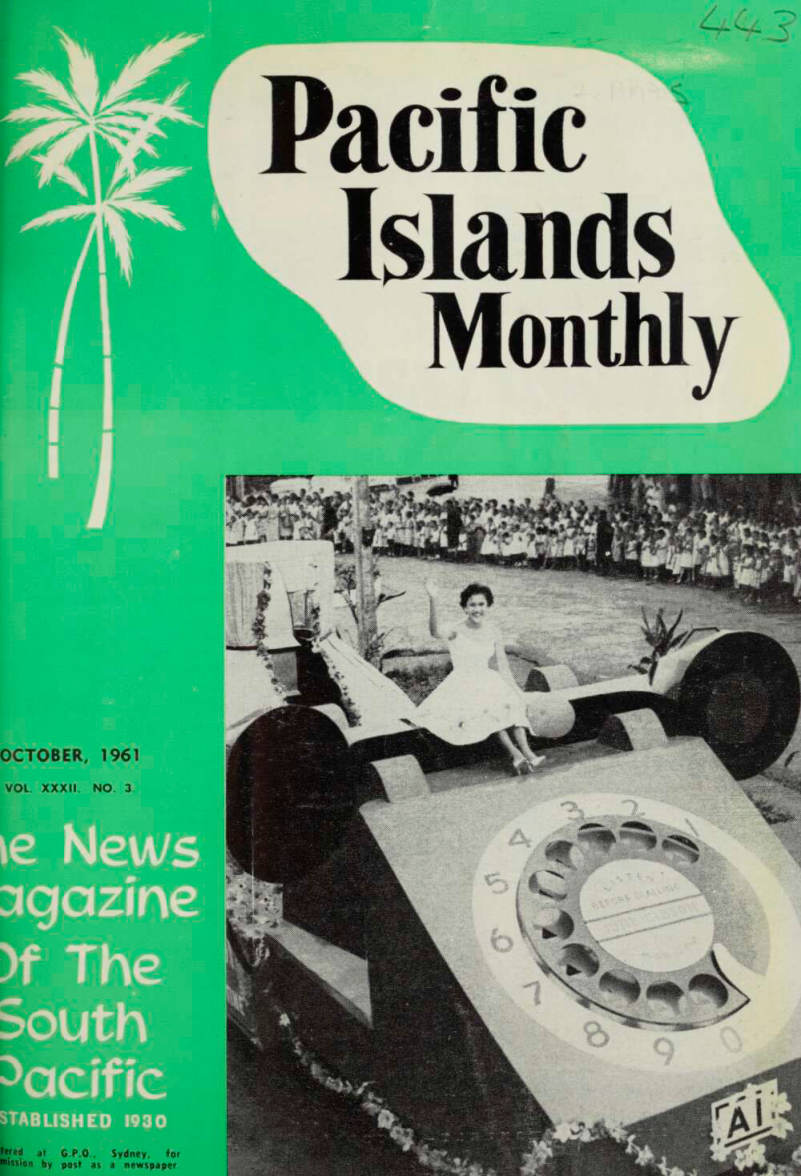 1
1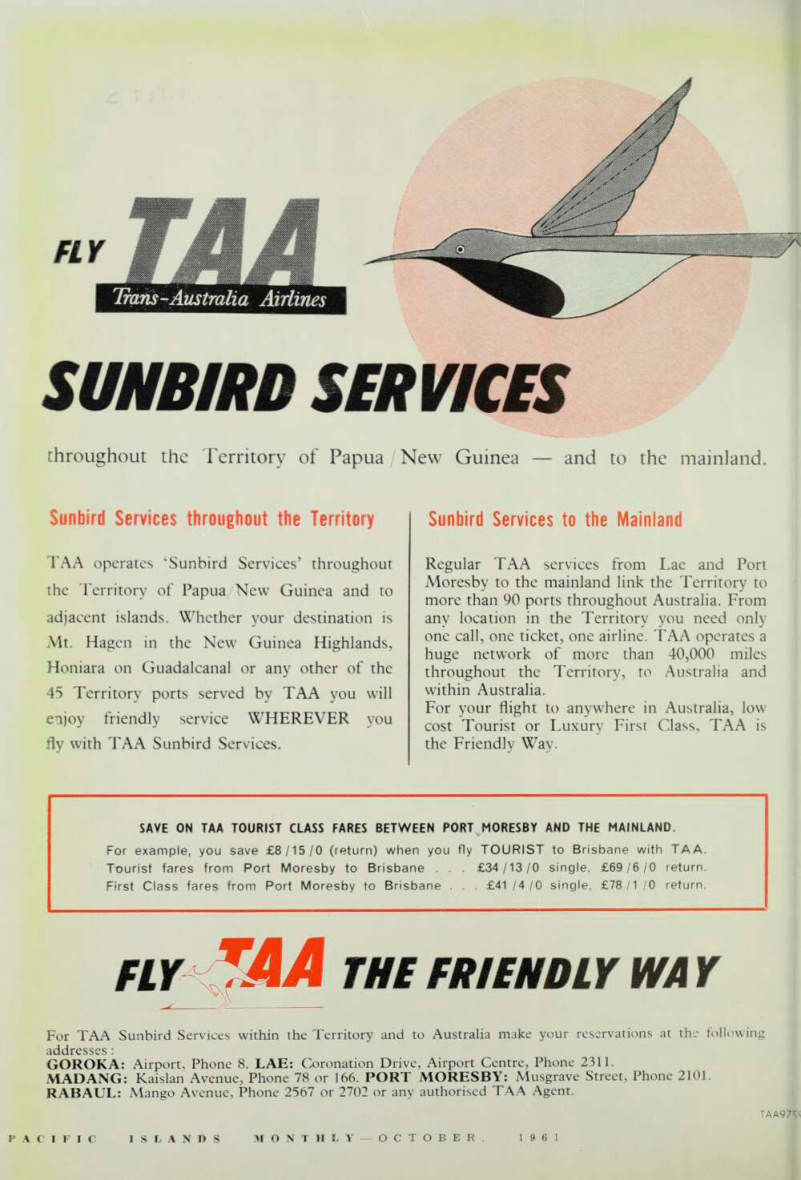 2
2 3
3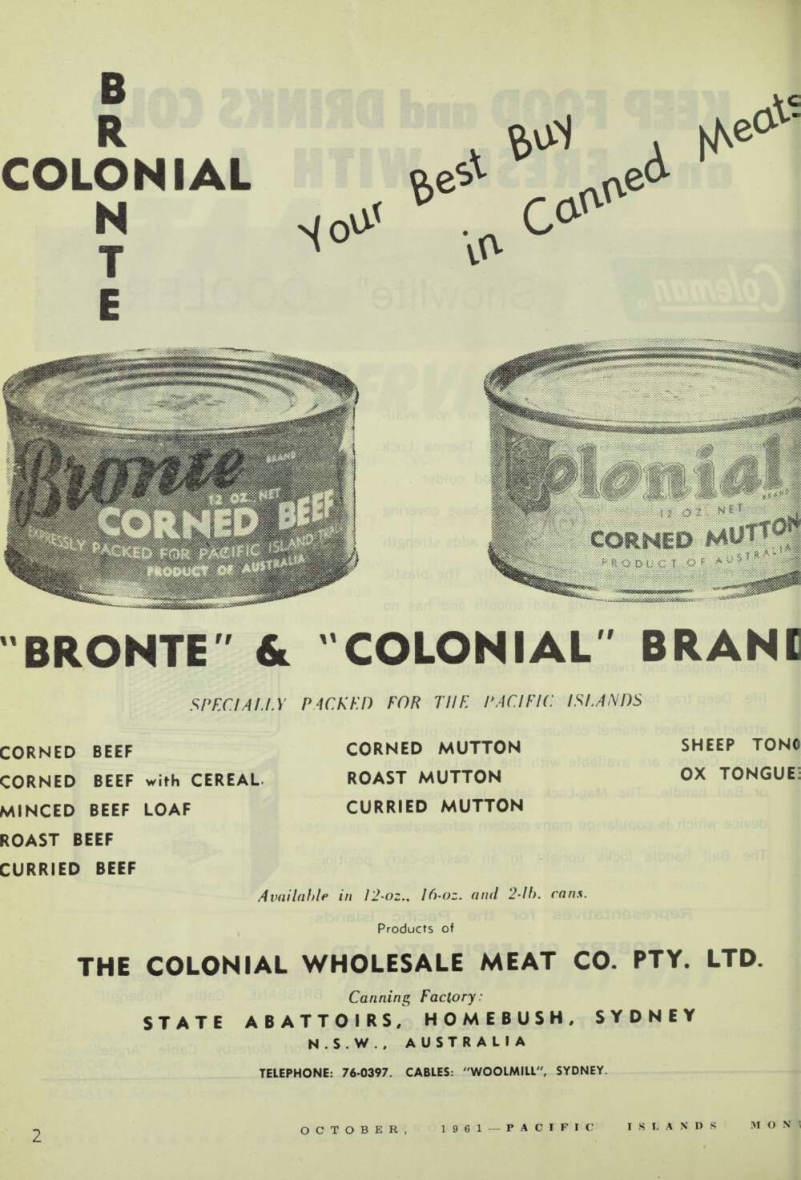 4
4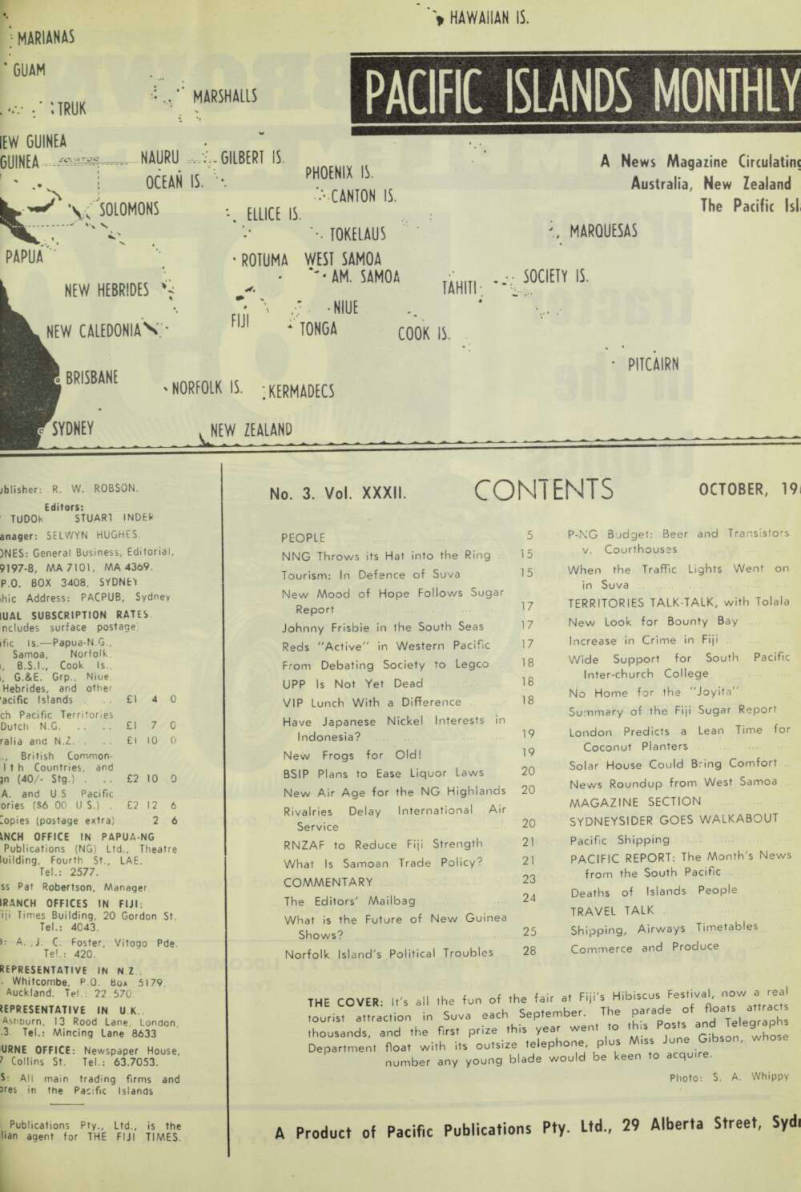 5
5 6
6 7
7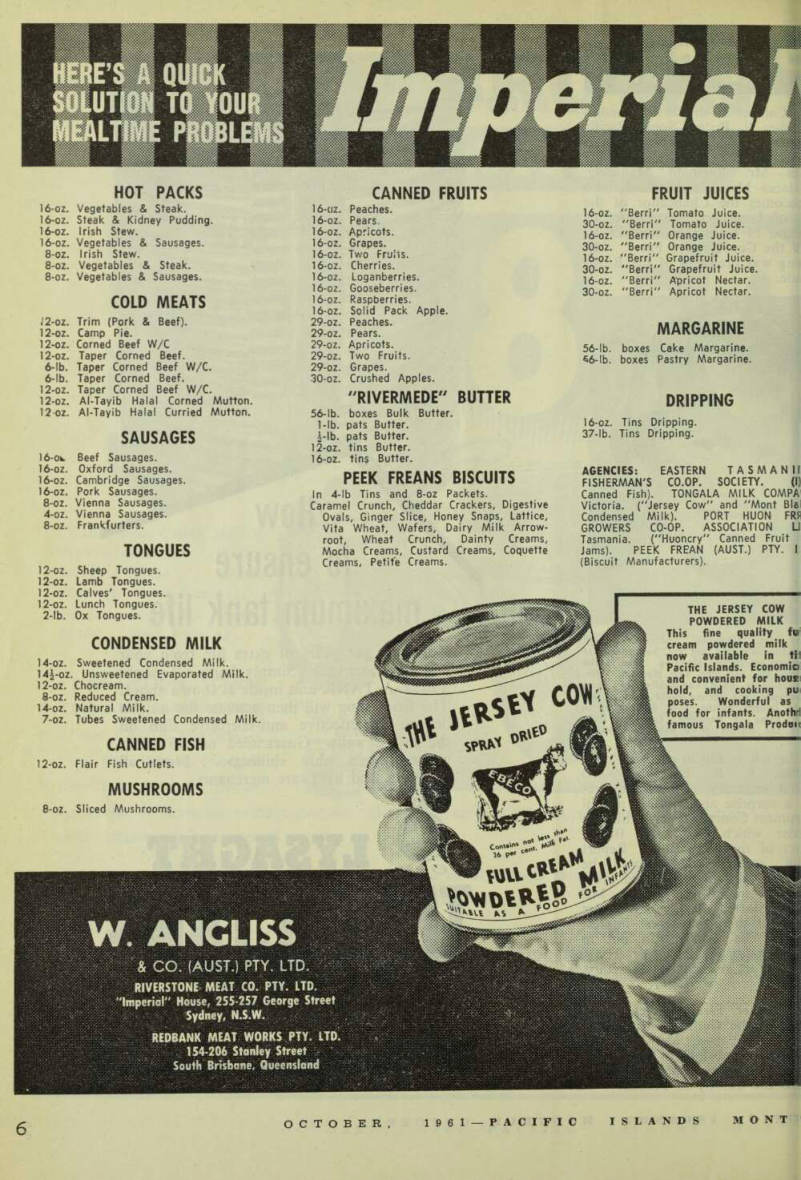 8
8 9
9 10
10 11
11 12
12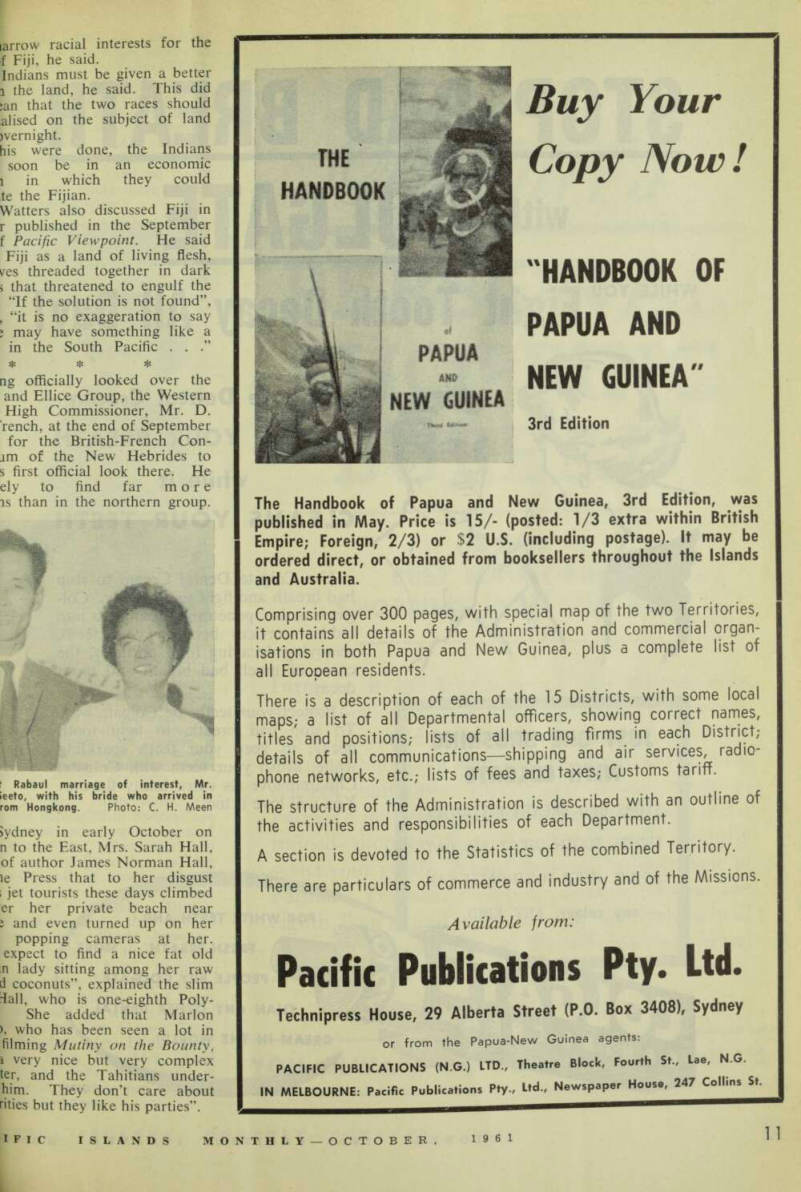 13
13 14
14 15
15 16
16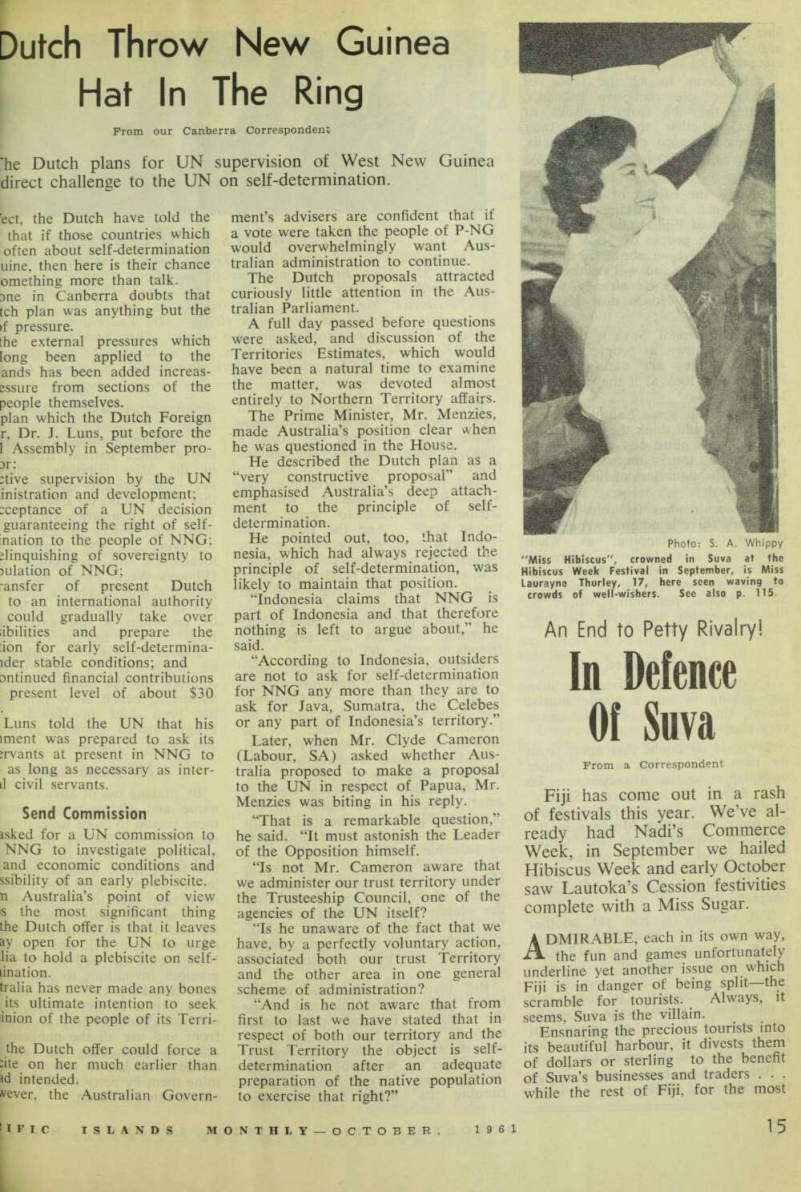 17
17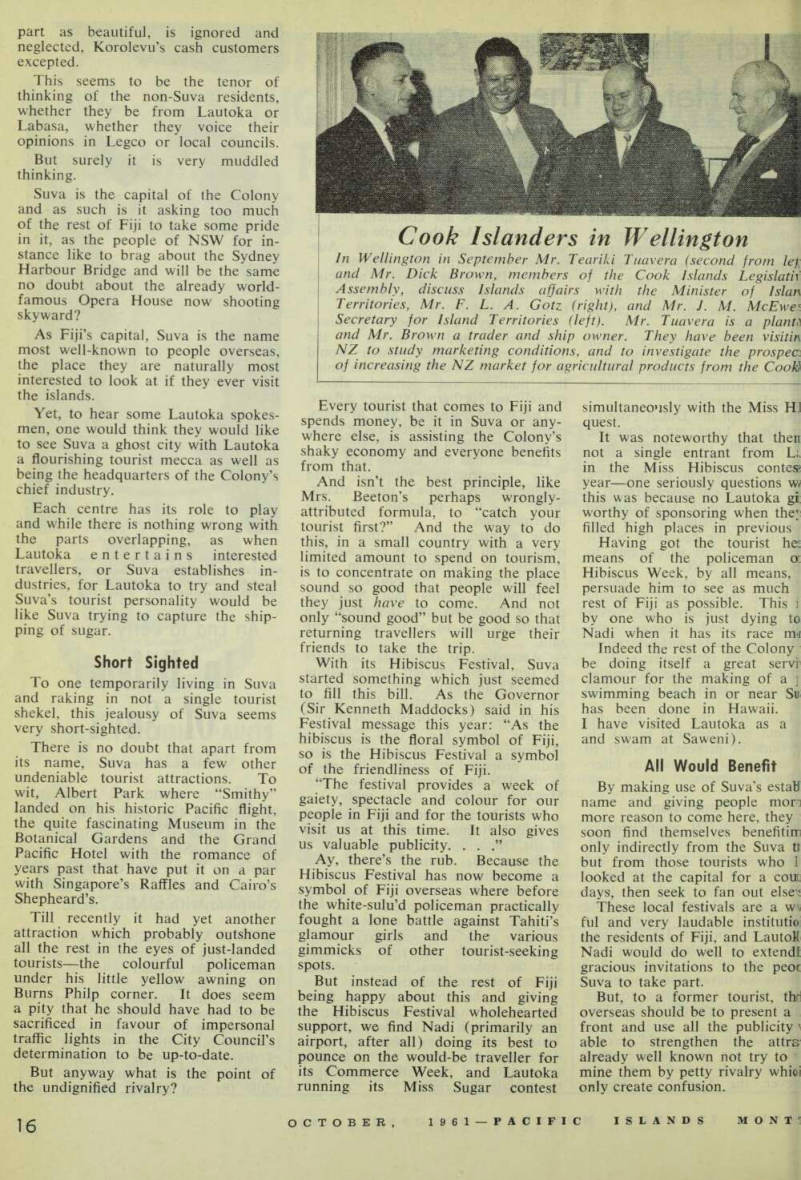 18
18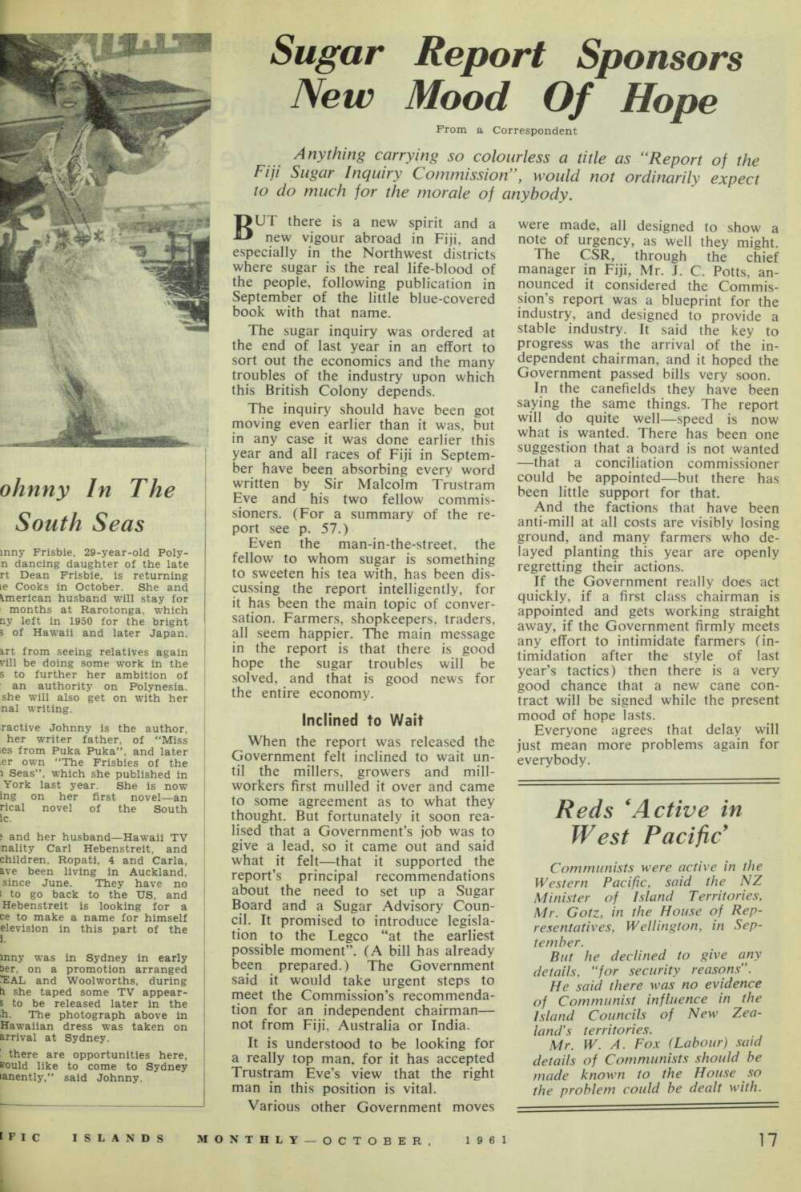 19
19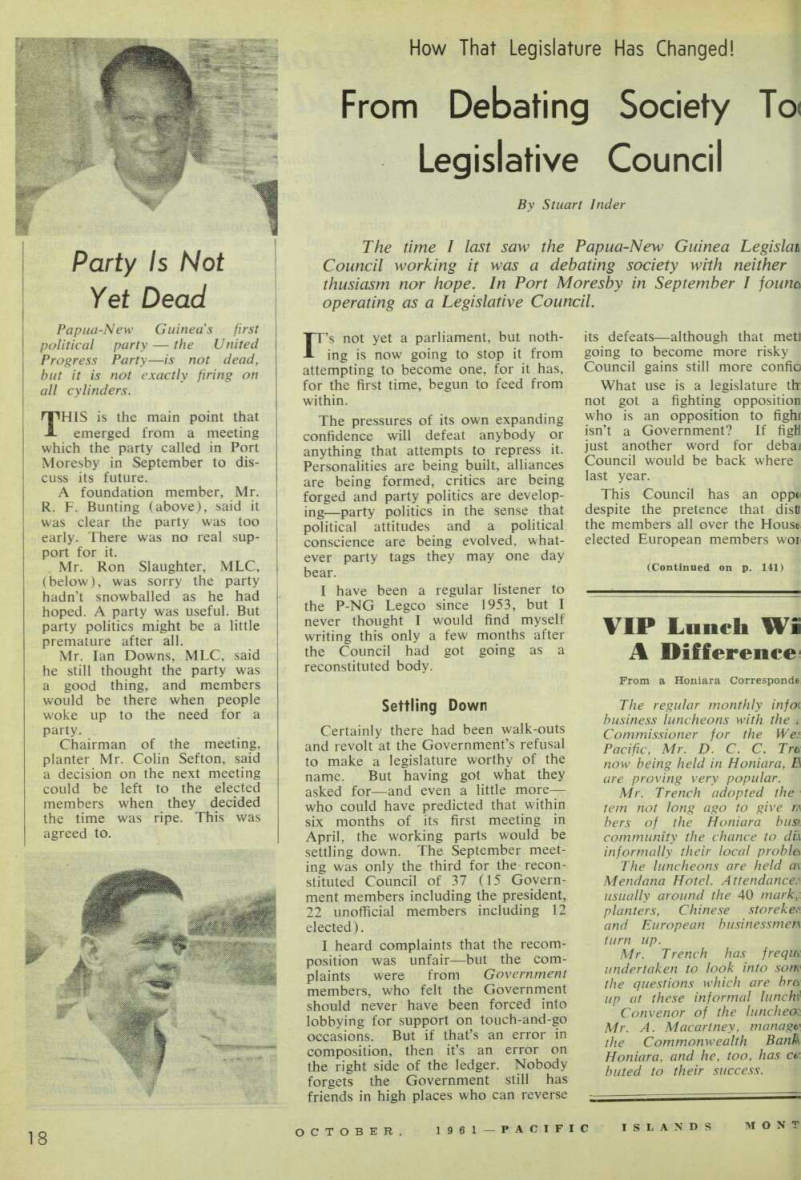 20
20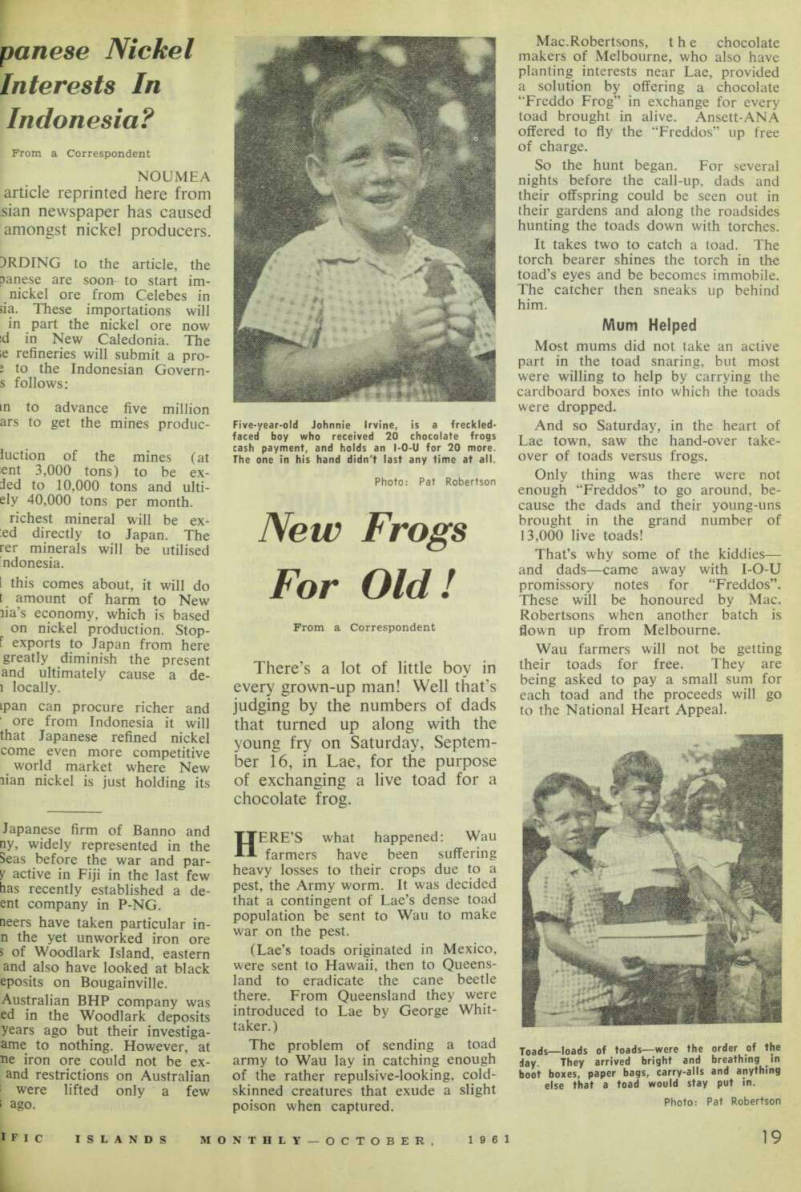 21
21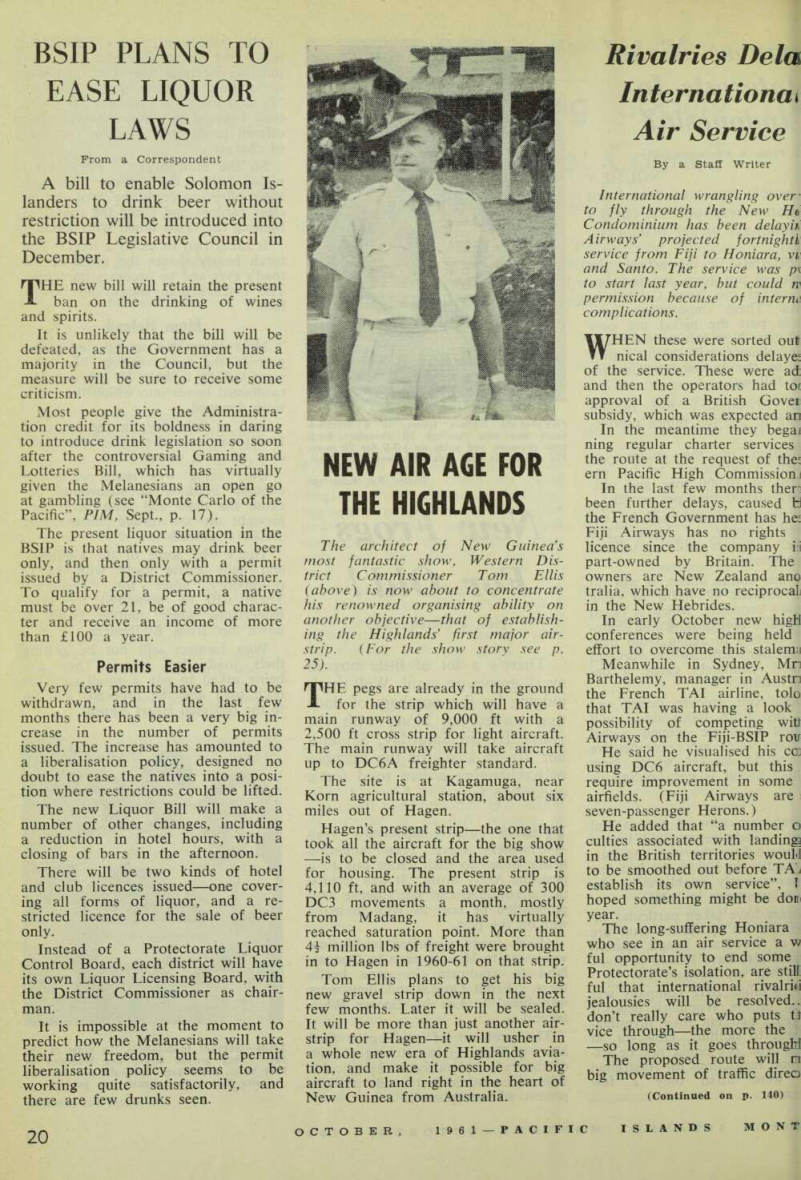 22
22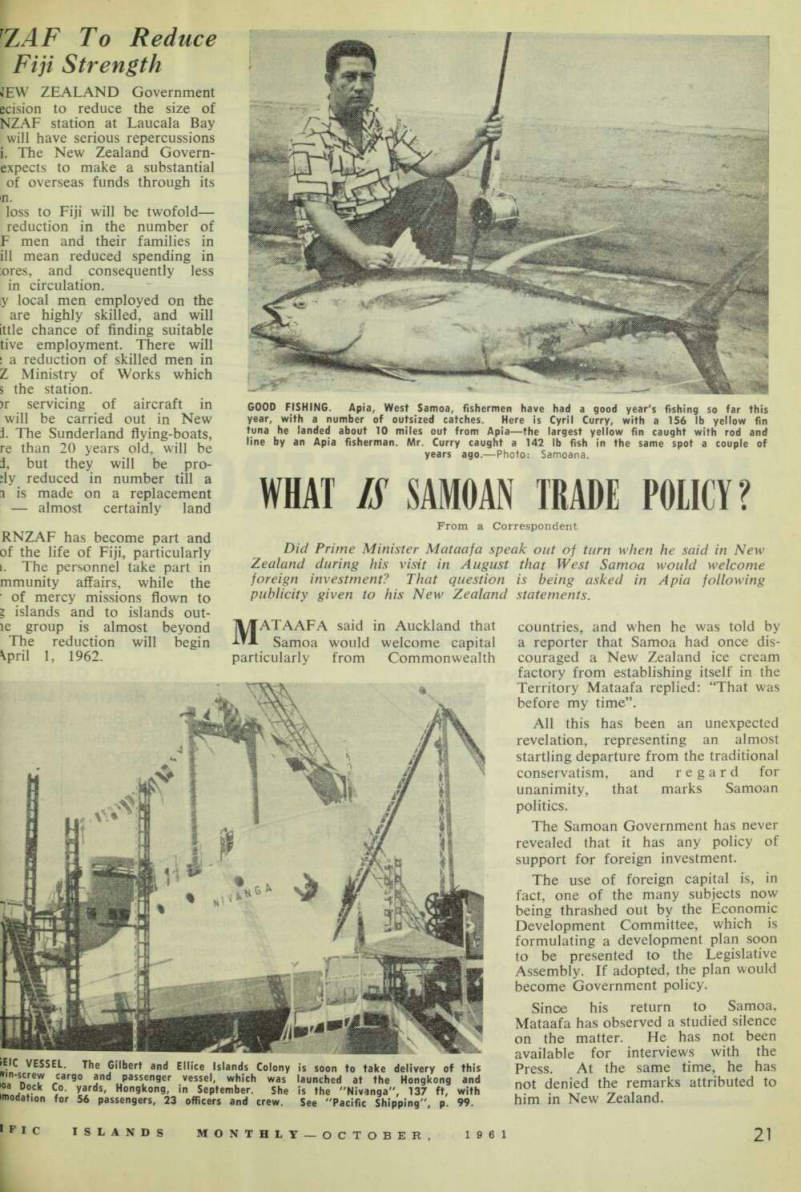 23
23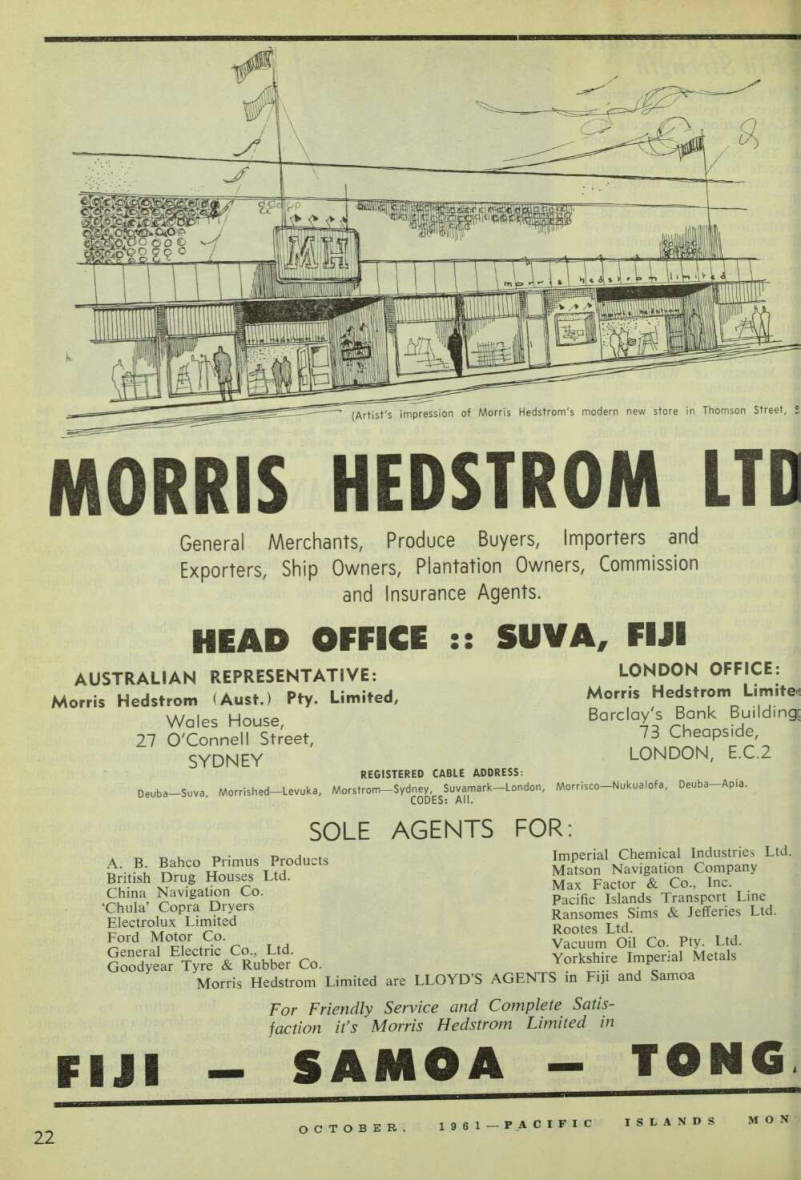 24
24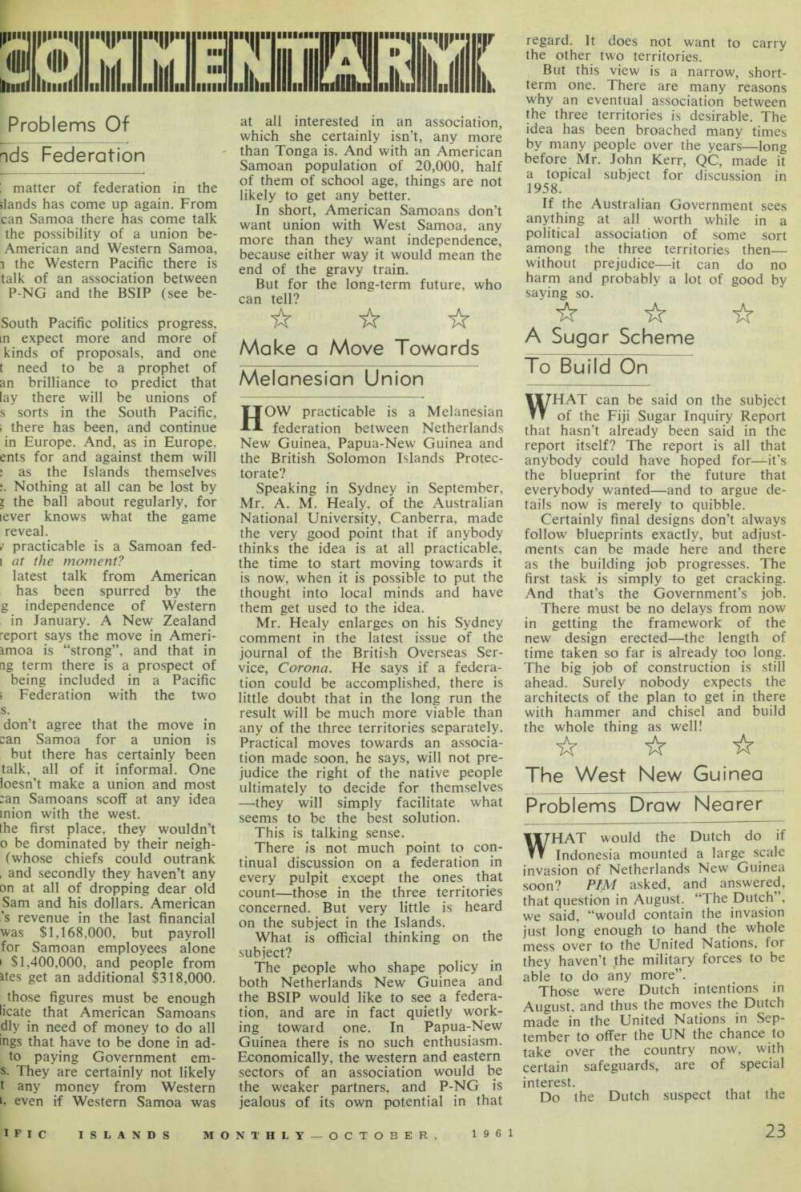 25
25 26
26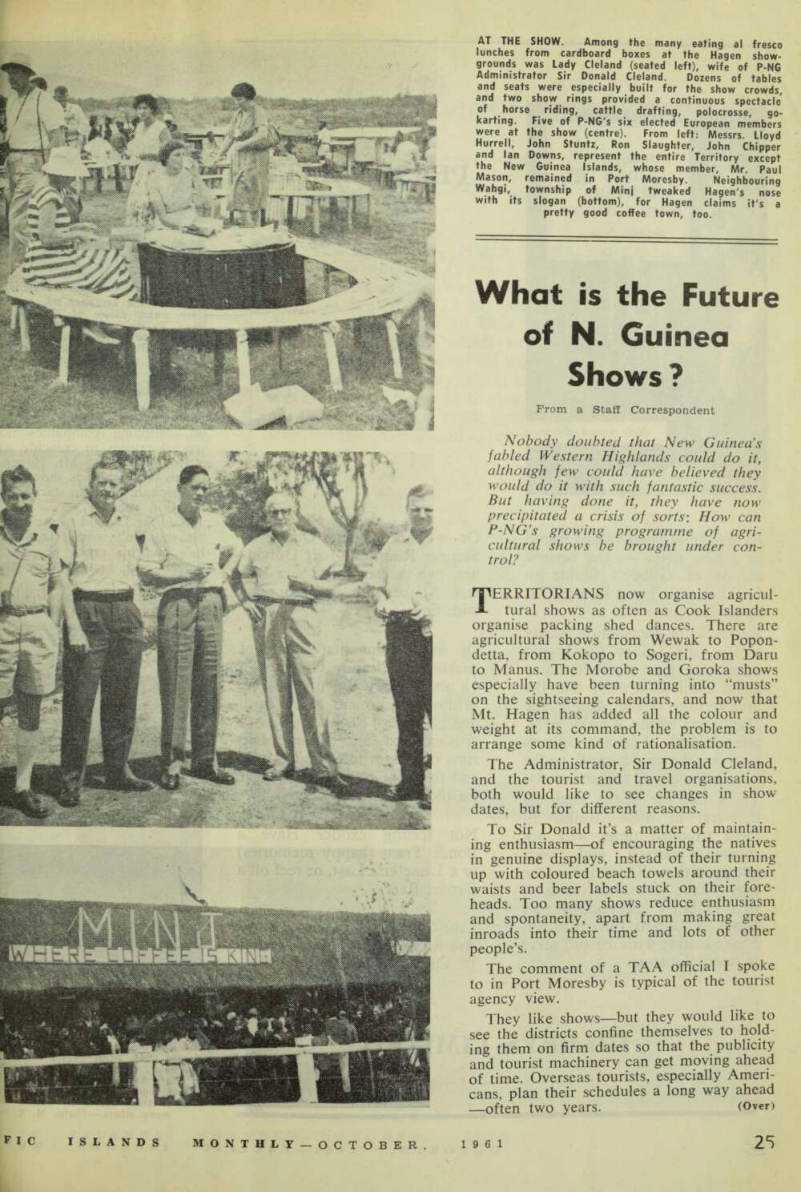 27
27 28
28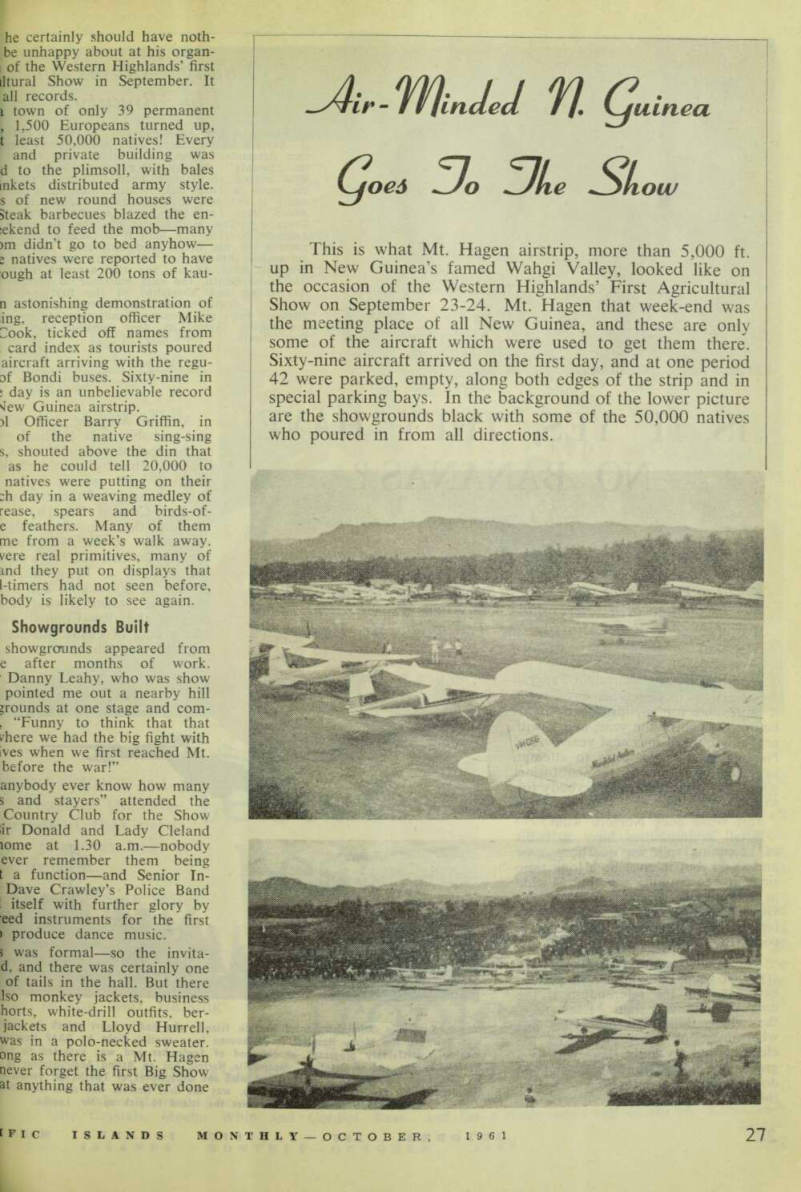 29
29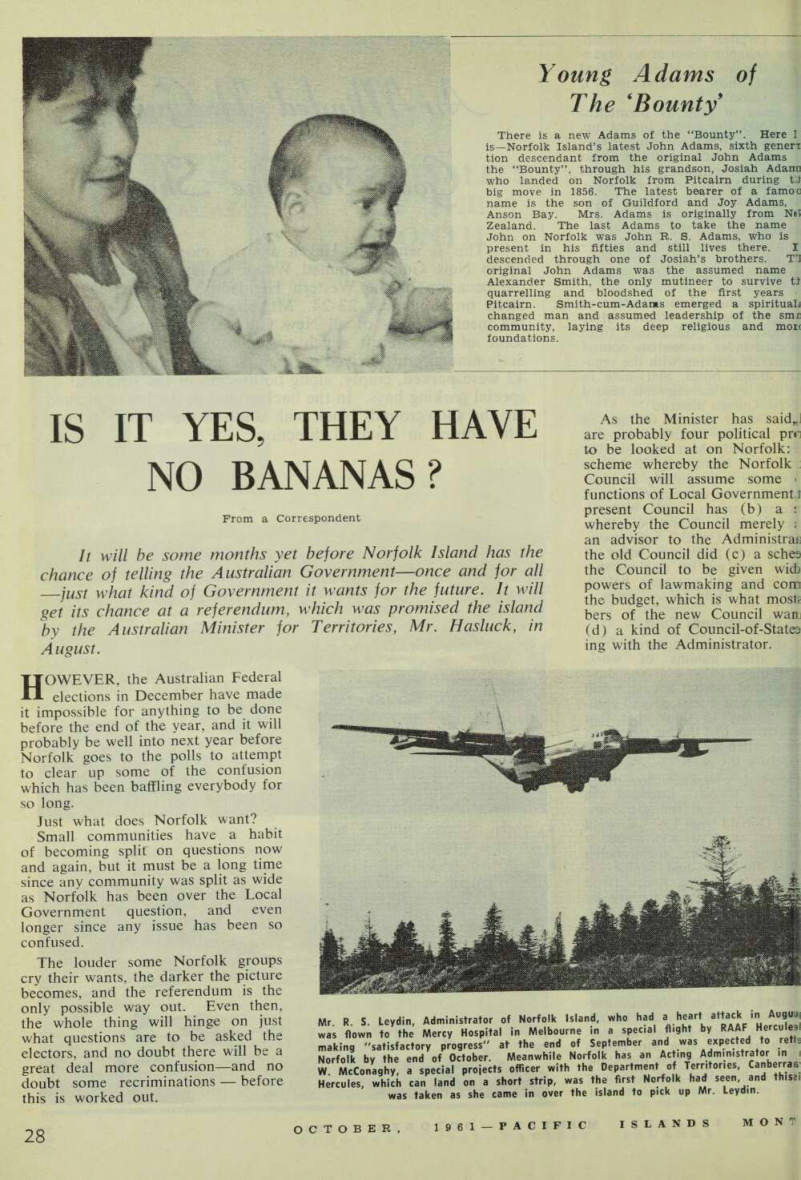 30
30 31
31 32
32 33
33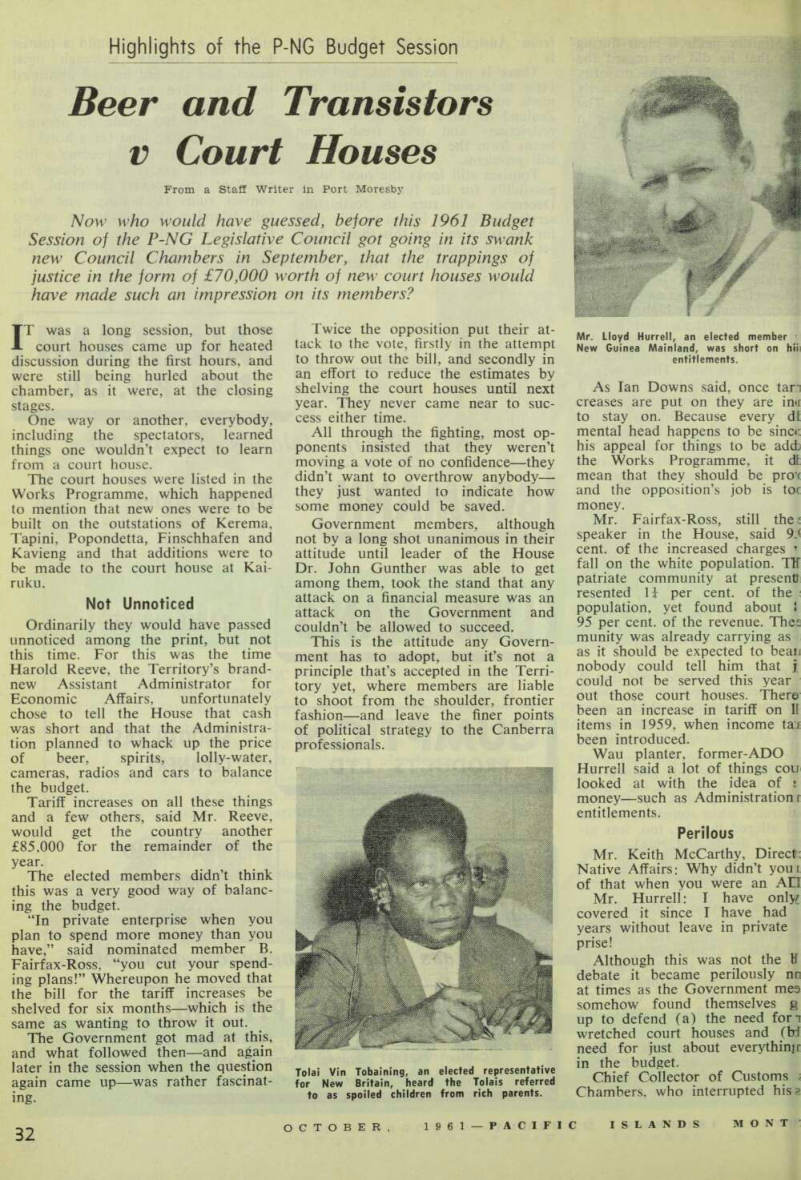 34
34 35
35 36
36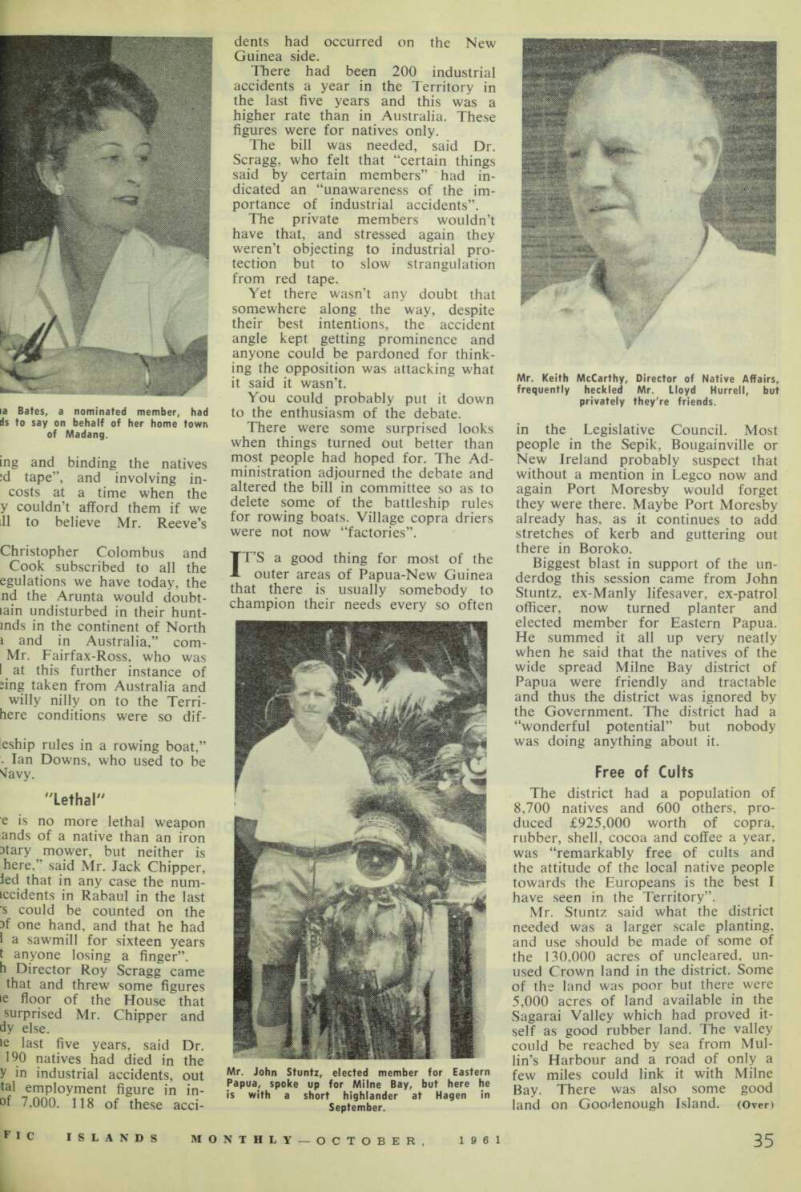 37
37 38
38 39
39 40
40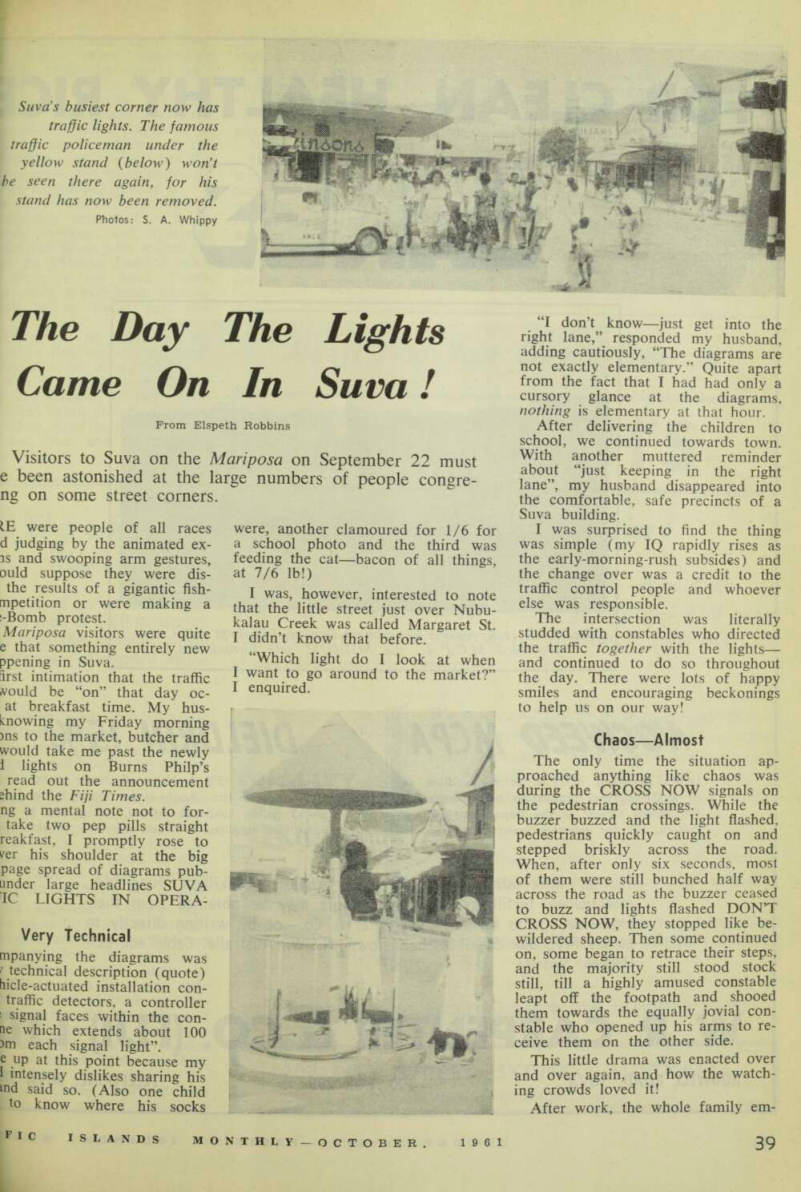 41
41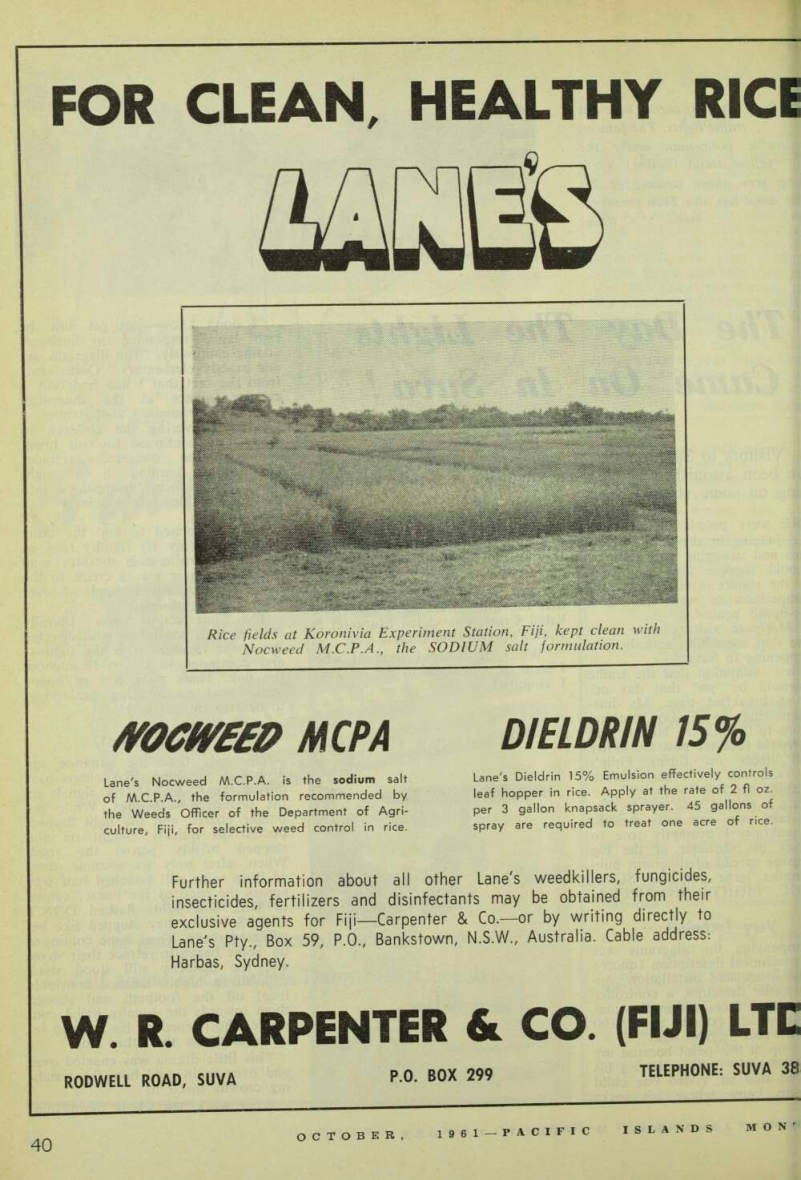 42
42 43
43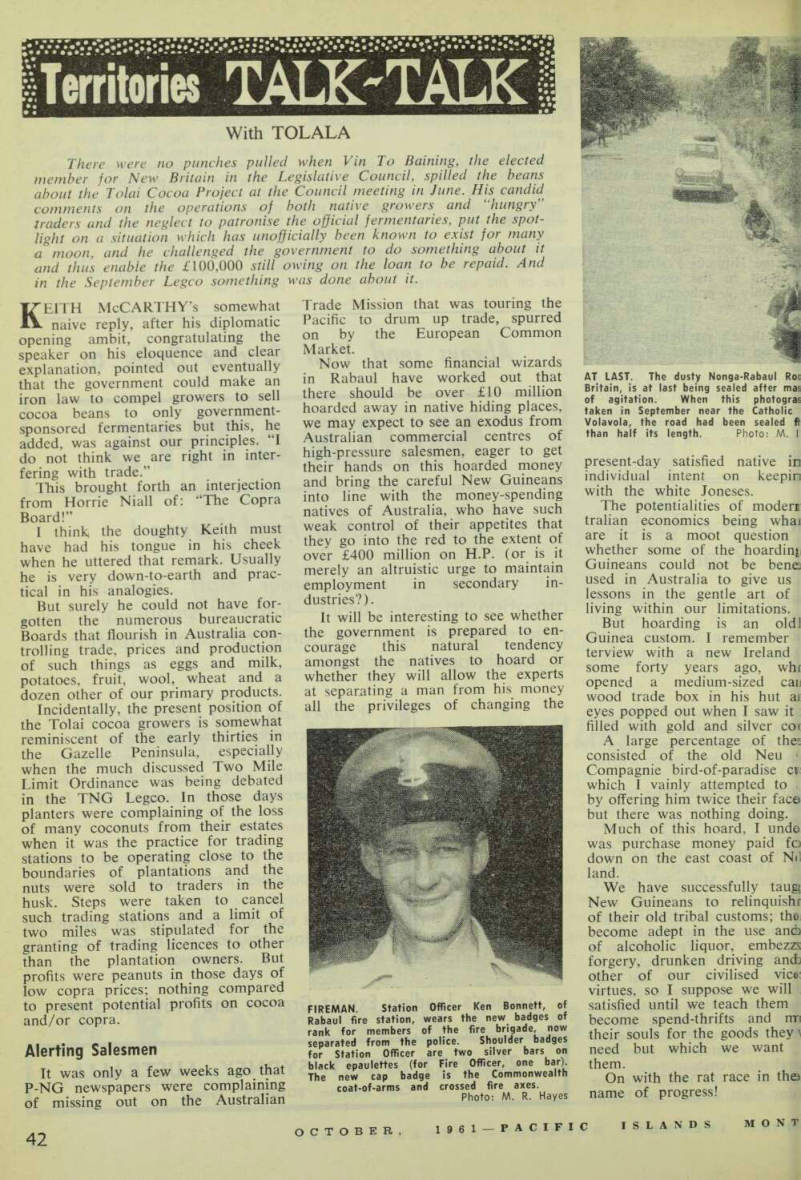 44
44 45
45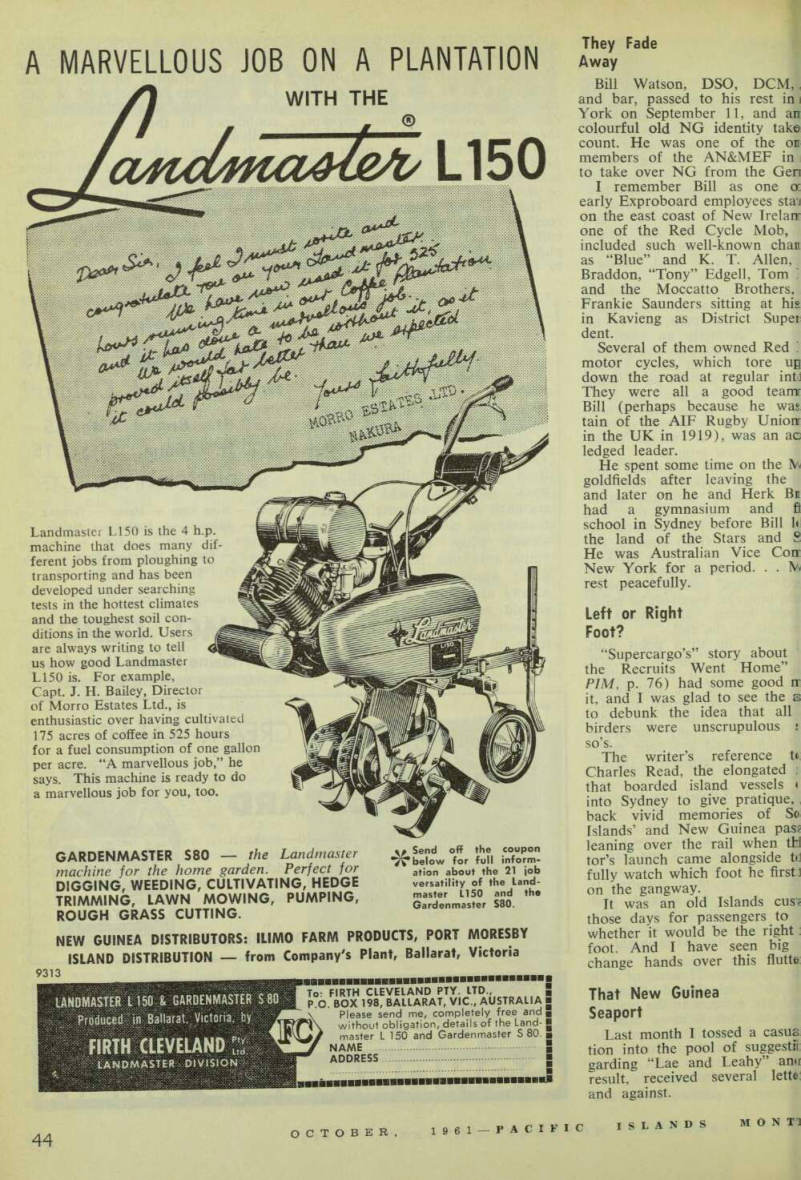 46
46 47
47 48
48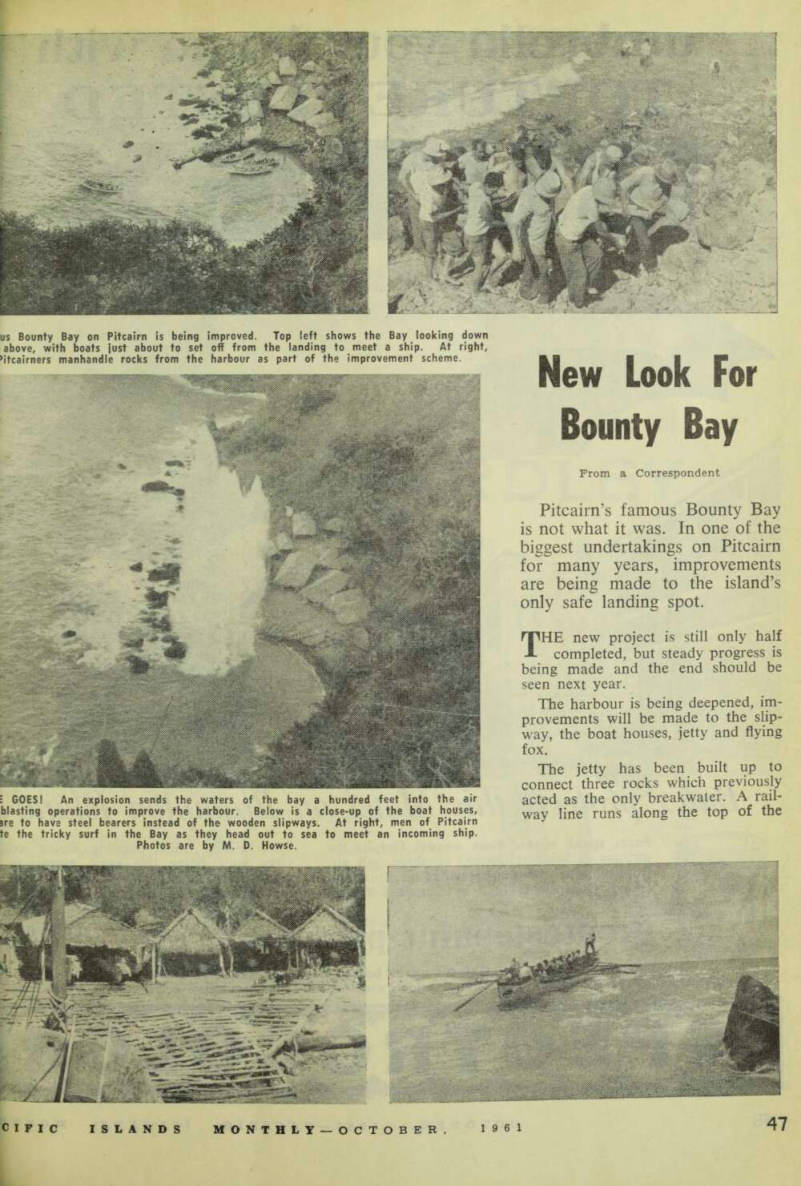 49
49 50
50 51
51 52
52 53
53 54
54 55
55 56
56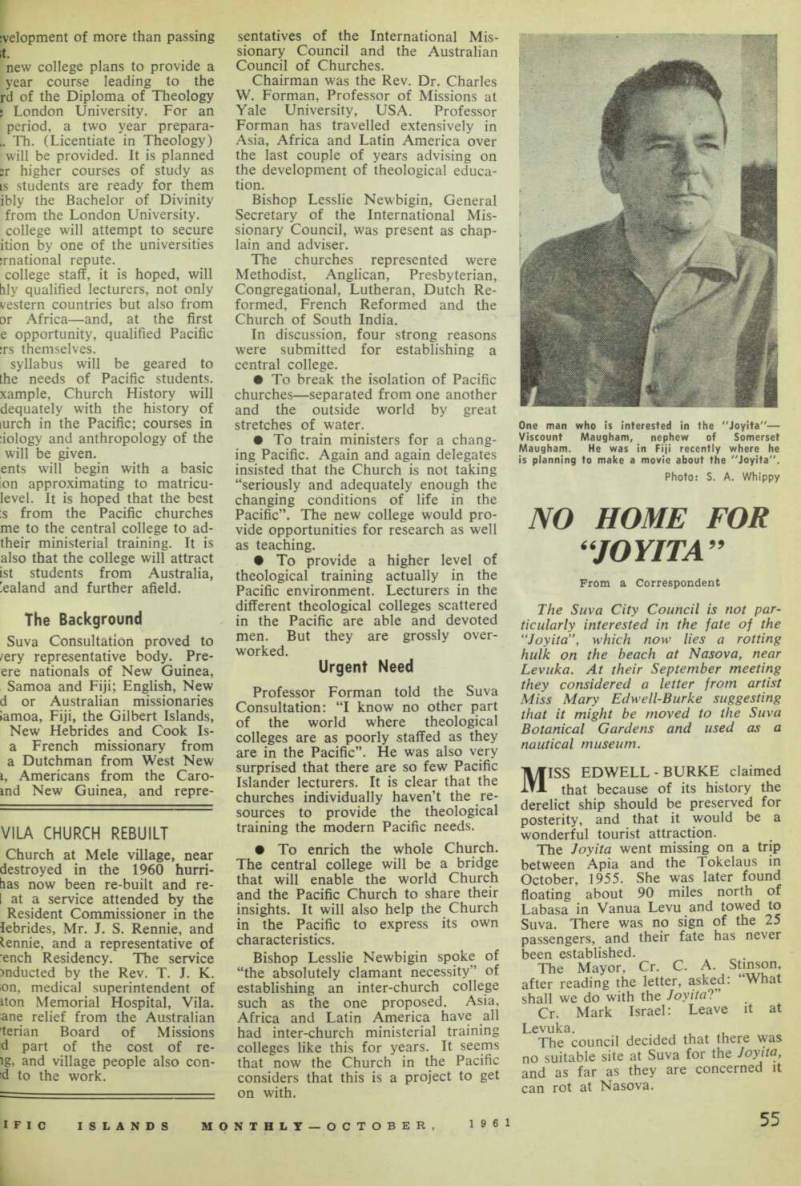 57
57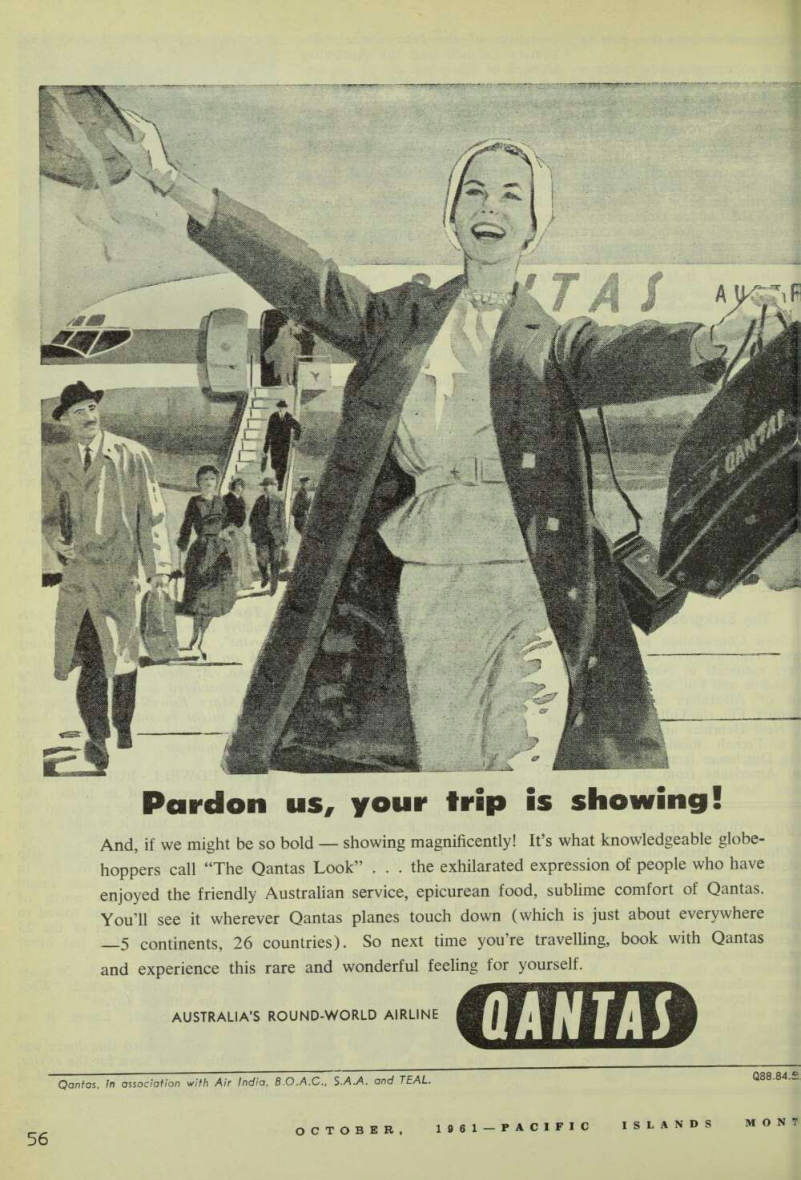 58
58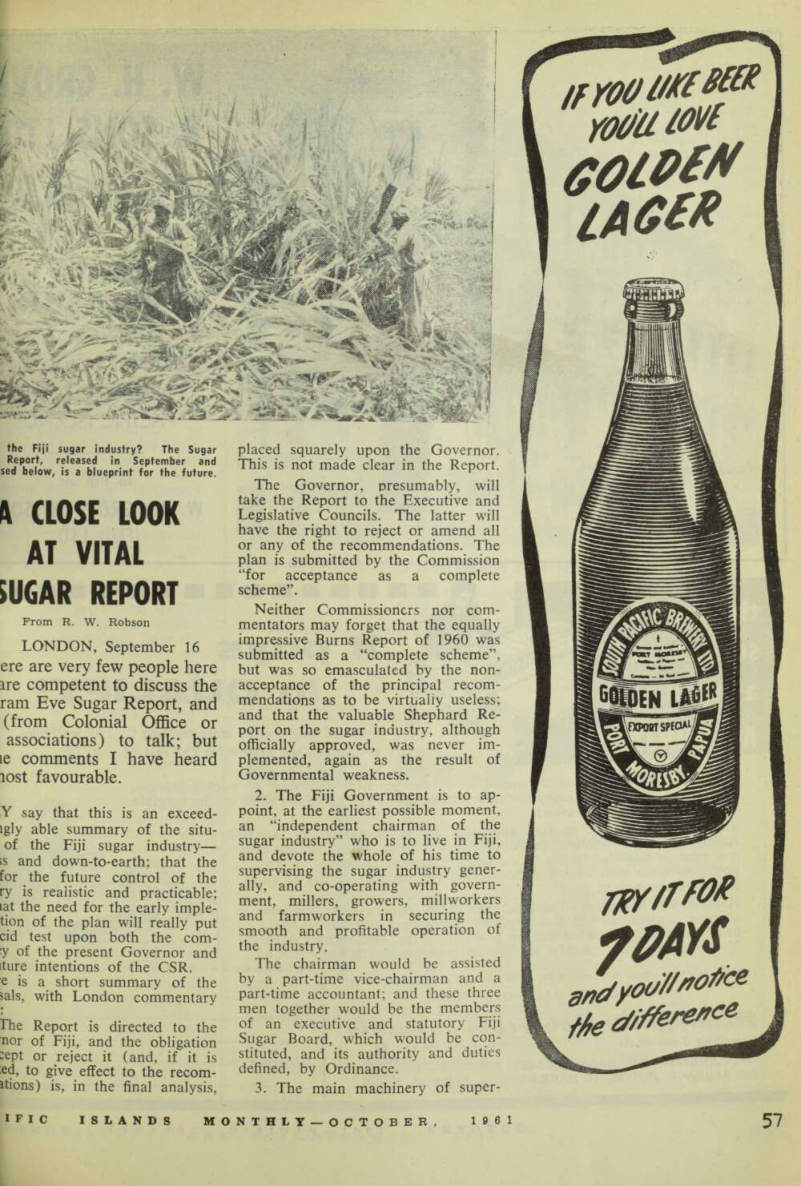 59
59 60
60 61
61 62
62 63
63 64
64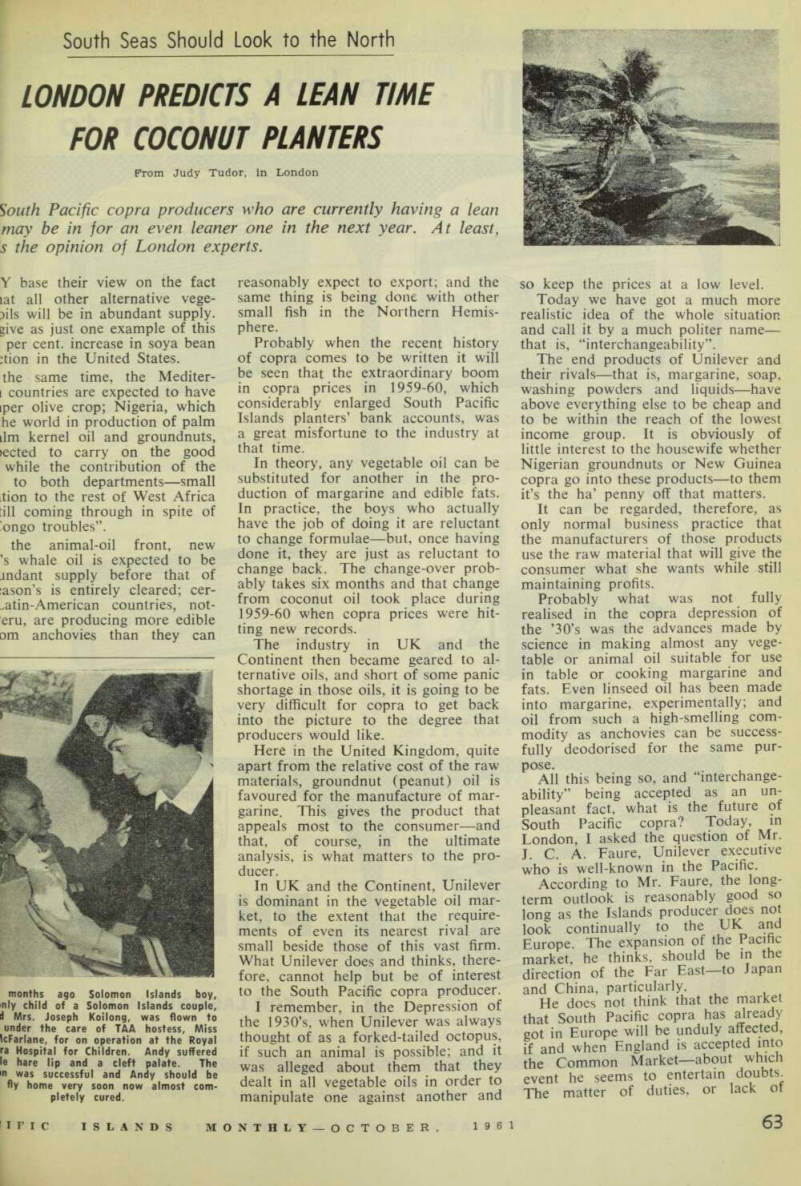 65
65 66
66 67
67 68
68 69
69 70
70 71
71 72
72 73
73 74
74 75
75 76
76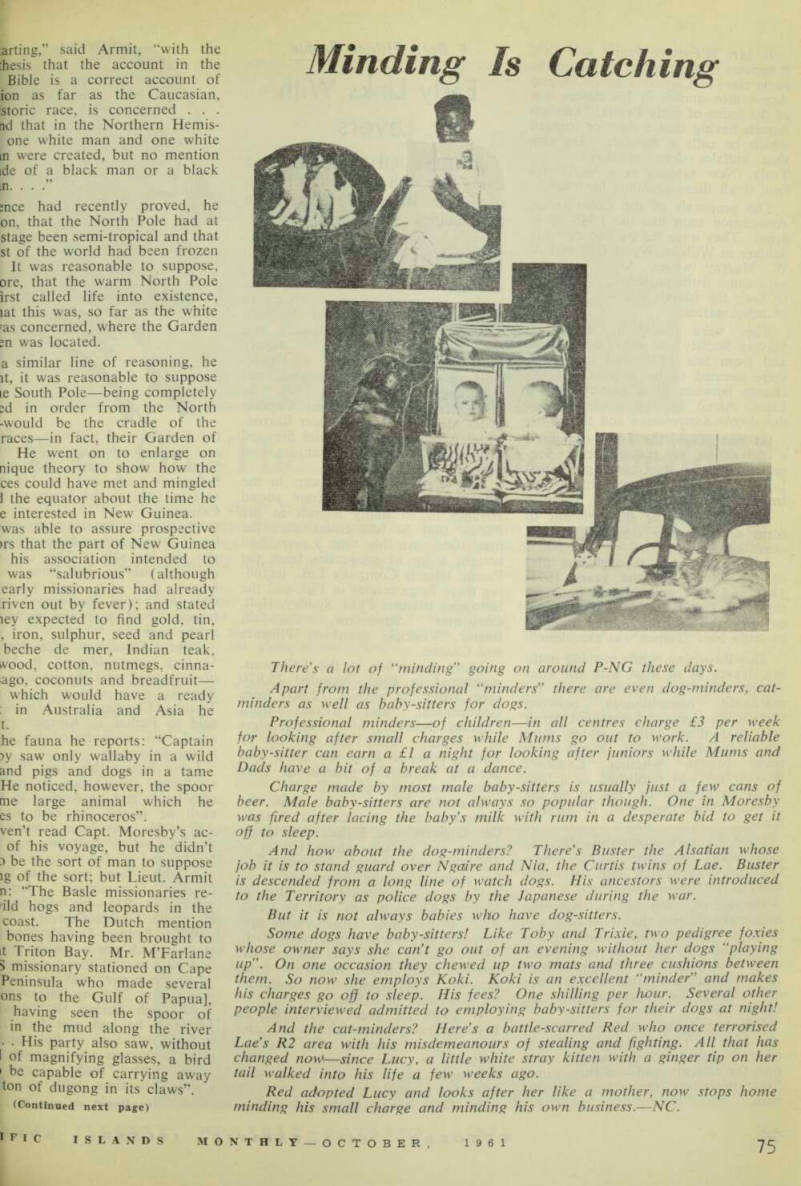 77
77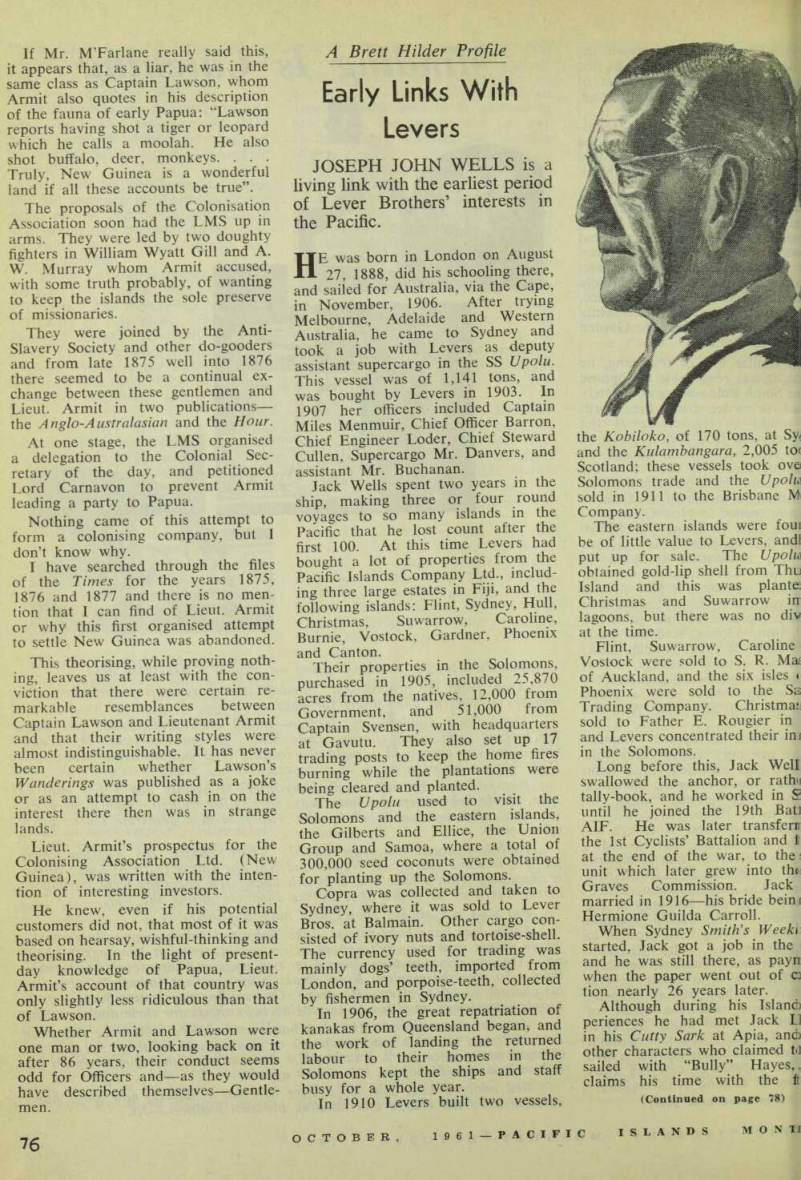 78
78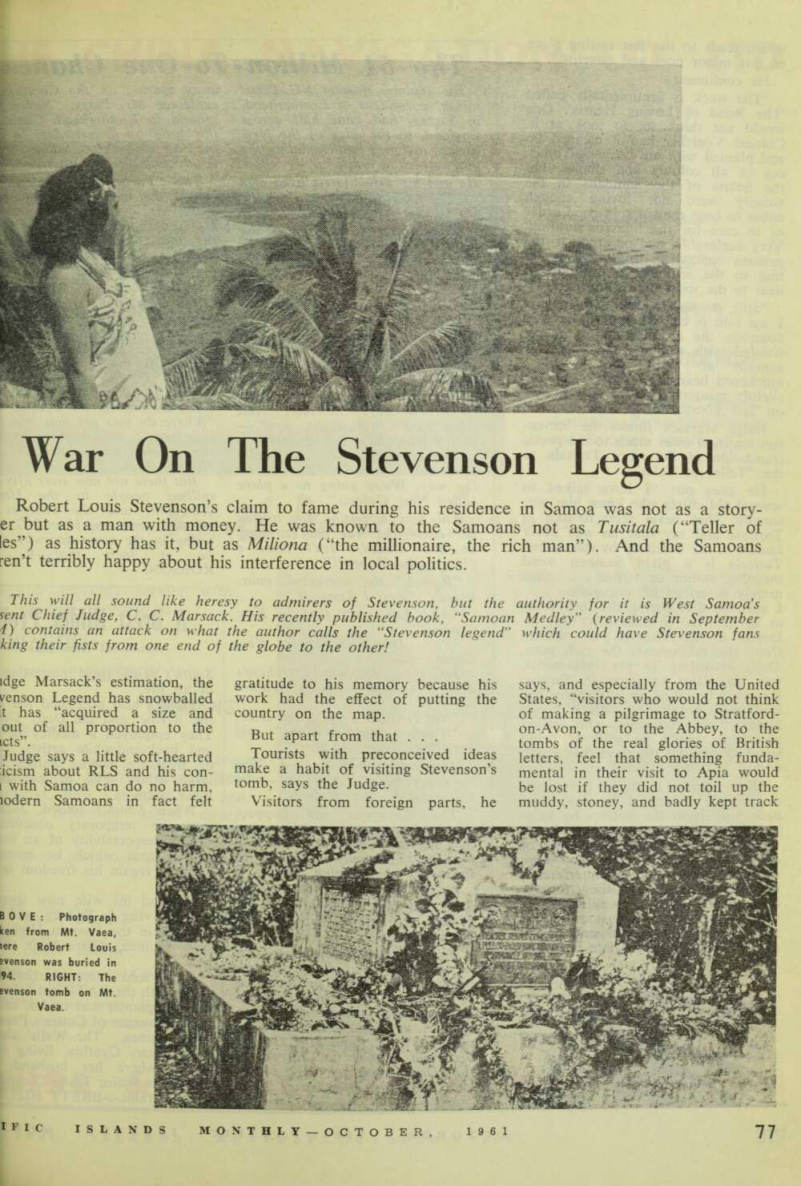 79
79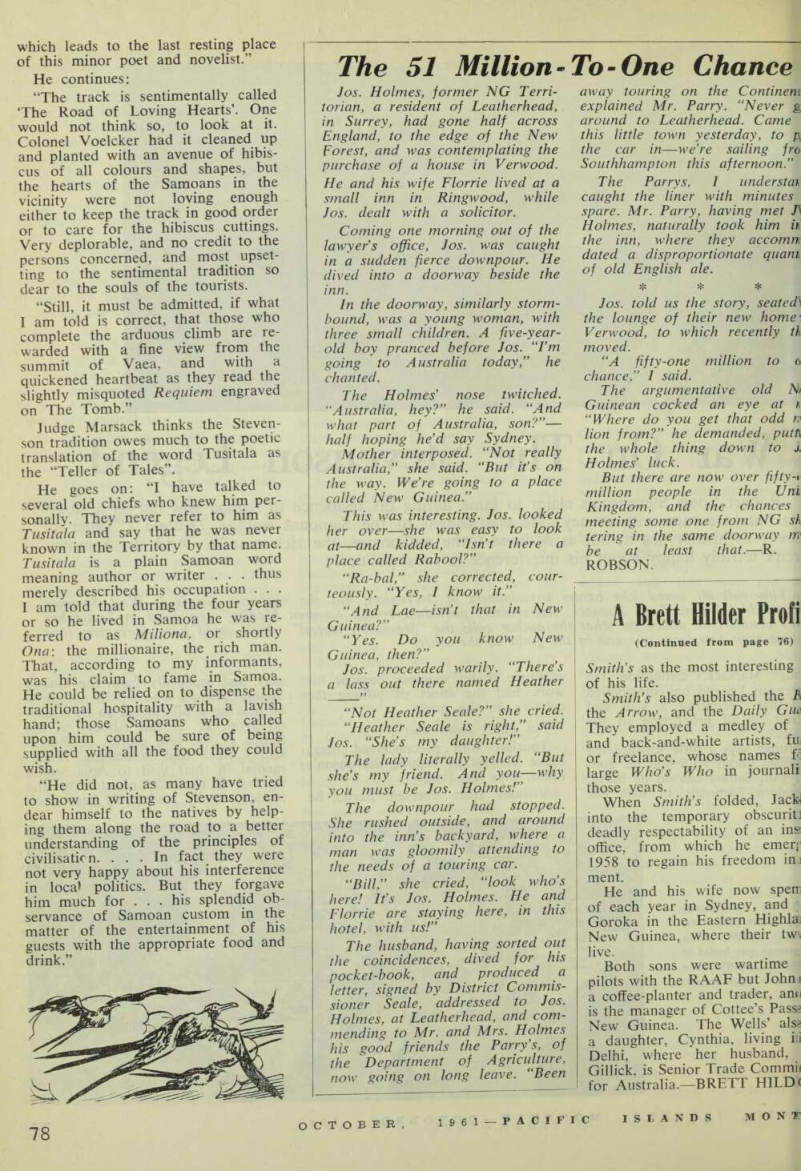 80
80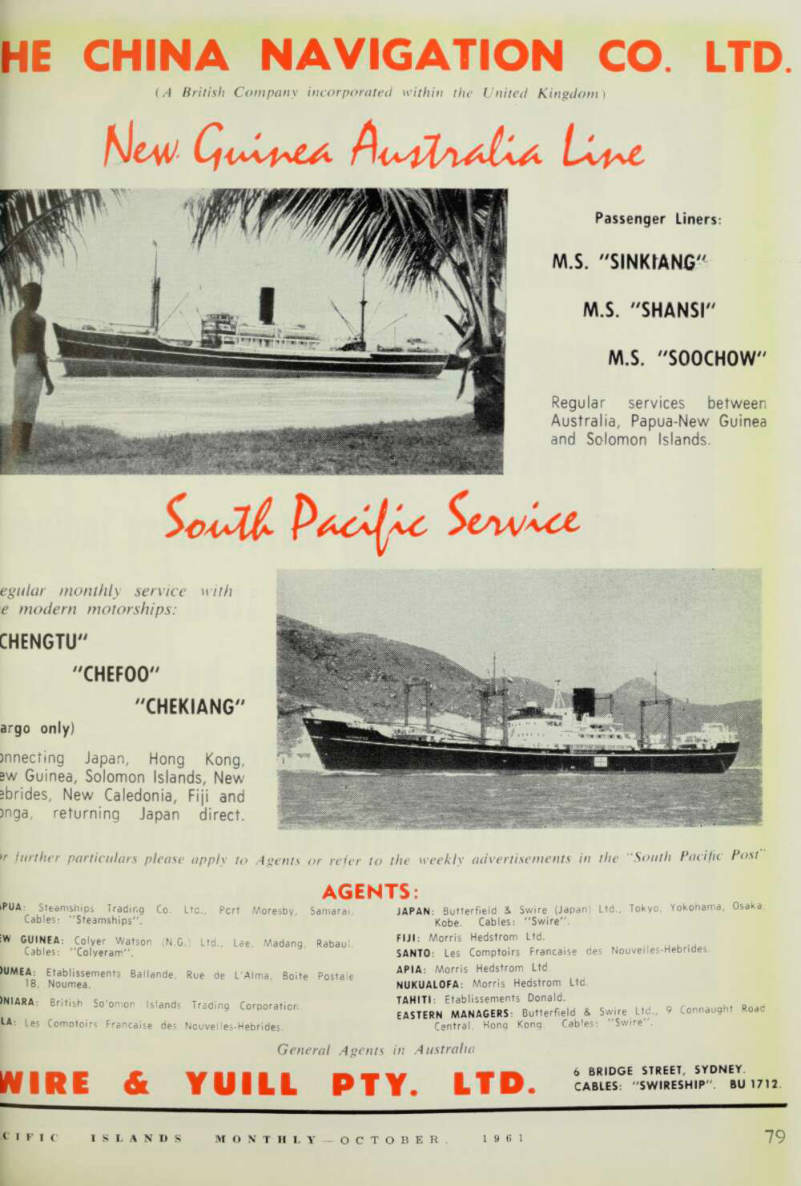 81
81 82
82 83
83 84
84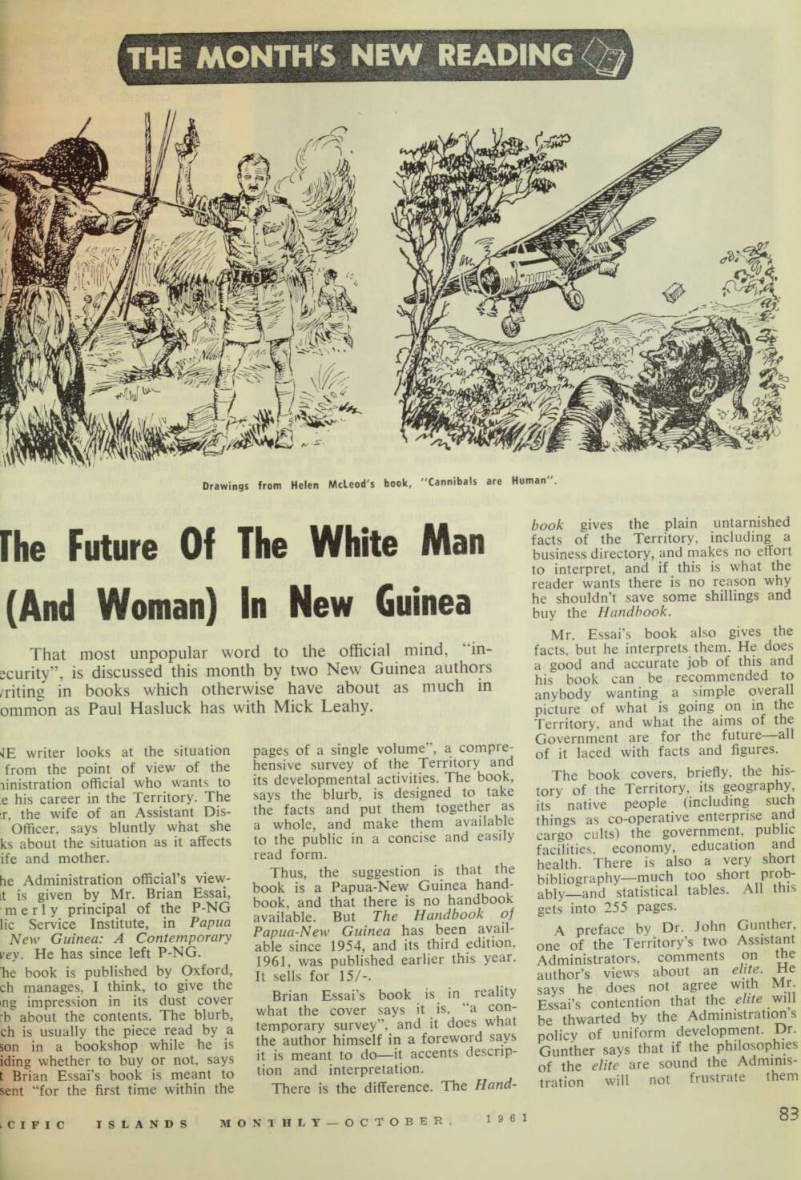 85
85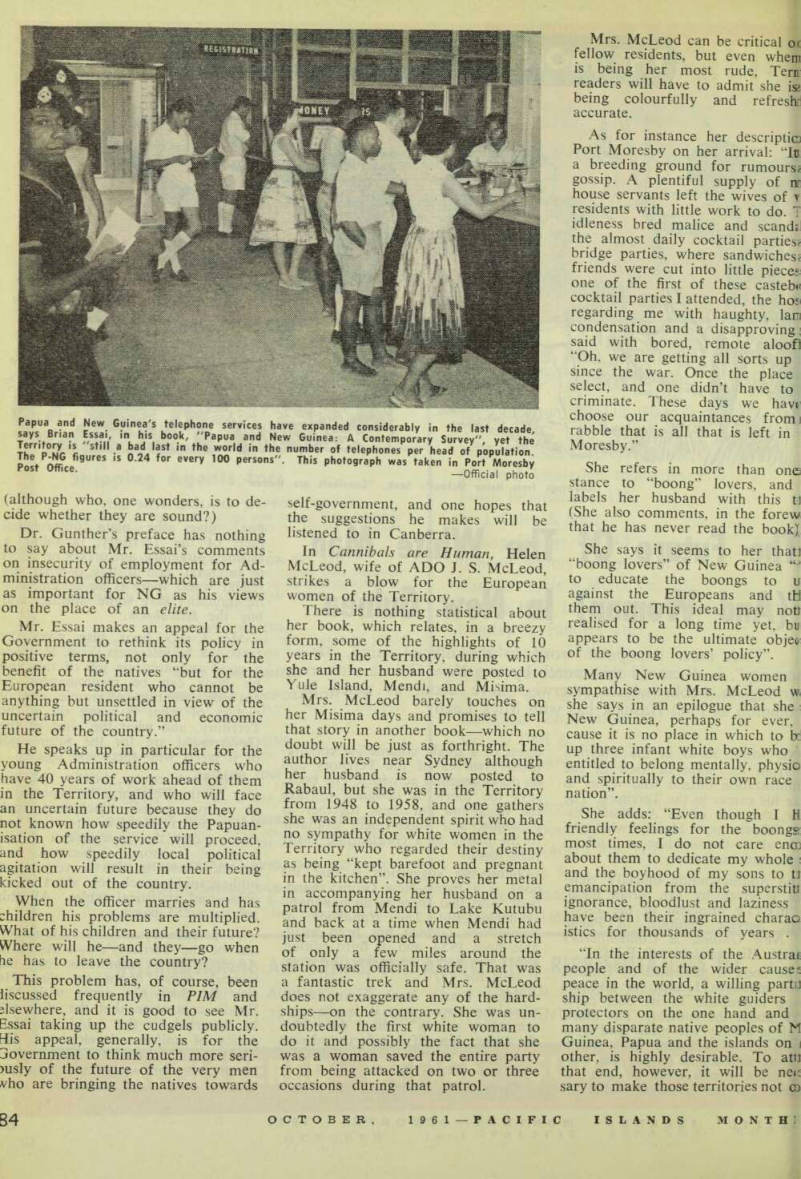 86
86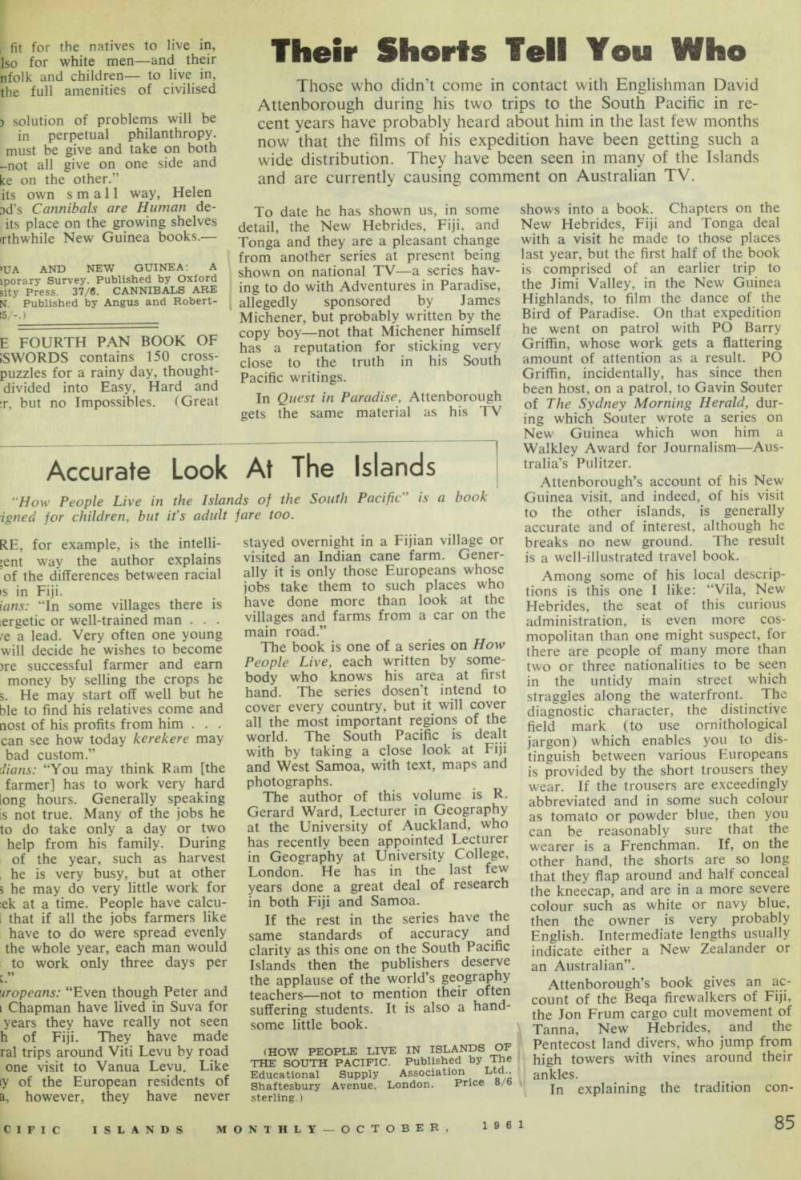 87
87 88
88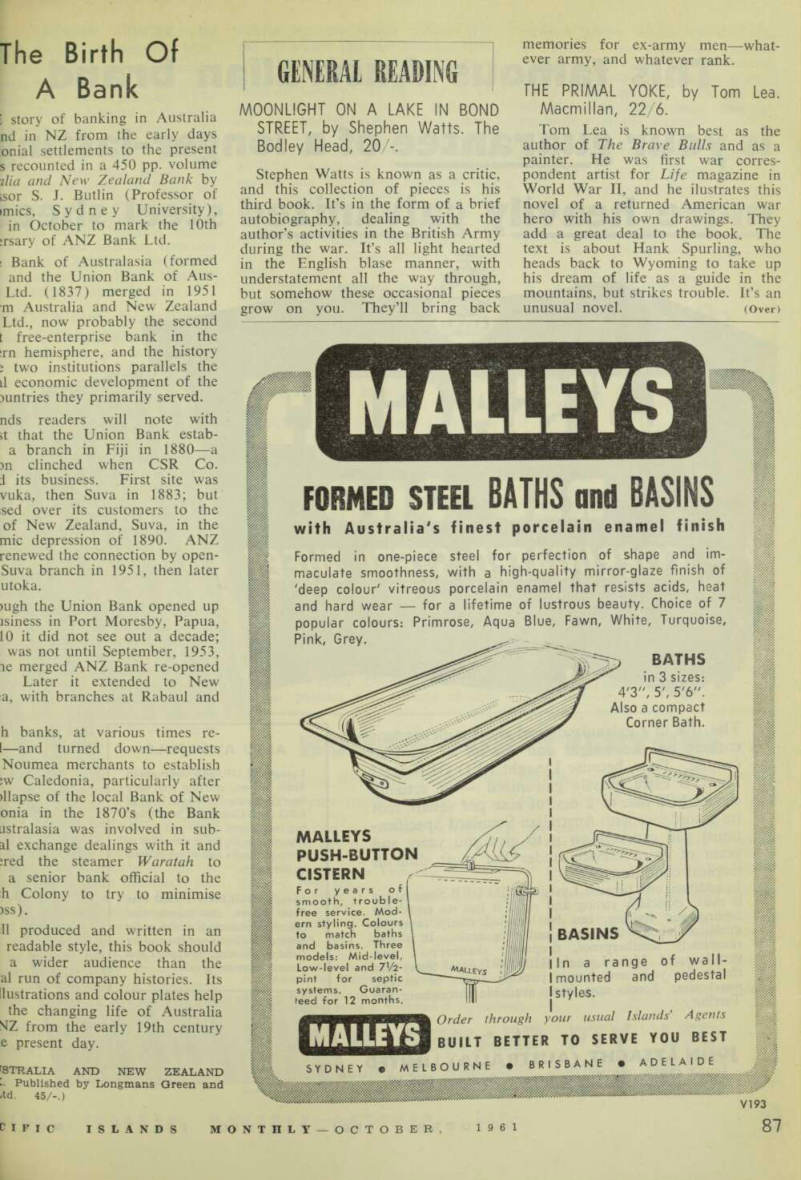 89
89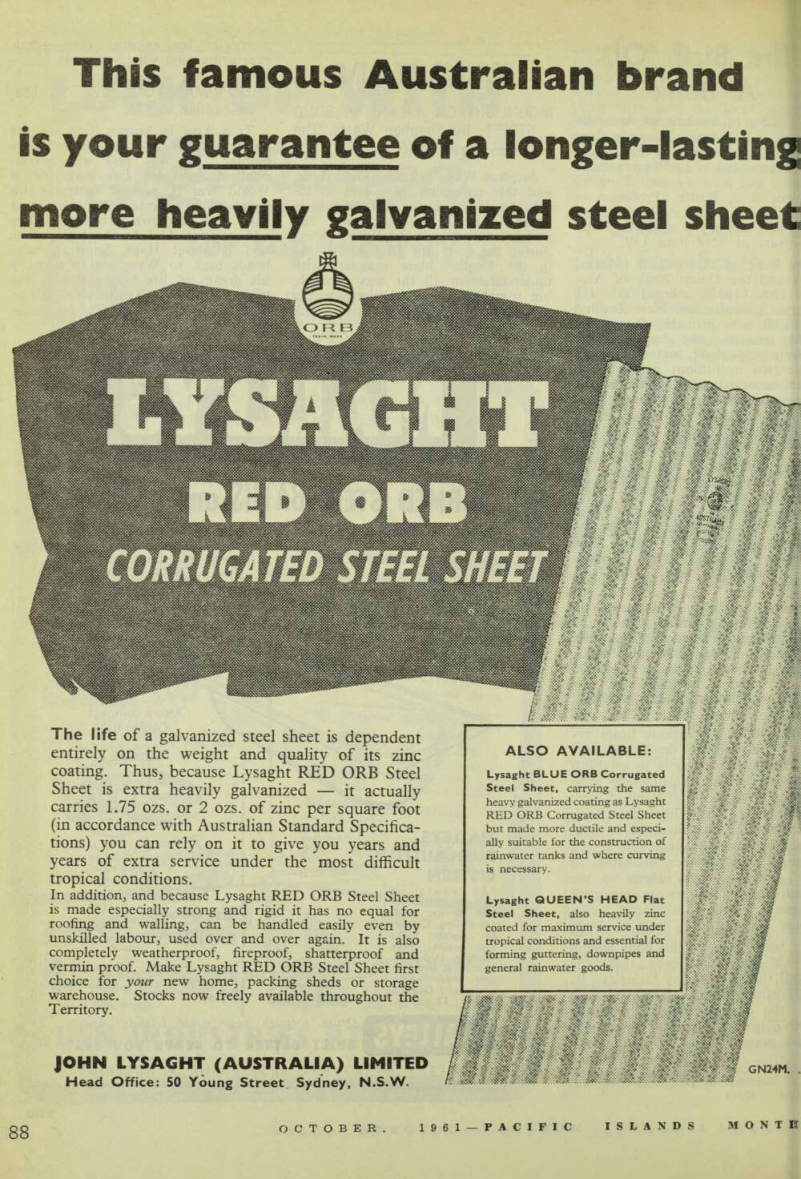 90
90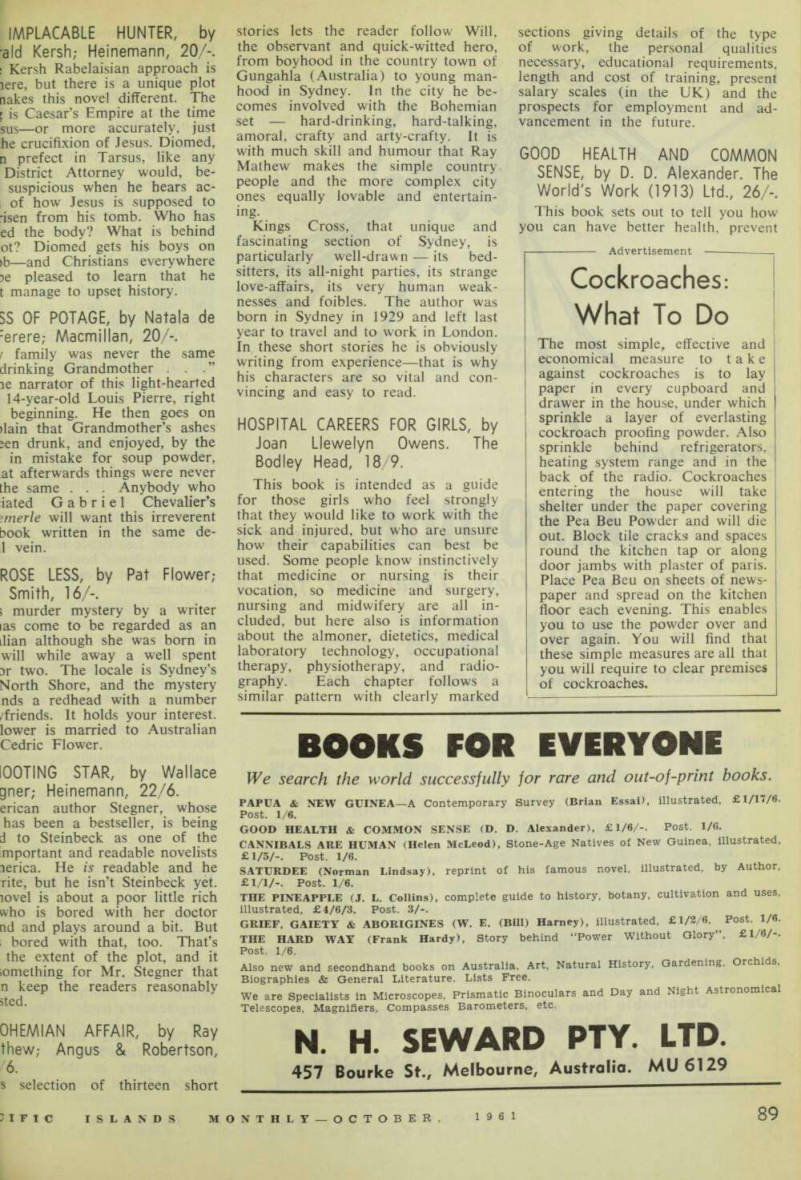 91
91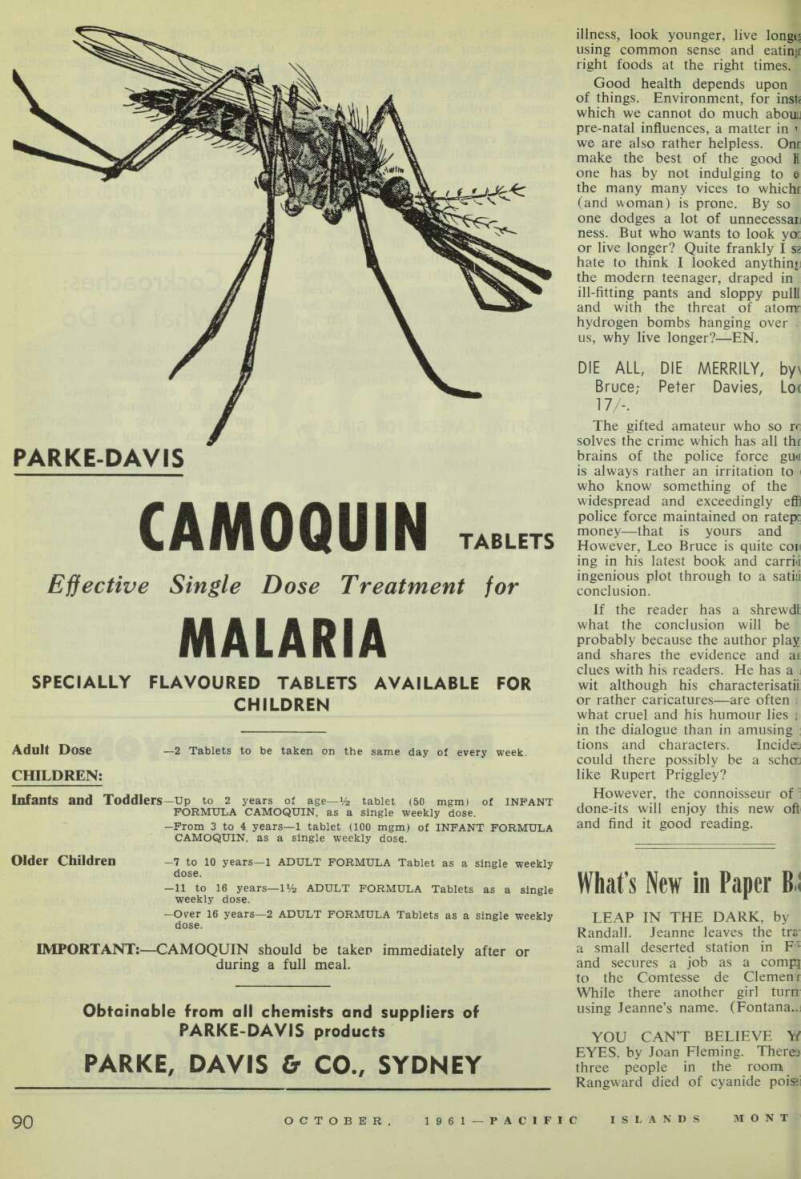 92
92 93
93 94
94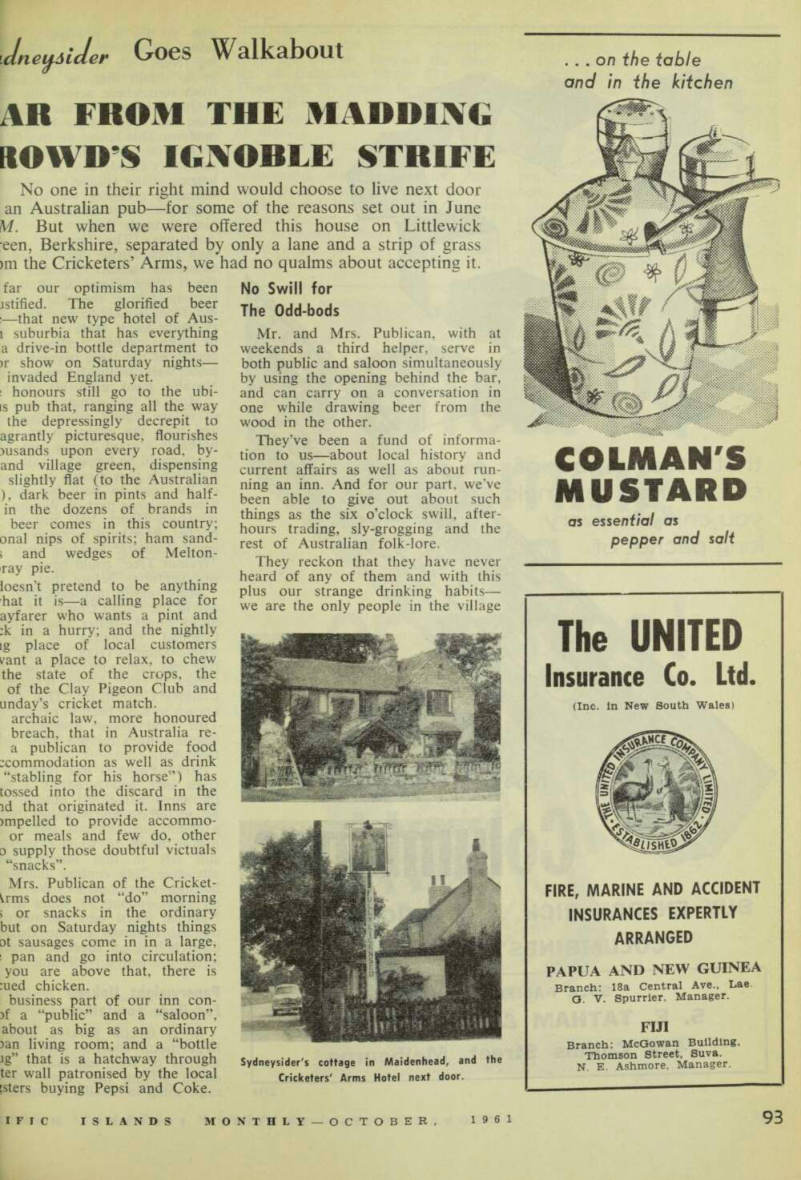 95
95 96
96 97
97 98
98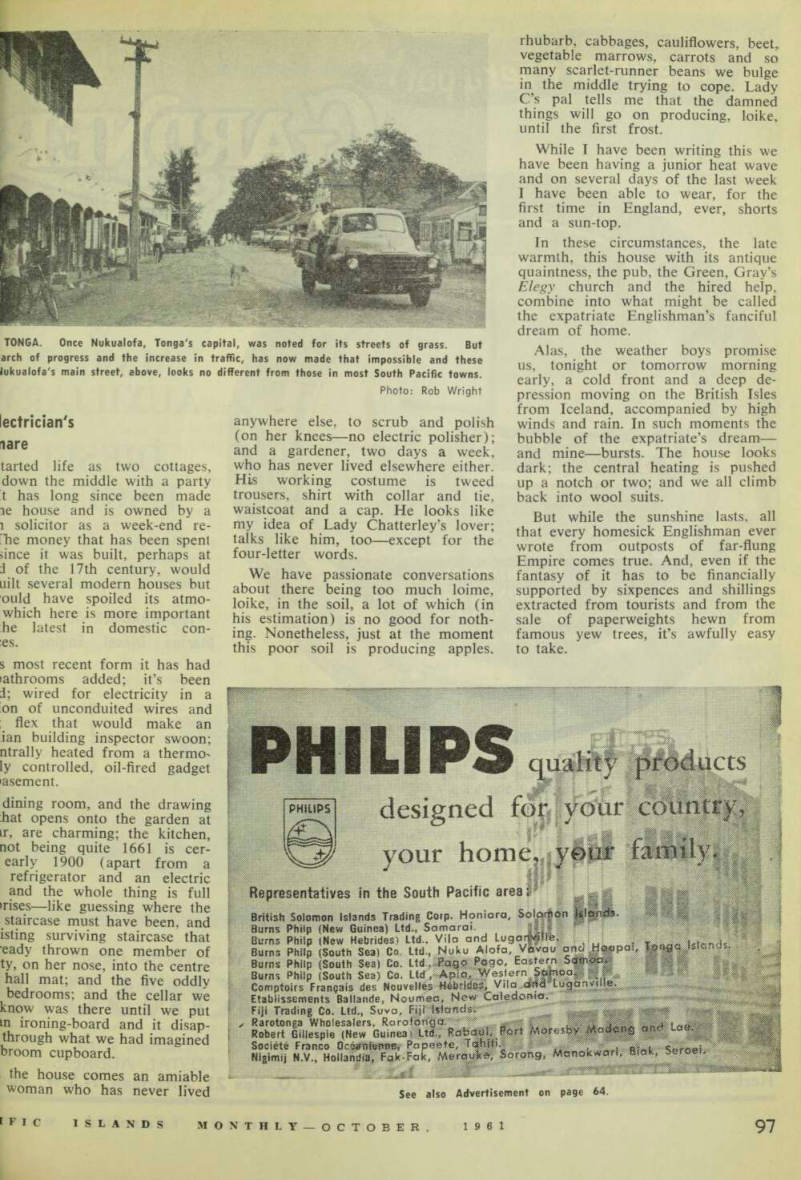 99
99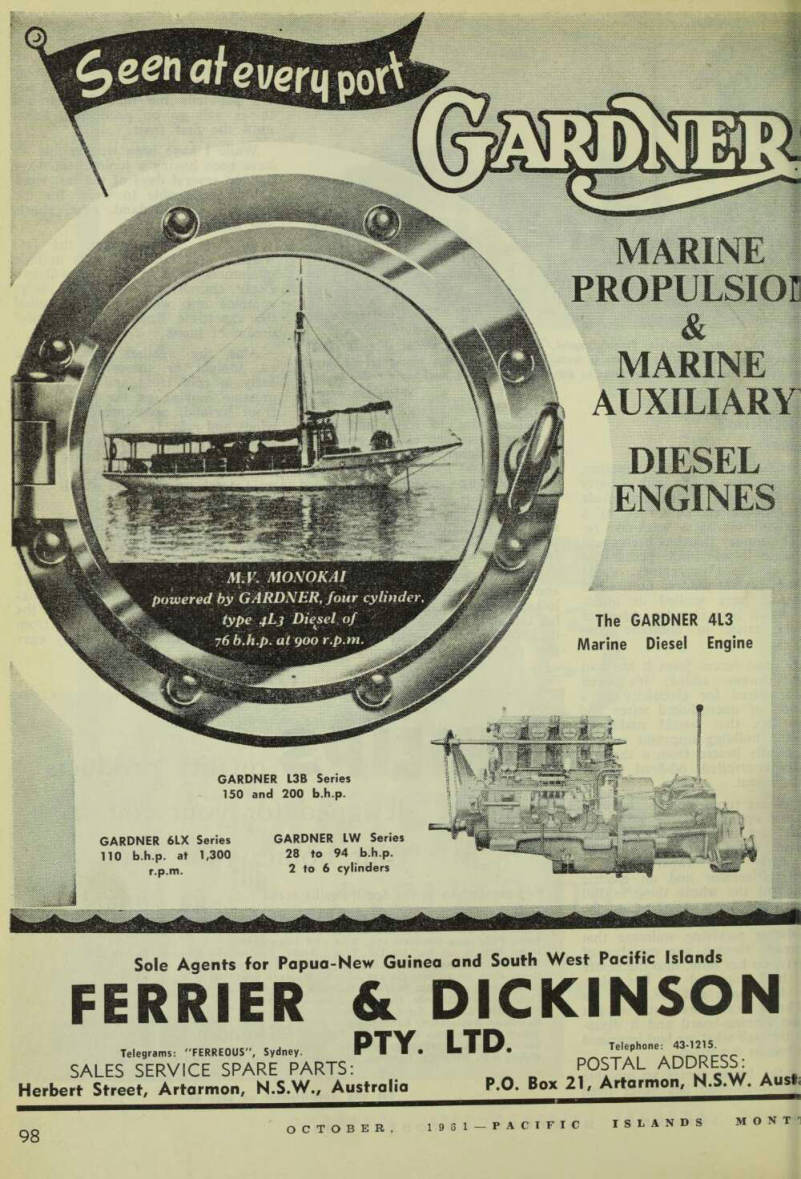 100
100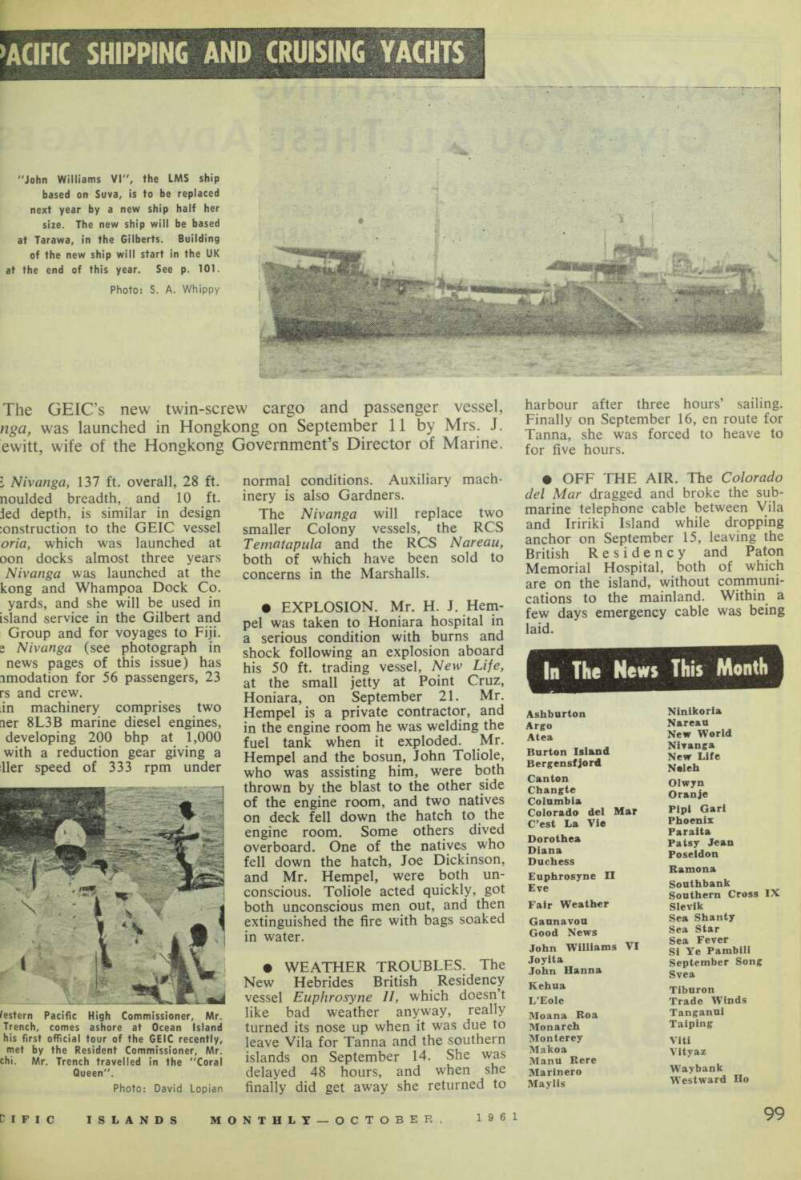 101
101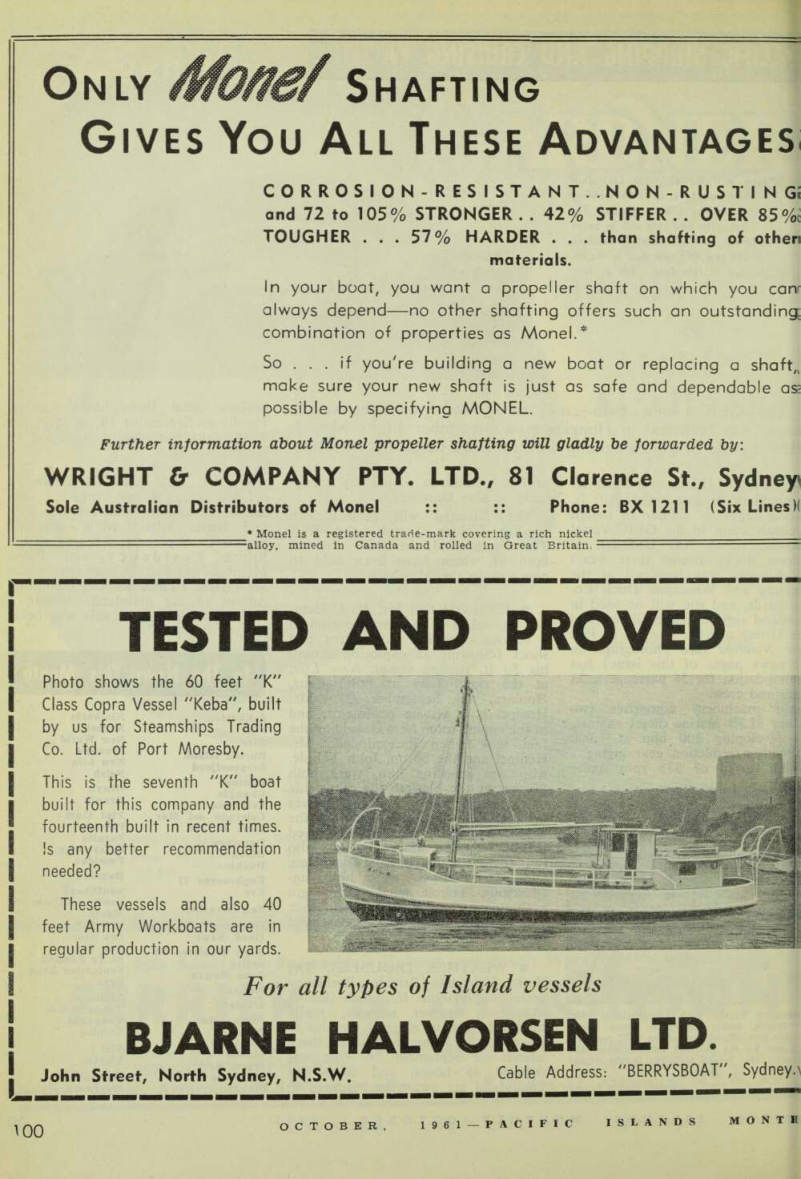 102
102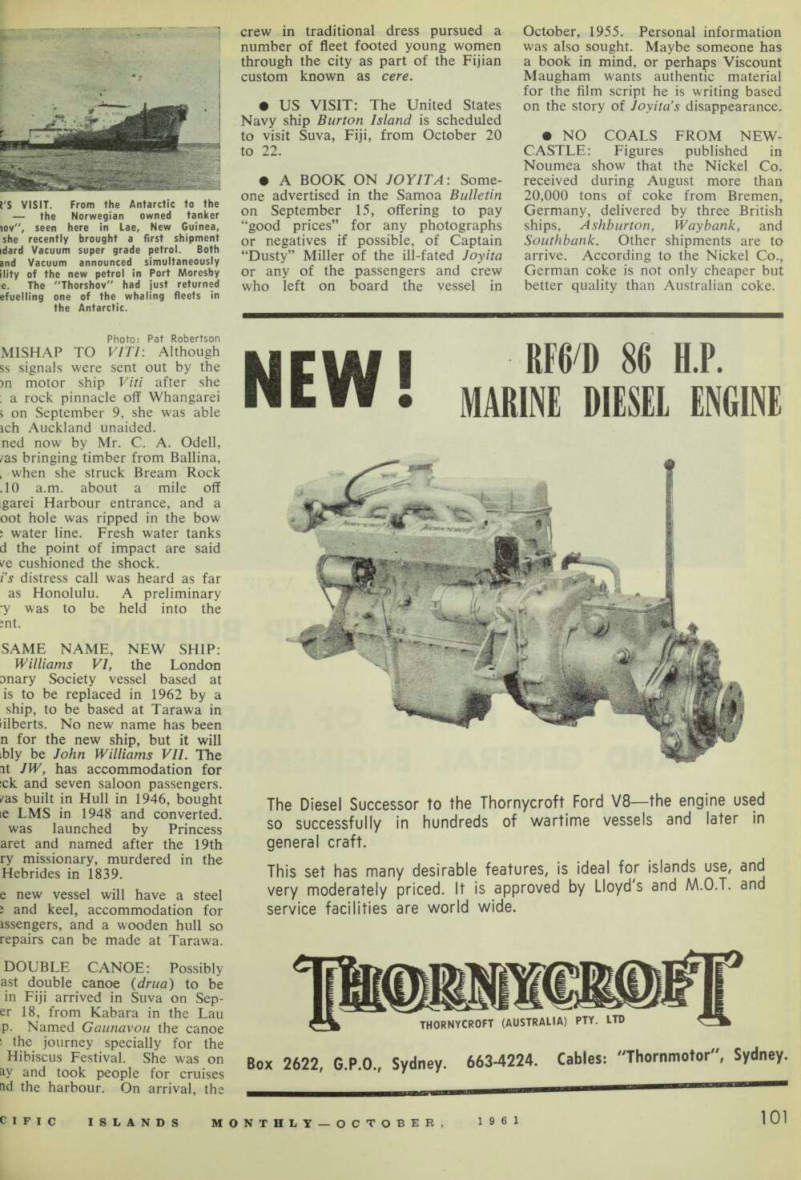 103
103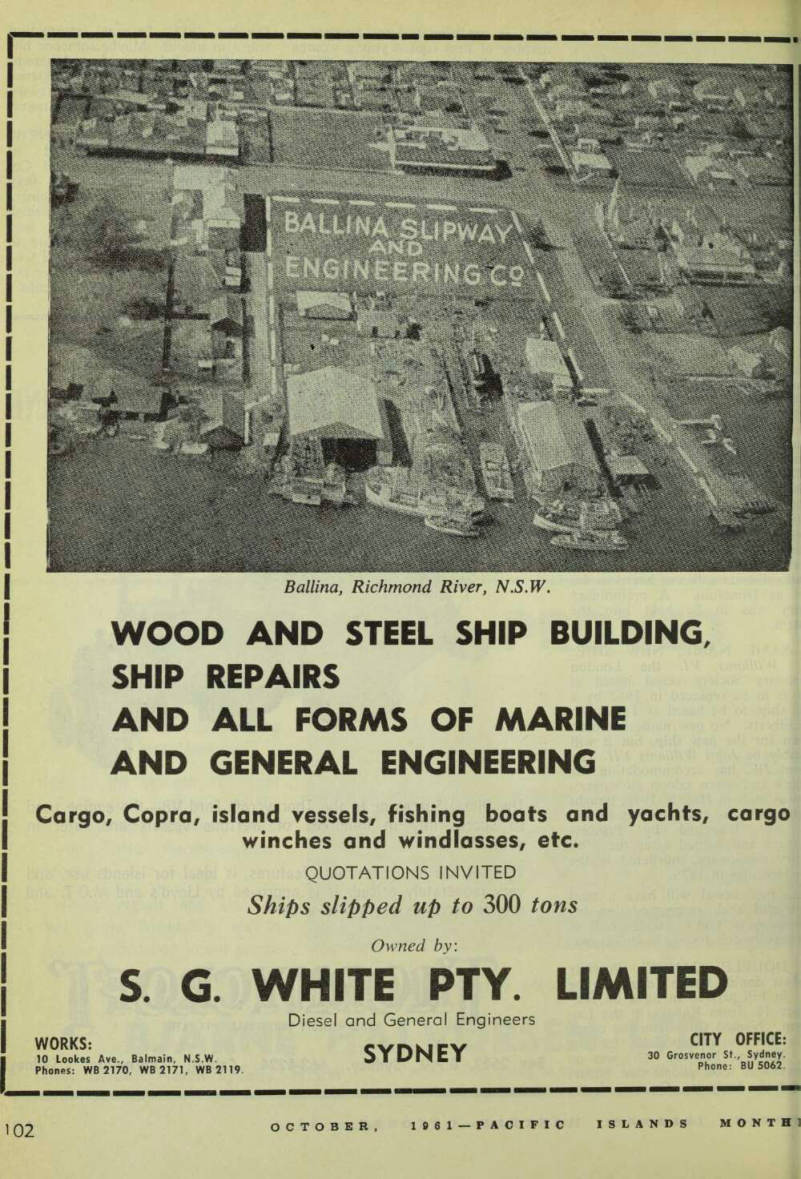 104
104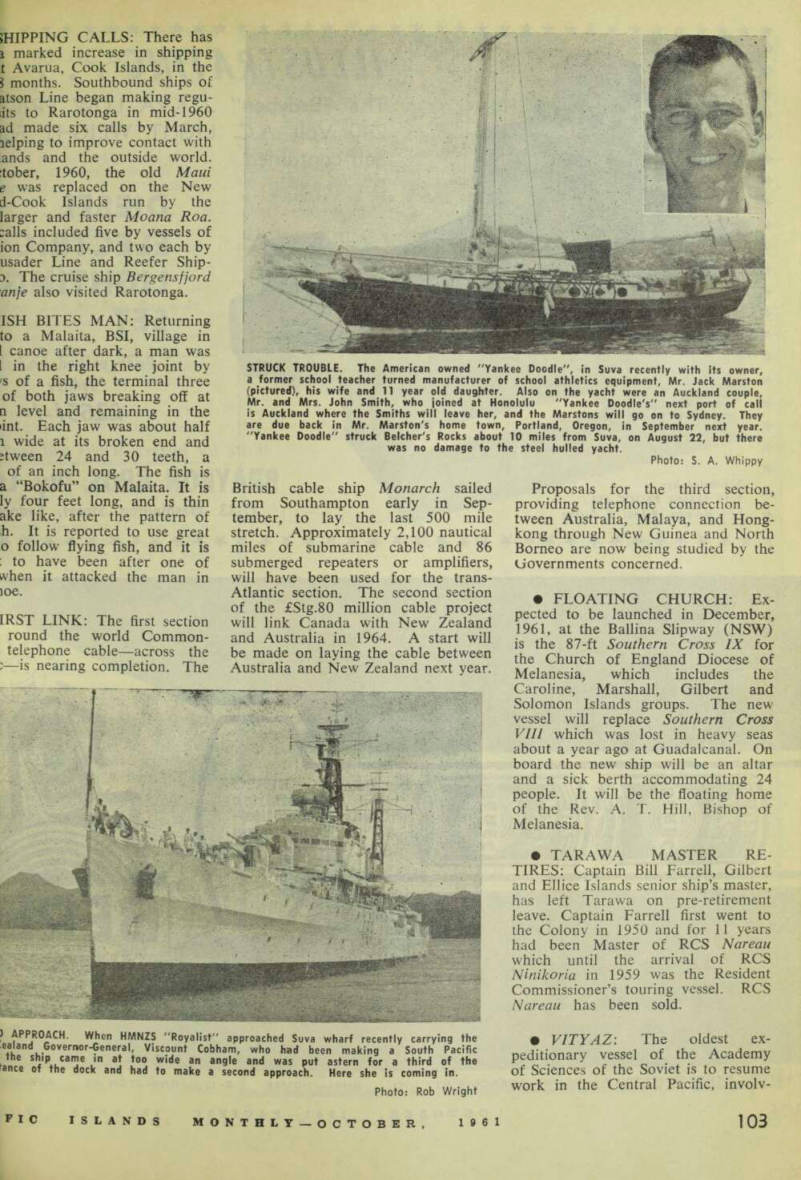 105
105 106
106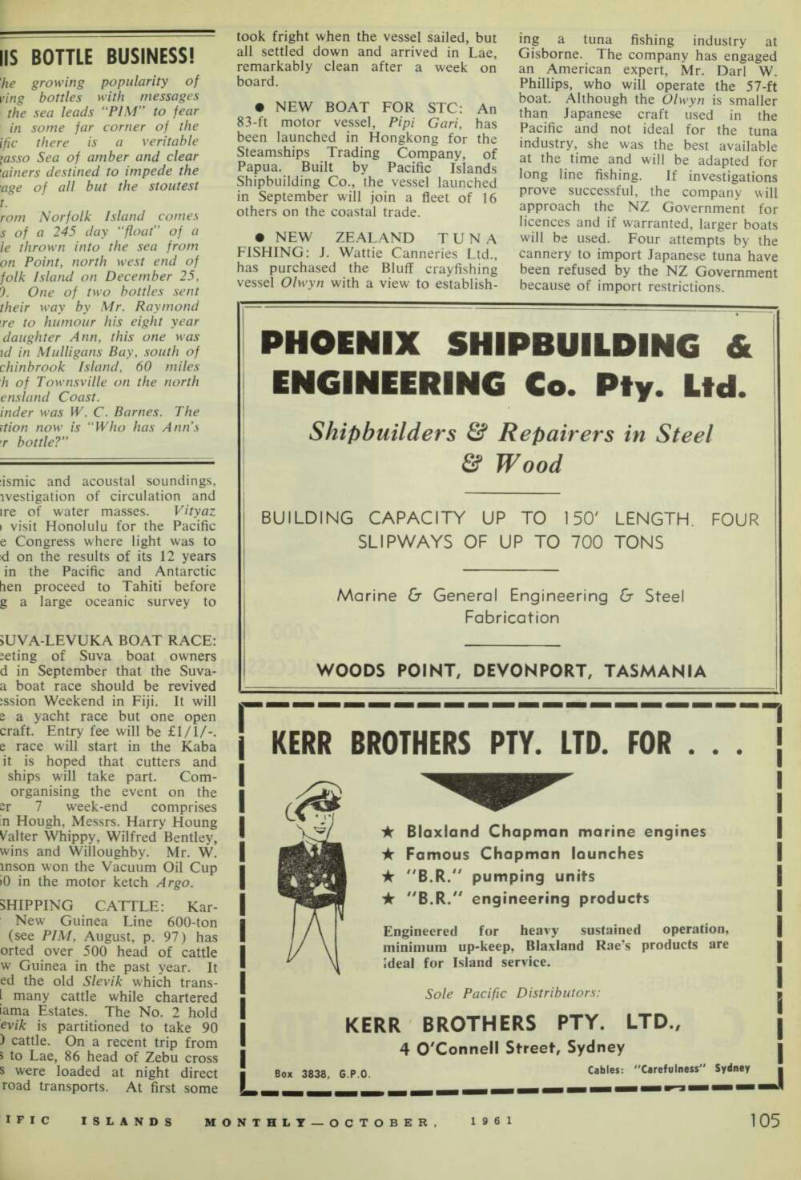 107
107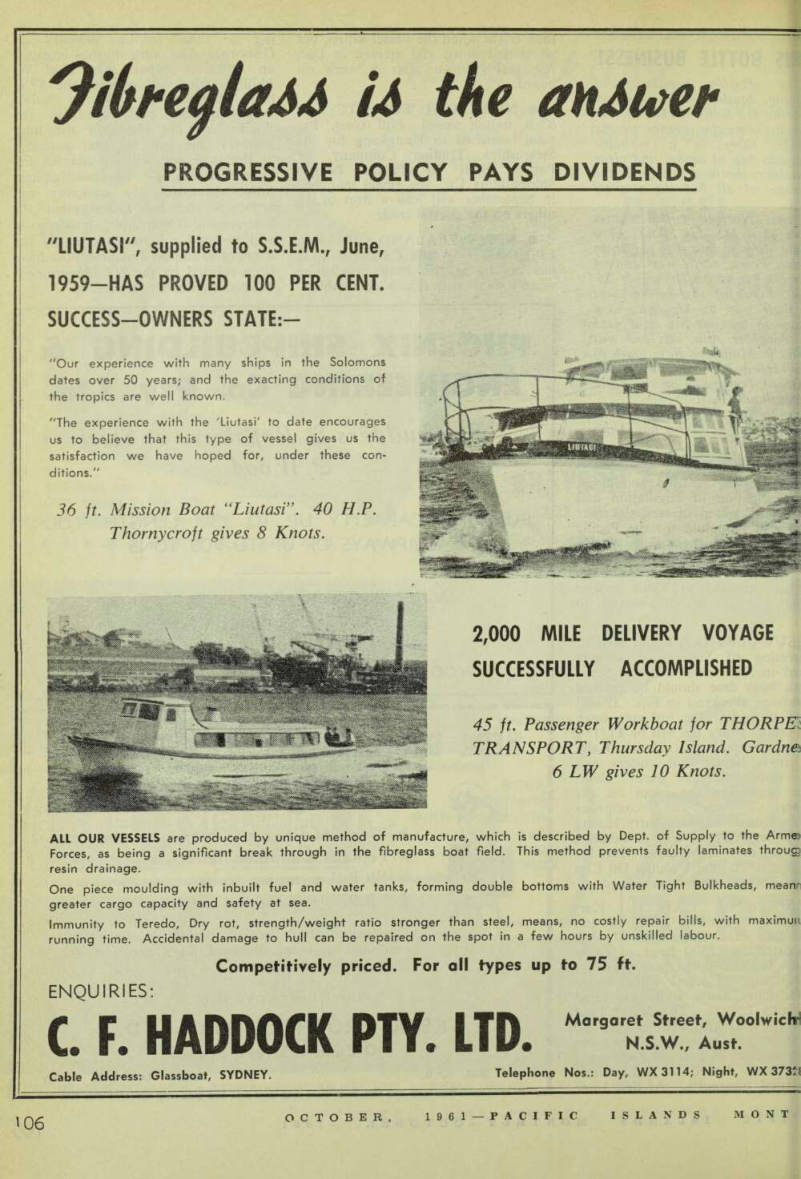 108
108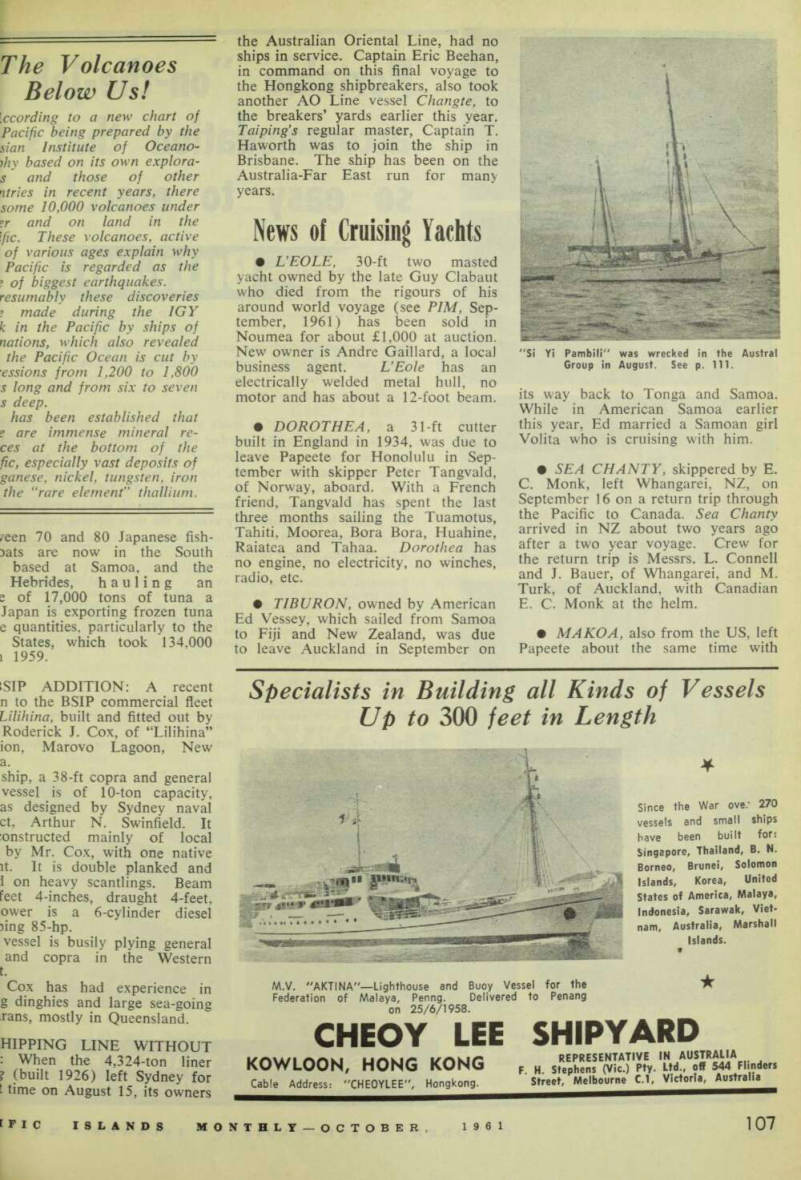 109
109 110
110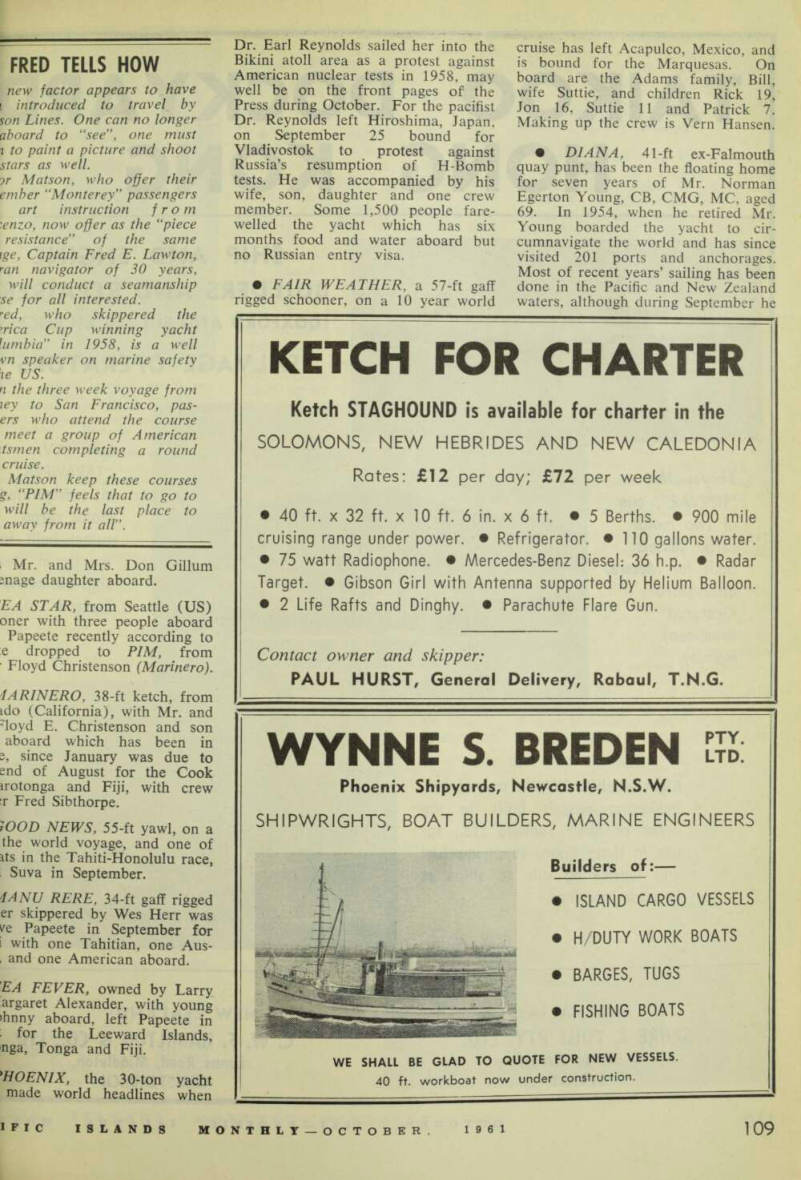 111
111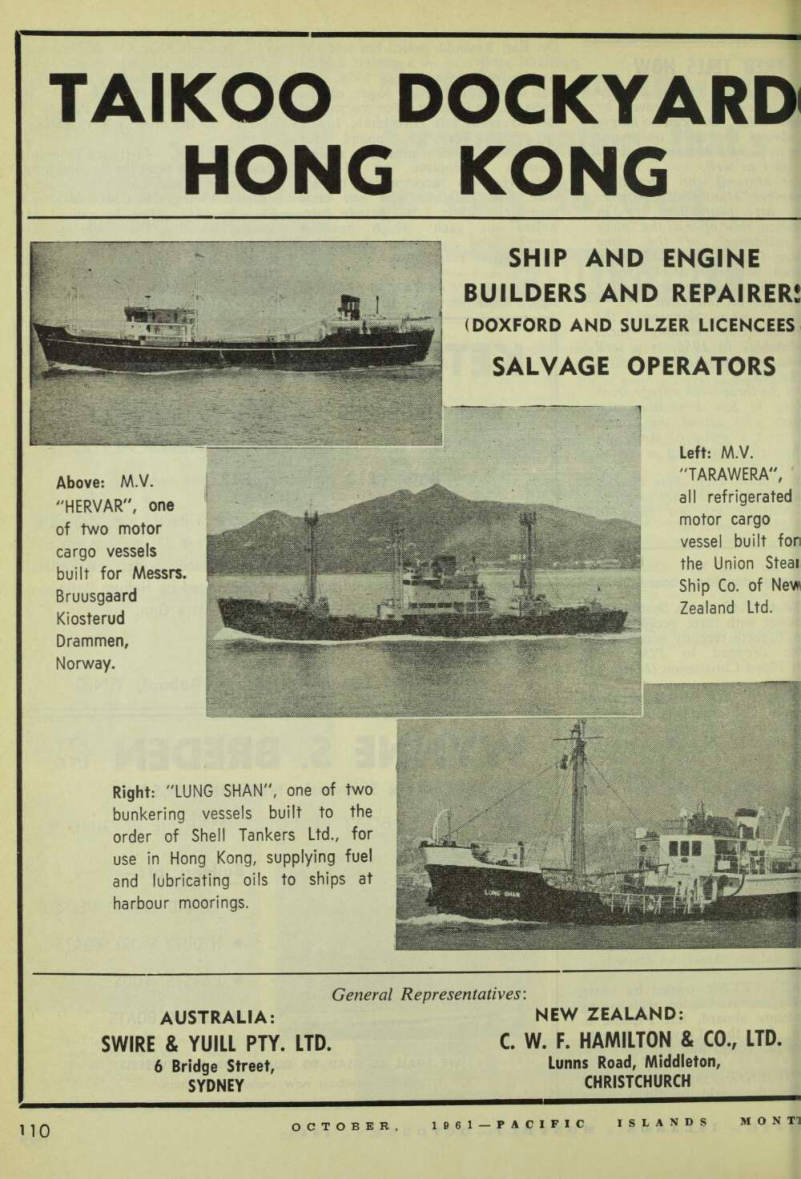 112
112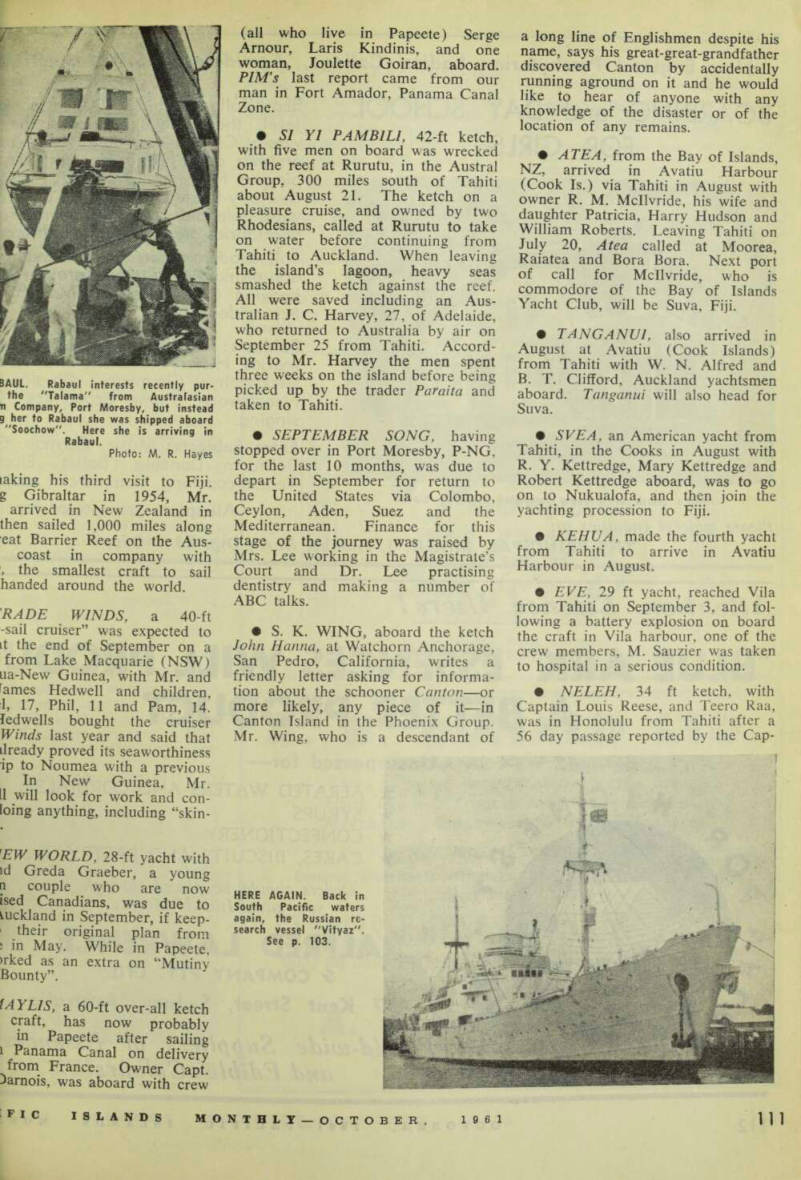 113
113 114
114 115
115 116
116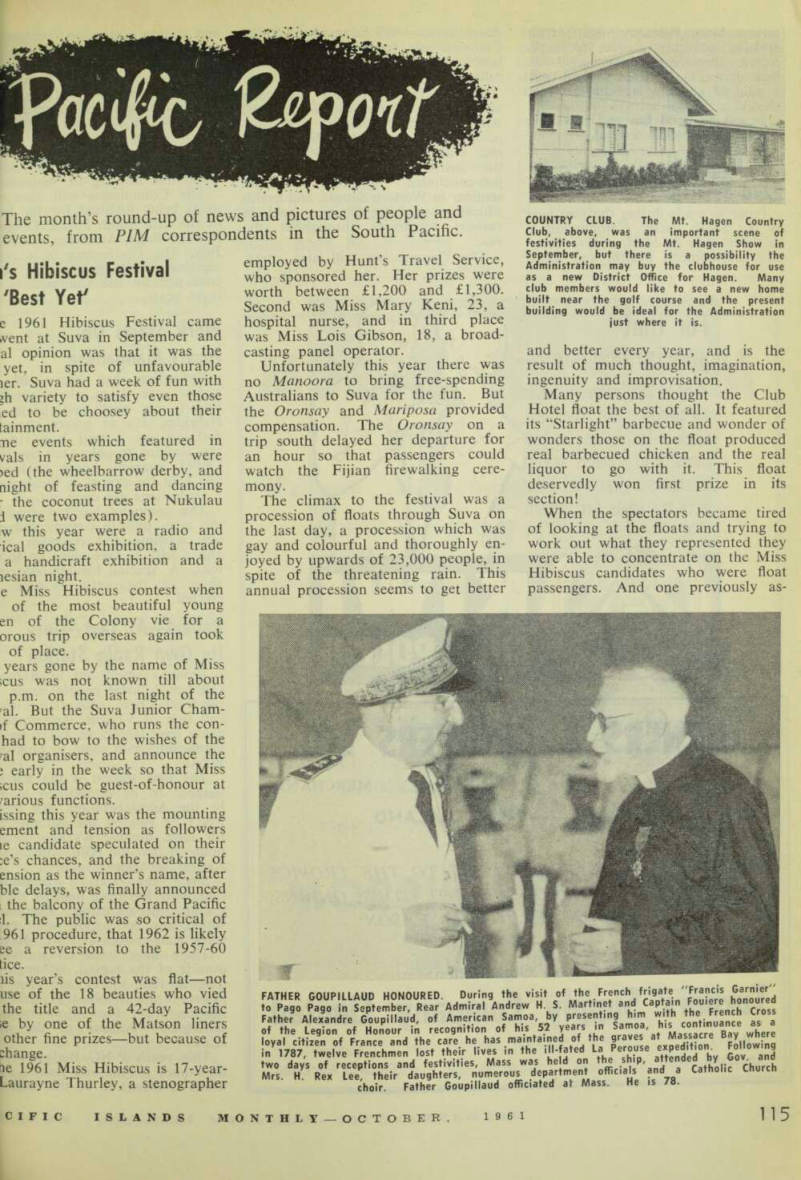 117
117 118
118 119
119 120
120 121
121 122
122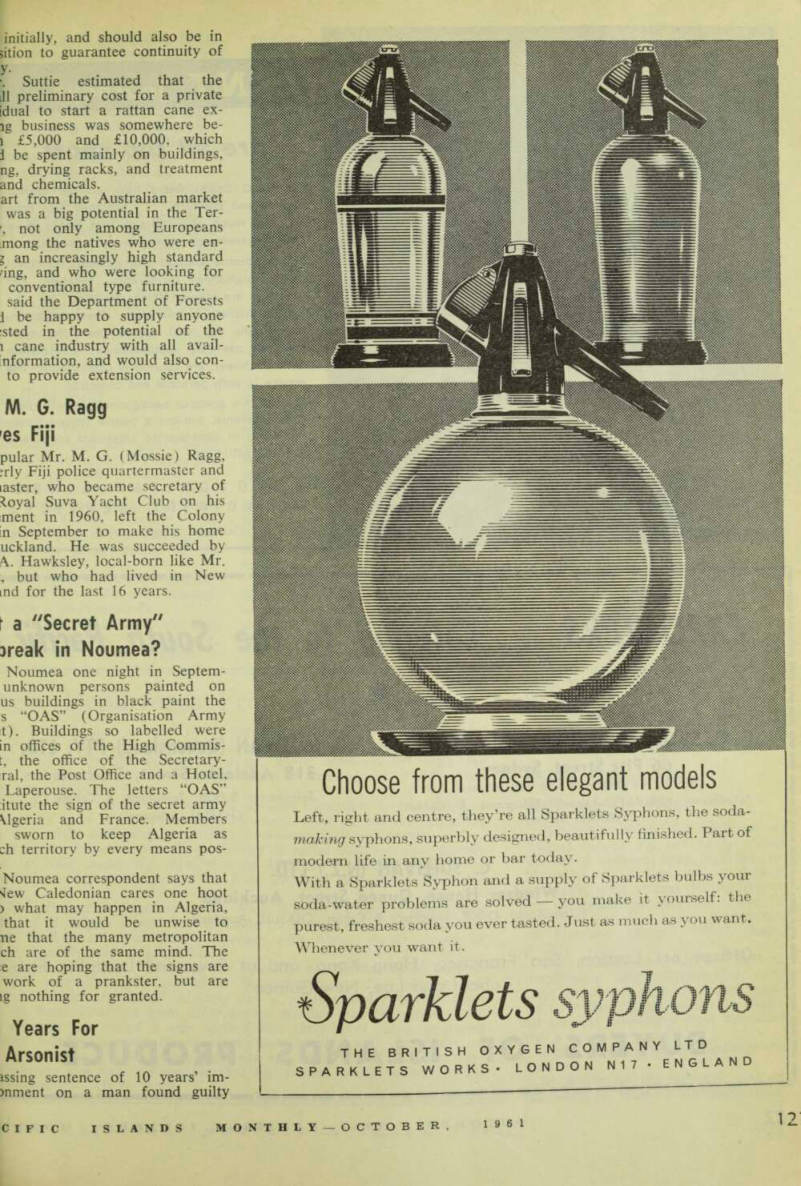 123
123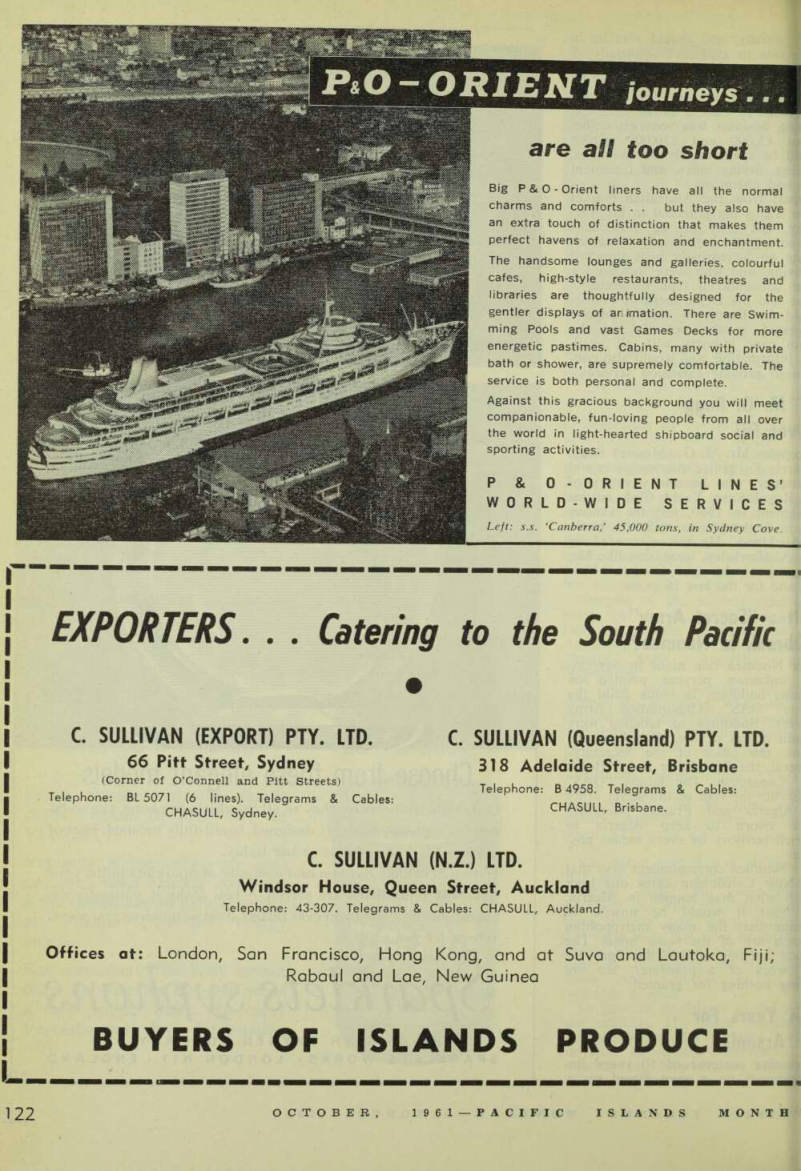 124
124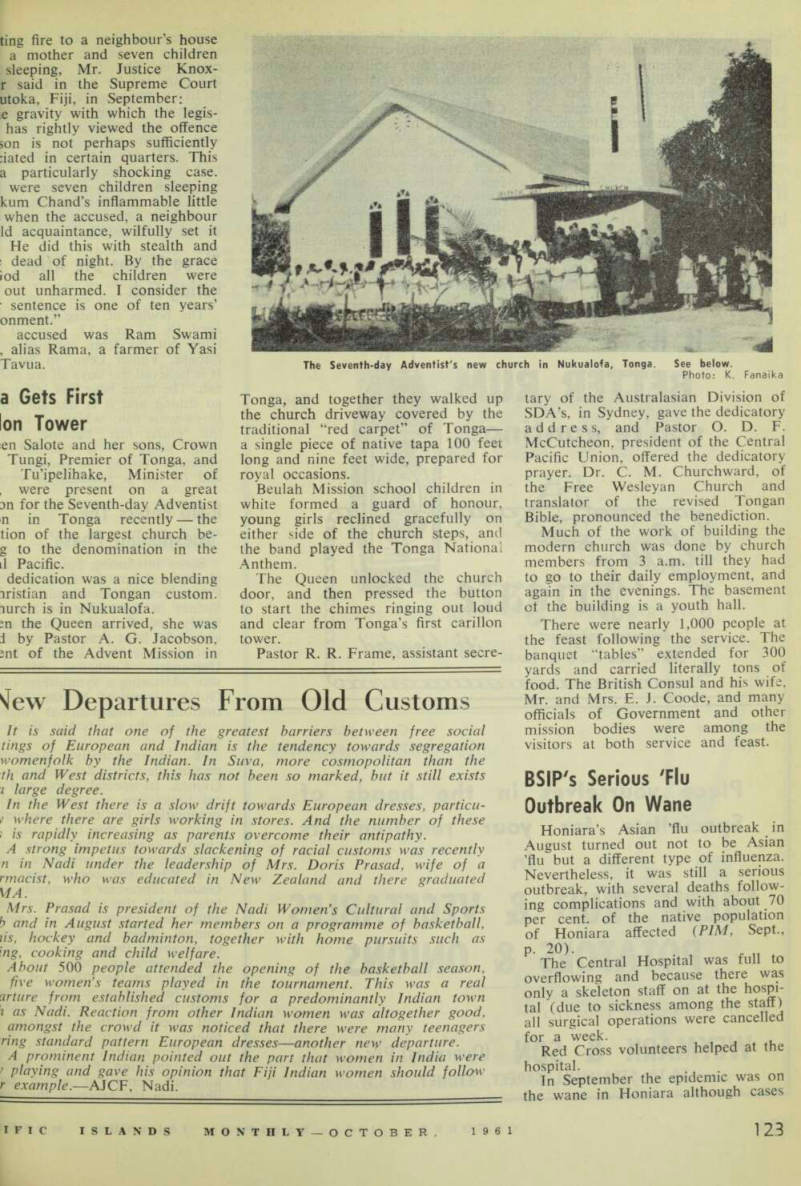 125
125 126
126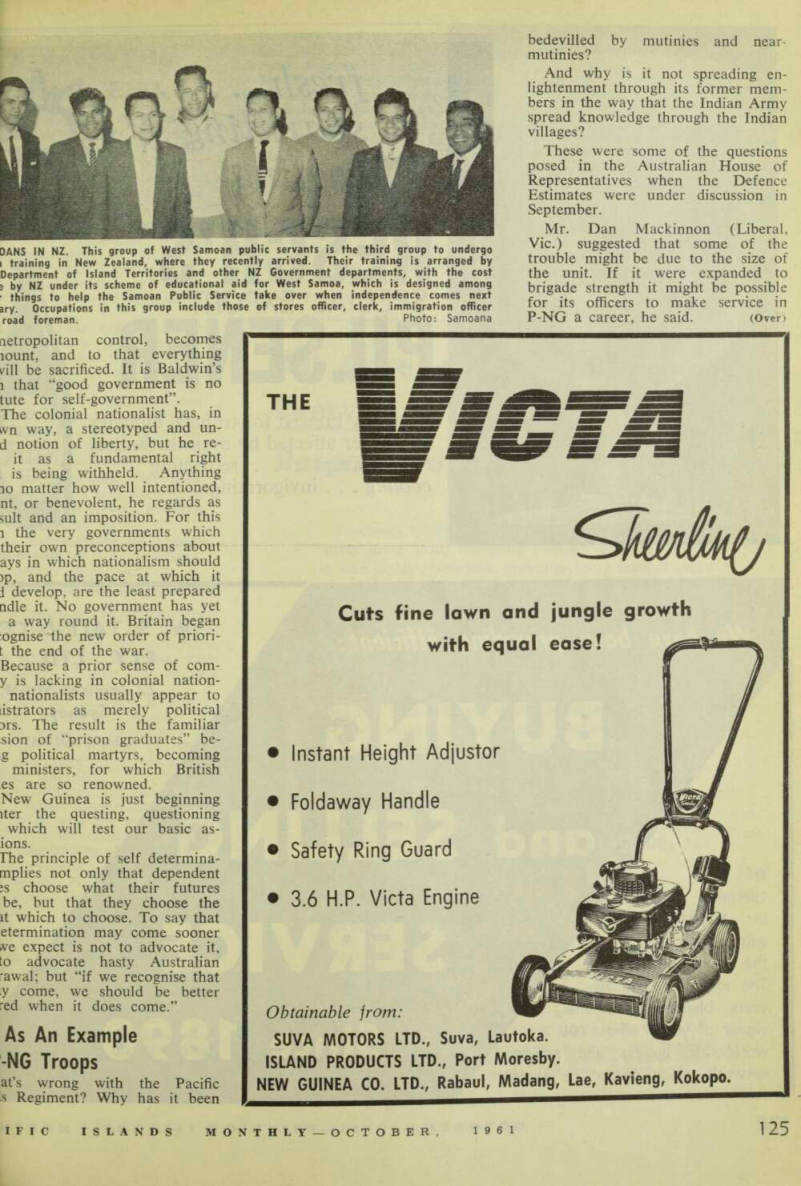 127
127 128
128 129
129 130
130 131
131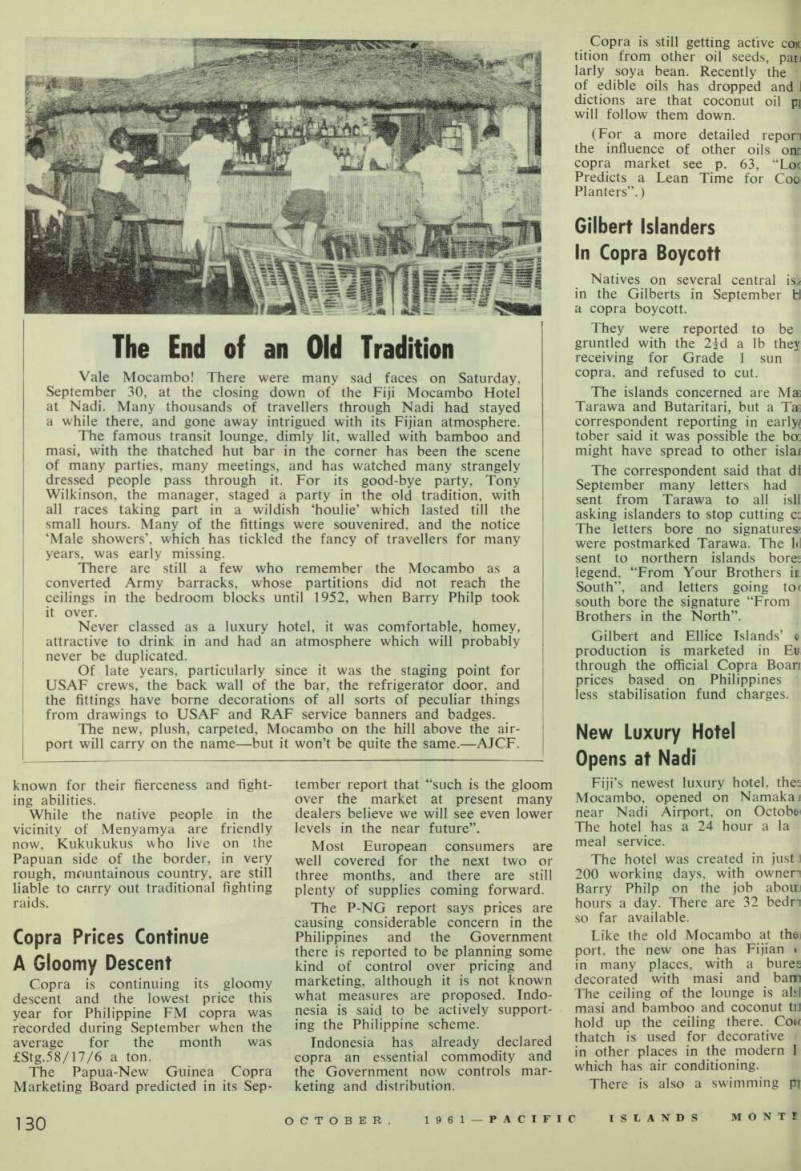 132
132 133
133 134
134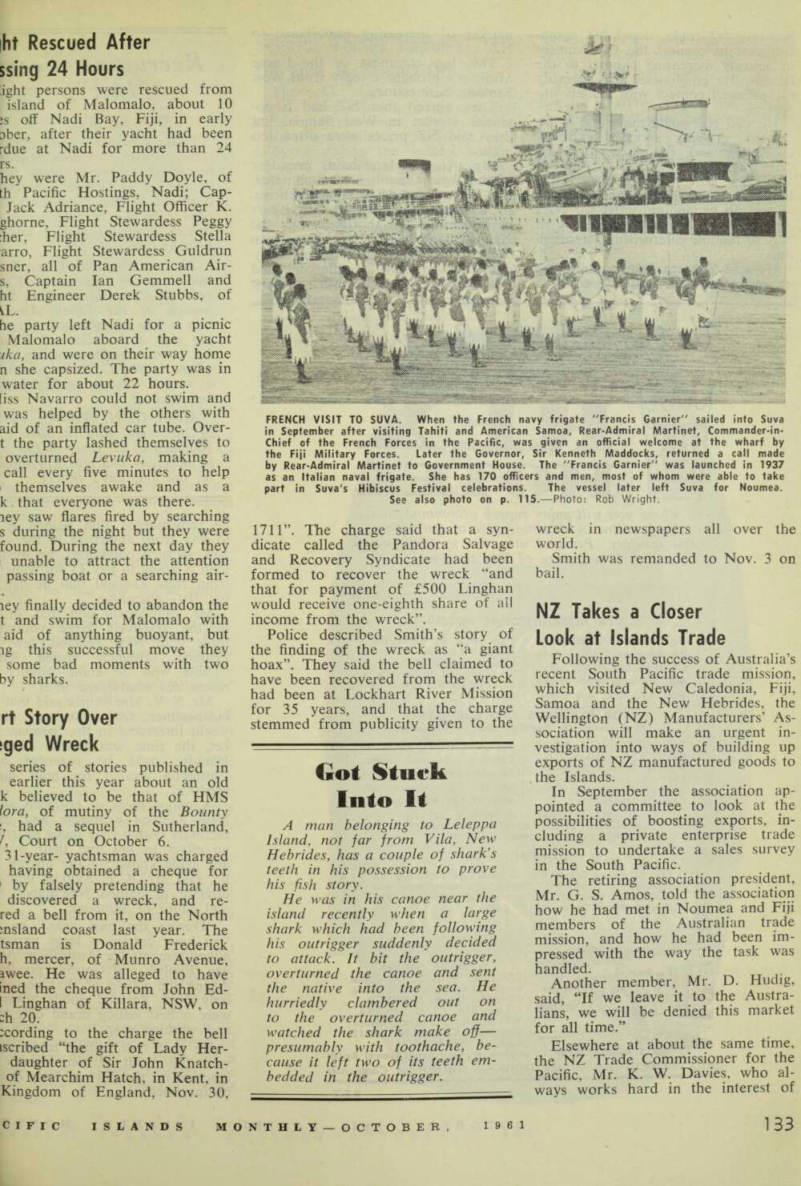 135
135 136
136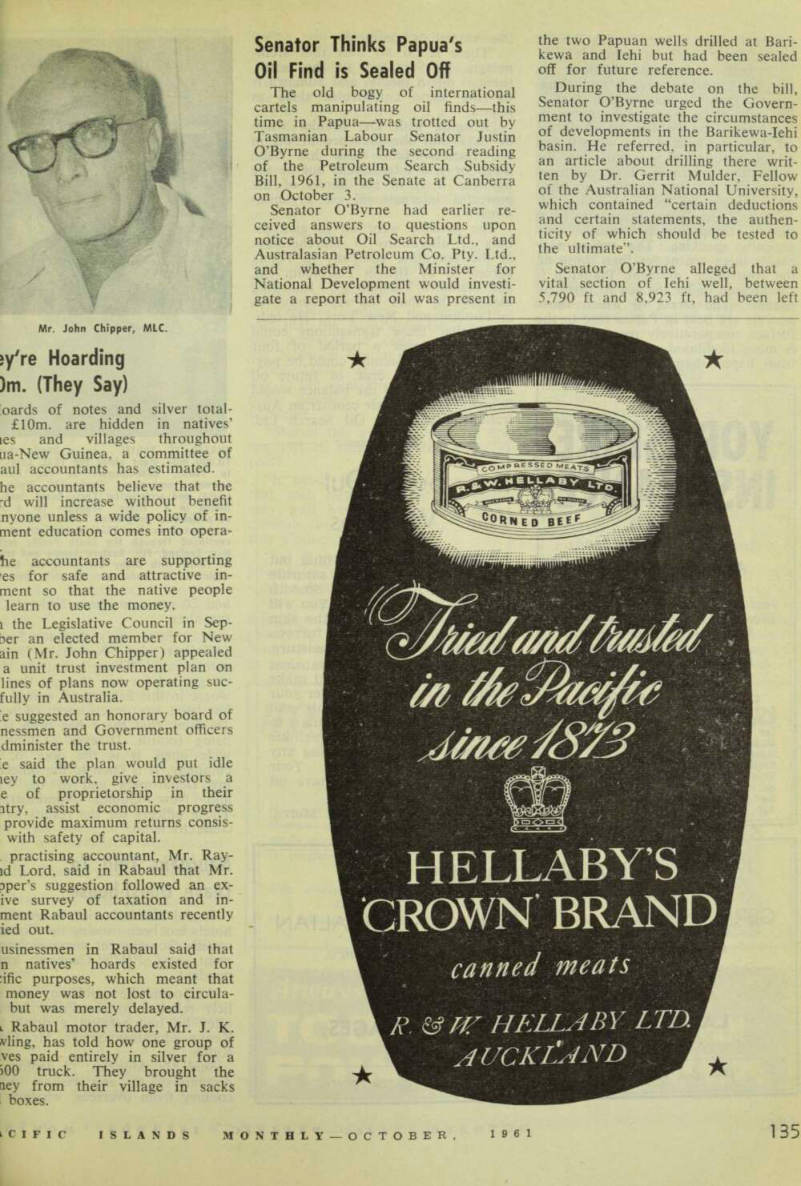 137
137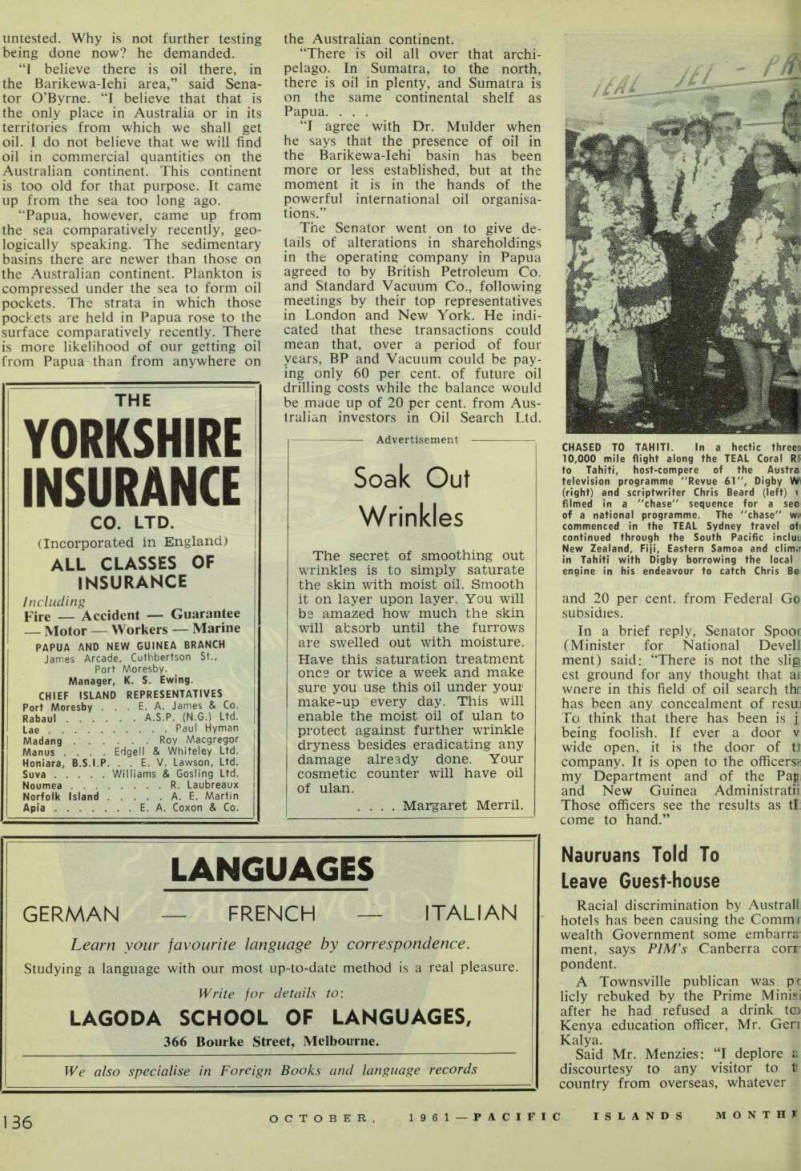 138
138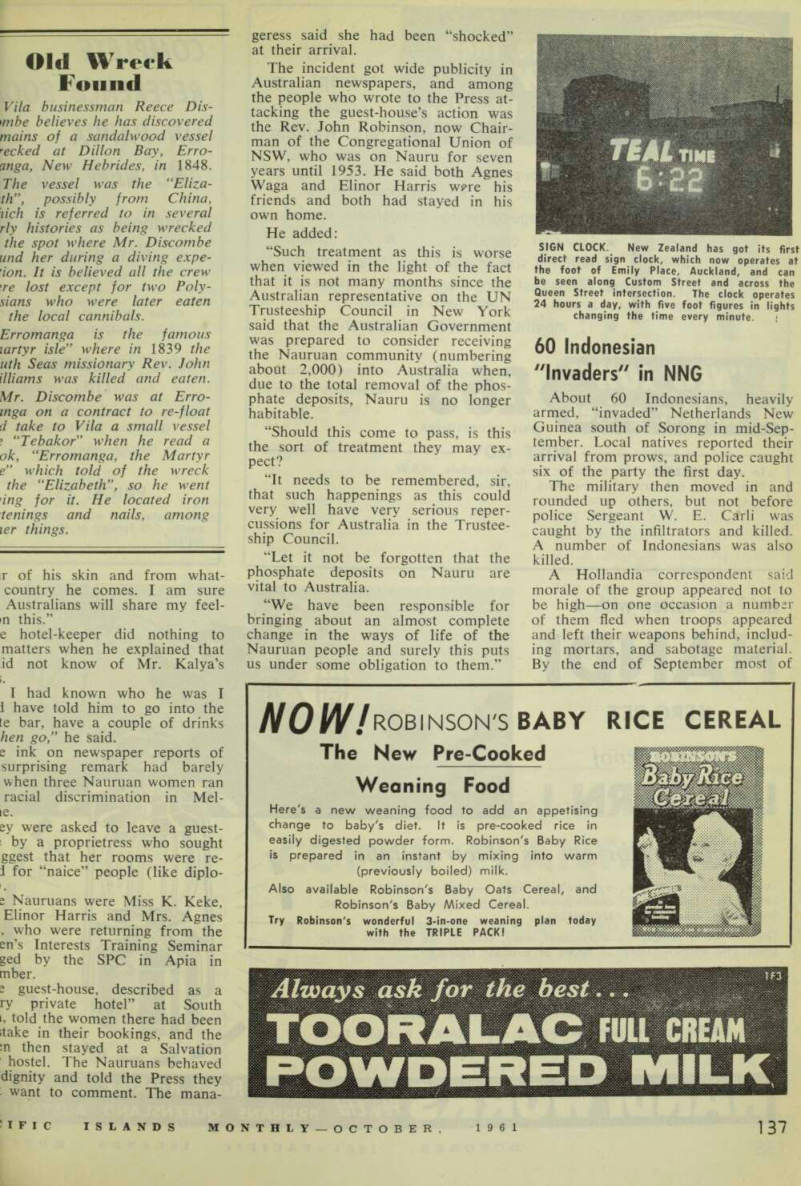 139
139 140
140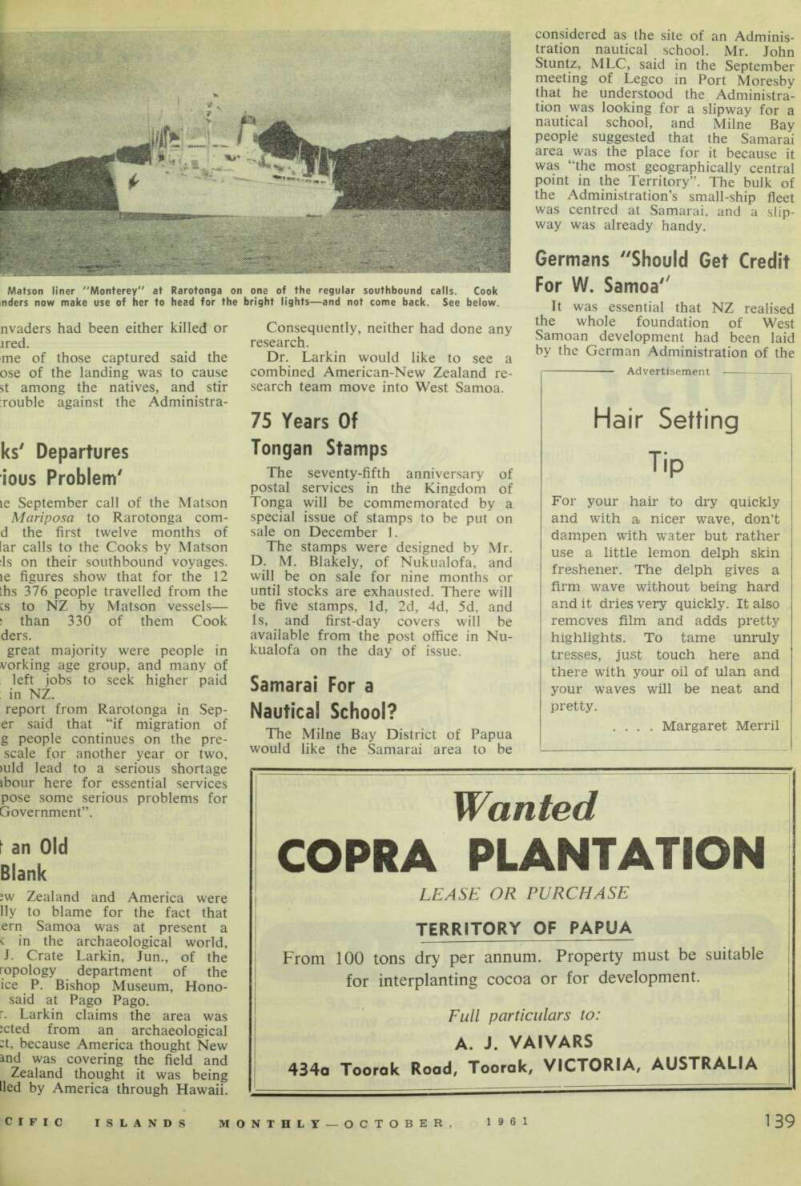 141
141 142
142 143
143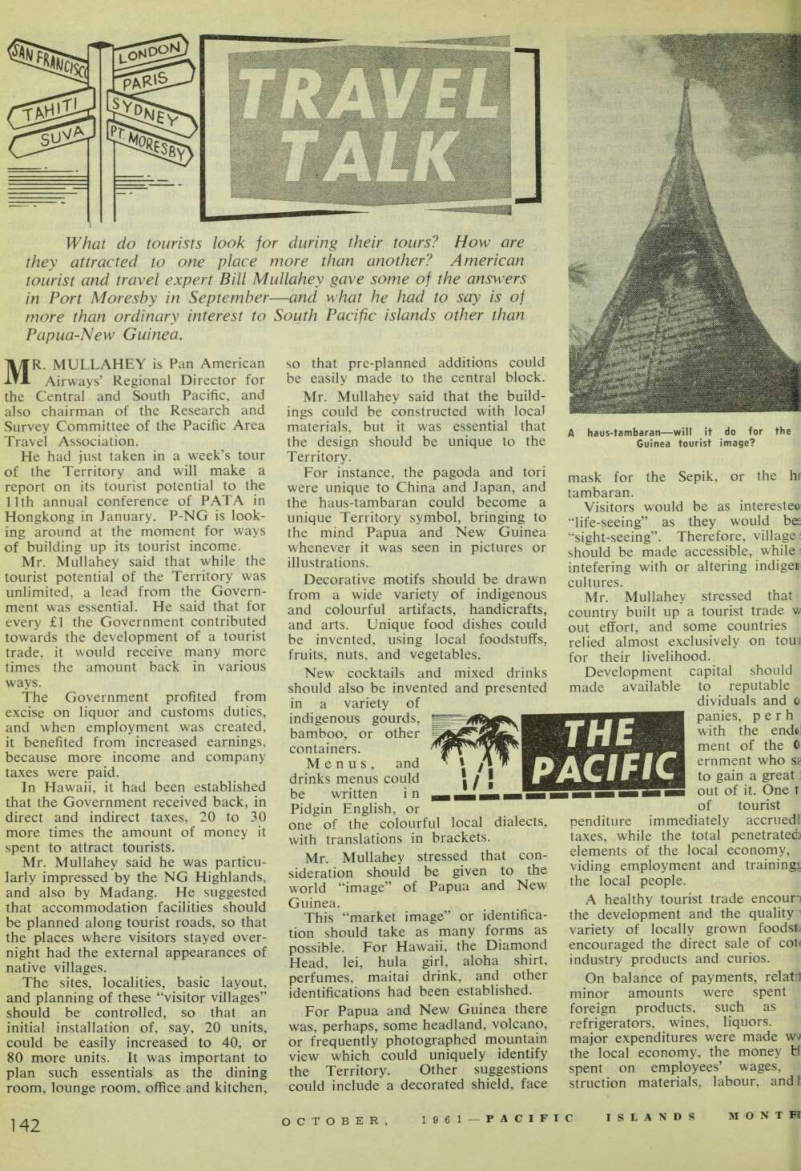 144
144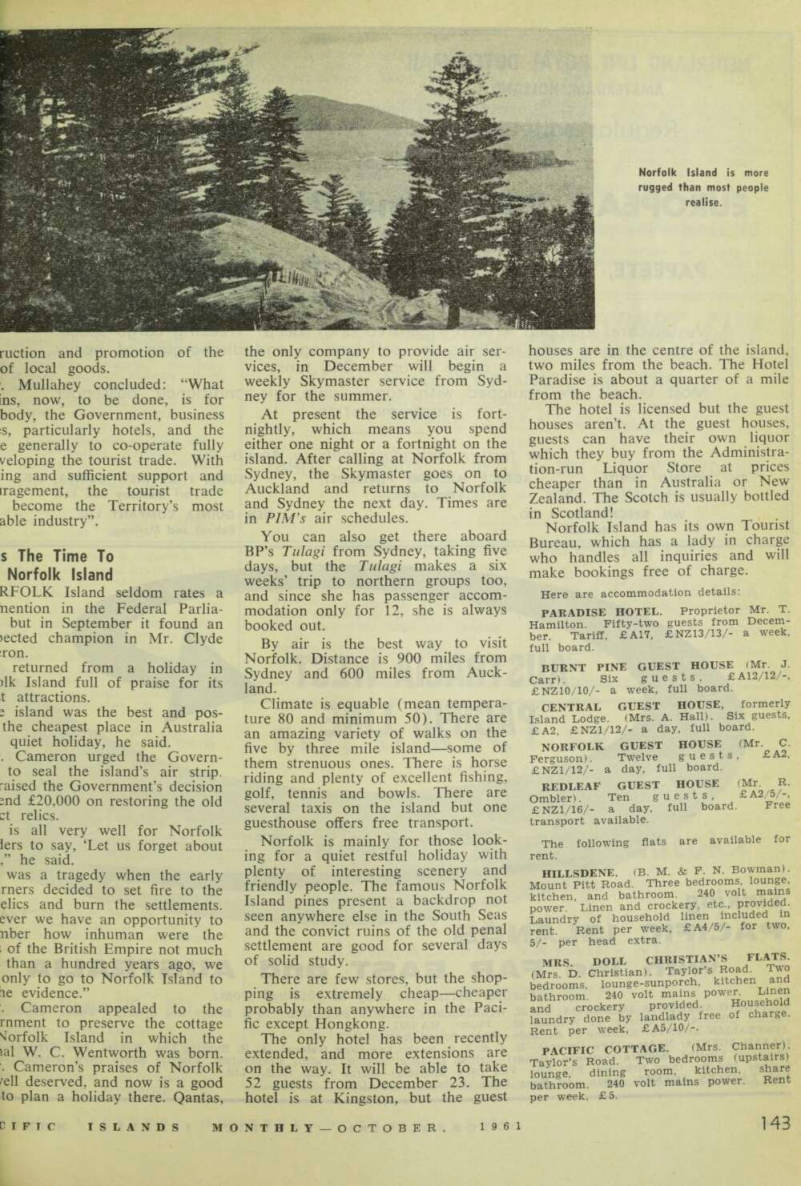 145
145 146
146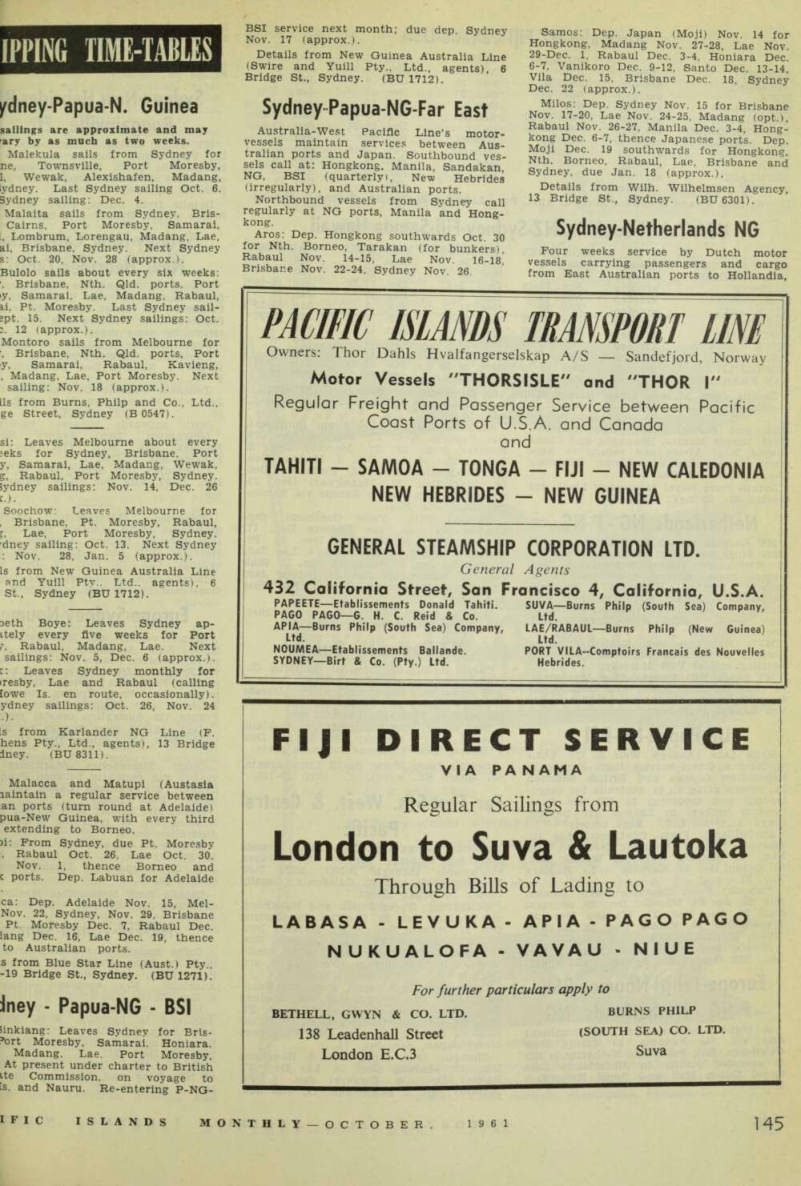 147
147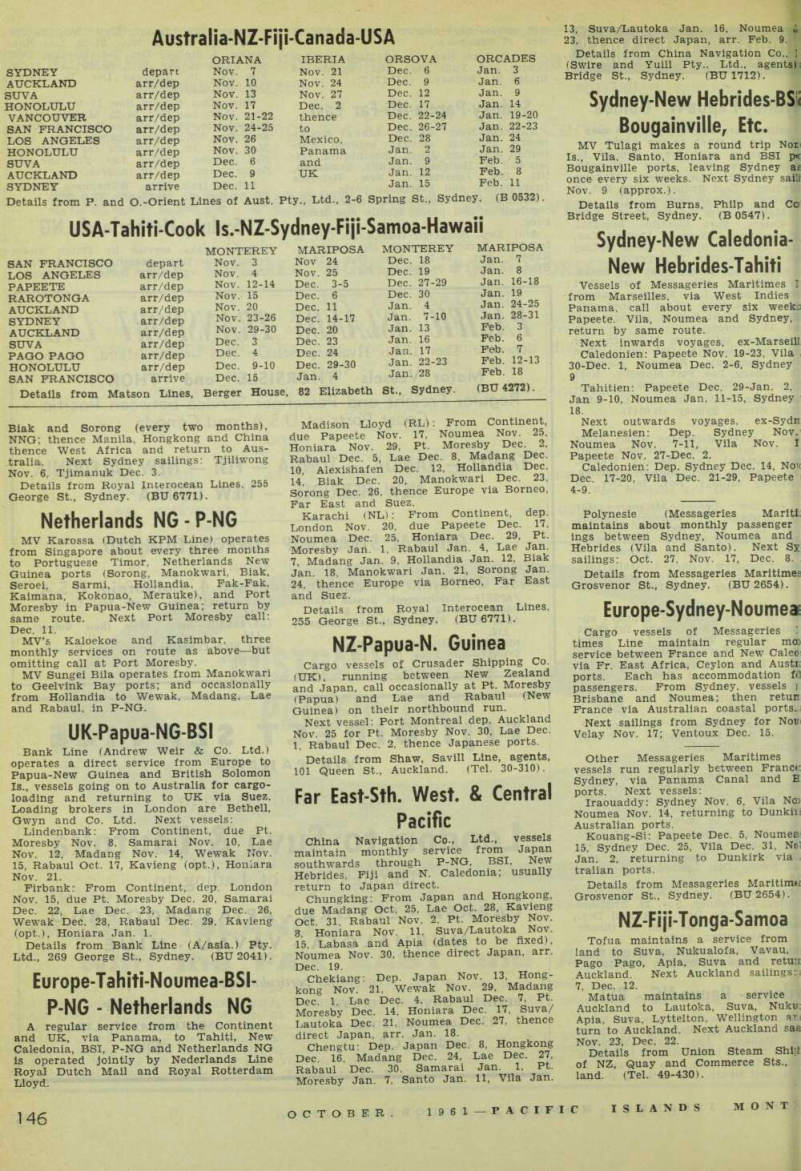 148
148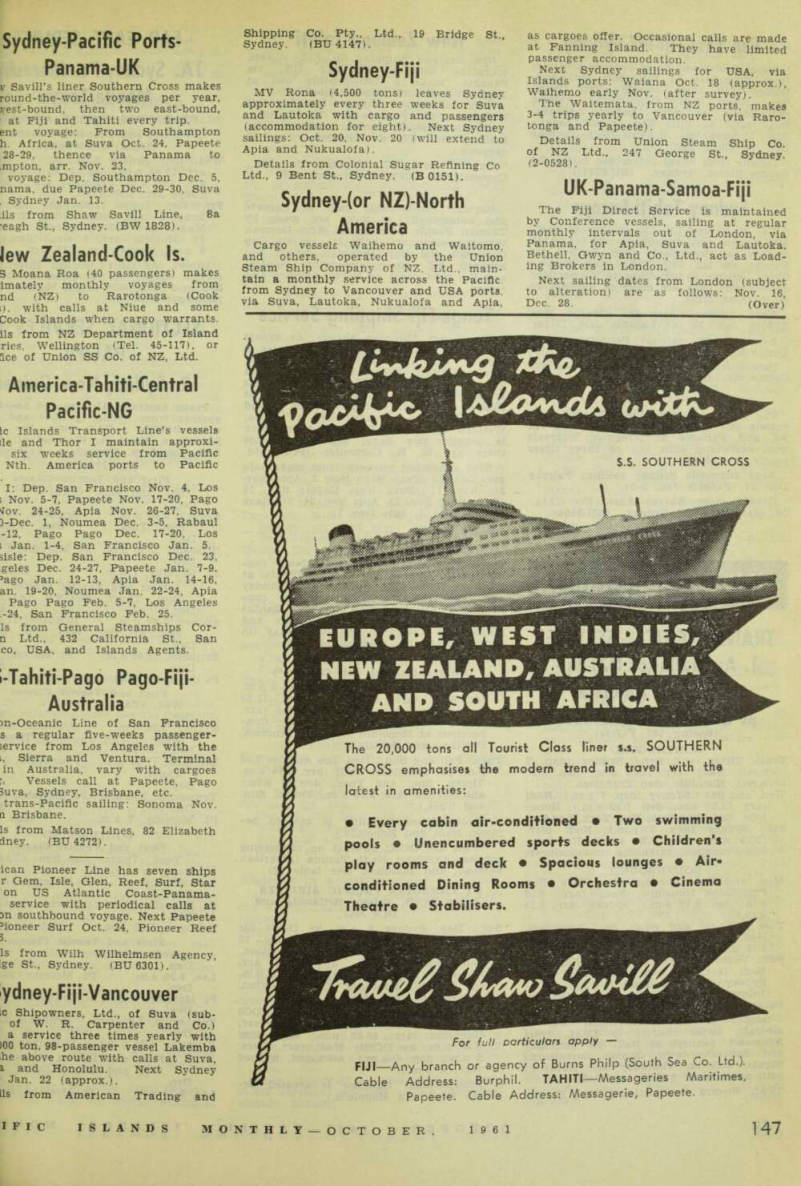 149
149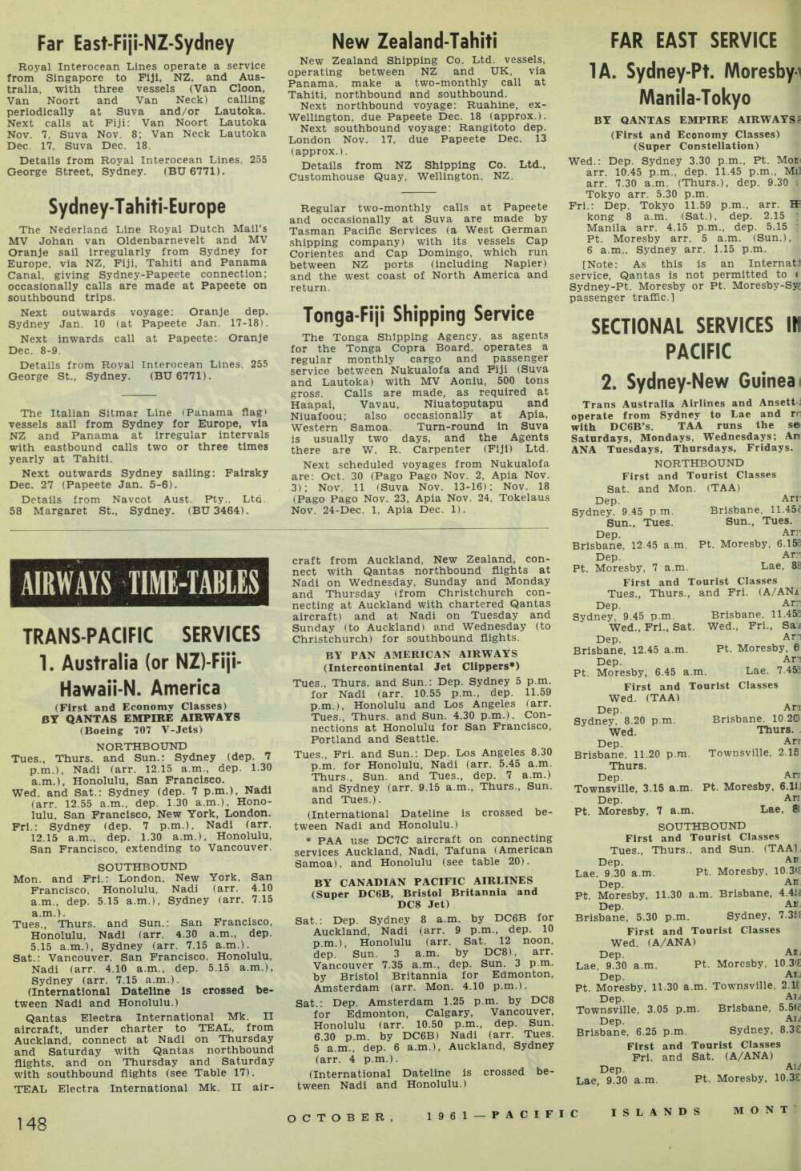 150
150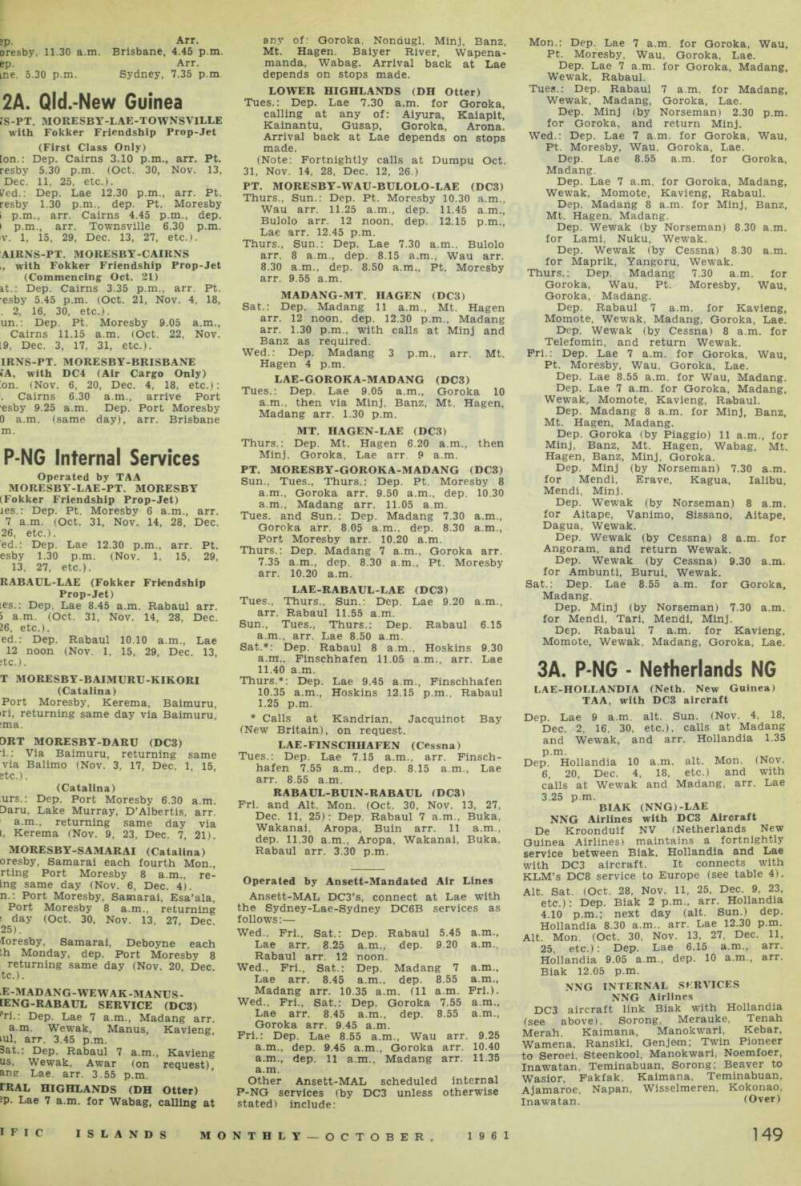 151
151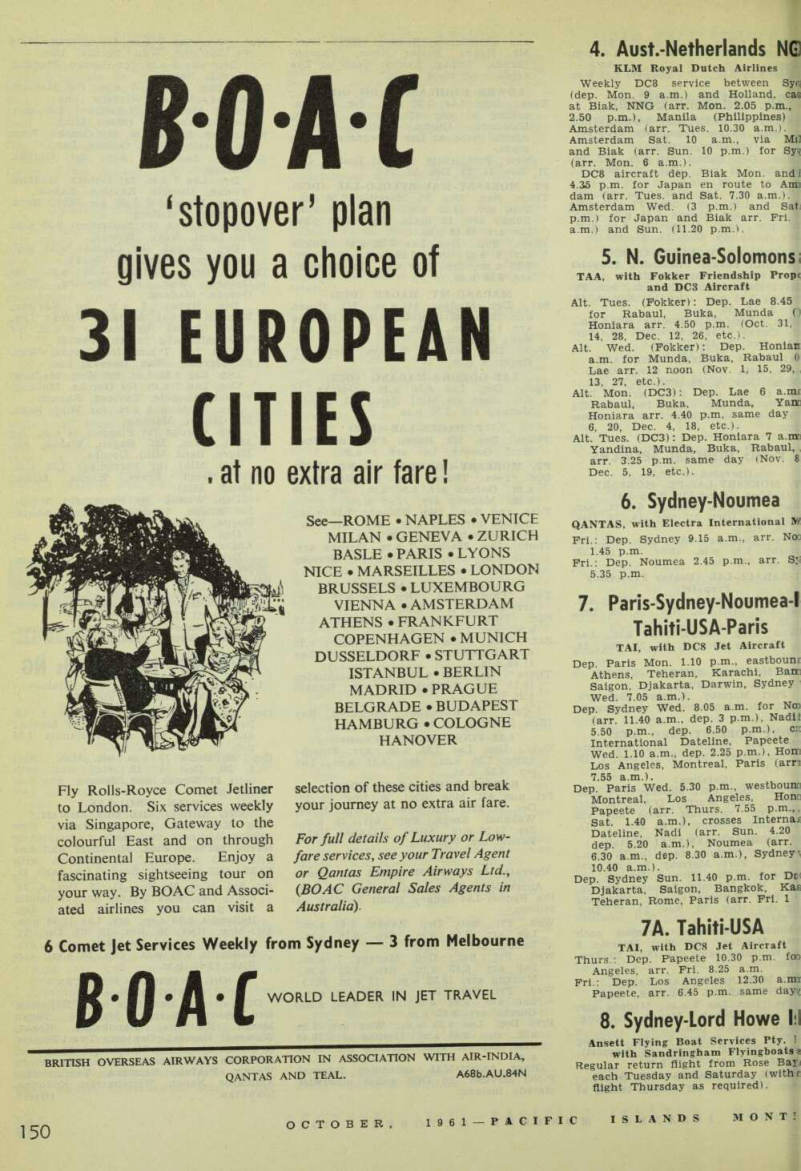 152
152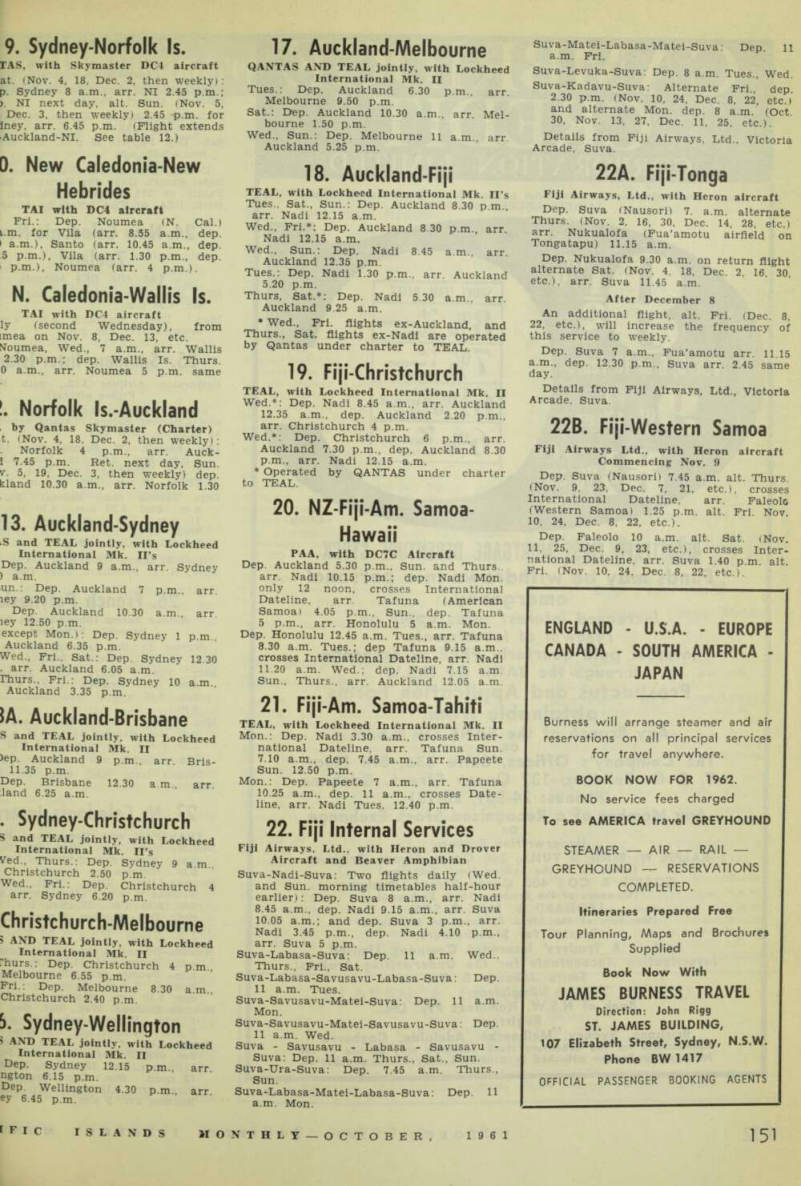 153
153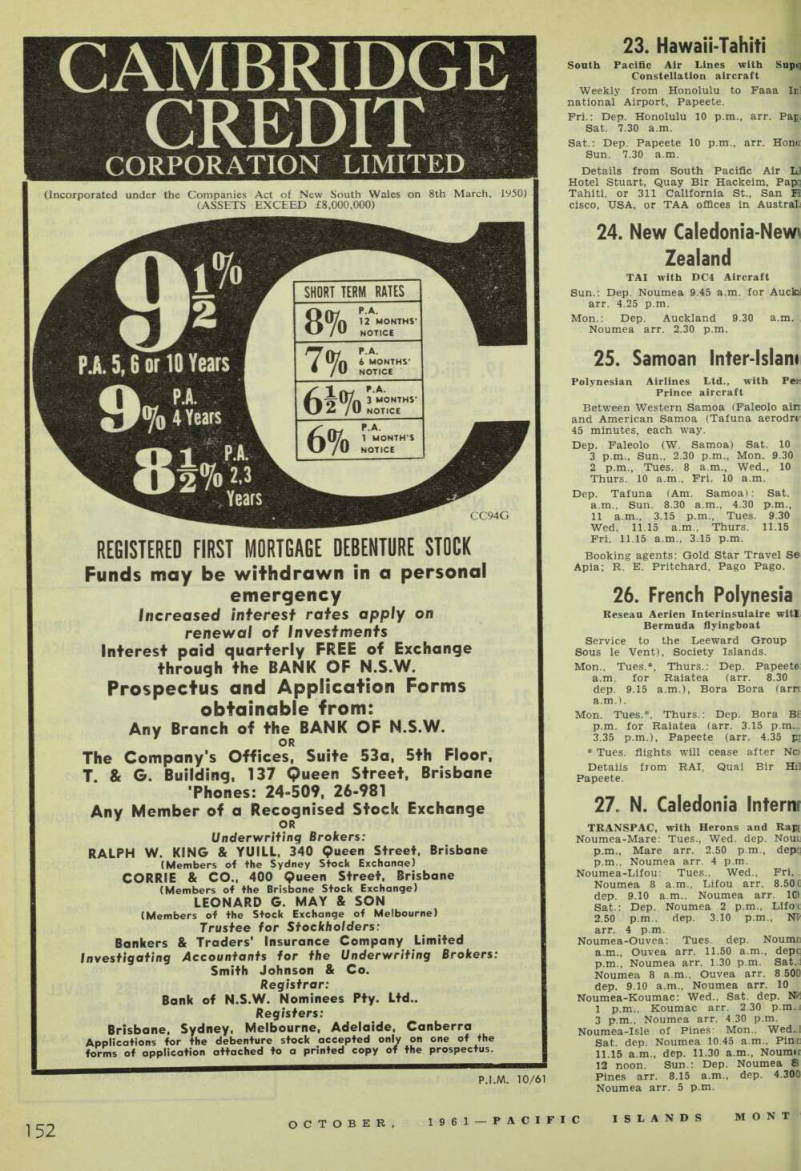 154
154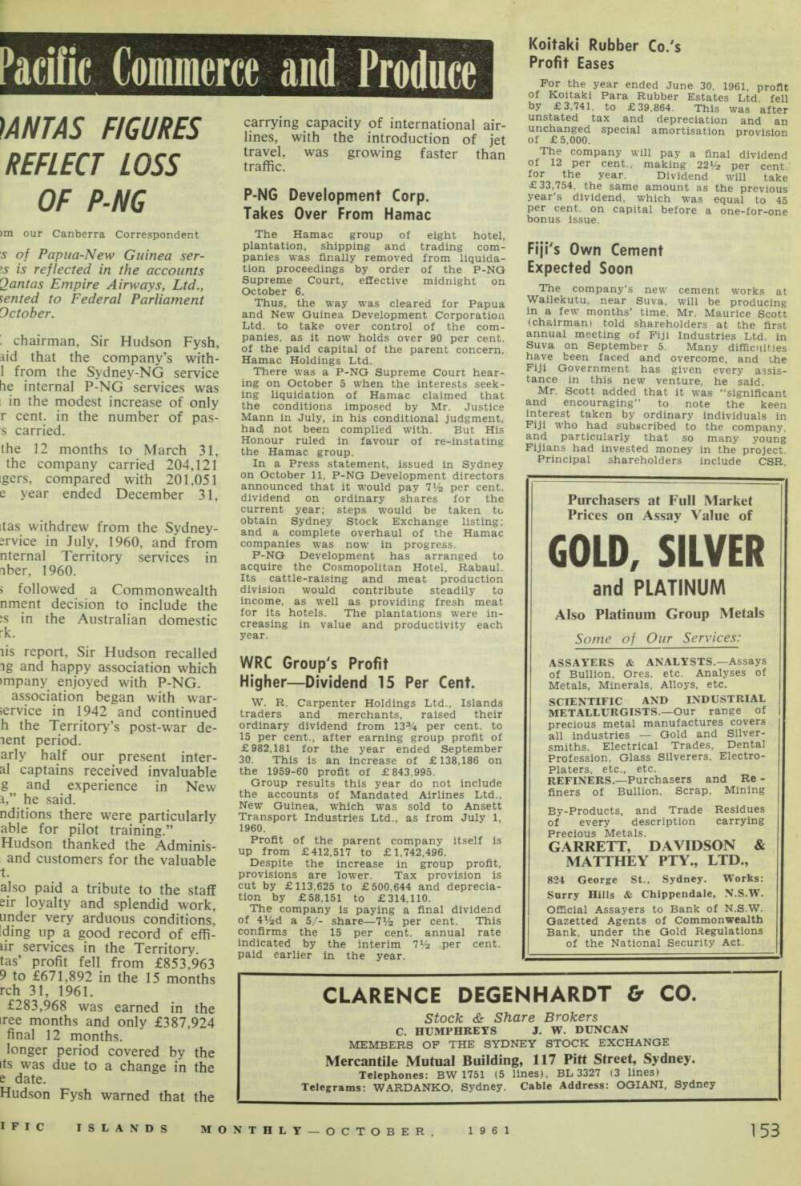 155
155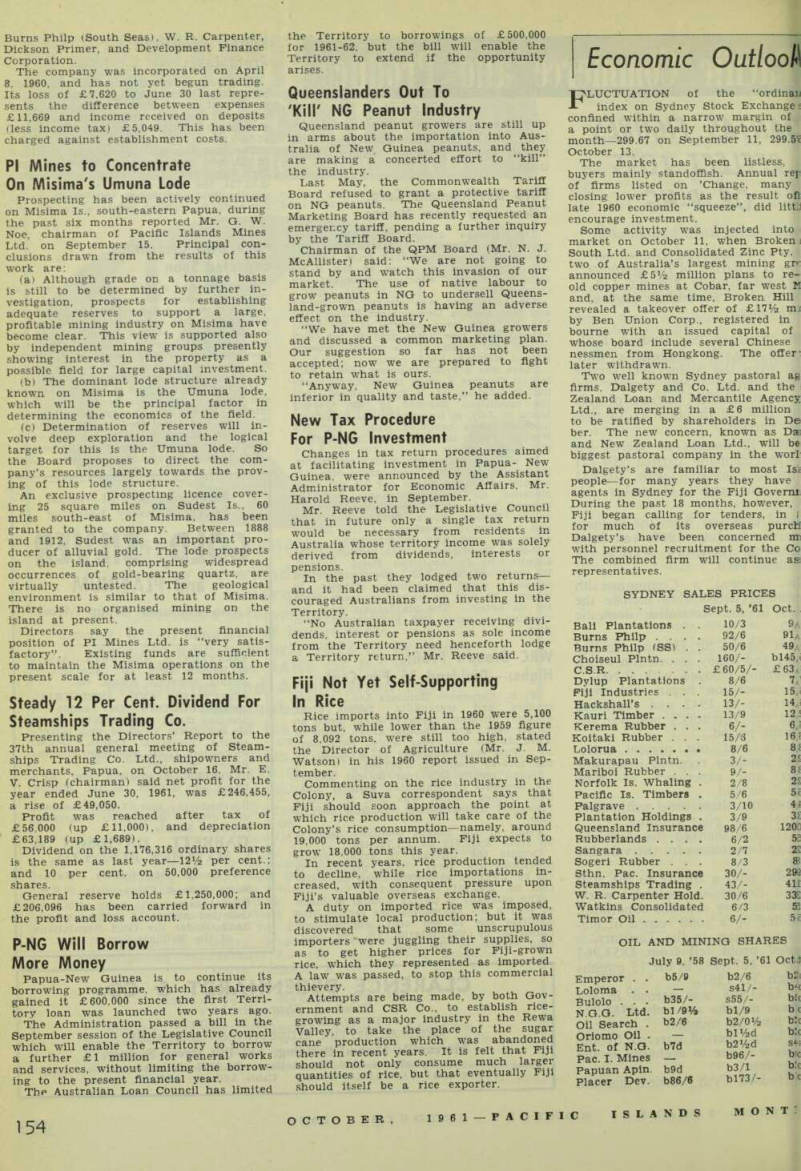 156
156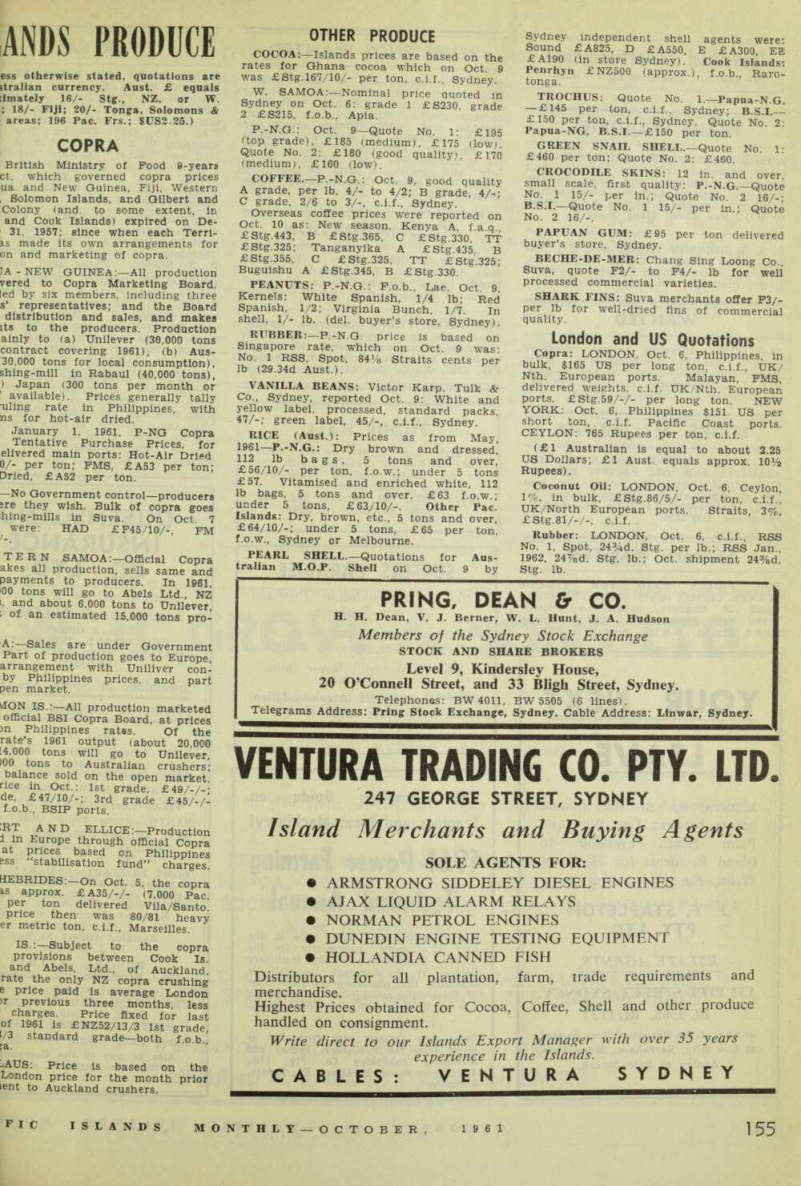 157
157 158
158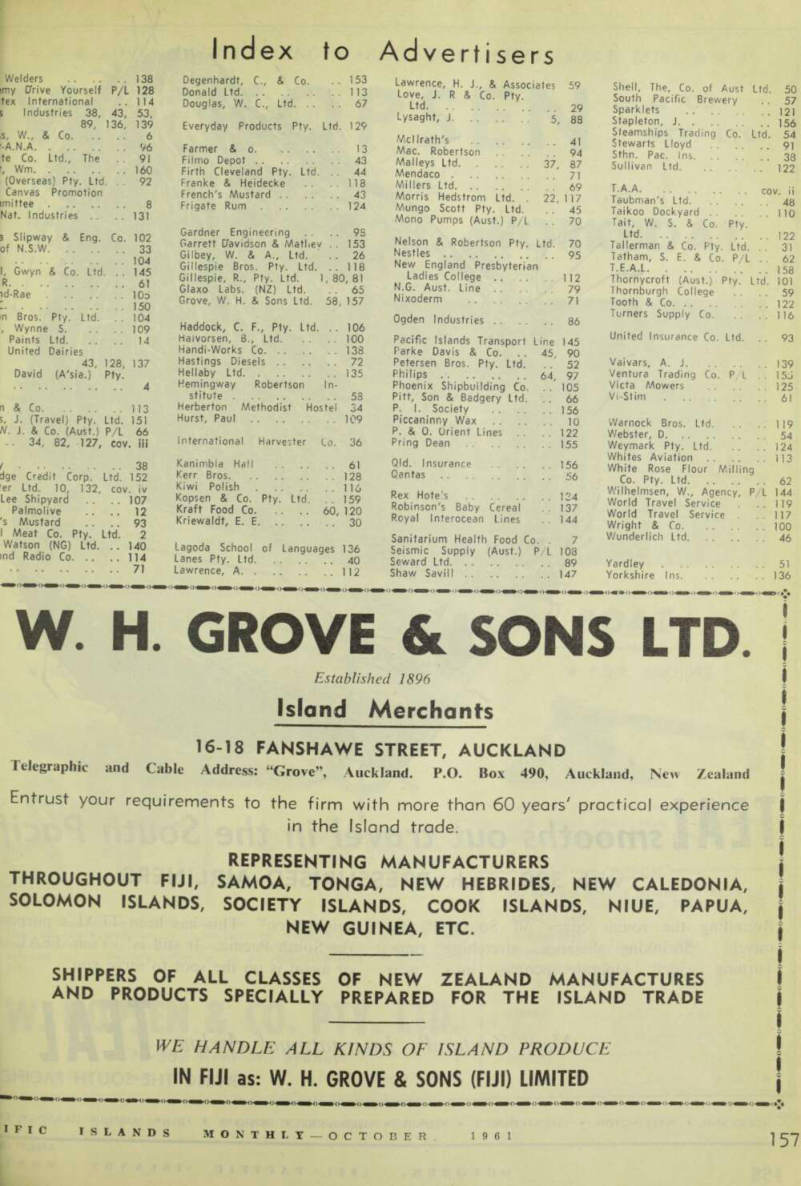 159
159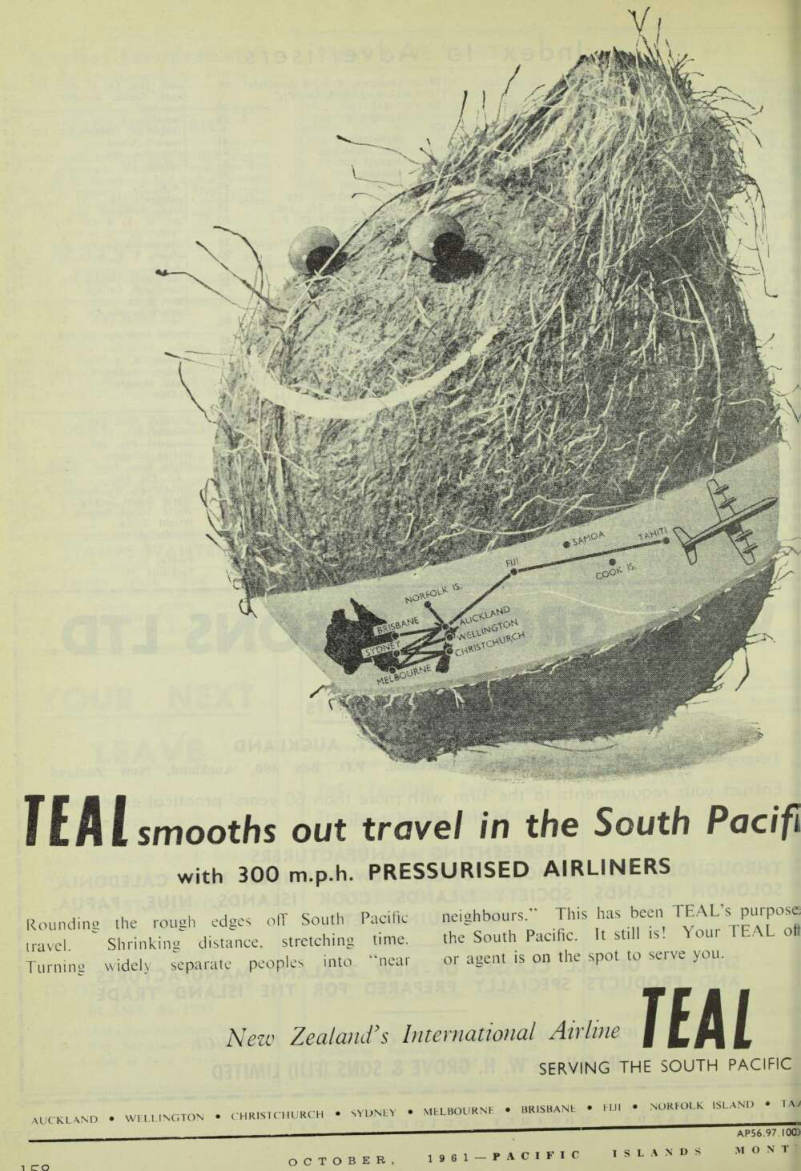 160
160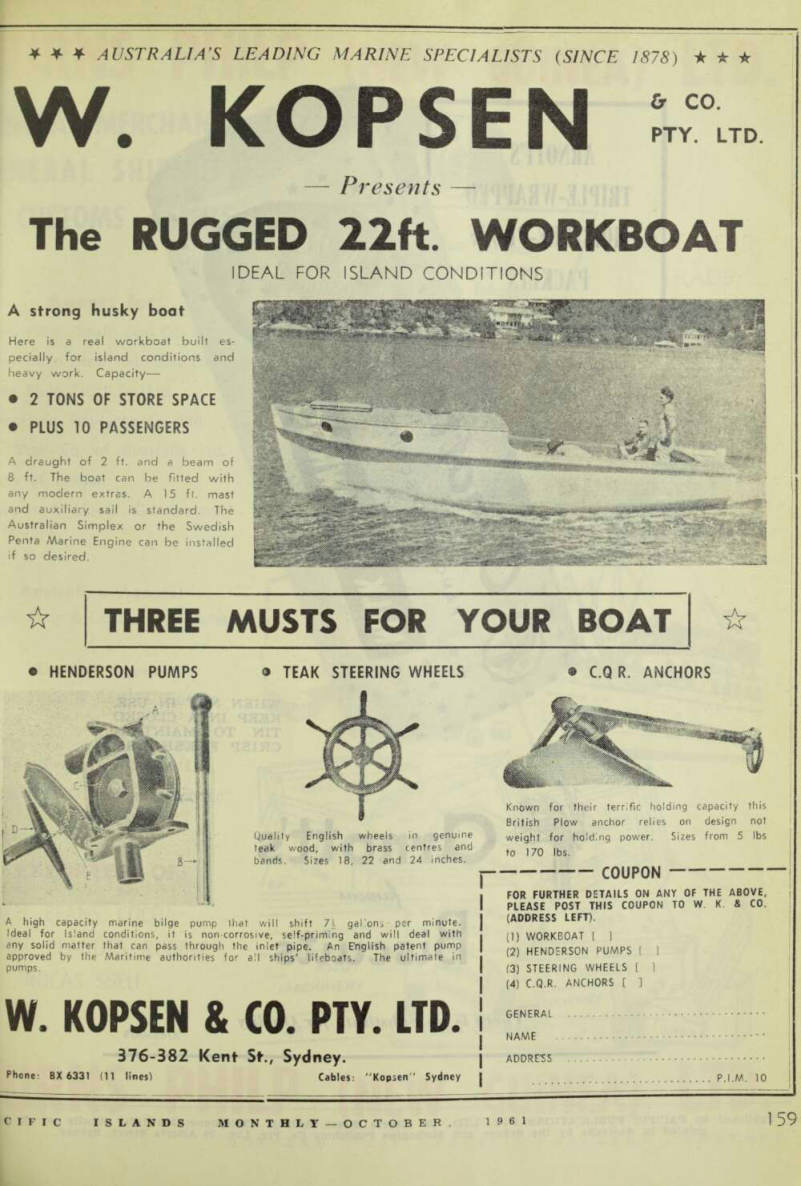 161
161 162
162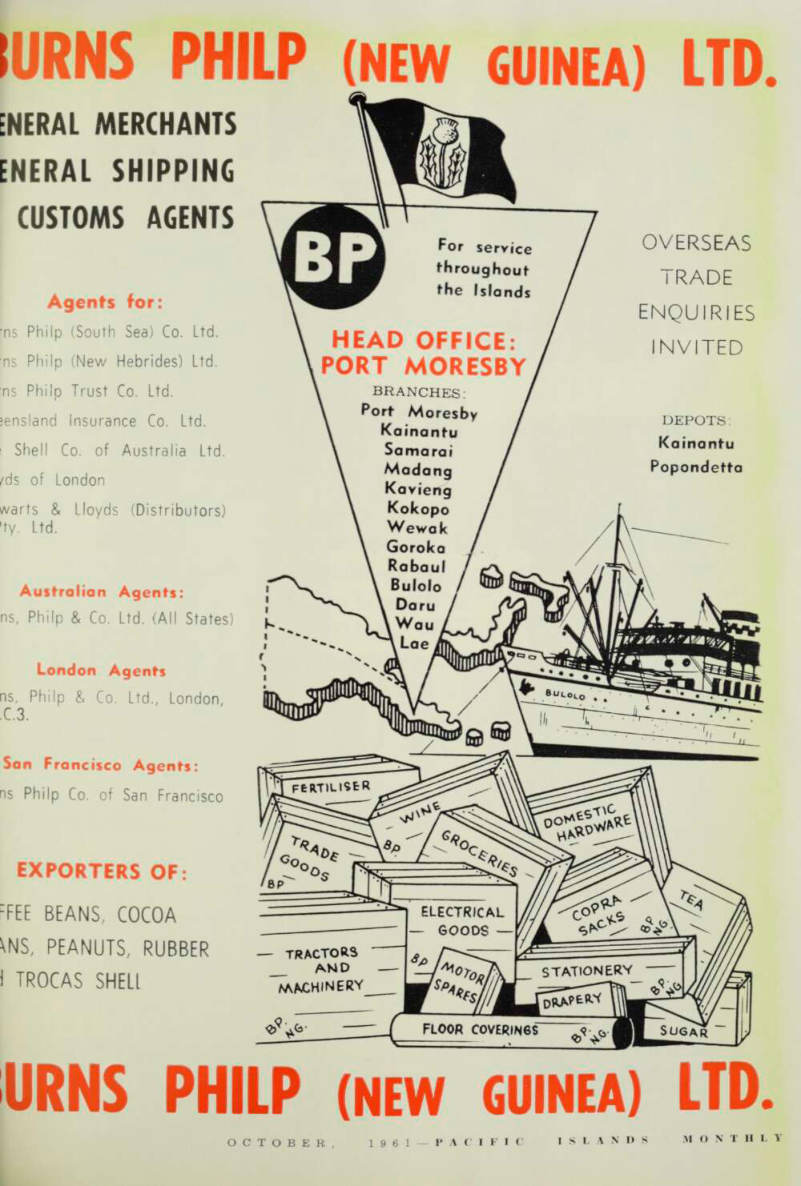 163
163 164
164