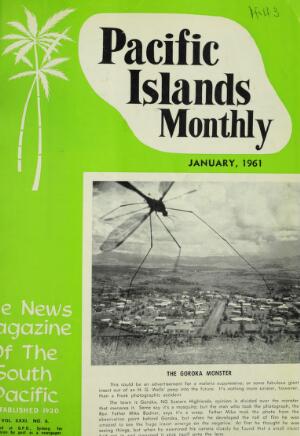
Pacific
Islands Monthly
January, 1961
e News agazine >f The ?outh Pacific
Fablish Ed 1930
Vol. Xxxi. No. 6.
id at G.P.0., Sydney, for sion by post as a newspaper.
The Goroka Monster
This could be an advertisement for a malaria suppressive; or some fabulous giant insect out of an H. G. Wells' peep into the future. It's nothing more sinister, however, than a freak photographic accident.
The town is Goroka, NG Eastern Highlands; opinion is divided over the monster that menaces it. Some say it's a mosquito; but the man who took the photograph, the Rev. Father Mike Bodnar, says it's a wasp. Father Mike took the photo from the observation point behind Goroka, but when he developed the roll of film he was amazed to see the huge insect emerge on the negative. At first he thought he was seeing things, but when he examined his camera closely he found that a small insect had not in and managed it stick itself onto the lens.
Advertisements & other items, pp. 2-4 (3 items)
YAA °p erates
Top Australian Airline A
THE SUNBIRD SERVICE
to 44 places in Papua, New Guinea and the neighbouring Islands.
FLY TAA THE FRIENDLY WA Y
fj?:
WAr^
. . . without waitir
k
Coleman
n 8
R HEATERS
JEL3L
r 4 Kir*
SUPER PERFORMANCE
Model 163 A -30 gal. 3 - .Jt ■ ■ ?' V k.^ • -V #*
MASTER
Model 165-20 gol.
Model 166 - 30 gal.
Check these Important
Advantages...
LOW COST
Burns a minimum of fuel for a maximum of efficiency.
LOTS OF HOT WATER
75 gallons of hot water the first hour from a 30-gallon tank.
RAPID RECOVERY
Heats up to 1 i times its size per hour. No other type of conventional water heating equipment can compare in performance.
COMPLETELY AUTOMATIC
Just set the thermostat at the desired temperature. The fuel is then automatically metered into the burner at exactly the right rate to maintain that temperature.
SUPER PERFORMANCE MASTER
Model 163 A—30 gal. Model 165—20 gal.
Model 166—30 gal.
Representatives for the Pacific Islands:
RT GILLESPIE PTY. LTD. ROBERT GILLESPIE (N.G.) LTD. PEARCE & CO. LTD. 22 Young Street, Sydney Lae, Madang. Rabaul, Port Moresby Suva for Fiji Islands
ELECTROLUX
/■> Wi it
the refrigerator
with a difference...
ELECTROLUX
the universal
refrigerator
for every
household need.
MODEL L5l
• A convenient full-width frozen storage section. • Trays with easy release handles for ice cubes, ice cream, frozen desserts. • Rustless food shelves with special provision for upright bottle storage. • Vitalises to keep fruit and vegetables fresh and dewy crisp. • Glacier blue porcelain enamel lining with oven-baked enamel exterior in Cream or Polar White. • A special compartment in the door for butter or cheese . . . racks for eggs and for bottles. Chrome plated cover strips protect the front edges of these racks. • The cabinet interior is illuminated with an electric light which comes on and goes off automatically when the cabinet door is opened or shut. The light can be connected to a 6v. or 12v. battery ... to your own homelighting plant ... or to a town supply.
Motorless, ever-silent freezing unit has no moving parts and is guaranteed
for FIVE (5) YEARS.
See your local Electrolux agent now: NEW GUINEA CO. LTD., Rabaul, Madang, Lae, Kavieng, Kokopo. ISLAND PRODUCTS LTD., Port Moresby. 5.C.1.E., Noumea. 8.5.1. P. TRADING CORP., Honiara, Gizo. BURNS PHILP (N.H.) LTD., Vila, Santo. F. J. R. SIMMONDS, Norfolk Island
W. R. CARPENTER & CO. LTD
THE WALES HOUSE, 27 O'CONNELL STREET, SYDNEY, NSW
PHONE BL 5421
1
[ F I C ISLANDS MONTHLY JANUARY, 1961
January, 1961 Pacific Islands Months
Pacific Islands Monthly
Publisher:
R. W. Robson.
Editors:
I Tudor Stuart Inder
Manager:
Selwyn Hughes.
ONES: General Business, Editorial, Advertising, Subscriptions:
9197-8, Ma 7101, Ma 4369.
,P.O. Box 3408, Sydney,
lered Address for Telegrams, ams, Cables: "Pacpub", Sydney.
Lual Subscription Rates:
ludes surface postage except where stated) ific Is. —Papua-N.G., Samoa, Norfolk, i, 8.5.1., Cook Is., , G.&E. Grp., Niue, Hebrides, and other acific Islands . .. £1 4 0 > acific Territories (N. jnia, Fr. Polynesia); Dutch N.G £1 7 0 ■alia and N.Z. . £llO 0 British Common- II h Countries, and n (40/- Stg.) . .. £2 10 0 and U.S. Pacific Dries ($6.00 U.S.) . £2 12 6 opies (postage extra) 2 6
Ranch Office, Papua
New Guinea
Publications (New Guinea) Ltd., Building, Fourth St., LAE, New 3uinea. Tel.: Lae 2577. s Pat Robertson, Manager.
*Anch Office In Fiji:
es Building, Gordon St., Suva.
Epresentative In N.Z.:
Whitcombe, P.O. Box 5179, Tel.: 22.570.
Presentative In U.K.:
shburn, 13 Rood Lane, London, . Tel.: Mincing Lane 8633.
RNE OFFICE; Newspaper House, lins St., Melbourne, Victoria.
Tel.: 63.7053.
All main trading firms and js in the Pacific Islands,
Mes Agency In Australia
Publications Pty., Ltd., Is *he m agent for THE FIJI TIMES
Contents
No. 6. Vol. XXXI.
January, 1961
People 5
New Year Begins with a Bang 15 Wide Interest in P-NG Elections 15 New Territories Minister and French Pacific Heads 16 West Samoa Gets the Go-ahead from
Uno 17
Copra Comes Down 17 Trouble over NG Wage Scale 17 NG's PIR in Riot 18 Report of P-NG Labour Mission ... 18 American Samoan Chiefs Make Some
Proposals 19
The Month's Developments with Pacific Aviation 19 New Guinea Air Crash Kills Two ... 20 Australian Officials Visit the New Hebrides 20 Papuan Oil Search Looks Hopeless ... 21 First of New Caledonian Vietnamese Leave for Home 21
Commentary 23
The Editors' Mailbag 24 School Principal's Plea for Fijian Girls 25 Mrs. Gordon Thomas: One of the Women Who Waited 26 New "Bounty" Brings Film-makers to Tahiti 27 Tahiti Has a New Tourist Look 29 Shipping Could Learn from Aircraft Control 30 Albert Schaafhausen: The Man Who Trapped Murderers 32 TERRITORIES TALK-TALK, with Tolala 33
It's Still a Nose for a Nose in New Guinea 34 Fijians Want to Deport Trouble makers 35 Wide Interest in Old Queensland Wreck 37 A Reader's View on the Fear Factor in Leprosy 41 Giving Secondary Industries a Go in NG 44 Petition to Wind-up Coffee Estate ... 46 ASOPA Graduates for 1960 47 United States' 35th President is by Courtesy of Ferdinand 49 A Brett Milder PROFILE 51 Official Inquiry into Fiji Sugar 53
Sydneysider At Home Base 55
Australia's Slice of the New Hebrides' Cake 59 NG Official on Sedition Charge 61 The US "Sturgeon" Sank the "Montevideo Maru" 61 Some Memories of the Ex-Pro Board Days 65 Garaina —NG's Valley of Isolation and Tea 71
Magazine Section 75
News of Pacific Shipping 101 PACIFIC REPORT (index p. 16) 113 Obituaries 143 TRAVEL TALK: a New Section 146 Shipping, Airways Timetables 149 Commerce and Produce 157
Advertisements & other items, pp. 5-6 (3 items)
A Product of Pacific Publications Pty. Ltd., 29 Alberta Street, Sydney
(29 Alberta Street is 10 yards from the intersection of Goulburn Street and Wentworth Avenue.)
4
JANUARY, 1961 PACIFIC ISLANDS MONTH
Blowamist
Here is an EXCITING,JIEW
MISTING MACHINE by MARINO
MARINO
BLOWAMIST
PAT. APR. NO.
55181/59
EXPORT MODEL
Misting is the modem method
of pest control
WEIGHS ONLY HI
24 LBS.
This is made possible by the use of fibreglass and a special lightweight German engine. The Blowamist will do the job 4 to 8 times faster than old methods.
The Blowamist will give you all the power and atomisation you could possibly need for complete pest control. When you mist or dust there is no "run off 7 because there is no liquid. A Marino Dusting attachment is available at slightly extra cost. Write direct to the manufacturers or to any of their distributors.
MARINO PRODUCTS
PTY. LTD.
In principal ports of New Guinea and Papua the Blowamist will sell at under Distributors in New Guinea and Papua— PAPUA: Steamships Trading Co. Ltd., Pc
BAMBIL STREET - BULIMBA - BRISBANE
PHONE: 95 1081
Moresby and Samarai.
RABAUL, MADANG and GOROKA; Colyer Wats( (N.G.) Ltd.
LAE and WAD: New Guinea Goldfields Ltd.
People
□d wishes from many countries led Mr. A. M. Gurau, of Apia, ern Samoa, on December 8, he was 75 years old He was a t young man of 36, resident of ian Samoa, when World War I , and a small occupying force New Zealand arrived and ?ed the destiny of the German iy. Mr. Gurau accepted the regime, became an established n of the Trust Territory, took ffive share in public affairs— surely will live to see Western a in its sixth development as louth Pacific’s second (Tonga i first) independent, self-gov ? State. stern Samoa, in 100 years, has a kingdom, international pro ate, German colony, mandated )ry, trusteeship territory and ■close at hand—lndependent Mr. Gurau has had a share ir out of the six.
1961 good wishes are in South Pacific artist Charles e, writing from somewhere in Zealand. (With true artistic he gives no postal address.) lition of his work came —but it came surely and harles complains that Eliza jf Tahiti) and he cannot get at present to Tahiti and i because “commissions are in like a flood”—from 140 to ineas per.
PIM writer likes to think
[?]ret, West Samoa received the announce- January that Mr. Eugene Paul, Minister [?]ce and Customs since Cabinet govern [?]gan in October, 1959, will retire from life. He will not be a candidate
[?] forthcoming Legislative Assembly
[?] Mr. Paul has recently been in ill [?]h and will shortly travel abroad.
he recognised McPhee’s genius cars ago, when he purchased a dozen of his brilliant Samoan capes. McPhee was developing ;nt for painting on velvet when isitor’s permit ran out, and the ;h made him leave Tahiti, on round that he did not appear ive sufficient income. Maybe, day, when he is too old to care, will ask him and his charming ian wife to return to the land love best. * ♦ * R. MacDonald, programme iser at Station IYX, Rotorua, has been seconded to the -established Tongan Broad ig Service as programme or.
e of the headline-hunting apers of the world have not ;ted Sister Mary Louise to en e peace she sought, when she e a nun and went into service n Order in the Sepik country v Guinea. Sister Mary Louise •s. Frances Dills, aged 51, r of three children and grand r of 12. She was born the ter of Charles Holtzinger, who r a large fortune; and, in her ir days, she was a radio an ?r in Hawaii, and an actress mce knocked insistently on ors of Hollywood studios. She sen some three years in New i, where she went originally ay missionary, and her work couring native orphans has high praise. * * * bouquet of the month goes to commentator Paul Prieur, of Tahiti, for his up-to-the i series on world and local ;, and his analysis of lical and social problems are an expected outcome of and progress in Tahiti, ti, with only one small daily iper—which, because of its size can give only an out )f world events, welcomes s radio comments for their
[?]t marriage in Noumea —Miss Marthe [?] daughter of a pioneer family in New [?]a, to popular Dutchman Mr. H. van sheries Officer of the South Pacific [?]ion. Here the happy couple enjoy a the desk of the Mayor of Noumea, [?]e marriage ceremony had been per formed.
Photo: Fred Dunn
excellent analytical content, in I area where outside sources are] a premium. * * * Mr. D. A. Darling has returq to Australia after a period of du in Suva as Shell Oil Co. manag for the South-west Pacific. He h been transferred to the compan; head office at Melbourne, and ni A. G. Keene has succeeded him.
Mr. Darling—“ Peter” to ma friends—was a popular man amo all races in the community, yet dustrially he faced more trouble Fiji than any of his predecessd Oil workers employed by Bui Philp and Co. (SS) Ltd. (the Sh Co. agents in Fiji) struck thi times at Vuda Point and once!
Suva between November, 1959, a April, 1960.
Mr. W. E. Morrison, who i seconded from New Zealand to I Fiji Posts and Telegraph DepS ment for three years in 1928, 1 the Colony late in December to I tire in his home country after] years’ service in Fiji. He liked I so much that at the end of I secondment he joined the Fiji] and T Department. He filled ma senior posts in the department 8 on his retirement was sen accountant. He acted as Dew Postmaster-General for a term. I * * * Miss Esiteri Vakalala, aged I daughter of a Fijian magistrate 8 a student at New England U: versity, NSW, is the first Fiji woman to graduate as a BachJ of Arts. She also has gained Diploma in Education, and has! turned from Australia to Fiji! become a teacher in English Geography at the Methodist G 8 School in Suva.
Miss Joan Wyatt receives her 21st birth “key" from her father, Port Moresby iden[?] Mr. W. Wyatt, at a birthday party held rece[?] at the Port Moresby Golf Club.
Papuan P[?]
)m a Rabaul correspondent: ly Joyes has handed Iwi over ali Plantations Ltd., and “goes i finish” to live on his property Warwick, Queensland. He gave ;ars of active life to Iwi, and it one of the best plantations i island (Bougainville) which is us for the high quality of its uts and its disease-free cocoa, price (£70,000) was regarded ily by both buyer and seller. and Mrs. G. Nevill left the Islands in December for New nd. Mr. Nevill, who was ent Commissioner in the p, has now retired. * * * >tain J. R. McGrane has been nted assistant general manager isman Empire Airways, suc ig Mr. J. Veale, who resigned ily. Captain McGrane was Df the Solent flying-boat which d Queen Elizabeth from ,1a Bay to Lautoka and Tonga Z the Royal tour at the end 53. In his career as a TEAL in he commanded aircraft operated between New Zea md Fiji and Fiji and Tahiti.
Tangata, an 18-year-old [slands student in New Zea s considered by art critics to outstanding art student of promise. Some of his paint fere recently on display in nd, where he attends the i Memorial Technical School * * * P. E. Hudson has been ted manager of Nadi Airport, ;e of Mr. A. J. Turner, who 1 ln October, after an illness, idson, for the last 5g years =i°nal superintendent for the
[?]L. Mitchell, well known resident of New Hebrides, was visiting in December. He said important [?]s were proceeding or were planned for [?]opment of the Condominium's natural resources.
Civil Aviation Department at stchurch. •. Turner was widely known in h Pacific aviation. He was ; manager at Nadi, and before war, he was a pilot in New lea with Guinea Airways. * * * e Governor of Fiji (Sir Kenneth locks) early this month flew to apore to attend a conference tie headquarters of the Com oner-General for South-East (Lord Selkirk). The confer which will be attended by UK issadors, high commissioners governors of British Colonies in isia and the Pacific, has been iged for “an exchange of views tatters of common interest”, * * * . W. Watson, formerly PAA intendent of ground services ilewild Airport, New York, is the airline’s manager at Nadi, He succeeded Mr. J. Demezes, has been transferred to New
Geoffrey Miles Johnson has dmitted to the Bar of the Fiji ne Court. He studied at Mel - University, and was ad to the Victorian Bar in June Ir. Johnson is a son of Mr. (Tui) Johnson, managing ,r of W. R. Carpenter and Co.
Ltd. * * * Rev. Dr. G. R. Hemming left st month to spend a year on
number of old indentities from P-NG Solomons were among more than 100 who attended the reception following [?]riage in Sydney in December of Mrs. [?]les, to Mr. R. C. Symes, well known [?]an in the Western Pacific. Toasts [?]ouple were proposed by Mr. Ted Taylor and Mr. Oscar Svenson.
the staff of the Auckland Pub: Hospital. While he is away frc Fiji, Dr. Annie Low will fill his pla as superintendent of the Baj Clinic, Suva. * * * Bernardo Vunibobo flew back] Fiji at Christmas from Queenslai after six years’ study at Gatt Agricultural College and Queensla University to qualify as the ft Fijian Bachelor of Agricultui Science. He will become an ag cultural adviser in Fiji. * * * Captain Phillip Miller, of Sydn formerly Area Manager, N Guinea, for Qantas Airways 1; been appointed technical traini manager for the airline. His appoii ment covers control of all grou technical training including admi istration of flight simulators. 1
John (Sione) Gregory of Island, Ellice Group, who has be studying overseas for the Catho priesthood for the past seven yea was ordained a Deacon in Rome ] cently. This is the last step his ordination as a priest at Taran to take place late in the year. I will be the first locally born Catho priest of the Gilbert and Elli Islands Colony. * * * Pastor R. E. Cobbin, who h been Seventh Day Advent missionary on Pitcairn Island I two years, has been transferred!
Fiji. His headquarters will be!
Vatuvonu, Buca Bay, and he be in charge of the SDA East t Mission.
Former New Guinea man Mr. R. A. Euler, [?] manager for Coconut Products at Rabaul u[?] he joined the Prudential Assurance Company Brisbane, has just written almost £500,[?] worth of new life assurance business in [?] first year as an insurance man. It is Australasian record for a company represe[?] five in his first year.
r John Gutch, retiring High missioner for the Western fic, and Lady Gutch, will make iur of New Zealand as guests be Government from February 3 March 17 before returning to United Kingdom. le South Pacific Commission high tribute to the help given rds the accomplishment of its stives by the executive officer locial development, Dr. Richard on, when recently it offered him for a further five 5. his first five-year term Dr. on established a successful pro ime in social development, aly in projects covering women’s ests, education, literature pro- Dn, and co-operatives. . Seddon is a grandson of us “Dick” Seddon, Prime Min of New Zealand about 60 years
itor Douglas Martin, a Seventh- Adventist missionary, has re d to his home town of Kyogle, , after three years’ service in Guinea —mostly at the Fulton an College, Rabaul. Pastor n is awaiting medical advice e he can decide whether to re to New Guinea. * * * Fiji-born Indian, aged 22. nand Goundar, made head in December as Queensland’s student in Dentistry, for the d year in succession. He id from Fiji at the end of with a diploma of dentistry: op of the second year dentistry n in the University of Queens in 1959; and topped in the year dentistry examination in
[?]aphed after their marriage in New in December—Mr. and Mrs. J. Parkes, [?]iak Plantation, Kar Kar Island. The was formerly Miss Margaret Mooney, of Newcastle, NSW.
Advertisements & other items, pp. 7-16 (10 items)
5
IFIC ISLANDS MONTHLY JANUARY. 1961
W An Z Bank
Our first was a girl
7\ jC^V3 - i 7 o u We knew that three people couldn’t live as cheaply as two, so we decided to open an A.N.Z. Cheque Account to control our money better. Now we have Savings Accounts for ourselves and young Mary, and keep all our accounts at one office saving time, effort and money. It makes a difference if you manage your money and don’t let it manage you.
ANZ
W AN Z BANK
AUSTRALIA AND NEW ZEALAND BANK LIMITED
AUSTRALIA AND NEW ZEALAND SAVINGS BANK LIMITED Cheque Accounts—Savings Accounts
ANZ64O. 2FC
PENTA MD 47 DIESEL
—an 82 h.p. Marine Diesel for medium
sized pleasure craft and work boats.
The AAD 47 is a six-cylinder diesel from Sweden's noted factory for high-performance marine engines. For harbour and coastal craft, for cruisers and fishing boats, it provides an all-round standard of reliability under all conditions of load and weather. Its maximum marine output is 82 b.h.p. at 2,500 r.p.m. Fully illustrated brochure giving complete specifications and performance chart is available on request.
HENDERSON Bilge Pumps
capacity 71 gals, per minute
This lightweight diaphragm-type pump is always self-priming and will deal with any solid matter that can pass through the inlet pipe. It has a quick-release cover for speedy clearances of any stoppages, and is approved by marine authorities for all sizes of ship's lifeboats.
PAINS Rockets
and Flares
We stock a complete range of rockets and flares for all marine purposes.
KENT
CLEAR VIEW
SCREENS
optically true for full time
visability in all weather conditions
The revolving disc of the KENT Clear-View Screen throws off rain or spray, so that vision remains perfectly clear and sharp. The glass disc is optically true, enabling binoculars or telescopes to be used while looking through the screen.
Australia's leading hands in power and sail equipment
W. KOPSEN & CO. PTY. LTD
SHIP CHANDLERS SINCE 1878
376-382 Kent St., Sydney. Phone 8X6331 (11 lines)
«tr
YOUR FAMILY
NEEDS VITAMIN Bl
EVERY DAY!
Get Vitamin Bl in many different
ways, with delicious:
VEGEMITE
Z ±JM
SPREADS so SMOOTHLY on toast DELICIOUS on biscuits SO NOURISHING in sandwiches Every member of the family needs Vitamin Bi every day for
VITALITY.
Vegemite is the only pure concentrated yeast extract, and yeast is the richest known natural source
of Vitamin B 1 the vitality
vitamin.
But remember! The body cannot store up Vitamin Bi —it needs a fresh supply daily. So enjoy
Vegemite every day— for Vitality.
KR3 ENRICHES gravies
in its most convenient form!
Here’s the most convenient way to keep plenty of fresh cow’s milk always on hand ... stock up with double-rich CARNATION.
Pasteurised and sterilised for your protection, CARNATION Milk is pure, rich cow’s milk reduced to extra creaminess . . . and it needs the addition of only H times its own volume of water to be instantly ready for drinking.
CARNATION’S wonderful for cooking too !
CARNATION blends better than ordinary milk . . . combines better with other ingredients . . . gives you better results every time. And so quick and easy to use ... no tiresome mixing, you just punch and pour CARNATION straight from the can.
Remember . . . for fresh liquid milk whenever you’re ready to use it, you can rely on
CARNATION.
I Is V*Ov %
evaporate^
Mil* /
Wjjm
»00600 Pk
(arnation Milk
from contented cows
6 oz. or economy I4J oz. cans. 48 to the carton
LOCK UP WITH
mm
for top security..
Don’t take risks when your valuable and often irreplaceable possessions are at stake. Invest in a first class padlock—
a Lockwood—for “top security”.
Up to 78,000 different key combinations
ensures that only your key will open your padlock. The shackles are of casehardened steel or all brass, and are
available in various lengths. Most
Lockwood pin-tumbler padlocks can be
“master-keyed”.
c No. 100 night latches.
Sturdy, reliable mechanism. Available with or without smb. Nos. IW. 201 and 206 illustrated.
STREAM LATCHES.
Many popular durable finishes- No. 211 illustrated. No. 200 Narrostile” also available.
PNEUMATIC CLOSER NO
401. For all doors up to 40 lbs. weight.
blinder mortu
■•run locks.
Precision, deper securit Moving pa rts soi brass Over 30 ai Plications in a j
Available as
master-key’ system
°OOR TOUC,
latch.
Just push door t open, pujj to dose Easy to install an, features strong snib
3 °o. 300/101 LATCH
S'urdy. Attract- CH I v e• Can be snibbed from insjde. 300/101 bas exterior fever handles.
NO’s 403, 404 HYDRAULIC
CLOSERS.
For all doors. Brackets and arms for every installation.
OGDEN INDUSTRIES PTY. LIMITED
Edward Street, Huntingdale, Victoria.
Largest manufacturers of cylinder locks in the Southern Hemisphere.
STOP BAD BREATH
with COLGATE
WHILE YOU pi-
Fight Tooth Decay All Day!
% / 'V
JUST ONE BRUSHING
WITH COLGATE
STOPS BAD BREATH INSTANTLY
FIGHTS TOOTH DECAY ALL DAY
KEEPS TEETH SPARKLING WHITE
Colgate Dental Cream
CLEANS YOUR BREATH
while it
CLEANS YOUR TEETH
Use Colgate Dental Cream to stop bad breath and fight tooth decay. Colgate’s active, penetrating foam gets into hidden crevices between your teeth, removing decaying food particles, the cause of much bad breath and tooth decay.
Protect your teeth the Colgate way.
To stop bad breath, to fight tooth decay, to keep your teeth sparkling white, brush your teeth with Colgate.
Children love its extra minty flavour.
You will love it too.
FOR WHITE TEETH AND
FRESH BREATH . . . MORE
PEOPLE BUY COLGATE
THAN ANY OTHER DENTAL
CREAM IN THE WORLD!
WIOI
& V Concentrated Germicide Pi >c gi* c/ 0f Sp *roSis. £r c
Australia's
Best Selling
GERM
KILLER
now comes to you n
PICCANINNY "Pic-a-lyptus
Fresh as a new day Piccaninny’s new disinfectant brings ‘Hospital-clean’ protection to your home. Every time you clean use Piccaninny Pic-a-lyptus. Australia’s most popular germ-killer, is now available to you in the large economy priced bottle.
Powerful, safe and fragrant.
AT ALL ISLAND STORES
Made by Piccaninny Manufacturing Company, Manly, N.S.W., Australia.
MC-A-LYPTUS ... a disinfectant and deodorant
fascinating cheese flavours
KRAFT SPREADS
in for quick-spreading on sandwiches and savouries Blue Cheese Spread kraft 1
. Blue ]
cheese spread
KRAFT
Gorgonzola
cheese spread
KRAFT
Cream
Cheese
Spread
Gorgonzola Cheese Spread Cream Cheese Spread kraft
Smokay
pread cheese Smokay Cheese Spread Cheddar Cheese Spread These Kraft Spreads come in slim and attractive re-usable glasses which will prove very handy.
KRAFT
kn 4PT i Just look! 5 easy-to-spread treats all deliciously different. Kraft Spreads bring new, tasty variety to party savouries —or spread on toast fingers or biscuits for quick snacks ideal for sandwiches, too.
Be sure you always have Kraft Spreads in your pantry there’s a flavour to delight every member of your family.
You name the job...
cuu^va^e/i
Ll5O does it!
No matter what the season or the task, Landmaster L 150 will make light work
of the toughest jobs you
can give it. Landmaster's
rugged 4 h.p. engine will
work at any angle and
deliver power continuously
under all climatic conditions.
Balanced reversible plough cuts through the soil so easily and so smoothly it's not like work at all.
SEEDING
Completely automatic single or twin unit seeder plants the finest grasses and coarser seed, e.g., peas and corn.
Y DIGGING
WEEDING
MULCHING
CULTIVATING
a
EBB
Super efficient self-priming pump will lift 6,000 gallons per hour. More than enough every need. i
myiCTiaiMl
36" Cutter Ba quick work fc crop cutting, rough grassy cutting, etc. % i
iMiramna
Fit tines or hoe blades and other static tools « to the Landmaster M Tool Bar for thorough vT-S harrowing. ■ :~J7ru : as
TRANSPORTING
GET DETAILS OF LANDMASTER LISO
AND GARDENMASTER SBO THE
LANDMASTER MACHINE FOR THE HOME GARDEN
NEW GUINEA DISTRIBUTORS.
Ilimo Farm Products, Port Moresby.
ISLAND DISTRIBUTION
from Company's Plant, Ballarat, Victoria.
All-purpose carting up to 7 cwts. capacity.
Strong angle iron frame.
LANDMASTER Ll5O & GARDENMASTER S 80
Produced in Ballarat.‘Victoria, by
FIRTH CLEVELAND £
LANDMASTER DIVISION
m
MAIL THIS COUPON NOW!
Please forward me, completely free 1 and without obligation, details of the Landmaster LI 50 and Gardenmaster SBO.
NAME
ADDRESS
8311
MANUFACTURED
TO WITHSTAND
ALL TROPICAL
CONDITIONS
f Va
BRITISH PAINTS LIMITED
D tPaifnXit 'f w
COLOUR
Vi
ALL
the only guaranteed
one-coat enamelised
roof-paint
Its long-lasting brilliant gloss completely supers* ordinary roof paints that so quickly loss t gloss.
Roof-Lusta enamelised roof and structural col* are light-fast . . . they withstand tropical lashing rain, dust-laden winds and salt sea spr Dust doesn't accumulate on Roof-Lusta's hi glossy surface.
Roof-Lusta is non-poisonous—drinking water alw remains fresh and pure when you use Roof-L* colours.
Your home will be at least 10 degrees coe inside if you use Roof-Lusta heat-refled “Aluminium"—so easy to apply with brush! spray. And Roof-Lusta offers maximum resista to all fungus and mould growth.
Roof-Dusta protects and decorates all roofs .
Galvanised Iron, Corrugated, Abestos Cem* Structural Iron and Steel, and all metal surfa . . . choose from the lovely selection of cole available from your nearest British Paints Limi depot or store.
IMPORTANT: For maximum protection against fungus and mo growth always treat new or previously painted surfaces with Brit Paints Limited's anti-mould solution.
Enquiries are invited from storekeepers to act as authorised age for British Paints quality products.
Write to British Paints Limited, Box 43, P. 0., Bankstown, N.SJ Australia.
SOLD AND RECOMMENDED BY:
Burns Philp (New Guinea) Limited: Port Moresby.
Burns Philp (New Guinea) Limited: Samarai.
Burns Philp (New Guinea) Limited: Wau.
Burns Philp (New Guinea) Limited: Bulolo.
Burns Philp (New Guinea) Limited: Lae.
Burns Philp (New Guinea) Limited: Madang.
Burns Philp (New Guinea) Limited: Goroka.
Burns Philp (New Guinea) Limited: Wewak.
Burns Philp (New Guinea) Limited: Kavieng.
Burns Philp (New Guinea) Limited: Rabaul.
Burns Philp (New Guinea) Limited: Kokopo.
Burns Philp (New Guinea) Limited: Daru.
Burns Philp (New Guinea) Limited: Kainantu.
Steamships Trading Company: Port Moresby.
Kam Hong: Lae.
Scotts New Guinea: Lae.
Tang Mow: Wewak.
Laurie Chan: Rabaul.
Wong You: Buka Passage-Bougainville.
HONIARA, 8.5.1. P.
A. C. Blair Ltd., Honiara.
R. C. Symes Pty. Ltd., Honiara.
FIJI
Burns Philp (South Sea) Co. Ltd., Suva.
Burns Philp (South Sea) Co. Ltd., Lautoka.
NORFOLK ISLAND
Burns Philp (South Sea) Co. Ltd., Norf Island.
6
JANUARY. 1961-PACIFIC ISLANDS MONTHI
7
IFIC ISLANDS MONTHLY JANUARY, 1961
8
JANUARY, 1961 PACIFIC ISLANDS MONTHI
9
F 1 c ISLANDS MONTHLY JANUARY. 1961
10
JANUARY, 1961-PACIFIC ISLANDS MONTHL
11
1 F I C ISLANDS MONTHLY JANUARY. 1961
12
JANUARY, 1961 PACIFIC ISLANDS MONTH®
14
JANUARY, 1961 PACIFIC ISLANDS MONTHL
1961 Enters
[?]ith A Bang
ie new year opened with a in some parts of the South ic.
NESE communities in many laces had their usual troubles dth dragons (dragons bring luck) which tried to enter is and shops. ; the goodies were ready for and let off great strings of arks to keep the bad old ms out. Some of the strings as much as £lO, and went up loke within seconds.
Rabaul, New Guinea (where Iragon above is really finding in the wars) the Chinese de rs joyfully reported they had ssfully warded off bad luck for nother year. svas hard and noisy work for ragons, who had to be changed regularly as the job wore them Nevertheless, when the smoke id they were, by tradition, able iproach the occupants of the ded buildings and receive a donation for their services.
Noumea Celebrates
; previous week, in Noumea, Caledonia, the Catholic Girl JS celebrated Christmas this by enacting a tableaux in the ds of the Roman Catholic idral, with the children dress as different peoples of the , followed by the release of oy balloons, each carrying a ge of peace. The balloons exactly head for the heavens doves of peace, because the dropped at the crucial moment. everybody had a lot of fun ling the young squaw at right.
Photos: M. R. Hayes and Fred Dunn
Wide Interest
In N. Guinea Elections
Three major developments of
the past month in the Papua-New Guinea political scene were the
announcement of election day,
the indication of an additional
candidate for New Britain, and
the withdrawal of two men who
had been possible candidates.
r:E elections will be on March 18, and will be the first for the newly-recomposed P-NG Legis lative Council. The number of elec torates is doubled and there is pro vision for election of native as well as non-native members.
The new candidate who nominated for New Britain is Rabaul district planter Ronald H. Levi. Levi, who is opposed to the new United Pro gress party, and will fight out the poll with one of the founders of the party, Don Barrett.
An expected candidate who has withdrawn is Peter R. K. Murray, leaving a straight-out contest in New Guinea Islands between William J. Meehan (endorsed candidate of the UPP) and Paul E. Mason (self styled “anti-party” independent).
Bunting Not Standing
Another strongly-rumoured starter who has now announced firmly that he will not stand for election in any electorate is R. F.
Bunting. Bunting is an appointed member of the present Council, but it was expected that he might put up for election in Eastern Papua.
There has been little change since last month in the native election scene.
The only definite native starters so far are Port Moresby transport operator Willie Gavera, and Mahuru Rarua-Rarua, a sitting nominated member, also of Port Moresby.
Native councillors will be selected, and then elected, under an electoral college system instead of on a voters’ roll system as used for the non-native elections.
Here are details of the non-native nominations as they were early in January:
The Details
• In New Guinea Highlands; lan Downs, former elected member. • In New Guinea Coastal: Lloyd Hurrell, sitting member. • In New Britain; Don Barrett, sitting member, and Ron Levi. • In New Guinea Islands: Bill Meehan and Paul Mason will nom (Over)
inate; Peter Murray has withdrawn his intention to nominate. • In Western Papua: Craig Kirke, sitting member, is strongly rumoured to be considering renomination; the UPP is calling applications for endorsement. • In Eastern Papua: R. F. Bunting, a member of the Council by appointment, has announced he will not nominate for election; the UPP is calling applications for endorsement.
Electoral rolls will cose on January 31, nominations will be received up to 4 p.m. on February 7, and the new Council will meet for the first time on April 10. in cases where electorates have been divided in two, there is no need for electors to re-enroll—the changes will be made automatically in the new rolls. Electors have been advised, however, to check their new listings with any electoral office.
Probably the most significant of the changes which occurred in the past month was the withdrawal of Peter Murray from the running in New Guinea Islands Firct fandidatP rirsr Lanaiaare Murray, a New Ireland planter, was the first potential candidate to come on the scene. Then the UPP announced that it would nominate Bill Meehan, also of New Ireland, as its official candidate. Soon afterwards, Paul Mason, of Bougainville, announced that he would stand.
Mason said he was opposed on principle to political parties in New Guinea, although he had no argument with the party’s specific policy.
A few days before Christmas, Murray announced that he was withdrawing in favour of Mason and that his organising committee was endorsing his action.
Hot Old
Santa
Santa Claus has been coming to the Islands for so long now that one would have thought he would have got himself a proper hot weather outfit - long red socks and open necked shirt, perhaps.
But, no, he still wears the same old overheated outfits — as he did in Vila in December. He did move with the times in one regard— he arrived by New Hebrides Airways Rapide.
Photo: Reece Discombe
Advertisements & other items, p. 17 (1 item)
15
I F I C ISLANDS MONTHLY JANUARY. 1961
Natives To Be Elected For First Time
There is no doubt that Murray’s decision will be to Mason’s advant age because it will remove the split vote against Meehan.
The announcement by Mr. R. F. (Bob) Bunting that he would not be contesting any seat also carries a certain significance. Bunting has been a member of the Legislative Council since its inauguration in 1951, but not as an elected member, His membership has been on the appointment of the Administrator.
When Bunting joined forces with Barrett and Simogun Peta last year to form the UPP, there was some suggestion that he might have jeopardised his chance of being re appointed to the Council. This was based on the reasoning that the Administrator would hesitate to appoint a man who had stated political affiliations, Apparently, however, Bunting has received some sort of indication that his appointed membership is still safe, and this has enabled him £o avoid the worry of an election, Present signs are that while the Territory has only one political party, the matter of political bias does not enter into the question.
Bunting, who is State President for p a p Ua _New Guinea Branch of the Returned Servicemen’s League, was additionally in the news dur ing the month when he strongly denied rumours that there was any connection between the RSL and the UPP.
The rumours apparently grew from the fuzzy thinking of people who imagined that because the RSL was non-party-political, so should its executives be non-party-political, Bunting wasted no time in point ing out the mistake of this assump tion. “My connection with the new party is personal, and has nothing to do with my RSL membership,” he said.
Pacific Report
Turn to these inside pages
for more highlights of the
month’s news: Fiji Sugar Leaders Criticised—113a Hot Water for Nothing in Lae—j 114; Lid Off Grog in New Caledonia—117; Eleven months to go in West Samoa; Tahitians in Sydney—119; Room for More Tourists at Korolevu —123.
The Vercoe Case—129; Danny Weil; Wails Again—129; Banned Bridge Opened — 131; Hard, Words for Mick Leahy; Seven Year Cooks’ Tax Fight—133. ’
New Caledonian Natives Con scripted?—134; Straight Talking on P-NG Apprentices—134; Stateless Stowaways Have Landed at Last—135; Hot Jazz and French Movies in Rabaul —136; John Hohnen Leaves NG; Polynesians were Natural Policemen—137; Drug Charges in Tahiti; New Telephones for Norfolk—138; Fiji Youth Problems—139; Big Backing for NG Pastoral Industry—140; New Year’s Honours List—141; Lessi Hospitality for Papeete Euro-I peans—142.
Appointments
New Islands Appointments
New Zealand’s Pacific territon got a new Cabinet Minister in L cember, and French Polynesia a the New Hebrides got new Fren heads.
NZ Minister of Islands Territon in the new National Party Gc ernment is Mr. F. L. A. Go who replaces Mr. Mathison. He al take the portfolios of Interij Affairs and Civil Defence.
Mr. Gotz was born in Aucklai in 1892 and in his early years w a planter in Malaya. From 1930 J he was general manager of the I Reparation Estates, Western Sam] He has been in the NZ Parliama since 1949.
One of the first projects me: tioned by Mr. Gotz when he to over the post was the promotion! tourist trade for Rarotonga.
He said he was convinced th Rarotonga had a great touri potential.
New Governor of French Polynesi M. Aime Grimald, is a strong su] porter of General de Gaulle and h a fine record in French coloni service as an excellent diplomat ai administrator. He is well known! the South Pacific as a form French High Commissioner ar Governor of New Caledonia.
New French Resident Commil sioner in the New Hebrides is I Delauney, who was formerly in We Africa. He replaces M. Favreaull
Advertisements & other items, p. 18 (1 item)
16
JANUARY. 1961 PACIFIC ISLANDS MONTHLI
Vote Approval
West Samoa Receives Vote Approval
The United Nations General Assembly’s Trusteeship ommittee has just adopted a Ten-Powers Draft resolution, commending to the New Zealand Government that it take sps, in consultation with a United Nations Plebiscite Com issioner, to organise a plebiscite in Western Samoa in May, 161, on the subject of self-government.
ie General Assembly recom -3s that the questions to be 3 should be: Do you agree with the Con stitution adopted by the Con stitutional Convention (held in Apia late in 1960) ?
Do you agree that on January 1, 1962, Western Samoa should become an Independent State on the basis of that Consti tution? e plebiscite would be on a basis niversal adult suffrage, and 3 be held under United Nations ■vision. The United Nations nissioner would report the re of the Trusteeship Council, i in turn would transmit the t to the General Assembly, her with its recommendations, ’ore the resolution of the ;eeship Committee was passed, Prime Minister of Western ia (the Hon, Fiame Mataafa) ;ssed the Committee. 3 voting on the resolution in issembly was 59 to nil—a truly rkable result, as the repre tives of both West and East ?reed. )re can be little doubt that questions will be answered ■helmingly in the affirmative tmoa.
lislative Assembly Elections
; electoral rolls for the coming 3ns to the Legislative Assembly I on December 9. a number of Samoan elec ts meetings of district repre tives agreed to nominate their r members as their repre tives. thus making elections tessary. In other Samoan rates, elections will have to jld. /ever, three Samoan elector 3id not nominate candidates, means that three months the general elections there lave to be elections for these individual or European elec roll. when closed, contained 770 names, or about half the er on the electoral roll of 1957. > been impossible to arouse the st of the Europeans—mainly born Europeans of mixed tage—and induce them to have
ii . „ . , This n k only one or perhaps two European elected members (instead of the present five) in the Legislative Assembly after independence.
However, a total of eight candidates has nominated for the European elections, including four of the five sitting members— Messrs. G. F. D. Betham, H. J Keil, F. C. F. Nelson, and P Plowman ' Mr. E. F. Paul, Minister of Finance and Customs, announced in early January that he would not stand for re-election (picture p 5). The four new candidates are Messrs T M Allen W F Betham A. M. Gurau and P. L M Morgan’ rnKm.t • • .
Two Cabinet ministers, L a o al ™? U . GalU i Tualau i^ le . i > are contesting elections in their districts, and in addition another ® am 9 a^ l ». Leumanuvae, at present the Minister of Health, has announced his retirement from political life.
There seems to be a tendency amongst the Samoans to elect younger men into politics.
Wage Scale
Trouble Over New Native
The agreement reached last Sep tember to give certain Papua-New Guinea native workers a cash wage of £3 per week, came into effect on January 2—the same day that about 60,000 rural workers also got a pay rise. The new dual system of native employment gave rise to some of the troubles that had been anticipated. (“PIM”, Sept., p. 20). It is likely to cause even more confusion.
PREVIOUSLY the employment of all natives came under the Native Labour Ordinance and its various amendments which pro vided for casual workers (who usually worked within a certain distance of their village); and con tract workers, who entered into a contract with an employer for a specific period (usually of two years). The workers were paid a monthly wage plus rations, accom modation, medical treatment, trans port, etc. From Jan. 2 the mini mum wage is 34/- per lunar month.
In September, 1959, however, the then newly created Native Employ ment Board began an inquiry into native wages. The Board took evid ence up to July, 1960, that ran into hundreds of typed pages.
The Board’s subsequent report recommended a minimum cash wage of £3 per week without rations, etc., (Over)
for unskilled native labourers in the Territory’s chief towns of Port Moresby, Lae and Rabaul. It was estimated that it would affect about 10,000 workers.
The Administration agreed to the recommendation in principle; em ployers organisations also agreed to it—although subsequently some em ployers stated that they had agreed to it only because they had been “advised” to do so for fear that some authority would introduce something worse.
Two Systems
But whether individuals were for or against the new method of fix ing wages—and it was obvious that it opened the way to wage deter mination by direct negotiation— everyone could see that while two systems of employing and paying native labour operated side by side, there were bound to be anomalies if not straight-out dissatisfaction on the part of some of the natives themselves.
The Administrator of Papua-New Guinea announced official approval for the new wage scale on December 15, to come into operation on Janu ary 2. Before it did come into opera tion, elements of the Pacific Island Regiment rioted because the Army had been dilatory in announcing similar pay increases for them. (See
story this page).
At the same time, employers of native labour in the three towns be gan to take stock of their labour position and what the new town wage scale would cost them.
It is calculated that the new scheme, without rations, etc., will probably cost the employer about £1 per week extra per head for labour, and in big labour lines where previ ously the outlay in cash wages was relatively small, a weeding process will obviously pay dividends.
Many individual unskilled workers in large labour lines frequently do very little work at all and under conditions that prevailed up till January 2 they could get away with it. Now the idea among employers seems to be that if the native is to be paid a flat-rate cash wage, h£ has got to be productive enough to earn it.
If the cutting back process goes far enough, it could, of course, re sult in native unemployment.
Criticism of Moves
The PIR riots over pay, the in troduction of the cash wage in the three towns which cuts right across the existing native labour ordinance for all other workers, has come in for general criticism in the Terri tory on the grounds that the Admin istration, chivvied around by Can berra, is nibbling at each problem as it sticks its head up above the rest, instead of getting down to a broad, overall economic plan.
In 1960, a new Administration de partment to take care of commerce and industry was supposed to be in process of creation —but so far hasn’t materialised.
Eventually something of the sort will no doubt be done. In the mean time Territory progress—if any—is by haphazard leaps that are set off by nothing more scientific than the unrelated brainstorms of people in high political places.
Copra Coming Down)
BANG! (That’s The Sound Of Copra Coming Down)
Copra really took a hammering during December, reported Mr. lan McDonald, Chairman of the Papua and New Guinea Copra Market ing Board. And planters all over the South Pacific couldn’t do anything else but sorrowfully agree.
The c.i.f. price, delivered weights, UK/Continent fell during the month of December by about £Stg.s, giving an average of £Stg.6l/2/6.
The dov/nward trend of the copra market over the last six months of 1960 has made it necessary for the P-NG Marketing Board to revise its tentative price and, commencing from January 1, the three grades of copra delivered to Board’s depots will be: Hot Air, £AS4/10/-; F.M.S., £AS3; Smoke, £AS2. All grades are thus down £lO on the prices paid in the previous six months. A The downward trend of the copra market did in fact persist throughout 1960, and the average c.i.f. price each month in the last year is of interest: , January, £Stg.92/17/6; February, £Stg.9o/2/6; March, £Stg.Bs; April, £Stg.77/5/-; May, £Stg.73/10/-; June, £Stg.69; July, £Stg.6B/7/6; August, £Stg.67/15/-; September, £Stg.62/15/-; October, £Stg.63/2/6; November, £Stg.64/17/6; December, £Stg.6l/2/6.
The average for the year was thus £Stg.73 per ton (average price references are given to the nearest 2/6).
The average price of copra for each of the three years since the termination of the UK Ministry of Food Contract has been: 1958, £Stg.73/12/6; 1959, £Stg.9o/12/6; 1960, £Stg.73.
Advertisements & other items, p. 19 (1 item)
17
IFIC ISLANDS MONTHLY JANUARY. 1961
“Nothing To Be
Ashamed Of”
Concurrently with Papua- New Guinea's New Year labour explosions, the Tripartite Mission on labour matters that visited P-NG in September-October, 1960 (“PIM”, Oct., p. 18) issued a report that is a far more constructive document than those the Territory has come to expect from visiting missions.
The mission members came from Australian employer organ isations, the Australian Council of Trade Unions, and the Com ma nw e alth Department of National Service. Their report came up with some shrewd observations —i ncluding the opinion that Australia had nothing to be ashamed of in P-NG; that European enterprise should be encouraged to stay there and investments made in the Territory “shall not be in peril”.
The mission believed that trade unionism should not be forced on the Territory; that the whole pattern of economic development of the Territory should be examined; that the whole wage system—and especi ally that of the Public Service —needs revising.
The report will be discussed in detail in the February issue of
“Pim”.
P.I.R. Riot Over Pay
Military courts in Port Moresby in January were dealing with charges against almost 80 native members of the Pacific Islands Regiment arising out of demonstrations and riotous be haviour. Forty-nine men were each fined £5, gaoled for seven days then discharged, for having broken barracks. Others facing various other charges, mostly more serious, including that of disobeying commands and of striking a superior officer.
ABOUT 80 of the regiment’s 800 troops broke from the barracks and marched shouting and sing ing four miles towards Port Moresby on January 3.
Authorities believe the men in tended to storm Bomana gaol, where seven fellow troops were under arrest.
The seven earlier had been tak in charge pending an inquiry afi the Army learnt the regiment 1 tended to stage a “sit down” stri in protest against low wages.
A fores of more than 100 nat: police dispersed the demonstrati near Port Moresby’s Taurama H< pital.
Fists and webbing belts were us in wild scuffles but no one was se ously hurt.
Riot batons which were issued police were not used, a police spoki man said later.
Trouble Has Been Brewing
Colonel R. Eldridge, Area Coi mander for Papua and New Guim said in an official statement tl the trouble had been brewing sir Christmas, Troops had been discontented their not being included in gene] wage increase for native workers!
Port Moresby, Rabaul and Li which came into force on January (See p. 17, “Trouble over Nat Wage Scale”.) Native troops are paid 30/month plus clothing, housing a: food rations with 10/- a month r: for every one year’s service to I years.
Colonel Eldridge said the m wage level for troops had be under consideration for son months.
It was announced, the day afi the demonstration, by the Minis] for the Army, that pay increaJ for PIR troops of up to £7O p year, retrospective to July 1, 191 were expected to be approved with a week. The increases were co: firmed on January 10.
Second Time
The January 3 incident was ti second in three years in whi( native troops have hit the headlia of Australian newspapers.
In December, 1957, a force of 1 troops clashed with a large grot of civilian natives at Koki nati' market on the outskirts of Po Moresby, and subsequently a hofl ing mob of PIR troops creat; another disturbance in Court whj proceedings arising out of the Ko riots were going on.
Advertisements & other items, p. 20 (1 item)
18
JANUARY, 1961 PACIFIC ISLANDS MONTHL j
Its Wings Wider
Pacific Aviation Spreads Its Wings Wider
There has been a lull in South Pacific airline affairs since the big ange-over in mid- 1960 when Trans Australia Airlines and Ansett- IA replaced Qantas on the Sydney-New Guinea and beyond services.
But by mid-January, the P-NG air war had hotted up with the nouncement that Ansett had acquired the W. R. Carpenter-owned indated Airlines for almost £l-million, and there were other im rtant developments elsewhere.
FIJI Airways pioneered two ser vices in December, linking Fiji with Faleolo Airport (Western Samoa) in the east and the British Solomon Island Protectorate in the west.
The airline extended the Faleolo flight to Tafuna, in American Samoa, to enable the Western Samoa Prime Minister (the Hon.
Fiame Mataafa) to connect with another aircraft, to take hi m to the United Nations, where Samoa’s new independence was be ing arranged.
Fiji Airways was also able to help out Polynesian Airlines, who had crashed their Percival Prince and thus cut off all air communications between the two Samoas. Samoan Airlines had disappeared from the scene a month or two earlier when their only aircraft, a DC3, was re possessed by Hawaiian Air Lines, from whom they had rented it. They hadn’t kept their payments up.
Polynesian Airlines, which has the backing of West Samoan business men, will by March have two new Percival Princes to keep the ser vice going, and Fiji Airways helped out for a few trips by flying under the Polynesian Airlines’ licence, until American Samoa stepped in and stopped it. Some people thought this was a dog in the manger attitude, although not unexpected.
Solomons Flight
The Solomon Islands “proving flight” left Fiji on December 13 for Honiara, via two New Hebrides air ports, thus giving Fiji a direct link with the Condominium, as well as with the BSI Protectorate.
The route was Nausori-Nadi-Vila- Espiritu Santo-Honiara; and the total distance was about 650 miles.
The Heron flew on from Honiara to Yandina, Russell Island, and Munda, New Georgia, for an inspection of possible alternatives to Honiara.
The proving flight was successful, but whether a regular service begins will depend on the French and British authorities in the New Hebrides and whether they can get navigational aids working to the satisfaction of Fiji Airways.
The equipment available is re ported to be very good. However, some of it is wrongly placed and alterations will have to be made
before Fiji Airways will make regular flights.
Fiji Airways, which is owned by the British, New Zealand and Aus tralian Governments, has been in terested in international operations for some time. It already operates services between Nausori (Fiji) and Nukualofa (Tonga), which are listed as being unscheduled, but which will become regular in late January.
The operators want Fiji Airways to spread its wings in this fashion as well as build up Fijian internal services, although lately there has been some suggestion that New Zealand has not given Fiji Airways all the co-operation it could. The reason for this could have some thing to do with TEAL’S attitude to Qantas. (See panel above).
Fiji Airways has recently been given the use of a special operations advisor to assist it on its inter national operations—Captain Phil Oakley, widely experienced over water pilot, who was previously Qantas chief pilot in Papua-New Guinea, and who at one time was in charge of Qantas flying-boat operations in P-NG. Captain Oakley will be in Fiji for about six months.
There has been some suggestion in Fiji that the Heron aircraft, for technical reasons, is not suitable as a flag carrier on such flights as the Honiara service. However, many ex perienced airline men say it is non sense to suggest that the aircraft is not safe for such flights. The only drawback to the Heron could be that it carries a comparatively
small payload. But this drawback is one likely to cause inconvenience to the operators not to passengers.
There is also likelihood of larger aircraft being used once regular services begin to other island groups.
Suva May Get Airport
At Last Establishment of a regional airport at Suva Point, Fiji, to replace the existing airfield at Nausori moved a step nearer in December when the Government and the Suva City Council agreed to provide £2,000 for a soil, site and noise survey.
Most residents of Fiji are in favour of an airfield alongside the city. The haul from Suva to Nausori (14 miles) takes almost as long as it does for Fiji Airways to fly to the most distant point on its inter-island network of services.
Fiji Airways spend about £7,000 a year transporting passengers, air crew and maintenance staff be tween Suva and Nausori.
With Fiji Airways interested in other areas, such as Tonga, Western Samoa and the BSI Protectorate, via the New Hebrides, it is more important than ever that there should be a more suitable strip than Nausori.
The proposed site at Suva Point is only five minutes by car from the centre of the city, against 14 miles along a congested road—two miles of it unsealed—between Suva and Luvuluvu (the site of the Nausori airfield).
The cost of the Suva Point air port, including buildings, is esti mated at £375,000, a sizeable sum when the Colony’s financial re sources are sorely strained. But against that the Government will soon be up for big maintenance costs at Nausori.
Costs Go Higher The Marsden matting runway will have to be replaced within a couple of years, and the cost will depend on the work which must be done.
The cost of a main bitumenised runway, with a subsidiary gravel runway, has been estimated at £225,000, if the work is carried out by contract.
The construction of an airport at Suva Point has been discussed many times. 7inch time, of course, the esti mate of cost has increased.
Fortunately, the Suva Point Regional Airport Committee, made up of private and Governmental in terests, has shown realism in its de liberations to date. It has asked the Government to consider: • The setting up of an airport authority with power to raise loans, receive money, impose charges and operate and administer the airport; • That any money intended for use at Nausori be handed over to the authority to enable it to start construction; and • That the Government and the
Suva City Council be invited to find annual repayments for a 15-years loan on a sum to the difference in cost between building the new air port and reconstructing Nausori air port.
Friendships for TAA
Trans Australia Airlines an nounced in December that they will introduce Fokker Friendship air craft to internal air services in Papua-New Guinea, and for the Lae-Honiara (BSIP) service also.
The Friendship will make its debut in the Territory with the Honiara service on January 17, but as there will be only one of these aircraft initially, it will alternate on that service with the existing DCS.
The Friendship, now one of the most popular passenger aircraft in Australia for short to medium hauls, will be the first turbo prop aircraft to operate internally in the Terri tory, and if the company retains the normal passenger aircraft fittings used on Australian services, it cer tainly will provide the most luxuri ous travel P-NG local passengers have yet had.
A lot of the internal services in P-NG now have forward facing seats of a sort, but many flights still have the old tin benches down the side.
With the Friendship, a hostess service will be introduced on P-NG internal airlines. The larger aircraft in the Territory usually carry a sort of flying supercargo, who hands out the lunch boxes where neces sary, but who is mainly concerned with cargo.
In smaller aircraft, the pilot copes with passenger and cargo problems.
(Continued on p. 141)
Australian airline operators are watching, with lively curiosity, the rapid growth and development of Mandated Airlines, a Carpenter owned corporation based in New Guinea.
In January, P-NG echoed with rumours of an imminent “merger” between Ansett-ANA and Mandated Airlines Limited.
On January 16, PIM was officially informed that, up to that date, no merger had been arranged.
When we asked whether any dis cussions were in progress PIM was told, “Possibly”.
Mandated Airlines was formed 25 years ago, after the tireless Walter Carpenter decided to do his own air freighting in New Guinea mainland, instead of paying a large monthly bill to Guinea Airways and one or two small operators.
Carpenters started very modestly, with a couple of Moths, in January, 1933; became competitive in 1934; bought Pacific Aerial Transport Co. (started by Ray Parer); and in 1936 were registered as Mandated Air lines Ltd.
In 1938, Carpenters beat Guinea Airways in successfully tendering for the Sydney-Rabaul airmail ser vice which they inaugurated on May 30 1938, with three De Havil land 86B’s. This service folded up when the Japs invaded in January, 1942.
MAL, when war came, were hold ing five DHB4 Dragons; three DHB3 Fox Moths; one DH6O Moth; one Avro; and two Lockheed 14 10passenger planes for the Sydney- Rabaul service.
Competition With Qantas
Carpenters were prepared to re sume the Sydney-New Guinea ser vice after the war; but it was officially ear-marked for Qantas.
Carpenters sold out amiably to Qantas and, in the ensuing 14 years, while Qantas operated so success fully in New Guinea and between New Guinea and Sydney, there was
a good relationship between Qantas and Carpenters.
Qantas and MAL operated side by side. There was competition—but no ill-feeling.
Changes in New Guinea
MAL grew with the country. A couple of years ago, it bought out the Gibbes airline—a couple of Norsemans and Junkers, and a good big workshop at Goroka.
Then came the Canberra decision which forced the Commonwealth owned Qantas out of New Guinea, and introduced the strong Aus tralian airlines, Ansett-ANA and
Taa.
Qantas did not like it—New Guinea, over the years, had been a
splendid training-ground for the pilots and technicians needed for its rapidly-growing international services.
Among the New Guineans who, also, did not like the new set-up was MAL. Nothing was said; but the in dications were that if there now was to be internal air development in Papua and New Guinea, the Car penter-owned airline would be in it.
Early in December, Mandated Airlines bought out Madang Air Services. The latter, in a few years, had grown from one Dragon to a Dragon and five Cessnas, About the same time, Mr. J. B.
Sedgers, head of the Carpenter in terests in New Guinea, arrived in Tamworth to discuss with East- West Airlines a contract for engine
maintenance and overhauls c Mandated Airlines’ DCS aircral MAL now own nine DOS’s—in add tion to many smaller planes—and was arranged that, about once evei six weeks, a MAL DCS should f from Lae to Tamworth for overhau In January it was announced th{ Mandated Airlines was purchasir two Italian Piaggio twin-engine pusher-type aircraft.
The first Piaggio was being de livered immediately from Italy an the other was due in April.
And then, right on the heels c these moves including the earlie official statement, Ansett Transpoi Industries Ltd. announced on Jan uary 18 that it had acquired Man dated Airlines for £A950,000, com prised of two million Ansett 5/ shares and a cash payment (thu making W. R. Carpenter the larges single shareholder in Ansett).
Mandated will continue to operat under its own name, and Mr. f Ansett, chairman of Ansett, say services will possibly be extendej and more aircraft added to Mail dated’s fleet.
[?]S Samoa Lays
[?]t On The Line
Senators Oren Long, of \ii, and Ernest Gruening, of a (above) heard a number mportant resolutions from ican chiefs when they made a 'lay visit to American Samoa member. 1 chiefs, among other things, sked that the US confer U.S. tizenship on Samoans; make a an incorporated territory of .S.; install a Samoan Resident lissioner in the House of Rep ;atives, W ashington; give a much more money including >,000,000 grant-in-aid for de nent; induce more private il to come to the territory; ncrease local wages. - Senators replied that on the on of citizenship it would be sary to take an individual vote.
I a request for a grant-in-aid have to be submitted item ;m.
[?]s Ernest Gruening and Oren Long at a [?]y in which they received gifts in Pago Pago in December.
Photo: Fritz Reed
Ownership
TEAL Talks About Ownership
New Zealand’s new Minister for Civil Aviation, Mr. McAlpine, is expected soon to have talks with his opposite number in Australia (Senator Paltridge) , about New Zealand taking full ownership of Tasman Empire Airways Ltd.
At present, Australia is half owner and it would cost NZ about £BOO,OOO in its currency to buy Australia out.
The prospective talks are, at least, a new angle on the old TEAL theme. Periodically, in the past, NZ has got the jitters because it was fancied that there was some dark deeds con templated on the Australian side of the Tasman, and that Qantas was preparing to swallow TEAL whole.
TEAL still enjoys its monopoly of trans-Tasman air services, but it is possible that these will have to be given up if , as TEAL obviously hopes, the airline is given rights to extend its pre sent service from Papeete through to Honolulu and pos sibly the North American coast.
Advertisements & other items, p. 21 (1 item)
19
IFIC ISLANDS MONTHLY JANUARY. 1961
NG Crash Kills Two
A Mandated Airlines Ltd.
Norseman—a single-e ngined, high-winged plane, taken over from Gibbes Airways in 1958 — crashed into thick jungle, at a height of 7,500 feet, late on De cember 17, while on a routine flight from Minj to Mendi (in the NG Highlands, about 60 miles apart).
Pilot Desmond Gleeson, 35, of Melbourne, who joined MAL only last July, and his one passenger , a native, were killed.
The cause of the crash, which occurred only one mile from Kuli Mission Airstrip, is not known.
Air and ground searches con tinued for three days before the wreckage was found. “Bobby”
Gibbes, now a resident of NSW, was at his Highlands coffee plantation on December 17 and, piloting a Cessna, he joined in the widespread search.
Australian Officials
In New Hebrides
From a Special Correspondent in Vi MUCH local interest has he shown in recent official visiti to the New Hebrides, a especially in their activities. T visitors were: Mr. Keith Douglas-Scott, recen appointed Australian Consul New Caledonia.
Dr. J. S. Cumpston, formd Consul in Noumea, and n Historian of the Australian L partment of External Affai Canberra.
Mr. H. C. Menzies, Austral\ Senior Trade Commissioner \ New Zealand (whose " area” j eludes most of the Islands Ter tories of the Central and Soui west Pacific).
These three high Austral] officials were the guests of t British Resident Commissioner Vila, Mr. John Rennie and M Rennie; and they had conversatic with most of the Condominiur leading officials, both French a British.
It soon became apparent that ] Cumpston and Mr. Douglas-So were interested in the various pi perties in the archipelago dona] to the Commonwealth of Austra by the late Sir James Burns nea; 60 years ago, and more or li neglected by Australia ever since Late in November, they we from Vila to South Santo; and the they joined Mr. Jim Lancon, on t Burns Philp trading vessel Niki Using this ship, in November, th visited Malekula, Ambrym, Paaii Epi, and Tangoa. Back in Efa they had lunch with the manai of the manganese treatment pla now maintained by the Compagi Francaise des Phosphates 1’Oceanie, at Forari Bay.
Dr. Cumpston seemed to put in lot of time at the Joint Court] Vila—presumably examining tit to the Australian (or late Bur Philp) lands he inspected in t various islands. Before he left 1 Sydney he witnessed the arrival] the Fiji Airways (Qantas) provi flight, which is to mark the i auguration of the new air-servj between Fiji and Solomon Islani via New Hebrides.
Observers see a good deal I significance in these events. (See also article on p. 59).
Another Coconut Pest
A recent French Polynesia Coui cil of Government approve measures of control and protectij to be taken against the inse Brontispa longissma , a cocoa parasite bug recently discovered!
Tahiti.
Advertisements & other items, p. 22 (1 item)
20
JANUARY, 1961 PACIFIC ISLANDS MONTH
[?]L Search Has A
[?]Opeless Look
‘sistent reports that oil-drilling ipua had finally failed —which the shares of Oil Search Ltd. ling down to 1/7 oti the Aus n Exchanges culminated on iry 7 in an unofficial hut “in id” statement that Australasian leum Company probably would ttinue its search in Papua; hat a final decision would be in London soon.
TISH Petroleum and Standard acuum together hold 90 per jnt, of the shares in APC— ther 10 per cent, are held by ustralian Company, Oil Search re have been many indications in Papua. The big companies spent about £34 millions and ars on a drilling programme, sets sometimes were good— imes very bad. They had lly decided to withdraw in idien a drill tapped an enorm servoir of gas; and later a flow at Puri. most hopeful recent signs it lehi bore. It was APC’s 17th Dore —but it was finally added e unvarying list of failures, bandoned late in December, it had gone to 10,000 feet. le drilling has been going on ;ars in Australia and in the -West Pacific generally, not ell has ever been brought in •itish territory in this area, was one reason why the APC led so long in Papua after apparently had faded. re are said to be good oil cts in the Trustee Territory v Guinea; but the trusteeship discourages big enterprise i if British Petroleum and ird Vacuum withdraw, it is e that an effort will be made J Australian Government to some smaller concerns to ae drilling. Papuan Apinaipi Australian company—is still I modestly in limited but ing country, several years, APC has spent rage of about £2 millions per l on the search for oil in and maintained a very big lere. Cessation of this enter vill give Papua’s economy a jolt. rman of Oil Search Ltd., Mr.
Cater, said on January 7 that ected British Petroleum and rd Vacuum to withdraw from but his company would con he search.
For "Home"
First Of The Viets Leave
After negotiations and many false alarms over many years, the first shipload of Vietnamese left Noumea in late December in the Eastern Queen headed for home Communist North Vietnam.
SOME 560 of them, all ages from babes in arms but with a big proportion of healthy young teenagers who were born in New Caledonia, embarked for the great
adventure, cheered on by a crowd of their fellows totalling more than 2,000.
This shipload of Viets was some of about 8,000 or so in New Caledonia and the New Hebrides, the originals of whom were brought from French Indo-China (now Vietnam) under five-year contracts before the war as coolie labour. But when the re patriation scheme broke down be cause of the war they were allowed to remain as free citizens. In a check made by the French last year about 85 per cent, of the Viets asked to be repatriated to North Vietnam, about 5 per cent, to South Vietnam and the remaining 10 per cent, wished to remain.
The Eastern Queen berthed at Noumea on the morning of De cember 27, and within minutes trucks, laden with parcels and cases, and decorated with outlandish slogans, pulled up on the wharf, and bags were loaded aboard ship with no Customs inspection.
When the families finally filed aboard, there was more joy than sorrow. New Caledonians had not realised before that the Vietnamese could be so demonstrative. They were overjoyed at leaving. The elders were glad to go, for were not they
(Continued on p. 141)
This young fellow, just about to climb aboard with his parents, was wearing a collar ring of solid gold—but is it an ornament, or a method of taking riches from New Caledonia?
Photo: Fred Dunn
This family group, waiting on the wharf at Noumea to board the "Eastern Queen", is typical of the type of Vietnamese in the first repatriation ship to Communist-dominated North Vietnam.
Photo: Fred Dunn
going home to the land of their youth? Whatever political regime might be there, it was still home.
Youngsters Happy
The youngsters were glad to go, for they were following their parents, and parental control is strong amongst this race. Besides, the new land—which they had never seen—was supposed to "offer a chal lenge”.
They had not been brainwashed by members of the Communist delegation which arrived from Hanoi to oversee the repatriation.
Apparently they were confident in their youth that they would man age the new and harder life ahead of them.
Most families seemed to have as many as seven or eight children, and many of the young people were in the 16 to 19 age bracket— dynamic and in growing health, a great improvement on their parents’ physique.
Most of the young men are good footballers and certainly many will be missed in sporting circles there.
Amongst those sailing was the family of a prominent young Viet footballer who was murdered there a year or two ago for a small sum of money.
One cannot help thinking that it is the Communists who will get the advantage from these healthy young people.
The results of recent school ex aminations in New Caledonia placed Vietnamese among the best scholars, and it is many of these bright young people who are leaving for “home”.
There were also young married couples with children who are sail ing simply because their parents ordered it.
And not only is New Caledonia losing brains to Communist Vietnam it is also losing beauty (although that is not a scarce com modity there). Most of the young Viet women are very lovely, a curi ous contrast to their mothers, with their betel-stained mou t hs and black lacquered teeth.
However, the young girls have not known the weary slavery that their mothers knew both in Indo-China and in their early years in New Caledonia as indentured labour.
Don't Like Banks The departing Viets had been in vited to transfer their money to their new country through the bank, but it is understood that few of them did. The Viets also have had little trust in banking institutions.
But many repatriates are very rich, and it can only be conjectured as to how they have transferred their money. No doubt it is by means of
gold and jewellery, and perhaps dollars.
Also, as soon as the first departure date was announced in Noumea, Viets made a raid of local stores buying great quantities of dress materials, and other goods easily transportable.
Already preparations are in hand for the second voyage in February and the buying spree has begun again.
The new repatriates have seen the conditions aboard the Eastern Queen and are quite satisfied with them.
Advertisements & other items, pp. 23-24 (3 items)
21
FIC ISLANDS MONTHLY JANUARY. 1961
22
JANUARY, 1961 PACIFIC ISLANDS M O N T H L
Morris Hedstrom Ltd.
yr too w B (Artist's impression of Morris Hedstrom's modern new store in Thomson Street, Suva,
General Merchants, Produce Buyers, Importers and
Exporters, Ship Owners, Plantation Owners, Commission
and Insurance Agents.
HEAD OFFICE :: SUVA, FIJI
AUSTRALIAN REPRESENTATIVE: LONDON OFFICE:
Morris Hedsfrrom (Aust.) Pfy. Limited, Wales House, 27 O'Connell Street,
SYDNEY
REGISTERED CABLE ADDRESS:
Morris Hedstrom Limited, Barclay's Bank Buildings,
73 Cheapside,
LONDON, E.C.2.
Deuba —Suva, Morrished—Levuka, Morstrom—Sydney, Suvamark—London, Morrisco—Nukualofa, Deuba —Apia
CODES: All
SOLE AGENTS FOR:
A. B. Bahco Primus Products British Drug Houses Ltd.
China Navigation Co. ‘Chula’ Copra Dryers Electrolux Limited Ford Motor Co.
General Electric Co., Ltd.
Goodyear Tyre & Rubber Co.
Morris Hedstrom Limited are Imperial Chemical Industries Ltd.
Matson Navigation Company Max Factor & Co., Inc.
Pacific Islands Transport Line Ransomes Sims & Jefferies Ltd.
Rootes Ltd.
Vacuum Oil Co. Pty. Ltd.
Yorkshire Imperial Metals ►’S AGENTS in Fiji and Samoa For Friendly Service and Complete Satis faction ifs Morris Hedstrom Limited in
FIJI - SAMOA - TONGA
Commentary
p Rooted Causes
The PIR Mutiny
sTNING a peace-time native jgiment and keeping morale ad efficiency high is something which the Australian Army et to prove that it knows much, i mutiny, strike, riot—call it you will —in the Pacific Island lent at Taurama, near Port by, in late December has i all the shocked comment in territory that other riots by elements in the PIR did three ago. 1, as usual, in the Territory n is sharply divided between who would like to see the tent disbanded (“No kind of a tion and a potential menace :t Moresby,” according to one at); and a minority who think t was all the fault of the De ent of the Army which wasn’t enough off the mark with pay ses. only general satisfaction to have been with Police issioner Chris Normoyle’s constabulary, which met the diers who had broken out of ks somewhere near Port ay general hospital, and ed them up” in fine style, •itorians identify themselves he Royal P-NG Native Den ary which has had an un tied record of service going lalf a century; but they don’t y themselves with the PIR, is an “alien” body.
PIR is part of the Australian e forces and the cost of main- T , these 800 native soldiers and Australian officers is not paid t of the Territory budget, the soldiers themselves are ed from exactly the same 3 as the Royal Constabulary, tien, is the conduct of the two of men so very different? The lat native police have to be out to quell native soldiers is lurd situation in itself, obvious answer lies in the sation of the two bodies, and articularly in the officers who lem.
European officers, from both .tive Affairs Department and ice, who are in charge of the )ulary make a career in the ry. The officers in charge of R do not. They go to the ry on short tours of duty of four years. the PIR riots at the end I it was decided that these ours, and consequent lack of :anding between officers and 'ere mainly the trouble. One measures taken to correct the m was the establishment of a
liaison officer whose job it was to explain the Army to the recruits, and recruits to Australian officers.
The liaison officer was Major Don Barrett, who is also a cocoa planter in New Britain. He retired about six months ago but whether this has any bearing on the fact that no one was apparently able to explain the Army’s pay policy to the PIR re cently, it would be hard to say.
The Army, it was said, had had the matter of increased pay in hand for some time—it just had not got around to finalising it. It was unfortunate timing, therefore, that increases became “official” immedi ately after PIR elements staged their strike. These lads may not know much about Army discipline but they know enough about cause and effect to work that one out.
The old-fashioned word for strike in the Army is “mutiny”. And an army which can mutiny because of alleged pay grievances is not likely to be of much value in a real crisis.
The whole value of the PIR, except as a gesture, under present military circumstances, is open to doubt.
But Australia is not likely to take the step of disbanding the PIR at the present stage, when there is so much talk of self-government for the Territory. No doubt when Aus tralia moves out she will want to leave independent P-NG with an army it can call its own.
Nothing the peace-time PIR has done up to date, however, is likely to inspire residents of the Terri tory as to what it is likely to do under self-government.
In the meantime, the PIR trouble must be regarded as just another symptom of a more serious disease— the lack of comprehensive planning by Australia on how she is to pro ceed in order to bring the Territory to a stage where self-government is possible. ☆ ☆ ☆
The New Year Shows
Us An Ugly Picture
“T ET us all stand together, and fl J take a realistic view of our troubles, and I am sure that by tolerance and unity we shall come through all right. . . ”
“It is a monstrous thing that, with science opening for us new worlds of wealth and plenty, the nations should be squabbling among them selves. Why don’t we wake up to the silliness of it all. . . .”
And so on, through newspapers and radio and television, cliches ad nauseam. Quack, quack, quack!
Why in the name of common sense can these prattlers not see that we can do nothing (we being
the people of the West) to alter the international set-up or reduce the tensions? Nothing, that is, by talk ing. We are where we are because world Communism has arranged it this way; and because every month Communism drives us nearer to the ideological explosion which means World War 111.
All farseeing people (a pitiful minority, certainly!) know that this increasing sociological and political unrest between peoples and classes and nations is part of the Cold War.
It is not a thing of our contriving.
It has been all planned, shaped and forced upon us, with diabolical cleverness, by the gangs of political opportunists and international ad venturers who masquerade as Gov ernments behind the Iron and Bam boo Curtains, and who hold hundreds of millions of people in a sort of sociological bondage.
The Western masses, through their precious “democratic system”, provide us with our so-called gov ernments; and the despots of the Totalitarian world play with these governments as if they were puppets, pushing them there, pulling them here, until the unfortunate “states men” simply do not know where they are going, or what actually they are trying to do.
It is all part of the conspiracy entered into by the international Reds after World I, under which our most cherished institutions— democracy, private enterprise, in dividual freedom, inherited wealth — have been honeycombed and twisted and used by selected groups as in struments for the destruction of what we call Western civilisation.
When the Western system col lapses—as it inevitably will, unless we introduce some new kind of world control over the nations, of which there is at present not a sign —lnternational Communism will take over, and mankind will go into another Dark Age.
The sociological madnesses which at present ravage Congo and Cuba, Laos and Algeria—with others to follow —are all in the pattern, planned campaigns of the Cold War.
While the distracted Westerners rush from place to place, trying to re-establish political orderliness (while themselves dislocating economic orderliness) the Reds are constantly preparing new attacks upon the Western world, while keeping their big military boots hard down on the necks of the helpless nations behind the Curtains.
There is only one way to put a stop to it all, and save humanity from indescribable disaster. The whole Western world should unite and arm, smash international Com munism, and free the enslaved nations from the Totalitarian yoke.
But that means that the West’s masses must themselves see the danger, and be prepared to fight to defend individual freedom against international Communism. And there is not a sign of that.
Kambiu With A or 0
Is Still The Mother
Gus Smales, Rabaul newspaper correspondent (and a Behind), although just one of the many, said all that was necessary to Sydney sider (a B-4 who therefore should have known better) on the subject of the word “Kambiu” (December
Pim, P 65) :
Tut-tut on your puzzle over the word “Kambiu”. The answer is very simple—it is the name of the mountain loosely called “The Mother”.
Malay town is right at the foot of the mountain, and the people take their name from this fact. The street runs along the base of the mountain, and so gets its name the same way.
By the way, it is more correctly spelt with an O instead of an A— KOMBIU, coming from the Tolai.
Sydneysider had already floundered on the explanation by sheer chance in an old book by the pioneer Methodist Missionary, Dr. George Brown, wherein he describes the Rabaul eruptions of 1878 in which Vulcan Island emerged from the sea, and the Beehives, in the middle of the harbour, subsided somewhat.
He knew they had done this be cause at high tide after the erup tion the houses on them were lapped by the sea.
It must be a long time now since there were houses of any sort on the Beehives.
Those "Browned Off" Verses
Were a Fake
We were surprised—and filled with dismay—when we received the following letter addressed to The Editor: On page 88 of the October issue of “PIM” you published some verses under the title of “Browned Off”. You explain that these verses were sent to you by Syd Pasley, of Kavieng, New Guinea. You infer that my original verses were couched in such language as to be unprintable, and that you have slightly expurgated them with the result as printed.
Let me publicly state that these verses do not in any way resemble anything I have written, nor did I send them to you.
If these verses were sent to you in my name, it was done without my knowledge or consent. I have never written any verses even slightly resembling those that you publish. And the sentiments expressed therein do not in any way resemble my own feelings towards these islands. Ido not hate any part of them; and as for hating these ruddy natives, I have certainly never expressed such sentiments.
I have spent the greater part of my life in these islands and hope to spend the rest of it here.
Either someone falsely sent you verses alleged to be written by me, or you have grossly dirtorted some other verses that I may have written.
I am, etc.,
S. M. Pasley.
Advertisements & other items, p. 25 (1 item)
23
FIC ISLANDS MONTHLY JANUARY. 1961
The Editors' Mailbag
The verses came to us in the form in which they were published, ex cept that there was substitution of a few milder words for words not so mild, and some slight re-phras ing, where the sentiments expressed were some w h at too hearty.
Naturally, we assumed they came from Mr. Pasley, whose name was there, and who has some reputation as a writer of frolicsome verse.
We now announce that Mr. Pasley was not responsible for the verses —and we do not know the name of the writer, nor who sent the rhymed sentiments to us in Mr. Pasley’s name. We apologise to Mr. Pasley for any annoyance unintentionally caused him. Mr. Pasley has taken it in good part, and has given the money sent him for the “contribu tion” to a local charity.
Two days after the above was written, we had a call from “Ted”
Bishton, who pioneered the New Guinea goldfields “35 years ago for Amalgamated Wireless, and now retired.
He has seen the “Browned Off” verses in October PIM, and he brought in a Christmas card, printed for him in New Guinea over 20 years ago—and, believe it or not, there were the “Browned Off” verses, in the form in which they came to us in mid-1960. But on Ted’s card, Mr. Pasley is not shown as putative father.
The mystery of their origin is deeper than ever Ted Bishton cannot remember the author —but Mr. Pasley’s alibi now is final and complete.
An Old TNG Friend
Sydney newspapers have been running stories about the Black town (NSW) Shire Council getting a “mosquito-killer fish” from the Zambesi River area in Africa, and described as somewhat of a novelty to Australians, writes Gordon Thomas. He goes on; This little cove— Gambusia affinis —is well known in TNG by the pre-War folk at any rate. They were first introduced in Rabaul by Dr. (now Sir Raphael) Cilento about 1926 when he was PMO. They proved successful and stocks were kept by the Department of Agri culture at Didiman’s for supply to planters who might care to intro duce them on their estates for the eradication of the mossie.
Of course, in those days they had neither the idea nor the money to spray every building as they are doing now in “Malaria Control Areas”.
There must be lashings of th mossie-predators in New Guin So why send all the way to Afr for them?
Nice to See
Those Trees Again
Stuart Inder’s photograph!
Kieta Harbour on p. 59 of the Si tember issue was of special intei to Dr. C. M. Deland, of Goodwo South Australia. The jacaranda a poinciana trees seen prominently the foreground were planted by Deland in 1933.
He writes: “The road around bay from Chinatown to the nat hospital was edged with huge indiarubber trees ( Ficus elastu which were a harbour for all sc of vermin. I had them pulled 1 and replaced them with the flow ing trees. I saw them in flower wt we passed through in Noveml 1941, just before Pearl Harbo They were then quite young. It good to see them now this size a I hope the rows are still compk There were not many shots fired Kieta itself as far as I know’. I anyone a colour photo of them?'
Memories of That
Story of a Bottle
The “Story of a Bottle” —descq tion of an incident in Levuka ofl or more years ago—seems to h£ aroused nostalgic memories amd old Kai Viti. It was published! page 79 of November PIM.
The story originally was toldj doggerel verse by a resident!
Levuka, and was printed I pamphlet form at the office of I Western Pacific Herald. No less tli two copies of this ancient docurrl have been sent to the editors!
PlM —with a strict warning tl they must be returned.
The rhymed version differs son what in detail from that in Noveml PIM; but the story is substantia the same. Memory of the incidt unquestionably was kept alive I this set of verses.
In one version the poet is shoi as “Roger Barns of Suva”, and! dedicates the composition to “i friend, Frank A Reade, of Doc Udu Point”.
However, Mr. J. D. Whitconß of Auckland, writes: “The poem was written by ft Milton Craig, who gave me a co of it. It was a work of art. U fortunately, I gave it to a frif in Tonga and haven’t got it no but the chief figure was Ra
nie 44’—who was the police ant, the 44 being the number on his tunic. think it all happened about or 1902. At the time I was a attending the Levuka Public il and living at Crocker’s ling House on the waterfront.”
History of Pacific
motives
nds locomotives have chuffed :he picture again with a note Mr. Peter Hodge, of 92 North- Road, Wellington, W 2, NZ, says he supports the PIM : who suggested in Editors’ ag, October, 1960, that loco es were used by the CSR in ang before 1924. The year 1924 i mention because somebody suggested Vanikoro, in the ions, was the first to use loco es in the Pacific, about 1924. fer, Papua had them before Hodge gives us a potted y of the early locomotives in it least three of them having built during the 1880’s. He ues: 1924, when the Kauri Timber my, Vanikoro, began using atives, the CSR Company em [ at least 40 engines on their r ays in Fiji, and I think it is a award them the honour of the first to use locomotives in »uth Pacific. One or two other sugar companies used tram ibout the turn of the century, tere is no evidence that they yed locomotives, we include the islands of the Pacific in the list of entrants Hawaii has a very strong The Kahului Railroad on first used steam locomotives 9. is unfortunate that Pacific s’ railways, which were r numerous nor extensive but tost interesting, are very poorly ented. Another New Zea , Mr. P. F. Dyer, and I are to partly remedy this state ting a book about the railways i. dng three years’ residence in I studied and photographed lines whenever I could. We •eceived considerable assist rom the CSR Company. Un ately there are still many s which are not clear. Records ? Fijian railways are com ply sketchy. Many have been fed or have disappeared. If IM readers have written or al records of the railways of r other Pacific Islands rail- I would like to hear from i railways of the South Pacific )uted greatly to the develop of the places they served. I hat readers who know some of these lines of character lare their recollections with st of us.”
Advertisements & other items, p. 26 (1 item)
24
JANUARY, 1961 PACIFIC ISLANDS MONTH L
School Principal's
Urgent Plea For Fijian Girls
The progress of young Fijian women, the wives and mothers of the coming Fijian nation, is being grievously retarded by ancient Fijian social customs says the principal of the famous Adi Cakobau School .
Miss F. L. Charlton, in a very out spoken letter to the “Fiji Times” of January 5.
THE Fijian social law of kerekere has been denounced many times in the past half century. Under it, a Fijian has no property rights— a relation or a close friend may demand from him anything that he fancies. A Fijian labourer, return ing to his village after a year’s toil, with special clothing, or a watch, or tools, can lose all his possessions within a couple of weeks.
This practice naturally kills pri vate enterprise and thrift. It is a two-ways practice, of course. The Fijian who is thus despoiled may himself despoil his relations. Net consequences: no Fijian villager goes hungry while the rest of the community has food.
But the effect upon young Fijians who are trying to live in European style is often tragic.
Miss Charlton has described the fate of many girls from the Fijian villages.
They are taken from the villages into the Adi Cakabau School; educated and taught the habits of dainty living; trained so that they
may support themselves as sales women, clerks, office workers, teachers: and then, so that they may not drift into squalid homes, they are provided with hostels—the Nawela Hostel, in Suva, is a good example.
The Fijian Administration has co operated fully with the boarding school authorities in providing the girls with facilities for good living conditions, and encouraging them to hold their heads high.
"Despair, Disaster"
“Then (says Miss Charlton) the ex-pupil, emerging into the always difficult life of self-dependence, settling into Nawela and the exacti tudes of business and professional life, is descended upon by an endless chain of relatives, who ultimately force her to leave the comforts of an organised life to live in the back streets of Suva and to plunge into the chaos of hand-to-mouth exist ence, in descending order of magni tude, towards the end of the month. . . . Then comes disillusionment, frustration, despair and disaster.”
Miss Charlton says that the girls, especially when commencing work, need every penny they can earn for clothes, fares, all the little things so necessary for decent living and daintiness.
But before they can draw their first month’s pay, they are “beset by a multitude of clamouring hands —hands they hardly knew existed during their years of school life”.
The principal makes a very urgent plea to the Fijian communities generally to help these young Fijian girls by keeping them free from the cruel and crippling demands of kerekere.
PAN PACIFIC CONFERENCE DELEGATES. Lady Maddocks (centre), wife of the Governor of Fiji, with Fiji delegates to the Pan Pacific South East Asia Women's Conference held in Canberra in January. Women from all over the Pacific attended the conference, which was continuing as this issue went to Press. Left to right, standing: Edith Houng Lee, Mona Chang, Ilisapeci Inia, Mavis Prasad, Sainimili Kikau, Mrs. Nanan, Salote Sikivou, Gladys March, Reijieli Komaisavai. (Sitting): Marama Sovaki, Julia Koroi, Lady Maddocks, Lolohea Waqarawai, Mereula Guivalu. The group is led by Lolohea Waqarawai.
Photo: Rob Wright
Advertisements & other items, p. 27 (1 item)
25
IFIC ISLANDS MONTHLY JANUARY, 1961
One Of The Women
Who Waited
The death of Mrs. Gordon Thom on December 30 (see elsewhei brings back to me vivid memor of New Guinea’s dark days of nea 20 years ago, and of the women u waited.
From that day in January, 19 when a flood of Japanese enguli Rabaul, and swept on south war until the Rising Sun was hau down before the Americans in To!
Bay in 1945, we did not know wl actually had happened in Rabaul In a world torn horribly by w the courage of individuals a groups went unnoticed. But l work brought me into close conti with the women sent away fn New Guinea between Pearl Harbc and January 22, 1942; and I ne 1 shall forget the staunchness a bravery of the many scores who h left their men and their homes] Rabaul, and who, for four had no clue as to what had hj pened to them.
Hundreds Died
We know now that hundn of non-combatant men—officii traders, planters—gathered Rabaul under the leadership Harold Page; that Mr. Page tri desperately to get permission fn Canberra to put the lot onto the Scandinavian motorship that v there at the time, and so get tin away from the oncoming Japs; tl the woodenheaded bureaucrats] Canberra refused permission; a so some 250 good men fell into t hands of the gentlemen from Tok; and were destroyed.
Among the women who wail was quiet, gentle, Kate Thom They all cherished their hopes] four years; but almost all leanj in 1945 that they were widows.] Only a handful of civilian m came out of the Rabaul horror alii and Gordon Thomas was one] them. By then, Mrs. Thomas n 70 years old; but she, unlike aim all of the other wives from Rabai was able to rejoin her husband a: spend her declining years with hi Mr. and Mrs. Thomas did not r turn to the Territory—from 19they lived quietly at Campbellton
Nsw.-
Rwr.
Recently we have seen nati Papuans accepted as Bishop and] Medical Practitioner. Now we ha a Salvation Army officer. It w announced in December thatll native Papuan, Mr. Harry Tamaru who has been studying in Sydm for a year, will receive his con mission in January as a Lieutenaj in the Salvation Army, and will in mediately return to Papua to 15' come a missionary there.
Advertisements & other items, p. 28 (2 items)
26
JANUARY, 1961 PACIFIC ISLANDS MONTH L
• . . because there is a glass and a half
of pure, fresh, full-cream milk in every half pound of Cadbury’s Dairy Milk Chocolate
New “Bounty" Brings Film-Makers
To Eager Tahiti
By Beryl Sawyer
Papeete, Dec. 28.
Exactly 172 years and eight days after the arrival of Captain iam Bhgh aboard HMS “ Bounty ”, the neu ; sister ship “ Bounty ” was ted, all sails unfurled, from the coast of Tahiti
is almost as if history were peating itself as the new unty, faithfully reproduced— decks—down to the last dedied into Matavai Bay, near Venus lighthouse, east of e. day could not have been chosen, with brilliant sunand a cloudless sky. The rei of her sails was clear in rk blue ripples of the bay, he ocean that day fully i the name “Pacific”.
Bounty, which was built at of $675,000 especially for use filming of Metro Goldwyn s new version of “Mutiny on aunty”, was constructed at & Rhuland’s shipyards in )erg, Nova Scotia, from copies original blueprints which are eserved at the library of the Admiralty in London. (She /ever, 33 ft longer at deck tian the original Bounty’s i mostly of oak, she is 110 , 30 ft wide, with a draught TANARUS; and she is in every way tful replica of the original, nadian captain and crew, all need in square-rigged sail- 3re recruited and trained in
Nova Scotia. Following the launch ing and a two-weeks’ trial run, the vessel began the 8,000-mile voyage through the Panama Canal to the South Pacific. The voyage, jinxed by a below-decks fire, took seven weeks.
The Bounty was greeted at Matavai Bay by an imposing cere monial, and a 70 ft double canoe, paddled by 24 Tahitians, wearing pareus and crowned with flowers, Musicians and dancers were wel corned aboard, to the delight of the tired but fascinated Canadian crew, Also invited on board were top French administrators and the pro ducers, directors and stars of the new “Mutiny on the Bounty”.
Filming, which began November 28 at Bora Bora, continues daily at MGM’s “native village” of Mahaina, which fronts a magnificent circular black and sand beach east of Point Venus, and from the neighbouring beaches.
Bounty is a magnificent sight as she leaves her permanent Papeete berth each day at dawn. The ship, with sails furled, returns each even ing at dusk, rounding the little wooded island of Fare Ute before tying up in the quiet harbour—to the delight of Tahitian and tourist.
Closed previews of recently filmed footage of “Mutiny on the Bounty”, held at Papeete’s little Bambou Theatre, prove the superiority of the improved Camera 65 “Ultra Panavision” lenses, developed by a young American, John R. Moore, who is in Tahiti supervising their use by MGM camera crews, led by head cameraman and Academy Award winner (Ben Hur), John Surtees.
Viewers report that Camera 65 processes reproduce colour faith fully and vividly, and without dis torted images on a wide screen.
Shooting under the expert direc tion of Sir Carol Reed, with pro ducer Aaron Rosenburg, continues on a 12-hours daily basis.
Casting problems are at a mini mum, with full-time Tahitian extras earning 350 francs a day (about £Al/10/-> plus their food.
Tahitian dancers are happily re hearsing their “oteas” for the princely sum of 5,000 francs a week (about £A26), to the throbbing beat of sharkskin drums —which beat to the tune of 6,250 francs per week per drummer (about £A32). 3,000 Extras—900 Canoes As I write at December’s end, 3,000 Tahitian extras, with 900 pirogue, outrigger canoes are being got ready at Point Venus for the main scene of “Mutiny on the Bounty”—the arrival of the Bounty at Matavai Bay.
A camp has been set up with 1,500 cots to house extras, together with huge dining areas. Bakeries in Papeete are working day and night; and truckloads of food are being sent to feed the movie population at Mahaina village.
But there remains a major problem as yet unsolved. Who will be chosen as Marlon Brando’s lead ing lady? Producer Aaron Rosen berg and his assistants have inter viewed and screened nearly one thousand applicants from Tahiti, Moorea and Bora Bora, but a de cision still has to be reached. (Later \9-year-old Tarita, from Bora Bora was chosen. — Ed.)
At dawn, the new "Bounty” is sighted off the coast of Tahiti.
She has 10,000 feet of canvas on square rigged
masts - but something
else the original "Bounty” never had— two 500 hp diesel engines! Her electric power plant is sufficient to light the entire city of Papeete with its 14,000 population. The new "Bounty” carries $10 million in in surance.
Coke For Tahiti
Coe a-C oI a representative Phillip Purkiss, from Killara, Sydney, has produced plans for a bottling plant in Papeete, Tahiti.
Coca-Cola is a favourite with Tahitians and tourists, with or without the additive of locally produced rum, and is at pre sent imported from France.
But Purkiss says that Coke is not like wine—it doesn’t im prove with age. After three months in the bottle , it is no longer at its best. He hopes to have the plant ready and in operation by October, 1961.
Advertisements & other items, pp. 29-30 (3 items)
27
FIC ISLANDS MONTHLY JANUARY. 1961
28
JANUARY, 1961 PACIFIC ISLANDS MONTHI
Bronte" & "Colonial" Brani
B K
COLONIAL
N So T E &
SoS .
& \o
vve
CORNED
MUTTOH
mm
BRONTE" & "COLONIAL" BRANI
SPECIALLY PACKED FOR THE PACIFIC ISLANDS
CORNED BEEF CORNED MUTTON
CORNED BEEF with CEREAL. ROAST MUTTON
MINCED BEEF LOAF CURRIED MUTTON
ROAST BEEF
CURRIED BEEF
Available in 12-0 z .% 16-oz. and 2-lb. cans.
Products of THE COLONIAL WHOLESALE MEAT CO. PTY. LTD.
Canning Factory:
STATE ABATTOIRS, HOMEBUSH, SYDNEY
N.S.W., AUSTRALIA
SHEEP TONC
OX TONGUE
TELEPHONE: 76-0397. CABLES: "WOOLMILL", SYDNEY.
[?]He New Tourist
Look Of Tahiti
rom our Tahiti Correspondent aircraft will start landing on new Papeete airport in May, Thereafter, Tahiti residents forward —with a couple of ts here and there—to a bigger s t boom than ever. the hotel development front Villiam (Bill) Harwick, from iOS Angeles, has acquired a aold on oceanfront property at auia (about TO miles west of ste) where he promises 64 de bungalow units by June, 1961. :cted so far: Just his billboards ng the place “Tahiti Village”, was Bill who brought the first mditioned car ever to appear ’ahiti. It is a 1961 ice-blue outh hard-top). : announced for January is the ng of the first units of the aungalow-village at Faretea, 36 east of Papeete.
Tahiti these past three months illiam M. Cooley, special agent he South Pacific Investment •any, Issaquah, Washington, s investigating very, very care the assured dividends on ican capital invested in hotel :ng in Tahiti. antime everyone is asking ’ has no large French or Swiss Jnent company shown interest •tel construction in Tahiti?” j plans are not yet on paper; ’ahiti, with its beautiful lagoons incredible coral gardens iding with exotic colourful fish, •king forward to the creation submarine park, unique in the , as a top-tourist attraction, more concrete and visible t attraction at the moment is i Gauguin, waterfront char and son of the great Paul, who is that his one-man business iking bamboo and string fish for the tourists is booming, what does he attribute his ercial success? Someone sug l that he autograph his handi- So the price of one small fish with a spidery signature, e Gauguin” is 50 francs (about hillings).
fheir First Super-Market
Sing Tung King have opened rst super-market in Papeete, lated on the waterfront, the was designed by young Paris ;d architect Siu Ten Shing, 27, ombines modernity with spaci ss—a far cry from the usual se-owned Papeete shops which y a crowded jumble of every from canned soup to Jap slippers.
I Tung King has sections for d goods, toys, porcelain, es, dry goods, electrical goods vines.
Neat Tahiti-born Chinese clerks are on hand to encourage and aid the buying public—mainly consist ing at this point of French residents and tourists.
The Tahitians appear to be a little overwhelmed by the glory of it all, preferring to peer through the shiny glass windows and admire, rather than buy.
Other shops of this type are planned for Papeete’s waterfront in a “face-lifting” designed to im prove the downtown shopping dis trict.
But will the local buying public patronise these emporiums rather than peer at them? No doubt, in time; but shopping habits are hard to change and the little back street shops are doing fine.
• Aitutaki Survey: A Rnzn
survey party, complete with launch, will leave Auckland aboard Moana Roa in January to carry out a sur vey of the main anchorage off Arutunga. The six-man team will be headed by Lieutenant I. W.
Munro.
During World War II the Ameri can forces established two buoyed moorings off Arutunga, but these 'were never maintained after the war and one buoy sank within a few years. The other mooring parted when Maui Pomare was secured to it—fortunately without unfortunate results to the ship. The holding ground is not very good except in a very restricted area. The Navy will determine this area during the survey.
Advertisements & other items, pp. 31-32 (2 items)
29
IFIC ISLANDS MONTHLY JANUARY, 1961
Uor complete joocl
deruice Always send your grocery order to:
McILRATH'S
Sydney's leading export grocery and provision store
FOR QUALITY, PRICE AND SERVICE
202 Pitt Street, Sydney, Australia Cable Address: “ROTUNDA”, Sydney Our efficient Island order staff specialise in attention to every order—large or small—and your requirements have the same personal attention, as if you shopped in person.
We stock and supply a complete selection of quality groceries and provisions at competitive prices—together with leading brands of Australian ales, wines, spirits, tobacco and cigarettes at competitive “in bond” prices.
Wheat, bran, pollard, laying mash, poultry pellets, potatoes and onions also available.
ALL PRICES F. 0.8. SYDNEY—NO BUYING COMMISSION OR ADDITIONAL CHARGE FOR ORDINARY CASES OR PACKING.
Special Order Forms Post Free on Request
VH-EAI
M/yus
your
please!
“. . . Announcing the departure of flight 263 to Sydney via . .
Going south this year? A mainland furlough, meeting old friends or seeing your children at school, is an event to look forward to.
Make it a carefree holiday. Let the Commonwealth Savings Bank’s Travellers’ Cash System take care of all your holiday finances.
Call at any of the following branches for further information: — Port Moresby Goro\a Madang Rabatd Kavieng Wewa\ Honiara Bulolo Lae Norfolk Island
COMMONWEALTH
SAVINGS BANK
58.128.83
Shipping Could
Learn From Aircraft Control
From Gus Smales Procedure governing the mon ment of small shipping in the wati of Papua-New Guinea has be generally tightened following t loss in November of the 35 ft co verted naval pinnace “Marguerii (“PIM”, Dec., p. 139). But it i doubtful if it still goes far enoui ONE of the biggest air and s searches in the history of t Territory failed to find ai trace of the launch or of its thr occupants, Mr. and Mrs. Eric Goo son, of Manus Island, and IV William Darcy Hughes.
Marguerite was on the Cooktow Port Moresby leg of a voyage fro Australia to Manus Island win she disappeared. Her last rad message was on November 9 whi she reported being 150 miles SS of Port Moresby—about one di out.
The search, however, did n start until November 28 when tl worried relatives of the crew g in touch with port authorities 1 Australia and subsequently Papua.
Aircraft, ships and waterfrd parties in the Gulf area of Papi then conducted a vast search, bi without success.
There was naturally sod criticism of the circumstana which allowed 18 days to elan between the launch’s estimatj time of arrival at Port Mores and the organisation of the seara
Shipping Procedure Too Casual
In all fairness, however, it mu be pointed out that the general casual attitude of P-NG shippii operators—private and commerci —is largely to blame in creatii such circumstances.
Drawing a comparison with ai: craft operations, for instance, tl situation has been very haphazaa The communications procedure wit aircraft in Papua-New Guinea, I laid down by the Australian IX partment of Civil Aviation, leav( no loop-holes either for missing a emergency or for falsely assumiD an emergency.
Broadly speaking, it works as fo! lows: Before take-off, air traffic contn must be notified in full of the fligh plan. Once in flight, the aircrai must report by radio at least ever 40 minutes, giving a position (witJ a visual sight where am a report indicating normality o
itions. Where possible, crews their reports every half-hour, 0 minutes is the maximum per ble silence. a report has not been received n a 40-minute period, the con ng ground station starts call ,he aircraft. If no reply is re d other aircraft and ground ms in the vicinity are notified nd out a call and give reports, the position is still negative 10 minutes, an “uncertainty 3” is declared. Search and gency organisations are noti a later time, as governed by mstances, an “alert phase” is red, and the initial activation search and rescue plan is made, mtually, a “distress phase” is red, and the search and rescue goes into full operation. b point to bear in mind is that lircraft’s radio equipment and irocedure outlined above are so rtant and so strongly enforced a small radio fault can ground ircraft just as surely as can ack of an engine. 3 situation is much different shipping. Coastal radio stations low operating regular contacts ships every 12 hours, which irs to be a quite satisfactory lag when coupled with a con us emergency listening watch. : the weakness of the present n lies in the fact that the failure of a ship to answer its lurly call does not cause a is situation.
They Forget the Time
ly too often, as any coastal operator will verify, failure iswer a call can simply mean nobody on the ship has re ared the time, so the radio t turned on; (b) the skipper e ship is having a sleep while ative quartermaster attends to feering: or (c) the ship has into port unannounced and ;rew has gone home for the ;re are two major evils from haphazard approach to coni zations. The first one is that a real emergency is occurring 1 be overlooked only too easily, second is the wastage and in nience caused by searching ship which is, in fact, safely >red in an un-notified position, addition, shore stations may r e a genuine emergency call arlier routine reports may have so haphazard that there is information on which to base nergency plan.
Tightened Up
; main feature of the tighten f procedure which has followed dss of the launch Marguerite rns the notification to shore Tities of sailing plans, reased responsibility will also
now fall on shore stations in fol lowing the movements of ships.
But in the interests of navigation, safety, and plain economics, a strong code of procedure should be implemented and most rigorously applied.
The captain of an aircraft is a lucky man if he doesn’t lose his job over delay in making a con tact. The same should apply in coastal shipping.
In addition, radio equipment on ships should be regularly and
stringently surveyed.
But above all, whatever code is introduced should carry penalties for infringement and the penalties must be enforced. This is the only answer.
Advertisements & other items, p. 32 (1 item)
January, 1961 Pacific Islands M O N T H L I
Still Battling The
Rhino Beetle
Dr. C. P. Hoyt, entomologist for South Pacific Commission, returns to East Africa in mid-January. He recently spent 18 months in West Africa collecting predators and parasites that might be useful in the control of the rhinoceros beetle in the South Pacific. He shipped three species of insects which preyed on the larvae and adults of the beetle from Nigeria to Fiji, for use there and distribution to other in fested islands. Dr. Hoyt now goes to Zanzibar and to the coconut areas between Mombasa and Dar es Salaam.
Advertisements & other items, pp. 33-34 (2 items)
31
I F I C ISLANDS MONTHLY— JANUARY. 1961
For Sale
S* »>■ Home taken from the waterfront
CHARMING
WATERFRONT
HOME ON
PITTWATER
(25 miles from
Sydney)
This modern 4-bedroom home is ideal if you contemplate retirement from the Islands.
PRICE: £12,500
Includes Deep - Freeze, Automatic Washer, Refrigerator and Complete Modern Furnishings.
BEAUTIFUL WATER VIEWS
Situated on scenic Stokes Point facing North-East, near Palm Beach, the home has sheltered deep water mooring and slip for dinghy.
Only three years old, the dwelling comprises four bedrooms (with built -in cupboards), two bathrooms, lounge-room, kitchen, laundry, etc. The terraced gardens are planted in shrubs and trees, and require minimum upkeep. Lawn and barbecue a few feet above sandy beach. ■ View from lounge and the mouth of verandah, looking across Pittwater the Hawkesbury, with Lion Island in background.
VACANT POSSESSION CAN BE GIVEN IMMEDIATELY
For full particulars, write to: 'PITTWATER", C/- Box 3408, G.P.0., Sydney, Australia
MR. PLANTATION
OWNER!
For advice and time-saving hints on the proper maintenance of your machinery you need "Power Farming and Better Farming Digest"'.
In addition to a comprehensive coverage of farm machinery developments, this journal provides readers with a free advice service on their mechanical problems.
Subscription rate is 37/6 (British Commonwealth) or 43/- (Foreign) for 12 issues post free. If you prefer, write for a sample copy to:
"POWER FARMING", BOX 1813, G.P.0.,
SYDNEY, AUSTRALIA.
(Advertisement)
Outdoor
Complexion
That lovely fair complexion of yours was never meant to stand up to drying weather. Be kind to it and see that it is protected when you are at sport or anywhere in the great outdoors. To keep free from sun stains, coarseness or dryness of the face, neck and hands, there is nothing finer than your oil of ulan. Ask your chemist for some and always smooth it on under your make-up before you venture out and don’t forget your shady hat and smart sunglasses to prevent screwing up your eyes, Margaret Merril.
HAIRCUTTING is easy and fun with
BOSCLIP ELECTRIC HAIR CLIPPERS
and length measuring Snap-on Plastic Combs that automatically measures length of hair to be cut thereby prevent gapping.
THINK of these advantages:
• Well trimmed hair all the time • Eliminates waiting in the Barber Shop • Perfect for mens' shorter hair styles • You will save £££ with every hair cut • Bosclip is perfectly balanced, trouble free and shock proof, safe at all times • Spare parts always available, made in Australia.
Did you realise that a family of four spend at least £l7 per year on hair cuts and yet for less than this amount a complete hair cutting set may be purchased.
Join the ranks of thousands of elated customers that are proud to possess such a machine.
Why aren't you one of the many who have enjoyed the pleasure of saving money and being well groomed with so little effort and having well trimmed hair at all times?
Australian distributors—WlSS U.S.A. SCISSORS, BARBERS COMBS, ETC.
BOSELEY CLIPPER CO. PTY. LTD,
Phone:: LA 4765
45-47 MEEKS ROAD, MARRICKVILLE.
P.O. Box 152, Marrickville
Murderers Is Dead
Albert Schaafhausen
Man Who Trapped
When Albert Schaafhausen died in Apia in December, full of years (85) and honours, the old-hands of Western Samoa told again the story of how, when he was Police Chief, 50 years ago, he captured a team of murderers by some clever detective work.
One morning in 1912 a German trader named Lehners, running a small store at Lotopa, was found battered to death. A large sum of gold, silver and notes, which he kept in his store, had disappeared.
At that time, the Germans had between 3,000 and 4,000 Chinese labourers in Samoa, many of them the unsavoury products of Eastern gaols. Police Chief Schaafhausen, despite a thorough investigation, could get no clue to the murder; but he strongly suspected the Chinese.
It was known that Lehners had carried on an illicit liquor traffic, and had dealt freely with the Chinese. There were hundreds of Chinese on the plantations around Lotopa.
He Talked
Weeks later a German planter from the Tuaefu bridge over the Fuluasou River, saw a body of a Chinese lying among the rocks be low. He informed the police; and, when the police recovered the body, the man was still alive, although badly injured.
Schaafhausen was sure that the Chinese had been brutally assaulted,
and somehow he smelt out a co: nection with the Lehners murdj So he arranged that the man j kept in strict isolation in the he pital.
Some days later Schaafhaua went to the hospital with a clev Chinese interpreter. The man talk!
He confessed he had been 01 of a gang of four who killed Lehm and stole his money. They hi quarrelled over the loot; and t) other three fell upon the fourth an thinking they had killed him, hi thrown his body into the river. T 1 survivor agreed to tell his story! court, if promised immunity.
The police chief hid his witnq away, and went after the murderei The report was carefully sprei that the body of the dead China had been buried on the river bai by the police.
The three men named by tl Chinese were identified and arresta They loudly proclaimed their ii nocence. A search disclosed no sig of the stolen money.
They were still protesting the innocence when they were brougl before the Apia District Court, j As soon as the preliminaries wei over, Schaafhausen gave an orde and two policemen went to a bac door. It was opened, and anothjj policeman pushed in a wheel chai in which sat the supposedly dea man. The accused men took or look, and collapsed, and present! confessed to the crime.
All three were executed in Vaime Gaol.
M. Jean Nano, restaurant pro prietor of Noumea, was one of th contestants at the third New Zea land Hotel and Catering Exhibitio: in Auckland in November. M. Nano’ specialties were chicken dishes. 1
In this photograph, the late Mr. Alb[?] Schaafhausen (on the right) is standing bes[?] the German Sailors Monument, at Mulin[?] Apia. On the left is the German Minister New Zealand, Dr. Noehring. (Photo by court[?] of Mr. F. M. Jahnke).
Advertisements & other items, p. 34 (1 item)
32
JANUARY, 19C1 PACIFIC ISLANDS MOXTHL*
Territories TALK-TALK
With Tolala
People are saying that 1961 is going to be a topsy-turvy jar, and foresee tragic happenings because the figures read 261 whether upside-down or not.
like to take the optimistic view nd say it’s going to be a very able (or even stabilising) year ase it still remains the same if you do turn it upside-down, yway, it’s only right to be listic at the threshold of a no matter how mucked-up mal and world affairs may be ie old year’s end. : have certainly had a King’s plateful of problems as 1960 led its way out: Trouble spots ted from Laos to the Congo, um to West New Guinea, t then, down through the years, have always been “trouble ” somewhere. Floods and ie are often beyond our con but international tensions and >mic crises are human problems can be controlled by ourselves logical, realistic thinking, if exercise sufficient determina and not be swept away by the mce of modern social or cal propaganda, st of present-day economic are due to our own efforts in Ing up with the Joneses”. In words: adopting a standard ing beyond our particular in group, which is a result of a 7 to keep production up and ployment down, international situations are due y to fear. Fear of aggression; Df political infiltration and the nination of ideologies differ om our own; fear of economic, and cultural instability. Most r fears are based on the con ■al “if”. In short, ignorance e Other Fellow’s mind—be it dividual or a nation, lowledge will cure Fear” is a i we should not disregard. Let ncentrate more on cultivating )wledge of those who are the of our fears. Top-level nans, please note!
Mr. Kubary
July PIM I sent out a SOS as e identity of a “chap called ry”, as the original enquirer, Tiday, put it. Hans Mannsfeld, me manager of Arawa plant in Bougainville and student w Guineana, writing from Ger , says: din Kubary was a scientist he employ of the Hamburg i, Johan Cesar Godeffroy, a most successful one. He overed pre-historic ruins at
Nanmatal on the island of Pon ape and published studies about the culture in Micronesia. This must have been in the years 1871-75, Kubary was of Polish origin.
I think it must have been the widow of Kubary who was con nected in one way or another with the Ponape rising early in this century. Unfortunately, I cannot give any exact dates ”
Thanks, Hans. This is not the first time you have answered a Quiz in “Talk Talk”. And I hope it will not be the last.
For anyone interested in the unique Ponape ruins there is an in teresting article by Professor Mac millan Brown quoted in Stewart’s Hand Book of the Pacific Islands, 1918 edition.
That Word Kambiu
In “Sydneysider’s” Walkabout (Dec., PIM, p. 65) she gives a most interesting picture of the Kambiu community in Rabaul. She appears, however, to be somewhat mystified as to the reason and origin of the name Kambiu. (See also Editors’
Mailbag, this issue).
Actually the name is Kombiu and is the native name for the Mount Mother which towers above this particular section of the town. For some reason, and since War 11, it has become Kambiu, although on a post-war government Plan of Rabaul is spelt Kombiu in designat ing the avenue of that name.
An old German plan, which is spread out before me now, show's
the area in question as “Malay Quarter”, as “Sydneysider” men tions. She must take full marks for her plug for the naturalisation of the Mixed Races.
They, together with the Ambonese and a few Caroline Islanders, per formed a gigantic task in the colony during the German period and for years afterwards, especially in office-work and as technicians.
It was these people who did the hard yakker, the routine filing and keeping of records while the Euro pean confined himself more or less to the executive. Not sitting back and smoking a fat cigar and push ing buttons, but smoking a Simon Artz cigarette and calling out “Boy!” There were few Europeans in those earlier days on what we now call the lower income levels.
The time will come (and not too far distant) when the “winds of change” will force the naturalisa tion issue to a successful conclusion.
We could not do better than follow the German method of accepting those Mixed Race people who live as Europeans and have served their conscript term in the Services— Army or Navy—as being of Euro pean status.
Bill Stower's
Egg Trick
The reference to “Bill Stower and the egg trick on L. Bennett’s mary’s
These head styles, seen at the opening of the big new bridge over the Kemp Welsh River in the Rigo area of Papua (see report elsewhere), show a difference of opinion amongst the local inhabitants. And it isn't always the younger generation that is first with the latest.
The man on the left, done up in the Kel Nagel outfit, is a generation older than the boy on the right who sticks to the traditional big mop of hair. The old time Papuan hair style was very like the Fijian "big hair", but the fashion is fast dying out in both places.
Photo: K. Vellacott-Jones
head” (PIM, November, p. 81) in Flynn’s diary story was not such a mysterious incident to old-timers.
Bill was a recruite r-miner schooner master of no little fame in the ’2o’s and ’3o’s, and amongst his many accomplishments were sleight-of-hand tricks which he put to good account on recruiting trips by entertaining prospective em ployees and their respective chiefs in the native villages.
One such was juggling with an egg and at times the grand finale was the smashing of the egg on the native’s head.
I have seen him perform the trick several times at formal dinner parties when he was called upon for some form of entertainment.
I first struck Bill when he was
schooner-master of Choiseul Plant ations’ Actaea in pre-War I days.
Bill went to his Long Rest in the ’3o’s. And a happy, jovial soul he was.
Another exponent of legerdemain on the recruiting field was one Bluey Ireland, a hard case red-head who recruited for the Exproboard and was one of the first to work the Sepik River area on a large scale.
I forget exactly what his main at tractions were for his native audi ences, but scent, fire-works and ignited kerosene were amongst the ingredients he used to bewilder the very primitive populace.
He must have had a way with him; he would follow in the wake of other recruiters who could not get a “boy” and fill his ship up.
Officialdom used to cast suspici ous eyes on “Bluey” but his activ ities were always on the up-and-up —or nearly always, anyway.
Pidgin Spelling
It is somewhat intriguing to me when perusing the “Pidgin News Supplement of the Times Courier” to follow the rules adopted to trans pose English into Pidgin, and I often wonder who is responsible for such rules. Is there an official dictionary, or is it left to the dis cretion of the native journalist to twist the spelling round to suit his own particular value of phonetics?
I have before me the Supplement of November 30, 1960, with the heading “I Laitim Paia. ... I go Long Kalabus Long Fopela Yia.” In that there seems to be an inconsist ency difficult to understand.
Why is “Paia” spelt with a “p” instead of an “f” when “Fopela” uses the “f” for Four (and not for “pela”) ? If he can pronounce the “f” in “Fopela” surely he can use it for “Paia” and “pela”. Or can’t he?
The answer, I think, rests with the district from which the native comes. Different tribes have dif ferent values for the letters of our alphabet. Some natives cannot (or do not) use the “f’ or “h”. Many do not pronounce two consonants together (except “nd”, “mb” and “ng”.) The Buka invariably mixes up his “d’s” with his “r’s”; the Tolai often gets confused with his “t’s” and “s’s”. The New Ireland folk use the “f” and “h”; letters which do not come naturally to the Tolai.
Another heading reads: “Bikpela Kibung Long Vunadadir.” Why mutilate “Kiyung”, a Tolai word, for “Kibung”?
I often wonder now, when the English language appears to be the government’s target, correct Eng lish spelling is not adopted for those natives capable of solving the intricacies of wielding a pen. Why not; “He Light ’im Fire. . . He go along Kalabus along four fellow year”?
These old photographs taken in Rabaul before the war, were kept in the possession of Miss Chee Kwan Tai throughout the Japanese occupation—quite a feat in the circumstances.
She was only a youngster at the time. They seem to have been taken at some sports function of the Methodist Chinese School and apparently they reminded Miss Chee of happier days.
The top photograph shows Mrs. Harold Page, Mr. Page (then Government Secretary, who was lost on the "Montevideo Maru"); and the Administrator, Sir Walter, McNicol, who died during the war in Australia.
The lower photograph shows the very well known teacher, the late Thomas Mow, with four school girls, Chee Chun Hoy, Soo Kan Fung, Seeto Sui Suing, Wong Sui Mae.
Advertisements & other items, p. 35 (1 item)
33
I F I C ISLANDS MONTHLY JANUARY. 1961
Nose For A Nose
It's Still A
In New Guinea
The social habits of their sul jects remain a source of frequet embarrassment to the worthy Ad ministration Officials of P-NG. • For example, there was the cai of Ken, a Western Highland villager, to whom Mr. Justice Goi recently gave three years’ gaol, i Wabag.
KEN suspected that his will Minemenk, was playing abot with other men, and he warnfi her that unless she mended h< ways he would take measures I destroy her beauty.
Minemenk, however, ran awaj and Ken went after her.
He caught her at the house of I relation, threw her down and trie to bite off her nose.
Minemenk resisted and Ken teeth failed in the job; so Ken drej his knife and cut off her nose.
In court, Minemenk denied faitli lessness; but Ken insisted that th lady was guilty and deserved all sh got.
Mr. Justice Gore, who has spei a life-time in this judicial servid said that the brutal custom of dis figuring unfaithful wives had t stop; and the court would deal vei severely with future offenders.
Value of a Bride
Then there was Nuru, a gentlj man of Tari, in the primitTsl Southern Highlands of Papua.
Nuru decided to take Mabu as hi wife; and, for the privilege, he pai a “bride price” of 10 pigs.
But Nuru found Mabu unsuij able; and so he took Mabu back j her family and demanded the re turn of his 10 pigs.
Wabaija, the brother of Mabl handled the situation. He argud that as Mabu was now second-hanfj and would not command th original bride price, they were en titled to keep five pigs by way d compensation. So he returned onl; five pigs to Nuru.
Nuru felt that he had been th victim of injustice. He had a well grown son; and so he took the sol with him to a place near WabaijaJ village, and when Wabaija camj along they grabbed him.
Wabaija did not have a chancj While the son held him firmlj Nuru shot him full of arrows.
Patrol Officer Brian Jinks brought Nuru before Mr. Justice Gore’l court bn a charge of murder. H( could not find Nuru’s son, who hat escaped into the jungle.
Nuru pleaded justification anc tribal custom; but he was “sentencec to death”, which means he’l probably spend a couple of years ii gaol learning better manners.
Advertisements & other items, p. 36 (1 item)
34
JANUARY, 1961 PACIFIC ISLANDS MONTHL
Tax, Deport
Fijians Wans Want To
Troublemakers
le Government of Fiji is reluc to take the stern action 'ested by a group of Fijians— ely, that troublemakers be de ed from the Colony.
E Fijians based their request on a resolution passed at a meet ing of more than 100 Fijians at Suva Town Hall early in miber; and was the result of ig resentment felt generally by ms against certain “agitators” □nsible for the sugar industry [lock (June-October). le resolution requested the Gov lent to look into the question of •rting any persons or groups of jns known to be responsible Causing internal trouble which lead to friction between the le, races and thereby lead to ished; and Bringing into the Colony lings, ideals and beliefs (Com istic) contrary to the teachings, > and beliefs which are the > of British democracy—teach etc., which may lead on to jles within the Colony, tree well known Fijians, two of i prominent in trade union rs and the other a school npal, on behalf of the group, e the letter to the Governor Kenneth Maddocks). They are i Meli Gonewai, Jioji (George) ituraga and Ratu Liv a i vola. ,tu Meli was president of the lesale and Retail Workers’ sral Union when the oil section hat body went on strike in mber, 1959, just before two ’ of rioting in Suva. Later, he differences with other factions he union over general policy, resigned, and formed the Fiji Workers’ Union. >ji Suguturaga, retired from Fiji Police Force in December, and entered business. In I. 1959, he took part in trade a affairs at Lautoka when ling workers on the dock me went on strike. He formed ew union, and subsequently tiated an industrial agreement the wharf contractors, tu Livai is principal of the ral Fijian Secondary School, iori, and is a member of the . City Council.
Time to do Something
e three men, in their letter, they considered that now was :ime for the Government to do ithing about the troublemakers. r ijians, and “seeing the crisis almost overwhelming Fiji” they 1 keep quiet no longer.
“We feel that we would rather die than let these people go ahead with what they are doing,” they wrote.
The Acting Colonial Secretary (Mr. Eric Bevington), replying on behalf of the Governor, said that while the Governor welcomed the increasing concern expressed on all sides for the proper maintenance of law, order and industrial peace, he regretted there could be no question of the Government assum ing the wide powers suggested in the resolution.
Deportation had to be considered in relation to the inalienable rights of British subjects. Those who were Fiji-born could not be deported from Fiji and, with comparatively few exceptions, no country other than the UK would accept those who might be deported.
The Government did intend to take greater powers in relation to deportation: but legislation of the far-reaching type suggested by the Fijian group could not be con sidered.
He Wants a Tax on 'Pests 7 Any suggestion of a new tax in any form usually arouses cries of anguish; but few will disagree with a suggestion by Semesa Sikivou, a Fijian member of the Fiji Legisla tive Council, that there be a tax known as the “Sugar Industry Pests Tax”.
Semesa, who was speaking during the debate on the 1961 Fiji budget, perhaps had at the back of his mind the trouble caused by a group of persons during the 1960 cane harvesting season.
Fiji, in 1961, will spend much of its reserves to make up for revenue lost to the Government through the sugar troubles. Semesa considers it is wrong that these reserves should
have to be spent because of the foolishness of a few persons, He wants a tax which would hit those responsible for the financial stringency.
Madame Kuy is one of the old Vietnamese brigade in Noumea, New Caledonia. She arrived with other coolie labour 30 years ago but now runs a coffee and tea shop—and has no intention whatever of being repatriated to Viet Nam.
She follows the old Vietnamese custom of lacquering her teeth black —which is probably only anticipating events anyhow as she is also a confirmed betel-nut chewer, and betel when chewed with lime has the same effect. No modern Vietnamese miss would, of course, dream of lacquering her teeth or chewing betel. —Photo by Dunn.
Advertisements & other items, pp. 37-38 (3 items)
35
CIFIC ISLANDS MONTHLY JANUARY. 1961
Bind Your Copies
Volume 30 of "Pacific Islands Monthly" was completed with the July, 1960, issue and we now offer an attractive folder (embossed in gold on a green background) to bind the full 12 copies. It has a hard, durable cover and opens out flat for easy access.
PACIFIC PUBLICATIONS PTY. LTD.
P.LM.
PRICE 17/6
(Postage: British Empire, 1/3; Foreign, 2/3.) Send your order and remittance to Box 3408, G.P.0., Sydney, Australia
PROVEN TO BE THE. . .
Four Best Performers with Speed
and Sea Worthiness. ••
m
38-ft. "COMMANDER'
37*6”x I2’x 2'9 m with twin Chrysler 177 HP speed 27/APH Sleeps six in comfort. This boat is offered with custom modification in arrangement where the full balance and basic hull strength scheme are not affected.
16-ft. ’SERENA'
'.6’x 6’beam# sleeps two. This miniature cruiser is a practical type of hull for rugged all around use. ideal ski boat with 4oHP outboard motor.
21-ft. ’SPORT-CRUISER'
21* x 6’ beam. This express cruiser is c equipped with two berths, toilet, ice bo sink and galley, with Chrysler 177 HP speed 35MPH.
15 - ft.’SKIBOAT'
Is*x6 6”beam.This outboard runabout has an extremely roomy cockpit for water ski equipment and cruising gear.
Powered by outboard motors from IoHP to 75HP.
Manufactured by :
SCIENTIFIC SERVICE CO., LTD.
UU7, Alexandra House, Hong Kong, P. O. Bo* 923
January, 1961 Pacific Islands Monthii
Chapter In The Bounty Story
Oid Wreck Could Be Another Chapter In The Bounty Story
By Robert Langdon.
An old wreck, found recently off the coast of Queensland, 30 miles north of Cairns, might be that of HMS Pandora, le 24-gun frigate that was sent out from England in 1790 to id and arrest the mutineers of HMS Bounty.
E discovery was made by Mr. \llan Darcy and three other nen while heading for Darwin he racing yacht Alvis in De >er. They had anchored five 5 off the Queensland coast, in fathoms of water—and right the old wreck. le member of the crew dis red her when he went over the of Alvis.
L e old ship had a hull of English 100 ft long, and two masts, and as snagged on a small un tered reef inside a bigger ted reef. diving, the men brought to surface a ship’s bell weighing , and cleaning revealed the in tion: “The gift of Lady Herbert, hter of Sir John Knatchbull, iearchim, Hatchin, Kent, in the dom of England, November 30, ter the Alvis broke down, so Darcy left men guarding his and the bell on Thursday d.
Dm Thursday Island, he some got to Darwin, where he said oped to organise an expedition Ivage the wreck, here might be old books or rs still readable on board,” he “There might even be sunken ure.” len the discovery of the wreck reported in Australian news rs just after Christmas, it was jsted that the wreck was that a English ship that had been le Australian coast many years e Captain Cook landed at ay Bay in 1770. is suggestion was based on the that the date on the bell pre l Cook’s visit by 59 years, wever, there are no good ns for supposing that the ship >re-date Cook. e date on the bell, for example, obably far from clear as the ionary of National Biography” ,1s that the Knatchbull family at Mearsham Hatch, in Kent Mearchin, Hatchin, Kent). the date on the bell could be rather than 1711. the other hand, there is every n to suppose that the wreck it of the Pandora as the wreck found in the very waters where *andora is known to have sunk; no other English ship, likely to had a 100-ft hull and a bell
bearing an 18th century inscription; is known to have been wrecked thereabouts.
Grim Story
The sinking of the Pandora is one of the grimmest episodes in the annals of the Pacific, and one of the numerous chapters in the story of the mutiny on the Bounty.
Thirty-five lives were lost when the ship went down, including those of four members of the Bounty’s crew; and the commander of the Pandora, Captain Edward Edwards, displayed a callousness on that occasion that has been described as “inhuman”, “barbaric” and “dis graceful”.
The wreck occurred while the Pandora was on her way from Tahiti to Timor. She had left Tahiti on May 19, after arresting 14 members of the Bounty’s crew.
These men —not all mutineers — had remained in the Bounty after Fletcher Christian and his followers had mutinied against Captain Bligh off Tofua in the Tonga group on April 28, 1789, and had set Bligh and 17 others adrift in an open boat.
After the mutiny, these 14 men had returned to Tahiti in the Bounty with Christian and eight others, but had remained there after Christian and the other eight sailed
off to Pitcairn Island.
When Captain Edwards arrived in Tahiti on March 23, 1791, four of these men—who were not mutineers —immediately went aboard the Pandora in the hope of getting passages to England.
Edwards, however, promptly
A reproduction of an old painting by Robert Dodds, of Bligh, and his party being cast adrift from the "Bounty" by the mutineers.
ted them and clapped them in —as he did the 10 others when len caught them 16 days later, vards looked on the 14 men as tical villains”, and after a few he had them locked in a round ‘ which was erected on the er-deck for their reception, is round house, which was ptly nicknamed “Pandora’s was only 18 ft wide at the iead and 11 ft long at the deck, mtrance to it was by a scuttle e top, about 20 in. square, vas bad enough that “Pandora’s was so cramped. But condi were made worse by the fact the hammocks issued to the lers were full of vermin; there “two necessary tubs” which constantly in the place; the i was almost unbearably hot; the prisoners’ arms and legs shackled so tightly that their became swollen.
Searched for Christian
s was the prisoners’ situation the Pandora left Tahiti and nained so until the ship was ;ed months later, er leaving Tahiti, Captain rds searched for Christian and ther mutineers in some of the ;y and Cook Islands, Samoa, i, Rotuma, the Santa Cruz , and the Louisiade Archi d of Papua, finding them, he decided to for Timor and home, yever, at 7.30 p.m. on August 91, while Edwards was trying d a passage through the Great 3r Reef well south of Cape the Pandora struck a sub id reef and was badly holed, h the ship in danger of being ■ed to pieces, Edwards ordered ms on one side to be thrown Dard in an effort to lighten en this was done, the Pandora Iriven over the reef and began tie in 15 fathoms of water, hands were then called to the pumps, and three of the iers were released from irons Ip. others, imagining that the was about to sink, wrenched elves out of their shackles leaded with the captain to be a chance to save their lives.
Edwards was mericiless. He >d their irons to be replaced, osted two extra sentinels over with orders to shoot if they to unfetter themselves again.
Left in Pandora's Box
daylight, when it was evident the Pandora would soon sink, :ds gave the order to abandon The four boats were hoisted md a small quantity of pro s was hastily thrown into 6.30 a.m., the hold was full ter and the deck was awash, as the ship slipped further
under the water, many of the sea men jumped overboard. But nobody paid the slightest heed to the fet tered occupants of “Pandora’s Box”.
Even when one of them entreated Captain Edwards to have mercy on them as he passed over their prison to make his own escape, their plight was ignored.
By this time, the ship was lying on her broadside with the port bow completely under water. The prisoners had almost resigned them selves to death when the master-at arms, either by accident or design, let the keys to their fetters slip through the scuttle.
The prisoners were thus able to begin freeing themselves, and all but four of them had been un fettered and had jumped overboard when the ship went down.
The 10 who had escaped supported themselves on planks and other debris until they were picked up by the Pandora’s boats and taken to a sandy island about three miles away.
A muster of survivors showed that 31 of the Pandora’ s crew had been drowned besides the four Bounty prisoners.
A survey of the provisions showed that there was only enough for a daily ration per man of two small glasses of water and one of wine, and two to three ounces of bread.
To Timor During the next three days, Cap tain Edwards had the Pandora’s boats prepared for a voyage to Timor. This was a nightmare of scarcely bearable hunger, sunburn and thirst, and also included an affray with aborigines on the northern tip of Cape York Pen insula.
But Captain Edward’s goal was reached without loss of life, and the Bounty prisoners were eventually taken to England for court martial.
There, three of them were con demned to death and hanged from the yard-arm; four were acquitted; and the other three were con demned to death but pardoned.
There are five separate accounts of the wreck of the Pandora, and although the exact location of the wreck is not given in any of them, it is evident from them that the wreck occurred near the spot where Mr. Darcy made his discovery.
Thus, if Mr. Darcy does organise an expedition of salvage, I think it is extremely unlikely that he will find any treasure.
But his chances of finding a col lection of gruesome relics seem to be unusually good.
Whose Is It?
The discoverers of the old wreck are 'presumed to he organ ising an expedition to examine it more closely. In the mean time, one of the men who found it, Donald Smith, said on Jan uary 5 that he had been in touch with an Admiralty expert in London hy radio-telephone.
The expert suggested that the vessel could have been a privateer, commissioned by the Knatchbull family, and could have been wrecked on the Aus tralian coast years before Cap tain Cook sighted the Continent.
The expert, Commander Haytor, expected to be able to tell Smith the name of the ship shortly.
The Royal Australian Navy is academically interested in the identity of the old ship—but that is as far as it goes at the moment. If it did turn out to be " Pandora”, the interest might be more than just academic; but it would be strictly RN business, not RAN.
The next move seems up to the discoverers, although it’s obvious that they can't peg out any absolute claim to it, either, Although it all happened before Captain Cook saw Australia , no doubt the ship still remains the property of that omnipotent person, the Receiver of Wrecks.
Advertisements & other items, pp. 39-40 (3 items)
37
I F I C ISLANDS MONTHLY JANUARY, 1961
38
JANUARY, 1961 PACIFIC ISLANDS MONTHIJ
Demka
wishes you and yours a ,
healthy and prosperous
1961 Also on behalf of its principals such as: Anglo Danish Biscuits Co. Ltd.
Armstrong Cork Company Ltd.
Bennett Chain Co. Pty. Ltd.
Berec International Limited van Berkel's Patent Trading Co. Ltd.
Borneo Sumatra Trading Co. Ltd.
British United Dairies Pty. Ltd.
W. J. Bush & Co. (Australia) Pty. Ltd.
W. J. Bush & Co. Ltd.
Compagnie Francaise Du Gabon C. Building Materials Division Corinthian Joinery Pty. Ltd.
D. Meatpackers Ltd.
Econo Products Company Fibre Containers Ltd.
Godfrey Phillips Ltd.
Glazebrooks Paints Australia Pty. Ltd.
C. Jamin N.V.
Jobs de Kuyper & Zoon Leechman & Co. Ltd.
Millars' Timber & Trading Co. Ltd.
Millars' Machinery Co. Ltd.
William Murray & Co. Ltd.
Olympic Tyre & Rubber Co. Pty. Ltd.
Royal Cigar Works Smit & Ten Hove E. van de Sandt N.V.
Skanska Attikfabriken A.B.
Societe d'Alimentation de Provence Vereinigte Papierwerke Joe White Maltings Ltd.
United Canners Ltd.
Vereenigde Rubberfabrieken "Hevea"
John Zevenboom & Co. Pty. Ltd.
2-12 Carrington Street Sydney
Cablegrams; DEMKAY, Sydney.
Telephones; 293695, 294739
Largest Who Grant
Of all the territories in the South Pacific, Western Samoa has re ceived the largest allocation in the World Health Organisation’s budget for 1962. Samoa’s grant of $22,472 will be used mainly for developing public health administration, en vironmental sanitation, and nursing.
Advertisements & other items, pp. 41-42 (3 items)
39
IFIC ISLANDS MONTHLY JANUARY. 196
Your Next
lEAVE
Modern up to the minute homes between Dee Why and Palm Beach available to Island Residents for Holidays.
Write for information to:—
J. T. STAPLETON
PTY. LTD.,
ESTATE AGENTS,
133 PITT STREET, SYDNEY.
BL 5305, BL 1737
or any of the Branch Offices located at Dee Why, Narrabeen, Mona Vale, Avalon or Palm Beach.
WHITES PICTORIAL REFERENCE
OF NEW ZEALAND
A superb complete visual reference of New Zealand of over 400 pages of whole page representative aerial views of cities, towns and counties, with informative and useful text and maps. Standard binding, ENZ6/6-. De Luxe presentation, ENZ7/7/-.
Also available 10 in. x 8 in. (NZ7/6d) or larger aerial black and white prints Norfolk Island, Apia, Rarotonga, Papeete, Moorea. Coloured enlargements suitable decoration —send for full price list.
WHITES AVIATION LTD.
C.P.O. Box 2040, AUCKLAND,
New Zealand
Prices are cheapest
in Hong Kong
"ELECTRIC EYE" Cameras available in 8 mm. and 16 mm. Cine AND Photo Models I BELL & HOWELL 8 mm. and 16 mm. Silent and Sound Projectors and latest models Slide-projectors, etc.
GAMI 16 mm. Subminiature Cameras. 35 mm. AKAREX & ARETTE Cameras.
CASTLE
”“ Home Movie Films.
Please write for catalogue and prices Sole Agents
FILMO DEPOT
313 Marina House, Hong Kong
w V I
WH HE ROSE
PL Pep PL
our
SNOWSTREAM STARCH REDUCED FLOUR
WHEATMEALS FOR EVERY PURPOSE
SHARPS OF HIGHEST QUALITY
STOCK AND POULTRY FOODS
f: F
THE
P IF WHITE ROSE FLOUR MILLING CO. PTY. LTD
ULTIMO. SYDNEY. N.S.W.. 8A4027.
CABLES: "WHITEROSE", SYDNEY
40
JANUARY, 1961 PACIFIC ISLANDS M O N T H L I
Forget
[?]i's Leprosy Treatment
He Says They
[?]He Fear Factor
vnyone who tries to buck the ablishment has a tough row hoe—and that goes double l .he community in which the el happens to find himself is mall one. . A. THOMPSON, of Taveuni, Fiji, is finding himself in that position; but that doesn't any difference—he is deter 1, as he puts it, “to fight tooth lail to convey the truth about gai to the outside world”, kogai, of course, is the small I in the Fiji group which con the leprosarium for the Fiji British Polynesian groups. It ilways been said of it that it pleasant place where the its receive the best care and ieration from a devoted band >man Catholic nursing sisters, hompson would probably agree this view of it—as far as it , he still thinks it leaves a lot desired: and here he treads ‘licate ground and “takes on” yhole Medical Department of led by its Director, Dr. P. W. lussell. his campaign, Mr. Thompson vritten voluminous letters to >aper editors in Fiji and New ad (and to the PIM ). Some of are not published; and, when are (newspaper editors being al sceptics), the medical nity is usually given space to on the same page. arguments between Mr. pson and the people who rule ?ai now run into many mds of words; but the ial difference of opinion seems in the matter of segregation.
Medical Department takes ew that probably 10 per cent. )ple are susceptible to leprosy, osed to it; and that, therefore, i lepers should be segregated le protection of this 10 per Thompson thinks this is an oded idea; that segregation j drives the leper underground hat 50 per cent, of cases hide disability as long as possible very often until it is too late anything for them, merits or demerits of segre l are not something that can sided by any newspaper editor, vhat does emerge from Mr. pson’s letters, and the copies
of letters from other Makogai
ImMQha 8 H 1 15 the
mmates of the institution there are not just one big happy family at all.
Instead, they appear to be a group of frustrated individuals, full of worries and woes, who feel that they are not being treated like human beings and that their legitimate grievances are being brushed aside by those in authority.
Grievance Dav
A „ . , . 1 Affairs seemed to come to some son of crisis in November.
Dr. Dill-Russell visited the island because, according to one patient, he sure was sore about all the publicity in the Press”. On this visit.
however, “sore” though he might have been, he made a point of in terviewing all groups and hearin o, their various grievances.
As a result, he promised to try to do something about providing sustenance allowances for the de pendents of Fijian married male patients who, under the existing law > are forced to go to Makogai even if their families are unpro vided for. (This promise must have borne swift fruit, as the wife of one patient reports that she is receiv ing an allowance, the first in the 11 years he has been there) Dr. Dill-Russell also promised to consider two weeks’ annual leave from the island for some patients The next day, the Fiji section of
the Lepers’ Trust Board arrived 1 the annual general meeting.
This annual general meeting! an “occasion” in Makogai’s year! number of leading citizens of Fiji who give to Makogai a great deal] free time and service—visit t! island at this time, and meet tl patients. Many responsible peoj feel they do a good job.
But a growing section of tl Makogai patents do not see it tU way. They insist that, under mode science, there is a decreasing nq for leprosaria, and they resent t firm, disciplinary measures whj the Lepers’ Trust Board still enforc and which they think are outmodi
Stirred Up Trouble
A speech made by Sir Hugh Rai head of the party of Fiji visitq therefore stirred up trouble.
Sir Hugh was irritated by reed NZ Press attacks upon Makogai, ai by the apparent hostility amd some of the patients towards soi of what he regards as the necessl disciplines. He spoke in forthrig fashion—and among other things! told them that it was not so md the unwillingness of the Board! reduce disciplines that kept thd there as the unwillingness of tl patients’ relatives that they shoii be released from quarantine.
This caused some talking ai feet-stamping from the bd benches and when the meeting ai journed some of the patten gathered under the baka trees an we are informed, discussed wn had been said “in an atmospha of hostility”.
Later three patients got aws from Makogai in a canoe (a faj that was not made public for thrj days).
All of which, no doubt, can I said to add up to little more thi a storm in a teacup—unless vc happen to be one of those unfortui ate people who have contracted tl only disease in the world that r< quires you to go and live far froj family, friends and normal peopld
Patient's Angle
Mr. Thompson, of course, althoug a layman, is in the position I knowing one aspect of leprosy beta than Dr. Dill-Russell and other Fi medical officers—he has been! patient at Makogai himself.
The thing that has current stirred him up is the small item I November PIM wherein Dr. Dill Russell professed himself pleasl with progress in leprosy treatmeii in Fiji and said that he could se the disease being eradicated thera Mr. Thompson’s reply (in part) t that is as follows: We all hope that leprosy can b eradicated in Fiji, but this cai never be accomplished while th problem in Fiji is accepted accorl ing to its presentation by Dr. P. W Dill-Russell, the Director of Medica Services in Fiji.
The DMS would need more thai
n ability to come to the con n that there are 300 cases of iy in Fiji. Admittedly, there .pproximately 300 patients at it at the leprosarium at Mako- But until proper surveys by ;d staff of the whole of Fiji arried out, and the fear of on removed by changing the ig system to one based on •n lines, it is quite impossible imate. h the introduction of sulphone in 1948, thanks only to the its themselves who paid for nitial drugs after arranging importation, great strides have made at Makogai. But it is lalf a treatment that is given as drastic isolation of all and cases of leprosy does not r to modern treatment of y, and is condemned by all ;ed modern authorities. i letter of mine published in hristchurch Press, NZ, I con i, among many other things, ilmost every new patient ad l to Makogai was advanced i disease. In the reply by the [edical Department, published ? same issue, I was contra in my estimate. The Medical tment represented by Dr.
McDonald as Acting Director dical Services while Dr. Dill- L 1 was on leave in England, that almost half the new ,ts admitted to Makogai in vere early cases. This surely led that over half were ad i cases, thus, inadvertently, sufficient support to my con n.
Fiji No Different
. letter to the Fiji Times, pub on October 25, Dr. Dill -1 gave considerable details of y and its treatment according personal ideas. My letter dis ; the greater part of his as is, was not published, for a y of reasons. rote then that there are two reasons for the apparently situation in the number of admitted to Makogai. One is ar of isolation that drives the 2 underground. And the other inability of the medical per in Fiji to recognise early first is denied by the DMS states that “there is little ce of this having occurred in p to the present time”. As an lent of Makogai with an in knowledge of the stories of other patients there and of enerally, I can only suggest he DMS did not think deeply he wrote that. first death at Makogai in r as through this very reason — ictim had hidden away too This is just one of hundreds :h cases. The fear factor is ;ed in other countries. Why Fiji be different?
As to the second reason—l can give many details from my personal experience of trying for two years to get a true diagnosis of my complaint from the many doctors . public and private, whom I consuited. Dozens of patients at Makogai had the same experience. To give details would be rather embarrassing to the medical profession in Fiji, but these can be supplied.
The views of the DMS are not new. In fact, they were the general idea of doctors right up till the
last few years, when modern science proved that leprosy could possibly never be eradicated in any country by a fear-inspiring system of isola tion.
In every country where corn puls or y segregation has been abandoned as a fallacy, it has been found that the incidence of leprosy there was greater than previously believed, as the cause of fear had been removed and victims came willingly for treatment. Fiji would be found to be no different.
Advertisements & other items, pp. 43-45 (4 items)
41
IFIC ISLANDS MONTHLY JANUARY. 1961
ilmUltla/ufi..
is a "must" for
tropical baking
k
GWf&i
Aunt Mary’s Baking Powder is always fresh and maintains its full strength. It never deteriorates in its airtight container, that’s why your cakes and pastries will have an extra lightness and stay fresh longer when you use Aunt Mary’s Baking Powder. You also cook with the important, and in the tropics, the vital advantage of adding the rising agent when you do your mixing—that is the right time—the best time for sure results.
You’re in for a wonderful treat when you try Aunt Mary’s Tomato Sauce, Tomato Juice, Jellies, Custard, Baked Beans, Spaghetti, Lemon Butter and Canned Soup.
Enjoy!
tf fß—f- >9
COLUMBINES
■the glucose rich caramel
that gives quick energy
' w
SOLE PACIFIC AGENTS
S. E. TATHAM & CO. PTY. LTD. 414 Collins St., Melbourne Z 614
The World's
Most
Popular
Hand Mower
ansomes
CONQUEST'
12" Cr 14" cut You’ll appreciate this elegant, streamlined mower for the way it keeps your lawns sleek and trim with an absolute minimum of effort. it Lightweight, perfectly balanced, with adjustable handle, it is delightfully easy to push. ★ Six cutting blades, instead of the usual five, producing that perfectly smooth satin finish. it It cuts right up to edges and borders, just like the more expensive roller motor mower, eliminating hours of laborious hard trimming.
Send for details of the full range of Ransomes mowers to: this unique, popularly priced mower is years ahead of its time.
MORRIS HEDSTROM
LTD.
Suva, Lautoka and Ba, Levuka, Nukualofa,
Apia.
Made by RANSOMES SIMS & JEFFERIES LTD., IPSWICH, ENGLAND
42
JANUARY, 1961 PACIFIC ISLANDS MONTHLJ
43
IFIC ISLANDS MONTHLY JANUARY. 1961
Giving Ng Secondary
It's An Uphill Job
Industries A Try
There were many arguments about many things at the last meet ing of the Papua-New Guinea Legislative Council, but one thing that everyone agreed about was the desirability of encouraging develop ment and secondary industries.
No one could pretend that with political affairs in the Territory in their present state of flux, the climate is encouraging for the in vestment of capital. Nonetheless, some people are still prepared to “give it a go”. Two completely unrelated industries—the manufacture of shoes and instant-coffee —both of which might be encouraged to establish themselves in the Territory, are discussed here. Both, or so it seems to us, could founder on the old Australian prejudice about “cheap black labour”, if the goods were manufactured in NG with an Australian market in view.
Until NG manufacturers can come to terms with Australian unionists about that, it seems that the best market for NG manu factured goods is the home market. This is potentially large and, although still mostly in the future, will continue to grow with the gradual rise in the standard of living of the 2 million natives of the SW Pacific area.
A COMP ANY, New Guinea Instant Coffee, 258 Condamine Street, Manly Vale, Sydney, officially began operations on December 1.
As a result. New Guinea’s owrl brand of instant coffee may be on the market soon. mbPv hn v p dpsnatched coffee
bel?s to the UK trie processld
irfn samnl 2 oz tins which they wil? distnbute on a trial basis to test public reaction.
Tf thp rpaction is trood the com pany will lttempt to B crash the Arcstralian market, at present dominated by Nescafe and Bushells.
They are also interested in the possibilities of exporting to Malaya and the rest of South East Asia.
Where the Money Comes From
A spokesman for the firm said that sol coffee Manufacturing Company, an American firm with international ramifications, Wll 1 provide half the capital cost of a processing plant.
TTcfimafpri pnet nf IID such Estimated cost 01 setting up suen a factory, either on the Australian mainland or in the Territory, IS £150,000.
Australians are drinking a lot more coffee these days than formerly. Imports of coffee and chicory for the the first four months of this financial year are worth pi *3OO nnn fpc ap-ninst fl 129 000 for J’f 8 i of 19M) the same tour montns 01 laoy J , although, at the same time, Aussies still soaked up £4,425,000 worth Of tea.
A i. nrpopnf fhprp arp several hrands P of instant^coffee on the Auspranas OI insiani conee on bile aus trahan market, and price cutting has been prevalent in some supermarkets which use this type of coffee as a “catch line”.
This follows the same trend as in England where a number of new brands—some put out by the chain stores—have challenged the better know P makes of instant coffee in recent years.
The same shareholders in New Guinea Instant Coffee, have also formed another company, New Guinea Coffee, which may produce andciistribute normal roasted type conee.
Below are the relevant extracts from the NSW Weekly Trade Re port, in which a number of well known New Guinea names appear: new guinea coffee, 258 condamine St., Manly Vale, coffee merchants. Com. l/12/60. Props.: Douglas Mackenzie Elphin stone, Robert Wilson, Robert Gibbes and S™ Sidney Neilson, Dept, of Education, Port $Z Beach Clive caidweii. 14a victoria st., Bellevue Hill, John Waddy, 23a Bennett St., Neutral Bay, Neville Hemsworth, Douglas Park, Brian Walker, 42 Anzac Pde > Kensington, John Young-Whitford, 27 Merrybang st p ort Moresby, William Harden, of Bowral, and Leslie Murphy, c /_ Burns Philp Ltd., Bridge St., Sydney.
Reg. 25/11/60. new guinea instant coffee, 258 Condamine St., Manly Vale, coffee mer chants. Com. 1/12/60. Props.: Douglas Mackenzie Elphinstone, Robert Wilson, Robert Gibbes and Philip James Lucas, of above, Robert Gray, Banz, Western High lands. New Guinea ’ sidney Neilson ’ Dept of Education, Por t Moresby, Ross Bucknell, Banz, New Guinea, Colin Toole, 64 Iluka Ave Pa i m Beach, Clive Caldwell. 14a Victoria St., Bellevue Hill, John Waddy, 23a Bennett St., Neutral Bay, Neville Hemsworth, Douglas Park. Brian Walker, 42 Anzac pde Kensington. John Young whitford, 27 Merrybang St., Port Moresby, William Harden, of Bowral. and Leslie Murphy, c/- Burns Philp Ltd., Bridge St., Sydney. Reg. 25/11/60.
Make Shoes
They Want To Make Shoes
No details were forthcoming ] Sydney, up to early January, abg the alleged plan of a Sydney foo wear factory to set up a branchl Port Moresby.
IT was being freely stated in Guinea in early December, thj Goldberg Footwear Ltd., folloi ing a survey of two of its directed would send a manager to Pd Moresby before the end of 1960 ar thereafter establish a factory.
The scheme was supposed to I that the company would buy le'ath in Australia, export it to Papu turn it into shoes, then export tl shoes to Australia for sale. Thoi Territorians who have tender fee ings about these things, immediate jumped to the conclusion that tl only reason for setting up such] factory in Port Moresby was take advantage of P-NG’s “chef black labour” —and they were ii censed. What Australian Mail landers would say about this aspe of the business we don’t know J the notion hasn’t got into gener circulation yet.
However, if anyone can tell I the moral distinction between —f| example—sending passionfruit see( to New Guinea, getting “chea black labour” to plant them and se the resulting fruit which is pulpfl and sent back to Australia und( refrigeration; and what the fool wear factory was alleged to be gc ing to do, we should like to hes it.
But there are a number I
As you can see, she's quite a different t[?] of Highland Lassie—quite apart from the f[?] that she is picking New Guinea coffee bea[?] —Australian Official Photo.
cal differences between selling jassionfruit pulp—for example Australia and selling NG shoes.
NG natives are used to plant seds and tending what comes FG natives don’t make shoes, he “cheap black labour” could :urn out to be a myth, in, there is no restrictive Aus n Customs duty on NG passion but shoes manufactured in Guinea would, on entering alia, be dutiable at the same as shoes made in UK or any i r British preferential-rate ry. i NG passionfruit industry was d at a time when cordial facturers in Australia could ;et enough passionfruit juice aulp. Manufacturers can still a comfortably the pulp, etc., comes in from the Territory. , although this is a purely ; industry, Australian passion growers repeatedly try to stop agitating for a stiff Customs re is no shoe shortage in Aus and it can be imagined how rous the unions concerned shoe manufacture would be— have already had some practice ig about the rubber sandals ther cheap footwear that come im Singapore and the East.
Premature, He Says
5n they were approached in y, the Goldberg Co. principals t tall timber. Eventually a >man gave this information: It was not the company’s in n to manufacture and export stralia, should they go ahead :he venture; Their idea was to supply the leeds of New Guinea and ad areas and although it might jnomically feasible to supply Queensland and Darwin from Moresby there is no shipping j to either place, at present, w; Discussions, so far had been of an “exploratory type” and ild be premature for him to whether they would go ahead stablish a footwear factory in Moresby or not.
Advertisements & other items, p. 46 (1 item)
44
JANUARY. 1961 PACIFIC ISLANDS MONTHL*
More Passionfruit
'he amount of duty-free ma-New Guinea passion 'd pulp and juice that may er Australia was increased early December from 25,000 lions annually to 45,000 ons. The increase will apply the next three years, he Australian Government adopted a Tariff Board ~>mmendation to this effect, dence showed that landed ) of NG passionfruit was ut the same as the cost of tralian processed fruit.
Petition To Wind-Up NG Coffee Enterprise
New Guinea Coffee Estates Ltd.
—Petition for the winding up of the company by Supreme Court of NSW was on 9/12/60 presented by Oswald Powell Sellers and Sellers Enterprises Pty. Ltd. and will come on for hearing on 13/2/61.
The above was published
in the Weekly Trade Report,
Sydney, on December 16.
WE telephoned Mr. Oswald Powell Sellers, who is de scribed as an “advertising consultant”. Mr. Sellers would give
no information—he said the matter was sub judice.
We asked, “Who or what is New Guinea Coffee Estates Ltd”? No comment.
In view of recent developments in the business of selling shares or units in the NG Highlands coffee industry we obtained the following data about Coffee Estates Ltd. from official documents on file in the office of the NSW Registrar- General : The company was registered in November, 1959. No list of share
holders had been filed up to December 20, 1960.
The Directors shown, on incorporation, were William Jardine, an accountant, of Brisbane; Arthur Minefield, an accountant, of Brisbane and Sydney; and Frank O’Sullivan, St. James Hotel, Elizabeth Street, Sydney.
Mr. Manefield resigned in January, 1960, and was replaced by Henry Claud Bonney, a resident of Manly; and in later documents the address of Mr. O’Sullivan became 18 McEvoy Street, Umina, NSW, and he is described as “managing director”.
A statement filed in lieu of
prospectus gave the following de tails: The nominal capital was £500,000, in £1 shares, and the solicitors were S. J. V. Bull and Son and Schmidt, of 34 Martin Place, Sydney, Names and addresses of vendors of property purchased or acquired or proposed to be purchased or acquired, and amount payable to each vendor, were shown as follows: Capakumali Plantations Ltd., a company incorporated in New Guinea and situated in Goroka, £23,000. (Cash), Adolph Anderson, of Cassandy Estate, Goroka, £22,000. (Cash).
Frank Austin O’Sullivan, St.
James Hotel, Sydney, (£20,(1 £19,000 in cash and £l,OOO in shared The estimated amount of pn liminary expenses was shown 1 £6,000, and the amount “paid or ii tended to be paid to any promote] was £20,000 to Frank O’Sullivan,] consideration of “right, title and ir terest under options to purchase Mr. O’Sullivan was described I “vendor of the options to purchaj from Adolph Anderson and Cap£ kumali Plantations Ltd”.
A statement filed on June 25,196 showed that New Guinea Coffi Estates Ltd. had received £42, (receipts from shares, £607, an receipts from “Units”, £41,940); an that expenditure had been “Prjj perty, £23,520; formation, lega commission, wages, travelling, etx £18,520”. The expenses include £4,703 for advertising and £3,21 for commission.
The filed statements include thi note: “The audited or other figure in respect of the foregoing are n( available, as the coffee trees on tt plantations have not reached a stal of maturity and production whei figures would be available. No pit fits have yet been made.”
Advertisements & other items, pp. 47-48 (2 items)
45
IFIC ISLANDS MONTHLY JANUARY, 1961
Yard Ley
Love the fragrance of
mt V yardley 0 m in saa.
April Violets Skin Perfume.
Lavender Perfume.
Red Roses Talc.
Lavender Hand Soap. ‘Bond Street’ Perfume : ‘Bond Street’ Skin Perfume.
YARDLEY • LONDON • SYDNEY • PARIS • NEW YORK
/Sk r t * m A HEALTHY CHILD . . .
THANKS TO GLAXO BABY FOOD
Glaxo milk-food gave me the right •tart to a healthy, happy childhood.
It's pure, nourishing and easily digested. There's no check to baby's steady progress with Glaxo.
PERFECT MILK-FOOD FOR BABIES
1.8 GLAXO LABORATORIES (N.Z.) LTD., PALMERSTON NORTH, N.Z. 98
\ mm vy yvvwwvv \A
Travel For Pleasure
A constable of the Fiji PolicA Force last month went to sea\ in the China Steam Navigation ] Co. ship “Chefoo”. There is nothing unusual in a policemam going to sea, but in this easel the constable went as a stowA away.
The “Chefoo” was 500 milei out of Fiji on its way to Balbod in the Panama Canal ZovA before he was discovered. And he was not on his own, for witm him were a couple of Fijiansl one of them well known in international sport.
The constable was Gustan Adloph Netzler, of the Lautokal Police, and it is reasonably safe to assume that he will not be a policeman much longer.
The sportsman was i Aminisitai Burogelevu, a member of thd Fijian rugby team which toured Australia in 1954, and a grand forward he was, too. Aminisitai l or Sitai as he was always known ] had several brushes with the\ law, the latest of which occurred during the curfew imposed durA mg the rioting in Suva in DeA cember, 1959 Sitai then tried to take a rifle away from a member of the Special Constabulary, and was shot in a thigh in the proA cess. He spent several months in hospital before he was abld to appear in court to answen a charge.
The third stowaway wa si William Peniati. They will probably be returned to Fiji from Balboa by first availably ship.
Advertisements & other items, p. 48 (1 item)
46
JANUARY, 1961 PACIFIC ISLANDS MONTHL.
[?]960 Asopa
[?]Raduates
ABSENTATION of prizes and
certificates to those who com pleted courses, at the Australian X)1 of Pacific Administration year took place at Anzac House, ege Street, Sydney, instead of at the School at Mosman.
;rtificates and prizes were
led to successful students by Minister for Territories.
Prizes, 1960
Lol Officers
W. Robson Prize for Law, Mr. )lm Lang.
W. Robson Prize for General ciency, Mr. Malcolm Lang and Mr. y James Mater (equal), v Book Company—Prize for Projects iff, Mr. Malcolm Lang.
Hear Cadet Education Officers
ford University Press Prize for ral Proficiency, Miss Lynette Tabart, Peter Swift (equal). milla Wedgwood Prize for Education ropical Areas, Miss Lynette Tabart.
Shirley Robin Plank (equaP.
Ear Cadet Education Officers
igmans Green Prize for General jiency, Miss Colleen Riley Mr. any Repin (equal).
Patrol Officers' Certificate
Course, 1960
Hess marked “NT”—for Northern tory—graduates belong to the P-NG nistrative service. Where especial ts have been gained, these are a): rmond Ross Allen, gus David Anderson.
Ham Mathieson Barclay, laid Bushridge (NT), Anthropology, hael Casey (NT), Ist Place in ropology; Geography; Government: ry; Law. ry John Creedy. n Neal Dunkerley, Geography, n Alec Edwards.
David Gibbins. laid John Green, Equal Ist Place in •aphy; Anthropology; Government; ry; Law. ics Fitzgerald Hannan, Ist Place in ry; Government. ncis Ernest Haviland, Geography; hael Ivory (NT). colm Lang, Ist Place in Law; Ist in Government; Anthropology; aphy; History. iry James Mater, Equal Ist Place in aphy; Anthropology; Government; ■y; Law. hael James O’Connor, Government. ;r Pedersen (NT). h Alexander Richardson. hony Campbell Robson, Geography. n George Sanderson. hael James Sewell. a Francis Wadsworth. n Young-Whitford.
?nd Year Cadet Education
Officers, 1960
m Alexander Davis, A in Handicraft, ham Fenton.
Janet Marion Gotland, A in Principles of Education.
Edith Margaret Hatt, A’s in Anthro pology; Geography; English Literature; Native Education.
Geoffrey Keena, A in Handicraft.
Narelle Elizabeth Keena.
Jeanette Kentwell, A’s in English Literature; Psychology; Principles of Education; Social Studies; English.
Tennyson Lau.
Shirley Robin Plank, A’s in Natural Science; English; Native Education; Social Studies; Principles of Education.
Richard Smith, A in English Literature.
Peter Norman Swift, A’s in Government; History of Education; Native Education.
Lynette Tabart, A’s in Art; English Literature: Government, History of Education; English; Native Education, Social Studies.
Glen James Thompson, A in Physical Education.
Margaret Ann Turner. A’s in Anthro pology; Mathematics.
Robert Turner, A’s in Anthropology; Principles of Education.
Beverley Withers.
Stuart Robert Woodger, A in Anthro pology.
Fiji Military Changes
A couple of changes in the com mand appointments have taken place in the armed forces in Fiji.
Colonel R. W. Foubister, who has been commander of the Fiji Military Forces and representative in Fiji of the NZ Chiefs of Staff, has re turned to NZ and has been suc ceeded by Colonel R. McK. Paterson.
Group-Captain A. A. N. Breckon completed his tour of duty as com mander of the RNZAF Station at Laucala Bay, and returned to New Zealand. He has been replaced by Group-Captain J. D. Robins.
Advertisements & other items, pp. 49-50 (2 items)
47
C I F I C ISLANDS MONTHLY JANUARY, 1961
The Best Drink
Satisfies the most discriminating! j lager f Products of perfect fermentation!
CARLTON BREWERY (FIJI) LTD.
SUVA, FIJI
HERE’S A QUICK
SO(UI|M TO YOUR
WH
HOT
PACKS
16-oz. Vegetables & Steak. 16-oz. Steak & Kidney Pudding. 16-oz. Irish Stew. 16-oz. Vegetables & Sausages. 8-oz. Irish Stew. 8-oz. Vegetables & Steak. 8-oz. Vegetables & Sausages.
COLD MEATS
Beef). 12-oz. Trim (Pork & 12-oz. Camp Pie. 12-oz. Corned Beef W/C 12-oz. Taper Corned Beef. 6-lb. Taper Corned Beef W/C. 6-lb. Taper Corned Beef. 12-oz. Taper Corned Beef W/C. 12-oz. Al-Tayib Halal Corned Mutton. 12-oz. Al-Tayib Halal Curried Mutton. 16-oz. 16-oz. 16-oz. 16-oz. 16-oz. 16-oz. 16-oz. 16-oz. 16-oz. 16-oz. 29-oz. 29-oz. 29-oz. 29-oz. 29- 30-
CANNED FRUITS
Peaches.
Pears.
Apricots.
Grapes.
Two Fruits.
Cherries.
Loganberries.
Gooseberries.
Raspberries.
Solid Pack Apple.
Peaches.
Pears.
Apricots.
Two Fruits.
Grapes.
Crushed Apples.
FRUIT JUICES
16-oz. 30-oz. 16-oz. 30-oz. 16-oz. 30-oz. 16-oz. 30-oz.
"Berri"
"Berri' "Berri' "Berri"
"Berri"
"Berri' "Berri' "Berri' Tomato Juice.
Tomato Juice.
Orange Juice.
Orange Juice.
Grapefruit Juice.
Grapefruit Juice.
Apricot Nectar.
Apricot Nectar.
MARGARINE
56-lb. 56-lb. boxes Cake Margarine, boxes Pastry Margarine.
DRIPPING
SAUSAGES
16-oz. Beef Sausages. 16-oz. Oxford Sausages. 16-oz. Cambridge Sausages. 16-oz. Pork Sausages. 8-oz. Vienna Sausages. 4-oz. Vienna Sausages. 8-oz. Frankfurters.
"RIVERMEDE" BUTTER
56-lb. boxes Bulk Butter. 1-lb. pats Butter. £-lb. pats Butter. 12-oz. tins Butter. 16-oz. tins Butter. 16-oz. 37-lb.
Tins Dripping.
Tins Dripping. 12-oz. 12-oz. 12-oz. 12-oz. 2-lb.
TONGUES
Sheep Tongues.
Lamb Tongues.
Calves' Tongues.
Lunch Tongues.
Ox Tongues.
PEEK FREANS BISCUITS
In 4-lb Tins and 8-oz Packets.
Caramel Crunch, Cheddar Crackers, Digestive Ovals, Ginger Slice, Honey Snaps, Lattice, Vita Wheat, Wafers, Dairy Milk Arrowroot, Wheat Crunch, Dainty Creams, Mocha Creams, Custard Creams, Coquette Creams, Petite Creams.
AGENCIES: EASTERN TASMAN I At
FISHERMAN'S CO-OP. SOCIETY, Tasmania
(Flair Canned Fish). TONGALA' MILK COMPANY, Victoria. ("Jersey Cow" am "Mont Blanc" Condensed Milk). PORI
HUON FRUITGROWERS CO-OP. ASSOCIATIOt
LTD., Tasmania. ("Huoncry" Canned Frui
and Jams). PEEK FPEAN (AUST.) PTY,
LTD. (Biscuit Manufacturers).
CONDENSED MILK
14-oz. Sweetened Condensed Milk.
Unsweetened Evaporated 12-oz. Chocream. 8-oz. Reduced Cream. 14-oz. Natural Milk. 7-oz. Tubes Sweetened Condensed Milk
CANNED FISH
12-oz. Flair Fish Cutlets.
MUSHROOMS
8-oz. Sliced Mushrooms.
HOT NEWS
Economical, convenient 8-oz. cans are now available in the Pacific Islands.
Choose your favourite dish from Irish Stew, Vegetables and Steak, Vegetables and Sausages.
W. ANGLISS
Sydney, N.S.W.
REDBANK MEAT WORKS PTY. LTD
154-206 Stonley Street South Brisbane, Queensland
[?]'s 35th President - by
Courtesy of "Ferdinand”
The fact that Coastwatcher Reg Evans, away back in ugust, 1943, was instrumental in plucking a young American lied Lieutenant John Kennedy off a small island near Gizo the Western Solomons, might be regarded as an unfriendly t by American Republicans 17 years later in 1960. But it ould make that Coastwacher persona grata with the Demo ats. The young Navy Lieutenant has now, of course, become S President-elect Kennedy.
El Pacific career of Reg Evans les right back to 1930 when he as in the New Hebrides. By 1936 as with Burns Philp and Com in the Solomons, and when broke out in 1939 he was at headquarters at Makambo in ?i harbour. 1940 he went to Australia to : in the Navy, but the Navy, Evans, was fussy in those early lays and didn’t want him. He d the AIF instead and sailed he Middle East, len the Japs came into the war the Middle East battalions of AJF returned to Australia in he got permission to transfer e Navy and was actually train it Flinders Naval Base when Brass called him up for an in jw. They said they had an in :ing job for him, back on his tamping ground, at’s how Sub-Lieutenant Reg s arrived in Guadalcanal in mber, 1942, as a Coastwatcher in .tion Ferdinand. (After Walt ;y’s bull, a word chosen by nander Eric Feldt to remind ;watchers that they were not to fight and draw attention icmselves, but to “sit circum ly and unobtrusively gathering nation”).
February, 1943, he went out irt a station on Kolombangara. ew as far as Segi in a Catalina after a couple of weeks there ing Major D. G. Kennedy, a native scout with him and ff for his new base by canoe, ombangara is just a big e-covered cone rising out le sea; the one flat piece he island is Vila Plantation i the Japs, in 1943, were busy ng a small air strip; keeping m Jap activity there was to be I’ main job. al natives had already picked i site for Evans’ observation high on the mountain-side, landing excellent views of the ip and of the strait between ibangara and Arundel Island, explained to Evans that in the before all the natives lived on oast, this vantage point was for exactly the same purpose le mountain people in their with the coastal villages.
The story of how Lieutenant John Kennedy had his PT boat cut in half by a Jap destroyer in the Solomons in 1943 and how he and 10 other survivors reached a small island near Gizo and were subsequently rescued, has been cropping up in issues of “PIM” since October.
At first the call was out for a New Zealander called Wincote, who was alleged to have rescued Kennedy—an idea that can be traced right back to a “Reader’s Digest” article of August, 1944.
But we were soon put right on that score : “Find Reg Evans,” wrote Coastwatcher Eric Feldt in November, “There never was a New Zealander.” And just before Christmas, Mr. Reg Evans, now an accountant, came into “PlM’s” Sydney office to tell us the real story.
Evans was joined here later by Sergeant B. F. Nash, probably the only American Coastwatcher to operate behind Jap lines; and after Kolombangara observation station had been in operation about six months Evans shifted over to a small island in Blackett Strait, whose name, if he ever knew it, he does not now remember. (The US official war history calls this Wana Wana Island, but that is the largish island lying parallel to Arundel).
Back by Canoe
It was while Evans was actually in process of organising his move from Kolombangara that Lieutenant Kennedy had his brush with the Japanese destroyer, and Evans had scarcely become settled at his new post before he was informed that there was a party of US Navy men stranded on a small islet on the other side of Gizo.
He sent a canoe over with three or four natives and a note, and a young man came back, lying in the bottom of the canoe, prudently covered over with coconut fronds — it was a journey of about four miles, over open water in broad daylight, with constant risk of a too in
quisitive Jap plane appearing at any moment. The young man said he was Lieutenant John Kennedy.
Evans said he was impressed by the youngster whom he took to be about 20 or 21—although figuring back now, it is obvious that Lieu tenant Kennedy was 26 at the time.
Evans told him that he could send him to US headquarters by canoe— a comparatively safe journey from that point—and that another PT boat would be sent to pick up his crew.
But Kennedy “wouldn’t buy that”; apart from anything else, he said, it would be difficult for anyone who didn’t know it to pick the right island. It would be much better if he went back and piloted them in.
Evans told him he thought he’d made the right decision and sent a signal arranging Kennedy’s rendezvous with a PT craft and sent the young Lieutenant off in a canoe to keep it. The subsequent operation was carried through suc cessfully, the 10 men rescued and returned to the US base.
Enter a New Zealander Evans remembered Kennedy only as another incident in his Coast watching activities but about a year later someone sent him the August, 1944, issue of Reader’s Digest in which American writer John Hersey told the story of the sinking of PT boat 109 and the subsequent rescue of 11 men.
Evans was interested in learning from the article that Lieutenant Kennedy was the son of the US Ambassador to the UK and came from a wealthy family; and he was even more interested in finding that the man who had organised his rescue was a “Lieutenant Wincote”, and a New Zealander, to boot.
However, he didn’t feel that there
Mr. Reg Evans, now of a Sydney suburb, reading from the log book he kept at Kolombangara in 1943, in which he recorded how he had sent native scouts in a canoe to pick up from a tiny BSI islet, a young American Navy Lieutenant named John Kennedy.
was any point in correcting tl error. It seemed likely that I the stress of the circumstance Kennedy might quite easily ha' forgotten his name and there w; no telling why he or the author! the article had settled for “Wi] cote.” As for the business of beii a New Zealander—few America! at that time, knew the differed between New Zealand and Au tralia, anyhow, and New Zealaj units did begin to operate in tl Solomons about a month aft Kennedy was rescued.
For his work at Lunga, Segi ai Kolombangara—quite outside ti efforts on behalf of an Americ?
Lieut.—Evans was awarded the Dg (Br.)
To Africa
After the war, Burns Philp ai Co. did not resume operations : BSIP and Reg Evans’ job the folded up. Rather than try to hr another niche for himself in E service, he answered an advertisl ment for Colonial Service recrui that then was appearing in Se vice magazines. He hoped to get i Fiji or Malaya, but when somi thing was at last offered him it wi in Ghana—or Gold Coast, as it wi then.
Feeling that it would make a interesting change and that oi part of the tropics is much lil another, Evans accepted tl appointment and during Gol Coast’s interesting transition ini Ghana, he served there for 12 yeai About 18 months ago he retiri from the Colonial Service, cad back to Sydney, bought some lah at Avalon Beach, built a house an became the accountant for tl organisation that runs the Ws Veterans’ lottery.
The Silent Service
About the same time he bega hearing again of Kennedy—but til time of Kennedy the politiciaj Kennedy the racket buster, Kennefl the Senator and finally Kennefl the US President-elect.
Evans became more and more in terested but it wasn’t until PIl began to shop around some montl ago for this mysterious Lieutenai Wincote who was alleged to ha\i saved Kennedy from the Japs, tha it occurred to him to break that I years’ silence.
One day around the end of N(i vember, a mysterious voice ova PI M’s office phone said: “That stui you have in October issue aboii Kennedy and the Lieutenant Wiß cote who is supposed to hav rescued him —I can give you son! more details about that.”
We asked the Voice if it had see the additional details supplied b Mr. Eric Feldt in November, an as the answer was no, we readl out. Feldt had said that, in hi opinion, the Coastwatcher con cerned would have been a Sub.
Lieut. Reg Evans. The Voice on th
ne then interrupted to say, at’s me. I’m Reg Evans.” He nised to tell us the real story it he still wasn’t in any great •y about it. He’d come in, in e or four weeks, he said. b kept his promise just before istmas. le late Admiral Halsey once that the Coastwatchers saved dalcanal and Guadalcanal saved Pacific. We can now perhaps that theme a little: The stwatchers saved Guadalcanal the 35th President of the ed States.
Advertisements & other items, pp. 51-52 (3 items)
49
IFIC ISLANDS MONTHLY JANUARY. 1961
50
JANUARY, 1961 PACIFIC ISLANDS MONTHL?
Vodka
55= For only . •• 1% of total its cost you can sf. make your home m 15° cooler
HE/ WITH ALUMINIUM FOIL
SISALAT/ON
PRODUCT
SISALKRAFT DISTRIBUTORS PTY. LTD.
w s mm
VODKA
53
RIGA
mm m
FAMOUS THROUGHOUT THE WORLD
ORIGINAL
RECIPE
[?]'s a True Territorian
A Brett Milder Profile IS. ROMA BATES, of Madang, e widow of a former District nissioner. She was born in ourne, and went to Rabaul, Guinea, at the age of 18 to join other. 934, she married Charles Bates, aen a Patrol Officer, at a time len Patrol Officers were not »sed to marry. Charlie spent of his time in uncontrolled , and their first child, Patricia, Dorn at Salamaua in 1935. 1937, they were back in Rabaul, vere playing golf on Saturday icon, May 29, when Vulcan 1 blew up and became in a t of hours, a volcanic cone feet high. Matupi crater Bd in sympathy and the town vacuated. ■V went on leave in 1941, and in Australia when the Jap war started, and women were allowed to return to New :a. trlie returned to the Territory
and to Angau, but was later trans ferred to “M” Special unit, where he did valuable work against the enemy forces. Roma stayed in Vic toria for the rest of the war, and their second child, Hilary, was born there in 1942.
Back in Rabaul, in 1946, Roma founded the New Britain Women’s Club to help newcomers find their feet in a strange land and in the chaotic conditions of the devastated town then prevailing. Charlie was transferred to Madang as District Officer in 1949, his title later being changed to District Commissioner.
He did a lot for the rehabilitation of Madang, and founded the Golf Club there. Their son David was born in 1950.
Charlie Bates died in Australia
on New Year’s Day, 1954. Roma returned to Madang, with a job in the Public Service, brought up her children, and engaged in many good works. She was president of the Agricultural and Horticultural Society in 1960, with its large and successful annual Show. Despite her 34 years in the Territory, with all its difficulties and disappointments, she remains a lovely woman, seem ingly untouched by the years, and unspoiled by the Territory.
Her father, Leo Bryant, lives in retirement at Port Moresby; Patricia married a Patrol Officer, Ross Johnson, and they live at Kainantu with their daughter.
Hilary is at University in Sydney, while David attends school at Madang.
Advertisements & other items, pp. 53-54 (2 items)
51
IFIC ISLANDS MONTHLY JANUARY, 1961
Academy Drive Yourself
TRAVEL
TROEBLE FREE
IN SYDNEY
FROM A MODERN FLEET OF VEHICLES
Take Advantage of
• DELIVERY ON ARRIVAL.
• COMPREHENSIVE SERVICE.
• FULL INSURANCE.
• MODERATE CHARGES.
• COLLECTION ON DEPARTURE.
Academy Drive Yourself
Pty. Ltd.
110 Pacific Highway, North Sydney
RENT A CAR
PHONE: XB 2693.
You've earned it V . c <34 u enjoy it !
FOSTER'S LAGER
Inquiry Into
[?]Mediate Official
[?] Sugar Industry
ie Commission of Inquiry into
Fiji Sugar Industry will conduct
iperations in two stages.
E establishment of the com nission follows a resolution and i long debate at the September on of the Fiji Legislative Coun and a resolution submitted by B. D. Lakshman (president of Fiji Sugar Workers’ Union and m Member of the Council for North-Western Division) which Government amended slightly, iring the debate, several un ,al members strongly criticised actions of leaders of some of cane-farmers’ unions, ose leaders, during earlier tiations for a new sugar agree ; following the expiry in May 10-years agreement, consist opposed proposals by Govem ; and CSR Company for a Com ,on of Inquiry into the industry, e Secretary of State for the lies (Mr. lain Macleod) an ced the personnel of the Com on in the House of Commons in December:
Sir Malcolm Trustram
a UK Queen’s Council, who been associated with many in es, chairman.
Mr. C. J. M. Bennett, A
w of the Institute of Chartered untants.
Mr. Ivison S. Wheatley,
e Colonial Office. Mr. Wheatley be the Commission’s secretary. - . i Terms of Reference e Commission’s terms of refer are: examine and report on the lisation, operation, economic ion and prospects of the sugar ;try in Fiji; and on the ab ility of establishing a statutory • board; and to make recom lations to ensure that— rhe manner in which the in y is organised, operated and oped is to the best advantage e Colony; delations between all those •rned in the industry are on a actory basis; 7 air and equitable returns are fed by the various sections of ndustry, having regard to the obtained for the sale of sugar its by-products, both locally )verseas. 3 Commissioners, in a Press nent, said that if a Statutory r Board was considered advis
able, they would make recommenda tions about the composition and functions of the board.
Messrs. Bennett and Wheatley will conduct Stage 1 of the inquiry, commencing mid-January, and hope to finish this by the middle of February. This work will include the collection of facts from all relevant sources (including the production of books and documents), consulta tions with interested parties, and visits and inspections.
They have invited growers, millers and all those interested in the In quiry to send the secretary of the Commission written representation giving their views on any questions within the terms of reference, and whether or not they wish to appear at a public hearing.
These written representations must be with the secretary before January 27.
Stage 1 is expected to give the commissioners a broad picture of
the industry.
Stage 2 will begin when the Chairman arrives in Fiji. The Com mission, in February, will conduct public hearings at which those who have made earlier submissions will have a chance to amplify their points. Stage 2 should be complete by mid-March, and the Governor of Fiji has asked the Commission to Report, if at all possible, by end of May.
Background of Reuben Taureka
Reuben Taureka
The newspapers, in 1940, de scribed a funeral voyage through a wilderness lagoon in Papua.
A white-swathed body, covered with tropical flowers, lay on a log barge, rowed by brown men in white ramis. Scores of canoes, crowded with chanting mourners, followed toward the burial island.
A Papuan pastor, of splendid physique, had died in his prime.
He was a craftsman in build ing churches, or in shaping or sailing racing canoes, a maker and a leader of songs, and an intense Christian. He had the instinctive graces of the elite who, in any race, need no pro clamation.
He was Taureka. His second youngest son, like unto him, plus modern education, now is named “Dr. Reuben Taureka, MLC, Suva medico. President of the first Papuan Workers’ Asso ciation, first official indigene member of the Legislative Council of Papua-New Guinea”.
The Press often quote him as a voice of his people; and his words are wise. From Rev.
Harold Short, former LMS missionary in Papua.
Advertisements & other items, pp. 55-56 (3 items)
53
IFIC ISLANDS MONTHLY JANUARY. 1961
Yorkshire
Furnished
Serviced
Suites
In Sydney
Kanlmbla Hall, 19-29 Tusculum St., Potts Point, 5 minutes city, next Kings Cross, modern, 0 floors, harbour views, restaurant. S.C., furn. serviced suites with separate Lounge, Bed and Bath Rms. and Kitchenettes. Refrig., H.W.. from £2/15/- daily for 2. from £3/15/for 3. nnder new management.
Write or Phone: PL 4141 (9 lines); after hours. PL 4149. Telegrams; "Kanlmblahall”. Sydney.
The Pacific Islands Society
(Founded 1937) Visitors from the Pacific Islands to Sydney, or persons interested in Islands affairs, are invited to communicate with the Honorary Secretary of the above Society which was formed to constitute a social and cultural centre for those interested in the Pacific Islands.
Regular meetings and social gatherings, with lectures, are held at the Feminist Club Rooms, 7th Floor. 77 King St., Sydney, on the last Thursday of each month, at 8 p.m.
Address for correspondence:—
THE PACIFIC ISLANDS SOCIETY,
Box 2434. G.P.0., Sydney.
THE
YORKSHIRE
INSURANCE
CO. LTD.
(Incorporated in England)
ALL CLASSES OF
INSURANCE
Including
Fire Accident Guarantee Motor Workers Marine
PAPUA AND NEW GUINEA BRANCH
James Arcade, Cuthbertson St., Port Moresby.
Manager, 0. S. Pudney.
CHIEF ISLAND REPRESENTATIVES
Port Moresby . . . E. A. James & Co.
Rabaul A.S.P. (N.G.) Ltd.
Lae Paul Hyman Madang Roy Macgregor Manus ... Edgell & Whiteley Ltd.
Honiara, 8.5.1. P. . . E. V. Lawson, Ltd.
Suva Williams & Gosling Ltd.
Noumea R. Laubreaux Norfolk Island A. E. Martin Apia E. A. Coxon & Co.
m Hi m
WEBSTER'S
WADIf
WONDERS WITH
ARROWROOT
* * * or even brighter taste, top off Webster’s Milk Arrowroot biscuits with your own spreads or borrow ideas ...
The only glucose-
enriched milk arrowroot biscuit.
“Hello people! I’m a WEBSTER’S Milk Arrowroot biscuit . . . full of heal and flavour and glucose-enriched. I’m good fun, too: even butter, jam or hon combines with me to give you a bright and exciting taste: and to be really ga try me with butter and honey, sprinkled with nuts. Or two of me, stuck t gether with chocolate icing ... or try my special party-dress for kiddii honey or jam sprinkled with hundreds and thousands. Webster’s MU ARROWROOT . . . ask for me by name or look for my pack at your stoi Webster’s MILK ARROWROOT . . . my manufacturers guarantee my quali . . . and oh yes ... I taste better.”
MILK ARROWROOT BISCUIT
If quality is important to you, insist on Webster’s quality-first biscuits from DAVID WEBSTER &
PTY. LIMITED, BRISBANE, QUEENSLAND.
The longer lasting
batteries that really
save money!
S
BER£ C
BEREC
MARK
TRADE
Factory Representatives: —
DEMKA PTY.
Shell House, 2-12 Carrington St., Sydney, N.S.W.
LIMITED
54
JANUARY. 19 6 1 PACIFIC ISLANDS MONTHL
Sydneysider
At Home Base X Marks The Spot
Another Davis Cup, another Sydney-to tfobart yacht race, another Christmas are behind us. The food eaten, the grog drunk, the sunburn peeling—and a beautiful un touched year ahead in which to prepare for :he next Festive Season.
Like the exhausted Sydney departmental >tore Santa Claus on this page, we can take i load off our feet, a cup of tea in hand and >ay: “Thank God, it’s another 11 months to Christmas”.
SVEN months before every üburban mother begins to feel Lgain that she has to take her ichool offspring “into town to Santa”, even if it kills them, veen late November and >tmas, in any Sydney depart store, above the background of shoppers and the recorded itmas carols, are the screams iguished infants who feel they icing crushed to death in lifts, pled under foot around the y counter or who have mislaid amongst the travel goods). ven months before the brewery ers again threaten to strike throw the whole question of Christmas beer supply into rdy; eleven months before that 7 about Christmas cards. i may, of course, be the mt type who organises his tmas cards in August, and i them off by sea mail to it places, at low rate. Or you wait until the last minute ae forced to sent them to the distant places by air mail at )er time. You may be the = minded type who makes a of friends and foes to be red and sticks to it; or the uncertain sort who works on >rinciple of a card-for-a-card, yaits for them to roll in before ig others back in their place. whichever you are, the tmas card becomes a bigger to be reckoned with each year,
whether it comes in the form of the simple snow scene with red robin, Santa Claus and his reindeer, or a more complicated gimmick put out by the largter advertising agencies. Some Sydney business firms this year donated the money they would have spent on cards to charity—and some of them wrote a note to tell you about it so that the Post Office didn’t lose out.
Apart from greeting card manu facturers, the organisation that gains most from the Christmas card business is the Postmaster General’s Department.
Pre-Christmas, the Post Offices of Australia handled about 230,000,000 articles and as the lowest form of postal article requires a 5d stamp, it seems that, even if those millions of articles were all Christmas cards, Consolidated Revenue still benefits by about £5,500,000.
They Say Its
Commercialised
I wonder what Christ would have thought of what we’ve done with his birthday. Coming back through the city on Christmas Eve about half an hour after the pubs had closed, I followed a police van for about half a mile. It was one of those made partially of wire mesh and they had been scraping the
drunks up off the footpaths and carting them off to the cells.
The rule is that while you can stagger you are left alone; but if you become a public nuisance or a hazard to navigation generally—in you go. Some of those who had qualified for the higher echelons were peering out through the wire mesh. Dogs in a dog catcher’s cart would have looked more sensible.
And, when the factories closed early the previous day for the Christmas break, most laid on their own nine-gallon kegs, or made a bee-line to the nearest pub—to cele brate the fact that 1,960 years ago in Bethlehem was born a child who was to propound a philosophy that became the basis of Western civilisation.
The Churches feel strongly about the commercialising of Christmas, and, of course, have been cam paigning to put “Christ” back into it, instead of that “X”—to the ex tent, at least, that about five per cent, of the Christmas cards this year are religious in concept.
But whether the festival you celebrate is Christmas or Xmas, it’s likely we are now stuck with what we have made of it. If we all resolved for just one year to devote the money we spend on it to a good cause —like cancer research— then the chances are we’d have a full scale economic depression on our hands. (Over)
eleven months ahead it be on again: The toys and sistors for over-indulged brats; ; drunks for the police van; ing tills for commerce; ons for consolidated revenue; much grog; too much food; i trying to keep the bread fresh our days while the bakers take ;t; Dad worried about his bank ice; Death riding the roads in ?h powered car.
:er of Opinion
d, of course, the charity quietly hed; the lame dog helped over ;yle; a helping hand to a iger; a friendship rekindled; ook of wonder in a child’s eyes. >t lived for only 30 years probably learned that humans i queer, mixed bag. Nothing could do in celebrating the fersary of his natal day, almost years later, would likely ise him, one way or the other, it before Christmas I asked an lintance how he was enjoying ’estive season. He bent down in a loud whisper said: “We celebrate Christmas. Christ ’t born in December”. He back to see how I was taking one and when it was obvious I was looking suitably ised, continued: “No, he was orn in December. He was born ;tober”. He then marched off. takes all religions to make tendom but that’s a new one 3. Let’s hope the idea doesn’t on. What would that make it oly nine months before we had ;art beating our brains out g with those blasted Christmas again. cpy New Year, folks.
Advertisements & other items, pp. 57-58 (3 items)
55
!FIC ISLANDS MONTHLY JANUARY. 1961
January, 1961 Pacific Islands Monthlj
Paradise Bula Shirts
For Every Occasion In
Pacific Islands-
Parties Dances t V * Boating pr Holidaying PARADISE Bula Shirts are manufactured by G. B. HARI & COMPANY Ltd., Suva Available at drapery stores in Fiji, Samoa, Tonga, Niue, Cook Islands, Tahiti, New Hebrides, Ne Caledonia, Gilbert and Ellice Islands, New Guinea, Solomon Islands.
The Irish Peruvian
Again this year, editors and anagement of “PIM” got indreds of greeting cards from I over the Pacific and beyond. )me were conventional, some genious and some amusing; id one said: “Desean a Ud. 10 Felix Navidad y muchas licidades en el Nuevo Ano”.
From a Spanish subscriber? ell, Irish-Spanish, anyhow.
Complete with the red and iite colours and gold crest of e country he represents, this tually came from Don Charles illivan, Consul for Peru in I dney.
Charlie Sullivan is better .own as an Islands trader and s appointment to Consular nk a few years ago shocked s friends into addressing him Your Excellency for a while, id now he has begun to send t messages in Spanish. That’s illy going to tie a knot in their lls.
Advertisements & other items, pp. 59-60 (2 items)
57
IFIC ISLANDS MONTHLY JANUARY, 1961
order GILBEY’S!
I Wmm Mi I f&gk&L H ki: •> * i IB : ; J I V:Si * I i: ' y ' ■ " ; 1; t. t . & 1 Gl ■ • I
■llBl
I •- j m* i I; W-
SXgSv
* $ BB ■ i-•■■ * » I ? mMjMmmimm %$ MM r "Mi \ If it’s your deal lead with a bottle of Gilbey’s Gin and take tricks for the rest of the evening. There’s something about the clean , fresh taste of Gilbey’s that goes with the game. In the tall bottle or the cool glass — that’s Gin !
order GILBEY’S!
THE INTERNATIONAL GIN
Fred Oilbey's Guide to Cocktails and long drinks that break the ice.
Write to Oilbey's Limited , Rosslyn Street, West Melbourne, Australia, for your copy.
DON’T SAY GIN —SAY GILBEY’S
by the bottle ... by the case 1U
Manufactured by:
BRITISH UNITED DAIRIES
PTY. LTD.
141 OSBORNE ST., SOUTH YARRA,
VICTORIA, AUSTRALIA.
Cables “HANDBURY” MELBOURNE.
OJU 16
/ Only TWO
heaped tablespoons
make a PINT of
FULL CREAM
MILK!
TOORALAC
FULL CREAM
POWDERED MILK
Available in Enjoy full-cream, full-flavoured milk whenever you want it!
Simply sprinkle two heaped tablespoons Tooralac Full Cream Powdered Milk on a pint of cold or tepid water, whisk for a few seconds . . . and you’ve delicious fresh-tasting milk for economical cooking or drinking! Comes in easy-to-open tins . . . made only from pasteurised full-cream milk in one of the world’s most modern factories at Toora, Victoria.
Enquiries direct or through our Sales Promotional Representatives for the Pacific Islands:
DEMKA PTY. LIMITED
2-12 Carrington St. f Sydney, New South Wales, Aust. 3 lb. & 12 oz tins
mm a mmz mm m i
W. H. GROVE
& SONS LTD.
Established 1896.
P.O. BOX 490, AUCKLAND,
NEW ZEALAND.
ISLAND
MERCHANTS
REPRESENTING
MANUFACTURERS
THROUGHOUT THE
PACIFIC ISLANDS
In Fiji as:
W. H. GROVE & SONS
(FIJI) LTD.
New Hebridean Cake
They're looking at it Again [?]at Australian Slice Of The New Hebridean Cake
What does Australia do with the many acres of valuable New ides land that the late Sir James Burns gave her? For long ds of time, the answer is—exactly nothing. Then someone questions and wakes officialdom up and there is sporadic ity. One of the active periods occurred recently—but what ens now is anyone's guess. It is a bad time for adventures that I even remotely be considered "colonial".
tcresting visitor to the New ibri d e s in November-De nber was Dr. John Cumpston, / Australian consul in New ia, and now apparently in ff a section of the Australian lent of External Affairs als with Pacific affairs, nouncement has been made; vas noted in New Hebrides •. Cumpston went to most big islands of the Con m, and inspected those bits ible land that are the pro the Commonwealth of Aus ilthough generally referred the archipelago as “The >hilp (or BP) land”, ind originally was the pro the Melanesian Company, by the late Sir James Burns he turn of the century to d plant in the New Hebrides, ourage settlement there by ms. impany did not prosper, so nore or less liquidated it; a after the Commonwealth med, in 1900, he formally d all the lands the company luired (in the vicinity of acres, once, of first-class to Australia. 1905 or 1906, the Australian Minister formally accepted Right up until World War ;ralia claimed those titles of which had to be con >y the Condominium Land )ly, that Land Court is the
slowest-moving institution;
r ab(put 40 years of frustra stralia seemed inclined to ;s New Hebrides lands. It £> maintain a solicitor in la to look after its pro as it had done for two or cades.
estions in the House
World War 11, the Aus ureaucrats, for some reason, exceedingly coy about Aus and interests in the Pacific, uests for information were Finally, we got an official t of the position, several \ by arranging that a ques sked on the floor of Parlia
merit.
Actually, it is an anomalous posi tion. Britain and France jointly govern the New Hebrides. Australia has no official footing whatever; but Australia owns good land there, now estimated to be between 50,000 and 60,000 acres.
Again and again, it has been sug gested that Australia might extend her Territories Administration mantle (which costs her over £l5 millions per annum) eastwards from New Guinea, over the Solomons and the New Hebrides.
It is believed that Australia some years ago (she may have changed her mind in the light of recent his tory) was willing to take over the Solomons from the Colonial Office, but was most reluctant to enter into any Condominium partnership in the New Hebrides with the French, who are not exactly co operative in government, and ex tremely jealous in matters relating to land ownership.
So the Condominium Govern ment, established as a compromise in the difficult days before World War I, when Germany was grabbing at any South Pacific islands that could be grabbed, and expected to last a very short time, has gone on until now.
Stirred Them Up
New Hebrides is a group of large, cool, generally fertile islands, capable of much agricultural and industrial development. But— mainly the result of two wars, and the indifference of Australia, only a few hundred miles away—New Hebrides has lain fallow for over half a century, with a small, primitive population and without developmental impetus.
But —as has been reported fre quently in PIM over the last five years—the New Hebrides situation now is changing. French private enterprise, coming in through New Caledonia, and Japanese private enterprise, coming in directly, are showing a lively inclination to de velop industries based on planting, timber, mining and fishing.
Moves made in the archipelago during 1960 are impressive.
Maybe, that has stirred Australia.
A section of Australia’s Department of Trade lately has been showing an increasing interest in trade be tween Australia and Papua and New Guinea. Why not New Hebrides?
The Canberra bureaucrats move in ponderous secrecy whenever allowed—so we do not know whether Australia is likely to interest her self in New Hebrides, or in the better use of Australia’s New Hebrides lands.
It is little use asking a Minister about it. All Australian Ministers (except the boss, the Prime Min ister) seem to go in terror of saying anything that might enable Mr.
Eddie Ward to sit on their necks in Parliament and ask embarrass ing questions.
But it is a fact that this high official of the External Affairs De partment has been in New Hebrides for a month, and has been closely examining the Australian lands.
Dr. John Cumpston.
Advertisements & other items, pp. 61-62 (3 items)
59
IC ISLANDS MONTHLY JANUARY. 1961
Beauty
Lemons for
To keep your skin clear and fair and your hair brilliant, you need the natural cleansing and bleaching tonic of lemons. Ask your chemist or store for a bottle of lemon delph, the latest lemon-type skin freshener that beautiful women are now using.
Lemon delph bleaches yellowness of the hands and neck, beautifies the complexion as it melts out plugged pores and closes them to a beautifully fine texture. Lemon delph is excellent for a quick cleanse or to quell a greasy nose. A little lemon delph brushed on the hair after your shampoo will give it the glamour of sparkling diamonds.
—ADVERTISEMENT.
t s 1
BECAUSE IT HAS
GREATER STOP-START
ROAD GRIP!
"So
BECAUSE IT IS
STRONGER. SAFER
AND MORE STABLE
ON ROUGH ROADS
BECAUSE IT GIVES
STEEP
GRAPE
BETTER MILEAGE
AND MORE
SAFE RECAPS!
More people, the world over, ride on Goodyear Tyres than on any other make
Deep, safe Goodyear
tread and 3-T nylon
cord body make this
Australia’s biggest
selling nylon tyre ...
In just 12 months Goodyear Imperial has firmly established itself as the finest car tyre ever built in Australia. Here’s why ... it is stronger than any previous tyre. That means it lasts longer, that it resists bruise breaks and damage. You get more recaps on this tyre. Cooler running Nylon Cord is tempered like steel by the exclusive Goodyear 3-T process for greater strength and longer tread life.
The new tread design gives unequalled traction, adjusts instantly to every condition of driving. No matter where or how you drive you’ll get greater performance, more safety and longer wear from Goodyear Imperial than from any tyre you’ve ever used.
January, 1961 Pacific Islands Mont H L I
[?]Arge Of Sedition
It's Another "First"
[?]Ng Official On
prosecution that, as far as is vn, is without precedent in the iry of Papua and New Guinea, is attended by unusual circum ces, commenced in Madang on tmber 19.
!Lan Leonard Cooper, Aged
24, a graduate of Sydney Uni versity, who had been employed ;he Administration as a Native )perative Society official for two three years, is charged with :ion. >oper, at the end of his first i of service in New Guinea, t on leave in May, 1960, and rned to duty at Madang on Sep- Der 9. It was stated in evidence during his leave he visited a ber of countries in South East , including Indonesia, Malaya, apore and Japan. is alleged that immediately ' his return from leave Cooper a series of talks with Madang /es —most of them apparently ve clerks connected with the ang native co-operative society d that he then made a number itatements which subsequently taken as the basis of a charge laking seditious utterances, le statements said to have been e by Cooper were reported at by natives to high Adminis on officials in Madang. Action taken promptly. Cooper was re d of duty on September 16; he ; South within a few days; and Commonwealth Security Police e an investigation.
Arrest in Sydney ie investigation apparently took 'al weeks. In the meantime, >er got a job as a clerk in a ley factory, and went to reside yrmont Bridge Road, Camper i. There he was interviewed in November by the Deputy missioner of Commonwealth ;e, Mr. J. M. Davis, ie latter stated in evidence that ler described most of the state ts made by the natives (the i of the charge) as false and inary. ?anwhile, all the known circum :es surrounding Cooper’s brief arance in Madang (September 1 were examined in a Territory t; and a warrant for the arrest !ooper on a charge of making ious utterances then was issued he Commonwealth Police, and ication made for his extradition Sydney to Port Moresby. This granted by a Sydney Court, oper was sent on immediately fadang where, on December 5, ppeared in the District Court
before Magistrate P. Mallon. He sought an adjournment to allow him to engage counsel, and applied for bail. Bail was refused, but the hear ing was adjourned until December 19, when Cooper was defended by Mr. J. H. Staunton, a Sydney barrister.
Proceedings in Madang
The prosecution’s chief witnesses were natives—connections or em ployees of the Madang Native Co operative Association.
The prosecution was conducted for the Crown by Messrs. J. Greville Smith and P. J. Clay.
The first witness was Sarowa, a former chairman of the Madang Co-operative Society. He was followed by Kamod Tamen, a Co operative clerk, and Mark Mark, chairman of the Co-operative As sociation. There were three other native witnesses; and two members of the Commonwealth Police des cribed interviews with Cooper.
Taking of the evidence of the natives, and their cross-examination by Mr. Staunton, occupied the better part of three days.
The hearing took place in a very modest court-room, constructed of
native materials, on the edge of the lagoon at the rear of the Madang Police Station. Reuter says: “Three unpainted wooden benches, a few chairs and two small tables provided the court room’s only
iture. There is no public ry”. uter also says: “Cooper, slightly and fair-headed, appeared in t dressed in dark grey >ers and white shirt, with es rolled up. He wore no tie no coat. He appeared quite ase”. The blonde defendant ared very youthful. He is 24.
Evidence by Natives
e evidence of the native wit is can easily be summarised, onsisted of their version of ments made to them in a series parently casual talks extending three or four days, e natives said that the talks them were sought by Cooper; eas Cooper, in statements i to the Commonwealth Police, that the talks with him, about ravels in Asian countries, were it by the natives. 3 Magistrate, on December 21, nded Cooper for trial by the tory Supreme Court. Bail was ed. 3 matter came before Chief :e Mann in Port Moresby on nber 23. He fixed the trial for ary 23, and refused bail; but >ld counsel he would consider , the matter of bail if some ible scheme was devised ?by Cooper could go to Aus , and the Court would be sure he would return for his trial.
Staunton later said he could st no suitable bail plan; but pplied for the trial to be :ht forward. j natives testified that Cooper to them in Pidgin. He invited to come together, to hear his about his travels. He went ;at under a tree, near the Co tive office. Co-operative rmel joined him there, •per spoke of people who had own leaders, and of young s being sent to other countries educated: and when they re d they would help the natives, natives would do their own and there would be oppor es for all. •per spoke of how a native would round up the white ation. Cooper had described the natives would rise on a a,te and, after seizing firearms iquor, would send the whites to Australia and destroy the ng airstrip. The natives then L have a government of their and, if Australia wanted to them, Russia and China I come to their aid. Cooper said Australia would be if Russia and China threats. d witnesses agreed that Cooper told the meetings that the 3S were not to harm European rs in any rebellion. One wit
ness said Cooper stated at one of the meetings that he had visited Russia and China.
At one stage Cooper, with the Court’s permission, himself cross examined Mark Mark. He asked Mark Mark if he (Cooper) did not say that if Papua and New Guinea were self-governing, Russia would aid their development by sending technicians and experts—but he did not say that Russia would come in and rule the Territory.
Mark Mark disagreed. He claimed that Cooper said “Russia would look after us’’.
Pending any rearrangement of bail by the Supreme Court, Cooper remains in police custody in Port Moresby.
"Co-operative Officers"
As part of its policy of en couraging the natives to engage in co-operative enterprises— especially planting and trading —the Administration maintains a special organisation within the Department of Native Affairs.
It is called the “Development and Welfare Division” ; and within the Division is a Registrar of Co-operatives, and a Chief Inspector of Co-operatives.
Recent lists show about a dozen specially trained young men called “co-operative officers”, scattered through the 15 Districts, whose job is to advise and assist the natives who form or operate co operative societies.
U.S. Sub “Sturgeon” Sank “Montevideo Maru”
What Official Records Show U.S. Sub “Sturgeon” Sank “Montevideo Maru”
Bishop Leo Scharmach’s book, This Crowd Beats Them All , published in recent months—and more particularly the portions of it that were reprinted in Aus tralian metropolitan newspapers —caused a great deal of interest amongst relatives of men who had been lost in the Montevideo Maru.
Bishop Scharmach stated in his book that there never was a ship called Montevideo Maru that sailed from Rabaul in June, 1942; and that the 1,500 men who were alleged to have perished on her were, in fact, taken out some where from Rabaul, murdered by the Japs and buried in a mass grave. He had various reasons to support this theory (see PIM for October, November and De cember) , but the most import ant was his allegation that the Americans had no record of any of their submarines sinking a vessel off the Philippines at that time.
Some of the relatives of the men that were lost were con siderably upset over doubt being cast on their fate after all this time; they felt that it was need lessly “raking it all up again.”
The final word on the subject now comes from Brigadier A. E.
Brown, of the Commonwealth War Graves Commission, which
should set all minds at rest. In September, Brigadier Brown wrote to a Melbourne relative of one of the victims as follows: “I am able to advise you that official records disclose that 1,503 Australian servicemen and civilians embarked on the Monte video Maru during June, 1942, at Rabaul. American Naval records clearly state that the Montevideo Maru was torpedoed and sunk by the US Submarine Sturgeon off Lingayen Gulf on July 1,1942.
“After the war, Australian Army investigating officers secured a letter from the Jap anese Navy, dated September 6, 1943, reporting the sinking of the ship and containing a nominal roll of 1,503 men, including Aus tralian Servicemen and civilians, who embarked in the ship at Rabaul, and were in the ship when it was sunk. A copy of the translation of that letter and of the nominal roll is held by the Central Army Records Office.
“No mass grave of the nature indicated in the newspaper article (in Melbourne Herald, September, 1960), was found in the Rabaul area. Had such a grave existed, the very thorough search and questioning of local natives immediately following the surrender would undoubtedly have revealed its existence and location.”
Advertisements & other items, pp. 63-65 (2 items)
61
CIFIC ISLANDS M O N T H L Y J A N U A R Y 1961
Kodak
CHOOSE FROM THE WIDE RANGE OF KODAK PHOTO OUTFITS i -ss Brownie Flash II Camera Outfit in dudes Brownie Flash Camera, Kodak Film, Flasholder, flashbulbs, batteries and complete instructions. Takes 620 size snap shots day or night.
Brownie Starflash Camera Outfit contains the versatile Brownie Starflash Camera, batteries, flashbulbs, Kodak Verichrome Pan Film and instructions in an ideal presentation carton.
IS m sS Kodak Photo-Hobby Outfit includes everything needed for developing and printing your own snapshots, together with an easy-to-follow instruction card. Makes a great hobby gift.
Kodak Retinette Camera Outfit contains famous 35mm.
Retinette IA Camera, leather case, Flasholder, flashbulbs, batteries, Kodaslide Pocket Viewer, Kodachrome Colour Film and full instructions. m ws KM2960 KODAK (AUSTRALASIA) PTY. LTD. FROM KODAK DEALERS
Sydney, Australia THROUGHOUT THE ISLANDS
Philips Model AG 9124 It a 4-speed gramophone ol outstanding quality, with a simply operated universal record-changer and a high quality amplifier and loudspeaker.
Three in Harmony
It’s the perfect combination lor home entertainment • a radio, a record player, and a collection of your favourite records Everyone has his own favourites in music and in artists, and no radio station can cater for every taste all the time. That’s
PHILIPS
VALUE FOR MONEY
why many radio sets have a pick-up connection • so that you can play the music of your choice, when you want it.
Make use of the pick-up sockets in your radio - plug in a Philips record player!
STEREO TOO
It's so easy to get stereo reproduction in your home, with the tremendous choice of instruments in the Philips range Even the most inexpensive combinations ol Philips equipment give a remarkably lifelike performance • you can find that out for yourself by asking your Philips dealer for a demonstration.
PHILIPS
Inexpensive stereo from gramophone AG 9119 wltb radio B 4 X 85 A.
Names of Philips' Agents/Distributors can be found on page 134.
A
GALVANISED SANITARY PANS
No. 2 SANITARY COMBINATION
Seat and lid hot dip galvanised after manufacture. Finished with durable black plastic coating.
No. 4 STERI-LID COMBINA-
TION
Provides odourless sanitation. A chrome-plated disnfectant container in the lid automatically operates when the lid is closed, allowing disinfectant to fall into the pan.
TYPE "A" SANITARY PAN
Locks securely with airtight seal.
Made in heavy-gauge steel, with strengthened base. Solid lid clamps lock on to brass lugs of pan.
GALVANISED RUBBISH
RECEPTACLE
Galvanised steel one-piece body, welded bottom, reinforced with bars top and bottom, aluminium painted, 24 in. high, 11 in. diameter.
Order through your usual Islands' Agents.
SYDNEY
MELBOURNE
BRISBANE
ADELAIDE
LlB4
Levuka Ships Copra Again
Levuka had cause for celebration on Boxing Day when the Chekiang arrived at the old capital of Fiji to load copra. It was the first overseas copra ship to call at Levuka since the Bank Line ship, Nessbank, made a call in September, 1956.
The economy of the town declined rapidly when Lomaiviti planters started to send their copra direct to the crushing mill at Suva. Before that Fijian and other planters sent their copra to Levuka from Wakaya, Koro, Gau, Batiki, etc., and spent their money in the trading stores at Levuka.
Advertisements & other items, pp. 65-66 (3 items)
63
IFIC ISLANDS MONTHLY JANUARY, 1961
64
JANUARY, 1961 PACIFIC ISLANDS MONTHLI
Powerful L-H Tractors
CHOOSE ONE OF THESE
4 m
BTD-6
Here’s real pulling power—built into a tractor less than 9 feet long! This International BTD-6 has a cold starting, economical 50.5 h.p. diesel engine, with an exceptional drawbar pull of 10,250 lb. The ruggedly built transmission is designed to give troublefree service for long periods.
The BTD-6 is ideal for land clearing, road making, or foi farming in wet or rugged conditions.
B-250 The B-250 is one of the most versatile tractors ever. It can be used on all sorts of jobs from hauling trailers to cultivating sugar cane crops, or mowing plantation, public parks or aerodromes. There is a vast range of Australian built matched equipment for the B-250, that will be useful on many applications, including high wheel equipment to give crop clearance of nearly 2 ft. The B-250 is a powerful 30 h.p. diesel tractor with 3-point linkage and a hydraulic lifting system for front and rear attached equipment. It has a rear mounted power take-off and “differential lock” which gives greater grip in hard going.
DISTRIBUTORS:
DUTCH NEW GUINEA: H. Englebert n.v., Hollandla.
SOLOMON ISLANDS: Mr. K. H. Dalrymple Hay, Honiara. NEW CALEDONIA: Agence Automobile, Noumea. TAHITI: Hintze & Company, Papeete.
NEW HEBRIDES: Kerr Bros. Limited, Sydney.
FIJI: Niranfan's Service Station, Suva. PAPUA AND NEW GUINEA; Steamships Trading Company Limited, Port Moresby and Samarai.
Dealers; New Guinea Goldfields Ltd., Wau and Lae. Rabaul Trading Co. Ltd., Rabaul.
INTERNATIONAL
H HARVESTER
International Harvester Company of Australia Pty. Ltd. District Sales Offices in Capital Cities of Australia. Works: Dandenong, Geelong and Port Melbourne, Victoria.
P.1.M.225.F.P
When Lucas And Twelve Apostles
Ruled New Guinea
don Thomas—PlA/Ts Tolala—who was on the NG Expropriation Board f from 1920 to 1924, turns back the clock and gives us the y of the Board's formation and some of its work in the Early Twenties.
To most of the white residents of New Guinea today, the name of the Expro priation Board just doesn’t mean a thing, and they couldn’t care less. And yet, nearly 40 years ago, it was an administering body in T.N.G. as important as the Adminis tration itself; in fact, in some respects, its powers were greater and its influence wider.
[E Board was created in 1920, following the Treaty of Ver sailles, which gave the Allied ers the right to take over all ts of German nationals in the nan Colonial Empire, while the dies themselves were placed it Mandate. was Billy Hughes who suc ed in having Deutsch Neu lea and Bismarck Archipelago led over to Australia as a “C” > Mandate by the newly-created ;ue of Nations. Japan obtained mandate over the German pos ons north of the Equator; New and was given Western Samoa; e Nauru and its valuable phos ;es went jointly to Britain, New and and Australia, adminis i by the latter. le job of taking over the Ger assets in New Guinea in 1920 a matter for the Prime Minis- Department, and a Custodian Ex-Enemy Property was ap ted and the Expropriation 'd formed to carry out the of liquidating all German as in the Mandated Territory of Guinea. was a gigantic undertaking for ralia. There was no precedent the Public Servants in the > Dept, to follow; the number xperienced personnel in tropi affairs was negligible and the e business appeared nothing t of one big headache it the job had to be done: “Huns” had to be got rid of, their assets maintained for disposal so that the proceeds 3 go to swell the Reparations
Selecting Personnel
ie man selected to form the ■d and set the wheels in motion Walter Henry Lucas who, ag the War years had filled the ;ion of Technical Adviser to Australian Government on fic Affairs, - was a well-known identity ughout the Pacific in pre-war s, with an encyclopaedic know j of islands trading and plan n administration. For years
he had been right-hand islands man for Burns Philp & Co., and knew the Solomon Islands and New Guinea like the back of his hand.
His first task was to get together a staff, and in this regard the Government insisted that selection should be restricted to Returned Servicemen. There was no difficulty there—there were many foot-loose, adventurous Diggers feeling around for some post-war job, although few of them knew the difference between a coconut and a cacao tree; and their knowledge of natives had, for the most part, been confined to Gyppos around Cairo or Abos in the Outback.
To add to his worries, Lucas found himself assailed from all quarters by VlP’s anxious to foist friends and relatives upon him, all looking for cushy jobs. But Lucas, who had himself come up the hard
way, took a dim view of nursing favourites,
The T e( Apostles
„ ' e 1 eve A P os,les But he succeeded m gathering together a nucleus of a staff and landed in Rabaul in September. 1920 - Hls arrival was described locally as the landing of “Lucas and his Twelve Apostles”, and it was much to the irritation of the Military Administration and to the trepidation of the German popula
tion -
The former, which had been operating since the beginning of 1915, was not anxious to forego any of its authority to the Board or to any change in the comfortable routine. The latter, the Germans, on the other hand, had become ner vous wrecks waiting to see just how well, or badly, they were to be
Photograph taken in the Botanic Gardens, Rabaul in 1921, following a protest meeting over the fixing of the price for a fall-hearing coconut palm On the blackboard, above the caricature of Board Chairman Lucas are the words: “Haut den Lucas”. (“Down with Lucas”.) Territonans of between the wars will probably recognise Otto Soltwedel standing second left of the blackboard; and real old-timers will note other prominent Ger mans as well.
ed both as nationals of a try which had lost the war as a horde of “savage slave rs amongst the poor, defence natives of New Guinea”, st-war hate was then at its and Lucas, like others who never soldiered-on in a front (he had only one lung and was ), was amongst the most vocal tiis Hate the Hun campaign, igely, perhaps, it was the -bitten Diggers, who had been -line soldiers who were the to nurse a peace-time hatred, war was over —so forget the 5 business, was their general ide. e result was that old enmities Bd far less amongst the Diggers arrived to replace the old mn NG residents than with the at-homes (including many of members of the Military Oc :ion in Rabaul). The delicate of taking over from the ex •iated Germans was made r by the tolerant attitude of najority. e “Twelve Apostles” included al plantation men whom Lucas known in the Solomons. Jim Dbell and Phil Shelley were of these and there were key from other commercial acti ; stores, accounts, engineer- I recall such names as F. V. ders, Bielby Evans, Jack ore, Bill Garnett and, amongst first arrivals —if not actually ig the Twelve —were Bill Wat “Herk” Braddon, “Tony” 11, “Blue” Allan, Hugh and Ben atta, and Colin McKellar who, tie most part proceeded to the mg district to take over the ations on the East Coast.
A Man-Sized Job sre were, in all, between 250 300 plantations to be brought : Board control. Most of them on New Britain and New Ire although there were proper in every area from the orltes in the north to Iwi and re down in Bougainville in auth; from Tadji in the Aitape ct to the isolated Tasmans in east. There were no inland irties: Wau, Bulolo and the lands country had not yet into being insofar as Euro > were concerned. Salamaua Lae were not even thought of: lua was an isolated property on luon Gulf. ntations were not the only ex y assets by any means. There the big trading companies New Guinea Kompagnie. j, Hernsheim & Co., D. H. & . and H. R Wahlen; and the (Nord Deutscher Lloyd) which ically owned all the Rabaul ship allotments. There were > and shipping to be added antations and thus the neces to obtain suitable Australian
Diggers to replace the old German employees.
The policy of the Board was Ste L tS te iver the a t date, which was in January, 1920, when the Peace Treaty was ratified.
This meant that no development work could take place; no planting of coconuts, no erection of new buildings. The result was that from 1921 to 1926 (when the first properties were sold by tender) the planting industry throughout the Territory “marked time” except on those few estates which had not been expropriated.
This position was off-set, to a certain extent, by the increased activity of many of the small German planters who, anticipating expropriation, had during 1919-1920 con-
centrated on adding to their planted areas to increase the value of their assets The procedure following the °thls^ e B ° ard W6nt llk e this.
The Board executive consisted of W. H. Lucas as chairman; a Finance Member (a Public Service accountant) ; a Business Manager, Capt. F. R. Jolley (who was also acting at the time as Military Sec retary to the Administrator, Brig.- General T. Griffiths) and a Secre tary The first task was the compila tion of a list of all German nationals and companies who could be declared “prescribed persons” under Article 297 of the Peace Treaty. Prescribed persons were
notified and such notification vested all their assets in the Custodian of Expropriated Property and emmntr r ol d a nri e m?n ard to * take over control and management.
It was, naturally, impractical to relieve the staffs of the big commercial firms or individual property owners until the Board had a sufficient staff to carry out these duties.
Consequently the existing German personnel were “required” to carry on in the meantime.
Under the circumstances, the cooperation from the Big Firms and
planters during this transitory period was extremely good I arrived in Rabaul to" takp nn a position as Plantation Insplcto? with the Board in October 1920 The headquarters at that time were located on Namanula Street in the residence of the HSAG manager in later years was known as the Pat Holmes Bungalow (Pat was Secre tary for Lands),
The Machine Starts Working
Capt. Jolley was holding the fort in the absence of Lucas, whom
I had met at Moresby on my wj up from Sydney. Lucas on that o( casion came aboard the old Ma\ sina, stepping aboard from 1 snappy Navy launch from HMA Melbourne, which was anchored the harbour after having made! tour of German New Guinea wit Judge Murray, Lucas and Atl« Hunt. They were enquiring into tl advisability of merging Papua ar New Guinea. Lucas and Hunt sai No”, and it took a quarter of i century for the Murray recommei dation to be put into effect.
The Board headquarters i Rabaul was a hive of industry dm mg mornings. It was here that a the managers of the old Germa firms converged to submit the daily reports to the Board, hai their cheques counter-signed a i\ correspondence vetted.
Here, too, queued up a horde I private German planters anxioi to know the Why and Wherefoi of the This and That. None rc ceived much satisfaction; mostly be cause the Board itself didn’t kna the answers. “You will be advise later”, or “in due course . . .” “Th Board has not yet determined th merits of the case . . .” “The Boar will consider the matter . . .”
I remember my first job in th Board Office was checking claim of German planters against th Military Occupation for the com mandeering of goods and properb dating back to 1914.
The claims covered many a n varied items from charterid schooners to serving meals for th itinerant troops on patrol. Many c the vouchers submitted for pay ment by the innocent German were signed by such famous peopl as “Ned Kelly”, “Billy Hughes” am some of less known but more vulga nomenclature.
I don’t know what eventual!; happened to the register of “Ger man Claims Against the Militar; Occupation”, because I was taken of the job in January, 1921, and de tailed for the task of taking ove: some plantations in Buka and Bou gainville.
The Gentle Art of "Taking Over"
It was a job, I was told, requirini some tact as several of the pro perties in that area were beinj planted under contract and th( contractors had the right to cance all native labour working on th< estates if they so desired. Thif would have left the Board with large areas of newly-planted land without labour.
The Business Manager (Jolley)) from whom I took my instructions, patted me on the back and, in his usual diplomatic manner, said: “Now, Tommy, it’s up to you I have no doubt but that you can avoid an embarrassing situation.’!
And so, after certain quarantine formalities had been observed (there was an epidemic of measlel
Rabaul) off I went to Kokopo to k up the good ship Wunatali i the newly-arrived plantation irseers from Australia who were replace the old, experienced Ger n planters. r or the most part these new ird employees were a goodly wd; all old Diggers and accus ed to adapting themselves to r conditions. There were Briga rs to Privates: jackeroos to mger sons of British peers—all to rehabilitate themselves after War. There were ex-planters m Malaya and boundary-riders ai Northern Queensland, keen as stard and rarin’ to go. >f the men selected for this par ilar job in Bougainville two of m, at least, have not yet been “ to overcome the “lure of the pics” and are now well-known erts in the coconut industry in !G. I refer to Mr. A. Richards, Rabaul and Mr. Alan Willis, of t Moresby. No doubt their nories go back at times to their t trip on an island hooker when old Wunatali took them from mpo to Bougainville, he “taking over” of a property y sound a very simple job. But yas no light task for a stranger )e sent off to a distant plantation some hundreds of hectares srything was reckoned in hec js, and to convert to acres think Eau de Cologne—l hectare als 2.4711 acres) with 50 or so ive labourers, and instructions “take over” from the German ler. I supervised many such isfers and the procedure went Lething like this: irstly; Amicable relations were iblished as a first step by the ouncement that a case of beer being put ashore;
Secondly: The technical details of the Expropriation Board and its far reaching powers were explained to the owner and his co-operation sought; Thirdly: Arrangements were made for the Board’s overseer to remain with the owner for an un stipulated period to get the hang of things while (a) counting the palms, (b) making an inventory of all assets, including native labour: and (c), compiling the final stock sheets.
Invariably the Germans were not anxious to speed up the “take over”; the longer it lasted, the longer they would remain on their estates; and so far as the Board was concerned, the more time the incoming man ager would have to make himself acquainted with native labour and local conditions generally, the better.
The Germans, when finally re
lieved of their management, were concentrated first in the main sea port of the district and eventually in Rabaul where, in the later days, there arose an accommodation problem for the men, their wives and children, who were awaiting final transport back to Germany.
Both Ah Chee’s and Chin King’s hotels in Chinatown were filled with them as time went on, and the overflow was accommodated at Kokopo and in many private homes.
During this period a sustenance allowance was made of £1 a day, which even in those days before inflation was barely adequate, for the German was a stickler for ap pearance and always required his clean white suits, to say nothing of the very necessary beer to allay the possible ravages of malaria! (The second and concluding part of this article will be published in February .)
Advertisements & other items, pp. 67-70 (5 items)
65
CIFIC ISLANDS MONTHLY JANUARY, 1961
66
JANUARY, 1961 PACIFIC ISLANDS MONTHLf
a big future through
magic
AUTOMATIC
PHOTOGRAPHY
Completely automatic exposure control with filter compensation does away with ail exposure worries and makes photo technical knowledge unnecessary. Black and white or color with the fully automatic ROLLEI-MAGIC requires simply: a glance, a click for a perfect ROLLEI picture. Nothing could be easier or quicker.
Every problem is solved for you. No guessing about sharpness or composition. The future picture is seen on the super clear focusing screen with bright corners, clear and full of color.lt is sharp and in full size just as it will appear finally as it is automatically photographed by
ROLLEI-MAGIC.
AUTOMATIC
PR Oi ECTOR
The new ROLLEI PROJECTOR for all sizes of slides, from miniature to 6x6 cm image size.
Further ROLLEI programs; ROLLEI- FLEX T • 3.5 F • 2.8 F TELE-ROLLEI-
FLEX • ROLLEI RENTA PRISM
ROLLEI MICRO ATTACHMENT
Visit your photo dealer, he will gladly advise you.
YOU SEE WHAT YOU GET
FRANKE & HEIDECKE . BRAUNSCHWEIG . GERMANY
You can qualify for
a big future through
Merchants, Bankers and business ■ ■ ■ organisations are always seeking the BA HJP fully qualified man. YOU can be —— J that man successful prosperous, with a bright future simply by studying at home in your spare time. The Hemingway Robertson Institute will gladly assist you in your ambition. Since 1897, H.R.I. has been preparing ambitious men and women for all business positions. Our tuition is simple, practical and modem and up-to-the-minute with the latest, thus ensuring success.
Under If.lM. You Make No Experiment To H.R.l.—Please send me informative literature FREE
Micmingvvuy Jtobcrtson Institute
Consulting Accountants Professional Tutors 126 BANK HOUSE - BANK PLACE - MELBOURNE Offices all Capital Cities, Newcastle and Launceston nin9 Tra«
Career
ful Succe s5 CoV ers h'P Secre an \ancV Ver
*ccou
oun Ban Ban A cc c^ c ° mm® Pra \\on Go ye ni* a Ot9 a \_oc a \\o^\ nq VV.ee P Oa'H r\Y' eS 800 Secu on S\a^'° n Corr esp , rtoP* U oT p*arn' na farm \av' es AeM \han Shor qra VVeeP' o<3 ?r wa' e n' a ' s r c»a 800 datn®
Comrn®
fun Aence hip ne* s an* \ad' eS * Bu*' vNho'e
sa\e^m
\m a ° ci* are
SeW'n9
r V»s\n9 VAav Ad ye an cA' c ®
TicVeY
Com tS ® pra Ad ness Bos' hAan
a\sin9
cH Ban
Sub\ e
hAerc
Sho^® a ‘
ne** Bu*' \\on A" s\ra m' n ' e me aq Name Interested in.. 126
u
Better
have
Gin
55 a k n & \ /
Better still, have a N
GORDON’S”
[t*s Gordon’s for choice with men and women everywhere who appreciate a better gin because Gordon’s* has that full smoothness and fine, distinctive flavour that only perfect distilling can achieve.
IT Si) DC* !?UEsiv
*ASK FOR IT BY NAME
GORDON’S STANDS SUPREME
IMPORTED FROM LONDON. ENGLAND
SHIPWRIGHTS AND SAILMAKERS
ENGINEERS AND BOILERMAKERS
MOTOR DEALERS AND MECHANICS
HARDWARE MERCHANTS
JOINERY AND FURNITURE MANUFACTURERS
TIMBER MERCHANTS
BUILDING CONTRACTORS
PLUMBERS
No job is too big nor too small for us to tackle
A KEEN PRICE AND FIRST-CLASS WORKMANSHIP
GUARANTEED
MILLERS LIMITED, Suva S lautoka, Fiji
Vauxhall Cars Bedford Trucks Chevrolet Cars Rover Cars Land Rovers Frigidaire Refrigerators Johnson Outboard Motors Firestone Tyres Vesta Batteries Coseley Prefab. Buildings Allis Chalmers Tractors
Sole Distributors ;
Priestman Excavators "Coles" Diesel Electric Cranes Galion Graders Taylor "Jumbo" Cranes Broomwade Compressors Ruston & Hornsby Engines Hoover Appliances Belling Electric Stoves B.A.L.M. Paints G.E.C. Radios S.K.F. Ball Bearings G.P.O. Box 296, Suva Cables: “LUMBA”, Suva
67
I F I C ISLANDS MONTHLY JANUARY. 1961
When Lucas and His Apostles Ruled
68
JANUARY. 1961 PACIFIC ISLANDS MONTHLY
When Lucas and His Apostles Ruled (Continued from previous page)
TV Sets Me Wings
Television transmission com nenced in Southern Rhodesia n November and so great was he demand for TV sets that ibout 500 are to be airfreighted here, all the way from Aus ralia.
Qantas took 145 22-inch nodels in one load on Decem ber 12 and other shipments oill go as soon as freight space s available.
The weight of a 23 inch TV et is considerable and the air reight probably formidable normally its 29/- per kilo, Sydney-Johannesburg, and Jo vannesburg is still a long way rom Salisbury), but the Rho lesians like the Australian ets much better than Euro bean.
Advertisements & other items, pp. 71-72 (2 items)
69
THLY JANUARY, 1961
CIFIC ISLANDS MON
Flour.
PLAIN AND
SELF RAISING
da/c fcb
ESTABLISHED 1868
Agents for Fiji, Tonga and Samoa: C. SULLIVAN (PACIFIC ISLANDS) LTD., Suva, Fiji
FOR OVER
FOR OVER 50 YEARS
tough, reliable S. & L.
PIPES and FITTINGS have been specially made for gas, water, steam, etc.
STEEL MERCHANTS and
DISTRIBUTORS also of
GALVANISED IRON
plain or corrugated
ELECTRODES and WELD-
ING EQUIPMENT JOHN
VALVES and SAUNDERS
VALVES (specially suited for difficult fluids).
50 YEARS
STEWARTS AND LLOYDS
(DISTRIBUTORS) PTY. LIMITED
Agents for New Guinea Territory:
Borns Philp (N.G.) Ltd.
Fiji Agents:
Burns Philp (S.S.) Co. Ltd., Suva
You too,tan save
on your milk bills!
TOORALAC
FULL CREAM
POWDERED
MILK
Available in
3-lb. & 12-oz.
TINS
Enquiries direct or through our Sales Promotional Representatives for the Pacific Islands:
DEMKA
PTY. LIMITED
2-12 Carrington Street, Sydney, New South Wales, Aust.
Enjoy full-cream, fullflavoured milk whenever you want it! Simply sprinkle two heaped tablespoons Tooralac Full Cream Powdered Milk on a pint of cold or tepid water, whisk for a few seconds . . . and you’ve delicious freshtasting milk for economical cooking or drinking! Comes in easy-to-open tins . . . made only from pasteurised full-cream milk in one of the world’s most modern factories at Toora, Victoria.
Manufactured by: BRITISH UNITED DAIRIES PTY. LTD. 141 OSBORNE ST., SOUTH YARRA, VICTORIA. AUSTRALIA.
Cables "HANDBURY" MELBOURNE. Q JU 14
c V: \\\ K ’tua cm*
POWDER
M\l> Ml'*
w
IVe have been providing efficient:
WE specialise in the requirements of the Pacific Islands.
The experience of 70 years blended with the vigour of youth offers YOU a world-wide buying and selling network which cannot be excelled
W. S. TAIT & CO
PTY. LTD.
8 Spring Street,
riNG
Sydney Cables: "SUCCESS 111
Since 1890
Garaina - Ng's Valley Of
Isolation And Tea
By a Staff Writer
If Papua-New Guinea some day has a success -1 tea industry it is likely to be based on a totally fferent set of circumstances to those in other a-growing countries.
THERE has been some private . sporadic commercial interest in tea growing in the Territory in e last 10 years but so far it has me to nothing. In October-No mber this year, other overseas terests were examining the pos )ilities of tea growing in the >rthern District of Papua but eir conclusions and plans, if any, e at present not known. This mid be low-level tea—the highest flding and, from the commercial int of view, the cheapest grade.
The greatest development in tea awing in the Territory is the Ad nistration’s pilot commercial tea mtation in the Garaina Valley, the Morobe District, south of Lae d right on the Papuan border.
Garaina is at an elevation of out 2,000 feet, so the tea grown ere will be mid-level tea and of a isonably good commercial type, he grade of tea to be grown in b Territory is not important any w, according to the experts, as ery ounce of it would have a irket in P-NG as native-labour :ion tea.) \part from its elevation and
climate, Garaina as a tea-growing proposition, is different in just about every way from tea growing in places like Ceylon or India —but that’s not to say, of course, that be cause it’s different it will be a failure. Garaina could be exactly right for New Guinea tea growing success.
No NG Labour
In old-established tea growing countries, the industry is based on skilled, plentiful and cheap labour.
New Guinea has none of these, and so far as Garaina is concerned, it is a case of there being no local labour, period. It is one of those areas—frequent in the Morobe Dis trict —that has little or no indigen ous population.
The tea project is, therefore, based on the proposition that there has to be devised some mechanical means of plucking tea—or there just won’t be any industry.
For this reason, the tea itself is
planted flat on the valley floor, in geometrically precise, spaced rows, and does not sprawl haphazardly up almost perpendicular mountain sides as it does in Ceylon and else where.
Exactly what form the mechanical pluckers will take doesn’t seem to be known yet, although the idea is not new, of course. Mechanical plucking has been tried in Ceylon, although the haphazard way the bushes have been planted and the terrain on which they grow, make it difficult, if not impossible, there.
The biggest snag in mechanical plucking, according to Ceylon ex perts, is that the machine is not selective enough and instead of tak ing the “two top leaves and the bud”, as the human plucker does, it is likely also to chew off half the twigs and stalks on the bush. How ever, Ceylon is more concerned with a high quality product than New Guinea is likely to be for some time, and special methods of pruning, with tea planted on flat ground, may overcome this trouble of selectiveness in time, in the Terri tory.
Needs High Rainfall
Tea requires a high rainfall and good drainage, and the fact that Garaina’s tea was planted on the valley floor created some problems, but judging by the several hundred acres of flourishing tea I saw there recently, the problem of too much water has been successfully over come.
A large, two-storey prefabricated tea factory that has been lying around in crates for some years is now in the final stages of being put together and when the machinery is installed, should be functioning early this year.
There is no doubt at all that tea will grow well in parts of the Terri tory; and no doubt, after the usual teething troubles, that a reasonably
The tea factory at Garaina, now nearing completion.
The valley—new factory lop centre, and tea cultivation below— from the plane.
)d product will be produced. The question then will be how much ‘s it cost? lany minor, promising industries rted in the Territory have fallen pieces in their early stages be ise they could not compete with ducts imported from other pical countries, or even Australia, spite of the “cheap black labour” t Australian trade unions often d about, Papua-New Guinea is ery expensive country in which produce anything. At the moment probably “enjoys” one of the best cost-of-living scales of any ntry in the world, due in part the fact that many local enter ics do not base prices on cost of duction, plus a reasonable profit, on what a similar article costs ;n imported from abroad.
Commercial Future?
Tiile Garaina is probably ideally ed for a pilot project of this , it is doubtful if, under present iitions, it would be as ideally ed for a large commercial enter e. you draw a straight line be ie n Port Moresby and Lae, aina is a little on the Lae side ic half-way mark. A Papuan Air isport plane calls there about ; a week on a service between Moresby and Lae; but Garaina icultural station (which is ama), is supplied by an Admin -tion chartered aircraft once :ly from Lae. le plane is a single-engined r. You fly out over the Huon , probably in sunshine, cross coast with Salamaua on your and head south into the otain mists and storms of )be. out 50 minutes out you go nd a mountain and go through all pass and there is the valley raraina before you, green and lant with the new tea factory m that distance, like a shiny :oy—at the far end of it and •atterns of tea plantings rapidly ig shape beneath. In a way ma coming at it like that, is a ke the Vale of Kashmir, with he poplar trees, the mud and iwarming people. untains are piled up all around valley and to the south and i-east there are some peaks go up around 12,000 and 13,000 5 things are these days, uld be incautious to say that tne time in the future this tea 7 will not be linked by damised roads with the sea But it is certain that it won’t I a year or two yet. In the time, whatever goes into in way of supplies, inery, plant and buildings goes air, and any tea that is pro must come out the same way.
Advertisements & other items, pp. 73-76 (5 items)
71
ACIFIC ISLANDS MONTHLY JANUARY. 1961
Fly One Jetline
AMT A
mtm OAN Ti
AROUND
THE WORLD
QANTAS
AUSTRALIA'S ROUND-THE-WORLD AIRLINE
Q 50.74.119
StteSUS
Teaching Islanders How to Fish
by l 'the
wfth°ur??SCTe“te o^d n
Vr^ide ol rata!
mg in fishing methods, fish preservation care of nets, and the use and maintenance of small vessels.
The fisheries surveys of the Pacific recommended by the Fisheries Cona dQ uar t ers in 1952 will be completed in 1961 and a technical meeting will be held
early in 1962 to consider a further programme.
The SPC recently reviewed pro gress at its two-years course in boatbuilding, repairs and mainten ance, which was opened last August at Auki, in the Solomons. Twenty four trainees from Papua and New Guinea, Solomons, Netherlands New Guinea, Gilbert and Ellice Islands, New Hebrides and Micronesia Trust Territory are attending. The SP approved in principle a New Cale donia proposal that a second course be set up in Noumea.
73
IFIC ISLANDS MONTHLY JANUARY. 1961
smoother
s
PRESSURE
r \ \ 0
irons
smoother
faster!
7 / i
EASY TO USE.
DRAUGHTPROOF - USE IT IN OROUTOF DOORS,
NO WIRES OR FLEXES.
COMPLETE AND SIMPLE HEAT CONTROL.
BURNS 4 HOURS ON ONLY *rd PINT
OF KEROSENE.
If you have any difficulty In obtaining TILLEY Products, please contact your nearest representative for further information.
REPRESENTATIVES
FIJI:
Mr. K. WITHERINGTON, 2 Burns Philp Buildings. SUVA.
AUSTRALIA & NEW GUINEA:
T. H. BENTLEY Pty. LTD. 1092 Mt. Alexander Rd., Essendon, Victoria.
For a lifetime of hard wear in all types of weather insist on only Genuine WARDEN proofed Duck The protection of your property is assured because WARDEN is guaranteed waterproof, rotproof and coiourfast.
Your guarantee is branded on the selvedge.
[R EG'dT
IMJUC
Manufactured by
BRADFORD COTTON
MILLS LIMITED
Magazine Section
Pacific Islands Monthly
The Horrors That Came To
Fiji With “Pillar ” Dollars
By R. W. Robson
o ulling out some coins to pay for 'ool drink, in a Suva bar, Maurice ott displayed a large silver coin, out the size of our old, discarded piece.
A Pillar dollar” he explained, ist come to light in Taveuni. me from the ‘Eliza’ wreck on the irai reef. You know!”
UT I did not know, and I ex amined the object with much curiosity, t bore the date, of 1797, under i profile of a gentleman with a braic nose and a close, cruel uth, who was labelled “Carolus I, Dei Gratia”. On the other e was the coat-of-arms of Spain Hispan et Ind Rex”.
Ship carrying 30,000 of ’em got icked on one of our reefs a long le ago, and the coins got loose ong the islands,” said Mr. Scott. sed to be quite a lot of them >ut, up to about 1930; and an asional one turns up, still.” fossicked through some early iks on Fiji, and got on the track the Eliza wreck; and then, in the ? R. A. Derrick’s most excellent tory of Fiji, I found the main ts of one of old Fiji’s most
colourful stories. It concerns the Spanish dollars, the career of the infamous Charles Savage and the introduction of fire-arms to the warring tribes.
Precious Sandalwood
Within the first half-dozen years of the 18th Century, European traders began to hear exciting accounts of a tree being found in Fiji Islands, called sandalwood.
The wood has a number of qualities, chief of which is an aromatic oil of peculiar merit.
Sandalwood from the Pacific Islands had been known to the Asians for a long time. About 1800, they apparently never could get enough of it, and would pay any price for it.
Over 150 years ago, when Euro pean traders began carrying South Seas Trepang (or Beche-de-Mer) from the Islands to China, they dis covered the high value of sandal wood, and that fortunes could be made by those clever and brave enough to get sandalwood logs out of the Fiji islands, from under the noses of the generally hostile and susnicious natives.
Following the trail, the more
venturesome sailors learned that there were quantities of the precious wood on the shores of Bua Bay (western end of Vanua Levu).
Within very few years, the bay be came widely known as Sandalwood
Ba;VropetnThlrcaptaiS llekinl
aua*money h P pt ’ k g y y ' , Wreck of the Eliza Th American Brig Eliza sailed out of Svdnev in Mav 1805 on trad in * an d sandal wooding intent In her cargo were muzzle-loading muskets and ammunition and about 4n 000 o nan i s h dollars Mv re searches have not shown why so many dollars were carried and why they were (and still are) called “Pillar” dollars
. Toneatabii
jhe Elizawent .first to Tongatabu, prepared lor tne long nop into gand -came B ?wo sailors— Husk and Chafes Savage— survive™ from the of g fhe S massacred bv the Sagans P in Corev Tonga:ns m 1804. Captain Corey a dded them to his crew The Eliza, running for Vanua Levu, got off course and became a
[?]e tiny island of [?]u, headquarters of [?]e strong men of [?]i for so long, was [?]o once the home that renegade [?]aman, Charles [?]age.
total wreck on Mocea Reef, nine miles south of Nairai Island.
The weather was calm, and the whole crew got away in the long boat, with equipment, supplies, arms, ammunition and some 34,000 dollars. They landed on Nairai, and had buried most of the dollars be fore they were visited by a large party of Fijians.
Savage, in Tonga, had learned enough Tongan and Fijian to make himself understood. The castaways were not killed, but the natives grabbed everything in sight, includ ing the whites’ clothing.
Eventually, the Europeans were allowed to leave Nairai, and each party carried away some arms and some dollars. The Fijians then were covetous of muskets, but still did not know how to use them. They were not interested in the dollars, except as personal ornaments.
The captain and four men got to Sandalwood Bay; and others over to Batiki Island But the chiefs of warring tribes were eagerly seeking muskets, and would pay anything to white men who would come and show them how to use fire-arms. Canoe-parties from various localities went to Nairai and carried off half a dozen men (including Savage) for their chiefs The whites went willingly. Already, there were tales around of how runaway Europeans sailors, con victs, beachcombers had become mentors to savage kings, with power, privileges and unlimited harems.
Savage at Nairai joined a large canoe going from Lakemba to Bau,
where he became the right-hand adviser of the Vunivalu, or king— one Naulivou. Derrick thinks it likely that Savage later led a Bau expedition back to Nairai, for arms.
At any rate, Bau war parties, directed by Savage, did deadly work with fire-arms in the Rewa and other nearby districts.
Savage lived at Bau for five years and, as the king’s favourite, he did what he liked.
Those Spanish dollars had become widely distributed among the Fijians, and could be got for a few trinkets. This fact, and the king’s eagerness to acquire marksmen, at tracted from other islands about a score of low-class European ruffians to join Savage at Bau. They lived in most depraved fashion; the historians say their chief demand, apart from alcohol, was for women.
Savage had numerous wives and fathered many children; but the Fijians, with an eye to the future, allowed only his female children to live.
Roasted and Eaten
In 1813, Savage went over to Sandalwood Bay to assist the Hunter to obtain a cargo. He came into conflict with the natives of Wailea, some 60 miles along the coast. He led an expedition inland, to burn a Wailea village.
On the way back, the party was ambushed. Savage, Dillon (of the Hunter) and some eight others, in cluding two Bau chiefs and a Chinese, took refuge atop Black Rock, near the coast, where they successfully defended themselves.
After some hours’ siege, the im patient Savage, accompanied by the Chinese, went down to negotiate a truce. The Fijians seized them; and then tried to persuade the people on the rock to descend.
When they refused, the Fijians clubbed the Chinese, and held Savage’s head under water until he was drowned. Then, in the sight of the Black Rock party, they cut up the two bodies, roasted the pieces over a slow fire, and enjoyed a can nibal feast, with trimmings.
When the Rock party had been reduced to three, Dillon and two companions went down to surrender.
Instead, they grabbed a Fijian priest, put a rifle at his back, and threatened to shoot the holy man if any one of the other savages laid a hand on them. Thus guarded, they reached a boat, and escaped, to tell in detail of the very horrible end of a very unpleasant gentleman.
Savage, as a leader in the process of arming the Fijians for inter tribal warfare, and showing them some of the worst aspects of de praved European character, did an enormous amount of harm to early Fijian-European relations.
The Eliza brought “Pillar” Dollars, Savage and fire-arms in the same voyage to Fiji; and—as I have de scribed it—a “Pillar” Dollar still shows up now and again to remind us of it.
Eight o'clock at night by the Rotary Club [?]clock at the corner of Douglas and Musgrave [?]Sts., Port Moresby. It's the only public clock in P-NG. —Photo: Papuan Prints.
Advertisements & other items, p. 77 (1 item)
75
kCIFIC ISLANDS MONTHLY JANUARY, 1961
Remember?
Do You Remember?
As we began the fateful year of 1941, Javan was still 11 months away from entering World War ll—
although there was probably some-\
thing prophetic in the title of
“PIM'S” editorial of January, 1941 — “Will Japan be the Tool of the Hun?”
Here are some other extracts from that issue of 20 years ago : Not the least of the Pacific’s troubles in early 1941 was the difficulty of disposing of copra—a problem that solved itself after!
Pearl Harbour at the end of that year.
In the meantime, representatives of the French territories, Papua, New Guinea, Fiji, the WPHC territories and Western Samoa were meeting in Sydney to try to think a way out of the problem that] involved the disappearance of the entire Continental market, and a drought of shipping to shift Pacific copra to those] markets that still remained.
There was a long account in this issue of “PIM”, of the 10 ships that had been sunk by German raiders in the South Pacific—including the five phosphate ships caught like sitting duck at Nauru —and the 496 castaways who had just been! discovered on Emirau Island, 80 miles: north-west of Kavie»g, in the Territory of New Guinea. The survivors from the sunken ships had been put ashore by the Germans during December, 1940, and it was not until December 23 that ships! officers amongst them had been able to sail a mission cutter to Kavieng and make known their fate to the outside] world. • • • Mr. H. Leonard Murray, nephew of the! late Sir Hubert Murray who had been' Lieutenant-Governor of Papua for over 30 years, was appointed to succeed him.
The title of the chief executive head of the Territory was, however, changed from Lieut.-Governor to “Administrator” —and that’s been the title ever since, in spite] of many protests that the status of the, post should be restored to its previous] importance. One result of the change was that the Administrator rated only an “His Honor”, instead of an “His Excellency”, and thus in order of precedence, the Administrator of P-NQ femes after the High Commissioner of BSIP and the Governor of Fiji. * * * The American colony in Tahiti, probably sensing the trend of things to come, was “simply evaporating” reported our Papeete correspondent. He continued: “Our island is returning to something of the quiet and peace we knew before the curse of tourist exploitation. That ghastly city of Californian bungalows, Which has ruined the west side of Tahiti, is still there but the occupants have de parted”. (Our correspondent was also an American). * * * The war in Fiji was toughening up in another way—petrol rationing had been introduced with the monthly issue for “non-essential” vehicles set at from eight to 18 gallons, according to horsepower.
Watching The Weather For
The Jets
though you may still curse your local weather office on occasion recasting is getting better all the time. Or so the experts tell us!
should be better. Vast sums of ;y are spent on it; and the safe economic operation of giant jet ?s, travelling near the speed of i, depend on it. w Zealand is responsible for ‘weather” in the area north of her right to the equator, maintains a string of stations e Pacific Islands to feed in in ition for forecasting along the of the jet aircraft operating he Australasia-North America . Securing data on upper wind is only part of the daily re ig that goes on the year round •ovide basic material for use recasters. i most recent installation is a wind station at Funafuti atoll s Ellice Group, lying 300 miles e westward of the main Fiji ii trunk air route and 600 from Fiji, -re has been a weather observ ation on Funafuti for the last ars but upper wind observing t more complicated processes, elaborate equipment and more 7 skilled staff. There were ; to be thought of like elec generators, hydrogen mann ing plant and new buildings use equipment and the staff, imeone began to think of them back in 1953 when the jet age still a long way over the n. anising airways facilities in Jquth Pacific area is the re bihty of the South Pacific Air port Council, a body repre ss the governments of Fiji, New
id, Australia, Britain and
la But the actual task of set p the weather installations on uti, as on other islands in this passed to New Zealand and it e a combined operation for Meteorological Service, Civil on Administration and Min )f Works.
Meteorological Service and Administration indicated the ements, and the Ministry of designed and erected the igs. In between came the business of ordering, as ng and delivering a multitude ms, large and small, to a ' atoll in the knowledge that mssion could not be rectified any weeks without a special ;ither by surface ship or air e months ago the task was - ted, and two New Zealand es moved in—Mr. N. A. Rap- New Zealand Meteorological
Service observer, with his wife and two small children; and Mr. M L Leonard, a Civil Aviation Adminis tration technician, with his wife and three children.
There they are to remain for a year. Their home is on an island six miles long and half a mile wide, bordering a lagoon 12 miles by 9.
They share it with 600 Ellice Islanders and no other Europeans.
The climate of Funafuti is wet and warm—average rainfall 146 inches annually, with the record at 250 inches one year—but on an average one-half of the daylight hours are sunny.
Funafuti has its own native magistrate, a native “scribe”, an assistant medical practitioner, dressers and a nurse. Motor trans port comprises one truck. All goods are ordered a long time in advance and come by sea.
But if you like a quiet life, Funafuti offers an ideal existence, a new house to live in, competent Ellice Islanders as observers to as sist in the regular collection and transmission of meteorological data, communication by radio with New Zealand if necessary, and a safe lagoon for flying-boats at the front door, in an emergency.
What—chimneys in the tropics? That’s what these two “desirable modern residences” seem to have, anyway. They face the Funafuti lagoon and are occupied by the New Zealand observer and technician and their families Behind them are the homes of the local meteorological staff who assist in the taking of surface observations each three hours, day in and day out, and the twice-daily upper wind readings by radar.—R.N.Z.A.F.
photograph.
A Xmas Card Today
A Tent On Tulagi - 63 Years Ago; A Xmas Card Today
Sixty-three years have 'passed since the first Resident Com missioner, Mr. Charles Morris Woodford, CMG, established his headquarters in the British Solomon Islands Protectorate, at Tulagi.
He was taken to Gavutu, with a small party, some tents and personal equipment, in the 760 tons, single screw steamer Titus.
She was the first steamer owned by the then new Burns Philp & Co. Ltd., and was commanded by Captain John Williams.
A reconstruction of the scene —a loaded whaleboat leaving the ship with Woodford arid his paraphernalia—has been put on canvas by another Burns Philp man, Captain Brett Hilder; and this painting has been repro duced in colour on a Christmas card, which has just been used this year by Burns Philp & Co.
Ltd.
The whaleboat made its way from Gavutu, through un charted reefs and passages, to the little island of Tulagi. The boat’s crew remained, while the newcomers cleared a space and erected some tents.
Thus the first one-man gov ernment of the BSI Protectorate went into residence.
Advertisements & other items, p. 79 (1 item)
77
IFIC ISLANDS MONTHLY JANUARY. 1961
It Was A Long Way
Back To Maprik
By Judy Tudor
When Mr. Ted Taylor learned a couple of months ago that I intended to go hack and take another look at Wewak, he wrote to a mutual friend ( Tolala ) and said: “What on earth does she want to go hack to that God-forsaken hole for?” There have been times when I might have heen inclined to agree with Mr. Taylor—hut not now. As outports go in New Guinea, Wewak must he pretty near the top of the list of those with the mostest.
TWAS not always so, although, when I first saw the place over 20 years ago, I was not out to be impressed. I was simply set on being a pioneer and for this pur pose Wewak and the whole Sepik District was admirable. I would have preferred Africa —having read a great deal of the literature that had been produced about that Con tinent—but New Guinea was nearer, my immediate family was there, and what was far more to the point, it cost a lot less to get there. Something round £2O from Sydney, I seem to remember, for which sum Burns Philp kept you for about three weeks while their Macdhui nosed into every port on the route.
Wewak, on its lonely point, then consisted of not very much more than the District Officer’s house, the District Office and a small hos pital, Unless you had business at these institutions you kept away and stayed at Boram Plantation, on the southern point of the gently curving bay.
Boram was the meeting place of labour recruiters, miners and every other non-official person who had business on the coast “when the Macdhui was in”. Boram had a Blood House where they lived in
rowdy harmony and a smaller building next door where the very few women and married couples who came that way, put up. Boram also had a store where beer, canned goods and bush gear (in that order of importance) could be bought.
All this, of course, is now no more. During the war, the Japs dug themselves in around Wewak and Boram and the whole area was well plastered by Allied bombers. Boram, as a coconut plantation was de stroyed and never rehabilitated after the war. Where the planta tion homestead and the store and Blood House once stood, now they are building the new regional hos pital that is to cost the usual three quarter million pounds or so.
There are two airstrips where there used to be many acres of productive coconuts—one, a private strip, belonging to the Catholic Mission, and the other the official air-port which has, for reasons un known, the best air terminal build ings in the Territory.
In early 1936 however, there were only two ways of getting anywhere —one was by sea and the other by foot, and for us it was the latter.
Away over the hills somewhere inland there must have been a village called Maprik on the edge of the Sepik plains but although
we lived within a day’s walk of it we didn’t hear of it for a year-J not, in fact, until Ray Parer hat some of the kunai grass cut dowi and landed his plane there.
After Ray came Guinea Airway* and Stephens and instead of walk ing to Wewak you flew out to Worn or But and then took schoones, launch or canoe and waddled along the coast to the Metropolis.
In the next couple of years some Chinese stores were built below Wewak Point and Bob Parer opened a freezer and a rudimentary hotel.
But all this, too, was swept away in the war and out of the ashes a new Wewak grew. There are some good stores there now; Wewak Point is crowded with bungalows and flowering shrubs, and the hotel, standing on the cliff above the sea, has got the best site of any hotel in the Territory.
Wewak has also got roads—and it was the roads that lured me back.
By Road or Bust A few years ago the then District Commissioner told PIM about a road that they had built from We wak to Maprik—about 100 miles of it —and I tucked the information in the back of my mind for future reference.
I had no delusions about the kind
The most photographed Haus Tambaran in New Guinea—about four miles out of Maprik.
'oad it would be. I didn’t expect dee stations every hundred is or espresso coffee bars every rter mile, but so long as any i of four-wheel vehicle could tally get along it, it seemed to to be the perfect pay-off for ,e five days to a week that it : us once to walk it; for the hes that had sucked our blood, the bush-mokas that had made hell; for the mud and the heat the sweat of over 20 years as we had plodded up hills, •ugh the village on top, down other side only to repeat the :ess ad infinitum, was 15 miles a day then, if were very lucky, and if your ence, powers of persuasion, in don and invective didn’t give up re your carriers came to the of their territory and refused venture onto “foreign” soil. > a vindication of those days gone, I was determined to try Wewak-Maprik road —when I d get around to it, and when ed out to be November, pik’s District Commissioner, R. Cole, had promised to nise the transport for me, so Wednesday I paid my air fare ladang and flew up to Wewak. e arrived mid-morning and ) R. R. Webb, to whose un iy lot had fallen the job of get me out to Maprik, was out at airstrip to meet me, with one itient eye on the black clouds were already building up be [ the mountains.
Let's Go hen I asked him when we d leave, he said, “Now.” Latest rts were that the road was able; if we waited till the morn it might well be “out” and en knew when it would be “in”. leaving at once we might get j that night which would give ilmost two days for Maprik or ler out. They’d arrange for an frustration charter plane—“or sthing”—to pick me up Friday noon. * went to Webb’s house and Webb made us sandwiches and i tea; I threw a few things a big suitcase into a small one put on a pair of slacks: we ;d up a small Buka policeboy another native, and we were yce Webb is a big, fairish man can make a Land-Rover do tically everything short of ac y climbing a tree. In daylight s —initially anyhow—he is al monosyllabic. It is only after , after the third can of beer, the transformation takes place as the night wears on and as imiability increases, he becomes i and more the accomplished ersationalist. At the stage e other men’s eyes are crossed they are saying the same things and over, Royce, with perfect nimity, is indulging in a high-
level dissertation on things in general.
It’s really quite remarkable—or maybe in this case it was just the relief of having got me to Maprik and out of his hair and into the jurisdiction of ADO Bob Bunting.
Anyway, that first day we had no time for long conversations. This
particular journey developed into real work, and by the time we had got to Maprik Hotel at 6.45 that night, we felt as though we had dragged that vehicle up and down every hill between there and Wewak and in and out of most of th f_ nV^rS . Wel !: , .
The first few miles out of Wewak
PUSH, PULL AND HOLD ON: From top to bottom —we posh the out of the Nagum; pull it out of a creek; and some local natives steady it down an ice-rink patch—the Buka policeboy with whom I came to grief a little further on, walks on extreme right.
and over the range are like driving up the middle of a dry creek bed and it doesn’t take much more than this stretch to show you why this road isn’t the main supply route to Maprik.
Better by Sea
Most Administration stores for Maprik are sent down the coast by sea and then the several hun dred miles up the Sepik River to a place called Pagui. There they are loaded onto 5-ton trucks for the 30 miles by road to Maprik.
During the wet, sections of the Maprik-Pagui road that are still dirt get churned up, but trucks somehow manage to get through.
This road was originally hand made but they now have a grader and tractors working on it, and some genius has discovered that a few feet under the apparently use less Sepik plain there are deposits of gravel. When it is broken down, it is about the size of small peas but the natives dig it out in lumps the size of footballs and stack it up in pyramids beside the road where it looks like the piles of peat you see beside the roads in Skye in summer.
Over the range from Wewak, the rain clouds were nearer but although we never got more than a few spots, the results were soon felt. It was obvious that there had been heavy rain in the last 24 hours. The whole country oozed water like a saturated sponge, primitive culverts had been washed away and there had been big “tides” in the streams.
Push and Pull
But with chains on the wheels, someone to shovel and others to push or to pull we always managed somehow. Where there was a village handy, it was easy; where there was not, it was a case of all hands on deck. To make matters worse, most of the road has a grass surface over the special, vicious slippery clay of the area. It needs only a few points of rain to turn it into a skating rink.
We pushed and pulled up the
worst of the rises, and then going down the steepest descents the rope would be taken from the front axle and tied to the back and every one hung on to act as a brake. The effect of this manoeuvre was purely psychological; nothing short of the anchor of the Queen Mary would have had any result and the Land-Rover inevitably pro ceeded crab-fashion, while Royce Webb fought the steering wheel and assumed the appropriate ex pression for someone about to em bark on the Cresta Run.
On one of these down-hill spasms, the inevitable happened and the police-boy who was on the rope in front of me lost his foot ing, fell backwards and knocked me over. As he struggled to rise, I slid under him and he sat hard on my stomach and knocked the breath out of me. Together we slid thirty feet down the hill and at the end of it I was covered in mud and grass and poor Buka was frozen solid with confusion.
No debutante who has fallen over her feet and flat on her face in a Buckingham Palace drawing-room could feel worse. It was bad enough to knock the Missus down—but to sit on her stomach! It took a long time to get him to see the funny side of it.
Maprik Hotel, like that air ter minal at Wewak, seems to have got there a bit before its time. But
there are more surprises about it than its mere fact of existence. It is run by a young Dutch couple, Mr. and Mrs. R. Peters, who came direct from Holland a few years ago simply for this purpose, which, in itself, must create some sort of a record in adaptability.
Ritz in the Wilderness
With the help of a kerosene operated deep-freeze unit they pro duce the kind of food that you could more reasonably expect from a good class Amsterdam restaurant —and the appointments and vice are precisely in the same style.
There is nothing else like it in any other Territory hotel where it is usual for all food to be murdered by native cooks and served by the shortest route by native waiters who think that all European eat ing habits are eccentric, anyhow, i Apart from the hotel, there isn’t as much basic change in Maprik as there has been at Wewak, The air strip is the central feature still, al though now a golf course meanders round about it. The two, huge, two-storied houses that Mr. Tom Ellis, now District Commissioner of the Western Highlands, originally? built up on the terrace above the airstrip have long ago gone the way of all native houses. In their place are a number of regulation type native bungalows.
Nor is there any great or obvious change in the native inhabitants, although it is true that in the vil-, lages where they used to go naked, they now all wear a bit of dirty lap lap. The villages themselves are pre-| cisely the same as they were back* before the war—and for a few thousand years before that. The whole area is now, however, misl sionised by one sect or another*!
There were no missions in the 30’s.
Apart from a very small crocol dile skin industry and an almosi negligible production of copra —neither of which would balance P-NG Treasurer Reeve’s budget-J the economy of the huge SepiM District is based solely on nativa enterprise. It would be a very!
(Continued on page 99)
A huge regional hospital where Boram plantation and its Blood House once stood.
Maprik Hotel—main building in foreground, bedroom blocks in background, right.
hirc, therefore, if o ne could that the district bubbles :ethes with native enthusiasts the fields and hoeing the and building industries with aare hands. \ do, I understand, grow 'ice—and in fact I saw some m bags—but if you expected thousands of acres of waving you’d be sadly disappointed, are also being “encouraged” w Robusta coffee and I saw
one or two quarter acre plots of this along the road.
In total, just a drop in the bucket of what could be. However, we’ve probably not given them enough time, as yet; the next thousand years are likely to make a whale of a difference.
Anyone who believes that New Guinea would be better with its European settlers tidily disposed of, should go and have another look at the Sepik District. As I remember these natives, they were never great ones for embracing new ideas. The fact that they did not “savvy” this or that “fashion” was usually the end of the line in any argument and they don’t appear to have changed much since.
European Know-How
Progress, therefore, depends on the powers of persuasion of the Ad ministration officers who are there to lead them to enlightenment. The task is made just that much more difficult for said offi cers because there are no successful European enterprises to show how it’s done. It’s surely no accident that the Sepik District, the only district of New Guinea, which has no network of established European coconut, cocoa or coffee plantations or any industries, is the most economically backward in the Trusteeship Territory, Nature hasn’t been over-kind to the Sepik either, and the vast areas of grassland that it contains are judged by some so-called experts to be useless. It’s hard to believe this, although the results achieved by Yambi Agricultural Station would shake the confidence of the most optimistic.
Yambi has been there on the plains between Maprik and Pagui for the last six or seven years try ing to prove something. Corn, rice, rubber, cocoa, with and without fer tiliser, coconuts—all have been completely unsuccessful. Just now they are trying an experiment in “pasture improvement”—apparently as a last resort.
Yambi, today, consists of a timber bungalow flanked by a row of yellow, dispirited coconuts which have never grown more than five feet high, sitting down on a vast open space where not even the kunai seems to grow with any en thusiasm. It all adds up to the utter negation of human effort.
The man in charge is a lone Englishman who came there from Kenya. I asked him why on earth he left Kenya for the loneliness and frustration of the Sepik plains, and he said that he was still trying to figure it out. I should say that death at the hands of the Mau Mau would be a kinder fate than a two year sentence at Yambi.
On Friday morning Royce Webb started off in the Land-Rover back to Wewak and Bob Bunting left for Drekirkir, a patrol post further
out. They both told me that a plane would pick me up that afternoon— The District Officer, Wewak, was organising it.
I filled in the morning profitably, and in the afternoon settled down to await the plane. A huge storm blew up at lunch time and the mountains were blotted out with purple cloud, but there didn’t seem any reason why the plane wouldn’t eventually arrive.
Air-Borne Bishop
Several other messages came from the District Office—the plane was coming, sometime. The DC had the matter in hand.
Good old DC —w hoe v e r he might be. I still thought so right up to 4 o’clock when the Wewak control tower, appealed to directly, reported no intending flights from Wewak to Maprik that day. That seemed to be that, and I had already reconciled myself to stay ing at Maprik, to not catching the next day’s plane to Lae or the Sun day plane to Port Moresby, when out of the dark sky appeared a blue and white Cessna which landed halfway up the strip.
I didn’t know whether this was the mysterious DC’s doing or not, and I didn’t much care. In no time flat I was down at the plane, complete with baggage, had asked the pilot for a lift to Wewak and had been told to “hop in the other side”. It wasn’t till the tall, American pilot in the white shirt, slacks and sun helmet had climbed in too that I learned that he was the Most Rev. Leo Arkfeld, Roman Catholic Bishop of Wewak.
The Bishop took his Cessna off like a bird and when we had flattened out at cruising level he got out a black book, propped it up in front of him and read his office.
I watched the scenery beneath and in half an hour we were in Wewak.
That evening I met the District Officer. He was very charming, didn’t seem to be unduly surprised to see me there, but asked how I’d got in. I said I’d hitched a ride with the Bishop—and to that he replied that it had been very sensible of me.
I didn’t ask what happened to this plane that he was alleged to have had in hand. For one thing, some time about dusk, a plane may have called at Maprik for me, in which event he would have had every right to be mad because I’d already hopped it. If, on the other hand, the stars had not been right in their courses for a plane that day, or if he hadn’t known about the plane he was supposed to be “organising”, there was no point in bringing it up. The vital thing was that I had made it, hale, hearty and in one piece.
It just went to prove again that, in New Guinea, if you remain calm, don’t panic and just wait, some thing—up to and including a flying Bishop—is certain to turn up.
Advertisements & other items, pp. 81-86 (4 items)
79
2IFIC ISLANDS MONTHLY JANUARY. 1961
80
JANUARY, 1961 PACIFIC ISLANDS MONTHLI
China Navigation Co. Ltd
HE
(A British Company incorporated within the United Kingdom ) S I \ Passenger Liners:
M.S. // SINKIANG y/
M.S. "SHANSI"
M.S. "SOOCHOW"
Regular services between Australia, Papua-New Guinea and Solomon Islands.
Regular monthly service with the modern motorships:
"CHENGTU"
"CHEFOO"
"CHEKIANG"
(Cargo only)
Connecting Japan, Hong Kong, New Guinea, Solomon Islands, New Hebrides, New Caledonia, Fiji and Tonga, returning Japan direct. 7 or further particulars please apply to Agents or refer to the weekly advertisements in the “South Pacific Post”
AGENTS:
PAPUA: Steamships Trading Co. Ltd., Pert Moresby, Samara!.
Cables: "Steamships".
NEW GUINEA; Colyer Watson (N.G.) Ltd., Lae, Madang, Rabaul.
Cables: "Colyeram".
NOUMEA: Etablissements Ballande, Rue de L'Aima, Boite Postale 18, Noumea.
HONIARA: British Islands Trading Corporation.
VILA: Les Comptoirs Francaise des Nouvelles-Hebrides.
JAPAN: Butterfield & Swire (Japan) Ltd., Tokyo, Yokohama, Osaka, Kobe. Cables: "Swire".
FIJI: Morris Hedstrom Ltd.
SANTO: Les Comptoirs Francaise des Nouvelles-Hebrides.
APIA: Morris Hedstrom Ltd.
NUKUALOFA: Morris Hedstrom Ltd.
TAHITI: Etablissements Donald.
EASTERN MANAGERS: Butterfield & Swire Ltd., 9 Connaught Road Central, Hong Kong. Cables: "Swire".
General Agents in Australia
WIRE & YUILL PIY. LTD.
6 BRIDGE STREET, SYDNEY.
CABLES: "SWIRESHIP". BU 1712.
Bringing
you
the best
of the world's products .
SIACK
WHITE
iiNCCiow^'
UCKiWHITf
C ' 4 ‘ * ltNo °' .ckV
/. Ct olD SCOTCH WHIS*
SfOrcH CH whisky ois’'‘ I,pS . 10-00“ • 11
BLACK & WHITE
SCOTCH WHISKY
REFRIGERATORS
WASHING MACHINES
LAWN MOWERS
n
PRODUCTS
ROBERT GILLESPIE PT
ROBERT GILLESPIE (N.G.) LTD.
LAE, MADANG, RABAUL
• JAMES BUCHANAN & CO. LTD. Black & White Whisky. • COLEMAN Lanterns, Stoves, Irons, Water Heaters, Room Conditioners. • JOHN FISCHLE & SONS. "Sunnyside" Canned Fruits and Juices. • F. W. GREEN & CO. PTY. LTD. "Storm Line" Louvres. • MASSE. Car and Homelighting Batteries. • NAMCO FURNITURE PTY. LTD. Tubular Steel Household Furniture, Office Equipment and Aluminium Windows. • POPE PRODUCTS LTD. Electrical Refrigerators, Washing Machines, Mowers, Garden Equipment. • R. J. REYNOLDS TOBACCO COMPANY. Camel, Winston & Salem Cigarettes, Prince Albert & Carter Hall Tobaccos. • LAWLER & SONS PTY. LTD. Lotusland and Simmons Matresses and Bedding. • SIMPSON BROS. LTD. Food Products. • TOOTH & CO. LTD. Pilsener, KB, & DA Beers. . / m
hnSmm
■ 11 Young Street, SYDNEY Phone: BU 2221. Cobles: "Robergill". 334 Queen Street, BRISBANE, Q'LD. Rhone: 2 7778. Cobles: "Robergill"
ROBERT GILLESPIE (FIJI) LTD.
Victoria Parade, SUVA, FIJI
BURNS PHILP (SOUTH SEA) CO. LTD.
GENERAL MERCHANTS AND SHIPOWNERS
SHIPPING, CUSTOMS AND FORWARDING AGENTS
Fiji:—
SUVA.
LEVUKA.
LAUTOKA.
LABASA.
SAVU SAVU.
BA.
SIGATOKA.
TAVUA.
ROTUMA ISLAND.
TAVEUNI.
BRANCHES
Samoa:—
APIA.
PAGO PAGO.
Tonga:—
NUKUALOFA.
HAAPAI.
VAVAU.
NORFOLK ISLAND.
NIUE ISLAND.
Agents for:—
QUEENSLAND INSURANCE CO. LTD.
BURNS PHILP TRUST CO. LTD.
SHELL COMPANY (P. 1.) LTD.
Shipping Agents for:
THE NEW ZEALAND SHIPPING CO. LTD.
(Regular First Class. One Class and Tourist Class Passenger Services from NEW ZEALAND PORTS to UNITED KINGDOM, via PANAMA.)
SHAW SAVILL & ALBION CO. LTD.
(Regular First Class. One Class and Tourist Class Passenger Services from NEW ZEALAND PORTS to the UNITED KINGDOM, via PANAMA; and via AUSTRALIAN PORTS and SOUTH
AFRICA.)
PORT LINE LTD.
(One Class Passenger Service from NEW ZEALAND PORTS
to UNITED KINGDOM, via PANAMA.)
BANK LINE LIMITED
GENERAL STEAMSHIP CORPORATION LTD.
(Pacific Islands Transport Line. M.V. "Thor I" and M.V.
"Thorsisle".)
BLUE STAR LINE
(Regular One Class Passenger Service to UNITED KINGDOM.)
CUNARD LINE
(General Passenger Agents for Trans-Atlantic Services, Canada and U.S.A., to and from Europe.)
COMPAGNIE DES MESSAGERIES MARITIMES
(Regular First Class and Tourist Class Passenger Services from FRENCH OCEANIA to MARSEILLES, via PANAMA.)
BRITISH INDIA STEAM NAVIGATION CO. LTD.
ROYAL INTEROCEAN LINES
(Regular sailings to U.K./EUROPE, via PANAMA and SUEZ.
First Class, Tourist Class and One Class Passenger Services.)
AGENTS AND REPRESENTATIVES
FOR:-
N.V. Appelton Pty. Ltd. (Naco Sunsash
Louvres).
Ardath Tobacco Co.
Bradford Insulation Industries Pty. Ltd.
Brush International Ltd.
A. J. Caley & Sons.
Dunlop Rubber Co. Ltd.
General Motors-Holden's Ltd.
Hercules Cycle & Motor Co. Ltd.
Charles Hope Ltd. (Cold Flame Refrigerators).
Huntley & Palmers Ltd.
Joseph Lucas (Exp.) Ltd.
Massey-Ferguson (Export) Ltd.
S. Maw Son & Sons (Surgical Dressings).
McAlpine Refrigeration Ltd.
McLeay Duff & Co.
Mu Ila rd (Overseas) Ltd.
O'Cedar Ltd.
Robinson, Thomas & Son Pty. Ltd.
S.F. Appliances Ltd.
Slazengers (Aust.) Pty. Ltd.
Sleepmakers Pty. Ltd.
Standard Motor Co.
Stewart & Lloyds (Aust.) Pty. Ltd.
INTERNATIONAL AIR TRANSPORT ASSOCIATION REPRESENTATIVES for
QANTAS EMPIRE AIRWAYS LTD. TASMAN EMPIRE AIRWAYS LTD.
TRANSPORTS AERIENS INTERCONTINENTAL^
REGISTERED OFFICE; SUVA. FIJI
Code Address: "BURNSOUTH
83
C I F I C ISLANDS MONTHLY JANUARY. 1961
Durrell Gets His Beef Alive
The Month's New Reading
With Judy Tudor
Most people have very decided views, pro and con, the use of Idgin English, but not even Professor Robert Hall, who has written irnedly on the con side could become unduty enthusiastic over the -itish Cameroons variety.
E didn’t know, until we read Gerald Durrell’s latest animal book, A Zoo in My Luggage, anyone at all in Africa spoke sort of Pidgin. Unfortunately do, and to prove it, a great of Durrell’s book is written in Thus (describing the arrival of 3 of the local lads with speci s): lorning Masa,” they chorused, ning. r a whatee all dis ting?”
'a beef, sah,” they said, bent down and picked up a a bag and held it aloft. “Na h man bring dis?” a me, sah.” r a whatee dere for inside?” a squill-till, sah.”
That,” inquired Jacquie (Mrs. -ell), as I started to unravel strings on the bag, “is a squill haven’t the faintest idea,” I re l. 7ell, hadn’t you better ask?” ested Jacquie practically. “For /ou know it might be a cobra imething.” es, that’s a point,” I agreed, ing. I turned to the hunter was watching me anxiously, a whatee dis beef squill-till?” a small beef, sah.” a bad beef? ’E go chop man?” a, sah, at all. Dis one na squill smalt, sah . . . na picken.” ius fortified Durrell opened the et and found a very small rrel. But it’s obvious, even from sample, that British Cam us Pidgin is badly in need of ather Milhalic to codify and leticise it, and a Professor Hall lake an honest language of it.
With Hand Like Man
ie key to the above italic pas is, of course, the word beef: ’ you tumble to the fact that in Cameroons this term covers /thing in the animal line from uirrel to a monkey (beef with I like man ), you can work most tie rest of it out. For Durrell, ;ourse, was always concerned beef in one form or another. : has written a number of de ful books (starting with My ily and other Animals ), which e basically about animals and lal collecting in tropical
countries, also contain a lot of amusing comment on places and people.
This latest book, apart from its excursions into so-called Cam eroons Pidgin, is no exception and has some hilarious passages about the adventures of Durrell, his wife, his assistant and his secretary on this expedition to West Africa.
Throughout the years he had spent collecting animals for zoos and other institutions, he had nur tured an ambition to have a zoo of his own, and how he got this and what he did when he got back to Bournemouth, with the winter coming on and no place to put it, is the background of this book.
The party, after arriving in Vic toria, Cameroons, proceed up country from the coast in an im
pressive convoy of local lorries and took three hot, dusty and uncom fortable days to reach a town called Mamfe where they had been told to contact the manager of the United Africa Company.
The manager’s house was im pressive and perched on a conical hill with (of course), the best view in Mamfe. Along the road some where Durrell had acquired an ex tremely rare creature, a baby, black footed mongoose. It was an inquisi tive animal and for safe-keeping Durrell eventually put it inside his shirt where it had spent the first half hour walking round and round his body, sniffing loudly; and the rest of the time trying to dig a hole in his stomach, sucking vigorously and hopefully at large mouthfuls of his abdomen, while irrigating him “with an apparently unending stream of warm and pun gent urine”.
This in no way improved his already dusty and sweaty appear ance as, with mongoose tail dang ling out of his otherwise buttoned shirt, he marched up the steps of the house and as nonchalantly as possible into a brightly lit living room.
Three people were seated round a card table and looked at him with inquiry. .. “Good evening ,” I said. “My name’s Durrell.” (Over)
It was not, I reflected, the most telling remark made in Africa since Stanley and Livingstone met. How ever, a small dark man rose from the table and came towards me, smiling charmingly. ... He held out his hand and clasped mine, and then, ignoring my sudden apvear ance and unconventional condition, he peered earnestly into my face.
“Good evening,” he said. “Do you by any chance play Canasta?”
“No,” I said, rather taken aback.
“ I’m afraid I don’t.”
He sighed, as if his worst fears had been realised . . . then he cocked his head on one side and peered at me closely.
“What did you say your name was?” he asked.
“Durrell . . . Gerald Durrell.”
“Good heavens,” he exclaimed, realisation dawning, “are you that animal maniac head office warned me about?”
Friendly relations thus having been established, he was asked to have a drink, told to bring the others in and to make themselves at home. But as Durrell turned towards the door his host seized him by the arm and drew him back.
“Tell me, dear boy,” he said in a hoarse whisper, “I don’t want to be personal but is it the gin I’ve drunk or does your stomach always wiggle like that?”
“No,” I said gravely. “It’s not my stomach. I’ve got a mongoose in my shirt.”
He gazed at me unblinkingly for a moment. “Very reasonable ex planation,” he said at last.
“Yes,” I said, “and true.”
He sighed. “Well, as long as it’s not the gin I don’t mind what you keep in your shirt.”
Mamfe was, however, just a step
ping stone to Bafut which was ruled by a flamboyant potentate called a Fon. The Fon of Bafut was an old friend (see the Beagles of Bafut by the same author) was six feet three without his lavish orange and black robes and fancy hat; and, in spite of his full three score years and ten, had a huge posse of wives and scores of children.
The Fon liked Scotch whisky and greatly admired Queen Elizabeth II whom he had met in Nigeria where he had gone to present her with a carved elephant tusk as a token of loyalty from the Cameroons.
Nigeria, he had found was hot too much and he had “shweated”, yet
the Queen had done twice as much work and still managed to look cool and charming.
The Fon’s admiration was all the more remarkable, thought Durrell because he belonged to a society where women are considered to be nothing more than useful beasts ol burden.
Durrell finally established his zoc in Jersey and, according to the census taken at the end of the book, there were then 650 mammals, birds and reptiles, most of them multiplying enthusiastically. (A ZOO IN MY LUGGAGE. Publishes by Rupert Hart-Davis. Australian price 20/-.)
The Fon of Bafut dances with Jacquie—one of the amusing illustrations from Durrell's book.
Rare Book On Tonga Goes For £7
A copy of Will Mariner’s An Account of the Natives of the Tonga Islands, was sold at auction in Adelaide, SA, on No vember 24 for only £7. This was probably a record low for this rare book these days.
Mariner’s book, a classic of the early Pacific, was compiled by a London doctor named John Martin, and was first published in London in two volumes in 1817. A second edition came out the following year, and an “im proved” edition appeared in 1827.
The book has not been re
published since.
Will Mariner was a member of the crew of the English privateer Port-au-Prince, which was attacked by natives in Haapai, Tonga, in 1806.
Most of the crew were massacred, but Mariner, who was only 13, was spared. He lived m Tonga for the next four years, and was then rescued by the Captain of an English brig that arrived from New South Wales.
Mariner told his story to Dr.
Martin when he got back to London.
The copy of his book auctioned in Adelaide was the 1818 edition.
Only two people made bids for it, and it was knocked down to a
local bookseller who specialises in Australiana and Pacific litera ture.
The book had been part of a large library belonging to the late Dr. E. Angas Johnson, a South Australian medical man, who died several years ago. Other books from his library relating to the Pacific aroused a more lively interest among bidders.
A copy of William Dampier's Voyages (published in London in three volumes between 1697 and 1703) fetched £27/10/-. And The voyage of Governor Phillip to Botany Bay (London, 1790) went for £36. (This book contains the journals of Lieuts. Shortland, Watts and Ball, and Capt.
Marshall, all of whom made dis coveries in the Pacific.) A Report of the Proceedings of HMS Rosario (London, 1872) went for £2/10/-. This report which concerns atrocities con nected with blackbirding in the New Hebrides and Santa Cruz Islands, was originally sold for fivepence.
The highest price paid at the sale was £B7/10/-. This was for a copy of Matthew Flinders’
Voyage to Terra Australis (Lon
don, 1814).-
R. A. Langdon.
Advertisements & other items, p. 87 (1 item)
85
CIFIC ISLANDS MONTHLY JANUARY. 1961
Of Britain, 1940-41
History's Most Exciting Drama: Battle Of Britain, 1940-41
At last we have a war-hook that, while giving us authentic history, really brings out the dramatic values of a series of events that changed the history of the world and brought “their most glorious hour” to the Anglo-Saxon people.
It is written by Drew Middleton, leading American commentator and natural historian, who personally saw much of what he describes.
THE history of Britain sparkles with highlights in which British spirit and achievement are ex tolled Trafalgar, Omdurman, Waterloo, Blenheim, Lucknow, Bala clava, come raggedly to mind but in the long focus of the future it is likely that nothing will surpass the Battle of Britain (1940-41) in showing the quality of the Anglo- Saxon race.
Drew Middleton skilfully paints in the background of his story ( The Sky Suspended ).
Germany had conquered all of Europe, except Spain, Sweden and Russia (anaesthetised then by German-Russian treaty, remem ber?) ; and in May-June, 1940. she squatted along the shores of the Channel and North Sea, and got ready to clean up Britain.
Britain had her great navy almost intact; her small army, which had left most of its modern equipment at Dunkirk; and a small, highly effi cient Air Force, which included the newly-built, incredible Spitfires and Hurricanes.
Openly, with arrogant leisureli ness, Germany made preparations for “Operation Sea Lion”—the inva sion of Britain.
The Luftwaffe was based on the western coasts, from Norway to Bay of Biscay, within minutes of Eng land. A score of divisions were brought into Northern France, and trained in invasion tactics. Thou sands of small craft, from all over Western Europe, were assembled in harbours opposite the English coast, and organised with Teutonic thoroughness to carry the invaders across the Channel.
We who used to study the war
news so anxiously, exactly 20 years ago, can well remember this terra tying phase. Neutral observers— among whom US Ambassador Joseph Kennedy, father of the new President-Elect, was most pro minent—did not give Britain la chance of survival.
Blinded By Science
But there was no panic in the Old Country. On the contrary, life seemed to go on much as usual.
Not until years afterwards did we learn of the genius and the intense industry employed behind the scenes. If ever a nation was blinded by science, it was over-confident Germany in 1940.
The enemy, quite correctly, de cided that a Channel crossing was not possible until the Royal Air Force was paralysed. He began the process of securing control of the skies in July. He got the surprise of his life.
The leaders of the RAF did three things which shaped the Battle of Britain, achieved victory and changed the course of history. They developed radar (then scorned by the Germans), through which they got early warning of the Luftwaffe attacks; they put eight guns into their super-fighters: and they divided their forces over a hidden network of scienffifically-equippeß radar posts and sector-stations* linked in a superb control-system-!
The Germans lacked neither skill| nor courage, but they gravely undernl estimated the RAF. What the latter* lacked in numbers it made up in
quality. B
From July to September, 194 Q»
redible fleets of German bombers i fighters flew into England to troy the RAF. They were agely mauled by the defenders, er a time, the surprised Ger ns recognised one source of RAF mgth—the radar and the sector tions—and, belatedly, they began search them out and destroy m.
'hey were very close to com ply crippling the RAF when, aculously, the Germans changed ir tactics from a widespread it for RAF bases to a massive ick upon London, a that Hitler-inspired decision, s Middleton, Germany lost the he London Blitz worked up into gear, with night attacks against ch there was no really effective mce, in mid-September, 1940. weeks and months, from August DUgh to November, London just c it. ondoners, according to German ;ulations, were supposed to ic, 1 and undermine administra efficiency and national morale. :ead, the more their capital was Dered, the more stubborn and ant the English became, [eanwhile, the British bombers e not idle. Every day and night, y blasted away at the “invasion t” in the ports of France, yium and Holland, and did in :ulable damage to invasion ipment and plans, inally (stage three) the baffled mans turned their bombing idrons upon England’s indus -1 cities, and blasted practically :y one, from Coventry to South- Dton to Bristol and Manchester, in attempt to dislocate the out of planes and armaments, he cities suffered horrible lage—but they kept on repair their factories and producing vital machinery of war.
"Their Most Glorious Hour" t the year’s end, the unpredict ! Hitler cancelled “Operation Lion”, abandoned the plan to ide Britain, declared that the aders would be either starved > submission by submarines (the toats then were on top in the tie of the Atlantic), or battered itually into the ground by his ibers; and he turned his plan l to the conquest of Russia ;n nominally his friend). lx months later, Germany cherously attacked Russia; six iths after that, with equal chery, Japan attacked at Hono —and brought an infuriated srica into the war. at from the surrender of ace (May, 1940) until Pearl hour (December, 1941) the ish fought alone, against stag ng odds. If they had collapsed, Axis (Germany, Japan and y) would have taken possession ;he world.
This indeed was their most elorious hour - and no writing has more effectively brought out the drama of that long, breath-taking strueele and paid a finer tribute to the British, than this book by Drew Middleton.
Drew Middleton, 47, famed as an American war correspondent and now ranking among the world’s most respected commentators, has told the Battle of Britain story in
a way that entitles it to a per manent place among the records of World War 11. It is factual, forth right and gripping. Handled by a master writer, it has the value of a documented history, high literary quality, and all the excitement of a suspense thriller.—RWß. (the sky suspended. The Battle of Britain. May, 1940-Aprii. 1941. By Drew Middleton. Seeker and Warburg Ltd. 20/- Australian.)
North For Action
Although some of the sentiments expressed by new-comer novelist, James Doughty, will likely rock a few people back on their heels—in view of the present popular thought about native peoples in general and Australia’s fit of conscience about Aborigines in particular — it’s still the best Australian story we’ve had since Elizabeth Webb’s “Into the Morning”.
THE author is unknown as a novelist, and prefers to be known as a sheepman. He lives in the country described in his story ( The Green Stick) , an area vaguely located somewhere in the northern half of Australia. It could be Queensland or Western Australia.
Virtually every country that has a mixed population of brown or black and white has problems these days, but Australia’s problems in this department have been very small, indeed. One reason for this is that most of the Aborigines live in the north and comparatively few Europeans have settled there. Those that have worked out their own relationship with the natives—or did untii recent years.
Australia, nationally, is far more concerned with making a good showing native-wise in New Guinea than she is on her home ground, but some of the surplus new-thinking has slopped over into Australia itself, so that there is a body of upright citizens who desire to better the aborigine’s lot, assimilate him, give him the right to drink, etc. — a general invitation to come up higher, brother, and be one of us.
Most of this thought emanates from the Southern States where aborigines are almost as scarce as eskimos. James Doughty, through his hero Nat Connelly, thinks it is a lot of rot and that the North is more than capable of continuing to take care of any native problems, as it has for generations.
Novelist Doughty hasn’t got to be 100 per cent, right, but the way he tells his version makes a redblooded story, packed with action and atmosphere.
In the day’s of old Conn, Nat Connelly’s father, Kalyna (250,000 acres) had run 25,000 sheep and had employed 50 natives. But in recent years, due to a series of dry seasons and a general decline all
round, there were only about 8,000 sheep and a handful of Aborigines to work the huge, sun-dried property.
Old Conn had had a theory that halfcaste stockmen were superior to full bloods and before he had married a Southern girl and fathered Nat, he had gone quite a long way to providing himself with a future supply. The brightest of these children was Christopher, who was adopted by Conn and Nat’s mother,* brought up as a European and sent South to school, Chris was, however, a natural renegade—and an embittered and warped one to boot. In later years he had cashed in on the wave of sentiment that had engulfed wel fare bodies and government depart ments down South, and as the story opens he has given himself the title of Reverend, and set him self up in a mission station, Hating the white community, and under the front of welfare activities,, he begins a campaign of disrupting labour relations and of arson and theft which later is concentrated on Kalyna and his half-brother Nat.
The eventual showdown between Chris and Nat is the climax of a story that has all the ingredients for first class entertainment, Under the entertainment there is, of course, an underlying stratum of something more serious—the problem facing all the Nat Connellys all the way from Africa to Easter Island; the tidal wave of current popular opinion that tells them that paternalism isn’t enough, that a sense of obligation isn’t enough; that contented natives are not enough; and that, if they don’t like the way things are going to be, then they can pack up and get out.
Which, unfortunately, a lot of them are doing. ithe green stick. Published by wm.
Collins Ltd. Australian price, 20/-.)
Advertisements & other items, pp. 89-90 (2 items)
87
CIFIC ISLANDS MONTHLY JANUARY, 1061
Hand)
He'd do better with a
KERO-PET
Stormproof
LANTERN !
Twice as bright as electric light!
Don't put up with dim, eye-straining light get a HANOI Pressure Lantern for brilliant 300 candle-power lighting in your home, caravan, for fishing, boating ANYWHERE!
The HANOI is completely stormproof, easy, safe to use and one filling gives you approximately 12 hours of brilliant lighting.
Beautifully finished, rustproofed. You can pay a lot more for a lantern, but you can't buy better.
AVAILABLE IN KEROSENE AND PETROL MODELS
Other HANOI quality products include: The HANOI Portable Twin- Burner Stovette and the HANOI Pumpless Petrol Iron. Ask for HANOI! & % f I % i \ / ✓
HANOI WORKS
Compo Road, Rocklea, Phone 47 2121
BRISBANE QUEENSLAND AUSTRALIA
The
ft ft
stands out
for service in the Islands
Throughout the islands you’ll find Bank of New Zealand branches and agencies giving a complete commercial and personal banking service. The 8.N.Z., the Dominion’s Leading Bank, has been serving the Islands since 1876.
Centennial Year 1861 1961
BNZ
Bank of New Zealand
Full branches at: SUVA. LAUTOKA, LAB AS A. NADI. BA (Fiji) Agencies in Fiji at: MARKS ST. (Suva). NAUSORI. NADI AIRPORT, TAVUA Represented at Apia (Bank of Western Samoa).
Established in the Pacific Islands since 1876.
M. 9
sorted Australians Make Mixed-Up New Guineans
[?] Reviews (Cont'd) sorted Australians Make Mixed-Up New Guineans
Although some anthropologists are acknowledged to be t bad blokes, personally, their profession continues to be yarded with suspicion and even ridicule by the residents of ands north and north-east of Australia who have been most igued by them in the last couple of generations.
IRE are several reasons for ils. The mere fact that the nthropologist goes off and native is sufficient to brand is eccentric, anyhow. But what ibably more important in get residents’ collective goat, is .ssumption of superior know on the part of the visiting opologist. trader, missionary, adminis n officer or planter worth his vould agree that 20 years in slands has taught him noth about natives, while three is has been sufficient to give mthropologist all the correct TS. this reason, Mambu, a study w Guinea cargo-cults, by Dr.
L. Burridge, is no more likely come standard equipment in New Guinea households than :ores of other anthropological that have gone before. It is ful if it were ever intended ymen, anyhow; and, at times, the Doctor has a rush of language to the head, it as though it were written for other PhD’s, etheless, Mambu is worth the of reading it, even if the lay has occasionally to seek the mce of a good standard dic-
The Cult
1952 Dr. Burridge spent some is in the Bogia sub-district of ig, New Guinea—partly jst the Hangu people who live miles inland from the coast: artly on Manam Island which ut 10 miles off the coast, was attracted to this area >e it had had two periods of cult activity within a decade, first manifestation was r , Mambu, who had his day 7-38, and the second through over a period 1946-50. Both sts ended up the same way— ol —but Yali and his works, os because the Administra ted to use them in the com ;ause, are known and remem by most present day Terri s. ;o-cult did not, of course, be th Mambu nor end with Yali. a phenomenon that has oc at irregular intervals all over outh West Pacific in the last irs. Similar movements occur icr primitive countries.
Mew Guinea, cargo cult out
r , „ „ , . breaks follow roughly the same sort of pattern. They commence with the emergence of an individual as a local messiah, who, conditional on the observance of his commands,
promises the people “cargo”—that is, manufactured or imported goods such as cotton cloth, rice, canned food, razor blades and anything else the Europeans have in quantities and the natives not at all. The be lief is that these things—highly prized by the native—have been created by his ancestors and sent to him on some sort of heavenly ship (or sometimes a plane) but that the consignments have been cunningly intercepted by the Euro peans and used for their own pur poses.
It is, of course, a confused idea born of a complete lack of under standing of civilised economics, manufacturing processes and
monetary systems—and helpi along by such simple phenomd as the fact that while the natr has to pay his shillings over tl trade-store counter to buy import goods, the Territorian frequent appears to achieve the same thii by simply writing a note. The u sophisticated savage doesn’t kn< about the bills, inevitable as deal rolling in at the end of the montl Cargo cult is not just a meal of getting European goods cheap or by supernatural means. If were as simple as that, the fa that the “cargo” never does tu up would be the end of the lir But the cult, in so far as it partly religious and cultural, 9 something of an end in itself. I
Flowers Make it Easier
The activities of Mambu and Ys did not run parallel but the fa that Mambu had existed, did, a cording to Dr. Burridge, lei naturally to Yali 10 years later. B fore the war, Yali had been a T Tul in a village near Bogia; lat he became a police sergeant ai during the war was in the nati regiment and was decorated. ] In 1946 he started work in t) Bogia district and with the “fi cognizance” of the Administrate he went round the villages enjoii ing natives to obey the AdminisW tion and appointing “clerks ai boss-boys” to assist Luluais ar Tul Tuls.
He instructed the people to bui triumphal arches at the entrano of villages, and fill vases wil flowers “to make the work see: easier”. With Yali went a band] followers or disciples who ii creasingly got out of hand.
The Administration was unhapj about the appointment of boss-bo; and clerks—and no doubt dowi right alarmed about the vases I flowers —and when Yali began collect illegal taxes they had I act.
However, they felt that his ii fluence with the villagers, his ow expressed wish to aid Administn tion and his undoubted abilit made him too good to lose. The sent him to Port Moresby to be “ii structed”.
Part of the instruction consistc of telling him where manufacture goods came from—that they had t be “made with the hands, worke for in sweat and eventually pai for” —and in this his instruct? appears to have been less tha completely successful. According t Burridge, final disillusionment cam when some European told Yali tha white men did not really believe !
Christianity—that it was just i hoax by the missions—but believe in Evolution.
It is unlikely that Yali absorbe much from his instruction in Evo lution, either, only the uncertain® and resentment remained.
He went back to Bogia but in
isingly was influenced by his iples. Truculent defiance racterised the whole district; •e was trouble in the labour s, while mission and Adminis ion influence waned, tie end of Yali was inevitable.
L 950 the unlikely charge of rape brought against him, and k; he was sentenced to a term mprisonment. (Rape, according Burridge, was an extraordinary :ge as women went to great ths to attract Yali’s attention , it was rumoured, paid 5/- to 3 intercourse with him.) ambu is an exhaustive study of :o-cult and of the things that >are the climate for it. It is necessary to agree with the lor wholly or even in part to most of it interesting. And it
le Haus Tambaran influence is strong around Maprik, New tea. These photographs show new Native Local Government ncil meeting house at Maprik— t by the natives and financed axes they levy. The lower photo ie new Roman Catholic Church, at Maprik . that was officially ted in early November. Compare e photos with the one of a real s Tambaran on page 78. The >rik Sub-District is the home ot 's e extraordinary structures :h are 30 to 40 feet above ground ie peak, and have the character painted facade. In native life ' are sacred to the men of the \ge.
also has the merit of a couple of fresh angles.
European traders and planters will, for example, be charmed to know that although they are tradi tionally the villains of the piece in the Territory, they are not primarily to blame for cargo-cult. According to Dr. Burridge, the private enter prise group in the Territory has a negligible influence —natives under stand trade and bargaining and so long as the private individual does not try to uplift them or direct them, the natives can cope quite well.
It is the missionary and the Ad ministration officer who, while making no demands in the economic field, demand a “moral surrender, acquiescence to a highly variegated
but unsystematised set of political and religious forms and beliefs”.
This is, in effect, “attempting to buy a man’s soul”.
For much the same sort of reason, the natives look back on the German era as a Golden Age— sometimes to the confusion of more enlightened Europeans who came after. German requirements were clear cut and precise; the natives knew where they stood.
Today, although all Europeans may be divided loosely into Admin istration, missionary or private enterpriser, the divisions don’t stop there but branch off into an alarm ing diversity of creeds, backgrounds, and patterns of social behaviour.
The only thing a native can pre (Over)
about a Territorian today is he will be unpredictable. And 11 adds up to confusion, and sionally to manifestations like D CUlt. iMBU. Published by Methuen & Co.
London. UK price, 42/-.)
Old Man's a
hnan—or Something
ITH SMITH is as famous in Australia as Art Linkletter is in America and for the same m: They both make a living of interviewing children, im iptu, on radio. Which one ed it first I couldn’t say, but i Smith has been at it since ikletter, however, got in first a book ( Kids Say the Darndest gs ). This came out in 1958 and ti’s has just recently hit the et. He’s called it after his ABC m, A Word From Children. b things children say, off the with or without unseen audi can seem vastly more amusing the same thing set out in cold —and both the Linkletter and i books suffered accordingly this defect. Nonetheless, even iu hate kids, and hate even the funny sayings of kids, it’s -1 that you’ll still get at least jiggle out of Smith as we did rears ago out of Linkletter. ■ouple of Smith samples: little girl I met last January ged to a large family. There 12 children in it. She told me Christmas dinner. ‘There was one chook for Christmas r and all of us kids wanted est part. So Dad turned nasty te said, ‘lt’s too bad we haven’t bloody spider, then you could ive a leg!’” h also slips in an exasperated word occasionally. It was a t-and-child session and this ular mother was strictly U, ete with Mutation Mink, im- Dle accent and dignity. Every in the household, according , read like a page out of Emily Then Keith Smith asked her boy, in his nice college blazer: t does mother say to you if lon’t get up on time in the ng?” the little boy said, “Oh, she up the stairs in her dressing and yells, ‘lf you don’t get out t bed soon I’ll tan your bloody i with a flyswat!” me stage of his career, Keith took his Pied Piper show to here the FBC made its audi i available to him. He inter l all sorts of kids there— . Indian, European, Chinese •thers, and asked the usual ms —what Dad did, how many m in the family, where they n Fiji, etc. hiith tells it, this is what hap at the end: J last two children I spoke svere English. They had fair
plaits and nice manners, set off by two pairs of clear, forthright eyes.
What kind of house do you live in 9 ’
I asked.
“ ‘Oh,’ said one, ‘lt’s nothing much . . . it’s like a big barn inside.’ ‘Have many visitors?’
“ ‘Oh yes,’ said the second one, languidly.
“ ‘Who have you had lately?’ ‘Oh, our aunt and uncle, some friends, the Queen and Duke of Edinburgh.’
“‘What? What does your father do for a living?’
“ ‘Oh, he’s a Governor.’
T^? e was ’ too: sir Ronald Garvey,
Kcmg, Kcvo And Mbe.”
Well, that’s one Dad who hasn’t changed his job; he’s still a Gov ernor, but currently of the Isle of Man; and Lavinia and Julia Garvey one still with plaits, and both still with clear eyes, and forthright, go to school in the neighbourhood. (A WORD FROM CHILDREN. Published by Rigby Ltd., 22 James Place. Adelaide.
Australian price, 18/9.)
The Tiger Riders
IT’S seldom that authors write facts and fiction with equal skill and it could be that Peter Pmney, Australian adventurer writer with several factual books to his credit, has only just now found his true metier— the novel. His first, Ride the Volcano seems a much neater and more enjoyable piece of prose than the travel books that went before.
Pinney is, or was, an eccentric sort of traveller. He walked or hitched rides, carrying his posses sions in a string bag, and frequently with not even the price of the next meal in his pocket. Dust on My Shoes described such an expedition from Greece to Burma; Who Wan ders Alone a similar sort of journey
in Africa where he develoned a
S£ ked SMS 8
naturally enough, regarded him as a new species of hobo. . ma y have been a reaction to hls early life - Pinney is a grand son of the late Sir Hubert Murray, Lieutenant-Governor of Papua; and a son of an Administrator of Nor *olk Island-both of whom, no doubt ’ would La,ve entertained the same sort of ideas about beach combers as African officials had about Peter. th * Volcano is a story of Central America which is an area here Pin ney has also adventured, but as he thls time chooses fiction f ° r hIS mediUm he iS able to have
baracters engage in a lot of spirited action without their ig more than a fraction ab il.
Costa Ricans have a saying le who rides the volcano must how to die, which means the same thing as saying he rides the tiger cannot dis ;. Kappick found himself in ely this position after he had trading out of Puntarenas bis schooner for some time, isit of Customs officers set off : trail of adventures that in border hopping, visa g, losing a schooner and I a wife. 3 THE VOLCANO. Published by and Robertson. Australian price,
fears Before
A/elfare State
, writing career that has ady stretched over 38 years, rgaret Kennedy must have i little that was not up to ?h standard of her first best- The Constant Nymph. no means a book-a-year —there have been as many ie years between one novel mother —she has produced ling like 15 books since 1922 e latest of them, A Night in iarbour, shows all the sure : technique and ironic humour e have come to expect from theme of this novel is the ; that attended the industrial ion in England and the em nt of child labour at the r the 18th century. In less hands it could have become t, sombre Bronte, instead of sellent piece of story telling is. old hovel at Cold Harbour ie rendezvous of vagrants, ers and others fleeing from iss-gang or the law, and as )ry opens old Parson Pren tended by his ragged teen •mpanion, lies there dying, me was assumed but the title t; the Parson has once held nfortable living of Stretton ley, where he had been Tien one evening he chanced t the cottage where lived children employed by the •otter.
Tom the point where we find rson at Cold Harbour, the
> told in retrospect—broadly,
story of two families, the 3 and the Rector’s. After the sees the wasted children he pottery, he becomes in gly a bore and an embarrass -3 his Bishop and his family, a, voice crying in the wilder le sees the evil but hasn’t lity or the means of setting t. He tackles the symptoms
but not the disease and finally is reduced himself to wandering with the vagrants who thronged the roads of England at that time, his tears and his ministrations being regarded as having miraculous powers by these Walking People.
This is a fine historical novel, rich in characterisation and pre sented without bathos and without a moral—except that it underlines the fact that action begets reaction.
Perhaps then, in this context, the Parson’s tears were miraculous, leading in tiny imperceptible steps down 150 years until the wheel had turned full circle to the Welfare State that England is today.
(A Night In Cold Harbour. Pub
lished by Macmillan & Co. Ltd. Australian price, 20/-.)
Free Food and
Free Love
LIKE avocado pears and escargots, Muriel Spark is an acquired taste and her latest novel carries on the tradition of those that went before. Only more so.
The Bachelors is a potpourri—of zany nonsense that has little rela tion to real life, except, perhaps, real life as it occurs in certain London strata.
London has more eccentrics to the square mile than any other place on earth, so that even the Spark characters become not so much creatures of a satirical ima gination as entirely possible and very likely probable. (Over)
It is calculated by one of tl characters that there are o\ 600,000 bachelors living in t metropolis, and according to tl story, they are perennially on t prowl—mostly for free meals b also for free love.
The male lead in this little ] is Ronald, an epileptic; one of t female stars is Alice, un-wed, pre nant, diabetic and in immine danger of being bumped-off by h lover who doesn’t want to mar her.
The central theme is built rou a spiritualistic circle and the ii pending trial of their medium i swindling a widow out of her lif savings. Against this backgroui retinues of extraordinary chara ters come and go, creating t ridiculous situations and peculi conversations that are part of M: Spark’s stock in trade. (THE BACHELORS. Published Macmillan & Co. Ltd. Australian pri 20/-.)
Out in the Cold, Cold
Snow (I 960)
JOHN GILBERT as an autt specialises in off-beat situatio but there ends any similar between any one of his three novi with the other two. A couple] years ago in Zigzag he successful combined the quite normal fir! person experiences of a Na v Officer in the Mediterranean wi a piece of straight Nigel Balch in which phychiatrists of vario dimensions abounded. The hero.J the latter stages of the Balch episodes, had the distressing fixati that his food, once eaten, car back up his nose.
The heroine of the latest Gilbt story couldn’t be more different. S: has no fixations at all —unlessji to carry on with what conn naturally, no matter what.
The novel is called, somewhat I appropriately, After the Star although where the After comey it is hard to see as Selina Jeye life seems to be one long ston right up to the last page.
In another age it might have ba called Why Girls Go Wrong; b although Gilbert has borrowed tl well-worn Victorian plot (unmarrii mother, thrown to the wolves j wicked step-mother, ends up on tl street —or in this case, in a fur ar plush-lined nest in a mews betwee Curzon Street and Piccadilly) connection with the 19th centu] ends there.
Selina’s fiance was inconsidera enough to drown himself (and I father) before he could makeja honest woman of her, which I Selina in a fix: She had no mone no job and a sour step-mother.
On the asset side, however, $ had her looks, fascinated a certai
of man, and while not pro ous for choice, had no basic ion to putting sex to work it seemed the logical way out. tior Gilbert treats Selina’s •Ss with matter of fact indulg md satirical humour and, un
;he novel-writing Victorians,
Union ruled that all “bad” nust come to a sticky end, he elina, on the last page, have she wants.
ER THE STORM. Published by >avies Ltd. Australian price, 20/-.)
p*.
Dncliy.
My Friend Monica: Addicts
who have already re a d Jane Duncan’s My Friends the Miss Boyds and My Friend Muriel are probably prepared for Monica.
Others may need a little prepara tion for this distinctly “British type” humour, especially when it is carried over three novels, with more threatened.
The first person singular who tells about her friend Monica is
Former Fijian Leper Paints Attractive Pictures
Semisi Mayo Is a Fijian from the village of Bau, in the large province of [?]ilevu, Fiji. In his early 40's now, he has been a victim of leprosy and, as result, spent 14 years as a patient of the Makogai Leprosarium. Modern treat [?]ent resulted in Semisi being discharged five years ago, but the disease has [?]ft him with extreme crippling of both arms and hands.
Despite this handicap, he is now producing finger paintings, as well as [?]me brush and pencil work. The technique of finger painting was taught [?]m by one of the Sisters of St. Elizabeth's Home near Suva, but he has since [?]olved a style of his own.
He commences with a wet sheet of glossy-surfaced paper in the centre of [?]ich his assistant places a lump of poster paint of the desired colour. Using [?]e ball of the right hand braced with the left, he works the paint with a [?]ary movement until it is evenly distributed on the paper. In most of his [?]intings, this is a blue tone to provide sea and sky, the details of which are [?]ovided by lining off, using the hairs of the right forearm to provide texture, [?]condary and tertiary colours are added by using the ball of the hand as [?]fore, although some detail is brought out by using the longer hairs of the ht forearm.
His paintings are eagerly sought by local art enthusiasts and visitors to [?] Colony. He is shown here adding green paint to the top of coconut palms [?]ich have been produced by three decisive strokes of the little finger of the [?] hand, steadied by the right.
Photo: Rob Wright
et Sandison, and Monica turns to be something less a friend more a husband-pincher. lica was a beautiful and talented head and she burst on Scot l and a just-recently-married 3t “like a bombshell.” iblished by Macmillan & Co. Ltd. •alian price, 20/-.) ATERNITY NURSE: Although book (by Anne Treger, her nd on nursing) is for general ing it might do equally as well a text book on what to do till doctor comes. After a short se of it you’d probably not need at all. Anne Treger learned to er babies in the Coloured dis of Cape Town and although environment might differ, the lanics of the game are about same. e Cape Coloured breed like its and the conditions under h they live are as much a re ion to the layman as is the : and detailed running com ary on “baby catching”, e incidents described in this took place about 20 years ago the situation hasn’t changed ly in this area of Cape Town. )lished by Peter Davies. Australian 20/-.)
E Angel In The Coffin,
lichael Ellis, is the story of goes on on a migrant ship sen Europe and New Zealand m through the eyes of a over aiding bachelor with a large sentimental streak. The story hded between ship board ad res and flash-backs to an Eng ountry vicarage and the bald >achelor’s half-hearted search .wife, with money if possible, is a New Zealander and this
; second novel; unfortunately
iculiar wordy prose doesn’t do mg for what is supposed to be msical, humorous story except me reader the idea that his nter had a mouthful of plums it was doing the job. 20/ C ? by Peter Davies. Australian
Advertisements & other items, pp. 91-102 (11 items)
89
I F I C ISLANDS MONTHLY JANUARY, 1961
Take A Closer Look !
4 o \ 5^ \ If you are looking for a new export market take a close look at New Guinea. Others have and have been enthusiastic with the potential. Enthusiastic, too, with the results they have achieved by placing their distribution in the hands of Colyer Watson. We at Colyer Watson specialise in selling top class merchandise specialise, too, in marketing coffee, cocoa and shell throughout the world.
Distributors of:
Humber, Hillman and Sunbeam Cars. Commer Trucks; Willys Jeeps and Trucks. V.B.W. Tools. Coventry-Victor Engines.
Bentall Coffee Machinery. Mowall Mowers. Blowamist Mister- Dusters. British Ropes Ltd. Rental Soaps. Primus Appliances.
Vaughan Radio-Telephones. Sherwin-Williams Paints. Killrust Paints. Nordex Hardboard. Ushers Green Stripe Scotch Whisky.
Agents for:
The China Navigation Co. Ltd. New Guinea Australia Line.
The Hong Kong New Guinea Line. Lombard Insurance Co. Ltd.
Union Assurance Society Ltd.
RABAUL • MADANG • GOROKA • LAE
GENERAL MERCHANTS
PLANTATION PROPRIETORS
SHIP OWNERS
ASSOCIATED WITH:
Colyer Watson Pty. Ltd., Sydney, Melbourne, Brisbane, Fremantle Colyer Watson & Co. Ltd., Wellington, Auckland, Christchurch
WHERE YOU
WANT IT!
2 KVA
ELECTRIC START
DIESEL SET
£325 F. 0.8., Sydney m
1,500 WATT DIESEL SET
£249/10/- FOB., Sydney Ail plants illustrated are 240 volt single phase A.C. current suitable for lighting and power for domestic requirements. Write for pamphlets.
000 WATT
// a a I Ki rvrv*
MINOR'
£146/10/- F. 0.8., Sydney
1,500 WATT "MAJOR
£166/10/- F. 0.8., Sydney
BRAYBON BROS.
PTY. LTD.
27-33 Washington Street, Sydney. Telephone: MA 6853 DISTRIBUTORS; Tutt Bryant (N.G.) Ltd., Port Moresby and Rabaul.
H E LL A 8?
HELLABY’S
CROWN BRAND
canned meats
R. HELLA BY LTD.
AUCKLAND
“SEAFOAM”
“DOMINION”
“SILVER SPRAY
MILLED FROM PRIME SELECTED QUEENSLAND WHEATS.
QUALITY ENSURED BY CAREFUL BLENDING AND TESTING IN OUR MODERN
LABORATORY.
ENTOLETED FOR PURITY.
FLOUR AND MEALS AVAILABLE THROUGH YOUR
IN ALL PACKS INCLUDING LOCAL MERCHANT OR
TINS AND DRUMS. QUEENSLAND BUYER.
Flours
THE QUEENSLAND CO-OPERATIVE MILLING ASSOC. LTD., Sth. Brisbane
CABLE ADDRESS: "DOMINION”, BRISBANE.
W. H. GROVE & SONS LTD.
Established 1896.
Island Merchants
16-18 FANSHAWE STREET, AUCKLAND
Telegraphic and Cable Address: “Grove”, Auckland. P.O. Box 490, Auckland, New Zealand Entrust your requirements to the firm with more than 60 years' practical experience in the Island trade.
REPRESENTING MANUFACTURERS
THROUGHOUT FIJI, SAMOA, TONGA, NEW HEBRIDES, NEW CALEDONIA.
SOLOMON ISLANDS, SOCIETY ISLANDS, COOK ISLANDS, NIUE, PAPUA,
NEW GUINEA, ETC.
SHIPPERS OF ALL CLASSES OF NEW ZEALAND MANUFACTURES AND PRODUCTS SPECIALLY PREPARED FOR THE ISLAND TRADE WE HANDLE ALL KINDS OF ISLAND PRODUCE IN FIJI as: W. H. GROVE & SONS (FIJI) LIMITED
(Advertisement)
Stop Dry
Skin
When the harsh weather robs the skin of moist oils quicker than those little oil ducts can replace it, the results are wrinkle dangers. Those of you with dry skins should take a little extra care at this time of the year by smoothing oil of ulan over the face and neck daily before you make up and again before retiring. This hygroscopic (moisture attracting) oil will give the complexion a youthful bloom and is the finest protection against wrinkle dryness.
Margaret Merril.
FOR YOUR BOOKSHELVES
We search the world successfully for rare and out-of-print books.
PRIMITIVE MAN & HIS WAYS (Kaj. Birket-Smith), Patterns of Life in some Native Societies, 111 st., £2/1/6. Post 1/9.
THE WILD COLONIAL BOY—THE LIFE & TIMES OF JACK DONAHOE 1808-1830 (John Meredith) No. 2, Studies in Australian & Pacific History, £l. Post 1/6.
A TREASURY OF AUSTRALIAN HUMOUR, edited Bill Wannan, £l/10/-. Post 1/6.
FLORAL ART FOR PLEASURE (Mrs. Alice Bunbury, of Melbourne, Aust.), illst., £l/17/6.
Post 1/9.
GOODNESS HAD NOTHING TO DO WITH IT—MAE WEST’S AUTOBIOGRAPHY, Hist., £ 1/17/3. Post 1/9.
BONY & THE KELLY GANG (Arthur Upheld), His latest Napoleon Bonaparte book, 17/-. Post 1/6.
Also new and secondhand Books on Australia, Art, Natural History, Gardening, Orchids, Biographies, and General Literature. Lists free.
We are Specialists in Microscopes, Prismatic Binoculars and Day and Night Astronomical Telescopes. Magnifiers, Compasses. Barometers, etc.
N. H. SEWARD PTY. LTD.
457 Bourke Street, Melbourne, Australia. MU 6129.
EXPORTERS . . . Catering to the South Pacific
C. SULLIVAN (EXPORT) PTY. LTD.
66 Pitt Street, Sydney (Corner of O’Connell and Pitt Streets) Telephone: 8L5071 (6 lines). Telegrams & Cables: CHASULL, Sydney.
C. SULLIVAN (Queensland) PTY. LTD. 318 Adelaide Street, Brisbane Telephone: B 4958. Telegrams & Cables; CHASULL, Brisbane.
C. SULLIVAN (N.Z.) LTD.
20-22 Swanson Street, Auckland Telephone: 43-307. Telegrams & Cables: CHASULL, Auckland.
Offices at: London, San Francisco, Hong Kong, and at Suva and Lautoka, Fiji; Rabaul and Lae, New Guinea
BUYERS OF ISLANDS PRODUCE
AUSTRALIA-WEST PACIFIC
Ef * 9 » »♦
M.V. “MILOS
Linking PACIFIC ISLANDS
with
the FAR EAST and AUSTRALIA
Further particulars may be obtained from : MANAGING AGENTS IN AUSTRALIA: WILH. WILHELMSEN AGENCY PTY. LTD., 13-15 Bridge St., Sydney. 27-60314 ,__ „ . Phone: Branch Office at Melbourne: 51 William St. Phone: MA 3031.
AUSTRALIAN AGENTS: Brisbane & Adelaide: Gibbs, Bright & Co. T u ISLAND AGENTS: Madang (New Guinea) —Strachan & Strachan. Lae (New Guinea)—A. H. Bunting Ltd. Rabaul (New Britanw —Town Transport Limited. Honiara (Solomon Islands)—British Solomon Islands Trading Corporation. Espiritu Santo Hebrides) —D. J. Gubbay and Co. (New Hebrides) Pty. Ltd. Vila (New Hebrides)- FAR EASTERN AGENTS: Dodwell & Co. Ltd., Manila, Hong Kong & Japan. -Burns Philp (N.G.) Ltd.
THE
£joo(M/
Cuts fine lawn and jungle growth
with equal ease!
• Automatic Height Adjustor • Foldaway Handle • Safety Ring Guard • 3.6 H.P. Victa Engine Obtainable from: SUVA MOTORS LTD., Suva, Lautoka.
SLAND PRODUCTS LTD., Port Moresby.
MEW GUINEA CO. LTD., Rabaul, Madang, Lae, Kavieng, Kokopo.
H
Knitting Factory (^Crnxjv*dAL J^OtAlvUj c/lsJl of £ ~H-ndeSi locoA
Q4-Q6, FUK WING ST,KOWLOON, HONGKONG
MUNGO SCOTT PTY. LTD.
Established 1894
AUSTRALIAN
OS UJ M
SYDNEY
AUSTRALIA
FLOUR MILLERS
SUMMER HILL, NEW SOUTH WALES
Cables & Telegraphic Address: SUPERB, Sydney
SWtoHH*
IMWHITB
If you cou breathe or [h, wheese, can’t a -• ep w#ll due to Asthma, Catarrh or Bronchitis attacks get MENDAOO from ?£J^ chemi *t or «tore today.
MENDAOO works through the blood and bronchial tubes to dissolve and remove offending phlegm congestion. Then your cough Is curbed, you can breathe freely sleep like a baby, and regain natural energy, flatisfactlon or money back Is guaranteed. Save this notice.
SKIN ITCH
Mims
Don’t let ugly, disfiguring Pimples, Eczema, Acne, Ringworm, Psoriasis, Blackheads or Itching. Cracking, Peeling, Burning Skin Troubles make life miserable and spoil your fun.
Don’t be embarrassed and feel inferior because of a bad skin.
Now every chemist has a new American Hospital Discovery called Nixoderm that stops the Itch in 7 minutes, kills germs and fungus and in 24 hours begins to heal the skin clear, soft and smooth. No matter how long you have suffered or what you have tried, get Nixoderm from your chemist to-day under positive guarantee to return your money if not entirely satisfied
Stop Kidney
Poisoning Today
U you suffer from Rheumatism, Sleepless Nights, Leg Pains, Backache, Lumbago, Nervousness, Headaches and Colds Dizziness, Circles under Eyes.
Swollen Ankles, Loss of Appetite or Energy, you should know that your system is being poisoned because germs are impairing the vital process of your kidneys.
Ordinary medicines can’t help much, because you must kill the germs which cause these troubles, and blood can’t be pure till kidneys function normally.
Stop troubles by attacking cause with Cystex—the new scientific discovery which starts benefit in 2 hours. Cystex must prove entirely satisfactory and be exactly the medicine you need or money back is guaranteed. Get Cystex *>om your chemist or store today
★ Columbine Caramels ★ Macßobertson's Confectionery ★ Lifeguard Condensed Milk ★ Keidon Canned Meat ★ Preservene Soap Products ★ Mac's Lilydale Cider ★ Twisties Cheese Krackle Snaps ★ Wing Lee Chinese Foods Available at all Leading Stores throughout the Pacific Export Agents for Pacific Islands: S. E. TATHAM &. CO. PTY. LTD.
Phone: 60-1125 4 1 4 COLLINS STREET, MELBOURNE Cables: "Set", Melbourne ★ Buyers and Shippers ★ Pacific Island Traders
fi
£cKfe/*#s/ov/fa
How refreshing to sit at ease with a glass of sparkling cool K.B. Lager . . . truly lager as you like it" ... truly the favourite of men and women everywhere!
Tooth's
Lagei
• REWED AND BOTTLED BY iOOTH & CO. LIMITED
KB IBS **
TAIKOO DOCKYARD
HONG KONG
m tMir nr iit- - .• ■ p
SHIP AND ENGINE
BUILDERS AND REPAIRERS
(DOXFORD AND SULZER LICENCEES)
SALVAGE OPERATORS
7' sill Above: M.V.
"HERVAR", one of two motor cargo vessels built for Messrs.
Bruusgaard Kiosterud Drammen, Norway.
I Left: M.V.
"TARAWERA",
all refrigerated motor cargo vessel built for the Union Steam Ship Co. of New Zealand Ltd.
Right: "LUNG SHAN", one of two bunkering vessels built to the order of Shell Tankers Ltd., for use in Hong Kong, supplying fuel and lubricating oils to ships at harbour moorings.
AUSTRALIA:
SWIRE & YUILI PTY. LTD
6 Bridge Street,
SYDNEY
ML,/* m hi General Representatives :
NEW ZEALAND:
C. W. F. HAMILTON & CO., LTD.
Limns Road, Middleton,
CHRISTCHURCH
91
CIFIC ISLANDS MONTHLY JANUARY. 1961
93
tnc ISLANDS MONTHLY JANUARY. 1961
94
JANUARY, 1961-PACIFIC ISLANDS MONTflt
95
FIC ISLANDS MONTHLY JANUARY, 1961
96
JANUARY, 1961 PACIFIC ISLANDS MONTHS
97
[ p IC ISLANDS MONTHLY JANUARY. 1961
98
JANUARY, 1961 PACIFIC ISLANDS MONTH Ifl
4 Long Way To
99
4 Long Way To Maprik (Continued from page 80)
F IC ISLANDS MONTHLY JANUARY, 1961
100
JANUARY, 1961 PACIFIC ISLANDS MONT H l|
Pacific Shipping And Cruising Yachts
New Zealand has given the all-clear for some ships to replace rigid, nventional life-boats with inflatable life rafts.
E main disadvantage of the •aft has been that the former xmld not be launched with its sngers aboard —but that is now y overcome by various means. iere is also the problem—which tins—that the inflatable rafts to be unpacked, inspected, and eked in chalk once a year by ained person. Some manufac 's have therefore not attempted ill in areas where they have no cing organisation—such as in ; Islands areas where these
; have great potentiality,
w Zealand shipping regulations ng into force at the beginning -961 will permit rigid lifeboats e replaced by these much more jact and convenient rafts in * cases, and will require certain 1 vessels to carry rafts. iese regulations will apply to Zealand-registered vessels ating in the Islands—if any. r rafts will have to be sent to dand for servicing—if the ships not going there. They will be ect to Marine Department sur isman Empire Airways Ltd. have irtaken to handle this work for ping, at a fee. They now carry similar work on aircraft rafts, fact that this service is now lable in Auckland should en age the use of inflatable rafts ;slands vessels in Fiji, Samoa.
Cooks, and other areas with I connections with Auckland.
Sydney the raft manufac rs have their own organisation. :e are at least four makes of
rafts now on the market in Aus tralia.
• Safely Delivered: Cap
taintain Ron Barnett and Chief En gineer Bob Fluker arrived back at Auckland by air on December 9 after completing delivery of the former Australian coaster Kooraka —now to be named Aldebaran —to Vila for Mr. G. Seagoe, who joined his ship at Auckland as Mate. It was a fine-weather passage.
Also safely delivered by Captain R. Boulton, of Auckland, in De cember was the New Zealand coaster Sumatra towing the vehicular ferry Ewen W. Allison from Auckland to Hobart via Eden, NSW. Despite a good deal of bad weather en route, the passage to Eden averaged 4.9 knots. Both Captain Boulton and the ferry are ex-Islanders.
• Banno Ship’S Named; The
Banno Company of Osaka, which has been operating chartered vessels of various nationalities to South Pacific ports, announced in De cember the new names for three second-hand vessels which it has now purchased for this trade. They will be registered in Hongkong— perhaps to permit operating to ports of Communist China when required.
The first of these ships, Daisen, has already entered service. She was the Dutch vessel Larenberg, built in 1941 at Krimpen and owned by Vinke & Co. of Amsterdam. Her tonnages are 3,764 gross, 2,195 nett, and 7,700 dead-weight. She is a single-screw motor vessel and has a service speed of 9i knots.
With five hatches and holds, Daisen will be a very handy cargo handler. She has 402,120 cu. ft of bale space. , .. The other two vessels are identical
to the company’s present chartered Korean ship Inchon —a well known type of US-built World War II vessel. Recently under the Vene zuelan flag and owned by Compania Anonima Venezolana de Navegacion they were named Republica de Venezuela and Rio Orinoco. They were launched as Magnus Hitch and Mainsheet Eve in 1945, and will now take the names Daiko and Daisei respectively. Their tonnages are 3,805 gross, 2,123 nett, and 6,007 deadweight. They each have three holds and hatches served by 12 winches. They originally each had 8,840 cu. ft of refrigerated cargo space as well as their 225,460 cu. ft of bale space for general cargo, but the refrigerated space may be converted to general cdrgo use. Both ships are single-screw vessels with Busch-Sulzer diesels, giving a 10J knot service speed.
•No Mutiny Expected:
Outward bound for Tahiti, the latest movie version of HMS Bounty cleared Lunenburg, Nova Scotia, at the end of November, sailing via Panama. (See elsewhere for later details).
The little ship is certain to cause a lot of interest at ports of call en route and at Papeete. Her radio signals have been heard in New Zealand —call-sign VYMF : —in the morse shipping bands.
As recently reported, this vessel is not an exact replica of Captain Bligh’s ship. The latter had a deck line length of 85 ft, the present ship is 118-ft, and has a pair of 300-hp diesels and a lot of other modern refinements.
• Coming In 1962: The 22,000-
ton Shaw Savill liner Northern Star will make her first voyage around the world in July-August, 1962.
The Japanese trade promotion ship "Aki Maru" which drew many thousands of visitors in New Zealand and Australian ports in November- December. The ship has been chartered from NYK Line by the Japan Industry Floating Fair Commission and is the third such ship to be sent overseas from Japan in post-war years.
l she comes into service she nake four eastbound voyages year, while the present .ern Cross will then make four ound voyages. the second half of 1962, Suva Papeete will have a fast and ent sea connection with the le world with the appearance s new big liners on the Pacific )tain L. H. Edmeades, at pre n command of Southern Cross, take command of the new lern Star. The older ship will jmmanded by Captain L. J. ins.
German Ships May Call
200 KS: It seems likely that time to time one or other of ist refrigerated German vessels e company owned by Rudolph etker, may call at Rarotonga ionally to uplift tomatoes for land when required. The com has now entered the frozen trade from New Zealand to iii and the US, the first vessel, ,879-ton, 18-knot Cap Domingo, ig at New Zealand ports in nber. iolph Oetker, a baking powder pudding-mix magnate, entered shipping business in 1951 and has a considerable fleet of very some ships on the high seas, r a variety of subsidiary com ;s, they range from tankers lassenger ships, and other alised vessels. The Cap-ships be new run have accommoda for a few passengers. t
Coming South Later:
e Winds, the Auckland-owned :a-registered trading ketch
cum-yacht, which has lately found some cargo work in the New Hebrides-New Caledonia area, will be lingering there a little longer than previously planned. According to a Vila report she will now probably head for refit in Auckland about February. The original maleand-female crew that left Auckland in March still mans the little ship, with the exception of Ted Copsey who is back at his Auckland business.
• What’S New In Equip-
MENT: From a nautical point of view, one of the more interesting of the thousands of exhibits aboard the 7,733-ton Japanese Trade Fair
ship Aki Maru, which called at Aus tralian and New Zealand ports in November-December, was a trans istorised “fish camera”—a portable echo-sounder no larger than a medium-sized pocket transistor radio receiver, for use in small fish ing vessels. It would be equally applicable for yacht use.
Not only capable of giving bottom depths, it also had sufficient defini tion to indicate shoals of fish—its primary use.
Also on display were several very compact transistorised direction finding receivers and other receivers for ship use. Not on display, but now available, is a compact radio facsimile receiver for fishing boat
[?]offrey Seagoe, of Vila, who purchased [?]stralian coaster "Kooraka" (now [?]re "Aldebaran", and shown p. 109) for the New Hebrides inter-island trade.
use. It will receive and print weather maps and maps showing best fishing areas soon to be broad cast from Tokio to aid fishermen in their work. It is expected that the equipment will operate satis factorily as far away as the Indian Ocean. • TO BUILD IN JAPAN: A rep resentative of one of Japan’s largest shipbuilding companies said aboard Aki Maru in November that a modern, steel, general-cargo vessel of the type that might trade in the Islands, of 320 tons dead weight cargo capacity and the smallest vessel for which he was able to supply information on the spot, would cost approximately the equivalent of $U5123,000 built in
Japan. Costs are thus not par ticularly low, but delivery is usually fast. • NEW CHART: Resulting from RNZN survey work in Tongan waters in recent years, a new chart of the approaches to Nukualofa is now on sale in New Zealand from the Marine Department and chart agencies. •IN TROUBLE: Attempts to establish locally-owned boats in American Samoa’s tuna fishing in dustry have so far failed. The ex sub-chaser Isabel Rose, converted from a cargo carrier to a tuna long liner last year, is now laid up and the subject of litigation, according to reports from Pago Pago. There
was a financially unsuccessful] tempt to operate the Toni registered Trade Winds, on chai to Pago Pago interests last y also. A lot of capital is invol in a well-equipped and properly signed tuna longliner—and a lot hard work, too.
• New Zealand Base Ne2
Two Japanese tuna fishing co pames—probably Taiyo and Nipt] Suizan—have indicated to a la New Zealand food processing co party J. Wattie Canneries, that th would be ready to supply tuna m fishing vessels based at the No] East Coast port of Gisbor The Labour Government turn down the project—but the Natioi Government, which came to pota m December, may have other ide There is no doubt that the tu are available nearby. Longliners i tached to the mothership fleets these two companies operate as ] south as New Zealand in the win months each year. In additie trawlers - net-fishing for both feeding fish—are now operati continuously on the New Zealai continental shelf outside territor waters.
Recent reports from Japan i dicate that five major fishing cor pames are expanding their plans i trawling—as opposed to deep-s longlming—near New Zealand, Au -raha, and both coasts of Africa • of 1960 it was expect that 12 large trawlers would I available for these three fisheri and that they will fish appro imately 12,000 tons in 1961—main red snapper which the Japanese ca Kai. About 4,000 tons of this w be sold overseas, and the remain! consumed in Japan.
• Matson Cargo Plan*
The Matson Company will soon re place its war-time built C2-typ freighters Alameda, Sierra, Sonant, and Ventura with larger and fasti vessels, and resume calls at Auck land—which port was dropped on
ie trans-Pacific route in 1954 recently. With the entry of the r ships—their exact details not yet been given—the fre cy of the service will be slightly :ed.
THAT N O N-M AGNE T I C DONER AGAIN; Zarja, the ish-built, Russian-owned, 8- ■old, three-masted, wooden, magnetic research schooner is mother circuit of the Pacific, sailed from Sydney December ir New Zealand, South America, ah, Japan, and Vladivostok. 3 she called at Port Moresby April, Captain Taras Mazhara apparently been replaced by ain Alexander Udovich, aged ad five years junior to his pre ssor. rfa —her name means “dawn” :ries about 7,850 sq. ft of canvas i all set. She is gaff rigged with lils and has a 300-hp diesel ir made mainly of gunmetal. ess reports have given the age as 205, 250, 300, 330, and PlM’s information from Moscow \ 580 but does not indicate ;her this is gross, displacement.
or deadweight. Similarly, there is no indication whether the length given—1101 ft —is waterline or over all. Beam is 27 ft 4 in. and depth of hull 11 ft. Non-magnetic schooners are a rare commodity and those interested in ships like to have the facts.
® Under New Management:
A year or two ago the Rarotonga Island Council took over the man agement of the Avarua smallship wharf from the Union Company which had leased it for many years.
Now they are taking over control of the wharf at nearby Avatiu, which has been used in the past almost entirely by A. B. Donald & Com pany’s vessels. Cargo charges will
be levied as from January 1, 1961, to go to the Rarotonga Harbour Improvement Fund. • FIRST VISIT: An unusual caller to Rarotonga and Mauke in November was the Mormon Mission schooner Paraita from Papeete, under command of Captain Tehina Tapu. Of 128 tons gross and 85 ft waterline length, this schooner was formerly the American yacht Fan dango, built in 1930. She was donated to the Mission a good many years ago and renamed with the Tahitian version of the surname of Addison Pratt, first Mormon Missionary to Tahiti.
In fair winds Paraita, with her 110-hp motor and her 4,300 sq. ft
nvas, makes 10 knots. She has been fitted with a new engine, carries a little cargo, but has accommodation for 30 Mission tigers. The occasion of the Islands visit was to bring staff ewly established Morman m stations. ) aboard was Mrs. McCauley, of the Resident Agent at lyn, who had journeyed to ii in Wild Goose II and on ; US with her daughter earlier e year. The child died there ing a heart operation.
Till Under Fiji Flag:
in R. D. Matheson, who 3d the command of the Suva- Kurimarau in October, is in command of the Suva ered Bahinda which, with a :rew, plies the Tasman and visits the Islands.
Till Giving It A Go: The
of Royal Interocean Line s which ply down from the last to Fiji and NZ have had il brushes with the Customs rities through attempted ?ling. Confiscation of goods— y transistor radios and ,es—and heavy fines may dis ge the men caught, but there nvariably other members of Chinese crews who will “give ?o”. yever the Chinese did not have l their own. The Auckland ms made a haul of over £l,OOO of goods in the Union Com -3 Islands vessel Tofua on De jr 14 when the ship arrived Suva. The goods, transistor >, liquor, and cigarettes, were aled in a foodhoist to the eroom.
’Or Tahiti Fleet: Mr. S.
3tt, Secretary of A. B. Donald npany of Auckland, confirmed icember that his company had making inquiries recently for 3 of 300 or 400 tons gross with cabin passenger accommoda for use in French Polynesian
waters, but no purchase had been made to mid-December.
The Tahiti subsidiary, Etablisse ments Donald Tahiti, operates the Australian-built, wooden, 300-tonner Charlotte Donald and the hand some 181-ton schooner Vaitere in that trade at present. In the Cook Islands trade they have the 173ton, 47-year-old schooner Tiare Taporo, which in December was bound for Papeete via the Cooks Northern Group to undergo her annual hurricane season refit, with Captain Andy Thomson in com mand.
Recent purchases of ships for the French Polynesia trade seem to in dicate that business is prospering in that territory at the present time.
• Lamb Liner Again: For
more than two months, Delfino, formerly Australian coastal pas senger vessel Westralia, and in 1959 a sheep transport between Australia and America, has been moored to a buoy in Sydney harbour. Rumours that she was to be sold East for scrapping following a collapse in the lamb trade have been circulat ing freely.
Just before Christmas, a spokes man for the owners, International Shipping and Export Co., said the rumours were unfounded and that Delfino would sail again in the New Year with 25,000 sheep for America.
High price of sheep, and engine spares that had to come from Scot land were blamed for the delay.
Delfino was in the news for months in 1959 when she started carrying sheep to America. There were the usual labour troubles as sociated with doing anything new in Australia; protests from people who felt the sheep were badly accommodated or treated cruelly; and wails from other experts who insisted that some Merino sheep (a prohibited export from Australia) had slipped through the screening processes.
Losses on the first Pacific cross ing were higher than expected but
these were later cut through better ventilation and feeding techniques.
• Auxiliary Cutters Of A
Special Design: Three 25 Ft
auxiliary cutters are being built at the SPC boatbuilding school at Auki, in the Solomon Islands, from a special design developed by the Commission’s fisheries officer, Mr.
H. van Pel.
The cutters, which were designed primarily for use in Pacific waters as a live-well fishing boat, may equally well be used for trochus fishing, carrying copra; or as a general workboat.
The cutters are being built for the BSI Government by the 24 Islands trainees attending the school from Papua and New Guinea, Solomons Islands, Netherlands New Guinea, Gilbert and Ellice Islands, New Hebrides and Micronesia. They are being supervised by Mr. Cecil Fisher, director of the school, who has had many years of boatbuild ing experience in Port Moresby,
• The End Of The Line:
With 30 years of hard work behind her, one of the best-known ships in recent years in the South Pacific will make her final voyage this month (January).
She is the 3,000-ton Japanese steamship Chitose Maru, which has been ice-breaker, tug, salvage vessel and freighter.
Chitose Maru will call at New Guinea ports in January with gen eral cargo from Japan. Then she will go back home —and to the breaking-up yard.
The ship has been the mother ship for four years of extensive salvage operations in the Solomon Islands, New Britain, Bougainville
[?] Roa “ the new New Zealand Government vessel, back in Auckland with the stains of her first voyage to the Cooks upon her.
he Carolines. She has kept go i fleet of smaller ships and s and a team of 200 men, and carried away the bulk of the *ed material. i has also towed to Japan for ing up the stripped hulks of alian destroyers which were iballed” in Sydney Harbour the war. On one occasion she two ships in single tow from alia to Japan. i towed a floating crane from i to New Guinea, battling st storms near the Philippines, ■ee years ago she salvaged the ipanese freighter Eifuku Maru i went aground on the Great er Reef off the Australian East iy in 1960, she figured in a atic but unsuccessful attempt ive the grounded freighter ?aki Maru from Helen Reef the Caroline Islands. She took rew to safety in seas which so high that they crashed into ngine room. tose Maru was built at Yoko in 1921, and was originally an eaker with Japanese expedi te the Antarctic. Her present : is the Okadagumi Salvage iany.
Jnder Repair: A Union
iany announcement in De er said that repairs to the n plating of the trans-Pacific iter Waitomo, which went onto ■eef at the entrance to Apia )ur in October, were expected ivolve about six weeks in a Duver dock. The damage was ibed as “not serious”.
w of Cruising Yachts
ED WITCH, 35-ft American ketch sought assistance 750 miles east vaii in mid-November, was towed to ilu by a Coastguard vessel and was held there under writ in December g settlement of an alleged debt of to a Los Angeles firm. Bound for lia via Islands ports Victor and :s Westfall and their children Vicki, id Clyde, 11, and two other crew ;rs, had cleared San Diego early tiber. Their sails had blown out ;heir engine was not functioning they sought assistance. Time San Honolulu—7o days.
E RAPUNGA, George Dibbern’s n ketch which was dismasted in a while bound from Whangaroa, NZ,
to Brisbane in March, 1959, and was towed back to Auckland by the Japanese freighter TOKUWA MARU in battered condition, is again in the water. The yacht was left in the hands of an Auckland yachtsman-boatbuilder and Captain Dibbern returned to his Hobart farm, but he is back in New Zealand now and the ketch was re-launched late November.
• Forerunner Ex Springbok, 26-Ft
yawl which crossed the Pacific from Canada to New Zealand soon after War 11, and which, under other ownership made an Islands cruise in 1952, is reported to be for sale again at Whangarei, NZ.
Owned by Andre Guerin who sailed from Auckland for the Islands last Winter, the cruise ended at Whangarei when Guerin became ill. Now recovered, he is think ing of obtaining a larger yacht. Guerin left Tahiti some years ago in the motor yacht PHILANTE-11. • TANGANUI, 32-ft x OVz-ft x 5Vz-ft sloop with a 10-hp diesel, was being prepared at Okahu Bay, Auckland, in December for a cruise to Tahiti about April. With owner Nigel Watson will be crewmen Terry Burling and "Lofty”
Goebel. This yacht was built about 1948 by Peter Edmunds who cruised the Pacific in another yacht a few years ago. • WANDERER 111 of Southampton, SI YE PAMBILI and BEN GUNN, were all hauled out at Okahu Bay, Auckland, in December. The Hiscocks put their little sloop back in the water on December 15 in readiness for some Christmas cruising in the Hauraki Gulf, and on that same day the BEN GUNN team launched a small sailing skiff which they had just purchased. • PATSY JEAN of Auckland, which has been based at Rarotonga for many months —and which made an excursion from there to Mitiaro and return in Novem ber with Don Silk, Bob Boyd, and Dave
Saunders aboard, was reported heading back for home base in December. • MARGUERITE, a 25-footer with a man-and-wife crew, which sailed from Cooktown, Queensland, on November 7, for Port Moresby, NG, was the cause of an unsuccessful air search in December when the yacht failed to reach its destination.
Two days after sailing the yacht reported by radio that it was 150 miles south west of Port Moresby. (See elsewhere for more details). • SHIRALEE and the Burkes who sailed from Sydney to Honolulu via Rarotonga late in 1958—after having lost their yacht VENTURER on the Queensland coast in June of that year—are still in Honolulu.
The Burkes live aboard the 40-ft double ender ketch and dream of some more cruising some day. • TAMARE, a 14-ton Dutch-built double ender cutter, is at present being prepared at Ostend by Belgian photographer Robert Robelus for a world cruise, to commence about mid-1961. • WAIHAPE, twin screw 42-ft motor sailer of Waiheke Island, near Auckland, owned and skippered by veteran cruising yachtsman Johnny Wray, which left New Zealand in mid-March arrived back at Auckland on November 28 at the end of a 31 day passage from Gladstone, Queens land. Also aboard, A. Lake, of Wellington.
The yacht had cruised to Barrier Reef- New Guinea waters. • MAKOA, 32-ft Atkins cutter arrived Hilo, Hawaii, some time back, 19 days out of Los Angeles. Don and Dorothy Gillum plan on cruising the Marquesas. Tuamotus and Tahiti about April. • SONCY, 38-ft ketch of San Diego, arrived Honolulu, November 22, skipper owner Rockne and Ruby Johnson and son Dane Aukai, 1 year old. Trip took 20 days out of Bora Bora. SONCY departed San Diego for French Oceania. June 1, 1900. • BABBOON, 52-foot schooner, departed Honolulu for mainland US in early Dec. • REVEL, 30-ft sloop from Auckland, arrived Honolulu, December 6, 29 days out of Tahiti. Skipper-owner John Smith and wife Marlene sailed directly from Auck land to Tahiti and plan on sailing for Vancouver, BC, in April, 1961. • TAHITI. 30-ft ketch, owner Lorin Smith, arrived Honolulu in mid-November from Tahiti. • SEPTEMBER SONG, 33-ft sloop sailed by American couple Dr. W. M.- and Gretchen Lee, is currently in Port Moresby,
This photograph shows an increasingly common sight at the Honiara anchorage - more than one vessel.
From left to right: The Dutch vessel "Mataram", French naval ship "Francis Gamier" and China Navigation's "Chung king" all anchored off Point Cruz.
"Aldebaran", ex "Kooraka" which has recently been purchased by Mr. G. Seagoe, of the New Hebrides. Photograph was taken in Auckland.
from which point Mrs. Lee writes to si that C/- Papua Yacht Club will be the address for the next 12 months. T 1 sloop was twice reported overdue in Ne Guinea-BSIP waters in June-July last ye« and so much rough weather was er countered thereabouts that lengthy an costly repairs were necessary when the finally reached Madang, NG, in AugUtf The long stay over in Port Moresby I designed for financial recuperation—ni physical.
In her letter Mrs. Lee comments on th experiences of D’VARA in Indonesia: waters (Dec. "PIM”, p. 113). She say that in one respect she can agree will the Bradfields—lndonesian hospitality I very unpredictable! The Lees had botl visas and a clearance for those waters sen them by the Indonesian Navy, yet ii March, 1960, when they were within th three-mile limit off the coast of Morotai they were fired on by mortars, machine guns and rifles. “It didn’t take us lonj to decide which way to head”, she says • TASMAN RACE; When entries fo? the 1961 Tasman Yacht Race closed witl the Royal Akarana Yacht Club of Auck land on November 30, 18 entries had beer received—six from Australia and the re mainder from New Zealand. Some oi these yachts and yachtsmen have mad* Islands cruises in the past.
The cruising yacht, "September Song' photographed close up against the Dutch ves[?] "Snellius" some months ago when between [?] equator and the north coast of Dutch N[?] Guinea. It was a chance encounter but very welcome one for Dr. and Mrs. Lee they were out of sugar and cigarettes a[?] low on water. The Dutch captain and his cr[?] filled "September Song's" water-tanks w[?] water; her ice box with ice and a ease Heinekens beer; gave the Lees sugar a[?] cigarettes, fresh bread and "even a stack paper-backs". While they were being ent[?] tained at dinner on board by the capta[?] someone took this photograph, developed and presented it to them. Even after mont[?] the Lees (now in Port Moresby) are still talki[?] about it. "We'll never forget their kindne[?] hospitality and generosity", they say. (S[?] page 109 and below).
Australian entries are: ASTOR: schooner; ARCHINA, 52-ft ketch; IIL, 40-ft cutter; NORLA, 38-ft SOLO, 57-ft cutter; and lERLY, 35-ft sloop.
New Zealand entries are: BOUNTY, ketch; CARA MIA, 32-ft ketch; INE, 29-ft ketch; FANDANGO, 38-ft FITHEACH BAN, 83V2-ft schooner; ITTE, 34-ft cutter; KESTREL, 40-ft MARORO; ROSANNA, 30-ft ketch;
SHIRALEE, 28-ft ketch; VECTIS, 32-ft sloop; and WAIRANGI, 30 ft. ketch.
The Australian entry NORLA is owned by the well known Halvorsen family, who have not only cruised in the Islands in other yachts but also have close and long commercial connections with the Islands.
Of the New Zealand yachts, BOUNTY and FITHEACH BAN have both been in Islands ports, though they are now under different ownership.
While it is possible that all these yachts may not line up for departure from Auckland on January 28 for the race to Sydney, it seems certain that this will be by far the largest number to enter a Tasman Race. Largest previous field was of nine yachts in 1951.
• Sydney-Hobart Race: A Number
of the Australian yachts entered for the Trans-Tasman event sailed in the 1960 Sydney-Hobart Race, which left Sydney on Boxing Day.
The 1960 version of this classic was a real piece of cake. The whole of eastern Australia lay in the grip of a heatwave and the race was sailed throughout in light nor’east winds.
First to reach the finishing line in Hobart was the big yacht KURREWA IV, but the 35-ft sloop SIANDRA was declared the official winner on handicap.
SIANDRA also won the race in 1958.
Second in the 1960 event (the 16th Sydney to Hobart Race) was KALEENA; and third, MALOHI.
NORLA, the Halvorsens’ 38-ft cutter, won Division One of the Race (for smaller handicaps).
[?]—there will be more lambs for her [?] —or so they say. (See page 107). [?]r her future is still something of a [?]. Advertisements appearing in the [?]imes" recently have been to the effect W. R. Carpenter & Co. Ltd. will no be responsible for debts in connection [?]Delfino". There have also been stories [?]he will be chartered to take Pilgrims from Indonesia to Jedda.
[?] The News This Month
Ham laran ina oon ida ty Domingo Mia line >se Maru *n no irosyne i W. Allison runner tango each Ban luirite on el Rose ette aka ail rel imarau mberg
Makoa Marguerite Maroro Norla Northern Star Paraita Patsy Jean Red Witch Revel Rosanna September Song Shiralee Soncy Southern Cross Southerly Sumatra Solo Tamare Tanganui Tahiti Te Rapunga Tiare Taporo Trade Winds Vectis Waihape Wanderer 111 Wairangi Zarja
Advertisements & other items, pp. 103-106 (3 items)
101
CIFIC ISLANDS MONTHLY JANUARY,
C mmu *%£o
CARGO VESSELS
* • rfe'j m Photo shows the 60 feet K Class Copra Vessel, built by us for Steamships Trading Co. Ltd. of Port Moresby, here carrying 420 bags of copra on a draft of only 5 feet 6 inches These vessels and also 40 feet Army Workboats are in regular production in our yards.
For all types of Island vessels
BJARNE HALVORSEN LTD.
John s * ree t_ N J>rtii Jydney, N.SAV. Cable Address: "BERRYSBOAT", Sydney
RADIO
COMMUNICATION
ANY TIME—ANY PLACE
UNDER ANY CONDITIONS
fQ * 1 1 «•«
CTB 8
SHIP-TO-SHIP
SHIP-TO-SHORE
INTER-ISLAND
C mmu *%£o
CRAMMOND RADIO MNFG. CO. PTY. LTD.
101 WICKHAM STREET, VALLEY,
QUEENSLAND
Range of more than 500 miles. Most powerful and operates under most hazardous conditions.
Twelve volt D.C. Can be supplied with 1 to 4 fixed frequencies for transmitting.
CRAMMONDS "CTR 14"
This transciever provides amazing results when used on coastal fishing boats and pleasurecraft. Most suited, too, for inter-island com- C’T’T? 14. mun i c afion. It will receive and transmit up to wru it and over 3 00 miies operated on 12 volt D.C.
TERRITORY DISTRIBUTORS:
AMALGAMATED ELECTRONICS LTD.
PORT MORESBY
NEW BRITAIN ELECTRONICS RABAUL
NEW GUINEA ELECTRONICS LAE
CAPTAIN W. L. KENNEDY
(Established 1931)
SHIFBROKERS, BUSINESS & REAL ESTATE
32-34 Bridge Streep Sydney
’Phone: BU 3797. Cables: “CAPKEN,” Sydney.
LISTING:
We can offer several steel diesel Cargo vessels from 300 to 850 tons dwt. well maintained, in Survey and working. Further details will be supplied on request.
TWIN SCREW DIESEL CARGO VESSEL, about 300 tons dwt., one hold/hatch, 4 derricks. Owner definite seller. Consider offer, £12,000.
STEEL SCHOONER, built to highest standards of *4 in. plate on heavy frames. 100 h.p. diesel. This vessel cost £22,000 to build in 1956—f0r quick sale owners will accept £10,500.
STEEL DIESEL CARGO VESSEL, 340 tons dwt., built 1939, in full Lloyd’s class, engines aft, two hatches, one hold. Consider offer, £20,000.
NEAR NEW WORKBOAT, 47 ft. x 15 ft. 6 ins., 6 L.W. Gardner marine diesel, 84 H.P. A solidly constructed boat. £7,500.
EX ARMY TYPE WORKBOAT, 40 ft. x 12 ft. 6 ins., 6 L.W. Gardner, 76 H.P., freshwater cooled. Hull copper sheathed. £4,500.
WE HAVE SEVERAL HULLS, under construction, from 38 to 45 ft. In some cases these can be finished to buyers’ requirements. Further details on application.
We shall be pleased to obtain independent Surveys of any craft we offer and subsequently arrange delivery either on ship’s deck or sea as desired.
RELIABILITY
That's what you get with Blaxland
Chapman marine engines.
Renowned for over 50 years for their economical power and smooth operation, Blaxland Chapman engines are designed to give top performance in all climates under all conditions. There are 9 models to choose from to suit all craft from 9 ft. to 40 ft. and each is completely equipped and ready for installation.
Sole Pacific Distributors: rmc\
10 H.P. SEADOG
KERR BROTHERS PTY. LTD.
Box 3838, G.P.O.
4 O'CONNELL STREET,
SYDNEY
Cables: "Carefulness", Sydney KB3
INSTALL
Marine Diesel Engines
Ranging in power from 12* to 200 s.h.p. Thornycroft marine diesel engines are produced by a firm widely experienced in the construction of pleasure and commercial craft of all types in wood, metal and glass fibre, and in the design and manufacture of propellers. This unique and comprehensive knowledge ensures a correct and reliable power installation to provide the most efficient and economical performance of your boat.
RJD2
RTR4
RTR6
RNR6
RKRN6
RKRN6S
2 cylinders— 12*/16 s.h.p. @ 1,500/1,800 r.p.m. 4 cylinders— 30/42 s.h.p. @ 1,750/2,100 r.p.m. 6 cylinders— 55/65 s.h.p. @ 2,100/2,250 r.p.m. 6 cylinders— 76/90 s.h.p. @ 1,500/1,600 r.p.m. 6 cylinders— 125/145 s.h.p. @ 1,600/1,750 r.p.m. 6 cylinders— 160/200 s.h.p. @ 1,600/1,750 r.p.m.
Write for details of complete range of specifications for individual engines.
THORNYCROFT (Aust.) PTY. LTD
Box 2622, G.P.0., Sydney. FF 4224.
Cables: "THORNMOTOR", Sydney.
103
CIFIC ISLANDS MONTHLY JANUARY.
Sideways For Suva
The new Orient liner “Oriana”\ on her maiden voyage round the\ world, received a rough baptism! soon after clearing Southamp ton on December 3. And, to I adhere to her schedule, she had i been forced to leave 20,000 bagsi of Christmas mail behind due ■ to a dock strike.
There will be great interest in Suva to see how this liner’sm
side-pushing propellers do theiri
job of berthing the ship in that tugless port. The big question is whether the slipstream from I these propellers in their ’thwartM ships tunnels will cause seriousm erosion round the foundationsm of Suva’s decrepit wharf.
Only 56 Varieties
Are Left
n May, 1958, a member of stralia’s Antarctic Expedition sed 57 bottles into the sea at cquarie Island. He did it as publicity gimmick for the th anniversary of Sydney’s department store, David tes Ltd., and for the food lessors, H. J. Heinz Pty. Ltd. :h bottle contained a voucher £lOO worth of goods. n wo and a half years and 10 miles later, one of the ties has been picked up by a iceman called Arnoldo Garrido, of Puerta tales, Chile. He has sent the icher to BJ’s, Sydney, and imed the goods—or the cash lieu thereof “which would be n more acceptable”, lowever, Garrido is to get stralian goods, without the ion as soon as possible. One idition of claiming the reward s that a label from a tin of inz soup should be enclosed.
Ve presume that Messrs, inz and their 57 varieties have letrated even as far as Puerta tales, and that Garrido was e to fulfil this part of the itract. >o far there have been no ims in respect of the other bottles; but the offer stays >n until May, 1963 (five years all) so there is still a chance someone along that line of ft.
Advertisements & other items, pp. 107-108 (2 items)
105
CIFIC ISLANDS MONTHLY JANUARY. 1961
Walkers Limited
PHOENIX SHIPBUILDING &
ENGINEERING Co. Pty. Ltd.
Shipbuilders & Repairers in Steel
& Wood
BUILDING CAPACITY UP TO 150' LENGTH. FOUR
SLIPWAYS OF UP TO 700 TONS
Marine £r General Engineering & Steel Fabrication
WOODS POINT, DEVONPORT, TASMANIA
• TUGS
• PUNTS
• BARGES
• LAUNCHES
• COASTERS
• PONTOONS
• WORKBOATS
One of four Dumb Barges 60 ft. long by 20 ft. beam.
Send your enquiries to:
WALKERS LIMITED
SMALL CRAFT SECTION
P.O. Box 211, Maryborough, Qld., Aust,
WH 2?.
W' i H ■ %■ ii ■i 1* ■«■ 1 --iX 1 a - I ■■ ■r : :-■• •■; 1 ■ &3r* a m Hi ..
I , ■-i >M i . * i ■ * BR 1 ■ m wm wtbSß m m mm ■ » h -1 . -•■/ ; "v, ii • ; Ballina, Richmond River, N.S.W.
WOOD AND STEEL SHIP BUILDING,
SHIP REPAIRS
AND ALL FORMS OF MARINE
AND GENERAL ENGINEERING
Cargo, Copra, island vessels, fishing boats and yachts, cargo
winches and windlasses, etc.
QUOTATIONS INVITED
Ships slipped up to 300 tons
Owned by :
S. G. WHITE PTY. LIMITED
WORKS:
10 Lookes Ave., Balmain, N.S.W.
Phones: WB 2170, WB 2171, WB 2119.
Diesel and General Engineers
SYDNEY
CITY OFFICE:
30 Grosvenor St., Sydney.
Phone; BU 5062.
Just One Of Those
Graces
In a very formal note from the British Residency, Vila, New Hebrides, we have been informed that it has been decided to name the 68-foot British Service vessel, at present under construction at Milikraft Boatyard Pty. Ltd., Brisbane, “Euphrosyne” after the steam yacht which was attached to the Residency between 1912 and 1929 and was sold in Noumea after being thrown upon a reef in a sudden squall.
The first “Euphrosyne”, which was purchased from a private owner in the United Kingdom, was a wooden vessel 131 feet long, built at Gosport in England in 1889, coal fired, with a cruising speed of eight knots.
We have been informed, further, that Euphrosyne was one of the three Graces of classical mythology, and means “Good Cheer”. We are of the opinion that in naming ships as in naming race horses, it’s better to stick to something simple that won’t he murdered by the public at large. As “Cheers” is about the most overworked word in any South Pacific vocabulary, it might have been an idea to give this name to the new ship and save a lot of confusion.
Advertisements & other items, pp. 109-112 (5 items)
107
I F I C ISLANDS MONTHLY JANUARY,
108
JANUARY, 1961 PACIFIC ISLANDS MONTHL
Nchor
lift your game with DUNLOP
VOLLEY ‘O.C.’ TENNIS SHOES
Famous DUNLOP ‘6s’ GOLF BALLS
/ Peter Thomson GOLF CLUBS
WATERPROOF FOOTWEAR
I
TENNIS BALLS
Precision BOWLS
TENNIS RACQUETS
Gillespie’s Anchor Floor I milled from selected big quality Australian wheats an Is entoleted for parity. It consistent high quality ha made It the best-known, mos asked-for brand of flour In tb Islands. (Entoletion is a special purifyih process which reduces the ris of insect infection).
GILLESPIE'S
NCHOR
FLOUR
GILLESPIE BROS. PTY. LTD., ANCHOR FLOUR MILLS, SYDNEY Cable Address: Gillespie. Sydney.
MR. PLANTATION OWNER!
,f" d ' im '' savin 9 on the proper maintenance of your machinery you need Power Farming and Better Farming Digest”, in addition to a comprehensive coverage of farm machinery developments Pr ° V “ lcS rcaders wi,h a frec adv! « service «" their nacCal Subscription rate is 37/6 issues post free.
"POWER FARMING",
(British Commonwealth) or 43/- (Foreign) for 12 If you prefer, write for a sample copy to:
BOX 1813, G.P.0., SYDNEY, AUSTRALIA
A. B. DONALD LTD.
AUCKLAND, NEW ZEALAND
Cables and T'grams.: ' KINGDOM" Auckland. P.O. Box 1509.
Fruit, Grain Cr Produce Merchants. General Merchants. Shipowners & Island Traders
PACIFIC ISLANDS BRANCHES
General Merchants (Wholesale & Retail) & Shipowners Importers & Exporters
EIABLISSEMENIS DONAED TAHITI
QUAI DU COMMERCE, PAPEETE. Telegraphic address; "DONALD, PAPEETE"
Branches throughout the Marquesas Islands.
A. B. DONALD LTD.
RAROTONGA COOK ISLANDS
Branches throughout the Cook Islands.
ITCHING
due to sunburn, insect bites, napkin and cosmetic rashes, prickly heat, or other minor irritations.
QUICKLY RELIEVED I
WITH
T Hi * Relieve Itching- Get Caladryl from Your Chemist
109
2IFIC ISLANDS MONTHLY JANUARY
110
JANUARY, 1961 PACIFIC ISLANDS MONTHLI
Got Away
The Whale That Got Away
he death in November of last man in Rarotonga >wn to have harpooned a lie from an open boat —in I —brought back memories a lot of people, s elsewhere in the Islands, ilemeat is looked on there as 'are delicacy, so when the aI e was harpooned off rangi, the coconut radio zkly passed the word, he whale kept to the sur z and headed round the coast, \ all along the route the ners unhitched their horses n their ploughs, snatched up ves and sacks, and joined the cession. But disaster came off tavera, 10 miles from the *ting point, when the whale ke loose and disappeared idly seaward. l inner was off. All hands it back to work —and they l en’t tasted whalemeat since!
Advertisements & other items, pp. 113-114 (2 items)
111
MFIC ISLANDS MONTHLY JANUARY. 1961
If you buy tyres
Specialists in Building all Kinds of Vessels
Up to 300 feet in Length
- W>"*% * Since the War over 270 vessels and small ships have been built for: Singapore, Thailand, B. N.
Borneo, Brunei, Solomon Islands, Korea, United States of America, Malaya, Indonesia, Sarawak, Vietnam, Australia, Marshall Islands.
M.V, "AKTlNA"—Lighthouse and Buoy Vessel for the ★ Federation of Malaya, Penng. Delivered to Penang on 25/6/1958.
CHEOY LEE SHIPYARD
KOWLOON, HONG KONG , , JSSJSS'S.'SJWnn-
Cable Address: "CHEOYLEE", Hongkong. Street, Melbourne C.l, Victoria, Australia.
If you buy tyres
You cannot buy BETTER QUALITY than
HARDIE
... the BEST TYRE for miles Prices are keenly competitive and the range includes passenger, truck, tractor, grader and industrial tyres in all wanted sizes.
Write for details!
Sole distributors throughout the Pacific Islands:
KERR BROS. PTY. LTD.
4 O’CONNELL STREET, SYDNEY
PO. Box 3838. G.P.0., Sydney. Cable Address: “Carefulness”.
ARNOTT’S
TRIPLE-WRAPPED
MOISTURE-PROOF
PACKETS
mi m m *r * * * * * * <9 «> , <9 tf V ✓ V $ S a H & V r
WHEN NOT IN USE
KEEP IN A CLOSED
TIN TO MAINTAIN
CRISP FRESHNESS
Qrnott's
Biscuits
There is no Substitute for Quality
X/EXS/5
Pacific Report
The month’s round-up of news and pictures of people and mts, from PIM correspondents in the South Pacific.
lon Trip'; Criticism
ji Sugar Leaders
B. D. Lakshman, MLC, in De ir continued his attacks on ■s’ of some Fiji cane-farmers’ s, alleging they were using in ition to raise funds for a trip ndon. word “intimidation” has been gd about freely in Fiji ever the December, 1959, rioting in and not without cause. /as common knowledge in Fiji r the 1960 cane-harvesting )ck that a big majority of ts wished to cut Uheir crops fbut afraid of reprisals. The police some arrests, but found it in court to sheet home guilt, messes retracted their original jng a largely illiterate popula a threat to burn a farmer’s or his home, or do physical ?e to him or members of his /, is very real indeed, and an ,ve deterrent against harvest- Lakshman (who lives at ka in the heart of the Viti cane country) kept in close with farmers throughout the ;e and knew what was going i his latest attack upon some ■s, he alleged they had said wanted to go to London (pre
sumably to the Colonial Office) to plead the case of the farmers.
He said he did not object to that, but he did object to the methods they used to raise money to pay their way. (He apparently did not mention that some of these leaders are fairly wealthy men and could easily afford to pay for the trip themselves if they really had the interests of the farmers at heart).
Mr. Lakshman said that if the farmers did not pay it was a case of “you’d better look out”. He challenged those leaders who wished to make the trip to make their appeal
and then stay at home and see just how many people would send them money.
However, since the Sugar Com mission of Inquiry was announced on December 22, any suggestion that information about cane-growers’ grievances should be specially carried to London has lost its force.
At least one Indian member of the Legislative Council has asked the Government to order payments from the Sugar Price Stabilisation Fund.
However, the Fund was set up originally for use if the price of sugar fell because of conditions out side the Colony, and it has been built up largely through a propped up price on the UK market.
In any case payments from that fund are guarded mainly by a series of ordinances, and are in the hands of a board which has strict control of the money, subject to the legis lation. The Government view is that the initiative for any payments must come from the board.
The official feeling also is that with the 1961 sugar output esti mated at 188,000 tons, complaints about the possible plight of farmers in 1961 may be over-emphasised. (Over)
[?] are prettier places and more de luxe [?]ats —we showed you a picture of some Dal Lake in Kashmir ("five rooms, four [?], and flushing toilet") some months [?]t so far as the Sepik River, NG, is [?]ed, this is a vastly improved method [?]g on patrol. [?]top picture shows an Administration at which has three tiny rooms and [?]ing occupied, in November, by ADO [?]rallope, his wife and small daughter, European Medical Assistant and his [?]s they make a patrol down river from [?]. small houseboat in the lower photo is simpler affair and belongs to a trader [?]es permanently at Maprik. Both are [?]d by outboard motors —the motor in [?]inistration boat can be seen at rear, up in canvas. The boats are wired keep out mosquitoes which between [?]er and May come in such swarms on [?]ik as to make life a misery, even for [?]ives. boats were photographed at Pagui, [?]is a couple of hundred miles up the [?]he stream at this point is still about [?]er mile wide.
Back on the Job
Bish Ltd., the old-established 4 engineering firm, which announi m September that it would clc has decided to re-open. It wa have been a tragedy for Fiji 1 the works closed permanently. 1 The reasons for the closure, wh would have thrown 60-odd skil men to an already over-crow] labour market, were insufficii business, and the loss of certi ship repair work to the PWDj Walu Bay.
In November there were rumo that Mr. Sethi Narain, managi director of the Narain Constri tion Company, and Mr. Maur Helsen, formerly manager of j Suva branch of Burns Philp (g Co. Ltd. and a director of that fii would take over and operate B Ltd. Mr. Jack Bish confirmed tl there were negotiations under w Late last month Bish Ltd. 2 nounced that the firm would I ppen for several classes of engina ing with Mr. Jack Bish as consu ing engineer.
Good Fun at the
Polynesian Society
The Polynesian Society of Sj ney’s annual pre-Christmas paj was a gay affair for Islanders n living in the “big smoke”. T treasurer, former Kai Viti, Mrs. A:
HOT WATER FOR NOTHING. This small domestic solar water-heating unit gives enough hot water for the bathroom of a home in Lae, New Guinea. It costs about £50 installed and nothing to run—a consideration in the Territory where electricity charges are fearsome. The heating is done in the rows of pipes, which are inclined towards the sun, and set each side of the tank—one set of these pipes is seen left centre of the picture, but because of the angle from which it was taken, details are not clear. The water, when heated, is stored in the tank. This particular unit is not insulated or lagged, consequently the water in the storage tank cools off during the night, however, by mid-morning it is scalding hot again.
a, who will spend about six in New Zealand over tmas and New Year, received nbrella to protect her against immer storms. i guests included Mr. and Mrs. iderson, of Apia, Miss Grace ims, Suva, who is studying ig in Sydney, Miss Mary , Whangarei (NZ), Mrs. Maria (nee Wise), Fiji, Mr. Martin r, Suva and Tarawa, Mr. and Arthur Speers, Suva (Mrs. s, formerly Miss Susan Curtis second in the first Fiji Miss jus contest held in 1956), Miss Curtis, Suva, Miss Alma Z, Norfolk Island, Mr. George en, Norfolk Island, Mr. Charles :an, Papeete, Monsieur Marcel et, Tahiti (who has since re el to the Society Islands).
;e for New
Welfare Body
i Fiji Council of Social Ser which has been in existence few months only, has already favourable comment for its re work among less fortunate ns of the community. The •nor (Sir Kenneth Maddocks), opening the recent Budget n of the Legislative Council, •ked: ie social welfare problems of iolony have been increased by ployment and by the continued ;o the towns, but in the present fial situation the assistance the Government can give to voluntary organisations which ch excellent work in this field erely limited. le newly-formed Fiji Council )cial Services has shown its ... A locally-born probation r is now undergoing training e UK and provision has been in the Estimates for the
appointment of the Colony’s first social welfare officer.”
The main task of the new body is to co-ordinate the work of many welfare organisations in Fiji.
Cow-Farming Plan For
Highlands Villagers
A “pilot project” to find out if it is possible to establish small cattle herds in village communities in the Highlands has been started by the Department of Agriculture in Papua and New Guinea.
The first village herd, comprising four cows and two calves, was delivered in September to the Kapugumarigi people, near Goroka.
On their success in handling the stock will depend the extension of the scheme to other villages.
Under the scheme, at least four villagers must each purchase a cow.
A bull for the herd is then supplied free by the Department of Agri culture. The owner must provide a small bail and calf pen, each with a cement floor, and a properly fenced five-acres night paddock. The stock will be grazed on adjoining land during the day.
Villagers who purchase cattle are being given special training at the Government Livestock Station at Goroka, before taking delivery of their stock. This station has been selling pure-bred Canadian Berk shire pigs to villagers to raise the standard of local pig herds. (Over)
' Dutch Are Training
r Papuans
b education programme for ans being carried out in erlands New Guinea, and their ing to take greater re iibility in administration, im ed the Secretary-General of South Pacific Commission (Mr.
Smith), during a visit in No er-December. inspected schools, training es, hospitals, and various pro for the development of agri ,ure, fisheries, ship-building, zr production and roads, highlight of Mr. Smith’s trip a visit to the remote Baliem y. This, accessible only by air, discovered when an American ift crashed there in 1945, and vors were rescued by glider. 10,000 inhabitants have a Stone culture, and their staple food e sweet potato. >sion posts were established in alley in 1954, and Government in 1956.
nd E. Colony Thanks
Lepers' Trust
;h ranking chiefs and repre tives from the Gilbert and ; Islands formally expressed gratitude to the people of New nd and the New Zealand rs’ Trust Board for their help e care and treatment of lepers, was carried with acclamation he Third Colony Conference, recently on Makin Island r the Chairmanship of the lent Commissioner (Mr. M. L. acchi).
jper Petrol for
]a and N. Hebrides
aga and the New Hebrides will r substantially reduced prices ietroleum products through the ruction of new, bulk oil in itions by the Shell Co. (PI)
The Tongan installation, at Nukualofa, has been finished. Work on the New Hebrides project will start in April and the target date for completion is December next.
The Nukualofa installation has a capacity of 160,000 gallons. Bulk supplies arrive from Suva by bulk lighter and a tug operated by the Tongan Government. Until recently, supplies arrived from Suva in more costly drums.
The products handled at Nukua lofa are motor spirit, which will fall by 8d a gallon; lighting kerosene, down 6id. a gallon; and dieseline, down 6d a gallon. The installation cost more than £25,000, and will dis tribute 500,000 gallons of fuel a year.
The New Hebrides installation will be built at Santo and will cost about £120,000. The storage capacity will be 1,000,000 gallons.
The Santo terminal, like that at Nukualofa, will handle motor spirit, kerosene and dieseline.
The New Hebrides at present re ceives fuel supplies from Suva in 44-gallon drums. When the Santo installation is operating, 18,000-ton ocean-going tankers from Singa pore will carry the bulk petroleum products to the New Hebrides.
The Nukualofa terminal was officially opened by Prince Tungi, Premier of Tonga, on December 3.
In an address he outlined the events
leading up to that day—the build ing of the tug Hifofua and the oil barge, Lolo Maana’ia in which oil for the bulk terminal is transported, and the negotiations with the Shell Company for building the installa tions.
He said that Queen Salote had consented to name the barge dis charge basin and the installation site and in future it would be known as Touliki which, in Tongan, means “constant supply” or “con tinuous flowing”.
The Shell Company later enter tained guests to a buffet dinner.
The first discharge of the oil barge Lolo Maana’ia went smoothly and 32,000 gallons of motor spirit, 16,000 gals, of dieseline and 15,000 gals, of kerosene were discharged into the Shell tanks in 10 hours.
Matson Finds Profit
In Rarotonga
While British shipping lines turned up their noses at the idea of making profitable calls at Rarotonga to uplift or set down passengers, the American Matson Line seems to be proving that it can be worthwhile, even at luxury Since the Matson liners Mariposa and Monterey started making southbound calls, on the run be tween Papeete and Auckland, the number of passengers uplifted at Rarotonga has steadily increased.
Early in December Mariposa picked up 50 passengers at Raro tonga. The fares vary with accom modation from about £NZSI to £NZ9O, so a handy sum was earned in a few hours’ stay off the island — with no port charges involved, and no interference with the ship’s schedule (the time is easily made up on the passage to Auckland).
Passenger loadings out of Raro tonga are seasonal, of course, and in mid-summer all who can will take their leave or arrange their business visits to New Zealand.
Returning to NZ from her first voyage to the Cooks early in De cember, Island Territories’ new Moana Roa had a full load of 40
Prince Tungi shown opening the new Shell Company bulk terminal near Nukualofa, Tonga (see this page).
passengers fare £NZ37 for adults. in A ml§ e fsS 1 p Il iJ ZAr Ha sDavi in ; inid-December was fully booked JJSSiaf? Is *? en £ ers heading South. This Sr? 3 *?* too J : school children from fummeTholXvs 116 C °° kS f ° r the summer holidays.
Dried Bananas — And The
Hesitant Tonnans
A " longans An offer to establish a £60,000 banana dehydrating factory in Tongatabu, made to the Tonga Governmjent in mid-1960 jointly by a Dutch and an American business promoter in New Zealand, was still being discussed early in December —according to Mr. Anton Van Impelen, the Dutch partner, who went to Tonga in May.
Messrs. Van Imnelpn and p tt dson offered to put up all the necessary capital—about £l5 000 in the first year—and operate the in dustry entirely at their own risk ask f d 0 “T tor ajurances that ample supplies of bananas would be organised by the Tonga Government, and that there be no time limit on the period of opera tion of the industry.
The Tonga Gove y mment had not been prepared to accept this nro position. It sought a controlling in terest in the industry, A counter-offer was made by the promoters that they be left in full control for a minimum of two years to get the industry established and that the Government then take it over completely on a cost-nlus -25 per cent, basis.
But the Tonga Government J asked for a controlling financial* terest, from the outset.
Mr. Van Impelen said that! oner had also been made to Government to set up the indus purely in a consultative capac This includes organising the mar outlets in Europe.
The partners say they have b ready for months to proceed, 1 were still ready; but the slow* of the negotiations with 1 Tongans highlighted their reas for seeking complete control pe: ing the establishment of the i dustry. . Mr. D. C. Brown, of m Auckland, in November, i cussed the possibility of a di banana industry for the C o Islands, with Mr. Van Impelen. ] he was told that while Rarotoi has a good banana would be unwise to plan such! industry before ample bupplies bananas were available. Tori conditions were ideal.
No Inter-Samoa
Plane at Present
Travellers between Apia (WestJ Samoa) and Pago Pago (Ameri< Samoa) are back again to sea tral port.
The American-o wn e d Sami Air Lines, meeting financial di: culties, ceased running some ti ago; but the Apia-owned Polynesi Airlines carried on with their sni “Prince” aircraft. However 1 Saturday, December 3, the ’lat plane, when coming in at Fale airport on a return flight fn Tafuna (American Samoa) tri to land on a deflated tyre. It v seriously damaged and is reporl to be a total loss.
Polynesian Airlines is at pres< negotiating for the purchase of t second-hand planes in Tanganyil and in December the operatic manager, Capt. R. R. Barnew] was expected to go to East Africa; arrange for the planes to coi from Tanganyika to Apia.
Encouraging NG Highlander
To Run Cattle
Out of a grant of £1,170, made the Australian Reserve Bank 1 assist agriculture development I Papua and New Guinea, £6OO w be devoted to encourage cattle-ral ing by natives in the New Guini Highlands.
The first “pilot project” in tc direction was established at Bel Bena last September, when AU tralian Illawarra Shorthorns fra the Government Livestock Static in the Highlands were sold I selected villagers at from £l5 to £! each.
The balance of the grant goes I provide prizes for native exhibits
ie various annual district shows le Territory.
Dm another fund, the Reserve : is donating £1,183 to the h Pacific Commission, to en ige research work on the gical control of coconut pests.
\ Fishing in
k Islands
L e return of flying fish (after years absence) to Atiu, Cl, for ning, has provided the islanders plenty of fish and risks, correspondent in the Cook ids Review writes: “Thirty es were kept busy, each catch- LOO to 150 fish. Shark incidents numerous. A large shark bit . Potoru’s canoe clean in half, only a paddle and a piece of ing were saved. Another shark Ded into Karo Opunga’s canoe upset it, all the fish being •ded to the shark. Joe Papa had icky escape when the shark d the net as he was removing fish, but he suffered only a ■ated thumb.”
V. Samoa, Just
Months to Go
dependence is now less than a away in Western samoa, and ew stamps, 10 postage and three 1, will be issued to commemorate Day—January 1, 1962.
‘nominations of the postage
ips will be from Id to 5/-, with , £1 and £5 for the fiscal issues.
Samoans have been invited to submit suggestions and designs for a pictorial series, which will replace the current issue, but a professional stamp artist in New Zealand will be commissioned if there are no suitable designs by local artists.
Although a cash prize is being offered by the Samoan Government for an acceptable design or sug gestion so far there have been few starters.
Children Christen Niuean
Fleet at £1 a Time
Niue’s merchant fleet of two gov ernment launches and eight lighters are now bearing names, and 10 local children are each £1 better
off following a successful “Name the Lighters” competition.
The Administration donated the cash.
The competition was suggested by the Works Officer on Niue, Mr. J.
Roughan, and school children were asked to choose 10 suitable names of historical and legendary import ance to the island.
Ordinance is "Full
Of Obscurities"
The Fiji Liquor Ordinance came in for sharp criticism in the Colony’s Supreme Court in Decem ber, during the hearing of an appeal against a Magistrate’s Court refusal to issue a certificate for a publican’s
licence for the South Pacific Hotel, Lautoka.
The exasperated presiding judge, Mr. Acting Justice Knox-Mawer, remarked when he allowed the appeal, This case necessitates the interpretation of a provision of an Ordinance that is so full of obscurities as to be a nightmare”.
Cathay Hotels (Fiji) Ltd. appealed to the Supreme Court after ® e , m ° r a g istra te at Lautoka (Mr. M. J. C. Saunders) refused to issue a certificate for a publican’s licence to Sir Percy McNiece, of Cathay Hotels.
Mr. Saunders said the matter had been brought before the Court without any of the provisions of the section relating to objections being complied with. No member
of the public could object to the licence because he did not know the matter was coming up Mr. R. G. Kermode who ap peared for Cathay Hotels, asked pointedly in the Supreme Court whether the public had a right to object after a provisional certificate which allowed the hotel to be built had been issued, If it were possible for someone to raise an objection after the hotel had been built no one would invest the large sums needed to build a hotel.
Mr. Justice Knox-Mawer once re marked to Mr. Kermode: “Your interpretation, with which I am inclined to agree, would render the last few words (of a section in the Liquor Ordinance) meaningless”.
Constable Pen! Got
His Man
Peni Seru became a fully-fledgt constable in the Fiji Police For in October at the age of 19. Le than two months later he won warm commendation from a Sin Magistrate for courage and devoti( to duty, when he chased a thi half a mile across country in tl dark, and suffered a heavy blow the fight with the thief.
Constable Peni did not get h man then but, like a good polici man, he was able to give g accurate description which led other police making the arrest. ] the subsequent court hearing it Wi revealed that Constable Peni, whf his man threatened him with pair of tin snips after the chas went in with a flying tackle.
During the scuffle the represents tive of law and order attempts to blow his whistle. The quan grabbed the policeman’s trunchec and struck Constable Peni on tt head, and got away.
When he was arrested these ti snips were found in his possessic and Constable Peni was able, j court, to identify them as the om with which he had been threaten© The court praised Constable Per and sentenced the thief to a tots of 27 months’ imprisonment on fh charges.
West Samoa Sells
Its 1961 Copra
The Copra Board of Wester Samoa has recently concluded sal contract for the major portion c the Territory’s 1961 copra pro duction (approximately 15,000 tons; Some 3,500-4,000 tons of the 196 copra were sold to the New Zealan buyers, Messrs. Abels Limite (exact quantity to depend on pro duction) and some 6,000 tons (1 per cent, more or less) were sol to the British firm of Unilevd (Raw Materials) Ltd.
The Copra Board also signed ii freight agreement with two Direc tors of the Bank Line Ltd., Hon. A C. R. Weir and Mr. J. C. Hawkes who visited Apia The Boan obtained a 10/- per ton reduction oi the 1960 freight rates.
The prices stipulated in the copn contracts were not disclosed bu were reported “satisfactory, con sidering the present market rate”.]
The "Crash" Did
Not Pay Off
Mr. Frank Andrew Brunt, whc had been a member of the stafi of Apia (Western Samoa) Broad casting Station for many years, was selected, early in 1960, under the “crash training” programme, to proceed to New Zealand to receive
training in broadcasting, nistration and supervision. It understood he would be oted to the post of Director of feasting in succession to Mr. . Turner, who was leaving. . Brunt managed the Broad ig Department, after the de ire of Mr. Turner, for several hs and was then appointed tor by the Public Service Com on. appeal against this appoint was lodsred with the Public ce Appeal Board by a radio lician of the Radio Depart , Mr. James William Moore. appeal was allowed by the 1. The Public Service Com on then cancelled Mr. Brunt’s intment and appointed Mr. e to the position, is incident has caused resent and protests by Samoan als, and particularly by the h” trainees, who were promised rence in promotion to senior ions of the Public Service, on letion of their special train looks like a muddle by bureau- The “crash training” pro me was subsidised by New md —an apparent waste of sy.
m For AAore Now
torolevu
rolevu Beach Hotel, pride of Ragg chain of hotels in Fiji, known throughout the world, reached its capacity for guest nmodation, according to Sir i Ragg, Managing Director. told guests at the opening of w block, just before Christmas: think we had better stop now •e the hotel gets too large for 3 give the best service to the c.” e Governor of Fiji, Sir Kenneth iocks, officially opened the new jons, which include bedrooms, !S, kitchen and reception rooms.
A few amenities remain to be added —one of them a swimming pool between an extended Adi Kuila Bure and the sea, and a few more trees have yet to be planted.
The new accommodation block has 19 rooms, all with shower and toilet, and some of the bedrooms have their own baths. Korolevu can now accommodate 125. (Over)
The Rev. Jabez Leslie Bryce (centre) who was ordained Deacon in the Holy Trinity Anglican Cathedral, Suva, on Sunday, December 18, photographed with his parents Mr. & Mrs.
William Henry Bryce.
Mr. Jabez Bryce is 25 and was born in Vava'u, Tonga. He went to Samoa while an infant and was educated at Leifiifi School and Samoa College and later at St. John's Theological College, Auckland, from 1957-60.
He will serve his title at Holy Trinity Cathedral, Suva, under the direction of the Rector, Rev.
H. W. Figgess. Mr. Bryce's parents are still living in Apia, W. Samoa.
Photo: Stinsons
ne of the new rooms, known as Function Room, will be avail- 3 for private parties, functions, options, etc. he new kitchen is equipped with ly modern devices all designed maintain an efficient service to dining room. A 12-ft square k-in freezer stores meat and er perishable foods for daily rerements. ruests may drive up to the retion desk in the new offices and oy an uninterrupted view of the ch, sea and reef while they com- :e booking-in formalities.
'here are nine Ragg hotels scatid throughout Viti Levu and y are capable of accommodating •ut 400 guests.
Shloboard Accident
JHipuu
i/j|| s Rarotonqa Woman
1 3 While en route from Atiu to Raro tonga, in the Cook Islands, on ino vember 22, an accident occurred on the auxiliary ketch "JJ? 1 resulted in the death of a ji-yea old woman passenger, Ngame Rua Enoka, of Rarotonga, Cargo, cabin and deck had been taken on the at Atiu to travel to Rarotonga, on this particular trl P’ passengers were allowed to »cc modate themselves on was hatch cover, and a ta p yide placed over the boom P shelter.
After clearing Atiu, deck pas sengers made use of the shelter pro vided. The mainsail was raised with the aid of a winch and suddenly the timber holding the pulley block on the masthead gave way, and the main pulley block with three double sheave blocks, weighing approxi mately 130 lbs, fell to the deck be low.
Mrs. Enoka was lying on the hatch when the pulley block crashed through the tarpaulin shelter onto her right side.
The ship immediately returned to Atiu to seek medical advice for the injured woman. The medical officer there treated her and the ship re turned to Rarotonga. But Mrs.
Enoka died at 2 a.m. the following morning before reaching hospital there.
The Taveuni, which is owned by Mr. Dick Brown, of Rarotonga, had recently completed a major over haul at Pago Pago, American Samoa.
New Powers Over
The Press in Fiji
The December, 1959, Fiji riots, and the “liveliness” attending the subsequent dispute in the sugar in dustry, revealed that the Colony’s laws were not adequate to deal effectively with matters adversely affecting the general wellbeing of the community.
The Government’s legal depart
Photographs show (TOP): The Governor, Sir Kenneth Maddocks, receiving yagona after he had opened the additions to the Korolevu Hotel in December. (See story page 121 and below).. Sir Hugh Ragg is shown right.
LOWER: Part of the new additions showing the new bedrooms, each with its own sun balcony, on the upper floor.—Photos by Stinsons.
:s found themselves hard at in 1960, looking into the old , and designing amendments new laws suitable to changed mstances. ie of the most important of the measures is an amendment to Press Correction Ordinance, it is not unexpected, ring the sugar dispute some □ns of the Press indulged in a of propaganda which was not false, but contributed to a ioration in racial relations, ere were many requests during currency of the dispute for idments to the ordinance, to r the Government to deal with sading reports and propaganda, words which, while not out out sedition, were mischievous leir effects, e amendment, which became in December, will allow the rnor to order correction of or distorted Press reports DUt running the risk of a law- The Governor-in-Council may act if in his opinion distorted false statements about in uals are likely to cause a public lief. amendment to the Penal Code gthens the law relating to rnient to violence and to dis ience of the law; and provides malty of up to two years’ isonment, or a fine up to £2OO, Dth, for breaches, e Criminal Procedure Code has amended to add to the class arsons who can be required to * into undertakings to be of behaviour, or to keep the 3. In future, the code will in : persons disseminating any er likely to be dangerous to 3 and good order, or likely to to the commission of an ce.
Building to Last
In Goroka (See photos below ) No matter how well you build in fibro-cement and timber the result does not have the substantial look of bricks and cement. The few — very few —buildings that are now appearing in Papua-New Guinea in the latter medium underline this fact.
Bricks and cement in the Terri tory are expensive, however, especi ally in the interior, which makes Goroka’s effort at producing per manent building materials even more remarkable.
At present, a small, simple machine called a Cinva-Ram (it’s imported from America) is turning out stabilised earth blocks there and causing a lot of local interest.
The Native Local Government Council in Goroka has secured the agency for these gadgets and has already sold about 40 of them. The stabilising medium, in this case, is
cement and the basis of the block is common earth. Ideally, the earth from the site of the building should be used; but experiments in Goroka have shown that the efficiency of the block varies greatly with the type of earth used and the soil for those shown being made in the picture on this page (taken behind the District Office, Goroka) was brought from some miles away, and looks something like river sand.
The cost of the blocks varies with the amount of cement that goes into the block, and naturally with the price of cement. According to the specifications, each block takes about li lbs of cement and this, based on the price of £55 per ton for cement sold “over the counter” at Goroka, works out at about lOd per block.
If cement is bought in ton lots and air-freighted from the coast as backloading, it costs about £32 per ton and the blocks are correspond ingly cheaper. Administration De partments get cement everywhere
[?]ft, the Highland [?]rs' and Settlers' [?]ation building at [?]a. It is made of [?] made fired of an attractive [?]lour. It contains [?]cious meeting hall office for the As [?]ion plus premises [?] to outside [?]sts. At right, a shows how the Ram works. The [?]e of earth and [?]t is mixed and [?]led into the [?]ke body of the [?]e, the lid is
and the long
pulled down to [?]ess the block high pressure, [?]andle is released [?]he block rises up [?]n easy position for
out and stacking.
in the Territory at the same flat rate—about £l5 per ton.
The blocks are suitable for all types of buildings, including native labour quarters. A wash-room block has been built from them at the District Office and part of this can be seen in the background of the picture on page 125.
A fired red brick is also being made by private interests in Goroka and the attractive new Farmers and Settlers’ Association building (shown also page 125) has been made from them. These bricks are sold at about £32/10/- per thousand, which makes the initial outlay on a brick building in this area pretty expensive. But from a
maintenance and depreciation point of view, it probably is still a worth while proposition.
'Bellowing' Manam—And
The DC's Nightmare
Sixty explosions an hour is real liveliness, in anyone’s vulcanology.
That record was achieved for one brief period in November by the double-cratered volcano Mount Manam, which lies almost under the equator, 10 miles off the coast of New Guinea, between Madang and Wewak.
Manam is New Guinea’s busiest volcano. During 1960, it practically
never ceased erupting and bellow mg. The official vulcanologist, Mi G. A. Taylor, calculated that, frod November 18 to 25, Manam wa exploding 45 times per hour Manam got into high gear las February, and in March the peopli of two villages were removed fron a danger zone. But they soon wen back.
Apart from its volcanic ferocity Manam is a fertile and pleasad island on which to live, and 4,00 natives stubbornly regard it a home.
The harassed District Corn] missioner at Madang has arrange! mass evacuations of the people oi occasion, and tried to induce then to settle elsewhere. But, for thed it’s Manam or nothing. The DC in occasional nightmares, probata; envisages a day when a couple o slow-moving villages will b( fricasseed, and headline-hunting Southern newspapers will howl fo: his blood. But what can he in New Guinea today Browi Brother is the Boss!
NG Tribute To
The "Foreign Doctors"
Migrant doctors who had noj been allowed to practise in Aus tralia had played a great part in th recent advancement and develop ment of New Guinea, said Mr. Cltf Ryan, manager of the Departmenl of Agriculture Experimental Farm at Bereima, Papua, when address] ing a meeting in Australia recently Foreign medical men and scientists who had come to Aus tralia, seeking a new life, had beeß barred from practice, and had beer forced to engage in labouring world These men readily accepted the chance to go to Papua and New Guinea, where they were allowed to practise.
“As a result, we got some of thd best brains in Europe up there and they have been the backbone of the advancement made,” Mr. Ryan said.
How Do You Index
These Taxpayers?
A Rabaul writer says that the Tolai system—matriarchal—of naml ing its citizens is giving headache! to the newly-established, coni scientious tax-gatherers of Rabaul.J The taxation documents follow the Western pattern, and demanJ the name of the taxpayer’s fathers so they may use it as a surname for indexing purposes. Whereas, in this particular society, the young citizenj ignores his daddy and takes the name of his mama.
The taxation officials (says the; correspondent) must either change Tolai social practices, or face tha hideous alternative of changing their indices.
sonal Parties
large gathering of members of Pacific Island Society and their ids met at the Feminist Club ns, King Street, Sydney, for the lal cocktail party on December le Society, which seemed to be ily heading for an early grave w years ago, has taken a new ; of life under the Presidency Ir. N. H. Foxcroft, who is sup -3d ably by his wife and an en iastic executive committee. iends and well-wishers donated £9O to the New Guinea len’s Club of Sydney for their of year children’s Christmas y. The party was held on mber 12 at the Feminist Club ns, 77 King Street, Sydney, i each young guest received a from Santa, a lot of good ?s to eat and drink, and hed a ventriloquist do his stuff. ie adult Christmas cocktail y for members and their friends held on December 15, and was usual great success.
Tense Christmas Eve
In Western Samoa
With Christmas only one week away, the people of Western Samoa on December 17 were anxiously scanning the horizon for a glimpse of the motorship Ratanui, carrying a large quantity of bottled beer.
Beer supplies ran out In No vember, and Apia’s clubs had been without this favourite refreshment for many weeks.
Beer supplies ordered from Eng land and Germany were delayed by waterside strikes in England; and the Customs Department failed to get substitute supplies from Aus
New Guinea Club 10 10 0 Mr. B. G. Edgell 3 0 0 Mrs. G. Sturgeon 10 0 Mrs. B. Perriman . . 10 0 0 Mrs. A. Wheeler J 1 0 Mrs. W. C. Carpenter . . 3 3 0 Burns Philp & Co 3 3 0 Mr. B. G. Roberts 5 0 0 Mrs. P. Muller 10 0 Miss J. Ewen 10 0 Mrs. V. B. Pennefather 6 0 0 Pacific Islands Monthly 2 2 0 Mrs. L. Mansfield 3 3 0 Burns Philp, Port Moresby 2 2 0 Robert Gillespie 5 5 0 Mrs. E. Wauchope 2 o 0 Mr. T. Prince 2 2 0 Mrs. J. Dunbar-Reid 2 ■> 0 Mrs. C. Normoyle 0 0 Mrs. H. Baldwin 18 0
Total
. . 91 11 0
Ations For Children’S
Party
Cleland l £ 1 0
R. Cambridge
3 3 0 C. Perichon 2 2 0 N. Laws 2 2 0 E. Gray 1 0 0 G. Thomas 5 5 0 R. Haviland 1 0 0 R. Pye 1 0 0
Guinea Trading Co
5 5 0 O. Neile 10 0 G. Green 2 2 0 J. Duncan 2 2 0 J. Keenan 10 0
i and New Zealand. Finally, Union SS Co. chartered the nui to bring transhipment 3, which arrived in Suva, Fiji, le Port Lyttleton on December l to Apia. ;oholic liquor is imported to 3a under bond, and is not for ral sale. Privileged persons are r ed to purchase liquor at the I Store, usually because they a medical certificate that tol is necessary to their health.
:oe False
ences Case
red Vercoe, well known as a Dgrapher in both Western and *ican Samoa, has not yet been need in Australia on false nces charges rising out of the ipping of eight-years-old ey boy, Graeme Thome r , Sept., p. 133 and Dec., p. rcoe pleaded guilty in the lower ; to a charge of having ipted to obtain, by false nces, about £25,000 from the father. The boy was later i dead, but it was not alleged Vercoe had taken any part in kidnapping or subsequent ler, or knew anything about :rime, other than what he read le Press. rcoe was to have appeared for nee in the Sydney Quarter ons in December, but his case not called. The earliest he can
now appear is February, as the Quarter Sessions are closed for the end-of-year vacation.
Those Submarines
Are Around Again
The sudden departure from Suva on December 23, 24 hours earlier than planned, of a Russian research ship, the Shokalsky, caused a stir throughout the South Pacific. The RNZAF, based on Laucala Bay, sent Sunderland flying-boats into the air, and gave rise to a spate of rumours that the ship had disappeared.
RNZAF spokesmen were cagey about the movements of the aircraft and equally cagey about uncon firmed, but persistent reports, of an unidentified submarine, or sub marines, near Tarawa, in the Gilbert Islands.
The theory was that it was a Red nuclear submarine testing a Polaris-type missile. And the general opinion was that it should not be there, although how the Russians are to be prevented from using the open sea is hard to say.
Finally the RNZAF at Welling ton confirmed that one of the flying-boats had sighted a sub marine in the Pacific “north of Fiji” about December 26. One of the spokesmen at Wellington added that the Shokalsky had been seen regularly by Sunderlands.
The “silent” service Chief of Naval Staff (Rear-Admiral P.
Phipps) broke silence at Wellington, when asked to comment, and said, “We have heard nothing about it.”
Rear-Admiral Phipps said the RNZN was not concerning itself with the Shokalsky and added that he would be surprised if the RNZAF was either looking for or shadowing the ship.
“I know they are doing some flying from Laucala Bay, but I would be very surprised if it had anything to do with the Russian ship”, he said.
The Shokalsky arrived at Suva on December 20 for bunkering and minor repairs. The Russian officers, sailors and scientists welcomed visitors to the ship.
Tass, the official Soviet news agency, reported at Moscow a week earlier, that the Shokalsky had launched the first Soviet mete orological rocket in the tropical at mospheric belt before calling at Suva.
Danny Weil Yells
For Help Again
The English radio “Ham”, Danny Weil, who has been in trouble so often now and has raised so many radio yelps for assistance that it now seems routine, was hollering for help again in December.
This time his third yacht, Yasme 111, was foundering almost —65
off Cape Corrientes, Mexico, brother Ham, Mr. J. W. White IX) of Gisborne, NZ, was in ental in bringing aid.
White —who happens to hold world’s record for greatest er of overseas amateur stations cted —was tuning the 20band on the evening of De )r 19 when at 5.13 p.m. Danny’s for help came drifting across acific. lio conditions were such that gnals were inaudible in nearby :o or the United States —a not lal situation —and it was not five hours later that those y stations could receive station B aboard the 60-ft Yasme my, who is accompanied by ife on the present voyage, re -1 that the yacht was taking in fast, that he was working rately on the pumps, and that 'gently required assistance in orm of a tow to the nearest ite could not make contact Weil, so he immediately made ct with a California Ham, who
connected the Gisborne man through to the US Coastguard head quarters by telephone landline con nection.
White then explained the situa tion to the Coastguard. Shortly afterwards he made contact with a Ham in Mexico City who in turn contacted Mexican Navy Head quarters.
It happened that there was a ship inbound for Manzanillo, just south of Cape Corrientes, from Socorro Island, which the Mexican naval authorities immediately diverted by radio.
But when this ship arrived along side the yacht its master was apparently not able or willing to undertake any salvage work. He was prepared only to take off Weil and his wife and abandon the yacht.
Weil would not agree to this so the ship departed.
As Yasme 111 was later reported at Manzanillo it is assumed that the leak was kept under control; perhaps with the aid of a pump or other equipment supplied by the ship. , On December 22 the Gisborne station was again in contact with Weil who then reported that the leak had been repaired at Man zanillo and the yacht was again at sea and bound for San Diego, Cali fornia. „ J This, of course, is all good clean fun for the radio Hams of the world, and especially of America, who have financed the various Weil expeditions to foreign parts, but it does nothing towards the sport of yacht cruising, and provides added grist to the mills of those who would have all yachting ventures completely surrounded by red tape in the hope of preventing expensive search and rescue operations at the taxpayer’s expense.
There is more than a feeling that Mr. Weil and Yasme 111 will not
be much welcomed in South Pacific waters by maritime authorities un less he is prepared to engineer his own salvage operations.
It will be remembered that a Qantas Catalina pilot plucked Danny off a Papuan reef some years ago and the P-NG Administration subsequently sent in a bill for the cost of the charter. As far as we know Danny never paid up.
Presumably P-NG will not be on the itinerary during the present Pacific cruise.
Soft Words at Bridge Opening
The native people of Papua and New Guinea were aware of “grave mistakes” made by countries which granted self-government to de pendent territories “at the wrong time and to the wrong people.”
A Papuan leader, Mr. Phillip Taunakekei, vice -president of the Rigo local government council, made this statement on December 8.
He added: “We do not want this to happen here, and we are working towards unity with Australia.
“We look towards Australia as Australia looks towards Britain as the Mother Country.”
These sentiments, regarded as most admirable by the Papua and New Guinea Administration, were expressed by Mr. Taunakekei, when speaking at the official opening of the Territory’s longest single-span bridge, 60 miles south-east of Port Moresby.
The Administrator, Brigadier D. M. Cleland, performed the open ing ceremony of the 280-ft bridge, which crosses the Kemp Welch River. , . , Mr. Taunakekei said the bridge meant much to native farmers in the Kemp Welch River district. It would provide an economic way of getting their produce to market in Port Moresby. (Over)
The biggest single span [?]dge in the Territory was [?]ened by the Administrator Papua-New Guinea, [?]gadier D. M. Cleland, on [?]cember 8. It is over the [?]mp Welsh River in the [?]go Sub-District in Papua, [?]otographs show, left, the [?]nnon Bridge itself (it was [?]med after a former Admin [?]ration officer); and right, [?]igadier Cleland cutting the [?]bon. Holding the ribbon, [?]t, is the ADO of Kwikila [?]ation (which replaces the [?] Rigo staaion) Mr. E. S. [?]arp.
ae bridge is further evidence le excellent work being done Australia in Papua and New ea,” he said. e are grateful for these things : am expressing the opinions of ouncil when I say we feel that though we must govern our i one day, we shall always i for complete harmony with Australian Government.”
Papuan member of the official , Mr. Rarua, MLC, said Mr. akekei’s words expressed the of many native people, gadier Cleland, in his formal h, said the bridge would do . to assist in the development
e area.
Reuter report.
I Words from
lael J. Leahy
seems probable that Mr. akekei (unless he is a very un- Papuan) was assisted in the ruction of that speech (above) European official, vever, the same day (De er 8) Reuter also distributed to Lustralian Press the text of an e in the New Guinea news written by NG veteran, ael J. Leahy.
Leahy savagely challenged Hasluck’s assurances that a tory friendly to Australia I be ready for self-government le generation. Here are a few 3 points. rhe view that democracy—rule ,e majority—is the divine right y majority, irrespective of cul background, is the view of a lary.
• Why should we be grateful for a generation’s grace before the un armed and politically immature in digenes, and their betrayed, white fellow-countrymen are handed over to a Lumumba-type rabble led by visionary Canberra politicians? • Either Australia must have control of the destiny of this country, or we (the settlers who have invested our all here) must agitate for a watertight guarantee
of compensation, to enable us to move out and leave the country to be run by the visionaries. • Dedicated missionary-educators have not been able, in three quarters of a century of effort, to produce one native University graduate. • Canberra visionaries say they are going to produce a whole native governing body, complete with Gov ernor and Administrator, in a gen eration. In 10 years of dairying, here at Zenag, we have never been able to train a native to run a farm. • And that goes for almost any occupation calling for some brain power and attention to detail.
No End Yet To
A Seven Year Fight
One of the queerest tax cases ever—with some prominent Cook Islands residents the victims —is getting somewhere towards finality.
Back in 1953 when residents of the Cooks Islands were required to—but rarely did —pay taxation to the New Zealand Government, Mr.
D. C. Brown, a leading trader, de cided to go to Italy to look over a ship which was for sale.
But before the shipping line in New Zealand could issue a passenger ticket, it was necessary for Mr.
Brown to get a NZ taxation clear ance, like all other travellers.
That was where the fun started.
Up to then, the NZ Government had never made any determined legal effort to collect taxes in the Cooks. This perhaps was mainly be cause the number of persons with taxable incomes was very few.
But Mr. Brown apparently was
[?]EL ON THE WAY. This is how the new Mocambo Hotel, on Namaka Hill, near Nadi [?]rt, looked in late December. This building will be the hotel's power station. The [?] is being supervised by the proprietor, Mr. Barry Philp, and the foundations have already [?] poured for the first 30-room wing of the new hotel. Mr. Philp expects the hotel to [?]ompleted within the next six months. photo: Stinsons
NEW HOTEL. This is the lounge of Cathay's new South Pacific Hotel, which opened for business at Lautoka, Fiji, in December. It has 25 bedrooms, including two suites, all with their own bathrooms and all air-conditioned. Photo: Stinsons
too good to miss. He got his clear ance and went to Italy—after the Taxation Department had exercised its powers and laid hands on £lO,OOO, pending a proper accounting of his earnings over a period of years.
Later, they assessed the tax due at £12,500 —and decided to investi gate a few other residents of the Cook Islands.
Among the Big Fish eventually included were William H. Watson, and Napa Tauri Napa—who jointly decided to “resist”.
Argument proceeded over a lengthy period.
During this time the taxation laws were altered, and Cook
Islanders became liable to pay their taxes to the Cook Islands Govern ment instead of to the NZ Govern ment. Cook Islanders in general objected to paying taxes while hav ing no vote in New Zealand.
With this change in the taxation laws the Big Fish sought to have their impounded bank accounts re leased, and to be allowed to make a fresh start by paying taxes to the Cook Islands Government in future.
But the Cook Islands Government was adamant about that back money, so it took Messrs. Brown, Napa and Watson to court in Raro tonga, in 1959.
There, Judge Kay held that the
High Court of Rarotonga had : jurisdiction as the taxes were pa able to New Zeaiand under t former taxation scheme. He referr the case to Auckland.
When the case came before Jud McCarthy, in February, 1960, 1 said he had no jurisdiction and se it back to Rarotonga.
In November, 1960, the Coi missioner of Taxes in the Coo applied to the Supreme Court] NZ for a writ of mandamus requi ing Judge McCarthy to hear t cases in Auckland. Judgment in tl matter was reserved.
The case could be wound up-i Auckland or Rarotonga—some tii in 1961.
In the intervening years, one] the Big Fish has become a mei ber of the Legislative Council, ai all three now are Members of t Rarotonga Island Council.
Conscription For
N. Caledonian Natives?
During the recent session of tl New Caledonian Assembly, the ti major political parties—UNß ai Deputy Lenormand’s Union Cal donienne both presented motid (which were passed asking that New Caledonia natiV be called for military training of] months, on reaching the legal ag The only NC natives now doii military services are recruits] volunteers recruited by the Armj Mr. Lenormand asked that tl natives be called up under the saq conditions as their “white brothers All that remains now is for tl Metropolitan French Government] give assent. This could be a b thing for the native. Military dii cipline, catching him at a critic] age, could teach him the self coi trol that so many of the natiw lack.
It is assumed that military servij would automatically mean fu citizenship rights, including tl right to drink all types of alcohj At present (theoretically) he ma only consume light beer. He wouj learn to drink like a civilised persd and not, as sometimes happed “like a guzzler”. The Army als would watch over the young cot script’s health.
Possibily the French Governmei had some idea like this in mid when a decision was made to buil a permanent military training card in the environs of Bourail, half-wa up the island. A good deal of mone is being spent on this camp.
Some Straight Talking
On P-NG Apprentices
In December the Guinea Native Apprentices!!!
Scheme ended its first five yean but for the Port Moresby men hind the scheme there was stil a big question mark on the horizoa The horizon, to be exact, was S(M
away at Rabaul where em *s were presenting a solid of indifference towards the ic. the Chairman of the Native mticeship Board, Mr. F. D. C. son, decided to bring all guns ar on Rabaul in an attempt iak down the resistance. result was that three mem )f the board and the board’s official made a rush trip to il and lined up a public con e, a series of interviews with yers, and a general publicity dgn about the scheme. board members who made ip were two private enterprise ees, Mr. H. H. Stubbs and . Maloy, and an Admini&ra ominee, Mr. G. Newton. With was the Executive Officer, Mr iton. flowing terms they told how prenticeship scheme had been shed to bring trade training Kive people, and how it was ig with success in all parts ipua-New Guinea—e xce p t 7 told how the first small group irentices had already gradu nd how a bigger group would te in a few months time.
Maloy, in particular spoke t from the shoulder. He that the scheme was a piece
•vernment window-dressing,
itubbs and I don’t work for /eminent and we believe the is a wonderful one, so that ;nt won’t wash with us,” he ilso made no pretence that tradesmen could replace
Ss-Sssrsfcs
for the teade^man® need creasingly apparent that there was only one major objection to the scheme in Rabaul.
This was the fact that accommodation legally required for apprentices was of a much higher standard than that required for th5 or fl»sS!i Ve wo ? ker f; A Part from JJj® .J.^ nce . angle, there was the possibility of dissension from existof g iack ko o S f J ge f neral P ro .blem oi lack of space for providing aC, TI^^ C indic^ , pd h thp^ Plo 'm^ S said ‘ tn 4 2 willingness to pay board and lodging for native hnF r u»v» e U t ?PP roved hostel— *e, f e reluctant to provide the capital for building a hostel. , Aj d matter would have deadlocked but for the timely intervention of the Methodist Overseas Mission. The Rev. lan Fardon. of Rabaul, and the Chairman of the mission in New Guinea the Rev Wesley Lutton, announced’that the church was prepared to build a ?? d ope r ate it. They were SSSSELf for a P pren tices and transient native people—but they would need a low-interest Government loan to complete the building programme, * s now holding talks with the Papua-New Guinea Adm^ s^ra^lon °. n the subject.
The present position is that a group of employers has agreed to sign on 15 apprentices as mechanics, carpenters, joiners, plumbers,
Sr Wi “
„„ Neither the Methodist Overseas
ssrass
lie n J- l
rapeete-Ub Radiophone
■ • ■ . r LinK—Later Papeete nearly made it hut rmt quite y ' bUt not After a published announcempnt by the local Director of Telecom munications and of the Radio electric General System that radio telephonic communications between Papeete and the United statpc ™ ould be started on Decembers, there came a statement that the date was postponed Delay was due to international administrative reasons “beyond their control”.
All long distance calls, at the time of writing, were being sent via Paris. 8 tL- c* ■ * ie btateleSS StOWawaVS u awo I J .
nave Landed at Last
Joseph Vae and Samuel Abdullah (see PIM Sept, and Dec., 1960) have finally found themselves a country thanks to the humanity of a re sponsible official in the British Home office.
These were the young men of Indian continental origin—t he v said they were from East Punjab who visited Suva in the artificially lit, locked cabin of the P & O liner Strathnaver when that vessel made an Islands cruise last August (Sep-
[?]EAR'S HONOUR. Mr. James Knight, New State secretary of the Returned Service- League, was made an Officer of the Empire in the Queen's New Year Honour Mr. Knight served in both World Wars [?]s been a member of the RSL since 1920. [?]ved in Port Moresby in 1946, and apart [?]SL interests, he is co-founder and presi [?] the Lae Chamber of Commerce and a [?]ion member of the Morobe District Agricultural Society.
THEY'RE MARCHING. Marching in formation has rapidly become a popular pastime and competitive sport in Fiji. There is a Fiji Marching Association now, and the president (Mr.
Vic Hugo) says there are five teams in Suva, six in Lautoka, and one in Nausori. There was a Colony-wide competition in Suva on December 10 and, despite heavy rain, four teams competed. Lady Maddocks presented trophies to the prize-winners. Here is the winning team —Millie Chang (leader), Ida Smith, Angeline Kamali, Mabel Chambers, Kitty Cadigan, Maira Curtis, Marie Curtis, Asinaca Petersen, Olive McComber, Doreen Petersen.
Photo: Stinsons
tember PIM, p. 51). The paying passengers were unaware of the existence of the stateless prisoners aboard their ship and it was only by accident that a Fiji Times re porter heard of them.
An Indian crew member took re porters to the barred port-hole of the locked cabin to hear their story.
Later in the day, as the ship lay at the Suva wharf, a request was made to the Staff Captain for per mission to photograph the men.
This was at first refused, but when it was realised that the Press already had their story, this per mission was given and the men were brought out on deck. They had then been on the ship since the previous June.
Near land or in port they were
either kept under lock and key or held in prisons ashore.
This was their second period in Strathnaver. They had first stowed away in this ship a year earlier and with no papers of identity they were unacceptable in any country.
They had no known relatives and were believed to have been victims of the violence associated with the partition of India which left many children homeless or stateless.
They were shuffled from one P & O ship to another in the hope that some country somewhere would accept them. That was how they came to make their trip to Fiji with its partly Indian community —but the Fiji immigration author ities turned thumbs down on a landing permit.
They were again back in th Pacific in Strathnaver in Novembe It took the United Kingdom, wit its long tradition of hospitality 1 political exiles, to finally accei them on January 2.
Free Hot Jazz and
French Movies
Not since the days when a ere of Tahitians played guitars and shipload of Frenchmen provided picture show have the natives Rabaul received as much harbou side entertainment as they did r cently from a jazz-happy group Japanese sailors.
The jazz-happy Japs in their rus streaked fishing ship came in Rabaul soon after Christmas on t] ignominious end of a tow rope,] They had been three months coi tinuously at sea, they didn’t ha a lifeboat or a dinghy—but neith did they have a care in the worl When they were anchored in st water where they could use thj record player, out came a stack] records. But they didn’t use a poi able gramophone or even a rata gram. They had a public addri system which would have do: credit to a parade ground (22 wal audio output, for the technical! minded).
Two big speakers mounted on t mast-head beefed out a program! of hot jazz with a Japanese vod and in no time at all a big croj of natives gathered on the bed to hear the fun.
At one stage there were 200 To, toe-tappers on the waterfront, soi of them waving to the Japan fishermen, I The disabled ship was the 200-fl Toya Maru No. 18, which brd down in fishing grounds more th 200 miles north of Rabaul. She vi towed to Rabaul for repairs I another fishing vessel, Hyujin Md No. 3.
The free harbourside entertaj ment recalled the time nearly fi years ago when an un-nam French naval landing craft spe three weeks at Rabaul undergo] engine repairs.
At that time a movie projecl was set up on the wharf and t slab side of the ship was used] the screen. The word soon J around the Tolai community thai picture show was available simj for the looking.
On the third night that the p tures were screened, the wharf a the Customs sheds were lined w; natives. Some even climbed on 1 roof of the main Customs shed] get a better look.
Because the native people are r supposed to look at uncensoi films, and because French films I what they are, the AdministraJ was forced to politely suggest tl the captain of the ship should I discretion in the films he chose!
He co-operated admirably witi
es of humorous features. No one Id follow the language, but the ves —and a fair sprinkling of Dpeans —continued to enjoy the vs. tie other occasion when harbour entertainment came to Rabaul four years ago when the old mship Oliver Mac passed •ugh Rabaul on her way to in for breaking up. le had a crew of Tahitians, and me memorable night the skipper j them some spending money sent them ashore, tiey took their guitars and other ruments with them and gave a ormance from the waterfront is of the Cosmopolitan Hotel, ch was one of the best im nptu entertainments Rabaul has wn.
in Hohnen Leaves
n Guinea
r. John H. Hohnen, MLC, who been a leading public figure in ua and New Guinea since the , resigned the managing ctorship of New Guinea Gold- Is unexpectedly in December, in ;r to take up the managing ctorship in Australia of the Rio x) Corporation, a world-wide misation which has moved into tralia lately in a big way. It is rested in all kinds of metals, i blue metal to uranium, i a public statement in Port esby in December, the Admin itor (Brigadier Cleland) paid a tn tribute to the valuable ser s given to the Territory over ly years by Mr. Hohnen, not only lead of NGG Ltd., but also as a slative Councillor and as chair i of the Native Apprenticeship rd since 1954. le Rio Tinto Corporation wanted Hohnen in a hurry; Mr. Hohnen been contemplating retirement i New Guinea for some time; so the NGG Board gave evid ; of its goodwill towards the i who has carried its heavy lens for some years by releasing at short notice. e departed immediately for Dpe and Canada on Rio Tinto ness.
jy Have Them
Rarotonga, Too
f. Jim Little, of Rarotonga, Ad istration employee, must have dered just how hard a coconut is when he surveyed the 3kage of his three-weeks-old imph Herald motor car on Sun morning, December 4. When got up that morning the car missing from the garage which a few yards away from the se. Later the car was found roximately nine miles away. It collided head-on with a coconut and was extensively damaged, he 20-odd miles of major road
on the island of Rarotonga leave little chance of success to a pro spective car thief, and the crime of car stealing is little known in the Cook Islands. The person, or persons, who took the car, apparently pushed it out of hearing distance and then drove off. The crime appears to have been more premeditated than the average local criminal offence.
The Police were still investigating in December but no person had been charged. Meantime local re sidents are a little more car-key conscious, and locked garage doors are more in fashion.
The coconut tree was undamaged.
Unlucky at Sea
Of all the men who spent Christmas at sea in the Pacific, Able Seaman John Boone was the unluckiest.
Boone, 42, celebrated Christmas by falling 40 feet into a hold of the 7,000-ton British freighter Fresno City mid-way between Japan and Australia.
But not content with flinging him into the depths of the ship, the Fates had more in store for him. As he struggled to rise, a plank from the hatch cover crashed on top of him.
He was unconscious and described
as critically ill when the ship made an emergency diversion to Rabaul the nearest major port.
A launch met the ship in Rabaul Harbour on Boxing Day night and took the injured man to hospital.
Doctors operated on him for con cussion and treated him for a broken arm.
Latest reports indicate that he is recovering quickly from his in juries.
Polynesians Were
Natural Policemen
Two young Pacific Islanders, one from Rarotonga and one from Western Samoa, who attended an advanced course of training for police detectives in New Zealand, gave the GIB head, Superintendent F. N. Aplin, something of a sur prise.
Although almost inexperienced, the two men not only kept up with the course—about the toughest and most comprehensive of its kind in the world—but went on to take the examination, and scored more than 50 per cent, in each of the two parts. They failed by less than 10 marks.
“The course covered fully every category of crime, from murder to Calcutta sweeps, procedures for in vestigation, arrests, interrogation, presentation of evidence, and police law,” said Mr. Alpin. “All the other candidates had had at least 2i years on GIB work, with regular in-service training each week. Had these two boys got 25 per cent. I should have said they’d done ex tremely well.”
The two who astonished the GIB instructors at the NZ Police Train ing School are Tangatanekeaere, of Rarotonga, and Temporary Con stable Nikoloa Masoe, of Apia, Western Samoa.
Tangatanekeaere, 19, went to New Zealand as an inexperienced cadet for basic training.
Temporary constable Nikoloa
This is what happened to Mr. Little's new car in December. Now Cook Islanders are a little more car-key conscious.
Photo: R. D. Moore
Vila Scene
The new store of French firm Maison Barrau, now being built in Vila, New Hebrides, looked liked this in December. The building seen here is already occupied, and the retail store is rising at the front of it.
Photo: Reece Discombe
Masoe had been five years in th police. He originally went to Zealand as a carpenter, but wa accepted for the Samoan Police i: 1955. After two years in th criminal inquiry branch at Apia, h was invited to spend four years i the fingerprint section of the CII in Wellington.
Working from Wellington, Nikolo has already formed the nucleus of fingerprint branch in Wester: Samoa Police Headquarters, and wi finish his job when he returns t Apia.
According to Mr. Aplin, his per formance in cases involving finger print identification is as outstand ing as his achievement in th detective qualification course. “He 1 worked on several cases recent! and come up with the right answer practically every time,” he said. 1
The Gendarmes Pounced
In Tahiti
There are always those who wil try for easy money with the leas effort, reports Papeete’s daily news; paper, Les Nouvelles, in a stori entitled “Pipe Dreams in Paradise’!
Two seamen, Philippe Rossi, 29 born' in Corsica, and Miche Cavagna, 24, from Nimes, France employed aboard the SS Caledonia (en route from Marseilles t( Sydney) dreamed up an easy waj to fill their pockets—selling opimt to the highest bidder.
On docking, Cavagna checked into Hotel Pacifique. There he was met by Rossi, who had successful!j smuggled off the ship the well-1 wrapped packets of opium. These were hidden in the clothes closet. I After dark, the seamen—noj suspecting that their movements had been followed by members of the local gendarmerie ever since their arrival—set off for a rendezvous with their prospective purchaser in front of the Cathedral.
It was a long wait and a fruitless one—so the gendarmes pounced] Rossi vainly tried to hide the incriminating packages in a bush of flowering bougainvillia, but the opium was spotted and taken as evidence, and the men arrested They refused to disclose theii source of supply or their ac-t complices.
New Telephone System
For Norfolk Island
Norfolk Island has a brand new 30-subscriber teleohone exchange and all things being equal, a new era of telephone communication is about to dawn. The system came into operation on December 19.
A large proportion of new poles and all new wire replaces the old system which had got to the stagd where the wires held up the poles: in several places. “Earth return!
the order of the day and the i induced in this type of re lation in proximity to power ; caused subscribers’ tempers to . Often it was quicker to visit wanted party. r arrangement with the De ment of Civil Aviation, a line he new Airport to Anson Bay ;rground control cable has been e available to the NI Adminis on, and will be connected to exchange giving first-class tele le circuits from the Post Office, Kingston, to the Cable Station be North of the Island, though a manual-type of unit, exchange will operate for seven s daily, 9 a.m. to 1 pan. and 2 until 5 p.m. Many of the sub •ers will be on party lines and be able to converse even after exchange is closed and during week-ends, when the exchange be unattended. ben suitable control equipment ) hand, the 10 a.m. broadcast II residents (news of shipping aircraft movements) will be i e from the Administration ;es at Kingston. This has been ed out, in the past, from the telephone exchange at the air
y're Drinking
e Orange Juice
lericans are consuming a lily increasing amount of citrus s, mainly in juice, msumption of oranges per person trended sharply upwards over past two decades. Grapefruit increased moderately until the 1940’5, then declined. Lemons, >, tangerines and tangelos ually increased. anges have risen from two s of the total citrus consumed, bout two-thirds, with a steady ? from fresh fruit to juice in essed forms. Per capita con )tion of oranges, fresh and pro d, is now about 61 lbs per im, compared with a total citrus imption of about 83 lbs. About s of the orange consumption is rocessed form—canned sections juice, frozen concentrates, and, •asingly, chilled juice, ange juice today is even trans ;d coastwise, and from the Indies, in an ocean-going er. the Cook Islands have got to low is to persuade the New mders to follow the same trend.
th Problems
• •• in magistrate, a former policeman, ministers, two scoutmasters and •rimer rugby international are ded in a committee which will itigate youlh problems in Fiji, committee’s terms of reference
“To consider the problems of guidance and employment of boys and girls of all races between 14 and 18, especially in urban areas, and to make recommendations.”
The committee members are Mr.
Q. V. L. Weston (chairman), Miss Saira Azam, Adi Losalini (wife of Ratu Dr. J. A. R. Dovi), the Rev.
Father J. Dutton, the Rev. L. D.
Fullerton, Mr. A. E. Muir, Mr. A.
Seeto, Eliki Seru (scoutmaster), Mr.
Deodatt Singh (scoutmaster), Mr.
Moti Tikaram (magistrate), Joiji Suguturaga (former police Assistant Superintendent), Emo s i Vuaka tagane (former Fijian rugby repre sentative) .
Mr. R. C. G. Strick, who was secretary for the Burns Commission, is secretary of the committee.
US Banded Bird
At Aitutaki
A white bird with grey head and tail was found floating dead on Aitutaki lagoon near Ureia (Cook Islands) at the end of November.
The bird was found to be wear ing an aluminium band issued by the United States Fish and Wild life Service, Washington, DC, which means that it could have been banded in Hawaii or the US main land.
The scanty information given in the Cook Islands News is insufficent to identify the bird—assumed to be a land bird like most varieties that migrate from Alaska and North
America to Hawaii each year, bi inquiries are being made.
At the end of 1949, a bande pin-tail duck, one of six in a grou] was shot on a brackish lake £ Penrhyn atoll, Northern Cook Inquiries revealed that it had bee banded in California a few montt previously and this was the longei recorded migration route of th: variety.
Actually these ducks had bee known by the Penrhyn people t call at the island for a shoi period each year though this fa( was unknown to ornithologists.
Until the identity of the bir found at Aitutaki is establish a there can be no indication o whether this particular finding ha special interest, as certain bird migrate from the US to Tahiti, th Cooks, and even to New Zealan regularly.
The boy who found it had th good sense to remove the ring wit its stamped registration numbe before disposing of the bird, so i will be easy to determine wher this particular bird was banded.
Big Backing for
Pastoral Industry
One day, a few weeks ago, a shr left the port of Gladstone, Nort Queensland, for Lae, in New GuineJ carrying 100 pure-bred Poll Short horn heifers and four Drought master bulls.
One wonders if the ghost o Cecil J. Levien was hovering some where near, to witness this furthe significant development of the plai which (probably unconsciously) h initiated nearly 40 years ago, whei he guessed that in the Bulolo flats below the Bulolo Gorge and Edi Creek, there was that vast deposl of alluvial gold.
DEPARTURE: Popular Sister Mary Brister, w[?] has been nursing at the Presbyterian hospita[?] Vila, for a number of years, recently left t[?] New Hebrides to return to Tasmania, becau[?] of illness. She is missed by all.
Photo: Reece Discom[?]
ut of his guess came Guinea d NL, a modest Adelaide con i. Out of Guinea Gold came Dio Gold Dredging Limited, nea Airways Limited, Placer ited and Commonwealth-New nea Timbers Limited —about the est group of money makers ever l in the Pacific Islands, de gold is nearly all worked out . In its place is the huge veneer timber industry which it made ible. But the restless, dear king Board of Bulolo Gold iging Limited is not content to and watch the timber business 7. ist year, it acquired from the linistration a lease over 18,000 s in the upper Markham Valley; now, in co-operation with the •itory’s Department of Agricul , and the Commonwealth’s RO, it has embarked on an ex mental programme of pasture rovement and beef production. shipload of highly-bred cattle ;h left Gladstone was consigned IGD’s new cattle-station, is a very good example of what ch gold industry can do in the ilopment of a country—always ided that the people behind the industry have vision and en rise.
v Years Honours
South Pacific
le award of a KB to Mr. Justice Tt Lowe, Chief Justice of Fiji. ?s the number of knights in Fiji Dur, if Sir Percy McNiece, chair . of Cathay Hotels (Fiji) Ltd., is ided. The other two are the ernor, Sir Kenneth Maddocks, Sir Hugh Ragg, who is the only in-born knight among the four, lief Justice Lowe received his hthood in the New Year ours’ list, which included the wing awards in Fiji and other s of the British South Pacific: 3E: Mr. G. R. Powles, High imissioner for NZ in India but ierly NZ High Commissioner in tern Samoa.
JG: Rt. Rev. Alfred Hill, Bishop Melanesia. 3E: Mr. C. S. de C. Reay, chair of the Fiji Public Service Corn ion. 3E; Mr. G. H. Goodacre, Min of Finance, Tonga; Ratu £. T. Mara, Deputy Secretary Fijian Affairs; Mr. James >ht, secretary of the New Guinea irned Servicemen’s League; Lucy Hawkes, now sister-in ge of the Bush Nursing home, linlay, Q’ld., and formerly r-in-charge, Rarotonga Hospital, : Islands.
BE: Mr. A. C. Blair, Honiara nessman; Mr. P. J. Bull, Fiji ter and timber miller; and itary division) Warrant Officer viliame Cava, bandmaster of Fiji Military Forces,
Jeen’S Police Medal: Mr.
Beaumont, Fiji Commissioner dice.
Advertisements & other items, pp. 115-116 (3 items)
113
I F I C ISLANDS MONTHLY JANUARY.
114
JANUARY. 1961 PACIFIC ISLANDS MONTHLS
Stabylo
Marine Shock Absorbers
A continental innovation to provide an elastic link in anchor and towing chains absorbing shocks and preventing parting of the line.
MOORING: Mounted permanently in the mooring chain below water level, the 'Stabylo" absorbs all rough water shocks assuring safety and comfort in the roughest weather. The "Stabylo" is unaffected by water and should rest just below the waterline.
TOWING: Fitted in the towline the "Stabylo" absorbs the jarring shocks and reduces the possibility of a line breaking.
Models for craft from 10 ft. to 45 ft. PRICES from 31/-, plus tax.
OCTOPUS Marine Grips
(interwoven strand elastic with 165 per cent, stretch) Octopus Marine Grips are specially made for use on boats, and are fittedj with non-corroding copper hooks permanently secured by a patented method.
For fitting to the rigging at night. • Securing outboard motors. • Binding sails to the boom. • Holding down equipment on the roof. • In bunks, behind drawers, or shelves. • Tightening down anything to anything where vibration or expansion are present.
PRICES from 6/3, plus tax.
PROUDS (OVERSEAS) PTY. LTD.
35 Pitt Street, Sydney. BU 3260
Excelsior!
atest news, hot from Port resby, is to the effect that the ss Gallery in the new Legis ve Council is being re ielled. When finished, there be three rows each of four ts with headphones. The it row will be slightly above ir level and the other two be progressively higher and her. The Hansard girls will moved into the middle of the imber. f you want to know why there 'eneral rejoicing in local NG ss circles over this, read the el on page 35, November M”, which told how, at the meeting of P-NG’s Legis ve Council, 10 press and io representatives sometimes to try to sit on four seats.
Advertisements & other items, pp. 117-118 (2 items)
Pacific Publications Pty. Ltd.
PACIFIC ISLANDS
YEAR BOOK
By R. W. ROBSON
EIGHTH
riMTiAuH PUBLISHERS: PACIFIC PUBLICATIONS PIT., LTD
EDITION H TECHNIPRESS HOUSE. 29 ALBERTA ST.. SYDNEY
OBTAIN
YOUR COPY
NOW_[
PACIFIC ISLANDS
YEAR BOOK
Bth Edn.
Price: 37/6
(Add postage, packing, etc., British Commonwealth, 2/3; Foreign, 4/-) when ordering direct (in U.S. currency, $5.00, including postage).
The "Pacific Islands Year Book" provides authentic information relating to Administrations, Geography, History, Industries, Trade and Commerce (full statistics and lists of main Trading Firms) of the Pacific Islands. Also included are many maps and indices plus many Special Sections, such as; Communications; Notable Developments in the 1940-59 period; Islands Port Facilities; Chronology of the Pacific War (1941-45); etc.
Available from leading booksellers in Australia and New Zealand and at the main Pacific Islands stores and booksellers, as well as from the publishers
PACIFIC PUBLICATIONS PTY. LTD.
Technipress House, 29 Alberta St., Sydney (Box 3408, G.P.0., Sydney, N.S.W., Australia.)
LOGS TO LUMBER
atAAIPJIMUAAcost!
V. %L Or m $ x '\ All Caterpillar track-type Tractors are available with Hyster Towing Winches, for increased pull and easier logging even across hills or swamps. The further addition of a Hyster Logging Arch allows a greater volume to be hauled faster and cleaner. o
CATERPILLAR
Caterpillar and Cat are Registered Trademarks of Caterpillar Tractor Co.. OS JL For loading logs, Caterpillar builds log and lumber lift forks.
Interchangeable with the buckets of its Traxcavators. The buckets are useful in road building, sawdust handling and many other jobs.
Whether powering a tractor or a sawmill, a Cat Diesel Engine is a real profit-maker. It burns non-premium fuel without fouling, and it responds quickly to load changes. Its component parts are made for the most severe duty.
The proper choice, application and maintenance of machinery help the logger to operate at minimum cost. Our equipment specialists will gladly supply the facts for your consideration.
Full information
HASTINGS
(NEW GUINEA)
& prices from
PEERING
PTY. LIMITED
HD437 Milford Haven Road, Lae, New Guinea Box No. 61 Telephone: Lae 2487 Port Moresby, Papua Box No. 138 Telephone: Kone 4328
116
JANUARY, 1961 PACIFIC ISLANDS MONTHLI
The Lid’s Off Grog In N. Caledonia
Noumea was expecting Christmas and New Year to he’ m V'l ything else. Main reason being that the local Assembly has taken I restrictions off native drinking. . , -mjw/*.
Previously the real New Caledonian was restricted to beer—whue tew” New Caledonians, including Polynesians from Wallis id other places, could drink any kind of liquor they * fh 'sidents thought this restriction unfair; others said itives made a big enough noise and created enough du'tur *» i beer, they trembled to think what it was going to be like ley had wine and spirits. , „ e „ n However, Authority seems to be satisfied that there has bee xrease in alcoholism in New Caledonia in recent y^ rB^ n le new freedom will do no harm. Which perhaps seemsodd F the big anti-alcohol campaign in Metropolitan zars avid the discovery there that alcoholism, even l r ° m f P fh iolescent years, was practically an endemic Pa J \enery of France these days are the hoardings that urge o pon you at every turn of the road.
Advertisements & other items, pp. 119-120 (3 items)
117
:iFIC ISLANDS MONTHLY JANUARY.
118
JANUARY, ] 96 1 PACIFIC ISLANDS MONTHL
Savings Bank
It.
W Sand castles are an expression of a child’s desire to build, to create something solid. Their castles in the air their dreams of the future will nave much more chance of coming true if they learn to save while they are young.
It s always easier to realise ambitions if you have some money behind you, and the surest way of achieving this is to start saving now.
BANK OF NEW SOUTH WALES
SAVINGS BANK
LIMITED
(Incorporated in New South Wales)
Stadium
[?]hitians At Sydney Stadium
'he Sydney Stadium, at ihcutter’s Bay, has seen many mge sights since the big ■ld title fight between Jack nson and Tommy Bums for Ich it was built in Uie first ade of this century. Roller ters, crooners and wrestlers s a whole legion of American tistes” have sent the tin roof jing with applause of the ■jely teenage patrons.
'he latest booking for Feb iry features “A Night in liti”, presented by Louis rtman Aitamai and Gilbert yng for “three shows only”, is will be part of a variety w. ndbills around the city rniise “exciting native songs i dances” on Feb. 3 and 4.
'rom past performances, if it ns in Sydney (and it often is in February ) those songs \ going to be awfully hard to ir back in the bleachers.
Advertisements & other items, pp. 121-126 (4 items)
119
CIFIC ISLANDS MONTHLY JANUARY.
Burns Philp Trust Company
•A hat* The The importance of revising every Will at regular intervals is frequently overlooked. Nothing must be ignored. The sale of a specific legacy, the acquisition of additional assets, changes in the number of beneficiaries . . . these must be recorded if your Will is to be kept up-to-date. The importance of Executorship may not have been fully appreciated when the Will was drawn up; you may have appointed a private Executor. This, too, can be remedied when your Solicitor revises the Will.
Practical people realise that the services of a professional Executor are essential. Instead of depending on one wellmeaning, overworked, inexperienced person, your family should be able to look to Burns Philp Trust Company Limited.
A 20-page booklet explains all the advantages to be gained by appointing the Company as your Executor.
Ask for your complimentary copy at any branch of Burns Philp (South Sea) Limited, Burns Philp (New Guinea) Limited, or Burns Philp (New Hebrides) Limited.
Or write to the Trust Company’s nearest office.
DIRECTORS: James Burns Joseph Mitchell P. T. W. Black Eric Priestley Lee MANAGER: L. S. Parker
SECRETARY; E. R. Overton, F.A.S.A.
BURNS PHILP TRUST COMPANY
LIMITED
Executor • Trustee • Attorney Head Office: 7 Bridge Street, Sydney.
Telegraphic Address: "BURNSTRUST”. Box 543, G.P.O. ai™ Reelstered Offices at Melbourne, Brisbane, Port Moresby (Papua), and Vila (New Hebrides).
iICH
KN TESTB£
W
TRIPLE
SEALED
for the
TROPICS
The superior quality of Fountain Self-Raising Flour is maintained from the mill to your kitchen by the special 3-individual wrap-
ping-for-the-tropics packs. 2 lb.
packets or 2 lb. and 7 lb. tins.
FOUNTAIN Self-Raising FLOUR
Fountain Self-Raising Flour is a FIRST
PRIZE WINNER at the ROYAL EASTER
SHOW, SYDNEY.
Try this Prize-Winning
Recipe for Scones 3 cups Fountain Self-Raising Flour 1 teaspoon of salt 1 teaspoon of butter, f pint of milk Sift flour three times with salt added. Rub in butter with fingertips. Mix with a knife. Knead well and bake for 15 minutes in a moderate oven.
W. C. DOUGLASS LIMITED, FOVEAUX STREET, SYDNEY, AUSTRALIA. 0 Other Famous Fountain Products Rich, Red
FOUNTAIN
TOMATO SAUCE
Vacuum sealed.
Vitamin-filled
FOUNTAIN
TOMATO JUICE.
FOUNTAIN
SOUPS, SPAGHETTI
and
BAKED BEANS
BURNS PHILP (New Hebrides) LTD.
Registered Office: VILA, NEW HEBRIDES Branch office at SANTO
Exporters, Importers and General Merchants
Commission, Shipping and Customs Agents
Representatives for BURNS PHILP TRUST CO. LTD., QUEENS- LAND INSURANCE CO. LTD., and LLOYD’S OF LONDON, Agents for SOCIETE DES PETROLES SHELL DES ILES FRANCAISES DU PACIFIQUE, and numerous overseas manufacturers of all classes of merchandise.
Sydney Agents: BURNS PHILP & CO., LTD., 7 Bridge St.
San Francisco Agents: BURNS-PHILP CO. OF SAN FRANCISCO INC., 215 Market St.
London Agents: BURNS, PHILP & CO., LTD., 35 Crutched Friars, E.C.3.
5b
VINYLFLEX
for floors and
TILES
walls
★ BEAUTIFUL
★ LONG WEARING
★ COOL
★ EASY TO CLEAN
Available from all island traders
ANSETT-ANA
GOLDEN ORCHID FLIGHT
NON-STOP TO
BRISBANE - SYDNEY
ONE BOOKING - CONNECTIONS
ANSETT-ANA GOLDEN ORCHID FLIGHTS
LAE - PORT MORESBY - BRISBANE - SYDNEY
EVERY TUESDAY AND ALTERNATE SATURDAY
AND EVERY FRIDAY VIA TOWNSVILLE
ANSETT-ANA introduces yet another fine service, the colourful, luxurious Golden Orchid flights South. One booking takes you anywhere on Australia’s biggest airline network . . . you enjoy the spacious comfort of international DC6B’s and the superb personal service and greater experience of the nation’s finest crews.
Fly the Golden Orchid flight
ANSETT-ANA
... System of the Golden Jets
(Advertisement!
The Fresh Pretty
Here is a little hint that will make people say “You do look well”. The trick is all in the lemon-in-butter action on the skin when exposed to sunlight.
It gives the skin a really marvellous golden brown tan, without burning. Try it. Sit out in the sun with a generous face pack layer of Lemon Delph Complexion Butter over your face, neck, shoulders, arms and legs. You can do this whilst drying your hair or whilst basking in the sun after a swim.
? ai < v -v ' - - 4 "V V l- V: " "
Hi i M ■
frea through the
days . . 7a
'YOUR home can be
COOL and COMFORTABLE
with;
v —' INSULATION
Today's soundest home Investment, 8.1. Home Insulation brings you sound, restful sleep through the hottest summer nights . . . refreshing, cool relief from the Islands' constant heat.
It is fireproof, soundproof and vermin-proof. It will last the lifetime of your home without a moment's maintenance, and add to the value of your property.
YOU CAN DO THE JOB YOURSELF!
Skilled labour is not required to install 8.1. insulation in the ceiling of your home. It may be obtained in handy-size bags for a few shillings each, or in batt form, and installed by yourself quickly, easily and cheaply.
Give your family a lifetime gift. Install 8.1. Home Insulation now!
Ask for the full details from: ■
I BURNS PHIIP (NEW GUINEA) LTD.
PORT MORESBY, KAINANTU, SAMARAI, MADANG, KAVIENG,
KOKOPO, WEWAK, GOROKA, RABAUL, BULOLO, DARU, WAU, and LAE.
Manufactured by: BRADFORD INSULATION INDUSTRIES PTY, LTD., Percy Rd., Auburn, N.S.W., Australia
121
D I F I C ISLANDS MONTHLY JANUARY.
123
CIFIC ISLANDS MONTHLY JANUARY,
And Now-Bird - Eating Spiders!
Goroka , NG, has got a monster insect (see cover ) hut, not to he outdone, Port Moresby has got spiders, seven inches across, that eat birds.
What’s worse for Port Moresby, of course, is that what they’ve got is real even if Goroka’s monster is not.
According to Reuter, since the “wet” arrived in Port Moresby these spiders have been invading homes. In the last 10 days of December, five of the spiders had been caught by householders.
The Administration entomologist, Mr. A. Catley, said that they are known as “bird eating spiders” and are amongst the biggest in the world. They are common to parts of P-NG and Queensland Normally they live in holes in the ground, but when the rains come they seek something a bit more permanent in the way of shelter.
Their bite is fatal to birds and fowls, could make a human very sick and might even kill a baby.
So far no one in Port Moresby has been bitten.
Advertisements & other items, pp. 127-128 (2 items)
125
CIFIC ISLANDS MONTHLY JANUARY.
Thornburgh
PRESBYTERIAN AND METHODIST SCHOOLS' ASSOCIATION
AND
BLACKHEATH COLLEGES
CHARTERS TOWERS. NORTH QUEENSLAND
For BOYS AND GIRLS—PRIMARY-UNIVERSITY-MATRICULATION
Courses available:—ACADEMlC, COMMERCIAL, INDUSTRIAL, HOME SCIENCE
MUSIC and ART OF SPEECH taught.
Excellent sporting facilities, swimming pool, good climate.
First term of 1961 commences January 31 Prospectus from the Principal, G. E. Thomson, 8.C0m., or Secretary, City Mutual Bigs., 90 Queen Street, Brisbane, Queensland.
Established Cable Address:
1870 “ WEYSEAS, SYDNEY ”
Place yourselves in the hands of Specialists for your requirements in
FRESH FRUIT & VEGETABLES
POTATOES & ONIONS
★ We invite your enquiries WIYMARK & SON (Overseas) Pty. Ltd.
14-18 STEAMMILL STREET, SYDNEY, N.S.W.
Tha Cure
Prevention Worse Tha Cure
A Uruguayan Naval yacht, dgerez de Navio Campora” t rived at Suva last month on unusual mission—to he the st Uruguayan yacht to sail ound the world. But there is something else that was usual about her, too.
The yacht received its name )m a man chosen as a member the crew who died shortly fore the voyage started. The uguayan Navy insisted that r safety's sake the officers d crew should have their pendices removed, and gerez de Navio Campora did t survive the operation.
The Uruguayan Government d decided on the cruise when realised that no yacht from e Republic had ever circum vigated the globe.
The voyage is expected to last o and a half years.
Advertisements & other items, pp. 129-130 (2 items)
127
DIFIC ISLANDS MONTHLY JANUARY
Do You Require a Business or
HAVE a CAR and ENJOY your leave in
AUSTRALIA
Take advantage of our SPECIAL SERVICE to Pacific Islands personnel spending their leave in Australia.
WHY depend on public transport? YOU can buy a quality used car from us and we GUARANTEE TO RE-PURCHASE at the end of your leave at an AGREED
PRICE.
Austins, Volkswagens and Holdens available A V.W. for 3 months will only cost you £9O Write and tell us when you will arrive and a car will be ready for you.
KINSLEY PTY. LTD.
77 Victoria Road, Drummoyne, WA 2487 Sydney, N.S.W. WA 1398
Do You Require a Business or
Investment in Australia ?
• Maybe a house, home unit, or property in the Country. • Holiday accommodation arranged in New South Wales and Queensland. • A modern self drive car can be placed at your disposal for a moderate charge. • Just name it. Our trained staff will be only too happy to help you.
Island Clients specially catered for. It is our pleasure to serve you.
R. T. RALPH & COMPANY
(Proprietor resident in New Guinea for 15 years.) Business Consultants, Real Estate and General Agents. 330 Pacific Highway, Crows Nest, N.S.W., Australia Telephones: JF 1452, JF 1630 Cable Address: "RALCOAUS"
Now on Sole at Your
GROCERS
If not available and for trade enquiries approach the Sales Promotional Representatives for the South Pacific or the cannery direct (United Canneries Ltd., Roskilde, Denmark).
Shell House, 2-12 Carrington St., Sydney, N.S.W., Australia.
DANISH CANNEI
MEATS ARE
REALL Y
DELICIOUS!
P° R KSHOyLDER
PICNIC
mm
MSAOSA
at
MSPcvetv
stay
V r** 00J m 0* m o Delightfully situated in magnil cent grounds overlooking Suva beautiful harbour, the Gran Pacific Hotel is the social centr of Fiji.
Specially designed for th tropics. Excellent cuisine, a' tentive service by trained India waiters and servants. Tarifl Singles £2/15/- to £3/157- Doubles £7/10/- to £B/107- Telephones in every room.
Hotel completely modernised.
Under the Management of: CATHAY HOTELS LTD., Singapore
Cables: GRANPACIF SUVA
The first!
rhe 20-year-old son of a tive storekeeper on a small 2nd off the south coast of ■pua will probably become pua-New Guinea’s first uni •sity student. ie is John Nautera and this ir he matriculated at Mt. rmel College, Charters Towers, rth Queensland. 7e gained an “A” in mathe itics 11, “B’s” in mathematics history and physics and ’s” in English and Latin.
Le is the Territory’s first tive student to matriculate, d one of a select few to gain aving Certificates, le is also the first native to :ome eligible for the Walter •ong Memorial Scholarship ich was set up over 10 years 3 by a former Chief Medical Hcer of Papua to enable rritory natives to attend Aus lian Universities. 3ut even if John doesn’t get » scholarship, the Department Territories will no doubt see it he attends University. (He nts to study Agricultural \ence at Sydney.)
Advertisements & other items, pp. 131-144 (10 items)
129
I FIC ISLANDS MONTHLY JANUARY. 196
Wesley College
Paerato, N.Z.
A Boarding School for Boys,
Forms 111 to VI.
ROLL: 160 TO 180 BOARDERS.
COURSES: Academic, General, Agricultural.
Boys are prepared for the following Examinations; School Certificate, University Entrance, Junior University Scholarship.
The College is set in beautiful surroundings, 28 miles south of Auckland, with a farm of 400 acres attached, providing a source of revenue and an excellent training ground for Agricultural students. The school is well-equippeo, with modern classrooms, excellent hostel facilities, firstclass playing-fields. All staff are residential.
Fees; £73/6/8 per Term, plus "extras".
Write for Prospectus and Enrolment Forms to The Principal, Wesley College, P.O. Box 58, Pukekohe, New Zealand.
QUEENSLAND
INSURANCE
CO. LTD.
(Incorporated 1886 in Australia) Assets Exceed £13,000,000 Head Office:
QUEENSLAND INSURANCE
BUILDING, 80-82 PITT STREET,
SYDNEY.
Specialists in South Sea Fire,
Marine & Accident Insurance
Apply to:— Fiji.—Branch Office: J. F. Drury, Manager.
Burns Philp (South Sea) Co. Ltd.
NOUMEA.—W. Johnston.
VlLA.—Burns Philp (N.H.) Ltd.
SANTO.—Burns Philp (N.H.) Ltd.
NEW GUINEA.— Manager for the Territory of Papua and New Guinea. R. D. Kennedy.
PORT MORESBY—SAMARAI— LAE
MADANG —KAVIENG —RABAUL.
Burns Philp (New Guinea) Ltd.
Resident Officer at Rabaul: K. Johnson.
Resident Officer at Lae: D. J. Granter.
HONIARA (8.5.1. P.)
Wm. Breckwoldt & Company.
PAGO PAGO.
Burns Philp (South Sea) Co. Ltd.
G. H. C. Reid & Co.
OTHER SOUTH SEA ISLANDS
Burns Philp (South Sea) Co. Ltd- Also to any of the Company’s Offices in Australia or N.Z.
SCIENTIFIC
CROP
DRYING
METHODS
PAY
Growers all over the world are proving that it pays to install warm air crop drying equipment developed by Woods of Colchester.
If you harvest and market crops like cocoa, coffee, tea, cereals or rubber write to us — and see how Woods can help you.
Makes you independent of the weather.
WOOD!
Dries crops faster, stops deterioration.
WOODS
Maintains consistent quality, cuts wastage.
WOODS REPRESENTATION IS WORLD WIDE.
Write in the first place to our Head Office
WOOD!
Cuts labour costs.
wooo.
CROP DRYING PLANT
WOODS OF COLCHESTER LTD., AGRICULTURAL DIVISION, DEPT. C. 4. COLCHESTER. ESSEX, ENGLAND
CRCI2
Q ARIiKJFU Mo " ne Propu,sion
WMKUWJ.K, DIESEL ENGINES
The Popular Choice in the Islands for over 20 Years I llustrated
THE GARDNER 6LX MARINE
DIESEL ENGINE
HEAVY DUTY RATING
no B.H.P. at 1,300 R.P.M. with Reversing and Reduction Gears.
Fuel Consumption .330 Ibs/B.H.P. hour.
ECONOMICAL RELIABLE SERVICE
L.W. MARINE SERIES 61. X. MARINE SERIES 28, 42, 56, 70 and 84 B.H.P. * 110 B.H.P. at 1,300 R.P.M. at 1,300 R.P.M. 127 B.H.P. at 1,500 R.P.M.
L 3 MARINE SERIES-56, 76, 95, 114 and 152 B.H.P. at 900 R.P.M. 6L38 MARINE SERIES-150 B.H.P. Max. at 1,000 R.P.M.
BL3B MARINE SERIES-200 B.H.P. Max. at 1,000 R.P.M.
All fitted with Reversing Gearbox and available with Reduction Gearboxes
SALES SERVICE SPARE PARTS
Sole Agents for Papua, New Guinea and South West Pacific Islands
FERRIER & DICKINSON PTY. LTD.
POSTAL ADDRESS: P.O. Box 21, Artarmon, N.S.W., Australia Telegrams: "FERREOUS" Sydney. Telephone: 43.1215
HERBERT ST., ARTARMON, N.S.W., AUSTRALIA
If it s a
BETTER RUM
you're wanting...
rtrjate
Overproof, underproof, in quarts, pints and 5 oz. flasks F. 4.6
iXXJUUUOQt: J.CjLjOOOO
its S/en</ec/
PHILIPS
PHILIPS
A
designed for yen
your home, : y#i
in fhp Smith Parifir. arftflf' Representatives in the South Pacific area British Solomon Islands Trading Corp. Honiara, Sot Burns Phiip (New Guinea) Ltd., Samarai.
Burns Phiip (New Hebrides) Ltd., Vila and Burns Phiip (South Sea) Co. Ltd., Nuku Alofa, Vhvav and Burns Phltp (South Sea) Co. Ltd., Pag? Pdgo, Eastern Sr* Burns Phiip (South Sea) Co. Ltd, Apia, Western Saboa Comptoirs Fransais des Nouvelles Hebrides, Vila clnaH Etablissements Ballande, Noumea, New Caledonia; Fiji Trading Co. Ltd., Suva, Fiji islands, Rarotonga Wholesalers, Rarotongo.
Robert Gillespie (New Guinea) ltd., Rcthcdll; t?ort Atoresi Societe Franco Oceantenne, Papeete, 1 Nlglmij N.V., Holland#, Fok-Fak, Mero * : I
cts
on pal. •orong, Mdnokwari, See also advertisement on page 62.
Are You a tlegulur Subscriber ?
PACIFIC ISLANDS
MONTHLY
. . . keeps you abreast of news and developments in all the Islands Territories.
Recognised as THE News-Magazine of the South Seas, PIM provides a complete coverage of affairs and events, and presents their significance against the wider background of the entire Pacific scene.
In addition, there are articles dealing with Islands people, agriculture, shipping, aviation, education, social progress, and a host of other items. PlM's complete picture coverage includes many exclusive and unusual shots. Packed with topical articles of interest for all, PIM offers you many hours of entertaining and informative reading.
Make sure of receiving regular copies now. Complete the order form hereunder and send with your remittance to:—
PACIFIC PUBLICATIONS PTY. LTD.
G.P.O. Box 3408, Sydney, Australia
ORDER FORM
Please enrol me as a subscriber lo PIM for one year, for which 1 enclose the sum of commencing with issue.
NAME
ADDRESS
(Block letters please)
ANNUAL SEAMAIL SUBSCRIPTION RATES:
Paoua-NG Fiji, Samoa, Cook Is., Tonga, 8.5.1., New Hebrides and other British South Pacific territories 24/- (or Air Delivery to P.-N.G. and Fiji, 42/-); French Pacific Is., and Dutch NG 27/-; Australia and New Zealand, 30/- (N.Z. subs may be remitted thr °Jj , 9 h J D Whitcombe P.O, Box 5179, Auckland); U.K., British Commonwealth or Foreign, 50/-; U.S.A. and U.S. Territories, $6.00 U.S.
I^l
For a
long cool
drink on
a long
hot day
gr y i \ / o\c Never any risk of running out of soda-water with a Sparklets syphon. You make the soda yourself—the easy way. Just fill the syphon with water, screw on a Sparklets bulb . . . and up comes the soda, crisp and lively. And you know without doubt that it’s fresh and pure. if you keep your new Sparklets syphon in your refrigerator you'll have a supply of ice-cold soda always ready. There's a fine range of colours to choose from and it makes a wonderful gift.
Sparklets syphons
THE BRITISH OXYGEN COMPANY LTD
SPARKLETS WORKS • LONDON N. 17 ■ ENGLAND
MORRIS HEDSTROM
(AUST.) PTY. LTD.
We are Australian Agents for:
MORRIS HEDSTROM LTD., Fiji, Tonga,
West Samoa.
W. R. CARPENTER (FIJI) & CO. LTD., Suva.
MILLERS LTD., Fiji.
NEW GUINEA CO. LTD., Rabaul, Kavieng, Madang, Lae.
ISLAND PRODUCTS LTD., Port Moresby.
MANDATED AIRLINES LTD., Lae.
8.5.1. TRADING CORPORATION, Honiara,
Guadalcanal.
G.&E.I.C. WHOLESALE SOCIETY, Tarawa.
MORRIS HEDSTROM
(AUST.) PTY. LTD.
ISLAND MERCHANTS
Wales House, 27 O'Connell St., Sydney Box No. 2512, G.P.0., Sydney. Phone: BL 5421 Cable Address: "Morstrom", Sydney Bank of New Zealand, Sydney; Bank of New South Wales, Sydney.
% I* P * P & O - Orient Lines
proudly present a
'SAFARI" VOYAGE
B ? ,»V( S >'f ll l r 15 SI Bv
wv/ >i
v Sr
JUNE—JULY. 1961 . . .
by a magnificent new route,
VIA EAST AFRICA TO EUROPE
to celebrate the full air-conditioning and passcnger-accommodatio i refit of IBERIA, 30,000 tons . . calling, after Fremantle, at romantic, off-the-beaten-track
MAURITIUS
then at two ancient Arab trading posts
ZANZIBAR
and
MOMBASA . . .
with three days at Mombasa for opportunity to make excursions to Kenya’s famous Game Reserves.
After, come the Middle East ports Aden and Port Said (with Cairo Excursion opportunity) and then a splendid trio of old-world cities ATHENS (Piraeus) . . . with all its classic beauty,
NAPLES
with opportunity for Excursions to Rome, Pompeii, Sorrento, etc.
LISBON . . .
one of the loveliest of all . . . before the due arrival in London, 6th August. from SYDNEY. 30th JUNE
MELBOURNE. 3rd JULY
FREMANTLE, 7th JULY
7967 For this magnificent “SAFARI” VOYAGE abounding with tourist interest . . .
"foreign travel” at its best, made in full P & O - Orient comfort . . . the fares will he at only normal First Class and Tourist Class rates to Europe. (“Economic Ticket” rates do not apply.)
PsO - ORIENT
LINES
Refrigeration
We Carry Spare Parts for
"PRESTCOLD" and "McALPINE”
REFRIGERATORS
ALSO AVAILABLE ARCTON FRIGEN
AND DUPONT REFRIGERANTS
Consult Us For Your Problems
BURNS PHILP (South Sea) COMPANY LTD.
SUVA, FIJI
Warnock Bros. Limited
AUCKLAND, N.Z.
Manufacturers of well known brands of Laundry Soap
KIA ORA" AND "NATURU"
Also: "Foam" Soap Powder Detergent "Electric" Pumice Sand Soap Obtainable from Auckland and Island Merchants
130
JANUARY. 1961 PACIFIC ISLANDS MONTHL-
131
I F I C ISLANDS MONTHLY JANUARY. 1961
133
I F I C ISLANDS MONTHLY JANUARY, 1961
135
FIC ISLANDS MONTHLY JANUARY, 1961
136
.JANUARY, 1961 PACIFIC ISLANDS MONXHI
137
C I F I C ISLANDS MONTHLY JANUARY. 1961
139
me ISLANDS MONTHLY JANUARY. 1961
Aviation Round-Up
141
Aviation Round-Up (Continued from p. 20)
Vietnamese Leave (Continued from p. 21)
CIFIC ISLANDS MONTHLY JANUARY 1961
The Pops'a
Less Hospitality For The Pops'a
In an interview with Princes sj Turia Salmon (who earned a full-page photograph in the South Pacific edition of the American ", Holiday” magazine’s October issue ) “PlM’s” Tahiti correspondent asked her opinion on the changes that are taking place in Tahiti, due to the growing influx of tourists.
Charming pareu-clad and flower-bedecked Princess Turia agreed that Tahiti is changing, but that the whole world was also.
In the old days, she said, Tahitians would always welcome the visiting “popaa” (white man) to their homes; but now, with the ever-increasing number of “popaa” visitors, what are they to do?
In the old days, fresh, green drinking nuts would be offered without any thought of pay ment. But today, with the great increase in the cost of living, what are they to do?
A basic food favourite with the Tahitians , canned corned beef, which they prepare in nearly a dozen different ways, now costs 35-40 francs a can (about 4/-), which makes a big hole in a Tahitian’s daily earnings (when he works ) of 200 to 280 francs. So the selling price of one green coconut in downtown Papeete remains a steady five francs.
Deaths Of Islands People
Rev. Robert Rankin
ie death occurred in Melbourne December of the Rev. Robert kin, who for 32 years was with London Missionary Society in aa-New Guinea. Mr. Rankin, was 60, was on leave in Mel ne. r. Rankin was very well known 'apua, where he first joined the > in 1928. In 1957 he and his , the Rev. S. J. Rankin, opened training centre, Chalmers’ 3ge, He is survived by his wife, son Robert, of the Department igriculture.
Mr. Reginald Steward
r. Reginald Steward, who was sident of Fiji for 53 years, from early years until he retired in , died in Newcastle, NSW, re ly, aged 68. He was, in his early , in the employ of Robbie Kaad Co. until Burns Philp took that firm. He then continued he service of BP for 46 years.
Steward did much to further the •ests of bowls in Fiji. ; left a widow and three :hters.
Mr. John Robert Young
:. John Robert Young, aged 44, at the Norfolk Island Hospital in November. son of the original Pitcairn lies, John was a popular figure orfolk life, and was always on 1 to assist in public activities. A iber of the NI Dramatic Society of the Polynesian Society, his ing is regretted by his many ids.
Ylr. Joseph Walter Jenkins
early December, Norfolk id lost another of its old ident in the death of Mr. Joseph :er Jenkins, aged 82. r ncle Joe” was known to all oik residents—he arrived there l New Zealand 47 years ago. He a keen bowls player until the
Hugh Bartholomew Burrell
i December 11, Mr. Hugh holomew Burrell died in hos , Norfolk Island.
Burrell was 63, and was a fly )fficer in the RFC during World I, from which he retired with rank of major. Active again in Second World War, and with rank of Wing Commander, he in command of the RNZAF , Hobsonville (NZ). He was "ded the OBE for his work e. s had resided on Norfolk Island the past 15 years and is sur -1 by his wife, a son and a rhter.
Mr. H. R. Gough The managing - director of Hackshalls Ltd., Mr. H. R. Gough, died in Sydney on January 7, aged 74. He was the actual founder of Pacific Biscuit Co. and Union Soaps Ltd. in Fiji. He visited Suva in 1921, and bought the land where the two factories soon afterwards were established by Mr. Leslie Brodie, and the late Mr. Malcolm Brodie, who died a few weeks ago.
Mrs. A. W. Kane The death occurred in George town, North Queensland, on De cember 21, of Mrs. Alexandra Wini fred Kane, well known pre-war resident of the Morobe goldfields area.
Mrs. Kane was the wife of Mr.
Jack Kane and lived in Bulolo, Wau and Salamaua at various periods before she was evacuated to Cairns, Q’ld, at the outbreak of the Pacific war.
She is survived by her husband and a son, Geoffrey.
Mrs. Kate Thomas Catherine Mary, wife of Gordon Thomas (“Tolala”) died in a private hospital in Campbelltown, NSW, on December 30, in her 86th year.
She was one of the pioneer Mission Sisters of the Methodist Mission in New Britain, arriving in 1905 in the first overseas vessel to berth at the NDL wharf, Rabaul.
For several years she was in charge of the Girls’ School at Watnabara, Ulu, in the Duke of York Group.
In 1912, she married Mr. Thomas, at Kieta, Bougainville, and for some years the pair lived in Buka.
Bougainville, and at Faisi, in the
Bsi.
After Mr. Thomas’ return from War I, she joined him in Rabaul in 1921. In the ’3o’s she was Hon.
Secretary of the Agnes Wisdom Library in Rabaul and during the early part of War II was a keen worker for the Red Cross and Com forts Fund.
Together with the other women she was evacuated in 1941 and for the past 15 years she had been liv ing in Campbelltown, where she de voted considerable time to the in terests of charitable and other organisations. For the last three years she had been in indifferent health.
Mrs. Thomas was born in Port Chalmers, New Zealand. She is sur vived by her husband, and in New Guinea by her nieces, Mrs. R. I.
Parker (Port Moresby), Mrs. Joan Brierley (Rabaul) and grand-niece, Mrs. Jan Saave (Port Moresby).
Mr. Albert Schaafhausen
An old, greatly respected resident of Apia, Western Samoa, Mr. Albert Schaafhausen, died on December 10, aged 85. He arrived in Samoa in 1900.
The German Governor, Dr. Solf, engaged him first to look after the valuable horses imported from Aus tralia. Later, as he had technical knowledge and experience in archi tecture and construction, he did ex cellent work for the German Ad ministration in building many roads, and planning and erecting Govern ment buildings. He acted also as Chief of Police and as Chinese Com missioner for the 3,000 Chinese in dentured labourers taken to Samoa by the Germans.
As Chief of Police, in 1912, he solved the murder of a German trader, Lehners, by some brilliant detective work—the story is told on p. 32.
Although Mr. Schaafhausen was interned in New Zealand as a Ger man national during both World Wars, he was placed in charge of the Public Works Department by the New Zealand Administration and, for long years, rendered valu able service. He was known for in flexible honesty, efficiency, and de votion to duty, and was greatly re spected by his staff and by the com munity.
Mr. Schaafhausen left two sons, William and John, and two daughters, residing in Germany and USA. His wife, a member of the Wallwork family, predeceased him.
Mr. Edward Westbrook
Mr. Edward Westbrook, a planter and former mayor of Aleisa Settle ment, Western Samoa, died recently at Aleisa. He was a son of the late Mr. George Westbrook, a very well known pioneer and writer, of Ger man and Trusteeship Samoa.
Mr. Arthur Groom Mr. Arthur Groom, who died in the CWM Hospital, Suva, on De cember 28, at 84, was a builder and contractor in Fiji for many years.
He was born at Levuka and educated at the Levuka Public School.
Mr. Groom set up business in 1903 and carried this on till 1916, when he left the Colony to join the AIF. He served in Egypt and France, where he was twice wounded.
He married five times, and is sur vived by nine children, 12 grand children and 16 great-grandchildren.
Mr. J. Probert Mr. Jack Probert, formerly of the Fiji Police Force, died in London recently at the age of 68. He began his civil service career in the Health Department in 1924, and in 1927 he entered the police as a sub inspector.
He served at most of the police
res of Viti Levu, and at Levuka. vas in charge of the traffic de nent at Suva for a period.
I\ r. A. Drummond Thomson ie of the best known planters New Guinea, Mr. Archibald nmond Thomson, died at his 5 in North Sydney on January 8, 64. He had been in poor health lome years. His passing will be i with sorrow in many places— mmond Thomson of Numa a” represented an era. ummond Thomson had only finished his education in Mel tie in August, 1914, and he was the AIF before World War I 30 days old. Early in 1915, •ugh not yet 19, he got a com on in the King’s Own York- Light Infantry. He served until i end with the British in ce, and finished as captain. 1921, as a young man, he went sw Guinea, to the staff of Buka tations and Trading Co. Ltd., ougainville; learned the busi of tropical planting; and as :al manager at Numa Numa 1927 onwards he made this jf the Territory’s most profit plantations. immond Thomson, again, was ptly into World War 11. When Japs came, he went coast ling for a few months; and he was commissioned in the 'alian naval forces, and held •ies of administrative posts in Hebrides, Solomons, Bougain and Melbourne. For his liaison with the USA forces, he was Jed an American decoration. . Thomson went back to Numa a, after the war, as managing tor of the company and about when all was running smooth l, he retired to live in Sydney, he visited the Territory fre :ly and was a well known i in Rabaul and Moresby. He led Miss Myrtle Hoddinott, of Durne, and she, and one son Dne daughter, survive him.
Mr. Colin Marshall
Colin Marshall, who was Con tor of Forests in Fiji from :o 1950, died recently in Ghana, e age of 54. was seconded to Fiji from ya, and returned to Malaya his tour of duty in the Pacific. i in Fiji he did a lot of work ng forestry to the notice of the went to Ghana from Malaya.
Marshall is survived by Mrs. aall and three children.
John D. Harrington, well n Rarotonga trader, who was ling to settle in New Zealand his family and had purchased jperty there, returned to the > in November and now plans ntinue to reside in Rarotonga.
Advertisements & other items, pp. 145-147 (4 items)
143
CIFIC ISLANDS MONTHLY - JANUARY, 1961
144
JANUARY, 1961 PACIFIC ISLANDS MONTHLI
Teal
pioneered air travel through the South Pacific and provides swift, frequent air services in pressurised airliners from fabulous Tahiti
FROM TAHITI
to the friendly and colourful islands of Fiji; from serene Norfolk Island
TO FIJI, NORFOLK
through to Cosmopolitan Australia, a vast and varied vacationland,
AUSTRALIA AND
and to luxuriant evergreen New Zealand where there are
NEW ZEALAND
more scenic surprises per square mile than any place under the sun.
New Zealand's International Airline
SERVING THE SOUTH PACIFIC
AP58.86
THE FIJI TIMES
Established 1869 Published Every Morning Except Sunday, The Fiji Times is the only English Language Daily Newspaper in the South Pacific Islands. It is Distributed by Fiji Airways and Road Bus Services, Every Day, all over Fiji.
Details of this Effective Advertising Medium May Be Obtained at The Fiji Times’ Australian Office PACIFIC PUBLICATIONS PTY. LTD., Technipress House, 29 Alberta St., Sydney, and Newspaper House, Collins St., Melbourne.
Proprietors: FIJI TIMES AND HERALD LTD. 20 Gordon St., Suva, Fiji
All over the world Smart people —
START the day right
with a Kiwi Shine
/ From New York to Timbuctoo— From Birmingham to Hawaii— From London to Papua Smart people shine daily with Kiwi.
Kiwi puts a gleam on your - shoes that lasts all day.
“They’re well worn, but they’ve worn well, thanks to
KIWI
8156
TURNERS & GROWERS LTD.
AUCTIONEERS FRUIT & PRODUCE merchants
AUCKLAND NEW ZEALAND
WE SPECIALISE IN THE EXPORT TO THE TROPICS
OF NEW ZEALAND PRODUCE, POTATOES, ONIONS.
APPLES AND FRUITS IN SEASON
All Inquiries to our Export Organisation:
Turners Supply Company Limited
Box 1370, Auckland, N.Z.
Cables: Tusco”, Auckland
145
IFIC ISLANDS MONTHLY JANUARY 1961
travel talk
some ideas for those who want to travel and for those who just dream about it
With certain famous exceptions, the world’s tourist spots that have been a natural, just happened to be on a route to somewhere else. That is the easiest way to develop a tourist industry and airline companies, with the concessions that round-the-world tickets bring, and the main shipping services, which plug along the recognised routes, perpetuate the trend.
The Pacific Picture
r 1 be even just slightly off the recognised tourist track, makes the development of a tourist in dustry that much harder —and most of the Pacific Islands, although they can provide some of the world’s most pleasant scenery and interest ing native life, fall by the way side of mass tourism on that account.
Until recently, Fiji was the only South Pacific island that was on the main sea route and main air route between Australasia and North America, and in the last 10 years it has cashed in handsomely on a growing tourist industry.
It now has an international air port at Nadi that puts some in far larger countries in the shade; a growing string of excellent hotels right around the main island— many of them right up to recognised international standard; and adequate local road and air trans port.
Apart from the people who fly to Fiji or arrive by ship to spend several weeks in the Colony, the big airline operations, Qantas, Pan American and Canadian Pacific Airlines, on their services between Australia and New Zealand and North America, every day of the week are dropping people off at Nadi to break their journey for a few days in Fiji before they resume their main journeys north or south, or around the world.
Tahiti is Good That’s been the Fiji tourist story for some time—and now it is obvious that another South Pacific island is going to get very much into the same sort of picture.
Tahiti, of course, has always been a magnet for the more romantic sort of South Seas magic-seeker, but now that it has got onto an air route that can easily be in corporated in a round-the world air ticket, it is going to get a lot more regular tourists as well.
Because of the new airport at Faa’a, near Papeete (it is now tak ing conventional aircraft but will be ready for the big jets by mid year) , Tahiti becomes an interesting deviation to the usual main trunk route.
The French Airline, Transports Aeriennes Intercontinentaux, has a service now that goes all the way from Paris to the Pacific coast of the US via Sydney, Noumea, Fiji and Papeete, using DCS jets on the Paris-Noumea section, and DC7c aircraft on the remainder.
But there are other variations on the theme: Qantas or one of the other big operators from Europe and America to Honolulu; South Pacific Air Lines from Honolulu to Papeete: TEAL to Nadi, Fiji; then back to Qantas or other inter national operator for Australia and the Middle East route back to Europe.
Try New Guinea or New Zealand
Both airline operators on the Sydney-New Guinea service, Ansett- ANA and Trans Australia Airlines, are interested in developing tourism in Papua-New Guinea.
Hitherto the Territory has had no organised tourist industry—except for round-trippers on the ships trading between Australian and Territory ports, and occasional cruises by the big overseas shipping companies to Port Moresby and Rabaul.
TAA plans four conducted air tours to P-NG in 1961, the first leaving Melbourne (or Sydney) on May 8; and others following on June 12, July 22, and August 26.
Each tour party will be escorted throughout by a hostess and the duration of tours will be 14 days.
The number in the party will be limited —with not more than 20 in any of them, but with the number probably around 12.
Hotel accommodation in P-NG is too limited at present to be able to cope with a larger party.
The itinerary for the tour leaving Sydney (or Melbourne) on May 8
has now been released. It is e pected that the other three toi will follow the same general rou but the May tour has the advanta of taking in the Goroka Show whi this year is scheduled for the wee end of May, 20-21.
The Show is the amateur phol grapher’s delight, as thousands Highland natives throng the Sh Grounds dressed in magnifice feather head-dresses (but lit else).
The tour leaves Melbourne/Sydr on May 8, arrives Port Moresby t following morning and divides t 12 days in the Territory betwe that town and Wau, Bulolo, L Madang, Goroka and Mt. Hagi Except in Lae, where the party v be accommodated in TAA trail quarters, local hotels will provi accommodation.
Using the above centres as a ba road and air tours—and some cru ing to islands off the Lae a Madang coasts—will occupy mi days. Plenty of opportunity will given for shopping, visiting planl tions, inspecting the industries the Territory and points of historii interest such as the War Cemeter in Lae and Port Moresby. Nat: villages, schools, etc., also figi largely on the programme.
Inclusive cost of the 14 days to Melbourne - b a c k-t o-Melbourne £A2BS, first class; £A27O/13 tourist. Sydney-back-to-Sydn £A26I/14/- first class; £A252/! tourist class.
Low cost package-deal air toi of New Zealand are now possil through a new air company that:
Good value is Fiji's Korolevu Beach Ho[?] which in December opened a new wing those who prefer hotel rooms to native-st bures. Popular hosts at Korolevu are [?] and Mrs. Bill Clark (above).
Photo: Stins[?]
y went into operation in the nion. ese tours are primarily de d for Australians but should be terest to residents of the SW ic Territories as a variation of usual three-months-leave-in alia. 3 package deal is for return ravel across the Tasman and ; a 2,000 mile circuit of both is of NZ. The inclusive cost— -1 only—is approximately £AIOO. :e in Auckland, the air tour down the west coast of the is via New Plymouth, Mount •nt, Nelson, Mt. Cook, Milford d, across Central Otago and up ast coast via Christchurch and ;r, (There are other variations is route, too). ? whole thing could be done week-end—or extended over a e of months. Cost of stop is a liability of the passenger, e trans-Tasman section of the ey is by Tasman Empire Air- Ltd. The New Zealand section idertaken by a new air com which is 49 per cent, owned nsett Transport Industries of mrne, Victoria. 3 new company’s name is i Pacific Airlines of New Zea- Ltd., and as it is sometimes re i to in the New Zealand Press South Pacific Airlines” and :imes as “Airlines of New Zea there is a certain amount of sion about it that is unfor e. (South Pacific Airlines,
which has no connection with the NZ company, operates Super Con stellation services between Honolulu and Papeete).
The New Zealand company is using specially converted DC3 air craft for their scenic route. The air craft have five-feet long windscreen like windows that allow customers to get the full effect of New Zea land’s spectacular fiordland, rugged mountains and beautiful lakes.
Touring Abroad
For the more blase traveller
who likes to go by ship to Europe, but is fed up with the
old Suez route, P&O and Orient
Lines have a new variation on
the theme for mid-1961.
THEY call this one the Safari Voyage, and it is being carried out on the now fully air-condi tioned 30,000 tons Iberia.
The route is Sydney, Melbourne, Fremantle, Mauritius, Zanzibar, Mombasa, Middle East Ports and Suez Canal, Athens, Naples, Lisbon and London.
Departure from Sydney is June 30; arrival in London, August 6.
For those whose geography is a little rusty: Mauritius is the small British island in the Indian Ocean, about 1,000 miles due east of the African coast (Lat. 20 deg. S), which is very like Fiji on a small scale.
Zanzibar, a small island off the coast of Tanganyika, is still a self contained British Protectorate and was once an ancient Arab trading post.
And Mombasa is, of course, the most important port of Kenya.
A feature of this voyage—and hence its name—is the three days the ship stays in Mombasa to allow passengers to make excursions to Kenya’s game reserves.
Normal first class and tourist class fares to Europe operate.
Cheapest single passage (tourist, of course) is £AI6S: and the most ex pensive de luxe first class is £AI,OBI.
Some Sun-drenched Places
For those who have tried just about everything in the travel line; or appear likely to land in Europe at the coldest time of the year, there are various unusual, sun drenched places that were once off the beaten track but have now be come virtually next-door through jet travel. , One of these places is Dakar, which is suggested by Pan American Airways for winter travellers in search of the sun.
Pan-Am have services from New York to Dakar via Lisbon; at pre sent it usually means an over-night stop in Lisbon but when jets go onto the Lisbon-Dakar leg of the route, later this year, the whole journey will be done in a matter of 12 hours.
Dakar is on the Cape Verde Peninsula, which juts out into the Atlantic as the western-most part of the big bulge of West Africa.
From Dakar to Natal, at the tip of the corresponding bulge in Brazil, is the shortest hop across the Atlantic, and Dakar came into war time prominence because of this.
Dakar was once French Colonial, but is now the capital of the new Republic of Senegal and the seat of the Federation of Mali. It has also become a fashionable tourist resort, and its white beaches and blue sea attract hundreds of visitors during the dry season, November to May.
Back from the beach is the palatial Grand Hotel de N’Gor which caters for the tourist trade in the best French Riviera tradition.
Cost of a double-room is from £A4/10/- per day. Close by is YofT International Airport.
Local colour is provided by the Moslem fishermen, the Senegalese silver and ivory merchants and the gaudily dressed Dakar women. But over all is still the influence of Colonial French.
Go to Timbuktu Dakar is also the jumping off place for trips to Timbuktu, the fabled lost city of the desert. An airfield is now being built near Timbuktu, but at the moment the journey must still be made by steamer up the Niger River. This once famous Moslem stronghold, the southern terminus for caravan routes across the Sahara, is now little more than a cluster of baked mud huts and a few mosques.
Advertisements & other items, p. 148 (1 item)
146
JANUARY. 1961 PACIFIC ISLANDS MONTHL
[?] & O - Orient
Cruises
J & O and Orient Lines plan :r cruises to Pacific Islands in 1, all beginning from Sydney, ey are: ORSOVA”, leaving Sydney on iruary 2 on a 20 days cruise ling at Hobart, Wellington, ckland. Nukualofa, Suva and umea. Fares range from L 45 to £AI7S, tourist class; i from £AI9S to £A3BO, first ss—with some special suites higher rates.
ST RAT HN AVER”, leaving iney May 28 for 19 days ise to Auckland, Nukualofa, vau, Pago Pago, Suva, 'imea. Fares on this one-class ssel are from £AI2B to 181.
STRATHNAVER”, leaving Iney on June 18 for 10 days ise to Noumea, Hayman ind and Brisbane. Fares are m £A69 to £A96.
ORSOVA” , leaves Sydney on le 26 for 13 days cruise to zen Island (Barrier Reef ), •t Moresby, Noumea. Fares \ge from £AB7 to £AIOS, rist; and £AII7 to £A22B for t class—with special rates special suites.
Cruising
Northern Cruising
P&O and Orient also run short cruises from Tilbury or South ampton during the northern tourist season. Vessels which will cruise in 1961 are “Strath eden”, “Oronsay”, “Arcadia”, “Strathmore”, “I beri a” and “Chusan”. Length of cruises varies from about 13 days to 20 days—and prices vary accord ingly.
Most of the cruises are to the Mediterranean and North Africa, Spain, Portugal and other spots designed to get full sunshine.
Probably the cruise that would have most appeal for visitors from the Southern Hemisphere would be that of the “Strathmore” from South ampton on August 5. It is of 13 days duration and calls are made at Copenhagen, Lenin grad and Stockholm, in each of which excursions are arranged, fores range form £Stg. 50 to £Stg.lb.
Advertisements & other items, pp. 149-150 (3 items)
147
IFIC ISLANDS MONTHLY JANUARY. 1961
148
JANUARY. 196 1- PACIFIC ISLANDS MONTH L
\ GOlPf%
\ If YOO
I YOOUIOyI
I iAGSR
POiDEN IM
FXPOBT SPECIAL
TWirrot
WAYS
andy° u// "° m ffa difference
Enjoy a
Hong Kong Holiday
on your way to Europe
No extra air fare!
En route to London, spend a wonderful holiday in fascinating, colourful Hong Kong—at no extra air fare. Fly in superb jet luxury on the world’s finest jets. Choose from two interesting routes.
You may fly BO AC Comet from Australia, via Singapore to Hong Kong —or join the Qantas Electra service from Port Moresby to Hong Kong.
Break your journey, then continue westwards by BOAC Comet to London ... it costs less than you think. Six services weekly from Sydney— three from Melbourne.
CHOICE OF 27 EUROPEAN STOPOVER CITIES
By BOAC and associated airlines you can visit a selection of these cities and break your journey at little or no extra air fare !
ROME • NAPLES • VENICE • MILAN • GENEVA
ZURICH • BASLE* MADRID* BARCELONA* LISBON
VALENCIA* PARIS* NICE* LYONS* MARSEILLES
LONDON • ATHENS • BRUSSELS • LUXEMBOURG
AMSTERDAM • FRANKFURT • DUSSELDORF
SALZBURG • MUNICH • ISTANBUL • INNSBRUCK
VIENNA
For full details of Luxury or Economy services see your Travel Agent or Qantas Empire Airways Ltd., (BOAC General Sales Agents for Australia ).
BOM
WORLD LEADER IN JET TRAVEL
BRITISH OVERSEAS AIRWAYS CORPORATION. ASSOCIATES AIR-INDIA, QANTAS AND TEAL
AS7.AU.
Pipping Time-Tables
ydney-Papua-N. Guinea
sailings are approximate and may ?ary by as much as two weeks.
Montoro sails from Melbourne for y, Brisbane, Port Moresby, Samarai, il, Kavieng, Wewak, Madang, Lae, Moresby. Next Sydney sailings; Jan. ir. 22 (approx.).
Malekula sails from Sydney for me, Port Moresby, Samarai, Lae, 1, Wewak, Alexishafen, Madang, Lae, y. Next Sydney sailings; Feb. 7, . 19 (approx.).
Malaita sails from Sydney. Bris- Port Moresby, Samarai, Rabaul. um, Lorengau, Madang, Lae, Samarai. me, Sydney. Last Sydney sailing: 5. Next Sydney sailings: Feb. 15, 29 (approx.).
Bulolo sails about every six weeks: y, Brisbane, Port Moresby, Samarai, Madang, Lombrum, Rabaul. Next y sailings: Jan. 31, Mar. 10. ,ils from Burns, Philp and Co., Ltd., Ige Street, Sydney.
Sinklang: Leaves Sydney for Bris- Port Moresby, Samarai, Rabaul, ig, Lae, Port Moresby, Sydney. Next y sailing: Feb. 24 (approx.). 3hansi: Leaves Melbourne for Sydney, ne, Port Moresby, Samarai, Lae, ig, Wewak, Kavieng, Rabaul, Port jy, Sydney. Last Sydney sailing: 3. Next Sydney sailing: Feb. 25.
Soochow; Leaves Melbourne for 7, Brisbane, Pt. Moresby, Samarai, I, Kavieng, Madang, Lae, Port jy, Sydney. Last Sydney sailing: ). Next Sydney sailing: Mar. 8. ils from New Guinea Australia Line and Yuill Pty.. Ltd., agents), 6 St.. Sydney.
Elizabeth Boye: Leaves Sydney imately every five weeks for Port >y, Lae, Madang, Rabaul. Next ' sailing: Feb. 10 (approx.).
Slevik: Leaves Sydney monthly for 3owe Is., Pt. Moresby, Lae. Last r sailing: Jan. 18. Next Sydney : Feb. 17 (approx.). ils from Karlander (NG) Line (P. phens Pty., Ltd., agents). 176 Day dney. i Malacca and Matupi maintain a • service between Australian ports round at Adelaide), Papua-New i, and Borneo. ipi: Dep. Sydney Jan. 27, Brisbane 9-31, iH. Moresby Feb. 5. Rabaul 0, Lae Feb. 14, Madang Feb. 16, Sandakan and Borneo ports, arr. i Mar. 4 for turn-round on south voyage direct to Australian ports. cca: Dep. Adelaide Mar. 3, Mel- Mar. 5-10, Sydney Mar. 12-15, le Mar. 17-18, Pt. Moresby Mar. haul Mar. 28, Lae Apr. 1, Madang 3, thence Sandakan and Borneo arr. Labuan Apr. 26 for turn-round thwards voyage direct to Australian ils from Blue Star Line (Aust.) Pty., igents), 17-19 Bridge St., Sydney.
Sydney-Netherlands NG
Three weeks service by MV’s Sigll, Sllin doeng, Sibigo and Sinabang carrying pas sengers and cargo from East Australian ports to Hollandia, Biak and Sorong, NNG (with call at Manokwari alternate trips), thence Borneo, Bangkok, Singapore, thence Australia direct. Last Sydney sailing: Silindoeng Jan. 20. Next Sydney sailings: Sibigo Feb. 7, Sigli Mar. 2 (approx.).
Details from Royal Interocean Lines, 255 George St., Sydney.
Netherlands NG—Papua-NG
The Dutch KPM Line operates MV Arfak (70 tons) from Hollandia, NNG. on the sth of each month (approx.) to Wewak, Madang and Lae, in P-NG; and MV Karossa (2,000 tons) from Merauke (south coast of NNG) about every six weeks to Port Moresby (P-NG), Sorong (NNG), Dill
(Portuguese Timor), and Singapore, with passengers and cargo.
UK-Papua-NG-BSI
The Bank Line (Andrew Weir & Co. Ltd.) has inaugurated a new direct service from Europe to Papua- New Guinea and British Solomon Islands, the vessels going on to Australia for cargo loading and returning to UK via Suez.
Loading brokers in London are Bethell, Gwyn and Co. Ltd. Burns Philp (NG) Ltd., act as agents in P-NG, and BSI Trading Corporation in the Solomons.
Ashbank: From UK, due Pt. Moresby Feb. 9, Samarai Feb. 10, Lae, Feb. 12, Madang Feb. 13, Rabaul Feb. 15, Kavieng Feb. 16 (if inducement), Honiara Feb. 18.
Avonbank: From UK, due Pt. Moresby Mar. 2, Samarai Mar. 3, Lae Mar. 5,
Australia-NZ-Fiji-Canada-USA
Madang Mar. 6. Rabaul Mar. 8, Kavieng Mar. 9 (if Inducement), Honiara Mar. 11.
Details from The Bank Line (A/asia.) Pty. Ltd., 269 George St., Sydney.
Europe-Tahiti-Noumea-BSI-
Papua-NG-Netherlands NG
A direct service from the Continent and London, via Panama Canal to Tahiti, New Caledonia, BSI, Papua-New Guinea and Netherlands New Guinea is operated jointly by Nederlands Line Royal Dutch Mail and Royal Rotterdam Lloyd.
Karimata (NL): From Continent, dep.
London Jan. 23, due Papeete Feb. 21, Noumea Mar. 2, Honiara Mar. 6, Pt.
Moresby Mar. 10, Rabaul Mar. 13, Lafe Mar. 16, Madang Mar. 20, Hollandia Mar. 23, Biak Mar. 28, Manokwari Mar. 31, Sorong Apr. 3; thence Europe, via Singapore.
Langkoeas (RL): From Continent, dep.
London Feb. 20, Papeete Mar. 21, Noumea Mar. 30, Honiara Apr. 3, Pt. Moresby Apr. 7, Rabaul Apr. 10, Lae Apr. 13, Madang Apr. 16, Hollandia Apr. 19, Biak Apr. 24, Manokwari Apr. 27, Sorong Apr. 30; thence Europe, via Singapore.
Details from Royal Interocean Lines, 255 George St., Sydney.
NZ-Papua-N. Guinea
Vessels of Crusader Shipping Co. (London), running between New Zealand and Japan, now call at Pt. Moresby (Papua) and Rabaul (New Guinea) on their northbound run.
MV Crusader opened the service late December, calling at Pt. Moresby and Rabaul.
Next vessel: MV Turakina, dep. Auck land Feb. 7, arr. Pt. Moresby Feb. 13 (approx.), Rabaul Feb. 16 (approx.).
Details from Shaw, Savill Line, manag ing agents, Queen St., Auckland, NZ.
Far East-Sth. West. & Central
Pacific
The China Navigation Co., Ltd., vessels Chefoo, Chekiang and Chengtu maintain a 5 to 6 weeks’ service from Japan to Hong kong thence southwards through P-NG ports, BSI, New Hebrides, Fiji and New Caledonia: usually return to Japan direct.
Chefoo; On southwards voyage through P-NG, due Pt. Moresby Jan. 29, thence Honiara Feb. 3, Suva/Lautoka Feb. 12 and return via Apia (if sufficient induce ment) to Japan, arr. Mar. 9.
Chekiang: Dep. Japan Jan. 31, via Hong kong, Wewak Feb. 16, Madang. Feb. 19, Lae Feb. 21, Rabaul Feb. 24, Pt. Moresby
Mar. 2, Noumea Mar. 10, Suva/Lautoka Mar. 13, Santo Mar. 19, thence Hongkong Apr. 3 and Japan, arr. Apr. 13.
Chengtu: Dep. Japan Feb. 18, via Hong kong, Madang Mar. 16, Lae Mar. 19, Rabaul Mar. 22, Pt. Moresby Apr. 1, Honiara Apr. 3, Santo Apr. 6, Suva/ Lautoka Apr. 9, Noumea Apr. 16, thence direct to Japan, arr. May 9.
Details from China Navigation Co., Ltd (Swire and Yuill Pty.. Ltd., agents), 6 Bridge St., Sydney.
The Australia-West Pacific Line MV’s Aros. Citos, Delos, Milos. Samos and Tenos maintain services between Australian ports and Japan. Southbound vessels from Japan call at: Hongkong, Manila, Sanda kan, NG ports, BSI ports (quarterly), New Hebrides (irregularly), Brisbane, Sydney, Melbourne and Adelaide; northbound vessels from Sydney call at Manila and Hongkong.
Milos: On northbound voyage, due Rabaul Jan. 22, thence Manila, Hongkong, and Japan, dep. Japan (Moji) southwards Feb. 15 for Hongkong, Borneo, Tarakan, Madang Mar. 6-7, Lae Mar. 8-10, Rabaul Mar. 11-13, Honiara Mar. 14-15, Vanikoro Mar. 17-18, Santo Mar. 19-20, Vila Mar. 21, Brisbane Mar. 24-25, Sydney Mar. 27.
Aros: On southbound voyage, due Rabaul Jan. 24, Lae Jan. 26-28, Brisbane Feb. 1-2, arr. Sydney Feb. 4; dep. Sydney Feb. 9 for southern Australian ports for loading, returning Sydney Feb. 24; dep. Sydney, northbound, Feb. 28 for Brisbane Mar. 2-4, thence Japan direct, arr. Mar. 16; dep.
Japan (Kobe) on southwards voyage Mar. 24.
Delos; Dep. Japan (Kobe) Jan. 25, via Hongkong, Borneo ports, Rabaul Feb. 16-17, Lae Feb. 19-21. Brisbane Feb. 25-28, Sydney Mar. 2.
Samos: Dep. Sydney Feb. 1, for Bris bane, Feb. 3-4, thence direct to Japan (where she will dock at Yokohama), dep.
Japan southwards Mar. 3 direct to Sydney, arr. Mar. 15.
Tenos: On first voyage, will sail from Japan (Kobe) on February 3 direct for Sydney, arr. Feb. 15. Thence dep. Sydney Feb. 17 for loading at southern Australian coastal ports, returns Sydney Mar. 4-9, then sails for Brisbane and Japan direct.
Citos: Dep. Sydney Feb. 13, Brisbane Feb. 15-17, Lae Feb. 21-22, Rabaul Feb. 24-25, thence Manila and Hongkong, where she will dock on March 8; dep. Hongkong Mar. 12, Sandakan Mar. 15-20, Lae Mar. 27-29, Brisbane Apr. 2-4, Sydney Apr. 6- Details from Wilh. Wllhelmsen Agency Pty., Ltd., 30 Pitt St., Sydney, and Islands Agents.
Sydney-New Hebrides-BSI-
Bougainville, Etc.
MV Tulagi makes a round trip Norf( Is., Vila, Santo, Honiara and BSI por Bougainville ports, leaving Sydney ab( once every six weeks. Next Sydney sa ings: Jan. 27, Mar. 14 (approx.).
Details from Burns, Philp and C 0.,; Bridge Street, Sydney.
Sydney-New Caledonia-
New Hebrides-Tahiti
Vessels of Messageries Maritimes Li coming from Marseilles, via West Ind and Panama, call about every six wei at Papeete, Vila (New Hebrides). Noun and Sydney, and return by same rou At present on this run are the mot ships, Tahltlen and Caledonlen and chartered vessel, Melanesien. Next Sydi sailings: Melanesian Feb. 9 (at Noun Feb. 12-16, Vila Feb. 17-25, Papeete M 4-9), Caledonien Mar. 21 (Noumea M 24-27, Vila Mar. 28-Apr. 5, Papeete A 11-16).
MV Polynesia (Messageries Maritlm maintains about monthly passenger si Ings between Sydney and Noumea j the New Hebrides (Vila and Santo). L Sydney sailing: Jan. 20. Next Sydl sailings: Feb. 10, Mar. 3.
Details from Sydney agents: Message!
Maritimes. 36 Qrosvenor Street, Sydney
Europe-Sydney-Noumea
Fast cargo vessels of Messageries Ms times Line maintain a regular monl; service between Dunkirk (France) J Noumea (New Caledonia), via French E Africa, Ceylon and Australian ports. El has accommodation for 6 to 12 passengl From Sydney, vessels go to Brisbane i Noumea: then return to France via A tralian coastal ports.
Next sailings from Sydney for Koung Si Feb. 9, Ventoux Mar. 10. 1 Details from Sydney Agents; Message] Maritimes, 36 Grosvenor Street, Sydney]
N. Zealand-Fiji-Tonga-Samoi
MV Tofua maintains a service fr Auckland to Suva, Nukualofa, Vav Niue. Pago Pago. Apia, Suva and ret! to Auckland. Next Auckland sailings; Ji 24, Feb. 21.
MV Matua maintains a service fr Auckland to Lautoka, Suva, Nukualq Apia, Suva, Lyttelton, Wellington and 3 turn to Auckland. Next Auckland sailli Feb. 9.
Details from all offices of Union Stei Ship Co. of NZ.
Sydney-Pacific Ports-
Panama-UK
Shaw Savill’s one-class all-passenj liner Southern Cross makes four rour the-world voyages per year, two we bound, then two east-bound, calling!
Fiji and Tahiti every trip.
Next voyage: Dep. Southhampton Feb.J via Panama, Papeete Mar. 24-25, SU Mar. 30, Wellington Apr. 3-5, Sydney Al 8-10, thence via Sth. Africa to Southaffl ton, arr. May 15.
Details from Shaw Savlll Line, 8a Casß reagh St., Sydney.
Sailings of P. &
O. and Orient Line Passenger Ships
Orsova
Orcades
Oriana
Iberia
Sydney
depart Feb. 26 Mar. 24 May 8 May 12
Auckland
arr/dep Mar. 1 Mar. 27 May 11 May 15
Suva
arr/dep Mar. 4 Mar. 30 May 14 May 18
Honolulu
arr/dep Mar. 9 Apr. 4 May 18 thence
Vancouver
arr/dep Mar. 14-15 Apr. 9-10 May 22-23 to
San Francisco
arr/dep Mar. 17-18 Apr. 12-13 May 25-26 Japan
Los Angeles
arr/dep Mar. 19 Apr. 14 May 27 and
Honolulu
arr/dep Mar. 24 Apr. 19 May 31 Far
Suva
arr/dep thence Japan thence Japan June 6 East
Auckland
arr/dep and and June 9 Ports
Sydney
arrive Par East Far East June 11 June 26 Details from agents: P. and O -Orient Lines of Aust. Pty., Ltd., 2-6 Spring St.. Sydney.
'Jew Zealand-Cook Is.
S Moana Roa (40 passengers) makes dmately monthly voyages from ind (NZ) to Rarotonga (Cook s), with calls at Niue and some Cook Islands when cargo warrants. ils from NZ Government Department ind Territories, Wellington, or any 3f the Union SS Co. of NZ, Ltd.
America-Tahiti-Central
Pacific-NG
Be Islands Transport Line’s vessels sle and Thor I maintain a regular from Pacific Coast North American with sailings every alternate month, ports depend on cargoes offering. ■ I: On southbound voyage, due e Jan. 31-Feb. 3, Pago Pago Feb.
Feb. 10-13, Nukualofa Feb.
Suva Feb. 17-18, Noumea Feb. 20-23, a Feb. 27-28, Rabaul Mar. 1-2, Apia , Pago Pago Mar. 9-11, Los Angeles !3-25, San Francisco Mar. 26-27. sisle: Dep. New Westminster la) Feb. 25, Tacoma (USA) Feb.
San Francisco Mar. 2-6, Los s Mar. 7-9, Papeete Mar. 20-22, Pago Mar. 26-28, Apia Mar. 29-31, Suva 1- Lautoka Apr. 6-8, Townsville 2- Apia (open), Pago Pago Apr.
Los Angeles May 8-10, San Francisco 1-12. 11s from General Steamships Cor m Ltd., 432 California St., San sco, USA, and Islands Agents.
Mahiti-Pago Pago-Fiji-
Australia
on-Oceanic Line of San Francisco ;s a regular five-weeks passenger service from Los Angeles with the a, Sierra and Alameda. Southern al ports, in Australia, vary with s offering. Vessels call at Papeete, Pago, Suva, Sydney, Brisbane and Australian ports depending on Sydney sailings: Ventura Jan. 23, la Feb. 6. ■ lean Pioneer Line has eight ships ;r Gem, Isle, Glen, Reef, Cove, Star, Gulf) on Australia - Panama -US c Coast service with calls at e on southbound voyage. Sailings . every 3 weeks.
lydney-Fiji-Vancouver
ic Shipowners, Ltd., of Suva (sub of W. R. Carpenter and Co.) 5 a service three times yearly with 000 ton, 98-passenger vessel Lakemba the above route. Accommodation irely first class, two-berth cabins, alls at Suva. Lautoka and Honolulu, lydney sailing: Mid-April. ils from American Trading and ig Co. Pty., Ltd.. 19 Bridge St..
Sydney-Fiji
Rona (4,500 tons) leaves Sydney imately every three weeks for Suva lutoka, with cargo and passengers lass accommodation for eight). Last sailing: Jan. 10. Next Sydney : Feb. 6 (approx.).
Ils from Colonial Sugar Refining Co 1 Bent St., Sydney.
Sydney-(or NZ)-North
Amprira
Cargo vessels Waihemo and Waitomo, and others, operated by the Union Steam Ship Company of NZ. Ltd., maintain a monthly service across the Pacific from Sydney to Vancouver and USA ports via Suva, Lautoka. Nukualofa and Apia as cargoes offer. Occasional calls are made at Panning Island. They have limited passenger accommodation.
Waitomo, temporarily withdrawn for docking at Vancouver, will re-enter service at the beginning of March for voyage to “ Sydtl e y sailings: Waiana: L a t e 3-4 trips yearly to Vancouver (via Rarotonga and Papeete).
UK-Panama-Samoa-Fiji
The Fi -’ i Direct Service is maintained by Conference vessels, sailing at regular monthly intervals out of London, via Panama, for Apia, Suva and Lautoka.
Bethell, Gwyn and Co., Ltd., act as Load ing Brokers in London, and Burns Philp (South Sea) Co., Ltd., are agents in Fiji, Cargo for transhipment at Suva for Tonga is handled onwards by the Union Steam Ship Co. of NZ Ltd.
Sailing dates from London for 1961 (subject to alteration without notice) are as follows; Feb. 9, Mar. 9, Apr. 6, May 4.
U.S.A.-Tahiti-COOk IS.-N.Z.
Sydney-Fiji-Samoa-Hawaii
Matson Line’s Mariposa and Monterey make round passenger trips from US
Pacific Coast ports to New Zealand and Australia, via Pacific Islands ports.
Monterey: Dep. San Francisco Feb. 1, Los Angeles Feb. 2, Papeete Feb. 10-12, Raro tonga Feb. 14. Auckland Feb. 18, Sydney Feb. 21-24, Auckland Feb. 27-28, Suva Mar. 3. Pago Pago Mar. 4, Honolulu Mar. 9-10, San Francisco Mar. 15.
Mariposa: Dep. San Francisco Feb. 19, Los Angeles Feb. 20, Papeete Feb. 28- Mar. 2, Auckland Mar. 8-9, Sydney Mar. 12-15, Auckland Mar. 18, Suva Mar. 21.
Pago Pago Mar. 22, Honolulu Mar. 27-28, San Francisco Apr. 2.
Details from Matson Lines. Berger House, 82 Elizabeth Street, Sydney.
Far East-Fiji-NZ
Royal Interocean Lines operate a service from the Far East (Singapore) to Fiji.
NZ, and Australia, with three vessels call ing periodically at Suva and/or Lautoka.
They are Van Cloon, Van Nort, and Van Neck. Next calls at Fiji: Van Cloon Lautoka Feb. 12, Suva Feb. 13, Van Nort Lautoka Mar. 3, Suva Mar. 4.
Details from Royal Interocean Lines. 255 George Street, Sydney.
Sydney-Tahiti-Europe
The Nederland Line Royal Dutch Mail’s MV Johan van Oldenbarnevelt and MV Oranje sail irregularly from Sydney for Europe, via NZ, Tahiti and Panama Canal, giving Sydney-Papeete connection in east bound direction only. Next Sydney sail ings: Johan van Oldenbarnevelt Feb. 13 (Papeete Feb. 23-24) and May 17 (Suva May 27, Papeete May 31).
Details from Royal Interocean Lines, 255 George St., Sydney.
The Italian Sitmar Line (Panama flag' MV’s Fairsea, Castel Felice and Fairsky sail from Sydney for Europe, via NZ, Papeete and Panama at irregular intervals, with eastbound calls two or three times yearly at Tahiti.
Details from Navcot Aust. Ply.. Ltd.. 58 Margaret St., Sydney.
NZ-Tahiti-UK
New Zealand Shipping Co. Ltd. vessels, operating between NZ and the United Kingdom, via Panama, mainly Rangitane (21,867 tons) and Ruahine (17,851 tons), now make an approximate two-monthly call at Papeete, Tahiti, on both north bound and southbound voyages.
Next northbound vessel: Ruahine, dep.
Auckland Mar. 8.
Details from NZ Shipping Co. Ltd., 30 Quay St., Auckland, NZ.
Tonga-Fiji Shipping Service
The Tonga Shipping Agency, as agents for the Tonga Copra Board, operates a regular monthly cargo and passenger service between Nukualofa and Fiji (Suva and Lautoka) with MV Aoniu, 500 tons gross. Calls are made, as required at Haapai, Vavau, Niuatoputapu and Niuafoou; also occasionally at Apia, Western Samoa. Turn-round in Suva is usually two days, and the Agents there are W. R. Carpenter and Co. (Fiji* Ltd.
Next scheduled departure dates from Nukualofa are: Jan. 28 (calls Apia), Feb. 25 (calling at Apia and the Tokelaus), Mar. 25. Leaves Suva about four days later in each case.
Advertisements & other items, pp. 151-153 (4 items)
149
I F I C ISLANDS MONTHLY JANUARY. 1961
Pacific Islands Transport Line
Owners; Thor Dahls Hvalfangerselskap A/S Sandefjord, Norway Motor Vessels "THORSISLE" and "THOR I"
Regular Freight and Passenger Service between Pacific Coast Ports of U.S.A. and Canada and TAHITI - SAMOA - TONGA - FIJI - NEW CALEDONIA
NEW HEBRIDES - NEW GUINEA
GENERAL STEAMSHIP CORPORATION LTD.
General Agents 432 California Street, San Francisco 4, California, U.S.A.
PAPEETE —Etablissements Donald Tahiti. APIA —Burns Philp (South Sea) Company, SUVA —Burns Philp (South Sea) Company, Ltd.
Ltd. NOUMEA—Etablissements Ballande.
PORT VILA —Comptoirs Francais des Nouvelles LAE —Burns Philp (New Guinea) Ltd.
Hebrides. SYDNEY—Birt & Co. (Pty.) Ltd.
FIJI DIRECT SERVICE
VIA PANAMA
Regular Sailings every four weeks
London to Suva & Lautoka
Through Bills of Lading to
LABASA - LEVUKA - APIA - PAGO PAGO
NUKUALOFA - VAVAU - NIUE
For further particulars apply to BETHELL, GWYN & CO. LTD. BURNS PHILP 138 Leadenhall Street (SOUTH SEA) CO. LTD.
London E.C.3 Suva
S.S. SOUTHERN CROSS
EUROPE, WEST INDIES,
NEW ZEALAND, AUSTRALIA
AND SOUTH AFRICA
The 20,000 tons all Tourist Class liner s.s. SOUTHERN CROSS emphasises the modem trend in travel with the latest in amenities: • Every cabin air-conditioned • Two swimming pools • Unencumbered sports decks • Children's play rooms and deck • Spacious lounges • Airconditioned Dining Rooms • Orchestra • Cinema Theatre • Stabilisers.
Shaw
For full particulars apply FIJI Any branch or agency of Burns Philp (South Sea Co. Ltd.).
Cable Address: Burphil. TAHITI Etablissement* Donald Tahiti.
Papeete. Cable Address: Donald. Papeete.
150
JANUARY. 1961 PACIFIC ISLANDS MONTH L
151
IFIC ISLANDS MONTHLY JANUARY, 1961
Airways Time-Tables
Transpacific Services
1. Australia (or NZ)-Fiji-
Hawaii-N. America
(First and Economy Classes)
By Qantas Empire Airways
(Boeing 707 Jets)
Northbound
Effective from February 1 Tues. and Thurs.: Sydney (dep. 7 p.m.), Nadi (arr. 1.05 a.m., dep. 1.50 a.m.), Honolulu, San Francisco.
Wed. and Sat.; Sydney (dep. 7 p.m.), Nadi (arr. 1.05 a.m., dep. 1.50 a.m.), Hono lulu, San Francisco, New York, London.
Fri.: Sydney (dep. 7 p.m.), Nadi (arr. 1.05 a.m., dep. 1.50 a.m.), Honolulu, San Francisco, extending to Vanvouver.
Southbound
Effective from February 1 Mon. and Fri.: London, New York, San Francisco, Honolulu, Nadi (arr. 5.45 a.m., dep. 6.30 a.m.), Sydney (arr. 9 a.m.).
Tues. and Thurs.: San Francisco, Honolulu, Nadi (arr. 545 a.m., dep. 6.30 a.m.), Sydney (arr. 9 a.m.).
Sat.; Vancouver. San Francisco, Honolulu, Nadi (arr. 5.45 a.m., dep. 6.30 a.m.), Sydney (arr. 9 a.m.). (International Dateline is crossed be tween Nadi and Honolulu.) Qantas Super-Constellation aircraft, under charter to TEAL, from Melbourne and Auckland, connect at Nadi on Wednes day and Friday with Qantas northbound flights, and on Thursday and Saturday with southbound flights (see Table 17).
TEAL Douglas DC6 aircraft from Auck land, New Zealand, connect with Qantas northbound flights at Nadi on Tuesday and Thursday (from Auckland) and Saturday (from Christchurch) and at Nadi on Wednesday (to Auckland) and Monday (to Christchurch) for southbound flights.
By Pan American Airways
(With Intercontinental Jet Clippers*) Tues., Thurs. and Sun.: Dep. Sydney 5 p.m. for Nadi (arr. 10.50 p.m., dep. 11.59 p.m.), Honolulu and Los Angeles (arr.
Tues., Thurs. and Sun. 4.35 p.m.). Con nections at Honolulu for San Francisco, Portland and Seattle.
Tues., Fri. and Sun.: Dep Los Angeles 8.30 p.m. for Honolulu, Nadi (arr. 5.20 a.m.
Thurs., Sun. and Tues., dep. 6.30 a.m.) and Sydney (arr. 8.45 a.m., Thurs., Sun. and Tues.). (International Dateline is crossed be tween Nadi and Honolulu.) ♦ Pan American DC7C is used on connecting services Auckland, Nadi, Tafuna (American Samoa), and Honolulu (see table 20).
By Canadian Pacific Airlines
(With Super DC-6B Aircraft) Every Fri.: Sydney (dep. 1 p.m.), Auck land, Nadi (arr. Sat. 3 am., dep. 4 a.m.), Honolulu, Vancouver, (thence by Britannia aircraft on to Amsterdam, arr. Mon 11.35 a.m.).
Every Sat.: Dep. Amsterdam (by Britannia) at 11 p.m. for Vancouver (dep. by DC -6B 1.30 p.m. Sun.), Honolulu, Nadi (arr. Wed. 6 a.m., dep. 7 a.m.), Auck land, Sydney (arr. Wed. 5 p.m.). (Note: Crosses International Dateline en route.)
Sectional Services In
Pacific
2. Sydney-New Guinea
Trans Australia Airlines and Ansett-A operate from Sydney to Lae and ret with DC6B’s. TAA runs the sen Saturdays, Mondays, Wednesdays; Ansi ANA Tuesdays, Thursdays, Fridays. ;
Northbound
First and Tourist Classes Sat. and Mon. (TAA)
Dep. Arr.|
Sydney, 9.45 p.m. Brisbane, 11.45 p Sun., Tues. Sun., Tues. ]
Dep. Arr.j
Brisbane, 12.45 a.m. Pt. Moresby, 6.15 a
Dep. Arr.l
Pt. Moresby, 7 a.m. Lae, 8 a First and Tourist Classes Tues., Thurs., and Fri. (A/ANA) Dep. Arr.
Sydney, 9.45 p.m. Brisbane, 11.45 p Wed., Fri., Sat. Wed., Fri., Sat.J
Dep. Arr.l
Brisbane, 12.45 a.m. Pt. Moresby, 6 s
Dep. Arr.l
Pt. Moresby, 6.45 a.m. Lae. 7.45 a First and Tourist Classes Wed. (TAA)
Dep. Arr.]
Sydney, 8.20 p.m. Brisbane. 10.20 p Wed. Thurs. j
Dep. Arr.j
Brisbane, 11.20 p.m. Townsville, 2.15 Thurs.
Dep. Arr.j
Townsville, 3.15 a.m. Pt. Moresby, 6.15 a Dep. Arr Pt. Moresby, 7 a.m. Lae, 8 a
Southbound
First and Tourist Classes Tues., Thurs., and Sun. (TAA) Dep. Arr Lae, 9.30 a.m. Pt. Moresby, 10.30 I Dep. Arr.
Pt. Moresby, 11.30 a.m. Brisbane, 4.45 p
Dep. Arr.l
Brisbane, 5.30 p.m. Sydney, 7.35 p First and Tourist Classes Wed. and Sat. (A/ANA)
Dep. Arr.j
Lae, 9.30 a.m. Pt. Moresby, 10.30 a
Dep. Arr.j
Pt. Moresby, 11.30 a.m. Brisbane, 4.45 p
Dep. Arr.l
Brisbane, 5.30 p.m. Sydney, 7.35 p First and Tourist Classes
Fri. (A/Ana)
Dep. ArrJ
Lae, 9.30 a.m. Pt. Moresby, 10.30 a
Dep. Arr.j
Pt. Moresby, 11.30 a.m. Townsville, 2.15 p
Dep. Arr.l
Townsville, 2.55 p.m. Brisbane. 5.40 p Dep. Arr.l Brisbane, 6.25 p.m. Sydney, 8.30 p
2A. Qld.-New Guinea
Cairns-Pt. Moresby-Towns Villi
TAA, with Fokker Friendship (First Class Only) Alt. Mon.: Dep. Cairns 3.10 p.m., arr.l Moresby 5.30 p.m. (Jan. 30, Feb.i 27, Mar. 13, 27, etc.).
Alt. Wed.: Dep. Pt. Moresby 2.15 p.i arr. Cairns 4.45 p.m., dep. 5.30 pi arr. Townsville 6.30 pm. (Feb. 1,1 Mar. 1, 15, 29, etc.).
\Irns-Pt. Moresby-Brisbane
A/ANA, with DC4 Airfreighter (Air Cargo Only) [on. (Jan. 30, Feb. 13, 27, Mar. 13, 27, .): Dep. Cairns 6.30 a.m., arrive Port resby 9.25 a.m. Dep. Port Moresby 30 a.m. (same day), arr. Brisbane ?.m.
P-NG Internal Services
Operated by TAA
Rt Moresby-Baimuru-Kikori
(DH Otter) Port Moresby, Yule Is.. Kerema, muru, Kikori, returning same day Baimuru, Kerema, Yule Is. hurs.: Port Moresby, Ihu, Baimuru, :ori; returning via Baimuru, Ihu the le day (Feb. 9, 23, Mar. 9, 23. etc.).
>Ort Moresby-Daru (Dcs)
aimuru: Alt. Thurs., returning same ■ via Balimo (Feb. 9, 23, Mar. 9, etc.). (DH Otter) [erema, Baimuru: Alt. Wed. (Feb. 15, Mar. 1, 15, 29, etc.), returning Fri. (Feb. 3, 17, Mar. 3, 17. 31,
R Moresby-Samarai (Dh Otter)
Moresby, Abau, Samarai each Mon., arting Port Moresby 8.15 a.m., re ling same day. ed.: Port Moresby. Samara) Henart- Port Moresby 8.15 a.m., returning le day (Feb. 8, 22, Mar. 8. 22, etc.), at.: Port Moresby. Samarai Port Moresby 8.15 a.m., returning ie day (Feb. 4, 18, Mar. 4, 18, etc.), it.: Port Moresby, Samarai, Esa’ala, arting Port Moresby 8.15 a.m., re ling same day (Feb. 11, 25, Mar. 11. etc.).
Ae-Madang-We Wak-Manus-
Service (Dcs)
Dep. Lae 6.30 a.m., Madang arr. 5 a.m. Wewak, Manus, Kavieng, laul, arr. 3.45 p.m.
Dep. Rabaul 6.30 a.m., Kavieng ius, Wewak, Awar (on request), lang, Lae, arr. 3.55 p.m.
Dep. Lae 6.30 a.m., Madang ir, Wewak, Manus, Kavieng, Rabaul 4.05 p.m.
Dep. Rabaul 6.30 a.m. Kavieng ius, Wewak, Awar (on request), lang, Lae, arr. 3.55 p.m.
[Tral Highlands (Dh Otter)
■ae (7.45 a.m.) to Wabag, calling at of; Goroka, Nondugl, Minj, Banz.
Hagen, Baiyer River, Wapena la, Wabag. Arrival back at Lae ends on stops made.
»Wer Highlands (Dh Otter)
Lae (7.30 a.m.) to Goroka, calling any of Aiyura, Kaiapit, Kainantu, ap, Goroka, Arena. Arrival back at depends on stop made.
ULOLO-WAU (DCS and DH Otter) Wed.: DC3 dep. Lae 8.30 a.m., u arr. 9.10 a.m., dep. 9.45 a m., 010 arr. 10 a.m., dep. 10.15 a.m., arr. 10.45 a.m.
DH Otter dep. Lae 7.30 a.m., Wau 8.10 a.m., dep. 8.25 a.m., Bulolo 8.40 a.m., dep. 8.55 a.m., Lae 9.25 a.m.
Moresby-Wau-Bulolo (Dcs)
Sun.: Dep. Pt. Moresby 7.20 am., Bulolo 8.30 a.m.
Sun.: Dep. Bulolo 8.50 a.m., arr. Wau > a.m., dep. Wau 9,35 a.m., arr.
Moresby 10.40 a.m.
Madang-Goroka-Madang (Dcs)
Mon., Thurs.: Dep. Madang 12 noon, via Mt. Hagen, Banz and Minj, Goroka arr. 3 p.m., dep. 3.20 p.m., Madang arr. 3.55 p.m.
Madang-Lae (Dcs)
Sun.; Dep. Madang 7 a.m., arr. Lae 8.05 a.m
Pt. Moresby-Mt. Hagen-Madang
(Dcs)
Tues. and Fri.: Dep Pt. Moresby 730 a.m via Goroka, Minj, and Banz, arr. Mt.
Hagen 11.50 a.m., dep. for Madang (either direct or via airfields as re quired) 12.20 p.m.
Sun.: Dep. Pt. Moresby 12 noon. Kainantu arr. 1.40 p.m., dep. 2 p.m. Goroka arr. 2.25 p.m., dep. 2.55 p.m., Madang arr. 3.30 p.m.
Madang-Pt. Moresby (Dcs)
Fri. and Sun.; Dep. Madang 7.30 a.m., Goroka 7.35 a.m., dep. 8 am., Port Moresby arr. 10.20 a.m.
Tues.: Dep. Madang 7 a.m., Goroka arr. 7.35 a.m., dep. 8 a.m., Kainantu arr. 8.25 a.m., dep. 8.45 a m., Pt. Moresby arr. 10.25 a.m.
Rabaul-Pt. Moresby (Dcs)
Sat.: Dep. Rabaul 7.30 a.m., arr. Pt.
Moresby 10.45 a.m.
Sun.: Dep. Pt. Moresby 7.15 a.m., arr.
Rabaul 10.30 a.m.
Lae-Rabaul-Lae (Dcs)
Mon.: Dep. Lae 6 a.m., Rabaul arr. 8.40 a.m.
Tues., Fri.; Dep. Rabaul 5.45 a.m., Finsch hafen 8.10 a.m., arrive Lae 8.45 a.m Tues.: Dep. Rabaul 1.05 a.m., Lae arr. 3.45 a.m.
Tues., Wed.*, Fri.; Dep. Lae 10 a.m..
Finschhafen 11 a.m., Rabaul arr. 1.15 p.m.
Thurs., Sat.: Dep. Lae 10 a.m., arr. Rabaul 12.30 p.m.
Wed., Thurs. and Sun.; Dep. Rabaul 5.45 a.m., direct to Lae, arr. 8.15 a.m, Alt. Fri. (Feb. 3. 17, Mar. 3, 17, etc.): Dep. Rabaul 6.40 a.m., Hoskins 8 a.m., Lae arr. 9,45 a.m.
Alt. Wed. (Feb. 8, 22, Mar. 8. 22, etc.); Dep. Lae 6 a.m., Hoskins 8 a.m., Rabaul arr. 9.05 a.m.
Alt. Wed. (Feb. 8, 22, Mar. 8, 22, etc.): Dep. Lae 6 a.m., Jacquinot Bay 825 a.m., Rabaul arr. 9.20 a.m.
Alt. Thurs. (Feb. 9, 23, Mar. 9, 23, etc.): Dep. Rabaul 12.30 p.m., Jacquinot Bay 1.40 p.m., Lae arr. 3.50 p.m. * Calls Hoskins before Rabaul, on re quest, on Wed.
Rabaul-Buin-Rabaul (Dcs)
Mon.; Dep. Rabaul 6.30 a.m., Buka, Wakanai, Aropa, Buin arr. 10.30 a.m., dep. 11 a.m., Aropa, Wakanai, Buka, Rabaul arr. 3 p.m.
Alt. Thurs.: Dep. Rabaul 6.30 a.m., Buka, Wakanai, Aropa, Buin, arr. 10.30 a.m., dep. 11 a.m., Aropa, Wakanai, Buka, Rabaul arr. 3 p.m. (Feb. 2, 16, Mar. 2, 16, 30, etc.).
Services By Mandated Airlines
(Scheduled flights with DCS Aircraft) Mon • Depart Lae 7 a.m. for Goroka, Madang. Wewak, Madang, Rabaul— remaining overnight.
Dep. Lae 7.30 a.m. for Goroka, Wau.
Pt. Moresby, Wau, Goroka, Lae.
Tues.: Depart Rabaul 7 a.m. for Madang, Wewak, Madang, Goroka, Lae.
Wed.: Depart Lae 7 am. for Goroka, Madang, Boram, Momote, Kavieng, Rabaul.
Dep. Lae 7 a.m. for Goroka, Wau, Pt.
Moresby, Wau, Goroka, Lae.
Dep. Madang 8 a.m. for Minj, Banz, Mt. Hagen, Madang.
Thurs.: Depart Rabaul 7 a.m. for Kavieng Manus, Wewak, Madang. Goroka, Lae.
Dep. Madang 7 a.m. for Goroka, Wau, Pt. Moresby, Wau, Goroka, Madang.
Fri.: Dep. Lae 7 a.m. for Goroka, Madang, Wewak, Momote, Kavieng, Rabaul.
Dep. Lae 7 a.m. for Goroka, Wau, Pt.
Moresby, Wau, Goroka, Lae.
Dep. Madang 7 a.m. for Minj, Banz, Mt. Hagen, Madang.
Sat.: Dep. Rabaul 7 a.m. for Kavieng. Momote, Wewak, Madang Goroka, Lae.
3A. P NG - Netherlands NG
LAE-HOLLANDIA (Neth. New Guinea) TAA, with DCS aircraft Dep. Lae 9 a.m. alt. Sat. (Feb. 11, 25, Mar. 11, 25, etc.), calls at Madang and Wewak, and arr. Hollandia 1.30 p.m.
Dep. Hollandia 10 a.m. alt. Sun. (Feb. 12, 26, Mar. 12, 26, etc.) and with calls at Wewak and Madang, arr. Lae 3.50 p.m.
Biak (Nng)-Lae
Netherlands New Guinea Airlines, with DCS aircraft De Kroonduif NV (Netherlands New Guinea Airlines) maintains a fortnightly service between Biak, Hollandia and Lae with Dakota DCS aircraft. It connects with KLM’s DCS service to Europe (see table 4). The airline is a private company operated with the assistance of the Dutch Government.
Dep. Biak, alt. Sun. 7 a.m., Hollandia arr. 9.05 a.m., dep. 9.35 a.m., Lae arr. 1 25 p.m. (Feb. 5. 19, Mar. 5, 19, etc.).
Dep. Lae, alt. Mon. 6 a.m., arr. Hollandia 9 a.m., dep. 9.45 a.m., arr. Biak 11.55 a.m. (Feb. 6, 20, Mar. 6, 20, etc.).
Nng Internal Services
Netherlands New Guinea Airlines DC3 aircraft link Biak with Hollandia.
Lae (see above), Sorong, Merauke, Tenah Merah, Kaimana, Manokwari, Noemfoer, Kebar, Wamena, Ransikl and Genjem; Twin Pioneer to Seroel; and Beaver to Steenkool. Fakfak. Kaimana, Teminabuan Sorong, Ajamaroe, Napan, Wisselmeren, Kokonao, Wasior and Inawatan.
4. Aust.-Netherlands NG
KLM Royal Dutrh Airlines (DCS Service) A weekly service between Sydney (dep.
Mon. 8.15 a.m.) and Holland with calls at Biak, NNG (arr. Mon. 1.25 p.m., dep. 2.10 p.m.), Manila (Philippines) and Amsterdam (arr. Tues. 10.50 a.m.). Dep.
Amsterdam Fri. 10.50 a.m., via Manila and Biak (arr. Sat. 9.55 p.m.) for Sydney (arr. Sun. 7 a.m.).
DC7 aircraft dep. Biak Mon. 2.30 p.m. and Thurs. 9.45 a.m. for Japan en route to Amsterdam (arr. Tues. 9.15 p.m. and Fri. 4.30 p.m.). Dep. Amsterdam Thurs. and Sun. 7.30 p.m. for Japan and Biak (arr. 10.30 p.m. Sat. and Tues.).
5. N. Guinea-Solomons
TAA, with Fokker Friendship and DCS aircraft Alt. Tues. (Fokker): Dep. Lae 7.45 a.m., for Rabaul, Munda (BSD, Honiara, arr. 3.05 p.m. (Jan. 31, Feb. 14, 28, Mar. 14, 28).
Alt. Wed. (Fokker): Dep. Honiara 6.20 a.m. for Munda. Rabaul (NG), Lae, arr. 11.50 a.m.
Mon. (DCS): Dep. Lae 6 a.m. for Rabaul, Buka, Munda, Yandina. Honiara, arr. 5 p.m. same day.
Tues. (DC3): Dep. Honiara 7 a.m. for Yandina, Munda, Buka, Rabaul. Lae, arr. 3.45 p.m. same day.
Alt. Wed. (DC3): Dep. Lae 6 a.m. for Rabaul, Buka, Munda, Honiara, arr. 4.40 p.m. (Feb. 1, 15, Mar. 1, 15, 29, etc.).
Alt. Thurs. (DCS); Dep Honiara 7 a.m. for Munda, Buka. Rabaul, Lae, arr. 3.50 p.m. (Feb. 2, 16, Mar. 2, 16, 30, etc.).
6. Sydney-Noumea
Qantas, with Eiectra International Fortnightly service, every alt. Fri.. with First (sleeper-chairs) and Economy classes.
Dep. Sydney alt. Fri. (Feb. 3, 17, Mar. 3, 17. 31, etc.) 9.15 a.m., arr. Noumea 2 p.m. same day.
Dep. Noumea same day (alt. Fri.) 3.15 p.m., arr. Sydney Fri. 6.30 p.m.
7. Paris-Sydney-Noumea-Fiji-
Fr. Polynesia-USA
TAI, with DCS jet and DC7C aircraft Dep. Paris by DCS every Mon. for Athens, Teheran, Karachi. Bangkok. Saigon, Darwin. Sydney (arr. Wed. 7.05 a.m., dep. 8.05 a.m.), Noumea (arr. 12.35 p.m.).
Dep. Noumea by DC7C every Wed. 4.30 p.m. for Nadi (arr. 8.30 p.m., dep. 9.30 p.m.), Papeete (arr. Wed. 7 a.m., dep.
Thurs. 10 p.m.), Honolulu, Los Angeles.
Dep. Los Angeles by DC7C on return flight
Sat. 2 p.m. for Honolulu, Papeete arr. Sun. 8.30 a.m., dep. Tues. 12.15 a.m.), Nadi (arr. Wed. 6.15 a.m., dep. 7.30 a.m.), Noumea (arr. Wed. 9.45 a.m.).
Dep Noumea by DCS every Thurs. 8.30 a.m. for Sydney (arr. 10.10 a.m., dep. 11.10 p.m.) for Darwin, Saigon, Bang kok, Karachi, Teheran, Athens and Paris (arr. Fri. 12 noon). (Note; Crosses International Dateline be tween Nadi, Fiji, and Papeete, French Polynesia.)
8. Sydney-Lord Howe Is.
Ansett Flying Boat Services Pty. Ltd. with Sandringham Flyingboats Regular return flight from Rose Bay base each Tuesday and Saturday (with extra flight Thursday as required).
9. Sydney-Norfolk Is.
Qantas, with Skymaster DC4 aircraft Alt. Sat. (Feb. 11, 25, Mar. 11, 25, etc.): Dep. Sydney 8 a.m.. arr. NI 2.45 p.m.; dep. NI next day, alt. Sun. (Feb. 12, 26. Mar. 12, 26. etc.) 2.45 p.m., for Sydney, arr. 6.45 p.m. (Flight extends NI-Auckland-NT. (See table 12 below.)
10. New Caledonia-New
Hebrides
TAI with DC4 aircraft Tues. and Thurs.: Dep. Tontouta (N. Cal.) at 7 a.m., arr. Vila 8.55 a.m., dep.
Vila 9.30 a.m., arr. Santo 10.45 a.m., dep. 12.15 p.m., arr. Vila 1.30 p.m., dep Vila 2.05 p.m.. arr. Tontouta 4 p.m
11. N. Caledonia-Wallis Is.
TAI with DC4 aircraft Monthly, from Noumea on Feb. 5, Mar.
5, Apr. 2, etc.
Dep. Noumea, Sun., 6.30 a.m., arr. Wai Is. 2 p.m.; dep. Wallis Is. Mon.l noon, arr. Noumea 5.30 p.m. same d
12. Norfolk Is.-Auckland
TEAL, by Qantas Skymaster (Chart® Alt. Sat. (Feb. 11, 25, Mar. 11, 25, et« Dep. Norfolk 4 p.m., arr. Auckla 7.45 p.m., Ret. next day, Sun. Feb.] 26, Mar. 12, 26, etc.), dep. Auckla 10.30 a.m., arr. Norfolk 1.30 p.m. j
13. Auckland-Sydney
TEAL, with Jet-Prop. Lockheed Electi and Douglas DC6 Aircraft Wed., Sun. (Jet): Dep. Auckland I p.m., arr. Sydney 10.55 p.m.
Wed., Sat. (Jet); Dep. Sydney 1.30 p. arr. Auckland 7.25 p.m.
Daily, except Monday (DC6); E Auckland 8.30 a.m., arr. Sydney 1J p.m.
Daily, except Wed. and Sat. (DC6): E Sydney 1.30 p.m., arr. Auckland i p.m.
Wed., Sat. (DC6): Dep. Sydney 11.30 p. arr. Auckland 6.20 a.m., Thurs., S
14. Sydney-Christchurch
TEAL, with Jet-Prop. Lockheed Electr Mon., Thurs., Fri.; Dep. Sydney 12.30 p. arr. Christchurch 6.30 p.m.
Wed., Fri., Sat.: Dep. Christchurch] a.m., arr. Sydney 11.25 a.m.
15. Christchurch-Melbourn
TEAL, with Jet-Prop. Lockheed Electi Tues.: Dep. Christchurch 8.30 a.m., I Melbourne 11.30 a.m.
Dep. Melbourne 12.30 p.m., arr. rlstchurch 7 p.m.
16. Sydney-Wellington
DAL, with Douglas DC6 Aircraft Dep. Sydney 8.30 a.m., arr. Welling i 3.35 p.m.
Dep. Wellington 5 p.m., arr. Sydney 0 p.m.
17. Melbourne-NZ-Fiji
with Super Constellation chartered from Qantas Fri.; Dep. Melbourne 8.15 a.m.. arr. ckland 4.15 p.m., dep. Auckland 5.15 1., arr. Nadi 10.30 p.m. Return, same ite, Thurs. and Sat. meets at Nadi with Qantas Boeing t service from Sydney to USA.)
18. Auckland-Fiji
DAL, with Douglas DC6 Aircraft nd Qantas Super Constellations Thurs.: Dep. Auckland 4.30 p.m., . Nadi 9.45 p.m.
Fri.*: Dep. Auckland 5.15 p.m., arr. di 10.30 p.m.
Fri.: Dep. Nadi 9.30 a.m., arr. :kland 2.45 p.m. .. Sat.*: Dep. Nadi 7 a.m., arr. Auck d 12.15 p.m. sd. and Fri. flights ex-Auckland, and and Sat. flights ex-Nadi are ;ed by Qantas under charter to
19. Christchurch-Fiji
EAL, with Douglas DC6 Aircraft Dep. Christchurch 1.15 p.m., arr. :kland 3.30 p.m., dep. Auckland 4.30 1., arr. Nadi 9.45 p.m.
Dep. Nadi 9.30 a.m., arr. Auckland » p.m., dep. Auckland 3.45 p.m., arr. •istchurch 6 p.m.
!0. NZ-Fiji-Am. Samoa-
Hawaii
PAA, with DC7C Aircraft Auckland 5.30 p.m., Sun. and Thurs., . Nadi 10.15 p.m.; dep. Nadi Mon. y 12 noon, crosses International illne, arr. Tafuna (American Samoa) ► p.m., Sun., dep. Tafuna 5 p.m.. . Honolulu 5 a.m. Mon. lonolulu 12.15 a.m. Tues., arr. Tafuna i.m. Tues.; dep. Tafuna 8.45 a.m., sses International Dateline, arr. Nadi i 0 a.m. Wed.; dep. Nadi 6.45 am. 1., Thurs., arr. Auckland 11.35 a.m.
21. Fiji-Tahiti
TEAL, with DC6 aircraft Dep. Nadi 11.59 p.m., crosses Inter ional Dateline, arr. Papeete Sat. 25 a.m.
Dep. Papeete 1 a.m., crosses Inter ional Dateline, arr. Nadi Mon. 7.45 I.
1 Fiji Internal Airways
irways. Ltd., with Heron and Drover iircraft and Beaver Amphibian "Jadi-Suva; Two flights daily (dep. l 8 a.m., arr. Nadi 8.45 a.m., dep. i 9.15 a.m., arr. Suva 10.05 a.m.; dep. Suva 3 p.m., arr. Nadi 3.45 , dep. Nadi 4.10 p.m., arr. Suva 5.05 ). ..abasa-Suva: One flight daily.
Suva-Labasa-Suva (via Matei, Taveunl): One flight—Mon.
Suva-Labasa-Suva (via Savusavu): One flight—Thurs., Sat., Sun.
Suva-Savusavu-Suva: One flight—Mon.
Suva-Ura (Taveuni)-Suva: One flight Wed., Sun.
Suva-Matei-Suva: One flight—Sat.
Suva - Savusavu - Labasa - Savusavu - Matei - Suva: One flight—Tues.
Suva - Matei - Labasa - Matei - Savusavu - Suva: One flight—Fri.
Suva-Levuka-Suva: Return flights Tues. and Thurs.
Suva-Kadavu-Suva: Return flights alter nate Fri. afternoons (Feb. 3, 17, Mar. 3, 17, 31, etc.) and alternate Mon. mornings (Feb. 6, 20, Mar. 6, 20, Apr. 3. etc.).
Details from Fiji Airways, Ltd., Victoria Arcade, Suva.
22A. Fiji-Tonga
Fiji Airways, Ltd., with Heron aircraft Flights depart Nausori (Suva) 7 o’clock on the morning of each second Thursday (Feb. 9, 23, Mar. 9, 23, Apr. 6, etc.) and depart Fua-amotu, Tongatapu, on return (Feb. 11, 25, Mar. 11. 25, Apr. 8. etc.).
Flying time about three hours each way.
Details from Fiji Airways, Ltd., Victoria Arcade, Suva.
23. Hawaii-Tahiti
South Pacific Air Lines, of Honolulu, with Super-G Constellation aircraft Weekly service by American airline, South Pacific Air Lines, from Honolulu to Faaa International Airport, Papeete.
Fri.: Dep. Honolulu 10 p.m., arr. Papeete Sat. 7.30 p.m.
Sat.: Dep. Papeete 10 p.m., arr. Honolulu Sun 7.30 a.m.
Details from South Pacific Air Lines, Rue Collette, Papeete, Tahiti, or Head Office, 311 California St., San Francisco.
Usa.
24. N. Caledonia-Loyalty Is.
Internal Service
TRANSPAC, with Herons and Rapides Noumea-Mare: Tues. (dep. Noumea 2 p.m., arr. Mare 4 p.m.) and Thurs. (dep.
Noumea 8 a.m., arr. Mare 10 a.m.).
Noumea-Ouvea: Wed., Thurs. and Sat. (dep. Noumea 8 a.m., dep. Ouvea 10.30 a.m.).
Noumea-Lifou: Tues., Wed., Sat., (dep Noumea 8 a.m., dep. Lifou 10 a.m.), Thurs. (dep. Noumea 11 a.m., dep. Lifou 1 p.m.).
Noumea-Kounie (Isle of Pines): Mon., Wed-, Sat. (dep. Noumea 10.30 am., dep Kounle. noon).
Noumea-Koumac: Mon.. Sat. (dep. Noumea 1 p.m., dep. Koumac 4 p.m.); Wed. (dep. Noumea 2 p.m., dep. Koumac 5 p.m.). Note: On this flight a call will be made at Plaine des Gaiacs if re quired.
25. Micronesia
Trans Ocean Airways Using Grumman Albatross twin-motored amphibious flyingboats. TOA operates a service throughout the Trust territory of Micronesia (Caroline, Mar s ha 11 and Mariana groups) on behalf of the us Government.
Details from Trans Ocean Airways Agana. Guam.
Advertisements & other items, pp. 154-156 (4 items)
152
JANUARY, 1961 PACIFIC ISLANDS MONTHL
153
I F I C ISLANDS MONTHLY JANUARY, 1961
154
JANUARY, 1961 PACIFIC ISLANDS MONTHL
Madang, Lae, Rabaul, Port Moresby
NEDERLAND LINE ROYAL DUTCH MAIL ROYAL ROTTERDAM LLOYD
AMSTERDAM, HOLLAND ROTTERDAM, HOLLAND
Regular Sailings by Fast, Modern Cargo-Vessels
Between
MADANG, LAE, RABAUL, PORT MORESBY
and HONIARA (8.5.1.)
and SOUTH and NORTH EUROPEAN PORTS, including U.K. and vice versa, either direct or with transhipment in owner's option.
Vessels are equipped with refrigerated and (deep) freezing cargo space.
Also equipped with facilities for self-loading and discharging of heavy cargo of up to 240 tons.
For further particulars apply to the Agent : BURNS PHILP (NEW GUINEA) LTD. WM. BRECKWOLDT & CO. NEW GUINEA COMPANY LIMITED Port Moresby and Lae Honiara Rabaul and Madang
Pacific Air Fares
(Approximate Only)
[NOTE: Exchange rates for equivalent of Australian currency in other Territories: Aust. £1 equals approximately 16/- Stg., NZ, or West Samoa; 18/- Fiji; 20/- Tonga, Solomons and WPHC areas; 196 Pac Frs.; 5U52.25.]
Fares quoted are First Class. Cheaper Economy Class fares are available to some ports.
From Sydney
(Aust. currency) TO- Single Return Table £ S. d. £ s. d.
No.
Moresby . . . 48 14 0 92 5 0 2 Lae 59 13 0 112 19 0 2 Rabaul . . . . 69 18 0 130 9 0 2. 3 Noumea ... 56 18 0 102 8 0 6. 7 Honiara . . , 91 14 0 169 13 0 2. 5 Norfolk Is. . . 27 10 0 49 10 0 9 Lord Howe . . 16 9 0 32 18 0 8 Nadi 85 9 0 153 17 0 1, 7 Suva 92 0 0 167 0 0 1- 22 Auckland . . . 53 15 0 96 15 0 13 Christchurch . 53 15 0 96 15 0 14
Wellington . .
53 15 0 96 15 0 16 Honolulu . . . 282 12 0 508 14 0 1. 7 San Francisco 350 9 0 630 17 0 1 Vancouver . . 350 9 0 630 17 0 1 Papeete . . . 181 5 0 326 5 0 1-21 , 7 Blak 103 15 0 186 15 0 4
From Auckland (]
NZ currency) TO- Nadi 41 7 0 74 9 0 18 Nonolk is. . . 19 15 0 35 11 0 12 Papeete . . . 114 10 0 206 2 0 18- 21
From Suva (Fiji
currency) TO— Nadi 5 16 0 11 12 0 22 Nukualofa . . 18 10 0 43 0 0 22a Papeete . . . 74 10 0 134 2 0 7. 21
From Nadi (Fiji
currency) TO— Noumea ... 32 13 0 58 16 0 7 Papeete . . . 87 0 5 157 1 0 7, 21
Advertisements & other items, pp. 157-158 (3 items)
155
IFIC ISLANDS MONTHLY JANUARY. 1961
England - U.S.A. - Europe
CANADA - SOUTH AMERICA -
JAPAN
Burness will arrange steamer and air reservations on all principal services for travel anywhere,
BOOK NOW FOR 1961
No service fees charged To see AMERICA travel GREYHOUND To see EUROPE travel LINJEBUSS
STEAMER AIR RAIL
GREYHOUND LINJEBUSS
RESERVATIONS COMPLETED
itineraries Prepared Free Tour Planning, Maps and Brochures
Supplied
Book Now With
JAMES BURNESS TRAVEL
Direction: John Rigg
ST. JAMES BUILDING,
107 Elizabeth Street, Sydney, N.S.W.
Phone BW 1417
OFFICIAL PASSENGER BOOKING AGENTS
STEAMSHIPS TRADING COMPANY LTD
PORT MORESBY, SAMARAI and POPONDETTA
Wholesale Cr Retail Merchants, Shipowners, Planters, Sawmillers, Slipway Proprietors, Enginee Shipping, Customs and Insurance Agents
MANAGING AGENTS for: AGENCIES;
COCOALANDS LTD. NEW GUINEA-AUSTRALIA LINE
MARIBOI RUBBER LTD. CHINA NAVIGATION CO. LTD.
RUBBERLANDS LTD. LOLORUA RUBBER ESTATES LTD.
KEREMA RUBBER LTD. HARVEY TRINDER (N.G.) LTD.
SOLE DISTRIBUTORS for:
ARMSTRONG-HOLLAND PTY. LTD.
Earth Moving and Logging Equipment.
FOWLER ENGINEERING PTY. LTD.
Transportation and Material Handling Equipment.
WILLYS-OVERLAND EXPORT CORPORATION
Jeep Vehicles.
HILLMAN, HUMBER AND SUNBEAM CARS
INTERNATIONAL HARVESTER CO. OF AUST. LI
International Motor Trucks.
International Industrial Tractors and Equipment.
McCormick-International Farm Tractors Equipment.
Australian Agents : NELSON & ROBERTSON PTY. LTD., 197 Clarence St., Sydney and Stanley St., South Brisbane
Attention, Essence Users!
U
BLUE ARK" ESSENCES WILL PRODUC
A BETTER PRODUCT ■
Established 1882 I G * * <P O u. ki ti r -7 v °OR Unsurpassed for—
★ AERATED WATERS AND CORDIALS
★ SYRUPS
★ CONFECTIONERY
★ CAKES, BISCUITS AND PASTRY
Orders should be placed through your usual Islands' Agents
ALFRED LAWRENCE
& COMPANY PTY. LTD.,
437 Kent Street, Sydney, Australia World-wide Suppliers of Essences and Edible Colours
156
JANUARY. 1961 PACIFIC ISLANDS MONTHL
Pacific Commerce and Produce
[?]y Not a P-NG Fish Industry?
From a NG Correspondent )t every attempt to establish
;w industry in Papua-New
ea has met with happy re as the record shows: 1 much-vaunted peanut in ustry has yet to shell out big loney. An attempt to establish ip industry produced only a : of sweat. of all the potential industries intried, the one which would t seem to have brightest ects is a fish-canning industry. ; potential value of such an in 7, apart from its earnings, is brought home forcibly at pre as Papua-New Guinea faces sible serious shortage of canned Australia and to other well )ped Pacific countries a short )f canned fish might not be -shattering, but in a territory as P-NG the effects could be ‘aching. med fish, particularly mackerel from Japan, forms a major of ration issues to native ;rs in all parts of the Terri- In addition it is well up on ist of staple foodstuffs which ative buys by choice, whether 't he is on a ration issue. i fact that P-NG has placed reliance on an overseas canned may or may not be wise. But 5 beside the point of the argu now that the shortage is ng. ; shortage has been caused by den depression in the Japanese g industry, where the season’s has been only a fraction of was anticipated.
Fish Orders Refused ie fishing crews are blaming •osition on typhoon conditions i prevailed recently in the rn Pacific. Others say it is a breeding depression which :imes occurs at intervals of 10 to 15 years. ; Japanese Government has sd in to control exports be- Japan herself cannot afford se her internal requirements, r importers are finding their s refused.
Canada, too, there has been a ssion in the seasonal river and this has made the over bid position more serious.
In November, Inquiries were be ing made into the possibility of bringing tinned fish from Europe to
P-Ng.
This naturally leads to the point of why couldn’t P-NG have her own fisheries industry? The Admin istration is already operating—and most successfully—a fisheries train ing and research vessel.
The real necessity, however, is for a survey to determine the potential for setting up a commercial canning industry. The capital needed would be great and the technology re quired would not be picked up at the roadside.
But on present indications two points in favour of the industry seem obvious. The first is that adequate economic labour would be available, and the second is that there is no apparent shortage of fish.
Even the fresh or frozen fish market potential is not used today to the extent that it could be. The average native selling a few fish around the urban areas of P-NG does not even bother to clean the fish.
With the temperature in the 90’s and the fish seven or eight hours out of the water, it is no wonder that consumer reaction is a little jaded!
Future of Fiji's
Gold Industry
As was indicated in December “PIM”, shareholders in Emperor Mines Limited, meeting in Melbourne on December 16, expressed concern over the future of their enterprise in Fiji, in view of the Fiji Government’s decision to discontinue its annual subsidy.
Chairman J. Wren said that further capital expenditure was needed to raise Emperor’s production to an economic level. Development during the past two years showed that the Emperor’s ore bodies were much more extensive than was originally thought. If capital could be found for the necessary operations, it seemed certain that increased mining production could be achieved and main tained over a long period.
The Chairman said that “negotiations are being continued to find a solution to this problem’’—which presumably means that the Fiji Government, in order to ensure the continuance of this important industry in Fiji, will be under pressure in some way to assist in finding finance for the development of the newly-proved, rich, deep lodes.
Emperor GM Co's Profit
Up—But No Dividend
Emperor Gold Mining Co. Ltd., operating company for Emperor Mines Ltd. earned profit of £ A 38.105 for the year to June 30, 1960, comparing with £A22,734 in 1959. No dividend is again recommended.
Ore treated was 177,741 tons against 177,159 in the previous year for 75,464 oz gold (75,991).
Lucky Loloma of Fiji
Loloma Gold Mines NL, of Fiji, are in the remarkable position of having made a loss from mining in the year ended June 30 last of £21,763, while recording a profit of £98,672 —and, of course, distributing rich dividends to shareholders.
The answer, of course, lies in the fact that in its heyday Loloma made phenomenal profits from mining in Fiji— and saved them up in Fiji where they were free from the rather cruel atten tions of the Australian Tax-collector.
Thus, the company accumulated nearly £1,500,000, and made investments with same which now are worth at least £2,500,000. So now the income from those investments are enough to take care of over £20,000 per annum lost in min ing, and still give the fortunate share holders a profit of nearly £lOO,OOO.
All of the company’s mining interests in Fiji have now been transferred to Emperor Mines Ltd. for 234,000 1/- shares, at a premium of 4/- each.
Remarkable Growth of
Bali Plantations Ltd.
Australian stock exchanges are begin ning to take a lively interest in Bali Plantations Limited, which owns and operates an increasing string of coconut and cocoa plantations in New Guinea.
A little time ago Bali acquired Marau and Kolai plantations for £36.000; and last year it purchased Stockholm planta tion for £45,000 from Shew Loon and Co.
The directors are being very careful in relation to share issues. Bali finances are easy, as the result of profitable operations and wise administration; and the purchases of Marau, Kolai and Stockholm have all been made with temporary bank accommodation.
Then the company managed to make a deal with Mr. Jimmy Joyes, and bought the well known Iwi plantation (copra and cocoa) on the east coast of Bougainville, in November, for £70,000.
Bali’s chairman, Mr. J. Dunbar-Reid, stated in December that, to take care of the Iwi purchase, it had been necessary to raise more share capital. But it appears to have been shrewdly done— -110,000 shares, nominally worth 10/-, were placed in Sydney at a premium.
The New Guinea Islands District will not be happy at the news that Iwi is sold. Jimmy Joyes has been a highly regarded citizen in those parts for many years, and his place will not be easily filled. (over)
Cook Is. Find New Markets
A Cook Islands co-operative society is reported to have established an excellent market for candied pineapple in Italy.
Prices received for produce sent last year produced a very encouraging financial return.
Recently a small consignment of pea nuts despatched to New Zealand from Aitutaki found the market in short supply and brought a satisfactory return.
Virginia Bunch realized from 2/- to 2/3 per lb and the smaller Red Spanish brought 1/9. These prices are above average but they are likely to encourage further activity on the part of Cook Islands growers.
Southern Pacific Insurance
Is Still Growing
Southern Pacific Insurance Co.. Ltd., established very modestly in 1934 by the late Sir Walter Carpenter to take care of the insurance of the increasing Car penter interests in the Pacific Is., recently issued its 25th annual report. It has grown hugely since the ‘Thirties, and it is still growing.
Its gross premium income in 1959-60 was £1,792,146, and its operations pro duced a net profit for the year of £64,156 —all figures being a substantial increase over the previous year.
The issued share capital is £200,000, and there is an accumulation of un appropriated profits (used, of course, in the insurance business) of some £280,000.
The company pays its shareholders a steady 12 per cent.
Takeover Bid for
Ni Whaling Co.
A takeover offer for Norfolk Island and Byron Bay Whaling Co. Ltd. was made by Whale Industries Ltd., Sydney, early in January.
Norfolk directors said the bid of 1 WI 5/- ord. share for every 2 NI 5/- shares
and/or convertible notes was too low.
They declined to recommend it to share holders. Whale Co. will now make offer direct to NI shareholders.
Capital comprises £420,000 in 5/- shares (quoted on Sydney Stock Exchange at b5/-, s6/9). There is also £50,000 in 5/- 10 per cent, convertible notes.
The company omitted a divedend for the year ending October 31, 1960, although the year’s profit of £63,609 actually showed an increase over the previous year when 10 per cent, was paid.
Reason given by directors was the company’s continued dependence on bank accommodation plus the Australian Gov ernment’s action “of a restrictive nature” affecting the banking system.
New Plan for Manihiki
Pearl Shell
Under a new plan to conserve the valuable mother-of-pearl shell resources of Manihiki lagoon, Northern Cooks, only a maximum of 100 tons can be taken from the lagoon each calendar year.
Six licenses will be issued this year in respect of diving suits or other forms of air supply, to operate below the 15-fathom level. There is no limit on the number of licenses issued to divers not using equipment. The whole of the lagoon will be fished each year—and not alternate halves as had earlier been considered— and minimum shell size will be five inches across the broadest part.
The plan is experimental. It appears to be a compromise between those who consider that Manihiki has not been over fished, and that the closure of the lagoon in recent years has been unnecessary; and the Government’s more cautious view.
Two More Plantations
For Dylup
Dylup Plantations Ltd. has added two more Madang plantations to its empire.
They are Wagol and Meiro Plantations, between them having an area of over 900 acres and producing coconuts and cocoa.
The purchase was financed by the placement of 52,000 five-shilling stock units at a substantial premium.
Watkins Consolidated Issue
Watkins Consolidated Ltd., announced a new share issue of 500,000 5/- ordinary shares and 500,000 5/- seven per cent, notes late in 1960. All applications must be for an equal number of shares and notes, the latter being convertible at par in 1965 and meanwhile rank with ordinary shares for new issues.
Watkins Consolidated is a holding company that has acquired all the issued capital of T. J. Watkins Ltd. which operates in Queensland and D. C. Watkins Ltd. which operates in Papua-New Guinea.
The group has eight subsidiaries which are interested in contracting, ready-mixed concrete, the distribution of builders’ supplies and a number of allied products and services.
The new issue is to finance general expansion in these fields—but especially in ready-mixed concrete.
Best Pearl Shell Still
Brings Good Price
Torres Strait pearlers have been receiv ing around £9OO a ton for their best shell, reported Mr. J. L. Dunwoodie. president of the Master Pearlers’ Association, Thurs day Is., recently.
Most top grade shell was coming from the dangerous Darnley Deeps, known locally at TI as a “diver’s graveyard”; but nowa
days the Darnley area did not woi divers, provided they were “staged” to I surface.
Okinawans have been doing well j divers, he said. Two years ago, when th first joined the luggers, they were pn tically useless and brought up too ma pieces of rock, but they have learnt th trade now just as well as an islanders Most of the ordinary shell fetch around £550 a ton, he added. Few boi were fishing for trochus.
Big Profit for Q'ld. Ins.
The Queensland Insurance Company] subsidiary of Burns Philp and Compai again earned record profits in the y( ending September 30, 1960. Overall pn from investments and underwriting v £663,368 —about two-thirds of it frj investments.
A dividend of 12y 2 per cent, was dedal —for the 12th successive year.
Advertisements & other items, pp. 159-160 (2 items)
157
IFIC ISLANDS MONTHLY JANUARY. 1961
Clarence Degenhardt & Co.
Stock & Share Brokers
C. HUMPHREYS J. W. DUNCAN
MEMBERS OF THE SYDNEY STOCK EXCHANGE
Mercantile Mutual Building, 117 Pitt Street, Sydney.
Telephones: BW 1751 (5 lines), BL 3327 (3 lines) Telegrams: WARDANKO, Sydney. Cable Address: OGIANI, Sydney
Purchasers at Full Market
Prices on Assay Value of
GOLD, SILVER
and PLATINUM
Also Platinum Group Metals
Some of Our Services:
ASSAYERS & ANALYSTS.— Assays
of Bullion, Ores. etc. Analyses of Metals, Minerals, Alloys, etc.
SCIENTIFIC AND INDUSTRIAL
METALLURGISTS.—Our range of precious metal manufactures covers all industries Gold and Silversmiths. Electrical Trades, Dental Profession, Glass Silverers. Electro- Platers, etc., etc.
REFINERS. —Purchasers and Re finers of Bullion, Scrap, Mining By-Products, and Trade Residues of every description carrying Precious Metals.
GARRETT, DAVIDSON &
MATTHEY PTY., LTD.,
824 George St., Sydney. Works: Surry Hills & Chippendale, N.S.W.
Official Assayers to Bank of N.S.W.
Gazetted Agents of Commonwealth Bank, under the Gold Regulations of the National Security Act.
Economic Outlook
After the jolt of an end-of-year slui; Sydney Stock Exchange re-opened j January 3, 1961, on a subdued note, trading during the first week or so shov a firm tendency. 1960’s lowest “ordinarii index of 267.7 (Nov. 16) had moved i ward to 284.06 by January 11. Co mentators expect a slow, steady recove Australia’s trade deficit for the I months to December 31 hit £143.4 milli and the Federal Government is about commit itself to some revolution) proposals, including “tax incentives”, increase export earnings by £lOO milli Exporters will need the help—they finding it increasingly difficult to ( through the shackles of tighter cre< higher taxes and interest rates, and ris: wages.
Overall, though, Australia’s econoi growth in 1961, with increasing populate and expanding secondary industries, shoi continue.
Sydney Sales Prices
Ball Plantations . .
Dec. 6, ’60 13/9 Jan. 9, 13/ Burns Philp ... 88/- 85/ Burns Philp (SS) . . 60/- 60/
C.S.R
£ 70/7/6 £75 1 10/ Dylup Plantations . 11/9 Fiji Industries . . . 13/3 13/ Hackshall's ... 14/3 12/ Kauri Timber . 19/9 10/3 19/ Kerema Rubber . . . 9/ Koitaki 18/- 10/- 20/ Lolorua ii/; Mariboi 9/6 9/ Norfolk Is. Whaling . 4/1 6/1 Ditto Notes (5/-) .. 6/- 7/i Pacific Is. Timbers . 6/- 6/ Plantation Holdings . 5/9 5/( Queensland Insurance 90/- 92/ Rubberlands ... 5/8 6/ Sthn. Pac. Insurance bl8/- 19/1 Steamships Trading . 48/- 45/j W. R. Carpenter Hold. 25/- 25/1 Timor Oil 4/- 4/l(
Oil And Mining Shares
Fiji
July 0. ’58 Dec. 6, ’60 Jan. 9,1 Emperor . . b5/0 s5/b4/-l Loloma ... — b40/b40/j
Papua-New
Bulolo . . . b35/-
Guinea
b49/6 b49/< N.G.G. Ltd bl/01/fc bl/6
bl/ll
Oil Search . b2/6 b5/3 b2/a Ent. of N.O. b7d b2V 2 d
b3d J
Pac. I. Mines — bllO/b95/l Papuan Apln. b0d b2/6 b2/| do. opt. . b6Vad b4Vad
b3dj
Placer Dev b86/6 bl20/bll7i Sandy Creek b4d blVad s4d I
Advertisements & other items, p. 160 (1 item)
158
JANUARY, 1961 PACIFIC ISLANDS MONTH!
[?]Ands Produce
less otherwise stated, quotations are stralian currency. Aust. £ equals slmately 16/- Stg., NZ, or W. 1; 18/- Fiji; 20/- Tonga, Solomons & ! areas; 196 Pac. Frs.; $U52.25.)
Copra
British Ministry of Food 0-years ict, which governed Copra prices aua and New Guinea, Fiji, Western 1, Solomon Islands, and Gilbert and Colony (and. to some extent, in and Cook Islands) expired on De r 31, 1957; since when each Terrl las made its own arrangements for ion and marketing of copra.
UA - NEW GUINEA:—AII production ivered to Copra Marketing Board, lied by six members, including three rs’ representatives; and the Board 5 distribution and sales, and makes •nts to the producers. Production nainly to (a) Unilever (30,000 tons contract covering 1961), (b) Aus (3o,ooo tons for local consumption), ushing-mill in Rabaul (40,000 tons), d) Japan (300 tons per month or if available). Prices generally ar l in accordance with ruling rate in lines market, with premiums for r dried. a January 1, 1961, P-NG Copra s Tentative Purchase Prices, for delivered main ports: Hot-Air Dried 10/- per ton; FMS, £AS3 per ton; -Dried, £AS2 per ton. : —No Government control—producers here they wish. Bulk of copra goes ishing-mills in Suva. On Jan. 9
Were: Had £Fsi, Fm £F4B/10/-.
STERN SAMOA:—Official Copra takes all production, sells same and payments to producers. In 1961, ,000 tons will go to Abels Ltd., NZ rs, and about 6,000 tons to Unilever, ut of an estimated 15,000 tons pro 1, under this year’s contracts. last year were: Hot-Air Dried, 13/8 per ton, Sun-Dried No. 1, 3/8, Sun-Dried No. 2. £B6l/13/8. ew 1961 prices have not been made yet.
GA: —Sales are under Government 1. Part of production goes to Europe, arrangement with Unilever con by Philippines prices, and part open market DMON IS.:—All production marketed h official BSI Copra Board, at prices on Philippines rates. Of the torate’s 1961 output (about 20,000 14,000 tons will go to Unilever, 1,000 tons to Australian crushers; ie balance sold on the open market, price declared for January: Ist £A6O; 2nd grade, £ASB; 3rd £AS6 per ton, f.0.b., BSIP ports.
BERT AND ELLlCE;—Production ted in Europe through official Copra at prices based on Philippines less ‘‘stabilisation fund” charges AMOA: —Producers receive 7 cents lb.
'6.8 or £A7O/4/6 approx, per long Periodic bonus, if average proceeds Govt buving price and expenses r HEBRIDES:—On Dec. 24 rate d to £37/10/- (7.500 Pac. francs), n delivered Vila/Santo with market ling. French price on Jan. 4, 1961, OV2 heavy francs per metric ton, Marseilles.
K IS.: —Subject to the copra ct provisions between Cook Is. rs and Abels, Ltd., of Auckland, perate the only NZ copra crushing the price paid is average London for previous three months, less ng charges. Price fixed for first r of 1961: £NZS6/0/2 Ist grade,
£NZ 54/15/2 standard grade—both f.0.b., Rarotonga.
TOKELAUS; Price is based on the average London price for the month prior to shipment to Auckland crushers.
Other Produce
COCOA:—lslands prices are based on the rate for Ghana cocoa which on Jan. 9 had dropped to £ Stg.l77/10/- per ton c.i.f. Sydney.
W. SAMOA:—Nominal price quoted in Sydney on Jan. 10: £SI9O. f.0.b., Apia, grade 1: £SIBS, grade 2.
P.N.G.: Jan. 9 —Quote No. 1: £2lO (best quality). Quote No. 2; £2OO (top grade). Quote No. 3; £l9O (medium quality).
COFFEE.—P.-N.G.: Jan 9, good quality A grade, per lb, 4/1; B grade, 4/-; C grade, 4/- c.i.f., Sydney.
Overseas coffee prices were reported on January 7 as; Tanganyika A £Stg.3so per ton, B £ Stg.34o, Undergradings £ 5tg.265; Kenya A £Stg.3Bo, B £ Stg.34o.
Undergradings £ Stg.3lo; Uganda Robusta £Stg.ls7.
PEANUTS: P.N.G.: Jan 9, Kernels; White Spanish 1/6 lb del. buyer’s store; Red Spanish, 1/4; Virginia Bunch. 1/7.
In Shell. 1/- lb.
RUBBER; —P.-N.G. price is based on Singapore rate, which on Jan. 7 was: No. 1 RSS, spot, 86V2 Straits cents per lb (30.17 d Aust.).
VANILLA BEANS: Victor Karp, Tulk & Co., Sydney, report: White and yellow label, processed, standard packs. 42/9; green label, 41/6, c.i.f., Sydney.
RICE (Aust.): Prices as from May 1960 —P.-N.G.: Dry brown and dressed, 112 lb bags, 5 tons and over, £56/10/per ton. f.0.w.; under 5 tons £57 per ton. Vitamised and enriched white, 112 lb bags, 5 tons and over, £63 per ton. f.0.w.; under 5 tons, £63/10/- per ton.
Other Pac. Islands: Dry, brown, etc., £66 per ton t.0.w.. Sydney or Melbourne PEARL SHELL.—Quotations for Aus tralian M.O.P. Shell on Jan. 9 by Sydney independent shell agents were; Sound £ A 825, D £ASSO, E £A3OO, EE £AI9O (in store Sydney). Cook Islands: Penrhyn £NZSOO (approx.), f.0.b., Raro tonga. Manihiki: Lagoon re-opening early 1961.
TROCHUS: Quote No. I—Papua-N.G. £145 per ton, c.i.f., Sydney; 8.5.1. £l6O per ton, c.i.f., Sydney. Quote No. 2: Papua-NG, 8.5.1.—£150 per ton.
Green Snail Shell.—In Short
supply—buyers quoting £465 to £475 per ton.
CROCODILE SKINS: 12 in and over, small-scale, first quality: 12/- per in.
PAPUAN GUM: £BO per ton delivered buyer’s store, Sydney.
BECHE-DE-MER: Chang Sing Loong Co.
Suva, quote 2/- to 4/- lb for well processed commercial varieties.
SHARK FINS: Suva merchants offer 3/per lb for well-dried fins of commercial quality.
London and US Quotations
Copra: LONDON, Jan. 9, Philippines, in bulk, $l6B US per long ton, c.i.f., UK/ Nth. European ports. Malayan, FMS, delivered weights, c.i.f. UK/Nth. European ports, £ Stg.62 per long ton. NEW YORK: Jan. 9, Philippines $155 US per short ton, c.i.f. Pacific Coast ports.
CEYLON: 860 Rupees per ton, c.i.f. (£ 1 Australian is equal to about 2.25 US Dollars; £1 Aust. equals approx. lOV2 Rupees), Coconut Oil: LONDON, Jan. 9, Ceylon, 1%, in bulk, £ Stg.9l per ton, c.i.f., UK/ North European ports. Straits, 3%, £Stg.9s c.i.f.
Rubber: LONDON, Jan. 7, c.i.f., RSS No. 1, Spot. 25 7 / 8 d Stg. per lb. RSS Forward: 26V8d Stg. lb.
Advertisements & other items, pp. 161-162 (2 items)
159
IIFIC ISLANDS MONTHLY JANUARY. 1961
Ventura Trading Co. Pty. Ltd.
RALPH W. KING & YUILL
Members of The Sydney Stock Exchange
KINDERSLEY HOUSE
33 BLIGH ST., 20 O’CONNELL ST., SYDNEY. 2-0137 84 WILLIAM STREET, MELBOURNE. Ph. 67-5089, 67-5080, 67-1257 Cables and Telegrams: “Ralphking,” Sydney and Melbourne Branches at Grafton and Armidale
VENTURA TRADING CO. PTY. LTD.
247 GEORGE STREET, SYDNEY
Island Merchants and Buying Agents
SOLE AGENTS FOR:
• ARMSTRONG SIDDELEY DIESEL ENGINES
• AJAX LIQUID ALARM RELAYS
• NORMAN PETROL ENGINES
• DUNEDIN ENGINE TESTING EQUIPMENT
• HOLLA NDIA CANNED FISH
Distributors for all plantation, farm, trade requirements and merchandise. .
Highest Prices obtained for Cocoa, Coffee, Shell and other produce handled on consignment.
Write direct to our Islands Export Manager with over 35 years experience in the Islands.
CABLES: VENTURA SYDNEY
PARKE-DAVIS
(AMOQUIN —.
Effective Single Dose Treatment for
MALARIA
SPECIALLY FLAVOURED TABLETS AVAILABLE FOR
CHILDREN
Adult Dose
CHILDREN:
-2 Tablets to be taken on the same day of every week.
Infants and Toddlers— Up to 2 years of age— y 2 tablet (50 mgm) of INFANT FORMULA CAMOQUIN, as a single weekly dose. —From 3 to 4 years—l tablet (100 mgm) of INFANT FORMULA CAMOQUIN, as a single weekly dose.
Older Children —7 to 10 years—l ADULT FORMULA Tablet as a single weekly dose. -11 to 16 years—lV2 ADULT FORMULA Tablets as a single weekly dose. -Over 16 years—2 ADULT FORMULA Tablets as a single weekly dose.
IMPORTANT;— CAMOQUIN should be taken immediately after or during a full meal.
Obtainable from all chemists and suppliers of
PARKE-DAVIS products
PARKE, DAVIS & CO., SYDNEY
Index to Advertiser[?]
Academy Drive Yourself ... 51 Adams Industries 32, 59, 93, 123 Angliss, W., & Co. 48 Ansett-A.N.A. . . 122 Arnott, Wm. . .112 A. Bank ... 5 Ballina Slipway . 106 Bank of N.S.W. .118 Bank of N.Z. . . 88 Bethel I, Gwyn . 149 Blaxland-Rae . . 103 B. . . .148 Bosley Clipper Co. 32 Bradford Cotton Mills Ltd. . . 74 Bradford Installa tions . . . .124 Braybon Bros. . . 90 British Dairies 58, 70 British Paints . .14 Brunton & Co. . . 69 Burness . . . .155 B. . . 84, 119, 121, 142, cov. iii Cadbury ... 26 Carlton Breweries 47, 52 Carpenter Ltd. . . 2, 162, cov. iv Carnation Milk Co. 8 C'wealth. Bank . 30 Cheoy Lee . . . 11l Colgate ... 10 Colonial Meat . . 28 Colyer Watson . 89 Crammond Co. . 102 C. 121 Cystex ... 97 Degenhardt, C. . 157 Demka Pty. Ltd. . 38 Donald Ltd. . .110 Douglas, W., Co. 120 Dunlop Rubber . 108 Filmo Depot . . 39 Firth Cleveland . 13 Franke & Heidecke 66 Frigate Rum . .134 Gardner Eng. . . 132 Garrett, D. & M. 158 Gilbey, W. & A. . 57 Gillespie Bros. . 108 Gillespie, R. . 1, 82, 83 Glaxo Lab. ... 46 Goodyear Tyre Co. 60 Gordon's Gin . . 67 G.P.H. (Suva) . 128 Grove Ltd. . 58, 92 Halvorsen, B. . . 102 Handi-Works Co. . 88 Hari, G. B. . . 56 Hastings Diesels . 116 Hellaby Ltd. . . 91 Hemingway Robert son Institute . 66 House for Sale . 31 1.C.1 164 International Harvester ... 64 Jorting Knitting Mills ... 96 Kanimbla Hall . 53 Kennedy, Capt. . 103 Kerr Bros. . . .111 King & Yiull . . 159 Kinsley ... 127 Kiwi Polish . . 145 Kodak 62
Kopsen & Co. . I Kraft Food Co. 7J Lawrence, A. . 1 AAcllrath's . . .1 Mac. Robertson .1 Malleys Ltd. . .1 Marino Products I
Mendaco . . .]
Millers Ltd. . . .1 M. H. Ltd. . 22, 1 Mungo Scott .
Nathan & Wyeth .] N. Co. . . .
N.G. Aust. Line .
Nile Products . . !
Nixoderm . . .
Ogden Industries I Pacific Islands Transport Line j Parke Davis 110, Parshotam . . .
Philips . .62, Phoenix Ship Co.
P. & 0. Orient . ; P. I. Society . .
Piccaninny Wax .
Pring Dean . . j
Prouds . . . . 1 Qantas . . . J Qld. Insurance . ] Old. Milling . . .
Ralph, R. . . . 1 Ransomes, Sims i Jeffries Ltd. .1 Scientific Service Co I Seward Ltd. . . .
Shaw Savill . . j
Sisalcraft „ . .
South Pacific Air-j
lines . . . . j
Sparklets . . . ] S. P. Brewery . 1 Stapleton, J. . .
Steamships Tr. . I Stewarts Lloyd .] Sthn. Pac. Ins. .
Sullivan Ltd. .
T. . . .cov Taikoo Dockyard 1 Tait, W. S. . .j Tatham, S. E. . \ Taubman's Ltd. . 1
T.E.A.L. ... ]
Thornycroft Co. .
Tilley Lamp Co. .1 Ti I lock & Co. . .1 Tooth & Co. . .] Thornburgh College ... I Turners Supply Co.I Ventura ... I Vi eta Mowers . .1
Vi-Stim . . . . J
Walkers Ltd. . . 1
Warnock Bros. . I Webster, D. . . I
Wesley College . j
Weymark P/L . 1 White Rose . .. I Whites Aviation .1 Wilhelmsen, W. I Woods of Colchester . 1
Yardley . . . J
Yorkshire Ins. . .J
Advertisements & other items, pp. 162-168 (6 items)
160
JANUARY, 1961 PACIFIC ISLANDS MONTHL
161
I F I C ISLANDS MONTHLY JANUARY. 1961
Vigour Renewed
assified Advertisements
■ line, 4/-; Minimum rate, 4 lines.
FOR SALE
■7l DIESEL ENGINES, unused: 80 njectors; 200 h.p. at 2,000 r.p.m. te. Suitable for pumping, buses, generators. Marine conversion ivailable reasonably. Prices: Single, rwins, $1,800; f.o.b. Los Angeles, Also all 6-71 parts available at ) 30% of U.S. list. Send list of for quotation. Ruxton, 638 North, California, U.S.A.
WESTERN PAPUA, two adjacent land. Town water front, close Adation offices, wharf, home adjacent opened 1905, town electricity re- -1959 throughout, furnished, small , galvanised iron, timber buildings, sa set”, battery set up throughout, kitchen, boy house, flag pole, shed by 40 ft., eleven tropical fruits. 1 12,000. Contact: Mrs. L. Maidment, I Kimiera Rd., Eastwood, N.S.W. 5. 28 ft. carvel workboat, built irdwood planking, coppered, 14 h.p. accommodation, sails, etc. £1,450. diesel trawler, built 1957, echo ', 2 way radio, etc. £4,500. Fleets, jor, Rowe’s Building, Edward St., J’ld., Aust. Cable: “Fleets”. Bris.
NFRIENDS WANTED
The Crossroads of the Pacific”. arters, World’s leading Society 1933) providing world-wide ondents interested in British s and Pacific Islands study and r exchange of ideas and hobbles [lately, Conchology, etc. Write icimei. copy Club journal “Island nd application form, to Secretary, Sea Island Correspondence Club. . Fiji Is.
EDUCATIONAL
Y, North Shore, full secretarial ?, Pitman’s Shorthand, short Lindfield Secretarial Training 12 Milray St., Lindfield, N.S.W.. la.
VE YOURSELF CARS
[IRE - DRIVE LTD. Modern cars lodating 5, 6 and 9 passengers, m formalities. Rates include inand free mileage plan. Aircraft Ips met. Queen’s Road, Walu Bay, ?.Q. Box 299). Cables: “Hiredrlve”, Also at Lautoka.
STAMPS
JUY P-NG AND PACIFIC ISLANDS
S in good used condition. Please sr buying price list. K. L. White, ge St., Camp Hill, Brisbane, Qld.,
TRADE ENQUIRIES
C. S. & JOHNSON YOUNG CO., P.O. Box 3038, Hong Kong. Cable address: “Cisij”.
Hong Kong Manufacturers’ Representatives. Inquiries cordially solicited. Prices on application. Samples available.
MAKE PURCHASES THROUGH MAIL.
Hongkong house handling all lines including tailoring will efficiently supply your requisites to your satisfaction. Prompt despatch. Write for quotations for your requirements to P. 0., Box 13202, Hong Kong.
BOOKS, MAGAZINES
OUR MAGAZINE DEPARTMENT handles
subscriptions to over 4,000 Magazines published in all countries of the World.
Why not drop them a line letting them know your interests or requirements?
They’ll be pleased to help you. Falkinn Publications, Box 3699, G.P.0., Sydney, N.S.W. Australia.
ALL BOOKS AND JOURNALS ON AUS-
TRALASIA AND THE PACIFIC BOUGHT
AND SOLD. Catalogues issued and sent free on application. Correspondence invited. Berkelouw, 114 King St., Sydney.
Telephone: BW 7874.
ACCOMMODATION
FURNISHED FLATS, Cremorne, Sydney Water frontage, large, comfortable, two bedrooms, linen and cutlery, 10 minutes to city. Enquiries: Nelson & Robertson Pty. Ltd., Q.P.O. Box 5316, Sydney, Aust.
B. PARSHOTAM &
COMPANY
Ist Floor, Sutaria Buildings, Gumming Street, Suva, FIJI.
Agents
TRAVEL, INSURANCE AND
REAL ESTATE.
PUBLIC ACCOUNTANT
AND
COMMISSION AGENT.
Consult
B. PARSHOTAM & CO.
Box 399, SUVA
Phone 5354 Suva.
*\C L^S Specialising in Pacific Islands Insurances.
FIRE—MOTOR VEHICLE—MARINE
HULLS AND CARGO —
EMPLOYER’S LIABILITY.
BONDS — in accordance with Administration Ordinance— COPßA insured from drier to buyer —and all other classes arranged at lowest current rates.
Established Agencies throughout the Territory of Papua and New Guinea.
RABAUL, T.N.G.
Managing Agents: New Guinea Co., Ltd.
Island Representative; G. D. A. Kent, Rabaul Branch.
SUVA, FIJI.
Colony of Fiji Branch Office: McGowan’s Building, Margaret St., Suva.
Branch Manager: L. M. Rolls.
Southern Pacific Insurance
Co., Ltd.
Head Office: The Wales House, 66 Pitt St., Sydney.
Vigour Renewed
WITHOUT OPERATION
If you feel old before your time or suffer from nerves, brain and physical weakness, you will find new happiness and health in an American medical discovery which restores youthful vim and vigour quicker than gland operation. It Is a simple home treatment in tablet form, discovered by an American doctor. Absolutely harmless and easy to take, but the newest and most powerful Invlgorator known to science. It acts directly on your glands, nerves and vital organs, builds new. pure blood, and works so fast that you can see and feel new body power and vigour In 34 to 43 hours. Because of its natural action on glands and nerves, your power and memory often Improve amazingly.
And this amazing new aland and vigour restorer, called VI- Stim, has been tested and proved by thousands In America and is now available at all chemists here. Get Vl-Stlm from your chemist to-dav. Put It to the test. See the big improvement In 34 hours. Take the full bottle under the guarantee that it must make you full of vim, vigour and energy, and feel 10 to 30 years younger, or money back. r«
Vi-Stim;-.”-
0? •t / P
Fresh Foods
The C 80 will conserve up to 100 lb. dry weight of pre-frozen packaged foods.
Even fresh foods may be kept for several weeks or many times longer in the CBO than in an ordinary refrigerator.
Cold Drinks
Up to 80 bottles can be stored in the four wire baskets supplied with the C 80; beer and all kinds of soft drinks are rapidly and economically cooled even in places where there i» no electricity available.
The C 80 cooling unit carries a 5-year guarantee; the chest and other parts are guaranteed for one year.
KEROSENE-
OPERATED
The C 80 is the first cooler in the world to operate without electricity or blocks of ice. Economic in use pays for itself in a short time.
ELECTROLUX
W. R. CARPENTER & CO. LTD., The Wales House, 27 O'Connell St., Sydney. BL 5421 AGENTS: New Guinea Co. Ltd., Rabaul, Madang, Lae, Kavieng, Kokopo. Island Products Ltd., Port Moresby. 5.C.1.E., Moumea. 8.5.1. P. Trading Corporation, Honiara, Gizo. Burns Philp (NH) Ltd., Vila, Santo. F. J. R.
Simmonds, Norfolk Island.
Heclct lux A Swedish quality product
Next to myself I like B.V.D. best."
WHEN YOU BLAST OFF THIS SEASON
v> % m AM7175 ***< J* . . . you can be sure of a good bag if your belt is filled with reliable ICI Sporting Cartridges.
For the tight patterns that ensure clean "kills" always use ICI cartridges—" Blue Star", "Icil Special", "Icil Magnum", "Grand Prix" and "Maximum". There's an ICI cartridge to suit you!
Made in Australia for Australian conditions, ICI Sporting Cartridges are the best value for your money.
Always insist on
mfi
SPORTING CARTRIDGES
manufactured by IMPERIAL CHEMICAL INDUSTRIES OF AUSTRALIA AND NEW ZEALAND LIMITEJ
ENERAL MERCHANTS
ENERAL SHIPPING
CUSTOMS AGENTS
Agents for: rns Philp (South Sea) Co. Ltd. rns Philp (New Hebrides) Ltd. rns Philp Trust Co. Ltd. eensland Insurance Co. Ltd. e Shell Co. of Australia Ltd. •yds of London jwarts & Lloyds (Distributors) Pty. Ltd.
Australian Agents: rns, Philp & Co. Ltd. (All States) London Agents rns, Philp & Co. Ltd., London, E.C.3.
San Francisco Agents: r ns Philp Co. of San Francisco
EXPORTERS OF:
>FFEE BEANS, COCOA
ANS, PEANUTS, RUBBER
d TROCAS SHELL
OVERSEAS
TRADE
ENQUIRIES
INVITED
For service throughout the Islands
HEAD OFFICE:
PORT MORESBY
BRANCHES: i
i Port Moresby /
\ Kainantu / \ Samarai / \ Madang / \ Kavieng / \ Kokopo / \ Wewak j \ Goroka / \ Rabaul / \ Bulolo / Sj
\ \ Daru /
\\Wau
Ak • • ¥ Buco
Tf6RTILISER
% *os Go BP S* J
ELECTRICAL
GOODS
TRACTORS
AND
MACHINERY
3 A t or °R
Sfl <t
STATIONERY
drapery
FLOOR COVERINGS
SUGAR
A
IURNS PHILP (NEW GUINEA) LTD.
ASSOCIATED
COMPANIES:
GENERAL MERCHANT
forty-six years of Development and Service in the Pacific islands
NEW GUINEA:
New Guinea Co. Ltd., Rabaul, Madang, Lae, Kavieng.
Mandated Airlines Ltd., Lae.
Coconut Products Ltd., Rabaul.
PAPUA:
Island Products Ltd., Port Moresby.
FIJI:
W. R. Carpenter & Co. (Fiji) Ltd.
Morris Hedstrom Ltd., Suva.
Suva Motors Ltd., Suva.
Island Industries Ltd., Suva.
Wholesalers and Retailers.
Buyers for Island trade of all classes of merchandise from World Markets.
Buyers of Island Produce: Copra, Cocoa and Coffeebeans, etc.
Agents for Australia European and America; Manufacturers includin Electrolux, Chrysler, For McCallum's Whisky, Viet Mowers, Enfield Engines
BUYING ENQUIRIES
LONDON: Morris Hedstrom Ltd., 73 Cheapside, London, E.C.2.
SYDNEY: Morris Hedstrom (Australia) Pty. Ltd., 27 O'Conn St., Sydney.
CARPENTER & CO. LTD
27 O'Connell St., Sydney, Australia Established 1914 Cable Address:
"CAMOHE"
Telephone: BL 5421 Postal Address: G.P.O. Box 168, Sydnej
162
JANUARY, 1961 PACIFIC ISLANDS MONTHL
163
I F I C ISLANDS MONTHLY JANUARY. 1961
Published by PACIFIC PUBLICATIONS PTY. LTD., 29 Alberta Street, Sydney. (Telephone: MA9197). Wholly set up and printed
printed In Australia by the Sydney and Melbourne Publishing Co. Pty. Ltd.. 29 Alberta Street, Sydnev.
Page scans (168)
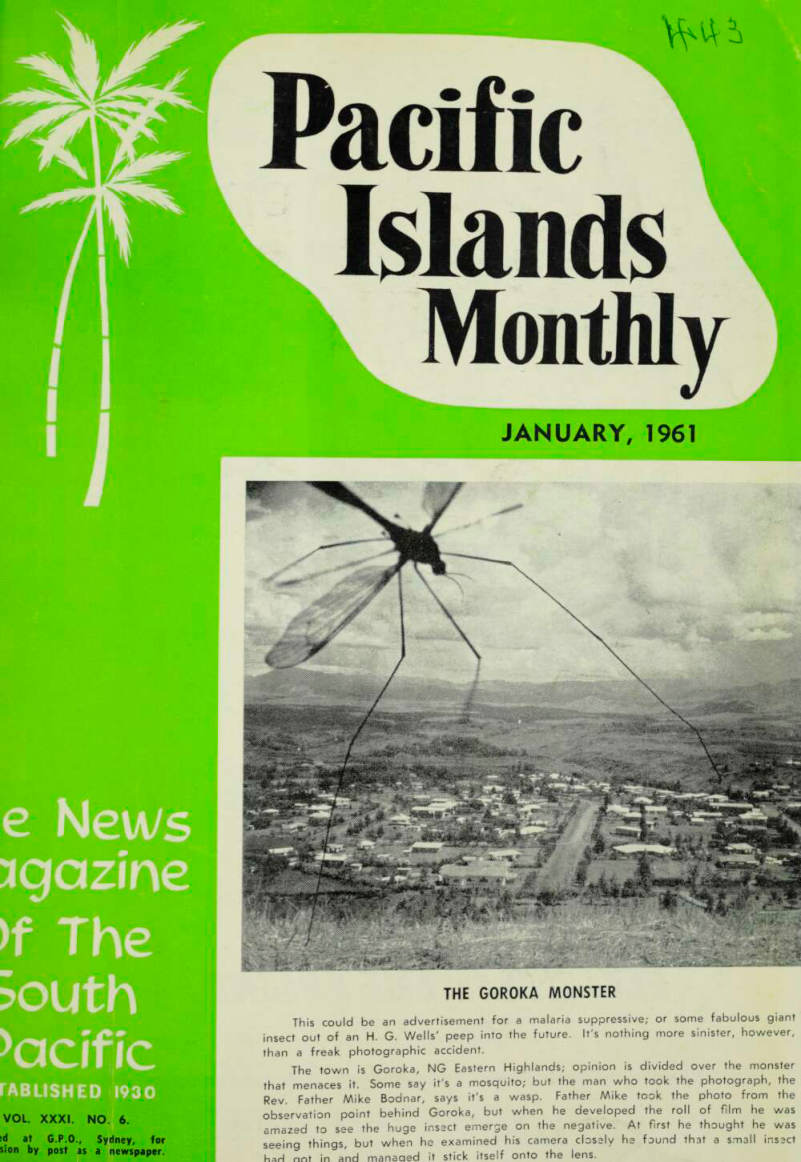 1
1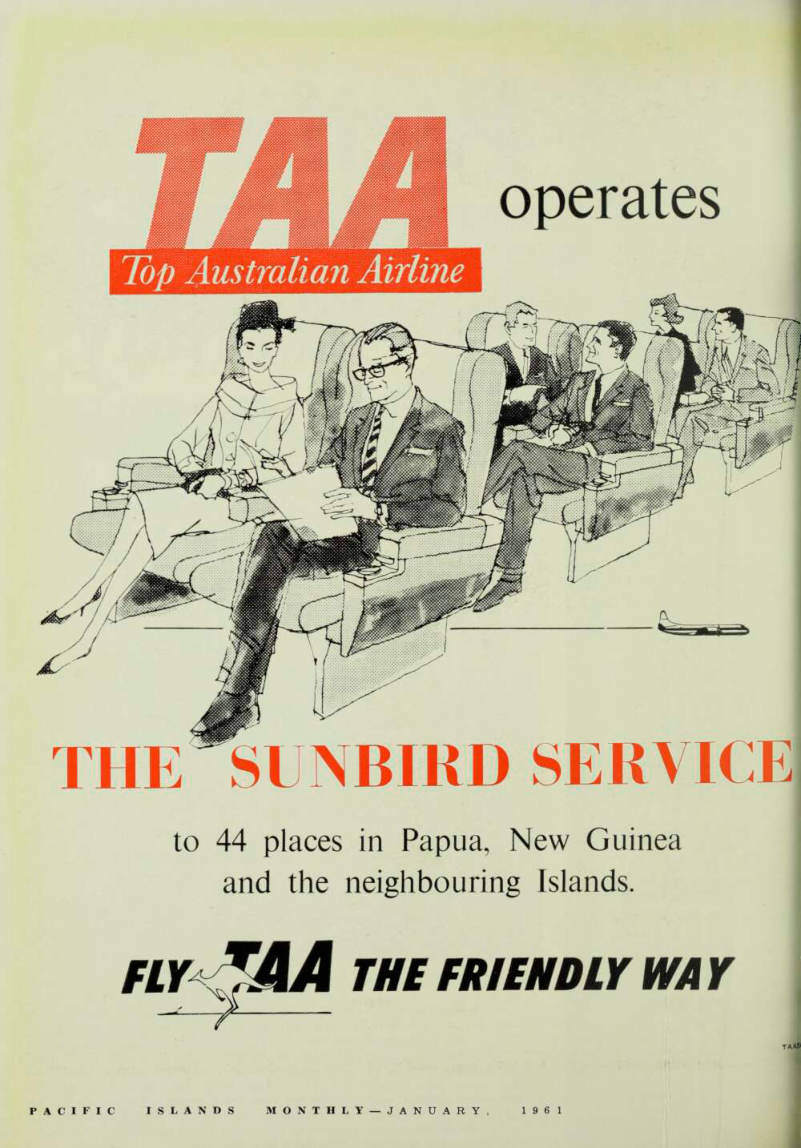 2
2 3
3 4
4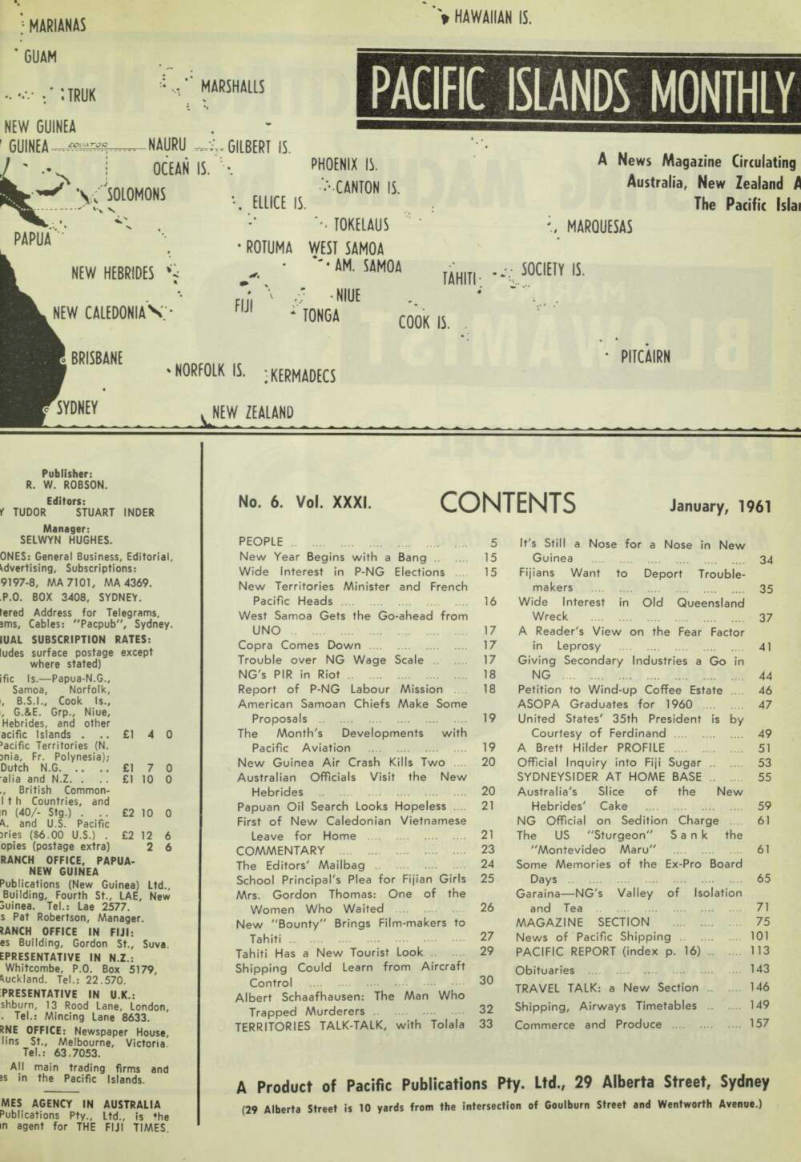 5
5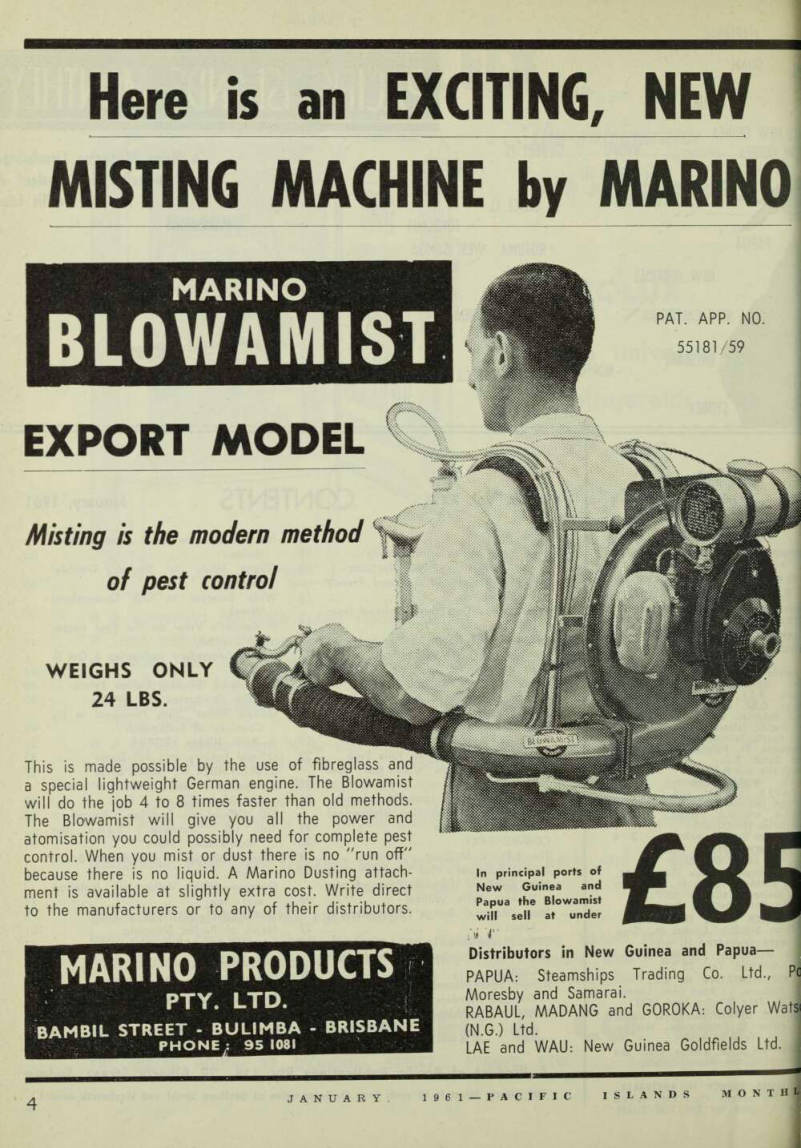 6
6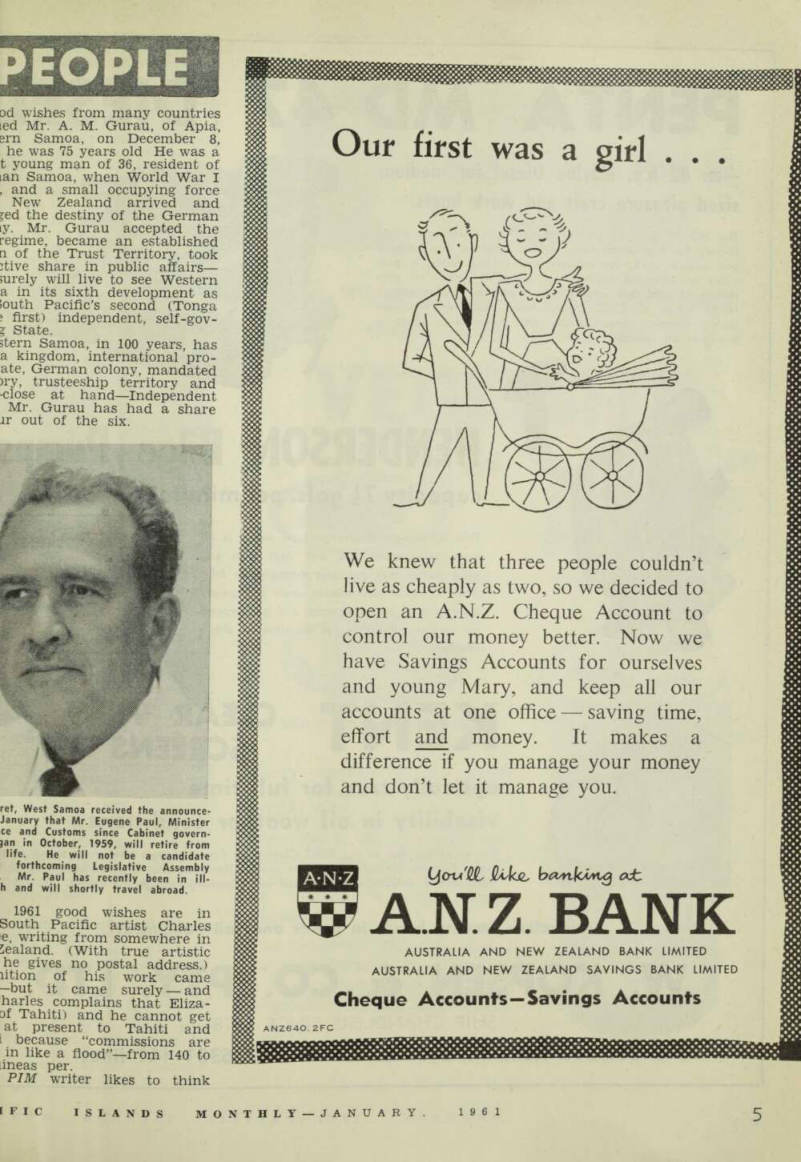 7
7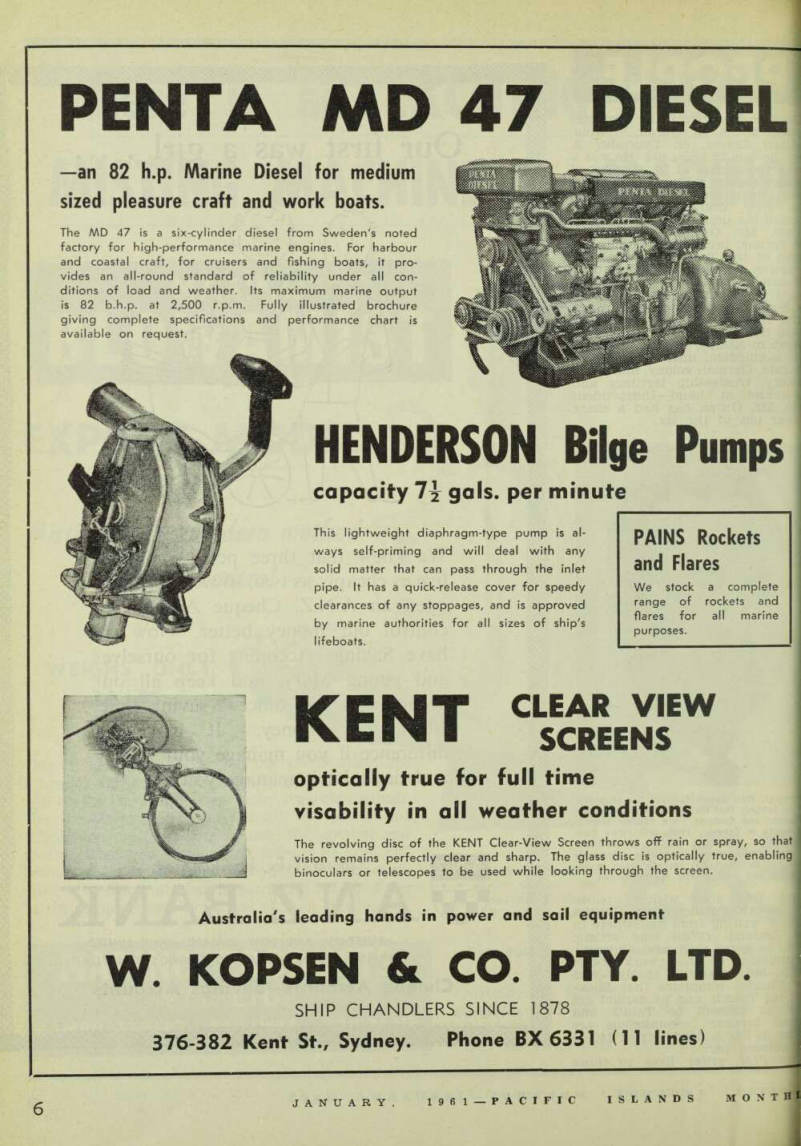 8
8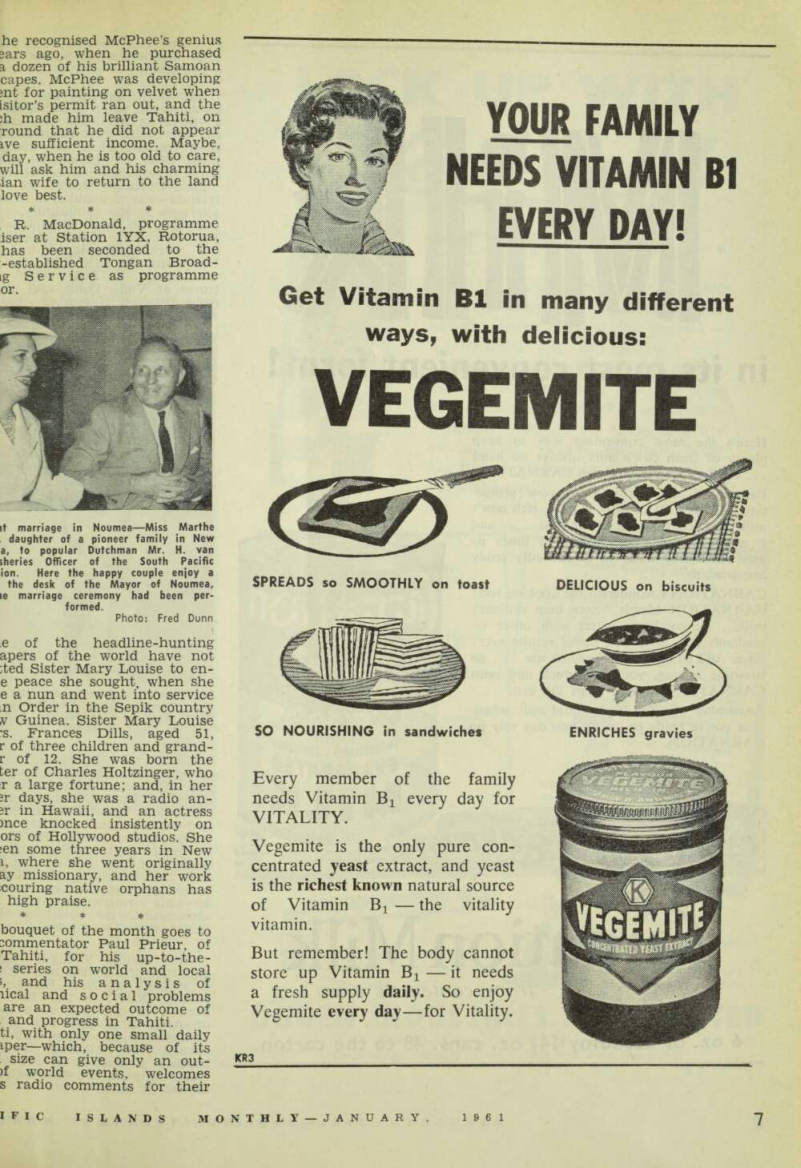 9
9 10
10 11
11 12
12 13
13 14
14 15
15 16
16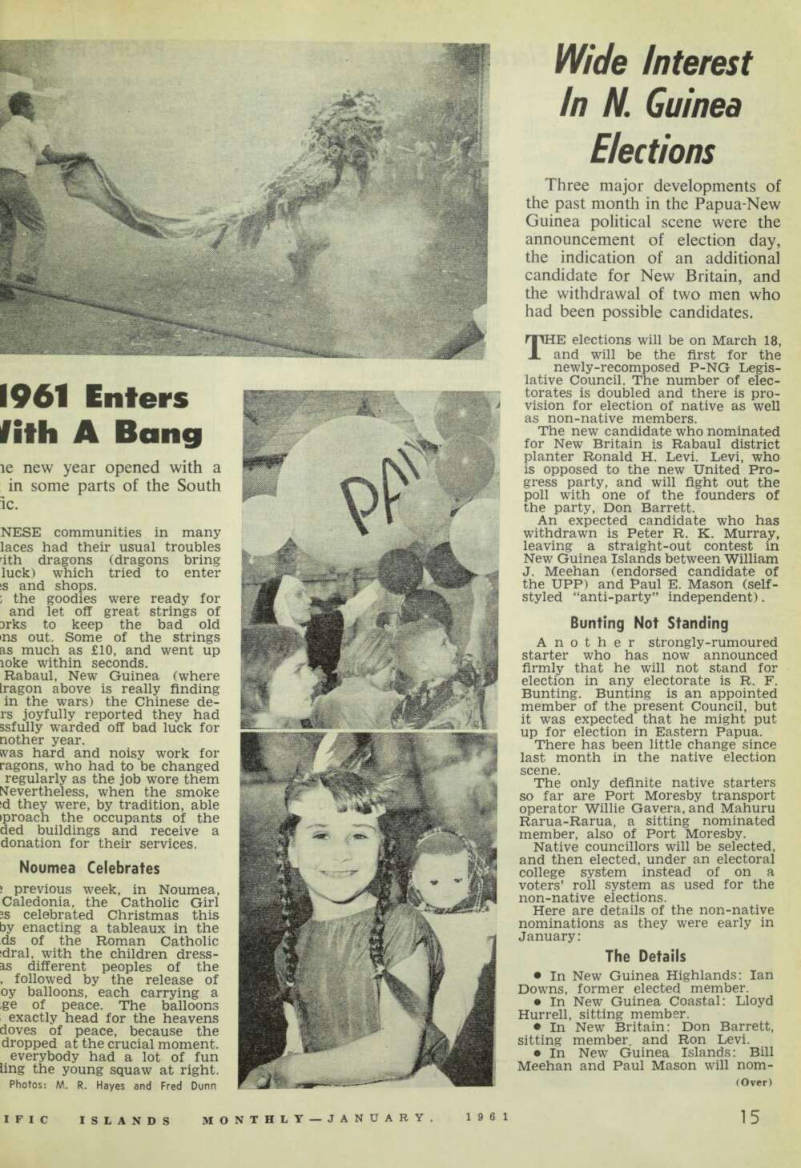 17
17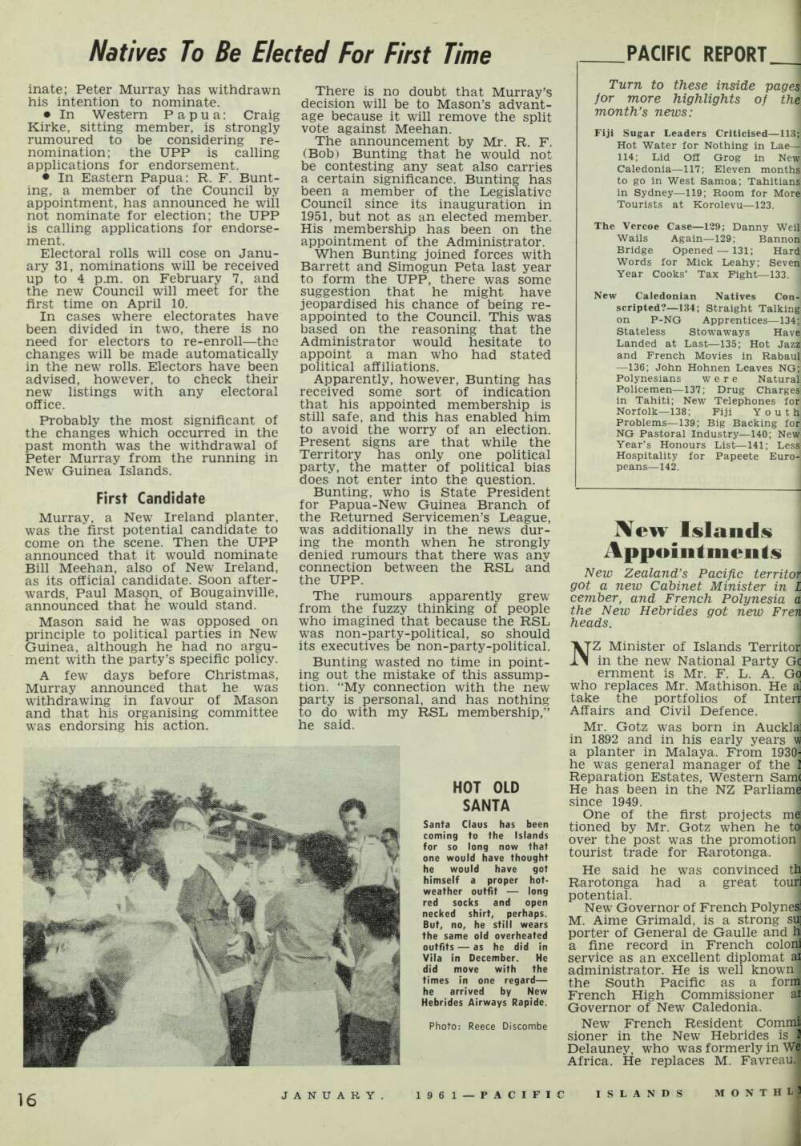 18
18 19
19 20
20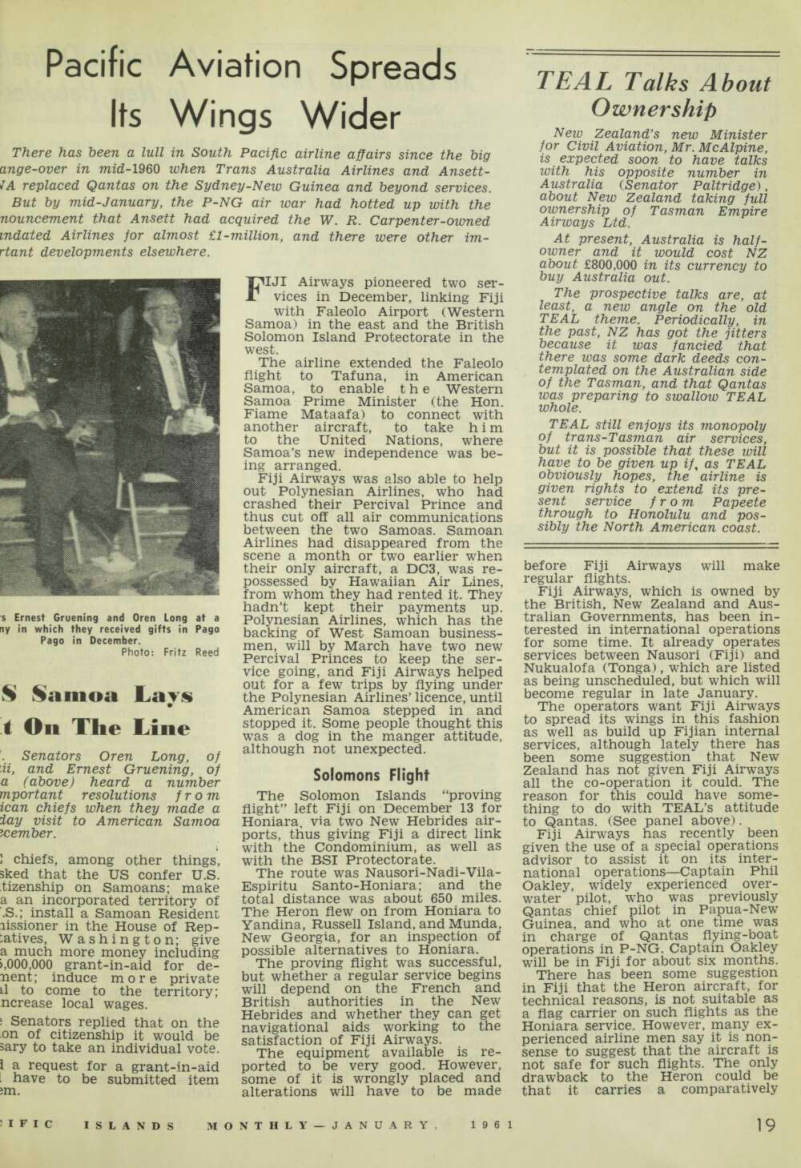 21
21 22
22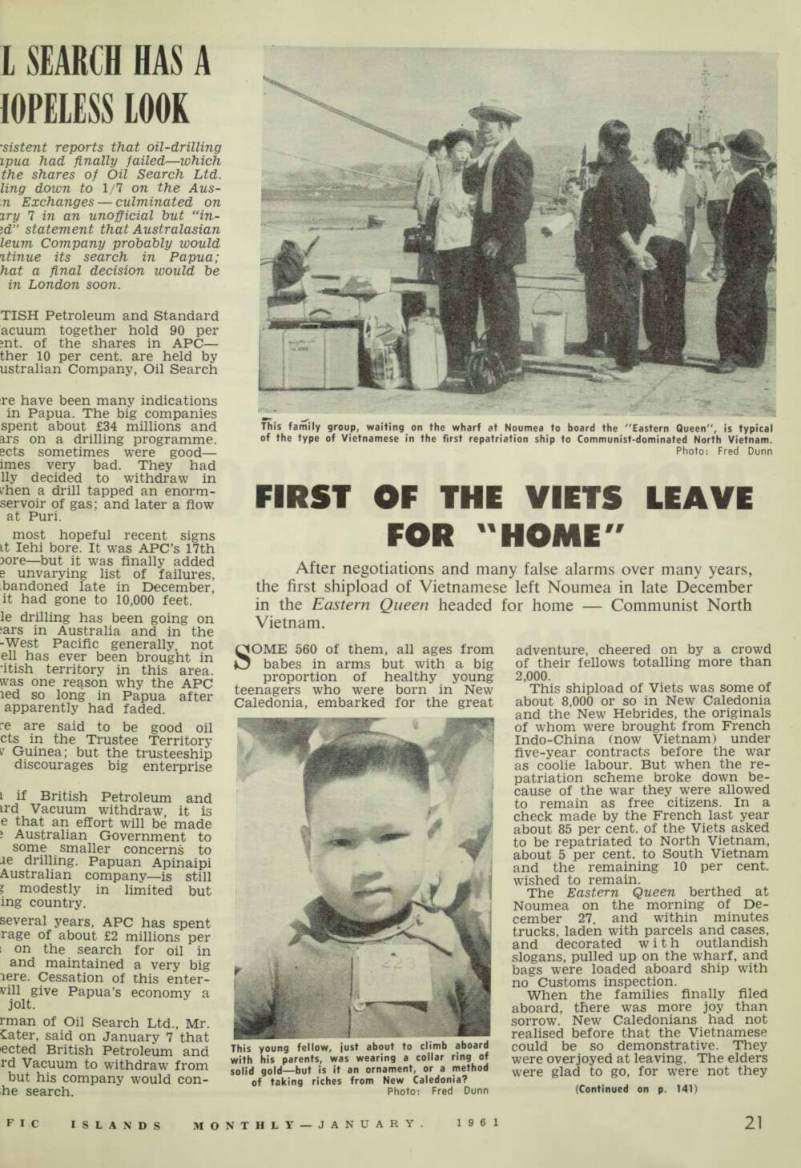 23
23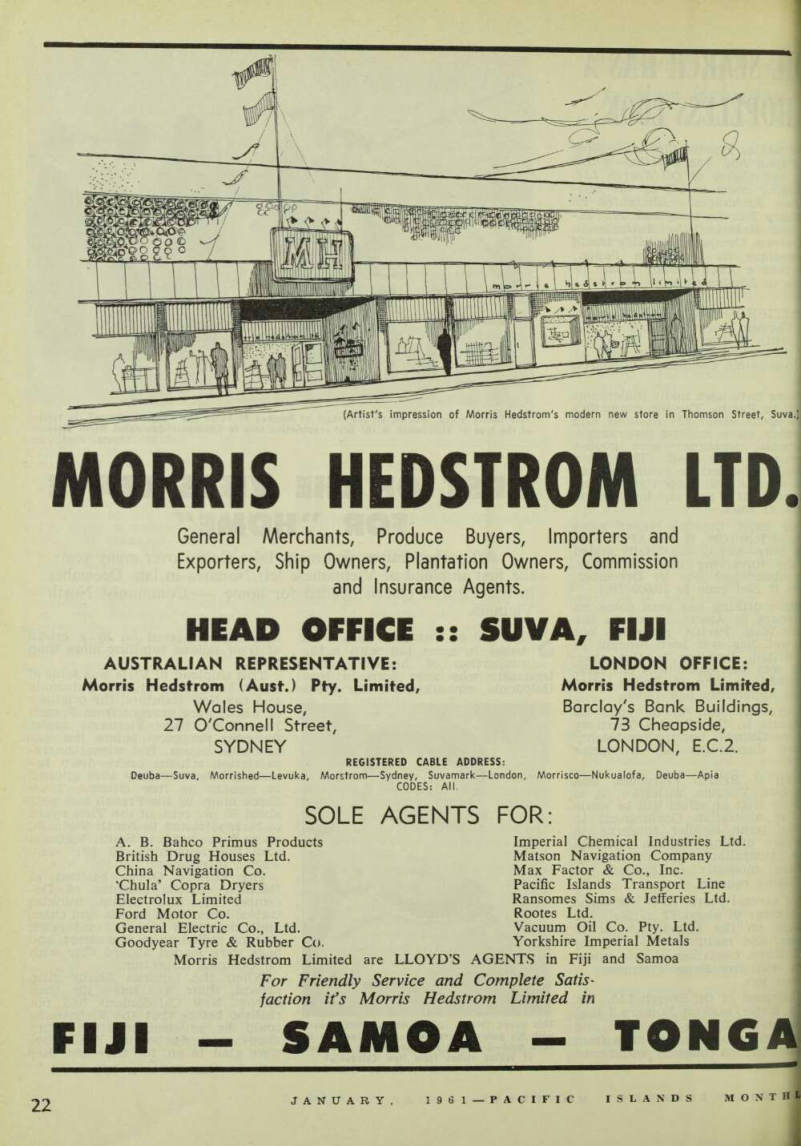 24
24 25
25 26
26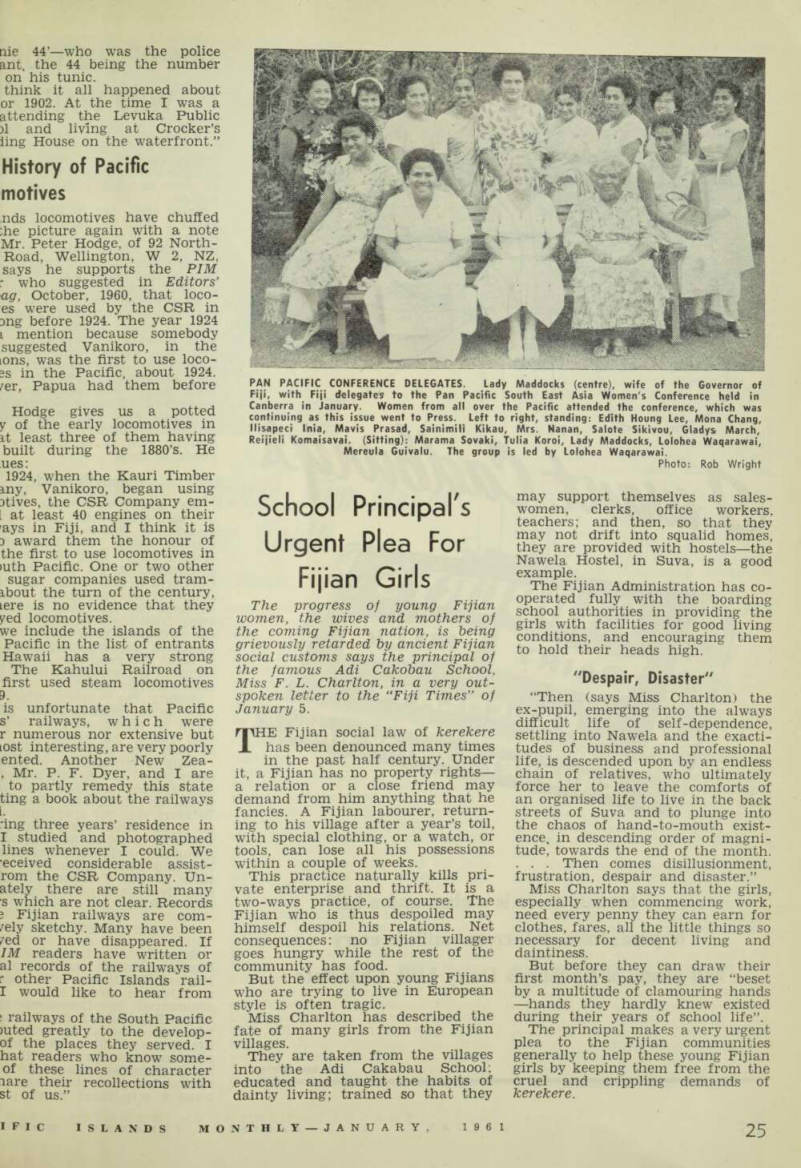 27
27 28
28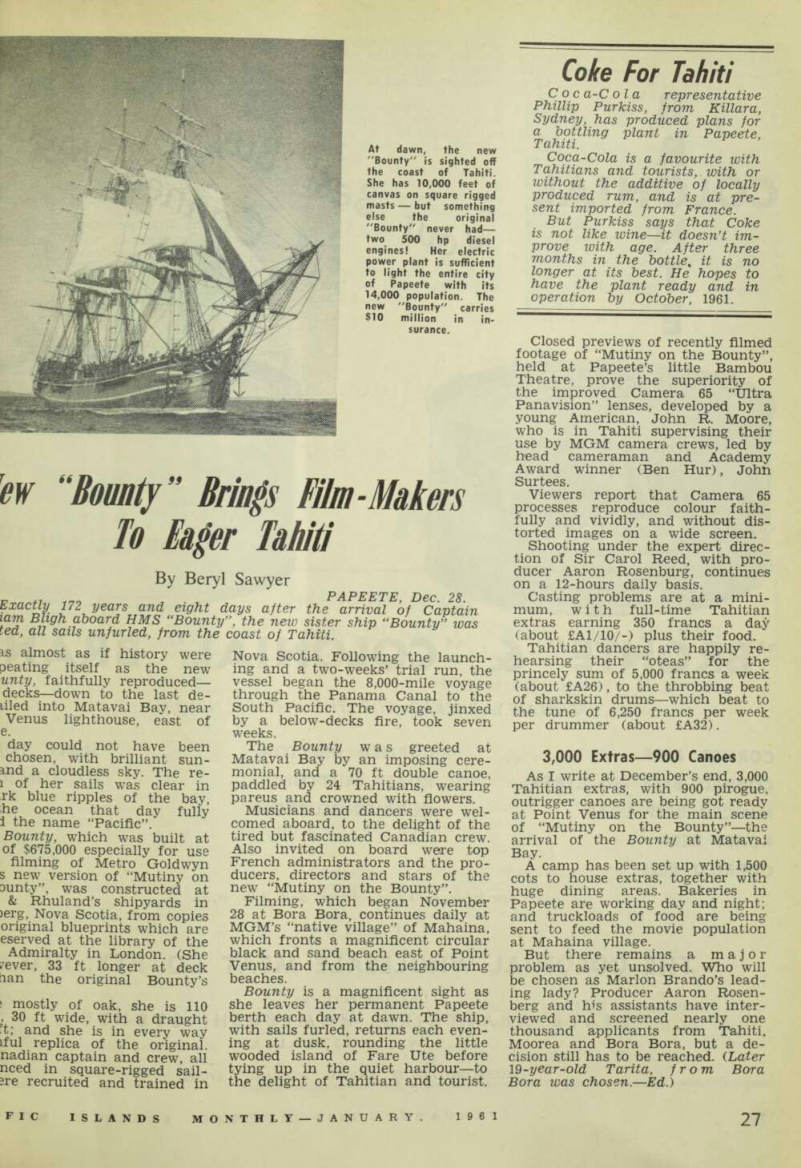 29
29 30
30 31
31 32
32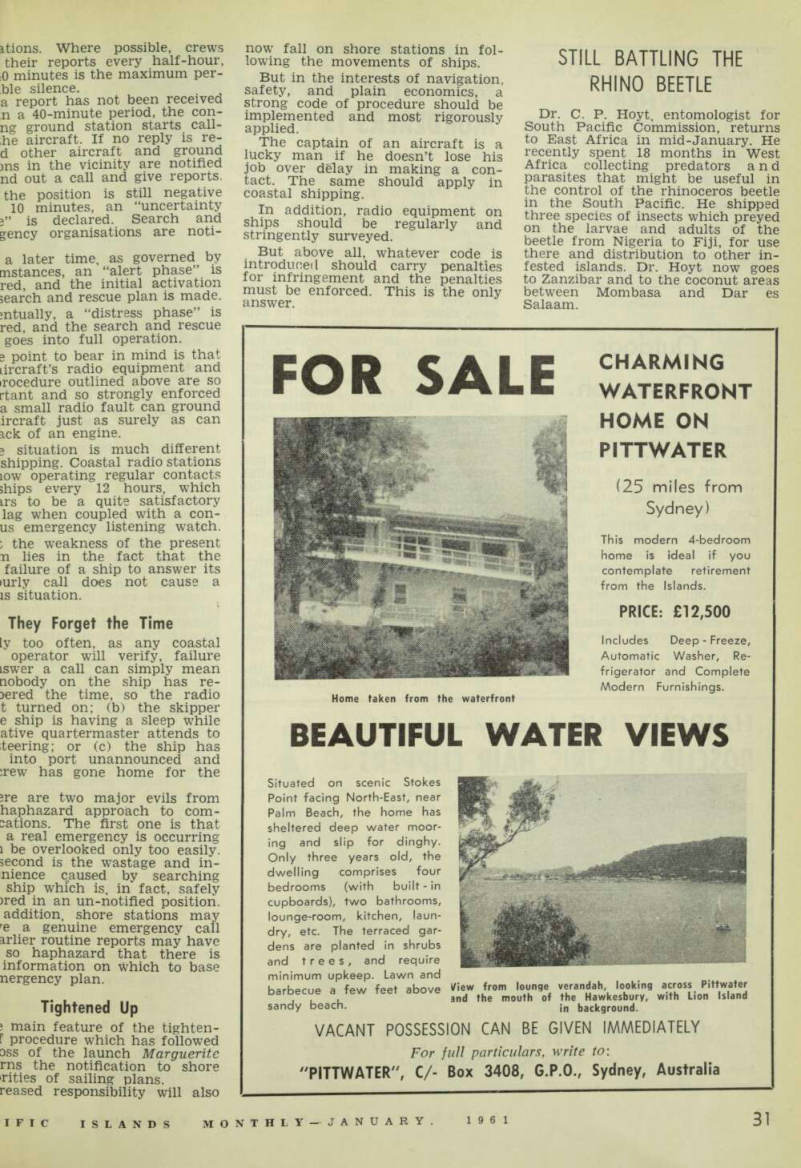 33
33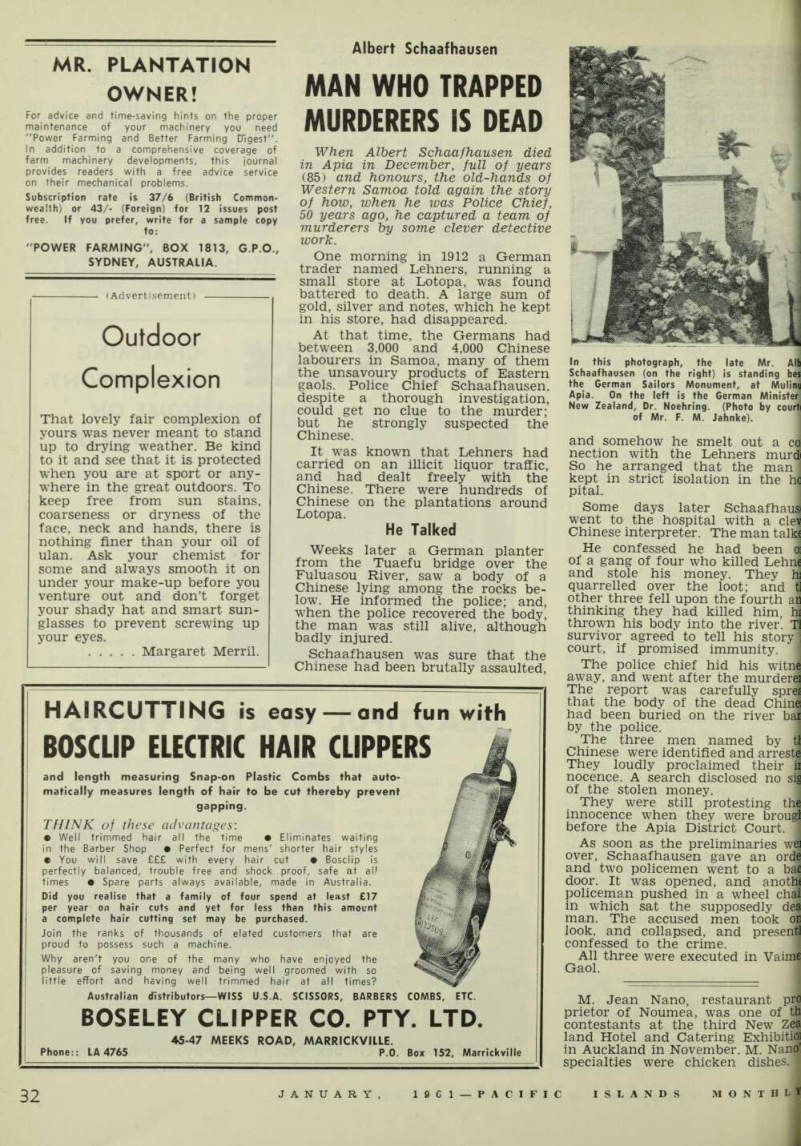 34
34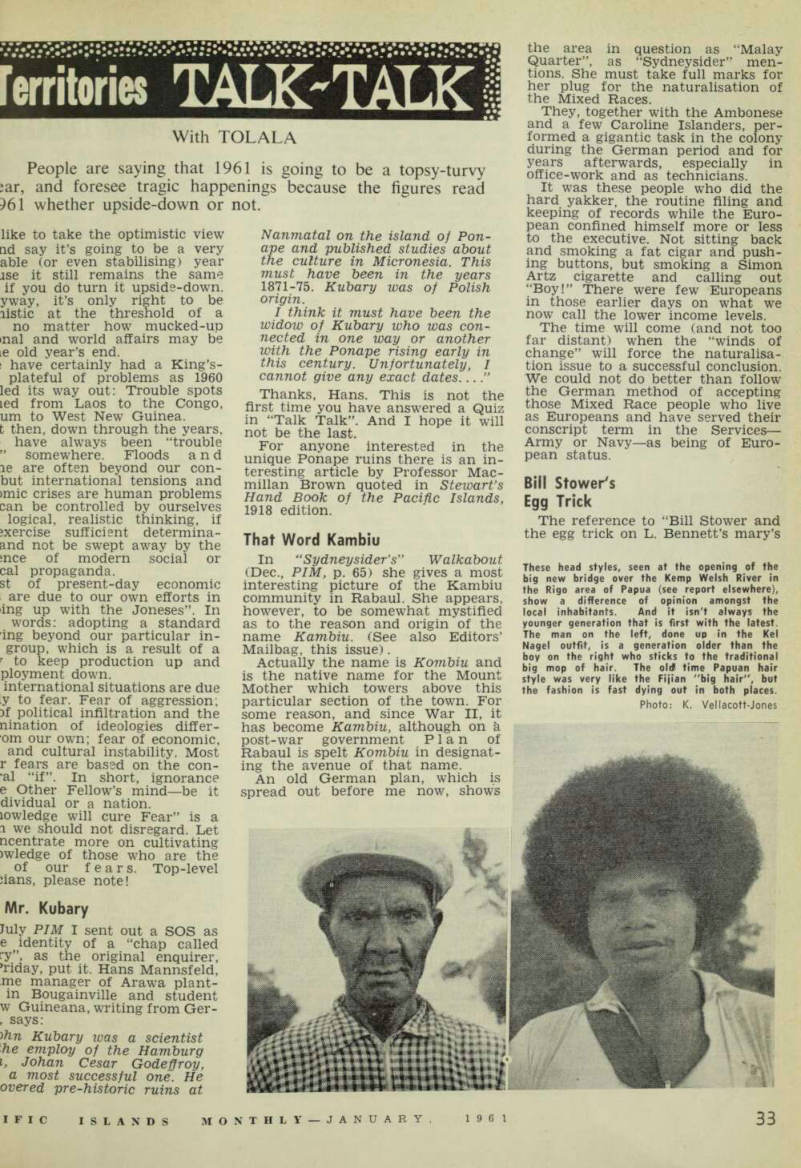 35
35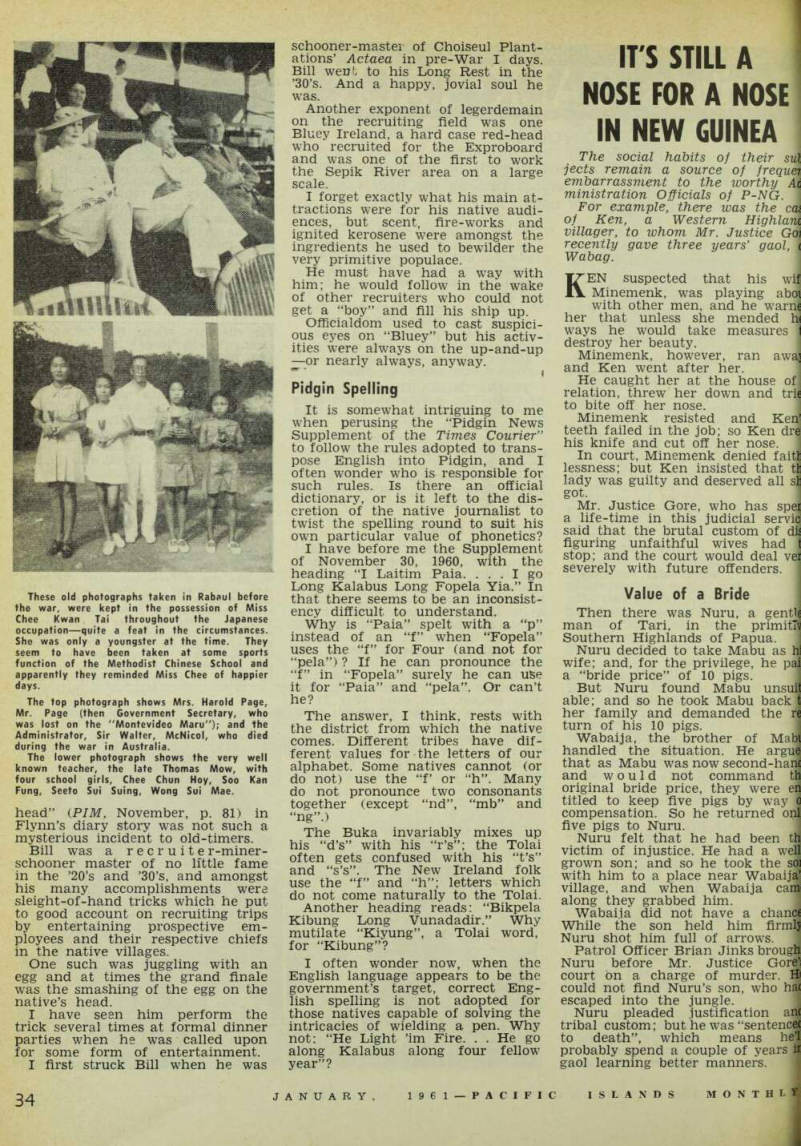 36
36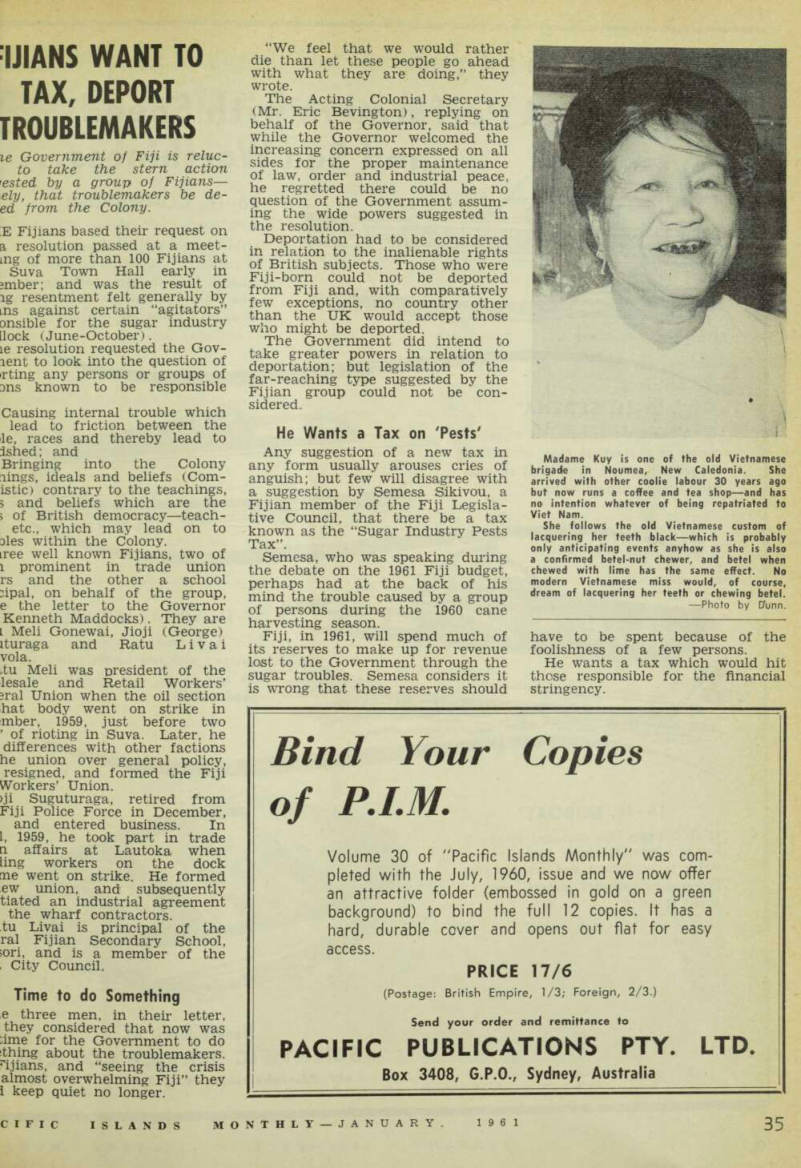 37
37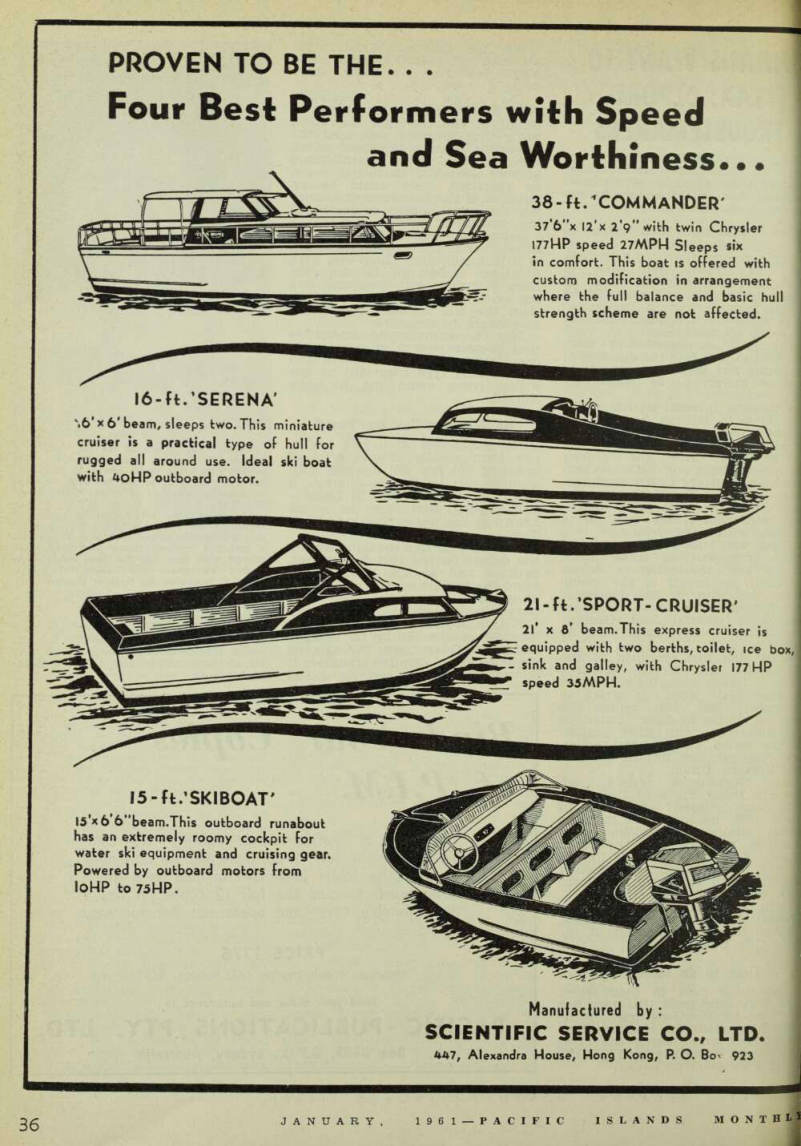 38
38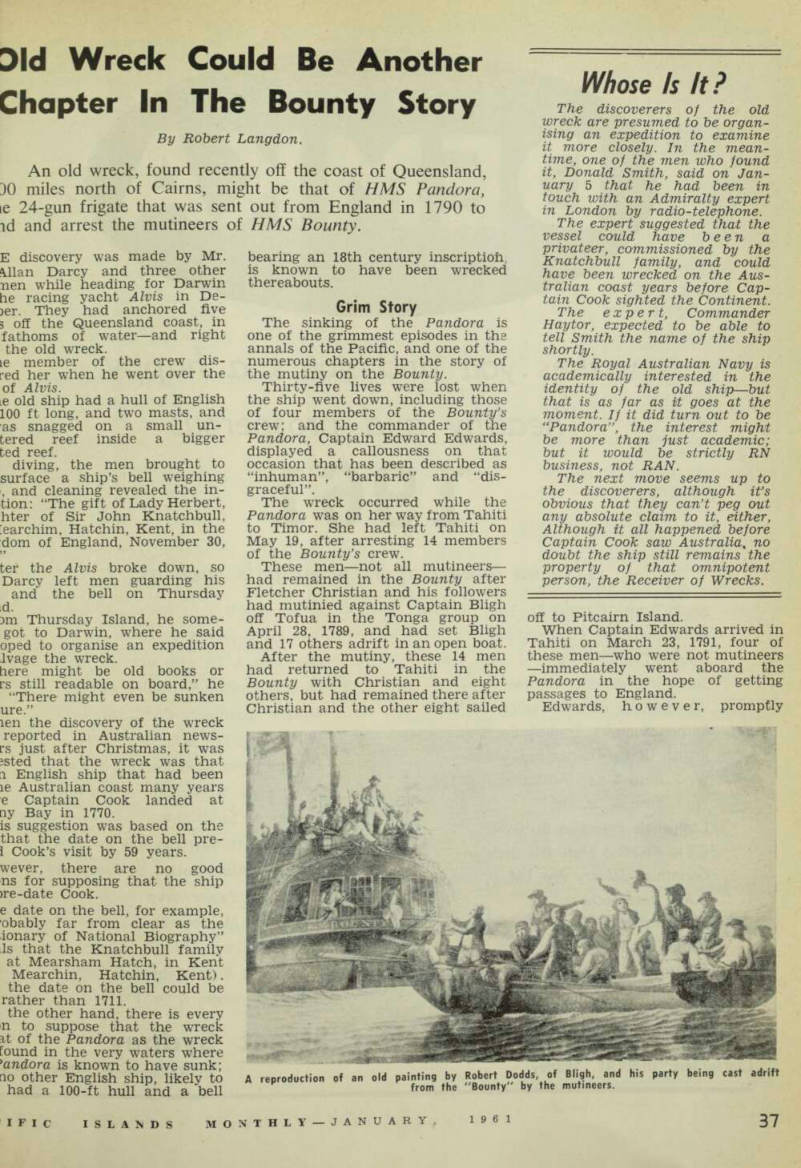 39
39 40
40 41
41 42
42 43
43 44
44 45
45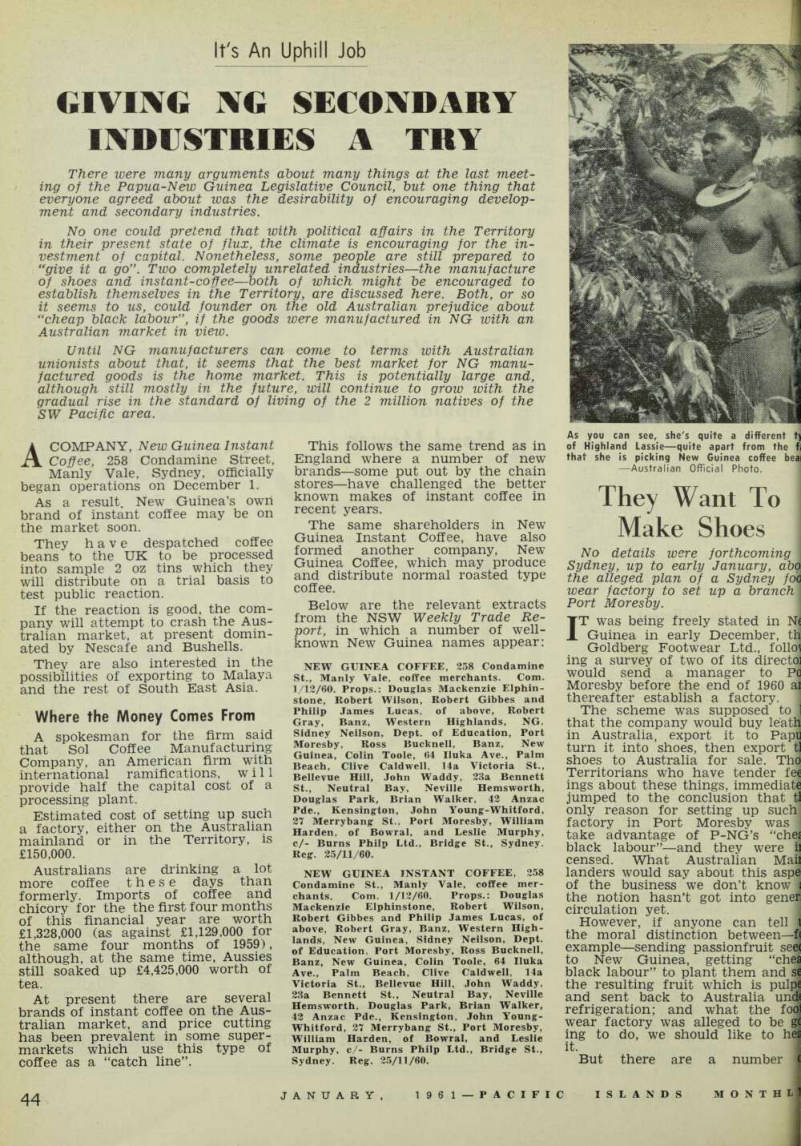 46
46 47
47 48
48 49
49 50
50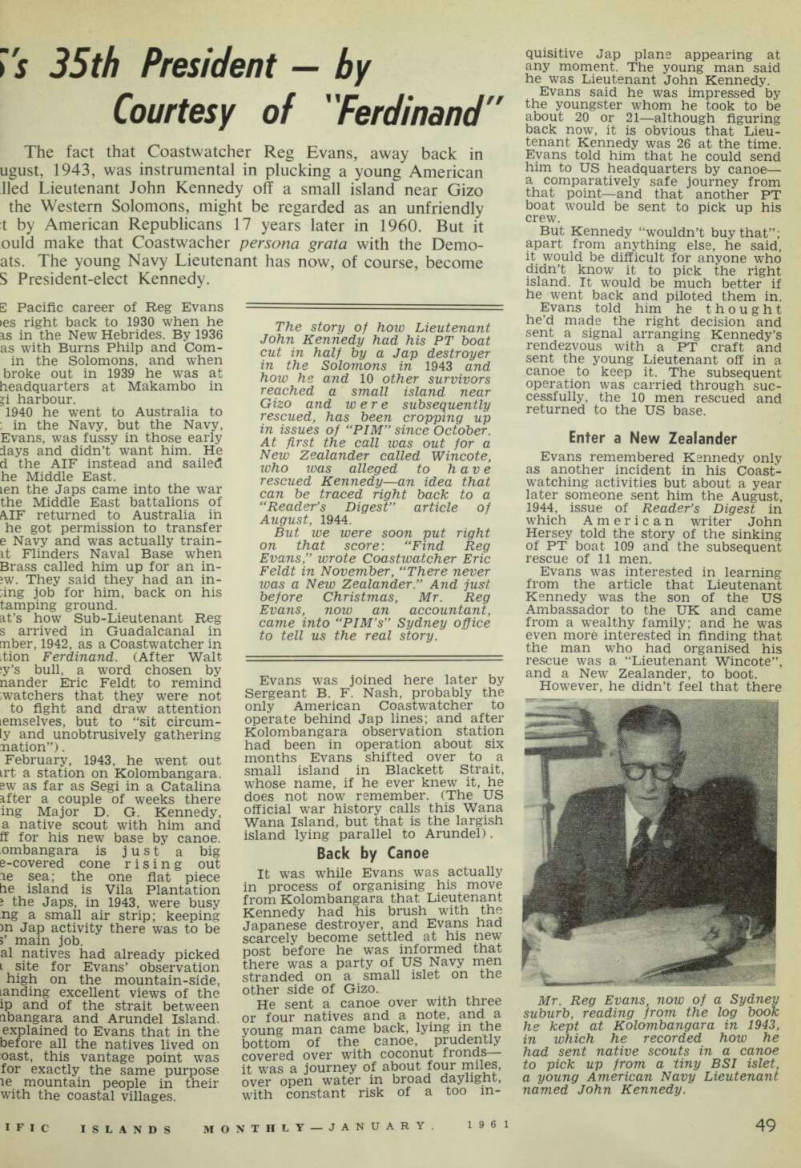 51
51 52
52 53
53 54
54 55
55 56
56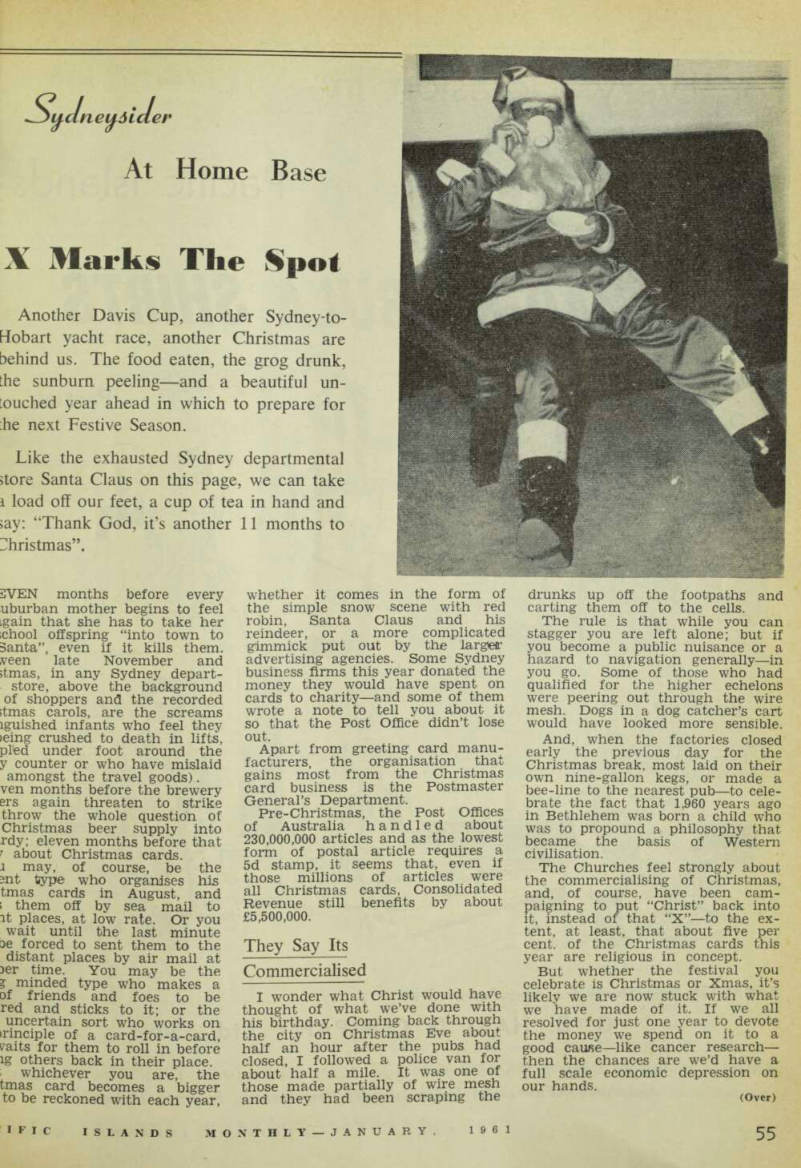 57
57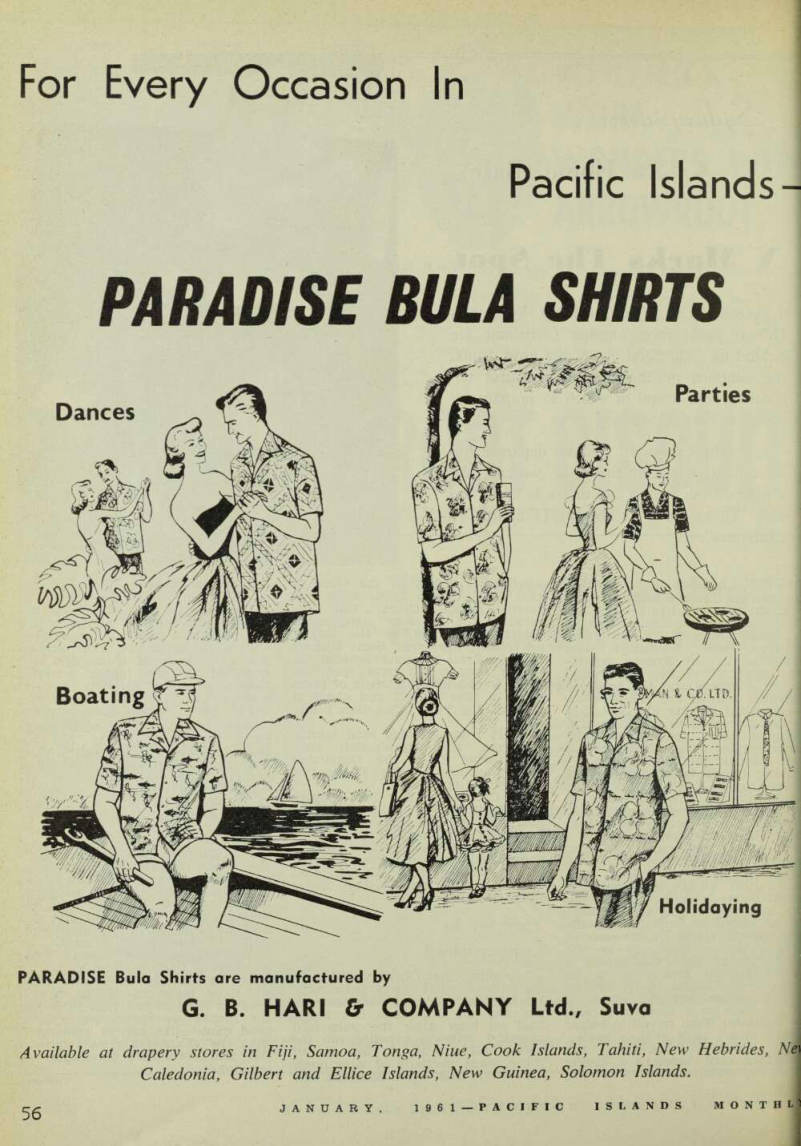 58
58 59
59 60
60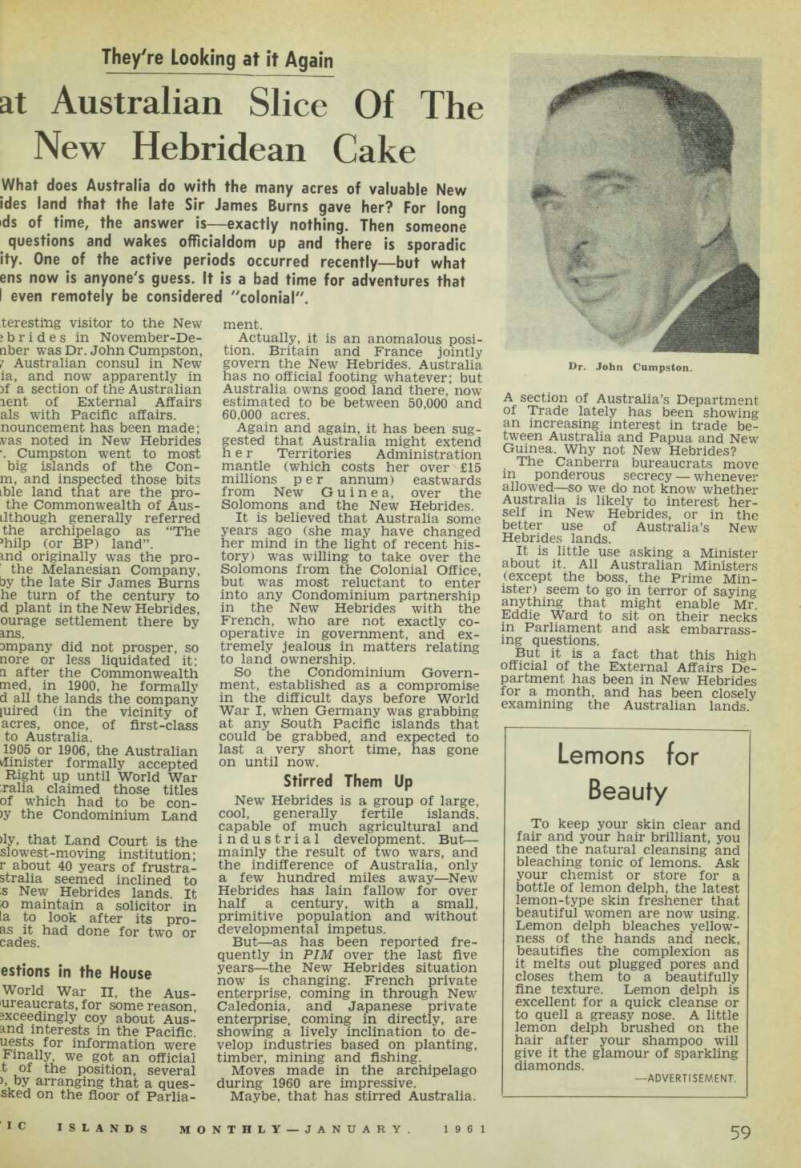 61
61 62
62 63
63 64
64 65
65 66
66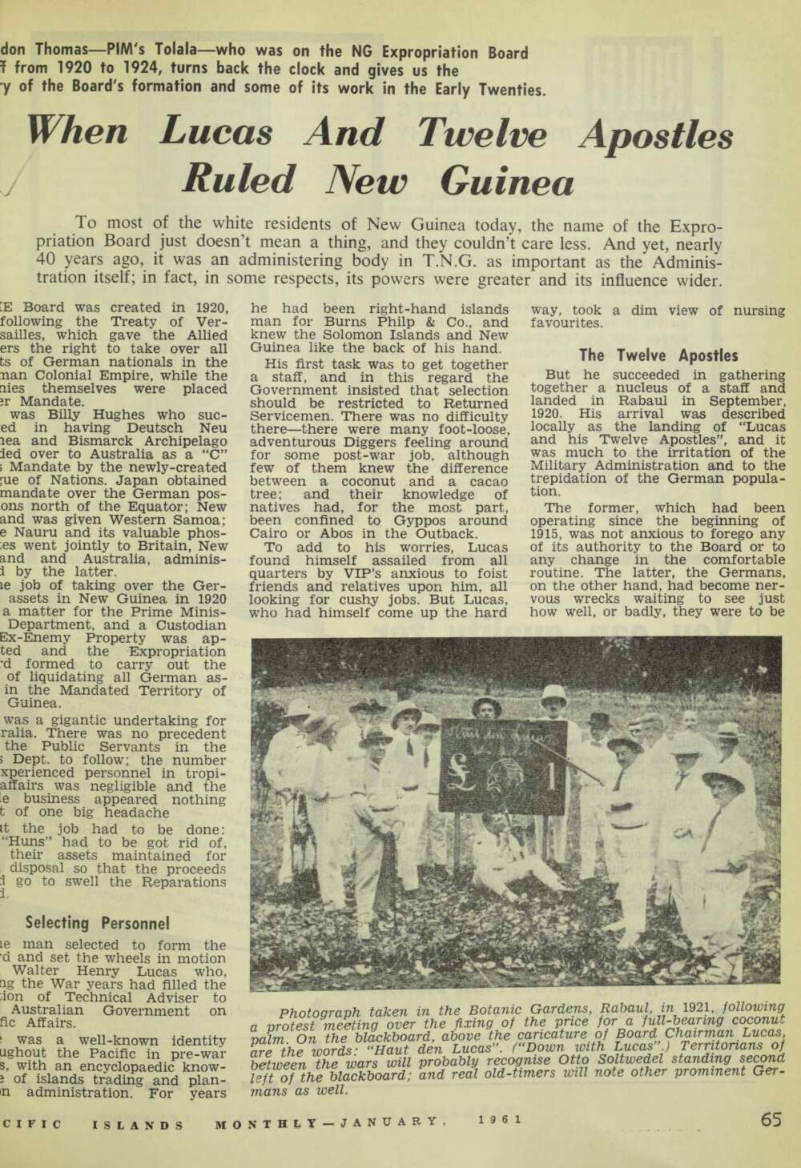 67
67 68
68 69
69 70
70 71
71 72
72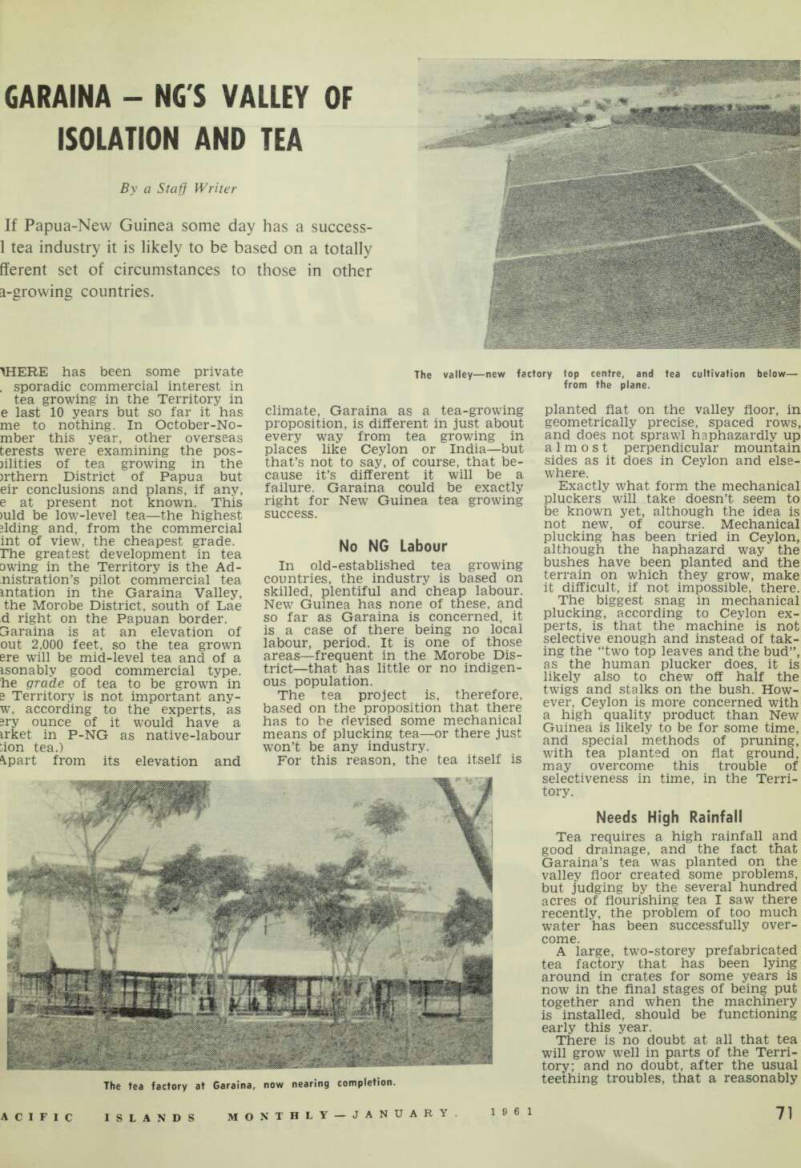 73
73 74
74 75
75 76
76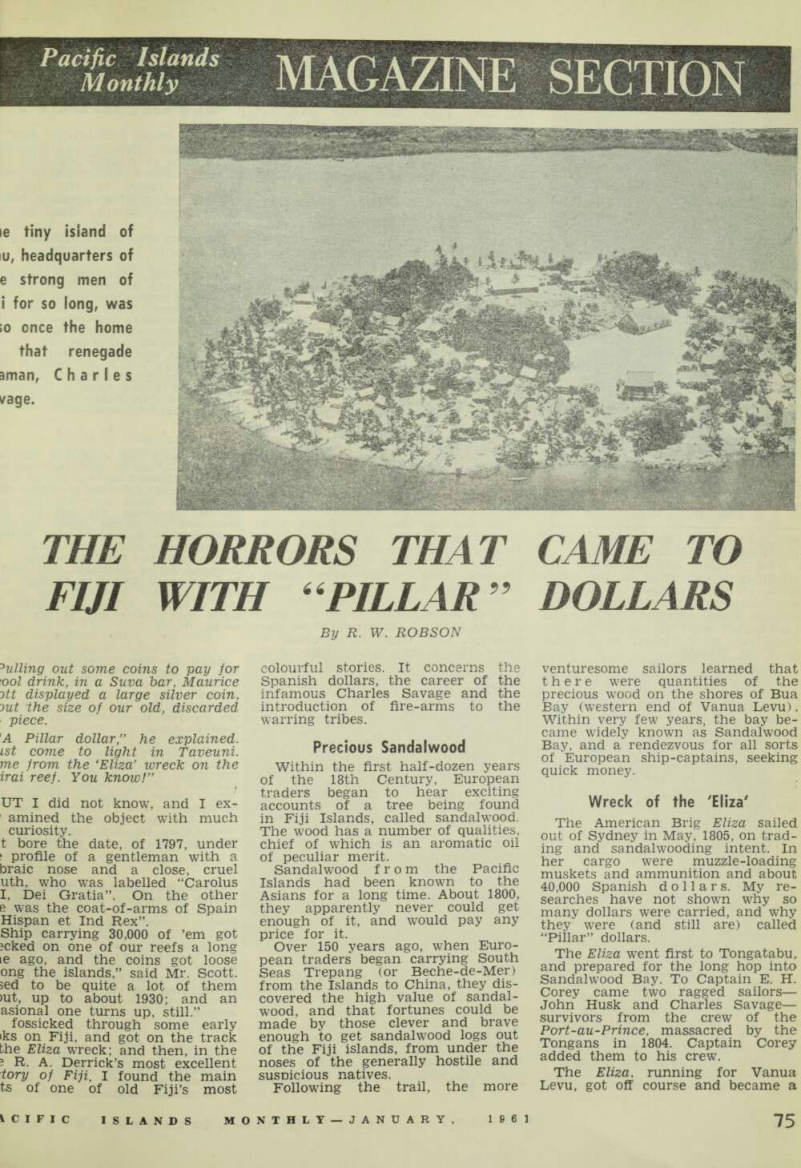 77
77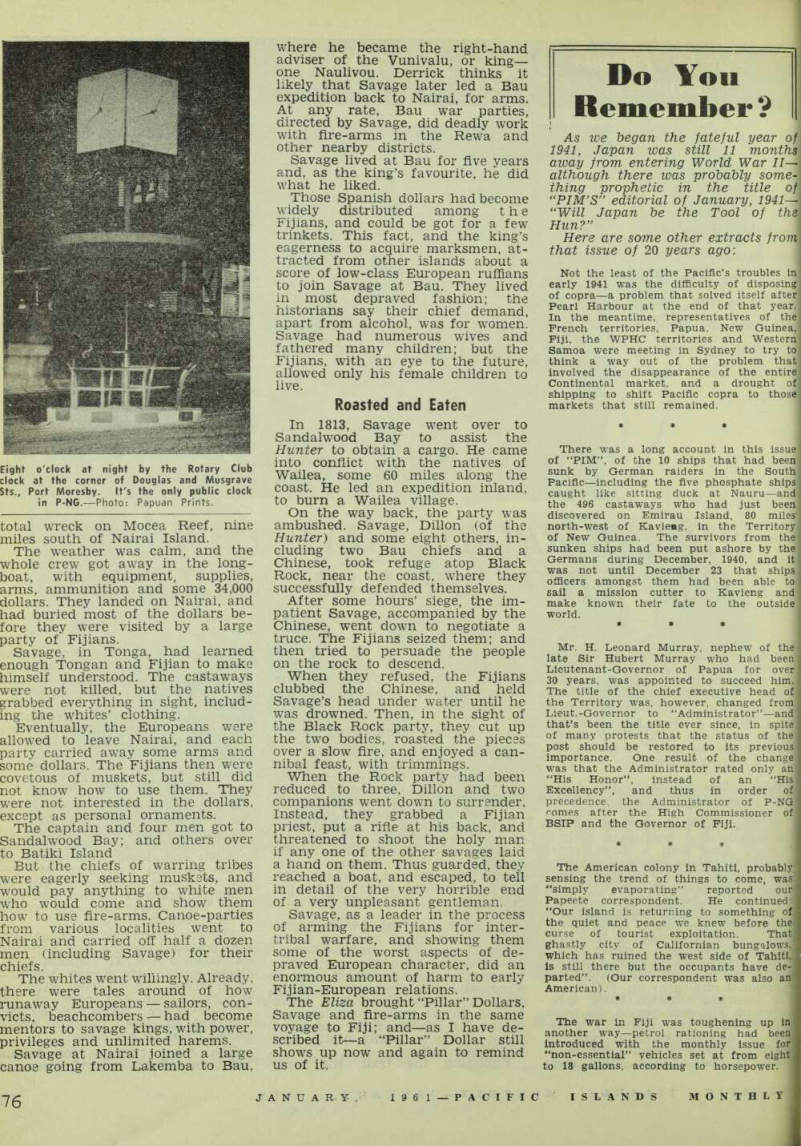 78
78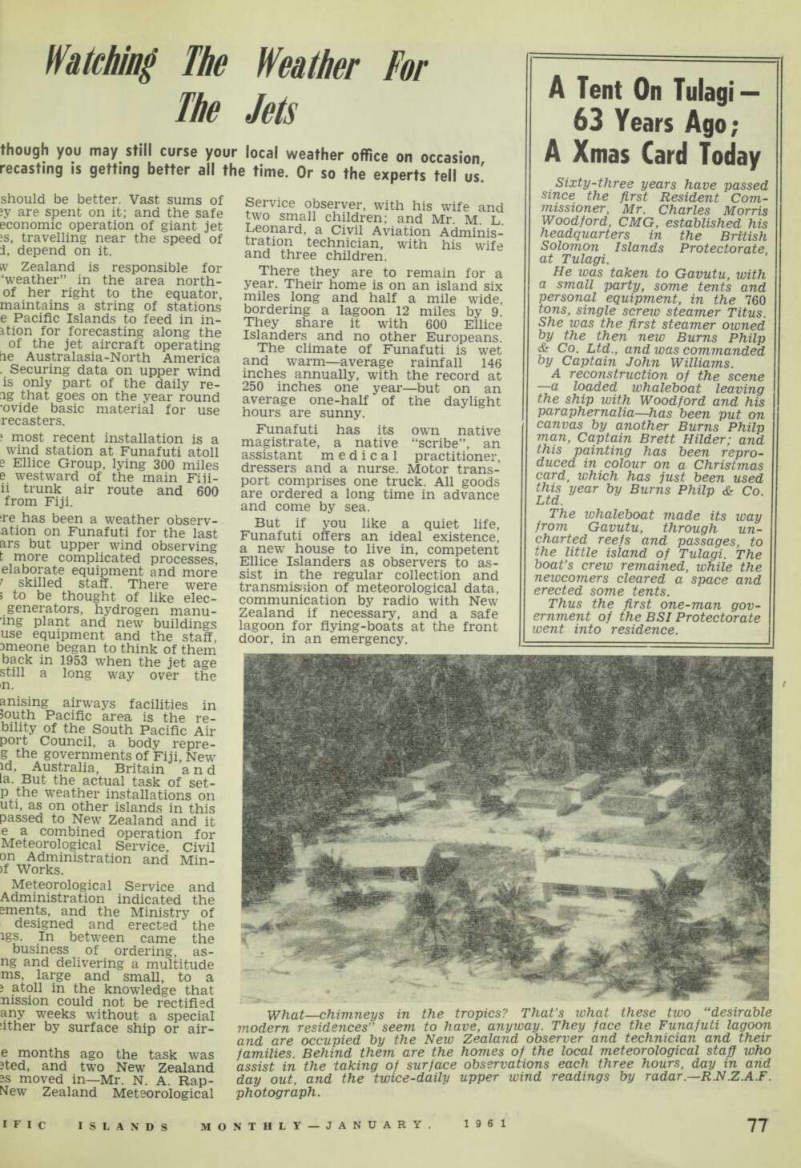 79
79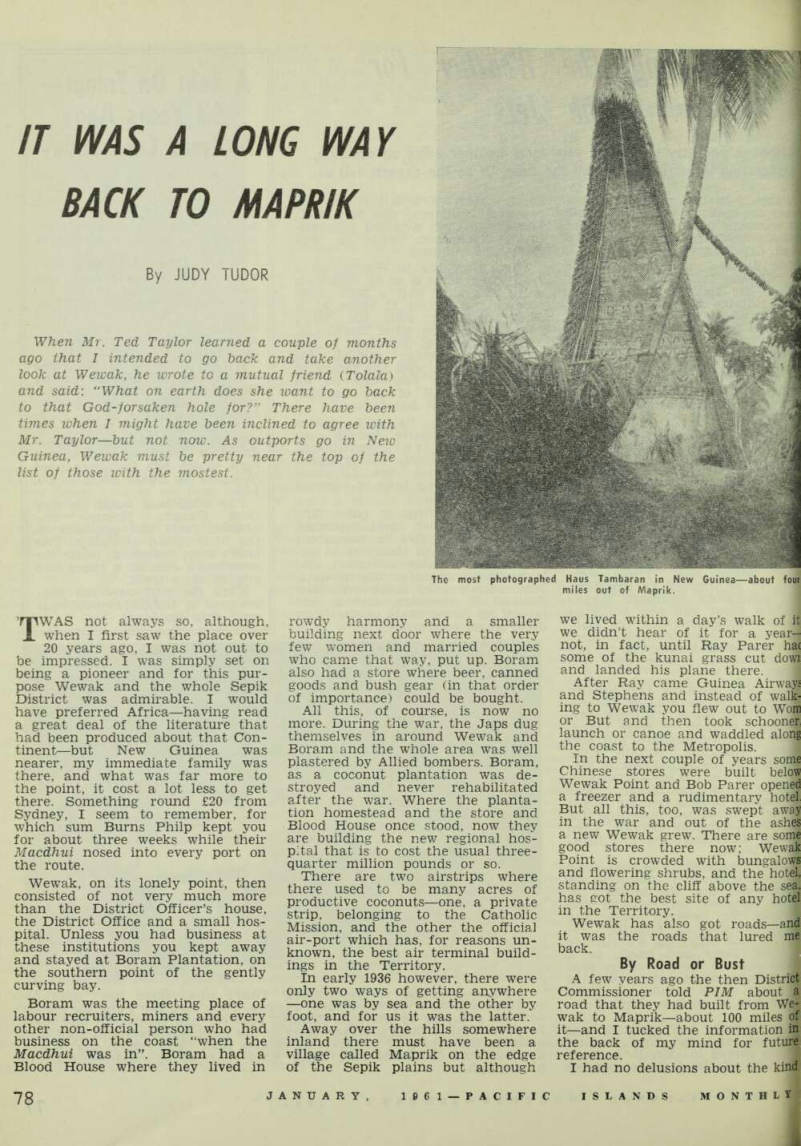 80
80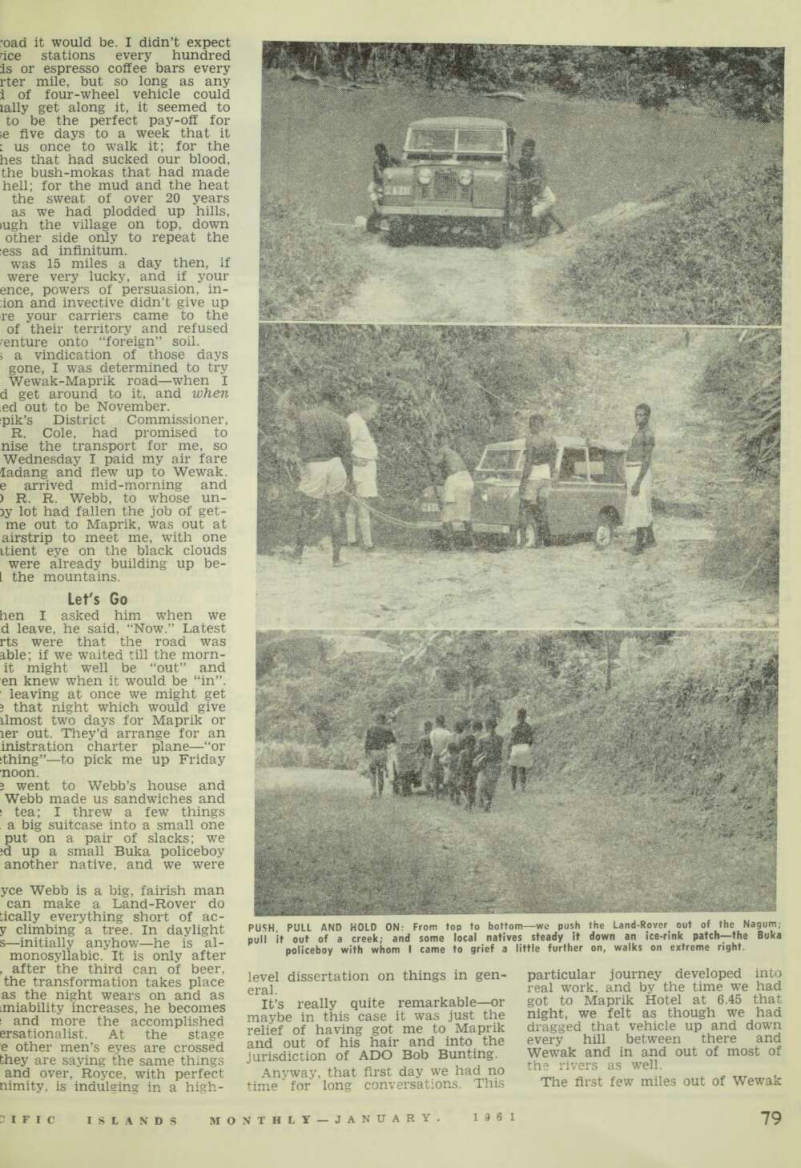 81
81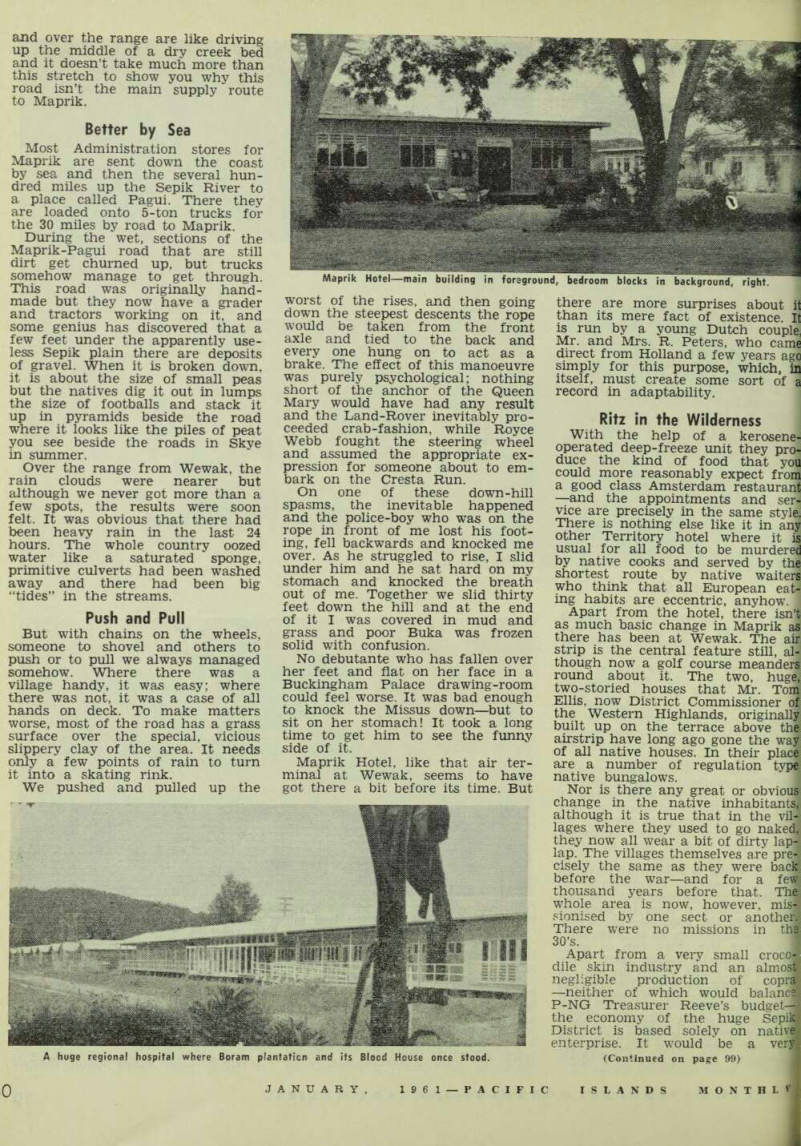 82
82 83
83 84
84 85
85 86
86 87
87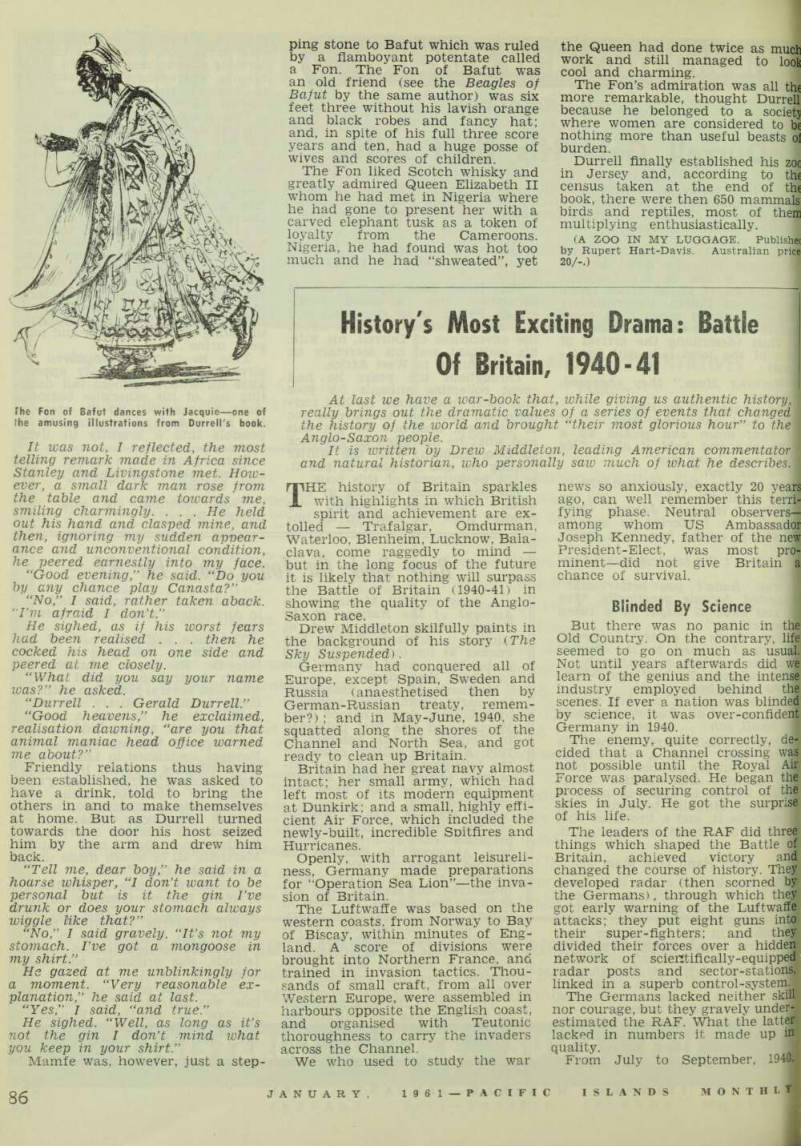 88
88 89
89 90
90 91
91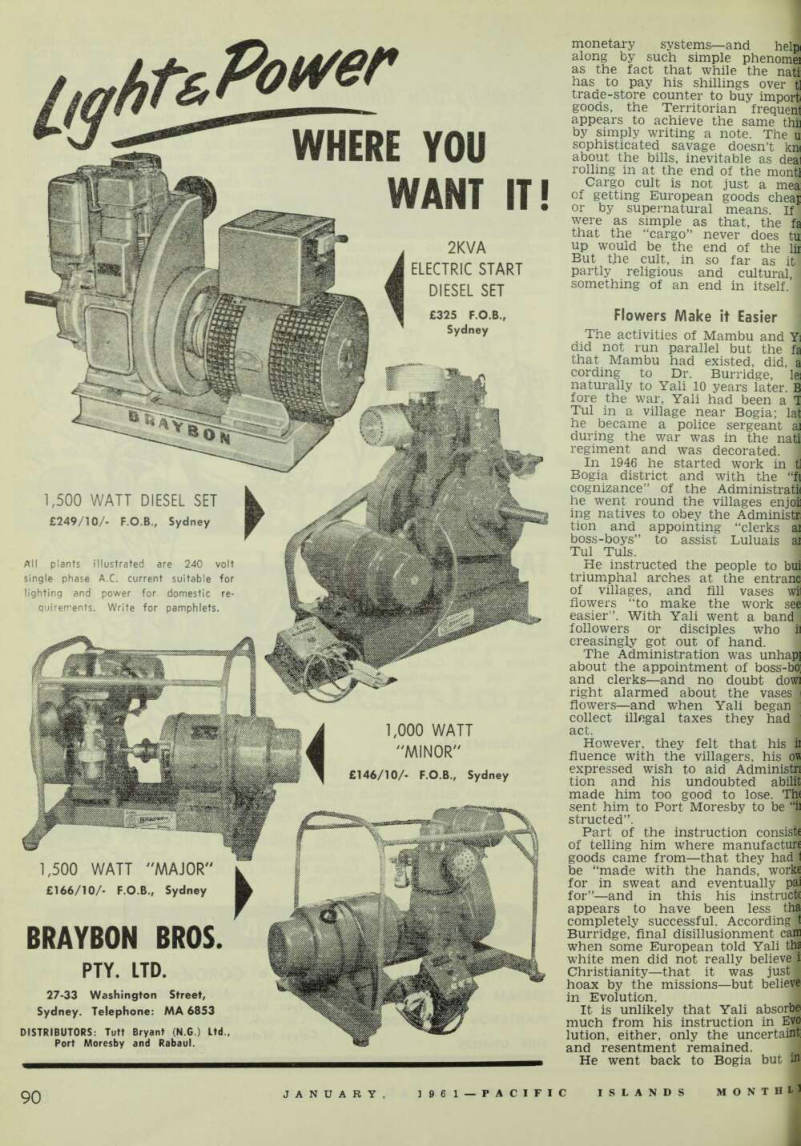 92
92 93
93 94
94 95
95 96
96 97
97 98
98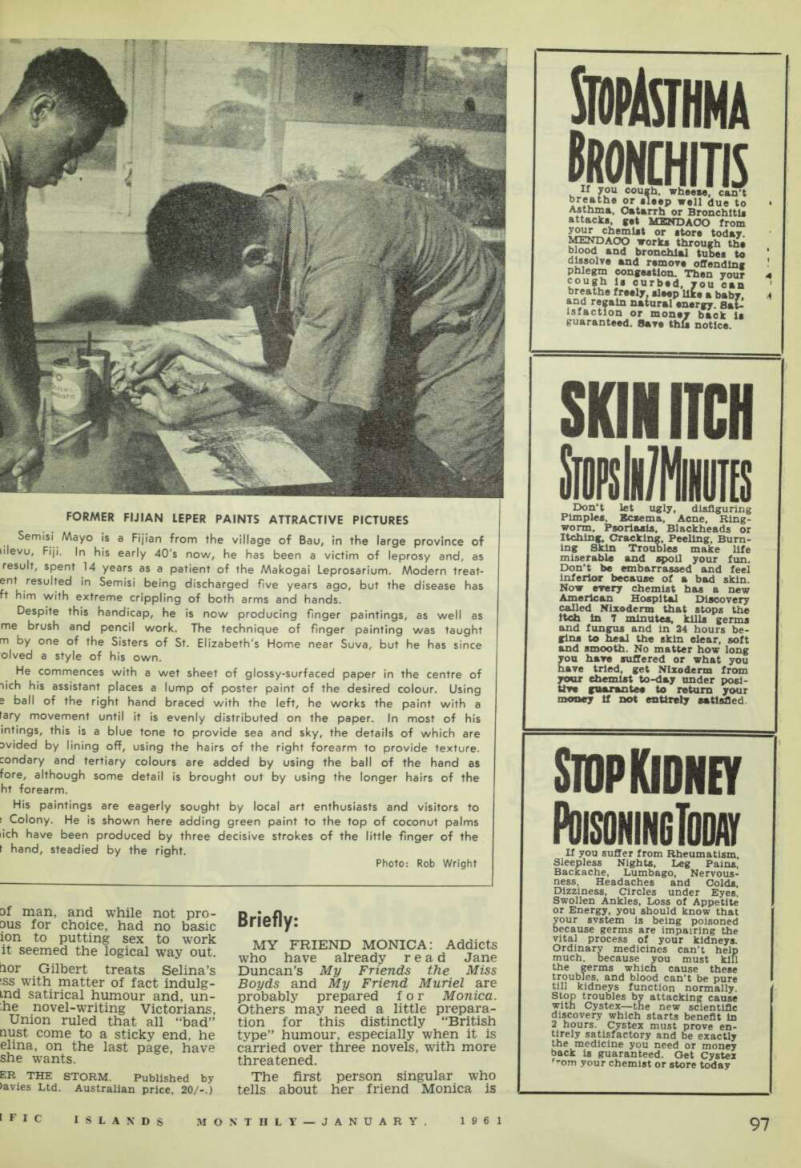 99
99 100
100 101
101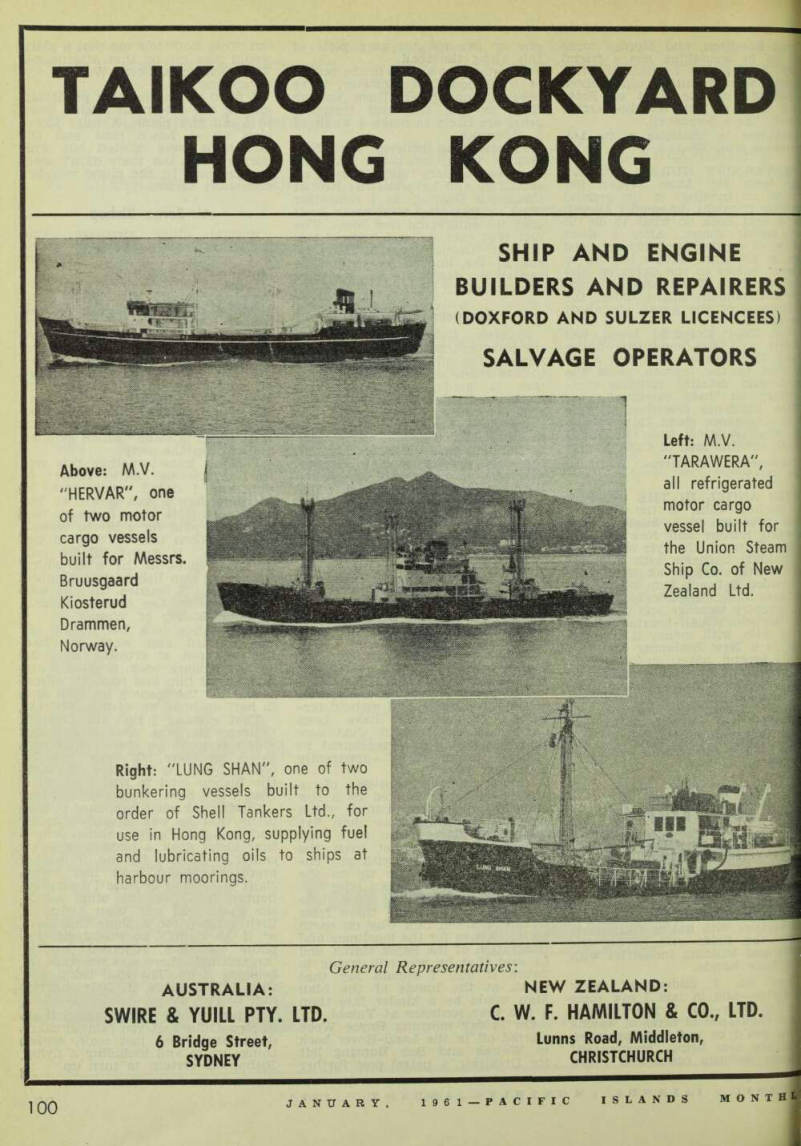 102
102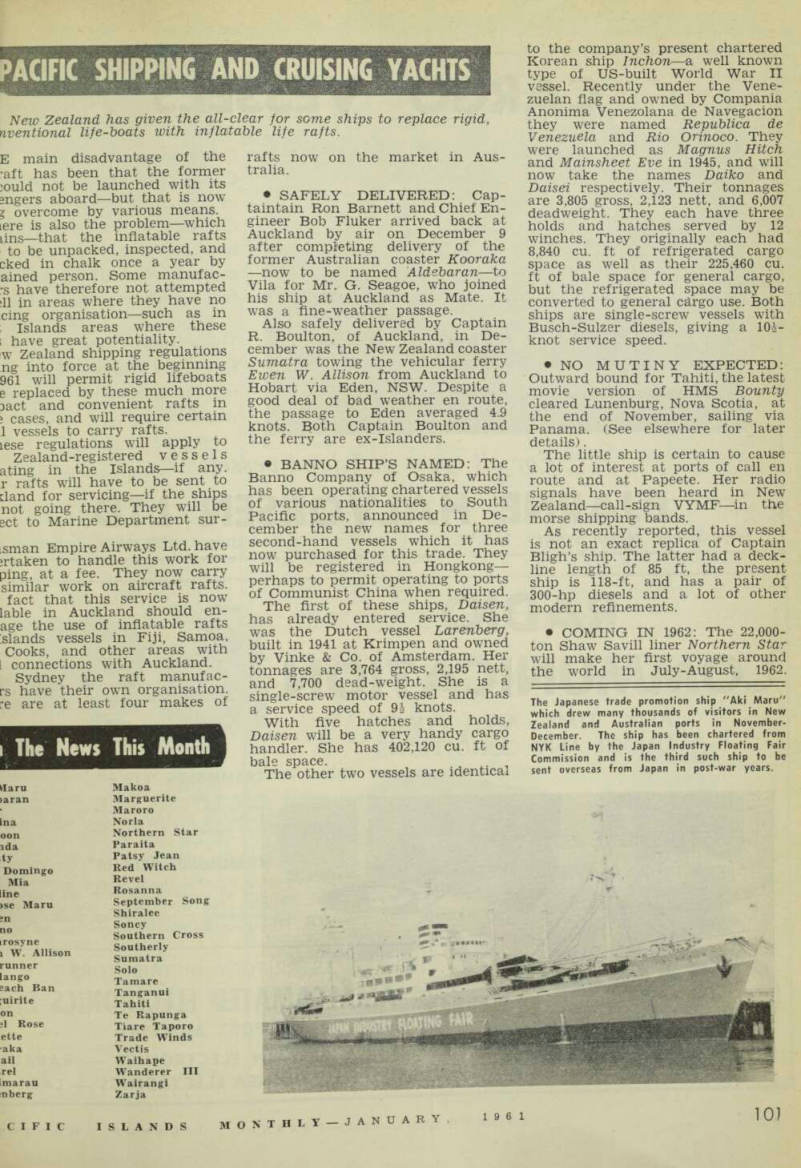 103
103 104
104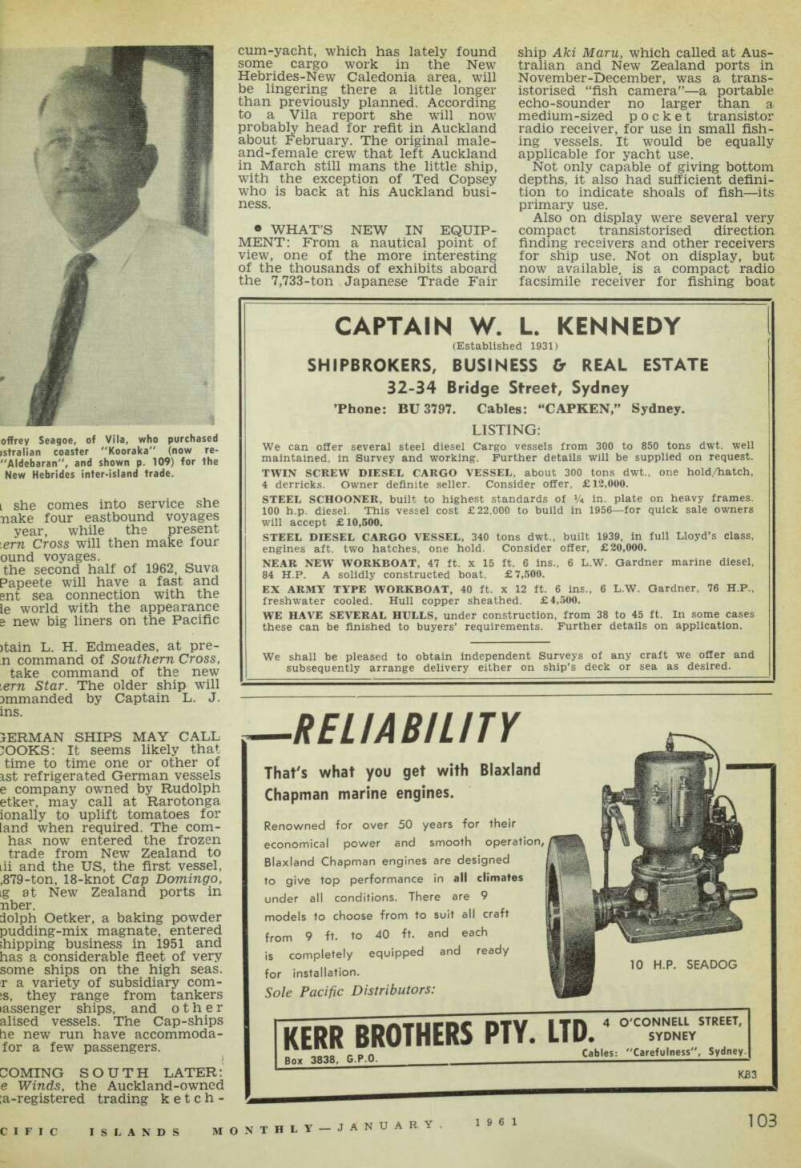 105
105 106
106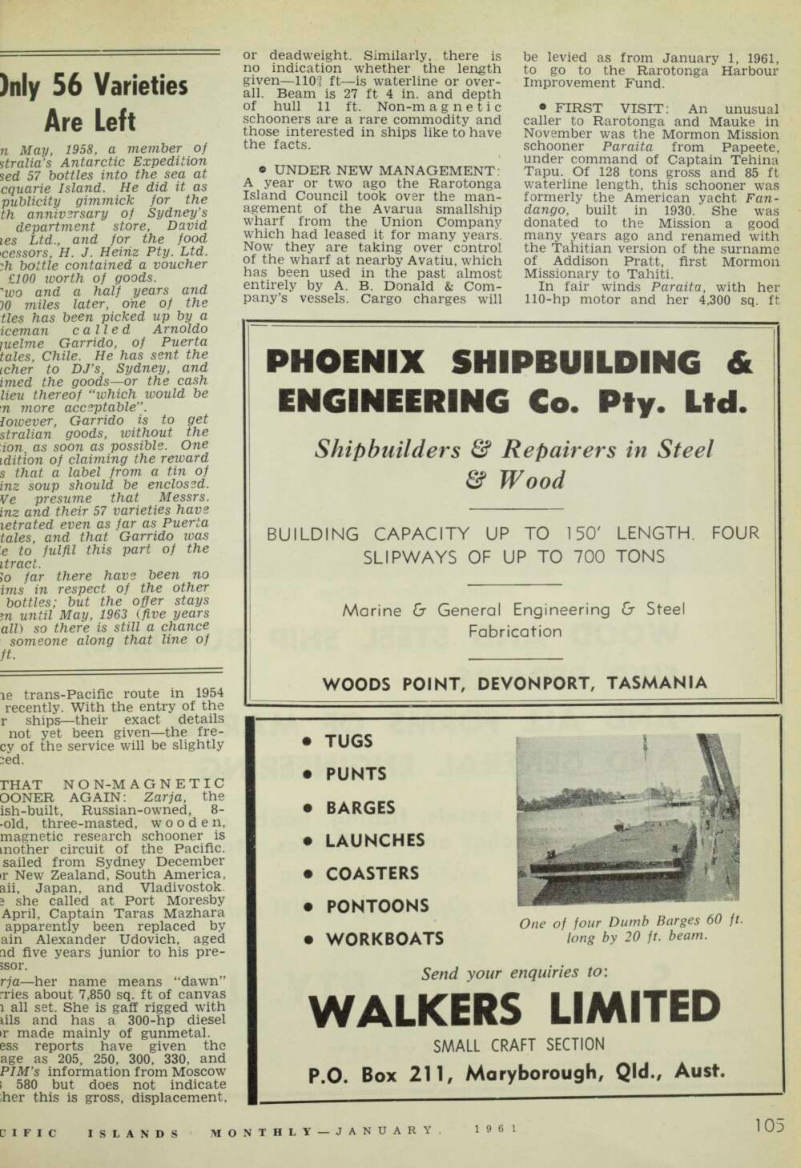 107
107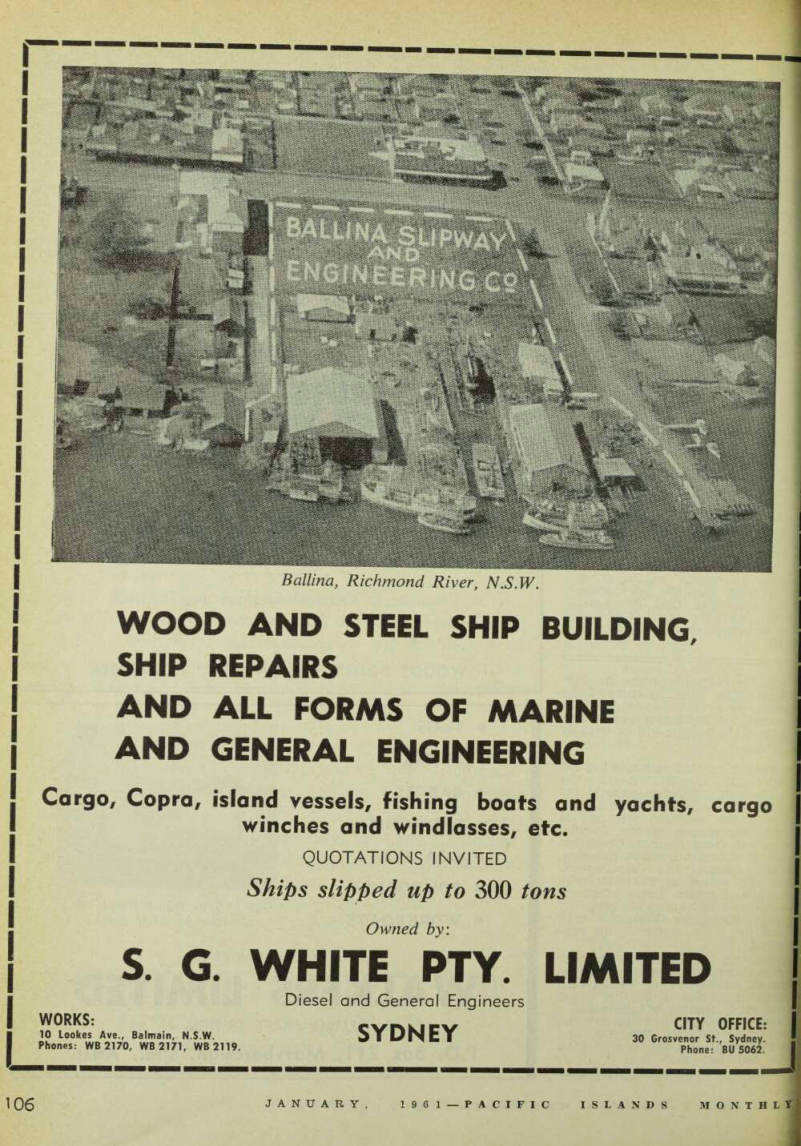 108
108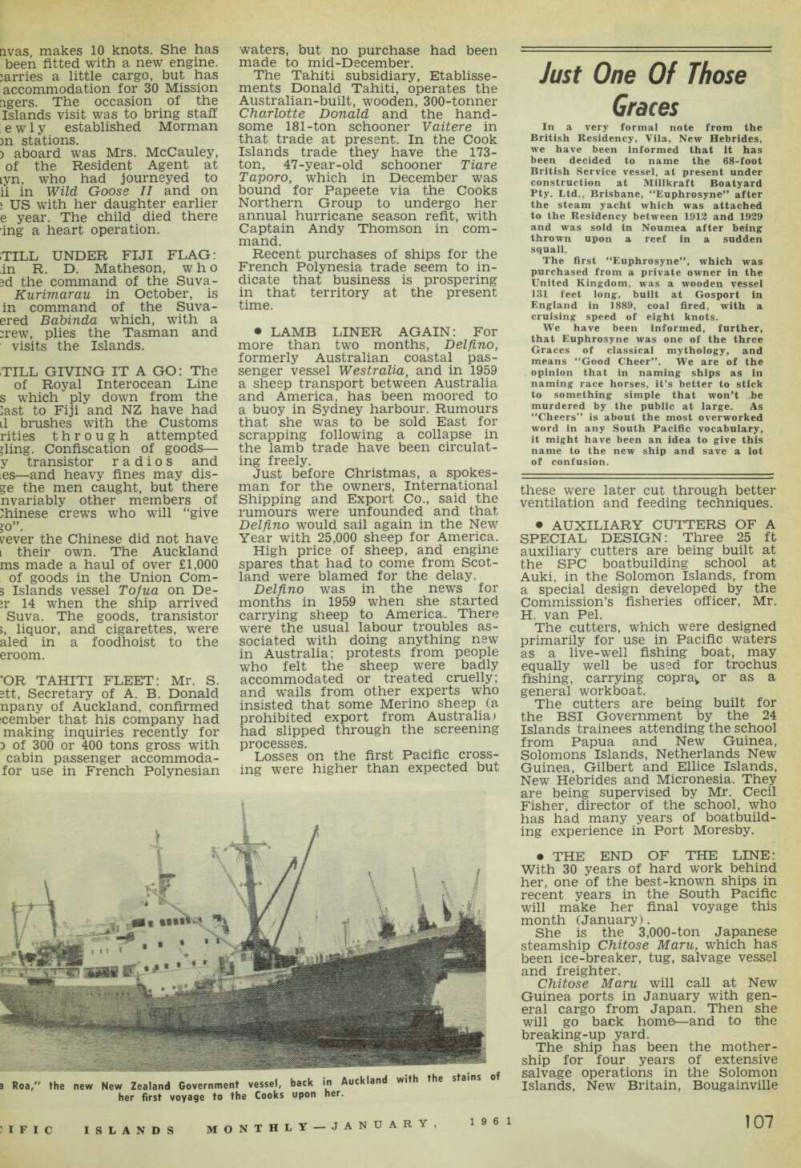 109
109 110
110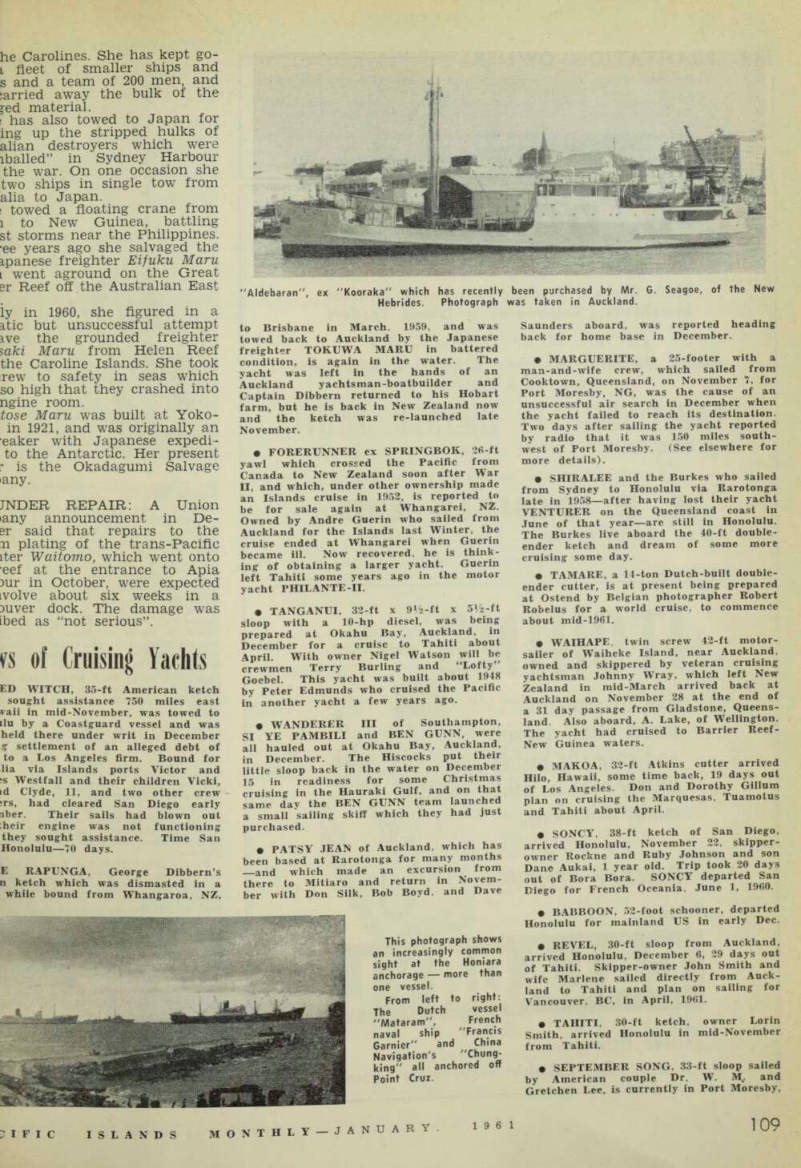 111
111 112
112 113
113 114
114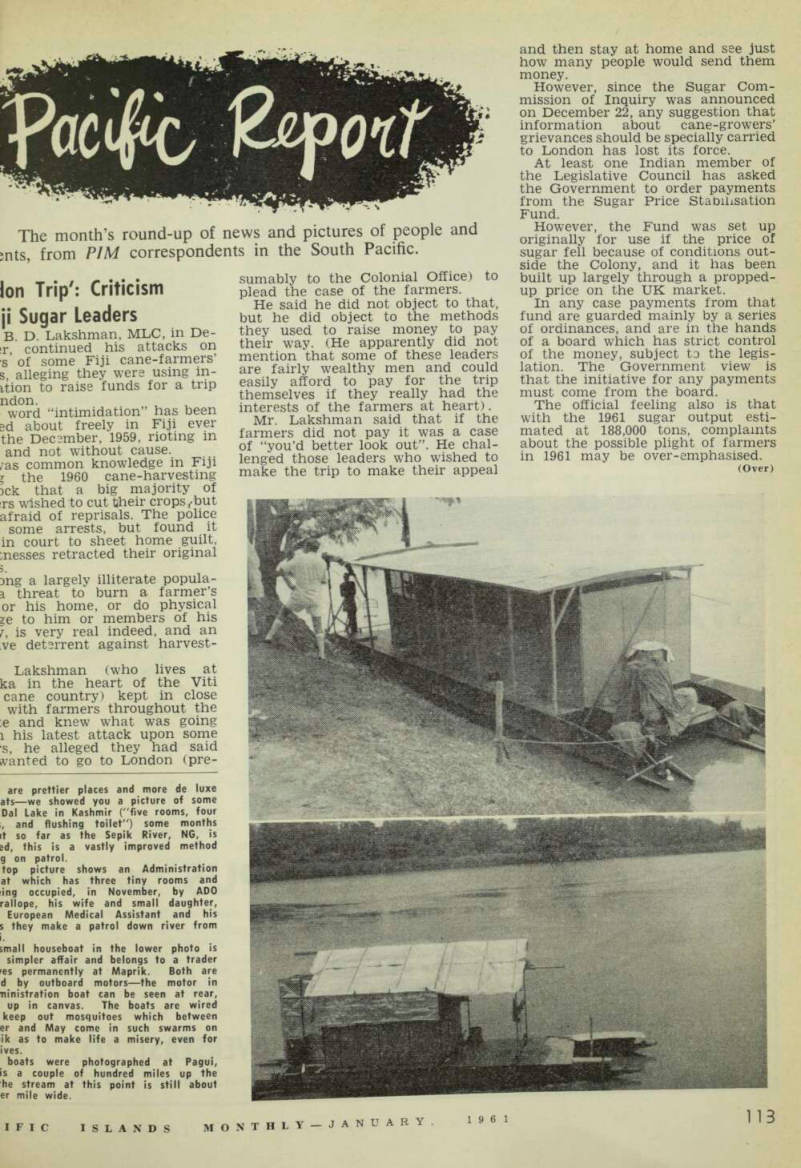 115
115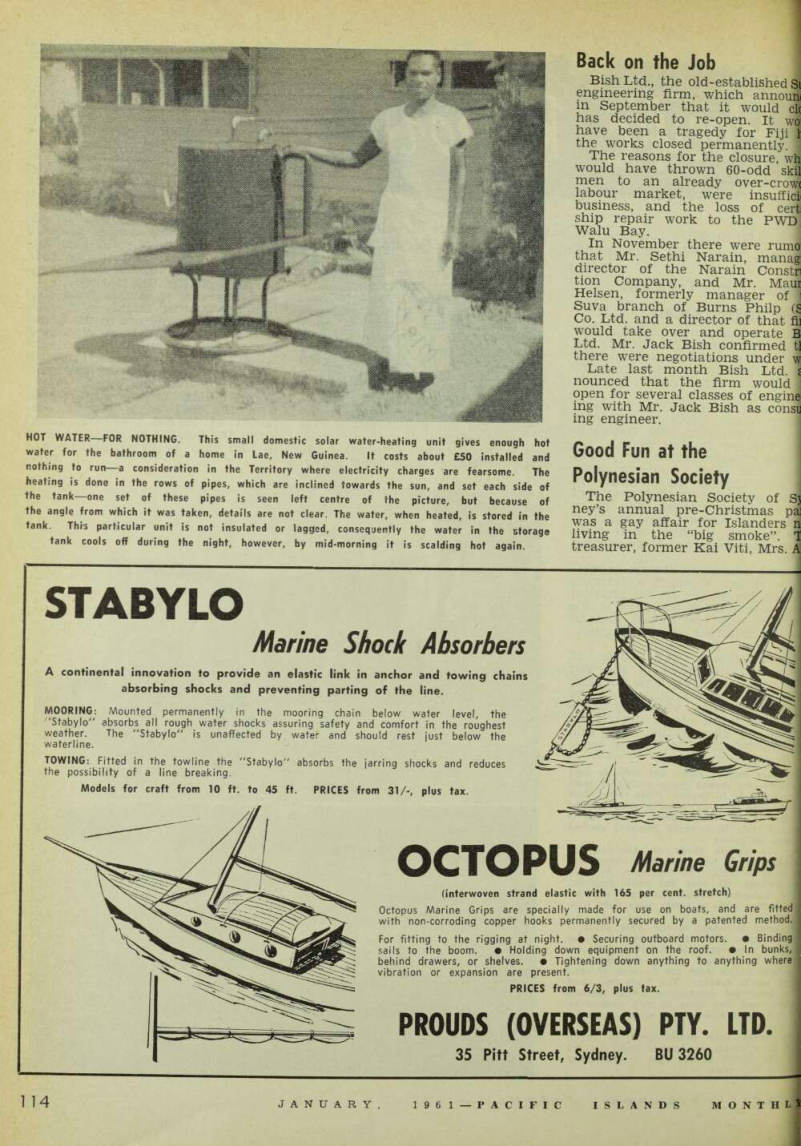 116
116 117
117 118
118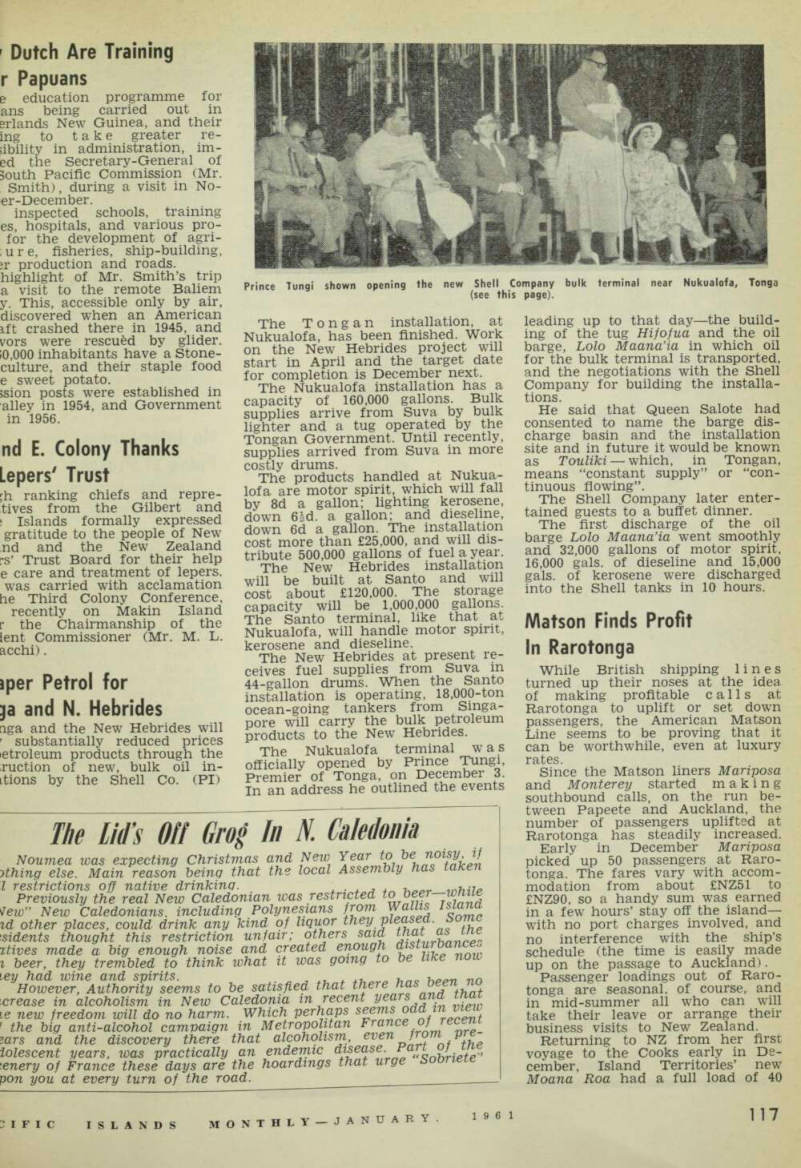 119
119 120
120 121
121 122
122 123
123 124
124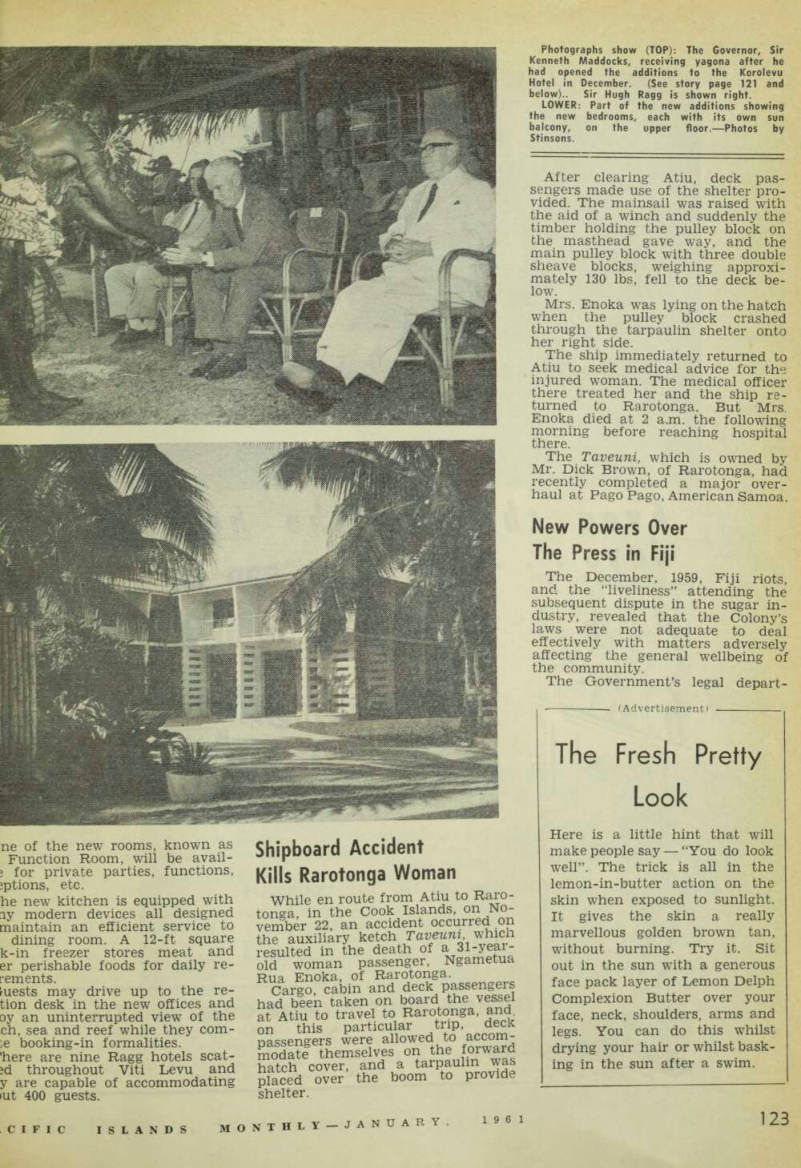 125
125 126
126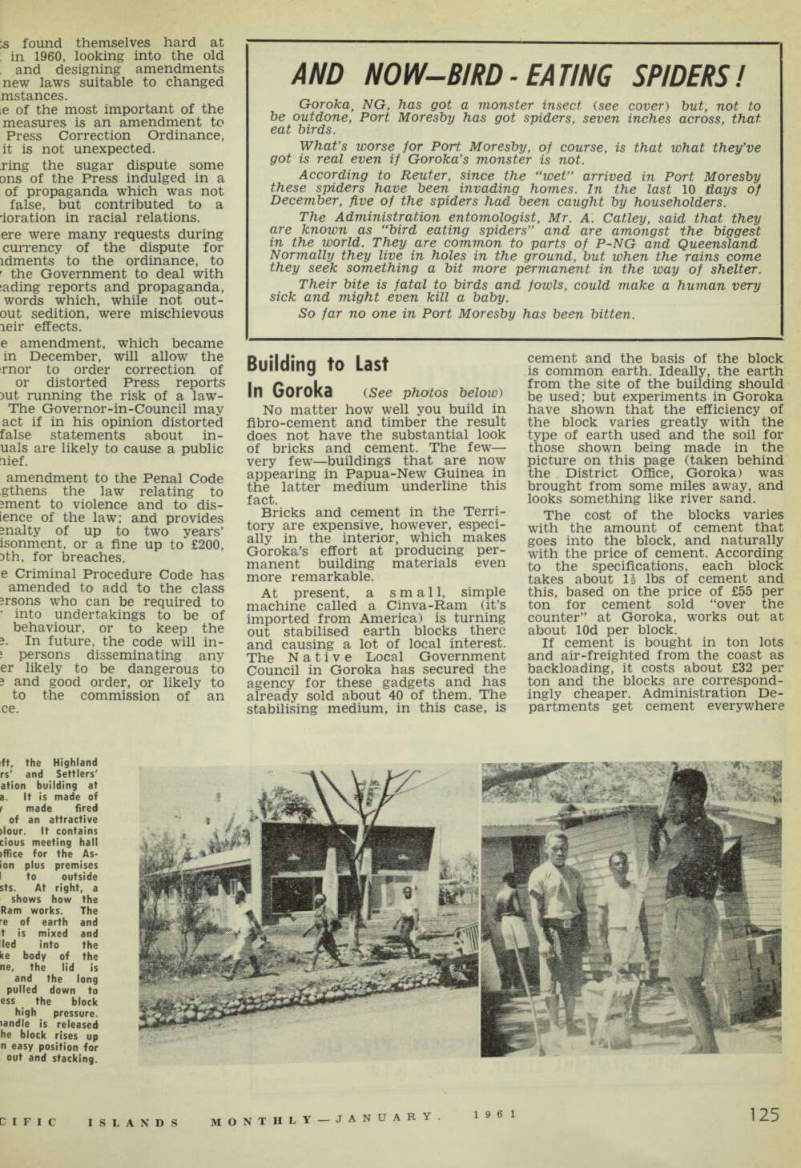 127
127 128
128 129
129 130
130 131
131 132
132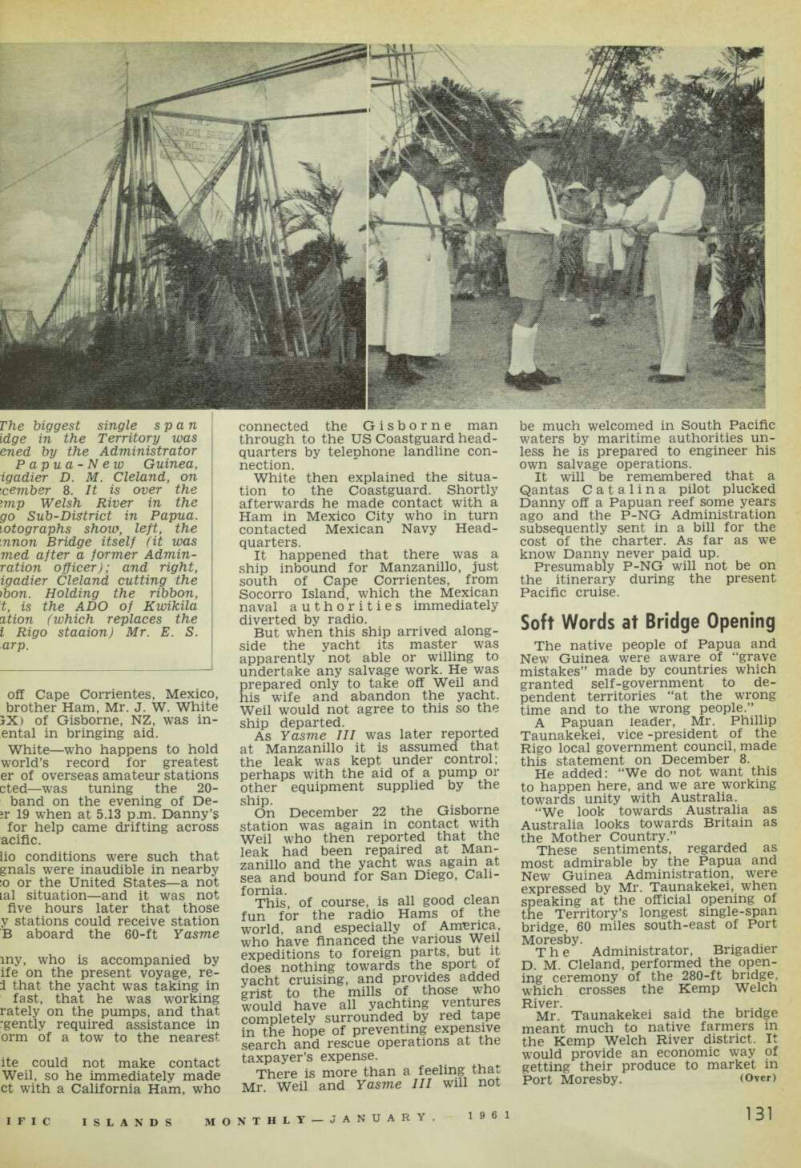 133
133 134
134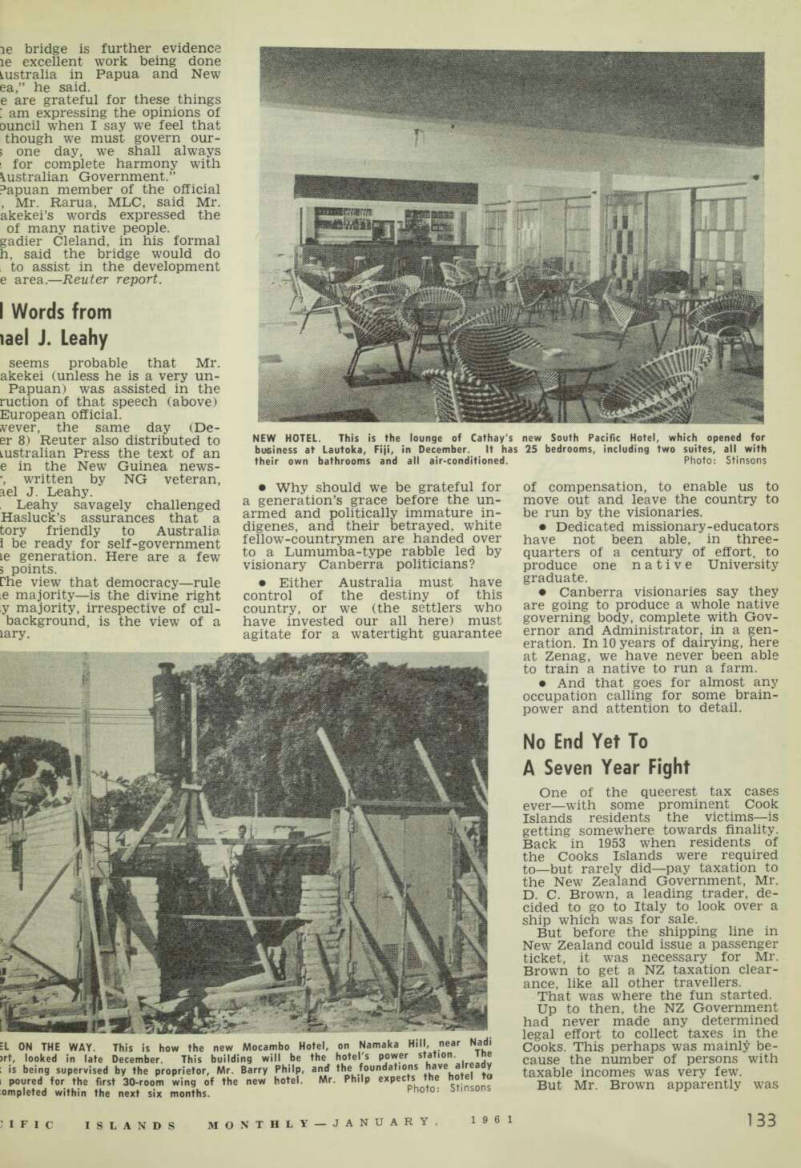 135
135 136
136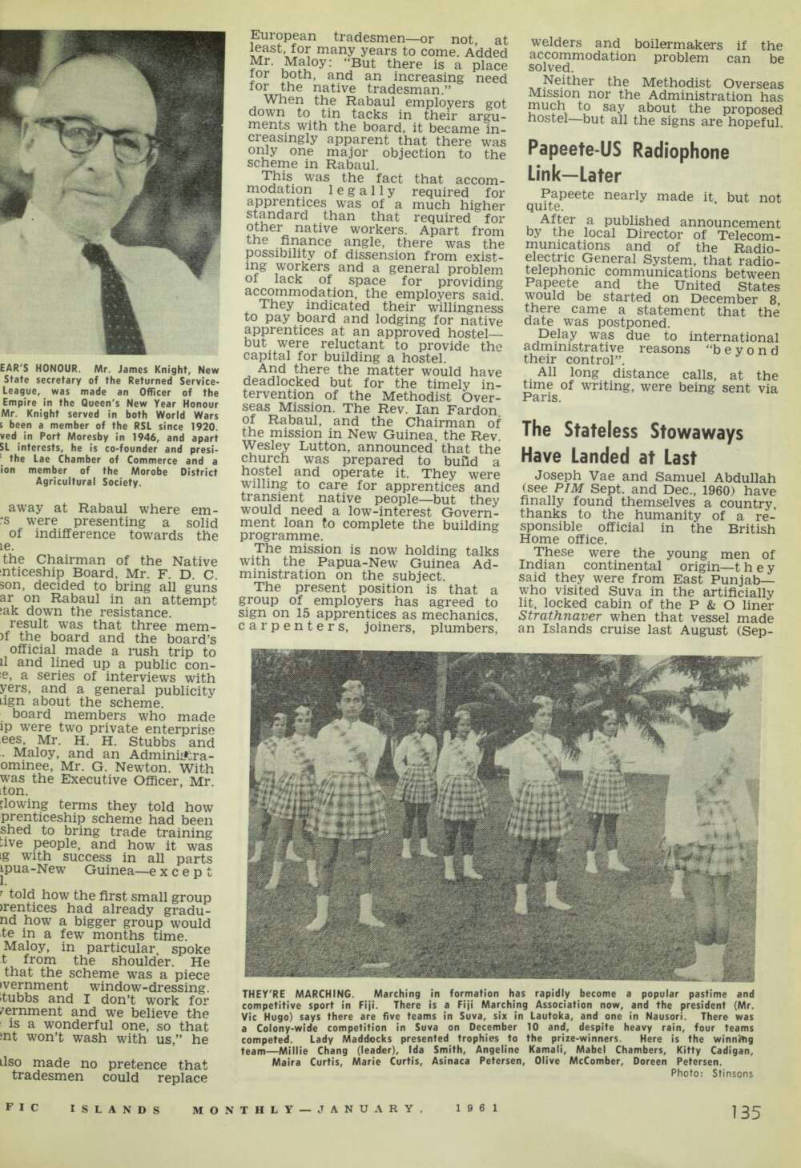 137
137 138
138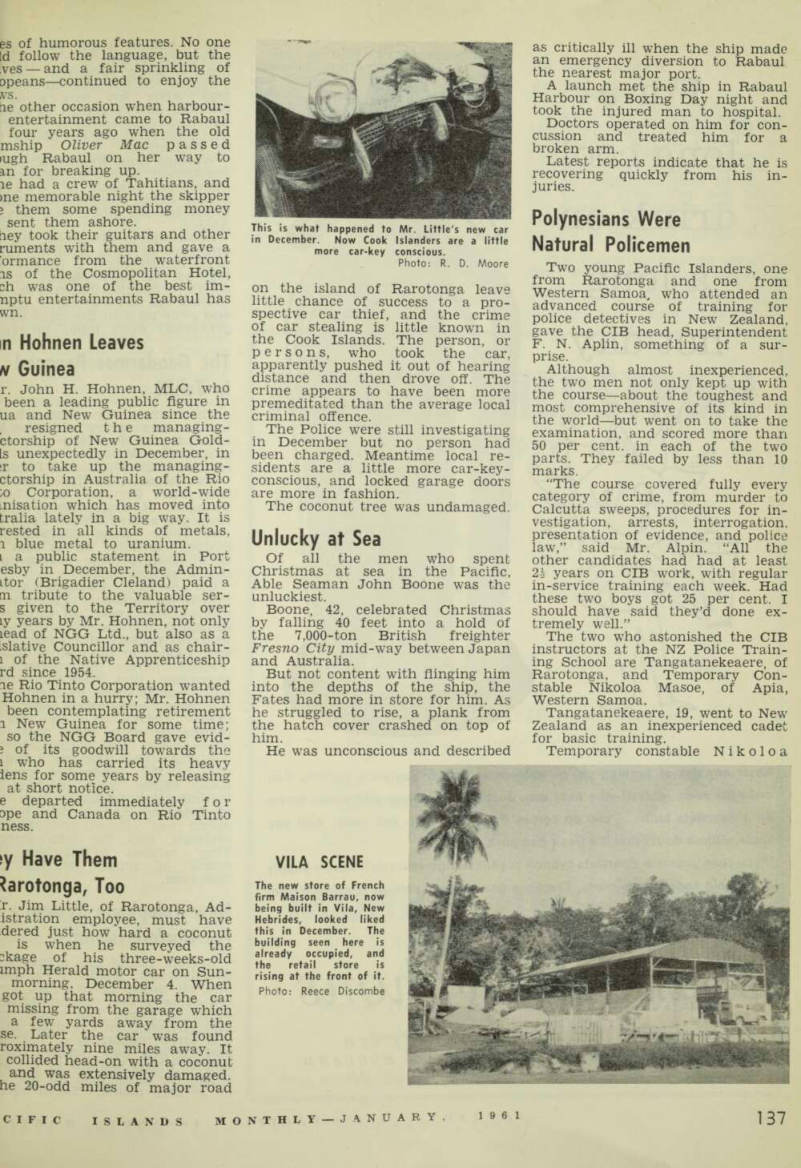 139
139 140
140 141
141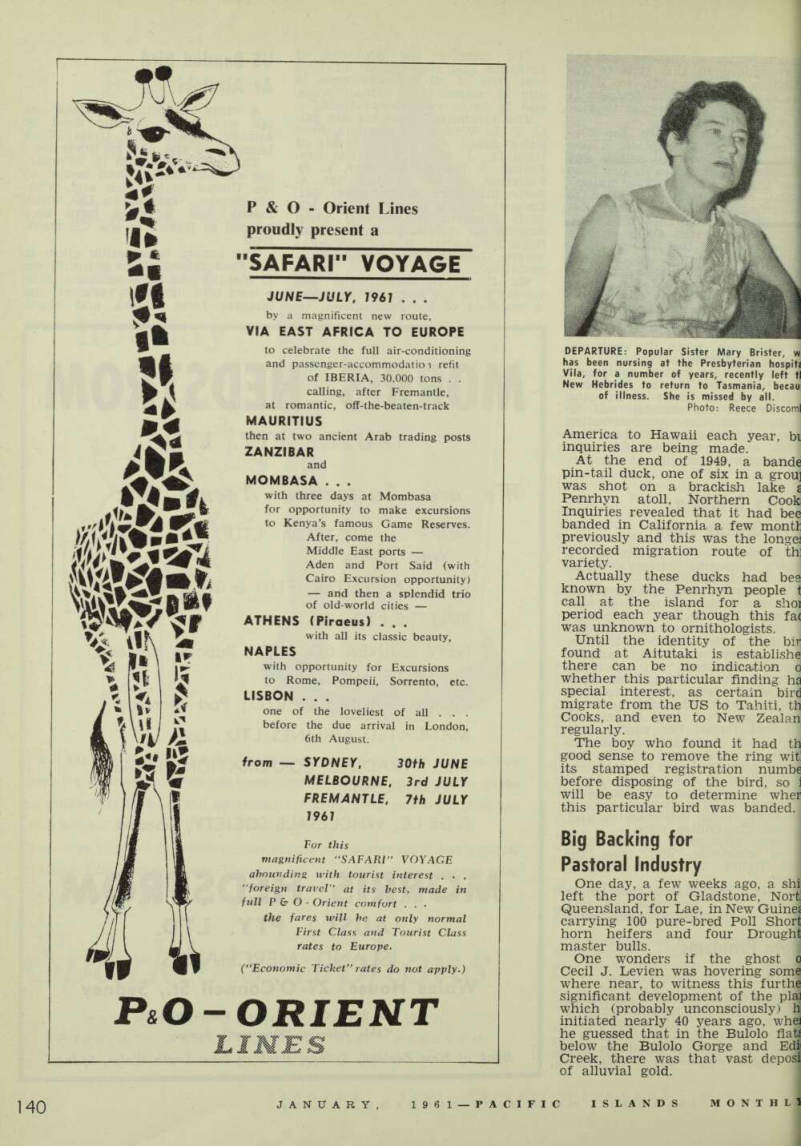 142
142 143
143 144
144 145
145 146
146 147
147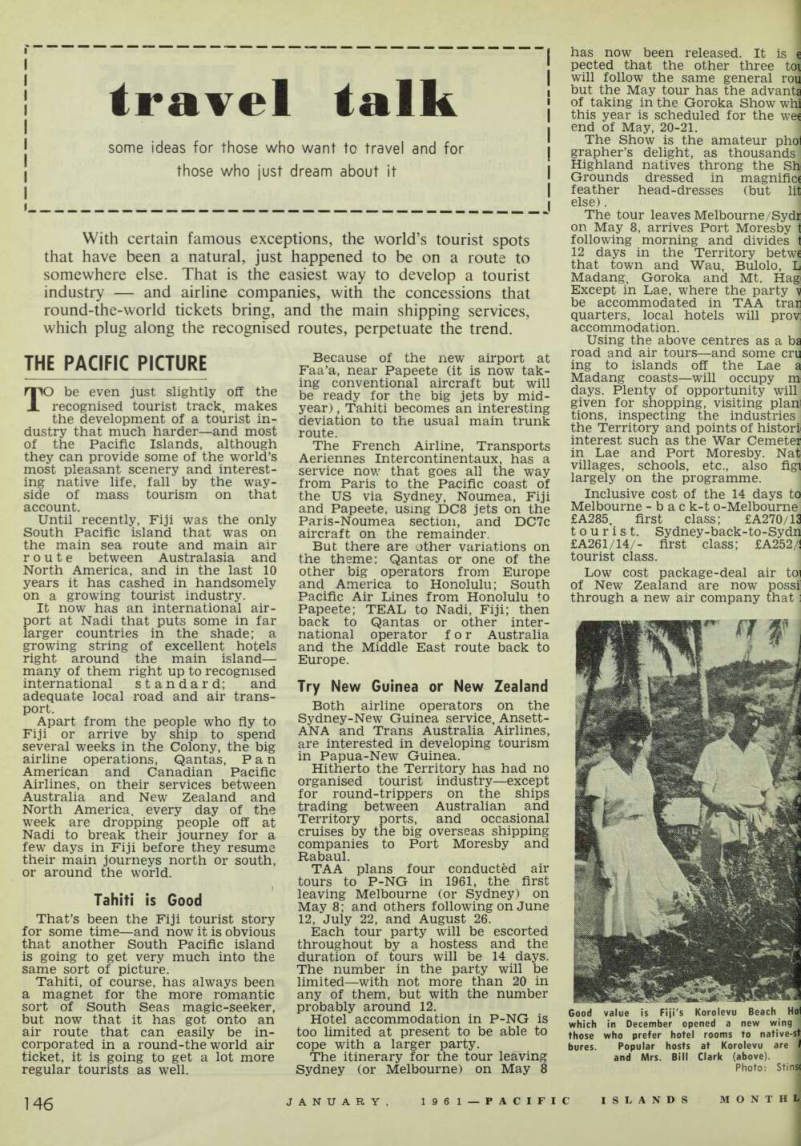 148
148 149
149 150
150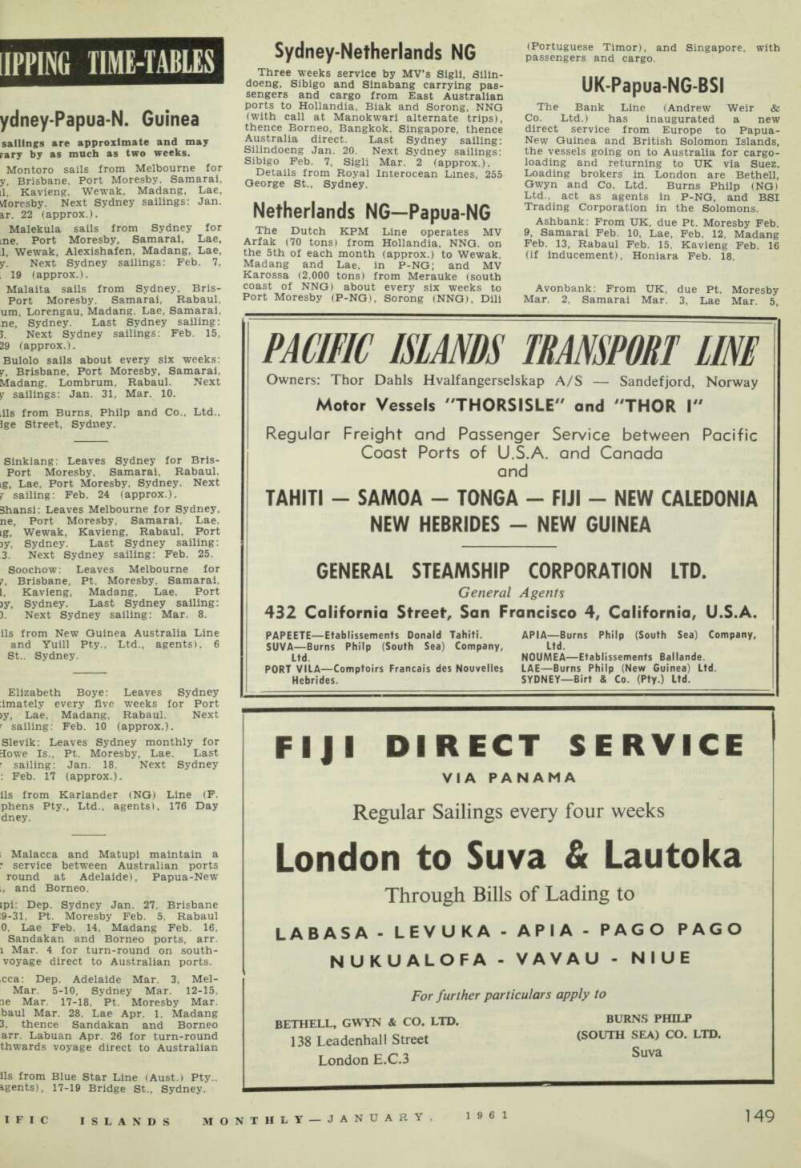 151
151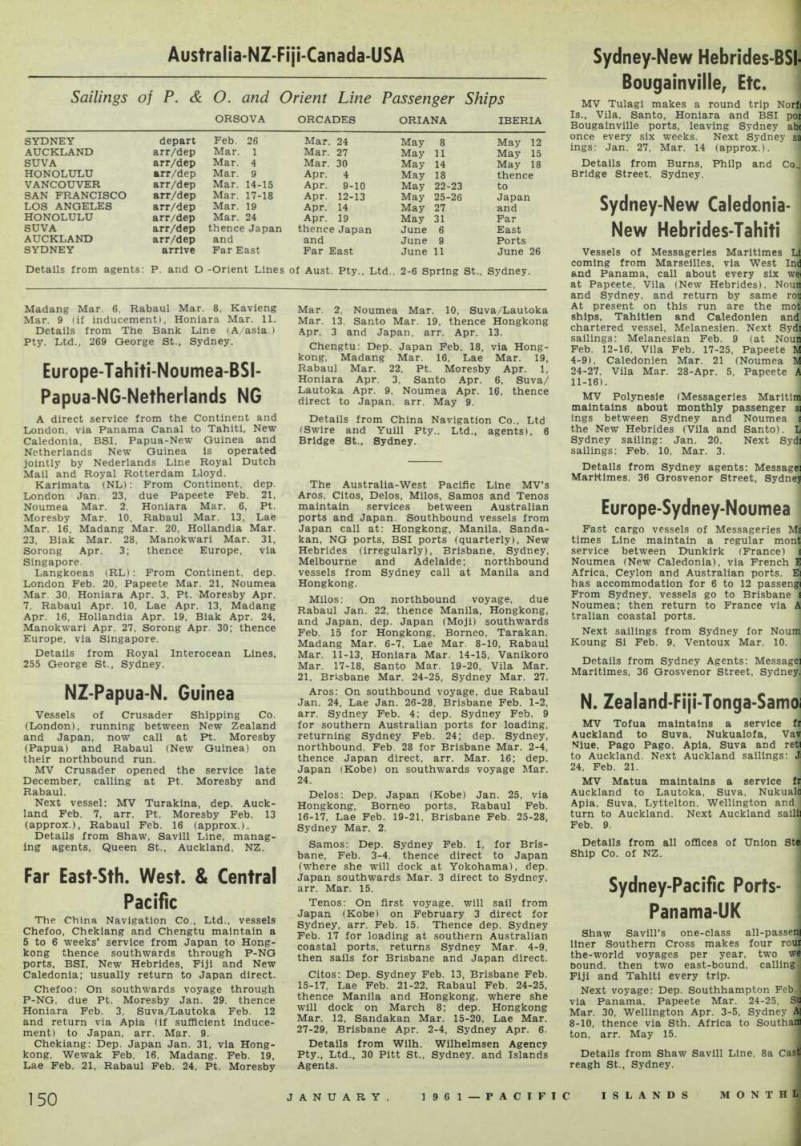 152
152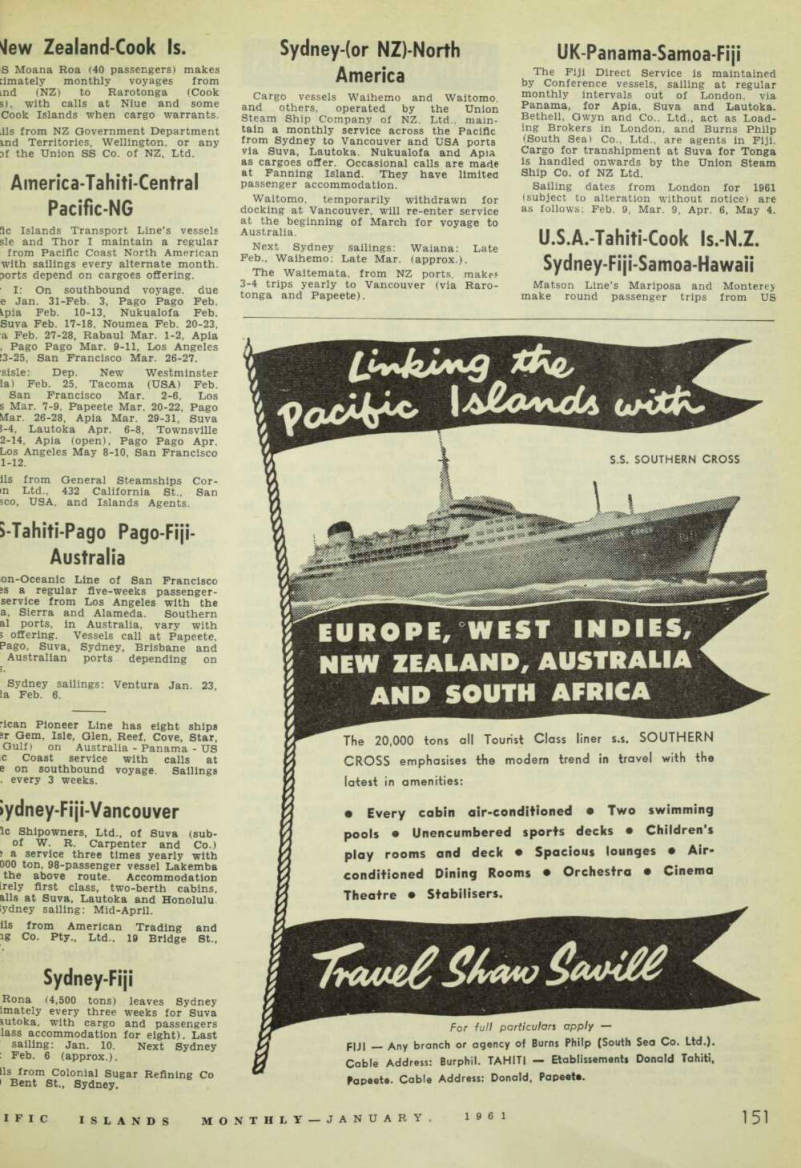 153
153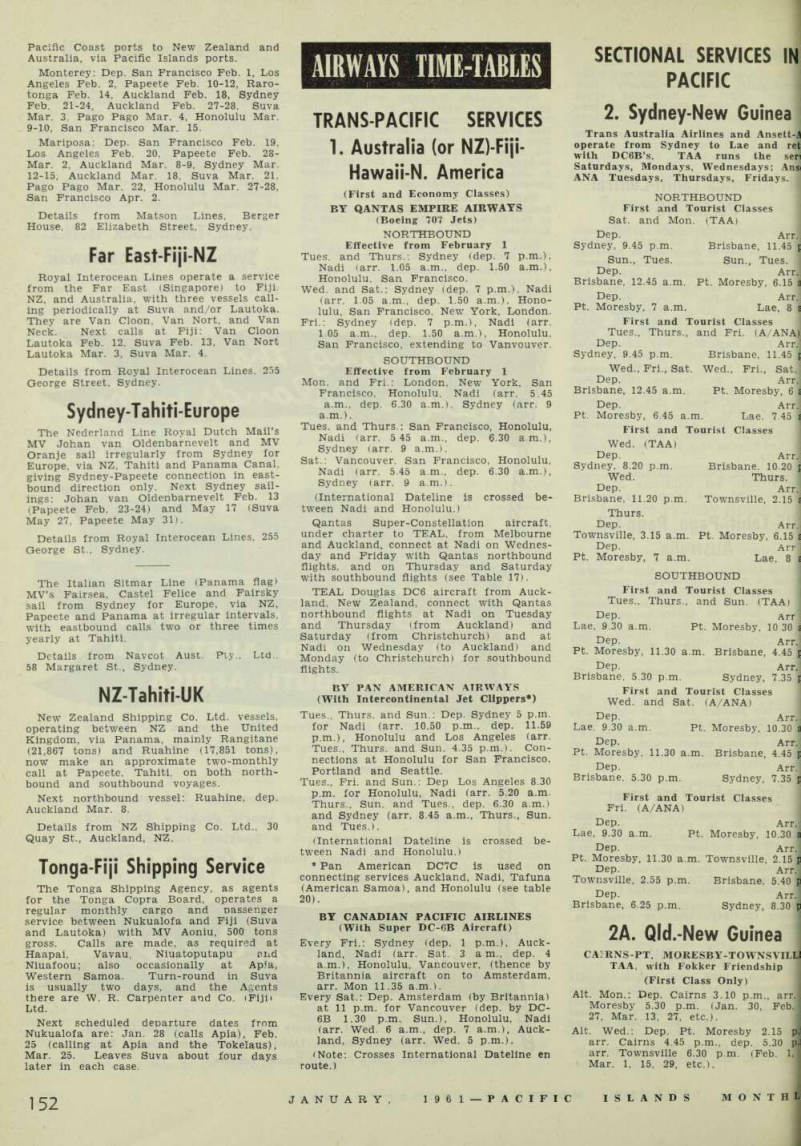 154
154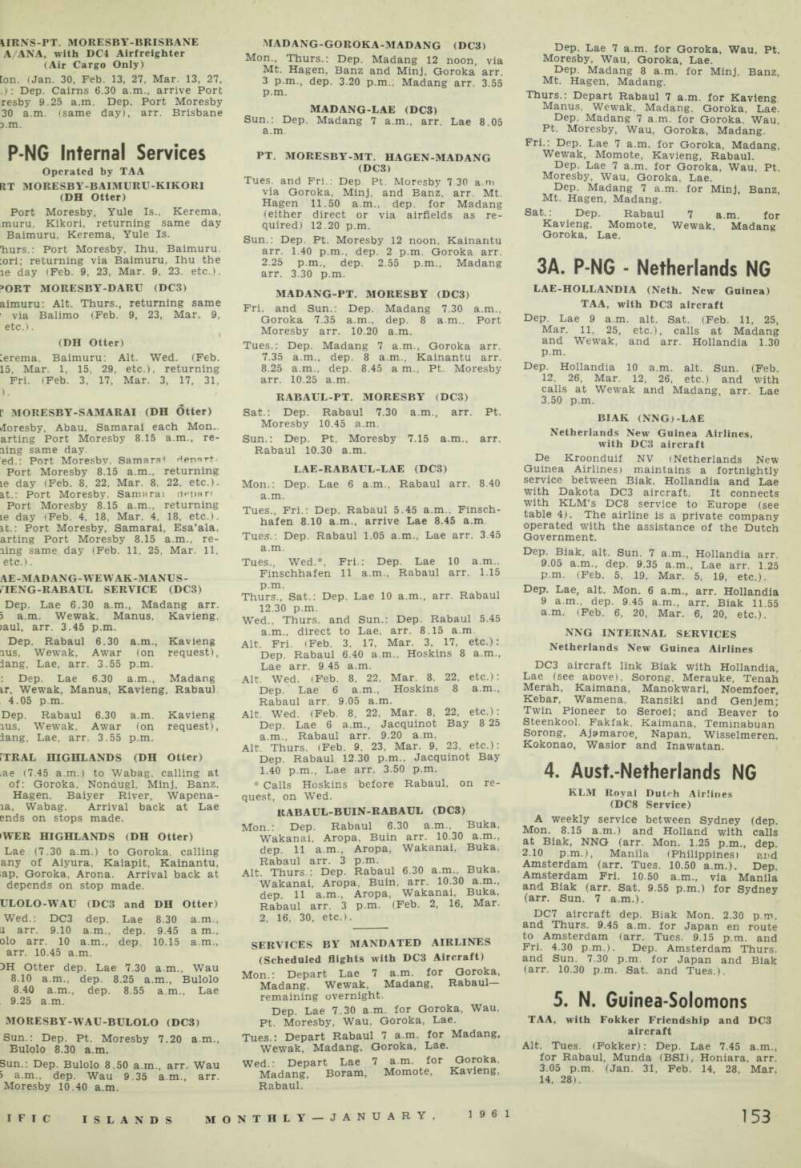 155
155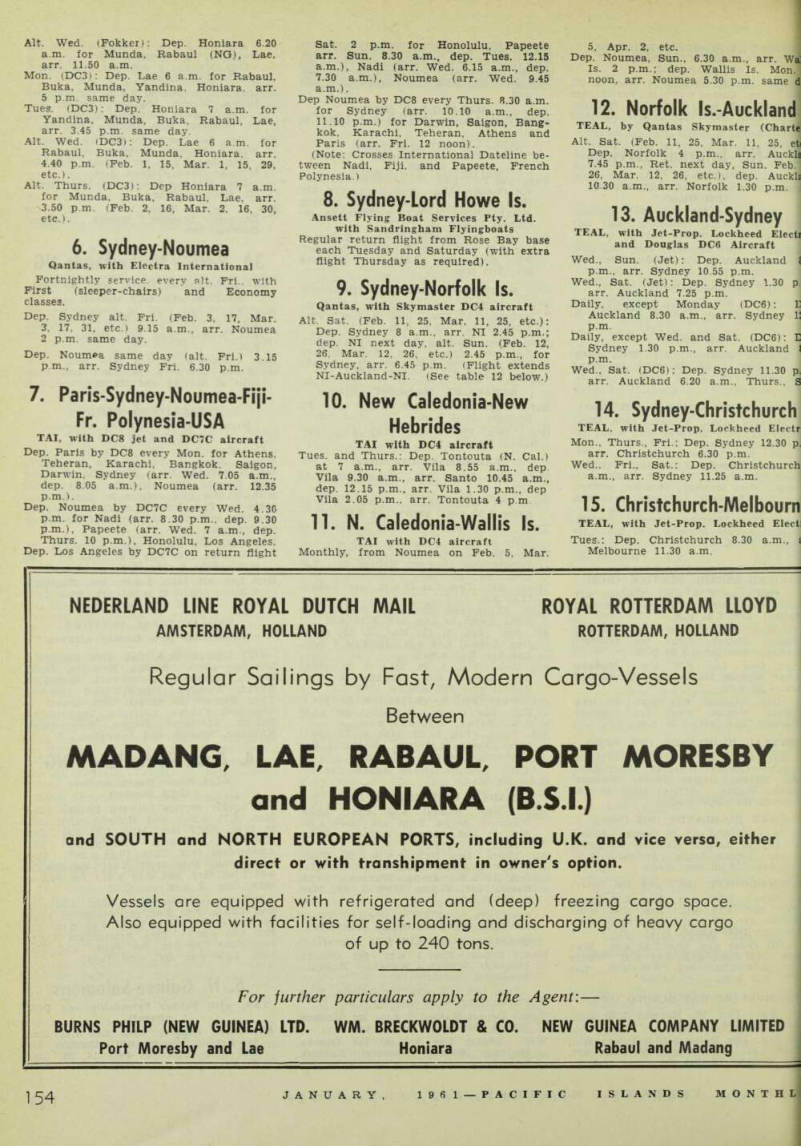 156
156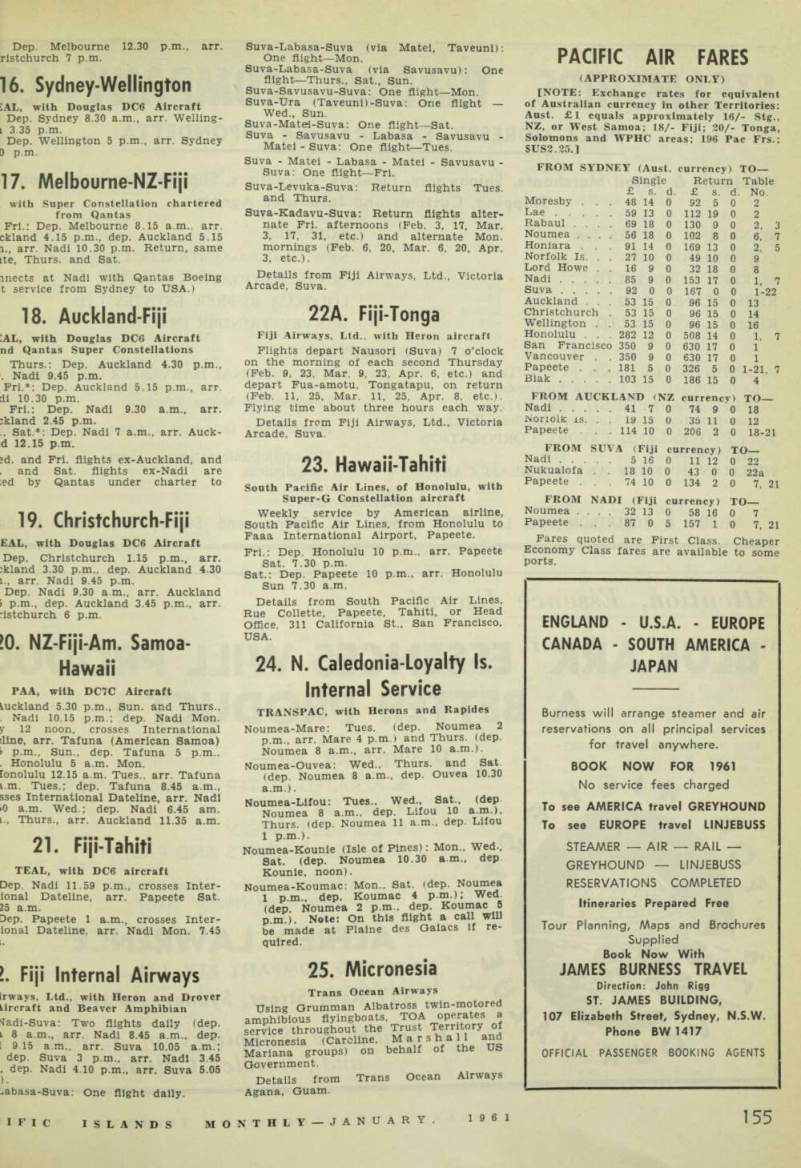 157
157 158
158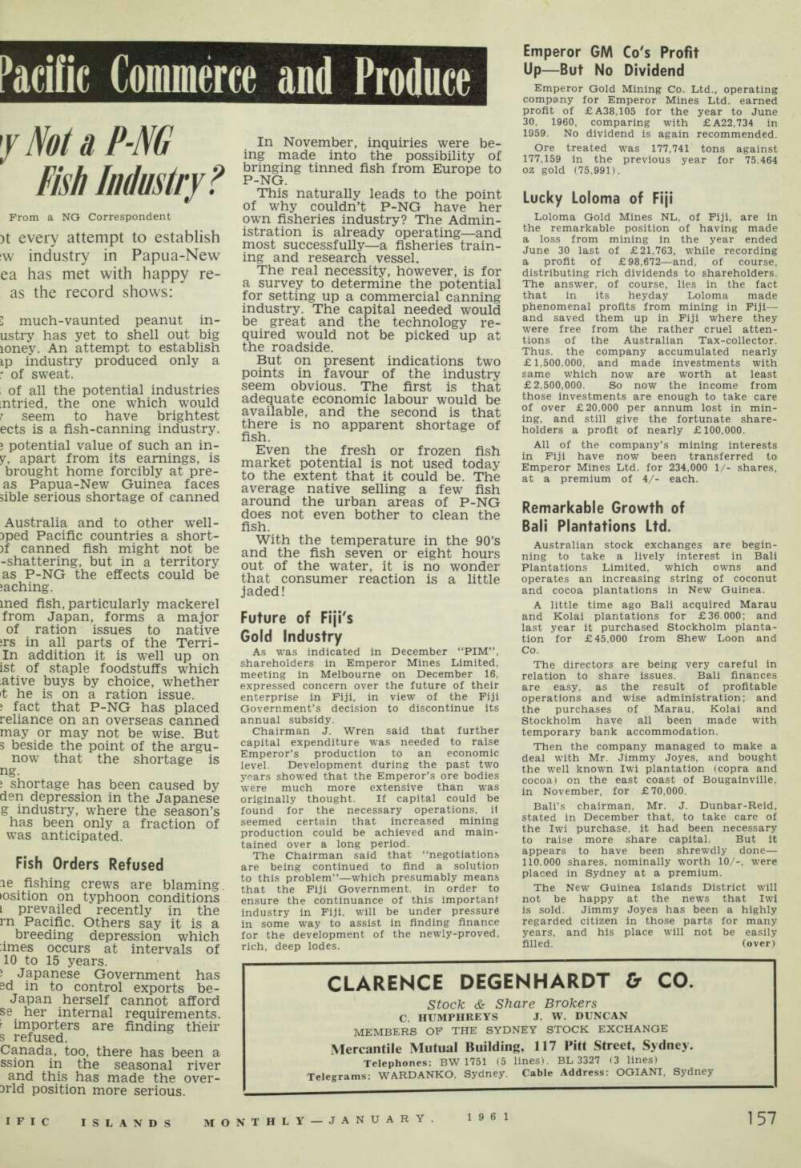 159
159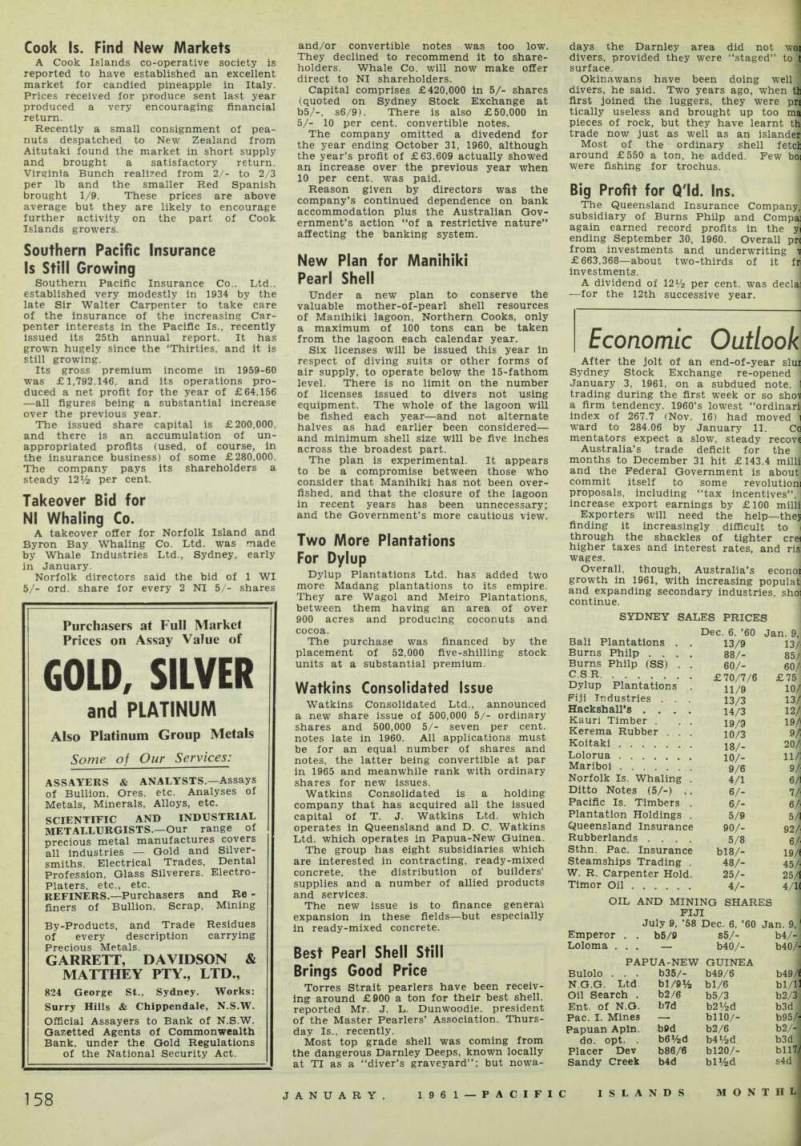 160
160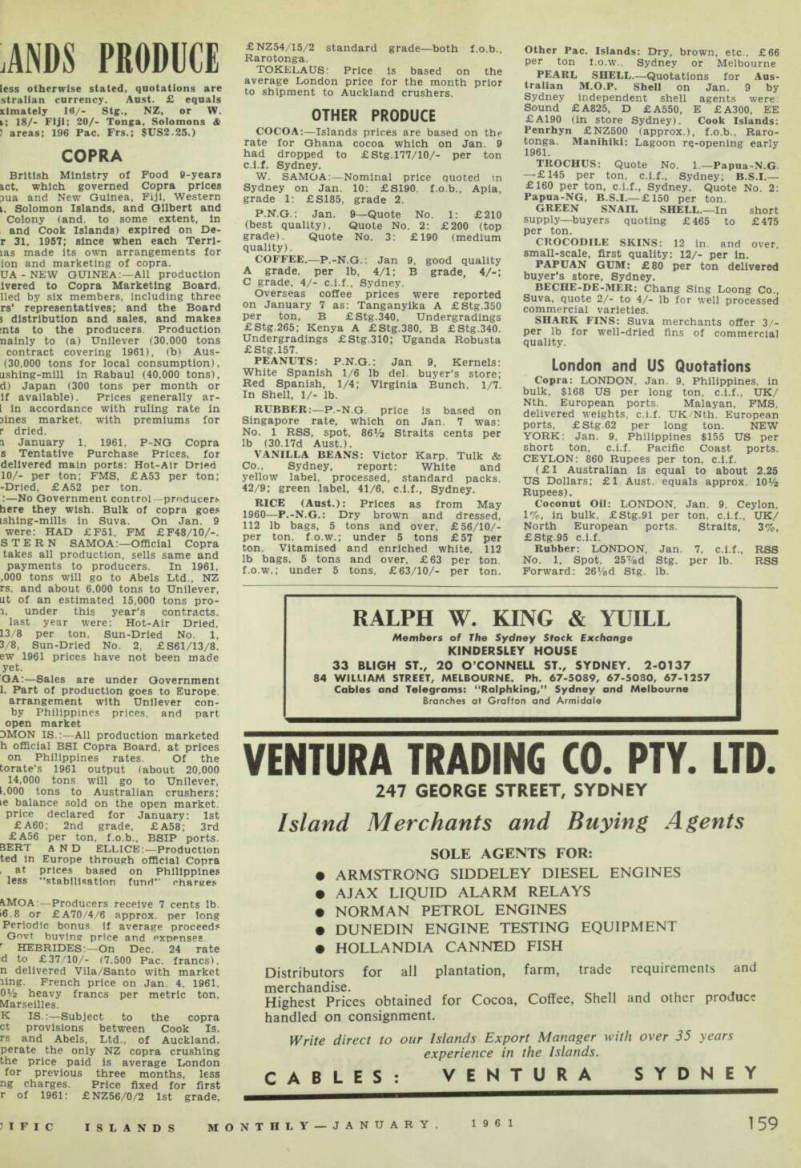 161
161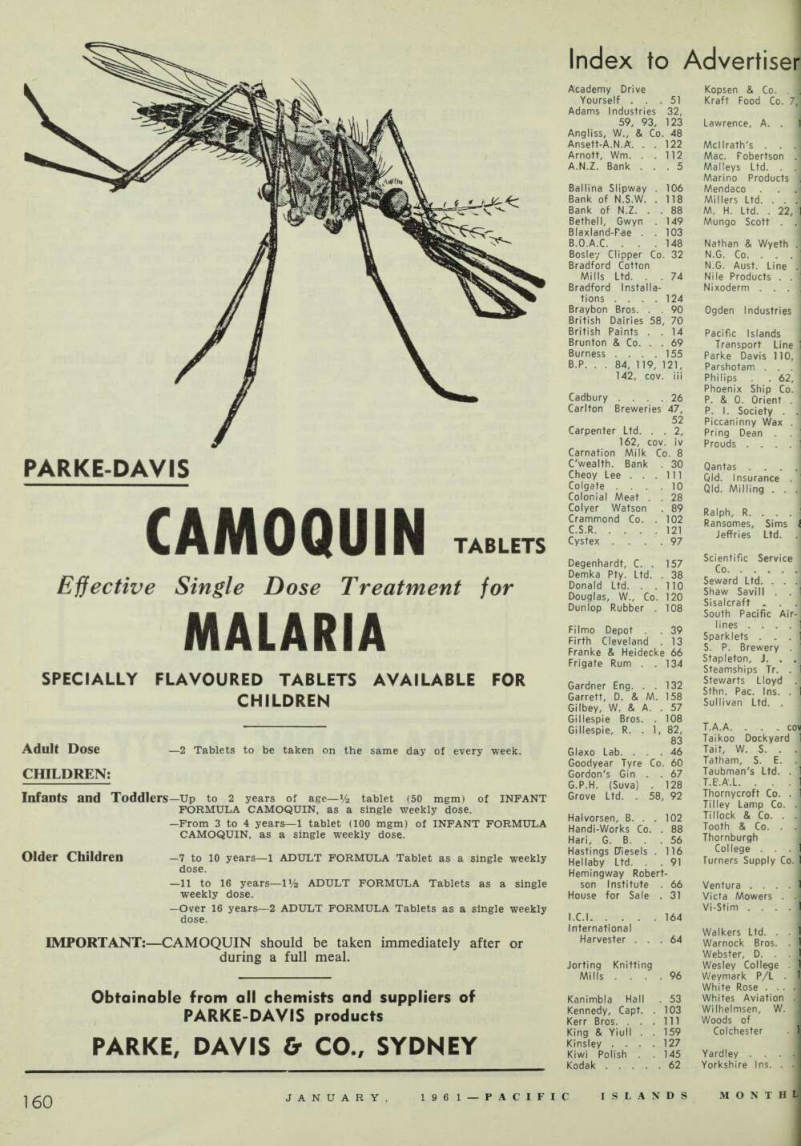 162
162 163
163 164
164 165
165 166
166 167
167 168
168