
Pacific
Islands Monthly
December, 1960
e Neu/s iqazlne >f The ?outh tocific
Ablished 1930
Vol. Xxxi. No. 5.
istered at G.P.0., Sydney, icmiccinn -
OUR COVER PHOTO: While every one else was out celebrating (photo graph was taken by A. C. Atkinson during the July 14 festival) this small lonely Papeete girl stayed home to defend her kitten against all comers
—including photographers.
Advertisements & other items, pp. 2-4 (3 items)
operates
Top Australian Airline Wt&*: Mr*
THE SUNBIRD SERVICE
to 44 places in Papua, New Guinea and the neighbouring Islands.
FLY
A m
THE FRIENDLY WAY
TA
vW 1 WAr f< ,
. . . without waiting mil
Coleman
r :v
OIL WATER
ri r~T M ' I t *r'J
SUPER PERFORMANCE
Modal 163 A-30 gal. s ** rf- ;,a <p
MASTER
Modal 165 - 20 gal.
Modal 166 - 30 gal.
Check these Important
Advantages...
LOW COST
Burns a minimum of fuel for a maximum of efficiency.
LOTS OF HOT WATER
75 gallons of hot water the first hour from a 30-gallon tank.
RAPID RECOVERY
Heats up to H times its size per hour. No other type of conventional water heating equipment can compare in performance.
COMPLETELY AUTOMATIC
Just set the thermostat at the desired temperature. The fuel is then automatically metered into the burner at exactly the right rate to maintain that temperature.
SUPER PERFORMANCE MASTER
Model 163 A—30 gal. Model 165—20 gal.
Model 166—30 gal.
Representatives for the Pacific Islands:
RT GILLESPIE PTY. LTD. ROBERT GILLESPIE (N.G.) LTD. PEARCE & CO. LTD. 12 Young Street, Sydney Lae, Madang, Rabaul, Port Moresby Suva for Fiji Islands
More people, the world over, ride on Goodyear Tyres than on any other make
Deep, safe Goodyear
tread and 3-T NYION
cord body make this
Australia’s biggest
selling nylon tyre ...
In just 12 months Goodyear Imperial has firmly established itself as the finest car tyre ever built in Australia. Here’s why ... it is stronger than any previous tyre. That means it lasts longer, that it resists bruise breaks and damage. You get more recaps on this tyre. Cooler running Nylon Cord is tempered like steel by the exclusive Goodyear 3-T process for greater strength and longer tread life.
The new tread design gives unequalled traction, adjusts instantly to every condition of driving. No matter where or how you drive you’ll get greater performance, more safety and longer wear from Goodyear Imperial than from any tyre you’ve ever used. s f
BECAUSE IT HAS
GREATER STOP-START
ROAD GRIP!
BECAUSE IT IS
STRONGER. SAFER
AND MORE STABLE
ON ROUGH ROADS
A s *
BECAUSE IT GIV
STEEP
MILEAGI
GRADE
BETTER
AND MORE
SAFE RECAPS!
\ OX % I X
AVAILABLE NOW AT YOUR
GOODYEAR DEALER, GARAGE
OR SERVICE STATION
good/year
' n y((n
THE FINEST TYRE EVER BUILT IN AUSTRALIi C229®
1
IFIC ISLANDS MONTHLY DECEMBER, 196 0
2
DECEMBER, 1960 PACIFIC ISLANDS MONTH!
Pacific Islands Monthly
Publisher:
R. W. Robson.
Editors:
F Tudor Stuart Inder
Manager:
Selwyn Hughes.
ONES: General Business, Editorial, advertising. Subscriptions:
9197-8, Aaa 7101, Ma 4369.
P.O. Box 3408, Sydney,
ered Address for Telegrams, jms, Cables: "Pacpub", Sydney.
Iual Subscription Rates:
udes surface postage except where stated) ific Is. —Papua-N.G., Samoa, Norfolk, , B.S.I., Cook Is., , G.&E. Grp., Niue, Hebrides, and other acific Islands . £1 4 0 s acific Territories (N. onia, Fr. Polynesia); Dutch N.G £17 0 ralia and N.Z. . .. £110 0 ., British Common 11 h Countries, and in (40/- Stg.) . .. £2 10 0 A. and U.S. Pacific ories ($6.00 U.S.) . £2 12 6 Copies (postage extra) 2 6
Iranch Office, Papua
New Guinea
Publications (New Guinea) Ltd., Building, Fourth St., LAE, New Guinea. Tel.: Lae 2577. >s Pat Robertson, Manager.
Ranch Office In Fiji:
ies Building, Gordon St., Suva.
Epresentative In N.Z.:
Whitcombe, P.O. Box 5179, Auckland. Tel.; 22.570.
Epresentative In U.K.:
\shburn, 13 Rood Lane, London, 3. Tel.: Mincing Lane 8633.
IRNE OFFICE: Newspaper House, illins St., Melbourne, Victoria.
Tel.: 63.7053. : All main trading firms and •es in the Pacific Islands.
Imes Agency In Australia
Publications Pty., Ltd., is the an agent for THE FIJI TIMES.
Contents
No. 5. Vol. XXXI.
December, 1960
People 5
Burns Plan Meets Trouble 15 New Caledonia Finance "Excellent" .. 16 Fiji Reserves Better 17 Will Emperor Mine Liquidate? 17 Norfolk Doesn't Want Land Laws ... 18 P-NG Economic Survey 18 Fuss Over P-NG Native Conference .. 19 P-NG Man Charged With Sedition ... 19 GEIC Plans an Advisory Council 20 BSIP Politics Bring Little Response 20 Many Nominate for P-NG Elections ... 21
Commentary 23
The Editors' Mailbag 24 Story About a Hill in Lae 25 Teacher Training Scheme Meets Trouble 27 Plans for Pago Pago Conference 27 New Trust Territory Could Appear In N-Guinea 30 TERRITORIES' TALK-TALK, with Tolala 33 Beware the Killer Shell Fish 37 Alfred Hill Did a Lot for Native Music 41 Judy Tudor's Brief Encounters 47 New Guinea Native Drink Problem 51
More Sea Transport for the Cooks ... 53 Tahiti Gets Going on Its Tourist In
dustry 57
New Wealth in the Pawpaw? 59 Death of Mr. R. A. Derrick 60
Sydneysider Goes Walkabout ... 65
Charges of West Samoan Inefficiency 69 Fiji School with the Right Idea 71 New Guinea Cocoa Scheme Has Its Problems 71
Magazine Section 75-100
News of Pacific Shipping 101
Pacific Report (Index) 117
Obituaries 145 Sports Review 147 Shipping, Airways Timetables 149 Commerce and Produce 157
Advertisements & other items, pp. 5-6 (3 items)
A Product of Pacific Publications Pty. ltd., 29 Alberta Street, Sydney
(29 Alberta Street is 10 yards from the intersection of Goulburn Street and Wentworth Avenue.)
4
DECEMBER, 1960 PACIFIC ISLANDS MONTHL
Qrnott's
m m 33r
mas
1960
Qrnott's
WCH ptwas (Takes
2 LB. CAKE
Order early to avoid disappointment.
Arnott’s famous high quality, rich Xmas Cakes are again available in 2 lb. and 3 lb. sizes.
Put one of these cakes aside for Easter or special occasions to come, whilst they are available over Xmas.
3 LB. CAKE
There is no Substitute for Quality
XXC6O
People
j resignation of Judge E. F. ivell, of the Apia High Court, oeen announced. Judge Roth during his term of office in jrn Samoa has earned the re and esteem of the public by :onscientious and correct at nce to his judicial duties and eparture with his wife in De sr is much regretted in Apia, ill probably take up magisterial ; in New Zealand.
ler James Dwyer, parish priest haul, and a member since its ation of the Legislative Coun f Papua-New Guinea, last t h celebrated the 25th an ary of his ordination, was ordained in Sydney in and went to Papua a year During the war he was an chaplain in New Guinea and n, and after the war helped d the Samarai Mission. He to Rabaul in 1952, where he v a member of the Rabaul Advisory Council and the New
n District Advisory Council,
ers of the church and public led a celebration in his honour i November. is now on holidays in Aus-
of friends recently farewelled Norfolk meteorological officer Mr. Ron Vivian, Vera and their three sons lan, Phillip, i before their departure for Lae, New Mr. Vivian has been active in Norfolk's affairs and both Mr. & Mrs. Vivian are keen photographers.
Photo: Raymond Hoare
Mr. Frank M. Bateson, of Ra tonga, the South Pacific’s b known astronomer, who is direc of the variable star section of 1 Royal Astronomical Society of IS Zealand, said in Auckland in 1 vember that he and others w selecting about 15 potential si throughout New Zealand that wo be suitable for a major observatf The project was being backed the US National Science Foum tion through the University!
Pennsylvania, of which Mr. Ba son is an associate. The preparafi work would take about two yea:
Mr. L. A. Shanks has be appointed Assistant Secretary, I partment of Islands Territories, N Zealand, in succession to Mr. A., Dare, who was recently appoinj Resident Commissioner, Cc Islands. Mr. Shanks has been I sponsible for the administration! matters associated with st seconded to the Islands in rece years. He is 36. * * ♦ Mr. A. M. Hall has been appoint Resident Agent, Mauke Islal Cooks, in succession to Mr. G. Wj Perks. A Bachelor of Agricultui Science, Mr. Hall is married, ag 33. He speaks fluent New Zealaj Maori. ♦ ♦ ♦ The first man to have joined t Papua-New Guinea Administrate since the war who has since risi to the rank of a District Cor missioner will take up his nf appointment this month. He is 1 F. P. Kaad, previously Distn
At the girls' first communion breakfast at Roman Catholic Church in Port Moresby —l Trevor Jones, and daughters, Patricia Karen.
Photo: Papuan Pr[?]
;r for Western New Britain, will become District Commis r for the Central District based ►rt Moresby.
Kaad served with the 2/7 lion in New Guinea and 1 the Administration as a 1 officer after the war. was also the first officer to a full-time Administration arship to an Australian Uni y. * * * J. P. Bayly, senior citizen of has been visiting Australia; in November he entered St. nt’s Hospital, Sydney, to •go an operation on one of his
. Aggie Gray, internationally i hostess of Aggie Gray’s Apia, arrived in Auckland d Tofua late in November and ed to spend some time in New id on vacation.
[?]. C. H. Hayward has returned to New after 10 years in Fiji and adjoining with the New Zealand Ministry of He had been stationed at Funafuti Ellice Group in charge of construction South Pacific Air Transport Council eteorological station. He was also con with NZ Ministry of Works projects at irport, Laucala Bay, Niue Island and Samoa. After leave he expects to with his department at Wellington.
lub Associates' president Mrs. Del at the Associates' annual dinner in oresby, hands a golf trophy to Rae, r of well known Port Moresby official Ray Goriss.
3 flotation based on “Ted” n’s Kokopo (New Guinea) ation, Makurapau Estate Ltd., jpened by the brokers (Roland m & Co.) on November 17. And nber 17, the day after Can 's announcement of all kinds w taxation, was “Black Thurs on Sydney Exchange, where ; and shares were trembling umbling. within three days, by Mon- November 21, the whole offer e public of 560,000 shares of ich had been over-subscribed; applications went quickly to lent. * ♦ * gations that the NNG police exceeded their powers in put down tribal warfare in the a Valley are now the subject i official investigation. The ley-General at Hollandia, Mr. d von Maynenfeldt, has flown [land to question an Assistant :t Commissioner, who led a expedition into the valley in 9 when there was fighting be- Papuan tribes.
Seventh Day Adventist i in the Western Highlands Guinea is building a hospital >as, in the Wabag area. It ter for both Europeans and . Dr. R. O. Yeatts, who has n charge of the Hansenide at Mt. Hagen will take over )as when he completes his h in the United States in six > time. Mr. F. L. Aveling, who en sawmilling at Mt. Hagen feral years is directing the g of the new hospital. * * * j. W. Logan, formerly editor ue Mountains Advertiser, iba, NSW, has been appointed ing-editor of New Guinea Courier, with headquarters at
Pearson, a well known Burns Philp who has been appointed manager of Burns Philp (South Sea) Ltd., Lautoka, Fiji.
He succeeds Mr. John Blair, decided to return to Australia expiry of his two-years con ♦ ♦ ♦ . Harry Wooley has been nted general manager of the ic Biscuit Company and Union ; Pty. Ltd., two Suva companies d by Hackshalls Ltd., Sydney.
Wooley succeeds Mr. Malcolm e, who died at Suva on No ers. Mr. Vernon Hawkesley has appointed assistant manager th companies. ♦ * * John H. Donaldson, MA, who for three years principal of a College, Apia, before re ig to New Zealand some years tias just been appointed prin of Waitaki Boys’ High School, las lately been principal of aru High School.
Reserve Bank of Australia I an advertisement in the New a newspapers in early De t for “a male Papuan or New :an holder of the Queensland r Certificate or equivalent tion qualification”. The story 1 the ad.: The Australian nment’s Reserve Bank was ig to employ its first New a native, with the hope of ng him in Australia to Uni -7 level and—who knows?—pos making him into the Terri first native back-room nist. * * * 5-year-old ex-Scots guardsman Drought the discipline of the i Army parade ground to the ! police of P-NG, retired in iber after 26 years’ service. He nor Inspector A. M. Sinclair, irge of police training at Port by’s Kila barracks. “The makes a good policeman, con ig his social background. He the job seriously and learns ighly, commented Inspector
the world's most travelled stowaways el Abdullah and Joseph Vaz—were the South Pacific in November, still ig. They had been on 16 ships, and no will allow them to land because nobody vhere they belong. "PIM" reported their [?] September, p. 51, and in November re back in Melbourne on the Strathnaver.
Photo: J. P. Shortall
! ocean liner was the last oasis world of speed, said the pre n t of Matson Lines, Mr.
Dlph Sevier, in November. It i sea-going resort, not just a > of getting to a destination; cans of adventure and escape, le in the jet-age remained un ed. * * sjc the news in Sydney in Not —Fijian Jone Kurisamo, of 3vu, who has a wooden leg. is flown to Sydney at the ex of Sydney dental surgeon r Wearn to receive medical lent to save what is left of nb from being amputated. Dr. i met Jone earlier this year the doctor passed through Fiji ; way to New York for a con e on the rehabilitation of 3S.
;h New Guinea favours an ndent Melanesian federation sTG, Australian New Guinea le Solomon Islands, according reus Asiepo, a Papuan leader ING Administration official. >aid this in The Hague when d other Papuans were on a ng visit” to Holland. ning he could speak on be : the whole of the NNG popu- Asiepo said it was part of ties to travel throughout the ry and keep in constant touch he population. Questioned on ws on Tunku Abdul Rahman’s to mediate in the Dutch-In an dispute. Asiepo said: “Let ransfer Malaya to Indonesia, should keep his hands off us.” * sic * Norman Baxter, of the Fiji editorial staff, and his wife ly, were in Sydney on leave in ber-January. But just to even up, Stuart Inder, one of editors, with wife Jo, flew off in December for a holiday at vu and other tourist spots.
I and Harry Heath made a gay picture achcombers' Night function in the Port Moresby RSL Hall in November.
Photo: Papuan Prints
Advertisements & other items, pp. 7-16 (10 items)
5
3 I F I C ISLANDS MONTHLY DECEMBER, 1960
Vegemite
« r' m
YOUR FAMILY
NEEDS VITAMIN Bl
EVERY DAY!
Get Vitamin Bl in many different
ways, with delicious:
VEGEMITE
% % SPREADS so SMOOTHLY on toast DELICIOUS on biscuits SO NOURISHING in sandwiches Every member of the family needs Vitamin B x every day for
VITALITY.
Vegemite is the only pure concentrated yeast extract, and yeast is the richest known natural source of Vitamin B x —the vitality vitamin.
But remember! The body cannot store up Vitamin Bi —it needs
a fresh supply daily. So enjoy
Vegemite every day —for Vitality.
ENRICHES gravies KR3
Astral
lAN PR
KRAFT
E
Australia’s finest
processed cheese
KRAFT CHEDDAR
AVAILABLE IN 2 OZ., 4 OZ., 12 OZ.
BLUE CANS, AND 8 OZ. BLUE CARTONS a 1 KR.2
Long
drink
for a
fB;
deep V
thirst
When there’s a Sparklets Syphon on hand thirsts need never go unquenched. A Sparklets Syphon makes all the pure, fresh soda you could want —in a moment. All you do is fill the syphon with cold water, screw on a Sparklets bulb, twist... and up comes another syphonful of crisp, clean soda. Nothing could be simpler or more sensible.
A Sparklets Syphon makes a wonderful present. It’s not only useful: t is good to look at and there’s a fine range of colours.
Sparklets syphons
THE BRITISH OXYGEN COMPANY LTD
SPARKLETS WORKS • LONDON Nl7 • ENGLAND
THE UNIVERSITY OF SYDNEY
The Walter Mersh Strong Scholarship
The late Dr. Walter Mersh Strong of Port Moresby bequeathed his residuary estate to the University of Sydney for the purpose of encouraging education and research in subjects relating to Papua. From this bequest the University of Sydney has established the Walter Mersh Strong Scholarships to enable Papuan natives to undertake a course of study leading to a degree at the University of Sydney Two Scholarships will be available in 1961.
QUALIFICATIONS
Scholarships are open to Papuan natives who have qualified to matriculate in the University of Sydney.
VALUE
The Scholarship is valued at £6OO p.a. and also covers the scholar’s fees within the University.
It is estimated that this stipend is sufficient to allow a scholar to live at one of the University Colleges while undertaking his course.
TENURE
The Scholarship will be tenable while the holder is considered to be making reasonably satisfactory progress towards his degree.
APPLICATIONS
Applications in which the candidate should state his full educational qualifications, the course he wishes to undertake and the names of referees should be lodged with the Registrar University of Sydney, Sydney, by 31st January, 1961. Candidates should at the same time apply for matriculation in the University of Sydney.
SYDNEY,
DECEMBER, 1960.
M. A. TELFER,
Registrar.
McILRATH'S
AUSTRALIA'S LEADING GROCERY AND PROVISION MERCHANTS
FOR OVER FIFTY YEARS
Extend the Reason S CyreetinyS to readers oj? thii, Qour no, ( and at/ residents, an dthan L tl for their generous Support for over 38 years.
McILRATH'S WILL CONTINUE TO MAINTAIN THE HIGH STANDARD OF SERVICE December , 1960
Concentrated Germicide
AM m
ISTf
e 4r r#
Australia's
Best Selling
GERM
KILLER
now comes to you!
PICCANINNY "Pic-a-lyptus
Fresh as a new day Piccaninny’s new disinfectant brings ‘Hospital-clean’ protection to your home. Every time you clean use Piccaninny Pic-a-lyptus. Australia’s most popular germ-killer, is now available to you in the large economy priced bottle.
Powerful, safe and fragrant.
AT ALL ISLAND STORES
Made by Piccaninny Manufacturing Company, Manly, N.S.W., Australia.
PIC-A-LYPTUS
a disinfectant and deodorant
SPECIALLY DEVELOPED FOR
ISLAND USE . . .
a m I $ <5m % ■ ■-. . r. % m .
WATERPROOF
DRY-ROTPROO
PLYWOOD
New Materia! with a Hundred Uses!
Cemac Chemists have developed a patented PERMANIZING Process which makes "Seaply"
completely and permanently rotproof—and proof
against attack by lyctus and anobium borer as well.
At the same time this process improves the strong, tough and waterproof qualities for which genuine "Seaply" is famous.
PERMANIZED "Seaply" is the ideal material for constructing boats, yachts, ships—and ashore for hundreds of jobs, from complete buildings to an odd piece of furniture.
PERMANIZED "Seaply" retains all its natural, timber beauty. It can be polished or painted in the normal manner, and worked as easily as standard "Seaply".
Seaply is now available in two grades: Standard, and Permanized. If you are in any doubt as to the grade you require for your job we will be pleased to post you full information, together with typical samples.
Also available: plans for dinghies and launches you can build yourself.
"PERMANIZED" is patented (prov.) patent 41948/58. This process has been approved by the Division of Wood Technology, N.S.W. Forestry Commission, as complying with the provision of the Timber Marketing Act.
SEAMY
PERMANIZED
CEMAC PTY. LTD.
STANDARD
695 Gardeners Road, Mascot N.S.W.
DINNER AT HOME?
H m Y-V"
V, ..- •<■l , fnMfl Ti i ~&**iH***&# ■ AC - What better time to mix and enjoy a drink together ? That’s where Gilbey’s Gin belongs.
In short pre-dinner cocktails or in refreshing long drinks that smooth away the tensions of the day , there’s no Gin like Gilbey’s.
order the GILBEY’S!
THE INTERNATIONAL GIN
Free! “Gilbey’s Guide to Cocktails and Long Drinks that break the Ice.” Write to Gilbey’s Ltd., Rosslyn Street, West Melbourne , Australia for your copy.
DON’T SAY GIN—SAY GILBEY’S
by the bottle ... .by the case. 7446
STOP BAD BREATH
•“ COLGATE
WHILE YOU P--
Fight Tooth Decay All Day!
sJ / S-
Colgate Dental Cream
CLEANS YOUR BREATH
while it
CLEANS YOUR TEETH
JUST ONE BRUSHING
WITH COLGATE
STOPS BAD BREATH INSTANTLY
FIGHTS TOOTH DECAY ALL DAY
KEEPS TEETH SPARKLING WHITE
Use Colgate Dental Cream to stop bad breath and fight tooth decay. Colgate’s active, penetrating foam gets into hidden crevices between your teeth,
removing decaying food particles, the
cause of much bad breath and tooth
decay.
Protect your teeth the Colgate way.
To stop bad breath, to fight tooth
decay, to keep your teeth sparkling
white, brush your teeth with Colgate.
Children love its extra minty flavour.
You will love it too.
WHITE
ITE TEETH
FRESH BRE
AND
FOR
MORE
BREATH
PEOPLE
BUY
COLGATE
DENTAL
THAN
ANY
OTHER
THE
WORLD!
CREAM
IN
WIOI
enjoy all your
favorite flavors
with
SHASTA
in CANS!"
12 DELICIOUS FLAVOURS:
ORANGE • COLA • ROOT BEER
• GRAPE • CREME SODA • BLACK
CHERRY • GRAPEFRUIT • STRAW-
BERRY • LEMON-LIME • GINGER ALE
CHERRY COLA • COLLINS MIXER
... and CLUB SODA
SHIPPED ANYWHERE!
THE SHASTA WATER CO.
1555 BANCROFT AVE., SAN FRANCISCO,
CALIFORNIA.
orange
SODA
■HASTA,. SHASTA'
MANUFACTURED TO
LONG LASTING BEAUTY &
UNDER ALL TROPICAL
CONDITIONS
GIVE
PROTECTIOI
You Won't Repaint
For Years
if You Paint With
ranU no A k
EXTE^SS
/ s O rninußS
iLHIGH GLOSS
BRITISH PAINTS
LIMITED
SUPALUSTA will stand up to the most rigorous climatic conditions.
SUPALUSTA is reinforced with the new sensational resin, Penta-Alkyd, wh guarantees longer lustre life —a toughness and flexibility which prevents peel and cracking under the harshest weather conditions.
SUPALUSTA gives the easiest brushing of all enamelised finishes. Its smoc porcelain-like finish that resists dust and dirt, is the highest, finest gleaming lus of any exterior house paint.
It actually washes clean every time it rains.
SUPALUSTA withstands burning sun and salt sea spray, and is highly resistant all fungus and mould growth.
supalusta
See the delightful range of colour fast shades at your near British Paints Limited depot or store.
IMPORTANT:
For maximum protection against fungus and mould growth aIW treat new or previously painted surfaces with British Paints Limit! anti-mould solution.
Enquiries are invited from storekeepers to act as authorised age for British Paints quality products.
EXTERIOR GLOSS PAINT
Write to British Paints Limited, Box 43, P. 0., Bankstown, N.S.W., Australia.
SOLD AND RECOMMENDED BY:
Burns Philp (New Guinea) Limited: Port Moresby.
Burns Philp (New Guinea) Limited: Samarai.
Burns Philp (New Guinea) Limited: Wau.
Burns Philp (New Guinea) Limited: Bulolo.
Burns Philp (New Guinea) Limited; Lae.
Burns Philp (New Guinea) Limited: Madang.
Burns Philp (New Guinea) Limited: Goroka.
Burns Philp (New Guinea) Limited: Wewak.
Burns Philp (New Guinea) Limited: Kavieng.
Burns Philp (New Guinea) Limited: Rabaul.
Burns Philp (New Guinea) Limited: Kokopo.
Burns Philp (New Guinea) Limited: Daru.
Burns Philp (New Guinea) Limited; Kainantu.
Steamships Trading Company: Port Moresby.
Kam Hong: Lae.
Scotts New Guinea: Lae.
Tang Mow: Wewak.
Laurie Chan: Rabaul.
Wong You: Buka Passage—Bougainville.
HONIARA, 8.5.1. P.
A. C. Blair Ltd., Honiara.
R. C. Symes Pty. Ltd., Honiara.
FIJI
Burns Philp (South Sea) Co. Ltd., Suva. !
Burns Philp (South Sea) Co. Ltd., Lautoka.
Narain Construction Co., Suva.
NORFOLK ISLAND
Burns Philp (South Sea) Co. Ltd., Norfd Island.
6
DECEMBER, 1960 PACIFIC ISLANDS MONTH
7
I F I C ISLANDS MONTHLY DECEMBER, 1960
8
DECEMBER, 1960 PACIFIC ISLANDS MONTHL
9
tFIC ISLANDS MONTHLY DECEMBER, 1960
10
DECEMBER, 1960 PACIFIC ISLANDS MONTH
11
IFIC ISLANDS MONTHLY DECEMBER, 1960
13
I F I C ISLANDS MONTHLY DECEMBER, 1960
14
DECEMBER, 1960 PACIFIC ISLANDS MONTH
olonlal Office Hesitancy And Fijian
Fiji Stumbling Along With Vital Problems
olonlal Office Hesitancy And Fijian Stubbornness Wrecking Burns Plan
By R. W. Robson
The decision of the Bank of Baroda—one of India’s five ding banks, with capital reserves of £2£ million and deposits about £6O million —to open a branch in Suva, with probable nches in Lautoka, Ba, and other centres, brings to sharp us the nature of the new economic problem in Fiji.
0 or what is going to control he future economic develop nent of the Colony? 1 it be Britain, whose Crown y it is? Or Australia which, yh the Colonial Sugar Co., ; Philp & Co., W. R. Carpenter , Morris Hedstrom Ltd., Em- Mines, Bank of NSW, ANZ Qantas and at least a dozen ;r corporations, owns the major )f the country’s commerce? Or east Asia, which is now mak a, bid, through Singapore’s ,y Hotels and India’s Baroda for a share of the Colony’s > se new Asian interests are ising the opportunities in Fiji, entering the Colony; while -Australian interests—q ui t e y to proceed vigorously with isk of developing Fiji—are re l and discouraged by the aning slowness of British ial Office methods. ’ar, this is not really disturb 3ut it could mean a strong challenge, if Fiji’s house is lickly put in order. on Pattern—With Difference old era in Fiji is passing y. The thrust comes from two ions. iji, hitherto a quiet corner of Colonial Office rule, is re ing rapidly to the general towards self-government, he Indians who, three or decades back, were an in cant community in a lazy ater, where Europeans reaped rofits from planting and trad iow represent more than half )pulation of about 400,000, and lemanding increased political ommercial power. 3 represents a pattern com mough in British tropical terri iplicating factors here are: he indigenous race—the well i Fijians—have fundamental rights under the 1874 Deed of n.
'he Fijians adhere rather irnly to their old-time system
of communal life, which is the negation of the private enterprise needed for the development of the country’s natural resources. • The Fijians—at the moment, anyway—are darkly suspicious of the activities and motives of the Indians. , • • , . . . TT principal industry (sugar production) is completely in the of a powerful corporation ship of its privileges with a large (Over)
measure of patriarchal benevolence —in other words, it wants to control its own empire (the sugar industry) without interference by bureaucratic government or Eng 1 i s h-hating Indians, or by the various moderate influences in between those extremes —it wants sincerely to do good for Fiji, as it has in the past, but in its own way.
Enter: The Burns Report
These trends were seen many years ago by wise Europeans in Fiji, who warned the Colonial Office of what could happen. But the Colonial Office ignored the warnings and left Fiji to develop “according to natural laws”—with the result that we now are faced with a sociological economic-political tangle that calls for sheer genius in the sorting-out.
Many times in history, our Colonial Office, reserved and aloof, saw its slogan of “leave matters alone to develop in their own way” justified and triumphant. But, in the case of Fiji, its policy of laissez faire has been defeated by Indian fecundity.
Being finally persuaded of danger, the Colonial Office, still leisurely and unhurried, two years ago appointed an expert Commission to
examine Fiji’s top problem—namely, how to feed a rapidly-growing population on resources which, while ample in themselves, were cribbed, cabin’d and confined by the 1874 land-ownership system, and by factors arising therefrom.
Effect of December Riots Before the Commission could re port, the Fijian situation blew its top in the riots of December 9 and 10, exactly a year ago.
The riots were mostly a mani festation of pure hooliganism, com plicated by some police blundering; but they did indicate the boiling up of dangerous forces created by over population and under-privilege, too long ignored.
The riots profoundly disturbed high officials at the Colonial Office: they never would have believed that such a horror was possible in “that quiet place”.
The Burns Commission experts, reporting immediately after the riots, said they were appalled by the conditions they found in Fiji—con ditions obviously created by the in ability of a long line of Colonial officials to see what was coming in Fiji, or to do anything more than efficiently carry out their office jobs, and get on to next “tour of duty”.
The Burns Commission minced no phrases. It set forth the Colony’s troubles, plain for all to see; out lined the obvious remedies; sub mitted a complete plan of reform; and warned that unless those remedies were promptly applied, as a whole, the position in Fiji in two or three years’ time would be grave.
Fiddling With Recommendations That was in March, 1960. Nine months have passed. Not one major step has been taken to apply the remedies urgently recommended by the Burns Commission.
The Commission submitted 126 re commendations. The Fiji Govern ment’s method of dealing with them has been little short of farcical.
About six or eight of the recom mendations were major—they dealt primarily with bringing unused land into use; establishment of new in dustries; streamlining the native Fijian administration so that it might become part of the general administration, and thus assist the Fijian villagers to transfer from the commuaal to the individualistic way of life.
Most of the other recommenda tions had significance only if the major plans were implemented. By themselves, they meant little, against the background of Fiji’s urgent needs.
The Commission obviously knew the ways of bureaucracy. At the end
they said the recommendati* could not be dealt with piecenK (See panel above for extract fr Commission’s report.) There can be no escape from meaning of those paragraphs. \ what has happened?
In an undated “statement of G( ernment policy”, issued apparen in October (Council Paper No. \ the Government swells out its ch( and announces that of the 126 : commendations, no less than have been accepted, 17 acced “subject to modification”, 11 hj been rejected and seven deferre Any outsider, looking in, woi suppose the Burns plan had b€ generally adopted.
The plain fact is that practica all the Commission’s major reco mendations are among either the rejected or the seven deferrj Without them, the Burns Co] mission plan, framed to take a of the future of Fiji, is emasculait and useless.
Too Much Compromise
We all know what the Govel ment has come up against—the ji transigence of the Fijian Council] Chiefs. We know the reasons i their non-co-operation.
The Fijian chiefs are (a) jealous guarding their privileges and (1 deeply suspicious of the press
(Continued on p. 144)
motives and probable future d mands of the Indian communi especially since a Gujerat secti showed their hands all too plait in the sugar-cane dispute.
This Fiji Government is a gover ment of compromise.
The Governor must have kno\ what he was faced with, from t moment he saw the Burns Repo Plain commonsense must have tc him —apart from the penultima paragraphs of the report, quoted < page 16 —that the report had to accepted as a whole; that privileg interests would resist the recoi mendations; and that, if they w€ to be put into operation, mu strength and a good deal of brutali must be exercised.
Obviously, there were only h ways in which the drastic Bur Report could be dealt with.
One was to force it upon t Colony through the authority of strong and ruthless Governor fundamentally, the Governor Fiji has the authority to do th The other—and probably the bett —way was to organise an all-F Convention, under the presidency] the Governor, to deal with the r port as a whole.
A combination of the two won have been ideal. There is no dou that a strong and purposeful Go ernor could have induced such Convention to accept the report and also to initiate Constitution reforms which, if not due now, ve soon will be.
As it is, we have had the strap spectacle of the Government des ing meticulously with the 126 r commendations piecemeal, workii from the bottom upwards.
The 126 appear to have been f into the machinery of the differs Departments: chewed on there by variety of officials; and then, star ing with the least important ai significant of them —which ther fore were the least difficult—thi have been accepted one by one uni the bureaucratic machine baulk( and stopped at the dozen or 1 which really represented the kern and backbone of the whole plan j reform.
In 50 years’ experience of repor ing the activities and decisioi of bureaucratic administrations,! have never seen a more procedure. And, in the case of Fi; a more disheartening one.
Pacific Report
Turn to these inside pages
for more highlights of the
month’s news: NNG Council on Target Date—ll 7; Echo of the “Joyita” Mystery -117; Direct London New Guinea Service —119; They Want to Buy the “Bounty”; Split in NNG’s Parna Party—l2l.
Samoan Cabinet Caretaking—l22.
Fiji Industrial Job Filled; Vercoe to Come Up for Sentence; Scrap Clean-up in NNG—I23; Apia’s New Library—l2s; Comment on Tongan Crime —126.
Smallpox Suspect at Niue—l27.
Suva Plans for the New “Oriana”; NNG Mountain Attempt—l 27; P-NG Officers Discuss Future — 128; New Guinea Man Wants to Marry Whitewoman—l3l; BSIP Electricity Charge Protest; Copra Round-up—l 33.
BSIP in Airways 800m—135. Fiji Sugar Meeting—l3s; Fishing Methods for Small Crews; Samoan Airlines Loses its Aircraft—l 37; Hopes Fading for Lost Launch— -139; Dutch Have Trouble with Infiltrators; NZ Snatches Alumina Prize from Papua; Chinese Junks in Sydney—l4l.
Here Are The Latest Moves In Fiji
Fijian affairs in November were in a somewhat critical condition— as R. W. Robson points out on this page.. Following are the recent developments in the Colony which are the basis of his appraisal:
• Government has emasculated the Burns Report, accepting 108 of the recommendations, but rejecting or deferring 18, which contain virtually all of the vital proposals. • The Burns Report is now before the Legislative Council for discussion. But Council obviously embarrassed by the Fijian Council of Chiefs’ rejection of most of the major recommendations which affect Fijian lands and the Fijian Administration • The Bank of Baroda (India) is opening up in Fiji, which hitherto has been serviced exclusively by the Bank of NSW, ANZ Bank and Bank of New Zealand. • After the paralysis of the sugar industry in June-September, caused bv the cane-cutting deadlock, all sugar-mills are working full-time; but it still seems impossible in the time (until January 22) to cut all the cane required under the new quota (199,000 tons of raw sugar, increased as a result of events in Cuba to 217,755 tons). • Relations between CSR Co. and cane-growers now seem reasonably amicable—with the company now making a perceptible effort to keep them amicable—but agreement between the parties still has to be rparhed regarding new planting of sSar-canl Ind price to be paid for canf ifthe 1961 P P
• Investment of money from Singapore continues. (Cathay in terests which in 1958 bought the Grand Pacific Hotel now are com pleting a new, modern hotel at Lautoka.) Meanwhile, politico economic uncertainty about Fiji tends to discourage new European investment. • Secretary of State for Colonies, in the Commons on November 25, said Britain would make £4J millions available for development work in Fiji, between now and March, 1964, provided that “the fullest possible use would be made of the Colony’s local resources, including natural resources, and particularly land”— apparently an indication that the Colony must accept the major re commendations of the Bums Report, • In relation to land availability, and the attitude of the Fijian Coun cil of Chiefs the Indian leaders have indicated that while they accept the Deed of Cession as a binding pro mise made by the British Crown, they claim that certain implications of the Deed of Cession were modi fied by assurances given to Indian Immigrants in despatches by Lord Salisbury m the 1875-1890 period, (See comment, p. 23). ° By good management, Fiji s Treasurer ended his financial year with a £200,000 surplus. But the prospects for 1960-61 are gloomy.
Advertisements & other items, p. 17 (1 item)
15
I F I C ISLANDS M O N T H L T D E C E M B E R , 1960
'Excellent'
New Caledonian
Finances Are
From a Noumea Correspondent New Caledonia finances are in ex cellent shape according to the High Commissioner , Mr. Pechoux. In his speech at the budget session of the Assembly Territoriale in November he said that receipts had reached an all-time record, mainly through record exports of nickel, both smelted and in ore.
NICKEL mattes (almost pure nickel) had increased for the first nine months of this year to 11,360 tons, compared with about 6,000 tons for the corresponding period of 1959. Exports of ferro nickel (smelted nickel containing a percentage of iron) grew from 12,000 tons in 1959 to 32,000 tons in 1960.
Mr. Pechoux mentioned there was every prospect that exports of nickel ore to Japan would continue to be satisfactory for some time to come.
Japanese smelters had been ex tended and modernised to use New Caledonian ore with a maximum of three per cent, nickel, the maximum which could be exported.
Integrated Plan”
It’s All Part Of “An Integrated Plan”
“We consider it important . \ that our major recommendi tions should stand or fall U gether.
“If the people of Fiji serious want to go seriously about tl business of development, and i face their problems squarel they will recognise that all tl medicine the Commission pn scribes, however unpalatabl has to be taken, and that it wi not do just to take that whic appeals, and leave the rest.
“Indeed, the money which tl Commission has proposed shoul be spent on development wi be largely wasted unless the di velopment can be planned o sound lines, and in circun stances which make it possib for the economy as a whole i develop.
“This will not, in the Con mission’s view, be possible ur less their major recommendi tions are viewed as intei dependent parts of an inU grated plan for the necsssai development of Fiji.
“The Commission moi strongly urges that these n commendations be so viewed .l —Paragraph 766 of Burns Report
Advertisements & other items, p. 18 (1 item)
Fiji Has Taken 'Not One Major Step’
16
DECEMBER, 1960 PACIFIC ISLANDS MONTHL
FIJI HAS TAKEN 'NOT ONE MAJOR STEP’ (Continued from previous page)
Or Liquidate?
Doubt About Fiji's Goldfield Industry II Emperor Develop Or Liquidate?
situation of peculiar difficulty develop in the Fiji gold ig industry. There may he in lons of it at the annual gen neeting of Emperor Goldmines on December 15. 3 industry is centred in the 'atukoula town area (at Tavua, n the northern coast of Viti i where the once phenomen ich mines of Emperor, Loloma, lin, etc., are situated. i group of Melbourne-owned anies, of which Emperor is the have handled their earnings resources with skill and fore- It is calculated that if they now liquidated, the share rs would go out with large il gains. st of the surface or high-level »odies have been worked out, e approaching exhaustion. But ligations in recent years have i rich lodes at deep levels. If Mer are to be worked, however, nvestment of much additional il is needed.
Industry Subsidised
ause it is a valuable industry, j employment to hundreds of and exporting each year over lllion worth of gold, the Fiji •nment has consistently sub d the industry. But now the •nment is short of funds, and rumoured that the subsidies sease. s comes at a time when every s urging the introduction of capital and encouragement of ndustries. i Directors of Emperor are with a difficult choice —grim lem, and grim for the Gov ;nt, which dares not even con ate the close-down of the g industry at this time.
I the companies use their own mlated liquid assets to finance developments in the gold , in which there would be an nt of speculation? Or will play safe, distribute the rich 3 they have in hand among lolders, liquidate the com ;, and close down the gold in r at Vatukoula? alternative, of course, is some rrangement between the Gov mt and the company under the Government would have voice in the disposition of the it supplies. Naturally, such a would be sturdily resisted by te enterprise”.
Fiji Finances In A
Mixed State
From a Suva Correspondent Fiji’s savings, which were at a dangerously low level of about £500,000 reserves at the end of 1958, have increased to such an extent that the Acting Financial Secretary, Mr.
Harry Ritchie, expects the Colony's reserves to be about £2-million by the end of 1960—despite a drop in income tax revenue.
THE Government has budgeted for a deficit of £513,000 in 1961, the largest ever budgeted for, and Mr. Ritchie has warned that at the end of 1961 reserves will again be at the deadline level.
He says that if disruption and un settled conditions continue in the sugar industry, the Government could be faced with the unpalatable but inevitable task of reducing staff, daily paid employees and services, or of increasing taxation.
Two years ago the Financial Secretary, Mr. Eric Bevington, raised income tax, port and custom ser vice tax and duty on some other items to offset a sharp decline in the Colony’s reserves.
The Government expects, in 1961, to spend £7,290,341, about £36,000 more than the revised estimate for 1960. Revenue is estimated at £6,777,585. . AA , .
The current increase in total of the reserves is in no small measure attributable to the policies adopted by Mr. Bevington when he became Financial Secretary in October, 1958. The finances of Fiji when he returned to the Colony from Brunei
that year were anything but strong.
He put the pruning knife ruth lessly through unnecessary ex penditure, without interfering un duly with essential works and services. [At present Mr. Bevington is act ing as Colonial Secretary.] Main increases in expenditure for 1961 include: • Police, £llO,OOO (establishment increased by 100 in 1960, and a further increase of 102 proposed for 1961); • P and T Department, £33,000 (mainly for additional engineering staff and expanding communica tions) ; • PWD, £128,000 (maintenance of works, buildings, bridg e s and wharves and an increase of about £BO,OOO in wages; • Public debt, £35,000; • Education, £68,000 (to cater for the usual increment of teachers from the Nasinu Training College); and • Miscellaneous, £50,000.
“Miscellaneous” includes £23,000 for the Fiji Development Company (Over)
NEW GUINEA CHURCH DESIGN. The church of Our Lady of the Annunciation at the Catholic Mission, Nazareth, Port Moresby, the home of the Papuan Little Sisters, was blessed in November. The designer is a French layman working for the Catholic Mission at Yule Island, who took his inspiration from the Papuan men's house of the Mekeo, and the soaring Papuan thatched roofs.
Photo: Papuan Prints
(a Colonial Development Corpora tion subsidiary) for its work as managing agent for the Housing Authority, and £lO,OOO (estimated) for the sugar industry inquiry.
Income Will Drop
The Government expects income tax revenue to drop by about £530,000 and Customs revenue by about £200,000.
On the bright side, Post Office revenue should rise by about £50,000 through the issue of a new series of postage stamps, and new VHF telephone links between Suva and Lautoka.
In the capital (works) budget the proposed 1961 expenditure at £2,537,000 is about the same as 1960.
Mr. Ritchie expects capital budget receipts of £4,500,000 (£3,500,000 from capital loans, including £200,000 to be borrowed in London, a loan of £lOO,OOO for Viti Levu telecom munications development, another local development loan to be launched in 1961, and from the UK Government under the Colonial De velopment and Welfare scheme.
Mr. Ritchie warned that CD and WF grants were not automatic.
He said that 81 per cent, of the capital budget was for development servic e s, including agriculture, forestry, geology, civil aviation, feeder roads, land, posts and tele graphs, public works, etc., all de signed to increase production and the economic output of the Colony in accordance with Burns Com mission recommendations.
To Attract Capital In an effort to attract more cap ital investment in Fiji, the Gov ernment has extended tax con cession for companies pioneering new industries. If a company’s cap ital expenditure does not exceed £50,000, £5,000 of the chargeable in come will be free of income tax. If capital expenditure exceeds £50,000, exemption will be 10 per cent, of that expenditure.
Tax concessions approved will be for five years and losses incurred during the “tax holiday” may be carried forward to set off against income during the six years immedi ately after the concession period.
The concessions will be subject to conditions which may include the submission of annual accounts to the Government with a report to show that the industry is being actively carried on, and a require ment for the employment of a minimum proportion of local staff.
Advertisements & other items, p. 19 (1 item)
17
IFIC ISLANDS MONTHLY DECEMBER. 1960
Norfolk Doesn't
Want Land Laws
Norfolk Island Council, which has shown since its election early this year that it has little sympathy for what it calls local bureaucracy and the making of regulations, had something typical to say in No vember when the Administration presented it with the draft of an ordinance intended to control land subdivisions. r!E Administrator, Mr, Leydin, told the Council that under the present regulations buyers could draw a plan cutting up their land into as many portions as they thought fit and sell it —and there was no control on minimum sizes or drainage. Subdivisions which appeared reasonable on paper might be quite impracticable on the site and it was therefore proposed to re quire subdividers of land to submit their plans for approval.
The Council discussed this, and on the motion of councillors S. E.
Nobbs and W. S. Newbald, “strongly protested against this attempt to place further restrictions on land sales at this stage of depressed land values, resulting in large measure from the failure of the present form of government.” The council also said the ordinance was premature, in no way assisted the island’s pro gress, and that the island’s policy should be to encourage private enterprise through freedom from such regulations.
Norfolk Holds A Show
Norfolk Island in late October revived its annual show, and held its first since 1956. 180 exhibitors showed 1,200 exhibits, and at right is part of the big crowd in Rawson Hall, which inspected the floral table.
Photo: Raymond Hoare
Ng Economics
Close Survey O
From a NG Correspondent Business and commercial men Papua-New Guinea are waiting ] something to happen following recent tour by senior officers of j Reserve Bank of Australia, andl earlier tour by the Governor of j Bank, Dr. H. C. Coombs.
DR. COOMBS (the man wh signature appears on Austral banknotes) was in P-NG th months ago. He proved tireless searching out details on finance £ economics affecting the Territo Businessmen who spoke with I during his visit claimed that j Coombs had become “a convert the Territory.” They said he 1 appreciated more readily than i other economist the particu problems facing development.
Touring the Territory in his wj in November were the bank’s Ser Economist, Dr. P. W. E. Curtin, £ two other officers —Mr. J. Phil] and Mr. E. Fleming. The tour \ one of “familiarisation”. The th men met Administration, coj mercial and native leaders. !] No matter how optimistic a bi nessman might be, or how obvt the merits of a certain expansi there is one major brake on i velopment in this Territory, This is the brake provided by i security of long tenure, by impel ing independence. Even if indepei ence is 100 years away (and it co well be so), the doubt exists.
No Security
No banking system will g security on a doubt. No comp£ can say in its prospectus “Althoi theoretically New Guinea coi change hands in five years, we hi inside opinion to the contrary”.] Some businessmen have to] with the idea of appealing to J Commonwealth to guarant financial investment in P-NG. I Also, of course, there are ma financial problems affecting j natives. While natives continue! bank their money they are everi ally going to ask the bank to st lending them some, as the bal do for the Europeans. This opens] many interesting questions.
Also, how much more money c P-NG spend if it is given a grea increased Commonwealth grant i| year—and that is quite on the car There seems little doubt tl many of these problems of develc ment were examined by Dr. Coon: and his men, and that the expe paid particular attention to nat development, to get a better i€ of how the native can be broug into the financial structure.
However, this requires lots! study, and probably there will bej quick announcements, despite I local speculation.
Advertisements & other items, p. 20 (1 item)
18
DECEMBER, 1960 PACIFIC ISLANDS MONTHI*
Are Their Big Worry!
Immature Native Politicians Are Their Big Worry!
A conference of native members of Papua-New Guinea Local jrnment Councils, held at Rabaul in late November, brought
unexpected reactions.
C conference, arranged by the Territory Administration, was tie second of its kind, in which e councillors were brought to r to discuss their problems, first was held at Madang last vever, it wasn’t the worthy n for the conference which :ht the reactions —but the Ad tration’s decision to close the ng to the Press, and to issue official handouts. • did a statement by a senior nistration officer in Port >by, commenting on the ban, matters when he explained the ban had been decided se it was thought possible immature, emotional native nans could make unthinking nents. me native leaders, when given :hance to speak their minds, make statements which they do not mean,” said the officer, e ban on the conference brought reactions from the Territory questions in the Federal Par nt and even articles and ials in Australian newspapers.
I
Gus Smales' Report
m Raba u 1, PlM’s corre ent, Gus Smales, sent this re i responsible body decides to to the Press a meeting of public interest, I’m not one lose people who necessarily 3 on to a horse of outraged y. i talks might be unprivileged therefore legally dangerous. ,ps by their very nature they elicate. Perhaps the Press has d the matter beforehand and refore no longer welcome, letimes I disagree with the i, but I can always see it as as it is there. pite this, I believe that the nistration made a grave mis in closing to the Press this ic combined native Local Gov mt council conference at iadir. i reason was obscure, the re i was unfortunate, and the ge was considerable, sre is no point in recapitulat bime-honoured arguments of my conference should be open )sed to Press and public. the facts which led to a
tangle of false assumptions, in correct reports and damaging re actions are well worth considera tion.
"Unsettling"
The most unsettling incident was the question-and-answer spot in the Federal Parliament between Mr.
Clyde Cameron and the Minister for Territories, Mr. Hasluck.
Mr. Cameron suggested the Gov ernment had closed the conference because of a fear that the native councillors were going to “stand up and say what they really thought about the Government”.
This was unkind and unjustified.
From his own experience of putting curly questions to natives, Mr.
Cameron should realise that the native in conference always has a smooth answer, and is unlikely to be vocal in criticising the Govern ment under such conditions.
In answering Mr. Cameron, Mr.
Hasluck revealed an equal ignor ance in the matter. He said he was not aware the conference was
closed, and suggested the natives m i g ht have wanted it that way. ith inde ii ca te tact and incorrect pidgin English> Mr. Hasluck then quoted an un-named native who Ruggedly likened the brain of a newspaperman to that of a dog. z b £ i( T ve that the Local Govern ment house in Papua-New Guinea is a very clean one x have the highest praise for the system itself,
(Continued on p. 145)
Reunion of Tongan Commandos The first commander of the lst Tongan Commando Platoon, which was attached to the lst Bn. Fiji Military Forces during the Solomons campaign, was Lt. Ben Masefield. He was Ilater killed in action. Recently, Lt. Masefield's father, Masefield, of NZ, visited Tonga with his wife and met former former memvers of his son's old platoon. He was official feast for the visitors given by Captain P. R. Hockley, commander of the Tonga Defence Force, and a photograph album of the visit, covered in a fine-woven mat material provided by Queen Salote, was later sent to the Masefields in NZ. Major Masefield is in the centre of this group of Tonga's former commandos.
Photo: Tulua Bros
for the government officers who are developing it and for the native councillors who are making it.
For that reason alone, I cannot understand the attitude of an Ad ministration which provides a set of circumstances which gives Mr.
Cameron the opportunities to make an impolitic attack, and Mr.
Hasluck the opportunities to make an equally impolitic answer.
I know well the courtesy with which native councillors (in New Britain, anyway) have welcomed journalists to their meetings. I know just as well that it was the Admin istration which closed the Vuna dadir conference, and announced this fact from Port Moresby a week earlier.
Three hours before the confer ence started I made two final at tempts to see if the Press could gain admittance at least to the official opening session. (Over)
But the ban continued. Thus the reports of the conference in the newspapers were late and sketchy. (The usually-careful Australian Broadcasting Commission news service, tired of waiting for something to happen, announced “The Administrator has opened the talks . . .
And he did, too—four hours after the radio broadcast!) The public reaction was bad. It all could have been avoided. Austraha has nothing to hide in the way that Papua-New Guinea people are being educated in Local Governm * jx, , . „ And through it all like a backbone will run a story of great achievement and political moment.
Problems of language and the need for a more extensive training of Local Government councillors were two of the most important points which finally emerged from the conference, The total number of delegates attending was 72, and their dis cussions lasted for two weeks—in eluding the time spent on tours of the Gazelle Peninsula, Two Administration headquarters officers who attended the confer ence- were the Director of Native Affairs, Mr. J. K. McCarthy—who had just assumed office after being acting director—and the Executive Officer for Local Government, Mr.
H. Plant
Although the talks were clos to the Press, invitations were se out to chosen members of the pub to attend some of the sessions.!
From the outset, the languai problem emerged as one which t natives of P-NG will need to ov( come before they can become truly unified nation. The offic languages adopted for the tal were Motu and Pidgin English, t a fairly large proportion of Er lish was also used.
Some delegates were fluent J neither of the official languag and this created special difficult!
Mr. Plant said later that t language problem tended to d appear as the talks progressed, j
"Surprised"
It was quite obvious, too, tt the councillors were surprised 3 how similar were their muti problems in Local Government a ministration.
On the need for more extensi training of native councillors, t conference came up with two val able recommendations.
One was a straight-out recoi mendation to the P-NG Admin tration that greater attention shoi be given to the direct training councillors. Speakers said that eve council needed stepped-up instn: tion in the mechanics of coun operation, the duties of councillo the responsibilities of councillo and in social and economic facto Administration officers we pleased with the tenor of the su gestion on the grounds that proved the average native council! is becoming increasingly aware the role he can play, and is anxio to learn the game properly.
At the same time it was point out that a considerable amount field instruction is already given councillors in each area, and th special schools for limited numbe have been held at Vunadadir.
The second recommendation ( training which came out of t conference was a suggestion th groups of councillors should vii Australia regularly in an endeavo to absorb the Australian scene ai apply it where possible to P-N communities.
A motion from the conference r commended that each council shou consider setting aside five per cei of its revenue for a travel stu( fund to finance the Australian toil] The number of councils which w adopt this suggestion has yet to revealed, but if all councils to( part, more than £6,000 a year woq be available for the travel fund. 1 The combined conferences w now be held each year, and the 19i meeting has been set down for Po Moresby, probably next November.* By that time the total number j councils in the Territory is expect] to be nearly 50, against 40 at pr< sent (representatives of 39 of th& attended this conference).
With Sedition
NG Man Charged With Sedition
A 21-year-old former P-NG Co-operatives Officer, Brian Leonard Cooper, in a Madang court on December 5 was re manded to December 16 on a charge of seditious utterances.
The allegations were that in Madang last September he had told natives that if they rebelled against Australia the Russians would come and help them. He had allegedly said that the natives should go and seize the Europeans.
Cooper, a Sydney University graduate, was arrested in Syd ney and flown to Madang under escort after extradition pro ceedings.
The charge, an unusual one, created a great deal of interest in Australia and Papua-New Guinea.
Advertisements & other items, p. 21 (1 item)
19
IFIC ISLANDS MONTHLY DECEMBER, 1960
Advisory Council
Planned For
Gilberts
The Gilbert and Ellice Islands
Colony is moving to establish an
Advisory Council.
r[E Resident Commissioner of the GEIC, Mr. M. L. Bernacchi, told representatives of the various islands who assembled at Makin for the third Biennial Colony Confer ence, that the Government thought this was the next step in consti tutional advancement.
The conference later agreed unanimously that an Advisory Council should be formed forthwith.
Mr. Bernacchi told the conference that two years ago when he spoke to delegates at Funafuti the financial outlook had been very bleak. But since then there had been a “distant brightening of the financial hori zon”, Mr. Bernacchi said factors con tributing to the improvement in cluded an increase in copra prices and production (4,326 tons in 1957 to 9,879 tons last year); an increase in payments for phosphate from Ocean Island (from 14/- a ton to 21/- a ton for the next three years, and to 23/- a ton for the following two years, when the five-year agree ment would be re-examined) and a further generous grant of £312,500 from Colonial Development and Welfare Funds for expenditure up to 1964.
Increase in Reserves
Mr. Bernacchi said the Colony’s Revenue Equalisation Reserve Fund, as a result of the increased phos phate payment, would increase its annual intake from £25,000 to £75,000, which meant the Colony could build up a fund to produce sufficient interest to cushion the financial loss resulting from the phosphate deposit being worked out in about 25 years.
Mr. Bernacchi said the plans for the use of the CD and WF money was still being discussed, but would include expenditure on improve ment of reef passages, on agricul ture and fisheries development, and on higher education overseas.
It would also provide a third of the cost of a new Government ship —a sister ship to Ninikoria, which would replace Nareau and the fire damaged Te Matapula.
Speaking of recent development progress, Mr. Bernacchi noted that since he last addressed the as sembled leaders, the Central Hos pital had been completed, the Elaine Bernacchi School had been built, the Betio and Bairiki Harbour projects had been almost completed, and the new Ninikoria had arrived.
All Quiet In The Bsip
By a Special Correspondent in Honiara
The Solomons’ first step along the path of self-governrq —the establishment of an Executive Council and a Legislat Council—has so far met with remarkably little response here.
r[ERE have been no arguments— or very little —about the com position of Legco, and very little comment about anything at all. One can only hope that as soon as the Council gets to work, and some words and actions tumble out, there will be greater interest stirred up in these important developments.
The details of the new Legislative body were officially announced in October—ll official members, 10 un official, including six Melanesians, and all of the unofficial to be nom inated. The Executive Council com prises eight, including four un officials. (PIM, Nov., p. 22).
The Executive Council held its inaugural meeting on November 17 and the first meeting of the Legco was to be on December 7, and was expected to last more than a week.
Should Be Elected
No Press statement was made after the Executive Council meeting but it is understood that the un official members were very satisfied with the way things went and were confident the Council would be of some real benefit to the Protectorate in the future.
A member of the Legco is Mr.
E. V. Lawson, Honiara businessman, who despite his appointment, still supports his opinion, expressed in August (PIM, Aug., p. 21), that some Legco members should be elected and that it is a mistake to have a fully nominated Council.
However, he thinks some time in the next five years would be more
suitable, and these elections cq be begun first on a small sc with possibly the election of European members by Europes The Melanesians could thus lei how it was done.
Sir John Gutch, the High Cc missioner for the Western Paci answered some of this criticism the Council composition in Octq when he made a broadcast ab the new Constitution.
He said he realised not everyb agreed with all of the Constitut and that some people felt it was! soon for the BSIP to have a Leg lative Council. Still others felt i the Constitution did not go I enough that unofficial memb should be elected, or that th should not be an official majorij Sir John said differences! opinion were inevitable, but! wished to emphasise that the C( stitution was only a first stepl “As soon as the Protectorate 1 shown that it is ready for it —a I think you will agree there is mi to learn—then a further si forward will certainly be taken, a I have little doubt that it will ts the form of the introduction of soi degree of elected membership. H soon the next step can be taken V depend on performance.”
The establishment of the Leg was one of Sir John’s enthusiast and he wanted it done before I retirement this January.
Time will probably show that c spite the present lack of real pub interest in the new moves, they we in fact made at the correct time
POPULAR. Motor cycles are an increasingly popular form of transport in Western Samo The number of cycles and scooters registered in Apia—106—is more than the number plates available. Here, from left to right, on their machines are: A. Fruean, P. Siaos J. Betham, E. Lauati and R. Ott.
Photo: Samoal
Advertisements & other items, p. 22 (1 item)
20
DECEMBER, 1960 PACIFIC ISLANDS MONTHL
No Shortage Of Candidates
For The Big Elections
From a NG Correspondent With election day in Papua-New Guinea still unknown t obviously not far away, six European candidates have an unced a definite intention of offering for the newly enlarged r, gislative Council and another two are strongly rumoured as ndidates.
LIVE councillors will be sleeted, and then elected, under le electoral college system. In November, 44-year-old Port >by carrier, Willie Gavera, be the first native candidate. He he would stand for Western i. Gavera, well known in 3by, was an Administration and Sydney University trained :al assistant at a Port Moresby fcal before he bought his own ess two years ago. e is the European position as s early in December:
Nites—
n New Guinea Highlands, lan )owns. n New Guinea Coastal, Lloyd lurrell (a sitting member). n New Britain, Don Barrett a sitting member). n New Guinea Islands, Paul lason, Bill Meehan, Peter lurray.
Idles —
n Western Papua, Craig Kirke a sitting member). n Eastern Papua, Bob Bunting a sitting member by appoint lent, not by election). ) points have focused out ing public interest in the ms. In the first place the elec will represent the first poll Papua-New Guinea was sub d into six instead of three rates. In the second place fates are announcing their in ns of offering, although nom ns have not even opened, low seems likely that the Ad trator, Brigadier D. M. Cleland, announce in January when lations will be accepted and election day will be held, on day will probably be in March, or possibly very late bruary.
The Biggest
election will be the biggest in number of electorates, the er of candidates and the num f voters. It will also be the ilection since the formation of ’erritory’s first political party United Progress Party. This fone has without doubt drawn candidates into the field, and ntensify voting interest.
Here is the present background to the poll, taken electorate by elec torate.
• New Guinea Highlands
represents part of the existing New Guinea Mainland electorate. The only man to announce so far that he will stand is well-known Mr. lan Downs, a former Administration officer who has become a highly successful planter. He recently re turned from a world tour in which he particularly inspected plantation and processing centres connected with tropical agriculture. Downs was an earlier elected member for New Guinea Mainland, and resigned dur ing the famous taxation issue walk out by elected members. He has announced his intention of stand ing as an endorsed candidate of the United Progress Party, and the party has accepted his offer.
• New Guinea Coastal,
which has Lae as its principal centre, represents the remaining part of the existing New Guinea Mainland. The only definite candi date so far is Mr. Lloyd Hurrell, who is the sitting member for Mainland, and who was elected only this year. Hurrell will stand as an
independent. The UPP is known to be seeking a candidate to oppose him. * NEW BRITAIN represents the island of New Britain. It has Rabaul as its principal centre, and j s par t 0 f the existing New Guinea
(Continued on p. 143)
ids electorate. Its only definite lidate so far is Rabaul planter Don Barrett, who is sitting iber for Islands and is one of three founders of the UPP. ■e has been some talk in Kokopo 3 centre of the New Britain ting industry—of nominating independent candidate. There been no announcement, how
1W Guinea Islands Is Made
of New Ireland, Bougainville Manus. It has proved itself the rise electorate so far by produc tive intending candidates—Bill lan for the UPP, Paul Mason ist the UPP, and Peter Murray an independent. (See story,
Mr. Mason thinks the UPP is “a dream that will not work for long” and says it is impossible for the party to insist on no discrimination between races because “it can’t be otherwise with a protected people, Protective laws discriminate between races”. , He also says he will support the mixed blood people, who have been “shockingly” treated, and also in sist on the right of P-NG public servants to acquire land in the Territory. • WESTERN PAPUA, based on Port Moresby, is the major part of the existing electorate of Papua, There have been no announcements from any potential candidate.
Sources close to Mr. C. P. Kirke, of Port Moresby, rumour strongly, however, that he will probably stand, Kirke is at present the elected mem ber for Papua. There is little doubt that Kirke would stand as an in dependent if he decided to offer himself. In this case, the UPP would not delay in endorsing a party candidate. * EASTERN PAPUA, is the re maining part of the existing elec torate of Papua, and no candidates have so far come forward. There is a good possibility that Mr. Bob Bunting will stand for election. His position at present is rather unique.
He is an appointed member of the Legislative Council, but he is also
one of the co-founders of the Ul There is some belief that the A ministration might be reluctant reappoint him because of the pa: affiliation, and if this were so ! only way of returning to the Leg lative Council would be by elect!
It is by no means certain, howev that his party affiliation would p: elude his reappointment. The A ministration is known to be cons ering the position.
Big Australian
Trade Drive
Australia is planning a big campaign to woo South Pacific Islands trade. The Australian Minister for Trade is expected to make a detailed announce ment about December 20.
This will be the first time that Australia has directed its trade promotion specifically to the Islands.
A Government trade mission comprising 20 representatives of manufacturers, exporters, and bankers will visit New Caledonia, Fiji, Tonga and Samoa next June and July, to help businessmen study problems and conditions of these markets at first-hand.
The mission, which will spend at least a week of its time in Fiji, will push a wide range of industrial products and foodstuffs. It will be sponsored by the Australian Junior Chamber of Commerce, and organised by the Central Square ( Sydney ) branch of the Chamber, in co-operation with the Commonwealth De partment of Trade.
The mission will be backed by a big publicity campaign aimed at getting the Islands to “Buy Australian”.
It's A Three - Cornered B
The New Guinea Islands electorate —the new “outpost” electorate consisting of Manus, New Ireland and Bougainville, with a voting strength unlikely to exceed 300 —has become the stage for a political play which\ promises to turn into a first-class battle.
THE battle for the 300 votes can be traced directly to the recent formation of the United Pro gress Party the first political organisation in Papua-New Guinea.
These are the three men who have announced that they will be candidates: WILLIAM J. MEEHAN, businessman, of New Ireland, whom the UPP will endorse as its candi
Date: Peter R. K. Murray,
planter, of New Ireland, who calls himself “a straight-out inde pendent”; and PAUL E. MASON, planter, of Bougainville, who is to stand as “an anti-party inde pendent”. ... .
All three share the same beliefs and policies for the basic develop ment of the Territory, but they differ in their ideas concerning the
formation of a political party.
Mason, a war-time coastwatcher, has announced that he would not have offered himself if there had been no UPP Party. He claims he has little difference of opinion with the party’s policy, but “dislikes political parties on principle”.
He believes parties are undemo cratic and not in the interests of Papua-New Guinea. He also fears that any party control in Territory affairs would be subject to dicta tion from Port Morresby.
It is logical to believe that as far as the electors are concerned in New Guinea Islands, the vote is likely to come down to a straight choice on personalities. But what ever happens, it will be an interest ing fight.
Advertisements & other items, pp. 23-24 (2 items)
21
IFIC ISLANDS MONTHLY DECEMBER, 1960
Morris Hedstrom Ltd.
Oc g--g. ± 1 i i ft s I B (Artist's impression of Morris Hedstrom's modern new store in Thomson Street, Suva.
General Merchants, Produce Buyers, Importers and
Exporters, Ship Owners, Plantation Owners, Commission
and Insurance Agents.
HEAD OFFICE :: SUVA, FIJI
AUSTRALIAN REPRESENTATIVE: LONDON OFFICE:
Morris Hedstrom (Aust.) Pty. Limited,
Wales House,
27 O'Connell Street,
SYDNEY
REGISTERED CABLE ADDRESS:
Morris Hedstrom Limited,
Barclay's Bank Buildings,
73 Cheapside,
LONDON, E.C.2.
Oeuba—Suva, Morrished —Levuka, Morstrom—Sydney, Suvamark—London, Morrisco—Nukualofa, Deuba —Apia.
CODES: All.
SOLE AGENTS FOR:
A. B. Bahco Primus Products British Drug Houses Ltd.
China Navigation Co.
Chula’ Copra Dryers Electrolux Limited Ford Motor Co.
General Electric Co., Ltd.
Goodyear Tyre & Rubber Co.
Morris Hedstrom Limited are Imperial Chemical Industries Ltd.
Matson Navigation Company Max Factor & Co., Inc.
Pacific Islands Transport Line Ransomes Sims & Jefferies Ltd.
Rootes Ltd.
Vacuum Oil Co. Pty. Ltd.
Yorkshire Imperial Metals ►’S AGENTS in Fiji and Samoa For Friendly Service and Complete Satis * faction ifs Morris Hedstrom Limited in
FIJI - SAMOA - TONGA
Commentary
sbury Despatch and
Indian Lands
)ER questioning by Pressmen
. Suva on October 26, Colonies nder-Secretary Julian Amery omething like this:
; have two obligations—that
the Deed of Cession and that Lord Salisbury’s despatch. It to be clear, in keeping with obligations, that the rights of communities (Fijian and
i) must be respected.”
t was an obscure allusion to
hing equally obscure—namely,
espective land rights of the s and the Indians. m the Fiji-Indians, in No
;r, began to quote this freely,
at ion to current events in Fiji, ught more information from urns Report. These two para
s have a bearing:
Some Indian witnesses have stated, hers have implied, that Indians in ; discriminated against and unfairly In all cases reference is made ispatch dated March 24, 1875, from rquess of Salisbury, then Secretary te for India, to the Government a, dealing with the terms on which indenture labourers should be ed in British colonies.
Salisbury considered that "the I laws and their administration’’ ensure that the Indians "will be respects free men, with privileges It inferior to those of any other f Her Majesty’s subjects resident colonies’’. is been suggested that the recog by Her Majesty’s Government of ownership of land (other than 1 land) is in conflict with Lord ry’s suggestion, and that this tion goes beyond the terms of the f Cession, by which it is agreed re Government is bound, argued that in view of the changed itances, the Government could and repudiate the later promises made Fijian people about their land, it the land should be fairly divided all the inhabitants of the Colony. iVe do not agree with this argu- The promises and assurances given Fijians about their land cannot our be repudiated and the Fijian in effect “freehold”, in regard to the Fijian people are entitled to h protection as any owner of land freehold title. quoted words of Salisbury o particular reference to Fiji, asked a Fiji correspondent to ain the character and signific of any documents which the nment may have on file in n reference to the Salisbury tch. He replied: tave spent a couple of very in ing hours in the archives,
ng the Salisbury Despatch
elated documents.
“It is quite astonishing. A myth is being created before our eyes— the myth that the Salisbury De spatch is a sort of Magna Charta of Indian rights and claims in Fiji, comparable to the Deed of Cession.
“Salisbury sent this despatch to the Government of India on March 24, 1875. He was concerned about abuses that had crept into the in denture system, and he suggested that the Government of India should accept more responsibility for emigrants from India to various countries, and went on to suggest ways in which this might be done.
“Towards the end, almost as an aside, he said that if the immigrants fulfilled all their indenture period, he had no doubt that they would be given full citizenship rights, and colonial legislation should be directed to this end.
“The Government of India waited three years before replying; and then, at the end of a long despatch, it said: Tt will be seen from the foregoing remarks that we do not think it possible to carry into effect in any material degree the sug gestions which have been made in
your Lordship’s despatch for the further encouragement of immigra tion . . . In other words, they turned the thing down.
“The Salisbury Despatch is being quoted here in Fiji in speeches and in newspapers—especially by the Patel section —as if it were a magic word: but it is quite clear that very few of those who are using it, or of those to whom it is becoming a talisman, have ever read the full document.
“There are one or two passages in other documents —correspondence between the Governments of India and Fiji, in the early indenture days, for instance, and in the report of the 1910 committee on emigration to the Colonies —that might give sounder claims against any discrim ination; but these are not being quoted. ‘Salisbury’ is the magic word.
“I am astonished that Amery should have quoted it, while he was here, as the parallel of the Deed of Cession, by which the British Government is bound.
“In any case, Indians here suffer no political or economic disability; and Burns dealt effectively with the attempt to use Salisbury to chal lenge the system of Fijian land ownership.”
The important point is that the Salisbury Despatch of 1875 was dealing with Indian emigration generally, and not with Indian immigration in Fiji.
The system of taking indentured Indian labour to Fiji was not in troduced until 1877, and there were only 2.300 Indian labourers in Fiji in 1883 —mostly on a 10-years con tract, which provided for repatria tion.
The Future Shape
Of Fiji's Government
IN an article on page 15, the publisher of this journal, Mr.
R. W. Robson, who has been visiting Fiji and writing about Fiji for 30 years, is outspoken on the subject of the Fiji Government’s handling of the Burns Report, and of the politico-economic situation generally in the Colony.
Criticism of present conditions in Fiji should not be interpreted as lack of confidence in the long-term future of Fiji. , , Provided that the four chief com munities in Fiji—namely, (a) Fijians, (b) Europeans and part- Europeans, (c) Indians and (d) Chinese —can get ttpgether in an approach to their joint problems, there is no reason at all why the British Colony should not become a happy and secure home for a small, united nation, and why it should not provide overseas investors with a safe field of enterprise.
The difficulty lies in the present form of government.
The troubles created by the rapid increase of population, and the fumbling official approach to the
problem of feeding and comfortably housing many more people, can be solved now only by authoritative persons on the spot, who have strength, knowledge based on long experience of Fiji, clarity of vision, and ruthlessness.
Instead, we have British Colonial Office rule, exercised through a corps of high officials, of whom some command confidence, and some definitely do not. The events of the past twelve months show that the system will not solve Fiji’s chief problems.
Hitherto, the majority of wise men have perceptibly dodged away from the constitutional issue, and from the suggestion that Fiji should have self-government. They have very good reasons, based on past history and present sociological conditions.
The time has come to weigh one set of difficulties against the other.
If the British Colonial Office oligarchy cannot make the very early readjustments in Fiji’s admin istration, land use and develop mental machinery which now are vital to Fiji’s future—and the events of the last two decades indicate the inability of the Colonial Office to do this—then the citizens of Fiji should demand a large measure of self-government, either in close association with the British Colonial Office (if that is practicable) or alone.
The C.O. will reply—if that haughty institution ever deigns to notice criticism—that already Fiji has much self-governing authority in its Legislative Council.
In theory, that may be so. In actual fact, the administration is completely dominated by the Colonial Office. The history of the past year would have been very dif ferent if persons with real know ledge and understanding of Fiji, and the ability to implement their decisions, had been in charge.
SUVA WOMAN PASSES: The late Mrs. Ella Stinson, well known citizen of Suva, Fiji, who died in November, aged 75. (See p. 145).
Christmas
New Guinea Christmas
Please, please Santa Claus, Keep us on the list, Please, dear Santa Claus, Be sure we won't he missed.
We live in a valley, And the strip's rather small It’s ivet in December, And the mountains are tall.
There's Betty and Jennifer And me (I’m four), We hope you’ll remember But we can’t be sure.
We haven’t seen the city, Or the shops to wander through, We haven’t seen a Santa To give our letter to.
We haven’t seen the silver That glitters in each store: And we can’t show our treasures To a kid next door.
It’s rather different weather, But I’d still like to say, That six a.m., the twenty-fifth, Is still Christmas Day.
Noelle Mason.
Bougainville.
Advertisements & other items, p. 25 (1 item)
23
I F I C ISLANDS MONTHLY DECEMBER, 1960
The Editars' Mailbag
That Plaque Was No
Ghost, Says Mr. Clymo
Old New Guinea-hand, Edgar John Clymo, now in the Northern Territory, at Batchelor, won’t agree with those who say there was no plaque on the Montevideo Maru memorial stone in Rabaul (PIM, Oct., p. 33, Nov., p. 27). He says he’s prepared to state on oath that a plaque did exist, because he has seen it. He once had a photograph of it, but hasn’t one now.
Mr. Clymo says he can’t remember the exact wording but it was some thing like “To the memory of the residents of New Guinea who perished in the Montevideo Maru which sailed from here on such and such a date”. The last line, he thinks, ended with RIP.
He says the plaque, as he re members it, was in polished grey, with deep cut lettering in black.
Mr. Clymo adds: “I would sug gest that as the plaque was intact and in place when I left Rabaul in December, 1949, it was taken by a souvenir hunter who had a special or personal interest in it, or who was an ardent collector of war relics.
It could be anywhere now, but if an advertisement were placed in newspapers asking the holder of the plaque to supply the wording, there may be a remote hope of securing it.”
If, as Mr. Clymo says, there was a plaque, then surely somebody else knows how it got there?
What Happened To
Mrs. Evans?
We have an inquiry from Mr.
Richard Chambers, Oregon, USA, for a Mrs. Anne Dennett Evans, late of the Western District of Papua, or failing her, her daughter Sharrett, who should now be a woman in her early 30’s. Let Mr.
Chambers explain his troubles him self: Away back in 1936 an American author, John W. Vandercook, visited Fiji, P-NG and the Solomons and the next year published a very entertaining book about the trip, entitled Dark Islands. It was brought out by Harper and Brothers, New York and London.
In his book, Mr. Vandercook de scribed an extraordinary person, Mrs. Anne Dennett Evans, and her daughter (at that time ten years old) Sharrett.
Mr. Vandercook and I both wonder what became of Mrs. Evans. It is not likely that she would still be alive, as she was in her early fifties
in 1936. But she must have been; P-NG, on a rubber plantation (] own) a long, long way from civili tion, in 1942.
In 1936, she had just sold a co nut plantation she had inheri from her late husband, Paul Eva many miles up the Fly River.
One wonders if you would be good as to forward this letter your Upper Fly River corresponde Chances are he or she might be good as to drop me a few lines tell me what happened to the Eva during those momentous mon and then the years between tt and now.
We remember Mr. Vandercok hook as an amusing and, for on reasonably authentic account of \ in Papua in the early 1930’5, but \ details of it now escape us. don’t remember Mrs. Evans and I plantation but it’s a pretty safe it wasn’t on the “Upper Fly”. \ are very much afraid that the > River hasn’t changed much si\ Mr. Vandercook’s day and that most of its 700 miles European po\ lation is notoriously absent—and is our “Upper Fly River Cor spondent”. Kiunga, a sub-district the Fly headwaters, is a compa\ tively recent creation and was there at the time Mr. Vandera wrote.
A communication from WesU District headquarters at Daru, October, says that there are th coconut plantations in the Distr one of them on the Lower Fly a that this plantation last year a produced 22,000 lbs of rubber. Tl sounds as though we’re getting ) —so come in Daru. Do you rememl Mrs. Evans?
More About When
Doctors Are Doctors
In a private letter, an ex-I medical practitioner, now practisi abroad, has his two bucks’ worth \ the question as to whether Cl graduates should be called “Dock or not. This subject was aired November “PIM”. Writes the dock I am on the side of Judy Tud and having been associated wi the Central Medical School, Sui and with its graduates throughfl the Pacific for 25 years, there a points on which I am tempted] take issue with Dr. Dill-Russell. I The only graduates of the Schc in Fiji I knew who wanted to 3 called “Doctor” were Indians, n Fijians. The Fijians, among th< own people, had the quite appropi ate and respectful title of “Vuniw i Taukei”, and I have an abidii respect and affection for the Fiji* race.
The whole principle of the Medic
of 1858 was expressed in the s, “it is expedient that persons ring medical aid should be en [ to distinguish qualified from alified medical practitioners”— if the title of “Doctor” is to be ed by approval of “the Oxford onary” (!) to “any medical MD or not” then where are ) draw a line? what possible way can any cal School be “recognised” by iVorld Health Organisation—as Dill-Russell states. Any such gnition” is given by the Gen- Medical Council of Great in or by Medical Councils or cal Boards in the countries or ories concerned, and the fact ins that the qualifications of Central Medical School are not, resent, “recognised” for pur of medical registration outside Pacific Islands group in the oy of whose Governments the lates of the School at present
(iwi Helped
ledy, He Says
have located Reg Evans re -1 to by Mr. Eric Feldt, in rs’ Mailbag, November PlM— ;her, Mr. Reg Evans has located ilf. ore he had read the item in Fovember issue, he rang to say in his opinion, there never was Zealander who gave help 3 President-elect Kennedy in 1 War II when, as Lieutenant Kennedy, his PT boat was cut ilf by the Japs in Solomons s.
Evans is now living in Syd md has promised to give us irsion of the story—maybe for anuary issue. ; former well-known Islands mary, Rev. A. H. Voyce, now i g in Auckland, who was ain to the NZ forces in the ions, gives us some further in tion about the rescue, but he las no clue to any New Zea r named Wincott having i Kennedy. There was, he says, itish Solomons representative ew Georgia who did some matching at Segi, and who was v Zealander—but he was the ;nown Major D. J. Kennedy.
Voyce clears up the confusion the island of Nauru, on the »ide of Ferguson Passage. He ;he islet is spelled Naru, and is confirmed this through a ons girl at present training in spital near Auckland, who ; the place well.
Voyce adds for interest, that Richard Nixon, who Senator Kennedy such a close i the US elections was on Vella a in 1943 about the same time mnedy was on Naru, not far
Advertisements & other items, p. 26 (1 item)
24
DECEMBER, 1960 PACIFIC ISLANDS MONTH
This Hill Is Just a Park
Park of Cards
From a Lae Correspondent Stories of Mt. Lunamen, which runs from the top to the bottom of this town, have often appeared in the news. The latest, which received wide publicity in the Australian Press in November, comes mainly into the “fancy that!” category, and seems to suggest that someone has pulled somebody else’s leg.
According to the widely publicised story, Mt. Lunamen, or the “Hill”, probably contains; • 3,000 Japanese bodies; • Loot from Lae; • A hospital and much valuable equipment; • Two Americans; « A group of Australians; and • A possible gold mine, A Mr. Al. McDonald, from the Northern Territory, who claims he bought the “Hill” for £1 from the Commonwealth Disposals Com mission in 1946, says, according to the widely publicised story, he in tends to apply for permission to open the mountain and take possession of everything inside, ex cept the Japanese bodies, “which belong to the Japanese Govern ment.” He has been reported as say ing that one of the conditions of the sale was that he couldn’t re open the hill without Common
wealth permission.
The Facts
However, it’s a safe bet here that no District Commissioner will give Mr. McDonald permission to open the mountain, with a bulldozer (as
Mr. McDonald plans), or anything else.
The facts are these: Mr. Peter Ah Tun, of Lae, who was a go-between of the Chinese and the Japanese, says the Japs used the “Hill” a few times as a shelter if an air raid was in pro gress, but the passage was only wide enough for two men to pass at a time. Allied bombing once caused an earth slide and some Japs were buried, but they were quickly dug out.
Any other suggestions as to its use, and any other suggestion of its contents, are laughed to scorn by Mr. Ah Tun.
A shelter built around the solid centre ensured an exit even if part of the shelter were cut off.
In short, there is no mystery about Mt. Lunamen.
The entrance to the one-time shelter is practically on the main road, and once there was a house just above it. The house has since been torn down, but the water pipe which remains shows that someone lived just above the “tomb of the living dead”.
The hill won’t contain anything that anybody will be especially in terested in—loot, bodies, a hospital or a goldmine.
This is Lae's Mt. Lunamen, said to contain a "hospital and possibly a gold mine". The photograph was taken in November from the rear of the Hotel Cecil by Lae correspondent Pat Robertson.
Advertisements & other items, pp. 27-28 (2 items)
25
IFIC ISLANDS MONTHLY DECEMBER, 1960
lllNlllllllllllllllllilllllllllllllllllllllllllllllllllM
m ► •j m
ass
«i CD "O •0 -C u - <D CD u .E g t: e 8. o to Jr I o a. _c 0 ft O 1 (U U Q. g Q. •- D) o c - E m O % -c o
O O -C
“D cu c CD to CD ■o TJ = 0) = 0) = C s 0) =
O S M
O -g o i CD m- <u k. <D CU i_ Q_ 3 E .2 ■C o u E u v_ 0 O ‘ 4 - TJ cu cu v- i_ 0 cu 3 to cr cu o CD 0 ■a “ •C "D S s U to 2 cu tz
-C JO
i— a.
M O Q OS H OS
lllNlllllllllllllllllilllllllllllllllllllllllllllllllllM
(U 3 15 > 0) c 0 E (A 0 0 - X> o o IS) «/> CU 1 § M O .E _o _Q 5 * < 1 X i Q = z 1 < o cu fr
U) CO
o CN o -C s. to , to CU c - U “ c
-D CO 3
ru ' O - < S 2 < *”
CU V _c
«= O -1= r-8 * 0 v ± O 1 CO S 3 § X < 5 o z I—l H tf O Oh CO
Crash’ Plan Gets
A Slight Wobble
By a Staff Writer
e man in charge of Papua-New Guinea’s “crash” programme for training teachers re Territory — Mr. N. V. Salt—resigned on nber 1. This appeared to be the first creak e “crash” plan and the shock waves were I the way to Australia. (His resignation was quently withdrawn.)
)ER the crash scheme, Aus alia is recruiting young men Australia who are below the y acceptable educational level lachers, and giving them an training course in the Terri asting six months. They then native pupils of primary ird. first 60 chosen arrived at lalaguna Technical Training e, Rabaul, where they will get
their training, in early November.
Mr. Salt resigned with telegrams to the Minister for Territories and to the Assistant Administrator of P-NG. He is alleged to have accused the P-NG Department of Educa tion of “gross incompetence” and to have said that for a long time he had been dissatisfied with the education policy in P-NG.
But apparently the straw that finally broke Mr. Salt’s back and precipitated his resignation was when the P-NG Director of Educa tion, Mr. G. T. Roscoe, proposed to transfer one of Mr. Salt’s native teachers from Rabaul. This man apparently was a key figure in in structing the first crashees how to teach natives, and Mr. Roscoe, according to Mr. Salt, made the move without consulting Mr. Salt.
All this appeared in Australia under large headlines.
When a PIM reporter in late Oc tober was shown over Malaguna, where the crashees are being trained, Mr. Salt gave no indication of the feelings he is now alleged to have.
He was, in fact, one of the few people in the Territory who seemed to believe in the new programme for getting European teachers quickly, and was enthusiastically making preparations for their re ception, then a couple of days off, and their training programme.
Enthusiastic
Until a few weeks before, Mr. Salt had been at the education centre at Sogeri, near Port Moresby. Like everything else about the “scheme” he had got his orders suddenly and proceeded to Rabaul immediately.
Whatever else has caused the rift in the lute, it wasn’t lack of will ingness and enthusiasm on Mr.
Salt’s part.
The Malaguna Technical Train ing Centre in Rabaul is where the Fourth South Pacific Conference was held in 1959. The accommoda tion that was built for delegates on that occasion, and was subsequently used by the students, was again be ing rearranged to take the first trainees. (Over)
TOP: Students of the crash teacher training programme, photographed by Gordon Bladen, as they arrive in Rabaul by air in November.
BOTTOM: Mr. A. Berglund, a trained teacher who arrived with the students.
Like all “schemes” in the Ten tory, the crash training plan h been getting the full treatment! ridicule. With many Territorial even when a proposition is goc they don’t like it—and even t] most ardent Territories Departure or Administration well-wisher cou see a few flaws in this one.
The crash scheme was pulled o of the hat a few months ago whi suddenly there was talk of sel goverment for P-NG, and the di covery was made that the nativ “weren’t educated”—something th the PIM and other authorities ha been pointing out for 30 years.
Plenty of Recruits The basic idea is to give t] crashees an intensive course teaching method, etc., at MalaguE then—complete with pre-fabricat house—send them off to the remot areas of P-NG.
The minimum educational r quirement for the recruits was Intermediate Certificate, ai although it is exceedingly diffici to recruit anyone with acadeni or technical training for the Ten tory these days, for some reasol unknown, no less than 300 Au tralians were carried away with tl idea of going to darkest New Guim and teaching native children to res and write.
It can be assumed that only missionary zeal inspired them I apply and all that can be hoped i that it will sustain those chose through the shocks and set-bad that will almost certainly be the lot in the years ahead.
Out of the 300, 60 were chosen f| the first course. The average age i these is somewhere in the 30’sj which means that a proportion a: very much older. The average cai didate, therefore, is at least 16 yea: away from the Intermediate Cei tificate standard, which in itself I at the bottom of the academ! ladder.
This is the first criticism Terr torians have of the scheme. Wh; they ask, would anyone who wand a career in teaching wait all the! years for the “3all”? What ha\ they been doing In the years sind they left school? And they dedud from this that amongst those 3C there must be a high proportion d misfits and —as the picturesque Aus tralian term has it —no-hopers. j Is this then the sort of person wh is likely to adjust to life in th most primitive and isolated parts fl the Territory where there is like! to be no other European withi] miles? Territorians don’t think sc To make the task more difficul for them, they must teach ii English—not in the vernacular o in Pidgin. Most youngsters on out stations on the New Guinea sid speak Pidgin, but move a few mil 3 back from the station and thej know only their mother tongue, I won’t be impossible to teach then straight English right from th(
-off, but it isn’t going to be is usually assumed that if you 0 teach a foreign language it if you know something of the age of the fellow you are go d teach.
Some Resentment jre is also a certain amount of bment in the Public Service over these sudden recruits — from within the Education De ;me n t and elsewhere. The tor of Education dismisses the tment of other teachers as ’ or “jealousy”. That’s as e—but most of the other PS tment is based on the matter using. le single Administration officers itstations live in native-type ng for years waiting for a t house. Why then, they ask, 1 these newcomers be equipped a good house from the outset? iy aren’t impressed by the is reason—that if something done to cushion the shock of ild New Guinea bush for these ;eachers NG won’t have them ong.
Assistant District Officer said PIM reporter recently: “I’m g a couple of these blokes in ea but I’m going to insist that houses are built on the station. 0 one they’ll get fed up within months and leave. I can use houses for someone else if e on the station, but if they 'Uck away in the bush some they’ll be a dead loss.” There’s in what the ADO said, but 1 his new teachers are able to ute to their schools by heli ’ each day, that doesn’t seem a solution either, spite of Mr. Salt’s initial es and the dire forebodings my Territorians, the scheme r et produce enough permanent, ;eachers to have made it worth Nonetheless, it is permissible mder if it weren’t just the on of impulse and whether atives might not have filled ill better.
Some of the Missions are against schem e and Fr. J. Dwyer, MLC, pointed out at the October Legis lative Council meeting that if the same amount of money had been given to the Missions as increased subsidy for native teacher-training, permanent results might have been a lot better, Vu - r ® Say that lt>s a P ity the authorities hadn’t wakened up about six years ago and sent a couple of hundred of the brightest native youngsters to Australia for gaining,, and that if they had U f ldn ’ t have been forced into tbe £ e last-minute panic moves that, best > have only a 50-50 chance of achieving anything.
NO
Mangos
Those who bet that the road widening of Rabaul's famous Mango Avenue would not be com pleted by Christmas, looked like losing out in late Novem ber when this photograph was taken. The long job had almost ended and store owners, anyhow, were grateful.
Missing from the new Mango Avenue the beautiful mango trees.
Photo: M. R. Hayes
ago Conference
anning For The ago Conference
ie US Senior Commissioner the South Pacific Com ion, Dean Knowles Ryerson, Mr. Francis Spalding, of US Office of Dependent irs, were in American Samoa early November discussing ■s for the 1962 South Pacific ference, which will be held ago Pago. All the Territories the South Pacific, and *onesia in the North Pacific, be represented by the in nous people. will be the first South fic Conference in Polynesian tory—the others have been Suva, Noumea, Suva and aul, in that order, ie two Americans inspected secondary and primary *>ls in Utulei, which will be quarters and meeting place he conference, nerican Samoa was also due lave other visits from more ’s in December. A military raft was scheduled to bring \rty of four US Senators and r wives, plus five assistants, party will be led by Senator i E. Long. eanwhile a Department of culture official, Nathan nig, has been in American oa conducting an economic ey. A team from the Social irity Administration has i there investigating busi activities.
Advertisements & other items, pp. 29-32 (3 items)
27
IFIC ISLANDS MONTHLY DECEMBER, 1960
Beauty
(Advertisement)
Lemons for
To keep your skin clear and fair and your hair brilliant, you need the natural cleansing and bleaching tonic of lemons.
Ask your chemist or store for a bottle of lemon delph, the latest lemon-type skin freshener that beautiful women are now using. Lemon delph bleaches yellowness of the hands and neck, beautifies the complexion as it melts out plugged pores and closes them to a beautifully fine texture. Lemon delph is excellent for a quick cleanse or to quell a greasy nose. A little lemon delph brushed on the hair after your shampoo will give it the glamour of sparkling diamonds.
Nr
? 47rf)t
V>>;-
vis>^
m£: /ft's. a 52V rose* fS m 4711 Genuine Eau de Cologne 4711 Eau de Cologne Sprayer, in silk-lined box 4711 TOSCA Perfume 4711 TOSCA Perfumed Cologne 4711 Gift Sets 4711 Sir After Shave Lotion -I- 4711 Sir Shaving Stick 4711 Sirfix Hair Cream And dozens of other superb 4711 gifts D Sir 4711
IRCRE
m 2ft
L L A
w Lro
stmtm/tftmtst
m Ts
HELLABY’S
CROWN BRAND
canned meats
R. & AT HELLA BY LTD.
AUCKLAND
LOCK UP WITH
for top security..
Don’t take risks when your valuable
and often irreplaceable possessions are
at stake. Invest in a first class padlock—
a Lockwood—for “top security”.
Up to 78,000 different key combinations
ensures that only your key will open your padlock. The shackles are of casehardened steel or all brass, and are available in various lengths. Most
Lockwood pin-tumbler padlocks can be
“master-keyed”.
m
DOB
CYL,NDE "HO"T„
[L|/.Jt:——s p . l °cks. u e ? Sl ° n ’ de Pen L bli,ty ’ secu rit HI 1 M u M ° Ving so 1 t Tf| —J I brass °ver 30 ai ,jl I ® ©J P ,,c ations in aJ f/ l—- ' . Avail abl e as master-key’ system C No 201 206 307 night latches.
Sturdy, reliable mechanism. AvaU able with or without stub. Nos. 100 201 and 206 illustrated.
LATCH.
Just push door °Pen,puJJi t toclos Easy to install ai r lau a Matures strong sni NO’s 300. 300/101 LATru Sturdy. Attract- CH 1 v *. Can be sni b bed from in- fn ra - eS! fever handles. U U
STREAM LATCHES.
Many popular durable No. 211 illustrated. No. 200 Nar rostile” also available.
PNEUMATIC CLOSER NO
401. For all doors up to 40 lbs. weight.
NO’s 403, 404 HYDRAULIC
CLOSERS.
For all doors. Brackets and arms for every installation.
OGDEN INDUSTRIES PTY. LIMITED
Edward Street, Huntingdale, Victoria.
Largest manufacturers of cylinder locks in the Southern Hemisphere.
29
IFIC ISLANDS MONTHLY --DECEMBER, 1960
Territory Could Appea
A New Trust Territory Could Appea In N. Guinea
By a Staff Writer
The announcement, on Noveml 26, that The Netherlands is willi to subject the Dutch policy in i lation to Western New Guinea ] the “scrutiny and judgement of t United Nations” seemed to foreci changes of considerable interest ] the Australian Territory of Pap and New Guinea.
NEXT day, however, Netherlan announced that, whatever I might think, West N. Guin would not be surrendered to I donesia.
In the past two or three yea there has been increasing liaia between Netherlands and Austral on administrative matters in Ni Guinea. In relation to native heal and education, and the gene] objective of raising the nati standards of living, so that N( Guineans eventually may gove themselves, the Australians and t Dutch face almost exactly the sai obligations.
The complicating factor is t insistence of the ruling party in I donesia that Western New Guin should be part of Indonesia.
The Dutch (supported by An tralia and the Western peoples gene ally) reply that there is j reason whatever—ethnic, historicl political—why the Papuans of We New Guinea should pass into t] control of the Indonesians.
President Soekarno keeps the iss alive as a means of deflecting publ attention from the misgovernmd and miseries of his own 85,000,0 people in Indonesia.
In November, the leader in Malajl Tunku Abdul Rahman, moved I bring Netherlands and Indones together to effect a settlement. T 1 announcement on November 26 fc lowed a conference at The Hagi between the Tunku and the Prin Minister of Holland. Clearly, tl new movement was towards settfl ment through United Nations.
Another Trust Territory?
The Tunku proposed then to pel sonally interview the heads of tl Indonesian Government.
Indonesia, as expected, reacts unfavourably. It would not agree I submission of the matter to UN. I During November, small arme bands of Indonesians which ha sneaked into N. Guinea were beid hunted by the Dutch.
The Tunku, early in Decembe: withdrew from the discussion Obviously, he could do nothing wi« Indonesia, UN almost certainly would favoq
'gestion that West New Guinea id become a Trust Territory of Thus, it would be lost to the lesian President as a subject diversionary howling. 5 Dutch, while unwilling to with Indonesia, would be glad i rid of West N. Guinea. It is tly and embarrassing Territory, is possible that, whatever In da says, West New Guinea will rrendered by the Dutch to UN Prust Territory, with the Dutch ng the Trusteeship; and that then will be a close admin ive tie-up between Dutch and alian New Guinea, that should come about, it fc be a suitable occasion for a • definition of the future re iship between Australia, the Australian Territory of Papua, Prustee New Guinea. )ua is for all time an integral of Australia; but —as has been ed out lately, ad nauseum— ee New Guinea may go any j, in the future. It is time to asise that there is a funda al difference between the two tories, now joined in an ad trative union that becomes in ingly embarrassing.
Danger in Red Indonesia
closer connection between the r “republic” of Indonesia and South Pacific countries—which ;t certainly would follow a fer of Western New Guinea to lesia in any shape or form — I be difficult and dangerous, ner or later, Indonesia will into the control of a Com st Power and then the archi oes of the East Indies will be virtually a land bridge between and Australasia and Oceania, itralia, now the dominant r in the Southwest Pacific, not want Indonesians here; emphatically, not Red Indo- QS. >re have been ugly and leant changes in Indonesia in last couple of years, but iers have been told little them. Attention should be ;ed again to three of them: rhe political adventurer, irno, has dismissed his Parlia and set up a nominee Govern to rule according to the prin e s of “guided democracy”— ocracy” being the ideas of irno’s gang, and the “guide” supplied by Soekarno himself, illy, it is a precarious dictator- Soekarno is being kept in : for the present by the Army, political and economic condi of the country could scarcely >rse. rhe Indonesian “government” out the Dutch professional commercial classes, with the 1 purpose of clearing the way Indonesians. But the Indo
nesians stayed where they were, and about 21 million Chinese, who had moved into Indonesia after World War 11, in tens of thousands took over business from the Dutch. Now the “government” is driving out the Chinese, who are departing almost daily in shiploads, while all in dustries based on transport and the distribution of goods become steadily more depressed. • The Indonesian Communist Party (better known as PKI) under a strong and ruthless leader, Dipa Nasuntara Aidit, is steadily moving into the position where, as Soekarno’s rule collapses, it hopes it may take over. Twelve years ago, PKI numbered perhaps 10,000. About 1955, it had 165,000 members. When
it held its 6th Congress, in Sep tember, 1959, it claimed 1,500,000.
Last July, trying to force a way into the “government”, Aidit sharply criticised Soekarno for his failure to provide adequate supplies and security, and his inability to deal with Western New Guinea. The Army retaliated promptly by arrest ing several Red leaders. Soekarno then came to the rescue of the Reds, as he has done before.
Apart from the Army (whose future strength is unpredictable), the only organised barrier between the PKI and control of Indonesia is Masjumi and other political parties, which are primarily Moslem organisations. The Army may col lapse, but the Moslems will never accept Communism,
Advertisements & other items, pp. 32-34 (2 items)
30
DECEMBER. 1960 PACIFIC ISLANDS MONTHL
Academy Drive Yourself
TRAVEL
TROUBLE FREE
l\ SYDNEY
RENT A CAR
FROM A MODERN FLEET OF VEHICLES
Take Advantage of
• DELIVERY ON ARRIVAL.
• COMPREHENSIVE SERVICE.
• FULL INSURANCE.
• MODERATE CHARGES.
• COLLECTION ON DEPARTURE.
Academy Drive Yourself
Pty. Ltd.
110 Pacific Highway, North Sydney
PHONE: XB 2693.
i FP L. r y - :*K .
Mil v y v-->- ; : v: *' -
Even through the
days •-• YOUR home can be
COOL and COMFORTABLE
with:
INSULATION
10 Today s soundest home investment, 8.1. Home Insulation brings you sound, restful sleep through the hottest summer nights . . . refreshing, cool relief from the Islands' constant heat.
It is fireproof, soundproof and vermin-proof. It will last the lifa'inie of your home without a moment's maintenance, and add to the value of your property.
YOU CAN DO THE JOB YOURSELF!
Skilled labour is not required to install 8.1. insulation in the ceiling of your home. It may be obtained in handy-size bags for a few shillings each, or in batt form, and installed by yourself quickly, easily and cheaply.
Give your family a lifetime gift. Install 8.1. Home Insulation now!
Ask for the full details from:
I BURNS PHILP (NEW GUINEA] LTD.
PORT MORESBY, KAINANTU, SAMARAI, MADANG, KAVIENG,
KOKOPO, WEWAK, GOROKA, RABAUL, BULOLO, DARU, WAU, and LAE.
Manufactured by: BRADFORD INSULATION INDUSTRIES PTY. LTD., Percy Rd., Auburn, N.S.W., Australia
Territories TALK-TALK
TOLALA writes from his hospital bed.
When I mentioned Bishop Leo Scharmach’s book, “This owd Beats Us All”, in a previous issue I had only read the tinning of the story in a serialised form. I had not then seen bound volume which, I must admit, rather disappointed me.
IOOK of this value —and the formation set out in its pages of inestimable value —is de g of something better than a cover carrying a clownish ation. I cannot associate the d, with all his poise and y, with this tawdry cover, attitude of the Bishop in g with the Japanese was un ?dly responsible for obtaining ‘ considerate treatment for Crowd” on many occasions their captors. His technique rogance and injured dignity I many a trick in his favour, him in action on more than ccasion and I marvelled at le got away with it. explanation which I worked ?as that the Bishop’s self nce and fearlessness, coupled the fact that diplomatic re ; with the Vatican Cily were 3eing maintained by Tokyo, the scales in the Bishop’s ■ when decisions were being id by the Japanese High Brass w Guinea. ... It may have Jius. the Bishop’s description of the ng raids, the Japanese char ities and conditions generally, ig during those three and a ears, were all very realistic, oked in vain for some refer -3 the personalities whom he so sheltered and cared for dur tiose years; for the expert tent he was able to give “Blue- Rundnagel, a diabetic sud cut off from his normal drug is, but who showed remark mprovement in health after herbal medicine prescribed e Bishop, who had made a 5 study of botany in his ir days. *e was the kindly care he gave Ire James Benson, of Gona, rrived from the Kempeitai in 1 a mental and physical wreck und a haven and loving kind idth the Bishop and his go 's. And the Tills, the Hoerlers rs. Kaumann-Juker, the latter unately dying a few days be ie Australians arrived. •e is only one outstanding vith which I join issue with id that is concerning the re lat those who were sent away Montevideo Maru were not vay at all, but were massacred
and their bodies buried on Matupi Island.
I actually heard about the sailing of the Montevideo Maru with troops and civilian personnel aboard a day or so after it departed from Rabaul, and the embarkation was described to me by both Asiatic and native eye-witnesses.
One particular incident I re member having been described was the execution of a young soldier who was discovered to be in possession of a small radio receiving set. I was told he was hurried off the boat, taken a short distance from the gangway and shot
The bodies found in a common grave on Matupi Island, as men tioned by the Bishop, were, in my opinion, those of Allied airmen and Australian civilians who were executed—most of them during the first year of the war.
Amongst the civilians I feel sure was the Victor Pratt party, who were captured in a hide-out on, I think, Raniolo plantation during August, 1942. Montevideo Maru sailed in the latter part of June, 1942. In the Pratt party was “Tommy” Thomp son, accountant with W. R.
Carpenter in Rabaul and it was his wristlet watch which was identified and mentioned by Bishop Scharmach.
I cannot, from any angle, agree with the Bishop’s report that the troops and civilians—some 1,100 of them—did not sail on the Monte video Maru. I have heard the rumour before, but cannot remember seeing an official denial. This should be done so the matter can be settled once and for all.
"A Memorial's
History"
The reference to the Bitapaka war memorial (PIM, Oct., p. 143) recalls the interesting series of events that ultimately led to its erection.
In 1934 an automobile club was formed in Rabaul and was called the Automobile Club of New Guinea.
Its first president was Phil Coote (BP’s manager), Tom Ellis, of the
PUZZLE. These Jap wartime barges are in a cave about 400 yds from the sea at Keravia Bay, Rabaul—presumably used as a repair depot safe from air attacks. The tunnel is over 400 ft long and partly cement-lined. There are five of these barges there—and thousands of bats. Rabaul man M. R. Hayes, who took this picture for "PIM", asks, "How did the Japs get these barges to this location?"
Office staff, was treasurer vas honorary secretary, one or two contests we de -0 hold a picnic on the spot he first Australian was killed First War. ;ite was carefully checked on, me 30 motorists tootled out spot and the picnic was held roadside, under not very ;able conditions as I re ig the afternoon someone (I it was Tom Ellis) put 1 the suggestion that a per landmark should be erected nmemorate the war and he spot. Later the idea was before the Administrator— Griffiths —who gave his en :ic support, and arranged late Bill MacGowan, of the Works Department, to design morial. >ite was inspected again and decided that the actual spot road was unsuitable for a al, so a site a few hundred p the road was selected and ding, “In this locality . . . .” ;d on the stone, igust or September, shortly lis departure for South, Tom s unveiled the memorial in sence of a goodly assembly.
Griffith's last public appear fore proceeding to Australia, relieved by Brigadier »ra really difficult to understand r ernment action in excluding itatives of the Press from al Government Council con outside Rabaul at Vuna it a time when every effort I made by the tall poppies :e a friendly Press to carry ver this period when New is such a topical tit-bit.
Dsity is the natural reaction 3 ress following the ban. a little tact, tolerance and anding been shown by the nent Pooh-Bah arranging iference, the Press would 7 have played along with om and given friendly re espite that reported remark ifficial: “Some native leaders ;iven the chance to speak ninds often make state hey do not really mean.”
Native leaders are by no means the only individuals who do this; even Government officials have been known to wander from the actual facts at times, when confronted by eager, pencilling reporters!
This fear of the Government officials being criticised (one per sumes they expected only adverse criticism, hence the fear) always seems to me to be such a display of weakness. Anyone who does any thing accomplishes anything —is invariably criticised. The well balanced, “doer of things” knows that the critic is his friend, from whom he learns of his mistakes as
well as his successes.
But small-time dictators have ever been fearful of criticism, and most likely will continue to do so.
Well do I remember the time back in the “Twenties” when I wrote an editorial in The Rabaul Times criticising the Administration for some act of commission or omission —I forget what it was now. But as quick as you could say “knife”, Harry Hamilton, the owner of the paper, was called before the Admin istrator of that time and it was made very clear to Harry that any more editorials of such a critical nature would mean other arrange
aka war memorial near Rabaul, whose istory "Tolala" gives below.
merits being: made for Govern] printing, which was then Ha main source of revenue.
Editorials ceased altogether 1 but I had a great longing to i the story of How the Press Gagged. I didn’t. We had not h so much of the Equality of Ma those dark days.
A Dokita in
The House
It is with considerable inti that I have been following the a ment about calling a “doctor doctor when he isn’t one.
At a casual glance it seems it is a case of officialdom ben over backwards in an effort pander to the good graces c Papuan individualist who has the ear-marks of becoming a pop leader amongst his people.
Native individualists need car handling by officialdom. On t treatment depends whether the dividualist steps Right or Left.
If officialdom insists on cont: ing the practice of calling an Asj ant Medical Officer a “doctor”, might ask what will the reactioi in future years when natives 1 graduated as fully quali Bachelors or Doctors of Medici What about a compromise calling the AMO’s “Dokita”, with abbreviation of Dk?
If this same pandering polic] to be maintained consistently, I one may expect pronounced 1 dividualists in the Pacific Isla Regiment to receive the couri rank of Major or Colonel be] they have actually qualified.
And in the Auxiliary Public S vice, such persons with poten political pull would soon become! sistant Directors or Commission I think the British Medical I sociation will settle the argud somehow.
Greetings
Christmas is just around the corner (I am writing this at the end of November), and although I am still in hospital that must not prevent me from sending out a “message of good wishes to readers, where e’er they may be, on land or sea” for this season of peace on earth and goodwill for all.
May there be peace and harmony in every home and health and contentment with every individu al —now and throughout the coming year. I particularly stress the wish for health.
For three months I have been very much without it, lying in the Repatriation Hospital at Concord. And three months is a long time in any hospital no matter how efficient, how con siderate the doctors, sisters and nurses may be.
And, believe me I could not wish for better treatment than that which has been accorded me in Concord; especially by that busy band of Little Ladies in Lilac those ever-present nurses, always on the job easing pain and making life more bear able. God bless every one of them.
“A Joyful, Healthy Christmas to You All!”
Advertisements & other items, pp. 35-38 (4 items)
33
FIC ISLANDS MONTHLY DECEMBER. 1960
34
DECEMBER, 1960 PACIFIC ISLANDS MONTH
and Sea Worthiness. ••
PROVEN TO BE THE. . .
Four Best Performers with Speed
38-ft.’COMMANDER'
37’6”x I2’x 2’9” with twin Chrysler 1771-IP speed 27MPM Sleeps six in comfort. This boat is offered with custom modification in arrangement where the full balance and basic hul strength scheme are not affected.
16-ft. ’SERENA'
'.6'x 6’beam, sleeps two. This miniature cruiser is a practical type of hull for rugged all around use. Ideal ski boat with 4oHP outboard motor.
21-ft.’SPORT-CRUISER'
21* x 6’ beam. This express cruiser is equipped with two berths, toilet, ice be sink and galley, with Chrysler 177 MP speed 35MPH.
A —-ss
15 -ft.’SKIBOAT'
ls'x6 6”beam.This outboard runabout has an extremely roomy cockpit for water ski equipment and cruising gear.
Powered by outboard motors from IoHP to 75HP.
Manufactured by ;
SCIENTIFIC SERVICE CO., LTD
447, Alexandra House, Hong Kong, P. O. Bov 923
All over the world Smart people —
START the day right
with a Kiwi Shine
From New York to Timbuctoo— From Birmingham to Hawaii— From London to Papua Smart people start the day right with a Kiwi Shine.
Kiwi puts a gleam on your shoes that lasts all day. They're well worn, buc they've worn well, thanks to
KIWI
PHILIPS
4*
PHILIPS ,
designed £d|
home, ; y€>
your
Representatives in the South Pacific area British Solomon Islands Trading Co»p. Honiara, Soli Burns Philp (Mew Guinea) Ltd., Samara*. II
IS Kill
Burns Philp (South Sea) Co. Ltd, Pago Pago, Bums Philp (South Sea) Co. Ltd, Apia, Comptoirs Franpais des Nouvelles Hebrides, VilaLugan ie.
Etablissements Ballande, Noumea New Caledonia.
Fiji Trading Co. Ltd., Suva, F*|t Woods.
Rarotonga Wholesalers Rarofonga. ‘ Robert Gillespie (New Guinea* ltd.,J■ ■—■ See also advertisement on page 142.
CtS
tit
I stands pal,
.V For only n of total its cost you can make your home 15° cooler
WITH ALUMINIUM FOIL
1
S/SALAT/ON
ANOTHiS
PRODUCT
SISALKRAFT DISTRIBUTORS PTY. LTD.
MUNGO SCOTT PTY. LTD.
Established 1894
AUSTRALIAN
OC U 4
SYDNEY
AUSTRALIA
FLOUR MILLERS
SUMMER HILL, NEW SOUTH WALES
Cables & Telegraphic Address: SUPERB, Sydney
35
FIC ISLANDS MONTHLY DECEMBER, 1960
It's An Ill Tourist
Wind . . .
Race riots and unrest in i Congo had killed tourism South Africa, an Americ travel expert, Mr. J. W. Hen hill, of Los Angeles, presidi of a leading American tour service, said in Port Moresby November.
“Our Africa business has gc to blazes,” he said. “There i too many people getting kill there. That’s why we’re here Mr. Hemphill arrived for two weeks survey of Papi New Guinea’s tourist potenti “What I’m looking for is t unusual and the different,” said. “That’s what Americ tourists are interested in. If t area looks promising we will New Guinea in with air tor. to Hawaii, Fiji and Australia
Advertisements & other items, p. 38 (1 item)
36
DECEMBER, 1960 PACIFIC ISLANDS MONTH!
Beware The Killer
Shell-Fish!
Theophile Gnai, a New Caledonia farmer’s labourer, died irly in November, two hours after a shell-fish of the “cones” mily, Conus geographus, stung him in the palm of the left md. Theophile worked at Pouebo, on the north-east coast of e island.
was out fishing with his em iloyer’s son in a motor-boat md came up from a deep dive he reef (looking for trochus ) to tell his companion that a -fish had stung him. He had shell-fish in his possession. was taken ashore to the olic Mission dispensary, where rsing sister gave what help she . But he died 15 minutes later, -ly two hours after he was e nearest doctor was on the ■ side of the island, but on al all he could do was pro ce death. e news of Theophile’s death id considerable consternation ig Europeans and natives. Few em knew that such a danger hell-fish existed in New Cale m waters. wever, New Caledonia doesn’t the killer shell-fish on its own from it.
Very Toxic
D. F. McMichael, Curator of iscs in the Australian Museum ley) said in December that the ■fish probably existed right ghout the South Pacific area, ill as in the Indian Ocean, as r est as Madagascar. leir poison is exceedingly toxic nothing has been done about □ping an anti d o t e,” Dr. ichael said. said that Dr. Weiner, of the nonwealth Serum Laboratories, lad conducted research into the
effects of funnel web spider bites, had made the discovery about the effect of a “cones” sting during an investigation in the Great Barrier Reef.
Dr. McMichael added that a per son who handled the shell-fish care lessly was likely to suffer the sting, A paralysis, or even death, followed tne stm £- PlM’s Noumea correspondent, Fred Dunn, in reporting Theophile’s
death, sent in the following notes on the “cones”, supplied by the Fisheries Department of the South Pacific Commission at Noumea: The cone shell family is widely distributed and its species vary in size from one inch to seven inches.
Some of these shells are brilliantly coloured and many amateur col lectors prize them as much as the better known cowrie shells.
Kills in a Few Hours A number of the species of cones are known to be deadly and the bite of others can cause grave danger.
Well authenticated cases of death by stinging have been traced to five
This is a killer shell fish, Conus geographus, reproduced in actual size (2½ inches in length), from a photo graph by "PIM's"
Noumea correspondent, Fred Dunn.
cent species of the conus. They Conus geographus; Conus tex- Conus tulipa; Conus marmoreus Conus aulicus. ises of death have been reported i the Loyalty Islands, Fiji, in and even Queensland. The h of a native in the Yate dis of New Caledonia about two s ago is thought to be due to a is sting. The poison is extremely lent and kills the strongest man few hours, lese conus, as in other snail-like spiral-shell creatures, have a ue, the “radula” which is pped with teeth used by the lal for mincing whatever food ss to it. In the venomous cones narginal teeth of the radula are >w fangs connected with poison in the animal’s head. These s serve to kill small fish and r sea creatures upon which the s feeds, the SPC report adds, flowing this report, the wonder t is that there are not more lents connected with these shell Thousands are gathered yearly eef hunters without accident, ry probably this is because the -fish is picked up and thrown a bag instead of being con tly held in the hands. These -fish make delicious eating but certain that many New Cale ans will look closely now at ; they pick up on the reef.
Advertisements & other items, pp. 39-40 (3 items)
37
THLY DECEMBER, 1960
IFIC ISLANDS MON
A. B. Donald Ltd.
(Advertisement)
The Fresh Pretty
Look
Here is a little hint that will make people say “You do look well”. The trick is all in the lemon-in-butter action on the skin when exposed to sunlight.
It gives the skin a really marvellous golden brown tan, without burning. Try it. Sit out in the sun with a generous face pack layer of Lemon Delph Complexion Butter over your face, neck, shoulders, arms and legs. You can do this whilst drying your hair or whilst basking in the sun after a swim.
A. B. DONALD LTD.
AUCKLAND, NEW ZEALAND
Cables and T'grams.: ' KINGDOM" Auckland. P.O. Box 1509.
Fruit, Grain & Produce Merchants. General Merchants. Shipowners & Island Traders
PACIFIC ISLANDS BRANCHES
General Merchants (Wholesale & Retail) & Shipowners Importers & Exporters
ETABLISSEMENIS DONALD TAHITI
QUAI DU COMMERCE, PAPEETE. Telegraphic address: "DONALD, PAPEETE"
Branches throughout the Marquesas Islands.
A. B. DONALD LTD.
RAROTONGA COOK ISLANDS
Branches throughout the Cook Islands.
51 MODELS NOW AVAILABLE IN
BRIGGS & STRATTON
4-STROKE ENGINE RANGE
Briggs & Stratton
4-stroke gives—
• Improved engine performance • Greater reliability for long use • Less maintenance necessary • Longer engine life assured • Easier starting Briggs & Stratton
features include—
• New Pulsa-Jet carburettor incorporates built-in fuel pump • Shock-free wind-up engine starter for smooth starts without kick-back!
Illustrated: Typical lawnmower engine with vertical shaft.
Briggs & Stratton engines represent the finest value for money available in the light engine field.
You can have a first-class 4-stroke engine, backed by Australia-wide Briggs & Stratton spares and service, for less than you would be asked to pay for most 2-stroke engines of comparable size and horsepower!
CALL
MePkins
FOR
Briggs&Stratton
MILWAUKI I .WIS.U S.A.
ENGINES
A Division of Australian National Industries Ltd.
PERKINS STEEL
& ENGINEERING PTY. LTD.
16 Parramatta Road, Lidcombe, N.S.W. Phone: YX 2951 Capel & Queensberry Sts., Nth. Melbourne, Vic. FY 2231 112 Montague Rd., South Brisbane, Queensland. 4-4141 138 Port Rd., Alberton, Adelaide, South Australia. J 2831 265-267 Great Eastern H'way, Rivervale, Perth, W.A. M 3316 85 Frederick Street, Launceston, Tasmania. 2-4583 9303
38
DECEMBER, 1960 PACIFIC ISLANDS MONTHL
Hotel Keepers
Lecture For Hotel Keepers
tels in two areas of Fiji came the spotlight recently—at Siga and at Suva. e Licensing Court refused to v the publican’s licence for the :oka Hotel for 1961 after hear a report from the Sigatoka iship Board Health Inspector, long the defects the inspector J. Dixon) listed were: Mo permanent hot water; Mo toilet for female staff; Mo wash-house or laundry; and Mo main surface drainage m. e Magistrate (Mr. M. J. C. ders) said there was no point mewing the licence as in its nt condition the building would conform to new eating house ations which will come into on New Year’s Day. wever, he gave the licensee a ce to put things in order by :ing an adjournment till De er 16, when he will again con ;he health authorities about the . As that is the last day this when the Licensing Court will it Sigatoka there will be no val for 1961 if the hotel does reach the required standard, len licences came up for re
newal at Suva, the Magistrate (Mr.
R. M. Ambrose) called all hoteliers before him and gave them a lecture on how he expected them to conduct their premises. Before renewing licences he made a personal inspec tion of all hotels.
Mr. Ambrose based his lecture on the apparent increasing amount of drunkenness in Suva and the fact that licensees did not appear to carry out their duty to exclude those worse for liquor from their premises.
While publicans and their staff probably ran into difficulties in keeping such people out, he had personally noticed in tours of public bars the presence of over-intoxicated and disorderly people.
A Fiji correspondent reported that it was to be expected, as the number
of hotels in Fiji increased, com petition among publicans would be keener to build up their bar trade.
He said some were likely to over look the presence of “drunks” as long as the till kept clinking merrily.
It was in this direction that Mr.
Ambrose’s warning lay, and as he had given publicans a lecture at the end of 1959 when the 1960 renewals were due, it could be expected that he would keep a close eye on hotels next year.
A group of Mormon families of Tonga, totalling in all 50 persons, arrived in Auckland in November by special PAA flight from Fiji.
They travelled to the big Mormon centre near Hamilton and returned home at the end of the month.
Advertisements & other items, pp. 41-42 (3 items)
39
IFIC ISLANDS MONTHLY DECEMBER, 1960
Morris Hedstrom
(AUST.) PTY. LTD.
We are Australian Agents for:
MORRIS HEDSTROM LTD., Fiji, Tonga,
West Samoa.
W. R. CARPENTER (FIJI) O CO. LTD., Suva.
MILLERS LTD., Fiji.
NEW GUINEA CO. LTD., Rabaul, Kavieng, Madang, Lae.
ISLAND PRODUCTS LTD., Port Moresby.
MANDATED AIRLINES LTD., Lae.
8.5.1. TRADING CORPORATION, Honiara,
Guadalcanal.
G.&E.I.C. WHOLESALE SOCIETY, Tarawa.
MORRIS HEDSTROM
(AUST.) PTY. LTD.
ISLAND MERCHANTS
Wales House, 27 O'Connell St., Sydney Box No. 2512, G.P.0., Sydney. Phone: BL 5421 Cable Address; "Morstrom", Sydney Bank of New Zealand, Sydney; Bank of New South Wales, Sydney.
r
Have a MERRY CHRISTMAS
out - of - doors
with a genuine MALLEYS
PORTABLE COOLER
Doubles the pleasure of picnicking . . . keeps salads crisp, butter firm, sandwiches tasty and drinks deliciously cool. Features a large bottle compartment, handy bottle opener, two removable food trays, plenty of space for ice, airtight lid and drain outlet. Choose from a range of smart two-tone colour combinations.
Order through
your usual Islands' Agents And don't forget your
MALLEYS
PICNIC KETTLE
BUILT BETTER
TO SERVE YOU BEST
An ideal
Christmas gift
Gives you 12 cups of boiling water in minutes, burns any fuel even twigs or paper. Weighs •ess than 2 lbs. and stands only 14 inches high. Handy . . . carries its own water . perfectly safe.
Jll2
SYDNEY
MELBOURNE
BRISBANE
ADELAIDE
WEBSTER'S
WORK
WONDERS Will
ARROWROOT
. . . and for even brighter taste, top ideas . . .
The only glucose-
enriched milk arrowroot biscuit. off Webster’s Milk Arrowroot biscuits with your own spreads or borrow c “Hello people! I’m a WEBSTER’S Milk Arrowroot biscuit . . . full of hea and flavour and glucose-enriched. I’m good fun, too; even butter, jam or hor combines with me to give you a bright and exciting taste: and to be really g try me with butter and honey, sprinkled with nuts. Or two of me, stuck , gether with chocolate icing ... or try my special party-dress for kiddi honey or jam sprinkled with hundreds and thousands. Webster’s ME ARROWROOT . . . ask for me by name or look for my pack at your sto Webster’s MILK ARROWROOT ... my manufacturers guarantee my qual . . . and oh yes ... I taste better.”
MILK ARROWROOT BISCUIT
If quality is important to you, insist on Webster’s quality-first biscuits from DAVID WEBSTER &
PTY. LIMITED. BRISBANE, QUEENSLAND.
40
DECEMBER, 1960 PACIFIC ISLANDS MONTH
For Native Music
Alfred Hill Did A Lot For Native Music
By Lew Priday
Nobody more than the Australian composer Alfred Hill, tio died recently, condemned the commercialisation, the Tin m Alley perversion of Polynesian life and music.
_,L worked throughout his life— nd he was 89 when he died— or the preservation of what ined to be preserved of the old i chants, realising they would priceless treasure not for New nd alone but for the whole lesian world. tenever he called in to the Aus n Broadcasting Commission in Pitt Street, Sydney, where I 3d (the last time was in April rear) or when I went out to see it his Mosman, Sydney, home, he 1 talk a great deal of the music le Polynesian, the Melanesian the Papuan, and of the Aus n aborigine. Some of his stral works echo these themes, illustrate his point, he would ace his conversations, eyes ling and manner animated so you forgot his great age, with hes of Maori songs; these I also heard him introduce in over the air. (Yet his Waiata vill probably remain his most as). >n after World War I, Hill was imental in getting New Zea author James Cowan and a rnment photographer to go into :ing Country with a dictaphone ake recordings of old Maori and chants—“and I told them ike sure to have them sung by lersons so that we wouldn’t be 1 by what might be only an tion of the voice”. This is a that recorders of island music : well remember.
Priceless Records
ise Maori records, Hill would ie, were priceless, irreplaceable.
Grainger was of the same m. Yet what happened to ? They were buried away for 30 in New Zealand Government n-holes and allowed to crumble many islands, of course, it is iy tod late, but not, he would ie, in Papua and New Guinea, i as well as Australia-con d. There, away in the hidden s, a wonderful job still awaits nan with the tape recorder, lame may perhaps be said of a id number of islands well away shipping and air traffic routes, hey fail in seeing this job suc illy done, the Dutch and Aus n authorities will have even excuse than the New Zealand
authorities have in failing the Polynesian world by not preserving their portion of the heritage o'f age old chants.
New Guinea Music
The “discovery” of native music in New Zealand was also much in Hill’s thoughts.
It was to “the master”, as he always called him, that soon after the war young West Australian Ray Sheridan brought back annotated music in manuscript form (often enough written on the back of old envelopes) as well as drawings of native instruments made during long walkabouts through the mountains and along the coasts of New Guinea.
Later, with Hill’s backing, Sheridan received a grant so that he could travel about and collect music and legends, the idea being to encourage the natives to develop their own art —not to copy that of the European.
Back in Sydney, they worked over the harvest together, the result be ing the publication of “Alfred Hill’s New Guinea Songs”, with Sheridan’s background notes. The nine songs in the book range far and wide, from a dirge by the Orokaivas to a sunset song from New Britain, Hill’s contribution being the English words and the arrangement. It is a com panion book to Hill’s “Maori Songs”.
Hill used to tell me this type of New Guinea music was rather more sophisticated than the Australian aboriginal music, and was probably not so very old.
I am glad that Hill lived long enough to welcome and sing the praises of the long playing record “Music of New Guinea”. ( PIM, Dec., 1958). This joint record from the Sheridan and Dr. W. E. Smythe collections contains over 70 songs with Sheridan’s annotations, from all parts of Papua-New Guinea, in cluding Bougainville. As one of the richest collections of native music to come out of the Pacific, it has won recognition overseas. (“I believe,”
Hill told me, “that Sheridan’s work is of inestimable value to Aus tralia”.) Sheridan has since done the piece about New Guinea music in the “Australian Encyclopaedia”.
It is a long cry from the modern tape recorder to the days before World War I, when the Australian anthologist, Dr. Poesch, the first apparently to collect native songs in New Guinea, visited the Rai Coast and Eastern Madang with an old cylinder recorder. It is to be
The late Alfred Hill
This New Guinea native choir—the Kihili Methodist Girls' Choir—put on a fine display at the recent Buin Show, Boogainville. New Goine has several outstanding native choirs.
Photo: Gordon Bladen
d that in their home in the er Kunst Museum in Vienna, are better looked after than the Maori cylinders' in Well m. fred Hill was fond of telling me le wonderful collection of Aus an aboriginal music brought from Arnhem Land by the ex :ion led by C. P. Mountford. ( said: “Mountford brought all recordings to me. I found a th of material in them —enough lild a whole school of Australian c. It has a wonderful rhythm /4 time. Its range is very ex ed, sometimes more than an ve, whereas Maori music has a limited range. Usually this c starts high and comes down ie end of a phrase. We had the of our lives putting it on ir ” 11 used some of this music as basis of the third movement of “Australia” symphony, just as ised Maori music and Maori les in his New Zealand works : once spoke of his published ction of Maori songs as his
apuan Melodies on an
Old Edison
a footnote to what has been ;aid about Alfred Hill’s interest n Pacific Island music, mention Id be made of the recordngs ;tly from Polynesia) made for New York Natural History jum by members of the Fahns h expedition whom I met in nea early in 1940. Their fine t was subsequently wrecked on Great Barrier Reef, ie of the Fahnsworth brothers to New Guinea after his try entered the war, and was ig the first Americans to be i there. Their mother, who was
on board the yacht, wrote a book called I Went to Sea at Fifty.
At isolated Pacific islands at which they called, they would assemble the old folk, who became so drugged with chanting that they could go on all day and all night.
Apart from Ray Sheridan, two well-known Australians have recorded New Guinea music, Captain Frank Hurley and (more recently and for the ABC) Colin Simpson.
Captain Hurley went to Papua soon after World War I, and made Australia’s first full-length feature film, which ran in Sydney, New York, and for three months at the Philharmonic Hall, London. While the New York run was on, melodies from Papua were heard for the first time ever in one or two New York
night clubs—and that was in the early 1920’5!
Braille Translations
Simultaneously the story of Cap tain Hurley’s safari was published by Putnams in New York. Like °ther Hurley books, it has been transcribed in braille.
Another result of the expedition was the publication in 1921 by the Sydney firm of W. H. Paling and Co., of Pearls and Savages : a Cycle of Papuan Melodies, “gathered for the first time” by Captain Frank Hurley and arranged on Hurley’s return by “Manny” Aarons, for many years organist at Sydney’s State Theatre.
Captain Hurley told me: “We re-
Hill's Maori and New Guinea song albums.
I on the old wax cylinders, had a lot of experience with gramophones, and I went with ate Alan McCulloch of the ilian Museum, who was quite )d musician. We were the it in some places in the Gulf pua and also right into the >r, among the Ononge tribes, igmy negritos of the Owen ys, and on the far coast ; the Orokaivas. We gave a pretty fair coverage, got these fellows to rehearse y what we wanted and then it the cylinder, afterwards g it back to them, and so of we became very great witch s indeed. We had tremen ►ower over these tribes, bring ck to them in this music the of their tribal ancestors, sounds were of things ir to them, rivers, winds, and ort of thing.”
Played in New York tain Hurley recalled that ilia’s first feature film ran Dme months at the old Theatre in George Street, sound track had not yet i, the orchestra synchronised aying of the native music to action of the picture, of the New York bookings t Carnegie Hall, where the tra also played the native in the same way. This, plus light-club playings already med, were the first opportunity lan audiences ever had of g New Guinea music. ■ Papuan visit was quite a ring effort,” he said. “The vas, for example, were quite e of knocking you on the head itting you in the pot. I had of help from the missionary , but there we were quite be heir province. We found that of the melodies were so old hey had outlived the tribal . Words of a forgotten past frequently sung, words that ave no significance. The in ;e answer the natives gave i paradox was, ‘they are the of our fathers!”’
Unending Repetition
ain Hurley noted that the Asians of the littoral, the most invaders, had the least music ?m. Their songs, generally n a highly pitched falsetto, nontonous chants of unend ipetition. During a singing ; in the Mekeo, he heard the hant repeated 72 hours with termission. He rather grimly “The three notes of that still linger in my memory.”
Dund the inhabitants of Cen ipua, the aboriginals of the Y, set the highest musical rds, in a memorable setting. >ongs of the mountain men ndered in a rich bass, the tribe generally chorusing in iy. When the moon is shed
ding her silver beams over mist filled valleys and the mountain men, high up in their homes on the pinnacles, are singing, Central Papua is a place of rare enchant ment.”
Plenty of Troubles
All the same, the recording of such music on the old Edison phonograph presented a multitude of difficulties. Sometimes great difficulty was experienced in even inducing the timid and wild people to face the machine.
Captain Hurley can certainly claim to have pioneered a field which students of native life today are not neglecting. The songs pub lished so long ago by Palings in clude Song of St. Joseph’s River, which renders the stream’s rising and falling cadence as it plunges into a gorge; The War Song of
the Orokaivas ; I am Looking for the Children of the Birds, a nature song of the Ononge tribe; a charm ing Chant of the Ibila River Tribes, “which sounded good when we tried it over on a piano”; and a grotesque Song of the Headhunters, from Western Papua.— Lew Friday.
Advertisements & other items, pp. 43-46 (5 items)
41
IF I C ISLANDS MONTHLY DECEMBER, 1960
December. 1960 Pacific Islands Monthl
Brisbane-Sydney
ANSETT-ANA
GOLDEN ORCHID FLIGH
NON-STOP TO
BRISBANE-SYDNEY
ONE BOOKING - CONNECTIONS
ON AtTSTRAIJA’S
AIRLINE NETWORK
ANSETT-ANA GOLDEN ORCHID FLIGHTS
LAE - PORT MORESBY - BRISBANE - SYDNEY
EVERY TUESDAY AND ALTERNATE SATURDAY
AND EVERY FRIDAY VIA TOWNSVILLE
ANSETT-ANA introduces yet another fine service, the colourful, luxurious Golden Orchid flights South, One booking takes you anywhere on Australia’s biggest airline network . . . you enjoy the spacious comfort of international DC6B’s and the superb personal service and greater experience of the nation’s finest crews.
Fly the Golden Orchid -flight
ANSETT-ANA
... System of the Golden Jets
TAKE A CLOSER LOOK !
if/ -If \ \ If you are looking for a new export market take a close look at New Guinea. Others have and have been enthusiastic with the potential. Enthusiastic, too, with the results they have achieved by placing their distribution in the hands of Colyer Watson. We at Colyer Watson specialise in selling top class merchandise specialise, too, in marketing coffee, cocoa and shell throughout the world.
Distributors of:
Humber, Hillman and Sunbeam Cars. Commer Trucks; Willys Jeeps and Trucks. V.B.W. Tools. Coventry-Victor Engines.
Bentall Coffee Machinery. Mowall Mowers. Blowamist Mister- Dusters. British Ropes Ltd. Rental Soaps. Primus Appliances.
Vaughan Radio-Telephones. Sherwin-Williams Paints. Killrust Paints. Nordex Hardboard. Ushers Green Stripe Scotch Whisky.
Agents for:
The China Navigation Co. Ltd. New Guinea Australia Line.
The Hong Kong New Guinea Line. Lombard Insurance Co. Ltd.
Union Assurance Society Ltd.
r COLYER WATSON LTD.
RABAUL •
GENERAL MERCHANTS
PLANTATION PROPRIETORS
SHIP OWNERS
MADANG • GOROKA • LAE
ASSOCIATED WITH:
Colyer Watson Pty. Ltd., Sydney, Melbourne, Brisbane, Fremantle Colyer Watson & Co. Ltd., Wellington, Auckland, Christchurch
‘A» g®“ 0 & * r Electric Light and Power Plants Petrol and Diesel up to 69 KVA.
Petrol and Diesel Marine Engines From 3 H.P. single-cylinder, to 200 H.P., 12 cylinder.
Propeller Shafts Stern Bearings, Bronze Gear Type Water Circulating Pumps.
Petrol and Diesel Industrial Engines From 1 H.P. to 80 H.P., 2 and 4 cycle.
Marine Reverse Gears For Engines from 15 H.P. to 200 H.P.available with 2:1 Reduction Gear. 3-Blade Bronze Propellers From 10 in. to 28 in. diameter pitches. -also m various
WE STOCK
Carburettors: Schebler Zenith Stromberg Tillotson Carter So I ex Marvel Kingston Magnetos: Bosch Wico Eisemann Lucas
BTH
Rotax Fairbanks Generators: Autolite Lucas Gen. Electric Bosch
BTH
Daimler
C.A.V.
Governors:
IML
Pierce Hoof Monarch Leibing Handy Iso-Speedic Fractional H.P. A.C. Motors: Hoover Crompton-Parkinson We issue Special
Catalogues for all
lines shown in this
advertisement.
INVINCIBLE MOTORS PTY. LIMITED
53 North George Street, Sydney, Australia
43
3 I F I C ISLANDS MONTHLY DECEMBER. 1960
44
DECEMBER, 1960 PACIFIC ISLANDS MONTHL
Chatham Service Again
The RNZAF expected to resume its occasional flights to the Chat ham Islands in its specially fitted Sunderland flying-boat before the end of the year. The service was halted a year ago when a flying boat struck an uncharted rock. The lagoon has now been resurveyed and navigational aids installed.
Previously flights were on a roughly two-monthly basis during the Summer half of the year.
Advertisements & other items, pp. 47-48 (3 items)
45
FIC ISLANDS MONTHLY DECEMBER, 1960
BURNS PHILP (New Hebrides) LTD.
Registered Office: VILA, NEW HEBRIDES Branch office at SANTO
Exporters, Importers and General Merchants
Commission, Shipping and Customs Agents
Representatives for BURNS PHILP TRUST CO. LTD., QUEENS- LAND INSURANCE CO. LTD., and LLOYD’S OF LONDON, Agents for SOCIETE DES PETROLES SHELL DES ILES FRANCAISES DU PACIFIQUE, and numerous overseas manufacturers of all classes of merchandise.
Sydney Agents: BURNS PHILP & CO.. LTD., 7 Bridge St.
San Francisco Agents: BURNS-PHILP CO. OF SAN FRANCISCO INC., 215 Market St.
London Agents: BURNS, PHILP & CO., LTD., 35 Crutched Friars, E.C.3.
Do You Require a Business or
Investment in Australia ?
• Maybe a house, home unit, or property in the Country. • Holiday accommodation arranged in New South Wales and Queensland. • A modern self drive car can be placed at your disposal for a moderate charge. • Just name it. Our trained staff will be only too happy to help you.
Island Clients specially catered for. It is our pleasure to serve you.
R. T. RALPH & COMPANY
(Proprietor resident in New Guinea for 15 years.) Business Consultants, Real Estate and General Agents. 330 Pacific Highway, Crows Nest, N.S.W., Australia Telephones; JF 1452, JF 1630 Cable Address: "RALCOAUS"
CATERPILLAR
\ when, where and the way you need it . . . No, you'll not need mechanical service on Cat Diesel Tractors very often, but, when you do, service is close by. Give us a call, and our factory-trained serviceman will be there in short order, equipped with labour-and-money-saving tools to cut your down time to a minimum. He'll carry the Caterpillar spare parts you need for a perfect repair job, too. And these parts have the precision fit and fitness of ones that came on your Caterpillar Diesel Tractor.
CATERPILLAR
Caterpillar and Cat are Registered Trademarks of Caterpillar Tractor Co., U.SA
HastingOeeMG
HD425 Full information & prices from
HASTINGS PEERING
(NEW GUINEA) PTY. LIMITED
Milford Haven Road, Lae, New Guinea Tftlenhone: Lae 2487 • Port Moresby, Papua Box No. 138 Telephone: Kone 4328
46
DECEMBER, 1960 PACIFIC ISLANDS MONTH
Some Brief
Encounters
Islands Notes Made By
Judy Tudor
I met a couple of Kai Vitis in New Guinea when I was e recently. One of them liked the place; and one couldn’t
anything good about it.
VITI, of course, means born Fiji. Number 1 was Grainger tinson, son of Mr. and Mrs.
Johnson, of Suva; and one reasons he likes it is that i a fit mood to like anything sent. vas married early this year j and his young wife have a it, small bungalow not far the Rabaul harbour shore — le novelty of keeping house worn off. other was Bob Miller, of the 1 Medical School, Suva. He me sort of travelling Fellow >r South-East Asia; but as a inary canter he was having veeks in Papua-New Guinea, ay he wasn’t liking it much be the understatement of the 7. He looked gloomy most of ne and said, at frequent in : “This place is 100 years be riji.” way Mr. Miller and I “found” ther didn’t make him think iore of the place, either, rrived at the hotel on a Sun fternoon when the regular /as off duty and there had
been some argument over an air conditioned room I’d been promised that wasn’t aavilable. Finally, I was told that until the thing was straightened out on Monday I could have the room permanently re served for Mandated Airlines pilots.
The room was near the end of the corridor and, as well as the door into that, there was another in a side wall. I opened it, and it led into a shower cabinet; the front door of the cabinet was open and through it was the rest of the men’s bathroom and lavatory. There wasn’t anyone there, so I took a good look around to get the lay of the land.
There weren’t any keys in either of the doors in my room; and dur ing the afternoon I brooded about it a bit. Knowing something of how things happen in New Guinea, it was almost certain that, at some time, someone would try that door out of the shower cabinet and walk into my room when I least expected it.
When I returned that evening, and was part-way through chang ing, it suddenly occurred to me that if I sneaked in through my private door, shut the front door of the shower cabinet and snibbed it in side. no one could get into the cabinet, certainly, but they couldn’t walk into my room, either.
No sooner said than done.
I could hear water running some where in the bathroom; but, mixed up with the air-conditioner, it didn’t sound as though it were just through the door, so I turned the knob cautiously and pushed gently.
When it was about two inches open something grabbed the knob on the other side and started to pull. I pulled back and after a short tug of-war I won.
I sat down and waited five minutes, until the sound of running water had stopped, and then I tried again. Exactly the same thing hap pened; but this time the struggle was fiercer, before I got the in fernal thing shut. With a premoni tion of what was about to happen I leapt for my dressing-gown and I was standing in the middle of the room just tying the girdle when the “secret” door was flung open and there stood a tallish, thin man, with
a smallish bath-towel draped around his lower portion and a rapidly extending look of utter confusion covering his top half. It was Mr.
Miller, though I didn’t know it then.
Apologising profusely, he backed into the shower and out into the lavatory and disappeared—and I followed and snibbed the shower door.
The next day I met him in the passage, and wouldn’t have recog nised him had he not apologised again, and demanded to know what kind of fool arrangement was it that had bed-rooms opening into public lavatories?
He said he’d noticed the extra door in the shower cabinet and, when he saw it open a couple of times, he’d concluded it was a cup board and that a native was some how trapped in it. Finally, he threw the door open to rescue the native
[?]edler and friend, in the Baliem Valley, Netherlands New Guinea.
id walked into a strange female’s ■oom. found afterwards that a similar a on the other side of th 3 idor opened into the women’s iroom and lavatory. Quite an , so long as the hotel clerk re ibers to keep the sexes segre d.
With
s Schoedler
hen I was passing the Country len’s Association building in ang I thought I’d look in to see bey served tea there, as the does in Port Moresby, found that they didn’t; but s how I met Miss Lilian iedler, of New York, e was living at the CWA and ediately offered to make me f tea —if I didn’t mind it being 3 with a “tea-ball”. So long had some resemblance to tea, ; then I didn’t care what she 3 it of, laresay that, in her time, Lilian edler had broken too many ds and shattered too many, mceived ideas to keep count, says she is a “tourist”—but the most untypical American st I’ve ever met. She’s one s more interested in what she than in the plumbing, e went to New Guinea for a ie of weeks in August, 1959, she was still there in November, trying to make up her mind her to go back to Australia or ) Borneo.
She Likes It
3 has been having alternative of work and travel for almost ;ars and now, in her late 60’s she’s using up her old-age iy on a final fling. She doesn’t as though she’d need that V for some time to come, any having top flight executive ons most of her working life, Schoedler has been able to
keep several people besides herself, and travel as well—jobs like executive secretary to the first com mittee to control atomic energy; and assistant to the chairman of the American consultants’ group at tending the San Francisco Confer ence that set up the United Nations Organisation.
She arrived in Australia from the United States in 1957, and later went on to New Zealand where, in June, 1959, she saw an advertise ment for the Matua round-trip through Fiji and Polynesia. As usual, it was booked up solid, but her luck was in and she got a last minute cancellation. She spent three or four weeks in Fiji on that occasion.
In August that year, she got the same kind of cancellation on the Bulolo. She had intended to spend a week or two in Papua-New Guinea but when I met her she had been there over 13 months.
In that time she had been all over New Guinea and spent some months as well in Netherlands New Guinea. She had visited the remotest spots, gone out on patrols, stayed with Administration officers on out stations; and her enthusiasm was
firing on all eight cylinders, right to the bitter end.
I’ve never seen such a happy visitor to New Guinea; and I’ve never met an American like Miss Schoedler.
As I was looking through the last of the hundreds of photos she has taken in the wackiest places and situations, I said: “What’s the first thing you do after getting back to civilisation, after one of these expeditions?”
“Make straight for a hairdresser,” she said.
Well, thank God the woman’s human. It’s exactly what I do my self.
The Uniqueness
Of It
But one Lilian Schoedler doesn’t make a happy tourist industry.
It was in Madang that I met a London director of an overseas shipping company and a Sydney executive of the same firm. They had a pretty tight schedule and had had the bad luck to be copping planes that no seats (but tin benches along the sides) all along the line.
For some reason, this seemed to affect our London friend more than all the other P-NG shortcomings put together. He just couldn’t get over it, and kept remarking how good the Boeing 707 service was from London to Sydney—as though to reassure himself that there was a world outside like that, and air craft like that.
What's It Really Like?
I doubt if Territorians really have any conception what P-NG seems like to many overseas visitors. The slap-dashness of it, the attitude that anything is good enough in New Guinea; the utter disregard, outside of private homes, for the ordinary amenities and comforts;
Worm's Eye
View
This RAAF Hercules transport is NOT in the right place. This is a worm's eye view of her after she had run off the Wewak (NG) airport while landing in heavy rain recently. She buried her undercarriage in the soft earth, but got off under her own power.
Photo: D. W. Hawksley
Old Territorian R. R. Bell, with his modern piggery at Goroka. He says he is "going finish".
See the accompanying story.
and sometimes the utter disregj of normal social behaviour as w There is much talk of a toui industry up there, at present. So people are saying that the Territi has something to offer that is ab lutely unique in this world. T 1 are right, of course, and someth] in more ways than the one tl are talking about.
Going Finish
Another long-time Territori who is soon “going finish” is ] R. R. Bell, seen overleaf in motel for pigs at Goroka.
Dick says he’s resigning from i Government this month, though will probably go back to the Tei tory after Australian leave another two years with a priv organisation.
His road, since he arrived Papua in 1921, has had more th the normal number of turns in His first job in Port Moresby v to acquire “two old bombs of cai take them apart and put them gether as one car. With this started a hire-car business, the fl one Moresby had.
Later he became a schoom master and it was he who took Ce tain Frank Hurley on his pho graphic expedition up the Fly Riv He worked for the Sandy Cn company when the Morobe go' fields were booming and went to t Wewak gold-rush in the m: thirties. He tried Wewak again af the war but the gold was pre well worked out and uneconomic higher cost of production. Since 11 he has been in charge of the Admi istration agricultural station Goroka.
The piggery is a development the last few years. It covers seve: acres and by using large river stor and a plentiful supply of gover ment cement, each of the bit blooded animals, some of which e the size of young rhinos, has private apartment and sun balco] Cement paths and drafting pe help keep the whole thing cle but although it is impossible to li pigs very much even under th( conditions, it is obvious that t whole set-up is the apple of Di Bell’s eye, as well as a monume to his nine years service in t Administration.
New Hagen
Hotel
This is the new hotel at Mt.
Hagen, Western Highlands, New Guinea, which will open for business this month.
Finishing touches were being made to it in November when I took this photo.
Mt. Hagen is one of the most pleasant spots in the New Guinea Highlands, but until now hits been out of range of most travellers be cause there has been no accommodation. Probably even now the hotel is going to be inadequate for the de mands that will be put upon it.
The building on the left of the picture is the lounge, bar and dining room; and the bedroom block of six double rooms is to the right. It is expected that the next de velopment will be the erection of detached bungalows — or dongas, as they are called in the Territory.
The hotel is owned by a local syndicate, one member of which is Mr. M. Zebrovius, who in November was actu ally building it and, when it opens, will, with his wife,
manage it.-
JT.
Advertisements & other items, pp. 49-52 (4 items)
47
Fic ISLANDS MONTHLY DECEMBER, 1960
48
DECEMBER, 1960 PACIFIC ISLANDS MONTHL
a big future through
NAVIGATIONAL AIDS from PROUDS
SESTREL—LUARD Course Setting
CONVERSION PROTRACTOR
Replaces normal parallel rule and gives foolproof interconversions of True, Magnetic and Compass courses or bearings and gives directions when swinging ship. Simple, fast, accurate. £2/18/-
(OVERSEAS) PTY. LTD.
» NAVIGATORS SLIDE RULE
Designed by a practising Navigator include extra scales not used on any other ruli Conversion scales for Temperature, Distanc (Nautical, Statute Miles, Kilos, etc.) ai gauges for converting feet to inches, poun to kilos, imperial gallons to U.S. gallo and litres. £5/18/
4 COMPASSES
Yacht and Ships Compasses for all craft full range of jf|', Sestrel-Moore Compasses including the universal Sestrel 'Minor' ' for tiller steering craft.
Prices from £B/5/-
SEXTANTS
... are always available from stock . . . including the famous 'Sestrel' sextants for trouble-free operation and accurate readings at all times. Write for list and prices.
All prices shown plus Sales Tax if applicable.
PROUDS (OVERSEAS) PTY. LTD., 35 Pitt Street, SYDNEY, N.S.W. BU 3260.
You can qualify for
a big future through
H.R.I
Merchants, Bankers and business organisations are always seeking the fully qualified man. YOU can be that man successful prosperous, with a bright future simply by studying at home in your spare time. The Hemingway Robertson Institute will gladly assist you in your ambition. Since 1897, H.R.I. has been preparing ambitious men and women for all business positions. Our tuition is simple, practical and modern and up-to-the-minute with the latest, thus ensuring success. fJnder U. 85.8. You Make Wo Experiment To H.R.I. —Please send me informative literature FREE!
fHetmnfjgvutj Mtnbertsnn Institute
Consulting Accountants ... Professional Tutors 126 BANK HOUSE - BANK PLACE - MELBOURNE Offices all Capital Cities, Netvcastle and Launceston
train' 1 " 9
ful cat& *cc° un '£?oun' anC V'' Ve . , ’‘\ 'bskW' 1 ? 7 *a\\ As Co° Tse Treked d .
*1 Seft^Co«* e jT
ssSr-'»
a <3^ en
FOR OVER 50 YEARS . .
FOR OVER 50 YEARS
tough, reliable S. & L.
PIPES and FITTINGS have been specially made for gas, water, steam, etc.
STEEL MERCHANTS and
DISTRIBUTORS also of
GALVANISED IRON
plain or corrugated
ELECTRODES and WELD-
ING EQUIPMENT JOHN
VALVES and SAUNDERS
VALVES (specially suited for difficult fluids).
STEWARTS AND LLOYDS
(DISTRIBUTORS) PTY. LIMITED
Agents for New Guinea Territory:Fiji Agents: Burns Philp (N.G.) Ltd. Burns Phi Ip (S.S.) Co. Ltd., Suva
6 esi so*** 9?** /*£ F. 9
Tale about digestion!
Feel happy after meals Chew P.K. Gum, Pleasant chewing aids digestion.
Freshens mouth sweetens breath.
Healthful'-
Refreshing!
Delicious!
49
ICIPIC ISLANDS MONTHLY DECEMBER, 1960
More Money For Memorial
Memorial
Although the BSIP Governmi officially closed the memorial ft for the Melanesian last Mai (when more than £741 had been ceived) subscriptions have cc tinued to come in. Well over £l, has now been subscribed.
The BSIP Government will don extra amounts, and two navigat: lights will be erected in the P: tectorate.
The Melanesian was lost in 1! with more than 60 people.
Advertisements & other items, p. 52 (1 item)
50
DECEMBER, 1960 PACIFIC ISLANDS MONTHL
The Natives
S, But What Do
[?]L About Liquor?
From a NG Correspondent ne of the most unusual as -5 of the drink for natives roversy in Papua - New
tea (“PIM”, Oct., page 25)
le general silence from the
res themselves on occasions
i lively expressions of
ion could be expected.
lETHER the silence is poli tic, discreet, apathetic, or simply contemptuous of the tion is open to question, but it :ongly evident. is true that Stanis Boramilat few Britain made an impas d public appeal late last year ontinuation of prohibition, but sneral the native is strangely on one of the questions which ts him most. fortunately, too, Stanis belongs race which more than any • in Papua-New Guinea has n itself only too anxious for a »f serious drinking whether or the law permits it. stifiably or otherwise this situ i led to accusations against is of having spoken with his je in his cheek, or of having apted to pull the wool over jyes of the Administration.
Another View
was a change then to hear an : native man in New Britain ; forward a few weeks ago with ong plea for the right to drink, ther supported or opposed, his al at least was down to earth devoid of the fictional atmo re which has surrounded so y other statements on drink, e plea came from 52-year-old non Martin, of New Ireland New Britain, who is President abaul Sub-Branch of the Native iervicemen’s Association, ymon has a distinguished war 'd —he is believed to have killed ly 100 Japanese—and he also the unusual distinction for a la-New Guinea native of having ed for some time in Sydney. was in Sydney for part of var years, and makes no secret le fact that he drank while he there—and that nobody cared ,ng. ■ said: “Then the New Guinea le, including myself, fought the Australians against the nese in New Guinea. ’ there was any drink around, New Guinea people drank it as as the Australians and the ricans. In fact some of the
soldiers would be offended if we did not have a drink.
"A Big Crime Now"
“Now it is suddently a big crime for us if we have a drink, and long arguments and discussions are held.
I don’t see why some of us at least shouldn’t have the right to drink.”
Stanis Boramilat on one side and Raymon Martin on the other are about the only two native people as far as the New Guinea Islands are concerned who have expressed themselves tellingly and publicly on the drink question in the past 12 months.
All the other arguments, opinions
and reports are coming from non native people. Most of these people are sincere, some are bigoted, some have an axe to grind, and some just like opening their mouths. But the point that stands out is that the native who will express a reasoned opinion on drink—either one way or the other—is a pretty rare fellow.
"Unreal Situation"
Does he really care? Or does he have a quiet laugh while the argu ments rage, knowing that he can slip home later and take his pick of lemonade or beer?
The unreal quality of the situa tion was demonstrated very forcibly
in Rabaul recently at a meet! of the New Britain District A visory Council.
There were four main speakers a debate on drink for natives. T of the speakers—Mr. R. H. Levi Kokopo and the Rev. Father Jan Dwyer of Rabaul—put forward th own arguments and opinions.
The other two speakers—the R Wesley Lutton of Rabaul and D trict Officer Mr. F. Kaad of Rabi —threw in for good measure 1 opinions of native people with wh they had discussed the drink pn lem.
The discussion went back a forth, sometimes heated, alws provocative. Father Dwyer gave potted philosophy on earning 1 moral right to drink, Mr. Levi ar lysed the native’s psychological : action to drink. Mr. Lutl reported what the native villj women thought about drink, a Mr. Kaad reported what the nat leaders thought about the drink.
There were three native memb of the Council at the meeting a not one of them opened his mou Even the intelligent develoi native today tends to shrug ; shoulders and smile if taxed foi direct answer on the drink qu tion.
Too Much Talk It would seem that the missio the welfare groups, the Admin tration and the commentators (: eluding PIM) have more to * than the native himself.
For that reason alone, the ansv to the drink problem probably 1 with the native people to a mi greater degree than is suspected anyone.
The first native group to co: forward of its own volition with logical, forceful, and proper prepared case—for or agains could possibly help win the day But the phrase “of its own vc tion” is the catch. The lead 1 with men like Raymon Martin Stanis Boramilat, not with missi( aries or Administration officers.
GEIC Liquor Reform
Following a debate on liquor 1 reforms at the recent Gilbert a Ellice Islands Colony Conferenc the biennial get-together of chi and leaders—it was agreed majority vote that the present ] strictions on consumption of b( and sour toddy should be abolish Before the law can be revised t recommendation has to be approv by the Resident Commissioner a the High Commissioner for t Western Pacific.
The subject is being examim also by a Liquor Advisory Boa:
Advertisements & other items, pp. 53-54 (3 items)
51
3 I F I c ISLANDS MONTHLY DECEMBER, 1960
Fly-Tox
>1
Mm (Rea. Trade
til
(Reg. Trademark)
Aerosol
la Don't let mosquitoes buzz away your hope of sleep win the battle before it starts with Fly-Tox Aerosol.
This safe, powerful insecticide you day and night against quitoes, flies and other insect is more economical it "Keeps On for hours after
THE
HOME'S
BEST
DEFENCE
A quality product by Scott & Bowne FT4.2
Win
PARKE-DAVIS
CAMOQUIN
Effective Single Dose Treatment for
MALARIA
SPECIALLY FLAVOURED TABLETS AVAILABLE FOR
CHILDREN
Adult Dose —2 Tablets to be taken on the same day of every week.
CHILDREN:
Infants and Toddlers— Up to 2 years of age—y 2 tablet (50 mgm) of INFANT FORMULA CAMOQUIN, as a single weekly dose. —From 3 to 4 years—l tablet (100 mgm) of INFANT FORMULA CAMOQUIN, as a single weekly dose.
Older Children -7 to 10 years—l ADULT FORMULA Tablet as a single weekly dose. —ll to 16 years—lV 2 ADULT FORMULA Tablets as a single weekly dose. —Over 16 years—2 ADULT FORMULA Tablets as a single weekly dose.
IMPORTANT:— CAMOQUIN should be taken immediately after or during a full meal.
Obtainable from all chemists and suppliers of
PARKE-DAVIS products
PARKE, DAVIS & CO., SYDNEY
52
DECEMBER, 1960 PACIFIC ISLANDS MONTH L
Low It's Off To The Big
Smoke In Style
From Gordon Russell, on Rarotonga TEAL’s farewell to the Cooks in September was a body m to many Cook Islanders dreaming of fat pay envelopes New Zealand. Then out of the blue came an answer to dr prayers.
952, when New Zealand’s NAC ithdrew its isl a n d-hopping akotas from its five-year-old and-Nadi-Apia-Aitutaki-Raro circuit, Aitutaki’s lagoon be the only stop-over in the i for the plump but graceful i Solents that took their place, onga, centre of government ommerce in the Cooks, was left i a limb. eight years these outmoded -boats, their expectation of ushed to the last flying hour, wearily spanned the Coral !, freighting tired business men ard to Tahiti, ambitious young Islanders westward to their i, New Zealand. v the last of the Solents is illy retired and TEAL, tem ily operating DC6’s, has wiped 2ooks completely. Today it’s Papeete non-stop, and soon h it will be Nadi-Tahiti-Hono the mecca-conscious Raro n, the one sure, if costly, link distant NZ shores has been id, or so it has seemed. True, Did Maui Pomare was still hing bravely once a month be- Rarotonga and Auckland but berth, they said, was booked out two years ahead. Her suc ', the brand new Moana Roa, carry only about 10 more igers. 5 for the good old Solent days, i were lucky, you bridged the
140-mile gap from Rarotonga to Aitutaki by NZ Civilair calibration aircraft, under charter to TEAL for a day or two on each quarterly visit to the Cooks. Otherwise it was take a deep breath and some seasick pills, board one of the unpredictable Islands trading vessels and —battered, sodden and marvellously sub dued —you were rowed ashore next morning on a pile of merchandise,
to hibernate in Aitutaki until the next westbound Solent droned over head. Three days later you were in Auckland.
New Hope
But new hope has recently arrived.
Matson will help out!
A large and genial American was recently in Rarotonga, asking ques tions. He was Mr. T. E. Rowe, South Pacific representative of Mat son, bringing the news that since Tahiti was Matson’s only south bound call they were looking for another Islands paradise to break the ocean vista. Rarotonga hap pened to be handy.
Mr. Rowe already knew something about us. Some trips back, the Monterey and Mariposa had come in close and taken a look. Once or twice the Matson freighter Sonoma had diverted to Rarotonga to share in the seasonal crops of oranges and tomatoes for Auckland.
And then there were those press cuttings about the Bergensfjord calls. Each time her passengers had voted Rarotonga number one visit, their verdict “unsophisticated charm”.
A quaint little place, Mr. Rowe thought. Where else would you find ship’s passengers embarking and disembarking in a great wicker chair?
Nice people, though, and lots of hula girls, flowers and laughter.
The open roadstead was the only trouble: a pity that the Monterey and Mariposa were single-screw ships, needing tugs to push them in and out of corners. Not the best
[?]s "Monterey", photographed against a backdrop of Rarotonga's mountains, during her survey visit. The Matson liners "Monterey" and "Mariposa" will now make regular here.
Photo: R. D. Moore
Matson's South Pacific's vice-president, Mr. T.
E Rowe, gets the VIP treatment at Rarotonga during his recent survey.
Photo: Stuart Kingan
irting coral reefs, but that was 0 their skippers. he thought this need not be eduled call. He liked the word ick. 1 it was not a matter of let their tourists loose on Raro , and having to round them be thing was to take the local • to the ship, with the waving as a backdrop. The ship coufd up a troupe of singers and rs, a vendor or two of curios, around for the performance, them off, then away south, jassengers need not leave the That was the way of it and a tours so spent would mean a ng arrival at Auckland, better the present afternoon schedule.
I that’s the way it will be. good as all this will be for n, it’s also a good thing for onga, too, because it means er outlet for Cooks’ passengers 2. And there are plenty of igers!
It's An Old Story y, migration from here to New id was fashionable seven ed years ago! It was about HD, they say, when five canoes f from Rarotonga for the land e Long White Cloud. These they call it the Big Smoke, be urge is still upon them, ury fares? The money will be and they’ll be waiting by the r chair. You may not know it, .owe, but you’re starting some- Rowe, who on his recent visit arrived on the last TEAL sr flight from Aitutaki, left e Monterey. Boisterous trades
prevailed as the Monterey drew closer to Rarotonga, and no doubt Mr. Rowe was thinking of that hectic ride on the wicker chair. But the wind had eased when the float ing hotel was off Avarua, a picture in pastels, and half the population was on the foreshore, as Mr. Rowe and his party put off in the Union Company’s tug. They didn’t need the wicker chair.
Dearer But Better Two hours later the big ship was under way again, and on board, besides Mr. Rowe, were 17 Raro tongans who had taken up every spare berth—at £B3 a head. That was $3,500 dollars in two hours.
A few weeks later it was the Mariposa's turn to pull into Raro tonga, and this time more than 30
Cook Islanders moved into cosy quarters.
At £B3 for the privilege it was twice the cost of the Moana Roa, but still cheaper than TEAL, and no complications.
All Mr. Rowe had to do, back in his Sydney office, was think of the first number and double it.
Odd, had remarked a senior official bound for New Zealand, that after three years of self-deny ing effort I should have to struggle home in the final trip of the old Maui, while my office boy does it in style in the Monterey. (But not so odd, really; the official still had his life savings!) Every three weeks, then, as berths allow, and wicker chair or not, it looks like eis and farewells at Raro tonga to a group of Cook Islanders, mecca bound by Matson!
asket ... Matson's passengers may or may not get a thrill.
Photo: R. D. Moore
More Service For
The Cooks
It was announced in Sydney in November that the Matson liners “Monterey” and “Mari posa” would make regular calls at Rarotonga, in the Cooks, on their southbound runs between America and Australia.
Because Rarotonga has no big ship harbour, the company is not advertising passenger set downs there, and passengers who want to get off will have to accept the risk of being over carried to Auckland.
But for those people already in Rarotonga the news has been warmly received—and this re port from Rarotonga corre spondent Gordon Russell ex plains why.
In addition, the Rarotonga Crippled Children’s Society is likely to benefit from donations made by passengers to local concert parties which will now go aboard each time the ships make their short stay in the Cooks.
Advertisements & other items, pp. 55-58 (5 items)
53
IFIC ISLANDS MONTHLY DECEMBER, 1960
54
DECEMBER, 1960 PACIFIC ISLANDS MONTHLI
Toowoomba Foundry Sales Pty. Ltd.
SOUTHERN CROSS • FOR POWER • FOR WATER
FOUR NEW VERSATILE
EnlTneered AIR-COOLED DIESELS
COST YOU LESS TO DUY AND OPERATE Research into Australian equipment problems showed that all applications needing up to 24 H.P. could be adequately met by these four engine models.
The new range of SOUTHERN CROSS Air Cooled Diesels are of advanced design and manufacture, giving benefits of reduced cost per horsepower, very favourable power/weight consumption. ratio and low fuel Designed to suit Users' needs.
Australian design for Austra-
lian conditions.
All Australian manufacture with advantages of direct manufacturer - owner service from Cairns to Perth.
Available on 'easy to meet' terms. 2-3 H.P., Mark EF-C
This lightweight
Diesel can be used with flat or vee pulley, flexible coupling or 2:1 reduction gear box. £l5O m 4 16-24 H.P., Mark ED-E Ideal for extensive irrigation work. Flat and vee pulleys, flexible coupling, 1 8 gallon fuel tank for wall mounting and electric starting are available as extras. £435 4-6 H.P., Mark EF-E Accessories include flat or ve pulleys, flexible coupling, II gallon fuel tank for wall mount ing, and 2; 1 reduction gea box. £lBl Larger power units of 30 to 50 h.p. are also available.
Send for full details from your local Southern Cross Distributor or direct from 8-12 H.P., Mark EF-H As with all
SOUTHERN
CROSS Air-
Cooled Engines, it is totally enclosed and self oiling and genuinely easy to start by hand. £270 With SOUTHERN CROSS you get FREE th< Manufacturer's Advisory Service, Manufae turer's own after-sales service. Manufacturer' own Parts Service, The Manufacturer's owl finance plan.
TOOWOOMBA FOUNDRY SALES PTY. LTD.
Please send full details of your Name Address (If for School Project
... P.1.M./60/E
mark X) Cnr. Campbell and Ruthven Sts., Toowoomba Queensland.
LOCAL DISTRIBUTORS
J. L. Chipper and Co., RABAUL.
T. F. Leonard, PORT MORESBY (Upper Port Rd.) V. Bryant, Lae, Cnr. 15th and 17th Sts.
AUSTRALIA-WIDE SERVICE
Offices in: Toowoomba, Townsville, Cairns, Rockhampton, Charleville, Maryborough, Brisbane—ln Queensland; Sydney, Granville, Tamworth, Moree—in N.S.W.
Sunshine, Warrnambool—in Victoria; Hindmarsh—ir S.A.; Maylands—in W.A.
THE BEST DRINK
Satisfies the most discriminating! % * Lager Products of perfect fermentation!
CARLTON BREWERY (FIJI) LTD.
SUVA, FIJI
at
stay
* to* w m \\\£ Delightfully situated in magn cent grounds overlooking Suv beautiful harbour, the Gr Pacific Hotel is the social cen of Fiji.
Specially designed for tropics. Excellent cuisine, tentive service by trained Inc waiters and servants. Tar Singles £2/15/- to £3/15 Doubles £7/10/- to £B/1C Telephones in every room.
Hotel in the process o complete modernisation.
Under the new Managemi of:
CATHAY HOTELS LTD., Singap
Cables: GRANPACIF SUVA
NEDERLAND LINE ROYAL DUTCH MAIL
AMSTERDAM, HOLLAND
ROYAL ROTTERDAM LLOYD
ROTTERDAM, HOLLAND
Regular Sailings by Fast, Modern Cargo-Vessels
Between
MADANG, LAE, RABAUL, PORT MORESBY
and HONIARA (8.5.1.)
and SOUTH and NORTH EUROPEAN PORTS, including U.K. and vice versa, either direct or with transhipment in owner's option.
Vessels are equipped with refrigerated and (deep) freezing cargo space.
Also equipped with facilities for self-loading and discharging of heavy cargo of up to 240 tons.
For further particulars apply to the Agent : BURNS PHILP (NEW GUINEA) LTD. WM. BRECKWOLDT & CO. NEW GUINEA COMPANY LIMITED Port Moresby and Lae Honiara Rabaul and Madang
55
I F I C ISLANDS MONTHLY DECEMBER, 1960
56
DECEMBER, 1960 PACIFIC ISLANDS MONTHL
Tahiti Gets Going With Its Tourist Industry
Its Tourist Industry
From a Special Correspondent in Papeete With the recent opening of the new Papeete-Faaa 7,200t airstrip, which establishes direct contact between Tahiti nolulu and points south and eliminates flying-boat service m Bora Bora—Tahiti is finally launched into the tourist \ustry .
,EE airlines—TAl (Transports eri e n s Intercontinentaux), )uth Pacific Air Lines (Dollar , and TEAL—are now making andings each week with plane of up to 66 passengers. •k on the airstrip still con , from dawn until midnight, i convoy of trucks bringing in material in order to extend inway to a jet-size 10,200 feet, letion date for the extended y is May, 1961, when Tahiti ecome less than seven hours’ time from Los Angeles, airstrip is not yet fitted with c landing lights, but night ffs are being made with the kerosene lamps.
Lack of Hotels opening of the airstrip, and iw, increased influx of tourists tiiti has brought to light the m of a lack of hotel rooms in te, and especially the lack of lass hotels to accommodate urists—of whom an approxi -35-70 per cent, come from the I States. d Tahiti, the newest and luxurious bungalow hotel, ed largely by American I, reports heavy bookings in ber, January and February, in Df the months being Tahiti’s season. problem of a lack in tourist modations has been aggra by the arrival of 125 Metro yn-Mayer actors and tech s, together with their families, ave established themselves in and private homes and will i in Tahiti for at least six s (see accompanying story ). m interview with the little 7 Tahitian newssheet Les lies, Raoul Bertrand, former 3r of Commerce, Industry Tourism in Morocco, and i Consul in San Francisco, )58, stated that although new construction was progressing i Tahiti, and the Polynesian hotel bungalows were com [e, modern and artistic, the or more accommodation, and sing price of land, will force instruction of hotel buildings re than one storey. :1 Tahiti has taken the lead 3 new type of hotel building,
with for twn od
storev‘‘Lonff f HoiS?” Si
been y anmovld H bv S nip French h AH ministration. ThJ fl?st unit should be completed by May, 1961, and the second by July, 1961, to help accom modate the tourists who arrive in Tahiti for the Bastille Day celebra- U( S®- . ... two-storey units will be the first ever to be built in Tahiti outside of Papeete.
Raoul Bertrand added that Tahiti should look ahead and plan for the construction of mountain roads leading to the higher plateaux, in order to P rovide additional land for e C TsSn“onomv° h6IP ° Pen P tne iSland S economy
ivlore Airstrips
Plans, he said, should be started for the building of aerodromes on the neighbouring islands, and an in crease of tourist facilities in Bora Bora and Moorea. (Over)
urged, also, plans for the ng— possibly in 1961 —of a Training School. Although 7ahitians are a happy, friendly imiling race, the lack of trained :e for tourists is a handicap, lined Tahitians, many of whom never worked before, are now 1 employed in all departments e new hotels. anwhile, tourists are arriving ahiti in a steady stream, to t with travel agents—mainly the USA who come on tation trips to take stock of uture of tourism—and its short igs—in Tahiti.
Papeete Chamber of Commerce ng was organised in November le French Government Tourist 3 to make contact with visiting (n travel agents and represent -3 of airlines and shipping ser re than 100 ASTA (American ty of Travel Agencies) mem visited Tahiti in November, ig them are Leon C. Morrier,
commercial director of the eastern branch of United Airlines; M. De Tarnowski, director of Sabena in Washington, and Henry Chase, pre sident of ASTA for Southern Cali fornia.
French Administration is fully aware of the problems which con front Tahiti with the opening up of the tourist industry.
Recent Government Council de cisions have established a five-years plan of social and economic de velopment for the period 1961-1965, with emphasis not only on the ex pansion of health and education but also on tourism. In their plan is in cluded a far-sighted project for the opening of a centre next year for the training of Tahitian workmen in
building construction.
Indonesian Army Head
To Visit Australia
General Abdul Nasution, Indo nesia’s often quoted Defence Min is te r and Army Chief-of-Staff (mostly he can be heard attacking the Dutch over the NNG issue) will visit Australia in 1961.
The invitation was extended by Australia, and General Nasution said in November that during his visit he wanted to allay any Australian “misunderstanding” about Indo nesian ambitions in New Guinea.
He said he wanted to convince Aus tralians that Indonesia had no in tention of making a claim on the eastern half of New Guinea,
Some More Bounty For Tahiti
A special-charter South Pacific Air Lines Super-Constellation, temporarily named “Bounty”, brought to Tahiti in mid-November the final complement of actors and technicians for the new MGM production of the film “Mutiny on the Bounty”.
ABOARD was British actor Hugh Griffin, who won a Best Actor award in the USA for his role as a sheik in Ben Hur. He will play the part of one of the mutineers, Alexander Smith, who helped found the colony on Pitcairn Island, and died at a ripe old age under the pseudonym of John Adams.
Also aboard the Bounty was British actor Noel Purcell, star of Dublin’s Abbey Theatre, who arrived looking like an old sea-dog, with a fine crop of whiskers.
Newly arrived in Tahiti is Morgan Hutgens, MGM’s Director of Pub licity, and top publicity picture man Eric Carpenter.
Marlon Brando, who will take the star role of Christian, arrived in Tahiti in early November and has rented a beautiful beach home in the Punaauia residential district.
The total of the MGM personnel brought to Tahiti is well over 100.
Many Tahitian male actors, extras, musicians and dancers have been growing their hair long in these past two months, and are hid ing their abundant locks beneath handsome Tahitian hand-made hats with colourful shell-woven hat bands.
The entire village of Tautira, in the Peninsula district (Tahiti-Iti), has been employed for the past three months in the construction of 70-ft long, double outrigger canoes for use in the film.
Shooting—from a huge pineapple barge shipped from Hawaii to
Tahiti —began on November 28 at the neighbouring island of Bora Bora, with the first sequences film ing a Tahitian stone-fishing festival in which the entire village took part.
The arrival of the 110-ft, exact replica of the original Bounty, made in Nova Scotia—and five weeks en route to Tahiti—and the completion of MGM’s “native village” at Point Venus. Tahiti, herald the beginning of a six to eight months’ shooting schedule.
Complains a coconut plantation owner: “I used to be able to get my trees aluminium-banded against rats and land-crabs for 5 francs apiece. Now I offer 10 francs —and 20 francs — and nobody’s interested. . . They are all working for MGM!”
Missing from this Tahiti scene is Louis Aitamai (Bobo), who has taken a troup of local dancers, singers and musicians on a two months’ trip to Suva, Sydney and New Zealand.
Their revue, financed by the Societe des Mers du Sud, is en titled, Une Nuit a Tahiti (A Night in Tahiti).
Songs in the show will be recorded and made into an album by Tahiti’s Eddie Lund, and future plans in clude a tour of Japan and the Philippines.
Singing star Loma, and dancers Liliane, Jeanette, Tukua, Teumere and Fifi, cried when they left Tahiti.
Advertisements & other items, pp. 59-60 (3 items)
57
[FIC ISLANDS MONTHLY DECEMBER, 1960
December, 1960 Pacific Islands Monthi
1 aauimast&t
V keep pace with modern
construction needs!
11
1 aauimast&t
PORTABLE••
The Builder’s Machine
Designed especially
for today's and
tomorrow's need for
speed and accuracy
on the Building Project,
the Joinery and
Furniture Factory.
Petrol and Electric Motors Interchangeal making it equally efficiei workshop or on a site fa from power, A\e COl*.
N CC
b\« A A\*fc da* n\o Vxi* e AH"
Sole distributors for Pacific Islands — W. S. I AIT & Co. Pty. It 8 Spring Street, Sydney. Cables: "Success"
Box 5315, G.P.0., Sydney
PORTABILITY. P i us
single phase electric or petrol
Manufactured by
engine power enables the Saw taster to he used on the site.
ANGLO-AUSTRALIAN ENGINEERING CO. PTY. LT
Exceller Avenue, Bankstown, Sydney Australia
Is There New Wealth
In The Pawpaw?
Papeete, Nov. 20.
There are possibilities for yet to the r new industry (in Idition to tourism ) for hiti —the extensive cultivation papaya (pawpaw) for the traction of papain, which is w in world-wide use as a iat tenderiser. \dolph Rempp, founder and rater of Adolph’s Tenderizer, s sent a young American, illy Green, to Tahiti to take nples of local papaya, which )ws abundantly.
Vhe suitability of these nples will be tested in the ited States and, if up to ndard, the intensive cultiva n of papaya in Tahiti will attempted. 4. new source of supply is ressary because of the un tainty of supplies from itically troubled Africa, and > rising prices of papaya. n o extract papain, the skin of ; green fruit is pierced with a tallic comb-like instrument, i the resulting juice is mixed h salt. The thick paste is r n dried and sent to the tory for final processing, ut the problem of an adequate )ply of papaya is vast as it ,es about 1,000 fruit to pro re one pound of papain, idolph Rempp is not putting his fruit into one basket, vever—he hopes to acquire r old Royal Tahitian Hotel, the black sand beach at xona, about three miles from oeete, and take over with new ection during 1961.
Advertisements & other items, pp. 61-62 (2 items)
59
3IFIC ISLANDS MONTHLY DECEMBER, 1960
Tropics
■SoSe
testES
N
TRIPLE
SEALED
for the
TROPICS
The superior quality of Fountain Self-Raising Flour is maintained from the mill to your kitchen by the special 3-individual wrap-
ping-for-the-tropics packs. 2 lb.
packets or 2 lb. and 7 lb. tins.
FOUNTAIN Self-Raising FLOUR
Fountain Self-Raising Flour is a FIRST
PRIZE WINNER at the ROYAL EASTER
SHOW, SYDNEY.
Try this Prize-Winning
Recipe for Scones 3 cups Fountain Self-Raising Flour 1 teaspoon of salt 1 teaspoon of butter, f pint of milk Sift flour three times with salt added. Rub in butter with fingertips. Mix with a knife. Knead well and bake for 15 minutes in a moderate oven.
W. C. DOUGLASS LIMITED, FOVEAUX STREET, SYDNEY, AUSTRALIA.
Other Famous Fountain Products Rich, Red
FOUNTAIN
TOMATO SAUCE
Vacuum sealed.
Vitamin-filled
FOUNTAIN
TOMATO JUICE.
FOUNTAIN
SOUPS, SPAGHETTI
and
BAKED BEANS
aufc< /
delicious Carnation
one-whip ICE-CREAM
You can make the most delicious ice-cream you’ve ever tasted quickly and easily with doublerich Carnation Milk.
Carnation makes the smoothest, richest, creamiest ice-cream and, best of all, Carnation icecream needs only one whip.
There’s no messy, time-wasting second beating when you use double-rich Carnation.
VANILLA ONE-WHIP ICE-CREAM
7. Set refrigerator at coldest point. 2. Combine 3 rounded tablespoons casfoi sugar with 7 level teaspoon gelatine and 2 tablespoons water in a saucepan and stir over a low heat until dissolved. Remove from heat. 3. Whip 7 large (14± ozj can Carnation Milk in a chilled bowl until thick. Gradually beat in the syrup. Flavour with 7 teaspoon vanilla. 4. Pour into trays and freeze. Makes 2 trays.
Carnation ice-cream is economical, too. One large 14i oz. can makes two big freezer trays of delicious ice-cream. So you can afford to make this family favourite often.
Children, especially, love icecream, so serve them nourishing Carnation ice-cream for dessert.
Alternative Method: Make enough for one meal only, leave out gelatine and water.
If this is done the ice-cream must be used the day it is made.
I
ed Cows
CM6OI/24
*vaporatep
MILK IN ITS MOST CONVENIENT FORM
Dies At 69
Fiji's Noted Historian R. A. Derric Dies At 69
Mr. Ronald Albert Derrk
Mbe, Amise, Ergs, Who W
held in high esteem among ;
races in Fiji for his activities
many walks of life, died at Su
on November 13 at the age]
68, after a long illness.
IN the course of a brilliant car< extending over 40 years in t Colony, Mr. Derrick had beer school principal, Chief Scout Coi missioner, Curator of the F i Museum, a Suva City Councillor a Deputy Mayor.
Outside Fiji he was best as an authoritative Fiji histori and geographer. Two of his boo The History of Fiji and The F Islands, became established wor and are to be found in the librar of all who are students of the Sou Pacific.
Mr. Derrick became Deputy Maj of Suva in November, 1959, afl having rendered outstanding servi as a councillor for six years. Bi unfortunately, he was unable serve in that capacity as he suffer a stroke a few days later a: entered the CWM Hospital, Suva, In February, 1960, he resign from the council, and Suva w poorer for the loss of his servio After his discharge from hospil he made a few appearances in publ and he was always welcome at t few Suva City Council functio his health enabled him to attem Mr. Derrick was Curator of t: Fiji Museum at the time of 1 death and with his vast knowled of Fiji was admirably suited to t] post.
The Geelong-born Mr. Derri was educated in Victoria and we: to Fiji in 1919 to become technic instructor at the Methodist Missi( Technical Institute, Davuilev Former students of Mr. Derrick a now to be found working in mai parts of Fiji.
Established Craft Centre
Mr. Derrick remained at Davuile’i for 20 years and in 1939 he retin to establish the Government Teel nical School at Suva. This school now known as the Suva Cra Centre. Seven years later Mr. Derrk became Supervisor of Technici Services, responsible for the orgar isation and extension of all ted nical education in Fiji.
Such were his talents, that i 1950 he was seconded to the Sout Pacific Commission for se v e
hs to take charge of a research ct to examine the existing ties for the professional and deal training of the people of tropical areas of the South ic. is work took him to many i groups and led to his writing Monal Training in the South lc. He continued his work for 3PC in 1952 as an alternate nissioner for the United King the missionary field Mr. Derrick i fluent preacher and speaker th Fijian and English. His ad vas always in keen demand in h courts and synods, was a member of a small com e which revised the Fijian Ddist Hymn Book. He wrote a ier of the hymns in this book, these are still popular among lethodist congregation in Fiji. j scouting movement in Fiji much to Mr. Derrick’s drive nitiative.
Honorary Chief Scout en ill-health led to his resigna is Chief Commissioner he was the title of honorary Chief Commissioner of Fiji, his first book, A History of published in 1946, Mr. Derrick led himself to the period be- Jession. With endless patience arched old files, records, etc., conducted many interviews to ce a book which occupies a nent place among the his -1 records of the Colony, published his second book, Hji Islands in 1951, and earned imself the title of historian apher.
Derrick had many other in s in his career in Fiji, among the Fiji Show, which he helped ;anise as long ago as 1925, and 'oung Fiji Society.
Derrick Is survived by his j, who is also well known for lublic work in Fiji, and six en. The children are Alwyn (Suva), Rowan Ronald (Syd- Ruth Vetia (Melbourne), Jean (Suva), Noella Ruve (Syd and Brian Frazer (Suva). One ied in New Zealand about two ago.
Advertisements & other items, p. 62 (1 item)
60
DECEMBER, 1960 PACIFIC ISLANDS MONTHL
First Police Dog
[?]ey’ve Got Their First Police Dog
! BSIP Government has re d its first police dog. i dog, a valuable pure-bred •man-Pinscher, was imported he Protectorate a few months )y Mr. E. Tischler, who pre i it to the police. i dog is eight months old at the moment is receiving ntary training. Later it will ven full training as a police
Still Waiting For Their Ship To Come In
A dream of almost unlimited native migration from Rabaul (New Guinea) to the United States has just about faded into oblivion but not quite.
IT all started when a young native labourer rejoicing in the name of Leonard started a submarine cult. (PIM, Sept., p. 135).
His original story that a sub marine was coming to take them to America, was changed in November into one that 12 American ships were on their way on a similar mission. The natives who followed his cult claimed that the submarine had to turn back because more than it could carry wished to make the trip.
However, only a handful of people
waited for the ships compared with 300 submarine waiters of three months ago.
A Government patrol broke up the submarine cult, and Leonard escaped into the nearby Bainings.
Employers along the New Britain coast have felt the effects of the ship cult and have lost good em ployees, which has made it obvious that the cult still has a firm hold on some of the natives. But many natives who had doubts about the submarine will have nothing to do with the 12-ship story.
Advertisements & other items, pp. 63-64 (3 items)
61
I F I C ISLANDS MONTHLY DECEMBER. 1960
(hail Mlai if l.
is a "must" for
tropical baking
k Aunt Mary’s Baking Powder is always fresh and maintains its full strength. It never deteriorates in its airtight container, that's why your cakes and pastries will have an extra lightness and stay fresh longer when you use Aunt Mary's Baking Powder. You also cook with the important, and in the tropics, the vital advantage of adding the rising agent when you do your mixing—that is the right time—the best time for sure results.
You’re in for a wonderful treat when you try Aunt Mary’s Tomato Sauce, Tomato Juice, Jellies, Custard, Baked Beans, Spaghetti, Lemon Butter and Canned Soup.
CHOOSE ONE OF THESE
POWERFUL l-H TRACTORS
5=3 *
BTD-6
Here’s real pulling power—built into a tractor less than 9 feet long! This International BTD-6 has a cold starting, economical 50.5 h.p. diesel engine, with an exceptional drawbar pull of 10,250 lb. The ruggedly built transmission is designed to give troublefree service for long periods.
The BTD-6 is ideal for land clearing, road making, or foi farming in wet or rugged conditions.
B-250 The B-250 is one of the most versatile tractors ever. It can be used on all sorts of jobs from hauling trailers to cultivating sugar cane crops, or mowing plantation, public parks or aerodromes. There is a vast range of Australian built matched equipment for the B-250, that will be useful on many applications, including high wheel equipment to give crop clearance of nearly 2 ft. The B-250 is a powerful 30 h.p. diesel tractor with 3-point linkage and a hydraulic lifting system for front and rear attached equipment. It has a rear mounted power take-off and “differential lock” which gives greater grip in hard going.
DISTRIBUTORS:
DUTCH NEW GUINEA: H. Englebert n.v., Hollandia.
SOLOMON ISLANDS: Mr. K. H. Dalrymple Hay, Honiara. NEW CALEDONIA: Agence Automobile, Noumea. TAHITI: Hintze & Company, Papeete.
NEW HEBRIDES: Kerr Bros. Limited, Sydney.
FIJI: Niranjan's Service Station, Suva. PAPUA AND NEW GUINEA: Steamships Trading Company Limited, Port Moresby and Samarai.
Dealers: New Guinea Goldfields Ltd., Wau and Lae. Rabaul Trading Co. Ltd., Rabaul.
INTERNATIONAL
H HARVESTER
International Harvester Company of Australia Pty. Ltd. District Sales Offices in Capital Cities of Australia. Works: Dandenong, Geelong and Port Melbourne, Victoria.
P.1.M.225.F.P
62
DECEMBER, 1960 PACIFIC ISLANDS MONTH L
Their Pockets are
Hard Hit'
From a Suva Correspondent e pocket of the Suva public hard hit this year in a series ppeals and carnival weeks, all ned to raise money for worthy ?s. Hospital Week started the rolling, then came a combined John Ambulance-Red Cross ival week, and finally Hibiscus c, although the last-named is med more for entertainment for making money. between, there were numerous itreet days to help raise funds io send a team to the Olympic es, to send a hockey team to Zealand, to build a grandstand uckhurst Park, etc. va citizens have always been rous in their response to als, but long-suffering they ly began to ask, “Where will i end?” i attempt to combine Hospital s and the Hibiscus Festival met strong opposition, but it did to a useful airing of views h seemed to show that with the times Fiji has experienced year, mainly because of the r crisis, the public has just t had enough. aat to do about it is the problem, most every city in the world had to face up to similar lems at some time or other, iless some of the appeals are Dined, organisations will soon themselves raising much less i they expect, no matter how hy their cause may be.
Ng Sees Fiji
A special display of posters and photographs, directing at tention to the institutions, strength and tourist attrac tions of Fiji, was made at the Lae Show, New Guinea, in October.
As is customary, a small section of the annual exhibi tion was leased by Pacific Publications Pty. Ltd. for publicising “Pacific Islands Monthly”, “Pacific Islands Year Book”, “Handbook of Papua and New Guinea”, etc.; but this year the organisers devoted virtually all of the space to the Colony of Fiji and the “Fiji Times”.
The display aroused a lot of interest among overseas visitors ( including the Gov ernor-General of Australia, Lord Dunrossil, and Lady Dunrossil). It was noted, also, that New Guinea natives showed a lively curiosity about the big British Colony.
The photograph shows a portion of the display.
It is a singular thing that, while these annual shows now are part of the life of the Australian territory—t her e are exhibitions of growing importance in Sogeri (Port Moresby), Gor oka, Wau, Wewak, Lae, Kokopo, Bum, etc. every year—there is noth ing' of the kind in Fiji, yet the development of Fiji s natural resources is of even more importance than in New Guinea.
Advertisements & other items, pp. 65-66 (3 items)
63
CIFIC ISLANDS MONTHLY DECEMBER. 1960
Stop Asthma
SieepLike aEabt
If you cough, wheeze, can’t breathe or sleep well due to Asthma, Catarrh or Bronchitis attacks, get MENDAOO from your chemist or store today.
MENDAOO works through the blood and bronchial tubes to dissolve and remove offending phlegm congestion. Then your cough Is curbed, you can breathe freely, sleep like a baby, and regain natural energy. Satisfaction or money back Is guaranteed. Save this notice.
Rid Kidneys of
Poisons&Acids
If you suffer from Rheumatism Sleepless Nights, Leg Pains Backache, Lumbago, Nervous ness, Headaches and Colds Dizziness, Circles Under Eyes Swollen Ankles, Loss of Appetite or Energy, you should know that your system is being poisoned because germs are impairing the vital process of your kidneys Ordinary medicines can’t help much, because you must kill the germs which cause these troubles, and blood can’t be pure till kidneys function normally Stop troubles by attacking cause with Cystex—the new scientific discovery which starts benefit in 2 hours. Cystex must prove entirely satisfactory and be exactly the medicine you need or money back is guaranteed. Get Cystex >om your chemist or store today
f i ery Eczema
ICKI
Don’t let ugly. disfiguring Pimples, Eczema, Acne, Ringworm, Psoriasis, Blackheads or Itching, Cracking, Peeling Burning Skin Troubles make life miserable and spoil your fun.
Don’t be embarrassed and feei inferior because of a bad skin.
Now every chemist has a new American Hospital Discovery called Nixoderm that stops the itch in 7 minutes, kills germs and fungus and in 24 hours begins to heal the skin clear, soft and smooth. No matter how long you have suffered or what you have tried, get Nixoderm from your chemist to-day under positive guarantee to return your money If not entirely satisfied
YOU GET WHAT YOU SEE
Qollel
I lIP FRANKE & HEIDECKE . BRAUNSCHWEIG • GERMANY Taking pictures with the ROLLEI is pure joy. Nothing photographic will seem difficult; there will be no trouble in focusing, no guesswork in framing and composing the picturethe superbright „Rolleiclear" focusing screen always shows the preview of the picture to be, always visible in exact negative size, colorful
with maximum sharpness, brightanc
brilliant, exactly as it will come out You get what you see This is the important feature of the ROLLEI. Perfect design, precision and quality are accepted as taken for granted with this world-famous camera.
Any Rollei Dealer will be glad to demonstrate the entire Rollei line —top models Rolleiflex 3.5 f, 2.8 f and Tele-Rolleiflex. 6X6
Vie have been providing efficient: A
BUYING
and SELLI Cables: "SUCCESS'
SERVICE
Since 1890
64
DECEMBER, 1960 PACIFIC ISLANDS MONTHLI
Sydneysider
Goes Walkabout Mother Is Still A Boy’s Best Friend
Rabaul, New Guinea.
If you are a native in New Guinea these days the possibilities are endless —you might even wake up one morning and find yourself a doctor, a bishop or a member of the Legislative Council.
If you are European and don’t like your own future, you can get out. If you are Chinese you can become naturalised and do the same thing.
But if you are of mixed blood and some of it’ native, you are stuck with it, and the indications are you’ll be left to rot where you are.
LIKE a lot of other people who have been in and out of the Territory for years and think they know something about it, I haven’t concerned myself greatly with this minority group which gener ally, and in the face of official discouragement, wants to be known as Euronesian.
But the other day, when seeking other informa tion here, I was told that the Department of Native Affairs now had a Welfare Officer—a Mr. T. Daw— and that I might find it worth while to see him and find out something about his job.
I did, and it was. Mr. Daw is an Englishman and if you were inclined to look at iti in that light, you could consider him a bird of ill omen. For, since the war Mr. Daw has been in India, Burma and Malaya and to each of them came independence, and his job folded up and he left. , Now he’s in New Guinea where there is also much talk of independence—someday. Unlike some Tern torians who still say they can’t see it happening here, he reckons that he sees exactly the same pattern being repeated in NG as he saw in the other three countries. , ..
The next phase, he thinks, will be when the natives start writing on walls— “Australians—Go Home”.
Trouble Fixing
That’s as maybe. In the meantime, Mr. Daw’s job is that of trouble fixer. It seems that anyone, of any race, can take their problems to him. The mixed race people have problems oftenest and occupy a fair chunk of his time. . , For some reason that I don’t know, the local mixed-race people of Rabaul are known as the Kambiu community; the road that leads from Rabaul proper down to their part of the town is called Kambiu Avenue; and their club is the Kambiu Club.
It’s probably a Malay word, but its significance escapes me. , . , , The place where the Kambiu people live is called Malaytown. Had I ever been to Malaytown? No I hadn’t so we got into Mr. Daw’s car in order to catch up with this part of my education. (Over)
oTo shows one of the bungalows built for the mixed race people aul during Mr. Keith McCarthy's time there as District Com er. 2. The only new house in Malaytown. 3. A typical own dwelling built of black iron and scrap materials. 4. Some 10 units in the new Hohola settlement near Port Moresby.
ytown is pushed in between dank of Namanula Hill and Chinatown and has two good s about it —The Club, which is entre of Kambiu activity; and dg trees that shade the shacks the sun and screen their un r outlines from passers-by. So s I could see there was only real” house in Malaytown; one was made of standard build laterials and looked like a house, rest were sprawling warrens of iron and tar paper and old 3f arc-mesh. 3 Club is a converted quonset it sits in the middle of a lawn there are summer-house sort rangements outside where you ake your drinks if you want to. was mid-week and mid-morn >ut some of the lads were there, ig a quiet drink, or playing ;hts or talking. Unlike the es, these people have a per o drink but until about a year when the Kambiu Club got nee, there was always an aver )f about four per cent, of the f them in gaol on charges of ally supplying liquor”. Since club has had its licence, no las been in gaol and the club has made a profit of about I. ten we arrived they bought us s and came around and talked, of these people are prodigious rs, but it isn’t silly talk. It’s the : of long and logical thinking ; their problems, even though it :ably leaves them back where started. As a result, they are
a frustrated group but there are no signs that they’re a sullen, militant, subversive or communistic group— all things they might well be. All they want is to know what is to happen to them, and no one can tell them.
“What happens when New Guinea gets independence,” I asked.
Mr. Henry Lewerissa bulged his large brown eyes at me, thumped the table and said, I think with a certain amount of relish: “We’ll probably all get our throats cut!”
Mr. Lewerissa doesn’t live in Malaytown but out on the main road in one of the half-dozen houses that were built for the Kambiu people in “Keith McCarthy’s time”.
Apparently the houses were built first and permission asked after, and there is alleged to have been “a hell of a stink about it”. People now think it was a good thing, and that there should have been more of it. .
Mr. Lewerissa is also one of about five of these people who are naturalised Australian citizens. How come? Firstly because he himself tackled the Minister about it on one of the latter’s visits to Rabaul; and secondly, because he was able to prove that he was pure Ambonese.
That’s the crazy thing about
these naturalisation laws. If you are pure Ambonese, or pure Chinese or pure anything else, with a bit of pushing you can get through the hoops and are in. If, on the other hand, you are Ambonese and native, or Chinese and native or European and native you are, as the present regulations stand, forever doomed to stand on the outside just looking in.
Hard to Go Native
Deprived of citizenship you may spend 30 or more years in the P-NG Public Service, as some of the men I met had, yet never be more than “temporary”; you can’t join the military forces; and your children, although educated in Australia, cannot stay there.
On the other hand, it is almost as difficult to go the whole hog in the other direction and go entirely native and so get some of your mother’s land.
“How do you get) to be a native, anyhow?” asked one of our friends, “Put on a lap-lap and run around in bare feet?”
This isn’t the New Hebrides where non-natives can legally opt to be a “British” or a “French” citizen; nor Western Samoa, where you can legally choose your status.
One of their people, they told me, had managed to “go native” over on Watom Island where he was working on part of his mother’s family land. They were vague as to how he had accomplished this.
They generally don’t want to “go native”, anyhow. They aren’t ashamed of what they are. All they want is to be given the opportunity that has been given to the Chinese —to become naturalised Australi ans. This isn’t because they want to go to live in Australia them selves; most of them would be lost there and they know it. But they want the privilege for their chil dren, and they want it specially now with all this talk of independ ence.
Our friends saw us off at the
The Kambiu Club, in
Malaytown, Rabaul. It
now has a licence, so it makes a profit and the whole community benefits.
door of the club, with instructions to go and look at the houses. We wandered off under the trees and Mary, a tiny, elderly woman asked us in to one of the rambling black iron houses. It was a place of dim ness and many rooms but scrupul ously clean and tidy.
A couple of weeks ago I went out to look at the new housing settle ment of Holola that the Adminis tration has built for Port Moresby natives in that Never-Never area in the general direction of the race course. The houses are made of cement and cost around about £l,OOO to build. Tenants pay some thing like 35/- per week rent and
one of them asked us to come in and inspect.
He said he’d just moved in, so probably wasn’t organised but the domestic arrangements were not much different to those in any Papuan house, anywhere; that is, everything took place at floor level.
Round and Round the Circle
That was the essential difference with these Kambiu people. There were beds, tables, chairs and in a simple way, what Europeans ex pect in their own households.
Mr. Daw looked into a bedroom.
“Who sleeps here?” he asked.
Apparently a young man £ woman—we’ll call them KathL and Harry—did.
“No, no, Mary,” he said, “It wc do. If this goes on, the next th you know Kathleen will be hav a piccaninny.”
Mary was equally emphatic; th was nothing of the sort going : she said. It was all respectable, on the up and up!
Mr. Daw remained unconvin and was still muttering as wandered over to another hoi “Only a few of these people legally married,” he said, “but tl produce numerous progeny. *3 girls go away to Australia to sch —usually at Administration expe —then they come back to these s of conditions. They are disillusioi and discontented and before ; know it, they’re sleeping with sc fellow—and then they’re pregm And so the cycle goes on.”
We stood inside a glo o ] labyrinthian building that was so sort of rooming house. Mr. E sounded as gloomy as the pi looked. “We had trouble with fellow who lives in there,” he Si nodding to an open door. “He i supposed to be guardian of nine-year-old niece. Then we foi she had gonorrhoea—then we foi he had.”
We went back outside into sunshine and things seemed bet immediately. Mr. Daw thinks tl the root of these people’s trout is bad housing and he’s r optimistic on that front. Rabaul 1 a Council of Social Services—a co bination of public bodies like I Cross and Apex and others—£ the Council has sub-committees deal with pressing problems. 1 sub-committee on housing rij now has Malaytown at the top its agenda.
But apart from housing th people also want to know wh they are going politically. In i last 15 years Australia has to swallow North Europeans, Po!
White Russians, Italians, Malt( Lebanese and half a dozen otl varieties of people with no nr than the normal amount of : digestion.
It’s hard to see then why it gf her such spasms to think of ( tending the same citizensl privileges to a comparatively f mixed-race people in the Territ( whose biggest sin is having h parents of mixed ethnic origin.
It is a pretty devious bureaucra mind that can say that a man whc parents were natives of an isla: north of New Guinea is worthy Australian citizenship: while anotli man who looks, thinks and acts t same as the first, is not—simj because bis mother was a native New Guinea!
Advertisements & other items, pp. 67-68 (3 items)
65
me ISLANDS MONTHLY DECEMBER, 1960
66
DECEMBER, 1960 PACIFIC ISLANDS MONTH L
handy cans
beer in
/ m m
FOSTER’S LAGER
VICTORIA BITTER
Enjoy the convenience of beer in cans. HANDY CANS are ideal for all occasions, especially out-of-doors, because they’re light to carry, compact, and unbreakable. HANDY CANS are quick to chill, too, and retain all the world famous flavour of Foster’s Lager and Victoria Bitter. You’ll like them.
Distributed throughout the Pacific Islands by: — Burns Phi Ip & Co. Ltd., W. R. Carpenter Cr Co. Ltd., Morris, Hedstrom Ltd., Nelson & Robertson Pty. Ltd., Steamships Trading Co. Ltd.
[?]ew Use For An Old Thirst
renting a thousand or so healthy New Guinea ! s , these beer cans are still serving a useful pur though empty. This lot is in a nursery at Mt. n and they are currently being used to grow •alian gum tree seedlings to beautify the ern Highlands. The beer cans are taking the place 'le more traditional sections of bamboo that zrly were used in nursery work. It only needs New Guinea genius to discover a use for used blades now and two of the world’s most press
noblems would be solved. —
JT.
Advertisements & other items, pp. 69-70 (3 items)
67
I F I C ISLANDS MONTHLY DECEMBER, 1960
68
DECEMBER, 1960 PACIFIC ISLANDS MONTHL
If you buy tyres
PRESBYTERIAN AND METHODIST SCHOOLS' ASSOCIATION
THORNBURGH
AND
BLACKHEATH COLLEGES
CHARTERS TOWERS, NORTH QUEENSLAND
For BOYS AND GIRLS—PRIMARY-UNIVERSITY-MATRICULATION
Courses available:—ACADEMlC, COMMERCIAL, INDUSTRIAL, HOME SCIENCE.
MUSIC and ART OF SPEECH taught.
Excellent sporting facilities, swimming pool, good climate.
First term of 1961 commences January 31 Prospectus from the Principal, G. E. Thomson, 8.C0m., or Secretary, City Mutual Bigs., 90 Queen Street, Brisbane, Queensland.
If you buy tyres
You cannot buy BETTER QUALITY than
HARDIE
. . . the BEST TYRE for miles Prices are keenly competitive and the range includes passenger, truck, tractor, grader and industrial tyres in all wanted sizes.
Write for details!
Sole distributors throughout the Pacific Islands:
KERR BROS. PTY. LTD.
4 O’CONNELL STREET, SYDNEY
P.O. Box 3838, G.P.0., Sydney. Cable Address: “Carefulness”.
Inefficiency: Relief
Charges Of W. Samoan Inefficiency: Relief Expected At Last
From an Apia Correspondent For years there has been iblic criticism of the inefficiency d financial chaos of some moan Government depart snts. Before the arrival of
ibinet Government, little had
en done to investigate matters
oroughly.
fOWEVER, the Government is L expected to take stringent measures to cope with a ailar situation which has re itly been revealed in a report the Controller and Auditor meral of New Zealand. [t is understood Cabinet will in duce an efficient system of con >l and supervision which is long srdue. It is certainly essential at is time, when Western Samoa is preaching the day of full inde ndence. rhe Auditor-General’s report is West Samoa’s public accounts • 1959. The report was tabled at i last session of the Legislative sembly, and submitted to a special blic accounts committee. This nmittee has made recommenda ns to the Government on dealing :h the situation.
Frank Criticism
rhe report contains some out )ken criticism. It points out the )rtcomings of various Govern nt departments, going back a gthy period. These shortcomings ve meant an appreciable financial s to Samoa. rhe report says that Treasury tements submitted to the Audit ice have been incomplete, and : in accordance with regulations, ere have been no accounts for eipts from Government business itures such as the electric power leme, radio licences and post ce development charges.
Tor was any balance sheet, and :ome and Expenditure account ipared, presumably because the jasury was unable to cope with i task. (The Audit Office makes ! point that the efficiency of le major public services is gravely Bcted by the lack of experienced ounting staff.) ?he Health Department is iicised for confusion and failure charging for services rendered to : public; and for lack of super ion, resulting in leakages and
The Public Works Department has not published balance sheets for 12 years, and independent stocktakers last year criticised the department for negligence and lack of control in its stores. Deterioration of stocks resulted in a large write-off. - As from November 1, every bicycle in the Cook Islands must bear an official number plate costing 5/- and is liable for an annual registration fee of 2/6. There is still no charge on horses.
They've Got Prohibition
Storekeepers throughout the Eastern Highlands district of New Guinea have been requested in a circular distributed by the District Commissioner, Mr. H. P. Seale, to refrain from selling palying cards to natives.
The Eastern Highlands District Advisory Council later told a meet ing held in Goroka that the move is an attempt to curtail gambling among the people.
Advertisements & other items, pp. 71-72 (2 items)
69
CIFIC ISLANDS MONTHLY DECEMBER, 1960
Qansomes
A QUALITY
MOWER AT
A POPULAR
PRICE
ansomes
16" 'MERCURY'
the first name
L> V MOW
OOv V-t T Send for full details to—
WORLD
. . will produce a superb satinsmooth finish to 1,800 sq. yds. of lawn in less than one hour using under h pint of fuel.
Light in weight, perfectly balanced with easy finger-tip controls, it can be used by any member of the family with complete confidence.
A first class perform er, easy to operate, and exceptionally low in price
Qansomes
in mowers manufacture a wide range of machines covering every mowing need.
MORRIS HEDSTROM, LTD., Suva, Lautoka and Ba, Levuka, Nuku'alofa, Apia Made by: RANSOMES SIMS & JEFFERIES LTD., IPSWICH, ENGLAND
Next to myself I like B.V.D. best."
A School With The Right Idea
Suva’s Indian business community actively supports one of Fiji’s most icful institutions—the Gujerat Education Society’s Mahatma Gandhi Memorial •imary School, Suva. The school is open to all promising students, and it atures technical training in some of the higher trades, agricultural education, id the systematic teaching of English—all matters of importance in the anning of the future Fiji. The students’ gardens are an interesting spectacle, ae boys and girls, under the direction of senior master Dhaniram, learn how grow food on their own plots—and their enthusiasm is such that they keep i cultivating, although frequently robbed by hoodlums who raid the garden night. Photographs show the school, pupils at work in the gardens, and me of the men who support the school. Left to right—Mr Pandaram, technical structor; Mr. Narain Singh, headmaster; Mr. S. B. Desai, a leading Suva isinessman, who is secretary of the Education Society; and Mr. Dhaniram.
Success Brings
Cocoa Scheme Success Brings P-NG Alarm
Prom a Rabaul Correspondent The pointers are evident in P
NG that the Administration of
the Territory has replaced what was a mild feeling of worry with a real feeling of alarm towards
trends in the Tolai cacao project.
NATIVE Affairs officers who nine months ago were optimistic, are now admitting their worry frankly.
Here are the issues at stake: The Tolai cacao project was established seven years ago by the P-NG Administration in the Gazelle Peninsula area of New Britain. It was designed as a rural develop mental scheme for the benefit of the Tolai native race living in that district.
From an agricultural point of view it has been an outstanding success.
It has borrowed £220,000 from the Bank of New South Wales (on Gov ernment security) and it has used the money to establish a flourishing primary industry, a chain of modern fermenteries, and a successful market for its processed cocoa.
A Financial Success From a financial point of view it has been equally successful, re deeming its borrowings ahead of time and bringing thousands of pounds into the Tolai community.
But its very financial structure is threatened today because an in creasing number of growers are sell ing their beans to outside fer menteries instead of to the scheme s own fermenteries.
Two years ago the Tolai fer menteries were processing three times as much cocoa as the out side fermenteries. Last year the Tolai fermenteries were processing less than one and a half times as much cocoa as the outside fer menteries.
It is essential for the continued financial health of the project that it handle the greatest possible bulk of native grown cocoa from the Gazelle Peninsula.
The native is selling his cocoa outside the scheme for a variety of reasons, but mainly for extra money.
Outside the scheme he gets an immediate cash payment instead of having to wait for progressive pay ments from his own scheme. He also avoids paying a levy which operates inside the scheme to finance ad
inistration costs and redemption the bank loan. , . , .
Either he is too short-sighted to 3 how his attitude is damaging e scheme or he doesn’t care.
The Big Argument
Today’s big argument is whether not the Administration would be stifled in passing legislation mak y it illegal for natives to sell out le the scheme.
One important aspect to be con lered concerns the moral rights or ongs of legislation which at heart >uld restrict freedom of choice of e individual.
The Rev. Wesley Button, Chair m of the Methodist Mission in e New Guinea Islands and one of e be s t-known missionaries in NG, believes restrictive legislation mid be justified because of its n.
Says Mr. Button; “The Admin ration must surely have the right make laws which will protect the ilai from himself if necessary. It better to take such a step rather an to let such a magnificent aeme collapse for an inane reason. ‘Much as we must protect free m of the individual, we owe it to e Tolai to stand by him and pro -3t him while he is growing up in e art of business.”
Another aspect is the fate of the tside fermenteries which are now cepting the native cocoa. Any law lich would force the Tolai to sell thin his own scheme would mean e collapse of some outside fer sntery businesses.
The Administration’s resp o n )ilities in the matter are com icated by the fact that the fer mteries concerned could have en refused licences but were not. r sanctioning their operation in e first instance, the Administra >n has taken a step which is dif ult to retrace.
Furious Outcry?
Again, might not the Tolai raise furious outcry if restrictive legis :ion were introduced, and thus iset the balance of the industry? lere is no guarantee that restriclegislation would cure the Duble.
Meanwhile the subject has been ised in the P-NG Begislative mncil, and it has also become the bject of a recommendation from ibaul Town Advisory Council. The mncil has recommended that “no ecipitate action be taken to bring restrictive legislation”.
The Rev. Father James Dwyer, of ibaul, says: “In this problem we ve three conflicting interests— at of the Administration, that of e natives themselves and that the outside fermenteries. We nnot satisfactorily arrive at a lution until we can reconcile the ree interests. I feel this can be ne, but not through restrictive fislation.”
Father Dwyer’s optimism in he wing that the interests can be re
conciled is based on the opinion that when cocoa production reaches its peak there will be enough for every fermentery to process.
Despite what has been said on both sides, the Administration is still alarmed at the situation and it would not be surprising to see the introduction of some controlling measure.
A thorough survey is also being carried out on the factors motivat ing sales of cocoa outside the scheme.
The next GEIC Colony Confer ence, a biennial event, is to be held at Nikunau Islands in the Southern Gilberts in 1962. This was decided at the recent 1960 conference at Makin.
Advertisements & other items, pp. 73-74 (2 items)
71
CIFIC ISLANDS MONTHLY DECEMBER, 1960
Tooralac
FULL CREAM
POWDERED MILK
OJUI3
r 4L & 85 Bi
"My Dairyman
lives in Australia . . .
yet I'm never without
supplies of
PURE FULL CREAM
MILK!''
My friends and family enjoy my cooking ... I always use TOORALAC Full Cream Powdered Milk ! It’s so deliciously creamy, always freshtasting, and I make it as I need it. Made in Australia from pure, pasteurised country milk, Tooralac is economical, with full milk values . . delicious for cooking and drinking!
Enquiries direct or through our Sales Promotional Representatives for the Pacific Islands: Available in 12-oz., 3-lb. and 28-lb. tins.
DEMKA PTY. LIMITED
2-12 Carrington St., Sydney, New South Wales, Aust.
Manufactured by BRITISH UNITED DAIRIES PTY. LTD. 141 OSBORNE ST., SOUTH YARRA, VICTORIA, AUSTRALIA
Cables: “HANDBURY”. MELBOURNE
GROVE
emioi*cs m mmM:
W. H. GROVE
& SONS LTD.
Established 1896.
P.O. BOX 490, AUCKLAND,
NEW ZEALAND.
ISLAND
MERCHANTS
REPRESENTING
MANUFACTURERS
THROUGHOUT THE
PACIFIC ISLANDS
In Fiji as:
W. H. GROVE & SONS
(FIJI) LTD.
Undersea Earthquake
Near Kermadecs
A heavy undersea earthquake occurred along the earthquake fault line between the Kermadecs and Tonga at about 0700 on November 24.
The shake was detected at observ atories in Wellington, Tokyo, San Francisco, Mexico City, New York, Boston, and elsewhere, but there was no report of any heavy shock being felt at the Kermadecs meteorological station or in Tonga, which seemed to indicate that the centre was deep in the earth below the seabed.
Advertisements & other items, pp. 75-76 (2 items)
73
A C I F I C ISLANDS MONTHLY DECEMBER,
The
Cuts fine lawn and jungle growth with equal ease! • Automatic Height Adjustor • Foldaway Handle • Safety Ring Guard • 3.6 H.P. Victa Engine I Obtainable from: SUVA MOTORS LTD., Suva, Lautoka.
STAND PRODUCTS LTD., Port Moresby.
NEW GUINEA CO. LTD., Rabaul, Madang, Lae, Kavieng, Kokopo.
A TREASURE
O' TO OWN . .. AND TO GIVE
She’ll never
forget
you
remembered
\ % \ ■■■ x
T/WHS* k *
rlc P '
: "V
I «r* I
ip "Mr’' -*
I HI i
f ■■ «S/ "■*'!
What better way to demonstrate your love and appreciation. Compliment her with a Parker pen—perhaps with matching ballpoint or pencil—in an attractive satin-lined presentation case. She’ll never forget you remembered that the gift she wanted most in all the world was a Parker!
New Parker “61” Capillary Pen. Fills itself by itself—cannot leak or blot.
Writes satin-smooth from an almost ageless electropolished gold nib. Choice of distinctive colours and designs.
Parker 61: Classic £9/2/6 Jet Flighter £lO/12/6 Custom £l3/10/0 Heirloom £l6/10/0 Insignia £l7/17/6 Matching pencils for every model.
Parker “51.” Famous as a world style leader. Rolled Gold Cap Pen, 177/6; Pencil, 103/9; Ballpoint, 90/-; Lustraloy Cap Pen, 135/-; Pencil, 61/3; Ballpoint, 55/-.
Parker “Lady” Pens specially designed for her small hand. From 48/3 to 83/9. Parker ‘l7’ Pens from 38/9 to 90/-. Parker Slimfold, 48/3. Other Parker Pencils and Ballpoints, 32/6 to 65/-.
Parker ‘sl’
Parker ‘l7’
Parker ‘6l’
Distributor and Repair Service Station : Brown & Bureau Limited, Melbourne • Sydney • Brisbane Adelaide • Perth
PARKER
A PRODUCT OF
4=
THE PARKER PEN COMPANY
P57.86.1005C
Magazine Section
Pacific Islands Monthly
Dinner Was No Success In That For-Off Christmas At Misima ALICE INNES Recalls a Festive Season
Christmas at Misima! Recent new mining developments there underline the fact that there is gold in those hills—and they remind me, too, of my first Christmas at Misima in the 1920’5.
HAT was high adventure for me, a mere housewife at a Papuan mining outpost which Bret ,rte would have found equal to ; Californian pattern for living.
Sven today, the local characters ,nd out in my memory like louettes.
Ay husband had gone forward to :e over Burns Philp’s new store Bwagoia, I had been left at marai, while a new house, sup sedly, was being built for us.
When the time came, I went off Misima in the old Tamarina, with leart full of hope and a cargo of usehold goods. We struck storms d shipped seas which ruined my >es of line n, mattresses and ;hions, smashed the crockery and tyed havoc with our foodstuffs, b did not in any way inconveni :e the merry mob of huge and ?ressive cockroaches which over i the vessel.
We came through the narrow en nce beside the Manawai Lagoon, d even the sorrowful, seas-bat ed wreck that I then was could t but be thrilled at the beauty that lagoon! renderly the liquid cargo was ided, an amazing amount of beer d whisky. And then my poor usehold goods were hurriedly mped ashore, as reunion celebra ns were awaiting the arriving jsengers and miners who greeted ;m.
Surprise! Surprise!
; had a surprise, too. I had no me! six months before, a builder had m sent out to build a “manager’s idence”. The timber still lay ‘re, all eaten by white ants, and ! roofing iron had “gone village” roof pig pens. 5o we went high up on a hill a little native house where the ;vious manager had left all janisation to his native house id. *md yet soon, with Christmas on we set to and had “House anky” built on a high hill. It was thing of beauty. I have seldom m an uglier place—but the view
was superb. And so we hailed our neighbours to come and have a Christmas “housewarming”.
The Guitana returned from her tax collecting around “The Group”, bringing Sir Hubert Murray, and official party, and Dr. Bellamy from Murua (Woodlark Island) as guests of our District Magistrate, Mr.
Symonds. There was also the Umuna mine manager and wife, the engineer and wife, the local medical officer (who was to leave so soon afterwards and be so sadly needed!).
Pyjamas and Monocle
From Tauhik, the little bay around the coast, came Bella Boyd of loved memory, who daily worked her claim . . . there was “Count” Roche fort, arriving in his washed-out pyjamas and his bootlace on his monocle (and who with courtly grace presented me with a real “southern” cabbage he had grown on his mountainside claim), There was the engineer of the little local train, “Tui Cook”, who greeted me in Fijian, to my delight!
Gladys ° fflcer 8111 Baker and There were also “Captain” Teddy Mears, who knew every reef of Papuan waterways, and Sandy Grant with his two treasures . . . . and the gun to keep would-be wooers away from those said treasures. (Sandy said “any courting of my two lassies can be done AFTER they are married”. And Sandy’s lassies danced only with their hostess on the back verandah, to the tunes from the wheezy old gramophone ... the male members
An old photograph, supplied by Mrs. Innes, of the Umuna mine workings at Misima.
of the Christmas party being wary of Sandy and his gun!) Sandy told me, I remember, that he was sluicing very successfully on his mountainside and hoped to take his family “home” to Scotland and make ladies of them. But there was the problem of his native wife—she would not “be wishful for to travel” being a locally born native, and as she had saved Sandy’s life years be fore his loyalty to her had meant that he needs must forego his re turn to his native heath.
From the Lappapai Mission came apologies from the Rev. Ron.
Andrews and his wife; they were busy with the many festivities of their school and hospital. There was the sad little story there of the long expected “Christmas Gift” cases, sent by some well meaning, but rather stupid members of a small church group—huge cases costing so much in freight and promising a wealth of good things, but found to contain hundreds of old fashioned curling pins, out of date corsets and such unusables. Thus there were long hours of frantic en deavour on the part of both of my clever and good friends of the Mission to make toys and clothes for gifts, when these
Christmas boxes proved so tragic ally useless.
Apologies also came from the opposite end of Misima, where brave Madam Bernier was nursing b er very sick husband and also c?p mg with “pig” and neighbouring villa §e garden worries at Khubhuga. ,
Unexpected Guest
And there was one unexpected gues t ... a very sick prospector; no ne other than our dear old George Arnold. He had been ill in his isolated camp in the mountains for some time, then was carried gently down the ranges along the coast and up the hill to us. Few men of Papua and, later New Guinea, were as well known and so well loved; George then so weak and ill, deserted by Lady Luck, lay for many weeks in our little spare room and his gentleness and kindness made him very dear to us.
So Christmas at Misima brought
““SSS ‘STSSf M had
fS Xg Christmas ‘ dinnerwas some- Christmas dinner was some tn ih g iD s wererare- there was no Ships were rare ’ tnere was no
(Continued on p. 99)
deration, village pigs ate any ]: that attempted to grow in my en, village dogs killed my two sys and ate the hatching eggs, rganised wild pig hunt of the before had failed to capture needful pork, and the storms mted fishing. j searched the surrounding trees shot a couple of stringy old >, so “chicken broth” was on menu. t we did have a ham. It was : ham, and although we had no cables I did brighten that ham after finding a picture of a lificently decorated Virginian in glowing colours, in the s of my treasured Ladies Home nal (what joy those journals my isolated years!). That ham crosscuts and cloves and it was >unded with brandied baked ties and candied yams.
So when my ham was most proudly borne to the table by the Rossel Island boys it had peaches and yams, too. But the peaches were right out of the tins, and the yams were not the type of yams one candied at all.
Not Quite the Same not uu Te Tne bame Said my husband, as he sharpened the carvers to attack the ham, and ? n dessert peaches: What the blazes is this! They have served the pudding with the ham!”
“Just serve it!” I hissed.
We all set to—washing the meal down with the warm ale and siporacum-gins. It was followed by real home-made Christmas pudding, and
that, at least did hold a hint of the real thing!
But it was our first Christmas at Misima—a Misima which may yet rise phoenix-like from the old show, and I fancy there will be many cheerful ghosts lingering along the ridges and down the lovely gullies, rejoicing that their old hopes blossom. There may be a new gen eration of pioneers, with refrigera tion and comforts undreamt of by my contemporaries—but there will be no more generous hospitality, more delightful gatherings and greater friendships than we knew during that first Christmas reunion, and others like them, of our Misima days.
To Bondi!
A Long Drive To Bondi!
A well-dressed Italian tourist on his way from Hongkong to Australia in November left his aircraft at Port Moresby con vinced he was in Sydney.
Before he realised where he was, the aircraft, a Qantas Electra, had taken off without him.
Police said the man told them he had not known the plane touched down between Manila and Australia. He had seen all the natives at Port Moresby’s airport and “naturally” had thought he was in Sydney.
Police said the mistake had been realised when the man called for a cab and asked to be taken to Bondi. The tourist went on to Australia the next day—by air!
Advertisements & other items, p. 77 (1 item)
75
ICIFIC ISLANDS MONTHLY— DECEMBER, 1960
Tragic Pacific Blackbirder
This is a black ship in the Gilbert Islands’ history. It’s the brigantine “Tahiti” in which 270 Gilbert Islanders died in 1891. The vessel was built in California in 1881 for the San Francisco-Papeete mail run, via Taiohae. After some years in that service she was withdrawn and entered the blackbirding trade. Captain Fred K.
Klebingat, of San Pedro, who supplies the photo, says she was found bottom up by the ship “Roselle” off the American coast and in quiries revealed that she had been bound from the Gilberts to the coffee plantations of Central America with her human cargo at the time of her loss. All hands were drowned.
Do You
Remember ?
The “grimmest Christmas that the British people have known for hundreds of years”—that was the
prediction for Christmas, 1940,
according to a “PIM” editorial of December that year. The unhappy prediction turned out to be right.
Here are some extracts from that issue of “PIM” of 20 years ago : “Is There Oil In Papua? Drill Soon Will Give the Answer.” So said a heading in that issue—echoing exactly the Aus tralian newspaper posters of 20 years later.
Today, the question revolves around the drilling at lehi, and everybody’s hopes are with it. In 1940, drilling was just about to commence on a site on the Vailala River, and hopes of a successful find were high. “If there is actually commercial oil in Papua it should be found on this occasion,” said “PIM”. * * * Pitcairn had a new issue of stamps, which brought comment from the experts.
They liked them, but some took umbrage over the title on the stamps being given as “Pitcairn Islands”, rather than “Island”. Somebody pointed out that if the four small islands in the Pitcairn group had to take their names from the largest island, why shouldn’t the Gilbert Islands be named after the chief island of the group, and be called “Ocean Islands”? * * * Fiji was asking for the return of the threepenny piece. The Legislative Council was told that when new coinage of Fijian design was introduced in 1934 to replace British currency in use for 60 years, the threepence had not been included because the then Governor, Sir Murchison Fletcher, believed that coins of smaller denomination made for cheap prices, small profits and quick turnover. Sir Harry Luke, Governor in 1940, reminded the Council during the discussion on the threepence that the matter of coinage was one for the Secretary of State, and he didn’t think the Council could do much about it. But the report of the debate would be sent to London. * * * A Rarotongan reader, Ralph Ingram, wrote to the editor complaining that a recent cold spell there had awakened memories of better days. Oldtimers were insisting that sweaters and blankets were once unheard of and that in the last few years the weather had been going to the dogs. * * * Considerable quantities of cocoa from the New Hebrides and coffee from New Caledonia were going into the Australian market as a result of the war. The French colonies had been given the same tariff concessions as British Empire countries. * * * A cutter, “Wing On” was found wrecked on a reef off Vanua Levu, Fiji, containing an emaciated young woman, barely alive, and the bodies of a man and a woman.
The cutter had left Seattle a few months earlier for the Marquesas, with four people aboard. It had blown off fts course and had continued for 5,000 miles without sighting land. The master had also died en route and had been buried at sea.
Advertisements & other items, p. 78 (1 item)
76
DECEMBER. 1960 PACIFIC ISLANDS MONTHLI
Lamartoe
A New Dress For
Mortlock Island girl Lamartoe wanted a new dress to wear. And no sooner said than done—almost. A Mortlock weaver, Tavi, got to work and made it from go to whoa, while Rabaul man Gordon Bladen photographed the various steps for PIM. Lamartoe is seen wearing the dress on the right.
In the first picture Tavi prepares a limb from a type of hibiscus from which the weaving fibre is obtained. He cuts the limb from the tree, removes branches, peels off the outer bark and takes one inch strips of the inner banc, which is then soaked in the sea. This is then scraped by a turtle shell scraper, washed and hung out to dry, and after wards dyed.
Tavi then gets to work on his weaving, with the Polynesian loom fastened to the side of his house. The completed fibre cloth is always given to wives, sisters or girl-friends and is worn on festive occasions. The Mortlocks are nortn east of Bougainville. The origin of its loom is obscure.
Advertisements & other items, p. 79 (1 item)
77
JIF I C ISLANDS MONTHLY DECEMBER, 1960
The Wild, Wild Women Of The Marquesas
Didn’t Break The Spirit Of Mr. Crook
By R. A. Langdon, Author of “Island of Love”
William Pascoe Crook, the first missionary to be left in the Marquesas Islands, was a pioneer in more ways than one. Besides being the first European to live in the Marquesas, he was the first person to establish a boarding school in Australia, the founder of the Congregational Church in Australia, and he helped to print the first books ever printed on an island in the South Seas.
R. W. Robson, in his article in October “RIM”, left Mr.
Crook somewhat uncertainly among the wild, wild women of the Marquesas. He said that, after the mission ship “Duff” sailed back to Tahiti in 1797, Crook appeared “to have gained approbation as a hard-working, conscientious missionary”.
rHS was not quite the case.
Crook was a conscientious, hard working missionary all right, but he did not gain the approbation of the natives.
After the Duff sailed, the Mar quesas gave Crook a pretty rugged time. They would have nothing to do with his attempts to Christianise them, and they soon stole all his clothes.
Nothing was heard of poor Mr.
Crook until the end of his first year in the Marquesas when an American sailing ship put into the island of Tahuata in search of an anchorage.
Not finding one, the captain de cided to go on to Nukuhiva. But just as he was leaving, he saw a naked “native” paddling out to his ship in an outrigger canoe.
He paid no attention to him until the “native” called out to him in English.
Surprise turned to astonishment when the “native” clambered aboard and introduced himself as William Crook, sole representative in the Marquesas of the London Missionary Society.
Crook Was Stubborn The captain, after listening to a tale of woe, tried to persuade Crook to leave the islands in his ship. But Crook, who was the stubbornest of missionaries, said he would accept a passage only as far as Nukuhiva, where he would try his luck again.
Crook stayed in Nukuhiva for a year, but he made no more progress there than he had done in Tahuata.
When a whaler called at Nukuhiva, he jumped at the chance of being taken off.
A Marquesan called Timotiti went to London with him and was ex hibited there for the benefit of the missionary society. But he pined away and died before attracting much attention to his heathen islands.
A journal which Crook kept dur ing his two-year spell in the Marquesas is now in the Mitchell Library, Sydney. As Crook was the first European to live in those islands, the journal is of particular interest to anthropologists.
Went To Sydney Crook’s reverses among the Mar quesas did not diminish his missionary zeal.
In 1803, when he was 28, he accepted a call from the London Missionary Society to take up mission work in the projected settle ment under David Collins at Port Phillip Bay.
He reached Sydney in November, 1803, but by that time the settle ment at Port Phillip had been abandoned. ☆ R. W. Robson told the story in October of what happened when the first Christian missionaries in the Pacific met the wild and beautiful women of the Marquesas. Here, R. A. Langdon supplies a colourful sequel which also happens to be of historic interest.
In this situation, Crook got a ; as a teacher in the school at Pari matta. He remained there m Governor King sent him as a sto: keeper with William Paterson’s fl expedition to settle northern Ti mania. However, the expedition v forced back by bad weather a Crook’s appointment was cancell Back in Parramatta, Crook tc up teaching again and set up Ai tralia’s first boarding school.
An advertisement in the Sydr Gazette for August 19, 1804, si that pupils would be “taught read, speak and write the Engl: language with accuracy and p: priety” and that Mr. Crook woi “attempt to store their minds w the general knowledge ... maki every part of education as pleass as possible”.
Founded Church During the rule of Goverr Bligh’s opponents, Crook was giv the job of conducting divine serv: and baptisms. He moved to Sydn where he opened a boarding sch( for young ladies on the corner Hunter and Bligh Streets.
In 1810, Crook founded Ai tralia’s first Congregational Chur in this schoolhouse. But Govern Macquarie, at the instigation Samuel Marsden, the Colon: Chaplain, immediately rebuked h for administering the Lord’s Supp while an unlicensed and an u ordained clergyman.
However, Crook’s church co: tinued in existence until 1816, wh he left Australia to take i missionary work in Moorea, Tahft sister isle. This was just after Ki] Pomare II of Tahiti had succeed in imposing Christianity on tl natives of Tahiti and Moorea 1 force of arms.
Crook had learned something the mysteries of printing durii his sojourn in Australia, and c Moorea he helped to print the fir books ever to be printed on an islar in the South Seas. These books we: a Tahitian spelling primer, i Tahitian catechism and a Tahitis version of the Gospel of St. Luk In 1818, Crook crossed over 1 Tahiti, where he opened the fir
>n station at Papeete, now the I’s capital. stayed in Papeete until Oc -1823, when he left to establish ;ion on Tahiti’s Taiarapu pen i. The post at Papeete re ;d unoccupied for two years George Pritchard (later to be )iled in the trouble following i’s annexation by France) Dver.
Back to Marquesas ok apparently did a good job apeete, for the missionary 1 says: “It is to be feared that eople received much moral in curring the time the post was t from the intercourse of of vessels which entered the ur subsequently to Mr. Crook’s ture.” 1825, Crook visited the resas again with a couple of ian preachers whom he left to carry on where he had left 1799. en Crook returned to Tahiti, imained at Taiarapu for five years. He then went back to alia with his wife and nine en. resumed hi s teachings and 'al work in Sydney, and after le built a small Congregational h at Watson’s Bay. This was ed in 1841, by which time he 6 years old and in bad health. last years were spent in Mel e where he lived with a son. ed there on June 14, 1846.
UNUSUAL. This unusual three-sectioned build ing, standing in grounds close to the Royal Palace in Nukualofa, is the new headquarters of the Tonga branch of the Girl Guide Associa tion. It was recently opened by Queen Salote, who cut a ribbon across the door with a pair of golden scissors (lower photo). After the opening, the Queen sent Guides an enormous roast pig for their feast.
Advertisements & other items, p. 80 (1 item)
78
DECEMBER, 1960 PACIFIC ISLANDS MONTH
They've No Community Of Interest (She Says)
Interest (She Says)
It will take some time to bridge the gap and get the majority the New Guinea natives sufficiently educated to be able to eet with others and form a community of interest. This is accord g to Senator Nancy Buttfield, of Adelaide, addressing the Aus ilian Senate recently.
What’s more, she had had an experience in New Guinea, she id, which illustrated what she was talking about. Her point was, e said, that there was no discrimination against natives in New jinea because there was no community of interest. However, they ‘re a charming people, and it was a delight to see their naturalness.
Here is her experience, as related to fellow members of the nate: “I was standing in a Highlands area, having a picnic lunch d talking to the District Officer and, as always happens, a mass natives came around us.
“I had no stockings on and the natives were around my legs lling the hairs. I took no notice. They were evidently rather lused. They had not much hair on their legs, and I thought at perhaps they were being educated.
“Before very long the natives were examining my clothes They d my skirt up, examining what I had on.
“I said to the District Officer, ‘This is getting embarrassing’.
“He replied, ‘You would be more embarrassed if you knew what 5y were saying’.
The point I am trying to make is this: How can I sit down d talk with people who are so amused that they have to pull 3 hairs on my legs? I had nothing to talk to them about.”
What Bird
Is That ?
When Trans Australia Air lines took over the internal air services in Papua-New Guinea that were formerly run by Qantas, they gave them a name—Sunbird Ser vices—and painted the con troversial bird itself on the tail assembly of its DCS air craft.
The TAA Sunbird has a dark bib, a yellow vest and undercarriage and looks a bit like a fat, coloured sparrow.
No sooner had the new in signia been painted on the planes than a lot of local ex perts whose total time in the Territory added up to thousands of years, said they had never heard or seen a Sunbird and didn’t believe there was such a thing.
If there isn’t, there should be—according to Neville W.
Cayley’s book, “What Bird is That?” The yellow-breasted Sunbird is distributed over north-e astern Queensland, Celebes, New Guinea, Ad miralty Islands and the Solomons. Anyway, that’s what Mr. Cayley says and he goes on: “Usually in pairs, flitter ing about the flowering trees and shrubs seeking insects and nectar ... it has the true humming bird habit of hover ing near flowers.”
The female is all bright yellow underneath, but the male has a bright blue bib in addition. As these birds are apparently no more than six inches from beak to tail, and as all birds are difficult to see in the tall, rain forest of the Territory , it isn’t all that surprising that few people know them.
Advertisements & other items, p. 81 (1 item)
79
I F I C ISLANDS MONTHLY DECEMBER, 1960
Two Friends
A Story of Fijian Hospitality Two Friends For Dinner
By Inez Hames
Alite picked up a sharp-edged shell from the mats on which she
was sitting, and scraped firmly
along the mid-rib of a long pan
danus leaf, split it into narrow
pieces, adding them to a heap in the corner.
ALITE was a good Fijian house wife. Moments must not be wasted. In spare time pandanus leaf must be prepared and mats woven. Some of the mats in her house were her work, and some were her mother’s. But all were well done.
In this roomy home they covered the whole area from wall to wall, and also the large bed at the upper end of the room. Bundles of mats, too, were stored overhead in the house-rafters, ready for emergen cies, such as weddings or funerals.
The mat-covered bed, a table, two easy chairs and a large wooden safe were the only articles of furni ture in the house.
Turu, master of the house, hus band of Alite, lay asleep on the floor-mats, between two opposite doors, midway down the house, where a pleasant draught of air cooled the tropical atmosphere.
Suva Would Be Better Though mats were laid on earthen floors, they were soft and springy, for Alite had renewed the dry fern under them only yesterday, carrying it for a mile on her back from the hillside where it grew.
“Wake up, Turu,” she said. “Don’t be so lazy. The children will be home from school soon, and you haven’t even started your day’s work.”
“I know,” he said, awakening. “I
hate village life. I get so lazy. If I were working on a job in Suva, I’d be all right. I’d work hard.” He stood up, a strong, muscular, well built Fijian man.
“I’ll catch a fowl,” he said, “and then go and get some taro from my plantation. You’ll want them for
these European visitors tomorro “I should think so,” said A. good-humouredly. ‘‘They’re yi friends. You’d better hurry up.”
Turu, clad only in khaki sho; stepped out into the sunshine. A. also stood up, a tall, lithe figi She tightened the sulu round ] waist.
Alite loved village life. This ho she was proud of. The high raft were trunks of trees, as were 1 posts that supported the rc Rafters and roof-poles, wall-pc and thatch that covered them, re< that made such pretty patterns the walls, and sinnet that tied into place—all had grown in neai jungle and forest. Only £lOO 1
(Continued on p. 97)
Soup In Suspension
That's soup hanging up there—shark fin soup! "RIM" man Jim Shortall took the photograph recently in Suva where the shark fins were hanging to dry on lines aboard the Japanese tuna mother ship "Tenyo Maru".
e had cost—not for building trials, but for food for the men had built it. t that miserable place they had in when Turu had worked in . How Alite had hated it. True, had earned £3/0/6 a week as s. But 10/- of it had to be out each week for a room 12 ft ft, and sharing that outside r-tap with two Indian families!
Turu liked it, and the children to a better school there, te took six empty bottles and them in a basket, slung the *t on her back by long home -5 plaited ropes and set off to a im for water. Primitive were arrangements.
Visitors Tomorrow
e stepped over the door-sill, wed a path out of the village, a bank to a stream, and filled bottles, swung the basket full )ttles onto her back, held the ?d cords, and, bent with the tit of the bottles of water, :d her way with her bare feet ie narrow path, and along the to the village, and into her ■en where she placed the bottles ully m a corner. There was water supply for the next few t these visitors tomorrow. Turu said they were interested to see Fijians lived. She must go ?et firewood. (Over)
lite’s kitchen was a detached hut jw yards from the house. The s were bamboo, the roof leaf ch, the floor hard earth. The iture nothing at all. One old, >by mat was spread near the >lace. Two fern-trunks half em led in the earth made a square er for a fireplace. On two large es rested two iron bars. On e stood two kerosene tins. one corner of the room stood ane-knife and a spade, and e was the basket in which the ies of water had been carried, irst, firewood,” thought Alite. ’ she called to a ten-year-old passing the door. “Get me some nuts. Where’s Tom?” a the house,” said Jo. ret out of your school clothes,” said, “and help me.” walked up a tree, holding by hand, and threw down nuts, h Tom and he grated. All got ork after a quick meal of boiled A fire was stoked, a camp oven Dwed, embers piled under and t, poultry roasted in it, then es. Prawns were brought from stream, coconut sauce made, and yams cooked, tey worked all night. ie big house was tidied, all went he river and bathed and re ed to put on their neatest, jst clothes. hospitable welcome was given im and Nora Mclliloy, of New and. There were smiles and Ishakes and obvious goodwill. ow nice to see how the Fijians y live,” said Nora, as they left . “And how pleased they were ie us.” n started up the car engine, ut what a lazy life,” said Nora, housework, and just one room!” ite, Turu and the children just down on the mats, and were fast asleep.
Crossquiz
(For Solution see page 91)
Across
I. —Who composed the music for the two ballets "Petrouchka" and "The Fire Bird"? 7. —What is the name of the television award equivalent to the film industry's Oscar? 8. —Which river constitutes the boundary between USA and Mexico? 10. —What animal is often used by cartoonists to signify Russia? 11. —Who was England's Prime Minister at the time of the Suez crisis? 12. —What title was given to Richard I of England? 13. —What is the term for the drum-beat calling soldiers to their quarters at night? 14. —ln which Shakespearian play was Polonius a leading character?
17.—Who said, "The quality of mercy i: not strained"? 19.—Which system of weights anc measures is used universally in scientifii work? 21. —The timber of what tree wa: formerly used for making water-pipes? 22. —ln what class of swimming doe: John Konrads hold practically every work record?
Down
1. —Which famous film star made her screen debut at the age of three in "Red haired Alibi"? 2. —ln which opera by Verdi does the Duke of Mantua appear? 3. —What is the term for a hollowed-oui engraving worked on a semi-precious stone?
4. —ln which village in Norfolk is there a Royal country residence? 5. —What is the monetary unit of Japan? 6. —Who was the leader of the Peasants' Revolt under Richard II? 9.—What is the science of obtaining metals from their ores and applying them to the uses of man? 12. Which New Zealander is famous on Fleet Street as a political cartoonist? 15. —Who was the Greek goddess of fortune? 16. —What is a peruke made of? 18. —What does the. sign of the zodiac, Aries, mean? 20. A watering place in Germany or measures used in type setting?
Advertisements & other items, pp. 82-86 (6 items)
80
DECEMBER, 1960 PACIFIC ISLANDS MONTHL
81
C I F I C ISLANDS MONTHLY DECEMBER, 1960
He China Navigation Co. Ltd
(A British Company incorporated within the United Kingdom) V \ Passenger Liners:
M.S. "SINKIANG"
M.S. "SHANSI"
M.S. "SOOCHOW"
Regular services between Australia, Papua-New Guinea and Solomon Islands. tegular monthly service with he modern motor ships:
'CHENGTLT
"CHEFOO"
"CHEKIANG"
largo only) onnscting Japan, Hong Kong, lew Guinea, Solomon Islands, New lebrides, New Caledonia, Fiji and onga, returning Japan direct. or further particulars please apply to Agents or refer to the weekly advertisements in the “South Pacific Post ”
AGENTS:
APUA: Steamships Trading Co. Ltd., Pert Moresby, Samarai.
Cables: "Steamships".
EW GUINEA; Colyer Watson (N.G.) Ltd., Lae, Madang, Rabaul.
Cables: "Colyeram".
OUMEA: Etablissements Ballande, Rue de L'Alma, Boite Postale 18, Noumea.
ONIARA; British Islands Trading Corporation.
ILA: Les Comptoirs Francaise des Nouvelles-Hebrides.
JAPAN: Butterfie'd & Swire (Japan) Ltd., Tokyo, Yokohama, Osaka, Kobe. Cables: "Swire".
FIJI: Morris Hedstrom Ltd.
SANTO: Les Comptoirs Francaise des Nouvelles-Hebrides.
APIA: Morris Hedstrom Ltd.
NUKUALOFA: Morris Hedstrom Ltd.
TAHITI: Etablissements Donald.
EASTERN MANAGERS: Butterfield & Swire Ltd., 9 Connaught Road Central, Hong Kong. Cables: "Swire".
General Agents in Australia
& xssrzs&rzn*.
Bringing
you
the best
of the world's products
BLACK & WHITE
SCOTCH WHISKY
n Scota
BUCK
WHITE
MKRI
UTt
H!NC
UCKiWHIT 1
C HOlrt BltHo °' ..cKV
o ,Ct OlD SCOTCH WHIS*
.8 k 0r CH liw whisky D'S’’ 1
PRODUCTS
REFRIGERATORS
WASHING MACHINES
LAWN MOWERS
ROBERT GILLESPIE P
ROBERT GILLESPIE (N.G.) LTD.
LAE, MADANG, RABAUL, I
• JAMES BUCHANAN & CO. LTD. Black & White Whisky. * COLEMAN Lanterns, Stoves, Irons, Water Heaters, Room Conditioners. JOHN FISCHLE & SONS. "Sunnyside" Canned Fruits and Juices. F. W. GREEN & CO. PTY. LTD. "Storm Line" Louvres. * MASSE. Car and Homelighting Batteries. NAMCO FURNITURE PTY, LTD. Tubular Steel Household Furniture, Office Equipment and Aluminium Windows. POPE PRODUCTS LTD. Electrical Refrigerators, Washing Machines, Mowers, Garden Equipment. 0 R. J. REYNOLDS TOBACCO COMPANY. Camel, Winston & Salem Cigarettes, Prince Albert & Carter Hall Tobaccos. * LAWLER & SONS PTY. LTD. Lotusland and Simmons Matresses and Bedding. • SIMPSON BROS. LTD. Food Products. TOOTH & CO. LTD. Pilsener, KB, & DA Beers. / m
bio&um
■ 22 Young Street, SYDNEY Phone: BU 2221. Cables: "Robergill". 334 Queen Street, BRISBANE, Q'LD. Phone: 2 7778. Cables: "Robergill"
ROBERT GILLESPIE (FIJI) LTD.
Y Victoria Parade, SUVA, FIJI
GENERAL MERCHANTS AND SHIPOWNERS
SHIPPING, CUSTOMS AND FORWARDING AGENTS
Fiji
SUVA.
LEVUKA.
LAUTOKA.
LABASA.
SAVU SAVU.
BA.
SIGATOKA.
TAVUA.
ROTUMA ISLAND.
TAVEUNI.
BRANCHES
Samoa:—
APIA.
PAGO PAGO.
Shipping Agents for:
THE NEW ZEALAND SHIPPING CO. LTD.
(Regular First Class. One Class and Tourist Class Passenger Services from NEW ZEALAND PORTS to UNITED KINGDOM, via PANAMA.)
SHAW SAVILL & ALBION CO. LTD.
(Regular First Class. One Cass and Tourist Class Passenger Services from NEW ZEALAND PORTS to the UNITED KINGDOM, via PANAMA; and via AUSTRALIAN PORTS and SOUTH
AFRICA.)
PORT LINE LTD.
(One Class Passenger Service from N'W ZEALAND PORTS
to UNITED KINGDOM, via PANAMA.)
BANK LINE LIMITED
GENERAL STEAMSHIP CORPORATION LTD.
(Pacific Islands Transport Line. M.V. "Thor I" and M.V.
"Thorsisle".)
BLUE STAR LINE
(Regular One Class Passenger Service to UNITED KINGDOM.)
CUNARD LINE
(General Passenger Agents for Trans-Atlantic Services, Canada and U.S.A., to and from Europe.)
COMPAGNIE DES MESSAGERIES MARITIMES
(Regular First Class and Tourist Class Passenger Services from FRENCH OCEANIA to MARSEILLES, via PANAMA.)
BRITISH INDIA STEAM NAVIGATION CO. LTD.
ROYAL INTEROCEAN LINES
(Regular sailings to U.K./EUROPE, via PANAMA and SUEZ.
First Class, Tourist Class and One Class Passenger Services.)
Tonga:—
NUKUALOFA.
HAAPAI.
VAVAU.
NORFOLK ISLAND.
NIUE ISLAND.
Agents for:—
QUEENSLAND INSURANCE CO. LTD.
BURNS PHiLP TRUST CO. LTD.
SHELL COMPANY (P. 1.) LTD.
AGENTS AND REPRESENTATIVES
FOR:—
N.V. Appelton Pty. Ltd. (Naco Sunsash
Louvres).
Ardath Tobacco Co.
Bradford Insulation Industries Pty. Ltd.
Brush International Ltd.
A. J. Caley & Sons.
Dunlop Rubber Co. Ltd.
General Motors-Holden's Ltd.
Hercules Cycle & Motor Co. Ltd.
Charles Hope Ltd. (Cold Flame Refrigerators).
Huntley & Palmers Ltd.
Joseph Lucas (Exp.) Ltd.
Massey-Ferguson (Export) Ltd.
S. Maw Son & Sons (Surgical Dressings).
McAlpine Refrigeration Ltd.
McLeay Duff & Co.
Mu I lard (Overseas) Ltd.
O'Cedar Ltd.
Robinson, Thomas & Son Pty. Ltd.
S.F. Appliances Ltd.
Slazengers (Aust.) Pty. Ltd.
Sieepmakers Pty. Ltd.
Standard Motor Co.
Stewart & Lloyds (Aust.) Pty. Ltd.
INTERNATIONAL AIR TRANSPORT ASSOCIATION REPRESENTATIVES for
QANTAS EMPIRE AIRWAYS LTD. TASMAN EMPIRE AIRWAYS LTD.
TRANSPORTS AERIENS INTERCONTINENTAUX
REGISTERED OFFICE: SUVA. FIJI
Code Address; "BURNSOUTH
December, 1960 Pacific Islands M O N T H L 1
83
I F I C ISLANDS MONTHLY DECEMBER, 1960
84
DECEMBER, 1960 PACIFIC ISLANDS MONTHL
Sorting-Up Of Islands History
The Month's New Reading
With Judy Tudor
By 1500 AD, most of the world—except the Pacific Ocean -had been seen and charted in rough outline by European filors.
ANIARDS and Portuguese had some down around Africa, and across the Indian Ocean, and itrated the archipelagoes of the Indies, and looked out east is over the great ocean. 1513, the famous Spaniard, ez de Balboa, crossed the ima Isthmus at Darien, and id “amazed” at the Pacific in, stretching endlessly west l. it none could even guess at ; lay between the East Indies the Isthmus of Panama. 1519-20, the Portuguese navi r, Ferdinand Magellan, led 5 ships around Cape Horn, ted Magellan Straits, crossed Pacific Ocean from east to , and recorded the first cir navigation of the world. He d a new world of Islands, cording to a new book, The overy of the Pacific Islands, ;en by Andrew Sharp, over 100 gators and explorers from pe entered the Pacific Ocean een 1500 and 1850 AD, and dis red, charted and described the sands of islands which com the countless archipelagoes of and South Pacific Ocean, arp has done a remarkable job. has examined hundreds of ished books, manuscripts and ry references relating to Pacific )ration; collated and compared checked the recorded facts; thus has produced a book which ; us, in handy, accessible form, full list of the explorers who wered the Pacific Islands, de of their ships and particulars leir voyages. is a book which every man who js about the islands in the :e, or makes plans for them, have available for reference, the first couple of centuries acific Ocean exploration, these ■ds were quite haphazard. 3 did find early publication a place in libraries; but most to have been buried deep in archives of a dozen countries. :he following centuries, some searched for, examined, com i, and used for the correction inumerable errors in material dy published. But the printed ds bristled with inaccuracies inconsistencies.
Sharp apparently has de i years to research, and now
gives us a complete history of this 350 years of exploration, accurate as far as seems humanly possible.
His footnotes, indexes, biblio graphies make the way easy for other researchers. If they doubt the conclusions of Mr. Sharp, they now can easily go over the same track for themselves.
(Discovery Of The Pacific
ISLANDS. Published by Oxford University Press. Australian price, 73/-.)
The Unofficial Historians of
The South Pacific
AND on this subject of Pacific history, latter day historians will probably never be able to repay the debt they owe to the old missionaries of the London Mis sionary Society who were prodigious writers as well as being stern realists and enthusiastic savers of souls. Modern missionaries are not nearly such dedicated scribblers.
However, two current LMS workers in the field have done something to repair the neglect in the last month, and each has produced a small book from widely different parts of the Pacific.
One of them by a comparative newcomer to the Pacific, Bernard Thorogood, concerns the Cook
Islands; the other is about Papua and is written by a veteran of almost 30 years in that field, Miss Constance Fairhall.
Mr. Thorogood sets the theme of his book with the title —Not Quite Paradise. The idea of the South Seas being Paradise has been the war-cry of second rate novelists too long, he says; often with no know ledge at all of Pacific conditions they have written tales that stir the wanderlust of city workers who think of the far flung island, so serene in the Pacific, as a place of music and dancing “where life is easier and the girls, always seduc tive in grass skirts, are easier”.
There are the other type of paradise seekers also —the seeker
One of the many delightful black-and-white drawings by Milein Cosman in Constance Fairhall's book, "Some Shape of Beauty", which is reviewed on this page.
who imagines the South Seas as an ecclesiastical paradise. A para dise of fine church buildings which dominate the scene and the village life that is centred on the church and its services.
“They have seen pictures of plump pastors with their crowds of adorable children. . . . Church people in the home country think of the mission as a success story just about to be concluded.”
Thundering Like a Giant But the situation is far otherwise and one can almost hear the voices of the missionary giants of the past —the Lawes and the Chalmers and the John Williams —when the author thunders: “Young men and women find the sophistication of Hollywood a more powerful incen tive than the simple preaching of village pastors. There is holiness in the islands, there is honour for God, there is a living church; but there are self-satisfaction, material ism and the age-old sins of the flesh still to be conquered.”
But having got this off his chest, the author settles down to giving a
very human, entertaining and some times amusing account of contem porary life in the Cook Islands, setting out its problems, secular and religious.
He discusses all manner of things, from the fact that missionaries are the sitting targets for anthropo logists who consider that they are meddling with “delightfully in teresting old customs”; the vagaries of the comings and goings of the Maui Pomare, that regulated all life in the Group; right down to such entertaining local customs as the Big Wedding.
“The big families in Rarotonga,” he says, “rejoice in display. You see this at weddings and funerals. At the church before a wedding the groom’s party rolls up in hired cars; the rolling often takes a long time,
for it is not just a best man, but retinue. Depending on the bigne of the affair, there may be up a dozen groomsmen, all in nav blue suits with white garden buttonholes. They stand aroui looking awkward till the gii arrive. The bridal party may ha 12 bridesmaids, with a pair little flower-girls, all handsome gowned. Some of the local belles a often asked to be bridesmaids ai so collect quite a wardrobe dance frocks.
“This large group of young m and women fill the front pews a] the rest of the church is almc empty, for guests do not usual bother to attend such a minor pa of the festivities as the servic they line up for the feast.
“This is held in a packing she
pen area filled with tables rest m orange boxes. Boxes are also seats and provide the basic ort for the 400 or 500 guests, le door as they go in, gifts for couple are put in a large box. he families keep a good eye ;his, hastily supplying a new 3ting box when one is filled. this impersonal atmosphere cs the voice of the orator as he les back into memory, pro cing the family origins, its ss and lineage and proving the and groom to be an excellently d couple.”
That's Papua
3S Fairhall, a missionary nurse apua since 1932, is much more i to seeing her natives through coloured spectacles than Mr. ogood. Her small book — Some e of Beauty —consists of a col »n of pieces about people and ents in almost every district ipua. Most of the stories have iigious motif and reading the Docks, and taking them at face i, one might assume that there a great deal more religious -sliding in the Cooks than in a. netheless, Miss Fairhall has descriptive ability and a talent reducing authentic atmosphere this introduction to a story s: >day is a typical Delta day.
Coleman lamp failed last night; refrigerator went out because ?irls forgot the kerosene; the us won’t work and the type r has twisted its ribbon. I seem 3 always dirty just wrestling these things. Oh for a man : the place! When I came up hospital for morning tea at past six, I found only hot ' in the teapot and when I d it out looking for the tea (Over)
ypical Islands lass, a Rotuman, was photo ed recently by "RIM" reader C. S. on, who is chief engineer in the IMS sionary vessel "John Williams VI".
a dead cockroach lay in the l of the pot and waved its ; me.” •e is, of course, the other side ledger: “All the same, the s astonishingly lovely in the ig, and there is a poinciana n full bloom outside my v.” ips fail and house servants hot water instead of tea 2r Papua—but probably the al thing, whether you are lary, patrol officer, or some- Lst earning a living, is that ,s still a poinciana to bloom, river to look astonishingly unts of life in the Pacific in 'th century written by old nissionaries are amongst the referred-to books in PlM’s . It seems a good thing to t the present generation of leld workers is keeping up ssion’s subsidiary role of re of contemporary life in the Fairhall’s book is illustrated re amusing black-and-white gs by Milein Cosman.
Quite Paradise, 5/- Stg. Some
OF BEAUTY, 3/6 Stg. Both books lished by the Livingstone Press, ;ret Street, London, SWI.)
fears Before
lumbus
3 long been a possibility that Vikings discovered America uries before Christopher >us who is usually credited le feat. The late Nevil Shute one of his novels on this and now another English Henry Treece, uses the same for the third of his trilogy Vikings.
Norsemen were still pagans 30 years after the birth of by when the rest of Europe ng been christianised; and he French and English burnt . in their churches and asked o be preserved from these the devils themselves were incredible adventures on lorthern seas, visiting their Hebridean neighbours, and >• further on to Iceland and md. Of such stuff were their nade at a time when the rest rthern Europe cared little he Vikings were at so long t saw nothing of them, aeologists have discovered ley take to be Viking symbols ‘d on a stone in Minnesota prow of a longship has been in one of the great lakes of America. Treece has taken ncidents on which to build al novel of the two friends, Sigurdson and Gaint Grum who pushed out into un seas mostly because they nknown. whatever the Norse Sagas have told, the novelists seem convinced that it was a one
way traffic and that although the Norsemen saw America they did not return home to tell about it.
Sigurdson and his Vikings joined forces with the fierce red men they discovered on the seaboard of the new land, and with them journeyed along rivers and huge lakes to the Sacred Quarries, west of what we Superior. It is here Sigurdson finds his own Valhalla.
Mr. Treece is a schoolmaster and has a string of historical novels, adult and for children, to his credit.
His particular interest is Celtic Tv, or iu , , , ... In the present book, which would be suitable for adult or youngster, he has adopted quite successfully something of the style of the Norse Sagas. (viking’s sunset. Published by Bodley Head Ltd. Australian price, 13/6.)
If You Arp Tirpfl Whv?
IT lOU Are urea, vvny.
WOMEN who spend a lot of their time being unaccountably tired might find it a good investment to outlay a modest sum on a small
book recently published that tells them why they are.
The book has the unromantic title of Women and Fatigue and was written by Dr. Marion Hilliard, a specialist in gynaecology and obstetrics in Toronto, Canada. She died in 1958—but from a rare type of cancer, not tiredness.
Like surprises that are wrapped up in unexpected packages, there is a lot of good common sense in this little book quite apart from its main subject matte r—that of fatigue. Considering the amount of time that most females spend in con sidering their own femaleness and swopping notes with members of their own sex on the same topic, there are probably more miscon ceptions about female psychology and physiology than about anything else. A good Straightening out is called for on several occasions in a woman’s life and Dr. Hilliard with her brash way of writing, her sense 9* humour and long experience is 3 us t the one to do it.
Not that she suggests that women should play up to the role of frail
creatures; to the contrary. But I ing recognised the fact tl although fatigue is not peculiaj women, women do have par tic fatigues born of their own biol she advised on how best to < with the problem.
A woman’s store of energy I rise and fall capriciously during] monthly cycles but particularly c ing the three great crises of life. These should be handled, i the doctor, with understand humour and intelligence.
In addition, modern women more than biology to contend y —especially if she takes additional roles such as that of sistant breadwinner or car woman. It probably isn’t for notl that in primitive society the nat division of labour leaves the ti that require a constant low ou of energy to the women, while men deal with the short high em jobs and the emergencies.
The male is more adept at k( ing six ideas going at once; female, like the camel, much n susceptible to having a straw the ultimate damage. How rn times have we seen a woman wh successfully managing a ho: children and a job go complete! pieces over a simple dom< tragedy like a burst hot-w; cistern?
Dr. Hilliard isn’t against ca women, even when they try to o bine it with being a wife mother. She merely tells how i to accomplish it without cracl off at the pockets or without cn ing general mayhem in the resi society.
(Women And Fatigue. Publl
by Macmillan & Co. Australian p 13/3.)
Some Christmas Books
For The Small Fry
FIRST-CLASS quality books the young continue to come the Australian presses. we’d recommend for Christmas the small and the smaller fry' Patricia Wrightson’s The Rocks Honey and Judith Wright’s The j the Mountains Played.
Patricia Wrightson’s book is adventure story about Barney W and Eustace the aboriginal boy \ go looking for a mysterious st axe, guarded by the Rocks of Hoi of aboriginal legend. It’s an in ligent book, this, and one that advanced school child would enj( The Day the Mountains Playei of the younger picture-book vari< with some big appealing illust tions, many of them in col( by Annette Wright. Austral aborigines are the theme here,!
In the long-forgotten days bef the white men came, two little b lived with their tribe near J long yellow beaches of the noi and when enemies came to force] tribe from their hunting ground!
Dys enlisted the aid of the ains. It’s an attractive pro i.
ROCKS OP HONEY. Published by ind Robertson. Australian price,
The Day The Mountains
>. Published by the Jacaranda Australian price, 13/6.)
slovel With A
lating Plot
' SENTINEL, Bene Hardy’s el translated from the French, a fascinating plot which iw gets lost in the telling. It’s her 7, 1943, and the crippled submarine Moro, escaping , puts into the free port of :s for emergency repairs, crew are faced with the of being interned if they ex e 24 hours amnesty to which isels are entitled, or leave the ad face destruction at the of a British naval cordon for them outside. To corn matters, Moro has on board ian naval frogman with the sk, yet unperformed, of slip to Gibraltar. book tells of the 24 hours which the decision has to be md although there is much est, the reader feels that the e could have been a little aut, the atmosphere a little realistic than the author s it. A love story which rs through the tale never s to be taken seriously.
SENTINEL. Published by The :ead Ltd. Australian price, 17/-.)
fo Be An
ustralian
' John O’Grady scooped the I as Nino Culotta in They’re T eird Moh and Cop This Lot, icult for anyone to write a istralian novel and not be of imitation; or not to be by comparisons.
Vizzers came to Australia unatra in 1929 and therefore
SS, 1 ?. ®? id ,. to be a, very ancient New Australian. His life, after he S? wvSES wo d ?-P the out b re^ k n » f°Jlows so closely Sf a Qis77 h n/* h S2’
Sir HoHl,lts a pretty
fair deduction that the appearance of the novel now and not 20 years ago was influenced in part by the overwhelming success of Nino ; , The thing that set a different tempo in the cases of Nino and Peter was the economic climate in which each found himself on arrival Vizzers makes it a point that the best migrant is not the one that acquires wealth soon after arrival, but the one who, after years of adversity, can look afifec-
tionately at Australia and say, “She’ll do me”. , Peter’s story covers the period be tween the Depression year in which he landed up to the time he sailed away again on a troopship from Fremantle at the beginning of the War as a member of the 2nd AIF.
Apart from that, his experiences with wild Australians and his reac tions to their peculiar language, in grained customs, their hobbies and their sacred institutions are much as Nino’s.
He got himself a room in the boarding house of Mum Mullins— “bloody old nympho”—at 15/- a week for bed and breakfast; learned about SP bookmaking; the ways of pubs and barmaids who presided
ver, and the virtues of beer >osed to those of plonk which leaper, quicker but inferior, earned what it was like to be »n to an over-gorged labour t and what it was like to odd id cut scrub or sweep floors living. Finally, of course, the ; of a European education and ; personal talents won out, he novel closes with silver is a story with a lot of and it’s aided and abetted s department by New Cale l born Emile Mercier’s ig black and white drawings.
LL DO ME. Published by Jacaranda ,td. Australian price, 19/6.)
Wrinkled Up
ace world is composed of two ids of people, (a), salesmen; d (b), people who don’t want r anything but can be per 1. By following the rules, and all, by being sincere, (a) has ge on (b) all along the line, s made abundantly clear in book called How Top Sales men in Australia, by W. R. im. Mr. Gresham is the ing-director of International pondence Schools, le first part of the book, Mr. im tells you in 10 chapters 0 be a good salesman—the es you should have, how to e your sales talk and even ;o wear. The last section con f a number of case histories 1 by top salesmen who have y sold things like travel and ivertising and motor spares, is a book whose distribution
should be restricted to those who practise or aspire to practise the craft of selling. Let loose amongst the general public—who are pre sented as a lot of wet hens with no minds of their own—it would be more likely to build up acute sales resistance. For example, such trade secrets as “Methods of Closing the Deal” make fascinating reading if you happen to be permanently amongst the (b)s.
There are, we are told, at least seven approved methods of asking for the order including The As sumption, The Last Chance, The Surprise—and so on. In the first method, when the salesman reckons he has softened up his victim suf ficiently and the fellow is ready to buy, he picks up his order book and says: “What are your initials Mr.
Blank?” Or: “I’ll telephone this order immediately, Mr. Blank.”
If Mr. Blank doesn’t protest, the sales is “automatically made”.
Apart from the constant exhorta tion to be sincere, the book is full of bits of potted wisdom like: “The only place ‘success’ comes before ‘work’ is in the dictionary.”
And there are bits of verse that are positively overwhelming: A smile is quite a funny thing, It wrinkles up your face, And when it’s gone you never find Its secret hiding place. (First verse ) V And since a smile can do great good By cheering hearts of care, Let’s smile and smile and not forget That smiles go everywhere. (Third verse ) I’ve always suspected that sales men were a tribe apart, and this book proves it.
(How Top Salesmen Sell In
AUSTRALIA. Published by Angus and Robertson Ltd. Australian price, 25/-.)
This Month's
Weird Lot
Kathleen sully has about eight novels to her credit and is described as a writer of “originality and power”; a “prim itive amongst novelists”: and numerous other praiseworthy things by famous reviewers on the Sunday Times, Observer, Tatler, etc. By this you can conclude —if you know the signs—that Miss Sully is strictly not for the bourgeois.
And your conclusions would be correct as far as Skrine, the latest of her masterpieces, is concerned.
Skrine is a long-haired vagabond who wanders around England murdering people for small morsels.
Mind you, it isn’t the kind of Eng land that it once was. It’s been hit by “Something”, and although what is never said in plain words, one supposes that it was some kind of H bomb. The leafy lanes and the green grass and the trees are gone, and what remains bears a close re
mce to the country around
era Rocket Range, As protec
igainst the Skrines, people
nore regular habits have got
er in sort of walled towns illages, which in turn makes cult for Skrine. ;he book opens, he has just red an old woman for one ,te and is sitting there amid solation quite cast-down and to make up his mind to bury Ithough why he should bother clear.
l later stage, her spirit and
)f the other people he’s killed 0 follow him and out of his it he is reborn and finds God.
nothing.
is all a bit above our head
would be right down the alley
>ple who like the “culture”
American TV series called oilight Zone and the products
Robert Herridge Theatre, also
mrrently shown on ABC Tele ;NE. Published by Peter Davies, an price, 17/-.)
's New in Paper Backs
GRAND SOPHY, by Georgette Like all of this author’s period it is full of the blue blooded •acy—and Sophy, who having been up as part of an army of on in Europe (after the Peninsula ;uts everyone down to near-enough roday’s world of trade unionism ack is more often right than his seems an unlikely one in which gallants and their ladies could But the Heyer novels seems more then ever, (PAN GIANT).
G LOVE, by Johannes Allen. As s are considered such interesting 10 doubt many readers will like how a 17-year-old meets up with how “three men entered her life”, aager is Danish which may make le thing more tolerable for those ‘1 such goings-on can’t happen
Great Pan).
Mo Man Write My Epitaph,
ard Motley. This is the sequel ck on Any Door” which told the Nick Romano who went to the chair for murder. The new novel the child of that murderer and in the Chicago slums with a drug mother and his efforts to break his environment. Of it is has been said that it is “ . . . rough, meaty ... an undeniable chunk n life”; and that the author “pins rs back with the brute force of
Ing”. (Pan Giant).
1 Years Solitary, By Dr.
lone. The author spent seven s a prisoner of the Communist hrown into prison as an “English patently for no other reason than e had had an English governess lild in Budapest and spoke the :. Because careers for women aited when she had to make the it the beginning of this century, se medicine, but only because she was to be preferred to the only ive —teaching. Being a doctor helped her survive her ordeal,
however, that and a particular type of courage and tenacity that had the Reds baffled. (GREAT PAN).
The Promise Of Nigeria, By Sam
Epelle. Britain’s largest African colony became independent only in October this year, but the Nigerian author of this book jumped the gun a few months beforehand and compiled this assessment of the country that could give Ghana a run for African national leadership. The book is an original—specially written for Pan Books. The author is active in public re lations work, is a writer and poet of some note in his own country, and a broad caster. He has travelled widely in Western Europe. His book gives something of the history of Nigeria and its build-up towards independence; he outlines the problems of the present and the progress the new
country hopes to make in the years ahead.
(Pan Giant).
THE BOWMAN TOUCH, by Hartley Howard. Featuring the “dynamic private eye, Glenn Bowman”. It says so on the cover. Strictly for those who like their crime stories mixed up with females who go in and out in the right places even if they do pack a gun. (FONTANA).
THE SURE HAND OF GOD, by Erskine Caldwell. Any connection between God and the behaviour of this writer’s old Southern style females is strictly fortuitous. And in this particular number where a plump, warm-hearted widow and an eager-to-learn teenage daughter go man-hunting together, it’s the men who need the help from On High. (GREAT PAN). (Over)
BEGINNER’S LUCK, by Paul Somers.
Hugh Curtis was a brand new newspaperman and when he was told to go down into the country and try to find out what has happened to the cannon ball stolen from Lodden Castle, he thought it was some sort of joke. What happened next was a first-class murder mystery. The way Somers tells it, being a newspaper reporter is easy, interesting and very rewarding. Maybe we’ve been working for the wrong paper. (FONTANA).
Memoirs Of A Tattooist. Like A
dragon on your back or a couple of anchors on your wrists? Terribly conventional desires, according to George Burchett who practised in London for 55 years and in his time tattooed such exotic items as pints of beer, plates of roast duck, wills, and copies of famous paintings
on gentlemen’s fronts and backs. For the fair sex he performed all-over lacy patterns of butterflies and flowers from neck to knee and even beyond. Hundreds of stories go to make up the reminiscences of the greatest tattooist of our time; but even George doesn’t explain successfully why civilised man (and woman) goes for this kind of primitive self-adornment,
(Great Pan),
A Case For Inspector West, By
John Creasey. Over 20 million Creasey who-dunnits have now been bought by satisfied fans—a fact that speaks for itself without any embroidery from mere re viewers. (GREAT PAN).
Miss Bungle Married, By D. E.
Stevenson. This may, as we are informed, be a sparkling comedy of life and love,
but the fact is that things have n on a bit since this was first publish* 1936 with the result that it seems j as far out of this world as one of i Quaint Olde Movies circa 1933, that Australian Broadcasting Commission t] are suitable for Channel 2 vie
(Fontana).
The Talented Mr. Ripley]
Patricia Highsmith. This is a Jekyli Hyde up to date, but now they ca schizophrenia. Mr. Tom Ripley take talents with him to Europe and thet a romp all over Italy and France,] plenty of scope. A dissection of criminal minds with a European I thrown in. (GREAT PAN).
The Case Of The Velvet Claw
Erie Stanley Gardner. When trouble up for Eve in the small hours of the : —someone had shot her husband—it natural that she should ring Perry M A bit too natural, thought Della S (who, as everyone should know by no Perry’s confidential secretary). (G 1
Pan).
The Millionth Chance, By J
Leasor. The late Nevil Shute ‘ tol something of the tragedy of the RlOl giant dirigible which ended its life those of the 48 who had travelled in on a French hilltop on October 4, Leasor goes into the whole episode the blunders that led up to it in siderable detail. Within seconds of hi the hill, the RlOl was a raging holo from which only six escaped with lives. It was the end of Britain’s att to enter this field of air travel. (GI
Pan).
CALAMITY TOWN bv Ellery Q Perry Mason’s big rival. He went quiet town looking for a place to wr book. But it was not to be. He ste right into someone else’s murder
(Great Pan).
They Fought For The Sky
Quentin Reynolds. This is the story ol fighter pilots of World War I—the who first wore wings, and usually no very long in the frail contraptions of and wood that passed for fighter pi in 1914-18. With a collection of ilia tions of the first air fighters—human otherwise. (PAN GIANT).
This Is The Schoolroom,
Nicholas Monsarrat. This is the first lished novel of a man who waited ( some time to become a best seller— “ The Cruel Sea” after War 11. This novel is the story of a young man wi social conscience who matured with Depression of the ’Thirties and who he must go off and tilt at windmills in Spanish Civil War. First published in 1
(Pan Giant).
DYNASTY OF DEATH, by Taylor C well. A long (832 pp) complex novel, vigorous and dramatic as it follows fortunes of two families. Bouchards Barbours, who control a firm of armai manufacturers. From a small concer mushrooms until it influences the fat nations and becomes responsible for mi and death on an enormous scale. (F
Tana Monarch).
The Trojan Horse, By Hamn
Innes. Refugee Paul Severin, an Aust Jew, finds himself wanted by Scot!
Yard for a murder he did not con and wanted also by Nazi agents for new diesel engine which could transl war in the air. Suspense builds up hero-lawyer Andrew Kilmartin, chew Severin’s story, discovers that promil
le in wartime England are working he Nazis. (FONTANA, Yellow).
VNY, by Ada Lewis. Love, reckless etc., in eighteenth century London, the women were really women.
I Giant, 5/-).
E MANDARINS. French writer ne de Veauvoir has rightly been ac ted for this thick novel of literary political life among the intellectuals ustwar France. (FONTANA, Monarch ). ir copies from Wm. Collins (Over- Ltd. Australian prices all 3/9 with exception of Let No Man Write My ph, The Promise of Nigeria and Grand Sophy, which are all 5/- each.) iNTAS STORY : The current
5 of Qantas’ always-interesting
azine, Airways, is devoted en y to the airlines’ 14 years of eering history in Papua-New lea. Qantas bowed out in Sep )er. TAA and Ansett-ANA took the Sydney-NG service and . took over internal operations The Airways story includes some nificent colour and black and e pictures that show what es P-NG flying unique in this d. We’ve always thought that tas didn’t get full credit for the it did for the Territory. After ig this issue of Airways, others be inclinded to agree with us.
An Odd Collection Of Stories
-Happy Families Are All Alike” is the title of Peter Taylor’s collection of short stories with an American setting, but the real clue to what this book contains is the rest of the quotation from Anna Karenina” —“every unhappy family is unhappy in its own way .
MOST of Peter Taylor’s charac ters are unhappy, “sick”, and in fact downright queer. So that when you have read this book you’ll probably feel you have had a bigger dose than y° u , want of the kind of “sick humour” that for some extraordinary reason is popular on the long-play discs and in some cartoons these days.
Author Taylor tells of all kinds of nastiness in the woodshed brother and sister with a sexual problem and children who can see through it; a negro who is allowed to get into all kinds of trouble be cause it is good for the souls of his
white benefactors; a negress who looks forward to being married m
tor '““lssmtef's? l “mSES
of va ™>us assorted St. Trimans
type .
Peter Taylor is a clever writer who goes about his job in a master ful way. He can certainly create a picture of horror but it s not the kind of horror of an Edgar Allan Poe. Taylor’s is a creeping kind, and after reading some of his stories you feel a bit dirty.—Sl (happy families are all alike.
Published by Macmillan & Co. Australian price. 20/-.)
Advertisements & other items, p. 87 (1 item)
85
3 I F I C ISLANDS MONTHLY DECEMBER, 1960
Bright Sketches of Life
Life in Samoa
“Polynesian Paradise”, by Ronald William Taylor, is a well-written book about life in Western Samoa, and incidents observed by the author and his wife during the several years they spent in the Trustee Terri tory as missionaries.
They lived first in Savaii: and then Mr. Taylor became the principal of the Seventh day Adventists’ Vailoa Mis sionary College.
They returned to their own country ( Australia ) in 1956.
The publishers say of this record of a missionary’s service: “It is a truly fascinating ad venture story, simply because the author’s zest and humour make every day a surprise.”
That is not exaggeration.
The book is not only readable but, because of its author’s missionary conscience, it also is a dependable record of village life in Samoa in the middle of the 20 th century.
One notes the usual tech nique of the American pub lisher—the use of the word “Paradise” in the title. We have had a score of American published books in recent years, with “Paradise” worked into the name-plate. Life in the Islands is very pleasant—but the Islands are no nearer Paradise than is San Francisco or Timbuctoo.
—R.W.R.
Polynesian Paradise, By Ronald
William Taylor. Our copy from Pacific Press Publishing Association, Mountain View, California.
The Naughtiness That
Shocked Grandmama
The thing I like best about the collected works of Colette wa the motion picture Gigi.
HOLLYWOOD, and all it stands for, has taken the blame for a lot in the 20th century world which is apt to forget that, on the credit side, it has performed one task for suffering humanity: It has cut culture down to handy, bite size so that it can be swallowed without undue effort by the strictly uncultivated.
For those of sturdier spirit who can take things like Colette straight, in the original French or trans lated, Messrs. Seeker and Warburg, the publishers, are also doing their bit. They now have 14 volumes in their Works of Colette, Uniform Edition, the last of them, Claudine Married, just recently with us.
It was first published in Paris in 1902, as Claudine en Menage, at a time when the essential wickedness of French novels was a firmly established tradition in the island across the Channel. In those days, however, if you wanted to read Colette you had to read her in the original. So far as our researches show, there was no translation into respectable English published for many years after that.
Probably if you had already digested the other two Claudine stories. Claudine at School, and Claudine in Paris, you could more easily cope with the girl en menage.
But having picked the story up in its third episode, all its allusions to the past, wicked though they might be, fall on barren ground.
The subtle reasons—if reasons there be—for Claudine and new husband to revisit Claudine’s old school are lost; and the continual harking back to Fanchette, the cat, and Melie, the servant, are mere dis tractions.
No one who has graduated to contemporary literature in the era
of such works as Peyton Place ai likely to find Claudine’s descriptio of her early married life and he desire to be dominated by he middle-aged writer husband “a brutally honest, so shockingly fran that modern writers on the subjee might reasonably blush” —as th blurb on the dust jacket tells thei they should.
The fact is that nothing date quicker than the “wickedness” of past generation and in spite of th promise of the dust jacket, this par ticular episode in Claudine’s life hai about the same effect on this re viewer as her first encounter wit] Lady Chatterley’s Lover. I discover© the latter with a certain amount o excitement in a bookstall on Cologn railway station in 1955, and read i on a railway journey right acros Germany—only to discover wit] disgust that it was an expurgate! edition with all those passages con taining the little four-letter word we’ve been hearing about so mud lately, replaced by the traditiona row of asterisks.
Whether the missing words-j which we’ve been assured can b( found written on the walls of al State school lavatories—could lifi that story to the point where ar edition of eight million paper-backf went off like hot-cakes, we may nov soon find out. But without them the Lawrence classic rarely rises above a corny account of out-moded con ventions and old social and political theories.
It is one of the unanswered com undrums of literature that books that are considered classical can be so infernally dull. (CLAUDINE MARRIED. Published by Seeker and Warburg. Australian pricej 17/-.)
One That Can't Be Classified
It gets off to a slow start hut improves on longer acquaintance, this unclassiffahle hook, called “The Two of Us”, written by a young woman with the improbable name of Mercedes McCamhridge.
MERCEDES contracted a hasty war-time marriage, but when husband returned after it, they found they were strangers, in spite of the fact that they were parents of an infant son. The marriage fell apart at the seams, and in 1947 Mercedes decided to travel to get it out of her system.
She took five-year-old John along with her, and John becomes the gimmick of this story which is part travel book, part personal remin iscence and partly of the theatre and allied arts.
Mercedes, before her marriage, had made a name for herself in radio, with less successful sorties into the theatre and films, and the sensible thing, when the marriage cracked up, would have been to carry right on from there. Instead, she decided to travel around the world by the longest route for the least amount of money—something that requires the constitution of an ox, the disposition of an angel and a highly developed sense of ad venture at any time. Both Mercedes and John appeared to have these talents in full measure, running over.
This was 1947, a year when inter national travel had not recovered from war-time restrictions, and when people who did so merely for
pleasure were regarded as pests who should be sternly discouraged.
Mercedes and son, therefore, find themselves flying in beat-up old DC3’s whose doors falls off on take off; and on un-reconverted French steamships (as passagers de deuxieme classe, 50 to a dormitory), which the newspapers of the time were fond of calling hell-ships.
In such fashion they progressed down through the United States to Miami and beyond to the West Indies: and from Martinique 15 days across the Atlantic to Southampton and London, and from there to the Continent and back again.
According to Mercedes, whether you are facing the facts of life amongst 50 cabin mates—not more than six of them white, and all of them de deuxieme classe; or doing the art galleries of Italy; or the theatres of London; there is no more delightful travel-companion than a five-year-old boy.
There is not one five-year-old of our acquaintance whom we can tolerate for longer than a Sunday afternoon car ride, but that’s maybe because all of them have plain, ordinary parents and haven’t had the advantage of being brought up by an actress who, if the picture on the back of the book is any criterion, is quite a dish. (THE TWO OF US. Published by Peter Davies. Australian price, 20/-.)
Down Amongst The Dead Men
THRILLER readers this month have the choice of Runaway Corpse and Dead Man Running.
Or they can read them both; similarity begins and ends with the titles.
Runaway Corpse (The Case of) is, of course, by Erie Stanley Gardner with Perry Mason, Della Street and Paul Drake going through their usual paces and the whole thing ending with Perry’s usual brilliant performance in court.
Perry Mason fans don’t care that there is a certain repetitiousness about the famous lawyer and his cases. The fact that he can solve anything in the end—even though in the early chapters he will have run foul of the District Attorney and the local police department, and to have been in imminent danger of being thrown into gaol himself for interfering with the processes of the law—all add up to a certain charm for the addict.
In this particular case, Perry’s
clients are a cat and mouse team of vociferous aunt and timid niece who is married to the Corpse, The Corpse himself is no better than he should be, and not as permanently dead as might be expected.
John Blackburn’s Dead Man Run ning follows the now well-worn path of taking British military secrets behind the Iron Curtain.
But this story is a variation on the usual theme in that it’s a sort of Burgess and Maclean in reverse.
Peter Carlin was shanghaied while in Russia on legitimate business and the stage set back in England to make it appear that he had done a flit. He was as good as dead and no one expected him to escape and return. How he did and what he discovered in clearing his own name provides the action in the story, and during it the reader meets some strange characters. (THE RUNAWAY CORPSE. Published by Heinemann Ltd. Australian price, 15/6.
DEAD MAN RUNNING. Published by Seeker and Warburg. Australian price, 18/9.)
Advertisements & other items, pp. 89-94 (9 items)
87
I IF I C ISLANDS MONTHLY DECEMBER, 1960
88
DECEMBER, 1960 PACIFIC ISLANDS MONTHL
Fly One Jejune
AROUND
THE WORLD
OANTAS
AUSTRALIA'S ROUND-THE-WORLD AIRLINE
For that well-groomed look
There is nothing so excellent for keeping the hair smooth, glossy and healthy as Yardley Lavender solidified brilliantine. It gives your head that sleek look of grooming which is so desirable, and you will like the clean fresh tang of the perfume. Use it regularly and beware of imitations.
YARDLEY
LAVENDER BRILLIANTINE
\ K Ml L • . . because there is a glass and a half of pure, fresh, full-cream milk in every half pound of Cadbury’s Dairy Milk Chocolate
WD2S/2FC/s
89
F I C ISLANDS MONTHLY DECEMBER, 1960
90
DECEMBER, 1960 PACIFIC ISLANDS MONTHI
Quiz Solution From P. 80
91
PIC ISLANDS MONTHLY DECEMBER, 1960
MILLERS LIMITED, Suva & Lautoka, Fiji
SHIPWRIGHTS AND SAILMAKERS
ENGINEERS AND BOILERMAKERS
MOTOR DEALERS AND MECHANICS
HARDWARE MERCHANTS
JOINERY AND FURNITURE MANUFACTURERS
TIMBER MERCHANTS
BUILDING CONTRACTORS
PLUMBERS
No job is too big nor too small for us to tackle
A KEEN PRICE AND FIRST-CLASS WORKMANSHIP
GUARANTEED
Sole Distributors for: —
Vauxhall Cars Bedford Trucks Chevrolet Cars Rover Cars Land Rovers Frigidaire Refrigerators Johnson Outboard Motors Firestone Tyres Vesta Batteries Coseley Prefab. Buildings Allis Chalmers Tractors Priestman Excavators "Coles" Diesel Electric Cranes Galion Graders Taylor "Jumbo" Cranes Broomwade Compressors Ruston & Hornsby Engines Hoover Appliances Belling Electric Stoves B.A.L.M. Paints G.E.C. Radios S.K.F. Ball Bearings
MILLERS LIMITED, Suva & Lautoka, Fiji
G.P.O. Box 296, Suva Cables; “LUMBA”, Suva
“My Dairyman lives in Australia
. . . but I have no worries about
PURE FULL CREAM MILK!"
TOORALAC
FULL CREAM
POWDERED
MILK
MANUFACTURED BY
BRITISH UNITED DAIRIES PTY. LTD.
141 Osborne Street, South Yarra, Victoria, Australia.
Cable Address: "Handbury" Melbourne.
Enquiries direct or through our Sales Promotional Representatives for the Pacific Islands: Tooralac Full Cream Powdered Milk is my choice, because it tastes so fresh and creamy . . made from pure, pasteurised country milk in one of Australia’s richest dairying districts.
I use it in tea, coffee, and in all my cooking . . . with wonderful results.
Tooralac Full Cream Powdered Milk is all the dairy I need !
Available in 12-oz., 3-lb. and 28-lb. tins.
DEMKA PTY. LIMITED
2-12 CARRINGTON ST., SYDNEY. NEW SOUTH WALES, AUST.
He'd do better with a
HAND!
KERO-PET
Stormproof
LANTERN
Twice as bright as electric light HANOI —the handiest and most reliable lantern you can possibly buy! Its 300 candle power will give you brilliant lighting everywhere and anywhere; indoors or outdoors —and it's absolutely stormproof! Pressure operated—one filling of kerosene will last for at least 12 hours—it's simple to operate, efficient and safe.
The attractively finished, rustproofed HANOI Pressure Lantern is available in either kerosene or petrol burning models from your local store or direct from the manufacturers.
Other quality HANOI products for comfortable, convenient outdoor living include: The HANOI Portable Twin Burner Stovette and the HANOI Pumpless Petrol Iron.
Ask for them—you can't buy better! rm * 4 \ \ \ / l / \ II / \ x
(H.L.I)
WORKS n y .L id.
Compo Road, Rocklea, Phone 47 2K
BRISBANE QUEENSLAND AUSTRALIA
92
DECEMBER, 1960 PACIFIC ISLANDS MONTH
Fiji In Brief
e exact purpose of the small ige hook called The Story Iji, written by the late G. K. , and recently published, d be hard to define. School , tourist fare, general iture? It would probably i any of these purposes well gh, if all that is required is oerficial view of the colony’s ry and geography and you ) to dismiss the possibility it has any problems what e book is quite excellently uced, with coloured cover numerous Fiji Public Pe ns Office photos sprinkled igst the letterpress. has, however, no index h means that it’s a case of r nothing: You read through lot or leave it alone.
E STORY OP FIJI. Published ford University Press. Australian 10/6.)
Advertisements & other items, pp. 95-102 (9 items)
93
1 F I C ISLANDS MONTHLY DECEMBER, 1960
ifrootM
Yoouiove 601&W lagbr golden iP!S rxytrfo*
WAYS
gnJyooV* o^ f/,e c///fe re/,
Countries where
AFRICA
Northern Rhodesia Ethiopia Kenya Tanganyika Nigeria
ASIA :
TELE RADIO
5A and 5B
North Borneo India Sumatra Dutch New Guinea
RADIO TELEPHONE UNITS
are/h use
In addition A.W.A. T e l e . radio 5A and 5B are in “ Se ,n 3,1 Parts of the Commonwealth and i n New Zealand.
ISLANDS OF
THE PACIFIC :
New Caledonia New Hebrides Papua, New Guinea Santa Cruz Group Society Islands E*ne Islands Western Samoa Solomon Islands New Britain Gilbert and Ellice Group Fiji Islands
ON LAND
The A.W.A Teleradio 5A removes the barrier of isolation in outback areas. In the remote islands of the Pacific, or in the many sparsely settled areas of the world, the 5A can be an invaluable help
AT SEA
Small ships engaged in any trade can benefit by fitting the A.W.A. 5A radiotelephone. There is a widespread network of shore stations available for speech communication. Trained operators are not required.
The Teleradio 5A uses the most modern valves and design features to provide simplicity of operation and efficiency.
Distributed in New Guinea by: Pacific Productions Ltd., Port Moresby, (P.O. Box 25, Tel. 2726) With A.W.A. service available at:
PORT MORESBY • LAE • GOROKA
Manufactured and Guaranteed by
AMALGAMATED WIRELESS (AUSTRALASIA) LIMITED
47 YORK STREET. SYDNEY
ES26-SVI
rr?
Which hardboard gives better nail finish?
STORIES TO REMEMBER
THE CLIPPER OF THE CLOUDS
JULES VERNE
This simplified version of the book has been retold in easy language, but the original style has been followed as closely as possible. Retold by E. F. Dodd. 2/3
HOW IT IS DONE SERIES
4. HOW CLOCKS AND WATCHES WORK
5. HOW OIL LAMPS AND COOKERS WORK
C. G. FERGUSON
Two recent additions to this series of short, simply worded and clearly illustrated books of practical instruction. Each booklet explains the basic principles and then describes different models on the market today. Illustrated 1/2 each
MOVING AROUND
F. G. WHELAN
This book for Primary Schools deals with all kinds of methods of transporting men and goods from the most primitive to the most modern and efficient. It is written in a simple, direct style and is illustrated with 62 photographs and maps. 4/3 MACMILLAN & CO. LTD., St Martin's Street, London W.C.2 -v
BOOKS FOR XMAS
We search the world successfully for rare and out-of-print books.
FROM RAFT TO RAFT (Bengt Danielsson), as thrilling as “Kon Tiki”, illst., £l/14/9.
Post 1/6.
BREAKFASTS & BRUNCHES —Refreshingly different menus and recipes, illst., £l/11/6.
Post 1/9.
COMMONWEALTH ANNUAL 1961 (edited C. Clair), photographs, sketches, fact, fiction, £ 1/2/6. Post 3/-.
TAMBARAN (R. Gardi), Native Life in N/E New Guinea, illst., £l/17/3. Post 2/-, THE IRISHMAN (E. O’Conner), new novel of North Australia, £l/2/6. Post 1/6.
DROLL STORIES (Balzac), 425 illusts. Gustave Dore, £2/6/6. Post 1/9.
Also new and secondhand Books on Australia, Art, Natural History, Gardening, Orchids, Biographies, and General Literature. Lists free.
We are Specialists in Microscopes, Prismatic Binoculars and Day and Night Astronomical Telescopes, Magnifiers, Compasses, Barometers, etc.
N. H. SEWARD PTY. LTD.
457 Bourke Street, Melbourne, Australia. MU 6129.
MR. PLANTATION OWNER!
For advice and time-saving hints on the proper maintenance of your machinery you need "Power Farming and Better Farming Digest".
In addition to a comprehensive coverage of farm machinery developments, this journal provides readers with a free advice service on their mechanical problems.
Subscription rate is 37/6 (British Commonwealth) or 43/- (Foreign) for 12 issues post free. If you prefer, write for a sample copy to: "POWER FARMING", BOX 1813, G.P.0., SYDNEY, AUSTRALIA
Refrigeration
We Carry Spare Parts for
"PRESTCOLD” and "McALPINE"
REFRIGERATORS
ALSO AVAILABLE ARCTON FRIGEN
AND DUPONT REFRIGERANTS
Consult Us For Your Problems
BURNS PHILP (South Sea) COMPANY LTD.
SUVA, FIJI
due to sunburn, insect bites, napkin and cosmetic rashes prickly heat, or other minor irritations.
QUICKL Y RELIEVED
WITH
CALADRYL
Relieve Itching- Get Caladryl from Your Chemist
★ Columbine Caramels ★ Macßobertson's Confectionery ★ Lifeguard Condensed Milk ★ Keidon Canned Meat ★ Preservene Soap Products ★ Mac's Lilydale Cider ★ Twisties Cheese Krackle Snaps ★ Wing Lee Chinese Foods Available at all Leading Stores throughout the Pacific Export Agents for Pacific Islands: S. E. TATHAM & CO. PTY. LTD.
Phone: 60-1125 414 COLLINS STREET, MELBOURNE Cables: "Set", Melbourne ★ Buyers and Shippers ★ Pacific Island Traders
SHIP-TO-SHIP
SHIP-TO-SHORE
RADIO-COMMUNICATION
INTER-ISLAND
is an Essential BE SURE WITH THE FINEST EQUIPMENT AVAILABLE
CRAMMONDS "CTR 20
iff Latest in the Crammond range is that 50 watt CTR 20, the most powerful radio telephone manufactured. It is designed and built specially for the Fishing Industry. Available in 24 volt D.C., 240 volt A.C.
CRAMMOND
RADIO
Manufacturing Co. Pty., Ltd.,
101 WICKHAM ST., VALLEY,
QUEENSLAND
TERRITORY DISTRIBUTORS:
AMALGAMATED ELECTRONICS LTD.
NEW BRITAIN ELECTRONICS RABAUL
PORT MORESBY
NEW GUINEA ELECTRONICS LAE
FOR ALL CATTLE
SHIPMENTS
■ if . ■ - J *
THE NEW M.V. "SLEVIK
Specially fitted in accordance with Australian Government Regulations
CONTACT
F. H. STEPHENS PTY. LTD.
176-182 Day Street, Sydney, Australia
PHONE: BM 6601 (25 LINES)
TAIKOO DOCKYARD
HONG KONG
m '-W1 Above: M.V.
"HERVAR", one of two motor cargo vessels built for Messrs.
Bruusgaard Kiosterud Drammen, Norway. , ■•■•I ■ II
SHIP AND ENGINE
BUILDERS AND REPAIRERS
(DOXFORD AND SULZER LICENCEES)
SALVAGE OPERATORS
Left: M.V.
"TARAWERA",
all refrigerated motor cargo vessel built for the Union Steam Ship Co. of New Zealand Ltd.
Right: "LUNG SHAN", one of two bunkering vessels built to the order of Shell Tankers Ltd., for use in Hong Kong, supplying fuel and lubricating oils to ships at harbour moorings. 5
lillsli?' ■■■
General Representatives :
AUSTRALIA: NEW ZEALAND:
SWIRE & YUILL PTY. LTD. C. W. F. HAMILTON & CO., LTD. 6 Bridge Street, Lunns Road, Middleton,
SYDNEY CHRISTCHURCH
94
DECEMBER, 1960 PACIFIC ISLANDS MONTH L
95
FIC ISLANDS MONTHLY DECEMBER, 1960
96
DECEMBER, 1960 PACIFIC ISLANDS MONTH
Fijian Hospitality
97
I F I C ISLANDS MONTHLY DECEMBER, 1960
Fijian Hospitality (Continued from p. 80)
98
DECEMBER. 1960 PACIFIC ISLANDS MONTHL
Misima Christmas
99
"IFIC ISLANDS MONTHLY DECEMBER, 1960
Misima Christmas (Continued from p. 76)
December, 1960 Pacific Islands Month Li
Pacific Shipping And Cruising Yachis
Perhaps in the not-too-distant future cargo and passenger sels will be plying up and down the great rivers of New nea from their very headwaters to the Sea at speeds of 60 >ts and more. It could be done today, if the trade were ring.
great English banana im rting company of Elders & ffes has lately ordered a incraft for trial purposes from i-Norman Ltd., for use in the ;rn Cameroons. ■ a midget, 19 ft in diameter. not carry much, but it will »ly be the fore-runner of bigger craft which the com lopes to use for transporting is from the plantations to the Dading points some miles designers say that this first should lift its own empty in cargo and travel at about )ts at a height of 12 inches inches above level ground or or at half that height with the cargo loading. Cost is ted at about £2 per pound ht of unladen Cushioncraft, he same time Saunders Roe have just completed a much model under their trade of Hovercraft. Weighing 25 it is designed to carry 68 gers at 60 knots. This one is ;d with four Blackburn gas ?s, two of which drive the rhich elevate the craft above or land, and the other two aircraft-type propellers to s the forward motion. The 3S have a combined horse of 3,000. ;her type of craft suitable or sheltered waterways is oming to the fore overseas, illy in the USSR and Norway, s the hydrofoil, the hull of
which rides clear of the water on a pair of fins as it gains speed.
Vessels of this type of up to 500 tons and carrying hundreds of
passengers are already in operation.
Once cruising speed of about 50 knots or more is achieved only very shallow draught is involved, but the rivers of New Guinea with their huge quantities of driftwood would seem to present hazards for this type of craft.
Neither the hydrofoil, nor the Cushioncraft-Hovercraft types can be operated in rough seas, but both would seem to have future applica tions in certain Islands’ areas. • A BIG ONE: Now plying the waters of the extreme western Pacific is the world’s largest non passenger ship, the American-owned tanker Universe Daphne , of 107,030 tons deadweight cargo capacity and about 75,000 tons gross (Queen Elizabeth is 83,673 tons gross).
The keel was laid on October 14, 1959, in the former Japanese naval dockyard at Kure, which is now leased by the American-Greek, Daniel K. Ludwig, head of National Bulk Carriers Ltd. The giant tankei was launched less than nine months after commencement, and was de livered on time charter to a Jap anese company, Idemitsu Kosan, on November IT, Now running oil to Japan, the ship is believed to be registered in Liberia, and carrying a Japanese crew and American officers. She is one of a series of approximately similar tankers. Universe Apollo of 104,520 tons deadweight and 72,132 tons gross was put into service last year. They are single-screw vessels driven each by 25,000 hp steam tur
urnt-out hull of the "Busama" still decorates the beach between Boram and Wewak, uinea, as this photo taken in November shows. "Busama", 225 gross tons, and owned W Guinea Industries Ltd., of Lae, and used mostly for transporting petroleum products outports, blew up off Wewak on May 21, 1959, while unloading drums of petrol, ity-one people were killed. (See "PIM", June, 1959, and item p. 11l this issue).
at a service speed of 15 h knots are costing £A5,750,000 each, i verse Daphne is 9491 ft long, t in beam, and draws 48i ft loaded.
Jetting Around: In Auck
in November, as chief officer a Bank Line vessel Shirrahank, i arrived from Makatea with I cargo of phosphate, was Mr.
Johnson, who for a number of was harbour master and pilot ikualofa, and jointly master of Fonga Copra Board’s former Aoniu (now named Trade s). er leaving Tonga, Mr. Johnson I for a time in Australian il shipping. He joined the Line in June, 1958, and joined resent ship at Durban in May, Johnson is one of that select holding a foreign- go in g t’s ticket in square-rigged sail II as in powered vessels. There : much opportunity to acquire ailing qualification today. He led the necessary time in Cape ?rs before World War 11, h he is still only in his early s. ;il some years after the war, ihate loading at Makatea was ghterage, but now ships are f by single cantilever tube — lold at a time —at the rate of 500 tons per hour. Under good fcions lighterage used to be at e of not much more than 200 per hour working all hatches.
Juying Their Own; The
o Company of Osaka, which ranches and representatives in il Islands ports and whose ered vessels are well known is reported to be purchasing essels of its own. They are be to be second-hand ships, recent years the company has vessels of Japanese, Finnish, ?gian, Hongkong, South Koreali Liberian registry on time er. > ships now being prepared are stood to be comparatively and capable of uplifting es of coal from New Zealand’s Coast across river bars, as well wing Islands ports.
Lone Flying: Mr. Ken
sor, who for some years has radio officer-purser in Maui re on the New Zealand-Cooks has moved ashore to become ng instructor with the Auck- Aero Club at Mangere Airport, ng to the future, Mr. Windsor een building up his flying time ever his ship came to port, by the time that the “Pom made her last voyage he was to step into a flying job.
Dan McMahon, who came ”om the UK as radio officer in iew Moana Roa, has returned e Union Company’s Tarawera Wally Clutterbuck, formerly lior signals officer with the
RNZAF find very well known in Fiji, has taken over the new ship.
He had made relieving voyages in Maui Pomare last year,
• Changing The Guard:
The big Taiyo tuna mothership Koyo Maru, which left Japan August 16 and has been operating in the Fiji area since September 1, handed over her fleet to the com pany’s Tenyo Maru No. 3 north west of Viti Levu on November 23 and headed back home to prepare for her next job with the Antarctic whalers. Tenyo Maru No. 3 was on her second 1960 tuna mothership stint which will continue through into next February.
The Japanese university team, which was to have returned to Japan in the Banno ship Parcorali, departed instead in the much roomier Koyo Maru to see something of mothership operations en route.
• More Koreans For Pago
PAGO: According to a Japanese fishery newspaper, the number of South Korean tuna longliners de livering fish to the Pago Pago cannery was to be increased to ten vessels by the end of 1960 “as a re sult of difficulties with Japanese crews while ashore in American Samoa”.
The number of Japanese long liners would be decreased accord-
There had never been more three South Korean craft led at Pago Pago since they rrived there in 1958, until re- Japanese newspaper report lat the American Samoa Gov nt had received an under ng from the Korean boat -3 that two Samoan fishermen be placed aboard each vessel •ained in fishing techniques.
AVING FUN: As predicted tenth, Captain Leslie Boulton 26 years master of the Islands laui Pomare, and his crew of I were having their troubles ivering two ships to the Tas n Government from Auckland /ember. 354-ton Sumatra, towing the ined 385-ton vehicular ferry W. Allison —which served in ew Guinea area during the ider the name of George Peat to put back to Auckland with large to repair leaks in the bow. ships left Auckland on No r 5 and got as far as North The ferry was noticed to be by the head. porary repairs were carried heavy weather, and the tow i back at Auckland on No r 10. Sumatra sailed again No r 18 —but with the long tow t prevailing winds across the in, first to Eden, more could
well be heard of this operation be fore the job was completed.
• For New Hebrides: The
35-year-old steel motor vessel Kooraka, temporarily under Suva registry but soon to be transferred to Vila, New Hebrides, left Auck land on November 28 en route to the New Hebrides under the ownership of Mr. Geoffrey Seagoe, of Vila.
An ideal type of Islands craft, with shallow draught and ample cabin passenger accommodation, the ship had been purchased from Coast Steamships Ltd. of Adelaide.
Built in Scotland, Kooraka was em ployed by American Forces during the war so probably served some where in the Islands at that time.
She will now trade within the New Hebrides.
Mr. Seagoe said that he had made application for a new name for the vessel. The three names submitted, in order of preference, were Alde baran, Undine, and Efate. Lloyds Register does not show any other British vessel bearing the name Aldebaran at present, and this is the name that was approved for the ship.
• Unsatisfied Customer:
Also in Auckland in November was Cook Islands shipowner and Legis lative Councillor D. C. Brown look ing for a second-hand vessel. He later returned to Rarotonga per Voyage No. 1 of Moana Roa with out a ship, and disappointed that he had missed Kooraka, which was particularly suited to the Cook Islands trade on the score of draught and passenger accommoda tion.
He said that he had found the second-hand supply of vessels of this size and type in New Zealand and Australia was very restricted.
The Kooraka transaction was com pleted by Sydney shipbroker Cap tain Kennedy. The delivery was by Captain Ron Barnett and Chief Engineer Bob Fluker. Captain Barnett delivered Foxton and Aranui from Auckland to Papeete earlier this year.
® Calling Her Names: Mr.
Anthony Bambridge’s Foxton, men tioned above, now bears the name Namoiata —not Namiota as was earlier forecast. Mr. Bambridge is understood to be negotiating for the purchase of another vessel to add to his small Papeete-based fleet. Among his various interests Mr. Bambridge holds the lease of the British Caroline and Flint atolls north of Tahiti which he operates as copra plantations. • BACK IN SERVICE: Mr. D. C.
Brown’s 128-ton ketch Taveuni was back in service in November after undergoing a major refastening and redecking job at Pago Pago. Heading back for her home base at Raro tonga the vessel called at Puka puka, Rakahanga, Manihiki, and Suwarrow. She was to uplift a team
When three year old Liza Anne Lopez is not at the local kindergarten she plays on the pier at the Cruising Yacht Club, Sydney—but always with her life jacket.
Although she's sailed the Pacific in a small yacht, she can't swim. Liza is the daughter of Gordon and Roberta Lopez, of the WHENCE, seen above in Sydney after a leisurely trip across the Pacific from California.
Photos: Alan Fitzgerald
tanihiki divers from the latter and return them home for the tion of the hurricane season a successful 62 months of shell g there. 10 returning to the Cooks ser in November was the 169-ton,
-masted yacht-cum-trading
1 Tiare Maori, which has been up in Papeete for some time ving an engine breakdown. 1 Pacific Trading Company re y advertised their Penrhyn d property as for sale, and are reports that the schooner, back in service, is also on offer, ncident with reports that Cap- Hugh Williams’ Rarotonga 1, Noumea-built, 135-ton Dohin t be sold to Tahiti, there was news that Captain Williams’ ous vessel, Melva, now lies idle arwin.
SOLD AGAIN: Liro, ex Maria War ex Kokoda, has changed s again. As Kokoda, this 220wooden vessel was purchased BP’s in New Guinea in August, by Captain Emile Savoie and iates of Noumea. Two months she was resold to Mr. A. edous, of Vila, and the name 1 del Mar so recently given, •eplaced by Liro. n the vessel has been pur d by M. Janin, of Noumea, but is her present name and re g in the New Hebrides inter - 1 trade. i name Maria del Mar was ferred to the New Zealand lased vessel Marua, by Captain e, and it is now reported that vessel is again for sale. If sold would relinquish her present , which Captain Savoie retains is own ships.
Leported Purchasing:
agnie Francaise des Phos s de I’Oceanie, the company ting the phosphate workings akatea Island, French Poly and which is now establish -1 new township and major anese project at Forari, isa Bay, west coast of Efate 5 New Hebrides, is reported to iking a vessel for use in con n with that project. A wharf Iready been established, s company—generally known : FPO—owns perhaps the est looking vessel in the South c Islands trade today, the alined, 500 ton, French-built, rear-old Oiseau des lies 11. ally operating as a supply between Papeete and Makatea ar labour recruiting duties, this has made one or two voyages ' New Hebrides in connection the new mining project. Her tive predecessor, Oiseau des l three-masted, steel schooner aid to Mexico in late 1957.
Rouble Down Below:
;y-four hours out of Lautoka, for Dunedin, the nine-year sin g 1 e-s crew Port Line
motor vessel Port Townsville suffered a broken crankshaft on Octpber 29. Following some improvisati°n, the 8,070-ton ship, with ten passengers aboard, was able to limp slowly south to a point about 160 miles north of Auckland, where the company’s Port Fairy took her in tow. The big shaft could not conyeniently be replaced in New Zeath ree of the engine’s six cylinders have been blanked off for the voyage back to the UK. As a three-cylmder motor, the engine should still drive the ship at nine knots instead of the usual 15 knots.
• Still On The Move: The
US Fish and Wildlife Service research vessel Charles H. Gilbert, based on Honolulu since 1952, was
out on her 50th cruise in October- November, heading for Christmas Island, the Marquesas, Tuamotus, and Tahiti on a biological study of yellowfin and skipjack tuna. On similar research cruises the 105-ft, 188-ton vessel has logged 175 000 miles since she took up the Ho’no lulu station.
She was lengthened by 28 ft in 1953, a year after she was built at Tacoma, and more recently has been fitted with a special observa tion chamber below her bow, and windows in her bottom plates near the stern, from which a close study of tuna can be made under the stimulus of different kinds of bait fish and equipment. She has also been fitted with experimental long line fishing gear, and with gill nets
nidwater trawling nets, i of her recent cruises was as 3f a joint US-Japan study of )re tuna spawning grounds en the Hawaiian Islands and .. Results of this cruise are leing evaluated. rles H. Gilbert is commanded aptain William Tanaka and . Paris as chief engineer. She 3 a crew of 11.
RUISE PLANNED: Huddart r’s 9,876-ton Tasman service iger vessel Wanganella is ilsd to make an Islands cruise year, leaving Auckland June I returning there July 17 after f at Suva, Apia, Vavau, Nukua ind the Bay of Islands north ckland. In 1958 and 1959 the inella Islands’ Winter Cruises ited at Wellington.
Saving It All Behind;
tnd laundry king, Frank , was reported to have pur l the well known 35 ft, twin passenger launch Sere-ni- October. The craft will cen to operate a service from to Levuka as well as other charter work.
Topical Whaling
NED: According to a Tokyo report in November the Nitto ig Company has been unsuc .s^ekmg a licence from the Fishery Agency to allow it
Ji?-’ 725 ,-?f on Dl i tch 7 7ji all gS D ® hip Bloemendael 1 L-it 71 • Barendsz, ex Pan i n ? w .^ den ln 1931) Si whaling operations Central Pacific. The exact area of operations was not stated.
Ja ß? n en< ?£ whaling i lons Pacific, and also engages in sperm whalmg in the tropics for a month or so prior to the opening of the Antarctic whaling season oa mvi O J u v . , i rv e Antarctic whaling fleets have lateiy been moving south through areas. The Nitto operations, if licensed, would apparently be connned to the Central Pacific area, but as the whales migrate from the
Arctic and Antarctic to the tropics any operations in the latter area would effect the polar operations and add to the present admitted problem of over-exploitation of the world’s whaling resources. That is, as regards baleen or non-toothed whales with their edible oil (as opposed to the toothed sperm whales, which are less sought after).
• Trade Winds Moving
SOUTH; The Tonga-registered, 120ton ketch Trade Winds, with Athol Rusden in command, which has lately been in the New Hebrides- New Caledonia area, was expected to return to Auckland in mid-De cember for dry-docking. The ketch left there last March 21 and has
visited Tonga, Fiji, Samoa, Sllice, as well as the New les and New Caledonia. The jar-old Suva-built trading is said to be still for sale.
R Ew Ship For Ran Sur-
The Royal Australian Navy’s t ship officially joined the sur ieet in November. The ship, 3 Bass is the Royal Australian 5 fourth survey vessel and ; to seventeen the total number vy ships at present in com n, ? is a 90-ft general purpose , completed at Walkers Ship- Maryborough, Queensland, • this year. In Sydney she had equipped for survey duties, /ill begin her new career by ing in Victorian waters early mary. survey ship has a comple of two officers and 14 ratings, japtain is Lieutenant F. T. ;dy, assuming his first corn after experience in several ships.
:Edal For Courage: A
nurageous thing was done in .959, when the coaster Busama
blew up in Wewak harbour, New Guinea, while unloading drums of oil. There was a big death roll.
Cadet John Edwards was in charge of a Malekula launch, a quarter-mile away, when the ship exploded and fire spread everywhere.
Edwards took his launch to within 20 yards of the Busama, through a barrier of blazing oil. While suc cessive explosions occurred, Edwards rescued one European and several natives; and, later, he returned to seek survivors.
Little was said about this act at the time. On November 25, in Syd ney, Third Officer Edwards, aged 20, now of the Montoro, was form ally presented with the Bronze Medal of the Royal Humane Society. • MO AN A ROA IN SERVICE: NZ Islands Territories Department’s new Moana Roa left Auckland on her first commercial voyage to the Cooks on November 10. She had made a special run to Tauranga to load timber for the big housing pro ject at Niue before taking aboard her general cargo and passengers at Auckland. Another timber loading for Niue was planned for Voyage No. 2, scheduled to leave Auckland
He Show
cently at the District show, nea, this 60-ft [?]ed sailing was specially the Bipi Island nd is owned by e co-operative It can carry tons of cargo, enerally takes nd copra to market.
Cruise Craft
The 60-Ft Tangalooma,
built in Brisbane in 1938 and owned by Mr.
Eric Snook, of Madang, New Guinea, is avail able for tourist charters to local islands, lagoons and reefs. It usually does a 3½ hour cruise morning and afternoon when the BULOLO is in Madang. TANGALOOMA was used by Lowell Thomas, the American radio commentator, when he was in P-NG filming the Sepik River for TV.
t December 13. Mangaia was * another port of call on the two voyages. e her predecessor, Maui Pomare, lew ship will not operate to itrict schedule. In the Islands sspatch is governed by weather tions at open anchorages, and b New Zealand end if a delay lay or so means the difference en a poor or a good cargo ig, the ship will wait. This cement is never very satisfac for passengers, but it is a ion that cannot very well be d. east passengers will now know here is a roomy and comfort ship on the run, which can i the ocean gap between Auck and Rarotonga in five days. [URDER CHARGES: Islands were involved in murder ?s in November. In Wewak, Guinea, Domingus Kedabak, ;eaman from Netherlands New a, was remanded at the ne Court at Madang on a ; of having murdered Petrus Metekong—chief officer of the i-Bila. Kedabak is a member ; crew of the 600-ton Dutch and it was alleged that fol an argument over a pair of rs, Kedabak had swung an axe i, which had hit the chief on the head.
Pago Pago, American Samoa, Nobuyuki, 24, from the Jap tuna longliner Riso Maru No. s returned to Japan to stand or the knife murder of a sea iboard the longliner Karusu No. 11.
ARBOUR NEARER: Another owards the development of a ctory smallship harbour at >nga was made in November the Rarotonga Island Council r ed the expenditure of £6OO on ond-hand steel barge sections Die from the Ministry of in New Zealand, sd together, these separate dll form a 3 ft x 12 ft barge drilling rig.
s of Cruising Yachts
lonesia looks after visiting yachts [t is, in fact, a pretty good nlace That’s according to Mr. & Mrs. field of the yacht D’VARA, writing Singapore after a trip through ia from New Guinea. What they may or may not be typical, but rtainly interesting. Here it is: • leaving Sorong in Dutch New we intended sailing straight to ese Timor, and thence across the Dcean. However, we could make no against the mocsoon once out of Iter of the New Guinea coast, so run west to the passage between md Buru Islands. Off the passage squall struck and we took shelter icly beach. rtunately, some Indonesians came nd suggested that we go to their g with them. They were very , but in the morning insisted that
we see the chief of the village. He in his turn called in the military, and we were ®TSS to Ceran \ and interviewed by thrpf TJ° n , c ° mmander - and others. After i I k SCnt " S t 0 Area Head ‘ 9 “Although Amb °K - h i Although we had no visas or papers for Indonesia, and notwithstanding the fact that the Moluccas are a closed area, under military control, we were cleared and given th “ °! th S . .
We spent two delightful weeks in the Moluccas, then sailed for Dili in Timor.
Spent nine days there and attended the
celebration of the 500th anniversary of Prince Henry the Navigator.
“From Dili we passed up through Alor Strait and along the north coast of Flores to Reo Baai. Couldn’t get up the river to Reo, as it is too shallow, so went on to Bima in Soembawa. From there to Buleleng in Bali for 10 days, then Surabaia for nine days, and Djakarta for 30 days.
“In all these places we were welcomed with open arms and everybody went out of their way to help us. It was imoossible to have a meal on board and anythin?
equired doing to D’VARA was itely taken in hand, act, we have very fond memories iesia and would like to revisit there ie in the future. Naturally, there >t of petty restrictions, but if you ling to go along in the ways of utry and just take it easy, every nooths itself out. nyone else who is interested, it is y to have a visa, one for either ;ks or three months. Permission ; them comes from Djakarta, so >f time is needed when apnlying. ;a can be further extended once ;he country. Coming from the probably the best place to get a lili, which is quite a pleasant spot i to spend a few days. Also needed ling Permit for Indonesian waters, re issued by the Indonesian Navy, • must be obtained from Djakarta. , Sinapore we will cruise up the coast to Penang thence via the Islands to Ceylon.” > WITCH, 40-ft American yacht, orted with sails blown out and assistance 700 miles ENE of i on November 15. With owner fall, his wife and children Clyde ki, and Messrs. J. Smith and W. aboard, the yacht had cleared go 65 days previously. She was bted by the freighter HAWAIIAN R which reported the yacht’s i to the US Coastguard. The i frigate FRASER also stood by it for a time. A tow was being at that time. The yacht was originally heading for Tahiti.
URON of Santa Barbara with Ed ita Vessey aboard, which had left October 19, reached Auckland, r 4, after a rough passage. Future definite, but the 40-ft by as likely to remain in Auckland least a month—perhaps much f Mrs. Vessey, a Samoan, could permit to remain longer.
YE PAMBILI, the South African tch owned by ex policemen W. nd R. Gowan, reached Auckland smber 11 from Suva, and BEN llVz-ft ketch from Mystic, USA, r. and Mrs. H. M. Horn and d daughter Carlile and A. aboard, arrived from the same November 10. These two have ing the same route since Panama, ilund, who joined at Rarotonga, er of the Sydney converted 29-ft pacht READWILL which suffered
serious damage while entering Avarua last June.
BEN GUNN and SI YE PAMBILI will remain in New Zealand waters for some months. • MARCO POLO with Axel Pedersen lonehanding arrived at Gronigen, Holland, on November 3, on the next stage of his voyage to Denmark. He purchased the yacht in Auckland and left there in July, 1958. He has had companions on some stages of the cruise. • PATSY JEAN, 28-ft ketch of Auck land, at present based at Rarotonga where owner Don Silk and family and com panions are fitting out the Suva-built ketch SIREN (which has been up on the beach since October 4. 1951), made a week-end cruise with friends to Manuae Island in October. The 120-mlle return run to Rarotonga with a fair and fresh trade wind, was made in 23 hours. • VIKING AHOY, the sturdy motor sailer which has been in Fiji waters for some years, and preparing to voyage south to Invercargill. NZ, where her owner now lives, for a long time past, is now reported to be remaining at her Suva berth at least until the end of the current hurricane season. • MANU RERE, 34-ft schooner of New port Beach. Cal., with owners Wesley and Louise Herr, Henry Lucas of Tahiti, Helen and Phil DeVita. and Jim Bell aboard, sailed for the Marquesas, Tahiti, and westward in September. • ADIOS with Tom and Janet Steel of Newport, Cal., was reported still at Darwin in mid-October. They left Noumea last April and called at Port Moresby—with which port they were favourably impressed —and Thursday Island. They plan to continue the voyage towards Cape Town next April, with probable calls at Christ mas Island, Cocos, and the Seychelles.
Ideas of heading north to Southeast Asia ports have been abandoned due to the political situation in some of these terri tories. Friends should address mail to 840, 34th Street, San Francisco.
O KYLIE, 39-ft steel yawl of Sydney, which left that port April 23, was in New Caledonian waters in September and planning to head for Fiji. Calls were made at Port Stephens. Port Macquarie, Ballina, and Brisbane—where a month was spent, and Harry and Patsy Fink have been enjoying their stay at Noumea which they consider an ideal cruising area, though food prices ashore are very high.
Also in that port recently has been the yacht NGALOA manned by French Canadians Matty and Clare Luhtanen.
This yacht commenced its voyage from Sydney on August 29, 1958, and was re ported overdue bound Wellington, NZ, but arrived off Onehunga, September 29.
Exactly three months later NGALOA left that port to sail round to Auckland and was again reported overdue. A course was apparently laid directly for Noumea.
The Finks report that Noumea now has an excellent yacht jetty in the Baie des Pecheurs. The yacht club will build a clubhouse adjoining this pier when funds are available. Mr. “Bibi” Hubbard has been the driving force behind the pier construction. It has fresh water and bowser facilities. • MARIE CELINE of Nantucket; SKAAL of Norway; AAFJE of Sausulito; FREE FLIGHT of Honolulu; MARINER of San Diego; KAYALAMI of Honolulu; KAREN MARGRETHE of San Diego; FIESTA of Panama; BORRACHITA of Santa Cruz (West Indies); REVEL of Auckland; STARDUST of Sydney; and ALFEREZ CAMPORA of Montevideo, were all lying in Papeete in the last week of October. • NORTHERN LIGHT, 45-ft Norwegian built ketch with Australian journalist Eric Jessup lonehanding, left London last August for Spain, Cape Verde Islands, Panama, and Sydney via Island ports. • WILD GOOSE 11, 136-ft. converted VMS returned to Honolulu, November 14, after owner Max Wyman attempted to return the boat to Seattle but met with rough seas. WILD GOOSE II was the vessel which brought four-year-old Cecelia MacCauley from the Cooks to Honolulu recently, where she flew on to Minnesota for an operation on her heart. She died the day after the operation (“PIM”, Nov. r p. 13). • AWAHNEE, cutter, left Honolulu, November 11, for NZ via the Islands with owner-skipper R. L. Griffith. • FLYING FISH, 60-ft. staysail schooner (previously listed as a ketch) arrived Honolulu. November 14, after a pleasant cruise in French Oceania.
River Boat
With the removal of the sugar-mill from Nausori, Fiji, the old, wood burning, steamboats which were used to carry loads of sugar cane along the Rewa River have gone into disuse. In this photo graph the steam-barge RATU JIONA is tied up to the bank not far from Nausori, a highly satisfactory playground for a group of Fijian and Indian boys.
In The News This Month
Aaf je Adios Alferez Campora Aoniu Bass Bellbird Ben Gunn Bloemendael Borrachita Busama Charles H. Gilbert Dobiri D’Vara Ewen W. Allison Fiesta Foxton Fraser Free Flight George Peat Hawaiian Rancher Inaha lean R Karen Margrethe Karusu Maru No. 11 Kayalami Kolo Maru Kooraka Koyo Maru Kylie Leaky Tiki Leilani Liro Mainiro Maieknla Manu Rere Marco Polo Marie Celine Mariner Marua
Maui Pomare Melva Moana Roa Montoro Namoiata Ngaloa Ninikoria Northern Light Oiseau des lies II Parcorali Patsy Jean Port Fairy Port Townsville Queen Elizabeth Ratu Jiona Readwiil Red Witch Revel Riso Maru No. 15 Sere-ni-wai Shirrabank Siren Si-Ye-Pambili Stardust Sumatra Sungei-Bila Tangalooma Tarawera Taveuni Tenyo Maru Tiare Maori Tiburon Trade Winds Universe Apollo Universe Daphne Viking Ahoy Wanganella Whence
A View
A Room With A View
The Hongkong and Whampoa Dock Co. Ltd., which has built a number of vessels for this part of the world —the Gilbert & Ellice Islands Colony’s Ninikoria is one of them —is now making it easier for customers.
According to an attractive brochure recently distributed, accommodation right near the company’s docks at Kowloon is now available for officers and crew waiting to collect new ships or have current models docked, refitted, etc.
The accommodation is in a quiet terrace above the dock yard—far enough away to eliminate noise, but close enough to eliminate transport problems, too. According to the illustrations, officers’ quarters are up to first-class hotel standards: single or double rooms have air-conditioning and bathroom. All this adds up to quite a thing in Hongkong, where the tourist industry is booming and there are about four prospective customers to every hotel room.
Advertisements & other items, pp. 103-106 (5 items)
101
FIC ISLANDS MONTHLY— DECEMBER, 1960
102
DECEMBER, 1960 PACIFIC ISLANDS MONTH^
Cargo Vessels
Only M Shafting
Gives You All These Advantages
CORROSION-RESISTANT. NON-RUSTING
and 72 to 105% STRONGER . . 42% STIFFER . . OVER 85% TOUGHER ... 57% HARDER . . . than shafting of other materials.
In your boat, you want a propeller shaft on which you con always depend—no other shafting offers such an outstanding combination of properties as Monel.* So ... if you're building a new boat or replacing a shaft, make sure your new shaft is just as safe and dependable as
possible by specifying MONEL.
Further information about Monel propeller shafting will gladly be forwarded by: WRIGHT & COMPANY PTY. LTD., 81 Clarence St., Sydney Sole Australian Distributors of Monel :: Phone: BX 1211 (Six Lines) • Monel is a registered trade-mark covering a rich nickel alloy, mined in Canada and rolled in Great Britain.
CARGO VESSELS
Photo shows the 60 feet K Class Copra Vessel, built by us for Steamships Trading Co. Ltd. of Port Moresby, here carrying 420 bags of copra on a draft of only 5 feet 6 inches These vessels and also 40 feet Army Workboats are in regular production in our yards.
For all types of Island vessels
BJARNE HALVORSEN LTD
John Street, North Sydney, N.S.W. Cable Address: BERRYSBOAT , Sydney.
PHOENIX SHIPBUILDING &
ENGINEERING Co. Pty. Ltd.
Shipbuilders & Repairers in Steel
& Wood
BUILDING CAPACITY UP TO 150' LENGTH. FOUR
SLIPWAYS OF UP TO 700 TONS
Marine £r General Engineering Gr Steel Fabrication
WOODS POINT, DEVONPORT, TASMANIA
KERR BROTHERS FOR BLAXLAND CHAPMAN LAUNCHES
You have the choice of nine sturdy Blaxland Chapman engines to power your Chapman Launch.
Modern, sleek Chapman Launches hold unchallenged supremacy for reliable and long trouble free service in all climates under all conditions They are clinker built in 12 ft., 14 ft. and 16 ft. open and 16 ft. and 18 ft. half cabin deluxe models.
Sole Pacific Distributors:
KERR BROS. PTY. LTD.
Box 3838, G.P.O.
4 O'CONNELL ST.,
SYDNEY
Cables; "Carefulness", Sydney.
KB2
this 60ft. fishing boat has a
as original
-A 99
amarac’s owner chose a CUMMINS NH-220-M
with a Twin-Disc Marine Gear installation!
This new steel boat, owned by Gold Coast Marine & Caravan Supplies Pty. Ltd., cruises at 9 knots. She is powered by a CUMMINS Marine Diesel Engine Model NH-220-M, rated 150 b.h.p. at 1800 r.p.m. with a Twin Disc Marine Gear of 2:1 reduction ratio.
The CUMMINS marine power range is from 48 to 1120 S.H.P. and includes heavy duty, slow-revving engines for tug service; medium speed, heavy duty engines for fishing boats and work boats; and high speed, high-power-to-weight ratio engines for pleasure boats. f I
CUMMINS
CUMMINS has a world-wide reputation for dependable, economical power. For analysis of your power requirement by a competent Naval Architect, consult your nearest CUMMINS Diesel Sales Office.
CUMMINS DIESEL SALES & SERVICE
(AUSTRALIA) PTY. LIMITED
103
THLY DECEMBER, 1960
IFIC ISLANDS MON
December. 1960 Pacific Islands Monthl
Three to the Rescue
Rescue
hree Rabaul-based ships le to the rescue of the 66-ft vler-type coastal trader ilani”, also out of Rabaul, \n “Leilani” grounded on a ’■ off the New Britain coast in >ember. leilani” went on to Mele f, near Stockholm Plantation, iarkness. Water flooded the i and engine room, he coastal trader “Inaha” first on the scene, and man i to take off some of llani’s” cargo. “Mainiro” ved later but was unable to “Leilani” clear, he tug “Jean R” provided ips to correct “Leilani’s” 30 list, and towed “Leilani” r after she had been on the three days. “Leilani” re led to Rabaul under tow i “Mainiro”. jeilani” is owned by Mr. J. lin, of Rabaul, and skippered Captain C. H. (Pip) Bolton, on is the ship’s master who ier this year received a en’s Award for gallantry for devotion above duty when “Bellbird” burnt and sank Cape Archway, New Britain, e years ago.
Advertisements & other items, pp. 107-110 (5 items)
105
IFIC ISLANDS MONTHLY DECEMBER, 1960
106
DECEMBER, 1960 PACIFIC ISLANDS MONTH
Ferrier & Dickinson Pty. Ltd.
Marine Propulsion
DIESEL ENGINES
The Popular Choice in the Islands for over 20 Years Illustrated;
THE GARDNER 6 LW.
MARINE DIESEL ENGINE
HEAVY DUTY RATING
84 B.H.P. at 1,300 R.P.M,
with Reversing and Reduction Gears. m a \7\2/2
ECONOMICAL
FOR
- RELIABLE SERVICE
LW. MARINE SERIES 6L.X. MARINE SERIES
28, 42, 56, 70 and 84 B.H.P. * 100 B.H.P. at 1,300 R.P.M. at 1,300 R.P.M. 127 B.H.P. at 1,500 R.P.M. 13 MARINE SERIES-56, 76, 95, 114 and 152 B.H.P. at 900 R.P.M. 6L38 MARINE SERIES-150 B.H.P. Max. at 1,000 R.P.M.
BL3B MARINE SERIES-200 B.H.P. Max. at 1,000 R.P.M.
All fitted with Reversing Gearbox and available with Reduction Gearboxes
SALES SERVICE SPARE PARTS
Sole Agents for Papua, New Guinea and South West Pacific Islands
FERRIER & DICKINSON PTY. LTD.
POSTAL ADDRESS: P.O. Box 21, Artarmon, N.S.W., Australia Telegrams: "FERREOUS" Sydney. Telephone: 43.1215
HERBERT ST., ARTARMON, N.S.W., AUSTRALIA
INSTALL
Marine Diesel Engines
Ranging in power from 12? to 200 s.h.p. Thornycroft marine diesel engines are produced by a firm widely experienced in the construction of pleasure and commercial craft of all types in wood, metal and glass fibre, and in the design and manufacture of propellers. This unique and comprehensive knowledge ensures a correct and reliable power installation to provide the most efficient and economical performance of your boat.
RJD2
RTR4
RTR6
RNR6
RKRN6
RKRN6S
2 cylinders m/16 s.h.p. @ 1,500/1,800 r.p.m. 4 cylinders — 30/42 s.h.p. @ 1,750/2,100 r.p.m. 6 cylinders 55/65 s.h.p. @ 2,100/2,250 r.p.m. 6 cylinders — 76/90 s.h.p. @ 1,500/1,600 r.p.m. 6 cylinders — 125/145 s.h.p. @ 1,600/1,750 r.p.m. 6 cylinders— 160/200 s.h.p. @ 1,600/1,750 r.p.m.
Write for details of complete range of specifications for individual engines.
THORNYCROFT (Aust.) PTY. LTD.
Box 2622, G.P.0., Sydney. FF 4224.
Cables: "THORNMOTOR", Sydney.
-V!
Ballina, Richmond River, N.S.W.
WOOD AND STEEL SHIP BUILDING,
SHIP REPAIRS
AND ALL FORMS OF MARINE
AND GENERAL ENGINEERING
Cargo, Copra, island vessels, fishing boats and yachts, cargo winches and windlasses, etc.
QUOTATIONS INVITED
Ships slipped up to 300 tons Owned by:
S. G. WHITE PTY.
Diesel and General Engineers
WORKS:
10 Lookes Ave., Balmain, N.S.W.
Phones: WB 2170, W 82171, W 82119.
SYDNEY
LIMITED
CITY OFFICE:
30 Grosvenor St., Sydney.
Phone; BU 5062.
107
THLY DECEMBER, 1960
IFIC ISLANDS MON
108
DECEMBER, 1960 PACIFIC ISLANDS MONTHL.
On Pacific Drift
Leaky Tiki' Lost On Pacific Drift
n he raft, “Leaky Tiki”, of reka, California, came to a ky and sticky end 100 miles ithwest of San Francisco in tober, while attempting to ft to Australia. 7 he raft, which consisted of ) 24 -ft pontoons, a decking, 'in, mast and sails and four p outboard motors for urgencies in landing, had left 'eka on October 7 and had orted all well to a passing \ing vessel five days later, mother fishing vessel found ts of the raft on October 23, icating that it had broken ) many pieces.
'he crew — Chas. Aylen, 36; laid Travitski, 35; and Jerry I, 26, were unaccounted for. o signals had been reported n the emergency transmitter ned. There was no receiver ard. he raft had supplies aboard a three months voyage— ch would certainly have not zred a voyage to Australia the basis of other raft ages. p to the end of November, ' zing more had been heard.
Advertisements & other items, pp. 111-118 (8 items)
109
IFIC ISLANDS MONTHLY DECEMBER, 1960
Walkers Limited
Established Cable Address:
1870 “ WEYSEAS , SYDNEY ”,
Place yourselves in the hands of Specialists for your requirements in
FRESH FRUIT & VEGETABLES
POTATOES & ONIONS
★ We invite your enquiries WEYMARK & SON (Overseas) Pty. Ltd.
14-18 STEAMMILL STREET, SYDNEY, N.S.W.
• TUGS
• PUNTS
• BARGES
• LAUNCHES
• COASTERS
• PONTOONS
• WORKBOATS
One of four Dumb Barges 60 ft. long by 20 ft. beam.
Send your enquiries to:
WALKERS LIMITED
SMALL CRAFT SECTION
P.O. Box 211, Maryborough, Qld., Aust.
INBOARD or OUTBOARD-
KOPSEN'S have the best of both ! r * O 1. tilt protection, trailer mobility 2. high-transom safety 3. a counterbalanced transom (no engine bed) 4. steering with propeller 5. compact installation allows more space in your boat
This is the VOLVA-PENT/
AQUAMATIC
—a 4 cylinder, 4 cycle INBOARD with the be characteristics of a 65 h.p. Outboard at HALF Tl
FUEL COST.
Here's the quiet smoothness of a 4-cycle engine with the performa and speed of a powerful outboard; with all the advantages of a cylinder engine and with most of the compactness of the outbo< too. Built by the Renta factory in Sweden, the 65 h.p. Volvo Pe Aquamatic Transmount has zoom-away speed, excellent manoi ability . . . installs easily in wood, plastic, metal, or lapstrake hi Call and see it at our showroom —or write for full details and pri(
De Luxe
YACHT
TOILETS
This is a new de luxe model, available in white or pastel colours, and with a vertical handle. In white, £B6/18/-; colours, £92/11/9. Standard model, £54/3/3.
PAIN'S ROCKETS & FLARES
We stock a complete range of rockets and flares for all marine purposes.
C.Q.R. ANCHORS
This British plow anchor is now made in Australia. Because its terrific holding power, only one-third of the weight ordinary anchors is required. From 5 lbs., for boats of ft., £2/15/11, up to 45 lbs. for 50 ft. boats, £lB/19/3. Ot sizes to 170 lbs.
Australias leading hands in power and sail requirements
W. KOPSEN & CO. PTY. LTD
376-380 KENT ST., SYDNEY - Phone BX 6331 - Cables: "Kopsen", Sydney
SHIP CHANDLERS SINCE 1878
H. & R. SPORTS
CENTRE
Stockist
Australia's
range of
Rifles and Shooting
Accessories,
offer you a chance to purchase your requirements through our World-Wide mail order Department.
Of
largest
Guns,
Over 1,000 New and Secondhand Firearms to choose from.
SEND 2/- FOR OUR
FULL ILLUSTRATED
CATALOGUE.
Write today!
JACK HOCHSTADT'S, H. & R.
SPORTS CENTRE PTY. LTD.
758 George Street, Sydney, N.S.W.
Phone: MA 3972
QUEENSLAND
INSURANCE
CO. LTD.
(Incorporated 1886 in Australia) Assets Exceed £13,000,000 Head Office:
QUEENSLAND INSURANCE
BUILDING. 80-82 PITT STREET,
SYDNEY.
Specialists in South Sea Fire, Marine & Accident Insurance Apply to:— FlJl.—Branch Office: J. P. Drury, Manager.
Burns Philp (South Sea) Co. Ltd.
NOUMEA.—W. Johnston.
VILA. —Burns Philp (N.H.) Ltd.
SANTO. —Burns Philp (N.H.) Ltd.
NEW GUINEA.— Manager for the Territory of Papua and New Guinea. R. D. Kennedy.
PORT MORESBY —SAMARAI —LAE
—MADANG—KAVIENG— RABAUL.
Burns Philp (New Guinea) Ltd.
Resident Officer at Rabaul: K. Johnson.
Resident Officer at Lae: D. J. Granter.
HONIARA (8.5.1. P.)
Wm. Breckwoldt & Company.
PAGO PAGO.
Burns Philp (South Sea) Co. Ltd- G. H. C. Reid & Co.
OTHER SOUTH SEA ISLANDS
Burns Philp (South Sea) Co. Ltd.
Also to any of the Company’s Offices in Australia or N.Z.
A imperial
makers of Canned Meats, Fresh Meats, Smallgoods, Pre-Wrapped
Meats, Bacon and Hams
EXTEND TO YOU THE BEST WISHES FOR A
AND A
SLICED
DSHROOMS
K SAUCE
jHS c amp picc*
Jtnperrfl
SLICED
USHROOI
'• S*uc(
Going places?
Your trip will be much happier if you know that every detail has been settled in advance but there is no need to do it yourself. Much time and trouble can be saved by letting the Bank of New South Wales Travel Department assist you.
What the “Wales” Travel Department offers you Whether your journey is in Australia or overseas, the “Wales' will gladly plan itineraries, make transport bookings and hotel reservations, arrange travel finance, and, for trips overseas, advise on passport, visa, and taxation clearance procedure.
Travel finance The modern way to carry money safely is by Bank of New South Wales Travellers’ Cheques, which are readily accepted by all bankj and by principal tourist bureaux, transport offices, hotels, restaurants and stores.
FIRST AND LARGEST TRADING BANK OPERATING IN AUSTRALIA, NEW ZEALAND. FIJI, PAPUA AND NEW GUINEA These services are available through all branches of the
BANK OF
NEW SOUTH WALES
(INCORPORATED IN NBW SOUTH WALKS WITH LIUITHD LIABILITY) A 54470
ELECTROLUX
¥mrnmm
MODEL L5l
... the refrigerator
with a difference ...
ELECTROLUX
the universal
refrigerator
for every
household need.
• A convenient full-width frozen storage section. • Trays with easy release handles for ice cubes, ice cream, frozen desserts. • Rustless food shelves with special provision for upright bottle storage. • Vitalises to keep fruit and vegetables fresh and dewy crisp. • Glacier blue porcelain enamel lining with oven-baked enamel exterior in Cream or Polar White. • A special compartment in the door for butter or cheese . . . racks for eggs and for bottles. Chrome plated cover strips protect the front edges of these racks. • The cabinet interior is illuminated with an electric light which comes on and goes off automatically when the cabinet door is opened or shut. The light can be connected to a 6v. or 12v. battery ... to your own homelighting plant ... or to a town supply.
Motorless, ever-silent freezing unit has no moving parts and is guaranteed
for FIVE (5) YEARS.
See your local Electrolux agent now: NEW GUINEA CO. LTD., Rabaul, Madang, Lae, Kavieng, Kokopo. ISLAND PRODUCTS LTD., Port Moresby. 5.C.1.E., Noumea. 8.5.1. P. TRADING CORP., Honiara, Gizo. BURNS PHILP (N.H.) LTD., Vila, Santo. F. J. R. SIMMONDS, Norfolk Island
W. R. CARPENTER & CO. LTD.
THE WALES HOUSE, 27 O'CONNELL STREET, SYDNEY, NSW PHONE BL 5421
(Advertisement)
Smooth Out
Wrinkles
Wrinkles are riverbeds of dry cells because the plasma colloids or water carriers of the skin have been dried out through harsh weather. You can bring life again to your skin and protect it against wind and the drying effect of powder. Before you make up smooth over the face, neck and hands with oil of ulan to nourish the skin at depth and give it a new life and a delightful dewy bloom. ... Margaret Merril.
0$ & £ o lo o Over 60 Years Experience as
SHIP OWNERS - ISLAND MERCHANTS -
IMPORTERS & EXPORTERS
Merchandise Purchased For All Parts Of Best Factory Clients From The World At & Wholesale Prices.
Original invoices supplied-
SOLE AGENTS FOR:
Skandia Diesel Engines.
Archimedes Outboard Motors.
Aster Canned Fish.
El Trust Shot Guns.
Avrika Axes.
Cocoa Beans, Coffee, Trocas Shell and All Island Produce Sold On World Markets At Best Prices. -Quotations on request.
DISTRIBUTORS OF:
Trade Blankets.
Bush Knives.
Cotton Piece Goods.
Rayon Piece Goods.
Copra Sacks.
And All Trade Requirements.
New Hudson Bicycles.
Take Advantage of Our Branch Office: NELSON & ROBERTSON PTY. LIMITED, Stanley Street, South Brisbane—Cables: “Ivan”, Brisbane.
RABAUL
or our N.G. Representatives
TRADING CO. LIMITED, Rabaul
and Lae, New Guinea—Cables: “Ivan”. Rabaul; “Ivan”, Lae.
NELSON and ROBERTSON PTY. LTD
PLANTATION HOUSE, 197 CLARENCE ST., SYDNEY. BOX 5316 G.P.O.
Cables: "Ivan”, Sydney.
A* s
GILLESPIES
Gillespie’s Anchor Floor milled from selected h: quality Australian wheats i Is entoleted for purity, consistent high quality 1 made it the best-known, m asked-for brand of flour In i Islands. (Entoletion is a special purify process which reduces the r of insect infection).
NCHOR
FLOUR
GILLESPIE BROS. PTY. LTD., ANCHOR FLOUR MILLS, SYDNEY Cable Address: Gillespie. Sydney.
110
DECEMBER, 1960 PACIFIC ISLANDS MONTH
111
Fit ISLANDS MONTHLY— DECEMBER, 1960
December, 1960 Pacific Islands Monthl
113
IFIC ISLANDS MONTHLY DECEMBER, 1960
115
FIC ISLANDS MONTHLY DECEMBER, 1960
116
DECEMBER, 1960 PACIFIC ISLANDS MONTHI
Pacific Report
The month’s round-up of news and pictures of people and /ents, from PIM correspondents in the South Pacific.
5 Council 'Won't Be Asked
Discuss Target Date'
therlands Minister for the In r, Mr. E. H. Toxopeus, said at end of his November tour of r that it was not true that he told the chairman of NNG’s >nal political party, Parna, that subject of a target date for government would be one of the questions submitted to the itory’s new Council when it is ilished next year.
New Guinea newspaper re id in November that this was of the subjects discussed with a (PIM, Nov. p. 135). Mr. peus said he “regretted” that Is of the talks with the party man, Mr. H. Wajoi, had been shed, because he had con ed the talks confidential. How he said he had definitely not d that the question of a target would be put before the Coun- Decause the matter concerned Council only, and it would be ie Council’s authority to make vision. . Toxopeus also denied having Mr. Wajoi that NNG would be elled to grant independence e 1970. Such a period would be hort.
If-determination without a 1 economic basis is a farce,”
Foxopeus added. /■ertheless, later, back at The e, a source quoted a Govern snokesman as saying the NNG cil would be asked about fix target date. 3 announcement started some running in some places, senior Administration officer many years’ experience in r native affairs said in Port sby: “The implications of the •sal are far-reaching, I can’t ipw it can fail to affect Aus ’s position in Papua-New sa” would cause major discontent ipua-New Guinea. ie Administration will be 3 to push development at -neck speed,” he said. “It will to face grave consequences of itmg restlessness among the 3 people.”
' officer said the announce
ment indicated the Dutch wanted to pull out of West New Guinea as soon as possible.
“It costs them plenty and gives them nothing in return,” he said.
“Apparently they have only stayed this long to save face with In donesia.”
The announcement also was criticised by native MLC, Reuben Taureka, president of the Papua New Guinea Workers’ Association.
He called it a dangerous move which could lead to a native dictatorship in West New Guinea.
Old Echo Of The
'Joyita' Mystery
The ill-fated Joyita, which caused a world-wide sensation late in 1955 when she disappeared while on a voyage from Apia to the Tokelaus is still in the news. The motor vessel, now owned by a group of Vanua Levu planters and lying on the beach at Nasova, near Levuka, was mentioned in a recent case in Cardiff (Wales) before a divorce court commissioner.
The wife (or widow) of the cap tain, Mrs. Ismay Beatrice Miller, aged 48, asked the court for a decree on two grounds—presumption of death or, alternatively, desertion.
Her husband, Captain Thomas Henry Miller, was master of the Joyita when the crew and passengers disappeared. The Joyita was dis covered later, derelict, about 90 miles north of Vanua Levu, with no sign of the crew or passengers. Nothing has been heard of them since.
According to court evidence, Miller went to New Zealand and his wife and family were to follow. In May, 1951, he stopped sending money or writing to his wife, who had not seen him since. The court granted Mrs. Miller her decree.
After a court of inquiry at Apia, which never really settled what had happened to the Joyita, the ship was offered for sale at Suva, and was sold to a group of Vanua Levu planters in July, 1956.
At sea again early in 1957 trading between Vanua Levu and Suva, the Joyita grounded on the notorious Horseshoe Reef in the Koro Sea.
After she floated off she was towed to Nasova and laid there for some
The "Joyita", as she looked when she was found drifting in Fiji waters in 1955.
mths while temporary repairs re carried out.
Anally recommissioned in October, 8, she resumed trading and little jpened to her for 12 months, sn, in November, 1959 she unded on a reef at Vatuvula, .r Makogai. This time she was e to make Levuka under her own im, but the attempted trip to ra was a nightmare. Off Kaba nt, after taking in much water, turned back, and after staying the main Levuka wharf for a rt period she was towed to >ova, where she now lies beached. : has cost her owners a small ;une.
. A. E. Waddingham
II Be a Farmer Now
rom storekeeping to cane, bee 1 poultry farming is a big step, one which Mr. A. E. Wadding i plans now that he has retired n Burns Philp (SS) Co. Ltd. ;r 31 years’ service with the firm, member of a well-known Fiji lily, Mr. Waddingham and his 5 will spend their retirement at la Point, which overlooks Nadi r , the Yasawas and the cane is of Sabeto. [r. Waddingham, who is now 59, r ed with BP’s in many parts of Colony in accounting, merchan ng and managerial capacities, en he went on 12 months’ retir leave on November 30 he was lager of the Lautoka branch of firm. He had filled that post :e 1947. e leaves at a time when the firm under way an extensive mod sation programme of the Lau i store. The contract, worth at £150,000, is one of the biggest ding contracts ever undertaken
fiji. .
is wife is the daughter of Mr.
W. Garnett, of Suva, a member mother well known Fiji family, ee of their four chillren now live 'few Zealand, and the fourth is •loyed by the CSR Company at toka, maintaining a family lition, for his father, for a short ?, and his grandfather also, ked for that company. r. Les Pearson has succeeded Waddingham as manager of the toka branch of BP’s.
ect Service Soon
don-New Guinea
ipua and New Guinea and the ish Solomon Islands are shortly have a direct shipping service i the United Kingdom and the tinent. Andrew Weir and Co. Ltd. an oced recently (PIM, Oct., p. 54), Bank Line will begin the service l regular monthly sailings from ipe, commencing in January, le first vessel in the direct ser
vice will be Ashbank, which will load Amsterdam, Bremen a £ d ?^ rg o betw S en . D T sce T ber . 27 and January 2, and at London between January 3 and 5. She is expected to reach Port Moresby about February 9 and thereafter will call at Samarai, Lae, Madang, Rabaul, Kavieng (if inducement) and Honlara. Ashbank will be followed, on the same route, about a month later by Avonbank (See Shipping Timea ~" section).
The vessels will carry general cargo southbound and probably load Australian 1 ports° rthbounc * cargo at ?3 r 8 ok Sde B nhalfst°e7 n London, EC3;’
or the owners, Andrew Weir & Co Ltd., 21 Bury Street, London, EC3.
Pa P ua and New Guinea agents are Burns Philp (NG) Ltd.- and BSIP agents are BSI Trading Cor poration.
Two London directors of the Bank Line, the Hon. A. C. R Weir and Mr. J. C. Hawkes, have recently been visiting Australasia and some of the Pacific Islands. Mr Hawkes with Captain W. M. Reade, of the Bank Line’s Sydney office were in Papua-New Guinea in November,
Th « Bride Price Is
CaUsi "9 Them WolT y
ofX*
dn are using their daughters as •iage bait to get money from y visiting natives according to :ent report in Rabaul. e report came from New Guinea iland natives who were attend a meeting in Rabaul of the iul Foreign Natives Council.
Council looks after the hi ts of natives in Rabaul who not locally born, eakers told the meeting that times a man from the more itive New Guinea districts d come to Rabaul to work and d find that he had attracted interest of a young Tolai girl, t realising that he had been 3d into a trap he would save noney and pay the bride price le girl’s mother. As soon as the 3y was paid, girl and mother d disappear. t Tolai natives who heard the 't were faintlv contemptuous ;he business. It was rare, said, and in any case a man Id be sufficiently alert to see a ere was little comfort in the s of one of the Tolais. “If you to save your money keep away families who want to take it,” lid. e story focuses attention on bride price custom which still s in many districts but which ndoubtedly dying out in the progressive districts.
Port Moresby a survey is being ed out by native communities i attempt to solve problems as ted with the custom, ints being determined are her the bride price should be shed, the general popularity of custom among modern native le, the advantages of the custom iy, the possibility of placing an r hmit on the price, and the bility of sharing the money over
mly group.
unger men in Hanuabada
Village, Port Moresby, have ad vocated complete abolition of the bride price but the women still favour it.
The custom is still very prevalent in New Ireland and fairly prevalent in New Britain.
Split in NNG s
Parna Party
A report from The Hague in No vember said that there had been a split in NNG’s multi-racial political party, Parna.
This had resulted in Nicolaas Jouwe being ousted from the party by the chairman, Herman Wajoi.
According to the report, Wajoi had supported the idea of a tri partite conference between the Netherlands, Indonesia and the Papuans on the future of NNG, but Jouwe was opposed to the proposal.
Wajoi, reportedly, had sent a letter to the United Nations containing a proposal for a conference between the three Governments and Jouwe had wanted it withdrawn.
Wajoi wrote to Jouwe rejecting him on behalf of the party and ad vised Jouwe to set up his own party.
Nuclear Power Has "Little
Effect on Aust. Defence"
Papua-New Guinea was still “very important” to the defence of Aus tralia, the General Officer Com manding Northern Command, Major General T. J. Daly, said there in November.
He rebuffed suggestions that nuclear weapons made the Territory obsolete as a front line of defence.
He said: “I would not like to make comparisons between now and 20 years ago as to just how important the Territory is to Australia. But let me say it would be very uncom
fortable for us if an unfriendly power lived here.”
General Daly was making a fare well tour of the Territory before taking over as Adjutant-General at Army Headquarters, Canberra, next January.
He was accompanied by the Secre tary for Army, Mr. B. White, and the Director-General of Medical Services, Major-General A. J. Clyne.
General Daly told a Press confer ence in Port Moresby that the pos sibility of nuclear warfare made little difference to Australia’s de
fence policy.
“Australia is not a major political power or a huge war machine,” he said. “What benefit or advantage
could be obtained by her total de struction by nuclear weapons?
“I believe that if Australia does become involved in a major conflict it will be of the Korean War type.
“That is why Papua-New Guinea is undoubtedly very important to Australia’s defence,” he said.
General Daly was then asked to comment on a report by the Executive Council of the Returned Servicemen’s League to the League’s National Congress in Melbourne last month.
The report claimed that the de fence forces in Papua-New Guinea were “quite inadequate”.
He said: “It is so easy to say that a country is wide open.
“I suppose you could say th about many countries.
“The Governments assess the ri and threat involved and then co centrate their defences at stratef points,” he said.
General Daly said who was to s what were Papua-New Guinei strategic points?
“Australia cannot afford to spre garrisons all over the country. \ therefore rely on defence treat] and a strong, hard-hitting mob army force.”
New Airstrip For Savaii,
West Samoa
An area has been surveyed ne the village of Safotu, on the isla] of Savaii, for the construction of i airstrip in preparation for esta lishment of a regular air connect! between Faleolo airport on Upc and Safotu on Savaii.
A 5,000 feet runway on level ai smooth volcanic grounds will pr vide a satisfactory landing grou] for the Prince aircraft of the Pol nesian Airline. The village of Safe is providing voluntary labour f the construction of the airsti under the supervision of the ai line’s operation manager.
Some "Out of Pocket"
Expenses For Councillors
The Fiji Government plans to r vise the system of allowances pa to members of the Executive ai Legislative Councils, and the Stan ing and Select Finance Committei The present allowance, which h been in force for some years, w be replaced by a subsistence alloi ance, and an allowance for each d: that members attend a meeting.
Those who live at home and a tend meetings from there (in effe members who live in Suva I nearby) will receive a daily ance of £4/4/- a day. Others will r ceive £B/8/- for each period of j hours, and £4/4/- for less than S but more than six, hours.
All members, except those fro the Eastern Division will receive] expenses and travelling allowan of £lOO a year (£l5O in the Eastei
sion). Travelling expenses to tings will also be paid, ilegraph and telephone facilities urgent public business will be lable at the public expense.
icult Industrial
Filled in Fiji
sturbed by industrial rumblings le last 12 months or so the Fiji eminent has appointed an in rial relations adviser, who has idy taken up his duties. The which carries a salary of £2,400 ar, plus a £3OO post allowance, gone to Mr. L. H. Nicklin, of lingham (UK) who was en d on similar work in Uganda .2 years. *. Nicklin’s appointment follows commendation by Mr. E. Parry, ity Labour Adviser to the Secre of State for the Colonies, who ed Fiji this year. 3 main task in Fiji, where the strial know-how (by New Zea and Australian standards) of employers and employees, is low standard, is to strengthen Labour Department, and assist le transformation of its role in strial relations so that it may a more active part in the de unent of amicable relations be ta both sides of the industry. . Nicklin will have a hard job, tie must succeed in his work if ; unionism is to develop in Fiji T , lines which will be of benefit growing Colony.
ids Man To Come
For Sentence
’red Vercoe, well known as a Dgrapher in both Western and rican Samoa, was expected to ! up for sentence in Sydney ter Sessions in December on arge relating to the kidnapping ight-years-old Sydney boy, me Thorne. ( PIM, Sept., p. rcoe pleaded guilty in the lower ' at Sydney to a charge of hav attempted to obtain, by false mces, about £25,000 from the father. The boy was later
found dead but it was not alleged that Vercoe had taken any part in the kidnapping or the murder, or knew anything about the crime other than what he had read in the Press.
When he pleaded guilty, Vercoe was committed for sentence in the Quarter Sessions at Sydney due to start in October and to finish in December.
Big Scrap Clean-Up
To Begin in NNG Soon
The Dutch Administration is negotiating with a Japanese firm for the salvage of a minimum 120,000 tons of scrap from Nether lands New Guinea territorial waters.
The Administration’s Sub-director of Finance, Mr. L. G. Hoornweg, said in Port Moresby in November that the estimated worth of the scrap was £3,000,000.
Mr. Hoornwee was in Port Moresby from Hollandia for talks
with senior Australian Administra tion officers. He was accompanied by Mr. J. R. Hommes, a financial adviser to the Dutch Administration.
Mr. Hoornweg said there were “certain details” of the contract which had to be discussed with the Australian authorities.
He said the Japanese firm in volved was the Japan Netherlands Salvage Company of Tokyo.
It already had been sold the sole rights to investigate all sunken shipping in Western New Guinea waters.
The Dutch Administration hoped work would begin in the first six months of 1961, he said.
Mr. Hoornweg said about 80 ships
REMEMBRANCE. Remembrance Day services of November 11—Australia's commemoration of the Armistice of World War I, were held in Papua-New Guinea this year as usual. Here is the scene at the Memorial Gates, Ela Beach, Port Moresby. In front is the P-NG Administrator, Brigadier D. M. Cleland, and behind him, on the right, is the Commissioner of Police, Mr. C. Normoyle.
been sunk in the Territory’s *rs during World War 11. le bulk of it was Japanese. Only of this —about 120,000 tons— i be salvaged. le rest was in water far too deep jo treacherous. r. Hoornweg said about 60,000 of shipping had been sunk in andia Harbour. Most of the was near Biak, Sorong, and okwari. ; added: “We will have a better just how much shipping can ilvaged when the Japanese firm es out an extensive survey next 99
"Spy Planes"
South Pacific Visit
aerican U 2 aircraft, virtually :ard of before Francis Gary jrs was shot down over Russia before the scheduled Summit erencs in May, have made their arance in the South Pacific, ree of the U2’s passed through Airport recently on their way le RAAF base at East Sale, in >ria, Australia, where they were for upper air sampling. The >les the aircraft took were sent ae US for testing for radio ity and fallout in the atmos a one recent flight a U 2 got to n 100 miles of the Antarctic nent. The U2’s created great ?re s t at East Sale, and the rican pilots found themselves >arded with questions from us members of the RAAF.
; Will Get a
nanent Council Building
e idea is catching on. Papua- Guinea has a brand-new air itioned chamber for meetings e Legislative Council. Now The e has approved a plan for per mit accommodation for the New ea Council, which will be in rated next year, in Hollandia, s NNG Council in about two will be accommodated in a new building in the centre of ndia, alongside Humboldt Bay. 3 heart of the new two-storey ing will be the council chamber, uring 98 ft by 75 ft to seat 48 hi members, plus the public of course, the Press. An added itage as far as the public and are concerned will be the pro i of an electric translation de ivith headphones. Port Moresby headphone translation service, a its case, the facilities for the were inadequate right at the ning. 3 NNG architects have given attention to the surroundings, iutiful garden with a pond has designed for one side of the ing. On the other side there 3e a large parking space, while
a fountain will ornament the inner court.
Until the plan becomes a reality the New Guinea Council will use a hall in the centre of the city. This hall, now in the process of construction, will have to be completed by March 15, 1961. It will provide room for 28 representatives, plus the audience of 150. It will be equipped with a translation device. a * . ■ ■ i
Apia bets a modern
~i D ;ij;
New Library DUlldin9
West Samoa’s modern new Nelson Memorial Library was officially opened on November 5.
The Nelson family donated the land near the Apia clock tower on which the library is built and contributed £5,000 towards the cost of the building. The NZ Government gave another £5,000. The library perpetuates the memory of the late Mr. O. F. Nelson, an outstanding cjnmnnn ritizen The modern stvle of the new building is an attractive addition to growing Apia. The interior is spacious and airy, and the library contains a wide selection of general literature.
Speakers at the opening ceremony were the High Commissioner, Mr.
J B Wright- the Minister for
Education, The Hon. Tuatagaloa, and Mr. E. Annandale, general man ager of O. F. Nelson & Co., repre sentmg the Nelson family,
COOKS TomatOGS MaV
Take WinQS
3 If the Rarotonga airstrip could be brought up to standard to handle modern aircraft, it might well be an economic proposition to air freight tomatoes and possibly other produce to New Zealand, Mr. D. C.
Brown, MLC, said in Auckland in November.
Mr. Brown said that Tasman Air ways had expressed interest m these possibilities and had indicated a possible freight rate that would easily permit the landing of tomatoes in NZ at an economic price at certain times of the year, But a reasonable freight rate would depend on the use of large aircraft, and at present the Civil Aviation authorities would not allow such aircraft—even freighter aircraft to operate into Rarotonga, An an indication that aerial freight rates can be competitive, the New Zealand meat industry an nounced in November that it has made arrangements for trial ship ments of meat to be sent to the United States soon in American
Designed by an Australian architect, Mr. A. Deller, Apia's new 0. F. Nelson Memorial Library, is the most handsome building along the town's famous seafront. The library also includes rooms for meetings. The building cost £15,000 —provided by the NZ Government, the Nelson family and the West Samoa Trust Estates Corporation. Lower photograph shows the NZ High Commissioner, Mr. J. B. Wright, speaking at the official opening. See story below. Photos: Samoana
freighter aircraft at a rate of 7d per lb, by arranging that the aircraft obtain a full loading of Hawaiian pineapples on the southbound flight.
Tongans 'A Bit Free
With the Knife'
On holidays in Sydney, where he was once a barrister, and also at one time Mayor of North Sydney, Tonga’s Chief Justice, Mr. Justice Hunter, took time off to give a Press interview in which he talked about Tongan crime. The Tongan islands had a fairly high crime rate, he said.
“It’s true that Tongans are among
the friendliest, happiest people in the world. It is also true they are very passionate people, easily aroused and fiercely proud”, he said.
“It needs only a heavy kava drink ing session or an agrument over land to make a Tongan violent.
Tonga is virtually free of what you would call full-time or professional criminals. Premeditated crime is also unknown to Tongans for example, I have never had to deal with a case of poisoning. But when ever I see the words “causing grievous bodily harm” on a court list, I know that behind the charge is a story of a sudden flare-up.
“Some Tongans are a bit free with the use of knives, but they never
seem to try to kill a victin merely mark him for life.”
P NG Will Have a
Child Welfare Ordinance
Legislation giving Papua-N Guinea a child welfare ordinal has been introduced to the Ter tory’s Legislative Council.
The Assistant Administrator, : J. T. Gunther, said what little leg lation already existed was “obsole and could not cope with the “ creasing perplexities of Territi life”.
The bill will be debated at 1 next sitting of the Council in 19f
US "Brain" Helps
Process NG Reports
An electronic brain in Washii ton, USA, is now regularly p cessing information which IS Guinea observatories are collect] on earth tremors.
Mr. G. A. Taylor, vulcanologist charge of the central observab at Rabaul, said in November tl this scheme was part of the mutual assistance research p: gramme in New Guinea.
America was processing in 1 electronic brain the informati from New Guinea together with : formation from other parts of \ world.
In return, America sent back New Guinea the results of the search.
Mr. Taylor said research work in New Guinea and America w using the information to study earth tremor effect known as lo anomaly. This existed when ea: tremors travelled between t points at speeds from those ( pected.
One example occurred wh i America held nuclear explosion te in the Pacific, the shocks react Rabaul ten seconds “b e h i ] schedule”.
Papuan Desiccated Coconut
Gets a Clean Health Bill
Australian imports of desiccal coconut were in trouble again j November—but this time the Papu coconut had a clean bill of heal Around 1953, the young Papu industry was almost wiped c when disease was traced to soi desiccated coconut which had be exported to Australia. The Ceyl coconut virtually took over.
In November, the Australij National Health and Medical B search Council in Canberra recoi mended that import of desiccat coconut into Australia should J permitted only when there w satisfactory evidence that it h
manufactured under hygienic itions. e Council was told dysentery been discovered in a number of ties, and many consignments been destroyed. There was no inty that harmful organisms not escaped notice in other gnments. e consignments were not from J. e meeting was told that fully :ive means of manufacturing r hygienic conditions had been oped in P-NG with steam isation.
Moresby Playground
a Kick In It
Army Bomb Disposal unit in mber unearthed 18 live mortar > in the playground of a Port sby primary school. The shells fused and rusted and described ‘extremely dangerous”. The ren apparently had been using of the shells as playthings for hs. e shells were found at Kila primary school, two miles from 10-year-old reported them to r officers during a “bomb” ition” lecture. icers have been touring all Moresby schools in a drive ist caches of old war-time am tion. s Army’s Bomb Disposal unit notified and in nine hours ag 18 shells were found, ey were later dumped in Port sby Harbour.
An Army spokesman said that many old ammunition dumps still existed around Port Moresby. The big problem was to find them.
They're Making Way
For The New "Oriana"
The imminent arrival at Suva of the great new P & O liner, Oriana, stirred the port authorities into action. Earlier there had been some doubts about the ability of the Oriana to get alongside King’s Wharf.
Dredges have now increased the depth along the frontage at low water to a minimum of 34 feet, which will allow any liner now operating in the Pacific to get along side the wharf. The Oriana is due at Suva on January 24 on her maiden Pacific voyage.
Further dredging may be neces sary within the next 12 months to allow Suva to handle an even bigger liner than the 40,000-ton Oriana.
This will be P & O’s Canberra which will be in the Pacific in about a year’s time.
Will Attempt Climb
Of NNG Mountains
A Wau geologist, Mr. D. B. Dow —originally of Auckland —will be one of six mountaineers to attempt to climb the 16,500-ft Carstensz Range of Netherlands New Guinea next June.
The attempt is being organised by the New Zealand Alpine Club and the party will be led by Mr. C. K Putt, of Sydney, chairman of the Australian section of the clu b.
Others in the group will be Messrs.
T. Barfoot and D. E, Cooper, of Auckland, and Messrs. P. Temple and D. J. Macdonald, of Christ church.
The five Carstensz peaks are part of the Nassau Mountains overlook ing the Arafura Sea, and are said to be the only glaciated peaks in the whole of New Guinea.
The advance guard of the ex pedition will leave New Zealand in April and the remainder of the party will assemble in New Guinea in June.
Mr. Monk Saw Some
Discrimination
One of the most striking con t r a s t s between Australian and Netherlands New Guinea was that in NNG there was no racial dis crimination, as operated in the Australian territory.
The president of the Australian Council of Trade Unions, Mr. Albert Monk, said this in Melbourne in November after returning from a visit to both Territories as member of a delegation (PIM, Oct., p. 18).
Mr. Monk said that Papuans on the NNG side attended the same schools as Dutch children without the segregation operating in the Australian territory.
NNG natives could also be sup plied with liquor but in the Aus tralian territory this was forbidden.
“I saw no evidence of drunken ness by Papuans in Dutch New Guinea and the Papuans in Aus
tralian territory bitterly resent the discrimination there,” added Mr.
Monk.
Problems of a
Suva Hotelier
Mr. W. H. Rafton probably did not bank on flooding when he built a new hotel at Suva on high ground this year. Apparently he was un aware of an area next to the hotel from which water cascades freely after heavy rain.
A recent unusually heavy fall of rain soon disillusioned him and his wife when muddy water seeped through a side door of the hotel and flooded the foyer to a depth of two inches, before spreading to the dining room, a store room and one of the bars, Mr. Rafton made a public com plaint which brought some action, but along with the other owners, who spent £130,000 to convert the
building into a hotel, he did i know who would pay for the da: age.
The owners have also had trou from nearby blasting which is i signed to remove a soapstone fa The walls and ceiling of an upsta room have been cracked by vibi tions from the blasting. But 1 owner of this land will look af any damage caused by the blast!
Mr. Rafton probably knows now that running a hotel in Fiji not always a bed of roses.
Radio Noumea "Might
Suffer Interference"
An Auckland report says ra< listeners in the more distant pa of the territory of New Caledonii such as Wallis and Futuna and p haps other areas—may find so: interference to their reception Radio Noumea later in 1961 —thou this is by no means certain.
The New Zealand Broadcast] Service plans to establish a 2 ki watt transmitter at Kaitaia in 1 far north of New Zealand, ce sign IXA, on the same frequei as the Radio Noumea broadca band outlet—l4oo kc/s. At ab( the same time a similar station, ca sign IXE, is to come into operati at nearby Kaikohe, on 1220 kc although this frequency is not use by any Islands station.
Fortunately, Noumea has alternative shortwave outlet 6035 kc/s, which serves more dista listeners, but this is subject to so] interference at night at present
What of the Future,
Ask P-NG Officers
The Public Service Association Papua-New Guinea, in Novemb was seeking talks with the Minis for Territories, Mr. Paul Haslu on the future of the Territor expatriate officers.
It wants assurances that t Territory’s 2,200 white pu b 1 servants will be protected when t country becomes self-governing.
In a statement, the Associati said it would press for talks as so as possible.
It was time, the statement add( that the Australian Governmen policy on compensation for loss career was determined.
President of the Association, A W. A. Lalor, said a number j officers now being recruited in Ai tralia could expect to be replac by native officers before reachi] their retirement age.
He said the Association’s rece annual congress had voted for t introduction of safeguards simil to those introduced by Britain protect her officers in colonial ten tories.
These were when the Territo became self-governing, pensions ai conditions of service for office would be safeguarded and comp©
iion paid to those suffering retirement.
Jnder recent British proposals iucements to continue to serve ;er self-determination had also ;n offered Public Servants. ‘Congress considers the British proach a realistic one,” Mr. Lalor d.
'lt wants the Australian Govern nt to provide similar assurances.” the same time the P-NG iresentations were made, the therlands Minister for the In ior, Mr. E. H. Toxopeus, an mced in Hollandia that all vernment officers of Dutch uonality, whether sent from the therlands or engaged locally, uld be given status equal to that Government officials in the therlands. A bill would be brought o Parliament as soon as possible, ich would include a guaranteed nsfer for the officials to the Jierlands upon termination of ir duties.
wai Told a
hy Story
tewai, the Papuan, looked down ough the clear water of the New tain North Coast and he saw a mge sight.
'wo feet below the surface a plate ; floating, and on the plate was empting meal. Happily enjoying meal was a big, fat, lazy fish. 0 lazy, in fact, was the fish that flowed Rewai to reach down and ry it away. History doesn’t say it happened to the plate with food on it, but Rewai waded ore happily with his slippery iggling prize. e lit a fire and cooked the fish, m the flames from the fire leapt —and soon afterwards the copra t belonging to New Massawa itation was a heap of ashes, hat was the story which Rewai d to tell when he appeared in :t at Rabaul charged with hav burnt down the drier. But the 7 part of the story which the jecution was prepared to accept that the drier, in truth, was a p of ashes. iter Rewai admitted having it down the drier deliberately, said he had piled copra husks ;nst one wall, lit the husks, and 1 waited to make sure that the spread to the walls of the drier, ewai said he had done this be >e the manager of the planta , Mr. E. Taylor, had hit him. lor admitted hitting Rewai, who continually run away from the itation and refused to work, r. Justice A. Mann said he could erstand how Rewai had felt, and jelieved Taylor would have been er advised to send Rewai home y in the piece. \ the same time he found it im ible to condone Rewai’s action ;h had destroyed property and mgered life. He sentenced Rewai 3ur years’ hard labour.
A Busy Time For
Islands Cruising
The Islands Cruise business appears to be booming as never be fore, with no one taking any more notice of hurricane seasons or wrong times of the year.
Another newcomer to the field this summer will be the New Zea land Shipping Company’s 21,867 ton Rangitane, normally on the UK- Panama-NZ run, and which in 1959 has been making some calls at Papeete.
Rangitane was scheduled to clear
Auckland on December 23 and cruise to Nukualofa and Suva, returning to Wellington on January 2.
The Orient Line’s Orsova, will make another Island cruise in Feb ruary, sailing from Wellington on the 7th, calling at Auckland, Nukua lofa, Suva, Sydney (4 days) and re turning to Auckland by March 1.
As earlier reported, the German liner Seven Seas, 12,575 tons, will leave Wellington on January 7 for Auckland, Papeete, Pago Pago, and Suva, returning to Wellington on January 29.
All in all, with the other regular liner traffic—including the new
riana —these will be busy months r the port of Suva and perhaps ■osperous ones for the Suva busi es community.
aputin Gets His Name
i The Paper
John Kaputin, 22, a native trainee terpreter with the P-NG Depart snt of Extension Services, won him [f some publicity in the Australian ess in November by announcing at he was in love with a married istralian woman and wanted to irry her.
He said the woman was 23; she d been a teacher in Port Moresby len he met her, she was now in 3Stern Australia but would return Port Moresby after her divorce d been completed.
“Caputin, a Tolai from Rabaul, d he had lost his job as a trainee icher with the Port Moresby achers’ College because of his nance with the white girl. He said ministration officials had brought assure to bear asking him to andon his marriage plans, lowever, a P-NG Administration icial replied that Kaputin had not m sacked because of the romance. ‘The simple truth is you can’t rry somebody else’s wife,” said ; official. “There is no law to pre it the marriage and no objection likely to be raised, provided the man is eligible for marriage.” kaputin was educated at a Rock mpton (Queensland) school. n , Pe L th ’ West Australia, the nday Times sent a reporter out interview the schoolteacher The •orter described her as a sautiful dark haired girl”. She 3 said it was not correct to say some newspaper reports had said, it she would be refused entry to Gl L mea ' She said s he had enter bo6n granted the ri^ht to he Sunday Times also reported ‘. as saying she had left New mea of her own free will. She d it was true that at first putin s parents had been opposed his marrying her, but they no ger opposed it. She had no com nt to make when asked would she rry Kaputin.
Was Good While
Lasted
’wo big Suva stores which showed isual initiative for Fiji in 1959, en they decided to keep open for iness during the lunch-hour, reverted to type. Lunch hour ;mg, not only in Fiji, has always n a feature of Islands life.
Vith a flourish of trumpets, Burns Ip (SS) Co. Ltd. and W. R. ■penter and Co. (Fiji) Ltd. an inced last year that they would 3 the public continuous trading m 8 a.m. to 4.30 p.m.
Morris Hedstrom Ltd. and their subsidiary, Millers Ltd., refused to have anything to do with the newfangled idea and kept their premises closed between 1 and 2 p.m. The Suva public looked on, wondering whether these two would eventually crack and come into line with their C °TO P e r°elulls as far as BP’s apparSrtlv e S t d I not lusMfvthpmtf? 1 pirlse, fo? y in d November l they would again close between 1 and 2 p.m.
It was good for the buying public while it lasted.
Now, apart from a few Indian stores and eating houses, the casual shopper will find Suva a dead city while everybody goes home for lunch.
n . /%
Karotonqa Orange
... , JUICC in March The big New Zealand food pro cessing firm of W. Gregg & Co of Dunedin, who have been working in nounce:i early in December’ that they exp ® ct t 0 f°,'? me ?' ce canning oran ge juice next March, The £20,000 factory will employ 20 people in the early stages, & It 18 intended eventually to pro cess other foods, but the cannery meanwhile should give a valuable boost to the Cooks citrus industry by greatly reducing waste.
IP Electricity
arges Bring Protest
'he BSIP, in December, increased electricity charges—and thereby led a howl of protest. [ost people thought the old rges were quite high enough. The charges were fixed at 6d. a unit domestic uses and 4d for com cial, but the new rates will be a sliding scale and will mean increase of about 32 per cent, on average domestic electricity )unt. he Civil Servants Association ikly protested that commercial ■s were more favourably treated er the new scale.
G's and BSKs 1961 Copra
itracts Complete
was announced in late No ber by Mr. lan McDonald, rman of the Papua and New aea Copra Marketing Board, copra contracts covering 1961 3 been concluded and are sub tially the same as in 1960. ley are: ) Unilever (Raw Materials) , London—3o,ooo (10 per cent. 3 or less). > Australian crushers—3o,ooo i Coconut Products Ltd., Rabaul übsidiary of W. R. Carpenter & which operates the Rabaul a crushing mill) including pro ion from their own estates— -0 tons. 1 Japan. 300 tons per month, or further quantities as may be iable. us will account for virtually all ie 1961 production. Papua-New iea production for 1960 is ex -3d to be about 102,000 tons, ie P-NG Board is paying the ; tentative price for December, -that is, £A6S, £A63/10/- and 10/- per ton for the three es, but these rates will be re ed as from January 1, 1961, and likely then to be lower, e British Solomon Islands Copra d has announced that 14,000 of the Protectorate’s 1961 copra action will go to Unilevers in [JK. proximately 4,000 tons annually ipped by Lever’s Pacific Planta (under licence to the Board) the Protectorate to Australia, the balance of production illy in the vicinity of 2,000-3,000 is either accepted by Unilevers Id on the open market, pra handled by the Board over last three years to September but exclusive of the amount >ed by Lever’s to Australia) has : 1958, 15.988 tons; 1959, 18,149 1960, 16,763 tons, gently the chairman and man of the BSI Copra Board flew *prt Moresby to meet repre itives of the Bank Line Ltd. to
negotiate the contract for the delivery of Protectorate copra to Unilevers.
With a freight reduction of 10/- Stg. per ton the Bank Line’s freight rate of 165/- Stg. was accepted and their ships will call at about sixweekly intervals.
Fan fnnra May Poroivo
N|l LOpra may Keceive
ACU n * m fhp Arm JilOT in ine Him The Fiji copra industry, which is the second biggest earner of overseas revenue for the Colony (sugar is No. 1), is likely to receive a shot in the arm through a scheme of subsidies to encourage the planting of coconuts.
Development programmes in the industry have been spasmodic for years, and many palms planted by the pioneer settleis of southern Vanua Levu and Taveuni. are now near the end of a life, 'pie industry earns about £3,000,000 a y ear - The Fiji Government has accepted Horn 5 in C Sinfe°" hatTt m takes a a lead in restoring confidence in the industry. The final scheme of subsidies has not yet been announced, but the target will be to plant or replant 4,000 trees a year for five years.
The scheme envisages a fund to which both the Government and growers will contribute equal shares, and that payments will be made
from this fund to cover the plant ing and replanting costs, plus the cost of maintenance for a specified period.
The Fijian Development Fund Board has agreed that contributions to the fund from Fijian producers should be offset against the cess of £lO a ton, which is paid to their accounts in the Fijian Development Fund. The Director of Agriculture, Mr - J - M - Watson, guided by the Agricultural Advisory Council, will administer the scheme, The industry meantime still faces the rhinoceros beetle threat. So far the pest has been kept out of the main copra-producing areas of southern Vanua Levu, Taveuni and Lau, but has reached some parts of Lomaiviti.
The Q oConu t Pests and Diseases Board confined the beetle to Viti Lovu for mEinv vears but last vpar “o that y the beetle had reached Moturiki, just o ff Ovalau. Last month, markings similar to those made by the beetle were found at Viro, on Ovalau.
At tha ‘ time the board’s Inspectors )Y ere un abie to establish whether the markings had been made by the beetle or by rats, and a check of all rotten palms and logs re vealed no trace of the beetle. The board proposed to extend the check to other areas of Ovalau and to keep a special watch on ships which anchored at Viro on their way from Viti Levu to Vanua Levu.
At The
Big Ball
These lovely lebs were among those presented at the Show Ball at Lae, NG, in October.
They are (in top photo) from left, Miss Jenny Morgan, Miss Judy Davenport and Miss Fay Seeto. Bottom photo shows sisters Francis and Judy Chan with their escorts Ron Partridge (left) and Colin Clement. The Aus tralian Governor-General, Lord Dunrossil, was at the Ball and the debs were presented to him by Mrs. H. Niall, wife of the Morobe District Commissioner.
Photos: 0. Brabant
P Sees Itself In
Airways Boom
M’s Honiara correspondent, in smber, reported local feeling that the BSIP was on the shold of an airways boom, lis followed the announcement in December, Fiji Airways d at last make a proving flight a Heron from Suva to the New 'ides, Honiara and return, as a mnner to a fortnightly service, le Heron was due to leave >ori for BSI on December 12. addition, Trans Australia Air , on November 30, started an tional service from New Guinea oniara, to operate every second . This means that the Protec e will have six planes a month, mderson airfield, now equipped navigational aids, will also tly be reopened now that the Dlesome Lunga River has been ?ed once more. BSIP people s that the new traffic plans will ut to full use.
To Have New
np Designs
ie designs of seven Fiji stamps be changed, and a stamp (10/-) ped in 1959, will be reintroduced a new design. The change will iade to brirvg about a uniformity ze. e designs to be changed are 3 for the Id, 2d, 6d, Bd, 1/-, 2/6 £1 stamps. The Government ex > the new stamps will be issued i time in 1961. :anwhile, the British Solomons in January, issue three new ps—twopence, threepence and pence —to commemorate the )lishment of the BSIP Consti n this year.
rch for Rhinoceros
fie Predator
ice April, 1959, the South ic Commission’s entomologist, 3. P. Hoyt, has been in West ;a, searching for parasites and itors of the rhinoceros beetle, pest that attacks the coconut s in the Pacific. Under his tion, consignments of selected ts have been transferred by air ifested islands of the Pacific, e Commission has warmly corn led his work, and requested to carry out further field work ist Africa in 1961. the request of the Commission, official entomologist, Mr. B. A. nnor, who is part-time con nt for the Commission’s rhino beetle project, will prepare a n-wide plan of co-ordinated against the beetle, e search for a means of getting gical control over the rhinoceros e has been going on for the 30 or more years.
Fiji Sugar Position:
Meeting in Early 1961
The CSR Company wants to mill sufficient cane in Fiji in 1961 to produce not less than 200,000 tons of sugar, according to a recent an nouncement by the company’s chief manager in Fiji, Mr. J. C. Potts.
But because of the difficulties the industry has faced this year he has warned that the objective is not likely to be achieved unless the ratoon cane is cultivated and fertil ised properly, and more cane is planted for 1961.
In previous years failure to plant cane for the following year’s crop
by August 31 would have been dis astrous, but new varieties, which may be planted much later, will mature in time for the succeeding year’s crop.
The company, late in November, undertook to buy in 1961 all the ratoon cane available, all stand over cane not harvested during the current crushing season, and 150,000 tons of cane from plantings made before the end of December, 1960.
The company, in giving the undertaking, added the usual pro viso that the cane be fit for manu facture. It would also be necessary to reach an agreement relating to price and other conditions. [The company planned late in November
ne e t canegrowers’ represent s to discuss the 1961 price, etc. e were to be meetings with two :ate organisations on different ]
r Fishing Methods
Small Crews
overcome the problem of the 7 manpower involved in Jap ; methods of longline tuna fish about 22 men are required to ige equipment used by a 100r essel —the US Bureau of Com ial Fisheries has been experi ing with other methods more i to management by a smaller e latest of these methods is the f a huge nylon gill-net extend lownwards from the surface to eet below. lerimental fishing for skipjack off the leeward coast of Oahu, di, in September did not pro very good results but netting been very effective in some along the Californian coast, is now believed that the best ; for such netting is in an area 3 at a certain depth there is iparatively sudden fall in water mature. la will remain in the warmer • level and are very reluctant snetrate into the cold level, if the net is suspended across path from the surface to below inversion level the fish will to try to go through the net or low it into the cold zone. They r to “have a go” at the net. ny Californian tuna fishermen ow reported to be abandoning ole and live-bait surface-fish
ing methods which they have always used, in favour of the new gill netting technique which is less strenuous, calls for no live bait, and has certain other technical ad vantages.
Another recent development in Japan is the appearance of a pre paration called Marinezol, which is packed in containers of various sizes. The container is sent down on the baited line and its contents are slowly forced out by sea
pressure. The odour—or flavour— can be detected by fish over a con siderable distance and is said to be irresistible to such fish as tuna and salmon, which are brought into the baited-hook area and are much more apt to fall to its temptation.
Commercial tuna fishermen are now using this preparation with good results, according to the report from Japan.
Samoan Airlines
Loses Its Aircraft
Samoan Airlines, the American airline company which has had a rough and tumble career operating between American and Western Samoa since mid-1959, in No vember found itself without its only aircraft.
The DCS, which had been hired from Hawaiian Air Lines since the service was inaugurated between the two Samoas, was seized by HAL representatives and ferried back to Honolulu. Reason was the non-payment of rental. Amount due was reported in Pago to be about $50,000.
Thus the air link between the two territories is being carried on by Polynesian Airlines, a West Samoa company operating from Apia, which is now said to be planning to acquire an additional aircraft.
President of Samoan Airlines is Mr. Lawrence Coleman, who is a brother of Mr. Peter Coleman, the Governor of American Samoa.
The company early in its career developed a great deal of staffing troubles, and Coleman was involved in court cases over alleged non-pay ment of wages to some staff mem bers. On another occasion the air craft was seriously damged in a
NDS EDUCATIONISTS. Mr. H. F. S. Hammond, well known as a teacher in Fiji and NZ, joined the Islands Education Office of the NZ Department of Education, to help supervise help Islands' scholarship students in NZ. There are usually about 400 in NZ at any time —200 of them fully maintained by the NZ Government, and the number will be ased next year, particularly from West Samoa. Mr. Hammond, left, is photographed with other members of the Department, Miss G. Tate, Mr. F. R. J. Davies (Officer for Islands Education) and Mr. C. M. Sealy.
Mr. Lawrence Coleman, president of Samoan Airlines, which had its only aircraft taken from it in November for non-payment of rental, with his sister, Mrs. Mabel Reed, who is also an executive of the airline, and their brother, the Hon. Peter Coleman, Governor of American Samoa.
d storm. i November, however, Lawrence eman was still full of plans and med he would have a new plane •peration and would even expand >ent flying operations, olynesian Airlines’ Perc i v a 1 ice aircraft suffered a mishap in y December, and a Fiji Airways on flew on charter on December 'om Nausori to Faleolo to take Hon. Fiame Mataafu by air to srican-Samoa to join a US bound iner. The Samoan Prime Min : was to attend a UN debate on Samoa’s independence. The on went on to Tonga with Bank ; and BP officials.
)es Fading
Lost Launch
ipes of finding the 36 ft launch guerite, with three people aboard, in the Coral Sea, dwindled in y December as an air-sea search d to uncover any information, le launch, carrying a Manus id plantation owner, Mr. R. E. son, his wife and an un tified crew member, left Cairns November 4 for Manus and was in Port Moresby on November mt failed to appear. a Press conference in Port ssby on December 2, the P-NG inistrator, Brigadier Cleland, it was “most regrettable” that 3 had been a delay of almost 5 weeks before search had been ed. lother official said no blame 1 be attached to Port Moresby ne authorities as they had not told that the launch was com
ular US Missionary
s Back Home
Back to the United States p e r m a nently went Father Michael Bod nar in late No vember. Father Mike has been a popular in stitution around Goroka, New Guinea, for
past dozen years and several :ions were held before his de ire so that friends of all de nations could say good-bye and him well. has developed a spinal com t and will have a spell in the > Clinic before taking up duty i as a parish priest somewhere le States. Father Mike is an it baseball fan and he feels one of the few good things can be chalked up on the t side of having to leave New ea is that he will be right back e they really play the game.
) Halves Make a
jer Whole
nen Pat Roberts, of Rabaul, led that one of his ships should bigger than it was, local leering initiative came to the and solved the problem, r some time Roberts has been iting the 45-ft landing craft as a dumb barge, but recently tad it engined and decided to nto business carrying timber logs on the New Britain coast, t he worked out that the hull d need to be 10 ft longer to it a really useful capacity. He d over the problem with Harry nail, of Rabaul—better known diver of considerable experi —and they came up with the er. ey slipped the ship at Rabaul Brutnall went to work with a ng torch on the steel hull. In than two days he cut it in two ships, working right through louble sides, double bottom and gers. e two halves were then pulled ; apart on the slip, and 10 ft ;w ship welded into position in :entre. fly in December the work was not quite complete, but was ng along fast and successfully, e new 55-ft Korn was expected ) into service in January.
:h Have More
ible with Infiltrators
e Dutch authorities in NNG arrested armed Indonesian in ters who landed on the south coast of the Territory about middle of November. Accord
ing to a report which emanated from The Hague, about 20 Indo nesians, armed with rifles, auto matic weapons and hand grenades had made the landing The captured prisoners said, when interrogated, that other groups would follow. However, the Director of Internal Affairs, Mr. A. Boender maker, said that Dutch forces were ready to meet the infiltrators, and because of this further attempts to land such forces were improbable.
The Dutch Navy detained an In donesian ship which carried sup plies for the invaders.
Shortly before the landing, the Dutch authorities arrested a num ber of Indonesian residents of the Territory for alleged subversion.
According to a newspaper in NNG, 25 Indonesians were arrested. Of that number a group of 12 had planned to attack Merauke on the west coast. Other groups were picked up in Biak, Serioe and Hollandia.
According to the newspaper, In donesian residents were forming clubs and inviting natives to join.
The newspaper reported that the residents were convinced that an Indonesian invasion would take
place and that they would have to answer for their attitude in recent years. Thus, they had been active in gathering proof they had been active in trying to overthrow the Dutch Administration, using the clubs as a starting point.
NZ Snatches Alumina
Prize from Papua
An announcement in November that the alumina substance, pro duced in primary first process from the bauxite ore at Weipa, on the Gulf of Carpentaria side of North Queensland, will go to New Zealand for final treatment, instead of to the Purari area of Papua, was a sharp disappointment to Papua.
Consolidated Zinc Corporation Ltd. and Kaiser Aluminium and Chemical Corporation made a joint announcement in Melbourne that a 360,000-ton alumina plant would be established at Weipa, the bauxite processed in Australia from the raw form and smelted at Invercargill.
It was thought that the massive electrical power, in the shape of heat, required for the conversion of alumina to aluminium, could have
For Curios
Increasing quantities of the valuable rain tree logs leave Suva each month by the Matson ships for Hawaii to supply the carved wood curio trade. The tree is there known as "monkey-pod”. Here is a consignment on the Suva wharf.
Photo: J. P. Shortall
n provided by harnessing Papua’s •ari River, and establishing huge •ks on Hall Sound, behind Yule md. It would have been only a rt carry from Weipa to the coast Papua. hen the Purari scheme was chal ked by another —the development nassive power on the Blair Athol Ifield, in North Queensland. bwever, the prize goes to In ;argill, NZ. The huge, constant fall from those snow-fed lakes southwest New Zealand is to be nessed, and the electric po wel ded on landlines to the South i town. - is a long pull, from Weipa, in th Queensland, to Invercargill, outhern NZ;. but no longer than carry from the bauxite deposits the West Indies to the great Iting works in remote Western ada, which similarly get their er from interior mountain lakes rivers.
sett Brings Back
Famous Name
nsett Transport Industries, in ember, announced it had formed lew airline company in New nea with a nominal capital of ,000. But the new company has old and famous name—Guinea vays. nsett’s managing director, Mr.
VI. Ansett, said Guinea Airways ined to operate to major areas P-NG, linking up with Ansett ices between Sydney, Port esby and Lae. l Federal Parliament, the Min ’ for Civil Aviation, Senator ridge, said Ansett’s had applied Dperate services on the Lae aul and Lae-Goroka-Madang es, and this application would ? to go for decision to the malisation committee.
Jona Got In The Swim
Jona Qoro, 23, a Fijian seaman, won the admiration of a tough Sydney detective after a swim of more than a mile, fully clothed, in Sydney Harbour. But this did not stop the detective from hauling Jona before a Magistrate in Sydney’s Central Court on a charge of assault.
It transpired that Jona, a stockman from the ", Delfl.no”, had assaulted a taxi driver after a dispute over the fare. Jona struck the taxi driver in the stomach during the struggle, and tore the man’s shirt.
According to the detective, £l3/10/- in the pocket of the man’s shirt fell to the roadway, and as the taxi driver called for help Jona ran away and dived into the harbour.
Jona crossed the harbour at one of its narrowest points close to the famous bridge, rested at some moorings, and then went on to the “Delfino Describing Jona’s swim, the detective said: "He swam more than one mile. It was a fantastic swim while fully clothed”.
The Magistrate, who probably shared the detective’s admiration tor Jona, imposed a fine of £2 and ordered Jona to pay £5 compensation to the taxi driver.
Advertisements & other items, pp. 119-122 (5 items)
117
IFIC ISLANDS MONTHLY DECEMBER, 1960
118
DECEMBER, 1960 PACIFIC ISLANDS MONTHL
out rodents
with
aluminium rat guards
ii N< OW is the time to protect your coconut trees by installing 2S Aluminium Rat Guards These Aluminium Strips can be placed around trees at convenient heights from the ground to prevent attacks on coconuts by rats.
These guards are easy to install, do not involve much cost or labour are a deterrent to the rai population and can save valuable coconut crops from destruction.
Further details about Aluminium Rat Guards can be obtained from our Agents i
Alcan Australia Limited
(Incorporated in Australian Capital Territory) OCEAN HOUSE. 34 MARTIN PLACE. SYDNEY. N.S.W. a ai r?
ALCAN
Sales Agents: New Zealand: RICHARDSON, McCABE & CO. LTD., Wellington, Auckland, Christchurch.
Fiji, Western Samoa and Tonga: MORRIS HEDSTROM LIMITED, Suva, Fiji.
Cook Islands; A. B. DONALD LTD., Rarotonga, Cook Islands.
French Oceania: ETABLISSEMENTS DONALD TAHITI,
Papeete, Tahiti.
New Caledonia and New Hebrides: ETABLISSEMENTS
BALLANDE.
Territory of Papua—New Guinea: BURNS PHILP (NEW GUINEA) LIMITED, Port Moresby.
LONDON MONTREAL CALCUTTA SYDNEY BRUSSELS
Is Your Will
Ready for
1961 ?
The importance of revising every Will at regular intervals is frequently overlooked. Nothing must be ignored. The sale of a specific legacy, the acquisition of additional assets, changes in the number of beneficiaries . . . these must be recorded if your Will is to be kept up-to-date. The importance of Executorship may not have been fully appreciated when the Will was drawn up; you may have appointed a private Executor. This, too, can be remedied when your Solicitor revises the Will.
Practical people realise that the services of a professional Executor are essential. Instead of depending on one wellmeaning, overworked, inexperienced person, your family should be able to look to Burns Philp Trust Company Limited.
A 20-page booklet explains all the advantages to be gained by appointing the Company as your Executor.
Ask for your complimentary copy at any branch of Burns Philp (South Sea) Limited, Burns Philp (New Guinea) Limited, or Burns Philp (New Hebrides) Limited.
Or write to the Trust Company’s nearest office.
DIRECTORS: James Burns Joseph Mitchell P. T. W, Black Eric Priestley Lee MANAGER: L. S. Parker
SECRETARY; E. R. Overton, F.A.S.A.
BURNS PHILP TRUST COMPANY
LIMITED
Head Office: 7 Bridge Street, Sydney.
Telegraphic Address: “BURNSTRUST”. Box 543, G.P.O.
Also Registered Offices at Melbourne, Brisbane. Port Moresby (Papua), and Vila (New Hebrides).
Executor • Trustee • Attorney
STEAMSHIPS TRADING COMPANY LTD
PORT MORESBY, SAMARAI and POPONDETTA
Wholesale tr Retail Merchants, Shipowners, Planters, Sawmillers, Slipway Proprietors, Engineer Shipping, Customs and Insurance Agents
MANAGING AGENTS for:
COCOALANDS LTD.
MARIBOI RUBBER LTD.
RUBBERLANDS LTD.
KEREMA RUBBER LTD.
AGENCIES:
NEW GUINEA-AUSTRALIA LINE
CHINA NAVIGATION CO. LTD.
LOLORUA RUBBER ESTATES LTD.
HARVEY TRINDER (N.G.) LTD.
SOLE DISTRIBUTORS for:
INTERNATIONAL HARVESTER CO. OF AUST. LT
ARMSTRONG-HOLLAND PTY. LTD.
Earth Moving and Logging Equipment.
FOWLER ENGINEERING PTY. LTD.
Transportation and Material Handling Equipment.
WILLYS-OVERLAND EXPORT CORPORATION
Jeep Vehicles.
HILLMAN, HUMBER AND SUNBEAM CARS
International Motor Trucks.
International Industrial Tractors and Equipment.
McCormick-International Farm Tractors a Equipment.
South Brisbane
Australian Agents :
NELSON & ROBERTSON PTY. LTD., 197 Clarence St., Sydney and Stanley St.,
AUSTRALIA-WEST PACIFIC LINE
M.V. “MILOS
Linking PACIFIC ISLANDS
with
the FAR EAST and AUSTRALIA
Further particulars may be obtained from ; MANAGING AGENTS IN AUSTRALIA: WILH. WILHELMSEN AGENCY PTY. LTD Branch Office at Melbourne: 51 William St. Phone; MA 3031.
AUSTRALIAN AGENTS: Brisbane & Adelaide: Gibbs, Bright & Co. T ISLAND AGENTS: Madang (New Guinea)—Strachan & Strachan. Lae (New Guinea)—A H. Bunting Ltd Town Transport Limited. Honiara (Solomon Islands) —British Solomon Islands Trading Corporation Hebrides) —D. J. Gubbay and Co. (New Hebrides) Pty. Ltd. Vila (New Hebrides) FAR EASTERN AGENTS: Dodwell & Co. Ltd., Manila, Hong Kong & Japan. 13-15 Bridge St., Sydney. Phone: 27-6031.
Rabaul (New Britain) Espiritu Santo (New Burns Philp (N.G.) Ltd.
119
CIFIC ISLANDS MONTHLY DECEMBER, 1960
120
DECEMBER, 1960 PACIFIC ISLANDS MONTHL
They Want To Buy The " Bounty"
The New South Wales Government is interested in Hollywood’s e-creation of the mutiny ship Bounty —and may try to buy it.
The new Bounty is MGM’s 1960 version, built in a Nova Scotia hipyard to take part in a new Bounty film, to be shot partly in ’ahiti. Marlon Brando will play Fletcher Christian.
The 1960 version is bigger than life size—llB feet, at deckline ompared with the original Bounty’s 85 feet—and she is very much nlike the original down below, where she is powered by a pair f 300-hp diesels.
She was launched in August, and the reason she was scaled-up i size was to permit a great deal of comfortable accommodation Dr the nine officers and 22 crew (see PIM, October, p. 87).
In Sydney, in November, the New South Wales Minister for ’ourist Activities, Mr. Kelly, said he would ask the State Govern lent to buy the Bounty for use as a tourist attraction in Sydney [arbour.
“Things of this nature attract the attention not only of visitors d Australia, but of Australians themselves. We are too prone to Drget these things. I think putting the Bligh ship in Sydney Harbour ; the sort of gimmick that tourists like.”
The suggestion that the Government should buy the ship orlgin lly was made by the Sydney Daily Telegraph.
Advertisements & other items, pp. 123-124 (2 items)
121
IFIC ISLANDS MONTHLY DECEMBER, 1960
OlandsMadeYoukd
The UNITED
Insurance Co. Ltd.
(Inc. In New South Wales) & fig
%/SHiO
FIRE, MARINE AND ACCIDENT
INSURANCES EXPERTLY
ARRANGED
PAPUA AND NEW GUINEA
Branch: 18a Central Ave., Lae Q. V. Spurrier, Manager,
FIJI
Branch: McGowan Building, Thomson Street, Suva.
C. H. Cornish, Manager.
OlandsMadeYoukd
Vigour Renewed
WITHOUT OPERATION
If you feel old before your time or suffer from nerves, brain and physical weakness, you will find new happiness and health in an American medical discovery which restores youthful vim and vigour quicker than eland operation. It Is a simple home treatment In tablet form, discovered by an American doctor Absolutely harmless and easy to take, but the newest and most powerful invlgorator known to science. It acts directly on your glands, nerves and vital organs, builds new. pure blood, and works so fast that you can see and feel new body power and vigour In 24 to 43 hours. Because of Its natural action on glands and nerves, your power and memory often improve amaiingly.
And this amazing new aland and vigour restorer, called VI- Stim, has been tested and proved by thousands In America, and Is now available at all chemists here. Get Vl-Btlm from your chemist to-dav. Put It to the test. See the big Improvement In 24 hours. Take the full bottle under the guarantee that It must make you full of vim, vigour and energy, and feel 10 to 20 years younger, or money back.
To restore Vim and
i Viconr
Vi-Stim
m A HEALTHY CHILD
THANKS TO GLAXO BABY FOOD
Glaxo milk-food gave me the right •tart to a healthy, happy childhood.
It's pure, nourishing and easily digested. There’s no check to baby's steady progress with Glaxo.
PERFECT MILK-FOOD FOR BABIES
1.8 m •M«ao w» ■ •/ f GLAXO LABORATORIES (N.Z.) LTD., PALMERSTON NORTH, N.Z.
sV’XAWV vv vv\\v.\\\ v\
Samoan Cabinet
‘ Caretaking ’
West Samoa will hold elections for a new Legislative of As sembly on February 4. Electors will vote for 45 seats in 41 Samoan constituencies and five seats for European represent -j atives.
The old Assembly was dis\ solved on November 7. The Cabinet will carry on in a caretaking capacity until a new Assembly is elected.
Advertisements & other items, p. 124 (1 item)
122
DECEMBER, 1960 PACIFIC ISLANDS MONTH L
He Wants To Remove The Country Hotel Look
The Town Hall of Suva, with some justification, has often been ened to an Australian country hotel. Not even a coat of paint or ;ernal renovations have ever been able to completely dispel this view.
But Mayor Charles Stinson has plans for a civic centre, costing 3ut £300,000, in association with a reclamation project. He is rather uctant to name the exact site, but somewhere between imaginary :ensions to Gordon Street and McArthur Street would not be far ie of the mark.
The plan necessarily is long-term and may take 10 to 15 years to nplete. But because of increasing activities more space has to be md for staff, and Cr. Stinson’s civic centre plan involves construction a two-storey building next year to house revenue offices, the Town jrk’s staff and the council chambers.
Some people think the plan may eventually save the rate yers money, as piecemeal additions and temporary buildings do not iresent permanent investments.
Advertisements & other items, pp. 125-128 (5 items)
123
IFIC ISLANDS MONTHLY— DECEMBER, 1960
Stop Dry
(Advertisement)
Skin
When the harsh weather robs the skin of moist oils quicker than those little oil ducts can replace it, the results are wrinkle dangers. Those of you with dry skins should take a little extra care at this time of the year by smoothing oil of ulan over the face and neck daily before you make up and again before retiring. This hygroscopic (moisture attracting) oil will give the complexion a youthful bloom and is the finest protection against wrinkle dryness.
Margaret Merril.
The longer lasting
batteries that really
save money!
BEREC
TRADE
MARK
Factory Representatives.
DEMKA PTY. LIMITED she " House ' 2 ‘ 12 Carrington St., Sydney, N.S.W.
For the finest Quality Flavouring and ; & . h contact the
HOUSE OF
—v — M 5.711
If it s a
BETTER RUM
you're wanting... r 22
frigate
Overproof, underproof, In jj* ti quarts. pints and 5 oz. flasks "S rP
Warnock Bros. Limited
AUCKLAND, N.Z.
Manufacturers of well known brands of Laundry Soap
"KIA ORA" AND NATURU"
Also: "Foam" Soap Powder Detergent "Electric" Pumice Sand Soap Obtainable from Auckland and Island Merchants
124
DECEMBER, 1960 PACIFIC ISLANDS MONTH L
125
' I F I C ISLANDS MONTHLY DECEMBER, 1960
126
DECEMBER, 1960 PACIFIC ISLANDS MONTH
Smallpox Suspect
At Niue
Because of a suspected case smallpox at Niue early in • vember, the Union Company's ofua” had to overcarry cargo d 15 passengers. Later, the tire population was vaccinated ainst a general outbreak, but further cases had been re rted up to late November, ntacts with the young girl tient were isolated. ‘Tofua" took aboard a can ter of vaccine at Tonga and ypped it overboard to a shore 1 1 off Niue, continuing her jage on to Samoa.
Some days later the RNZAF \de two Sunderland flights m Fiji with further supplies vaccine sufficient to vaccin '■ the whole population.
Vhe Niue incident also caused mallpox scare in Fiji, and the alth Department there ad se d vaccinations. Between vember 10 and 19, there were re than 28,000 vaccinations le.
Advertisements & other items, pp. 129-142 (10 items)
127
I F I C ISLANDS MONTHLY DECEMBER, 1960
nV.6.Ten{vlXi&TtyM
A HEAVY DUTY STAPLING
MACHINE IN THE OFFICE
Helps with your work and saves time ms..
WE
RECOMMEND
THE TOHO NO .3
SKYLINE
STAPLING
MACHINE
Because of its solidity and strength in the working parts.
It is a heavy stapler fitted with adjustable gauge to make temporary and final stapling possible.
Fitted with rubber pads on base to save scratching the desk.
Price 32/6. Staples 2/- per 1,000.
BAi -88 PITT STREET SYDNEY UK| PHONES BL 3211, 9 LINES
nV.6.Ten{vlXi&TtyM
STATIONERS, PRINTERS €r SYSTEMATI STS^
PLAIN AND
SELF RAISING
FLOUR.
CixUc fob i#/
ESTABLISHED 1868
Agents for Fiji, Tonga and Samoa: C. SULLIVAN (PACIFIC ISLANDS) LTD., Suva, Fiji.
HAIRCUTTING is
easy and fun!
Boseley Clipper Co. Pty. Ltd.
Manufacturers of . . .
• BOSCLIP ELECTRIC HAIR CLIPPERS.
• SNAP-ON COAABS.
• J.B. CLIPPER OIL.
Australian Distributors for . . .
• WISS (USA) BARBER SCISSORS, ETC.
Agent for . . .
O BURMAN HAND CLIPPERS.
O VETERINARY CLIPPERS A SPECIALTY.
SPEEDY SHARPENING AND REPAIR SERVICE.
BOSELEY CLIPPER Co. Pty. Ltd.
45-47 Meeks Road, Marrickville, N.S.W. Cables BOSCLIP
AGENTS AND DISTRIBUTORS WANTED.
T HE KEROSINE-OPERATED
brings you
CHEAPER
pay-as-you-go
HOT-WATER COMFORT
A Challenger kerosine-operated Bath Heater means genuine payas-you-go economy ... 3 to 4 steaming hot baths and numerous showers from one single quart of kerosine ... no unpleasant quarterly electricity or gas bills.
The Challenger is heavily plated in gleaming nickel over sturdy, corrosion-proof and brass construction for durability and trouble-free operation.
Challenger is attractive . . . easy to instal . . . and suitable for tank or mains supply.
Price complete with flu and cowl. J|| £22/7/6 F.O.R. Sydney.
OBTAINABLE FROM CITY AND COUNTRY STORES
Manufactured by :
EVERYDAY PRODUCTS PTY. LTD.
105 RESERVE RD., ARTARMON, N.S.W.
C. B. HARI & COMPANY LTD.
G.P.O. Box 170. Renwick Road, Suva, Fiji Cables: "Nivas", Suva. Phone 4039 Exporters of textiles, general merchandise and clothing, including PARADISE brand shirts, shorts, and trousers, made in their own modern factory for all the islands of the South Pacific.
Gilbert & Ellice Samoa sJew Hebrides Tahiti
G B HARI & Co Ltd
exporting from FIJI Cook Is Mi ue Tonga New Caledonia
ASSOCIATES:—
6. B. HARI & COMPANY (INDIA)
188 KHETWADI BACK ROAD, BOMBAY 4.
EXPORTERS OF TEXTILES AND GENERAL MERCHANDISE
#v« cc Better have Gin n *L n 0 T 7 \ “Better still, have a"
GORDONS
[t’s Gordon’s for choice with men and women everywhere who appreciate a better gin because Gordon’s* has that full smoothness and fine, distinctive flavour that only perfect distilling can achieve.
*ASK FOR IT BY NAME
I Gordons
GORDON’S STANDS SUPREME
IMPORTED FROM LONDON, ENGLAND
W. H. GROVE & SONS LTD.
Established 1896.
Islond Merchants
16-18 FANSHAWE STREET, AUCKLAND
Telegraphic and Cable Address: “Grove”, Auckland. P.O. Box 490, Auckland, New Zealand Entrust your requirements to the firm with more than 60 years' practical experience in the Island trade.
REPRESENTING MANUFACTURERS
THROUGHOUT FIJI, SAMOA, TONGA, NEW HEBRIDES, NEW CALEDONIA, SOLOMON ISLANDS, SOCIETY ISLANDS, COOK ISLANDS, NIUE, PAPUA,
NEW GUINEA, ETC.
SHIPPERS OF ALL CLASSES OF NEW ZEALAND MANUFACTURES AND PRODUCTS SPECIALLY PREPARED FOR THE ISLAND TRADE WE HANDLE ALL KINDS OF ISLAND PRODUCE IN FIJI as: W. H. GROVE & SONS (FIJI) LIMITED
Attention, Essence Users W
BLUE ARK” ESSENCES WILL PRODUCE
A BETTER PRODUCT !
Established 1882 * 1 H <b </> O A U. i < *y v ► Unsurpassed for—
★ AERATED WATERS AND CORDIALS
★ SYRUPS
★ CONFECTIONERY
★ CAKES, BISCUITS AND PASTRY
Orders should be placed through your usual Islands' Agents
ALFRED LAWRENCE
& COMPANY PTY. LTD.,
437 Kent Street, Sydney, Australia °OR World-wide Suppliers of Essences and Edible Colours
Here is an EXCITING. NEW
MISTING MACHINE by MARINO
MARINO
BLOWAMIST
PAT. APR. NO.
55181/59
EXPORT MODEL
Misting is the modern method ' '
of pest control
WEIGHS ONLY
24 LBS.
This is made possible by the use of fibreglass and a special lightweight German engine. The Blowamist will do the job 4 to 8 times faster than old methods.
The Blowamist will give you all the power and atomisation you could possibly need for complete pest control. When you mist or dust there is no "run off" because there is no liquid. A Marino Dusting attachment is available at slightly extra cost. Write direct to the manufacturers or to any of their distributors.
In principal ports of New Guinea and Papua the Blowamist will sell at under
MARINO PRODUCTS
PTY. LTD.
Port
BAMBIL STREET - BULIMBA - BRISBANE
PHONE : 95 1081
Distributors in New Guinea and Papua — PAPUA: Steamships Trading Co. Ltd., Moresby and Samarai.
RABAUL, MADANG and GOROKA: Colyer Watson (N.G.) Ltd.
LAE and WAU: New Guinea Goldfields Ltd.
If you are
ordering new
rainwater
tanks
• • Order a Lysaght TECT- A-TANK unit for every tank ! Suspended inside the tank, it releases crystals which deposit a corrosion-inhibiting film on inside walls. Will not affect water. Lasts a lifetime. Costs only a few shillings. Obtainable from all new tank suppliers.
Insist on TECT-A-TANK with every Lysaght Water Tank you buy!
Trade inquiries to: JOHN LYSAGHT (AUSTRALIA) PTY. LTD.
Offices in Sydney, Newcastle, Melbourne, Brisbane, Adelaide, Fremantle
TT7BC
'/// ''/// »n> A handsome 3T Exquisitely Sheaffer’s y beautiful
SNORKEL f Lady A
. PEN. Sheaffer. /%• •>< /V
CADET “23’
14K.N18.
M & Sheaffer’s Marble anH £ and Gold "3s desk sets. (IE
Jzr.
p [ p
Sheaffer^
A gift for everyone
Sheaffer^S
50 YEARS OF LEADERSHIP IN
QUALITY WRITING INSTRUMENTS
W. A. SHEAFFER PEN CO. (Aust.) Pty. Ltd., MAICO ELECTRONICS and BULOVA WATCH DIVISION, Heidelberg, Victoria
DUNLOPJ Much more for your money
DUNLOP B 5
CAR TYRES
The exclusive, scientifically staggered tooth design ensures longer, even tyre wear and gives better grip on all surfaces.
DUNLOP
WINTERTREAD TYRES
Designed to give dry-weather traction on wet, greasy highways.
It’s dry-charged!
DUNLOP
BATTERY
The lowest-priced top-grade battery. New, long life permic separators. Its life and guarantee do not begin until installed in your vehicle.
TOUGH,
LONG WEARING
DUNLOP
TRUCK TYRES
All Dunlop truck tyres have the exclusive Vultanic Tread to give slow, even wear under-the toughest conditions. For miles more service choose from this Dunlop range . . , Dunlop Lug, Highway, Roadster and Roadtrak Major. For your ute there are Highway and Roadtrak Major Light Truck Tyres. t
Today you’ll use a (dpnlop) product
umbrella your home with
TORTURE TESTED
m Butex protects this Motel on Brampton Island taubmans
Bute*
Facts speak louder than words! Despite the tortures of brilliant tropical sunshine, salt air, tropical rains, these smart villas on Brampton Island, Queensland, built by Carapark Motels Ltd., glisten with dazzling Butex colours.
Give your home this same protection. No matter where you live Butex will give you the most durable paint finish of all.
greatest paint protection ever offered
Colours never before possible! Lilacs, soft blues, strawberry red, cyclamen— ALL TAUBMANS PAINTS ARE NOW IN "tricky" colours once—can be used. Taubmans colour process makes it possible!
IspectrocoLorl
VH-EA
MWAS
K JV 70
your
attention
please!
. . Announcing the departure of flight 263 to Sydney via . . ”
Going south this year? A mainland furlough, meeting old friends or seeing your children at school, is an event to look forward to.
Make it a carefree holiday. Let the Commonwealth Savings Bank’s Travellers’ Cash System take care of all your holiday finances.
Call at any of the following branches for further information: — Wewa\ Honiara Bulolo Lae Norfolk Island
COMMONWEALTH
SAVINGS BANK
58.128.83 Port Moresby Goroka Madang Rabaul Kavieng
TEAL
TEAL pioneered air travel through the South Pacific and provides swift, frequent air services in pressurised airliners from fabulous Tahiti
FROM TAHITI
to the friendly and colourful islands of Fiji; from serene Norfolk Island
TO FIJI, NORFOLK
through to Cosmopolitan Australia, a vast and varied vacationland,
AUSTRALIA AND
and to luxuriant evergreen New Zealand where there are
NEW ZEALAND
more scenic surprises per square mile than any place under the sun.
New Zealand's International Airline
SERVING THE SOUTH PACIFIC
AP58.86
128
DECEMBER, 1960 PACIFIC ISLANDS MONTHL
129
CIFIC ISLANDS MONTHLY DECEMBER, 1960
131
CIFIC ISLANDS MONTHLY DECEMBER, 1960
133
CIFIC ISLANDS MONTHLY DECEMBER, 1960
135
CIFIC ISLANDS MONTHLY DECEMBER, 1960
136
DECEMBER. 1960 PACIFIC ISLANDS MONTHL
137
IFIC ISLANDS MONTHLY DECEMBER, 1960
140
DECEMBER, 1969 PACIFIC ISLANDS MONTHLI
The Chinese Invade Sydney
The first two units of a possible invasion of a fleet of Chinese junks could be seen, awaiting buyers, at Sydney's Rushcutter Bay, in early December. However, the buyers will have to fork out the coolie price of £4 000 for the 30 ft job and the Mandarins of Mosman will have to pay £6,000 to get the extra 5 ft of the bigger junk. The dis tributors claim they are the easiest craft to sail. With a simple roller blind rig arrangement, you merely turn the wheel and the sail moves. However, although the junks were built in Hongkong under licence, they have something wore than standard Hongkong amenities.
They are fitted out in Oriental splendour, with bunks toilet, galley and provision for a refrigerator on J*each of the craft. Power is provided by a petrol marine motor—the smaller of the Sydney two has ii a 35 hp engine and the larger has 65 hp Well what offers? ’ yk
Advertisements & other items, pp. 143-146 (4 items)
141
IFIC ISLANDS MONTHLY DECEMBER, 1960
Philips
CENTRE OP ENTERTAINMENT
m m *
for tlie
ultra-modern
family
PHILIPS
§ we Watch a truly modern family enjoying itself... living, relaxing, entertaining in ultra-modern style.
You don’t have to look far to discover one of the essential features of modern family life: upto-date home entertainment equipment - the stereo radiogram, transistor radios, the tape recorder, the portable record player.
In today’s world, that means Philips - a complete range of superb instruments, world-famous for modern design, for advanced techniques, for outstanding value, above all, for dependability.
Your family should be enjoying life the modern way - with Philips.
PHILIPS
PHILIPS value for money
Names of Philips' Agents/Distributors can be found on page 35.
Meadowswe ot, delicious T
You name the job...
OMclmad&i
L ISO does it!
No matter what the season or the task, Landmaster L 150 will make light work of the toughest jobs you can give it. Landmaster's
rugged 4 h.p. engine will
work at any angle and deliver power continuously under all climatic conditions.
H'JTeTrMTitTe
Balanced reversibl plough cuts through the soil so easily and so smoothly it's not like work at all.
SEEDING
Completely automatic single or twin unit seeder plants the finest grasses and coarser seed, e.g. peas and corn.
Y DIGGING
WEEDING
MULCHING
CULTIVATING
PUMPING
Super efficient self-priming pump will lift 6,000 gallons per hour. More than enough tor your PHifg every need. rS
MHatßua
36” Cutter Bar make quick work for
crop cutting, , SSsT'
rough grass cutting, etc.
HARROWING
Fit tines or hoe blades and other static tools « to the Landmaster Tool Bar for thorough harrowing. C^Kv::—
TRANSPORTING
GET DETAILS OF LANDMASTER LISO
AND GARDENMASTER SBO THE
LANDMASTER MACHINE FOR THE HOME GARDEN
NEW GUINEA DISTRIBUTORS;
llimo Farm Products, Port Moresby.
ISLAND DISTRIBUTION
from Company's Plant, Ballarat, Victoria.
All-purpose carting up to 7 cwts. capacity. ■'r"nq angle iron frame.
LANDMASTER 1150 & GARDENMASTER S
Produced in Ballarat. Victoria, by
FIRTH CLEVELAND 5;
LANDMASTER DIVISION
TO
MAIL THIS COUPON NOW!
Please forward me, completely free and without obligation, details of ♦he Landmaster Ll5O and Gardenmaster SBO.
NAME
ADDRESS
8311
NG Elections
143
CIFIC ISLANDS MONTHLY DECEMBER, 1960
NG Elections (Continued from p. 21)
Fiji's Future
144
Fiji's Future (Continued from p. 16)
DECEMBER, 1960 PACIFIC ISLANDS MONTHLY
Deaths Of Islands People
The Governor's Troubles re all appreciate the fact that ’s new Governor was handed an ailing job. irst, knowing nothing of Fiji’s jliar difficulties, he had to pre -3 for the Burns Commission. ,t group of difficult critics was sooner out of his hair than there e the December riots, efore the shock of that outburst past, the CSR Co. had locked is with the Indian cane-farmers, the Colony’s major industry was ilysed for months. Meanwhile, e the Burns Report, followed by now-useless Amery Mission i the Colonial Office, metheless, with all possible iwill towards and sympathy for Governor, Fiji residents of races are bound to sum it up i period of stultifying compro * and delay, at a time when the ming circumstances of the my called (and still call) for t strength and purposefulness. )h, for a Templar!” I heard an ;rienced Fijian officer exclaim ’iji, not long ago. How right he ! He remembered Malaya, lere comes a time in the affairs all countries of mixed com ities when the sweet smile, the teous approach and the com nise must be replaced by a firm sion, based on the boss’s con ion of justice and right—and :ed uncompromisingly with the Boot. is not a time for “the rights lemocracy”, especially when, in discussions, democracy gets :ed down in argument and tour. jpressing Picture of Future ider present policies and pro res, I cannot see the Burns being put into operation, pt as an affair of shreds and hes. ie implementation of the 108 emendations so far “accepted” have no perceptible effect upon 3 major problems—in fact, all unintegrated tinkering with the could worsen the problems, solution for Fiji’s economic lems —which really are politico omic problems—simply must be d, soon. hen the Burns Report came I was one who hoped that this d provide the answer—but I at the time that the next step the responsibility of the Gov r and, having been a close rver of Colonial Office pro res for 30 years, I was not >y about the prospect, now believe that, unless some l like a miracle happens in the few months, Fiji can forget t the British Colonial Office as istrument for the implementa of the Burns plan, and a real t should be made by the leaders iji’s communities to arrange a a. Convention, to consider the : of the Colony.
Mr. D. M. McCaig Mr. Devon Francis McCaig, ISO, ED, former soldier, P and T Depart ment official, prison superintendent and publican, died at the CWM Hospital, Suva, on November 29, at the age of 65.
He was born in Suva, and his first position was as a clerk with the General Post Office. He served in the First War. His career with the P and T Department lasted till 1937, when he became an officer in the regular forces.
He rose to the rank of lieutenant colonel in command of the Fiji Labour Corps in 1945.
He joined the Prisons Department on demobilisation and became Superintendent of Prisons in 1946.
He retired from the civil service in 1956 and joined the staff of Northern Hotels Ltd.
Mr. McCaig was assistant man ager and subsequently manager of the Beachcomber Hotel, Deuba, and then relieved as manager at Tavua for six months.
Northern Hotels management had intended to place him at Rakiraki as manager, but after a holiday at Deuba he suffered a seizure, from which he died 11 weeks later.
He is survived by his widow, a son, Squadron-Leader Dennis McCaig (of the RAF), and a daughter, Pat (Mrs. A. S. R. Macalister, Suva).
Mrs. Ella Stinson Mrs. Ella Stinson, wife of Mr.
J. B. Stinson and mother of Mr.
Charles Stinson, the Mayor of Suva, died at her home at Tamavua, on November 27. after a long illness.
She was 75. (Photo page 24).
She was born in Glasgow but left there at an early age to settle in Fiji. She married Mr. J. B. Stinson in Fiji, and she and her husband left soon after for Canada.
On their return to Fiji they settled on a plantation on the island of Gau in Lomaiviti and remained there till the depression. They moved to Levuka for a short time, and then moved to Suva, where Mr.
Stinson set up a photographic busi ness which still bears the family name.
Her husband and seven of her nine children survive her. The children are Islay (NZ), Eric (Suva), Billie (Mrs. A. E. Kennard, Suva), Olive (Mrs. H. G. Lee, Mt. Biggs, NZ), Charles (Suva), Rowland (Perth) and Joy (Mrs. Thompson, Feilding, NZ). Two daughters, Inez and Dorothy (Mrs. R. H. Lester), predeceased her.
Mr. H. 0. Fletcher Mr. Harry Ockendon Fletcher, an early New Guinea resident, died at his home at Yungaburra, near
Cairns, on November 11, at the age of 66. He left the territory in 1956.
In 1925, as a patrol officer in the New Guinea Administration he was sent to open up an uncontrolled area on the Rai Coast, where Euro peans had previously been killed.
During this tour of duty he dis covered a lake on Long Island. An Englishman had led the Adminis tration to believe that a fine grassy plateau extended across Long Island, but Mr. Fletcher found that it was in fact a 12-14 miles wide lake, with several thermal springs.
Mr. Fletcher named the lake Lake Wisdom after the then Admin istrator.
His patrol area covered 150 miles of coastline, stretching from Gupol to Morobe. Today the many coconut palms in that area are a tribute to Mr. Fletcher who, on his travels through the villages, stipulated that for every child born, 10 coconuts should be planted.
He left the Administration after two years to take up expropriated property, and bought Salami Planta tion at Manus. During the Second World War the property was burned before the Japanese invasion.
In 1949, Mr. Fletcher sailed in his own ship, the Los Negros, from Sydney to Salami to start afresh. In 1954 he sold Salami and settled in Wau for a brief period and estab lished a citrus orchard. From mid -1958 his health deteriorated and this precipitated his decision to move to Yungaburra. Mr. Fletcher, a Gallipoli veteran, is survived by his widow.
Advertisements & other items, pp. 147-148 (2 items)
Native Conference
145
Native Conference (Continued from p. 19)
IFIC ISLANDS MONTHLY DECEMBER, 1960
and HAWAII
Now it’s easy to include both the Paradise Isle of French Oceania and Hawaii on your eastbound journey to the United Kingdom or United States —and at only slight added cost!
Fly to Tahiti by the airline of your choice. After an exotic interlude in Pacific Air Lines to Hawaii and connecting services to your final destination.
For full information and reservations, see your travel agent.
A Scheduled U.S. Certificated Air Line
vuitTamii
and HAWAII
Tahiti, continue via luxurious South Fly with the Dollar Flag • Pioneer in Pacific Luxury Travel
Sports Review
Shining Light
Women's Golf
SHINING light in Fiji golf is Mrs. Arthur Thomas, of Vatu mula, who started to play golf this year, and has ended the by reducing her handicap to 10 mean achievement for any r. ring the year she won the Lux iic Islands Trophy, which was id throughout the Pacific by t 250 women, on their own >es. Her handicap during this lament was 36. her achievements for Norma nas this year were runner-up
in the B grade North West Associ ates Championship, and winner of the Vatukoula Associates’ Club Championship.
Mrs. Thomas was a representative hockey player before she took up golf. Before her marriage she was Norma A’Costa, and the name of A’Costa is a well known one in Fiji sporting circles.
Apakuki Does A Job
Of Public Relations
By a Special Reporter Apakuki tuitavua, whose love for rugby is such that he still plays an occasional game at the age of 44, is currently in Sydney on a “busman’s holiday”, and putting in a little bit of quiet pro paganda for the code in Fiji.
Apakuki, on long leave, is turning it to good advantage in a study of animal husbandry to help in his work as a veterinary officer in the Fiji Department of Agriculture.
He publicly announced the day of his arrival in Sydney that the Fiji rugby team, which will tour Australia next year, had “a good chance” of winning the tests. With many promising young players com ing along Apakuki is not likely to be far out of his predictions.
Apakuki has had a long and dis tinguished career in rugby. He was a member of the Fijian team which toured New Zealand in 1939 (this was the first team ever to make an unbeaten tour of the Dominion, and no team has yet emulated that record), while in 1952 and 1954 he was captain of the Fijian teams which toured Australia.
In 1957 he was co-manager of the Fijian team on their contro versial tour of New Zealand.
P-NG Says It
Will Show The World
PAPUA -NEW GUINEA sportsmen were jubilant in November when the news came through that the Territory will be permitted to take part in the next British Em pire Games, in Perth, in 1962, using its own identity.
P-NG sporting officials had moved to get permission for this ( PIM, Nov., p. 7) after chafing at the fact that a Port Moresby team of sportsmen had been prohibited from competing in the 1956 Olympics in Melbourne “because P-NG is not a country”.
Said chairman of the provisional P-NG Empire Games committee, Mr. Les Michel, in Port Moresby: “This is the chance for sport in the Territory to come of age. We must work together to show the world what Papua-New Guinea can do.”
Time Out For Fight
Papua-new guinea natives are often spoiling for a fight.
In some parts of the big Terri tory they still fight for keeps—• with bow and arrow and stone club.
But down in the more civilised areas they like a fight, too, and nowhere is this more obvious than on the sports field. Every season there are reports of brawls among native players, some serious.
The latest was in Lae in early December when 700 natives be came involved after a member of a Markham soccer team was critically injured during a match against a Finschhafen team. Among those charged with riotous behaviour was the captain of the Markham team.
He was fined £l.
Samoan Sports
Excitement is high as com petitors change batons in the senior boys’ relay at the Inter secondary School sports held at Apia. Students from Samoa College, LDS Church College of Western Samoa, Marist, St.
Mary’s and Teachers Training College competed in the sports.
Photo: Samoana
Mrs. Arthur Thomas
Advertisements & other items, pp. 149-150 (3 items)
147
I F I C ISLANDS MONTHLY DECEMBER, 1960
148
CEMBER, 1960 PACIFIC ISLANDS MONTHLI
Hong Kong Holiday
Enjoy a
on your way to Europe
No extra air fare!
En route to London, spend a wonderful holiday in fascinating, colourful Hong Kong— at no extra air fare. Fly in superb jet luxury on the world’s finest jets. Choose from two interesting routes. ,vs m You may fly BOAC Comet from Australia, via Singapore to Hong Kong —or join the Qantas Electra service from Port Moresby to Hong Kong.
Break your journey, then continue westwards by BOAC Comet to London ... it costs less than you think. Six services weekly from Sydney— three from Melbourne.
CHOICE OF 27 EUROPEAN STOPOVER CITIES
By BOAC and associated airlines you can visit a selection of these cities and break your journey at little or no extra air fare !
ROME • NAPLES • VENICE • MILAN • GENEVA
ZURICH • BASLE* MADRID* BARCELONA* LISBON
VALENCIA* PARIS* NICE* LYONS* MARSEILLES
LONDON • ATHENS • BRUSSELS • LUXEMBOURG
AMSTERDAM • FRANKFURT • DUSSELDORF
SALZBURG • MUNICH • ISTANBUL • INNSBRUCK
VIENNA
For full details of Luxury or Economy services see your Travel Agent or Qantas Empire Airways Ltd., (BOAC General Sales Agents for Australia ).
BOM
WORLD LEADER IN JET TRAVEL
BRITISH OVERSEAS AIRWAYS CORPORATION. ASSOCIATES AIR-INDIA, QANTAS AND TEAL
A57.AU.84
YOUR NEXT
LEAVE
Modern up to the minute homes between Dee Why and Palm Beach available to Island Residents for Holidays.
Write for information to:—
J. T. STAPLETON
PTY. LTD.,
ESTATE AGENTS,
133 PITT STREET, SYDNEY.
BL 5305, BL 1737
or any of the Branch Offices located at Dee Why, Narrabeen, Mona Vale, Avalon or Palm Beach.
WHITES PICTORIAL REFERENCE
OF NEW ZEALAND
A superb complete visual reference of New Zealand of over 400 pages of whole page representative aerial views of cities, towns and counties, with informative and useful text and maps. Standard binding, ENZ6/6-. De Luxe presentation, ENZ7/7/-.
Also available 10 in. x 8 in. (NZ7/6d) or larger aerial black and white prints Norfolk Island, Apia, Rarotonga, Papeete, Moorea. Coloured enlargements suitable decoration—send for full price list.
WHITES AVIATION LTD.
C.P.O. Box 2040, AUCKLAND,
New Zealand
Furnished
Serviced
Suites
In Sydney
Kanlmbla Hall, 19-28 Tusculum St., Potts Point, 5 minutes city, next Kings Cross, modern, 9 floors, harbour views, restaurant, S.C., furn. serviced suites with separate Lounge, Bed and Bath Rms. and Kitchenettes. Refrig., H.W., from £2/15/- daily for 2, from £3/15/for 3. TTader new management.
Write or Phone: FL 4141 (9 lines); after hours, FL 4149. Telegrams: “Kanlmblahall”, Sydney.
Shipping Time-Tables
ydney-Papua-N. Guinea
sailings are approximate and may vary by as much as two weeks.
Montoro sails from Melbourne for y, Brisbane, Port Moresby. Samarai, il. Kavieng, Wewak. Madang, Lae, Moresby. Next Sydney sailing; Jan.
Malekula sails from Sydney for me, Port Moresby, Samarai, Lae, il, Wewak, Alexishafen, Madang, Lae, y. Last Sydney sailing; Dec. 20.
Sydney sailing: Jan. 30 (approx.) Malaita sails from Sydney, Bris- Port Moresby, Samarai, Rabaul, •urn, Lorengau, Madang, Lae, Samarai, me, Sydney. Next Sydney sailings: 1, Feb. 15 (approx.).
Bulolo sails about every six weeks: y. Brisbane, Port Moresby, Samarai, Madang, Lombrum, Rabaul. Last y sailing: Dec. 14. Next Sydney Jan. 30. ills from Burns, Philp and Co., Ltd., ge Street, Sydney.
Sinkiang: Leaves Sydney for Bris- Port Moresby, Samarai. Rabaul. ig, Lae, Port Moresby, Sydney. Next y sailings: Dec. 30, Feb. 15 (approx.).
Soochow: Leaves Melbourne for y, Brisbane, Pt. Moresby, Samarai, 1, Kavieng, Madang, Lae. Port ay, Sydney. Next Sydney sailing; 0 (will omit Samarai and Kavieng).
Shansi; Leaves Melbourne for Sydney, ne. Port Moresby, Samarai. Lae, ig, Wewak, Kavieng, Rabaul, Port jy, Sydney. Next Sydney sailing; 3 (will omit Samarai). ils from New Guinea Australia Line and Yuill Pty., Ltd., agents), 6 St.. Sydney.
Elizabeth Boye: Leaves Sydney :imately every five weeks for Port >y, Lae, Madang. Rabaul. Next r sailings: Jan. 6, Feb. 7 (approx.).
Slevik; Leaves Sydney monthly for Howe Is., Pt. Moresby, Lae. Next r sailings: Jan. 9, Feb. 10 (approx.). ils from Karlander (NG) Line (F.
Phens Pty., Ltd., agents). 176 Day dney. 1 Malacca and Matupi maintain a r service between Australian ports round at Adelaide), Papua-New ii, and Borneo. cca: From Sydney, via Brisbane, ;. Moresby Dec. 17. Rabaul Dec. 22, )ec. 26, Madang Dec. 28. thence can and Borneo ports, turns round ijong Mani Jan. 15. Returns direct tralian coastal ports for turn-round ;laide. Next Sydney sailing: Early ipi: Dep. Adelaide Jan. 25, Mel- Feb. 2, Sydney Feb. 7, Brisbane ), Pt. Moresby Feb. 15, Rabaul Feb. e Feb. 24, Madang Feb. 26, thence can and Borneo ports, turns round uthwards voyage at Labuan Mar. ils from Blue Star Line (Aust.) Pty., igents), 17-19 Bridge St., Sydney.
Sydney-Netherlands NG
Three weeks service by MV’s Sigll, Silin doeng, Sibigo and Sinabang carrying pas sengers and cargo from East Australian ports to Hollandia, Biak and Sorong, NNG (with call at Manokwari alternate trips), thence Borneo, Bangkok, Singapore, thence Australia direct. Next Sydney sailings: Sinabang Jan. 4, Silindoeng Jan. 17, Sibigo Feb. 1, Sigli Feb. 28 (approx.).
Details from Royal Interocean Lines, 255 George St., Sydney.
Netherlands NG—Papua-NG
The Dutch KPM Line operates MV Arfak (70 tons) from Hollandia, NNG. on the sth of each month (approx.) to Wewak, Madang and Lae, in P-NG; and MV Karossa (2,000 tons) from Merauke (south coast of NNG) about every six weeks to Port Moresby (P-NG), Sorong (NNG), Dill
(Portuguese Timor), and Singapore, with passengers and cargo.
United Kingdom-Australia-
Port Moresby
The Federal Steam Navigation Co., Ltd., has extended its regular quarterly UK- Australia service to Port Moresby.
The vessels sail from Liverpool via Suez to Sydney, Brisbane, Townsville, Cairns, Port Moresby. Next vessel: MV King Malcolm: Port Moresby, arr.
Jan. 8 (approx.).
Sydney agents: Birt and Co. Pty., Ltd., 4 Bridge St.
UK-Papua-NG-BSi
The Bank Line (Andrew Weir & Co.
Ltd.) in January will inaugurate a new direct service from Europe to Papua-
Australia-NZ-Fiji-Canada-USA
Sailings of P. & O. and Orient Line Passenger Ships
* Will call at Wellington, NZ, instead of Auckland.
Details from agents: P. and 0.-Orient Lines of Aust. Pty., Ltd., 2-6 Spring St., Sydney.
New Guinea and British Solomon Islands.
The vessels will go on to Australia for cargo-loading and return to UK via Suez.
Loading brokers in London will be Bethell, Gwyn and Co. Ltd. Burns Philp (NG) Ltd., will act as agents in P-NG, and BSI Trading Corporation in the Solomons.
Ashbank: From European ports, loading in London Jan. 3-5; arr. Pt. Moresby Feb. 9, Samarai Feb. 10, Lae, Feb. 12, Madang Feb. 13, Rabaul Feb. 15, Kavieng Feb. 16 (if inducement), Honiara Feb. 18.
Avonbank: From European ports, loading in London Jan. 29-Feb. 1; arr. Pt.
Moresby Mar. 8, Samarai Mar. 9, Lae Mar. 11, Madang Mar. 12, Rabaul Mar. 14, Kavieng Mar. 15 (if inducement), Honiara Mar. 17.
Details from The Bank Line (A/asia.) Pty. Ltd., 269 George St., Sydney.
Europe - Tahiti - BSI - Papua-
NG - Netherlands NG
A direct service from the Continent and London, via Panama Canal to Tahiti, BSI, Papua-New Guinea and Netherlands New Guinea is operated jointly by Nederlands Line Royal Dutch Mail and Royal Rotter dam Lloyd.
Karimun (NL); Due Papeete Dec. 22, Honiara Jan. 1, Port Moresby Jan. 5, Rabaul Jan. 7, Lae Jan. 9, Madang Jan. 11, Hollandia Jan. 13, Biak Jan. 18, Manokwari Jan. 21, Sorong Jan. 24; thence Europe via Singapore.
Schie Lloyd (RL); From Continent, dep.
London Dec. 17, due Papeete Jan. 17, Noumea Jan. 25, Honiara Jan. 28, Pt.
Moresby Feb. 1, Rabaul Feb. 3, Lae Feb. 5, Madang Feb. 7, Hollandia Feb. 9, Biak Feb, 14, Manokwari Feb. 17, Sorong Feb. 20; thence Europe via Singapore.
Neder Eems (NL): Prom Continent, dep.
London Jan. 23, due Papeete Feb. 18, Honiara Feb. 27, Pt. Moresby Mar. 3, Rabaul Mar. 5, Lae Mar. 7, Madang Mar. 9, Hollandia Mar. 11, Biak Mar. 16, Manok wari Mar. 19, Sorong Mar. 22; thence Europe via Singapore.
Details from Royal Interocean Lines, 255 George St., Sydney.
NZ-Papua-N. Guinea
Vessels of Crusader Shipping Co. (London), running between New Zealand and Japan, in future will call at Pt.
Moresby (Papua) and Rabaul (New Guinea) on their northbound run.
MV Crusader will open the service, call ing at Pt. Moresby Dec. 20 and Rabaul Dec. 23.
Next vessel: MV Turakina, dep. Auck land Feb. 7, arr. Pt. Moresby Feb. 13 (approx.), Rabaul Feb. 16 (approx.).
Details from Shaw, Savill Line, manag ing agents, Queen St., Auckland, NZ.
Far East-Sth. West. & Central
Pacific
The China Navigation Co., Ltd., vessels Chefoo, Chekiang and Chengtu maintain a 5 to 6 weeks’ service from Japan to Hong kong thence southwards through P-NG ports, BSI, New Hebrides, Fiji and New Caledonia; usually return to Japan direct.
Chengtu: From Japan, via Hongkong and Kavieng (opt.), due Rabaul Dec. 26, Madang Dec. 28, Lae Dec. 30, Pt. Moresby Jan. 4, Honiara Jan. 6, Santo Jan. 9, Suva/Lautoka Jan. 12, Noumea Jan. 18, thence direct to Japan, arr. Feb. 11 (approx.).
Chefoo: Dep. Japan Dec. 29, via Hong kong, Biak (opt.), Kavieng Jan. 13, Rabaul Jan. 15, Madang Jan. 18, Lae Jan. 21, Pt. Moresby Jan. 27, Honiara Jan. 29, Santo Feb. 1, Noumea Feb. 4, Suva/Lautoka Feb. 7, returns via Apia (if sufficient inducement) to Japan, arr. Feb. 26 (approx.).
Chekiang: Dep. Japan Feb. 2, via Hong kong, Kavieng (opt.), Rabaul Feb. 20, Madang Feb. 24. Lae Feb. 27, Pt. Moresby Mar. 6, Townsville (opt.), Honiara Mar. 8, Santo Mar. 11, Suva/Lautoka Mar. 14, Noumea Mar. 21, thence direct to Japan, arr. Apr. 9.
Details from China Navigation Co., Ltd. (Swire and Yuill Pty., Ltd., agents), 6 Bridge St., Sydney.
The Australia-West Pacific Line MV’s Arcs, Citos, Delos, Milos, Samos and Tenos maintain services between Australian ports and Japan. Southbound vessels from Japan call at: Hongkong, Manila, Sanda kan, NG ports, BSI ports (quarterly), New Hebrides (irregularly), Brisbane, Sydney, Melbourne and Adelaide; northbound vessels from Sydney call at Manila and Hongkong.
Arcs: On northbound voyage, due Japan (Yokkaichi) Dec. 23, dep. Japan (Moji) southwards Dec. 30, via Hongkong, Borneo, Rabaul Jan. 19-20, Lae Jan. 22-24, Bris bane Jan. 28-31, Sydney Feb. 2. Thence dep. Sydney Feb. 6 for Adelaide Feb. 9-13 for loading.
Citos: On northbound voyage, due Japan (Yokohama) Dec. 23, dep. Japan (Kobe) Dec. 31, direct to Sydney, arr. Jan. 13.
Thence dep. Sydney Jan. 17 for southern Australian ports for loading.
Delos: Dep. Sydney Dec. 24 for Bris bane, thence direct to Japan (Yokkaichi), arr. Jan. 11, dep. Japan (Kobe) Jan. 19 for Hongkong, Borneo, Rabaul Feb. 10-11, Lae Feb. 13-15, Brisbane and Sydney.
Milos; Dep. Sydney Jan. 10, Brisbane Jan. 12-14, Lae Jan. 18-19, Rabaul Jan.
20-21, thence Manila, Hongkong, an Japan, dep. Japan (Kobe) southwar< Feb. 12 for Hongkong, Borneo, Madan Lae, Rabaul, Honiara, Vanikoro, Sant Vila, and Sydney.
Samos: Dep. Sydney Jan. 28, for Brl bane, thence direct to Japan (where si will dock at Yokohama), dep. Japs southwards Mar. 3 direct to Sydney.
Tenos; On first voyage, will sail fro Japan (Kobe) on February 3 direct f Sydney, arr. Feb. 15. Thence dep. Sydm Feb. 17 for loading at southern Australis coastal ports, returns Sydney Mar. 4then sails for Brisbane and Japan dire< Details from Wilh. Wilhelmsen Agen Pty., Ltd., 30 Pitt St., Sydney, and Islan Agents.
Sydney-New Hebrides-BSI-
Bougainville, Etc.
MV Tulagi makes a round trip Norfo Is., Vila, Santo, Honiara and BSI por' Bougainville ports, leaving Sydney abo once every six weeks. Last Sydney sailin Dec. 15. Next Sydney sailing: Jan. I (approx.).
Details from Burns, Philp and CoJ Bridge Street, Sydney.
Sydney-New Caledonia-
New Hebrides-Tahiti
Vessels of Messageries Maritimes Lli coming from Marseilles, via West Indl and Panama, call about every six wee at Papeete, Vila (New Hebrides), Noum and Sydney, and return by same roui At present on this run are the motfl ships, Tahitlen and Caledonien and chartered vessel, Melanesien. Last Sydp sailing: Tahitien Dec. 15. Next Sydn sailings: Melanesian Feb. 9 (at Noura Feb. 12-16, Vila Feb. 17-25, Papeete Ms 4-9), Caledonien Mar. 21 (Noumea Mj 24-27, Vila Mar. 28-Apr. 5, Papeete A{ 11-16).
MV Polynesie (Messageries Maritiml maintains about monthly passenger sa Ings between Sydney and Noumea ai the New Hebrides (Vila and Santo). Ne Sydney sailings: Dec. 23, Jan. 20, F« 10, Mar. 3.
Details from Sydney agents: Messagerl Maritimes, 36 Grosvenor Street, Sydney]
Europe-Sydney-Noumea
Fast cargo vessels of Messageries Mai times Line maintain a regular month service between Dunkirk (France) ai Noumea (New Caledonia), via French Ea Africa, Ceylon and Australian ports. Ea( has accommodation for 6 to 12 passengei From Sydney, vessels go to Brisbane ai Noumea: then return to France via Au tralian coastal ports.
Next sailings from Sydney for Noumei Iraouaddy Jan. 17, Koung Si Feb. 9. j Details from Sydney Agents: Messagerl Maritimes, 36 Grosvenor Street, Sydney.!
N. Zealand-Fiji-Tonga-Samoa
MV Tofua maintains a service fro Auckland to Suva, Nukualofa, Vava Niue, Pago Pago, Apia, Suva and retuj to Auckland. Next Auckland sailings: De 28, Jan. 24, Feb. 21.
MV Matua maintains a service fro: Auckland to Lautoka, Suva, Nukualofl Apia, Suva, Lyttelton, Wellington and r< turn to Auckland. Next Auckland sailing Jan. 12, Feb. 9.
Details from all offices of Union Steal Ship Co. of NZ.
Oriana Orsova Orcades Oriana
SYDNEY depart Jan. 18 Feb. 26 Mar. 24 May 8 AUCKLAND arr/dep Jan. 21 Mar. 1 Mar. 27 May 11 SUVA arr/dep Jan. 24 Mar. 4 Mar. 30 May 14 HONOLULU arr/dep Jan. 28-29 Mar. 9 Apr. 4 May 18 VANCOUVER arr/dep Feb. 2-3 Mar. 14-15 Apr. 9-10 May 22-23 SAN FRANCISCO arr/dep Feb. 5-6 Mar. 17-18 Apr. 12-13 May 25-26 LOS ANGELES arr/dep Feb. 8-9 Mar, 19 Apr. 14 May 27 HONOLULU arr/dep Feb. 13 Mar. 24 Apr. 19 May 31 SUVA arr/dep Feb. 19 thence Japan thence Japan June 6 AUCKLAND arr/dep Feb. 22* and and June 9 SYDNEY arrive Feb. 25 Far East Par East June 11
Sydney-Pacific Ports-
Panama-UK
iw Savill’s one-class all-passenger Southern Cross makes four round nrld voyages per year, two west i, then two east-bound, calling at md Tahiti every trip, sent voyage from UK: At Papeete 30-31, Suva Jan. 5, Wellington Jan.
Sydney Jan. 14-16, via South Africa uthampton, arr. Feb. 20. t voyage: Dep. Southampton Feb. 28 'apeete Mar. 24-25, Suva Mar. 30). ails from Shaw Savill Line. 8a Castle- St., Sydney.
New Zealand-Cook Is.
IS Moana Roa (40 passengers) makes Klmately monthly voyages from md (NZ) to Rarotonga (Cook s), with calls at Niue and some Cook Islands when cargo warrants.
Live schedule for next voyage: Dep. md Jan. 12, arr. Rarotonga Jan. 18, Rarotonga Jan. 20, arr. Auckland 6. ills from NZ Government Department and Territories, Wellington, or any of the Union SS Co. of NZ, Ltd.
America-Tahiti-Central
Pacific-NG
fic Islands Transport Line’s vessels sle and Thor I maintain a regular ; from Pacific Coast North American with sailings every alternate month, ports depend on cargoes offering. • I; Dep. New Westminster (Canada) 5, Tacoma (USA) Jan. 6-9, San sco Jan. 12-17, Los Angeles Jan.
Papeete Jan. 31-Feb. 3, Pago Pago -9, Apia Feb. 10-13, Nukualofa Feb.
Suva Feb. 17-18, Noumea Feb. 20-23, I Feb. 27-28, Apia (open), Pago Mar. 7-10, Los Angeles Mar. 22-25, rancisco Mar. 26-27. ■sisle: Dep. New Westminster ia) Feb. 23, Tacoma (USA) Feb.
San Francisco Feb. 28-Mar. 3, Los s Mar. 4-7, Papeete Mar. 18-22, Pago Mar. 26-28, Apia Mar. 29-31, Suva 1-4, Noumea Apr. 6-8, Pago Pago 20-22, Los Angeles May 6-9, San sco May 10-11. ils from General Steamships Cor •n Ltd., 432 California St., San sco, USA, and Islands Agents.
5-Tahiti-Pago Pago-Fiji-
Australia
on-Oceanlc Line of San Francisco ?s a regular five-weeks passenger service from Los Angeles with the a, Sierra and Alameda. Southern al ports, in Australia, vary with 5 offering. Vessels call at Papeete, Pago, Suva, Sydney, Brisbane and Australian ports depending on Sydney sailing for USA: Sierra 5. Next Sydney sailings: Ventura 5, Alameda Jan. 30. rican Pioneer Line has eight ships sr Gem, Isle, Glen, Reef, Cove, Star, Gulf) on Australia - Panama -US ic Coast service with calls at e on southbound voyage. Sailings . every 3 weeks.
Sydney-Fiji-Vancouver
Pacific Shipowners, Ltd., of Suva (sub sidiary of W. R. Carpenter and Co.) operate a service three times yearly with the 10,000 ton, 98-passenger vessel Lakemba along the above route. Accommodation is entirely first class, two-berth cabins, with calls at Suva, Lautoka and Honolulu.
Last Sydney sailing: Dec. 13. Next Sydney sailing; mid-April.
Details from American Trading and Shipping Co. Pty., Ltd., 19 Bridge St., Sydney.
Sydney-Fiji
MV Rona (4,500 tons) leaves Sydney approximately every three weeks for Suva and Lautoka, with cargo and passengers (first class accommodation for eight). Last Sydney sailing: Dec. 13. Next Sydney sailings: Jan. 12, Feb. 8 (approx.).
Details from Colonial Sugar Refining Co.
Ltd., 9 Bent St., Sydney.
Sydney-(or NZI-North
America
Cargo vessels Waihemo and Waitomo, and others, operated by the Union Steam Ship Company of NZ. Ltd., main tain a monthly service across the Pacific, from Sydney to Vancouver and USA ports, via Suva, Lautoka, Nukualofa and Apia, as cargoes offer. Occasional calls are made at Fanning Island. They have limited passenger accommodation.
Waitomo temporarily withdrawn from sendee for docking at Vancouver. Next Sydney sailing: Waihemo Dec. 18 (approx.).
The Waitemata, from NZ ports, makes 3-4 trips yearly to Vancouver (via Raro tonga and Papeete).
UK-Panama-Samoa-Fiji
The Fiji Direct Service is maintained by Conference vessels, sailing at regular monthly intervals out of London, via Panama, for Apia, Suva and Lautoka.
Bethell, Gwyn and Co., Ltd., act as Load ing Brokers in London, and Burns Philp (South Sea) Co., Ltd., are agents in Fiji.
Cargo for transhipment at Suva for Tonga is handled onwards by the Union Steam Ship Co. of NZ Ltd.
Sailing dates from London for 1961 (subject to alteration without notice) are as follows; Jan. 12, Feb. 9. Mar. 9, April 6.
U.S.A.-Tahiti-Cook Is.-N.Z.
Sydney-Fiji-Samoa-Hawaii
Matson Line’s Mariposa and Monterey make round passenger trips from US Pacific Coast ports to New Zealand and Australia, via Pacific Islands ports.
Monterey: At Papeete Dec. 20-22, Rarotonga Dec. 24, Auckland Dec. 28-29, Melbourne Jan. 2-3, Sydney Jan. 5-7, Auck land Jan. 10, Suva Jan. 13. Pago Pago Jan. 14, Honolulu Jan. 19-20, San Francisco Jan. 25.
Mariposa: Dep. San Francisco Jan. 1, Los Angeles Jan. 2, Papeete Jan. 10-12, Rarotonga Jan. 14, Auckland Jan. 18-19, Sydney Jan. 22-25, Auckland Jan. 28, Suva Jan. 31, Pago Pago Feb. 1, Honolulu Feb. 6-7, San Francisco Feb. 12.
Details from Matson Lines, Berger House. 82 Elizabeth Street, Sydney.
Far East-Fiji-NZ
Royal Interocean Lines operate a service from the Far East (Singapore) to Fiji NZ. and Australia, with three vessels call ing periodically at Suva and/or Lautoka.
They are Van Cloon, Van Nort, and Van neck. Next calls at Fiji: Van Cloon Lautoka Feb. 9, Suva Feb. 10, Van Nort Lautoka Mar. 3, Suva Mar. 4.
Details from Royal Interocean Lines, 255 George Street. Sydney.
Sydney-Tahiti-Europe
The Nederland Line Royal Dutch Mail’s MV Johan van Oldenbarnevelt and MV Oranje sail irregularly from Sydney for Europe, via NZ. Tahiti and Panama Canal, giving Sydney-Papeete connection in east bound direction only. Next Sydney sail ings: Oranje Jan. 15 (Papeete Jan. 22-23), Johan van Oldenbarnevelt Feb. 13 (Papeete Feb. 23-24).
Details from Royal Interocean Lines. 255 George St.. Sydney.
The Italian Sitmar Line (Panama flag* MV’s Fairsea and Castel Felice sail from Sydney for Europe, via NZ. Papeete and Panama at irregular intervals, with east bound calls at Tahiti. Next Sydney sailing: Fairsea Jan. 12 (Papeete Jan. 21-22).
Details from Navcot Aust. Pty., Ltd.. 58 Margaret St., Sydney.
NZ-Tahiti-UK
New Zealand Shipping Co. Ltd. vessels, operating between NZ and the United Kingdom, via Panama, mainly Rangitane (21,867 tons) and Ruahine (17,851 tons), now make an approximate two-monthly call at Papeete. Tahiti, on both north bound and southbound voyages.
Next southbound vessel: Ruahine at Papeete Jan. 10.
Next northbound vessels: Rangitane, dep. Auckland Jan. 10; Ruahine, dep.
Auckland Mar. 8.
Details from NZ Shipping Co. Ltd., 30 Quay St., Auckland, NZ.
Tonga-Fiji Shipping Service
The Tonga Shipping Agency, as agents for the Tonga Copra Board, operates a regular monthly cargo and passenger service between Nukualofa and Suva with MV Aoniu. 500 tons gross. Turn-round in Suva is usually two days, and the Agents there are W. R. Carpenter and Co. (Fiji).
Ltd.
Next scheduled departure dates from Nukualofa are: Dec. 31, Jan. 28, Feb. 25 (leaving Suva about four days later in each case).
Advertisements & other items, pp. 151-153 (3 items)
149
THLY DECEMBER, 1960
IFIC ISLANDS MON
Pacific Islands Transport Line
FIJI DIRECT SERVICE
VIA PANAMA
Regular Sailings every four weeks
London to Suva & Lautoka
Through Bills of Lading to LABASA - LEV U KA - APIA - PAGO PAGO
NUKUALOFA - VAVAU - NIUE
For further particulars apply to BETHELL, GWYN & CO. LTD. BURNS PHILP 138 Leadenhall Street (south sea) co. ltd.
London E.C.3 Suva
PACIFIC ISLANDS TRANSPORT LINE
Owners: Thor Dahls Hvalfangerselskap A/S Sandefjord, Norway Motor Vessels "THORSISLE" and “THOR 1“ Regular Freight and Passenger Service between Pacific Coast Ports of U.S.A. and Canada and TAHITI - SAMOA - TONGA - FIJI - NEW CALEDONIA
NEW HEBRIDES - NEW GUINEA
GENERAL STEAMSHIP CORPORATION LTD.
General Agents 432 California Street, San Francisco 4, California, U.S.A.
PAPEETE —Etablissements Donald Tahiti.
SUVA—Burns Philp (South Sea) Company, Ltd.
PORT VILA —Comptoirs Francais des Nouvelles Hebrides.
APlA—Burns Philp (South Sea) Company, Ltd.
NOUMEA —Etablissements Ballande.
LAE —Burns Philp (New Guinea) Ltd.
SYDNEY—Birt & Co. (Pty.) Ltd.
S.S. SOUTHERN CROSS
The 20,000 tons all Tourist Class liner s.s. SOUTHERN CROSS emphasises the modern trend in travel with the latest in amenities: • Every cabin air-conditioned • Two swimming pools o Unencumbered sports decks • Children's play rooms and deck • Spacious lounges • Airconditioned Dining Rooms • Orchestra • Cinema Theatre • Stabilisers.
For full particulars apply FIJI Any branch or agency of Burns Philp (South Sea Co. Ltd.).
Cable Address: Burphil. TAHITI Etablissementj Donald Tahiti, Papeete. Cable Address: Donald, Papeete.
151
IFIC ISLANDS MONTHLY DECEMBER, 1960
Airways Time-Tables
Transpacific Services
1. Australia (or NZ)-Fiji-
Hawaii-N. America
(First and Economy Classes)
By Qantas Empire Airways
(Boeing 707 Jets;
Northbound
Tues. and Thurs.: Sydney (dep. 5 pm), Nadi (arr. 10.55 p.m., dep. 11.40 p.m.), Honolulu, San Francisco.
Wed. and Sat.: Sydney (dep. 5 p.m.), Nadi (arr. 10.55 p.m., dep. 11.40 p.m.), Hono lulu, San Francisco, New York, London.
Fri.; Sydney (dep. 5 p.m.), Nadi (arr. 10.55 p.m., dep. 11.40 p.m.), Honolulu.
San Francisco, extending to Vancouver.
Southbound
Mon. and Fri.: London, New York, San Francisco, Honolulu, Nadi (arr. 5.45 a.m.. dep. 6.40 a.m.), Sydney (arr. 9.20 a.m.).
Tues. and Thurs.; San Francisco, Honolulu, Nadi (arr. 5.45 a.m., dep. 6.40 a.m.), Sydney (arr. 9.20 a.m.).
Sat.: Vancouver, San Francisco, Honolulu, Nadi (arr. 5.45 a.m., dep. 6.40 a.m.), Sydney (arr. 9.20 a.m.). (International Dateline is crossed be tween Nadi and Honolulu.) Qantas Super-Constellation aircraft, under charter to TEAL, from Melbourne and Auckland, connect at Nadi on Wednes day and Friday with Qantas northbound flights, and on Thursday and Saturday with southbound flights (see Table 17).
TEAL Douglas DC6 aircraft from Auck land, New Zealand, connect with Qantas northbound flights at Nadi on Tuesday and Thursday (from Auckland) and Saturday (from Christchurch) and at Nadi on Wednesday (to Auckland) and Monday (to Christchurch) for southbound flights.
By Pan American Airways
(With Intercontinental Jet Clippers*) Tues., Thurs. and Sun.: Dep. Sydney 5 p.m. for Nadi (arr. 10.50 p.m., dep. 11.59 p.m.), Honolulu and Los Angeles (arr.
Tues., Thurs. and Sun. 4.35 p.m.). Con nections at Honolulu for San Francisco, Portland and Seattle.
Tues., Fri. and Sun.: Dep Los Angeles 8.30 p.m. for Honolulu, Nadi (arr. 5.20 a.m.
Thurs., Sun. and Tues., dep. 6.30 a.m.) and Sydney (arr. 8.45 a.m., Thurs., Sun. and Tues.). (International Dateline is crossed be tween Nadi and Honolulu.) • Pan American DC7C is used on
connecting services Auckland, Nadi, Tafui (American Samoa), and Honolulu (see tab 20).
By Canadian Pacific Airlines
(With Super DC-6B Aircraft) Every Fri.: Sydney (dep. 1 p.m.), Aucl land, Nadi (arr. Sat. 3 am., dep. a.m.), Honolulu, Vancouver, (thence j Britannia aircraft on to Amsterdai arr. Mon 11.35 a.m.).
Every Sat.: Dep. Amsterdam (by Britannii at 11 p.m. for Vancouver (dep. by D( 6B 1.30 p.m. Sun.), Honolulu, Na (arr. Wed. 6 a.m., dep. 7 a.m.), Auc land, Sydney (arr. Wed. 5 p.m.). (Note: Crosses International Dateline] route.)
Sectional Services In
Pacific
2. Sydney-New Guinea
Trans Australia Airlines and Ansett-AJ operate from Sydney to Lae and retn with DC6B’s. TAA runs the servl Saturdays, Mondays, Wednesdays; Ansel ANA Tuesdays, Thursdays, Fridays.
Northbound
First and Tourist Classes Sat. and Mon. (TAA) Dep. Arr.
Sydney, 9.45 p.m. Brisbane, 11.45 p.i Sun., Tues. Sun., Tues.
Dep. Arr. j Brisbane, 12.45 a.m. Ft. Moresby, 6.15 a.i Dep. Arr. I Ft. Moresby, 7 a.m. Lae, 8 a.l First and Tourist Classes Tues., Thurs., and Fri. (A/ANA) I Dep. Arr.
Sydney, 9.45 p.m. Brisbane, 11.45 p.
Wed., Fri., Sat. Wed., Fri., Sat.
Dep. Arr.
Brisbane, 12.45 a.m. Ft. Moresby, 6 a.l Dep. Arr. J Ft. Moresby, 6.45 a.m. Lae. 7.45 a.i First and Tourist Classes Wed. (TAA) Dep. Arr. ; Sydney, 8.20 p.m. Brisbane, 10 20 p.i Wed. Thurs.
Dep. Arr. 3 Brisbane, 11.20 p.m. Townsville, 2.15 a.i Thurs.
Dep Arr. j Townsville, 3.15 a.m. Ft. Moresby, 6.15 a.i Dep. Arr j Ft. Moresby, 7 a.m. Lae, 8 a.i
Southbound
First and Tourist Classes Tues., Thurs., and Sun. (TAA) Dep. Arr j Lae. 9.30 a.m. Ft. Moresby, 10.30 a.r Dep. Arr. j Ft. Moresby, 11.30 a.m. Brisbane, 4.45 p.i Dep. Arr. j Brisbane, 5.30 p.m. Sydney, 7.35 p.i First and Tourist Classes Wed. and Sat. (A/ANA) Dep. Arr. J Lae. 9.30 a.m. Ft. Moresby, 10.30 a.n Dep. Arr. J Ft. Moresby, 11.30 a.m. Brisbane, 4.45 p.n Dep. Arr. j Brisbane. 5.30 p.m. Sydney, 7.35 p.n First and Tourist Classes
Fri. (A/Ana)
Dep. Arr. J Lae, 9.30 a.m. Ft. Moresby, 10.30 a.B Dep. Arr. J Ft. Moresby, 11.30 a.m. Townsville, 2.15 p.n
ep. Arr. sville, 2.55 p.m. Brisbane. 5.40 p.m ep. Arr. me, 6.25 p.m. Sydney, 8.30 p.m
2A. Qld.-New Guinea
)Airns-Pt. Moresby-Cairns
TAA. with Fokker Friendship (First Class Only) [on.; Dep. Cairns 3.10 p.m., arr. Pt. esby 5.30 p.m. (Dec. 26, Jan. 9, 23, 6, 20. etc.). 7 ues.: Dep. Pt. Moresby 7.15 a.m., Cairns 9.45 a.m. (Dec. 27, Jan. 10, Feb. 7, 21, etc.).
JRNS-PT. moresby-brisbane A/ANA, with DC4 Airfreighter (Air Cargo Only) lon. (Jan. 2, 16, 30, Feb. 13, 27, ): Dep. Cairns 6.30 a.m., arrive Port resby 9.25 a.m. Dep. Port Moresby 30 a.m. (same day), arr. Brisbane .m.
P-NG Internal Services
Operated by TAA
It Moresby-Baimuru-Kikori
(DH Otter) Port Moresby, Yule Is.. Kerema, aiuru, Kikori, returning same day Baimuru, Kerema, Yule Is. aurs.: Port Moresby, Ihu, Baimuru. ri; returning via Baimuru, Ihu the day (Dec. 29, Jan. 12, 26, Feb. 9 tc.).
Ort Moresby-Daru (Dcs)
.imuru: Alt. Thurs., returning same via Balimo (Dec. 29, Jan. 12, 26, 9. 23, etc.). (DH Otter) erema, Baimuru: Alt. Wed. (Jan.
I, Feb. 1, 15, etc.), returning alt. (Jan. 6, 20, Feb. 3, 17, etc.).
Moresby-Samarai (Dh Otter)
[oresby, Abau, Samaral each Mon irting Port Moresby 8.15 a.m., re ing same day. >d.: Port Mnresbv Samaral. denart- Port Moresby 8.15 a.m., returning day (Dec. 28, Jan. 11, 25, Feb. 8. tc.). t.: Port Moresby. Samaral. depart- Port Moresby 8.15 a.m., returning day (Jan. 7, 21, Feb. 4, 18, etc.), t.: Port Moresby, Samaral. Esa’ala •ting Port Moresby 8.15 a.m., re ng same day (Dec. 31, Jan. 14, 28, 11, 25, etc.).
Ie-Madang-Wewak-Manus
Ieng-Rabaul Service (Dcs)
Dep. Lae 6.30 a.m., Madang arr. a.m. Wewak, Manus. Kavieng. tul, arr. 3.45 p.m.
Dep. Rabaul 6.30 a.m., Kavieng us, Wewak, Awar (on request), ang, Lae, arr. 3.55 p.m.
Dep. Lae 6.30 a.m., Madang r, Wewak, Manus, Kavieng. Rabaul 4.05 p.m. )ep. Rabaul 6.30 a.m. Kavieng. us, Wewak, Awar (on request), ang, Lae, arr. 3.55 p.m.
Fral Highlands (Dh Otter)
ie (7.45 a.m.) to Wabag, calling at of; Goroka, Nondugl, Minj. Banz.
Hagen. Baiyer River, Wapena i, Wabag. Arrival back at Lae ads on stops made.
Ver Highlands (Dh Otter)
j ae (7.30 a.m.) to Goroka, calling ny of Aiyura, Kaiapit, Kainantu. p, Goroka, Arona. Arrival back at depends on stop made.
Lae-Bulolo-Wau (Dcs And Dh Otter)
Sun., Wed.: DCS dep. Lae 8.30 a.m., Wau arr. 9.10 a.m., dep. 9.45 a.m., Bulolo arr. 10 a.m., dep. 10.15 a.m., Lae arr. 10.45 a.m.
Pri.: DH Otter dep. Lae 7.30 a.m., Wau arr. 8.10 a.m., dep. 8.25 a.m., Bulolo arr. 8.40 a.m., dep. 8.55 a.m., Lae arr. 9.25 a.m.
Pt. Moresby-Wau-Bulolo (Dcs)
Wed.. Sun : Dep. Pt. Moresby 7.20 a m., arr. Bulolo 8.30 a.m.
Wed., Sun.: Dep. Bulolo 8.50 a.m., arr. Wau 9.05 a.m., dep. Wau 9.35 a.m., arr.
Pt. Moresby 10.40 a.m.
Madang-Goroka-Madang (Dcs)
Mon., Thurs.: Dep. Madang 12 noon, via Mt. Hagen, Banz and Minj, Goroka arr. 3 p.m., dep. 3.20 p.m., Madang arr. 3.55 p.m.
Madang-Lae (Dcs)
Sun.: Dep. Madang 7 a.m., arr. Lae 8.05 a.m.
Lae-Goroka-Madang (Dcs)
Wed.; Dep. Lae 8.45 a.m., Goroka arr. 9.45 a.m., dep. 10.10 a.m., Madang arr. 10.40 a.m.
Thurs.: Dep. Madang 3 p.m., Goroka arr. 3.35 p.m., dep. 3.55 p.m., Lae arr. 4.55 p.m.
Pt. Moresby-Mt. Hagen-Madang
(Dcs)
rues and Fri.: Dep. Pt. Moresby 7.30 a.m via Goroka, Minj, and Banz. arr. Mt.
Hagen 11.50 a.m., dep. for Madang (either direct or via airfields as re quired) 12.20 p.m.
Sun.: Dep. Pt. Moresby 12 noon, Kainantu arr. 1.40 p.m., dep. 2 p.m. Goroka arr. 2.25 p.m., dep. 2.55 p.m., Madang arr. 3.30 p.m.
Madang-Pt. Moresby (Dcs)
Fri. and Sun.; Dep. Madang 7.30 a.m., Goroka 7.35 a.m., dep. 8 a.m.. Port Moresby arr. 10.20 a.m.
Tues.: Dep. Madang 7 a.m., Goroka arr. 7.35 a.m., dep. 8 a.m., Kainantu arr. 8.25 a.m., dep. 8.45 a m.. Pt. Moresby arr. 10.25 a.m.
Rabaul-Pt. Moresby (Dcs)
Sat.: Dep. Rabaul 7.30 a.m., arr. Pt.
Moresby 10.45 a.m.
Sun.: Dep. Pt. Moresby 7.15 a.m., arr.
Rabaul 10.30 a.m.
Lae-Rabaul-Lae (Dcs)
Mon : Dep. Lae 6 a.m., Rabaul arr. 8.40 a.m.
Tues., Fri.: Dep. Rabaul 5.45 a.m.. Finsch hafen 8.10 a.m., arrive Lae 8.45 a.m.
Tues.: Dep. Rabaul 1.05 a.m., Lae arr. 3.45 a.m.
Tues., Wed.*, Fri.: Dep. Lae 10 a.m..
Finschhafen 11 a.m., Rabaul arr. 1.15 p.m.
Thurs., Sat.: Dep. Lae 10 a.m., arr. Rabaul 12.30 p.m.
Wed., Thurs. and Sun.: Dep. Rabaul 5.45 a.m., direct to Lae, arr. 8.15 a.m.
Alt Fri. (Jan. 6, 20. Feb. 3, 17. etc.),: Dep. Rabaul 6.30 a.m., Hoskins 8 a.m., Lae arr. 9.35 a.m.
Alt. Wed. (Dec. 28. Jan. 11, 25, Feb. 8, 22, etc.): Dep. Lae 6 a.m., Hoskins 8 a.m., Rabaul arr. 9.05 a.m.
Alt. Wed. (Jan. 4, 18. Feb. 8, 22, etc.): Dep. Lae 6 a.m., Jacquinot Bay 825 a.m., Rabaul arr. 9.20 a.m.
Alt. Thurs. (Dec. 29, Jan. 12, 26, Feb 9. 23, etc.): Dep. Rabaul 12.30 p.m., Jacquinot Bay 1.40 p.m., Lae arr. 3.50 p.m. * Calls Hoskins before Rabaul. on re quest, on Wed.
Rabaul-Buin-Rabaul (Dcs)
Mon.: Dep. Rabaul 6.30 a.m., Buka, Wakanai, Aropa, Buin arr. 10.30 a.m.,
dep. 11 a.m., Aropa, Wakanai, Buka.
Rabaul arr. 3 p.m.
Alt. Thurs.; Dep. Rabaul 6.30 a.m., Buka, Wakanai, Aropa, Buin, arr. 10.30 a.m., dep. 11 a.m., Aropa, Wakanai, Buka, Rabaul arr. 3 p.m. (Jan. 5, 19, Feb. 2, 16, etc.).
Rabaul-Hoskins-Rabaul (Dcs)
Alt. Mon.: Dep. Rabaul 9 a.m., via Jacquinot Bay, arr. Hoskins 10.55 a m., dep. Hoskins 11.15 a.m., arr. Rabaul 12.20 p.m. (Dec. 26, Jan. 9, 23, Feb. 6, 20, etc.).
Services By Mandated Airlines
(Scheduled flights with DCS Aircraft) Mon.: Depart Lae 7 a.m. for Qoroka, Madang, Wewak, Madang, Rabaul— remaining overnight Dep. Lae 7.30 a.m. for Goroka, Wau, Pt. Moresby, Wau, Goroka, Lae.
Tues.: Depart Rabaul 7 a.m. for Madang, Wewak, Madang, Goroka, Lae.
Wed.: Depart Lae 7 a.m. for Goroka, Madang, Boram, Momote, Kavieng, Rabaul.
Dep. Lae 7 a.m. for Goroka, Wau, Pt.
Moresby, Wau, Goroka, Lae.
Dep. Madang 8 a.m. for Minj, Banz, Mt. Hagen, Madang.
Thurs.: Depart Rabaul 7 a.m. for Kavieng Manus, Wewak, Madang, Goroka, Lae.
Dep. Madang 7 a.m. for Goroka. Wau, Pt. Moresby, Wau, Goroka, Madang.
Fri.: Dep. Lae 7 a.m. for Goroka, Madang, Wewak, Momote, Kavieng, Rabaul.
Dep. Lae 7 a.m. for Goroka, Wau, Pt.
Moresby, Wau, Goroka, Lae.
Dep. Madang 7 a.m. for Minj, Banz, Mt. Hagen, Madang.
Sat.: Dep. Rabaul 7 a.m. for Kavieng. Momote, Wewak, Madang Goroka, Lae.
3A. P-NG - Netherlands NG
LAE-HOLLANDIA (Neth. New Guinea) TAA, with DCS aircraft Dep. Lae 9 a.m. alt. Sat. (Dec. 31. Jan. 14, 28, Feb. 11. 25, etc.), calls at Madang and Wewak, and arr. Hollandia 1.30 p.m.
Dep. Hollandia 10 a.m. alt. Sun. (Jan. 1, 15, 29, Feb. 12, 26. etc.) and with calls at Wewak and Madang, arr. Lae 3.50 p.m.
Biak (Nng)-Lae
Netherlands New Guinea Airlines, with DCS aircraft De Kroonduif NV (Netherlands New Guinea Airlines) maintains a fortnightly service between Biak, Hollandia and Lae with Dakota DC3 aircraft. It connects with KLM’s DCS service to Europe (see table 4). The airline is a private company operated with the assistance of the Dutch Government.
Dep. Biak, alt. Sun. 7 a.m., Hollandia arr. 9.05 a.m., dep. 9.35 a.m,, Lae arr. 1.25 p.m. (Jan. 8, 22, Feb. 5, 19, etc.).
Dep. Lae, alt. Mon. 6 a.m., arr. Hollandia 9 a.m., dep. 9.45 a.m., arr. Biak 11.55 a.m. (Dec. 26. Jan. 9, 23. Feb. 6, 20, etc.).
Nng Internal Services
Netherlands New Guinea Airlines DC3 aircraft link Biak with Hollandia, Lae (see above). Sorong. Merauke. Tenah Merah, Kalmana, Manokwari, Noemfoer, Kebar, Wamena, Ransikl and Genjem; Twin Pioneer to Seroei; and Beaver to Steenkool. Fakfak. Kaimana, Teminabuan Sorong, Ajamaroe, Napan, Wisselmeren.
Kokonao, Wasior and Inawatan.
4. Aust.-Netherlands NG
KLM Royal Dutch Airlines (DCS Service) A weekly service between Sydney (dep.
Mon. 8.15 a.m.) and Holland with calls at Biak, NNG (arr. Mon. 1.25 p.m., dep. 2.15 p.m.), Manila (Philippines) and Amsterdam (arr. Tues. 10.50 a.m.). Dep.
Amsterdam Fri. 10.50 a.m., via Manila and Biak (arr. Sat. 9.55 p.m.) for Sydney (arr. Sun. 7 a.m.).
DC7 aircraft dep. Biak Mon. 2.25 p.m. and Thurs. 9.45 a.m. for Japan en route to Amsterdam (arr. Tues. 9 p.m. and Fri. 4.30 p.m). Dep. Amsterdam Thurs. and Sun. 7.30 p.m. for Japan and Biak (arr. 10.30 p.m. Sat. and Tues.).
5. N. Guinea-Solomons
TAA, with DCS aircraft Mon.; Dep. Lae 6 a m. for Rabaul, Buka, Munda (BSD, Yandina, Honiara, arr. 5 p.m. same day.
Tues.: Dep. Honiara 7 a.m. for Yandina.
Munda, Buka (NG), Rabaul, Lae, arr. 3.45 p.m. same day.
Alt. Wed.; Dep. Lae 6 a.m. for Rabaul, Buka, Munda (BSD, Honiara arr. 4.40 p.m. (Dec. 28, Jan. 4, 18, Feb. 1, 15, etc.).
Alt. Thurs.; Dep. Honiara 7 a.m. for Munda, Buka (NG), Rabaul, Lae arr. 3.50 p.m. (Dec. 29, Jan. 5, 19, Feb. 2, 16, etc.).
6. Sydney-Noumea
Qantas, with Electra International Fortnightly service, every alt. Fri., with First (sleeper-chairs) and Economy classes.
Dep. Sydney alt. Fri. (Jan. 6, 20, Feb. 3, 17, etc.) 9.15 a.m., arr. Noumea 2 p.m. same day.
Dep. Noumea same day (alt. Fri.) 3.15 p.m., arr. Sydney Fri. 6.30 p.m.
7. Paris-Sydney-Noumea-Fiji-
Fr. Polynesia-USA
TAI, with DCS jet and DC7C aircraft Dep. Paris by DCS every Mon. for Athens, Teheran, Karachi, Bangkok, Saigon, Darwin, Sydney (arr. Wed. 7.30 a.m., dep. 9 a.m.), Noumea (arr. 12.35 p.m.).
Dep. Noumea by DC7C every Wed. 4.30 p.m. for Nadi (arr. 8.30 p.m., dep. 9.30 p.m.), Papeete (arr. Wed. 7 a.m., dep.
Thurs. 10 p.m.), Honolulu, Los Angeles.
Dep. Los Angeles by DC7C on return flight Sat. 2 p.m. for Honolulu, Papeete arr. Sun. 8.30 a.m., dep. Tues. 12.15 a.m.), Nadi (arr. Wed. 6.15 a.m., dep. 7.30 a.m.), Noumea (arr. Wed. 9.45 a.m.).
Dep. Noumea by DCS every Thurs. 8 a.m. for Sydney (arr. 10.10 a.m., dep. 11.10 p.m.) for Darwin, Saigon, Bang kok. Karachi, Teheran, Athens and Paris (arr. Fri. 12 noon).
(Note: Crosses International Dateline j tween Nadi, Fiji, and Papeete, Frei Polynesia.)
8. Sydney-Lord Howe Is.
Ansett Flying Boat Services Pty. Ltd with Sandringham Flyingboats Regular return flight from Rose Bay h each Tuesday and Saturday (with es flight Thursday as required).
9. Sydney-Norfolk Is.
Qantas, with Skymaster DC4 aircraft Alt. Sat. (Dec. 31. Jan. 7f, 14, 21f, 28, I 11, 25. etc.), Dep. Sydney 8 a.m., i NI 2.45 p.m.; dep. NI next way, Sun. (Jan. 1, Bt, 15, 22f 29, Feb. 26, etc.) 2.45 p.m., for Sydney, j 6.45 p.m. (Flight extends NI-Auckla NI. (See table 12 below.) t Extra service dep. Sydney Sat.; dep.
Sun.
10. New Caledonia-New
Hebrides
TAI with DC4 aircraft Tues. and Thurs.: Dep. Tontouta (N. C at 7 a.m., arr. Vila 8.55 a.m., <: Vila 9.30 a.m., arr. Santo 10.45 a, dep. 12.15 p.m., arr. Vila 1.30 p.m., ( Vila 2.05 p.m., arr. Tontouta 4 p.m.
11. New Caledonia-Fiji-
Wallls Is.
TAI with DC4 aircraft ily, from Noumea on Jan. 8, Feb.
Mar. 5, etc.
Noumea, Sun., 6.30 a.m., arr. Nadi 35 a.m., dep. 12.55 p.m., arr. Wallis 3.45 p.m. Dep. Wallis 7 a.m. Mon., ■. Nadi 9.50 a.m., dep. 11.10 p.m., ■. Noumea 2.15 p.m. same day.
2. Norfolk ls.-Auckland
L, by Qantas Skymaster (Charter) >at. (Dec. 31, Jan. 7t, 14, 21f, 28, ). 11, 25, etc.). Dep. Norfolk 4 p.m., . Auckland 7.45 p.m.. Ret. next day, l. (Jan. 1, Bt, 15, 22f, 29, Feb. 12, etc.). Dep. Auckland 10.30 a.m., . Norfolk 1.30 p.m. a service dep. NI Sat.; dep. NZ Sun,
13. Auckland-Sydney
AL, with Douglas DC6 Aircraft Dep. Auckland 8.30 a.m., arr.
Iney 12.15 p.m. (except Wed. and Sat.): Dep. Sydney ) p.m., arr. Auckland 8.20 p.m.
Sat.: Dep. Sydney 11.30 p.m., arr. :kland 6.20 a.m., Thurs., Sun.
1. Sydney-Christchurch
with Jet-Prop. Lockheed Electras Thurs., Sat.: Dep. Sydney 12.30 p.m., Christchurch 6.30 p.m.
Thurs., Sat.: Dep. Christchurch 8 arr. Sydney 10.25 p.m.
Christchurch-Melbourne
with Jet-Prop. Lockheed Electra Dep. Christchurch 8.30 a.m., arr. bourne 11.30 a.m.
Dep. Melbourne 12.30 p.m., arr. istchurch 7 p.m.
6. Sydney-Wellington
4L, with Douglas DC6 Aircraft Dep. Sydney 8.30 a.m., arr. Welling -3.35 p.m.
Dep. Wellington 5 p.m., arr. Sydney p.m.
17. Melbourne-NZ-Fiji
with Super Constellation chartered from Qantas Pri.: Dep. Melbourne 8.15 a.m.. arr. kland 4.15 p.m., dep. Auckland 5.15 arr. Nadi 10.30 p.m. Return, same :e, Thurs. and Sat. nects at Nadi with Qantas Boeing service from Sydney to USA.)
18. Auckland-Fiji
4L, with Douglas DC6 Aircraft d Qantas Super Constellations Thurs.: Dep. Auckland 4.30 p.m., Nadi 9.45 p.m.
Pri.*: Dep. Auckland 5.15 p.m., arr. i 10.30 p.m.
Fri.: Dep. Nadi 9.30 a.m., arr. eland 2.45 p.m.
Sat.*: Dep. Nadi 7 a.m., arr. Auck -1 12.15 p.m. 1. and Fri. flights ex-Auckland, and and Sat. flights ex-Nadi are d by Qantas under charter to
19. Christchurch-Fiji
TEAL, with Douglas DC6 Aircraft Sat.: Dep. Christchurch 1.15 p.m., arr.
Auckland 3.30 p.m., dep. Auckland 4.30 p.m., arr. Nadi 9.45 p.m.
Mon.: Dep. Nadi 9.30 am., arr. Auckland 2.45 p.m., dep. Auckland 3.45 p.m., arr.
Christchurch 6 p.m.
20. NZ-Fiji-Am. Samoa-
Hawaii
PAA, with DC7C Aircraft Dep. Auckland 5.30 p.m., Sun. and Thurs., arr. Nadi 10.15 p.m.; dep. Nadi Fri. only 12 noon, crosses International Dateline, arr. Tafuna (American Samoa) 4.05 p.m., Sun., dep. Tafuna 5 p.m.. arr. Honolulu 5 a.m. Mon.
Dep. Honolulu 12.15 a.m. Tues., arr. Tafuna 8 a.m. Tues.; dep. Tafuna 8.45 a.m., crosses International Dateline, arr. Nadi 10.05 a.m. Wed.; dep. Nadi 6.45 a.m.
Sun., Thurs., arr. Auckland 11 a.m.
21. Fiji-Tahiti
TEAL, with DC6 aircraft Sat.: Dep. Nadi 11.59 p.m., crosses Inter national Dateline, arr. Papeete Sat. 10.25 a.m.
Sun. Dep. Papeete 1 a.m., crosses Inter national Dateline, arr. Nadi Mon. 7.45 a.m.
22. Fiji Internal Airways
Fiji Airways, Ltd., with Heron and Drover Aircraft and Beaver Amphibian Suva-Nadi-Suva: Two flights daily (dep.
Suva 8 a.m., arr. Nadi 8.45 a.m., dep.
Nadi 9.15 a.m., arr. Suva 10.05 a.m.; and dep. Suva 3 p.m., arr. Nadi 3.45 p.m., dep. Nadi 4.10 p.m., arr. Suva 5.05 p.m.).
Suva-Labasa-Suva: One flight daily.
Suva-Labasa-Suva (via Matei, Taveunl): One flight—Mon.
Suva-Labasa-Suva (via Savusavu): One flight—Thurs., Sat., Sun.
Suva-Savusavu-Suva: One flight—Mon.
Suva-Ura (Taveuni)-Suva: One flight Wed., Sun.
Suva-Matei-Suva: One flight—Sat.
Suva - Savusavu - Labasa - Savusavu - Mate! - Suva; One flight—Tues.
Suva - Matei - Labasa - Matei - Savusavu - Suva: One flight—Fri.
Suva-Levuka-Suva: Return flights Tues. and Thurs.
Suva-Kadavu-Suva: Return flights alter nate Fri. afternoons (Jan. 6, 20, Feb. 3, 17, etc.) and alternate Mon. mornings (Jan. 9, 23, Feb. 6, 20, etc.).
Details from Fiji Airways, Ltd., Victoria Arcade, Suva.
22A. Fiji-Tonga
Fiji Airways, Ltd., with Heron aircraft On a non-scheduled basis, with flights generally departing Nausori (near Suva) on the morning of each fourth Thursday (Dec. 29, Jan. 26, Feb. 23, etc.) and de parting Fua-amotu, Tongatapu, on return flight on the following Saturday morning (Dec. 31, Jan. 28, Feb. 25, etc.). Plying time about three hours each way.
Details from Fiji Airways, Ltd., Victoria Arcade, Suva.
23. Hawaii-Tahiti
South Pacific Air Lines, of Honolulu, with Super-G Constellation aircraft Weekly service by American airline, South Pacific Air Lines, from Honolulu to Faaa International Airport, Papeete.
Pri.: Dep. Honolulu 10 p.m., arr. Papeete Sat. 7.30 p.m.
Sat.: Dep. Papeete 10 p.m., arr. Honolulu Sun 7.30 a.m.
Details from South Pacific Air Lines, Rue Collette, Papeete, Tahiti, or Head Office, 311 California St., San Francisco,
Usa.
24. Samoan Inter-Island
Services
Polynesia Airlines Ltd., of Apia, Western Samoa, using a Percival Prince aircraft, operates a regular air service between Western Samoa (Faleolo airfield) and American Samoa (Tafuna aerodrome).
Flight takes 45 minutes, each way.
Dep. Faleolo (W. Samoa) Sat., Sun. 2 p.m., Mon. 10.45 a.m., 2 p.m., Tues., Wed., Fri. 10 a.m.
Dep. Tafuna (Am. Samoa): Sat. 3.15 p.m., Mon., 9.30 a.m., 12 noon, Tues. 8.30 a.m., 11.15 a.m., Wed., Fri. 11.15 a.m.
Booking agents: Gold Star Travel Service, Apia: R. E. Pritchard, Pago Pago.
Samoan Air Lines, of Pago Pago, American Samoa, which has been operat ing with a DC3 Viewmaster, between Tutuila (Am. Samoa) and Faleolo (Western Samoa) has temporarily suspended its service.
25. Micronesia
Trans Ocean Airways Using Grumman Albatross twin-motored amphibious flyingboats, TOA operates a service throughout the Trust Territory of Micronesia (Caroline, Marshall and Mariana groups) on behalf of the US Government.
Details from Trans Ocean Airways Agana. Guam.
Advertisements & other items, pp. 155-158 (5 items)
153
[FIC ISLANDS MONTHLY DECEMBER, 1960
154
DECEMBER, 1960 PACIFIC ISLANDS MONTH L|
Swissair|
SWISS CARE
1\
WORLD WIDE!
Make the most of your "Long Leave.” Fly world wide with Swissair, stopping off wherever you like. Ask your travel agent about the Swissair "Extra Cities” plan.
For instance, start at HONG KONG, take a fascinating tour through the MIDDLE and FAR EAST, holiday in beautiful SWITZERLAND, continuing on through EUROPE and right around the globe or returning by an alternate route; for
the one ALL-INCLUSIVE FARE.
Ail this is yours on the Swissair "Extra Cities” planall this plus the comfort of world-acknowledged Swissair service standards.
SWITZERLAND
NEW YORK CAIRO HONG KONG
5. 4
fly SWISSAIR
enjoy "SWISS CARE" WORLD WIDE
General Agents In New Zealand, Fiji, Samoa, Tahiti—TEAL.
SWISS AIR TRANSPORT COMPANY LTD.
Head Office for South Pacific Area—SWISSAIR, 62 Margaret St., Sydney.
ENGLAND - U.S.A. - EUROPE
CANADA - SOUTH AMERICA -
JAPAN
Burness will arrange steamer and air reservations on all principal services for travel anywhere.
BOOK NOW FOR 1961
No service fees charged To see AMERICA travel GREYHOUND To see EUROPE travel LINJEBUSS
STEAMER AIR RAIL
GREYHOUND LINJEBUSS
RESERVATIONS COMPLETED
Itineraries Prepared Free Tour Planning, Maps and Brochures
Supplied
Book Now With
JAMES BURNESS TRAVEL
Direction: John Rigg
ST. JAMES BUILDING,
107 Elizabeth Street, Sydney, N.S.W.
Phone BW 1417
OFFICIAL PASSENGER BOOKING AGENTS
EXPORTERS . . . Catering to the South Pacific
C. SULLIVAN (EXPORT) PTY. LTD.
66 Pitt Street, Sydney (Corner of O’Connell and Pitt Streets) Telephone: BL 5071 (6 lines). Telegrams & Cables: CHASULL, Sydney.
C. SULLIVAN (Queensland) PTY. LTD. 318 Adelaide Street, Brisbane Telephone: B 4958. Telegrams & Cables: CHASULL, Brisbane.
C. SULLIVAN (N.Z.) LTD.
20-22 Swanson Street, Auckland Telephone: 43-307. Telegrams & Cables: CHASULL, Auckland.
Offices at: London, San Francisco, Hong Kong, and at Suva and Lautoka, Fiji; Rabaul and Lae, New Guinea
BUYERS OF ISLANDS PRODUCE
tckferas/*ke
How refreshing to sit at ease with a glass of sparkling cool K.B. Lager . . . truly "lager as you like it" . . . truly the favourite of men and women everywhere!
Tooth's
Lage
IREWED AND BOTTLED SY TOOTH & CO. LIMITED
KB. IBS.HP
155
I F I C ISLANDS MONTHLY DECEMBER, 1960
156
DECEMBER, 1960 PACIFIC ISLANDS MONTHL
Pacific Commerce and Produce
at is Future of
Goldfields
ith the 31st annual report the year ended June 30, l) before us, and the history
tiis particular enterprise in
, we wonder what is to be uture of New Guinea Gold ;, Ltd. Manifestly, it does eem to lie in gold-mining.
S year, the company distributes 856.000 to its shareholders (about 7 per cent.). An analysis e accounts shows this has not from the profits of gold-mining, >e. It comes out of a Gold ig Profit Reserve, which has built up—as far as recent times concerned —from subsidies. A lete analysis suggests that the any now keeps going from s on trading, and not from lining. the year under review, the any’s receipts from goldmining iding a subsidy of £25,000) £271,395; while its costs in the field were £277,322. But its >ts from trading were £307,000 its costs were £252,000. first glance, one might ask why >oard does not cease mining ;ther, and concentrate on trad ed planting and timber-get where it is enjoying moderate ss. There may be an answer c probability that the £277,000 lining costs carries a large nt of overhead which, while ebitcd to trading, would have by trading if mining : history of NGG Ltd., as a nining enterprise is one of the depressing in the Territory. ;orporation was created out of mglomeration of Urquhart res —some highly speculative— i took form in the early, hectic of the Koranga-Edie Creek (from about 1924 to 1930). The sts which formed NGG e d out greedily and grabbed bit of likely gold-bearing land could lay hands on, and kept : of the possession of smaller vho might have done well with
Staggered Along
in, as NGG Ltd., the organisa staggered along through ten ,s of mismanagement and ling, suffering all the dis itages of remote control, tnight have recovered as the of a decade of hard experi
ence; but before anything really could be done, there came World War 11, and the paralysis of the Jap invasion. By the time New Guinea got back to normal function ing, in the late ’Forties, the com pany had lost its great chance: Costs had gone towards the skies, and the price of gold had not risen correspondingly. And that still is the position—if not more so.
The successors to the management of the 1930’s have done their best, with a swollen, top-heavy structure.
On the one side, they have wiped out a very large proportion of the original “issued” capital—the orig inal optimistic four or five millions being now down to three-quarters of a million (which the stock market values at half a million); while the company has moved gradually and steadily away from mining to timber getting, trading and coffee-growing.
The shareholders are entitled to ask, Is there now any future in gold-mining in this area? If not, why maintain the large organisa tion in its present costly form?
Is there any real future for the company in timber-getting? (It is understood that, while the Bulolo enterprise has rights to large areas of good forest, the rights of NGG Ltd. in that respect are limited and precarious. Yet there is a great and growing market for New Guinea timbers. Could not the big NGG Co., with Administration help, use its resources and know-how to develop timber-getting in districts other than Bulolo?) In a social as well as an economic sense, NGG Ltd. has had a good record under Mr. John Hohnen. It has co-operated with the Adminis tration where possible in develop ment, and certainly has helped in giving to masses of native workers some practical tuition in the affairs of industry and in better standards of living. In return, it deserves all the help the Government can give it, in a transition from the declining industry of gold-mining to the in dustries which can be of so much value to the New Guinea of the f u t u r e—planting, timber-getting, trading.—RWß
Loloki Copper Again
A Japanese company was in November showing a lively interest in the Loloki copper deposits near Port Moresby. Papua.
These deposits were worked in the 1920’s but little or nothing has been done there since, although there was some sporadic activity just after World War 11.
The interested company is the Nippon Mining Co. of Tokio. and a couple of their geologists were looking the deposits over in November. The Japanese company is already getting a great deal of copper from Queensland’s Mt. Isa but they “need a lot more”. A spokesman for the com pany stressed that the November visit to Papua was a “preliminary survey only”.
At present the Consolidated Zinc
Corporation of Australia has an option over the Laloki deposits.
The £1.6 Million
Question of lehi
Up to the time this issue went to press, there had been no results from the drilling of the Australasian Petroleum Company’s £1,600,000 well at lehi, 250 miles north-west of Port Moresby, in Papua. Many people see this as probably being APC’s last throw of the dice in Papua, and if no oil in commercial quantities results the major partners are likely to pull out.
The well had been drilled to 10,000 feet by end of November, and seven inch casing was then to be inserted and testing commence. This testing, it was thought, might run into January.
Oil Search Ltd., the Australian company that is the junior partner in APC. has no forward plans after lehi, and the major partners—British Petroleum and Vacuum Oil—are understandably restive about the whole business of oil search in Papua.
The search is costing a vast amount of money, and it is not vital for the two big companies themselves to find oil in Papua. It is well known that all major oil companies have an excess of crude oil on their hands and that the world supply situation is good.
It is a different matter for Oil Search and Australia, however. A reliable source of oil in Papua at the present time would go a long way toward straightening up Australia’s adverse balance-of-trade situa tion.
The speculation about the lehi well has had little or no effect on trading in Oil Search shares—a marked contrast to the mad buying spree of a couple of years ago when a short flow occurred in Puri well. During the month early November early December, they fell about 1/- to 5/3.
There are about 15 million 5/- shares In Oil Search, which has no more than a 15% share in APC—and something like £23 million has already been spent in Papua by the company. It would need a great deal of oil to make a commercial well look profitable.
As a Sydney financial writer said lately —Oil Search shares are strictly for cool nerved gamblers.
Kauri Timber l-for-4
Kauri Timber Co. of Melbourne (which works Vanikoro in the BSIP), proposes to raise £1 million in a par issue of £1 ordinary shares on the basis of one-for four shares or convertible notes held as on November 4.
Proceeds will be used to consolidate the company’s financial position and directors are confident that an eight per cent, dividend will be maintained.
The issue will increase paid ordinary capital to £3,880,592.
NZ Timber Interests
In Fiji Partnership
The big New Zealand millers, the Fletcher Timber Company, will set up a timber mill near Nadi, Fiji, in conjunction with the Colonial Development Corpora' tion (an agency of the UK Govt.).
The Nadi mill will be equipped for logging, milling and processing timber for the Fiji market in particular, but also for the NZ market (peeler logs and sawn timber).
BCD Profit Up
In spite of the imposition of income taxation in Papua-New Guinea, Bulolo, Gold Dredging Ltd. earned £61,250 more in the year ended May 31, 1960, than in the previous year.
Net profit for the year was £374,000, or 822,425 Canadian dollars, after deprecia tion ($249,415) and Australian and NG tax ($111,055). (NG tax, paid for the first time required $94,880). Dividend has been lifted to 50c a share (40c in 1958-59) and absorbs $500,000.
Profits from Commonwealth-New Guinea Timbers (49% of which is owned by BGD) gave BGD $324,000; Placer Development, $50,346; and dredging and sluicing operations, $22,224.
Big Figures
The consolidated balance sheet of W.
R. Carpenter Holdings Ltd. and sub sidiaries, Canberra, shows shareholders’ funds at September 30 at no less than £12,376,057 —made up of issued capital £2,789,443, reserves of £5,979,117, and unappropriated profits of £3,204,358.
The principal subsidiary, W. R. Car penter & Co. Ltd., provided the Holdings Co. with dividends totalling £378,543; and Holdings (issued capital of £2,789,443) paid a dividend of 13% per cent., leaving £111,969 still in its P/L Account.
The whole Carpenter group, in the year, made a net trading profit of £1,716,866, which was nearly half a million more than 1958-59.
There are three well known Islands men now on the board of Carpenter Holdings—Messrs. B. B. Perriman, H. E.
Snell and W. G. Johnson. The secretary is another “Time Before” of New Guinea, Mr. C. A. M. Adelskold.
Makurapau Pleases
The flotation share issue of Makurapau Estates Ltd., which came before the public in November, was receiving advance “rave” notices from financial writers in Australian newspapers earlier that month.
Directors of the company, which has been formed to take over the plantation, are Messrs. P. N. Warner Shand, J. C, Koefod, H. V. Quinton and Mr. E. T.
Fulton.
The company is offering 560,000 shares at 5/- each, and more than half of these were placed in the Territory.
Mr. Pulton bought Makurapau in the Kokopo area of New Britain from Mr.
Oscar Rondahl just after the end of the war when the future of copra was an unknown quantity. He cleaned it up from war-time neglect and damage, planted some new areas to coconuts and, what was even more profitable, something like 70,000 cocoa trees. About 18,000 of these are immature but the earlier plantings have turned in handsome profits in recent years.
The plantation covers 630 acres and is valued at £150,000. It made its peak profit, £40,000, in 1959—the year before Territory income tax —and £13,000 less than that last year. Directors of the new company expect to pay 10 per cent, profit.
Koitaki Grows Coffee
At the annual general meeting of share holders of Koitaki Para Rubber Estates Ltd. in Sydney in November, the chairman reported that the estates are producing at least as much rubber this year as last although the price in recent months has been falling. The average price for sheet rubber in the year ending June 30, 1960, was 42.05 d a lb; current price is around 32.5 d. Koitaki is also experimentally planting some coffee.
Advertisements & other items, p. 159 (2 items)
157
IFIC ISLANDS MONTHLY DECEMBER, 1960
Wesley College
Paerata, N.Z.
A Boarding School for Boys,
Forms 111 to VI.
ROLL; 160 TO 180 BOARDERS.
COURSES: Academic, General, Agricultural.
Boys are prepared for the following Examinations: School Certificate, University Entrance, Junior University Scholarship.
The College is set in beautiful surroundings, 28 miles south of Auckland, with a farm of 400 acres attached, providing a source of revenue and an excellent training ground for Agricultural students. The school is well-equippea, with modern classrooms, excellent hostel facilities, firstclass playing-fields. All staff are residential.
Fees; £73/6/8 per Term, plus "extras".
Write for Prospectus and Enrolment Forms to The Principal, Wesley College, P.O. Box 58, Pukekohe, New Zealand.
"PACIFIC ISLANDS YEAR BOOK"
BTH EDITION
Price 37/6. Postage: British Commonwealth, 2/3; Foreign, 4/-; when ordering direct. (In U.S. Currency, $5.00 including postage.)
PACIFIC PUBLICATIONS PTY. LTD.,
Technipress House, 29 Alberta St., Sydney. (Box 3408, G.P.0., Sydney, N.S.W., Aust.)
Specialising in Pacific Islands Insurances.
FIRE—MOTOR VEHICLE—MARINE
—HULLS AND CARGO-
EMPLOYER’S LIABILITY.
BONDS —in accordance with Administration Ordinance—COPßA insured from drier to buyer—and all other classes arranged at lowest current rates.
Established Agencies throughout the Territory of Papua and New Guinea.
RABAUL, T.N.G.
Managing Agents: New Guinea Co., Ltd.
Island Representative: G. D. A. Kent, Rabaul Branch.
SUVA, FIJI.
Colony of Fiji Branch Office: McGowan’s Building, Margaret St., Suva.
Branch Manager: L. M. Rolls.
Southern Pacific Insurance
Co., Ltd.
Head Office: The Wales House, 66 Pitt St., Sydney.
Economic Outlook
After the October-November shs market tumble, prices late last mot made a short-lived recovery, then s downwards again. By December 8, ho ever, the market had steadied, with] ordinaries index of 280.52—a 20 per ce: drop below the peak of last Septemb Most market observers consider 1 worst is now over.
The up-down graph, of course, reflecj the market’s before-and-after reaction Federal Treasurer Holt’s stiff econo* measures announced on November 16 curb inflation and stop the rundown Australia’s overseas reserves.
Main points of the Government’s n “supplementary Budget” were: • Tighter credit, particularly for i ports and land and “spec.” building,] • Higher sales tax on motor vehia —up 10 per cent, (to 40 per cent.).] • Increased bank interest rates. • Disallowance of interest as a deduction on certain company borrowin • Restriction on superannuation fu and insurance investments (nearly a th must now be in Govt, securities).
The proposals raised Cain from i Labour Opposition and certain sections] industry—notably, HP firms and manufacturers. Indeed, the car sales 1 caused an initial Senate defeat for Government, but went through when introduced the following day.
Generally. financial commentati agreed that the checks were necessa though late.
Sydney Sales Prices
Nov. 8. ’60
Dec]
Bali Plantations . . 15/6 13/1 Burns Philp ... 85/- 88/1 Burns Philp (SS) . . 62/6 60/
C.S.R
£74/7/6 £ 70/1 Dylup Plantations 12/- 11/1 Fiji Industries . . . 12/9 13/3 Hackshall’s ... 15/3 14/3 Kauri Timber . . . 21/- 19/9 Kerema Rubber . . . 8/- 10/3 Koltaki 17/3 18/] Lolorua 10/- 10/ 9/1 Mariboi 9/8 Norfolk Is. Whaling . 5/6 4/| Ditto Notes (5/-) .. 6/1 Pacific Is. Timbers . 6/3 6/| Plantation Holdings . 6/7 5/1 Queensland Insurance 92/6 90/4 Rubberlands ... 5/9 5/8 Sthn. Pac. Insurance 21/-
bl8/l
Steamships Trading . 49/- 48/] W. R. Carpenter Hold. 25/3 25/1 Timor Oil 4/6 4/1
Oil And Mining Shares
Fiji
July 9. ’58 Nov. 8. ’60
Dec!
Emperor . . b5/9 b4/s5/*l Loloma ... — b43/6 b40/j
Papua-New
Guinea
Bulolo . . . b35/b45/b49/6I N.G.G. Ltd. bl/9% b2/4 bl/6 1 Oil Search . b2/6 b6/2 b2V 2 dl Ent. of N.O. b7d b2d b5/3 fl Pac. I. Mines — bll2/6 bllO/l Papuan Apin. b9d b3/l b2/6 I do. opt. , bBVfed b6d b4V 2 d| Placer Dev. b86/6 bll5/b120/4 Sandy Creek b4d bl>/ 2 blVadl
Lands Produce
less otherwise stated, quotations are istraiian currency. Aust. £ equals xlmately 16/- Stg., NZ, or W. a; 18/- Fiji; 20/- Tonga, Solomons & / areas; 196 Pac. Frs.; $U52.25.)
Copra
British Ministry of Food 9-years act, which governed Copra prices pua and New Guinea, Fiji, Western i. Solomon Islands, and Gilbert and Colony (and. to some extent, In . and Cook Islands) expired on De r 31, 1957; since when each Terrl las made its own arrangements for ion and marketing of copra.
UA - NEW GUINEAAII production Ivered to Copra Marketing Board, lied by six members, including three rs’ representatives; and the Board 3 distribution and sales, and makes mts to the producers. Production mainly to (a) Unilever (under con covering 1960), (b) Australia (for consumption) and (c) crushlng-mlll ibaul. Prices generally arranged In lance with ruling rate In Philippines t. with premiums for hot-air dried, n July 1, 1960, P-NG Copra s Tentative Purchase Prices, for delivered main ports: Hot-Air Dried, per ton; FMS, £A63/10/- per ton; -Dried, £A62/10/- per ton. —No Government control—producers here they wish. Bulk of copra goes ishing-mills in Suva. On Dec. 5 were: HAD £FS6/7/6, FM 17/6.
STERN SAMOA;—Official Copra receives all production, and sells and makes payments to producers. proportion goes to Unilever, at pines FM grade rates, plus pre up to £S3 per ton for hot ied. Prices since March, 1959, have Hot-air dried, £867/13/8 per ton; ied No. 1, £S6S/3/8: sun-dried £B6l/13/8.
IGA; —Sales are under Government 1. Part of production goes to Europe, arrangement with Unilever con by Philippines prices, and part open market.
OMONS:—AII production marketed :h official Copra Board, at prices on Philippines market. Price de e d for December: Ist grade, 2nd grade, £A62/10/-; 3rd grade, per ton, f.0.b., BSIP ports.
BERT AND ELLlCE:—Production ted In Europe through official Copra at prices based on Philippines less “stabilisation fund” charges, VMOA: —Producers receive 7 cents lb. 6.8 or £A7O/4/6 approx, per long Periodic bonus, if average proceeds Govt, buying price and expenses.
HEBRIDES:—Late November rate £ A4l/10/- (8,300 Pac. francs) i delivered Vila/Santo; French price vas 93Vz heavy francs per metric i.f., Marseilles.
K is. AND NIUE is.; Subject to 3ra contract provisions between Cook i Niue shippers and Abels, Ltd., of nd, who operate the only NZ copra ig mill, the price paid Is average i price for previous month, less ig charges. Actual price paid to ers varies widely from Island to ranging from £NZ3O to £NZSO a, ELAUS: Price is based on the e London price for the month prior maent to Auckland crushers.
Other Produce
T , , . , prices are based on the rate for Ghana cocoa which on Dec. 7 had dropped to £Stg.l97/10/- per ton T . , n! 7 min ?«nn nCe f n q h Uote m Sydney on Dec. 7. £S2OO, f.0.b., Apia, £ ®^ 9s, rad ® 2 \ .. .
P.-N.G. Dec 7.—Quote No. 1: £230 (best quality). Quote No. 2; £240 (top grade). Quote No. 3: £2lO (medium quality). Reflecting overseas trends, prices are likely to drop lower in 1961, reported Islands agents in Sydney in early December.
COFFEE.—P.-N.G.: Dec. 7, good quality A grade, per lb, 4/1; B grade, 4/-; C grade, 4/- c.i.f.. Sydney.
World coffee prices dropped again dur- Ing the month—rates on Dec. 7; Tanganyika A £Stg.3so per ton, B £Stg.34o, Undergradings £Stg.26s; Kenya A £Stg.3Bo, B £Stg.34o, Undergradings £Stg.3lo; Uganda Robusta £Stg.ls7.
PEANUTS: P.-N.G.: Dec. 7, Kernels: White Spanish 1/6 lb del. buyer’s store; Red Spanish, 1/4; Virginia Bunch, 1/7.
In Shell, 1/- lb.
RUBBER:—P.-N.G. price is based on Singapore rate, which on Dec. 7 was: No. 1 RSS, spot, 85% Straits cents per lb (29.87 d Aust.), VANILLA BEANS: Victor Karp, Tulk &• Co., Sydney, advised Dec. 7: White and yellow label, processed, standard packs. 42/9; green label, 41/6, c.i.f., Sydney.
RICE (Aust.): Prices as from May 1960—P.-N.G.: Dry brown and dressed, 112 lb bags, 5 tons and over, £56/10/per ton, f.0.w.; under 5 tons £57 per ton. Vitamised and enriched white, 112 lb bags, 5 tons and over, £63 per ton, f.0.w.; under 5 tons, £63/10/- per ton.
Other Pac. Islands: Dry, brown, etc., £66 per ton f.0.w., Sydney or Melbourne.
PEARL SHELL.—Quotations for Aus tralian M.O.P. Shell on Dec. 7 by Sydney indep endent shell agents were: sound £AB2S, D £ASSO, E £A3OO, EE £AI9O (in store Syd n ey ). Demand slackening. Cook Islands: Penrhyn £NZSO ° ( a PP rox -). *-0.b., Rarotonga. Mani hiki: Lagoon closed. Suwarrow: Black liP shell season ended late November.
TROCHUS: Quote No. 1— Papua-N.G. —£l4o per ton, c.i.f. Sydney BSI £i 6o per ton, c.i.f., Sydney. Quote No 2- Papua-NG, 8.5.1.—£150 per ton.
GREEN SNAIL SHELL.—StiII in short supply; buyers are quoting £460 to £4BO per ton.
CROCODILE SKINS: 12 in. and over small-scale, first quality: 12/- per in.
PAPUAN GUM: £BO per ton delivered buyer’s store, Sydney.
BECHE-DE-MER: Chang Sing Loong Co Suva, quote 2/- to 4/- lb for well processed commercial varieties.
SHARK FINS: Suva merchants offer 3/per lb for well-dried fins of commercial quality. ■ , .
London and US Quotations
Copra: LONDON, Dec. 6, Philippines, in bulk, $176 US per long ton, c.i.f., UK/ Nth. European ports. Straits/Borneo, FMS, delivered weights, c.i.f. UK/Nth. European ports, £Stg.6s per long ton. NEW YORK: Dec. 6, Philippines $165 US per short ton, c.i.f. Pacific Coast ports, CEYLON: 835 Rupees per ton, c.i.f. (£1 Australian is equal to about 2.25 US Dollars; £1 Aust. equals approx. IOVa Rupees).
Coconut Oil: LONDON, Dec. 6, Ceylon, 1%, in bulk, £Stg.93 per ton, c.i.f., UK/ North European ports. Straits, 3%, £Stg.9l c.i.f.
Rubber: LONDON, Dec. 6, c.i.f., RSS No. 1, Spot, 25%d Stg. per lb. Apr./June, 25*/2d Stg. lb. Dec. shipment 25ysd Stg. lb.
Advertisements & other items, pp. 161-162 (2 items)
159
I F I C ISLANDS MONTHLY DECEMBER, 1960
Ventura Trading Co. Pty. Ltd.
PRING, DEAN & CO.
H. H. Dean, V. J. Berner, W. L. Hunt, J. A. Hudson Members of the Sydney Stock Exchange
STOCK AND SHARE BROKERS
Level 9, Kindersley House, 20 O’Connell Street, and 33 Bligh Street, Sydney.
Telephones: BW 4011, BW 5505 (6 lines).
Telegrams Address: Pring Stock Exchange, Sydney. Cable Address: Linwar, Sydney.
VENTURA TRADING CO. PTY. LTD.
247 GEORGE STREET, SYDNEY
Island Merchants and Buying Agents
SOLE AGENTS FOR:
• ARMSTRONG SIDDELEY DIESEL ENGINES
• AJAX LIQUID ALARM RELAYS
• NORMAN PETROL ENGINES
• DUNEDIN ENGINE TESTING EQUIPMENT
• HOLLANDIA CANNED FISH
Distributors for all plantation, farm, trade requirements and merchandise.
Highest Prices obtained for Cocoa, Coffee, Shell and other produce handled on consignment.
Write direct to our Islands Export Manager with over 35 years experience in the Islands.
CABLES: VENTURA SYDNEY
Enjoy!
9H- ! * I u
COLUMBINES
the glucose rich caramel that gives quick energy I
SOLE PACIFIC AGENTS
S. E. TATHAM & CO. PTY. LTD. 414 Collins St., Melbourne Z 614
Index to Advertiser
Academy Drive Yourself ... 27 Adams Industries 37, 94, 115, 123 Alcan 118 Angliss, W„ & Co. 112 Ansett-A.N.A. . . 42 Arnott, Wm. . 4 Aust. National In dustries ... 38 A. 94 Ballina Slipway . 108 Bank of N.S.W. . 113 Berec Ltd. . . .124 Bethel I, Gwyn . .149 Blau, Robt. ... 28 Blaxland-Rae . . 103 B. 148 Bosley Clipper Co. 128 Bradford Cotton Mills Ltd. . 163 Bradford Installa tions ... 32 British Dairies 72, 92 British Paints . . 14 Brunton & Co. . 128 Burness . . . .155 Bush, W. J. . .124 B. . . 45, 84, 97, 199, cov. iii Cadbury ... 90 Carlton Breweries 55, 66 Carpenter Ltd. 114, 162, cov. iv Carnation Milk Co. 60 Cemac ... 10 C'wealth. Bank . 8 Colgate ... 12 Colonial Meat . 164 Colyer Watson . 43 Crammond Co. . . 98 C. 95 Cummins Diesel . 104 Cystex ... 63 Donald Ltd. ... 37 Douglas, W., Co. 59 Dunlop Rubber . 136 European Express 153 Everyday Products 129 Filmo Depot . . 161 Firth Cleveland . 144 Franke & Heidecke 64 Frigate Rum . . 126 Gardner Eng. . .106 Gilbey, W. & A. . 11 Gillespie Bros. . 116 Gillespie, R. . 1, 82, 83 Glaxo Lab. . . . 122 Goodyear Tyre Co. 2 Gordon's Gin . . 131 G.P.H. (Suva) . . 48 Grove Ltd. . 72, 132 Halvorsen, B. . . 102 Handi-Works Co. . 92 Hari G. B. . .130 Hastings Diesels . 46 Hellaby Ltd. . . 31 Hemington Robert son Institute . 48 Hockstadt, J. . . 11l House for Sale . 29 1.C.1 26 Industrial Enterprises . . 54 International Harvester ... 62 Invincible Motors 44 Kanimbla Hall . 148 Kerr Bros. ... 68 Kiwi Polish . . 35
Kopsen & Co. . Kraft Food Co. !
Lawrence, A. . .
Mcllrath's . . .
Mac. Millan . .
Mac. Robertson Mai leys Ltd. . , Marino Products Mendaco . . . 1 Millers Ltd. . .
M. H. Ltd. . 22 Mungo Scott .
Nestles . . . I N. Co. . . .
N.G. Aust. Line Nile Products .
Nixoderm . . .
Ogden Industries Pacific Islands Transport Line Parke Cfavis 52, Parker Pen Co.
Penfolds, W. C.
Philips . . 35, Phoenix Ship. Co, P. I. Society . .
Piccaninny Wax .
Pring Dean .. .
Prouds ...
Qantas . . . .
Qld. Insurance .
Ralph, R. . . .
Ransomes, Sims Jeffries Ltd. .
Scientific Service Co Scott & Bowne Seward Ltd. . .
Shasta Water Co.
Shaw Savill . .
Sheaf Fer Pen Co.
Sisalcraft . . .
South Pacific Air lines . . . .1 Sparklets . . .
S. P. Brewery .
Stapleton, J. . .
Steamships Tr. .j Stephens . . . j Stewarts Lloyd Sthn. Pac. Ins. .
Sullivan Ltd. . .
Swissair . . . .
T. c< Taikoo Dockyard Tait, W. S. .
Tatham, S. E.
Taubman's Ltd. .
T.E.A.L
Thornycroft Co. .
Ti I lock & Co. .
Tooth & Co. . .j Thornburgh College . . .
Turners Supply Co.
University of
Sydney . . .j
Ventura . . .1 Vi eta Mowers . .
Vi-Stim . . . 1
Walkers Ltd. . .1
Warnock Bros. .1 Webster, D. . .
Wesley College .
Weymark P/L .j Whites Aviation .
Wilhelmsen, W.
Wright & Co. .!
Wrigley's • • • I
Yardley . . . I
Yorkshire Ins. .1
Advertisements & other items, pp. 162-168 (7 items)
160
DECEMBER, 1960 PACIFIC ISLANDS MONTHL
161
FIC ISLANDS MONTHLY DECEMBER, 1960
Yorkshire
assified Advertisements r line, 4/-; Minimum rate, 4 lines.
TRADE ENQUIRIES
C. S. & JOHNSON YOUNG CO,, P.O. Box 3038, Hong Kong. Cable address: “Clsij”.
Hong Kong Manufacturers’ Representatives. Inquiries cordially solicited. Prices on application. Samples available.
Introducing
CORRASCOPE FILMS
in Beautiful Colour!
50 ft. (Bmm.) £Stg. 2.5 100 ft. (16mm.) £Stg. 5.15
80 DIFFERENT SUBJECTS
Japan Hong Kong Macao Formosa Bali Bangkok Angkor Malaya Singapore India Suez Riviera Paris Rome Venice Spain Coronation England Switzerland, etc.
Catalogues Upon Request
FILMO DEPOT
313 Marina House, Hong Kong
FOR SALE
, WESTERN PAPUA, two adjacent land. Town water front, close Adration offices, wharf, home adjacent opened 1905, town electricity re- -1959 throughout, furnished, small i, galvanised iron, timber buildings, sa set”, battery set up throughout, 1 kitchen, boy house, flag pole, shed bv 40 ft . eleven tronical fruits. £12,000. Contact: Mrs. L. Maidment, 2 Kimiera Rd., Eastwood, N.S.W.
S. 28 ft. carvel workboat, built lardwood planking, coppered. 14 h.p. accommodation, sails, etc. £1,450. diesel trawler, built 1957, echo r, 2 way radio, etc. £4,500. Fleets, loor, Rowe’s Building. Edward St., Q’ld., Aust. Cable: “Fleets”. Bris.
POSITION VACANT
A WELL-ESTABLISHED ISLAND TRADER
having representation from Textiles manufacturers in India, Hong Kong, Japan.
United Kingdom requires a travelling salesman for Papua-New Guinea and New Britain on Commission Basis. Business experience essential. Please apply; "AAA”, C/o G.P.O. Box 3408, Sydney, N.S.W., Australia.
ACCOMMODATION
FURNISHED FLATS, Cremorne. Sydney Water frontage, large, comfortable, two bedrooms, linen and cutlery, 10 minutes to city. Enquiries: Nelson & Robertson p tT. Ltd.. 0.P.0. Box 5316. Sydney. Aust
ENFRIENDS WANTED
‘The Crossroads of the Pacific”. larters, World’s leading Society 1833) providing world-wide indents interested in British is and Pacific Islands study and y exchange of ideas and hobbles llately, Conchology, etc. Write ecimen copy Club Journal “Island ind application form, to Secretary, Sea Island Correspondence Clnb. . Fiji Is.
EDUCATIONAL
SYDNEY, North Shore, full secretarial training, Pitman’s Shorthand, short courses. Lindfield Secretarial Training Centre. 12 Milray St., Lindfield, N.S.W..
Australia.
The Pacific Islands Society
(Founded 1937) Visitors from the Pacific Islands to Sydney, or persons interested in Islands affairs, are invited to communicate with the Honorary Secretary of the above Society which was formed to constitute a social and cultural centre for those interested in the Pacific Islands.
Regular meetings and social gatherings, with lectures, are held at the Feminist Club Rooms, 7th Floor. 77 King St., Sydney, on the last Thursday of each month, at 8 p.m.
Address for correspondence:—
THE PACIFIC ISLANDS SOCIETY,
Box 2434, G.P.0., Sydney.
STAMPS
WILL BUY P-NG AND PACIFIC ISLANDS
STAMPS in good used condition. Please write for buying price list. K. L. White, 20 Illidge St., Camp Hill, Brisbane, Qld., Aust.
VE YOURSELF CARS
[IRE - DRIVE LTD. Modern cars icdating 5, 6 and 9 passengers, m formalities. Rates include inand free mileage plan. Aircraft ips met. Queen’s Road, Walu Bay 3 .0. Box 299). Cables; “Hiredrlve”’
Mso at Lautoka.
BOOKS, MAGAZINES
ALL BOOKS AND JOURNALS ON AUS-
TRALASIA AND THE PACIFIC BOUGHT
AND SOLD. Catalogues issued and sent free on application. Correspondence invited. Berkelouw, 114 King St., Sydney.
Telephone: BW “874.
THE
YORKSHIRE
INSURANCE
CO. LTD.
(Incorporated in England)
ALL CLASSES OF
INSURANCE
Including
Fire Accident Guarantee Motor Workers Marine
PAPUA AND NEW GUINEA BRANCH
James Arcade, Cuthbertson St., Port Moresby.
Manager, 0. S. Pudney.
CHIEF ISLAND REPRESENTATIVES
Port Moresby . . . E. A. James & Co.
Rabaul A.S.P. (N.G.) Ltd.
Lae Paul Hyman Madang Roy Macgregor Manus ... Edgell & Whiteley Ltd.
Honiara, 8.5.1. P. . . E. V. Lawson, Ltd.
Suva Williams & Gosling Ltd.
Noumea R. Laubreaux Norfolk Island A. E. Martin Apia E. A. Coxon & Co.
FURNERS & GROWERS LTD.
ctioneers FRUIT & PRODUCE merchants
AUCKLAND NEW ZEALAND
: SPECIALISE IN THE EXPORT TO THE TROPICS
NEW ZEALAND PRODUCE, POTATOES, ONIONS,
APPLES AND FRUITS IN SEASON
Inquiries to our Export Organisation:
irners Supply Company Limited
ox 1370, ;kland, N.Z.
Cables: “Tusco”, Auckland.
■ A (C n / ip
Fresh Foods
The C 80 will conserve up to 100 lb. dry weight of pre-frozen packaged foods.
Even fresh foods may be kept for several weeks or many times longer in the CBO than in an ordinary refrigerator.
Cold Drinks
Up to 80 bottles can be stored in the four wire baskets supplied with the C 80; beer and all kinds of soft drinks are rapidly and economically cooled even in places where there is no electricity available.
The C 80 cooling unit carries a 5-year guarantee; the chest and other parti are guaranteed for one year.
KEROSENE-
OPERATED
The C 80 is the first cooler in the world to operate without electricity blocks of ice. Economic in use pays for itself in a short time.
EIECTROUIX
r. r. CARPENTER & CO. LTD., The Wales House, 27 O'Connell St., Sydney. BL 5421 JENTS: New Guinea Co. Ltd., Rabaul, Madang, Lae, Kavieng, Kokopo. Island Products Ltd., Port Moresby.
C.i.E., Moumea. 8.5.1. P. Trading Corporation, Honiara, Gizo. Burns Phi Ip (NH) Ltd., Vila, Santo. F. J. .
Ciminftnrlc Mnrfolk I And. \Udcclux A Swedish quality product
■*« [reg’d!
For a lifetime of hard wear in all types of weather insist on only Genuine WARDEN proofed Duck The protection of your property is assured because WARDEN is guaranteed waterproof, rotproof and colourfast.
Your guarantee is branded on the selvedge.
Manufactured by
BRADFORD COTTON
MILLS LIMITED
a R
COLONIAL
N So T t mm
SoM .
oP vO
CO-O
tv® • • \£j :■
CORNEDMUTtOH
BRONTE" & "COLONIAL" BRAND
SPECIALLYPACKED FOR THE PACIFIC ISLANDS
CORNED BEEF CORNED MUTTON SHEEP TONGI
CORNED BEEF with CEREAL. ROAST MUTTON OX TONGUE
MINCED BEEF LOAF CURRIED MUTTON
ROAST BEEF
CURRIED BEEF
Available in 12-ozl6-oz. and 2-lb. cans.
Products of THE COLONIAL WHOLESALE MEAT CO. PTY. LTD.
Canning Factory:
STATE ABATTOIRS, HOMEBUSH, SYDNEY
N.S.W., AUSTRALIA
TELEPHONE; 76-0397. CABLES: "WOOLMILL", SYDNEY.
(URNS PHILP (NEW GUINEA) LTD.
ENERAL MERCHANTS
ENERAL SHIPPING
CUSTOMS AGENTS
Agents for: rns Philp (South Sea) Co. Ltd. rns Philp (New Hebrides) Ltd. rns Philp Trust Co. Ltd. leensland Insurance Co. Ltd. e Shell Co. of Australia Ltd.
Iyds of London jwarts & Lloyds (Distributors) Pty. Ltd.
Australian Agents: rns, Philp & Co. Ltd. (All States) London Agents rns, Philp & Co. Ltd., London, E.C.3.
San Francisco Agents: rns Philp Co. of San Francisco
EXPORTERS OF:
'FFEE BEANS, COCOA
ANS, PEANUTS, RUBBER
d TROCAS SHELL
OVERSEAS
TRADE
ENQUIRIES
INVITED
For service throughout the Islands
HEAD OFFICE:
PORT MORESBY
BRANCHES;
Port Moresby Kainantu Samarai Madang Kavieng Kokopo Wewak V Goroko / \ Rabaul / \ Bulolo /
\ Daru /
UWau Lae iTN ju l (uy • • *> But© T fertiliser sH % 6 P
ELECTRICAL
GOODS
tractors
AND
/machinery
L STATIONERY “7"
Sp A **s
FLOOR COVERINGS
Sugar <o*
URNS PHILP (NEW GUINEA) LTD.
p 111 i J
APITAL f 10,000,000
ASSOCIATED
COMPANIES:
GENERAL MERCHANT
Forty-six years of Development and Service in the Pacific Islands
NEW GUINEA:
New Guinea Co. Ltd., Rabaul, Madang, Lae, Kavieng.
Mandated Airlines Ltd., Lae.
Coconut Products Ltd., Rabaul.
PAPUA:
Island Products Ltd., Port Moresby.
'holesalers and Retailers.
Buyers for’lsland trade of ajl classes of merchandise . is /JT '< from World Markets.
Buyers of Island Produce: Copra, Cocoa and Coffeebeans, etc. 0 m B Agents for Australian European and Americai
Manufacturers including
Electrolux, Chrysler, Ford McCallum's Whisky, Victi Mowers, Enfield Engines.
FIJI:
W. R. Carpenter & Co. (Fiji) Ltd.
Morris Hedstrom Ltd., Suva.
Suva Motors Ltd., Suva.
Island Industries Ltd., Suva.
BUYING ENQUIRIES
LONDON: Morris Hedstrom Ltd., 73 Cheapside, London, E.C.2.
SYDNEY: Morris Hedstrom (Australia) Pty. Ltd., 27 o'Connel St., Sydney.
R. CARPENTER & CO. LTD
27 O'Connell St., Sydney, Australia Established 1914 Cable Address:
"CAMOHE"
Telephone; BL 5421 Postal Address: G.P.O. Box 168, Sydney
162
DECEMBER, 19 6 0 -PACIFIC ISLANDS MONTH!
163
IFIC ISLANDS MONTHLY DECEMBER, 1960
Published by PACIFIC PUBLICATIONS PTY. LTD., 29 Alberta Street. Sydney (Telephone: MA “ et up and printed
printed In Australia by the Sydney and Melbourne Publishing Co. Pty. Ltd.. 29 Alberta Street. Sydney.
Acific Islands Monthly December, 1960
Page scans (168)
 1
1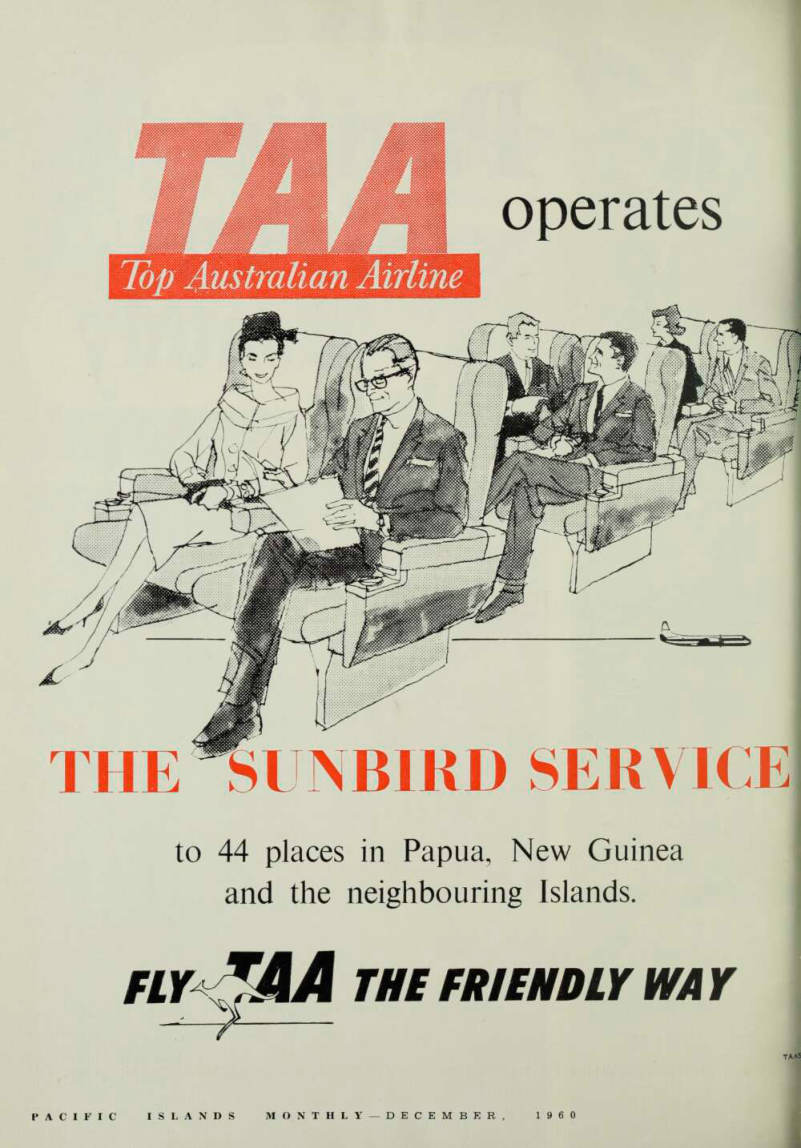 2
2 3
3 4
4 5
5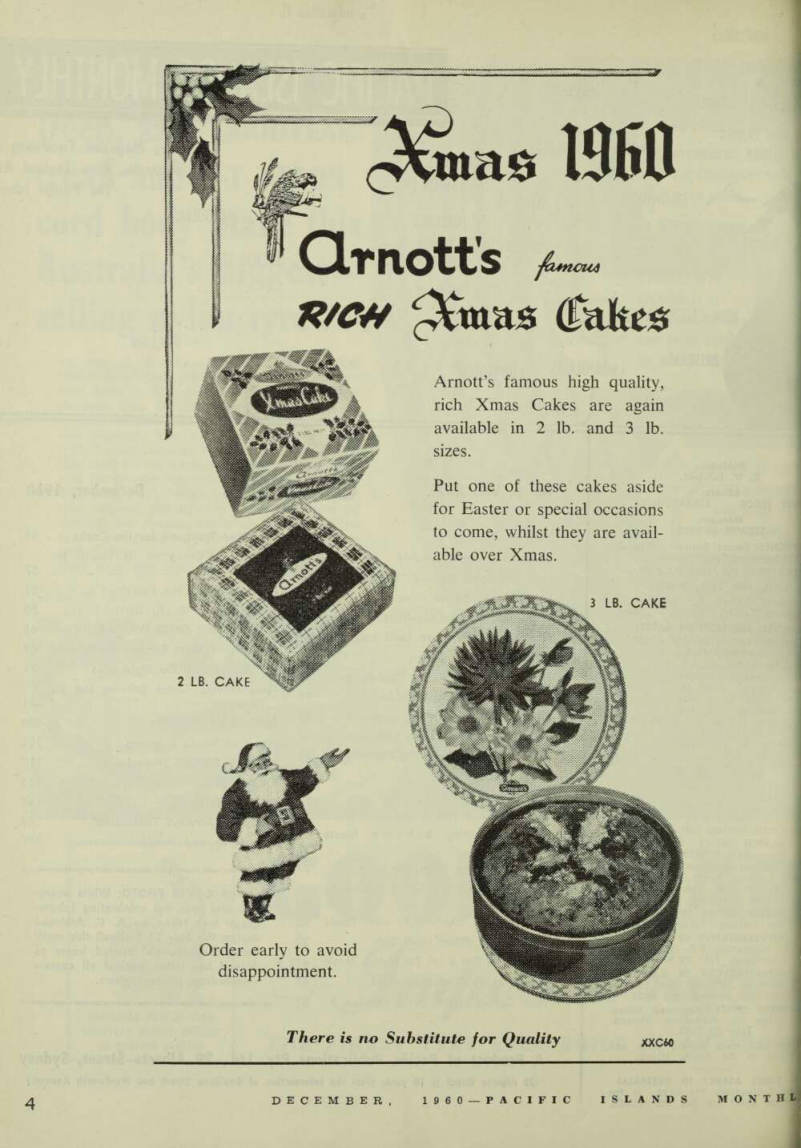 6
6 7
7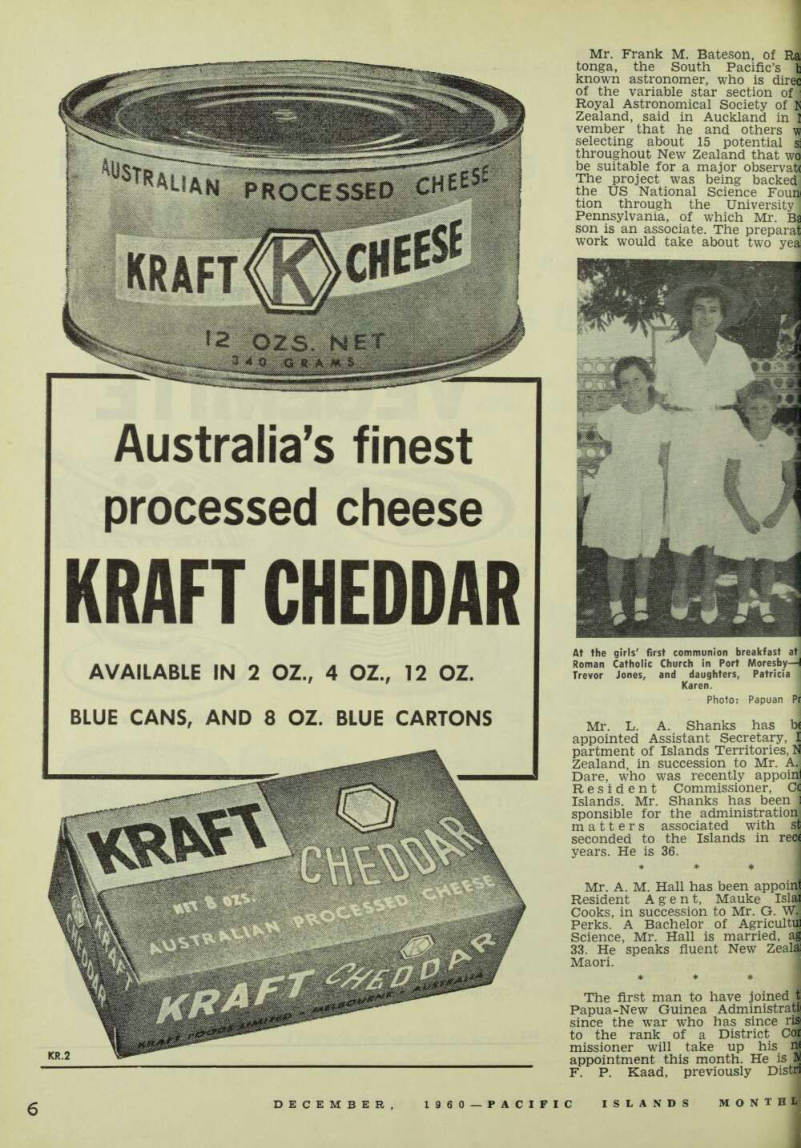 8
8 9
9 10
10 11
11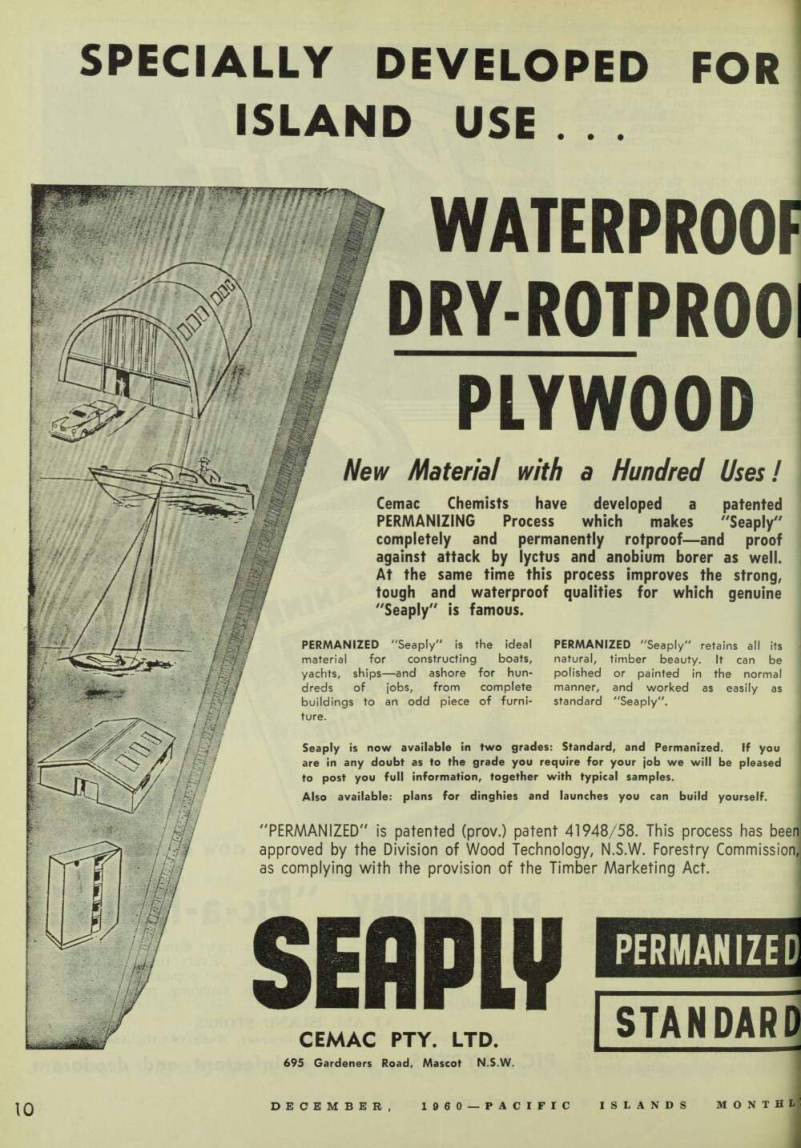 12
12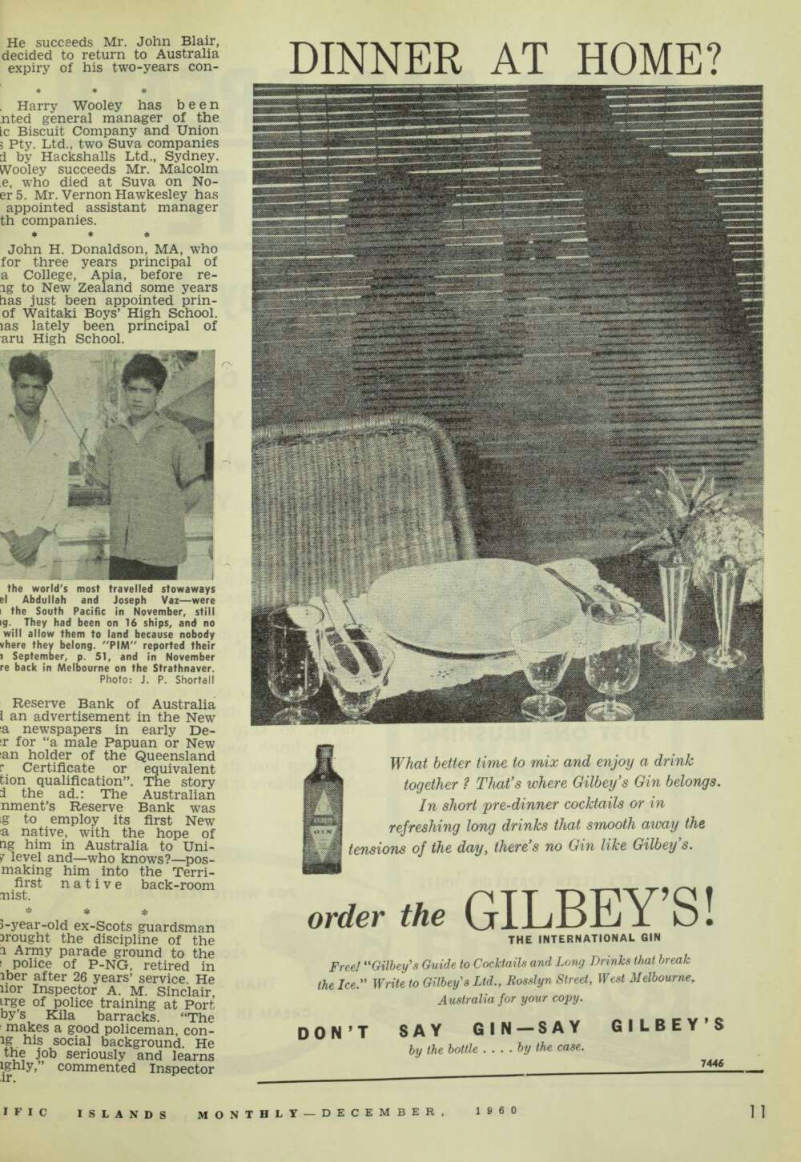 13
13 14
14 15
15 16
16 17
17 18
18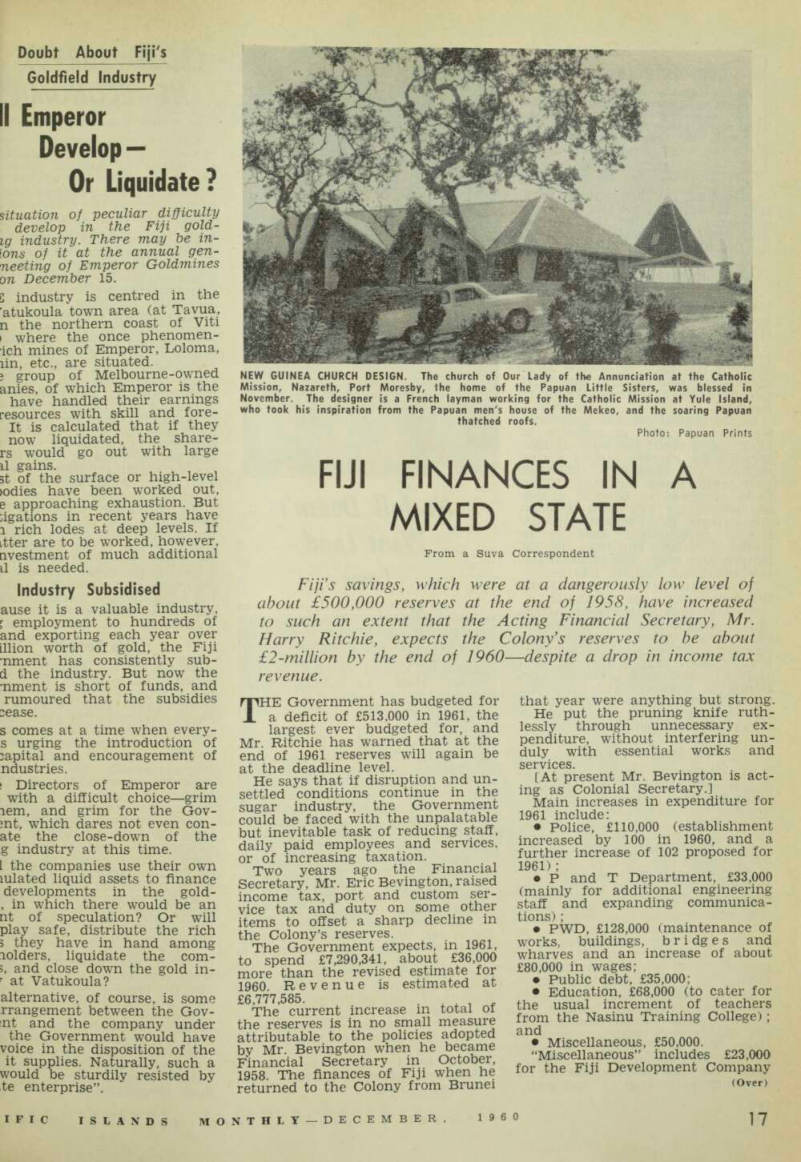 19
19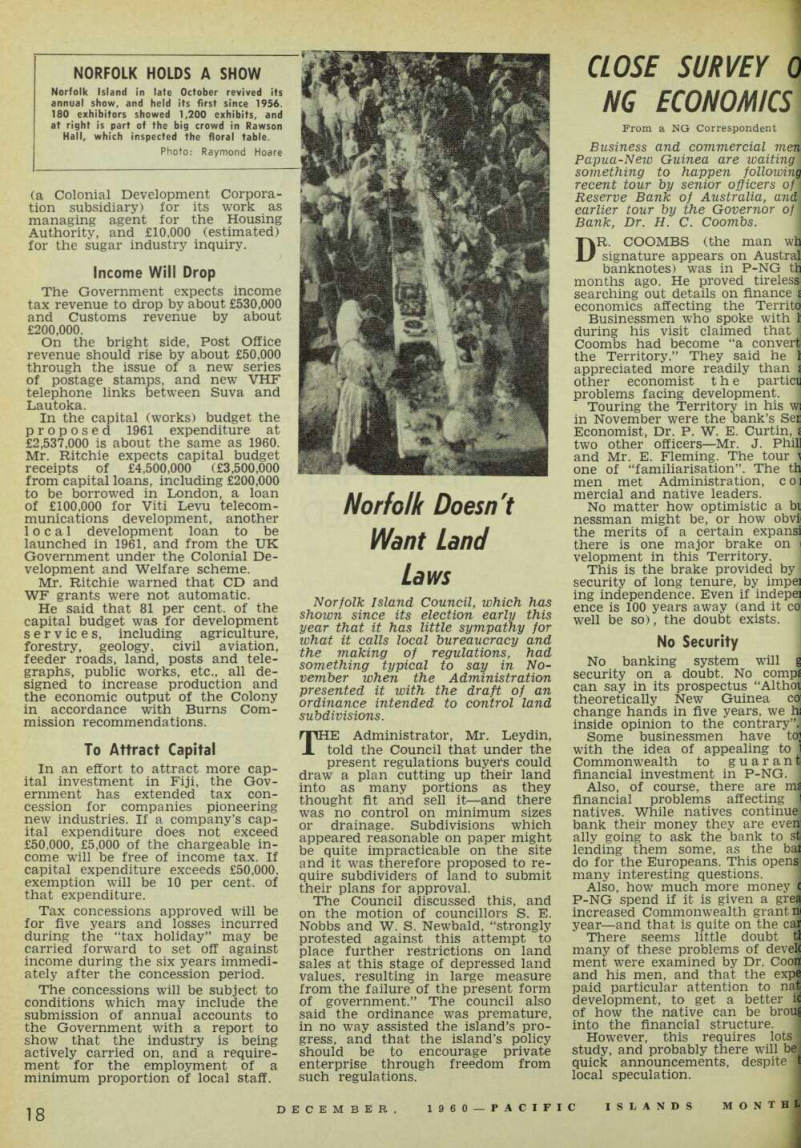 20
20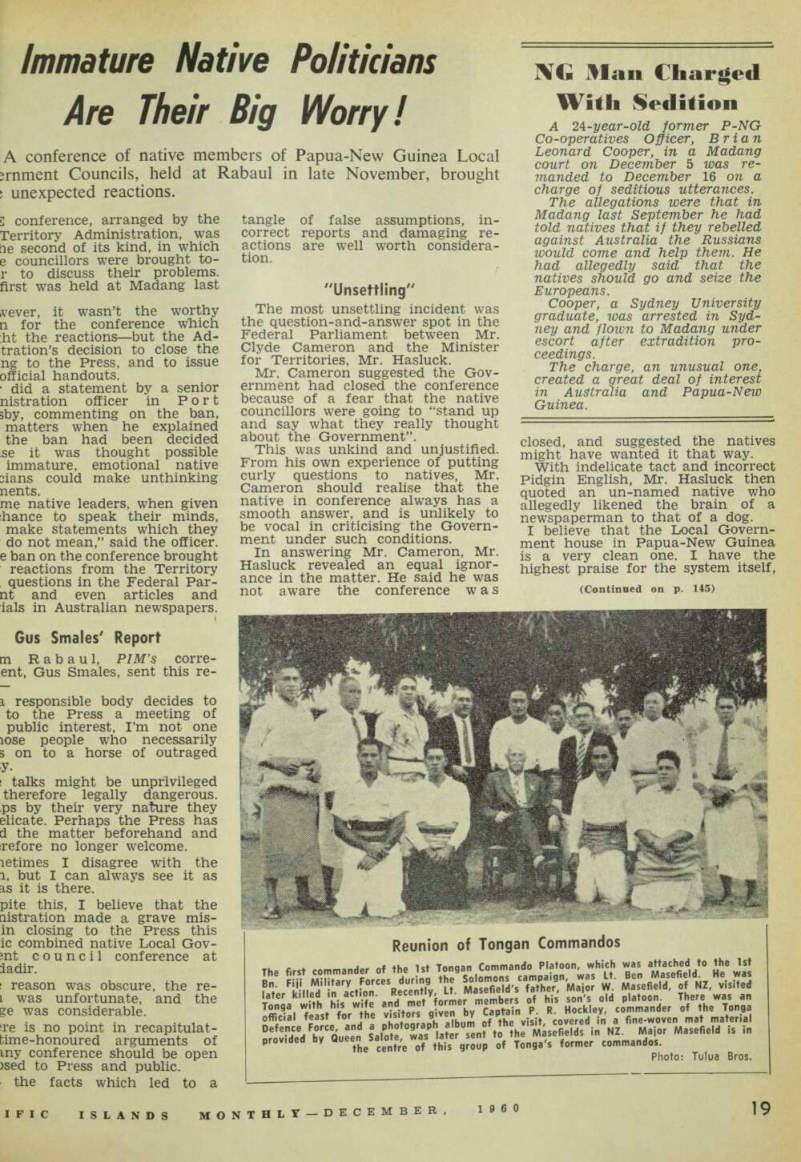 21
21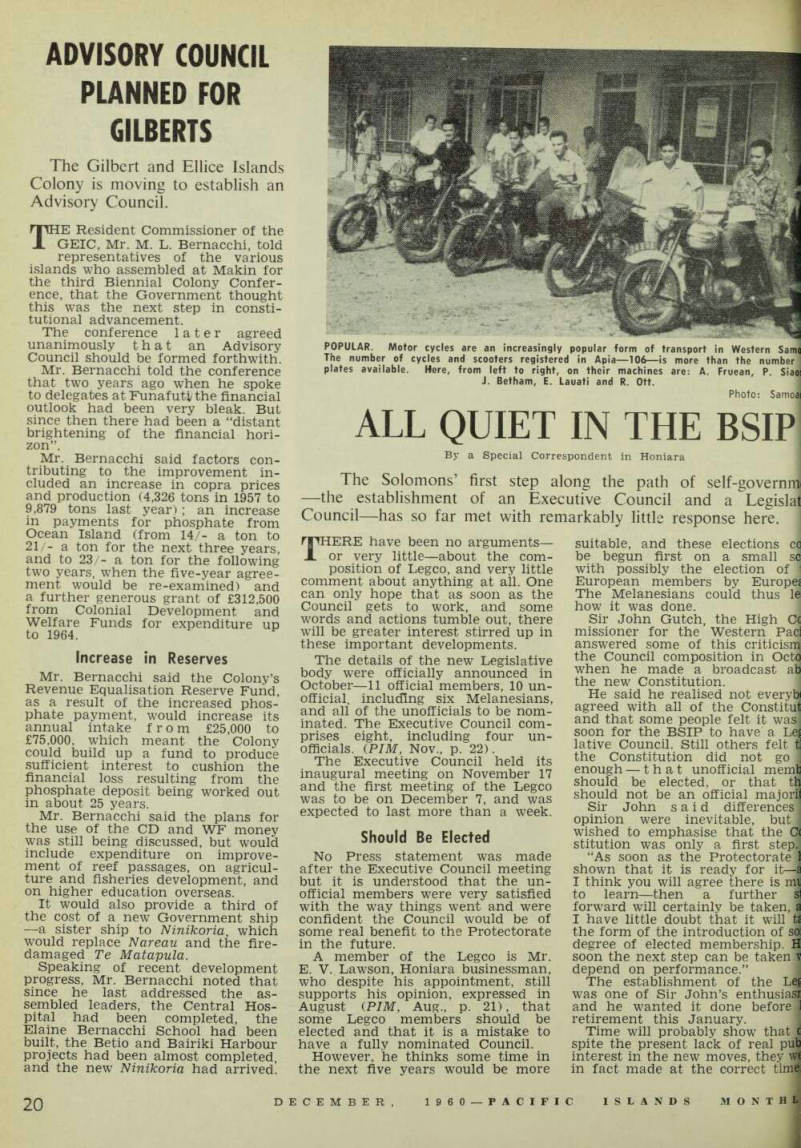 22
22 23
23 24
24 25
25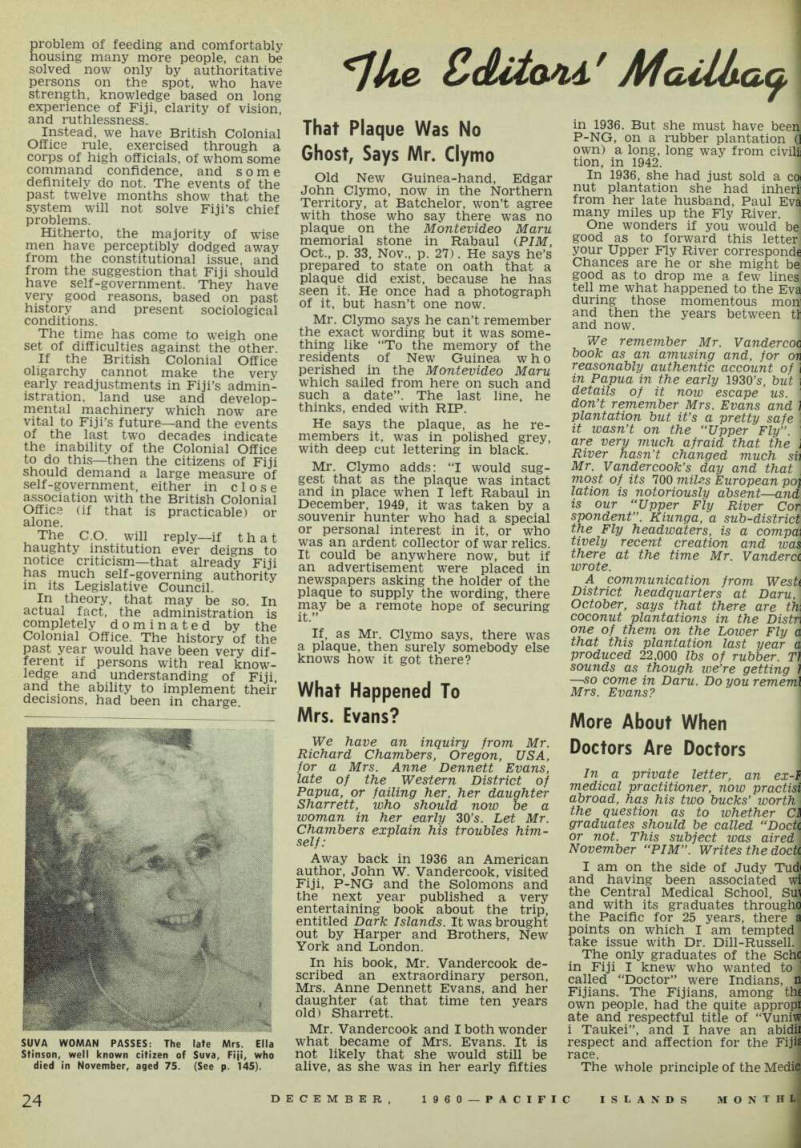 26
26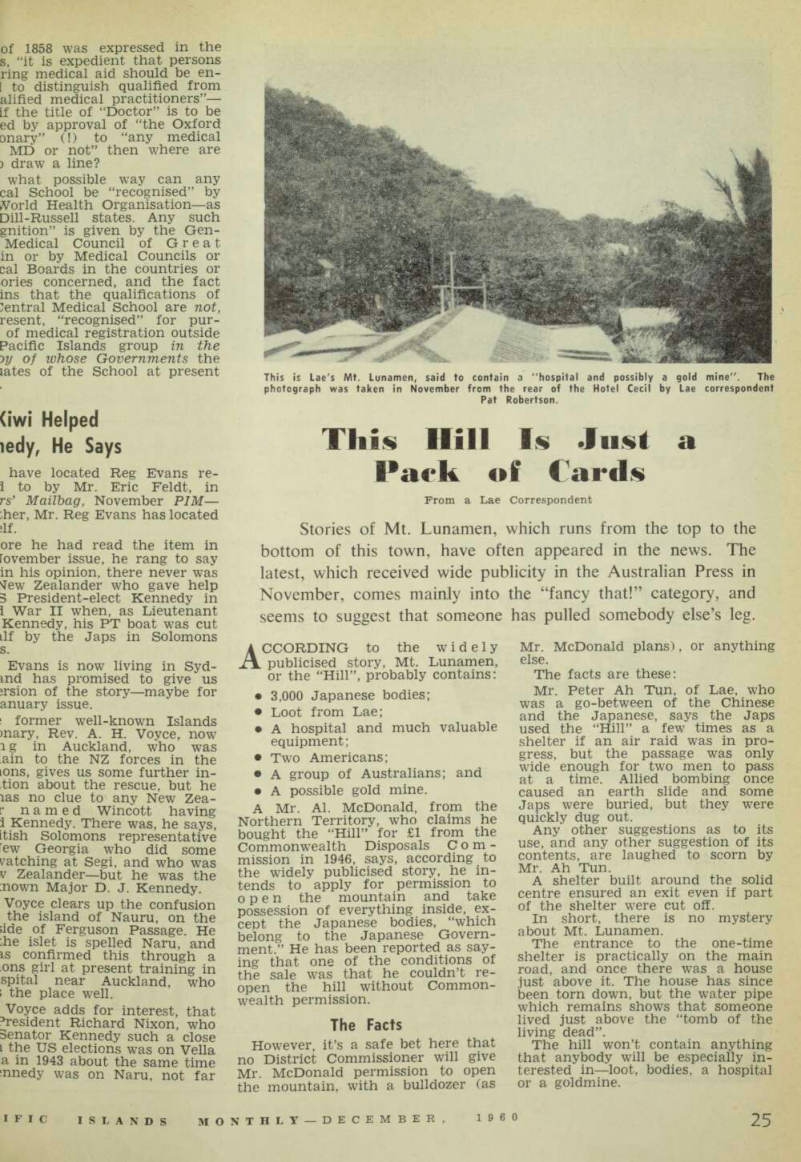 27
27 28
28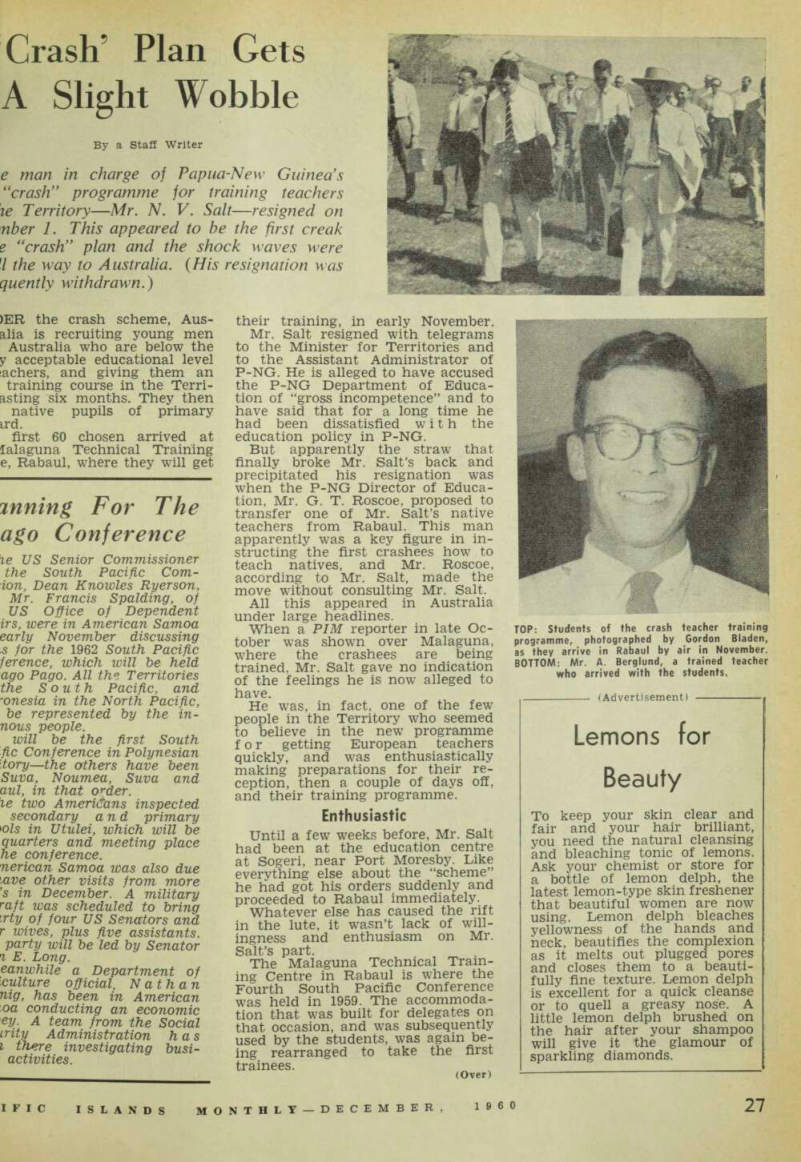 29
29 30
30 31
31 32
32 33
33 34
34 35
35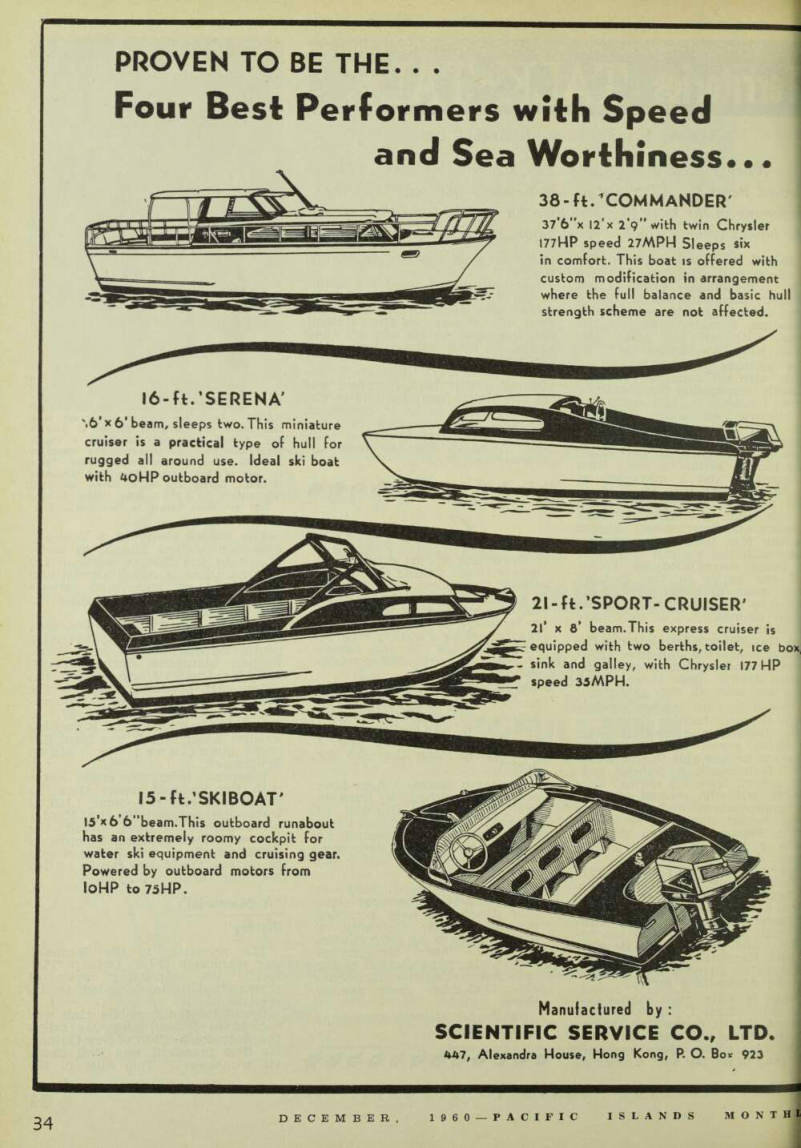 36
36 37
37 38
38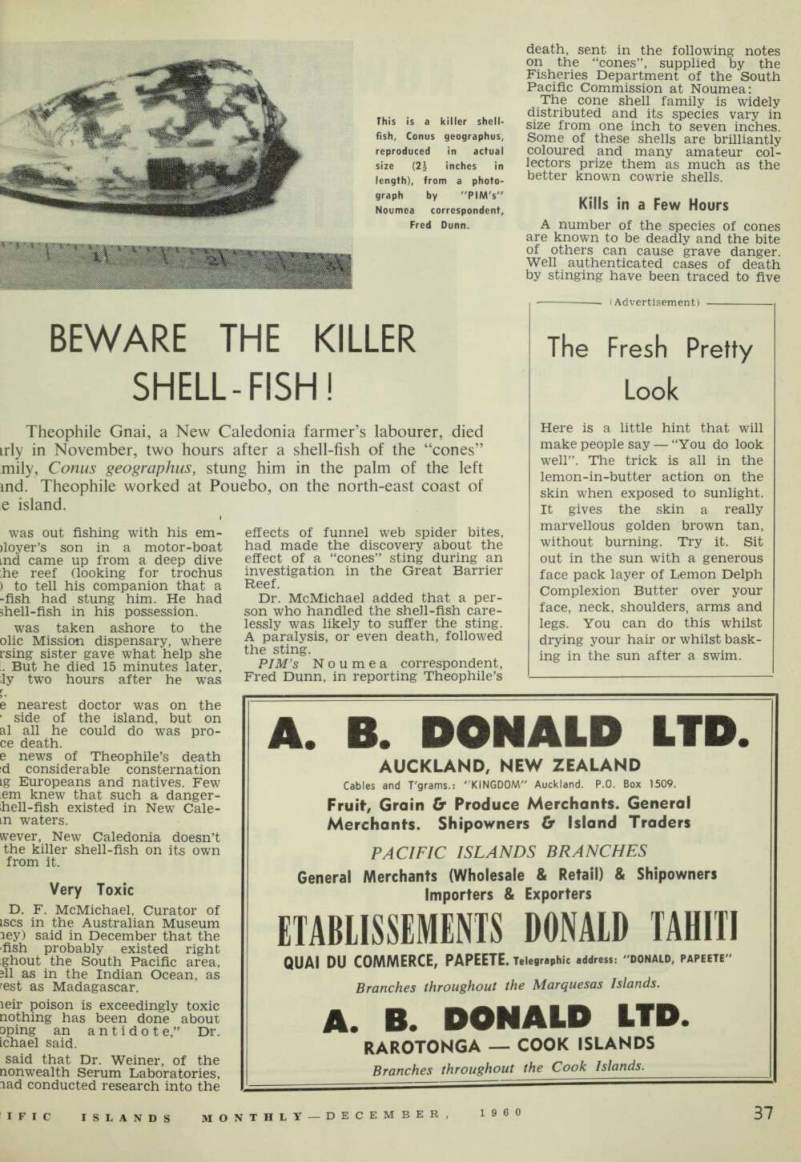 39
39 40
40 41
41 42
42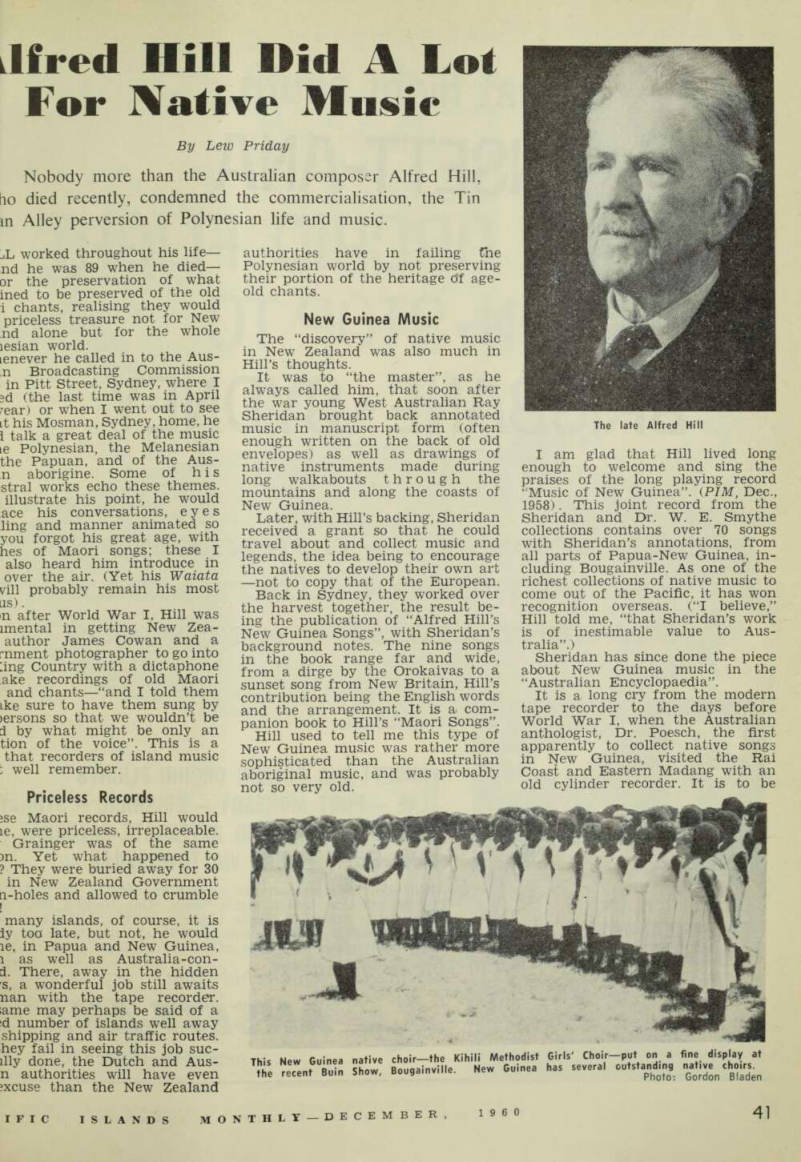 43
43 44
44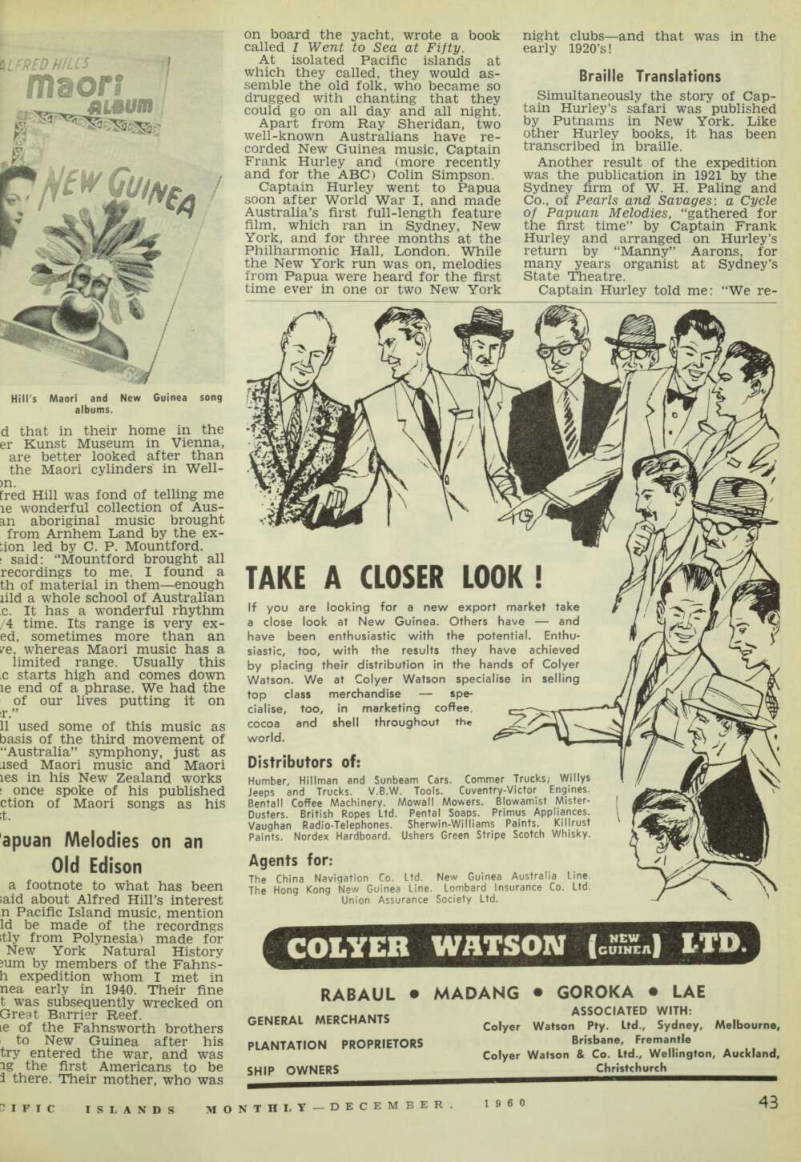 45
45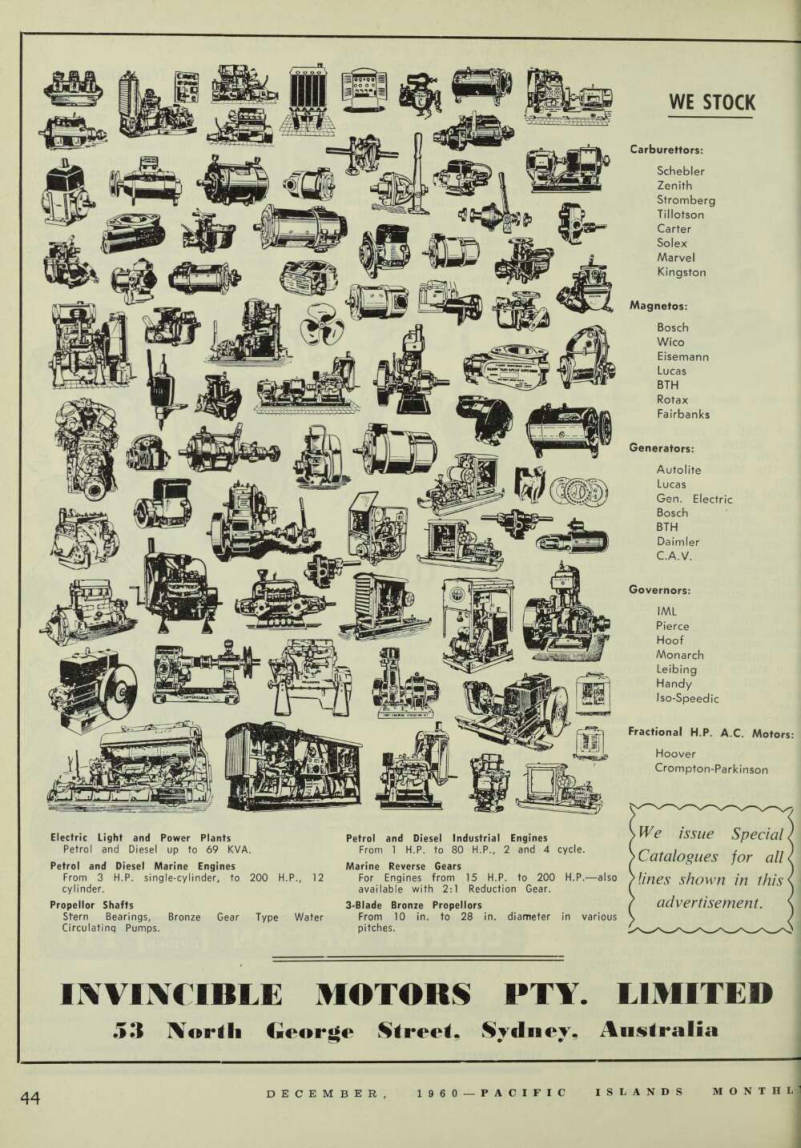 46
46 47
47 48
48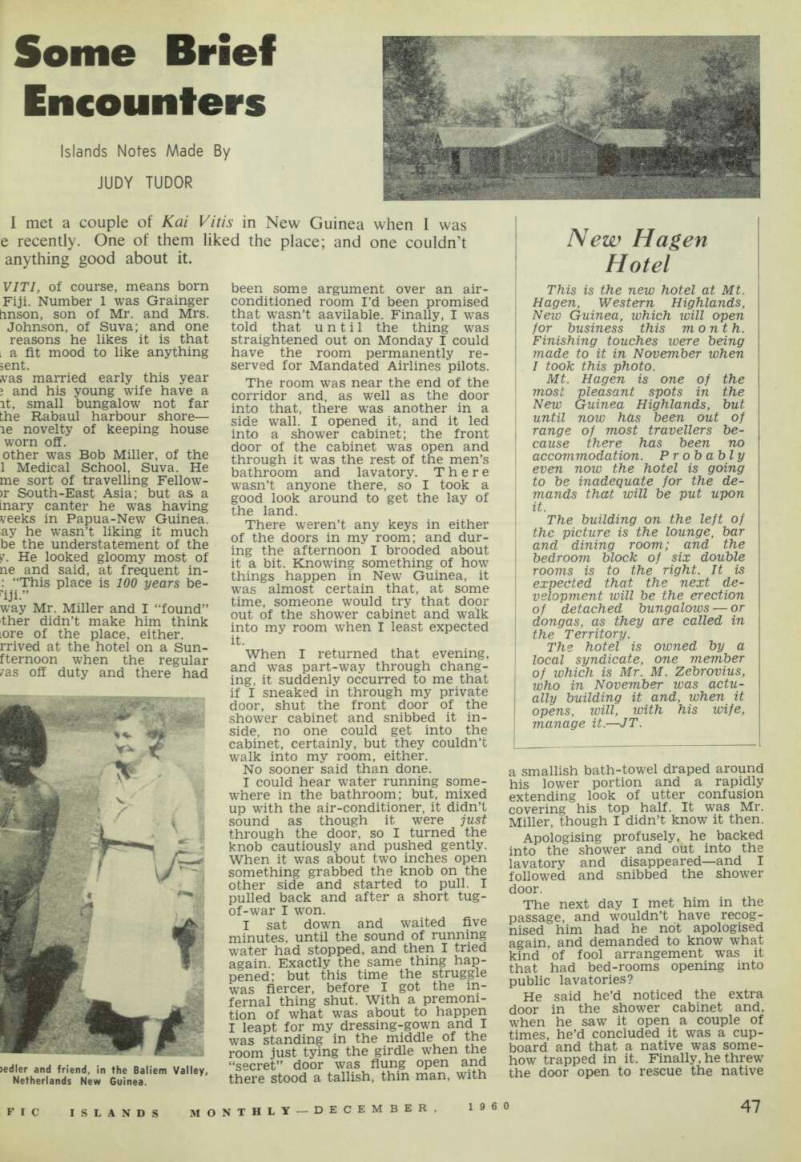 49
49 50
50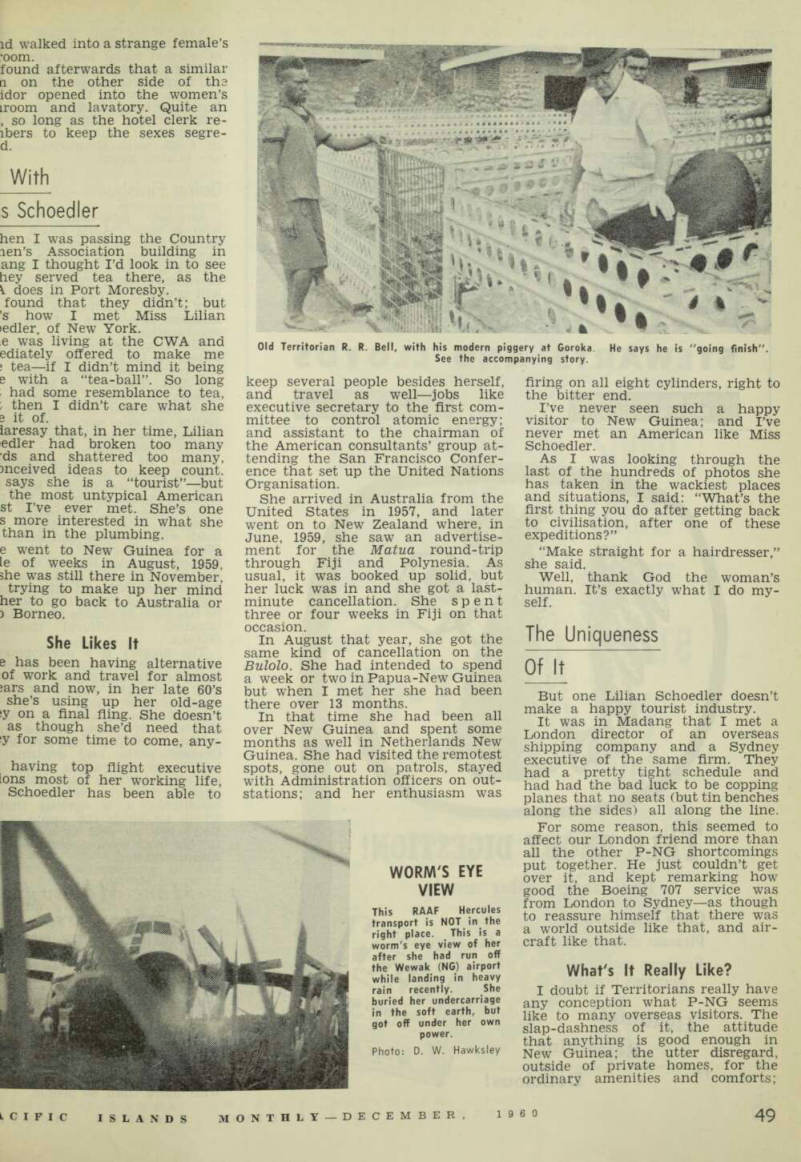 51
51 52
52 53
53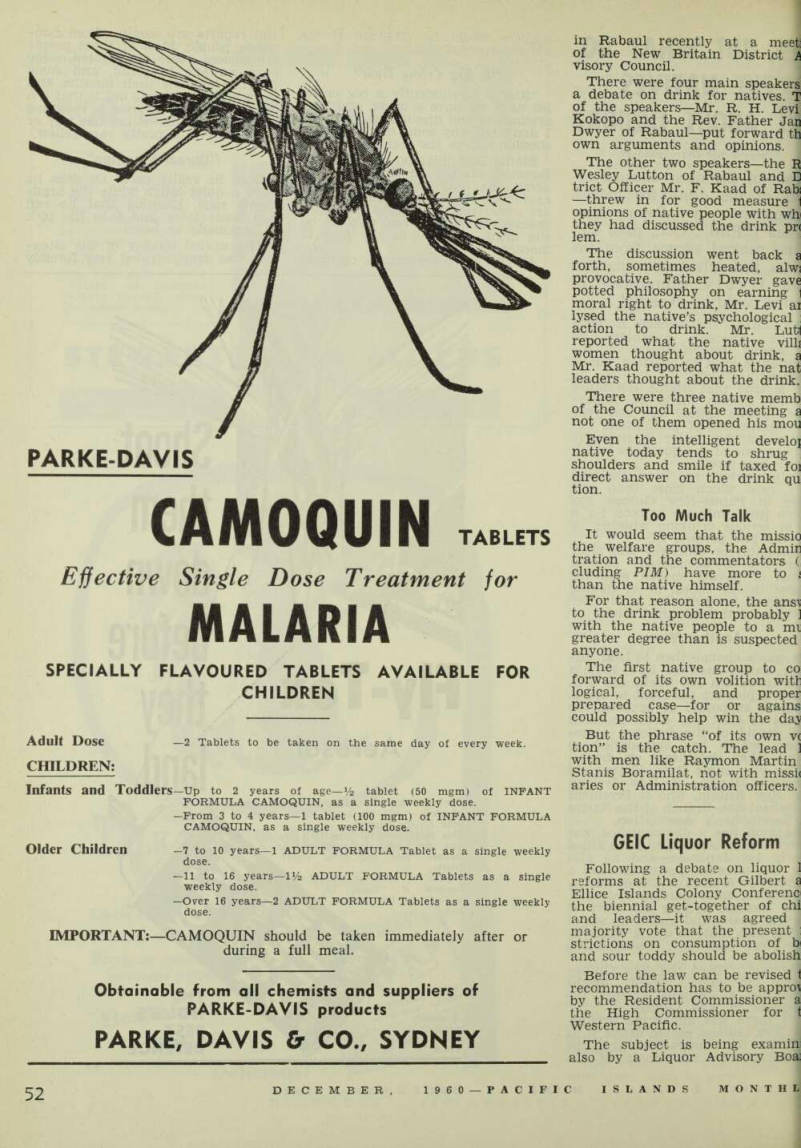 54
54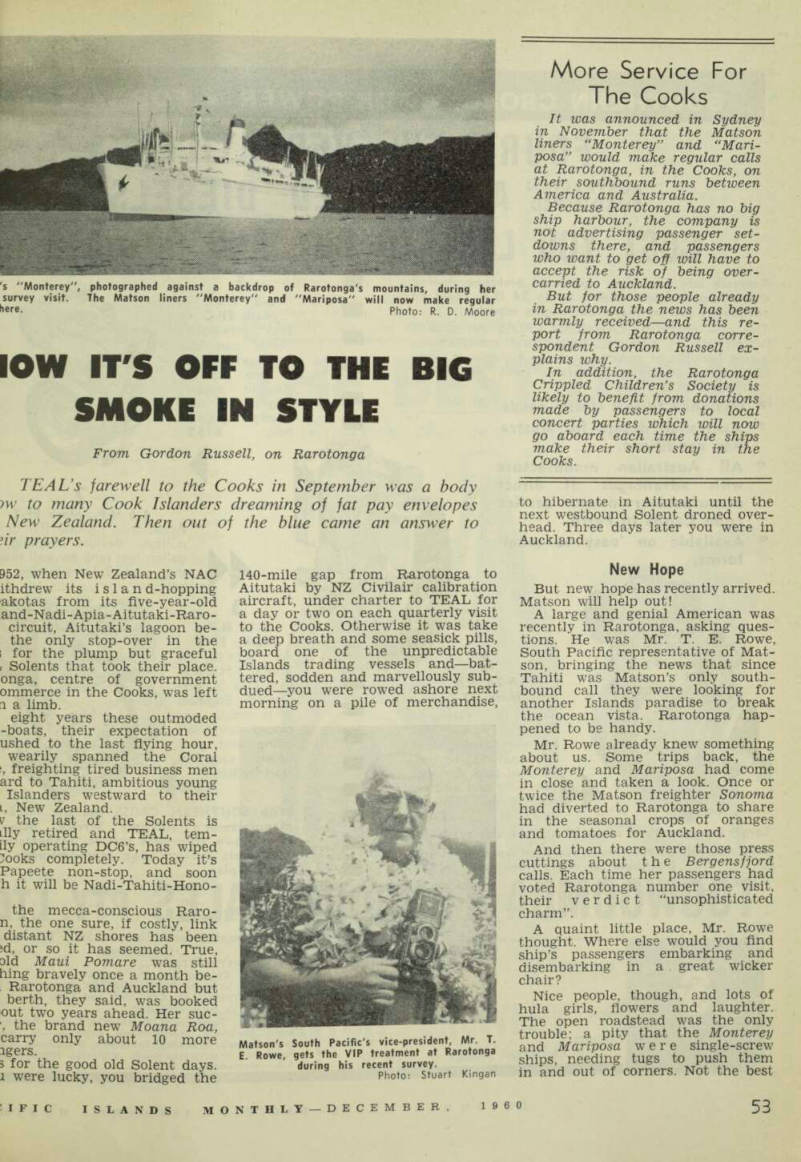 55
55 56
56 57
57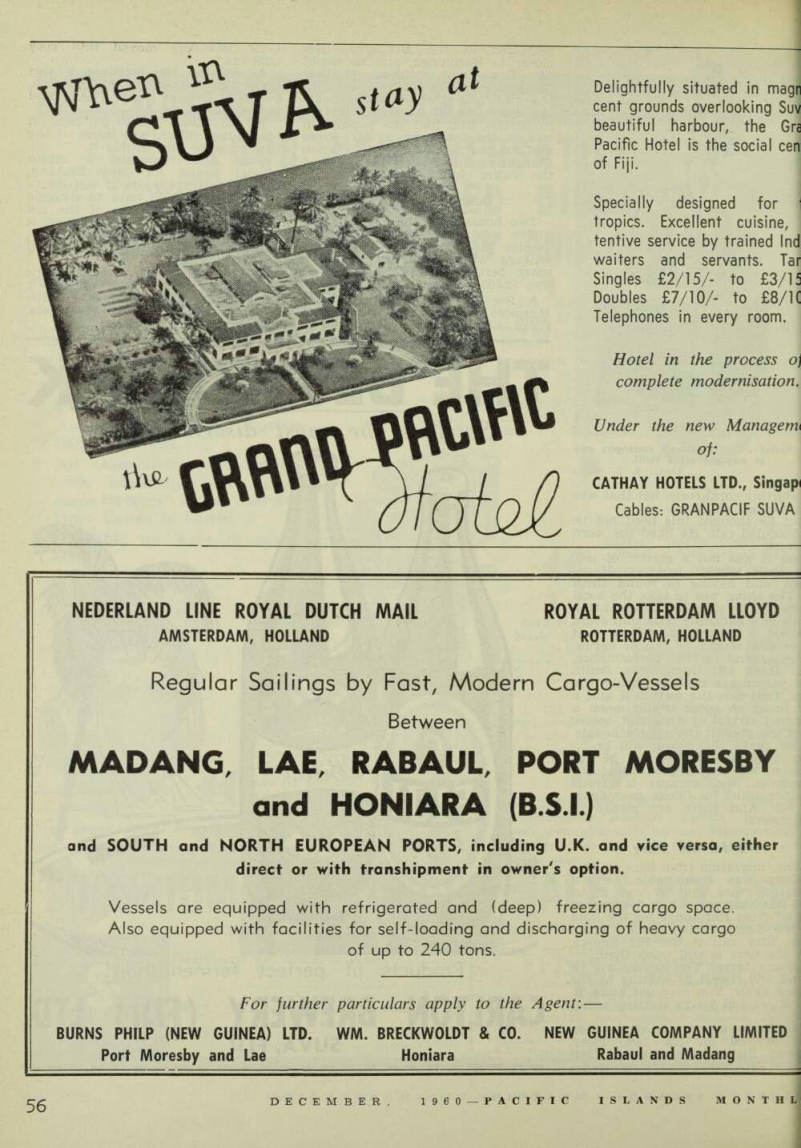 58
58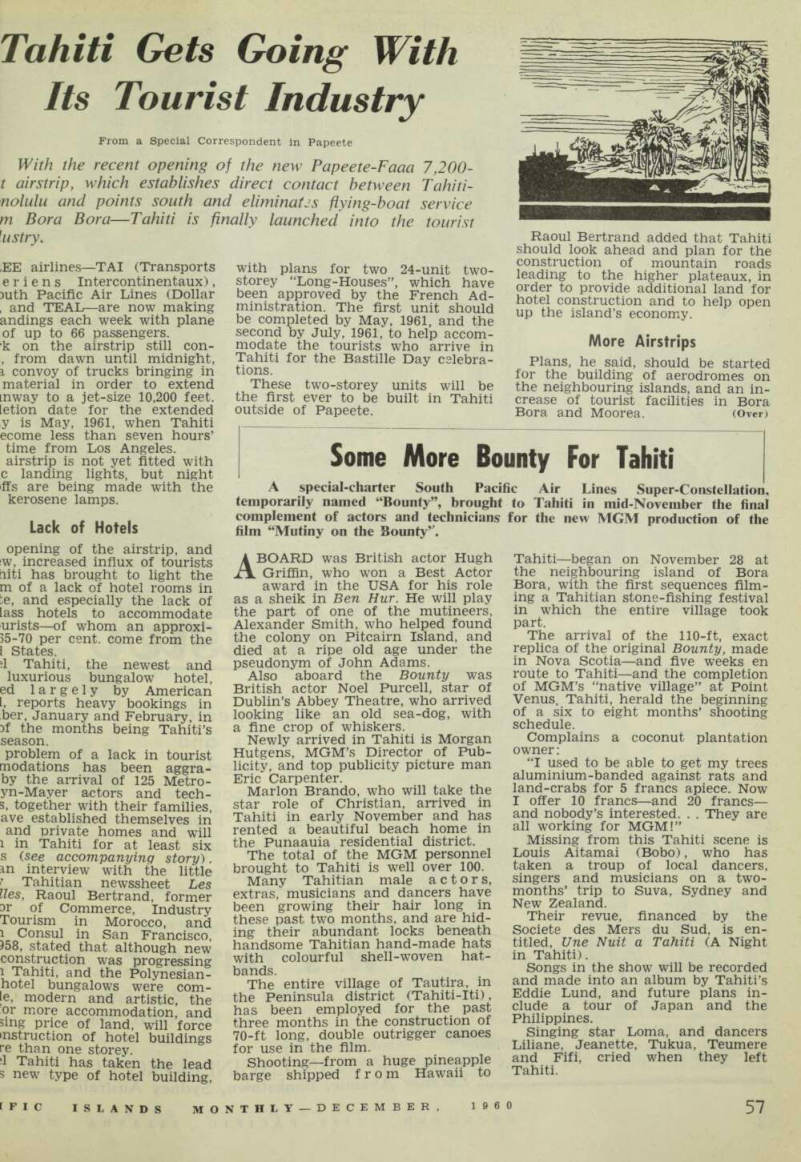 59
59 60
60 61
61 62
62 63
63 64
64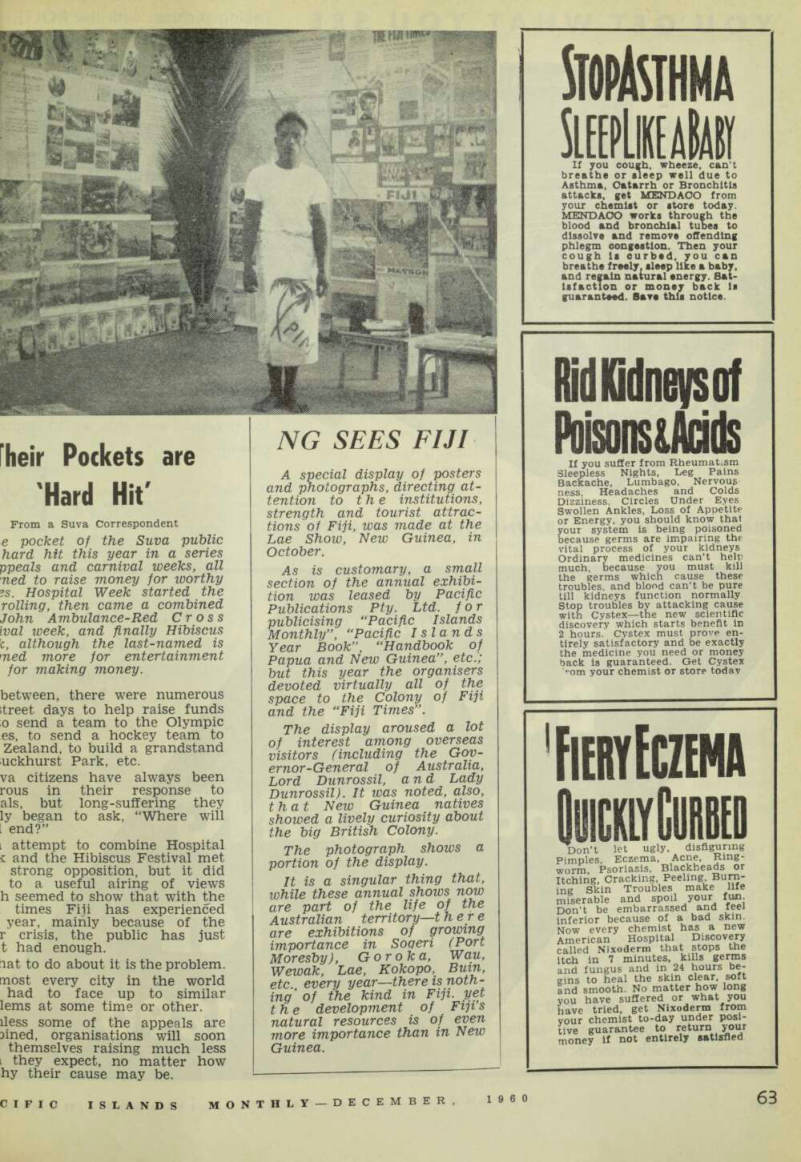 65
65 66
66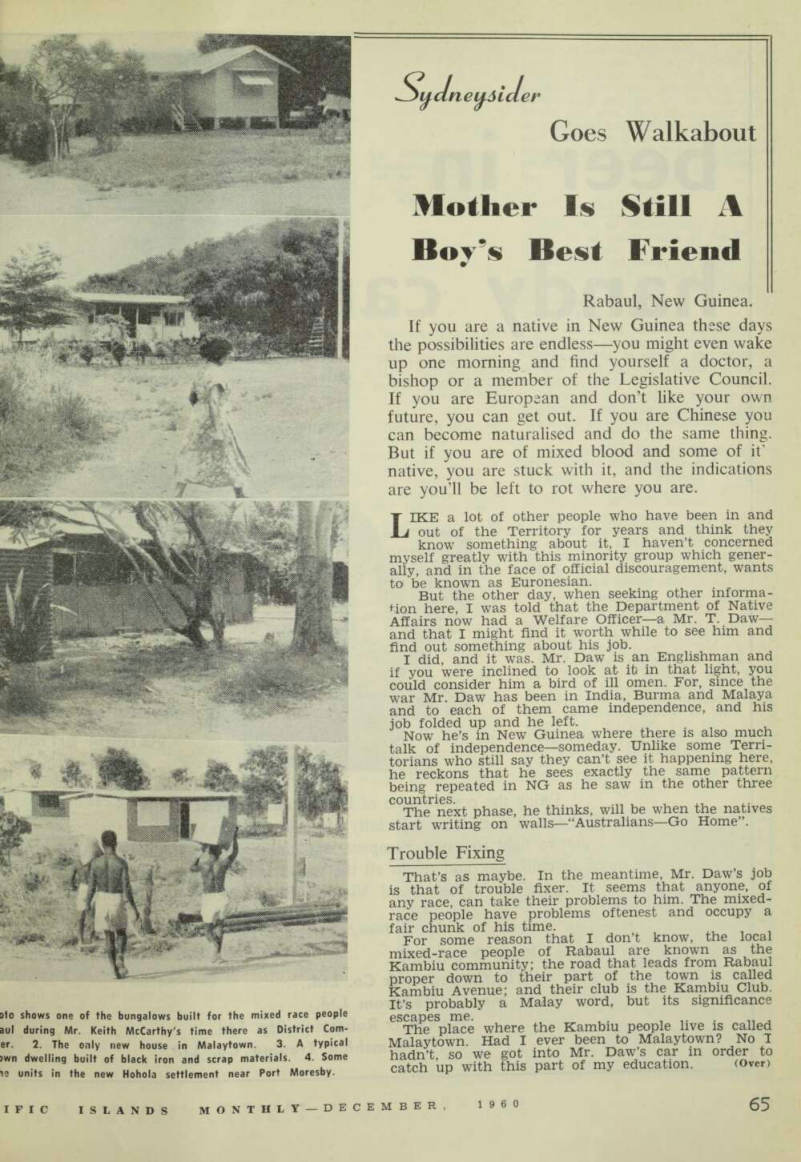 67
67 68
68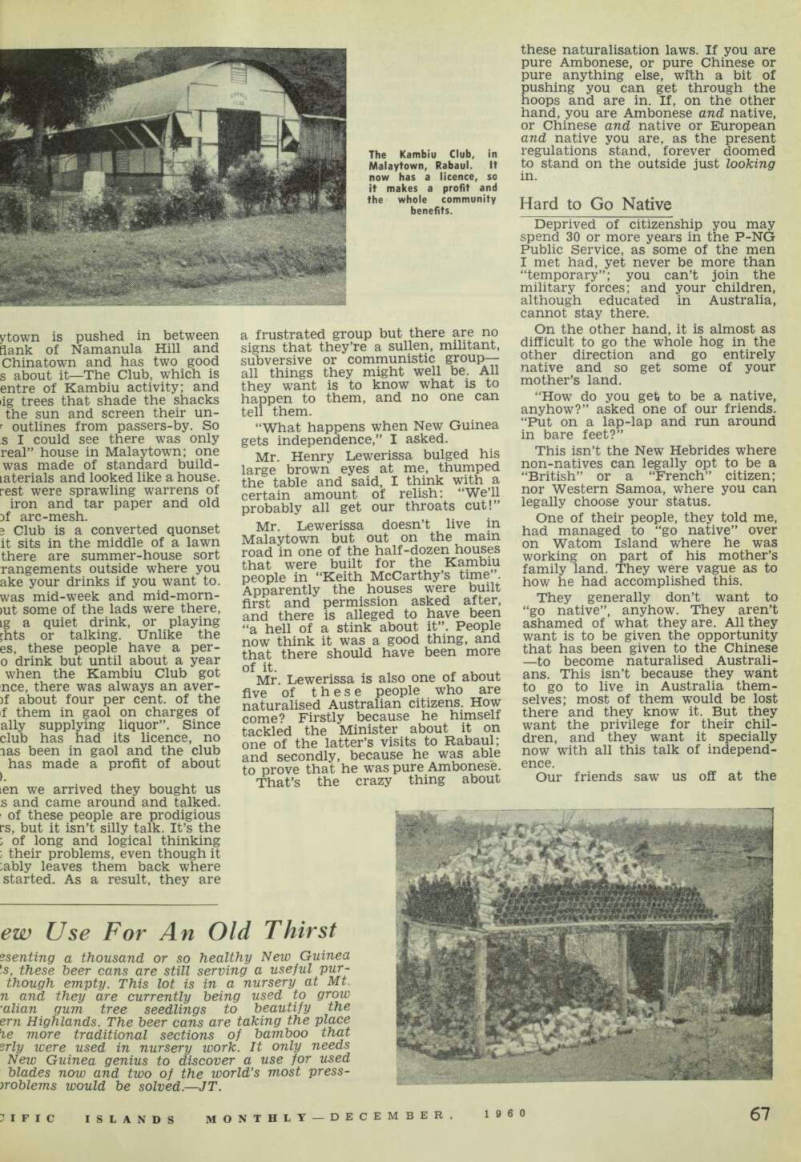 69
69 70
70 71
71 72
72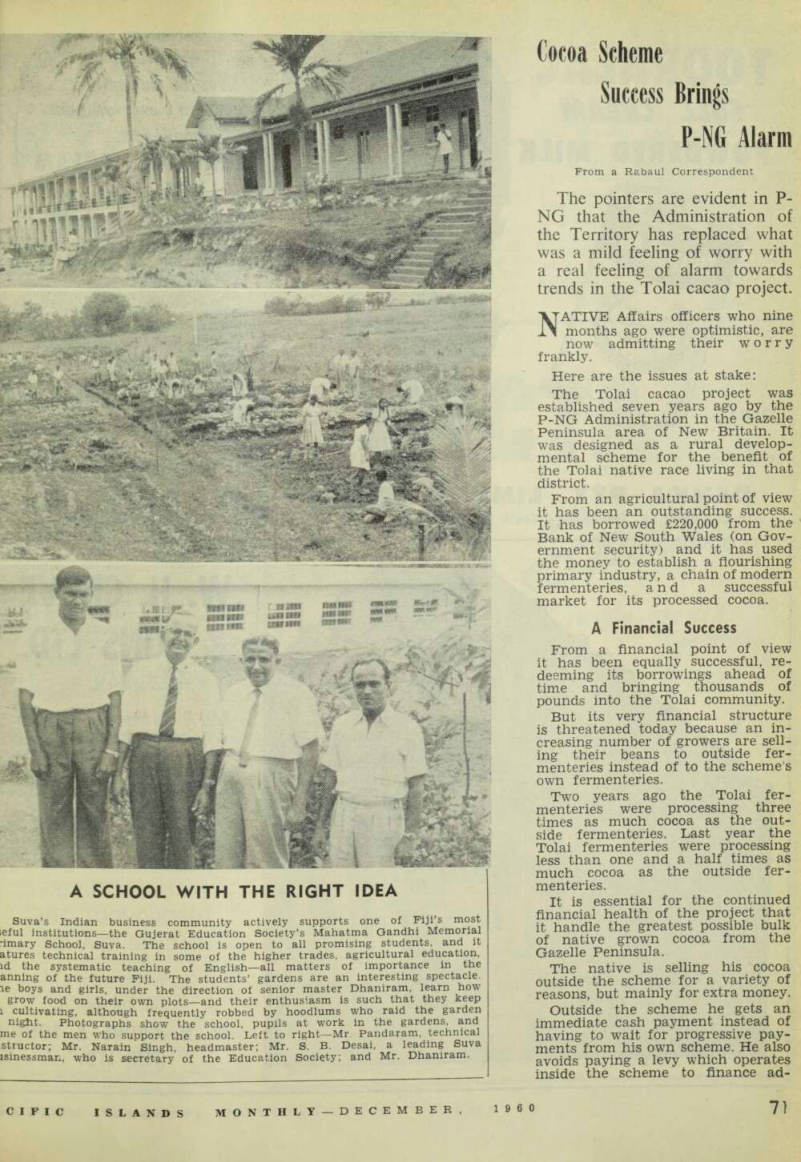 73
73 74
74 75
75 76
76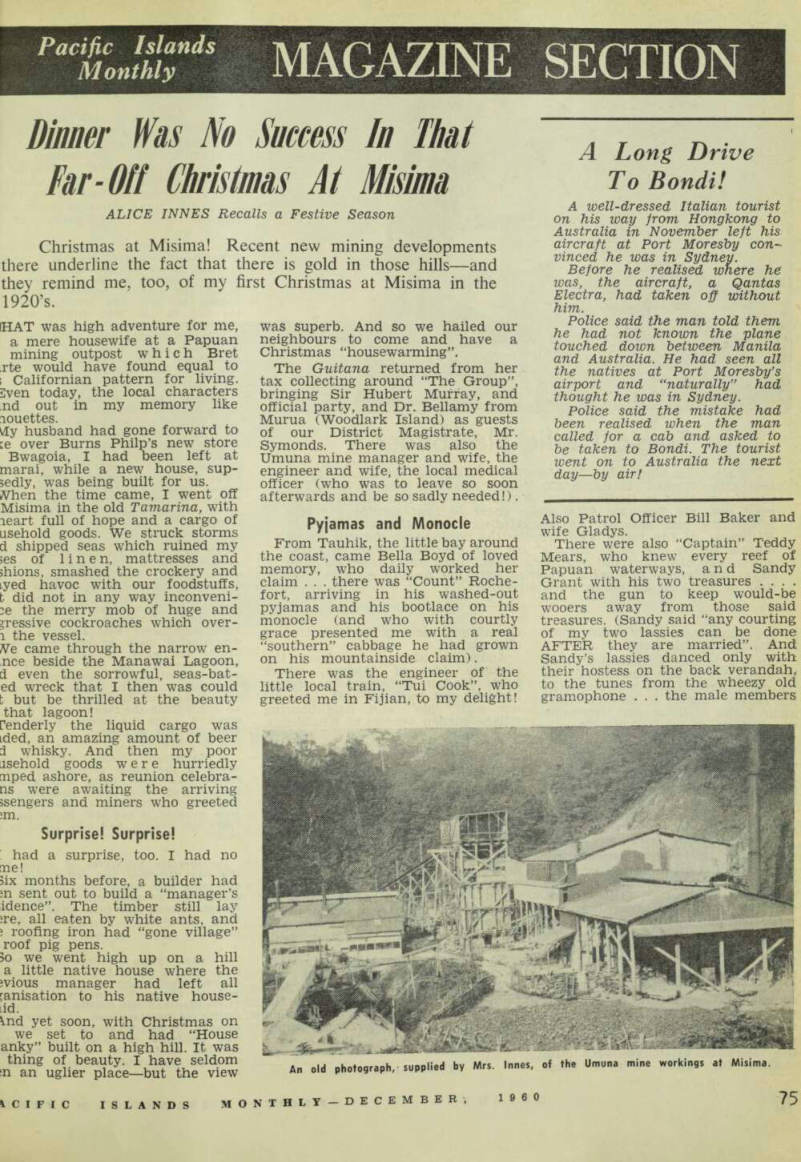 77
77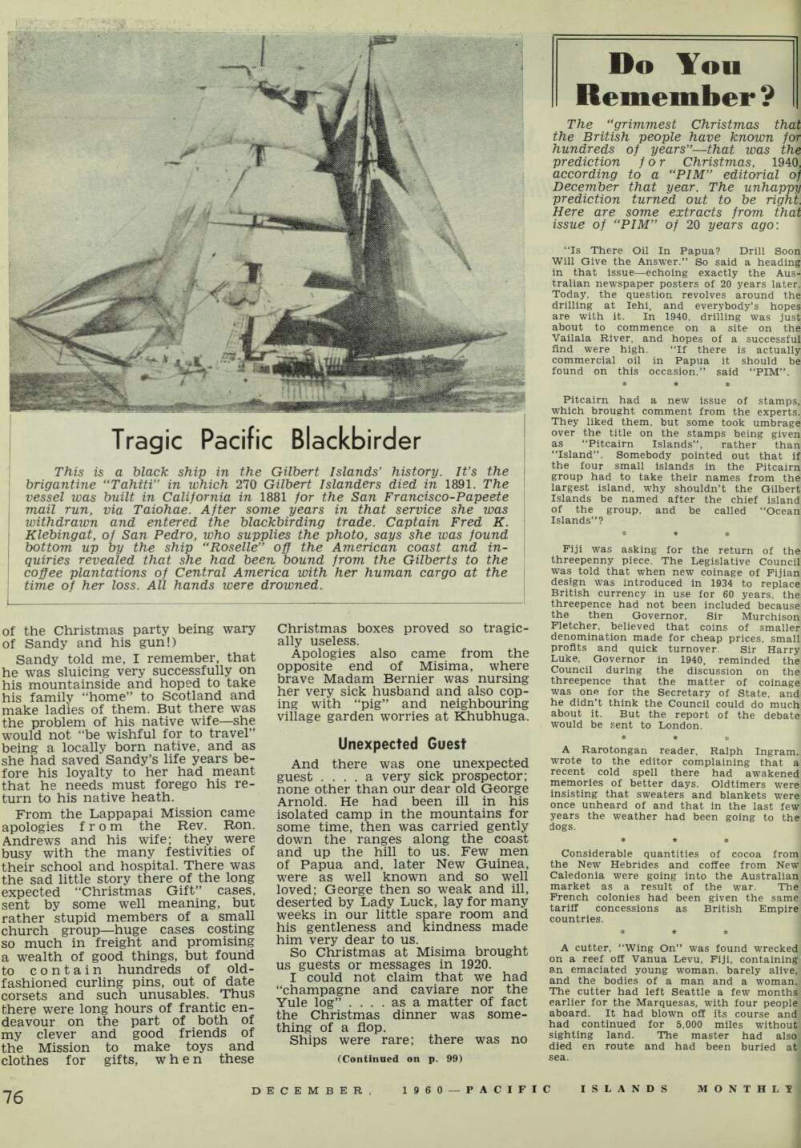 78
78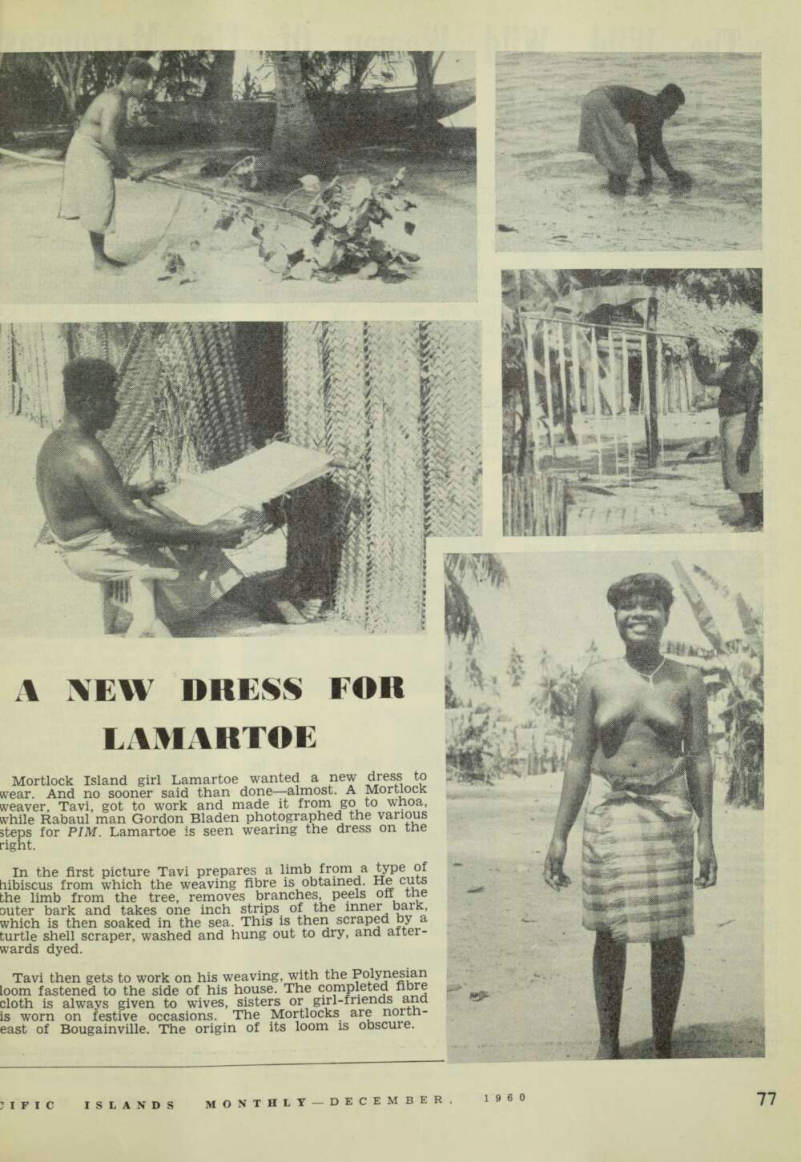 79
79 80
80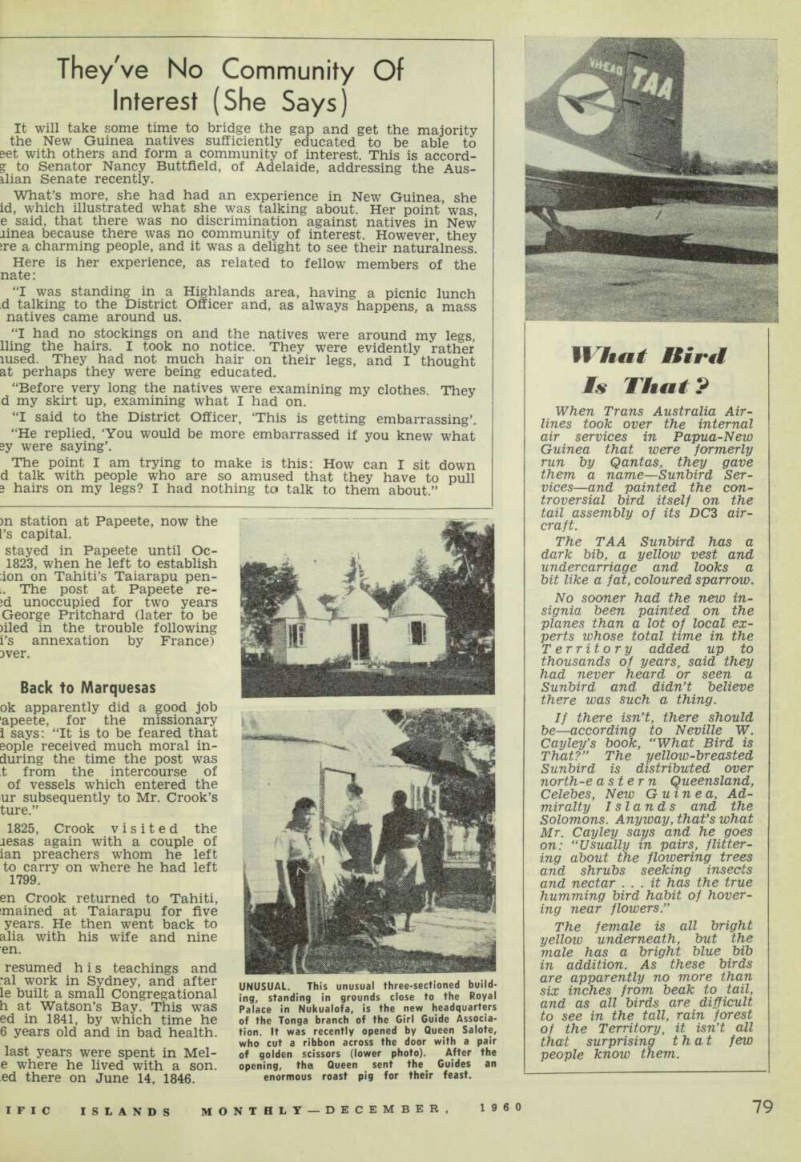 81
81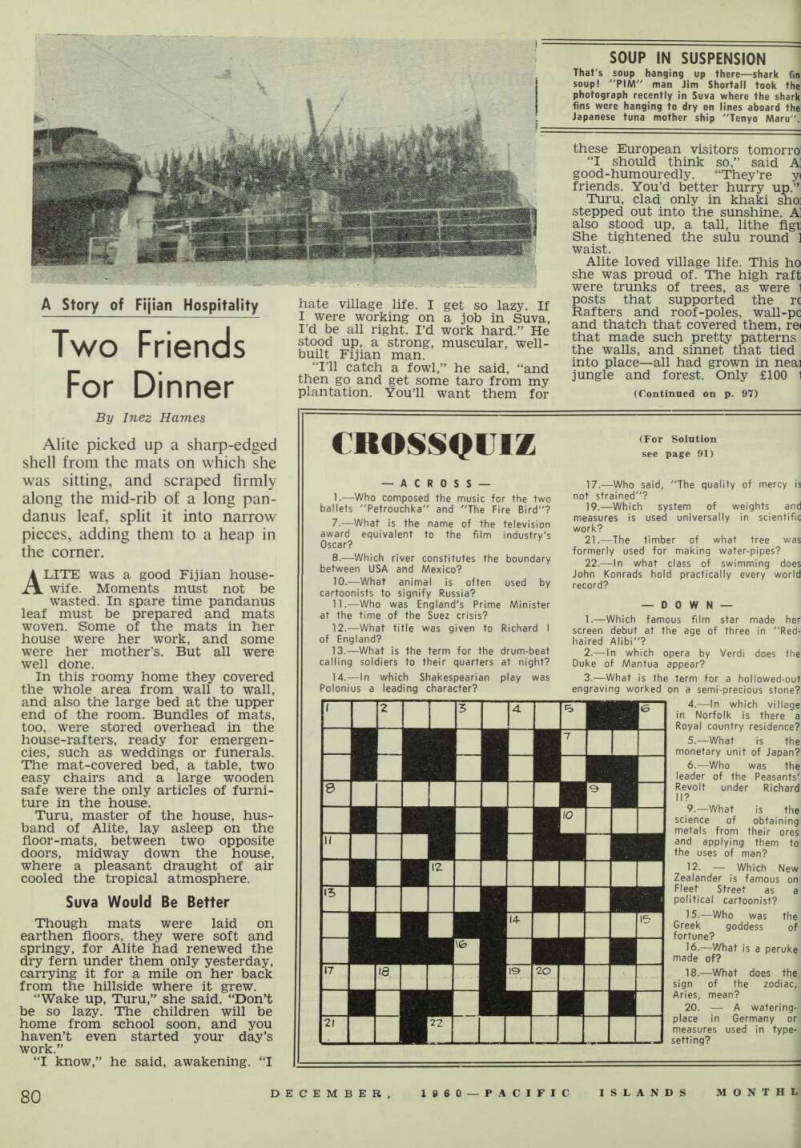 82
82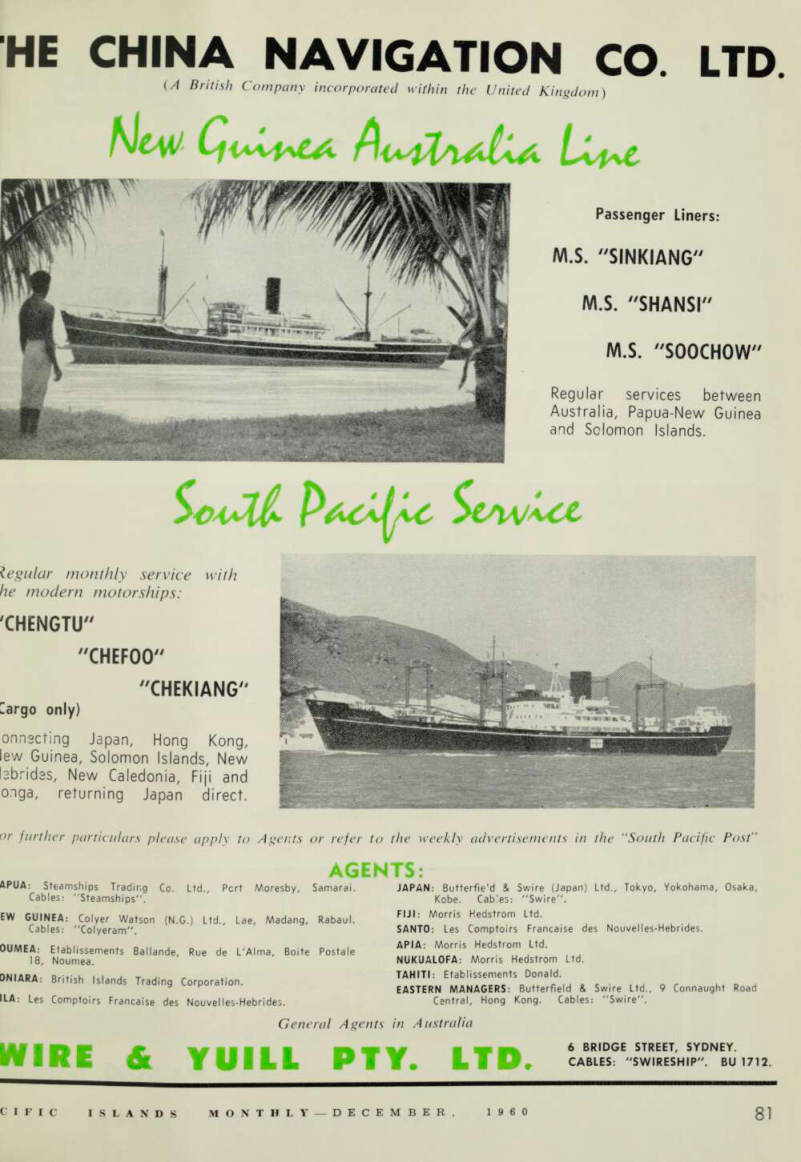 83
83 84
84 85
85 86
86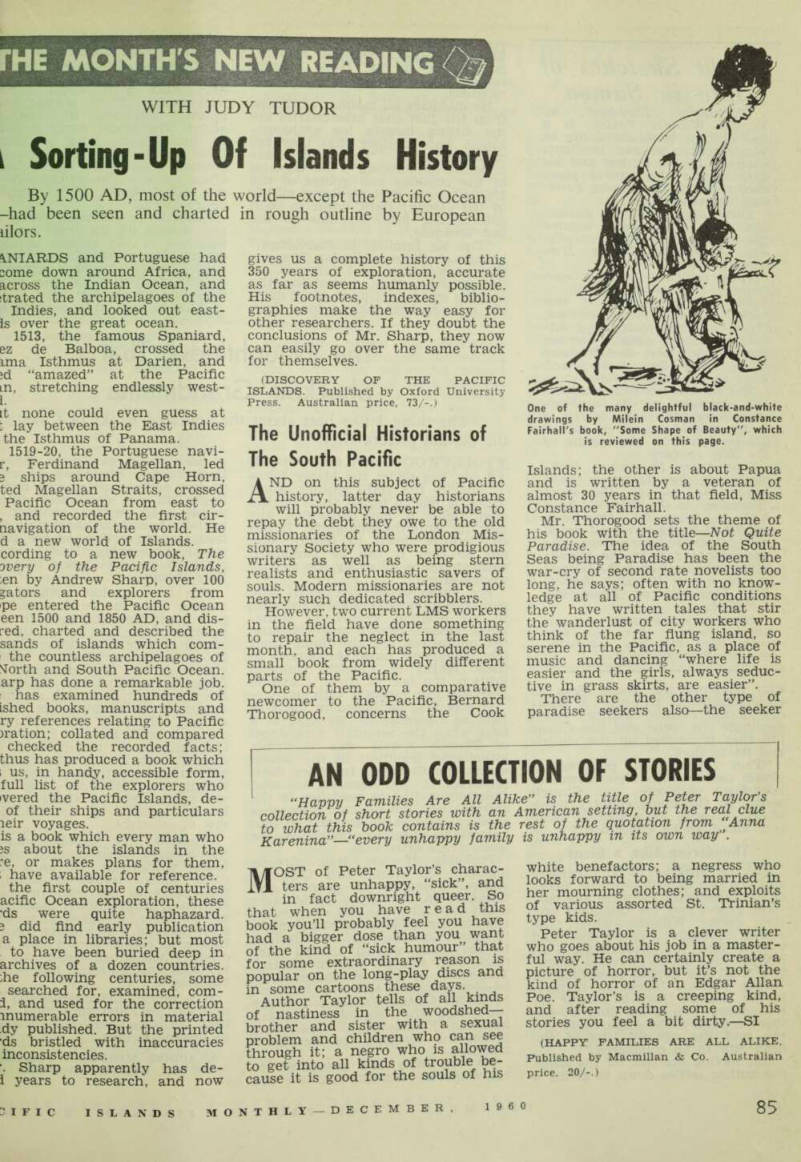 87
87 88
88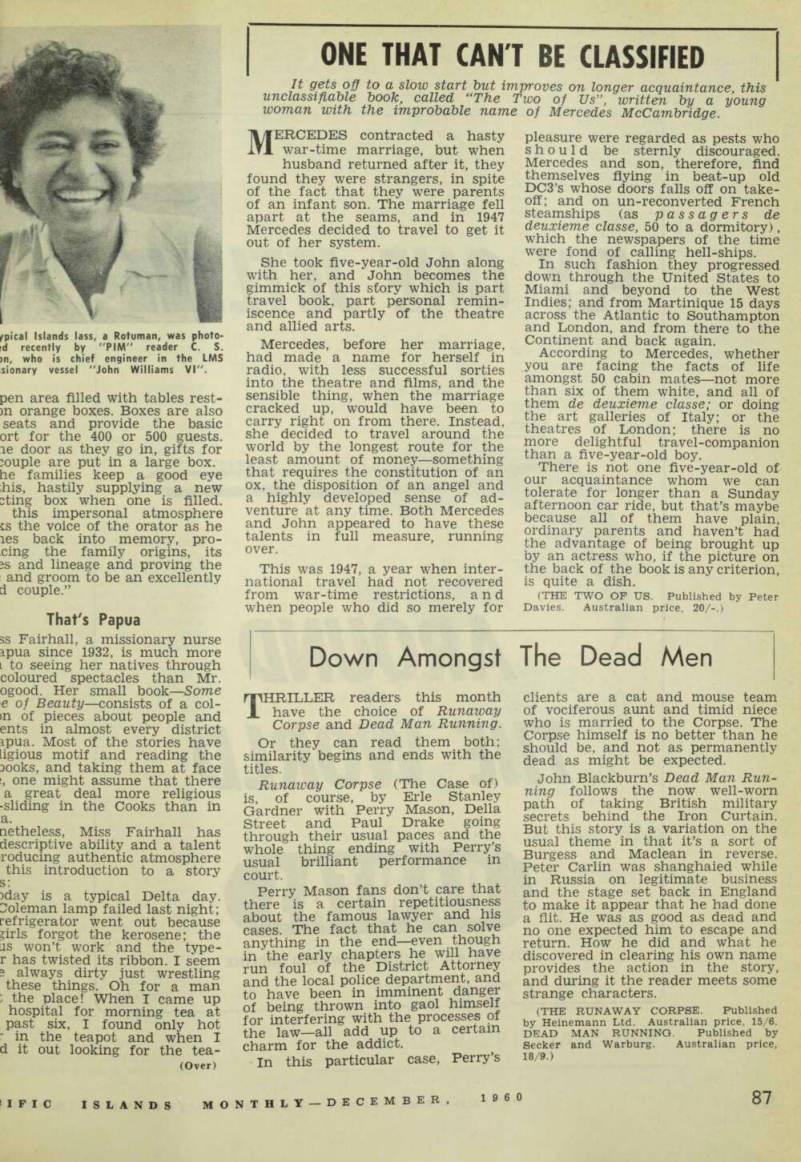 89
89 90
90 91
91 92
92 93
93 94
94 95
95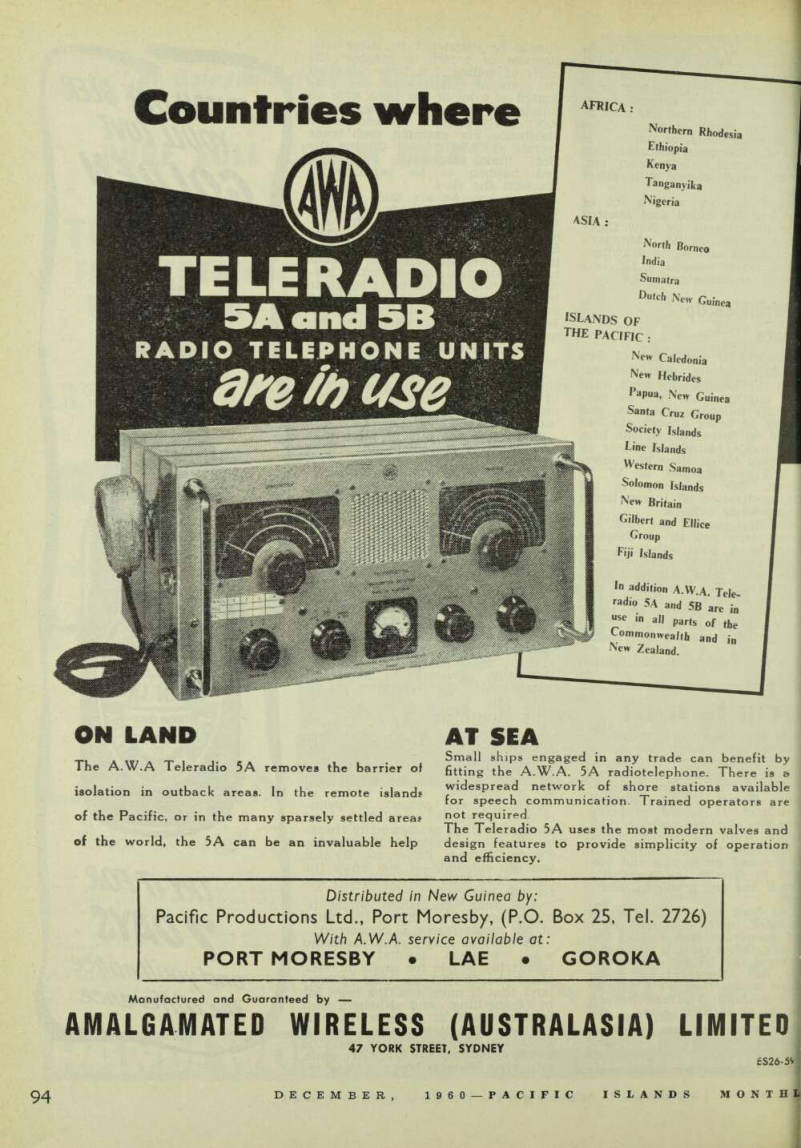 96
96 97
97 98
98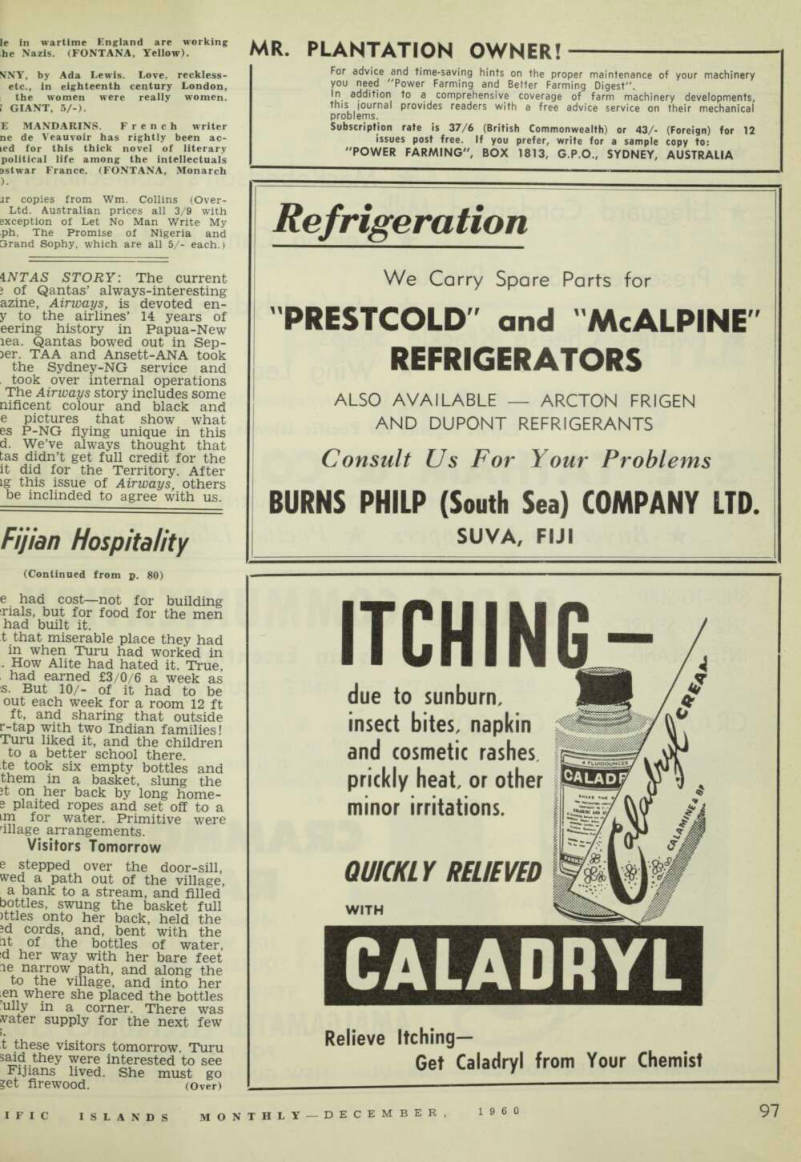 99
99 100
100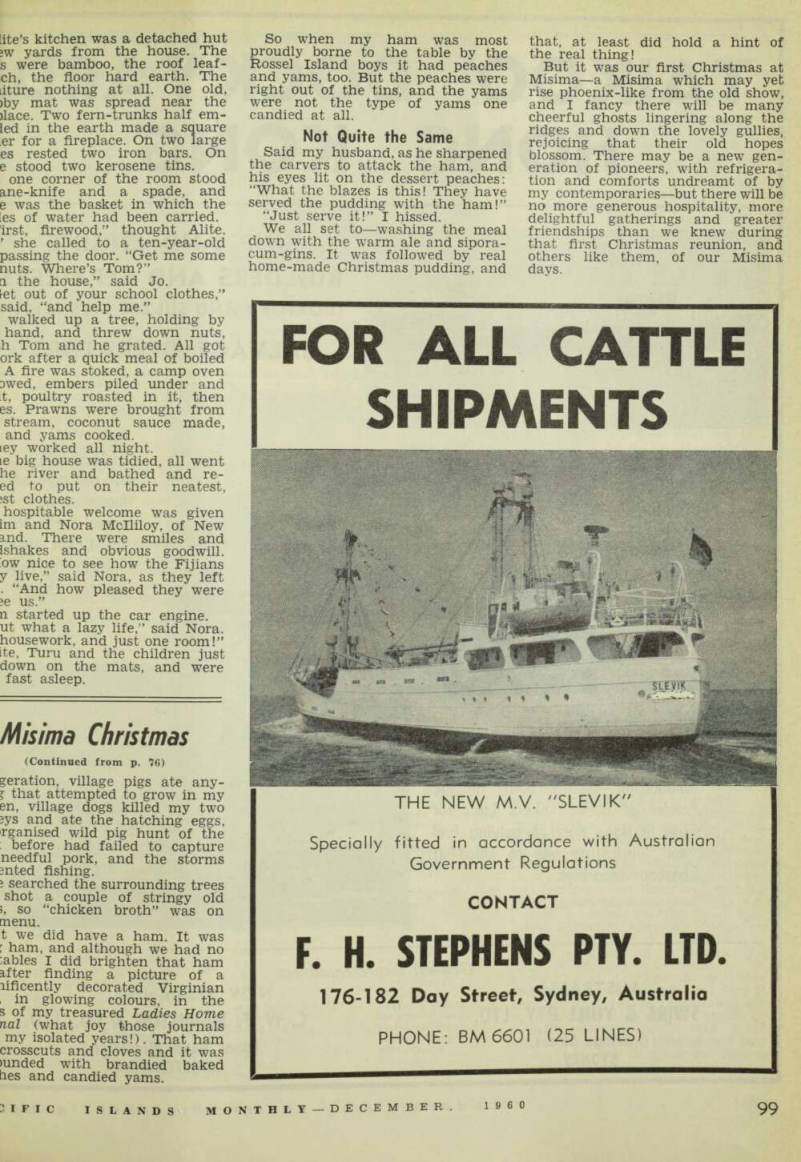 101
101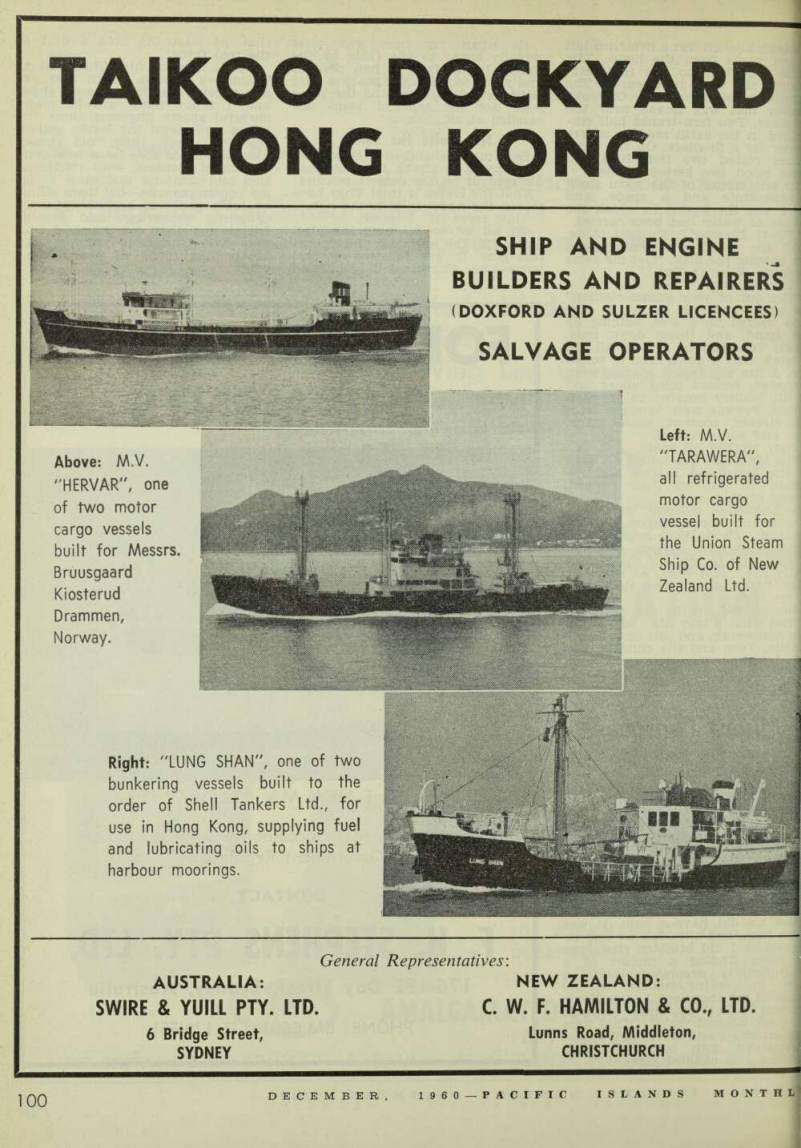 102
102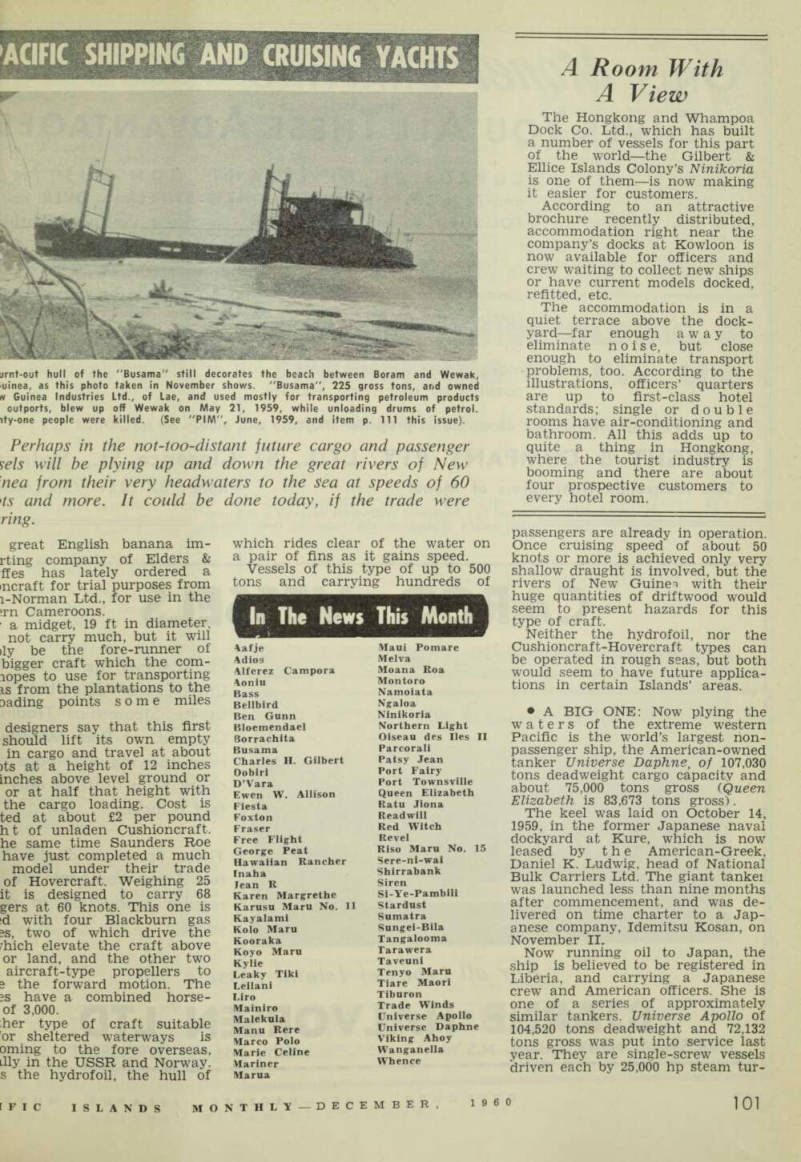 103
103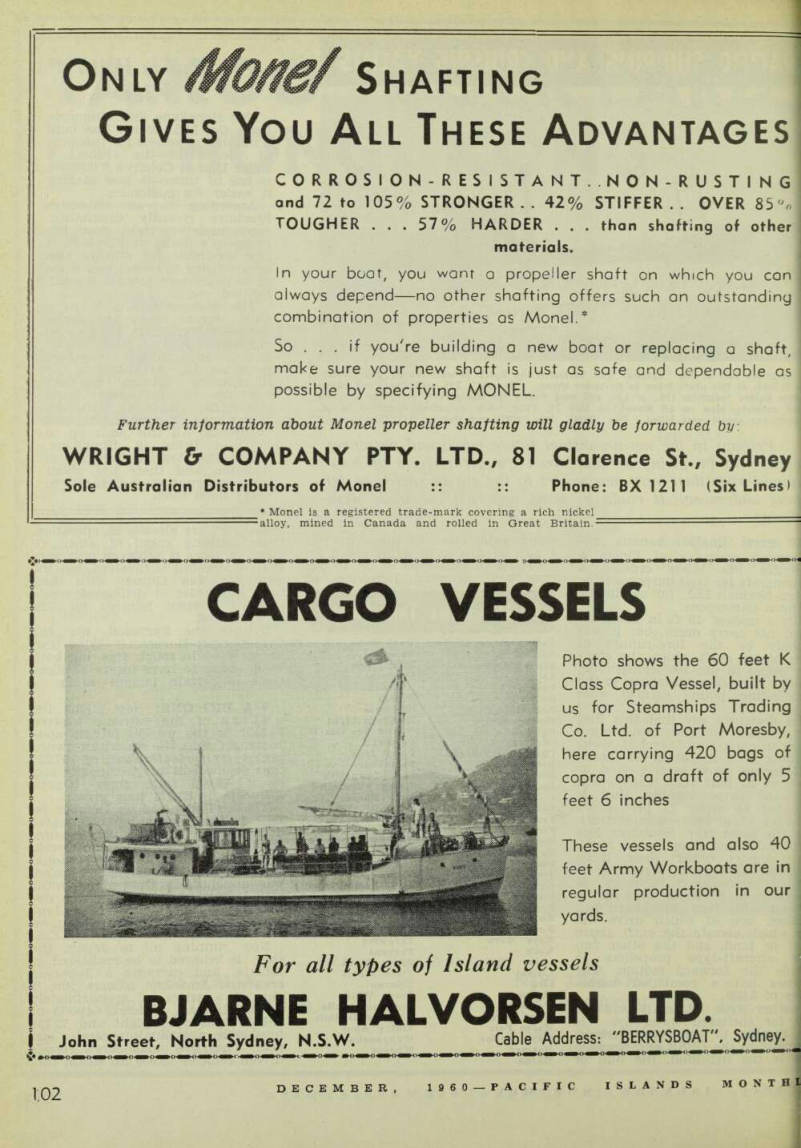 104
104 105
105 106
106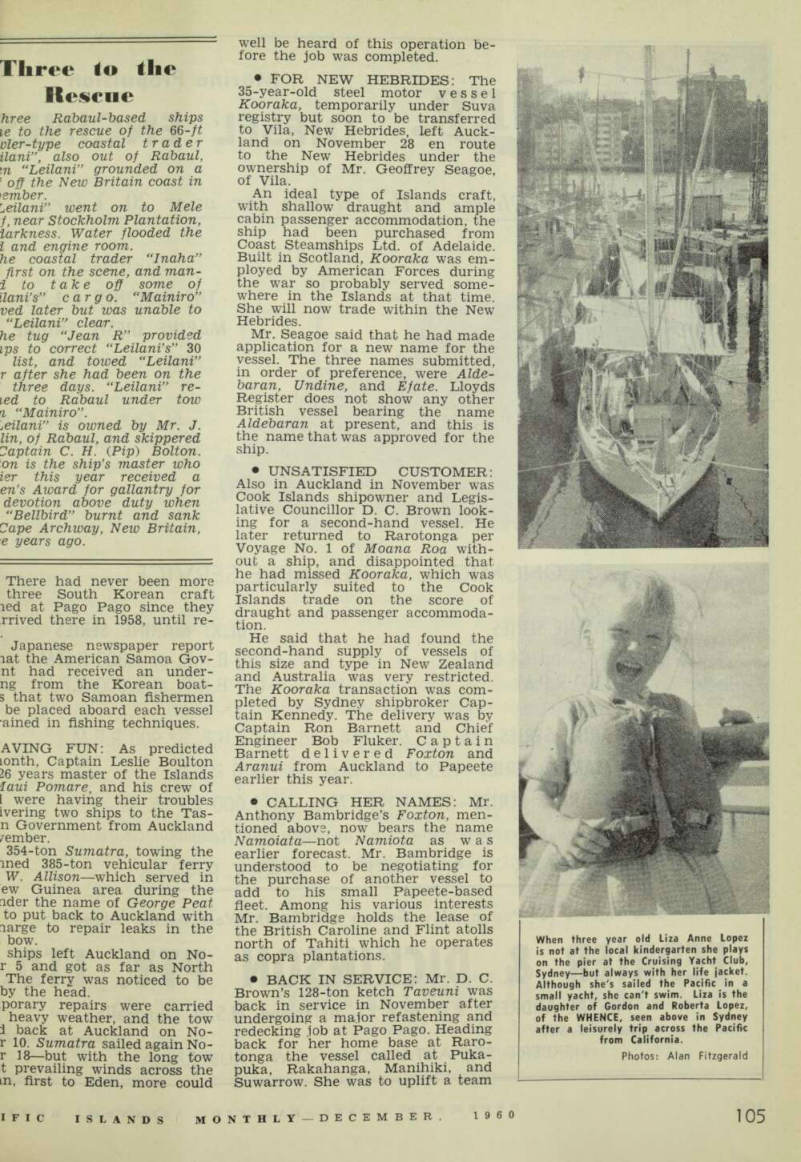 107
107 108
108 109
109 110
110 111
111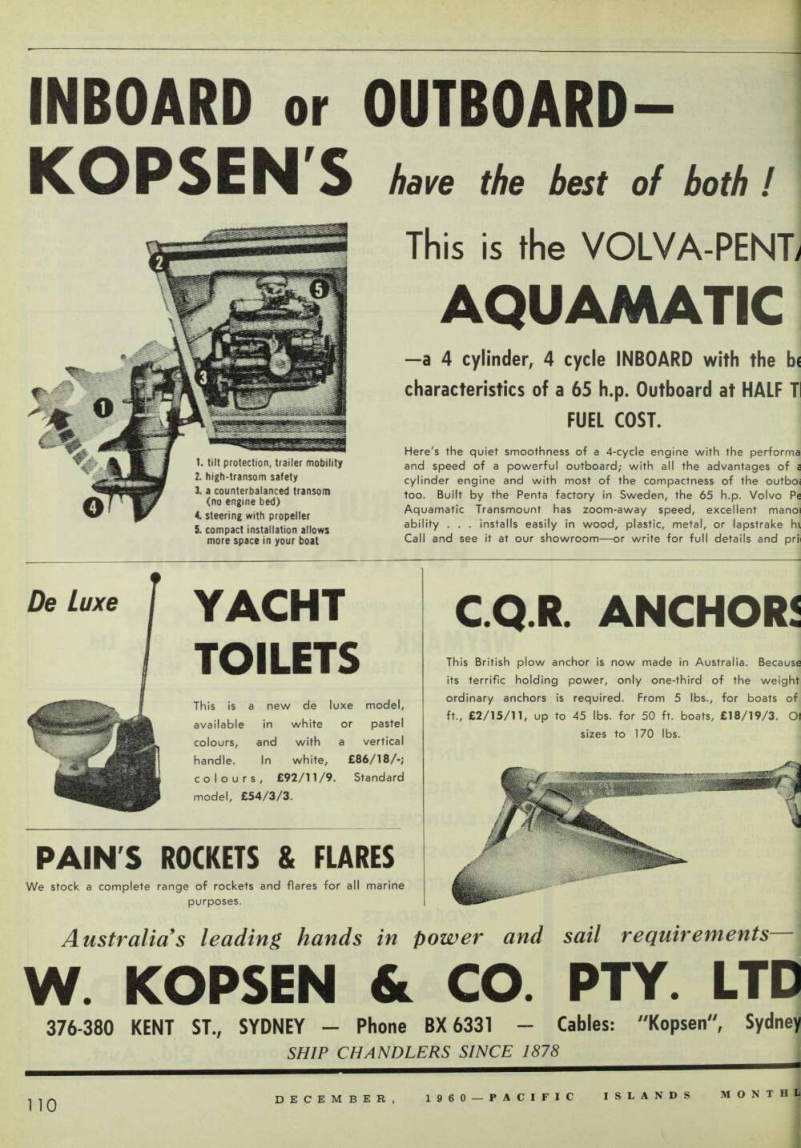 112
112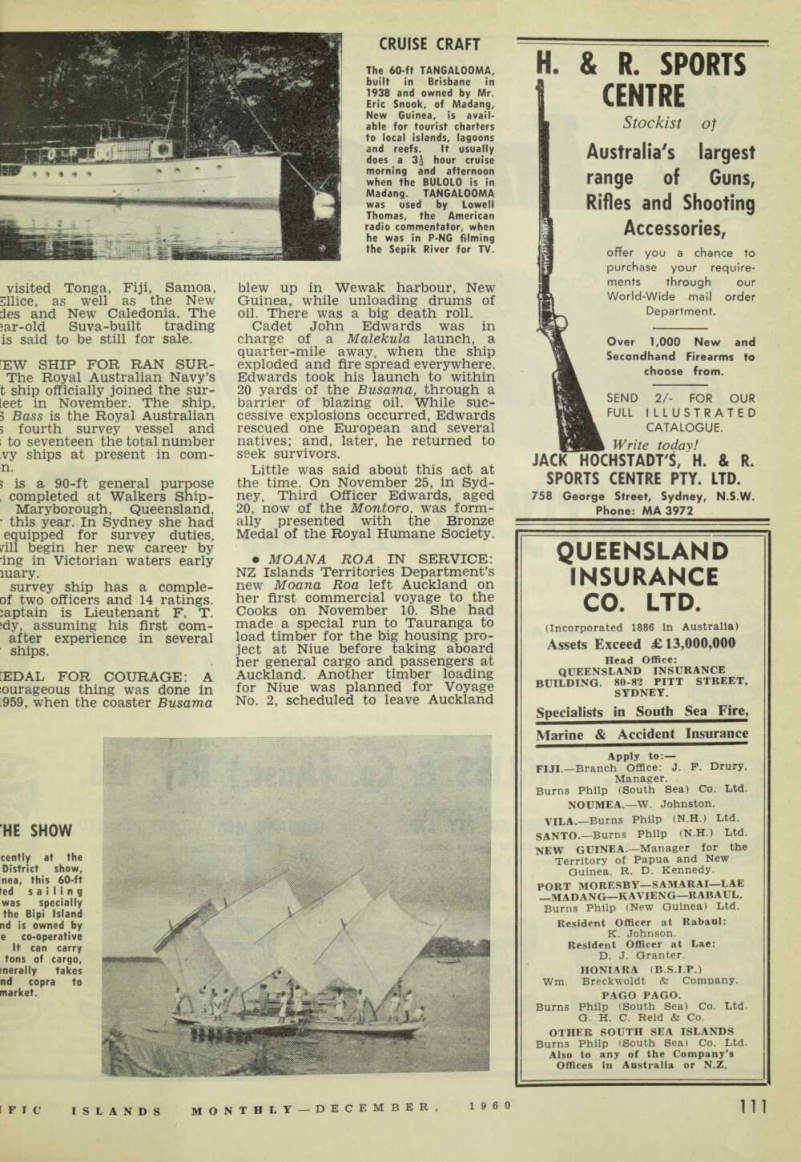 113
113 114
114 115
115 116
116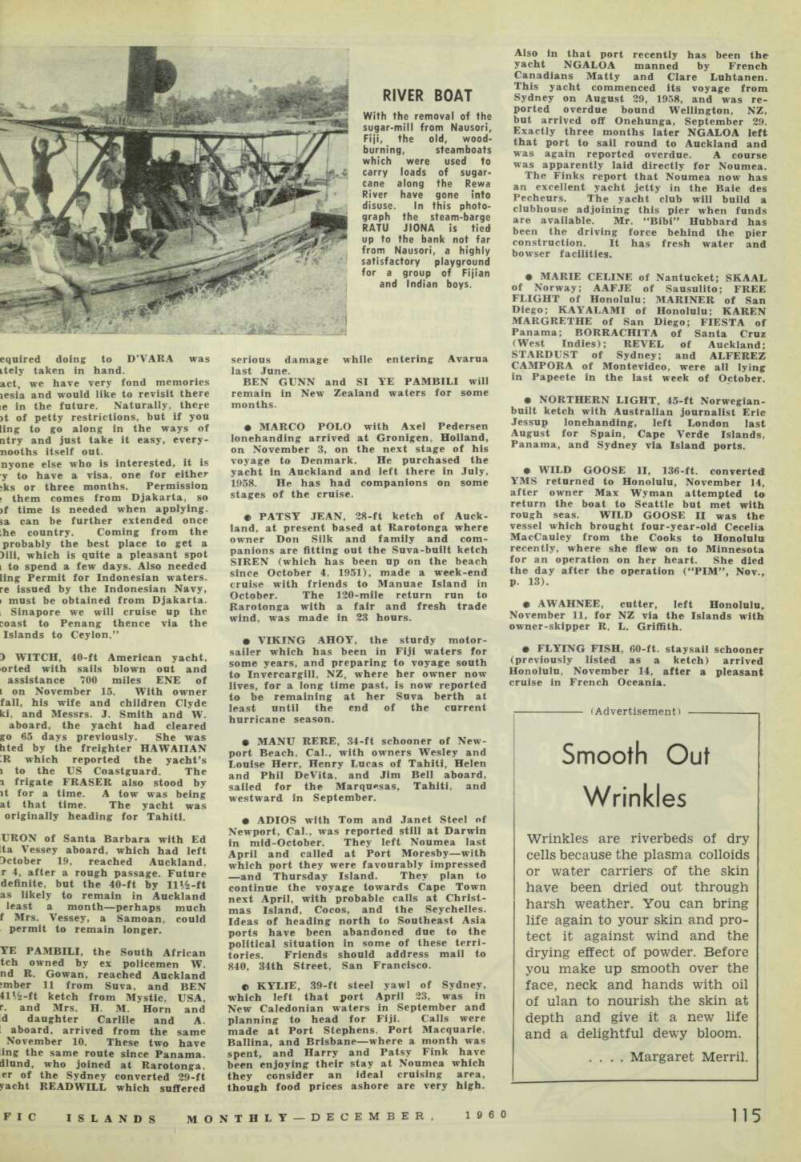 117
117 118
118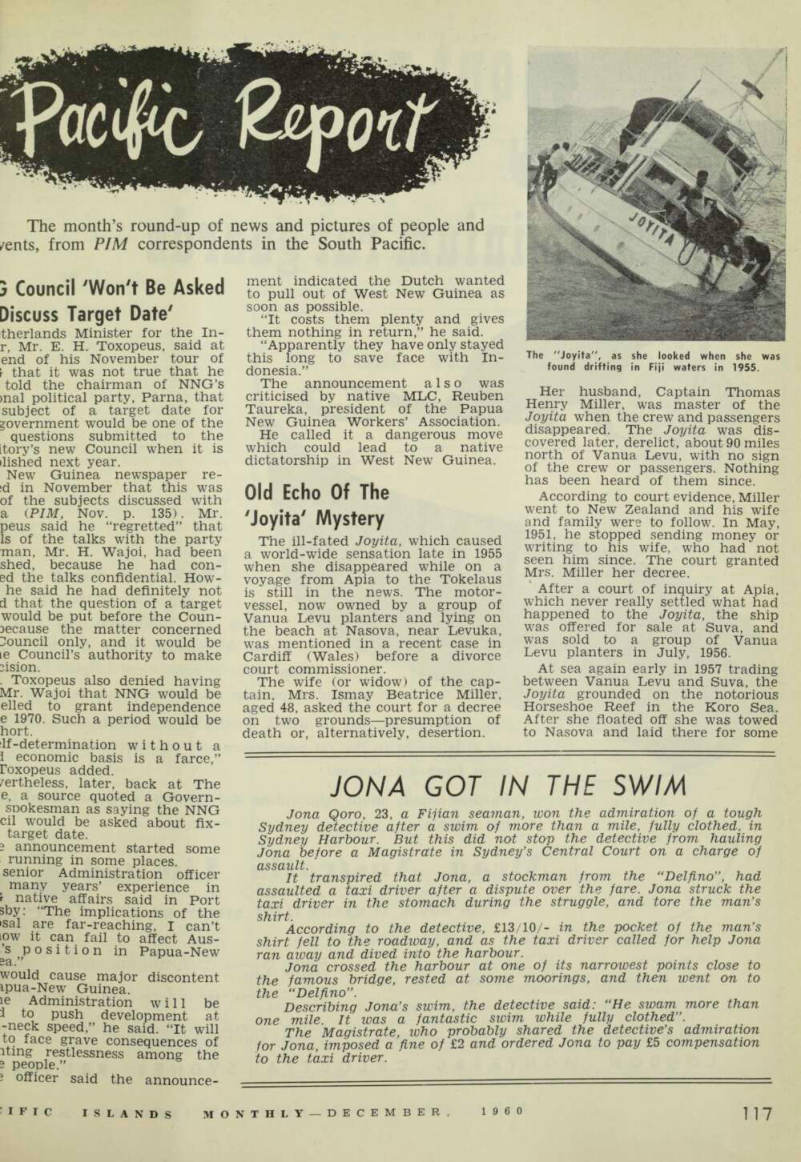 119
119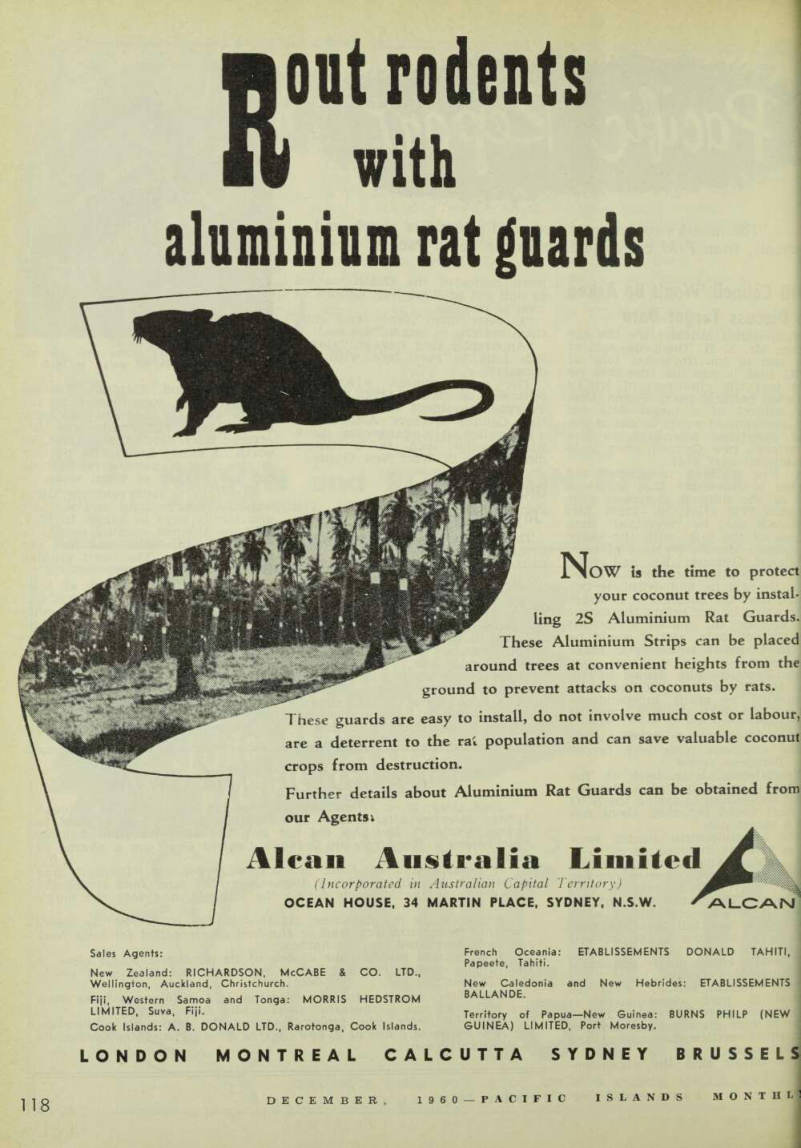 120
120 121
121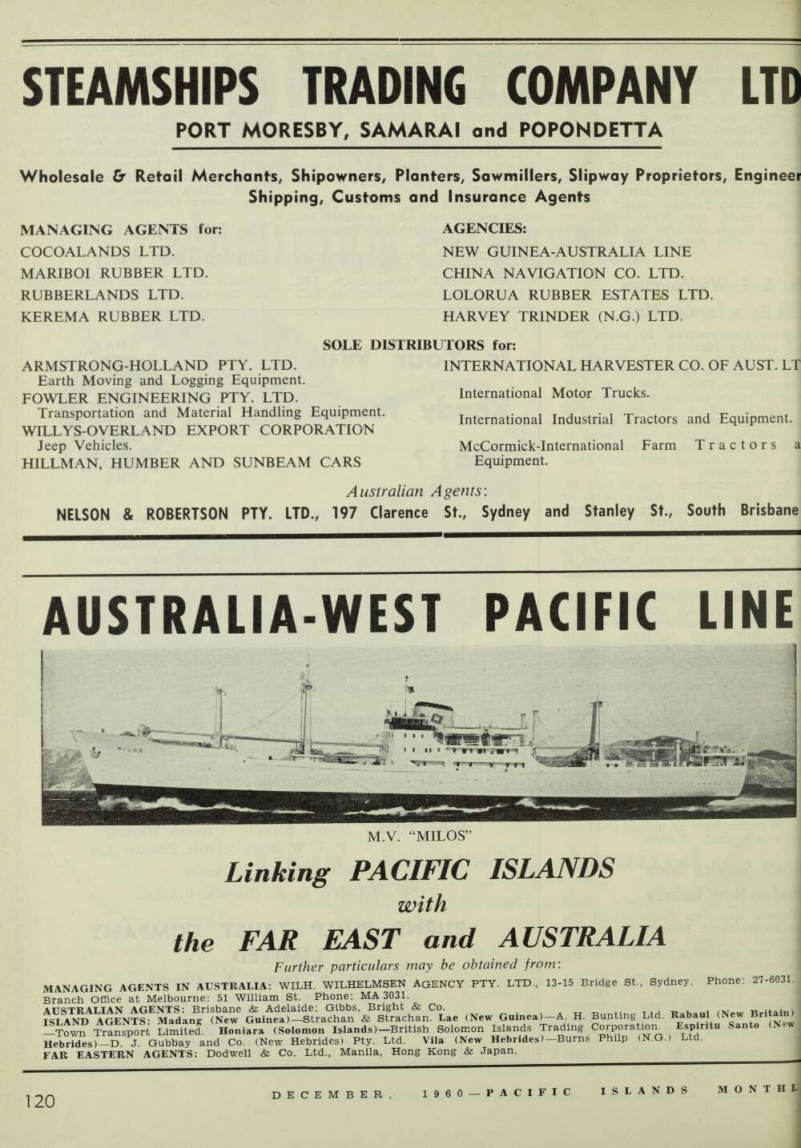 122
122 123
123 124
124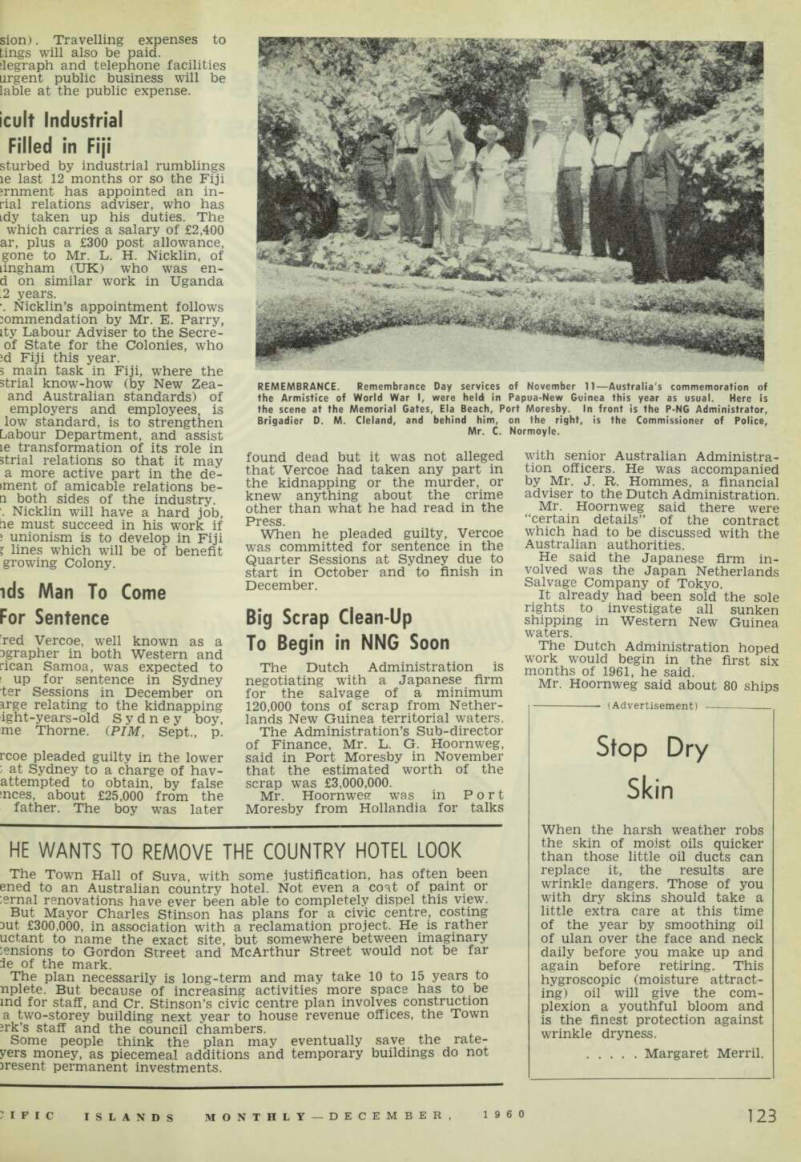 125
125 126
126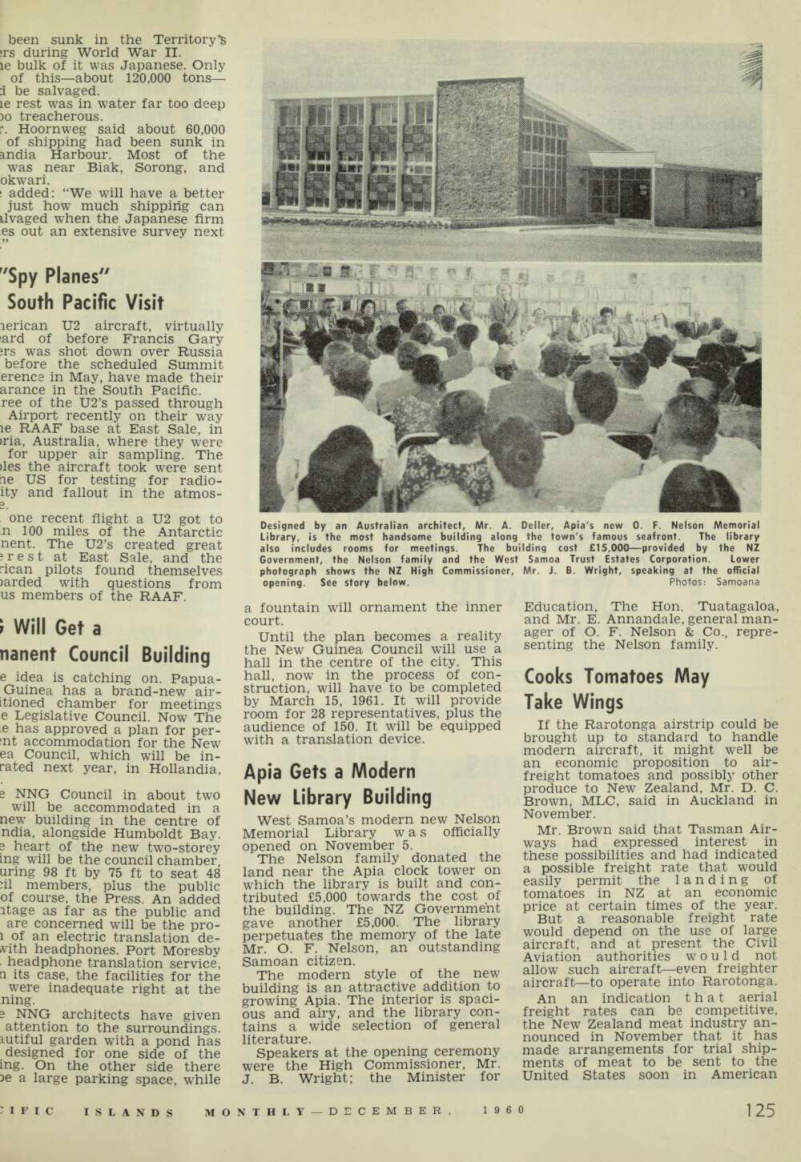 127
127 128
128 129
129 130
130 131
131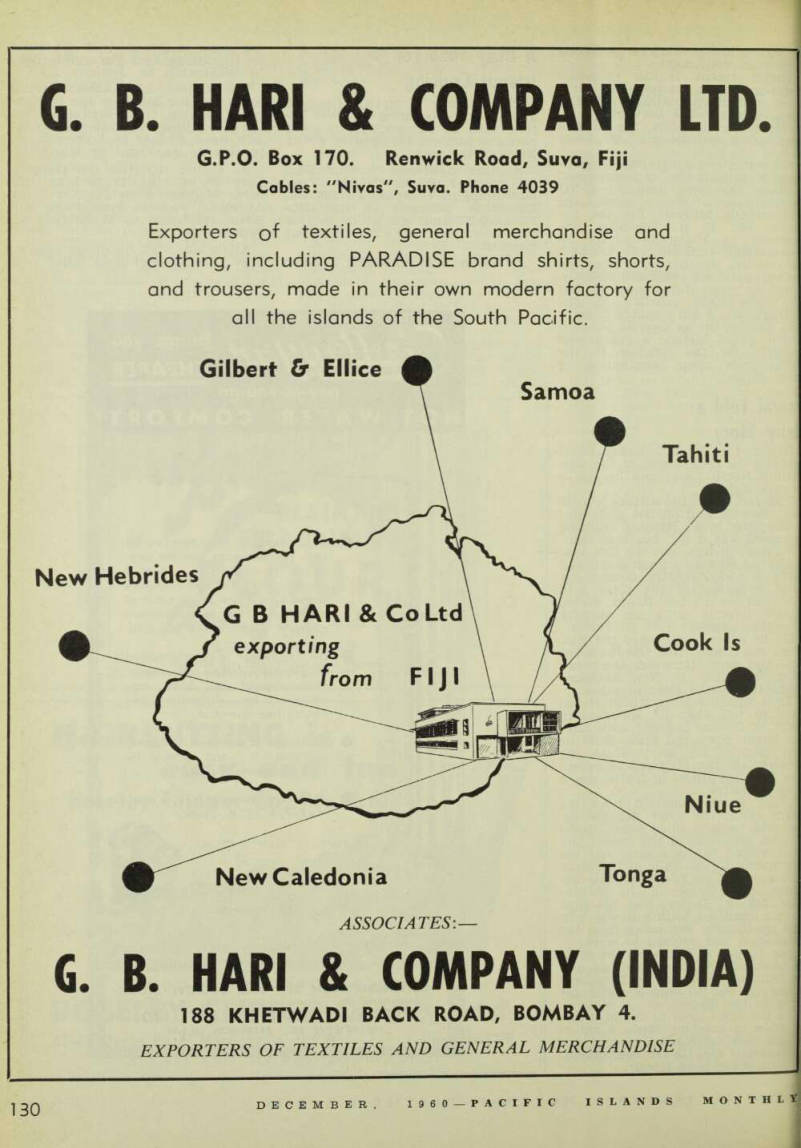 132
132 133
133 134
134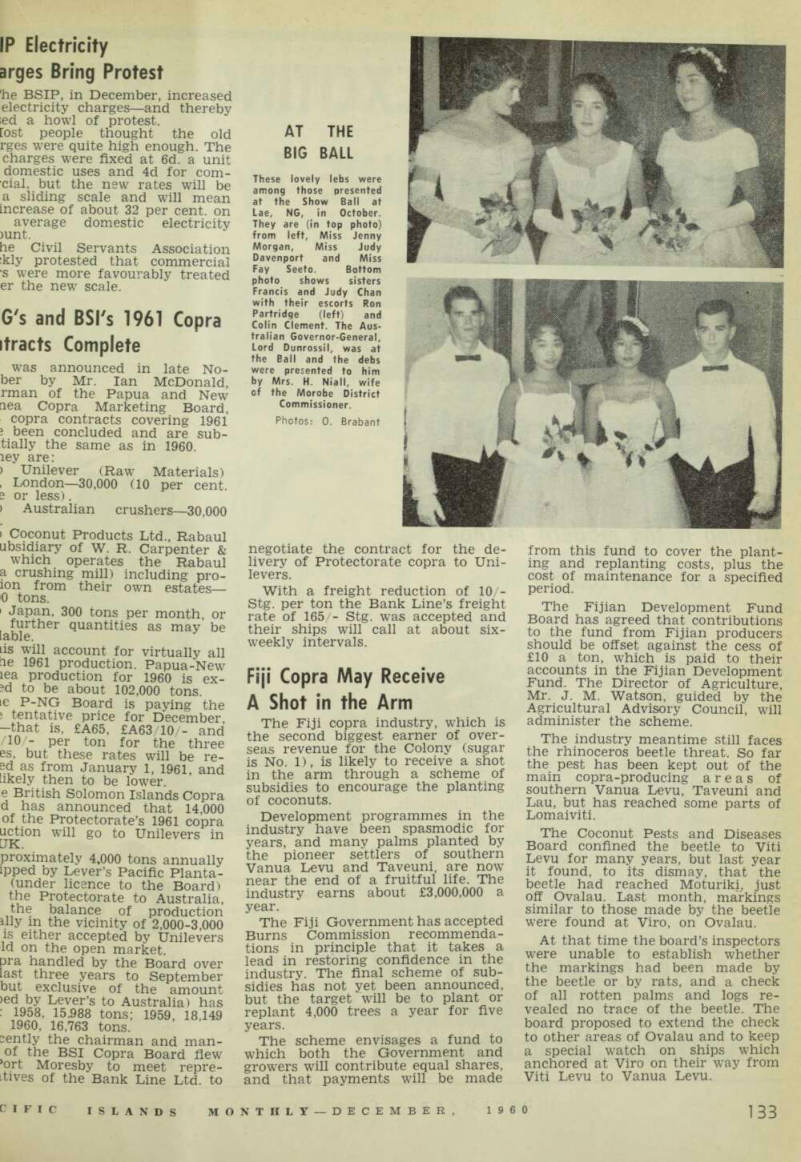 135
135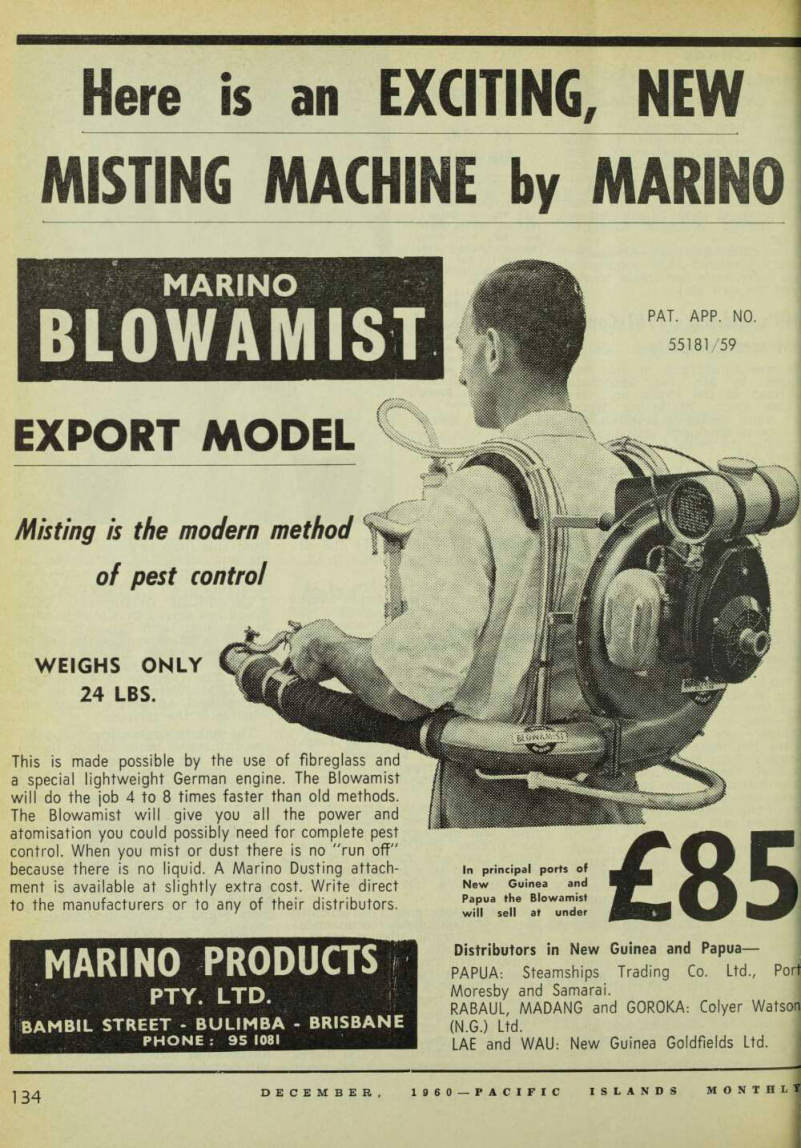 136
136 137
137 138
138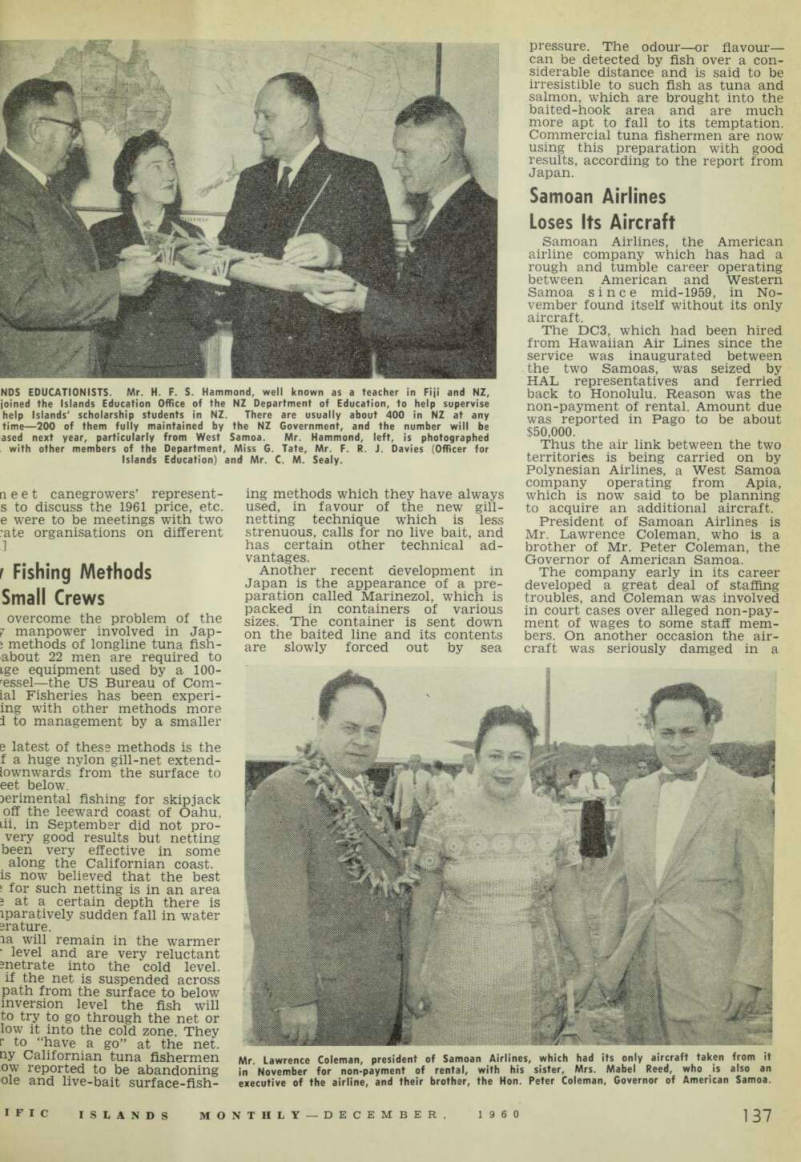 139
139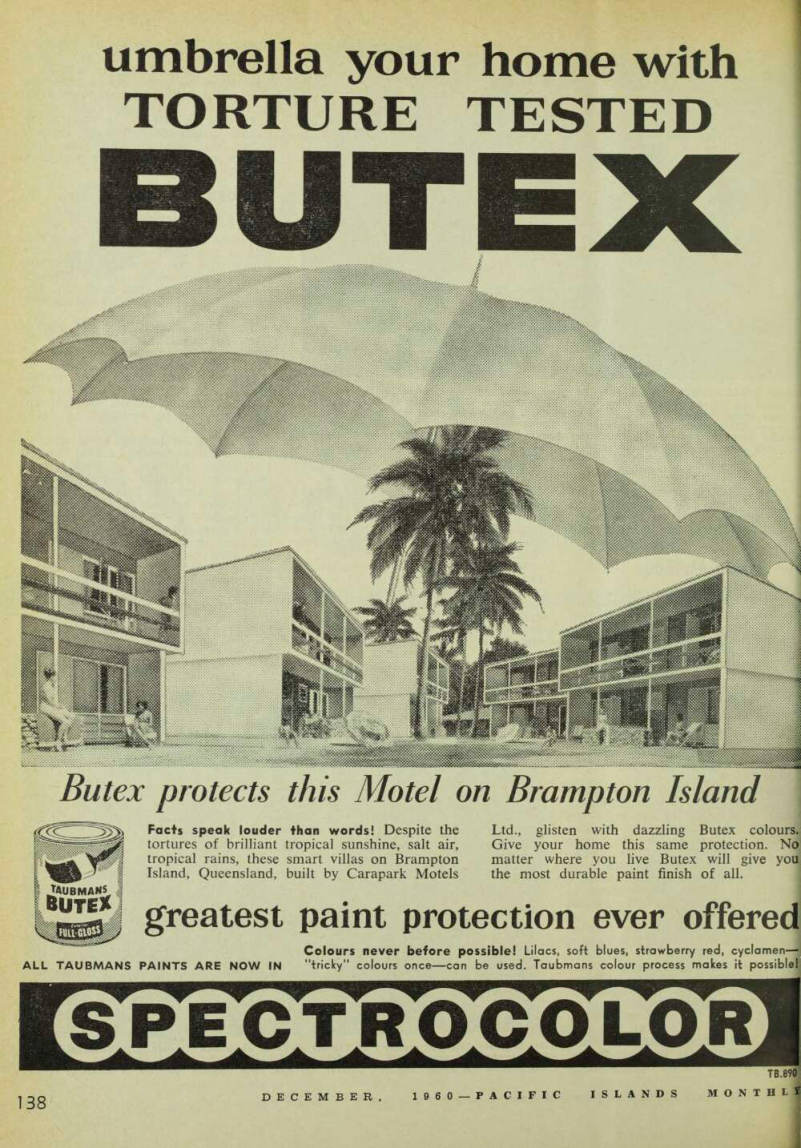 140
140 141
141 142
142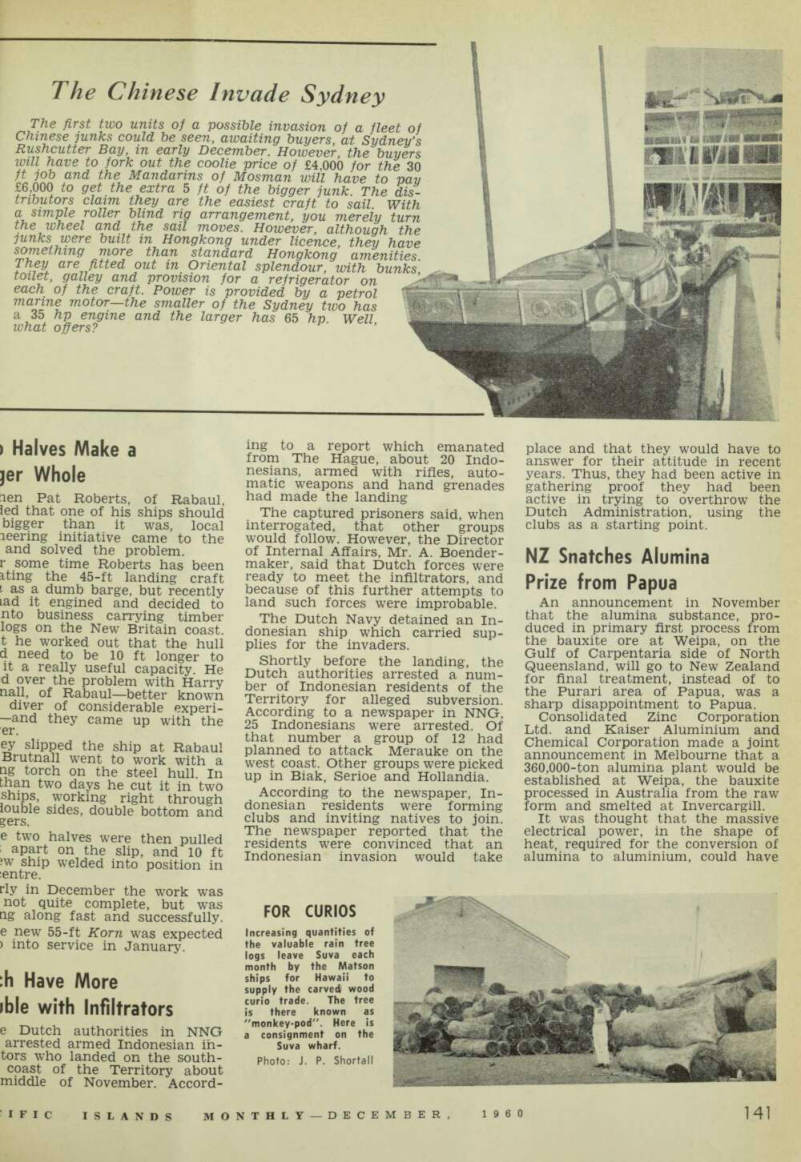 143
143 144
144 145
145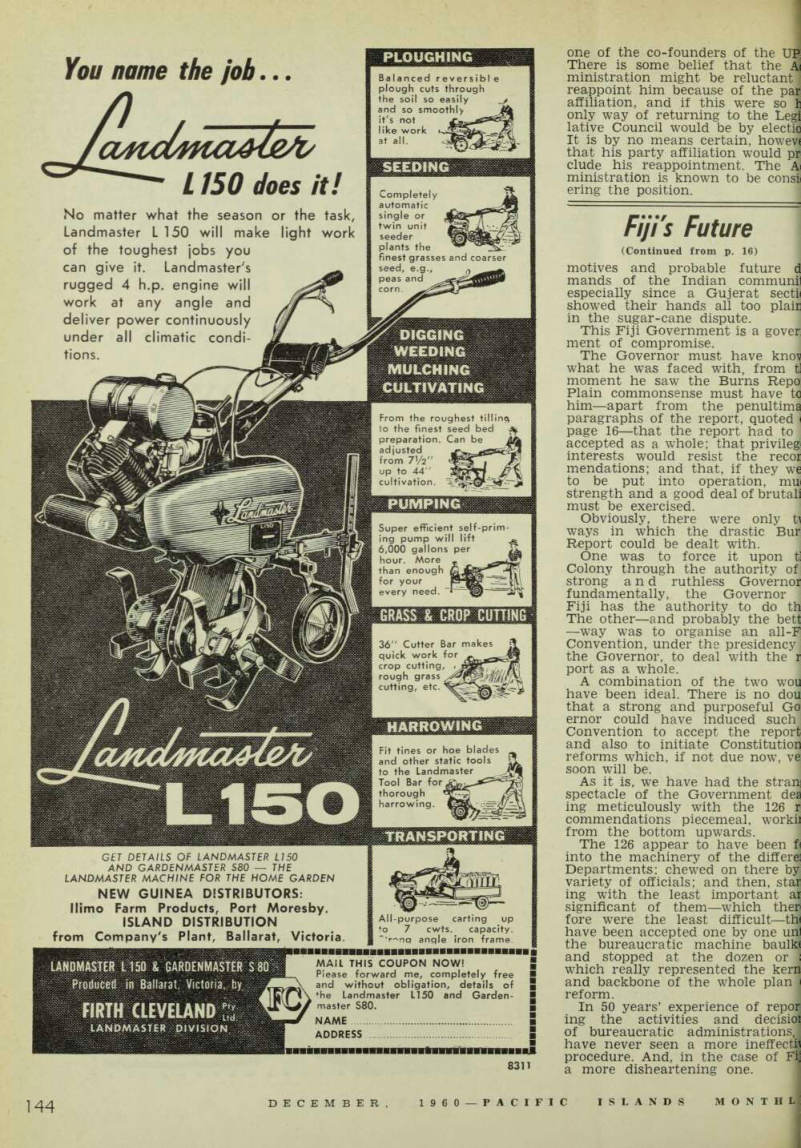 146
146 147
147 148
148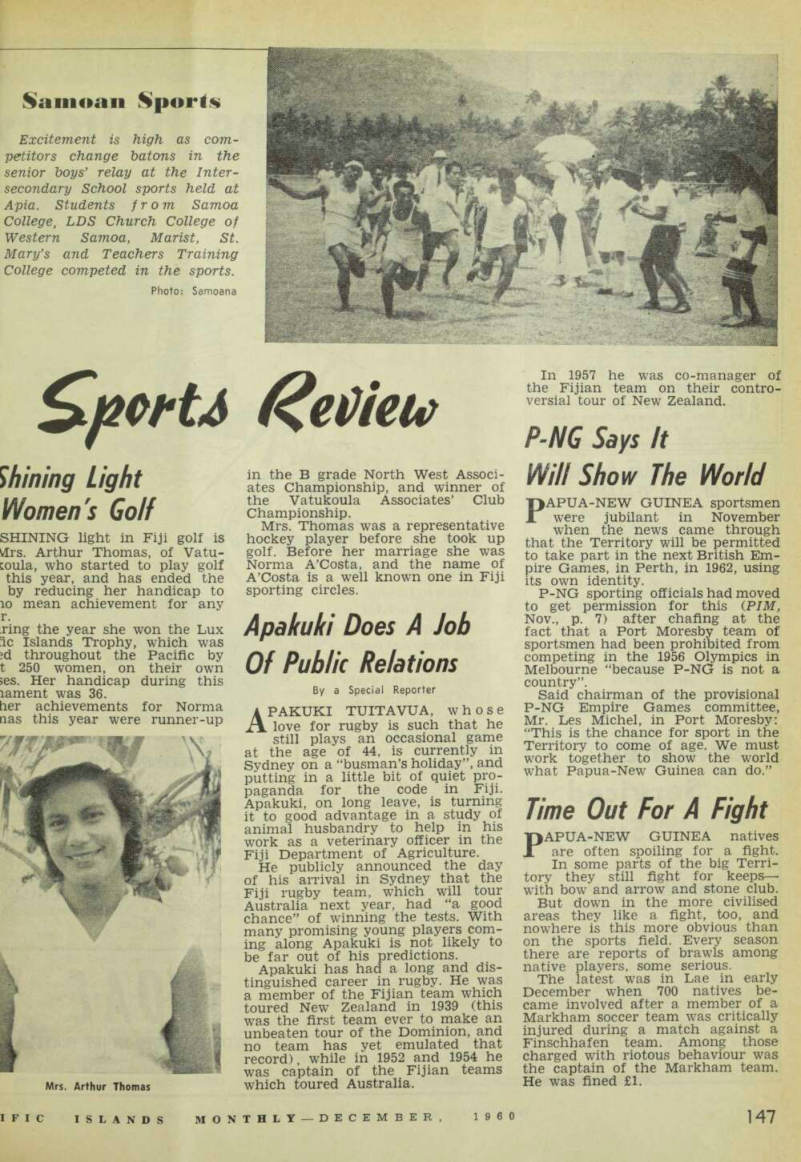 149
149 150
150 151
151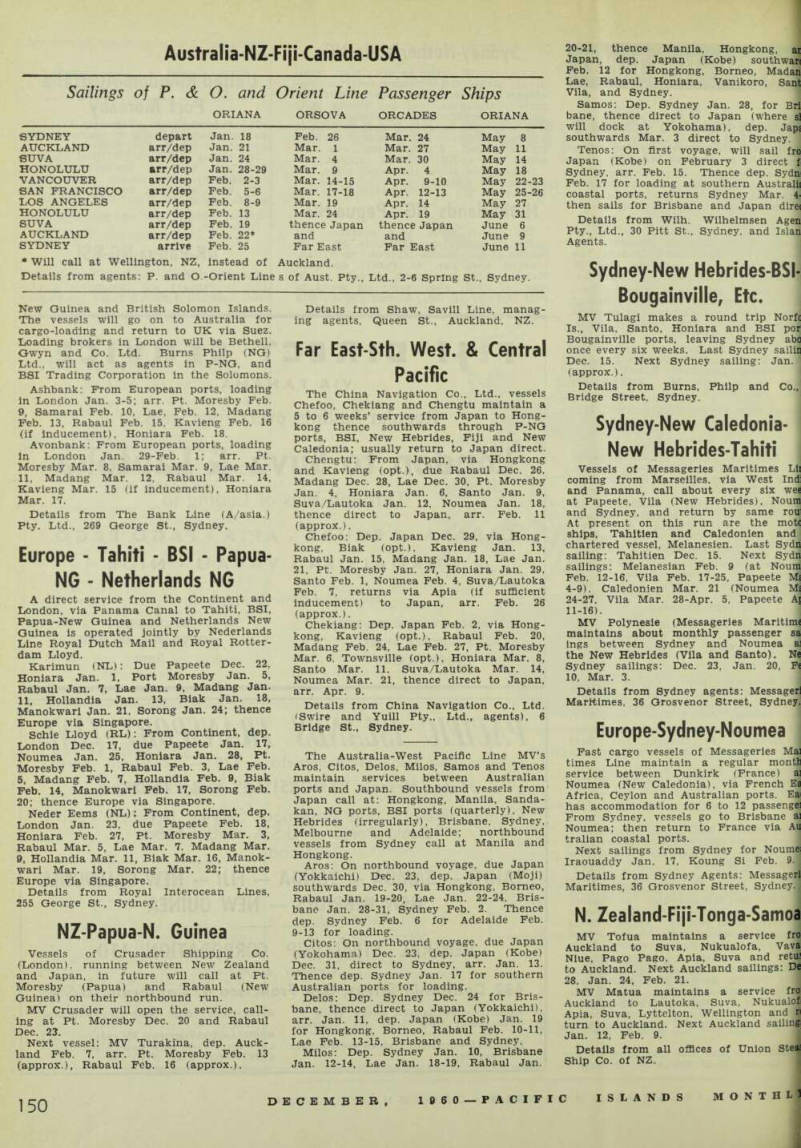 152
152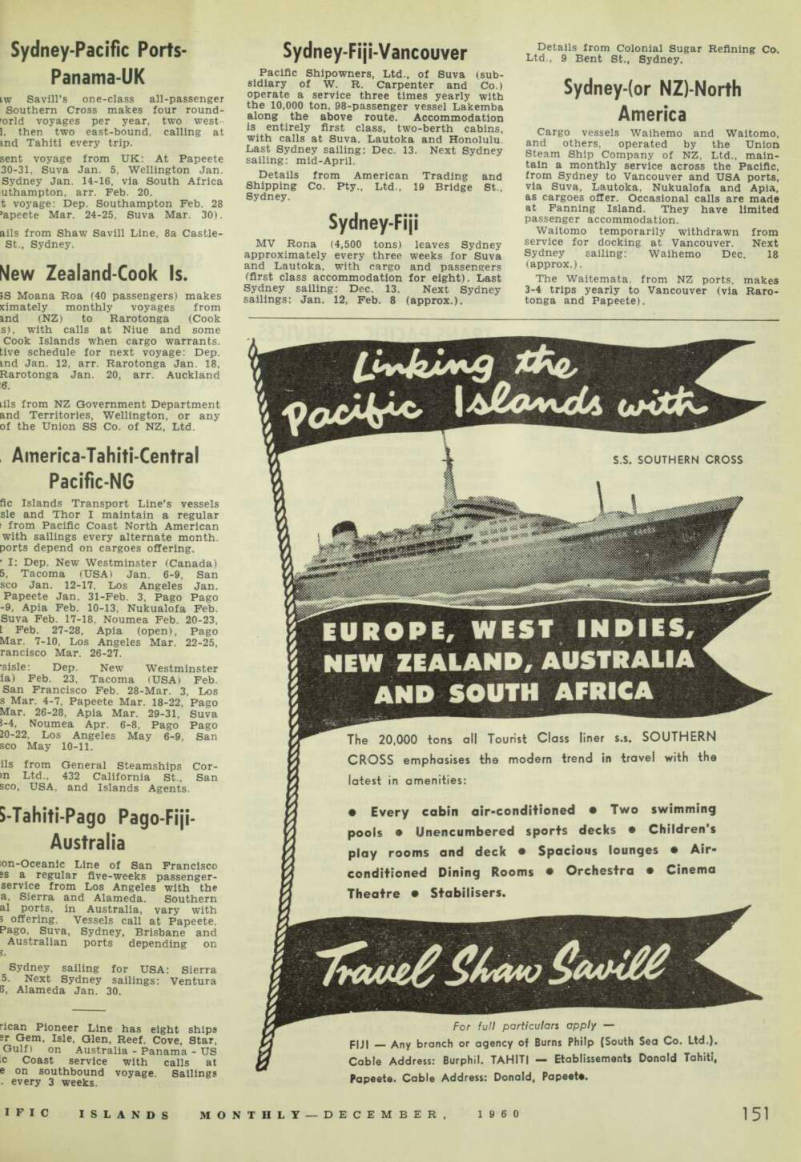 153
153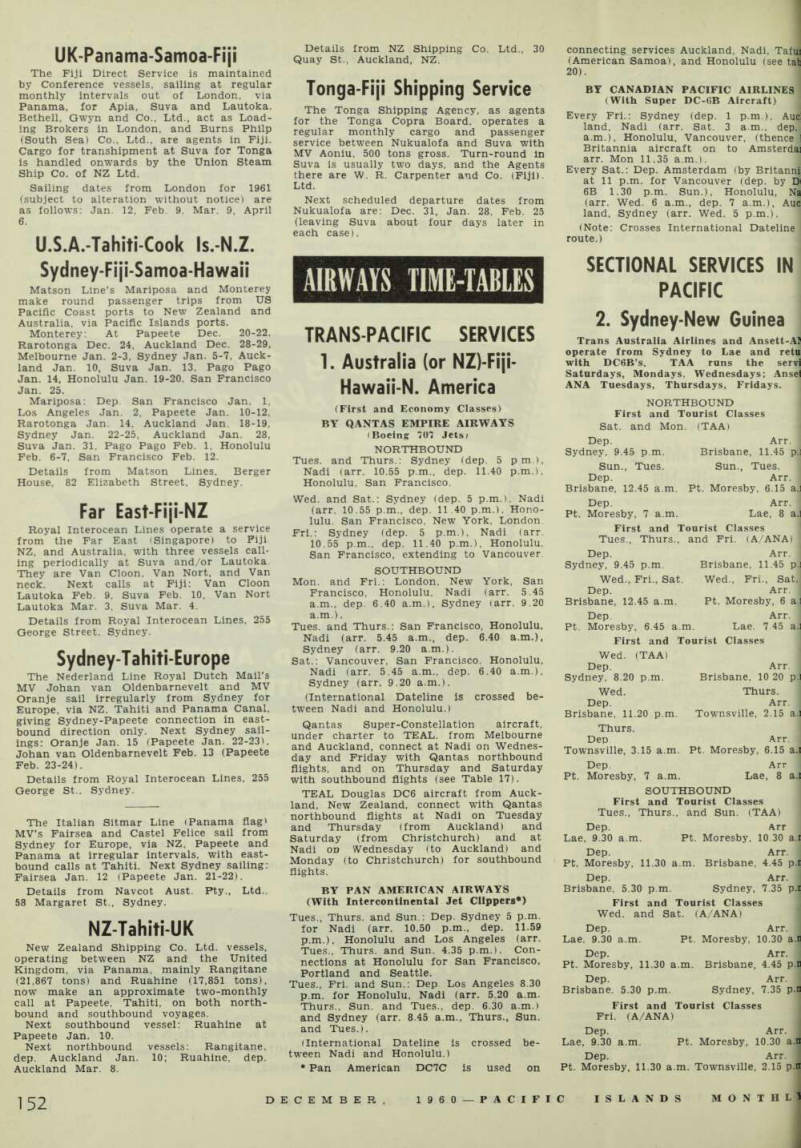 154
154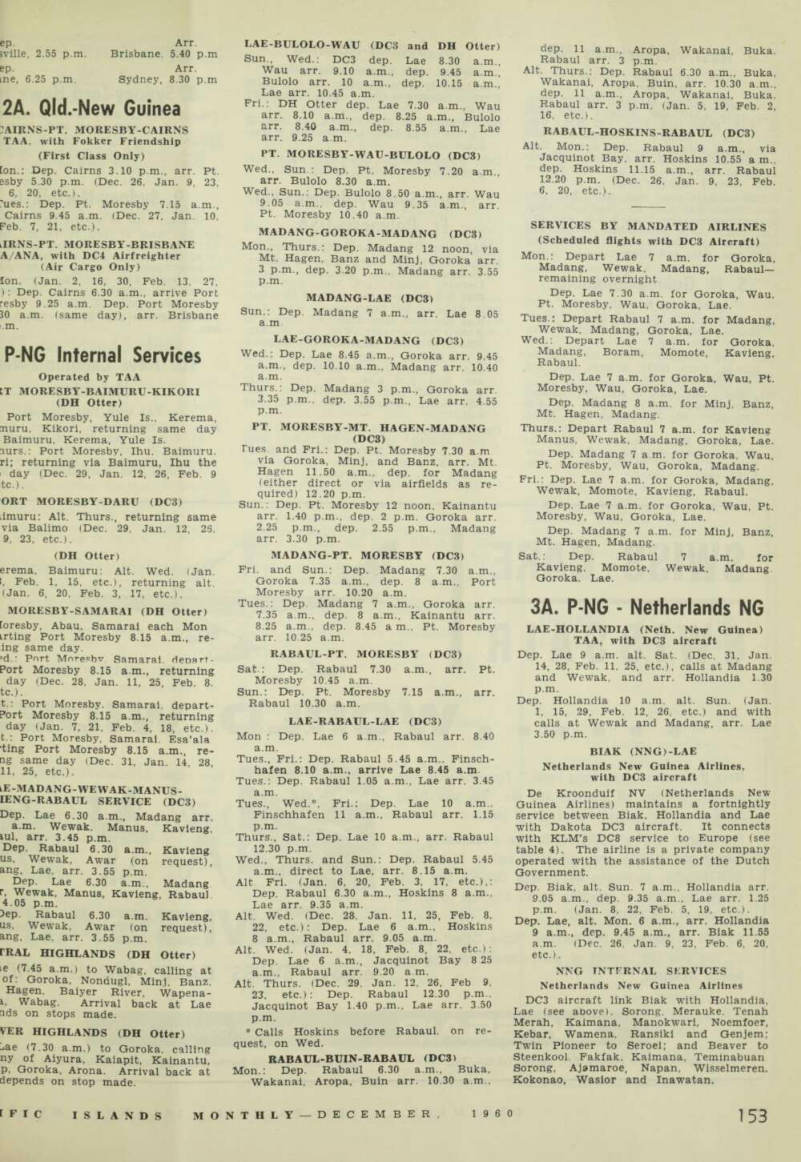 155
155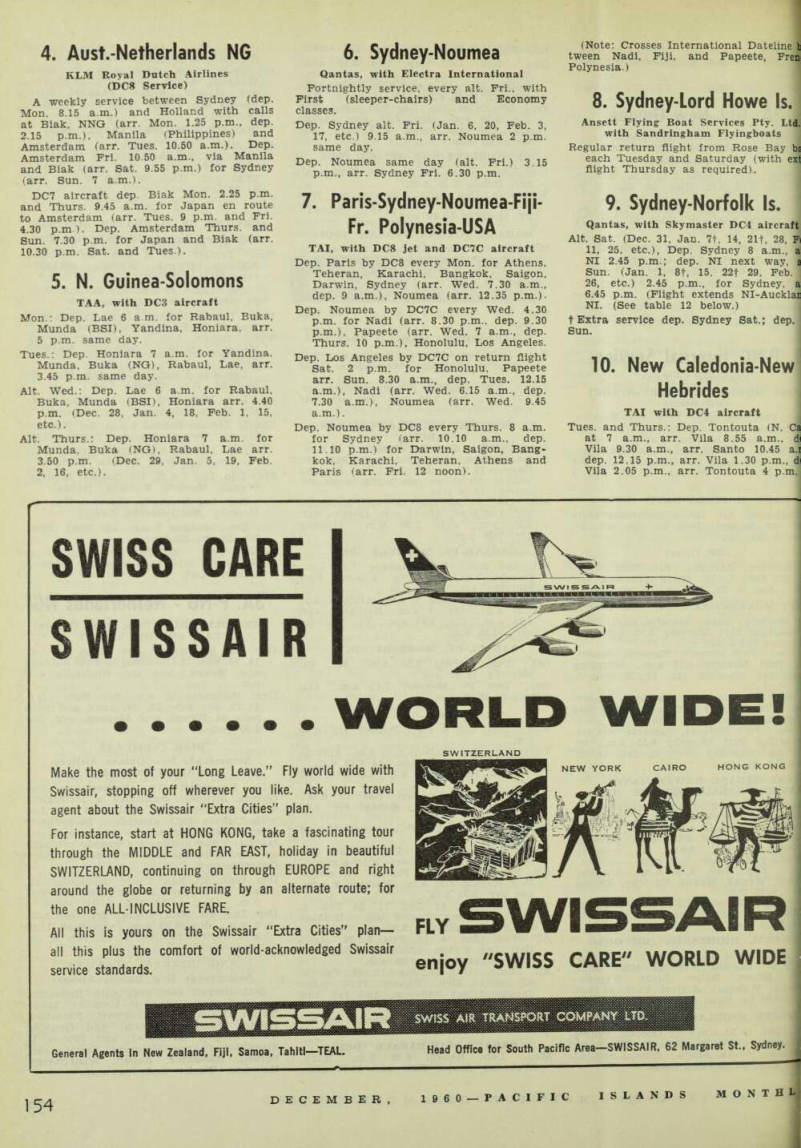 156
156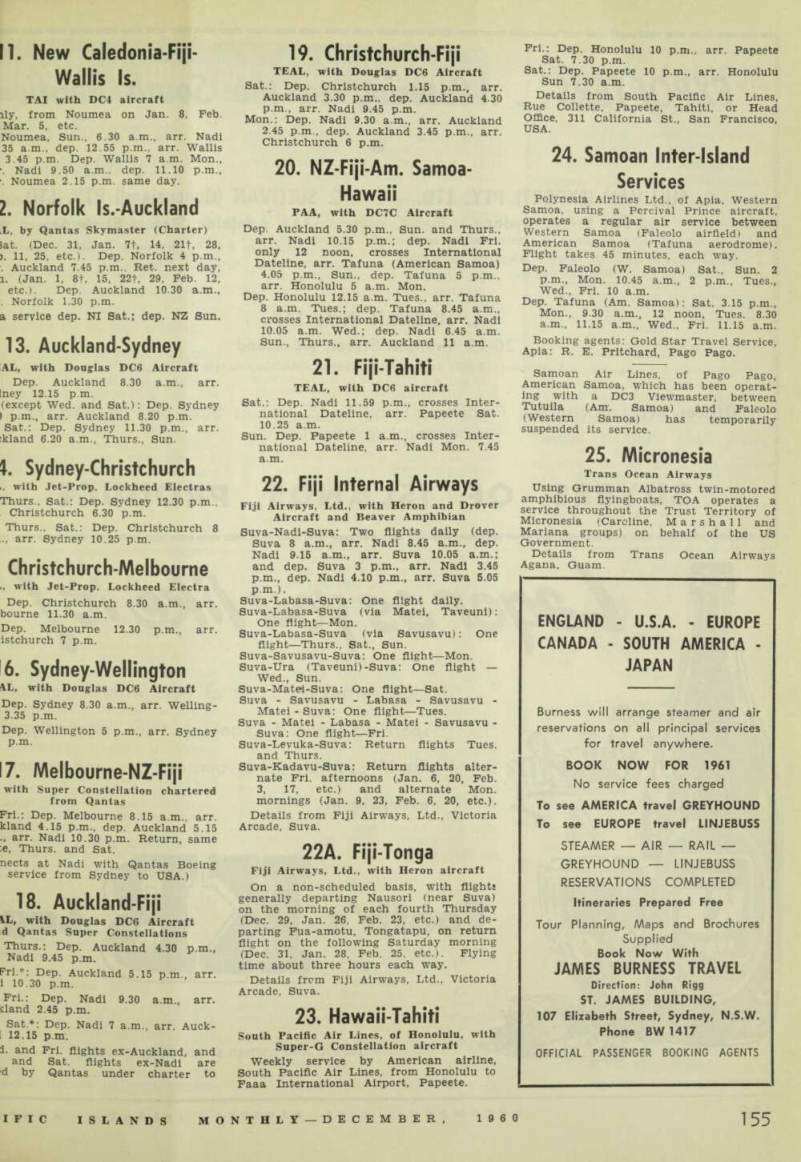 157
157 158
158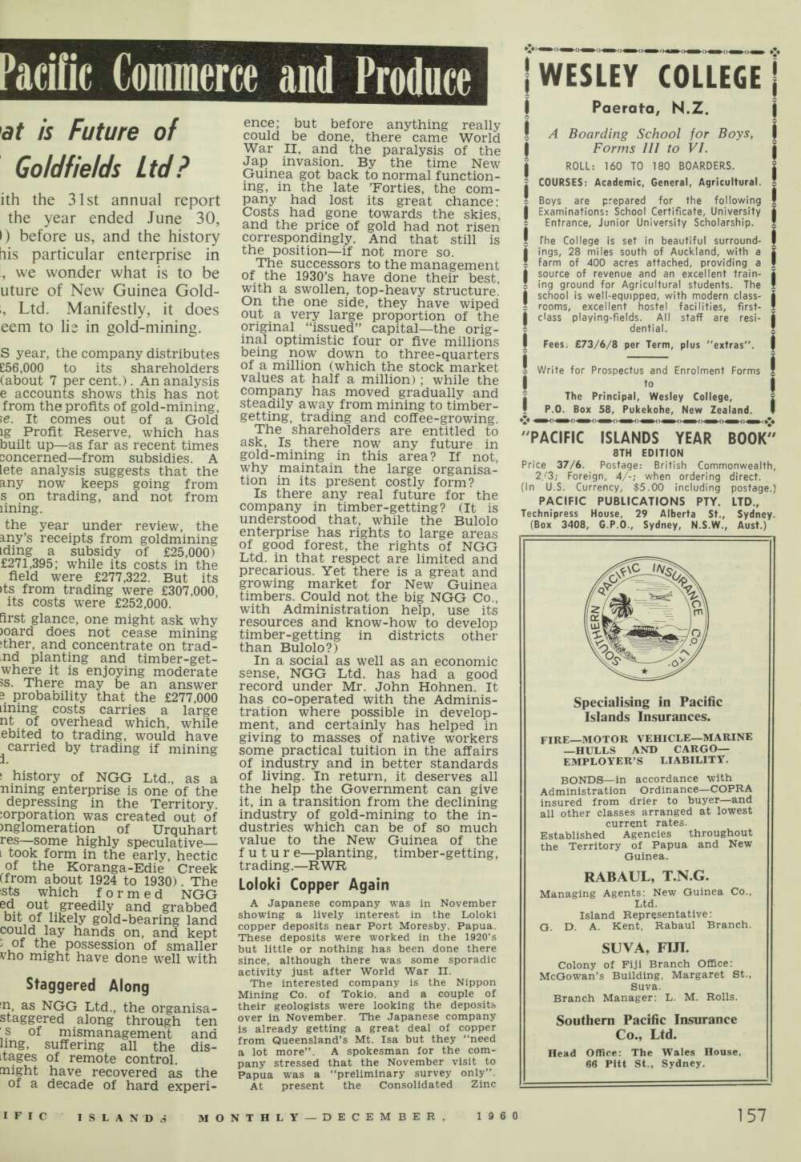 159
159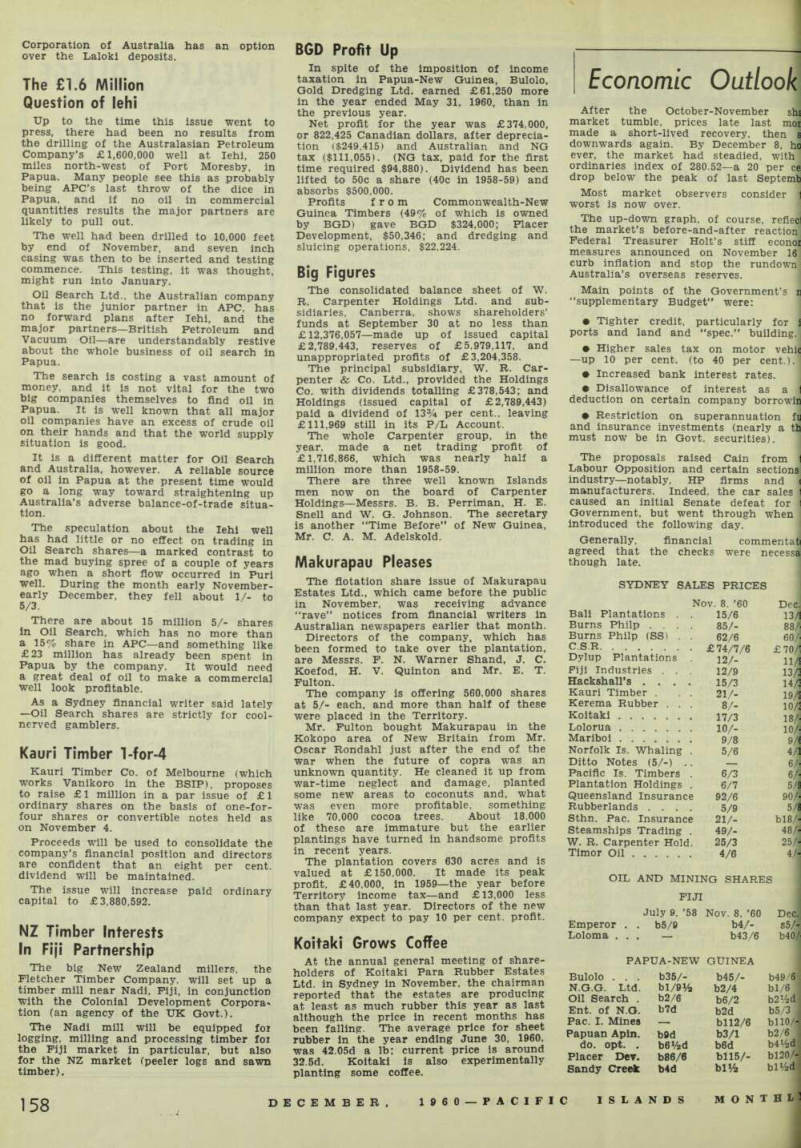 160
160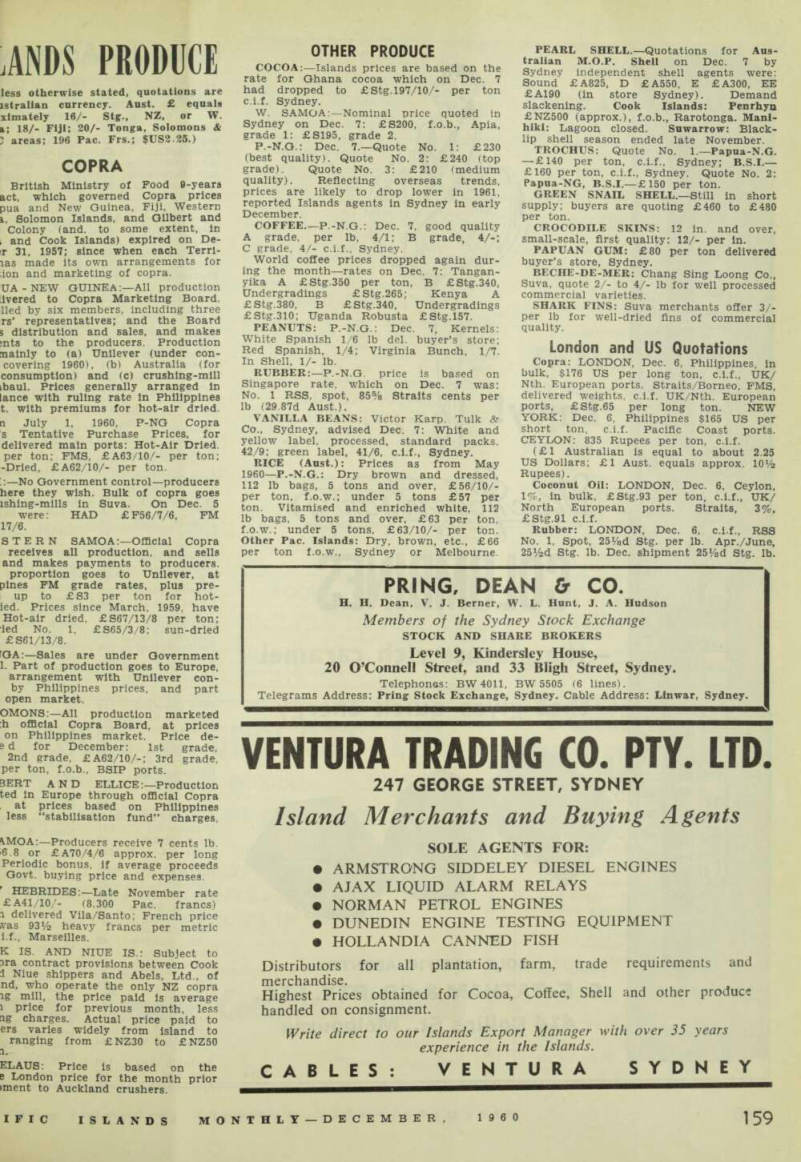 161
161 162
162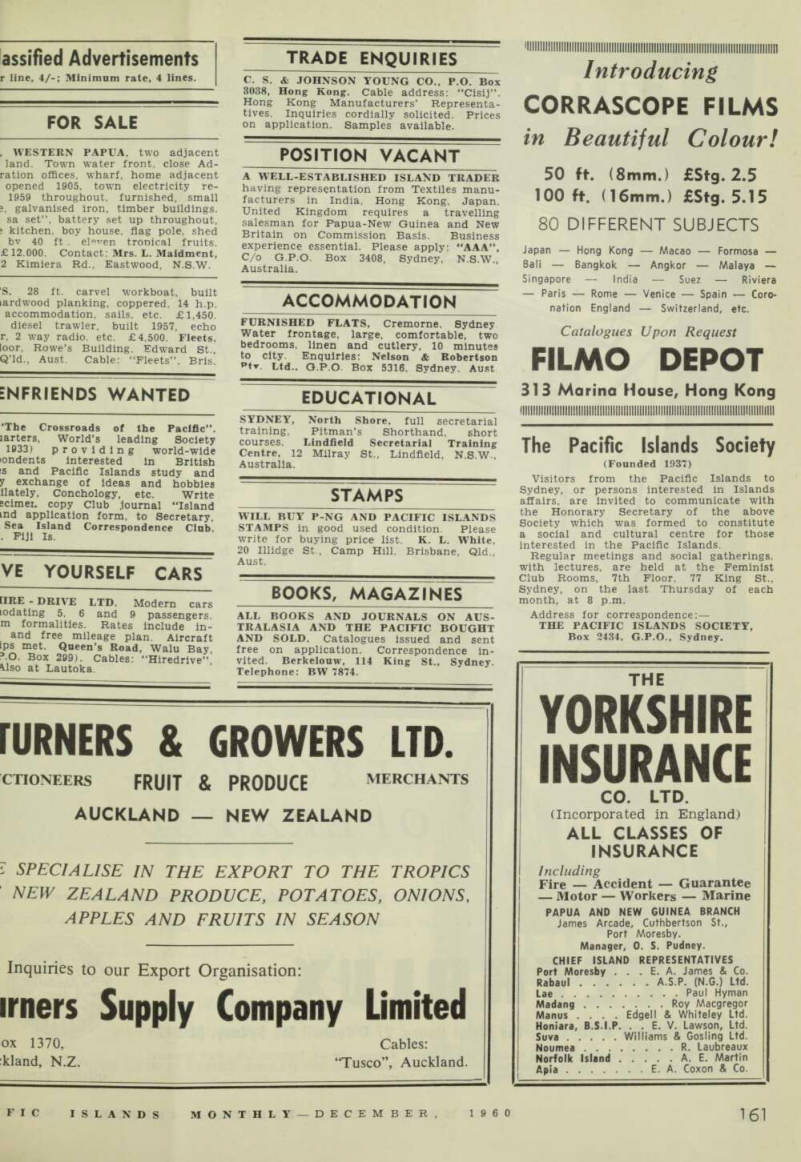 163
163 164
164 165
165 166
166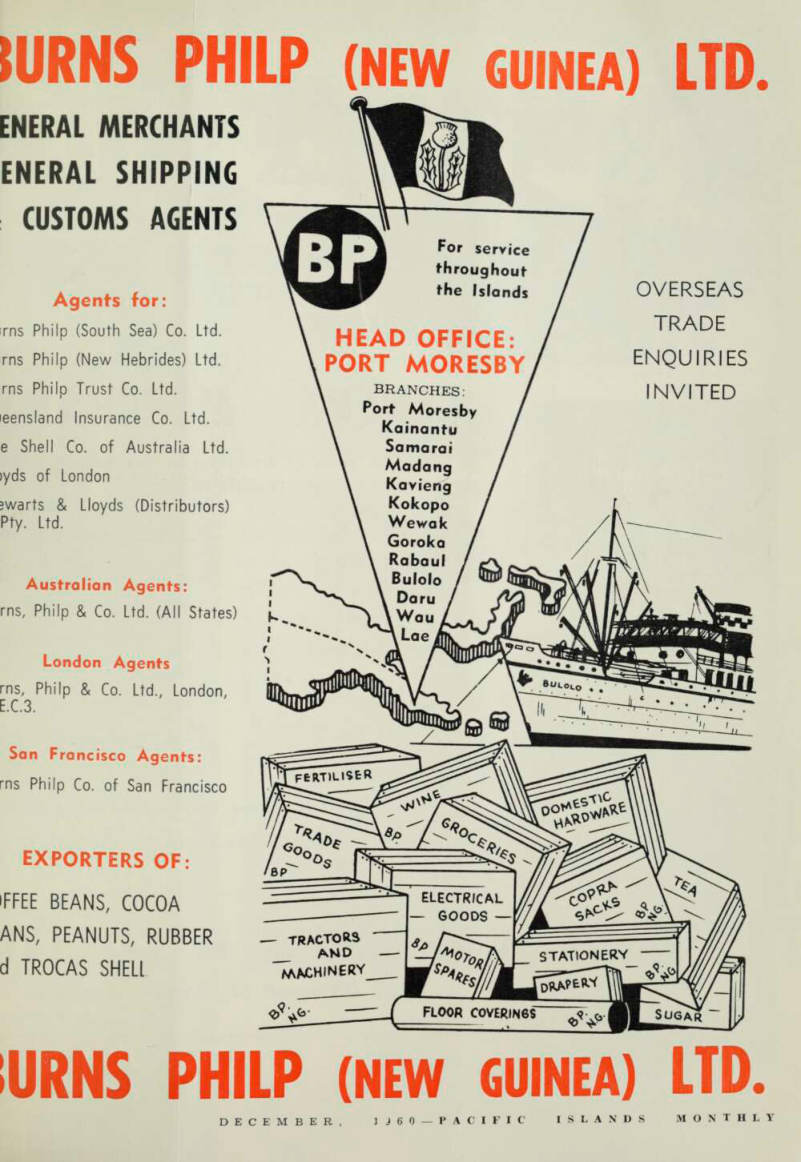 167
167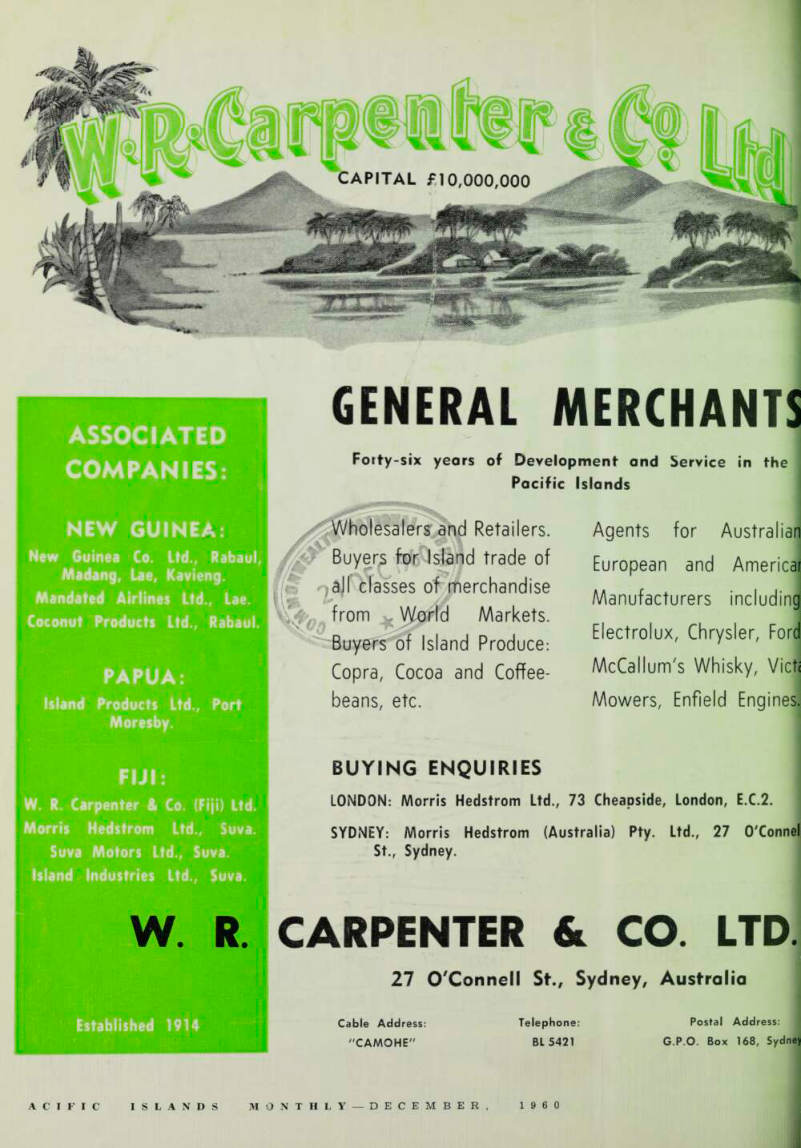 168
168