Pacific Islands Monthly
News Magazine Of The South Pacific
May, 1974
AUSTRALIA, N.Z., P.N.G., FIJI, N. HEBRIDES 60c TONGA, W. SAMOA, 8.5.1. P., G.E.I.C. 60c
Cooks, Norfolk, Niue, Nauru 60C
Am. Samoa, Hawaii, Micronesia, Guam $L.Oo
NEW CALEDONIA AND FRENCH POLYNESIA 100 CFP
Our Cover
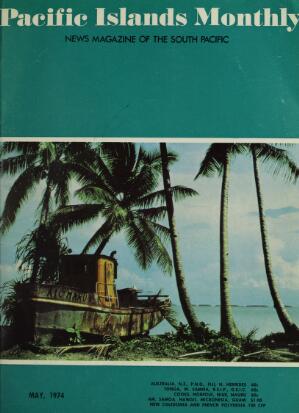
On the beach at Rairok island, Majuro, but still working—AlC Maru No 2, a Japanese-built launch, custom built in Okinawa for the firm American International Constructors, for use on one project. It was de signed to tow sections of an under water pipeline into place. Since its arrival at Majuro, it has been used for odd jobs, including work as a tugboat for Majuro's small dock.
The photograph was taken by Cap tain John J. Connor of the US Army Corps of Engineers. This issue of PIM reviews Japanese trade in the islands.
Advertisements & other items, p. 2 (1 item)
Mazdaiooo& 1200 Pickups.
i (MB L- -1000
PICKS
A lot of truck for your money.
Check the features for yourself
0 All steel cargo deck with snap shut tailgate 0 Big load carrying capacity 0 Tough, girder-section steel chassis 0 Choice of rugged 1000 or 1200 OHV engine 0 Large, 4-bladed engine fan 0 Laminated safety glass windscreen 0 Corrosion-free grille with stylish square headlights 0 2-speed wipers with twin jet washer (y] Roomy bench seat adjustable 6 ways for height and reach 0 Flow-through ventilation system 0 Push in, pull out door lock knobs 0 Easy-to-get-at battery and engine See your Mazda dealer soon for a real value-for-money buy.
MM4ZD4
© 1973 TOYO KOGYO CO., LTD.
FIJI Niranjans Autoport Ltd. G.P.O. 80x'450, Suva Tel; 22691 NEW CALEDONIA Societe Riviere et Bernanos, 27, Rue de Sebastopol, Noumea PAPUA NEW GUINEA P.N.G. Associated Ind. Ltd., P.O. Box 1394, Boroko Tel; 55788 NEW ZEALAND Mazda Motors of New Zealand Ltd., Otahuhu, Auckland P.O. Box 22-472 Tel; 69-099 WESTERN SAMOA H. & J. Retzlaff, P.O. Box 195, Apia Tel; 237 NEW HEBRIDES Societe Bourgeois et Cie, P.O. Box 28, Port-Vila PORTUGUESE TIMOR Sang Tai Hoo, Dili AMERICAN SAMOA Max Haleck, Incorporation, P.O. Box 99, Pago Pago, American Samoa 96799 Tel: 89231 POLYNESIE FRANCAISE Comptoir Polynesien, B.P. 628, Papeete, Tahiti 8.5.1. P. Solomon Motors Ltd., P.O. Box 20, Honiara, British Solomon Islands Protectorate Tel: 313 The trademark MAZDA in this advertisement stands for AUTOMOBILES MAZDA as far as France and her territories are concerned.
In This Issue
General
The Rarotonga Forum 5 Unions talk on boycotts 10 Proving Hawaiian origins 21 Polynesian navigators defended 23 Robert Langdon's Spanish theory 25 Japanese trade supplement 49 More transport rate increases 101 Air Pacific feels the squeeze 103 Forum's concern for regional aviation 105 NSW trade mission for the Islands 118 BP and Carpenter's management cadets 119 Islanders expelled 127
American Samoa
Governor cleared of charges 11
Cook Islands
Forum meets 5 Ready for tourists 117
Fiji
Forum meets in Cooks 5 Quack doctors 11 : uel crisis 37 -anding rights wrangle 105 Vehicle imports cut 118 : iji Air Services profit 119 iig profit for Emperor Mines 121 : ijians expelled 127
: Rench Polynesia
fhe early navigators debate 23, 25
Gilbert And Ellice Islands
: ilm star marries producer 14
Lord Howe Island
Australian Navy arrives (pic) 99
Nauru
Forum meets 5 Commemorative stamps 16 Shipping line expands to US 101
New Caledonia
State-controlled mining 9 Veteran politician resigns 10 Pacific unions talk on boycott 10 Teachers battling 15
New Hebrides
Emergence of political parties 41 Local finance for major projects 121
Niue
Burying old cars 16 First tourist brochure (pic) 121 Electricity from NZ 121
Norfolk Island
Prices shoot up 119
Papua New Guinea
Mr Somare's comments at Forum 5 Independence date 12 A cake for Mr Somare (pic) 12 Australian High Commissioner (pic) 13 Filipinos queue for PNG jobs 13 Coastwatcher leaves 15 PNG's holey dollars 15 Dog problems for tax men 16 Early newspapers 83 Third copper mine? 118
Solomon Islands
Attack on fair 7 Miss Custom Queen (pic) 7 Cabinet government in June 7 Honiara's streakers 8 Constitution delayed 14 Medical fund launched 16
Tonga
Tongans expelled ... 127
United States Trust Territory
Political status disagreements 8 Kwajalein's streakers 14 Ocean talks 45 Micronesian port handling attacked 99
Western Samoa
Forum meets in Cooks 5 Plans for honey industry 118 Another hotel open (pic) 118
DEPARTMENTS: Up front with the Editor, 3; Tropicalities, 14; Editor's Mailbag, 29; -rom the (slands Press, 47; Japanese supplement, 49; Yesterday, 81; Magazine Sec- Non, 83; MANA, 86; Books, 91; Pacific Transport, 99; Cruising Yachts, 107; Business xi t. l °P mer l t ' 117; Produce, 122; Shipping and Airways Information, 123; Deaths sf Islands People, 129; Advertisers' Index, 132.
Advertisements & other items, p. 4 (1 item)
Water
& 3 A Australia’s largest and most advanced range of
PRESSURE
SVSTEmS
From only $139
ECON-O-JET
Packaged water systems, j From Only $210; % mS
AQUA GENIE
Out-performs anything in its price range!
Only $139 HYDRO-PAK (Left) from $303 TWIN-PAK (Above) from $393 New RM2 range of shallow and deep well models, capacities to 1180 g.p.h., pressures to 75 p.s.i. ‘J” Series High Pressure Unit Range of multi-stage deep and shallow well capacities models, from 200 to 2600 g.p.h., pressures from 20 toi2o p.s.i., depths to 300 ft. From $360 —5?/ Water Equipment Catalogue 288 Pages—covers pumps ot all types, irrigation, water conditioning, domestic and commercial pool filtration. Price $2, post Surface mail (enclose cheque/ money order) I DUNLOP/IBC LTD., Station Road, Yerrongpilly, 4105. Phone: 40-9011.
NAME.
ADDRESS
PHONE Jj
rediscovering water lbqo4io i.f.
Pacific Islands
Monthly
FOUNDED BY R. W. ROBSON IN 1930
Published Monthly By
Pacific Publications (Aust.) Pty. Ltd.,
29 Alberta St., Syctney, N.S.W., 2000.
Postal Address: G.P.O. BOX 3408, SYDNEY,
N.S.W., 2001.
Telegraphic Address: PACPUB, Sydney.
Telex 25168.
Telephones: 61-9197, 61-7101, 61-4369.
Consulting Directors; R. W. Robson, Judy Tudor.
Chief Executives: Manager: Selwyn Hughes.
Publisher; Stuart Inder.
Director of Advertising: W. A. Gasnier.
Pacific Islands Monthly
Editor: Stuart Inder.
Assistant Editor; John Carter.
Advertising Manager: W. A. Gasnier.
Circulation Manager: Barry Badger.
Subscription Rates:
"Pacific Islands Monthly" is airfreighted to al subscribers and agents in the Pacific Islands and the U.S.A.; copies to Nauru and othe areas go by surface mail.
Australia (inch Lord Howe and Thursday Is.) New Zealand, Papua New Guinea, Fiji, New Hebrides, Tonga, Western Samoa, Solomon Islands, Gilbert & Ellice Islands, Cook Islands Norfolk Island, Niue and Nauru Islands: S6.BC (local currency); American Samoa, Hawaii Micronesia and Guam; $12.00 US; New Caledonia and French Polynesia 1,100 CFP, US Mainland: $14.00 US; United Kingdom. £5-10. Elsewhere $B.OO Aust.
Representatives
Fiji: Advertising—A. F. Woods, Imex (Pacific) Limited, Suite 2A, Victoria Arcade, Suva, Fiji, P.O. Box 3117, Lami, SUVA. Telephone: 22-502.
Telex. 2124. Distribution—Desai Book Depot Ltd., P.O. Box 160, SUVA. Tel.: 311-424.
Papua New Guinea: PORT MORESBY, PNG Print ing Co. Pty. Ltd., P.O. Box 633; LAE, P.O. Box 227; RABAUL, Mr. David Simpson, P.O. Box 164 (c/- Rabaul Photographic. Tel.: 2677.) French Polynesia. Distribution—Hachette Paci fique, 10 Ave Bruat, Papeete.
New Zealand; Pacific Publications, C.P.O. Box 2229, Auckland. 379-494. Representative: John Spedding, Civic House, 291 Queen St., Auckland, Tel.: 379-494.
United Kingdom: Advertising—Overseas Publicity Ltd., 214 Oxford Street, London, WIN OEA.
Phone: 01-636 8296/7. Subscriptions—T. B.
Graham, Park House, 22 Park Street, Croydon,
Cr9 3Np. Tel.: 01-6884177.
Japan; Advertising—Universal Media Corpora tion, C.P.O. Box 46, Tokyo. Tel.; 666-3036.
Victoria: Advertising Pacific Publications (Aust.) Pty. Ltd., 33 Lonsdale Street, Melbourne, Vic. 3006. Telephone: 662-3263.
Queensland; Advertising—Beale Media Services, 232 St. Paul's Terrace, Fortitude Valley, Qld., 4006. Tel.: 52-5827.
Hawaii and U.S. Mainland only: N. Grogan 3354 Hayden Street, Honolulu, 96815. (Send change of address notices. Form 3579 and new subscriptions to P.O. Box 2193 Honolulu, Hawaii, U.S.A. 96805).
Second class postage paid at Honolulu, Hawaii.
Copyright ©, 1974,
Pacific Publications (Aust) Pty. Ltd.
May, 1974 Vol. 45, No. 5
Up Front
with the Editor
A group of Pacific Islands aca demic staff at Suva’s University of the South Pacific, with some of the university’s present and former students, has set up what it calls a “Think Group”. The members will devote a lot of their private time in the next few months thinking out ways in which the next phase of the university’s development can best be carried out.
In Papua New Guinea, there is already a rather special Think Group in the form of a cabinet committee of inquiry which has the job of looking at university development generally, and applying the lessons to the University of Papua New Guinea, and the University of Tech nology at Lae.
This committee is chaired by Dr Gabriel Gris, of Manus island, and from what I heard in Port Moresby recently it is asking itself whether the expensive University of Papua New Guinea in Port Moresby is what a newly independent and under developed country needs, rather than several smaller institutions reaching out into the districts, with extension services and short courses which enable students to get on with the business of earning a living between times. This committee, before it re ports to the cabinet in June, is mak ing a wide tour of overseas uni versities.
Suva’s informal Think Group is chaired by its convenor, Tongan Sione Tupouniua, a lecturer in Poli tical Science at the university and also president of the University Staff Association (he’s brother of Mahe Tupouniua, Tonga’s former Finance Minister).
The USP’s vice-chancellor, Pro fessor Aikman, has recently resigned, and in a letter to council members explaining the establishment of the Think Group, Sione Tupouniua said: “We feel it is now a propitious time for deep thought to be given to a wide range of issues concerning the university and its role in the region.
It has now been going for over six years. Inevitably, as there were re latively few Islands people with very much experience about universities,
and those with that experience were very busy on other tasks, the nature of the university was determined largely by people from outside.
“This was true of the original planners, it was true of the academic staff and it was true of the council to the extent that a number of ex patriate members were appointed from the US, England, Australia, New Zealand, the South Pacific Commission, etc, and by some regional governments. Yet many of the Pacific Islanders who could be appointed under the charter (eg representatives of such interest groups as agriculture, religious organisations, women’s interests, in dustry, etc, which are provided for in the constitution) were not in fact appointed, and some of the Island members have been so busy with other heavier responsibilities that they have not been able to devote as much time to university affairs as we and they would have hoped.
“The first six years of the univers ity’s life has been described as the colonial era. Neither I nor the other members of the committee want to spend time on post-mortems of the advantages and disadvantages of that phase of very heavy dependency and even in some respects, subordination.
“What we do hope to do is to take a very positive look at the future. None of us would want the colonial phase to be followed by a neo-colonial one. Our only wish is to see how the university can serve the peoples of the Pacific more fully and effectively”.
Certainly many questions have been asked lately about Islands uni versities and whether they have been too foreign-dominated, or too tied to foreign models rather than to the realities of the Islands in the 19705.
Myself, I query whether the things that are wrong with Islands uni versities are wrong because of foreign domination, as Sione’s letter appears to suggest. There are lots of things wrong with universities every where.
The universities are no longer a training ground for ruling elites, and by opening their doors wider it was
inevitable that they would have problems. Dr James Perkins, former president of Cornell University, New York, in a recent paper says there is not merely one current crisis in the world’s universities, but five.
These are the crises of numbers, finance, the relevance of the curri culum, the new priorities and the new scepticism.
He says that while experiences differ from country to country, the average number of students entering higher education has doubled in the decade from 1960 to 1970, and this will again double in the next decade.
This is one of the reasons for the shortage of finance for universities, and because there has been an enormous increase in the use of public funds there has been an in crease in public surveillance of aca demic expenditure, which in turn has raised deep problems about the future autonomy of universities.
Relevance of the curriculum, says Dr Perkins, particularly interests the newer countries, where applied knowledge, not abstract knowledge, is needed, and where students and their families who have no back ground of university tradition to pre pare them, insist upon being taught something with a direct connection
with their needs and aspirations. But the curriculum problem is general.
On the question of new priorities, Dr Perkins says that somewhere along the way the intellectuals have shifted their social priorities away from concern for affluence, full employment and peace-keeping by military power, towards a pre occupation with justice for the world.
But the universities have found the new social concerns of its students almost impossible to resolve.
And finally, he says, the fifth crisis is the new scepticism; a general be lief that somewhere in the senses and sensations one is more likely to find truth than in an objective examination of the world around us.
This, he says, denies the possibility of rational thought and seeks to undermine the very basis of the uni versity.
Dr Perkins adds; “No new uni versity organisation chart will be adequate to embrace the considera tions with which the universities must now deal. Statesmanship of the highest order, both in and out of the universities, will be necessary if they are to fulfil their historic mission in our new world”.
Stuart Inder
Advertisements & other items, p. 6 (1 item)
* Therma-Panel
Soon to be released!
COLONIAL ERA
CEMETERY OF
NORFOLK ISLAND
R. Nixon Dalkin
On Norfolk Island the colonial era cemetery at Kingston, offers the clearest precis of life and death in one of the hardest penal colonies ever administered by Britain.
Inscriptions on the gravestones vary from crudely carved initials to elegantly scripted narratives of events leading to death. The most meagre inscriptions have been expanded by illuminating, often very moving historical details.
Researchers and genealogists, and everybody fascinated by Australia's early history, will find this book invaluable, as will visitors to Norfolk Island.
Pacific Publications (Aust.)
Pty. Ltd.
(Postal Address: Box 3408, G.P.0., Sydney, N.S.W. 2001.)
«k
W*‘‘CAN BE RR A’ ’
Three bedroom elevated home, lots of living space, brick laundry under, and two carports.
George Hudson’s new Therma-Panel modular units mean that you can build your own home in a fraction of the time required for traditional materials.
Write for detailed plans and prices from the sole Pacific Islands agent:
A. RIETTE (EXPORT) PTY. LTD.
300 GEORGE STREET, SYDNEY 2000.
Cables; Ramaritime, Sydney
What’s so
different about
* THERMA-PANEL
HOMES?
Just this:
• Only three basic components for walls, ceilings, doors and windows. • Makes building simple as A.B.C. • Specially designed for the owner-builder. • Fully insulated walls and ceilings. • Cuts on-site construction time. • Cuts on-site construction costs. • Pitched or flat roof with exposed beams for real beauty.
Pacific Islands Monthly
Regional Co-Operation; An Ideal
For The Forum, Or Just Talk
By a staff writer
There are breakers ahead for the South Pacific Forum. It could founder on the waves of nationalism, with each member country paddling its own canoe to the exclusion of regional interests.
The warning was sounded at the fifth Forum held at Rarotonga in the Cook Islands from March 20 to 22 when, after three days of talking, the Forum closed with little solid achieve ment beyond agreement to refer projects, studies and reports to the already-overworked South Pacific Bureau for Economic Co-operation (SPEC) and other organisations or meetings.
One of the items on an over crowded agenda was a regional air line. Nobody got anywhere and the only effect of the discussion, or, so far as some members were con cerned, the non-discussion, was an uneasy feeling that nationalism was about to triumph over the very ideal which created the Forum—regional co-operation.
For the Fiji Prime Minister, Ratu Sir Kamisese Mara, the ultimate fate of a regional airline will be the acid test for the Forum.
Ratu Mara warned that failure to solve the problem of a regional airline, with at least two member countries wanting to fly alone, would transform the Forum into nothing but a talking shop. (See p 105).
And that was what the fifth Forum became. There was too much talk, several delegates said outside, with the knightly host, Sir Albert Henry, Cook Islands Premier, as the worst offender. He was on his feet a dozen times in a session, obviously enjoying batting on a home wicket, but talk obscured the real aims.
The agenda was overcrowded.
There were too many formal de cisions called for; technical papers fluttered though the air like con fetti, and the atmosphere, with the delegates sitting at a round table big enough to accommodate King Arthur, Sir Lancelot, Sirs Galahad, Gawain etc, was hardly a “Pacific”
atmosphere. The intimacy of Wellington, of Canberra and the rest was crowded out of an overcrowded room. No one could have a quiet tete-a-tete with his neighbour.
Speeches were formal at a time when a series of chats might have cleared the air. The result was a less-than-satisfactory Fifth South Pacific Forum with probably more than a tinge of resentment lowering the spirits of some of the delegates.
The latest newcomer, Papua New Guinea in the person of its Chief Minister Michael Somare, put its finger on the malaise.
“We can sense,” he is reported to have said at the close, “that some thing quite important is missing from our attempts to solve problems of regional importance to us.
“I believe that a lot of the matters of technical but, nonetheless, of general importance discussed here have been discussed in other meetings through the South Pacific Commission auspices. Studies and feasibility surveys on matters dis cussed here have been conducted and oceans of paper have swamped our shores, “But I fail to see any action ac corded to these so-called expert studies which are very costly. I believe it’s time we took con
structive measures to implement some of our previous resolutions and put them into practice so as to benefit our people whose interests we are basically here to represent, and whose welfare should be up permost in our minds when we make decisions here.”
When Papua New Guinea first knocked on the Forum’s door in 1972, there were fears that, as the largest of the Island countries out side the ANZAC group, she would dominate the Forum. Mr Somare has emphatically denied that his country wants a dominant role, but, with comments like the foregoing, it might fill the role of counsellor and adviser to the rest.
That role at the moment seems to belong to Australia, whose Foreign Minister, Senator Don Willesee, several times got the discussions back on an even keel when they strayed, as they often did. More than that, Australia, and New Zealand demon strated that they still saw themselves as partners with the Islands, and generous ones at that.
When the talk turned to tourism and the Islands’ cultural heritage, Australia offered $250,000 as a first contribution towards a five-year programme for the preservation and development of Pacific cultures, but nobody suggested how the money should be spent. It is, however, for regionwide use and is additional to the sls million promised through the Australian South Pacific Aid Pro gramme and the $250,000 voluntary contribution to the SPC as well as the current project of assistance to the library and museum at Rarotonga.
New Zealand also showed her generosity. She gladdened Sir Albert’s heart, and that of other banana growers with the news that she will pay another 70c a 56 lb case for the next six months. NZ also plans to spend $35 million in the Pacific area over the next five years.
About $2.5 million will be for two ships to work between NZ and the Cooks, a generous gift which maybe
won’t fit into a regional shipping scheme which was one of the topics over which the Forum became truly bogged down. Such a scheme, despite SPEC’s work on it, and a long con ference in Tonga, seems as far off as ever. (See p 103).
All the Forum did, after Senator Willesee warned that it was too soon to talk about a regional shipping cor poration, was to agree to establish a regional shipping council. This will work through SPEC on the job of making further studies and investiga tions to help the Forum to arrive at a decision whether, or not, to form a shipping corporation—a case of “as you were” two years ago.
One thing the Forum did, as valuable as anything it did, was to act as a safety valve in the case of countries like Fiji and Tonga almost ready to blow a gasket over the recent expulsions of Islanders from Australia and New Zealand.
Australia produced a paper on the Labour Ministers’ conference in Sydney last October and on this hook Island speakers hung their complaints —Australians didn’t understand their labour problems or the workers’ environment; were Filipinos preferred to Islanders as workers, why not guest workers, and a dozen other queries which have been going the rounds in the Islands.
Both Australia and New Zealand explained their position. New Zealand cleared the air on those early morning visits on illegal immigrants by the police and Senator Willesee explained Australia’s difficulties with its own wild unionists and the need for some workers’ training scheme for the Islands.
Sir Albert Henry thought it would be a good idea, when he gave a paper on a labour exchange scheme, to swap workers, a kind of cultural exchange scheme for the working community, who never get anywhere unlike the
professional man, who gets training overseas, said Sir Albert.
His paper produced no concrete results beyond a commendation of the labour exchange to individual member governments, but, on the subject of labour relations, the Forum agreed to support plans for a seminar in Suva this year on problems of industrial relations and a further conference of Labour Ministers in New Zealand later this year.
Throughout most of the discussions, Fiji’s Prime Minister had little to say.
What he did say was, as usual, to the point, but at times there was too much talk and little action.
His main interest lay in civil aviation, but this subject wasn’t reached until the third day when President Hammer Deßoburt, of Nauru, produced a paper on the subject.
Ratu Sir Kamisese had earlier com plained that SPEC had devoted much of its energies to the business of the regional shipping line, and little at tention had been paid to the problem of a regional airline.
The SPEC agreement, he said, gave the bureau a role to perform in transport. He felt that should mean airlines as well as shipping.
Mr Mahe Tupouniua, SPEC’s director, who had had eulogies by the bucket poured on his head for the work SPEC had done since the last meeting, said he required a specific directive on civil aviation and the strength and support of a definitive Forum backing.
There was no doubt about needing support because, as NZ Prime Minister Norman Kirk pointed out, SPEC was a body for regional co operation and co-ordination, but, in the matter of civil aviation, “could be forced into the position of taking sides with one or another of the Forum countries whose interests con flicted with other member countries”.
So he thought there was a struggle ahead!
The Forum cleared the air by deciding that Fiji should call a meet ing of Ministers of Civil Aviation.
There was a long discussion on atmospheric nuclear testing and after many a speech which ranged over the whole topic, including the part played by China in nuclear pollution, it was decided, once again, to call on all governments, in particular the French, the only government in the South Pacific, to halt testing.
There were a dozen other topics, including a request from the Congress of Micronesia to be allowed to send observers to the meeting. They will be told to apply to the Prime Minister of Tonga, where the next Forum will be held —in July, 1975.
Other decisions made were: © SPEC to act, when appropriate, for members negotiating with the European Economic Community; © SPEC to provide an information service of the availability of aid in the region; O To give support to the SPEC report on the upgrading of telecom munication links and a feasibility study for a South Pacific regional telecommunications network; O SPEC to provide a report on the fuller dissemination of regional news; @ Members to consider plans to improve the regional approach to technical education; © SPEC to examine an offer by the International Centre for Living Aquatic Resources Management to help in improving fisheries; © Forum members to meet before the Law of the Sea meetings in Kenya and Venezuela; • SPEC to study a UN Mission report, commissioned by SPEC, on trade expansion, and also consider Cook Islands’ proposals for the establishment of a regional centre for bulk purchasing; © Careful consideration to be given to the establishment of a Pacific Council, and O An approach to be made to a Law Conference to be held in Suva to ask them for a report on a pro posal by Western Samoa to establish a regional court of appeal.
The last word, as was the first word, was spoken by Sir Albert Henry. “I feel a bit sad that this Forum is now closing,” he said.
According to one observer, who was in it from the beginning, Sir Albert was the only one with a sad heart.
Ratu Sir Kamisese Mara ... civil aviation will be the test.
Sir Albert Henry ... he wanted a labour exchange.
Advertisements & other items, p. 7 (1 item)
Tanks for nothing
The nebulous pattern of much of the aid to the Islands as defined succinctly by Premier Sir Albert Henry during the Forum meeting: “If a territory wanted aid to build a water tank, and a thousand dollars was available for this purpose, an engineer was sent to design the tank and the territory was left with a fine plan but no tank.”
queens!
Unaccustomed to custom queens!
From a Honiara correspondent
This is Miss Custom Queen, Catherine Mandetea, who was selected for the title at the Solomon Islands Fair in Honiara during the visit of Queen Elizabeth in February.
But, in late March, she was the subject of a debate in the BSIP Governing Council after the member for East Guadalcanal, Mr Waita Ben, attacked the fair as nothing but an opportunity for businessmen to make extra profit—an “expatriates’ fun fair” instead of a chance to show the royal visitors the customs of the Solomon Islands.
He said the Custom Queen competition was a public offence because it showed off Melanesian women in front of crowds and it gave businessmen an opportunity to make money by selling pictures of semi-nude girls.
In days gone by the custom punishment for spying on girls dressed like this in the Guadalcanal might have been death. He said Guadalcanal girls had not entered the competition after he had asked them not to.
The exchange in the Governing Council reminded some members of a similar-sounding debate in the Governing Council last November on the “importance of inter-island marriages for a national society”.
Chairman of the Local Government Committee, Solomon Mamaloni, who is noted for his readiness to speak ironically as well as plainly and critically, said during that debate: “Yesterday, the Honourable Member for South Malaita (Emilio Li i Ouou) raised on the adjournment the matter of dress of women m the Solomons, a somewhat popular subject in this chamber. After the adjournment of the sitting yesterday I asked him, ‘Why don’t you want to see girls wearing short dresses or
mini skirts?’ He said to me that he hated to see the part from their knees downwards to their feet.
“I asked him another question, that if he happened to marry a girl from Kwarae (north of Mr Li’i’s electorate) who insists on wearing short dresses or mini skirts what would he do if his wife preferred to wear what clothes she wanted? The Honourable Member said to me that if he saw his wife wearing a mini skirt above her knees and talking to a person wearing long bell bottom trousers in public he would beat her without mercy, “I asked him what for. He said that such a person wearing long bell bottom trousers, talking to his wife, who is wearing a mini skirt, is show ing disrespect and unfairness to his wife in public. He should be wearing a P a ir of shorts exactly the same measurement as his wife’s mini skirt, ‘Equality in status for the sexes’, he said to me very angrily, “I then left the Honourable Mem ber with a very good piece of ad that if he meets girls wearing m i n i skirts in the streets of Honiara he should shut his eyes tight until they pass him. He was very con vinced and went away satisfied.
“Half an hour later, Mr Chair man, on my way to Betikama (near Honiara) I saw the same Honour able Member in front of a shop, holding hands with a girl friend from another island who was wearing a mini skirt about four inches above her knees, and he was not keeping his eyes shut; he was looking the girl up and down and I am sure he must have been contemplating the importance of inter-island marriages for a national society. He sure forgot all about his topic then”.
struggle
Power struggle in the Solomons
From a Honiara correspondent The British Solomons will prob ably get its new constitution and a cabinet government in June, but in late April nobody could say with any certainty what party or parties will be in power then.
The constitution was supposed to have been introduced in the March session of the Governing Council, but there was delay in London (for the details see Tropicalities, p 14).
It now looks as if the important document will be ready in May, but, as most members of the Governing Council will be overseas making various tours at that time, it is un likely that the constitution will come into force until a special meeting of the council, probably in June. Until then, the Western Pacific High Com missioner, Mr Donald Luddington, will retain his high-sounding title.
But when the constitution is promul gated he reverts to being Governor of the Solomons, and his other res ponsibility, for British affairs in the New Hebrides, is transferred to Lon don.
Selection of a new leader as Chief Minister of the Solomons will come from the People’s Progressive Party or the United Solomon Islands Party. The PPP announced itself in February. Its leader is Solomon Mamaloni, chairman of Local Government in the Govco and mem ber for West Makira. Its membership has not been disclosed.
On April 1, the USIPA was re constituted under leader Benedict Kinika, but on the very next night there was a statement over the Solomons radio quoting a politician as saying that USIPA did not have the majority of 13 in the House that Kinika said it had, as there had been eight defections from USIPA.
Whatever the truth, Kinika has certainly been battling to keep the party together and is said to be pre pared to resign from leadership to keep it from splitting wide open.
Nothing has yet been announced as to just what USIPA’s problems are but it might have something to do with the fact that neither the
leader nor deputy leader are Malai tans. Deputy leader is Dr Gideon Zoloveke, Chairman of Communi cations and Works, and member for Choiseul.
Meanwhile USIPA still claims 13 members, PPP is thought to have six and there are five independents in the 24-member House which, after the new constitution is promulgated, will become the Legislative Assem bly. The Chief Minister will be elected by the elected members. De fections from any of the three groups are possible between now and June, but it is certain that independence will be holding the key to political stability and probably the Solomons will end up with a coalition govern ment like its next-door neighbour, Papua New Guinea.
While the lobbying goes on, the civil servants are frustrated and the private sector uncertain.
Predictions are that USIPA will be the strength in the coalition, but in any case the aims of both it and PPP are very similar. Neither is shouting for independence, and in fact some of the top civil servants express surprise that politics in the Solomons are not more strident than they are.
Main aims of USIPA are to “seek internal self-government as soon as possible and ultimate independence from colonial rule at a pace in keep ing with its principles”. Its principles include those of preserving the dig nity of the Solomon Islanders, to abide by the provisions of the De claration of Human Rights, to pro vide an even distribution of wealth and “to build the Solomon Islands into a politically, economically and socially strong and stable unified nation”.
Its platform on commerce and industry says that it welcomes foreign investments so long as people are not unjustly exploited, and in big development projects USIPA wants
the government as equal partner.
USIPA says that it wants close asso ciation with the United Kingdom even after independence.
Meanwhile in the space of a few short months the front row of the British “presence” in the Solomons has completely changed face.
From an older and shyer Sir Michael Gass, the top post has been passed to a relatively young, adven turous and, from the start, popular Mr Donald Luddington, the ex- Hong Kong civil servant turned diplomat.
A keen mixer, simple, yet suave “down to earth” type, Luddington as High Commissioner, and his wife, have taken to the Solomons, and vice-versa, like no other recent head of government. He is fond of bush walking, and recently walked across the heart of Malaita, nearly 30 miles.
So far, perhaps the only shoulder he’s run into has been that of Solo mon Mamaloni, the chairman of the Governing Council’s Local Govern ment Committee, who has charged him and the acting Chief Secretary, Trevor Clarke, with trespassing on his portfolio, and trying to run the government.
Mr Clarke is also ex-Hong Kong, and a newcomer to the Solomons.
He’s more than 6 ft tall, with firm opinions.
New also is the Financial Sec retary, Mr Reg Wallace, formerly a civil servant on the Gold Coast (now Ghana) and British Somaliland, then in Britain as a principal in the Treasury.
Wallace is settling in and giving his post its rightful place in govern ment—without the status heaped on it by one-man-band finance expert, planner, outspoken development strategist of the Solomons, John Smith, who is now Governor of the
Geic.
High Commissioner Luddington ... the down-to-earth type.
Honiara's Dawn
Streakers
It was about 4 am in Honiara’s upper-crust Guadalcanal Club when the Western “phenomenon” hit the Solomons.
Two men, said to be holidaying Bougainville miners, streaked be tween blurry-eyed revellers causing some return to sobriety, at least for a while.
There were some mumblings in Secretariat, laughter among the liberals, but general wonderment among local people as to the white man’s latest oddity.
the seams
Micronesia gapes at the seams
By JOHN GRIFFIN Editorial Page Editor of the Honolulu Advertiser.
There’s a mixture of good and bad developments in the drawn-out process of negotiating a new political status for Micronesia, the vast central Pacific area which the US has ruled since World War II under United Nations trusteeship.
The bad news is that the district legislature in the Marshall Islands (site of US missile tests) has passed a resolution calling for separate negotiations on that district’s political future.
There’s also talk of the Marshalls breaking completely with the Congress of Micronesia which has been ne gotiating with the US on the future of five of the Trust Territory’s six districts.
The immediate issue is revenue sharing—a Marshalls proposal that each district be allowed to keep half of the taxes (mostly on salaries) col lected there and now going to the Congress of Micronesia. A revenue sharing bill was killed in the congress session just ended.
This has special importance because the Marshalls provide more than 60 per cent of the perhaps $4 million making up such revenue.
If the Marshalls isn’t bluffing, the result could be separate negotiations such as those now going on with the Marianas district. Or, if Washington wouldn’t go for that, there has been talk of the Marshalls asking the UN if they could team up with the tiny, independent and very rich (from phosphate) Republic of Nauru and the Gilbert Islands, a Micronesian group now part of a colony Britain seeks to leave soon.
At the least, however, the Marshalls move is another sign of the internal disagreements and tendency toward fragmentation which US officials con sider the most dangerous trends in a region largely held together by various kinds of colonial rule (Spanish, German, Japanese, US) over the last 300 years.
Such disagreements among Micro nesians have been increasing in the past few years as they have ap proached the major decision on their political future.
Back in the summer of 1972 it
The Better News
seemed the US and Congress of Micronesia negotiators had a deal on a status called “free association”.
Basically, that calls for Micronesia to have basic sovereignty and virtually complete internal self-government, while allowing the US to run foreign affairs and defence and have military bases (in return for substantial pay ment).
Since then the Marianas district has insisted on pushing off on its own, and leaders of other districts have disagreed on goal, approach, tactics and timetable.
The most notable achievement of the congress was passage in its just concluded session of a bill for a US financed constitutional convention to be held next year. A much-needed programme of public education on future status also is under way.
There are those who charge the US has encouraged fragmentation in the interest of keeping future base sites under the American flag. But most evidence indicates it has been Micro nesian differences and indecision (some understandable, some not) that has dragged out the negotiation process in recent years.
The better news in terms of pro gress is that the separate negotiations aimed at US commonwealth status for the northern Mariana Islands district of the Trust Territory are moving ahead.
Top negotiators for both sides held meetings in Honolulu, and indications were they expect to reach final agree ment of a formal meeting in May and sign it later this year.
There are, however, a couple of delicate points: While it’s agreed the US will have a large military base on Tinian, still unsettled are its extent and whether land will be US owned as Washington asks or leased as the islanders want.
Plans call for the base (air, sea and land-manoeuvre facilities) to be developed over seven years, to have a small permanent population (perhaps 1,500) but much expansion possibility in case of emergency need.
Then there is Guam, the nearby but separate Marianas island which the US has ruled since the Spanish American War.
Naturally enough, the Guamanians are looking closely at the kind of deal Washington is giving the northern Marianas and is offering the rest of the Trust Territory. For example, where the Territory of Guam is governed under an organic act passed by the US Congress, the northern
Marianas commonwealth (also an American territory) will have a con stitution drawn up by its people.
At the least, Guam will want its own constitution, and also perhaps more financial advantages from Washington. In fact, there are those in the US Congress who may insist on that—and it’s well to remember that the US Congress will be in creasingly involved in the status picture.
So the timetables on all this are drawn out at best.
Estimates run to three years before the Marianas Commonwealth will be established. That allows time for a plebiscite, constitutional convention and separate arrangements for Guam.
Meanwhile, military base plans are expected to move forward.
Eventually, after the northern Marianas catch up economically, they may want to join politically with much-bigger Guam (110,000 vs. 15,000 population now). Both have a majority of Chamorro people.
The outlook for agreement on the rest of Micronesia is much less certain, even leaving aside the new uncertainty over the Marshalls. Con gress of Micronesia leaders talk of five to 10 years before they will be in a new status. Events and changing attitudes may well alter this picture in the next few years. But for now a quote from a Micronesian seems appropriate.
This former government official said recently in noting the internal disagreement: “Maybe we should stop negotiating with the Americans and negotiate with ourselves for a while.” ® Footnote. The fourth round of talks between the United States and the Marianas Political Status Com mission headed by Senator Edward Pangelinan was scheduled to begin on May 15. First choice for meeting place is Honolulu or, if funds are low, Saipan.
State's Foot In The Nickel Door
From a Noumea correspondent
The largest industrial enterprise in New Caledonia, the French mining company Societe Le Nickel (SLN), is being joined by a state-controlled oil company to form a subsidiary to operate SLN mining installations in New Caledonia.
The new company, the name of which was not immediately worked out, will comprise equal share holdings by the SLN and its new partner, Aquitaine Petroleum (SNPA).
The state-controlled oil group will take up 50 per cent of the new com pany which has asset backing evaluated at 1,142 million French Francs (SAI6O million). SNPA will thus pay over half this value to the SLN hold ing company. The new company will take on SLN debts which have accumu lated over the past two years of trading loss (1973 loss was about 150 million FF, then about SA2S million).
Installations being taken over comprise the SLN’s nickel leases and smelting factory in New Caledonia as well as the refinery at Le Havre, in France. In order to extend operations, the two partners are preparing an increase in capital. An initial injection of 200 million FF (SA3O million) will help stabilise the company’s finances as well as contributing to raising pro duction capacity at the Noumea smelters to 75,000 tonnes, from the current capacity of 60,000 tonnes (since the close-down of the three blast furnaces).
Aquitaine originally came to New Caledonia associated with US Free port Minerals as a counter proposition to Canadian Inco’s bid to work the island’s southern lateritic nickel ore. Aquitaine has also sought oil leases off the mainland and around the Chesterfield Islands.
The new partnership was forecast by SLN president, Baron Guy Roths child, when he told shareholders in June, 1973 of the vacuum created by the withdrawal of the US Kaiser Aluminium and Chemical Corporation from its joint SLN subsidiary, Neo-Caledonien du Nickel (NCN). It was Kaiser which helped finance the building of two new Elkem and three giant Demag furnaces begun in the late 19605.
Now, the takeover of nickel operations in New Caledonia by a state controlled company reinforces the policy of the French Government to keep foreign interests out of the island and, in the absence of private capital, to jump in with state finance to control the development of Caledonian nickel reserves.
Caledonian politics
A 'deceived' Chatenay bows out of Caledonian politics
From a Noumea correspondent
A veteran Gaullist leader in New Caledonia has published a lengthy declaration of his bitterness and weariness over the Caledonian struggle, while staging a dramatic resignation from the Territorial Assembly in favour of a Melanesian successor.
Georges Chatenay, for 18 years leader in the House of the pro- French Administration party Union Democratique (UD), announced his political retirement mid-March in a 17-page catalogue of his deceptions and frustrations.
The 55-year-old Caledonian bar rister, his face deeply lined beyond its years, has been the local cham pion of the French presence on the island and yet now, like a dis illusioned team captain, he has walked off the field and deserted his supporters. In his own words, he is withdrawing “to give back to my electors the votes they have given me for so long over political beliefs which I no longer hold and which are no longer held by the others, either”.
He describes the doubt now enter ing his mind and, in the measured but veiled terms of a lawyer and veteran tactician, asks was it wrong that the light should have been seen before him by a well-known Cale donian teacher, readily identifiable as ‘an autonomist’.
Before coming to this questioning of all he has stood for, Chatenay opens his heart to tell how he has been deceived by those in high places, in Noumea and Paris, who willingly listened to his counsel but failed to take heed of a Caledonian spokesman. He addresses his thoughts to colleagues and friends as well as to Governor Eriau, “who will no doubt be one of the last Governors of our territory, for . . . the tide of History is irreversible”.
Just as he is sickened by outside manipulators from Paris, so he warns fellow islanders to beware of Communist inspiration and to trust rather in local men.
If one seeks an immediate prompt ing to Chatenay’s lengthy outburst, one notes his reference to the nickel situation and to the forthcoming
French senatorial elections. Twice Chatenay failed in attempts to be come Caledonian deputy to the National Assembly in Paris, since autonomists Lenormand and Pidjot both defeated him. Since by his own admission he has now been dropped from the intimate deliberations of the French authorities, he no doubt realises he could not be their candi date in the forthcoming senatorial tussle.
In the nickel context, Chatenay’s letter is written as Canadian INCO’s bulldozers are being shipped out of their seemingly hopeless project in New Caledonia to go to the more welcoming nickel mines of Indo nesia, just as did E. Pentecost’s Japanese bulldozers several years earlier. At the same time, he notes the growing French state control of the island’s nickel industry with nothing new being achieved—“ One could die laughing to think that SNPA (Aquitaine Petroleum) which came to stop INCO from being established here, is going (to con tent itself with) absorbing the SEN”.
Chatenay’s disillusionment is clear —for years he has been legal adviser to the Canadians, whom the Cale donians have been clamouring for Paris to allow into the Territory.
And still there is no new nickel factory.
Now recalling what his old (autonomist) teacher stood for, Chatenay joins with today’s youth: “I cry out after them—We’re fed up!” He sees the tide rising beyond long-felt Caledonian suffering to the day when the islanders assume their responsibilities. He deplores having Caledonians treated like “state wards” and calls for enlightenment, good old French humanisme.
Chatenay’s replacement in the assembly will be next man on his electoral list, Joseph Tidjine, a 39year-old Melanesian who taught for seven years in the New Hebrides before joining the Hebridean Bureau at the High Commissioner’s office in Noumea.
Meanwhile, Chatenay quits “hop ing not to have to return”. He an nounces he is tired out and going to sleep . . . “with one eye open”.
Is he still hoping that he will be called back to fight for a remedy which he is not bold enough to dictate?
Pacific Unions Talk On Boycott
Leaders of South Pacific trade unions met towards the end of March in Noumea and issued a policy statement on possible boycott action over this year’s French nuclear tests.
Those present were Mr Bob Hawke, President of the Australian Council of Trade Unions (ACTU), Mr Jack Egerton, member of the ACTU executive committee, Mr Apisai Tora, President of the Fiji Trade Union Federation and Mr Charles Taufa, President of the Federation of Polynesian Trade Unions.
In their joint communique signed at the Chateau Royal hotel, the delegates noted that any regional boycotts could have harmful effects on workers in the countries concerned.
They agreed to recommend strongly to labour organisations that any boy cott in 1974 or later should be car ried out in such a way as to affect metropolitan France directly and not the South Pacific Islands.
New Caledonia’s major labour federation, USOENC, was not party to this agreement and later issued its own communique which supported the main terms stated by Australia, Fiji and Tahiti. In addition the USOENC underlined the wasteful nature of the tests, particularly amid the current energy crisis and in flation. The Caledonians even sug gested there was a risk that the French nuclear force, like the Con corde plane, would not finally be achieved.
No hatchet for
the Governor
From a Pago correspondent
Governor John M. Haydon, of American Samoa, has been found innocent of violation of the Hatch Act by United States Civil Service Administrative Judge John Mc- Carthy. Haydon was charged with illegally interfering in American Samoa’s 1972 general election. A hearing on the charge was held in Pago Pago last year and Judge McCarthy handed down his recom mendations to the Civil Service Commission in late March.
The Hatch Act is a federal statute barring federal employees from in terfering in elections. Haydon had been charged on six counts of Hatch Act violations, mostly in connection with the use of the government owned radio and television stations in American Samoa.
The American Samoan News Bulletin reported that Haydon said he was “very pleased” with the re sult, but added he had yet to receive a copy of the decision. “I would rather reserve further comment until we have had an opportunity to study it completely”, the governor said.
There had been much confusion on the result of the hearing, as one local Pago Pago newspaper, the Samoa News, had run an edition with a huge headline declaring that Haydon had been found guilty. Wire service reports and word from Washington DC, however, confirmed that Haydon had been cleared of all charges.
Judge McCarthy ruled that Hay don’s actions were an intrusion on the election, but that Haydon had not intended to influence votes.
The main question in the 1972 election was a proposal calling for the popular election of a Samoan governor in 1974. The proposal failed.
The charges grew out of a KVZK television film, entitled “Your Country—Your Vote” which, ac cording to Haydon, was intended to outline the duties and responsibilities of the Governor of American Samoa. Opponents claimed that it was simply a “showpiece for accom plishments” of the Haydon ad ministration.
Other charges grew out of a radio programme in which Haydon stated that no Caucasians should be elected to the Legislature of American
Continued on p 128
Continued from p 11
Samoa. This programme was broad cast repeatedly on election eve. Only one non-Samoan was running for office. He was not elected. Judge McCarthy ruled that this was a per missible expression of opinion on Haydon’s part.
Although the final Civil Service Commission ruling has not been re leased, it is unlikely that Judge McCarthy’s recommendations will be over-ruled.
Governor Haydon’s enemies might secretly be fuming at the fact that Haydon has been freed of the charges. But in a sense, the decision
was not at all surprising. For one thing, though Haydon is a public servant and subject to public service regulations forbidding public ser vants from taking any active part in any public elections, yet it can be argued that Haydon is more than a public servant.
He is also the governor of Ameri can Samoa, and as such, he has large discretionary powers which may in a sense be stronger than the so-called powers of the United States Public Service.
These powers stem from the fact that as an unincorporated territory, American Samoa is really held as a private property of the US Congress,
much in the same manner as the Roman Emperor Augustus Caesar viewed Egypt as a personal property rather than that of the Senate and the people of Rome.
It follows that the governor of American Samoa should really be subject to the Congress alone rather than to the United States Consti tution, United States law, or the regulations of the US Public Service.
American Samoa’s difficulties have been made worse because the terri tory’s status has not been legalised, which is done usually in the form of an organic act, but this the Ameri can Samoans clearly do not want for quite some time yet, as they prefer the status quo.
The American Samoans say, “We’ve never had it so good under the present unclarified system”, but they are also getting some dis advantages.
In support of this, a young Samoan who was trained as a soci ologist in the US, Mr Roy J. D.
Hall Jr, exposed the irrationality of the present political system in American Samoa.
Hall maintained in the Samoa Islands Monthly Journal, that before the American Samoans elected their own governor, the role of the De partment of the Interior in the territory’s domestic affairs should first be clarified.
His reasons were that a popularly elected governor could easily become just a mere figurehead if the Interior
Department appointed a pre-audit
comptroller, who would in fact be the de facto territorial executive, and that the traditional balance between the legislative, executive and judicial branches of government was non existent.
“The very legal status of the Territory of American Samoa must be clarified. It is insufficient to con tinue the present nebulous status of referring to American Samoa as an
unincorporated and unorganised
possession of the United States. • The US Secretary of the In terior, Rogers C. Morton, announced on April 16 that a referendum will be held in American Samoa on June 18 on the issue of electing a governor and lieutenant-governor by popular vote. This is despite the
people’s rejection of the proposal in
two elections within the last 18 months, but, Secretary Morton said, “We have an opportunity here to put the issue before the people at this time, unencumbered by other issues on the ballot”. If the people vote “yes” the first American Samoa election of a governor will be held in November, 1976.
Cock’S Rlood Or Whisky
Food For The Spirits
From Vijendra Kumar in Lautoka
THE Fiji Medical Association recently voiced its opposition to acupuncture the Chinese “cure-all” which is much in vogue in Western countries now. Prac titioners of this dubious art are to be found in Fiji but they generally lie low, fearing prosecution under the government’s laws which ban such practices as witchcraft.
Despite the law, the black art is far more prevalent in Fiji than acupuncture. The country abounds with faith healers, black magicians, exorcists and plain old charlatans.
Their services are much in demand from people of all shades and hue —a rejected lover wanting a love potion to win his beloved, a ven geance-seeking relative cut off from the family estate, a barren mother pining for a child, and hundreds of the sick and ailing whose relatives think they are pos sessed by evil spirits.
One odd thing about this “black community” is the utter lack of racial or religious prejudice. An Indian suffering from mysterious stomach ailment may consult a Fijian witchdoctor and vice versa, and a Muslim sterile woman may seek out a Hindu faith healer.
There is much jealousy and rivalry among the practitioners who vie with one another to increase their clientele. It is, after all, a highly-lucrative business.
Hapless “patients” have found to their dismay that “consultation fees” charged by these men are much higher than doctors’ fees.
And, often they find themselves in their clutches for long periods. In addition to cash, they may demand such offerings as a goat, a rooster (white-feathered preferably), a pig or some choice piece of meat, like an ox heart, as sacrifices to their “gods” or “spirits”. The tastes of some of these airy beings may range from rooster’s blood (the meat is eaten by the man’s family) to a bottle of brandy or whisky.
From my own experience, I know that a Fijian witch doctor’s attendant spirits may be won over quite cheaply—usually with a couple of pounds of yaqona kava —to perform a cure or exorcise an evil spirit. A Fijian witch doctor seldom asks for money but
would not refuse it when given.
But, Indian practitioners of the art —both Hindus and Muslims— would ask for cash either outright or with excuses to meet expenses for buying materials used in their weird ceremonies.
However. there are some genuine faith healers who are not avaricious. I cannot say for certain whether they really can effect cures. But a vast majority of them are charlatans who ap parently know a few magic tricks to convince the gullible of their occult powers. On the other hand, some people who are highly educated and have scant regard for “mumbo jumbo” have been persuaded to believe in these men.
I recently had a brief but in triguing interview with a famous Indian faith healer. He told me he had more than 20 devtas (gods in Hindu mythology) and a few Fijian spirits at his command. His wife acts as a medium through whose lips the gods speak when people go to his temple for con sultation. She often advises people with physical illness to see a medical doctor when the “god” possessing her is convinced that the patient is not possessed by evil spirits.
One of my friends recently had a lot of trouble at home. His mother, sisters and a young child were terrified by strange night mares. They often heard eerie footsteps in their house. They con sulted this particular faith healer who told him that his enemies had sent evil spirits to harass the family. He summoned his own gods and within a month, he had exorcised the evil ones from my friend’s home.
The faith healer (he does not like to be called a witch doctor) told me that he never used his powers to do evil. But, he added, there were many who would be willing to cause not only trouble but even death of other people for money. He said he himself had been approached by people several times to destroy or kill.
“I have always sent them back, not that I can’t do these things. I (Continued next page)
only believe in using my powers for the good so that my family and I myself don’t in the end suffer,” he said.
When I asked him how he had mastered the strange art, he said the Bengali witch doctors were the most powerful in India. His guru was a Bengali. He had to memorise hundreds of “ mantras” (invoca tions) and learn to summon the gods when he needed them. He said Fijian black magic was very
powerful but very few of the old witch doctors were alive now.
He sajd o[]e common way Indlan witch doctors made money was by getting a victim to call on him regularly. They told him that his enemies had a powerful witch doctor working against him and if he wanted to survive, he would have to have protection from him —and this often is very costly, Their main weapon is fear—and that is how charlatans prosper. Few would dare report them to the police—who themselves are not immune from fear of their powers.
Independence:
Mr Somare to spell it out
Prom a Port Moresby correspondent
Papua New Guinea’s probably possibly-maybe target date of De cember 1 for independence now looks even more improbable than it did in March, when Chief Minister Michael Somare started to hedge on it within 12 hours of announcing the date to the House of Assembly.
It has since become more obvious that a lot of people in Papua New Guinea think December 1 is too soon, and there have been demon strations and meetings in many parts of the country opposing it. To listen to some of the argument, December 1 next year or even the year after, would also be too soon. There is no understanding of what it means, and there has also been dissatisfaction in many areas by leaders who feel the country should have been consulted about the date.
Reaction has been such that Chief Minister Somare said in April that he intends to tour the country with his cabinet to explain independence to the people. He said he was sure that people would accept the in dependence date once they under-
stood what it means.
But he still declined to bow to pressure for a referendum on the question of independence. He said it would not only be expensive, but people would also answer either yes or no “without really thinking”. He also said, to questions, that he had decided the target date himself and had not discussed it beforehand with his cabinet or the Australian Prime Minister.
Mr Somare added that it was not the government’s intention to achieve independence without a constitution.
This comment followed reaction over the news that publication of PNG’s constitution has been further delayed, and it won’t now be tabled in the House until the June meeting.
Once debated it then has to be made into a bill and passed and all sorts of machinery measures instituted here, in Canberra and the United Nations before independence. There might simply be not time enough to do all this by December 1, especially as, during the month, the Australian Parliament was dissolved and there
is to be an election for both the Representatives and the Senate on May 18. This Australian political crisis will have its effect on the PNG constitutional crisis.
It is possible for PNG to attain independence without a constitution.
The Republic of Nauru gained in dependence in 1968 within hours of
an incomplete constitution being
passed, and it was several months before the constitutional assembly of Nauru completed its deliberations and finally decided on the presiden tial system of government. In the meantime the country was ruled by a council of state.
It now seems likely that PNG’s constitution will have a rocky pass age through the Assembly, as it is already having with the cabinet. The constitutional committee reports to cabinet, and cabinet is discussing aspects of the report with committee members as the details appear.
Mr Somare himself has made no secret of the fact that he is against any racially-biased proposals on the citizenship qualifications, and that he thinks some of the proposals of the committee are racially unacceptable.
The committee’s recommendation is that citizenship be granted to New Guineans, three of whose grand parents were born in New Guinea; another is that the children of a New Guinean father and an expatriate mother be granted automatic citizen ship, but children of an expatriate father and a New Guinean mother
Mr Somare turned up for a routine press conference on April 9 and found cake and champagne waiting for him.
It was his 38th birthday, an event re corded by the pressmen on a cake ...
Happy birthday Chief.
be denied citizenship. The committee does make provisions for non-New Guineans to be naturalised after a qualifying period, believed to be eight years.
In letters to Port Moresby’s Post Courier, Father John Momis, deputy chairman of the committee (Mr Somare is chairman), has defended the work of the committee, and also its democratic right to have the final say in drafting it, not the executive government. But, he says, cabinet and committee members were re solving their differences in their own way, through discussion, and the public had to be patient. Planning the constitution had been a long and arduous task. In one letter he added: “Hopefully, in the absence of fur ther major distractions, we shall have our Report tabled in the House of Assembly in June. All aspects of the Report, seen in their full context and with detailed explanation, will then be able to be debated, discussed and argued about, as they should be, be fore the Constitution Bill is intro duced at a later session.
“Like the Chief Minister and his colleagues, we too wish to see Papua New Guinea become a full member of the community of nations, but with a constitution of its own mak ing, moulded to the needs and wishes of its people. We are doing our utmost to contribute to this objective”.
This extract displays the basic conflict between the cabinet and the committee. The tough-minded and sincere Father Momis himself be lieves that in establishing its identity Papua New Guinea needs to take a tough line right at the beginning and set the goals it intends to follow. He believes that, ideally, an emerging country must begin with its social revolution, not wait to develop it, because then it might not happen, Mr Somare, of course, in two years has learned to be a practical politician, and as everybody knows, politics is the art only of the poss ible, and the ideals have to be left to others. Resolving these different viewpoints is what the constitution is all about.
GEIC ELECTlONS. —Favourite for the job of Chief Minister of the GEIC, Mr Reuben K. Uatioa, Leader of Government Business in the last Legislative Council, has been beaten in the general elections held on April 4. There were six candi dates for two seats in the Urban Tarawa constituency. Sitting mem ber Mrs Tekarei Russell was re elected but Mr Uatioa lost his seat to trade union organiser and former teacher Mr Abete Merang.
Advertisements & other items, p. 14 (1 item)
12
PACIFIC ISLANDS MONTHLY-MAY, 1974
Food for the spirits (Continued from previous page)
Filipinos
queue tor PNG posts
Between 2,000 and 3,000 Filipinos have applied for 200 positions ad vertised in the Philippines by the Papua New Guinea Public Service Board, some of them highly-qualified professional people.
More than 40 of the positions ad vertised are for teachers, but others sought include architects, engineers, surveyors and medical officers.
PNG decided to recruit in the Philippines because the government can see itself seriously short of skilled people following independ ence. Most expatriates come from Australia, but the Filipinos are not only available but are considerably cheaper to employ. Also, their entry into PNG’s labour force helps the image that both PNG and Australia want to portray—that of casting off the colonial image.
By the standards of salary paid to Australians the Filipino workers are extraordinarily cheap. It could be that they are too cheap and that after their original two-year contracts are completed, and it is found that their occupational skills meet PNG requirements, realistic increases may be discussed. It is understood that PNG is prepared to do this, and is looking on the employment as an experiment in the first instance.
Knowing little about PNG con ditions, the Filipino recruits are naturally apprehensive about the cost of living in the country, including income taxes they may have to pay both to PNG and the Philippines.
Mr Gini Uru, head of the PNG recruiting team which went to Manila, is optimistic that, if the pro grammes prove successful, the PNG Government may not have to look anywhere else to fill positions that cannot yet be occupied by New Guineans. He thinks more Filipinos may be offered jobs. If salaries and conditions are what the Filipinos want, the arrangement might well be a successful two-way arrangement.
PNG, with a population of only 2.8 million, is in dire need of pro fessional and skilled workers, while the densely-populated Philippines (40 million) is burdened with an over-supply of labour.
Most of the jobs offered fall with in an annual salary range of from $A3,000 to $A5,000. The highest salary is $A 10,267 for a specialist
medical officer and the lowest is 5A2,451 for an accounting machin ist. These salaries are payable after 12 months satisfactory service. Other salaries include architect class 1, $4,493 to commence and $4,547 after 12 months; engineer class 1, $4,318 and, later $4,519; senior draftsman $5,597 to $5,763; tutor sister $4,097; education officer 1, $3,156 to $3,340; general steno grapher, $3,123 to $3,232.
Meanwhile, the government has before it a report on incomes, wages and prices which, if some of its pro visions are introduced, could drastic ally stem the flow of expatriate man power into PNG, slash the expatriate wages bill and impose personal in come tax rises of up to 17.5 per cent.
The document was commissioned from a three-man interdepartmental committee in 1972 and released by the government in April. One of its proposals is that the present system of selective entry for employment be replaced by work permits giving greater control of people wanting to enter the country for work. It sug gests recruitment should come from English-speaking countries where the average income fell below that of Australia, “because it is not neces sary to employ all expatriates at Australian rates”.
Under recommended income tax rates the minimum taxable income would be raised from $422 a year to $522, with marginal increases. Com pany tax would rise to up to 35 per cent, and by retaining the present 15 per cent witholding tax, companies which transferred all their profits to their home country would pay a total tax on profits of 44.75 per cent.
Other pay recommendations in clude establishment of a national contributory superannuation scheme for both public servants and private employees and a 40-hour week for public servants, with no pay increase.
Mr T. K. Critchley, ex-Australian Ambas sador to Thailand and now High Com missioner in Papua New Guinea. He replaces Mr L. W. Johnson, arriving to take up his new post on April 6.
Tropicalities
Lost! One
constitution
The Case of the Missing Constitu tion is raising eyebrows in Honiara.
The proposed constitution, sent to London for vetting by legal experts, was originally promised for April, and was confidently expected to con tain eagerly-awaited details of the ministerial system of government and to provide the go-ahead for the elec tion of the first Chief Minister for the Solomons.
But then an item over the BSIP radio news announced that the arrival of the new constitution had been delayed.
This was where the plot began to thicken. A train of events was set in motion which was to cause an noyance to the Governing Council members, embarrassment to the administrators, and frustration to the government information service.
One of the main reasons given over the Solomons radio for the delay in the constitution’s arrival, quoting an unnamed Secretariat spokesman, was that the introduction of the three-day working week in Britain had led to delays in Whitehall, and that one of the victims of these hold-ups was the proposed BSIP constitution.
However, at a subsequent open meeting of the Governing Council, when pressed by Ashley Wickham, the member for Honiara and a former information officer himself, a senior official denied that the introduction of the three-day week had had anything to do with the delay. The hold-up, claimed the official, was due to a section in the proposed constitution on Human Rights, which had caused some confusion in London and had to be sent back to Honiara for clarification.
The question currently being debated with some heat in the Solomons is—who exactly said what to whom in the press briefing? Was there a genuine misunderstanding, or did the information service, as it hotly
claims, report the official correctly?
Was the slow-down in London one of the reasons for the delay in ap proving the constitution, and did the Honiara administrators chicken out when they saw this reason publicly announced?
It is unlikely that the answers to these questions will emerge. What is certain is that relations between the energetic information service and the stone-walling administrators, cool at best, are now definitely frigid. And, of course, the Protectorate is still waiting for its constitution.
From an atoll to a
baroque basilica
Last October’s PIM featured win some 21-year-old Aborina Tenano rake, from North Tarawa, as the star of the first professionally-produced motion picture in the GEIC, the full length Sailing in the Trade Winds, and reported that she would fly to West Germany for the final interior shooting in the studios in Munich, Pictured here is Aborina again, not in the role of a film star, but as a bride of the film director, Karl- Heinz von Stellmach, who didn’t realise, when he discovered the star for the film he was making for the Roman Catholic Church in the colony, that he had also found a wife.
They were married in the beauti ful Roman Catholic basilica of Waldsassen. Aborina carried a bou quet of mauve orchids which had been flown from Fiji where she also obtained her wedding gown.
So far as Aborina was concerned, there couldn’t have been a greater contrast between her atoll home and the baroque-style church, nor in the weather—it was snowing! But the wintry weather hasn’t worried her— “ German winter clothes are most efficient and their central heating system in all their houses is really something wonderful”.
The von Stellmachs have been in vited to London. The Queen is see ing the film Sailing in the Trade Winds at a showing in Buckingham Palace. Which isn’t surprising. It’s described as a splendid film which should put the GEIC on the map, and the GEIC is one of the few re-
maining Crown colonies. In no time at all now, it’ll be an ex-colony.
Streakers run
the missile range
Streaking, that peculiar craze of running naked through a crowded place, which, like most crazes, originated in the United States, has hit that most top-secret of places in the Pacific Islands, Kwajalein.
Two young men wearing stocking caps, sneakers and nothing else, dashed through the Yokwe Yuk Club on Kwajalein, the United States missile range, which is closed to all but those approved by the US Army’s Redstone Arsenal.
The local American Forces Radio Station (APRS) interrupted its re gular programme at 9.30 pm on March 20 to announce: “It’s finally happened at Kwajalein. Two streak ers wearing stocking caps have just run through the Yuk Club, out through the Yuk Theatre and into the night”.
The craze is so popular in the USA at present that many radio stations, including Kwajalein’s carry a daily five-minute “Streaker
Mr and Mrs Karl Heinz von Stellmach.
report”. But, up to March 20, Kwajalein’s reports were all second hand. Kwajalein officialdom has de cided to play down the streaking cases in case the craze gets out of hand among the teenagers, female, it is hoped, as well as the male!
No teacher
sighs for Paris
High school teachers in New Caledonia have been facing two problems—what hours to open school and how to cope with the threat that they might be uprooted and posted to schools in France.
As the battle continues around the clock, the local parents’ association has organised a referendum on what time between 7.30 and 8.15 am schools should begin.
On the question of postings, there have been strong tussles with the Education Department in recent years over the right of metropolitan France teachers to remain in the territory if they have bought a home and want to settle there permanently. Govern ment policy is to repatriate them to France or elsewhere usually after two three-year terms of service.
Since France has taken over the financing of state secondary educa tion on the island, teachers born in New Caledonia, who have never taught outside the territory, now face the threat of having to serve any where in the French education system.
So after gaining egalite et fraternite with their metropolitan French counterparts, the Caledonian teachers are now fighting for the liberte to stay on their own island.
Snow lllioades
monies home
Mr F. A. (Snow) Rhoades, one of the diminishing band of World War II coast watchers in the Solo mons, recently left Papua New Guinea with his wife for Caloundra, on the Queensland coast. Snow was an Australian Light Horseman in World War I, worked on stations in Western Queensland, and went to the Solomons in 1933 to manage a coconut plantation.
When the Japanese came he took up the hazardous job of a coast watcher. He had a teleradio, two trustworthy servants as scouts and tremendous morale. The Japanese knew of the coast watchers and, in fact, captured and killed many of
them. Snow had some narrow escapes.
The Australian Navy commiss ioned Snow Rhoades and the coast watchers as members of the RANVR, with the object of giving them military status, a protection if they were captured.
When the US forces landed on Guadalcanal in 1942, Snow began to work with them. He led the US forces ashore at Rendova Island on June 30, 1943. Snow was awarded the US Silver Star by General Douglas MacArthur. The citation read: “Lieut Rhoades led the assault wave of American troops ashore and by vigorous and courageous leader ship the Japanese forces were taken by surprise and completely routed.
Lieut Rhoades personally accounted for at least seven Japanese”. General MacArthur also wrote personally congratulating Lieut Rhoades.
Snow then acted as coast watcher on Ysabel Island, 1943, and Trea sury Island, 1944. He led the guerilla forces on Choiseul Island in 1944.
General MacArthur awarded him the Distinguished Service Cross for “valorous service in the South Paci fic area”, and for “extraordinary heroism in action on Guadalcanal Island”. Snow Rhoades is the only Australian serviceman to hold both these US decorations.
After the war Snow Rhoades went to New Guinea, where he held several government positions till he retired in 1968. He interrupted this service from 1949 to 1954 to go back into the RAN. As Lieutenant- Commander Rhoades he reorganised the post-war coast watching service in both New Guinea and the BSIP.
After his retirement from the government service he set up a small plantation at Kokopo. He married his wife, Edna, while on leave in Sydney in 1942. Now, aged 78, he is looking forward to golf and fishing.
Holey lucre
Papua New Guinea’s new kina (dollar) coin is likely to have a hole in it. The Currency Working Group, headed by Mr Henry Toßobert, Governor of the Bank of Papua New Guinea, has recommended the “holey” coin because most of the traditional currencies including the traditional kina and toea have either natural or man-made holes in them; the coin will be lighter; is cheaper because less metal is used and can be carried on a string. The hole will save 1.98 grams of metal.
Fiji’s old halfpennies and pennies were holey coins and the halfpenny was worth around a penny under certain circumstances.
They made admirable metal washers at a time when real washers were retailing at a penny each.
Chance for you
do save a life The Solomon Islands Medical De partment has no money to send any one overseas for medical treatment no matter how seriously in need of surgical or other treatment they may be. If charity will not provide, they must accept what the limited local medical facilities can do for them.
In March there was a rare occur rence of the local Red Cross branch having to provide hundreds of dollars to send a 6-month-old baby, Janet Waeoli, of Honiara, to the Royal Children’s Hospital in Bris bane, and to pay for an operation to remedy a heart defect which would eventually kill her. The defect was discovered in a routine check at birth by Central Hospital doctors.
In the past, the trickle of patients, to Brisbane mainly, from the Solo mons have had their medical treat ment paid for by one organisation or other, be it missions, Australian Government, special appeals, in dividual donors, or whatever.
The local Red Cross, which exists for cyclone relief, teaching first aid, helping people rendered destitute by fire, and so on, now finds itself liable to be asked by the Medical Depart ment to pay for more needy Solo
Snow Rhoades—a wartime picture.
mon Islanders to go overseas for treatment.
It has launched a special appeal called the “Red Cross Overseas Patients Fund”.
Janet was able to go to Brisbane, by the way, when it was discovered that an English nurse, Miss Wendy Leah, now living in Melbourne, was going to Australia after holidaying with the High Commissioner, Mr Luddington, and Mrs Luddington in Honiara.
Dogging the tax
man’s footsteps
A Rabaul Town Council’s tax col lector has had his receipt book “bitten off by an angry dog”, says an official report from PNG.
The collectors, according to the report, have encountered dog prob lems while collecting tax. Two col lectors have been bitten and, com plains a council spokesman, house holders were “purposely obstructing tax collecting teams by letting their dogs loose”.
“People should appreciate the Rabaul Town Council’s tax rate of S 4 per person because it was one of the lowest in Papua New Guinea”, says the report.
Mystery ship
on Nauru stamp
The past and the present are con trasted in a set of six new Nauru stamps, issued on May 21, to com memorate the 175th anniversary of Nauru’s first contact with the outside world. Pictured are two of the stamps: MV Eigamoiya, one of the Nauru Pacific Line’s modern freighters, and the British ship, Hunter, and her master Captain John Fearn, the man who first sighted Nauru.
It was planned to issue this set in November 1973, but design problems gave rise to some research. Just what did the Hunter look like? Was it a whaling vessel? And who was Feam, anyway? Lloyd’s Registers of the day had no record of the ship and Cap tain Fearn was not listed as an officer in the Navy List.
Presumably he was the John Fearn, philosopher (1768-1837) who “served for some years in the Royal Navy” as listed in the Dictionary of National Biography, and who was reported in the Naval Chronicle of 1799 as having sailed the Hunter there early that year.
But his ship remains a mystery and in the absence of physical de tails, the designers of the stamp have drawn a ship characteristic of the era to depict it.
Aei incongruity in
the Solomons
Incongruous, which the Oxford Dictionary says also means ‘absurd’, was the description used by the BSIP Chamber of Commerce to describe the conduct of the Health Depart ment over a little matter of beer bottles.
The Chief Medical Inspector in Honiara wrote to the commerce people deprecating, as we all would, the use of empty beer bottles for storing kerosene, and pointing out, “This is a dangerous practice in that the contents are liable to be con sumed in error, especially by young children ... the Medical Depart ment is seeking the co-operation of all retailers and members of the pub lic to prevent the misuse of coloured bottles for the sale of kerosene or indeed any other poisonous sub stance”.
Back wrote the Chamber of Com merce “. . . it would like to be as sured that the Medical Department is not supplying medicines, some of a poisonous nature, to the public in coloured beer bottles as has been the practice in the past”.
The reply must have all but flat tened the traders . . . “The Chief Medical Inspector is unable to give the assurance requested”, but assured them that “all such bottles would be
clearly marked and readily identi fiable”. Also, investigations were being conducted to find an indelible marking.
It’s a safe bet the department will have a job to dodge the poser the chamber fired back . . . “An attempt to have all such bottles clearly marked and readily identifiable with indelible ink would not justify the use of same as obviously young children cannot read”,
Niue buries
its bombs
Problem : What do you do with worn-out vehicles which have outlived their useful lives, and have been written off by the government’s treasurers?
Answer : You crush them up like a pack of cards, and then go and drop them down a hole somewhere.
Or at least that is the solution which Niue Island has come up with.
The vagaries of tropical climates play havoc with motor vehicles, parti cularly government vans and land rovers which are out in all weathers.
The island’s Public Works Depart ment, however, crushed up three vehicles which had well and truly done their dash, and then dropped them down one of the large and unusual crater-like holes which exist in the coral surface of Niue.
In years to come, they will pro bably be dug up again by tomorrow’s children, who will wonder what their forefathers were really up to . . . dropping vehicles down odd holes in the ground.
Advertisements & other items, pp. 19-22 (1 item)
for extra freshness
Come up to Kool
£ ✓ m % t: i Y 7 M. / £*■ T / <7 <47 9^ —* U597-8/71
Bacardi
ice and
what else?
... nothing else if you feel yet remains distinctively so inclined, for there’s itself. Bacardi and Coke no real problem where and ice ... Bacardi and and how and what you ginger... Bacardi and drink Bacardi rum with. tonic with a zest of Because Bacardi rum is lemon or lime ... Bacardi so light, dry, highly and fruit juice ... Mix up refined and pure it your own Bacardi party.
Anything
goes with
Bacardi rum
BACARDI
rum-the mixable one. complements every mixer, I Because .. ■ - * S 'j ; - !■ % m i I R ' \ B\( Bat Device are registered trade marks of Bacardi and Company Limited. ’Coca-Cola” and "Coke” are the registered trade marks of The Coca-Cola Company.
Mh
BAC/2382/72
LATE
I NETWT. 2Vz OZ./70.88 GR
Ghirardelli
MILK CHOCOLATE
c
WT. 2<4 02./70.&8QR
FROM
THE
SOUTH
PACIFIC!
T ♦ he flavorful Macadamia nuts are grown for Ghirardelli on the Matana and No la Plantations of Koro, one of the beautiful and temperate islands of Fiji. In these southern latitudes the trees grow up to 60 feet tall and the nuts develop an exceptionally fine taste. They are tender, crunchy, superbly flavorful. These are the Noble Macadamia Nuts of the South Pacific. On the wrapper is a picture of Captain Bligh's Cove on the plantations where the nuts are grown. hirardelh makes over 50 different prized chocolate items in its new California plant. Many hours are spent mixing and kneading the secret chocolate formulas that make up the many varieties of bars, chocolate drinks, chips and other exclusive products such as the macadamia nut bar. These exclusive items are now being exported around the world.
Ghirardelli®
GHIRARDELLI CHOCOLATE COMPANY, SAN LEANDRO, CALIFORNIA 94578, U S A.
THIRTY THREE PACIFIC LTD.
Please contact THIRTY-THREE PACIFIC LTD., 2415 Octavia Street, San Francisco, California 94109, U.S.A., 415/921-0463 for information regarding Macadamia Nut Bars or the many other fine Ghirardelli products. (Telex) 335-320 (GOLDENGRN SNLO)
■-V V - ' W V 'a/' p -i* • w f \ ,v m v.
BC3 ■r. * £ '"•••■ HNKin
IPBte^
famous BfS<
There is no Substitute tor Quality
into history
Hawaiians will sail back into history
From MIKE HOHENSEE in Honolulu
Sometime in 1976 a replica of an ancient voyaging canoe is planned to leave Hawaiian waters and head into the north-east trades on the first half of a 6,000-mile journey. The 24-man crew hopes to sail to Tahiti and back on a craft similar to that used by Hawaii’s first settlers more than 1,000 years ago.
They hope to prove that their forefathers, the Polynesians, arrived on Hawaiian shores after a deli berate search for land and were able to find their way back. Each leg of the voyage should take from 20 days to five weeks depending on the weather and the accuracy of their non-instrument navigation.
The Polynesian Voyaging Society, a Honolulu-based, non-profit organ isation, has been formed for the pro ject. It has been giving away in formation brochures, selling T-shirts and posters and soliciting honorary memberships, and has already raised a third of the $U595,000 needed to float the expedition.
The 60 ft double-hulled sailing canoe will be constructed to tradi tional specifications, and carry plants and animals in addition to the hand picked crew. Paddlers from clubs all over Hawaii have put in claims for a place aboard the canoe and are presently training hard. Each week end, they are busily preparing a smaller, 40 ft sailing canoe for a training run.
Their day is spent on the open sea studying the performance of the canoe. It’s been 100 years since such a craft was put through its paces, so today[s crew is learning how by experience to handle the pandanus sail and get maximum benefit from the paddles.
Originator and prime mover of the project, Herb Kawainui Kane, a part-
Hawaiian commercial artist, is not sure of a place after all his behind the-scenes work to get it under way.
“It depends on my physical con dition”, he said. “I’m 45, you know.
There will be a crew selection com mittee. I could be voted out”. Kane tops six feet and admits to being overweight.
For 200 years there’s been a con troversy over how the early Poly nesians mastered vast distances of open sea at a time when mariners in the Western world were wary of venturing far from the sight of land.
Some argue that Polynesia was settled by drift voyages, and not planned, two-way voyages.
Kane believes the two-way voyage between Tahiti and Hawaii was made by sailors.
The idea of settling the issue by building a canoe and doing the round trip “like they did in the old days” is not new. But it was only when Kane unveiled some of his paintings of voyaging canoes six months ago that something tangible began to happen.
“From the paintings and drawings I had seen in the past the canoes didn’t look quite right to me. I didn’t see how they could sail”, said Kane. “Although you can see a racing canoe, that you paddle, any day of the week, there are only a few fragments and the odd hull left of the old voyaging canoes. So I decided to do some research.
“I wrote to museums around the world and one of my main sources was Hornell, an Englishman who had travelled widely with the British Fisheries Service and who made an intensive study of pre-contact craft”.
Kane filled in the gaps with in formation gleaned from models and existing, smaller fishing canoes. His
paintings excited a number of people who subsequently agreed to support the trial, included naval architect Rudy Choy, who has put the finish ing touches to Kane’s basic drawings.
It was fortuitous, but a decided advantage, that the date of the society’s proposed project coincided with the United States’ bicentennial year. It has been chosen as part of Hawaii’s celebrations and will re ceive a total of SUSIO.OOO from the State and Federal bicentennial com missions.
The Polynesian Voyaging Society has already received an advance of SUS2,OOO, with possibly more to come from the National Geographic Society which will have a photo grapher on board.
Ed Dodd, chairman of America’s Dodd Mead Publishing group, still smarting over the time he rejected book rights to Thor Heyerdahl’s Kon Tiki expedition, “has made us a very handsome offer”, said Kane. “As none of us concerned with the pro ject knows anything about the com plicated world of the film business, actor Brian Keith, who lives across the bay from me, is helping us sell the film rights. We need someone like that to keep us away from the sharks”, added Kane.
The Dillingham Corporation has agreed to construct the two hulls at a cost of $U535,000. Work on them should be completed in about six months’ time. Launching is sche duled for early 1975.
Said Kane: “The hull units will be built of marine plywood and although the purists would have us build them traditionally, it’s a mat-
This is a reproduction of a painting, by Herb Kane, of the proposed 60 ft canoe which will be used by a 24-man crew for the 6,000-mile voyage from Hawaii to Tahiti and back.
Sailing into history
ter of time. It would take us years to build them in the old way. Their function and performance will be the same. We are interested in their use rather than the formality of con struction. We’re building a floating laboratory in which to make experi ments”. he said, “Eight miles of hand-braided sen nit rope from Fiji and Tonga will be used for lashing. We want to know the properties of sennit. That’s all the Polynesians had. Our en gineering will also be with sennit.
Their sails were of pandanus, so our sails will be of pandanus.
“We get onto the swells and winds past Koko Head. I think we get about 15 knots in 25 mph winds, with gusts at 35 mph and 10 ft swells. In the conventional sailboat it’s difficult to move well in that situation because of the turbulence of the water and of the air over the water.
“However, this boat is very smooth riding. The raised end pieces have a very definite function, we’ve discovered. They split the surface tension of the swell to prevent the channel hulls from boneyarding— which could be disastrous.
“Because modern boats are rigidly rigged with wire, there’s little flexi bility. As a result, when the mast heels the boat heels. In our case,
we’re using ropes for rigging, they
are flexible, and when the wind strikes suddenly and hard the mast heels over but the boat doesn’t.
“At the point where the boat starts to heel and the shrouds begin to pick up, the cut of the sail, which has a dip in it along the top, spills the excess wind and prevents a cap size.
“Now I know why they cut the sail that way.”
The canoe is steered by raising and lowering a large paddle at the stern, and because there is no jib and very little sail for the size of the boat, coming about is difficult.
That’s where the paddlers come into their own.
Even with a larger canoe and two sails, Kane can’t guarantee a com fortable voyage. Quarters are con fined, according to ancient guide lines. A main deck shelter will ac commodate one-third of the crew at a time in eight hour shifts: a turn round of eight sleeping and 16 working. The lower part of the hulls will be used as storage areas.
The returning crew may not be wholly the same. After a month away “some of the boys may want
to get back to their jobs and families”.
“We may supplement the crew for the homeward voyage by flying some out to Tahiti and even take on some Tahitians, because the people in Tahiti are really stoked on this”, said Kane.
There will at least be three new faces on board on the return —a pig, a chicken and a dog. “We want to see how they were kept alive”, he said.
One thing the Hawaiians can re member is the culinary arts of their forebears. The material amassed for the voyagers is soon to be published in a cook book by the Polynesian Voyaging Society, the proceeds going towards the trip.
Said Kane: “We’ll be taking dried fish, dried bananas from Rarotonga and dried breadfruit mash, prepared much like the Mexican tortilla. It is dried in the sun, tightly rolled and wrapped in tea leaves and bound in sennit. You can cut off a slice at a time. It tastes very much like dried apricots”.
For all that, Kane estimates that if the voyage goes past 30 days and the fishing, to supplement carried food and water, has been poor “we could be in serious trouble”.
The emergency radio will be sealed so that it cannot be used as
a navigational aid and a comforting 70 miles away, the Oceanographic Society of San Francisco’s 70 ft sloop, New World, equipped with the most modern direction-finding equip ment, will be in attendance. The escort vessel will also be the base for an accompanying film crew.
One favourite for a seat on the canoe is Dr David Lewis, who could be a guiding light in the very literal sense. He was the first to sail round the world in a catamaran. Accredited director at large of the expedition, he not so very long ago sailed with the few remaining non-instrument navigators of Polynesia and Micro nesia. Their demonstrations and his subsequent experiments have con vinced him that the early Poly nesians could have travelled great distances over the open sea using the stars, ocean swells, birds, cloud formations and other signs of the sea, as their guide.
With the stars not visible at any time, the 1976 expedition will also attempt to get its bearings from ocean swells.
“I don’t think we can do it as well as the early voyagers but before we leave we shall try to develop our
ability to do that kind of thing by sailing around Hawaii’s islands”, said Kane.
The aim has been authenticity, but quite naturally, it will be impossible to conjure up an authentic crew. To day, Hawaiians are a mixture, carry ing within them latent disease germs unknown to the Polynesians.
“We’re going to have to take good care of ourselves”, said Kane. “We will have to take wet suits so that we aren’t subject to quite the same exposure”.
Kane believes that the physical stature of the Polynesian has been influenced by the canoe. In years gone by “favoured for survival were persons with powerful muscles, sta mina and ample fat to sustain the body through times of hunger and insulate against deadly exposure of wind and spray”.
Which, if he’s physically fit sug gests that those “layers of fat n Kane talks about could sway the balance and get him a place on the voyage after all.
Herb Kawainui Kane, a part-Hawaiian commercial artist and organiser of the Polynesian Voyaging Society's project.
Advertisements & other items, p. 24 (1 item)
Lightburn
Kerr Bros, the Lightburn people for
ific Islands
We are able to offer immediate delivery of the complete range of Lightburn products . . . concrete mixers, hydraulic jacks, electric power tools and electric washing machines.
Due to the high standard of their engineering and their outstanding reliability, these Lightburn products are being exported in ever increasing volume to over 70 countries.
LIGHTBURN
Exported to over 70 Countries For further information or supplies contact KERR BROTHERS PTY. LIMITED, 65 York St., Sydney, N.S.W. 2001
navigators!
Hands off the Polynesian navigators!
The Honolulu Advertiser in March, in its Sunday Focus section, reprinted a PfM article by Stuart Inder which outlined a theory on how a Spanish shipwreck changed the course of Polynesian history. The theory is con tained in a book to be published by Pacific Publications later this year and written by Robert Langdon, execu tive officer of the Pacific Manuscripts Bureau, Canberra. The Advertiser report sparked a warm controversy Jed by Herb Kane (above), who sailed into the fray with the following broadside:
The Sunday Focus of March 10, describes a theory developed by one Robert Langdon in which it is sug gested that survivors of a Spanish ship which was supposedly wrecked in the Marquesas in 1526 became the rulers of the Marquesas and other eastern Polynesian islands, and taught the Polynesians navigation and shipbuilding.
The theory is so ludicrous that it would not be worthy of rebuttal. But inasmuch as my name was included in an accompanying caption to an illustration of a Marquesan war canoe (incorrectly captioned as a fishing canoe), and inasmuch as bizarre theories seem to have a way of winning speedy acceptance when opposing views are not given pre sentation in the same publication, I feel that some statement is required.
The settlement of Polynesia, an area of Earth’s largest ocean about the size of the North and South American continents combined, was
virtually completed before European ocean exploration began. Here the archaeological record is clear. It took Europeans 300 years to find all these islands, which had been pre viously discovered and settled by one people.
Langdon has tried to make a theory sound plausible by ignoring non-supporting evidence. His own evidence must be very obscure to have escaped the attention of serious scientists.
It was sufficiently obscure to have escaped the attention of the Spanish themselves, for Mendana, who arrived in the Marquesas just 70 years after the alleged shipwreck, found no evidence of Spanish culture or persons of Spanish descent in the ruling caste or anywhere else. Had he done so, he would not have gone about shooting the Marquesans down like game in reprisal for their lack of hospitality.
Hostility toward strangers was the
rule among Polynesian societies.
Polynesian seafarers who landed on a strange island would be forced to fight for their lives if they could not prove a genealogical connection with the inhabitants. The same initial hos tility, a logical defence measure, was almost always displayed toward Europeans.
The legend of Polynesian hos pitality derived from their respect for cannon fire. It is unlikely that survivors of a 16th century ship wreck in the Marquesas would have become rulers and bringers of cul ture. Typically, they would have been enslaved or eaten.
Polynesian navigation, canoe de sign, and religion being conceptually different could not have been derived from European concepts. Andia y Varela, who wrote the best early description of Polynesian navigation, remarked on no similarities to Euro pean navigation techniques, yet averred that Polynesian navigators
Conquest of Nature
“hit off with as much precision as the most expert navigator of civilised nations could achieve”.
He also found that Polynesian meteorology was superior . . . “for, in spite of all that our navigators and cosmographers have observed and written anent this subject, they have not mastered this accomplish ment”. Vessel design was different in form (because the Polynesians knew no metal tools or fastenings) and in intent.
The quality of workmanship in Tuamotuan vessels which moved De Quiros (1606) to state that “better could not be made in Castille” in no way suggests that Polynesians learned shipbuilding from the Castil lian Spanish.
Designed to glide over waves lightly and sail with the winds, Poly nesian vessels differed from the floating fortresses of Europe which were designed to barge through the waves in any season.
The difference is one of attitude toward nature. The European ob session with a “conquest of Nature” which led to constructing ships were offensive toward natural forces and defensive from natural forces, was an attitude which was incompre hensible to Polynesians who re garded their gods, deifications of natural forces, as ancestors to be respected rather than feared. This leads to the conceptual difference in religion. Polynesian gods were of nature, not supernatural in the same sense as are the gods of Western religions. These differences suggest independent cultural development Europeans have long been making fools of themselves trying to find some simple explanation for the fact of Polynesian settlement of the Paci fic, apparently unwilling to believe that Polynesians were capable ma riners long before European sailors dared to leave the presence of land behind them.
Theories of sunken continents and land bridges which might have afforded pedestrian passage for an cestral Polynesians, theories of origins from the Americas (Heyer dahl), theories of lost groups— always European-like (Heyerdahl) or European (Langdon;) bringing rule and culture to Polynesia, theories of settlement by helpless, drifting canoes (Sharp)—all have been proposed. Demolished and dis credited by serious scientific investi-
gation, they rise again later in dif ferent plumage.
This inordinate concern about Polynesian origins and scepticism about Polynesian maritime capa bilities, described by some writers as “The Polynesian Problem”, has never been a problem to the Poly
nesians. It, however, is a proper sub ject for scientific investigation.
Such investigation has been con ducted by anthropologists for de cades, without great publicity, with out sufficient funds or sufficient time, without sufficient public support or encouragement, but with a grim de termination to get at the truth. And the true story of Polynesian pre history is surely unfolding as the re sult of their work.
If all the hullabaloo, the printed paper, television time, expended human energy, and profits made by proponents of bizarre theories could be somehow turned to the support of serious effort, the truth will unfold much more rapidly.
One serious effort to learn more about Polynesian maritime capa bilities is the present plan to replicate a voyaging canoe and conduct an experimental voyage between Hawaii and Tahiti, and return. Data derived from experiments in non-instrument navigation, canoe performance, food energy, psychological aspects of voy aging, physiological effects, and in transporting plants and animals, will hopefully fill gaps in our present knowledge.
Robert Langdon.
Advertisements & other items, p. 26 (1 item)
8-Speed
Power
Blender
-the
appliance
you can use
every meal.
With powerful, Solid-state motor. Solid-state means added versatility for exactly the blending action you need —to stir, puree, cream, whip, grate, mix, chop or liquefy.
Stainless steel cutters operate at high speed for fast food preparation.
Switch from speed to speed without turning off.
L 83.3335
for your grandad?
And why not a Spaniard for your grandad?
Robert Langdon wrote the following reply: The editors of Sunday Focus could scarcely have made a more inappropriate choice when they used a reproduction of Herb Kawainui Kane’s painting of a Marquesan va’a. or canoe, to illustrate Stuart Inder’s article ‘Habla Usted Polynesian’ on March 10.
Mr Inder’s article, which announced the forthcoming publication of my book. The Lost Caravel, made no mention of the Marquesas Islands. It stated explicity that the book deals with a Spanish ship that came to grief in 1526 on Amanu Atoll, which is in the Tuamotu Archipelago. It went on to say that, in my view, the Spanish crew had survived, that they became chiefs, established Hispano- Polynesian dynasties and exerted a considerable influence on the culture of the region.
Mr Kane is therefore completely wrong in asserting in his premature ‘rebuttal’ of my theories on March 24 that my book is about a Spanish ship that was ‘supposedly wrecked in the Marquesas in 1526.’ As for the editorial query under the caption to
Mr Kane’s painting accompanying the Inder article, my answer is an em phatic ‘no’— the Marquesan va’a was NOT designed by Spaniards. Neither ‘my’ Spaniards nor any others were ever shipwrecked in the Marquesas, as far as I have ascertained, nor did descendants of ‘my’ Spaniards ap parently reach there, j venture to say, however, that if they had done so, they would have considerably improved on the local canoe-building techniques, as I feel sure they did in other parts of the eastern Pacific.
There is no point in my enlarging on such things as Hispano-Polynesian canoes at this stage. All the evidence supporting my theories is set out in detail in my book, and anyone interested will be welcome to read it—and discuss it informedly—after the book appears towards the end of this year.
I should mention, however, that the evidence I have used is not ‘very obscure’, as Mr Kane seems to think, It is all taken from readily available literature, most of which may be consulted at such places as the Bishop Museum or the Gregg M. Sinclair Library, University of Hawaii. More
over, Mr Kane should not be surprised that* this evidence has previously ‘escaped the attention of serious scientists.’
There are many examples in history where scientists have trotted along for centuries like blinkered horses—all too serious to notice items of evidence that are now obvious to every school boy. Look how long it took them to realise that the earth is round! Look how long they held on to the belief that we are all descended from Adam and Eve in the Garden of Eden!
If Mr Kane is not impervious to reason, I think there’s a good chance that The Lost Caravel will eventually remove even his blinkers concerning the ancient Polynesians. If it does, then he will probably finish up agreeing with me that the Polynesians were not just descended from other Polynesians; that the inhabitants of Polynesia came from a variety of places; that they were all subject to a multitude of different influences; and that some of them, including many Hawaiians, almost certainly had castaway Spaniards for their an cestors.
What’s wrong with having a Spaniard for a great-great-great-et cetera-grandad, anyway? Robert Langdon.
Convirt fhapel
converted
A former convicts’ chapel in Noumea has been turned into an open air theatre and used by actors flown in from Paris.
The abandoned chapel is in Noumea harbour, on lie Nou, the island which was used last century as a convict settlement for political deportees from France. Many of the old prison buildings have been de molished, while remaining structures have either been left deserted or occupied by government institutions.
The tumble-down, old stone chapel was seized upon by an imaginative French theatrical entrepreneur, Michel Camboulives, who in March presented the first dramatic perform ance there —Le Bossu (The Hunch back), for which Jean Marais flew in from Paris to take the leading part.
For Michel Camboulives, who has already delighted Noumea audiences with various theatrical troupes from France, the open air Theatre de I’lle has been a most inspiring enter prise bringing new life to the aban doned prison chapel on the Isle of Nou.
Advertisements & other items, pp. 28-30 (1 item)
Goodpyear
X V-
ill
m
GOODpYEAR
TRACTION HI-MILER HI-MILER G 8
For rugged 'stop-go' delivery work. Gives longer mileage and easier steering.
Round shoulder tire for highway trucks.
Assures extra traction on all surfaces, wet and dry.
TRACTION 100
With 3-T cord, stronger than steel, developed for bus and highway trucks.
SUPER ROAD LUG
Abrasion resistant extra-thick tread and deep-grooved, sharp angle lugs assure positive traction on all types of road surfaces.
ALL SERVICE
A non-directional mud and snow tire.
Reduces skidding and weaving. £ 4 E m I * I K R £#, Sr> J m s -s Si A m Vt
THE RIGHT TIRE FOR EVERY JOB
HIGHWAY - ON/OFF THE ROAD - CROSS COUNTRY Boroko Motors Ltd.
P.O. Box 1259 Boroko, Port Moresby
Papua, NEW GUINEA
Solomon Motors Ltd.
P.O. Box 20, Mendana Avenue, Honiara Guadalcanal, SOLOMON ISLANDS Societe Generate d Automobiles B.P. 554 Noumea
NEW CALEDONIA
Coral Island Traders P.O. Box 296 Suva
FIJI
Guam Tire & Supply Co.
P.O. Box 1486 Agana
GUAM
SOHECO
B.P. 208 Port Vila
NEW HEBRIDES
Morris Hedstrom Ltd.
Apia
WESTERN SAMOA
Haleck Service Center P.O. Box 1138 Pago Pago
AMERICAN SAMOA 96920
Service Mobil B.P. 306 Papeete
TAHITI
Santo Engineers Santo
NEW HEBRIDES
Morris Hedstrom Ltd.
Nukualofa
TONGA
Q 641
offers expert
insurance service
throughout
the Islands
QUEENSLAND INSURANCE
COMPANY LIMITED
(Incorporated 1886 in Australia)
Head Office: 82 Pitt Street, Sydney FlJl—Branch Office, Suva, Manager for Fiji: F. N. Davies (A.A.1.1.).
LAUTOKA —District Manager: U. Singh.
HONIARA (8.5.1. P.) —Breckwoldt & Company (5.1.) Pty.
Limited. „ A .
NEW CALEDONIA—T. A. Hagen, Ste. W. A. Johnston, S.A.R.L. —Noumea. , A A r x NEW HEBRlDES—Resident Officer: R. J. Allsop (A.A.1.1.) Vila; Santo: Bums Philp (New Hebrides) Ltd.
TAHITI —Arthur Chung; Immeuble 8.1., Front de Mer, Papeete.
NIUE, NORFOLK ISLAND, SAMOA, TONGA and other South Sea Islands —Burns Philp (South Sea) Company Ltd.
QUEENSLAND INSURANCE (P.N.G.)LTD
PAPUA NEW GUINEA
Head Office, Port Moresby: General Manager: D. J. Granter.
District Managers at Rabaul: C. D. Dickings; Lae: R. Jacksonj Mt. Hagen: D. F. Carroll.
V33BR
The MANA section of Pacific Islands Monthly is to be published each year as a MAN A— book by the South Pacific Creative Arts Society. As a society member you get your copy. Life membership of the SPCAS is $lOO Fijian or equivalent; foundation membership (good for three years) $25, ordinary membership $4 for those outside the islands served by the South Pacific Commission and $2.50 for those addresses within the islands. Send subscriptions to the Secretary, Box 5083, Suva, Fiji.
WILD COLOURS
COOL COMFORT
1973 FRENCH KNIT RANGE OF CAR SEAT COVERS AND BEACH WEAR ARE THE "IN THING"
GIVE YOUR CAR THE BIG LIFT WITH RELAXARIDE ... THE SUPERIOR CAR SEAT COVER
ftmk
Knit
■ I-'-
NYLON
RELAXARIDE
~r I 9 ■ m •« :
AVAILABLE FROM:
FRENCH KNIT PTY. LTD., French Knit House, 18 Commonwealth Street, Sydney, 2000. Cable: Knitmills.
TRADE ENQUIRIES:
PETER FISHER TRADING PTY. LTD., 321 Pitt Street, Sydney, 2000, Cable: Fisherion, Mercedes Benz 300 SL Roadster by courtesy of Mr. Adrian Ashton, Melbourne, Victoria.
The Editor's Mailbag
Nauruan Workers' Plight
I refer you to Mr Deiye’s letter (PIM, March p 15). His main con cern is in regard to the Nauruan Workers’ Organisation (NWO) and the Public Service. Mr Deiye is a public servant, secretary of the NWO and recently admitted to prac tise as a Pleader of the Supreme Court of Nauru. Hence his interest in the plight of the Nauruan workers.
His letter does not clearly outline the role that the NWO is to pursue in employer/employee relations and I am in doubt as to whether the organisation will ever be as active as it used to be under the chairman ship of the then Mr Hammer Deßoburt.
This is because its rank and file have been and always will be sus picious of the motives of the execu tive of the NWO. Furthermore, in a welfare state such as Nauru, the workers will be unwilling to go on strike etc and risk their jobs and loss of wages and other benefits. How ever, I hope that Mr Deiye as a court advocate will be also an ex cellent industrial advocate or what ever and be able to give the proper counselling that the NWO seeks.
Furthermore, he will need all the available resources and assistance he could get when he submits the back log of claims on behalf of the Pub lic Service.
He will be facing President De- Roburt over the negotiations table in a tough and gruesome meeting, since Nauru does not aspire to the arbitration system but to pure bar gaining in these matters. And Presi dent Deßoburt is a master in this sort of situation. In my experience no one in Nauru surpasses the Presi dent in negotiating a deal of any kind.
Mr Deiye’s concern over the lack of promotion of local public ser vants has my support. But he erred in his letter on this point because the Deßoburt government has been endeavouring to re-route the de velopment of Nauru from the path which the previous administration had undertaken to follow. A route, which I might add, that is not in the interest of the Nauruans let alone Mr Deiye. As a result the Nauru
Government is trying to “fill in the gaps” left behind by the Australian Administration such as the Public Service.
Mr Deiye cannot deny that more is done in the fields of education and technical training by the government since 1968 than the previous ad ministration, though I have no doubt that the present system of education needs to be looked into by a com mission of some sort. This is the source of his concern; lack of a good system of education. The use of expatriates is only a “stopgap” situation.
I was most disappointed to read the last paragraph of Mr Deiye’s letter. He gave me the impression that a revolution is about to sweep across the island; most unrealistic of a man of his position in his country.
If he is so concerned about “internal strife” what is the NWO going to do about it? Is it going to assist in that “nationwide reaction” or the insti gator of it or is it going to prevent its occurrence?
L. D. Keke.
Northcote, Vic.
Gutter Language
I heartily endorse the complaint of H. W. Cummings, (PIM, Feb, p 29), relative to the gutter language which appeared on page 62 of the Decem ber issue of PIM.
As a constant reader and admirer of your magazine for the past 30 years, I was astounded and nause ated by the pornographic tripe to which your correspondent made ref erence.
I greatly doubt whether this “com mon touch” was appreciated by the vast majority of those who read it, and earnestly implore you never again to stoop to such depths.
The lame explanation, explaining away this lamentable lapse, which appeared below your correspondent’s letter, left me coldly unimpressed.
PIM has kept its pages clean, while functioning successfully (and respect ably) for more than four decades.
Your readers can still do without this nauseating muck. I assure you Sir, that it does nothing to enhance
Letters
the tone, or reputation, of your magazine, both of which have set a high standard in the past.
I shall continue to subscribe to PIM, despite its dimmed prestige, in my estimation. However, I shall not hesitate to complain, in unequivocal terms, if this performance is ever repeated.
Incidentally, on the subject of lewdness. Is the rear view of a stark naked female, photographed at close quarters, really essential in an ad vertisement for automobile seat covers?
W. S. Hall
North Sydney, Australia.
Mr John McDonald, who designed the advertisement for French Knit (see p 28) replies: The advert is for both seat covers and beachwear (which the model is carrying). The swimsuits are so com fortable that the wearer feels almost naked. It seems to be a successful advertisement—even Mr Hall took a second look!
Cart Cook's Club
It was refreshing to read your article regarding Laurie Marshall’s Tongan war club (PIM, Jan, p 12).
I hope I won’t insult my Tongan cousins, but, I wonder whether the war club is really Tongan? As for me, the designs and the carving style on the war club are typically Rotu man. These designs were usually carved on long and short ancient Rotuman war clubs, ai peluga. The design is known as the fa’aipelu. . .
My great-great-grandfather, Ralifo (a Methodist missionary, who was one of the two witnesses and trans lators of the Deed of Cession of Rotuma into the English and Fijian languages, during the cession of Rotuma to the British Crown in 1881). had drawings of these de signs in his unpublished manuscript which my father had in his possession a few years ago.
Ralifo also mentioned in his manu script that his father, Paramount Chief Faefe of Noa’tau, gave away three carved war clubs as gifts in the 19th century. One war club was given to a John Robertson who visited Rotuma with Captain Peter Dillon on the Research in 1827, as a gift to the King and Queen of England; one to Captain Tromelin of
the Bayonnaise, as a gift to the Gov ernor of New South Wales, and the third club was given to a Hawaiian chief, named Poki, as a gift to King Kamehameha of Hawaii.
Some of these fa’aipelu designs first appeared on the cover and in side of a handbook to an exhibition of arts of the South Sea Islands, which was compiled by T. Barrow of the Dominion Museum, in Welling ton, New Zealand, in 1959.
Elcombe E. Antonio
Rapid Creek, Darwin, NT.
Sign Of The Comet
The subject of comets is a very fascinating one and one that has been extensively studied by man from time immemorial. Very often, in news papers, and more recently in PIM, I have read that some people take comets to mean a sign of impending disaster. Now to me, that is rather unfortunate.
I have the honour to be a member of one of the world’s oldest, mystical fraternities, the Rosicrucian Order, AMORC. According to our order, the comet is a sign of the birth of an avatar, or a great spiritual leader of men. Thus, the birth of Jesus Christ was heralded by a comet which ap peared precisely above his birthplace.
The births of Buddha, Khrisna, and some of the ancient gods of the Egyptians and Greeks were also heralded in like manner.
When I read stories describing comets as signs of disaster for the world, it makes me want to weep because to me comets are a sign of rejoicing for God has seen it fit to send a “Saviour” to redeem the sin ful people of the world.
Felise Va’A.
Apia.
Christmas Island
Mr Cowie’s re-collections of Christmas Island made very entertain ing reading. (PIM, March, p 57).
I spent five weeks there in August and September 1965 while on secondment from the Department of Agriculture, BSIP. Many things were still as Mr Cowie found them in 1937, especially the bird-life. But in 1965 the coconut plantation was run by the GEIC government and the “islanders” were from the Gilberts, whereas in 1937 they were French Polynesians. Christmas Island had no indigenous inhabitants when Cap tain Cook discovered it in the 17705.
The Bay of Wrecks was still living up to its name. Just a few days be
fore I arrived at Christmas Island on the RCS Nivanga an elderly and lone American was ship-wrecked in a tiny ketch named the Felix J. The mariner, whose name was also Felix, had left San Diego some months be fore, heading for “nowhere in par ticular”. There was a mix-up over the charts of Christmas Island, Paci fic Ocean, and Christmas Island, Indian Ocean. When he made land fall on the south-east point of the island he swung to the north expect ing clear water and ran slap-bang into the Bay of Wrecks.
Felix was surprised to find a bitu men road running along the Bay of Wrecks but he started walking north along it anyway, and the same day met the weekly copra truck making its run from Paris to London! He spent the five weeks of my stay help ing my party set up some coconut experiments. He was a professional sign-writer and did a great job of labelling the palms.
At that time there were very few remaining traces of the timber Mr Cowie had seen from the bigger wrecks earlier this century, so the pathetic little hull of the Felix J had the Bay of Wrecks pretty much to itself. Old Felix salvaged what he could and came with us back to Tarawa and after that I suppose he returned to San Diego, the latest and probably one of the luckiest mariners to keep an appointment with one of the Pacific’s best known navigation hazards.
Mr Cowie’s comments on Malden Island are interesting because that situation, multiplied a thousand times, developed on Christmas Island itself in the 1950 s and early 19605.
At the peak of Operation Grapple, the British are said to have had over 5,000 people on Christmas Island.
They covered dozens of acres with barracks, mess-rooms, workshops, storage sheds, wharves and fuel depots. After the British finished de tonating their A-bombs at the tip of the south-east point of Christmas Island the Americans moved in.
Their operation, code-named Domi nic, involved the testing of an H bomb above Malden Island in 1962.
Anyway, when it was all over, the military moved out to a man, and left all the splendid buildings and facilities behind, where most of them still stand. The jet-standard airfield is occasionally used now but most of the buildings are closed up and
stand simply as memorials of the time when the birds must have thought they were going to be ousted from their paradise.
Now, as far as I know, the Gilbert & Ellice Islands administration con tinues to tend the coconut planta tions while the sooty terns and their friends have re-claimed most of their old breeding grounds.
M. A. Foale.
Mareeba, Queensland.
Mission Effect On Art
In his review of Philip Rawson’s Primitive Erotic Art, (PIM, Mar, p 69) Mr L. Marshall says he has ‘yet to learn of any mission which has had any but a devastating effect’ on Melanesian art. May I, as one with an interest in the missionary record in New Guinea, ask what is the extent of Mr Marshall’s know ledge of missions in Melanesia?
I should have thought the evidence now available points to a wide variety of missionary responses to Melanesian art. Take eastern Papua, for example, where in the 50 years before the Pacific War there were four missions at work. One of these built an industrial school (Kwato), where village craftsmen taught tra ditional carving to upwards of 40 Papuan students at a time. A second was directed by a missionary patron (Frank Lenwood) who felt moved, as he said, ‘to a feeling of reverence for the peculiar beauty’ of Mela nesian art. Another encouraged com petitive racing of traditional canoes, and established at Salamo a carpen tering and boatbuilding station. A fourth was ruled by a bishop (Montagu Stone-Wigg) who col lected artifacts for the museum of traditional art in his library.
Surely these missions—Kwato, LMS, Methodist and Anglican— must have fostered tendencies very different from those suggested by Mr Marshall?
Mr Marshall probably bases his references on the rather woolly as sumption that Melanesian art forms changed because missionaries meddled with them, and that rea sonable people have always known this to be so. In fact, the assumption is relatively recent and, as far as historical data in the archives of the Melanesian Mission and the large New Guinea Anglican Mission is concerned, almost entirely erroneous.
Travelling in the Engineer Group in eastern Papua in the mid-1880s W. E. Armit found many finely polished stone axes lying on the paths where their owners had flung
them on being introduced to steel axes. Ten years later C. W. Abel wrote that the largest fighting canoe in Milne Bay, the tavero, had been cut up and its timber used as floorboards in the village of Wagawaga.
Now until such data has been sifted thoroughly in other Melanesian areas, it is premature to jump to conclusions about the reasons why Melanesians changed their art forms.
Few, if any, of the people involved in these two illustrations were converts of any mission. One suspects that they were acting for pragmatic rather than religious reasons: there
was simply no practical use for such objects any longer, The fact that some westernised Papuans in the 1920 s (who may or may not have been Christians) were unfriendly to traditional art forms is undeniable. Nor is the fact open to doubt that some Samoan teachers in the Papuan Gulf were iconoclasts, But, as F. E. Williams carefully pointed out m Drama of Orokolo, missionary attitudes and Papuan be haviour under Samoan influence in a changing Papua were two different things. If J. H. Holmes of Orokolo is any guide, missionaries of the
LMS in the Gulf must have regarded traditional ceremonies and art forms with more warmth and sympathy than has been generally supposed.
In short, some at least of the evi dence available suggests that where traditional art styles changed, it was in spite of missionary attitudes, not because of them. To equate early 19th century Polynesian missions with 20th century Melanesian miss ions, or to argue conclusions from small pockets of Samoan influence, is to walk a very shaky historical tightrope. , If Mr Marshall still thinks that Melanesian people would have stood stock still and let other people rum their art, he might like to ponder over the current issue of New Guinea (vol 8, no 4, Jan 1974, p 62-4) —if the editor of PIM will allow me a small plug for another
periodical!
David Wetherell.
South Yarra, Victoria. • The article Mr Wet her ell refers to in the New Guinea Quarterly (available by subscription in Aust ralia at $3.20 post free from Box 3408 GPO Sydney), is a letter from Brian Harrison discussing the alleged “destruction ’ of aspects of native culture.
"Condominium Means
Trouble"
With reference to his article on politics in the New Hebrides, I should like to say to Mr Dominick Halliday: “Although you have changed the spelling of your name to make it sound more English, you, as a French citizen, do not as an individual have anything at all on this earth to do with the New Hebrides National Party!”
This is because under the French system of governing the country, French traders who claim land as theirs, although they have actually stolen it by paying for it with empty bottles and pieces of material, have been hurting the feelings of the islanders since the birth of the con dominium. It was for this reason that the National Party was formed to improve the governmental system and to make it suit the needs of the New Hebrideans.
The way in which the French
have been treating most Pacific Islanders is not what God would accept.
In the French education system, three out of every five Melanesian students who are studying at French schools are entirely lacking in dis cipline, obedience and respect for their own people and care nothing for the prosperity of their fellow countrymen. Secondly, when these students return home for the holi days, they despise their traditional customs and try instead to establish French ways of behaviour, which distresses the old people. Obviously this is not what we want. We simply want them to know about modern civilisation and to preserve their tra ditional customs; to respect each other, and to bring peace and love to the whole community.
Let us now consider Mr Halliday’s sneering remark that “the occasional student who manages to reach the university in Fiji or New Guinea, (from a British school) does so by a miracle”. . .
Well, the plain answer to this is; every human being has the same vital need to improve his life and, in such a country as this where a high standard of civilisation is re quired, students have to pull up their socks to reach a certain level m order to develop their own country.
Therefore under the British system of education, some New Hebrideans have had the chance to obtain deg rees at universities.
The French, however, do not allow the natives of the New Heb rides to do so because otherwise they
might lose these luxurious islands from which they have gained so much profit, enough indeed to give some of them a world tour on the proceeds. They do not wish the New Hebrideans to take over their posi tions for otherwise they might have no jobs or no country to work in.
They still regard New Hebrideans and other Pacific Islanders as their slaves. This attitude still exists. Do the French think they are the only perfect race on this earth?
The British are quite right to re fuse residential permits to foreigners, thus preserving indigenous land for future generations of New Heb rideans and preventing the environ mental resources of the country from being spoilt by exploitation.
Most French residents on the islands of Efate and Santo have claimed that a great deal of land be longs to them, whereas it was actually acquired by theft. This will be returned in future by Frenchmen pretending to be New Hebrideans yet one can distinguish that they are out of step with New Hebridean culture. , The situation in the New Hen rides should not be equated with the situation in New Caledonia because the cases are by no means the same.
To reach a final solution to all our problems, the condominium system of government should be changed to something entirely different. The French will just have to leave the true natives of the New Hebrides alone to manage their own affairs.
Saniel.
Efate, New Hebrides.
Advertisements & other items, pp. 31-33 (1 item)
anywhere,
any time,
any gas.
and it’s
all Australian.
For further information & addresses of your local distributor contact:
THE COMMONWEALTH
INDUSTRIAL GASES LIMITED
Gases Export Department, 138 Bourke Road, Alexandria, N.S.W., Australia 2015.
Cables ‘CIGAS’-Telex 20241 Sydney.
I 017.024
FIAT
CONCESSIONAIRES
American Samoa Silver Star Transport Inc., P.O. Box CB-4, Pago Pago.
Fiji Motibhai &Co. Ltd.,
P.O. Box 40, BA.
Nauru Nauru Cooperative Society Nauru Island.
New Caledonia Agence Automobile S.A.,
P.O. 80x842, NOUMEA.
New Hebrides Societe Bourgeois & Cie.,
P.O. Box 28, PORT VILA.
New Zealand Torino Motors Ltd.,
P.O. Box 6240, AUCKLAND.
Norfolk Island Cascade Motors Ltd.,
P.O. Box 34, NORFOLK.
ISLAND.
Solomon Islands Chan Wing Motors Ltd.,
P.0.80x 820, HONIARA.
Tahiti Societe Tahitienne d'Automobiles S.A.R.L,
P.O. Box 1723, PAPEETE. .
Western Samoa E.A. Coxon & Co. Ltd.,
P.O. Box 38, APIA.
4: m 'Q % mm \ mw iK The new 124 Sport Coupe shows its breeding. The lines are unmistakably Italian. The finish is magnificent. The interior is luxurious and seats four in comfort. The powerful new > ; ' 1800 cc twin OHC engine is engineered in the finest Euro- : pean tradition. It will take you effortlessly up to top speed with the safety of power assisted disc brakes all round. It’s not everybody’s car. But for the few who still like to feel their driving... it’s a revelation.
The return
of the well-bred sports car.
Thenewßatl24
sport coupe 1800
r M
htyp/ustcjo/Tje/eG
i . ... •
anaa
Take Care
The Twenties- Time to Take Care
As you progress through the twenties’ you experience the skin’s most beautiful years and this is the time when your whole future depends on the care you take to keep your complexion at its peak of natural radiance.
During teenage years many girls face the problem of oily skin and its accompanying blemishes, pimples and blackheads, due to adolescent hormonal changes re sulting, among other things, in over activity of the skin’s oil glands. From the early twenties, in most cases, these problems be come a thing of the past. How ever this is the time that all women should pay particular attention to ensuring that the skin does not fall prey to the harmful effects of time and weather con ditions. The ability of the skin to maintain its natural oil and mois ture content diminishes as we grow older and this is accelerated because of harsh weather con ditions and other environmental circumstances peculiar to modern living. This all has a depletory effect on natural dermic fluids re sulting in wrinkle dryness and the fine lines which are the first signs of prematurely ageing skin.
Restore vital
beauty fluids
Fortunately, today, it is possible to supplement and restore the precious supplies of oil and mois ture in the skin thanks to the scientific development of a tropic ally moist oil blend that is com pletely compatible with the skin’s own natural fluids.
Oil of Ulan with its remarkable properties and extremely rapid penetration is able to provide im mediate relief—ensuring that the complexion is never left defence less when the skin’s oil reserves begin to recede. This unique beauty fluid constantly supple ments the natural oil and moisture level and at the same time pro tects the skin’s surface with an invisible film. This ensures that your skin never thirsts or sur renders to the danger of wrinkle dryness, even when subjected to harsh weather conditions, air conditioning or other forms of artificial dehydration.
Complexion loveliness
Smooth Oil of Ulan moist oil blend into your face and neck each morning and night to protect and nurture your complexion.
Follow this simple skin care routine regularly the vital beauty oils that are constantly being lost from the skin’s surface are continually replaced by means of this remarkable beautifying fluid. By faithfully doing this you will not only make the twenties your most beautiful years but you will set the foundation for a life time of smooth, youthful com plexion loveliness.
Advertisements & other items, pp. 35-39 (1 item)
Peter Fisher Trading
PTY. LTD
321 PITT STREET, SYDNEY, 2000, AUSTRALIA
TELEPHONE: 26-1109 CABLES: "FISHERION", SYDNEY
PETER FISHER TRADING
EXPORTERS TO THE PACIFIC
ISLANDS
Some of the firms and products we represent: GREENLITES waterproof matches LUCKY STAR tinned fish MAURI BROS, yeast PMU food products TOOHEYS beer
CLUB RUM
ROGOVI VODKA
FRENCH KNIT car seat covers THREE STAR corned beef CRAVEN confectionery BROWNBUILT office furniture ADVANCE containers HARDIE'S building products SEBEL furniture BEARD beds and mattresses KLINKII plywood STERLING bakery machinery WHITE ABBEY Scotch whisky BATA shoes SPC tinned fruit LIFESAVERS confectionery CHILTONIAN biscuits
MACHETTES
ATLAS plastic ware
FOREMOST CONSOLIDATED
BOND'S underwear BOND'S outerwear ANDY spotlights COUNTRY CLUB shirts PAULCALL tools ASTRA razor blades WENGER quality knives VAN DER LAAN tinned meat WARBURTON FRANKI coolrooms DURABUILT prefabricated houses THREE X (XXX) tinned hake BRONTE tinned meat HEINEKEN beer
SHEATH KNIVES
GOLDEN STATE evaporated milk SMALL chocolate GOLDSTEIN —Food equipment SHELLEY'S soft drinks TWISTIES rice snacks ERN MACKIE bakery equipment CHEEZELS cheese flavoured snacks
AND MANY MORE
Every imaginable type of inboard marine engine is sold and serviced by Clae. And if you believe it to be unimaginable—Clae will tailor-make it to suit your needs.
Clae PD 35: 35 HP □ Clae BD 65: 65 HP □ Clae BD 95: 95 HP □ Clae BD 145: 145 HP □ Detroit 3-53: 100 HP □ Detroit 4-53: 140 HP □ Detroit 6V-53: 216 HP □ Detroit 4-71: 165 HP □ Detroit 6-71: 250 HP □ Detroit BV-71: 350 HP □ Detroit 12V-71:525 HP □ Detroit
16V-71: 635 HP □ De-
troit 12V-149: 800 HP □ Detroit 16V-149:1060 HP.
CONTACT: Clae Engine Sales & Service, 31 Hoskins Avenue,
BANKSTOWN, N.S.W. 2200. Phone: 709 4777
Branches at Brisbane, Rockhampton, Mackay and Townsville, Distributors and dealers in ail states.
D
lapua new guinea
printing co. pty. ltd.
Serving the Country from Aitape to Alotau, Manus to Moresby.
Leaders in Commercial Offset and Letterpress Printing. • Stationery • Office Supplies • Office Equipment • Rubber Stamps • Self-Adhesive Labels • In Fact:— Everything For The Office.
P.O. Box 633, Port Moresby P-0. Box 759, Lae P.O. Box 1239, Raboul
OTHER HANOI PRODUCTS!
‘Handi’ range of quality products also includes; a portable Twin - Burner Stovette and ‘Handi’ Pumpless Petrol Iron.
Keep a
HANOI handy!
No need to fumble and fume! Throw light on the subject with a ‘Handi’. It’s twice as bright as electric light. Completely stormproof. Simple and safe to use.
PRESSURE OPERATED
One filling gives 12 hours of brilliant 300 candle-power lighting. Built to last, with chromed, rust - proofed finish. Petrol or Kerosene models.
Ask for Handi! Everywhere!
HAMM WORKS fra
Evans Rd., Salisbury North. Ph. 47 2122
_BRISBANE, QUEENSLAND, AUSTRALIA
Save hundreds of dollars
on most efficient
WSALK IN, ALUMINIUM
COOLROOMS AND
FREEZE ROOMS
Hundreds already installed! The most economical supplementary coolrooms for bottles and food, providing the largest storage capacity of any comparable coolrooms of the same exterior dimensions. Five sizes from 90-360 cu. ft. capacity; 16 models offering normal temp., two temp., deep freeze, or for pastry and ice storage applications. White vinyl interior, embossed rustproof aluminium exterior. • SUPPLIED IN EASY-TO-ERECT, DO-IT-YOURSELF KIT FORM • PETROL AND PETROL-ELECTRIC MODELS ARE AVAILABLE FOR AREAS WHERE POWER IS LIMITED OR NON-EXISTENT Available from: AUSTRALIAN NEW CALEDONIA EXPORTS (SILVER & BARDA), 363 George St., Sydney, 2000 and Branches.
BRECKWOLDT & CO., 276 Pitt St., Sydney, 2000 and Branches.
PETER FISHER TRADING PTY. LTD., 321 Pitt St., Sydney 2000 HAGEMEYER (A'SIA), 59 Anzac Pde., Kensington, 2033 and Branches.
Manufactured by:
KERR BROS, 65 York St., Sydney, 2000.
NELSON & ROBERTSON PTY. LTD., 197 Clarence St., Sydney 2000.
RABAUL TRADING CO. PTY. LTD., P.O. Box 219, Rabaul and‘Branches.
ROY GALLIMORE & ASSOCIATES, P.O. Box 179, Vila, New Hebrides.
C. SULLIVAN (EXPORT) PTY. LTD., 60 Margaret St., Sydney, 2000 and Branches.
W. S. TAIT & CO. PTY. LTD., 31 Macquarie Place, Sydney, 2000 and Branches. 199 Parramatta Road, Cnr. Skarratt Street, Auburn, N.S.W. 2144, Australia. Phone: 648-1711.
Powered by Kelvinator.
Five-year warranty on compressor. Early delivery.
Become a part of PlM’s Pacific and subscribe now
Pacific Islands Monthly Keeps you informed on Pacific happenings
Fi7/ in the details on the attached order form.
Fiji Was In A Sweat As
Arabs Turned Off Fuel
From a Suva correspondent
That’s the fuel crisis, that was, people of Fiji thought in mid-March, when the Prime Minister announced that there were now ample stocks of petrol for cars and buses and fuel oil for electricity generating plants.
Ample, yes, but at a price (with more to come) that will help to keep up the fuel consumption consciousness bred by the “crisis” period. This began in mid-December. With the peak of the hot season approaching, Fiji was suddenly deprived of the devices of modern technology that have helped increasingly to beat the effects of tropical heat.
In a dramatic—almost a melo dramatic—announcement, the govern ment broke the news that the world energy crisis sparked off by Arab oil curbs and price lifts had hit Fiji with a bang. The international companies servicing Fiji had cut the country’s normal supplies of oil products by 20 per cent and had at the same time warned that price rises were in evitable.
This, the government announce ment said, meant less petrol for motorists, less oil fuel for electricity generation, less fuel for aircraft cal ling at Fiji airports and less bunker oil for ships at Fiji ports. Unless the people of Fiji voluntarily, and drastic ally, reduced their consumption of energy, particularly that derived from petrol and electricity, then curbs, including rationing of petrol, would have to be imposed by the govern ment.
The response was immediate, and was a credit to the public spirit of the great majority of Fiji’s people.
They cheerfully adapted themselves to being able to buy only a gallon or two of petrol at bowser stations, and to paying more for what they did get.
There were a few (taxi drivers being fairly conspicuous) who tried to hoard petrol, but most motorists set out to cut down consumption by such things as lunching at the office instead of driving home and back, by leaving big cars in the garage or re placing them with smaller ones, and by cutting out unnecessary trips or doubling up with neighbours or work mates wherever possible.
Householders suddenly became electricity consumption conscious and began looking critically at the rate at which the meter figures mounted. Hot water systems were switched off, completely or for most of the day,
only essential lights were used in homes, shops and offices, illuminated signs ceased to be illuminated, and street lighting was cut down.
Cooking practices were examined to see if electricity was being used unnecessarily. There was a rise in the demand for gas cookers. Bus services were curtailed, though the cynical noted that, like a good many of the international air services that were also cut, those chosen for elimination were not necessarily the most con venient for passengers but the least profitable for the operators.
Fiji Industries Ltd, the country’s only cement manufacturer, announced plans to switch from oil to coal to fire the kilns at its Lami works. But in the larger towns the effect of the energy crisis that was most severely felt was the switching off of air-con ditioners.
Banks, shops, restaurants and offices, that have in recent years be come oases of comfort, suddenly turned into hot boxes once more.
Even the fans that used to produce an artificial breeze were taboo because they use electricity. In some cases the situation was relieved by opening windows, but many buildings re modelled for the use of air-condition ing have had their window spaces blocked up or the windows themselves replaced by fixed glass.
Suva’s newer muLi-storey buildings, including the one housing most of the Government’s top offices, have been designed with few windows that can be opened, and those only with some difficulty.
The family firm of the Minister of Finance, Stinsons Ltd, run by Mr Stinson’s wife and son since he entered the Cabinet, had a hard look at plans for a new company headquarters building now nearing completion. The horrid truth dawned that none of the many windows in the building could be opened and that the bill for re placing the already constructed frames would amount to some $20,000.
In the new government offices, some of the more elderly of the Prime Minister’s visitors began arriv ing in his office reception room pant ing from the effects of having climbed the steep flights of stairs leading to the fourth floor. The building’s lift bore a notice that it was out of use because of the fuel crisis.
But after the first flash of sacrifice,
Hotel Guests Left Early
doubts brought some easing off.
Workers in windowless inside offices began turning their air-conditioners on again. So did such people as architects and clerks who found that in rooms with no cooling devices the sweat oozing from arms made work impossible.
Hotel owners became concerned about visitors who decided to leave early because there was no day-time air-conditioning in their rooms. Some of the banks, finding a sharp decline in efficiency as well as comfort, gradually brought their cooling devices back into operation.
The feeling began to grow generally, that although the position was a matter for much concern, the government, at least in the early stages, had over-reacted. This feeling was encouraged when, inexplicably in the light of the gravity of the picture at first officially painted, Cabinet rejected the idea of daylight saving— an obviously effective way of avoiding an hour or more of artificial lighting every day and a way, too, of extend ing the use of the naturally cooler hours of the early morning and after noon.
Finally, the government, on
March 13, decided to lift all restric tions on the supply and consumption of fuel.
In later government announce ments, the emphasis shifted from prophecies of physical shortages of fuel to a warning that costs were likely to sky-rocket, so in the in terests of the national economy the discipline of restrictions in the use of energy must continue.
A somewhat bizarre development was the news that an approach was to be made to Iran to see whether the government of that country would like to establish an oil refinery in Fiji. The inquiry was apparently ex tended to Saudi Arabia, but the reply came back that although attitudes were friendly and the oil-producing Arabs would like to help, likely sales in Fiji and neighbouring South Pacific countries did not justify the establish ment of a refinery.
This was interesting, because it supports what the oil companies traditionally supplying Fiji said when a former Minister of Commerce and Industries, Mr Vijay R. Singh, was negotiating with an American group to refine oil for Fiji’s needs.
Meanwhile, motorists can fill their
tanks with petrol—if they can afford to. Air conditioners may be used without official displeasure or threats —but there are stern warnings that electricity prices are on the way up, and up.
Petrol stations that closed on Saturday afternoons and Sunday— because of the fuel crises—remain closed, and the bus services that were cancelled—also because of the crisis—have not been restored.
Massive electrical power short ages hit American Samoa in recent weeks, causing inconvenience to the public and loss of money to local island businesses. Two generators, operated by the Electric Utility Division of the Public Works De partment, broke down, causing a loss of 50 per cent of the electric power.
The Satala power plant reported that a generator had, for the third time in recent years, broken a main crankshaft. A week later another generator was down with its bear ings burned out.
To conserve power, all residents were asked to turn off air condition ers and unnecessary appliances.
The television station was operat ing on shortened schedules and, at times, was off the air completely.
Advertisements & other items, pp. 40-42 (1 item)
Todays roofs
demand
new materials
* , mm J .as. w,- -rrsT ' % * m Illustrations depict: Roman Catholic Seminary, Suva.
Pacific Fishing Company, Levuka.
The Fiji Times' Extensions, Suva.
I The General Manager, I Shelter Engineering Limited, I P.O. Box 10-043, I Christchurch, New Zealand.
I Please forward information on
□ BUTYNOL ROOFING MEMBRANE
□ SHELTERLINE & DUNLINE ROOFING
(MEMBRANES
□ MEMBRANES FORWATER
■ MANAGEMENT
NAME j
ADDRESS
Dunlop Membranes
BUTYNOL' Based on Butyl Rubber
One-ply roofing has far less weight and bulk than built-up systems.
Therefore, the architect gains greater design freedom plus reduced loads on supporting members.
For the owner, certain structural costs are lowered and maintenance problems minimised. The contractor benefits from reduced materials handling, lower shipping costs and a work day with more productive hours.
SHELTERLINE Asbestos backed
DUNLINE Unbacked
Both based on well-proven Hypalon* Synthetic Rubber.
Hurricane Bebe' October 1972 and Cyclone Lottie' December 1973 produced no problems for Dunlop Membranes and Adhesives. © Dunlop membranes are widely used also for Water
Management - Ponds, Reservoirs, etc.
0
SHELTER
ENGINEERING
LIMITED
A DUNLOP COMPANY
•HYPALON is a registered Du Pont trademark for chlorosulfonated polyethylene synthetic rubber.
RECORD 423
Hand Drill ■f
v \ RECORD 3
Sg) Mechanics Vice
The fourmost names
in tools
RIDGWAY
: • . ikiiXsJiii>X ; • F<J.« ,**» ** >2 *» a* ' & _.. ■ MARPLES M 2252 Combination Metre Rule IP GILBOW G 245 Snips MARPLES M 444 Blue Chip Bevel Edge Chisel GILBOW G 33 Flat Chisel RIDGWAY R 230 Scotch Auger Bit RIDGWAY R 1065 Portable Borer Bit
RECORD RIDGWAY TOOLS LTD.
Parkway Works, Sheffield, England,
RRMG/3
SOME OF THE
WE REPRESENT
Asia Rubber Works (Singapore Rubber Shoes) Frappier (French Brandy) Huvef (French Brandy) Indika (Belgium Dairy Produce) Durobor S.A. (Belgium Glassware) AAiroiterie Gen. de Belgiqe S.A. (Louvre glass and mirrors) City Engineers (U.K. Bicycles) F.H.I. Japan (Subaru Cars) Kraggs (Wines, Spirits, Ciders) Sunshine Biscuits Sunrise (Confectionery) Flamenco (Instant Coffee & Tea) Quaker Products (Oats, Jets) Hancocks (Spaghetti, Cereals) Melbourne Canning (Jams) Water Wheel (Flour, Sharps, Wheat) Amatil (Twisties, Twirlies) Edward Zorn (Margarine, Cooking Fats) Allens (Confectionery) Red Tulip (Fine Chocolates) Robert Timms (New Guinea Gold Instant Coffees and Teas) Highness (Canned Vegetables, Fruit Juices)
FIRMS
ARE:
S.P.C (Canned Fruit) S.P.C. (Abalone) Wing Lee (See You Sauce) Magnet (Mattresses) Essteel (Cookware) Warner-Drayton (Fans) Mitchell's (Abrasives) Tilbury & Lewis (Sports Trophies & Silverplate) Regent (Swiss watches) Lega Marcasite (Jewellery) Austramax (Pressure Lanterns) Lawn Chair; Tubco (Garden Furniture) Electronic Industries (Electrical Household Appliances) Jex (Steelwool) Arnbro (Folding Beds) James Miller (Blankets) Elmaco (Plastics —Electrical Fittings B.X. (Plastics) Stegbar (Wooden Louvres) Franklite (Light Fittings) J.J. Cash (Embroidered Labels) Disston (Saws) Supa-Swift (Motor Mowers, Tractors;
S. E. TATHAM
& CO. PIY. LTD.
ASKEW HOUSE, 364 LONSDALE ST.,
MELBOURNE, 3001, AUSTRALIA
G.P.O. BOX 8—
CABLES "SET",
TELEPHONE: 601125
BUYERS FOR THE
PACIFIC ISLANDS
€ \ 52 % i \
DIRECT ENQUIRIES WELCOMED
PAPUA NEW GUINEA: S. E. TATHAM (P.N.G.) PTY. LTD.,
LAE: MALAITA STREET (P.O. BOX 1562).
PORT MORESBY: CNR. GOROA AND MUNAHU STREETS, GORDON
(P.O. BOX 6733, BOROKO).
?U\: S. E. TATHAM (FIJI) LTD.,
LAUTOKA: P.O. BOX 366.
SUVA: G.P.O. BOX 671.
YOUR GUARANTEE
i
FOR SERVICE
SINCE 1924
A political
groundswell in the New Hebrides
From Kalkot Matas-Kele Political parties are playing an in creasingly active role in the New Hebrides. At the present time there are no less than four parties vying for the support of the population and doing their best to influence national developments.
Of these, only one, the New Heb rides National Party, the first to be formed, reflects predominantly Me lanesian interests rather than those of the New Hebrides’ foreign com munity. It was established in August 1971 and made its first public ap pearance with a demonstration against land speculation. The National Party’s main aims were ex pressed as “the advancement of New Hebrideans socially, educationally, economically and politically in re lation to New Hebridean culture and western civilisation”. By the end of 1971 the party had the support of 1,000 Melanesian members, mainly in the towns of Vila and Luganville.
Another party which was formed in 1971 was the Union de la Population des Nouvelles-Hebrides (UPNH) which emerged in Decem ber. Although the organisers of UPNH were French colons, some three-quarters of the estimated party membership of 200 were Mela nesians, mainly French-educated and including a significant number of small businessmen and taxi operat ors. In contrast to the National Party, which openly seeks radical changes to the political structures, UPNH advocates the continuation of the condominium and the intro duction of a number of moderate reforms.
By February 1974, some influen tial members of UPNH, dissatisfied with the Melanesian orientation, which their party had been taking,
had dissociated themselves from the party and formed the Union des Communautes des Nouvelles-Hebrides (UCNH). The primary interests of this newest party are openly connected with the local and foreign communities of the New Hebrides, not only French but including Americans, Australians and New Zealanders. The party’s aims include legal reforms and the maintenance of law and order—but with no recognition of the need for political changes or of Melanesian political rights.
Instead, UCNH hopes to gather Melanesian support through its general aim of involving (in its own words) “all the communities in the New Hebrides in the affairs of the archipelago”, The fourth party, also formed this year in January, is the Mouvement Autonomiste des Nouvelles-Hebrides (MANH). The party is even more clearly a French planters’ party than UCNH and its interests are directed towards the evolution of a political system in the New Hebrides similar to that already operating in New Caledonia and French Polynesia.
Both MANH and UCNH, essentially foreign parties, are currently canvassing for Melanesian support in an attempt to broaden the bases of their parties.
One particularly interesting development has been the apparent friendship between some of the MANH leadership and Jimmy Stevens’ Nagriamel movement. Nagriamel emerged in the early 1960 s
as a rural group in Santo mainly concerned with the vexing question of alienated lands. In 1972, Nagria mel had popular rural support in the northern islands and claimed a membership of about 15,000, all Melanesians. The present friendship between MANH and Nagriamel, and the earlier estrangement between the National Party and Nagriamel, are confusing aspects of contemporary New Hebrides politics, Nagriamel, as a rural movement, was suspicious of the urban-led National Party, and the National Party’s failure to initiate a close P° lic y of alliance with Nagriamel ke Pt the two groups apart. French an ? other foreign planters have been quick to appreciate Nagriamel’s poli tical significance. By offering small concessions in land matters to Na gnamel, planters’ groups including MANH have been able to establish a working relationship with Stevens’ movement, a relationship which at the moment is helping to prevent the emergence of a nation-wide Me lanesian political movement with support from every section of the Melanesian community. This re lationship has been projected by anti-nationalists to give MANH some ‘legitimate’ character, Although the National Party has had difficulty in establishing an effective alliance with Nagriamel, its impact on the political situation has continued to grow. By 1972 the party’s supporters had risen to at least 4,000, not only in Vila and
Nagriamel founder and chief, Jimmy Stevens, uses ceremony to further his political ends. In this photo, clad in his fronds of office plus socks and sandals, he walks in procession behind the fatted pig which he later killed as part of Nagriamel's special celebrations at their Vanafo (Santo) village.
Church Involved
Luganville but also in Aoba and Pentecost.
Last year the general assembly of the Presbyterian Church in the New Hebrides advocated more rapid pro gress towards self-government and eventual independence for the coun try. As an institution which repre sents about half the population of the country the church’s contribution to future political developments will be very important. Its political role has already led to some sectarian rivalries, not least because some of the National Party’s leadership are also church leaders.
Since last August, when the National Party petitioned the United Nations for the establishment of a single system of government to re place the condominium, the party has been increasingly active. The single most important event was a conference called by the National Party in January/February. The conference had the overall effect of consolidating its hitherto fragmented island and district leadership. Im portant policy decisions which emerged from the conference in cluded proposals to tighten the im migration laws, a call for the exam ination of the present elitist education systems, plans for nation alising all expatriate-owned land, and further encouragement of co-operative society trading as a basis for economic development.
The significance of this conference lies not only with the National Party, being a milestone in its his tory, but also in that it signalled a surge in the political groundswell in the New Hebrides. Thus, it is interesting to note that the UCNH emerged only a few days after the National Party published its new lands nationalisation policy. Simi larly, MANH was formed (under the popular slogan of law-and-order) only a few weeks after the condo minium authorities had agreed to consider some basic judicial re forms demanded by the National Party in December 1973.
Attention is now focused on the struggle which has emerged between the National Party and the two planter-based parties, MANH and UCNH. Although the National Party, asserting itself as the con science of the people, is hopeful that Melanesian support for these rival parties will dwindle and that it can form an alliance with Nagriamel, there are few who believe that either MANH or UCNH will subside be fore pressure. On the contrary, it seems likely that the political inter
ests of the foreign planter commun ity will become even more clear in the months ahead, and that open conflict between the planters and the National Party will occur.
At the crux of the contest for political influence is the question of land and it is possible that the planters’ ultimately conservative position on land reform will lead rural groups like Nagriamel back into the camp of the National Party.
If, and when, a genuinely national alliance among Melanesian groups is formed, the political options avail
able will be much more limited than they appear to be today. A straight fight between Nevv Hebridean nationalists and the foreign planters would seem to offer only two long term possibilities: the adoption of changes along the lines aspired for by the nationalists, or a severe escalation of the contest in a man ner so far not experienced in the Pacific.
The events of the next few months seem likely to decide the manner and direction of political develop ments in years to come.
Advertisements & other items, pp. 44-46 (1 item)
Speed
Lae
Wewak
Rabaul
Honiara
Port
Kieta
■*# □□ 3D new
fcS2
ne
Hukuamy
loutoka
<0 m - U\\W
P 3 New terminals...
Sydney
43
Rarotonlj^
P 6Established...
and more to come.
.. .to ensure regular supply of Speed-e-gas* in the Pacific region three new bulk storage terminals have been opened at Rarotonga, Nukualofa and Lautoka. These terminals join already established bulk storage facilities at Port Moresby, Lae, Wewak, Rabaul, Honiara and Kieta.
And to meet future needs bulk terminals are to be built at Santo and Suva.
These terminals will maintain supplies of clean efficient and safe Speed-e-gas all year round.
Speed-e-gas is the most dependable fuel...because it's here in bulk. Liquified Petroleum Gas has been proven to be ideal fuel for all cooking and water heating needs.
SPEEDEGAS
M The Gas Supply Company Limited, Head Office - 221 Miller St., North Sydney, 2060.
Phone: 920-951 and available throughout the Pacific.
A member of the Boral group of companies.
Speed-e-gas is known in New Guinea as Guinea-Gas, in Tonga as Tonga Speed-e-gas and in Fiji as Fiji-Gas.
The Forestmil
Portable Sawmill turns
trees into timber at
the rate oflooosuper
feet per hour.
‘Forestmil’ produces house building or construction size timber direct from the log in the forest. No need to resaw, it’s ready to use. Inter-acting vertical and horizontal blades cut simultaneously for speed and accuracy, (see illustration) ‘Forestmil’ is ideal for cutting usable timber from reject logs.
Produces any size up to 12" x 6" x 18', including boards, framing, bridge sizes, etc.
CHECK THESE FEATURES:
• Dismantles into small sections: • Only 2 men required to operate. • Total weight 1560 lbs. • Erected ready to use in 1 hr. • Powered by petrol or diesel motor. ir • Now easier than ever to operate.
Write for further information to:
MACQUARRIE INDUSTRIES PTY. LTD.
133 Bakers Road Coburg, Victoria, 3058. Australia Phone: 350 3411
Bank of Hawaii is the bank of the Pacific.
You can bank on it... in Guam liLTamuning t
Koror-dffifYapJf Saipan
Roi Namur jj£Wc*ke JL Kwajalein JltPonape
Midway-* Tahiti*^
%, American Samoa.
All in all we have 70 branches throughout Hawaii and the Pacific offering full banking services. May we help you?
Bank of Hawaii the bank of the Pacific® * affiliate of Banque de Tahiti
Micronesians unhappy over ocean talks
The United States and Micronesia differ about the extent of Micronesian jurisdiction over water surrounding the islands. The United States, later this year, will represent Micronesia at a United Nations Law of the Sea conference in South America.
Recently Mr Bernard Oxman, an as sistant legal adviser to the US State Department, met the Congress of Micronesia’s Joint Committee on Law of the Sea, and the House and Senate committees on Resources and Development in a public hearing.
The Joint Committee on Law of the Sea takes the view that as an island nation, Micronesia should be allowed to assert jurisdiction on all matters within 200 miles beyond straight baselines connecting the outermost islands. As a small island nation it is denied land-based resources; it therefore claims prior rights to the resources of the sea.
The US, Mr Oxman said, un officially was prepared to go along with the Micronesian request only as far as it covered seabed resources. It would oppose any plan to block off huge areas of water to air and sea transport, as well as any plan which would not allow international con trol of highly migratory species of fish, such as tuna, which travelled great distances in the ocean, through international and national waters.
Mr Oxman said the most com plicated aspect of the law of the sea, from the US viewpoint, was that the large fishing nations, such as Japan and Russia, were vigorously opposed to a 200-mile territorial limit.
The US suggested a “species ap proach” which would give coastal nations control over stocks of fish where they existed (such as reef and shore fish), and would subject the entire tuna fish resource to inter national controls as they were highly migratory.
The members of the joint com mittee are not happy about that. They consider that as Micronesia lacks fishing fleets, getting its fair share of the catch from an international com mission might become a real prob lem.
Mr Oxman said the US was “absolutely committed” to full pre sentation of the Micronesian views at the conference. But many members of the Micronesian Congress are not satisfied that their views, and those of the US, can be reconciled.
Joint committee member Mr Charles Domnick, of the Marshalls, said during the hearing that the US position on law of the sea about the
tuna issue was a tool “to merely sanction tuna fishing as is”. He felt that would result in unfair foreign exploitation of a valuable Micronesian resource.
Many congressmen also believed there were other implications to be considered along with the Law of the Sea issue. The chief one was future political status.
Under the proposed draft of free
association, Micronesia would place complete authority over foreign affairs in the hands of the US. With the US about to represent Micronesia at an international conference, and having conflicting views, many con gressmen felt similar conflicts of interest could occur in other areas.
How the Law of the Sea issue is resolved may have a major influence on further status negotiations.
Advertisements & other items, pp. 47-52 (3 items)
"Service"
to the Pacific Islands
76 Years' Experience
Selling
"SERVICE"
NELSON & ROBERTSON
PTY. LIMITED
(Established 1895)
PLANTATION HOUSE, 197 CLARENCE STREET, SYDNEY
CABLES: "IVAN", SYDNEY, BRISBANE. TELEX: AA22381, SYDNEY.
ISLAND MERCHANTS
SHIPPING AGENTS
TRAVEL AGENTS
INSURANCE AGENTS
REAL ESTATE AGENTS
Branch Office: Nelson & Robertson Pty. Ltd., 303 Adelaide St., Brisbane, Old.
New Guinea Representatives: Rabaul Trading Co. Pty. Ltd., Rabaul Lae Madang Kieta.
\ . 4. . . m I m . I .• I m mm I mm a m n ;>:• %)][ * ;*• -i •• .;•■ -■
COO
If o zm- %* s. V % i# a
mpfmM,
QfAUSTmiIA
25 KG NET
n
Aria
4 *
the most important ingredient
BREAD FLOURS:
CAKE FLOURS:
BISCUIT FLOURS:
SPECIALITY FLOURS:
• MAINTOP —high protein bread flour • ANCHOR —bakers flour • 50/50 MEAL— brown bread • MEDlUM— cake and P astr y • SPONGE —sponge cakes • SPECIAL CAKE —madeira and cup cakes • STRONG —cracker biscuits • MEDIUM —Shortbreads • SOFT —sweet biscuits • RYE flour • RYE meal • KIBBLED RYE • SHARPS — rod and chapati flour • 100% STONE GROUND
WHOLEMEAL
GILLESPIE BROS. PTY. LTD.
HEAD OFFICE: BRISBANE OFFICE:
52 UNION ST., PYRMONT, SYDNEY, N.S.W. CABLE ADDRESS: ALBION, BRISBANE, QUEENSLAND. (G.P.O. BOX 2518, SYDNEY, 2001.) "GILLESPIE", (P.O. BOX 8, ALBION, BRISBANE, 4010.) PHONE: 660-4933. SYDNEY AND BRISBANE. PHONE: 6-1121.
From the
Islands Press
From a letter by 'Black Hunter' in the New Hebrides' Nakamal: . . . Vila today, instead of becoming a modern town, is becoming a “12th century” town. I bet the “big bosses” have more worry for their “glass of whisky” than in making good and permanent roads with good traffic signs as their memories after they live in Vila with their pockets full of “$ and silver” —I am a black daily street hunter.
From a letter by Josateki Waliso, in The Fiji Times: Some expatriates are doing more harm to this country than good, without even knowing it. When they come to Fiji, they expect things to be as they are in their home countries. When they discover that work has to be done with out amenities used overseas, they become bitchy and critical of everything in Fiji.
From an editorial in the Samoa Times: The ecological question is not yet a big issue in Western Samoa, but it could very well be in the near future . . . Already there are signs of damage to the natural environment. The seas in Apia harbour are polluted with oil wastes, “dirt” from the rivers and rubbish . . . Now there is talk of putting up multi-storeyed buildings on the Reclamation Area, This will have the effect of altering Apia’s traditional image, the image of a U-curve with shops along it.
Apia has always been loved because of this image. Now the image is being threatened. And there is another consideration too. If those multi-storeyed buildings do go up, the people behind will get very little of the cool sea breeze they have been accustomed to getting. Will the government compensate for the loss of that?
From a letter by R. Nance, in the Tonga Chronicle: The causes of the meat shortages are varied. Some admittedly are completely outside Tonga's control. But as the poet points out, there is a lot of grass in Tonga that could be changed into beefsteak, if there were more cattle. There is one clear indisputable major cause for the shortage of cattle in Tonga, and that is the practice of killing young cattle for funerals, feasts or simply to get money to get to New Zealand. If this practice were stopped today, within five years, there would be twice the number of cattle in Tonga; and within 10 years there would be sufficient meat for everyone with out importing tinned and frozen meats.
From the New Hebrides radio Group News: A very large octopus was seen off Pango Point yesterday afternoon. Manui Kalinsem was out spear fishing off the reef on the other side of Pango, facing
Devil’s Point when he spotted the head of the octopus, thinking it was somebody else diving. Taking a closer look he discovered what it was and scrambled immediately for shore. Manui told some people who later went to the scene and confirmed it was an octopus and one nobody had seen before.
The head is estimated as slightly larger than a man’s head and the tentacles were about six yards long.
After some arousal from the spectators, the octopus slowly swam out to sea From the Papua New Guinea Post-Courier: The final session of the first self-government House of Assembly on Wednesday night ended in severe criticism of MHAs' conduct in the House. The Deputy Chief Minister and Minister for Agriculture, Dr Guise, said he had never seen "such a group of drunkards during my time in the House".
From the Samoa Times: "Who's bowling? Please bowl well so that I can hit it/' Prime Minister Fiame said before hitting the first ball of the Samoan cricket season at Apia Park on Monday.
Comments by Bob Kennedy, coach of the Fiji swimming team to the Commonwealth Games at
Christchurch, as reported in Fiji Sport:
Mr Kennedy blames the education system for the decline of interest in swimming. "Sport, no matter which, must be made compulsory in all schools . . . There is a terrible tendency for scholastic emphasis to the detriment of physical education. The two can be married and should be in the interest of a healthy mind and body."
From the Arawa Bulletin: Minutes before the Royal Arrival at the Technical School, Royal Tour Director discovered that the padded chairs on the dais were full of absorbed water. Hurried substitution with common garden variety plastic chairs averted a wet royal crisis.
From The Fiji Times: The owner of a twostorey commercial and residential building in Vitogo Parade (Lautoka) has been ordered to close his premises within six months. In his reoprt on the building, Mr Krishnan (senior health inspector) said it contained 22 tenants, “including married couples, infants, children, single men, single women, tailors, barbers, book sellers, broom manufacturers and furniture makers”.
From Tohi Tala Niue, Niue: Niue Island is about to embark on a new era in its history of development. It is not self-government, although this will have a related influence, but it is the era of tourism.
From a letter by Gabriel Stephens jun, in The Fiji Times: If Suva Town Hall can be hired for late night dances, wasting fuel, then why should the public try to save fuel by using only one light or none in response to the Government appeal? I urge members of the public to switch on their lights in full glory and to try to beat the town hall, whose lights are on right until morning in keeping with the timing of the music.
Huon Gulf Motel
In Lae, we’re the motel
people come back to.
They come back for a dip in our pool, the individually air conditioned, comfortably fitted units, first class fully licensed restaurant, our friendliness, our cocktail bar, and attention to the finest detail.
In Lae, stay at the Huon Gulf, and next time round you’ll come back.
Book direct, or through any office of Ansett Airlines.
Huon Gulf Motel
Markham Road Lae. Phone: Lae 3204 (As from October Ist phone 42 4844) A Division of Ansett Transport Industries Limited
AHO/228
YOU LI WELCOME OUR TROPICAL '
MODULAR HOME UNITS...IN EVERYWAY!
• PRE-CONSTRUCTED IN N.Z. AND
PRE-TREATED FOR TROPIC CONDITIONS
• SHIPPED KNOCKED-DOWN TO YOUR
DESTINATION
• EASILY ERECTED ON SITE WITH MINIMUM
SKILLED LABOUR
• OFFER LUXURY AT A REASONABLE PRICE Perfect for holiday and permanent homes or commercial and industrial housing projects. 4 modelstochoosefrom: Leisuredeck’, (illustrated) ‘Sunseeker’, ‘Castaway’, ‘Sunlover’ in 1,2,3-bedroom units. . . modular construction streamlines design, gives flexibility . . . pre-construction cuts costs and assembly-but not quality. . . maintenance-free pre-coated insulated Permalum metal weather-boarding . . . pre-piped plumbing unit. Plus many other quality features!
Already performance-proven in the New Hebrides, Pitcairn and Japan. m
welcome! homes limited
■ Like to know more? Mail this coupon now!
I To: The Manager, Welcome Homes Ltd ■ Box 12203, Penrose, Auckland, N.Z.
Please send me, withoutobligation, brochures on your j Modular Home Units. Name Address Property Located At 664^J|
■ Mi 0 i m
SHT
P mm ':- ’W ...
Sfe
9! < *«* <* *»S y m * *V « ** sr * ja| IS & m p m Nl ft« *
Wf i r
PIF
?*** <%''! J\ '■■ :\ You’re Sitting on Top of the World...
With the Fujiset lOOOW
utive Chair!
Anyone confined behind a desk knows his productivity, efficiency and work output greatly depends on personal comfort. That's why smart managers in 52 countries choose the Fujiset 1000 W Executive Chair.
The extremely comfortable, durable Fujiset Executive Chair features a stylish, rugged fabric upholstered seat top with tough vinyl seat edges and backrest, attractively constructed on a beautifully finished base with 2 inch hooded casters.
Every outstanding Fujiset product is designed for comfort and functional convenience, and the Fujiset Executive Chair is available in a wide selection of colors and metal finishes to enhance the decor of any office.
Desk, Cabinet, Safe are available. iR Fujiset Trading Co. f Ltd. 11, 2-CHOME YOYOGI, SHIBUYA-KU, TOKYO 151, JAPAN -5 M -t* ■
DISTRIBUTORS WANTED
Phone: Tokyo 379-3210 Cable Address: CHAIRFUJISET
The Stirring Of An Economic Giant
Japan is the economic giant of the Pacific. Routed militarily in World War 11, she has shown amazing resilience to bounce back and achieve much by peaceful means. Most Island groups in the Pacific have been touched by Japanese influence, and the signs are that this influence will increase.
Japanese appliances, probably more than anything else, built up Fiji’s flourishing tourist industry.
Japanese knowledge and equipment (and capital) gave profitable fishing industries to the Solomon Islands, Fiji and American Samoa. Japanese capital is being used to develop the timber industry of Papua New Guinea. Japan is a big buyer of metals from New Caledonia and Bougainville. She is on the threshold of getting into the Islands’ tourist industry in a big way to cater for an influx of Japanese tourists.
Japan lacks many natural resources, so is a big force in world markets for what she needs. Although population growth is limited through artificial means, a rising standard of living is creating a demand for more of the good things of life. She can get many of these things, particularly food, from the Pacific Islands. Many Pacific Islands at present import food. In many of these imports they can become self sufficient, given the necessary incentive, and then have enough over to export—to Japan.
Off-shore exploration for oil is negligible in the South Pacific. Yet beneath the sea could be untold mineral riches as search in other oceans of the world has proved. It only needs imagination and drive —plus capital, to get on with the job, and there is little doubt that Japanese interests would be happy to join the search with both know-how and capital.
It is important that the Pacific Islanders have a share in Japanese investment —or in any foreign in vestment for that matter —and the bigger the share the better. Politics and emerging nationalism will take care of that. Pacific Islanders are prepared to share their wealth with foreign investment, but not on terms which applied till comparatively recently, and which were nothing more than exploitation.
Fruitful partnerships in which there is mutual trust can only be of benefit to all parties.
The sinews of Japan ... one of Tokyo's business areas with the 36-storey Kasumigaseki Building at centre The surrounding buildings are either banks or finance houses.— Jetro Photo Service.
Eight Million More Free-Spending
Tourists Expected In The Islands
The Pacific Islands are about to tap a virtually new tourist source, which could lead to a tremendous uplift in the industry. The Pacific has largely drawn its tourists from the United States, Canada, Australia and New Zealand, with small numbers coming from Europe, mainly in round-the world luxury cruise ships.
The Japanese are expected to be come tourists in a big way, wanting to see as much as possible in holidays of 10 days to two weeks. Japanese are visiting Europe in increasing numbers for those short periods, often taking in as much as four or five countries can offer them.
Projections are that by 1980, eight million Japanese will go abroad for holidays. By 1985 the figure is ex pected to be 25 million—just a quarter of the total population. The Pacific is expected to get about 10 per cent of those tourists. Just imagine, an extra 2.5 million tourists in the Pacific in one year, demanding all the services the tourist industry has to offer.
Two and a quarter million tourists are going to require a tremendous number of hotel rooms alone. They will want an active holiday, doing and seeing, rather than lying on a beach, although, no doubt, some of them will want to spend a few minutes lazing in the sun. Golf courses —the Japanese tourist wants his game of golf—spear-fishing, visiting villages, seeing how copra is cut, native arts and crafts will all interest the Japanese.
New hotels, motels, guest houses, will be required, and the Pacific at present just could not cater for such an influx, as well as the present run of tourists. The current building boom in the more popular tourist areas is likely to be given an added boost.
Outside capital is likely to pour into these areas—from the US, Canada, Australia and New Zealand, and Japan. The Japanese have looked
closely at many of the islands, seeking out likely areas to develop for their countrymen’s holidays.
Following the building boom will be the demand for services, for goods to sell to the visitors, for they have plenty of money to spend, and have the reputation of being free spenders.
It may seem ironic to try to sell duty free goods to the Japanese in the South Pacific, for much of what is offered comes from Japan. But the Japanese is not going to buy a National or Sony transistor radio or a Seiko watch, or Japanese whisky.
He will buy similar articles made elsewhere, prestige articles such as Swiss watches, German or British cameras, German transistors and Scotch whisky. He will also buy French wine, perhaps exotic clothes from the Middle East if they are available.
All this will widen the field for duty free sales, building up internal revenue and passing through the economic pipeline for the ultimate benefit of a country. Duty free shop ping may have pitfalls, just as any growth has problems in the long run, but they have not yet shown up.
Although a free spender, the Japan ese tourist will want value for his money. Shoddy services, shoddy goods, might result in some short term gain but they will soon be passed over by the Japanese as the word gets round.
Guam has been a popular tourist area for the Japanese, and so have parts of the US Trust Territory.
French Polynesia interests him, so much so that it is a stop on the Japan-Tahiti-Peru air service. But there are many islands between Japan and Tahiti, some of them which have “woken up” to tourism, others which are slowly shaking themselves out of their lethargy and starting to embrace the tourist industry as a matter of necessity in today’s hard world.
In the 10 days to two weeks’ annual holiday the Japanese will take away from the polluted atmosphere of his own cities he wants to see and do as much as he can. Don’t keep him waiting for air connections or taxis.
Offer him more than he can absorb— he will then fill those 10 days or two weeks to his own satisfaction, and be ready for more when the next holidays come along.
There is concrete evidence that many Japanese businessmen want to cater for their own people when they are on holiday, or rather provide the facilities. There has been a steady advance into the South Pacific tourist industry. Missions have gone to various groups to go over possibilities and report back.
In October, 1973, the Japan-Tonga Association was established by private enterprise and is planning at least one hotel, the forerunner to other hotels to back up the Dateline.
Toyo Ocean Development and Engineering Co, which is part of the Sanwa group, has acquired an interest in Mana Island Resort Co in Fiji, and is engaged in putting up hotels.
Fuji Kanko Kaihatsu Ltd, a tourist and real estate company, has set up a subsidiary in Fiji to build hotels and lay out golf courses. Tokyu Hotel Corp has bought a hotel in the New Hebrides, and has land in Tahiti to build a hotel.
Those are only pointers. The Japanese investor is prepared to wait for a return on his capital. He is also making sure his investment is safe by doing his homework. He will look closely at most island groups to assess the tourist potential.
One problem is lack of transport.
Apart from the Japan-Peru service by Air France, all other services from Japan to the South Pacific are detours through Australia or Honolulu. Many alternative routes suggest themselves.
Mana Island holiday resort in Fiji in which Toyo Ocean Development and Engineering Co, part of the Sanwa group, has acquired a financial interest.
Advertisements & other items, pp. 55-58 (1 item)
<0 Hitachi
Model TRS-1161R Cassette \Tape Recorder with Radio Model TRQ-233S Stereo Cassette Tape Recorder Model CST-215 Car Stereo with Radio
It’s a long road from here
r ■ V
to here
For example, the field of oil resource development. We began drilling for oil in the off-shore area of Nigeria and our very successful strike has already yielded low-sulphur crude.
We have also begun exploratory drilling in Iran’s Lorestan district. m m
or here
In Japan, Teijin participates in a joinl venture for the processing of EVR video cassette tapes.
But Teijin keeps going. Other areas indicative of our growing versatility: glass fiber, agricultural chemicals, eye medicines, ophthalmic instruments, cosmetics, computer software.
For a company known to most people as a leading manufacturer of fine fashion fibers and fabrics, these activities may seem like quite a departure. But the process of diversification promises to grow.
or here
In the Malagasy Republic, Teijin is w engaged in joint ventures for the raising of cattle and production of beef and beef extract. The latter is used as a basic ingredient in many packaged food products.
Because it is Teijin’s business philosophy to engage in business that promotes human welfare and social progress. We will continue to expand into new fields wherever there is a favorable business and social climate.
A Leader Today ... For a Better Tomorrow
CXEUiiv
TEIJIN LIMITED
m
What connects you with YAMAHA...
is a bond of trust. YAMAHA motorcycles and outboard engines, whose superiority is the result of rich experiences over a long period of time and
the most advanced techniques, are “reliable
friends” who move actively as you desire.
Please consult your nearest YAMAHA agency regarding YAMAHA products. Your local dealer has an abundance of models waiting for you. i > ■ E -• ■m M/C & O/M Distributors Ela Motor Ltd.
P. O. Box 75 Port Moresby
T. P. N. G. (PAPUA/NEW GUINEA)
(Rabaul)...P. O. Box 712 (Lae)...P. O Box 91 (Wewak)... P. O. Box 581 (Kieta)...P. O. Box 171 (Madang)...P. O. Box 110 Arorangi Garages Ltd.
P. O. Box 9
Arorangi, Rarotonga
Cook Island Burns Philp (South Sea) Co., Ltd.
P. O. Box 61 Lautoka Fiji Islands (Pago Pago, American Samoa) New Hebrides Motors Ltd P O. Box 18 Vila, New Hebrides Jacob Enterprises P O. Box 4 Republic of Nauru Central Pacific Oten Trading Company P O. Box 505 Betio, Tarawa Gilbert Islands R C. Symes Pty. Ltd.
P O. Box C 3, Honiara Guadalcanal British Solomon Islands protectrate E. M Jones Limited P O Box 34 Nukualofa Tonga Island Royal Motors B P. 2548 Noumea New Caledonia Sopodis B P. 174 Papeete Tahiti M/C Distributors O F Nelson & Co., Ltd.
P. O. Box 190 Apia, Western Samoa Gurbachan Singh & Co., Ltd.
P. O. Box 54 Labasa Fiji Islands O/M Distributor Automotive Supplies Company Ltd.
G P O. Box 355 Suva, Fiji
YAMAHA^
siNTf ihh YAMAHA MOTOR CO. LTD
2500 SHINOAI IWATA SHI SHIZUOKA KEN JAPAN
■s S'* .Sjt'.-'v mmm
TFC-24505W
TFC-5000A
iecro
om G
Portability. Professional performance. These are just two of the reasons for General cassette/radios’ all-age popularity.
Advanced features like Automatic Level Control, Auto-Stop, a sensitive built-in condenser microphone and Automatic Frequency Control are standard for both models. And the sophisticated TFC-5000A has a whole host of superb extras— a professional-type mixing circuit, a sleep switch, a triplefunction meter, a Variable Sound Monitoring System.
Why don’t you visit your local dealer and see these cassette/radios for yourself? We’re sure you’ll agree, this is one time when it’s sensible to join the crowd.
TFC-5000A
Deluxe solid-state MW/SW FM 3-band radio with cassette recorder
TFC-24505W
Solid-state MW SWI/SW2 3-band radio with cassette recorder
THE GENERAL CORPORATION japan
1116, Suenaga, Takatsu-ku Kawasaki-city, Japan
Japanese
How PNG sees the Japanese Investor
I believe that is essential that I start by pointing out some basic Papua New Guinean attitudes before outlining the present position of Japanese investment in our country.
There are three points I wish to make absolutely clear. The first of these is that the Papua New Guinea Government will only do business with other countries on an equal footing. We will not accept that we are the poor relation in any future deal.
We may want development through investment, but this will be a two-way deal. We have rich re sources and every investor must re cognise that his company, whether Japanese, Australian, or from any other country, is part of the world market.
Secondly, all investors must realise that we are working from the basis that our resources belong to our people. We may require the skills and investment to exploit these re sources, but the major share of the benefits must go to the people who own the resources.
Thirdly, the experiences of other countries have already shown that development through investment is not always beneficial, and in some cases may actually do harm.
Papua New Guineans have a dig nified way of life. We seek self reliance, as stated in the Govern ment’s eight-point improvement plan.
But, in fact, before our country was contacted by others, our people were self-reliant. Our earth and water gave us nearly all our needs, which is more than many other countries have been able to say. Our standards of living may not have been high when compared with the present day “developed” societies, but we were self-reliant.
To some extent outside influences
By Michael Somare, Chief
Minister of Papua New Guinea.
have destroyed part of that self reliance, by introducing us to new desirable ways of life. Now we seek a return to self-reliance, and over seas investment will be one of the tools we will need to achieve this aim. I have attempted to point out some of the factors that will effect our philosophy to Japanese and other investment in our country.
Now I will deal with the specific of Japanese investment.
For the first time last year Papua New Guinea’s trade balance with Japan moved in Papua New Guinea’s favour. Exports to Japan for the 11 months from July, 1972, to May, 1973, were worth $71,798,621 —a huge jump of almost $5l million on the previous year.
This was mainly due to the influence
of the Bougainville copper mine on our trade with Japan.
Imports from Japan remained reasonably steady at $32,208,748 for the 11 months period, compared with $38,009,000 for the 1971-72 year. Copper exports, as I have pointed out had the most dramatic effect, were worth $58,219,924, while the other major exports were timber—s4,623,llo; and c0pra— 52,594,562.
The major imports were: Trans port equipment, $13,057,608; non electric machinery, $5,160,815; fish preparations, $4,053,231; and rubber goods, $3,469,069.
The reversal in the balance of trade was a welcome sign, and re flects the generally high prices being paid on the world market for our natural resources.
The signs for the future are for increasing expansion of the trade between Japan and Papua New Guinea. My government has spent some time expanding and clarifying policies on foreign investment.
In the February reshuffle of the Cabinet, I appointed Mr Gavera Rea to the new portfolio of National Development.
This new ministry will have over all responsibility for four major functions; the new National Invest ment and Development Authority (NIDA), which will register and supervise all foreign investors; the Papua New Guinea Investment Corporation, the government agency for holding equity in business ven tures; the secondary industry branch of the former Department of Trade and Industry; and the Labour De partment, which supervises our
Mr Michael Somare.
$4O million invested
localisation and training policy and industrial relations.
NIDA, as co-ordinating body for all dealings between the govern ment and foreign investors, will make future negotiations simpler for Japanese and other investors. I do not propose to go into details of our investment requirements here, how ever they all relate to the basics that I outlined earlier.
The Japanese are still relative newcomers to investment in Papua New Guinea. But already Japanese companies have shown a willingness to offer government agencies such as
the Investment Corporation equity
holding in their projects.
In February, last year, in Tokyo I stated that foreign investment was necessary, but this need would be balanced against the needs of our people. This remains one of our guiding principles. It is estimated that Japanese companies have in vested or committed up to $4O mil lion here in the last three to four years.
The establishment of NIDA will give us an accurate assessment of all foreign investment in Papua New Guinea. Since 1969-70 total private overseas investment inflow—exclud ing investment in the Bougainville Copper Ltd project—has averaged $5O-$6O million a year.
It seems that Japanese interests represent roughly 20 per cent of new private overseas investment. At the moment Japanese sources are be lieved to account for less than 5 per cent of the total stock of private capital in our country, but we expect this to increase.
So far Japanese investment has been mainly in the natural resources field. Raw products are extracted and sent to Japan for processing.
But in several of these fields now—
particularly fishing and timber—pro
cessing plants have been established or are planned.
My government will encourage home manufacturing industry de velopment so that a greater share of the final value of our natural re sources can be retained within Papua New Guinea. As I have said we wish to become more self-reliant and we can do this through investment by producing more of the things we need in our own country.
With this developing participation
in secondary industry we will expect
a swing away from investment in such primary fields as agriculture.
My government will strongly dis courage foreign investment in fields where Papua New Guineans have sufficient experience and sufficient finance to run their own businesses and also in fields, which the govern ment, for political and other reasons, considers should be localised.
Japanese companies already have interests in Papua New Guinea in oil palm, fishing, timber, trading and tourism. There is also a significant interest in mining through the inter national loans to Bougainville Copper Ltd. Japanese companies are estimated to have interests in about $4O million worth of timber pro jects. In fact, about 75 per cent of the capital employed for timber pro jects in PNG is Japanese.
The companies involved include Sobhu Corporation at Bulolo in the Morobe District and at Open Bay in New Britain, the Honshu Paper Company operating as Jant Pty Ltd, in Madang, Shin Asahigawa New Guinea Pty Ltd and Nissho-Iwai Co Ltd, both in New Britain.
In most of these operations there is provision for considerable home processing, such as sawn timber, wood chip and veneer operations.
Japanese investors are already show ing considerable interest in proposed new timber developments, worth about $2OO million. These projects will incorporate maximum process ing in Papua New Guinea, as is economically feasible.
Foreign investment of all kinds opens the way for the growth of service businesses. It will be our government’s objective to ensure that
these service businesses are run and owned by Papua New Guineans.
I am pleased that when one Japanese company took over timber development at Bulolo about 18 months ago, it agreed to change previous policy under which the company had directly operated many of the service businesses.
Japanese companies are estimated to have about S 6 million invested or committed in agriculture. The main investment field here has been oil palm, but Japanese capital may play a large part in the processing of associated agricultural products, such as coffee. Three companies with Japanese share-holdings—Carpenter Kaigai (Papua New Guinea) Pty Ltd, Gollin Kyokuyo (Niugini) Pty Ltd, and New Guinea Marine.
Products Pty Ltd is currently operating fishing fleets in Papua New Guinea’s northern waters. It has pro vided about 65 per cent of the $5 million invested in this field.
Investment of another $2 million is likely with the development of a fish cannery proposed by the Papua New Guinea Canning Company Pty Ltd—a consortium of Japanese, Australian and American companies and Papua New Guinea’s Investment Corporation.
Another important aspect of this industry was the recent Japanese investigation into the establishment of proper fisheries training facilities here.
Employment and training will be an important aspect of our future investment policy. We will not allow foreign companies to compete for the small skilled labour market here.
Investors will be required to train their own staff. In this way every
Anewa Bay, Bougainville, and the port through which Bougainville copper ore passes on its way to the smelting factories of Japan. The ore ship alongside the wharf is the Anne Mildred Brovig.
future investor will make a positive contribution to the creation of a trained work force in Papua New Guinea.
Mining and power are the other obvious fields in which Japanese technical skill can be highly valuable to Papua New Guinea.
Japanese investors will probably be keen to take part in the proposed $3OO million Ok Tedi copper pro jects in the Western District and the proposed $l,OOO million Purari River hydro-electric scheme and ancillary developments. The feasibility of the Purari scheme is currently being sur veyed, with Japanese assistance.
The Japanese business community has displayed its faith in our future with a loan of $l2 million last year, raised wholly by the Industrial Bank of Japan.
Recently, a Japanese industrial de velopment mission spent some time examining the potential for develop ment in a number of fields. The future relationship between Papua New Guinea and Japan can be of
mutual benefit to both countries, if Japanese investors are aware of Papua New Guinean sensitivities and needs, as well as their own. My government will need to seek the co
operation of the Japanese Govern ment to ensure both that Japanese companies are aware of our con ditions on investment, and that they fulfil these conditions.
A timber yard at Bulolo, Papua New Guinea. A Japanese timber firm took over development of the timber industry there 18 months ago.
Catering for all
the sea ports
Japan is a force to be reckoned with in the market for those who seek their leisure at sea, such as fishing, yachting and boating. At home Japan caters for a huge number of amateur fishermen in the way of rods, reels, artificial bait and associated equip ment such as nets, wadmg boots, snorkels and diving suits.
This market has now extended overseas, and a vast amount of the equipment is finding its way to the South Pacific. Several major Japanese firms have set up plant overseas to cater for the amateur fisherman.
The manufacture of yachts and small pleasure craft has become big business in Japan. Japan enjoys a big export market in this field. Japanese made yachts, outboard craft and speedboats are now seen in most parts of the South Pacific.
Wedding Boom Echoes In The Forests
pjl th T e [ e , 1S - one . thm 8 ™. ost Pacific Islands have in quantities, apart from copra, it is timber.
The demand for timber, or lum- Der m Japan, has increased
KXof
the growth of the economy. The j l! y^ aSe rate between 19 rL and r 19 I° WaS 6d lerI er “?• The climate surrounding the demand for timber has been undergoing a change in the last few years, because of changes in architectural styles and housing production methods, improvements in living standards and the development of various substitute materials.
Housing construction in recent years has shown a remarkable rise and is the focus of attention by various quarters as a growth industry, next only to those of automobiles and electrical home appliances. Under a five-year plan (1971-75) about 9.5 million housing units will be built. The target figure is far above the 6.7 million units of the previous fiveyear plan.
The hl 8 h economic growth rate of Japan has raised the national income level rapidly. At the same time, it has helped to improve the mode of people’s H / e an( f thr . OUgh th i e m ? der r ation of architectural styles, has promoted new construction ma f erials ’ such as Plywood, chips and synthetic wood. Other nonwood materials sought are light section steel, aluminium sash, plaster-board, cement materials and vinyl tiles.
New and substitute materials notwithstanding, many Japanese still want timber for their houses.
The domestic supply of timber is severely restricted because of the need to protect resources. This has given a big fillip to the demand for imports. In five years between 1965 and 1970 the amount of imported timber rose from 26 per cent to 53 per cent of the total used.
The supply of domestic timber won’t increase for years, so there is virtually an open field for imports.
The Japanese have shown in creasing interest in investing in timber overseas. They have a strong hold on the Papua New Guinea timber industrv Several “ “ terrilories have huge reserves of timber- others are developing their forests In general, the P y fre well situated to exploit a readv-made market P readymade market.
The Japanese timber furniture business is also booming, putting further pressure on local timber, So there is also a market for suitable furniture timber. This demand is linked with an in crease in the number of marri ages and the desire of newlyweds *° se * U P their own homes, f Kut turmt ure exporters should not e *P ect the demand to con tinue up and up . The wedding boom is expected to reach a limit about 1975, with a levelling off in demand for houses and furniture. Furniture timber will still be required, but not at rapid growth rates.
Advertisements & other items, p. 62 (1 item)
Ataka & Co.. Ltd
W~„ w '
Love is still the world’s
greatest invention. And it’s
built into project.
mm ■ I 1 *m * INfe 4 11
BUILDING TODAY FOR A BETTER TOMORROW
ATAKA & CO.. LTD
Imports, Exports, Engineering, Management & Development of Major Projects SYDNEY: Ataka (Australia) Pty., Ltd., 139-141, Macquarie Street, Sydney, Australia. G.P.O. Box 4294, Telex: AA 20293 ATAKACO,
Phone: 27-9221~5, C/A: “ATAKACO SYDNEY”
MELBOURNE; Ataka (Australia) Pty., Ltd., Melbourne Branch, 4th Floor I.C.L. Bldg., 425 St. Kilda Road, Melbourne, Victoria 3004, Australia. Telex: AA 30329 ATAKACO. Phone: 26-3602-5, 26-4165, C/A: “ATAKACO MELBOURNE”
PERTH: Ataka (Australia) Pty., Ltd., Perth Branch, sth Floor, Wales Center, 109 St. George’s Terrace, Perth, W.A. 6000, Australia.
Telex: 93209, Phone: 21-8295, C/A: “ATAKACO PERTH”
Tokyo Head Office: 1-6-1, Ohtemachi, Chiyoda-ku, Tokyo, Japan. Tel: (03) 217-2111, Telex; J 22304 ATAKACO Overseas Offices: New York, Los Angeles, Montreal, Sao Paulo, London, Duesseldorf, Bangkok, Singapore, Hong Kong, Manila, Jakarta, Moscow and major cities throughout the world.
Brush Up On Your Etiquette
Because It's Different
Doing Business In Tokyo
Doing business with the Japanese in their own land is something different. Differences can lead to misunderstandings, sometimes quite serious, even though allowances are made. A lithe study of local customs before making a business visit to Japan, can work wonders.
Don t feel insulted or that you are not wanted if a Japanese businessman, on greeting you, extends the palm of his hand outwards and then bends his fingers. To the European, and others, that is the waving g n-ff Dye *' . .
Different meanings can be given to “yes” in Japan. To non-Japanese the simple words “yes” and “no” are direct opposites. A European could say, “You haven’t brought your order book have you?”, and if the person addressed did not have it the answer would be “no”. But to the Japanese the appropriate answer would be “yes”. That is to say, “Yes—what you say is correct, I have not brought my order book.”
It is also important to remember that when a Japanese contact says “yes”, for which his own word is “hai”, that does not necessarily mean agreement with what was said. The Japanese word “hai” and its English translation may simply mean that the Japanese person understands what has been said.
A frequent complaint to Japanese
trade centres, is that Japanese com panics do not answer letters. That complaint does not apply to major companies.
Failure to answer a letter does not necessarily mean lack of interest, There can be a number of reasons f or s j ow response to the letter. For example, it might not give sufficient information. There may be a problem 0 f communication. Small to medium sized firms are not accustomed to direct contact with foreign business concerns, and may be at a loss to provide an answer in a foreign lancmape f. 8 . 4 1 ? 0 ’ Process of making decisions is somewhat slower in ,ap f % fa £* that A lme may be needed *° r f ach ? decision can be a reason for delay ln answerln g letters - Another reason is that most Japan ese companies, especially those of small to medium size, are accustomed to to potential customers face to face. While that may not always be possible, it is advisable to seek op portunities of face-to-face contact rather than rely on correspondence, But in doing that it is well to remember the differences between the business customs of Japan, compared with other countries. An effort to understand those customs could prove rewarding.
The business card is important in
Japan, probably more so than in some other countries, and this is essential for first contacts. The cards also have a useful function. They give the name, position and company of each person met. A file of such cards can be an important asset to anyone doing business in Japan.
The typical card for a visitor would have on one side the name of the individual, his company, the address of his company, and his position in it. The other should have a Japan ese translation of the same details.
Before handing it over make sure which is the top and which is the bottom of the translation. To hand a card over upside down will not make a good impression on Japanese busi ness contacts.
If the caller is meeting a number of people he should not hand his cards round as if dealing from a pack. The exchange of cards in Japan is an important part of the introduc tion process. For that reason, they should be exchanged one at a time, and with some care.
In arranging a first meeting it is helpful if the way can be smoothed by a mutual contact, or through a diplomatic agency.
It is not necessary to copy Japanese behaviour standards in contacts. At the beginning and end of every meet ing, Japanese men will bow very formally. Should the caller do this, or shake hands? Most Japanese busi-
The elaborate Japanese tea ceremony with its ritual which goes back for centuries. During business transactions, innumerable cups of tea are drank, but without the tea ceremony. -Photo: Japanese National Tourist Organisation.
Language pitfalls
nessmen with experience in dealing with foreigners will shake hands. A good tip is to wait and see what the Japanese will do. A nod of the head or a slight bow is all that is neces sary from the caller if bows are exchanged.
In business negotiations, the Japan ese language should only be used if the non-Japanese is very experienced in it. The Japanese language has at least three levels of politeness to fit different relationships and situations.
Reaching a decision takes a great deal of time by western standards.
But the logic of the process is that the decision that emerges has behind it the thought and backing of most of the responsible executives of the com pany. In the end it is a better decision than one made by a single executive which, though it may be quick, might have to be countermanded by un foreseen difficulties.
The essence of a decision is that it has to be clear and thoroughly researched. That is why non-Japan ese businessmen, who expect results in a week or two, are disappointed.
Depending on the importance of
the matter concerned, negotiations may extend up to several months. The discussions may involve conferences with government officials, or with other companies, and premature an nouncement of the expected outcome may create pressures which would lead to a breakdown in the negotia tions.
Where negotiations are of sufficient importance, the foreign businessman who cannot spare the time to remain in Japan should arrange some local representation.
Entertaining is an important element in the conduct of business in Japan, perhaps more so than in other countries. The typical pattern is to entertain visitors at restaurants and nightclubs. The homes of even prosperous Japanese businessmen are seldom suited to entertaining. It is mainly for that reason that the Japan ese businessman’s wife does not play the same role in entertaining as in other countries.
For businessmen staying in Japan and thinking of entertaining, it is an acceptable compliment to invite both husband and wife of a Japanese family, but it should not be taken an an insult if the wife fails to appear.
Apart from restricted space in the home area, there is divided opinion in Japan about the extent to which the Japanese wife should take part in social activities. A dwindling number of conservatives still hold that the wife’s place is in the home, and restricted to household affairs. It is quite proper for wives of visiting businessmen or officials to accompany their husbands when they are being entertained by their Japanese counter parts, provided an invitation has been extended. But it should not be re garded as unusual if no Japanese wives are present.
Micronesian Door Opens For The Yen
Now that strictures on foreign investment in Micronesia have been removed Japan can be expected to take a keen interest in the area. The Japanese held sway in Micronesia from 1914 till close to the end of World War 11. Till recently the United Nations trusteeship agreement with the United States prohibited investment in Micronesia by any UN member, except the US.
Japanese businessmen are keen to get back to Micronesia. There is little doubt they will be welcomed, particularly by the older Micronesians who have nostalgic memories of the old days, and chiefly of the “better” things, when Japan was in control.
Micronesia vies with the southern islands of the Pacific as a tourist area, with a warm climate, clean water and white beaches. It has a number of good hotels, and now that the Japanese are “discovering *’ it as a tourist area, more hotels will go up quickly, backed by Japanese capital.
The territory was the scene of fierce battles during World War 11 Japanese veterans are now returning to look at the old battlefields. Noting changes, they have taken word back to Japan about Micronesia’s holiday possibilities.
Micronesia has a big advantage as a tourist area for the Japanese—its pr °* l , mity J° Japan. Although more and more Japanese are going further afield, to Europe and America, many of them still want their holidays closer to home, and this is to Micronesia’s benefit. In a largely subsistence economy, a thriving tourist industry would generate a big cash flow and boost the finances of the territory.
Advertisements & other items, p. 64 (1 item)
The Same Make To The Skies!
WHEN AT SEA, THEY ALL EXTOL
TOHATSU always Kelps you power up big water pleasure
TO HA TSU
DEPENDABILITY, DURABILITY, PERFORMANCE plus
ECONOMY...these are assured with a great combination of the ultimate in technique, the ultimate in workmanship. and the ultimate in power. Add to these facts that Tohatsu’s satisfactory service is surely available, and that spare parts are always easily obtainable. ■r JU
TOHATSU CORPORATION
4-9, 3-chome, Azusawa, Itabashi-ku, TOKYO, JAPAN Cable : "TOHATSU TOKYO" Telex : TOK 272-2051
Phone : TOKYO 966-3111 TOHATSU TOK
Money In Honey
Come on, you Pacific Islands apiarists! In Japan, the demand for honey is increasing through charges in eating habits and for the sake of health. In line with this growth, honey imports are steadily rising.
In 1972, consumption was estimated about 24,000 tons, or about 300 grams a person. Of course, the Pacific Islands would not be expected to supply that huge quantity, but even a small share would give a healthy lift to the overseas earnings of a small group of islands.
Advertisements & other items, p. 65 (1 item)
g South Pacific Fishing Co., (N.H.) Pty. Ltd.
Espiritu Santo, New Hebrides
WBL -
S MMH
mjP3^ —> Tuna fishing base facilities: Capacity: approx. 110 fishing boats Cold storage: capacity 3,500 M/T Shipway: 1 line available up to 450 D/W 1 line available up to 100 D/W Workshop: superior technology available for iron works and wood works Supplies; tuna fishing baits, fishing gears, fuel oil and provisions
Slow trickle
of goods is now a flood
The Japanese appliance and vehicle invasion of the Pacific Islands started slowly. The date cannot be fixed, but it was probably in the late 19505, coin ciding with an economic boom. Then names such as Datsun, National, Sony, Sanyo, Toyota (which Fiji people initially were inclined to con fuse with their own island of Totoya), Seiko, Toshiba, Canon, Mazda and others started to become household w®rds and known as something which could add to the quality of life.
For years about the only familiar Japanese name in a number of Pacific Islands was Banno —Banno Bros, who had been islands traders since before World War 11.
There was some early suspicion about these Japanese goods, a throw back to the days before World War II when almost any Japanese manufac ture was regarded as shoddy. Current day Japanese manufacturers soon showed that those “bad old days” were gone, that they were using the best of materials, that their tech nology was up to date and that they had an efficient labour force.
Initially there was only a trickle of Japanese goods; waiting lists were fairly common for Japanese household appliances and vehicles. When it be came apparent that good quality articles were available at reasonable prices the floodgates opened.
Traders from most parts of the Pacific, particularly from areas which were actively encouraging the tourist industry, flocked to Japan, to buy or to seek agencies, or waited impatiently till Japanese representatives turned up.
There was a sudden switch from traditional merchandising. In Suva, an Indian tailor who had a high reputa tion for workmanship, switched over to radios, tape recorders, portable television sets, binoculars and cheaper clothing. Shop windows became packed with appliances, and retailers enjoyed bonanzas when passenger liners visited the various islands.
Countries which went duty free on what they termed “luxury” goods, soon reaped a benefit. Governments may have suffered initial loss of customs revenue, but increased sales and increased profits of retailers soon offset this. A percentage of rising in comes found its way into government coffers to help boost economies as
government expenditure subsequently increased.
The term “luxury” was something of a misnomer for generally it was applied to transistor radios, tape recorders, binoculars, wristwatches and similar items. Many of these before the duty free days had been out of reach of most of the people in the under-developed territories.
Although local residents benefit from duty free goods, the system is one which, world-wide, is beamed at tourists. Duty free shopping is a bait for tourists, most of whom look forward to paying say $2O or $3O for a transistor radio in some city or town in the islands, than naying $5O and more for similar articles at home.
Most Japanese appliances exported to the Pacific Islands and sold duty free eventually find their way into Australian and New Zealand homes.
International travellers pick up these items duty free at some airports.
The Japanese car manufacturers cut deep swathes into the market share of established suppliers to the Pacific Islands, but it was not easy. The Japanese industry had to overcome initial suspicion on the part of buyers. One of the first cars sold in the Pacific Islands in the late 50s and early 60s was the Datsun, which looked as though it had come out of the Austin factory, so similar were its lines to some of the Austin models of those years.
But once they gained a foothold the Japanese manufacturer showed he was making a good product, which could stand up to the primitive roads in many islands, as well as being com fortable and well-finished.
Again Islands traders clamoured for agencies. It was not long before Japanese cars were as familiar on the roads as those from traditional suppliers.
Japanese motor-cycles also comprise a part of Japan’s export trade to the islands. These cycles, apart from private use, are also used by traffic police.
Heavier industrial vehicles are also exported from Japan, and these offer keen competition to the United States, Britain and Australia.
The boom in appliances and vehicles was accompanied by regular shipping services from Japan to the Islands.
These girls on Tarawa in the Gilberts are astride a Japanese-made motor cycle, of which there are probably more, per head of population, than almost anywhere else.
Advertisements & other items, pp. 66-70 (2 items)
ZilTaia. 7he
Fishing ranchers
The Taiyo Fishing Co, which operates the BSIP tuna fishing venture, with the BSIP Government as a partner, recently announced a plan to operate a beef cattle ranch, covering 10,000 hectares in the WZ^ ns -F™S% l f t 0 / al f e , een 10,000 and 20,000 head of cattle.
As the Solomons are at present
ZilTaia. 7he
process and can the beef in the initial stages. It will deal in raw beef after the quarantine rules are abolished.
The Taiyo group also has plans to start tourism development projects in the BSIP.
the way they’re priced.
After you don’t believe the way the brand
new decks sound, you won’t believe
The beauty of Pioneer’s cassette decks is the way they reproduce high fidelity sound from unbelievably tiny cassettes. In fact, no others on the market with prices comparable to Pioneer’s new CT-5151, CT-4141 A, and CT-3131A give you so much sound for the money. Take, for instance, CT-5151, the top-notch among the three featured here. With a frequency response range from 30 to 16,000 Hz, a built-in ‘Dolby noise reduction unit, and long life ferrite solid tape head, you’re going to want to compare CT-5151 with most of the expensive reelto-reel decks. CT-5151 is, indeed, loaded with a lot more features like normal/chromium dioxide tape selector (bias/equalizer
independently
switchable), full-automatic stop mechanism, tape running pilot light, peak level indicator, over-level limiter, electronically controlled DC motor, and even a memory rewind switch. If you’ve ever doubted the sound quality of cassette tape, now’s the time to hear it all over again. On the CT-5151, CT-4141 A, and CT-3131 A, just a few of many quality high fidelity products made by Pioneer.
To see and listen to any of these, please contact one of the following: Dimensions: 15-5/8(W) x 9-1/2(D) x 3-3/4{H) inches.
Weight: CT-5151 101 b. 9 oz.
CT-4141 A 101 b. 6oz.
CT-3131 A 9 lb. 11 oz. □
CT-3131 A
CT-4141 A
fjm • m CT-5151
Ci!) PIONEER
Australia Fiji Islands Lae Rabaul Port Moresby Madang Pioneer Electronics Australia Pty. Ltd., 256-8.
City Road, South Melbourne, Victoria 3205, Australia, Tel: 696605, Branches in all states Brijlal & Company, G.P.O. Box No. 362, Suva, Fiji Islands. Tel: 22 258 Hagemeyer (Australasia) 8.V., P.O. Box No. 90. Lae, New Guinea, Tel: 2718 Hagemeyer (Australasia) 8.V., P.O. Box No. 63. Rabaul, New Guinea Hagemeyer (Australasia) 8.V., P.O. Box No. 1428. Boroko, Port Moresby, New Guinea Hagemeyer (Australasia) 8.V., P.O. Box No. 673, Madang, T.P.N.G.
New Zealand Tee Vee Radio Ltd., P.O. Box No. 5029, Auckland, New Zealand, Tel: 763-064 Norfolk Islands Burns Phllp (South Sea) Co., Ltd., Norfolk Islands, South Pacific Nauru Island Jacob Enterprises, P.O. Box No. 4, Nauru Island Tahiti Ets. PERFECT, B.P. 594, Papeete, Tahiti, Tel; 20 407 New Caledonia Menard Freres, B.P. 123, Noumea, New Caledonia, Tel: 52-22 American Samoa Transpac Corporation, P.O. Box 1477, Pago Pago, American Samoa 96799, Tel: 2*227 ‘“DOLBY” is a trademark of DOLBY LABORATORIES INC.
Am ■ t * s \ > ¥ . f m \
TOYOTA
Dyna «
HOT
Get through
a Toyot,
When the going gets roughest, depend on Toyota to get you through every time.
Road conditions, water, extremes of heat and cold —nothing, but nothing stops Toyota from coming through for you with the biggest loads faster and more economically.
World-famous for the engineering excellence of its automobiles, Toyota also makes a complete line of rugged, versatile commercial vehicles designed to keep costs down, profits rising. The Toyota Land Cruiser defies TOYOTA Stout
TOYOTA
Hi-Lux a M m* p
TOYOTA 1000
TOYOTA
all obstacles to get the job done.
The Dyna and Stout trucks come through better in the light and medium pickup categories, while the Hi-Ace makes an excellent all-purpose vehicle.
For the big jobs, Toyota offers the heavy-duty truck - to keep profits rising load after load.
And for the big family, Toyota offers two roomy station wagons - the trusty Toyota 1000 and the luxurious Corolla. Make it a point to see your nearest Toyota dealer soon. When you do, ask him to prove how Toyota can keep coming through for you again and again.
TOYOTA Truck r.r
TOYOTA Hi Ace
TOYOTA Corolla PAPUA, NEW GUINEA: ELA MOTORS LIMITED, SCRATCHLEY RD., BADILI, PAPUA U.S. TRUST TERRITORY: MICROL CORPORATION, P.O. BOX 267, SAIPAN.
FIJI ISLANDS: AUTOMOTIVE SUPPLIES CO , LTD , G.P.O. BOX 355, SUVA AMERICAN SAMOA: BURNS PHILP (SOUTH SEA) CO LTD PAGO PAGO WESTERN SAMOA: BURNS PHILP (SOUTH SEA) LTD , P.O. BOX 188, APIA. GUAM: RICKY'S AUTO CO., P.O. BOX 1458, AGANA NEW HEBRIDES: NEW HEBRIDES MOTORS LID., PO. BOX 18, VILA. SOLOMON ISLANDS: MENDANA ENTERPRISES (SI), LTD., P.O. BOX 174, HONIARA NEW CALEDONIA: SOCIETE D'IMPORTATION AUTOMOBILE DU PACIFIC, BP 438, NOUMEA. TAHITI: NIPPON AUTOMOTO, B P 545, PAPEETE COOK ISLANDS: COOK ISLANDS TRADING CORPORATION LTD., P.O. BOX 92, RAROTONGA NAURU ISLAND: NAURU COOPERATIVE SOCIETY. GILBERT & ELLICE ISLANDS COLONY: TARAWA MOTORS BOX 36 BAIRIKI TARAWA NORFOLK ISLAND MARIE'S NORFOLK TOURS, LTD ,P O BOX 276 TIMOR: SANG TAI HOO, SANG TAI BU I LDI NG , DI L I
r A i J » % m ■K:
HiuZ
SO Y
flifUt
So Superior It’s Sensational!
Discover the easy, delicious way famous chefs use to enhance the flavor of meat, poultry, fish . . . casseroles, stews and gravies.
There's no substitute for "vintage flavor"
Kikkoman - the preferred soy sauce.
MJ KIKKOMAN SHOYU CO., LTD.
Nihonbashi, Tokyo 103, Japan
for Japan
The Pacific becomes a pantry for Japan
Natural phenomena in floods drought, prolonged rains in many parts of the world since 1971 have upset the balance of food supplies.
Changes in ocean currents and pollution have had their effect on marine resources in several parts of the world. Japan has been hit by drought, pollution and short monsoon seasons which reduced vital rice crops and the fishing area round the islands.
The food bowls of the South Pacific, and there are many of them, if used properly could be exploited to take advantage of Japan’s shortfalls in various commodities. It often happens that disaster in one area is balanced by good fortune for another.
Pacific Islands, particularly those of volcanic origin, are capable of producing a wide variety of foodstuffs.
Only about 18 per cent of Japan is given over to agriculture. With a population of upwards of 100 million to feed, there is little margin to take care of bad seasons, particularly of rice. About 60 per cent of the agricultural land is in rice paddies. Japan
is turning to other food, but she has to import a lot of it, for she does not have the space to grow all she needs.
Japan’s food tastes and diet have grown with the economy and the rapid rise in personal incomes. As these tastes develop, the Japanese diet diversifies further, making her more and more reliant on imports. It has been estimated that by 1982 Japan will be eating about 2.5 times as much meat as now. The Pacific Islands could come into the picture with meat and poultry, Fish plays an important part in the Japanese diet. A number of Pacific Islands have direct evidence of this for they are bases for Japanese fishing fleets and canneries. The Japanese eat more fish than anyone else. The 1970 average was 32 kg per capita a year, about four times the global average.
The Japanese fishing industry made a total haul of 9.9 million tons in 1971. The 1972 catch was more than 10 million tons, or about 15 per cent
of the global catch. In 10 years to the end of 1972, the Japanese fishing industry’s haul increased by an estimated 3 million tons, most of it by ocean fishing.
Yet Japan still has to import fish.
In 1972 she imported 190,000 million yen worth. She is among the “big three” fish importers—the other two are the US and the UK. There is evidence that the pollack fishing grounds around Japan are almost fished out, and rehabilitation will be a slow process.
Apart from the depletion of marine resources, there are two other formidable pressures on Japan’s fish intake—a recent tendency for nations, especially developing nations to be come increasingly protective of sea resources in their area, and worsening pollution in and around Japan.
Some nations, at a 1973 UN con ference about the peaceful use of the seabed and ocean floor, sought a 12mile limit to territorial waters, after previously insisting on 200 miles, and for exclusive areas 200 miles offshore.
With the exception of migratory fish, practically all fish gather in coastal waters and on continental shelves to
Deep-frozen tuna, which was caught near the Solomon Islands where the Japanese have established the large Taiyo fish factory and shore base at Tulagi, is being unloaded from Kashimaru No 21, berthed at Tsukiji wharf. Nearly 1,200 head of tuna were in the holds.
Left, men and women unload yellow tails which are sent to fishery markets all over the country by refrigerated trucks. This scene was at the Port of Mitohama in the Shizuoke Prefecture.
Japan’S Pantry
feed on plankton generated there.
Those waters would be included in a 200-mile limit to territorial waters and become inaccessible to foreign fishing boats.
Japan does not expect that develop ing nations, of which there are several in the Pacific, would all at once shut out the fishing boats of advanced nations by extension of territorial waters, but they could well demand tolls. As an alternative to tolls, advanced nations might conceivably start joint venture operations, with local interests.
In fact, this has already started in the BSIP, and there is some local capital in the Pacific Fishing Corp Ltd, based at Levuka. This is a logical move as fish is an important source of protein for developing nations suffering from low nutrition standards. Japan and other major fishing nations cannot take for granted unlimited catches in open international seas, and Japan re cognises that.
Pollution round Japan is of such a magnitude that recent surveys showed that more than 20 per cent of the fish caught in eight sea and river zones was contaminated by a particular type of pollution. The rate of pollution in these areas has risen at an alarming rate in recent years, endangering Japan’s chief source of protein and its most enjoyed food.
Publication of the results of the surveys was a severe shock, not only to the fishing industry, but to the public. There was an immediate decline in the demand for fish throughout Japan—as high as 20 per cent to 30 per cent in the Tokyo area. This may not be a long-term trend, bearing in mind the strong Japanese preference for fish. But it does give an incentive for countries in the pollution free areas of the Pacific to look closely at developing their marine resources.
A fish cannery in which the Japan ese have a substantial interest, was opened in the BSIP on August 25, 1973. It is operated by Solomon Taiyo Ltd. The cannery started slowly, pro ducing 50 cases a day. By November production had risen to 200 cases a day. It was expected to rise to 1,000 cases a day when staff had been trained. Canned fish will then be exported, as well as sold locally.
The Taiyo Company in Japan will be the distributing agent for some European countries, mainly England, Germany and Switzerland. Solomon
Taiyo will handle local distribution and distribution to other Pacific Islands.
The company has branched out from fish, and late last year did a trial run with papaw. An extension into fruit canning would enable the company to keep the factory open when no skipjack were caught in local waters.
Paradoxically, although Japan is importing a lot of fish, vast quantities still get into Japan’s export trade, as a walk round almost any supermarket will reveal.
The general shortage of fish, plus the rise in the standard of living, have caused the Japanese to look away from the traditional foods. They find they like beef, hence a big demand for Australian beef, and rising prices on the Australian domestic market.
They also show a liking for baked goods, sending up the demand for wheat and flour. The Japanese also export quality biscuits, and look overseas for most of the raw materials.
Beef cattle is very much a Cinderella industry in the Pacific Islands. The attitude has been to run a few head of cattle on a farm or an estate. Any sort of cattle was accept able—beef or dairy. If quality beef was required it had to come in frozen, from Australia or New Zealand.
An exception is the BSIP, which is scientifically building up good beef herds. The Japanese are taking an active interest in this.
Many parts of the Pacific are suitable for beef cattle, and, fortu nately, there is increasing awareness of this. Some recently evolved breeds do well in tropical areas. Copra planters are coming to realise that good cattle run under trees are an added bonus. The cattle can keep an estate clean, and can be sold off when in good market condition.
There is little doubt that Japan would be interested in taking any surplus beef. Enterprise, capital and suitable land are all that are needed.
Doubtless, too, the Japanese would probably be prepared to give financial assistance for potentially-sound schemes. • Japanese investors have had a couple of “nibbles” in Western Samoa. Japanese timber interests in 1973 took over the second largest timber milling company in Western Samoa, the New Samoa Industry group. A Japanese company also owns a shoe manufacturing and repair shop in Western Samoa.
Advertisements & other items, pp. 72-74 (1 item)
Daiwa
DIRECT MONTHLY SERVICE
JAPAN-GUAM-SOUTH PACIFIC
GUAM-TARAWA-SUVA-NUKUALOFA-LAUTOKA
PAPEETE-PAGO PAGO-APIA-NOUMEA-SANTO-VILA
-HONIARA
JAPAN-WEST IRIAN-DILI
HONGKONG-DJAJAPURA-BIAK-MANOKWARI
SORONG-DILI
FLEET
"FIJI MARL)" D/W 9.840 T
"ELLICE MARU" 9,9357
"SAMOA MARU N 0.2" 9,7817
"PALAU MARU" 6,4947
"TACOMA MARU" 30,9527
"PAPEETE" 11,9777
"RYUKAI MARU" 3,7877
"BAUXITE FIJI" 16,1597
"BIAK MARU" 6,4307
"HIEI MARU" 25,2287
AGENTS;
GUAM: Atkins, Kroll (Guam) Ltd.
TARAWA: G, & E. I. Development Authority.
APIA: Burns Philp (South Sea) Co., Ltd.
PAGO PAGO: Kneubuhl Maritime Services Corp.
NUKUALOFA; Pacific Navigation Co., Ltd.
SUVA: Burns Philp (South Sea) Co., Ltd.
LAUTOKA; Burns Philp (South Sea) Co., Ltd.
NOUMEA: Agence Maritime et Aerienne Caledonienne.
SANTO: Burns Philp (New Hebrides) Ltd.
VILA: Burns Philp (New Hebrides) Ltd.
HONIARA: British Solomons Trading Company Ltd.
PAPEETE; Societe Acconage Tahitien.
HONG KONG: Ike Maritime Co., Ltd.
SINGAPORE: The Borneo Company (Singapore) Ltd.
DJAJAPURA: P. N. Pelajaran Nasional Indonesia.
BIAK; P. N. Pelajaran Nasional Indonesia.
SORONG: P. N. Pelajaran Nasional Indonesia.
DILI: Sang Tai Hoo.
THE DAIWA NAVIGATION CO.. LTD.
OSAKA: "DAILINE'TOKYO: "FUNEDAILINE"
HEAD OFFICE:
25-1, 4-CHOME, MIN AMI KYUTARO-
MACHI, HIGASHI-KU, OSAKA
TEL. OSAKA (244) 1281/90.
TOKYO OFFICE:
No. 20, 3-CHOME KANDA-NISHIKI-CHO
CHIYODAKU, TOKYO.
TEL. TOKYO (292) 2441-5.
TROPICAL ISLAND UNE BY KAMBARA KISEN
Monthly passenger&cargo service from Papua New Guinea to Japan via Guam
by "TROPICAL RAINBOW” D/W 9,000 tons
NAGOYA
OSAKA
24th 27th
YOKOHAMA
29th I st
I BVjnnmßE boot
GUAM
20th 201
MADANG
LAE
The figures at each port show fixed date on every month.
FIRST CALL 9th I Oth
SECOND CALL I 6th I 7th
RABAUL
13th 15th Passenger accomodation: 250 berthes Round trip from ¥ I 52,000 A 5345.50 subject foreign rate is V 440 per A$ I OO June is no sailng due to the docking of “TROPICAL RAINBOW
ATKINS KROLL GUAM LTD.
STEAMSHIPS TRADING CO.. LTD
STEAMSHIPS TRADING CO.. LTD.
STEAMSHIPS TRADING CO., LTD TEL. 92-220 1
TEL.
TEL.
Fare; Remarks: Agents: Guam: Madang: Lae: Rabaul:
HEAD OFFICE KAMBARA KISEN CO, LTD
Cable address: KAMBARA KISEN TOKYO Head office: No. 9-2, Ichibancho, Chiyoda-ku, Tokyo, Japan.
TEL. 03-264-880 I
Madang office: ( Subsidary Company in P.N.G.)
TROPICAL ENTERPRISE CO., PTV) LTD.
P.O. Box 9 I I. Madang, P N G.
TEL 82-2 190
Cable address: Tropical Madang 777-992 I 82-2055
TROPICAL ISLAND LlhF
'’TROPICAL R7\ITSoW
Greatest Stereo on Wheels!
Anybody with an ear for the exciting sounds of modern stereo, should get to hear one of these Clarion sets. They are the sets being chosen by those who want sound as good in their cars as they can get in their homes. Sound them out for yourself, and pick the quality model you prefer for
all-year-round driving pleasures.
PE-651A
Cassette stereo player and AM tuner.
Versatile combination with automatic tape reverse. Tuner picks up popular AM stations with sparkling clarity
PE-650A
Much, much more! 4-track cassette player with automatic reverse for nonstop play.
Mono or stereo Plus FM Multiplex tuner.
PE-810A
The 4-track cassette stereo player that calls you when the tape ends. Quick, smooth operation. • •••* • •••*
PE-809A
4-track cassette stereo with a dynamic difference. Automatic reverse for continuous background music. Keep you entertained every mile. •••# •*##*
HE-503P
The cream of the cartridge systems. 3-way entertainer .. . 8-track cartridges, AM or FM Good for playing anyplace thru triple power source choice .flashlight batteries, AC or car's cig. lighter. Includes two dynamic speakers. Amazing stereo value in a new distinctive style!
CLARION
Manufacturer: CLARION CO., LTD./ E’po' 10^0 " CLARION SHOJI CO., LTD. 3-5, Kojimachi, Chiyoda-ku. Tokyo Tel: (265) 2931 Telex: J 22908 Overseas Branch Offices: CLARION SHOJI (EUROPA) G.M.B.H. 2000 Hamburg 76. Schbene Aussicht 35. West Germany Tel.: 220-7667. Telex: 214969.
CLARION SHOJI CO., LTD. (U.S.A.) NEW JERSEY 37 Swan Sl„ Ramsey. New Jersey 07446. U.S.A. Tel.: 201 825 0880. Telex: 13805.
CLARION SHOJI CO.. LTD. (U.S.A.) LOS ANGELES 2306 Corner Ave.. Los Angeles. Calif.. U.S.A. Tel.: 213-272 1179, Telex; 259103426976.
CLARION (MALAYSIA) SDN. BHD.I/2mj. Ba Y an Lepas. Penang. Malaysia. Tel..- 87-333. 87 334. Telex: PG 255 (Penang).
Fiji Islands BRIJLAL & CO. G.P.O. BOX 362. SUVA, FIJI ISLANDS TEL; 22258 New Caledonia CALDIS BOITE POSTALE 407. NOUMEA NEW CALEDONIA TEL: 57 89 Tahiti COMIMPEX RUE DE COMMERCE, BOITE POSTALE 200 PAPEETE TEL: 20477
Australia AMALGAMATED WIRELESS (AUST.) LTD.
CONSUMER PRODUCTS DIVISIONS P.O. BOX 24 ASHFIELD, NSW.. AUSTRALIA. TEL: 7975757
A change in Japan's export philosophy
From a Tokyo correspondent
During the 19605, Japan’s exports showed the highest rate of growth of the major developed nations.
Products such as machinery and equipment, steel, non-ferrous metals and chemical products showed export growth rates of more than 20 per cent. Which is why the com position of Japan’s exports during this period shifted rapidly towards heavy and chemical industries.
The main reason Japan was able to increase its exports at such a rapid pace was the high level of in vestment in capital equipment for manufacturing, which allowed her to attain a high degree of competitive power both in terms of price and quality.
While Japan has increased her ability to compete on a non-price basis, that is on the basis of quality, much of her competitiveness has rested on ability to compete in price. Japan’s ability to compete on quality is still inferior to that of other advanced nations.
In spite of this, it will be neces sary for Japan, so that she can place more emphasis on welfare develop ment, to direct resources into build ing up social capital. For this rea son, rapid investment and expansion of capacity in export industries pri marily is no longer appropriate. In addition, excessive reliance on price competitiveness has the undesirable effect of creating friction in the mar .kets of Japan’s trading partners.
Because of recent monetary crises and currency realignments, it is clearly impossible for Japan to rely simply on price competition on a long-term basis. Relative superiority on a price and cost basis can be cancelled out by monetary readjust ments.
For example, the price competi tiveness of Japan’s products de creased considerably after a cur rency float in February, 1973.
Given these conditions in expanding exports in harmony and in co operation with trading partners, it will be necessary to shift the empha sis from increasing scale of exports and price competitiveness to empha sis on quality.
When it is considered that Japan’s export market is no longer the un limited frontier that it once was and that it is impossible to expand exports in an unlimited way, simply if capacity is available, it appears appropriate to break out of the export pattern of the past and estab
lish a pattern more appropriate to the present.
To satisfy both domestic and in ternational requirements and pro mote harmonious expansion of Japan’s exports, it will be necessary to shift the emphasis in export trade from expansion of volume to expan sion of exports of greater technical excellence and which are less dependent on price competition for success. This type of improvement in Japan’s export structure is im portant.
Another vital requirement is for Japan to shift its industrial structure from the current high resource usage to one which requires less natural resources.
The industrial structure of Japan requires more in the way of re sources than does industry in the United States and West Germany.
For export industries which make a big demand on raw materials, con sideration will have to be given to setting up industrial plants overseas.
The structure of Japan’s export
trade shows a high degree of bias towards a few regions. This is poten tially dangerous because it creates needless fear and friction about Japanese exports to those markets.
Therefore, Japan will need to diversify more in her export markets and establish a closer relationship with a wide variety of regions, Rapid increases in exports of particular products to particular regions could upset and destroy mar ket conditions in nations with which Japan trades. And because of the world fuel position, with countries and territories in the Pacific trying to cut down on consumption, heavy machinery and motor vehicles are not likely to be required in large numbers, It is necessary for Japan to pro mote orderly marketing of her pro ducts, not only to prevent rapid increases of specific products into specific markets, but to make sure that full consideration is given to conditions in countries with which Japan trades.
Copper Has It Over Radios
Japan has an adverse trade balance with the Pacific Islands. This may seem odd because of the huge exports of appliances and vehicles from Japan to the Pacific Islands. Nickel from New Caledonia and copper from Bougain ville are the chief factors in the adverse balance. As Bougainville exports more copper to Japan there will be an even greater difference in the value between exports and imports. The balance swung the way of the Pacific Islands in 1972.
The composition of exports in 1972, was: Foodstuffs, 14.1 per cent; light industry products, 16.6 per cent; chemical and heavy industry products, 66.5 per cent (includes automobiles, but excludes components). Canned mackerel, radio receivers and tape recorders followed automobiles.
Imports in 1972 included: nickel ore, from New Caledonia, $56.7 million (down 45.7 per cent on 1972); timber, $14.1 million (down 8.8 per cent); copper ore from Bougainville, $49.6 million. Imports of copra and phosphate ore were below the levels of 1971.
Statistics of Japan’s trade with various Pacific Islands in 1971 and 1972, with the value shown in US dollars, are:
Exports Imports S’000 $’000 1971 1972 1971 1972 Papua New Guinea . 39,924 37,689 17,117 66,095 Western Samoa 2,019 2,302 131 261 New Hebrides 2,726 3,132 2,389 1,599 Fiji 19,511 25,309 2,088 2,815 Solomon Islands 2,240 1,460 7,202 5,680 Nauru 286 131 4,818 2,547 New Caledonia 3,808 3,405 105,478 58,468 French Polynesia 1,870 3,772 12 53 Guam . 29,171 38,735 2,937 1,794 American Samoa 5,311 6,521 408 275 Marianas, Marshalls, Carolines . . 10,078 11,632 931 678
my family'
Life with my family' in Kobe
Visitors to Japan may take advantage of the home visit system, which has been officially adopted. They stay in a Japanese home, living Japanese style.
Most home visits are from one to three days. The following story is by an Aus tralian girl who made a home visit sponsored by Liens International.
By Kay Thomas, an 18-year-old student.
A long time ago an eminent author wrote: “East is East and West is West and never the twain shall meet”. When he wrote that, it was probably true. But today east and west are meeting—and with great pleasure on both sides, too, because both sides are trying.
The lowering of costs of travel to the Far East from Australia, and the growing desire of young Australians to travel abroad, have brought Japan within the grasp of large numbers of Australians.
Also, of course, Japanese people are visiting Australia. It is a big marketplace for Japanese goods. And to sell goods in a marketplace, one must have knowledge of the poten tial customers in that marketplace— and, more importantly, one must have the goodwill of those potential cus tomers.
So it is that a great change has come about in the attitudes of west erners (Australians) towards east erners (Japanese) and vice versa. In other words, the twain are meeting today—and they are meeting to their mutual advantage.
A number of social groups in Aus tralia with international affiliations have recognised the great need for people of east and west, the great need for people of vastly different social and economic outlooks, to get together to rationalise the differences that used to exist between east and west.
My participation in the process of east meeting west was made pos sible by the Lions International Youth Exchange Programme—YEP —and I can say that my recent five week visit to Japan under the auspices
of this programme has been the most educational and emotional experience I have ever had.
The keystone of this experience was that a Japanese member of Lions International took me into his family.
That family treated me as a mem ber of the family. That experience is one I shall treasure always.
I was one of a group of 161 young Australians sponsored by Lions Inter national who dropped down gently at Tokyo’s Haneda airport on New Year’s Day in a Qantas 707. A day in Tokyo, and then off to Kobe, a maritime city, where my Japanese family awaited me.
I wondered what kind of people they would be. I had received a letter from them which enclosed a coloured photograph of the whole family, taken outside an impressive, walled gateway. I thought it must have been taken on some national day at some shrine or other.
No. It was the home of Kiyoshi Kadoya. He is an importer-exporter of some note in Kobe, mostly hand ling agar-agar, a gelatine-like sub stance derived from seaweed. It is used by researchers to cultivate bac teria, by ice cream manufacturers, by cosmetic manufacturers, and by many other industries. Mr Kadoya was my otosan —my father —for my next five weeks in Japan.
Otosan, according to comparison with other Japanese men, is enlight ened. This is probably because he has visited South America, Europe and Spain and seen how westerners treat their families. He speaks Span ish fairly fluently and has a smatter ing of English. (Incidentally, he loves flamenco music and flamenco danc
ing!) He does not, for instance, always precede his wife upstairs. He does not leave her to get out of a car under her own steam. He takes her arm at times, and he also helps carry the baggage.
By comparison with other Japanese, and judged by Australian standards, Mr Kadova is well off. He has a two-storey stone and wood home in Kobe, and a stone and wood “summer house” on the other side of Mount Rokko, which rises at the back of Kobe. A housekeeper is in permanent residence at the Kadoya summer home.
The Kadoya household comprises Obasan (grandmother, and Mr Kadoya’s mother), Okasan (Mrs Kadoya), four daughters (Tomomi, 24, Kazumi, 21, Naomi, 19 and Akemi, 17) and Chuan, a most ver satile housemaid-cum-cook-cum-nan ny-cum-shopper-cum-friend and ad viser. Chuan eats at the table with the rest of the family. This is most unusual, as is the fact that Otosan allows Okasan to eat at his table, too!
Tomomi is being “prepared for marriage”. She’s having lessons in ikebana (flower arrangement), Japan ese dancing, the tea ceremony, Japan ese and western dressmaking, playing the koto (the Japanese stringed instrument) but she didn’t seem to be seriously learning how to cook.
Kazumi and Naomi go to Univer sity and Akemi goes to senior high school. Kazumi and Naomi are learn ing Japanese dancing and foreign languages. Akemi is learning the piano.
Chopsticks have always been a problem for westerners. To see Japan-
Mr Kiyoshi Kadoya and
his family outside their home in Kobe.
Polite Slurping
ese eating with chopsticks from a bowl is really an audio-visual ex perience, for apart from the speed with which they eat, and the way they get their mouths so close to the bowl, the polite slurping effects make it quite noisy, too.
A typical daily menu in my home was; BREAKFAST: Soft boiled egg, toast, salad, rice cake, hot milk or Japanese tea.
LUNCH: Boiled rice, curry, nood les, occasionally Kentucky Fried Chicken, or fried ham, or dry baked fish, Japanese tea.
DINNER: Boiled rice, fish (raw fish is a specialty), soup, pork cut lets are popular, Japanese cake or perhaps a sweetmeat from a temple, fruit cake, fruit and Japanese tea.
The traditional sukiyaki and tem pura bob up in the menu frequently, but mainly when Otosan directs!
When his favourite dishes were on, he would move from the head of the table to the centre so that he could be nearer to the bowl, and help him self more easily!
Most Japanese always sleep on the floor, on a thin mattress placed on a tatami mat. These mats are looked after very carefully, because they are both difficult and expensive to replace.
To enter any Japanese home one must take off one’s shoes and put on slippers. But to enter a room with
T*”? h f Ve •? T*
electrfc blanke'ts amT tot w™er boh
des - This, I gather, was unusual. . T , •
Occasionally Japanese sleep in
western-style beds. Obasan (grand mother) now sleeps m a bed because her back is troublesome. I was priv ileged. I slept in a bed every night except two, when I stayed in a Japan hotel in Yumiira and in a hotel nelr BiVa Lake "“r mwa Lake.
Japanese toilet facilities are mclm ed to rather horrifying to western ers, who should never use Japanese public toilets, and wtio should always carry toilet paper. The smell can be overpowering. Some streets have open sewer s ’ . , , . For a nation of people so fastid lous about personal cleanliness, I could not understand how they could put up with their toilets. I was for tunate. The Kadoya household has one western-style toilet and two Japan
ese style (one flushes and one doesn’t). The western one is upstairs.
All j apa nese families are very i nv inp families anH the Karlova family narticularlv so Japanese
'3L "oded hevond Telfef
Thev are eiven evervthinp thev ask m mats the ln ’ return, the Japanese child has f ° r ParentS Japanese hospitality is fabulous.
Even if being hospitable means ignor jn g tradition or custom, hospitality comes first.
L ° ve was paramount in my Japan ese hom e, and this was another m stance of Kiyoshi Kadoya s liber ationist” views" He showed his affec- Uon for his mother , wi ( e and daugh terSj even to pat ting the girls on the head if they pleased him. His girls cou ld playfully push or smack him. j was was most unusua f . ’ ] r east cant meet west poli tically, at the people level east and west can. This I found in my five weeks in Japan. I could not have (outside my own) a family that made me more welcome in their home, that was kind, considerate and above all, loving than my new, second family which lives in Kobe. ’
Advertisements & other items, p. 77 (1 item)
The Daiwa Bank Ltd.
DAIWA BANK SERVING YOU IN THE PACIFIC BASIN r & Head Office : Osaka, Japan With 137 Branches throughout Japan Singapore Representative Office Suite No. 1007, 10th Floor Robina House 1 Shenton Way, Singapore 1 Republic of Singapore Cable Address: SINGDAIWA Affiliated Bank P.T. BANK PERDANIA Djalan Raya Mangga Besar 7&9 Djakarta f Our Correspondent Banks are in city— Apia, Suva, Lae, Madang Port Moresby, Rabaul, Wewak. Guam, all Principal cities in Australia and New Zealand Contact your banker or our office.
Los Angeles Agency 555 South Flower St. Suite 4040 Los Angeles, Calif. 90071 Sydney Representative Office Bth Floor Prudential Building 39-49, Martin Place, Sydney
Head Office ; 21. Bingomachi 2-chome, Higashi-ku, Osaka, Japan Overseas : London. New York, Los Angeles. Frankfurt, Sydney, Singapore
for fruit but
There's a market for fruit but it must be good
Japan in 1974 expects to import 924,000 tons of bananas. And on present indications there will be none from Fiji, Western Samoa or Tonga, which grow possibly the best bananas in the world. Yet Japan imports bananas from further afield than those three countries.
In 1971, when Japan imported bananas worth SUSIS9 million, 43 per cent came from Ecuador, 30 per cent from Taiwan, 19 per cent from the Philippines, 7 per cent from Costa Rica and 1 per cent from Panama. If bananas will carry all the way to Japan from the western coastal area of Central America, they should carry equally as well from the South Pacific.
All it needs are proper growing and packing techniques and transport, none an insurmountable difficulty.
There have been abortive attempts in the past to send bananas from that area to Japan. Fiji, about 12 years ago, without a proper research of a potential market, sent two trial ship ments. They were a failure.
Later, they found the bananas did not match the foibles of the Japan ese housewife. The skins were in clined to spot; the housewife wanted a banana with a clean skin, and Taiwan was able to supply that. It did not matter if the Fiji banana was a better quality product, in spite of the spots. Provided the banana is used quickly enough after it ripens a spotty skin does not impair the quality of a Fiji banana, but that is not good enough. The banana has to be offered for sale with a clean skin.
The importance Japan attaches to bananas is shown by long-term agree ments Japan has entered into with suppliers. Most of the supplying countries are in hurricane or typhoon belts. So if one country loses its crop another is able to fill the demand. It is a risky business, but profitable.
This is what the Japanese want in banana imports: Quality —There is not much dif ference in quality by producer countries at present supplying Japan.
But the Japanese prefer the taste of bananas from Taiwan, the Philippines
and Ecuador in that order. To get into the market a new supplier would obviously have to “sell” the taste of his bananas.
Packing —Except for Ecuador, card board boxes are used. Producer countries are now replacing bags made of bamboo, which have long been used. Cardboard boxes cause little damage to bananas and assure uniform quality. Ecuador uses polyethylene for vacuum packing.
An important factor in determining banana price is peel colour, which is closely related to peel thickness.
Most of the Taiwan, Ecuador and Philippines bananas belong to a species which has a thicker peel than any other species. It has the merit of a beautiful colour finish, and the dis advantage of being vulnerable to cold weather, which turns it brown.
It is also more perishable.
While bananas offer the best potential, the Pacific Islands could also grow a lot of other fruit, and vegetables, for Japan. Rising incomes have lifted the demand for fresh fruit.
It is regarded as an essential food item, rather than a luxury.
The Japanese will take all the citrus fruit they can get, and here is where the Cook Islands could come into the picture. Their main market, New Zealand, is limited. In Japan, with its 100 million plus population, they could probably sell all they could grow, provided they maintain quality.
Japan restricts canned pineapples, but import of fresh pineapples is unrestricted. There are times in the Pacific Islands when there are gluts of pineapples.
Pacific Islands, especially those of volcanic origin are natural vegetable bowls. The Japanese market for fresh vegetables might not be as lucrative as the banana market, but in 1971 vegetable imports were worth about SUSII.S million, and that is a fair sized market to share.
Onions are required more than anything else. The Japanese grow their own onions from April to October. Onions held in storage go on the market from November to April. The supply and demand situa tion is unsteady from February to April, and during those months Japan looks to Taiwan for onions. She also brings in onions from Australia, New Zealand and the US, and in one bad year when domestic prices rose very high, she took onions from wherever she could.
Fresh and frozen fruit and vege tables, sent by sea or air, offer a range of smaller specialties for seasonal markets. Many of the Pacific Islands are well able to meet such a demand, provided the people are prepared to work. The fruit juice markets are wide open to areas of the South Pacific suitable for citrus grow ing. Rotuma and the Cook Islands are two.
Papaws, avocado pears and guava grow wild in a number of groups.
Surely the potential of the Japanese market represents a challenge to develop methods of processing these delectable fruits which could become as popular in Japan as New Zealand apple juice.
A joint South Pacific Commission/ United Nations Development pro gramme research project is showing something of Island production and marketing prospects. Just as Aus tralian efforts in Tokyo have helped to put New Guinea tea and coffee before Japanese buyers, so could similar promotions on behalf of the Islanders.
A banana grove in Fiji, which in the 1960s had hopes of establishing a large market for the fruit in Japan. Hopes were dashed, however, by a lack of shipping and, through hurricanes and disease, a lack of good-quality bananas.
Advertisements & other items, pp. 79-82 (1 item)
"lalesralcd Kami-haw**
Hakes die Biff ere see
TOSH I BA...the name to remember in electronics!
Backed up by a literal mountain of know-how, Toshiba's distinguished reputation throughout the world is built on customer confidence.
From tiny transistors to huge generators, Toshiba technology is packed into every product. This especially holds true in its Hi-Fi equipment.
Improved performance, longer life, fashion-trend design, compact construction...these are inherent qualities of each Toshiba Hi-Fi unit, the result of maximum usage of integrated circuits (IC's).
Regardless of your requirements...Hi-Fi 2-channel or 4-channel stereo systems, tape decks, tuners, or amplifiers...you'll find Toshiba offers a tremendous variety of models at genuine economy prices.
Speaker System SS-47 Speaker System SS-27 *>...* S Dolby Stereo Cassette Deck PT-490 a :3 ii Stereo Record Player SR-80 4-channel Sten 4-channel Stereo Receiver a P e Deck SA-504 PT-884 ’'Dolby is trademark of Dolby Lab. Ii
tfoSuba
• •• ... In Touch with Tomorrow
TOKYO SHIBAURA ELECTRIC CO.. LTD.
Reliable YANMAR YANMAR is a Japanese diesel engine maker, and was the first in the world to succeed to developing a truly small diesel engine. From 3HP up to 2,000 HP. YANMAR is producing a full range of diesel engines, ideal for an unlimited variety of applications. YANMAR diesel engines are already winning high reputations in more than 130 countries around the world.
In the YSE. lE. and KDE series, YANMAR has developed a line of high performance diesels specially for marine power units. The secret of the exceptional power which these units develop lies in the unique combustion performance, not attainable by any competitive unit.
YANMAR diesels are ideal for the rationalization of the fishing industry among the pacific islands and for inter-island transport.
YANMAR
YANMAR DIESEL ENGINE CO LTD
1-11-1, Marunouchi, Chiyoda-ku, Tokyo. JAPAN Telex: TOK 0222-2310
CABLE: YANMAR TOKYO
Series 265 HP Series rU ~37HP *** VS»C Series 5~12HP
The blue beyond. The earth below.
A path between the two. That only youth
Making the endless blue and
bleach-white sands one...
HONDA.
A young man whose desire to reach the summit of success knows no limits. At work or at play, he thrives on new challenges, new ways to satisfy his zest for the active life. Every day more people are finding themselves in HONDA. Leader in motorcycles. Holder of the title of having V 3 of the world’s market. With sales in more than countries. By offering the right combination of power, performance, and ride in a wide range to suit every individual. It’s all of what it takes to be a world leader in motorcycles
... HONDAI
may
w m 15 m y * :V' m /. i m World's Largest Motorcycle Manufacturer ■ /
HONDA CO., LTD. TOKYO, ,
J P- T.norio En.erp,i,.£o. 80, 137.Jjalpan/
mm m i i •os ■ a H ■ -,.- ■- -■■ ■ £■>.
(BIS
i m ■?■■■ i ■
Yesterday
Twenty years ago Fijian soldiers were stationed in Malaya rooting out communist terrorists. They had been there two years and PIM took the opportunity to remind its readers of that fact with a cover picture of a patrol just out of the jungle in the Yong Peng area of Jahore. Shown holding a tortoise, which was caught incidental to pursuing the terrorists was Warrant Officer Gukisuva. The warrant officer's family had just joined him in Malaya, along with the families of 17 other soldiers.
The first weekend of May, 1954, was a black one for the small ships which operated in New Britain. This was the "casualty" list: Matoko held up with engine trouble near Kavieng; Kokoda and Nusa in collision off Cape St George; Rulan sunk at Namatanai; Maiuma aground off San Remo; Two Brothers, holed below waterline in Rabaul Harbour; Channel Star aground at Drina and reported to be breaking up.
Tonga boxer, Kitione Lave made a good start to his overseas professional career when he knocked out Alan Williams in the eighth round in a Sydney bout.
One of the critics considered the fight could have ended much earlier if Lave had not been so casual. Lave later went to England to pursue his boxing career, and in the late 50s, went home for a trip. He did not receive the welcome he expected, and in Suva on his way back to England announced that from then on he was "Kitione Lave, of England", not "Kitione Lave, of Tonga".
The price of brides was a major topic for discussion 20 years ago, as it is now, when Central District Papuans met at Port Moresby to discuss native affairs.
There was an attendance of 108 village elders, headmen and others from 32 villages in the district. The conference passed a resolution asking the administra tion to limit the formal amount paid to a woman's relatives when her marriage had been arranged, and that the Court for Native Matters be given jurisdiction in disputes. It was suggested that the price be limited to £lOO at Koiari, £3OO at Hanuabada and £2OO at other places. PIM commented that the prices were large sums in a native community—and a great deal more than most young European men would
like to hand over to their pros pective in-laws.
People from the Cook Islands arriving in Auckland complained bitterly about a visit to Rarotonga of a taxation inspector from New Zealand. They said the Rarotonga Island Council had refused to accept taxation and had radioed to the NZ Prime Minister to that effect. Failing a satisfactory and prompt reply from Wellington, the Island Council would immediately put the case to the UN. Cook Islanders were not liable for the NZ social security tax of 1/ 6 in the £ on salary or wages, but were liable for income tax, even though they had no repre sentation in Wellington.
Pioneer Pacific aviator, Mr Harold Gatty, waxed critical of the South Pacific Commission at a meeting in Suva of the Fiji Society. He said much of the SPC's work could be done better by individual territories. The head quarters at Noumea were isolated.
Mr. Gatty's broadside at the SPC was the first to be made in public for some time.
The Pacific Islands was about to get a link with the Petrov affair. Vladimir Petrov had defected from the Soviet Embassy in Canberra, and Russia sent two couriers to take Mrs Petrov back to Russia. But at Darwin, she was given a chance to declare her wishes —no thanks to the couriers. In charge of rather a delicate situation was Mr. R. S.
Leydin, Acting Administrator of Aus tralia's Northern Territory, who was about to be transferred to Nauru as Administrator. Mr Leydin served from
1954 to 1958, and went back in 1962 for another four-year term.
Through a comment in PIM, Commander Eric Feldt, formerly in charge of the Islands coastwatchers, was an honoured guest at functions which marked the arrival In Brisbane of Admiral Halsey for the Coral Sea battle commemoration.
Earlier, when an American memorial in Newstead Park, Brisbane, was un veiled, PIM said it was remarkable that Commander Feldt, who had retired and was living in Brisbane, was omitted from the official party. It was not deliberate, just a typical example of bureaucratic stupidity, but nonetheless, a glaring omission, said PIM. Admiral Halsey in a tribute to the valuable work the coastwatchers did about the movement of Japan's sea and air fleets, said: "I could get down on my knees every night and thank God for Commander Eric Feldt and those men in the mountains and jungles of New Guinea and the Solomons".
An irate PIM reader from Port Moresby, fed up with the language of official dom, wrote: "Several inches of each Government Gazette are taken up with what is called 'Non-Disallowance of of Ordinances', wherein it is explained that the Governor-General has not disallowed the under-mentioned ordi nances. I suppose that 'Non-disallowance' means 'allowance', but why in heaven's name can't they say so". PIM was a little mystified and added a footnote: "We couldn't agree more. It is interesting to note also, that in the same gazette there usually appears a list of ordinances under a heading, 'Assent to Ordinances'. The Governor- General is concerned in both, but what exactly is the practical effect of the difference between the two means of approval we have not yet worked out".
The Government of Western Samoa invited the Assembly to debate a de velopment plan announced a year earlier by the Prime Minister of New Zealand, But the Assembly, and particularly the Samoan members, picked exclusively on the most controversial feature of the plan—the proposed revision of the matai (or chiefly) system, and the recommended introduction of universal franchise for the taueleas (untitled men and women). Again, strong protests were voiced by all Samoan members against any alteration of the matai system, which they argued, would be hasty and revolutionary. It was admitted that the younger generation, in the more distant future, might spontaneously ask for a change in the matai system; but it was contended that it was too soon yet to introduce such a sweeping change in Samoan life and tradition.
The 45 Samoan members of the Assembly are still elected under the matai system.
The late Eric Feldt ... an honoured guest.
Advertisements & other items, p. 84 (1 item)
Completely
Start precautions against
disease carrying insects with. . .
The Insect Spray
that is
Completely ,
Completely
Effective
Rigid testing selects only
pure, safe ingredients In formulating insect sprays, the aim is maximum effectiveness against many species of pests with maximum safety for humans and pets. A.N.I. Research Chemists are at work world-wide to ensure that concentrated Pea- Beu aerosol insecticide satisfies in all respects. Its active insecticidal ingredient is pyrethrins . . . proven the most potent insect-killing substance available. All raw materials must conform to rigid specifications of chemical purity. A programme of progress checking then operates at every stage of processing from mixing the insectkilling concentrate and high-grade ‘carrier’ to injecting the propellant which produces Pea-Beu’s high-speed spray Rigid quality control of every stage of manufacture ensures that Pea-Beu is brought to you in the purest, safest and most effective form. Because of this Pea-Beu is also really effective against every type of insect pest including flies and mosquitoes.
N
Pyrethrins; Nature’s
pest control
From the small, innocent-looking white Pyrethrum daisy, modern chemistry extracts pure pyrethrins. This syrup fluid is so deadly to all insects, even the microscopic quantities carried in droplets of Pea-Beu spray kill instantly on contact. Yet pyrethrins are absolutely harmless to the human system, even in infants, Pea-Beu aerosol insecticide is also guaranteed safe near any warm-blooded domestic animal and near food. Even in the pure state, the odour of pyrethrins is neither overpowering nor unpleasant.
Harmless to spray freely
anywhere
As a powerful space spray, Pea-Beu effectively rids any room of dangerous cockroaches, mosquitoes and other biting insects and plays a major role in family health-protection. In addition it is perfectly safe to spray in kitchen cupboards or on pantry shelves, with no risk of food contamination. The unique strength of the Pea-Beu formula kills the toughest cockroach and colonies of ants rapidly too, yet cannot affect humans or pets in any way.
Pea-Beu aerosol insecticide is so strong it is effective in killing flies, mosquitoes and every type of insect pest.
Powerful Pea-Beu kills all insects—yet it’s so pure it’s safe to spray anywhere m
Pea-Beu the safe, powerful insecticide
Magazine Section
The Papuan Villager; A Milestone
And A Memorial To A Scientist
By W. G. Coppell
On May 12, 1943, a plane crashed into a mountainside in Papua’s Owen Stanley Range, killing all aboard.
Among those who died was Francis Edgar Williams, the government anthropologist, then a captain in the Australian New Guinea Administra tion Unit. At the time of his death Williams was engaged in the estab lishment of a school for the training of young officers in Papuan affairs.
F. E. Williams had a distinguished career as a scholar, anthropologist, author and journalist. Born on February 9, 1893, he had a brilliant career at the University of Adelaide, graduating with first-class honours and being elected as a Rhodes Scholar for 1915. He enlisted in the Australian Army in World War I, saw action in France and served in Persia with the rank of captain.
After the war’s end, Williams re turned to his studies at Balliol Col lege, Oxford, where he gained dis tinction for his Diploma of Anthro pology. In 1922 he was appointed assistant anthropologist in Papua and he became government anthropologist in 1928. Continued recognition was given to his academic work; in 1928 he was given an honours degree of Master of Arts by the University of Adelaide and at Oxford he gained a BSc in 1934 and Doctor of Science degree in 1942.
In journalism, Williams’ place in Papuan history is contained in the pages of The Papuan Villager, a monthly paper printed by the Gov ernment Printer, Port Moresby, which first appeared on February 15 1929.
Apart from a short period during 1933-34, when Williams had a fellowship at Oxford, he was always editor of the Villager.
The objectives of the paper were made evident in Williams’ first editorial: “This paper is for the people of Papua. It is not for the white man (they have a paper of their own). It is for the brown man and it will tell you about the things that belong to you.”
This is the third of an oc casional series of articles on newspapers in the Islands in the early days. Dr. W. G. Coppell, who is a lecturer in education at Macquarie University in Sydney, has made a special study of Island newspapers. This article is the story of a man, rather than a history of journalism in pre-war Papua, and his attempts to bridge the knowledge gap between the Papuan and the world outside.
H. Nelson, by reference to the report of the Lieutenant Governor of Papua in 1928-1929, has indicated how The Papuan Villager fitted into a larger vision—that of the fostering of a sense of national unity among the Papuans: “Sir Hubert Murray wrote: ‘I have often looked for something like national or racial pride in Papua, and until this year, I have never found
anything beyond tribal jealousy . . .’
The evidence of national pride was displayed at a cricket match in Port Moresby. The team from Kwato Mission had come to Port Moresby on the government boat, the Elevala, to play the Port Moresby European side. In a closely contested three-day match, Moresby won by four wickets.
The match was watched by a large crowd—over 1,000 —and most of them were Papuans. Murray thought the Papuans in the crowd saw the Kwato cricketers as their representa tives. It was, he said, the first time any general feeling had surmounted local and tribal loyalties. The growth of this national spirit, he believed, might be fostered by the newly established newspaper, The Papuan Villager.
A further and overt purpose was to encourage the Papuans to learn the English language: “The paper is written in English because the Government wants you to learn the white man’s language.
There are many languages in Papua —Kiwai, Namau, Motu, Suau, Binan dele, and many others—more than a hundred of them. The white man cannot learn them all. It is better for the Papuans to learn the white man’s language. Then he will under stand you; and you will understand him; and that will be a good thing for he can teach you a lot that is new.”
Possibly, the overriding motive guiding the editorial policy was that of the political education of the Papuans into the procedures of the expatriate Administration. The issues of The Papuan Villager are character ised by the presence of homilies ad dressed to the Papuans which urge ihem to accommodate to the ways of the Europeans.
Clothes: “Papuans came to under stand this very quickly. They don’t like doing what the white man thinks disgraceful, so they mostly wear the kind of dress that the white man approves of . . . The Government
F. E. Williams.
has made a good law that you are to wear ramis where there are many white people about.”
Working for Europeans: “I do not know exactly why this should be, but I suppose it is because they are harder-working and stronger, and be cause they know a lot that the grand fathers of the Papuan had never found out. But, no matter what the reason, these white men seem to be bosses wherever they go.”
Roads and Bridges: “And the more you go about the country meeting the people who used to be your enemies, the sooner you will forget about the bad days when you were always fight ing each other.”
Taxation: “Nearly all of us have to pay taxes. There are some kinds of things that many people want at one time and these have to be paid for. So each man gives a little bit ©f money called a Tax, and when all these little bits are added together there is a big lot of money. Out of this the people pay for the things they all want at one time.”
Frequently, the editor was sup ported in this particular function by contributions from leading officials in the Administration, including among others, the Chief Medical Officer, the Government Printer, and the Director of Public Works.
One of the stated objectives of The Papuan Villager was> to encourage Papuans to contribute to its columns, and in its early issues the paper contained contributed items about canoe voyages, fishing exploits, feasts and various Papuan social occasions.
Nelson states that: “Apparently the editor was not satisfied with this; it did not make a Papuan newspaper.
He announced a plan in the Villager of February, 1930, to appoint corres pondents in all Divisions. ‘lt will be the business of the correspondents,’ said the editor, ‘to send in all the news of their divisions —things that are done in the village or on the Station, feasts, dances, adventures, accidents, funny stories—whatever you think will interest the readers of The Papuan Villager.’
“The correspondents were to re ceive their copies of the Villager free and they were to be issued with a special rami decorated with black and blue braid and Papuan Villager written in red in the corner.
“The first section on District News appeared in the following issue, March, 1930; and it was a regular feature until the Villager ceased pub lication. Generally, District News was sub-headed by the proud an nouncement: ‘From our own Corres pondents’.”
Competitions were used to en courage contributors and usually a
prize of five shillings was paid to the best contributions for the month.
Williams’ overriding interest in anthropology is always evident in The Papuan Villager and its pages frequently feature myths and accounts of various Papuan customs, and, until January, 1935, contained a profusion of photographs obviously taken by a professional with an acute perception of anthropological detail.
However, the paper did not entirely confine itself to Papuan affairs and did contain items of Australian and world news. However, there must be wonderment at the readers’ possible understanding of reports of Test cricket matches played in England, or the appreciation of an item on cricket which said: “Cricket is a very important thing . . . Cricket was first of all an English game. Now it is a British Empire game ... If you are all tied up inside, then you can bowl very fast, or chase the ball very hard, and you will feel better.”
The January, 1935, issue announced that future editions would be reduced in size and that the number of photographs would be greatly reduced, because of financial stringencies arising from the very heavy costs of publication which were met
from native taxation, However, this was an opportunity for Williams to re-state the purposes of the paper: “But The Papuan Villager, as we said, is written for Papuans, and we want you always to remain Papuans . . . You can learn quite a lot from Europeans and still be a true Papuan, The policies, format and style ot content of The Papuan Villager re mained consistent until it ceased publication with the issue of Novem ber, 1941.
The Papuan Villager is probably unique among Pacific Island publica tions in that its editor was a man of considerable academic training, who worked on the paper as an adjunct to his professional role as government anthropologist. Williams was a prolific author on Papuan anthropological objects and his wnt ings vividly and succmtly reveal tne conceptual and philosophical frame work which obviously fashioned his policies as expressed m the columns of The Papuan Villager, His views on the use of EnghsU are unequivocal: One looks ? forward to the time when the native s school shall be as wide as Territory, when communication shall be um
versal owing to the possesion of a universal language; and, most impor tantly, when every white man shall be a potential teacher , . . and if the European at large is to be an educator of the native, that medium can be nothing but English, for the ample reason that the average Britisher will not take the trouble, or has not got the brains, to learn a native language.”
Similarly, his use of the paper to shape Papuan thinking, and to change and adapt “the sentiments and leading ideas in native society” was based on a firmly held view: “Applied anthropology, however, in the service of an Administration must concern itself not merely with the native society as it is, but also with native society as it should be; it must contemplate adaption to new conditions.”
The emphasis which The Papuan Villager gave to Papuan arts and crafts also reflects Williams’ perspec tive of the utilitarian function of the paper: “But, since artistry is so unpre dictable and artists so unmanageable, can we really do anything about it?
Why not leave the native artists to look after themselves. They have done pretty well in the past, so why not in the future? I think, notwith standing these rhetorical questions, that native art is likely to have a thin time of it under the stress of contact and change . . . one must not imagine that every native is or can be an artist—many will fail and eventually give up. But it will do everything good to try his hand; and thus those who have it in them will be given their opportunity.”
The Papuan Villager often ex horted its readers to improve their gardening and crop-raising tech niques, and Williams conceptualised this need in these terms: “For my own part—and be it remembered, I am speaking of the education of Papuan primitives—l confess to a somewhat Horatian preference for the materialistic end . . . and the essential of a policy of practical education such as I would advocate will be to put him in the way of rais ing his standard of living; in the com mon phrase, we shall help him to help himself.”
In its final issue, The Papuan Vil lager did little to prepare its Papuan readers for the holocaust which would shortly engulf them: “Japan is like a very snappy litttle dog, barking at three big dogs that just lie down and look at her. The three big dogs are Great Britain, America and Russia. If this little dog ever begins to bite, then the three
big dogs will jump on her and tear her to pieces.”
“Last month we told you about the Japanese. They are not in the war and we hope they will not be silly enough to come in.”
In 1950, the Department of Educa tion revived the spirit of The Papuan Villager by publishing the monthly Papua and New Guinea Villager, which was printed by the Govern ment Printer at Port Moresby. The two journals were similar in format but the later arrival obviously did not have the multi-faceted objectives of its predecessor and was principally a means of providing a general topical news service and was more akin to a school journal. It ceased publication in May, 1960.
The last book published by F. E.
Williams was the Drama of Orokolo, and Professor A. P. Elkin considers that within it can be seen evidence of the author’s concern for the
Papuan people—“his main concern was not with his fellow anthro pologists, although he was not un mindful of the effect of his theorising might have on them; rather it was with those others administrative and missionary by profession, who have a more direct influence on the native’s future.”
Writing Williams’ epitaph in 1943, Professor Elkin used the sentiments expressed in the final sentence in the Drama of Orokolo in his eulogy: “There are many fine things now threatened with extinction in the cul tures of Papua and other native countries. This book concludes with the hope, however idealistic, that things like Hevehe (the Drama of Orokolo) will elsewhere be given a better chance; that the new order will show a readier disposition to com promise with the old; and that the highest products of a not ignoble past may more often live on in the future.”
In contrast to the Villager
The first full-scale commercial newspaper to appear in the New Guinea area was the monthly The Papuan Time and Tropical Adver tiser, which was first published in Port Moresby on January 28, 1911, priced at sixpence a copy. The pub lisher, E. G. Baker, acting for Messrs Baldwin and Baker of Port Moresby, was to become Govern ment Printer in Port Moresby, in 1911. The paper obviously relied heavily upon the financial support of its advertisers.
The very first editorial published made quite clear whose interests the paper sought to promote: “It is a recognised fact that the white population of the Territory has increased so much of late as to warrant the establishment of an organ which will give voice to the opinions of the inhabitants, and we have taken upon ourselves the res ponsibilities of expressing public thought”.
On January 1, 1913, the paper was re-styled The Papuan Times, a masthead it retained until its demise on January 31, 1917 as a result of its indebtedness following a libel claim. The title Papuan Times was later revived by the Kwato Exten sion Association, which in 1948 had a weekly roneoed news-sheet with a circulation of 1,000.
The Papuan Times continued to rely heavily upon its advertising revenue: “Old Samarai Hotel possesses
every comfort for travellers and boarders. Excellent beers, wines and spirits stocked. Mrs Wisdell, pro prietress”.
“Braham and Pope. Traders and Licensed Recruiters. Agents for the B.N.G.D. Coy Ltd Motu-Motu”.
The Papuan Times obviously at no time saw itself as other than a newspaper catering for the needs of the local European population, and it reflected the thinking of the busi ness, mining and plantation interests.
The editorial of March 6, 1912 said: “The native must be justly treated, but not molly-coddled, wet-nursed and given an idea that he is as good, if not better, than his white master.
God help the white man once his prestige becomes a thing of the past”.
The editorial comments always made quite clear where the political interests of “The Papuan Times” lay: “Why do capitalists fight shy of investing their money in Papua? Be cause investors do not know what extraordinary legislation may eventu ate in this country, and are fright ened of the labor question. Assure them of sufficient labor, of the right class, and money will again pour into the place”.
The paper constantly bemoaned the fact that, in its opinion at least, the interests of the European and colonists were largely ignored by the Australian Authorities in Port Moresby and Canberra.
mana
is a vehicle for Pacific Islands’ writers and artists to publish their work. It is an organ of the South Pacific Creative Arts Society and its editorial committee comprises writers from many islands.
Material for publication must be sent direct to MANA’s editor, Marjorie Crocombe. South Pacific Creative Arts Society, Box 5083, Suva.
This month’s contributors are Peter T. Love, a graduate student at the University of Hawaii, Seti Ah Young, from Western Samoa, John Antonio, a Rotuman living in New Zealand, and regular contributors Rita Mamavi, from Papua New Guinea, and Solomon Islander Brother C. Kulagoe. From Marjorie Crocombe comes the second article in a series on Pacific artifacts in Europe.
Development in Paradise
By Peter T. Love
THE big land-developer, from his shirt to his suede-leather shoes, was clad all in white. Strutting like a peacock he felt proud of himself for the way the show was going.
After all, he alone was behind the raising of funds for the “develop ment” of this property. He too had brought all the people, including the board of directors and guests, to this memorable occasion. Even the mayor showed up for the ground breaking ceremony.
He addressed the crowd, “OK folks, before we indulge any more in the fishheads and rice, ha, ha, the reverend here would like to say a quick little blessing. OK rev, take it away . .
As the reverend slowly bowed his head in prayer, thanking the Almighty for the lascivious banquet table set before them, the land baron quickly gulped his vodka martini.
People were still milling around the table laden with pupus, fruits, and assorted delicacies. Cameras were clicking in the background to cap ture the scene for posterity. With the loose pages of his tattered prayer book fluttering in the breeze, the reverend struggled to finish his blessing.
Ironically, the reverend was called in to ask for God’s protective eye on the property. The land developers, being most irreligious and ignorant of Hawaiian custom, did it because it was “the thing to do” and every one else with newly acquired pro perty in Hawaii was doing it!
I was asked to go and bring the reverend to the ground breaking ceremony. Nobody else cared to make the trio. As I knocked on the door of his old plantation house at Honolua village, he was sitting on the couch in an old undershirt with
a big grin on his face, exposing his one and only tooth and several par tially rotted stumps. Telling him who I was and why I was there, he said he could remember nothing about this particular blessing, but it was OK anyway. If I could give him a minute, he would quickly change his clothes. Less than one minute later he was back wearing a green shirt, red tie, and a heavy, wrinkled blue sportscoat. His baggy pants dragged over his shoes. He walked to the corner of the room, picked up a very old briefcase and piled some even older books into it.
Driving from Honolua to Kihei he was waving to friends the entire trip. During the journey, he pointed out to me things along the roadway which he had blessed . . . “You see that beach park, I bless all those covered tables. And that Kaanapali Golf Course, they want me to stand in one place and bless the whole thing, but I say no . . . must go all over course and bless all 18 holes!”
The Rev. Kaanapu is considered by the people of this island to be a kahuna, a priest who has power to communicate with the gods. Kahunas were important in the history of the islands, being linked with the chiefs to give them added power. The Rev.
Kaanapu is one of the last kahunas in the islands; he is also the Con gregational minister for his local town.
When we returned to Kihei we stopped at the Rolling Hills office.
I left the Rev. Kaanapu briefly in the car as I went in to check on the pro ceedings. There at his big desk was Louis Lowenclaus, dressed all in white, laughing his usual laugh, and talking business with some elderly fat man. When I walked in to ask him about the ceremony, he seemed
a million miles away. Then suddenly he clicked back in to the situation at hand, the blessing of his properties.
“Say, see if you can keep the reverend entertained for the next half hour or so, OK?”
An hour later, Lowenclaus hit the scene like a flash, wanting immedi ately to get on with the show. He seemed like a man possessed; time was money and he had places to go and people to see. He did not care for the blessings interrupting his tight schedule.
“Say, John, do you think you could give us a quickie blessing on this first piece of land. You remem ber we already blessed it a couple of years ago, ha, ha . . Lowen claus was truly enjoying the whole scene. The board of directors had arrived and he made even greater effort to be recognised as the central figure.
On the way to the first property, the Rev. Kaanapu stopped to pick a flower. Little of the beauty of the land passed his attention. As he was pointing out plants like the ti plant and explaining its usefulness in the Hawaii of yesterday, Lowenclaus was irritated. He wanted to get on with it.
The reverend’s tattered little books with the pages falling out contained his prayers in Hawaiian and English.
As he read a passage, I sensed the aura of irreverence for the land and wildlife by the people gathered about him.
At the second property, for the major ceremony, while the reverend was trying to say the prayer, an elderly woman squeezed into the picture with the dignitaries and the Rev. Kaanapu. Her husband, hold ing his expensive camera, shouted above the prayer . . . “Closer, Ethel, get closer!”
At the subsequent party on the rooftop of Kihei Towers Condo minium, the people swarmed at the food on the table like a hoard of locusts. Lowenclaus, again getting into the act, called out in his boom ing voice . . . “OK folks, John is going to say a little blessing on these pupus, ha, ha. OK John, let’s have it”. The people swarmed around the food and took pictures as the re verend tried to ask a blessing and offer his gratefulness.
When the Rev Kaanapu finished his prayer, he looked up into the hills above the Kihei Towers. These very same hills where he used to wander as a boy were now filled with new powerlines, new highways and more houses than one could count.
Great clouds of dust were moving down the hillside as bulldozers cleared more sites for houses, con dominiums and shopping centres.
Literature Bureau
Papua New Guinea’S
Papua New Guinea’s Literature Bureau was born 4\ years ago, fathered by the Department of Information and Extension Services and mothered by a number of people dedicated to the development of literature in Papua New Guinea. The degree of support given from outside the department is indicated by the fact that of the prizemoney won in the bureau’s creative writing com petition in 1973, more than 50 per cent was donated by private individuals.
The functions of the bureau are to encourage writers to express them selves creatively; to give writers an outlet for their work; and provide an opportunity for them to see their work in print and to teach students to write with greater precision.
Literature journal:
The Literature Bureau is the home of the increasingly popular literary magazine, Papua New Guinea Writing.
During the past 12 months both subscriptions and retail sales have doubled and there are subscribers in 15 countries. Papua New Guinea Writing aims to provide a genuine means of expression for Papua New Guinean literary and artistic talents.
All stories and poems published are by Papua New Guineans. There is a ‘Letters to the Editor’ page in which
readers say what they think of the magazine; their suggestions are care fully considered in the planning of future issues.
Encouragement to writers: Writing competitions have been a major feature of literature develop ment in Papua New Guinea. They have provided an incentive to students and others to try creative writing. The competitions began in 1969 with one small short story contest and a prize of $5O. It drew 71 entries in its first year and has become a popular an nual event. In 1970 the story com petition was joined by the Literature Bureau Play and Poetry Competi tions. Response from writers was tremendous and their enthusiasm was matched by the generosity of new donors of prizes.
By 1972 there were three sections in the short story competition. In the poetry competition there were two sections and in the play com petition there were sections for one act and two or three-act plays. Total prizemoney had risen to $495 and there were 1,000 entries.
In the 1973 competitions there were new sections for poetry from primary and secondary students.
There were 22 prizes and the winners took away a total of $6lO.
The bureau also conducts the Annual National Film Award for amateur film makers. In July, the award became a member of the International Association of Amateur Film Festivals.
New horizons: When the competitions began in 1969 writers were trying only for prizes; now there is far more to be won by entering Literature Bureau competitions.
All entries are considered for pub lication in the magazine Papua New Guinea Writing and writers are paid $l2 for each 1,000 words used.
Another outlet is radio. Russell Soaba’s short story, Portrait of the Odd-Man-Out, won the Roger Bosch man Award ($5O) in 1970. The Australian Broadcasting Commission paid him for broadcast rights and the story was read over the air.
Later, the story was dramatised, re broadcast, and Russell received a further payment.
Another success story is that of Siuras Kavani, a fourth year Arts
student at the University of Papua New Guinea. In 1972 he entered both the short story and the poetry competitions and won the top prize ($5O) in each! His winning story was published in the national daily news paper the Post-Courier, and in Papua New Guinea Writing, for two further payments. Then the story was selected by the ABC for radio dramatisation which gave Siuras another payment.
Meanwhile his winning poem was both published and broadcast.
Just peeping over Papua New Guinea’s literary horizon is another
exciting medium, the motion picture.
The Film Unit of the Department of Information and Extension Services is considering stories from Papua New Guinea Writing with a view to making them into dramatic films.
Courses: Each year the Literature Bureau conducts Creative Writing courses in districts where they have been re quested. Students are pre-selected from each secondary school and sent to the main district centre where the class of 20 or 30 is tutored in poetry, fiction and drama.
Staff:
The officer in charge of the Literature Bureau and editor of Papua New Guinea Writing is Roger Boschman. Working with him and rapidly learning the work of the bureau is assistant editor, Jack Lahui.
A graduate of Sogeri Senior High School, Jack did further in-service studies at the Administrative College.
He is best known as a poet; his work has been published in Overland, Poetry Australia and the book Modern Poetry from Papua New Guinea as well as in Papua New Guinea Writing. In 1971 and again this year, Jack attended the Poetry
from the South Pacific seminar held at Macquarie University in Sydney.
Jack pays particular attention to poetry submitted for publication but is also taking on responsibility for all facets of the work of the bureau.
The Literature Bureau is a source of encouragement and inspiration for writers. As more people under stand its work, the Literature Bureau is becoming a clearing-house for all literature and a source of information for writers, readers, printers and pub lishers, In short, a truly national Literature Bureau.
Hatred
By Rita Mamavi
When 1 hate I am selfish self-centred jealous envy others greedy bossy quick in temper lazy.
All the time I hate to be selfish self-centred jealous envy others greedy bossy quick in temper lazy.
But I keep on doing those. / hate, hate, but hate makes me hate.
Advertisements & other items, p. 90 (1 item)
The valley below
By SETI AH YOUNG
On a night, such as this, The drop to the valley floor, Is sheer.
No Gods dare, step to Crucifixion on the trees below.
Waterfall
By Seti Ah Young
He fell with the water Down Salani waterfall.
He landed three times.
In the water, On the ledges, On the rocks.
He lived only once, And died three times.
Was buried once.
Religion
Four poems from the Solomons
Give me eye
Behind locked doors in the upper floors of administration wish I knew what’s happening are they worth what they are getting? give me eye give them eye so we can see one another.
Religion
A spectrum of lights each a way guiding and supporting a none-people throng through undulating terrain to face the crest and consistent towards the Beacon.
Should I proclaim superiority of my beam?
By Bro. C. Kulagoe
Missionary
I travel from stone-age jet-age to rocket-age with an image 'salvation I bring' a poster on my head.
Flag ceremony
Trumpets blast the old flag down jubilant cheers and ding raise the new one children wave their flags to the four winds vigorously at first then suddenly to a stop. what next?
Pacific
Art In
Denmark
By Marjorie Crocombe
In 1843, Captain Sodring returned to his home port of Copenhagen, the capital of Denmark, after two years whaling in the South Pacific. With him was a Dr Moller, who was a keen collector of Pacific Islands art.
They took back a rich collection and gave it to the National Museum. It is still there today, very well looked after and very well displayed.
Captain Sodring is thought to be the first Danish sea captain to sail in Pacific waters, but this was his second voyage. He also wrote a diary in Danish about the voyage. I hope that someone will before long translate this into English and let us all know what he recorded of life in the islands 130 years ago.
Mrs Lise Rishoj, who is in charge of the large Oceanic Department at the National Museum, showed us around the many rooms of Pacific art which are on display, as well as the storerooms at the back where large quantities of artifacts from many ■islands are stacked away. She also supplied the photos used to illustrate this article.
One of the most unusual things on display is a set of five female figures from Fiji (see picture), carved from tree-fern timber. Unfortunately not much is known about them—about whether they were religious figures of female goddesses of the traditional religion, or whether they were simply carved for art’s sake or for sale. The museum is very anxious to know more about them so if any reader happens to know, please write to the editor of MANA.
There are lots of other Pacific Islands materials here and elsewhere in Denmark, including a huge col lection of Gauguin’s paintings. Would you believe that there is an Institute for Pacific Islands Studies at the University of Copenhagen? There is, and it does very high quality research.
Its director, Dr Torben Monberg, has published a great deal on the Pacific, especially on the Solomon Islands. So the Islands are not forgotten, even in the snows of Denmark!
Above: Nearly 400 years old, this stone adze was collected from Samoa by the Dutch ex plorers Schouten and Lemaire in 1616. It is now on display in the
Copenhagen
National Museum.
Above: The five female figures from Fiji that the Danish National Museum wants to know more about.
Below: Now that the men are wearing necklaces again, will this style of ancient Tahitian necklace return to popularity? It is beautifully made, and would take many hours of work as well as lots of teeth!
The Founding Of
Legend
Rotuma
By John Antonio
THE legendary founder of Rotuma was a chief named Raho, who lived on the island of Savai’i, but he was not a Samoan. He had three sisters. The eldest was Mamaere; the second one, Mamahiovare; and the youngest, Mamafiarere.
Mamaere became pregnant but no one admitted to having been intimate with her. In due course she pro duced twin girls called Hani Lepi He Rua (the two sandy-point girls), who from birth appeared to have mono (miraculous powers) and began giving orders to Raho, at the same time telling him not to call on them for help unless he was desperate.
Raho had a daughter, named Vaimarasi, who was the second wife of the Tu’toga, a Samoan chief, whose first wife was about to be confined when Vaimarasi was found to be pregnant as well. In order to have the birth feast made in honour of Vaimarasi’s child, Raho called on the two sandy-point girls for help. They staved off the Samoan wife’s child and hastened by months that of Vaimaiasi’s so that the feast already prepared for the first-born child was given for Vaima rasi’s baby, a girl, named Maiva.
Later, the Samoan wife gave birth to a son, called Fumaru, who as he grew up, constantly quarrelled with his half-sister, Maiva, so that finally Raho decided to seek a new home for his family.
Once again, Raho called on the two sandy-point girls and they prepared two baskets of sand—a presentation basket (la agai ta) and an ordinary basket (la se agai ta), and carried them to the canoe which had been made ready for Raho and his household.
Raho and his household left Savai’i and sailed to the south-west and when they sighted two rocks fairly close together Raho poured out the presentation basket of sand between them and so formed the island of Rotuma.
The other ordinary basket of sand the two sandy-point girls, now flying in the form of birds, poured out near Futuna, forming the island of Alofi.
Hearing that Raho had left Savai’i, some of the Samoan chiefs decided to follow him, headed by Toka-
niua (it is said that he may have been either Tongan or Samoan). They landed at Oinafa, and while travelling down the coast, they sighted Raho’s green fono (a prohibition by tying coconut leaves, etc, on trees or rocks in order that copra, fish, etc, so reserved, may afterwards be used for a specific purpose). Tokaniua then, to establish a prior claim, tied a dry coconut leaf around another tree and waited the return of Raho.
Raho and Tokaniua quarrelled as soon as they met and Tokaniua was struck down but the intervention of the Sa’aitu (spirits of men who had died uncircumcised) saved him, and he was covered over at the foot of a tree, hidden from Raho.
In his anger Raho dug his digging stick into the ground in the western end of the island, and the three islands of Uea (Emery Island), Hatana (Sanctuary Island and Hafuliua (Split Island) arose. Suddenly, Hani Te Ma’usu (woman of the woods) approached Raho and begged him not to destroy the land for, she declared, it was really his and not Tokaniua’s, Raho let down his digging stick and dragged it towards the coasts, and the place where he dragged the stick along became a watercourse, the name of which is Alusitagetage (the sleepy lizard) in the middle of Rotuma. Therefore, Raho left Rotuma and went to live on Hatana. He remained there until his death, when he was buried on the island (which lies about four miles off the western end of Rotuma).
The Rotumans, like other Polynesians, have no writ ing, and the legendary founding of Rotuma is recorded in this song (below), which is the oldest of Rotuman songs still sung today.
Rotuma's sandy isthmus ... created from a single bucket of special sand, according to legend.
Suamea E Vaka
1. Suamea e vaka Raho ma han lep rua Ho’amea la agai ta La haoa Rotuma
Chorus
Suamea e vaka Raho ma on la rua Leumea e Sa’moa La haoa Rotuma 2. Suamea e vaka Raho ma Maiva Leumea e Savai’i La haoa Rotuma
1, Here comes paddling in a canoe Raho and the two sandy-point girls Bringing the presentation basket of sand To form Rotuma.
Chorus
Here comes paddling in a canoe Raho and his two baskets of sand Come all the way from Samoa To form Rotuma. 2. Here comes paddling in a canoe Raho and Maiva Come all the way from Savai’i To form Rotuma.
Books, Reviews, Writers
John Bates Thurston, The Man
Behind A Shaky Fijian Throne
This is a fitting year for the publi cation of a biography of John Bates Thurston.
October 10 is the centenary of the signing of the Deed of Cession, by which sovereignty over the islands of Fiji passed, at the declared wish of Cakobau and his fellow chiefs, to the British Crown.
As chief minister in the Cakobau Government which preceded cession, as chief secretary and auditor-general in the first Colonial governments, and finally as the new colony’s third governor, Thurston exerted strong and continued influence in Fiji affairs at a critical time.
The first part of a two-volume bio graphy by Deryk Scarr is entitled I the Very Bayonet, from a nickname comparing Thurston’s driving force with that in the sting at the end of the ray’s pointed tail (hence, by derivation, a bayonet).
When the direction of the drive turned in the 1870 s against European demands for domination in the gov erning of Fiji, it came to be bitterly resented by many of Thurston’s fellow settlers. This resentment is the domi nant theme—almost to the point of obsession—in this volume of Dr Scarr’s book.
Cakobau had another interpretation for the nickname. In this, Thurston was the “pilot fish” who explored the way ahead and then led the chiefs along a recommended path.
At the formal signing of the Deed of Cession, Cakobau spoke of Thurs ton to Queen Victoria’s representa tive, Sir Hercules Robinson.
“He has a good many enemies who will not hesitate to say all bad things of him but ... he is a good man, and has been a faithful servant to me, and to Fiij and my people. He is the one man whom I trust before anyone else and the chiefs repose en tire confidence in him.”
Thurston came to Fiji from England after a wide-ranging sea career of some distinction. But he was always a man of wide interests, and it was his enthusiasm for botany that was the direct cause of his arrival in Levuka.
Through prolonging his search for specimens on the island of Rotuma, he delayed the ship in which he was travelling. During the delay, a storm sprang up and the ship was wrecked.
He then found a berth in a mission schooner and his travels about Fiji gave him detailed knowledge of the islands and increasing regard for the Fijian people. In Levuka he found a former shipmate in the British Consul, Captain Jones, VC, and as a result became the consul’s assistant, and eventually acting consul when Jones was transferred from Fiji with out the immediate appointment of a successor.
This was when Thurston first be came a political force. A notable achievement was to block the path of the speculators of the Melbourne based Polynesian Company who offered to pay the American debt which plagued Cakobau, but who asked, in return, to be given 200,000
acres of Fiji’s land—in effect the ownership of the country.
Thurston’s ability and integrity in the consul’s post impressed Levuka’s traders and laid the foundations for Cakobau’s confidence.
He seemed a natural for permanent appointment as consul, but distant London decreed otherwise and when Marsh, a man of far lower calibre, appeared at Levuka, a disappointed TTiurston left the consulate to become a planter—first at Bureta, on the other side of Ovalau from Levuka, and then at the northern end of Taveuni.
Here a strong friendship with the Tui Cakau and his family deepened his interest in Fijian affairs and his love for the Fijian people.
In 1871 he returned to Levuka from a labour-recruiting trip (with some botanical research and photo graphy on the side) to the New Hebrides, to find the Cakobau Gov-
Levuka, scene of Thurston's labours. The picture, taken around Thurston's day, shows a part of Beach Street with the Parliament Building of the Cakobau Government on Niukaube Hill on the right. The building, which was demolished in 1880, also served as the Supreme Court, before and after Cession. It was in that building that Fiji's first constitution was drawn up. An early Fiji Times office building is left of Levy's store. — Fiji Official Photograph.
ernment, which had been formed by Lt George Woods and associates of decidedly-mixed calibre, in disarray and disrepute. Its nominal authority by this time ran throughout Fiji and it offered the opportunity of a unified country. But extravagance, in experience and obvious self-seeking on the part of some of the ‘ministers’ had bought it to a low ebb.
When Thurston was elected by his fellow planters to represent North Taveuni in Parliament he agreed, but only after much persuasive pressure crowned by an urgent appeal from Cakobau himself, to give up his satis fying plantation life to return to full time politics, not just as a simple member of parliament but as head of the government.
The Fiji Times acclaimed him as “a man in whom the whole of Fiji reposes confidence owing to his career while representing Great Britain.”
There were soon no more such kind words from this source, and in succeeding months an opposition that developed into near-hatred grew among the majority of the 2,000 or so Europeans in Fiji who felt themselves betrayed by one of their own kind.
No man in high office is universally popular, but the basic cause of the settlers’ condemnation of Thurston was that he consistently and effectively opposed any government for Fiji that would have placed power exclusively in European hands.
There were other grievances, too, the growing cost of government and official ineptitude prominent among them, but the author of I the Very Bayonet paints the conflict between Thurston and his fellow-settlers as an
almost-unrelieved picture of goodies and baddies or, rather, one goody against a body of baddies with the arch-villain, the “racist editor of the Fiji Times”, as their virulent mouth piece.
But things are never quite as simple as that and name-calling labels are no real substitute, in a historian, for a detached and balanced view of the whole scene.
In present-day eyes, the settlers’ demand for domination was in defensible, and Thurston did Fiji a service of immeasurable value by his stand. But equally indefensible was the Cakobau Government’s law that Fijians defeated in battle and ad judged rebels should be leased out as plantation labour.
Thurston found this legislation of slavery embarrassing.
The Fiji Times on the other hand, as Dr Scarr records, had “denounced the measure from the start”.
In writing of the disastrous measles epidemic of 1875, the author declares that Thurston “found the Fiji Times insinuating that he had connived the epidemic’s introduction with intent to decimate the Fijians”.
Dr Scarr gives no authority for this allegation of venomous irresponsi bility, but a search of the Fiji Times files leaves little doubt that he is re ferring to the editorial of February 24, 1875.
This is, as was characteristic of the times, of inordinate length and written in the style of the period when Disraeli described Gladstone as “intoxicated with the exuberance of his own verbosity”.
It appeared at the height of the epidemic that was then bringing death to growing thousands in Fiji, and sought to find the cause of the disaster.
Had the captain of HMS Dido, which bought Cakobau and his en tourage back from Sydney, failed to notify Levuka port authorities that there were cases of infectious disease aboard? If the health authorities were so informed, why were Fijians allowed to swarm aboard to welcome the returning chiefs, and then to gather in crowds at Nasova to con tinue the welcome?
Why, in particular, had the govern ment chartered a vessel to return the welcomers to homes on other islands, and so spread the disease so devas tatingly throughout the group?
In the one direct reference to Thurston, the editorial comments, with heavy-handed sarcasm, that if the dispatch of the chartered ship was not part of Thurston’s new native
policy, “which we venture to> say is in slight opposition to that of Mr Swanston” and contrary to missionary precepts, then “we fail to recognise the causes, either immediate or dis tant, that have weighed on the great brain of our Colonial Secretary and caused him, like Voltaire of old, to ignore until too late the dictates of Christianity and all recognition of a superior Being”.
This is ponderous stuff, but it is not the same as “rabidly insinuating” that Thurston “connived the epi demic’s introduction” with the aim of “decimating the Fijians”.
The great value (and it is great indeed) of I the Very Bayonet is not in its judgments, either on men or events, but in the massive research that has gone into the book.
When some day somebody writes a more rounded and human study of a truly remarkable man, whose ability and influence served Fiji so well at a major turning point in her history, I the Very Bayonet will be an indis pensable treasure house of reference.
L. G. Usher.
(I The Very Bayonet, By Deryk
Scarr, Australian National University Press, Canberra, ACT, Australia. Price $10.95.)
Sir John Bates Thurston.
Advertisements & other items, pp. 94-96 (1 item)
A.R.C. reinforcing fabric
* ■ K% s^? * m f « '•- «r i- *■ » 1 H 9"f ¥' «i* S' 1 a f - * * B
does all your heavy work.
A.R.C. reinforcing fabric is designed and manufactured to do the heavy work in all concrete construction. The resistance welded wire fabric is available in rectangular or square mesh, in flat sheets or rolls and is produced to conform with Australian Standard 1304.
A.R.C. reinforcing fabric permits maximum construction speed and economies while retaining full design strength. The cost and time saved in laying fabric outweighs the use of other reinforcing materials. In addition, A.R.C. manufacture mesh in galvanised and bright wire to suit rural, industrial and domestic applications.
For details and prices of the A.R.C. range of reinforcing fabrics and other meshes contact: The Export Department, A.R.C. Industries Limited, 440 Collins Street, Melbourne, 3000, Victoria, Australia.
Cables: “Benignant”, Melbourne
A.R.C.
m 02241
HARRIS
BOOK COMPANY
(ESTABLISHED 1930)
We carry over 10,000 titles on all subjects in stock and would be pleased to quote for your requirements.
Please send your enquiries to:
HARRIS BOOK COMPANY,
G.P.O. Box 16670, Hong Kong
SPECIALISTS IN
EXPORT QUALITY...
V- Z
I fdf
SHOWERSCREENS
Made with • Sliding Doors • Folding Doors • Pivot Doors • Fixed Panels
‘SANDY’ ADJUSTABLE
ALUMINIUM VENTILATING
LOUVRE WINDOWS
‘SANDY’ ALUMINIUM
GLAZING BAR FOR
ECONOMICAL SIDEWALL
GLAZING
ALUMINIUM SHOPFRONTS,
ENTRANCES AND WINDOW WALLS
JAffIEJ JAADV & COV.
637 GARDENERS ROAD, MASCOT, N.S.W., 2020, AUSTRALIA.
New Guinea Pidgin'
Knots in an 'Untangled New Guinea Pidgin'
In his book Untangled New Guinea Pidgin Dr Wesley Sadler guarantees that anyone following the teaching procedures outlined “will happily obtain a speaking and writing mastery of New Guinea pidgin.” I seriously doubt whether the book’s promise will be fulfilled. This is because it has a number of short comings.
New Guinea pidgin is a tangled language. So far we have neither any thing approaching a complete gram mar nor a good knowledge of all its variations along geographical and social dimensions. Tne author is aware of this fact, and his choice of the rural conservative variety of pidgin as spoken in the Madang area is to be welcomed. Unfortunately, he relies heavily on two informants who are both speakers of Bel, and 1 suspect that at least some of his rules for pidgin exhibit features carried over from the informants’ first lan guage. (Pidgin languages do not have native speakers but are used as a medium of communication across language boundaries).
As the book is written for an audience with little or no knowledge of linguistics, the author is justified in using simple non-technical language for his grammatical description. This, however, does not increase the clarity of the presentation. For instance, in the discussion of the sound system the distinction between synchronic and diachronic criteria, as well as that between spelling and pronunciation is blurred. A statement such as “/n/ sometimes serves as pre-nasal con sonant” is an example of confused terminology.
The shortcomings of grammatical treatment all stem from the same source. The author appears to have serious misconceptions about the nature of rules of language. There are many rules in pidgin; some being very general whilst others are minor and restricted in their application. It would be of great value for the student to have a good idea of the general rules before he is confronted with irregularities. This principle, however, has not been adopted in Untangled New Guinea Pidgin. I see no need to treat pronouns in 11 dif ferent chapters as if each pronoun behaved differently, since in fact there are a number of very general rules that apply to all pronouns.
It is true that some exhibit certain
idiosyncracies in their use but these should be dealt with after a general treatment. In addition, emphasisers and pluralisers, which are only historically related to pronouns, are treated by Sadler as pronouns.
The rules for the use of the predicate marker are similarly un satisfactory. A rule specifying that the predicate marker is omitted before nouns which can also function as verbs is mentioned in five places (pp 56, 68, 71, 117, 153). This rule in itself is of dubious status. Without a full statement of the nouns to which it applies it is useless.
The important and involved topic of pidgin word formation is glossed over as “charming and easy to master”. In at least one case a rule results from the misinterpretation of the linguistic facts. This is un fortunately not the place to give con crete examples but I am prepared to substantiate my objections.
I am not familiar with the teaching method employed in this book but I understand that the learner may achieve the desired result with the
help of a good informant. However, I fail to see the value of the awkward English employed in an attempt to re flect more closely the structure of pidgin. First of all, these translation aids won’t be available when it comes to actually using pidgin, and secondly, they suggest a dangerous parallelism between English and pidgin in some places.
The book does contain a number of valuable insights into the structure of pidgin and one must certainly acknowledge the need for a book which can be used in conjunction with informants. However, I do not believe that Untangled New Guinea Pidgin in its present form is a satisfactory solution to the problem of teaching pidgin to expatriates and non-pidgin speaking New Guineans. Peter Muhlhausler.
(Untangled New Guinea Pidgin.
By Dr Wesley Sadler. Kristen Press, Madang, PNG.)
Advertisements & other items, p. 97 (1 item)
Alternative Strategies For
PAPUA NEW GUINEA
Edited by Anthony Clunies Ross and John Langmore In this original and valuable book, a group of academics most of them based at the University of Papua New Guinea discuss whether the country is heading in the right direction.
The articles take a searching look at the emerging nation’s administration, law, education, trade and investment, wage structure and so on. The final chapter draws all these threads together in considering the appropriateness of Tanzanian-type social planning for Papua New Guinea. Paper $5.95
Oxford University Press
Samoa's synergy family, but
what's a synergy?
In reading The Synergy Saga, I was constantly reminded of some painting of Raoul Dufay—unexpected dignity achieved in spite of a certain rough ness, fun and colour. Dufay is not everyone’s artist, and The Synergy Saga is not everyone’s book. It is a book for those who know something of life.
The style in which Ardent Candor writes his story of adventure in the Pacific is reminiscent of the writing in Last Exit to Brooklyn, and makes for detailed characterisation. Thus we meet people as human as ourselves, doing the things we do or might hope to do, and saying some of the things we might like to say.
Written almost as an allegory, The Synergy Saga gives a picture of some aspects of life in the Pacific, which, while decidedly real, are seldom written about. The Pacific, not unlike other places, has always been popu lated by groups of people with dif fering interests, each group having no notion what the other is doing.
When one speaks of life in the Pacific one speaks only of that niche in which one found himself. So with Ardent Candor’s The Synergy Saga: it deals with people and their doings which are certainly not known to many who who will claim to have lived in the Pacific. Similarly, a reviewer can give only those aspects of a book which appeal to him: others reviewing The Synergy Saga might have a different opinion to mine, and might even point out that, since readers have now become bored with them, the use of four-letter words dates the book as something out of a quaint past era. However, unlike most in which four-letter words figure, they are not glaringly out of context.
The story is centred around a stolen yacht, and is the account of a group of people on a Samoan island. The initial four-member “Tetra Organ” is American including a Black. The group is joined by four Samoan youths to make Synergy family.
Let’s not be snobbish. Let’s confess that we are not familiar with the word synergy. To quote from The Synergy Saga, “Uncle Bucky (Buck master Fuller) takes you farther out.
He has said that on the average only one in three hundred university students understand that Synergy is the behaviour of whole systems un predicted by the behaviour of their
parts. Now, if you’re a specialist, you don’t know what the hell Uncle Bucky is talking about. Only a com prehensivist can dig that.” Does that explain to you what synergy means and arouse your curiosity about what else of interest the book contains for you?
The Synergy Saga moves to an exciting denouement, which has the American and Soviet navies, the Samoan revolutionaries, a space cap sule and TV crews all converging on the family at once.
Maybe it’s not your kind of book.
But you should read it just the same.
The author, Ardent Candor and Ex position Press who published it, are to be congratulated on producing something which regards the Pacific as part of the Twentieth Century.
Reckon it might be the best thing written about the Pacific for many a long day. —Peter Livingston. (THE SYNERGY SAGA, by Ardent Candor. Exposition Press, 50 Jericho Turnpike, Jericho, New York 11753. $U56.000.) O Not many people are fortunate enough to have a job which is also their hobby. Robin Miller is one of this lucky breed. Flying was in her blood and she was keenly interested in medicine, so she combined the two to become a flying nurse and pilot with the Royal Flying Doctor Service in Western Australia. In her auto biography, Flying Nurse, she relates, with brisk clarity, an action-filled series of anecdotes, sometimes amusing, sometimes sad, sometimes amazing but always highly entertain ing. Mercy flights to remote mining camps, cattle stations and missions administering poliomyelitis vaccine, rescuing accident victims, coping with bone-pointed inflictions of aborigines were a routine way of life. If you think you lead an interesting life it will look 10 shades paler against this
chronicle of true-life adventure.
JG.
(FLYING NURSE by Robin Miller, Pan paperback, $A1.40.)
Advertisements & other items, pp. 98-100 (3 items)
Fill in the details
Revised Edition
MARINE SHELLS
OF THE PACIFIC
Walter O. Cernohorsky The reefs and sandy tidal flats of Pacific Islands and of some of the continents bordering the Pacific, constitute one of the world's prime sources of marine shells. Some of these shells are rare and valuable, most are beautiful and all are interesting.
"Marine Shells of the Pacific" describes and has photographs of 440 shells found in the Pacific area, and how to find, arrange, photograph them, etc. 248 pages, cloth bound; illustrated.
PRICE: Australia, $7.00 Aust., plus 31c posted; Pacific Islands and overseas countries, $7.00 Aust., plus 70c posted; USA, $10.90 U.S. posted.
MARINE SHELLS
OF THE PACIFIC Vol. II
Walter O. Cernohorsky Marine Shells of the Pacific —Volume 11, carries on where Volume I left off. Its enlarged format provides greater scope for the arrangement of illustrations and text and describes and illustrates 600 species of mollusc not included in the revised first volume.
Volume II has 68 full-page plates, some in superb full colour, covering approximately 600 species, plus 28 text figures. Like Volume I, it is an authoritative handbook for all collectors. 412 pages, cloth bound, illustrated.
PRICE: Australia, $13.00 Aust., plus 43c posted; Pacific Islands and overseas countries, $13.00 Aust., plus 70c posted; USA, $19.40 U.S. posted.
SOUTH PACIFIC
Bruce Palmer and Beth Dean In this book, two skilled guides lead the reader on an exciting Pacific Ocean voyage of discovery.
The contents of the book contain 104 glossy pages with 64 beautiful colour plates and 56 black-and-white pictures.
It covers artifacts, cultures and cultural dances from 17 Pacific Island countries with the inclusion of the Australian aboriginal whose origins date back more than 30,000 years.
PRICE; Australia, $2.95 Aust., plus 24c posted; Pacific Islands and over- -24c posted; Pacific Islands and overposted; USA, $4.40 U.S. posted.
Fill in the details
on the attached
order form .
WHEN THE GOING GETS TOUGH
HOLDEN HANDIES IT BETTER
The sleek silhouette of Holden with its clean modern lines, excellent visibility and luxury comfort features sets the pace for others to follow throughout 72 countries.
Beneath its superbly engineered body is the muscle which has made Holden famous throughout the Pacific.
Holden built strong, built right with all these features: Four-coil suspension ■ Insulated front chassis frame ■ Wide track stability ■ GM proven safety features ® Forward mounted positive steering ■ 6 or 8-cylinder dependable power For 21 years Holden has been the sales leader because of its unchallenged reliability under all operating conditions. m II
"" SSSSSSl 0 ' Francais°des Si
TO NGA: Burns Phi:p (Sou t r e^Co . WESTERN
Now MR NEW ZEALAND DC-10s
are really going places.
MORE PLACES MORE OFTEN
AIR NEW ZEALAND expands DC-10 Pacific destinations. Wide-bodied DC-10 routes now cover Auckland, Christchurch, Melbourne, Sydney, Sing nore Fiji, Tahiti, Honolulu and Los Angeles.
Your travel agent has all the details
air /if m zraLano
WE ARE THE PACIFIC
U3Ific Islands Monthly—May. 1974
Pacific Islands Montblt-May, 197
Pacific Transport
Shippers' Blistering Attack On
Micronesian Port Handling
The exasperation of principal San Francisco suppliers with the “chaotic” conditions of Micronesian ports and services, and the lack of government support in righting serious deficien cies, erupted late in March when the suppliers sent a blistering letter to Washington.
It was addressed to Mr S. S.
Carpenter, director of the US Office of Territorial Affairs, in the Depart ment of Interior, and referred to Trust Territory negligence, and instances of fraud, worthless gua rantees and large financial losses that have affected shippers.
They sent copies of the letter to several shipping lines, one of them being the Nauru Pacific Line, which is launching a new service from San Francisco to Majuro and Ponape, and another service from Australia
via New Guinea to Guam and Ponape with chartered ships (see story later in this section).
The other shipping lines to receive a copy were Daiwa Line, Nanyo Poeki Kaisha and Shinyo Koeki Kaisha.
Others to receive a copy of their letter were the High Commissioner for the Trust Territory, Mr Edward E. Johnston, the Maritime Admini stration in Washington, the Trustee ship Council of the United Nations, and a stevedoring company in the Philippines.
The suppliers are Albatross Trading Co Inc, Ansor Corporation, California Pacific Associates, Campa Mercantile Inc, Connell Bros Co Ltd, Carlton J.
Siegler and Pacific International Rice Mills, all of San Francisco.
The Trust Territory Government
gave vague assurances about moving cargo after withdrawal of the Trans pac franchise. An interim service pending more permanent arrange ments for some replacement of the Transpac services is urgently needed.
This is what the suppliers wrote to Mr Carpenter: We find that for over 10 years we have been subjected to repeated sub stantial losses in Micronesia because of the inability of the Trust Territory Government to establish, conduct and enforce certain accepted rules of international commerce. All Micro nesian importers have similarly suf fered very large losses and we learn that suppliers from Japan, Australia and other areas have experienced similar difficulties.
These total losses have been ex tremely large and have had a very adverse bearing upon the economic development of the Trust Territory.
Each of the various shipping lines has failed to provide a workable transportation service to Micronesia with disastrous effect upon the economy.
In every instance these shipping lines have not been able to discharge the terms of an ocean bill of lading.
These terms are clearly defined in the Act of Carriage of Goods by Sea enacted by the Congress of the United States and recognised as the basis of international trade in every country of the world except in Micro nesia. The problems of the shipping lines have been magnified by the chaotic conditions existing in the ports of Micronesia which have pre vented them from delivering cargo in accordance with the terms of the legal shipping documents.
It is our understanding that while the shipping lines made some feeble attempts to enforce their obligations, they could never gain the support of the government. This can be attributed to the lack of trained personnel, lack of adequate port facilities and to political expediency. Indeed, while in numerous cases the terminals default ed in their obligation to the shipping
Landing craft of the Royal Australian Navy beached under the backdrop of Lord Howe Island peaks after a 480-mile crossing from Sydney with army earthmoving equipment for constructing the island's new airstrip. The strip, for small aircraft, will replace the lagoon runway used by Sandringham flying-boats to the detriment of the local environment and possibly even to tourism, many local people have argued.
lines, we do not know of one single case where any attempt was made to recover documented cases of fraud or negligence.
Consequently, the shipping lines have been helpless to provide a normal flow of commerce. They also have been unable to provide basic documentation and paper work necessary to the operation of a shipping service. The terminals are not bonded and generally have not carried any responsibility or rendered the services necessary to any shipping line.
Extremely large losses are so prevalent as to have become routinelv accepted in the islands without any possibility to establish responsibilitv due to the lack of documentation.
Too often worthless guarantees or valueless cheques are accepted by terminals in lieu of proper legal documents.
Fvnnrtprc oc • Exporters as well as consignees in Micronesia are very seldom if ever fries 0 t ° 4 , ,l eir in -
municatiom Ti lhp SSnA* COm ‘
t t . S sb |PP in S lines or ma ° n Dep “ tment re ‘ ma '" una n swe red. i\ew shipping arrangements are presently being made and several new compames will be enticed to carry cargo to Micronesia. They will no doubt expect to encounter normal
port conditions, good experienced management and personnel, sufficient docks and warehouses to handle cargo. Instead, they will encounter tbe same problems which have existed f° r man y years unless the government can Provide and enforce a commercial code and facilities that will render a normal operation possible, The Trust Territory and its Depart ment Transportation and Com rnunication have failed to discharge the ter ms of the UN Trusteeship Agreement, not only in providing ade , quate shipping necessary to this V u St ?5 ea , but also m . esta blishing shore3lde laws and organisation neces- ? ar 7 • or the last and most im Portant lin * m a transportation system.
Tour early consideration of this urgent problem would be appreciated, as . we . feel that Prompt remedial action is necessary for us to insure the continued supply of the Islands 0 f Micronesia a further story from Norfolk Island ‘ells of Say!™” “ ll ? n indignation, at the growth of pilferage of cargoes arriving at the « seems 8 that thieves ha« taken , he hitherto avoided road of tampering with her Majesty’s mails, Fifteen bags of mail had mysteri ously been opened on the Slevic in March, and goods valued at over $2,000 were missing.
The Port de France, which Compagnie Chargiers de Caledonie uses between Sydney and New Caledonia, will now call at Norfolk Island regularly. The ship carries general and freezer cargo.
Advertisements & other items, p. 102 (1 item)
Why choose
I EPIGLftSS
Epiglass marine products
for your boat?
II ■ * mm* W a & * 'V 404 ra 5)0 "“Hard©!** m Epiglass givesyou the biggest range of marine glues, fillers, preservatives, resins, skinning systems and paints going. The biggest... and the best.
Laboratory tested - and proven in the water on thousands and thousands of boats! That's whyyou can buy Epiglass products with complete confidence.
If it's Epiglass, it will outlast all others. Just ask the man who uses Epiglass! from 7ft to73ft I epiglass power or sail For further information contact Consolidated Chemicals Limited, P.O. Box 15-104, New Lynn, Auckland, New Zealand.
PACIFIC AREA DISTRIBUTORS
COOK ISLANDS Cook Is. Trading Corp. Ltd NORFOLK ISLAND Irvine Bid, Supply Centre FIJI Burns Philp (SS) Co. Ltd NEW GUINEA Bougainville Marine Pty Ltd Burns Philp (NG) Ltd Madang Elvee Trading - Pty Ltd Rabaul Faulkner & Tait (NG) Pty Ltd Lae S.A. Heath & Co Pty Ltd Pt Moresby NEW HEBRIDES Burns Philp (NH) Ltd NOUMEA Guy L imousin Pacific Yachting PAGO PAGO Max Haleck Inc.
TAHITI Tahiti Sport TONGA Riechelmann Bros.
WESTERN SAMOA Burns Philp (SS) Co. Ltd E. A. Coxon Ltd.
Gold Star Transport Co. Ltd Morris Hedstrom Ltd SOLOMON ISLANDS George Yee Fai Ltd 598
And non-Nauru is moving in
Nauru Pacific Line is about to move into Micronesia from the US west coast with the chartered ship, Elizabeth Bornhofen, which will operate from San Francisco and Honolulu to Majuro and Ponape. A second ship, recently chartered, the weser Dispatcher, will operate from the east coast of Australia to New Guinea, Guam and Ponape.
These two services will fill in most ?aps left by the withdrawal of the Franspac franchise in Micronesia. , Nauru Pacific Line now operates ive ships. It owns five—the Eiga
moiya, Enna G, Rosie D, Collie D and Cenpac Rounder. The other three are all chartered—the two mentioned above and the Elydra.
The Elizabeth Bornhofen, 6,330 tons, is owned by Robert Bornhofen, Ruderci, Hamburg, West Germany.
She carries containers and general cargo. The bale capacity is 439,000 tons. 'Hie Weser Dispatcher, 3,204 tons, is on charter from Weser Schiffahrts-Agentur GmbH and Co, Rundsburg, Western Germany. She has a bale capacity of 224,000 cubic feet. She also carries containers.
rates spiral
Dismal tale of transport's rates spiral
Air fares and freight rates con tinue to spiral all round the Pacific.
Papua New Guinea, the BSIP, the Trust Territory and Fiji are all in volved in the latest round of in creases, and more are on the way.
The Australian Shippers’ Council, made up mainly of exporters, and the four major shipping lines servic ing PNG and the BSIP from Aust ralia, have agreed to an interim in crease of Si per cent in freight rates.
This increase was scheduled to come into operation on April 15.
The next hike will depend on the outcome of negotiations between shipping companies and the Aust ralian Waterside Workers’ Federation over new wage rates for the water siders. These rates are expected to come into operation some time in May.
The shipping companies con cerned, New Guinea Australia Line, Karlander, New Guinea Express Line and Conpac, will then present a more detailed case to the Aust ralian Shippers’ Council, and one shipping company official said he was confident a case could easily be made out. The last increase in freight rates, apart from two sur charges imposed through the oil price increases, was on April 1, 1973.
The basis for the interim increase was Si per cent of the Sydney- Brisbane to Lae general cargo rate —53.05 a tonne (1,000 kilos) and $2.75 a cubic metre (M 3 ).
The new rates, from Sydney and Brisbane, are: To Lae-Rabaul-Madang —s39.ls a tonne; $35.15 a cubic metre.
To Port Moresby -Samarai— s37,9s a tonne; $34.05 a cubic metre.
To Kavieng-Kieta —s44.os a tonne; $39.55 a cubic metre.
To Honiara-Giz0—% 46.55 a tonne; $41.75 a cubic metre.
In the Trust Territory, freight rates went up in March by an aver age of 22 per cent for everything except “specific rates commodities”.
The latter category applies to com modities produced in the Trust Territory, and includes vegetables
and meat. The rates for those com modities are unchanged.
In Fiji, cargo barge companies raised freight rates by about 12 per cent. Rates before the rise were: Narain Shipping C 0—510.25 a ton, Suva-Labasa; $9.25 a ton, Suva- Savusavu, Suva-Taveuni; $8.25 a ton, Suva-Levuka. Marine Pacific Ltd—sll a ton, Suva-Taveuni, Suva- Labasa; $10.50 a ton, Suva-Savu savu; $9 a ton, Suva-Lautoka, Suva- Levuka, Air fares and freight rates rose in Papua New Guinea on April 1.
Third level operators lifted their rates by an average of 12 per cent and Air Niugini by 7 per cent. Ris ing fuel costs, and other higher costs were responsible for the new rates.
Continental/Air Micronesia in creased air fares by an average of 22 per cent on March 22, regardless of whether tickets were bought earlier or whether reservations had been made. The airline asked the US Civil Aeronautics Board for the in creased fares, citing steeply rising fuel costs and continual opera tional losses on the TT services.
Continental/Air Micronesia, in its request for the new fares, said that even with them, it would lose about $750,000 on the Trust Territory ser vice this year. .
The steepest increase from March 22 was on the one-way ticket be tween Guam and Honolulu. The new fare is $303.30, much more than a 22 per cent increase over the old fare of $217. New charges for one way tickets on some regular routes are: Guam-Koror, $107.40; Saipan- Majuro, $229.40; Saipan-Truk,
$101.30; Majuro-Ponape, $120.80;
Majuro-Kwajalein, $40.30; Honolulu- Majuro, $236.70; Ponape-Guam, $133; Saipan-Honolulu, $310.10.
The Fiji Government has agreed to higher fares from Fiji to destina tions other than Australia, but has rejected a request by international airlines to increase fares from Fiji to Australia by 7 per cent, with a 3 per cent increase in the other direction. The government said Fiji- Australia fares should rise by not more than 3 per cent in either direction.
The increases on fares out of Fiji took effect March 15, and followed a meeting of the International Air Transport Association (lATA) in Singapore in January. A Fiji Govern ment spokesman said that lATA had agreed, subject to the approval of national governments, to raise fares world-wide by 7 per cent to cover increases in fuel costs.
Advertisements & other items, p. 104 (1 item)
Knox Schlapp Pty. Ltd.
ANNOUNCEMENT
DIESEL
ENGINES
KNOX SCHLAPP PTY. LTD.
SYDNEY
are pleased to announce the appointment of the following Sub-Distributors for Gardner Diesel Marine Engines and associated equipment:
NEW HEBRIDES
NEW HEBRIDES MOTORS LIMITED
1 BURNS PHILP (NEW HEBRIDES) LTD.]
P.O. Box 18, VILA and SANTO.
KINGDOM OF TONGA
FATHOM FISHERIES (TONGA) LTD.
P.O. Box 93, NUKUALOFA.
BRITISH SOLOMON ISLANDS PROTECTORATE
SASAPE MARINA LTD.
P.O. Box 88, HONIARA.
D A O
Air Pacific Feels The Squeeze
Chris Ritchie did not take long to make his presence felt when he re turned to Fiji early in April as general manager of Air Pacific. He immediately warned a fare increase was inevitable because of a 100 per cent rise in fuel costs, and that the airline would apply for further in creases with each rise in the price of fuel.
At the same time Captain Peter Howson, chairman of Air Pacific, said $550,000 would be spent on two 15-seater Trislanders to replace aging Herons, and that one of two BACIII jets would be leased for two years because there was not enough work for two.
Captain Howson said the jet would have to be leased because the Tongan Government had not allowed Air Pacific to start a Fiji-New Zea land service, via Tonga, and there had been delays in finishing jet strips in Tonga and the GEIC.
There seems to have been a lot of muddling over air services in Fiji.
HS74B turbo prop aircraft were to have been used on services to Tave uni and Savusavu, but those strips have not yet been rebuilt. Air Pacific has been forced to continue servicing those areas with Herons. The Labasa strip has also deteriorated and the HS74Bs have been replaced by Herons on the Suva-Labasa services.
However, two Herons will be sold this year, and a third will be re placed in 1975. One will be retained for the domestic services in the GEIC till 1976.
The difficulties of Air Pacific highlight the need for some rational isation of services in the area. A ser vice from Fiji to New Zealand, via Tonga with a BACIII is logical, but a direct Air Pacific service from Fiji to New Zealand would run it into direct and uneconomic competition with airlines using the big jets.
And if the state of the airports in several parts of Fiji is so bad that nothing bigger than a Heron can be used, then there is obviously a need to find the money to bring them up to a higher standard.
Mr Ritchie obviously faces chal lenges, challenges more daunting than those he faced when he was seconded from Qantas to manage Fiji Airways, which is now Air Pacific, in 1958. In 1958, Fiji Air ways was a domestic operation, which became regional under Mr Ritchie, as services were launched to Tonga, the BSIP and the New Heb rides, Western Samoa and the GEIC.
Forum Flounders Over
Shipping Plan
A regional shipping service for the South Pacific seems to be as far away as ever following the Fifth South Pacific Forum in Rarotonga in March. It had been felt that the forum, after discussing the long awaited experts’ report on the pro posal to the South Pacific Bureau for Economic Co-operation (Spec), would make a firm decision at Rarotonga.
The forum’s official communique, following the Spec report, and meet ings about technical matters covering such a shipping service, said the way was now clear for the forum “to de cide whether or not to proceed with the proposed regional shipping ven ture”. Members reaffirmed the need to make progress “in this key area” by adopting a “truly co-operative” approach at the inter-governmental level.
It was pointed out that some member countries (Nauru and Tonga) already operated shipping services in the region, and members were asked to support those services. (Nauru Pacific Line and Tonga’s
The first BAC 111 bought by Air Pacific. High hopes were held by the airline when the new aircraft took to the air and a second one was quickly ordered. Now, badly let down by some of the Island governments. Air Pacific is leasing the second BAC 111.
Pacific Navigation Co Ltd already operate services for forum members from Australia to Nauru, Fiji, Western Samoa and Tonga). It was also said that other members were not well-served by available ship ping.
The forum agreed, as a first step, to set up a regional shipping council, consisting of ministers or their repre sentatives from all forum members.
This council would, through Spec, organise necessary studies and in vestigations which would be needed so that the forum could decide whether to set up a regional shipping service, and take other practical steps to improve the region’s shipping services.
Spec will do the ground-work in setting up the council, and will also prepare a report on future action to be considered at the forum’s next meeting. (This will be a report on the Spec report, which was based on a United Nations report on a re gional shipping service).
Nauru was doubtful about the financial aspect of setting up a regional line. Where would the various governments raise the money?
Would they guarantee finance, or ask banks to give guarantees? Nauru also suggested that a regional line could be based at Honiara, but the Spec report suggested Fiji.
The director of Spec, Mr Mahe Tupouniua, said any organisation or corporation set up to run a regional service would have to decide how to raise the necessary finance. Only governments could guarantee loans.
Senator Don Willesee, Australia’s Minister for Foreign Affairs, said it was too early for the forum to de cide on setting up a regional shipping line. Australia accepted there was an urgent need for a more satisfactory shipping arrangement, and would continue to help in preliminary studies.
The Prime Minister of Fiji, Ratu Sir Kamisese Mara, was in the chair during much of the discussion about a regional line, and did not advance any views, or comment on the views of other speakers.
President Deßoburt showed his memory of the unhappy Enna G affair when the ship was “blacked” n Wellington in 1973, had not dim med. He appealed to New Zealand o help Tonga and Nauru to operate mccessful services. That help was uta m securing wharf berths, mnkers and other services.
New Zealand is ready to’ help, but whether she can bring the recal itiant maritime unions into line is mother matter.
Advertisements & other items, p. 106 (1 item)
Marine
You get your choice
of 13 models.
Cat Diesels range from 85 HP for small craft and auxiliary needs up to the big 1125-HP Vl6. Paired with a generator, they fill auxiliary needs up to 875 KW.
All share Caterpillar dependability plus high parts interchangeability among engine families.
Ask your Cat Dealer to help you match your exact needs.
IaTIT k
* I « SR f
MARINE
CAT MARINE SPECIFICATIONS
□ TA Turbocharged Aftercooled Includes Marine Gear T Turbocharged NOTE- All continuous HP ratings are approved by the American Bureau of Shipping and Lloyd's Registrar of Shipping. 1-or latest information on society approvals, please contact Caterpillar. (Si
CARPENTERS
TRACTOR E EQUIRtVIEIMT
PRIVATE
SERVING THE SOUTH PACIFIC ISLANDS
MAIL BAG, SUVA. PHONE: 24051-4.
VOUB
CATERPILLAR
DEALER
TELEX: CARPTRAC FJ2190. CABLES: CARPTRAC, SUVA.
AB5O
not a talking shop
Forum co-op wanted, not a talking shop
The South Pacific Forum will stand or fall on civil aviation. Fiji’s Prime Minister, Ratu Sir Kamisese Mara, said after the March forum meeting in Rarotonga, civil aviation would be the real test of Pacific regional co operation.
“If we fail to resolve this problem, then the forum will become nothing more than a talking shop,” he said.
The forum authorised Fiji to call a meeting of civil aviation ministers to consider the future of the regional airline, Air Pacific.
It was apparent that most dele gates were not adequately briefed to debate in depth any question of regional airlines. They seemed un sure of themselves, of the role the forum should play, and where Spec should come into the picture.
Ratu Sir Kamisese, who was in the chair, had no doubts. Spec, under the Spec agreement, had a role in transport, and transport covered air lines as well as shipping.
The Prime Minister of Tonga, Prince Tuipelehake, did not take part in the debate, yet Tonga has been talking about wide-ranging services with a big jet it hopes to get from Japan.
With national aspirations running high, civil aviation does present a problem. Nauru has its own airline, Tonga wants one. There are Poly nesian Airlines in Western Samoa and Air Niugini in Papua New Guinea.
Whether a region so thinly popu lated as the South Pacific needs a multitude of regional airlines, is debatable. Most areas are already well serviced and newcomers will cut into limited markets. The capital cost of setting up an airline with modern aircraft is huge, and unless there is substantial help from outside it is likely to severely strain the resources of the Island territories.
Nauru’s airline does not clash on any of its services with Air Pacific, but it could in view of the agree ment signed on March 18 between Nauru and Western Samoa allowing the running of air services by desig nated flag carriers between the two countries. Landing rights in Western Samoa could be the first step in a long-range plan to extend Nauru Pacific Airline services further south Air Pacific flies into Papua New gumea, and it is on the cards that PNG will later seek reciprocal rights
to Fiji and beyond. Air Pacific and Polynesian Airlines have a happy arrangement over services covering Fiji, Western Samoa and Tonga.
Air Pacific is well equipped to con tinue and expand present regional services. It has the necessary infra structure and something for which there is no substitute—experience.
Fragmentation of efforts almost certainly would lead to financial disaster. It would be better now to divert resources into something solid, rather than in laying expensive air strips to take the big jets and in buying big jets. Viable internal air lines, using small aircraft which do not require the same capital invest ment are better propositions for some of the islands. Fiji, Tonga, Samoa and the Cook Islands already have such air services.
The experience of some of the international airlines, tapping big markets, should serve as a warning to would-be operators. Close to home Qantas has had its difficulties. Air- India pulled out of the Sydney-Nadi return service because of poor patro nage. American Airlines has failed to make a go of the South Pacific.
Fiji's Tough Line
On Landing Rights
The Fiji Government is undis mayed about the reaction of travel agents to its tough talk about ban ning United States airlines from Nadi unless Air Pacific gets rights at Pago Pago. The Society for Fiji Travel Agencies (SOFTA) considers the withdrawal of these rights, plus a union ban on UTA and the with drawal by Air-India of its Sydney- Nadi service could have grave effects on the growth of the Fiji Tourist Industry. The union lifted the ban on UTA in March.
The Fiji Prime Minister, Ratu Sir Kamisese Mara, after a recent Cabinet meeting, said the US had the better side of the deal because it had air route rights to fly to Fiji while Fiji had nothing in return. All Fiji wanted was Pago Pago rights.
The Fiji Government soon showed it meant business when it refused to allow PAA to start a weekly Nadi- Auckland service till the differences between Fiji and the US were settled. °£A asked to take over a flight which had been operated by Ameri can Airlines.
Advertisements & other items, pp. 107-108 (2 items)
105
’ACIFIC ISLANDS MONTHLY—MAY, 1974
IMFSO backhoe loader is yards ahead
These IMF distributors
NEW ZEALAND
C. B. Norwood Limited, P.O. Box 298,
WELLINGTON
FIJI ISLANDS
PAPUA NEW GUINEA
E P Industrial Machinery only Pacific Motors S.A., B p C 2
NOUMEA CEDEX
NEW CALEDONIA
TAHITI
Henri Lombard, P.O. Box 36,
PAPEETE
BRITISH SOLOMON ISLANDS
can show you, the
IMFSO backhoe loader is yards ahead
of any other in output and versatility Wherever it has been in operation around the world, the 60 hp MFSO three-in-one rig has proved to be an extremely reliable machine capable of high hourly output and big profitearning capacity. The backhoe is available with a standard bucket that gives a maximum digging depth of 15 feet 5 inches (IEMC digging depth 13 feet 6 inches). The backhoe incorporates the unique Power- Slide system which enables the operator to shift the boom hydraulically in a matter of seconds without leaving the seat. And slew control seat mounted above the boom gives the operator a superb view of his work. A one cubic yard bucket is standard on the loader and lift capacity to full height is 3700 lbs. You can buy the MFSO with confidence in its performance —what’s more your MF distributor
backs yourchoice
with genuine parts and service backup to keep you on
thejobatalltimes.
MFE 74042
MR MASSEY-FERGUSON.. .WINNER OFTWO EXPORT AWARDS
Cruising
Yachts
• ICE BIRD, 32 ft gunter-rigged yacht, reached Capetown in March, carry ing lone sailor Dr David Lewis. Dr Lewis left Sydney in October, 1972, and sailed south to the Antarctic. He left Ice Bird at Palmer station early in 1973. He re turned in November, 1973, and sailed to the South Orkney Islands. He then sailed for Sydney, but seven weeks out of the South Orkneys he ran into a hurricane. The yacht capsized and lost its mast. Dr Lewis set up a jury rig and sailed to Capetown. • RON OF ARGYLL, 50 ft ketch, is at a Cammeray (Sydney) marina, waiting for the end of the hurricane season. PIM reported last September that Ron of Argyll was at Rarotonga the previous July, and on board were owner-skipper Larry F. Bryant, a counselling psychologist of San Francisco, Michael Flynn, Barbara Flynn and Joyce Gertler. She then sailed to Tonga and Fiji. The Flynns left the ketch in Fiji and went back to the United States, Joyce Gertler came on to Sydney.
Wr Bryant sailed single-handed from Suva to Sydney in 23 days, arriving in October.
• ARWEN, a 48 ft ferro-cement ketch with Australian Adrian Hickey and Scots girl Anne Hill on board, is in Captain Cooks Bay in Moorea. Adrian dropped anchor there just over a month ago after a four-month stay in Papeete, Tahiti, They arrived in Tahiti in Novem ber from Rarotonga where they had enjoyed a six-month stay. This is Arwen's second sojourn in French Polynesia. The first was interrupted by the French who decided Arwen must go after she had done a charter job for the radicals, taking food supplies to the NZ nuclear test protest yacht Fri. Arwen's engine is under repair at present. As soon as she is ready to sail, Adrian plans to do another charter job, but this one won't bring any protests from the French. He is taking British Museum ornithologist David Holyoake to the New Hebrides and the BSIP. • FRI, the NZ peace protest yacht which sailed into the Mururoa nuclear testing zone in 1973, will make a good will tour through the Pacific later this year. An appeal for $50,000 to sponsor the voyage has been launched. • WHISTLER, 53 ft schooner, ran aground at Totoya in Fiji on March 9 while on the way from Neiafu in Tonga to Suva. It reached Suva three days later, under tow by the salvage vessel, Salmar, which pulled it off the reef. On board at the time of the
grounding were the owner, Mr Lloyd Muno, of Oregon, US, his wife, Pat, and son, Tony. The Whistler was to go into dock for a survey. • SHEARWATER, 36 ft ketch registered at Portland, Oregon, USA, arrived at Rarotonga from Tahiti and Bora Bora on March 16 and left for Tonga on April 6.
On board were skipper Donald Stevens, and crew Sara Campbell, Mark Lindgren and William Larson. Skipper and crew are all US citizens. • SAMBURAN, 35 ft yawl which ar rived at Rarotonga from Tahiti on July 1 last year was still in its cradle at Avatiu Harbour in April. Mr Wade Swoboda and Miss Connie Columbus, both from San Diego, California, who arrived with Sam buran, were still ashore in Rarotonga.
Wade has set himself up in a radio repair business and Connie, a shorthand typist, was one of the Cook Islands Reporting Secretariat which covered the recent con ference of SPEC, PI PA and the South Pacific Forum, all in Rarotonga.
TRIPTYCH, somebody wants news of you. An American reader has asked for news of her whereabouts and, of course, of her owners, Canadians Matthew Burpee and his wife Betty. Triptych, a 65 ft ketch-rigged trimaran, was last reported in PIM (Oct, 1972) as heading out of Fiji for the New Hebrides. A note to PIM will be forwarded to the American reader.
Advertisements & other items, pp. 109-111 (3 items)
107
ACIFIC ISLANDS MONTHLY—MAY, 1974
Fiji Meats
tropic or temperate climate — Fibreglass Refrigerated units by George & Ashton exceed requirements George and Ashton moulded fibreglass refrigerated units are unaffected by rust, rot, fatigue, weathering or corrosion. No joints to harbour vermin so cleaning is easy. Used for any type of vehicle or as stauc storage units. Any size units can be supplied assembled or in prefabricated sections for easy shipping and erection on site.
Approved by N.Z. Depts of Health and Agriculture.
GEORGE &
ASHTON
P.O. Box 2056, South Dunedin, New Zealand.
Phones 54-108, 54-109 George & Ashton (P. 1.) Ltd.
Box 296, Suva, Fiji.
Phone 26-249.
FIJI MEATS
«~«MB'VniO The Fiji Meats unit illustrated is the second supplied to this Company
-f I m i » v * , -V v m Hl^ 3^ yei Caterpillar reliability, productivity, availability.
Now you can get it all in a wheel skidder. The 518.
A whole new standard in skidder engineering. 120 turbocharged horsepower, 17,400 pounds of working muscle with full articulation and frame oscillation for stability and minimum maintenance.
Single lever “on the go” powershift. Dual rate steering for controlled response at all speeds.
An operator’s compartment engineered for efficiency with safety features built in for man and machine.
You’ll find all the best skidder ideas, plus added refinement and top quality manufacturing that can make the 518 the backbone of your logging operation.
And Hastings Peering will ensure that your backbone stays in top condition no matter how far in the bush you are. Parts, maintenance, repairs or simply information —we’ll see that you get it fast. That’s People Power!
So go tackle the jungle with the new Cat 518 and Hastings Deering.
People Power.
25 Tears in Papua New Guinea
we work as hard, backing-up a single sale,as we do for a fleet. You can depend on it! tJL IPTI your
I Laß CATERPILLAR cWIWI
kli dealer n
HASTINGS DEERING
Throughout Queensland, Northern Territory and South-West Pacific.
pacific jet news
British airways pacific jet news
PUBLISHED BY BRITISH AIRWAYS
A PIM ADVERTISING SUPPLEMENT
How To Send Him Packing
Travel writer CAROL WRIGHT gives some useful hints on getting an untrained male ready to set out as an innocent abroad.
I think all wives should travel be fore marriage, not just for their own satisfaction, but so that they can cope later with husband’s pack ing. With all my own continuous globetrotting, I must admit I have made no improvement in my hus band’s travel habits. Fie scoops up random things and stuffs them in a case. He arrives at the airport with ties and dressing gown trailing from the corners of his luggage and has forgotten his pyjamas and comb.
The dressing gown will be left be hind the bathroom door at his hotel and, when he does remember to take his pyjamas, these are left under the hotel pillow. For the comb, he will buy a bright pink plastic horror at the nearest shop. So you must de finitely work to rule if you want to sort him out.
Rule one, whether your man has you pack for him or not, is to make a comprehensive check list of essen tials and stick it firmly to the inside
of the suitcase lid. Then both of you can remember needs and leave nothing behind.
Rule two is to assume he will not have any time for shopping on those high-powered business trips and make sure he has everything for coping with emergencies. My father, a sea captain, was taught early in his career how to darn socks and sew on buttons. They say women’s real emancipation will not come until men have an education in domestic sciences—laundry, cookery and sewing.
But until that time, most men will be pretty helpless off base. Panic buttons are those that come off in the ‘morning after’ in a strange hotel. A sewing kit is not a foolish feminine inclusion although I would hate to spoil the lone male’s gambit of getting to know a girl on the plane or in the hotel by pathetic pleas to sew a button on. ‘l’ll buy you dinner if you mend this little tear’ is a far more effective ploy than the ‘see my etchings’ line ever was. Few women can resist the sight of a helpless male.
A few sturdy but light plastic hangers should be added. Apart from hotel parsimony in providing enough, extra hangers are needed for drip-drying shirts. I have seen many an irate gent in the hotel foyer leaping up and down and demand ing his laundry while the airport taxi revs up at the door. It is better on fast-moving tours to wash your own than to risk not getting them back in time.
A pack of man-sized tissues should be provided in case the hand kerchief supply runs out (why on earth doesn’t someone produce travel
handkerchiefs in drip-dry fabrics?).
The big tissues can be used for shoe cleaning. Better still are the sealed sachets of tissue soaked with liquid shoe cleaner which gives a quick shine.
Rule three is keep clothing simple and basic so far as suits are con cerned and add in different coloured shirts and co-ordinated ties and handkerchiefs so that a more varied effect can be achieved. Pack hard items like shoes, toiletries and books at the bottom of the case, pad with rolled socks and underwear. Place sweaters and shirts on top and then suits. Fold trousers over each other to cushion folds. Jackets, if too wide for the case, should be lapped over, straighten shoulders and fold sleeve
in half lengthways along the side seam.
A pair of leather slippers or soft house shoes is essential. After a day at work, these are more relaxing to wear around the hotel and on long journeys in the plane.
Men now have nearly as many toiletries for travelling as women have make-up. They too are dis covering in hotels that there are never adequate shelves in the bath room for these items. This makes a compartmented zip carry bag more convenient than those that need to
have the contents spread out. Nail file, nail scissors, brush, extra soap, talc for hot tired feet and sweaty body should be packed, along with some basic medicaments and, of course, his pet hangover remedies.
Check out destination voltage and get a small adapter for electric shavers or buy plenty of spare bat teries for a battery type.
Never knowing just what enter tainment and other services a hotel may provide, some basic gadgetry is worth its weight. An alarm clock certainly, and I like the mini travel barometers which at least indicate if you need to take your raincoat with you each day.
A small tape recorder is a better bet than a radio. You can have a personal tape of girl friend or wife, and children’s messages; a selection of favourite music; a teach-yourself language tape of the country you are in, if necessary; and, for lonely Sun days, tour tapes so you can take yourself sightseeing any time you wish.
There are a lot of little items that can make all the difference to a trip.
Among them are spot removers for soup or egg on ties; pocket torch for looking for lost studs under the bed; extra shoe laces; earplugs; extra sup plies of business cards and a bundle of cheap ballpoint pens.
The male traveller of olden days went with elaborate ivory inlaid toilet chests, travelling bar and mini desk for his lap. A zip bag is good enough today and tooth mugs and duty frees make an impromptu bar.
One regrets the elegant silver flask and matching mug for travel, and a couple of plastic tumblers are some times more appetising for that drink in the room than the chipped or pale blue plastic bathroom mug. If you want to hear from your knight errant, pack some air letters and try to check appropriate air rates and note them down —hotels never seem to know these accurately.
One last rule, make a great job of packing for him—but only once, or you will be a slave for the rest of his travelling life. The second time he should manage quite nicely under your supervision and from the third time he is on his own. You never know, he may get good enough to do your packing when you are off to the next Women’s Lib con vention.
Stephen Hall
Will Escort
Music Lovers
On Tour
Stephen Hall, artistic director of the Australian Opera will escort music lovers on a grand tour of Europe’s most celebrated cities of art and music. The party will leave Sydney on July 21 by British Air ways jumbo jet.
Mr Hall, who has had the oppor tunity of working with producers of the calibre of Zeffirelli, Visconti, Rudolf Hartmann and Peter Hall, as well as such artists as Maria Callas, Joan Sutherland and Tito Gobbi, will act as artistic adviser.
He will take the group to Bay reuth to hear Wagner, to the Salz burg Festival, through Italy and France to Britain for the Edinburgh Festival.
In addition they will see Hong Kong and the Taj Mahal in India on the way over and Bangkok on the way back.
Stephen Hall spent six years in London and was on the staff of the Royal Opera House, Covent Garden.
He has produced 11 operas for the Australian Opera and two new works by Australian composers, which re cently had premieres.
At present he is working on the production of Tosca for the Aust ralian Opera’s Melbourne season.
changes
Nadi Airport changes
Lloyd Paxton recently arrived in Nadi and took over airport management duties from Gordon Shepherdson. Theresa Pasepa has joined us and the airport receptionist team is now: Edwina Downing, Pat Fraser, Laila Robinson and Theresa Pasepa.
Advertisements & other items, p. 112 (1 item)
pacific jet
110
PACIFIC ISLANDS MONTHLY—MAY, 1974
pacific jet British airways *news *
Granny
Curling up like Granny
As nostalgic as 78 rpm records and wind-up gramophones is the new exhibition of domestic appliances at London’s Science Museum. Although some of the material in the collec tion dates back to the spit-roasting over-an-open-fire days, most of the exhibits are from the late 19th and early 20th centuries and later. There are some extraordinary Heath Robinson contraptions—a vacuum cleaner, operated by a treadmill, a bath with a built-in fire to heat the water and a tea-maker with an arm that strikes a match to light a stove beneath the teapot.
But many of the more simple gadgets—old irons, an early gas stove, stone foot-warmers and curl ing tongs—could have come straight from my Granny’s kitchen.
The Science Museum is in Exhibition Road, London SW7, not far from South Kensington tube station.
Slow Boat
To Llangollen
In the days of high-speed travel and pre-cooked food, what could be more pleasant than a 3 mph cruise, eating such delicacies as plover’s egg salad, smoked salmon, jugged hare or casseroled pheasant? The cruises are planned to start this spring, aboard a 12-berth floating hotel on the 44-mile canal linking Chester with the North Wales town of Llangollen.
Man behind the idea is Mr Peter Brice of the New Inn Hotel, Gledrid, Chirk, who says that the Welsh Floatel will comprise two 72-foot vessels which should be completed next month.
One is a night boat with six double cabins (each with shower and toilet facilities), the other a day boat with dining area, lounge, sun deck and cocktail bar. Guests are advised to use the bar sparingly on the day they cross the spectacular Pont-y- Cysylltau aqueduct, which carries the canal 126 feet above the River Dee.
Cost of a week’s cruise, which starts with a captain’s champagne re ception, will be about £55 a head.
This 14th century four-arched bridge spans the River Dee in the centre of Llangollen. Not far from the bridge is a salmon leap; great numbers of salmon make use of the ladders on their way up the river to its source in Bala Lake.
British Airways Schedules Daily Jumbo
From Sydney
New schedules introduced by British Airways on the Kangaroo route from Australia to Britain show a major emphasis on 747 jumbo jet services.
For the first time there are daily 747 flights into and out of Sydney.
Melbourne has five 747 and two VC 10 services each week—the first time British Airways has operated daily flights out of Melbourne.
Perth has three jumbo flights departing on Mondays, Tuesdays and Thursdays, each with only two stops en route to London. Services from Brisbane and Darwin to London are operated by super VClOs but the four return flights calling at Darwin are by 7475. British Airways is the only carrier with through one-aircraft services from Brisbane to London.
Trans-Pacific services will continue, for the time being, to operate three times weekly. The VClOs leave London on Tuesdays, Thursdays and Sundays and depart from Melbourne and Sydney on Tuesdays, Thursdays and Satur days.
Flights for Britain leave Nadi at five minutes past midnight on Tuesday night/Wednesday morning, Thursday night/Friday morning and Saturday night/Sunday morning. Departures from Nadi for Sydney and Melbourne are on Tuesday, Thursday and Saturday mornings.
Conferences with a minimum of fuss
British Airways and American Express have come together to pro mote travel to the 1974 programme of London Financial Times inter national conferences.
American Express has been appointed official travel agent for all 32 conferences and will control hotel accommodation. They will ensure, wherever possible, that delegates travel by British Airways who have been closely associated with the Financial Times con ferences for the past two years and are co-sponsoring six conferences this year. They are:
A brochure featuring the complete programme of 32 conferences is to be produced quarterly by American Express in conjunction with British Airways overseas division. Copies may be obtained from any office of British Airways or American Express.
Subject Date Venue Tomorrow in World Electronics May 14, 15 London China Trade September 18, 19 Hong Kong World Energy October 2, 3 London World Gold October 17, 18 New York SE Asia’s Natural Resources November 25, 26 Kuala Lumpur North and Celtic Seas December 9, 10 Houston
Brisbane, Auckland Linked
By New Vc10 Service
A new British Airways service linking Brisbane with Auckland started operating on April 8.
The once-weekly service departs Brisbane on Mondays at 8.35 am and arrives Auckland at 1.30 pm.
Return flights leave Auckland at 6.15 pm on Mondays arriving Brisbane at 6.35 pm.
Flights are operated by super VCIO jetliners.
August
Coming Events In Britain
Some highlights of the next few months 1974
June
I International TT Motorcycle Races Isle of Man, and 3,5, 7 June. 5 Horse Racing: Epsom Summer Meeting Epsom, Surrey, to 8 June (provisional) (The Derby—sth; the Oaks —Bth). 7 Aldeburgh Festival of Music and the Arts Aldeburgh, Suffolk, to 25 June 7 International Antiques Fair Earls Court, London, to 18 June. 8 Clyde Fair International Ayrshire, Bute Renfrewshire, Dunbarton shire, Argyll, Lanarkshire and Glasgow, to 23 June (provisional).
II Three Counties Agricultural Show. Malvern, Worcestershire, to 13 June. 15 The Queen's Official Birthday: Trooping the Colour. Horse Guards Parade, London. 18 Horse Racing: Royal Ascot Ascot, Berkshire, to 21 June (pro visional). 18 Royal Highland Agricultural Show Inglisten, near Edinburgh, to 21 June. 21 Bath Festival Bath, Somerset, to 30 June. 24 Lawn Tennis Championships Wimbledon, London, to 6 July. 26 Royal Norfolk Agricultural Show. Showground. New Costessey, Norwich, Norfolk, and 27 June. 28 Royal National Rose Society's Show. Royal Horticultural Society Halls, London, and 29 June (provisional).
July
City of Belfast International Rose Trials Dixon Park, Belfast, to September. 1 British Jousting Society Tower of London, to 6 July. 1 City of London Festival. London, to 13 July. 2 Llangollen International Eisteddfod Llangollen, Denbighshire, to 7 July. 4 Henley Royal Regatta, Henley-on-Thames, Oxfordshire, to 7 July. 5 Cheltenham International Festival of Music Cheltenham, Gloucester shire, to 14 July. 9 Great Yorkshire Agricultural Show. Great Yorkshire Showground, Harrogate, Yorkshire, to 11 July.
10 Royal Tournament: Displays by the Armed Forces Earls Court, London, to 27 July. 10 Open Golf Championship Royal Lytham & St Annes, Lancashire to 13 July. 13 Son et Lumiere Winchester Cathedral, Winchester, Hampshire, to 5 October (excluding Sundays). 14 Start Tall Ships Feeder Race Dartmouth, Devon/Corunna, Spain. 17 World Show Jumping Championships. Hickstead, near Bolney, Sussex, to 21 July. 19 Henry Wood Promenade Concerts Royal Albert Hall, London to 14 September, provisional. 20 The Daily Telegraph and BP Round-Britain Power Boat Race. Start and finish London, to 3 August. 23 Royal Welsh Agricultural Show Llanelwedd, Builth Wells, Brecon shire, to 25 July. 26 County Landowners Association Game Fair Stratfield Saye, Hampshire, near Reading, Berkshire, to 27 July.
August
4 Harrogate Festival of Arts and Sciences. Harrogate, Yorkshire, to 17 August. 4 Tall Ships Parade of Sail Solent, Isle of Wight. 5 Royal National Eisteddfod, Carmarthen, to 10 August. 16 Edinburgh Military Tattoo. Castle Esplanade, Edinburgh, to 7 September. 17 Royal Scottish Academy Festival Exhibition. Royal Scottish Academy, Edinburgh, to 15 September (provisional). 18 Edinburgh International Festival. Edinburgh, to 7 September. 18 Three Choirs Festival Gloucester, to 23 August.
September
2 International Air Show. Farnborough, Hampshire, to 8 September. 7 Braemar Royal Highland Gathering. Braemar, Aberdeenshire. 12 World 3-Day Event Championship (Horse Trials). Burley, Ringwood, 14 Horse Racing: St Leger Doncaster, Yorkshire. 27 Newcastle Festival Newcastle upon Tyne, Northumberland, to 13 October.
October
16 International Motor Exhibition Earls Court, London, to 26 October. 19 Bath Bach Festival Bath, Somerset, to 26 October.
Advertisements & other items, pp. 114-118 (2 items)
British airways news
112
PACIFIC ISLANDS MONTHLY—MAY, 1974
„ ... . pacific Jet British airways news
coffee.
Carnation
Try it. Watch how Carnation blends right in like it belongs.
It makes a good cup of coffee a great cup of coffee. All you do is punch and pour. Carnation your coffee.
Everybody’s doing it. ..
Carnation-from contented cows’
It took time to perfect the
NEW Hyster electrics.
Time to make the best.
V #; wm
HYSTER
... ■: --C- -■ «* .: ..f-' 1 m We could have added new Hyster electric trucks to our extensive lift truck range some time ago. After all, we knew what people wanted, and we had the dealer and service network to back our sales Australia-wide.
But long after electric lift trucks first hit the market, we were busy perfecting a better hydraulic system to overcome the oil leaks and minimise the battery drain other manufacturers weren't so concerned about.
We wanted to make ours the top performance electric. An easy-handling truck with a short turning radius. Longer life between charges. Smoother deceleration. And single pedal control to keep the drivers happy.
Now, we’ve built these advantages into a range of Hyster electric trucks with load capacities of up to 10,000 lbs (5,000 kgs). We believe they're the world's finest, and they’re available from your Hyster dealer. Ask to see them in action. Or contact Hyster Australia Pty. Ltd., Ashford Avenue, Miiperra, N.S.W. 2214. Telephone Sydney 77 0511.
HYSTER AUSTRALIA PTY. LTD.
HR39.84
”1
Our business is cargo.
Your cargo: to anywhere in our Pacific.
Two paddle steamers on the Yangtse River in 1873 marked the beginning of the China Navigation Company. Today, the same flag flies above eighteen modern motor ships plying an extensive network of cargo routes between Papua New Guinea and Pacific Island ports (as far East as Tahiti) and Japan, New Zealand, Australia and Thailand.
For 100 years, the flag of the China Navigation Company has meant experience, reliability and speed across the sea. Today, it’s flying as strong as ever.
JOHN SWIRE & SONS PTY. LTD. General Agents in Australia, 8 Spring Street, Sydney, Phone: 27 9351
THE CHINA NAVIGATION CO LTD
MEMBER OF THE SWIRE GROUP.
CN
1:
MBS®
■ ■ m ■
SHIPBOARD ROMANCES SELDOM LAST.
...mind you we've had some good things going for awhile.
But I've been thinking a lot about us-and my export business -lately. You're not the reliable girl I thought you were.
Twice last month you were late-and I can't afford to have all that capital tied up in you. Now, don't go blowing your stacks -you'd be the first to admit that you cost me plenty for warehousing, multiple handling, cartage and insurance.
While you were weighing anchor someplace you shouldn't have been; I’ve been weighing the facts. I know I didn’t dig planes before-but things have changed. While you've been charging me more and more each year, that beautifully groomed air cargo service has remained stable. You know the one I mean-Qantas. You always were a little jealous of her.
Let’s not part bad friends-maybe we can take a nice sea holiday together again sometime. But business is business... Must be off now. Got to call my freight forwarder.
He's a real matchmaker for me and Qantas. £7 QT5711/74
Business and Development
Cook Islands Open Cautious
Arms To The Tourist
From JOHN CARTER in Rarotonga
Now that the 40-room Trailways Hotel has opened for business on Rarotonga and Air New Zealand is back on the Coral Route with its DCBs and landing them on Raro tonga’s new international airstrip, the Cooks are ready to leap into the jet tourist age, or they would be if the Cook islanders would stay at home.
The Cooks have decided they want a tourist industry, a strictly con trolled one, but the expected flood is just a trickle. The NZ tourists, who arrive in these, as yet, unspoiled islands, find that getting out again isn’t so easy. The majority of seats on the homeward-bound planes are occupied by the islanders going to the Promised Land, New Zealand.
The Cooks returning and depart ing sons and daughters are proving an embarrassment to the tour pro moters who can’t guarantee a date 0 the tourist as there is a large back og of islanders waiting to travel to Zealand. Every departing plane s. full and it may be months before he tourist traffic can begin to flow.
So far few rooms are taken at the frail ways because the tourist is :hary of risking a trip which might md with his being stranded for days, [here are high hopes, however, that hmgs will improve and the tourist ndustry will be fully extended to ope with the expected traffic.
Air New Zealand is co-operating, ymg in as guests tour promoters nd journalists, who are now pre ared to write up the Cooks as the ist Paradise in the Pacific.
But the islanders are nervous, ney want tourism as a secondary idustry, as a back-stop to a poor itrus season, but they’re afraid of tourist take-over and its effect on leir culture.
One man who isn’t afraid, who is mrndent that he can keep tourism ithm bounds, is Premier Sir Albert enry. He’s fought hard for a place 1 tourism’s sun for his islands. He’s 3t his jet airstrip, after many vicissi ides, and his modern hotel.
He has managed, with the NZ
Government which has pledged $3 million, to form a partnership with the NZ Government and Air New Zealand. Work is scheduled to begin in May on a new, international-type 150-bed hotel at White Sands, on Rarotonga. More will follow, but not much more, Sir Albert told me.
“We have been cut off from the outside world for a long time”, he said. “Now, to be hit suddenly bv a big change, with a new hotel, with jet planes coming in, is like being hit by a hurricane, but we’ve de cided that it will be controlled.
“We will control the growth of tourism by the number of beds that we will make available, and the various types of accommodation which we will allow”.
Sir Albert is fighting shy of the big hotel chains, “Travelodge wanted to come here”, he said. “They wanted to build a 300-room hotel, but we de cided that no one comes in here with more money than the government’s got, because we must rule. Big in vestors have asked for too much.
“They want to decide how many
hotels and motels should be built and who should have them, but I told them ‘No, you are asking too much; you are taking over decisions that we must make’.
“Those people who were willing to play along with us hadn’t the money, unfortunately, so several plans have petered out”.
Not that there has been a short age of offers, only that the investors with the money thought that who ever paid the piper should call the tune.
“There was one man from Eng land”, said the Premier. “He wanted to put in £lO million—pounds— not dollars—but that frightened us. We told him our own budget was only $5 million, and we wouldn’t mind £1 million, but he didn’t think that was worth the bother, so he went back home”.
Sir Albert is hoping to control tourism but still give his people a good share of the tourist cake by limiting the number of beds over the next three years to 400. The hotel at White Sands will cater for the tourist out of the top drawer; Trailways, and another one like it,'
The main accommodation block at the Trailways Hotel, which occupies a sea-front site, has 40 double rooms, all air-conditioned and Scotch at 30c a nip.
Photo: Air New Zealand.
will take care of the middle class spender and a few more motels will look after the rest, the Premier hopes.
It’s not the tourist he’s frightened of. It’s his own people who might be affected by the visitors and their alien culture.
“I honestly believe the tourist doesn’t harm a country”, he said.
“The bad thing that can develop is greed among our local people, who want to make money the wrong way.
The tourist really improves a country. It is the people in the country who dream up the wrong ideas; like in the Caribbean where a taxi driver will tell you he can find anything for your entertainment. On the surface the country seems all right, but underneath it’s rotten. We don’t want anything like that here”.
Sir Albert doesn’t think the exodus of Cook islanders will worry the tourist much longer. There’ll be plenty of seats on the planes for he plans to control the comings and goings of his countrymen.
PNG may have
another copper mine
Papua New Guinea has a rich copper mine in Bougainville. The Ok Tedi project near the border with West Irian could be developed in the years ahead, when all parties in terested are able to reach agreement.
Now there is a strong possibility of a third copper mine—at Frieda River in the Western Highlands.
MIM Holdings Ltd, the parent company of Mt Isa Mines, early in April announced preliminary indica tions suggesting the prospect con tained about 366 million tonnes of ore, of an average grade of 0.45 per cent of copper. The MIM group, through an exploration subsidiary, Carpentaria Explorations Pty Ltd, has been working in the Frieda River area for some years.
The Frieda River project will not be as big as Bougainville, but it will be bigger than Ok Tedi.
MIM Holdings Ltd announced early in April that subject to the PNG Government’s consent, Mt Isa Mines Ltd, a MIM subsidiary, had entered into a farm-out agreement with a consortium of Japanese com panies in relation to Frieda River.
The companies are Sumitomo Metal Mining Co Ltd, Dowa Mining Co Ltd, Sumitomo Shoji Kaisha Ltd and Marubeni Corporation. Under the agreement the Japanese consortium will be obliged to spend S 5 million on exploration and other work over five years to earn a 40 per cent interest.
A land flowing
with honey
Western Samoa is prepared to en courage overseas firms to set up a honey industry, with certain strings.
A special committee which investi gated the possibility of setting up the industry, reported that the quality of Samoan honey was among the world’s best.
Any potential investor in the in dustry must, initially, give the government the right to buy up to 49 per cent of the total capital structure of the company. It must have the right to buy up to 65 per cent of the total shareholding after 10 years.
Kelsall Farms Ltd, of New Zea land, and other overseas companies have applied to start honey produc tion in Western Samoa.
The committee reported that in the warm Western Samoan climate, and with plenty of flowers, local hive bees were capable of producing 200- 300 lb of honey a year from each hive. In comparison, the NZ hive average was 70 lb a year.
Fiji tightens
her imports belt
A decision by the Fiji Government on April 10 to cut down the import of vehicles will give an impetus to the training of more first-class mechanics. The move is aimed at saving on foreign exchange by cut ting down the country’s fuel bill, which was likely to soar through re cent increases in world fuel prices.
The annual quota of new cars will be cut from 2,000 to 1,500, so exist ing cars will just have to last longer.
Immediately banned is the import of private vehicles with an engine capacity of more than 2,000 cc. The government is also ending the exemption from the quota system which allowed people to buy vehicles with money they had overseas.
Finance Minister Mr Charles Stinson, said the government would license the import of light 99 m ’ merciy.l vehicles, including utilities,
four-wheel drives and runabouts, earthmoving equipment and other heavy machinery.
The importation of domestic elec tric hot water heaters has been banned. Import licences will be necessary for commercial electric water heaters. , To illustrate how serious the position is, Mr Stinson said the higher oil prices would cost between $2O million and $22 million a year in foreign exchange. He warned there could be further restrictions to curb spending on luxury and semi luxury goods. All restrictions were aimed at cutting down fuel consump tion and the need to import it.
Mr Stinson said that on top of the higher prices for oil, private in vestors had to repay overseas loans of between $lO million and $l5 million a year during the next three years.
NSW trade mission
for the Islands
A 20-strong trade mission from New South Wales sponsored by the State Government will visit Hawaii, Fiji, New Caledonia and New Zea land in May and June. Membership will be divided among representa tives of primary industry, food pro cessing industries and manufacturing industries.
The mission will leave Sydney on May 11 and will open for business in Honolulu on May 13. It wil spend five days displaying product samples, and meeting Hawaiian businessman. On May 17, the miss ion will fly to Fiji. May 20 and 21 will be working days in Nadi, and May 23 and 24 working days in SU The mission will leave Fiji for New Caledonia on May 26, and will have four working days in Noumea before flying to New Zealand, where there will be five working days, and a day of rest for the mission.
Sir John Fuller, MLC, Minister for Planning and Environment will be the mission leader. Sir John has been leader of seven other overseas trade missions. The leader was to
Western Samoa's newest hotel, the Tusitala, which opened for business in mid-April. The opening ceremony was per formed by Minister of Justice
Tupua Tamasese Lealofi. De
scribed by hotel board chair man Mr Herbert Clarke as a "showcase of Samoan archi tecture", the Tusitala, when completed, will have cost around SWS 1.5 million and has 97 first-class rooms, later to be increased to 200.
have been Mr J. C. Bruxner, MLA, Minister for Decentralisation and Development, but another overseas matter has claimed his attention. Sir John held Mr Bruxner’s portfolio till a recent shuffle of posts in the NSW Cabinet.
Dearer living
on Norfolk Island
Norfolk Island was hit by a real round of price increases in March, and the end is not in sight. First to go up were super petrol, to 75c a gallon, home kerosene to 68c a gal lon and distillate to 61c a gallon.
Surcharges on bunker fuel were ex pected to “rub off” on Norfolk Island, and the price of liquefied petroleum gas was expected to double, if a price increase sought by Shell in Australia was approved.
In the pipeline is an expected rise in air fares following a recent lATA decision to lift them by 5 per cent from June 1, following sharply on recent rises of 7 per cent and 6 per cent.
Rising world sugar prices are ex pected to force the retail price of a 2 kg packet of sugar over the $1 mark,
Fiji Air flying higher
Fiji Air Services earned a profit of $21,410 in 1973. Income rose during the year to $342,461, which was 50 per cent higher than the 1972 income. The company carried 20,252 passengers on regular ser vices, an increase of 260 per cent over 1972.
On the service from Suva to Levuka there were 8,800 passengers.
There was also growth in services to Malololailai, around the Coral Coast and to Lakeba and Vatukoula.
The company added a third Islander aircraft to its fleet in 1973.
for local up-and-comers'
The Big Two run schools for local up-and-comers'
W.R. Carpenter (South Pacific) Ltd and Bums Philp (SS) Ltd, so long business competitors in Fiji, Western Samoa and Tonga, are now unofficial competitors in training local people for top management positions. Both companies, although retaining some expatriates in top positions, have shown a willingness to “localise”, and make sure that the “up-and-comers” are trained properly.
Burns Philp recently made a num ber of top-level staff changes, and streamlined the Fiji organisation.
And in the Carpenter stable there are a couple of young Fijians aspir ing to the top posts, doubtless seek ing to emulate Mr Mosese Qioni baravi, managing director of Naviti Investments Ltd, who is the only Fijian in such a post.
Mr Charlie Walker, general man ager, personnel, in the Carpenter group, explaining the scheme, said that six youngsters were being groomed for senior positions. If they could stand the pace of train ing and study, any one could be come managing director.
These cadets are taking part in a three-year “sandwich” course at the Derrick Technical Institute, which involves alternate periods of on-the job training and assignments and studies for a business diploma. At the end of each week the cadets meet in the Carpenter training de partment to discuss what they have learned.
In the last year of the course they will be given a choice of specialising in accountancy or straight management. When they get
their diplomas they should be ready for junior managerial positions.
During training, cadets who have passed the University Entrance examination, get 51,500 a year.
Those who narrowly missed a certi ficate get $1,300.
Besides the cadet project, the Carpenter group also has an in service scheme which gives em ployees a chance to climb the management ladder. Selected staff attend a four-year, business-study, day-release course at the Derrick Technical Institute. The company pays them on their study days. If they gain a business diploma they are eligible for more senior positions.
The Carpenter group has a man agement training committee of senior executives, which meets regu larly to review the progress of both schemes. The cadets are Penisoni Usumaki, Hans Ah Sam, Paul Kid, Anil Maharaj, Sebastian Morris and Eroni Tulele.
The Burns Philp training scheme was described in PIM in July, 1973.
The general manager of the com pany, Mr Phil Best, said recently it was hoped that nine full-time management trainees would take over senior posts in Fiji before very long. Two graduates who went to the University of the South Pacific on Burns Philp scholarships have just started work with the company.
So have three local graduates of NZ universities.
Bums Philp streamlined its Fiji organisation by doing away with the system of two main branches in Suva and Lautoka and a number of
sub-branches, all under centralised control from Suva, in favour of five trading divisions and three adminis trative divisions. This is aimed at increasing efficiency and spreading responsibility over a wider section of the staff.
The new set-up includes 180 Fiji citizens who help to control a work force of about 2,000.
Several of Burns Philp’s top management are Fiji citizens, although not all were born there.
They include Messrs Best, Ranjit Singh (company secretary), Kalyan Ghose (travel manager), Alfred Varea (Fiji credit manager), Michael Light (training officer), Harry Bossley (manager of the new motor division), Harry Leong (spare parts manager, Fiji) and George Powell (shipping manager, Lautoka.)
BSIP struggles to
make ends meet
The Solomon Islands Government is battling to make ends meet in the face of the increasing effects of over seas market changes, a Japanese sea men’s strike and increased costs at home. With nowhere else to turn for the time being, it has been forced to lift the politically unpopular and un palatable levies on the country’s main export earners—copra and :imber.
The copra levy, taken from the srice received by the Copra Board, ose from the former 10 per cent to 15 per cent on March 25. The tim ber levy is now 4.5 c a cubic foot, ip from 2.5 c, since March 21. The neasures are expected to raise an :xtra $200,000 for the rest of the 'ear, depending on overseas market >rices and now doubtful Japanese hipping for timber.
This would give what the
unancial Secretary, Mr Reginald
Vallace, called “breathing space”
riffle the Fiscal Committee of Governing Council, set up in Janu ry, gets legislation and collection leasures ready for other revenue aising activities. There are no tips n these yet, but income tax collec on in rural areas is one, as yet, un ipped source.
The government requires $185,274 su PP lement the recurrent budget, nd $322,611 to add to the capital udget. The cost of living allowance )r civil servants, from January 1 974 will take $92,777 of the addi onal amount required for the capi ij budget. The recent royal tour ill require $50,000. However, very ttle of the $20,000 granted in 1973 • cover initial expenditure for the sit, was used.
Niueans are
all 'lit up 7
New Zealand’s offer of handouts at the South Pacific Forum in Raro tonga did not end with members of the forum. On the way home, the leader of the NZ delegation, Prime Minister W. H. Kirk, stopped off at Niue and said NZ would give $5.5 million in aid to the island over the next three years.
An announcement that his govern ment intended to see that every village had an electricity supply was greeted with enthusiasm. He be lieved it was important for all Niue Islanders to have power in their homes and be able to switch on a light or refrigerator as they wished.
NZ would see the electricity project was finished in the shortest possible time.
To help boost Niue’s economy, Niue’s air services would be ex panded, hotel accommodation would be provided for tourists and a passionfruit processing and canning factory would be finished.
Mr Kirk and Mr Robert Rex, the Leader of Government Business were in accord over self-government —that the decision had to be made by people living on the island. This was a direct “slap” at a vocal Niue community living in NZ, which is against self-government.
Business Briefs
<9 The New Hebrides Joint Ad ministration has raised loans of $2 million from two local banks to finance several major projects. These include improving telephone lines in Vila and Santo, residual construc tion costs of Vila wharf, housing for civil servants and compensation for landowners in widening Ellouk Road, Vila. The Joint Administration plans to raise further loans for other projects, including the Vila and Santo water supplies, low cost hous ing and staff housing. • Steamships Trading Co Ltd is prepared to help its employees in Papua New Guinea to buy shares in the company. The company has asked the government to amend the Companies Ordinance to allow it to finance share purchases by indigenes if authorised by the government.
The cempany has not yet heard from the Treasurer about its submission, and is now considering helping the native staff to buy shares in the com panies. Steamships Trading has about 3,500 local staff in PNG. • Emperor Mines Ltd could earn a $3.3 million profit from Vatukoula in Fiji in 1974 if gold prices remain at SUSI2B an ounce, according to a survey by Cowan Investment Sur veys, an Australian investment sur vey company. The estimate was based on the assumption that mine output would expand to increase gold production by 10 per cent, profits from tellurium and silver production would total more than $250,000, costs would rise by 12J per cent, and profits from the non-gold mining business would increase by 5 per cent.
USP Vice-Chancellor
resigns
Dr Colin Aikman, Vice-Chancellor of the University of the South Pacific from its opening in 1968, resigned in April and will leave the university at the year-end. He was appointed in May, 1968, three months after the first students enrolled. Before going to Suva, Dr Aikman was dean of the faculty of law at Victoria University in Wellington, NZ. His resignation has been accepted by the university council’s executive committee “with deep regret”. He does not yet know where his next post will be but, he said in Suva that he was looking at several openings.
Pretty Malasa Douglas, of Avatele, ex
hibits the new tourist brochure which has been prepared for the Niue Island Tourist Board, as the first stage in its bid to attract tourists to the island. Coloured blue, black and orange, and prepared by the New Zealand Tourist and Publicity Department, the brochure depicts the main attractions of Niue, including snorkel ing, fishing and visiting the host of under ground caverns formed naturally in the coral, many of which contain fresh water pools. The brochure will be released just before the opening of the Niue hotel in August.—Photo: Niue Information Service.
Advertisements & other items, pp. 121-123 (2 items)
Amphibious Dukw
FOR SALE
(EX ARMY)
• Only 500 miles of use • In outstanding condition throughout • Fully equipped for land use (6x6 wheel drive) or water use • Large type (30 ft long) with big rear mounted winch.
FULL PRICE $3,500.
For further particulars contact:
NORM BEECHEY TRUCKS
335 BELL STREET, PRESTON, VIC., 3072.
PHONE: MELBOURNE 44 7969 OR
AFTER HOURS 842 5537.
m i
To Islands Cordial-makers
FOLLOW THE EXAMPLE OF
Pastrycooks
AUSTRALIA'S LEADING FOOD PROCESSORS
WHO FOR 30 YEARS HAVE CONSISTENTLY USED
GOLD BADGE
FINE QUALITY
ESSENCES and EDIBLE COLOURS
Confectioners .Canners
OLD
ADGE
BRAND
if*
AND
CO Samples are available for manufacturers We are Flavouring Specialists producing highly concentrated soluble essences for the food industries and invite your enquiries, either direct or through your usual buying channels.
KEITH HARRIS & CO. LTD
Sefton Road, Thornleigh, N.S.W.
Cables: Kehar, Sydney 1015 Ann Street, Valley N.l, Qld.
Cables: Keharbris, Brisbane
YOU GET A BETTER DEAL FROM
PACIFIC MACHINERY
K V 0
CATER
New and Used Equipment Parts Availability Throughout the Pacific
PACIFIC
MACHINERY,INC.
HAWAII GUAM
808- 677-9111 746-4479
TRUST TERRITORY OF THE
PACIFIC ISLANDS
AMERICAN SAMOA
SUBSIDIARY OF THEO. H, DAVIES & CO.. LTD.
TLX 723397 CABLE “PAMACAT"
121
ICIFIC ISLANDS MONTHLY--MAY, 1974
Produce Prices
(Unless otherwise stated, quotations are in Australian currency, Australian dollar (April 16) equals New Zealand $1.0293 (buying), $1.0251 (selling); Fiji $1.2024 Western Samoa $0.9904 (buying), $0.8953 (selling); US, $1.4900 (buying), $1.4850 (selling); UK, 63.1632 np (buying), 62 6881 np (selling); French Pacific 132.89 (buying), 130.99 (selling); Tonga, $11.0258 (mid rate).
Copra
fsasv F t,:°Sr£ c w
U N B EW 'GUINEA- °— The board, with planters' reps, directs distribution and sales and pays planters. Shipments are made to UK, European markets and to Australia and Japan, and coconut oiT mills on New Britain. , Latest prices per metric tonne, delivered main ports, were: hot-air dried, $377; FMS, $374; smoke-dried, $372.
PI j I —The board fixes prices on Philippines copra ‘taking into account freight, taxes, selling costs' shrinkage, etc. Prices recently were: Ist grade, $597.50; 2nd grade, $587.50; substandard (ss), $BO.
WESTERN SAMOA; The board makes payments to producers through its agents—local firms—and sells the copra on the open market with a portion to Abels Ltd, NZ Recent PriC . C 4 P \ r 97i° n qU $ '' qU TONGA - All copra is sold to the board which sends it to Europe and the open market Recent prices to growers were T 5344.40 Ist grade, and T 5332.40 2nd grade, per ton.
Per coconut 4.6 seniti.
SOLOMON IS: — All production through board at prices based on Philippines rates. Output goes to the UK, Japan, Australia and the rest to the epen market. Recent prices were: $224 per ton Ist grade, $212.80 per ton 2nd grade and $201.60 per ton 3rd grade.
GILBERT AND ELLICE.— 4c per lb (Ist grade); 3c per lb (2nd grade).
Auckland, who operate NZ's copra crushing mill. Prices for April-June, packed shipping weights f.o.b. were fixed at $NZ492.42 premium grade and $NZ489.67 standard grade.
NIUE: —All copra is sold to the Niue Develop ment Board which sends it to Abels Ltd, of Auckland. Prices for January-June 1974 f.o.b. per ton will be $NZ251.22, Ist grade, hot air-dried; $NZ249.49, Ist grade, sun-dried; and $NZ248.20, standard grade.
US TRUST TERRITORY;— Price per short ton SUS 182.50 (grade 1), SUS 172.50 (grade 2), SUS 162.50 (grade 3), delivered district centres; $170.00 (grade 1), $160.00 (grade 2), $150.00 (grade 3), picked up outer islands.
Other Produce
BECHE-DE-MER. Chang Sing Loong Co, Suva, quote 60c Fijian per lb (4 in. to 10 in.).
Honiara. —Best price paid is $1 per lb dried, for Ist grade; 70 cents per lb for 2nd grade.
CHILLIES. —Solomons, Honiara, long red dried 14 cents per lb. Tabasco 22 cents per lb first eye' (under I in.) sun-dried, FAQ Grade Raba Raba, up to 30 cents per lb (Eastern Papua). Other grades are Long and U/FAQ 15-19 cents per lb.
COCOA.— lslands rates are based on Ghana prices. Ghana price on April 16 was spot £stg 1017 ton, c.i.f-; UK, Continent.
April 16, in store Rabaul, export quality, $l3OO per ton delivered ex wharf Sydney $1495.
Solomons.— Delivered to Agriculture Dept, offices in Honiara and Auki 25 cents per lb dried beans first grade, 20 cents second grade.
COFFEE.— PNG: Good quality. A grade, 53c, per lb; B grade, 51£c, C grade, 50c, Y grade, 50c (ex-store Sydney).
W. Samoa. —Recently, WSTEC ground and dried beans, 60 sene per lb wholesale.
CROCODILE SKINS. —Honiara: $1.89 to $2.25 per inch.
GREEN SNAIL SHELL.— I 3-14 cents per lb.
LIMES.— Niue Development Board pays growers NZ3c per lb for Ist grade fruit and NZlc per lb for 2nd grade fruit.
PASSIONFRUIT. —Niue Development Board pays growers NZ6c per lb for good fruit.
PAPUAN GUM DUMAR.— Steamships Trading Co Ltd, Samarai, quotes SA2OO per long ton FOB Samarai.
PEANUTS PNG: Sydney agents reported recently f.0.b., Lae; Kernels—white Spanish 19c lb.
PEARL SHELL.— Torres Strait Pear Ishel lers Assn has no recent quotes. Solomons.
Honiara, mother of pearl blackhp 15c lb, Cook Islands.— Penrhyn, 20-25 c per lb del.
Rarotonga 33-35 c per lb. French Polynesia Tuamotu, Gambier shells, to $l,OOO per ton, Papeete. Fiji. —3sc per lb.
PYRETHRUM.— NG growers 17c lb, flowers.
RICE (Aust):—PNG: Dried brown, 25 kilo bags, $295 per metric tonne. Vitamm enriched white, 25 kilo bags, $3OO P® r metric tonne, all f.o.w, Sydney/Melbourne.
Pacific Islands: Calrose med. gram, white, 56 lb bags $l7O a metric tonne. Kulu long grain white, 56 lb bags, $lB5 a metric tonne.
All prices f.o.w. Sydney/Melbourne.
RUBBER. —PNG prices are based on Singapore rates which on December 23 were: No. 1 RSS (Malayan cents a kilo f.0.b.), February, 262.50- 235.00; March, 260.00-233.50.
SANDALWOOD. —New Hebrides, landed on the beach, Vila and Santo, $lBO per ton on C ° SHARKS' 11 fi NS. Chang Sing Loong Co, Suva, offers 75c per lb for Ist quality, 45c for mixed quality.
TROCHUS.— BSIP 9-11 cents per lb. Fill 8-9 CB TURTLE SHELL.— BSI: No market at present.
VANILLA BEANS. Prices recently were: White and yellow label processed standard packs $7.50; green label $7.40, c -'-h/ Wdnev Tonga.—sT4.2o, f.0.b., Nukualofa; $14.50, Mel bourne.
Uk, Us Quotes
COPRA.— LONDON, April 8, Philippines, ii Bulk, SUS67O per long ton, c.l.f.
Exchange Rates
FIJI. —Through Bank of NSW, ANZ Bank, Bank of NZ, Bank of Baroda, First National City Bank, Aust $ on Fiji $ buying $A0.8307
= Sfi.
COOK IS., NIUE.— New Zealand currency is used.
NEW HEBRIDES. —Through Bank of NSW, ANZ Bank, Commercial Bank of Australia, National Bank of A'asia, Barclays B:nk, Hong Kong & Shanghai Banking Corp, Mosbert Bank. SAI = 150.30 New Hebridean francs (buying); 148.33 (selling).
WESTERN SAMOA.— Through Bank of Western Samoa, controlled from NZ, SWS. Tala 1 = SAI.OIOI (buying), $A1.1170 (selling).
TONGA.— Tongan dollar (pa'anga) = $A0.9749.
Norfolk Is, Solomon Is, Geic, Nauru,
PAPUA NEW GUINEA. —Australian currency used; no exchange payable in transactions with Aus tralia.
FRENCH PACIFIC COLONIES.— Pacific francs (CFP) are used in New Caledonia, Wallis and Futuna Is, and Fr Polynesia. French Bank, Sydney, on April 17, quoted: SAI 133.60 CFP (buying), 131.03 (selling). Paris-London; £1 = 11.61 francs (buying), 11.54 hancs (sellmg).
Pacific franc London: £1 = 211.10 CFP (buying), 209.92 CFP (selling). 5.50 CFP to 1 metropolitan franc.
Banks should be approached for daily quotes.
Marketing plan
for PNG craftwork
The Papua New Guinea Busi ness Development Department hai launched a pilot project aimed a establishing a world market for tin country’s distinctive craftwork. Unde the scheme the department buy articles direct from villagers am sends them to Australia, Japan, th US and Europe.
When, and if, the scheme is sue cessful, a national organisation wil be set up to work with the Touns Board, museums, artifact dealers am travel companies in buying article and marketing them.
Advertisements & other items, p. 124 (1 item)
Southern Pacific Insurance
COMPANY LIMITED
Head Office: Equitable Life Building, 80 Alfred Street, AAilsons Point, N.S.W., 2061.
Specialising in Pacific Island Insurance requirements tor over 30 years. • FIRE • FIRE AND VOLCANIC ERUPTION • HOUSEHOLD COMPREHENSIVE • MOTOR VEHICLE • COMPULSORY THIRD PARTY • COMPULSORY WORKERS' COMPENSATIO
• PUBLIC LIABILITY • MARINE
Enquiries invited for all classes of insurance from special representatives at: PORT MORESBY H A K. McKee, Manager for Papua New Guinea, Champion Parade, PO Box 136 RABAUL: K. J. Armstrong-Manager at Rabaul, Mango Avenue, P.O.
Box’ 123 LAE- R H. Myer—Manager at Lae, Kam Hong's Building Central Avenue, P.O Box 758. SUVA-FIJI: L. M. Rolls —Manager for Fiji, McGowans Building, Margaret S P.O. Box’ 521.
Shipping & Airways Information
Shipping
Aust - West Irian
Karlander New Guinea Line operates cargo service every nine weeks from Sydney to Jayapura.
Details: Karlander (Aust) Pty Ltd, 19-31 Pitt Street, Sydney (27-6301).
SYDNEY - NZ - FIJI/TAHITI - UK Chandris Lines maintains a twice-monthly passenger service from Sydney via NZ, Suva or Papeete.
Details from Chandris Lines, 135 King Street, Sydney (28-2451).
SYDNEY - LORD HOWE IS ■ NORFOLK
Is-New Caledonia
Karlander operates 16-day service from Sydney to the above ports.
Details from Karlander (Aust) Pty Ltd. 19-31 Pitt Street, Sydney (27-6301).
Chargeurs Caleooniens operates three-weekli cargo service Sydney-Norfolk Island-Noumea.
Details: Hetherington Kingsbury Pty Ltd. 37-49 Pitt Street, Sydney (27-1671).
SYDNEY - NZ - FIJI - HAWAII -
Canada - Us
P and 0 liners call at Auckland, Suva and Honolulu on eastbound and westbound voyages between Sydney and the US; occasional calls at Pago Pago, Tonga, Papeete, Yokohama, Vila, Hong Kong, Honiara, Details from P & 0 Australia Ltd, 55 Hunter Street, Sydney (2-0317).
SYDNEY - NZ - FIJI - TONGA - VILA -
Noumea - Samoas ■ Tahiti
Shaw Savill liners cruise in the Pacific sailing from Austra ia and New Zealand calling at Suva, Lautoka, Tonga, Vila, Noumea, Pago Pago, Tahiti, Apia, Vavau.
Detail Shaw Savill Line, 8a Castlereagh St, Sydney (28-1481).
Sitmar Cruises operates a South Pacific cruise programme to include most of the above ports plus the Solomons.
I♦i )et oo l lU f D°. n ] S l tmar Line (Australia) Pty Ltd n 22 ,’ 30 , Bnd ge street, Sydney (27-4521). . ya L y. lk,ng c Line i with luxur Y cruise ships Royal Viking Sea, Star and Sky, circles the Pacific from the US west coast, calling at most of the above ports plus Port Moresby and Rarotonga. . Wilh - Wilhelmsen Agency Pty Ltd, 13-15 Bridge Street, Sydney (2-0517).
Australia - New Caledonia
Sofrana-Unilines operates a fortnightly service from Sydney to Noumea.
Syd^? M (27™03I S ° ,ra " a UnillneS ' 37 Pi,t S,reet '
Australia - New Caledonia -
New Hebrides
Sofrana-Unilines' ships call regularly at
Melbourne, Sydney, Noumea, Vila and Santo.
Details from Sofrana-Unilines, 37-49 Pitt Street Sydney (27-2031).
Polynesia maintains three-weekly passenger sailings—Sydney, Noumea, Vila and Santo.
Details from France Australia, 261 George Street, Sydney (241-2872/6).
Australia - Fiji
Sofrana-Unilines operates Sydney-Fiji every 24 days.
Details from Sofrana-Unilines, 37 Pitt Street, Sydney (27-2031).
Nauru Pacific Line operates cargo/passenger service to Fiji and South Pacific ports.
Details from Nauru Pacific Line, 227 Collins Street, Melbourne (654-4977); Interocean Swire, 8 Spring Street, Sydney (20-522); Dalgety Shipping, 291 Elizabeth Street, Brisbane (31-0331).
United Steamships Ltd operates a monthly service Sydney/Suva and Lautoka.
Details; Hetherington Kingsbury Pty Ltd, 37-49 Pitt Street, Sydney (27-1671).
Karlander (Aust) Pty Ltd operates three weekly cargo services from Melbourne and Sydney for Suva and Lautoka.
Details from Karlander (Aust) Pty Ltd, 19-31 Pitt Street, Sydney (27-6301.; Dalgety Shipping, 461 Bourke St, Melbourne (600731); Burns Philp (SS) Co Ltd, Suva and Lautoka.
Australia - Fiji - Tahiti
South Pacific United Lines with Lama maintains a regular service from Sidney to Suva, Lautoka and Papeete.
Details from France-Australia Holdings, 261 George Street, Sydney (241-2872/6).
Australia ■ Png - Bsip
Conpac Pacific Express (Burns Philp and AWP Line) operates three-weekly cargo service from Melbourne (direct) Sydney and Brisbane to Port Moresby and Lae. Tenos calls at Brisbane southbound.
Details from Burns Philp and Co Ltd, 7 Bridge Street, Sydney (2-0547).
New Guinea Australia Line's vessels operate from Sydney and Brisbane to Port Moresby, Lae, Rabaul, Kavieng, Honiara. Kieta, Gizo, Madang and Samarai.
Details from Interocean Swire, 8 Spring Street, Sydney (20-522).
New Guinea Express Lines with two ships operates three-weekly Melbourne, Sydney, Brisbane, Port Moresby, Lae, Rabaul.
Details from New Guinea Express Lines, 37 Pitt St, Sydney (241-1396) and 72 Eagle St, Brisbane (21-9333), Westralian Farmers Trans port Pty Ltd, 459 Collins St, Melbourne (35-4366), Breckwoldt's Shipping Agencies in Port Moresby, Lae, Rabaul.
Karlander New Guinea Line's two cargo vessels call at Melbourne, Sydney, Brisbane, Lae, Madang, Wewak, Manus, Kimbe.
Details from Karlander (Aust) Pty Ltd, 19-31 Pitt Street, Sydney (27-6301); Dalgety Shipping, 461 Bourke St, Melbourne (600731).
Australia - Nauru - Marshall
Islands - Geic - Guam
Nauru Pacific Line operates regular six
weekly cargo/passenger liner service from Melbourne and Sydney to Nauru, Majuro.
Tarawa and Guam.
Details from Nauru Pacific Line, 227 Collins Street, Melbourne (654-4977); Interocean Swire. 8 Spring Street, Sydney (20-522).
Australia - Png - Far East
E. and A. Line passenger ships make monthly round voyages from Melbourne, Sydney and Brisbane calling at Port Moresby, Manila, Hong Kong, Keelung, Kobe, Yokohama (Tokyo) and Rabaul.
Details from P & 0 Australia Ltd, 55 Hunter Street, Sydney (2-0317).
FAR EAST - FIJI - NEW ZEALAND New Zealand Unit Express (CNC, MOL, RIL) operates a three-weekly cargo service from Hong Kong to Lautoka, Suva, NZ ports, Manila, Kaoshiung, Keelung, Hong Kong.
Details from Interocean Swire, 8 Spring Street, Sydney (20-522).
Royal Interocean Lines operates monthly pass enger/cargo service with three ships from NZ to Bangkok, Pt Kelang, Singapore, Djakarta to Fiji (alt. months) and NZ.
Details from Interocean Australia Services, 261 George Street, Sydney (2-0573), Burns Philp (SS) Co Ltd, Suva and Lautoka.
FAR EAST - PNG - BSI - NEW HEBRIDES ■
Noumea - Tahiti - Samoa
China Navigation Co's vessels operate a regular cargo service from Hong Kong to Rabaul, Wewak, Madang, Lae, Port Moresby, Honiara, New Hebrides, Noumea, Papeete and Samoa.
Details from Interocean Swire, 8 Spring Street, Sydney (20-522).
North Europe - New Caledonia
Hamburg/Sued operates monthly cargo services from Dunkirk and Le Havre to Noumea, via Panama.
Details from Columbus Overseas Services Pty Ltd, 333 George Street, Sydney (29-2101).
Messageries Maritimes operates five cargo services a month from north and Mediterranean European ports to Papeete and Noumea.
Details from Messageries Maritimes, 332 Pitt Street, Sydney (61-6664).
JAPAN - GUAM - FIJI - SAMOA -
N Caledonia - N Hebrides
Daiwa Line runs a monthly cargo service from Japan via Guam to Suva, Lautoka, Pago Pago, Apia, Vila, Santo and Noumea.
Details from Burns Philp (SS) Co Ltd, Suva.
New Zealand - Cook Is
Lorena, owned by Cook Islands Shipping Co Ltd, operates three-weekly freight service between Auckland and Rarotonga with oc casional calls at Aitutaki and Lyttleton.
Details: Silk and Boyd, Box 131, Rarotonga, or CIS Co, Box 448, Auckland.
TONGA - SAMOA - FIJI - AUSTRALIA Pacific Navigation Co Ltd operates a monthly cargo service between Nukualofa, Apia, Suva and Lautoka to Sydney.
Details from Karlander (Aust) Pty Ltd, 19-31 Pitt St, Sydney (27-6301).
NZ - FIJI - TONGA - SAMOAS -
Niue Is - Tahiti
Union Steam Ship Co of New Zealand operates a fully containerised service Auckland, Suva, Pago Pago, Apia and Nukualofa every 14 days.
A service is operated Auckland, Tauranga, Lautoka, Suva, Apia, Nukualofa, Auckland approximately every two weeks.
Papeete, Niue, Pago Pago, Apia, Nukualofa, are serviced at 14 day intervals from Onehunga.
A two-weekly service is operated from Onehunga to Suva and Lautoka.
Details from any office of the Union Steam Ship Co, Fiji, Tonga, Samoa, Auckland.
Nz - Norfolk
USS Co vessels operate 26-day cargo service Onehunga, Suva, Norfolk Is, Onehunga.
Details from Union Steam Ship Co of NZ Ltd, PO Box 12, Auckland.
NZ - N CALEDONIA - N HEBRIDES - FIJI - WALLIS IS - NG - BSIP Sofrana Unilines with four ships operates to Vila and Santo; to Honiara and New Guinea; and to Noumea.
Details from Sofrana-Unilines, 42 Customs Street, Auckland (73-279), P.O. Box 3614.
Telex: NZ 2313.
Nz - Fiji - Us
Crusader cargo ships call at Levuka and Honolulu on NZ-US west coast trips and at Suva and/or Lautoka on US-NZ southbound trips.
Details from Blue Star Port Lines (Manage ment) Ltd, P.O. Box 192, Wellington (7-0179).
Nz - Fiji
Fijian Swift operates a regular 18 day service from Auckland to Suva and Lautoka.
Details from Reef Shipping Agencies Ltd, P.O. Box 13-315, Onehunga, NZ. (Phone 663- 918, 663-928).
Nz - Tahiti
USS Co operates a 26-day service from Auckland to Papeete.
Details from Union Steam Ship Co of NZ Ltd, PO Box 12, Auckland.
UK - PANAMA - SAMOA - FIJI The Fiji Direct Service, cargo only, is main tained by Conference vessels, sailing at regular monthly intervals out of London, via Panama, for Apia, Suva and Lautoka.
Details from Burns Philp (SS) Co Ltd, Suva.
UK - PNG - BSIP - GEIC - N HEBRIDES -
N Caledonia
Bank Line operates a monthly direct cargo service from Europe, via the Panama Canal to Papeete, Noumea, major PNG ports and Honiara, occasionally to Tarawa, Vila, Santo, Kieta, Jayapura and Yandina.
Details from Bank Line (A'asia) Pty Ltd, 1 York St, Sydney (27-2041).
US - TAHITI - SAMOA - AUSTRALIA Pacific Far East Line operates a fortnightly freighter service from Pacific coast ports to Papeete, Pago Pago, Sydney, Melbourne, Tasmania and Brisbane, returning via Auckland, Pago Pago, to Los Angeles, Vancouver and
Pacific northwest ports. (No passengers carried).
Details from PFEL, 50 Young Street, Sydney (27-4272).
US - SYDNEY - GEIC - HONOLULU Columbus Lines operates a three weekly cargo sailing from West Coast, US to Austra lasia, returning via Tarawa, GEIC and Honolulu to Nth America.
Details from Columbus Overseas Services Pty Ltd, 333 George Street, Sydney (29-2101).
Us - F!Ji/Tahiti - Australia
Bank Line Ltd operate regular cargo ser vices from US Gulf ports to Australia and NZ.
Calls at Suva, Lautoka and Papeete on demand.
Details from Bank Line (A/asia) Pty Ltd, 1 York St, Sydney (27-204).
Pacific Far East Line cruise ships operate regularly from San Francisco, Los Angeles, Honolulu, Moorea, Papeete, Rarotonga, Auck land, Opua, Sydney, and return via Suva, Niuafoou, Pago Pago and Honolulu to San Francisco.
Freight is carried on these passenger liners.
Details from PFEL, 50 Young Street, Sydney (27-4272).
Us - Tahiti - Samoa
Pacific Islands Transport operates a five/six weekly cargo service from North American west coast ports to Papeete, Pago Pago, Apia.
Details from Trans-Austral Shipping Pty Ltd, 19 Pitt Street, Sydney (27-2441)..
Advertisements & other items, pp. 125-128 (1 item)
Interocean-New Zealand Ltd.
STEAMSHIP OPERATORS • AGENTS • BROKERS
TELEX. N 2379. . ANS. BACK, PLYZETIM . TELEGRAPH,C ADDRESS; ZEAMARINER WELLINGTON . TELEPHONE, 7,-976 . P.O, BOX 3637, WELLINGTON N 2 LEVEL M. WILLIAMS PARKING CENTRE • BOULCOTT STREET, WELLINGTON
SOFRANA'UNILINES
THE SOUTH PACIFIC SHIPPING COMPANY
WHICH SERVES THE SOUTH PACIFIC
nediioyd
Koninklijke Nediioyd bv
REGULAR SAILINGS
from EUROPE via PANAMA to:
PAPEETE, NOUMEA,
APIA, SUVA, LAUTOKA,
NEW ZEALAND.
BY FAST, MODERN CARGO VESSELS
from NEW ZEALAND via PANAMA to:
EUROPE
(MEDITERRANEAN & NORTH CONTINENT)
and from AUSTRALIA to:
CENTRAL AMERICA & CARIBBEAN
INDUCEMENT SAILINGS BY CARCARRIER
heavy-lift facilities—refrigerated space—cargo deeptanks For further particulars apply to Agents: Ets. Donald Tahiti Agence Maritime et Aerienne Caledonienne Papeete. S.A. A.M.A.C., Noumea.
D. F. Nelson & Co. Ltd. Island Transport Ltd.
Apia. Suva, Lautoka.
Russell & Somers (Wellington) Ltd. Interocean Australia Services Pty. Ltd.
Wellington, N.Z. Sydney.
NEDLLOYD
General Representative Pacific Box 194, Wellington, N.Z.
MORE PORTS / MORE OFTEN
with
M€ikHL£UVtOEn
KARLANDER NEW GUINEA LINE: Serving; Ft. Moresby, Samarai, Lae, Madang, Rabaul, Wewak, Manus Is., Kieta, Honiara, Yandina, Gizo, Vila, Norfolk Is., and Lord Howe Is.
KARLANDER KANGAROO LINE: Serving: Los Angeles, San Francisco,
Auckland, Melbourne, Suva, Lautoka.
AUSTRALIAN TERRITORY LINER SERVICES: Serving,- Melbourne,
Sydney, Newcastle, Brisbane, Weipa, Gove, Thursday Is.
Managing Agents
KARLANDER (AUSTRALIA) PTY. LIMITED
19-31 Pitt Street, Sydney
General Agents
Brisbane: F. H. Stephens Pty. Ltd.
Melbourne: F. H. Stephens (Vic.) Pty. Ltd.
Pt. Moresby; Carpenter Shipping Agencies.
Samarai: Burns Phi Ip (N.G.) Ltd.
San Francisco: Transpacific Transportation Co.
Los Angeles: Transpacific Transportation Co.
Madang: B. J. Bade Pty. Ltd.
Yandina: Levers Pacific Plantations Co. Ltd.
Santo; Burns Philp (N.H.) Ltd.
Lord Howe Is.; R. Wilson Leanda Lei.
Thursday Is.: Torres Industries Ltd.
Manus Is.: Edgell & Whiteley Ltd.
Rabaul: Rabaul Trading Co. Ltd.
Honiara: E. V. Lawson Pty. Ltd.
Kieta: Breckwoldt & Co. Pty. Ltd.
Lae: N.G.G. Trading Company.
Wewak: Burns Philp (N.G.) Ltd.
Fiji: Burns Philp (S.S.) Ltd.
Gizo: British Solomon Trading Co.
Vila: Burns Philp (N.H.) Ltd.
Norfolk Is.: Burns Philp (S.S.) Ltd.
Airways
Trans Pacific Services
SYDNEY - FIJI - TAHITI - MEXICO Qantas, with 7075, operates twice weekly out of Sydney to Mexico City via Nadi, Papeete and Acapulco.
SYDNEY - FIJI - TAHITI - CANADA Qantas, with 7075, operates once weekly out of Sydney.
SYDNEY ■ FIJI - HAWAII - CANADA CP Air, with DCS, operates twice weekly services out of Sydney.
SYDNEY - NZ - HAWAII - US Air-NZ, with DCTO's and DCB's operates from Sydney to Los Angeles, via Auckland and Honolulu three times weekly.
PanAm operates two 707 freighter services weekly from Sydney to San Francisco via Auckland and Honolulu.
SYDNEY - NZ - TAHITI - US Air-NZ, with DCS's operates from Sydney to Los Angeles, via Auckland and Tahiti twice weekly.
SYDNEY - FIJI - HAWAII - US Qantas operates four times weekly and return between Sydney and San Francisco via Fiji and Honolulu with 74785; 707 s operate three times weekly and return to San Francisco via Honolulu. Additional 707 services Sydney/Nadi Tues and Sat and return.
British Airways with VClOs, operates from Melbourne and Sydney to Los Angeles and return three times a week.
Sydney ■ Us (Via Noumea, Fiji,
Nz Or Tahiti)
UTA operates out of Sydney twice weekly, and return.
SYDNEY - US (via N CAL, FIJI,
Hawaii)
PanAm, with 7475, arrives Sydney from Los Angeles, via Honolulu and Nadi three times weekly and leaves on return flight the same days.
PanAm, with 707 s operates four days a week return trans-Pacific service out of Sydney to Los Angeles, via Noumea and Honolulu, Mon, Wed, Fri flights to Australia go to Melbourne and return to Sydney the same day.
Melbourne - Fiji - Us
Qantas with 707 s and 747 s operates Mel bourne/San Francisco via Fiji and Honolulu three times weekly.
MELBOURNE - NZ - HAWAII - US Air-NZ, with DCBs, operates weekly from Melbourne to Los Angeles via Auckland and Honolulu and return.
NZ - FIJI - HAWAII - US Air-NZ, with DClO's, operates weekly from Auckland to Los Angeles, via Fiji and Hawaii and return.
NZ - AM SAMOA - TAHITI or
Hawaii - Us
PanAm, with 707 s operates out of Auck land via Tahiti three times weekly, and twice via American Samoa. Out of American Samoa, PanAm operates to the States three times weekly and out of Tahiti to the States four times weekly.
Australia-Far East
Sydney - Png - Far East
Qantas operates a weekly 707 service from Brisbane to Hong Kong and return, and a weekly service from Hong Kong to Port Moresby and return.
Pacific-Far East
Nauru - Micronesia - Japan
Air Nauru operates a weekly service Nauru- Ponape-Guam-Okinawa-Kagoshima and return. with a Fokker F2B jet.
Details: Air Nauru, Nauru Government Office, 227 Collins St, Melbourne.
Japan - Tahiti - Peru
Air-France, with 7075, operates twice weekly Tokyo-Lima via Papeete, and return.
Australia-Pacific Islands
(For other schedules touching these islands see trans-Pacific services.)
Melbourne - Noumea - Honiara -
Nauru - Tarawa And Majuro
Air Nauru operates a twice-weekly service,
Melbourne-Brisbane-Noumea-Honiara-Nauru and
return, using a Fokker F2B let. Extra services are operated twice weekly to Majuro and
fortnightly to Tarawa and return.
Details: Air Nauru, Nauru Government Office, 227 Collins St, Melbourne.
Brisbane • Fiji
Qantas operates a 707 direct from Brisbane to Fiji on Sat and Fiji to Brisbane on Sun.
Air Pacific with BACI-lls operates weekly from Suva via Nadi, Vila and Honiara to Brisbane on Fridays, returning to Suva on Saturdays via Honiara, Vila and Nadi.
Sydney - Lord Howe Is
Airlines of NSW, with flying-boats, operates five times weekly return services from Rose Bay, Sydney, to Lord Howe.
Sydney - New Caledonia
Qantas and UTA operate Sydney to Noumea four times weekly and return.
Australia - New Zealand
British Airways with VClOs, operates weekly Brisbane to Auckland and return, and a weekly service Melbourne to Auckland and return.
AUSTRALIA - NZ - AM SAMOA -
Hawaii
PanAm, with 7075, operates two flights weekly, one from Sydney and one from Mel bourne, to Auckland, Pago Pago and Honolulu and return.
Sydney - Norfolk Is
w«. 2u taS M witb ? C^ S / °P erates times weekly. More in holiday periods.
Australia - Png
TAA and Ansett, with 727 s each operate / times a week from Brisbane, Sydney or Me bourne to Pt Moresby. 1 y On Tues, Thurs, Fri, TAA Fokkers fly Townsville, Cairns, Port Moresby and return sa T® day tO -.u ßri r b ?F e ' Sydney and Melbourne.
S k tf ' h Fokker ' operates Cairns, Port Moresby, Cairns, Townsville, Sun, Wed and
New Zealand-Pacific Is.
(See also trans-Padfic services.)
Nz - Am Samoa
PanAm, with 7075, operates from Auckland to Pago Pago and return twice weekly.
Air-NZ operates a direct weekly flight to Pago Pago and return. As from May 22, twice weekly.
Nz ■ Fiji
Air-NZ operates a daily service to Nadi and return.
NZ - FIJI - COOK IS - TAHITI Air-NZ DCB leaves Auckland Tuesdays for Nadi, Rarotonga, Papeete, returning over same route, arriving Auckland Wednesday.
Nz ■ Tahiti
UTA, with DCB-62, operates from Auckland and return twice weekly, Air-NZ, with DCBs, operates twice weekly from Auckland and return.
Nz - New Caledonia
UTA operates weekly from Noumea on Fri and return on Wed.
Air-NZ, with DCBs, operates from Auckland- Noumea on Sunday and returns the same day.
New Zealand - Cook Is
Air-NZ DCS leaves Auckland Sundays for Rarotonga, arriving Saturday, Return flight leaves Rarotonga Saturday arrives Auckland Sunday.
Nz - Norfolk Is
Air-NZ, with chartered DC4 operates to Norfolk Is every Sunday and Thursday. A lantas service returns every Saturday and Wednesday.
Auckland - Sydney - Singapore
Air-NZ DCIO leaves Auckland via Sydney for
Singapore twice weekly and returns same days.
Auckland - Sydney - Hong Kong
Air-NZ operates to Hong Kong from Auckland via Sydney twice weekly. Return service operates same day via Brisbane.
Nadi - Rarotonga
Air-NZ operates from Nadi to Rarotonga every Wednesday, and returns Tuesday.
Inter - Territory Services
Tahiti - Easter Is - Chile
LAN-Chile, with 7075, operates from Santiago to Papeete Mon and Thurs. Mon flight calls at Easter Is. Return flights Thurs and Mon with Thurs flight via Easter Is.
Fiji - Geic
Air Pacific, with 7485, operates from Suva to Tarawa via Nadi and Funafuti on Wednesdays and alternate Sundays and returns to Suva via Funafuti and Nadi on Thursdays and alternate Mondays.
Geic - Nauru
Air Pacific and Air Nauru each operate fort nightly between Nauru and Tarawa.
Nauru - Marshall Is
Air Nauru makes a twice-weekly flight Nauru- Maiuro and return with a Fokker F2B jet.
Details: Air Nauru, 227 Collins St, Melbourne.
Fiji - Western Samoa
Air Pacific, with BAC 1-1 Is, operates one service a week from Suva to Apia, returning the same day. This flight crosses the inter national dateline.
Polynesian Airlines, with 7485, operates three services a week.
Papua New Guinea - Singapore
Qantas, using 7075, operates once weekly from Port Moresby to Singapore via Darwin and return.
Western Samoa - Tonga
Polynesian Airlines, with 7485, operates three services weekly from Apia to Tonga.
FIJI - N HEBRIDES - BSIP -
P Moresby - Brisbane
Air Pacific, with BAC 1-1 Is, operates from Suva on Sun, Wed and Fri, via Nadi to Vila and Honiara, the Sunday service extending to Port Moresby, returning Mon, and the Friday service extending to Brisbane, with return Saturday. Flight departs Honiara on Mon, Wed and Sat for Suva.
Fiji - Tonga
Air Pacific with BAC 1-1 Is and 748 s operates from Suva to Nukualofa four times a week.
Saturday service operates via Nadi.
Fiji - Wallis/Futuna
Fiji Air Service operates charter services to Wallis and Futuna Is.
Details: Fiji Air Services, P.O. Box 1259, Suva (22-666).
Hawaii - Am Samoa ■ Tahiti
PanAm, with 7075, operates from Honolulu to Pago Pago three times weekly; to Tahiti direct twice weekly. PanAm, with 707 s operates to San Francisco from Papeete via Honolulu twice weekly; to San Francisco via Pago Pago and Honolulu weekly. Papeete flights operate from San Francisco via Honolulu and Pago Pago weekly and to Papeete from San Francisco via Los Angeles four times weekly.
Hawaii - Micronesia - Okinawa
Continental-Air Micronesia with 727 s operates from Honolulu three times weekly via Midway (fuel stop only), Kwajalein, Majuro, Ponape,
Truk, Guam and Saipan; weekly to Okinawa from Guam and Saipan.
New Caledonia - Fiji
UTA operates out of Noumea to Nadi and return weekly.
New Caledonia - New Hebrides
UTA, with Caravelles, operates five return services a week, out of Noumea to Vila.
NEW CAL ■ WALLIS IS - NEW CAL UTA, with Caravelles, operates on the first, second and fourth Sat of each month from Noumea.
New Guinea - Irian/Jaya
Air Niugini operates DC3s Madang to Jayapura and return alt. Tues.
Png - Solomons
Air Pacific, with BAC 1-11, operates Sundays Honiara to Port Moresby and Mondays Port Moresby to Honiara.
Air Niugini operates to Honiara from Rabaul via Kieta and return on Sat, and from Port Moresby on Thurs, returning Fri. These services are under licence from Qantas.
Tahiti - Us
UTA, with DCIO and DCS operates from Papeete three times weekly.
Pan Am with 7075, operates regular return services to San Francisco, via Los Angeles; to San Francisco, via Honolulu; and to San Francisco, via Pago Pago and Honolulu.
W Samoa - Am Samoa
Polynesian Airlines, with 7485, operates between Apia and Pago Pago 21 times weekly.
Tonga - Niue - W Samoa
Polynesian Airlines with 7485, operates weekly service from Tonga to Apia via Niue.
Tahiti - Cook Is
Air Tahiti with Piper Aztec, operates char ter service from Papeete to Rarotonga.
Details from Air Polynesie, P.O. Box 314, Quai Bir Hakeim, Papeete, and UTA offices.
Internal Services
Fiji
Air Pacific, with HS74Bs, BAC 1-1 Is and Herons operates regular services to Labasa, Taveuni, Nadi, Suva and Savusavu.
Fiji Air Services, with Britten-Norman Islander and Beechcratt Baron aircraft, operates services to Castaway and Plantation village resorts. The Fijian hotel, Korolevu Beach hotel, Flagship Beachcomber hotel, Levuka, Lakeba, Vatukoula. Charter flights operate to anywhere in the Pacific.
Details: Fiji Air Services, P.O. Box 1259, Suva (telephone 22-666).
French Polynesia
Air Polynesie, with Fokker F 27 Friendship, Twin Otters and Islanders, operates to Bora Bora, Huahine, Moorea, Rangiroa, Raiatea, Manihi, Takapoto, Hiva Oa, Ua Huka, Maupiti and Tubuai, Rurutu.
Details from Air Polynesie, P.O. Box 314, Quai Bir Hakeim, Papeete, and UTA offices.
Air Tahiti, with light aircraft operates shuttle service from Papeete to Moorea and charter service to Raiatea, Bora Bora, Huahine, Rangiroa and Manihi.
Guam - Us Trust Territory
Continental-Air Micronesia with 727 s and DC6s operates regular service connecting Hono lulu, Okinawa and Guam with Saipan, Rota, p, Palau, Truk, Ponape, Kwajalein and Majuro.
Details from Air Micronesia, Saipan.
Air Pacific International Inc (not connected with the Fiji-based Air Pacific) with Piper Navajo and a deHavilland Heron, operates regular services linking Guam, Saipan, Tinian, and Rota, and charter services are available to other Trust Territory islands.
Details, Air Pacific International Inc, P.O.
Box 7689, Tamuning, Guam, 96911, USA.
Lagoon Aviation Inc with Grumman Wid geons, operate charter services for the Mar shalls district, based on Majuro. g:lbert and ellice islands Air Pacific, with Herons, operates regular services between Tarawa, Butaritari, North Tabiteuea and Abemama.
Papua New Guinea
Air Niugini, with Fokkers and DC3s, operates a network of services between all major centres in Papua New Guinea. These services connect with Ansett and TAA's 727 Australia-PNG services.
DC3 aircraft are available for charter within
Png.
Aerial Tours operates in Central, Western, Gulf and Sepik districts. Aircraft are based at: Port Moresby, Kerema, Daru, Kiunga, Vanimo, Wewak.
T.A.L (GV) —Territory Airlines Pty Limited operates scheduled services and charter flights from Goroka, Kundiawa, Madang, Wewak, Vanimo, Mt Hagen, Mendi to Highlands, Sepik and Coastal areas. Talco Territory Travel Ser vice of Papua New Guinea —Twin Otter Tourist flights throughout Papua New Guinea.
Further details from T.A.L., P.O. Box 108, Goroka, Papua New Guinea.
Melanesian Airline Company Pty Limited (Macair) operates throughout Papua New Guinea.
Details: PO Box 556, Lae.
Crowley Airways Pty Ltd operates through out Papua New Guinea. Details: P.O. Box 34, Lae. Offices also in Rabaul, Kieta, Kavieng, Hoskins, Port Moresby.
Bougainville Air Services operates daily throughout Bougainville. There are nine regular services Kieta-Buin. Details: Arawa, Phone 956-159; Buka, Phone 16. Box 298, PO, Kieta.
New Caledonia
Air Caledonie with Twin Otters, and Is landers operates regular services to Houal lou. Isle of Pines, Isle Ouen, Kone, Koumac, Lifou, Mare, Noumea, Ouvea Touho, Mueo, Belep, Tiga.
Details from Air Caledonie, Noumea.
New Hebrides
Air Melanesiae with Britten-Norman Islanders and Trislander operates to Santo, Malekula Norsup and Lamap, Aoba (Walaha and Longana), Pentecost (Lonorore), Erromanga, Tongoa, Aneityum, Tanna, Epi, Sola and Vila. Direct connections are available to and from Santo for all international flights arriving in Vila.
Details from Air Melanesiae P.O. Box 72.
Solomon Islands
Solair, with Beech Barons and Islanders operates to Auki, Avu Avu, Babanakira, Bara koma, Bellona Is, Fera Is, Gizo, Honiara, Kira Kira, Marau, Munda, Parasi, Sege, Yandina, Santa Cruz, Mono, Rennell Is, Choiseul Bay, Ballalae and Ringi Cove.
Details from Solomon Islands Airways Ltd, Box 23, Honiara, BSIP.
Tonga
Tonga Tourist and Development Co, with Britten-Norman Islander aircraft, operates from Fua'amotu, (airport for Nukualofa) to Vava'u (daily except Sunday) and Eua (twice daily except Sunday). Aircraft available for sight seeing and regional charters.
Details from Tonga Tourist and Development Co, P 0 Box 91, Nukualofa, Tonga.
Cook Islands
Cook Islands Airways Ltd, with a Britten- Norman Islander, operates seven flights a week between Rarotonga and Aitutaki. Service will be extended to Atiu, Mangaia and Mitiaro when airstrips are built.
Clampdown on Islanders' migration
Immigration controversy was the “in thing” in March and April. It ranged over a wide field in the South Pacific—Papua New Guinea, Aus tralia, New Zealand, Fiji and Tonga.
Great Britain was also in the picture.
Much heat was generated as some issues became emotional. National rights were seldom mentioned.
There were howls of rage from Fiji and among Fiji citizens in Aus tralia, when people, who had come to Australia on holiday permits over stayed their permits and taken em ployment, were deported. In New Zealand, the government deported a number of Tongans who had over stayed their permits. In Papua New Guinea, the Chief Minister, Mr Michael Somare, said one measure suggested by the Constitutional Plan ning Committee would make South African apartheid appear as some thing of no consequence.
New Zealand decided on a com plete overhaul of its immigration policy, under which people from most Commonwealth countries, including Britain, lost their right of free and unrestricted entry. Australians were exempted from the new policy, and
it will not apply to Niueans or Cook Islanders.
In Australia, the “easy visa” system has been badly abused. According to the Immigration Department, there are more than 20,000 illegal im migrants from many parts of the world in the country. It is going to take a long time to round them all up and deport them.
It is alleged that people from Fiji, more than any other South Pacific Islanders, have abused the system, so much so that it has been closed to them, and also to people from Colombia, who were believed to have abused it. These people arrive in Australia with very little money for three months’ holidays. Obviously, they have to work to live.
Australia does not accept the guest worker system which New Zealand uses for South Pacific Islanders— allowing people in for working holi days, or for specific tasks, such as cutting out nasella tussock in North Canterbury.
In Australia and New Zealand, many of these illegal immigrants are exploited by landlords. The landlords
Continued on p 130
From p 127
know they are in the country illegally, and if they protest about exorbitant rents the landlord threatens to report them to the authorities.
There are other methods of ex ploitation, such as banking money the immigrants earn, and refusing to hand it all over when requested, and threatening to go to the police if rights are insisted on. The language gap does not make matters easy for many of these Pacific Islanders.
Too many of them, used to un employment in their own islands, look on the employment-starved fac tories of Australia and New Zealand as El Dorados. They are prepared to take the risk of getting caught to earn, for them, big money.
Matters surfaced recently in Aus tralia when the Immigration Depart ment became suspicious of the bona tides of 12 Fijians who ostensibly arrived for a holiday. These men were quickly deported.
A number of men from Fiji were arrested in Brisbane and held in prison pending deportation. These men had a Fiji-bom Indian lawyer, who acted as their spokesman. He complained the men were arrested in their homes at 6 am. Later some of the men alleged they were ill-treated in gaol, and treated like criminals.
Some of them admitted they were working, although they were in Aus tralia on holidays.
In New Zealand, there were com plaints about early morning arrests, and the Immigration Minister, Mr Colman, banned further dawn raids The proposal in PNG which worried Mr Somare, and the leaders of other political parties, was the definition of a citizen. Automatic citizenship would go to children of a PNG father and a non-indigenous mother, but the children of a non-indigenous father and a PNG mother did not have the same rights. .
There was also the question of naturalisation for non New Guineans.
The committee proposed a qualifying period of eight years, but it was not clear whether the eight years would start at independence, or whether those who had been in PNG eight years or more would automatically qualify. Mr Somare is aiming at a multi-racial society, and it is likely that some of the committee suggest ions will be drastically amended. 9 Petrol, kerosene and diesel prices rose in PNG by an average of 25 per cent on April 1. Further rises are expected in the next few months.
Petrol went up by 10.4 c a gal to 57.3 c a gal. Lighting kerosene rose by 10.2 c and diesel fuel by 11c a gal.
Advertisements & other items, pp. 129-130 (1 item)
The Bank Line
MONTHLY SERVICES
U.K., CONTINENT to PAPUA-NEW GUINEA & SOLOMON ISLANDS PAPUA, NEW GUINEA to NORTH AMERICA & U.K., CONTINENT SOLOMON ISLANDS, FIJI, TONGA, SAMOA AND TARAWA to U.K.,
CONTINENT
☆ US. GULF/AUSTRALASIA VESSELS CALL AT FIJI WHEN REQUIRED / *
FOR PARTICULARS APPLY;
ffHE BANK LINE (AUSTRALASIA) PTY. LTD., SYDNEY, N.S.W
PACIFIC ISLANDS TRANSPORT LINE
Owners; Thor Dahls Hvalfangerselskap A/S —Sandefjord, Norway.
MOTOR VESSEL "THORSISLE"
Regular Freight and Passenger Services between Pacific
Coast Ports of U.S.A. and Canada
and
TAHITI and SAMOA
GENERAL STEAMSHIP CORPORATION LTD.
General Agents 400 California Street, San Francisco, California, U.S.A.
APIA —Burns Philp (South Sea) Company, SYDNEY —Trans-Austral Shipping Pty. Ltd.
Ltd.
PAPEETE Agence Maritime Inter* SUVA —Burns Philp (South Sea) Company, Ltd. nationale Tahiti.
PAGO PAGO—G. H. C. Reid & Co.
NOUMEA —Etablissements Ballande.
LAE/RABAUL—Burns Philp (New Guinea) Ltd.
PORT VILA Comptoirs Francais de Nouvelles Hebrides.
UNION STEAM SHIP CO. of N.Z.
LIMITED
Serving the Pacific for nearly 100 years.
Regular Sailings by Modern Vessels
From Auckland to Lautoka, Suva, Pago Pago, Apia, Niue, Vavau, Nukualofa. Also from Tauranga to Lautoka, Suva, Apia, Nukualofa. Regular sailings from Australia to New Zealand to enable transhipment of cargo to all the above ports.
Ship your cargo by a Union Company
Vessel.
BRANCHES AT ALL IVIAIN AUSTRALIAN, NEW ZEALAND AND ISLAND PORTS.
Deaths of Islands People
Harrie Standen, the missioner in the mud
I was sad to learn after my return from overseas recently that while I was away Harrie Ernest Standen, pioneer missionary and co-founder with his wife of the Mission in the Mud, Bamu River, Papua, had died suddenly.
It was characteristic of Harrie Standen that he died on the job, in the mission school, in the middle of classes.
He was born in the United King dom but went to Australia as a boy of 14 in 1921 and completed his education there.
He came of a family orthodox in religion—a brother is an ordained minister of the Anglican Church in NSW—but the mission he and his wife founded was anything but orthodox. In the truest sense theirs was a mission to the people of the big, muddy rivers of western Papua at a time when this area was even more remote from the rest of the world than it is today.
In a tribute to their mission on its 25th anniversary in 1961, a PIM writer said that: “Most missionaries are sent to their various stations, but the Standens simply went. Both had gone to Papua individually to work in bigger mission fields but in 1936 they married at the small church in Dam and thereafter branched out for themselves. They cast their eyes to the east where the Bamu River empties its waters into Torres Strait, perhaps because the Bamu people had never had a mis sionary. No one had thought it worth while to contend with such ghastly living conditions to bring these primitive people enlightenment, medical help and education—but the Standens decided to ‘give it a go’.”
Harrie Standen went to Papua in 1933 and except for war service when he served in the RAAF in Air-Sea Rescue and Supplies section, 1942-46, devoted the rest of his life to his own brand of practical missionary work among the Papuans.
In setting up their medical services the Standens were greatly helped by another great character of old Papua, Dr G. H. Vernon, in memory of whom the small but efficient Bamu
hospital is named—and these days assisted by a more benevolent govern ment.
The people of the Bamu River were originally headhunters and believed in an eye for an eye and a head for a head long after the Standens went to live among them. When, after the last war, they decided to move their station further up the river, all but three of the people attached to the old station refused to go, insisting that they would be killed and their heads taken.
In the early years of the mission one of their well-wishers was Mr R. W. Robson, the founder of PIM who was responsible for dubbing their establishment The Mission in the Mud—a name that tickled the Standens’ imperishable sense of humour and which is now an honour able sub-title to the more official Bamu River Mission.
Harrie Standen earned the respect and affection of the Bamu people to whom he gave selfless devotion.
He was a real Christian, sympathetic and understanding but endowed with practical commonsense.
He received the MBE in 1973 for his missionary work—small reward perhaps for his years on the muddy rivers of Papua but one of which he was very proud.
He was buried on the mission, among the people he served, and his work is carried on by his wife, Eva Standen. He was in the mould of that other great missionary to Papua, the Rev James Chalmers, Papua’s greatest administrator, Sir Hubert Murray, and pioneer medical men like Dr G. H. Vernon. There are few in Papua like them these days.— Judy Tudor.
Leilua Pilia'e luliano If ever there was a master poli tician in Western Samoa, then cer tainly Leilua Pilia’e luliano, 74, was one.
When he died in March, he was mourned by the many hundreds of people and politicians who knew him.
In one of the rare occasions, his modest funeral was attended by act ing Prime Minister Lesatele Rapi and five cabinet members as well as by the Leader of the Opposition, Tupuola Efi, for whom Leilua was a mentor.
Leilua was a quiet, modest man.
But behind that facade was a man
who found no equal in parliament in the give and take of debate. His oratorical skills made him feared— and his personality was so forceful that even the Tama Aiga listened to him.
Born January 16, 1900, Leilua was educated in the Roman Catholic schools in Apia. He was employed by various firms in Apia before he entered politics in the 19205. From 1957 to 1966 he represented Aana North No 2 in the Legislative Assembly, and represented Faasale leaga No 2 from 1966 until his re tirement in 1972.
Since 1957 he was a member of many legislative committees includ ing the House, Petitions, Business, Land Tenure, Standing Orders, and Territorial Electorates committees and notably the Public Accounts Committee membership of which gained him the affection of the pub lic servants.
His death marked the end of an era. Not only was he the oldest member of parliament, he has been in parliament continuously since 1957, possibly a record in itself. His death will probably mark a decline in the influence of the veteran par liamentarians as more and more the influence of the younger ones begins to be felt. The only other veteran comparable to Leilua in status now left in parliament is probably Lesa tele Rapi.
Leilua is survived by his wife Maria and 11 children.— F.V.
Mr R. Buffett Mr Robert Buffett, known through out his life as Bobbie Dickie, a life time inhabitant of Norfolk Island, died recently, aged 74. He and his wife, Julia, lived on their property at Steele’s Point. Mr Buffett was also cartage contractor for many years.
A. T. Ulukalala-Ata Amelia Tuna Ulukalala-Ata, wife of the late Ulukalala-Ata, a Tonga noble, died late in March at the family home at Houma, aged 80. She was one of the first Tongan women to hold a senior post in the Tonga Government when she became senior clerk in the Prime Minister’s Office.
Later she was chief clerk at the Ministry of Lands. Queen Mata’aho. cabinet ministers and thousands of mourners attended the funeral.
Mr F. Holloway Mr Frank Holloway, an employee of Burns Philp in New Guinea for many years, died recently in Brisbane, aged 80. He worked with the company in its stores section from 1932 till
the Japanese invasion in January, 1942. He then returned to Australia and was on war work for several years. After the war he went back to PNG and was engaged in helping to reorganise the company’s affairs, Mr Holloway also served with the Administration for a term before retiring in 1961 to live in Brisbane.
He served with the Ist AIF at Galli poli, and later in France. He is survived by his wife and a daughter.
The Rev Geo. Pilhofer The Rev George Pilhofer, a pioneer Lutheran missionary in Papua New Guinea, died recently in Germany, aged 91. He went to PNG in 1905.
He held a number of teaching posts with the mission. Mr Pilhofer made a number of exploratory trips to the interior of PNG. In 1936, he com pleted a translation of the New Testament into the Kotte language.
He also wrote a grammar of that language. In 1965 he completed a three-volume history of Lutheran mis sionary work in PNG.
Senator F. S. Utu Senator Fainuulelei S. Utu, who was elected to the American Samoa Senate in 1972, died early in March, aged 48. He was Speaker of the House from 1968 till he became a senator.
His legislative career spanned 20 years. He was a teacher and then special assistant to the Secretary of American Samoa in the Governor’s Office from 1959 to 1961, and between 1961 and 1969 held senior posts in the Department of Admi nistrative Services and Agriculture Department. He was a lay preacher and deacon of the Methodist and
Samoan Congregation Christian Church. He leaves a widow and three children.
Mr A. Milim Mr Anton Milim, the first tra ditional medical practitioner to be accepted as a member of the East New Britain District Health Com mittee in 1973, died recently, aged 84. He came from Ratongor village, in the north coast area of East New Britain. Although a traditional medical practitioner, he was especi ally interested in western medicine and had great respect for it.
Dr C. A. Sharp Dr Charles Andrew Sharp, a New Zealand authority on the history of the Pacific, died recently, aged 67.
He was a 1928 Rhodes Scholar from Otago University. He served for a brief period in the Colonial Service, and then joined the NZ Public Service.
His first major book was Ancient Voyagers in the Pacific.
Mr James (Jock) Fairbairn Mr James (Jock) Fairbairn died recently in Wellington, aged 72.
Born in Glasgow, Scotland, Mr Fairbairn served as a policeman with the NZ Reinforcement Regiment in Western Samoa from 1926 to 1942.
At the end of his service he settled in Wellington where he worked for the Dept of Island Territories until retirement in 1963.
Mr Fairbairn is survived by his wife and seven children, of whom Dr lan Fairbairn, Pacific Economist for the South Pacific Commission, is the eldest son.
Advertisements & other items, pp. 132-134 (1 item)
Swibo
THE NEW LONGER-LIFE „
KNIVES THAT HAVE THE EDGE
OVER ALL OTHERS
Swiss design and manufacture
OBTAINABLE
FROM THE
LEADING
BUTCHER
SUPPLIERS
Sole Importers:
PETER FISHER
TRADING PTY.LTD.
321 Pitt Street
SYDNEY
Telephone 26 1109
p innJ Ss) InnJ D= O El. I §e) LmJ (^) <=o
SAMOA N HID EAW AY
BEACH RESORT HOTEL
"The real Western Samoa"
Bungalows situated on a palm-fringed carpet of sand at the mouth of a jungle stream. This is Western Samoa.
You'll be glad you came.
Cables: "HIDEAWAY" Apia.
P.O. Box 1191, Apia, Western Samoa.
PARK VIEW MOTEL—BRISBANE
Quiet location —opp. Botanic Gardens.
Single, double, family suites, all with refrig., air conditioning, phone, TV, radio, tea making facilities, from $l2. Pool and restaurant.
Phone 31-2695-Telex 40270.
Write for coloured brochure— Park View Motel, 128 Alice St, BRISBANE, Old., 4000.
jfc^TERNATIONALf^
W* DATELINE HOTEL Wj]
/ TONGA
"Friendly Hotel" of the "Friendly Islands"
Situated along the Nukualofa waterfront. Only five minutes walk from town. Single, double, family suites, airconditioning, and hot and cold water showers. Pool, bar, restaurant, duty-free shop, tour desk and boutique.
Book through your travel agent or write to International Dateline Hotel, P.O. Box 62, Nuku'alofa Tonga.
Cable Address: "DATELINE".
Represented Overseas by: Charles J. Henry and Associates Pty. Ltd.
Sydney and Melbourne.
o* 3007
Stay at
Aggie Grey's the
South Pacific's legendary hotel Situated right in the heart of Western fnd n ?PrJr n p° Y Polv nesian-style friendliness Sff VlGe ' In cool surroundings, superb SS and , food - Magnificent white |?" d beaches only a short drive away.
Ml bar fa?Ss rOOmS - Swirnmi " 9 9001 Bookings a- through Company of NZ Union Steamship -■ Pan Am, Air New Zealand or direct to Aggie Grey's, Apia, Western Samoa. Cables: AGGIES, APIA.
Primitive luxury
(Polynesian slyle) * Nestled away in the untouched Kingdom of Tonga is new, luxurious "Port of Refuge" International resort. Here is a unique opportunity for your clients to experience the tranquil and relaxed Tongan atmosphere while they enjoy the picturesque surroundings of the new "Port of Refuge". And only a short flight from Fiji.
Reasonable tariffs from $17.50 with special concessions for children. Agents commission 10 per cent.
Tonga's
Port of Refuge
sff* INTERNATIONAL RE SORT*- 7
M- Uava’u Tonaa Cables: "Refuge" Tonga or "Tongatoors"
Sydney. Phone: Sydney 85-1603 or 282-472
LIQUOR STORE SUPERMARKET
situated in heart of tourist area North Coast, N.S.W., Australia.
Lucrative, congenial business easily run by couple. Sell lease or freehold.
Owner finance available. Interested?
Ring owner 066 824444 or P.O. Box 11, Evans Head, N.S.W., 2473.
CALIFORNIA STRAWBERRIES
ALL FRESH FRUITS AND
VEGETABLES
Daily, direct, air shipments to all major cities. Specialists in air container mixers (1,000 kilos or more). Your cost: growers' prices plus airfreight and nominal service charge. Telex or cable for daily F. 0.8. or C. & F. quotes.
Write to receive our weekly market report.
GENERAL BROKERAGE COMPANY,
608 E. 9th Street, Los Angeles, Calif.
90015, U.S.A.
Tel.: (213) 627-9032 Telex: 673623.
Cable; Genbroker. (Please communicate in English language only).
A magazine of fact and ideas!
NEW GUINEA
and Australia, the Pacific and South-East Asia. $2.80 Aust. a year.
Pacific Publications (Aust.) Pty. Ltd.
Box 3408, G.P.0., Sydney,
N.S.W. 2001.
AUTHENTIC ISLANDS
ARTIFACTS
• BASKETWARE
• CARVINGS • TEXTILES
• FIGURINES • CURIOS
FROM THE NEW GUINEA
ISLANDS AND OUTLYING
ATOLLS
Catalogue and Price List sent on request.
B. F. DARCEY & COMPANY PTY. LTD.,
TONIVA BEACH,
Post Office Box 162, Kieta,
BOUGAINVILLE ISLAND,
PAPUA NEW GUINEA.
FOR LEASE
YOUNG AND MODERN AUSSIE DUPLEX
Very good presentation. Previous owners used them for office work, public relations and extensively in tourism. But very versatile. New leaser sought who is looking for two-in-one deal anywhere in Pacific. Elizabeth and Grant Cliff live at 19 Beecroft Rd., Pennant Hills, Sydney, 2120 but are waiting for you to make them an offer they can't refuse.
Grasslands guide , to easy farming. Australia s finest agricultural equipment is now illustrated in one new folder by Grasslands.
Send for your free copy today.
■GRASSLANDS'™
I 1 ' ■. llj Fairfield St., Villawood, l - ,u *
N.S.W. 2163 AUSTRALIA
'WBiPsi I N AME - -
a
ADDRESS
P.C.
Line Advertisements
Per line, $1.35 Aust., Minimum rate. 4 lines.
SWISS TRAINED HOTEL MANAGER
(Hotel School Lausanne), international experience, strong on sales and staff training, is looking for a managerial position in one of the Pacific Islands. At present manager of hotel in large resort.
Write to: Hans Swierstra, Hotel Crystal, CH-6390 Engelberg, Switzerland.
MARKETING REPRESENTATIVE in
principal Pacific Island Market Centres, wanted by U.S. Company. Knowledge of consumer products and their sales outlets required. Furnish personal resume. Lewis, P.O. Box 253, Little Rock, Arkansas,
U.S.A., 72203.
CONCRETE BLOCK MACHINE. Makes
blocks, flags, edgings, screen-blocks, garden stools —up to 8 at once and 96 an hour. SAI3O c.i.f. main ports. Send for leaflets. Forest Farm Research, Londonderry, N.S.W., 2753.
BUTTERFLIES AND BEETLES. Catchers
wanted from all Pacific Islands. Please write in strictest confidence to: Michel Richez, ch. de Binche 2, Mons, Belgium.
EARN TO $1,000,000 part/full time, anywhere. Free details, send stamped self addressed envelope to: Americancomp, Box 3004 (PIM), Saxonville, Massachusetts,
01701, U.S.A.
ALL BOOKS AND JOURNALS ON AUST-
RALASIA AND THE PACIFIC BOUGHT
AND SOLD. Catalogues issued and sent free on application. Correspondence invited. Berkelouw, 15-19 Boundary St., Rushcutters Bay, Sydney, 2011. Phone: 31-8215.
SANDY SEAS INVESTIGATIONS. For all
forms of private enquiry and investigation South Pacific area, contact: Box 341, Port Moresby. Papua New Guinea or Phone P.M. 5-3879.
FLEETS. Fast 66 ft. personnel boat, profess, bit. 1969, cruises 16 knots, radar, air-conditioning, radio, sounder, etc. $125,000. Also cargo vessels from 30 tons.
Fleets, Rowe’s Bldg., Edward St., Brisbane, 4000. Cable; “Fleets”, Brisbane.
COFFEE BAR, RESTAURANT. ARTIFACTS,
SOUVENIR. GIFT AND DRAPERY SHOP
FOR SALE. A mini Dept. Store, Town Cr., Port Moresby. Good lease, weekly rental of all shops. $130.00 per month. Full price inclusive of stock, fittings and equipment $12,000 0.n.0. Inquiries: P.O. Box 3182, Port Moresby, Papua New Guinea.
PEARLING LUGGER WANTED TO BUY.
Send details to: Dave Wells, Box 387, Madang, New Guinea.
DRESSED SEA SNAKE SKIN LEATHER
FOR SALE. Suitable for souvenir shops as well as for the manufacture of belts, wallets, etc. Kampf & Co., 27 Urawa Road, Dwncraig, W.A., 6023, Aust.
CHARTER FISHING BOAT BUSINESS
FOR SALE, SYDNEY. Established 10 years. 48 ft vessel, all extras. Licensed M.S.B. full booked permanently. Suit boating minded person leaving islands. Owner will teach working 2 or 3 days per week. Good return. Available for sale later in 1974. $27,500. Owner building larger boat.
Enquiries: Box 59 P. 0., Drummoyne,
NSW, 2047.
Turners Supply Co
FRESH FRUIT & VEGETABLES
KEEPING BABY
HAPPY & WELL-
By giving your baby a Fisher's Teething Powder as needed, you not only keep the little one happy and well, but save yourself all those upsets and nervous tension that beset a mother when baby suffers distress. If used as directed Fisher's Teething Powders quickly and safely soothe baby's sore gums, digestive disorders and intestinal upsets.
Get a packet from your chemist or store today—only 30c for 20 powders —you'll be so glad you did. Fisher & Co., Manufacturing Chemists (Est. 1876), 17 May St., St. Peters, N.S.W. 2044.
PIM 808/72
Turners Grow< and rowers
FRESH FRUIT & VEGETABLES
9828
Index to Advertisers
Adams Ind 32, 82 Aggie Grey 131 Air New Zealand 98 Allied Manufacturing & Trading Industries 17 A. 92 Ansett 48 Arnott's Biscuits 2C Ataka 60 Bacardi 18 Bank of Hawaii 44 Bank Line 127 Beechey, Norm 119 B. 109-1 >2 Boral 42 C. 29 Carnation 113 Carpenter 104 Clae Engines 34 Clarion Sboji 72 Consol Chemicals 100 Daiwa Bank 75 Daiwa Line 70
Darcey 131 j Fiat 30, 31 Fisher & Co 132 Fisher, Peter 33, 130 French Knit 28 Fujiset 50
G.M.H. 97
General Corp 56 George & Ashton 107 Ghirardelli 19 Gillespie Bros 46 Goodyear 26 Grasslands 132 Handi Works 36 Harris Book Co 93 Harris, Keith 120 Hastings Deering 108 Hitachi 53 Honda 79 Hyster 114 1.8.C./Dunlop 2
International Dateline 131 Interocean-N.Z. Ltd 123 Kambara Kissen 71 Karlander Line 126 Kerr Bros 22 Kikkoman 68 Knox Schlapp 102 Macquarrie Industries 43 Marubeni 80 Massey Ferguson 106 Mungo Scott cov. iii Nedlloyd 125 Nelson & Robertson 45 Nissan cov. iv Oxford Press Pacific Machinery 120 Pacific Line 128 Papua New Guinea Printing 35 Pioneer Electric 65 Qantas 116 Queensland Insurance 27
Record Ridgeway 39 Samoan Hideaway 131 Sandy, James 94
Sofrana/Unilines 124
Southern Pac Ins 122 Sunbeam 24 Swire, John 115 Taiheiyo Suisan 63 Tatham, S. E. 40 Teijin 54 Tohatsu 62 Tonga's Port of Refuge 131 Tokyo Shibaura 77 Toyo Kogyo cov. ii Toyota 66, 67 Turners & Growers 132 Turners Supply 132 Union S.S. Co 128 Warburton Franki 36 Welcome Homes 48 Yamaha 55 Yanmar Diesels 78
Advertisements & other items, pp. 134-136 (2 items)
Wholly set up and printed in Australia by'PACIPIC PUBLICATIONS (AUST.) PTY. LTD., 29 Alberta Street. Sydney. 2000.
(Telephone: 61-9197).
REGISTERED AT THE QPO SYDNEY FOR TRANSMISSION BY POST ANEWSPAPER - CATEGORY B.
Australian price given on the front cover Is recommended Australian retail price only.
Flour Millers
*3 J. i! 1 \ \ a m II ■ sdpa 8 ■tf-
BNOTsoorrs
ll* s
ls3N
m« 1 r lAN .\' ■ • V'fV- •: v. ■ ~>?sS‘Jte ; •• ■.
SVd NEY AUSTRALIA
" • - V. laf' ” .. ' I’ *-■ . m
Flour that’s milled fresh
when called for by your shipping agent Milled fresh—when called for—then packed in clean, strong sacks or drums. That's the reason why Mungo Scott's have the largest output of any mill in Australia.
Mungo Scott's skilled laboratory staff put to practice every modern method to ensure you receive the finest quality entoleted flour.
Since 1894 . Mungo Scott "a good firm to do business with" We pride ourselves on documentation.
BAKERS FLOUR • SHARPS • MEALS
CAKE FLOUR • BISCUIT FLOUR • SPONGE FLOUR
MUNGO SCOTT -
FLOUR MILLERS
A DIVISION OF ALLIED MILLS INDUSTRIES PTY. LTD.
Summer Hill, N.S.W., Australia Cable & Telegraphic SUPERB Sydney, Phone: 797-8333
* m / M Si»ii i i n v -i
\AII
a ,- > .-•V *&8 *s* - And wherever you’ll go in over 120 nations throughout the world you’ll find proud DATSUN drivers.
Perhaps the main reason is that DATSUN was designed to meet a wide variety of conditions—-mountain roads and super highways, blistering suns and freezing temperatures. DATSUN is indeed the international car that has precision engineering and a stunning string of rally victories behind it.
Its superb handling, safety features and high speed efficiency make DATSUN the choice of young and old alike. DATSUN-the car that really satisfies the world over. a ■ m » ws - ■: Vi
DATSUN
NISSAN
DATSUN distributor network covers the following areas; T ...
Fiii*T P N G.*W, Samoa* New Caledonia*New Hebrides* B.S.l.P.* Timor*Norfol
Page scans (136)
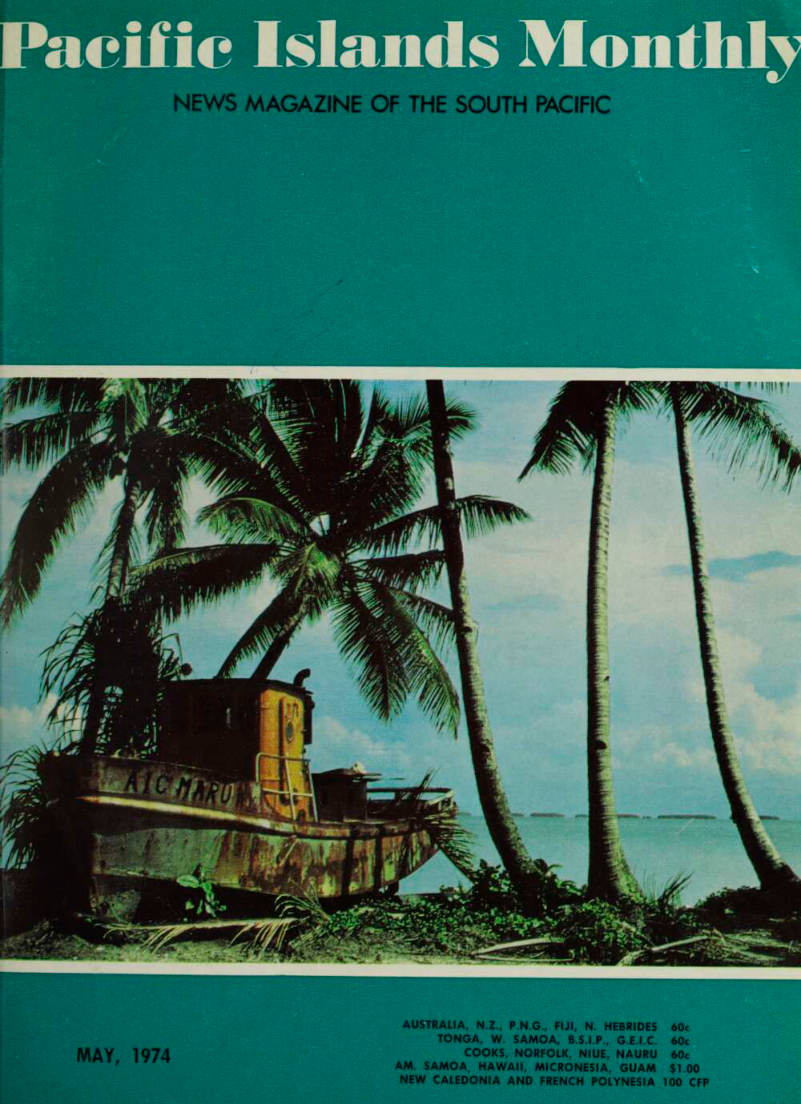 1
1 2
2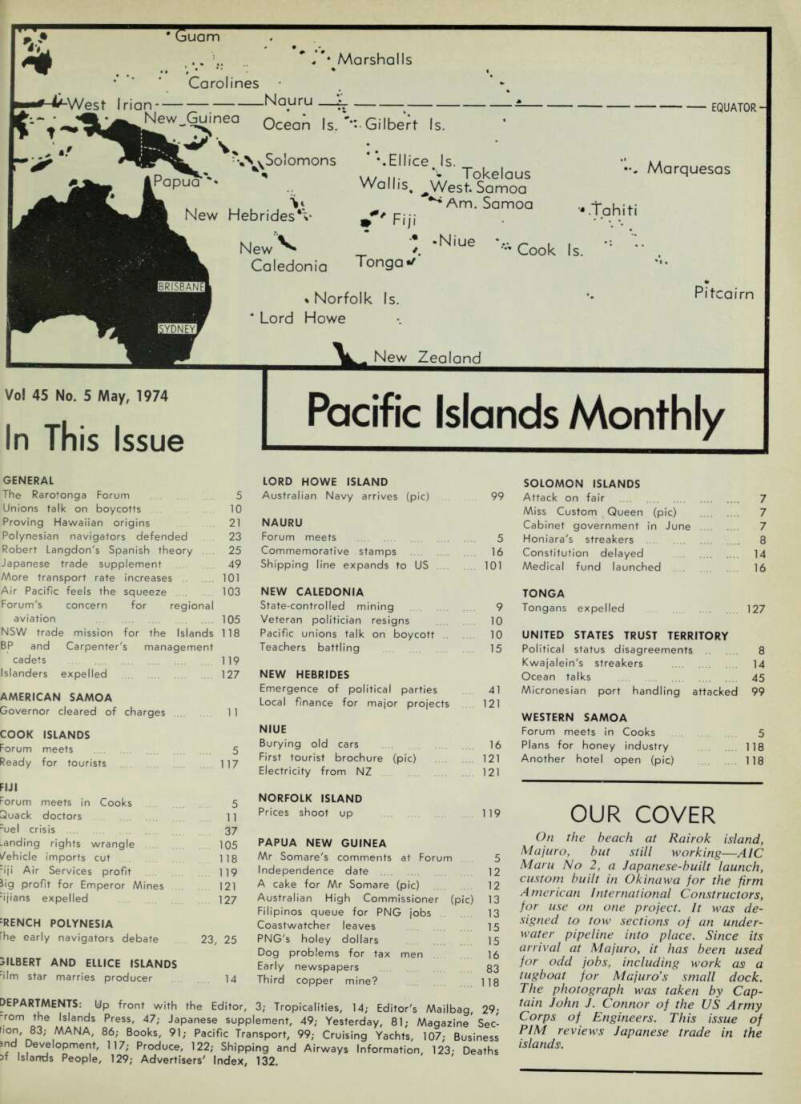 3
3 4
4 5
5 6
6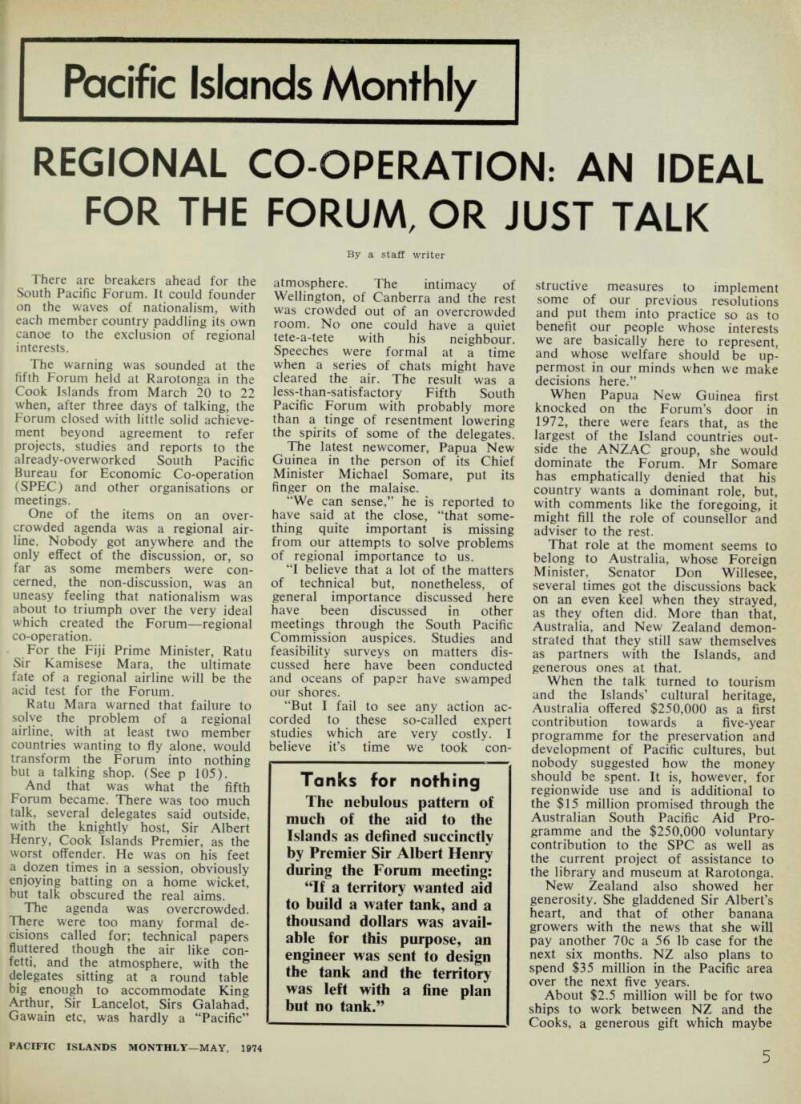 7
7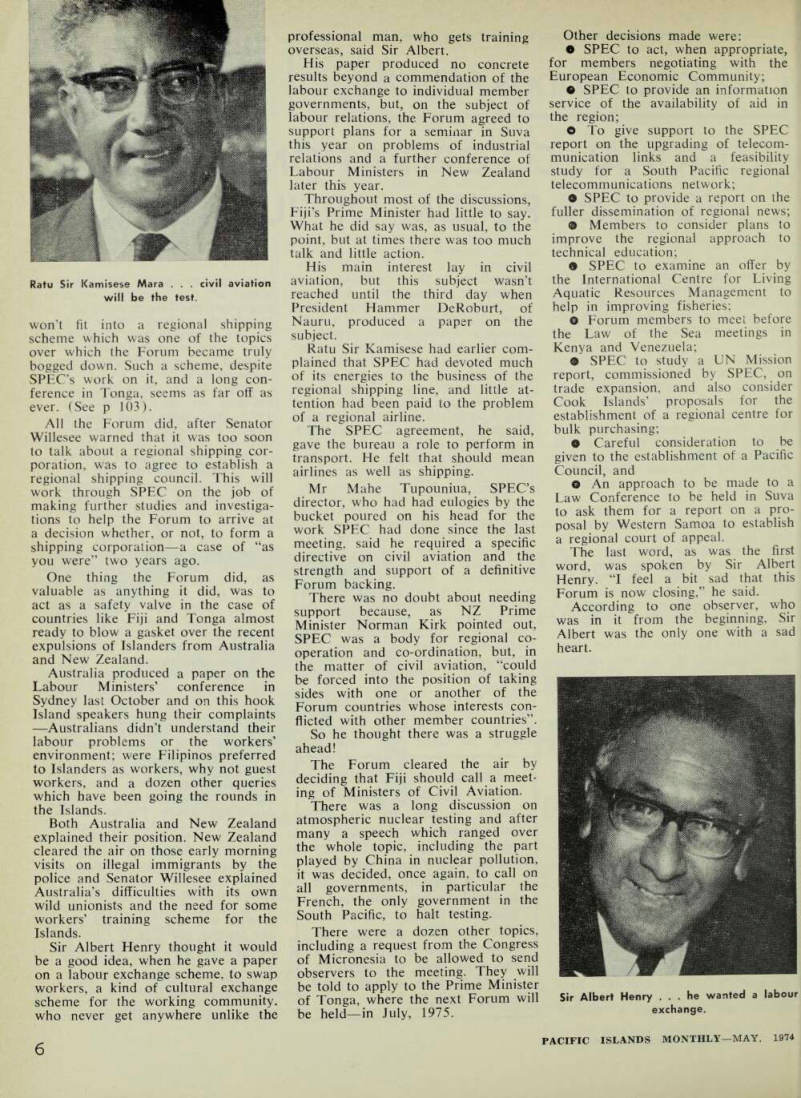 8
8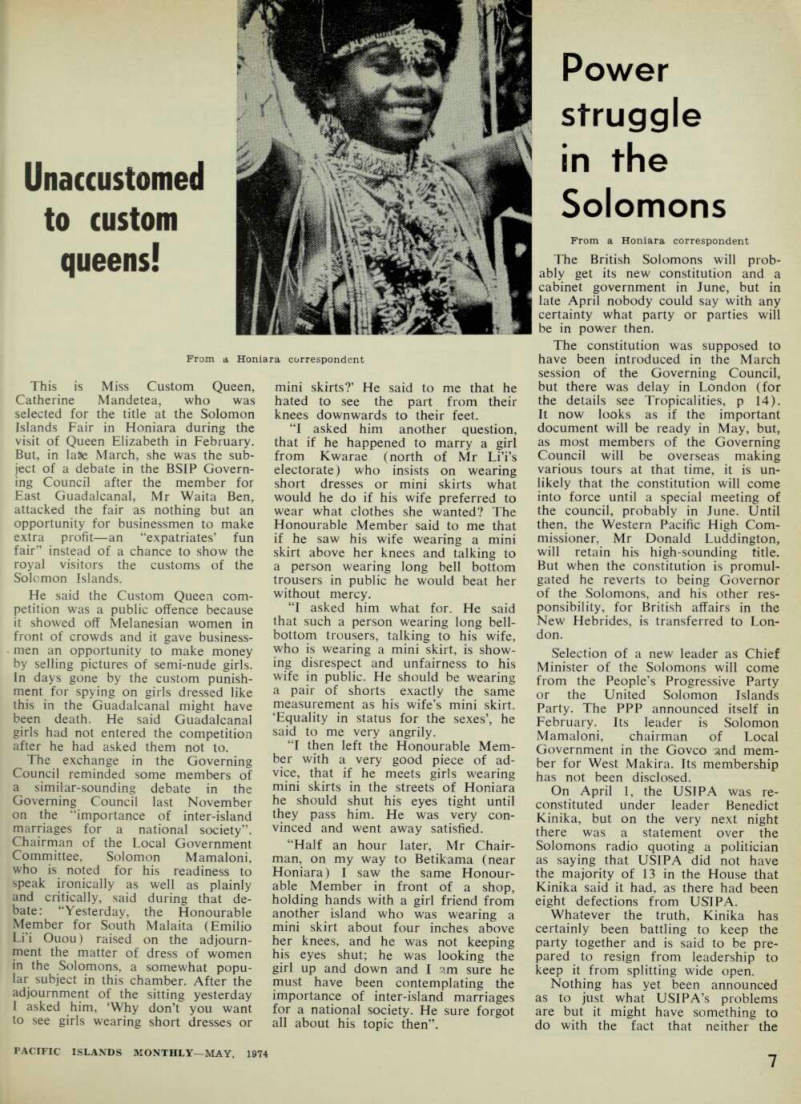 9
9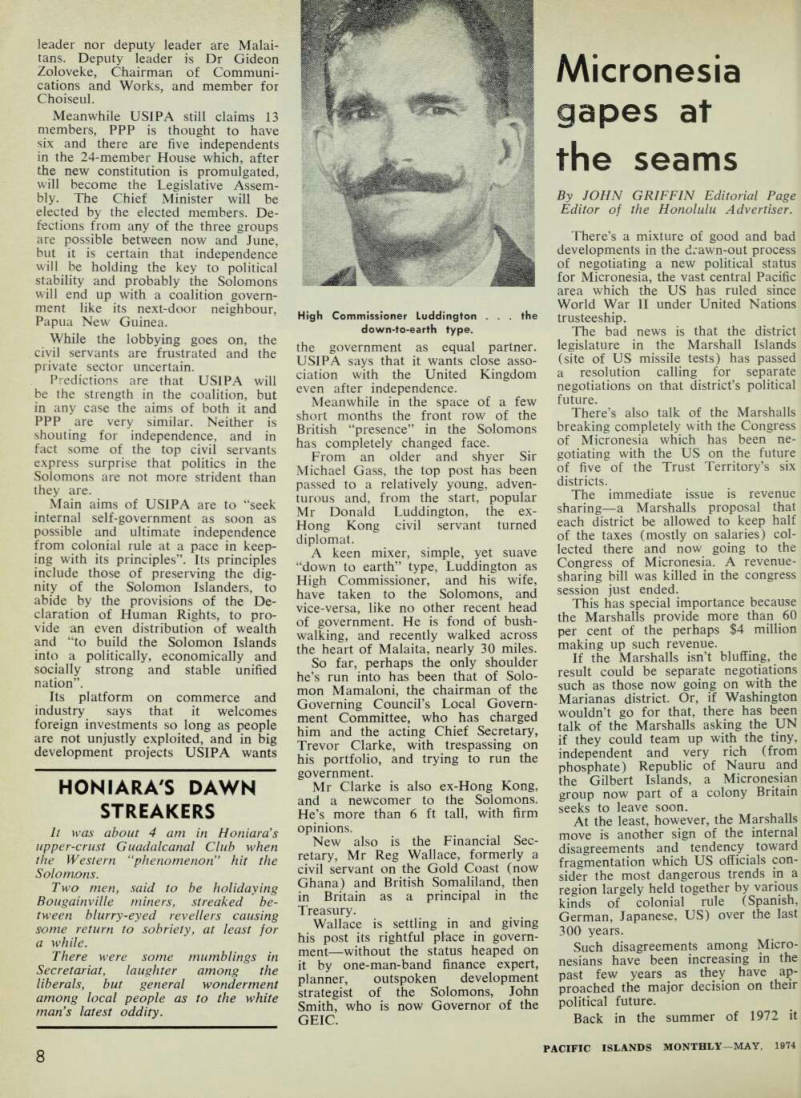 10
10 11
11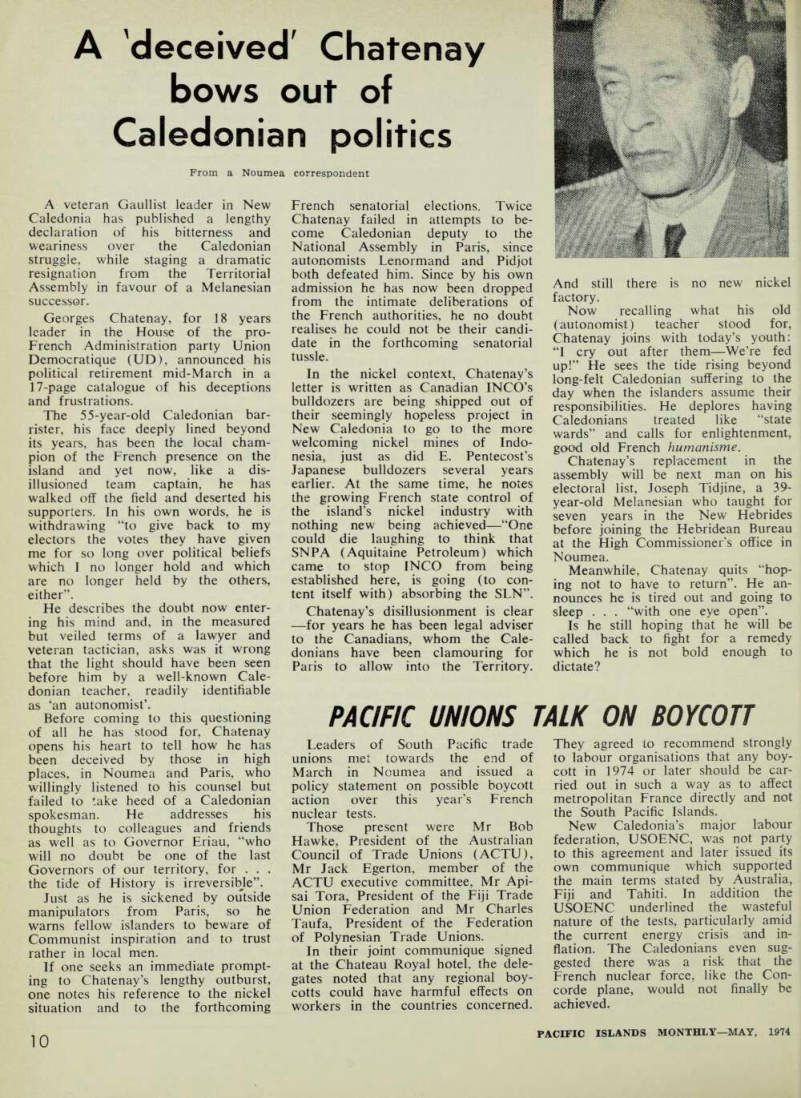 12
12 13
13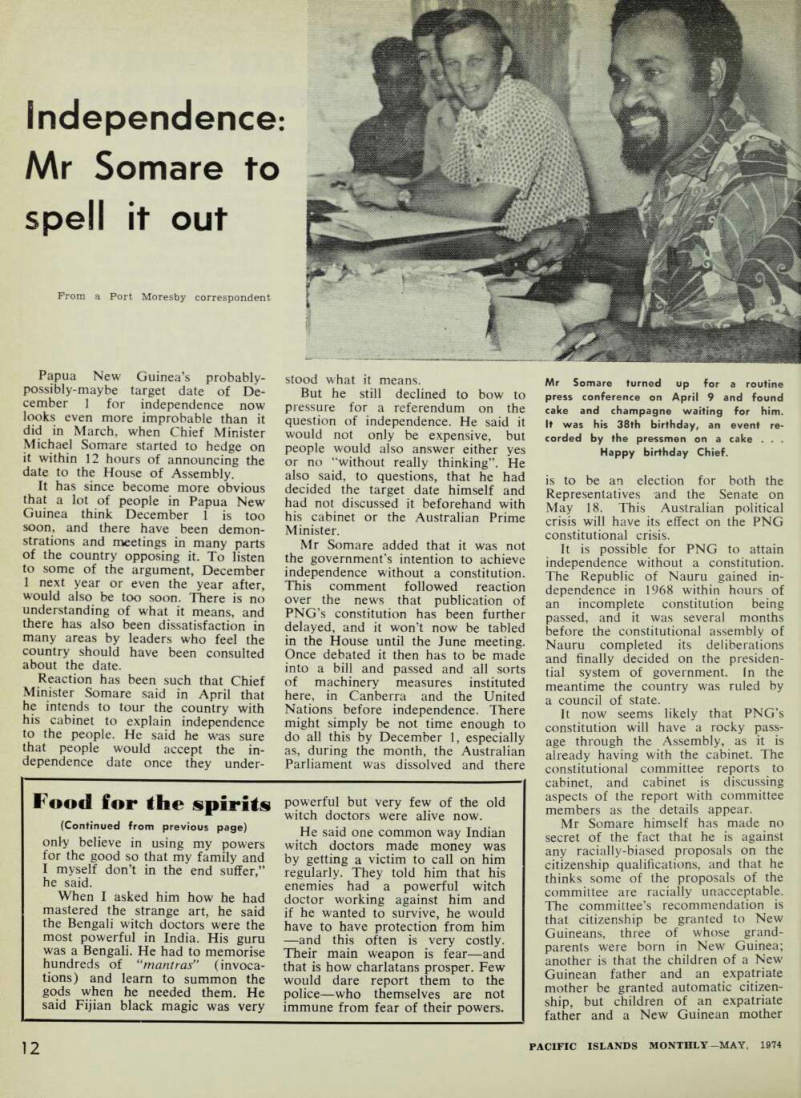 14
14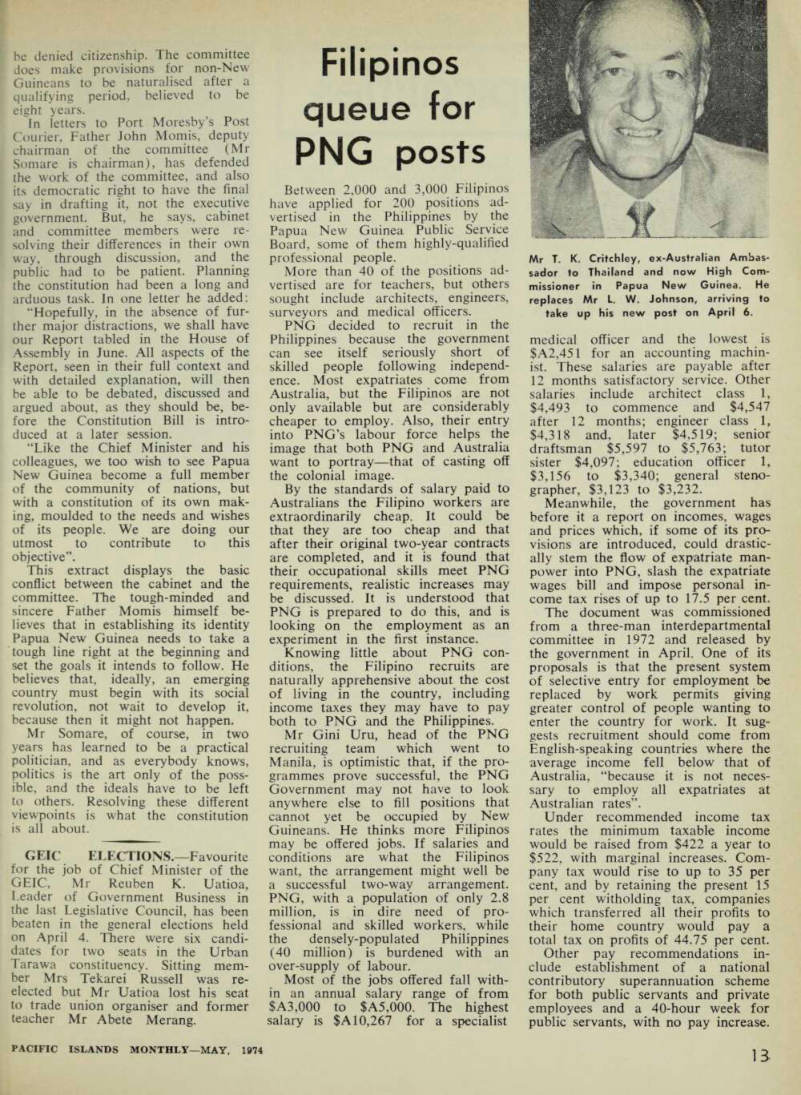 15
15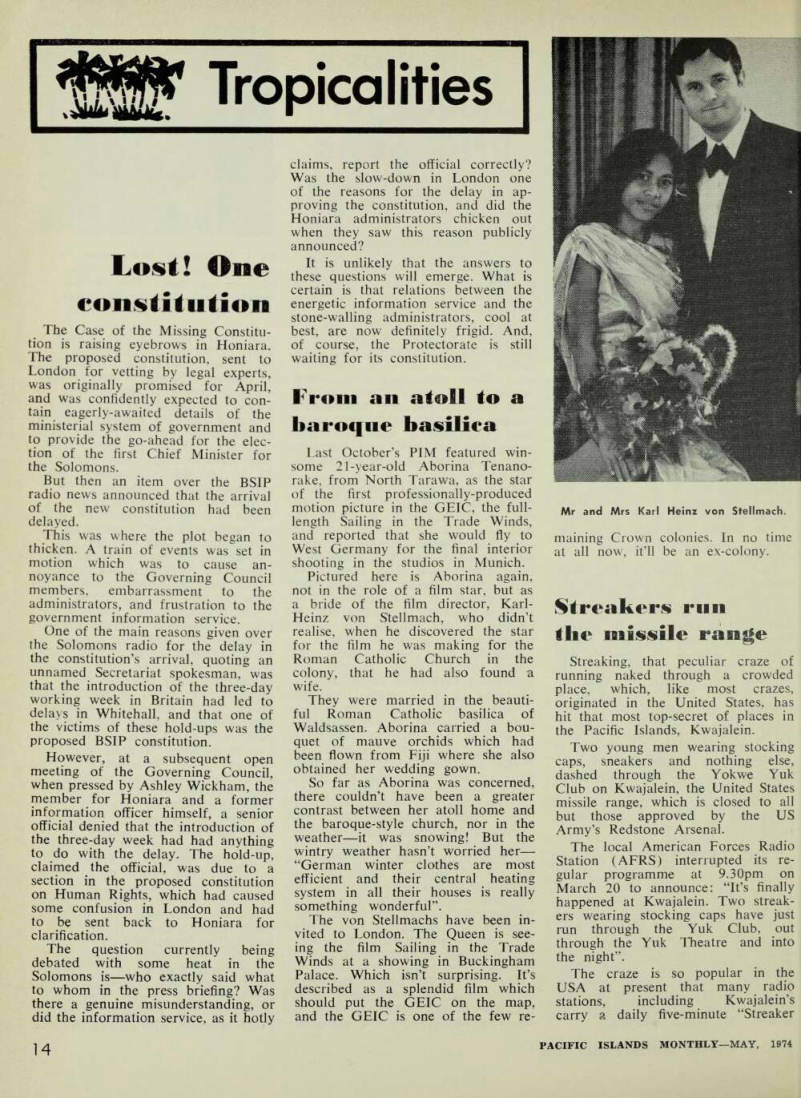 16
16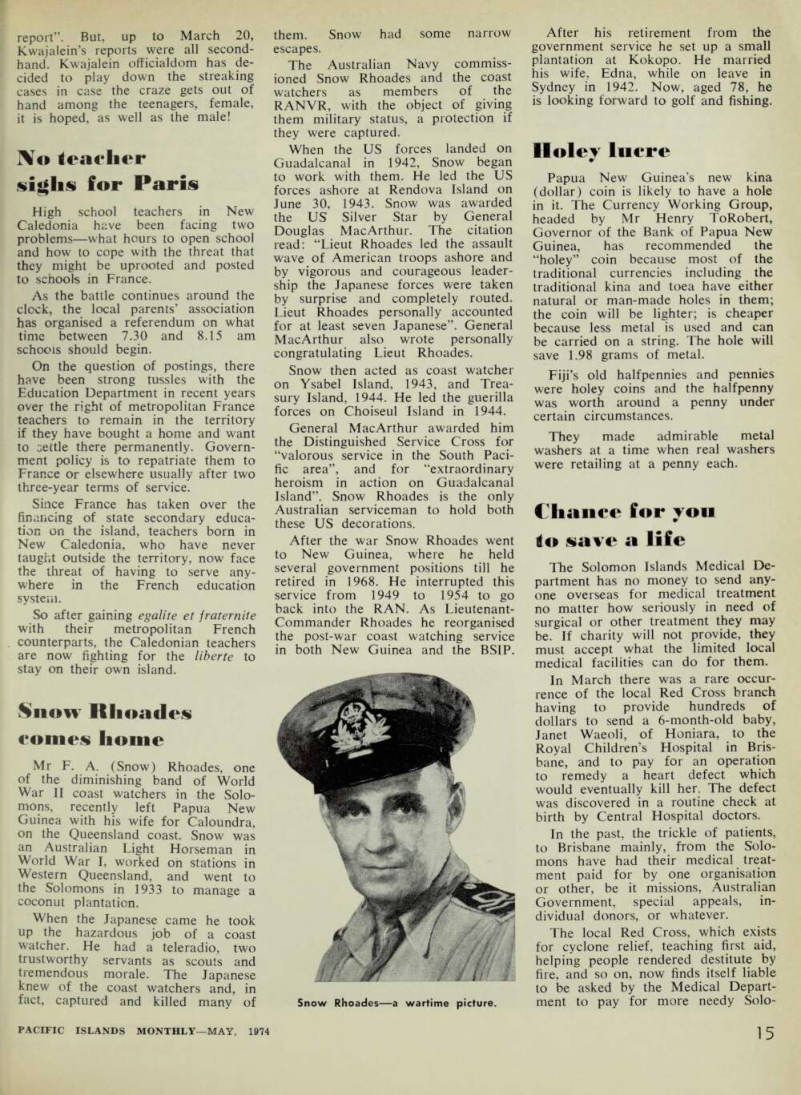 17
17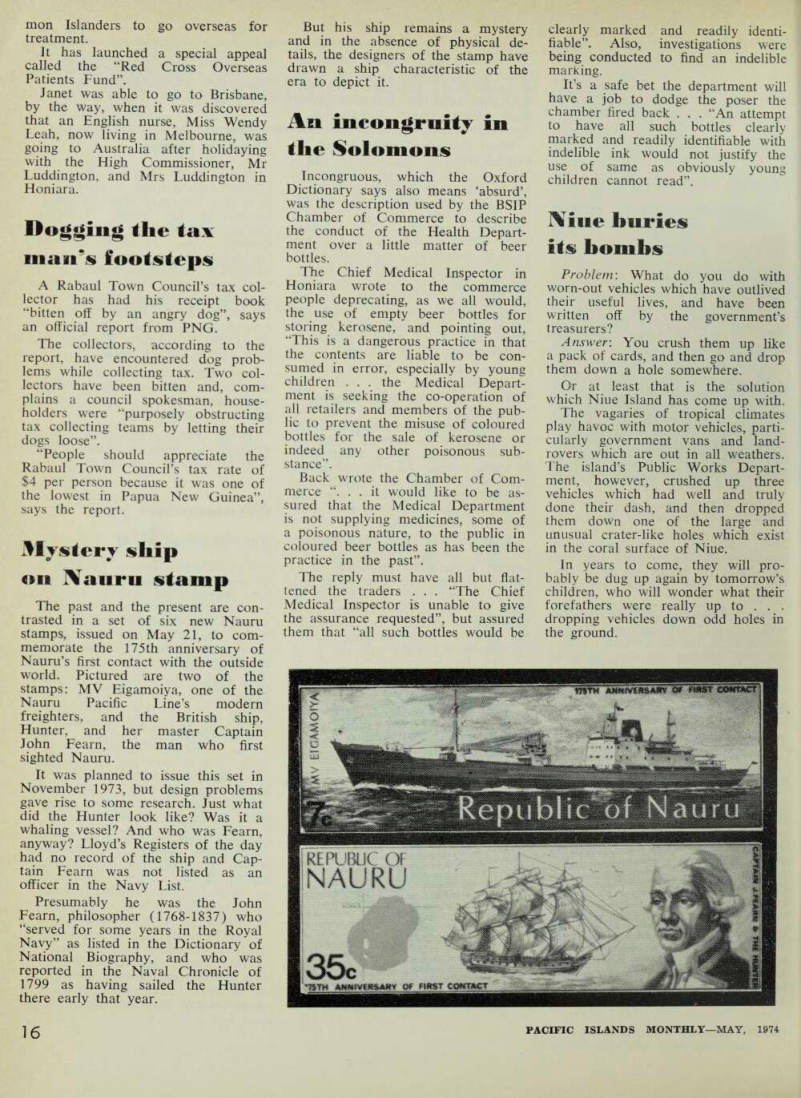 18
18 19
19 20
20 21
21 22
22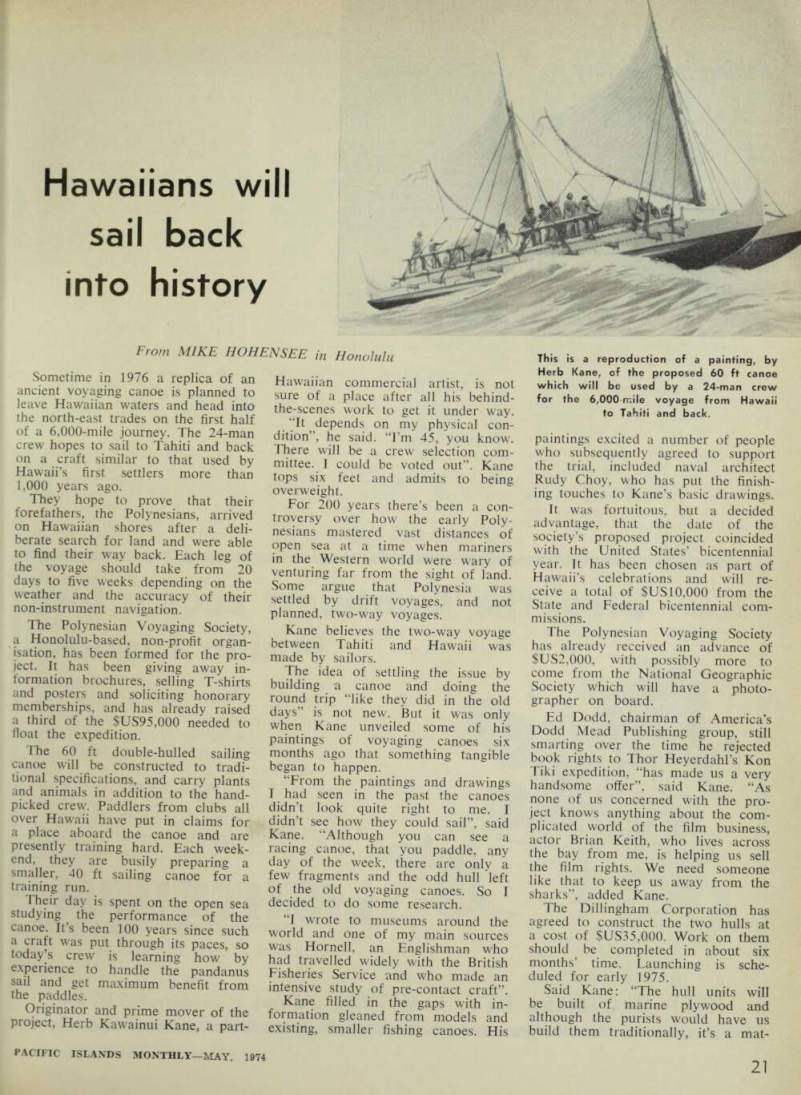 23
23 24
24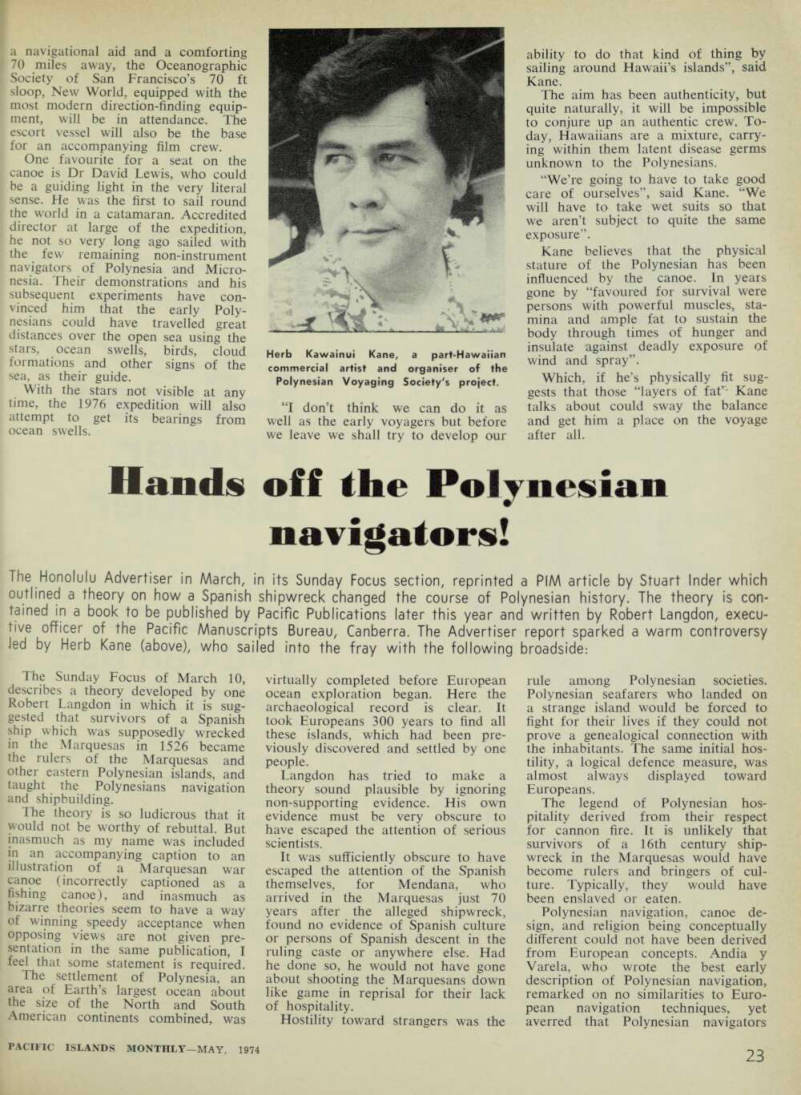 25
25 26
26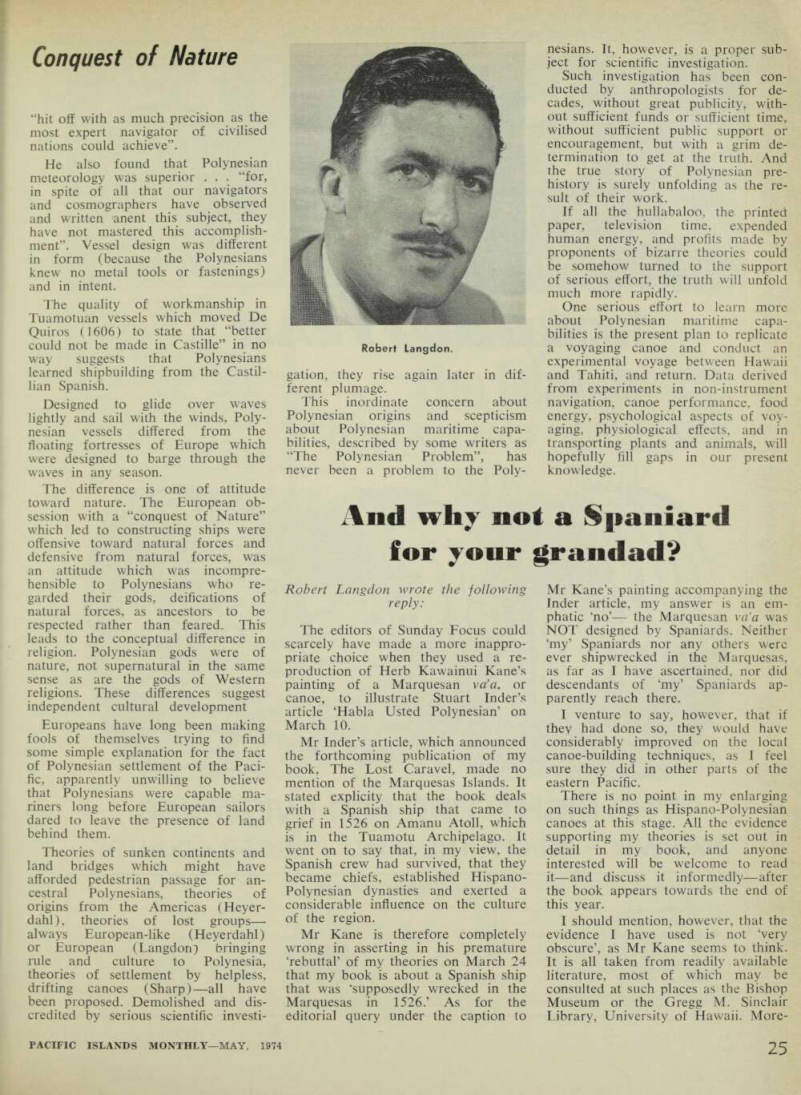 27
27 28
28 29
29 30
30 31
31 32
32 33
33 34
34 35
35 36
36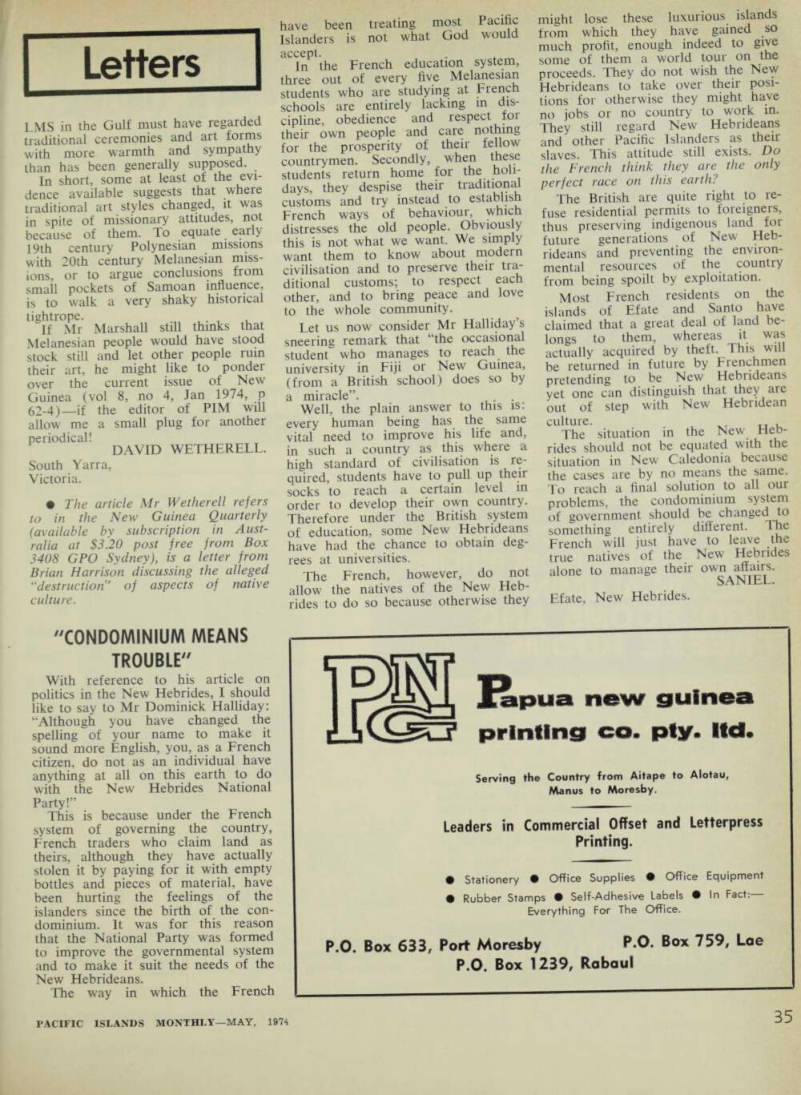 37
37 38
38 39
39 40
40 41
41 42
42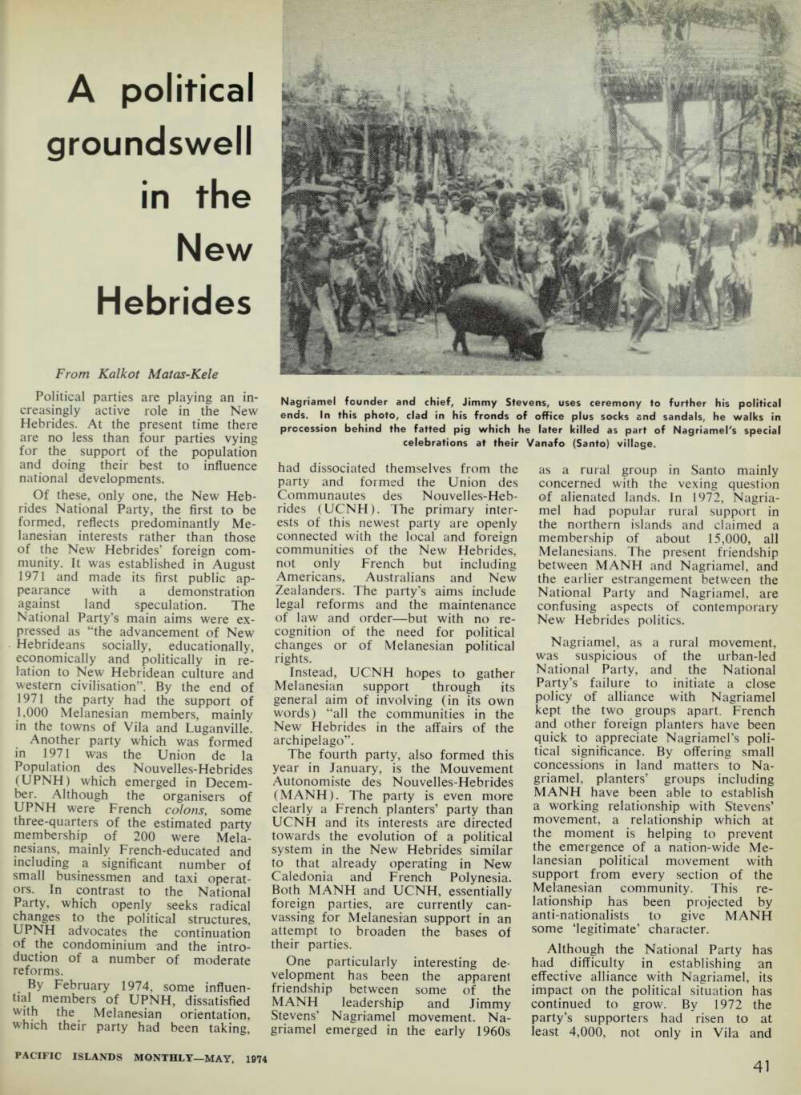 43
43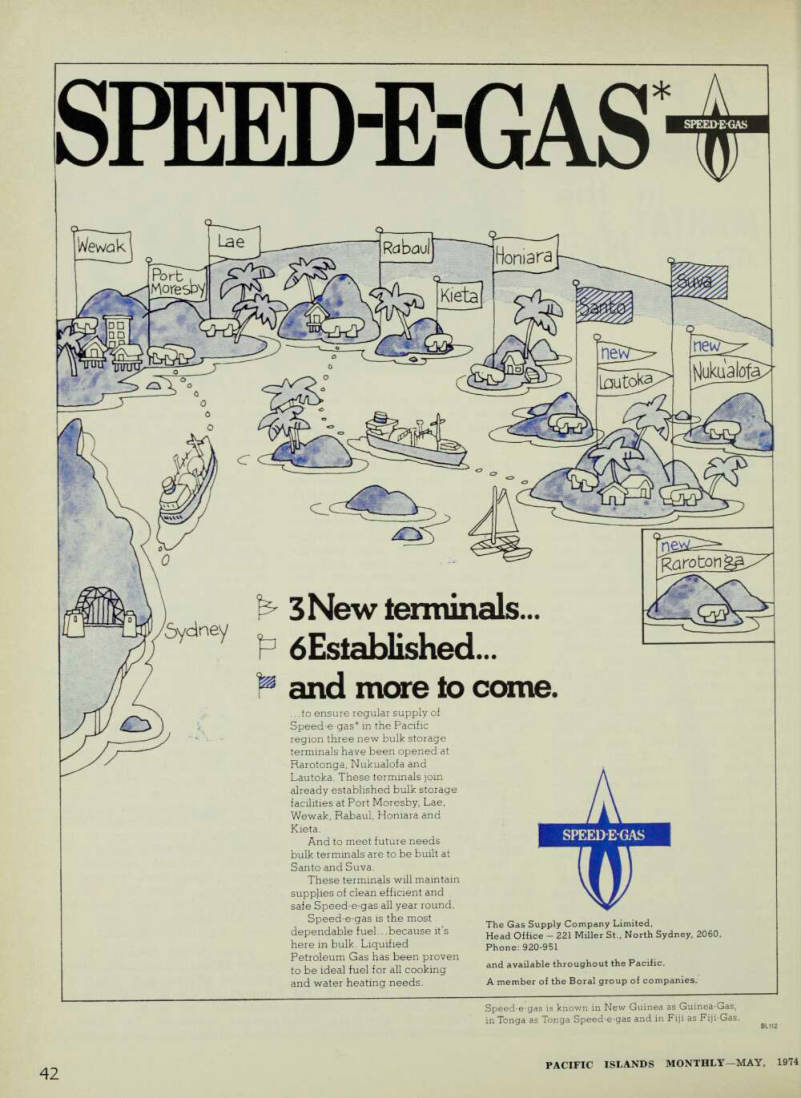 44
44 45
45 46
46 47
47 48
48 49
49 50
50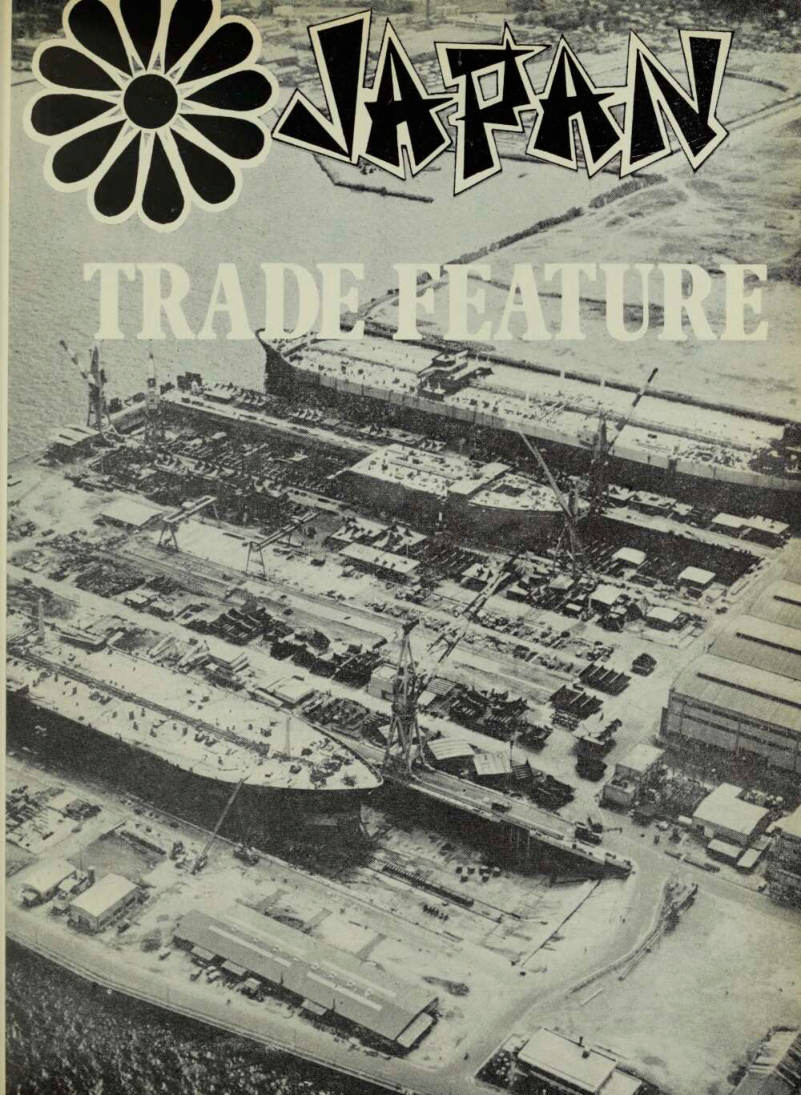 51
51 52
52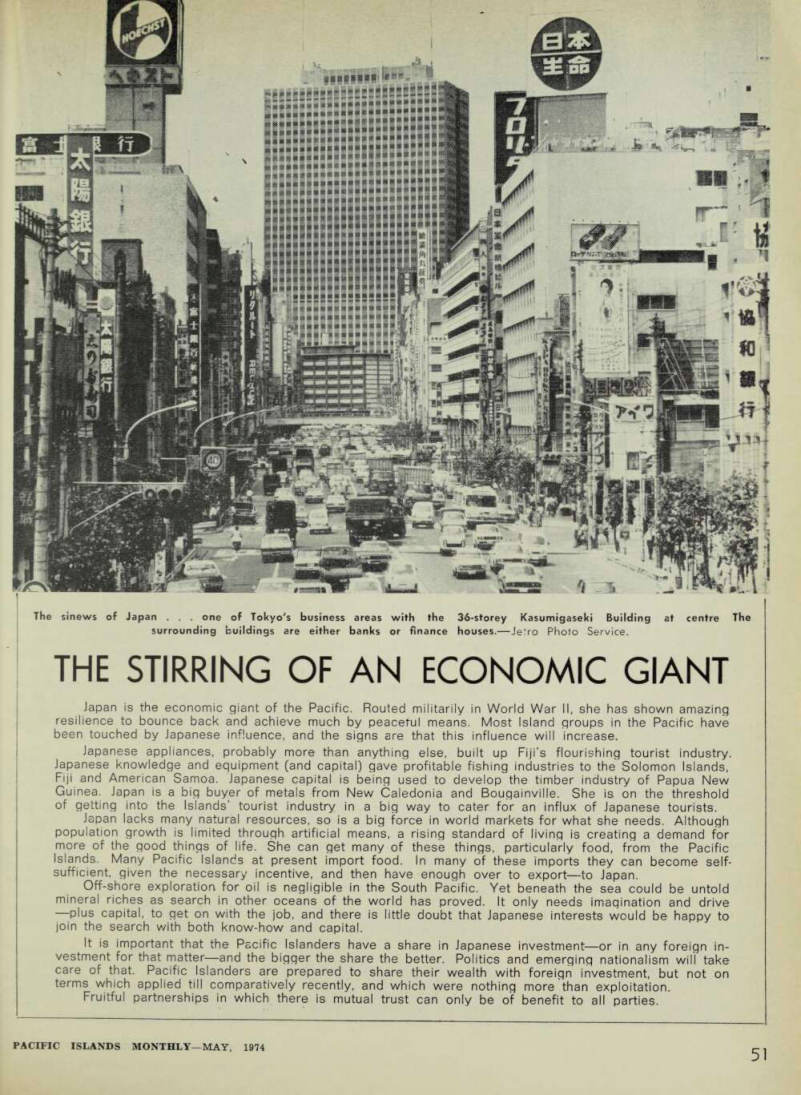 53
53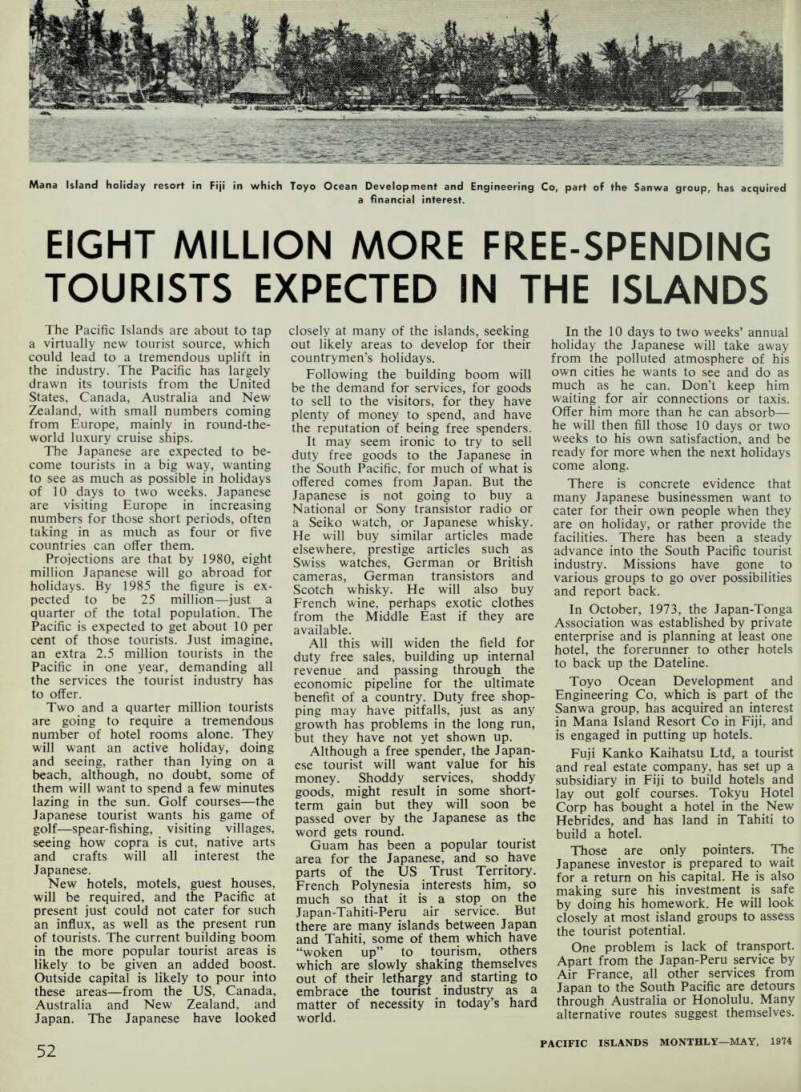 54
54 55
55 56
56 57
57 58
58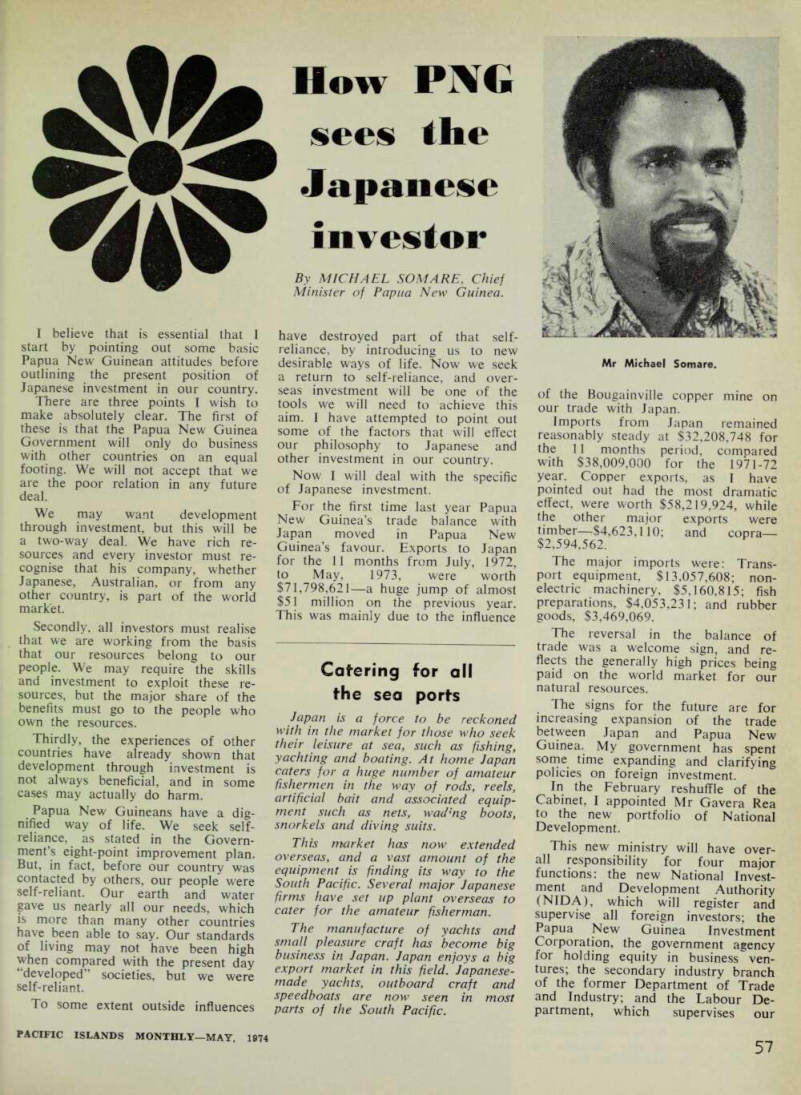 59
59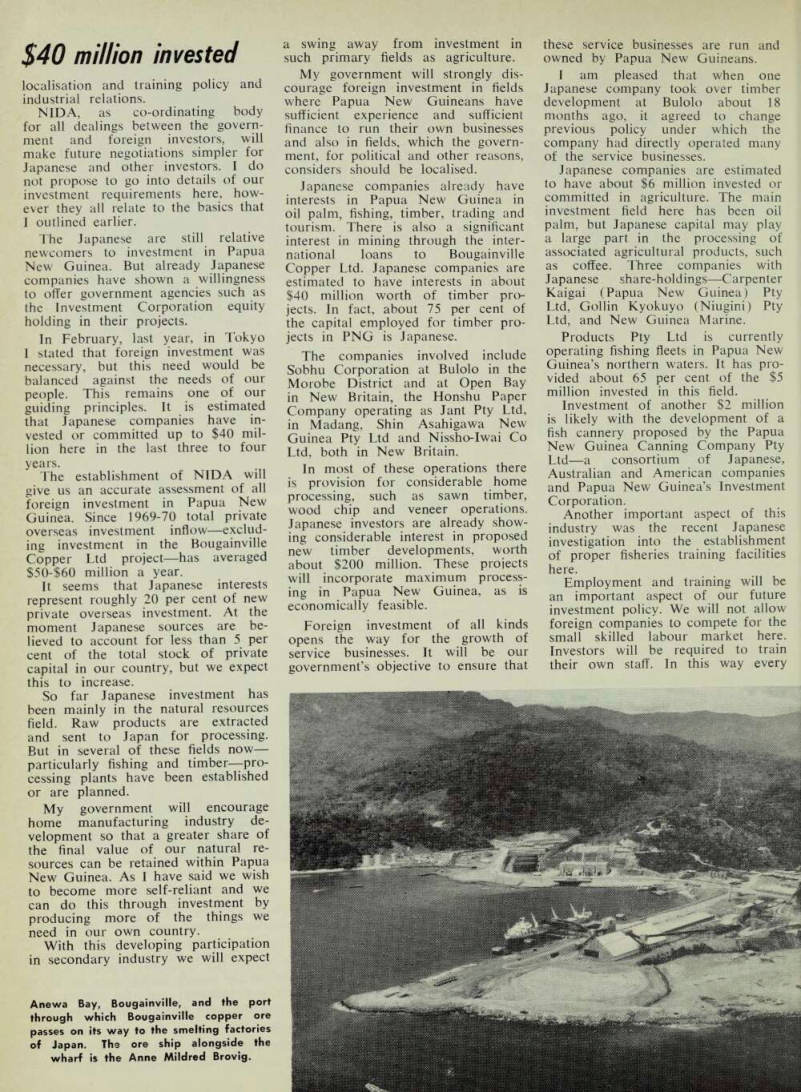 60
60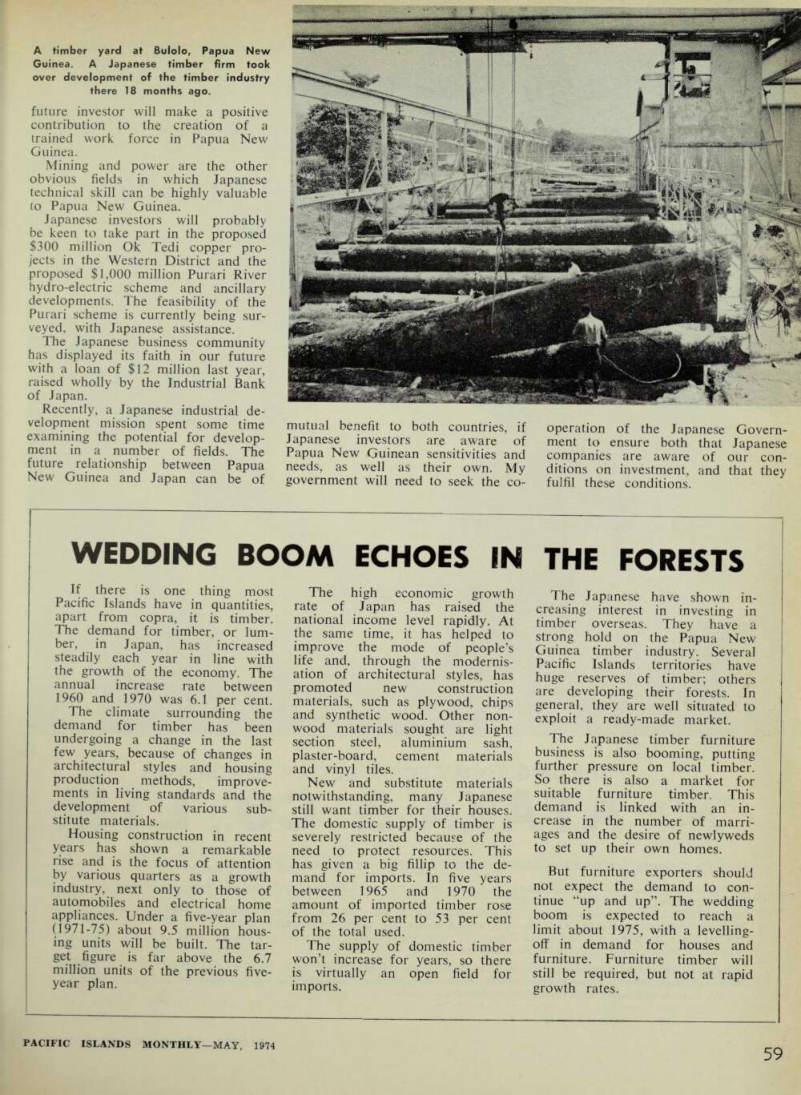 61
61 62
62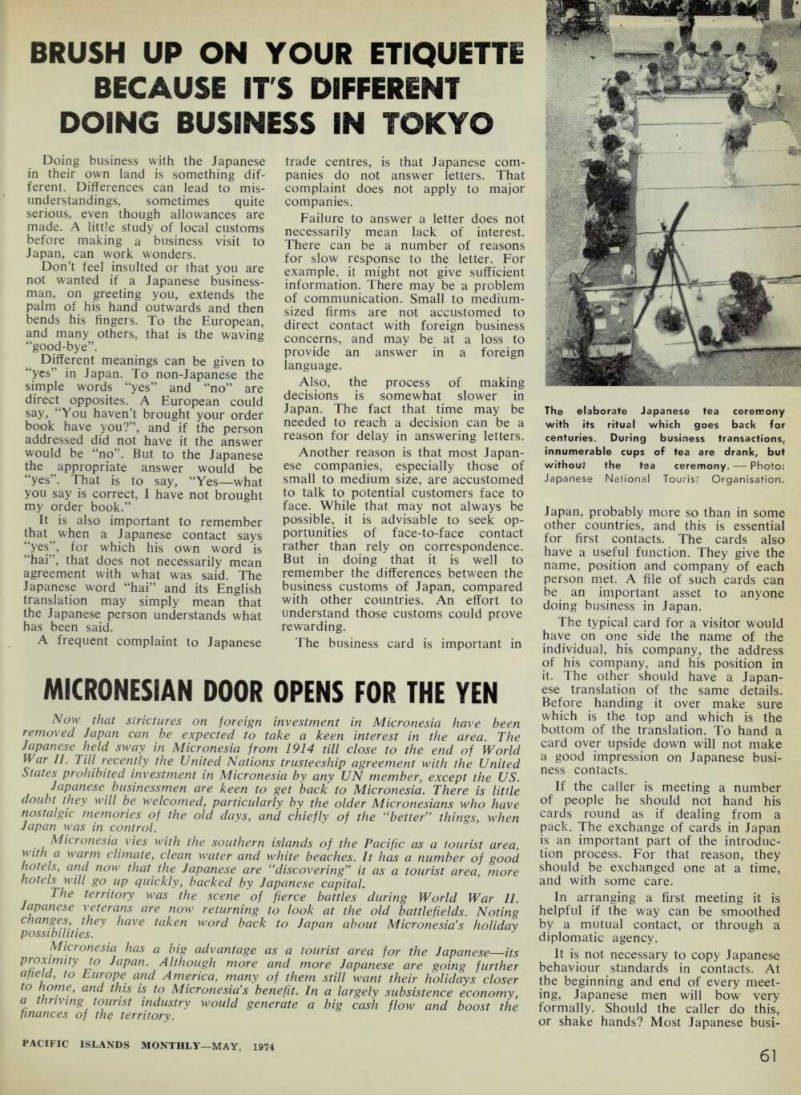 63
63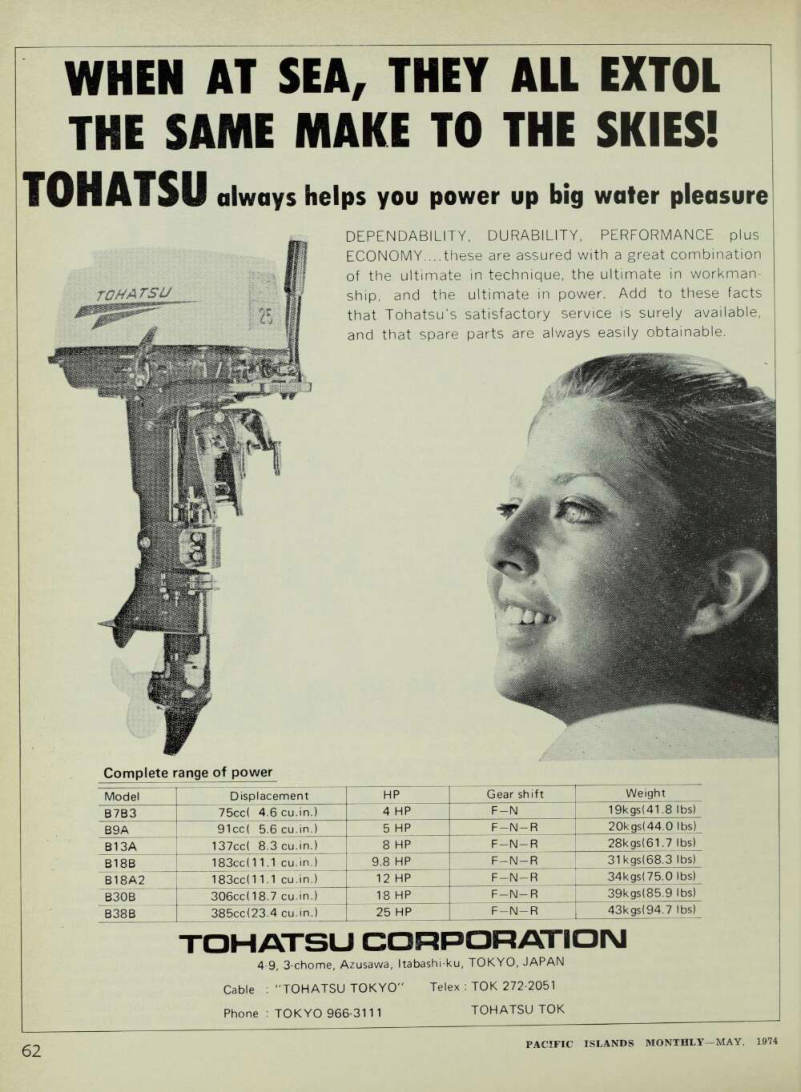 64
64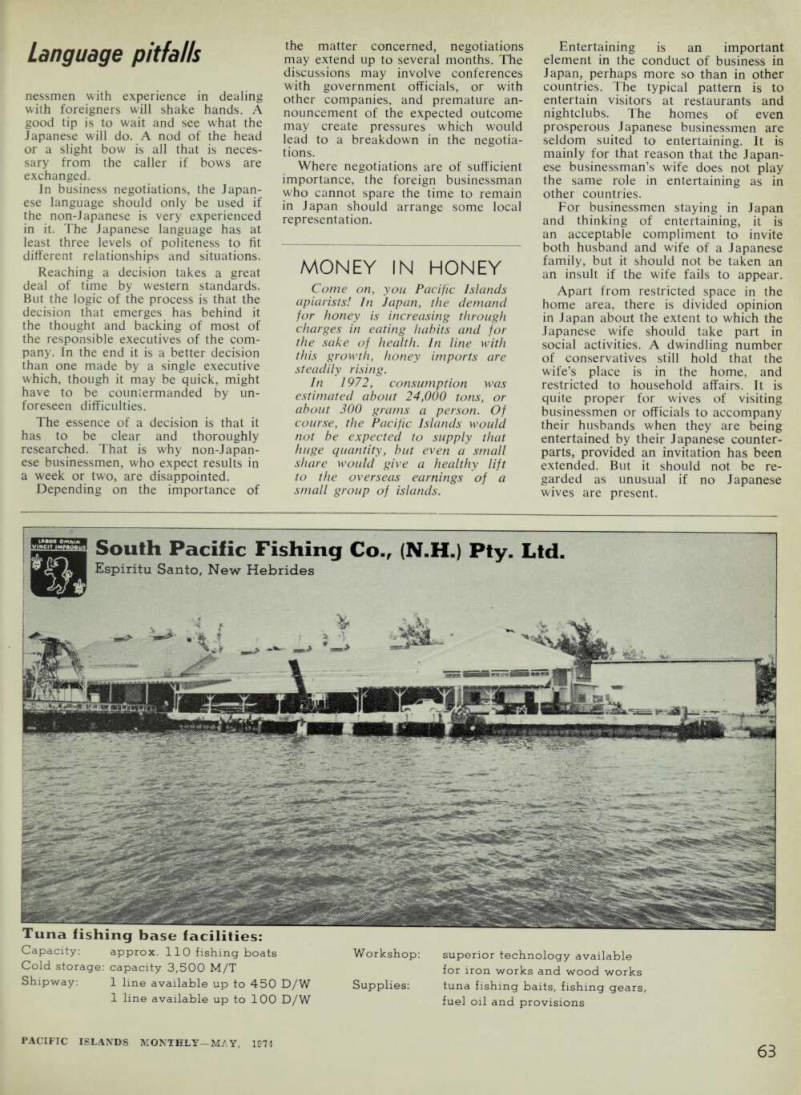 65
65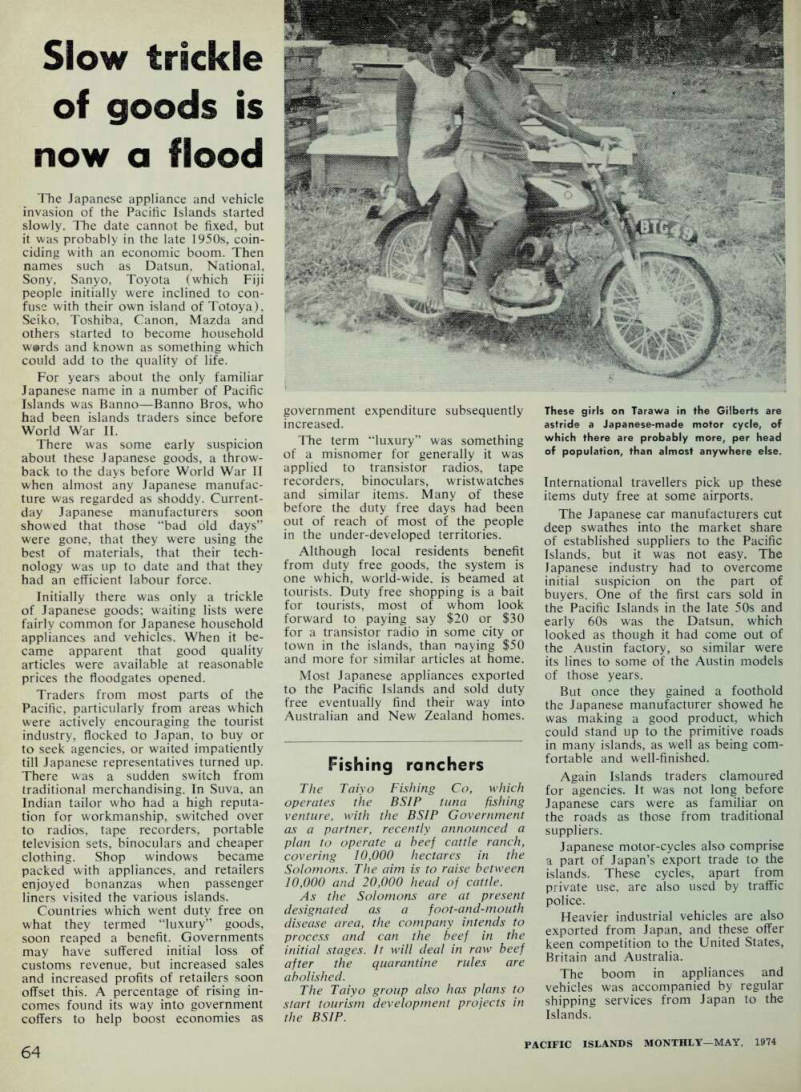 66
66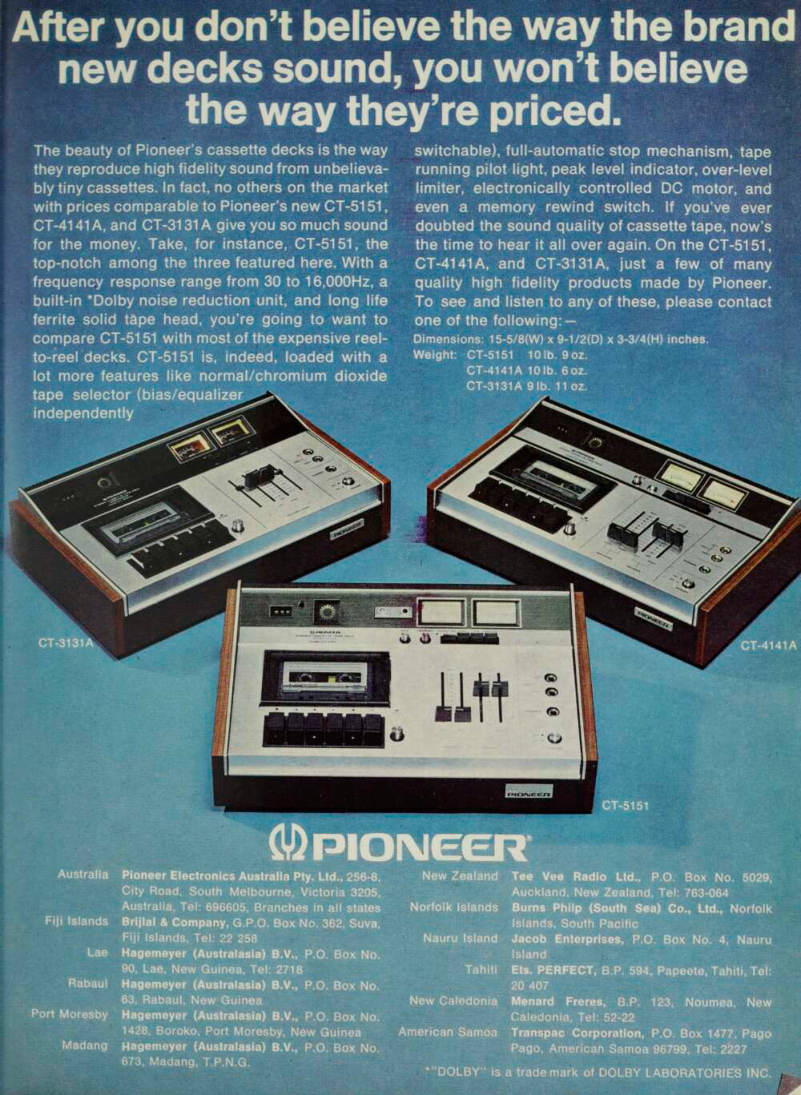 67
67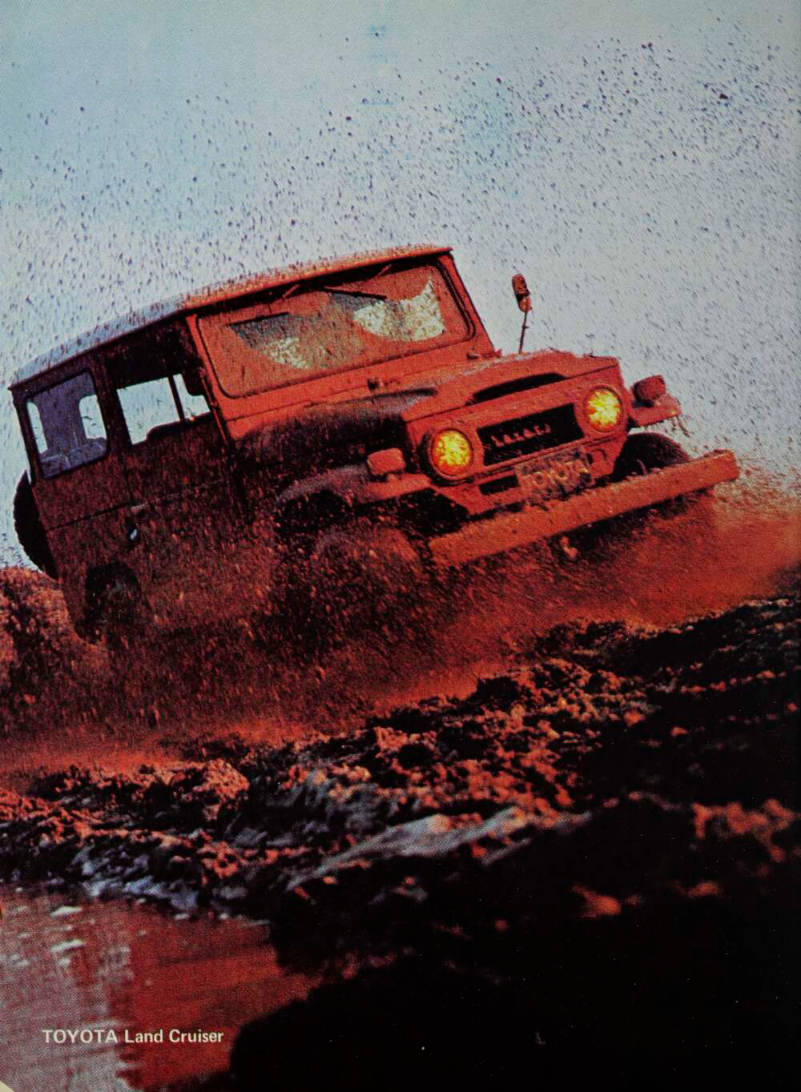 68
68 69
69 70
70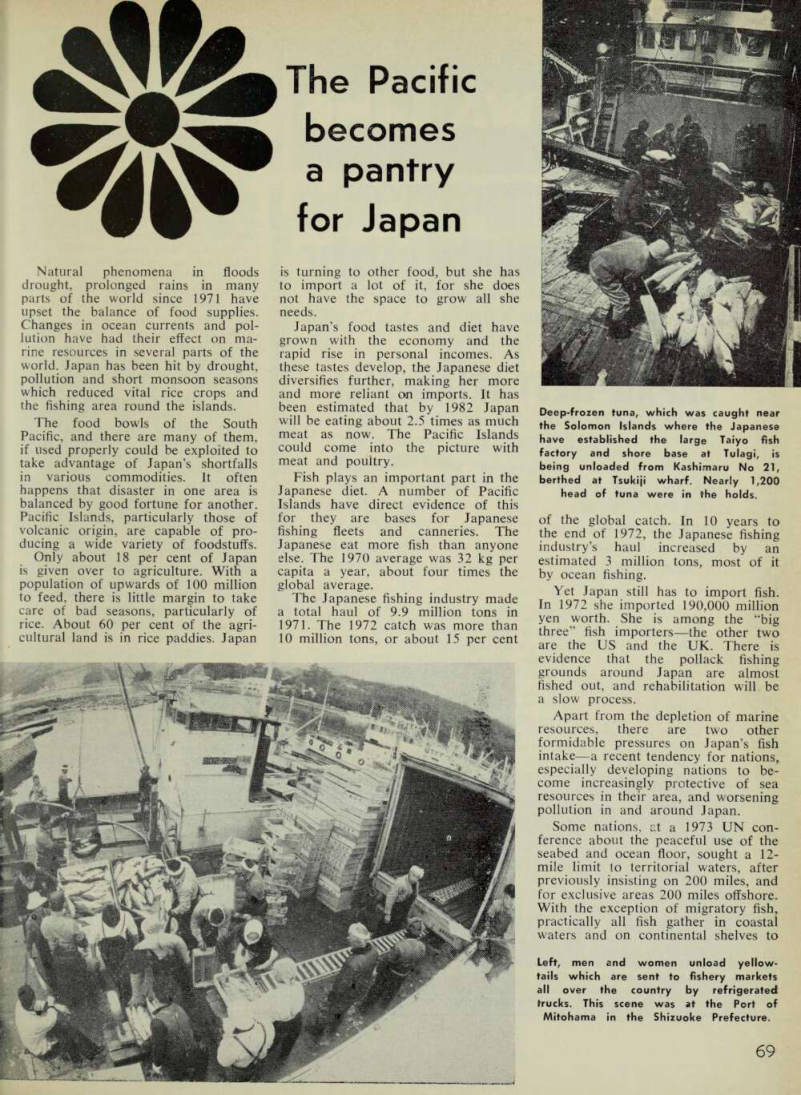 71
71 72
72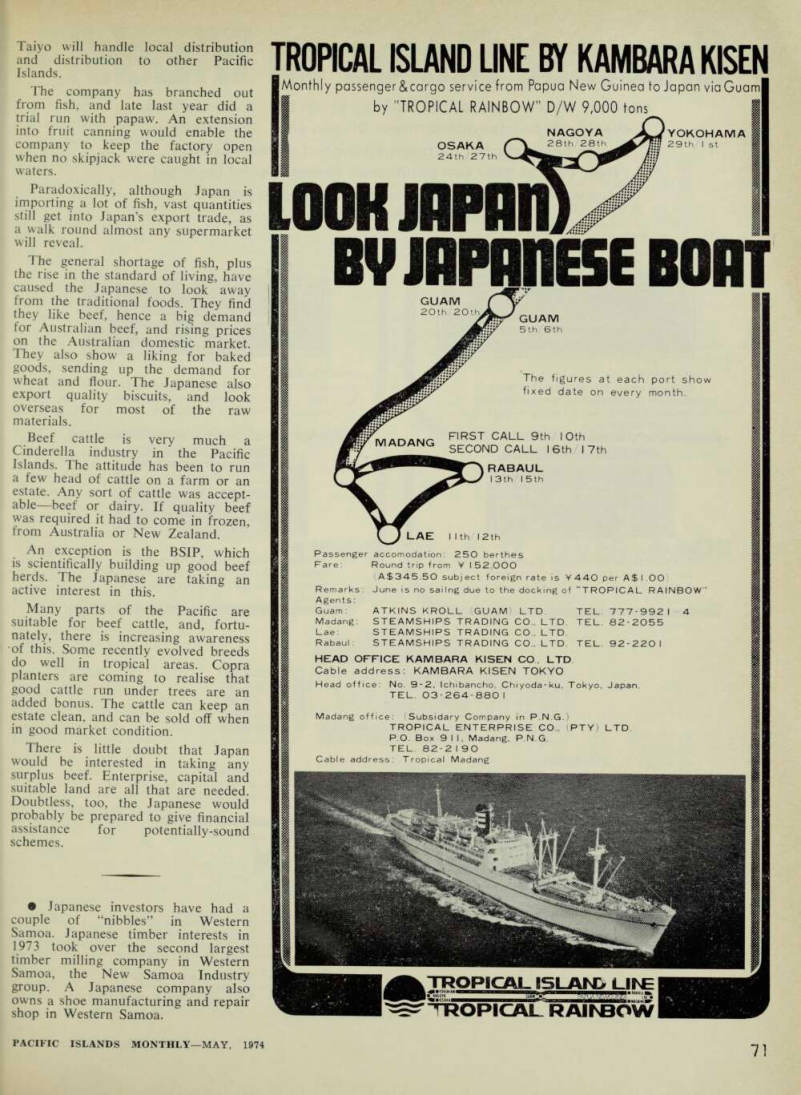 73
73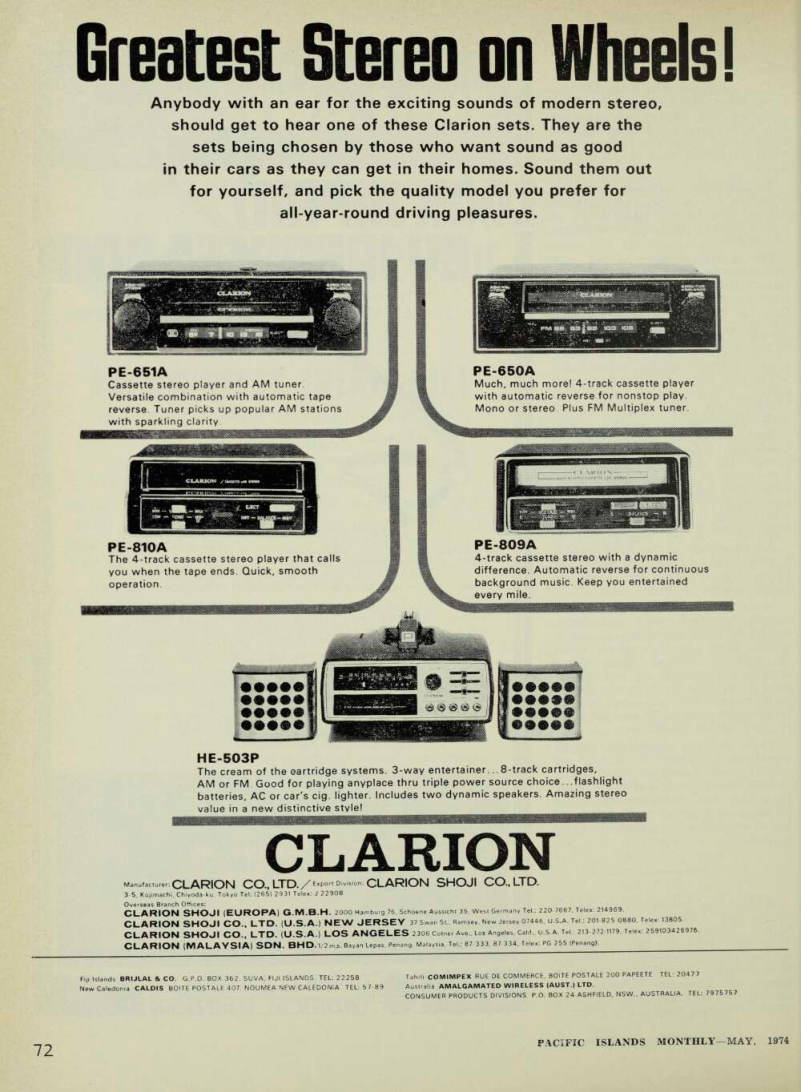 74
74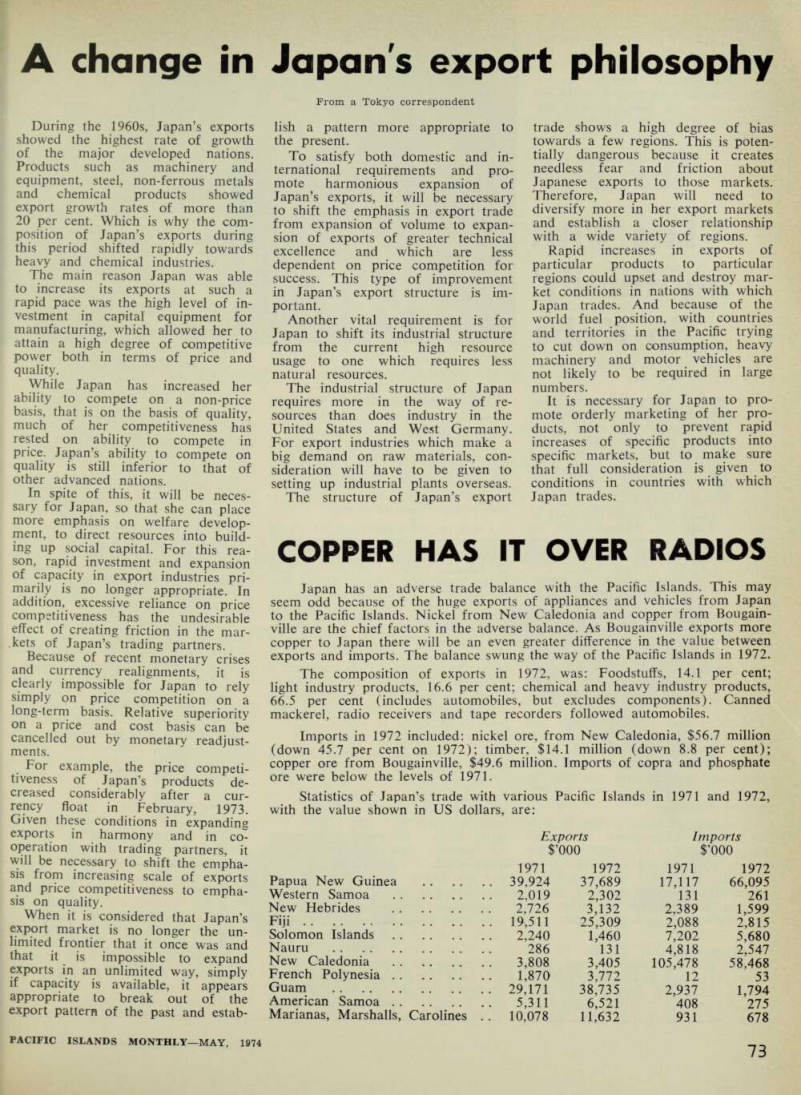 75
75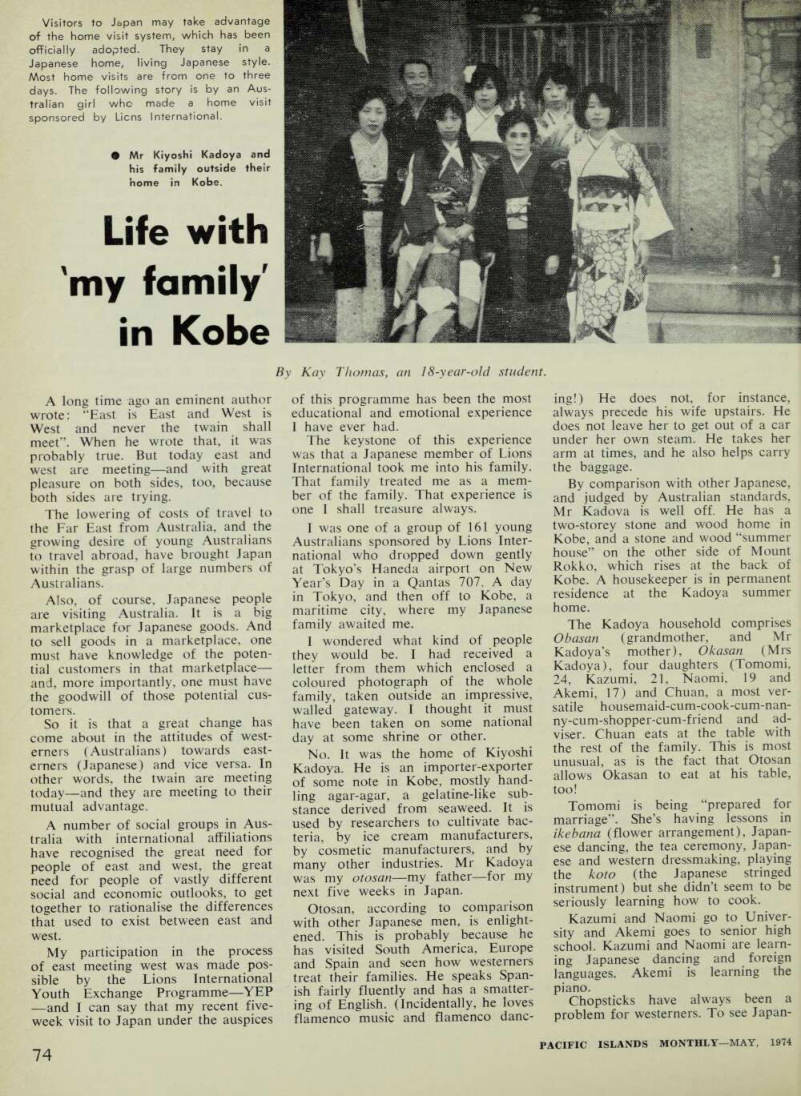 76
76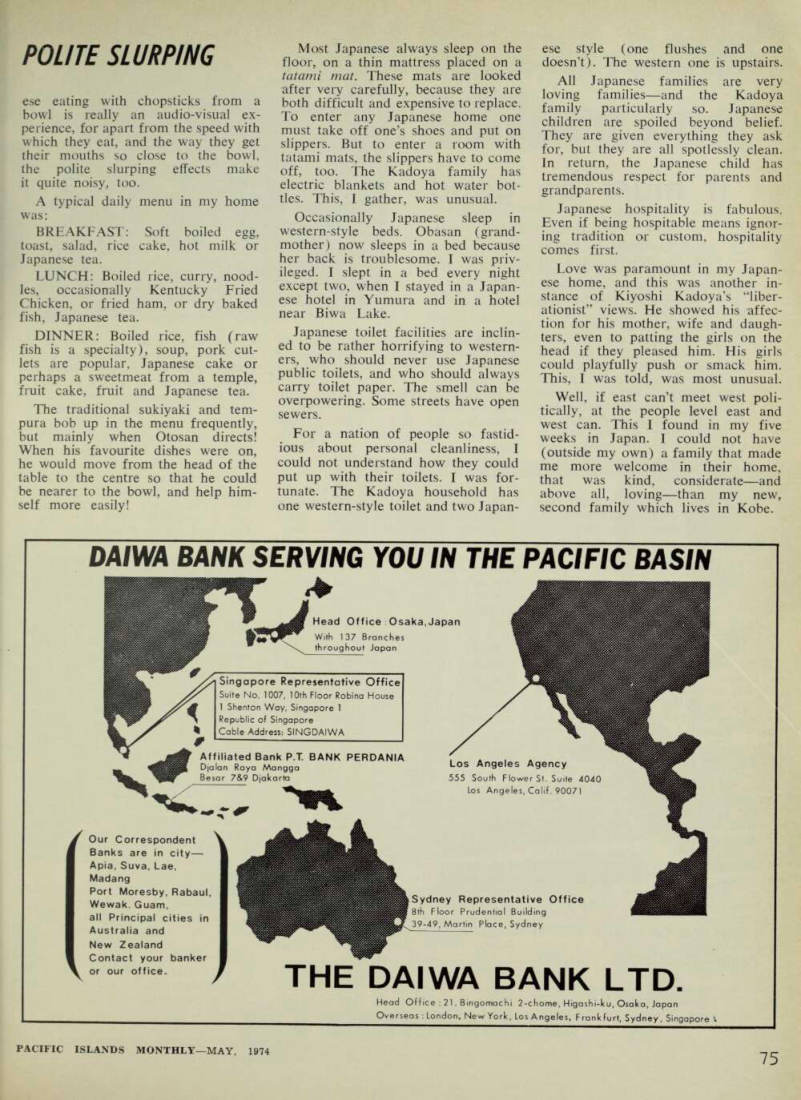 77
77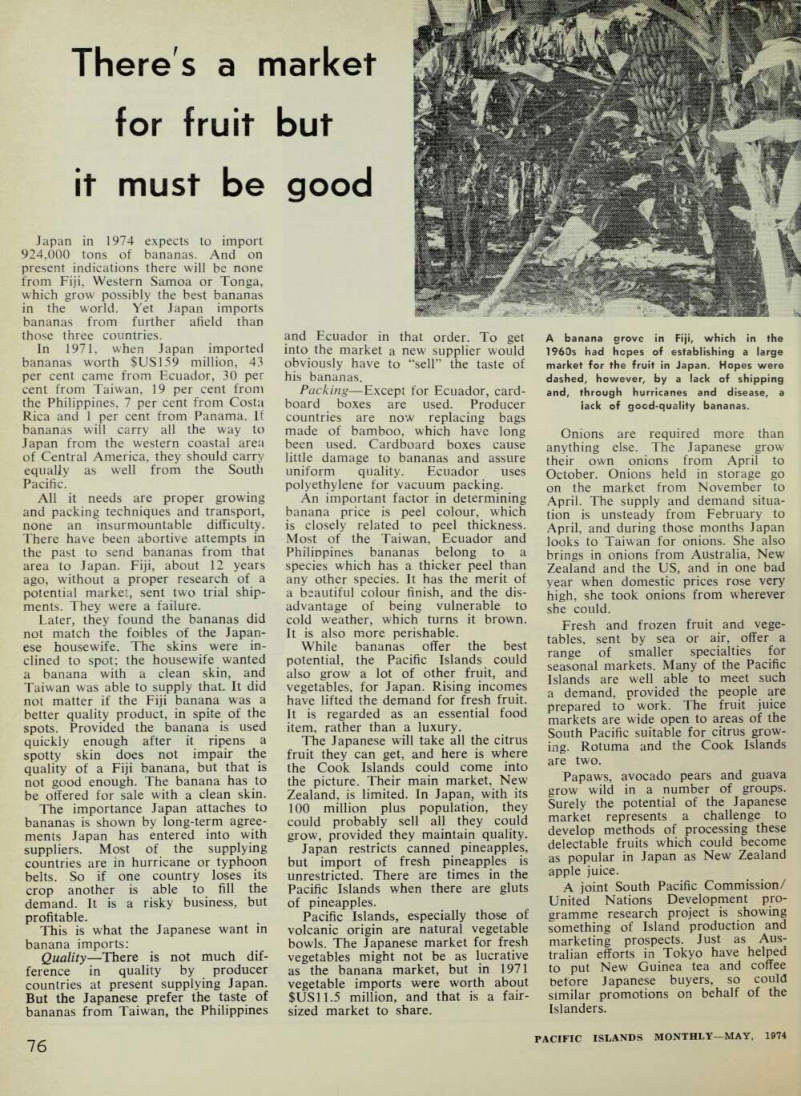 78
78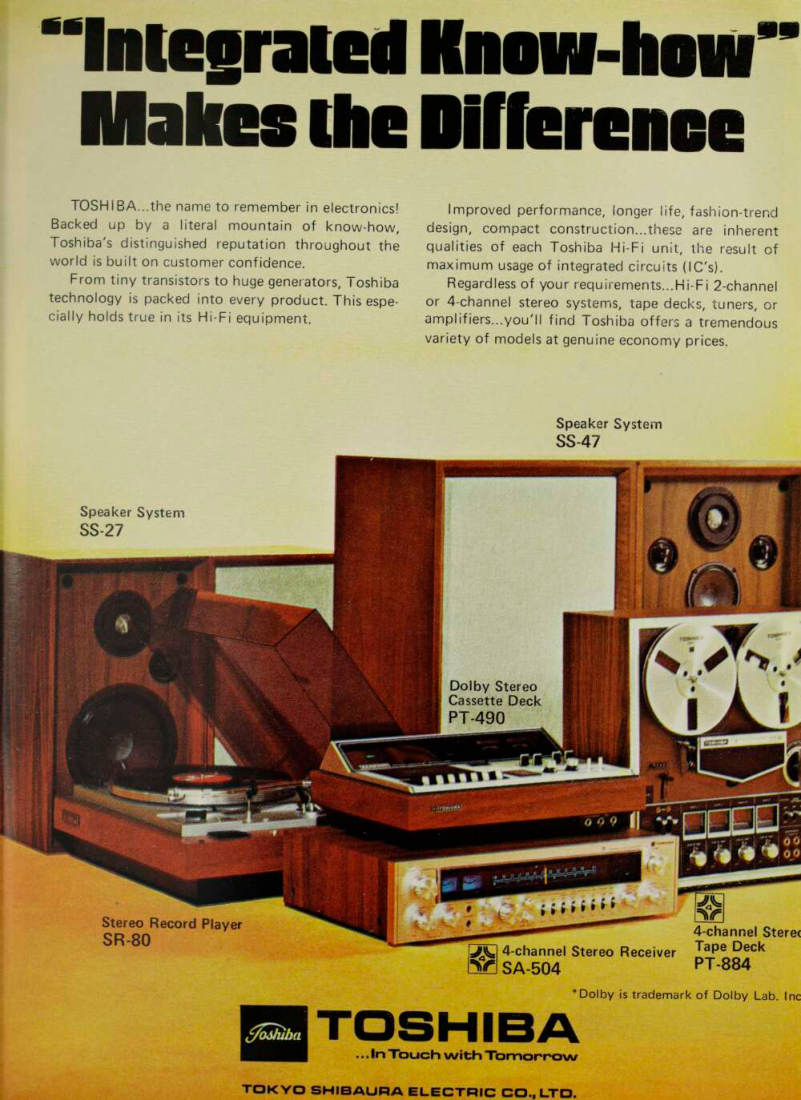 79
79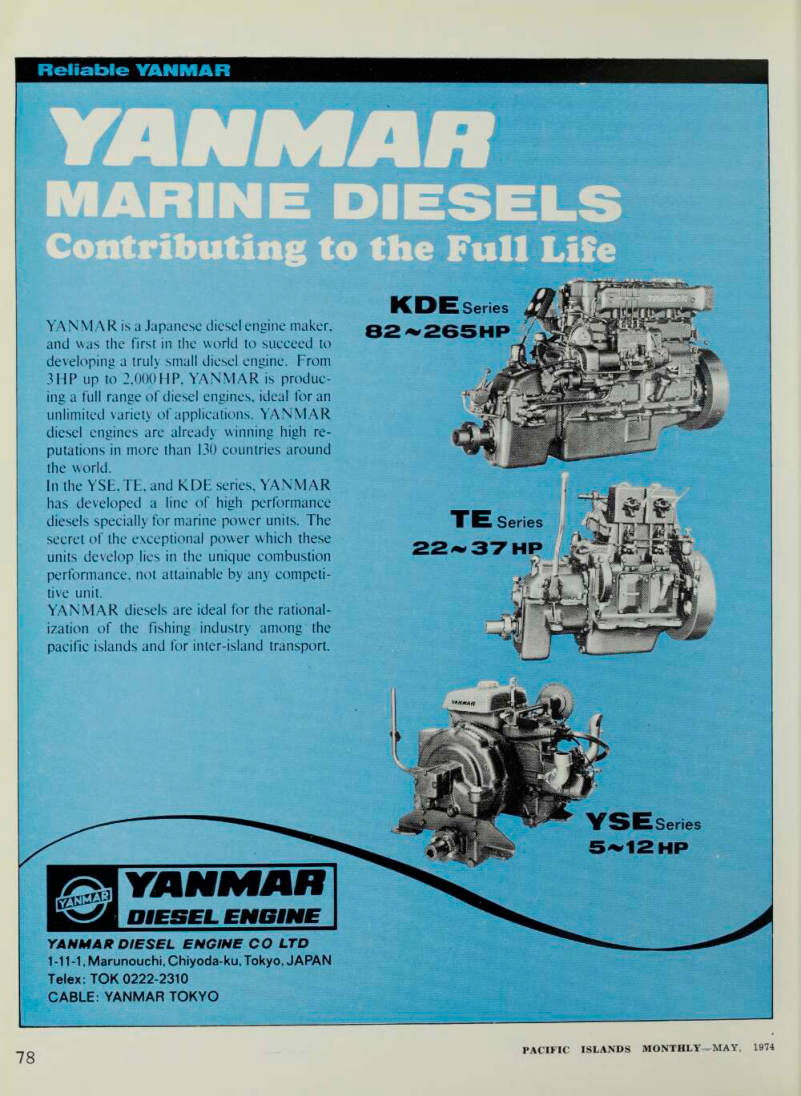 80
80 81
81 82
82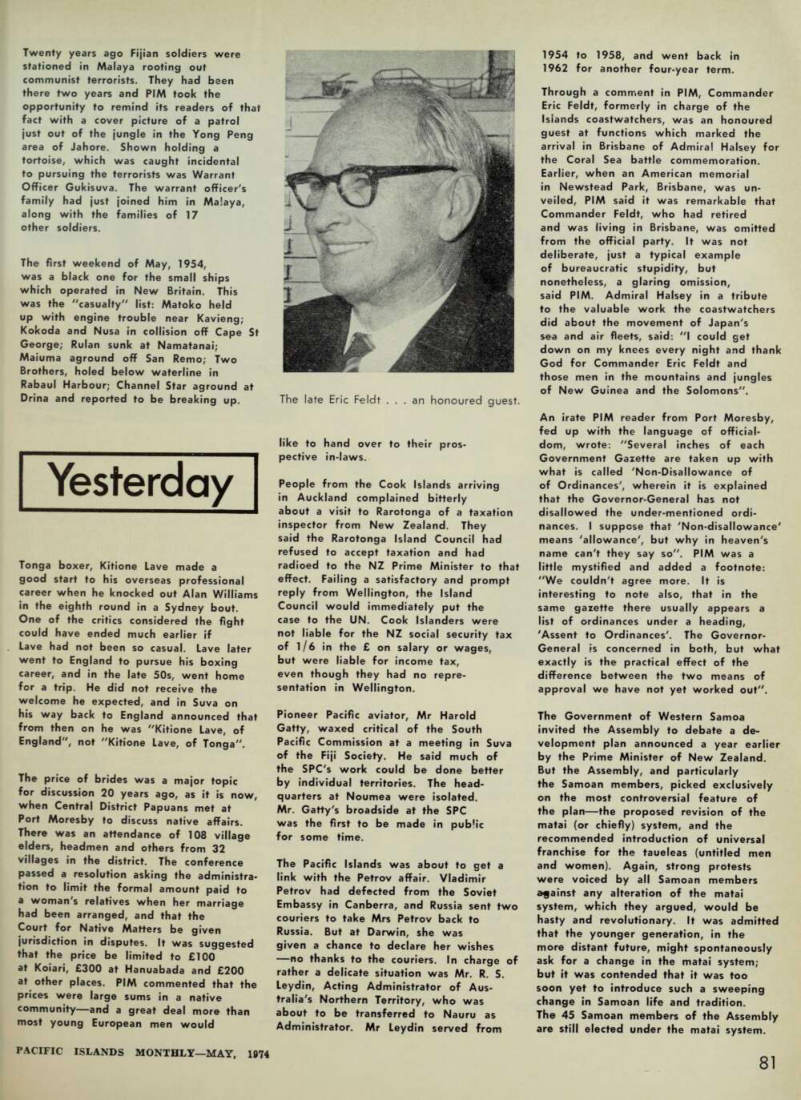 83
83 84
84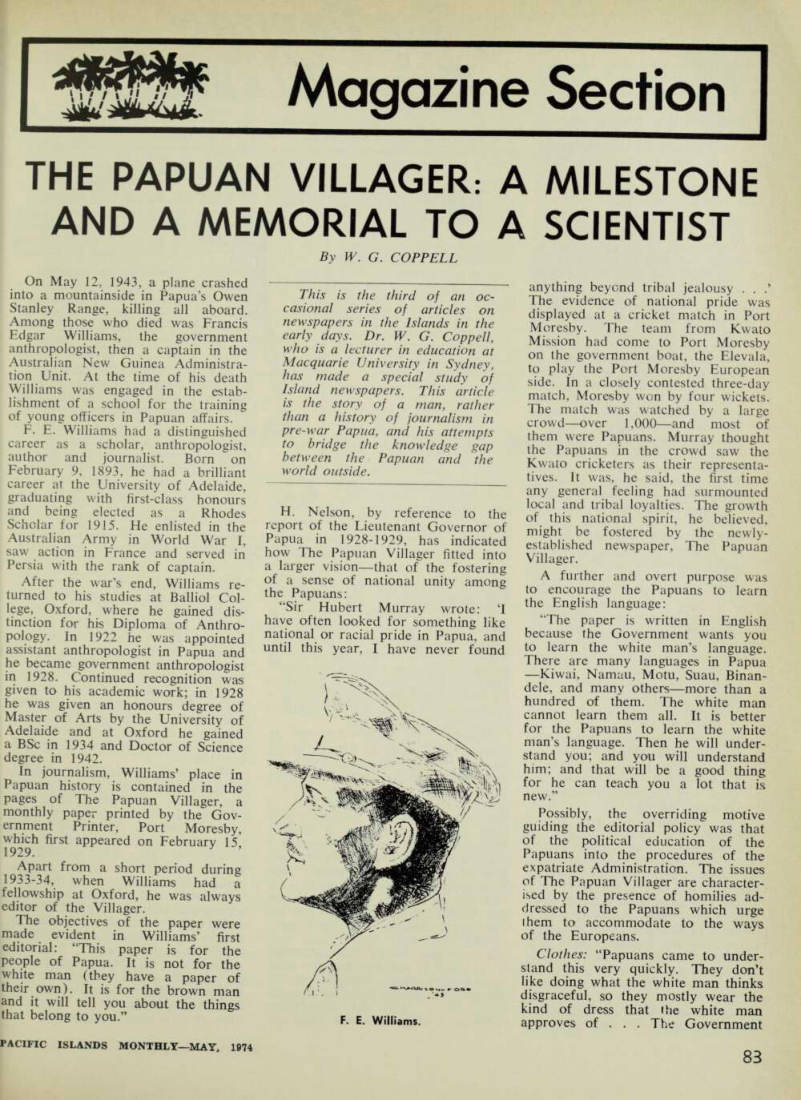 85
85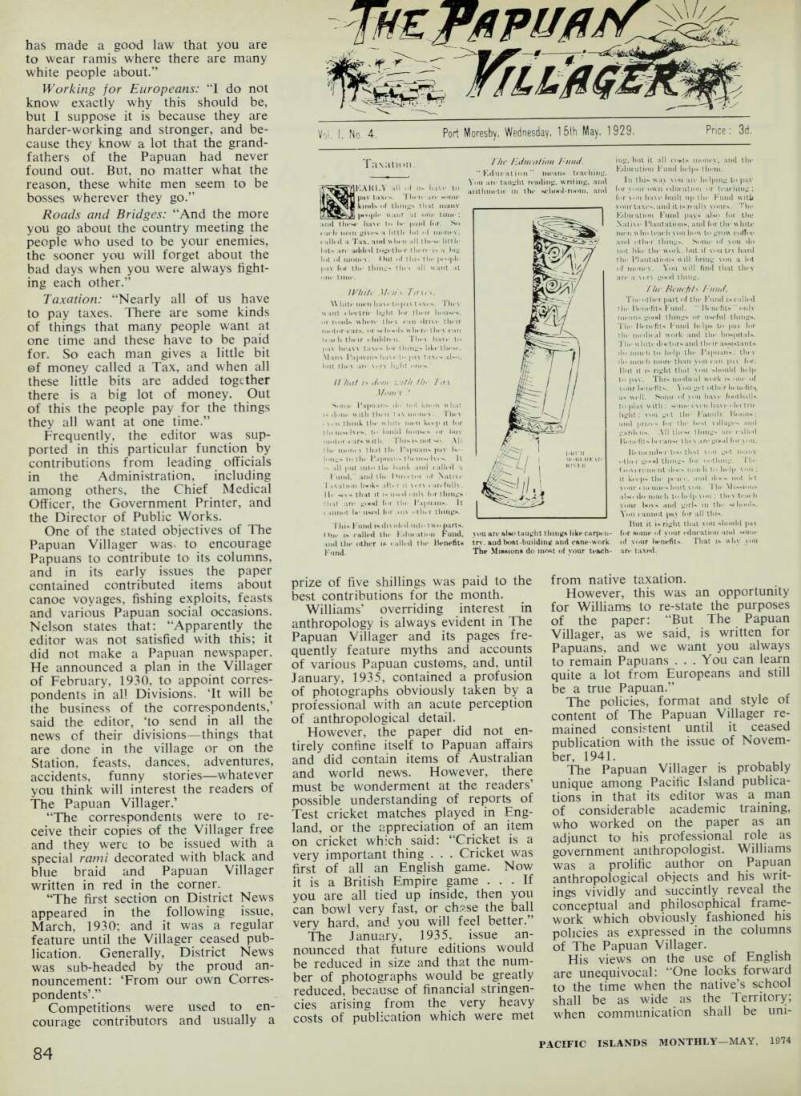 86
86 87
87 88
88 89
89 90
90 91
91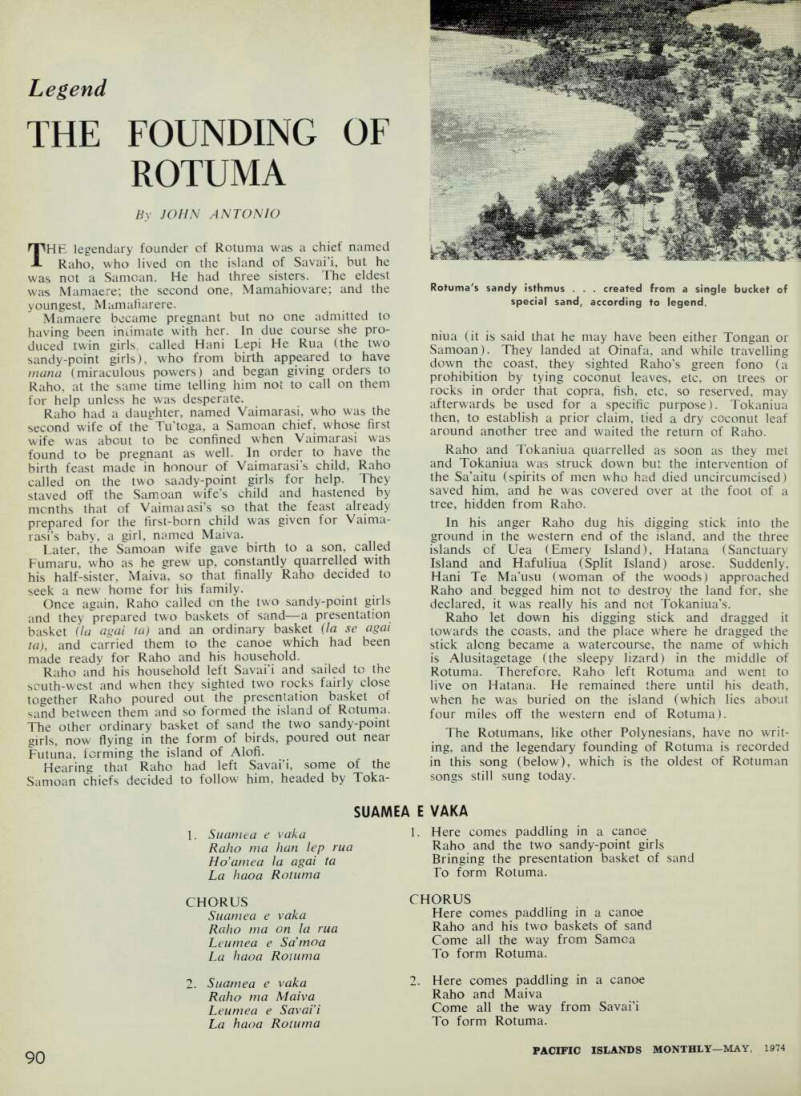 92
92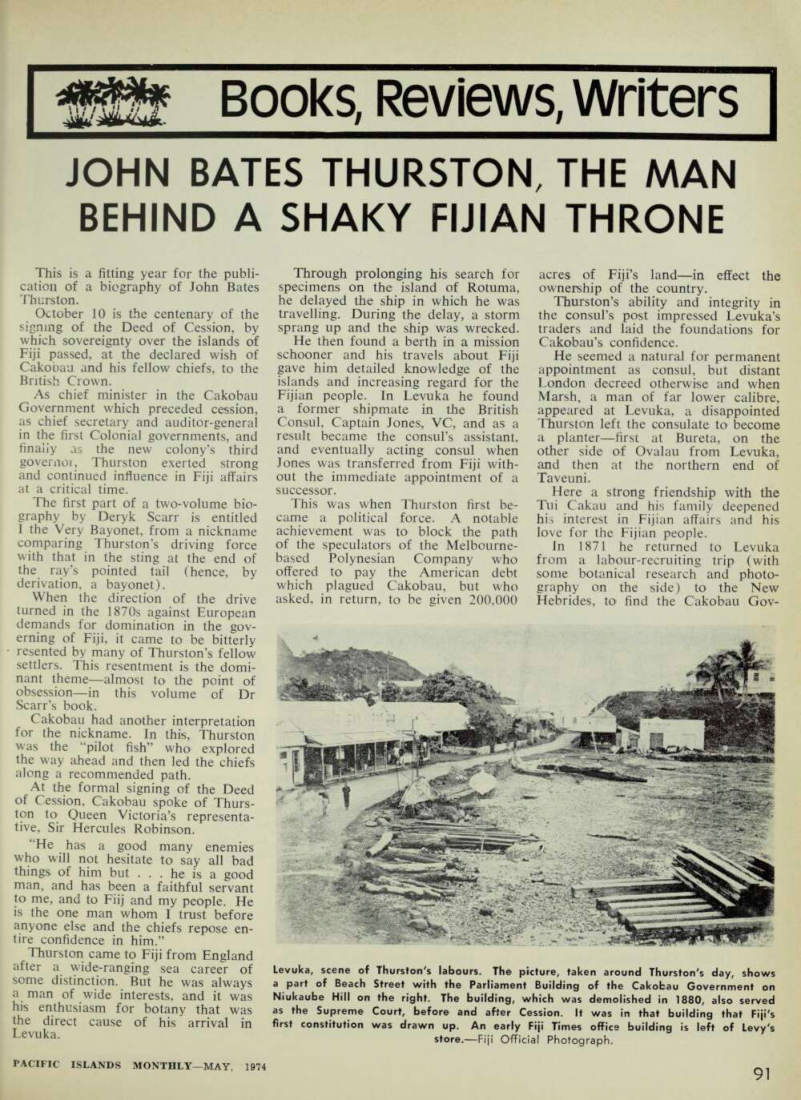 93
93 94
94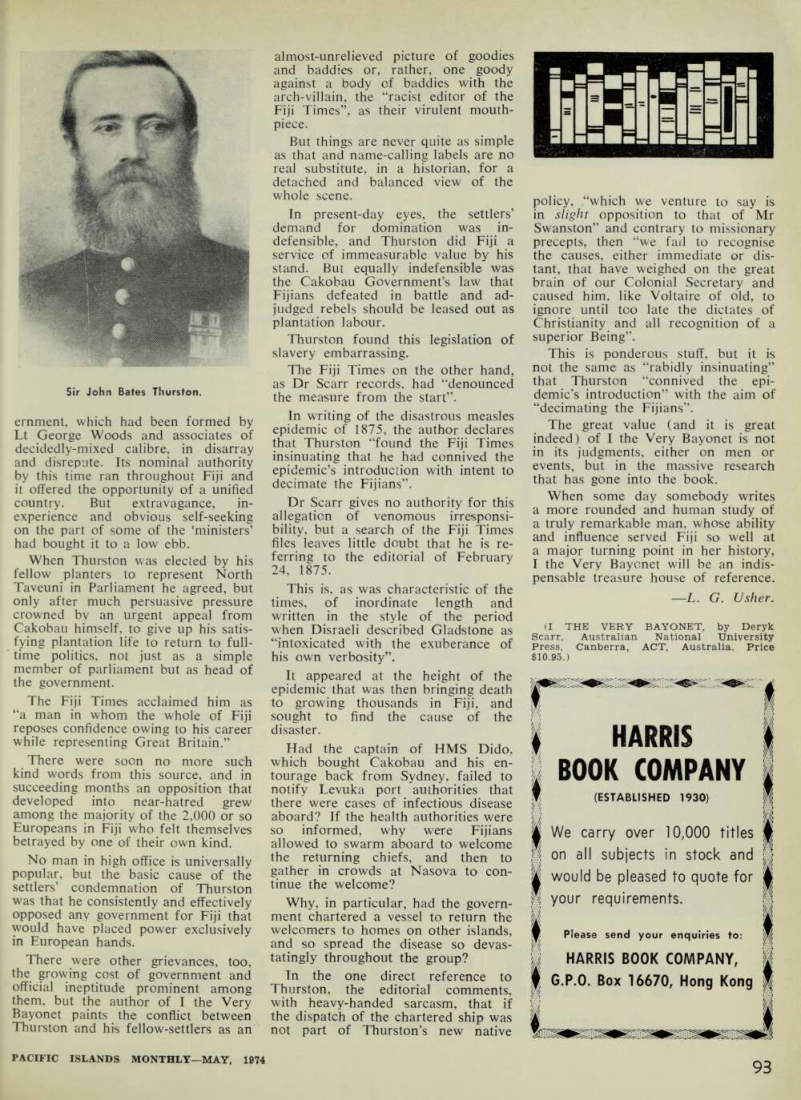 95
95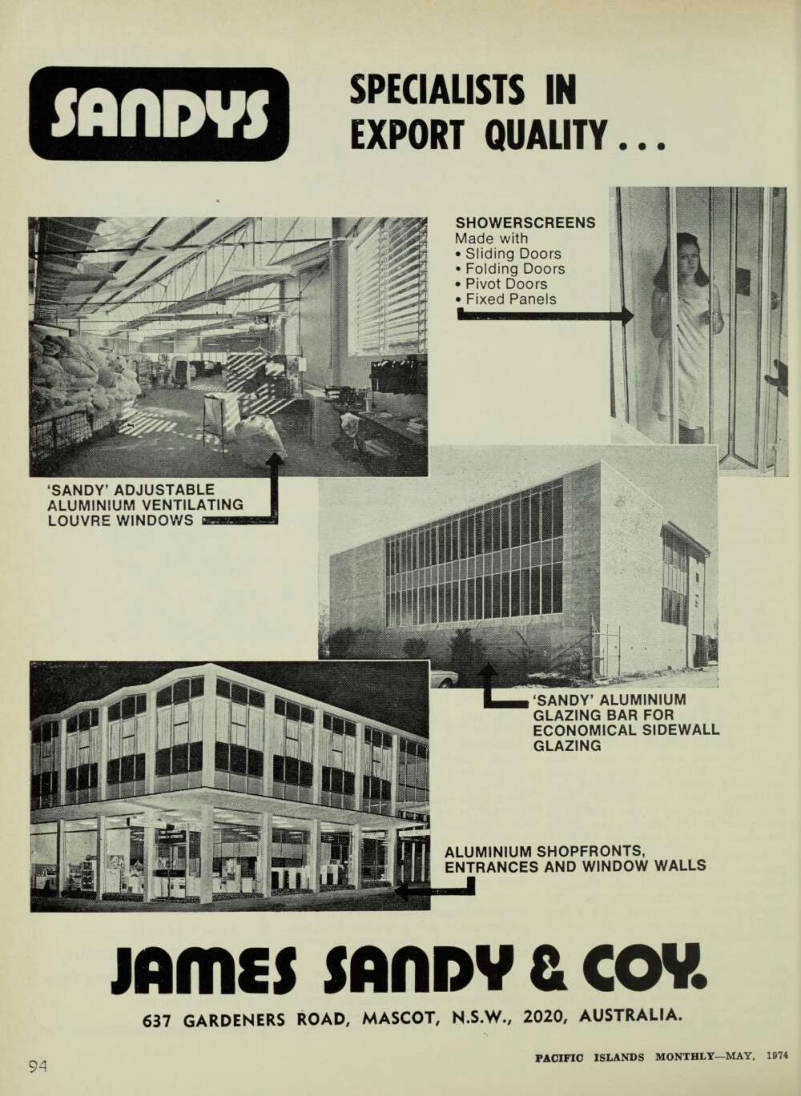 96
96 97
97 98
98 99
99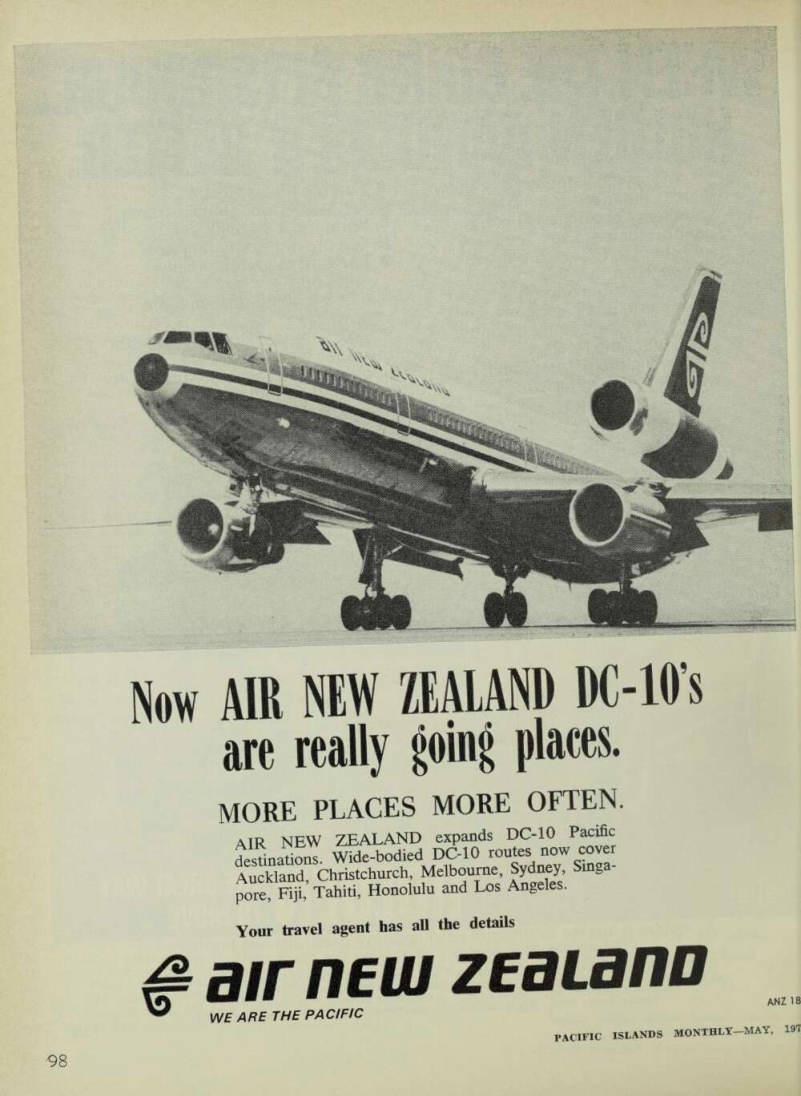 100
100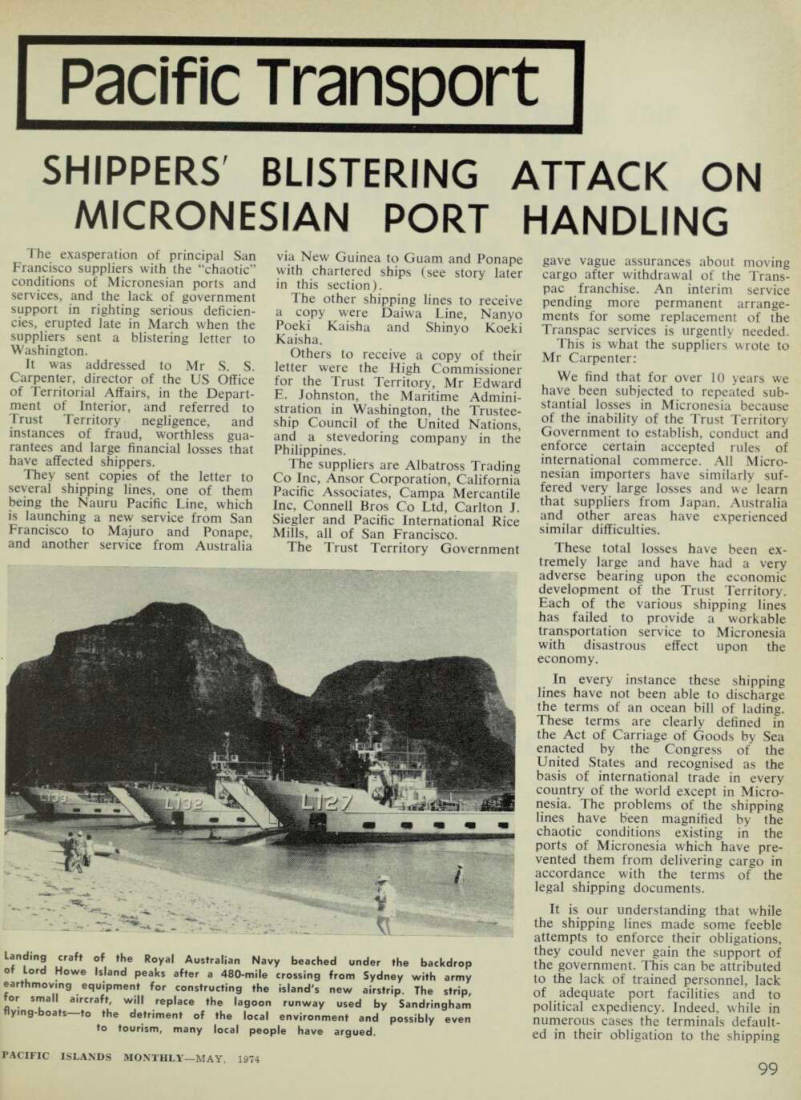 101
101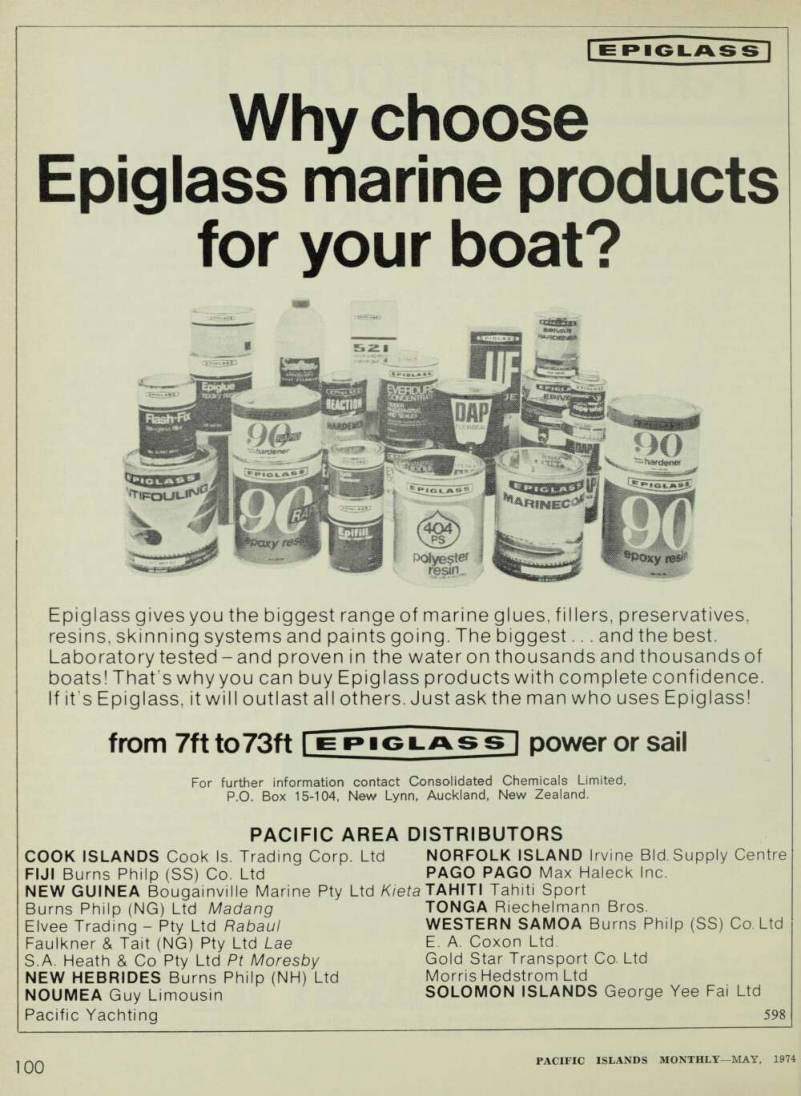 102
102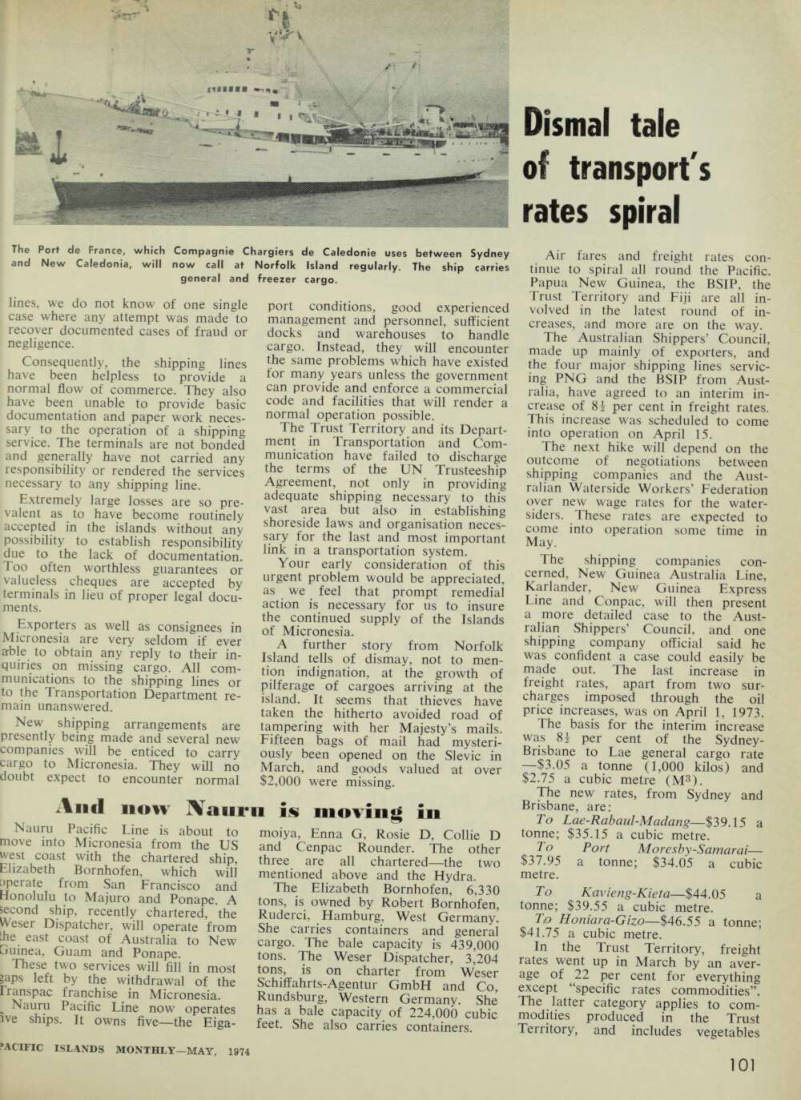 103
103 104
104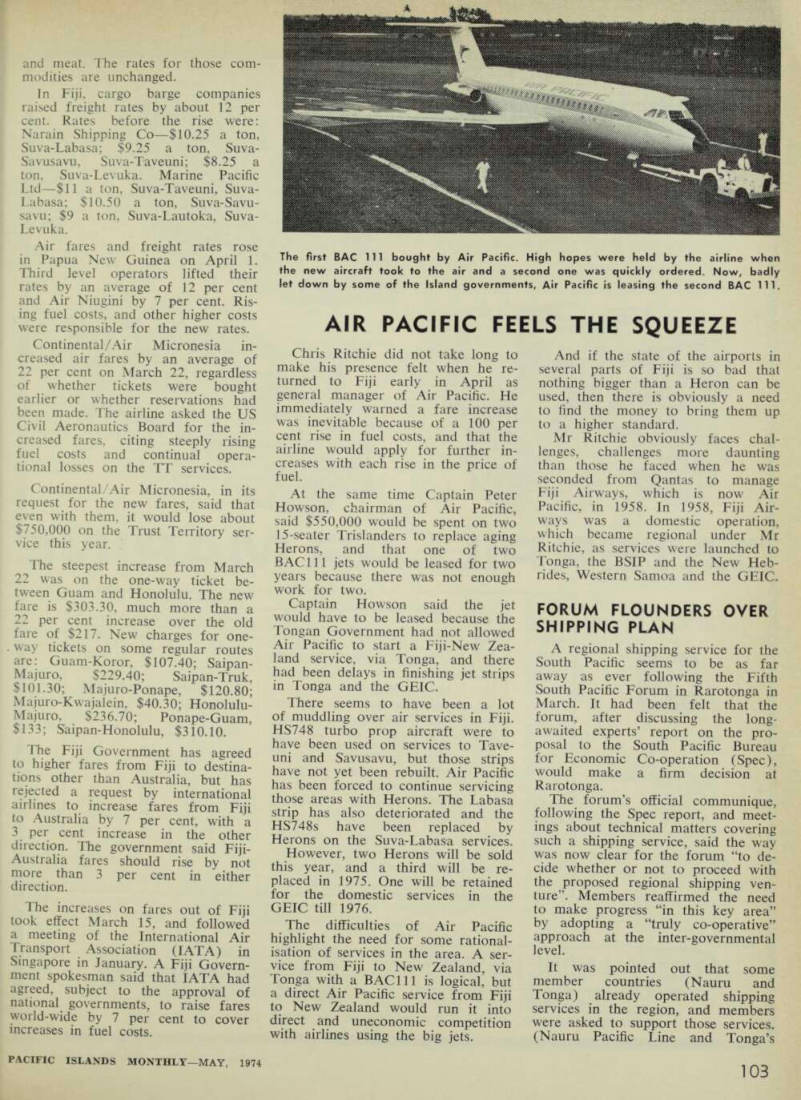 105
105 106
106 107
107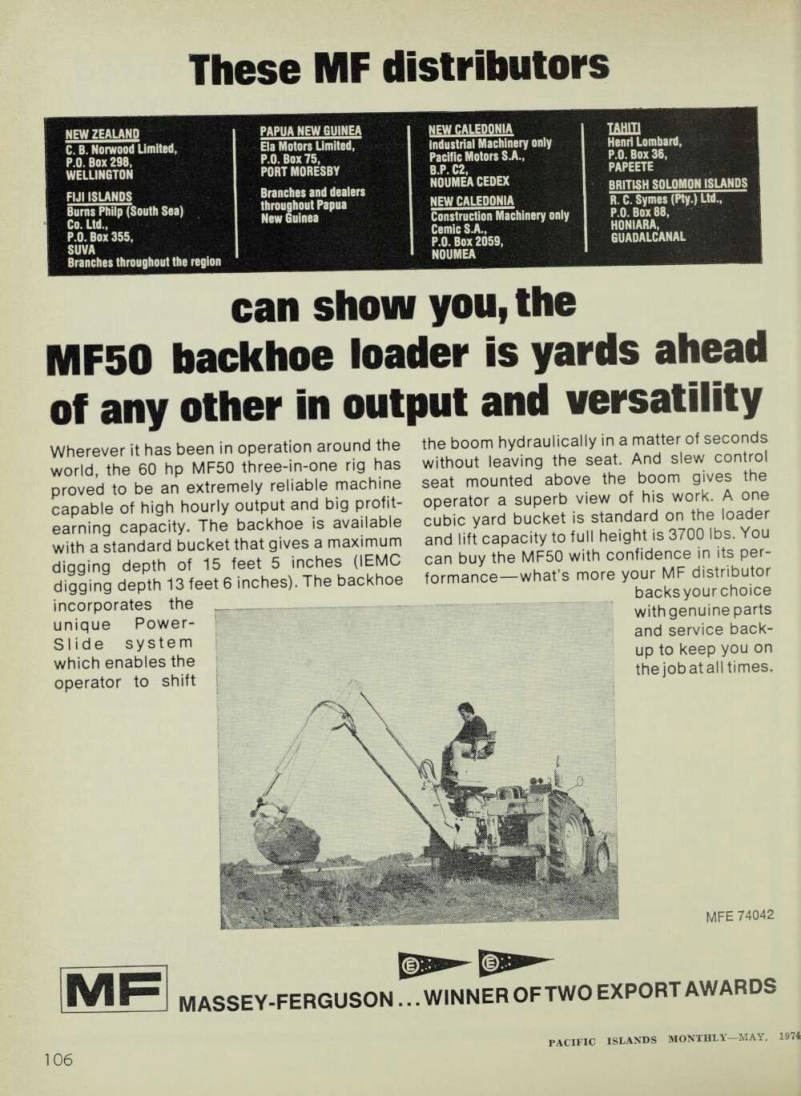 108
108 109
109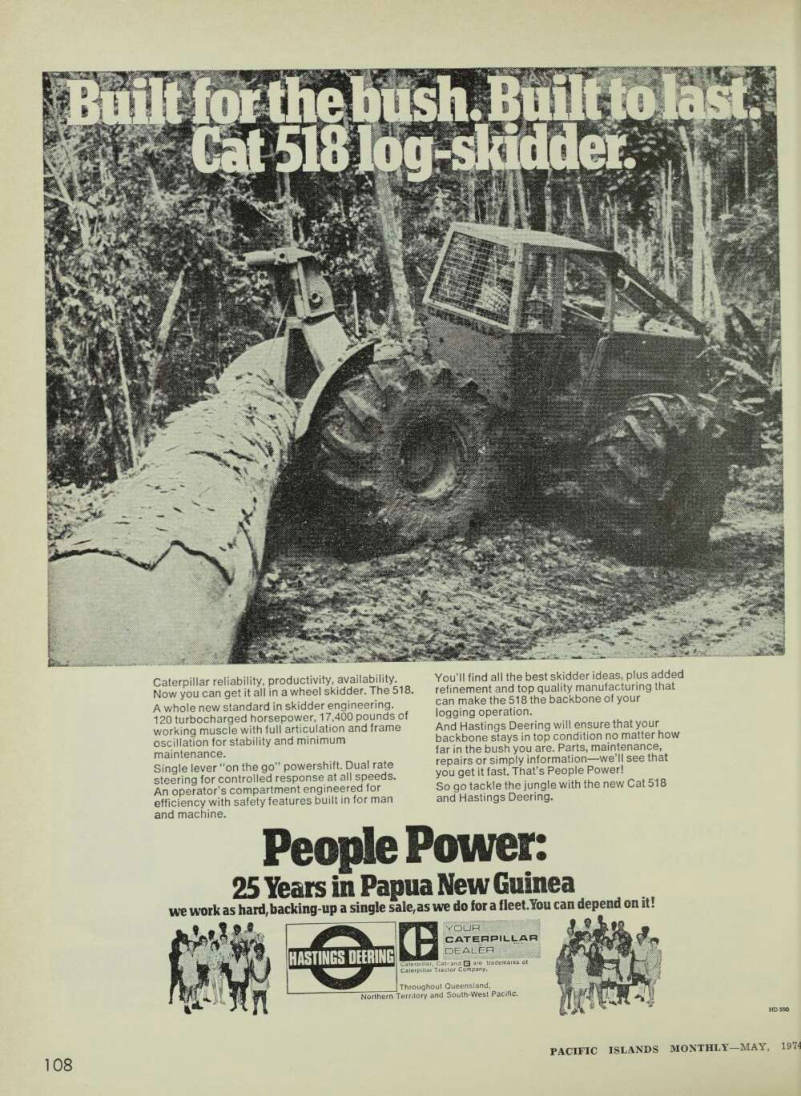 110
110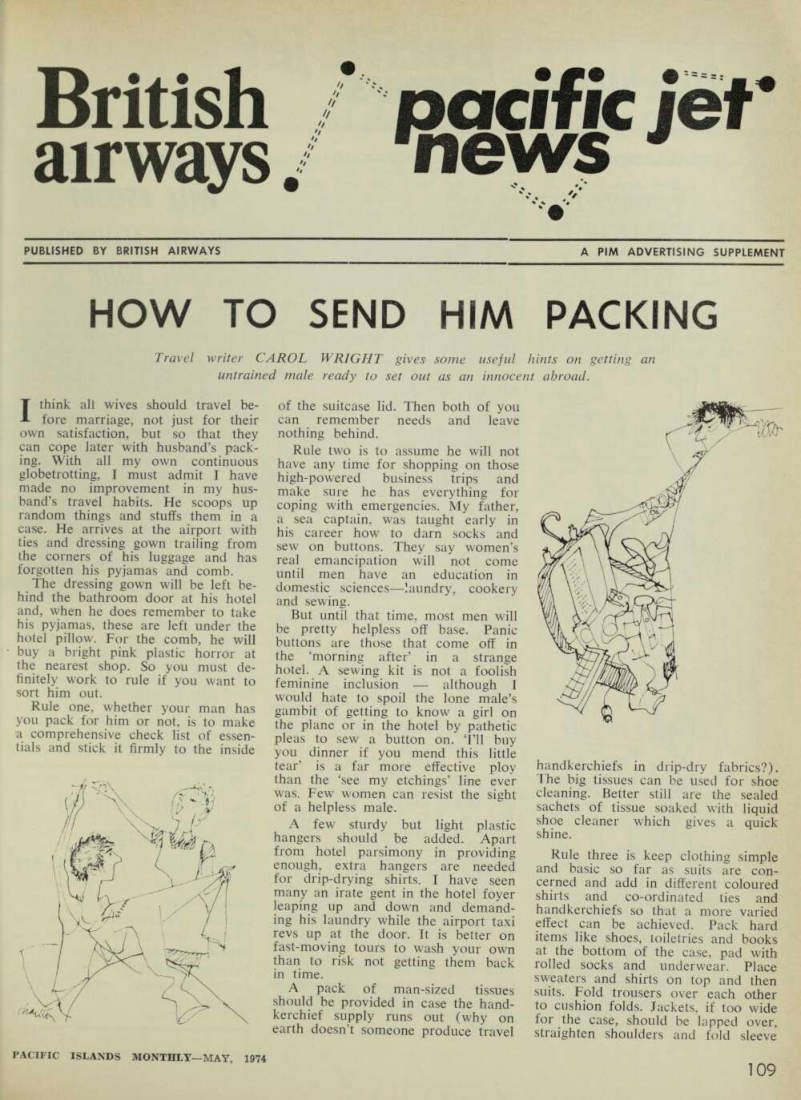 111
111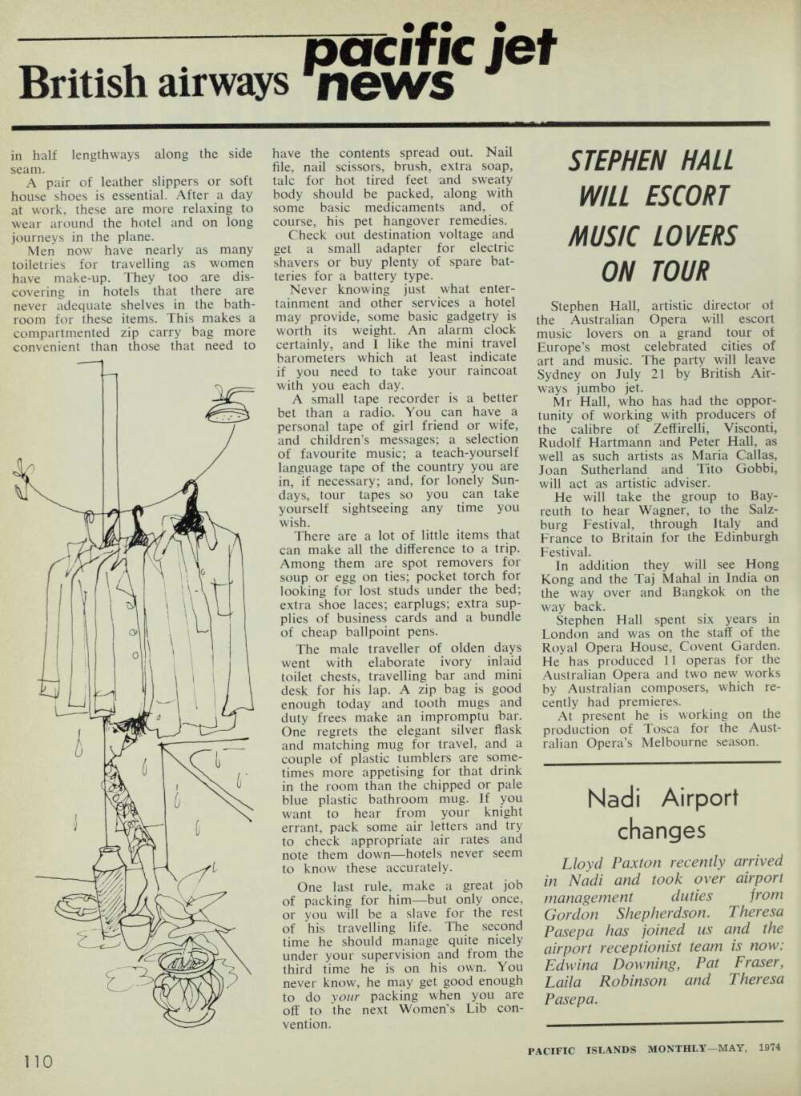 112
112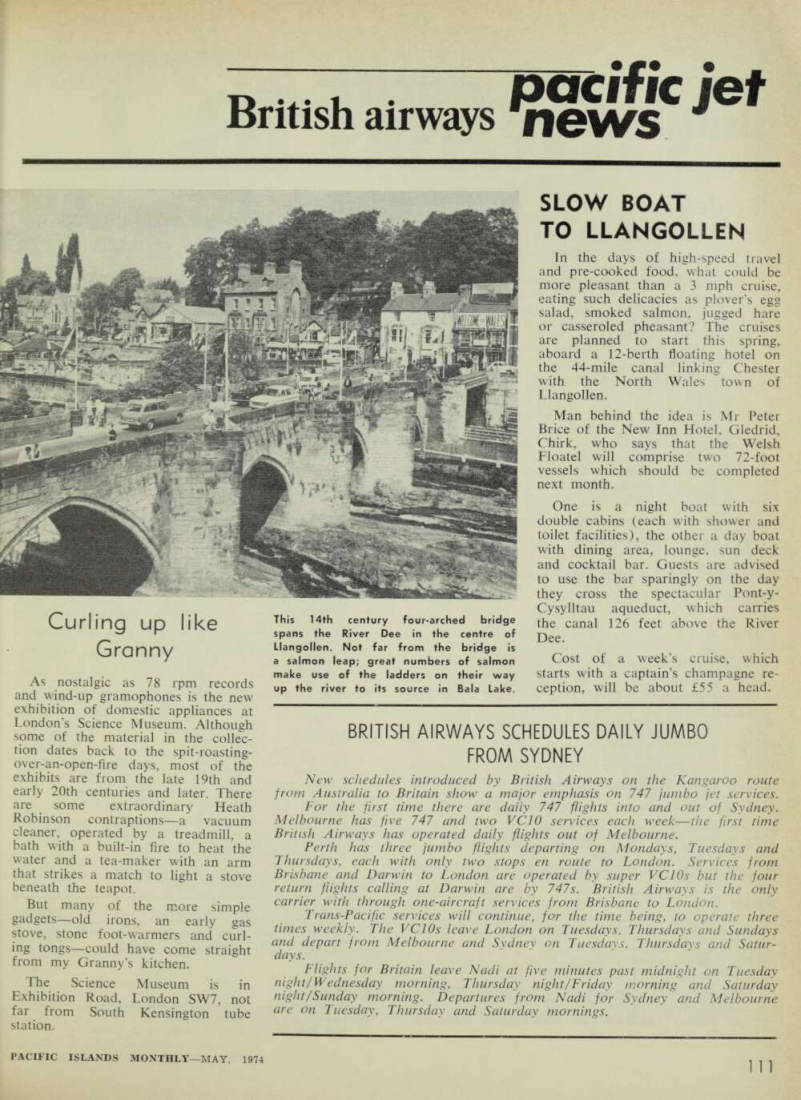 113
113 114
114 115
115 116
116 117
117 118
118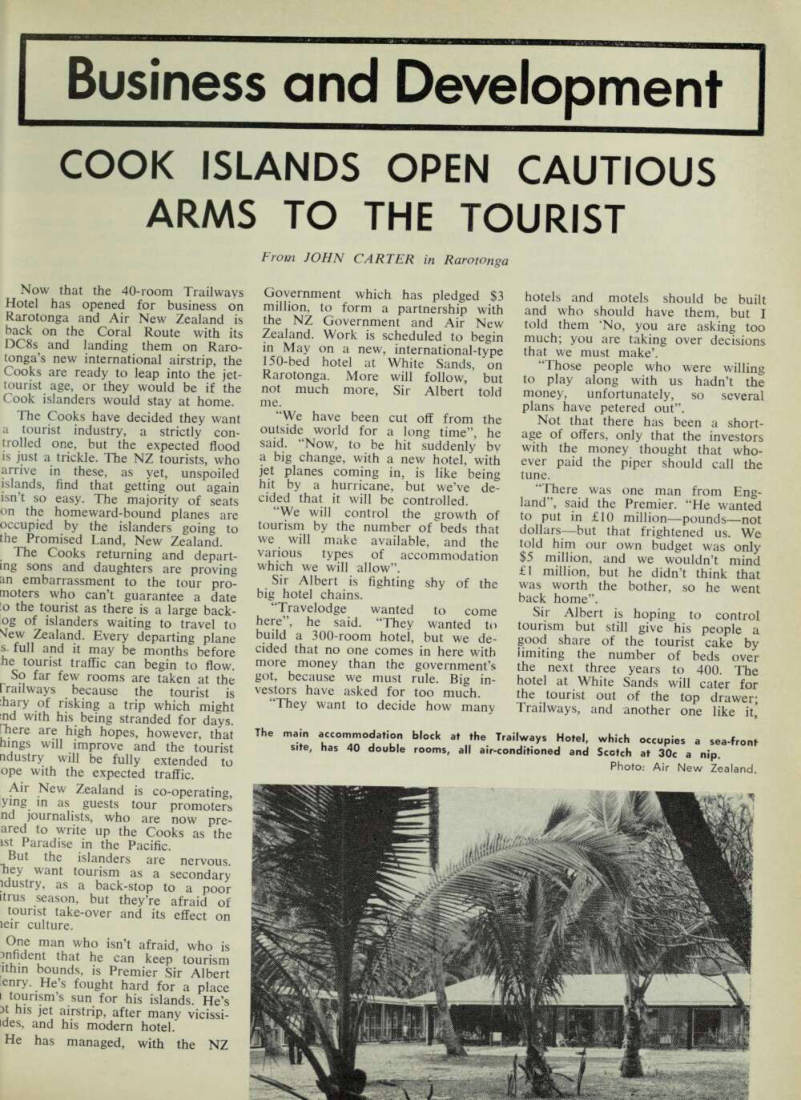 119
119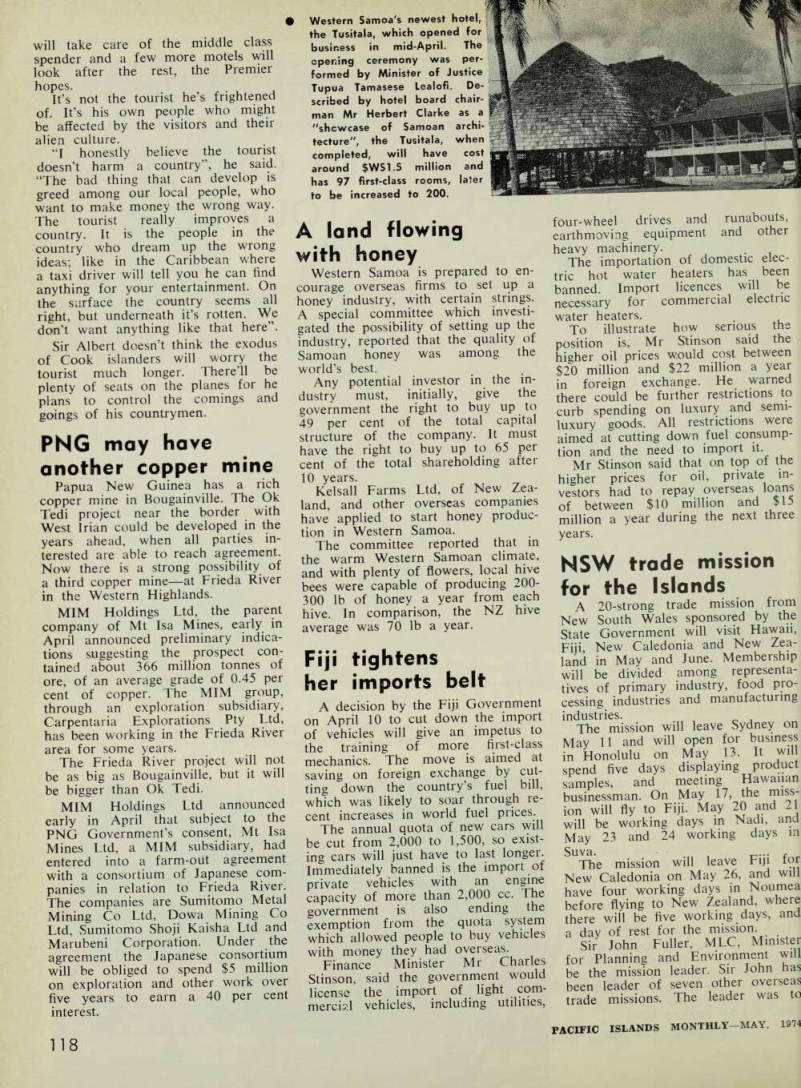 120
120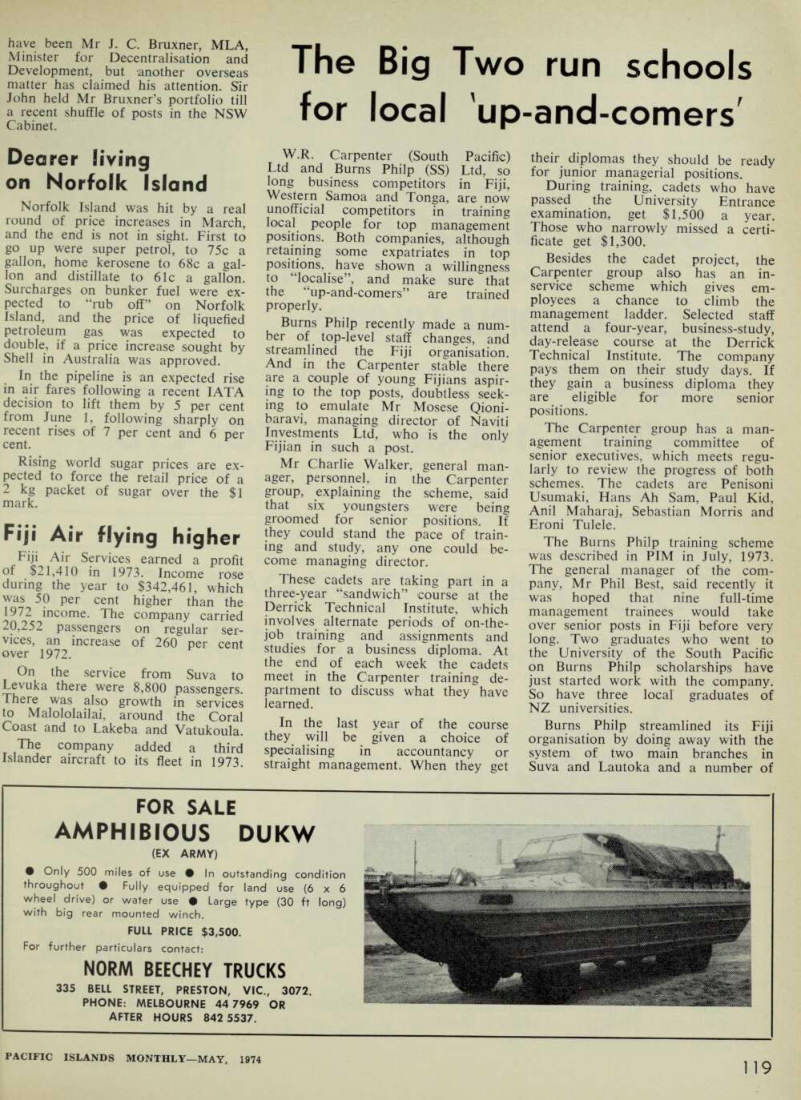 121
121 122
122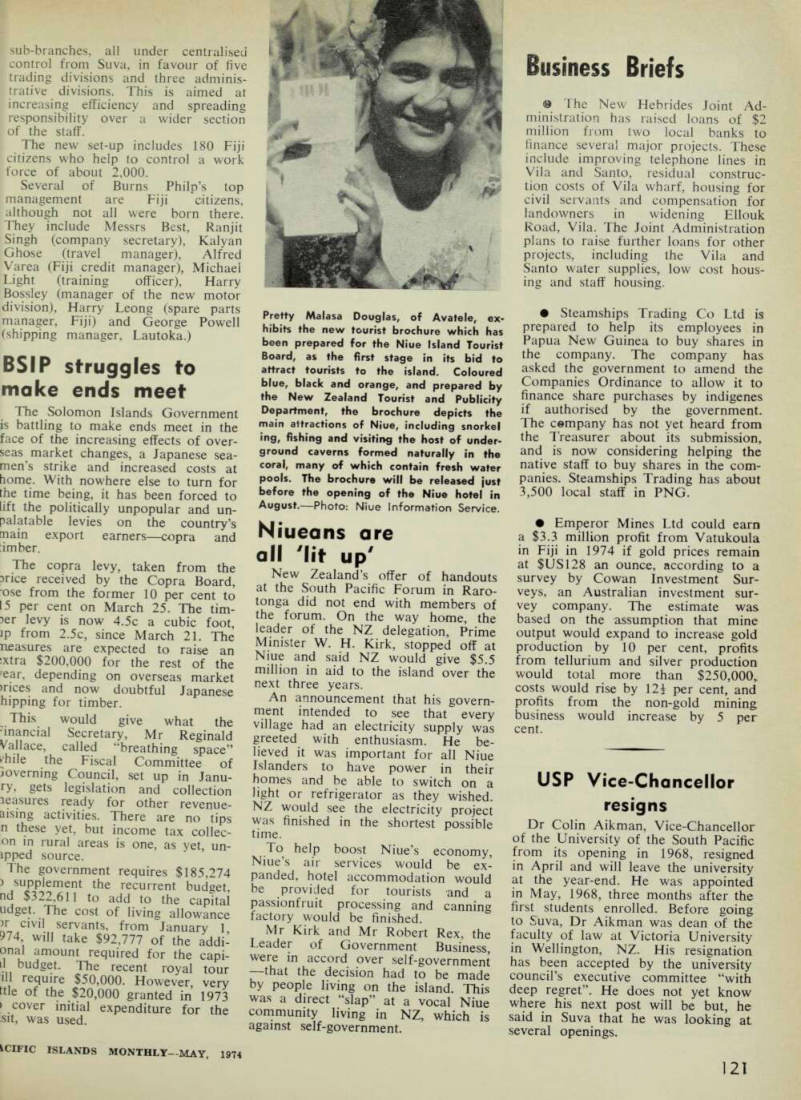 123
123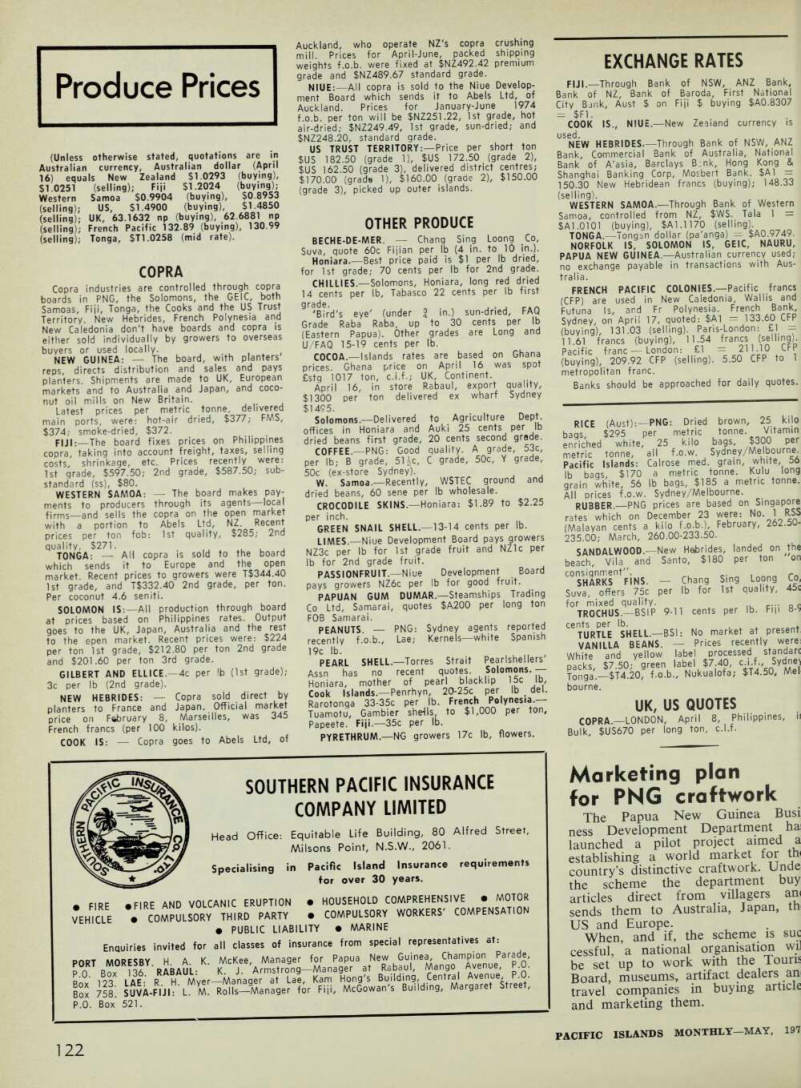 124
124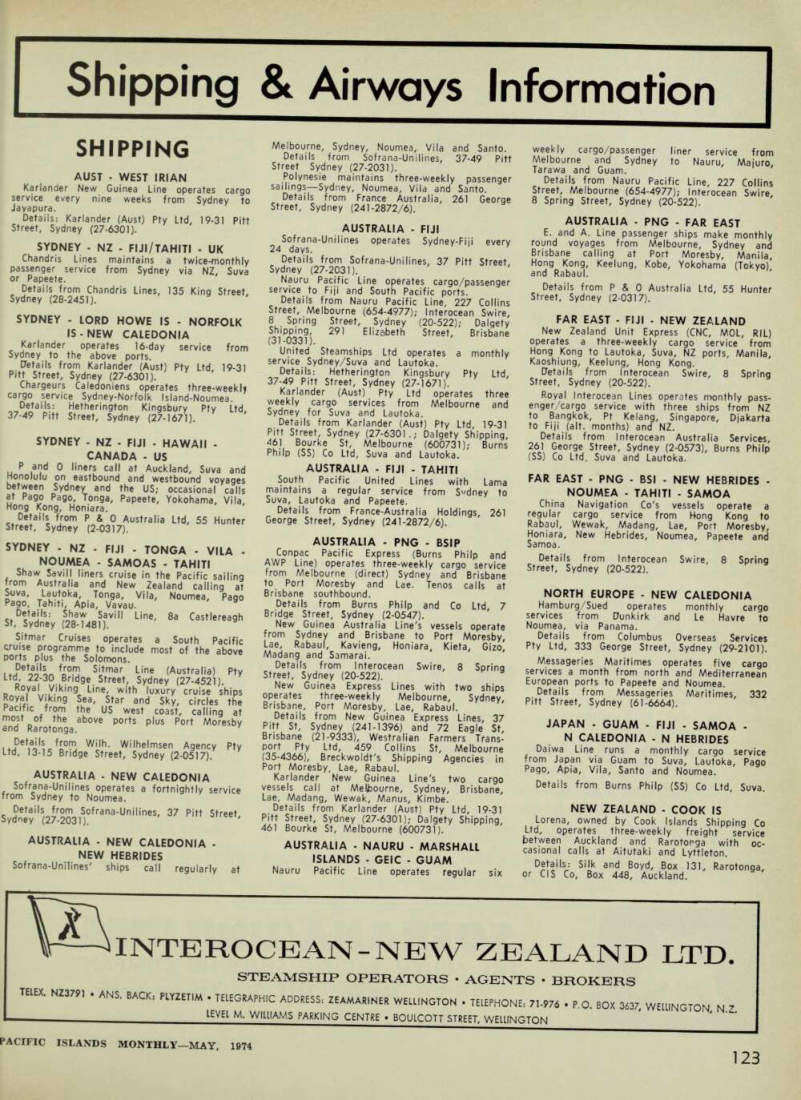 125
125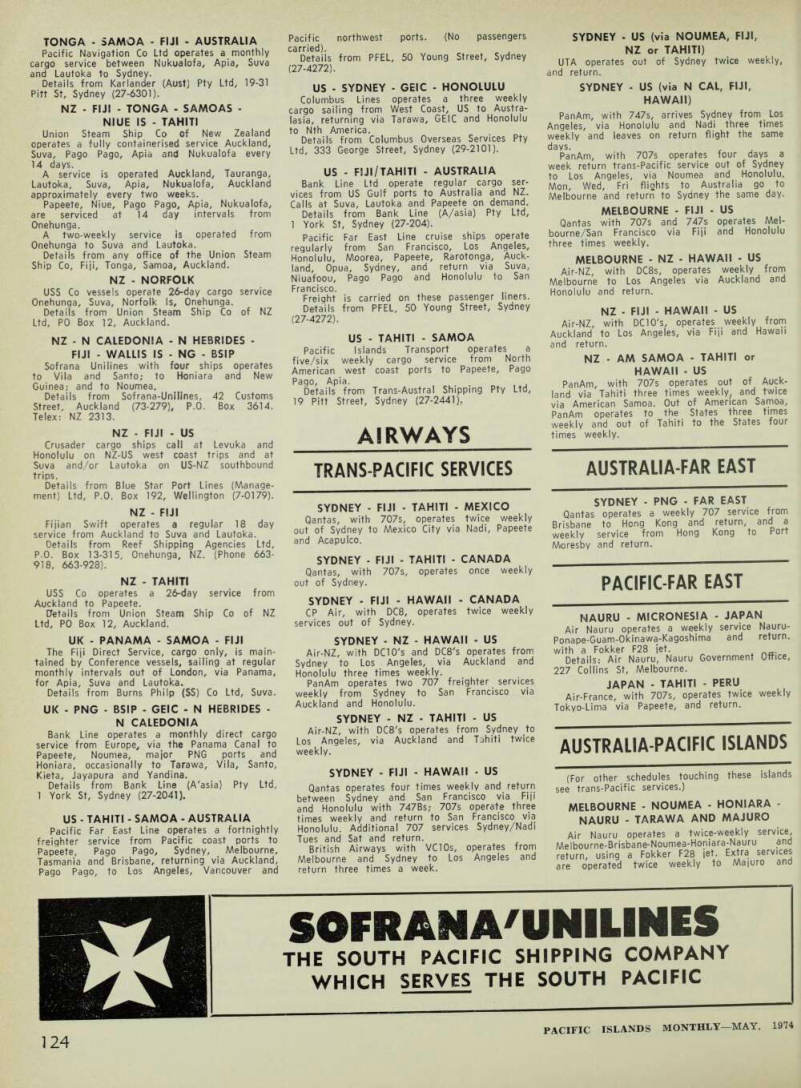 126
126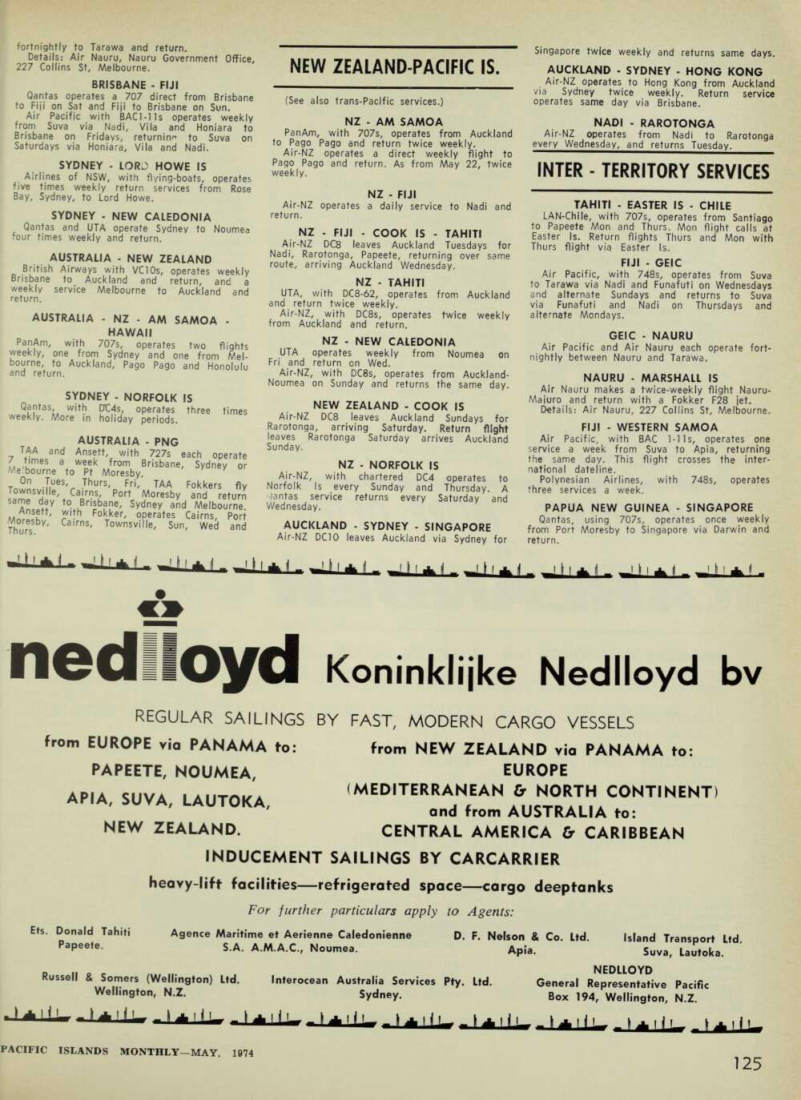 127
127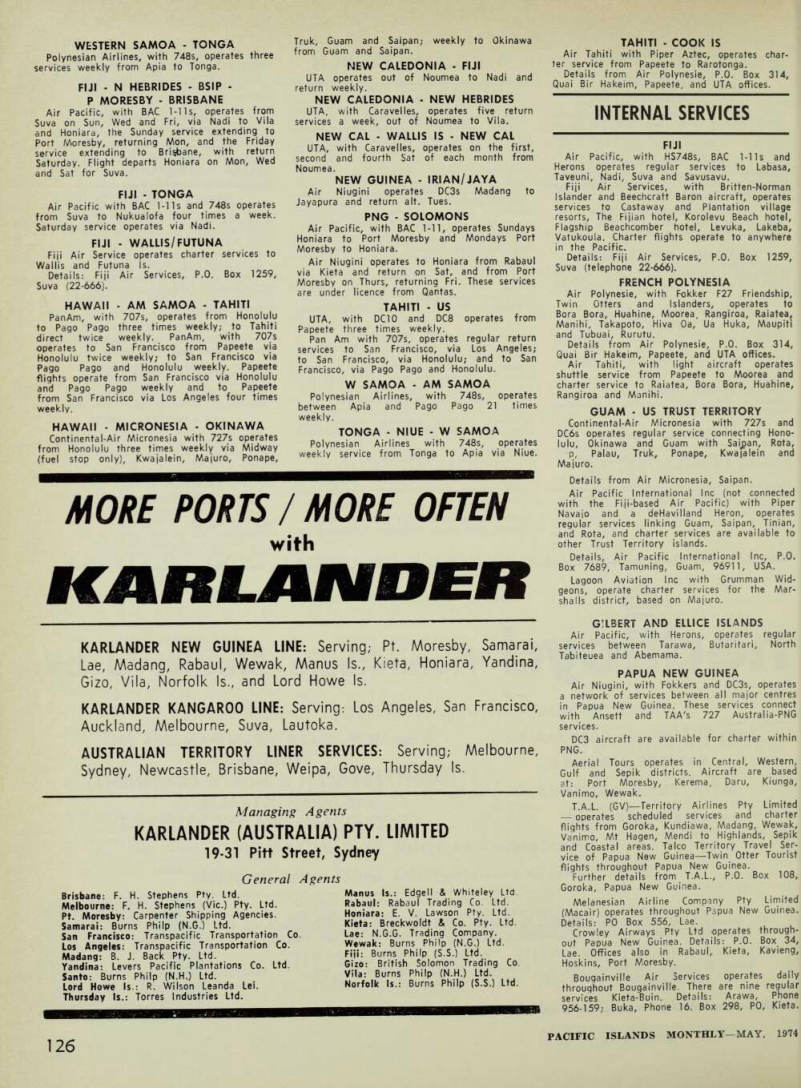 128
128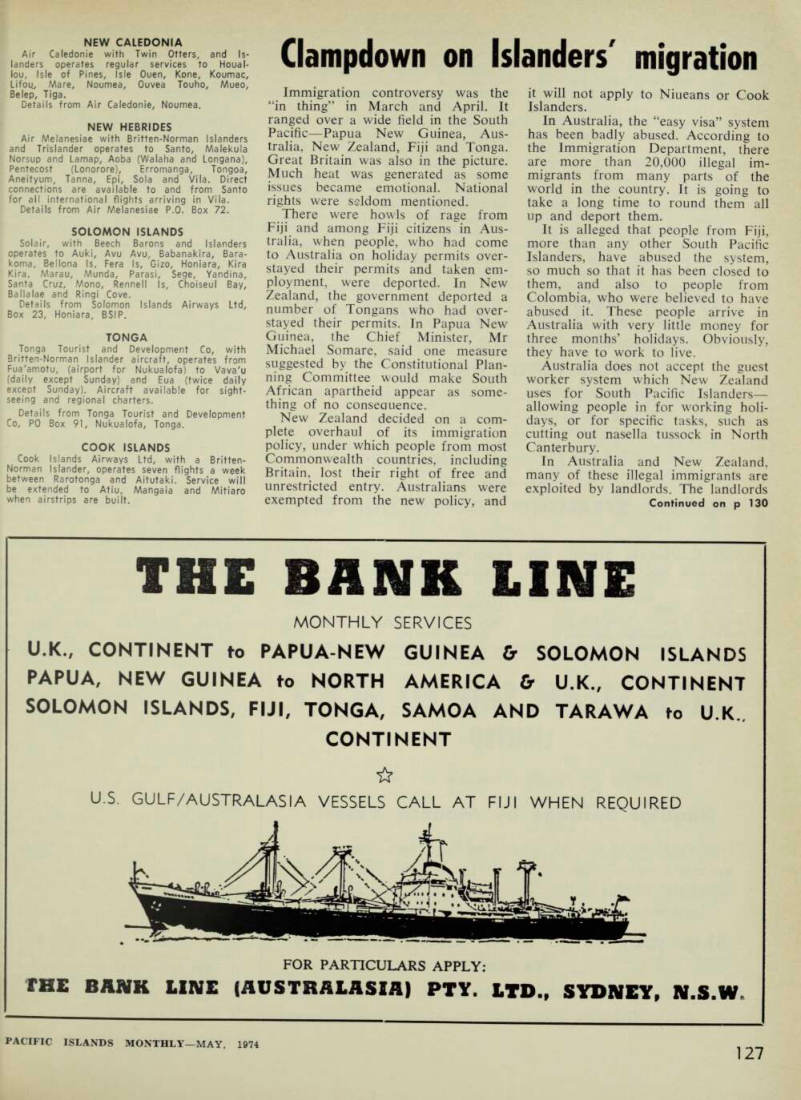 129
129 130
130 131
131 132
132 133
133 134
134 135
135 136
136