Monthly
Pacific Islands Monthly
tered at G.P.0.. Sydney, for transmission by post as a newspaper.
December, 1967
fgf
dfd
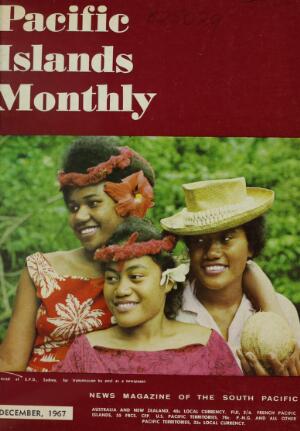
THE COVER: The Mareiti sisters, who live in Arorangi, Rarotonga, in the Cook Islands, make an attractive trio in their colourful head gear.
Tekura, wearing the straw hat, is a popular dancer. James Anderson took the picture.
Advertisements & other items, pp. 2-4 (2 items)
There mayhe fairies
at the hattmn a
But you’ll have to look. Papua/New Guinea is a jungle-garden, full of twists and surprises and contrasts of time. TAA’s Ann Travaire, Australia’s leading women’s travel adviser has planned a most comprehensive and relaxing tour of the Territory.
With specially trained tour hostesses and the luxury of TAA air travel added to the arrangements.
Off the beaten track you’ll go. By launch along the coast. Take in a cocoa plantation. A scenic flight to Madang. Another launch trip. Native children singing, send you on your way in your TAA aircraft to Ml. Hagen. By coach into primitive parts of the land, where you’ll see some of the most primitive people of the world.
Market day, A native ‘Sing Sing’. A flight to Goroka. Then to Lae. Bulolo and the pine mills. And back to Port Moresby.
So this is the land the twentieth century nearly forgot. You won’t.
For details of Ann Travaire’s regular tours of the Territory, contact your nearest Travel Agent or TAA.
Fly TAA the Friendly Way
TAA
i ft mm
TA A3831/67
BURNS PHILP (SOUTH SEA) CO. LTD.
GENERAL MERCHANTS AND SHIPOWNERS
SHIPPING, CUSTOMS AND FORWARDING AGENTS
iji:
JVA.
EVUKA.
UJTOKA.
VBASA.
WU SAVU.
BA.
SIGATOKA.
TAVUA.
TAVEUNI.
BRANCHES
Samoa:
APIA.
PAGO PAGO
Tonga:
NUKUALOFA.
HAAPAI.
VAVAU.
NORFOLK ISLAND
NIUE ISLAND.
AGENTS FOR;
(UEENSLAND INSURANCE CO. LTD.
URNS PHILP TRUSTEE CO. LTD.
HELL COMPANY (P. 1.) LTD.
OVERSEAS AGENTS
BURNS, PHILP & CO. LTD., Sydney.
BURNS, PHILP & CO. LTD., London.
BURNS PHILP CO. OF SAN FRANCISCO
SHIPPING AGENCIES
• The New Zealand Shipping Co. Ltd. • Shaw Savill & Albion Co. Ltd. • Port Line Ltd. • Bank Line Ltd. • General Steamship Corporation Ltd. • Blue Star Line • Cunard Line • Compagnle des Messageries Maritime* • British India Steam Navigation Co. Ltd. • Royal Interocean lines • Nederland Line Royal Dutch Mail/Royal Rotterdam Lloyd.
EXCLUSIVE DISTRIBUTORSHIPS INCLUDE
• AKAI TAPERECORDERS
• DUNLOP PRODUCTS
• EPIGLASS PRODUCTS
• FERGUSON TRACTORS
• HELENA RUBENSTEIN
• HITACHI ELECTRONICS
• HOLDEN VEHICLES
• JOHNSON'S WAXES
• ROLEX WATCHES
• REVLON COSMETICS
• PENTAX CAMERAS
• SUNBEAM APPLIANCES
INTERNATIONAL AIR TRANSPORT ASSOCIATION REPRESENTATIVES for
QANTAS EMPIRE AIRWAYS LTD. AIR NEW ZEALAND UNION DE TRANSPORTS AERIENS ALITALIA PAN AMERICAN AIRWAYS
ASSOCIATED COMPANIES
BURNS PHILP (NEW HEBRIDES) LTD.
AUTOMOTIVE SUPPLIES CO. LTD.
CORRIE & CO. LTD. • WROUGHT IRON AND STEEL
CONSTRUCTION CO. LTD. • BISH LTD.
SPECIALISED SERVICES
EXPERT ADVICE ON WORLD AND LOCAL TOURS
TRAVEL SHIPPING FORWARDING CUSTOMS
FORMALITIES INSURANCE.
REGISTERED OFFICE; SUVA FIJI
Code Address: "BURNSOUTH
&a/a«t Cad6u/ufA
SM/mt CadiimfA
Swmt Cad6m£fA
&want Cad6a/ufJi
o It’s worth saying over and over again because there’s a glass-and-a-half of pure, fresh, full-cream milk in every half-pound of Cadbury’s Dairy Milk Chocolate. No other chocolate can possibly give you that creamy, creamy Cadbury taste. Look for the famous purple and gold wrapper.
CADBURY’S
DAIRY MILK CHOCOLATE
the biggest selling block chocolate in Australia MD7/16/7
1
[FIC ISLANDS MONTHLY DECEMBER, 1967
Pacific Islands
Monthly
Established 1930: 38th Year of Publication.
Owned And Published By
Pacific Publications Pty. Ltd.,
29 Alberta St., Sydney, N.S.W., 20C
Postal Address: G.P.O. BOX 3408, SYDN
N.S.W., 2001.
Telegraphic Address: PACPUB, Sydney
Telephones: 61-9197, 61-7101, 61-436
Chief Executives: Managing Director: R. W. Robson.
General Manager: Selwyn Hughes.
Book Publishing Division
Editor: Judy Tudor.
Pacific Islands Monthly
Editor: Stuart Inder.
Assistant Editor: Robert Langdon.
Branch Offices
Melbourne: Newspaper House, 247 Collins Victoria, 3000. Tel.: 63-7053.
Fiji: Pacific Publications (Fiji) Ltd., Fiji 1 Building, 20 Gordon Street, SUVA. Tel.: 2i Fiji Times Office, Vidilo Street, LAUTOt Tel.: 60-422.
Papua-New Guinea: Pacific Publications ( Pty Ltd. Representatives: Mrs. Joan C P.O. Box 16, PT, MORESBY (Tel.: 2504); Manager, P.O. Box 227, LAE; Mr.
Simpson, P.O. Box 154, RABAUL (Tel.; 2
Representatives
New Zealand: J. D. Whitcombe, CJP.O. 2229, Queen Street, Auckland. Tel.: 76 United States: Mrs. A. L. Craib, 1631 Avenue, Oakland, California, 94621.
Tel.: LOckhaven 8-1201.
United Kingdom; S. R. Warman, Candl House, 116-126 Cannon Street, London, 1 Tel.: Mansion 3674/7.
H. A. Mackenzie, 4A Bloomsbury Sc London, W.C.I. Tel.: Holborn 3779.
Agents
All main trading firms and stores in the Pacific Islands.
Pacific Publications Pty. Ltd. is the Austi agent for THE FIJI TIMES.
Subscription Rates:
"Pacific Islands Monthly" is air-freight* all subscribers and agents in the South Pa copies to other areas go by surface m Australia (incl. Lord Howe Is., and Thu Is): $4.50 Aust.; Papua-New Guinea, Ni Is' Nauru, 8.5.1., G. & E. Group, Tonga New Hebrides: $4.00 Aust.; New Zea $4.50 NZ; Cook Is., Niue and Western Si $4.00 (local currency); Fiji: £2!/-/currency); American Samoa and U.S P Territories: $B.OO (local currency); F Pacific Territories—New Caledonia, Tahiti, 660 French Pacific francs; United Stati America: $9.00 U.S.; United Kingdom elsewhere: £2/6/- Stg.
Airmail postage to USA, UK and elsewht additional.
38, No. 12, December, 1967
Advertisements & other items, p. 4 (1 item)
2
DECEMBER, 19 6 7 -PACIFIC ISLANDS MONTH
This Issue
Ral
i of Devaluation 20 for Lost Yachtsmen 33 > Jet Plans 49 n Seeks New Ports 54 d'Entrecasteaux Expedition ... 89 Philp Profit Down 126 Carpenter Profit 129
Can Samoa
i-Samoan Marriage 29 Aauga Installed 65
Islands
in Postage Stamps 30 ow's Pearl Industry 41, 140 er" in New Trouble 107 quin of the Year 18 five Council Sitting ... ... 23 Size Bligh Postage Stamp ... 30 linese Community 34 f the "Lakemba" 41, 108 'u Air Service 50 gs at The Fijian 59 I Ahoy" 59 3 Island 63 -aft Proposal 105 >e Ship on Reef 107 jva Mayor .. 125 or to Visit Pitcairn 125 lese for Japan 133
I Polynesia
loves on Self-Government ... 17
Uninformed Tourist Guides 30 Mehetia's Female Crusoe 32 Book by J. N. Hall 41 Tahiti as "Tourist Dispatch Centre" .. 57 Airport in Gambiers 60
Lord Howe Island
Road Surfacing 53
Nauru
Moves on Independence 24 Regular Air Service Likely 61 Cheap Liquor Brings Problems ... .. . 69
New Caledonia
Nickel Anniversary Stamp 30
Drinking Habits 31 Games Emblem Success 42 Early Visitor 93
New Hebrides
Proposed Shipping Service . 33 Mishap to UTA Caravelle 53 Calls by Matson Liners 55
Niue
Effects of Sterling Devaluation 20
Norfolk Island
Ugly Building Boom 32
Papua-New Guinea
Return to Kokoda 19 Assembly Sitting 22 New Assistant Bishop 23
Selling Products Overseas 31 Proposed Holm Shipping Service 12-33 Burns Philp Shipping Disputes 37 The Education System 38 Seven Die in Air Crash 40 1969 Games Plans 42 New Sports Records 43 Tapini as a Travel Centre 45 Polygamists as Christians? 65 Running a Political Party 76 Research Unit Bulletins 99 New Books 99 / IQI New Port Facilities 109 Legislation on Unproductive Land ... 126 ANG Holdings Profit Up 129 Clementson's Army Contracts 131
Pitcairn Island
Visit by Fiji's Governor 125
Solomon Islands
Proposed Holm Shipping Service ... 33 Interest in War Relics 61 Possible New Air Service 61 Overcrowded Ship 107
Tonga
Large Postage Stamps 30 Plane Damaged at Vavau 33 Calls by Matson Liners 54 Banana Exports 133
United States Trust Territory
Future Political Status 150
Western Samoa
Budget Figures 23 "More Banks Needed" 31 Second DC3 for PAL 53 More Tourists 55 Asau Wharf Blasting IQ7 Fashion Parade in Sydney 121 Banana Case Threat Pays Off 131 Apia Fruit Canning Factory 133
ARTMENTS: Port Moresby Personality, 29; Tropicalities, 29; To The Point vis o pre 38, L c tt6rS f ° thS Editors ' 41; Travel ' 4 5; From the Ann ins r . M *9 az ' ne L Sectlon ' 91 ; Yesterday, 97; Book Reviews, 99; ►pmg, 105; Cruising Yachts, 111; People in Pictures, 121; People, 125ness and Development, 126; Produce Prices, 135; Deaths of Islands People! 139; Shipping, Airways Schedules, 145; Practical Planter 153
Advertisements & other items, pp. 6-18 (12 items)
4
DECEMBER, 1 9 6 7 PACIFIC ISLANDS M O N T H I
quality
when
counts:
cXPOR'
fv"-- ' S .
If r :: ' :=*
NAPIER ROTARY SLASHER
WTTJttB h inh cnppr/ As well as being capable of clearing light scrub, ti-tree, Illy 11 manuka, etc. ,withease,theNapierßotarySlasherisunrivalled for pasture topping, stubble mulching and stubble shaving r!pp\rinn nr rnnwino of all types of grain crops and cane. The extra ruggedness y y of the Napier Slasher allows high speed to be maintained . . in anything from pasture to brush. The implement is CU IOW COSI available as a mounted or trail model and has a full 5'6" cut.
you can
count on
/> 0 A NAPIER BROS. LIMITED. H/Offlce: DAIRY, QLD. B/Olflce: ALBURY, N.S.W.
IfORLD FAMOUS TRADE NAMES TO LOOK FOR . . .
Ensuring quality and finish at competitive prices!
Lady Jayne
>mbs, rollers, curlers, bobby pins, ushware, vanity bags, etc.
HAIRDRESSING ACCESSORIES
" v " k *
PLASTIC
TABLEWARE
Plastic housewares, picnicware, storer bowls, knitting needles.
jtraftim
Combs, brushware
fancy goods
suns+yl
SUNGLASSES
Smartest in design and colour at competitive prices. Available in a wide range of trend-setting styles.
lAINSFORDS PTY. LTD
200 KINGSGROVE ROAD, KINGSGROVE, N.S.W., 2208, AUSTRALIA.
ENQUIRIES TO: A. S. FAREBROTHER & CO. LTD., G.P.O. Box 36, SUVA
NEDLLOYD LINES
MANAGERS *
NEDERLAND LINE - ROYAL DUTCH MAIL • AMSTERDAM
ROYAL ROTTERDAM LLOYD ROTTERDAM
REGULAR SAILINGS BY FAST, MODERN, CARGO VESSELS
from CONTINENTAL PORTS vio PANAMA to
PAPEETE, APIA, NUKU'ALOFA, SUVA and NOUMEA
from CONTINENTAL PORTS and U.K. via SUEZ to PORT MORESBY, HONIARA, RABAUL, LAE and MADANG
heavy-lift facilities—refrigerated space—cargo deeptanks
excellent passenger accommodation
other ports called at subject to sufficient inducement Donald Tahiti, Papeete.
Carpenter & Co., Nelson & Co. Ltd., Apia.
Wm. Breckwoldt & Co., Honiara.
For further particulars apply to agents
Ison & Co. Ltd., Burns Philp (South Sea) Co. Ltd., Agence Maritime Pentec< Suva.
Nukualofa.
Burns Philp (New Guinea) Ltd., Port Moresby & Lae.
New Guinea Company L Rabaul & Madang.
Noumea.
AR s
r
THE
AND 5 -
Gillespie’s Anchor Flour 1 milled from selected higl quality Australian wheats am is entoleted for purity. It consistent high quality ha made it the best-known, mos asked-for brand of flour ii the Islands. (Entoletion is a specia purifying process which re duces the risk of insec infection.)
GILLESPIE'S
NCHOR
FLOUR
GILLESPIE BROS. PTY. LTD., ANCHOR FLOUR MILLS, SYDNEY, 2000. Cable Address: Gillespie, Sydn GILLESPIE BROS. (Q'LD.) PTY. LTD., Albion, 4010, Brisbane.
I'Z
Nutri-Tonic Gift Packs say
Meiry Christmas’ in a very
special way.
mm.
For masculine freshness and appeal, the best gift for your man is Nutri-Tonic. A range of three gift packs includes world famous Nutri-Tonic After Shave, Aerosol Shave Cream, and personal deodorant and talc.
Each is beautifully gift packed and elegantly monogrammed.
If she takes pride in her hair, give her an elegant Nutri-Tonic Gift Pack.
There are three packs from which to choose with a selection of these glamour cosmetics: Lan-O-Sheen Hair Conditioner, Coraline Hair Spray, Glamour-Tress Wig Hair Conditioner, Glamour-Tress Wig Hair Spray, Nutri-Tonic Vitalising Rinse and Hair Luxury. Nutri- Tonic...used by the world’s most glamorous women.
AiitU-T&ncc
. . . created in Hollywood for discerning men and women the world over.
W.T.JO37.FT
RECIPES
FOR MODERN
HOUSING
,C —— What else could give you so much
living space per dollar spent?
Your housing budget goes so much further with Hardie's Building Products. You can build elevated homes with lightweight construction techniques which save money on foundations—savings which can be devoted to providing increased living space.
The home above—one of hundreds photographed by Hardie’s in a nation-wide photo survey —shows the effective styling achieved with Hardie's Flat Sheets used in boldly defined wall panels. Or you may prefer one of the range of Hardie’s moulded panels. See for yourself the variety of home styles and designs already built with Hardie’s sheets and panels in the new trend that’s sweeping the country.
We’ll send you our unique photo-gallery of dozens of homes in Hardie’s Housing Report, 1967. Send for your copy today.
Even more important, we’ll also send you recipes for success in building your own home—how and where to use Hardie’s Building Products.
TO HELP YOU BUILD HOMES LIKE THIS ...
Some of the homes you can build with our recipes are shown at right. There are many more designs, prepared for us by a leading architect. We’ve published them, with plans, in Hardie’s Recipes for Home Planning. Send the coupon for your copy.
Not only are Hardie’s Building Products Australia’s most versatile, most practical building materials, they are unequalled for tropical conditions. They are completely unaffected by climatic extremes, cannot rot or rust, are immune to termites, and need no maintenance.
BUILDING PRODUCTS
BURNS PHILP
(NEW GUINEA) LTD.
i i ■ i
ADDRESS-
L_ .
Post this coupon for:
FREE HOUSING REPORT & RECIPE BROCHURE
To James Hardie & Coy. Pty. Ltd., Box 3935, G.P.0., Sydney. 2001
NAME
8M752.NG86
.ook at a Ronson and you’ll see sophistication 4 Uuu^''
Light it and you’ll see more
We spend seven weeks building every Ronson to stand out in the crowd. The deep gloss finish (we put on a thicker coating of chrome than is really necessary), the smooth, precision action. They show at once.
There’s sophistication, too, in the way a Ronson lights first time. Every time. And in its adjustable flame height. For cigarettes, cigars and pipes. Just twist the Varaflame wheel.
You’ll find 3,000 lights per filling (5second filling) a welcome improvement over your old lighter, too. Look at the Ronson range soon.
Recognised round the world for lighters and electrical products of quality.
Everything Remploy
makes has one thing
in common-quality
V m ■ Easy armchair — one item in our range of Metal Furniture.
The spacious Gladstone Bag. One of many fine Remploy Travel Bags Luxurious Divan Sets and Spring Interior Mattresses. Deep, durable comfort.
Remploy also make a wide range
of Industrial protective clothing,
and such commercial and household products as Domestic Furniture, School Satchels, Brief Cases,
Shopping Bags, Ironing Tables.
Remploy are represented in the South Pacific by
DEMKA PTY. LTD
Shell House, 2-12 Carrington Street, Sydney. New South Wales, Australia
BROCKHgf
Whatever th yoU
there’s one f 0 P fulrangeof aeiicious Makefriendswithth e«°" SQ m any biscuits from BrK fJ* all ma de from the most
varieties to choose Brochhoft
•“5T There’s a biscuit to P There s occ asioa. whatever tne Here ate a few to choose from
CLIX
A tender golden crisp cracker that tastes as if it is already buttered. The cracker you can eat by itself , or with savouries or dips.
EDINBURGH
SHORTBREAD
Made in the true Scottish tradition with fresh eggs, sugar and rich dairy butter.
BROCKHOfr
Savoury Shapes
SAVOURY SHAPES
These delicious, one-bite ready-made savour ies are ready to serve anywhere, convenient tray pack. the
9 BROCKHOFF
-Peanut
Crisp
P^TRUMPS
- MOOWOW “**
—^S^nrrTS^:
RAIS
IN
LUNCH
ON • ..a...
Sstodsi
BROCKHOFF
m m
SALADA
A crisp, light, golden cracker to enjoy with all meals and snacks. The slight touch of salt brings out the full flavour of all spreads, toppings, & cheese.
Australia’s finest biscuits baked oven-crisp by Brockhoff.
Wrapped in MXXT/A, the most moistureproof ‘Cellophane’ in the world.
Look for the baker on the packet.
ARNOTT, BROCKHOFF, GUEST Pty. Ltd.
53-71 Huntingdale Rd., Burwood, E. 13, Victoria, Australia.
Cables ‘Brockbick’ Melbourne.
Telephone 28 2888 2552
World
quality
SC m x ; •; 5 m m m i** & Only the world’s finest Virginia tobaccos are blended to produce ...
PLAYER’S
GOLD
LEAF
one ofthe great cigarettes
Q671-5/67
< < 0 !
PM Cs 0 O z
srr
4 >* at 03 V* \\ l« - » V ui m ; :: - - ■ 0 l -i, ■' B lIS if i s $ *
Greenlites are the only matches
in the world that light when wet... they’re made for your part of the world ireenlites are tropical matches, waterproof. Ask for them. /lade in Australia by Bryant & May.
nm
KRAFT
Kf
STRAW
khap* f
&BA NUT :
|bk io?« I T*l - *k J ss .-- 111
m&rn
w :^>v •r-: Just look at all the good things
KRAFT brings you from
Australia, the sunshine country!
Toasted cheese sandwiches. Strawberry Conserve on scones. Vegemite* on your breakfast toast. These are just some of the wonderful ideas you’ll enjoy when you buy fine Australian foods from Kraft. And these foods contain all of nature’s health-giving nourishment . . . help build strong and healthy bodies. Always look for Kraft, and know you’re buying the very best. for good food and good food ideas Re^d Trade Mark
KR39OM
Australian
butter & cheese
... help children grow faster
... give children more energy
7
AUSTRALIA
7 rom the rich pastures of Australia come the finest n dairy products including the finest cheese, butter, free and canned or powdered milks. ■ Unsurpassed or flavour, Australian butter gives you full Vitamin A md D content. Australian cheese gives you excellent concentrated food value full of protein and rich n calcium. ■ For energy, goodness and flavour choose Australian dairy products.
Always look for the word
'Australia' on the label
Trade Enquiries to: Your resident Australian Trade Commissioner or— Australian Dairy Produce Board,
G.P.O. Box 1657 N,
Melbourne, Victoria, Australia. 3001.
Take color
Kodak style
m ■ cartrio® 6 ■; 126
glSl
fa* » mn Take a Kodak Instamatic camera take some Kodak color film and you’re on the road to successful picture-taking.
Just drop in a film cartridge and the camera is loaded. There’s no guesswork; it’s as easy as pressing a button. Kodacolor film gives you sparkling color prints; Kodachrome and Kodak Ektachrome films give you brilliant colorslides.
Now take lots and lots of color —Kodak style. It’s as easy as black and white and far more rewarding. Kodak color film is available from Kodak dealers throughout the islands.
KODAK (Australasia) PTY. LTD. 379-381 George Street, SYDNEY. 0 0
5
IFIC ISLANDS MONTHLY DECEMBER, 1967
December, 1967 Pacific Islands Month
7
CIFIC ISLANDS MONTHLY DECEMBER, 1967
9
CIFIC ISLANDS MONTHLY DECEMBER, 1967
December, 1967 Pacific Islands Month!
11
C I F I C ISLANDS MONTHLY DECEMBER, 1967
12
DECEMBER. 1967 PACIFIC ISLANDS MONTHI
13
CIFIC ISLANDS MONTHLY DECEMBER, 1967
14
DECEMBER. 1967 PACIFIC ISLANDS MONTH L
15
ACIFIC ISLANDS MONTHLY DECEMBER, 1967
New Moves On Internal
Self-Government In
French Polynesia
Lively and sometimes bitter exchanges on the subject of internal self-government were a feature of the inaugural session n Papeete in November of French Polynesia’s newly-elected 50-member Territorial Assembly.
here were three major develop its on the self-government question ing the session: > The Governor, Mr. Jean Irani, declared that France was in prepared to allow the territory iiave a ministerial form of Gov nent—as it did until October, 8, when political disturbances in king the now-exiled radical leader, vanaa a Oopa, brought an end t. ) The political parties of Messrs, ticis Sanford and John Teariki, :h won 16 of the 30 Assembly s at the recent election on a form of internal self-government M, Oct., p. 25), agreed to join es. They thus have control of Assembly, even without the sup ; of one of the six independents ' has thrown in his lot with them.
'By 17 votes to 10, with three entions, the Assembly decided that of its committees—the consti-
tutional commission—should study the question of internal self-govern ment and submit a plan for con stitutional reform to the French Gov ernment.
The inaugural sitting of the Assembly was held on November 1.
Mr. Alfred Poroi, as the Assembly’s doyen d’age (longest sitting member) made the opening speech.
Part of France
Mr. Poroi is French Polynesia’s senator in the French Parliament and leader of the Union Tahitienne Demo cratique which has three seats in the Assembly.
Mr. Poroi said he thought he was expressing the opinion of the whole Assembly when he said that French Polynesia was an integral part of the French Republic, as had been confirmed in the 1958 referendum, and that the Assembly did not again wish to discuss the question of be longing to the French family.
He said it was erroneous to in terpret certain statements in the recent election campaign as either secessionist or semi-secessionist.
The election manifestoes of certain candidates did not advocate a break ing away from France or independ ence, but they did urge that the people of French Polynesia should handle their own internal affairs.
Major speech
“That which appears necessary to us, now that French Polynesia, of its own accord, is supporting the most gigantic national scientific operation that a small country has ever known, is that the council of government should be given back the powers which it had originally,” Mr. Poroi said. [French Polynesia’s council of government consists of five members, plus the Governor as ex-officio pre sident, who act as the territory’s cabinet or executive council. The members are elected by the Assembly, but they need not necessarily be mem bers of it. At present, they have only
collegial authority—their individual functions as ministers with port folios having been suspended in the interest of public order in October, 1958, at the time of the Pouvanaa a Oopa disturbances].
Governor Sicurani, who spoke im mediately after Mr. Poroi, said in a major speech that French Polynesia already enjoyed a large measure of autonomy; and he hinted that it could scarcely have much more so long as its economy depended so largely on financial aid from France.
Prosperity
Mr. Sicurani also stressed the fact that the territory’s current prosperity was largely due to the French nuclear testing project at Mururoa Atoll.
Mr. Sicurani gave a series of facts and figures to illustrate the spec tacular growth in the territory’s economy over the past five years.
In 1962, he said, the State’s ex penditure in the territory did not amount to 1,000 million Pacific francs (SA 10 million), whereas last year the figure was 9,000 million francs, and this year it would be about 10,000 million, of which 7,000 million would be spent on the nuclear testing project.
In the same five-year period, local revenue had risen from 920 million francs to 2,330 million. ‘‘Thus while the territory’s own contribution has increased two and a half times, that of the State has multi plied by 10,” the Governor said.
“In other words, the budget of the territory, of which the total in 1962 more or less equalled the expenses of the State, now represents only a
Mr. Teariki.
Mr. Poroi.
Governor outlines new projects
fifth of the public funds which are expended in the territory.”
The Governor listed an impressive array of public works that had been completed in the past five years.
He said the port of Papeete had been considerably enlarged and mod ernised; an airport had been built on Hao Atoll; airstrips had been built on Moorea and Rangiroa; television had been introduced; new public offices had been built in the Avenue Bruat in Papeete; housing settlements had been built at Pamatai and Pirae; and a stadium had been built at Tipaerui.
Only a beginning
But the territory’s five-year plan was still only in its initial stages.
Between now and 1970, the airstrip on Moorea would be enlarged; another airstrip would be completed in the Gambiers (see p. 80); and two others would be built at Tubuai and Huahine. There would also be new installations at Tahiti’s Faaa Airport; the Territorial Assembly would have “a decor in keeping with its role and character;” a large, modern hos pital would be completed at Mamao; a school, technical college and hotel school would be opened at Taaone; an agricultural college would be opened at Opunohu, Moorea; the Customs Department and Merchant Marine would be established in new headquarters on Motu-Uta; and the Avenue Prince Hinoi, the seafront boulevard, the roads out of Papeete, and the road into the hills at Faaa would be greatly improved.
At Tipaerui, an Olympic swim ming pool, a Hall of Youth and a 1,000-seat theatre would be built; a new stadium would be built at Pirae; and the old one at Fautaua would be improved.
In the same period, the territory’s first two hotels of international dimensions would be opened at Taharaa and Outamaoro; other tourist facilities, with an 18-hole golf course, would be opened at Atimaono; and a public beach and nautical club would be created at Punaauia.
“All this,” the Governor said, “does not take into account two pro jects which have not yet been finalised—a centre of human sciences and a Polynesian museum, and an institute of oceanographic research and an aquarium.
“If one adds that telephone com munications will be improved by means of an automatic exchange; that the electric power system will
be renovated and improved; that the transmitters of Radio Tahiti will be made four times more powerful; that work on the trans-Tahiti road will be undertaken; and that schools, dis pensaries, houses, roads, bridges, etc., will be built . . . one gets a better appreciation of the work which France and the territory are doing to give Polynesia the means of ex ploiting its resources. .
External commerce
The Governor said that the value of the territory’s external commerce had risen from 2,300 million Pacific francs in 1962 to 16,500 million in 1966 (the year of the greatest activity on the nuclear testing project). This year the figure would be about 12.000 million francs.
“The increase,” the Governor said, “is entirely due to imports, because, since 1962, the value of traditional exports has continually decreased.
“If we consider the situation of employment, the progression is equally remarkable—slightly over 9.000 people on salaries in 1962; nearly 15,000 in 1967. Of the latter figure, the nuclear testing project and associated enterprises account for about 8,000, or nearly half.
“Another interesting figure is that concerning savings bank deposits.
“In 1962, deposits in the Bank of Indo-China represented a little more than 600 million francs. At the end of 1966, accounts in the bank and postal cheques represented a total of 3,000 million francs, or five times the 1962 total.”
The Governor said it was quite plain that the territory’s prosperity was largely due to “an artificial phenomenon” in the shape of massive external aid.
Meanwhile, the territory’s tradi tional productive industries had re mained stationary or were declining.
“As for new industries, we are not creating the conditions for their de velopment, or, even more modestly, for their birth,” Mr. Sicurani said.
Assembly's powers
Turning to constitutional matters, Mr. Sicurani said that the powers of the Territorial Assembly were as great as any deliberative assembly could have—in fact, they were greater than those of the National Assembly in Paris.
For the past 10 years, through their Assembly, the people of French
Polynesia had, in fact, active directed their own local affairs.
As for the Administration, its rc was merely executive; and it was coi posed mainly of local people, who abilities had already enabled the to occupy a number of responsib posts. Other such posts were equal open to them.
The Governor said it was tn that the council of government w not invested with anything bi collegial authority, and that tl councillors could not individual exercise powers which the law origi ally conferred upon them. Howeve the old regime of individual r sponsibility had been ended by tl demand of the people, and becau experience had proved it to be failure.
“Since then/’ the Governor wei on, “there has been time for refle tion and maturity.
“It is this, which has led Senat< Poroi to express the view that tl
eeds "growing faster than resources"
ernment councillors could again given individual portfolios by way an experiment. . .
On this matter, I am authorised the Minister of State for Terri es to say that such an experiment aid be by common agreement, that if this is the wish of the ted members of the territory, the ernment councillors will again be n individual portfolios. . .
Limits
But it is possible that certain ale would still not be satisfied, it is to them that I address my now. ’ would remind them that if the nomy of action which the terri now enjoys still has its limits, e limits are not in the actual tutions which already permit tally everything—but in natural economic realities. ! rom my review of the territory’s omy, it emerges clearly that ch Polynesia is not in a position r ovide for its own needs, and that ; needs are increasing faster than resources of the country are ing.
External aid is therefore more ssary today than it was yester and it will remain so until new trees enable the territory’s amy to find an equilibrium, he path to that situation is not ess discussion or vain reforms, stability and continuity.” r. Sicurani said that various vers had “run off the rails” in sing the political situation in :h Polynesia. : said it was true that the Poly as were jealous—and for good n—of their rights and their icness. t their “particularism” had never ed the point where they felt it tradiction to be Polynesian, and, ic same time, to belong to a n which respected their free and which felt in communion them.
Alliance dominant
lowing the Governor’s speech, Dns were held for membership ic various commissions which e the detailed work of the ibly. :ause of the dominance of the rd-Teariki alliance, every seat ese commissions went to San and Teariki-ites, except in the >f the constitutional commission,
where they desired a fully represent ative committee.
However, although Mr. Poroi’s Union Tahitienne Democratique agreed to participate in the consti tutional commission, the five mem ber UT-UNR and five of the six in dependents declined.
Mr. Poroi’s UTD also voted with the Sanford-Teariki forces when the election for the council of govern ment was held. The successful can didates—all non-members of the Assembly—were Messrs Leon Assaud, Jacques Laurey, Jean Roy Barn bridge, Jean Juventin and Andre Lonfevre.
The debate and vote on a Sanford- Teariki motion that the constitutional commision should study the question of internal self-government and sub mit a plan for constitutional reform to the French Government was held on November 3. A large crowd filled the Assembly chamber to hear the debate.
After Mr. Frantz Vanizette had bitterly opposed the motion, Mr.
Poroi moved that the words “in ternal self-government” should be deleted from it so that the motion only used the term “constitutional re view.”
Apprehension
Mr. Poroi said that the words “in ternal self-government” excited appre hension since it was not clear what they meant.
Mr. Henri Bouvier (a Teariki man) retorted that his party did not wish to emasculate its motion so that it would have everyone’s agreement.
And Mr. Sanford added that in ternal self-government expressed the will of the people and “they elected us for that.”
After a series of further exchanges in similar vein, Mr. Poroi’s amend ment was defeated by 17 votes to 13, and the original motion was voted through 17-10, with three absten tions.
The 10 who voted against the motion subsequently sent a telegram to the Minister for Overseas Terri tories, General Billotte, protesting about various technicalities associ ated with it.
This, in turn, provoked a telegram of protest from Messrs. Sanford and Teariki, and a reply, eventually, from General Billotte.
All this telegraphic activity pro vided the Papeete Press with many columns of political “copy”, but did not in any way alter what the Assembly had decided upon.
Return to Kokoda
About 200 P-NG and Australian war veterans returned to Kokoda, Papua, in November in a pilgrimage marking the 25th anniversary of its recapture. A handful had even walked for seven days across the famed Kokoda Trail to be present. Among those present were Lieut.-Gen. Sir Edmund Herring, former New Guinea army commander, and (above), Baki Tarupa, one of the original carriers of Australian wounded on the Trail, and (below) Akai Kok (left) who helped organise the carrier lines, seen with Bert Kienzle, MBE, MID, of nearby Yodda, and Gabriel Ehava Karava, MM, MHA. The photographs are by N. Moderate.
Advertisements & other items, p. 19 (1 item)
17
CIFIC ISLANDS MONTHLY DECEMBER. 1967
It's Her Year!
Fiji-born Miss Emma Heffernan, 24-year-old daughter of Mr. and Mrs. Nesbitt Heffernan of Suva, Fiji, reached the climax of her career as a fashion-model when she was chosen "Mannequin of the Year" at a ball at the University of New South Wales, Sydney, in November. This is the first time this award has gone to a manne quin who has been in the trade for less than a year. The "Manne quin of the Year" title is highly regarded by overseas fashion de signers and Emma intends to break into the fashion scene in Paris in the near future. PIM published a full-page photograph of Emma in October.
Advertisements & other items, pp. 20-21 (2 items)
18
DECEMBER, 1967 PACIFIC ISLANDS MONTHL
19
IFIC ISLANDS MONTHLY DECEMBER, 1967
Sterling Devaluation Means A Tougher
Life For Some Islands
Britain’s decision of November 18 to devalue the pound sterling by 14.3 per cent, caused a dramatic chain reaction in the South Pacific, the effects of which will take months to assess. The decision brought about a momentous scrambling of economic eggs, and brought dismay and confu sion to many Island territories that are now faced with serious cost of living increases. These are likely to be worsened by higher transport costs soon.
Much of the damage was due to the decision of New Zealand, whose currency was on a par with sterling, to devalue to the Australian dollar.
This affected the Cook Islands and Niue, which use NZ currency.
Independent West Samoa held firm at the old NZ rate, although not without some misgivings both there and in NZ.
Australia, with a much stronger economy than New Zealand, and less dependent on exports to Britain, had no difficulty in holding firm, and thus users of her currency, in New Guinea, the Solomons, Nauru, Norfolk Island, the New Hebrides and the GEIC, found themselves in less trouble than they otherwise would be.
Tonga’s currency, on a par with Australia’s, remained unchanged but the kingdom will suffer loss of in come from its important banana exports to New Zealand.
These reports from PIM corres pondents in the Pacific describe the situation up to December I;
Fiji
Prom a Suva correspondent Britain’s devaluation took this British colony by surprise. Immedi ately Mr. Wilson made his announce ment Fiji’s currency was devalued by the same amount —14.3 per cent.
But there were misgivings. It took the Government four days to make a statement on the serious effects devaluation would have on Fiji.
Then, on November 27, most of the arguments presented in the state ment became so much history be cause Fiji announced another change —appreciating her pound by about 6,5 per cent., thus making Fijian currency virtually equivalent to Aus tralian.
One Fijian pound is now equiva lent to $A2.05 or SUS2.3O. The new relation to sterling is £F 104.5 to £Stg.loo, compared with the old, pre-devaluation relationship of £FIII to £lOO.
The November 27 appreciation means that Fiji has depreciated over all by slightly more than seven per
cent, and that most of the currency now being used in the South Pacific (outside the French areas) is virtu ally on a par.
The appreciation has been wel comed in Fiji. Most people were unhappy at the first drop, which took Fijian currency below Australian, The Fiji Government statement which followed the first devaluation predicted there would be a rise in the gross income of farmers and in living costs for urban workers. But it said an increase in tourism could be expected from Australia and the US which had not devalued and that importers could be expected to switch their buying to countries which had devalued, thus cushioning the ad ditional costs of imports from Aus tralia, the statement added.
Inflation fear
The fact is, though, that Australia and not Britain is Fiji’s main supplier, and devaluation at the first figure meant inflation. This undoubtedly was one of the main reasons for the November 27 decision (which had to be approved by Britain) not to re main so closely tied to sterling, but in fact to compromise.
Fiji will have to pay more for Australian supplies than she did a month ago, but not nearly as much as she would if she had stuck to the original devaluation.
In introducing his Budget on November 27 the Minister for Finance, Mr, Harry Ritchie, set about giving even further relief to con sumers by removing the port and customs service tax on a variety of foodstuffs and lowering import duties on others.
Mr. Ritchie said that if Fiji had had to meet the cost of full devalua tion the new annual import bill would be about £2.6 million. With the revised currency, the new cost would be about $700,000 —that is, an in crease of about three per cent, com pared with about 11 per cent.
The primary object of the new measure was to reduce the import bill as much as possible, thus keep
ing down costs for consumers a: manufacturers, even though tl entailed some sacrifice of exp< earnings. He stressed that even n< Fiji’s economy would be under soi difficulties.
He said, “It must be admitted tl a definite risk is taken in devaluatk If world prices of Fiji exports decli in the months to come our export : come will suffer. . . . Certain < porters of minor products to speci markets will lose income even existing prices”.
Cook Islands
Prom a Rarotonga correspondent Devaluation is not good news. T Cooks, whose citizens are N Zealanders, are hit by NZ’s currer drop. Apart from taro and soi other agricultural produce produc locally, everything is imported. 1 imports are now expected to r slightly.
There will be price increases such goods as cars, louvres, roofii iron and rice from Australia, cotl piece goods from Hong Kong a India, Japanese motor cycles, cars a trucks, kerosene refrigerators, c metics and most wines and spirits Fares by Matson from Rarotoi to NZ will also be higher, but fe\ islanders travel by Matson now, pn ably because of the economic sque< in NZ.
The higher prices won’t hit i public until present stocks are hausted, which is expected to be April.
Meanwhile freight rates from i UK to NZ have risen per ce since devaluation and this will hi a further effect on costs in the Coc
Niue
From a Niue correspondent As New Zealand currency < culates on Niue it has therefore N devalued and all New Zealan effects will be felt here. As in F the cost of living is expected to ri as all items from other than 1
rces will cost more, e.g,, petrol, led fish, rice, and the popular cabin bread biscuits.
'he new cost of living will be dis cing, as it has already sharply n this year due to an increase freight rates and the removal of sidies on flour and butter in NZ. hue’s major exports of bananas, ra and kumaras are sold to NZ, prices will be unaffected, hue’s trade with Australia, which mall, is likely to become smaller, mports to Niue from Australia for 6 totalled £NZ5,832, comprising roximately only two per cent, of 1 Niue imports, compared with per cent, from NZ.
Exports to Australia last year were and for the last five years they e averaged only £NZB7 per um, this being plaited ware— cets, etc. Niue has an imbalance rade with Australia but has noth to sell except baskets.
IZ, and therefore Niue, has a mic shortage of overseas funds, Niue purchases from anywhere ;pt NZ are subject to strict import trol. /ith devaluation, Australian books e become more expensive. Niue s bought Australian-assembled or vehicles for many years, but ier this year, due to the shortage Dverseas funds, instructions were ived from NZ that NZ-assembled cles had to be bought in future, .ustralian beer was once ex icly popular here, but five years its import was prohibited by the eminent because beer was avail from NZ which did not require seas funds. ustralian flour is sometimes ght from Fiji when NZ flour ments have not arrived, and it is d by housewives because it is er than NZ flour. But it is jrally not permitted as an import :pt in emergencies such as this.
Estern Samoa
Prom an Apia correspondent fter two days of intense delibera closeted in an air-conditioned n the Western Samoan Cabinet ded not to devalue, i announcing the decision in a ch broadcast over 2AP, Prime ister Fiame Mataafa said the eminent was mindful of the ever easing costs of consumer goods the rise in the cost of living had placed a burden on the jlation when efforts were being !e to recover from last year’s icane. He said Western Samoa a different economic structure
and faced problems different from Britain and NZ.
The Government’s decision will quickly result in a substantial fall in living costs, as NZ is a major supplier of Western Samoan imports, and this will also enable NZ to regain a share of the market often lost to Australia because of higher NZ prices.
About the only Samoans who are worried are the banana planters, who still don’t know whether NZ will pay more for their bananas or whether growers will lose. Generally, then, the Government’s decision is a popular one.
Solomons, Geic,
New Hebrides
From a Honiara correspondent These British territories, which come under the control of the Western Pacific High Commission, use Australian currency and are not devaluing. It is possible some grants from Britain will be trimmed, but which these are and by how much they will be trimmed was not known here by the end of November. By that time no noticeable changes were visible in the Solomons due to devaluation, but Britain had just made a post-devaluation special grant of £5tg.4,500 to aid the victims of Cyclone Annie, in the Western Solomons, with the possibility of more if needed.
Most supplies come from Australia, and the copra export situation will probably be similar to that in New Guinea.
Tonga
From a Nukualofa correspondent It’s been decided that Tonga, which is on a par with Australian currency, will not devalue. The big problem now faced by the kingdom is the loss from its banana trade with NZ. This could be serious.
Fruit Distributors Ltd., the sole importers of Tongan bananas to NZ, has said it will not raise the price to make up Tonga’s exchange loss.
On the 1966 export figures this means that Tonga will lose $267,000, and the Acting Premier and Minister of Finance, Mahe Tupouniua, said it was too much to expect Tonga to agree to a loss of this magnitude. A dele gation from the Tonga Copra Board will go to NZ to press for a price adjustment.
The Acting Premier said Tonga had suffered “quite a loss” with its sterling reserves in Britain, which were higher than normal. The same was true in NZ, where the loss was greater. At the same time, the king-
dom would be able to buy machinery and motor vehicles from the UK more cheaply, and Nukualofa’s new deepwater wharf, financed by a 5500.000 loan from Britain, would now be paid off more quickly.
Most of Tonga’s imports come from Australia, but NZ is in second place.
Papua-New
Guinea
Prom a Port Moresby correspondent Mr. F. C. Henderson, Papua-New Gui n e a’s Assistant Administrator (Economic Affairs) told a questioner in the P-NG House of Assembly in November that the devaluation of sterling would mean that territory growers would receive a lower price in terms of Australian dollars for primary products sold in England.
“The fall need not necessarily be the full 14 per cent., because there will be a tendency in the United King dom for the price of such produce in sterling to increase,” he said. “But generally speaking I would say that prices for primary produce sold in the United Kingdom will fall.
“On the reverse side of the coin, the imports of goods from the United Kingdom into this territory will be come cheaper.”
In a later statement, in Canberra, the Minister for Territories, Mr.
C. E. Barnes, pointed out that the bulk of the territory’s overseas trade was with Australia. More than half the territory’s imports came from Australia. Nearly half the territory’s exports were sold to Aus
(Continued on p. 151)
Cook Islands Premier, Mr. Albert Henry, is one Islands leader who will be faced with some serious problems following devaluation.
a, where some important pro s enjoyed preferential treatment. was an important stabilising Dr in the territory’s export trade, fhe significance of the devalua » for particular territory export stries cannot be fully assessed at stage,” said Mr. Barnes. “Such issessment will have to wait until situation has settled down.”
Copra position
evaluation should have no serious t on the overseas marketing of a by the P-NG Copra Marketing •d, although there will be an im iate and fairly substantial loss in ange on two shipments, totalling it 8,000 tons, already delivered ritain but not paid for. le board has a contract with evers for the sale of 40,000 tons 968, but there is an exchange clause in the contract, as there the 1967 contract. NG’s copra • for the UK is fixed for each th on the average of the daily ppines prices obtained during the ious month; and there has been :hange in either Australian or ppines currency. is not yet known what effect luation will have on the future md for P-NG copra, or what • effects on the copra market will from Britain’s decision. is likely, for instance, that there be an increase in freight charges G copra being carried to Europe ssibly as much as 15 per cent, present board contract ends on mber 31.
NG’s Unilever contract guarantees for 1968, and in any case the is not the main user of P-NG i—or in fact a major world user, in takes only about four per cent, or Id copra exports. :nerally, though, producers who lot devalue, such as P-NG, the nons and the Gilbert and Ellice ds, will find it harder to sell i to those countries which did lue. Britain could also make er use of substitute oils from countries which have devalued, is not known yet what effect de mon will have on the coconut old to Britain by Carpenter’s nut Products Ltd., of Rabaul.
Idly enough, since devaluation copra price on the European et has increased by about 10 «nt. in price, and this will help ; up New Guinea’s devaluation on the two shipments and help th out other price fluctuations.
Advertisements & other items, pp. 22-23 (2 items)
20
DECEMBER, 1967 PACIFIC ISLANDS MONTH
21
CIFIC ISLANDS MONTHLY DECEMBER, 1967
P-NG's first parliament ends
with a mind of its own
Prom a Port Moresby correspondent
Papua-New Guinea’s first experiment with a popularly elected House of Assembly ended in the early hours of Novem ber 22 after a spate of valedictory oratory extending over a seven-day sitting.
If some of the oratory occasionally had a regretful tone, it was because a number of the native members were doubtful whether they would be re elected at the February elections, and the prospect of non-election was dis turbing because (a) they have enjoyed being members of the House, and (b) they will suffer loss of prestige and income if they are not re-elected.
The final session of the House began on November 13 with the elec tion of Mr. Don Barrett (West Gazelle, Special) as Chairman of Com mittees and Deputy-Speaker in place of Mr. J. K. McCarthy, who has retired as an official member.
The session was a quiet one.
The only motion to rouse members to prolonged debate was one moved by Mr. John Guise (Milne Bay, Open).
This motion, which was accepted by the Government and passed on the voices, asked the Administration to introduce appropriate legislation early in the life of the new House “to meet the looming crisis in educa tion in the territory,” In particular, the motion asked that: • There should be increased par ticipation by Christian missions and the community in the determination of education policy, and by local gov ernment councils and local com munities in education activities in their own areas. • A national system of education should be introduced to replace the present one which differentiates be tween Administration and non-Ad ministration schools.
Main legislation
The main legislation introduced during the session comprised: • Five Government bills to give effect to a major change in the structure of the salaries and salary classifications of overseas staff em ployed in the Public Service, the Police Force and the Housing Com mission.
• A Government bill to enable the Administration to confiscate under-developed freehold land if the holders fail to show that they intend to develop it adequately (see p. 126).
The most fascinating provision of the salaries bills is that, on paper, differential salaries for local and over seas officers are abolished, and that salaries and salary classifications are now expressed in terms of local rates.
But this is merely a change in the bookkeeping. Overseas officers still get higher salaries, but the difference is made up with special allowances.
Equal pay for sexes
A feature of the debate on the salaries bills was that in the com mittee stages, Mr. Toni Voutas (Kaindi, Open) moved an amendment that the base pay for men and women in the Public Service should be equal.
The Administration strenuously opposed this on the grounds that the amendment embodied “a most im portant principle,” which had not been referred to during the second reading rebate.
The Secretary for Law, Mr, W. W.
Watkins, said he thought the amend ment was out of order, but the chair man (Mr. Barrett) ruled to the con trary.
In the ensuing debate, Mr. Voutas’ amendment had the support of a number of influential native mem bers and it was finally carried by 28 votes to 22.
On the folowing day, Mr. Voutas followed up his victory by introduc ing a bill without notice to “pro vide for the removal of the distinc tion between rates and allowances payable to officers and employees of the Public Service by reason only of the difference of sex. . .”
This time, however, Mr. Watkins successfully claimed, on a point of order, that the bill was a money bill and that it was therefore not eligible for discussion without notice.
That left Mr. Voutas’ origin amendment still on the statute bool and the only thing that can nc prevent it from being put into effe is for the Australian Govemor-Ge eral to disallow it.
To disallow it, however, would 1 to deny the will of P-NG’s popular elected representatives, who ha 1 clearly shown in the past four yea that they have minds of their ow even if they are still rather weak c House procedures.
Footnote: At least four Europe* members of the House of Assemb will not contest the elections i February for the Assembly. They a; Messrs. lan Downs, John Pasquaref Graham Gilmore and Jim Grose. 1 addition, the House will lose the se vices of a veteran native member, M Pita Simogen, Under-Secretary of tl Police Department, who is retirir after more than 35 years of publi service, including membership of pos war Legislative Councils. • Mr. Bruce Davis, former Pre! secretary for the NSW Minister fc Local Government, Mr. P. H. Mortoi has been appointed Principal Infoi mation Officer for the P-NG Admit istration and takes up his new pos in Port Moresby in early Decembei
Nominations Open
For P Ng Assembly
Nominations for Papua-New Guinea’s new House of Assembly opened on November 27, and will close on January 5, 1968.
Polling for the new 94-man House will commence on Feb ruary 17 and close on March 16.
Writs will be returnable by April 26.
The new House will have 10 official members, 15 members from regional electorates (who must have a school intermediate certificate or its education equi valent) and 69 members from open electorates, whose only qualification is a residential one.
Candidates for open electorates must have been born in the elec torate or have lived in it for 12 months at any one time. Can didates not born in the territory must have lived in the territory for five years.
Public servants nominating must resign from the Public Ser vice first. They can apply for re instatement if they are unsuccess ful at the polls.
Advertisements & other items, p. 24 (1 item)
22
DECEMBER, 1967 PACIFIC ISLANDS MONTHL
Western Samoa,
Frugality Is
The Keynote
From an Apia correspondent Western Samoa has another
sterity Budget. The Minister
Finance, Mr. G. F. D. tham, told the Assembly at s end of November that the er-effects of last year’s hurri le and banana disease would ult in export earnings being lost half normal for the third isecutive year and that an up ■ge in the economy was un dy for at least another two irs.
Significant restraint on spending lin the country will be required some time to come,” said Mr. ham. The squeeze would be felt nany areas of Government spend and the Assembly would bably be called to a special session y next year to consider taxation eases.
Frugality is the keynote,” he said.
Expenditure of $5,388,425 for next r is $292,935 less than this year, mated deficit is $21,735. le said that vigorous efforts were be made to obtain overseas aid capital expenditure urgently :led for development.
Cattle project
he Budget provides $103,000 to ble Asau harbour to be opened t year. Some $13,240 has been aside for a new beef cattle pro tion project. i spite of the difficulties facing country Mr. Betham said he was fident that “in the long run, there golden future for Western Samoa its people”. He then presented e figures which could bear this [e said that since independence 962 Samoa had had a favourable ince of payments in every year one and he indicated that if any alance occurred this year it would be much. [e predicted an increase in cocoa Drts next year from 3,350 tons 1,000 tons; an increase in copra 3rts from 7,500 to 12,000 tons; an increase in banana exports
to New Zealand from 100,000 to 250,000 cases.
In addition Mr. Betham said other exports showed “a most encouraging development”, with small crops jump ing from $60,000 in 1966 to an expected $290,000 this year.
With these trends expected to con tinue, together with an expected $1,000,000 loan from the Asian Development Bank; a start by Potlatch Forests Inc. on their development of the Savaii timber industry involving the expenditure of millions of dollars; the steadily accelerating growth of tourism, plus the substantial drop in the cost of living resulting from UK and NZ devaluation, the Samoan public is a lot happier about the immediate future than apparently the Minister of Finance is.
New Assistant Bishop
Canon Henry Kendall, 62, at present in charge of the Anglican Mission station at Popondetta in northern Papua, has been appointed Assistant Anglican Bishop in Papua-New Guinea.
Canon Kendall takes the place of the Rt. Rev. John Chisholm, who recently be came Anglican Bishop of Melanesia, based in Honiara.
Canon Kendall will be based at the cathedral station of Dogura in the Milne Bay District of Papua and will administer the diocese in the absence of the Anglican Bishop of New Guinea, the Rt. Rev. David Hand.
Canon Kendall was born in Wiltshire, England, and educated at Cheltenham College, Oxford, and Wescott House theo logical college, Cambridge. After several years' work in England he joined the Bush Brotherhood in Northern Queensland and was sub-dean of Townsville cathedral for three years. He returned to England for five years before going to New Guinea in 1952. He is married and has two teenage sons.
And Fiji budgets lor
a standstill — without an Opposition
From a Suva correspondent There was never a Budget day like Fiji’s was on November 27.
It was a standstill Budget with no taxation increases, a reduction in
various duties—and no Opposi
tion to argue about anything.
The entire Opposition of nine is still on strike following its walkout on September 1, the last sitting day of the last meeting of the Council.
The walkout was in protest against Fiji’s “undemocratic constitution.”
If members of the Opposition stay away from one more meeting their seats could be declared vacant.
The Minister for Finance, Mr.
Ritchie, brought in revaluation measures in the first 15 minutes of the session (see p. 20) and then went on to ask for £F 19,189,676 for the year—an increase of £426,483 on last year’s figure and a record Budget.
The recurrent expenditure is £14,764,059 (an increase of £626,896) and the capital budget is £4,425,617 (a decrease of £200,413).
Estimated deficit for 1967 will be only £460,000 instead of the £1.32 million allowed for, but the 1968 Budget deficit is estimated to be more than £500,000, leaving reserves of about £4.64 million by the end of 1968.
Mr. Ritchie said the capital fund would show a deficit to the extent of about £1.4 million at the end of the year because of Fiji’s inability so far to raise external loans.
On the bright side, higher revenues than expected had come from customs duty, port and customs ser vice tax, income tax and posts and telegraphs. The 1967 local loan was successful, yielding about £1,220,000 in new money, with a good percent age of conversion of maturing loans, and this was evidence of confidence in Fiji’s future.
Mr. Ritchie said that because of the expected slowing down in growth of Fiji’s economy it had not been easy to draw up the 1968 Budget. If expenditure had been contained at the revenue figures there would be no expansion of Government activities, so it had been decided to budget for a modest deficit and allow some expansion while containing the ex penditure as much as possible.
Advertisements & other items, p. 25 (1 item)
23
LCIFIC ISLANDS MONTHLY DECEMBER, 1967
All Stops Out To
Launch The New
State Of Euphoria
The Christmas-New Year holi days will be the busiest yet for the people of the mid-Pacific phosphate island of Nauru. They will be flat out coping with the work that has to be done before Nauru can declare its indepen dence on January 31.
Australia, which administers Nauru for the UN, announced only on November 7 that January 31 would be Independence Day. In the mean time the island that will become the world’s smallest nation has to get the Trusteeship Agreement terminated, complete a draft constitution, elect by popular franchise a constitutional convention to debate it, establish some administrative machinery to take control of the government, and then arrange for the independence celebrations and the reception of over seas visitors.
If that weren’t enough, Nauru still has to establish a public service and a judiciary, and arrange for general elections and elect its first President, who will also be Chief Minister.
These last matters will not be carried out until after Independence Day, be cause the constitutional convention will not have finished its delibera tions by then.
Elections
The convention will have its meet ing on January 3 on Nauru. Two weeks earlier, on December 16, there will be elections to choose the 27 Nauruans who, with the nine elected members of the Nauru Legislative Council (all Nauruans), will take part in the convention.
The first meeting will have before it the draft of the constitution which, in December, was still being worked on (together with a design for a flag for the new republic).
The convention will have com pleted enough of its deliberations by Independence Day to allow appoint ment of a Council of State, of five members elected by the Legislative Council, to form the executive gov ernment until the convention agrees to the final constitution and it can be brought into force.
The appointment of the Council of State is a short-cut method of obtain
ing legal independence by the date the Nauruans have asked for. Head Chief Hammer Deßoburt had set his heart on that date and pressed hard for its realisation.
The mass of work to be handled has been made more difficult by the serious illness of the Nauruan’s own paid representative in Australia, Mr.
Reg Leydin, a former Administrator.
Mr. Leydin’s duties in the Nauruan Melbourne office have been taken over by a senior Department of Terri tories officer, Mr. Ron Rose.
At the end of November, Head Chief Deßoburt was in New York, with his constitutional adviser, Pro fessor J. W. Davidson, to assure the Trusteeship Council that Nauru was ready to have the Trusteeship Agree ment terminated on January 31. The council agreed and machinery was set in hand.
Petition
However, the council did hear a petition from a member of the Nauru Legislative Council, Mr. V. Eoaeo, stating that independence without a relationship with Australia was “too hazardous”. Mr. Eoaeo had said the same thing in the October session of the Nauru Legislative Council. He said then that many Nauruans sup ported the alternative Australian pro posal that Nauru have full control of its internal affairs and that defence and external affairs be an Australian responsibility. Nauru should have the right to amend its constitution, including the power to end the asso ciation and declare itself fully in dependent, Mr. Eoaeo’s views got no support either in the Legco or in the Trustee ship Council.
The matter was touched on in a different way in Australia in November during the passage of the Nauru Independence Bill through both Houses of the Australian Parlia ment.
The Attorney-General, Mr. N. H.
Bowen, QC, who had taken part in the final independence discussions, in offering his best wishes to Nauru, found the opportunity to mention that Australia had asked for control of Nauruan defence and external affairs “as much for the benefit of the Nauruans as for Australians and other people in the Pacific area.” He managed to give the impression that it was a pity that Nauru had rejected these proposals.
Senator M. C. Cormack, after listening in the Senate to a succession of good wishes for Nauru, jarred what he described as the “state of euphoria in the chamber” by saying that the 3,100 Nauruans should be re
minded that it “was a harsh co] world in which power politics hai their play.” Australia had failed 1 persuade the Naurans that it was ui wise for them to seek independem in the present state of the world.
He said parliament was not solvir any problems by agreeing to ind pendence—it was merely creating spark which could cause an explosic in the area.
“These Nauruans are the riche people in the Pacific,” he said. have learned to understand that tl rich attract hatred, and the Nauruai will attract the hatred of the peop who live on the islands around them The Nauruans were mineral lan< lords who had no real right, in tl Marxist sense, to the possession of tl phosphate and there would be agit tion to share the wealth betwee Nauruan landlords and the slave ra< of Gilbertese and Chinese doing tl hard work of extracting the phosphat Nauru would not remain a garde of Eden, “as the Nauruans believ and as Professor Davidson has taug] them to believe.” Into the islan via the ships of the British Pho phate Commission, would come tl serpent “that always enters any loti land.”
Senator Cormack wanted to kno what Australia’s responsibility was 1 Nauru when this prediction of h came true.
Six top jobs
Senator Cormack got about as muc support for his views as had Coui cillor Eoaeo.
Senator James Mulvihill said th; “whether the petty bourgeosie or tt proletariat rule Nauru in tf future,” Australia should let them di termine their own affairs. He adde< “I cannot help thinking that if th French Government had been as ei lightened in 1946 when the questio of Indo China’s future was unde review, and there had followed resonable transformation to indepenc ance, we should not be occupying £ much time as we are today with othe situations in Asia.”
Meanwhile after visiting the U> Head Chief Deßoburt went on t London for interviews with some c the applicants for six top jobs in th mini-republic’s new administration Nauru has advertised for a Chie Secretary on $A 10,000 a year; Financial Secretary, $9,000; Secretar for Industry and Island Developmer $8,500: and Secretaries for Healt and Education; Justice; and Work and Community Services, each o: $B,OOO. These high salaries are fre from income tax.
Advertisements & other items, pp. 27-30 (2 items)
25
CIFIC ISLANDS MONTHLY DECEMBER, 1967
No other spread
at any price
has more goodness
for your family than
ETA Table Margarine.
ere’s why
rgy; No other spread at any food value satisfies appetites too. ingredients and is foil wrapped to eis a better source of energy Vitamins: ETA is a good source of preserve its goodness. Blends i ETA. " vitamins A and D. smoothly for cooking, too. rition:No other spread has more Quality: ETA is a wholesome food When you change to ETA you ritive value than ETA —and its made from careful^jmcessed^^^
m c g b arine m
* , a ust»aua u «rr $ i i {A V at f' m rv* m X m 9$ * 'm. a m MW K ft -A :y>.# 27.278
A total stranger is here
THE NEW TOYOTA CROWN IS TOTALLY NEW
A NEW SILENCE
New perimeter frame, 4-wheel suspension system all around, and the seven main bearing crankshaft make this New Crown absolutely quiet.
NEW SAFETY
The dials are recessed into the impact-absorbing, non-glare dashboard. Knobs are made of flexible vinyl chloride. Door handles are recessed
A NEW STYLING
Longer, lower than ever before. With a look that knows where it's going. A front end that looks you right in the eye.
NEW® TOYOTA CROWN
mm E9l A ■
DTOYOTA
* ■ni r BH •;P is**#
Even the ash trays and rear view mirror are made to get out of harms way.
See the New Toyota Crown. From Toyota Motor, one of the top ten automobile manufacturers in the world. Exporting to over 90 countries.
And this New Crown is the finest, safest sedan they've ever built. See it soon.
JAPAN’S LARGEST AUTO MAKER
TOYOTA MOTOR
DISTRIBUTORS; NEW GUINEA
& PAPUA; THE PORT MORESBY
FREEZING CO., LTD., MARY
ST., PORT MORESBY, PA-
PUA FIJI ISLAND; AUTO-
MOTIVE SUPPLIES CO.,
LTD., P.O. BOX 143
LAUTOKA AMERICAN
SAMOA, BURNS PHILP
(SOUTH SDA) CO.,
LTD., PAGO PAGO
WESTERN SAMOA;
BURNS PHILP
(SOUTH SEA)
CO., LTD., APIA/
GUAM;
RICKY'S
AUTO CO.,
P.O. BOX
1458,
AGANA
■ h
THE GREATEST
NAME IN
CIGARETTES
All over the world, on six continents, in 160 countries, on 100 airlines and 150 shipping lines, the swing is to Rothmans, the world’s largest-selling King Size Virginia. Rothmans choice mild tobaccos and finer filter are known throughout the world for the cooler, smoother, more satisfying taste they give. Try them now and you’ll agree, Rothmans King Size really satisfies.
WORLD'S LARGEST SEUiMS RING SIZE VIRGINIA
WORLD COPYRIGHT FK7, AUS.
AMWAS during World*
Port Moresby
Personality
English - born Mary Stubbs went to Australia when she was seven, served in New Guinea in the.
AMWAS during World*
War 11, and has been living in Port Moresby for the last five years. An active worker for the Girl Guides Association and the Red Cross, she was recently presented with a Red Cross District Service Award by Lady Casey, wife of the Australian Governor-General. A keen :ook, she likes experiment ng with foods and also reading books. Her hus band is a well-known tern
ary building contractor.—
Sibyl Lloyd.
Tropicalities
American Samoa’s Governor Owen S. Aspinall landed him self in a sea of bother and stirred up some basic issues in the process when he ruled in October that a 28-year-old Korean fisherman, Hyon Kim, could not marry a 32-year-old Samoan girl, Miss Sa’oao Gaoteote.
The philosophy behind the ruling was that Samoa was for the Samoans, and that if the 4,000 Asian fishermen who use Pago Pago as a base were allowed to jump ship and intermarry, willy-nilly, with the local girls, Samoa would be de-Samoanised in no time.
Needless to say, Mr. Kim and Miss Gaoteote were not particularly in terested in the thoughts behind the Governor’s decision.
They merely wanted to get married.
And as love is apt to find a way when put to the test, it was not long before they had filed a suit in the High Court of American Samoa ask ing for an injunction against the Gov ernor’s decision.
They said in their suit that the decision was “arbitrary, unlawful, an abuse of authority, and a denial of due process under Section 2 of the Revised Constitution of American Samoa and under the Fifth Amend ment of the Constitution of the United States.”
It was also “invidiously descrim inatory,” it deprived them of their right to marry the person of their choice, and violated two sections in recently-passed US civil rights acts.
An answer to the suit, filed on the Governor’s behalf by the Attorney- General, Mr. Charles Habernigg, stated that there was a long-standing custom in American Samoa —concurred in and endorsed by the Gov ernor’s advisory council of Samoan chiefs —prohibiting the marriage of any Japanese, Chinese or Korean to an American Samoan.
At the end of October, it looked as if American Samoa was all set for a law case to test whether US law had precedence over American Samoa law, and, specifically, whether an appeal could be made against a decision of the High Court of Ameri can Samoa to a higher US court.
However, the Kim-Gaoteote case never reached the courts after all, for on November 6, after returning from a trip to the United States, Governor
Samoa for the
Samoans —and
one Korean
Aspinall reversed his earlier decision and gave the Korean-Samoan marriage his “blessing.”
At a meeting of his advisory coun cil of chiefs, the Governor, after ex plaining the reasoning behind his original decision, said: “I do not want Samoa to go on record as discriminating against any one.
“If there is any place on earth where black men, brown men, Oriental men and white men can live together harmoniously, it is right here in Samoa.
“But I have a firm conviction that this government should hold the line as long as possible in keeping Samoa for the Samoans. These islanders are faced with the challenge of keeping their land, their customs and their identity as the world rapidly closes in.”
Strong feelings
Governor Aspinall’s decision to allow the Korean-Samoan wedding was against the advice of most of his advisory chiefs, who expressed con cern that their islands would eventu ally be taken over by outsiders.
One chief said he hoped he would die before such a take-over took place.
Another said: “The Asians come here to catch fish, not our women.”
The president of the territory’s Senate, A. P. Lauvao-Lolo, subse quently announced that American Samoa planned to tighten up its already tight immigration laws to make it even more difficult for aliens to marry Samoan girls.
He said the inter-racial marriage
issue could not be understood with a superficial glance, but had to be studied in its historic and geographic contexts.
“No discrimination, as such, is in tended,” he went on. “We are simply trying to preserve Samoan culture and traditions on seven tiny islands whose total area is only 76.1 square miles, and most of that uninhabit able.
“The policy of Samoa for the Samoans was long ago initiated by the United States. That policy decrees that aliens cannot buy land here, nor can they start businesses without the consent of the Governor.
“We are seeing many rapid changes here, and we know change will come in this policy, but we see no reason to hasten it. We simply do not have the vast land area to assimilate a large number of aliens.
“As much as we can, we want to keep alive our cherished culture and traditions; and to protect our society we must tighten our immigration laws.”
Where the blind
lead the blind
Over in Tahiti where hotels have mushroomed and tourism has made enormous strides in the past five years, they have established a school for hotel apprentices so that young Tahitians entering the tourist trade will have some idea of the sort of service that tourists have come to expect.
So far, however, nothing has been
done to establish a school for tourist guides, and the result is that the grow ing number of tourists are subjected to some appalling morsels of mis information.
In November, we were prowling around Point Venus where Captain Cook observed the transit of Venus in 1769 when we overheard a grand motherly American tourist ask her guide: “And what happened to Cap tain Cook in the end?”
Unhesitatingly, but with mag nificent confusion over the French navigator La Perouse and her last Sunday dinner, the guide replied: “Oh, he was boiled and eaten at a little island called Vanikoro.”
Larger than
life size
AN unhappy small businessman wrote to a Sydney newspaper recently, complaining about the large size of the postage stamps being sold these days at Australian post
offices. He said that nobody ga\ him regular-sized stamps any moi —he received over-size special issu( whether he liked it or not, and ra out of spit and patience when usir them.
The Sydney man made a goo point. But he hasn’t got much t complain about until he has see what they’ve been doing to Islanc stamps. New Islands issues are rol ing off the presses to take advantaj of the philatelic boom, and eac stamp seems to be a size larger tha the previous one. It’s got to tf point where there is hardly room f address the envelope.
For instance, the larger of th circular Tongan silver stamps illu trated on these pages are two inch< in diameter, but they can com even bigger than that—two and quarter inches. Eight cents worth ( stamps takes about 10 cents wort of sticking.
The new Fiji stamp marking th 150th anniversary of the death c Admiral Bligh is two and a quarh inches long. Presumably the d< signers needed this length to depi< effectively for us the spectacle c Bligh and his sailors being hotl chased through Bligh Water by yel
For a comment on the Tongan and Cook Islands envelopes (at right and below) see "Larger than life size".
This New Caledonian stamp is a mere two inches wide. It shows Jules Gamier, French mining engineer who discovere New Caledonia's rich nickel deposits an made the news public exactly 100 yeai ago. Garnerite is named after him.
g warriors in a war canoe after e Bounty mutiny. But it is a bit ird on those of us who have to lick em.
Another set the same width, and en deeper, is the New Hebrides icific War series which we illus ited in October.
The Cook Islands first day cover astrated here shows a set in full lour, including gold, of some of mguin’s paintings. He was, as the ver says, an “artist of Polynesia”, t he was never in the Cooks. These jctacular stamps also come in the ge economy size, being each two :hes deep, and if you want some niatures for your living-room ills we suggest you invest in a set d frame ’em. Unless you want to it for the Cooks Christmas issue, lich is no smaller, and shows re ious paintings by Rubens, Van ck and others. Suitable for your iroom.
apua-New Guinea
leans business
Fo sell territory products overseas, pua-New Guinea has chosen as its mber one promoter a modest but etly-confident 46-year-old bachelor, '. Gabriel Keleny, \fter 18 years in Port Moresby the Agriculture Department’s plant reduction officer, Mr. Keleny has :n appointed Chief of the Division Trade Promotion in the Depart nt of Trade and Industry. His st recent job was to handle in ries on a territory trade exhibit the Sydney Trade Fair, where we i a talk with him.
Mr. Keleny is expected to find new rkets and possibilities for NG’s in existing industries; suggest to ential producers new outlets for ir products and develop “import lacement” for goods, like vege les, which the territory can easily ►duce itself. A tall order, com :ated by the fact that Mr. Keleny ; no power to produce new pro ds himself. fhe overseas markets are there, . Keleny feels. New Guineans t have to use a bit of nouse to more products abroad. \mong the items Mr. Keleny says i be sold overseas are coconut by >ducts such as coir fibre and coco ; shells.
V large Japanese car manufacturer interested in buying coir fibre in
big quantities for upholstering the insides of car seats and in areas where coconuts are most plentiful, like Rabaul, Madang and New Ireland, coir industries could be started, he thinks.
Mr. Keleny told us the Japanese were also interested in using coconut shells as charcoal in purefying air conditioning systems. Ground coco nut shell, called “shell flour”, could be used in plastics, both in Australia and Japan.
Other lines pushed at the NG ex hibition included edible galip nuts from Kar Kar Island (Mr. Keleny thinks 40 tons could be produced a year); cashew nuts, which thrive in the territory’s poor soils and are a favourite in Australia; and tapa cloth products, like handbags, wastepaper baskets, mats and attractive folders.
Women make these tapa products at such places as the Kangeri Community Centre, Port Moresby.
Anyhow, Mr. Keleny is now in there pitching. And with the Sydney fair having been preceded by a New Guinea trade showing in Tokyo in May, and to be followed by another in Los Angeles in December, the territory obviously means business— literally.
From “vin” to “vino”
in Noumea
ONE of the hottest selling lines in some of Noumea’s big stores at present is a two-gallon bottle covered in heavy wickerwork.
To New Caledonians, the bottle is a “Dame Jeanne” (which is no doubt where our word “demijohn” comes from).
But it’s not so much the bottle that interests them, as what’s inside —red table wine, which, in the opinion of the connoisseurs, is of “fameux qualite”.
The wine comes from Spain, and so “fameux” is its “qualite” that— after the arrival of a ship that has touched at Spanish ports—many a brave Noumean “citoyen” can be seen struggling manfully out of a store with a “Dame Jeanne” in each
hand, sometimes followed by other members of his family, struggling similarly.
Spanish wine, it seems, is on the way to becoming the table wine in New Caledonia —replacing the Algerian vin ordinaire on which generation after generation of New Caledonians were weaned.
Algerian wine is no longer imported, and the French wine, brought in in bulk, which replaced it, has been widely criticised.
Judging by the way the supplies are rushed, the Spanish wine is vastly superior.
As one old-timer put it: “When you take the cork out, you can smell the wine cellars, and no matter how much you drink, it does not give you a fat head”.
Drink a growing
Noumea problem
TALKING of wine reminds us.
Drunken brawls amongst New Caledonians are fast becoming a problem in Noumea. And the younger ones are most involved.
One suburban town hall has been wrecked by a series of drunken parties held over a succession of weekends by various groups, and so serious was one recent disturbance that isolated brawlers could still be seen fighting along nearby country roads late the next morning.
In Noumea on any Sunday morn ing the stroller can find young New Caledonians sprawled, snoring in doorways. The number of drivers detained while under the influence is rising.
‘More banks needed’
in Western Samoa
An editorial in the Apia Advertiser, which we reprinted in August (p. 76), has brought some comment. One note we got from a regular Suva reader is worth printing in full. He says of the Apia editorial: “As the writer points out, by virtue of their majority holding in
the Bank of Western Samoa, the Bank of New Zealand, through the local manager—a new appointee— exercises far more authority over the country’s finance than is realised, and disproportionately so.
“Banks do not earn money by lock ing their clients’ deposits in the vaults; money must work and earn more by being lent, on adequate security, for trade and development of all kinds.
“However, with the best will in the world, the manager of the Bank of Western Samoa can only lend to the extent of his liquid assets, and many planters, small businessmen, hotel proprietors, home builders and others, are precluded, through sheer lack of capital, from developing their interests, notwithstanding that adequate security in the form of free hold land, or otherwise, is available.
Advertisements & other items, pp. 31-33 (3 items)
29
CIFIC ISLANDS MONTHLY DECEMBER, 1967
30
DECEMBER, 1967 PACIFIC ISLANDS MONTHL
“Topicalities
31
ACIFIC ISLANDS MONTHLY DECEMBER, 1967
Lovely, honkytonk,
Mehetia's female Crusoe returns
Mrs. Janine Rouillere, a 28-year old Frenchwoman, returned to Tahiti on November 9 after spending 37 days as a female Robinson Crusoe on usually uninhabited Mehetia Island, 60 miles east of Tahiti ( PIM, Nov., p. 30).
Mrs. Rouillere took the role of Robinson Crusoe after the owner of Mehetia, Mr. Terrie, sought a volunteer to live alone on his island for a month to prove that it was hospitable. She was put ashore there on October 3 by the inter-island vessel Tupuai Manu.
Apart from losing about 13 lb in weight and having a sore throat at one time, Mrs. Rouillere suffered no ill effects from her adventure, and said she enjoyed herself.
Meanwhile, two other people, who made news recently because of their desire to get away from it all on an uninhabited South Sea island, sailed from Suva in the inter-island ship Uluilakeba for Kabara Island in the Lau Group.
The couple are Mr. Bruce Johnson, 42, and Miss Shari Quam, 22 of Los Angeles {PIM, Nov., p. 31), who told the Press in Suva that they would spend five weeks at Kabara doing marine research for the Bishop Museum in Honolulu.
Later, they said, they hoped to go to a deserted island in American Samoa and spend three months there.
“Thus the monopoly exercised by the Bank of Western Samoa is a heavy brake upon the economy. It is amply demonstrated by domestic regulations in New Zealand, that the amount of capital available for over seas commitments is severely re stricted, so that any hope of releas ing more reserves for foreign com mercial enterprises, especially small local Samoan interests, must be very remote indeed.
“It is surely high time that the Government of Western Samoa in vited other banks—Australian, Eng lish or even American —to open branches in Western Samoa. Their reserves are enormous and from the increased trade and development that must follow the release of new cap ital which would thus be available to planters and businessmen, the Government of Western Samoa would reap benefits far exceeding those they now derive from their minority hold ing in the Bank of Western Samoa.
“Increased trade and expansion of business means, amongst other benefits, increased Customs revenue, and increased employment; both urgent needs to Samoa at this time.
Apart altogether from the stimulus of competition—a vital element in business—nothing but good can come from a diversification of banking in terests, and it is time that the Gov ernment of Western Samoa and their New Zealand advisers admitted it, and looked further afield than the present shaky situation of New Zea land’s finance at present permits. In deed, it would appear that the Prime Minister, Hon. Fiame Mata’afa, has already appreciated this in seeking capital in the US, Asia and elsewhere for Government projects. But the planters, and the ordinary people who could indirectly bring prosperity to Western Samoa, if given the chance, also need capital. The provision of such capital is the function of the trading banks, and the sooner banks, other than New Zealand-owned, are working in Western Samoa the sooner the economic situation will have a chance to improve.”
Lovely, honkytonk,
tin can Norfolk
IF there is anything Norfolk Island needs right now, it is the full time services of a competent, not necessarily brilliant, town planner— backed up by a strict set of building regulations.
The island needs them before any more “cardboard” stores or tinny duty free shops pop up on corners and cross roads, for the island could well become what one American visitor
described it as—“a great honky-toi village of tin cans”.
One of our men was over there tl other day en route to the Ne Hebrides and the Solomons, and i ported: “I saw tiny shops built eve few yards in the streets of Burnt Pir With garish signs, thin wood* frames and hastily cleared dirt driv ways, Burnt Pine looks more lil an ugly mining town than the sho ping centre of a South Pacific Islai as beautiful as Norfolk.”
Said one councillor: “This is pr gress and tourism at too great price.”
New Zealanders are being blam* for the upsurge of small shops ai flats. New Zealand’s econom squeeze has sent them off to Norfo] which they have found an Eldorat for new business ventures.
Recently the Australian Cover ment, which administers Norfolk one of its territories, finally approvi an immigration ordinance which w make it much harder for New Ze landers and Australians to migra there. The island’s permanent pop lation is now 1.150, which the loc£ say is quite enough.
Problems like these have weighi more heavily upon Norfolk’s he; lately because there is some u certainty about leadership. The pr sent Administrator, Mr. Reg Mars indicated a couple of months a 3 that he would retire “before tl current financial year ends”—whi( is June, 1968. But as he hasn’t y put in his resignation, no success* has been named.
There has been no official stat
Norfolk Island’s Administrator, M Reg Marsh.
nt about why he is leaving, but the th seems to be that he has tried please both the Norfolk Islanders 1 Canberra, and pleased neither.
Meanwhile, the attitude on Nor k is moving towards ways of get g a greater say in domestic affairs the council. The locals say that k of a definite policy by Canberra harmful.
Fhis may be true, but as far as the rfolk Council is concerned it is lly a matter of chickens coming ne to roost. A few years ago the mcil was actually given a greater asure of autonomy than it now ;, but shortsightedly rejected it ;r a display of temper.
2a travel is
» relaxing
OU can’t wi n ’em all. In November, a twin-engined ;chcraft Queen Air A 65 light air ft which can carry 10 passengers de a series of flights in Tonga, ich has no internal air service. 2 flight was arranged by the dis >utors, De Havilland, of Sydney, demonstrate the kind of aircraft t might be suitable for a Tongan service. The Queen Air was on ivery flight from the US. fhe aircraft took King Taufa’ahau r Eua Island and back, and then the afternoon flew another party Vavau, Tonga’s northerly group, sre the Beechcraft won itself a he in Tonga’s aviation annals by ag the first aircraft to land, as yau has a new airstrip. But as the :raft was taxiing after landing, one the propellers touched a badly d mound of soil and was bent. !o pilot and passengers returned Nukualofa the next morning—in Union Steam Ship Company’s sel, Tofua.
Advertisements & other items, p. 34 (1 item)
TtOfiicalitkA
32
DECEMBER, 1967 PACIFIC ISLANDS MONTHL
Wreckage found in NZ raises hope
NZ raises hope for lost yachtsmen
By a staff writer
Wreckage suggesting that three
missing Australian yachtsmen
might still be alive on some un inhabited island in the South Pacific was found near the northern tip of New Zealand
recently.
The yachtsmen are Hedley Nicol, Gus Baldwin and E. Van Bommell, who sailed from Brisbane for Los Angeles in the 36 ft trimaran Privateer on August 17, 1966, intend ing to pass to the north of the North Island of New Zealand and to follow the Great Circle to the south-east of Tahiti and onwards.
The last contact with them was a radio mesage two days after their departure saying that they were 300 miles out and that all was going well (PIM, Dec., 1966, p. 117).
News of the discovery of wreck age from the trimaran was sent to PIM in November by the father of one of the yachtsmen, Mr. Hunter Nicol, of Princess Street, Cleveland, Queensland, who has previously appealed to PIM for help in locating his son.
Messages found
Mr. Nicol said the port float of the trimaran, with several messages scratched on it, was found on Sep tember 2 this year near Te Koa, on the eastern side of the northern tip of New Zealand’s North Island.
The messages on the float include: “Caledonia due east”, “gone back to boat”, and “I’ll be OK, Guss”. Other messages have not yet been completely deciphered.
Mr. Nicol said an investigation by New Zealand police had revealed that the float had been severed from the remainder of the trimaran by a saw.
The messages had been found on the float under marine growth.
A marine biologist estimated that the marine growth indicated that the float had been in the sea between six and 18 months.
Mr. Nicol believes that a gale which lasted for 55 hours about the time that Privateer disappeared may have dismasted and overturned the vessel, and that one float was sawn off so that the boat could be turned
over by flooding the other float and loading it to excess. This could cause the remaining float to sink under the main hull and make the hull roll and return to its normal position.
A glance at the map shows that there are many uninhabited islands and reefs to the east of New Cale donia where a disabled vessel could be washed up. These include Wreck Reef, Cato Reef, the Chesterfield Islands and Bellona Reefs.
Considering that a party of cast away Tongans lived on uninhabited Ata Island for 13 months until being rescued in September last year ( PIM, Oct., 1966, p. 101), and that another party of Tongans were rescued after more than three months from un inhabited Minerva Reef several years earlier, Mr. Nicol appears to be justified in believing that his son, and his companions, may still be alive.
He says the main hull of the catamaran was well stocked with food and water.
“Another appeal to PIM readers may yet bring some news of the main hull and remaining starboard float, and of the crew being located,” he adds.
Holm plans to run
run to P-NG
NZ ship owners, Holm and Company Ltd., of Auckland, plan soon to extend their NZ- Norfolk Island-New Caledonia shipping service to the New Hebrides, Solomons and New Guinea, and increase the fre quency. They will maintain a five-weekly service.
After New Caledonia, the company intends to call at Port Moresby, Lae, Rabaul, Honiara, Santo and Vila before returning to NZ. There will be refrigerated cargo space.
Discussions are at present going on in NZ for NZ Govern ment support in the form of guaranteed freight, but the com pany believes that after the first year sufficient cargo will be available to make the service economic.
The general manager of the company, Mr. A. I. McKay, said in November, “Lack of regular shipping in the past has ham pered development in the trade to the areas concerned, but once the service is established we feel sure that trade will rise steeply from its present poor position.”
See also p. 37.
Advertisements & other items, p. 35 (2 items)
33
\CIFIC ISLANDS MONTHLY DECEMBER, 1967
More angry letters?
When Sydney journalist Anne Dupree reported on King Taufa’ahau’s July coronation in the Australian national magazine, “ Woman’s Day” she received many angry letters from Tonga residents who felt she hadn’t taken the kingdom and the coronation seriously enough. She got her own back in November. The article won her Australia’s national journalism prize, the Walkley Award, as the best magazine article of the year, and $2OO in cash.
No Crime. ; No Juvenile
A Fiji Community With
Delinquency
By Jane Gregor
Nobody talks much about the Chinese in Fiji.
And there is certainly no Chinese “problem”.
Newcomers to the colony are inclined to ask, hopefully, with happy memories of exquisitely run homes in various parts of the Orient, “Are there any Chinese servants in Fiji? Or any Chinese gardeners you can hire?”
ON learning that the answer to both these questions is “No”, most of the newly arrived Fiji resi dents quickly come to take for granted the quiet, courteous and efficient work of the 6,000-odd Chinese who can be observed in most walks of Fiji’s daily life.
They are scattered throughout the group; some are country storekeepers, others grow vegetables in the Sawani district, or other fertile areas, and some, a few, like Fong Lee, have grown into legends—vivid figures in Fiji’s history. Fong Lee, who died a much respected and wealthy merchant in March of this year, arrived in Fiji just as the Vatukoula mine began working. He laboriously trekked up the mountain with goods on a pack horse and because of his helpfulness to those pioneer miners, was later given a concession for him self.
Story of Fiji
Others whose lives are interwoven with the story of Fiji’s early days are George Houng Lee who, arriving around the turn of the century, is still to be seen riding his motorcycle around Suva, and Mr. C. F. Cheng now a director of Honson Limited, who arrived in Fiji as long ago as 1907.
The most obvious Chinese, to the casual visitor at least, are, of course, those who run the various food in dustries on the island, whether a stall in a market or a sophisticated res
taurant such as Luk Bo’s in Lautoka.
Most of the greengrocers’ shops both in towns and in the country hamlets are owned and run by Chinese citizens; so too are the majority of the bakeries and butcheries and some of these are, today, complex modern businesses. Contrary to popular imagination, however, Chinese are not laundry workers ... at least, not in Fiji!
The visiting businessman who has occasion to call on a variety of offices soon notices that the best secretaries are Chinese girls; neat, pretty and with a knack of combining efficiency with a self-effacing graciousness, they are increasingly in demand.
And going about their duties in every town in the Fiji group you will come across Chinese lawyers, govern ment officials, doctors, teachers . . . almost every profession you can name, in fact, except, oddly enough for such a dextrous people, dentistry, as yet.
The younger Chinese
The younger Chinese of Fiji are as lively as those anywhere; they read the latest books, dance the newest dances and are alert to all that goes on. The older members of the community are conservative and more stay-at-home, preferring to cherish the old ceremonies and traditions which the most avant-garde of their young compatriots are fast abandoning.
In a short space, one can
necessarily do no more than sketcl an outline of the story of some o these dignified people; I hope som day that a full history will be written although few records exist.
I started by talking to Mr. Charle Cheng, known as the doyen o Chinese society and for many year the Chinese Consul in Fiji.
It seems that the first Chinese t< arrive in Fiji were some 1,50( immigrants who began to trickle ii around the turn of the century.
Details of this period are ban to come by; there is no officia history of the Chinese community ir Fiji and the inquirer must rely oi the memories of some of the earliei arrivals.
It is known, however, that thos< first travellers came, somewhere be tween 1900 and 1911, from Hon* Kong and the Canton area, the natives of that part of China bein* more venturesome in leaving theii native shores than the inhabitants oi the landlocked areas, so Mr. Chen* told me.
Those early Chinese, who were voluntary immigrants of the “petit bourgeois” class—never being in dentured labour and certainly not coolies—quickly settled in to work hard and live quietly. In fact the only time that there was ever an> uproar among Fiji’s Chinese com-
Girls of Suva's Chinese community ad colour and variety to some recent ente tainment in Suva for visiting VIPs.
ithout incident
ssimilated ithout incident
mity was in 1920, when an attempt introduce indentured coolies was terly resented by the established linese residents.
Fhe newcomers worked diligently, obtrusively, at any job they could d, initially, but as soon as they ?an to save a little money, they ickly bought stores and businesses small-holdings. They lived humbly i by their dignity and wisdom, )ped into the life of their new ind Pacific home without incident.
Phey followed their own customs 1 were allowed to practise their igion, whether Confucianism or ddhism, without hindrance. It was, haps, an entirely inward-looking ', concentrated intensely upon nily and ancient tradition.
Nowadays, it seems, things are mging.
More prominent
"rom about 15 or 20 years ago, mbers of the Chinese people have ;un to play a more prominent part the life of Fiji. Some of the mger people have become ristians and small businessmen 'e begun to grow into prosperous 1 important merchants. Chinese Idren are naturally quick and dligent and as soon as they re zed educational opportunities, it s noticeable how fitted they were hold responsible positions in the nmunity. socially, too, the Chinese have ;un to mingle far more freely with other races who live in Fiji and vadays, although they are not nmon, marriages between Chinese 1 other races, notably Indians, are longer a rarity. sdr. Cheng gave me a wise, some at quizzical look, as he told me t although Chinese had always n spoken in the home until re tly, nowadays, with the emergence the younger members of his people > a more prominent part in the nd’s life, so there has been a :kening of the use of their mother gue.
Magazines and books in Chinese come into the colony from Hong ng, and the American Consulate 'cry helpful in distributing Chinese rature as well as American books islated into Chinese, a scheme iated in 1962 by the then Ameri i Vice-Consul and his wife, Mr. 1 Mrs. Petersen.
Mr. Cheng said, “I remember when nothing but Chinese was spoken except when dealing with those who did not know the tongue. This is now vanishing.
“Chinese is, of course, taught in the Chinese school at Flagstaff, but many of the younger Chinese are coming to think of their mother tongue as something of a ‘dead’ language ... in just the way that your boys think of Latin”, he added with a characteristic chuckle.
“However,” he went on, “as a race
we have a reputation for being scholars, and it is certainly true to say that among the Chinese in Fiji there is now no lack of university degrees and higher educational qualifications. It was not always easy ... for instance, at one time only the Catholic schools would tolerate multi-racial classes and indeed, it was 1950 before Suva’s grammar school opened its doors to other than European children.”
Mr. Cheng, himself a small, spry man with a gay manner, is now a director of the Honson business; he came to Fiji for one year, as a member of the consulate-general . . . but that was 37 years ago and now he is a venerable and beloved figure in Suva. He preferred not to be photographed for this article.
The observer soon realises that in spite of early difficulties, the Chinese community prospered to the point where, while still guarding its high regard for family closeness, and the veneration for age and experience which goes hand in hand with obedience from children, it kept sufficiently abreast of modern trends to give its young people a legitimate safety valve for their energies . . . and, perhaps, to mark their own sense of a place in the colony, to found, in 1955, the China Club.
At first there was not even a club premises until Dean Figgis loaned them the hall where, today, Harry Charman’s “All Races Club”
Mrs. Emily Tam is well known to diners in Suva as the active proprietress of the
Nanking Restaurant.
Another of Suva's prominent Chinese citizens is Mr.
Edmund March, seen here with his wife,
Sylvia.
Advertisements & other items, p. 37 (1 item)
35
C I F I C ISLANDS MONTHLY DECEMBER, 1967
But some of the young are restless
young are restless
flourishes. But life memberships, loans and gifts from the more in fluential members of the Chinese populace soon reached the stage where three residential blocks could be leased from the Barker Estate; all too soon these were outgrown and after intensive efforts the excellent premises which all Suva today recognises on the front near Suva Point, were officially opened in May, 1962.
There, the young people from Chinese families, together with their friends of all other races in Fiji, play basketball, soccer, tennis. . . . An invitation to a party at the China Club is always welcome for the festivities are of a high order, the food is delicious and the atmosphere hospitable. Currently, and sig nificantly, there are plans afoot for yet further expansion.
What of the future?
But, at this point, a slight element of doubt enters the story.
During close on 70 years the Chinese community in Fiji has lived quietly among its neighbours, has worked hard, and has prospered.
Now, some of the livelier spirits among the younger genera tion are restless. Opportunity on the islands seems to them limited and they are already beginning to look to distant horizons.
The Chinese, perhaps almost more than any other race, understand the value of hard work, and now that their diligence has won for them a measure of prosperity, a respected place, and a list of notable personali ties who have contributed much to Fiji’s development, it would be a tragedy if the present generation, highly intelligent, law-abiding, pro gressive and well-educated as they are . . . and supremely endowed with the priceless gift for co-existence in a multi-racial society . . . should take their talents elsewhere. Fiji needs her Chinese citizens as never before.
One cannot help but ask, if these young people leave who for example will fill such respected places in society as let us say, Mr. Cheng him self . . . consul for 20 years, a IP, a leading amateur photographer and a man whose knowledge and courtesy, and gentle good humour, combine to make him a valued citizen by any standard?
Who could succeed that popular
founder of the flourishing business concern Honson Limited, for instance, and Rotary member, Gordon Honson, who, among a myriad other activities, plays a leading part in organising Fiji’s “Miss Hibiscus Festival”?
Who could take up where Mr. Yee of Legco might leave off? Or Ming Ting, veteran member of Suva City Council and still going strong?
Where might one look for a woman to carry on the work begun by Dr. Annie Low, Fiji’s first Chinese woman doctor and a notable specialist in children’s illnesses? Or who would become a second Lavinia Ah Koy, currently the Government’s official Hansard reporter, a position involving tremendous concentration and skill?
Where might Fiji look for a second Fong Lee, who out of the wealth he amassed after his arduous early start,
donated a fighter plane to the Chinese Government as well as supporting generously Fiji’s own war effort? It is worth noting, incidentally, that a number of Chinese voluntarily joined the Allied cause during the 1939-45 war.
If the abler, more ambitious and more capable of the younger Chinese living in Fiji should leave the islands in any numbers, who will carry on the work of the Honson family, for instance, who are at present engaged in the construction of what is to be Suva’s tallest building?
“It is to be an office block,” Mr, Cheng told me, with quiet pride, “and we are putting into its tower, a large clock . . . big enough to be seen easily by passengers arriving in the tourist ships at the dock.”
I thought of that famous Honolulu dockside clock which symbolises Hawaii to millions of travellers . , . a shrewd move to ensure that Suva has just such a memorable landmark. • • and then, too”, my informant was continuing, “we’d like to have a roof-garden, where visitors could sit and have a drink and look at the ‘swinging Suva of the eighties’.”
Such vision and enterprise need younger shoulders to drop their mantles upon.
Meanwhile, it is good that banks in Suva today ask specifically for Chinese girls with their diligence and flair for detail and accuracy to join their staffs; it is remarkable to find a community, anywhere in this globe, with no crime and virtually no juvenile delinquency . . . and it is good to know that, after a certain amount of quiet ostracism through the years ... oh yes, there were clubs the Chinese couldn’t join, there were societies where they were not welcome ... an increasingly impor tant part is being played by Chinese in the life and organisation of Fiji.
Mr, B, S. Seeto, Suva businessman.
Mr. George Houng Lee and his motor cycle, being con gratulated on his 80th birthday re cently, by Suva's harbour master. Cap tain Peter Hough.
Cheap foreign labour' charge
sparks shipping fight
By a staff writer
Crew members protesting against alleged plans of Bums Philp and Co. Ltd. to use foreign labour on three of its ships delayed the departures of the MV Moresby and the Bulolo from Sydney in November.
The crew members, representing out 300 Australian seamen em- Dyed by BP’s on its ships, alleged it BP’s planned to register three its ships—the Bulolo, Malekula d Moresby in non-Australian rts and use cheap foreign labour ;tead of Australian crews in them.
The MV Moresby, due to sail at .30 p.m. on November 6, was layed until shortly before midnight lile the Moresby’s crewmen demon ated for an hour, holding a protest nner “We Demand Aussie Union ews for Aussie Ships” over the e of the ship.
They carried a resolution which d: “The combined maritime unions the MV Moresby condemn the ilt Government and Burns Philp their attitude towards the displace nt of Australian crews from the ?resby, Malekula and Bulolo”.
Moresby then sailed for Port jresby, Milne Bay, Madang, haul and other NG ports.
October announcement
3n November 15 the Bulolo sailed NG after exactly a day’s delay, oard were about 40 passengers, 1 a full cargo for NG ports.
Sulolo’s crew members, who nted to extend the strike, were suaded by maritime union icials that their actions would barrass later Federal union talks h senior BP executives, fhe trouble emanates from the tober announcement from the Aus lian Government that BP's will lose $400,000 annual subsidy which y are receiving from the Govern nt to compensate them for the erence between Australian wages I overtime costs and those paid to sign crews on competitors’ vessels the trade {PIM, Nov., p. 24). fhe Government also withdrew the cial privileges granted to BP for carriage of copra from New inea to Australia and the Govern nt-controlled stores from Aus ia to New Guinea. spokesman for the seamen em yed on BP ships, Mr. J. R.
Cleworth, told PIM that because BP’s had not protested at losing the subsidy, there was a possibility of collusion between the company and the government.
“We have no actual evidence that Burns Philp is trying to re-register its ships or employ overseas seamen, probably Papuan,” he said. “But we are reasonably certain this is what they are planning to do.”
Mr. Cleworth said his solution to the problem was that the subsidy be resumed to Burns Philp and orders be placed for ships capable of carry ing NG cargo to be built for the Australian National Line.
The ANL would run to Japan within two years and by this time the new ships could be built and put working the BP NG run—with Aus tralian seamen.
BP’s should continue running its NG services—with the subsidy back —until the ANL ships were ready to take over.
Even without the subsidy, BP’s could afford to continue their runs because of their “huge financial re serves” and in the light of last year’s profit in excess of $5 million, Mr.
Cleworth added.
"Government to blame"
Meanwhile, BP's attitude to the protests aboard their ships is that the Australian Government, by waiv ing the subsidy, is more to blame for the uncertainty over the seamen’s jobs.
To claims that the company and the government have “got together” over the dropping of the subsidy, the company says that it made applica tion for the subsidy to be renewed for three years in November, 1966.
If the subsidy had been forthcoming, there would have been no need to drastically review the position, BP’s say.
They claim that to substitute for an income of $400,000, it would need an extra turnover of about $2 million in trading—a pretty tall order.
A Singapore offer to buy the
Bulolo, reported last month, fell through. However, the ship was still for sale and BP’s were anxious to sell her before her vital registration ticket runs out in June, 1968. Her crew have been told of this.
Presumably the company would not risk a general outcry and strong Federal union opposition from Aus tralia by trying to put New Guinean seamen on her now.
"Bulolo" sold?
On December 1, there were new negotiations to sell the vessel over seas, which look like coming off, although they had not been com pleted on that date.
A seamen’s union spokesman told PIM that Mr. A, E. Monk, president of the Australian Council of Trade Unions, had said that he had been informed by BP that the company had been asked by the Australian and New Guinea governments to “explore the possibilities” of trans ferring one or two of BP’s ships to the Port Moresby register. Papuan labour could be employed on these ships, the Government had said.
And the fact is BP’s have not— as yet—made any moves to register their ships overseas and recruit cheaper labour.
One is entitled to assume they will, for they have pointed out that their ships are running at a big dis advantage in competition on NG runs to the Karlander New Guinea Line and the China Navigation Company, which both employ Papuans at cheap rates of pay on some of their ships.
While the ANL, which is, in fact the Australian Government, has not made any overtures to get a hand in the NG shipping business, it is likelv ANL would want a good cut of preferences and agencies in the terri tory to make a run economical.
Mr. P. T. W. Black, general manager of Burns Philp. See also Business Section, p. 126.
Advertisements & other items, p. 39 (1 item)
37
CIFIC ISLANDS MONTHLY DECEMBER, 1967
To The Point
With
Percy
Chatterton
To The Point
My pre-war school at Hanuabada wasn’t much by the standards of 1967, but it wasn’t too bad for its era, and being in Port Moresby it had a lot of visitors.
.OOME of these visitors were passengers on ships passing through Moresby on their way to various destinations. We even had our occasional tourist ship, which gave my pupils an opportunity of hearing the English language spoken with strange accents, and, on at least one occasion, of making some easy pocket money by selling poinciana pods as “Papuan boomerangs”.
Then there were the VlP’s who stayed at Government House. The programmes arranged for their en tertainment usually included a visit to my school, and not infrequently Sir Hubert Murray brought them down himself.
The first group rarely presented any problems, though sometimes their habit of making audible per sonal comments on the children’s per sonal appearance, much as if they were animals in a zoo, caused em barrassment.
That was one reason why I liked American tourists. Their comments were often more devastatingly frank than that of their Australian counter parts and were made in much more penetrating voices, but luckily the kids could rarely understand what they said. The Americans were popular with my pupils, too; they were easier to touch for largesse than the Aussies.
The day I fell in
Only on one occasion did I fall in badly. The ship was one which in those days called at Port Moresby on its way from Australia to Batavia (Djakarta, nowadays), and the nice elderly couple who appeared at the front door of the school were obviously Dutch. I showed them round and gave them the spiel I usually offered to tourists, a sort of tabloid lecture on native education in words of one syllable.
They were tremendously interested and when at last I showed them out they thanked me warmly. “You see,” said the grey-haired man gently, “I am very interested. I am Director of Education for the Nether-
Thoughts on the education systenr
lands East Indies”. By the time I surfaced they had gone.
The VlP’s fell into several classes.
There were those who were frankly bored, and were impatient to reach a point in the itinerary at which they would be offered a drink. There were those who were genuinely and in telligently interested, and who be haved charmingly toward both teachers and children.
There were the well-clued, from whom one could imbibe new ideas.
And finally there were those who wanted the school to be given a holiday in honour of their visit.
Old English custom
This, of course, is an old English custom, based on the belief that children hate school and welcome any opportunity of getting away from it. I imagine that there are very few schools and very few children of which this is true nowadays, and
perhaps fewer in New Guinea tha anywhere. Certainly my pupils in pn war Papua liked going to school, an felt no obligation to pretend the didn’t.
However, this urge to be n membered as a benefator rarel caused us any trouble at Hanuabadj It was generally possible to chann< the proposal into one for a holida on the next Friday. We never ha school on Fridays anyway.
In those days our school holiday were geared, not to the white man calendar, but to the agricultural yea They were taken to coincide wit planting time, the yam harvest an so on. The departure and return c the Hiri, the annual trading exped tion of the Gulf of Papua, were als occasions for holidays. And to thes were added the holy days of th Christian year.
The only curb on our individualit was the annual arrival of the scho<
The Court Street School, in Rabaul, New Guinea, is an example of today's P-NG Administration primary schools.
pector sent out by the Govern nt Secretary, who in those days 1 native education under his ibrella, to assess the worthiness of ssion schools to receive financial istance.
Phe inspector was a (generally erly) gentleman borrowed from Queensland education service, ose unenviable task it was to it all the examination centres which the missions had assembled pupils from their English-teach primary schools, and there to iduct an examination and allot a rk to every single pupil from ndard 1 through to Standard 6.
"Bob-a-nob"
fhis system, originally invented, idieve, in Victorian England, was iverently known as a “bob-a owing to the fact that pupils d obtained a pass mark in the ndard 1 examination earned 1/their mission, Standard 2 passes ned 2/-, and so on. We gener needed a few days holiday to over this inquisition. ’robably the oddest holiday my iils ever enjoyed was one which / took for themselves. In the y 1930’5, one of Papua’s rare gings occurred. The condemned i, a murderer, was to be hanged a gallows erected for the occasion location not far from Koki, where jail then was. Its erectors had losed it with screening designed shut in the dread event from the ; of the idly curious; but in doing they had failed to obey the ptural injunction to lift up their > unto the hills. he native people, however, had been slow to realise that an ex ;nt view over the top of the ening would be obtainable from neighbouring hill tops.
Roman holiday
n the afternoon prior to the ging, my senior Papuan assistant e to me and said, “The children t to know if you are giving them oliday tomorrow,”
Why a holiday tomorrow?” I in ed. “Well,” he replied, “they they want to go and watch the ging.” “Tell them,” I said erely, “that school will assemble the usual time tomorrow morn ext morning, I went down to the
school to find an assembly comprising the staff and six of my five hundred pupils. I heard later that the hill tops around the gallows were black with spectators of all ages.
Nowadays, I believe, school holi days are uniform throughout the territory, being determined by fiat of Konedobu. This is probably unavoid able. But there were some advantages perhaps, at any rate at village level, in a flexibility which took cognizance of the activities of the community the school was there to serve.
Our sharp divisions between work and play, and even between worship and play, don’t come naturally to Papuans and New Guineans.
Getting things done
For many years I was in charge of a mission station whose buildings were set in an expanse of grass, shrubs and trees. Mostly our students and boarding pupils were able to keep the growth under control, but some times it got on top of us, and then the local villagers would set aside a day to come to our aid.
They would arrive by families early in the morning, equipped with grass cutters, bush knives, brooms and other accessories, and, of course, with betel nut and lime gourd in their dilly bags. My contribution to the occasion would be a good supply of tea, sugar and tobacco. We hadn’t heard of lung cancer in those days.
String bags with sleeping babies in them would be hung from the branches of the trees. Camp fires would be lit and billies set to boil.
Men and boys would set forth to slash away at the long grass, women and girls to dig out weeds by the roots. Smaller children would play in the shade and watch the fires.
There would be cheerful shouting and banter and snatches of song.
There would be breaks for a smoke and a mug of generously sweetened tea.
As the area to be cleared grew smaller, the pace would quicken and the noise increase. Someone would bring out a police whistle and blow ear-splitting blasts on it to encourage the toilers to faster and faster effort.
At last with a roar it would be finished; the men and boys would relax in the shade while the women and girls swept up the cut grass, the uprooted weeds and the fallen leaves into heaps to dry out in the sun and later to be burned.
What's work, what's play?
More smoking, betel-nut chewing, tea-drinking, banter and singing.
Then the suspended string-bag cradles would be taken down, be longings would be gathered up, and family group by family group, with cheerful good-byes on their part and thank-you’s on ours, they would be on their way home, and our missioi compound would be left looking like the grounds of one of the stately homes of England.
Was this work or play? The question is meaningless.
Again, how often have I listened to the drums and watched the shuffling figures of the dancers in the moon
Another Administration school, stan dard six. It's the Matupit School, Rabaul. Says Percy Chatterton: "In New Guinea there are few schools that children would welcome an opportunity to get away from".
light. Most Papuan tribal dances have little spectator appeal apart from the beauty of the head-dresses. (In the Highlands, of course, they get marvellous spectacular effects from the massing of hundreds and even of thousands of dancers, but we don’t get anything like that on the coast).
Anyway, they weren’t meant for entertainment. They were ritual—a requiem for the repose of the bones of the dead, and an invocation to their spirits to come to the aid of the living. That doesn’t mean that they weren’t enjoyed. They undoubtedly were. Just what the emotional and spiritual (if one may properly use the word in this connection) effects on the participants may have been, no outsider can really tell.
Was this play or worship? Again the question is meaningless.
The old spirit still
Is this attitude to life on the way out? It seems like it. For more and more Papuans and New Guineans, work is work and play is play, and never, or very rarely, the twain shall meet.
But the old spirit still breaks through at times. As when a truck load of wharfies on their way back to their drab labour compounds from a late night shift wake us up with barbaric chants. As when, from a group of Papuans singing religious words set to Polynesian airs taught to their grand-parents nearly a century ago by Rarotongan pastors, one figure after another rises up to accompany the words with dance and mime.
We have given Papua and New Guinea much that is new and good, and some things which are new and
bad. We have destroyed much that was old and bad, and some things which were old and good. One some times wonders on which side of the ledger the balance stands today.
A few evenings ago I attended and spoke at a meeting convened by the Arts Council of Port Moresby to arouse public interest in the estab lishment of a cultural centre on the site now occupied by an ancient monument to which I have referred before in this column the old Library-Institute, currently known as the Arts Theatre.
This venerable building, erected be fore or during the 1914-18 war, could hardly be said to conform with
modern ideas of “little theatre” de sign, and damage recently inflictei on it by fire has precipitated actioi to replace it.
It is much to be hoped that th Arts Council’s ambitious plans wi] be well supported. Not only woul such a centre cater for those of u from overseas who miss thos amenities for the enjoyment of th arts which we have left behind in ou homelands, but it can, I believe, i wisely directed, provide a forur where young Papuans and Ne\ Guineans can toss around and ea periment with their ideas for the de velopment of truly indigenous ai forms.
Genius for rhythm
During the last few years we hav had a surfeit of beetling and stomp ing. These imported diversions wil no doubt continue to attract man) But signs are not wanting that som of our young people are lookin round for something more indigenous Good luck to them. It will be nj easy task. As I have pointed oul most tribal dancing was ritual ii character, and insofar as it wa directed towards an audience, it wa an audience of the spirits of the de parted rather than of the living.
But I feel sure that the genius fo rhythm and mime which is possessei by nearly all Papuans and Nev Guineans can be transmuted into ar forms which will provide enjoymen both for performers and spectators and which will be adaptable to thi stage as well as to open-air perform ance.
Advertisements & other items, p. 41 (1 item)
39
CIFIC ISLANDS MONTHLY DECEMBER. 1967
bride in the US
NG teacher and his bride in the US
A New Guinea teacher in charge of a school with an interesting background is Mr. Jim Bye, here seen recently at Washington’s Pentagon with his attractive Canadian bride, Marilyn, after the couple were enter tained at lunch by several American World War 11 flyers who served in New Guinea. Jim Bye is in charge of the Airmen’s Memorial School, Nantambu, New Britain, which was opened in 1964 through the efforts of Fred Hargesheimer, an American airman who rememebered. Fred Hargesheimer was shot down in New Britain and survived only because of the help of the people of the area. He built the school as a practical thanksgiving. The school is financed by the Airmen’s Nantambu Memorial Foundation, of White Bear Lake, Minnesota, where Fred Hargesheimer now lives. The foundation is now building a hospital. Jim Bye made a 6,000 miles tour of America, giving many talks about the school.
Seven dead in NG air crash
NG air crash
In November seven men were killed in Papua-New Guinea’s worst air crash in 17 years when a Beech Baron aircraft, owned by Territory Airlines, crashed seconds after take-off from Goroka. Six of those on board were killed instantly and the seventh died shortly after.
All were members of the Madang Apex Club on a visit to Goroka for the Apex-sponsored Gumi racing event (river racing in an inflated inner tube). Those killed were Messrs. Ken Wilton, Darrel Cadman, Ray Castles, Trevor McGlinchey, Des Rowe, Herman Conrads and lan Oliver, the pilot.
The Editors' M aillag
Forgotten History Of
Suwarrow's Pearls
Sir, —I was extremely interested read in your August issue (p. 24) ; account of Suwarrow Island and »oon as it is at the present day.
Many years ago, when I was an iployee of Lever’s Pacific Planta ins Ltd., at Gavutu, their Solomon ands HQ, we were often puzzled to the origin of some wire cages lich were stowed at the back of * wharf under a coal shed. These ;re flat-bottomed and semi-circular shape, somewhat like an old jhioned rat trap.
On one occasion when Mr. G.
Iton, the general manager was on inspection visit from Sydney, we ked him about them, and his )ly was “They represent the last £10,000”.
Apparently somewhere about the ar 1906 he had been induced to rest some of the company’s funds an attempt to breed “culture arls” by a Professor Saville Kent, arl oysters were shipped from ursday Island on the company’s amer Upolu (formerly a Union Co. vessel) being kept alive in iks, with running sea-water, during ; trip to Suwarrow.
The net result of these operations s a jar full of nacre-covered small [tons and other objects, the cages, d some diving gear, which were aught to Gavutu. The buttons nt on to Sydney.
Until that time, I believe, Suwar v had no pearl oysters, and the empt to cultivate them there must ely have been the first on a com :rcial scale.
I must congratulate you on your ;sent production of the magazine, lad not seen a copy since leaving nikoro, BSIP in 1958, but I was early contributor to one of the ly numbers of the eight-page aadsheet with which the magazine rted. Nowadays, 1 receive copies ough courtesy of one of my sons, io uses it in his company’s busi es to keep track of transport ar igements.
H. Chaperlin.
rkes Street, inly Vale, NSW.
Editor’s note: Our thanks to our I friend Mr. Chaperlin (whose first ntribution to PIM appeared in cember, 1930) for recalling ver’s pearl shell venture at Suwar v. We should add that, 30,000 dls were shipped to Suwarrow, :ording to an account of the iture given to PIM in November, 35, by the Upolu’s commander, ptain Charles Menmuir. All were
of the golden lip variety as blacklip shell was already plentiful at the atoll. The golden lip shell spatted (i.e. spawned) all right, but the results were not the success hoped for; and before any further experi ments could be made, Lever’s lease of Suwarrow expired and the New Zealand Government declined to renew it. When Lever’s began their venture, golden lip shell was worth about £9O a ton more than the black lip variety, and it therefore seemed a sound business proposition,
From Med To Mum
Sir, —Please allow me to make some comment on the review on page 97 of your August issue entitled “From Numazu to Numbers, Taxco to Taxidermy”. I was very sorry to see that your reviewer credited the wrong author with the story “From Med to Mum”.
The story “From Med to Mum” was written by the late author of South Sea stories, James Norman Hall, and was later published under the title A Tale of a Shipwreck. The book is an excellent one and worth reprinting.
Hall was working on his trilogy on the Bounty mutiny when, to get some local atmosphere and to know more about Pitcairn, he thought it advisable to visit that island.
Transportation from Tahiti, where he lived, was very rare. But at last a chance came. Mr. Pedro Miller, a well-known South Sea merchant, chartered the schooner Pro Patria, the former American schooner Santa Rosa Island. She was commanded by Captain Winnie Brander, another well-known personality in French Oceania.
Sailing from Tahiti, the Pro Patria worked her way slowly through the Tuamotu Archipelago; stopped at Bligh’s Island (Tematangi) to collect firewood; and visited Mangareva to load some coconuts to give to the Pitcairn Islanders.
After a couple of days on Pitcairn, they resumed their voyage and were on their way to revisit Mangareva when the Pro Patria was wrecked on the reef of Timoe, an uninhabited atoll.
Hall’s tale of the wreck itself, of the subsequent voyage in a whale boat from Timoe to Mangareva, and of the voyage from the Gambiers
to Tahiti in a cutter, is a classic.
And no one but Hall could have written so fascinatingly about the visit to Pitcairn.
Fred K. Klebingat
West 22nd Street, San Pedro, California.
Loss Of The "Lakemba"
Sir, —Your magazine being known for its fair play, may I express my astonishment at the few lines you spent on the disastrous wrecking of the 8,000-ton MV Lakemba. When I had the misfortune to wreck my vessel, the MV Wallisien, on the un lighted reef off Nukutolo rock in bad weather, this stranding was given full coverage in your magazine, and there were sensational Press reports and radio coverage by The Fiji Times and Radio Suva.
Yet a vessel more than 10 times the Wallisien’s size got wrecked only four miles from Vatulele Island light house, barely a few hours after leav ing Suva, with 80 passengers on board and nearly £2 million value in ship and cargo ... no inquiry was held except a “private” one, where it was, among other things, stated that the vessel was running on “auto matic pilot” with no one on watch on the bridge. No further inquiry was “deemed necessary” nor was the public told what happened. But my crew and myself were summoned in front of the Marine Board in Suva barely five hours after being landed on the wharf after our rescue.
E. W. Lamberty
Ex-master, MV Wallisien Santo, New Hebrides
Editor’s note: Captain Lamberty need fret no further about our fair play. The Lakemba struck Vatulele on October 4, and the report he com plains of was brief because we chose to insert it into the last pages of our October issue despite the grim faces of our long-suffering printers, who pointed out that our deadline was passed. We had to throw another story out of the page to accommodate it. Our November issue gave a half page to the Lakemba, and again this month (p. 108) we have reported an aspect of the collision which intrigues us as much as it does Captain Lamberty.
Advertisements & other items, p. 43 (1 item)
41
% C I F I C ISLANDS MONTHLY DECEMBER, 1967
New Caledonia
First win for New Caledonia in 1969 Games
From Fred Dunn, in Noumea, and PlM’s Port Moresby correspondent “New Caledonia’s first win in the 1969 Games” is how Noumea’s newspapers greeted the news in November that Mr.
Andre Henry, 37, had won the open competition for an emblem for the Third South Pacific Games in Port Moresby. What was more to the point, the win was Mr. Henry’s second in succession, as he was the successful designer of the emblem for the Second Games, held in Noumea in 1966.
Mr. Henry is a different bachelor, who insists that “there is nothing very interesting to say about myself”.
But there are several interesting things than can be said about him.
To start with, despite his shyness, he heads Noumea’s biggest publicity firm, Signe Publicite. He comes from Montparnasse, Paris, and Mont parnasse is, of course, one of the world’s best known art quarters. He spent a great deal of his life in that romantic atmosphere. He then did much travelling before he dropped
anchor in Noumea about eight years ago.
Another interesting fact about Mr.
Henry is that he is completely self taught, both as an artist and as a publicity director. His only hobby is his work.
His publicity work is noted for its extremely good taste. It is very effective publicity, leaning perhaps towards the whimsical. This trait peeps out from his face—it’s in his wide smile and his eyes. One can see a future cartoonist of the calibre of a David Low should he ever care to take up caricaturing.
Mr. Henry’s interest in art shows preference for the abstract. He cherishes a desire to go to Australia one day to extend his publicity work, but he has no immediate intentions.
Of his win, Mr. Henry said he first heard of it from a friend, who had heard it from Radio Australia.
“Naturally I am overjoyed at winning for the second time,” he said. “And I have great hopes of attending the Port Moresby Games.
“Before entering I studied New Guinea in a French encyclopaedia and immediately decided that the Bird of Paradise should figure in the emblem. My decision was strengthened when a friend loaned
me some colour slides of Birds of Paradise taken in New Guinea.”
Mr. Henry explains that the Bird of Paradise in some ways replaces the dove of peace, “because the ultimate aim of the Games is to bring the Pacific people closer together in understanding”.
Design described
Mr. Henry gave the selection com mittee the following description of his design; “The three colours used—green, yellow and red—are those which I believe are used on the Papua-New Guinea flag. The design is meant to show the flame of the Games, like that of the Olympic Games, the smoke of which is gradually changing into the long double feathered tail of a paradise bird, which is symbolised with its other larger tails and which carries in its beak a small branch of laurel with three leaves.
“The laurel symbolises the winner’s laurels as in the ancient Games, and the three leaves mean that these are the third Games.”
Judge's comment
In Port Moresby in November, the chairman of the judging panel, Mr.
The emblem that won Mr. Henry the prize for the 1966 Games.
Mr. Andre Henry, photographed for PIV by Fred Dunn. Next to him is his winning Games emblem.
>ort Moresby gets going on Games plans
. A. Miller, said the colours used y Mr. Henry were not those of ic P-NG flag, but “this did not ;tract in any manner from the orth of the design”.
He said Mr. Henry’s entry was eally designed for use in either part • whole and was the most flexible : the designs submitted. It gained e unanimous vote of the five judges ter a small group had been selected •r final judging.
Mr. Miller said in reaching their scision the judges had placed nphasis on the suitability of the ssign for emblem purposes. In neral the standard of designs sub itted was very high, but many were o complicated in design for the -iking of badges and the general e to be made of the emblem.
But many of these designs were * no means lost. Some were cellent material for poster designs, id would no doubt be considered r use by the organising committee, nong artists whose work could be ed this way were Messrs. J. Lely dd, G. L. Vasarhelyi and J. M. jmesszeghy.
Date of the Games
He said others who should be /en mention for design merit were iptain Brett Hilder, Mrs. Yvonne chocki and Mr. Joseph M. Malo.
For his win Mr. Henry receives l 1 50.
Other prize winners in the com tition were Mr. E. M. Boskovic, the Lands Department, Port oresby, who won $2O for the best try from Papua-New Guinea; Mr. au Reuben, an artist with the spartment of Information and Ex ision Services, Port Moresby, who
won $2O for the best entry from a New Guinean; and Joseph Teparere, 14, of the British Solomons, who got $lO for winning the 16 and under division.
Meanwhile, firm dates have now been set for the running of the Third Games. They will be held from August 14-23, 1969.
The organising committee con sidered that the most convenient time for housing of competitors would be in this period, and the timing also agrees with the wishes of a majority of the member countries at meetings in Noumea last year.
Sports now listed
The between-season timing of the Games will suit a majority of sports and in addition this will be the best time for Port Moresby’s climate. It is unlikely that there will be any major interruption to schedules due to poor weather.
Most competitors and officials will be housed in permanent accommoda tion but any overflow could easily be housed under canvas in this fair weather season.
The organising committee in November also named the sports to be included in the programme.
Five of these are compulsory for the running of the Games and others will be conducted only if a minimum of four countries indicate their inten tion to compete. The compulsory sports are athletics, soccer, Rugby Union, tennis and swimming.
Other sports will be basketball, boxing, weightlifting, table tennis, netball, volleyball and yachting.
Hockey and judo may also be in cluded if territory affiliation require ments can be met. This should be known by December.
Yachting will be a new sport to the Games, and on present indica tions interest will be high, with 11 countries expressing a wish to com pete.
Fireball class yachts
The organising committee has announced the selection of the “Fire ball” class as the official yacht for the Games, the Papua Yacht Club, Port Moresby, will be the host club and will supply the Fireballs for the races for those competitors who don’t want to transport their own.
Some intending competitors are expected to attend the 1968 Territory yachting regatta at Rabaul to get the “feel” of Fireballs in New Guinea waters.
The Fireball is proving popular all over the world, and is one of the fastest growing international rac ing classes. Potentially very fast, it is a two-man centre board craft which carries a trapeze and mainsail and jib. It is expected that a spin naker will be adapted internationally.
In addition to the official Games races, the Papua Yacht Club is hop ing to organise a Townsville to Port Moresby race to coincide with the Games.
Executive officer
The first full-time appointment to the Games organisation is that of Mr. David Beyer, who on December 1 was to take up a $lO,OOO a year post in Port Moresby as executive officer of the Games Trust.
Mr. Beyer will also be the liaison officer between the trust and the Games council, association and organ ising committee.
Mr. Beyer was chosen from 43 applicants. He is a former RAAF air-commodore, and was, on his re tirement, the principal air chaplain of the RAAF. During his years in the air force he was involved in many big fund raising projects. He has been closely associated with amateur sport and handled the control of Australia’s annual Inter-Service Sports.
is emblem, by Mr. E. M. Boskovic, won the prize for best P-NG entry.
travel
A Regular Piaa Department
Reporting News Of South
Seas Tourism And Travel
From The Inside
ONE of the most unusual hotels and airstrips in Papua-New Guinea is at Tapini—an 80 mile, half-hour flight by Papuan Airlines from Port Moresby. The flight, in itself, is quite an experience.
After take-off from Jackson Field, Port Moresby, you begin to climb straight away to get above the Owen Stanley Ranges—then it’s a case of flying through valleys and gorges.
The pilot tells you when he is about to land. By this stage you are beginning to wonder where on earth an airstrip would be in this valley; He takes a sudden left bank around the corner of the next hill and there it is! It’s built uphill, with a 2,000 ft drop to the valley floor at one end and a huge mountain at the other.
Tapini is completely surrounded by mountains—and the climate isj much cooler than is the coastal areai around Port Moresby.
At the airstrip, you’re met by Frederick Anderson, the owner and builder of Tapini’s only hotel, i Frederick (“Andy”) Anderson was al patrol officer back in the 40’s and 50’s, but then went into private enterprise for himself. He had been officer in charge of the Tapini area.] Soon Andy started to select timber
If you're looking for something off the beaten track, try Papua's cloud-pierced Tapini, built around the crazy airstrip seen above and on the previous page. You land on it after a dog-leg turn from the valley at the bottom end, and you go out the way you came in with your heart in your mouth. Below, mine host Andy Anderson at the portals of his unusual Tapini Hotel.
r the hotel, and it took him two ars to build it.
All the timbers are natural —the ning room and tables have a autiful polished finish. The hotel commodates 14, and two unusual atures are its 24-hour electric >wer and hot and cold showers.
Outside the hotel is a tennis mrt and—unexpectedly—a beautiful dmming pool with its own natural aterfall. Andy built the pool. He und the waterfall when he pushed e jungle back.
Breathtaking tours
Andy conducts tours in his Land aver around the surrounding strict. It has chains fitted to the res and you can see why after a p. The roads are built into the les of mountains, and some drop /ay for hundreds of feet. The mery there is breathtaking.
After driving for one hour you me down into the valley to the iloipa River. This crystal clear, st flowing river runs on past Tapini.
There are three different groups natives in the area and tours can arranged to visit their villages, ic of the tribes—the Goilalas— ve sorcery bags, containing human mes. Down on to the coast, the ekeo people are very colourful, it that’s a separate trip after you ave Tapini.
An amazing thing about Tapini the way you can stand on top of e hills and watch the clouds form the valley below. If you stand ere long enough, they pass around iu on the way up.
Andy’s hotel has a fine selection Australian and Continental wines, le bar is separate from the hotel, d from deck chairs on the randah, you can see into the lley. The coffee is locally grown the plantation also being owned by ndy. The plantation is just a few iles from the hotel and. worth the sit.
To get to Tapini you first reach )rt Moresby via Sydney or Fiji id the Solomons. TAA, Ansett and antas all have services. Take the lily Papuan Airlines service to ipini (the return fare $24.50 from oresby). Accommodation at Andy’s $9 per day single, $lB double, ipuan Airlines have package tours ery weekend for $37.00, including res and accommodation. —Pictures id story by Bruce Adams.
Please turn over
Andy Anderson, top, lunches with a guest in the hotel dining room, richly panelled with local timbers.
Note crystal goblets.
At right, this man is one of the colourful Mekeo people of the coastal region im mediately below mountainous Tapini.
A flight of a few minutes gets you there.
Andy Anderson surveys the unexpected swimming pool he built close to a waterfall near his hotel.
New Records
In P-Ng
Port Moresby schoolboy Peuva Waea jumped 6 ft 5i in. at the P-NG Athletics champion ships in Port Moresby in October, setting a new territory record, and beating the South Pacific Games record for the high jump of 6 ft 3 in. held equally by E. Laboran (P-NG, Suva, 1963) and J. Salmon (French Polynesia, Noumea, 1966). There have been better jumps than the Games record before and since.
Twelve territory athletics re cords were broken at the P-NG championships. An Australian girl from Perth, Jan Carroll, set three new women’s records and equalled a fourth. She estab lished records in the shot put, 200 metres and high jump.
Port Moresby’s Kila Raula re corded 46 ft 3i in. in the triple jump, which makes him a Games prospect. Games record is held by C. Kaddour (New Caledonia), 48 ft 3 in., set in Noumea.
Advertisements & other items, pp. 45-49 (4 items)
43
' ACIFIC ISLANDS MONTHLY DECEMBER, 1967
WeVe got something to do with
the nearness of you
i ~v & •: - You could say we’ve shrunk the South Pacific. Sor of.
Now Samoa’s just a short hop from Fiji. Frenci New Caledonia just an heure or two from A/ev Zealand. Australia just a loud holler fron New Zealand. And so on.
The same goes for the Orient , Tahiti , Hawai and U.S.A. All are linked by AIR A/El/I
ZEALAND DC-8.
So the bigger we get , the smaller thi South Pacific gets. With more flights More destinations. More service More of the good things of je travel.
More often.
air mm ojujuil
with QANTAS and BOAC
ANZ6725
45
ACIFIC ISLANDS MONTHLY DECEMBER, 1967
47
ICIFIC ISLANDS MONTHLY DECEMBER, 1967
travel
The Jumbos
Are On
Their Way
By staff writer
Ken Mcgregor
First regular flights of the 350-plus passenger Boeing lumbo jets over the South Pacific are likely in mid-1970 on a low-frequency basis. Initially PanAm will fly 747’s once or ;wice a week from Los Angeles to Sydney or Melbourne, via Tonolulu and possibly Nadi Airport, Fiji.
however, before any stopovers of 747’s are made in the South :ific, major extensions will have to made to international airports in Pacific Islands. The four airports the running at this stage are nolulu, Nadi airport, Faaa ipeete) and Tafuna, Pago Pago, 3f these, Nadi and Honolulu stand : because they handle far greater jrnational air traffic in both sengers and freight.
PanAm, because it has lent money Boeing for the massive billion lar project to build the 747’5, will eive first delivery of the new jets late 1969, at least a month or two ore any other airline.
New York-London first
Hie American airline expects to ; the jets initially on its high isity New York-London run and it this trans-Atlantic route which will most capable of accommodating big increase in seats over current 1 jets.
PanAm has agreed to buy 25 747’5, h options for 10 more—an order rth SUS6OO million.
Qantas has ordered four 747’5, rth with extras SAI23 million, for ivery in 1971 and has options to y two more after 1972. BO AC > ordered six for 1970, with Lions to take up to 10 more. The
travel
airline in November received per mission to take delivery in 1972 of five of the 10 on option.
Air India has ordered about four Jumbos, due for delivery in late 1970 and 1971, but it’s not likely the airline will fly these jets on its Sydney-Fiji run because the weekly flights would not warrant such a big carrier. Air India will fly 747’s on its India-London runs.
The other international air carriers in the South Pacific—Air New Zealand, UTA and Canadian Pacific Airlines—have not placed any orders for the 747’s and are unlikely to do so.
Air New Zealand
Air New Zealand is more interested in building up its frequency of ser vices in the South Pacific with rela tively smaller DC9’s, and by the time the 747’s appear it hopes to have the Cook Islands going strong as a tourist centre, its trans-Pacific Tahiti run strengthened and Polynesian Airlines Limited, which it has an important interest in, a strong regional carrier servicing both Samoas, the Cooks, Fiji and Tonga with modern, possibly small-iet aircraft.
UTA would have to show a de
parture from its policy of buying Douglas aircraft instead of Boeing to plump for the 747’5. It also feels it is worth while waiting until the faster supersonic Anglo-French Concorde is in service, probably in 1972. UTA will buy the “stretch” DCS jets mean while.
Like Air New Zealand, UTA will probably prefer building up the fre quency of its runs and adding to the runs in the South Pacific in the next two years. A service from Tahiti to Santiago, Chile, via Easter Island, is not an impossibility for UTA because LAN-Chile, which services Easter Island, would dearly like to fly on to Tahiti to make its run commercial.
A Tahiti stop for Chile would give UTA valuable South American air rights.
Another future UTA run could be a return Noumea-Papeete route.
Canadian Pacific Airlines has ordered the “stretch” DCS jets, capable of carrying more passengers than the conventional DCS’s. With an “infrequency” of fortnightly trans pacific flights there is not a chance of CPA suddenly buying a Jumbo and flying Down Under.
Qantas in 1971
Qantas announced in mid- November it would buy the 747’s and said the “latter half” of 1971 would be the earliest time the jets could be introduced on its routes. Which
There will be nine abreast seating in the economy section of the Boeing 747 jumbo jets now being built for PanAm. This is what the cabin will look like. PanAm is including wide screen movies.
Advertisements & other items, p. 51 (1 item)
49
CIFIC ISLANDS MONTHLY DECEMBER, 1967
for supersonics
Jumbos pave way for supersonics
routes Qantas was talking about was not said, but as the airline is the big gest based in the South Pacific, it is natural that this area should be benefiting from 747 schedules.
BOAC shouldn’t be too far behind, especially as its trans-South Pacific frequencies should be increased by 1970. But BOAC’s heavy trans- Atlantic runs will obviously be the first to use them.
The new Jumbos are about three times the size of the 707’s.
Compared with a big Boeing 707 the 747 will shape like this (747 figures first): cruising speed 625 mph, 575 mph; over 350 passengers, 134 passengers; cargo payload 200.000 lb, 85,000 lb; overall length 22Si ft, 153 ft; wingspan 1951 ft, 145£ ft.
Both planes have the same 6,000mile range but the 747 will fly up to 45.000 ft while the 707’s maximum is 42,000 ft.
Runways are where civil aviation authorities will have to get busy— while the 707 needs a 9,000 ft-odd strip, 747’s will require about 12,500 ft for economic operations over long stage flights.
Test flights in 1969
Building of the 747’s is the biggest commercial aircraft project yet under taken and, for that matter, one of the biggest construction jobs ever.
Assembly of parts and components began in Boeing’s Wichita, Kansas, plant early this year.
May, work began on the com pany’s huge aviation hangar at Everett, Washington, US. The hangar was due for completion this month— its capacity is bigger than the Saturn rocket vertical assembly building at Cape Kennedy, Florida.
May, 1968, is the date when the 747 will start to look like an aero plane and test flights will begin in 1969.
The programme, over a 12-year period, will mean 55,000 jobs in the US and an initial investment of about SUS 2 billion. Jumbos will sell at about SUS2O million each—without spares.
While the jet will fly only slightly faster than present-day jets it will carry many more people and open up opportunities for people who never flew before to take trips.
However, many aviation experts doubt if the airlines will fill their
747’s with people at current high fare prices and feel airlines will have to drop fares drastically to fill all the extra seats.
World-wide fares, including the South Pacific rates, could certainly take a hiding and many feel airlines have admitted this by fare cuts in the form of “Pacesetter Fares” and “Ex cursion Fares” giving a generous cut in air fares on various conditions.
But there is little chance of im mediate fare drops after the 747’s arrive, because, as airlines argue, the huge initial cost of introducing the 747’s must be recouped to some ex tent first. Also, the airlines hope the big aircraft will help them combat the rising costs in other directions.
Sir Giles Guthrie, chairman of BOAC, indicated this when he ar rived in Sydney in November.
He said airlines, through lATA, “should be able to take a look at fare reductions after the first two years of 747 operations”.
The jumbo-jets will fill the period before the arrival of the supersonic aircraft, such as the Concorde and the Boeing 2707, in the mid-70’s.
Qantas has made deposits to main tain delivery positions for six super sonic Boeing 2707’s and four Con cordes.
At the start of Air Pacific's new regula flights to Korolevu, the manager of th Korolevu Hotel, Mr. W. J. Clarke (left welcomes Mr. J. V. Verran, Fiji's con troller of transport and aviation. At rig! is Mr. D. P. Ragg, managing director [?] Northern Hotels Ltd., owner of the Koro levu, and in the cabin, pilot R. Hilder.
Koroleva is
back on the air
A DAILY air service from Koro levu Beach Hotel to both Nad Airport and Nausori Airport, Suva got off to a good start in November A similar service operated a fev years ago.
Air Pacific Ltd., of Suva, with it; new five-passenger Beechcraft Baroi aircraft, is running the service, whid began on October 31, Prices of j one-way ticket from both airports ii £FS per person. Flying time fron either airport is less than 20 minutes The aircraft’s pilot is Mr. Rusi Milder, of Suva, a veteran of the former Korolevu air service and £ former Fiji Airways pilot.
A spokesman for Northern Hotel: Ltd., owners and operators of Koro levu Beach Hotel, said initial re sponse to the air service had beer
(Continued on p. 53)
x>d, as many hotel clients had lown a preference to flying to the otel instead of arriving by road.
With the growth of tourism, this •eference would become stronger.
Korolevu airstrip had been com etely renovated and resurfaced by orthern Hotels and the October start : the air service was the result of ideavours over several months to ive the air service recommenced.
IfESTERN SAMOAN airline, • Polynesian Airlines Limited, Ided to its single DC3 aircraft in rly November with another DC3, ased from New Zealand’s National irways Corporation.
The leased DC3 will be kept by \L for at least three months and lly used until the end of January, '6B. PAL in late November was waiting delivery of its DC4 aircraft, cently bought in the United States, TTA’s Caravelle jet service from ' Noumea to Vila was called off late October after little over a anth’s operation.
Caravelle flights to Vila started in e September after UTA had pre >usly postponed starting dates /eral times during the year.
PlM’s correspondent in Noumea d UTA’s Caravelle “sustained a shap” in mid-October off Vila air ip when stones apparently sucked 0 the jet engine damaged fins on 1 turbine rotor.
When the plane returned to >umea, the correspondent said, a :ision was made to change the >tor. An October 21 flight was layed a day and a Noumea-Sydney ;ht delayed for several hours be jse of engine trouble.
A UTA spokesman in Sydney told M it had been decided to retire s jet because of “faults in the Vila strip construction”. Until the air ip was brought up to jet specifica ns, UTA would continue its service :h a Heron aircraft, taken on loan m New Caledonia’s internal air ;, Transpac. That airline has just mged its name to Air Caledonie.
ORD HOWE ISLAND has sur -1 faced its first section of road. In £ October about 600 ft of road ir the Department of Civil iation’s aeradio station was sealed h coral gravel and bitumen and ished with cement kerb and gutter-
Advertisements & other items, pp. 53-56 (4 items)
51
ACIFIC ISLANDS MONTHLY DECEMBER, 1967
Fiji Airways introduce their
A new concept in
South Pacific air travel
Mvm
fIJ!
Fiji Airways introduce their
new Hawker Siddeley
jet prop service.
-iji Airways, most experienced airline in the South West Pacific, ushers in a new era in Fiji air travel. Operating Doth internally and throughout the region, Fiji Airways’ lew jet prop aircraft now provides you with the interlational standard of service found in major airlines, \ significant step forward in an age of growing sophisication in travel and transportation.
\ NEW CONCEPT IN COMFORT
in the spacious pressurised cabin, in figure- Dlanned seats. Adequate head-room, individual amenity Danels, air conditioning and attractive modern decor all nake for more comfortable travel!
\ NEW CONCEPT IN SPEED
: iji Airways’ new jet prop service operates return flights >etween Suva and Nadi regularly, covers the entire South West Pacific region, does it quicker, more conveniently than ever before. You cruise at jet speeds at ibove-the-weather altitudes with the added advantage )f weather-mapping radar en route.
V NEW CONCEPT IN PROVEN RELIABILITY
Eighty Rolls Royce engines provide the power for Fiji Airways’ Hawker Siddeley 748. The last word in depenlability, they guarantee you a smooth journey, guaranee you stop-watch timetable precision - underlining yet igain the importance to Fiji air travel of the introduction >f the 748.
A NEW CONCEPT IN SERVICE
In the air, on the ground, Fiji Airways’ new Hawker Siddeley 748 means better service all-round. You can plan a more convenient schedule, get there faster. And the in-flight service is just what today’s high-flying traveller demands.
Many flights connect direct with international flights.
Existing aircraft still operate on some schedules.
WINGS OF THE SOUTH PACIFIC’
Victoria Parade, Suva. Offices also at Nadi Airport and throughout the South West Pacific region.
SEE YOUR TRAVEL AGENT OR FIJI AIRWAYS
It takes us Six weeks
to get Same People
to London
You can get to London in a day. Some people do. Most like to sample the interesting places that Qantas flies to on the way. Hong Kong. New Delhi. Teheran. Rome.
Athens. Vienna . . . lots of fabulous cities to choose from. No extra airfare. And there’ll always be another Qantas jet along. 47 years of flying people have taught us when, where and how you like to fly. Go abroad with Qantas. And take a year if you like. Every day of the week, Qantas V-Jets fly out direct to Europe and London.
Ask your local Travel Agent or Qantas for details. GT AUSTRALIA’S WAY TO THE WORLD: AMERICA. ASIA, EUROPE AND AFRICA QANTAS, with AIR INDIA, AIR NEW ZEALAND, BOAC, MSA and S.A.A. 7Q3R
THE BANK LINE
MONTHLY SERVICES
UNITED KINGDOM AND CONTINENT
TO AND FROM
PAPUA, NEW GUINEA AND THE SOLOMON ISLANDS
ALSO :
FIJI, TONGA, SAMOA AND TARAWA TO UNITED KINGDOM AND CONTINENT ☆
U.S. GULF/AUSTRALASIA SERVICE VESSELS CALLING AT
FIJI, ETC., WHEN SUFFICIENT INDUCEMENT OFFERS FROM U.S. GULF PORTS & V
FOR PARTICULARS APPLY;
THE BANK LINE (AUSTRALASIA) PTY. LTD., SYDNEY, N.S.W.
Anew
concept in
service
* <«> A* / ■ v
Fiji Airways
new |et prop
service.
In the air, on the ground, Fiji Airways new Hawker Siddeley 748 means better service ail round. You can plan a more convenient schedule, get there faster. And the in-flight service is just what today’s high-flying traveller demands. Hostess service, meals and refreshments add up to a new concept in service. Only on Fiji Airways new Hawker Siddeley 748!
WINGS OF THE SOUTH PACIFIC’
Victoria Parade, Suva. Offices also at Nadi Airport and throughout the South West Pacific region.
SEE YOUR TRAVEL AGENT OR FIJI AIRWAYS
on
ZEISS
Fight Glare Strain
and Eye Strain
with ZEISS UMBRAL
ZEISS SUNGLASSES
"ZEISS UMBRAL" sunglasses absorb irritating rays (infrared and ultraviolet).
They protect and soothe the eyes in conditions of extreme glare strain.
Their sherry-like lens tint goes particularly well with sun tan. They do not distort colour values. They increase the visual sharpness of the eyes in glare conditions. Latest style Ladies' and Gents' Frames.
Ask for “ZEISS UMBRAL”
Suncastle Brand
LSI W
Distributing Agents for CARL ZEISS PTY. LTD., Sydney.
WM. BRECKWOLDT & CO.
RABAUI • PORT MORESBY • LAE • MADANG • HONIARA
PROUDS (FIJI) LIMITED
The Triangle, Suva, Fiji
YOUR NEXT LEAVE
Modem up to the minute homes at Palm Beach, Avalon, Newport, Church Point, Mona Vale, etc., available to Island Residents for Holidays. Write for information to:—
J. T. STAPLETON PTY. LTD.
ESTATE AGENTS ,
133 PITT STREET, SYDNEY, 2000. 25-5305, 25-1737 or any of the Branch Offices located at Mona Vale, Newport, Avalon, Palm Beach.
52
DECEMBER. 1967 PACIFIC ISLANDS MONTHLI
travel
53
I C I F I C ISLANDS MONTHLY DECEMBER, 1967
Matson Looking
Out For New
South Seas Ports
A call by the Mariposa at N kualofa on October 10 next ye will be the first-ever call by Matson liner at Tonga’s capitj Mariposa will berth at the recent! opened Queen Salote Memori Wharf (PIM, Oct., p. Ill), and t 400-odd passengers will disembark f several hours’ sightseeing before t liner leaves the same day.
Mr. W. F. Meeske, Matson’s vk president. South Pacific, said November that Matson freight* used to make periodic calls at Nuk alofa many years ago but the lin< two liners Mariposa and Mon ter were unable to berth because of i adequate facilities.
“I went to Tonga recently to i spect the new wharf,” he said. “T facilities are excellent. There plenty of deep water next to t wharf and the waiting room is ve good.”
Mr. Meeske said Matson wou call at Tonga more regularly aft next year. Its 1968 schedules we already made up, but the 1969 pr gramme was under review and Ton was most certainly in it.
He said his company’s liners h; been making short calls at Niuafoo or “Tin Can Island”, on the outskii of the Tongan Group, 400 miles fro Nukualofa, since 1962 and they wou continue to do so.
Not all rich Americans
Mr. Meeske said travellers ( Matson ships were “not rich Amei cans who have to have everythii laid out for them”.
“American round-trippers doi mind primitive conditions in tl Islands as long as there are got sanitary facilities,” he said.
“If they wanted built-up showcas they have plenty of skyscrapers aloi Waikiki Beach in Hawaii—they e: pect something different in the Sou Pacific and hope to fit in with tl people down there.”
Vila will be another new port f< Matson when the Monterey calls c September 13 next year. As Vila h; no adequate wharfing facilities f< the liner, she will anchor in the ha bour and passengers will be take ashore by launch.
Mr, Meeske said Australians ar New Zealanders made up about 2
r cent, of the passengers carried by atson on the line’s 16 trans-Pacific jssings a year. The remainder were >stly Americans.
“We get about 40 per cent, of >eat business of people who travel th us,” he said. “This is very nice t it creates one problem—some les the seasoned passengers get a le tired of seeing the same islands ;ry trip. ‘So we always have to keep our on new stops to make. Hence : stops at Vila, Nukualofa and also dbourne next year.”
Mr. Meeske said other ports the s had considered in the South afic included Honiara, Port wesby and Lautoka. ‘lt’s very hard to put Port >resby and Honiara calls on our as we have to run a regular three skly schedule. I suppose Matson the only shipping company in the rid running a regular run for ise passengers,” he said.
Headed for Honiara and Port >resby we would have to steer a tinctively northerly course from Iney and miss out Noumea, Fiji, jafoou, and Pago Pago.” iPTEMBER maintained the trend of steadily increasing tourism in stern Samoa. There were 891 tors during the month compared h 845 in August. Some 150 Aus iians visited Apia during Septem compared with 51 the previous nth, but this was primarily due to visit of about 100 Australian *d dealers, who came from Pago 'O during a one week bonus holiday re. lome 27.3 per cent, more people ted Samoa in September this year n in September last year, and ing the first nine months of this r 14 per cent, more visitors have ived than over the same period year. fhe sharpest increase has been in tors from North America—up 66 cent, on last year. And what with linars in conjunction with the waii Visitors Bureau in California I Hawaii during November and erally increased, though still agre, promotional efforts by stern Samoa’s Economic Develop nt Department, this trend is ex ted to accelerate, PlM’s Apia respondent reported in November.
Advertisements & other items, pp. 56-58 (3 items)
54
DECEMBER, 1967 PACIFIC ISLANDS MONTHL
travel
55
V C I F I C ISLANDS MONTHLY DECEMBER, 1967
Fiji Airways
Anew
concept in
comfort
Fiji Airways
new jet prop
service.
Relax in the spacious pressurised cabin, in figure planned seats.
Adequate headroom, individual amenity panels, attractive modern decor all make for more comfortable travelling. But comfort doesn’t end there. There’s air conditioning, panoramic windows, toilet and galley facilities. Travelling Suva/Nadi or to any regional destination you’ve a smooth, comfortable journey ahead aboard Fiji Airways Hawker Siddeley 748 jet prop.
I
“WINGS OF THE SOUTH PACIFIC”
Victoria Parade, Suva. Offices also at Nadi Airport and throughout the South West Pacific region.
SEE YOUR TRAVEL AGENT OR FIJI AIRWAYS
Planning a trip to Honiara, Solomon Islands?
CONTACT BLUMS HOMETEL
Self contained modern flats with private toilet, shower, refrigerator ano all modern facilities in each room. Low daily, weekly and monthly rates.
Cable or write: Blum's, Honiara, foi bookings. Tours arranged.
STILL ... the Territory's
premier ccimerci'racflio store!
JUST ARRIVED: The sensational new OKI range of mono/stereo taperecorders—handbuilt by Japan's largest maker of quality telecommunications equipment. Alltransistorised, all solid-state, all QUALITY. Write for details.
CUSTOM DEVELOPING-PRINTING: Dissatisfied with the "sausagemachine"? Send your films to us for hand-processing by skilled European staff.
RABAUL PHOTOGRAPHIC
Box 164, Mango Ave., Rabaul, Papua-New Guinea Tel. 2677
GOMIS
RENT-A-CAR & TOURS
See the picturesque Highlands of Papua- New Guinea. Numerous interesting local tours available or maybe you would care to join us in an unforgettable trip from Lae through Kainantu, Goroka, Chimbu.
BOX 113, MOUNT HAGEN.
don’t be vague
ask
for
Haig
Scotch
Ha»g
Whisky Mk aig
■?Nrt ARKINCH
PINT
* -*55
Haig Scotch Whisky
H 4910
What a wonderful way to see
fascinating, friendly
FIJI!
At fabulous KOROLEVU BEACH HOTEL—the resort that made Fiji famous—at the air-conditioned CLUB HOTEL, SUVA, or at NANDI, LAUTOKA, TAVUA, BA and SIGATOKA, wherever you travel around Viti Levu, the main island in the Fiji Group, you'll find a warm welcome at a NORTHERN HOTELS Hotel. Discuss your tour with your travel agent, he will be happy to make all arrangements, or if you prefer, write to us direct—
NORTHERN HOTELS LTD.,
BOX 285, SUVA, FIJI.
Australian agents: Shaul International, 7th Floor, 291 George St., Sydney, N.S.W. Telephone: 29-2701.
MICK SIMMONS
“The Home of Sport"
Sydney's Leading Sports Store
Everything for the Sportsman . . . • Surfing and Spearfishing Equipment • Guns and Accessories • Baseball O Body Building • Boxing Apparel • Football (all codes) • Golfing Requirements • Hockey • Ski Wear e Judo O Squash O Tennis O Cricket Headquarters: 137 King Street, Sydney. G.P.O. Box 4057, Sydney and 720 George Street, Haymarket, N.S.W.
Hspatch Centre"
Ahiti Seen As
Uture "Tourist
As tourism develops in French olynesia over the next few jars, Tahiti will increasingly be >me “a sort of dispatching mtre” for visitors to other lands, according to Mr. Gerard illoteaux, director of the Tahiti
ourist Development Board.
Mr. Gilloteaux said this in Tahiti November at a Press conference r overseas journalists on the mgural flight of Air New Zealand.
The return of Air New Zealand Tahiti after an absence of four ars means that there are now four ;ernational air carriers serving the and, and that the number of inter tional air services to Tahiti a ek has been increased from 16 18.
Mr. Gilloteaux said that the mber of tourists visiting Tahiti had creased from 1,500 in 1959 to ,200 in 1966, and that by 1970 ipping and air services were ex ited to be bringing in 45,000 irists a year.
As Tahiti would thus be a good al more crowded than it was now, would probably develop into a patch centre for the other :hipelagoes.
New airstrips
Mr. Gilloteaux said that by 1970, :h archipelago in French Poly da, except the Marquesas, would ve at least one airstrip, and tourists iuld be able to see much more of ; territory than they conveniently aid now.
He said that plans were in hand build airstrips on Tubuai and lahine, and to enlarge the recently sned strip on Moorea.
At present, Tahiti, Moorea, Bora ra and Raiatea could provide beds ' 700 visitors at a time. But the instruction of two new hotels on hiti—at Taharaa Hill overlooking itavai Bay, and at Outou Macro— uld greatly increase the accom )dation available.
Mr. Gilloteaux said that the Hotel haraa was being built by PanAm/ ercontinental and that at Outou
oro by French interests. There ; also an option to build a further el near Outou Macro; and Ameri interests had leased a small islet the lagoon at Tahaa for a hotel. dr. Gilloteaux added that last year fists in French Polynesia were mated to have spent a total of million Pacific francs (SA4 lion) in the territory, and to have 'ed an average length of seven s. -IE occupancy rate at The Fijian, the recently opened resort hotel Fiji’s Yanuca Island, has not yed quite as high so far as its moters hoped for, but things are ting up for the new year.
Advance bookings are now com in at an excellent rate,” the laging director, Mr. Peter imer, said in mid-November, “and hotel is 60 per cent, sold out for month of January, so it looks we switch from red ink to black after the Ist of the year.” he Fijian is owned by the same ip which owns the Mocambo and lodge Hotels, and it seems that resounding success of those hotels le them over-optimistic about the y occupancy rate of the Fijian, he Mocambo, Skylodge and m properties are estimated to be th about SUS2i million, he original investors—several Pan irican World Airways employees arted with an investment of ),000.
IE ketch, Viking Ahoy, which has been in Fiji since 1948, when it used as a “prop” in the filming “Blue Lagoon” will become a ist vessel. he owner, Mr. B. H. Rubber, of jrcargill, NZ, has formed a com y, Viking Ahoy Golden Sands rter Cruises Ltd., which will use ketch for charter cruises for ists. he Viking Ahoy was built in Bris -2 in 1939 by Mr. Les White, and sent to Fiji in 1948 for the film.
M excise tariff proposal to exempt from excise duty supplies used passengers and crew aboard over vessels while in Australia ;rs was introduced in the Aus an House of Representatives on >ber 31. he concessions will apply to such Js as cigarettes and liquor from iary 1, 1968.
Advertisements & other items, pp. 59-62 (3 items)
travel
57
VCIFIC ISLANDS MONTHLY DECEMBER, 1967
Fiji Airways
Anew
concept in
speed
Fiji Airways
new jet prop
service.
Fiji Airways new jet prop service operates return flights between Suva and Nadi regularly, covers the entire South West Pacific region, does it quicker, more conveniently than ever before. You cruise at jet speed at above-the-weather altitudes with the added advantage of weather-mapping radar en route. With the introduction of this fast new jet prop service, flying now more than ever is the way to travel. Try it soon.
WINGS OF THE SOUTH PACIFIC’
Victoria Parade, Suva. Offices also at Nadi Airport and throughout the South West Pacific region.
SEE YOUR TRAVEL AGENT OR FIJI AIRWAYS
How to be worldy-wise on one ticket Your AIR-INDIA ticket flies you by daylight through Sydney and Perth to the world. AIR-INDIA is interna*™ 0 ' : and unusual places you \a New York (AIR-INDIA crosse the service you demand, to< sari-sheathed hostesses . . . sl comfort of Boeing 707 jetlim Suva Office: Victoria Parade, Suva (Tel. 25561, also 25646). Nadi Office: Terminal Building, Nadi Airport (Tel. 72344, also 72552).
AIR-INDIA
the airline that treats you like a Maharajah worldwide.
Over 35 years’ experience. 16021 With Air New Zealand, BOAC and Qanta
AF29.87.100S
Anew
concept in
proven reliability
Roar
I T""
Fiji Airways
new |et prop
service.
Mighty Rolls Royce jet prop engines provide the power for Fiji Airways Hawker Siddeley 748. The last word in dependability, they guarantee you a smooth journey, guarantee you stop-watch timetable precision - underlining yet again the importance to Fiji air travel of the introduction of the 748. Yes, reliability takes on a host of meanings when you fly Fiji Airways jet prop in Fiji or through the South West Pacific. And every one of them benefits you. <=»
“WINGS OF THE SOUTH PACIFIC’
Victoria Parade, Suva. Offices also at Nadi Airport and throughout the South West Pacific region.
SEE YOUR TRAVEL AGENT OR FIJI AIRWAYS
Why do you think 200,000 people will choose New Zealand for their holidays this year?
It won’t be just the lakes, the golden poplars or the green pastures—although they’ll have something to do with it.
So will broad highways sweeping through astonishing countryside. And the geysers and the jet boats and new-look hotels. The list goes on and on. What it means is most people choose New Zealand because it gives you more —much more —holiday for your money.
If the exact holiday for you isn’t among the thousand-odd already packaged just say the word and we’ll construct an itinerary specially for you. More information or brochures or a chat wanted? They’re all available from your Travel Agent. He's there to help you.
New Zealand
THE NEW ZEALAND GOVERNMENT TOURIST BUREAU
Sydney • Melbourne • Brisbane • Auckland • Wellington • Christchurch • London • New York • San Francisco • Los Angeles NZ101.86 16700
travel
59
CIFIC ISLANDS MONTHLY DECEMBER, 1967
Solomons sell
the war
Now that the British Solomon ands can be reached with eater speed and comfort fol ding the inauguration of Fiji rways new Hawker Siddeley 8 turboprop aircraft on inter and routes, the Solomons )vemment and the Honiara tamber of Commerce have in isified their efforts to attract iitors. And one of their selling ints is the colourful war his y of the group. fhere are still many remnants of fierce fighting in that area, and itors will come upon them at every ning. Wartime scrap is still being ared from the beaches, fhere are new reminders every so ;n—as for instance the sound of tie which echoed again off adalcanal on October 3 when a >th charge blew the bows off a anese submarine. Parts of the sub e scattered into the trees along beach. The submarine had lain
submerged since the night of January 29, 1943.
This new attack, after nearly 25 years of peace, was made by Cyril Ashton, who has the salvage con cession on Guadalcanal. She was by Mr. Ashton, be cause he thought a torpedo was jammed in the sub’s bow tube and that any attempts to raise her might set this off. The depth charge that he used was another relic of Guadal canal’s war days.
The amount of material thrown up by the charge gave some support to the theory that there had in fact been a torpedo in the tube. But
although the hull was folded back like the petals of a rose, the ex plosion did surprisingly little damage to the submarine aft of the forward compartment.
Not even the coral growth had been shaken from the plates and the gun and conning tower. So the explosion opened up a whole new field of interest for the skin divers of Honiara.
Captain Stan Brown and John Roden, visiting divers from Fiji, re cently led a team of locals to make diving visits to the submarine. The locals included Rigamoto Nakaoro, son of the president of the Methodist Church in Fiji, the Rev. George N.ikaoro. Rigamoto is an instructor at the Navigation School at Honiara, and a former member of the crew of Captain Brown’s Maroro, well known to visitors to Suva for its regular cruises from that port.
There is still time for other visitors to do some under water investiga tions on Guadalcanal’s latest war relic, as Mr. Ashton thinks it will take from six to nine months to re cover all the available scrap from her.
The Japanese submarine ran on the reef after a battle with the New Zealand corvettes, Kiwi and Moa.
The Kiwi rammed the sub during the fight.
Commander of the Moa at the time was Lt.-Commander P. Phipps, who was later knighted, and these days is living in New Zealand, retired, with the rank of vice-admiral.
Rigamoto Nakaoro inspects the Jap wartime submarine, ripped open by a depth charge.
Advertisements & other items, pp. 63-64 (2 items)
travel
61
iCIFIC ISLANDS MONTHLY— DECEMBER, 1967
Solomons would benefit from regular
Sydney-Nauru air service
The mid-Pacific phosphate island of Nauru, which will become an ndependent republic on January 31, looks like having a regular air service provided by Qantas. Talks have been going on in recent weeks which may ead to two flights a month from Sydney, via Brisbane and Honiara, using i DC4 aircraft. Nauru’s grass and coral strip will take nothing larger, md Qantas would be happy to find extra work for the DC4 it uses on he Sydney-Norfolk Island service.
A Qantas service to Nauru would probably operate at the beginning >/ each month, and a second flight might be made a week later, thus mabling passengers to spend either one week or three weeks on the island.
Nauru has never had a regular air service, but charters have been operated by TAA. Qantas operated one in November, which was seen is a proving flight. There are no hotels on Nauru and the island is not Jeared for visitors. Most intending passengers would be connected with he Government or the phosphate workings; and there would be plenty
>f freight.
A Sydney-Brisbane-Nauru service would open up greater tourist jossibilities for the Solomons, providing a direct flight from Australia.
The present connection to Australia is via New Guinea. TAA operates he Honiara-New Guinea leg of this service under licence to Qantas, vhich is Australia's international airline.
SOUTHERN CROSS-NORTHERN STAR
Linking the
PACIFIC ISLANDS with . . ,
England, West Indies, New Zealand,
Australia and South Africa
• One Class liners, Southern Cross (20,000 tons) and Northern Star (24,000 tons) —airconditioned with the latest in amenities.
Regular sailings approximately every six weeks via Panama Canal and South Africa, calling at a selection of the following ports: Fiji, Rarotonga, Tahiti, Acapulco, Balboa, Curacao, Trinidad, Barbados, Miami (Pt. Everglades), Bermuda, Lisbon, Southampton, Las Palmas, Cape Town, Durban, Fremantle, Melbourne, Sydney, Wellington, Auckland.
For full particulars apply: — Fiji—Any branch or agency of Burns Philp (South Sea Co. Ltd.).
Cable Address: Burphil.
Tahiti. Messageries Maritimes, Papeete.
Cable Address: Messagerie Papeete.
SHAW SAVILL LINE
■-« if.
INTEROCEAN STEAMSHIP
B
GENERAL AGENTS
680 Beach Street, San Francisco, California 94109.
Telephone: 415-771-6400 ITT 910-372-7388 RCA 27-337 Cables: "INTERCO'
POLYNESIA LINE LTD.
MOTOR VESSEL "GRAZIELLA ZETA
rr
Regular Freight and Passenger Service between
Pacific coast Ports of U.S.A.—Canada and Tahiti—Samoa (other ports on inducement)
MARINE CHARTERING AUSTRALIA PTY. LTD.,
Box 1631, G.P.0., Sydney, N.S.W. 2001, Australia.
Telephone: 27-8505 Cables: "EXPLORER—Sydney".
PORT AGENTS
PAPEETE: Maison Morgan—Vernex, Cables—"Morex".
PAGO PAGO: B. F. Kneubuhl, Cables—"Kneubuhling".
to colony’s
Fiji’s chiefs gave new tourist islet to colony’s first Governor
By a staff writer
A small island that Fiji’s chiefs gave to the colony’s first Governor, Sir Arthur Gordon, in 1880, so that “he shall con tinue to be one of us and named among us for all time to come”, will be opened to tourists next March.
island is Toberua, four acres • of sand and coconut trees lying l miles off Kaba Point on the south st coast of Viti Levu. It is about miles in a direct line from Suva.
The highest ground on the island only nine feet above sea level, but Toberua is five miles inside Viti ivu’s main reef, there is little ance of it being washed away.
Owner of the island, Mr, J. cHugh, a Sydney company director, s put up a number of buildings the island over the past 3i years, :luding living quarters for his wife, imela, and himself, and quarters r a staff of eight or nine Fijians.
He told PIM recently that he ped to have bure style accom- Ddation for about 16 tourists com ;ted by next year.
He said accommodation would ot be cheap”, but costs would cover services usually charged for parately at hotels.
To commute with the mainland, r. McHugh uses two speedboats d a catamaran. He maintains con :t with Nausori by a radio.
To put his project on a business oting, Toberua Island Limited, th a capital of £F50,000, was :ently formed in Suva. Mr. McHugh d his wife are the main share •lders.
“I have always dreamt of getting
away from the smog and traffic of Sydney and my wife and I travelled the world looking for a suitable hide away,” Mr. McHugh said.
“We had in mind little islands off Spain and Florida but when I saw Toberua I knew it was the one.
“I think Fiji is one of the best places in the world for investment and the growth there in tourism is staggering.”
Mr. McHugh bought Toberua in 1963 for £F4,500 originally with the idea as a hideway for himself and wife. But costs became so high that he had to make it a business proposition.
Home sold
He has just sold his home in Castlecrag, Sydney, and is retiring from his Sydney job to live at Toberua permanently to run the place as a tourist resort.
Mr. McHugh bought Toberua from Mrs. Malley, widow of Mr.
Garnett Malley, who had a large plantation on an island in the Lau Group.
Mr. Malley had bought the island from the estate of Lord Stanmore, formerly Sir Arthur Gordon, who died in 1912.
Toberua (meaning “two locks of
hair”) is thought to have been named in honour of a girl from the Lau Group who accidentally drifted 300 miles from home on a raft about two or three hundred years ago.
She ended up on the island and subsequently married a warrior from the island of Bau.
From that time until the Cession of Fiji to Great Britain in 1874, Toberua was the scene of many battles and cannibal rites and also the meeting place for the elders of the tribes of the Kaba Peninsula, Bau and Ovalau Islands, the Lau Group, and even Tonga.
During this period many chiefs were buried on the island and their graves, surrounded by coral out croppings, taken from the reef, can be seen today.
Descendants of these chiefs still make pilgrimages each year to Toberua to visit the resting places of their ancestors.
Until the island was presented to Sir Arthur Gordon, it was part of the kingdom of the warlord of Bau— the first Cakobau.
In giving the island to Gordon, Fiji’s chiefs said they wanted it to be known that “it was he who established the working of good and suitable government in our land, which has brought us prosperity, rest and peace”.
Mr. and Mrs. McHugh take it easy outside one of the attractive "bures" they have built at Toberua.
Advertisements & other items, pp. 65-66 (2 items)
travel
Hedstrom
MORRIS
LIMITED
HEAD OFFICE: SUVA, FIJI
LONDON OFFICE
Morris Hedstrom Limited Candlewick House, 116/126 Cannon St.,
LONDON, E.C.4.
AUSTRALIAN REPRESENTATIVE
W. R. Carpenter & Co. Ltd. (Merchandise Division) the A.&N.Z. Building 68 Pitt Street, Sydney, 2000
REGISTERED CABLE ADDRESS:
DEUMBA—SUVA, MORRISHED—LEVUKA, CAMOHE
SYDNEY, SUVAMARK—LONDON, MORRISCO
NUKUALOFA, DEUBA—APIA, CODES: ALL
For Friendly Service and complete satisfaction it's Morris Hedstrom Ltd. in
General Merchants
Produce Buyers
Importers and Exporters
Ship Owners
Plantation Owners Commission and Insurance Agents
AGENTS & DISTRIBUTORS FOR:
Adhesive Tapes, Ltd.
Bush Radios, Ltd.
Bowater—Scott Corporation, Ltd.
China Navigation Co.
John Dewar £r Sons, Ltd.
Electrolux Limited.
Evinrude Outboard Motors.
Ford Motor Co.
General Electric Co. Ltd.
Goodyear Tyre & Rubber Co.
Guinness Exports, Ltd.
Medley, Thomas £r Co. Ltd.
Imperial Chemical Industries, Ltd.
Matson Navigation Company.
Mobil Oil Australia Pty. Ltd.
Max Factor £r Co. Inc.
Napier Bros. Ltd.
Parker Pen Company.
Ransomes, Simms & Jefferies, Ltd.
Rootes, Ltd.
Smiths English Clocks, Ltd.
Tanqueray Gordon Gr Co. Ltd.
Taubmans, Ltd.
Yorkshire Imperial Metals Ltd.
Morris Hedstrom Limited ore
LLOYD'S AGENTS
in Fiji and Samoa
Fiji - SAMOA - TONGA
Can P-NG’s polygamists
become Christians?
From a Port Moresby correspondent
The Anglican Church in Papua-New Guinea is investigat ing the possibility of admitting some polygamists to the pre liminary stages of church membership.
This move—potentially one of nmense religious and social signi :ance in the territory—is the result F careful deliberations on the subject iiring the Anglican Church’s recent iocesan conference ( PIM , Oct., p.
D- Over the years, thoughtful Anglican ergy and laity in Papua-New uinea have become increasingly mcerned over the church’s prevail ig policy, which prevents poly imists from becoming Christians id even bars them from the itechumenate. The catechumenate is le first stage towards church lembership, in which people receive itensive instruction in the faith be ire being baptised.
The proposal now is that church ithorities should explore the pos bility of admitting as catechumens jople who were polygamists before le church came to their area.
A message will go from Papua ew Guinea to next year’s Lambeth onference of Anglican bishops from 1 over the world, asking for a ibate and decision on the matter.
In the meantime, assistant Bishop evan Meredith has been assigned to nd out from other churches in the rritory what their thoughts are on olygamy and how they tackle the roblem.
Remarkable step
To non-Christians, and churchmen npatient for reform, such timid loves, so hedged about with caution, lust seem unadventurous in the (treme.
Yet these moves are in fact re larkable, since they pose searching uestions about traditional church ;achings and could well lead eventu lly to major policy changes.
There are many Christians, both Lite and brown, who oppose these loves to bring selected polygamists loser to the church. They point ut that the church’s teaching on larriage provides only for unmitiga ;d monogamy and are against admit ng polygamists under any terms ther than those currently offered—
, . that is, only if they put away their surplus spouses.
But this is something more easily suggested than done, since quite apart from the feelings of the persons in volved, church Authorities have to be satisfied before admitting a former polygamist as a Christian that the extra spouses can be put away, without hardship or unkindness.
It is not that the opponents of reform mostly sane and com passionate churchmen think that New Guinea polygamists are necessarily bad people. Indeed, they would admit that many of them are
men of excellent character who often strongly support the church in their areas.
It’s simply that they feel that not only must Christian marriage be taught as right, but that it must also manifestly be seen to be right—by the invariable exclusion of poly gamists from church membership.
There’s some force in their argu ment that it would cause confusion among primitive people to be told that monogamy was the only way and then to be introduced to polygamists as fellow Christians.
In fact the new proposal as it now stands is a typical Anglican compromise. While undoubtedly representing a sincere attempt to wrestle with the problem, it actually satisfies neither viewpoint. Most
eople among the reformers seem to ie 1 that the opportunity for ad fission to the catechumenate should e extended to all polygamists, rather lan being confined to those in new fission areas.
However, it is a little hard to ;e what would be gained by allow ig polygamists to become catechu lens without following this stage to s logical conclusion of baptism, Ibviously, such a plan springs from commendable desire to help poly amists more. But what would really e achieved, other than to make them lore knowledgable about the faith ) which they would still be denied ccess?
In a way, raising polygamists to le catechumenate would prove to e an unkinder policy than the total an now placed on them, by show ig them the promised land in detail nd then denying them entry.
There are, though, a number of lore extreme reformers who think ic church should go the whole way nd baptise polygamists as Christians.
Is it a sin?
They argue that by turning away olygamists the church is in effect ;tting up polygamy as an unforgiv ble sin; on professing repentance nd faith in Christ, thieves, mrderers, prostitutes, pimps, dulterers, extortioners, or any other 3rt of sinner, can be baptised and ecome a Christian—but not, ap arently, a polygamist.
There is even doubt in some uarters that polygamy can properly e termed a sin at all in cases where olygamous marriages were con acted before those concerned mbraced Christianity, Guilty or not, by present church ractice polygamists are barred from le two great sacraments of baptism nd communion, both of which the mglican catechism describes as being generally necessary to salvation”.
From this, say the more extreme formers, it may be inferred that le church is withholding from poly amists two mighty means to spiritual ilvation something which they fink it has no right to do.
One of the other jobs given to ishop Meredith is to contact bishops i those parts of Africa where poly amists are reported to have been aptised, to see what problems this as given rise to.
Whatever the outcome of all the liking and investigating, the church dll have shown that it is at least ware of a profound problem in s midst and that, however haltingly. has endeavoured to arrive at a alution.
Mats, "salt horse" aplenty for new chief
lULIO M. TAUFAASAU, a 64-year-old former Catholic teacher, assumed American Samoa’s hish matai title of Mauga of Pago Pago in a day-long ceremony on October 28. More than 100 kegs of corned beef and 467 fine mats were given to the new leader in the celebrations.
The Mauga of Pago Pago is one of the most important personages in American Samoa. It was a predecessor of the present title-holder who, in 1872, gave the United States the right to maintain a naval station in Pago Pago, thus paving the way for American annexation of Eastern Samoa.
The last Mauga died on February 7, 1963, and the Trial Division of American Samoa’s High Court subsequently ordered that lulio Taufaasau be registered as the holder of the title. However, 15 people objected to the registration, and it was not until mid-October (after six of the objectors had withdrawn their objections and one had died) that the Appelate Division of the court upheld the Trial Division’s decision.
Chief Justice Edward Hyden said in the Appelate Division’s decision that the Mauga title was among the oldest and most influential matai titles of American Samoa, and that available historical records, dating from the earliest contacts with Europeans, contained numerous references to the Mauga.
“Indeed,” he said, “history tells us that it was the High Chief Mauga of Pago Pago who entered into an agreement or ‘treaty’ in 1872 with Commander Richard Meade, USN, by which the United States was conceded the right to maintain a naval station in Pago Pago Bay in return for the friendship and protection of the great government of the United States.
“Although this ‘treaty’ was never ratified by the United States . . . apropos the prestige and influence of the Mauga, the Samoan people regarded the agreement as binding. . .
Advertisements & other items, pp. 67-70 (3 items)
65
* A C I F I C ISLANDS MONTHLY DECEMBER, 1967
The anywhere airline.
You name it. We’ll get you there, the easy way.
These days a Pan Am Jet can take you just about anywhere in a matter of hours. And we do go just about anywhere. To 121 cities in 84 countries on six continents. It all started more than 30 years ago, when we were the first to fly across the Pacific, and then the Atlantic. Today we carry more international travellers than anyone else, by far. Join us, won t you. Call a Pan Am Travel Agent, or call us direct. Wherever we take you, you’ll enjoy the good feeling that comes from flying the best there is. A nice thought, anywhere.
World's most experienced airline
First on the Atlantic First on the Pacific First in Latin America First'Round the World
BRAYBON
Wed POWERED
ALTERNATING SETS
Illustrated is the 7.SKVA BRAYBON/LISTER all Australian manufactured diesel electric set —
embracing the following advantages:—
★ HEAVY OVERLOAD CAPACITY FOR MOTOR
STARTING
★ VOLTAGE REGULATION ± 2\%
★ MINIMUM OF MOVING PARTS
★ GOOD WAVE FORM TO B.S.S. 2613/67
★ MINIMUM WEIGHT FACTOR
★ TROPICALLY IMPREGNATED
★ PROMPT DELIVERY & AFTER SALES SERVICE Illustrative literature & quotations for diesel or petrol driven sets given on application.
DISTRIBUTORS:
STEAMSHIPS TRADING CO. LTD.
(Papua/New Guinea)
MANUFACTURERS
BRAYBON BROS. PTY. LTD.
27-33 WASHINGTON STREET, SYDNEY.
"BRAYBONIAN" SYDNEY. Phone: 61-6853.
SPECIFIED FOR
THESE
COMMONWEALTH
DEPT. OF WORKS
PROJECTS:
New Guinea Housing for Papuan Infantry Regiment.
Taurama Army Barracks.
Commonwealth Banks.
Reserve Banks Honiara, Port Moresby.
Lae Army Barracks.
P.M.G. Station, Rabaul.
Australian Capital Territory Orroral Valley Tracking Station. 2CA Canberra.
Tidbinbilla Tracking Station.
Bureau of Mineral Resources.
The Secretariat Building.
Royal Military College —Duntroon.
Dept, of Navy— H.M.A.S. Harman Barracks.
Northern Territory Darwin Hospital.
Reserve Bank.
Commonwealth Education Dept.
R.A.A.F. Hangars.
New South Wales Holsworthy Army Camp.
R.A.A.F. Base, Richmond.
Kapooka Army Camp.
D.C.A. Buildings, Mascot.
Atomic Energy Commission. ... and similar projects in other States.
Fiji Derrick Technical Institute, Suva.
Suva Post Office.
Brownbuilt
the strong roof!
POSITIVE CONCEALED FIXING.
Brownbuilt’s great strength lies in its deep rib profile, concealed fixing method and exclusive, proven button-punching process for sheet interconnection. The combination of all three results in a completely secure, weatherproof, maintenance-free roof unaffected by heat expansion.
Note these other features: 1. Greatest span strength permits economical roof frame designs. 2. Most versatile—adaptable to all roof designs . . . flat skillion, steep pitch, up-and-over and radial pitch. 3. Wide selection of materials—galvanised steel, copper, aluminium stainless steel, pre-coated "COLORARMOR.” 4. Unmatched service—qualified technical representation coupled with smooth-running shipping facilities through our Export Division.
Prompt and complete documentation—we take care of the details. 499 Princes Highway, Kirrawee, Sydney, 2232.
Cable: Metform.
Local Distributors Morobe Constructions Pty. Ltd., Saraga Street, 6 Mile, Port Moresby.
D. C. Watkins Ltd., Angau Drive, Boroko, Port Moresby.
John Stubbs & Sons (Papua) Ltd., Lawes Road, Port Moresby.
Madang Building Supplies, Madang.
Lae Plumbing Ltd., Lae.
Reddy Constructions, Suva, Fiji.
PI 01*0 C r\l*AAl • . Brownbuilt’s unique * “wi w O button-punching process.
Tests supervised by the Department of Civil Engineering, University of Melbourne, proved the ability of the Brownbuilt decking system to withstand upward suction loads equivalent to winds of cyclonic force.
Brownbuilt
LIMITED
METAL SECTIONS DIVISION
BB:P18
67
•ACIFIC ISLANDS MONTHLY DECEMBER. 1967
heap liquor means
ore problems for auru's new drinkers
From a Nauru correspondent After several years of
moeuvring by the Administra
m and the elected Nauruan
iders, each trying to get die
ier to accept the responsibility,
2 Nauruans finally took the ini tive earlier this year and put
new liquor ordinance through
5 Legislative Council. It
olished the long-standing pro
fition on drinking by Nauruans
d by what the law is pleased call “other Pacific Islanders”. t had been the privilege of Euro ms to drink within the bounds ;rated by their employers (i.e., ier the British Phosphate Com ssioners or the Administration), inese are allowed a weekly ration two bottles of beer.
But many Nauruans had a decided [e for drinks with a “kick”, and re was an active market for drinks i illegaly by some of those who I access to them, and for illegally wed concoctions of all sorts.
Phe only methylated spirit avail e in Nauru was dyed a sickly de of purple to discourage its use a beverage, but despite frequent ests and severe fines, the unlawful Je flourished, and contributed to ack of respect for the law itself, was certainly time for a change.
New laws
fhe old ordinance was repealed, I now sale and consumption of lor is regulated by a Liquor ensing Board. The board has ver to grant licences to retailers, bs, restaurants and taverns, and set the conditions of each licence. \t first the liquor trade was mainly the hands of the two main stores, Nauruan Co-operative Society 1 the BPC Trade Store. But this 5 only because they were readv to idle it. Subsequently, some small uruan stores have been granted :nces, a restaurant is licenced, and er premises are being built which apparently intended to become erns or beer gardens. >o far the bulk of sales have been m the stores. “Bulk” is certainly word, as the common unit of pur ise is the carton of beer containing ) dozen cans. Some people hope
; competition spurred by the new pending licences may introduce ore pleasant and less urgent mode purchase to Nauru, ears were expressed before the law was introduced that there ild be much abuse of liquor when became freely available. There already more than enough drunk ess under prohibition. After :ral months of freedom, there is yet any diminution in drunken to be seen by the casual observer, on the other hand there is not much more as the worst fears saged there would be. here has been a slight increase the number of road accidents living drunken driving, and there £ been several fatalities. The imon and unsteady pastime > take home a carton, or several ons, and sit round with friends Irink the supply dry. he black-market, formerly ated with considerable profit by amber of Chinese, is not entirely 1. Only a pale shadow of its aer self, it finds a profit in chill the beer at home and selling or 20 cents a can, after hours, :o minors. rinking in Nauru is complicated a ready supply of money and a ip supply of liquor. Due to the inal rate of duty on liquor im s, the usual price of beer is cents a can, and whisky ranges a $1.45 to $2.10 a bottle, he result is that the only brake y people have on their alcohol ;umption is that imposed by ■ own commonsense and self ect. Most people have the re ed qualities, but what society vhere can afford to allow those have not to indulge themselves ly?
The future
he tiny Nauru prison has been ly filled in recent times. Many he inmates are on short terms liquor-involved offences. While e remains a happy-go-lucky ;rnity of the bottle, composed of ig men (and some women) lack economic incentive to work, and thus occupy themselves con ctively, there is likely to con e a regular clientele for the major problem for social action 'fauna is boredom, and at present hoi is one of the inadequate vers to its challenge, fauna took a forward step in :ing it a matter of personal choice ther to drink or not, but it still to educate a portion of its imunity in making its final choice hse one.
Advertisements & other items, pp. 71-74 (3 items)
69
A C I F I C ISLANDS MONTHLY DECEMBER, 1967
Have You Seen Radio Australia's
LATEST PROGRAMME GUIDE?
It gives full details of all Radio Australia’s broadcasts, including special programmes and news bulletins for the Pacific area. (Details of French services to the Pacific too.) ■/>/# 4 , WRITE FOR A FREE PROGRAMME GUIDE TO: RADIO AUSTRALIA, Melbourne, Victoria 3000, Australia or to: P.O. Box 90, Vila, New Hebrides or B.P. 22, Noumea, New Caledonia.
Radio Australia is the Overseas Service of the Australian Broadcasting Commission.
Holbrooks brew
the purest vinegar
; Evef y dr °P crystal-clear to make the most delicious dressings and mayonnaise. Holbrooks use only the purest ingredients in their vinegar. Holbrooks is the brand you can trust whenever you cook. It is clearer to the last drop.
POIBBOOKSi
Gherkins
HOLBROOKS
i?
*0 18 ROOKS
mk I ...
Holbrooks
spark off
the party
Three ways to nibble merrily through a party . . . Holbrooks olives, gherkins and onions. Or, toss them through a salad . . . serve as side dishes ... or enjoy them just for themselves. Holbrooks pick only the tenderest, choicest olives, gherkins and onions for bottling, maintaining a superb quality you can rely on always.
For trade enquiries: Reckitt & Colman Pty. Ltd., Wharf Road, West Ryde, N.S.W., Australia.
Cables: Reckitts, Sydney.
A RECKITT & COLMAN PRODUCT
H 81620
S. E. TATHAM
& Co. Pty. Ltd.
MELBOURNE, AUSTRALIA
G.P.O. Box 8, Cables “SET”
Telephone 60-1125
SOME OF THE FIRMS
WE REPRESENT ARE
Sunshine Biscuits Sunrise (Confectionery) Flamenco.(lnstant Coffee) Cremota (Quaker Oats, Jets) Marchants (Canned Soft Drinks) Hancock’s (Spaghetti, Cereals) Melbourne Canning (Jams, Bleach) Water Wheel (Flour, Sharps, Wheat) General Food Corporation (Twisties) Edward Zorn (Margarine, Cooking Fats) Macßobertson’s (Chocolates, Confectionery) Rodd (Cutlery) Palm (Mattresses) Esteel (Cookware) Vendolux (Cafe Bars) Warner-Drayton (Fans) Mitchell’s (Abrasives) Regent (Swiss Watches) Gainsborough (Furniture) Austramax (Pressure Lamps) Preservene (Soap Products) Charles Tims (School Requisites) Ascow and Philadelphian (Shirts) Lawn Chair and Tubco (Garden Furniture) Sunrise Lustretone (S.S. Sinks, Plumbers’ Supplies) Electronic Industries (Electrical Household Appliances)
DIRECT ENQUIRIES WELCOMED
Associate Company
S. E. TATHAM (FIJI) LTD.
Suva, G.P.O. Box 671.
Lautoka, P.O. Box 366
EXPORT AGENTS
PACIFIC ISLANDS
AGENTS
Australian buying and shipping agents for the Gilbert and Ellice Islands Colony Wholesale Society % 1 % \ % i «
SINCE 1924
Ride the'Wide Track’way!
The new Mustang-bred Falcon is for men who like their cars eager, strong and big.
You sense this the moment you take the wheel. Falcon's interior is the roomiest in its class. It's out front for performance with a choice of engines ail the way up to the "Mustang 289" VB. It's the only car in its class with massive "Torque- Box" chassis construction for a more solidlybuilt body ... a solid big car ride. And, it's the most effortless to handle with its sure-footed "Wide-Track" ride.
To discover the extra pleasure of riding the "Wide-Track" way, you are invited to take a test-drive today. > /
FXR3OO
sssSiisssK
»i;;*»
isaanis
aSsiSIS
Enquire about the "Visit-Australia Purchase Plan" at: Morris Hedstrom Ltd. Fiji, Tonga and Western Samoa. Boroko Motors Ltd.
Territory of Papua and New Guinea. R. L. Holloway Norfolk Island. Burns Philp Ltd. New Hebrides. N. Johnston and Co. New Caledonia.
71
CIFIC ISLANDS MONTHLY DECEMBER, 1967
From the Isands Press
AS a Solomon Islander I do realise how difficult is the task of restoring even our near lost heritage in the precious time that is left, but it can be done.
It has been done in New Zealand; why not in the Solomon Islands while we have the opportunity?
But do the Europeans who have come to help the Solomon Islanders really want to help us to become better people? Or do they come here to introduce their culture to replace our own heritage?
No culture in this world is perfect, but if we preserve our good customs with the good Euro pean customs and let the bad ones die out, then we will be a better people.
Most Solomon Islanders today think that to be civilised is to copy the European cultures and to forget their own. But it takes more than that.
If our culture disappears, we will be like people who have come to live here recently and we would have nothing to show that our people lived here long ago and we have a history. So we should keep and be proud of our heritage.
Most people who go to school today forget their good customs.
Where and when are the youth of the Solomons going to learn those parts of our culture that are still with us now and get back to the ones which are almost lost?
The answer to this question depends on the answer to the above question: do the Europeans who have come to help the Solomon Islanders really want to help them to become better people?— Letter from John Rofeta in the “BSIP News Sheet”, Honiara.
RECENTLY during the visit of an Australian representative sporting team to our town we learned of two lamentable occurrences: I.—A player was seen to steal from a store; regrettablv he was not accosted and was allowed to get away. 2.—A player shoplifted from another store; was chased bv the voung girl assistant and offered his choice of returning the article
or explaining to the police. He returned it.
Neither case was reported to the police, and this newspaper had not intended to mention either in stance.
Our mind was changed a few days later when the ABC reported that no less than 10 members of this visiting team had been charged in Goroka Court shortly afterwards with various offences, including thefts from homes where they had been billeted by towns people.
One wonders where such “players” were selected —at the gates of Long Bay jail perchance?
Here in Rabaul it is well-known the visitor is king. We love visitors; welcome them with open arms; need more of them. But it’s worth remembering that this is also a forthright town.
Send us visitors, yes —lots— but don’t send us any more of this trash.— Editorial in the “Re porter”, Rabaul.
Along-standing feud be tween two Fagasa families over land boundaries ended honourably and fa’a Samoa last Saturday when a public apology was made and gifts were pre sented at a meeting of the Fagasa Village Council.
Lagalaga Williams formally apologised—orally and in writing —to High Chief Alo for a violent inter-family rock fight that sent five persons to the hospital and three more to jail on October 30.
The apology was followed by the giving of gifts—keg beef and other foods—to High chief Alo by Williams.
Chief Alo responded with a public statement of forgiveness, not only for the rock fight but for a number of lesser conflicts related to the land dispute. Also present at the meeting were Assis tant Attorney General Frank Swett and Assistant Prosecutor Napoleon Tuiteleleapaga. News item in the “News Bulletin”, Pago Pago.
THIS Protectorate receives sub stantial grant-in-aid and Colonial Development and Wel fare funds from Britain and I am sure evervbodv in the Protectorate is most grateful for the thought
fulness and intention behind our mother country’s generosity. The complaint I have is that far too much of the money so generously given is not being applied to the best advantage. We see very little improvement in the way of roads, housing, increased agricultural production, airport facilities, air services, technical training, com munity centres, etc. What we do see is an alarmingly increasing number of expatriate officers com ing into the Protectorate and an enormous wages bill being built up, which, when the day of self government arrives, the Protector ate will not be able to afford. We see an increasing harassment of the small business men, an ever increasing burden of taxation, in creases in all service charges (telephone, rentals, cables, post ages, licences, etc.) and a general demoralisation in the Government service caused by lack of in centive, both to expatriate and local Civil Service employees.
I believe the lack of interest in the recent elections to be due to a great extent to the fact that people are thinking “What’s the use. We have no real say in the Govern ment policy. Our views are often ridiculed in Legco and nearly always shot down”. Government will never admit they can possibly be wrong and no real effort is being made to give Legco mem bers a real sav in the Budget.— Letter from E. V. Lawson, in “Trading Company Talk Talk”, Honiara, BSIP.
IN his report on incomes and prices in Fiji, Professor H.
A. Turner estimated that un employment in the colony in 1966 was five times greater than it had been in 1956.
The principal job-creating in fluences in the economy are now the expanding tourist industry and the investment by local and over seas firms in new buildings and new industries.
The continued growth of both has been threatened in recent weeks by work stoppages and by threats of more. If this process continues, unemployment must be expected to mount, and with it can be expected a high crime rate.
It is not a happv prospect and any elements in the community contributing to it have, and will have, a great deal to answer for. —Editorial in “The Fiji Times”, Suva, commenting on the increase in some crimes.
Advertisements & other items, pp. 75-78 (2 items)
73
ACIFIC ISLANDS MONTHLY DECEMBER, 1967
range,:
; m * H * rnott.
NI'G?
&r.
W * * *r . * cs^ Arnott’s Nice Biscuits Crisp and sugar-sprinkled Arnott’s Lemon Crisp Biscuits With tangy lemon centres
range,:
o cCUIfS 'fit m
nnfDWHEATMEAI.
Arnott’s Orange Slice Biscuits Tangy orange cream in biscuit sandwich Arnott’s Shredded Wheatmeal Biscuits Golden-grain goodness for morning tea.
fa*** T; 111 BlseuU*.
MfTT
Arnoti’s MILK ARROWROOT Biscuits All-day energy for children a favourite with all the family.
V Arnott’s SAO Biscuits Ideal for snacks, suppers or between meals. \ Arnott’s SCOTCH FINGER Biscuits Chunky and butter-rich, with the true shortbread flavour. -.1 m & m.
Arnott’s CHEESE JATZ Biscuits Crisp as could be with a fine cheese flavour perfect for entertaining.
There is no Substitute for Quality
Don't paint it!
coat it with . . .
fporminex
J VERSATILE ALL-PURPOSE P(
PURPOSE POLYURETHANE
PAINT ON PLASTIC
formineir
MS!* r -• V*
ORIIUANT
gloss
W et^ z 51 Paint's a little out of date now Formlnex plastic coatings are here. They'll cover anything . . . floors, furniture, timber, cement, boats . . . anything. And what a finish! Diamond-tough, with an incredible gloss, in colours or clear. For more information see your local dealer.
Available throughout the South Pacific from: ROBERT GILLESPIE NEW GUINEA PTY. LTD., BROWN & WOOD LTD., BURNS PHILP & CO. LTD., GILLMAN & CO, (AUST.) PTY. LTD., NELSON & ROBERSTON PTY. LTD., STEAMSHIPS TRADING CO. LTD., W. R. CARPENTER & CO. LTD., ISLAND PRODUCTS PTY. LTD., NEW GUINEA CO. LTD., MORRIS HEDSTROM LTD., HOME DECORATORS PTY. LTD., THEO. THOMAS & CO.
PTY. LTD., W.S.T. (SALES) PTY. LTD.
Political Party?
Who'd Want To
Run A Ng
From a Port Moresby correspondent Some of the difficulties of running a political party are now becoming obvious to those in the territory whi have that unenviable task self inflicted or not. One of their diffi cullies is the very positive Admini stration move against public servant, taking executive positions in politico groups.
While the public servants have been told they may become members they have also been warned against actively campaigning on political matters. The Administration is plac ing varied pressures on the public servants—pressures which, if chal lenged, would be denied officially.
All very well, but in the territory’s present stage of development the New Guinean public servants are among the best trained in the com munity and the people most likely to give leadership or strength to the executive of parties.
The new parties are thus placed in the position of somehow getting the co-operation, and even the active support, of the public servants with out placing them in a difficult position with their jobs. This invites under-handedness.
One of the five new political parties in the territory is the Terri tory Country Party. The party has its headquarters at Madang, and a few weeks ago PIM asked the party organisers for details of the executive, plus a statement of aims and inten tions.
The men behind it!
PIM was given the information promptly. The party listed the execu tive at that time as chairman, Alphonse Kutas, of Kerowagi; senior vice-chairman (a European to be ratified); second vice-chairman Arnold Molian, of Manus; secretary, Jack McCarthy, of Madang; and treasurer, Raphael Kaikun, of Manus.
However, since that information was received there appear to be changes, presumably due to this problem with the Public Service.
The committtee now has to work on people employed privately, and yet obtain the co-operation of the public servants. Who then are the executive now? PIM doesn’t know.
Its founder. Jack McCarthy, is not
l public servant, but he is employed is a journalist by the South Pacific *ost group, which apparently doesn’t vant him actively involved in >olitical movements either, in case t is assumed that what he writes s the viewpoint of the paper.
There is also some doubt, since ’lM’s inquiries were made, whether he party will become actively mgaged in the forthcoming electoral :ampaign beyond giving support to mybody expressing the party’s aims, fhe problem is organisation.
All the new parties are beginning o realise that it takes some years o achieve proper organisation, and hat possibly no political group will iffect the next House of Assembly dections to any great extent. But he 1972 elections may be decisive.
Meanwhile, it is worth stating the lims of the Territory Country Party n view of the fact that so little is mown about it. Its organisers say t is receiving support from the main Highlands areas, and from Madang, Vlorobe and Manus districts. Here is ts position, reported verbatim from he account of one of the executive:
TCP executive speaks:
The initial idea of the party emerged from a series of small meetings of, mainly. Highlands people in Madang. A draft platform was drawn up and from this developed further gatherings for dis cussion and finally a public meeting on August 27, at which it was decided to form the party.
The drive for this has come mainly from the Highlanders, not because of political ambitions but because they have realised, through their own efforts, that economic and political progress can only be ob tained through development of their resources by themselves with aid and direction.
This appears to be a reaction against some of the statements being publicised regarding a demand for early self-government and it is re ceiving some solid support with many European residents becoming interested. Three of them were elected to committee positions with high voting percentages.
Nothing spectacular
There is nothing intended to be spectacular about this party. It is based upon agrarian, industrial and social improvements and upon the need for the people to work together for themselves in developing their land.
We are not going to be entangled on the contentious issues of the Public Service, although we do
Advertisements & other items, pp. 79-80 (1 item)
Milk
r*AOC MAH* «reCISTJ«f D
Condensed
F ULI
TENE D
CREAM
SWEE
NEW
CARNATION
PRODUCT!
Now you can enjoy Peacock Full Cream Sweetened Condensed Milk... a top quality condensed milk made by the producers of Carnation Evaporated Milk. It’s on sale at your local store at a value-for-money price.
I
INFORMATION IS NOT LIKE OIL
Searching for oil is sometimes chancy— you may strike it, or you may not.
Information is not like oil, however. It is there, waiting for you.
You can get the information you require about Australia through the Commonwealth Trading Bank of Australia.
With a network of over 1,000 branches covering every part of Australia, the Commonwealth Trading Bank can provide up-to-the-minute, accurate information on Australia’s economic structure, its markets, raw materials, primary and secondary industries, trade and investment opportunities.
To tap this wealth of information write to the Chief Manager, International Division, Commonwealth Trading Bank, Box 2719, G.P.0., Sydney, N.S.W., Australia, 2001.
COMMONWEALTH TRADING BANK
of Australia
to >pl t ' S \V\ e * a t)\er t>^' ONi n\ O e^ 0t
tsSsssS*^
\fo^ rrv (W.
V\a
CV^gS
g\a° tev to AS !&.
Agricultural bias
believe that greater efforts should be made to train tocal officers for more responsible positions and that this might be a solution for the dis content that prevails.
On land titles, and claims by native communities, we believe that a fixed date (resumption of Civil Administration in 1946) should be declared, acknowledging leaseholders rights, who were admittedly in pos session of land legally, prior to that date. From our own experience in listening to land titles hearings, a lot of the work of the commission seems to be ineffective.
Admitting that there were some bad dealings in native lands in the 19th century, the subsequent years acknowledged the stabilisation of recognised occupancy in plantations, business enterprises and other points now in dispute and the present wave of actions for recovery attains nothing but additional discontent and retards further development. A mandatory date of land occupancy would satisfy the majority of the native people.
There is a crying need here for a forceful policy on cattle-raising and fishing. The former is being im plemented to a degree, but at Manus recently we found a general district demand, from all sections, for a fishing industry to be established that would bring great economic benefits to the district. This seems natural in an island community placed in a recognised fertile fishing area, but from what we could obtain, nothing has been done to assist Manus in any way.
A fishing industry established here would have an extensive market throughout mainland New Guinea and the Highlands. In addition, the costs of establishment would be comparatively cheap in comparison with a lot of other ventures in urban development.
Agricultural needs
Agriculture, we believe, is not balanced to the needs of the country.
The department has a lot of good, highly qualified specialists but is badly lacking in active field workers who are the mainspring of rural development. The proposal to recruit practical Australian farmers who would become residents in rural areas, and live and direct the peoples’ work, is offered as a more practical means of rural development than the present policy of keeping teams of scientifically qualified agricultural officers tied down in urban centres
wi th only occasional patrols outside. ot short duration.
Our argument is that if district administration, health and education officers are stationed permanently in rural and remote areas, why should posted^? nCU °® cers similarly We a!so advocate the formation fn/ com f ni «ee of Australian and P-NG members as a watchdog over territory affairs in Federal Parliament. The call for a Seventh 3 te ’ X rom some quarters, is out; and other calls for a changeover from management by the Depart- AflV ° f territories External Affairs would make little difference beyond Mr. Hasluck’s driving per sonality being felt again.
The possibility of elected territory representatives to Federal Parliament is also remote, but there is a need wh,vl onie t L Pe ,? f closer relationship which would allow the territory to afKV a y.° ice 1! ? national policies affecting the territory.
Executives
TCP executive consists of a chair man, two vice-chairmen, secretary and treasurer.
There are also two representatives from each district attached to the mam committee on liaison and organisation duties. As districts agree to join, other delegates will be ap pointed. At present we have six districts represented and others await ing decision. Tentative proposals have been made to Papuan districts which are still under discussion. if possible, we propose putting candidates into the election next year but we are prepared to support a peoples nominated candidate from each electorate who will speak on our platform proposals, the TCP executive concluded. nnOTEGEGIE, a tiny island in the A Gambier Group, 994 miles south east of Tahiti, is to be the site of an airstrip capable of handling inter national flights, according to Tahiti Press reports.
The reports say work started in late September on a 7,200-long run way, due to be completed next year.
French officials said an electric station and a water-distilling plant have already been built on Totegegie, which is part of French Polynesia, and members of the French Foreign Legion were building the airstrip.
Totegegie is about two and a half miles long by about 175 yards wide.
TTie Gambier Group lies to the west of Mururoa Atoll, centre of the French atomic proving grounds.
Advertisements & other items, pp. 81-90 (3 items)
Safeguard the Health
Advertisement
of Your Family from
Disease Spreading Flies
mHE onus of keeping the home, family and pets safe from the dangers of disease-carrying flies is the responsibility of every citizen.
Flies have often been called annoying pests and parasites, but their most dangerous tendency by far is to carry and spread disease.
Typhoid, bacillary dysentery, hepatitis, food poisoning and a host of dirt-borne diseases are frequently directly attributable to flies. They can also transmit the > causative organisms of opthalmia, trachoma, cholera, smallpox and polio and other entero-virus diseases.
' Fortunately, A.N.I. Chemical Research has placed at our disposal the most powerful and effective weapon of all in our incessant battle to eradicate this formidable insect—a modern highpotency aerosol insecticide spray that instantly kills every type of insect in many respects on a pattern analogous to fumigation yet is absolutely safe to spray near children, food and pets and will not harm the lungs of delicate nasal tissue. The wide “umbrellaspreading” action of the Pea-Beu fine-mist aerosol spray penetrates into cracks and crevices and seeks out and destroys even invisible and often unsuspected insect pests.
Powerful aerosol Pea-Beu is ideal for the rapid extermination of swift-moving flies and can be used with confidence and safety throughout the home.
OFFERS YOU I a full range
I of hardware
NO. 2258 Padlock No. 234 Padlock «ofv
‘OCKWOOr
N0.210/211 Streamlatch No. 245 Padlock No. 201 Nightlatch No. 203 Deadbolt No. 570 Series Cylinder Mortice Locks & Latches No. 400 Door Closer No. 402 Door Closer No. 137 Locking Lever Handle No. 590 Short Back Set Cylinder Mortice Deadlocks No. 270 Coin Machine or Cabinet Lock
INCLUDING
locks for
every purpose
No. 2258 Padlock Safe, inexpensive 5-disc tumbler padlock. Solid die-cast case : Brass shackle. 900 key changes.
No. 211 Streamlatch S Solid brass cylinder and bolt.
S over 78,000 different key patterns Many popular durable finishes.
No. 234 Padlock 5-pin tumbler mechanism. 78,000 Key changes. Solid extruded brass \ case, steel shackle.
No. 245 Padlock For heavy duty, top security 5 pick-proof tumblers. 78,000 key changes. Solid extruded brass case. Shackle locks both sides.
No. 570 Series Cylinder Mortice Locks and Latches All moving parts are of solid brass, precisely machined and finished to give a lifetime of service.
No. 201 Nightlatch Solid brass bolt works on a double spring action. 78,000 key changes.
No. 400 Door Closer Pneumatic action. Specially designed for use on medium interna! doors up to 70 lbs. weight.
Hold-open” checking device holds door open at any desired angle.
No. 402 Door Closer Fast, positive pneumatic action.
Powerful internal spring. Easy to regulate closing speed. Exclusive hold-open” feature.
No. 203 Deadbolt Ideal for back doors. 78,000 key changes.
No. 590 Short Back Set Cylinder Mortice Deadlocks For hinged or sliding metal or wooden doors.
No. 137 Locking Lever Handle 5-disc tumbler mechanism. Locks or unlocks with a 90° turn of key.
Actuating mechanism also engages or disengages with a 90° turn of lever handle when the assembly f is unlocked by the key.
No. 270 Coin Machine or Cabinet Lock 5-disc tumbler mechanism. 960 key changes. Adaptable to a wide variety of applications and functions.
Manufactured in Australia by
°£ den Industries
pjy I.MITCn
PTY. LIMITED
Edward Street, Huntmgdale
Victoria, Australia
TRADING COMPANY LTD.
V t
s Tc
3 if 3 Aj'is : kM is-?! ,<*; 9s i? • >!£
tell
se^
fty/i
ft : 3 ; ;i ST fl apartment Stores holesale & Retail Merchants otor Vehicle Distributors itomotive & Engineering Supplies lilders’ Hardware lice Supplies & Equipment ipowners ipping Agents ;vedores istoms & Forwarding Agents surance Agents avel Agents pway Proprietors arine Engineers meral Engineers frigeration Engineers eet Metal Fabricators dustrial Gas Manufacturers •Id Stores rtage Contractors tarry Masters ibber Planters ffee Planters pra Planters coa Planters ffee Processors wmillers mber Merchants >welling Manufacturers rated Water Manufacturers )tel Proprietors Ltd.
EPRESENTING
Imptrs. Pty. Ltd. el Exptrs. &. elding Equip n D’Albret/Orlane (Cosmetics).
V. Appleton Pty. Ltd. iCO Louvres).
LC. Engineering Pty. Ltd. (Mesh) stralian Hardboard Export Co. . Ltd. m Paints Limited.
B.A.S.F. (Fertilizers).
Beaufort (Air Sea) Equipment Ltd.
Bonds-Wear Pty. Ltd.
Braemar Engineering Co. (O’ld.) Pty.
James Buchanan & Co. Ltd.
Butterick & Vogue Patterns.
Center Products Ltd. (Door Equip.) Chivas Brothers Ltd. (Chivas Regal).
Cottees Ltd.
Cyclax (Australia) Pty. Ltd.
Cyclone K-M Products Pty. Ltd.
Dexion (Australia) Pty. Ltd.
Dinmore Pottery Pty. Ltd.
Email Ltd. (Electrical Appliances).
Eterna S.A. (Swiss Watches).
Fesq & Co. Pty. Ltd. ("Red Mill" Rum).
Hanimex Pty. Ltd. (Photographic).
Thomas Hardy &. Sons Ltd. (Wines).
Hawker De Havilland Marine.
Honda Motor Co. Ltd.
John Lysaght (Aust.) Ltd.
National Art Metal Co. Pty. Ltd.
Oliver Sportsgoods Ltd.
Outboard Marine (Australia) Pty. Ltd.
Peters Arctic Delicacy Pty. Ltd.
Petersville (Export) Pty. Ltd.
Phoenix Biscuit Co. Pty. Ltd.
Pioneer Chemical Pty. Ltd.
Prince Motors.
Ramset Fasteners (Aust.) Pty. Ltd.
Revel Industrial Products Ltd. (Furniture).
R. J. Reynolds Tobacco Co. (U.S.A.).
Rolls Royce of Australia Pty. Ltd.
Rootes Motors Overseas Ltd.
Ruston & Hornsby (Aust.) Pty. Ltd.
Sher Power Tools Pty. Ltd.
S. Smith & Sons (Australia) Pty. Ltd.
Spartan Paints Pty. Ltd.
Tecalemit (Australasia) Pty. Ltd.
Victa (Export Division) Pty. Ltd.
Villiers (Aust.) Pty. Ltd.
Sidney Williams &. Co. (Pty.) Ltd.
Wormald Bros. (Aust.) Pty. Ltd.
Wunderlich Limited.
HEAD OFFICE: PORT MORESBY, PAPUA
CABLE “STEAMSHIPS" ALL PORTS
TELEX 115 PORT MORESBY, P.O. BOX 74
SANCHES IN: MADANG»POPONDETTA»LAE*RABAUL*SAMARAI»GOROKA»MOUNT HAGE
RADE ENQUIRIES: AUSTRALIA GREAT BRITAIN
STEAMSHIPS TRADING COMPANY LTD
A.S.L. HOUSE 171-175 CLARENCE STREET, SYDNEY
TELEPHONE 29-6166
CABLE “STEAMIES” SYDNEY
PORTMAN (WHOLESALE & OVERSEAS) LTD.
40 DUKE STREET, LONDON W.l
TELEX 20076
Electrolux
Kerosene
Deep Freezer
Electrolux kerosene-operated deep freezer conserves up to 100 lb. dry weight of pre-frozen packaged foods for many weeks in tropical ambient temperatures as high as 100 deg. Fahr. (38 deg. Cent.) or even higher, provided there is a drop at night. Even fresh foods (meat, game, fish, vegetables, butter, etc.) may be kept for several weeks or many times longer in C 80 than in an ordinary refrigerator Uses no ice or electricity. The Electrolux C 80 operates anywhere by kerosene, economically and with high efficiency.
Anywhere
in the Tropics . . 9 i Distributed by. *O.
V- '-~'V k i I
JUT
% A
W. R. CARPENTER & (0. LTD.
NEW GUINEA CO. LTD., Rabaul, Madang, Lae, Mt. Hagen, Minj, Goroka.
ISLAND PRODUCTS LTD., Port Moresby.
MORRIS HEDSTROM LTD., Fiji, Western Samoa, Tonga.
BURNS PHILP (N.H.) LTD., Vila, Santo.
E. V. LAWSON LTD., Honiara.
♦ J " -Ik Mr - >r Robert Hutchinson has a name for making the very best flours, sharps and meals Robert Hutchinson has many years of know-how in producing quality flours, sharps and meals.
These products are brought to you in jute, calico and hessian sacks, flour and meal also being Write Robert Hutchinson for full details: ■ Baker’s Flour b Wheaten Sharps B Wheaten Meal m Biscuit Flour B Cake Flour a Hutmill Stock & Poultry Food. available in drums. An important feature of Hutchinson flours and sharps is that they are entoleted, a process ensuring outstanding keeping qualities even under the most adverse conditions.
Robert Hutchinson Limited
Hartington Street, Glenroy, Victoria, Australia. Telephone 306-7261. Telegraph “Hutmill”
IUC
This IS It!
This is the DATSUN 1000! Sturdy, speedy, safe! With a smart new front grille! For one and all DATSUN provides a rally-proven 62 HP engine which hits a stunning 135 kph! Also 5-passenger comfort, extra-tight turning and amazing economy! So test-drive a DATSUN 1000 today. It’ll be the family favorite tomorrow! DATSUN
MTSUN NISSAN MOTOR CO.. LTD.
BOROKcTMOTORS LTD. RABAUL GARAGE LTD. SUVA MOTORS LTD.
Port Moresby, Lae, Madang, Rabaul. Suva, Lautoka.
Mt. Hagen.
VB
lltter
Atl
ORILD FAMIOUS
.Ci £ $ ° ** a « o 0 m
Victoria
Bitter
Drink a beer that’s really beer Victoria Bitter. Enjoy its clean, keen, cold taste. Linger over its full-bodied sparkle and get a lift that makes you glad you’re thirsty. Victoria Bitter is a man’s drink which refreshes like nothing else can. Try it. You’ll understand, at once, why Australians and people the world over who know good beer drink “Vic”.
BEEWED BY THE FAMOUS CARLTON
UNITED BREWERIES LTD., MELBOURNE
ITS AUSTRALIA'S INDEED THE WORLD'S BEST BEER.
fc\ 6 ?* *4* r°“ 5 r O »*'»' H»»J VV .
P,\ 6 sH * P/,. .
PALIt
sH 6 e ★ Length sorted bundles save tallying costs ★ Monthly deliveries ffi* Situ 52*
r#rn
56 i ¥ 2651
■■ * *0 ?: ufi&n
"»HL? ~*t t
V^W; " **£• ;■
Flour that's
MILLED
ZZ k . : , **&£*>** I . vhm £•>l 11*! — * ..a 3
‘■S’-fi
FRESH
scorn
S *SI 5
‘•■unco
when called for by
your shipping agent
p-i Pli sLsfli
■% % iM % 1 Milled fresh—when called for—then packed in clean, strong sacks or drums. That’s the reason why Mungo Scott’s have the largest output of any mill in Australia.
Mungo Scott's skilled laboratory staff put to practice, every modern method to ensure you receive the finest quality entoleted flour.
Since 1894 . . . Mungo Scott "a good firm to do business with.”
We pride ourselves on documentation.
MUNGO SCOTT PTY. LTD.
Bakers Flour Sharps Meals Cake Flour Biscuit Flour Sponge Flour
romaa
Summer Hill, NS.W., Australia Cable & Telegraphic SUPERB Sydney
RBA94P
83
ACIFIC ISLANDS MONTHLY DECEMBER, 1967
87
ACIFIC ISLANDS MONTHLY DECEMBER, 1967
Magazine Section
Pacific Islands Monthly
Misunderstanding Over
One Word Sent French
Expedition On Tragic
Wild Goose Chase
By Robert Langdon
If you searched through the history books long enough md hard enough, I daresay you might find an example of how, it some time in the past, the destiny of an entire army depended )n the flicker of somebody’s eyebrow, or how a whole city was viped out because someone sneezed at the wrong time.
doubt whether you would find such cases in the history of the th Pacific. But you would—if read the records carefully jgh—find a case where the fate an important French naval ex tion was tragically changed be ie of a misunderstanding over a le word. he misunderstanding over the ning of the word “habits”— irred at Batavia, in the Dutch Indies in 1791, between an lishman and two Frenchmen, s a result, the French expedition t on a wild goose chase of isands of miles round Australia New Guinea; the commander, second-in-command, and many of • men prematurely lost their lives; the man who became the ex tion’s ultimate leader did not get : to France for 17 years.
iunter meets La Perouse
ie expedition was one of the : unfortunate in Pacific history, /as led by the French admiral )ine-Raymond-Joseph de Bruni trecasteaux, who was sent out i France to search for his miss :ountryman La Perouse. le de’Entrecasteaux tragedy had beginnings in Botany Bay on ary 26, 1788, when La Perouse ed in that ample harbour in his ; Boussole and Astrolabe in the se of an extensive voyage of in the Pacific, overnor Arthur Phillip’s First :, which had arrived in the bay w days earlier with Australia’s convicts, was preparing to move
to the present site of Sydney at the time. But Phillip, as an act of courtesy, sent his second-in-command, Captain John Hunter to greet La Perouse and to offer him any assist ance he could give.
This meeting between Hunter and La Perouse gave Hunter a more than ordinary interest in the fate of La Perouse, when, many months after the French explorer had left Botany Bay, news reached Sydney that his ships were overdue and were apparently lost.
In France, meanwhile, the
news of La Perouse’s disappearance had occasioned much grief and despondency, and even though the country was in the throes of revolu tion, the government decided to fit out an expedition to go in search of him.
The expedition was given two ships —the Recherche under d’Entre casteaux and the Esperance under Captain Huon de Kermadec.
Possible clue
D’Entrecasteaux’s instructions were to follow the route La Perouse in tended to take after leaving Botany Bay— to Tonga, New Caledonia, the Solomons, the Louisiade Archipelago of Papua, and through the strait separating New Guinea from Aus tralia. He sailed for Cape Town on September 28, 1791.
Meanwhile, Captain Hunter, who had met La Perouse in Botany Bay, was on his way to England in the Dutch ship Waaksamheyd. He had kept his eyes peeled for traces of La Perouse almost from the moment he left Sydney.
But it was not until the morn ing of May 31, 1791, when the Waaksamheyd reached the Admiralty Islands, north of the New Guinea mainland, that Hunter saw anything that seemed like a possible clue.
On that particular morning, he
Captain John Hunter.
Admiral d'Entrecasteaux.
is standing on the Waaksamheyd’s ck when five native canoes came ddling out to the ship. As the aoes came nearer, Hunter could s that the occupants were strong, ad-looking men with woolly hair d in knots. They also wore appers of some kind round their ists. * Some of the natives held up lines, :11s and arrows as if they wanted exchange them. But when the xaksamheyd’s crew invited them )ard by signs, their companions pped paddling and allowed the p to draw away from them, "aptain Hunter then noticed that : of the natives was scraping his ek and chin with something, as mitating a European shaving. [his led Hunter to think that the ives had possibly had contact with 'opean ships, and as he knew of others that had passed that way, reasoned that they might have n the Boussole and Astrolabe of Perouse. He noted down his ughts on this subject in a journal had kept since leaving Sydney. ’our months later, when the aksamheyd, after a most tedious age, reached Batavia, Hunter met masters of two French merchant >els that had just arrived from nee. When the Frenchmen asked if he had seen any sign of La ouse, Hunter told them about the ve who had scraped his cheek chin. he behaviour of this native, iter said, seemed to indicate that Admiralty Islanders had acquired opean habits from a passing ship.
I it was possible, he added, that i a ship had belonged to La mse.
Wrong meaning
t the mention of the word ?its”, the Frenchmen pricked up r ears, for to them the word nt “costumes” or “clothing” and “customs” as Hunter had in ed. barrage of excited questions )wed on what the natives had i wearing. Hunter replied that only clothes were the wrappers md their waists, and the material used to tie up their hair, sked what colour this clothing Hunter said that some was red some blue. This information :ed the Frenchmen even more, red and blue were the colours Tench sailors’ uniforms. ;aving Hunter at last, the French were convinced that they had mbl e d on information of mount importance to the French
Government—that there was strong reason to believe that La Perouse had been wrecked in the Admiralty Islands and that the natives had acquired clothing from his men.
One of the Frenchmen, Magon Lepinay, made a statutory declara tion on his interpretation of Hunter’s statement to the French naval com mander at Mauritius when he reached that island from Batavia on October 31, 1791. The other mer chant captain, named Preaudet, made a similar declaration when he sailed into Mauritius a week later.
French commander, who knew that d’Entrecasteaux was on his way to Cape Town to search for La Perouse, was so impressed by the earnestness of Lepinay and Preaudet that he immediately sent a frigate to the Cape with the two declara tions in the hope of intercepting d’Entrecasteaux.
The frigate arrived in Cape Town a few days before the end of 1791.
D’Entrecasteaux had still not arrived, so the frigate’s commander left the declarations with the French charge d’affaires and sailed back to Mauritius.
Hunter in Cape Town
Meanwhile, the deadly slow Waaksamheyd, with Captain Hunter on board, put into the Cape. She was still there when d’Entrecasteaux arrived in mid-January in the Recherche and Esperance. But Hunter and d’Entrecasteaux did not meet, for the Waaksamheyd sailed on the following day.
When d’Entrecasteaux was given the two statutory declarations and
was told that Hunter had been in Cape Town, he thought it strange that the Englishman had not waited to see him if he had really had concrete information on La Perouse.
This, and the discovery that Hunter had apparently made no mention of La Perouse to anyone in Cape Town, made him inclined to think that Lepinay and Preaudet had probably misunderstood what Hunter had told them.
D’Entrecasteaux also noticed that the statements of the two merchant men differed on many points. Yet he could not dismiss the fact that both men asserted that Hunter had seen red and blue French naval uniforms among the Admiralty Islanders.
For this reason alone, he decided to ignore his instructions and to sail at once for the Admiralty Islands.
He could not afford, he thought, to neglect any clue that might lead to the discovery of La Perouse’s fate.
After hastily provisioning his ships, d’Entrecasteaux set sail for the Admiralty Islands on February 16, 1792, intending to take the direct route across the Indian Ocean. But contrary winds soon compelled him to change his plan and sail via Tas mania and the Western Pacific.
The two ships reached the east cost of Tasmania after a voyage of two months, and stayed there a further month surveying and taking in wood and water.
Continuing on their wav, they reached New Caledonia’s Isle of Pines on June 16, 1792. Over the next 10 days they surveyed New Caledonia’s west coast, which, as far as they knew, had not previously
A four-masted canoe of the Admiralty Islands, where Cap tain Hunter got the idea that the is landers may have had contact with La Perouse.
;n visited by Europeans (see lel). However, no landings were de because of the difficult reefs, th water in both ships desperately /, the Frenchmen pressed on to ugainville, Buka and New Ireland, illy reaching the Admiralty Islands July 28 after a passage of six nths from Cape Town.
No traces found
D’Entrecasteaux made a thorough rch among these islands for traces La Perouse, but was soon con ced that he had not been near m.
Disappointed, he now decided to ert to his original instructions. ; as the prevailing winds prevented i from turning about and heading k into the Pacific, he had to sail to the Dutch East Indies port of iboina to prepare for the trebly g voyage round the west and th coasts of Australia. -caving Amboina in October, '2, the ships reached Cape uwin, near the present city of th, in two months. They then jstigated the western half of the ;at Australian Bight until a short of water forced them to run in for Tasmania. Here the nchmen continued their explora is of the previous year and added ly new names to the map, some which still survive.
Vessing on to Tonga via the th of New Zealand, the French i came to a group of islands ch were named the Kermadec
Islands, after the Esperance’s com mander.
In Tonga, d’Entrecasteaux found that the Tongans clearly remembered the visits of Captains Cook and Bligh, but they knew nothing of La Perouse.
By this time, the expedition had been on its way for nearly two years, and the long periods at sea with poor water and little but salt provisions were taking their toll.
Dozens of men were down with scurvy and other diseases, but d’Entrecasteaux sailed on in the hope of finding some new islands to the west of Tonga and perhaps a clue to the fate of his countryman.
Kermadec dies
Soon after reaching New Cale donia again early in May, 1793, Captain Huon de Kermadec died of a “malignant fever” that had troubled him since leaving Tasmania.
His companions buried him in the dead of night on a small, off-shore islet to prevent the natives, who were thought to be cannibals, from disinterring his body. They then sailed northwards to the Santa Cruz Islands.
Here they sighted three islands— Utupua; an island which was un marked on their charts and which they called Recherche Island; and the large island of Ndeni. At Ndeni, a keen look-out was kept for any signs of La Perouse: but Recherche Island was left unvisited.
Not seeing any white men or
articles of French manufacture at Ndeni, the expedition pressed on via the Solomons Archipelago to the Louisiades, which La Perouse had proposed to visit.
Here began three weeks’ naviga tion through virtually uncharted waters, during which numerous places and names were added to the map.
Most of the names that d’Entre casteaux gave to individual islands have since been superseded by their native names. But his names for island groups and other major land marks still survive—e.g., Bonvouloir Archipelago, d’Entrecasteaux Group, Trobriand Islands, Lusancay Islands, Huon Gulf, Willaumez Peninsula and Rossel Island.
Having passed through Dampier Strait and skirted the northern coast of New Ireland, d’Entrecasteaux again reached the Admiralty Islands where, worn out and ridden with scurvy, he died on July 21, 1793.
Command of the expedition then passed to Lieutenant d’Auribeau and Lieutenant Rossel became his deputy.
However, d’Auribeau, himself, was so sick that Rossel was in effective command.
Hope gone
With all hope gone of discovering the fate of La Perouse and with 60 men down with scurvy, Rossel made all haste to get his ships to a Dutch East Indies port. This they did on September 3 when the port of Caieli on the island of Buru was reached.
Here some of the scurvy-ridden men recovered; but dysentery soon struck down 50 others, killing five, and the expedition hastened on to Surabaya.
At Surabaya, the Dutch authorities provisioned the ships, but refused for some time to allow the Frenchmen to land because Holland and France were at war. Later on, the French men learned that England and France were also at war, and that King Louis XVI had been executed in the revolu tion at home.
News of the king’s death caused the French crews to split into two mutually hostile parties royalists and republicans. D’Auribeau, a royalist, hoisted the white flag of the monarchy and asked for Dutch protection.
The Dutch authorities granted his request and immediately arrested all the republicans and imprisoned them in unhealthly fortresses. Many of them died there.
D’Auribeau, himself, died of fever on August 23, 1794, and the com mand of the expedition, such as it then was, devolved again on Rossel.
By this time, nearly half of the
Advertisements & other items, pp. 91-97 (7 items)
89
CIFIC ISLANDS MONTHLY DECEMBER, 1967
90
DECEMBER, 1967 PACIFIC ISLANDS MONTHL
Heinz Salads
. . - 'MW% a m ■ .4 w-
Quick and easy
Heinz Salads...
taste like you
worked for hours!
How long should you spend preparing salads this summer? As long as it takes to open a can! Heinz salads on lettuce make a complete meal fresh, delicious and so easy! Or use them as a tempting garnish. There are seven Heinz salads. Try them all!
Heinz Salads
taste like you worked for hours!
NET 7HOZ
POTATO
SALAD
□ Potato Salad □ Vegetable Salad.
These two favourites come in two sizes, including big family size. □ Potato Salad with Ham □ Potato Salad with Chicken □ Vegetable Salad with Tuna O Vegetable Salad with Chicken Cl Hawaiian Rice Salad.
Heinz Salads taste like you worked for hours!
SAWMASTER
"CADET"
SAWMASTER
"The builder’s Saw". 4 H.P. 4 cycle Petrol Engine OR If H.P. single phase electric motor.
S n
PETROL AND ELECTRIC MOTORS
interchangeable making it equally efficient in your workshop or on a site tar removed from power. //
cutimaswv
WOODWORKING EQUIPMENT
EXCELLER
MORTISE-
MASTER
CHAIN
MORTISER
for Builders
“SAWMASTER” equipment is used in most leading timber mills throughout Australia and by over 6,000 professional builders and contractors. From this vast experience the ANGLO AUSTRALIAN ENGINEERING CO. has developed a range of woodworking equip ment of outstanding quality, engineering precision and safety of operation. Full workshop facilities are provided on construction sites with the interchangeable petrol or electric motors available. The range of equipment includes heavy-duty saws, hobbyist saws, chain mortisers, jointer planers, saw benches and a special two-post saw for cutting laminated plastics, fibrous cement and ply-wood, to 10 ft. wide.
All EXCELLER equipment is moderately priced and low-interest terms can be arranged to facilitate ease of purchase.
EXCELLER
JOINTER-PLANER
" "" Post this coupon for details and prices.
ANGLO-AUSTRALIAN ENGINEERING CO. PTY, LTD.,
3-5 Exceller Avenue, Bankstown, N.S.W. 2200, Australia.
Please forward details of the (Please indicate your interest) Name Address
EARLY VISITOR TO NEW CALEDONIA
WHO was the first European to visit New Caledonia after Captain Cook discovered it in September, 1774, and who lived to tell the tale?
All the books on New Caledonia that I have ever read invariably plump for d'Entrecasteaux, who was in those parts in 1792 and again in 1793 while searching for his missing countryman La Perouse.
However, in looking through some papers in Sydney's Mitchell Library recently I discovered that d'Entrecasteaux was preceded in New Caledonia by several months by a British seaman. Captain Richard Bowen, who put into the Isle of Pines in the transport "Atlantic" towards the end of 1791.
The "Atlantic", one of the ships in the Third Fleet to bring convicts to Australia, had arrived in Sydney from Plymouth on August 20, 1791, with 202 convicts and a detachment of the New South Wales Corps.
Two months later, the NSW Governor, Captain Arthur Phillip, sent her to Calcutta to obtain stores for his infant colony.
"On her way," London's "St. James Chronicle" reported on July 31, 1792, "she fell in with the Isle of Pines and attempted to land part of the crew with an intention to cut spars for the ship's use.
"That island has been described by Captain Cook as uninhabitable, but this was found not to be the case by the crew of the 'Atlantic', who were so effectually opposed by the natives in the attempt which they made to land that they were obliged to give up the point."
The "Atlantic" sailed on to Calcutta apparently via Bougainville Strait, which Zaptain Bowen thought at the time was a new discovery.—ROBERT LANGDON.
IHE FAMILY SEDAN WITH
SPORTS CAR
PERFORMANCE
I : The FIAT 124 has the life, the light controls, the handling precision of a sporting car. A 1200 c.c. car with the punch of a hard-performing 1500 c.c. vehicle. In overall handling, braking and comfort, it leaves most of the 1500’s well behind. Ease of maintenance with no greasing points, frugal in fuel consumption, compact, seating 5 persons in comfort.
Disc brakes on all four wheels. Rear brake pressure self adjusting to suit load. The driving position is perfect, with a low-set steering wheel at arm’s length, pedals nicely aligned and a solid gear lever falling naturally to hand.
FIAT MOTORS OF AUSTRALIA PTY. LTD
AMERICAN SAMOA
Silver Star Transport Inc.,
P.O. Box CB-4,
PAGO PAGO.
IJI
Motibhai & Co. Ltd., P.O. Box 40, BA.
lAURU ISLAND
Nauru Co-operative Society,
NAURU ISLAND.
EW CALEDONIA
Agence Automobile, P.O. Box 579,
NOUMEA.
EW GUINEA
Andersons (Pacific) Trading Co. Ltd P.O. Box 415,
LAE.
Ottley Bros. Pty. Ltd., P.O. Box 4,
MOUNT HAGEN.
Andersons (Pacific) Trading Co. Ltd.
P.O. Box 223,
RABAUL.
EW HEBRIDES
Societe Bourgeois & Cie., P.O. Box 28,
PORT VILA.
EW ZEALAND
Torino Motors Pty. Ltd., P.O. Box 6240,
AUCKLAND.
DRFOLK ISLAND
Red Rental Car Co. Ltd., P.O. Box 147,
NORFOLK ISLAND.
John Buchan Motors Pty. Ltd., P.O. Box 102,
PORT MORESBY.
>LOMON ISLANDS
Chan Wing Motors Ltd., P.O. Box 820,
HONIARA.
IHITI
Agence Tahiti Poroi, P.O. Box 83,
PAPEETE.
ESTERN SAMOA
E. A. Coxon & Co. Ltd., P.O. Box 38,
APIA.
91
CIFIC ISLANDS MONTHLY-D E C E M B E R . 1967
92
DECEMBER, 1967 PACIFIC ISLANDS MONTHLI
93
CIFIC ISLANDS MONTHLY DECEMBER, 1967
94
DECEMBER, 1967 PACIFIC ISLANDS MONTHL
Few parallels to an extraordinary story
original complement of 219 were dead, and the Frenchmen had run up such large bills for food and medical treatment that the Dutch authorities confiscated their two ships as payment.
Several months later, the Dutch allowed the miserable survivors of the expedition to leave for France in a Dutch convoy.
But their misfortunes were by no means over.
A couple of ships in the convoy were wrecked in a storm soon after passing through the strait of Sunda and several of the Frenchmen on board were drowned. Others died of a sickness that broke out later.
Then the survivors found them selves up against further political trouble.
On reaching the Cape of Good Hope, they learned that England and Holland, which had previously been allies, were now at war, and that British naval ships were roam ing the seas not only in search of French vessels, but also of Dutch.
Rossel captured
One of the Dutch ships, carrying members of the expedition, was captured off St. Helena in mid-1795.
A second, with Lieutenant Rossel on board, was caught off the Shetland Islands as she tried to slip through the British net by sailing right round the British Isles.
Rossel, who had all the official charts and journals of the expedition, was taken as a prisoner to London.
But officialdom allowed him to work on his charts and on a narrative at the Hydrographic Department in Whitehall.
Anglo-French wars kept him a prisoner in England for the next 13 years, so that the 19th century was eight years old before he got home.
As the d’Entrecasteaux expedition had left France in 1791, it was thus a total of 17 years before the man who had the final command of it could say to himself that it was over.
But even then, his association with the expedition still had 12 more years to run, for it was not until 1820 that he saw the narrative of the expedition through the press.
There can be few cases in history to parallel Rossel’s extraordinarv story, which almost certainly would never have come about if Rossel’s countrymen, Captains Lepinay and Preaudet, had not misunderstood the meaning of the small word “habits”.
Footnote: Seven years after Rossel’s account of the d’Entrecasteaux ex pedition appeared, an Irish seaman.
Captain Peter Dillon, discovered that La Perouse’s two ships had been wrecked in a storm at Vanikoro in the Santa Cruz Islands. Vanikoro, it turned out, was the island which d’Entrecasteaux had called Recherche, but which he did not investigate. If he had, he might have been in time to rescue some survivors from La Perouse’s ships, as information gathered by Dillon and others in dicates that some of La Perouse’s men lived on Vanikoro for a number of months before they built another ship and sailed away in it, never to be heard of again.
of d'Entrecasteaux
UK hydrographer lost his job over charts of d'Entrecasteaux
The refusal of the British hydro grapher Alexander Dalrymple to take advantage of captured charts of the d'Entrecasteaux expedition to correct British charts of the South Pacific led to his eventual removal from office in 1808.
Dalrymple, who was appointed
Britain's first Admiralty hydrographer
in 1795, was in office when a British warship captured Lieutenant Rossel and the official charts of the d'Entrecasteaux expedition off the Shetland Islands (see this page).
Rossel was taken to London as a prisoner, but was allowed to work on the expedition's charts in Dal rymple's office.
Although Britain and France were at war, and although Dalrymple took copies of Rossel's charts, he did not think it right that Britain should make any use of them because d'Entre casteaux had been carrying passports to protect his expedition from enemy interference when the charts were originally made.
When pressure was put on Dal rymple to use the charts in 1808 by a newly-appointed charting com mittee of naval officers, Dalrymple stored the charts in a locked press and kept the key on his person.
Relationships between Dalrymple and the committee rapidly de teriorated from then on, and he was dismissed within a few months.
Advertisements & other items, pp. 97-98 (2 items)
95
ACIFIC ISLANDS MONTHLY DECEMBER, 1967
Harpic
toilet cleanser / .A* Sa fe with septic tanks
1 LB.B OZ.NET
ECONOMY SIZE
THE
PERFUMED
TOILET
CLEANSER
gives you o
cleon snorkling
toilet
KILLS GERMS
SAFEGUARDS YOUR FAMILY
SAFE WITH SEPTIC TANKS
A RECKITT & COLMAN PRODUCT
For trade enquiries: Reckitt & Colman Pty. Ltd., Wharf Road, West Ryde, N.S.W., Australia.
Cables: Reckitts, Sydney.
Harpic
> MCI
TOILET cleanser / .A* « 4 ♦ with septic tanks
1 LB. NET
FAMILY SIZE
RCsfi
Yesterday
Political repercussions, stemming from statements by Colonel H. T. A llan at an RSL conference in Canberra in Octo ber, 1947, had given New Guinea “the largest slice of publicity since the Japanese invasion,” according to the issue of PIM for 20 years ago this month. Colonel Allan (who died in May this year) had sharply criticised the “frustrations and disabili ties” that Europeans, many of them returned servicemen, had to put up with in New Guinea. As a result, Australia’s Minister for Territories, Mr. Eddie Ward, was planning to visit the territory.
OTHER items in PIM for December, 1947, included: IN Western Samoa, fires at J.
Ah Soon’s Apia store and Mr.
Theodore Wulff’s Falealili home had gutted both buildings.
“T OCAL discontent has -Li obviously not been com municated to the pre-natal world, for the birth rate is still rapidly accelerating,” PlM’s correspondent in Port Moresby said. ‘The hospital is now running a weekly welfare clinic to care for new arrivals.”
THE French Government had decided to close down the French Navy base at Noumea’s Baie de I’Orphelinat. The base had been set up during World War II and employed about 120 men.
MORE than 1,500 natives at tended displays for the French Army commander in New Caledonia, Colonel Labadie, when he paid an official visit with his wife to Mare Island in the Loyalty Group. Mare’s Grand Chief Naisseline and his “lively and intelligent sister”, the Dada, enter tained Colonel Labadie.
THE inaugural session of the newly-constituted Cook Islands Legislative Council had opened in Rarotonga.
THE biggest pearl to be found since post-war pearling began in Torres Strait had been dis covered by Mr. Hilton Bell. The pearl weighed 19i carats, was button-shaped and would just pass through the neck of a beer bottle.
It was reported that an Islander had made four attempts in one night to steal the pearl from the hotel where Mr. Bell was staying on Thursday Island.
THE acute shipping position in the Solomons was to be relieved by a 60 ft trawler, to be sailed from Queensland to Guadal canal by Fijians.
PIM commented: “The Southern Cross, the small motor-vessel of the Melanesian Mission, took about a dozen planters back to the Solomons in March, 1946.
Since then these people have been literally swallowed up in the mighty silence that surrounds the Solomons and all pertaining thereto.”
ENIWETOK Atoll, in the Marshall Islands, had been
chosen by the United States Navy and the Atomic Energy Com mission as the site of what news papers described as “a super secret atomic weapon testing ground”.
THE BSIP Government vessel Kurimarau was sporting the Solomons Islands coat-of-arms, recently granted by King George VI. The coat-of-arms conisted of a formalised turtle on a red ground surmounted by a black and white frieze.
QANTAS Empire Airways, which was running air services between Australia and Papua-New Guinea, was, expected to make a survey of an air-route from Australia to Nauru, via New Britain and Guadalcanal. The British Phosphate Commission was expected to help operate the projected air-route. However, Nauru is still without a regular air service, although charter flights are made to the island occasionally.
THE Very Rev. Sidney Gething Caulton had been appointed Bishop of Melanesia to succeed Bishop W. H. Baddeley.
BRIG. -GEN. Thomas Griffiths, Administrator of Nauru from 1921 to 1927 and acting Admini strator and Administrator of New Guinea from 1931 to 1934, died in Melbourne on November 16, 1947, aged 82.
Among the pictures in PIM for December, 1947, was this one of Mr. Tom French and his Taylor craft plane. Mr. French had been running an aerial ferry service for two years between Nadi and Nausori. "No one in the group has a better geographical knowledge of Fiji and its vagaries of weather and flying conditions than French," PIM said.
Advertisements & other items, pp. 99-100 (2 items)
97
ACIFIC ISLANDS MONTHLY DECEMBER, 1967
S.C.E.G.G.S.
UIS
SYDNEY CHURCH OF ENGLAND GIRLS'
GRAMMAR SCHOOL
MOSS VALE
II *•; II m A DAY and BOARDING SCHOOL from KINDERGARTEN to MATRICULATION where very highly qualified teachers provide a sound general education. All classes are small.
The school, which is beautifully situated on a hill surrounded by its own 500-acre property, has recently built two-storey, centrally-heated “Graham House” to accommodate more boarders and the new SCIENCE BLOCK will be completed this year. Because of these extensions, there are some vacancies in the Secondary School in 1968.
SCHOLARSHIPS covering all tuition fees are available for entry to the school in First and Fifth Form.
New Prospectus may be obtained from The Headmistress—
MISS VALERIE HORNIMAN, 8.A., M.Ed.
Book Reviews
Clear Facts On A
Variety Of New
Guinea Problems
Book Reviews
Readers and collectors of New uineana can’t these days
spend on getting a regular flow
: anthropological reports of the nd put out by the Papuan Ad inistration from 1921 until the te 19305. More’s the pity, as ose reports —most of them by e industrious F. E. Williams—
ade fascinating reading.
Today’s readers can, however, find bargain in the New Guinea Re arch Unit’s regular series of lletins, the first of which was issued early 1963, and which now number . Since these may be obtained r only $1 each or for a subscrip ►n of $3 for all bulletins issued a year, they are certainly a better ancial bargain than the William’s pers, which frequently were avail le only in groups and published hard covers by the Oxford Un'i rsity Press.
The subjects covered by the re arch unit’s series are wider than ase of the Papuan anthropological ?orts. The New Guinea Research lit, established in 1961, by the ssearch School of Pacific Studies the Australian National University, /estigates all kinds of P-NG ablems, of both practical and entific interest. The investigations i designed for people who want :ts on a particular problem.
The format of the bulletins (printed : set from typescript) was designed get the publications into the nds of people interested, in the eapest way and in the shortest le. The preparation was not to an undue burden on field workers mting to get on with the next job dead of wasting time putting pers through the press.
Clarity
The bulletins have been successful th their objectives. After a some lat shaky start they are now pearing in increasing numbers, and 1 doubt there is a backlog of papers be published.
Although some of the papers will of more interest to the general :w Guinea resident than others, d there is also a variation—par
ticularly in the early stages—in the quality of the material, the most notable aspect of the bulletins is their clarity. Nobody seriously interested in New Guinea affairs should be without a set, and even those with only passing interest will find sub jects to interest them.
Here is a full list of the bulletins (which are available from the ANU Press, PO Box 4, Canberra): No. I —The Erap Mechanical Farming Project, by R. G. Crocombe and G. R. Hogbin, April, 1963. No. 2— Land, Work and Productivity at Inonda, by R. G. Crocombe and G.
R. Hogbin, August, 1963. No. 3 Social Accounts of the Monetary Sector of the Territory of Papua and New Guinea, 1956/57 to 1960/61, by R. C. White, January, 1964. No. 4 —Communal Cash Cropping Among the Orokaiva, by R. G. Crocombe, May, 1964. No. 5— A Survey of Indigenous Rubber Producers in the Kerema Bay Area, by G. R. Hogbin, October, 1964. No. 6 —The Euro pean Land Settlement Scheme at Popondetta, by D R. Howlett, April, 1965. No. 7 The M’buke Co operative Plantation, by R. G.
Crocombe, August, 1965.
No. B— Cattle, Coffee and Land Among the Wain, by Graham Jack-
son, December, 1965. No. 9 — An Integrated Approach to Nutrition and Society; The Case of the Chimbu, ed. E. Hipsley, January, 1966. No. 10— The Silanga Re settlement Project, by Olga van Rijswijck, February, 1966. No. 11 —Land Tenure and Land Use Among the Mount Lamington Orokaiva, by Max Rimoldi, April, 1966.
No. 12 — Education Through the Eyes of an Indigenous Urban Elite, by Karol van der Veur and Penelope Richardson, August, 1966. No. 13— Orokaiva Papers: Miscellaneous Papers on the Orokaiva of North East Papua, November, 1966. No. 14— Raia Camp: a Port Moresby Migrant Settlement, by Nancy E.
Hitchoook and N. D. Oram, January, 1967. No. 15— Bulolo: A History of the Development of the Bulolo Region, New Guinea, by Allan Healy, February, 1967.
No. 16 — Papuan Entrepreneurs.
Papers by R. G. Crocombe, W. J.
Oostermeyer and Joanne Gray, J. V.
Langmore, April, 1967. No. 17— Land Tenure Conversion in the Northern District of Papua, by David Morawetz, May, 1967. No. 18— Social and Economic Relation ships in a Port Moresby Canoe Settlement, by N. D. Oram, July, 1967.
ANOTHER publication of New Guinea interest recently avail able is The Death of Bishop Loerks and His Companions, by Rev.
Ralph M. Wiltgen, Divine Word Missionary. This is a report of only 66 pages, bound in booklet form as a reprint from the Roman Catholic journal Verbum, which is published by the Collegio del Verbo Divino, Rome. This is also Father Wiltgen’s address.
The name of Father Wiltgen, who is an American, is well-known in the Islands and he is currently working on a book, The History of the Catholic Church in North-East New Guinea. The importance of this re print is that it is the first published section of the book.
It describes in detail how three children, 25 women and 34 men were murdered aboard the Japanese destroyer Akikaze between Kavieng and Rabaul, New Guinea, in March, 1943. They included Bishop Joseph
Father Wiltgen.
:rks, 66, head of the Central New inea Vicariate, then at Kairiru nd, north west of Wewak.
Umost all of the group were sionaries, including missionary »rs, and their nationalites in ied German, American, Austrian Dutch. Most were German, h was bound, taken to the stern the destroyer and shot in par larly horrifying circumstances. : children were simply thrown rboard. ather Wiltgen’s booklet contains tils of the massacre from official rces, and a long report of the sequent war crimes trial. The 1 report is surely unnecessarily de ;d, even for a history.
OW that it is Christmas, and the glossy books that make good istmas presents are flooding in, eems a good time to point out books on Australian fauna are f coming from so many publishers so many different prices that the ket must surely be glutted. If it , then buyers looking for some g on fauna (many Australian 5 touch on New Guinea fauna » should make a point of seeing ything available at their book ;rs before making a choice, ome books seem to be of an un »sarily high standard, with ex five plates and bindings and long of scientific information of little le to the average reader. Other ks cover only a restricted range rild life, while some go the whole , and price doesn’t always bear relation to the range of contents.
New Guinea tortoises
mong the wild life books we have i lately are Birds of the Sun, by hael Sharland (Angus and Robert s3.9s), Marsupials and Mono tes of Australia, by Gordon Lyne gus and Robertson, $3.50) and diwater Tortoises of Australia and f Guinea, by John Goode (Lans ne, $8.50). he book on tortoises is one nple of a specialised work at a y high price. But if you are :ing for a book on Australian and f Guinea tortoises this is what will have to buy. Although it icarly 200 years since the first ige long-neck tortoises were dis
covered in Australia by Sir Joseph Banks, this is the first full length book devoted to them.
The author is an enthusiastic amateur, whose interest in tortoises began some years ago when his sons asked for one as a pet. He found there was no literature on Australian tortoises and their care and what began as a matter of curiosity with him developed into a major research project and finally this book.
The information on how Australian and New Guinea tortoises may be maintained as pets will be of special interest.
A cheap one
Another amateur of sorts —that is, he is not a scientist producing an academic work—has been responsible for writing a book on Australian wild life which ought to be mentioned be cause you probably won’t find any thing as useful for the price. It is Harry Frauca’s The Book of Aus tralian Wild Life, which is the first in a series of Australiana to be pub lished by Panther Books ($1.35, distributed by Gordon and Gotch).
Harry Frauca photographs and des cribes Australian wildlife for his living and his new paperback con
tains 48 pages of photographs wrapped around text which is as entertaining as it is informative. The book describes the whole gamut of Australian wildlife, including crabs, frogs, birds and seals. You could buy it as a guide to the complicated decision on which of the more ex pensive books you should have.—Sl.
Flash cards and composition pictures for school use are published regularly by Oxford University Press, and this is one of 16 double-sided cards of New Guinea scenes recently released as part of OUP’s Pacific Series. They are composition pictures designed for Standard 1, are large enough to be seen at the back of the class, and sell for $3.25 a set.
Advertisements & other items, pp. 101-102 (2 items)
99
ACIFIC ISLANDS MONTHLY DECEMBER, 1967
Coed books make good gifts
TELL MORNING THIS by Kylie Tennant The scene is wartime Sydney, overrun by American servicemen on leave, happy hunting ground for racketeers and delinquent youth, despair of the respectable ... the writing is amazing, and the world of characters she has created an experience not to be missed.” Sydney Morning Herald. The complete, unexpurgated edition of a novel first published in 1953. $3.75.
AUSTRALIAN OCEAN RACING by Murray Davis The first book to tell how this tough and exciting sport grew up so rapidly in Australia from its beginnings with the 1945 Sydney-Hobart race up to this year’s challenge for the Admiral’s Cup and the America s Cup. Illustrated with colour and black and white photographs drawings, diagrams and charts. $B.OO. ’
MORRISON OF PEKING by Cyril Pearl This magnificent biography of a great Australian has topped the best-seller list for the last two months and has been highly praised by the critics. Morrison was The Times’ Peking correspondent from 1897 to 1912 and became a world-famous authority on China. Illustrated. $6.95.
NINJTS MAGIC by Elisabeth Macintyre A delightful book for children aged between 7 and 12 that tells how Ninji—a little boy living in the highlands of New Guinea—succeeds in his ambition to go to school. Beautifully illustrated by Mamoru Funai. $2.50.
©AT ALL BOOKSELLERS
Published by Angus and Robertson
CHRISTMAS WITH
HANK SNOW m
“CHRISTMAS WITH
HANK SNOW"
Stereo LSP 3826 &c nr Mono LPM 3826
"TWELVE SONGS
OF CHRISTMAS"
Jim Reeves Stereo LSP 2758 d*r nr Mono LPM 2758 ★ Many more Country and Western records available. fa Latest pamphlets dispatched at your request, no charge.
'A' Prompt service and safe arrival guaranteed. fa Most records available in MONO or STEREO (state when ordering). fa Postage charge up to 3 lb is 80c.
TIM RLLVLS sm
J twelve soncs of c.huisun.\s.
RECORDS FOR THE CHRISTMAS
SEASON, DO NOT DELAY
PLACE YOUR ORDER NOW
"ELVIS' CHRISTMAS ALBUM"— Silent Night, I Believe, I'll Be Home For Christmas, Etc. L 10341 $5.25 "WE WISH YOU A MERRY CHRISTMAS" by Floyd Cramer—Silver Bells, Town of Bethlehem, Jingle Bells, etc. LPM/PSP 3828 $5.25 "CHRISTMAS TREASURE", by Julie Andrews—Joy To The World, Away In A Manger, God Rest You Merry Gentlemen, Etc. SLP/MLP 7012 $5.25 "BEST OF THE LEGENDARY JIMMIE ROGERS"— RoII Along Kentucky Moon, Mule Skinner Blues, Why Should I Be Lonely, Etc. LSP/LPM 3315 $5.25 "THE COUNTRY GENTLEMAN", by Hawkshaw Hawkins —My Fate Is In Your Hands, Sunny Side of The Mountain, Ring On Your Finger, Etc. CAS/CAL 931 $2.95 “The House Of Better Music”
437-9 George Street, Sydney, N.S.W., 2000
PHONE: 29-5252.
Cooking without
too many tears
Unless you happen to have been washed up on an island with nothing but coconuts, a new cook book is always of interest, and one worth mentioning is Rosemary Hemphill’s, "Look, You Can Cook!" (Angus and Robertson, $2.50). It’s different because it’s designed for the younger fry—and teenagers par ticularly. We especially liked the chapter on “Cooking for a Week’’, which is meant for the occasions when young daughter finds herself having to feed Dad and the rest of the family for a spell. Decorations by Colin
Simpson's wife, Claire.-
Ll.
Advertisements & other items, p. 103 (1 item)
101
CIFIC ISLANDS MONTHLY DECEMBER. 1967
Australia's Red
Centre In
Pictures
The weird, stark, inhospitab
land of Central Australia, wil its fantastic geological form;
tions, strange wild life and prim
tive, nomadic aborigines hi
been increasingly visited I tourists in recent years.
Such tourists have been a gre; boon to the manufacturers of Kod chrome, Agfacolor, Ansco-color ar all other colour film, for they ha) shot mile upon mile of it at sue places as Ayers Rock, Alice Spring Ormiston Gorge and the Devil Marbles.
Now, however, Central Australia tourists might just as well stop pou ing their money into the film-maker pockets and buy a copy of The Re Centre instead.
The Red Centre is a 106-pa{ book of magnificient photographs < Central Australia, taken by a pn fessional New Zealand photographe Robin Smith, which no tourist cou] possibly improve on. He toure 10,000 miles through the territory 1 get what he wanted. He has pr viously published two volumes ( pictures called Australia in Colon which have sold 60,000 copii throughout the world.
Half in colour
Of the 140 pictures in the bool which measures 11 in. x Si in exactly half are in colour. Th pictures are divided into 12 section These are devoted to such subject as Ayers Rock, Central Australia people and animals, Alice Spring Australia’s Grand Canyon (King Canyon), and the opal field i Coober Pedy.
A brisk text for the book ha been written by one of Australia best-informed authors on Centra Australia and the Northern Territor —Keith Willey. He is a forme editor of the Alice Springs news paper, Centralian Advocate; a forme associate editor of the Darwin news paper Northern Territory News; th winner of three Walkley Awards fo Journalism for stories on northen and inland Australia; and the autho of several books on the subject, plu
on New Guinea, Assignment New nea. r illey takes only four paragraphs ;ound a warning for those who Id visit his happy hunting ground. ; inland is dangerous country newcomers”, he says. “Even y you could perish only half hour by car from Alice Springs f. The sun, generating tempera -5 of 110 degrees and more, and excessively dry atmosphere, can 'drate a lost man, leaving a kened corpse within forty-eight •s”. ;any of Robin Smith’s photo hs reveal the sombre truth of only too well. But anyone who his book is likely to want to The Red Centre just the same.
L.
HE RED CENTRE. Lansdowne Press, ourne. $4.50.) E Australasian Stamp Catalogue, a 64-page listing of all the post stamps ever issued by the Aus m States, the Commonwealth of ralia, and the Australian depen ies is the latest publication of its to be issued by Review Publica i Pty. Ltd., of Sterling Street, bo, New South Wales, le new publication covers a field h was previously embraced by separate catalogues brought out the same publishers—the Aus m Stamp Catalogue, the Am ur States Stamp Catalogue, the ralian Dependencies Stamp logue, and the Papua-New tea Stamp Catalogue, all of h have been discontinued, le new catalogue appears in a r (exercise book) format, with : columns to the page. It is pro d by photo offset, with a four jr cover depicting stamps of the ralasian area. Its price is $l. ich individual stamp design is rated and all stamps are priced y, both mint and used. Full Is of perforations, watermarks, rs, printing methods, designers, > of issue and quantities issued given. le section dealing with Australian ndencies takes in a number of ;nt or former stamp-issuing [ic Islands territories Nauru, ; olk Island. New Britain, North- Pacific Islands, New Guinea, la, and Papua-New Guinea.
Advertisements & other items, pp. 104-106 (5 items)
102
DECEMBER, 1967 PACIFIC ISLANDS MONTHL
Super-colossal, but not giant-economy!
BOOK NEWS
The 10th edition of the PACIFIC ISLANDS YEAR BOOK— and its growing appendage, WHO’S WHO IN THE PACIFIC ISLANDS—has been almost a year in the works.
But by the time this is being read in the Islands it should have made its appearance. . . This edition will be in the Super-Colossal Size— although we would be kidding if we suggested that it would be in the Giant Economy Size . . . There will, on present indications, be over 700 pages in Edition 10 and economy isn’t a word that comes into it. . . . With the high cost of production, the high cost of travel and the high cost of everything else that goes into the make-up of a reference book of this sort, the selling price will be higher than the modest $5 of Edition 9. . . . New features are the “In Brief” section which gives a quick reference to salient points about the main Pacific Islands; a section dealing with the Asian countries on the Pacific’s western periphery; and approximately 500 new biographies for the Who’s Who. Writing biographies, checking biographies, chasing prospective biographies and trying to find out what happened to owners whose biographies appeared in the last edition but who now have been sunk, apparently without trace, have taken 10 years off the life of . . .
The Book Editor
OTHER TITLES AVAILABLE:
General
MANY A GREEN ISLE, by Judy
Tudor A different kind of survey of the colourful South Seas. Illustrated 256 pages cloth bound. Price: $3.50 Aust., plus postage, 17 cents Aust., 45 cents overseas, $4.75 U.S. posted.
QUEEN EMMA, by R. W. Robson
The romantic story of Emma Coe, who founded a commercial empire in then unknown New Guinea. Illustrated; 240 pp., cloth binding. Price: $3.00 Aust., plus postage, 13 cents Aust., 41 cents overseas, $4.25 U.S. posted.
PIM'S PACIFIC
A collection of stories that have appeared in the "Pacific Islands Monthly" in the last 15 years. Illustrated, 220 pages, cloth binding. Price: $2.75 Aust., plus postage, 13 cents Aust., 33 cents overseas, $4.00 U.S. posted.
For Children
LITTLE CHIMBU, by Nancy Curtis
The story of a small boy who lives at the bottom of a tall mountain in New Guinea. In colour and black and white.
Price: $1.95 Aust., plus postage, 13 cents Aust., 30 cents overseas, $2.65 U.S. posted.
Reference
THE HANDBOOK OF PAPUA
AND NEW GUINEA
A reference book for businessmen, tavellers, schools, universities and libraries, tourists and residents. Price: $2.00 Aust., plus postage, 30 cents Aust., 41 cents overseas, $2.75 U.S. posted.
HANDBOOK OF FIJI
Up-to-date information on the Crown Colony of Fiji. Plus a full tourist guide. Price: $1.50 Aust., plus postage, 21 cents Aust., 33 cents overseas, $2.15 U.S. posted. * Order from the publishers, or direct from Islands or Australian booksellers.
Pacific Publications Pty. Ltd.
29 Alberta Street, Sydney, 2000. (Box 3408, G.P.0., Sydney, 2001).
103
CIFIC ISLANDS MONTHLY DECEMBER, 1967
All Souls' School
Special Announcement
CATHOLIC BOARDING COLLEGE
FOR BOYS
A limited number of vacancies exist for 1968 in Forms 1 -6 at
ST. JOHN'S COLLEGE, WOODLAWN, LISMORE, N.S.W.
This College is conducted by the AAarist Fathers and special attention is given to boys preparing for School Certificate (4th Form) and Higher School Certificate (sth and 6th Forms).
For all enquiries or requests for Prospectus please write to: The Rector, St. John's College, Post Office Box 6, LISMORE,
N.S.W. 2480
Charters Towers, North Queensland
Church of England boarding school for boys from Grade 3 to Matriculation.
ALL SOULS' SCHOOL
Under the control of the Brotherhood of S. Barnabas.
Individual attention: classes average 25 boys each.
Modern brick classrooms opened 1964, Science Block 1965, Dining Hall 1967.
Ample provision for games: 5 ovals, 4 tennis courts, gymnasium and swimming pool.
Healthy climate: 1,000 feet above sea-level.
For Fees and other particulars apply to the Headmaster.
The Bro. M. A. P. Mattingley, M.A. (Tas.), Dip.lnst.Ed. (Lend.), First Term begins 30th January, 1968; boarders return by 29th.
M.A.C.E.
(Telephone 43 Charters Towers)
ENGLAND—U.S.A.—EUROPE—CANADA—SOUTH AMERICA
SOUTH AFRICA—JAPAN
Australian International TRAVELCENTRE Pty. Ltd. will arrange steamer and air reservations on all principal services for travel anywhere.
BOOK NOW FOR 1967 AND 1968
STEAMER AIR RAIL MOTOR COACH RESERVATIONS COMPLETED Individual itineraries —a speciality—prepared FREE.
Tour Planning, Mapr, and Brochures Supplied.
Book Now With
AUSTRALIAN INTERNATIONAL TRAVELCENTRE PTY. LTD.
Carlton Centre, 55-63 Elizabeth Street, Sydney, N.S.W. 2000.
Phone: 25-6875 (six lines) Cables: 'TRAVAUST'
OFFICIAL PASSENGER BOOKING AGENTS
IN GOOD COMPANY
mourn
SCOILm
mem \ mum mi scorn
Motor Vessel
"GIPSY'
Owner:
N. Buckland, Eden, N.S.W.
In company with continuous working craft throughout the world, "GIPSY'
operates under reliable
Gipsy is fitted with the heavy duty Gardner 6LX Marine Diesel Engine, set to develop 110 B.H.P. at 1300 R.P.M. (this is a continuous rating). The 6LX is designed for fresh water-cooling with an engine-mounted header tank. Remote control arrangements for reverse gear and engine speed are available including hydraulic single lever controls.
DIESEL
POWER
Gardner 6LX marine diesel engines with alternative settings up to 144 B.H.P. can be supplied, depending on application.
Other engines in the Gardner range offer ratings from 28 to 260 B.H.P.— all with the same world wide record of reliability and long service.
Generations of operators have, and still do, place their faith in Gardner diesel engine design, performance and trouble-free economy.
Prompt Service and Spare Parts Gardner offers a range of engines virtually custom built for every type of craft —new or old. Full specifications are available from: Sole Agents for N.S.W., Papua, New Guinea and South West Pacific Islands
& DICKINSON
PTY. LTD,
Telegrams; "FERREOUS", Sydney
SALES SERVICE SPARE PARTS:
Herbert Street, Artarmon, N.S.W., Australia.
Telephone: 43-1215
POSTAL ADDRESS;
P.O. Box 21, Artarmon, N.S.W., 2064, Australia
104
DECEMBER. 1967 PACIFIC ISLANDS MONTHLI
Pacific Shipping And Cruising Yachts
Cruising Yachts
Fiji may get hovercraft for coastal waters
Fiji may acquire a small hovercraft for use in coastal vaters as a result of a visit to Britain recently by its Minister : or Communications, Works and Tourism, Mr. Charles Stinson.
lr. Stinson returned to Suva in October after discussing the l of a 38-seater hovercraft, with peed of 45 knots, with British officials. The hovercraft Id be used to pick up and set m tourists at hotels and resorts ig Fiji’s coasts. l six-week trial of the hovercraft r be made in Fiji after samples coral rock and close-up photo 3hs of bare reefs have been sent England so that engineers can :ss the hazards that the craft ild face in the colony.
Ir. Stinson said on his return to a: “There is urgent need in Fiji the rapid development of our isport system because of its iortance to our tourist industry, ch is such a vital factor in our nomy. We must do all we can expand it as speedily and effec ly as possible”.
Jr. Stinson’s statement did not le the type of hovercraft which had discussed with British cials. But the indications are that
it is the SRN-6 (pictured), which first went into service between Southampton and Cowes (Isle of Wight) in July, 1965.
This craft, which carries 38 passengers, has a cruising speed of 60 knots, and can operate in waves up to five feet high at reduced speeds of 36 to 49 knots.
The craft has a single engine, lift fan and propeller.
The integral lift propulsion system is powered by a Bristol Siddeley marinised “Gnome” BSGNIOSI gas turbine engine with a maximum con tinuous rating of 900 shp.
The propeller is a Dowty Rotol four-blade variable-pitch unit nine feet in diameter, and the lift is provided by a Westland centrifugal fan seven feet in diameter.
Being completely amphibious, the SRN-6 can operate from simple bases above the high water mark, irrespective of the tide and the avail able depth of water.
Its dimensions—4B feet 5 inches
long by 15 feet high, with an overall beam of 23 feet—demonstrate that the space required for terminals is not excessive.
Steering of the SRN-6 is achieved by two rudders and all moving tailplanes incorporated in the twin fixed-fin assembly as well as by an auxiliary air-porting system.
Manouevrability is further improved by a lifting system fitted to the flexible skirts.
The normal gross weight of this craft is 9.12 tons and its maximum gross weight is 10.3 tons.
The SRN-6 has a cabin measuring 21 feet 9 inches by 7 feet 8 inches, with a floor space of 166 square feet.
It accommodates the passengers in two rows of double seats on each side, with a full-width bench seat at the rear and folding seats in the gangway.
There is an emergency window for each set of seats, and the cabin is soundproofed so that a quiet ride is assured. Access to the cabin is from the front of the craft through a door 5 feet 9 inches high by 3 feet 3 inches.
Two SRN-6 hovercraft were ordered last year for the first open sea service between Ramsgate (England) and Calais (France).
The SRN-6 in action in England.
Nnel Blasting Goes On
\Sau Wharf
ie New Zealand navy supply Endeavour at the end of October aded another 50 tons of jsives that will hopefully com the blasting of a channel that allow large ships to berth at the itly completed Asau Wharf, ern Samoa. ie Asau and Apia deep water ves were mainly financed by a 2 million loan raised in New md and guaranteed by the New md Government, They cost a deal more than originally [ated and because of unexpec hard lava rock, the channel at is still not deep or wide enough lable ships to use the wharf, e New Zealand Government is [ying the explosives in the form quid bombs and torpedo war s, plus a naval diving and dition team as assistance towards ig the wharf operational. It was d to complete the blasting in t five or six weeks. The debris then be dredged and the wharf Id be ready for use before the le of next year—about 18 hs later than scheduled, ie provision of a wharf is tial to plans by the US firm otlatch Forests Inc. to develop timber industry in Savaii with quarters for the project at Asau.
Fisher Still On
Reef
vo attempts early in November I to remove the Japanese fisher, Maru No. 28, from a reef near i Point, Fiji. ie attempts were made by the is Philp inter-island trader, lyr 11, with the tides at flood, 30 p.m. on November 4 and 7.30 on November 5. ie master of Zephyr 11, Captain V, Sandys, said later that the Maru No. 28 “shook a bit”, ie Fuji Maru No. 28, is now td by McNicholl Industries Ltd., , who bought her from the h Pacific Co-op. Fishing Associa ic went aground on July 29 while he way to her base at Levuka 50 tons of fish.
Many Aboard
hen the inter-islands cutter irasoona was stopped recently t miles off Honiara, Guadal 1, on the way to Malaita. orities found 39 passengers and crewmen aboard, while the ;r’s certificate allowed for only passengers and two crewmen, ccording to the BSIP News
Sheet, Hakarasoona’s boSun, Joe Topi, was fined $7B in the Centra/ District Court for overloading, in default, three months’ prison.
Three Times Unlucky
For "Bodmer"
In her third such incident this year, the 278-ton Cook Islands motor vessel Bodmer broke down with engine trouble 11 miles north of Rarotonga on a trip to Aitutaki on October 2.
Bodmer radioed for help and the fishing vessel Hakua Nui, owned by Island Foods Ltd., was sent to try to tow her back to Rarotonga.
Hakua Nui was guided u Hie stricken ship by Bodmer’s searchlight and a towline was attached before the two ships started towards Raro tonga at a half knot. However, a SSE wind freshened and Bodmer again radioed for further help.
When a Union Steam Ship Com pany launch arrived on October 3, the two small boats towed together.
Rising winds and heavy seas ma*f progress again minimal and when it was found that Hakua Nui’s would not last the time require,' to reach port, help was again needed.
It came, fortunately, in the form
of the tanker Pacific Carrier, which was discharging fuel at Avatiu.
Pacific Carrier towed the Bodmer to Avatiu harbour and two Union Steam Ship launches helped her to berth on October 4.
Bodmer first broke down earlier this year on January 3, when she was 50 miles south of Manihiki and had to be towed to Tahiti by the Bank Line vessel Fleetbank ( PIM, Feb p 107) On a May voyage, from Rarotonga to Suva, she broke down off Niue and was towed by MV Wando River to Pago Pago (PIM, June, p 111) . , , , p '■ , . The trader reversed the process in late August and towed MV
Holmburn, which had broken down off Rarotonga, In 1966, Bodmer underwent major engine and general repairs in New Zealand at an estimated cost of $NZ36,000. Captain J. M. Lyon has been her master since March, 1964.
Criticism Over
"Lakemba" Sinking
The decision by Fiji and overseas authorities not to hold a full-scale inquiry in Fiji into the complete loss of the 7,500-ton passenger-freighter Lakemba near Vatulele in early October has caused critical comment.
In a letter to The Fiji Times in early November, Mr. S. R. M.
Douglas, of Ovalau, said the Fi Department of Marine, by not hole mg an inquiry, was “not fulfilling th purpose for which it originally cam into being”. This brought a lon reply from the Fiji Minister for Con munications, Mr. Charles Stinson.
Captain E. W. Lamberty, of Vih New Hebrides, in a letter to PB this month (see letters column questions why there will be no it quiry into the Lakemba disastei Captain Lamberty was master of th 530-ton MV Wallisien when she ra aground on Nukutolo reef, Fiji, i May {PIM, June, p. 101).
At the end of November it wa still not known whether or not ther would be an inquiry, but if there i to be one it is likely to be in Hon Kong and not Fiji. Certainly it wouli be an extraordinary thing if an in quiry was not held into such a loss especially in view of some of th rumours surrounding the occurrence The Lakemba, carrying 80 passen gers and a timber cargo worth nearl l £F300,000, hit a reef off Vatuleli Island, Viti Levu, on October 4 Passengers and crew fortunately wen got off quickly, with no loss of life before she sank in about 600 fathomi of water {PIM, November, p. 103).
The Lakemba was owned by Pacifi< Shipowners Ltd., which is a Fij registered subsidiary of W. R. Car penter Holdings, and was making j final trans-Pacific run from Vancouvei to Sydney.
Registered in Hong Kong, she wa! fully insured with Lloyds of London Lakemba’s insurance value has noi been disclosed but shipping source; told PIM it would exceed SAI million Mr. Douglas said in his letter: “The decision of the Director oJ Marine in exercising his prerogative not to hold an inquiry into the strand ing and subsequent sinking of the Lakemba leads to the inevitable con clusion that the Department of Marine, which he heads, is not ful filling the purpose for which it originally came into being, fol lowing the recommendation of a Board of Inquiry into the loss of the Kadavulevu three years ago . . .
“Now that the responsibility as to whether any action should be taken in the Lakemba’s. case has been passed on to the Hong Kong marine authors ties, it will be a closed book as far as we in Fiji are concerned, but this decision gives little consolation and solace to the inhabitants of Vatulele, whose beaches have been despoiled by baulks of oil impregnated timber and inches deep accumulations of thick oil sludge, vitally affecting the cleanliness of their villages and with prospects of contamination of their!
food and generally disrupting r day-to-day existence.” our days later, Mr. Stinson, >se ministerial responsibilities in le marine matters, issued a state it in reply to Mr, Douglas’ letter, ppeared in The Fiji Times.
Ir. Stinson said the decision to 1 any preliminary inquiry into the emba in Hong Kong, where the \ was registered, was not for the Director of Marine alone.
The decision was taken after con ation within Fiji and equally im ;ant, after communication with ropriate authorities overseas,” he 1 would like to believe that in the >rtunate event of a Fiji registered becoming a casualty whilst on a age overseas, the marine authority :erned would show similar cour and give the Fiji Director of ine the opportunity of expressing views, safeguarding our interest the matter and exercising our ts to hold an inquiry in Fiji—the itry of registration . . .
Much as the damage and un santness caused by oil pollution to be deplored, they will not be oved by any inquiry, wherever it tit be held, or however exhaustive light be. having sent the full documenta of the loss of the Lakemba to the eminent of Hong Kong, we are fied that should the evidence :ate that a useful purpose would served by further investigation, Hong Kong Government can be d upon to hold an inquiry and fy us in due coure of the results.” r. Stinson’s statement did not fy many Fiji residents who were curious to know how a enger-freighter of the Lakembo’s and value managed to hit Cakau leka Reef to start with—on a r en path she had been plying for /ears.
And if a ship goes down, is it up to the port where the vessel is registered, be it thousands of miles away, to decide if an inquiry will be held?
New Equipment
For Fiji Fisher
The Gonedau, the new fisheries ship for Fiji’s Department of Agri culture, was on a Suva slip in November being fitted out with specialised hydrographic and fishing equipment. Gonedau was built by the Fiji Public Works Department ( PIM , Oct., p. 111). She will be fitted with a bathythermograph, which takes temperatures at various
depths, a constant reading surface thermometer, which tells the type of fish likely to be caught, and a dredge, which will collect samples of mud and sand from the sea-bed.
Gonedau will make her first voyage early in 1968.
New Guinea Patrol Boat
Commissioned
HMAS Aitape, a 107 ft, 100-ton Royal Australian Navy patrol boat to be based at Manus Island with the Navy’s Papua-New Guinea division, was commissioned in Bris bane on November 13 by the Minister for Navy, Mr. Don Chipp.
HMAS Aitape will be one of five patrol boats to be based at Manus Island.
Comfort
The marine division of P-NG’s Department of Trade and Industry took delivery of a $14,000 26 ft luxury cruiser in early November.
With a top speed of about 20 mph, the cruiser has twin diesel engines, a double bunk and twin single berths, a wall-to-wall carpet, refrigerator and a small washroom.
Bsip Landing Craft
Vula, a new 100 ft landing craft for the BSIP Marine Department, was launched in Brisbane in early October and arrived in the Solomons in mid-November,
Bougainville's
First
The first wharf on Bougainville capable of accommodating overseas ships was nearing completion at Kieta recently.
With the develop ment of copper min ing on Bougainville, Kieta is expected to become an increas ingly busy port as time goes on.
NEW MADANG FACILITIES: Although Madang has one of the most attractive harbours in New Guinea, it was rather poorly off for wharf space until the new wharf, pictured here, was built recently. Madang is a major port for the shipment of copra and for the transhipment of goods to and from the Highlands.
In The News This Month
Aitape Bacchus Bernina Bodmer Calypso Chengtu Constellation Dove Driver Endeavour Escapee Fiddlers Green Fiu Fleetbank Fuji Maru No. 28 Gonedau Hakarasoona Hakua Nui Kelly Hihifo Jellicle Kathleen Kittiwake
Kyrenia Lakemba Manurere Mia Mia Neophyte Too Nexus Pacific Carrier Princess Rebel Roselle la Douce Rosina Schnoufi Snoris
Srn-6
Stider Sundowner Tagua Tamatea Vula Wallisien Whisper Zephyr II Zwerver II
Advertisements & other items, pp. 107-112 (5 items)
105
tCIFIC ISLANDS MONTHLY DECEMBER, 1967
106
DECEMBER, 1967 PACIFIC ISLANDS MONTHLI
Millers Limited
MARINE & GENERAL ENGINEERS
BOILERMAKERS FOUNDRYMEN
BOAT-BUILDERS SHIP-REPAIRERS
Si VESSELS UP TO 500 TONS GROSS CAN BE FITTED OUT AND OVERHAULED AT OUR WHARF AND
OUR SHIPWAY CAPABLE OF ACCOMMODATING
VESSELS UP TO 100 FT. IN LENGTH AND 70
TONS DEADWEIGHT.
Modern Machinery Largest Work Shops in Colony Providing Efficient Service
MILLERS LIMITED
P.O. BOX 296, SUVA, FIJI
M. R. HORNIBROOK
(PTY.) LIMITED
SHIPBUILDERS
NEWSTEAD, BRISBANE, QLD.
mwwippii
J ROOK
r. \* w Tug “Bulimba”, 48 ft. in length, powered by Gardner 6L38 engines.
Enquiries invited for Small Steel Ships and Barges. Dry Dock; Machine, Electrical and Woodworking Shops available.
PHONE: 51-1831
TELEX: 40358
KARLANDER NEW
GUINEA LINE LTD.
Regular cargo vessels trading between
Australia, Papua, New Guinea and
Solomon Islands.
SPECIALISING IN CONTAINER SERVICES
iM-iur-vwt V-U. LIU.
WEWAK—KARLANDER NEW GUINEA LINE LTD.
MADANG—B. J. BACK PTY. LTD.
LAE—N.G.G. TRADING CO. LTD.
HONIARA—E. V. LAWSON LTD.
Managing Agents:
F. H. STEPHENS PTY. LTD.
5 MACQUARIE PLACE, SYDNEY, NEW SOUTH WALES, 2000,
AUSTRALIA. TELEPHONE 27-8311
MILFORD HAVEN ROAD, LAE, N.G.
TELEPHONE 2381
PORT MORESBY—STEAMSHIPS TRADING CO LTD
RABAUL—RABAUL TRADING CO. LTD.
MANY OF THE WORLD’S TOP BOATS
' m -r- -1 ; • • - ■
KELVIN
POWER RANGE
10 s.h.p. to 320 s.h.p.
Illustrated:
Top: "WINDHOEK" of Walvis Bay, S. Africa; powered by 180 s.h.p. model T 6, Below; "FAIR ISLE" of Leith, Scotland; speed 10£ knots with her T 8 240 s.h.p. Kelvin.
ARE POWERED If
IKHIWDKI DIESEL
A policy of continuous research and development keeps Kelvin Diesel in the forefront, based on a real appreciation of what the fishing industry requires and the experience of supplying engines to every part of the world. Kelvins are basically robust, compact and absolutely dependable units; the larger models incorporate a series of proved developments such as multiple gear-driven ancillary drives for low or high speed, some clutch operated, some constant running, suitable for power steering, constant running pumps, generators, compressors or for a hydraulic power block. The Kelvin hydraulic reverse/reduction gear gives tailshaft speeds as low as 300 r.p.m.
THE BERGUS-KELVIN CO. LTD., Dobbies Loan, Glasgow, Scotland Agents and Distributors: PACIFIC INDENT COMPANY, RICHARD & AHIQUIST PTY. LTD., ERROL W. G. HASSAL, ESQ., M. D. FORSYTH, ESQ., MANAGER, P.O. BOX NO. 154, MARINE & GENERAL ENGINEERS, MANAGER, N.G.G. TRADING CO., FISH PACKERS (PAPUA) PTY. LTD., RABAUL, P.O. BOX 176. P.O. BOX 459, LAE, PORT MORESBY, NEW GUINEA RABAUL, NEW GUINEA TERRITORY OF PAPUA & NEW GUINEA TERRITORY OF PAPUA & NEW GUINEA
107
CIFIC ISLANDS MONTHLY DECEMBER, 1967
109
CIFIC ISLANDS MONTHLY— DECEMBER, 1967
Craising Yachts
• BACCHUS, 40 ft ketch, arrived Nukualofa on November 9 from rotonga and Papeete with owner pper A 1 Ligget, his wife Beth, and w member Derek Stuart, formerly Constellation, who joined the sel in Rarotonga.
Fhe yacht, registered at San Diego, : the American port of Annapolis November, 1966, and cruised vn the inland waterway to Palm ach, Florida. The next ports of 1 were the Bahamas and Jamaica.
From Panama, the Liggets sailed the Galapagos Islands and then on the Marquesas which they reached 30 days.
Between the Marquesas and Tahiti ir sails blew out. This resulted a long stay in Moorea and Papeete ile they waited for new sails to ive.
Bacchus has an 11 ft 6 in. beam, 7 ft draft, and is powered by a ) hp Ford petrol engine. • TAM ATE A, 48 ft sloop, ived in Auckland on October 31, days after leaving Suva, on her ivery voyage. Tamatea, a familiar ht in Suva Harbour for many irs, was sold by Mr. Heath mphill, secretary of the Defence ib, Suva, to Mr. Ross Cochrane, lecturer at Auckland University, 0 sailed her to Auckland.
Phe trip south from Suva was ;ventful. The Tamatea left Suva May on a delivery trip, but had turn back with her boom broken er she encountered heavy seas. • MITOUZI, 25 ft ketch, carry -1 naval architect Tichard Bettens d his wife, Tania, arrived in Suva e in October, and planned to leave • Noumea a few days later.
Mr. and Mrs. Bettens, of Lausanne, dtzerland, left Port Vendres, near arseilles, in January, 1966, to sail and the world. Before reaching va they had made more than 60 rts of call.
From Noumea they will sail to dney, where they will rest for about : months, before continuing east r “home”.
• Roselle La Douce, 37 Ft
tter, arrived in Suva in November, d will stay there till the end of i hurricane season.
On board are retired sea captain
John Elsdon, of Northumberland, UK. and his wife, who left England in September, 1966.
They sailed in easy stages across the Atlantic, and through the Panama Canal, spending four months in the West Indies on the way. • WHISPER, 32 ft American sloop, left Apia, Western Samoa, on November 7 for Funafuti, Ellice Islands, with Hal and Margaret Roth.
Whisper left California in April and has so far visited 28 ports and sailed 6,219 miles. The sloop is heading for Japan.
Mr. Roth said in a note to PIM
in November that the worst place the Whisper had visited was Pago Pago which “is incredibly dirty, smelly, expensive and filled with people out to make a fast dollar”.
“Port charges of $25 are excessive and absurd,” he said, “It’s a shame really, for Pago Pago is such a beautiful harbour and like Papeete could be a centre for yachts to visit.
“I will never return to American Samoa and I urge other travellers not to stop there.”
He said Rangiroa, Tuamotus, and Apia, were his favourite places, • REBEL, 35 ft trimaran, arrived
Brisbane in early November from imea, New Caledonia, with ■vin and Ann Glenn. After a ■t stay in Brisbane, the Glenns nd to sail south to Sydney, arriv about December 18. Ann Glenn applied for a special course at University of Sydney and the ms hope to travel in Australia >re university classes start in ch, 1968. i PRINCESS, 36 ft ketch from fornia, with skipper-owner Bill les and his wife, Mary, was to e Brisbane in late November for ley. i 1966 Princess spent time in the quesas, the Tuamotus, Society ids and the Cook Islands {PIM, , 1966, p. 115).
ROSINA, yacht which was aged when she went aground h of Cascade Pier, Norfolk id, in May {PIM, June, p. 116), Norfolk Island for Auckland on ember 9 with a new owner, tain Peter Luxmore, and a crew ive. osina underwent extensive repairs tier hull, carried out on blocks Mew Cascade Road. efore leaving, Captain Luxmore that but for the co-operation of NI Administration and the ;rosity of NI residents it would i been impossible to get the yacht : in the water again in such a t time. He hoped to enter Rosina this year’s Sydney-Hobart yacht , Australia’s blue-water classic. • SUNDOWNER, 24 ft ketch ght with the proceeds of crocodile ting in New Guinea by Tom rison, reached Port Stanley, dand Islands, off South America, November 12.
Sailing alone, Harrison left Montevideo, Uruguay, in mid- October to round Cape Horn into the South Pacific. Seven days out he broke a rib and was blown off course in heavy winds and snow squalls before reaching the Falk lands.
Harrison left Australia five years ago in Sundowner and called at Madagascar, Reunion Island and South African ports before reaching South America. He left Durban in earlv 1966 ( PIM, Mar., 1966, p. 112).
• Constellation, 102 Ft
(overall length) schooner, arrived in Pao Pao Bay, Moorea, from Bora Bora and Raiatea in mid-November.
She had earlier been in Rarotonga.
On board were captain-owner Mr.
S. E, Wallace; his wife; Verne Hansen, first mate; Roger Gray, first engineer; Jerry Been, second en gineer; and Warren Yee, radio opera tor.
Constellation left San Francisco, where she is registered, on December 3, 1966. She spent three months
The Glenns.
ising down the west coast of lerica before reaching Acapulco, xico. were later made at the lapagos Islands and Easter Island, hler next port of call was Pitcairn, fhe schooner is a former ocean er and won the Trans-Pacific yacht e from California to Honolulu in >5 and 1959. She came second in (7. \fter her visit to Moorea, Captain illace intended to visit Tahiti and Marquesas before going on to nolulu.
Constellation has a deck length of ft 10 in., a beam of 18 ft 10 and a draught of 10 ft 6 in. : is powered by a GMC diesel ich gives her a cruising speed of knots and a top speed of 11 knots.
I is used most of the time. » HIHIFO, 42 ft cutter, arrived Nukualofa on November 12. This 5 her last port of call before re tting to Melbourne after over two rs at sea. iihijo left Melbourne in Sep iber, 1965, with skipper-owner n Field. New Zealand crewman
Peter Inglis joined her in Auckland, and Bruce McKenzie signed on in Aruba, Dutch Antilles.
Hihifo’s cruise took in Chile, Peru, the Caribbean and Colombia.
Stan Field visited Tonga three years ago in the yacht Kilki, and when he bought his present cutter. then called Westwards, he translated the name into Tongan so that she became Hihifo. • DOVE, Lee Graham’s 24 ft fibreglass sloop, which was in Mauritius in early September awaiting a replacement for a broken mast {PIM, Oct., p. 114), reached Durban, South Africa, on October 25.
Graham was 16 years old when he
left San Pedro, California, in July, 1965, in an attempt to become the youngest yachtsman to sail single handed round the world. He crossed the Pacific in 1965-66.
From Durban, he plans to continue his voyage in the New Year via the Cape of Good Hope and the Panama Canal. „ . , • Ed Boden s yacht, which we last reported in Papeete in April {PIM, May, p. Ill), has now reached Auckland. She spent agreeable stopovers in Papetoai Bay, Moorea; Aitutaki (six weeks); Rarotonga; and Tonga. • NEOPHYTE TOO, 48 ft cutter,
i American yachtsman Lee Quinn his inevitable all-girl crew, was orted in Bora Bora in mid member. till going strong as a crew mem was Melbourne secretary Patricia dsman, who has survived some six en other girls who have sailed i Quinn over the last few years.
Juinn, Miss Seedsman and Neo te Too completed a 38,000-mile age round the world in July when reached San Francisco. The 'inal Neophyte was cut in two by eighter off Sydney Heads in June, 5 ( PIM , July, 1965, p. 107). luinn was reported to be heading the Cook Islands from Bora Bora. > HELLY, 38 ft American sloop, i Ken Grant, Winslow Brabson Ben Kajer, left Papeete for Bora a at the beginning of November, i plans to go on to the Cook nds, Tonga and Auckland by istmas.
Jrant, Brabson and Kajer, are ner US Air Force men who ght their sloop in Panama where f were stationed. liey left Panama for Papeete via Galapagos and Marquesas in ►ust. ► SNORIS, 37 ft Swiss ketch, ch we last reported in Panama M, May, p. 115), has been in eete since early August and will Dably remain there until about / next year. ailed by Robert and Claire noz, Snoris is on a voyage round world. ► KYRENIA, 26 ft sloop, with «tair and Beth Robertson, is cur ly among a number of yachts up in Papeete until after the ■icane season. dastair, a Scotsman, and Beth, a v Zealander, bought their yacht in and and left Glasgow to sail for v Zealand in September, 1965. iter reaching the West Indies, r called a halt for a year to imulate capital for the next part heir trip. Alastair’s jobs included ng a catamaran for a hotel, build fibreglass boats, and working for ilm company as a stand-in for hony Newly.
'yrenia reached Tahiti early in r after passing through the Panama lal and making stops in the Gala os, Marquesas and Tuamotus inihi). Kyrena will probably press to New Zealand in about six iths. > JELLICLE, 25 ft sloop, with ular lone-handed yachtsman Mike
Bayles, left Papeete for Russell, New Zealand, on November 15 after a stay of some two years in Tahitian waters.
Bayles, a sandy-haired, weather beaten Englishman, left England for the Pacific in June, 1962, and was scheduled to spend Christmas with relatives in New Zealand in 1965.
However, after reaching Tahiti, which he first visited in 1957, he continually found overpowering reasons for not going any further.
For 18 months before his departure from Papeete, Bayles had worked as commentator aboard Jean Guyonnet’s 35 ft glass-bottomed boat Manurere which takes tourists out to view the coral reef beyond Papeete.
Bayles planned to sail non-stop to Russell and subsequently to go on to Australia. • NEXUS, 30 ft fibreglass sloop with Californian yachtsman Chuck Harris, is expected to be a permanent fixture in Papeete’s yacht haven until after the hurricane season, Harris, with two friends, Dick Burns and John Wyness, left Long Beach, California, on August 13 and made landfall at Ua-huka, Marquesas, on September 18.
After coming on to Tahiti, Wyness was involved in a motor scooter accident, and in mid-November he was in hospital in Honolulu. Burns
urrently hitch-hiking round New and. arris, who is a woodwork and ilwork teacher in Newport Beach, fomia, has taken over Mike es’ job as commentator on the i-bottom boat Manurere.
ESCAPEE, 41 ft cutter, arrived Nukualofa on November 9 en ; to New Zealand, wner-skipper Raith Sykes and wife Vivienne left Victoria, sh Columbia, in September, , and sailed to Mexico, the quesas. Societies, Rarotonga :re they stayed two weeks) and >a. There is one crew member, de Saint Siene. le yacht, which is registered in :ouver, is powered with a 60 ‘erkins diesel engine, r. and Mrs. Sykes are Canadians, r sailing companion is a French man. ucchus (see p. Ill) raced Escapee Rarotonga to Tonga and beat iy a few hours. They were close he way, though not in sight of other.
Fiddlers Green, 35 Ft
iran, with Englishman Murray regor and Australian Barry i, left Lord Howe Island in late ber for Auckland and delivery > owner, an American, Mr. Dick dock.
Lord Howe crewman, Mr. :n Holmes, stayed on when f er’s Green left. He planned to on the island for an indefinite d. idler’s Green reached Lord e Island from Brisbane (PIM, , p. 107).
MIA MIA, Mr. Geoff mond’s yacht, passed Thursday d recently on a trip around ralia. With his wife and family, Hammond left Port Moresby on :mber 2 (PIM, Oct., p. 117).
KATHLEEN, 45 ft Rabaul i, owned by local businessman Reg Stephenson, was to leave ul in early November for ey to compete in the Sydney irt yacht race. In Sydney leen will be slipped for measure s and a new propeller. ;r all-territory crew includes Port ;sby harbour master Bill Gibson, ;ator, Max Jennings, Terry :e, Peter Hood and Brian arn. Mr. Stephenson will be •er.
STRIDER, American sloop, ed in Brisbane about the begin
ning of November from Noumea with skipper-owner Robert Heacock and his wife Charlene.
The Heacocks were “very impressed” with Brisbane, and thought it “strange but nice” to be in a big city in a big continent again after two years in the Islands.
“We plan to leave our boat in Brisbane for a few months while we have a rest from the sea and the boat and travel through Australia by land,” the couple told us in a note from the Queensland capital.
During their two years in the Islands, the Heacock’s ports of call have included Tahiti, Rarotonga, Tonga and Fiji ( PIM, Nov., p. 113). • BERNINA, 50 ft steel-hulled ketch, built in Switzerland, returned to Papeete on November 2 after a month’s cruise to Raiatea, Tahaa, Bora Bora and Moorea.
Bernina is sailed by Greg Lashelle, and his wife Louise, of California, who plan to stay in Papeete until after the hurricane season, and then go on to Samoa, Tonga, and Fiji before heading northwards for Hono lulu.
Bernina left Newport Beach on July 13, and reached the Marquesas in 24 days. After having a look at Nukahiva, Ua Pu, Tahuata and Hiva oa, the Lashelles pushed on to Tahiti which they reached on September 1. • CALYPSO, 30 ft Tahiti ketch, which left Brisbane in December, 1966, for an extensive Pacific cruise, reached Papeete recently via Whan garei (NZ) and Raivavae in French Polynesia’s Austral Islands.
Calypso is sailed and owned by Ron Mitchell, a pineapple grower from Woombye, Queensland. Mr.
Mitchell is accompanied by his wife Florence and their 17-year-old son Ronald.
The Mitchells will be joined by their 21-year-old daughter Wendy, a schoolteacher, in December.
Calypso will remain in Papeete until mid-January, when she will sail for Honolulu and Sitka, Alaska.
From Sitka (a calling place sug gested by Dick and Sylvia Garde, of Bluewater) , the Mitchells will work their way down America’s west coast. • DRIVER, 62 ft (overall) yacht from Vancouver, arrived in Papeete on November 12 via Honolulu, Christmas and Fanning Islands.
Driver, a beautifully equipped yacht, is owned and skippered by a Vancouver businessman, Phil Gaham.
Also on board are his wife Joan; his four sons, Phil, 16; Chris, 15; Bruce, 11; and Laurence, seven;
Barry Ross, who is acting as cook; and John Heacock (elder brother of Robert Heacock, of Strider ) who is acting as tutor to the four Gaham boys.
Driver was built to the owner’s specifications and was launched on May 24, Her crew gained useful experience in the trans-Pacific yacht race begin ning in San Pedro on July 4.
After spending six weeks in the Hawaiian islands, Driver sailed for Christmas Island and Fanning Island, where the Gahams greatly enjoyed the hospitality of the Burns Philp manager, Mr. Phil Palmer.
Driver will probably cruise the Society Islands during the next few months before pushing on across the Pacific to Australia and other points west around the world. • FIU, a small yacht from Toulon, France, was in Papeete in November. • ZWERVER 11, a Dutch yacht with Jaap and Marie Alenson and their 11-year-old daughter Amanda, which has been in Papeete since early September, will remain in the Tahitian capital for several more months be fore pushing on through the Islands to New Zealand and Australia.
The Alensons, whose home is in Durban, began their voyage in January, 1966, by sailing via the rivers and canals of Holland, Belgium and France to the Riviera.
After cruising the Mediterranean for four or five months, they headed for Barbados and then cruised the West Indies—John Matthews, a New Zealander, having joined the yacht as crew in Gibraltar.
Zwerver II passed through the Panama Canal in May this year; visited the Galapagos and Marquesas (where the Alensons found everything wonderful except the anchorages); and pushed on to Tahiti via Manihi in the Tuamotus (where the Islanders proved to be “the nicest people you could care to meet”). • SCHNOVFI, 28 ft French ketch, with Jean Pierre Jourdain, his wife Janine, and children Philippe, nine, and Catherine, 17, was in Papeete in November.
Schnoufi sailed from Alicante, Spain, for the West Indies on July 15, 1966. She visited Gibraltar, Tangier, the Canaries, Martinique, Santa Lucia, Panama, the Galapagos and the Marquesas before reaching Tahiti on September 10 this year.
The Jourdains are undecided whether to continue their voyage round the world or head for the United States.
Advertisements & other items, pp. 113-116 (3 items)
111
ACIFIC ISLANDS MONTHLY DECEMBER, 1967
Boro
CAPTAIN W. L. KENNEDY
(Established 1931)
SHIPBROKERS, BUSINESS & REAL ESTATE
32-34 Bridge Street 1 , Sydney 2000
’Phone: 27 3797. Cables: “CAPKEN”, Sydney.
CARGO VESSEL. About 435 tons dwt., built 1958, diesel aft, good cargo gear including 3 ton crane, 2 hatches, all navigation aids including radar. Well maintained with good classification. $llO,OOO.
CARGO VESSEL. Diesel, 332 tons dwt., built 1955, 2 hatches, 1 hold, 2 slewing winches/derricks, 3T., radar, etc. $95,000.
DIESEL TANKER. 117 ft x 24 ft, about 200 tons dwt., in full survey. $65,000.
STEEL REFRIGERATED VESSEL. 58 ft x 16 ft 6 in., built 1961, new 6LX Gardner diesel just installed. A solidly constructed commercial craft. $42,000.
LICENSED PASSENGER FERRY. 72 ft x 17 ft, Gardner diesel BL3. Carry 174 persons, in survey. Suitable easy conversion cargo. $40,000.
TRAWLER. 50 ft x 15 ft, built 1964, 140 h.p. Rolls-Royce diesel, fully equipped and in survey. $21,000.
FISHING VESSEL. 35 ft x 11 ft 6 in. x 6 ft, 90 h.p. diesel, ideal work or tow launch. $6,300.
NEAR NEW WORKBOAT. 27 ft x 9 ft 8 in., 4 cyl. diesel, all new less than one year, cabin and large cockpit. $6,500.
We shall be pleased to obtain independent surveys of any craft we offer and subsequently arrange delivery either on ship’s deck or sea as desired.
BORO
MEANS QUALITY, COMFORT,
DEPENDABILITY
AND PERFORMANCE
to the most competitive prices in Australasia.
BORO YACHT DESIGNS
Hilly Street, Mortlake Point, Sydney.
P.O. Box 126, Burwood, N.S.W., 2134.
Designers and builders of fine yachts and commercial vessels in steel, timber and fibreglass up to 100 feet.
MARINE PRODUCT:
TRAILERS
All models for boats up to 25 ft.
Box, Farm Trailers, etc. Largest manufacturers of trailers in Australia. Biggest range. - -f "4 - « 4*.
'f >
SUPER JET UNIT
New Super A.M.E.C. jet for boats 14 ft. to 20 ft. Suitable for most engines to 200 h.p. Speeds of up to 40 m.p.h. Will run in 4 in. of water.
Safe • Manoeuvrable • Instant Stop • Compact 9 Economical • Full Reverse Without Gearbox. %
ANCHORS
and Reef Picks
Superior to any others on the market.
Proven by exhaustive underwater testing.
Greater holding power • Quicker penetration • Galvanised for long life O Two year guarantee against structural defect • Fitted with quick release ring.
BATTERY CARRIERS
PETROL TANK HOLDERS
Handy, efficient, nylon covered.
Saves rust and corrosion.
Nylon coated, ensures lack vibration and safety. Rust corrosion resistant.
WINCHES
Available in a complete range of sizes suitable for handling the smallest dinghy up to larger type boats of 22 ft. -Can be supplied with or without cover over winding mechanism.
Manufactured by:
MOILOY ENGINEERING CO.
PTY. LTD.
68 Planthurst Road, Carlton, N.S.W.
Phone: 546-6066.
Moko also supply: Reef Picks, Rowlocks, Oars, Marine Conversion Kits, Marine Manifolds, Marine Pumps, Hydraulic Throttles, Power Winches, All types of marine fittings, A complete range of trailer fittings, axles, wheels, etc.
MOLCO HEAVY DUTY WORK BENCHES
AND SHELVES
and conbolt- Angle iron sheet metal struction.
Enamel finish.
Provision for ing down.
Provision for ing drawers.
Adequate shelving.
Complete range of sizes or special sizes made to order. lock-
BRAY BON
PORTABLE BATTERY
CHARGERS
$250
F. 0.8. SYDNEY.
2, 24, or 32 Volt os ordered Distributors: STEAMSHIPS TRADING CO. LTD. (Papua/New Guinea).
Manufacturers:
BRAYBON BROS. PTY. LTD.
Braybonian Sydney. 27-33 WASHINGTON STREET, SYDNEY. Phone: 61-6853.
222535 U if it 9 s a
better
Rum
you “re
truutiuy
say
it’s blended Overproof, underproof, in quarts, pints & 5 oz. flasks BLENDED AND BOTTLED BY JOHN WALKER AND SONS LTD
In Australia, in fact all over the world
Rolls-Royce powered boats are
ai i»
bringing back more fish, more often.
MORE FISH, because Rolls-Royce diesels take up less space . . . that leaves more room for fish . . . more room for profit.
MORE OFTEN, because Rolls-Royce diesels get you to and from the grounds faster. That means more trips, more earning time.
AND Rolls-Royce dependability and lower maintenance will cut your operating costs. If you require a marine diesel engine in the 100-600 bhp range then specify Rolls-Royce.
For free literature and quotations write to .. .
Diesels
QUEENSLAND
EVANS DEAKIN & CO. PTY. LTD.,
Ryan House, Charlotte Street,
BRISBANE.
ROLLS-ROYCE OF AUSTRALIA PTY. LIMITED
68-70 MARIGOLD STREET, REVESBY, N.S.W.
74 FLETCHER STREET, ESSENDON, W. 5, VIC.
PAPUA/NEW GUINEA 8.5.1. P.
STEAMSHIPS TRADING CO. LTD., QUAN HONG PTY. LTD.
Shipyard / 771 Port Moresby, Box 8.15, P. 0.,
PAPUA, N.G. HONIARA.
RR.1270 P,
113
CIFIC ISLANDS MONTHLY DECEMBER, 1967
Better Facilities
Rarotonga To Provide
For Yachtsmen
The Cook Islands Government has thorised the construction of a ilding at Avatiu harbour, Raro iga, which will contain toilets, >wers, and a small laundry for the 5 of visiting yachtsmen, rhe building will also have space • two small shops, or offices, which 1 be leased or rented, and a care er’s flat. <\vatiu harbour has been widened 1 deepened during recent years, i further improvements, are plan 1. At present there is berthage ice for the three small vessels in the Cook Group— drner (278 tons), Akatere (201), i Tagua (180) —the fishing vessel kui Nui, and three or four visit : yachts. There are three fresh ter points, but no other con liences for visiting yachtsmen at : sent.
Visiting yachts may remain for 14 without incurring harbour dues, : after that they are required to / $NZ2 a day. Most visitors con er this excessive compared with es at other ports which have far
►re to offer.-
W. H. Percival.
Advertisements & other items, pp. 117-124 (5 items)
115
iCIFIC ISLANDS MONTHLY DECEMBER, 1967
Bish Limited
(Established 1906 )
ENGINEERS
£ 3*
MJTLS;
mm n I Suva Slipways-ships slipped up to 1,000 tons.
SHIR REPAIRS, ALL FORMS OF MARINE AND
GENERAL ENGINEERING
Metalock Engineers, Services available for East and West Samoa, Tonga and Fiji Islands.
Steel Fabrication, Iron and Brass Founding by
BISH LIMITED
Manager: A. M. R. Bennett, 8.E.M., R.E.A., A. 1., MAR. E. (LON.).
Residence Phone 23117.
G.P.O. BOX 172, WALU BAY, SUVA
Cable Addresses: General & Marine Engineering;
"BISHLIMITED", SUVA.
Metalock Engineering:
"METLOK CAST”,
SUVA
CAIRNS DRYDOCK AND ENGINEERING COY.
CAIRNS, NORTH QUEENSLAND, AUSTRALIA
DRYDOCKING REPAIR
FACILITIES
to handle all classes of
BOTH WOOD AND STEEL VESSELS
Up to 200 ft. Length Overall All classes of wood and steel vessels built to client's specifications.
Wholly owned subsidiary of:
KEITH HOLLANDS SHIPPING CO. PTY. LIMITED
23A Spence St., Cairns. P.O. Box 892, Cairns, Queensland
I e_Le_f Le_x_
MARINE CONTROLS
TO SUIT ALL CRAFT
STEERING
SINGLE LEVER THROTTLE AND
GEARSHIFT CONTROLS
THROTTLE AND CHOKE CONTROLS
FOR POWER BOATS AND YACHTS
REMOTE CONTROLS FOR ALL USES
INCLUDING DIESEL ENGINES
Available from
TELEFLEX PRODUCTS (MARINE) PTY. LTD.
cnr. Clarendon & Campbell Sts., Artarmon, N.S.W. 2064. Telephone: 43-5679
AUSTRALIAN & PACIFIC ISLAND DISTRIBUTORS
TRADE INQUIRIES WELCOME
To
TELEFLEX PRODUCTS (MARINE) PTY. LTD.
cnr. Clarendon & Campbell Sts., Artarmon
N.S.W. 2064.
Please send me without obligation or cost full particulars and details on: (Indicate with X literature required)
TELEFLEX
□ STEERING FOR INBOARD APPLICATION.
□ STEERING FOR OUTBOARD APPLICATION.
□ STEERING FOR AQUAMATICS.
□ SINGLE-LEVER THROTTLE/GEAR SHIFT CONTROL
INBOARD.
□ SINGLE-LEVER THROTTLE/GEAR SHIFT CONTROL
OUTBOARD OR AQUAMATICS,
□ THROTTLE OR STOP CONTROL
□ DUAL STATION CONTROLS.
□ IF INTERESTED IN PACIFIC ISLAND DISTRIBUTION.
NAME
ADDRESS
We can arrange SALE • PURCHASE • DELIVERY • CHARTERING of Most Types of Vessels We have a consultancy department and we invite shipowners and operators to approach us when considering any items appertaining to the purchase of new or second hand tonnage. We can investigate, develop and operate all forms of shipping projects on an international basis and work is already being undertaken by us in this field.
We Specialise in the Delivery of Ships.
CHARTS ‘ HYDROGRAPHIC PUBLICATIONS
We are principal agents for the sale of British Admiralty, New Zealand and R.A.N. charts and Hydrographic Publications. We carry large stocks and will airmail your orders.
Square Rigged) has been completely revised. It teaches Ocean and Coastal navigation. Quick, accurate and simple methods, an interesting course beautifully bound and complete with chart instruments, etc. Special Australian Supplement on local coastal navigation.
TRANS PACIFIC MARINE LTD.
P.O. Box 3269, Auckland, 1. N.Z.
Cables: "PACMARINE", Auckland.
This correspondence course by Captain G.
W. Dunsford, M.I.N. (Master Mariner—
NAVIGATION FOR
YACHTSMEN
Your level
under a jeep
Don't worry, it is still ready for use. The new elegant plastic container can withstand pressure of up to 1,400 kg. (over U ton).
Thus the small Wild Levels NKOI and N 10 are now even better protected against possible damage, especially on construction sites.
For the highest requirements specify
WILD surveying instruments with
Swiss precision.
WILD
HEERBRUGC
Write for descriptive literature:
WILD (AUSTRALIA) PTY. LTD
291-295 Sussex Street, Sydney. 'Phone: 26-6945 65 Flemington Road, North Melbourne. 'Phone: 304451 S ;J" Tr M iVing & SO c? 76 «. Light i ght Sq -' ADELAIDE. TAS.: J. Walch & Sons Pty.
DD.cDAMr M^ c ? uan ,! V-' HOBART - OLD.: Watson Victor Ltd., 893 Stanley St., EAST BRISBANE. W.A.: Henderson Inst. Co. Pty. Ltd., 309 Hay St., SUBIACO NT- J R Roe & Co. Ltd., Cavanagh St., [TARWIN.
The small tilting level Wild NlO, fully protected in its modern plastic container.
Increased POWEB Greater RELIABILITY and PERFOBMfINCI
tfteC CRAMIVIOND CTR 66 TRANSCEIVER
IT'S all NEW! and features
V* • For all Marine and Land based services where reliable long distance communication is essential. • Size 13 in. x 17 in. x 8 in. Weight 30 lbs. 12 or 24 Volts DC.
• P.M.G. APPROVAL.
★ Fibreglass printed circuit boards for reliability. ★ Silicon Transistors.
SILICON Transistors, the latest advance in solid state circuitry providing GREATER RUGGEDNESS . . . GREATER
RELIABILITY.
. . . You'll like the New Styling, to<
2-TONE BAKED ENAMEL FINISH
Transmitter input power 70 watts —50 watts Aerial Power. Tuni meter, plus tuning light for ease of transmitter tuning, transmitter channels—Receiver tunable 2-10 Megacycles a Broadcast Band with crystal locking provision on 5 channels. 3 Watt Receiver Audio Power.
Automatic Noise Limiter. Full reverse polarity protection. Lo battery drain. Gimbal Mounting Bracket. Fibreglass Whip AeriJ and bases. Model CTR 66 L for services restricted to 25 Wai Aerial Power.
CRAMMOND RADIO Mnfg. Co. Pty. Ltd.
463 VULTURE STREET, EAST BRISBANE.
QUEENSLAND. AUSTRALIA.
ALL ENQUIRIES DIRECT OR SEE YOUR LOCAL CRAMMOND AGENT
Cheezpop & Chickpop
mm
•huh
i 1 }f mi eht ck :i I
The happiest fun-foods
Cheezpop and Chickpop are great fun. Crisp . . . crackling . . . salty and flavoursome . . . pals to drinks . . . waken your palate . . . sharpen your taste for every frosty sip. Next party, snacktime or barbecue, nibble on Cheezpop or Chickpop. Or both.
They’re pop-pop-popping good fun.
For trade enquiries; Reckitt & Colman Pty. Ltd., Wharf Road, West Ryde, N.S.W., Australia. Cables: Reckitts, Sydney.
A RECKITT & COLMAN PRODUCT
H 81628
NEW GUINEA
AND AUSTRALIA. THE PACIFIC AND SOUTH-EAST ASIA
A magazine of fact and ideas!
New Guinea is the first magazine devoted to New Guinea’s economic, social and political problems in development. It also takes notice of other Pacific islands.
Included among contributors are top Australian writers on South-East Asia and the Pacific, politicians and New Guinea leaders.
Published quarterly by the Council on New Guinea Affairs, New Guinea covers the vast and complex problems of Papua-New Guinea in a lively but responsible way, not only placing this territory in an Australian context, but in a Pacific and South-East Asian perspective.
Keep informed on New Guinea—wherever you may live.
USE THE FORM OVERLEAF TO BECOME A SUBSCRIBER.
I
SUBSCRIPTION
ANNUAL SUBSCRIPTION (4 ISSUES): Australia, New Guinea and New Zealand — $2.00 Aust. post free. Elsewhere —$2.20 Aust. post free.
Please enrol me as a subscriber to “New Guinea Quarterly”.
Attached find payment of for years
subscription.
(CAPITAL LETTERS)
NAME
ADDRESS
COUNTRY
NEW GUINEA QUARTERLY
Box 1813, G.P.0., Sydney, N.S.W. 2001, Australia. (29 Alberta Street, Sydney 2000.)
D DECEMBER, 1967—PACIFIC ISLANDS MONTHLY
I I
117
CIFIC ISLANDS MONTHLY DECEMBER, 1967
118
DECEMBER; 1967 PACIFIC ISLANDS MONTHL
119
' I F I C ISLANDS MONTHLY DECEMBER, 1967
Samoan Fashions
Turn The Page
Western Samoa
in the
fashion stakes
AUCKLAND and Sydney audiences in November had their first look at what the infant West Samoa fashion industry can do, when six Samoan girls modelled 27 garments, all designed in Apia. West Samoa aims to establish a reputation over seas. The showing, sponsored by Air New Zealand, was a great success.
Many orders were received and arrangements are being made to establish regular Australia and NZ outlets.
Four designers exhibited at the showing. Three of them were present to do their own modelling—Miss Leone Betham, Mrs. Freida Paul and Mrs. Tommy Burr. The three have their own Apia boutiques. Mrs. j Sophia Rankin did not come on the tour. Mrs, Paddy Walker, Samoan born NZ fashion consultant, pre sented the fashions to audiences, which were mainly trade and Press, j Additional attractive models on the tour were Miss Momoe Malietoa, daughter of West Samoa’s Head of State: Miss Tui Schaafhausen and Miss Sia Moimoi.
Polynesian pareu prints and hand printed tapa motifs featured at the '
Mrs. Paddy Walker and Miss Betham (who is the daughter of West Samoa's Minister for Finance).
lowing. Most garments were full ngth, but there was some sports ear. Colours were clear and pure, rices were from a low SWSIO to 50.
Accessories of seashells, turtle tell or polished coconut, in simple ste and never overdone, brought iccial praise from audiences. The >wns on these four pages were lotographed in Sydney.
On p. 121, Miss Schaafhausen ows a Freida Paul-designed even g coat of white silk organza with bark-coloured tapa design, over a m formal, slit at each side. On 122, top, Leone Betham wears r own full-length slim-line hostess >wn of ginger, highlighted with ibroidery of polished coconut pieces, ith her is Curtis Wallwork, who iring the showing displayed various irts designed by Mrs. Burr.
In the lower picture on p. 122, omoe Malietoa displays a two-piece rk blue linen hostess gown with wrapover skirt and a silver tapa sign, by Mrs. Burr. Necklace is arl shell.
On p. 123, Miss Moimoi wears an ricately cut, Freida Paul-designed stess gown falling from one shoulder hot pinks and greens. On p. 124 rs. Paul models a Sophia Rankin signed hostess gown in black, 3wn and white with bell sleeves.
Please turn over
Tommy Burr (nearest camera) and s Schaafhausen, who is normally a library assistant.
Advertisements & other items, pp. 125-128 (3 items)
121
ACIFIC ISLANDS MONTHLY— DECEMBER, 1967
123
ICIFIC ISLANDS MONTHLY DECEMBER, 1967
f*mo
(CONTJ
People
i Mr. R. N. Hamilton, the first stralian Commissioner to Fiji, has n apointed Australian High Com ;sioner in Kenya. He has held rseas posts in the Australian De tment of External Affairs in igkok, New York and London. » The P-NG Treasurer, Mr.
P. J, Newman, who is on leave, 1 be visiting some African countries ore returning to Port Moresby in ; December. He will make short ts to Sierra Leone, Ghana and izania to study fiscal policies and -cost housing.
I Governor H. Rex Lee, former vernor of American Samoa, has n sworn in in Washington as stant administrator for admini ition in the Agency for Inter ional Development.
I Mr. W. H. Tolhurst, of Mel irne, has been appointed area tiager in Port Moresby for lingham Corporation of New inea Pty. Ltd.
I Mr. Aubrey Hodgson, 76, a red RN naval officer, of Pymble, ney, and his daughter, Joan, left ney in late November on the ssageries Maritimes passenger »o vessel Polynesie for a round to see New Caledonia and the v Hebrides. dr. Hodgson last saw Vila in 8, when he arrived as a RN et aboard the cruiser HMS illenger soon after establishment the New Hebrides Condominium.
I Leading Solomon Islander, Dmon Dakei, of the BSIP Medical lartment, Honiara, has won the tish Red Cross Certificate and Ige of Honour, class 11, for out iding service since the start of BSIP Red Cross branch, in 1952. ) Four men and one woman from ma-New Guinea will participate the Duke of Edinburgh’s third nmonwealth study conference to held in Sydney, Melbourne and iberra next May and June. The ference will be attended by some i people from Commonwealth ntries and its theme will be, “The nan problems of industrial de opment and re-development in nmonwealth countries”, fhe five P-NG delegates are ssrs. Paulus Arek, 38, an Ad listration teacher, who is founder
and president of the Northern Dis trict Workers’ Association; Robin Kumaina, 28, a bank officer with the Reserve Bank of Australia; Christopher Dobunaba, 42, clerical assistant with the Department of Forests, who is president of the Wau- Bulolo Timber Workers’ Association; Mrs. Opa Aruai, 30, theatre man ageress and store keeper; and Mr.
Alan Davidson, 31, licensed Customs agent, who is secretary for the Wewak area of the Chamber of Com merce. • Pacific reefs will not be see ing much of Walter O. Cernohorsky in future, but the museums of the world will. He has been appointed Curator of Molluscs at the Auck land Institute and Museum, in suc cession to Dr. Baden-Powell, who is retiring in April, 1968. Before Mr. Cernohorsky takes up his NZ appointment he will take about eight months’ leave to make a study-tour of overseas museums. He has lived in Fiji for the past 15 years and during that time has made an ex haustive study of molluscs and has written a great deal about them in scientific journals. His handbook for shell collectors —Marine Shells of the Pacific —was published by Pacific Publications Pty. Ltd. two months ago and is already winning friends from South Africa to the USA. • Fiji’s Governor, Sir Derek Jakeway, who is also Governor of Pitcairn Island, will become the first Governor to visit Pitcairn while in when he goes there in December. Sir Derek will fly from Fiji to Tahiti and will go on from there in an American Army freight ship which visits the island regularly with supplies for an American team of observers associated with a US geodetic satellite programme.
Two former Governors of Fiji have also visited Pitcairn, but not while in office. Sir Ronald Garvey went there after his term expired in 1958; and Sir Kenneth Maddocks paid a call in the same year before his term had begun. • Mr. Justice C. J. Hammett, who has been Puisne Judge in Fiji for the past 12 years, has succeeded Mr.
Justice Mills-Owens as the colony’s Chief Justice. Mr. Justice Mills- Owens has gone to Hong Kong as a puisne judge. • Thirteen assistant magistrates have been appointed in Papua-New Guinea. They are students from the Administrative College, who are ex pected to graduate in December.
They were appointed so as to give them some practical experience in
local courts. After graduation they will spend a further period as assis tant magistrates before qualifying as magistrates. The 13 are Messrs.
Ephraim Jubilee and Ronald Tovue, of Rabaul; Kwalimu Lofena, of Rigo; Sinaka Goava, of Hanuabada; Joseph Tonnaku, of Buin; Joseph Watori and Robert Galis, of Kavieng; Andrew Pia’afu and Andrew Opo Maino, of Bereina; John Hakena, of Sohano; Cuthbert Hangiri, of Popondetta: Kaekae Avaisa, of Kairuku; and Lanson Geimo Nidung, of Finsch hafen. • Well-known territorian and old Islands hand Doug Askew, who came south to Sydney from Samarai at the end of June on five months’ ac cumulated leave, got a nasty shock in November when he received a letter from the Department of Agri culture saying that his services as a copra inspector were no longer re quired. Doug, who will be 65 at the end of the year, had been a copra inspector with the department for 11 years. He thinks it a poor show that it waited until his leave was almost over before informing him it would be dispensing with his services— especially as he had left many of his belongings in Samarai. Doug worked for the department all over the terri tory. Although he has nearly reached retiring age in the Public Service, there is a desperate shortage of quali fied men in the P-NG Administration.
New mayor of the City of Suva, elected in November, is Mr. L. G. Usher, 60, who is executive director and editor of the daily "Fiji Times". He is a New Zealander, whose wife, Jane, comes from San Fran cisco. The two are seen here with the Minister for Communications, Mr. Charles Stinson (right), who is a former mayor.
Mr. Usher went to Fiji in the early 1920 s as a schoolteacher, and during World War II he was Government Information officer.
He is Suva's fifth mayor, and succeeds Mr. Harvey Hunt. Suva's deputy mayor is Mr. C. P. Bidesi. Lautoka Town Council in November re-elected as mayor Mr. E.
Wong.
Advertisements & other items, p. 129 (1 item)
125
l C I F I C ISLANDS MONTHLY DECEMBER, 1967
Development
Business and
Plan to force development of unproductive land in
Legislation arising out of agitation by the increasingly land hungry Tolai people of New Britain’s Gazelle Peninsula was introduced in Papua-New Guinea’s House of Assembly in November and adjourned for further consideration by the new Assembly to be elected next February.
THE purpose of the legislation is to make it necessary for holders of under-developed freehold land to show that they intend to develop their land adequately. If they fail to do so, the land may be acquired by the Administration upon payment of compensation so that the land may be reallocated and put into pro ductive use.
The Tolais of the Gazelle Pen insula have claimed for years that there were injustices associated with some of the early land acquisitions in their area during the German ad ministration before World War I. As their numbers have grown in recent years, they have shown increasing resentment that some land acquired in German times, and now owned by individual Australians and Aus tralian companies, has not been fully used.
In February, 1965, the Tolai people presented a formal petition to the House of Assembly asking for a “full examination of the laws relat ing to land to ensure that the land law accords with justice and morality.”
A motion to the same effect was subsequently passed in the Assembly on August 26, 1965, and an import ant statement on it was made to the Assembly in March this year by the Director of Lands, Mr. D. S. Grove.
Some big firms have been disturbed by the implications of the March statement, which foreshadowed the legislation introduced in November.
Concerned
In introducing the legislation, Mr.
Grove said that the Administration had been concerned for some years about the large areas of land which had been removed from customary ownership and which had not been developed at all or only to a limited extent. Such land fell into three categories:
• Leasehold land made available by the Administration to individuals, companies or mission bodies for a period of years, which the holders were required to develop in accord ance with improvement conditions written into their leases. • Land which the Administration owned by purchase or because it was declared vacant and ownerless many years before, and which the Admin istration had never leased or needed to use itself for the purpose of gov ernment. • Freehold land granted many years ago by the Administration or the previous German Government to individuals, companies or mission bodies for ever.
Mr. Grove said that when land in any particular area became short, the Administration hoped to be able to make land avilable elsewhere for settlement.
However, it was not considered right that large areas which had been removed from the ownership of the native people should continue to lie idle.
The total area of freehold land in the territory was 550,000 acres, of which 24,000 acres were in Papua and the rest in the trust territory of New Guinea.
Except for two “very small grants” which had been made since the Aus tralian Administration took over from the German Administration, all freehold land in the territory was at least 50 years old, and in many cases much older.
There had therefore been a long period available to develop the land.
Mr. Grove said that under the pro posed legislation the owner of free hold land could have a development notice served upon him if the Admin istrator felt that his land had not been adequately developed.
The owner of the land would then have to prepare a scheme for the
development of the land over a perio set down in the notice.
After the Land Board had report© and made recommendations on th proposed development scheme, th Administrator would discuss it wit his Administrator’s Council, am would either approve or reject it, o approve a different scheme.
When a scheme was approved, th owner of the land would then hav to develop his land in accordant with the scheme.
If he did not, his land could b acquired by the Administration b a procedure similar to that used ii the forfeiture of leases, and comper sation would be payable.
Mr. Grove added that there wer provisions in the legislation f o appeals by landowners against th views of the Land Board.
Consideration of the legislate was adjourned until the next sessioi of the House on the motion of Mi Jim Grose (New Guinea Specid Electorate) who said: “I think th Government is not anxious to pusl this bill through in a hurry, and we too [the elected members] are no terribly anxious to do so.”
Slightly lower
profit for BP's
In its first-ever preliminary repor —after special request from the Syd ney Stock Exchange—Burns Philj and Co. Ltd., investor and islam trader, announced on November 1( a slight decline in profitability foi the year ended June 30.
This follows close on the heels o; fellow island traders W. R. Carpentei and Steamships Trading who botl announced unexciting 1966-67 tradinj years last month ( PIM, Nov., p. 133 135). BP’s had been expected to d< better.
Burns Philip’s consolidated nei profit for the year to June 30 wal $3,942,410.
For the previous period—whict covered 15 months—the profit wa: $5,159,589.
Directors estimated last year thal the 1965-66 result benefited bj $1,147,000 because of the change in balance date.
When this figure is deducted $4,012,589 is left, or, in other words, $70,179 more than the latest profit reported in November. It’s a minor
unt in a profit of almost S 4 ion, but a drop nevertheless, irectors said in the report that Its were affected by “a variety actors, causing varying influences i the economy of the widespread s where the company and its idiaries are operating.” )n the average, however, results be considered quite satisfactory, the period since balancing date shown an improvement in mer idise sales, resulting from a more ident consumer outlook,” they in previous years, shipping re have once again proved most jpointing, and following the imonwealth Government’s de n to discontinue their subsidy lent after next year, it will be ssary to undertake and complete praisement of shipping policy.” d, Nov., p. 24, and p. 37 this ).
Revenue from copra plantations red some decline due to a >nal drop in production and r average prices,” directors said, 'his was largely offset by an in ;e in cocoa production and an ovement in the average market ! as compared with last year.” svenues from investments and ry ventures were “up to ex itions”. le latest group profit represents arning rate of 21.9 per cent, on capital of $lB million (previous d, 22.9 per cent, when adjusted i annual basis). vidend is held at the 10 per cent, al rate started in 1952-53, with nal five per cent, paid last ist. >’s announced that Mr. James s has retired as chairman, in 5 of his son, Mr. J. D, O. Bums, is now also managing director.
Bert Goodsell, general manager Ps (NG), fills the board vacancy.
>ves for NG tea
earch centre
iere are moves to establish a tea rch centre for P-NG, which is :ntly establishing a tea industry, lovember a meeting of the gov ig body of the Highlands iers and Settlers’ Association de l to initiate discussions for a ully planned research centre or ute capable of long-range experi ation. le association indicated that this d be best sited in the Highlands, said that the present centre at iina, in the coastal Morobe dis should be retained to continue trials and to provide a useful antine area if needed.
MG Holdings
tables its profit
,NG Holdings Limited, New nea planter, timber seller and -estate owner, may pay its first dend at the end of next year, i an announcement of the corn y’s results for 1966-67 to the ney Stock Exchange on October directors of the company said ' intended to review their policy lot paying dividends, hey announced an audited net it of $49,443 —almost double the it of $26,030 for the previous ut, this new pofit is only about per cent, on the company’s l-up capital of $914,000. firectors said the tea develop ital project at Banz, Western hlands, was satisfactory {PIM, , P- 125). ull occupancy by all tenants of G House, Port Moresby, was jcted by the end of November the project would begin to make ood contribution to group profits that time. firectors said timber sales during year were 25 per cent, above previous year, but profits were >w expectations. No reason for was given. or the first four months of the •ent year, directors said, timber s were disappointing because of : of demand on the territory ket.
However, the company has for ic time now been planning a or expansion of its operations at »e Rodney with emphasis on ort of both logs and sawn timber,” i said.
Substantial returns are expected n this project, which is based far greater forest reserves than /iously realised.” he directors also said profits from ee production were “in line with get”. And it was coffee that was iously ANG’s main source of fits.
'here Carpenters
ofits come from
)f the W. R. Carpenter Group fits for the year ended June 30, rces derived from Australia rose about 4i per cent, and from the ific Islands they dropped by a e over the same amount, his was shown in the 10th annual art of W. R. Carpenter Holdings released in mid-November, owing the October announcement t the group showed a profit after
tax of $4,773,261 —the first down turn in 23 years (PIM, Nov., p. 133).
Carpenter’s source of profits from Australia equalled 45.96 per cent, of earnings, while the group’s Islands’ interests (primarily New Guinea and Fiji) equalled 54.04 per cent.
As Mr. C. H. Carpenter, the group’s new chairman and managing director, said, lower returns came from the Islands because of rising costs, lower prices and a fall in copra tonnage.
As well, the percentage of 45.96 profits from Australian interests was the first upturn in profits from this source since 1963, when Australian
profits supplied just over half
Carpenters’ total profits. In the fol
lowing years they progressively dropped and last year they repre sented only 41.26 per cent, of the total profits.
Here are the details (with allow ances made for change in balance dates): Source of Profits:
While still very healthy, the group’s percentage earnings to capital and earnings per 50 cent share or stock unit have both been falling since 1963. It may not be until projects like tea growing and desiccated
1963 1964 1965 1966 1967 % % % % % Aust. 50.84 49.20 44.08 41.26 45.96 Ex-Aust. . 49.16 50.80 55.92 58.74 54.04
onut get going in New Guinea, : the Fiji sugar economy recovers t these trends can be turned und. Growing tourism will also 3. )irectors said in the report that executive training scheme for v Guineans, begun two years ago, ; meeting with success, t total of 35 young men are study at various seats of higher educa i in NG and reports on their gress are good, they said. A third ke of cadets was being recruited this would complete the scheme originally announced, but directors e decided to extend it for a her three years,
ementson's Army
infracts near end
Vork on construction of Army blishments at Port Moresby and wak is expected to be completed the end of 1967. (New Guinea) Pty. a wholly-owned subsidiary of ney contractor Project Develop it Limited, won the $26 million tract to do the work in January, 5 ( PIM , Feb., 1965, p. 127). It the largest contract ever awarded an Australian contractor, reject Development’s listed parent ipany, Project Development Corp. in November announced a 2,854 net profit for the year ed June 30, 1967.
Only $82,023 has been taken into fit from the New Guinea opera is,” the announcement said. Other v Guinea profits would be brought ► account in the current and sub iient years. 0 consolidate the group’s posi i, directors did not recommend a 1 dividend. They said the funds ition was steadily improving with gressive realisations from the New inea contract. Such profits were ible at the half-rate applicable NG. imoan banana case
ireat pays off
Vest Samoans seem to have learnt t, Treaty of Friendship notwith iding, philanthropy plays no part business deals with New Zealand, with anybody else, iarly this year the Minister of iculture, Laufili Time, announced t Samoa, which has always ered its banana cases from New land (worth up to $400,000 a r), had placed a large order for js from Portugal, where the landed t was some 30 per cent. less.
Henceforth, said Laufili, Samoa would order its cases from this new source.
In November, Laufili announced that New Zealand manufacturers had now offered a price competitive with Portugese supplies and that Western Samoa would resume its orders of cases from New Zealand.
“We would rather buy from New Zealand as New Zealand buys all our bananas,” said Laufili.
At the same time, Laufili an nounced a new scheme by the Marketing Division whereby Samoan growers can now earn an extra 20 sene per case, bringing the top price to growers of 51.50 per case.
“This has been made possible by the lower price for cases,” he said.
The question among Samoans now is will New Zealand meat processers follow the example of the saw millers?
The Samoan Prime Minister, Fiame Mataafa, has announced the banning of all imports of canned and salt meat from New Zealand.
“There are cheaper substitutes available and we have to save our foreign exchange,” he said in a tongue-in-cheek explanation.
“When New Zealand offers a more competitive price the ban will be lifted,” added Mataafa!
>ia gets fruit
nning factory
TERPRISING Apia, West Samoa, businessman Jim Curry, already runs a sawmilling busi a soft drink plant, and a bread and taro chip factory, opened ad canning plant almost entirely by himself at his Sogi property ctober. ic factory employs 10 to 16 canning papaw, pineapple, cal fruit cocktail, coconut cream, >ami, banana puree, palolo, go chutney, vi and guava jam, other tropical food products. : sells on the local market and rts to New Zealand. When the iry is in full production it will :ss about 1,200 cans of fruit r. Curry’s factory is the twelfth industry started under benefits the Enterprises Incentives Act :d two years ago.
>re Fiji manganese
' Japan
trial shipment of 1,000 tons of grade manganese ore from Fiji’s j, Vunimoli and Momi mines will ;nt to Japan in December, ic shipment will be sold by the il Holdings Ltd. Co., of Fiji to tapan Metal Trading Co. Ltd. anaging director of Akhil, Mr. H. il, said the trial shipment would w a recent visit by a director tie Japan company to Fiji. He a huge tonnage of low-grade ganese could be mined in Fiji but 3re would have to compete with ian ore, which was very cheap he Japanese market.
Tonga happy with
banana exports
For the first time in the history of Tonga’s banana industry, exports from the kingdom have topped the half million mark.
On October 19, the 500,000 th case of bananas was loaded aboard Holme and Company’s chartered freighter Magga Dan at Vuna Wharf, Nukua lofa.
With two more months to go be fore the end of 1967 it was predicted the final year’s banana figure would exceed 600,000 cases.
Exports for the full year 1966 totalled 460,640 cases.
The Deputy Premier and chairman
of the Tonga Produce Board, M. U.
Tupou-niua, said banana exports this year were a “tremendous achieve ment”.
“I am particularly pleased because Tonga’s continued prosperity for a long time to come, is going to de pend to a very large extent on her
agricultural output, especially those
commodities for which overseas markets are available,” he said.
“The result demonstrates clearly that when market conditions are favourable and a spirit of co-opera tion exists, as it did in this case, be tween the technical, the advisory and managerial side on the one hand and the growers out in the villages on the other, Tonga can reach un
precedented production targets.”
Mr. Jim Curry.
Advertisements & other items, pp. 130-138 (7 items)
126
DECEMBER, 1967 PACIFIC ISLANDS MONTHL
127
CIFIC ISLANDS MONTHLY DECEMBER, 1967
Living for
Advertisement
Luxury
your skin
re discovery of a remarkable tropical moist oil that influences and beautifies the skin has brought long-term perfection and loveliness to modern complexions.
This tropical beauty fluid virtually helps nature to create the conditions under which the human skin will thrive and bloom in fullest glory. Even the particularly devitalized complexion is instantly able to benefit from the rich, isotonic values of this moist oil. It has an osmotic pressure that allows it to emerge easily with the skin’s own fluids, and its consummate blend of nourishing elements are calculated to provide any complexion with the proverbial “milk-and-honey” existence.
The supple, dewy, unlined texture of the skin can be wonderfully cherished and protected against the effects of climatic conditions and the advancing years simply by smoothing the moist oil over the face and neck each night and using it as a powder-base by day. Due to its specific hygroscopic qualities, the tropical fluid helps to replenish moisture extracted from the upper dermic layer by evaporation. Moisture is attracted from the surrounding atmosphere and drawn to the skin to prevent cell shrinkage and the formation of “river-beds” or wrinkles on the face.
Known in England as oil of Ulay and in other parts of the world as oil of Olay, this vitalizing tropical moist oil is available from chemists in Australia as oil of Ulan. Used regularly, it will enable your skin to enjoy optimum luxury and loveliness every day of your life.
Beauty Skin-care
Consultants
Recommend
To take advantage of the beautifying and nourishing properties of this moist oil and to give your complexion line-free clearness and youthful loveliness always smooth on a film of oil of Ulan over the face and neck before applying make-up. Besides nourishing and beautifying, the Ulan oil will ensure that your make-up has a perfect matt beauty. * * * The tell-tale signs of age are easily avoided when with just a little extra care you can keep your chinline and neck constantly smooth, firm and youthful. A nightly massage with a nourishing night cream is easily carried out by smoothing Ulan vitalizing night cream generously over neck and chinline, using gentle upward and outward movements with the backs of your hands. Your neck and chinline will soon look perceptibly younger and smoother. * * ♦ Nothing is more rewarding to the complexion than the natural toning, cleansing and refining properties of special beauty lemons that give the skin a lovely sparkle.
Soak a pad of cotton-wool with lemon Delph freshener and pat the skin in an upward direction from the base of the neck to the chin and from cheeks to nose and hairline. Remember always to enliven your skin and close tiny pores with Delph freshener after routine cleansing.
u AY
ERINMORE
MIXTURE
FLAKE OR
MIXTURE TOBACCO
IN VACUUM TINS
m
such good rich flavour
-distinctive aroma
there's more of both in ERINMORE
Erinmore makes friends in any company. Smokers welcome its good rich flavour. Others, womenfolk especially, enjoy its distinctive aroma. This comes from the century-old blending process, secret to the makers of Erinmore.
No other tobacco can give you so cool and sweet a smoke.
ERINMORE
in Northern Ireland by Murray, Sons & Company Limited, Belfast. Manufacturers of fine tobacco since II
GENERAL
FOODS
bring you the good things in life! 9
Kip I^TOTTi3% HIT
Jo wJßllifllVX
aTa
V ■ V Good things like creamy smooth Tip Top ice cream. A whole range of flavours in take-home packs, in novelties, and in bulk. Tip Top another quality General Foods product.
Trade enquiries to General Foods Corporation (N.Z.) Ltd., P.O Box 722, Auckland, N.Z.
A 42
€ <3* m
HELLABY’S
CANNED MEATS
" CROWN ”
Tf W
PACIFIC
*Ro !1 Vf
ARROW
«! :< HtUAaJ m I'll
COR
He'd do better with a
HANOI
KERO-PET
Stormproof
LANTERN !
Twice as bright as electric light!
Don't put up with dim, eye-straining light get a HAND! Pressure Lantern for brilliant 300 candle-power lighting in your home, caravan for fishing, boating ANYWHERE! gives you approximately 12 hours of brilliant lighting.
The HAND! is completely stormproof, easy, safe to use and one filling Beautifully finished, rustproofed. You can pay a lot more for a lantern, but you can't buy better.
AVAILABLE IN KEROSENE AND PETROL MODELS
Other HANOI quality products include: The HANOI Portable Twin- Burner Stovette and the HANOI Pumpless Petrol Iron. Ask for HANOI) V \ \ / / I \ I I I \ i \ \ /
HANOI WORKS
P . Compo Rd., Salisbury North, Ph. 47 2121
rfy.Lta. BRISBANE, QUEENSLAND, AUSTRALIA
REEL OVENS
VARIOUS SIZES AVAILABLE:
TEN SHELF: 20, 30 and 40 TRAY.
Tray sizes: 29 in. x 16 in.
MILD STEEL CONSTRUCTION.
TWO MANUAL OIL-FIRED BURNERS.
GAS-FIRED MODELS ARE AVAILABLE.
Drive: 1-h.p. T.E.F.C. MOTOR WITH
REVERSING SWITCH.
SMALL & SHATTEII PTY. LTD., BAKERY ENGINEERS 41-49 JOHNSTON STREET - FITZROY - VICTORIA, 3065 - AUSTRALIA
TELEPHONES: 41-2167, 41-2168.
D apua new guinea printing co. ply. ltd.
All Types Commercial Job Printing and Paper Ruling Stationery Requirements Mail Orders Invited Rubber Stamp Suppliers Papua New Guinea Printing Co. Pty. Ltd.
P.O. Box 633, Cables & Telegrams: Port Moresby Printer Port Moresby
For over 80 years Australia’s leading supplier of
BILLIARDS & SNOOKER
f £ . w; % - ■
TABLES &
EQUIPMENT
• • • Heiron & Smith are suppliers of Billiards and Snooker Tables in various sizes and accessories t o Australia's leading clubs and private homes.
For further particulars write to:
HEIRON & SMITH
Billiards House, 93 York St., Sydney. Phone: 29-6060, 29-6069
WE ARE BUYING AGENTS
Since 1890 W. S. TAIT & Co. Pty. Ltd.
31 Macquarie
Sydney,
POSTAL ADDRESS: Box 5315, G.P.0., Sydney 2001.
TELEGRAPHIC ADDRESS: "Success", Sydney.
FOR PROMPT, CAREFUL AND
EXPERT ATTENTION TO
REQUIREMENTS OF
MERCHANTS IN
THE PACIFIC
& liHliiliLLT
in the
Pacific of:
"FULDA" Tyres '"AAYNOR" Cordials Y "ROWCO" Scrubcutters "SEBEL" Steel Furniture "RIVIERA" Casual Shoes
"MISS MUFFET" Jams
"NOBEL" Intercom Phones HOADLEYS" Confectionery 'FAIRWAY" Fibreglass, Lifebuoys
REGARDLESS OF THE
PRODUCT, OR THE
ORIGIN, WE
CAN SUPPLY
* AC
CANNED FISH
BISCUITS
GROCERIES
DRIED PRAWNS
STOVES
TORCHES
TOOLS
EDIBLE OILS
PAPER PRODUCTS
Rafts, etc.
PLASTEVIC" Vinyl Antifouling Pair
AND
STAINLESS STEEL SINKS
KEROSENE IRONS
KEROSENE REFRIGERATOR
OREGON TIMBER
TOYS
TEXTILES
BLANKETS
SACKS
CIGARETTES
WE SELL ON WORLD MARKETS
Coffee • Cocoa • Shell • Copra, etc.
YOUR
NEEDS.
SPECIALISTS IN ALL FAR EAST GOOD!
W. S 1. &aUt) Pu £Q.
31 Macquarie Place, Sydney, N.S.W. 2000 POSTAL ADDRESS: Box 5315, G.P.0., Sydney 2001.
TELEGRAPHIC ADDRESS: "Taitco", Svdney.
WE ARE SELUNC AGENTS
EXPORTERS
to the Pacific Islands!
BRECKWOLDT & CO.
PTY. LTD.
324 Pitt* Street, Sydney 2000 Box 5027, G.P.0., Sydney. Cable Address, "BREWO", Sydney.
Pacific-Islands Branches:
P.O. Box 222, RABAUL/New Guinea
P.O. Box 409, PORT MORESBY/T.P.N.G.
P.O. Box 185, MADANG/T.N.G.
P.O. Box 1. LAE/T.N.G.
P.O. Box, KIETA/BOUGAINVILLE
P.O. Box C 5, HONIARA/8.5.1.P.
P.O. Box 47, APIA/Western Samoa Head Office:
BRECKWOLDT £r CO., HAMBURG/GERMANY.
Offices at: Milan, London, Antwerp, Kuala Lumpur, Bangkok, Hong Kong.
Enquiries from Australian Manufacturers invited.
WM. BRECKWOLDT & CO.
i 4-
UrUVIil
★ SULLIVAN EXPORT SERVICE *
C. SULLIVAN (EXPORT) PTY. LTD.
4th Floor, Kemblo Building,
60 MARGARET STREET, SYDNEY, 2000, N.S.W.
Telephone: 29-8144 (6 lines). Telegrams and Cables: CHASULL, Sydney
C SULLIVAN (Q'LAND) PTY. LTD.
Empire House, cnr. Queen & Wharf Sts., Brisbane. 4000 (G.P.0., Box 1697 V, Brisbane, 4001.) Telephone: 24958. Cables and Telegrams: CHASULL, Brisbane.
C. SULLIVAN (N.Z.) LTD.
Windsor House, Queen Street, Auckland Telephone: 43-307. Telegrams and Cables: CHASULL, Auckland.
Offices of: LONDON, SAN FRANCISCO,
AND AT SUVA AND LAUTOKA, FIJI;
RABAUL AND LAE, NEW GUINEA.
SE
LEX
BRAND
WATERPROOF '""-^'COVERS
Made to any size from:
MYLEX REINFORCED p.V.C.
★ ROTPROOF
★ WATERTIGHT
★ FULLY FLEXIBLE
Write for prices and samples to:
ALDEX DISTRIBUTORS
P.O. Box 43, Homebush, N.S.W., Aust.
PHONE: 760303 SYDNEY.
128
DECEMBER, 1967 PACIFIC ISLANDS MONTHL
129
CIFIC ISLANDS MONTHLY DECEMBER, 1967
131
CIFIC ISLANDS MONTHLY DECEMBER, 1967
133
CIFIC ISLANDS MONTHLY DECEMBER, 1967
Produce Prices
nless otherwise stated, all quotations in Australian currency. Exchange i are omitted this month because of usion over the devaluation of sterling.
Copra
PUA-NEW GUINEA:—AII production elivered to Copra Marketing Board, rolled by six members, including three :ers’ representatives. The board directs Ibution and sales, and makes pay ;s to the producers. Production goes ly to (a) Unilever, in UK, (b) Aus x for local consumption, (c) crushing in Rabaul, and (d) Japan (surplus vailable). Prices generally tally with g rate in Philippines with premiums lot-air dried.
NG Board’s purchase prices for copra sred main ports in November were lir dried, $126 per ton; FMS, $123 per smoke-dried, $l2l per ton.
II: —The Fiji Coconut Industry Board the prices to be paid for Fiji t on a formula based on that for ppines copra, and taking into account it, taxes, selling costs, shrinkage, The copra must be graded at centres ava, Levuka, Lautoka, Savusavu and uni. Prices in Suva to Dec. 10 were: e one, £F72/5/-; grade two, 7/7/6 and grade three, £FS9/10/-. A of deductions has been established copra delivered to grading centres than Suva.
SSTERN SAMOA:—AII production is to the Copra Board of Western a at fixed prices. The Board makes ents to producers through its agents local firms—and sells the copra on ipen market with a portion to Abels NZ. Last prices in October were 6 for grade one, SWS9I for grade un dried, and SWSB3 for grade two.
NGA: All copra is sold to the Tonga i Board which sends it to Europe the open market. November prices ■owers were STIO9 first grade and second grade.
LOMON IS.; All production marketed gh official BSI Copra Board, at ; based on Philippines rate. Output to Unilever, UK; to Australian ers; and the balance on to the open ;t. Prices on Nov. 17 were: Ist , $120; 2nd grade, $116; 3rd grade, per ton, BSIP ports (Honiara, ina and Gizo). jBERT AND ELLlCE:—Production “ted in Europe through official Copra I, at prices based on Philippines less freight, etc. The Copra Board iises the price at $67.20 per ton for grade.
W HEBRIDES: —Copra sold direct by ers to France and Venezuela. Official on Nov. 24 was $9O (9,000 Pac. :s). French price on Nov. 17 was francs per metric ton, c.i.f., ulles.
DK IS.: —Copra goes to Abels, Ltd., uckland, who operate the only NZ crushing mill. Price paid is average )n price for previous three months, landling charges. Prices for October, nber and December, have been fixed, :t to freight adjustment, at 32.93 first grade, hot air dried; 50.97 first grade, sun dried and 29.51 standard grade, all per ton d f.o.b.
Other Produce
BECHE-DE-MER: Chang Sing Loong Co., Suva, quote F 2- (4 in. to 7 in.) to F3/- (9 in. to 11 in.) lb for well processed commercial varieties.
COCOA: —Islands prices are usually On Nov. 23 there were app. £ Stg.2B2/10/per ton, c.i.f., UK (Dec. to Mar. ship ment) .
On Nov. 17, Quote No. 1: In store Rabaul, export quality $520 per ton, ex wharf Sydney, $5lO, and declining. Quote No. 2: Best quality, ex-wharf Sydney, $562, in store NG ports $5Ol (for UK, Continent and USA shipments).
W. Samoa.—Latest prices quoted in Sydney, on Nov. 15, were: Grade 1, £ 5tg.245; grade 2, £Stg.22o per ton, f.0.b., Apia.
COFFEE. —P-NG: Nov. 24, Quote No. 1, good quality A grade 37c to 40c per lb; B grade 36c to 38c; C grade 35c to 36c; X grade 36c to 39c and native X grade 33.5 c to 34c.
Crocodile Skins. On Nov. 24
Sydney buyers quoted for 12 in. and over, first grade quality as follows: P.-N.G.— $2.90 per in., f.o.b. P-NG ports, small scale (salt water); large scale (fresh water) $l.BO per in. 8.5.1., Honiara: $1.89 per in. Gizo: $2.10 per in.
GREEN SNAIL SHELL.—A Sydney buyer quoted: Nov. 24, No. 1, Ist grade, $5OO, f.o.b. Islands ports, 2nd grade, nom., $240 on wharf, Sydney. Honiara: 16c lb.
PAPUAN GUM; New Guinea graded gum $lB5 per ton, f.0.b., Samarai, un graded gum $174, f.0.b., NG.
PEANUTS.—P.-N.G.; Sydney agents re ported Nov. 24, f.0.b., Lae; Kernels— white Spanish 15c lb.
PEARL SHELL. A Sydney buyer, on Nov. 24, quoted these prices; Sound
$1,650 per ton, D grade $l,lBO, E grade, $650, EE $470 (in store Sydney).
Solomons. —Honiara, mother of pearl blacklip 15c lb, goldlip 20c lb.
Cook Islands. —Penrhyn Island, SNZ7OO (approx.), f.0.b., Rarotonga.
RICE (Aust.): Prices, until Mar. 31, 1968, are—P.-N.G.: Dried brown rice, 112 P bags, $l2B per ton, f.o.w. Sydney or Melbourne. Vitamin enriched white rice, 56 lb bags, $142 per ton, f.o.w. Brown, 40 lb bags $l3B per ton. Other Pacific Islands: Polished white (56 lb bags) or dried brown rice (112 lb bags), $l5O per ton, f.o.w.
RUBBER.—P-NG price is based on Singapore rates, which on Nov. 21 were: Prompt nominal shipment 49 Vs Malayan cents per lb, c.l.f. (14.25 Aust. cents); Dec. M 49 Va (A14.31C) and Jan. M 49 7 /s (A14.46C).
SHARK FINS: Chang Sing Loong Co., Suva, offers F4/6 per lb for well-dried fins of commercial quality. ICEP Pty. Ltd., 22 Taylor St., North Curl Curl, Sydney, quote 65c to 85c lb., ex-store Sydney, according to quality.
TROCHUS. —A Sydney buyer indicated the following quotations to Islands pro ducers: Nov. 24 Papua $175-$lB5 per ton; N.G., 8.5.1.—5150-$l6O per ton. f.o.b. Islands ports—direct shipment to overseas markets.
TURTLE SHELL.—BSI: first grade un marked 90c a lb at Gizo.
VANILLA BEANS.—Victor Karp Tulk <fe Co., Sydney, buy mainly from Tahiti for Sydney and Melbourne essence makers.
Prices on Oct. 27 were: white and yellow label processed, standard packs, $6.40, green label, $6.30 c.i.f., Sydney.
Uk, Us, Ceylon Quotes
COPRA, COCONUT OIL: Not available until effects of devaluation are known.
RUBBER: LONDON, Nov. 21, spot 18d Stg. lb; Dec. shipment 16 3 / 4 d Stg. lb; Feb. shipment 17V 2 d Stg. lb. • S. E. Tatham & Co. Pty. Ltd.,
export and shipping agents through
out the Pacific since 1924, has ex tended its business and moved into new offices in Melbourne.
Mr. A. E. Duldig, managing director, said recently that due to more successful trading, the com pany had tripled its staff in the past 15 months and increased its office space four-fold in the new location at Askew House, 364 Lonsdale Street, Melbourne. The company had now extended its operations beyond the Pacific. • Mariboi Rub b er Limited, Papuan rubber grower, made a net profit of 539,711 for the year ended June 30, 1967, and will pay a final dividend of H cents (3 per cent.) on 50 cent shares registered with the company on December 11.
Production for the year was
1,232,489 lb, compared with
1,218,329 lb for the same period in
1966. But profit dropped $8,770
because the average rubber price for 1967 was 20.59 cents per lb, against 21.35 cents last year.
Stock Market
Sydney stock exchange share price in dex for ordinaries on Nov. 24 was 467.22. On Oct. 26 it was 433.76.
Last Sales
Sydney
Oct. 26 Nov. 24 A. Lemon .50 ... . .77 .78 ANG Hold. 1.00 . . 1.00 1.00 Bali Plantations .50 . .52 .55 Burns Philp 1.00 . . . 3.75 4.10 Burns Philp (SS) 2.25 3.90 — Camelec .50 ... . .58 .55 Carpenter .50 ... . 2.06 2.13 Choiseul Plntn. 1.00 . 2.55 2.65
C.S.R. 1.00
4.65 4.80 Dylup Plntn. .50 . . .60 .65 Fiji Industries 1.12 . . 2.30 2.30 Hackshalls .50 ... 1.50 1.57 Kerema Rubber .50 . .19 .18 Koitaki Rubber .50 . .85 .76 Lolorua Rubber .50 . .38 .36 Makurapau Plntn. .50 .47 .48 Mariboi Rubber .50 .32 .30 Plantation HIdgs. .50 . .39 .40 Queensland Ins. 1.00 . 4.90 5.10 Rubberlands .50 . . . .21 .25 Sogeri Rubber .50 . . .60 .57 Sth. Pac. Ins. .50 . . 1.60 1.80 Steamships Tdg. .50 . .60 .62 Watkins Cons. .50 . . .73 .68
Oil And Mining Shares
C.R.A. .50
9.90 12.00 Emperor .10 .66 1.05 NG Gold Ltd. .35 . . .51 .68 Oil Search .50 ... .39 .39 Pacific I. Mines .25 . .47 .54 Papuan Apin. .50 . . .34 .55 Placer Dev." . . . . • No par value 33.00 33.00
Advertisements & other items, pp. 139-142 (4 items)
135
3IFIC ISLANDS MONTHLY DECEMBER, 1967
Hemessy Beam
Advertisement-
Nourish Your
Complexion
Youthful, line-free loveliness is restored to the complexion when it is generously nourished at night. After removing your make-up, massage gently with Ulan vitalizing night cream, paying particular attention to the crow’s-feet area where ageing lines and wrinkles first appear.
The vital blend of vitalizing elements and moist oils contained in the Ulan cream protects against wrinkle dryness and renders the skin wonderfully soft and velvety. This skin nourishment should be maintained during the day by smoothing in a film of oil of Ulan before making-up.
TURNERS & GROWERS LTD.
AUCTIONEERS FRUIT & PRODUCE MERCHANTS
AUCKLAND, NEW ZEALAND
WE SPECIALISE IN THE EXPORT TO THE TROPICS
OF NEW ZEALAND PRODUCE, POTATOES, ONIONS,
APPLES AND FRUITS IN SEASON
All Inquiries to our Export Organisation;
Turners Supply Company limited
Box, 1370 Cables Auckland, N.Z. “Tusco”, Auckland
THE STEEL TUBE AGE
Steel tube It, almost without exception, the best way to convey things. Oil, gas, chemicals, wires, voices and water —all can be carried equally well.
Steel tube is, also, a most versatile structural medium, especially suited to humid climates with its resistance to corrosion when ends are properly sealed.
Stewarts and Lloyds are also distributors for galvanlsod Iron, oloctrodos and welding equipment—John Valves and Saunders Diaphragm Valves.
STEWARTS AND LLOYDS
(DISTRIBUTORS) PTV. LIMITED
For enquiries and supplies, contact any of the following merchants; New Guinea: Burns Philp, Steamships Trading, Island Products Ltd., New Guinea Co., Rabaul Metal Industries.
Fiji Agent: Burns Philp (S.S.) Co. Ltd., Suva.
The Pacific Islands Societ
Box 2434, G.P.0., Sydney, 2001.
Phone: 59-1778.
A social and cultural centre for tho Interested in the Pacific Islands.
Regular meetings and social gathering with lectures, are held at the Femlnl Club Rooms, 7th Floor, 77 King St Sydney, on the last Thursday of eac month at 8 p.m.
For an up-to-date coverage of new and currei plantation equipment. 1967-68 Edition
"POWER FARMING TECHNICAL ANNUAL
Price: $2.75 post free.
Available from; "POWER FARMING", Box 1813 G.P.0., Sydney, N.S.W., 2001, Aust.
HEMESSY BEAM
ESTABLISHED IN COGNAC SINCE 1765
Over 200 years of experience and the finest stocks of aged Cognac in the world.
ilassified Advertisements
Per line, 60c Aust.; Minimum rate, 4 lines.
FOR SALE
IS - CHALMERS HD6E * Hydraulic iozer, serial No. 10568 (angle blade), aculate condition and appearance, track chains, track plates, front s, sprocket rims, 10 track rollers, itor, heavy duty pivot axles. Engine kshaft standard. Independent in- ;ion by recognised authority most jme. Price: $7,500 f.0.b., Sydney. 9 ft rake optional extra. Also available: -Chalmers HDII-E Bulldozer with 7 r track frame, D.D.P.C.U. and angle ;. Price: $9,500. Caterpillar D 4 Bullr 6U series fitted with hydraulic angle ! and rear mounted hydraulic ripper, i: $5,500. Steelcrete Pty. Ltd., Wood- Rd„ Smithfield, N.S.W.. 2164. Phone: )257 (4 lines). Cable Address: slcrete”, Sydney. Bank: Bank of V., Merrylands, N.S.W., 2160. *GS OF MICRONESIA”. The first quality record ever made of Microm music available for common sale. offer ever made outside of the ihall Islands. Essentially music of the ihall Islands, recorded on Majuro and jalein. Variety, includes both secular religious music. Send $5.00, American, ail post paid, to Lee Webb, c/- )ar Konet, Ebeye Village, Kwajalein, ihall Islands, Trust Territory of the fie. 96970.
ETS. 55 ft tourist launch, in survey coastal passenger work, 20 overnight ;ngers, 50 daily, 25 cu. ft refrigeraspace, big fuel and water capacity, survey equipment, £ 13,250. 55 ft g bridge carvel cruiser, ketch rigged, SLW Gardners, 2 toilets, shower, £16,000. Fleets, Rowe’s Building, ird St., Brisbane. Cable; “Fleets”, >ane.
BER WORK BOATS, designed and . Let us quote for your requirements, ley & Roberts, Menai, Sydney, 2232,
EN’S BOAT DESIGNS. The well
m Naval Architect. Cecil E. Boden, compiled two excellent Boatbuilding s for the amateur builder. One is anual on Boatbuilding, the other a *n Book describing and pricing over hundred boats to build. These books be yours for $3.20 including ige. 3 Rawson Place, Sydney, N.S.W., , Australia.
CRETE BLOCK MACHINE. Makes
:s, slabs, edgings, screen-blocks, en stools—up to 8 at once and 96 lour! Only SA7I. Send for leaflets, st Farm Research, Londonderry, V., 2753.
PEN FRIENDS
SRESTED in tape recording correslence, any Pacific Island, etc. Mr.
Mrs. J. Burnet, 42 Chalmers St., lore, N.S.W., 2192, Aust,
lOKS, MAGAZINES, ETC.
BOOKS AND JOURNALS ON AUS-
LASTA AND THE PACIFIC BOUGHT
SOLD. Catalogues issued and sent on application. Correspondence in- 1. Berkelouw, 114 King St.. Sydney . Telephone: 28-7874.
TRADE ENQUIRIES
MAIL ORDER. Whatever you might want from Hong Kong (Photographic and Cine Equipment, Transistor Radios, Household Appliances. Chinese Brocades, Plastic Flowers, Cultured Pearls, etc.) we can supply you. Right prices and personal care assured. Please write us for quotations. Filmo Depot Ltd., 313 Marina House, Hong Kong. Established in Hong Kong since 1936.
EXPORT, new surplus stock. Garments, shorts, trousers, footwear, cloth, radios, umbrellas, rainwear, watches, cane furniture, pomade, perfumes. Import: fungus, birdnest, sharkfin, shell. Johnson Young Co., Box 423, Hong Kong.
ACCOMMODATION
SUN, SURF, HOLIDAY. New 8 storey luxury home units. Ocean front, one block from shops, large pool, full service optional, covered car park, elevator, realistic tariffs. Sahara Court, Surfers Paradise, Q’ld., 4217.
STAMPS & COINS
STAMPS purchased at highest prices; Lists available —Aust., N.Z., Fiji & Pacific, Papua-N.G., Australian States. Send 1/- Postal Note. P. Downie, 94 Elizabeth St., Melbourne, Vic., 3000.
STAMPS, wanted, mint or used, British Solomon Is., Christmas Is., Cook Is., Fiji, Nauru, Norfolk Is., N.Z., Papua-N.G., Pitcairn Is., Tonga. St. George Stamps and Coins, Box 27, P. 0., Beverley Hills, N.S.W., 2209, Aust.
TOP PRICES PAID FOR ISLAND
STAMPS. Current issues, old accumulations (used or unused), covers, collections.
Seven Seas Stamps Ptv. Ltd.. Sterling Street, Dubbo, N.S.W., 2830, Aust.
FACADE BOOKSHOP
PING'S ARCADE, RABAUI, T.N.G.
P.O. Box 542 Fiction, Penguins and Pelicans, technical and specialised texts, juvenalia, art books, magazine suoscriptions.
Write for our comprehensive catalogue.
NEW GUINEA-FUTURE
INDEFINITE
The Australian Institute of Political Science will hold its 1968 Summer School at Canberra January 27-29 on the subject of New Guinea and its future. This School will be important to Territory residents and those with interests in New Guinea.
For full particulars write to: The Secretary, A.1.P.5., 16 O'Connell Street,
SYDNEY. 2000.
CASH PAID
for Used Postage Stamps of
The Pacific Islands.
Stamps sent should be left adhered to the envelope but cut carefully around, about 3 in. from stamp, taking care not to damage the perforations. Quantities of not less than 50 should be sent by Airmail. Your cost of postage will be paid, together with payment for stamps sent. ( J. B. Williams, 4, Walsgrave Drive, Solihull, Warwickshire, England.
More and more people are asking for the historic liqueur from Scotland.
The ancient recipe for Drambuie includes old Scotch whisky, heather honey and delicate herbs
Drambuie
PRINCE CHARLES EDWARD’S LIQUEUR
DRAMBUIE
—Advertisement
Lemons
For Beauty
To keep your skin clear and fair you need the natural cleansing and bleaching tonic of lemons. Ask your chemist for a bottle of lemon Delph the latest type skin refresher used by beautiful women throughout the world. Lemon Delph makes the complexion, neck and shoulders fair and lovely as it melts out plugged pores, closes them to a beautifully fine texture. Lemon Delph freshener is excellent for a quick cleanse or to quell a greasy nose. A little brushed on the hair will give it the glamour of sparkling diamonds. This is a luxury skin freshener, cleanser and tonic.
WILL MAN
SURVIVE ?
The international scene presents a picture of doubts, fears and uncertainties as mankind lives in dread of global war.
WHAT IS THE FUTURE
FOR MANKIND?
-GOD’S ANSWER
•>y A. D. NORRIS
Send coupon for FREE booklet: ‘“The NUCLEAR AGE—will Man survive?”
Name Address Post to: BIBLE MISSION, P.O. Box 40, SEVEN HILLS, N.S.W., AUSTRALIA (A Free Bible Study Course is also available)
PAINTER
nn
★ QUICKLY AND EFFECTIVELY
sprays any paint, varnish, lacquer, enamel, oil, bitumen, soap, polish, glue, insecticide, etc. —WITHOUT
BLOW-BACK OR MISTING.
Enquiries:
VACTRIC ELECTRICAL APPLIANCES LTD.
il, ££ ft M W;s i\t), m, >J*t is,M t,£ 5*,M£t,4SL J *ip **ft * A * ft.
BOX 526, G.P.0., SYDNEY.
AIRVIEWS OF
NEW ZEALAND
Photographs of every district . . . also pictorial ground scenes. Representative views of South Pacific Islands.
Pictures supplied for use in books or feature articles—send for price list.
WHITES AVIATION LTD.
C.P.O. Box 2040, Auckland, New Zealand.
ELECTRO SCIENCE KIT
Discover the wonderful world of electricity with FUTURE
SCIENTIST "ELECTRO SCIENCE"
kit. Fully equipped kit will enable you to do hundreds of exciting experiments.
Complete with manual $10.75 Plus 45c for postage and handling For full Giant Catalogue, of these and many more exciting science and hobby items, send 20c to:
MODERN SCIENCE SUPPLIES
Dept. P. 1., Box 3702, G.P.0.. SYDNEY or 85 William Street, SYDNEY. 31 392?
SCIENCE, ASTRO,
ARTS & CRAFTS.
STUDY GAMES,
I,ooo’s MORE!
NEW MATH.,
BIOLOGY,
HOBBY, Etc.
QUEENSLAND INSURANCE CO. LTD.
(Incorporated 1886 in Australia) Assets Exceed $40,000,000.
Head Office: QUEENSLAND INSURANCE BUILDING, 80-82 PITT STREET, SYDNEY.
Specialists in South Sea Fire,
Apply FlJl—Branch Office, Suva: R. Quartermaine, Manager and at
LAUTOKA, BA, LEVUKA, LABASA—Bums
Philp (South Seas) Co. Limited. Resident Officer at Lautoka: S. D. Sharma.
NOUMEA—W. Johnston.
VILA Burns Philp (New Hebrides) Limited.
SANTO—Burns Philp (New Hebrides) Limited.
PAPUA & NEW GUINEA, PORT
MORESBY —D. J. Granter, Manager for Papua & New Guinea.
Marine & Accident Insurance
to:—
PORT MORESBY, SAMARAI, LAE,
MADANG, RABAUL, KAVIENG—Burns
Philp (New Guinea) Limited. Resident Officer at Rabaul: A. Leong. Resident Officer at Lae: J. D. Maclean.
HONIARA (8.5.1. P.): Wm. Breckwoldt & Company.
PAGO PAGO: Burns Philp (South Seat Co. Ltd.
OTHER SOUTH SEA ISLANDS: Burns
Philp (South Sea) Co. Ltd.
Also at any of the Company’s Offices in Australia or N.Z.
137
CIFIC ISLANDS MONTHLY— DECEMBER, 1967
138
DECEMBER. 1 9 67 PACIFIC ISLANDS MONTHLI
Deaths Of Islands People
Mrs. Viti Bentley [rs. Viti Bentley, a member of a -known Fiji family, died in New land recently, where she and her )and had been living in retirement several years. [rs. Bentley was formerly Miss [yn Watson, a daughter of Mr.
B. S. Watson, who onced owned :aya Island in the Lomaiviti ip. er husband worked for the Union m Ship Co. in Suva for many s. Later he and his wife bought :aya Island, where they lived lill sold out and went to New Zea- Rev. Richard Piper he Rev. Richard Piper, a hodist minister who spent 19 s with his church’s mission in died recently at Chatswood, V. fter ordination before World 1, he started his work in Fiji, lys advocating better conditions Indian indentured labourers, e went to India in 1913 to see litions of indenture, and through efforts a commission was set up iquire into the system. [r. Piper established the first lanage in Lautoka for Indian iren. The building still stands is now the residential part of Jasper Williams Boarding School, ther work included an orchard an experimental farm in the toka area, the establishment of open air theatre, and strenuous Ic, assisted by his wife, in treating sick and dying during the 1918 enza epidemic.
Rev. Mother Mary Amadeus he Rev. Mother Mary Amadeus, led an active religious life for e than 65 years, died in the Marist vent, Lautoka, on November 14. was in her 80th year, other Mary was born in London entered the congregation of ist Sisters in 1906. She went to in 1912 and remained there, pt for a short period in Sydney, ic taught at schools in Levuka, dlagi, Ba, Varoka, Lautoka and i.
High Chief Pascal Sihaze ie death occurred on Lifu Island, ic Loyalty Group, in October of i Chief Pascal Sihaze. He was The High Chief was a greatly
respected and efficient administrator of France, with 17 Lifu tribes under his authority. He was a chevalier of the Legion of Honour. More than 3,000 mourners attended his funeral.
Mr. Roy McGregor
Mr. Roy McGregor, former New Guinea planter and businessman, and a soldier of both World Wars, died in Sydney on November 21. He was 74 and a leading NG identity.
His first taste of Island life, in
spired by his brother, the late William McGregor, was in 1914, after the Army, to his disgust, had rejected him for service overseas because he was too short.
He went to the Solomons, where he worked for Lever Bros, on Brandi station.
About a year later he was back in Sydney, working for Dairy Farmers Co-op. Milk Co., as a ledger keeper. He was in that position for barely three weeks and then, apparently able to convince the authorities that in spite of his size he would still make a soldier, he joined the AIF.
In 1916 he was in France, serving
with the 36th Battalion. He was in several of the major battles, and
SSCaS 6 s *
‘ Mr. McGregor returned to Austraha in 1920 and rejoined the staff ot Dairy Farmers. Later he went mto business on his own account at About he applied for plantation leases in New Guinea, and he left for the territory in 1927 when his application was approved.
His plantations were Erimabush and Duai, about 20 miles from Madang.
He also held the title to another
estate. Magaria, which was next to Duai
pfrwtssrn#
he put a manager in charge, and went to Madang, where he opened a gen eral store, and also started to dabble in other enterprises, including steve
doring.
When World War II came along his wife was evacuated to Australia, to join her daughter who was at a boarding school in Sydney,
Mr . McGregor had previously
joined the New Guinea Volunteer Rifles and when the time came he was called up for active service.
He was particularly active in Worl War II on a variety of assignment;
including operating American PI
boats along the coasts.
One of his assignments was to 100 after a contingent of men, evacuate from New Britain, and to move ther from Bogadjim to Wau. He walke them all through safely.
He then walked from Wau t Port Moresby, and flew down t Australia for leave.
Mr. McGregor continued as i soldier in New Guinea till the en of the war, and he was demobilise in 1946.
His first task then was to n habilitate his business and estate; a rather forbidding task, but on which he accomplished in spite c many difficulties.
His wife rejoined him in 1947.
Mr. McGregor was managin director of the Madang Bakery fc some years before retiring in to live at West Pennant Hills, a outer suburb of Sydney.
He leaves a widow and a daughtei Mrs. Faye Maltman.
Mr. Bob Marsters Mr. Bob Marsters, one of the bes machine divers in the Norther Cook Islands, died of the bends a Suwarrow Atoll on September U He had been diving in a helme with an air pump, and died aboil an hour after coming up.
News of his death was brough to the Resident Agent at Manihik by the American yacht Mar-Quesc which had called at Suwarrov earlier.
Mr. Marsters, who was a membe of the celebrated Marsters family o Palmerston Island, was a single mai in his early forties.
He had spent the past 10 year or so pearl-diving at Manihiki, an< the 15 years before that diving a Penrhyn Island.
Mr. Marsters was one of th< divers who went to Suwarrow in thi Tague with Tom Neale in July ( PIM Aug., p.. 24).
Ratu E. N. Mataitini Ratu Etuate Navakamocea Mat aitini, Vunivalu of Rewa, Fiji, diet at Suva on November 17, three weeks short of his 80th birthday He was the second highest chiel of Rewa.
As a leader of his people he served in the Fiji Legislative Council foi several years up to 1950, and was a member of the Great Council of Chiefs for more than 30 years.
Ratu Etuate is survived by his third wife, seven sons and six daughters.
Advertisements & other items, pp. 143-148 (5 items)
139
CIFIC ISLANDS MONTHLY DECEMBER, 1967
Today
You May Need
This Trustee
TH AT
The Many husbands are aware of the advantages of setting up at least one Trust to safeguard the family’s future.
Fewer, however, realise how important it is to appoint a professional Trustee right from the start. Burns Philp Trustee, an experienced and enduring organisation staffed by professional Trust Officers, makes an excellent choice.
Burns Philp Trustee is equally well equipped to serve you as Executor, Administrator, Attorney or Agent. A free, 20-page brochure, explaining these and other services, is available at any B.P. Branch.
Trust Officers at Head Office are responsible for the business affairs of Islands clients. Every few months a senior Trustee Officer visits Papua-New Guinea. If you need urgent advice, write to Burns Philp Trustee. No obligation at all.
BURNS PHILP TRUSTEE
COMPANY LIMITED
Executor • Administrator • Trustee Attorney • Agent.
Head Office: 7 Bridge Street, SYDNEY 2000 Telegrams: "BURNSTRUST”, SYDNEY.
Also Registered Offices at Melbourne, Brisbane, Port Moresby (Papua), and Vila (New Hebrides).
Canberra Agent: BURNS PHILP TRUSTEE COMPANY (CANBERRA) LIMITED, Suite 11, Landtrust Building, East Row, CANBERRA CITY, A.C.T. 2601. 9.560
P\JlE^ s
SH O
N/\OOS
w Soda Water Tonic Water Dry Ginger Ale Bitter Lemon in non return bottles A full range of flavors in Gi & Shelleys cans.
SHELLEY & SONS CORDIAL FACTORY PTY. LTD.,
SYDNEY AUSTRALIA.
Can you gift shop for your family and friends
in five minutes?
and be covered in kisses on Christmas Day? ?es! Yes! Yes! When you give them Parker pens. A Parker makes a wonderful Christmas gift for anybody. No need to search and rush and worry over gift-shopping ;his Christmas. What took you a whole day last year, can be done in five minutes this /ear. People prize a Parker pen for the way it looks and the thousands of clean, clear A/ords it gives without refilling. Give a Parker. Everybody loves a Parker-giver. And t's all so easy! <r % '■ : I V Vi The PARKER 61 Custom Pen. gold cap The PARKER T-Ball Special Jotter. 6 barrel colours The PARKER 51 Insignia Jotter The PARKER 75 Pen in deep etched s olid sterling silver The PA RKER 51 Gold Cap Pen The PARKER 45 Standard Pen
¥ PARKER
4> maker of the world's most wanted pens Jf
3ive up the struggle with water-logged tarpaulin nvest now in the modern tarpaulin that resists water as well as we
Nylex
Reinforced
RVISO
he strength of Wavelock !V 150 lies in its construction . . a layer of nylon mesh lamlated between two tough layers f vinyl. NON-POROUS, ABSO-
UTELY NON-ABSORBENT it
> the only tarpaulin with all nese advantages.
Easily stored, wet or dry /ater can't penetrate the nonorous surface of Wavelock !V 150 —or be absorbed into :. Unlike conventional tarpauns Wavelock RV 150 weighs xactly the same wet or dry. his means you don't need to fait hours for your tarpaulin to ry or struggle with its heavy weight while wet. Wavelock IV 150 keeps its light dry weight, rolls up quickly and asily, even in pouring rain, irit and dirt with their harmful brasive action cannot pene- 'ate into Wavelock RV 150 and an be easily hosed off the urface. i/on’t mildew or rot ong and exhaustive tests in & i ) O
Vin>
Nylex research laboratc proved Wavelock RV 150 t unaffected by salt water also highly resistant to mi and rot, even after montt use and storage while dripping wet.
Lighter in weight easier handle As well as being incre tough, Wavelock RV 150 is li in weight than convent tarpaulins so you can have total weight load save and handling costs.
Exceptional tear-resistance Punctures easily repaired the truck Wavelock RV 150 is excep ally durable under tough ditions. When punctures occur they will not rip, and tarpaulin can be quickly easily repaired while sti the truck.
fuflex
NYLEX CORPORATION LIM
& mm
Choice,*
FLOUR
Here’s why Mother’s Choice
Self Raising Flour should
be your choice
lt contains a special raising ingredient perfected for the tropics. % It has been famous for its quality for over 60 years in Australia.
There is a delicious pictured recipe on every pack, which is changed regularly, as well as basic baking recipes.
Buy Mother’s Choice Self Raising Flour in 2 lb. packs and tins and 4. lb. polythene jars. * r aisi n
fry crisp, fry clean, fry tasty Everything fries better with HI-FRI the solid oil that melts like magic.
hi-fi*
SOLI O Ol*-
0 - * . m m ...
B** t x for richer taste, finer texture, bake it with MARVILLE— the margarine specially blended for cooking. t oi & T 27-279
To make sure your cargo ■,
gets to the Islands,we have S
15 ships operating in the
Pacific area...
and we call at 18 major ports at least once a month. 9 Regular service from Japan direct to Lae and Port Moresby. • Monthly service from Japan and Hong Kong (bimonthly from Taiwan) to New Guinea and Papuan ports, Noumea and Honiara, with regular calls at Santo and Vila, returning to Japan direct. • Monthly service from Japan and Hong Kong direct to Fiji, returning via New Zealand, Manila, Hong Kong and Shanghai. • Monthly service from Melbourne, Sydney and Brisbane direct to Port Moresby, then Manila, Keeking and Hong Kong. • Monthly service from main Australian ports direct to Rabaul, Lae and Madang, then Hong Kong, Okinawa and Japan. d Regular service from Sydney and Brisbane direct to Port Moresby and Samarai by “Papuan Chief.”
Papua and New Guinea: Steamships Trading Co. Ltd. Port Moresby, Samarai, Lae, Madang, Rabaul.
Wewak: Burns Philp (New Guinea) Ltd.
Kavieng: Burns Philp (New Guinea) Ltd.
New Caledonia: Etablissements Ballande, Noumea. 8.5.1. P.: British Solomons Trading Co. Ltd., Honiara.
New Hebrides: Les Comptoirs Francais des Nouvelles-Hebrides, Vila and Santo.
Fiji: Morris Hedstrom Ltd., Suva, Lautoka, etc.
Western Samoa: Morris Hedstrom Ltd., Apia.
Tonga: Morris Hedstrom Ltd., Nuku'alofa and Vava'u.
Tahiti: Etablissements Donald, Papeete.
Japan: Butterfield & Swire (Japan) Ltd., Tokyo, Yoko hama, Osaka, Kobe and Nagoya.
Eastern Managers: Butterfield & Swire, 9 Connaught , Rd., Central, Hong Kong.
SWIRE & YUILL PTY. LTD.
\ 8 Spring Street, Sydney. Phone 27-4701. Agents for
CNy the china navigation co ltd
141
CIFIC ISLANDS MONTHLY DECEMBER, 1967
For further information contact W. H. Grove and Sons (Fiji) Ltd., Suva. S. 0. Svensson (N.G.) Ltd., Port Morseby
or Export Division, Nylex Corporation Ltd., 165 Cremorne Street, Richmond, Victoria, Australia.
143
CIFIC ISLANDS MONTHLY DECEMBER, 1967
Shipping, Airways
Information
Iipping Timetables
PlM's shipping and airways schedules are revised each month just before publication from infor mation supplied by the shipping and airways companies. Detailed information on ships' sailing dates should be obtained from shipping agents.
TRALIA - FIJI - USA - CANADA :ific-Australia Direct Line, owned by transatlantic Steamship Co. Ltd., of ;n, operates a fast cargo service, ting Adelaide, Melbourne, Sydney Brisbane every three to four weeks .autoka and Suva en route to West , USA, and Canada. ;ails from Trans-Austral Shipping Ltd., 275 George Street, Sydney 551).
Brisbane - Sydney -
West Irian • Indonesia
; P.N. Djakarta Lloyd Shipping any operates a monthly cargo service Indonesia to Sukarnapura, Brisbane, ;y and Melbourne with three 12,000reighters. ails from John Manners and Co. .) Pty. Ltd., general agents, 4 Bridge lydney (27-9164).
Sydney - Fiji
l operates a passenger/cargo run the MV Rona, departing Sydney three to four weeks for Suva and ka and return. ails from Colonial Sugar Refining Co. 1 O’Connell St., Sydney (2-0515). «Y - FIJI - TONGA - SAMOA on Steam Ship Co. maintains x-weekly cargo service with the ate from Sydney to Lautoka, Suva ding transhipments for Vavau and , Nukualofa and Apia with return dney via Auckland. The return trip ionally takes in Malua (Fiji) and inga (NZ) for timber, ails from Union Steam Ship Co. of 147 George St., Sydney (2-0528).
Sydney - Fiji/Tahiti - Uk
mdris liners Australis and Ellinis ain a two-monthly passenger service Sydney via NZ, Suva (Australis Papeete (Ellinis only) to Southamp eturning via Suez. ails from Chandris Line, 135 King lydney (28-2451),
Iydney - Geic - Honolulu
ambus Lines of New York, operate ximately monthly passenger-cargo gs from West Coast, USA (with tonal calls at Papeete or Pago Pago) istralia and New Zealand, returning arawa, GEIC (with transhipments to •o in the Marshall Islands) and ulu to Los Angeles or Vancouver, ails from American Trading and ing Co. Pty. Ltd., 19 Bridge Street, y (27-4149).
Sydney - Lord Howe - Norfolk
Is. - New Caledonia
Jacques del Mar II (owned by Societe Maritime Caledonienne, Noumea), makes a regular three weekly passenger-cargo voyage from Sydney or Melbourne to Lord Howe, Norfolk and Noumea.
Details from P. H. Stephens Pty. Ltd., 5 Macquarie Place, Sydney (27-8311).
Sydney - New Caledonia -
New Hebrides - Fr. Polynesia
Messageries Maritimes Line passenger cargo vessels, Tahitien and Caledonien from Marseilles, via West Indies and Panama, call regularly at Papeete, Taiohae (Marquesas Group), Vila, Noumea and Sydney, and return by same route.
Polynesie maintains three - weekly passenger sailings between Sydney, Noumea, Vila and Santo.
Details from Messageries Maritimes, 2 Young St., Sydney (27-2654).
SYDNEY - NZ - FIJI - HAWAII -
Canada - Usa
P. and O. Lines passenger vessels call approximately monthly at Auckland, Suva and Honolulu on eastbound and westbound voyages between Sydney and Vancouver, San Francisco, Los Angeles, with occasional calls at Pago Pago and Tonga.
Details from P. and O. Lines of Aust.
Pty. Ltd., 55 Hunter St., Sydney (2-0317).
SYDNEY - NZ - FIJI - TAHITI -
Panama - Uk
Southern Cross and Northern Star passenger vessels each make four round the-world voyages per year, from Southampton, UK, alternatively via South Africa and Panama, calling at Sydney, Wellington, Auckland, Rarotonga, Suva, and Papeete, Details from Shaw Savill Line, 8a Castlereagh St., Sydney (28-1828).
Sydney - Nz - Tahiti -
Panama - Usa
Holland-America Line passenger vessel Maasdam leaves Sydney twice a year for Panama and USA, calling at Wellington and Papeete.
Details from Holland-America Line, cnr.
Bridge and Pitt Sts., Sydney (27-6432).
Sydney - Norfolk Is. - New
Hebrides - Bsi
MV Tulagi (passenger-cargo) leaves Sydney about every six weeks for Norfolk Is., Vila, Santo, Honiara and BSI ports.
Details from Burns, Philp and Co. Ltd.,. 7 Bridge Street, Sydney (2-0547).
Sydney - Papua - New Guinea
Australia-West Pacific Line operates a regular cargo/passenger service from Mel bourne, Sydney and Brisbane to Port Moresby, Lae, Madang and Rabaul.
Details from Wilh. Wilhelmsen Agency Pty. Ltd., 13 Bridge St., Sydney (27-6301).
Burns Philp passenger/cargo vessels maintain regular services from the Aus tralian East coast to New Guinea ports.
Bulolo maintains a six-weekly service from Sydney and Brisbane to Pt. Moresby, Samarai, Lae, Madang and Rabaul.
Braeside sails every eight weeks from Melbourne, Sydney and Brisbane to Pt.
Moresby, Samarai, Tonolei, Rabaul, Madang, Lae, Port Moresby, Sydney, Mel bourne.
Malekula maintains a seven-weekly service from Sydney and Brisbane to Lae, Madang, Lombrum, Lorengau, Rabaul, Bougainville ports and return.
Moresby maintains a service from Sydney direct to Lae, thence Madang, Rabaul and return direct to Sydney.
Montoro sails every eight weeks from Melbourne and Sydney to Pt. Moresby, Samarai, Rabaul, Kavieng, Wewak, Alexishafen, Madang, Lae snd Pt.
Moresby.
Details from Burns, Philp and Co. Ltd., 7 Bridge Street, Sydney (2-0547).
China Navigation vessel Papuan Chief leaves Sydney every two and a half weeks for Brisbane and Port Moresby. Alternate trips include a call at Samarai.
Details from Swire and Yuill Pty. Ltd., 2 Spring St., Sydney (27-4701).
Karlander New Guinea Line cargo vessels Sletfjord, Saidor, Sarang and Sletholm leave Sydney approx, weekly for P-NG ports, calling at Brisbane, Pt.
Moresby, Rabaul, Lae, Madang, Wewak, Kieta, Pulleborn and occasionally Gizo, Honiara, Buka and Vanimo.
Details from F. H. Stephens Pty. Ltd., 5 Macquarie Place, Sydney (27-8311).
Sydney - P-Ng - Far East
Austasia Line’s passenger/cargo vessels Australasia and Malaysia run monthly between Australian ports (turn round at Melbourne) and Singapore, via Pt.
Moresby and Djakarta.
Details from Blue Star Line (Aust.) Pty. Ltd., 32-34 Bridge St., Sydney (27-1271).
Australia-West Pacific Line vessels maintain a passenger/cargo service from
Adelaide, Melbourne, Sydney, Brisbane to Lae thence Taiwan, Hong Kong and Manila, with return to Australia ■occasionally via Island ports.
Details from Wilh. Wilhelmsen Agency, 13 Bridge St., Sydney (27-6301).
China Navigation Co. Ltd. cargo vessels Woosung, Wenchow and Wanliu call monthly at Rabaul, Lae and Madang on their way north from Melbourne, Sydney and Brisbane to Hong Kong, Okinawa and Japan.
China Navigation Co. Ltd. vessels Changsha and Taiyuan provide a monthly passenger-cargo service calling at Pt, Moresby when northbound between Aus tralia, Manila, Keelung and Hong Kong.
Details from Swire and Yuill Pty. Ltd., 8 Spring St., Sydney (27-4701).
Dominion Far East Line vessels Francis Drake and George Anson maintain monthly passenger-cargo services between Sydney and Japan (via Manila. Hong Kong and Formosa), return via Guam.
Details from H. C. Sleigh Ltd., 115 York Street, Sydney (2-0253).
Europe - New Guinea - West
Irian - Bsip - Geic
Nederland Line Royal Dutch Mail and Royal Rotterdam Lloyd normally operate a service every six weeks from Europe and London via Suez to Port Moresby, Honiara or Tarawa (alt. voyage), Rabaul, Lae, Madang, Alexishafen, Wewak, Sukarnapura, Biak, Manokwari and Sorong.
Details from Royal Interocean Lines, 261 George St., Sydney (2-0573).
Europe - Tahiti - New
Caledonia - Australia
Messageries Maritimes vessels Marquisien, Malais, Mauricien and Maori, run monthly between France and New Zealand or Australia via Panama Canal, calling at Papeete and Noumea.
Messageries Maritimes passenger-cargo vessels Vivarais, Vanoise, Velay, Ventoux and Vosges run monthly between France and Noumea via Suez Canal and Aus tralia. From Sydney, vessels go to Noumea: return to France via Brisbane and southern Australian coastal ports.
Details from Messageries Maritimes, 2 Young St., Sydney (27-2654).
EUROPE - TAHITI - W. SAMOA -
Tonga - Fiji - N. Caledonia
Nederland Line Royal Dutch Mail and Royal Rotterdam Lloyd operate a regular passenger/cargo service from the Con tinent and UK every three weeks via Panama to Tahiti, Western Samoa, Fiji ajid New Caledonia, and every alternate month from Panama to Tahiti, New Cale donia and New Zealand. Transhipments for Tonga, Am. Samoa, Niue and Fiji ports are off-loaded at Suva (Fiji) and Apia (Western Samoa).
Details from Royal Interocean Lines, 261 George St., Sydney (2-0573).
Far East - Fiji
China Navigation Co. Ltd. vessels Kwangsi, Norman, Nanchang and Kwangtung operate a monthly passenger cargo service from Japan and Hong Kong southwards to Fiji direct, returning to Japan via NZ and the Far East.
Details from Swire and Yuill Pty. Ltd. 8 Spring St., Sydney (27-4701).
FAR EAST - FIJI - NZ - SYDNEY Royal Interocean Lines operate a monthly passenger-cargo service with the Tjimanuk, Tjitarum and Tjiliwong from Hong Kong and Singapore to Fiji and NZ, calling at Suva and Lautoka, and returning via the Philippines.
Details from Royal Interocean Lines, 261 George St., Sydney (2-0573).
Far East - P-Ng
China Navigation vessels Kweilin and Ninghai maintain a regular monthly passenger/cargo service from Japan to Lae and Pt. Moresby, thence Tasmania, Melbourne and Fremantle.
Details from Swire and Yuill Pty. Ltd., 8 Spring St., Sydney (27-4701).
FAR EAST - P-NG - BSI - NEW
Hebrides - New Caledonia
China Navigation vessels Chefoo, Chengtu and Chekiang maintain a monthly cargo service from Japan and Hong Kong to Rabaul, Kavieng, Madang.
Lae, Samarai, Pt. Moresby, with regular calls at Wewak, Honiara, Santo and Noumea returning to Japan direct.
Details from Swire and Yuill Pty. Ltd., 8 Spring St., Sydney (27-4701).
JAPAN - SAMOA - FIJI - N.
Caledonia - N. Hebrides - Bsi
Daiwa Navigation runs a monthly passenger/cargo service from Japan via Guam to Apia, Pago Pago, Suva, Lautoka, Noumea, Vila, Santo and Honiara.
Details from Banno Oceania Ltd., Suva.
New Zealand - Cook Is.
NZGS Moana Roa (40 passengers) makes monthly trips from Auckland to Rarotonga, with calls at Niue and other Cook Islands when cargo warrants.
Details from NZ Department of Island Territories. Wellington (71-846) or any office of Union SS Co. of NZ, Ltd.
NZ - FIJI - TONGA - SAMOA Union Steam Ship Co. passenger/cargo vessels Tofua and Matua depart from Auckland alternately every two weeks for Fiji, Tonga and Samoa.
Tofua maintains a service every four weeks from Auckland to Suva, Pago Pago, Apia, Niue, Vavau, Nukualofa, Suva, and return to New Zealand (usually Auck land).
Matua maintains a service every four weeks from Auckland to Lautoka, Apia, Nukualofa, Suva, and return to New Zealand (usually Auckland).
Details from USS of NZ, Quay and Commerce Sts., Auckland (40-430).
Nz - New Caledonia -
Norfolk Island
Holm and Co. Ltd., vessel Holmburn provides a two-monthly service from NZ to Noumea and Norfolk Island and return.
Details from Holm Shipping Co.. Cus toms Street East, Auckland (49930).
Nz - Tahiti - Cook Islands
Holm and Company’s passenger-cargo vessel Magga Dan maintains a two monthly service from Auckland, NZ, to Papeete and Rarotonga, with calls at Lautoka, Suva, Apia and Nukualofa when cargoes warrant.
Details from Holm and Co. Ltd., Customs Street East, Auckland (49930).
New Zealand - Tahiti - Uk
New Zealand Shipping Co. Ltd. vesse Ruahine, Rangitoto and Rangitan operating between NZ and UK, v] Panama, make a call every two monti at Tahiti, northbound and southbound.
Details from NZ Shipping Co. Ltd Customhouse Quay, Wellington, NZ.
Nth America - Tahiti -
Am. Samoa
Polynesia Line vessel Graziella Zel maintains a regular seven-week cart route (with limited passenger space) fro Los Angeles, to San Francisco, Coos Be (British Columbia), Papeete and Pa| Pago and return the same way.
Details from Marine Chartering (Aust Pty. Ltd., Box 1631, GPO, Sydnt (27-8505).
Tonga - Fiji - Australia
The Tonga Copra Board vessi Niuvakai operates a seven-week passenger-cargo service from Melboun and Sydney to Lautoka, Suva, Apia, Pat Pago and Nukualofa.
Details from Burns Philp and Co. Ltd 7 Bridge Street, Sydney (2-0547).
Tonga - Fiji - Samoa
Tonga Shipping Agency operates ; cargo-passenger run from Nukualofa ac Fiji (Suva, Lautoka, Ellington, Rotunu with MV Aoniu. Calls are also made i required at Apia and Pago Pago.
Details from Burns Philp (SS), Suva UK - PANAMA - SAMOA - FIJI The Fiji Direct Service is maintaine by Conference vessels, sailing at regula monthly intervals out of London, vl Panama, for Apia, Suva and Lautoki Bethell, Gwyn and Co. Ltd., act as Load ing Brokers in London.
Details from Burns Philp (SS), Suvi UK - PAPUA - NG - BSi Bank Line operates a monthly direc service from Europe to Pt. Moresb] Samarai. Lae, Madang, Wewak, Kavient Rabaul and Honiara occasionally extend ing to Tarawa, GEIC, or Vila and Santc New Hebrides.
Details from Bank Line (A/asia.) Pt] Ltd., 269 George St., Sydney (27-2041).
UK - TAHITI - NZ - AUSTRALIA Cogedar Line vessel Flavia, operates i oassenger service regularly froß Southampton, via Panama, Papeete am Auckland, to Sydney.
Details from agents: H. C. Sleigh. 11l York St., Sydney, (2-0253).
Usa - Am. Samoa - Hawaii
Australia
Matson-Oceanic Line operates I monthly passenger-cargo service from Loi Angeles with the Sonoma, Sierra ant Ventura. Regular calls Include Sydney Brisbane, Melbourne, Pago Pago ant Honolulu. ■ Details from Matson Lines. 50 Younj St.. Sydney (27-4272)
• PlM's shipping and airways timetable! are correct to time of publication.
USA - PACIFIC PORTS - NZ •
Australia - Usa
ink Line Ltd., operates regular Ices from US Gulf ports to Australia NZ. Frequency of sailings offering lightly availability for calls at Suva Lautoka on demand, itails from Bank Line (A/asia.) Pty. 269 George St., Sydney (27-2041). itson Line liners Mariposa and terey maintain a regular passenger/ 5 service every three weeks from San cisco and Los Angeles to Bora Bora, ete, Rarotonga, Auckland, Sydney, return via Noumea, Suva, Niuafoou, Pago and Honolulu to San Francisco. tails from Matson Lines, 50 Young •t, Sydney 1 27-4272 1.
Usa - Tahiti - Australia
rrell Lines passenger-cargo ships on Atlantic Coast-Panama-Sydney service > three-weekly calls at Tahiti on ibound voyages. tails from Wilh. Wilhelmsen Agency, iridge St., Sydney (27-6301).
SA - TAHITI - SAMOA - FIJI -
New Caledonia
cific Islands Transport Line’s vessels sgaard and Thor I maintain approxl ly monthly services from West Coast American ports to Papeete. Pago , Apia, Suva, Noumea, occasionally oka, Vila and return, etalls from Trans-Austral Shipping Pty. 275 George St., Sydney (29-2551).
Advertisements & other items, pp. 149-150 (3 items)
145
2 I F I C ISLANDS MONTHLY DECEMBER, 1967
NOTE: Because of the closure of
the Suez Canal since the Israeli- Arab war last July ships normally using the Canal on Europe-South Pacific runs have been diverted around South Africa or through the Panama Canal.
146
DECEMBER, 1 9 6 7 -PACIFIC ISLANDS MONTHLI
Rways Timetables
iternational Dateline Is crossed be i Nadi and Honolulu.)
■Rans-Pacific Services
NEY - BRISBANE - HAWAII - US QANTAS (with 707’s) s.; Dep. Syd. 0945, arr. Bris. 1100, jp. 1145, arr. Honolulu 0025, dep.
L 45, arr. San Francisco 0830. s. Dep. San Francisco 1100, arr. onolulu 1410, dep. 1500, arr. Bris. )30, dep. 2115, arr. Syd. 2230.
YDNEY - FIJI - HAWAII - USA QANTAS (with 707’s) , Fri., Sat., Sun.: Dep. Syd. 0945, t. Nadi 1535, dep. 1620, arr. Hono lu 0025, dep. 0145, arr. San Francisco 130 (to Vancouver alt. Sun.). , Wed., Fri., Sat.: Dep. Syd. 1900, t. Nadi 0050, dep. 0135, arr. Hono lu 0940, dep. 1100, arr. San Francisco 145. , Wed., Fri., Sun.: Dep. San Francisco >OO, arr. Honolulu 2310, dep. 2359, t. Nadi 0415, dep. 0500, arr. Syd. no. , Fri., Sat.; Dep. San Francisco 1100, t. Honolulu 1410, dep. 1500, arr. adi 1915, dep. 2000, arr. Syd. 2210.
By BOAC (with 707’s) . Thurs., Sun.; Dep. Sydney 1900, t. Nadi 0050, dep. 0135 Wed., Fri., on. (cross Dateline) arr. Honolulu T, San Francisco 1745.
Tues., Thurs., Sat.: From London, New York, dep. San Francisco 2000, arr.
Honolulu 2310, dep. 2359 (cross Date line) arr. Nadi Thurs., Sat., Mon. 0415, dep. 0500, arr. Sydney 0710.
SYDNEY - FIJI - TAHITI - MEXICO By QANTAS (with 707’s) Wed.: Dep. Syd. 2000, arr. Nadi 0150 Thurs., dep. 0240, arr. Papeete 0855 Wed., dep. 2230, arr. Acapulco 1020 Thurs., dep. 1120, arr. Mexico City 1210 (to London).
Sat.: Dep. Mexico City 2200, arr. Acapulco 2250, dep. 2350, arr. Papeete 0400 Sun., dep. 0500, arr. Nadi 0740 Mon., dep. 0825, arr. Syd. 1035.
Sydney - Hawaii (Via N. Cal.,
FIJI, NZ OR AM. SAMOA) - USA
By Pan American Airways
(with 707’s) Tues., Wed., Frl., Sun.: Dep. Sydney 1730 (arr. Nadi 2320, dep. 2359), Honolulu arr. Tues., Wed., Fri., Sun. 0805, dep. 1000 for Los Angeles, arr. 1655.
Mon.; Dep. Syd. 1600 for Noumea (arr, 1930, dep. 2030), Pago Pago (arr. 0145, dep. 0235), Honolulu (arr. Mon. 0840, dep. 1000), Los Angeles, arr. 1655.
Thurs.: Dep. Sydney 1600 for Auckland (arr. 2045, dep. 2145) for Honolulu, arr. Thurs. 0815, dep. 1000 for Los Angeles, arr. 1655.
Sat.. Dep. Syd. 1600 for Auckland (arr. 2045, dep. 2145), Pago Pago (arr. 0205, dep. 0245), Honolulu (arr. Sat. 0845, dep. 1000), Los Angeles, arr. 1655.
Sun., Mon., Wed., Fri.: Dep. Los Angeles 2030 for Honolulu, Nadi, arr. Tues., Fri., Sun. 0515, dep. 1615, and Sydney, arr. 0830.
Sat.: Dep. Los Angeles 2030 for Honolulu, Pago Pago, arr. Sun. 0510, dep. 0610, Noumea, arr. Mon. 0755, dep. 0845, Sydney, arr. Mon. 1035.
Tues.: Dep. Los Angeles 2145 for Hono lulu, Auckland, arr. Thurs. 0745, dep. 0825 for Sydney, arr. 0930.
Thurs.: Dep. Los Angeles 2030 for Hono lulu, Pago Pago, arr. Fri. 0510, dep. 0610, and Auckland, arr. Sat. 0845, dep. 0930 for Sydney, arr. 1035.
Sydney - New Caledonia -
Fiji - Tahiti - Usa
UTA-French Airlines (with DCS’s) Wed.: Dep. Syd. 0940, arr. Noumea 1320, dep. 1435, arr. Nadi 1720, dep. 1805 (cross Dateline), arr. Papeete 0020 Wed., dep. 1000, arr. Los Angeles 1955.
Fri.: Dep. Los Angeles 2345, arr. Papeete 0610, dep. Sun. 0800 (cross Dateline), arr. Nadi Mon. 1035, dep. 1120, arr.
Noumea 1215.
Fri.: Dep. Noumea 1435, arr. Nadi 1720, dep. 1805, arr. Papeete 0020 Fri., dep. 1000, arr. Los Angeles 1955.
Wed.; Dep. Los Angeles 2345, arr. Papeete 0610 Thurs., dep. 0800 Fri. (cross Dateline), arr. Nadi 1035 Sat., dep. 1120, arr. Noumea 1215, dep. 1330, arr.
Syd. 1525.
SYDNEY - NEW ZEALAND - FIJI -
Hawaii - Canada
By Canadian Pacific Airlines
(with DCS’s) Alt. Sun. (Dec. 10, 24): Dep. Syd. 1800, arr. Nadi 2355, dep. 0040 Mon. (cross Dateline), arr. Honolulu 0850 Sun., dep. 1010, arr. Vancouver 1735 Sun.
Alt. Fri.: Dep. Vancouver 1800, arr. Hono lulu 2145, dep. 2245 (cross Dateline), arr. Nadi 0305 Sun., dep, 0345, arr.
Syd. 0600.
Alt. Sun. (Dec. 3, 17, 31): the DCS’s will end and start at Auckland, leav ing at 2105 and arriving at 0640.
NOTE: CPA operate a weekly Toronto- Honolulu run (Fri., Sun.) and a Vancouver-Honolulu run nine times per week.
Sydney - Nz - Hawaii Or
Tahiti - Usa
AIR-NZ (with DCS’s) Wed., Fri.: Dep. Syd. 1500. arr. Auckland 1945, dep. 2100, arr. Honolulu 0720, dep. 0830, arr. Los Angeles 1525.
Sun.: Dep. Syd. 1815, arr. Auckland 2300, dep. 2359, arr. Papeete 0655, dep. 0800, arr. Los Angeles 1750.
Wed., Sun.; Dep. Los Angeles 2000, arr.
Honolulu 2315, dep. 0030, arr. Auck land 0715 Fri., Tues., dep. 0900, arr.
Syd. 1005.
Fri.: Dep. Los Angeles 2000, arr. Papeete 0215 Sat., dep. 0330, arr. Auckland 0715 Sun., dep, 0900, arr. Syd. 1005.
New Zealand - Tahiti - Usa
By Pan American Airways
(with 707’s) Sat.: Dep. Los Angeles 2359, arr. Papeete 0615 Sun., dep. 0700, arr. Auckland 1015.
Mon.; Dep. Auckland 2355, arr. Papeete 0640 Mon., dep. 0750, arr. Los Angeles 1735.
Australia-Far East
Sydney - P-Ng - Philippines -
Hong Kong
QANTAS (with 707’s) Thurs.: Dep. Sydney 0900, arr. Pt.
Moresby 1235, dep. 1335, arr. Manila 1625, dep. 1710, arr. Hong Kong 1855.
Fri.: Dep. Hong Kong 2100, arr. Manila 2240, dep. 2325, arr. Pt. Moresby 0625 Sat., dep. 0725, arr. Sydney 1055.
Australia-New Zealand
Brisbane - Auckland
QANTAS/AIR-NZ (with 707’s and DCS’s) Three times weekly, both ways.
Brisbane - Wellington
AIR-NZ (with Electras) One service weekly, both ways.
Melbourne - Auckland
QANTAS/AIR-NZ (with Electras) Four times weekly, both ways.
Melbourne - Christchurch
QANTAS/AIR-NZ (with Electras) Four times weekly, both ways.
Melbourne - Wellington
QANTAS/AIR-NZ (with Electras) Four times weekly, both ways.
Sydney - Auckland
QANTAS/AIR-NZ (with 707’s and DCS’s) Daily both ways.
BOAC (with 707’s) Twice weekly, both ways.
PAN AMERICAN (with 707’s) Two services weekly, both ways.
Sydney - Christchurch
QANTAS/AIR-NZ (with DCS’s and 707’s) Daily both ways.
Sydney - Wellington
QANTAS/AIR-NZ (with Electras) Daily both ways.
Australia-Pacific Islands
Sydney - Fiji
AIR-INDIA (with 707’s) Tues.: Dep. Sydney 1045, arr. Nadi 1640.
Wed.: Dep. Nadi 0800, arr. Sydney 1015.
Sydney - Lord Howe Is.
AIRLINES OF N.S.W. (with Flying-boats) About twice weekly from Rose Bay. Time of departure depends on high tide in the lagoon at Lord Howe Is,
Sydney - New Caledonia
QANTAS/UTA (with 707’s) Mon., Fri.; Dep. Sydney 1100 for Noumea arr. 1430), dep. 1545 for Sydney, arr. 1735.
SYDNEY - N. CALEDONIA - FIJI - NZ
Uta-French Airlines (With
Caravelle) Tues., Sun.: Dep. Noumea 0930 for Sydney, arr. 1150, dep, 1310 for Noumea, arr. 1720.
Sat.: Dep. Noumea 0930 for Auckland arr. 1320, dep. 1500 for Noumea, arr 1705.
Sydney - New Zealand - Fiji
BOAC (with 707’s) Mon., Sat.: Dep. Sydney 0900, arr. Auck land 1345, dep. 2130, arr. Nadi 0021 (Tues., Sun.).
Tues., Sun.: Dep. Nadi 0505, arr. Auck land 0755, dep. 0930, arr. Syd. 1035 thence London via Singapore.
Sydney - Norfolk Is.
QANTAS (with DC4’s)
Effective Until Dec. 17
Mon., Wed., Sat.; Dep. Sydney 0800, an NI 1445. Flight extends NI-Auckland NI Wed., Sat. only (See “NZ —Pacifi Islands”).
Thurs., Sun.: Dep. NI 1445, Sydney, an 1845.
Mon.: Dep. NI 1600, arr. Syd. 2000.
After Dec. 17
Mon., Wed., Thurs., Fri., Sat.: Dep Sydney 2359, arr. NI Tues., Thurs.
Fri., Sat., Sun. 0645.
Tues., Thurs., Fri., Sat., Sun.: Dep. N 1715, arr. Sydney 2115.
Australia - P-Ng
Trans Australian Airlines and Ansett ANA each operate from Sydney or Mel bourne to Pt. Moresby and return four am a half times a week, with Boeing 727’5.
Northbound
Ansett-ANA: Mon., Wed.: Dep. Syd. 0630 arr. Bris. 0740, dep. 0820, arr. Pt Moresby 1110.
Fri.: Dep. Syd. 0700, arr. Bris. 0810 dep. 0850, arr. Pt. Moresby 1140.
Sat.: Dep. Melb. 0715, arr. Syd. 0820 dep. 0910, arr. Pt. Moresby 1250.
Sun.: Dep. Syd. 0700, arr. Pt. Moresb] 1040.
TAA: Tues., Thurs., Sat., alt. Sun. (Dec 3, 17, 31); Dep. Syd. 0700, arr. Bris 0810, dep. 0850, arr. Pt. Moresby 1140 Fri.: Dep. Melb. 0700, arr. Syd. 0825 dep. Syd. 0910, arr. Pt. Moresby 1250
Southbound
Ansett-ANA: Mon., Wed.: Dep. Pt Moresby 1200, arr. Bris. 1440, dep 1545, arr. Syd. 1655, dep. 1800, arr Melb. 1910.
Fri.: Dep. Pt. Moresby 1230, arr. Bris 1510, dep. 1615, arr. Syd. 1725, dep 1800, arr. Melb. 1910.
Sat.: Dep. Pt. Moresby 1340, arr. Syd 1710, dep. 1800, arr. Melb. 1915.
Sun.: Dep. Pt. Moresby 1130, arr. Bris 1410, dep. 1515, arr. Syd. 1625, dep 1800, arr. Melb. 1910.
TAA: Tues., Thurs., Sat., alt. Sun. (Dec 3, 17, 31): Dep. Pt. Moresby 1230 arr. Bris. 1510, dep. 1545, arr. Syd, 1655, dep. 1800, arr. Melb. 1910.
Fri.: Dep. Moresby 1340, arr. Syd 1705, dep. 1800, arr. Melb. 1910.
NOTE; Both airlines will operate extra services over the Christmas/New Yeai period, from Nov. 25 to Feb. 10. Pol details see local travel agents.
TAA and ANA each operate a weekly DC4 from Sydney to P-NG with cargo only. These are: ANA: Thurs., Dep. Syd. 1930, arr. Bris, 2205, dep. 2320, arr. Pt. Moresby 0610 Fri.
Sat.: Dep. Pt. Moresby 0800, arr. Bris. 1440, dep. 1735, arr. Syd. 2015.
TAA: Sat., Dep. Syd. 2000, arr. Bris. 2235, dep. 2300, arr. Pt. Moresby 0600 Sun., dep. 0735, arr. Lae 0900.
Mon.; Dep. Lae 0600, arr. Pt. Moresby 0755, dep. 0845, arr. Bris. 1545, dep. 1805, arr. Syd. 1925.
Queensland - Papua
TAA (with Friendships) Dep. Townsville 1215, arr. Cairns 310, dep. 1415, arr. Pt. Moresby 1635.
Dep. Pt. Moresby 1445, arr. CaL .s 705, dep. 1800, arr. Townsville 1855.
ANSETT-ANA (with Viscounts) rs.: Dep. Cairns 1615, arr. Pt. Moresby 815.
Dep. Pt. Moresby 0825, arr. Cairns 025.
Lew Zealand-Pacific Is.
Nz - Am. Samoa
By Pan American Airways
(with 707’s) Dep. Pago Pago 0610, arr. Auckland at. 0845. : Dep. Auckland 2140, arr. Pago Pago at. 0205.
Nz - Fiji
LIR-NZ (with DOS’s and Electras) y (except Tues., Fri.): DCS dep. .uckland 2130, arr. Nadi 0020.
Electra dep. Auckland 2030, arr. fadi 0025.
DCS dep. Auckland 0100, arr. Nadi 350. y (except Mon., Thurs.): DCS dep. [adi 0505, arr. Auckland 0755. .: Electra dep. Nadi 1000, arr. Auck md 1355. rs.: Electra dep. Nadi 0505, arr. Auck md 0900. >TE: Mon., Sat. flights ex-Auckland Tues., Sun. flights ex-Nadi are ated by BOAC.
Nz - Fiji - Am. Samoa
AIR-NZ (with DCS) Dep. Auckland 1730, arr. Nadi 2020, ep. Nadi 2115 (cross Dateline), arr. ago Pago 0015, same day.
Dep. Pago Pago 0130 (cross Date ne), arr. Nadi Sun. 0230, dep. Nadi 330, arr. Auckland 0620.
Nz - New Caledonia
Air-Nz (Dos’S)
Dep. Auckland 0800 for Noumea, rr. 0945. : Dep. Noumea 1100 for Auckland, rr. 1430.
Nz - Norfolk Is.
■NZ (with Qantas DC4’s on Charter) .. Wed., Sat.: Dep. NI 1600, Auckland, rr. 1945. i., Thurs., Sun.: Dep. Auckland 1030, rr. NI 1330.
Nz - Tahiti
Fa-French Airlines (With Dcs’S)
Dep. Auckland 2345 for Papeete cross Dateline), arr. Fri. 0635. rs. Dep. Papeete 0725 for Auckland cross Dateline), arr. Fri. 1055.
PlM’s shipping and airways schedules are correct to time of publication.
Inter ■ Territory Services
Chile - Easter Island
Lan-Chile, with DC6-B’s, operates fort nightly services from Santiago to Easter Island, with a three-day stopover on Easter Island before returning to Chile.
Details from LAN-Chile, Santiago.
Fiji - Gilbert & Ellice Islands
Fiji Airways Ltd. (With Hs74B)
Alt. Sun. (Dec. 3, Dec. 17): Dep. Suva 0700, arr. Nadi 0745, dep. 0830, arr.
Funafuti 1130, dep. 1215, arr. Tarawa 1545.
Alt. Mon. (Dec. 4, Dec. 18): Dep. Tarawa 0800, arr. Funafuti 1130, dep. 1215, arr. Nadi 1515, dep. 1600, arr. Suva 1645.
Fiji - New Hebrides - Bsi
Fiji Airways Ltd. (With Hs74B)
Thurs.: Dep. Suva 0700, arr. Nadi 0745, dep. 0830, arr. Vila 1015, dep. 1100, arr. Santo 1200, dep. 1245, arr.
Honiara 1550.
Fri.; Dep. Honiara 0730, arr. Santo 1030, dep. 1115, arr. Vila 1215, dep. 1300, arr. Nadi 1630, dep. 1715, arr. Suva 1800.
Fiji . Tonga
Fiji Airways Ltd. (With Hs74B)
Wed., Sat.: Dep. Nadi 0845, arr. Suva 0930, dep. 1030, arr. Tonga 1340, dep. 1430, arr. Suva 1545, dep. 1630, arr.
Nadi 1715.
Fiji - Western Samoa
Fiji Airways Ltd. (With Hs74B)
Tues.: Dep. Nadi 0845, arr. Suva 0930, dep. 1030 (cross Dateline), arr. Apia Mon. 1435.
Mon.: Dep. Apia 1525 (cross Dateline), arr. Suva Tues. 1730, dep. 1800, arr.
Nadi 1900.
Hawaii - Am. Samoa - Tahiti
By Pan American Airways
(with 707's) Tues.; Dep. Honolulu 1300, arr. Pago Pago 1710, dep. 1755, arr. Papeete 2145.
Tues.; Dep. Papeete 2255, arr. Pago Pago Wed. 0105, dep. 0145, arr. Honolulu 0750, dep. 0900 for Los Angeles, arr. 1555.
NEW CAL. - FIJI - WALLIS IS.
Uta-French Airlines/Polynesian
AIRLINES (with DCB’s) Mon.; Dep. Nadi 1120, arr. Noumea 1215.
Wed.: Dep. Noumea 1435, arr. Nadi 1720.
Thurs.: Dep. Nadi 0600, arr. Wallis Is. 0900.
Fri.: Dep. Wallis Is. 1415, arr. Nadi 1715.
Fri.: Dep. Noumea 1435, arr. Nadi 1720.
Sat.: Dep. Nadi 1120, arr. Noumea 1215.
New Caledonia - New Hebrides
UTA (with Heron) Mon., Thurs., Sat.: Dep. Noumea 0800, arr. Vila 1050, dep. 1330, arr. Noumea 1600.
Air Melanesia runs flights connecting with the Heron from Vila to Santo, and returns on the same days.
P-Ng - Solomons
TAA (with Fokker Friendships) Tues.: Dep. Pt. Moresby 0700, arr. Lae, 0800, dep. 0840 for Buka, Munda, Yandina, Honiara, arr. 1630.
Wed.: Dep. Honiara 0730 for Yandina, Munda, Buka, Rabaul, Lae, Pt. Moresby arr. 1415.
The Fokker calls at Yandina on alternate Tuesdays (Dec. 12, 26), and Wednes days (Dec. 13, 27).
New Guinea - West Irian
TAA, using DC3’s, flies fortnightly from Lae, via Wewak, to Sukarnapura and returns the next day (Nov. 21, Dec. 5).
Tahiti - Usa
Uta-French Airlines (With Dos’S)
Wed.: Dep. Papeete 1000, arr. Los Angeles 1955, dep. Wed. 2345, arr. Papeete Thurs. 0610.
Fri.: Dep. Papeete 1000, arr. Los Angeles 1955, dep. Fri. 2345, arr. Papeete 0610.
Sat.: Dep. Papeete 0810, arr. Honolulu 1340, dep. 1505, arr. Los Angeles 2200.
Pan American Airways (With 707’S)
Thurs.: Dep. San Francisco 1400, dep Honolulu 1815, arr. Papeete 2340.
Pri.: Dep. Papeete 0130, arr. Honolulu Fri 0650, dep. 0900, arr. Los Angeles 1555 Fri.
Sat.; Dep. San Francisco 2200, dep. Los Angeles 2359, arr. Papeete 0615 Sun.
Mon.: Dep. Papeete 0750, arr, Los Angeles Mon. 1735, arr. San Francisco Mon. 1950.
W. Samoa . Am. Samoa
Polynesian Airlines Ltd.
(with DCS) Daily: Dep. Apia 1600, arr. Pago 1640, dep. Pago 1705, arr. Apia 1745.
Mon., Wed., Thurs., Fri.: Dep. Apia 0800, arr. Pago 0840, dep. Pago 0905, arr.
Apia 0945.
Sun.; Dep. Apia 0445, 0545, arr. Pago 0525, 0625, dep. 0630, 0730, arr. Apia 0710, 0810.
W. Samoa - Tonga
Polynesian Airlines Ltd.
(with DCS) Sun.: Dep. Apia 0830, arr. Tonga Mon. 1130.
Mon.: Dep. Tonga 1215, arr. Apia Sun. 1515.
W. SAMOA - WALLIS IS. - FIJI
Polynesian Airlines Ltd,
(with DCS) Tues., Dep. Apia 1330 (cross dateline), arr. Nadi 1630 Wed., dep. 0345 Thurs., arr. Wallis Is. 0630, dep. 0700 (cross dateline), arr. Apia 0940 Wed.
Fri.; Dep. Apia 0645 (cross dateline), arr.
Wallis Is. 0725 Sat., dep. 0745, arr.
Nadi 1045, dep. 1145 (cross dateline), arr. Apia 1700 Fri.
Internal Services
Fiji
Fiji Airways, with Herons, DOS’s an a HS74B operates regular services t Labasa, Matei, Nadi, Suva and Savusavt Details from Fiji Airways, Victorl Parade, Suva.
French Polynesia
RAI, with DC4’s and a Bermuda flying boat, operates regular services to Bon Bora. Huahine, Papeete, Raiatea am Rangiroa.
Details from RAI, Quai Bir Hakelm Papeete, or any UTA office.
Guam - Us Trust Territory
Pan American Airways, under contract with SAl6’s and DC4’s, operates regula' services to Guam, Koror, Kwajaleln Majuro, Pagan, Ponape, Rota, Saipan Truk and Yap.
Details from any Pan-Am office.
Papua - New Guinea
TAA, with Fokker Friendships, DC3’s Twin Otters and Aztecs, operates regula] services to Baimuru, Baiyer R„ Balimo Banz, Buin, Bulolo, Buka, Cape Gloucester, Cape Hoskins, Daru, Finschhafen, Garaina Goroka, Gurney (Samarai), Jacquinol Bay, Kandrian, Kavieng, Kerema, Kleta, Lae, Madang, Malalaua, Manus, Minj, Misima, Mt. Hagen, Nissan Is., Popon detta, Pt. Moresby, Rabaul, Talasea, Wabag, Wakunai, Wau and Wewak.
Ansett-MAL, with Fokker Friendships, DC3’s and Piaggios, operates regular services to Aitape, Ambunti, Angoram, Banz, Bulolo, Erave, Goroka, Hayfield, lalibu, Kainantu, Kagua, Kavieng, Kundiawa, Lae, Lumi, Madang, Mendi, Minj, Mt. Hagen, Momote, Nuku, Pt.
Moresby, Rabaul, Tari, Telefomin, Vanimo, Wabag, Wapenamanda, Wau, Wewak and Yangoru.
Papuan Airlines Pty. Ltd., with DC3’s and Piaggios, operates regular services to Aroa, Balimo, Bereina, Cape Rodney, Daru. Gurney, Kairuku, Kokoda, Losuia, Mt. Hagen, Paili, Popondetta, Pt. Moresby, Rorona, Tapini, Vivigani, Wanigela and Woitape.
New Caledonia
TRANSPAC, with Herons and Aztecs operates regular services to Hienghene, Houailou, Isle of Pines, Kone, Kouaoua, Koumac, Lifou, Mare, Noumea, Ouvea, Poindimie, Thio, Tiga and Voh.
Details from TRANSPAC, Noumea.
New Hebrides
Air Melanesia, with Drovers, operates regular services to Aneltyum, Epl, Erromanga, Lamap, Longana, Norsup, Santo, Tanna, Tongoa and Vila.
Details from Air Melanesia, Vila.
Solomon Islands
Megapode Airways, with Apache and Dove aircraft, operates regular services to Auki, Avu Avu, Barakoma, Honiara, Kira Kira, Marau, Munda, Sege and Yandina.
Details from Megapode Airways, PO Box 103, Honiara, BSIP. • Six members of the Congress of Micronesia have been appointed to a Future Political Status Corn future of the United States Trust mission to investigate the political Territory of the Pacific Islands.
Advertisements & other items, pp. 151-154 (4 items)
147
CIFIC ISLANDS MONTHLY DECEMBER, 1967
©Aiwa Line
DIRECT MONTHLY SERVICE
JAPAN GUAM & SOUTH PACIFIC
M.V. "FIJI MARU" V-I7
Dep. JAPAN January 30.
GUAM February 4-5.
APIA February 16-17.
PAGO PAGO February 17-18.
SUVA February 21-22.
LABASA February 22-23.
LAUTOKA February 24-25.
NOUMEA February 27-28.
VILA March 8.
SANTO March 9-10.
Heavy lift, reefer space available.
Subject to alteration with or without notice.
Next Sailing — M.V. “Samoa Maru”, end of February, 1968.
THE DAIWA NAVIGATION CO., LTD.
OSAKA: "DAILINE" TOKYO: "FUNEDAILINE"
AGENTS:
GUAM: Atkins, Kroll (Guam) Ltd.
APIA: Burns Philp (South Sea) Company, Ltd.
PAGO PAGO: B. F. Kneubuhl.
NUKUALOFA: Tonga Shipping Agency.
SUVA: Banno Oceania Ltd.
LAUTOKA: Banno Oceania Ltd.
NOUMEA: Agence Maritime Pentecost.
SANTO: South Pacific Fishing Co. (N.H.) Pty. Ltd.
VILA: Burns Philp (New Hebrides) Ltd.
HONIARA: British Solomons Trading Company Ltd.
PAPEETE: Etablissements Baldwin.
UNION STEAM SHIP CO. OF N.Z.
LIMITED
Serving the Pacific for nearly 100 years.
Regular Sailings by Modern Vessels
From Sydney to Lautoka, Suva (including transhipments for Vavau and Niue), Nukualofa and Apia.
Also from Auckland to Lautoka, Suva, Pago Pago, Apia, Niue, Vavau, Nukualofa and from New Zealand to Port Moresby direct.
Ship your cargo by a Union Company Vessel.
BRANCHES AT ALL MAIN AUSTRALIAN, NEW ZEALAND AND ISLAND PORTS.
FIJI DIRECT SERVICE
VIA PANAMA
Regular Sailings every four weeks
London to Suva & Lautoka
Through Bills of Lading to LABASA - LEVUKA - API A-PAGO PAGO
NUKUALOFA -VAVAU - NIUE
For further particulars apply to BETHELL, GWYN & CO. LTD. BURNS PHILP Beaufort House, Gravel Lane, (SOUTH SEA) CO. LTD.
London, E.l. Suva.
PACIFIC ISLANDS IRANSPORT LINE
Owners: Thor Dahls Hvalfangerselskap A/S —Sandefjord, Norway.
Motor Vessels "THORSGAARD" and "THOR I"
Regular Freight and Passenger Services between Pacific
Coast Ports of U.S.A. and Canada
and
TAHITI - SAMOA - TONGA - FIJI - NEW CALEDONIA
NEW HEBRIDES
GENERAL STEAMSHIP CORPORATION LTD.
General Agents 1 Bush Street, San Francisco 4, Californio, U.S.A.
APlA—Burns Philp (South Sea) Company, SYDNEY —Trans-Austral Shipping Pty. Ltd.
I M cm/ a dl;i. /c«..4k Ltd.
PAPEETE Agence Maritime Inter- SUVA—Burns Philp (South Sea) Company, Ltd.
LAE/RABAUL—Burns Philp (New Guinea) Ltd. nationale Tahiti.
PAGO PAGO—G. H. C. Reid & Co.
NOUMEA—Etablissements Ballande.
PORT VILA Comptoirs Francois de Nouveiles Hebrides.
148
DECEMBER, 1967 PACIFIC ISLANDS MONTHL
149
CIFIC ISLANDS MONTHLY DECEMBER. 1967
New Caledonia
Prom a Noumea correspondent It’s the tourist industry here that is
mainly apprehensive over Britain’s
devaluation, and one early worry was, what happens if Australia decides to follow? For the local tourist industry this would hace been catastrophic, for about 80 per cent, of visitors are from Australia and New Zealand.
Now we know that Australia is not going to revalue, and that’s a relief.
New Zealand tourists have been
falling off for many months because of the tight NZ exchange controls, and those who were here during re valuation week suddenly found them selves nearly 15 per cent, poorer if they were using sterling travellers* cheques, as most were. Many were short of money for a few days until the financial situation cleared and they could again cash their cheques.
The French Government an nounced over the “devaluation week end” that the new exchange rate for French Pacific francs would be 215.43534 to the £Stg.
Advertisements & other items, pp. 155-156 (2 items)
valuation effects
151
3IFIC ISLANDS MONTHLY DECEMBER, 1967
valuation effects (Continued from p. 21)
Australia-West Pacific Line
KID GLOVE SERVICE
Exporters/Importers. Your cargo to and from Papua/ New Guinea is assured “Kid Glove Service” when entrusted to Australia-West Pacific Line.
By advanced, modern techniques in cargo handling, the proven service of A.W.P.L. is still second to none in the Papua/New Guinea Trade.
Your cargo is treated V.I.P. when shipped A.W.P.
For further enquiries, please contact A.W.P.L. Agents:— Sydney and Melbourne — Wilh. Wilhelmsen Agency Pty. Ltd.
Brisbane and Adelaide—Gibbs Bright & Co. Pty. Ltd.
Lae, Rabaul, Madang—New Guinea Company Limited.
Port Moresby—lsland Products Limited. 3 1
AUSTRALIA WEST PACIFIC LINE
m
Internalional Cline
trucks that can really take it in the tropics Wm Mountains, plains, roads, no roads... it's all the same to International C-LINE trucks. Day in, day out, they keep on taking it ... wherever they are in the tropics. That's because IH engineers know tropical conditions and how to build trucks to match them.
All C-Line trucks from 1-ton capacity to the maximum permitted by road laws are job-rated that is, all components are matched to model capacity. 4-wheel drive models too. No wonder you get such lasting dependability from an International C-Line truck.
See the C-Line soon!
FOR FURTHER INFORMATION, CONTACT
NEW GUINEA; N.G.G. Trading Co., Lae.
Steamships Trading Co. Ltd., Rabaul.
New Guinea Goldfields Ltd.. Wau.
Auto Repairs, Banz.
Wewak Engineers, Wewak.
TAHITI: Hintze & Company, Papeete.
PAPUA; Steamships Trading Co. Ltd., Port Moresby.
SOLOMON ISLANDS: Solomon Motors Ltd., Honiara.
NEW HEBRIDES; Kerr Bros. Pty. Ltd., Sydney.
FIJI: Niranjan's Auto Port, Suva and Lautoka.
NEW CALEDONIA: Agence Automobile, Noumea.
H2139/EX/32
Corrosion
Che Practical Planter
Mints On Combating Costly
There are arguments against the need for corrosion protec tion, and sometimes they seem to be valid. But in most cases it pays—in reduced component failure, better per formance, longer life, and certainly the better mental atti tude of any operator who works with properly and fully maintained equipment—whether it's a shed or machine.
A fact that any metal article ncture must eventually corrode, corrosion is a process whereby is transformed into a solution compound state as a result of :al or electro-chemical reaction ts environment, distinction, in our case, be chemical and electro-chemical ion is not of major import and only indicates the pos r of reaction in the presence of (electrochemical, the chemical m is accompanied by a flow of c current) or without water ical, at high temperature, etc.), rosion as we see it, always is in the presence of water, so ■ elaboration we will deal only his type of phenomena, life of a metallic article, apart ivear, depends on its protection, le factors governing the life of rotective coating are:— ture of the surrounds to which s structure is exposed, sign of the structure. ■face preparation of the metal. )tective coating on the metal.
Surroundings
most critical atmospheric con affecting the life of steel is the of pollution, although the il, temperature, and angle and of exposure to the prevailing and rain are important, i and steel do not rust appreci n the air, whether polluted or >rovided the relative humidity lot exceed about 70 per cent, air is not polluted, this value e exceeded, but there is a rapid ration if there is over 70 per humidity and sulphur dioxide r other contaminants present.
The steelwork is sometimes exposed inside a structure such as a shed.
The protection needed is much less than that required for external ex posure but care must be taken to avoid condensation in roof spaces and in cavity walls, particularly if there is also a chance of contamin ation by flue gases and smoke from the burning of various types of fuel.
Care should also be taken to pre vent steelwork being in contact with materials that liquify, or become or remain damp for any length of time.
It should be remembered that certain types of timber are liable to produce acids which may accelerate corrosion under damp conditions.
Design
An important contribution to effective protection can be made by the avoidance of any detail that makes it possible for any moisture or dirt to accumulate, or that prevents the effective application of protective measures. Once steel has started to corrode, the rust will retain moisture and salts, and the corroding processes may be accelerated.
Serious corrosion in structures can also be caused by inadequate initial protection or neglect in maintenance and, therefore, back-to-back angles, beams, etc., should be avoided be cause of the difficulty of preparing the surfaces in situ and protecting them initially. Later the task of main taining them becomes almost im possible.
For the same reason features such as rainwater pipes and gutters should be arranged so that as much space as practicable is left between them and the walls. Ease of fabrication, erec tion and finishing should also be con-
By Dr. L. Borsody,
technical
director, Semper-Seal Chemical Pty.
Ltd., Sydney.
sidered. The following are import ant: • Whenever possible, sharp features where moisture, liquids and solids can accumulate should be avoided, and all corners and contours should be rounded. • Construction of angles, channels and beams should be arranged so as not to leave catchment areas for liquids. If this is not possible the appropriate size and number of drain age holes should be provided. These should not only be kept clear from blockage but should also be carefully sited and attention paid to the disposal of the drainage. • Metal coatings such as those of zinc or of aluminium may be applied by one of the appropriate pro cesses. • The various methods of joining should be considered. For ease of protection butt-welded joints are pre ferable to those that are lap-welded.
If, however, it is essential to use the latter, all exposed edges should be treated in such a way as to prevent the access and retention of liquids and dirt in the crevices. • Any storage containers and tanks should be supported on legs so that free circulation of air is possible and condensation is pre vented. • Evaporation of condensed moisture is often retarded on sheltered horizontal surfaces such as those under eaves of buildings. Such features should be provided with “breathing” holes or given additional protection such as a coat of water resistant finishing paint. • Contact between dissimilar metals should be avoided because of the possibility of the production of corrosion cells.
This is particularly true when metals have very different electrode potentials, such as copper, and iron or zinc. In the atmosphere, this bi metallic corrosion can be controlled provided that dissimilar metals are insulated; “rubbing” surfaces are made water-tight, and all surfaces are
sparing surfaces for a
ted or given a complete coating the same metal. is not sufficient to protect only less noble metals because there be severe attack of the baser il where there are any defects in ;oating.
Surface preparation
ne of the most important factors ting the life of a steel structure ic degree of surface preparation, stigation has shown that the dura of protection given by any paint >cheme when applied over a well ared surface is many times that ined over one that has been ly prepared or not cleaned at s it comes from the rolling mills, :tural steel carries a thin layer ron oxide, known as millscale, h is produced during the rolling ess by the action of the air on red-hot steel. A coat of paint be applied at any stage between rolling and the completion of the tion of a structure. . the majority of instances the ice condition of the steel will not be the same as when it left the ng mill, but it will have been ex d to the weather during the Dd before painting. Some mill ; will have been shed and any ily exposed steel surface will s rusted. If the paint is applied friable millscale the latter will itually become undermined by jture penetrating at weak spots will eventually burst away from steel, carrying the paint film with ust beneath the paint film need be quite so dangerous and gener results in blistering of the film; damage being caused, most >ably, by the expansion of the when it passes from a lower to igher degree of oxidation. How , rapid failure may occur if the is contaminated with certain utants. □ccessful protection can be lined only when the priming coat ipplied to a surface that is en y free from both millscale and he most effective methods for ieving this are mechanical and nical surface preparations. lechanical methods include sand, ; or grit blasting (wet or dry), le cleaning, grinding, wire brush and chipping. Of these vacuum blasting is becoming more widely
used because of its comparative clean liness, while flame cleaning and chip ping with air operated hammers are quite effective. Wire brushing and hand hammer chipping is extremely slow and often labourious.
In many cases, wire brushing and hand hammer chipping are the only practical means of removal, par ticularly in awkward places, but the removal of rust from deep pits is very necessary in the initial treat ment.
The essential requirement in the use of any equipment is to achieve a thoroughly cleaned, grease-free, dry surface. New steelwork must be cleaned of millscale and rust, and old steelwork cleaned of paint and mst scale.
Chemical methods
Pickling of steelwork is usually carried out by immersion, using a bath, at elevated temperature, of diluted sulphuric, hydrochloric or phosphoric acid. The first two are cheaper and have a more drastic action, but at the same time have a more corrosive effect on the metal; they strongly etch the steel and pro duce toxic fumes. For these and other reasons a phosphoric acid bath has become more acceptable where baths are practical.
The essential requirements for an acid pickling bath are:— • The incorporation of suitable inhibitors to prevent hydrogen em brittlement and reduce attack on the basic metal. • A low surface tension of the solution. • Effective concentration of acid to ensure penetration into layers of scale and rust. • Carefully controlled acid con centration of the bath, sludge forma tion and operating temperature.
One particular such agent known as “Ferrophos” is well known in the
field, because it can be applied to small as well as large operations. It is used for removal of rust or mill
scale from steelwork or cast iron, in cluding bolts and nuts.
Due to the phosphatic coating which is deposited on material passed through a bath of this nature the material can be placed under cover without further treatment for quite lengthy periods without development of rust. The general procedure is for the bath to be heated to about 140 deg. Fahr.—the work immersed for 10 to 20 minutes and then re moved and allowed to dry. Painting can be carried out after 24 hours, if necessary.
This is a treatment which descales, derusts and phosphates in one pro cess—it can be applied to general steelwork, preservation of stored parts and reclamation of old material.
In certain cases, equipment has rusted and must be cleaned in posi tion. This can be done by the use of Paste De-scaler. This de-scaler is quite powerful in its ability to re move solid rust and millscale, from new i in. flat, vertical or curved sur faces, for example. The period of reaction required for this paste will vary with the type and thickness of scale or rust, and may take anything from a few minutes to overnight. The essential point is that a paste is avail able to chemically remove scale and rust, eliminating hard work and causing considerable cost saving.
Conversion of rust
There are occasions when rusty equipment and structures have to be protected against further deteriora tion, but, economy and simplicity of operation are the foremost considera tion. This applies particularly in in stances where the metal to be treated is so badly corroded that it does not allow any further weakening through mechanical and chemical cleaning prior to application of the protective coating.
It is also often found that rust cleaning operations are not carried out properly due to inaccessability or lack of skilled supervision.
In all these cases it is far better to utilise the existing rusty surface by converting it into a useful and inhibitive phosphate coating. This can be achieved with specially formu lated rust converters or rust neutral isers, such as Ferropro Rust Con verter.
According to our findings, such a product should satisfy the following conditions:— • To wet thoroughly and infiltrate the rust particles and form a con tinuous bond throughout. • Sufficient penetration to replace
erosion adds to maintenance costs
moisture and vapour which may » been retained in the pores of metal. i To have a carefully balanced
nical proportion of phosphates
other chemicals in order to in the desirable conversion and the necessary corrosion inhibitive
sphate coating.
i Considering that such a pro ; is mainly used in the open, it ild incorporate a waterproof seal order to protect the phosphate ing formed against the elements I such time as painting can be * i the case of Ferropro Rust Con er, this seal is obtained during processing by forming a synthetic i which becomes fully cured after application. To obtain good re ; it is essential to first remove flaky and powdery rust, and then ; the surface with fresh water, he case of obvious contamination, addition of a small amount of rgent, about 1 oz to 5 gals, water, assist appreciably. Ferropro t Converter is then applied to the rust which has a strong chemical 3 to the basic metal, is essential to complete the treat t with the application of a paint jm that possesses adequate ex )r durability, and is highly re int to moisture. As such a pro ; will be mainly used on rougher aces, it is also essential that the ective coating to follow should )f sufficient film thickness, erropro Rust Converter should be lied only over firm rust but not :lean metal, because some excess ity would remain on the surface :ss this was carefully washed off r to painting.
Protective coating
. painting scheme, to be effective, it be based on a primer pigmented i substances capable of inhibit corrosion. The inhibiting sub ce can operate to the full only if surface preparation is well done, igments that usually show in tive qualities include red lead, te lead, lead chromate, basic lead •hate, zinc chromate, and zinc le. The value of calcium nbate, lead silicate and lead namide has recently been claimed, hin the British Iron and Steel earch Association, numerous prim paints have been tested, several which have proved superior to well-known red lead in linseed priming paint. he value of these primers certainly
has been proved where they have been applied to well cleaned and en tirely rust-free surfaces. Yet there was a need, for some considerable time, to produce a primer with such specific features as: • To be applicable to surfaces which are not entirely rust free and, in particular, light pitted rust. • To dry quickly, to have good adhesion, abrasion resistance, yet to remain flexible. • Should not interfere with weld ing operations and fabrication. • Should not generate toxic fumes during welding. • Should be compatible with all types of protective coatings, including epoxies and enamels. • Should be economical. • To be applicable in humid con ditions, to be able to replace moisture condensation contained in the pores of the metal.
Plastic emulsion primer
Ferro-Prime is a primer able to fulfil these requirements. In order to obtain desirable affinity to rusty metal, to give better penetration, etch ing and rust neutralising properties, this product has been formulated as a plastic emulsion primer. It forms, in one application, an inhibitive phos phate film and a priming coat. It is a synthetic based material which, on curing, becomes resistant to water, oil, certain hydrocarbons and diluted chemicals.
Prior to its application, it is neces sary to remove grease and loose rust, also to rinse the surface with fresh water where contamination is suspected. From various reports from sections of industry, it has been found that it is possible to carry out in one day a satisfactory repainting schedule, consisting of the applica tion of Ferro-Prime, the approved undercoat and finishing coat. There is, as yet, no classification for this type of primer, and its properties do not fit existing specifications.
The idea of corrosion protection, especially the protection of farm machinery is not always well accepted.
Recently it was suggested to a firm making outdoor machinery that the life of many of their paint coat ings with a consequent reduction in rust formation could be improved by more attention to the preparation of the metal. The reply was that they expect only a limited life from their machine (not more than five years) and it would be a waste of money to indulge in more sophisticated and
expensive surface preparation. Is this attitude right? Surely not!
Admittedly it is difficult to work up much enthusiasm for the preven tion of rust on a seeder that is used for only three to four weeks out of 52, and for the remainder of the time is left out in the wet and dirt.
It is bound to rust, and since the metal for strength reasons, is well able to withstand five years rusting— why worry?
Further, when it gets rusty it will not offend the aesthetic senses of most of its users; but aren’t bolts more likely to fail, rust to get in the bearings and the mechanism to be sooner clogged, if it is not pro perly painted and otherwise cleaned and protected? Thus maintenance costs are increased, even if the seeder is traded-in every ten years, which is unlikely.
Corrosion costs money, in main tenance, loss of production time, and in the necessity of too early replace ment of machinery or roofs of build ing, storage tanks and other structures.
Advertisements & other items, pp. 157-164 (4 items)
153
I F I C ISLANDS MONTHLY DECEMBER, 1967
154
DECEMBER, 1967 PACIFIC ISLANDS MONTHI
Cdoo3
Interested in
BOREHOLE PUMPING
This is one you
MUST SEE!
The
low
highly
efficient
cost
CDOO3
ft O
BOREHOLE
PUMP
hoUO pumps Mono-Lift Borehole Pumps are made and warranted by Mono Pumps (Australia) Pty.
Ltd. Australia's best known makers of Self-priming Pumps and Pumping equipment.
You’ll save all ways with a Mono-Lift Borehole Pump, because Mono-Lift uses the simplest and most efficient of all pumping mechanisms to:— ★ Minimise Price. ★ Cut maintenance. ★ Simplify installation. ★ Reduce horsepower. ★ Yield more water for every dollar of price and unit of horsepower.
How does Mono do it? ... By adapting the wellknown principle of Rotor/Stator operation to borehole usage.
The result? ... A simple unit which requires only the wear-resistant rotor and stator element to be immersed at the bottom of the bore. All other drive mechanism locates at ground level, and Mono-Lift achieves full efficiency from minimum horsepower, without the need for pistons, buckets or other wear-creating moving parts.
Stainless steel drive shaft. All sizes from 100 to 10,900 g.p.h.; up to 400 ft. total head. Supplied complete with electric motor and V-drive; available also for petrol, diesel or tractor drive.
: MONO PUMPS (AUSTRALIA) PTY. LTD.
Head Office: Lower Dandenong Road, Mordialloc, Victoria. 90 5211 Please send full particulars of your MONO-lift Bore Hole Pumps.
MAIL COUPON l Name
A . . I Address Agents enquiries invited. I Tick here n If you are a trader interested in securing the Monolift franchise.
MP66/225/PIM
in
electric
power
plants
DUNLITE
sets
the
standard
It has been so for over 30 years. Continuous research.
Development. Field testing under the most adverse running conditions. Single-unit designs. Ready-to-run package units.
Simplified maintenance. Guarantee of rated output. Simplified control panels. 0.8 power factor alternators. Precise voltage regulation. Elimination of D.C, windings. Engine hour metres.
Tropic proofing. Whenever an improvement is made to generating equipment Dunlite has pioneered it!
And now again . . the first Australian designed and manufactured BRUSHLESS Alternator. A new standard is set.
Maintenance-free elimination of all wearing electrical surfaces.
Self exciting. Self regulating. Self protecting. Special DIOTRAN solid state control. With capacities from 6 to 150 KVA.
It makes real sense to buy from the manufacturer that sets the standard. Ask your nearest distributor—he knows which Dunlite plant from a range of over 200 models will exactly suit your electric power needs.
DUNLITE
Distributed by: Rural Services Pty. Ltd., 65 Ipswich Road, Woolloongabba, Brisbane.
N.G.G. Trading Company Ltd., Lae.
New Britain Electrical Co., Rabaul.
Colyer Watson (N.G.) Ltd., Goroka.
ELECTRICAL CO. PTY. LTD.
21-27 Frome Street,
Adelaide,
Sth. Aust. 5000
Cables/ T elegrams:
“DUNLITECO”
-V
For an up-to-date coverage of new and current plantation equipment. 1967-68 Edition
"POWER FARMING TECHNICAL ANNUAL"
Price: $2.50 post free.
Available from; "POWER FARMING", Box 1813, G.P.0., Sydney, Aust.
Advertisement!
Beautify Your Hair
Your hair will be alive with highlights and exquisite new beauty. It will look clearer and more youthful, free of all dulling film and glowing with rich deep-down tones and lustre when shampooed with the modern ‘Peek-In’ Glow shampoo by Delph.
ELECTRO MOTION (Export) LIMITED
Suppliers of Rebuilt Reconditioned Power Plant at a Fraction of Original Cost
OFFER
2.5 KW LISTER START-O-AAATIC DIESEL SETS 230/1/50 AC.
Complete. Immaculate. Ready for immediate shipment.
PRICE: £l9O each.
The price quoted includes packing, insurance and freight charges to your nearest port.
Write for photographs and stock lists of our extensive stocks of diesel alternating sets, engines, machines tools, compressors, welders, electric motors, etc.
ELECTRIC MOTION (EXPORT) LIMITED
161 BARKBY ROAD, LEICESTER, ENGLAND
Cables: ELMOTION Leicester.
Modern New Packs
FOR
LIQUID DETERGENT
MESSAGE FOR
HOUSEWIVES
“Wash Up in a Wink with Kwit in your Sink”
MESSAGE TO
RETAILERS!
New Golden Kwit Liquid is now available in completely redesigned packs.
Our representative. Jack Smith, will be visiting your area this month—
SPECIAL PROMOTIONAL
OFFERS AVAILABLE
PLACE YOUR ORDERS NOW
THROUGH
TILLOCK & CO. PTY. LTD.
Kwit
J
KINKELDER Spraying Equipment
Produced by Leading European Specialists in Plant Protection There is a model for
EVERY
PLANTATION,
CROP,
BUDGET and Most makes of Tractors With the "KINKELDER" LOW VOLUME mist blowing system you can SAVE UP TO 40% on your Spraying Costs— Write for free brochure describing this system to: Sole Distributors for Pacific Islands —
KERR BROTHERS PTY. LIMITED
4 O'Connell Street, Sydney 2000.
P.O. Box 3838, G.P.0., Sydney 2001. Cable Address: "Carefulness".
Specialising in Pacific Islands
Insurances
FIRE • MOTOR VEHICLE • MARINE • HULLS AND CARGO
• EMPLOYERS LIABILITY.
'y\// Bonds—in accordance with Administration Ordinance—COPßA insured from drier to buyer—and all other classes arranged at lowest current rates.
Established Agencies throughout the Territory of Papua and blew Guinea.
RABAUL, T.N.G.—Managing Agents: New Guinea Co., Ltd. Island Representative: J. V. Marten, Rabaul Branch.
SUVA, FlJl—Colony of Fiji Branch Office: McGowan's Building, Margaret Street, Suva. Branch Manager: L. M. Rolls.
SOUTHERN PACIFIC INSURANCE CO., LTD.
Head Office: The Wales House, 66 Pitt Street, Sydney 2000.
THE
YORKSHIRE INSURANCE
CO. LTD.
(Incorporated in England)
Australian Control Office: 20 Queen St., Melbourne, 3000. Manager for Australia: H. N. Crawley.
ALL CLASSES OF INSURANCE
Including FIRE • ACCIDENT • GUARANTEE • MOTOR • WORKERS • MARINE PAPUA AND NEW GUINEA BRANCH: James Arcade, Cuthbertson Street, Port Moresby.
Manager, J. L. Walters.
CHIEF ISLAND REPRESENTATIVES
Port Moresby, James Services Pty. Ltd.; Rabaul, A.S.P. (N.G ) Ltd.; .Lae, New Guinea Industries Ptv Ltd.; Madang, C. Sidaway; Manus, Edgell & Whiteley Ltd.; Honiara 8.5.1. P., E. V. Lawson, Ltd ; Suva, Williams & Gosling Ltd.; Noumea, R. Laubreaux; Norfolk Island, Martin s Agencies; Apia, E. A. Coxon & Co.
Introducing
IRRASCOPE FILMS
Beautiful
50 ft. (8 mm.) 100 ft. (16 mm.)
0 DIFFERENT SUBJECTS
1 Hong Kong Philippines am Bangkok Singapore »o Ceylon India Teheran ireece France Italy Spain vitzerland Netherlands England .S.A. Panama Peru Bolivia - Honolulu Tahiti Fiji; Etc.
Catalogues Upon Reauest
ILMO DEPOT
313 Marina House, Hong Kong.
Turn grass into lawn easier
iCTA
with a ’67 Obtainable from: SUVA MOTORS LTD., Suva, Lautoka.
ISLAND PRODUCTS LTD., Port Moresby.
NEW GUINEA CO. LTD., Rabaul, Madang, Lae, Mt. Hagen, Mini, Goroka.
Vigour Renewed
WITHOUT OPERATION
If you feel old before your time or suffer from nerves, brain and physical weakness, you will find new happiness and health tn an American medical discovery which restores youthful rim and vigour quicker than gland operation. It is a simple home treatment In tablet form, discovered by an American doctor. Absolutely harmless and easy to take, but the newest and most powerful Invlgorator known to science. It acts directly on your glands, nerves and vital organs, builds new.
Bure blood, and works so fast lat you can see and feel new body power and vigour In 34 to 48 hoars. Because of Its natural action on glands and nerves, your power and memory often improve amaslngly.
And this amazing new gland and vigour restorer, called Tl- Stlm. has been tested and proved by thousands In America, and Is now available at all chemists here. Get Yl-Sttm from your chemist to-day. Put It to the test. See the Wf Improvement In 34 hours. Take the full bottle under the guarantee that it must make you full of vim, vigour and energy, and feel 10 to 30 yean younger, or money back.
Established Cable Address: ,87 ° Place yourselves in the hands of Specialists for your requirements in
FRESH FRUIT & VEGETABLES
POTATOES & ONIONS
★ We invite your inquiries WEYMARK & SON (Overseas) Fty. Ltd.
14-18 STEAMMIU STREET, SYDNEY, N.S.W. 2000
Fiery Eczema
[ f Don t let ugly, disfiguring rlmplo* Ecaema, Acne, Ring- X®™. "Orta* 1 *. Blackheads or Bchlnjr Cracking, Peeling, Bummg Skin Troubles make Ilf# ■“••rabls and spoil your fun, Don t be embarrassed and feel inferior because of a bad skin.
How every chemist has a new American Hospital Discovery J* Iled Nlxoderm that stops the tt«h In 7 minutes, kills germs and fungus and in 24 hours begins to heal the skin cIC-r, soft and smooth. No matter how long Ku hare suffered or what you ve tried, get Nixoderm from your chemist to-day under positive guarantee to return your money if not entirely satisfied.
Rid Kidneys of
Poisons&Acids
If you suffer from Rheumatism, Sleepless Nights, Leg Pains.
Backache, Lumbago, Nervousness, Headaches and Colds, Dizziness, Circles Under Eyes, Swollen Ankles, Loss of Appetite or Energy, you should know that your system is being poisoned because germs are Impairing the vital process of your kidneys.
Ordinary medicines can’t help much, because you must kill the germs which cause these troubles, and blood can’t be pure till kidneys function normally.
Stop troubles by attacking cause with Cystex—the new scientific discovery which starts benefit In 2 hours. Cystex must prove entirely satisfactory and be exactly the medicine you need or money back is guaranteed. Get Cystex from your chemist or store today.
BURNS PHILP (New Hebrides) LTD.
REGISTERED Office; VILA, NEW HEBRIDES
Branch office at SANTO
Exporters, Importers and General Merchants
Commission, Shipping and Custom Agents
Representatives for BURNS PHILP TRUSTEE CO. LTD OUEENS LAND INSURANCE CO. LTD., and LLOYD’S OF LONDON A sen t s n, r , P^rlTo,,? 155 ,f ETROLES SHELL DES ILES FRANCaIsES uu PACIrIQUE, and numerous overseas manufacturers of all classes of merchandise.
Sydney Agents: BURNS, PHILP & CO. LTD., 7 Bridge St.
San Francisco Agents: BURNS-PHILP CO. OP SAN FRANCISCO INC 311 California St.
London Agents: BURNS, PHILP & CO. LTD., 35 Crutched Friars, E.C.3.
PLAIN AND
SELF RAISING
FLOUR.
Oak
ESTABLISHED 1868
Agent ■ for Fiji, Tonga and Samoa: C. SULLIVAN (PACIFIC ISLANDS) LTD., Suva, FIJI
Msm
suduum
If you cough, wheeze, can’t breathe or sleep well due to Asthma, Catarrh or Bronchitis attacks, get MENDACO from your chemist or store today.
MENDACO works through the blood and bronchial tubes to dissolve and remove offending phlegm congestion. Then your cough Is curbed, you can breathe freely, sleep like a baby, and regain natural energy.
Satisfaction or money back Is guaranteed. Save this notice.
159
CIFIC ISLANDS MONTHLY DECEMBER, 1967
Index to Advertisers
Industries , 79, 127, 136, 138, 157 dia International .. 58 w Zealand Ltd. . .. 44 Distributors 134 ul's School . .. .. 103 \ustralian Engineering 92 & Robertson .. .. 100 Brockhoff & Guest Ltd 11 Wm. Pty. Ltd. . 74, 75 lan Dairy Produce d 15 International Travel re Pty. Ltd 103 Line (Australasia) Pty.
The 52 ;-Kelvin Co. Ltd. .. 110 , Gwyn & Co. Ltd. 149 ,td 115
A. J. & G 56
facht Designs .. HI n Bros. Pty. Ltd. 67,113 oldt & Co. Wm. ..133 Tobacco Co 12 luilt Ltd 68 n & Co 160 & May 13 1, 139, 160, cov. iii y-Fry-Pascall Pty. Ltd. 15 & United Breweries 86 on Company Pty. Ltd. 77 ter, W. R. & Co. Ltd. 82, cov. iv delphian Bible ion 138 nwealth Trading Bank 78 ond Radio Co 118 l6O
Daiwa Shipping Line .. .. 147 Drambuie Liqueur Co. Ltd. 137 Dunlite Electrical Co. Ltd. . 156 Electro Motion Export Ltd. . 158 Facade Bookshop 137 Ferrier & Dickinson P/L .. 104 Fiat Motors of Australia Pty.
Ltd 94, 95 Fiberglass (Aust.) Pty. Ltd. 110 Fiji Airways 51, 53, 55, 57, 59 Filmo Depot Ltd 159 Fisher & Co 114 Fletcher Group Services Ltd. 19 Ford Sales Co 72 Forminex Pty. Ltd 76 Frigate Rum 113 General Foods Corp. (N.Z.) Ltd 128 Gillespie Bros. Pty. Ltd. -. 6 Gomis Rent-a-Car 56 Grove, W. H. & Sons Ltd. 151 Haig, John & Co. Ltd. . .. 56 Handi Works Pty. Ltd. .. 130 Hardie, James & Co. P/L .. 8 H. J. Heinz Co. (Aust.) Ltd. 90 Heiron & Smith 131 Hellaby, R. & W„ Ltd. .. 129 Hollands, Keith, Shipping Co. Pty. Ltd 116 Hornibrook, M. R. (Pty.) Ltd 107 Hutchinson, Robert Ltd. .. 83 International Harvester Co. . 152 Johnson, J. Stanley .. .. 100 Karlander New Guinea Line 108 Kennedy, Captain W. L. .. 11l Kerr Bros. Pty. Ltd 158 Kodak (Australasia) Pty. Ltd. 16 Kraft Foods Limited .. .. 14
Lingard Investments .. .. 138 Marrickville Holdings . 25, 143 Mendaco 160 Mick Simmcns 56 Millers Ltd 106 Molloy Engineering Co. Pty.
Ltd .112 Mono Pumps (Aust.) Pty.
Ltd 154 Morris Hedstrom Ltd 64 Mungo Scott Pty. Ltd. .. 88 Murray, Sons & Co. P/L .. 128 Napier Bros 4 Nederland Line & Royal Rotterdam Lloyd .. .. 6 Nelson & Robertson Pty. Ltd. 116 New Zealand Govt. Tourist Bureau, The 60 N.G. Aust. Line 144 N.Z. Forest Service .. 87 Nissan Motor Co. Ltd. . 84, 85 Nixoderm 160 Northern Hotels Ltd 56 Nylex Corporation Ltd. .. 142 Ogden Industries Pty. Ltd. . 80
P.A.A 66
Pacific Islands Society, The 136 Pacific Islands Transport Line 150 Papua-New Guinea Printing Co. Pty, Ltd 131 Parker Pens Aust. P/L .. 141 Polynesia Line Ltd 62 Qantas 52 Old. Insurance Co, Ltd. .. 138 Rabaul Photographic .. .. 56 Rabone Chesterman Ltd. .. 78 Racal Electronics Pty. Ltd. . 95 Rainsford P/L 5 Radio Australia 69 Reckitt & Colman Pty. Ltd. 70, 96, 120 Remploy Ltd 10 Rolls-Royce of Aust. Ltd. .. 114 Ronson Products Ltd 9
Rothmans of Pall Malt (Aust.) Ltd 28 Sanitarium Health Foods Co. 17 S. 98 Scotts Detergents (A/asia.) Pty. Ltd .. .. 158 Shaw Savill & Albion Co.
Ltd 62 Shelley & Sons Cordial Factory Pty. Ltd 140 Small & Shattell Pty. Ltd. ..130 Southern Pacific Insurance Co. Ltd 158 Stapleton, J. T., Pty. Ltd. . 54 Steamships Trading Co. .. 81 Stewarts & Lloyds (Dist.) Pty. Ltd 136 St. John's College .. .. 103 Sullivan (Export) Ltd. . .. 134 T. cov. ii Tait, W. S. & Co. P/L .. 132 Tatham, S. E., & Co. P/L 71 Tooth & Co. Ltd 94 Toyota Motor Sales Co. 26, 27 Trans Pacific Marine Ltd. .. 117 Turners Supply Co. Ltd. .. 136 Twiss & Browning & Hallowes (Export) Ltd. .. 136 Union Steam Ship Co. of N.Z. Ltd 149 Vactric Electrical Appliances Pty. Ltd 138 Victa Mowers 159 Vi-stim 159 Watkins-Dow, Ivon Ltd. .. 140 Waval Thermal of Aust. P/L 2 Weymark Pty. Ltd 160 Whites Aviation 138 Wild (Aust.) Pty. Ltd. . ..118 Wilhelmsen, W., Agency P/L 134 Wunderlich Ltd 64 Yorkshire Insurance Co. Ltd. 159 Zeiss, Carl, Pty. Ltd. . ..140
Advertisements & other items, p. 165 (2 items)
161
:iFIC ISLANDS MONTHLY DECEMBER, 1967
& Sons Ltd.
W. H. GROVE
Established 1896
P.O. BOX 490, AUCKLAND,
NEW ZEALAND.
ISLAND
MERCHANTS
REPRESENTING
MANUFACTURERS
THROUGHOUT THE
PACIFIC ISLANDS
In Fiji as
W. H. GROVE & SONS
(FIJI) LTD.
Index to Volume 38
January To December, 1967
The first numeral is the number (or month) of issue; the second numeral is the page number.
American Samoa
Administration: Asst, to Gov ernor, 1-139; Governor, 1-139, 4- 7-22, 7-38, 8-18; Attorney- General, 4-140; Director of Agri culture, 8-117; Territorial Sec retary, 10-121.
Aviation: Pago-NZ service, 3-135, 4-131.
Broadcasting: Educational TV, 10-69.
Customs (Native): Mauga title, 12-65.
Education: TV, 10-69.
Fishing: Locally-owned busi nesses, 10-103.
General: Views on Langdon's article, 2-53; Rose Atoll, 11-31; Entertainers in Sydney, 11-118; Korean-Samoa marriage, 12-29.
Industries: Watches, 7-129; Land: Contradictory statements, 5- Newspapers: "Samoa Times", 632.
Police: New chief, 7-121.
Politics: Suggested union with Western Samoa, 5-22.
Shipping: Van Camp boat sinks, 1-116; Accidental voyage, 6107; Government vessels, 8-107; Warehouse, 11-105; Statistics: Tourism, 2-131.
Tourism: More tourists, 2-131; Intercontinental Hotel, 6-51; Duty-free port, 7-32; Co-operation with W. Samoa, Tonga, 7-49, 10-66.
Aviation
(See also under each territory) Air Melanesia, 1-51, 1-131, 10-47.
Air New Zealand, 1-134, 2-127, 3- 4-129, 8-23, 8-50, 9-113, 10- 11-56, 11-57, 12-49.
Air India, 1-134, 12-49. 4- 4-135, 5-45, 5-49, 5-51, Alitalia, 1-134.
Ansett-ANA, 1-136, 2-133, 3^1 25, 4-121, 7-55, 8-59, 9-51, Airlines of NSW, 6-51.
Ansett-MAL, 7-55, 9-51.
Air Pacific, 12-50.
Air Caledonie, 12-53.
Boac, 1-134, 2-127, 4-129,
5- 10-49, 11-63.
British United Airlines, 10-47.
Canadian Pacific, 1-134, 4-129, 4- 645.
Continental Airlines, 8-50.
Eastern Airlines, 8-50, 10-45.
Fiji Airways Ltd., 2-127, 4-121, 5- 7-47, 8-59, 9-53, 10-43, 11- Hebridair, 1-51, 4-131.
Hawaiian Airlines, 2-133.
Klm, 1-134.
Lufthansa, 1-134.
Megapode Airways, 2-67.
Micronesian Air Pacific, 10-45.
New Hebrides Airways, 1-51, 5-131.
PanAm, 1-137, 3-135, 4-129, 7-47, 8-50, 10-45, 11-118, 12-49.
Polynesian Airlines 4-133, 8-50, 10-45, 10-47, 12-53.
Qantas, 1-133, 1-136, 2-127, 3- 4-121, 4-129, 8-23, 10-41, 11-57, 12-49.
Taa, 1-136, 2-133, 4-121,
7-55, 8-59, 9-51, 10-43.
Transpac, 2-133, 12-53.
Uta, 1-134, 1-137, 3-135,
4- 4-135, 653, 10-45, 11-49, 11-53, 11-61, 12-49, 12-53.
B-C
British Solomon Islands
PROTECTORATE (see Solomon Islands).
Caroline Islands (See Us
Trust Territory).
Companies
American Smelting Co., 1-143, 3-142; Australian Research Grants Committee, 4-147; Acres Western, 7-52; A. & E. Corp., 7-52; American Metal Climax, 10-123; ANG Holdings, 10-124, 12-129; Australasian Petroleum Company, 11-125; Anacapa, 11-125; Akhil Holdings Ltd., 12-133.
Borns Philp Co. Ltd., 1-113, 3-141, 4-103, 7-121, 7-132, 11- 11-87, 11-128, 12-37, 12- Bish Ltd., 1-113; British Petroleum, 4-147, 8-136, 11-125; BP Development, 4-147; Bush, Boake, Allen (Aust.) Ltd., 8-127; Bay of Islands Hotel Co., 9-50; Bougainville Copper Pty. Ltd., 10-123.
Commonwealth-NG Timbers Ltd., 1-140; Cosmopolitan Hotel Ltd., I- 6131; Continental Oil Company, 2-142; Conzinc Riotinto of Aust. Ltd., 2-141, 2-143, 5-131, 8-128, 9-127, 10-123; W.
R. Carpenter Holdings Ltd., 3-142, 10-26, 11-133, 12-129; Choiseul Plantations Ltd., 3-143; China Navigation Company, 4-109; Columbus Line, 4-109; Cultus Exploration Ltd., 4-147; Cottees (Fiji) Ltd., 5-130, 6-131; Commonwealth Industrial Gases (NG) Pty. Ltd., 6129; Cement Holdings Ltd., 10-124; Canadian Superior Oil, 11-125; Clementsons (NG) Pty. Ltd., 12-131.
Development Bank of P-NG, 8-125; Dillingham Corporation of NG Pty. Ltd., 8-128; Daiwa Min ing Co. Ltd., 9-127, 10-103.
Esso Exploration and Produc tion Aust. Inc., 4-147, 8-136, II- Etablissements Rougier, 638, 10-101.
Fuji Oil Company, 1-143; Ford Motor Company, 4-147; D. and J.
Fowler Ltd., 4-148; Friendly Islands Traders Ltd., 8-103, 10-113; Fiji Industries Ltd., 10-124; Finlaw Industries, 11-24.
Guadalcanal Plains Ltd., 2-141; Robert Gillespie Pty. Ltd., 2-142, 4- Gulf Oil, 4-147; General Foods Inc., 5-130; G.K.S. Pty.
Ltd., 9-125; Guinea Gold, 10-124.
Hamac Ltd., 6-131; Hackshalls Ltd., 10-124.
Culture: Books for library, 5- International Nickel Ltd., 2-141, 8-128, 10-123, 11-135; Island Exploration Co., 11-125.
Joy Biscuit Factory, 10-135; Japan Metal Trading Co., 12-133.
Kopsen & Co. Ltd., 8-105; Kaiser Aluminium, 10-123, 10 123' Ka ' Ser Le NiCkel Corp *' Lever's Pacific Plantations Pty.
Ltd., 2-141; Lever's Pacific Timbers Ltd., 8-125, 10-107, 9^23 1; LySaght ' J - (Aust<) Ltd "
Marlin Investments. 3-36, 4-125; Macain Charters Pty. Ltd., 4- Messageries Maritimes, 5- 11-104.
Nikon Kinkai Hogei Co. Ltd., 4-101; Nakoro Petroleum Corp.
Ltd., 4-147; New Broken Hill Consolidated, 5-131, 10-123; New Guinea Goldfields, 10-105; New Calelonian Nickel Company, 10- Oil Search, 4-147, 8-136, 11- Ponape Federation of Co operatives, 4-101; Pacific Island Mines Ltd., 4-147, 7-132, 8-126; Pacifica Publications Ltd., 5-124; Polynesian Line Ltd., 6-105; Pacific Publications (NZ) Ltd., 9- Papuan Airlines Pty. Ltd., 10- Plantation Holdings Ltd., 10- Phillips Australian Oil Co., 11-125; Pago Pago Printers and Stationers, 12-127; Project Development Corp., 12-131.
Quan Hong Pty. Ltd., 4-148.
Ready Credit Ltd., 10-124.
Sandy Creek Gold Sluicing Ltd., 1-142; Societe le Nickel, 1- 4-105, 8-128, 10-123, 11- Solomon Island Fisheries Ltd., 2-141; Sunripe Products Company, 3-142; South Sea Fish ing Co., 4-101, 7-107; South Pacific Foods Pty. Ltd., 5-130; Steamships Trading Co., 6-129, 11-134, 11-135; South Pacific Oxygen Acetylene Co., 6-129; Sangara Holdings, 6-131; Ski- Dives Ltd., 8-51; Sicklinger Hold ings, 9-125; SPSM, 9-127; South Pacific Fishing Co., 10-105; Sea Craft Ltd., 10-109; Societe Havraise Caledonienne, 10-124; Sunray, 11-125.
Tui Products, 8-105; Tourist Development Pty. Ltd., 10-43.
Union Steam Ship Co., 4-105; Union Touristique et Hoteliere, 8-59; United Africa Company (Timber) Ltd., 8-125.
Viking Ahoy Golden Sands Charter Cruises, 12-59.
Western Samoa Hotel Company, 2- 9-49; W. D. & H. 0. Wills Ltd., 2-141.
Cook Islands
Administration: Premier, 1-142, 2-15, 9-117; Mauke By-election, 2- Minister for Internal Affairs, 3-136; Beveridge Reef, 6-55; Resident Agents, 6-121; Visit by Duke and Duchess of Kent, 8-21; Visit by NZ Minister, 10-31.
Agriculture: Bananas, 1-141.
Aviation: Larger airstrips, 4-137, 9-49.
Books: Epic drift voyage, 3-95; Suwarrow Hermit, 3-97; "Works of Ta'unga", 3-96.
Broadcasting: Radio mast, 6- Commerce; Food shortage, 7- Copra prices, 10-126.
Economy: Cost-of-living in creases, 5-18; NZ financial help, 10-31; Effects of sterling devalua tion, 12-20, Finance: Decimal currency, 3- Fishing: Tuna possibilities, 2-61, 4-105; Shell investigation.
7- Sirwarrow's pearlshell i„ dustry, 12-41, 12-140.
General: Water problems, 5-7* 11-40; Beveridge Reef, 6-55 Suwarrow's hermit returns, 8-24 Frisbies on film, 11-28.
Health: Doctor obtain Diploma, 2-136; US eye doctor 8- .
Insects: Pea-Beu powder, 4-2) Legislative Assembly: N* transport laws, 11-30; Oppositio cabinet member, 11-121; Music Study, 10-121.
Newspapers, Magazines: "Coo Islands Review", 3-20.
Postage: Angry collectors, 4-J 5- Gauguin stamps, 12-30.
Shipping; Direct service fror UK, 3-107; Survey, 4-103 10-113; NZ service, 4-111, 7-10* 10-107; Reef drownings, 6-76 Avatiu wharf, 7-109; Reef pass age examination, 7-110; "Moan Roa" loss, 8-101; Rakahaii causeway, 8-103; Underse mountains, 10-113; Mangaii harbour widening, 10-113; Toilets showers at Avatiu, 12-115.
Sport: South Pacific games 1- Tourism: Pictorial series, 5-41 Transport: Compusory safet helmets, 11-30.
Weather: Floods, 7-75.
Deaths
Angele, Sister M., 6-142 Allan, Lt.-Col. H. T., 6-143, 7-85 7-142, 10-61; Aubin, Bishop J M., 10-136; Amadeus, Rev Mother M., 12-139.
Brown, J. f 1-159; Burnett, G. 2- Biritu, U., 4-12, 4-158 Bresson, E., 6-142; Buksh, M 5., 8-138; Bignold, Justice, 9-138 i Bentley, Mrs. V., 12-139.
Chapman, J., M 59; Caldwell, R. N., 2-154; Crofts, L., 5-144; Claphan, W. J., 8-137; Carpenter, R. B„ 10-26, 10-136; Cook, J, M., 11-148.
Dawai, 0., 1-45; Dargas, Fr, 5., 2-153; Dunstan, F. V., 2-154, Fallon, J,, 3-153; Fotu, Hon S. T., 10-136.
Gerard, Sister M., 2-153; Gow, H., 2-153; Goupillaud, Fr. A. 6- Gaskin, Capt. S. E., 7-142; Groves, 8-138.
Hodgess, C. H. V., 1-158; Hodgson, Archdeacon R., 2-154; Hermelande, Sister M., 6-142; Hay, W. J., 6-143; Hartwig, Pastor J., 9-138; Hansen, G. J.
T. 10-136; Harper, Dr. P. 1., 10-136.
Hall, 8., 10-136.
Johnson, R., 8-138.
Kronfeld, C. L. C., 3-153; Katrei, J. P., 5-143; Kapadia, D, L, 7-142.
Lawrie, C., 1-159; Lunney, P J. 1-158; Lett, L„ 5-143; Lalor, M. 7-30; Levy, N„ 7-142; Lock wood, Vice-Ad. C. A., 8-139; Leriche, F., 9-139.
McNicoll, J., 4-158; Merlet, Dr. Yves, 4-158; Mansell, A. G., 5- May, W. J., 5-143; Maharaj, G. L., 5-144; Morris, K. 6-143; Mclnnes, Capt. J., 6- McLachlan, W„ 7-142; Marshall, A. J., 8-137; Matsinger, H. A., 10-136; McGregor, R., 12-139; Marsters, B„ 12-140; Mataitini, Ratu E. N., 12-140.
Nelson, F. C. F., 2-37, 2-154; Nezette, M„ 3-153; Nicholls, H, W., 7-142; Narsey, M. M., 8-138, Pang Chung Sing, 4-158; Penglase, N., 5-143; Peacock, Pastor G., 5-143; Pittman, Rev.
T., 6-76; Pittman, T. R., 6-76;
(contd.)
i, F. D. W., 6-143; Parer, 73; Piper, Rev. R., 12-139. i, R. F., 1-159; Rowlands, 2-153; Rennie, J. S., ; Rokotuiloma, S., 5-143; F., 8-137. eer, M. E., M5B; Smith, H. M., 2-154; Smith, Capt. , 3-153; Sisa, S., 3-153; •ns, Capt. E. J., 3-153; P. C., 4-158; Smith, Capt, 5- Stewart, Pastor G., ; Seniloli, Ratu P. E., ; Salmon, Prince E., 8-138; D. A., 9-139; Shambhu, 8., : Sihaze, High Chief P., ?. lor. Sir G., 1-158; Tempest, R„ 2-154; Teall, Archdeacon , 2-154; Thomas, G., 2-154, ; Tuia'ana, Chief L. T., ; Tokuradal, M., 7-142; rley. A., 9-138; Taylor, Dr. , 10-136; Taggart, G. M., 3. ailagi, Ratu T., 8-137; sawa, Ratu J., 9-138; line. A., 10-136; Vosarlagi, W„ 10-136. ight, A. A., 2-153; rawai, Lolohea, 3-153; side, H., 7-142; Wickham, -27; Wright, M„ 9-138.
►Ter Island
►oration of statues, 4-131; an image, 6-37; Air service.
Book by woman doctor, I Ministration: Acting Chief ary, 1-61; Survey by R. obson, 2-25; Mr. Bowden's 3-25; Suva Council elec -- 12-125; Director of e, 3-111; Govt. Printer, ; Visit by Duke of Kent, ; Mara visits London, ,- Lautoka Council, 12-125; nor for Pitcairn, 12-125. iculture and Farming: Hot copra dryer, 1-75; Santa idis cattle, 1-81; Cyclone banana growers, 1-143; fs' plight, 4-8; Passion -5-130; Sheep-breeding, ; Palm oil, 7-130; Tobacco, haeology: Ancient charcoal, 6- Taveuni finds, 4-45; Is settled 3,000 years ago, ied Services: Army veteran's
1-47; Fmf, 5-119.
ation; Fiji Airways, 2-127, 8-59, 9-53, 10-43, 11-61; :es to Tonga, 5-49; sion fares, 11-59; Air c's Korolevu run, 12-50. >ks: Bibliography of Fiji, ta, 3-96; "Fiji Many ring Islands", 11-95. adcasting: Intertel TV lentary, 5-24. omerce: BP's buy Bish Ltd., ; Duty on imported poultry, 4- Piratical shopkeepers, 8-30, 8-37; Suva's tailors, 8-30, 11-32; Suva market, French flour sales, 6-129, 4; Food costs rise, 7-70; profits, 9-127; Retailing Y, 11-23. nmunity Organisations; Harry tan's social club, 9-75. hire; Naiserelagi Church s, 7-61, 10-61; Crippled ’s success, 8-67. nomy: Problems, 2-25; loan rejected, 4-8, 7-121;
Common Market effects, 6-21, 7- UK loan, 9-19; Effects of devaluation, 12-20.
Education: University, 4-8, 4- 8-117, 9-26, 11-117; Principal, Derrick Technical In stitute, 4-140.
Ethnology, Population: Census, 1-47, 6-22; Over-population, 2-25.
Birthrate statistics, 4-15.
Festivals: Hibiscus festivals, 10-37.
Fishing: Tropical fish export business, 1-61; Big game in dustry, 3-36, 4-125; Officer leaves, 5-73; Crayfish Company, 8- Levuka Company expands, 10-105; Research ship, 10-111.
Flora: Tagimaucia legend, 5- "Fantastic" flowers, 9-69.
Forestry: Bright future, 3-141.
General: Beauty queen battle, 1-17, 12-18; Dilkusha Orphanage, 1-53; Kava in the Spotlight, 3- Suva shop treasures, 4-65; Levuka, past and present, 4-83, 4- Lawns replace Suva's beach, 10-24; 96-year-old pioneer, 10-36; "Defacto" marriages, 11-75; One name for Fiji, 12-6; Chinese community, 12-34.
Health: Nature's remedies, 3-85; Tutor in surgery, 4-140; VD statistics, 6-68.
History: Capt. Cook relic, 3-51; Old Levuka, 4-85; Pioneer European women, 6-88; Levuka Gravestone Mystery, 7-87; Suva, 1871, 7-91; First missionaries, 10- Mago's sugar, 11-29.
Industries: Sugar mill safety record, 5-69; Passionfruit factory saved, 5-130, 6-131; Lysaght steel, 9-125; Fibreglass boat factory, 10-109; Cement, 10-125; Soap factory, 10-126.
Justice, Law: Chief Justice leaves, 11-121.
Land: Land for landless, 3-37; Resources survey, 7-130.
Labour: NZ restricts workers, 1- Unemployment, 2-25; Ap prentices', managers' courses, 2- Unions on strike, 11-21.
Legislative Council: Budget session, 1-10; March sitting, 4-8; Member for natural resources, 6- Cabinet system, 8-22; Chief Minister, 8-22, 10-119; Opposition walkout, 9-19, 10-23; Ministerial government, 9-20; Executive council ceases, 9-20; November sitting, 12-23.
Mining: Mineral survey, 3-142, 7- Copper, 5-132, 9-127; Manganese, 12-133.
Overseas Representation: Aus tralian commissioner, 1-140; US Vice-consul, 11-121.
Police: Trousers for force, 11- Politics: Independence says UN, 1-10; New constitution, 2-25, 6-23; UK's policy, 3-9, 3-25; Mr.
Bowden's visit, 3-25; UN not allowed, 9-23.
Postage; New post office, 2-27; Bligh on new stamps, 10-35, 12-30; Firewalkers' stamps, 10-35.
Rabi Island: London talks, 5- Phosphate royalties, 7-31; Wellington conference, 9-22, 10- Tebuke Rotan writes, 9- Religion; Wesley Church, 2-27; RC Archbishop, 3-136, 8-117, 11- ‘Pacific Theological College, 4-140, 7-29, 9-31; Naiserelagi Church murals, 7-61, 10- Roads: Suva-Lautoka road, 9-20.
Rotuma: Master's certificate, 2-109; Bibliography, 3-96; "Rule
Britannia", 6-37; Shipping schedules, 8-105.
Shipping and Navigation: Agreement system from London, 1-113; "Lau Trader", 1-115, 3-107; Collision in Suva Harbour, I- Marine department, 2-107, 3-111, 10-121; Freight, passenger rates up, 2-107; Rotuman gets first certificate, 2-109; Un manned trimaran, 3-20; Excess passengers, 3-103; Korean fishers, 3-105; Bond from yachtsmen, 3- 6-115; Liners crowd Suva. 4- "Kadavulevu" dependents fund, 4-140;; NZ ships on sugar run, 6-109; Prince's landing, 7-73; To sea in a tub, 8-101; Lautoka harbour master, 8-105; Outrigger canoes, 8-105; Rotuma calls, 8-105; Lau lagoon pass ages, 8-107, 11-101; Old anchor found, 8-107; Cables cleared, 9- "Lakemba" sinking, 9-97, 10- 11-103, 12-41, 12-108; NZ-Suva yacht race, 9-111; Over loaded punt, 10-101; Barge for Japanese copper, 10-103; P&O cruise ships, 10-103; Fibreglass boat factory, 10-109; Men in water for six days, 10-113; Marine dept, traffic manager, 10-121; Reef blasting in lagoons, II- Hovercraft, 12-105.
Sport: Olive Pickering, 2-16, 3- 11-26; Spark behind athletics, 4-37; Wheelchair sports woman, 5-73; Rugby against Tongans, 6-71; Young footballers, 7- Soccer, 9-21; Schoolboys tour NZ, 9-113; League versus Union, 11-27.
Statistics: Census, 1-47, 6-22; Tourism, 6-53, 10-45.
Tourism: Garden Island Hotel, 1- Changing face of Suva, 2- New zest needed, 2-121, 4- 6-54; Visitors Bureau, Sydney, 3-125, 5-50, 6-52; "The Fijian", 4-127, 5-44, 12-59; Casino, 4-127; State lottery, 4- Travelodge Hotel, 5-44; Korotonga cabins, 5-49; Reef Lodge manager, 5-49; Nukumarau Island, 5-53; Statistics, 6-53, 10-45; Seeing by motorcycle, 8- Capt. Withers' boat, 8-51; Skin diving, cruising venture, 8-51; Hibiscus Hotel, 8-57; Trade winds Hotel, 8-57, 9-50; Lau Group, 9-45; Hotel workers' trading scheme, 9-49; More sun shine at Nadi, 9-50; Campaign for Aust. visitors, 10-45; South Seas Private Hotel, 10-69; Korolevu Hotel's air service, 12-50; "Viking Ahoy" charters, 12-59; Toberua Is. Hotel, 12-63.
Transport: Pirate taxis, 7-22.
Weather: Nadi's sunshine, 9-50; Water for Yasawas, 10-109.
French
Polynesia
Administration: Governor in Marquesas, 3-37; New Deputy, 5- Aviation: Airfield for Moorea, 3- 10-49; Air-NZ service, 3-135, 8-23, 10-43, 12-57; Air port at Huahine, 10-49; Larger terminal for Faaa, 10-49; Airstrip at Tubuai, 10-49; Uniforms for hostesses, 11-53; Airport in Gamblers, 12-80.
Books: "Les Chinois de
The first numeral is the number (or month) of issue; the second numeral is the page number.
Tahiti", 4-139; "One Man's Log", 5-96; Book by J. N. Hall, 12-41.
Culture: Sarka, the artist, 3- Loti and Gauguin museums, 11- L .
Education: Protestant school centenary, 3-50; Students in NZ, 9- Finance: New bank notes, 3-11.
Fishing: Greensnails from New Hebrides, 10-111.
General: Italian presidents visit, 10-21; Mehetia's female Crusoe, 11-30, 12-32; Taipi Valley, Marquesas, 11-85.
History: Discovery of Tahiti, 6-85; Bi-centenary of discovery, 8-27.
Nuclear Base: June tests, 5-124; Protect cruise, 6-105.
Politics: Dissolution of as sembly suggested, 5-32; Assembly elections, 6-21; Moves on self government, 12-17.
Roads: Trans-Tahiti road, 3-47.
Shipping: Missing trimaran "Washkish", 3-20, 3-115, 4-22; Raivavae canoes, 4-105; Opium carriers caught, 5-103; Service to NZ, 7-103; Lighthouse's centenary, 7-107; Moorea ferry wrecked, 9-99; China Navigation plans, 11-103.
Sport: South Pacific games, 1- Atimaono golf course, 10- Local records, 11-70; Water-ski record, 11-28.
Territorial Assembly: Elections, 8- 10-31; Opening of new session, 12-17.
Tourism: New hotel, 3-135, 5-50; Statistics, 3-135; Huahine, 4- Eating places, 8-53; Ideas to boost tourism, 10-49; Un informed guides, 12-30; Tahiti as "tourist dispatch centre", 12-
Gilbert And
Ellice Is. Colony
Administration: Resident Com missioner's function, 2-19; Asst.
Resident Commissioner, 6-121, 10-121; Commissioner of Works, 9- Agriculture: Record copra pro duction, 10-126.
Aviation: Tourism report, 9-53.
Books: Dictionary, 3-97; Music analysed, 8-95.
Commerce: Consumer Associa tion, 5-61.
Co-operatives: 4-140.
Economy; Boom time, 5-61; Socio-economic survey, 11-125; Education: Elaine Bernacchi school, 1-140.
Ethnology and Population: Over-population, 8-20.
Fishing: 5-65, 8-20.
General; "Bright lights" of Betio, 3-29; Medals for explosives men, 3-136; Watches for islanders, 5-61; Meaning of island names, 6-38; Merging of cultures at wedding, 10-36, 10- Labour: Workers in New Hebrides, 1-38; Workers for Canada, 1-140.
Migration; To Australia, 8-20, 9- Ocean Island; London talks, 5- Newsletter, 6-38; Phosphate royalties, 7-31; Wellington con ference, 9-22, 10-24.
Postage; New stamps, 3-49; Comptroller, 5-124; Stamps for 75th anniversary of British rule, 10- Shipping: Training school, 2- 4-109, 5-109, 10-101; Ships sold to BSIP, 2-107;
GEIC (contd.)
Harbour expert, 3-111; Wholesale society ship, 5-107, 7-105; Un identified ships, planes, 7-106; Mercy call at Christmas Is., 7-107; Fijian sailors in brawl, 87107,. Touring vessel, 9-105; Tidal wave, 10-113, Tourism: Study, 2-125, 5-65; Report stresses air link, 9-53.
Kermadec Is.
Crayfish, 10-113. ,
Line Is.
Plantations reopened, 9-103,
Lord Howe Is.
Air transport crisis, 1-132; Chichester's nostalgia, 2-17; New ?P eed . .[imit, 4-23; Terrors of island life, 6-38; Bicycles popu -6-51; Barge for unloading, 6- Tourism and future, 7-53; Big fish catch, 7-103; Bigger freighter, 8-99; New book, 11-96; Road surfaced, 12-53.
Nauru
Independence, 1-10, 1-11, 4-11, 5-25, 6-24, 9-23, 10-23, 11-18, 12-24; Pastor Jacob Aroi, 1-97; Offshore fishing rights, 4-101; Air service, 5-49, 12-61; Phos phate ownership, 6-24; Workers' strike, 6-25; Constitutional pro posals, 6-57; Fishermen lost at sea, 6-107; Victory for Deßoburt, 7- "Little Cuba", 7-24; Pur chase of ship, 7-101, 9-112; Men behind Nauruans' success 7-117; Story of Ernest Stephen, 8-87; Director of education, 8-117- 1969 games marathon, 11-71; Pictorial series, 11-45; Liquor problems, 12-69.
New Caledonia
o Mystery stones, 8- Aviation: Transpac's new plane, 2-133; Pan Am service, 5-49; UTA service, 6-53, 11-61; Sydney-Noumea flights, 10-45; Caravelle jets, 11-61, 12-53.
Birds: Cagou, 1-93; Commerce: Societe Havraise Caledonienne closes, 10-124; Finance: New bank notes, 3-11.
Forestry; Jap interest in paper pulp, 2-142; General: Life in the Loyalties, 1-129; Indonesian consul, 5-121; British consul, 8-31; Funeral tariffs increased, 11-30; History: Walpole Island's mysterious relics, 9-65, 9-67, 10-30; Japanese "Spy" 10-33; Richard Bowen's visit in 1792, 12-93.
Justice, Law: Nouville prison scandal, 2-15, 5-24; Liquor: 3*39, 12-31; Mining; Nickel, 1-142, 4-105, 4-129, 8-128, ll-135.
Politics: Territorial assembly elections, 7-21, 8-32; Objection over elections, 9-75.
Postage: Nickel centenary issue, 12-30.
Shipping, Navigation; Tug goes
aground, 1-113; Fruit, vegetable shipments, 5-107; Norfolk-NC service, 5-109; Yacht race from NZ, 6-116; "Hole" in seabed, 7- US research ships, 9-99; Old wrecks, 9-107; Message in gm bottle, 10-103.
Sport: Marie-Jose Kersaudy, 3-35; South Pacific Games: 1-5, 1-23, 1-27, 1-32, 1-37, 3-39, 3- 4-67; In Moresby, 12-42.
Tourism: Chateau Royale Hotel, 4- 35, 8-59, 11-49; Isle of Pines. 8- Winds delay ships, 10-107; Judy Tudor's view, 11-49; New Orleans Hotel, 11-55,
New Hebrides
Administration: Marine Head, 5- Asst. Resident Com missioner, 6-121, Registration of Births, Deaths, Marriages, 10-28, Advisory Council: Sittings, 1-7, 10-28, 11-69.
Agriculture: Cattle, 5-64; Animals, Reptiles, etc.: Un recorded snake, 7-91.
Archaeology: Hui Cave Paint ings, 2-91; Artifacts; Weird carvings, 3-131; Aviation: Local airway's future, 1-51; New planes, 4-131, 10-47, 11-61; Bauer Field, 8-37; UTA Caravelle mishap, 12-53.
Books, Magazines: First book shop, 1-19; Sandalwood trade, 3-96; Martyred missionary, 7-97.
Commerce: Meat exports, 5-64; Community Organisations: Red Cross, 2-51; Customs (Native): Pentecost's land divers, 9-86 Education: Senior officer, 3- 36.
Ethnology, Population; Census, 4- 6-32, 7-118, 9-39, 10-121.
Finance: New bank notes, 3-111; Fishing: Greensnails to Tahiti, 10-111; Forestry: Erromanga timber, 1-51, 6-38, General: Passports for New Hebrideans, 1-7; Survey by Judy Tudor, 10-28.
Health: Medical supplies, 1-37.
History: Strange wall at Big Bay, Santo, 3-12, 4-40, 5-29 5- 5-85, 6-25, 7-37, 9-37; Rums at Malekula, 7-90.
Industry: Canning factories, 5-64; Labour; Gilbertese workers, 1- Land: Santo disputes, 5-31.
Mining; Vanua Lava sulphur, 2- 2-86, 3-49; Geological survey, 8-117.
Postage: War anniversary stamps, 10-29; Shipping: Concrete-hulled mission vessel, 1- Athol Rusden's fleet, 2- Whales sighted, 3-127; Vila Wharf, 6-107; Missionary cruise, 7-103; Storage hulk sunk, 9- Erromanga Wharf, 10-101; Lost yachtsman safe, 11-109; Proposed Holm service, 12-33 Sport: Bicycle theft at games, 1-25; 100-metres record, 11-121 Taxation: Income tax, 3-19; Tourism: Developments, 3-127, 5-50; Land for resorts, 7-52; Erakor Lagoon Hotel, 10-155; Calls by Matson, 12-55.
Niue
Water supply to villages, 2-39; Assembly offices, 2-39; Export of Siratro seeds, 2-39; New steel lighter, 2-39; Airfields, 2-39, 10- Decimal currency, 3-11, 9-31; Passionfruit, 3-142; Bee
farming industry, 4-148; In creased cost-of-living, 5-18; Debt limitation ordinance repealed, 5- Rough weather, 5-53; Justice of the Peace, 6-121; Chief medical officer, 9-53; Japanese ship wrecked, 9-99; Un usual ships call, 9-105; White washing Alofi, 11-29; Effects of sterling revaluation, 12-20.
Norfolk Island
Animals, Birds, etc.: Disappear ing wildlife, 9-55; Aviation; Night landings, 11-57; Books: History by Merval Hoare, 6-121; Clone's history, 9-94, Culture; Entertainment group, 4 : 131; Economy: Prosperity, 3-16; Fishing: Fish factory, 3-16; Off shore rights, 4-101.
General: Oldest store sold, 2-33; Survey by M. Hoare, 3-16; Prentice's store, 3-17; Colour cover, 5-37; History: Old coin, 6- Industries: Spinning factory, 11-24.
Legislative Council: New electoral laws, 11-37; Migration: Laws tightened, 11-37; Postage: "Morayshire" picture sought, 2-39; Ship stamps, 7-22; Shipping: Francis Chichester, 2-17, 3-109; Norfolk/New Cale donia service, 5-109, 8-99; Fish ing boat on rocks, 9-104.
Tourism: Qantas strike hits trade, 1-136; South Pacific Hotel, 1-137; Duty-free shops, 2-135; Brisk prosperity, 3-16; Boom brings problems, 10-53, 12-32; Transport: Traffic laws updated, I-
Pacific
Agriculture: Robusta coffee, 4-71; Cocoa, 4-73; Rubber, 4-73; Tropical pastures, 4-77; Sorghum, 4-79; Survey on agricultural education, 4-140; Pan-Pacific copra plan, 6-131; Pigs, 6-149; Stock Feed, 6-150; Bananas, 6-151; Tea, 8-143, 9-143, II- Weed control, 10-139; Copra, 11-151. (See also under "Practical Planter" below).
Aviation: Qantas Strike, 1-133; Fares reduced, 4-129; Boom predicted, 5-45; Flying-boat cruises, 6-51; British airline for Pacific, 10-47; Inter-island Jet services, 11-61; Jumbo jets, 12-49.
Birds: Homing Pigeons, 1-39.
Books; Pacific atlas, 1-105; For Islanders learning English, 2-97, 4-69; Study of rainfall, 2- Extension in rural com munities, 3-71; WPHC history, 3- Collection of Maude's papers, 3-96; 10th Pacific Islands Year Book, 3-97; WPHC terri tories, 3-97; Shell collector's book, 4-96; Anthropology in Pacific, 4-96; Natural history of palms, 5-94; South Pacific Encyclopaedia, 5-97; Thor Heyer dahl's book, 6-94; Tropical Pacific, "Daughters of the Wind", 6-97; "Search for Amelia Earhart", 7-94; "Serpents in Paradise", 7-97, 9-93, 10-65; Australian ocean racing, 7-113; White's "Time Now Time Be fore", 8-93; "Morrison of Peking", 9-91; "The Admiralty Chart", 10-91; Mark Twain's "Letters from Hawaii", 10-93; Pacific Compendium, 10-93; "Male Cults and Secret Initia
tions", 10-93; “Seabirds of % Tropical Pacific", 10.93 “Tangaroa's Godchild", 10.93 Island Populations, 10-96.
Commerce: Copra prices, M 43 2-142, 3-143, 4-145, 5-131
6-J3O, 7-129, 8-127, 9-1 M
10 - 11-127; Pacific comma market, 3-9, 5-19, 10-21; Britaii and common market, 5-19, 6-20 Gall plan on business co-opera tion, 10-21; Tea market, 1M53 Customs (Native): Island society "crumbling", 7-29.
Finance: Australian fiver 6-131; Effects of sterling devalua tion, 12-20.
Fishing; Cone shells research 2-109; Russian Far-East fleet 5-101.
General: New Year honours 2- ASOPA prizes, 2-69; Beach combers, 6-12; Academics, 7-14 Queen's birthday honours, 7-116' Cheap solar still, 7-151; Powle on NZ's Role, 9-39; Definition oi "Pacific", 11-14.
Health: Medicinal plant survey, 3- WHO representative, 11- History: Anniversary ol Mendana's voyage, 1-113; Capt, Bligh relics, 7-89, 8-37, 10-67; Amelia Earhart's anniversary, 8-117; Old-timer's memories, 10-87; D'Entrecasteaux's voyaqe, 12-89.
Justice, Law: Policemen of the islands, 2-41.
Politics: Independence for all, says UN, 1-10; UK ideas for islands, 3-9; UN representative, 3- Postage: Big business in stamps, 2-11; Catalogue, 12-103, "Practical Planter": Cocoa, coconuts combined, 1-73; Copra dryer, 1-75; Cocoa in 200 inch rainfall, 1-77; Plantation work shop, 1-79; Cocoa shade and fertilisers, 1-79, 4-73; Santa Gertrudis cattle, 1-81; Poultry worms, 1-83; Rainwater tank, 1-85; Workboat Maintenance, 1- 4-76, 5-153, 6-151, 7-153, 8- 9-147, 11-155; Bananas, 2- 6-151; Pineapples, 2-71; Cucurbit diseases, 2-71; Horse diseases, 2-73; Milking disease, 2- Weeds, 3-71, 10-139; Hand book, 3-71; Pastures, 3-73, 4- Robusta coffee, 4-71; Tropical Pastures, 4-77; Sorghum, 4-79; Sheep breeding, 5-147; Pigs, 6-149; Stock feed, 6-150; Tobacco, 7-147; Solar still, 7-151; Tea, 8-147, 11-153; "History of Indian Tea Industry", 9-143, 9- Weeds in coconut plant, 10- Rangiroa conference, 10-141, 10-143; Cover crops, 10- Palm thinning and re placement, 10-143, 11-151; Plant ing coconuts, 10-145; Copra fertilisers, 11-151; Corrosion, 12-153.
Religion; Roman Catholic Hierarchy, 1-63; Assistant Bishop, 3- Bishop of Melanesia, 6-75; Baha'i faith conference, 11- Shipping; Japan's floating fish ing university, 1-115; Matson's fare reduction, 1-136; Capt. Cook memorial expeditions, 2-111; Drift survey, 3-107, 9-99; Yacht ing to England, 4-87; BP fined, 4- Schoolboys on cruise, 4-109; Kon-Tiki-style expedition, 4-111; Matson services re scheduled, 5-51, 12-54; Freight rates, 5-105, 9-97; Messageries Maritimes, 5-105; Shipping cable patrol, 6-105; Geological survey of Coral Sea, 8-105; New ports for Matson, 12-54.
JFIC (contd.)
h Pacific Games: Brilliant dismal failure, 1-5; tally, 1-23; Suva athletics ; broken, 1-23; Cycling, Boxing, 1-26; Team events.
Soccer, 1-27; Swimming, Rugby, 1-29; Weightlifting, Complete results, 1-30; slands team popular, 1-31; changes for 1969, 1-32; 1-32; Pictorial series, 1-125; 1969 site, 4-67, SPG trust chairman.
Emblem, 8-32, 9-40; tter, 10-75. communications: South-east able, 4-8. ism: Islands food, 2-121, Review of problems, 7-45, Aust.-NZ customs changes.
Picture series—lslands from ir, 9-41; Aust. customs lions, 12-59.
Myra Is.
-aft crash, 4-25.
UA-
V Guinea
inistration: New Admini , 1-8, 2-9, 2-19, 4-23; Jir. Medical Service, 2-136; »f District Administration, 4-42, 7-121, 10-26; Govern- House, 4-23, 5-12; Corn ier for Local Govt., 4-139; by Indonesian Ambassador, Between-wars era misunder -5-58; Decentralisation, Dir. Public Works, 8-117; ted areas, 9-31; Visit by or-General, 9-113; Local Councillors in Aust., culture, Farming: World's st plantation, 1-95; Oil tests, 1-143, 3-144, 7-130; discouraged, 5-130; Cattle , 5-151; Sulphur deficiency >conuts, 7-132; Hallstrom 8-28; Kenaf seeds, 8-128; on native grasses, 9-125; jnd, 9-128; Discussions in ily, 10-27. ed Services; Police-Army , 1-55; PIR, 5-118; Lae expansion, 9-59; Civil pro- For army, 9-114. facts: Survey, 5-26. ition; Wartime Wreck, j, 2-35; Jet service, 2-133; minister's visit, 2-136; Far iervice, 3-125, 4-121, 8-23, Charter service, 4-123; ht service, 5-47, 6-51, 8-59; Fatal Wewak crash, Boeing services, 8-59; ions to Moresby terminal.
Career of Ray Parer, 8-72; up five per cent., 9-51 ; ics, 11-61; Seven die in 12-40.
Is: Nondugl sanctuary, 8-26. ks, Publications; Book by i anthropologist, 1-17; :h for NG's Boundaries", "Documents and Corres ice on NG's Boundaries", "Behind the Ranges", J. inclair, 2-95, 3-96; "The Watchers" paperback, 3-96, 6-54; "The High Valley", 4-93; "Dr.'s Wife in I", 4-93; "Ridge and the ', 4-95; "Bert Brown of ", 4-96; "Road Belong ', 5-58; Stories of our i, 5-97; "Time Expired",
7-97, 10-65; "Handbook of NG Birds", 7-99; Murray's coast watcher book, 9-95; History of development of Bulolo, 10-93; Land tenure, 10-96; "Far Side of the Sky", 11-98; Bible trans lated, 11-121; Research unit Bulletins, 12-99; Death of Bishop Loerks, 12-99; History of Catholic Church in N-E NG, 12-99; NG tortoises, 12-101.
Border: 5-28, 6-37, 11-84.
Constitution: Select committee's report, 7-28; Ministerial system, 11-19.
Commerce: Japanese interest in Cocoa, 1-143; Unwillingness to invest, 10-27; Rubber prices, 10- Yanks told to invest, 11- "Steamies" employees sacked, 11-134.
Community Organisations: NG Women's Club, Sydney, 2-143; Rotary Apex and Lions Clubs, 9- Culture; Army people in play, 7-119.
Earthquakes: Rabaul earth tremors, 9-28.
Economy: International bank, 2-142; Rapidly developing, 5-129; Common Market effects, 6-22; Effects of sterling devaluation, 12- Education: Institute higher technical education, 1-139, 5-69; ASOPA cadet officers' certificates, 2-69; Goroka teachers' college, 2-136; School fees, 3-39, 10-31; Debate in house, 4-6; 10-27, 10- University, 4-13, 9-26; Churchill scholarship, 5-124; Public service management course, 6-117; Carpenter's executive cadets, 6-117; Bachelor of law degree, 7-121, 10-121; Stamps for school, 7-141; Ex penditure, 9-18; $2.9m. for university, 9-19; $l.l m. for technical institute, 9-19; Social studies teaching, 9-117; Flash cards, 12-101; Percy Chatterton on, 12-38.
Ethnology, Population: "Lost Tribe" found, 3-69.
Festivals, Shows: Mt. Hagen show, 8-26, 9-26.
Finance: Governor, Reserve Bank, 2-136; "Watch-dog" on public money, 3-143; Develop ment bank, 8-125, 9-19.
Fishing: Tinned fish in shark's stomach, 2-35; Formosan poachers, 2-109; Offshore rights, 4- Japs in big Papuan venture, 4-101, 7-107; Company at Lae, 8-101; South Korean interest, 9-101.
Flora: Rabaul's flower festival, I- Forestry: South Korean interest, 9- First Vanimo logs, 10-105.
General: Memorial avenue of trees, 3-41; Resettlement of tribes, 3-85; Flying plumber, 5- Miss Territory 1967, 7-120; Moresby from the air, 10- ANG house, 10-125; One name for, 12-6.
Health: Rabies risk from WNG, 1-67; Asst. Dir. medical services, 2-136; Second woman doctor, 4-43; Gastro-enteritis out break, 5-124; National fitness bill, 6-71; Hospital charges, 9-1 8; Malaria at Moresby, 9-38; Orthopaedic surgeon visits Bougainville, 10-121; "Flying Doctor", Bougainville, 10-121; Handicapped children's centre, II- Mental health probe, 11- History: 25th anniversary of war, 3-89, 9-25, 10-119, 12-19; 1919-39 admin, era misunder stood, 5-58; Jap "Tony" plane.
5- Witu Is. ruins, 7-90; Queen Emma's grave, 7-92; Rabaul Tremors of the past, 9-29, 9-81; Aust.'s first submarine, 9-30; Diprotodon bones found, 10-34.
House of Assembly: End-of-the year-sitting, 1-7; March sitting, 4-6; Henganofi open by-election, 4-12, 8-117; Electoral boundaries, 4-53; Home rule, 4-39, 6-63; National fitness bill, 6-71; June siting, 7-59; 1967 Budget, 9-18, 10- 10-155; Elections, 9-29, 11- Comparative study, 9-117; Mining bill, 10-123; Territories Dept, attacked, 10-153; Papua and NG unity, 10-153; Ministerial system, 11-19; November sitting, 12- Land Bill, 12-126.
Housing: Government House, 4-23, 5-12; Grading system for contractors, 4-145; Low cost, 8- Industries (Secondary): Palm oil, 1-143, 3-144, 7-130; Build ing, 4-145; Industrial gases, 6- Survey on weaving, etc., 9- Lysaght steel, 9-125; Desiccated coconut, 11-134.
Insects. Molluscs: Giant snails in Moresby, 5-25.
Justice, Law: Dangerous weapons, 3-57; civil disorder, 4-7; Training of magistrates, 6- First indigenous lawyer, 10- Prostitution, 11-28; Asst, magistrates, 12-125.
Labour: Earning more, enjoy ing it less, 11-38.
Land: Native land, 1-37, 3-49, 4-27; Wunung plantation claim, 3- Debate in house, 4-7; Book, 10-96; Legislation on un productive land, 12-126.
Languages: Chatterton on languages, 3-53.
Migration: Entry regulations widened, 1-8.
Mining: New ordinance, 1-7; Copper, 1-143, 2-143, 5-131, 8-128, 9-127, 10-123; Oil, 2-142, 4- 8-136, 11-125; Royalties, 3-69; New Britain mining rights, 3- Misima, 4-147; Gold, 10-124.
Newspapers, Magazines: "Black and White", 4-23; P-NG Society journal, 6-67.
Patrols; Lake Kutubu post closes, 2-17; ASOPA prizes for patrol officers, 2-69.
Police: Police-Army rivalry, 1-55; Special Branch, 5-37; Role of police, 5-55; Riot squad, 10-117.
Politics: Independence says UN, 1-10; Home rule proposal, 4- 6-63; Local Govt. Council party, 4-39; Presidential system plan, 4-39; Political parties, 7- 8-23, 9-29, 12-76; Ex pulsion of Rarua, 9-29.
Postage; War anniversary stamps, 9-25; Telephone directory, 9-120.
Public Service: Wages case, 1- 6-39, 7-38; Disillusionment over pensions, 2-16; Too ex pensive, 4-6; Management courses, 6-117; Protest march, 7-57; Recruiting, 9-18, 10-27; s3m. for accommodation, 9-18; Political parties, 12-76.
Race Relations: 1-37.
Religion: Salvation Army regional commander, 1-67; Franciscan friars, 2-19, 3-19, 5- 7-69; Anglican auxiliary bishop, 2-136; LMS of 1880's, 4-27; US aid for ship, 4-107; Anglican Church conference, 9-25, 10-31; Polygamists as Christians, 12-65; Asst, bishop, 12-23.
Roads: Worsening road toll, 2- Traffic signs, 3-20; Boggy roads, 3-45; Grading system for
contractors, 4-145; Dargi River bridge, 9-18; Talks in Assembly, 10-27.
Shipping: Oro Bay Wharf, 1-109; Concrete-hulled cruiser, 1-111; Subsidised NZ-NG service, 1-111; Lae warehouse and wharf, 1-113, 3-105; Rabaul mishaps, I- 3-101; Illegal entry of Asians, 1-115; "Ambess" tragedy, 13 die, 2-103, 7-107; Jap shipbuilding project, 2-105; Award for seamen, 2-107; Formosan wreck, 2-109; Kieta wharf, 3-109, 12-109; Wewak wharf, 3-109, 9-18; Shipping Inspector, 3-111; Offshore fishing rights, 4-101; Co-op. ships, 4-103,-US help for mission ship, 4- Moresby-Kerema yacht race, 5-101; Port managers, 5- 6-109; Rabaul's German wharf, 5-103; Manus naval base, 5-105, 8-105, 12-109; Cannon as yacht's keel, 5-105; Rabaul by passed, 7-106; Shipbuilding con tracts, 7-109, 8-103; Milne Bay wharf, 7-110; Rabaul wharf, 8- 10-109; Moresby's jetty and ramp, 8-105, 9-18; Hydro graphic survey, 9-18; Cargo sheds, 9-18; Modern freighter, 9- Yachting along north coast, 10-61; Killer shark's sixth victim, 10-67; Survey, 10-105; Shipbuilding course pays off, 10- Rabaul small ships facilities, 10-109; Pomio Reef light, 10-113; Co-operatives ship, II- Vessel for New Ireland, 11- Army landing barges, 11- BP services, 11-24, 12- Proposed Holm service, 12-33; Madang facilities, 12-109; Dept, of Trade cruiser, 12-109.
Sport: 1969 South Pacific Games, 1-6, 1-32, 2-16, 4-67, 5-47, 8-32, 9-40, 10-71, 10-75, 12-42; Sportsman of the Year, 3- Footballing schoolboys, 4- 9-32; National fitness bill, 6-71; South Pacific Games Trust, 6-121, 7-121; Cricketer off to South Africa, 7-69; Games emblem contest, 12-42; Records broken, 12-43.
Statistics: Aviation, 11-61.
Taxation: Amendment to laws, 1- Income tax for natives, 2- 22\ per cent, increase, 9-18, 10-153; Stamp duties raised, 9-18; Increased company tax, 9-19.
To the Point (with Percy Chatterton): 1-41 (We wanna be taxed!); 2-45 (Hands off the parish pump!); 3-53 (Language for NG); 4-55 (Papua's girls); 5- (Role of NG police); 6-61 (Long journey from bitterness through |hope to what?); 7-57 (Priorities: pigs and women); 8-61 (Building houses for Papuans); 9-61 (Unity, easier said, than done); 10-55 ("Growing teenage problem"); 11-38 ("Earn ing more, enjoying it less"); 12-38 ("Thoughts on education").
Tourism: Rabaul's flower festival, 1-137; Rabaul night club, 2-135; Pictorial series, 4-117, 12-45; New Lae Hotel, 8-59; Gateway Hotel, 10-43; Tourist Board, 10-47; Outrigger motel, 11-61; Hotel Kerema, 11-61; Tapini Hotel, 12-45.
Weather: Never rains it pours, 3-85.
The first numeral is the number (or month) of issue; the second numeral is the page number.
People
Aike, Rev. M., 1-9, 3-44; Aroi, Pastor J., 1-97; Aspinall, 0. S., I- Andersen, V. J., 1-140; Austin, J. W., 1-140; Anderson, D. G., 2-136; Annandale, T., 3-42; Aubin, Bishop J., 5-119; Aplitt, J,, 5-121; Anderson, J., 5-124; Anderson, M., 6-32; Abel, C., 6-63; Avenell, P., 6-118; Abonckan, 1., 7-118; Aoae, J. S., 7-121, 10-121; Adams, A. E., 7-121; Abberton, T., 7-121; Alexander, Sir N., 8-117, 9-26, II- Azanifa, 8., 8-117; Alphonse, High Chief G., 9-75; Askin, R. W., 11-118.
Belt, Sir G., 1-7, 2-55; Ballard, J., 1-139; Bailey, V., 1-139; Birch, R. N., 1-140; Bennett, W.
A. 2-33; Brun, M. and A., 2-61 ; Bain, K. R„ 2-136; Betham. D., 2- 3-136; Bowden, H., 3-9, 3- Betham, F., 3-19; Bill, R., 3-42; Beatty, 8., 3-136; Burns, J., 3-141; Butler, D., 4-105; Barclay-Millar, L., 4-140, 6-67; Batiku, N. K., 4-140; Burgess, R., 6-118; Boisard, P., 6-119; Bathie, A., 6-121; Brown, D. W., 6-121, 9-20; Bila, T., 7-116; Bush, R. G., 9-113; Bourke, Maj.
F. 9-114; Batten, W., 9-117; Bezar, G., 9-117; Brewster, A, B. 10-36; Brown, N., 10-53; Bourne, J., 11-70; Bowditch, T., 11-71; Betham, A., 11-56; Berking, R., 11-56; Brown, S., 11-101; Borron, J. S. K., 11-29; Bidesi, C. P., 12-125.
Cleland, Sir D., 1-8, 2-9; Chichester, F., 1-109, 2-17, 3-109, 5-94; Challons, M. J., 1- Costelloe, T., 1-139; Cowell, R., 1-140, 2-33, 2-136; Charlton, F. L., 1-140; Cochrane, P., 2-16; Curline, Capt. J. R., 2- Cawte, 1., 2-136; Connell, M„ 3-36, 4-125; Clark, H„ 3- Cooke, Sgt. H. E., 3-136; Cleland, Lady, 4-42; Coppenrath, G. 4-139; Carswell, J. M., 4-140; Clark, D., 4-140; Christian, J., 4- Corbett, P„ 5-109; Clarke, T., 6-37; Chisholm, Rt. Rev. J., 6- Capon, L. 8., 6-121; Cudmore, D., 6-121, 10-121; Cooper, Rev. S. J., 6-121; Clay, Capt. E. F., 7-64; Chin, S., 7- Churchward, M., 7-119; Cumines, H„ 7-121; Covit, 8., 7-121; Clarke, H. V., 8-117; Crotty, T. M„ 8-117; Cakobau, Ratu E., 9-20; Charman, H., 9- Casey, Lord, 9-113; Clancy, D., 9-114; Clouts, L., 9-115; Cleverly, Dr. J., 9-117; Cox, W.
F. 9-117; Chignell, P., 9-117; Chatfield, N,, 10-85; Crispin, P., 10- Chung, K. H., 10-121; Clark, H., 11-56 Creevey, 11-56; Cotton, J., 11-109; Chan, Dr., 11- Cernohorsky, W. 0., 12- Davey, G., 1-53; Dickinson, W. C, 1-139; Dahlenburg, G., 1-140; Dashwood, R. J., 2-136; Duffield, H„ 3-36, 4-125; Dopenu, Dr. L., 4-43; David, Dr.
G. 4-115; Devambez, L., 5-73; Dubec, L., 6-119; Davies, G. G., 7-116; Dowling, J., 7-121; Dixon, R., 7-121; Dy, Dr. F., 8-117; Darr, Capt. 0., 9-103; Dennis, G., 9-117; Daniels, M., 9-117; Dean, J., 10-109; de Young, J., 10-121; Dwyer, Dr. A., 10-121; Dickinson, R„ 11-56; Dowell, R.
M„ 11-63; Dakei, S., 12-125.
Evans, Major T., 1-67; Evans, L, 4-140; Ellis, T„ 7-116, 10-26; Espie, F., 7-121; Eden, G.,
9-113; Edwards, F., 10-121; Estall, W., 11-121.
Forsyth, W. D., 1-7, 3-19; Flannery, J., 1-139, 6-121; Fowler, A., 1-139; Folitau, M., I- Fuimaono, J. K., 3-136; Foley, Most Rev. V., 3-136; Franklin, T., 5-50; Frouin, L., 5-118; Fonoti, L., 5-121; Freegard, D. M„ 5-124; Fabre, J., 6-32; Forsayth, E. E„ 7-92; Fosi, P., 7-121; Fulton, M. H., 7-123; Fontaine, M., 8-115; Falvey, J. N., 9-20; Forster, M., 9- Frey, P., 9-117; FaJcam, L. A., 9-117; Fox, Rev. Dr. C., II- Frisbie, J., 11-28.
Goadby, P., 1-62; Gibson, L., 1- Gray, G. 0., 1-139; Gazzard, A. E., 1-140; Gaee, L., 2- Gloura, D., 3-43; Guyere, Miss, 3-43; Gribble, R. L., 3-125, 5-51, 6-52; Grant, 8., 4-16; Goodman, L., 4-140; Gergely, A.
J., 4-140; Gilmer, J. C., 5-45; Guthrie, SirG., 5-45; Gillett, Corp.
R., 5-118; Geoffrey, Bro., 5-119; Gajadhar, K. C., 6-119; Graziani, C., 6-121; Gilmore, J. L., 7-64; Gimana, Pte. 8., 7-118; Goodsell, B. C., 7-121; Gribble, C., 8-113; Goodwin, H. J., 8-117; Ganilau, Ratu P., 9-20; Gall, R. 8., 10-21; Gunther, D., 10-36; Grover, J., 10- Galloway, "R", 11-40; Gilberd, D. J., 11-40; Godden, C. 11-121.
Hay, D., 1-8, 2-9, 2-19, 4-23, 4- Holyweek, Rev. A., 1-9; Hamilton, R. N., 1-140, 12-125; Hewitt, F. M., 1-140; Henry, A., 1- 2-15, 3-136, 9-117; Herve, Sister M., 2-33; Hamilton, T., 2- Hough, Capt. P., 2-107, 3- Harrison, Capt, J. L., 2-107, 8-105; Henry, T. A., 2-136, 3-136; Hopkins, Mr., 3-43; Halapua, C. F., 3-136, 9-117; Hixon, A. P., 3-136; Hannan, Fr.
L. 3-136; Hoyt, Dr. C. P., 3-136; Hunter, Brig. I. M., 4-43; Hilder, Capt. B„ 4-139, 10-35; Hurrell, P., 4-140; Hunt, Com. F. W., 5- Harold, Ur. J., 5-121; Hassall, Rev. T., 6-54; Hassall, M. 6-54; Hill, Bishop A., 6-75; Hackett, E. J. F„ 7-116; Henry, R. T. M., 7-116; Handford, T.
A., 7-116; Henderson, F. C., 7- Hearn, J., 7-119; Hooker, G. 7-121; Harris, Rev. G., 8-113; Hettig, J., 8-115; Hettig, A., 8- Hatakeyama, T. G., 8-117; Hazelton, J., 8-117; Handsley, A., 9- Holmes, P., 9-115; Halsall, R„ 10-119; Harbeck, P.
N. 10-119; Heffernan, E., 10- 12-18; Harding, Fr. J., 10- Hopewell, W„ 11-56; Hermes, S., 11-117; Hebala, P., 11- Hawkins, J., 11-121; Hannemann, Rev. E. F., 11-121; Hirshman, Dr. J., 11-121; Hodgson, A., 12-125; Hammett, C. J., 12-125. lakopo, H., 9-117; Innes, G., 10-69; Israel, C. S., 11-121.
Johnston, M., 1-139; Johansen, H. and H., 3-43; Johncock, P., 3-44; James, Capt. E. L„ 3-111; Johns, W. H., 6-121, 7-121; Joyce, M., 7-113; Jagganath, Mrs., 7-116; Jacobi, Dr. J., 7-121; Johnston, W. A., 8-31; Johnson, R., 10-35; Jago, J., 10-119; Johnson, B„ 11-31; Jakeway, Sir D., 12-125.
Kersaudy, M. J., 1-5, 3-35; Kurongku, Rev. P., 1-9; Kermode, R. G., 1-10; Kivori, N„ 1-139; Kekwick, M., 2-33; Knox-Mawer, J., 2-136; Kessey, P., 3-43; Kerr, C. F., 3-111; Kaputin, J., 3-136; Kirke, P., 5-57; Kirkwood, Capt.
H., 5-105; Kione, Corp., 5-118;
Kasek, D., 6-117; Kent, Duke of, 6- 8-117; Knight, Dr. G., 7- Kennedy, G. S., 7-116; Kalsaria, D„ 7-118; Kapena, T., 7-121; Koster, W. J., 9-50; Kaci, 1., 9-113; Kroyer, J., 9- Kawa Kami, S., 11-121; Kutas, A., 12-76; Kai Kun, R., 12-76.
Lelo, L, 1-17; Lee, Gov. H.
R., 1-139, 4-23, 5-121, 8-18, 12-125; Lutu, T„ 1-139; Lamb, T., 2-136; Latukefu, Rev. S., 2- 9-114; Lloyd, D. T., 3-136; Liyanage, Dr. V., 3-136; Lave, K., 4-140; Loades, C. S., 5-124; Lewis, Dr. D„ 6-97; Lamberty, Capt. E., 6-103; Lindsay, G., 7- Letuli, T. T., 7-121; Lloyd, A., 8-31; Leach, M., 8- Lindsay, 8., 9-115; Lepper, A., 10-39; La la L , 10- Leong, R., 11-29.
McCreary, J. R., 1-139, 10-121; McEachern, L. F., M 42, 6-131; Mcßean, A., 2-136; McDonnell, G. J,, 2-136; McComber, 0., 3- McCarthy, J. K., 4-12, 4- 7-121, 9-31, 10-26; Mac Lean, G., 4-22; McCoshim, R. S„ 5-103; McGrath, W. A., 5- MacCauley, J. J., 6-121; McCoy, C., 7-123; MacGregor, R, and J., 8-117; McDonald, 1., 9- McLean, M., 10-121; McCarthy, J., 11-76; McHugh, J., 12-63; Matheson, Dr. J. A. L.‘ 1-139; Melineaux, P. L., 1-140; Moffatt, Capt. J., 2-107; Meredith, Ven. 8., 2-136; Mangan, M„ 2-136; Mercier Mrs., 3-43; Mitchell, 1., 1-24, 3- Mitchell, J., 3-141; Melville, T., 4-140; Mure, V., 4- Mouradian, J., 5-118; Matane, P., 5-124; Messenger, C.
A., 6-118; Moore, J. A., 7-116; Moore-Warner, F. E., 7-116; Mancey, C., 7-119; Muller, P., 7-119; Manton, 1., 7-121; Mara, Ratu K. K. T., 7-121, 8-22, 9-114, 10-119, 11-25; Mallick, Ur. D. I. J., 7-121; Maya, Semisi, 8-67; Matawalu, S., 9-113; Mataafa, F., 9-114; Me Her, Pro. N„ 9-117; Muller, W., 9-117; Moore, S. A., 10-47; Mangnall, A. L„ 10-121; Manaeli, L, 10-121; Mellens, P„ 10-121; Moore, Fr. J., 10-121; Morandi, V. P. ( 10-121; Morgan-Morris, R., 11-71; Morrison, 8., 11-87; Moors, 0., ; Marquant, J. P., 11-28; Morris, Lord, 11-117; Mahira, A., 11-118; Mills-Owens, Mr. Justice R., 11-121; Mooring, Sir G., 11-125; Molian, A., 12-76.
Nobbs, V. A., 2-33; Needham, F. J., 2-33; Niniu, Syrillo, 2-105; Newport, Capt. A. J., 2-107; Navusolo, J., 4-37; Naylor, R., 4-22; Noe, G. W., 4-147; Neale, J., 4-139; Neilson, R., 7-120; Newton, J., 7-123; Narotam, R. 8., 8-30, 11-36; Naturanga, P., 9-117; Natera, J., 10-121; Nakaoro, R., 12-61; Newman, A.
P. J., 12-125.
Olsen, 0., 2-111; Olsson, J., 3-43; Officer, B. L., 3-136; O'Donnell, J. G., 5-45; O'Conner, M„ 7-121; Oliver K. G., 9-117; Otton, Major J., 10-121.
Peak, Rev. H. F., 1-139; Pickering, 0., 2-16, 3-35, 11-27; Price, T. M., 2-33; Phillips, J.
G., 2-136; Penny, Dr. H. H„ 2-136; Prentice, K„ 3-17; Pickering, H., 3-42; Phillips, E., 1-24, 3-49; Pitkeathly, G., 3-136; Plant, H., 4-139; Pearson, L., 5-49; Pullen, G. W„ 5-103; Payne, K., 5-109; Parmenter, G., 5-124; Piper, P., 6-121; Philip,
Brother, 7-69; Puapua, F., 7-11< Parker, P. G., 7-121; Parer, R 8- Pearce, Rev. G., 8-11; 11-23; Pellegreno, A., 8-113 Pidjot, R., 9-75; Pauli, Dr. A 9- Pachernegg, J., 10-10* Poon, D., 10-118; Pritchard, G 11-56; Paul, N„ 11-56; Penin ton, Or. A. H., 11-121.
Qualtrough, Maj. H. P., 3-13( Quigley, Rev. A., 4-140; Qua J., 11-29; Quam, S., 11-31.
Roberts, A. R., M 8; Rei, F 1- Reeves, A. A., 1-13< Ruhen, 0., 1-140; Rusden, A 2- Robati, Dr. P., 2-13< Richter, B„ 3-10; Rolland, A 3- Regnault, R. H., 3-13< Robertson, J., 4-139, 10-35; Ros M. 5-73; Rex, L. R., 6-121 Rigamoto, J. E., 7-116; Ragi W. P„ 7-116; Rimon, T. t 7-116; Rabi, N., 7-116; Rovagipi Pte., 7-119; Rawcliffe, Ven. [ A., 7-123; Ramacake, A., 8-1 ij Ritchie, H. P., 9-20; Rarua, ( O. 9-29; Ramsay, W., 9-117 Riwata, 1., 9-117; Ratard, J. C 9- Rana, U. S., 10-32 Rowarth, D., 10-119; Rouillen J., 11-30; Rich, S., 11-42 Retzlaff, 8., 11-56; Rumsey, 0, 11-56; Roel, Assoc. Justice V, 11-121; Rothkirch, Hans J, 11-134.
Singkai, Rev. G„ 1-9; Storck H., 1-61; Swift, K. S., 1-139 Sanft, A., 1-139; Soo, J., 1-139 Shek, R., 1-139; Singh, 0., 2-33 Stringer, Capt. R. L., 2-111 3- Swartz, R. C., 2-136 Santos, M., 3-39, 4-16; Scriven P. 4-140; Sandford, F., 5-32 Sefton, C., 3-136; Scott, A. 4- Swett, F., 4-140; Suther land, J. A., 4-140; Shortall, J P., 4-140; Sandford, F., 5-32, 10- Soba, Private, 5-118; Sarea, Private, 5-118; Serafim, N. 5-121; Skipper, G., 5-121; Sefo, S., 6-107; Sangala, E., 6-119; Smith, Dr. A. C., 7-32; Spencer, L., 7-119; Stokes, Lt.-Col. P. W. C., 7-121; Samuj, R., 7-132; Shiraishi, C., 8-117; Stinson, C. A., 9-20, 12-125; Singh, V. R., 9-20; Shepherd, Capt. J., 9-113; Storer, R., 9- Siau A., 9-117; Short, D. S., 9-117; Schuster, D., 10-32; Snow, P. A., 10-36; Stobo, R.
M.„ 10-101; Sakiri, J., 10-121; Saragat, G., 10-121; Sanders, V., 10- Slade, D., 11-117; Smith, Trafford, 11-121.
Thorborn, Matron A., 1-18; Thomson, J. S., 1-61; Townsend, 8., 2-65; Tupouto'a, Crown Prince, 2-136; Tepuretu, A, 3-20; Tu'uakitau, Ratu G., 4-140; Tuisabeto, P., 4-140; Tarmudjio, Mr., 5-121; Tomkins, D., 5-121; Tai, C., 6-118; Tamatoa, Pastor T., 6-121; Tongakilo, Mr., 6-121; Townsend, M. M., 6-121, 10-121; Timperley, R., 7-69; Tedder, J.
L. 0., 7-116; Tu'ufuli, M., 7-121; Thrift, Capt. L, 7-121; Temaova, L., 8-115; Tau, R., 8-117; Thomson, Dr. C. H., 9-53; Trainor, R., 9-115; Trinder, H., 9-115; Townend, B. R. C., 9- Tapungoa, T., 9-117; Teariki, J., 10-25; Toma, E., 10- 10-118; Thurecht, R., 10- Turner, Pro. H. A., 11- Toga, A., 11-27; Te Kula, G„ 11-118; Trafford Smith, 11- Tolhurst, W. H„ 12-125.
Underwood, H., 7-121; Uriam, T„ 10-36, 10-118; Usher, L, 12- Villeminot, J,, 1-17; Vakaciwa, 1., 2-33; von Reiche, 1., 3-42;
eiche, M„ 3-42; Vcrrier, , 4-140; Ve'ehala, Hon., Vouza, Sgt.-Mapor, 9-24, • Vandenbrink, L, 10-118. , Major A., 1-67; Watkin, , 1-139; Wales, R. L., Warahimiae, J., 2-33; \s, E., 3-44; Woods, Rev. 136; Wendt, J., 3-136; o, Private, 5-118; Wai, 117; Wambu, L., 6-117; J. H., 6-121; Wasner, M., Williams, T., 7-110; Wall, r. J. M., 7-116; Warner, M„ 7-116; Warden, A., Watkins, K., 8-51; Wilson, 8-114; Woo, T. J., 8-114; m, J. E., 8-114; West, H„ Webster, Sir R., 9-117; T., 10-37; Weir, Capt. J. 1- Warden, B. M., sy, J.. 4-29, 6-32, 10-121; Lt. M., 4-140; Young, J. 15. snhagen, D., 8-117; :e, Dr. G., 9-117; Zakarai,
:airn island
by Frank Clune, 1-105; on officer, 1-139; Stamp 2- 8-93; Large ship -- "Bounty" relics, 7-88; New book, "Pitcairn ', 6-97; Visits by ships, No independence, 7-75; ig service dropped, 7-109; e tracking team, 11-104; >y Fiji Governor, 12-125.
R-S A (see Fiji). i (see American Samoa, ern Samoa).
PS also Shipping under in dividual territories) dne, 1-119, 6-115, 8-99, 11- Astrocyte, 1-119, 8-99, 8-112, 11-111; ee, 1-121, 3-115, 4-115; 1-121, 2-103; Artemis e, Aoniu, 2-103, 3-111; 2- Asahi Maru No. 8, Ambess, 2-103, 3-101, Apogee, 2-113, 3-113, 11-107; Audrey B, 3-105; ine, 3-105; Anfon, 3-107; ouse, 3-113; Akatere, 7-110, 12-115; Ariana, Atea, 4-113; Amelia, Ataruka, 5-113; Australian 6-116; Aloha, 6-116; c, 7-109; Ambae, 7-110; 7-110, 8-99, 8-111; igi, 7-113; Anzac, 8-101; , 8-105, 12-109; Assail, Ai Sokula, 8-107; Argo, Ata, 9-101, 10-111; Alta, Andra, 10-107. ik of Day, 1-109; Batuna, Barcy, 2-105; Belama, Bodmer, 2-107, 6-111, 12- 12-115; Bounty, 4- Bona Dea, 5-113, '; Bacchus, 5-115, 12-111, >; Beligon, 5-115; Bahia, Binjarra, 7-103; Blue 10-115; Bachelor's Wife, >; Bulolo, 11-24; Braeside, Bernina, 12-119. igan, 1-111; Chusan, California, 1-117, 6-115; do del Mar, 2-101; Coral ss, 2-107; Calypso, 2-113,
10- 12-119; Clipper I, 2-115, 9- Ceramic, 3-105, 6-109, 7- Charles Daggett, 3-105; Carronade, 3-115, 5-113, 9-112; Canberra, 3-136, 4-35, 10-51; Caronte, 4-105; C'est la Vie, 4- Cythera, 4-113, 6-113, 11- Cimba, 4-113; Coriolis, 5- Caledonien, 5-105; Charles H. Gilbert, 5-107; Craestar, 5- Cap Nelson, 6-109; Cale donia Star, 6-109; Chimere, 6- 6-116, 11-107; Carophyl, 6-113, 7-110, 8-111; Corsair, 6- 11-113; Coromel, 7-106, 8- 10-113; Corinthic, 7-109; Caprice, 8-99; Cumulus, 9-97; Cirrus, 9-97; Crewcut, 10-111; Clarinda, 10-115; Chefoo, 11-103; Chekiang, 11-103; Cloud, 11-107; Constellation, 12-113.
Dove, 1-119, 2-113, 4-115, 5- 6-113, 10-114, 12-115; Darnley, 2-101; Dora, 4-115; Diamantina, 7-107, 8-105; Daunt less, 7-113, 11-107; Dame Pattie, 7- Dawnbreaker, 5-115, 7-115, 8-112, 11-116; Daru, 11- Driver, 12-119.
Eros, 1-113; Endeavour, 2-111, 12- Eilander, 4-87, 8-110; Enseigne de Vaisseau Henry, 4-107; Eleuthera, 4-115; Elsie, 4-115; Euphrosyne 11, 5-105; Evangel, 6-54; El Viajero, 11-109; Escapee, 12-119.
Frank Rei, 1-113; Faith, 2-101; Fleetbank, 2-107, 6-111, 12-108; Fortune, 2-113; Fleet Lady, 3-36, 4- FI yd, 3-113; Frisia, 5-105; Fuong Kuo, 5-109; Fossanger, 6- Fidelis, 6-116; Fiddlers Green, 8-99, 8-112, 9-111, 11- 12-119; Fuji Maru No. 28, 9-107, 12-107; Fiji Maru, 10- FS2I6, 11-104; Free Flight, 11-113; Fiu, 12-119.
Gipsy Moth IV, 1-109, 3-109, 5- Graziella Zeta, 6-105; Gothic, 6-109, 7-109; Govilon 11, 7- George Anson, 7-106; Gretel, 7-113; Green, 8-99; Goonawarra, 9-97; Gonedau, 10- 12-109.
H o k u s e i Maru, 1-115; Himalaya, 1-116, 10-103; Holm brae, 2-103; Hifofua, 2-111, 3-111; Highlight, 2-115, 3-113, 5-109, 11-107; Hella, 3-115, 7- Holmlea, 5-105; Hope, 5- Holmburn, 7-103, 12-108; Haida Sea, 7-115; Horizon, 9-97; Hibernia, 10-81; Hakarasoona, 12- Hakua Nui, 12-107, 12-115; Helly, 12-117; Hihifo, 12-115.
Independents, 1-113; Innisfail, 2-113, 3-113, 7-111; Iwakuni maru, 7-107; Idler, 7-115, 11- Josie, 5-105; Jacob Dan, 5-111, 8- 11-107; Jacques del Mar, 6- 6-116, 8-99; John Hanna, 7- Jacques del Mar 11, 8- 9-107; Jessie W„ 8-112, 11- Just David, 9-99; John Williams VII, 9-105; Janus Lee, 10- Jaba, 11-105; Jellicle, 12- Koyo Maru, 1-115; Kismet, 1- 8-109, n-107; Konanda, 2- 5-105, 6-103; Kuk Nam No. 5, 2-103; Kanimbla, 2-105; Kuala Lumpur, 2-107, 4-109, 7-103, 10-107; Kairos, 2-113, 11- Karen Margrethe, 2-115; Kon Ring, 3-105; Korsar, 3-113, 7-110, 9-111; Kulani, 3-113; Kaselehlia, 4-101; Kuanua, 4-107; Kaenoo, 4-113; Kotimu, 4-113; Kittiwake, 5-111, 12-115; Kyrenia, 5-115, 12-117; Kariga, 6- G. D. Kennedy, 6-109; Kelasa, 7-113, 11-116; Kaisun 11, 7- Kiki Maru, 8-103;
Kathleen, 8-110, 10-109, 12-119; Kathena, 8-112, 9-109; Karian Kamang, 10-107.
Lahara, 1-113; Loch Lein, 1- 10-111; Lady Stirling, 2- Lanelau, 2-111; Lallaby, 2- Leo, 3-101; Loatha, 3- Leilani, 3-101; La Belle Sole, 3-113, 4-111, 5-111, 6-115, 9- 10-61, 10-114; Laurabada, 3- 10-109; Lachlan, 4-103, 10- Lin Fah Chan, 4-107; Lake Eyrie, 6-109; Lady Franklin, 7-22; Lukanuki, 8-101; Lakemba, 9-97, 10-23, 11-103, 12-108; L'Orientaise, 9-107, 10-30; La Cher, 9-107; Lake Eyre, 10-103; Levuka, 11-103.
Mangana, 1-113; Main Sun 11, 1-116; Machias, 1-117; Monterey, 1- 4-111, 5-51, 9-97; Mariposa, 1-137, 5-51, 9-97; Maui-Tama, 2-39; Mata-Kuhifi, 2- Monowai, 2-105; May flower, 2-111; Matatua, 2-113, 4- Maraenui, 2-115; Moana Raoi, 3-109, 5-107, 7-105; Malaysia, 3-111; Mariner, 3-115; Meridian, 3-115; Malekula, 4-103, 11-24; Maclaren-King 11, 4- Moana Roa, 4-111, 8-101; Morning Sun, 4-113; Matua, 5- 7-110, 10-51; Moana, 5- Manuma, 5-115; Monarch, 6- Morayshire, 2-39, 7-22; Mermaid, 7-22; Magga Dan, 7- Marius Moutet, 7-110; Mar-Quesa, 7-110, 8-99, 8-112; Merrywing, 8-110; Mombah, 9-101; Milos, 9-101; Maitai, 9-103; Marabank, 10-107; Mia Mia, 10-116, 12-119; Maroro, 11- Myonie, 11-111; Moresby, 11-24; Montoro, 11-24; Mitouzi, 12-111.
Nankin, 1-113; Nellore, 1-113; New Golden Hind, 2-103; Nikau, 2- Ninikoria, 2-107; Niuvakai, 2-111, 5-109, 9-97; Nivanga, 2-111; Nomad, 2-113; Nanhei No. 261, 3-105; Narhval, 3- 8-109, 9-109; Nam Sang, 4- 6-113; Nirvana, 6-113, 7- 11-107, 11-111; Nimbus, 9-97; Niumaru, 9-99; Nordlys, 9- Nam Hae No. 265, 9-105; Nexus, 9-109, 12-117; Neophyte Too, 9-111, 12-115; Ninsa 11, 11-105.
Oriental Queen, 2-105; Otaio, 3-107, 6-109; Okeanos, 3-113; Oronsay, 4-35, 10-103; Oceanian, 5- Polyanna, 1-116; Privateer, 1-119, 5-111, 12-33; Pakeina, I- 7-107, 11-121; Paulmark son, 2-101; Philante 11, 2-103; Pt. Quebec, 3-105; Persic, 3-107; Palau Islander, 4-101; Pater Elias, 4-101; Porpoise, 4-115, 5- 7-111; Pavana, 5-101; Procax, 5-111, 11-109; Port Phillip, 6-109; Papuan Chief, 6- 7-103; Portobello, 6-116; Papuan Prince, 7-107, 8-103; Pacific Enterprise, 7-109; Palolo, 8- Parrakoola, 9-97; Path finder, 10-115; Pacifique, II- Prelude, 11-111; Pacific Carrier, 12-108; Princess, 12-113.
Queen Fredericka, 1-117, 2-37, 3-127, 4-35; Quebec, 4-105.
Rehu Moana, 1-117, 2-113, 6-97, 7-113; Rongomau, 1-121; Runic, 2-115; Rakaia, 3-105, 6-109; Ran Annim, 4-101; Rendezvous, 4-113, 11-107; Red Boomer, 4-113; Rebel, 4-115, 6-113, 8-99, 8-112, 11-111, 12-111; Rosina, 6-41, 6-116, 12-113; Retriever, 6-105, 9-101, 10- 11-103; Rikki Skou, 6-109; Rainbow 11, 6-116; Raili 11, 8-109; Rona, 9-97; Rotui, 9- Ra Marama, 10-113;
Rabaul, 11-103; River Fly, 11- Roselle La Douce, 12- Sandefjorrf, 1-117; Seeteufel, 1- Safari Too, 1-119; Sihamau, 2-39; Sans Souci, 2-53; Sorana del Mar, 2-103; Simon Galu, 2-105; Sensation, 2-107, 3- Safari Too, 2-115; Si-Ti-Si, 2-115; Schedar, 2-115, 6-116; Susan Jane 11, 3-36; 4- Saidor, 3-105; Strider, 3- 11-113, 12-119; Sigawale, 4- 11-101; Sagafjord, 4-111, 6- Stornoway, 4-113, 6-113; Slea No Mara, 4-115; Snoris, 5- 12-117; Seniceva, 6-116; Sirius, 8-107; Spirit of Barbary, 8-109; Stratus, 9-97; Sverdborg Avis, 9-103; Samoa Maru, 9-107; Stella Maris 11, 9-112; San Elizabeth, 10-113; SRN-6, 12-105; Sundowner, 12-113; Schnoufi, 12-119.
Tivitivi, 1-115; Tamure, 1-117, 5-113; Thumberlina, 1-117, 5-113; Tuvalu, 2-101; Tui Cakau, 2- Trade Winds, 2-103; Teraka, 2-105, 4-109, 5-109, 10-101; Treasure, 2-113, 5-109; Te Matangi, 2-113; Triaster, 3- 6-107; Tzu Hang, 3-115; Tiare Taporo, 4-111; Tamatea, 4- 6-115, 11-108, 12-111; Tofua, 5-53, 5-105, 10-51; Thorsgaard, 5-103; Tutuba, 5- Tahitien, 5-105; Tavurvur, 5-105; Ta'aroa, 5-109, 6-113, 8- Triton, 5-113; Taurangi, 5-115; Tagua, 6-55, 7-105, 10- 12-115; Trident, 6-105, 7- 8-109; Takohe, 6-116; Turaga Levu, 8-51; Trekka Caprice, 8-99, 8-112; Tatalagu, 8- Te Vega, 9-103; Topaz, 9- Tautunu, 9-105; Tabuariki, 9- Trekka 11, 9-109; Tolukatea, 9-111, 10-115; Tautai ae, 10-103; Tenrin Maru, 10-105; Te Mariner, 10-109; Triadic, 11- Trendaway, 11-113; Trekka, 11-116.
Uluilakeba, 1-115, 3-107, 8-105, 8-107; Undine, 9-107.
Vuniwai-ni-Toba, 1-115; Valiant, 2- 5-111; Viti, 3-105; Vaquero, 4-113; Valkyrie, 4-115, 5- Verona, 5-107; Vaitere, 6- Valhalla, 7-115, 11-107; Volante, 8-112; Venus, 10-81; Vala River, 10-107; Vnushitelryy, 11-103; Vietnam, 11-104; Viking Ahoy, 12-59; Vula, 12-109.
Wan Chang, 1-116, 2-109; Wanderlure 11, 1-117, 2-113, 3- Washkish, 3-20, 3-115, 4- Wellington, 4-109; Whisper, 4- 10-115, 12-111; Waite mata, 5-101; Wallisien, 5-105, 6-41, 6-101, 12-108; World Cat, 5- 11-107; Wyandot, 6-109; Wando River, 6-111, 12-108; Waitere, 6-115; Waimate, 9-97; Wanderer, 9-103; Windsong IV, 10- Youth, 3-113, 5-109, 9-109, 11- Yankee, 5-107; Yunnan, 5-131; YF 340, 8-107, 10-113; Yashio Maru No. 1, 9-99; Yu Sheng No. 1, 9-105; Yatu Lau, 10-103.
Zarathustra, 8-109, 10-116; Zulane, 8-110; Zephyr 11, 12-107; Zwerver 11, 12-119.
Solomon Islands
Administration: District Com missioner, Eastern, 2-136; New Government House, 5-12, 10-28; Agriculture: 1966 disappointing, 2-141; Hereford cattle, 2-141; Pepper, 2-141; Poor results, 8-126, 10-65; Copra problems, 10-65.
Aviation: Megapode's 10,000 th passenger, 2-67; Airstrip for nickel company, 5-131; "Air born" baby, 8-31; Reconstruction of Henderson, 10-121; Inter island small jets, 11-61; Sydney- Nauru service, 12-61.
Birds: Long-flying tern, 3-19; Books; WPHC history, 3-96; Works on Tikopia, 11-96; Fox's "Story of the Solomons", 11-20; Community Organisations: Asso ciation in Sydney, 11-29.
Commerce: Copra, 2-141; Cocoa, 2-141; "Financial Review" supplement, 4-148; Ups and downs, 8-126; Banana exports, 12-133.
Education: Local government training school, 9-117; Fishing; Crayfish industry, 2-107, 3-143; Beche-de-mer, 4-148; Forestry: Developments, 2-141, 8-126; Kolombangara plans, 8-125, 10-107; Future: "Heading Nowhere", 10-28.
General: Survey by Judy Tudor, 10-28; Royal Humane Society awards, 10-121; First barber, 10-121.
History: Mendana's 400th anniversary, 2-89; Relics of war, 5-49; Guadalcanal, 1942, 8-81; US marines remember, 9-24, 10-119; Health: Hospital ward from tea funds, 1-39, Housing: Government House, 5- 10-28; Industries: Surge forward, 2-141; Beche-de-mer factory, 4-148; Biscuit factory, 10-135; Legislative Council: December, 1966, sitting, 1-7; Elections, 1-7, 4-7, 5-38, 7-30, 8-37; Budget session, 8-126.
Mining: Ore experts, 2-141; Nickel, 5-131; Religion: First islander ordained, 1-9, 3-44; Bishop of Melanesia, 6-75.
Shipping: Study of sea bed, 2-59; Bosun's adventure, 2-105; WPHC's ship, 2-107; French war ships visit, 4-107; Mineral survey ship, 5-109; Mystery wreckage, 6- New jetty, 6-103; British warship "attacked", 8-107; Proposed Holm service, 12-33; Salvaging war relics, 12-61; Overloaded vessel, 12-107; Land ing craft, 12-109.
Statistics: Imports, exports, 2-141.
Tourism: The Happy Isles, 11- Interest in war relics, 12- Weather: Cyclone, 5-116, 10-121.
South Pacific
Commission
Secretary-General, 1-7, 2-54; Australian Commissioner, 1-139; Social development Officer, 1-139, 10- Crisis year, 2-54; Britain's Commissioner, 2-136; Forsyth's new job, 3-19; Educa tion books, 4-69; Fisheries re search station, 4-105; 7th South Pacific conference, 9-27, 10-22, 11- 11-119; Meeting on trade, 9- Bigger role for islanders, 10- 11-25; Coconut conference, 10-141.
Tokelaus
Workers visit home, 10-113.
Tonga
Administration: Visit by UN Rep., 3-136; US peace corps, 5-40, 7-32; NZ volunteer service abroad, 5-121; King at "helm", 8- Director of Education, 9- Agriculture: Vanilla, 8-127, 9-128; Archaeology: Prehistoric pottery, 4-51; Theory of Ha'amonga, 6-40, 9-56, 10-34; Aviation: Services increased, 5-49; Charter service, 10-45; Fiji Airways' service, 11-61; Plane damaged at Vavau, 12-33.
Books: "The Friendly Islanders", 3-96, 8-95; Biblio graphy, 3-96; Broadcasting: New radio station manager, 1-139, Commerce; Import restrictions, 1-141; Economy; Development plan, 3-136; Overseas funds, 7-129; Education: Crying need, 1-141; Abacus system, 7-39.
Ethnology, Population: Census, 9-26, 11-37; Finance: Decimal currency, 1-141, 3-11, 4-21, 4-147; Effects of sterling devalua tion, 12-20.
Fishing; Crayfish, 1-115, 7-107, 8-103, 9-99, 10-111.
General: Minerva Reef annexed, 1- Town plan for Nukualofa, 3- Survey by D, Lavin, 7-39.
Land: Reclaimed swamp, 2-33; Not enough for everyone, 11-37.
Overseas Representation: In UK. 11-37.
Postage: Issue for Queen's death anniversary, 1-141; King's coronation issue, 1-141; 30-seniti issue, 5-37; Big stamps, 12-30.
Pottery: Prehistoric relics, 4- Religion: Asst. Bishop, 3-136, 9-117.
Royalty: King, Queen in UK, 2- Duke for coronation, 3-27; Coronation, 4-36, 6-18, 6-19, 6-40, 7-18, 8-40, 8-45, 8-113; Filming coronation, 5-23; Corona tion programme, 5-53; King at "helm", 8-40; Royal album pictures, 7-41; Coronation picture series, 8-41; Informal monarch, 8-120; S. Inder's report, 8-45, 10-61, 11-32, 11-147.
Shipping: Radio operator lost, 3- Calls at Haapai, 7-110; Slipway, 7-129; Seven yachts record, 8-99; Nukualofa Wharf, 8-105, 10-111, 11-105; Bottle with US money, 9-30; Pakeina's Japanese Fishmaster, 11-121; New port for Matson, 12-54,
Sport: Boxing, 3-39, 4-16, 4-140.
Statistics: Tourism, 2-131, 4-35; Census, 11-37.
Tourism; Teething troubles, 1- More tourists, 2-131, 10-51; Statistics, 4-35; Corona tion helps, 5-52; Picture series, 6-42; Tourists' eye view, 6-45; Co-operation with Samoas, 7-42, 10-66/ , Orderly development, 10-51; Tourist Bureau, 11-63.
U.S. Trust
Territory
New air service proposed, 2- Deputy High Com missioner, 2-136; New newspaper 4- Typhoon, 4-101; Big food shipment, 4-101; More Capital needed, 4-148; Seacom cable, 5- Peace corps, 5-39; Com mercial air service, 5-51; Judy Tudor in Saipan, 6-26; Spy school, 6-31; New journal "Micro nesica", 6-67; Yap district administrator, 6-121; Book on Amelia Earhart, 7-94; Japanese exploitation, 8-37; Special assis tant to high commissioner, 9-117; PanAm and Micronesian Air Pacific, 10-45; Sealed bottle from US, 11-103; Future political status commission, 12-150.
WALLIS and
Futuna
j troubles of old days,
West New Guinea
Rabies risk discounted, 1-67; Books on boundaries, 1-103; Survey of Conditions, 3-61; Plebiscite, 3-61; Border, 5-28, 11 -84.
Western Samoa
Administration; Minister dead, 2-37, 2-154; Treasury's Chief Accountant, 2-136; Peace Corps 5-39, 8-117, 10-32, 11-41.
Agriculture; Fruit cases, 8-128, 9-128.
Archaeology: Ancient pottery, 4-47.
Aviation: Airport closed, 4-133; Polynesian Airlines ex pands, 8-50; DC3, 10-47, 12-53.
The first numeral is tf number (or month) of issue; it second numeral is the pat number.
Books: "Samoa mo Samoa’ 3-96, 7-26, 11-65. ' Commerce: Fruit to NZ by ai 5-13, 11-41; Economy: Develoi ment plan, 2-37; Aid fr« Japan, 5-75; Prospects improvi of devaluate 12-20; "More banks needed' 12-31; Banana cases, 12-131. 1 Festivals: Independence cell brations, 5-53; Finance: Decinu currency, 3-11, 7-129; Disquietin future, 7-131; Bank polic criticised, 8-125.
Fishing: Chinese poachers 5- Forestry: Potlatch, 11-41, General : Gown -of - the - year 1- Lack of public con veniences, 2-37; Women' fashions, 9-32, 12-121; Sir Gui Powles on development, 11-65 Hydro scheme, 11-41.
Handicrafts: Interest bi tourists, 10-32; Health: Sight foi blind man, 3-19; Industrie! (Secondary): Food processing 6- Brewery, 9-40; Soap 10-32, 11-127; Fruit canning! 12-133.
Legislative Assembly: Elections, 2- 3-11, 3-20, 4-9; Mataafa re-elected, 4-9; Matai racket, 9-18.
Liquor: Brewery, 9-40; News papers: "Samoana" closes, 4-9; "Apia Advertiser", 4-9; Weekly Newsletter, 4-25; Interests merge, 6-32.
Politics: United Samoas pro posal, 5-22; Public Service: "Samoan isation", 3-136; Ship ping: More cruise ships, 1-116; Explosives for Asau, 3-105, 8-99, 12-107; Accidental voyage, 6-107.
Sport: Marathon runner, 10-32; Tourism: Hotels developed, 2-125; "Heart of Polynesia" conference, 2-125, 3-121, 5-52, 7-45; Pictorial series, 3-118; Rental cars, 4-135; Co-operation with Tonga, Am. Samoa, 7-49, 10-66; Duty free plan, 8-19; Visas, 8-19; Casino Hotel, 9-49; Tourist drive, 10-32; Tourists buy handicrafts, 10-32; Future money earner, 11-56; Joins PATA, 11-56; Steering committee, 11 -56; Statistics, 12-55.
Advertisements & other items, pp. 167-174 (6 items)
163
CIFIC ISLANDS MONTHLY DECEMBER, 1967
165
CIFIC ISLANDS MONTHLY DECEMBER. 1967
RLE (contd.)
SOLOMONS (eontd.)
Published by PACmc PTOLICATIONS PTY. Lip.. 29 Alberta Street. Sydney. (Telephone: 61-9197). Wholly set up and printed in Australia by The Sydney and Melbourne Publishing Co. Pty. Ltd.. 29 Alberta Street. Sydney.
Keep Your "Pim" Intact
We have available a folder in which you can bind 12 copies of the “Pacific Islands Monthly” yourself. The folder has a dark green plastic cloth cover with Pacific Islands Monthly” in gold letters on the back. It will keep your copies of PIM” in their original condition and make a handy reference library of Pacific Islands affairs.
Price $2.00 Aust. ($3.00 U.S. post free)
PACIFIC PUBLICATIONS PTY. LTD.
29 Alberta Street, Sydney, 2000, N.S.W., Australia (Box 3408, G.P.0., Sydney, 2000.)
D D
(NEW GUINEA
> m a 3J# BURNTphilp^
GENERAL MERCHANTS, 1
& CUSTOMS I)
Nr AGENTS ✓
fa >' Cr» ru
sad Office: Port Moresby, Papua
Cable Address: BURPHIL.
AGENTS FOR:
Burns Philp Trustee Co. Ltd.
Queensland Insurance Co. Ltd.
Lloyds of London Stewarts & Lloyds Distributors Pty. Ltd.
Shell Company (Pacific Islands} Ltd.
OVERSEAS AGENTS:
Burns Philp & Co. Ltd., ail Australian States Burns Philp & Co. Ltd., London Burns-Philp Co. of San Francisco Inc.
TRADE INQUIRIES INVITED
SHIPPING AGENTS FOR:
Bank Line Ltd.
Burns Philp & Co. Ltd.
Cogedar Line Campagnie Des Messageries Maritimes Crusader Shipping Co. Ltd.
Cunard Steamships Co. Ltd.
Nederland Line Royal Dutch Mail P. & O. Orient Line Royal Rotterdam Lloyd The Indo-China Steam Navigation Co. Ltd.
DISTRIBUTORSHIPS
INCLUDE:
Beresford Pomps Briggs & Stratton Engines British Paints Buckingham & Carnatic Textiles Canon Cameras "Cecoco" Machinery Conditionaire Air Curtain Doors International Majora Paints "John" Valves Joseph Lucas Electrical & C.A.V. Equipment Land Rovers & Rover Cars Massey-Ferguson Tractors and Equipment Mikimoto Pearls National Radios & Appliances Noritake Chinaware Pioneer Chain Saws Rover Power Mowers Sunbeam Appliances Tempair Air Conditioners Vauxhall Cars & Bedford Trucks
EXPORTERS OF;
Coffee & Cocoa Beans, Peanuts, Rubber & Trochus Shell.
AIR LINE AGENTS FOR:
Ansett-A.N.A.
Trans-Australia Airlines Qantas Empire Airways international Air Transport Representatives
BRANCHES and SHOPPING
CENTRES:
PAPUA: Port Moresby, Boroko, Samarai, Popondetta and Daru.
TRAVEL DEPARTMENT:
Consult our experienced personnel for planning world wide travel.
NEW GUINEA: Rabaul, Kokopo, Kavieng, Lae, Wewak, Madang, Goroka, Wau, Buiolo, Kainantu and Mt. Hagen.
SHORPJNG GENTRS
W FJARPENTER S CO. LTI
A. 4k B \ * —■■■ ■ ■—g ■ gw
GENERAL MERCHANTS
'yjWrar
icf produce sucl For more than 50 years the W. brought progress and service to th salers and retailers; as buyers o copra, coffee and cocoa beans; and b^^^ing'i^ustriesrand facilities which have contributed to the economic development of the area. such as - \ Associated companies of Group in the Pacific lsC< include: The Group is a buyer of merchandise from world markets, and holds many valuable agencies. These include • ELECTROLUX • NISSAN/DATSUN • DEWARS WHISKY • FORD • GORDON'S GIN • VICTA MOWERS
• EVINRUDE OUTBOARD MOTORS • CHRYSLER
PAPUA/NEW GUINEA
Island Products Limited New Guinea Company Limite Coconut Products Limited Boroko Motors Limited
FIJI
W. R. Carpenter & Co. (Fiji) I Morris Hedstrom Limited Island Industries Limited Suva Motors Limited
W. R. CARPENTER & CO. LTD
HEAD OFFICE: 68 PITT STREET, SYDNEY, N.S.W., AUSTRALIA
CABLE ADDRESS: TELEPHONE: LONDON OFFICE:
"CAMOHE" 25-5421. 116-126 CANNON STREET, E.C.4.
! I F I C Islands Monthly December, 1967
Page scans (174)
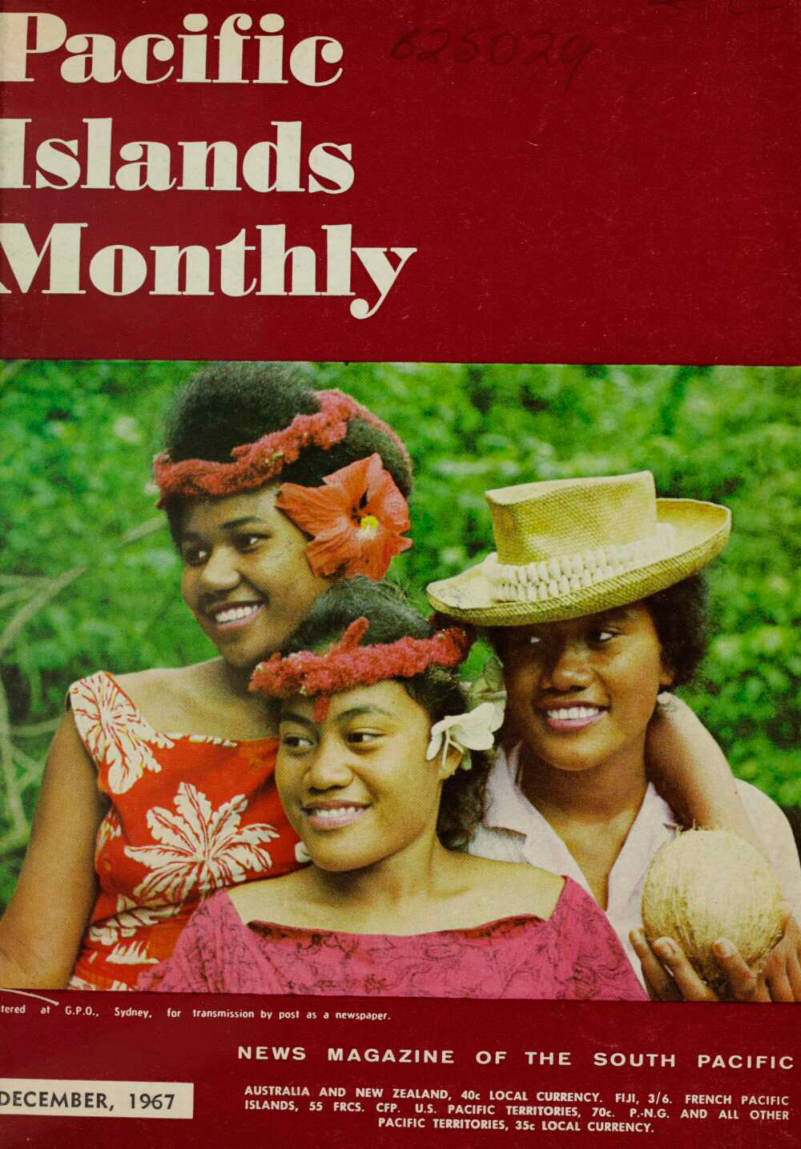 1
1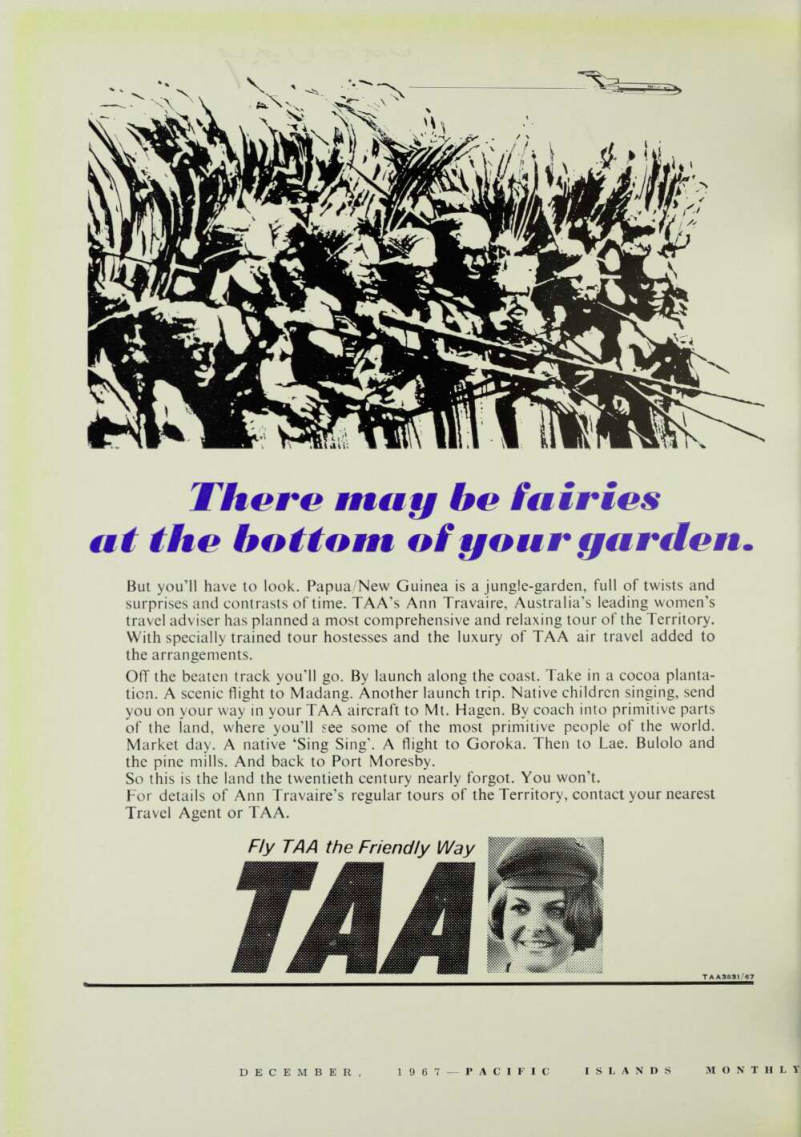 2
2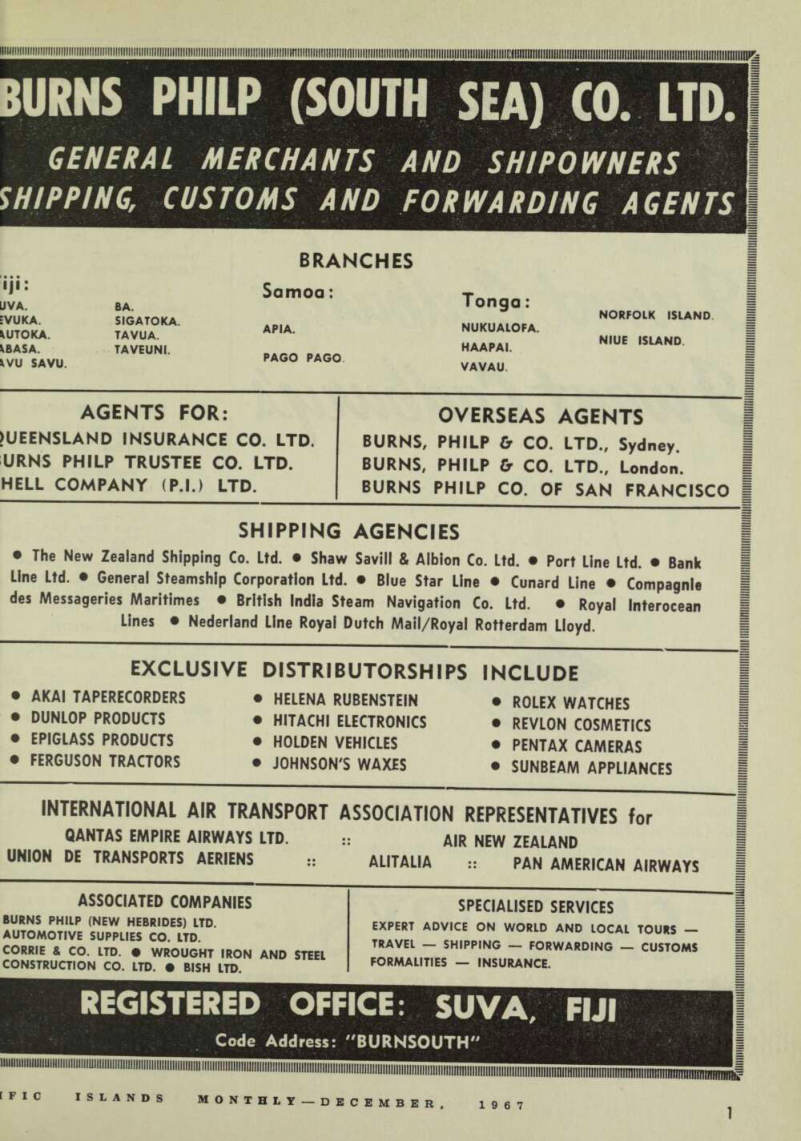 3
3 4
4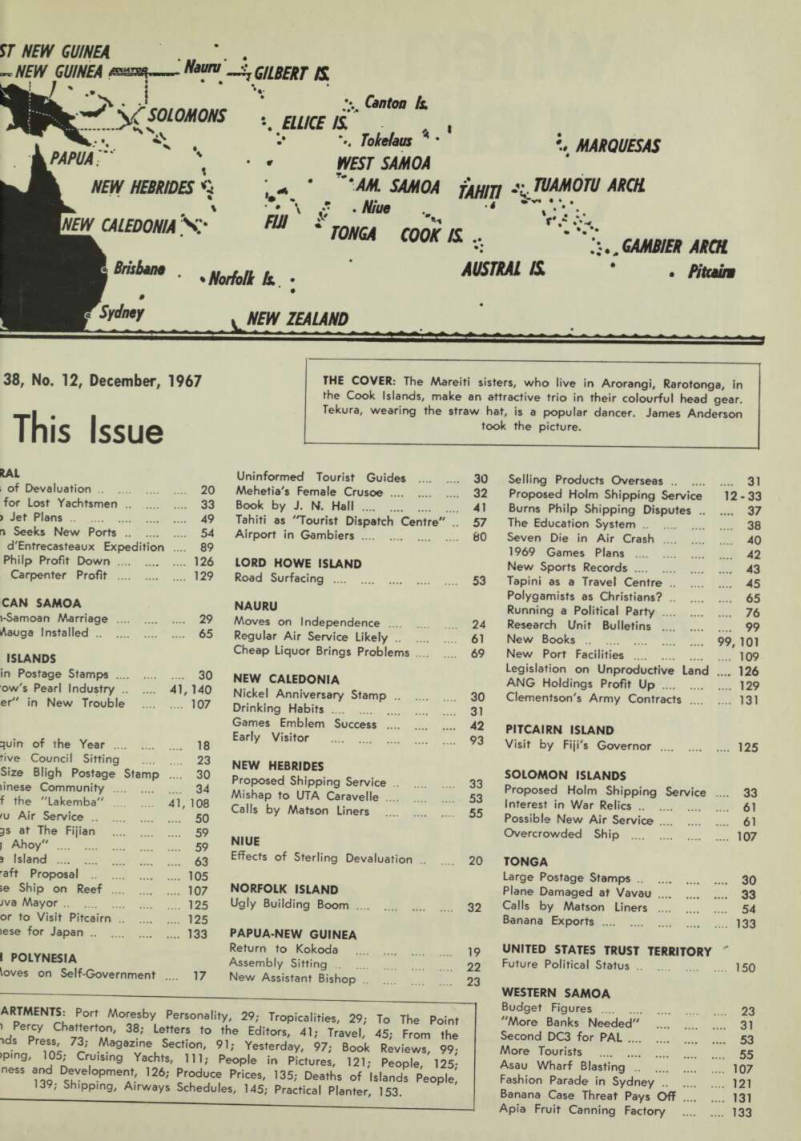 5
5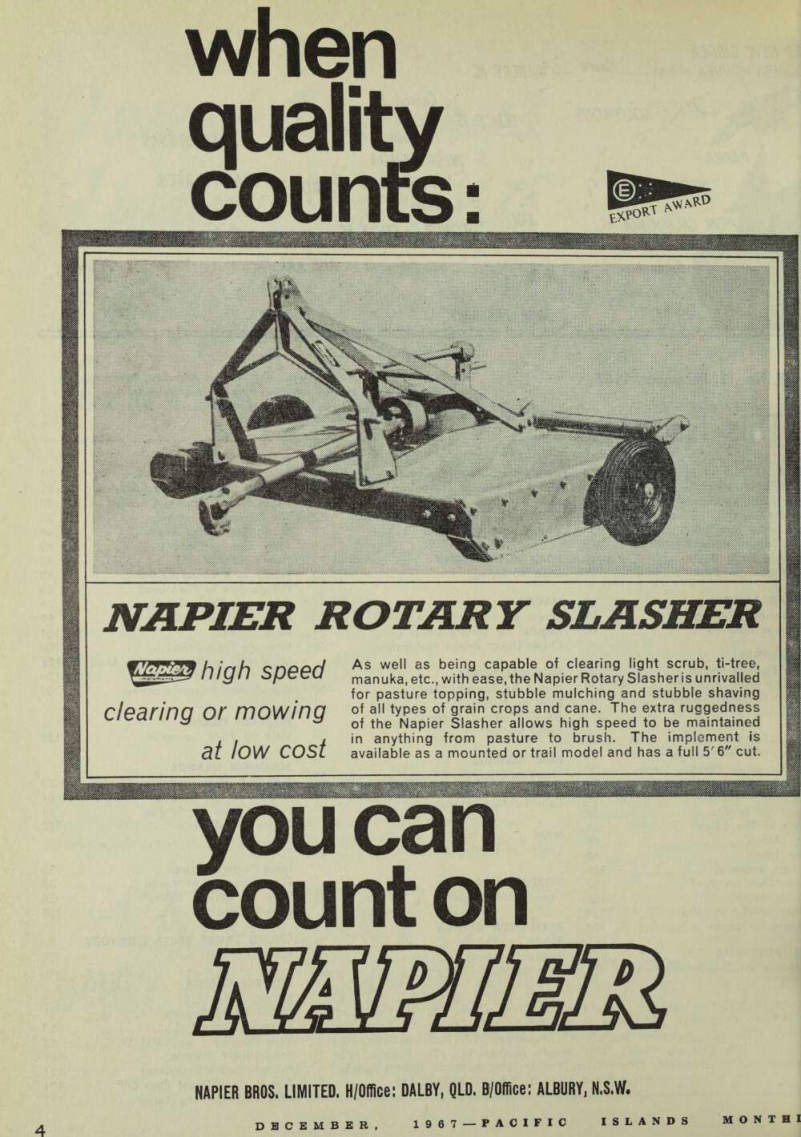 6
6 7
7 8
8 9
9 10
10 11
11 12
12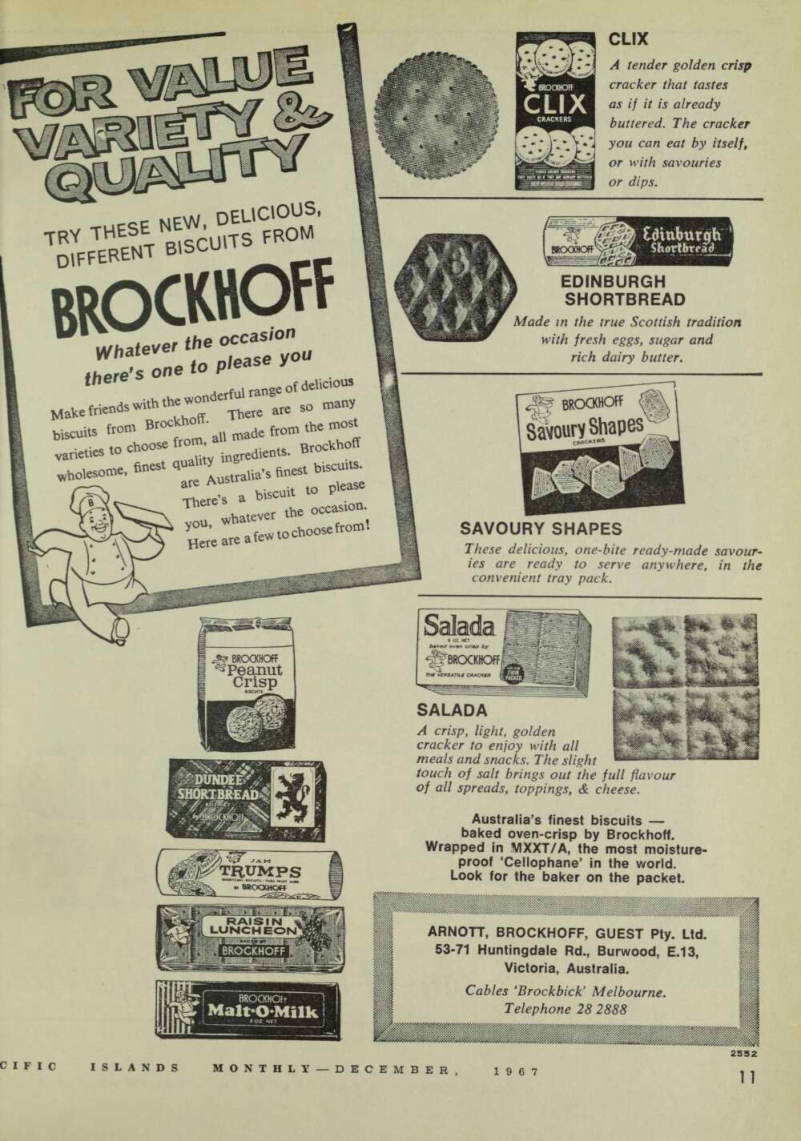 13
13 14
14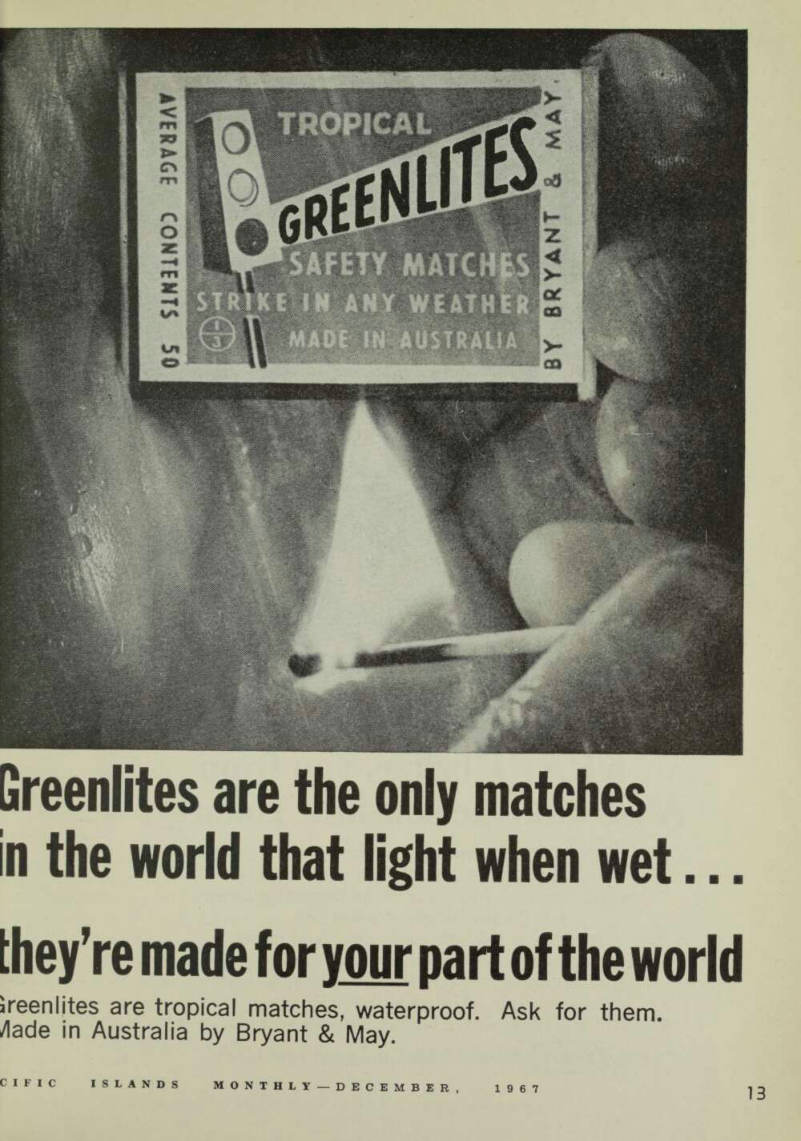 15
15 16
16 17
17 18
18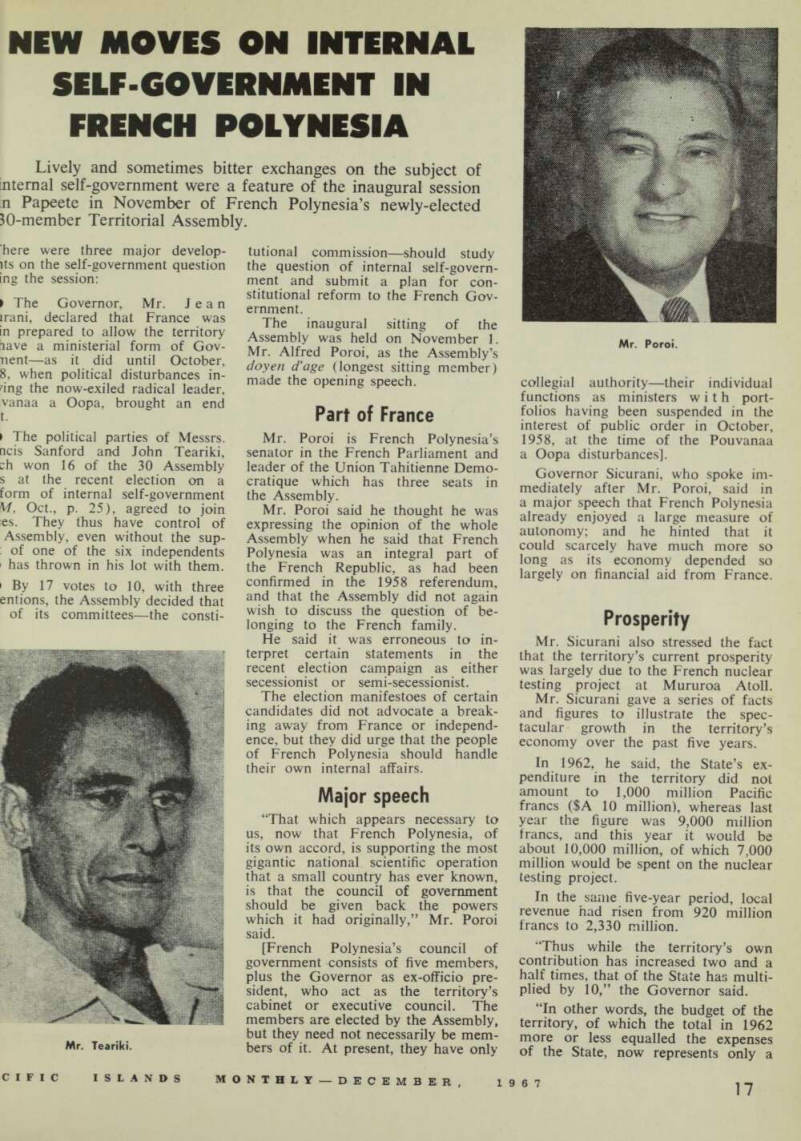 19
19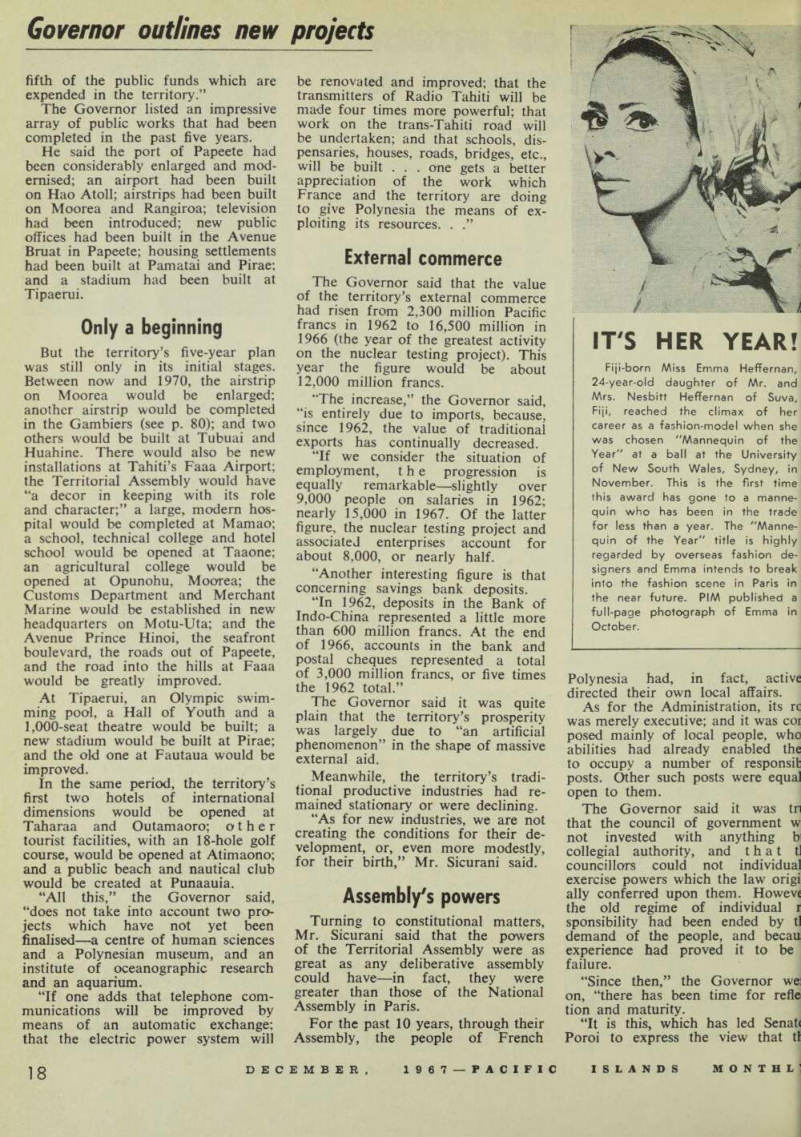 20
20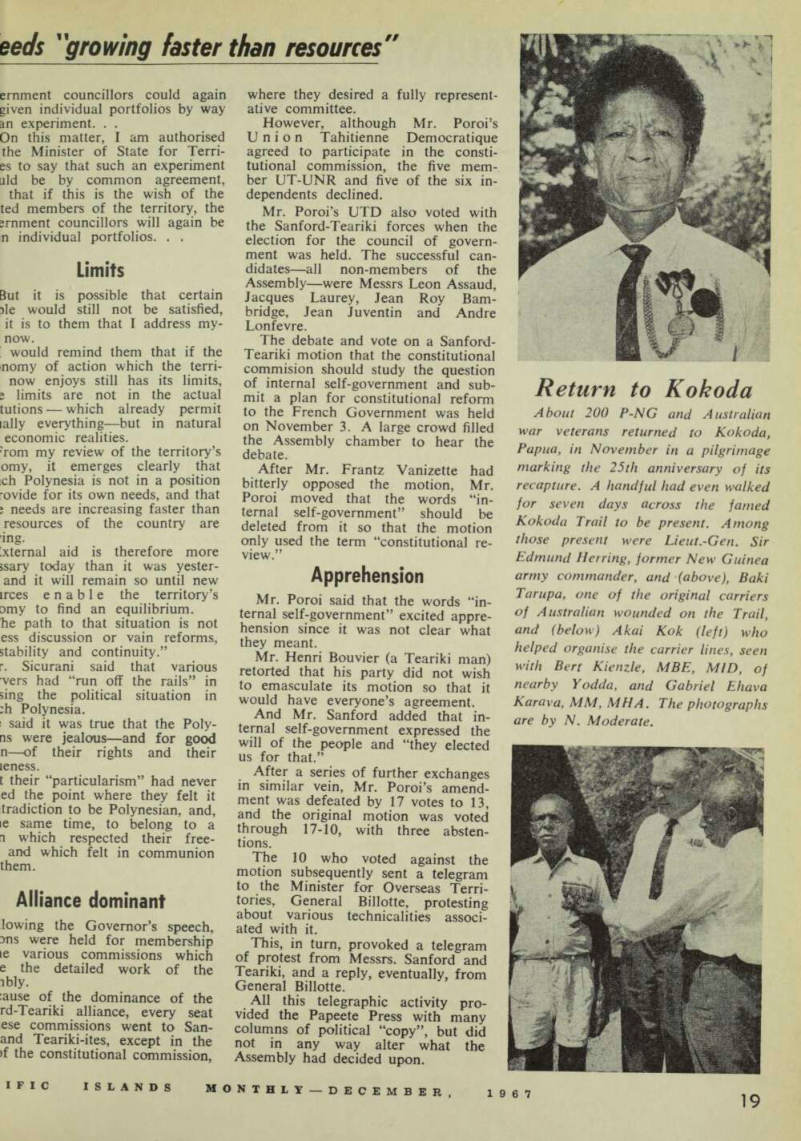 21
21 22
22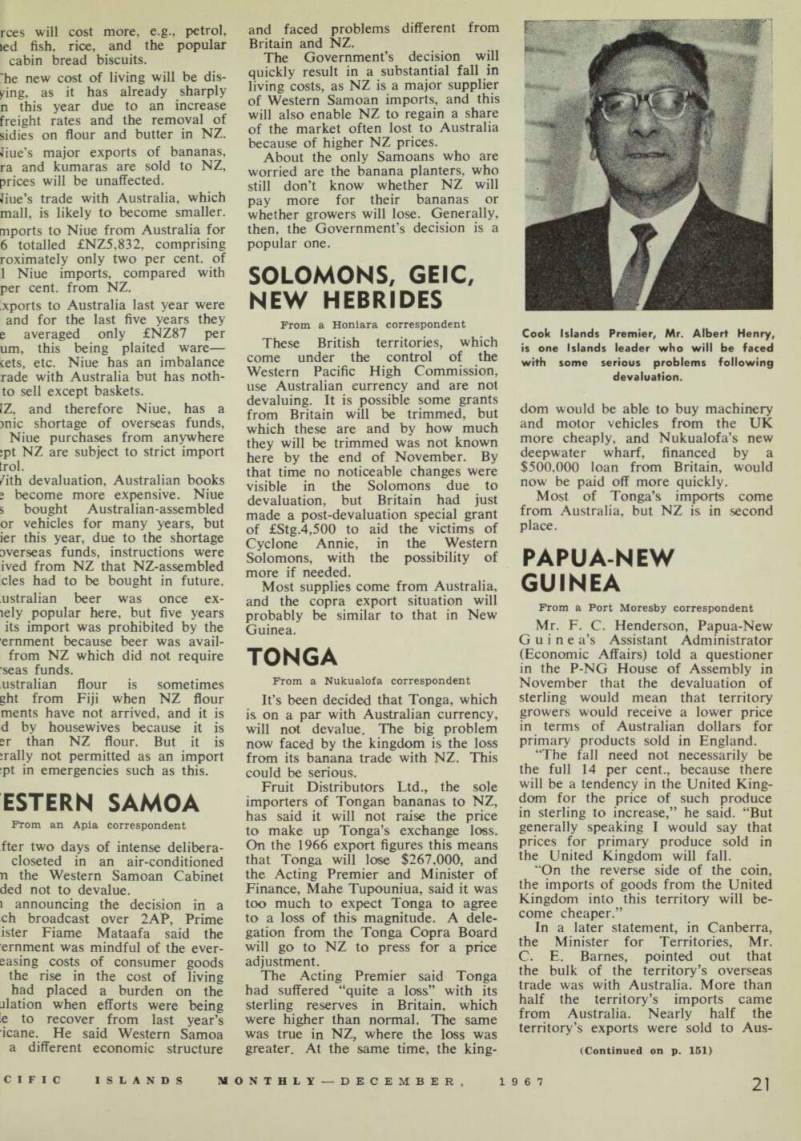 23
23 24
24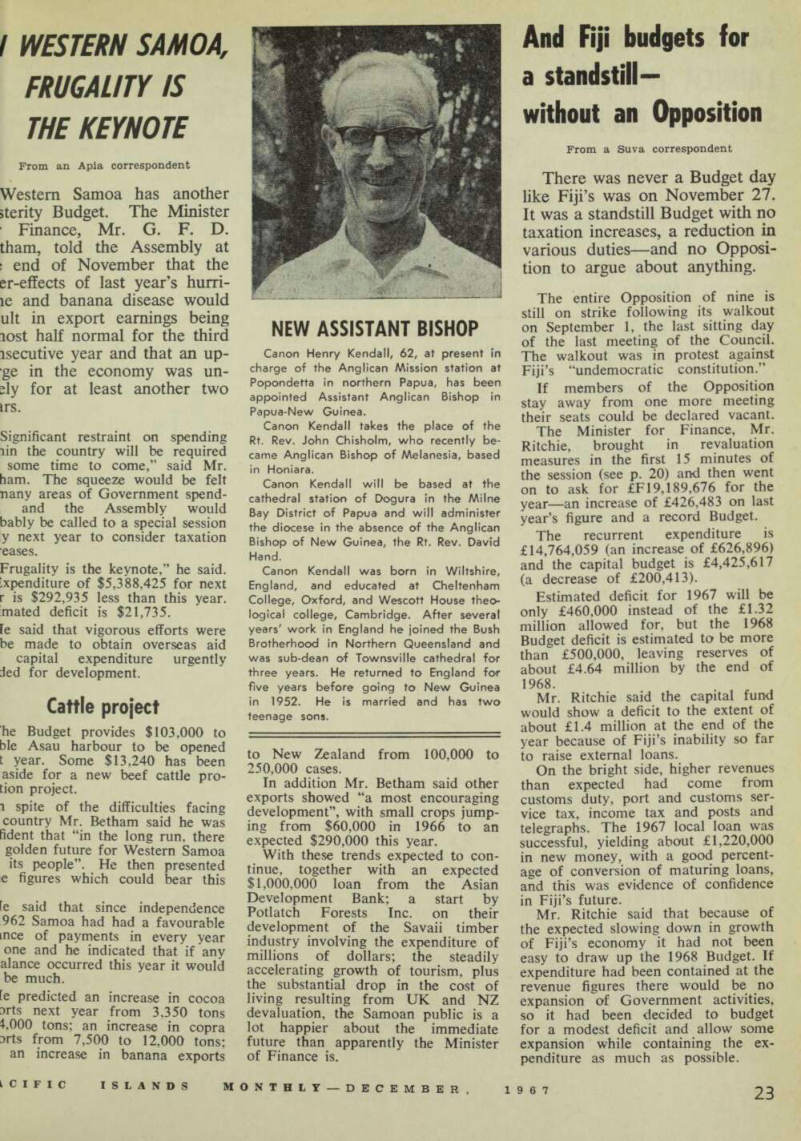 25
25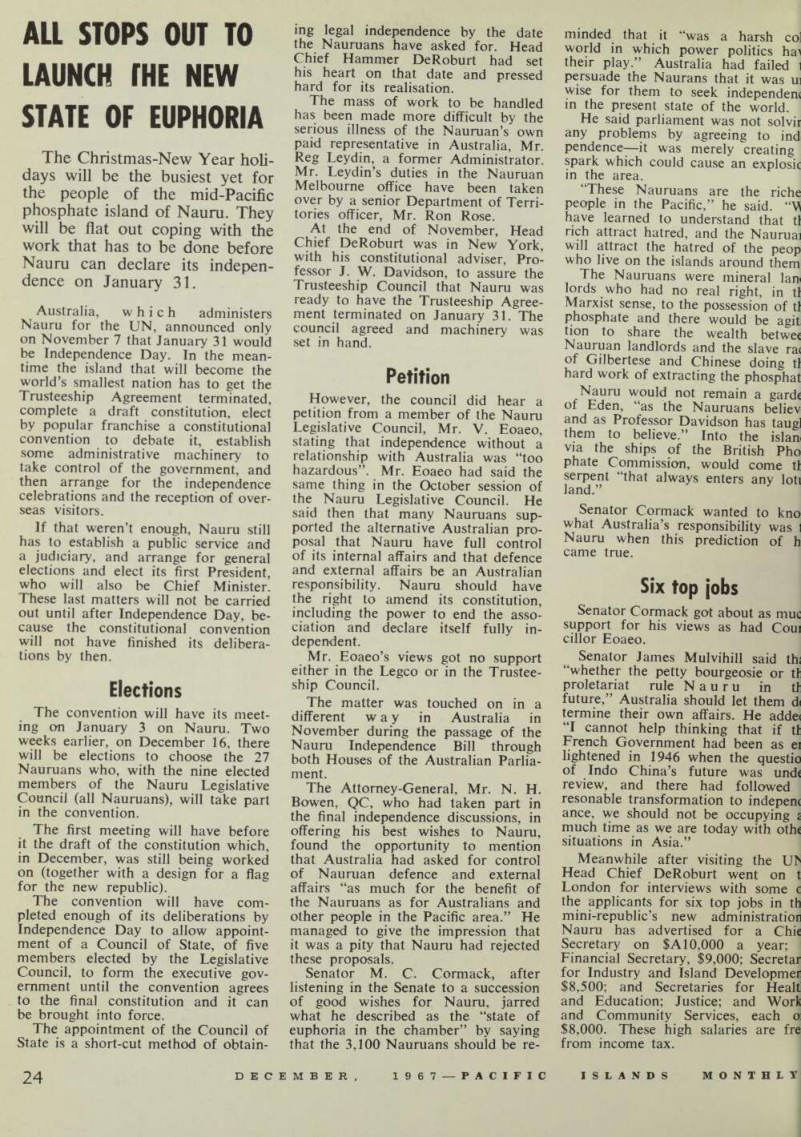 26
26 27
27 28
28 29
29 30
30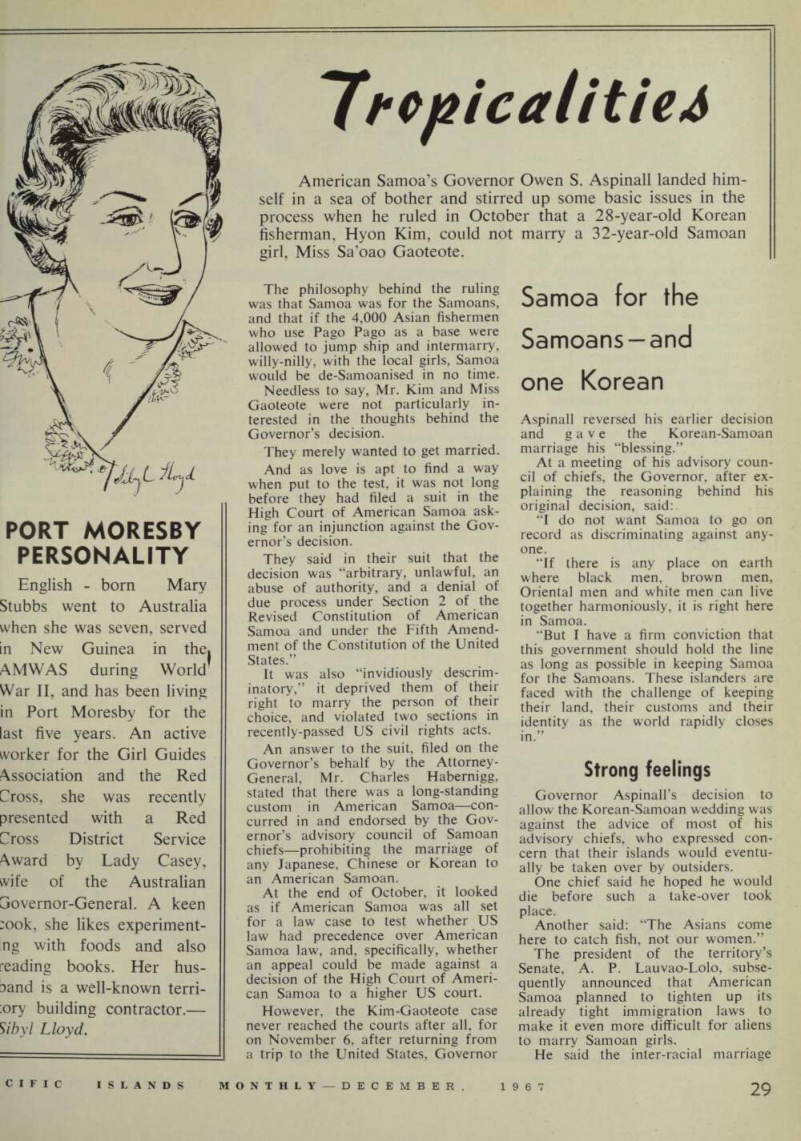 31
31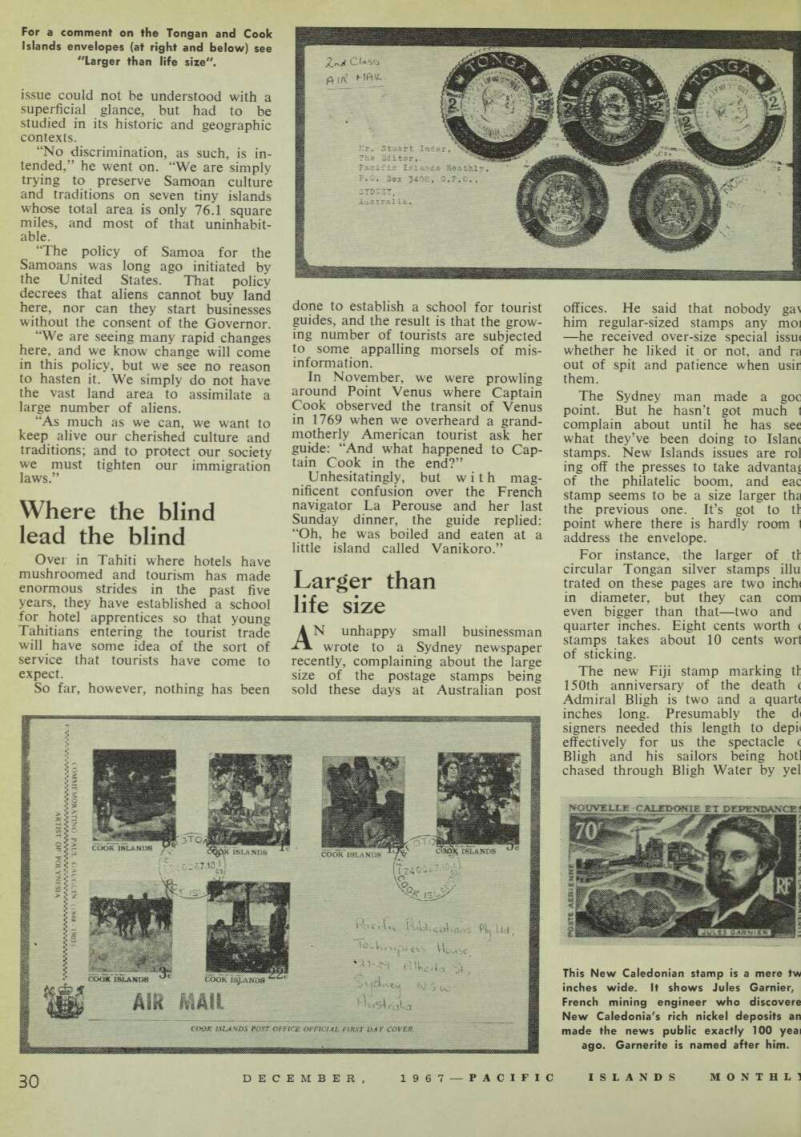 32
32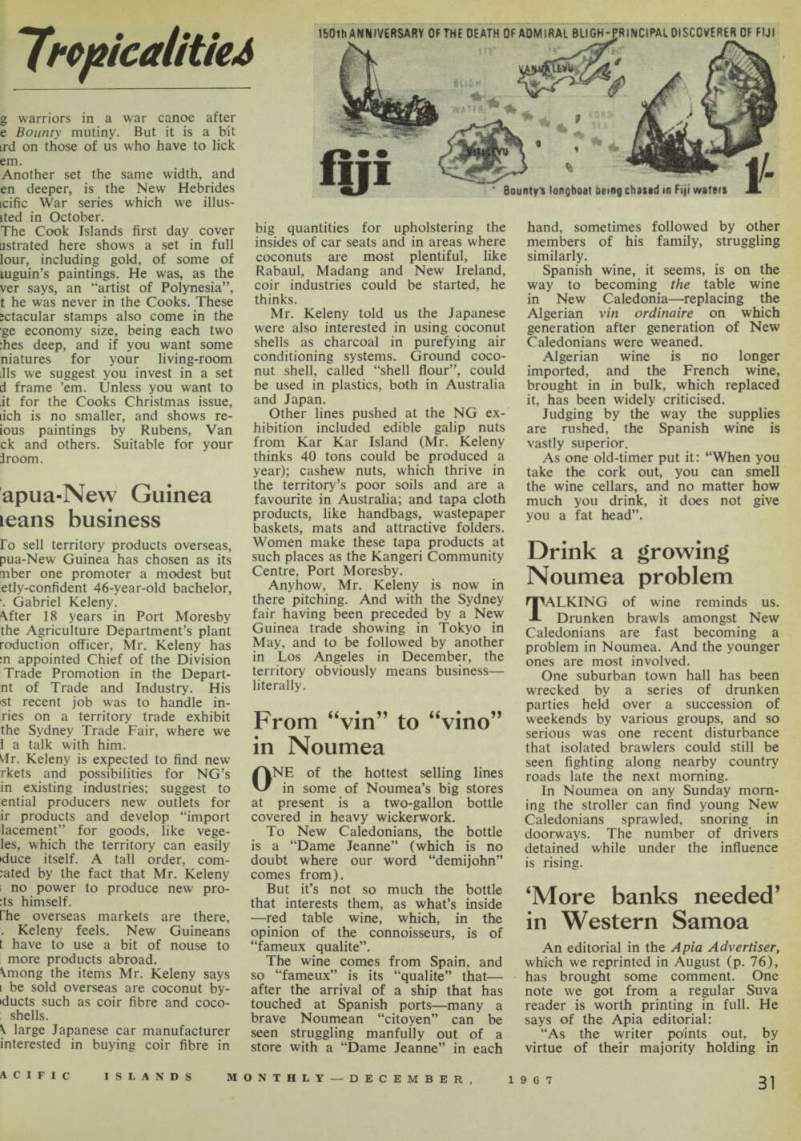 33
33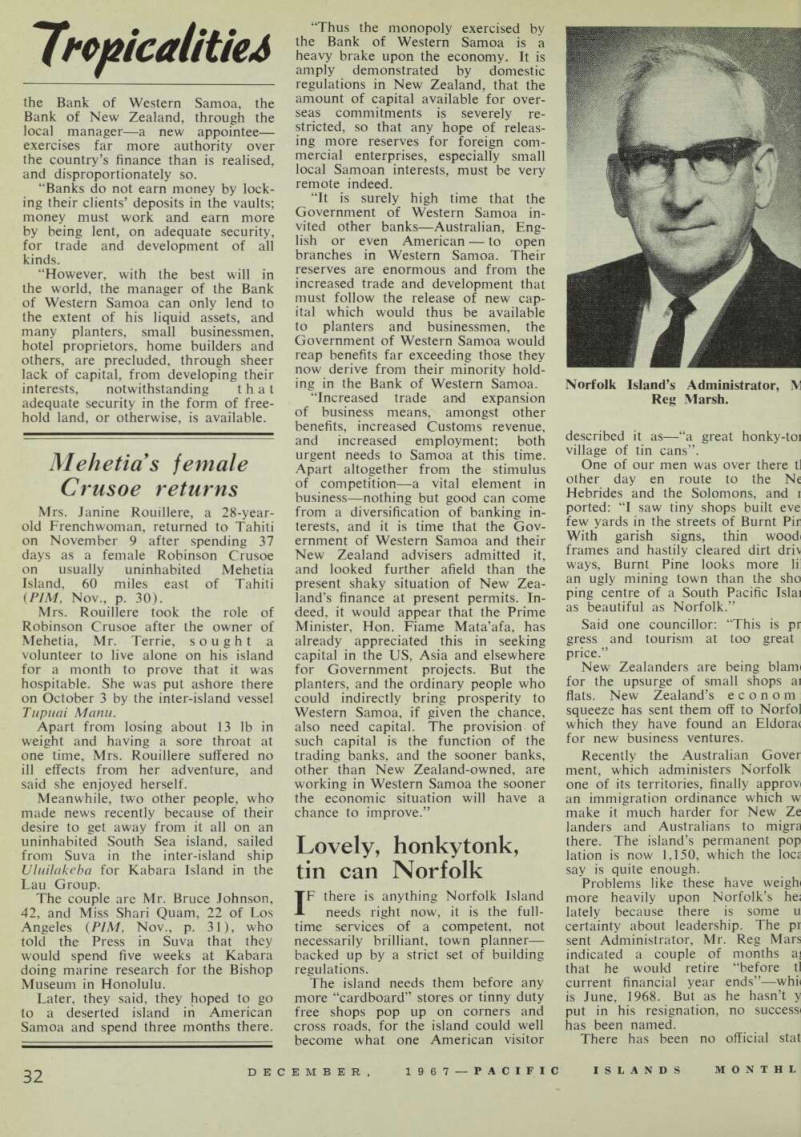 34
34 35
35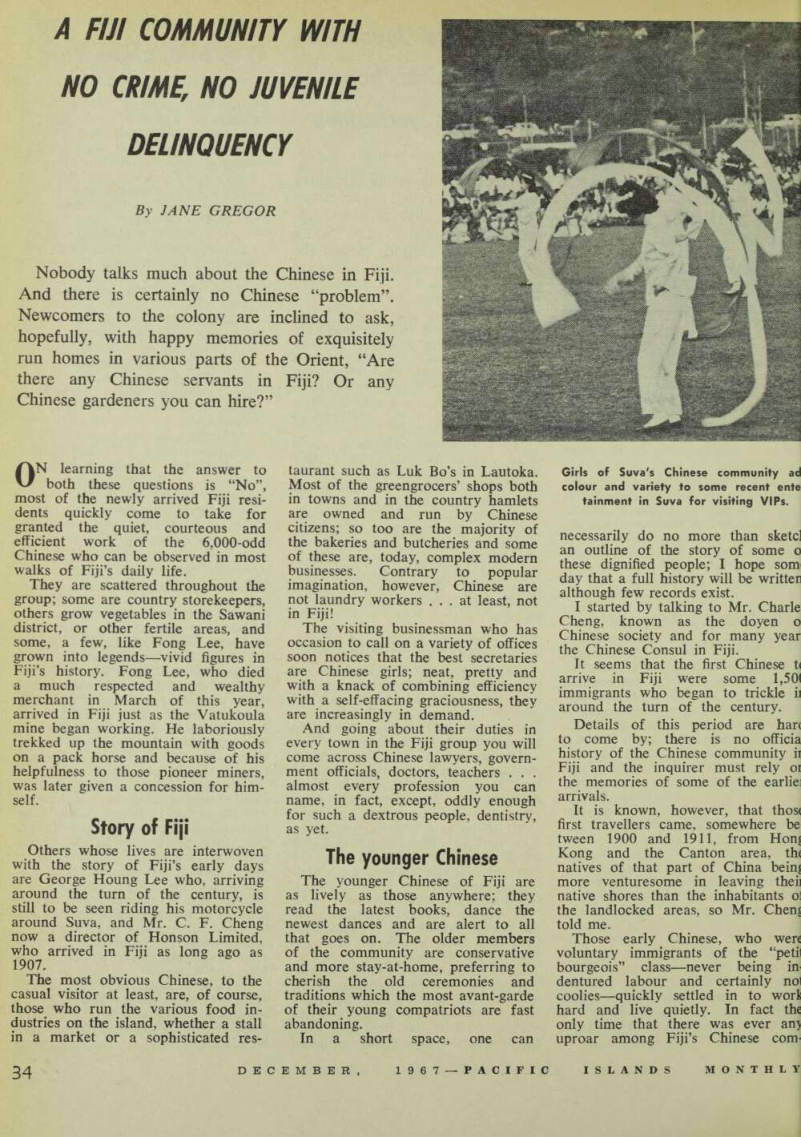 36
36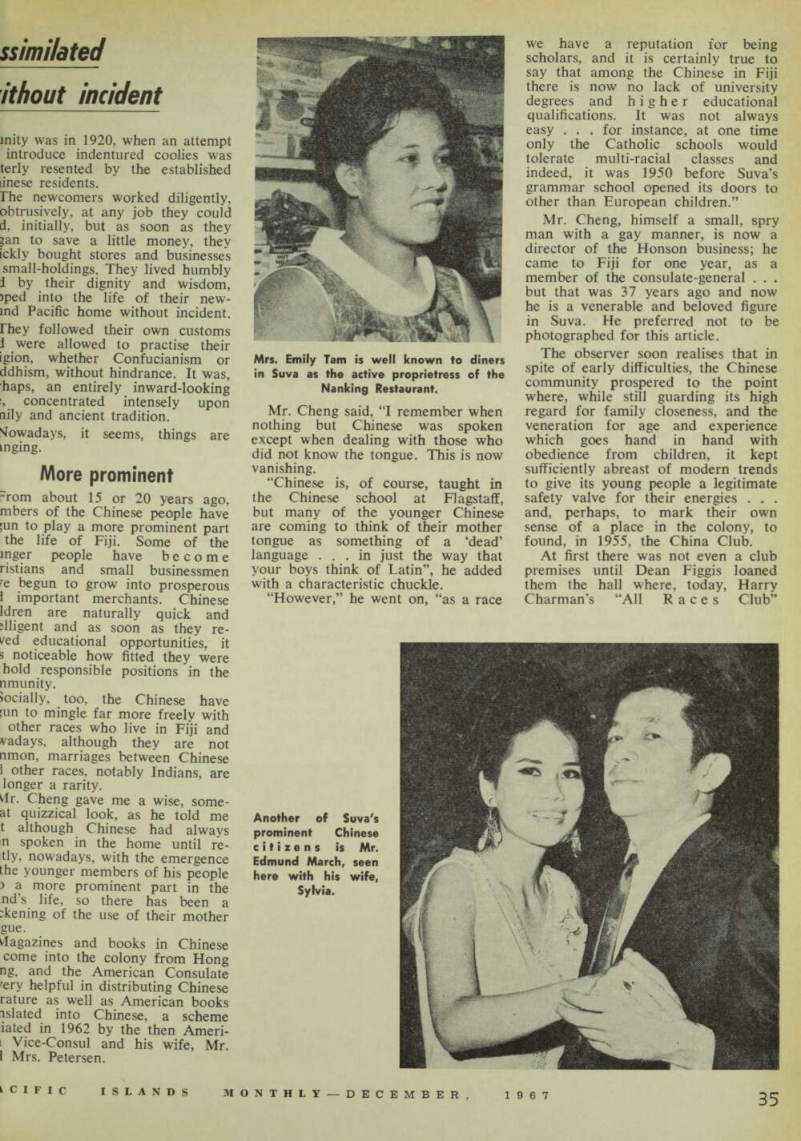 37
37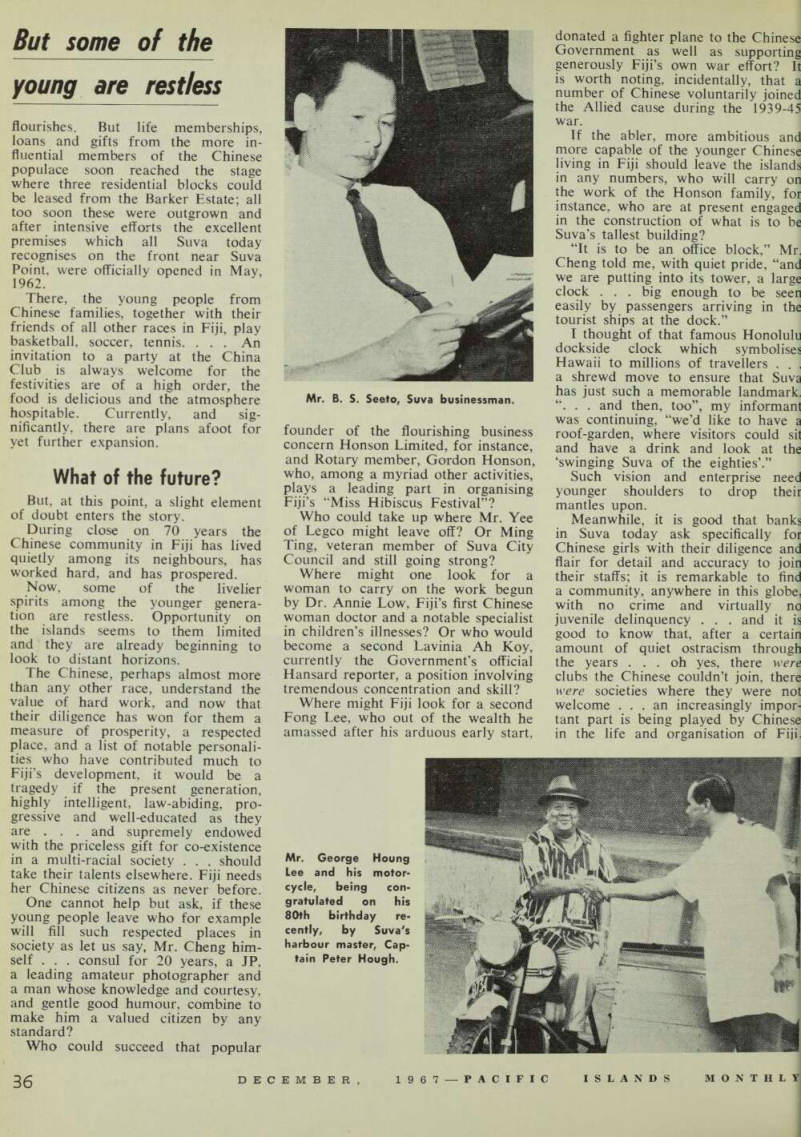 38
38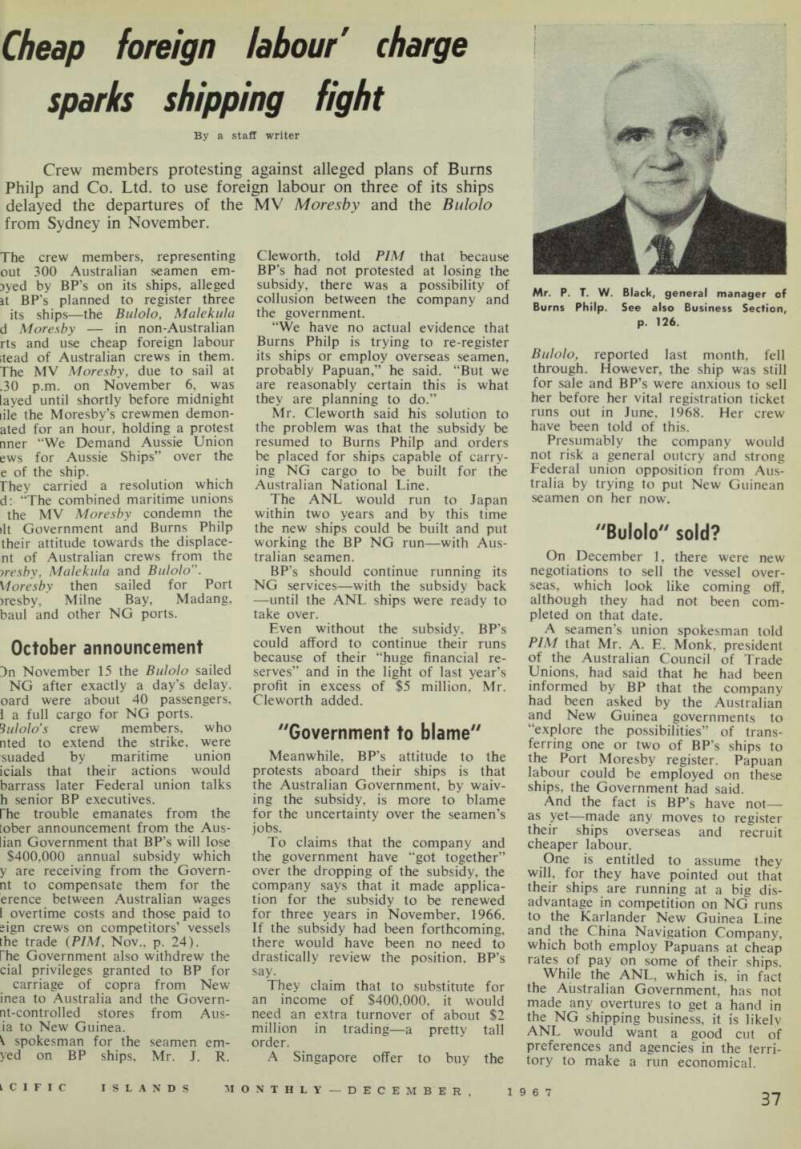 39
39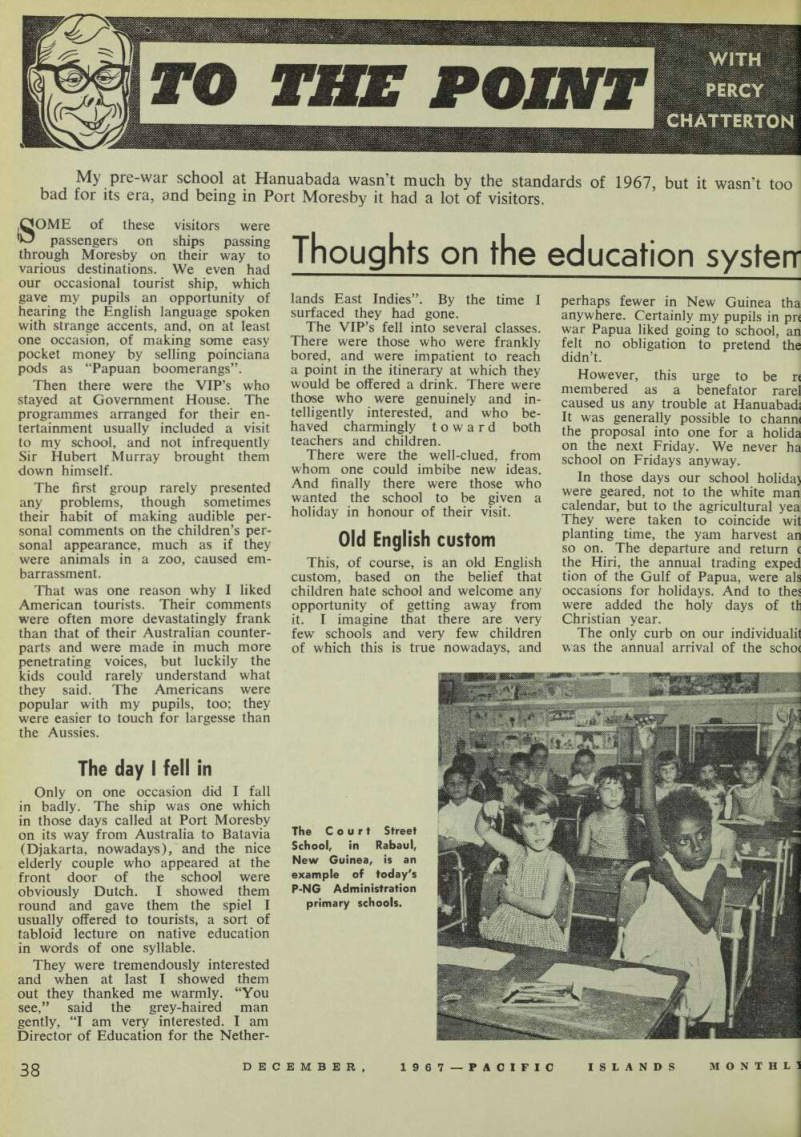 40
40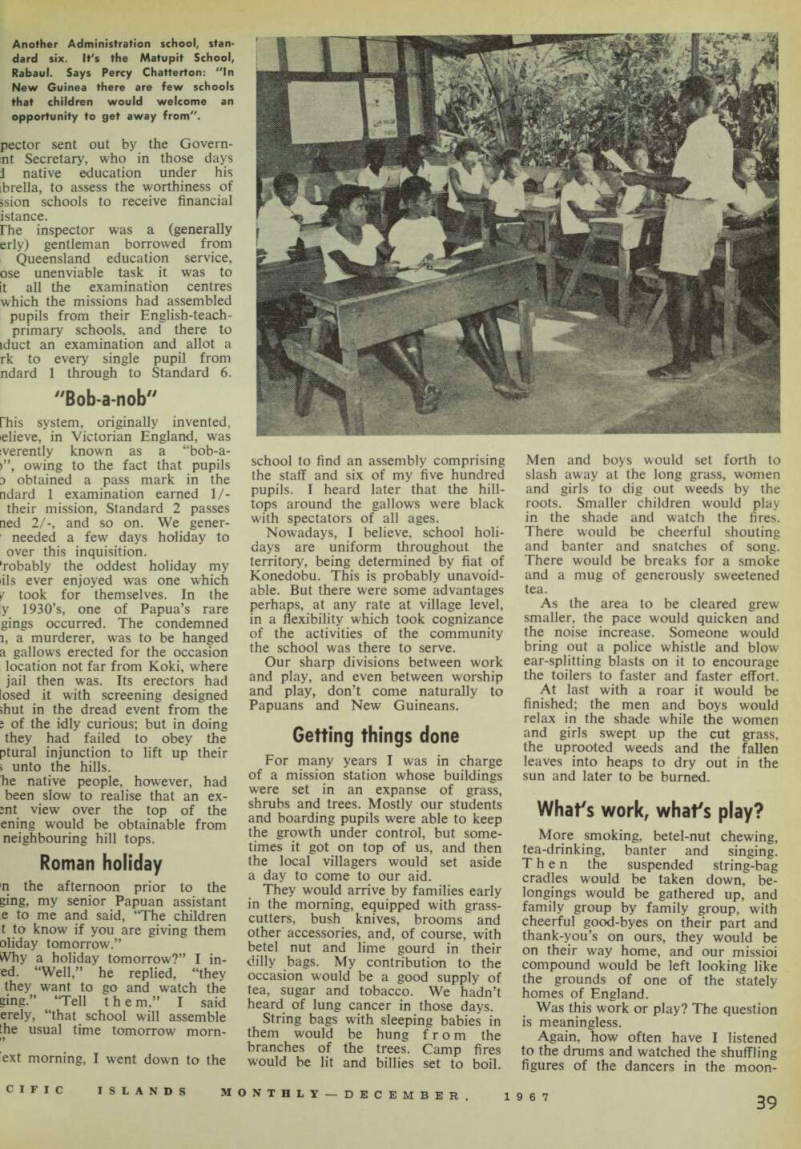 41
41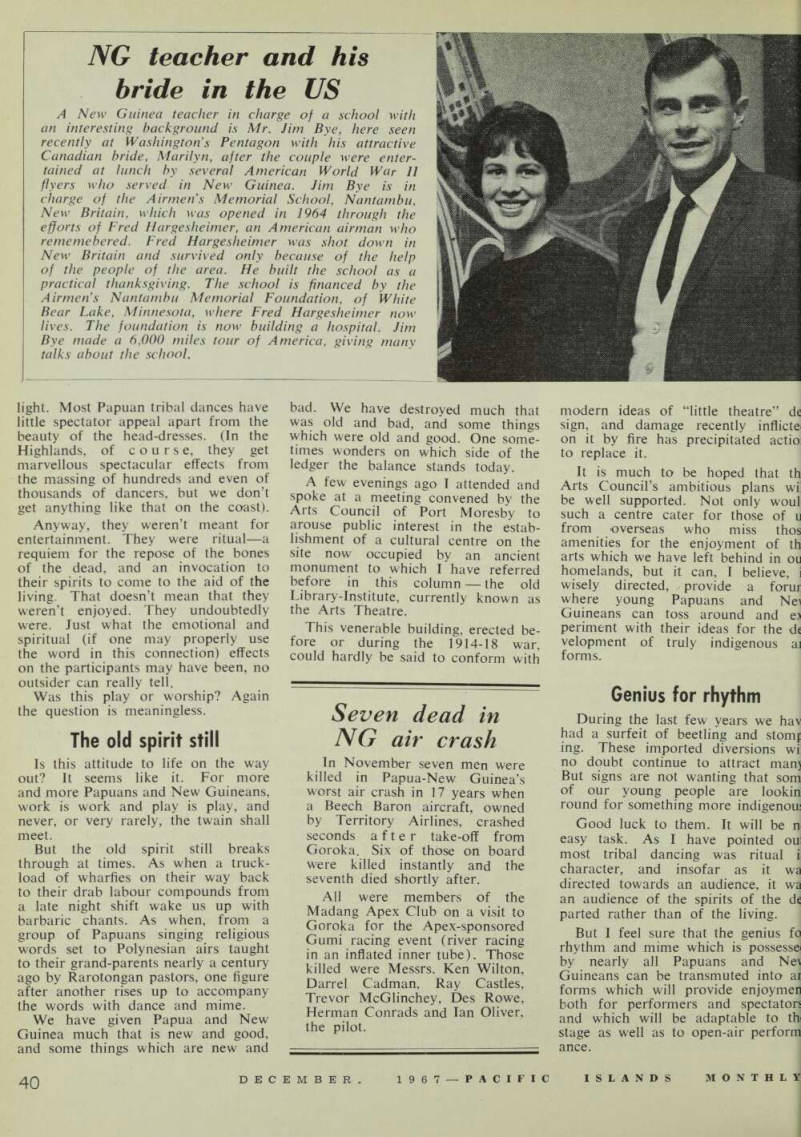 42
42 43
43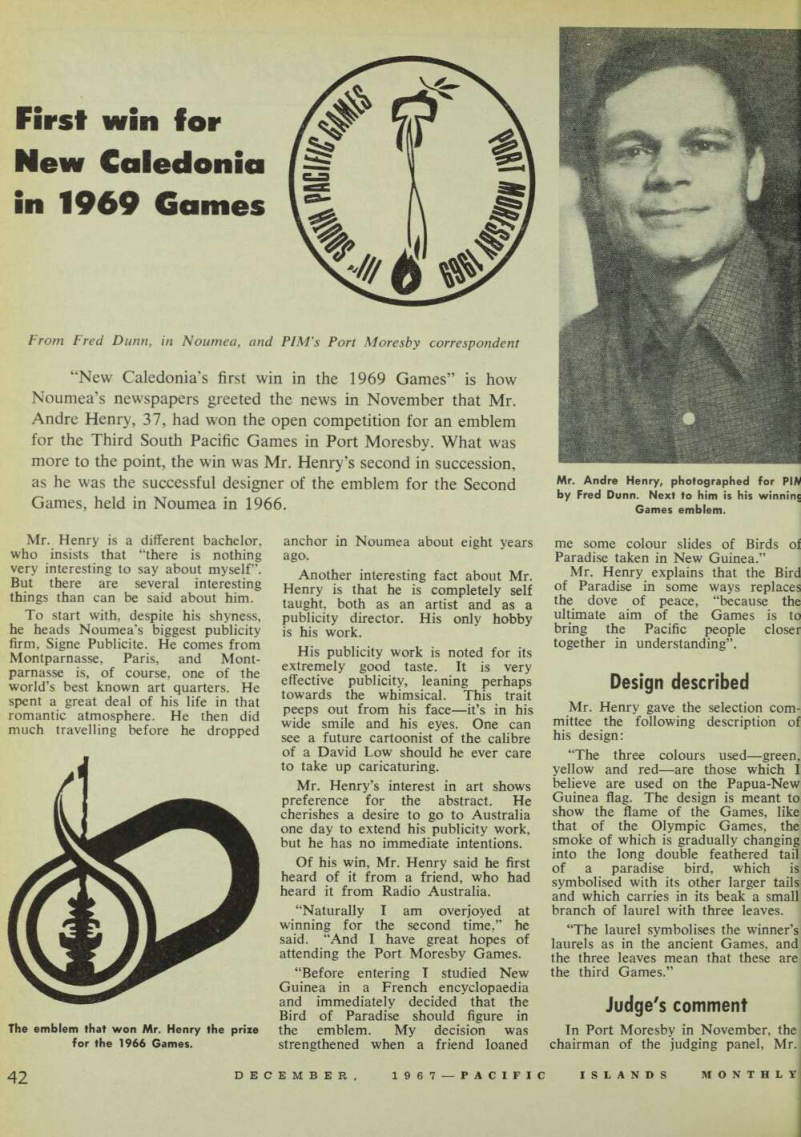 44
44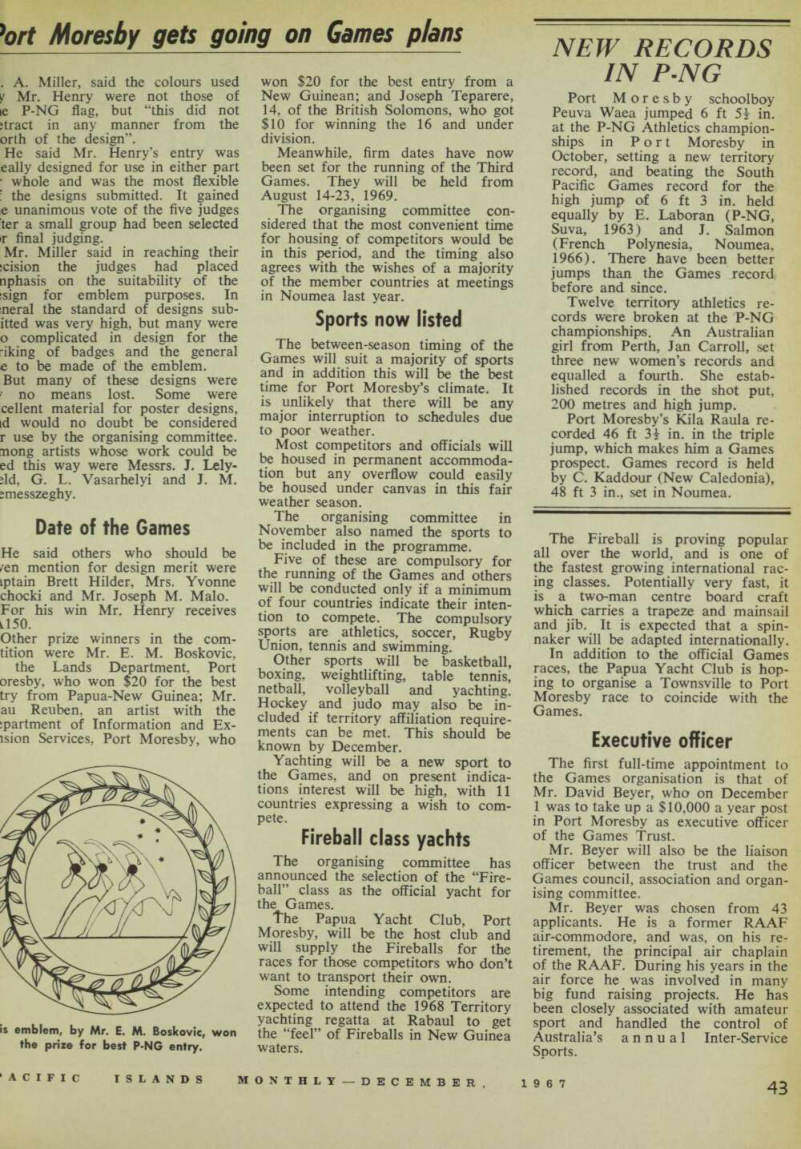 45
45 46
46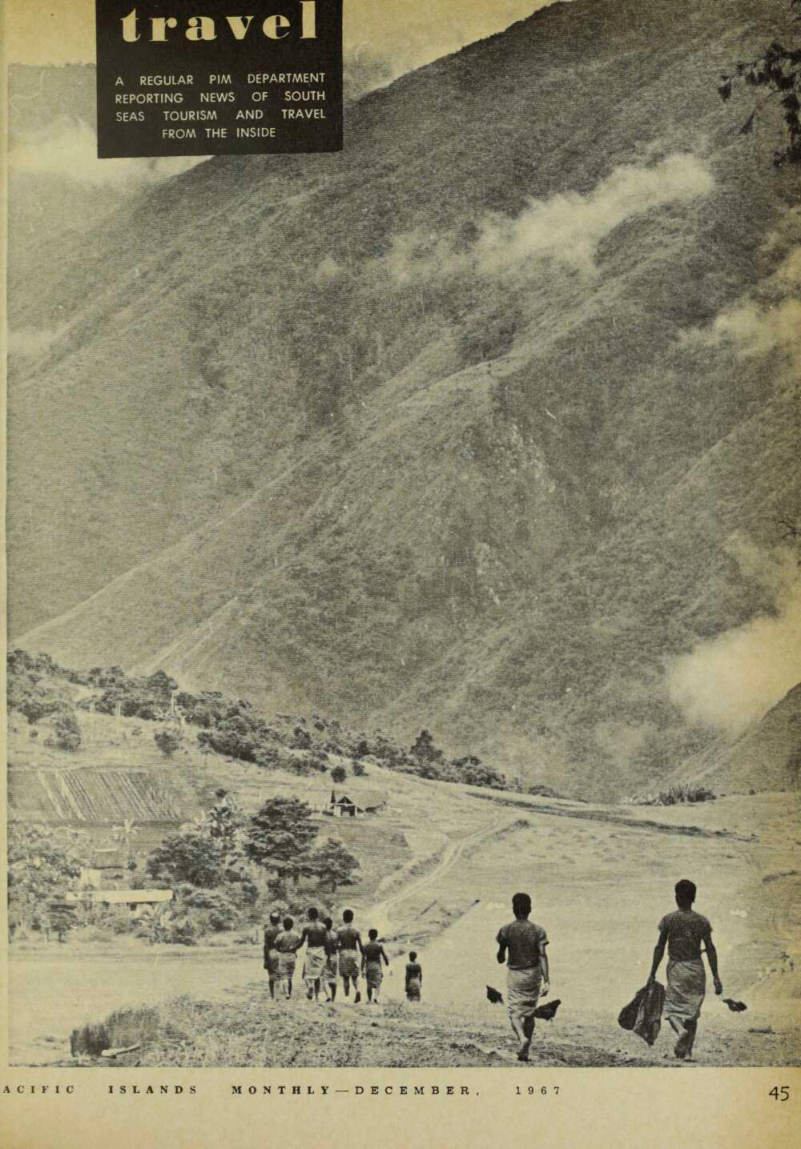 47
47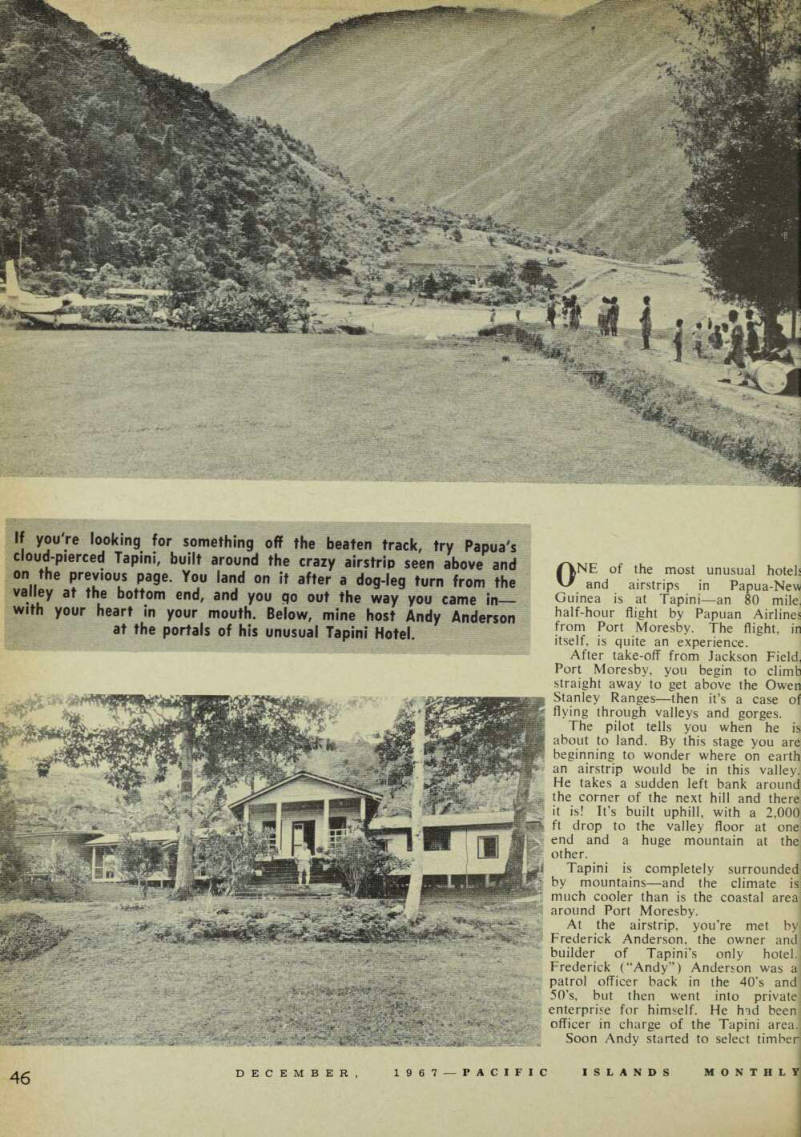 48
48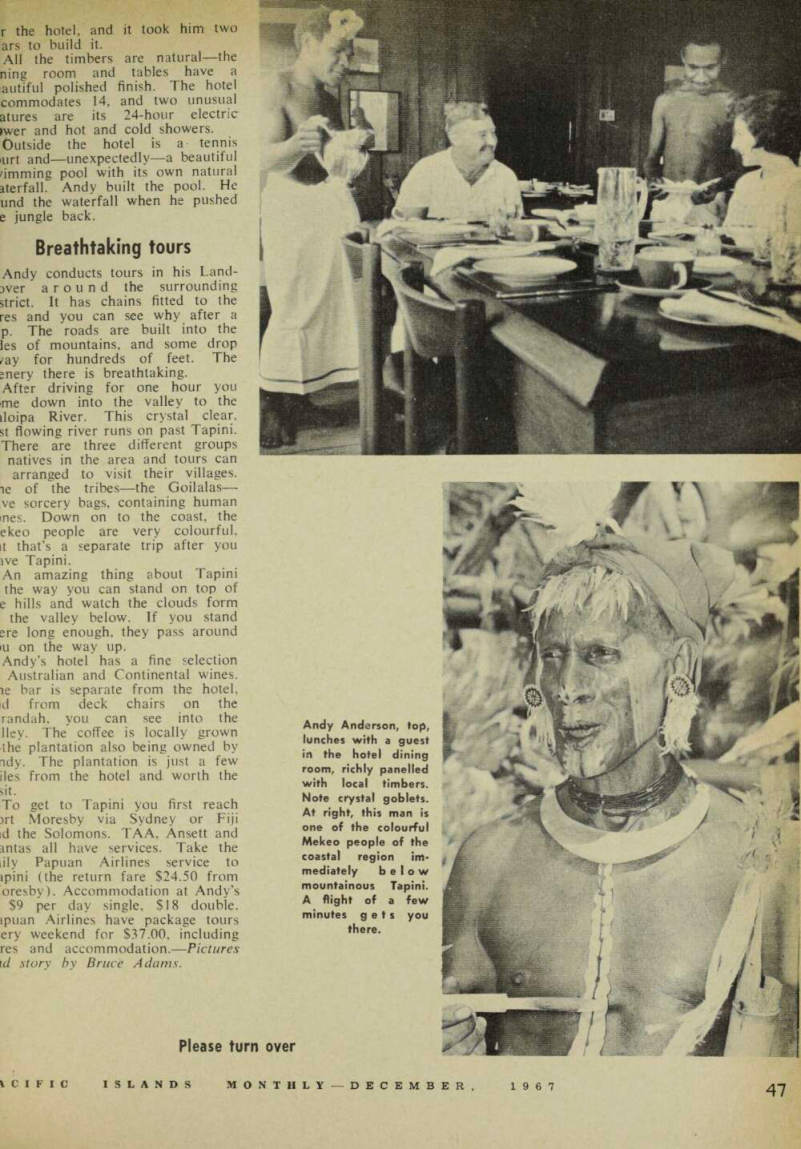 49
49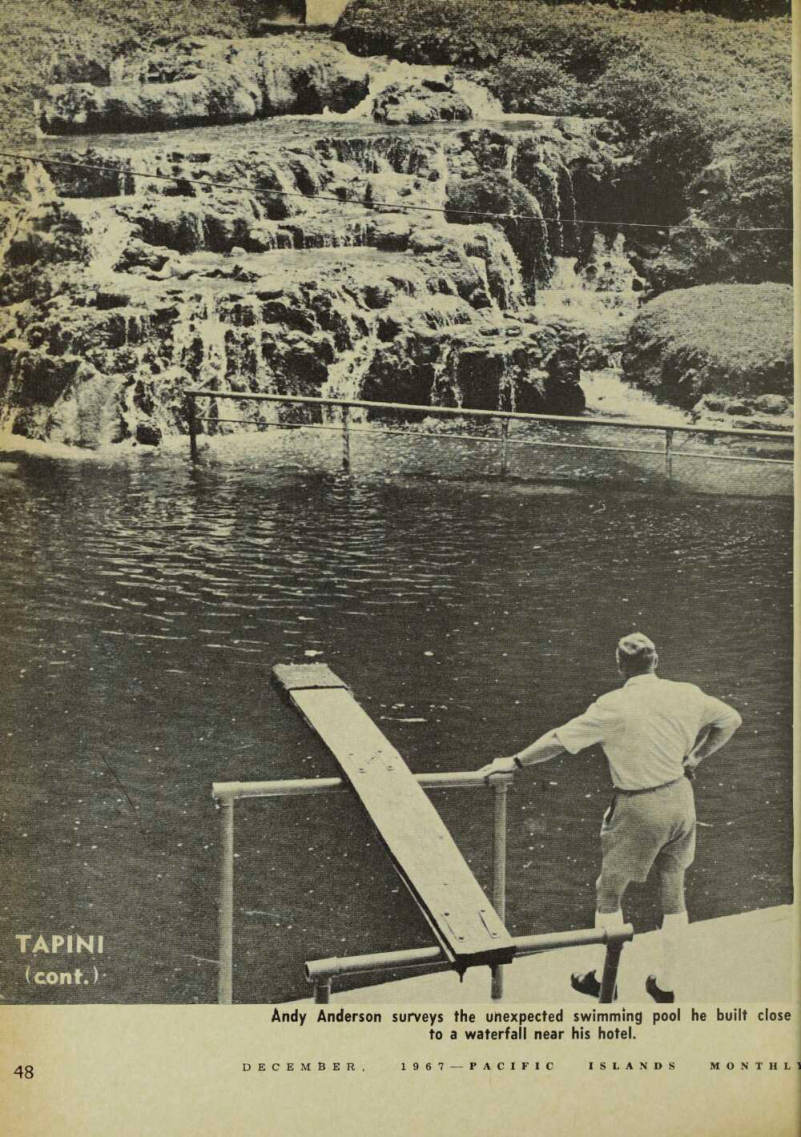 50
50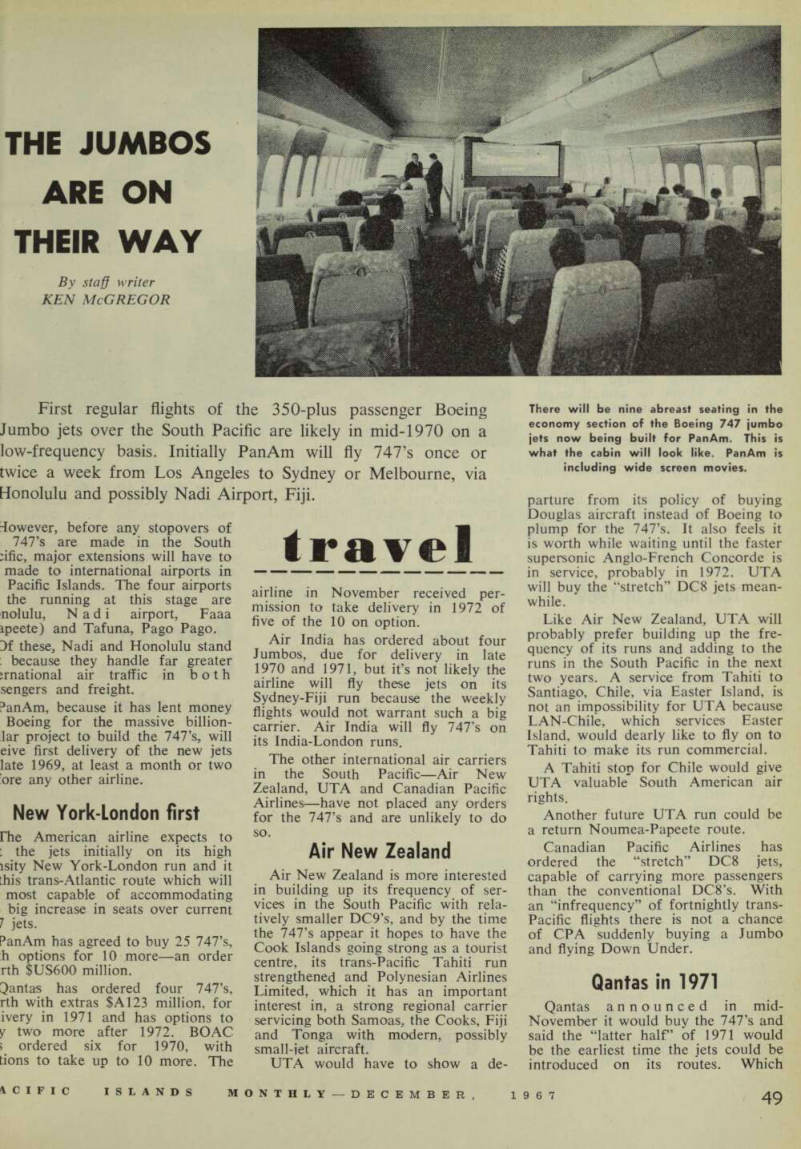 51
51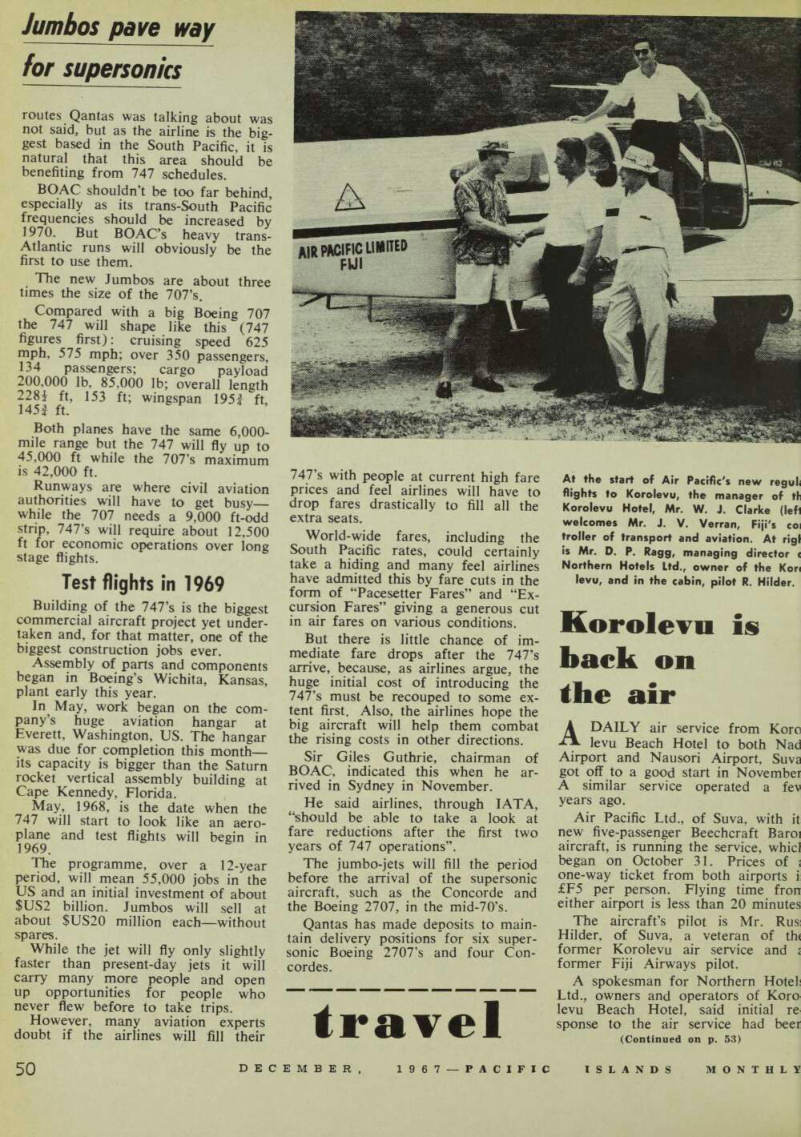 52
52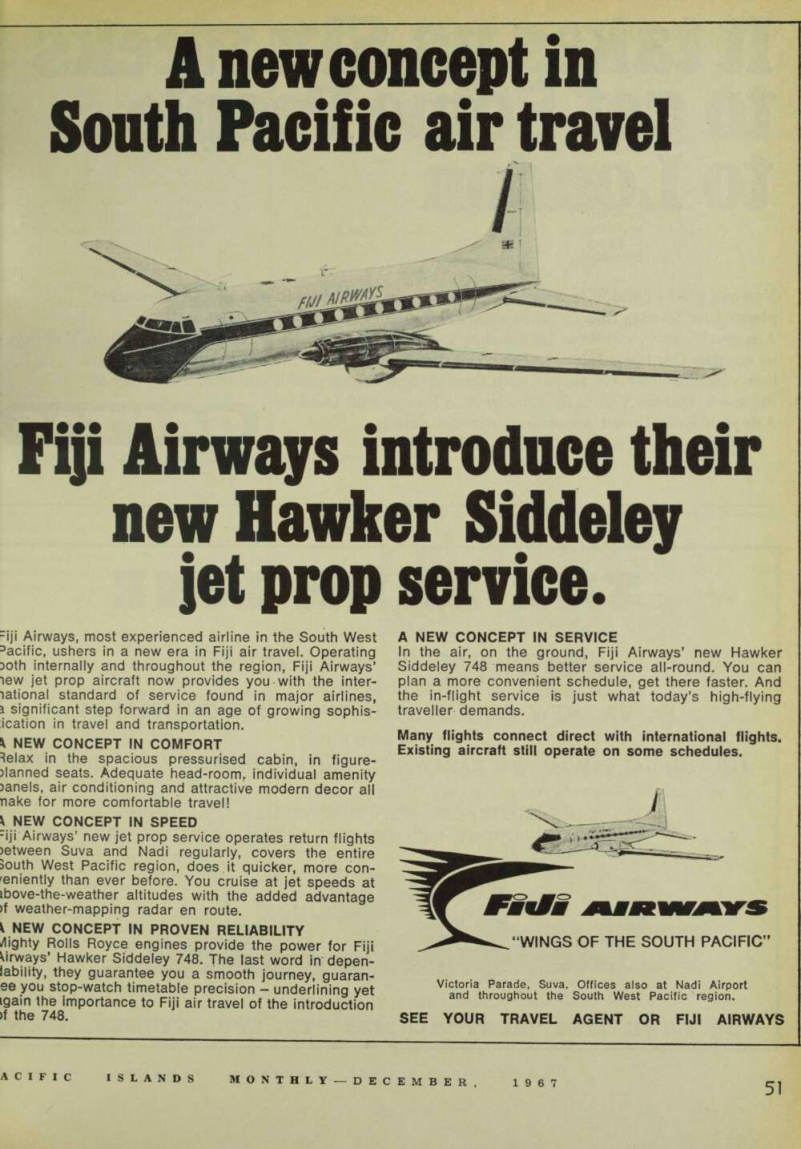 53
53 54
54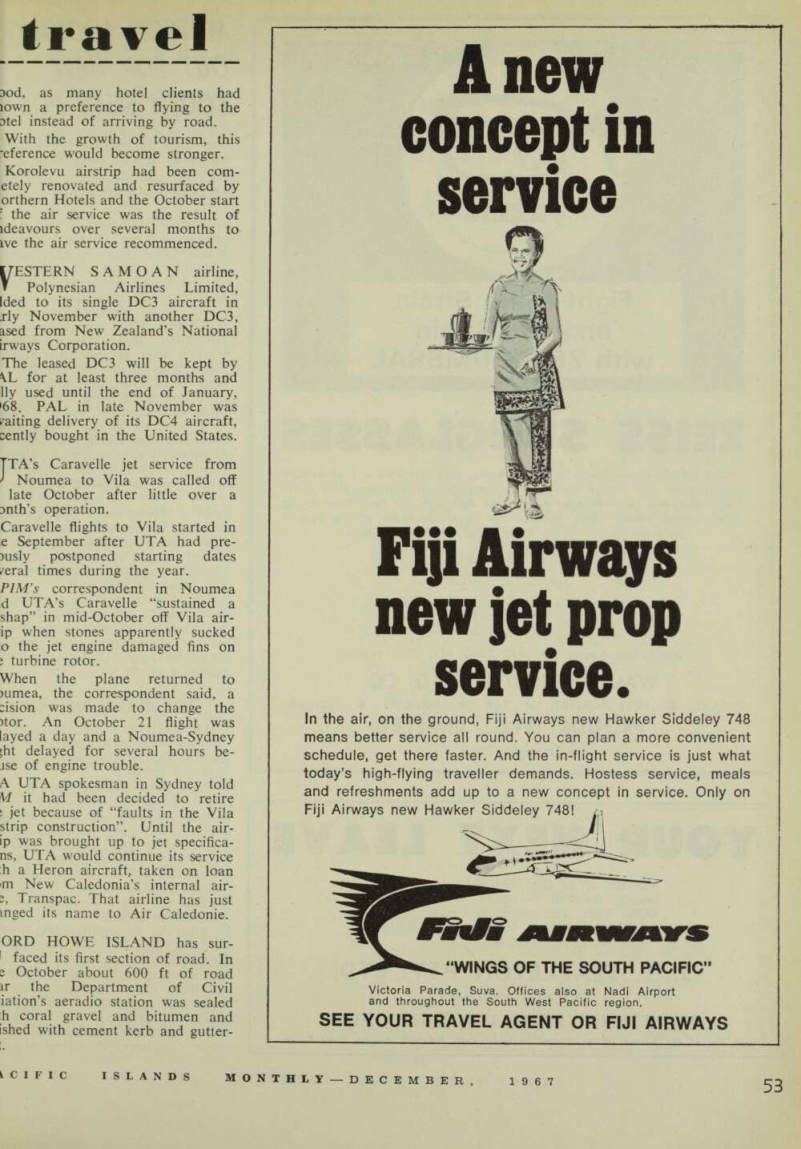 55
55 56
56 57
57 58
58 59
59 60
60 61
61 62
62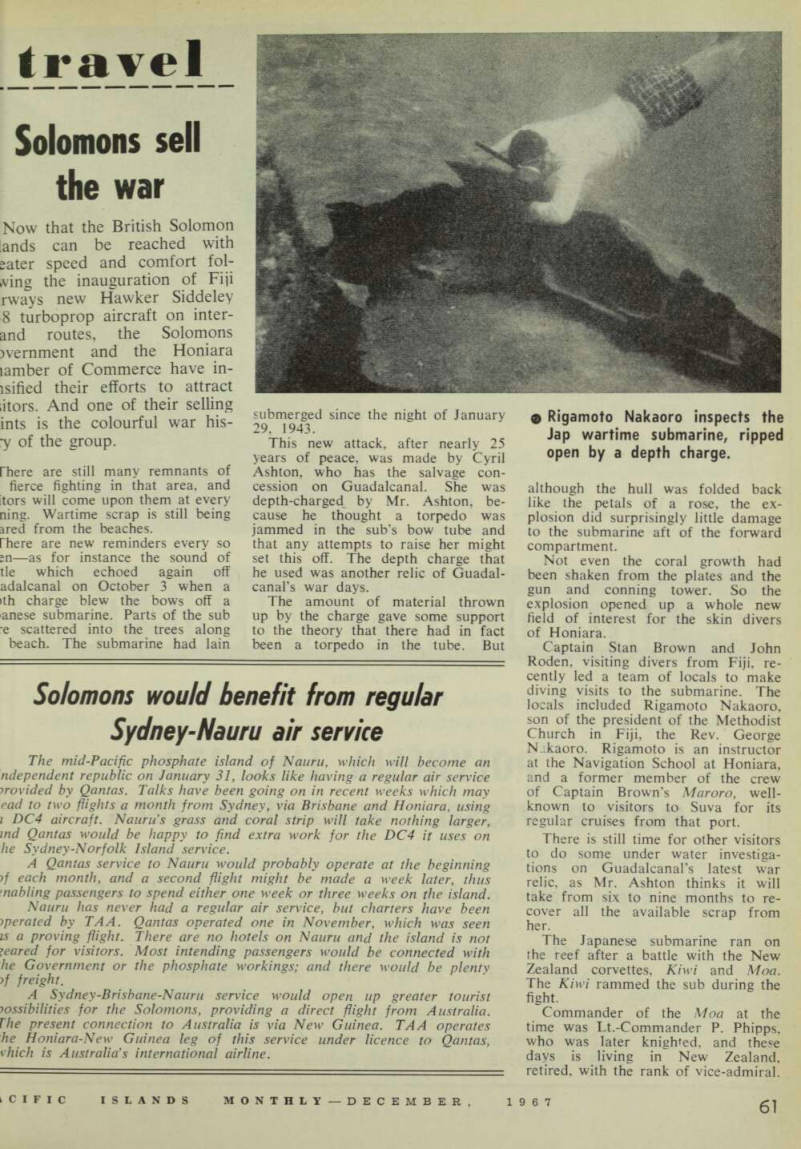 63
63 64
64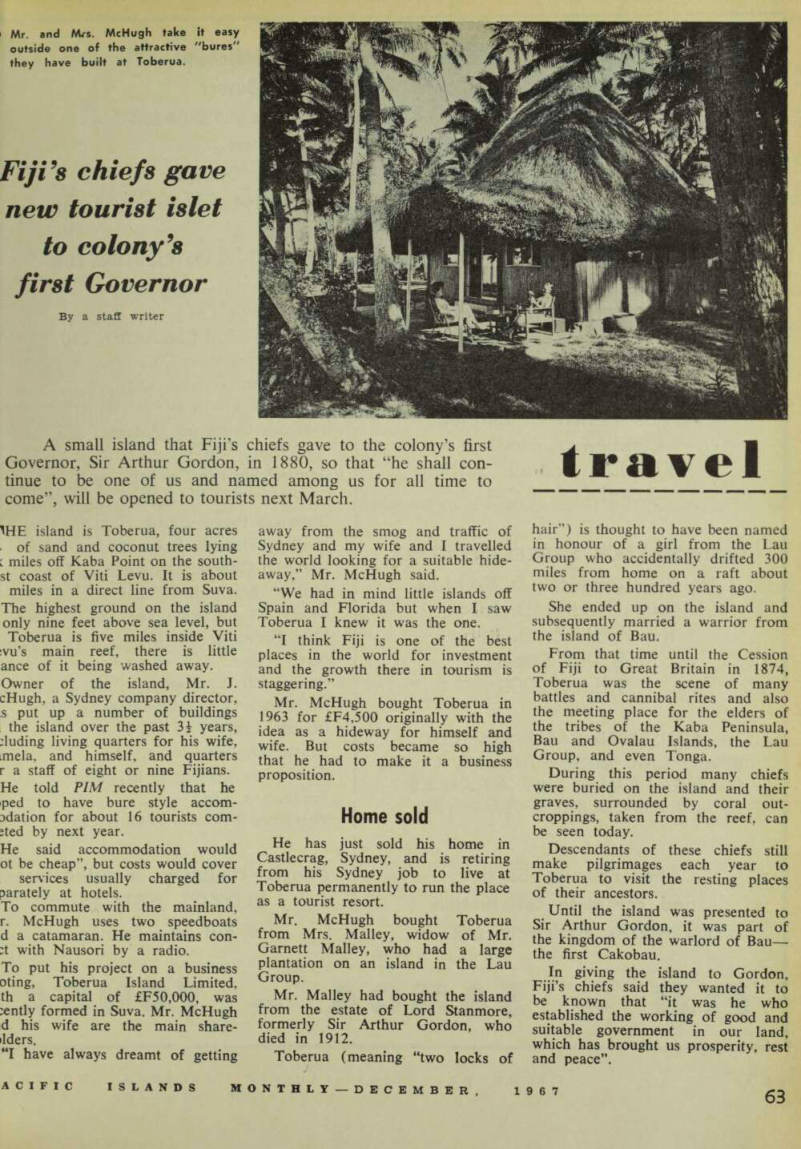 65
65 66
66 67
67 68
68 69
69 70
70 71
71 72
72 73
73 74
74 75
75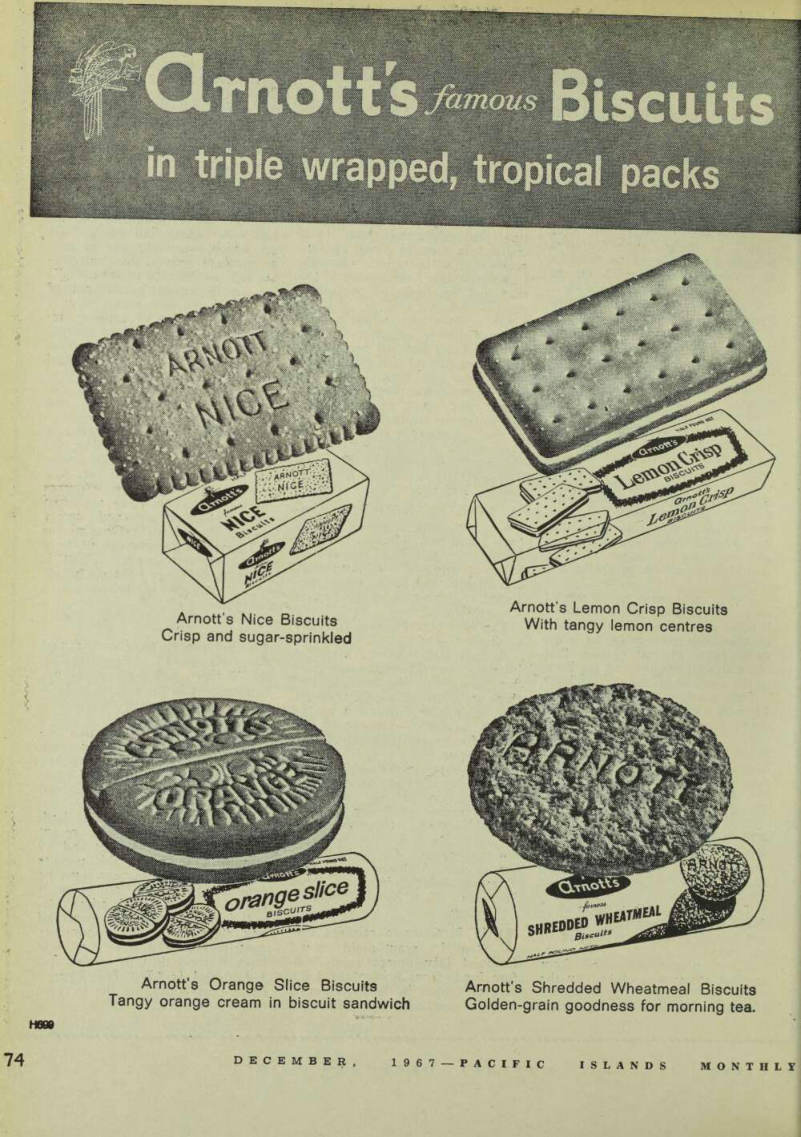 76
76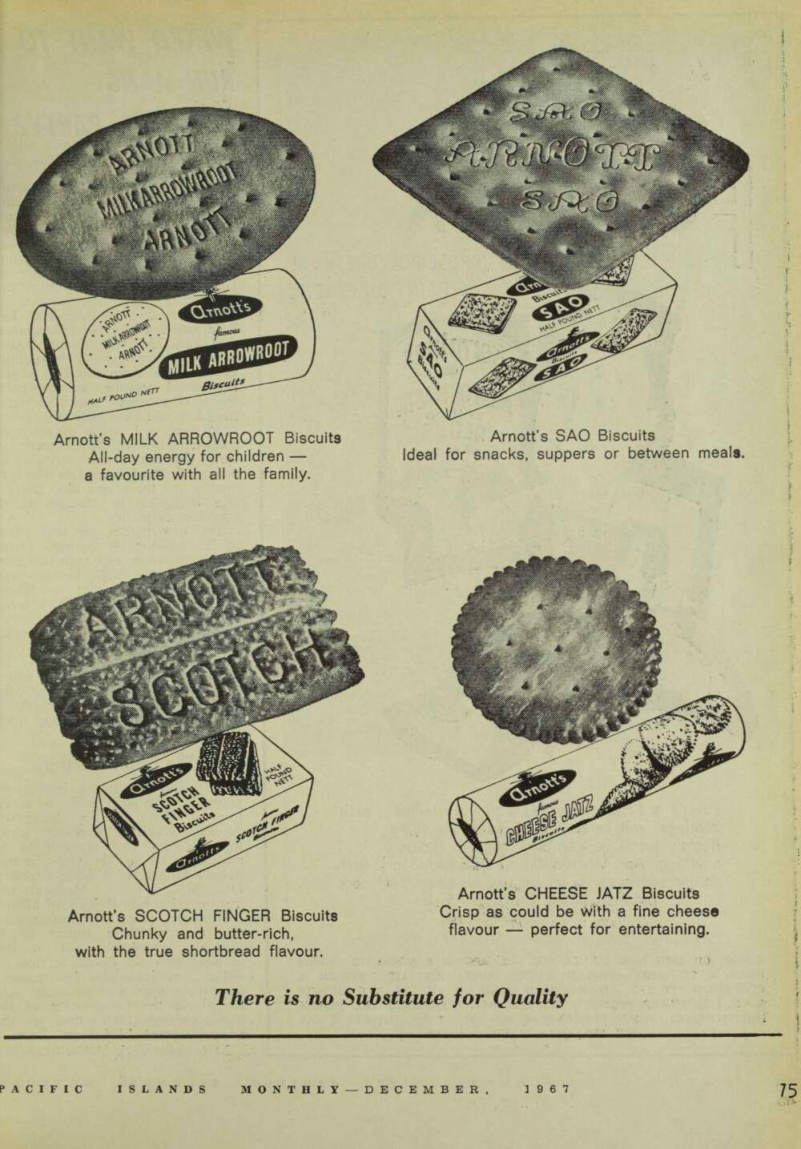 77
77 78
78 79
79 80
80 81
81 82
82 83
83 84
84 85
85 86
86 87
87 88
88 89
89 90
90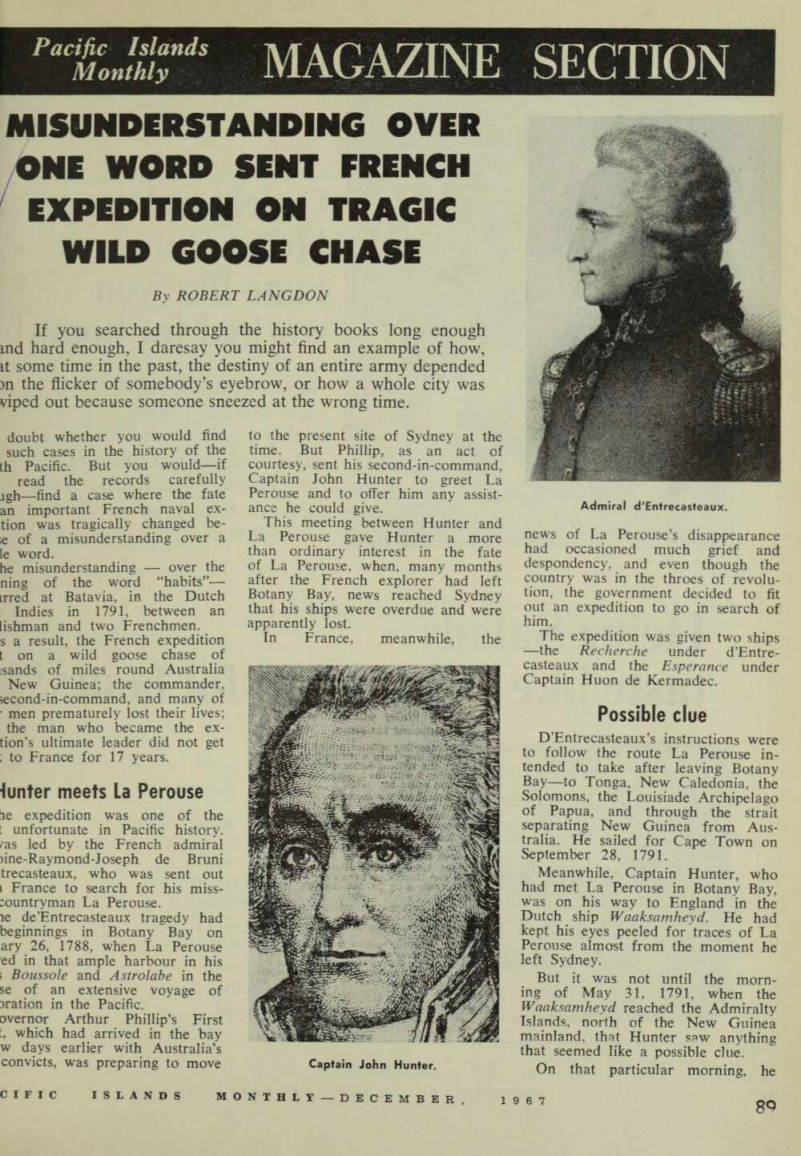 91
91 92
92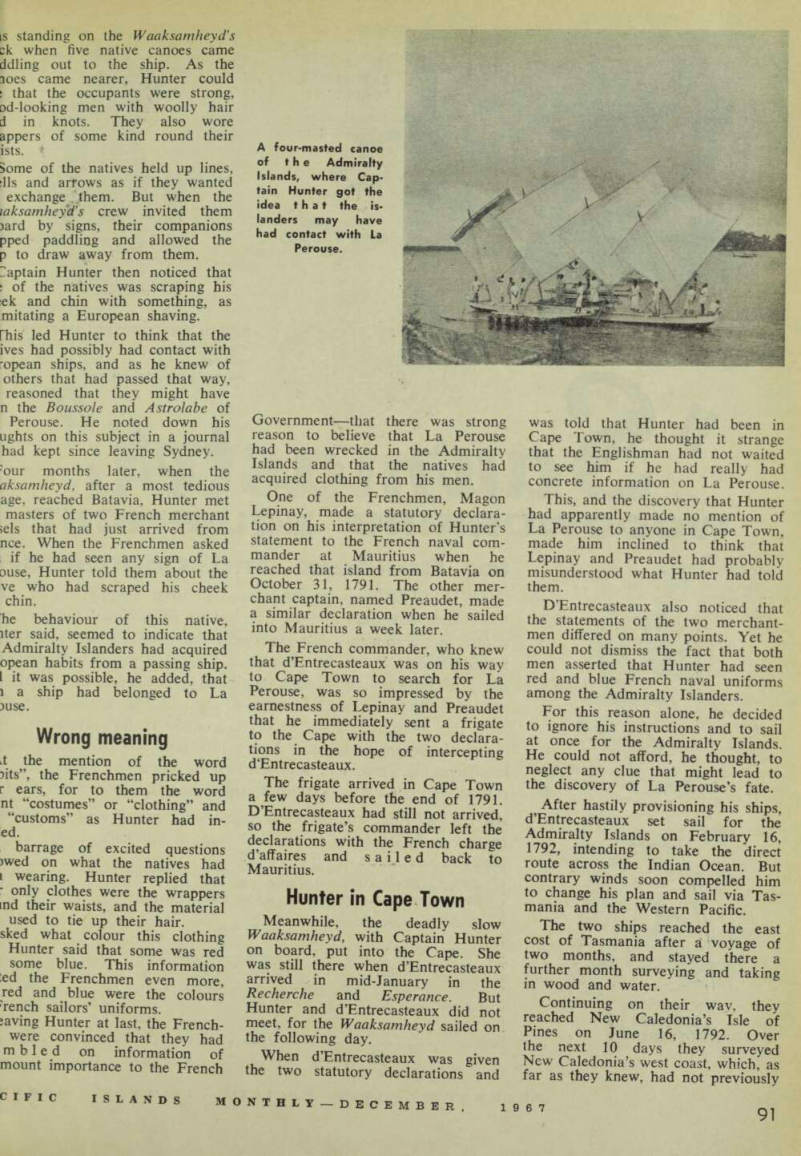 93
93 94
94 95
95 96
96 97
97 98
98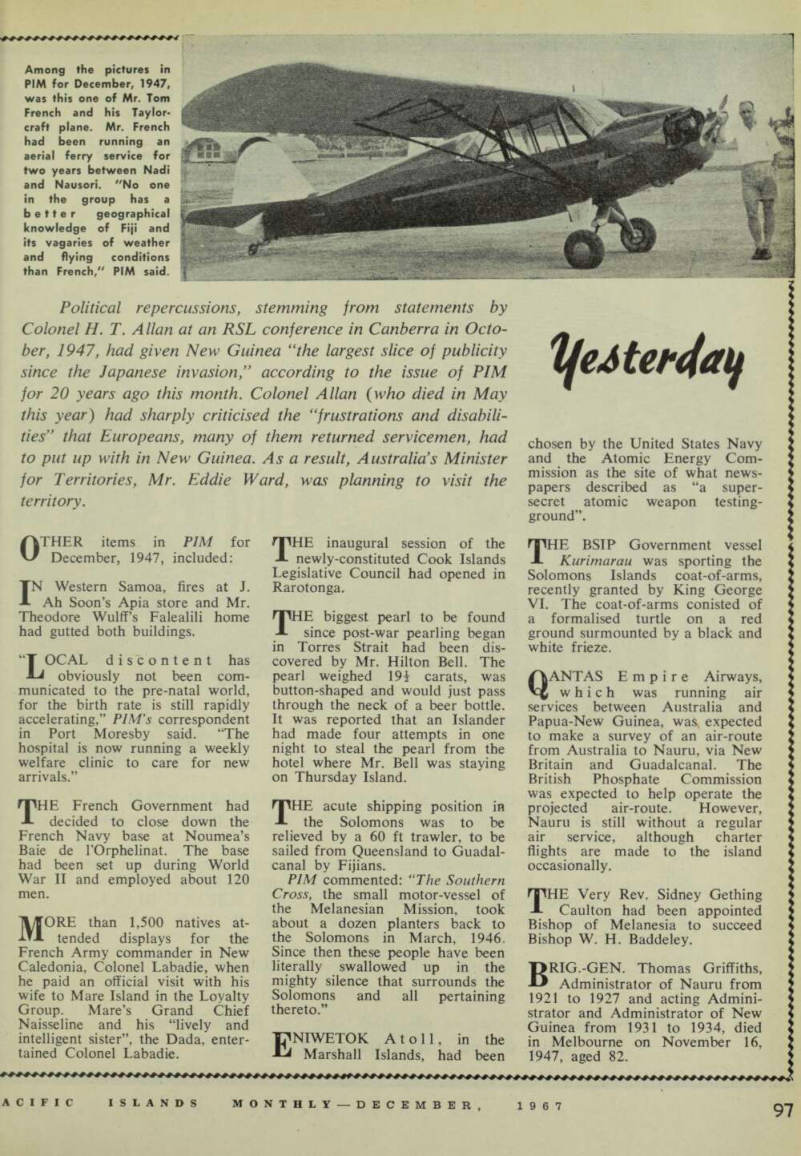 99
99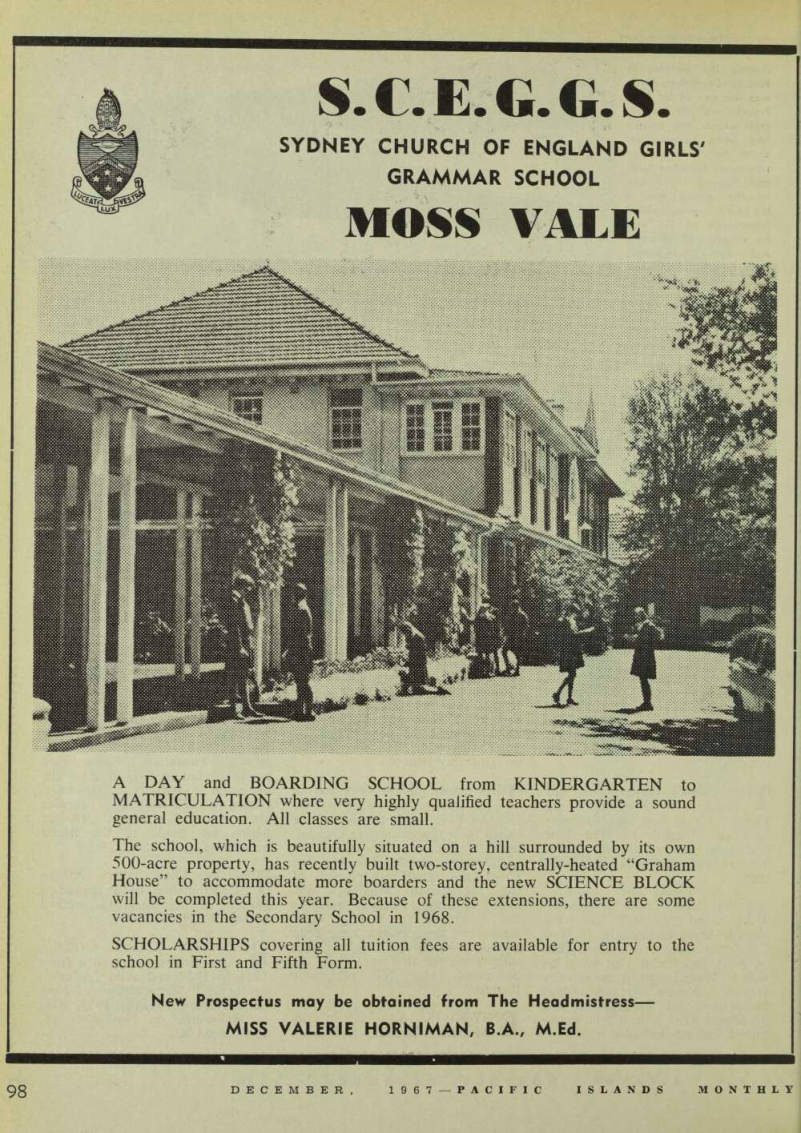 100
100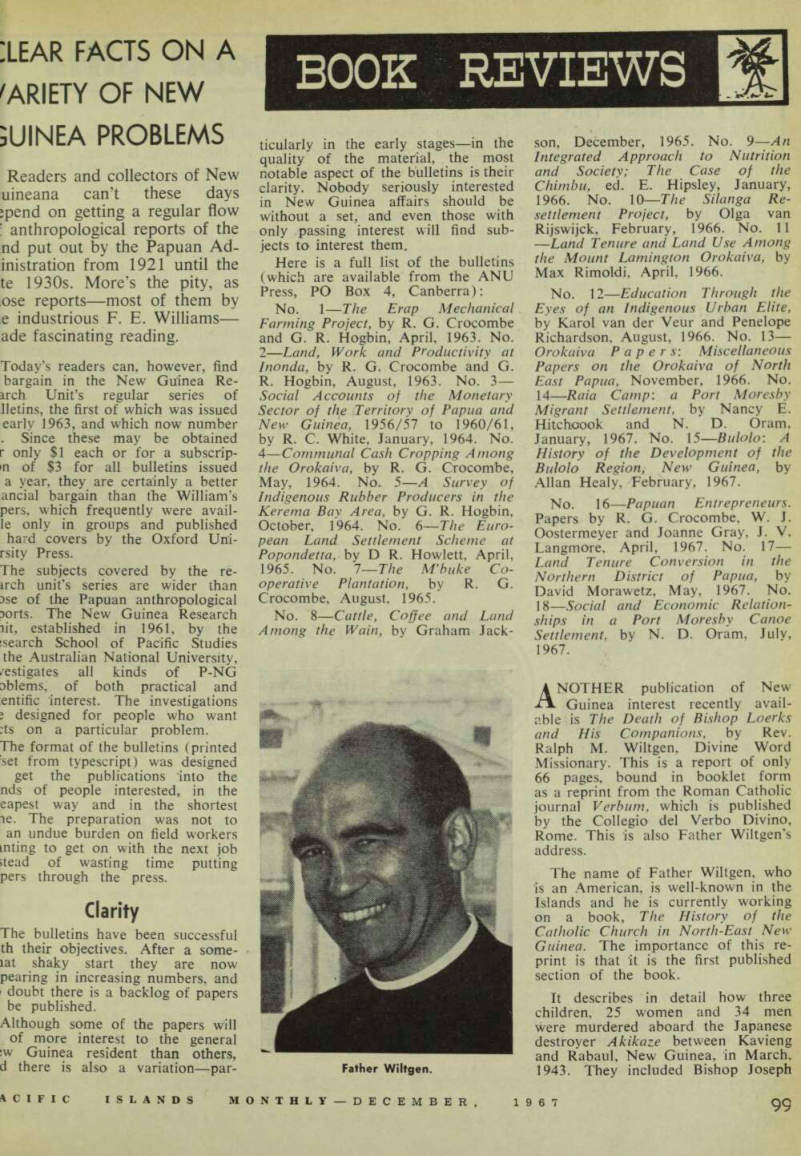 101
101 102
102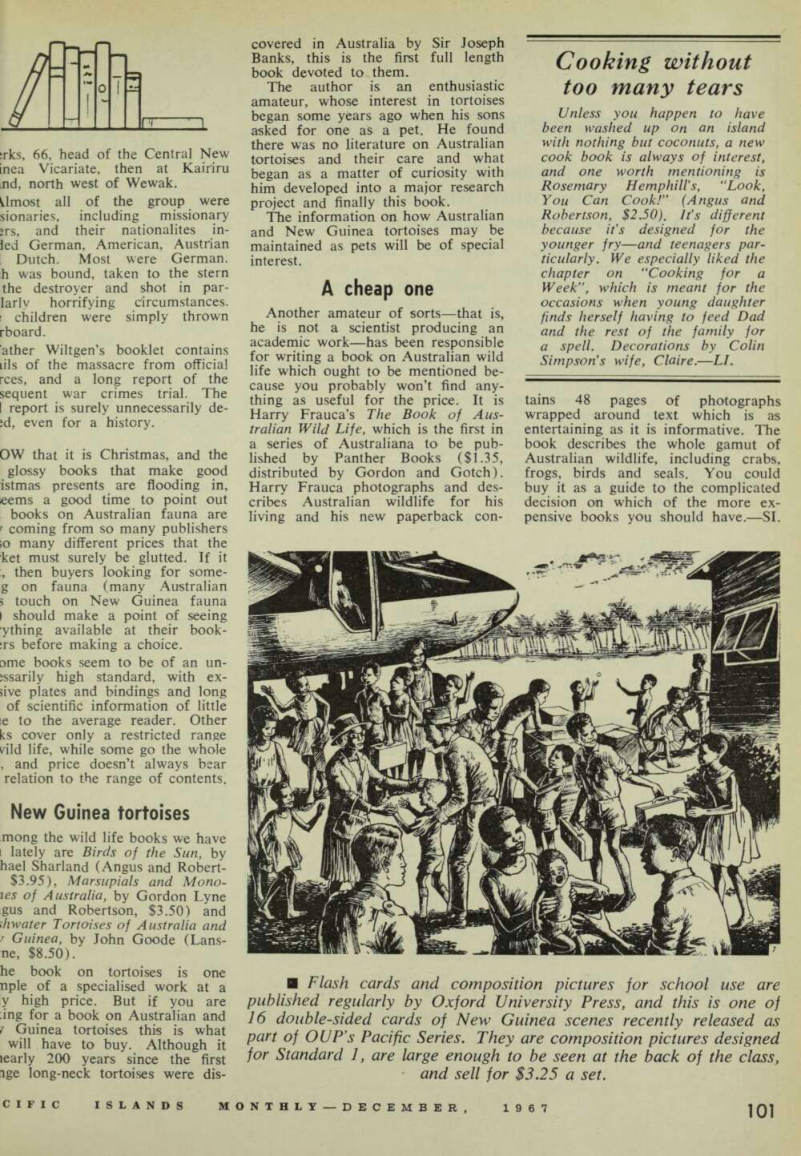 103
103 104
104 105
105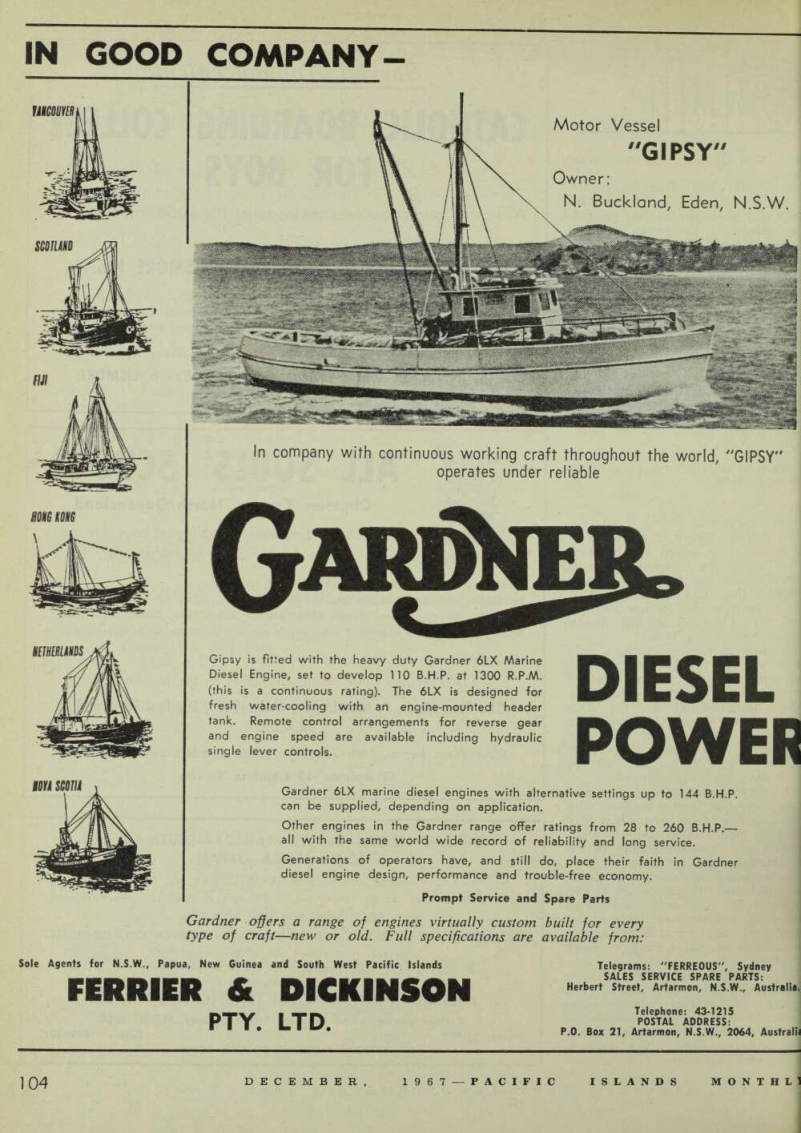 106
106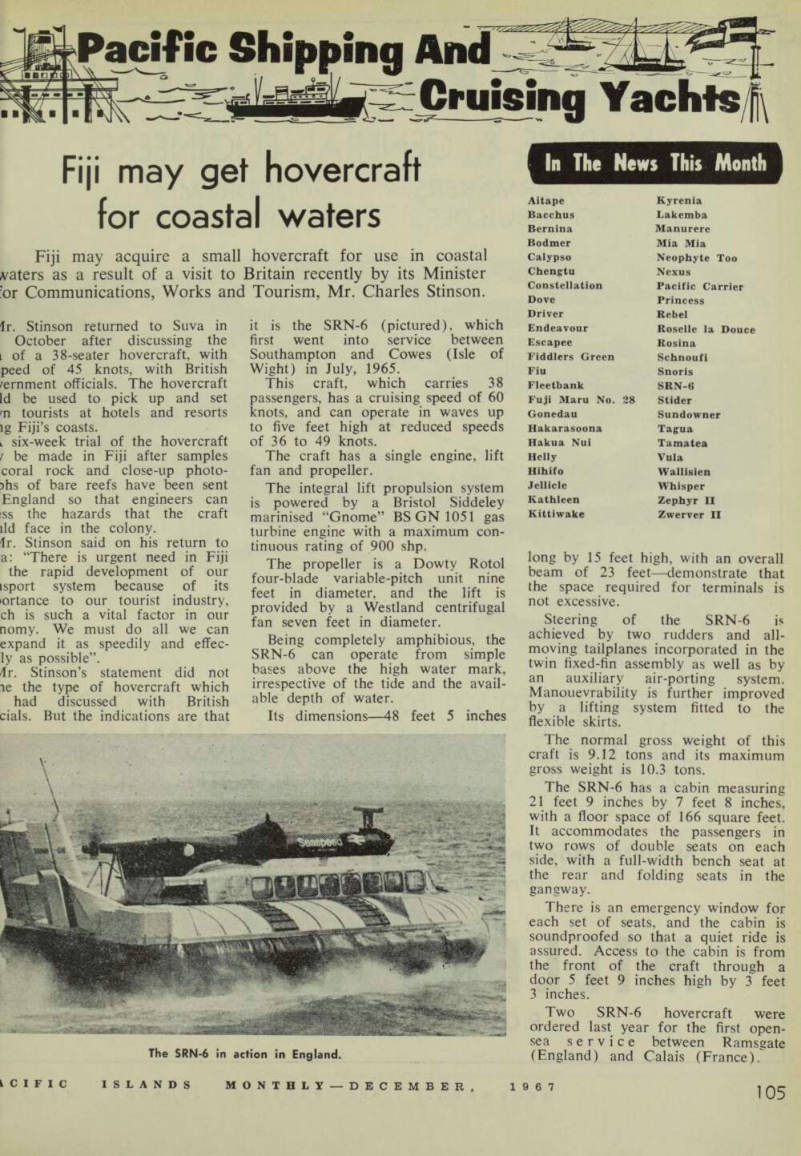 107
107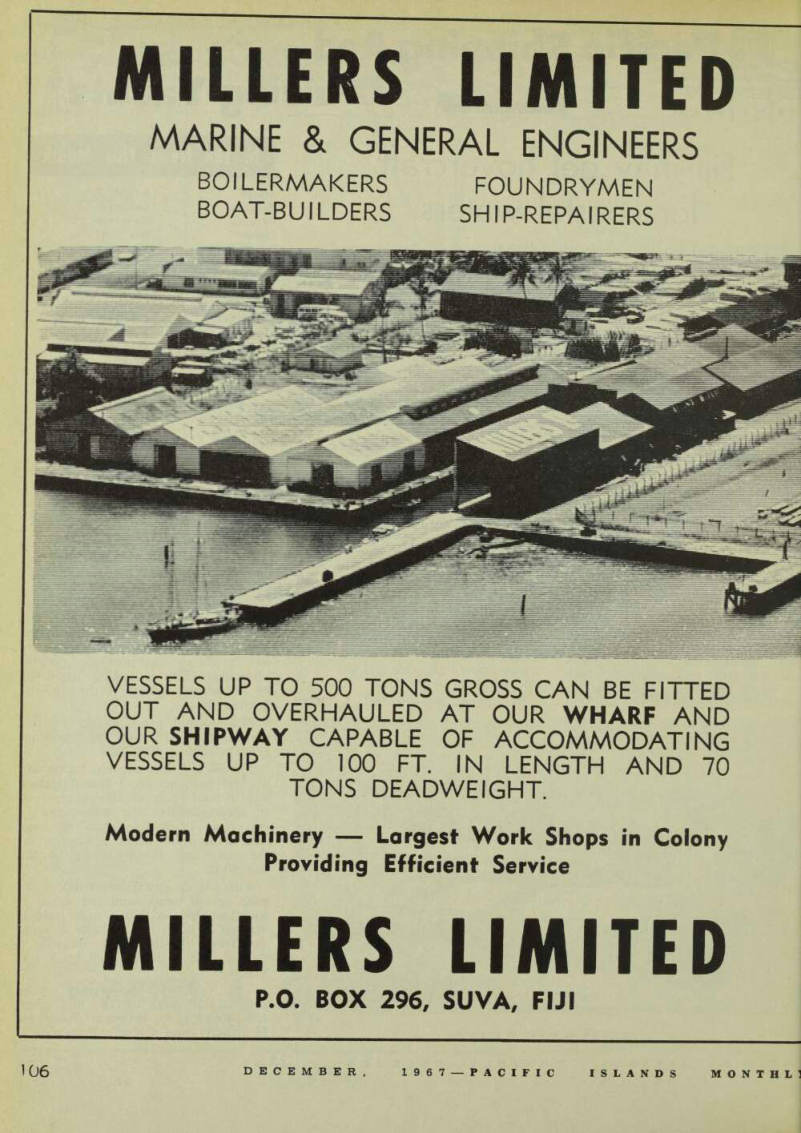 108
108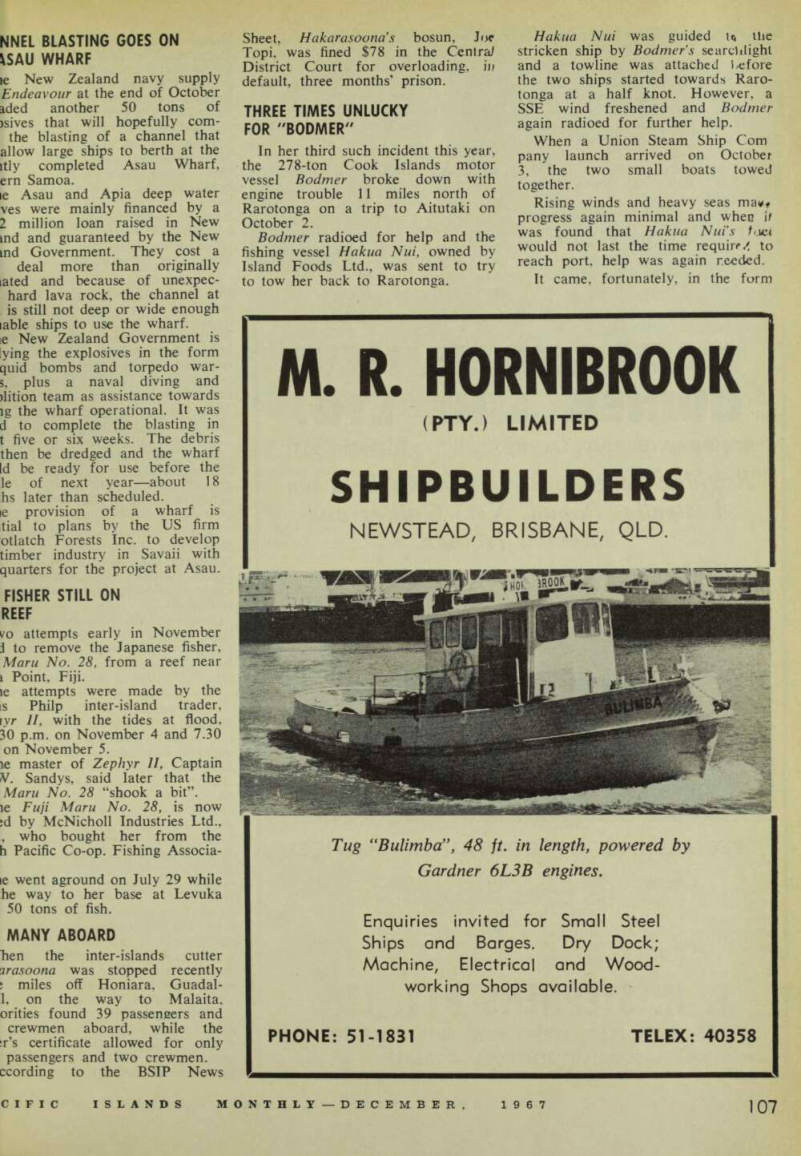 109
109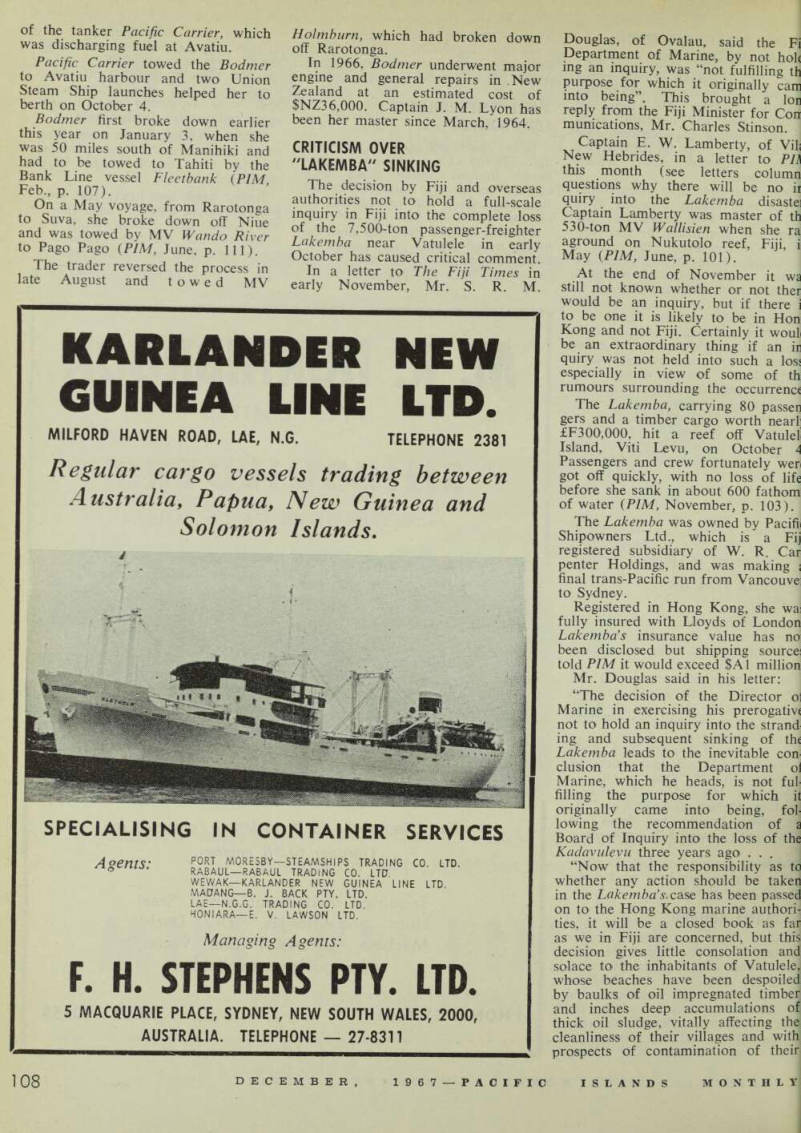 110
110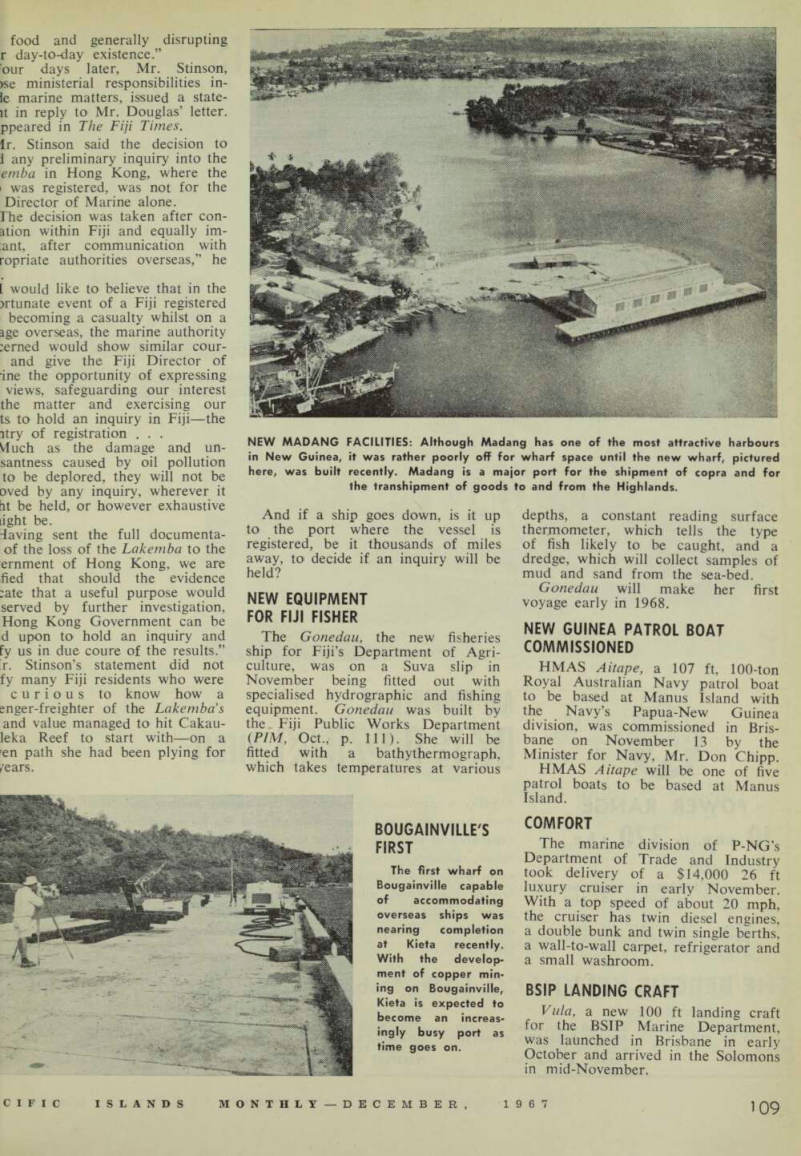 111
111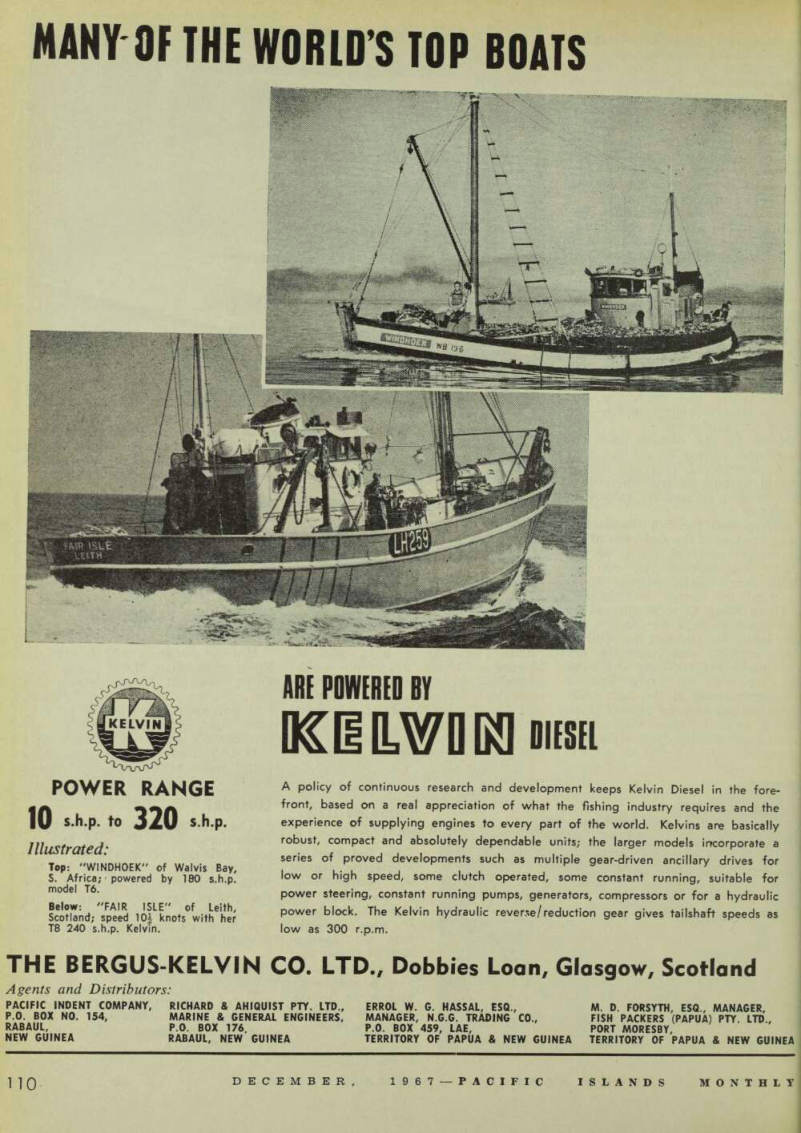 112
112 113
113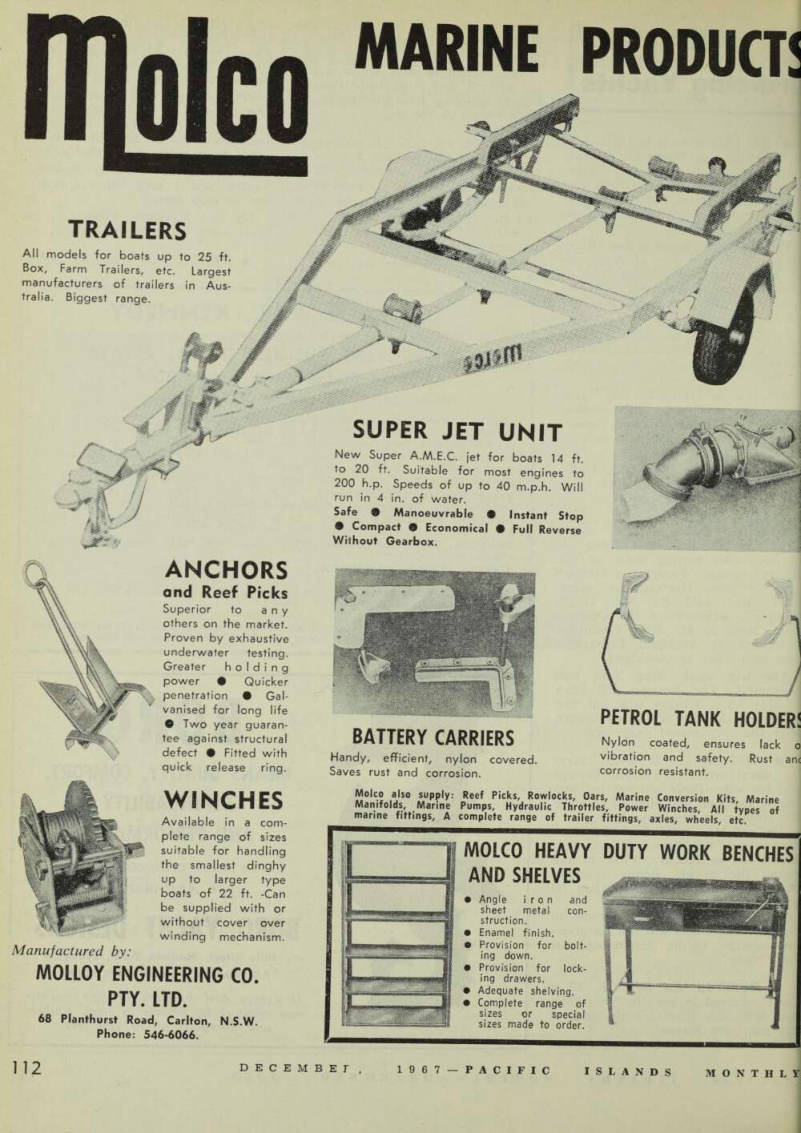 114
114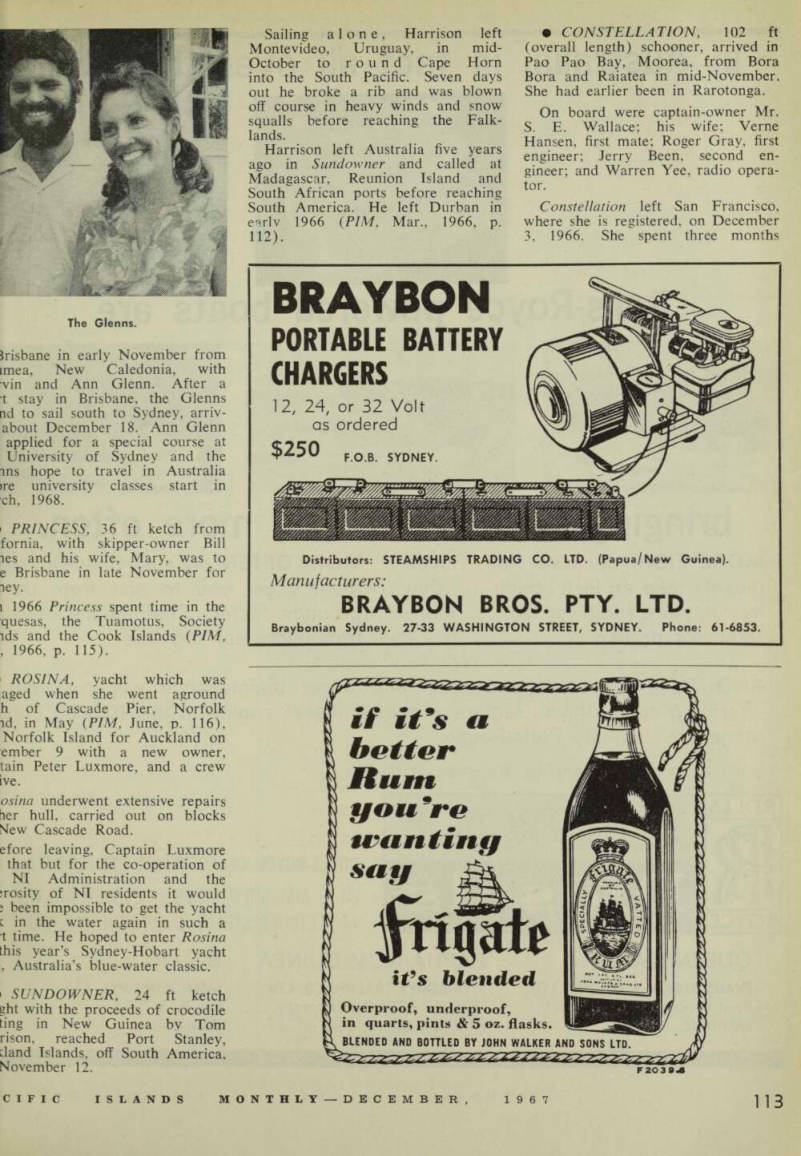 115
115 116
116 117
117 118
118 119
119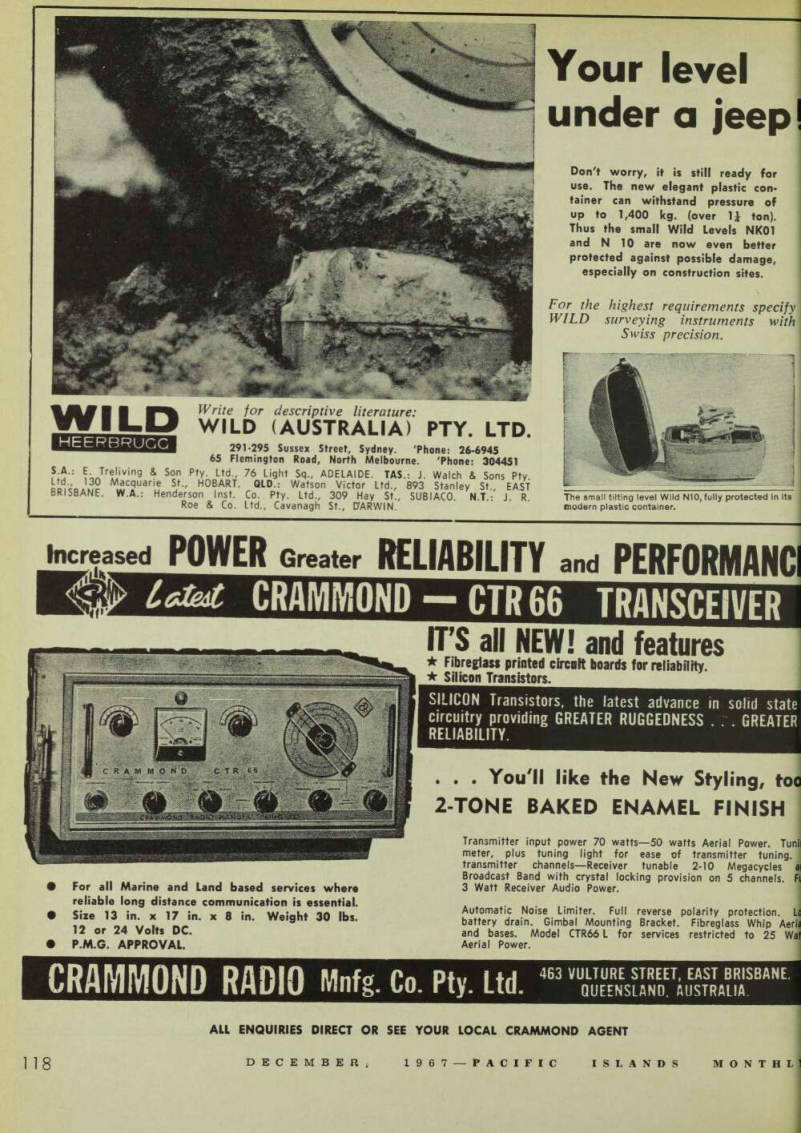 120
120 121
121 122
122 123
123 124
124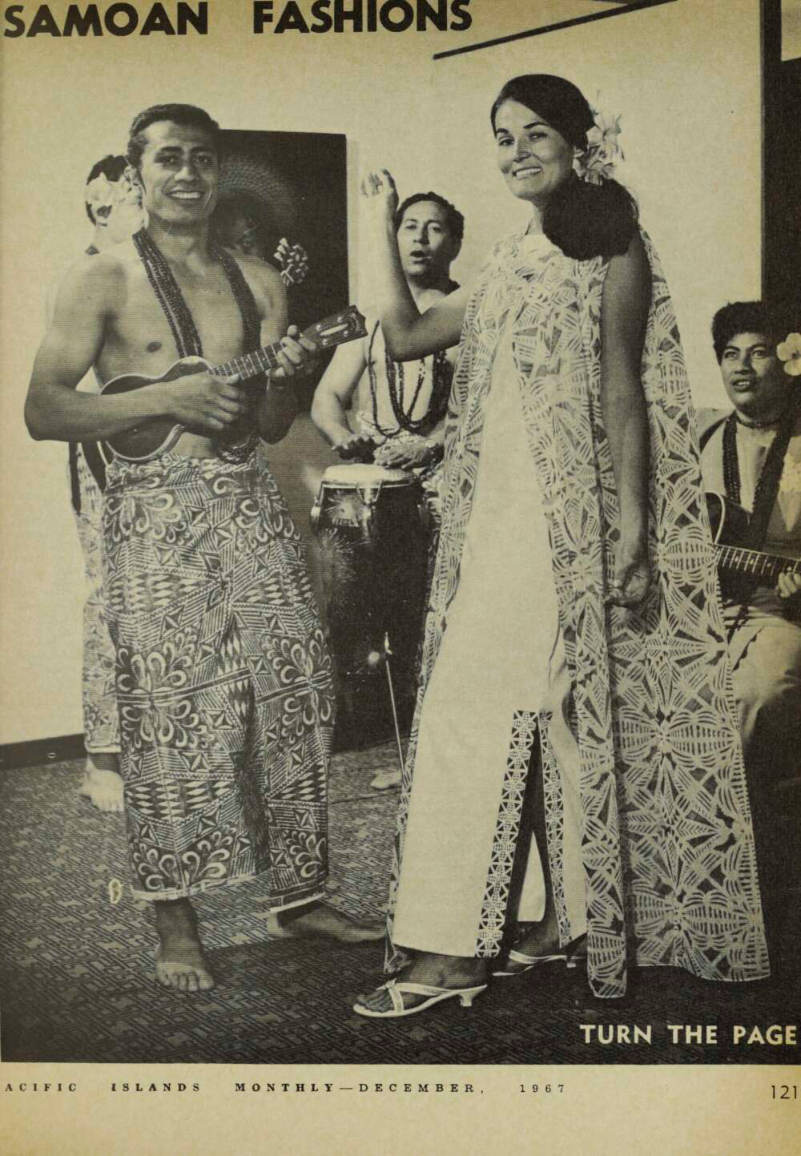 125
125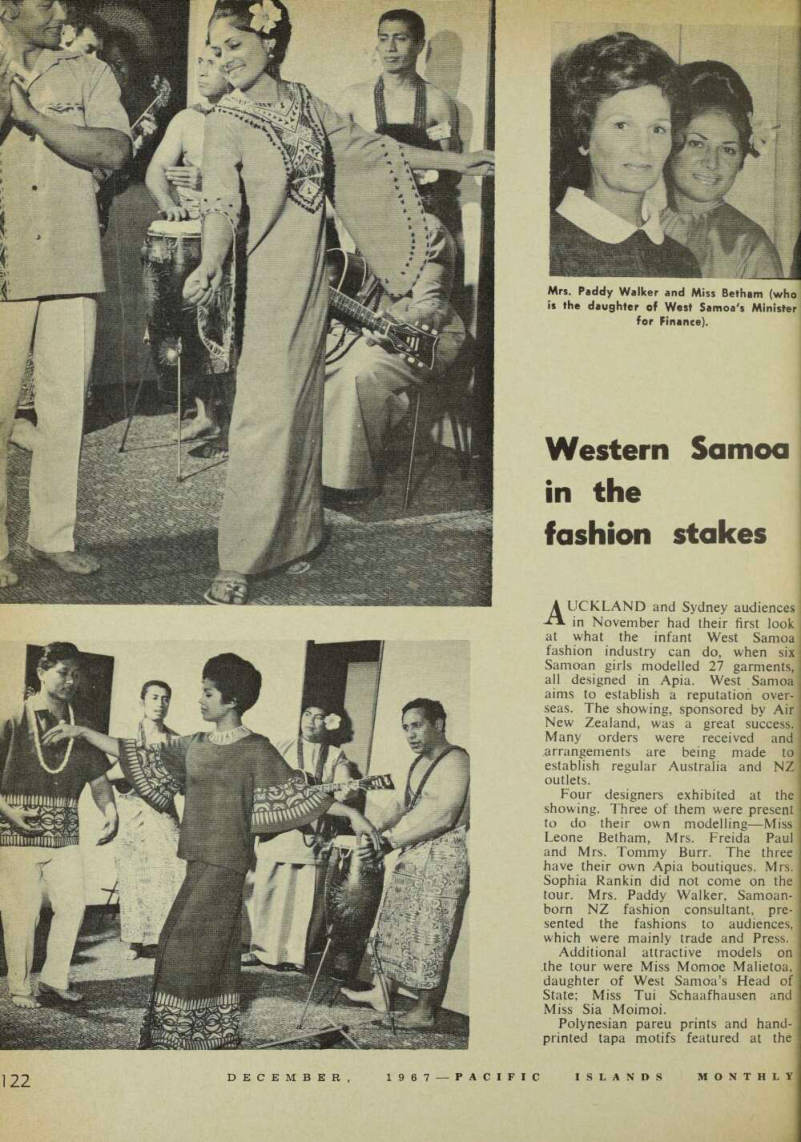 126
126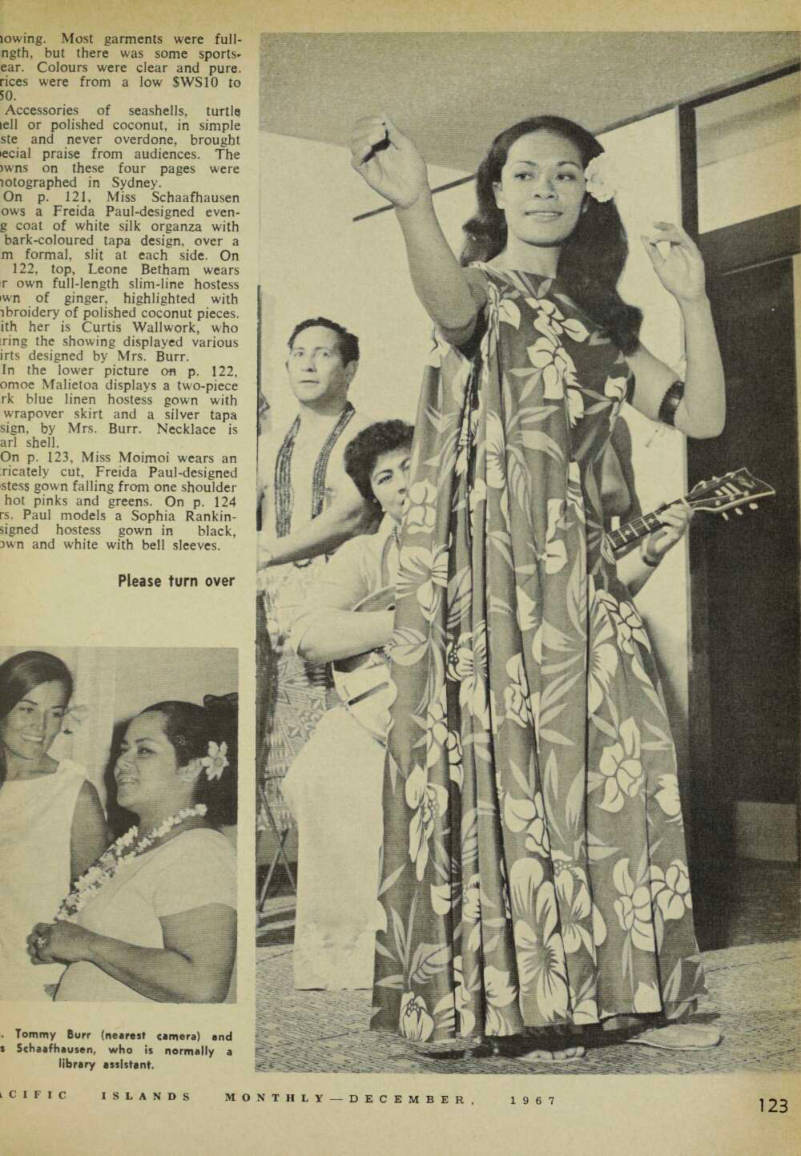 127
127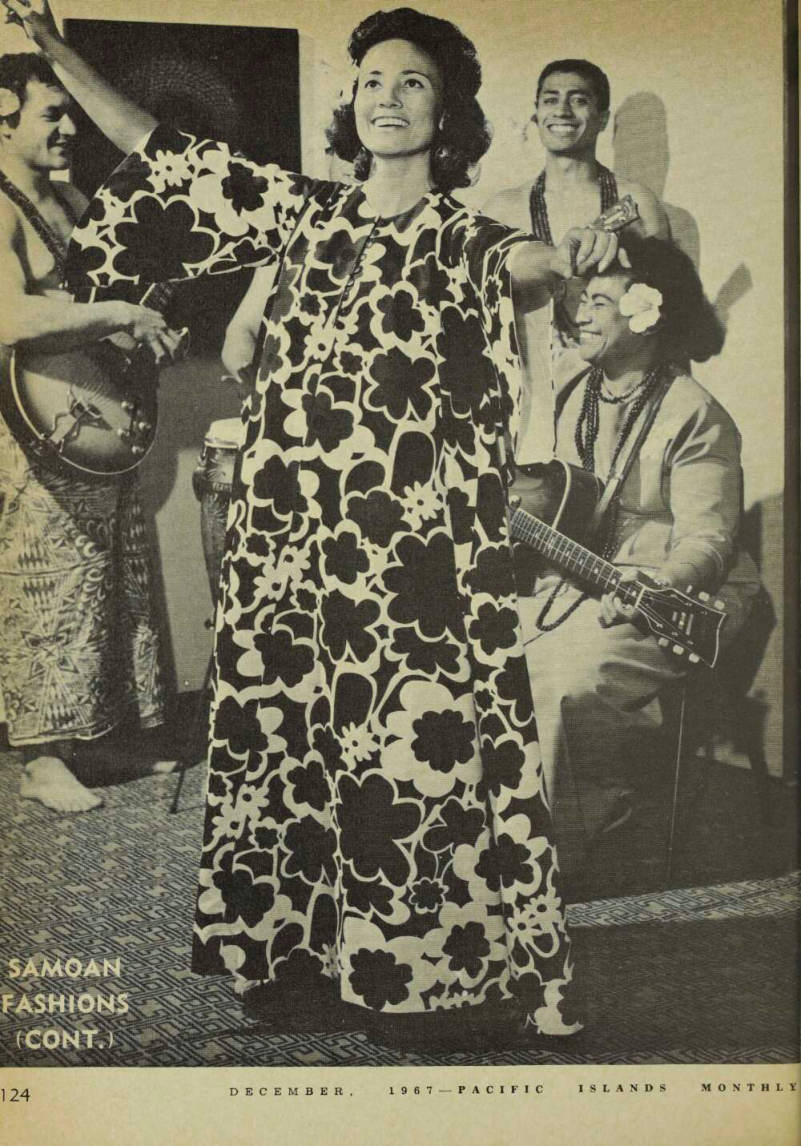 128
128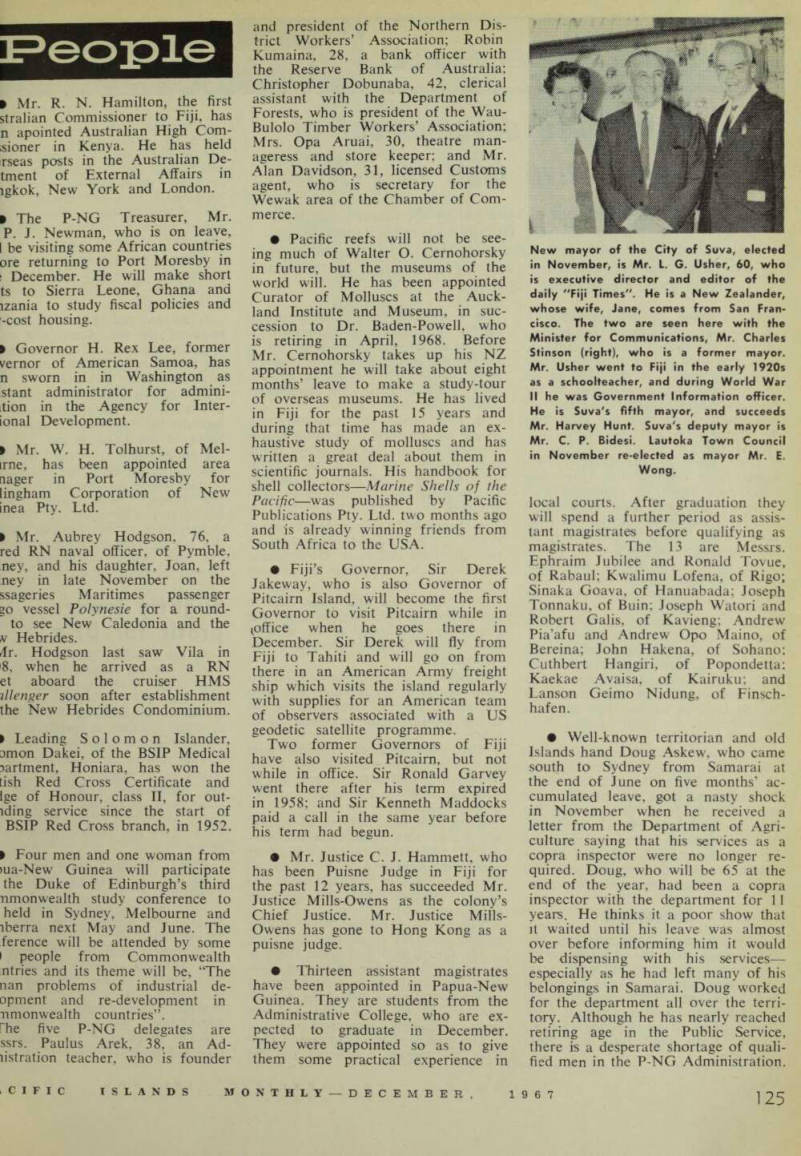 129
129 130
130 131
131 132
132 133
133 134
134 135
135 136
136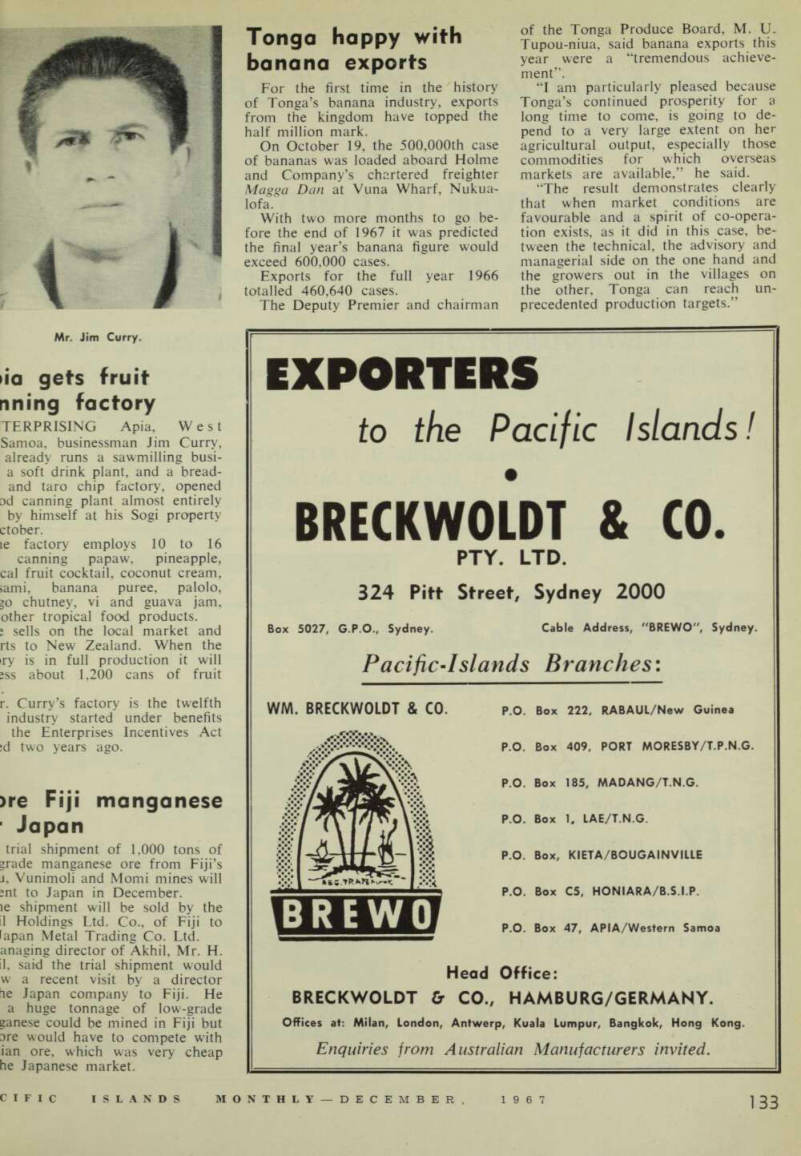 137
137 138
138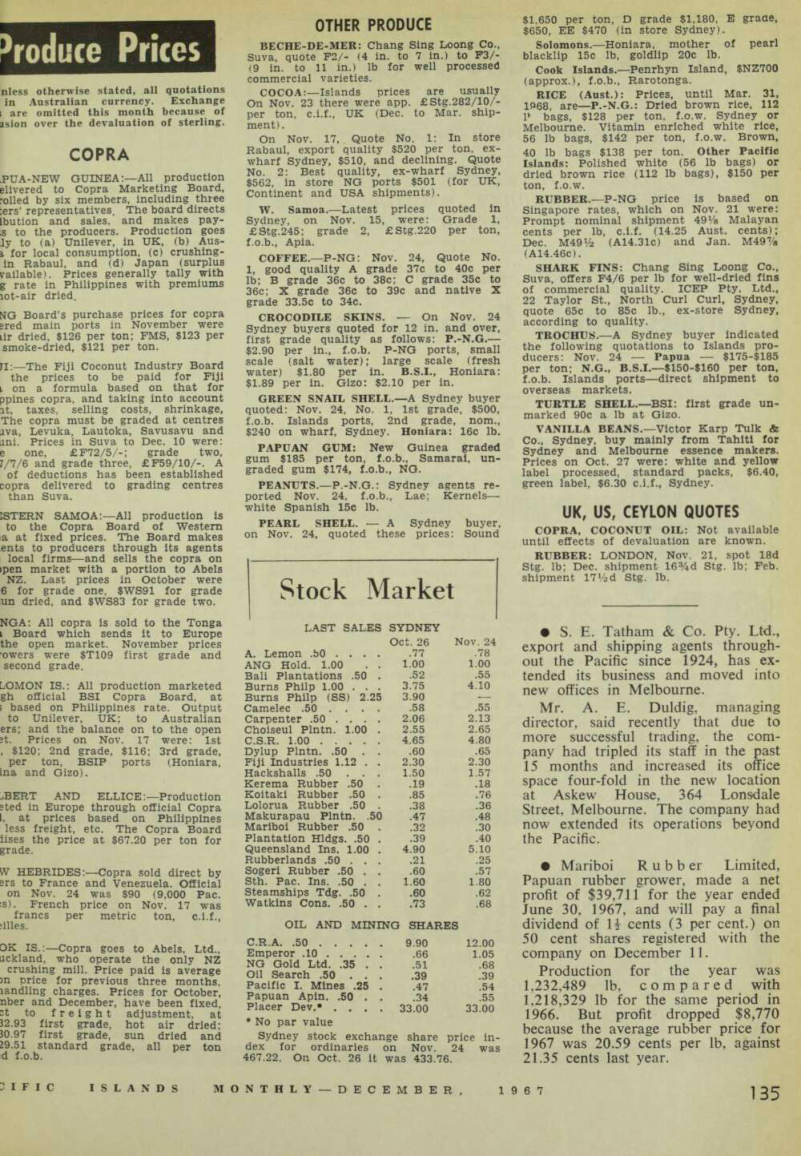 139
139 140
140 141
141 142
142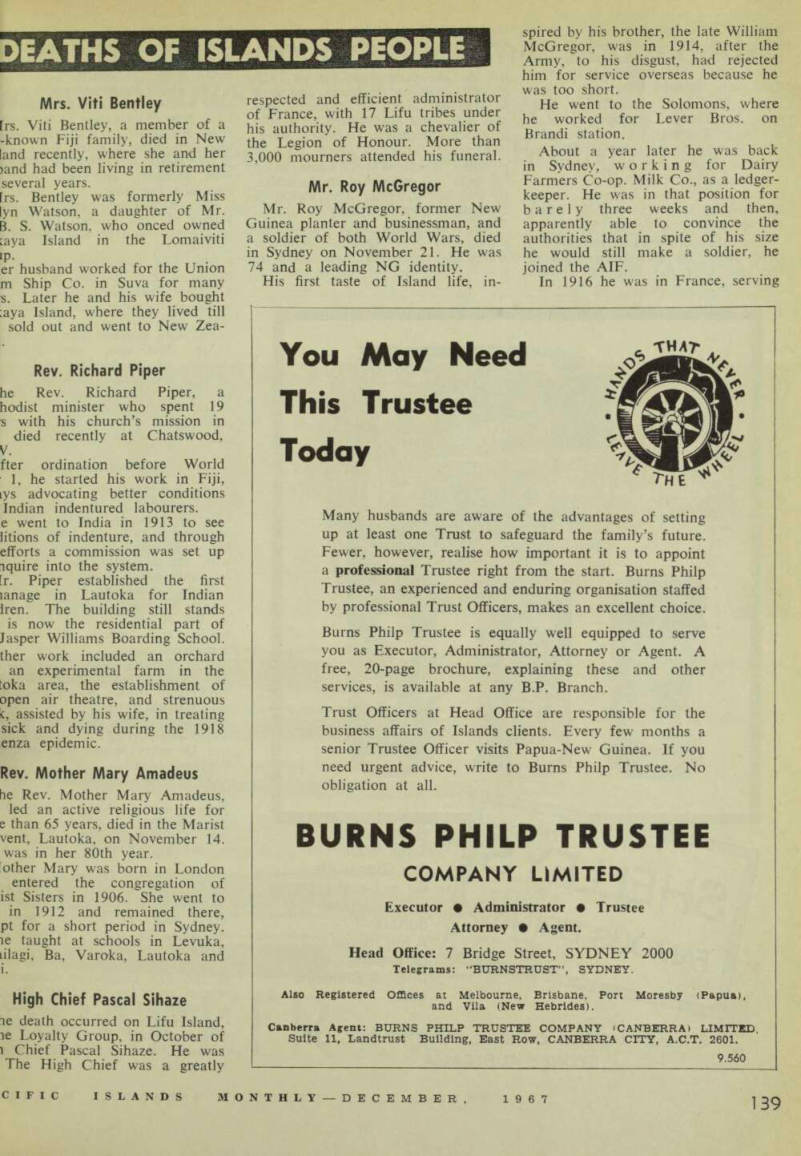 143
143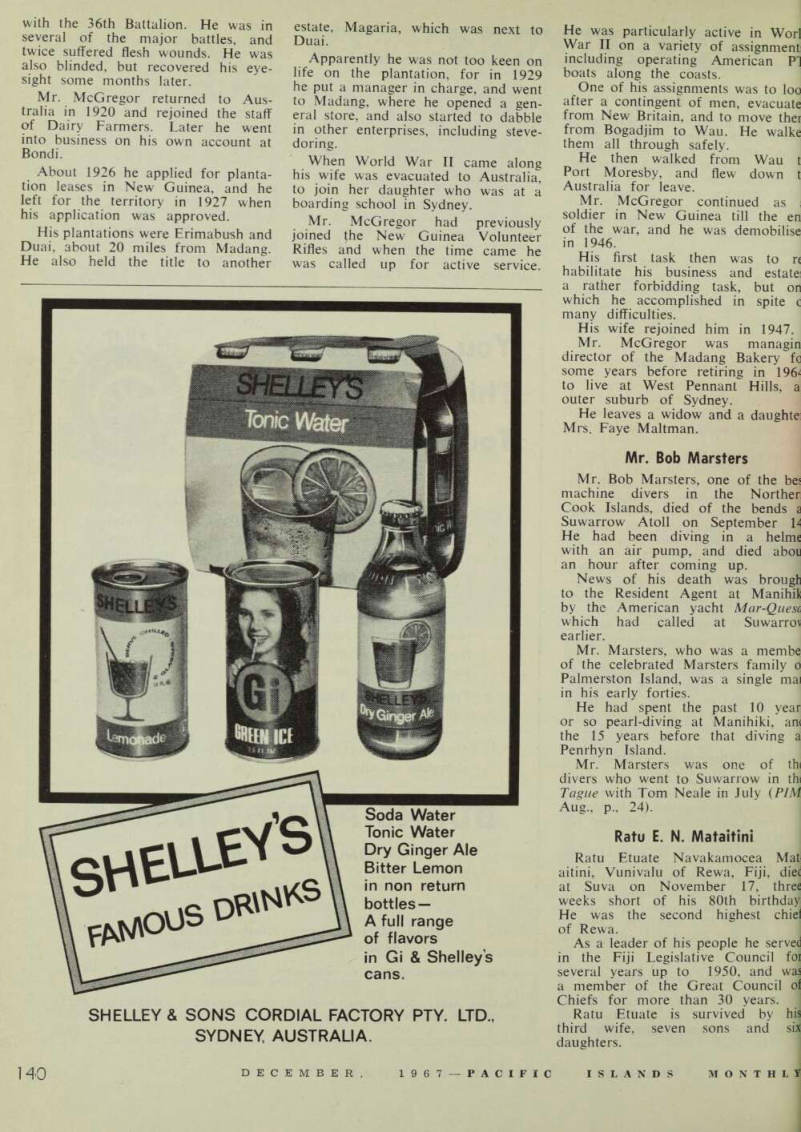 144
144 145
145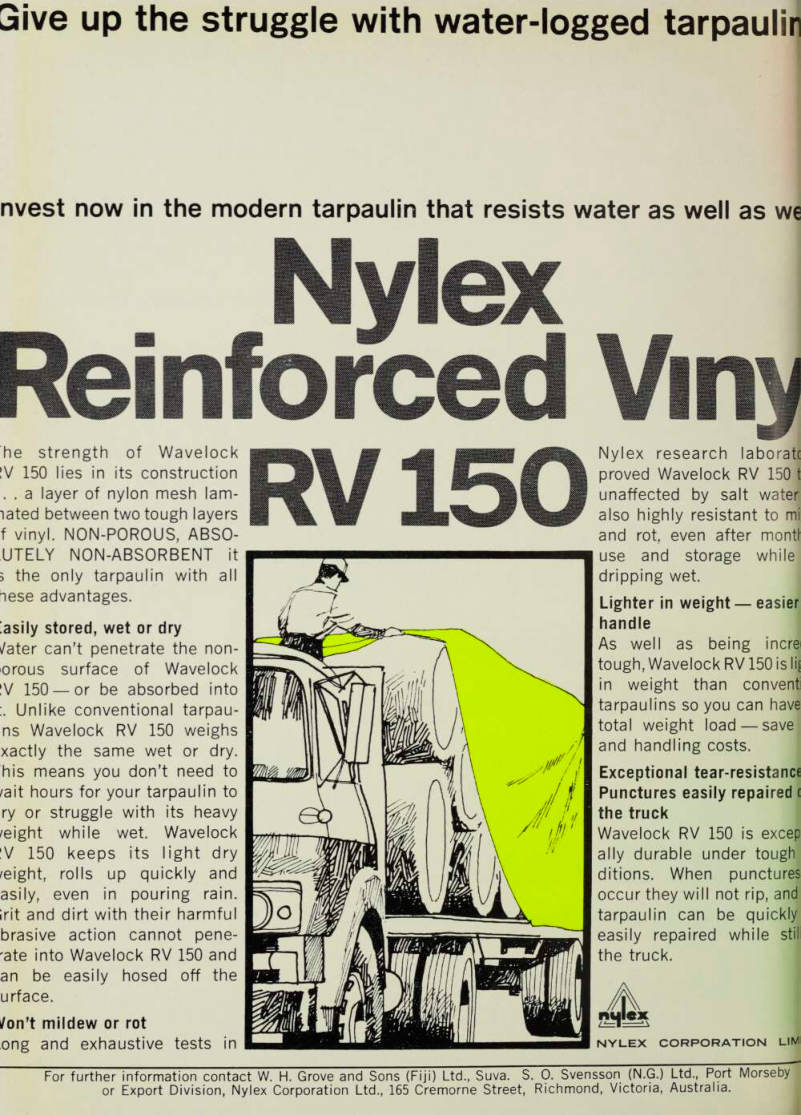 146
146 147
147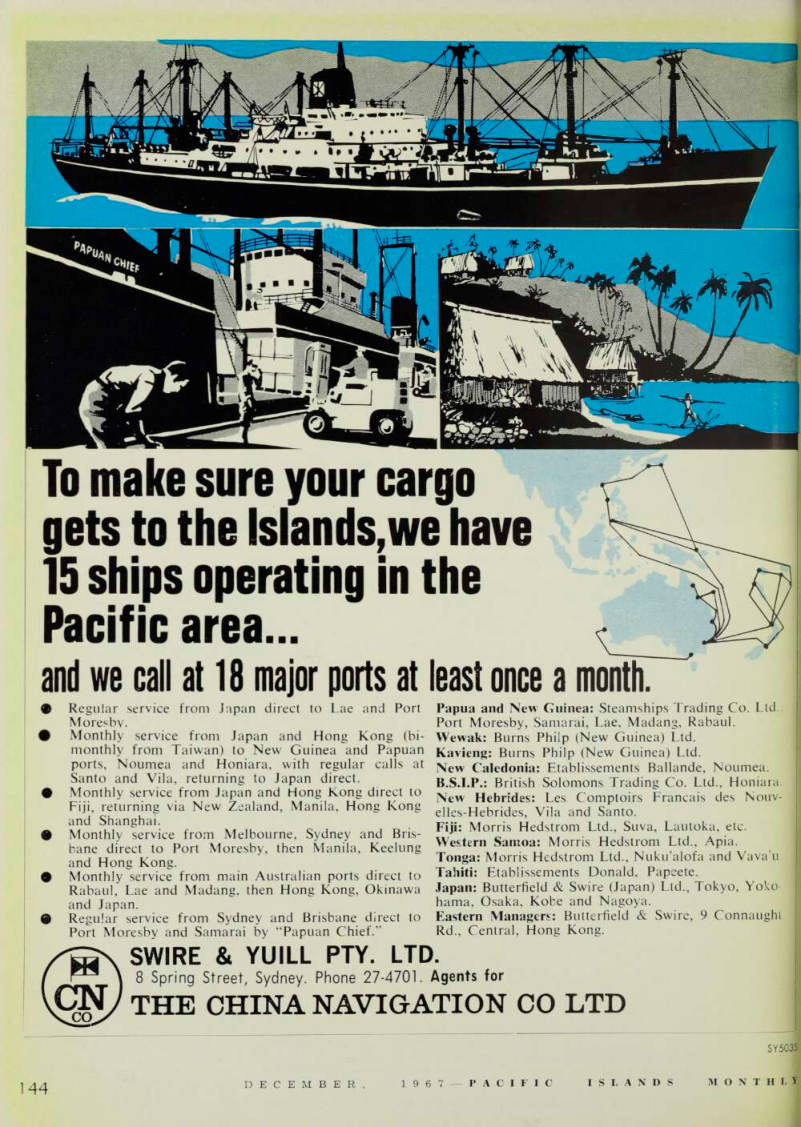 148
148 149
149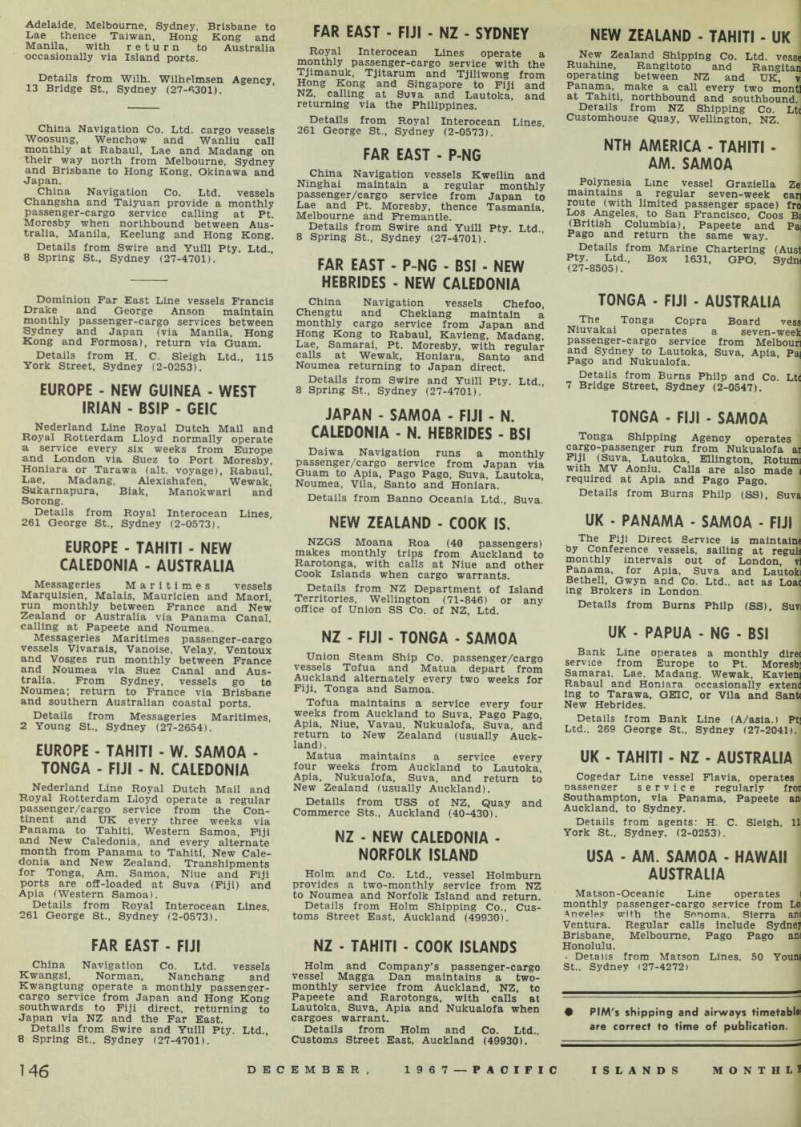 150
150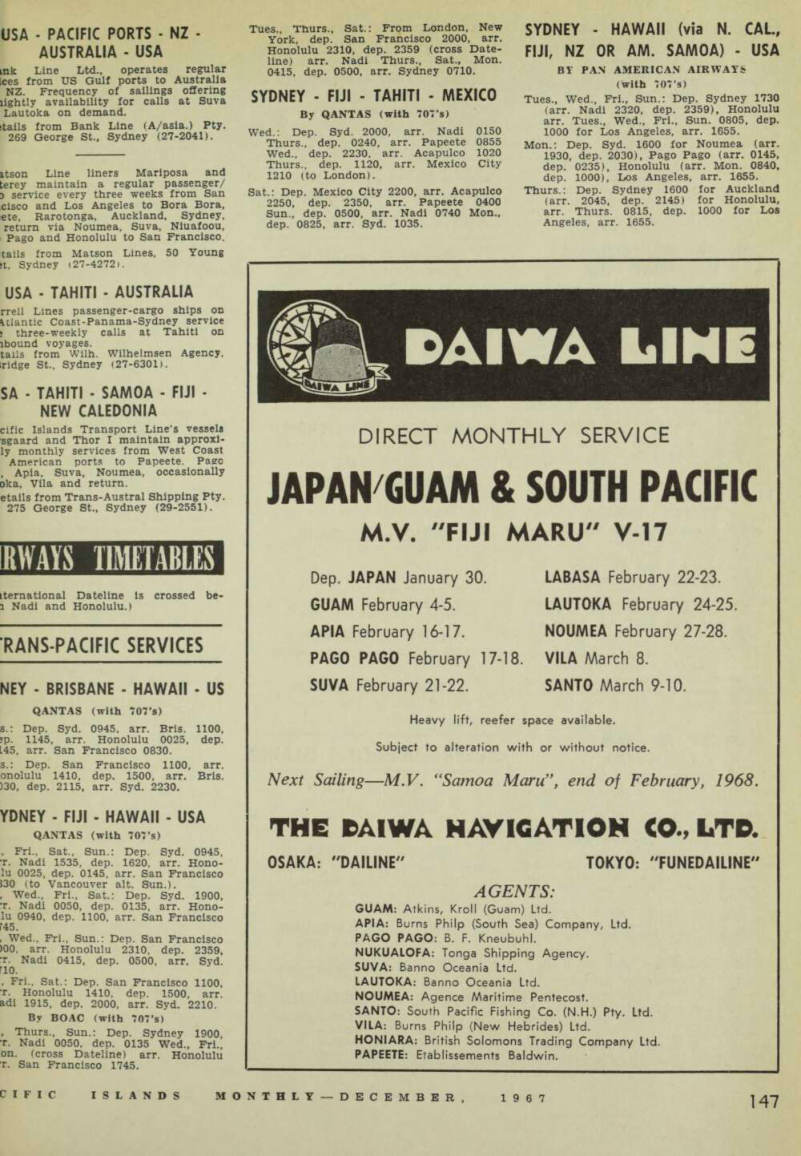 151
151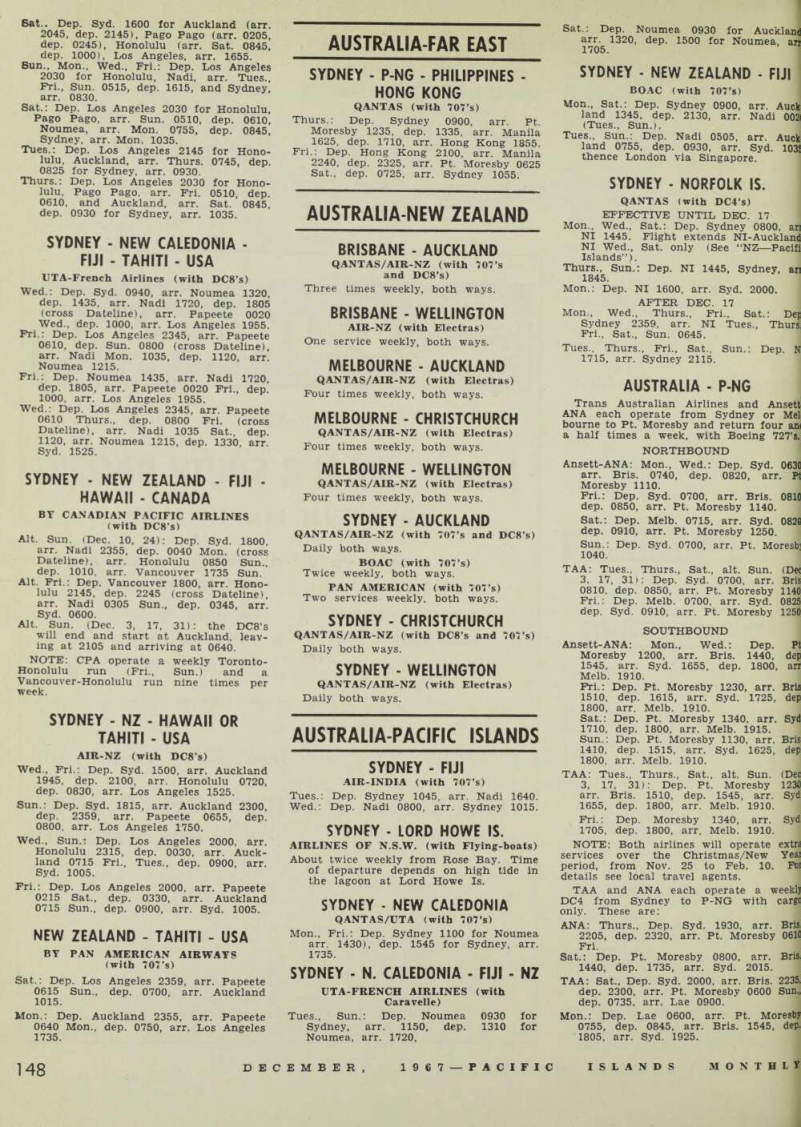 152
152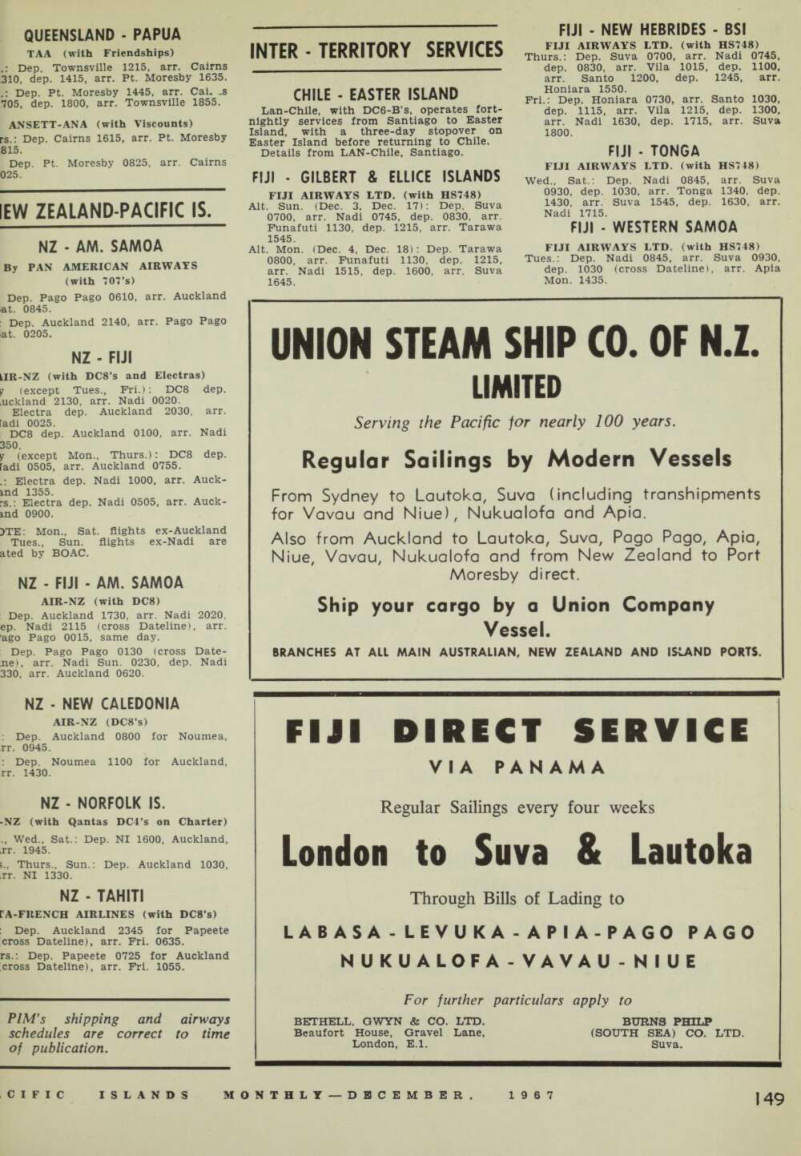 153
153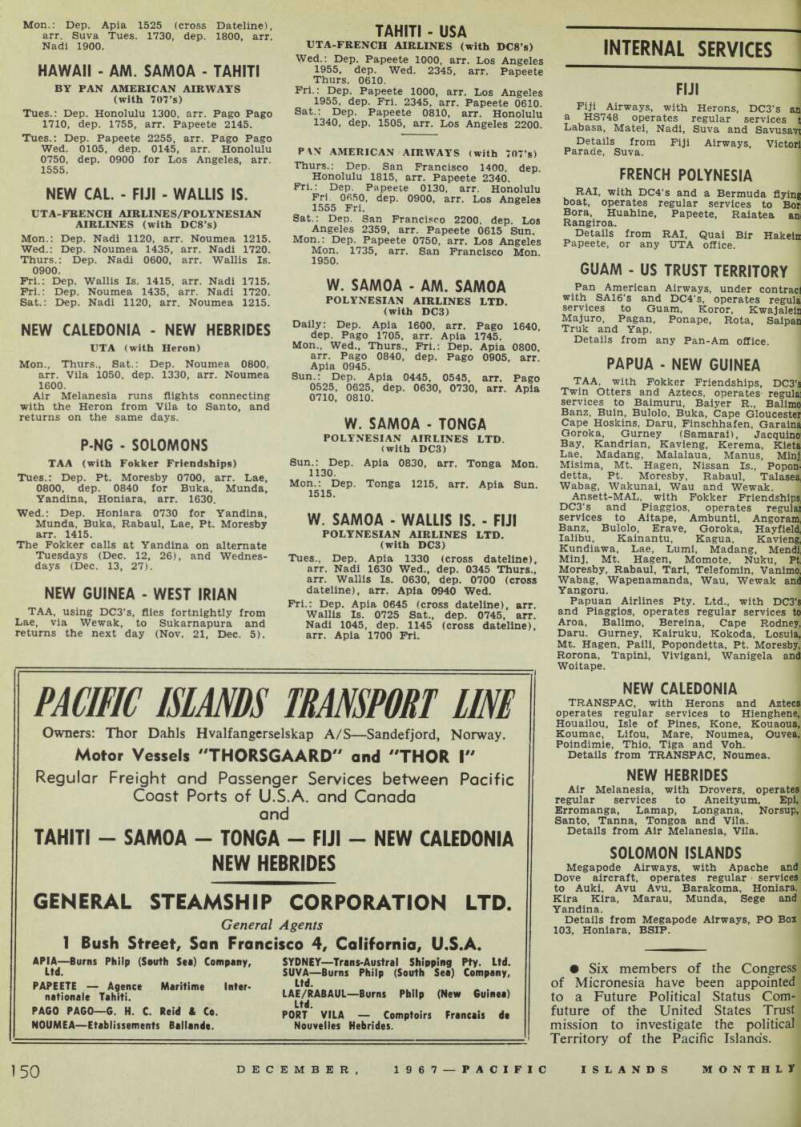 154
154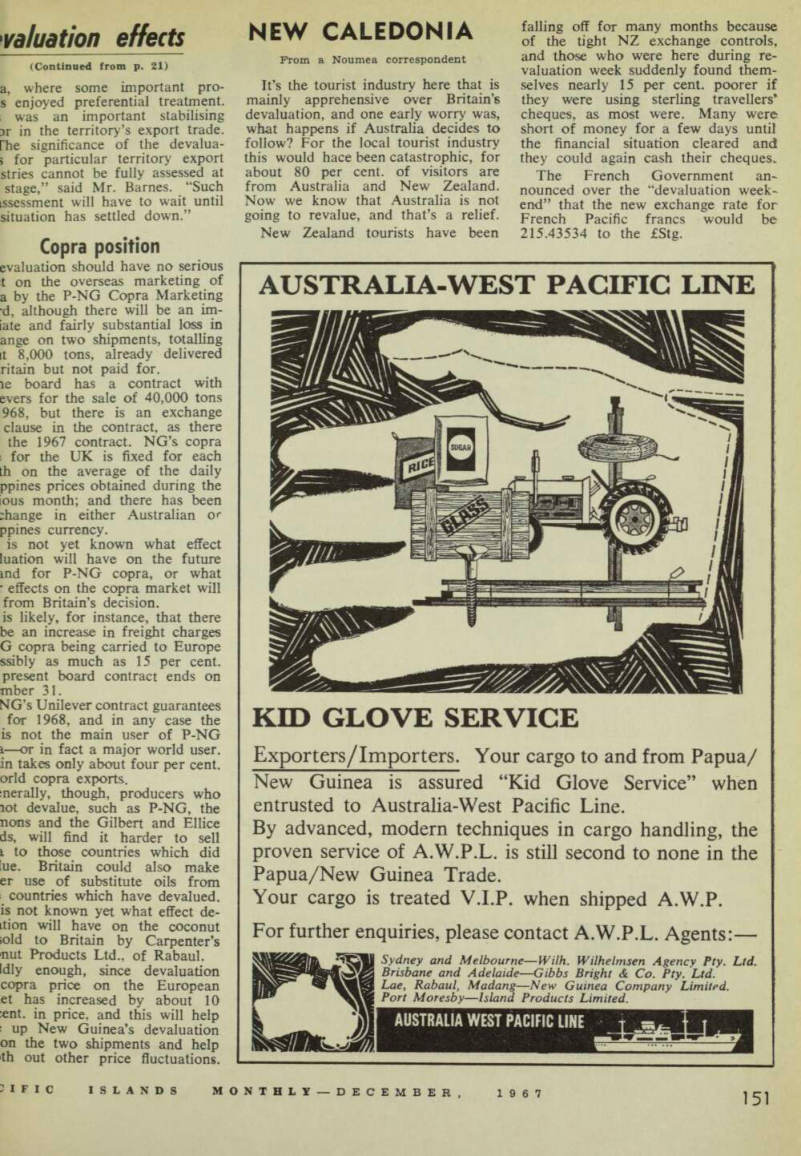 155
155 156
156 157
157 158
158 159
159 160
160 161
161 162
162 163
163 164
164 165
165 166
166 167
167 168
168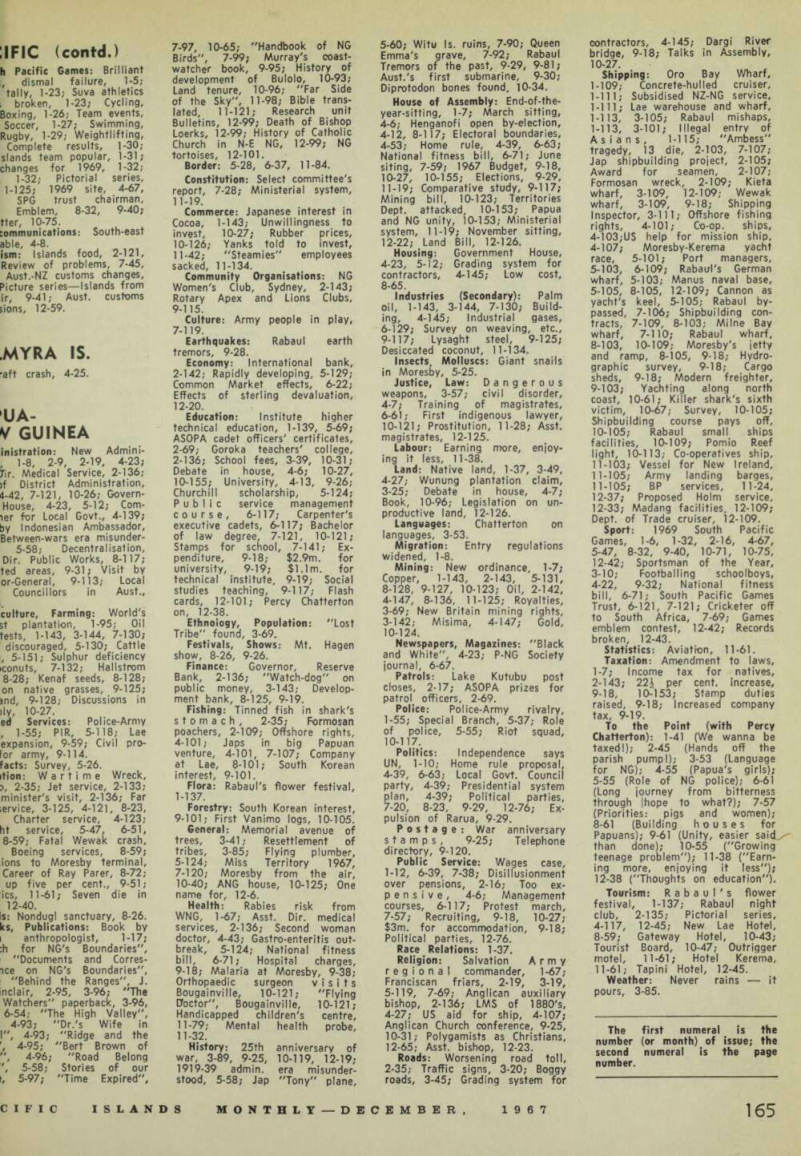 169
169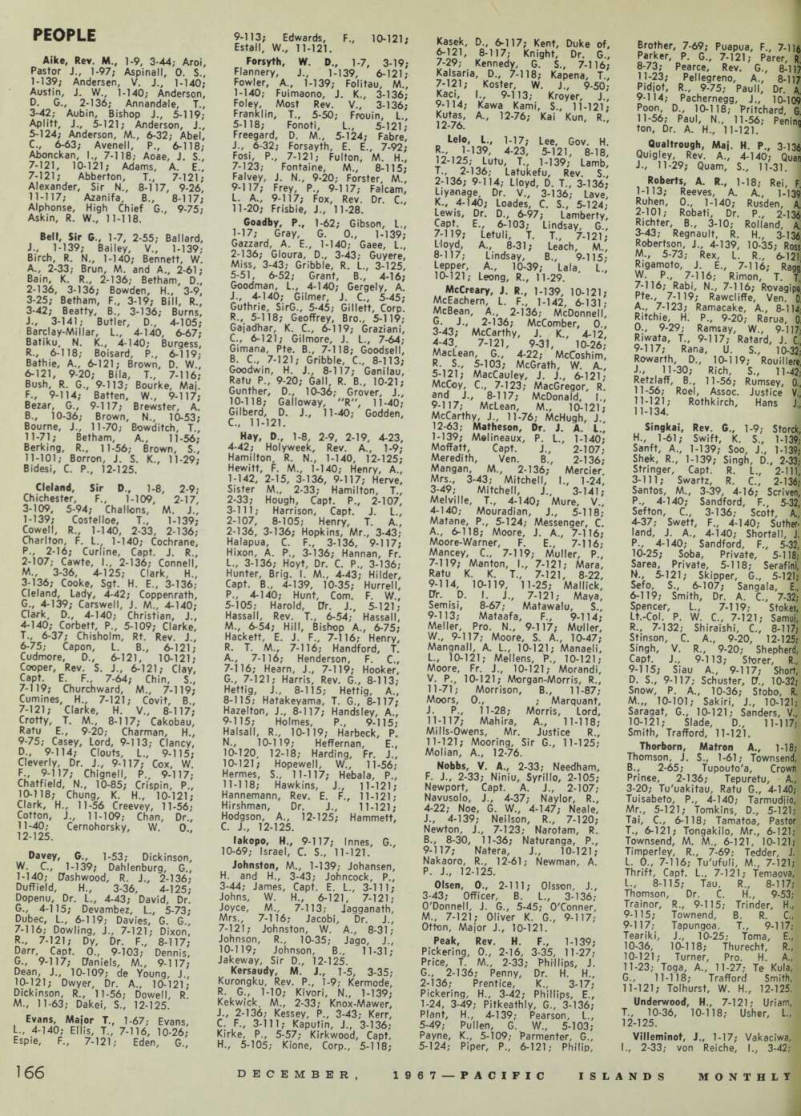 170
170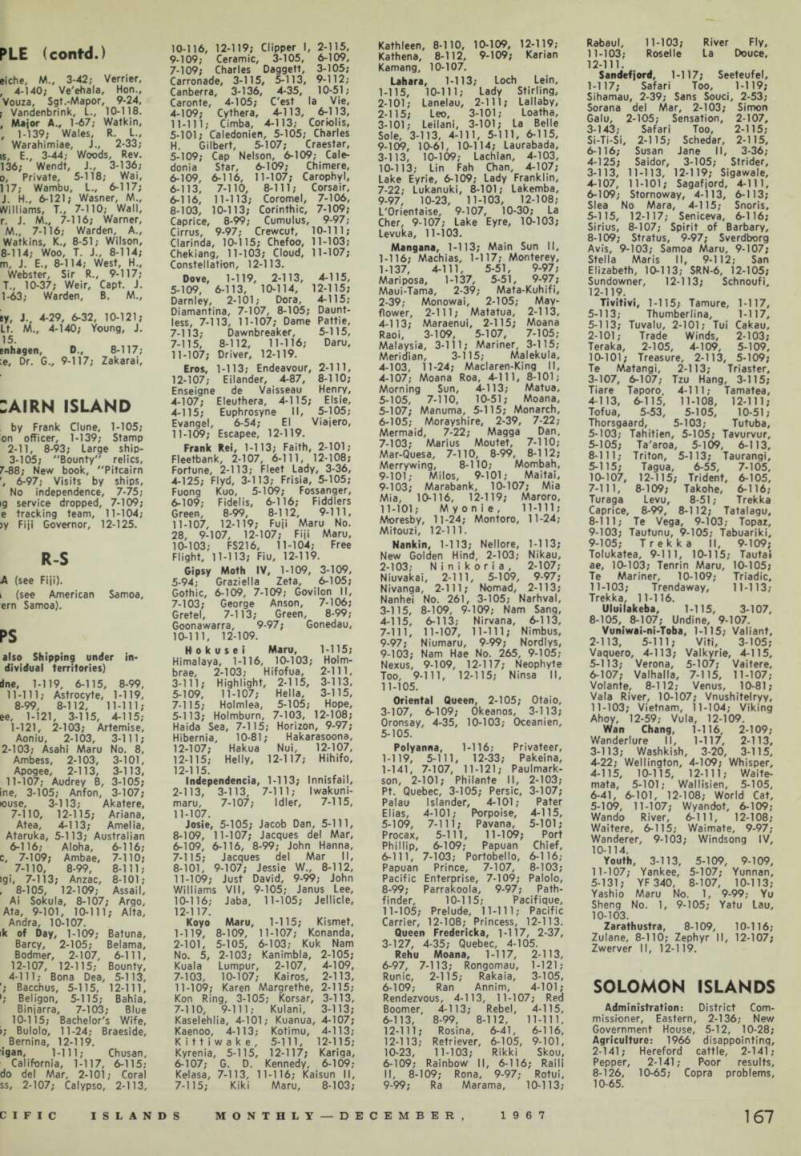 171
171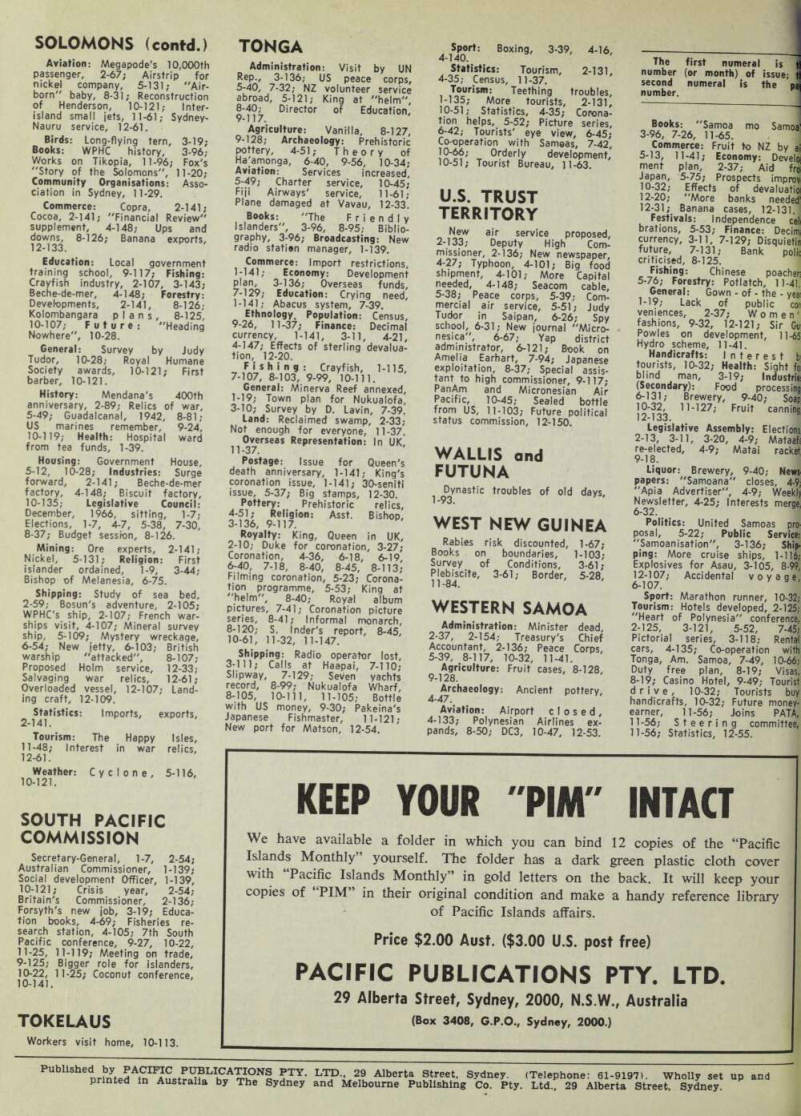 172
172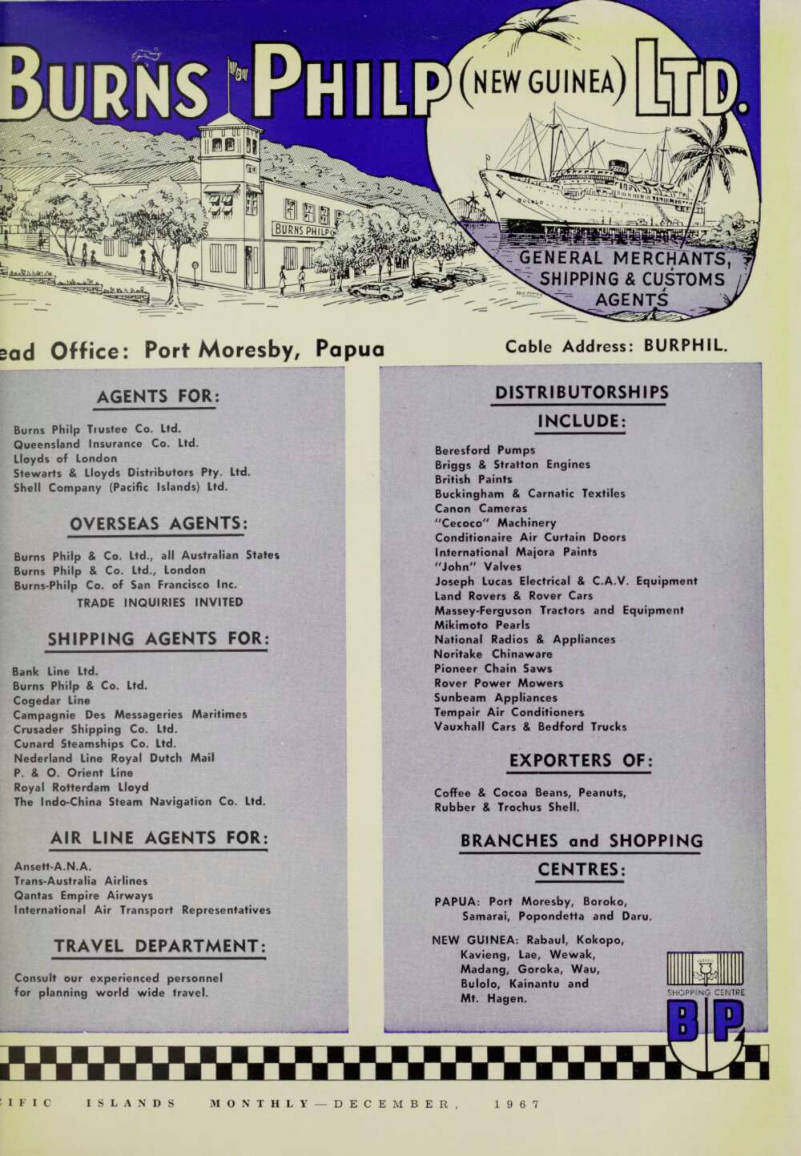 173
173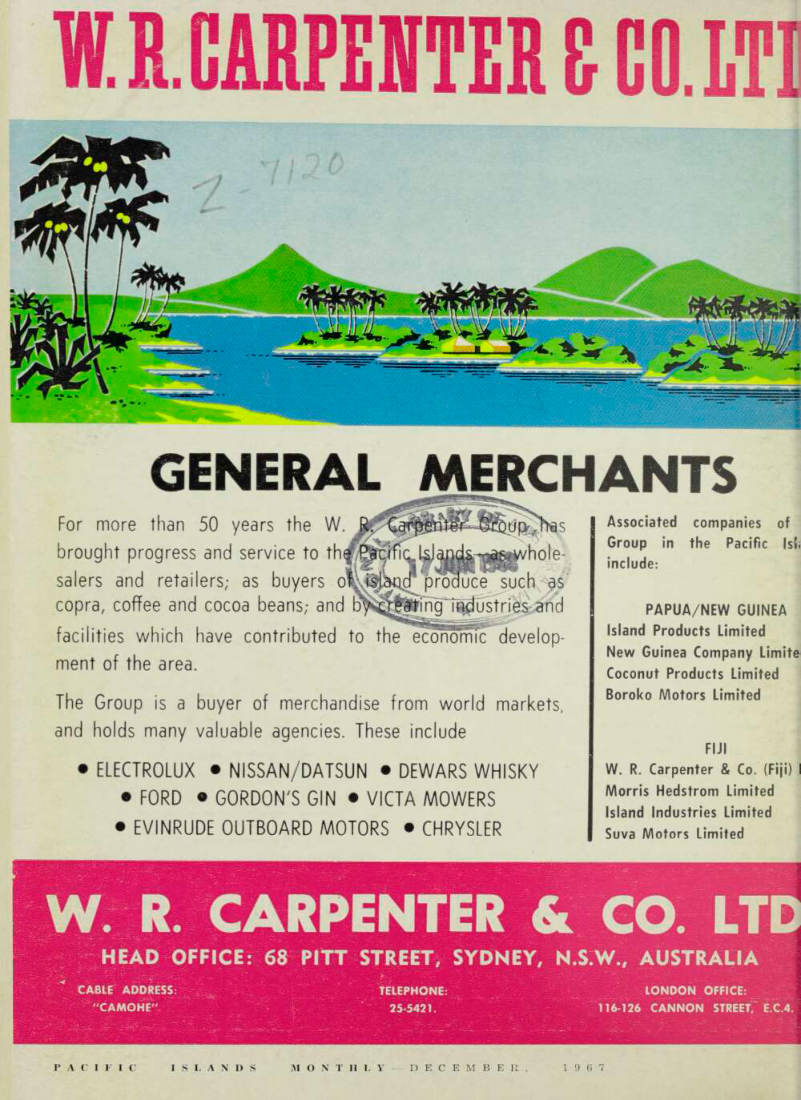 174
174