Monthly
Pacific Islands
Complete
Suva Games
Record
September, 1963
Vol. 34. No. 2.
t
stered at G.P.O., Sydney, and at P.O., i, for transmission by post as a Newspaper.
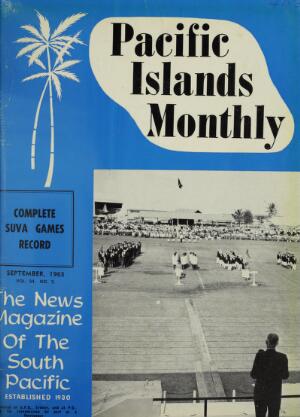
THE COVER: Naturally, since it's Septen ber, it's the South Pacific Games, and th scene is—naturally—Suva. Your ft Games record is in the special lift-oi supplement in the centre of this issu*
Advertisements & other items, pp. 2-6 (3 items)
See Australia with TAA
Save on TAA Tourist Class Fares. You can fly TAA from Port Moresby to Brisbane and back for only £69.6.0.
Regular TAA Sunbird services from Lae and Port Moresby to Australia connect v\i:h flights to all States linking the Territory to more than 90 ports throughout Australia.
Money saving TAA budget holidays.
There are dozens to choose from in such famous places as 'the Gold Coast, Central Australia, the Barrier Reef Islands.
TAA Travel Service makes all your holiday arrangements . . . plans personal itineraries and tours . . . arranges accommodation and local tours at your destination.
CONTACT YOUR NEAREST TAA TRAVEL ADVISER:
PORT MORESBY:
Len Vaughan, Cnr. Cuthbertson and Douglas Sts.. 'Phone 2101.
RABAUL;
Max Knop, “Augusta House ”, Mango Avenue, Phone 2702.
GOROKA:
Bud Foster, Goroka Airport, 'Phone 8.
LAE:
Tim Acton, Coronation Drive, 'Phone 2311.
MADANG:
Henry Ohlmus, Kaislan Avenue, 'Phone 78 or 268.
FLY TAA SUNBIRD SERVICES
throughout the Territory of Papua /New Guinea—and to Australia.
TAA4C 11 / 63
Iron in comfort without
fatigue with the new . . . ■mm ■ ■ OO • • \\y.\ysjf.-.- -..
Kerosene Self-Heating IRON
4O. U&& a • Pre-heats with methylated spirits in 90 seconds. • Burns for 2 hours on one filling, • Built-in pump and large filler opening. • Easily dismantled for servicing. • Heat is evenly applied over baseplate.
Model No. 615 Representatives for the Pacific Islands: ROBERT GILLESPIE PTY. LTD., ROBERT GILLESPIE (N.G.) LTD., PEARCE & CO. LTD. 22 Young Street, SYDNEY. Rabaul, Port Moresby, SUVA.
Also 334 Queen Street, BRISBANE. Lae, Madang.
if * '■ ■ v '; > ■ ■ «" „« '"£»' ■■■«-
. -r— -/ / ‘OK
*M *<s . > •'’< , ,< ' A* ~yAs*mi \J\ f «*.. • s -**•«' * * Hi “I’m easy to please—all I want is the best!”
“I don’t need a lot of everything, but I do insist on the best. Like tailored clothes, discreet perfume, old friends, good conversation. I have travelled a lot: I know the places to stay, where to eat, what to buy in Paris, New York or Tokyo ... or Bangkok, Cairo and Teheran, for that matter.
“Airlines? As I said, I’ve travelled all over the world and I’ve flown a lot of airlines. One airline stands out—Qantas. They do things the way I expect them done. They’re courteous, friendly . . . efficient without being pretentious. They make me feel at home the moment I step aboard one of the Qantas V-Jets.”
The woman who travels Qantas can call on the experience of Elizabeth Hunter, Qantas Woman’s Travel Adviser, in what to wear, where to stay, where to go, on an overseas trip. Contact Qantas or write for a free copy of “Fly Qantas —A Woman’s World.” See your Travel Agent or Qantas now.
QANTAS
42 YEARS OF DEPENDABLE SERVICE
QANTAS EMPIRE AIRWAYS LIMITED, in association with Air India, 8.0.A.C., S.A.A. and TEAL.
Q 25.84.83
TAUBMANS
DUO-PLASTI
GAYDEI
INSIDE .^OUTSIDE
plastic matt finish Everyone succeeds with Gaydec. No paint smell, no brush marks, no hard work.
Who said this paint was odourless?
What about the sweet smell of success?
Your place will be a Showplace with TAUBMANS Gaydec in T8987D
PACIFIC ISLANDS
MONTHLY
A product of Pacific Publications Pty. Ltd., 29 Alberta St., Sydney.
Publisher: R. W. ROBSON.
Editors:
JUDY TUDOR STUART INDER
Manager: SELWYN HUGHES.
TELEPHONES: MA9197, MA7IOI,
MA 4369.
G.P.O. BOX 3408, SYDNEY.
Telegraphic Address: PACPUB, Sydney.
ANNUAL SUBSCRIPTION RATES:
(Aust. currency; includes surface postage) Pacific Is.—P.-N.G., Fiji, Samoa, Norfolk, Nauru, 8.5.1., Cook Is., Tonga, G.&E Grp., Niue, New Hebrides, and Br. Pacific Is £1 4 0 French Pacific Territories .£l7O Australia and N.Z £1 10 0 U.K., British Commonwealth and Foreign (40/- Stg.) £2 10 0 U.S.A. and U.S, Pacific Territories ($7.00 U.S.) £3 13 Single Copies (postage extra) 2 6
BRANCH OFFICE IN PAPUA-NG
Pacific Publications (NG) Ltd., Theatre Building, Fourth St., LAE. Tel.: 2577 Miss Pat Robertson, Manager.
BRANCH OFFICES IN FIJI:
Suva: Fiji Times Building, 20 Gordon St Tel.; 5601.
Lautoka: Fiji Times Office, Vidilo St.
Tel.: 420.
REPRESENTATIVE IN N.Z.:
J. D. Whitcombe, P.O. Box 5179, Auckland.
REPRESENTATIVE IN HAWAII:
C. C. Spencer, 203 Yap Bldg., 3465 Waialae Ave., Honolulu. Tel.: 775538
REPRESENTATIVE IN U.S.A.:
R. G. Craib, Box 1455, San Francisco 1, California. Tel.: Mission 8-1075.
REPRESENTATIVES IN U.K.:
W, D. Ashburn, 73 Cheapside, London.
E.C.2. Tel.; City 2355.
H. A. Mackenzie, 4A Bloomsbury Square London, W.C.I. Tel.: Holborn 3779.
MELBOURNE OFFICE: Newspaper House. 247 Collins St. Tel.; 63.7053.
AGENTS; All main trading firms and stores in the Pacific Islands.
Pacific Publications Pty. Ltd. is the Australian agent for THE FIJI TIMES.
HAVE YOU
NOTICED
HOW MUCH
BETTER
GILBEY’S
r
GIN 7
IS!
So why mix with others?
GILBEY’S
GIN
jooa/o
September, 1963-Pacific Islands Monthl
4
SEPTEMBER, 1963 PACIFIC ISLANDS MONTHL
In This Issue
General
South Pacific Games 7 Preserving Pacific History 51 South Pacific Games Record Foil. 74 Brisbane-Honolulu Air Service 119 Public Servants' Conference 119 Burns Philp's Annual Meeting 127 Bulolo Gold Profit Lower 130
American Samoa
Building Boom, Coconut "Revolution" 36 Enlargements for Bank 117 ■iquor Rules Relaxed 118
Eook Islands
’etitions to United Nations 21 slanders "Open to Subversion" 22 Students Jeer Minister 65 itart on Library and Museum 117 ladio-Telephone Link with NZ 118 ruit Production Increases 129
Iji And Rotuma
incertainty on Governor's Arrival ... 11 Inanswered Questions on Future ... 13 Vomen Police Wanted 28 V Plan 29 Inusual Election Sequel 33 nd of Transistor War 35 leas for Action on Rotuma 49 ►eath of Mr. P. J. Twomey 63 rison Bakers 71 rofile of Tui Johnson 79 otuma of 30 Years Ago 83 opra Meal Fire 117 ommunist Propaganda Banned 118 opra Subsidy Scheme 118 atest Population Figures 119 lew Jap Interest In Bananas 129 15m. Development Plan 129
French Polynesia
Independence Movement "Dead" ... 61 Mururoa A-Bomb Centre 61 Archaeology in the Marquesas 89
Gilbert And Ellice Island Colony
Preparations for Tourists 72 First Airmail Stamps 118 Funafuti Airstrip Progress 119 Copra Production Down 119
Lord Howe Island
New Flying Boat Sought 142
New Caledonia
Jap Tuna Plan Approved 11 Repatriation of Vietnamese 66 Wallis Is.-Papeete Flights Abandoned 119 Trade with New Zealand 130
New Hebrides
New Stamps Issued 15 France's Battle for Influence 41 Poor Quality Copra 51 Repatriation of Vietnamese 66 Tanna's Fiery Volcano 77 Pineapple Canning Inquiry 117 Cold Storage Installation Opened 118 Genetics-Anthropological Study 121
Niue
Latest Population Figures 118 Economic Survey 130
Norfolk Island
Trading Loophole Closed 31
Papua-New Guinea
Army Roadbuilders 10 New Order for Border People 11 Decision on University Soon 15 More Teachers Wanted 17
DEPARTMENTS: Commentary, 13; From the Islands Press, 25; Tropicalities, 29; Magazine Section, 77; New Books, 87; Shipping, 95; Territories Talk-Talk, 113; In a Nutshell, 117; People, 121; Deaths of Islands People, 125; Commerce, 127; Travel Talk, 133; Shipping and Airways Timetables, 135.
Visit of Four Aust. Ministers 19 Planters Disturbed Over Future ... 23 £2sm. Budget Hand-Out Confusing 23 Preparations for Big Poll 27 Luth Turtle Caught 31 Tolais Oppose Mixed Marriages 32 "Crash" Education Trainees 54 Mystery Obelisk on Kalili 55 "Iniad Cult" Statue 79 Rabaul Waterfront Squeeze 115 Leaders to Visit Australia 117 Swimming Pools for Moresby 119 US Mapping Surveys 119 Japanese Ambassador's Visit 123 New Companies Legislation 129
Pitcairn Island
Costly Improvements 66 Anthropological Expedition 121 UK Commissioner's Visit 121
Solomon Islands
American Voyage of 1787 81 Grant for Training College 117 Kira Kira Airfield 119 Increased Air Services from Fiji ... 119 Honiara Drinking Water 119 Timber Companies' Plans 119,130 Mining Company Pulls Out 130
South Pacific Commission
Handicrafts Catalogue 29 Greater Voice for Islanders 57
Tonga
Minerva Reef Men in NZ 9 Vaiola Hospital Week 29 Hotel Plan That Went Awry 53 First Copra Since Hurricane 95
West New Guinea
Problems for Exiles 8 Assembly Votes Against Plebiscite ... 8
Western Samoa
Critical Education Problems 18 Deep Water Wharves Planned 105
Advertisements & other items, p. 8 (2 items)
6
SEPTEMBER, 19 6 3 -PACIFIC ISLANDS MONTHL
Manufactured To
A GUARANTEED
SUPERBLY EVEN
SATIN FINISH ENAMEL
ish Paints
British
, SATIN FIMS#
ENAMEL ..X
ceilings •!** *°
AU. COLOUR 5 -
v f V/
MANUFACTURED TO
ALL TROPICAL CONDITIONS
esists heat, humidity, mildew, fungus and mould! Satin-Tone gives beauty and long-lasting protection. Guaranteed free from an, rush marks. Dries to a beautiful, even semi-gloss finish. atin-Tone is specially manufactured to stand up to the rigorous tropical climates. It dries hard-gives J iterior and exterior walls, ceilings and all woodwork. It's unaffected by d * iterior and exterior walls, ceilings and all woodwork. It s unattecreo oy s earn c„u • itchens, bathrooms and laundries. You can scrub it without hurting or dulling its distinctive satin lustre. killed colour stylists blended Satin-Tone's exceptional colour range. You can choose from a wide selection of strong colours anc oft pastels. See them now at your nearest British Paints Limited depot or store. oft pastels. See them now at your nearest br.t.sn raims Limneo uepo. j ... ... . . , rtPORTANT: For maximum protection against fungus and mould growthalways treat new or previously painte sur aces mited's anti-mould solution.
Enquiries are invited from storekeepers to act as authorised agents for British Paints quality products.
Write to: British Paints Limited, Box 43, P. 0., Bankstown, N.S.W., Australia.
British Paints
Limited
one
SATIN FINISH ENAMEL
.SOLD AND RECOMMENDED BY;
Burns Burns Burns Burns Burns Burns Burns Burns Burns Burns Burns
NEW GUINEA:
Philp (New Guinea) Limited: Philp (New Guinea) Limited: Philp (New Guinea) Limited: Philp (New Guinea) Limited: Philp (New Guinea) Limited; Philp (New Guinea) Limited: Philp (New Guinea) Limited: Philp (New Guinea) Limited: Philp (New Guinea) Limited; Philp (New Guinea) Limited: Philp (New Guinea) Limited; Wau Bulolo Lae Madang Goroka Wewak Kavieng Rabaul Kokopo Daru Kainantu Kam Hong: Lae Scotts New Guinea: Lae Tang Mow: Wewak Laurie Chan: Rabaul Wong You: Buka Passage—Bougainville
PAPUA:
Burns Philp (New Guinea) Limited: Port Moresby Burns Philp (New Guinea) Limited: Boroko Burns Philp (New Guinea) Limited: Samarai Burns Philp (New Guinea) Limited: Popondetta
HONIARA;
A. C. Blair Ltd.: Honiara Ho Kee: Honiara Coral Industries
FIJI;
Burns Philp (South Sea) Co. Ltd.: Suva Burns Philp (South Sea) Co. Ltd.; Lautoka
NORFOLK ISLAND:
Burns Philp (South Sea) Co. Ltd.: Norfolk Island
First South Seas
"Olympics" Went
Off With A Bang
From Stuart Inder, in Suva
No other South Pacific locale but the City of Suva could have supplied the First South Pacific Games—from August 29 to September 7—with such a mixture of sophistication and balmy Pacific breezes; of hard-headed organisation and colonial pageantry; of blase commercialism and the scent of coconut oil on glistening bodies.
SUVA was all things to all of the South Seas during the week, as nearly 700 sportsmen from 13 terri tories met for the first time at their own “Olympics”.
The impact was much greater on the visitors than on Suva people, for Suva’s reactions to the biggest single gathering of representative South Seas people ever assembled was one of those unexpected ones that are part of Suva’s special charm.
There was a carnival atmosphere in Suva, but no Games “fever”. The high-pitched enthusiasm and national identification that anticipates a Royal visit or the return of a battalion from Malaya were missing.
It was rather like a whole week of pay-days; a whole week of new cruise ships in port—all of which Suva can take in its stride, even if a little more out of breath and a little more pie-eyed than usual.
Perhaps Suva is getting older.
It certainly got busier in the busi ness sector during Games Week.
Shops made frantic sales of radios and cameras at duty free prices (the competitors were big spenders).
The taxis and Indian buses filled Jie city with exhaust smoke (as their irivers complained of the traffic and ack of police on point duty).
The cafes were jammed from areakfast to midnight with com petitors demanding steaks and fried :ice (some complained they didn’t get mough to eat in the villages).
The bars were twice as rowdy and wice as beer-stained, with matelots :rom the French frigate Commandant Riviere trying to out-shout and cut ting the tars from HMS Cook.
Meanwhile, every transistor in Suva boomed out sporting com mentaries and blatantly partisan
messages from the teams to the folk back home.
The visitors were part of all this and it was they who were wide-eyed at the sophistication of it all.
From Popondetta to Malaita and the backblocks of Tahiti, from Moresby and Noumea to Apia, nobody suspected, apparently, that there was a place in the South Seas quite like Suva, and the fact that the city people could take the in vasion in their stride was all the more impressive.
The activities in the sports arena were a separate world—for some a vital world where results counted; but for others just a minor part of the whole adventure.
Mixed Quality
The quality of sporting prowess was mixed—from woeful to un expectedly good, but with no world shattering times.
From the sporting and social view points the South Pacific Games were an undoubted success.
Yet a few days before the Games opened there was apprehension in many quarters. Months of detailed work were supposed to be bearing fruit, yet nothing was ready.
In August, Suva had five times more rain than normal for the month and just before the Games started, the main venue at Buckhurst Park was under water, and there were grim jokes about turning the alter native ground at Albert Park into a swimming stadium.
A planned car park at Buckhurst Park still looked like a stretch of rice paddy.
As hundreds of competitors began to pour into Fiji aboard a wide variety of aircraft and seacraft, demanding to be bedded down in one of the three Games villages, the Games organisers reached a peak of irritability. It looked as if the whole thing was going to be bungled.
But opening day dawned bright.
Soon after 9 a.m. Mrs. Nono Tani, of the Cook Islands, whanged a tennis ball at her West Samoan opponent at Albert Park; Games Director of Organisation Joe Coyne mopped his brow in the sunshine and positively beamed for the first time in weeks; and the First South Pacific Games were under way.
The success of the following week proved that the late-August appre hensions were only last-minute jitters after all. • A detailed, 12-page Games Record will be found in this issue following page 74.
THE FIJI SCENE: Plenty of pictures like this were undoubtedly taken in Suva during the First South Pacific Games—but Rob Wright took this one when the liner "Orcades" visited Savusavu re cently. Rob Wright also took our cover picture this month, which shows Fiji's Governor, Sir Kenneth Maddocks, officially opening the Games at Buckhurst Park before a crowd of 8,000 people.
Face Plenty Of Problems
West New Guineans In Exile Face Plenty Of Problems
From a Correspondent in The Hague Former West New Guinea leaders in exile in the Nether lands are optimistic that in 1969 they will return to a free and independent West New Guinea. But not many people share their optimism—least of all the Netherlands Government.
THE leaders have formed themselves into the Papuan National p ron t—an organisation rather mindful of the exiled organisation set up by the South Moluccans following the Indonesian revolution. In Hoiland there is a little of the same sympathy and support for the National Front as there was for the South Moluccan organisation, but none of it comes from the Government.
In an effort to improve relations with Indonesia the Netherlands Goveminent is being careful to avoid association with the Papuans in Holland. The Papuans get the same social aid as any other resident in the Netherlands in need of it, but nothing else. , ... and Filamon Jufuway were in the day they are in the shadows, of no fU rNeth^^ o rto get out of New Guinea was supported by the great majority of the Dutch at home. Very few felt the candle was worth fighting for.
The fact that the Government had promised self-determination to the people of New Guinea is now of
little account to the average Dutch man—and if he thinks about it at all he would agree that Indonesia probably has no intention of keeping its promise to provide a free act of determination” in West New Guinea by 1969. y ix _. Don t Know The Facts Lack of information, rather than i ac k G f principles, is probably the main reason for this general atti tude of “couldn’t care” in Holland, Although the Papuan leaders in exi e have rea ii se( j their confidence Jn the Government was misplaced, they are still genuinely hopeful of a success f u i re turn to an independent New Guinea> an( j the activities of the Front will be continued. tetter to the Aus • d bv as vice-chairman .appealedl forassist SS sar y- TTiey said that in Kota Baru Papuans were being forced to sign a document saying they were against a plebiscite for self-determination, Many Papuans had already been put in gaol.
The former leaders said that t rob the Papuans of their guardiar the Indonesians had shipped the ei tire force of Papuan Volunteers froi New Guinea to Borneo “where the were being forced to help the Inch nesians in their mischievous activity against the British and Malayans They added: “It is not only we that are menace by Indonesia’s lust for power. W know, Papuans feigning sympath for Indonesia have been told si that Indonesia cherishes the idea < one united ‘lrian,’ of one united Ii donesia from Sabang to Samarai.
“Our flag and our national anthei have been suppressed; the Ne Guinea Council of freely electe members was sent home. Indee* only half a month of Indonesian ru is enough to teach us that we sha need the support of friends for tl realisations of the rights granted i us for 1969. As we cannot spe£
Three Of A Kind;
These girl triplets born on Niue in June are the first to be recorded on that island. Holding the triplets are (from left) Miss B. E. Cass. Miss E. Cavender and Miss Isabel Mac Ewan, three NZ girls at the Lord Liverpool Hos pital, Niue Island.
for ourselves we ask Australia to do so for us.”
The Papuan leaders in exile are not the only former West New Guinea citizens with problems in The Hague. Many students have had worse difficulties.
Both the Government and various missions had been providing scholar ships for West New Guinea students attending secondary schools and universities in Holland, and money for their support continued to be provided during the time the UN was in control in West New Guinea.
But since May the Government has cut off its support. It told the students bluntly they had to return to West New Guinea.
Indonesian consular officials in The Hague were even more blunt. The Indonesian Charge d’Affaires, Dr.
Mohammed Sharif, said the students should keep in mind that if they later applied for government posi tions in Indonesian territory using a Dutch diploma, they would be con sidered “pro-Dutch”—the Indonesian Government would, however, let them continue their studies in Indo nesia.
Back home in West New Guinea the Indonesians also put pressure on many of the parents of the students to advise their children to cease their studies and return.
The Dutch Reformed Church took the same view as the Dutch Gov ernment and the Indonesians, and withdrew financial support from students, hoping thereby to force
them into a “favourable decision” to return home.
In contrast, the Roman Catholic Church announced it would allow its students to decide their own future without pressure.
The result has been that many students bowed to necessity and re turned to West New Guinea or have gone to Indonesia. A small group has accepted the risks of completing studies in Holland. They are mak ing do by scraping up financial support from foster parents, the church, the Papuan National Front, and anybody else in sympathy with their plight.
Some former residents of West New Guinea lucky enough not to be students or Papuan leaders are better off. Most have been helped with accommodation, and permanent pub lic servants have been placed on half-pay for five years and given a re-furnishing allowance. Their pen sion rights have been guaranteed.
Temporary public servants received on arrival in Holland two months of their salary in a lump sum, but were given no other help apart from accommodation.
Private people who left shops and offices in New Guinea have received no compensation for any goods or property left behind, or for their loss of income.
Fortunately business is booming in Holland and jobs are not scarce, but many of these people are finding it difficult to adapt themselves to European living again.
Prince Taufa'ahau, of Tonga (left), shakes hands with Captain Tevita Fifita, of Minerva Reef fame, after a kava ceremony in Auckland in August.
WNG Assembly
Votes Against Plebiscite
The West Irian Legislative Assembly, in late August, de cided that there will be no need for the people of West New Guinea to have a plebiscite on self-determination before 1969, as was provided for in the August, 1962, Agreement be tween Indonesia and the Nether lands.
The decision is the result of a three-part resolution passed by the Assembly (no doubt unani mously), that (a), the West Irian people are part of the In donesian people; ( b ), that West Irian is part of the Republic of Indonesia; and (c), that the Regional Government of West Irian is part of the Government of the Republic of Indonesia.
The resolution was signed by the Chairman of the Assembly, E. ]-. Bonay, a Papuan, who is also Governor of the Province.
The Assembly, which is com posed of members nominated by the Djakarta Government, re places the largely elected New Guinea Council which was in augurated in 1961 by the Dutch but which met for the last time in April, 1963, and prudently voted itself out of existence just before the hand-over of WNG to Indonesia.
Advertisements & other items, p. 10 (1 item)
8
SEPTEMBER. 1 9 6 3 PACIFIC ISLANDS MONTHL
Castaway Skipper
To Say Thanks With A Boat
Captain Tevita Fifita, Tonga's famous castaway skipper, plans to build a boat for villagers of Naco moto, on Fiji's Kadavu Island, as a gesture of thanks for their help at the end of last year’s Minerva Reef epic.
CAPTAIN Fifita said this in Suva in August when he passed through there on his way to New Zealand and Australia as a guest of TEAL to publicise the release of Olaf Ruhen’s book Minerva Reef, which tells of the gruelling ordeal of Cap tain Fifita and 16 other men who were wrecked on Minerva Reef in the cutter Tuaikaepau in July, 1962.
Most of the castaways (some died) were rescued 102 days later after Captain Fifita, his son, Sateki Fifita, and Tevita Uaisale, sailed 300 miles to Kadavu in a makeshift outrigger to seek help. Sateki Fifita was drowned at the end of this voyage.
Kava Ceremony
On his trip to NZ and Australia, Captain Fifita was accompanied by his wife, Alapasita, Tevita Uaisale, and another castaway, Teiapa’a Blomfield.
In NZ, Auckland’s Tongan com munity welcomed the Minerva Reef men with a kava ceremony in TEAL’s Airways House. Those present in cluded Prince Taufa’ahau, son of Crown Prince Tungi and grandson of Queen Salote.
Olaf Ruhen’s book, published in Australia and New Zealand in early September by Angus and Robertson Ltd,, has been very favourably re viewed.
If sales reach the dimensions ex pected, the Tongan castaways—a dozen of them survived—will benefit financially.
The rights to the story were bought by Fiji Times and Herald Ltd, from the Tongans concerned, and sold to the publishers; and all the royalties received, after deduction of expenses (which include the author’s fee) will go to the Tongans.
Where Army Men Toil
INDONESIA uses troops in New Guinea for civil duties—but so does Australia. The 21st Construc tion Squadron, of Victoria, recently completed 12 months’ work in the Sepik District building roads, bridges and airstrips, etc.
The 21st has now handed over to the 17th Squadron, from NSW. More than 200 men are involved, and the Army takes the view that they are getting valuable training besides doing important building work m the border areas.
The pictures here show the activities of the Army roadbuilders in the Sepik.
Above (top) is Bwana Tom, a staging camp on the new road to Passam, where forward engineers have lived recently while road-building. It is a few miles from the coast, but high in the Prince Alexander Mountains, where it is cold enough for blankets.
The lower picture above shows the main camp at Moem, where engineers building the Wewak-Lumi road and other Sepik projects have been quartered.
The camp is on the point of the Moem Peninsula, next to a new barracks for Pacific Islands Regiment troops.
This area was the scene of one of the last pushes against the Japanese in the New Guinea campaign, and the Army men have unearthed a lot of Japanese weapons, radios and vehicles there.
The field gun (top right) was found on a high point, about five miles from Wewak. With it is Captain Lou Shaw, an engineer of the 21st Construction Squadron.
The centre picture (right) shows the end of the road to Passam as it was when the 21st handed over to the 17th Squadron. Heavy rains had slowed progress by the 21st, and it had failed to achieve its aim of build ing the road right to Passam. The 17th is now accom modated at Passam.
The lower picture (right) shows Headman Sangeoei, of Koigen village, who gave the Army a hill of coral (seen in the background) to seal the road to Passam.
In return, Sangeoei asked the Army to build a road into his village to give access to the new highway.
Advertisements & other items, p. 12 (1 item)
10
SEPTEMBER, 1 9 6 3 -PACIFIC ISLANDS MONTHL
New Order
Ng Border People
Settle In To A
More than 3,000 New Guinea people in 50 villages which once
bought they owed allegiance to
he Dutch flag have settled down o a new life and a new language ander Australian control. And hey like it. rHE villages are spread out along an area that has become known is the Wans enclaves, on the lorthern border of West New Guinea ind Papua-New Guinea.
Eighteen months ago the people here were administered by the Dutch, vho had a patrol post at Wans and ichools and missions in the area.
Australia was too busy extending ts influence in other parts of the erritory, where there were bigger jopulations, to worry about the >eople in this pocket, despite the fact hat they were on the Australian side )f the border.
When it became obvious 12 months igo that Indonesia was likely to be uccessful in its “confrontation” policy igainst the Dutch in West New juinea, Australia moved hurriedly, ind secretly, to bring the Waris en laves under their true sovereignty.
Surveyors, schoolteachers and milding materials were flown in, and latrols explained to the local people, vith the co-operation of the Dutch, ust what was happening.
Accurately Surveyed
The border was accurately surveyed it this point. Men using astro-fixes aid down small concrete cairns at ntervals of about 15 miles, beginning in the north coast and working down □wards the central ranges.
On the coast, at Wutong, there is i very large, permanent border narker put down by a Dutch party icfore the war.
Big logs were cut, painted white md laid down so they radiated out rom the small cairns on four sides if the compass. From the air these narkers look like white crosses, and in aircraft flying along their course :an identify the border instantly.
Serial photographs indicate clearly vhich villages are on each side of the )order.
The Australians took over the )utch schools and erected others to
speed up the take-over process. It is no accident that when the first junior technical school in the whole of the Sepik district was opened last month—on August 21—its site was at Amanab, which is a key patrol point from which the people of the enclaves are being administered.
Other posts are at Green River and Imonda.
The new technical school includes a dormitory. The students will be taught useful trades.
Missionaries have been working hand-in-hand with the Administration to bring a slight change of gospel to the people of the area, and the earlier apprehension of the Administration is beginning to wear off now as the people show every sign of accepting happily the new order of things. They are getting more attention now than ever before.
Meanwhile, regular contact is be ing made with other people along the border who once were rarely seen by Australian patrols.
Parties of Pacific Islands Regi ment troops, stationed at Vanimo, on the north coast, not far from the border, now patrol right along the border to the central ranges about once a month. In parts it is rugged going, with small or no population.
In the central ranges, themselves, an exploratory patrol is currently mapping the northern part of the Star Mountains in detail, assessing popu lation and attempting to establish friendly relations with the border people.
The patrol is led by Patrol Officer J. R. McArthur, and has a medical assistant, Mr. K. Luther, two medical orderlies, 10 native police and 65 carriers.
New Caledonia's
Assembly Approves
Jap Tuna Plan
Approval has finally been
given for a company composed of Japanese and local interests to build a plant for the treatment and freezing of tuna in New Caledonia.
THE company, Societe I’Ocean, is formed by the Japanese com pany, Taiyo Gyogyo, and a New Caledonian group headed by Mr.
Andre Castex.
New Caledonia’s Territorial As sembly approved the statutes of the company in an extraordinary session convened in August. Mr. Castex had first submitted the statutes for approval in 1959.
The Assembly’s decision was made after hearing a favourable report from a special committee which went to Santo, New Hebrides, recently to study the agreement made there several years ago between Japanese tuna interests and a local company.
Societe I’Ocean’s plant will be built on a bay of Noumea Harbour, near Ducos Peninsula. It will have a capacity of 1,200 tons. The agree ment with the company calls for its completion in two years.
Five years from the signing of the agreement, the capacity of the plant is to be increased to 2,000 tons, and the plant is to be completely finished by then.
Refrigeration Ship
During the first two years, the re frigeration vessel Eiyo Maru will be anchored in the bay to freeze and process tuna caught by 20 Japanese trawlers operating off New Caledonia.
If a fish canning factory opens in Noumea operated by local capital, and if local fishermen cannot satisfy its requirements, Societe I’Ocean has agreed to supply fish for canning at the price for fish exported to Japan.
Societe I’Ocean will pay a tax of 260 francs (26/-) a ton on all fish ex ported to Japan during the first three years. The tax will then rise to 425 francs (42/6).
Societe I'Ocean has asked that no Customs duty be levied on the Eiyo Maru during her two years’ stay in Noumea. This request is to be studied The Eiyo Maru arrived in Noumea in mid-August and began receiving tuna from trawlers operating in local waters.
Advertisements & other items, pp. 13-14 (3 items)
Governor's Arrival
UNCERTAINTY ON NEW
To the end of August, there was no indication of when the new Governor of Fiji, AAr. Francis D.
Jakeway, would arrive in Fiji. It is understood that AAr. Jakeway, who has been Chief Secretary of Sarawak since 1959, could not make definite travel plans because of the political and international crisis over the new Federation of AAalaysia.
Fiji's retiring Governor, Sir Kenneth AAaddocks, KCAAG, and Lady AAaddocks, were entertained warmly in August, at a series of official and semi-official meetings in Fiji, where tributes were paid to their good service in the Colony in the last five years. They are to leave for Europe early in September.
12
SEPTEMBER. 1 9 6 3 PACIFIC ISLANDS MONTHL
Morris
HEDSTROM
LIMITED
HEAD OFFICE: SUVA, FIJI
LONDON OFFICE
Morris Hedstrom Limited Barclay's Bank Buildings, 73 Cheapside,
LONDON, E.C.2.
AUSTRALIAN REPRESENTATIVE
Morris Hedstrom (Aust.) Pty. Limited Wales House, 27 O'Connell Street,
SYDNEY
REGISTERED CABLE ADDRESS:
DEUMBA—SUVA, AAORRISHED—LEVUKA, MORSTROM
SYDNEY, SUVAAAARK—LONDON, MORRISCO
NUKUALOFA, DEUBA—APIA, CODES: ALL
For Friendly Service and complete satisfaction it's Morris Hedstrom Ltd. in
General Merchants
Produce Buyers
Importers and Exporters
Ship Owners
Plantation Owners Commission and Insurance Agents
AGENTS & DISTRIBUTORS FOR:
Adhesive Tapes, Ltd.
Bush Radios, Ltd.
Bowater—Scott Corporation, Ltd.
China Navigation Co.
John Dewar Gr Sons, Ltd.
Electrolux Limited.
Evinrude Outboard Motors.
Ford Motor Co.
General Electric Co. Ltd.
Goodyear Tyre Gr Rubber Co.
Guinness Exports, Ltd.
Medley, Thomas Gr Co. Ltd.
Imperial Chemical Industries, Ltd.
Matson Navigation Company.
Mobil Oil Australia Pty. Ltd.
Max Factor Gr Co. Inc.
Parker Pen Company.
Ransomes, Simms Gr Jefferies, Ltd.
Rootes, Ltd.
Smiths English Clocks, Ltd.
Tanqueray Gordon Gr Co. Ltd.
Taubmans, Ltd.
Yorkshire Imperial Metals Ltd.
Morris Hedstrom Limited are
LLOYD'S AGENTS
in Fiji and Samoa
FIJI SAMOA TONGA
Commentary
Many Unanswered Questions
On Fiji's Future
AT long last, the British Colonial Office has given Fiji an indica tion how it proposes to shape the Colony’s future system of govern ment; but there is nothing to show what that shape finally will be.
The retiring Governor, Sir Kenneth Maddocks (who leaves in September) told the Fiji Legislative Council on August 22 that “the Secretary for the Colonies will be glad, in consultation with representatives of the people of Fiji, to work out a constitutional framework which will preserve a con inuing link with Britain, and within which further progress can be made n the direction of internal self government”.
He stated, also, that the future of he Colony would be discussed at a inference in London—“to be con vened by the Secretary of State for he Colonies, in 1964 or early 1965” —where the British Government, and ‘leaders of representative opinion in 7 iji would try to agree on concrete iroposals”.
The Governor—speaking, of :ourse, on behalf of the British Sec etary for the Colonies—referred to: • The “uncertainty” created by the ecent debate on Fiji in the United Nations Committee on Colonialism. • The Fijians’ request in 1962 that he tie between Britain and Fiji be ontinued and be akin to that be ween Britain and the Isle of Man or he Channel Islands. • The 1962-63 proposition (not ccepted by the Fijians) that a “mem er system” be introduced in 1964 to ;ive unofficial Legco members in reased responsibilities in administra on.
The Governor made the under tatement of the year when he said le British Government believed “the me was approaching when the iture relationship between Fiji and iritain should be clarified and codi ed”. Better late than never, of ourse; but much clarification still is eeded.
It is clear that, next year, an at ;mpt will be made to introduce the member system”—that is, adminis •ation of departments by members of egco—and that preparations will be »ade in the coming 12 months for conference in London between the olonial Office and representatives
of Fiji, which will try to agree on a plan for Fiji’s future government.
There is no surprise in all this: it merely gives official shape to pro cedures that have been forecast by in telligent observers for some time.
Otherwise, there is vagueness and uncertainty in the announcements.
For example: How will the “representatives of Fiji” at the London Conference be chosen—by election, or by nomina tion, or both?
Will those “representatives” repre sent the Colony as a whole, or will they represent the clearly-defined communities?
Necessarily, in planning future gov ernment, each Fiji community will seek special consideration in one direction or another—how will that be taken care of?
If it is proposed to hammer out, at the London conference, what will be virtually a new Constitution, will machinery be provided under which the people of Fiji will have a final opportunity of accepting or rejecting the new Constitution?
What measures will be taken, be fore the London conference, to create in Fiji an atmosphere more favourable for unity of thought and action, between the racial communi ties, in relation to future government?
Does the Colonial Office really appreciate the fact that, before serious preparations can be made for a Lon don Conference, it first must deal with the memorandum placed before the Secretary for Colonies by the Fijian Affairs Board in Fiji last Jan uary, in which it was made clear that the Fijians will not consider any con stitutional changes (that is, any change in the spirit or substance of the Deed of Cession) until certain es sentials have been dealt with. Those essentials are : • There must be a precise re statement of the guarantees on Fijian land ownership. • Fiji must remain a Christian State. • The Fijian people, through the Fijian Affairs Board and the Council of Chiefs, should continue to be con sulted in advance on any proposed legislation affecting Fijian rights and interests.
Does the British authority realise that this Fijian attitude of wariness and suspicion has been created by
decades of uninformed fumbling at the British Colonial Office?
The retiring Governor of Fiji— who will be remembered mostly for his unfailing courtesy and urbanity— departs on a note of cheery optimism.
But much more than optimism will be needed by his successor, whose task will be to find answers to the fore going questions.
They've Been
Too Long In The Bush
WHETHER the colour of their politics is “extreme” or just “somewhat”—as a NZ journalist alleges—it is obvious from the tone of two recent petitions on the Cook Islands to the United Nations that their authors have been too long in the bush. The petitioners, who claim that NZ is frustrating the political ambitions of the Cook Islanders, are Messrs. Julian Dashwood and Ronald Syme. (See p. 21).
Julian Dashwood—who writes as Julian Hillas—has been in the Cook Islands since 1929 when he became a trade-store manager for A. B.
Donald & Co. Ltd. Before that he was a farmer in the Transvaal and a rubber planter in Malaya.
Ronald Syme arrived in the Cooks in 1953; he had previously been a newspaper correspondent and a PRO in the UK. Shortly after he took up residence, he espoused what he thought was the cause of the local people—-especially as it related to re organising them along commercial lines nearer his heart’s desire. He succeeded in getting the backs up of many people, including Cook Islanders.
Epidemics of criticism of the NZ Government’s role in the Cooks break out every time a correspondent visits the Group—and the criticism is not always without foundation.
Nonetheless, the worst thing that could happen to the 18,000 people of the Cook Islands at this stage would be for them to be cast off on to their own unviable economy.
Possession of the Group has never been of the slightest benefit to NZ.
But without NZ’s Support the Cook Group would be unable to maintain itself in the manner to which it is now accustomed.
All the Group’s exports go to NZ and NZ grants in the last financial year amounted to £730,000 against only £500,000 raised locally. These simple book-keeping facts make nonsense of the mischievous petitions of Messrs. Dashwood and Syme.
Advertisements & other items, pp. 15-16 (3 items)
13
ACIFIC ISLANDS MONTHLY SEPTEMBER, 1963
14
SEPTEMBER. 19 6 3 -PAC.FIC ISLANDS MONTH
mmuw
OPPORTUNITY FOR DEALERS!!
ri//?K m
WORLDS B/GGESTSELLING
OUTBOARD MOTORS
NOW AVAILABLE
TO SOUTH PACIFIC
r
DEALERS!
Mercury, world’s biggest selling Outboards and famous Mercruiser Stern Drives are now available to South Pacific Dealers.
This is a franchise with a high earning rate, protected and exclusive.
The Australian & South Pacific Distributors offer you complete support and efficient spare parts service.
WRITE NOW FOR FULL DETAILS
INTERNATIONAL MARINE (A’ASIA) PTY. LTD.
Ferntree Gully Road, Scoresby, Victoria, Australia.
Speedy Decision
Expected On
P-Ng University
From a Special Port Moresby Correspondent It is taken for granted in Papua- New Guinea that the Commission now deliberating on tertiary education will recommend the establishment of a university for the Territory. The $64 question left unanswered is how soon it can be made to happen.
IN early August, the Commission appointed to inquire into the needs for higher education in P-NG completed its public hearings and re turned to Australia to examine in de tail the structure of tertiary educa tion in the main centres of Austra lasia.
Since its appointment by the Minis ter for Territories, Mr. Hasluck, in February, the Commission has scarcely drawn breath in travelling around Australia and P-NG. In a series of conferences in Canberra, Sydney and Melbourne, the three members (Sir George Currie, Pro fessor O. H. K. Spate, and Dr. J. T.
Gunther), first sketched an outline for their operations. Since then, they have been busily filling in the picture.
It seems that by the time their re commendations come before Cabinet, very little, either in the way of tech nical organisation of institutions of higher learning, or of public opinion nn New Guinea’s educational needs, will have escaped their scrutiny.
Public Sittings
The Commission heard evidence :rom 191 people in the Territory, and Tom others in Australia. The sittings, leld in public, were interesting for evealing what the Commissioners vere coming to decide, as much as vhat the public thought. It is now be yond question that the Commission vill recommend the establishment of i university probably in or near Port Moresby.
The Commissioners have indicated hat technical questions such as the vailability of buildings and lecturing taff are the only considerations af ecting the early launching of tertiary ducation for New Guinea. The Gov rnment would like to have a univer ity functioning next year, to help lunt the sharp attacks of interna lonal critics as much as to accelerate he development of the country. But
it seems impossible before 1965, and unlikely before 1966.
The Commission was given broad fields to roam in while conducting its inquiry—but there was a clear ministerial direction implicit in the terms of reference that a university would be set up in New Guinea. The advice required by the Government really came down to how and when this could best be done.
The terms, announced by Mr. Hasluck, called for a report on the means for further developing tertiary education to meet the present and prospeclive needs of the Territory.
The Commission was asked to consider, in producing this report, the numbers of students available, their qualifications, requirements and opportunities; the best means of affording Territory residents access to university education; the range of courses, degrees and diplomas; standards of entry and graduation; the staff and facilities likely to be needed; ways of integrating schools of medicine, agriculture, administration and teacher training, already established, with a Territory university; and the relationship of any Territory institution with universities in Australia.
The Commission was asked to recommend in detail where any new institutions of tertiary education should be established, how much they would
cost, and how they should be run. It was warned that its recommendations must be closely and realistically re lated to Territory needs and condi tions.
All this was to be considered, “hav ing in mind the declared policy’ of the Government on higher education in Papua and New Guinea”. That policy, of course, had been laid down two years earlier by Mr. Hasluck when he announced the planning of an Ad ministrative Staff College for Port Moresby as the first step in establisb m? a Territory university, With so much taken for granted, as hardly surprising that the
JY®, .°* . Commission aroused
mterest m it s public sittings, P LI . c servants dutifully expounded their views, sometimes departmental, sometimes private. Native leaders, businessmen and missionaries came forward to accent points that were their special mterest.
T , D *• rhe Reactionary Planter Only one person in New Guinea spoke against a university in the Ter ritory—a planter from the Madang area.
Sir George Currie, chairman of the Commission, observed privately, later, that he had been surprised to find even that one instance of reactionary thinking, publicly expressed, Mostly, the hearings were dull ses
sions and few witnesses seemed to try to answer a dozen or so leading ques tions supplied in advance to guide their testimony.
Some witnesses rode favourite hobby horses—the need for technical education; the dangers of ignoring a Christian foundation for study; the relative merits of science and the humanities in a predominantly peasant and agricultural country; the need to relate courses to the New Guinea environment; the need to give students access to the full depth of civilised experience.
Perhaps the only complete blue print for the development of tertiary education was put forward by the Director of Education, Mr. Leslie Johnson.
Advertisements & other items, pp. 17-18 (2 items)
15
‘ACIFIC ISLANDS MONTHLY SEPTEMBER, 1963
New Stamps in the New Hebrides
msr &AV.OF tssve
CENTENARY
or Tit 8 + #1 i
NEW HEBRIDES
CONOOMINH m
New Stamps in the New Hebrides
Independently, British and French territories make a good showing with their postage stamp designs, so it is not surprising that when they get together, as in the Anglo-French Condominium of the New Hebrides the standard is just as high.
In September, the Condominium is issuing six stamps, three in the French series and three in the British, to mark the Freedom from Hunger Campaign and the centenary of the Red Cross. But the special interest will be in the first day covers, which are die-stamped. The cross on the cover illustrated stands out in a brilliant, embossed blood red
TH CH I
POINTS
3
YOU
BUILD
COST . . . Hardie’s Fibrolite costs less, is easier and quicker to erect . . . your money goes much further.
MAINTENANCE . . . Fire retardant, white ant proof Fibrolite can’t rust, rot or deteriorate.
You paint only to decorate, not to preserve.
APPEARANCE . . . Hardie’s eye-catching range of moulded sheets means you can plan and build as distinctively as you wish.
FIBROLITE
HARDIE’S
11
HARDIE’S
BUILDING
MATERIALS
Distributed by BURNS PHILP (New Guinea) LTD.
BURNS PHILP (New Guinea) LTD.
Please send me, free and post free, illustrated brochure “Better Homes with Hardie's." _8M235
Instant High School
Teachers Too
The P-NG Director of Educa tion in Port Moresby announced in late August that an attempt would be made to recruit 50 secondary school teachers in the United Kingdom. The Territory was finding it impossible to get sufficient of these teachers from Australia, he said.
The announcement seems to sit oddly alongside the fore gone conclusion that the Terri tory will have a university as soon as possible—and even sooner than that if the politicans have their way—so that, as our Port Moresby correspondent puts it, the attacks of international critics will be blunted.
Bearing in mind the ever lasting scream from Australian universities about lack of staff, no money, overcrowding, and so forth, one may wonder if P-NG realises what it is letting itself in for. Australian universities are at least partly self-supporting but the P-NG institution will be vir tually a free university and could become a great drain on the Ter ritory's financial resources.
If Sir George Currie thinks that a misguided Madang planter is the only reactionary in the Territory, he’s fooling himself.
There are many who feel that a P-NG university— at this time— is absurd but, as in many other vital matters (such as the ques tion of mixed marriages ) they have learned to keep their opinions to themselves.
His proposal represented a com promise between the problem posed by the shortage of students approach ing matriculation standard, and the heavy weight of native opinion that degrees earned at a Territory uni versity should rank with those of universities elsewhere.
Staggered System
He sugested a staggered system of entry, taking students from as low as intermediate standard, provided they had some professional experience, or as high as Australian matriculation level. Once the university was firmly established, he pointed out, and larger numbers of high-level students were available, the situation could be re viewed and the level for matricula tion raised.
Mr. Johnson sugested that, initially, there should be faculties of arts, science, engineering, education, medi cine, agricultural science, law, eco nomics and administration. He fore saw the awarding of diplomas as well as degrees in all courses.
Noting the large majority of gov ernment employees likely to comprise the student body in early years, he urged strong government representa tion on the university’s controlling body.
However, at the same time, he pressed for the Vice-Chancellor to
have a wide area for independent ac tion, clearly defined to negate political and official intervention. He recom mended only a loose association with an Australian institution.
For the next two months, members of the Commission will investigate the mechanics of university administra tion in the Australian capital cities, and will later extend their inquiries to New Zealand and Fiji.
The report to the Minister will be written piecemeal by the three mem bers over the next three months, and then collated. It should be in the hands of the Commonwealth Govern ment by Christmas.
Advertisements & other items, pp. 19-20 (1 item)
Mungo Scott Pty. Ltd.
P NG SEEKS MARRIED
WOMEN AS TEACHERS
P-NG's Director of Education, Mr.
L. Johnson, said recently that plans were being considered "to tap the teaching potential of married women in the Territory".
He said that despite accelerated training for men from Australia to meet the unprecedented demand for teachers in the Territory, the demand had not been satisfied, especially in more urbanised areas.
Undoubtedly, many married women could be trained as teachers to meet this demand, he added.
MUNGO SCOTT PTY. LTD.
Established 1894
vsJSMwmTS.
AUSTRALIAN
OS U 4
SYDNEY
AUSTRALIA
FLOUR MILLERS
SUMMER HILL, NEW SOUTH WALES
Cables & Telegraphic Address: SUPERB, Sydney
BRAYBON
PETROL ELECTRIC SETS
A
AND
POWER
s r
70 LBS
WEIGHT
240 VOLT
A.C. CURRENT
*8
FROM AS LITTLE AS
£lOB-10-0
C.I.F. TPNG -Z.“I “
1000,1500,2000 WATT
Distributed by:
PAPUA: NEW GUINEA:
Steamships Trading Coy. Colyer Watson (N.G.) Ltd.
Tutt Bryant (Pacific) Ltd. Tutt Bryant (Pacific) Ltd.
Manufacturers: BRAYBON BROS. PTY. LTD., 27-33 Washington Street, Sydney, Australi
Critical Education
Problems In Western Samoa
Western Samoa’s Assembly members have been criticised in the past for failing to take the
problem of education seriously.
But this did not appear to be the case in late July when the Assembly considered the annual report for 1962 of Western Samoa’s Director of Education, Mr. C. J. Williams.
MR. WILLIAMS made it clear in his report that education in Wes tern Samoa was in a parlous state, and every speaker in the Assembly echoed his concern.
“The present state of education,”
Mr. Williams said, “in relation to population growth, and the growing needs of the country for trained man power and for development generally —economic, political and social—can only be described as critical.”
He said at present only 12 per cent, of the school age population was receiving education to fifth and sixth grades, and only 3 per cent, was receiving secondary education.
Even for the present needs of the country these numbers should be doubled, and for future needs, the> should be trebled.
However, there were neither the facilities, the local staff nor the re sources to remedy the situation excepl by the urgent implementation of i long-term plan.
Mr. Williams said that without the £400,000 grant from New Zealanc spread over the period 1961-65, it wai doubtful whether there could have been any progress at all.
Even without essential expansioi at higher levels, annual increases ii the elementary level for salaries alone would amount to over £50,000 i year.
In fact, to provide adequately fo: the needs of education, expenditure by the year 1973 should total mon than the whole Government expen diture of just over £1 million for al departments in 1963.
The Minister of Education, Tua tagaloa Te’o, said in the Assembly “What is going to happen if Ne\ Zealand educational aid comes to ai end, as is now understood, in 1965?
But the question in many members minds was: “What is going to happei if we can’t get that aid increased?”
Advertisements & other items, p. 20 (1 item)
18
SEPTEMBER. 1 9 6 3 -PACIFIC ISLANDS MONTHLI
Papua-New Guinea
Two Kinds Of Policy Makers Visit Papua-New Guinea
It was pure coincidence that as the Australian Prime Minister, Sir Robert Menzies, Territories Minister, Mr.
Hasluck, Health Minister, Senator Wade, and Works Minister, Mr.
Freeth, moved into Papua and New Guinea in the first week of Septem ber, the World Bank Mission (10 members) moved from P-NG into Sydney and Canberra, on its way home to Washington.
THE Prime Minister, attended by the other Ministers, was to for mally open the conference of the Western Pacific Regional Committee of the World Health Organisation in Port Moresby on September 5.
He was then to fly to Goroka for two days at Goroka, Mount Hagen and Banz.
On September 7, the Ministers were to assemble again north of Port Moresby, where Sir Robert was to formally open the new Sirinumu Dam, on the Laloki River.
The Prime Minister planned to spend the night on the cool Sogeri tablelands, and fly back to Canberra on the Bth.
Policy Statement
It had been hoped that, as a result of this tour, and of opinions expressed by the World Bank Mission after its examination of the Territory’s economy, the Australian Prime Min ister would indicate whether Can berra had any plans for protecting Australian investments in P-NG.
It was announced, as PIM went to press, that the Prime Minister would discuss Australian policy in P-NG in a speech over Port Moresby radio on September 6. This could be an event of significance to the Territory.
According to a statement in Parlia ment, Australia, in the last 12 years, has given P-NG no less than £150,280,000. The total Administra tion expenditure there, including local revenues, was estimated at £220 mil lion. The investment there of private capital, within the same period, runs into tens of millions of pounds.
The World Bank officials—who went to the Territory in June at Can berra’s request to examine the P-NG economic potential—have commented on the fact that Australia has spent enormously in preparing the natives for self-government, preparatory to
Australia withdrawal; but has done pitifully little to establish the industnes that will be necessary if the natives are to have a self-sufficient economy.
The mission is believed to have pointed out, also, that even with those enormous grants from Australia, the Administration itself could not be expected to establish a self-sufficient economy—that there must be investment by private enterprise from outside, skilfully directed and generously financed.
Members of the mission, during their few days in Sydney and Canberra, had far-reaching conversations
with the heads of Australian finance and trading corporations about invest ment in P-NG.
It is believed the mission was told, quite frankly, that Australian corpora tions would not invest in New Guinea unless there were guarantees from Canberra of security for invest ments against political dangers, plus some change in land-ownership poli cies.
The mission leader, Mr. K. R. Iver son, before leaving Moresby, said that the Territory’s resources—especially agricultural land, forests, and fish— could be developed as part of a good economic structure.
Advertisements & other items, pp. 21-22 (2 items)
Bish Limited
Tractor Spares & Equipment
Company Pty. Ltd.
TRACTOR SPARE PARTS SPECIALISTS
TRACTOR SPARE PARTS SPECIALISTS
Benefit from our bulk imports. Save up to 20 per cent, on replacement parts for Caterpillar and Ferguson Tractors. Special export prices now available. Allow us to quote you on your next requirements.
TRACTOR SPARES & EQUIPMENT COMPANY PTY. LTD., Write, *phone or call Phone: LA 7501
320 MITCHELL ROAD, ALEXANDRIA, N.S.W.
Telegraphic Code Address: "Trackspares", Sydney
G.P.O. Box 172, Walu Bay, Cable Address; "BISHLIMITED"
Suva, Fiji Is. Suva, Fiji
BISH LIMITED
ENGINEERS —SUVA
Marine, Structural & General Engineers Iron & Brass Founders
FIJI AGENTS FOR:
Southern Cross Marine & Stationary Engines Manager: C. G. Wood, A.M.I.Mar.E.
'Phone: Office 2696, Residence 5943 Works 'Phone: 3021 and 3022
i
NBHHM
RAIDER
This wonderful new residual
pest killer is available now from
all Flick Agents.
Contact Flick Pest Control for expert personal attention. Inspections are free, treatments guaranteed. For your nearest RESIDENT Flick Man enquire through: NEW GUlNEA—Steamships Trading Co.; P. L. James & Co., Rabaul; A. Woodward, Wewak; New Guinea Co,, Lae and Madang. FIJI —W. A. Flick & Co., Bank of N.S.W. Building, Phone 3425. NEW CALEDONIA —Societe Havraise Caledonienne, Noumea. And BURNS PHILP BRANCHES everywhere.
Remember —one Flick and they’re gone.
PRESSURE
SPRAY
f
r *K |US
' RESISTANT
COCKROACHES
L AND ANTS
m Sr
faeA frame it<(.
You'll take no chances when you buy "Lees Marine" who supply a DYNAMOMETER TESTED unit which is ready for immediate use in your boat. These cannot fail to give reliable service, having already been proved on maximum load conditions.
PETROL
DIESEL
LEE
marine
MANUAL TRANSMISSIONS
HYDRAULIC TRANSMISSIONS
For details of the wide range of motors and transmissions offered by this progressive New Zealand factory write to: Telephone: 1060 Papakura N.Z.
LEES MARINE LTD
P.O. Box 164, Papakura, New Zealand Telegrams: Leesmarine, Papakura, N.Z.
20
SEPTEMBER. 1 9 6 3 -PACIFIC ISLANDS MONTHLI
Wellington Angry
Over Allegations On Cook Islands
Allegations made to the United Nations that New Zea land was seeking to frustrate the political aspirations of the Cook Islanders caused plenty of justi fiable irritation in Government circles in Wellington in August.
THE allegations were made in peti tions from two European residents in the Cook Group to the UN’s 24-nation Special Committee on Colonialism.
The petitioners are Mr. Julian Dashwood, of Mauke, who is a mem ber of the Cook Islands Legislative Assembly, and Mr. Ronald Syme, of Rarotonga, an author of books for boys.
Mr. Dashwood said in his petition that he had lived in the Cook Islands with his Polynesian wife for the past quarter-century and was the only European in the Assembly represent ing a native constituency.
Referring to “an apparent lack of jrgency” on New Zealand’s part to 3ring the Islands to self-rule, he said hat no country, “however benevolent md paternal its rule, has a right to ;xercise indefinite control over mother, and it is only too easy, hrough ‘reserved areas’ and other nethods to introduce an effective : orm of neo-colonialism.”
He said the situation was not helped )y the “apathetic attitude” of the slanders themselves, “for whose ilmost total ignorance concerning in lependence one must surely hold the
Vdministration responsible”.
Mr. Dashwood added: “The con sent alignment of NZ’s foreign and nilitary policy with that of the American State Department may very veil not necessarily prove to be con istently in the interest of these slands.”
Charming and Deserving
Mr. Syme asked in his petition that he UN committee “spare a thought or these very charming and deserv ng Polynesians of the Cook Islands.”
“They have no one to speak for hem,” he said, “are debarred from :nowledge of the outside world, and ire at present very poorly equipped, •y circumstances utterly beyond their control, to face the advent of self [overnment.”
Mr, Syme added that the “so alled Legislative Assembly” was
merely a “face-saving gesture” and “an intimidated puppet organisation” set up to convey the impression that NZ intended to comply with the UN’s declaration on the independ ence of colonial countries and peoples.
News of the petitions of Messrs.
Dashwood and Syme brought a vehement protest from NZ’s Prime Minister, Mr. Holyoake, who said the suggestion that NZ was seeking to frustrate the Cook Islanders’ political aspirations was the opposite of the truth.
Constitutional development, he said, had been proceeding steadily in the Cook Islands for more than 15 years and the NZ Government had stressed that it was anxious to give the islanders as much self-government as they wanted.
Mr. Holyoake went on: “The Cook Islands Legislative Assembly, the great majority of whose members are elected on universal suffrage, was asked last year for its views on the constitutional status of the territory.
“In a unanimous resolution, passed in the absence of the official members, it made clear that full independence was not the goal of the people of the Cook Islands.
“The Assembly did, however, ask the NZ Government to give the islands the fullest possible internal self-government, while at the same time preserving for the Cook Islands people their present status as New Zealanders.
“Detailed proposals for introduc ing full internal self-government were
DRESSED FOR THE DAY: The GEIC Wholesale Society's ship "Moana Raoi", berthed at Betio Wharf, Tarawa, was dressed for the day when the Colony celebrated Com monwealth Day this year. All GEIC vessels can now enter Betio during reasonable tides.
laid before the Assembly at the be ginning of its current session and, at the Assembly’s request, the Govern ment has arranged for a team of con stitutional experts to go to Rarotonga to help it formulate its own views.”
Mr. Holyoake said the constitu tional experts were Mr. J. B. Wright, NZ’s High Commissioner in Western Samoa; Dr. C. C. Aikman, Professor of constitutional law at Victoria Uni versity, Wellington; and Dr. J. W.
Davidson, professor of Pacific history at the Australian National University, Canberra. (They left for Rarotonga in late August).
Mr. Holyoake added: “The Gov ernment’s whole policy towards NZ’s island territories is to encourage and enable them to stand on their own
feet as much as possibe, while con tinuing to give them all the help they need, and maintaining for as long as they wish their association with NZ.”
Other comments provoked by the petition to the United Nations in cluded an editorial in the Wellington newspaper, Dominion, and an article by Auckland Star reporter Noel Holmes, who recently published a series of critical articles on the Cook Islands ( PIM, Aug., p. 59) after an extensive tour of the Group.
The Dominion said NZ had no need to be bustled or embarrassed by her record in the Cook Islands, but that, with the “march of strident nationalism” in Africa and Asia, it would have to expect increasing in
terest in the Cook Islands from “noisy anti-colonial protagonists.
“Nobody would pretend that NZ has always discharged her obligations as well as she might,” the newspaper said. But it added that since World War II sincere and earnest efforts had been made to advance the Cook Islanders’ welfare and to facilitate political development. The cost of these efforts to NZ taxpayers last year had been nearly £750,000.
Holmes said in his article that in dependence was the last thing the Cook Islanders wanted and that if they did get it, the Group would undoubtedly become bankrupt over night.
Holmes added that the two petitioners to the UN, Messrs. Dash wood and Syme, were both leftists— Mr. Dashwood being “an extreme leftist” and Mr. Syme “somewhat leftist politically.”
Advertisements & other items, pp. 23-24 (2 items)
21
'ACIFIC ISLANDS MONTHLY SEPTEMBER, 1963
Warnock Bros. Limited
AUCKLAND, N.Z.
Manufacturers of well known brands of Laundry Soap
KIA ORA" AND "NATURU
Also: "Foam" Soap Powder Detergent "Electric" Pumice Sand Soap Obtainable from Auckland and Island Merchants
f MA
When you travel
use the
WACBS
■OBME
DEPARTMENT
• ITINERARIES
• TRANSPORT AND HOTEL BOOKINGS
• TRAVELLERS’ CHEQUES AND
LETTERS OF CREDIT
• LOCAL AND OVERSEA TOURS
• ADVICE ON PASSPORTS, VISAS,
HEALTH REQUIREMENTS, ETC.
There is no charge for these services
BANK OF
NEW SOUTH WALES
FIRST BANK IN AUSTRALIA
(INCORPORATED IN NEW SOLTTH WALES WITH LIMITED LIABILITY)
Islanders "Open
To Subversi "
Cook Islanders are “susceptible to indoctrination and perhaps subver sion”, and for this reason the NZ Government believes that people with certain radical views should not be allowed to visit the Cook Group.
NEW ZEALAND’S Minister of Island Territories, Sir Leon Gotz, said this in the NZ Parliament in August during a lively two-hour de bate on Government refusal to allow a former member of the Communist Party to visit the Cook Islands.
Another Government member, Mr.
A. E. Allen, who visited the Cook Islands recently, said the Cook Islanders were “as gullible a race as you’d meet anywhere”.
The debate developed out of a peti tion to the Parliamentary Petitions Committee from Mr. G. F. Mills, an officer of the NZ Government Tourist Bureau, seeking freedom of move ment within his own country.
The Cook Islands Resident Com missioner refused permission for Mr.
Mills to spend a vacation in the Cook Islands last year under the Cook Islands Immigration Regulations, 1939. No reason was given for the re fusal.
After hearing evidence from Mr.
Mills, the Parliamentary Petitions Committee unanimously recommen ded to Parliament that no action be taken on the petition—and the Parliament took no action.
P-Ng Planters
Disturbed By Lack
Of Confidence
Planters' associations in both Papua and New Guinea complained in August about lack of confidence for invest ment in the Territory.
In Port Moresby, Mr. B. E. Fairfax- Ross, president of the Planters' Asso ciation of Papua, said that the need for asset guarantees by Government was inescapable. The Association, he said, had submitted various schemes to the Minister for Territories who had examined them but found various political and economic difficulties in putting any of them into effect.
In Rabaul, in late August, a con ference of the New Guinea Planters'
Association voiced concern at a "lack of conf)dence in the political future" of Papua-New Guinea displayed by "Australian financial circles".
"This is a very real obstacle to in vestment of capital and a major cause ° f ca P ital fli 9 ht fro ™ the Temtory, the Planters Associate conference sai T d L in a resolution The resolut.on added: The ser.ous ness of tha situation is gauged by comparing the yields of the present market P rice , of shar f of Territory companies with Australian companies, "The Association feels it is of the utmost importance that the Australian Government do everything possible to correct the erroneous impression of the Australian public, thus increas ing capital investment in this Terri tory."
£25M. Budget Hand-Out Confuses
Issue For P-NG Investors
By R. W. Robson
Although few people have been encouraged to put money into Papua-New Guinea recently, except on the most easily removable terms, the Territory is full of beckoning opportunities if one forgets politics. Now Australia’s flamboyant, 1963-64 Budget gesture complicates the issue for those in doubt.
AUSTRALIA’S annual gift to the dual Territory has been raised from £2O million (1962-63), to £25 million in 1963-64. With PNG’s own commercial earnings of, say, £l5 million, that means that P-NG has a possible £4O million per annum to spend, if it wants to spend.
Actually, it is more than that. A good many millions being disbursed by Australia in New Guinea under non-Administrative headings like Army, and Civil Aviation—are not included under “Territories” in the annual Budget, Papua-New Guinea now is probably the world’s most richly-endowed small Territory.
As seen through the trader’s spectacles, £4O million a year is a lot of money; and a very large propor tion of it, in one form or another, goes through the commercial strainer, for the benefit of private enterprise in P-NG and Australia.
Much of Australia’s £25 million, of course, is paid away to the army of well-paid, comfortably-circum stanced public servants now main tained in P-NG. Some of that money
goes South, to maintain dependants, and swell insurance and savings bank funds. But the greater part of it is spent right there m the dual Tern tory, to provide thousands of public service personnel with food, shelter and amenities, A To An Ar ™V , to ta^e c ?u C that a l? iy °f public servants there is another army of traders, shipowners, caterers, builders, butchers, bakers and candle stick-makers a numerous, prosper ous > and on £ J he whole ophnnstic community of Europeans and Chinese, J^ 1S so * ld phalanx of private enter prise serves also the needs of the growing lines of primary producers, jf there is reluctance to engage in the long-term enterprise of coconut planting—the life of a palm is some 70 years> 3nd God knows w h a t will have happened to plantation owner ship only two or three decades hence —there is eagerness to produce cocoa, coffee and peanuts and similar quick and profitable crops, besides timber and beef.
Official statistics limp far behind
the needs of day-to-day summaries; but it can be taken as certain that, despite the fears of outside investors, more and more planters are produc ing more and more.
And there is another healthy, non official community, the sight of which greatly cheers the trading classes.
This is the steadily growing com munity of native producers.
They are slow to learn, stumbling, uncertain of their course; but the over-all picture is beyond doubt.
More and more natives are planting more and more acres of coffee and cocoa and similar crops—and using the proceeds to establish a higher standard of living. That, in turn, means a greater demand for consumer and capital goods of European origin.
More Trade For years, there has been no doubt about the profits to be made in P-NG.
Very comfortable earnings have travelled South to assist the balance sheets of Australian corporations.
Accumulations of impressive size have been transferred to Australia by the Territory’s Chinese merchants, to re appear in substantial brick-and-mortar assets in Brisbane, Sydney and Mel bourne.
Many, many millions of taxpayers’ money which left Australia for use in taming the noble savage, returned inevitably to Australia through the complex processes of trade, as dividends for shareholders, savings banks deposits, blocks of flats.
Already more and more salesmen from Australia, Europe and Asia have been carrying their sample cases into Papua and New Guinea, and more overseas people are examining the Territory investment “opportunities”.
Obviously, this new £25 million shot in-the-arm will further stimulate P-NG economy, already pulsating strongly under production growth and social improvement.
Surely (argue experienced observers] here is a place that literally calls for investment.
The Political Angle But then, alas, we must turn for a look at the political angle. Only fools can ignore that, nowadays. And the whole picture is changed.
Since World War 11, untimely, upsurging nationalism has overthrown established law and order in a score of countries, and thousands of pro perty-owners have been callously robbed of property worth hundreds of millions of pounds. Netherlands Indies, Egypt, Cuba, various nev States in Africa, West New Guinea—
ihe list is a long one, and of very similar pattern. Can Australian New Guinea escape?
Ten or 15 years ago, Australian individuals and corporations invested their money without hesitation in Papua and New Guinea, Overseas capital placed there confidently even since World War 11, in land and trading and industrial enterprises of many kinds, totalled scores of millions of pounds.
Today, three ugly pictures, any one of which, alone, is likely to scare off investors, hang over Port Moresby’s front door. They are: • Australia has submitted to a United Nations crash-plan, under which the almost completely illiterate and untrained native community of New Guinea is being forced to accept self-government within five years.
Australia, under UN pressures, has given various assurances to the natives that they will be “free” to run their country as they wish, within a few short years; but has given no similar assurance of security to the numerous European interests which have made substantial investments in the country. • Indonesia appears on Australian New Guinea’s borders as an increas ingly aggressive, arrogant and irre sponsible nation. None knows where it is heading. Indonesian people, as people, are not frightening; but there are 100 million of them, and under unpredictable Soekarno, they could become the spearhead of the south wards thrust of the countless hordes of Red Asia. Of all the South Pacific countries, New Guinea is nearest to Red Asia, and vulnerable. • A recent decision by the P-NG Supreme Court placed all non-native land titles—hitherto regarded as un assailable security—in jeopardy. The decision is being appealed against; but a long time must elapse before the situation is cleared. Meantime, the outlook regarding New Guinea securities is under a cloud.
There are trading opportunities galore in Papua and New Guinea today. But people wishing to invest in private enterprise there cannot be blamed if they do not allow their money to go deep into the country’s economy; but keep it in a condition easily negotiable, ready for quick withdrawal, if political and allied de velopments should challenge the Aus tralian authority.
Events of the past five years, in Africa, Asia, the Caribbean and else where, bristle with examples of how private interests can be sacrificed to political expediency.
Advertisements & other items, pp. 25-26 (1 item)
Yorkshire
To keep the neck and throat beautifully young and smooth, always massage in a film of rich vitalising cream before retiring, using a gentle upward and outward movement. As you sleep the rich vitalising Ulan Night Cream will carry on the task of beautifying the neck. This will overcome any tendency to sallowness and “crepey” skin.
THE
INSURANCE
CO. LTD.
(Incorporated in England)
ALL CLASSES OF
INSURANCE
Including
Fire Accident Guarantee Motor Workers Marine
PAPUA AND NEW GUINEA BRANCH
James Arcade, Cuthbertson St., Port Moresby.
Manager, K. S. Ewing.
CHIEF ISLAND REPRESENTATIVES
Port Moresby . . . E. A. James & Co.
Rabaul A.S.P. (N.G.) Ltd.
Lae Paul Hyman Madang . . . Rabaul Trading Co. Ltd.
Manus ... Edged & Whiteley Ltd.
Honiara, 8.5.1. P. . . E. V. Lawson, Ltd.
Suva ... Williams & Gosling Ltd.
Noumea R. Laubreaux Norfolk Island . . . Martin's Agencies Apia E. A. Coxon & Co.
r&ger
PAINT:
are X r Q I s' v fi
formulated
and
L JAD-Fif ee
tropi Cai
C °NO/t/ons
m
UNSEED OH
TROPICAL GLOSS
HOUSE PAINT
Developed from years of tropical testing, Berger brings you 8.P., the tropical paint that preserves and protects exterior timbers with its durable finish and oil penetration. B.P. resists tropical sun, moisture; yes, even fungus.
B.P. is available in 21 sparkling lead-free colours.
COLYER WATSON (NEW GUINEA) LTD BURNS PHILP (S. SEA) CO. LTD Agents; BURNS PHILP (NEW HEBRIDES) CO. LTD. BURNS PHILP (NEW GUINEA) LTD.
R 156
Drom the islands Press
FIJIANS need the world’s under standing and sympathy, for their position is unusual. They should be careful not to alienate world sympathy by even oblique reference to the possibility of club bing people who do not share their opinions, or by assuming a “divine right” of chiefs.
We must face facts—that Fijians and Indians must learn to live harmoniously, and that we must all learn to be adaptable to changing conditions.— Letter from /. Hames in “The Fiji Times”, Suva.
THE question (of a university for Papua-New Guinea) should not be considered before the Papuan taxpayers alone, with the profits of their own planta tions. mines, forests, curios, in dustries, etc., are able to pay for the necessary buildings and pro fessors.
Otherwise, Australian money will be used spectacularly only for a few local “intellectuals” who will show only contempt for their “bush brothers”.— Letter from “ Expatriate”, Cape Gloucester, New Britain, in the “South Pacific Post”, Port Moresby.
IN a fairly recent letter, I criti cised the simian behaviour of the adolescents of Matavera (Rarotonga) at their local cinema.
It appears that the proprietor of this cinema has also done some thinking on the matter and finally decided to take action. Last Satur day night, before the programme began, he made one of the shortest and most forthright speeches prob ably ever to emanate from a Cook Islander, viz: “I am fed up with the lot of you. If you howl and scream and catcall tonight, the lights will be switched on and the film stopped.
You children will then be thrown out and your money will not be refunded. Now SHUT UP.”
The natural result was an un precedented silence throughout the showing of the “Ten Command ments”. — Letter from Ronald Syme in the “Cook Islands News”.
THE recent agreement of the tra ditional leaders of Tutuila and Manuia to volunteer the
labour of their people in digging the Alava Road to the TV station area is another clear indication of lack of knowledge on the part of the leaders. Take a secret ballot today in any village in American Samoa and the results should prove that the free labour on Alava is the most unpopular thing on the island right now.— Editorial in “Samoa News”, Pago Pago.
IT is welcome news indeed that Prime Minister Sir Robert Menzies will visit Papua-New Guinea [in early September]. It will be a big disappointment to other Territory centres that his visit has been restricted to four days, taking in only Port Moresby and the Highlands. However, he can make up for this disappoint ment by issuing a firm statement of the kind we are all anxious to hear.
What we want to hear is . . . what will be the unwavering atti tude of the Australian Govern ment to its Australian expatriate citizens when, or if, an indepen dent Papua-New Guinea Govern ment threatens the security of their investment or life-long en deavours?—Editorial in “ South Pacific Post”, Port Moresby.
WE in Western Samoa have been an independent State for nearly two years now. Although it may seem a very small point, isn’t it about time that Government de partments ceased using the British and NZ “On Her Majesty’s Ser vice” envelopes for official corres pondence? Our Government shows no sign of joining the British Comonwealth so even in small things we should show our inde pendence. , . .
It is difficult to understand why a man prominent in our country’s struggle for independence, Fiame Mataafa, our Prime Minister, should be opposed to newspapers and the liberty of the Press. Surely the Hon. Prime Minister knows that such liberty, such freedom of expression are essential, and it would be a sad day for Western Samoa if the Press was restricted or banned and the impression of a “Police State” was conveyed to the outside world. — Letters from readers in “Samoana”, Apia.
Advertisements & other items, pp. 27-28 (2 items)
25
PACIFIC ISLANDS MO
NTHLY SEPTEMBER, 1963
you’re better off with Pan Am
ENGLAND
EUROPE
JAPAN
Wherever in the world you travel
you’re better off with Pan Am
World’s Most Experienced Airline
For details, contact: Pan Am at Suva or Nadi (Fiji), Sydney or Melbourne (Aust.), or Pan Am’s General Sales Agents, Ansett-ANA, at Port Moresby (New Guinea), Brisbane, Adelaide, Perth, or your Pan Am Travel Agent. mm
PA39O
P-Ng Prepares
For Next Year's
Big Poll
Three bills that pave the way for the dissolution of the P-NG Legislative Council and the creation of the new P-NG House of Assembly provided the most important business before P NG’s Legco at a short meeting
in August.
THE bills provide for a common roll of all electors in the com bined Territory who, next March or April, will choose 54 members —44 from open electorates for which any one can stand; and 10 from reserved electorates for which only non-natives can stand. In addition, 10 official members will be appointed, making a House of 64 members from whom a Speaker must be chosen by the Members.
Except in a few cases, such as fix ing voting age at 21 instead of 18, the legislation follows the recommenda tions made by the Select Committee on Political Advancement which pre sented its first interim report late last year and its second at the last meet ing of the Council in March.
At the 1964 elections for the House of Assembly, all electors will vote for two members—one standing in an open electorate and one stand ing in a special electorate of which the open electorate forms a part.
Open Electorates
There is no reason why a non native could not be elected in an open electorate, but it is thought that under existing conditions in the Territory, this will be unlikely.
Although Commonwealth or P-NG public servants and others holding statutory offices are not qualified to stand as candidates, one of the bills introduced in August will enable public servants to resign to contest elections but to be re-appointed with out loss of status if they fail to be elected.
This provision will obviously be of more benefit to native politicians than to non-natives.
Nothing has been said about salaries for members of the new House and no European public servant, unless on the eve of retire ment, could live on the allowances he would probably get as a member.
There will probably be six months between the issue of a writ for election to the declaration of the poll, with polling alone taking five weeks.
Even native would-be members might, therefore, find this period in suspension a strain on their domestic resources.
In framing the proposed legislation, P-NG has drawn largely on the Australian electoral system—including the principle of preferential voting. However, for P-NG, certain modifications are to be allowed.
In Australian elections, numbers in order of preference must be put against the names of all candidates,
and no alterations are permitted on the ballot paper. The result is a high proportion of invalid votes, In P-NG it is proposed that if numbers are placed alongside a pro portion of the names (say four out of six), the four will be counted, As a huge proportion of the elec torate will be illiterate and symbols will have to be used for candidates’ names, and as the vote is supposed to be secret—although the voter may ask for help—five weeks for finding out the result of the roll may be a conservative estimate, In introducing the legislation, Mr.
W. F. Carter, Acting Assistant Ad
ministrator (Services), who is P-NG’s Director of Posts and Telegraphs, said the Australian Electoral Act had been chosen as a model because both the Australian electoral system and its legislation were regarded as “about the best in the world”.
PIM imagines that that is merely an Australian opinion.
Debate on the bills was adjourned until the September (Budget) session of the Legislative Council which will also be its last.
New Kind of Local Council Other legislation introduced at the August session included a new Com panies Act (see page 128), and a bill to pave me way for local government bodies with increased powers, includ ing that of levying rates.
At present, local government con sists of Native Local Government Councils charged with community development, such as road mainten ance, school-building, health and sanitation services, etc. They levy taxes tor financing these projects.
These Councils have jurisdiction over only the native people of their areas.
The only other local councils are advisory only—Town Advisory Coun cils and District Advisory Councils, members of which are drawn from all communities and races.
To date, non-native residents of the Territory have shied away from anything more practical in the way of local government, because to set up real local government would mean more taxes of some sort.
The new Local Government Coun cil Bill, 1963, repeals the Native Local Government Council Act of 1960 and makes it possible to pro claim councils as either multi-racial or mono-racial. It provides also for the appointment of a Local Govern ment Commissioner with far-reaching authority.
To date Native Local Government Councils have been under the con trol of the Department of Native Affairs and are, in fact, one of the few functions still left to that emasculated Department which, piece-by-piece is being deprived of all its former glory. • The United Synod of the Methodist Church in Fiji wants women police in Fiji. At its annual meeting recently, a resolution was approved urging the Fiji Government to form a division of policewomen who would be responsible for the guidance of women and teenage girls in urban areas.
Advertisements & other items, pp. 29-30 (1 item)
<//td
tsi Jm/y/STZ
HELLABY’S
CROWN BRAND
canned meats
R cs? W HELLA B LTD.
AUCKLAND
D D
TON
■wMiiah. msmm^
.fn in
I \ Km m# I m Im
BILL SEVESI and his
Islanders
"Aloha Samoa"
Samoa Pei Ole Lupe,
Faleula E, Teina Ea, Mo lei Tagifa,
Goodbye my Feleni, Siva Siva
Mo/a, Atu, Oka Oka
La'u Honey VIKING VP 54
*** mt THE BEAT OF THE PACIFIC— Daphne Walker, George Tumahai, Samoan Surf Riders, Richard Santos, Bill Sevesi’s Islanders - FESTIVAL OF THE SOUTH SEAS—Eddie Lund, Daphne Walker, Bill Sevesi Etc - —-■ SEA BREEZE—Daphne Walker, George Tumahai, Bill Sevesi, Etc.
ECHOES FROM A DISTANT LAGOON—Eddie Lund
LITTLE BROWN GAL OF TAHlTl—Toti’s Tahitians MEET ME IN TAHITI—Eddie Lund -
LURE OF TAHITI—Edde Lund
LET’S DANCE TAHITIAN—Eddie Lund
FIJI CALLS —Kabu-Kei-Rewa Men’s Choral Group, Adi Cakabau Girls’ Choir FIJI MILITARY BAND—with chorus
EXTENDED PLAYS
TROPICAL STRINGS—Eki Lobendahn Trio -- POLYNESIAN FAVOURITES —Daphne Walker, George Sevesi, etc School VP 64 VP 59 VP 37 VP 40 VP 24 VP 21 VP 14 VP 60 VP 47 VP 19 VE 56 Tumahai, Bill
VEEP 6
FAVOIJRITES —Daphne Walker, George Tumahai, Bill Sevesi, etc. VE 53 HAPPY TAHlTl—Daphne Walker, Bill Sevesi’s Islanders ECHOES OF TAHITI —Toti’s Tahitians with Vocal Group TAHITI . . . MON AMOUR—Eddie Lund A NIGHT IN TAHITI—Loma and Her Polynesian Playmates
JUMPIN’ AT THE BAR LEA—Eddie Lund
TAHITI DANCES—Eddie Lund 3 TAHITI!—Eddie Lund COIN’ SAMOAN —Samoan Sevesi, etc.
VE 92 VE 89 VE 80 VE 74 VE 39 V 126-26 V 126-25 Surf Riders, Bill
SATURDAY NIGHT AT KOROLEVU
VE 79 VE 88 HIBISCUS* FESTIVAL—The Melody Spinners VE 64 BULA MAI VITI (Welcome to Fiji)—The Tamani Girls VE 58 VE 57 FASCINATING FlJl—Tegu Ni Lagere Group HIBISCUS ISLES—The Tamani Singers, Henry Purcel Trio VE 50
THESE BECKONING SHORES—The Korolevu
Beach Serenaders VS 22 Choose from comprehensive stocks of many thousands of records including all types of music—classical, popular, jazz, country-andwestern, humorous and educational —write for free catalogue! m
PALINGS
338 GEORGE ST., SYDNEY • 252331
Tropicalities
An Australian financial knight, Sir Arthur Warner, who is reputed to have made millions out of television enterprises in Victoria recently, was in Fiji in August, threatening this quiet Colony with TV. He is head of a big concern called Electronics Industries Ltd.
SIR ARTHUR is a famous yachtsman, and he went to Fiji to meet his son Peter, who was returning to Australia in the 73-ft, schoonerrigged yacht Astor. He was met in Fiji by his company’s projects manager, Mr. C. C. Zahara.
Sir Arthur said a little about TV, but enough to startle Fiji. Mr. Zahara said a good deal.
Electronics Industries, it appears, proposes to operate two commercial TV stations in Fiji—one at Suva and one at Lautoka. The stations would function in English, Fijian and Hindi. They would have access to big film libraries overseas, and they would assist the Education Department with education programmes.
They would train local technicians and supply the Islands with sets at about £7O each.
The company has made “a complete technical and business survey” of Fiji, and is about to lay a plan before the Government. In return for
its enterprise, it wants a franchise for manufacture of television and radio sets in Fiji.
This really caught local attention, Fiji has gone into duty-free goods in a big way for the tourist trade. Jap anse manufacturers have been pour ing radio and television sets into Fiji; and tourists from overseas have been buying them at a tithe of what they c ? st * n coun tries with Customs charges.
Mr. Zahara did not say so, but after he had finished talking, some Fiji folk had visions of lines of tourists leaving there armed with Fiji made TV sets bought at prices very much less than the £l5O-£2OO charge made in Australia or New Zealand.
They thought that that might have political repercussions, The visitors’ policy of publicising their plans at this early stage did not make a good impression. There is no indication that either the Fiji Gov ernment or Fiji public want a tie-up
with any TV corporation as powerful as Electronics Industries; and there are indications that, if Fiji is to have TV, it is the wish of both Govern ment and public that the service should be supplied by a local organ isation.
He's Working on a
Handicrafts Catalogue
WE heard in Nukualofa the other day that Mr, Angus McBean, of the South Pacific Commission, is compiling a booklet designed to give the native handicrafts of the South Seas a big commercial boost. Copies /6f the booklet, to be published later this year by the SPC, will be sent to business firms around the world to show just what is available for sale.
It will describe such things as bas kets, mats, hats, wood carvings, tor toise-shell ware, trays, masi, prints— everything turned out by the various island groups—and we should ima gine it to be a fascinating social docu ment as well as a valuable commer cial catalogue.
We remember when the enthusias tic Mr. McBean, as Headmaster of
TONGA'S BIG DAY: Nukualofa's annual Vaiola Hospital Week, during which funds are raised from the public, was a big success this year—and most popular of all was the day when the procession came to town. Local schools competed for the best float. This one was sponsored by the Government Primary School at Ngeleia.— Photo: Hettig.
FOR NEW YORK: Mr. Dudley McCarthy, formerly an Assistant Secretary with the Department of Territories, Canberra, and now Australian Minister to the UN, was aboard the "Mariposa" in August to fare well his wife and children when they left Sydney for New York. Mr. McCarthy followed by air a week later. Mr. Mc- Carthy has relinquished his post as Senior Australian Commissioner on the South Pacific Commission to Mr. R. Swift, of the Department of Territories. The children (from left) are Nigel, Elisa and Clarissa.
the Niue High School, helped put the fine Niue handicrafts on the commer cial map in a big way a few years ago. He went to a great deal of trouble to introduce them to the NZ market.
As part of his SPC project Mr.
McBean is currently making an ex tensive Pacific tour, checking on styles and prices and taking black and white and colour photographs.
He has already been to Wallis and Futuna, the Gilbert and Ellice Islands, the Solomons and Papua- New Guinea. We talked to him in Tonga as he was en route to Niue, American Samoa, Western Samoa and Fiji.
His catalogue is a sound, practical idea and Islanders everywhere will have reason to be grateful to him when it pays off for their benefit.
NOTE; When the catalogue comes out, will it list Bougainville’s famed basketware as Buka baskets or Buin baskets? Popular usage indicates Buka baskets, but the baskets, in fact, are made at the opposite end of Bougainville, in the Buin district, and a lot of people down that way would like to see the Buin people get the credit. The Australian De partment of Territories has been fighting the Battle of Buin virtually single-handed in the last few years— it prominently labels the baskets as Buin baskets at all its trade shows in Australia. At the Sydney Trade Fair in August the NG stand had more inquiries from people wanting to know where to buy the Buin baskets on display than for any other product.
Closed Loopholes and Cruise
Ships for Norfolk Island
A FTER bringing down the 1963-64 Budget in Federal Parliament on August 13, the Australian Treasurer, Mr. Harold Holt, introduced a Bill to close a loophole in Australia’s trading laws that has recently been used by a company on Norfolk Island.
“Using air services,” Mr. Holt said, “the company has imported into the island goods such as cameras, transistor radios, jewellery, watches and binoculars, and has sent them to customers in Australia who thus obtained them free of tax.”
Mr. Holt added that the bill would ensure that goods other than those produced or manufactured on Norfolk Island would no longer be allowed into Australia free of sales tax.
Next day, in Sydney, we had a word with Mr. Ken Prentice, of
Norfolk Island, who was visiting Australia, and we found him feeling rather flattered by Mr. Holt’s state ment.
The reason? Mr. Prentice felt pretty sure that Mr. Holt had been referring to the activities of his own company, K. A. Prentice & Co.— quite an honour in a national par liament.
However, Mr. Prentice was not dismayed by the move to curb the flow of luxury items into Australia via Norfolk Island.
“The bill will have no effect on my company’s activities,” he told us. “In fact, I do not know of any case where the items referred to have been sent to Australia from Nor folk Island to avoid sales tax, and only a nominal number of cameras have been sent to Australia from Norfolk Island.”
When we asked him about the importation into Australia, via Nor folk Island, of transistor radios,
watches, jewellery, etc., Mr. Prentice said that as far as he knew there had never been a heavy flow of these items except when the recipi ent was prepared to pay duty on the goods ordered.
“Prentice and Cos. conforms to the laws of Norfolk Island and Australia,” he said, “and in this matter we con sider that the Australian Government’s new legislation to plug an apparent loophole is entirely fair and reason able.”
Mr. Prentice’s mellow reaction to the new legislation is probably be cause he, a New Zealander, owes his present opulence to successful trading activities on Australian ter ritory.
Another reason is that any loss to Prentice and Cos. under the new legislation will probably be offset by anew plan to take his activities to sea.
He told us that his visit to Syd
ney was to complete arrangements to operate a duty-free shop in the cruise ship Oriental Queen.
This vessel is the former inter state ship Kanimbla, recently refitted in Japan and soon to cruise the Pacific area for an organisation called the “See The World Club”.
Oriental Queen will visit the Pacific Islands, Hong Kong and New Zealand and will go to Japan for the 1964 Olympic Games. At all ports of call she will be used as a floating hotel.
The first call at Norfolk Island is scheduled for January, 1964, when the ship will make a two-day stop on a 14-day cruise to New Zealand.
Prentice and Cos. hopes to do lively business on all cruises, using staff now engaged in the Prentice operations at Norfolk Island—and, of course, Prentice and Cos. will con tinue to do very well there while tourists keep on flocking to Norfolk on every plane from Sydney or Auckland. These people supply most of Mr. Prentice’s business.
A brochure issued by the “See The World Club” says the “sleek white Oriental Queen has spacious, air-conditioned public rooms.”
Ailing passengers will be attended by a European physician and nurse, while robust travellers will consume first class meals served by “courteous Chinese stewards, who will also at tend personal requirements.”
On the entertainment side, passen gers will be able to dance to the ship’s Filipino orchestra.
Mixed-Marriages Are
No Good, Say Tolais
NON-NATIVE members of the New Britain Advisory Council refused to stick their necks out on August 22 when a native Tolai mem ber proposed that the Administration be asked to discourage mixed marriages.
Proposer of the motion was Stanis Boramilat, who said that although it was fine for Australians and native people to run the country together, when the natives were in their own homes they liked to be themselves.
Inter-racial marriages, he said, didn’t work.
The five Tolai members of the DAC voted for the motion; three non-natives voted against it; and four others didn’t say yea and they didn’t say nay, but sat on the fence and abstained.
The resolution is expected to be forwarded to the Administrator in due course —as are all the other re solutions passed by TAC’s and DAC’s.
But it’s not expected that the Ad ministrator will do much about whal
could be regarded as “interfering with the freedom of the individual.”
No one could have been more sur prised at the whole incident than Pastor A. G. Stewart, of the SDA Church, now living in retirement in Sydney but for long years a missionary in the Islands. He rang up to say that he takes his hat off to Boramilat but deplores the attitude of the Europeans who gave him no support at all.
In his life-time of work among Islanders, he has made scores of mixed-race friends but still believes that intermarriage cuts right across :ultural, social and family life and nflicts on succeeding generations em barrassments that they will suffer all heir lives.
There is much in what he says. \gainst the background of today’s hanging values, any marriage is i hazardous operation without add ng culture clash, but Administrative iction against it is unlikely to be the mswer in places like New Guinea, vhere, up to now, there have been bnly rare instances of inter-racial narriage, the climate is now favour ible and these unions will tend to jrow rather than decrease.
Only a very few years ago, a young European typist who walked along a nain street holding hands with her s apuan boy-friend would have been
told smartly to take the next boat South. These days it is common-place and although there might be mutter ings in private among European elders, none of them would dare to say anything in public for fear of being thought a fuddy-duddy or worse, a reactionary or a racial-dis criminator.
In today’s New Guinea, no one but a native Territorian could have put up Boramilat’s resolution; and although European abstention on the issue may have astounded Pastor Stewart it came as no surprise to anyone else.
Unusual Election
Sequel in Fiji
A unusual election situation has arisen in Fiji over the Northern European seat in the Legislative Council.
In the Legco elections in April, the seat was won by Mr. F. G.
Archibald, a member of a well known Fiji family.
By the small margin of 17 votes, he defeated Mr. H. B. Gibson, who had held the seat for a very long time. (Over)
Stanis Boramilat.
After the elections, the pro-Gibson party discovered a law which pre vented “a person certified to be in sane or otherwise of unsound mind” from becoming a member of Legco.
An elector thereupon submitted a petition to the authority concerned, asking that the election of Mr.
Archibald be declared null and void.
This was dismissed in June on a technicality—the petition was not lodged within the specified time. The Governor then certified that Mr.
Archibald had been duly elected.
It appears that Mr. Archibald had suffered a good deal from a nervous disorder and, to get suitable treat ment, he was certified on January 28, 1959, to be of unsound mind, and placed in an institution. He responded quickly to treatment and resumed normal life.
The certificate (of unsound mind) should have been cancelled, of course; but it was ignored until the challenge was made on Mr.
Archibald’s election in May. It was withdrawn formerly on June 11, 1963.
The challengers, however, argued that Mr. Archibald was legally “a per son of unsound mind” when he was elected in April; and, early in August, Fiji’s Attorney-General, presumably as a result of representations made to him, filed a petition in the Supreme Court asking that the Northern Euro pean seat be declared vacant.
Meanwhile, the Council met on August 22 and Mr. Archibald took his seat there. He made a very good showing in the Council proceedings.
On August 26, the Acting Chief Justice, Mr. Justice Hammett, granted the petition, and declared the seat vacant. A by-election will be held soon.
End to the Transistor
Price War in Fiji
THE fierce price-cutting war in the sale of transistor radios in Fiji seems to have come to an end—and more’s the pity as far as tourists and
local buyers are concerned, despite what the traders might think.
The price of the Japanese National brand transistor has in fact risen sharply in the last month or two in Fiji, selling now at a price fairly close to what it was before January 1, when radios were allowed in duty free as tourist bait.
The story goes back two or three years, when the Mayor of Suva (Cr.
C. A. Stinson) complained at a meeting of the Suva Chamber of Commerce that because of price cutting, some traders were barely able to make a profit.
He sought the Chamber’s assistance on the ground of business ethics in an effort to have cut-throat compe tition eliminated.
He complained that several traders were seeking the distribution agency for the National radio and, in an effort to impress the Japanese manu facturers, were paring prices to a minimum to induce sales.
The Chamber did nothing, presum ably not thinking of the implied sug gestion that it should fix a minimum price.
There were good grounds for Mr.
Stinson’s complaint.
Some people even suggested that Japanese policy was to come in and sell cheaply, swamp the market and achieve a turnover which rapidly es tablishes the product, but whether it is or not, some of the Fiji traders certainly went in boots and all on a selling spree. They bought the radios heavily and, when pressed by credi tors, they had to sell low, often below landed cost, to get money to pay their debts—apart from impressing manufacturers with their turnover.
The price war eventually reached such a stage that the manufacturers sent a top-ranking executive to Fiji to look at the position on the spot.
The Japanese promptly fixed a re tail price and told traders that any infringement would mean that sup plies would be cut off. They also restricted the number of outlets, which meant that many traders who had handled the radio for two or three years had to try to find some other quick-selling product.
OPEN DAY: Parents and relatives of the 166 pupils at the Norfolk Island Cen tral School, Middle gate, were able to see their children at work during a recent open day at the school. The school has five teachers, and classes range from kindergarten to Intermediate. — Photo M. Hoare.
Advertisements & other items, pp. 32-38 (2 items)
30
iq fi 3 PACIFIC ISLANDS MONTHLY SEPTEMBER. 1963 P A 1/ i r x v
Caterpillar
LAE ; PORT MORESBY
RESD. TRADE MARK
SALES • PARTS • SERVICE
M
RUBBER-TYRED SCRAPER
HASTINGS PEERING (NEW GUINEA) PTY. LTD.
Are You a Regular S
PACIFIC ISLANDS MONTHLY
. keeps you abreast of news and developments in all the Islands Territories. Recognised as THE News-Magazine of the South Seas, RIM provides a complete coverage of affairs and events, and presents their significance against the wider background of the entire Pacific scene.
Place your order with:
PACIFIC PUBLICATIONS PTY
Technipress House, 29 Alberta St„ Sydney, Australia, G.P.O.
ANNUAL SEAMAIL
SUBSCRIPTION RATES:
British Pacific Islands, 24/- Aust.; Australia and New Zealand, 30/- Aust.; French Pacific Territories, 27/- Aust.; U.S.A. and U.S. Pacific Territories, $7 U.S.; Elsewhere, 50/- Aust. (40/- Stg.).
LTD.
Box 3408, Sydney
\ K L Ml oM ///
PV'S
. . . because there is a glass and a half of pure, fresh, full-cream milk in every half pound of Cadbury’s Dairy Milk Chocolate
MD2S/2FC/9
Established Cable Address:
1870 SYDNEY"
■ •< i : '> ' Place yourselves in the hands of Specialists for your requirements in
FRESH FRUIT & VEGETABLES
POTATOES & ONIONS
★ We invite your inquiries
WEYMARK & SON (Overseas) Pty. Ltd.
14-18 STEAMMILL STREET, SYDNEY, N.S.W.
FOR OVER
FOR OVER 50 YEARS
rough, reliable S. & L.
PIPES and FITTINGS have been specially made for gas, water, steam, etc.
STEEL MERCHANTS and
DISTRIBUTORS also of
GALVANISED IRON
plain or corrugated
ELECTRODES and WELD-
ING EQUIPMENT JOHN
VALVES and SAUNDERS
VALVES (specially suited for difficult fluids).
50 YEARS
i
STEWARTS AND LLOYDS
(DISTRIBUTORS) PTY. LIMITED
NG WOMEN'S CLUB REUNION
The New Guinea Women’s Club will hold its annual reunion luncheon this year on October 17, at the club-rooms, 77 King Street, Sydney. Visitors are welcome.
m m
More work at less cost!
WITH MASSEY-FERGUSON 560 TOOLBAR AND MATCHED TOOLS There's no finer combination to produce more work at less cost than a Ferguson System tractor equipped with a MFS6O Toolbar and matched tools.
If you want to furrow, plant, till or cultivate, quick changes of attachment make it possible for you to spend more productive time on the job less in making adjustments.
Available with straight or arched bars for either Cat 1 or Cat 2 tractors and built for rugged use, the 2" square steel bars will hold any settings you like to clamp on, take all the punishment your land can hand out.
This is the way to low-cost farm mechanisation. Ask your Massey-Ferguson Distributor for full particulars. ‘i
581 DISC HARROW
is tool bar mounted for Cat. 1 or 2 tractors. An extremely manoeuvrable harrow for orchard, vineyard, cane and small-field cultivation.
560 TOOLBAR RIGID
TINES. Double Toolbar is built up as a rigid tine cultivator. Light er medium tines. Wide range of points. 560 PLANTER is ideal for market gardeners, maize, peanut and other row crops. All-metal seed and fetiliser hopper with adjustable partition.
560 TOOLBAR
SPRING TINES.
Identical to those used on Massey-Ferguson Drill Cultivators. Points are available to suit all cultivating requirements.
JS, MASSEY-FERGUSON
DISTRIE
world leader in farm mechanisation
DISTRIBUTORS:
New Hebrides Condominium Agence Pentecost Santo and Vila Fiji, Tonga, Western Samoa and other sth. Pacific territoriea Burns Philp (Sth. Sea) Co. Ltd New Caledonia Meto, Noumea Tahiti Ets. Donald, Papeete Papua and New Guinea British Solomon Islands Burns Philp R. C. Symes Pty. Ltd. (New Guinea) Ltd. Honiara, Guadalcanal E 979
■ Advertisement
A Facial
Beauty Hint
Give yourself one of the most youth giving and beauty rewarding treatments of all—a facial.
Start by cleaning thoroughly and then, using a vitalising night cream, massage the face and neck always in an upward and outward direction. In addition, pat the ulan night cream generously around the eyes to keep this tender skin youthfully smooth. Now give your skin a lemon toning and apply a film of moist oil of ulan and complete your make-up—you will feel as radiant as you look. . . . Margaret Merril.
EXPORTERS TO SOUTH PACIFIC ISLANDS
Pareu Cloth, Irregular Pieces, Rents, Mosquito Nets, Rubber Beach Sandals, Bamboo Ware, Toys, Sun Glasses and General Merchandise.
Enquiries solicited. Please write:
JIRO MITSUZUMI & CO., LTD.
Kobe Port P.O. Box 479, Kobe, Japan
SHELF-
COVERING
POWDER
A favourite haunt for cockroaches is under the paper linings of drawers and shelves.
This offers an excellent opportunity for wiping them out.
Simply sprinkle Pea Beu odourless, non-poisonous cockroach powder under the shelving paper and all cockroaches will be completely eliminated.
AYWUN POULTRY FARM
Buyers in Papua and New Guinea for a reliable supply of top quality day-old chicks from first class stock.
Old established hatchery, stock acclimatised to the Tropics. Day old pullets, mixed sexes if preferred also S.P.B. Meat Chicks available in quantity all the year round. Send for price list.
We are an S.P.B. franchised hatchery Aywun Poultry Farm, Anderson Street, Cairns, North Queensland, Australia.
IF YOU HAVE A
WEED
or
PEST
PROBLEM
our local Agents
BURNS PHILP
(South Seas) Ltd. can obtain advice for you
DISTRIBUTORS FOR
IVON WATKINS LTD.
NEW ZEALAND
Manufacturers of
Agricultural Chemicals
The Greeks Had A Word For It
When this turtle was killed by natives at Pilapila, near Rabaul, recently, Press messages to Australian newspapers made something of a mystery of it. They said it was of a type which bystanders had not seen before, that it had a large, horny beak, no shell and bony ridges on its back similar to those on a crocodile. The messages added that the natives had eaten the turtle before it could be identified, and before it could lay its eggs in a hole that it had prepared for them.
However, Rabaul photographer C. H. Meen took this photograph before the feast, and from it experts have identified the creature as a Luth or leathery turtle. These turtles are the largest of their kind and sometimes weigh as much as half a ton. This one was between 600 and oOO lb. They are found in all oceans, whereas most turtles are restricted to warm seas.
The arrangement of the cutting edges of their jaws gives the ap pearance of a hooked beak, and it is true they have no shell. The name Luth is supposed to be a corruption of lute, and legend has it that it rom t , urt^e t^iat Hermes, of Greek mythology (better known as Mercury ) took the shell to make the first lute.
Advertisements & other items, pp. 34-36 (2 items)
September, 19 6 3 -Pacific Islands Monthli
34
SEPTEMBER. 1963-P A C I F I C ISLANDS MONTHL
Coconut "Revolution"
Building Boom And Coconut "Revolution"
In American Samoa
American Samoa is currently
enjoying the greatest building
boom in its history, and it will soon be showing the world some thing new in the deshelling of co conuts.
AT Tafuna airport, two new terminal buildings are going up alongside a large, well-made Samoan fale that was completed some time ago. When completed, the new buildings will provide ample facilities lor all air travellers at Tafuna.
Within a mile of the terminal buildings, many new houses are be ing built for contract personnel.
A Government housing plan in the Nuuuli Lagoon area on the western half of Tutuila envisages the con struction of 120 houses of either one, two or three bedrooms. Each house will have a sea and mountain view.
The houses will be arranged in pinwheel groups of four around semi private park and play areas. Playing equipment for children will be in stalled.
It is also planned to have a re creational area and sports facilities nearby for adults and children, plus a small boat marina and a club restaurant. Sites are also being re served for a public school and a service and shopping centre.
Out near the western tip of Tutuila, the Atauloma Girls’ School is being converted into quarters for married teaching couples and temporary teachers.
Meanwhile, work is progressing well on a road to Mount Alava where
the transmitting studios of the first TV station in the South Pacific islands will be built.
On September 1, the foundations will be put down for the processing plant of the Pacific Coconut Process ing Corporation, in which the Tonga Copra Board has a 40 per cent, in terest.
The Corporation’s new administra tion block was officially opened on August 5, by Tonga’s Premier, Prince Tungi, who is chairman of the Cor poration’s board. Government officials of both Western Samoa and American Samoa attended.
The processing plant which is ex pected to be completed by December 15, will have an area of 30,000 square feet. This does not include coconut storage of 7,500 square feet under roof.
Machinery will be installed and operating by February 15, 1964, pro cessing one coconut per second. De husked coconuts will go into the plant from storage and will be processed, bagged and stored without being touched by hand.
The management intends to pro cess only 100,000 nuts a day initially, but the machinery is designed to handle more than 250,000 nuts per day.
Revolutionary
The corporation’s president, Mr.
Raymond C. Turnbull, says the de shelling machinery is an innovation which will probably revolutionise the coconut industry in the rest of the world.
Basically, the plant will produce desiccated, long thread coconut. The by-products, shell and water, will be fully utilised at a profit gain surpass ing that of the basic product.
The plant’s research laboratory will operate continuously to devise new and marketable products from the coconut.
It is proposed by the management that similar plants be established in other coconut producing areas to up grade the economies of Pacific islands.
The Pacific Coconut Processing Corpora tion's new adminis trative block in Pago Pago. Offices, con ference rooms, and a laboratory are on the ground floor. On the top floor are
well-appointed quar
ters.
Advertisements & other items, pp. 38-42 (2 items)
36
AUGUST, 1 9 6 3 -PACIFIC ISLANDS MONTHLT
Right
around
the
world.
I m m Wm m m vr iV % X : w ■
CRAVEN
$ ■T«j I ;;w V A & i* perfect balance filter tobacco and een that smoo ner taste
ENGLAND
MADE
IN I % -
This unusual floor design features CSR Vinylfiex Tropic Green tiles with Italian White and Tropic Green feature strip
CSR EXP. FT. 109
SAVE MONEY!
LAY YOUR OWN
VINYLFIEX TILES
Simple, easy-to-follow instructions are packed with your CSR Vinylfiex Tiles . . . all you need are tiles, adhesive and underlayment for timber floors. Lay your own Vinylfiex floor tiles it’s easy and fast.
CSR brand polishes and cleaners keep your floors in “new-looking” condition. Ask for them by name.
You choose from over 70 colours in CSR Floor Tiles Colours and patterns can be combined to suit the character of your rooms, bring you the atmosphere you desire in your home, your office, your store.
Your floors will be cooler because Vinyl is c 001... cleaner because CSR Floor Tiles are quickly and easily kept clean . . . and they’ll last because CSR Floor Tiles are rot-proof and not affected in any way by tropical conditions. Ask for a free brochure.
CSR \/INYLFLEX • CSR HI-VINYL
FLOOR AND WALL TILES
FLOOR AND WALL TiLES
CSR VINYLFIEX AND CSR HI-VINYL
FLOOR TILES ARE AVAILABLE
AT LEADING ISLAND MERCHANTS
BUIIDING\/mAT[RIAIS
-Help ij (tv l belfet
' : ■ m
STEAMSHIPS TRADING COMPANY LTD.
General Merchants, Wholesalers and Retailers, Shipowners, Shipping, Customs, Insurance Agents, Stevedores, Sawmillers Shipwrights and Engineers, Aerated Water Manufacturers, Cold Stores, Rubber, Coconut and Cocoa Planters.
HEAD OFFICE: PORT MORESBY. PAPUA
BRANCHES IN:
MADANG POPONDETTA LAE RABAUL
SAMARA! GOROKA MOUNT HAGEN
CULVER WATSON (NEW GUINEA) LIMITED
a wholly owned
REPRESENTING;
SHIPPING:
The China Navigation Co.
The Karlander Line Ltd.
AIRWAYS;
Ansett-A.N.A.
Trans-Australia Airways Ansett-AA.A.L.
INSURANCE:
National Mutual Life Association of Australasia Harvey Trinder (N.G.) Ltd. (Insurances at Lloyd's of London)
AUTOMOTIVE & MACHINERY DIVISION:
Armstrong-Holland Pty. Ltd.
British Seagull Co. Ltd.
Carrier Air Conditioning Pty. Ltd.
Crossley Brothers Ltd.
Deutz Plant & Equipment (Aust.) Pty. Ltd.
International Harvester Co. of (Aust.) Pty. Ltd.
Mono Pumps (Aust.) Pty. Ltd.
Outboard Marine International Prince Motors Ltd.
Rootes Ltd. (Export Division) Villiers Engineering Co. Ltd.
Willys-Overland Export Corp.
SHIPYARD & ENGINEERING DIVISION:
Beaufort (Air-Sea) Equipment Ltd.
Hong Kong Steel Ropes Ltd.
Matthews Fire Alarm Pty. Ltd.
Orange Steel Tank Co. Pty. Ltd.
Rolls-Royce of Australia Ltd.
Sidney Williams & Co. (Pty.) Ltd.
FREEZER & COLD STORE:
Farbwerke Hoeghst A.G.
J. C. Hutton Pty. Ltd.
International Canners Pty. Ltd.
Peters-Arctic Sales Division
MERCHANDISE DIVISION;
A.R.C. Engineering (N.S.W.) Pty. Ltd.
Braemar Engineering Co. (Old.) Pty. Ltd.
Burnie Board & Timbers Pty. Ltd.
Butterick Patterns Cottees Ltd.
C.S.R. Building Materials Cyclax (Australia) Pty. Ltd.
Cyclone Co. of Aust. Ltd.
Dorf Taps Pty. Ltd.
Dylon International Ltd.
Email Ltd.
E. Sachs & Co. Ltd.
Eterna (S.A.) Fesq & Co. Ltd. (Red Mill Rum) G. Gramp & Sons Ltd.
Gillespie Bros. Pty. Ltd.
Glenloth Wines Ltd.
Hanimex Pty. Ltd.
Harrison Crosfield (A.N.Z.) Ltd.
Henry H. York & Co. Pty. Ltd.
James Buchanan & Co. Ltd.
J. J. Cash & Sons Pty. Ltd.
John Lysaght (Aust.) Ltd.
Julius Marlow Pty. Ltd.
Lightburn & Co. Ltd.
Mildara Winery Ltd.
Minnesota Mining & Manufacturing (Aust.) Pty.
Mobil Oil Australia Ltd.
N.V. Appleton Pty. Ltd.
Oliver Sports Goods Ltd.
Phoenix Biscuit Co. Pty. Ltd.
Pope Products Ltd.
Swift & Co. Ltd. (Heatane Gas) Taubmans Exports Pty. Ltd.
Turnbull Distributors Pty. Ltd.
Vogue Patterns W. D. & H. O. Wills (Aust.) Ltd.
William Green & Sons (Grenson) Ltd.
William Rhodes Ltd.
Wunderlich Ltd.
AERATED WATER FACTORY:
Jusfrute Ltd.
COFFEE & COCOA MACHINERY:
E. H. Bentall & Co. Ltd.
Ltd
SYDNEY
RIIYING ENQUIRIES * Nelson & Robertson Pty. Ltd., HU r l/VLj tfMVUIAIca. 197 C arence street , Sydney.
BRISBANE
Nelson & Robertson Pty. Ltd., Stanley Street, South Brisbane.
LONDON
Whiteaway, Bickley & Bell Ltd., 4-7 Chiswell St., London, E.C.I,
New Hebrides
France Goes All Out To Win Influence In The New Hebrides
By a Staff Writer
Day after day, these days, Australia’s newspapers are filled with ominous stories about Indonesia’s battle for power in South- East Asia. But nothing is ever published about a similar battle for power (or perhaps “influence” is a better word) in another area equally close to Australia.
THE battle that no one hears about is taking place in the New Heb rides. The two protagonists are Britain and France, which have jointly administered the Group as a Condominium since 1906.
For years, French interests and in fluence in the New Hebrides have been increasing while Britain’s have waned—mainly because France’s policy has always been one of ag grandisement while Britain’s, gener ally, has been trusteeship.
But the French have never made such an all-out effort to outdo the British and win influence over the natives as they are making now.
Warships' Visits
The French weapons in this battle for influence are frequent visits by flag-waving warships; medals, honours and trips to France for leading natives; a rapidly accelerating pro gramme of public school-building; increased medical services; increasing interest in the southern islands of the Group; and a general policy of tough ness in business matters.
From the beginning of this year, to the end of July, five French warships spent a total of 54 days in the Group, compared with no visits by British warships.
Of the five warships, four could definitely be said to have been on flag-waving missions, or what a cor
respondent in the New Hebrides calls imposing the “presence de la France”.
The first visitor, the Dtinkerquoise, was in the Group from January 8 to 19. Its visit took in all the anchorages on the west coast of the large island of Espiritu Santo; 11 native villages in St. Phillip and St, James Bay; the island of Malo, where there are a number of European plantations; Lamap, Malekula; the circuit of Epi; and several points on Pentecost and Ambryn.
Less than three weeks later, the Dunkerquoise was back again on a less spectacular cruise—her mission being to enable three French officials to study the erection or improvement of navigational aids between Vila and Santo, Six weeks after this came the visit of the Commandant Riviere, bringing Mr. Marc Biros, the new French High Commissioner in the Pacific, on his first visit to the New Hebrides. The Commandant Riviere’s visit lasted from March 21 to 27, and took in Vila, Santo, several places on Male kula, Tongoa and Tanna.
During this tour, Mr. Biros de corated eight leading natives with the medals of French overseas orders.
Three of the recipients were members of the New Hebrides Advisory Coun cil—the highest consultative body in the Group. (Over)
Big Nambas chief Virambat and friends at Norsup, Malekula, after Virambat had become a Knight of the Star of Anjouan. (See p. 43.) Photo: "Bulletin d'lnformation"
French Residency, Vila.
Four of the eight honoured natives became Chevaliers (Knights) of the Order of the Star of Nichan El- Anouar; three became Knights of the Star of Anjouan; and one became a Knight of the Black Star.
One of the newly-created Knights of the Star of Anjouan is Big Nambas chief Virambat, who descended from the mountains to attend his investiture at Norsup, Malekula, virtually stark naked. The insignia therefore had to be hung around his neck.
In a territory where, according to the Protocol by which it is goyerned, no native may become a subject or citizen of either Britain or France, and neither Power may exercise a separate authority, the particular awards which Mr. Biros made seem decidedly out of place.
According to an official French publication, the Order of Nichan El- Anouar was created in 1887 by Hamed ben Mohamed, Sultan of Tad jourah (French Somaliland), “with a view to perpetuating the memory of the happy moment when he and his people placed themselves under the protectorate of the glorious France”.
The other two orders have similar histories. The Order of the Black Star originated in Dahomey, which be came a French protectorate in 1863; and the Order of the Star of Anjouan is connected with the establishment of a French protectorate in the Comoro Islands (between Mozambique and Madagascar).
Bastille Day
The same reason that makes the award of these orders to New Heb rideans seem out of place applies equally to the visits of the last two French warships to the New Heb rides.
These warships were the Capriceuse and D linker quoise, which arrived from Noumea on July 19 to help the New Hebrides celebrate Bastille Day, France’s national day.
Until quite recently, the 2,000-odd Frenchmen and French citizens in the New Hebrides have managed quite well to celebrate Bastille Day on Bastille Day.
But this year, with the help of the Capriceuse and Dunkerquoise, Bas tille Day lasted for fully a fort night—from July 19 to August 2.
During this time, the warships visited Vila, Tongoa, Epi, Lopevi, Lamap, Norsup, Vao, Aoba, Santo, Tanna and Aneityum. (On the last-named is land, there are no French citizens).
Investitures, football matches with native teams, fireworks, cocktail par ties, grand balls lasting until dawn, military and naval parades, band con
certs, free picture shows, the singing of the Marseillaise, and the ceremonial raising of the Tricolor followed each other in heady profusion.
The natives, from all accounts, lapped up every moment of it. At Vilakalakala, Aoba, for example, they came from the mountains for miles around to join in the fun—and, needless to say, another leading native became a Knight of the Order of the Star of Anjouan. Four other natives in the northern islands received awards during the Bastille Day fortnight.
Yet another Knight of the Star of
Anjouan was created when the French Resident Commissioner, Mr.
M. Delauney, met the Capriceuse and Dlinkerquoise at Aneityum on the last day of their stay in the Group, The honoured native on this occasion was Jean Marie Leyhe, another rep resentative on the Advisory Council, Meanwhile, yet another native member of the Advisory Council was in Paris for the Bastille Day celebra tions as guest of the French Govern ment.
This man, Philip 110, an Assistant Medical Officer in the British service on Pentecost, is one of only two New
Hebrideans to receive a British award tes year—he was made an honorary member of the Order of the British Empire in the New Year’s Honours List, But, curiously, he had scarcely received the insignia of his award from the British Resident Commissioner, Mr. A. M. Wilkie, when the French invited him to Paris. Maybe, the French were actuated by the thought that a trip to Paris would make a greater impression on Ilo’s mind than the award of the MBE.
But the French are not only interested in winning the minds of the most influential natives. In the last few years, they have been going all out to win the minds of the children, too, by building public schools all over the place.
School-Building
Back in 1959, there were only five French public schools in the Group.
By the end of 1960, the number had grown to eight, with a total enrolment of 765. And by the end of 1962, the number had jumped to 15 with a total enrolment of 1,060.
The French education programme seems to be accelerating all the time.
Plans are now in hand to build a teacher-training college, similar to (or probably better than) the one opened by the British outside Vila last year, and more schools are going up or are planned One of the latest French schoolbuilding projects is at Aneityum, the southernmost island in the Group.
Aneityum is one of the most fertile and pleasant islands in the New Hebrides It was the first island in the Group to be Christianised, and a
century or so ago, when its popula tion was about 4,000, it was the centre from which British Presby terian missionaries spread the Gospel to many other islands.
But decimating diseases long ago reduced the population to fewer than 200, and the missionaries have been gone from the island for many years, Apart from a French Marist mis s{on that worked on the island briefly m t h e 1840’s, the French have never previously taken the slightest interest i n Aneityum. So the building of a public school there is a significant move.
The move is in keeping with grow ing French interest in all the southern islands of the Group (i.e. the islands south of Vila).
Until 1945, these islands were re garded by the British, at least, as a sort of British preserve—there being only one French citizen in the whole area.
In 1945, however, the French ap pointed their first District Agent to the Southern District, and more and more Frenchmen have since moved in. By the end of 1962, the French had two public schools and a hospital on Tanna and one public school on Erromanga. There were also four French Catholic mission schools on Tanna.
Meanwhile, in business matters, the French display a toughness and shrewdness which enables them con tinually to expand and consolidate their interests to the detriment of British interests.
Here is an example, In 1948, representatives from Aus tralia’s Commonwealth Bank went to Vila to investigate the possibility of
Aneityum Island, New Hebrides, where the French Administration is planning to build a public school. The view, looking inland, is taken from the works of the now-defunct Australian Sawmill Co., which exploited the island's kauri some years ago.
opening a branch of the bank in Vila. ( PIM, Mar. 1948, p. 77.) In August last year, two more representatives of the bank went to Vila on a similar mision. {PIM, Sept. 1962, p. 148.) So far, there is still no branch of the bank in Vila, although it is ob vious that the bank is eager to estab lish one and it is known that the British Administration would like to see one there.
Why, then, doesn’t the bank simply go ahead and open a branch? For the simple reason, one suspects, that the French don’t want any opposition to their own Bank of Indo-China, which now has a monopoly on banking faci lities in the Group.
The French, of course, cannot pre vent the Comonwealth Bank from moving in. But there are other ways —they can refuse to agree to the con vertibility of any New Hebrides francs that the bank might accumu late.
New Hebrides francs, which are is sued by the Bank of Indo-China, cir culate in the New Hebrides side by side with Australian currency. But, unlike Australian currency, they are useless outside the Group. So if the Comonwealth Bank established a branch in Vila without first getting an agreement on convertibility, it could soon find itself with a mint of useless money on its hands.
Land Claims Another example of French tough ness in business matters is their ap proach to land claims before the Joint Court. This court was set up under the Condominium Protocol mainly to resolve claims to land that was bought from the natives before the Condominium was established.
Recently, when a lawyer for the estate of a pioneer British settler at Malekula appeared before the court to hear the court resolve the estate’s
claims to four small islands off the coast of Malekula, he found himself opposed in every case by both the French Government and the largest French company in the Group.
Unlike the estate the lawyer rep resented, neither the French Govern ment nor the French company had any claims to the islands by way of occupation, yet they suggested that if the estate withdrew its claims to the islands in favour of the natives, they would do the same.
Except in one instance, the estate refused —and the Court finally re solved the claims to the other three islands in favour of the estate. In the other instance, the land went to the
natives, with recognition of ownership of the Presbyterian mission.
This, incidentally, was one of the rare cases in recent years in which British interests have been legally rep resented in a claim to land before the Joint Court.
Usually, the Joint Court cases are one-sided affairs with only a French lawyer present. So the French in terests gain titles to large tracts of land that they would probably not get if they were opposed.
A final example of the way in which French interests are expanding and consolidating is provided by a glance at the membership of the re
VISITORS TO SYDNEY: Visiting the Poly nesian Association, Sydney, recently were Nick Pakau, of Niue, and Miss Audrey Moroney, a Maori friend of Auckland.
It is not often that anyone from Niue pays the association a call.
cently-inaugurated New Hebrides Chamber of Commerce, Industry and Agriculture. Native members aside, the Chamber is predominantly French —eight French members to four British.
As the Chamber will advise the French and British Resident Com missioners on the economic develop ment of the Group and will be con sulted by the Administration before any economic measure affecting the territory is adopted, it stands to reason that with a preponderance of French members the Chamber’s ad
vice will be predominantly in favour of French interests.
British interests, small enough already, are therefore more likely to get smaller rather than bigger.
And if the French keep up their general policy of imposing the “pre sence de la France”, the day might come in the not too distant future when the French will demand an end to the Condominium system, in favour of undivided French control.
If this day should ever come, it certainly won’t be for the want of trying on the French side.
Advertisements & other items, pp. 43-50 (1 item)
Beauty
Advertisement
Lemons That Bring
Give your complexion radiant loveliness with a special type of beauty lemon. It has remarkable properties for beautifying the complexion as it clears, refines and tones the skin to youthful loveliness. It melts out plugged pores, closing them to a beautifully fine texture and gives the skin a glorious bloom. It also helps to clear spots and to quell a greasy nose. This beauty lemon is available from chemists and toilet counters in freshener form.
Ask for Lemon Delph Freshener.
GIVE YOUR SONG A BREAK!
Have your song or composition professionally harmonised and arranged ready for publication, from manuscript or tape £6.6.0. Lyrics set to music.
TOM STERNE. BOX 731, G.P.0., SYDNEY.
UNITE
POWER
EQUIPMENT
for COFFEE MACHINERY - PLANTATIONS
As supplied to the Administration of the Territory
of Papua and New Guinea
Dunlite—for over 25 years the recognised leaders in lighting and power plants—can supply all your power needs for home and plantation. Powered by world farmous diesel engines Dunlite heavy duty plants in models from 12 to 60 KVA, 3-phase, and 1-10 KVA single phase, offer an economical, trouble-free power supply for all equipment. Every Dunlite plant is expertly designed, conservatively rated and robustly constructed for longer life and greater efficiency. The generators are directly and solidly connected to the
engine, assuring permanent alignment for the
life of the plant. This makes a compact power unit, eliminating troublesome belts and couplings. The Dunlite Single Unit plant is safer in use because there are no exposed terminals and wires and no danger from belts or moving parts . . . and the plant can be safely maintained by unskilled labour. Every unit is thoroughly run-in, fully load tested and tropic proofed. 12KVA - 3 Phase - £621/12/- 18KVA - 3 Phase - £749/-/ m
DUNLITE HI-RATE
BATTERY CHARGER
For 6 and 12V batteries. • Completely safe • Portable • Robust construction • Simple to operate This charger will charge at trickle, normal or high rate charges- Special design transformer and tapping gives complete control of charging currents without use of resistors. £25.
KVA
KVA
DUNLITE BELT DRIVEN
ALTERNATORS
The easiest and least expensive way to convert an existing plant to 240 V. A.C. Permits operation of power tools, household appliances, projectors, etc. Simple to install and easy to maintain.
Available 1-10 KVA single phc . . . 12-60 KVA 3-phase. £Bl 4 0 10 KVA £196 14 0 £lOO 16 0 12 KVA £l9B 16 0 £164 10 0 18 KVA £217 1 4 Manufacturers of: • PETROL OR DIESEL A.C. AND D.C.
PLANTS.
• BELT DRIVEN A.C. AND D.C. AL-
TERNATORS AND GENERATORS.
• D.C. ELECTRIC MOTORS.
• A.C. POWER PACKS.
DUNLITE ELECTRICAL COMPANY LTD.
TAVISTOCK STREET, ADELAIDE, SOUTH AUSTRALIA.
Telegrams/Cables: "DUNLITECO"
DISTRIBUTED BY: Rural Services Pty. Ltd., 65 Ipswich Rd., Woolloongabba, Brisbane.
Steamships Trading Co. Ltd., Port Moresby.
N.G.G. Trading Company, Lae.
New Britain Electrical Co., Rabaul.
Colyer Watson (N.G.) Ltd., Goroka.
THE KEROSINE-OPERATED
BATH
HEATER
(or HOT WATER LUXURY
at LOWE
INSTALLATION
& OPERATING
COST!
WRITE
PHONE
OR
EVERYDAY PRODUCTS PTY. LTD.
105 Reserve Road, Artarmon. JF 2014 or call at your local store
m m a V- % ■ • m m Wf if * % I m Vi 1 &£■<* A*'* %^;t«
V*M***s|r
: - jst %. r
CHOOSE YOUR
FROM 2 BODY STYLES
DETACHABLE HARD TOP
Fully enclosed cab with a full-width adjustable bench seat to comfortably carry three people —that’s the Scout 4x4 hard top. It can be converted to an open vehicle by simple removal of the steel cab top. Side windows and doors are also removable and the windshield folds forward to make the Scout an open-air vehicle for field work on farms and plantations.
4-Wheel Drive, Smart Appearance
9 cwt. Payload, 82*5 Horse Power
FULL-LENGTH SOFT TOP
Full-length soft top of vinyl-coated nylon fabric with detachable sides and back flap —that’s the Scout 4x4 soft top. It is ideal for carrying additional passengers or goods, giving full protection to both from the weather.
There’s ample space for lengthy articles on its 5' floor, plus drop tailboard.
NOW! THE SCOUT 4 x 4 WITH ITS MANY FEA- TURES CAN BE HAD 2 WAYS —WITH DETACH- ABLE HARD TOP OR FULL-LENGTH SOFT TOP. □
DISTRIBUTORS
HI NEW GUINEA: New Guinea Goldfields Ltd., Wau.
N.G.G. Trading Company, Lae.
Colyer Watson (New Guinea) Ltd., Rabaul.
PAPUA: Steamships Trading Company Ltd., Port Moresby and Samarai.
SOLOMON ISLANDS: Solomon Motors Ltd., Honiara. aiiiiiiiiiHi FIJI: Niranjan's Service Station, Suva.
TAHITI: Hintze & Company, Papeete.
NEW HEBRIDES: Kerr Bros. Pty. Ltd., Sydney.
NEW CALEDONIA; Agence Automobile, Noumea.
INTERNATIONAL HARVESTER COMPANY OF AUST. PTY. LTD., SOUTH MELBOURNE. WORKS: DANDENONG, GEELONG, PORT MELBOURNE
FEXIO6/H892/DPS/PK
The new look for an old friend m
NEW
MORESBY
PAPJA
EXPORT SPECIAL
it
BREWERY
SOUTH
PACIFIC
The Territories’ finest
LAGER
Brewed just right
for your toste
THE OHLY MOWER BETTER LAST YEAR'S VICTA m
A NEW IDEA IN
GRASS CUTTING
BALANCED
MOWING
WITH REAR
GRASS CATCHER
Obtainable irom: SUVA MOTORS LTD., Suva, Lautoka.
ISLANDS PRODUCTS LTD., Port Moresby.
NEW GUINEA CO. LTD., Rabaul, Madang, Lae, Kavieng, Kokopo.
WORLD-WIDE
100% British Made
the iron that travels...
The Tilley Domestic Iron goes anywhere, tackles anything. NO flex to get in your way; it is entirely self-contained, and runs for 4 hours on one filling (i pint of ordinary kerosene). Clean, easy to use, with exact heat control.
For trouble-free ironing anytime, anywhere, you can put your trust in TILLEY.
'ZZ/ In case of difficulty write for name of your nearest stockists to : FIJI: Mr. K. WITHERINGTON, McGOWAN BUILDING, SUVA.
AUSTRALIA & NEW GUINEA; T. H. BENTLEY PTY. LTD. 1092 Mt. Alexander Rd., Essendon, W. 5. Australia.
More Pleas For Action
Action On Rotuma
If PIM were to award a prize for its most persistent corres pondents over the past few months, the prize would un doubtedly go to a small band of Rotumans who want the Fiji
Government, or somebody, to
give the people of Rotuma a better deal.
THE Rotumans have maintained a steady barrage of correspondence ever since PIM published an article in November last year headed: “Rotu mans Want A Say In Fiji’s Govern ment, Too”.
The chief burden of their letters is that Rotumans need help to develop their island and that, although Rotuma is included in the Crown Colony of Fiji, the people of Rotuma have no representation on Fiji’s Legislative Council.
One recent letter writer, Mrs. S. C.
Antonio, of Wellington, New Zea land, agrees with an earlier corres pondent, “Rotuman Patriot”, that Rotuma needs a loan to further its development. But she thinks that a loan of £lO million, as suggested by him (PIM, April, p. 61), is “probably too much to expect”.
Water Supply
“Money is needed to help the Rotu mans help themselves,” Mrs. Antonio says. “Rotuma needs its water supply extended and modernised, and an electricity supply. But above all, Rotuma needs a ship to transport its produce, which grows abundantly, to overseas markets.
“Like Rarotonga, its oranges could be processed for export. And the building of an airstrip, wharf and hotel would surely encourage tourists, who would provide an added income.
Rotuma is considered to have ex tremely beautiful scenery even in comparison with the larger and better known islands in the Pacific.”
Mrs. Antonio says the nature-lov ing Rotumans would probably not ap preciate the idea of commercialising their “hidden paradise”, but if they accepted a loan they would have to consider every possibility of obtaining extra revenue to pay it back.
She goes on: “Many Rotumans
consider their island’s progress is be ing hampered by the fact that the District Commissioner of the Eastern Administration (of Fiji) visits the island very infrequently. Secondly, Rotuma is a distant, separate part of the Colony and has a rapidly in creasing population. Therefore, it should have its own Resident Com missioner to participate fully in its administration.”
Threat of Communism Mrs. Antonio also makes these points: • Australia, New Zealand and the US should aid the progress of all the islands in the Pacific to save them from the threat of Communism. (“An Indonesian school teacher, whom I met recently in France,” she says, “has reminded me of their claim that Rotuma Island, and many other islands of the Western Pacific, were originally settled by Indonesians.”) • Some of Rotuma’s professional people living abroad should return home to assist in developing the island. • More Rotumans should be sent to conferences dealing with the pro gress of Islands people so they could extend their knowledge of practical ways of bettering themselves.
Mrs. Antonio adds: “ ‘Rotuman Patriot’s’ letter may be illogical in parts, but at least it has brought these matters into public view. It shows that Rotumans are concerned with the future of their island, which has been forgotten long enough.”
Another correspondent, Tieri Sisilo, of Wellington, NZ, who, in a letter to PIM in June (p, 70), asked why a Rotuman did not represent Rotuma in Fiji’s Legislative Council, says he has now received a reply on the sub ject from the office of the Fiji Colonial Secretary.
Main Racial Groups The reply said that the reason for the non-representation of Rotuma was that “present and past constitutions provide for representation only of the three main racial groups in Fiji— Fijian, Indian and European” and that “the size of the Rotuman popula tion in Fiji is not such as to require separate representation”.
Tieri Sisilo takes a dim view of this explanation.
“One fact that is continually over looked in this matter,” he says, “is that the Rotumans are actually part of the indigenous population of the Colony. Therefore, they should be more entitled to expect a constitution that permits them to be represented by one of their own people than the
races which have migrated to the , lien says that as the customs, language and outlook of the Rotumans are entirely different from any others m the Colony, it is not realistic to expect our Fijian friends to be able to understand and represent our interests completely .
He adds: “If the number of Legislative Council representatives is determmed on a population basis, surely the 5,000 Rotumans in the Colony could have at least one MFC to represent the island’s Council of Chiefs a «T, tliemse * ves * iwenty years ago, the Rotumans
may not have been capable of repre senting themselves, but today as most of them are as well educated as any other Pacific Islander, I see no rea son why they should not be granted an opportunity to participate in the Colony’s Legislative Council.” • See also article on Rotuma in aagaztne section.
Mr. Rodney Hodgson, Australian Consul in Noumea between 1958-60, will leave Canberra soon with his wife and three children for Rio de Janeiro, where Mr. Hodgson has been appointed First Secretary to the Aus tralian Embassy.
Advertisements & other items, pp. 51-52 (2 items)
milk
See and Try Them for Yourself!
THE NEW, IMPROVED
ANCHOR
MILK POWDERS
4 *
milk
EfILANj
CT OF NEW
lit* * s *H inf ant food only WHEN MEDICALLY ti n r A A 0 : m ij
OF NEW ZE
These new Anchor milk powders in the attractive, NEW containers will be on display for the first time in the Pacific Islands in the forthcoming Trades and Industries Fair, Suva, Sept. 9-14.
SEE THEM AT THE "HIBISCUS FESTIVAL"
SOLE DISTRIBUTORS AMALGAMATED DAIRIES LTD., AUCKLAND, N.Z.
DO’S AND DONT’S FOR MAKERS
AND USERS OF RAIN WATER TANKS
\ Vj yy Every purchaser of a new tank should buy a TECT-A-TANK unit at the same time. With the first filling of the tank, TECT-A- TANK will slowly release a corrosive-resistant film on the inside walls, adding years of useful life. Will not affect water in any way . , . never needs replacing. 1. Have your plumber install a Tect-a-Tank tube in your tank before delivering it. 5. Test each tank for leaks before installing.
After testing, drain tanks effectively. 2. Always make sure Tect-a-Tank is installed before any water runs into the tank. 6. Always provide the tank with a cover and strainer. 3. Do not connect tanks in series, either by overflow orthrough common outflow pipes. 4. Prevent as far as possible the contact of soldering flux and flux residues with tank interiors. If this Mk should occur, scrub and flush thoroughly. :> A C \ 7. Ensure that the bottom of the tank is uniformly supported on the tank stand. 8. Some bituminous paints may be satisfactory for painting inside the tank, but others can seriously affect its life. Contact the John Lysaght office in your State for advice on this matter.
JOHN LYSAGHT
(AUSTRALIA) LIMITED
Offices in: Sydney , Newcastle , Melbourne, Brisbane, Adelaide , Fremantle.
Ills
TTBBaC
50
SEPTEMBER', 1963—PA C; fF IC ISLANDS MONTHLY
Letters To The Editors
Pacific Historical Material “Should Stay In
SIR, —1 was interested to read in PIM, July, p. 37, of the
Colonial Record Project being
sponsored by the University of
Oxford. [ln a letter to PIM, Mr. John Tawney, a member of the project, asked Islands residents to supply the university with any material likely to be of value to future British colonial historians. It would be given a permanent home, or copied if necessary.] The Rhodes House branch of the Bodleian Library, where it is pro posed to preserve records received in response to the present appeal, has served British colonial historians ad mirably for many years. However, re latively little work on the history of the British territories in the Pacific has been done, or seems likely to be done, either in Oxford or elsewhere in England.
As one who taught British colonial history in the University of Cam bridge (and worked considerably in Rhodes House Library) before coming to Australia, I make this statement as one of fact, not merely of surmise.
Research on the history of the Pacific Islands territories is carried out mainly in Australia and New Zea land. Therefore, if the owners of Pacific material are interested in its being effectively used, they would do better to deposit it in one of the major libraries in the area.
The National Library of Australia in Canberra, the Mitchell Library in Sydney, and the Alexander Turnbull Library in Wellington, in particular, have facilities for caring for histori cal records in no way inferior to those available in Oxford. In addition, they already possess large Pacific col lections and expert knowledge of Pacific records.
These facts, like the existing in terest of local scholars in the Pacific, make it certain that they will remain the most important centres of histori cal research relating to the Pacific.
The Department of Pacific History in the Australian National University,
of which I am head, would always be glad to advise the owners of Paci fic material on its preservation and possible deposit in an appropriate library.
We should also be glad to arrange for its preservation in the Australian National University, if this should be preferred; but we regard our own function as being primarily that of offering advice and assistance and are happy to leave responsibility for per manent preservation in the hands of those Australian and New Zealand libraries that already possess major collections of Pacific material.— Yours, etc.
J. W. Davidson
Professor of Pacific History, Research School of Pacific Studies, Australian National University, Canberra.
New Hebrides Copra Sir.—A number of us in the New Hebrides would welcome a move to prevent poor quality copra being accepted by some local firms.
A great loss is incurred through shrinkage by diligent copra produ cers when their copra is shipped in bulk and contaminated by carelessly prepared copra, which is sold “on the beach”.
This carelessly prepared stuff is only partly cooked and its high water content results in rapid fer mentation in ships’ holds, so that finally the copra is reduced to a pulpy, putrid mush. The good copra surrounding this mass of decay can not hope to escape this contamina tion.
Some local producers have perse vered to establish a steady market in Japan where copra may be shipped independently in branded bags. This measure is proving satis factory, with an insignificant loss on shrinkage. The Japanese are mindful of “low acid value—high oil con tent” and will not accept rubbish.
Only a handful of “free men” in the New Hebrides are able to have business with outside firms. Unfor tunately, the remainder are held down by local firms on account of out standing debts incurred during harder times (still hard!) and these cannot take advantage of any progressive venture. Some may have regrets; others are probably past the stage of caring, anyway. However, this attitude does not help promote the
New Hebrides’ good name for which some of us care.
Copra grading, undertaken by some unbiased local person (to save expenses of an imported inspector) may be the best way to help all those in present difficulties.—Yours, etc.
Planter.
New Hebrides.
Behind Scenes With Tonga's Hotel Plans Sir.—l note the widespread interest resulting from the article by Sydney sider on Tonga that appeared in your issue of January, 1963. I see you have printed several letters you have received from interested persons, the last being from Mr. M. Finau, which appeared in June.
In view of the fact that my nego tiations to construct and operate a hotel in Tonga are being continually mentioned in these articles, I be lieve the following very brief ex planation of the facts by me should be made known to all interested parties.
I first visited Tonga in 1959 and was appalled by the economic plight of the people of that island Kingdom.
While there, several Tongans sug gested that I consider constructing and operating a first class hotel in the capital of Nukualofa.
After giving these suggestions my serious consideration I concluded: Firstly that inasmuch as there were no hotel facilities in Tonga such an investment could, with the proper know-how, be a profitable operation.
Secondly, the construction and opera tion of a hotel would not take any thing out of Tonga but would, on the contrary, bring considerable foreign money into the country, re sulting in the economic uplift of the entire Tongan population who are very poor and in bad need of assistance.
For me this accomplishment would be very pleasant, desirable and humanitarian. There are ample in vestment opportunities in my country that comply with the necessary first consideration of operating at a profit. However, most investments here do not offer the personal satis faction of having a profitable busi ness and at the same time having so many needy people benefiting thereby.
In view of the foregoing I com
menced negotiating with the Tongan Government to independently con struct a hotel there. This resulted in a counter proposal by Tonga that I construct and operate a hotel jointly with them.
We proceeded to negotiate on the basis of 40 per cent, ownership by the Tongan Government and 60 per cent, by me.
About this time I ran into trouble, under the Tongan Contract Act, with Messrs. L. and M. Finau. Inasmuch as Mr. L. Finau was an official of the Tongan Government I became quite concerned about the situation and made a very determined, but unsuccessful, effort to resolve the
matter. This failure resulted in my breaking off the negotiations with the Tongan Government for the con struction and operation of a hotel at Nukualofa.
I had previously submitted to the United States Government the ques tion of my making an investment in Tonga and therefore found it neces sary to make a full report to my Government outlining the reasons why 1 had terminated the negotia tions.
Mr. M. Finau in his article refers to me as an alleged millionaire.
Suffice to say that I had sufficient cash on hand to construct, equip, stock and operate the hotel inde
pendently, and operating in conjunc tion with the Tongan Government would have required 40 per cent, less capital.
Please note Mr. M. Finau’s fol lowing statement is certainly incon sistent to say the least. In the one single paragraph he states that the matter was put before the Privy Council and was not approved. In the following sentence he states that there were no restrictions imposed and that I could go ahead with the project if I wished.
In reply to this I can only say that I would reconsider the project if Tonga removes the cause of my terminating the negotiations.—Yours,
etc.
Lewis A. Crank.
Cranks Road, Culver City, California, USA.
P-NG "Crash" Trainees SIR, —In your July issue, the ar ticle “New Guinea’s Education Sys tem is in Gear —At Last” misrepre sented several facets of the Papua and New Guinea educational scene.
Your reporter is misinformed as to the general educational programme and has failed to check readily avail able facts and figures. One illustration covering a major section of the article will serve to show this.
It was reported that there was a 35 per cent, wastage of the Australians trained for six months in the Terri tory for service in primary schools.
The actual position is that 172 have completed training to date. One hun dred and sixty-three of these —that is, 95 per cent. —remain in the service, as of now. The wastage rate is thus 5 per cent., less than the Public Ser vice as a whole, and much less than would be expected from such a scheme. There have been many appli cants for each course, enabling a very good selection: not as reported, “many obviously unsuitable persons were recruited”.
Your journal does less than justice to a group of men who, by and large, have come to Papua and New Guinea with a sense of service and a willing ness to accept isolated conditions un surpassed anywhere else in the Public Service. Most are serving under con ditions others, including patrol offi cers, do not have to put up with.
While there have been some failures, and some outstanding successes, your readers will certainly want to know that the overall standard has been
quite high and the results they achieve good.—Yours, etc.
ken r. McKinnon
Superintendent of Schools, Primary Education, Port Moresby. • R. W. ROBSON REPLIES : I am the writer concerned —the article was signed by “A Staff Writer”—and I am not a “reporter”. Neither am 1 guilty of “misrepresentation”.
I did not say that there was “a 35 per cent, wastage of Australians trained for six months in the Terri tory for service in primary schools.”
What I said was that it was surprising that the Department’s catch-as-catch can system of recruiting persons in Australia for “crash” training in New Guinea did not give a casualty rate higher than 35 per cent.
Mr. McKinnon counts only the persons who had survived the six months’ training, and gone out into the bush. Of the 172, no less than 163 have remained—a very good sur vival rate.
I was not discussing those “gradu ates” who got through the “crash” training: it surely was apparent that
BIG CATCH: If you think this man is fishing, you've been caught hook, line and sinker. He's flying a kite, at which he is an expert.
The man is long-time Rabaul resi dent Louis Leitao, formerly of Macao, who can be seen flying his kites any weekend in Rabaul's Queen Elizabeth Park. He is also a keen fisherman, so the rod has a double purpose.
I was referring to the wastage from recruitment in Australia, onwards.
I was not attempting to analyse the Territory’s present education through “readily available facts and figures”.
Any writer led up that confusing path, by the typical bureaucrat who hates newspaper publicity anyhow, is almost always smothered under masses of statistics.
I was concerned only with the over-all picture—Australia’s progress in making some two million blankly illiterate natives a little less illiterate.
I have been making that survey at intervals for the last 33 years; and, if Mr. McKinnon wants facts and figures, I might some day quote statis tics to show the colossal amount that Australia has poured down the edu cation drain, in money and in wasted effort, since 1930.
That was why my article of July, 1963, had much more praise than blame in it, as even the heading in dicated. We have been glad to note that Australia is doing now, with some success, what should have been done long years ago. But, observing the sour note sounded by the Super intendent of Primary Schools, no one would guess it.
Mystery Obelisk in NG Sir.—There is, on Kalili plantation, on the west coast of New Ireland, an obelisk, now in poor condition (it is on its side), bearing the word “Planet”.
Although I have worked on small ships in these waters for three years now, and was overseer on Kalili for the best part of a year prior to this, I have discovered practically nothing regarding this obelisk or the ship herself. Planet was, apparently, a German gunboat and had been en gaged in survey work—eg,. Planet Harbour, in the Vitu Group.
I would be grateful if you could enlighten me as to the possible pur pose of this marker, which is on the beach inside Kalili Harbour, about 100 yards north east of the jetty. Perhaps it has some historical significance of value which deserves its restoration.—Yours, etc.,
David Dean.
M/V Kulu, Rabaul. • Captain Rhodes’s Pageant of the Pacific, vol. 11, shows that when World War I broke out there was in Rabaul a German gunboat of 650 tons called the Planet and described as a surveying ship. On August 1, 1914, three days before the declara tion of war and on the direct orders
of Admiral von Spec, the Planet left for Yap in the Palau Group.
It seems likely she was the vessel concerned—but why did she put this marker on Kilili Plantation on the west coast of New Ireland?— Editors.
It's Octopuses
Sir.—An issue or so back you put the query “What is the plural of octopus? Is it ‘octopuses’, or ‘oc topi’?”
Having no reliable reference avail able, I put the question to Professor L. C. Birch (Challis Professor of Biology, University of Sydney).
His reply exactly confirms that of our old Professor of Zoology at the same place many years ago. I quote it; “Octopus comes from the Greek, and its plural is octopodes. How ever, the Oxford Dictionary, whilst giving octopodes as the plural, also gives octopuses which is common usage, and can be regarded as cor rect also.”
For my part—and at the expense of sounding pedantic—l will con tinue to use octopodes, if only on the ground that it’s easier to say.— Yours, etc.
“GH”
Wewak, New Guinea.
Advertisements & other items, pp. 53-55 (2 items)
OlandsMadeVDuno
YOUR NEXT
LEAVE
Modern up to the minute homes between Dee Why and Palm Beach available to Island Residents for Holidays.
Write for information to:—
J. T. STAPLETON
PTY. LTD.,
ESTATE AGENTS ,
133 PITT STREET, SYDNEY.
BL 5305, BL 1737
or any of the Branch Offices located at Dee Why, Narrabeen, Mona Yale, Avalon or Palm Beach.
OlandsMadeVDuno
Vigour Renewed
WITHOUT OPERATION
If you feel old before your time or suffer from nerves, brain and physical weakness, you will find new happiness and health in an American medical discovery which restores youthful vim and viorour Quicker than gland operation. It is a simple home treatment in tablet form, discovered by an American doctor. Absolutely harmless and easy to take, but the newest and most powerful invigorator known to science. It acts directly on your glands, nerves and vital organs, builds new. pure blood, and works so fast that you can see and feel new body power and vigour in 24 to 48 hours. Because of its natural action on glands and nerves, your power and memory often improve amazingly.
And this amazing new gland and vigour restorer, called Vi- Stim, has been tested and proved by thousands in America, and is now available at all chemists here. Get Vi-Stim from your chemist to-day. Put it to the test. See the big improvement in 24 hours. Take the full bottle under the guarantee that it must make you full of vim, vigour and energy, and feel 10 to 20 years younger, or money back.
Vi-Stim
To restore I Vim and L Vigour
ALL COLOURS
iai
WALPAMUR
QUALITY PAINTS
FOR EVERY PURPOSE
FOR EVERY SURFACE
Made in New Guinea by
THE WALPAMUR CO. (N.G.) LTD
LAWES ROAD, KONEDOBU, PORT MORESBY
Telephone: 4420 wp,B °
When
Experience
Means Everything
THAT-
The The urgent responsibilities associated with the handling of other peoples’ financial affairs—especially those of private Executors, Trustees and Attorneys—are carefully avoided by all who realise what is involved.
Such complex tasks should be handled by Burns Philp Trust’s experienced officers. The same advice holds good for your own affairs. All the advantages of gaining the Company’s services are explained in a 20-page brochure. Ask for your complimentary copy at any branch of Burns Philp (South Sea) Limited, Burns Philp (New Guinea) Limited, Burns Philp (New Hebrides) Limited, or write to the Trust Company’s nearest office, DIRECTORS: James Burns Joseph Mitchell P. T. W. Black Eric Priestley Lee MANAGER: L. S. Parker
SECRETARY: E. R. Overton, F.A.S.A.
BURNS PHILP TRUST
COMPANY LIMITED
Executor • Trustee • Attorney Custodian Trustee • Administrator Head Office; 7 Bridge Street, Sydney.
Telegraphic Address: "BURNSTRUST”, Sydney. Box 543, 0.P.0 Tel.: 2-0547 Also Registered Offices at Melbourne, Brisbane, Port Moresby (Papua), and Vila (New Hebrides).
Canberra Agent: Burns Philp Trustee Company (Canberra) Ltd.
Landtrust Building, East Row, Canberra City, A.C.T.
LETTERS (contd >
Hair Should “Glow”
to be Beautiful
To give the hair a glow of new beauty the home stylists re sponsible for these simple casual styles, shampooed their hair with a glow giving type of shampoo.
This gave the hair deep glowing tones as if looking into the depths of amber. The hair was silkily soft yet more manageable display ing the highlights in their full brilliance. Note how Doreen used “Creamed” “Peek-in”’ glow for her fine soft hair whilst Deanne used “Clear” for her normal hair.
To give her hair that glow of loveliness, and reveal the beauty of the highlights Doreen sham pooed her hair with “Creamed”
“Peek-In” Glow shampoo. Then to retain this beauty and enhance the highlights, Delphset Hair Spray was used to keep the softly natural waves in position.
A beautiful sheen and rich colour tones were imparted to the hair when Deanne used the “Peek-In”
Glow “Clear” shampoo. To help in setting and to keep this casual style in position, the hair was snrayed with Delphset Hair Spray.
Advertisements & other items, pp. 56-58 (2 items)
Letters
R-E-L-A-X
in Big City Comfort
( Wherever you are in the Pacific)
IN INVITING FOAM-RUBBER UPHOLSTERED
LOUNGE CHAIRS FROM
MILLERS LIMITED
From their headquarters in Suva Millers are constantly shipping to islands in the Pacific, items of furniture ranging from expertly - sewn cushions to luxurious lounge suites. Convertible divans, cupboard units . . . whatever you require can be made to order by Millers 7 experienced craftsmen. And don't forget MILLERS stock a delightful range of Fijian raintree in tables, trays, bowls and novelties.
G.P.O. Box 296/ Suva.
Trade Enquiries
Invited
Distributors:
WM. BRECKWOLDT
& co.
Rabaul, P.O. Box 222 Honiara, P.O. Box 136 Apia, P.O. Box 47 Suva, P.O. Box 369 For New Caledonia and New Hebrides please contact:
H.M.S. WRIGHT
B.P. 352, Noumea, New Caledonia
GASOLINE GENERATOR
% ultra light weight
% compact
% powerful
115 or 230 Volts alternating current 1000 Watts
continuous duty
In the Cattle Business?
Then read about Australia's new breeds of beef cattle —
BRAHMAN-BRANGUS, BRAFORD and DROUGHTMASTERS
NORTHERN ASPECT
the leading advocate for Australian tropical cattle
PACKED WITH INTEREST FOR PROGRESSIVE CATTLEMEN
SUBSCRIBE NOW TO NORTHERN ASPECT
NORTHERN ASPECT is the North's own rural ] To: B^°^HER^s queensiand publication. Backed and financed by graziers i Enc ose d 30/- Please forward to me the next eight and stud breeders. issues of northern aspect, post free.
■ ,1 NAME
A non-political magazine devoted to the progressive development of the North. j
South Pacific Commission
Greater Voice For Islanders In South Pacific Commission
Special to Pacific Islands Monthly The five member Governments of the South Pacific Com mission are shortly expected to agree formally to a re arrangement of SPC functions to give an important new voice to Islands people.
THIS will be done by re-organising the Research Council and insti tuting an additional body called the Regional Council. The Regional Council will be composed of dele gates elected by Islands legislatures, which means a big proportion of dele gates would be indigenous people, and this proportion can be expected to grow. The Council may meet every year.
The new plan is one of many pro posals which have emerged from round-table talks in London of the member nations —Britain, the US, France, Australia and New Zealand.
The main purpose of the talks was to discuss the entry to the SPC of Wes tern Samoa to replace the Nether lands which withdrew last year fol lowing the loss of West New Guinea.
But the talks developed into a review conference of SPC activities, and the proposals are likely to be as vital as any of those made in the first formal review conference held in Canberra in 1957.
No announcements have been made about the London talks, or even that the talks were held, but the five member nations were represented by senior delegates experienced in Pacific affairs, able to discuss the various proposals with authority.
London was selected as the meeting place because of its convenience.
Earlier in the year it had been sug gested the conference be held in Wel lington.
At the London talks it was pro
posed that Western Samoa be ad mitted to the SPC as a full member, and firm plans for this are expected to be put before the next session of the SPC, to be held in Noumea in October (F/M, Aug. p. 6).
A Samoan "First"
Samoa became an independent state in January, 1962, and thus she will be the first Pacific territory to have emerged from colonialism and become one of the “Big Six” govern ments responsible for the financing and direction of the South Pacific Commission.
Although the Kingdom of Tonga sends delegates to the South Pacific Conferences, which are held every three years, and receives visits from SPC officials, she has never been in vited to become a member. Her in terests there are looked after by Britain.
Western Samoa is not technically a member of the British Common wealth, nor is she a member of the UN, although she benefits by UN agencies and is a member of WHO.
Other proposals made at the Lon don talks will also be put before the Noumea session, notably a new for mula of financial contributions to the UN.
Under the present formula, Aus tralia puts in 30 per cent., France and the United States 121 per cent, each and the others each 15 per cent. Since the Netherlands’ withdrawal, tem porary adjustments have been made.
The London meeting tentatively agreed on a new arrangement which would set Australia’s contributions at 32 per cent., the United States at 20 per cent., Britain at 17 per cent.. New Zealand and France at 14 per cent, and Western Samoa at 3 per cent.
The United States has been anxious for some time to give a greater pro portion than 12i per cent., because it has stated that the original figure was set when its only interest in the Commission was through American Samoa. Since then the US Trust Ter ritory of Micronesia has benefited from SPC activities.
The US has also been anxious to
NAURUANS IN SYDNEY; Recent visitors to the Polynesian Association in Sydney were this happy group of young people, a number of them from Nauru. From left, they are Patrick Dwyer, Margaret Mc- Kenna, Lien Larsen, Mary lore (Nauru), Kai Anderson, Mary Bray (Nauru), Vera Zander (Nauru), David Agir (also of Nauru, who was the host) and Phillip Ralfe. —Tele-Photo.
find a formula which will allow it to help the South Pacific financially in other ways, but it has been step ping carefully on this.
Its view is that the South Pacific is open to Communist interference just the same as are many other parts of the world, and that a strong, pro gressive and contented South Seas is the best defence against Communism.
US Plans The US Secretary for the Interior, Mr. Stewart Udall, who is responsible for administering the US Trust Terri tory and American Samoa, made this clear during news interviews he gave during the last South Pacific Con ference at Pago Pago last year. He said the difficulty was to know just how America could help, and that he was “open to suggestions”.
Mr. Udall said America naturally preferred to make its proposals through the SPC. He added that he thought the best possibility might be through some kind of exchange and study programme, using American money.
The American view was discussed at the London talks. Congress would have to approve some of the pro posals made there and it is not known whether this particular facet of the talks will be discussed at the October conference in Noumea.
Conference to Remain The London talks also made an im portant decision on the South Pacific Conferences, which first began in 1950.
They are to be continued.
There had been suggestions made earlier that the conferences should be cut out, or at least organised in a different way.
At the last two conferences, in Rabaul and Pago, there has been criticism by some delegates behind scenes that the conference agenda was in a strait-jacket because it had to be decided two or three years ahead.
People were not allowed to bring up topical subjects on the conference room floor because of this strict agenda.
At Pago the Netherlands New Guinea delegates attempted to intro duce the subject of Indonesian atti tudes to West New Guinea (Dutch men at that time were being killed in clashes with Indonesian para troopers in West New Guinea) but the chairman, properly, silenced the move.
The ruling was accepted, but be hind scenes many delegates said they failed to see why such important mat-
ters should not be discussed if con ference members wanted them dis cussed.
There was a common feeling that the South Pacific Conferences would not continue to be a useful meeting ground and an ideas exchange for South Pacific people while the agenda continued to be set years ahead and kept rigid.
Undoubtedly this problem could be eased if the SPC decided to allow new items to be raised from the floor of the conferences, but it is most un likely this step will be taken. General attitude of SPC members is that such a forum could be a political em barrassment to any of the Pacific member governments, either directly or through references made to other governments. The SPC under its charter must not involve itself in politics.
Regional Council
However the proposal for estab lishing a Regional Council, which would have indigenous members, would give the Islanders opportunity to raise general matters and to have a much bigger voice in Pacific affairs.
Decisions taken at South Pacific Conferences would be referred back to the new Council before finally be ing discussed by the full Commission.
And with Western Samoa a full mem ber of the Commission the Islanders would thus be having a direct say in all SPC activities.
It is not planned that the Research Council be abolished but its form would be changed considerably..
Rather than meet in full conference,
its members would be available to supply technical information and ad vice to the Commission.
Streamlined The new proposals discussed in London are undoubtedly the begin ning of a move to streamline the Commission; a move which was first mooted in Pago last year (PIM, Aug. 1962, p. 17).
Dean Knowles Ryerson, the con ference chairman, said then that he hoped the SPC could soon turn in its old model, “useful as it has been”, for a modern one, “using the high octane fuels of Islands enthu
siasm, ideals and eagerness”. He wanted more frequent meetings and more responsibility for Islanders.
The proposals for a Regional Council were put forward by Britair and New Zealand 18 months ago and have been discussed in detail since.
No decision was taken in the Lon don talks in July about where the next South Pacific Conference should be held, but there is a possibility il will be in Papeete. Following the Rabaul conference in 1959 the Netherlands invited the conference to meet next in Hollandia, but in the meantime of course Hollandia has been taken over by the Indonesians and renamed Kota Baru.
Mr. W. D. Forsyth, Secretary-General of the South Pacific Commission. He was with the Australian Department of Ex ternal Affairs before taking up his position in Noumea earlier this year.
Hair Glow
Makes The Hair Glow
The hair takes on a delightful glow after using a new type of shampoo. It is not a glitter or a shimmer —but it enables you to look into the hair like looking into amber and you see the beauty of the hair’s colour at depth. Grandma tried to pro duce this glow by giving the hair 100 brushes a day but now the “Peek-In” glow as it is called, is achieved by just one shampoo. This new Lemon and Vinegar Shampoo by Delph, which imparts the “Peek-In”
Glow, was perfected in Europe, and is now available from our chemists and toilet counters.
Advertisements & other items, pp. 60-62 (1 item)
Grocery
PACIFIC CONSULTANTS
Consulting Engineers and Architects Vita House, 412 Lower Khyber Pass Road, Auckland, New Zealand.
Reports, Design, Supervision in the field of Civil, Mechanical and Structural Engineering. Highways, Bridges, Harbours, Quarries, Aerodromes, Soil Mechanics, Public Health, Water and Sewerage, River Control, Factories, Buildings, etc.
Principals ROBERT L. JAMES, B.Sc., M.1.C.E., A.M.I. Struct. E„ M.N.Z.I.E.
J. BRUCE WALLACE, 8.E., A.M.1.C.E., M.N.Z.I.E.
J. DON DUNNING, A.M.1.C.E., A.M.I. Struct. E., A.M.1.W.E., M.N.Z.I.E.
Cables: "PASCON". 'Phone: AUCKLAND 549-995.
GROCERY
ORDERS
FOR
EXPORT
... a specialty of Sydney's leading
Export Grocery and Provision House
PTY. LTD
(FORMERLY TRADING AS McILRATH'S PTY. LTD.)
A comprehensive range of well-known brands always available All orders carefully assembled and packed by experienced personnel.
Write for a copy of our complete price list —it will be sent post free by return mail.
Prices are f.o.b. Sydney . . . No buying commission or additional charges for ordinary cases or packing.
GROCERY WHOLESALERS Ply. L*d.
ROSS AND HEREFORD STREETS, GLEBE, SYDNEY, AUSTRALIA
MORRIS HEDSTROM
(AUST.) PTY. LTD.
We are Australian Agents for:
MORRIS HEDSTROM LTD., Fiji, Tonga,
West Samoa.
W. R. CARPENTER & CO. (FIJI) LTD., Suva.
MILLERS LTD., Fiji.
NEW GUINEA CO. LTD., Rabaul, Kavieng, Madang, Lae.
ISLAND PRODUCTS LTD., Port Moresby.
G.&E.I.C. WHOLESALE SOCIETY, Tarawa.
MORRIS HEDSTROM
(AUST.) PTY. LTD.
ISLAND MERCHANTS
Wales House, 27 O'Connell Sh, Sydney Box No. 2512, G.P.0., Sydney. Phone: 8L5421.
Cable Address: "Morstrom", Sydney.
Bank of New Zealand, Sydney: Bank of New South Wales, Sydney
Nothing finer under the sun to put some punch back in you than a New Zealand holiday elixir.
New South Island air services fly you to the top resorts.
Ski-plane flights fly you to the mountain tops.
PICK-ME-UP
PEP-YOU-UP
iHSi take to TEAL
WANE
SyinimLUlfl
Tell TEAL what you would like to spend on the cure (time and money) and they’ll suggest a mixture or two.
They’re specialising in holiday-planning nowadays. And they’ll comfort you with motherly care throughout your tonic trip.
TEAL
m TP J AP&-8b
TEAL will fix your 1 hotel reservotions, hire a car for you, reserve transportation. □ £5
KETUA-CPKi
TT^\
I We've a bagful of ; new, nearby holiday suggestions: party tours, individual itineraries, self-drive holidays the lot.
Hasten the cure from your travel agent or TEAL obtain the prescription without cost or obligation now. nr^ mi
NEW ZEALAND'S
INTERNATIONAL AIRLINE
IN ASSOCIATION WITH
QANTAS AND 8.0.A.C.
ZEALAND
NE Holidays in New Zealand have never been so good as they are today. New resort hotels (try The Hermitage and Te Anau), new jetage transport spice-up N.Z. sightseeing. Ask about the new Skyrama tours—piquant.
Hire car service from £8 per week.
Tahiti Independence
Movement “As Dead As A Doornail"
The movement for indepen dence in Tahiti, which erupted in violence in 1958 and resulted in the banishment of Leftist leader Pouvanaa a Oopa, is now “as dead as a doornail”, according to
a Papeete correspondent.
THE correspondent was commenting on a recent article in Parisian newpapers, reprinted in the Noumea Press, stating that a Tahitian political party headed by the Senator-Mayor of Papeete, Mr. Alfred Poroi, had asked for independence for Tahiti.
The article said it was probably for this reason that the French Minis ter for Overseas Territories, Mr.
Louis Jacquinot, who recently toured French Polynesia, had invited the President of Tahiti’s Territorial As sembly and four of its members to Paris.
The correspondent said the style of the article seemed to indicate that it was the work of a French journalist who had been expelled from Tahiti for his attacks “on almost everyone in the islands, including Alfred Poroi, the Governor, the Bambridges, and many others.”
“The whole thing would just be a joke if it weren’t that some people are taken in by him,” the correspon dent went on.
“Back in 1958, there was an in dependence movement sponsored by the RDPT, the party of Pouvanaa, which is now headed by Jacques Tauraa and Jean Teariki.
“However, today, they and their party are absolutely and completely for integration with France. The leaders have only recently pledged their whole-hearted support for France and her policies.
“The independence movement itself is as dead as a doornail. Nobody even talks about independence for Tahiti any more.
“Alfred Poroi has always been for this basic idea of loyalty to France.
Today, all the leaders of all the parties are 100 per cent, behind France and her plans.
“The reason Louis Jacquinot came here and invited the president of the Territorial Assembly and four of its members to visit France had nothing to do with the independence move ment.
“Jacquinot came here on one of his regular visits. He invited the local officials to France so they could visit Reggane in the Sahara Desert. The reason for this was that he wanted them to witness an atomic test and see the entire installation there to re assure them—and through them the people of French Polynesia—that they would be safe during France’s proposed atomic explosions at Mu ruroa Atoll in the Tuamotus.”
Atomic Test Centre The correspondent said that as far as he had observed, the people of Tahiti had almost completely ac cepted the idea of an atomic test centre at Mururoa.
“They know they must live in the 20th century, and that this is part of the French national defence plans,” he said.
“They believe that this activity will do the islands a great deal of econo mic good, and they are not afraid of any consequences, generally speak
ing.”
EDITORS’ NOTE : Since the fore going was written, Le Journal de Tahiti, a daily Tahiti newspaper, has published pictures of the Tahitian mission at Reggane. The members of the mission were Messrs. Rudy Barn bridge, Ceran Jerusalemy, Coppen rath, Marcel Hart and Tauraa (presi dent of the Territorial Assembly).
It is also reported that 69 members of the French Foreign Legion, under Commander Maestrelli, recently ar rived in Papeete to prepare for the testing centre at Mururoa. The Le gionaires are under canvas at Arue, a district between Papeete and Port Venus, where they will build a per manent transit camp. It was reported earlier ( PIM, Aug. p. 41) that the Territorial Assembly had unani mously opposed the arrival of the Legionaires in Tahiti.
Senator Alfred Poroi.
Advertisements & other items, pp. 63-64 (1 item)
Mihht
Rid Kidneys ti
Poisons&Acids
If you suffer from Rheumatism, Sleepless Nights, Leg Pains, Backache, Lumbago, Nervousness, Headaches and Colds, Dizziness, Circles Under Eyes, Swollen Ankles, Loss of Appetite or Energy, you should know that your system is being poisoned because germs are impairing the vital process of your kidneys.
Ordinary medicines can’t help much, because you must kill the germs which cause these troubles, and blood can’t be pure till kidneys function normally.
Stop troubles by attacking cause with Cystex—the new scientific discovery which starts benefit in 2 hours. Cystex must prove entirely satisfactory and be exactly the medicine you need or money back is guaranteed. Get Cystex from your chemist or store today
Fiery Eczema
QbicklyCurbed
Don’t let ugly, disfiguring Pimples, Eczema, Acne, Ringworm, Psoriasis, Blackheads or Itching. Cracking, Peeling, Burning Skin Troubles make life miserable and spoil your fun.
Don’t be embarrassed and feel inferior because of a bad skin.
Now every chemist has a new American Hospital Discovery called Nixoderm that stops the itch in 7 minutes, kills germs and fungus and in 24 hours begins to heal the skin clear, soft and smooth. No matter how long you have suffered or what you have tried, get Nixoderm from your chemist to-day under positive guarantee to return your money if not entirely satisfied
MIHHt
SfirtKllW
If you cough, wheeze, can’t breathe or sleep well due to Asthma, Catarrh or Bronchitis attacks, get MENDACO from your chemist or store today, MENDACO works through the blood and bronchial tubes to dissolve and remove offending phlegm congestion. Then your cough is curbed, you can breathe freely, sleep like a baby, and regain natural energy.
Satisfaction or money back is guaranteed. Save this notice.
r<
NOW!
A better kind of
PLASTIC PIPE for
WATER SYSTEMS
rp-rx/r-m —
. . the new high standard in flexible pipe There’s no doubt about the NEW TYPE plastic pipes—they’re built to take it—built to the new Australian Standard specification K. 119—1962. And the most outstanding pipe “type” to be made under the new specification is “Type 30.” “Type 30” is not a brand name, but a GRADE of pipe brought to you by leading pipe manufacturers under their own various trade names.
These facts about “Type 30” pipe are presented for your information by Union Carbide Australia Limited, Plastics Division—suppliers to pipe manufacturers of the raw material, polyethylene.
FACT: TYPE 30 PIPE IS LIGHT AND STRONG. 100 feet of “Type 30” pipe suitable for 150 feet head weighs only 12 pounds, making it easy to carry to otherwise inaccessible locations. Light, but strong, “Type 30” pipe is built to the standards of toughness of Australian Standard K. 119 —1962, your guarantee of superior pipe quality.
FACT: TYPE 30 PIPE IS FLEXIBLE. The high degree of flexibility of “Type 30” pipe allows for easy uncoiling and recoiling, making “Type 30” pipe extremely convenient and easy for laying over difficult terrain, or for moving the pipe from one location to another.
FACT: TYPE 30 IS EASY TO JOIN. Laying is fast with “Type 30” pipe because joints are easily and quickly made with the use of simple insert fittings. Anybody can join “Type 30” pipe!
FACT; TYPE 30 PIPE IS ECONOMICAL “Type 30” pipe is the most economical pipe obtainable for permanent installation . . . four different pressure ratings each with six different diameters insure the correct margin of safety at the least cost.
FACT: TYPE 30 WILL NOT CORRODE. “Type 30” will not be corroded by rust or salt water and is immune to the attacks of most insects; however, in common with all plastic pipe it is only moderately resistant to some termites. Areas heavily infested with termites may need soil treatment with a suitable insecticide.
FREE: A new booklet on flexible pipes. This 16page booklet will tell you why “Type 30” is the logical choice for watering systems; gives you handy hints on a variety of uses to which “Type 30” can be put; explains the methods of jointing and laying; answers all the questions you ask yourself about plastic pipe. So, whether you are planning to install “Type 30” NOW or in the future, you will find this booklet extremely useful. If you’d like a copy write to: Union Carbide Australia Limited, Plastics Division, 167 Kent Street, Sydney. ALL “Type 30” PIPE is marked “Type 30” right on the pipe itself.
Inserted for your guidance by the makers of
POLYETHYLENH
the basic polyethylene resin that makes better pipe, film, and “squeeze” bottles.
UCS4FP
Dies On Job
Mr. P. J. Twomey
Mr. Patrick Joseph Twomey,
of Christchurch, New Zealand,
known throughout the South Pacific as “the Leper Man”, died at Suva on August 1 at the age of 71.
MR. TWOMEY had been in the New Hebrides on one of his visits to leper mission stations when he became ill, and he was flown from Vila to Suva, where he entered the CWM Hospital on July 24.
For many years Mr. Twomey cam paigned vigorously for funds for the Makogai leper station, in Fiji, and for stations elsewhere in the Pacific, He raised much money to provide com forts, buildings and equipment for leprosy patients.
Mr. Twomey, in his early life, was a teaching brother in the Marist Order, and taught for some time at Suva. It was then that he first learned of the work being carried out for leper patients.
When ill-health forced him to leave the order, he went back to New Zealand to devote the rest of his life to helping leprosy sufferers.
He became secretary of the NZ Lepers’ Trust Board when it was in corporated in 1939 and retained that post till his death. His wife, who died a few years ago, was a great help to him and her own work for leprosy patients is commemorated in a plaque
which was unveiled recently at St.
Elizabeth’s Home, Suva.
St. Elizabeth’s Home is for dis charged lepers, and Mr. Twomey was a co-founder.
Mr. Twomey was awarded the MBE in 1947 and in 1956 he became a Chevalier of the Legion of Honour.
Another French award was the Medaille D’Honneur des Epidemics.
The late Pope awarded him the honour of Bene Merenti.
Tributes In Suva the chairman of the Fiji Leper Trust Board (Mr. Maurice Scott) in a tribute, said that Mr.
Twomey’s loss to Fiji and other Pacific Islands was impossible to esti mate.
“For many years he has been the driving force behind the magnificent effort of the people of New Zealand in particular in giving so generously to Makogai and other hospitals in the Pacific,” Mr. Scott said.
“He and Mrs. Twomey, together with the Lepers’ Trust Board of New Zealand have performed a magnificent work that does not get the publicity it deserves, but a work which perhaps has no equal in the South Pacific.”
High tributes to Mr. Twomey were also paid in the Solomons and in New Caledonia, where the sanitorium at Ducos, Noumea, is one of the monu ments to his life’s work.
The chapel of St. Thomas at Ducos was too small to hold all those who wanted to pay their respects to Mr.
Twomey at a Requiem Mass. Many people came from Noumea to take part in the service, including Gov ernment and business leaders. The choir was composed of sufferers from leprosy.
Noumea remembered that the Lepers’ Trust Board had distributed more than £25,000 to Ducos. A special medical building opened there by Mr. Twomey in 1953 also serves as a memorial to NZ servicemen who died in New Caledonia. New Cale donia has a local committee of the Lepers Trust Board.
Mr. Twomey is survived by three sons, the Rev. Father Michael Twomey, SM, of New Zealand, Mr.
John Twomey, of New Zealand, Mr.
Peter Twomey, Australia, and one daughter, a Dominican nun in New Zealand.
The Rev. Father Twomey sang the Requiem Mass for his father at the Sacred Heart Cathedral, Suva. The body was taken to New Zealand for burial.
The late Mr. P. J. Twomey.
Photo: Fred Dunn.
Advertisements & other items, pp. 65-66 (1 item)
Bridal Complexion
Advertisement
Beauty
To give your complexion that radiance which plays such an important part in bridal beauty, it’s wise to start giving your skin glowing beauty a few weeks before the great event. A regular daily massage will soon bring smooth beauty to the complexion.
Massage the face and neck always with an upward and outward movement. Use a vitalising night cream and round the eyes give the tender skin a patting with this rich ulan oil. To hold the good of your massage treatments, always use a moist oil by day. In the morning, lemon tone and then smooth on a generous layer of oil of ulan. You will be delighted with your skin of true bridal beauty for the great day. ... Margaret Merril.
'As Specialising in Pacific
Islands Insurances
FIRE—MOTOR VEHICLE-
MARINE—HULLS AND CARGO-
EMPLOYER’S LIABILITY.
BONDS —in accordance with Administration Ordinance —COPRA insured from drier to buyer—and all other classes arranged at lowest current rates.
Established Agencies throughout the Territory of Papua and New Guinea.
RABAUL, T.N.G.
Managing Agents: New Guinea Co., Ltd.
Island Representative; G. D. A, Kent, Rabaul Branch.
SUVA, FIJI
Colony of Fiji Branch Office: McGowan’s Building, Margaret St., Suva.
Branch Manager: L. M. Rolls.
Southern Pacific Insurance
Co., Ltd.
Head Office: The Wales House, 66 Pitt St., Sydney.
m
ona
US
FAM
OR &
Victoria
Bitter
Drink a beer that’s really beer Victoria Bitter. Enjoy its clean, keen, cold taste. Linger over its full-bodied sparkle and get a lift that makes you glad you’re thirsty. Victoria Bitter is a man’s drink which refreshes like nothing else can. Try it. You’ll understand, at once, why Australians and people the world over who know good beer drink “Vic”.
BREWED BY THE FAMOUS CARLTON <fe UNITED BREWERIES LTD., MELBOURNE.
IT’S AUSTRALIA’S INDEED THE WORLD'S BEST BEER.
By Students Over
Sir Leon Jeered By Students Over Cook Islands
New Zealand’s Minister of Island Territories, Sir Leon Gotz, has been hav
ing a rough time lately
over NZ’s administration of the Cook Islands.
A COUPLE of months ago, he was “shot at” by reporter Noel Holmes in a series of critical articles in the Auckland Star ( PIM , Aug. p, 59); and in August, he was jeered and derided by students when he at tempted to explain the NZ Govern ment’s attitude towards the Cook- Islands at Wellington’s Victoria Uni versity.
The Victoria University affair oc curred during a week of lunch-time lectures, arranged by the university’s Students’ Association, to publicise the Cook Islands and their difficulties.
At the opening of the week, a 22year-old Cook Islander, Mr. G. A.
Henry, who has lived in NZ for nine years, bitterly criticised NZ’s handling of Cook Islands’ problems.
He said NZ had compounded the problems of education, health and land tenure into the one problem of over-population, and had then intro duced a scheme of selective assisted immigration to NZ.
However, this scheme seemed to be intended to solve NZ shortage of rural labour, rather than the problem of over-population in the islands.
"Trickery"
“The whole scheme smacks of trickery and exploitation of the islanders’ ignorance of the conditions of labour and life in New Zealand,”
Mr. Henry said.
He added that the present-day economy of the Cook Islands was a sad replica of the roaring twenties.
Islander? could recall a string of promises which gave them incentive to work, but which over the years had been broken and forgotten.
According to the Wellington Even ing Post, Sir Leon Gotz’s words were frequently drowned by shouting and roars of laughter when he replied to Mr. Henry’s comments at the univer sity on the following day.
Sir Leon described Mr. Henry as “out-of-date” in his knowledge and he referred deprecatingly to “arm
chair critics” who sat back in NZ in stead of returning to the Cook Islands to help develop the country. He said allegations that NZ was tricking and exploiting the Cook Islands were un true.
Sir Leon said NZ had never got anything out of the Cook Islands and it never intended to do so. “On our part, it has been give, give, give,” he said.
Speaking of economic development.
Sir Leon said that the cannery on Rarotonga would ultimately be the saviour of the Cook Islands citrus in dustry and would be of immense fu ture benefit to the economy.
Sir Leon said he frankly did not know what could be done to help the economy of the northern group. ‘That is why I have been keen to
let the Japs fish in those waters and have their catches canned at Raro tonga,” he said. “That depends on the agreement of the Cook Islanders, but I havent heard yet whether they approve.
Rapidly increasing population was a big problem, said Sir Leon. Sixty three pere cent, of the population of the territory was under 15.
Sir Leon said there was no possible economic development in the Cook Islands as a whole that could meet the needs of the rapidly increasing population.
The only hope for many South Pacific islands was that the people could emigrate to New Zealand. New Zealand must be prepared to accept these people and to allow them to be come integrated.
Advertisements & other items, p. 67 (1 item)
Flour,
PLAIN AND
SELF RAISING
Oik fob i#/
ESTABLISHED 1868
Agents for Fiji, Tonga and Samoa: C. SULLIVAN (PACIFIC ISLANDS) LTD., Suva, Fiji
A. B. DONALD LTD.
AUCKLAND, NEW ZEALAND
Cables and T'grams.: "KINGDOM" Auckland, P.O. Box 1509.
Fruit, Grain and Produce Merchants. General Merchants. Shipowners and Island Traders
PACIFIC ISLANDS BRANCHES
General Merchants (Wholesale & Retail) & Shipowners Importers & Exporters
ETABLISSEMENTS DONALD TAHITI
QUAI DU COMMERCE, PAPEETE .Telegraphic address: "DONALD, PAPEETE"
Branches throughout the Marquesas Islands
A. B. DONALD LTD.
RAROTONGA COOK ISLANDS
Branches throughout the Cook Islands
Home, Sweet Home
Islanders Return To The Communists
Home, Sweet Home Was Not So Sweet For Some
Among the 492 Vietnamese who were re patriated from Vila, New Hebrides, in late July were quite a number who were most unwilling to return to their “homeland”.
THE Viets were repatriated to Haiphong, North (Communist) ... RrJtkh liner Eastern Queen, which arrived in Vila at dawn iniv and sailed at midnight Z same day
L Z,r L 10 motor scooters
and 14 f 5° U ton C s a of personal Most of the unwilling migrants were children and young people who had been born since their parents were brought to the New Hebrides as indentured labourers before the war.
Two girls “went bush” before the Eastern Queen was due to sail and did not show up again until after she sa il ed Another girl, who tried to escape the night before the ship arrived, was tied to her bed all that night and next day, but escaped again at the Customs wharf where the Viets embarked in boats to be taken out to the Eastern Queen.
However, her father chased her and caught her.
Other dramas involved a youth who jumped from the Q ue ™ and swam to nearby Fila Island, and a tailor who told the Vietnamese delegate that he did not want to go home because he had a good business m Vila, The tailor was told that the authorities in Haiphong would make things hard for his parents, who were in Haiphong. He stayed just the
same. .
Before the Eastern Queen arrived, most stores in Vila sold out of most of their fast-moving lines. Calico was sold by the roll, torch batteries were sold in bulk, and there was a-big de mand for such things as radio sets, binoculars, shoes and films.
Sixty-three Vietnamese from New Caledonia, who had originally been in the New Hebrides, were also re-
patriated to Haiphong in the Eastern Queen. They had embarked in Noumea a few days earlier.
After her voyage to Haiphong, the Eastern Queen will sail to Santo to repatriate 550 Viets from there. She will then begin repatriating Viets from New Caledonia.
The Eastern Queen repatriated 1,638 Viets from New Caledonia in 1960 and 1961. Diplomatic difficul ties subsequently prevented the re patriation of those remaining in New Caledonia and of those in the New Hebrides until this year.
The Vietnamese had the option to remain if they wished —but those under parental control had to go whether they liked it or not.
These two Vietnamese women wait to pass their final Customs' inspection before boarding the "Eastern Queen" in Vila for the long trip home.
Photo: Reece Discombe.
Advertisements & other items, pp. 68-72 (2 items)
66
IQRT pacific isl an ds monthly
SEPTEMBER, 1963 PAOtriv
Stops
RUST-ANODE
from eating away
valuable assets
0 Mi a Ns "RUST-ANODE" is a metal coat applied to steel surfaces by brushing, spraying or dipping, leaving a coat of 95 per cent, pure zinc which is strongly adherent, rustproof and ageproof.
It is for this reason that "Rust-Anode is referred to as "Cold galvanising since it gives an equivalent type of coating.
The extraordinary rust-inhibitive properties of “Rust-Anode” are shown by test to be superior to the more expensive methods of coating steel.
AVAILABLE FROM
J, WILDRIDGE & SINCLAIR PTY. LTD.
o Rronnan St.. Alexandria, Sydney, N.S.W., Australia.
WHERE THE MONEY GOES
Over the last three years, more money has been spent on public improvements at Pitcairn Island than at any time in the island's history.
About £2,000 has been set aside for a new post office and dispensary, £lO,OOO for the building of a radio station, and £6,000 for developments at Bounty Bay. Of this total of £lB,OOO, £16,500 has come from the Colonial Office's Commonwealth Development and Welfare Fund, or, in other words, from United Kingdom taxpayers.
As Pitcairn Island (area: two square miles) has a population of only just over 100, this works out at an expenditure of £lBO for each man, woman and child.
Details of the Pitcairn improvements were given in PIAA for December, p. 123.
m
SPORTING AMMUNITION
WORLD
CLASS
®ite
S 3 *6 '•jb SO % 5^ <? m 0»: <>■ mm <5- 'V rv & Ho 110 \ N N 4 Now in the new packs
"CIVIC’ HIGH SPEED
Long Rifle and
‘IMPERIAL’ HIGH
SPEED Hollow Point .22 cartridges, • Velocity equal to the world's best. • Renowned ICI quality control for dependability.
A full range of shotgun cartridges in 12, 16 and 2Q gauge is available, Including Grand Prix In shot sizes 88, 1. 2,3, 4, 5, 6. 7, 8 and 10.
Insist on @
SPORTING
AMMUNITION
Made in Australia by
IMPERIAL CHEMICAL INDUSTRIES
OF AUSTRALIA AND NEW ZEALAND LIMITED
K 0 P S E N CO.
PTY
LTD
From
Australia's Leading
Marine Specialists
★ FOR ALL ★
MARINE EQUIPMENT
SINCE
agents
W.KOPSEN
& CO. PTV. LTD-
-1878
FOR;
4 THE BOATMAN
OUTFIT for 1963-64
CO. with
W. KOPSEN &
PTY. LTD.
• Screws • Nails • Paints • Varnish • Antifouling • Glue • Marine Ply • Putty • Boat Hardware From a sail, needle to an anchor
WE'VE GOT THE
LOT
Deck Covering
"NAUTOLEX"
Amazing Vinyl Surface Material for Decks, Cabins, etc.
BH ■ ■ m X M "C.Q.R." Anchors O "Henderson"
Pumps • "Ryprene" Mufflers O "Vortex" Pumps O "Kent" Clearview Screens O "Lokin" Clutch • "Polva" and "Helly Hansen" Fenders • "Dekol"
Preserver O "Alloy" Drop Rowlocks O "Sekura" Lifebuoys O "Ansell Jones" Blocks • "Volvo-Penta" Marine Engines • "Ball-Hed" Marine Toilets "Bonum" Scrapers • "Skarsten"
Scrapers • "Kopsen" Foot Pumps "Pains" Distress Signals • "S.A.V."
Folding Anchor • "Alloy" Boat Hooks Rubber Oarstops and Tips • Skin and Scuba Diving Equipment, Etc. "Triton" Flag Staffs (Alloy) • "Triton" Inspection Ports • "Triton" Club , Wall Plaques • "Triton" Outboard Motors • "Triton" Stainless Steel Marlin Spikes. a Sail Needle to an Anchor.” 22 FT.
"KOPSEN
WORKBOAT'
The ideal rugged unit built for Island conditions with
• STORAGE SPACE
FOR 2 TONS
• PLUS TEN
PASSENGERS
Draft . .. 2 ft.
Beam . .. 8 ft.
Petrol or Diesel Engine Installed
WINCHES
MOORING BUOYS
JABSCO BILGE PUMPS
NAVIGATION LAMPS
W. KOPSEN PTY. C LTD
376-382 KENT ST., SYDNEY
Phone: 29-6331 (11 lines)
Cobles: "KOPSEN" Sydney
COUPON j
Please post further details on: Nautolex ( ) Workboat ( ) Jabsco (
J NAME
1 ADDRESS
4 P.I.M. 9 I
Triple-wrapped packets
>4
Qrnotts
Biscuits
M «sUi:\U; ■ - - \ \ N *7 OS.
C/ I <> fc.
O << v
. . - for extra energy
There is no Substitute for Quality
91 9
$ ni mi inn
mwtJi
» 5
HOT PACKS
15- Vegetables & Steak. 16- Steak & Kidney Pudding. 16-oz. Irish Stew. 16-oz. Vegetables & Sausages. 8-oz. Irish Stew. 8-oz. Vegetables & Steak. 8-oz. Vegetables & Sausages. 16-oz. Steak & Tomato. 12-oz. Steak & Onions. 8-oz. Steak & Onions.
COLD MEATS
i2-oz. Trim (Pork & Beef). 12-oz. Camp Pie. 12-oz. Corned Beef W/C 12-oz. Taper Corned Beef. 6-lb. Taper Corned Beef W/C. 6-lb. Taper Corned Beef. 12-oz. Al-Tayib Halal Corned Mutton. 12oz. Al-Tayib Halal Curried Mutton. 12-oz. Round Corned Beef.
SAUSAGES
16-oz. Beef Sausages, 16-oz. Oxford Sausages. 16-oz. Cambridge Sausages. 16-oz. Pork Sausages. 16-oz. Beef Sausages. 4-oz. Vienna Sausages. 8-oz. Frankfurters. 8-oz. Vienna Sausages.
TONGUES
12-oz. Sheep Tongues. 12-oz. Lamb Tongues. 12-oz. Calves' Tongues. 12-oz. Lunch Tongues. 2-lb. Ox Tongues. 8-oz. Lamb Tongues. 6-lb. Ox Tongues.
CONDENSED MILK
)4-oz. Sweetened Condensed Milk.
Unsweetened Evaporated Milk. 8-oz. Reduced Cream. 14-oz. Natural Milk. 7- Tubes Sweetened Condensed Milk. 6-oz, Unsweetened Evaporated Milk. 4-oz. Reduced Cream. 8- Chocolate Flavoured Ready to Drink Milk. 12-oz. Full Cream Powdered Milk.
MUSHROOMS
8-oz. Sliced Mushrooms. 4-oz. Sliced Mushrooms.
CANNED FRUITS
16-oz. Cherries. 16-oz. Raspberries. 16-oz. Gooseberries. 16 oz. Youngberries. 16-oz. Blackcurrants. 16-oz. Apricots. 16-oz. Peaches. 16-oz. Pears 16-oz. Two Fruits. 16-oz. & 29-oz. Fruit Cocktail. 16-oz. & 29-oz. Solid Pack Apples.
"RIVERMEDE" BUTTER
56-lb. boxes Bulk Butter. 1-lb. pats Butter. pats Butter. 12-oz. tins Butter. 16-oz. tins Butter.
PEEK FREANS BISCUITS
4-LB. TINS
Country Life Assorted, Assorted Creams, Cheddar Crackers, Digestive Ovals, Honey Snaps, Vita Weat, Assorted Wafers, Dairy Milk Arrowroot.
PACKETS
Butter Snaps, Cheddar Crackers, Cornish Wafers, Digestive Ovals, Ginger Crisps, Honey Snaps, Krusta, Lattice, Tea Time Wafers, Windsor Wafers, Golden Puffs, Vita Weat, Fruit Slice, Dairy Milk Arrowroot, Coconut Slice, also chocolate varieties.
FRUIT JUICES
No. 10 Cans 6-oz., 16-oz., 30-oz. & "Berri" Tomato Juice.
"Berri" Orange Juice.
"Berri" Grapefruit Juice.
"Berri" Apricot Nectar, "Berri" Peach Nectar.
"Berri" Grape Juice.
"Berri" Prune Nectar.
MARGARINE
56-Ib. boxes Cake Margarine. 56-lb. boxes Pastry Margarine.
DRIPPING
16-oz. Tins Dripping. 37-lb. Tins Dripping. 46-lb. Drums Dripping.
AGENCIES: TONGALA MILK COMPANY,
Victoria. ("Jersey Cow" and "Mont Blanc"
Condensed Milk). PORT HUON FRUIT-
GROWERS CO-OP. ASSOCIATION LTD.,
Tasmania. ("Huoncry" Canned Fruit and
Jams). PEEK FREAN (AUST.) PTY. LTD.
(Biscuit Manufacturers). BERRI FRUIT JUICE CO-OP. LTD., South Australia.
MORAY PARK
CANNED FRUITS
Australia's top quality Canned Fruits, grown and canned in the famous Renmark Valley Orchards of South Australia, are now available in the Pacific Islands. Moray Park —for the best in Canned Fruits.
W. ANCLISS
& CO. (AUST.) PTY. LTD
RIVERSTONE MEAT CO. PTY. LTD.
"Imperial" House, 255-257 George Street
Sydney, N.S.W.
REDBANK MEAT WORKS PTY. LTD,
154-206 Stanley Street South Brisbane, Queensland M *; >. m mm
There Are No
Files In This Bread
From a Suva Correspondent The Fiji baking trade, which is largely in the hands of Chinese, de servedly has a high reputation for turning out light, feathery, good quality bread. There may be many reasons for this, but perhaps a major one is that very few of them, if any, have mechanised plant.
T ARGELY because of the cost in volved they stick to the old type wood-fired ovens, or they use diesel fuel. And perhaps, because they do not have to contend with the stupid baking regulations they have in some parts of Australia, they can give their bread plenty of time to cool before delivery.
Another reason why Fiji people are satisfied with their bread is that they get deliveries six days a week.
But good as the bread made by the Chinese is, there is an institution which tops them for quality. This is the Suva Gaol.
The bakery was opened at the gaol about 30 years ago by a prison over seer, who was a bricklayer by trade.
It was the first prison trade training scheme started in Fiji.
Very few, if any, trained bakers have ever worked in the bakery and they have never had a qualified in
fhpm bakers, about 12 of them, are all long-term prisoners. n . . D .
Ula Kecipe The prison bakehouse has been using the same basic recipe for the years and it is kept a secret.
Fiji Superintendent of Prisons, Mr.
Basil Sellers, estimates that about 100 men have passed through the bakery during its existence. A lot of them have been placed in the Colony’s bakeries. One man, recently released,
went into a small country bakery which will turn out about 500 loaves a , d ay. Before being sent to prison that man had worked in the cane fields, The bakery makes all-white and wholemeal bread, and special loaves required by dietitians for issue to hospitals and nurses’ quarters and rolls. Each Easter it turns out hot cross buns based on the recipe of the famous Mrs. Beeton.
The bakery bakes about a ton of
One of the prison bakers stacks new loaves to cool. — Photo: Stan Whippy,
bread a day and supplies all Govern ment institutions, such as hospitals, the Fiji Military Forces, some school.
Government House, and all PWD ships. The general public do not get it.
The prison staff also receive the bakery bread, for which they pay 3|d a lb loaf. This is an undoubted privilege for them for the retail price of bread at Suva is 1/- a loaf, with prices higher for special types of bread.
A “plum” order in February was to supply the Royal Yacht, Britannia, for the voyage from Suva to New Zealand.
The bakery shows a small profit of about £5O a month. This is paid into revenue.
Four Bakes a Day There are four bakes every day, except Friday, when there are seven and eight to cater for weekend re quirements.
The gaol bread will remain fresh for three or four days—for a week if it is wrapped in a polythene bag and placed in a refrigerator. Bread put into bins in which there are stale crumbs, however, does not remain fresh very long.
The gaol has a special van f° r de liveries, and all bread is covered. Mr.
Sellers insists on the highest possible hygiene. Before the men finish work each dough trough is scrubbed with vinegar and water. Each Saturday, if the weather is fine, the tables and dough troughs are put out m the sun.
Lautoka, Too?
Mr Sellers said the prison was watching with interest proposals to establish a flour mill at Suva. This would mean a saving m production costs. And there is also a possibility that baking may be started at the Lautoka Gaol next year.
The firms which supply the prison with flour are all Sydney-based— Mungo Scott, Gillespies and Sun shine (owned by Hackshalls).
GEIC Prepares for Tourists
A Visitors Bureau Committee has been formed in the Gilbert and Ellice Islands Colony to co-ordinate the activities of various organisations tor the reception, entertainment and accommodation of visitors m the Colony. The chairman is Mr. R. O.
Roberts, an Administration official.
One of the committee members, le Teweka Nare, has organised two dancing teams—one Gilbertese and one Ellice—as a first towards carrying out his committees aims.
Advertisements & other items, pp. 73-78 (2 items)
Thanks To Glaxo Baby Food
r * fM A HEALTHY CHILD . . .
Glaxo milk-food gave me the right start to a healthy, happy childhood.
It’s pure, nourishing and easily digested. There’s no check to baby’s steady progress with Glaxo.
PERFECT MILK-FOOD FOR BABY
1.8 GLAXO LABORATORIES (N.Z.) LTD.. PALVERBTON NORTH, N.Z.
VEGEMITE
Nature’s richest source of
VITALITY
so good in SO many ways
So nourishing in sandwiches Spreads so loothly on toast end biscuits m Makes a delicious bot drink Enriches gravies and soups Vegemite is the only pure concentrated yeast extract, and yeast is Nature’s richest source of precious B group vitamins the vitality vitamins.
The body cannot store up these vitamins —it needs a fresh supply daily to build healthy nerves, firm body tissues and clear skin. That’s why Vegemite should be an essential part of
the family diet— everydatj!
KR43B
THE CHINA NAVIGATION CO. LTD.
(A British Company incorporated within the United Kingdom)
Ncm/ Aw Ui^c
T \
Passenger Liners:
M.S. "SHANSI"
M.S. "SOOCHOW"
M.S. "ANKING"
M.S. "ANSHUN"
Regular services between Australia, Papua and New Guinea.
Service
Regular monthly service with the modern motorships:
"CHENGTU"
"CHUNGKING"
"CHEKIANG"
(Cargo only)
Connecting Japan, Hong Kong,
New Guinea, Solomon Islands, New Hebrides, New Caledonia, Fiji and
Tonga, returning Japan direct.
- For further particulars please apply to Agents or refer to the weekly advertisements in the “South Pacific Post”
AGENTS:
PAPUA: Steamships Trading Co. Ltd., Port Moresby, Samarai.
Cables: Steamships".
NE W GUfNEA: C° |yer Watson (N.G.) Ltd., Lae, Madang, Rabaul.
Cables: "Colyeram".
KAVIENG: New Guinea Co. Ltd. WEWAK: lan A. Simpson Ltd.
NOUMEA: Etabhssements Ballande Rue de L'Alma, Boite Postale •o, Noumea.
HONIARA; British Solomons Trading Co. Ltd.
VILA: Les Comptoirs Francaise des Nouvelles-Hebrides.
JAPAN: Butterfield & Swire (Japan) Ltd., Tokyo, Yokohama, Osaka, Kobe. Cables: "Swire".
FIJI: Morris Hedstrom Ltd.
SANTO: Les Comptoirs Francaise oes Nouvelles-Hebrides.
APIA: Morris Hedstrom Ltd.
NUKUALOFA: Morris Hedstrom Ltd.
TAHITI: Establissements Donald.
EASTERN MANAGERS; Butterfield & Swire Ltd., 9 Connaught Road Central, Hong Kong. Cables: "Swire".
SWIRE &
General Agents in Australia
YUILL PTY. LTD.
"SWIRE HOUSE", 8 SPRING ST.,
SYDNEY.
CABLES: "SWIRESHIP". 27-4701
Choose your
size from
the
iya
\ \ A
NEW COMPRESSOR REFRIGERATORS
For homes with electricity. These elegant models are fitted with extremely economical cooling units which compress electricity costs to the minimum. • Full range of models • Low priced • Economical to run • Luxuriously equipped • Efficient • Renowned tor reliability
KEROSENE REFRIGERATORS
For perfect cooling in non-electrified areas. Electrolux kerosene refrigerators are completely silent and have no moving parts to wear ou + The new Electrolux economy line offers you a full range of refrigerators which caters for everybody-with both compressor models that really economises on eelctricity and kerosene models. , , van'll find pxactlv what There's a wide range of sizes, all beautifully equipped, with plenty of space for food and large bottles. You 11 find exactly w you need—in the size that you want —in the Electrolux new economy line.
Distributed by: and their agents.
NEW GUINEA CO. LTD.
RABAUL, MADANG, LAE, KAVIENG, KOKOPO.
BURNS PHILP (N.H.) LTD., Vila, Santo
ISLAND PRODUCTS LTD.
PORT MORESBY.
E. V. LAWSON, Honiara
Top Speed—Up to 17.4 m.p.h
m iS •K I w 4 \ 7 V* 4 +. .
HYSTER*
has it!
Newstead Wharves & Stevedoring Co. (Pty.) Ltd. of Brisbane. Queensland, keep things moving with Hyster H.80.B. • Choice of three transmissions — exclusive oil clutch, two-speed power shift, and three-speed synchromesh. • Dry type air filter eliminates dust problems. • Exclusive upright design with minimum of wearing parts. • Power steering standard. • Optional side shift, load grab, or revolving load grab.
Speed, dependability, manoeuvrability, accessibility—you get all four with HYSTER, yet HYSTER costs no more.
FOR FULL INFORMATION CONTACT
NEW GUINEA NEW CALEDONIA
Hastings Deering METO (New Guinea) Pty. ltd. 7 Rue Jea-iaures
YOUR LOCAL HYSTER DEALER
NEW ZEALAND FIJI
Gough, Gough Suva Motors Ltd. & Hamer Ltd. Victoria Parade Milford Haven Road, Lae Noumea. New Caledonia 145 Cashel Street, Christchurch Suva TRACTOR WINCHES • LOGGING ARCHES • EXCAVATORS
EARTH COMPACTORS • FOLDING GOOSENECK TRAILERS
LIFT TRUCKS • STRADDLE TRUCKS • KARRY KRANES
HYSTER AUSTRALIA
PTY. LTD.
ASHFORD AVENUE, MILPERRA, N.S.W,
Manufactured in: Australia • Portland, Oregon • Danville, III. • Peoria, III. • Kewanee, 'PHONE 77 0511 III. • Brazil • England • France • The Netherlands • Scotland • Union of South Africa HA42.84
I I I
GENERAL MERCHANTS AND SHIPOWNERS
SHIPPING, CUSTOMS AND FORWARDING AGENTS
Fiji:—
SUVA.
LEVUKA.
LAUTOKA.
LABASA.
SAVU SAVU.
BA.
SIGATOKA.
TAVUA.
ROTUMA ISLAND.
TAVEUNI.
BRANCHES
Samoa:—
APIA.
PAGO PAGO.
Tonga:—
NUKUALOFA.
HAAPAI.
VAVAU.
NORFOLK ISLAND,
NIUE ISL/ND.
Agents for:—
QUEENSLAND INSURANCE CO. LTD,
BURNS PHILP TRUST CO. LTD.
SHELL COMPANY (P. 1.) LTD.
Shipping Agents for:
THE NEW ZEALAND SHIPPING CO. LTD.
(Regular First Class. One Class and Tourist Class Passenger Service from NEW ZEALAND PORTS to UNITED KINGDOM, via PANAMA.)
SHAW SAVILL & ALBION CO. LTD.
(Regular First Class. One Class and Tourist Class Passenger Services from NEW ZEALAND PORTS to the UNITED KINGDOM, via PANAMA; and via AUSTRALIAN PORTS and SOUTH
AFRICA.)
PORT LINE LTD.
(One Class Passenger Service from NEW ZEALAND PORTS
to UNITED KINGDOM, via PANAMA.)
BANK LINE LIMITED
GENERAL STEAMSHIP CORPORATION LTD.
(Pacific Islands Transport Line. M.V. "Thor I" and M.V.
"Thorsisle".)
BLUE STAR LINE
(Regular One Class Passenger Service to UNITED KINGDOM.)
CUNARD LINE
(General Passenger Agents for Trans-Atlantic Services, Canada and U.S.A., to and from Europe.)
COMPAGNIE DES MESSAGERIES MARITIMES
(Regular First Class and Tourist Class Passenger Services from FRENCH OCEANIA to MARSEILLES, via PANAMA.)
BRITISH INDIA STEAM NAVIGATION CO. LTD.
ROYAL INTEROCEAN LINES
(Regular cargo sailings Chinese Mainland Ports, Hong Kong and Singapore to Fiji en route to New Zealand ports.)
NEDERLAND LINE ROYAL DUTCH MAIL/ROYAL
ROTTERDAM LLOYD
(Regular sailings to U.K./Europe via Panama and Suez.
First and Tourist Class Passenger Services.)
AGENTS AND REPRESENTATIVES
FOR:—
N.V. Appelton Pty. Ltd. (Naco Sunsash
Louvres).
Ardath Tobacco Co.
Bradford Insulation Industries Pty. Ltd
Brush International Ltd.
A. J. Caley & Sons.
Dunlop Rubber Co. Ltd.
General Motors-Holden's Ltd.
Hercules Cycle & Motor Co. Ltd.
Charles Hope Ltd. (Cold Flame Refrigerators).
Huntley & Palmers Ltd.
Joseph Lucas (Exp.) Ltd.
Massey-Ferguson (Export) Ltd.
S. Maw Son & Sons (Surgical Dressings).
McAlpine Refrigeration Ltd.
McLeay Duff & Co.
Mullard (Overseas) Ltd.
O'Cedar Ltd.
Robinson, Thomas & Son Pty. Ltd.
S.F. Appliances Ltd.
Slazengers (Aust.) Pty. Ltd.
Sleepmakers Pty. Ltd.
Standard Motor Co.
Stewart & Lloyds (Aust.) Pty. Ltd.
INTERNATIONAL AIR TRANSPORT ASSOCIATION REPRESENTATIVES for
QANTAS EMPIRE AIRWAYS LTD. TASMAN EMPIRE AIRWAYS LTD.
TRANSPORTS AERIENS ALITALIA
PAN AMERICAN AIRWAYS
REGISTERED OFFICE: SUVA. FIJI
Code Address: "BURNSOUTH'
74
SEPTEMBER, ]963-P A C I F I C ISLANDS MONTHLY
Beautiful Tanna’s Fiery Volcano
Pacific Islands Monthly
Magazine Section
Beautiful Tanna’s Fiery Volcano Turned On 4 The 9 For Tourists
By Beverly Barwick.
“This trip is highly recommended by many very enthusiastic volcano climbers.” So ran the bulletin announcing to the passengers, outward bound from Sydney aboard the Polynesia, that theirs for the taking (at £l2 down) was the chance to fly from Vila to the island of Tanna in the New Hebrides and climb to the summit of Yasur, the Fiery Crown of the Pacific.
HAVING “done” Vesuvius some 20 years ago we obviously could claim membership, not enthusiastic membership, of the volcano-climbing fraternity and we hastened to book one of the seven places in the Drover aircraft scheduled for the excursion.
Tanna, we were assured, was the most beautiful island in the New Hebrides, the volcano was active (a fig for your extinct jobs) but could be relied upon to keep its exuberance within decent bounds. All told, it would, the purser promised, be a most memorable day.
It started early. At 7 a.m. the querulous squeak of a toy horn was warning all would-be volcano climbers that the ship’s launch was about to leave for the Vila landing stage. Ten minutes later our party of seven, having scornfully shaken off those fellow passengers who were merely going muu-muu hunting in the Vila shops, was speeding by car to the Vila airport.
This proved to be a paddock in semi-jungle with a couple of sheds, in front of which stood a small plane that a couple of natives were polish ing perfunctorily. They broke off to shoo away a calf browsing on the run-way. When the pilot arrived, he shook hands all round, bundled us aboard and we were winging south to Tanna.
The blurb advertising the trip had promised low-flying over Erromanga Island and outlying atolls, thus con juring up visions, in Technicolor, of a South Sea island paradise being unrolled like a carpet beneath the plane’s wings. But this day the New Hebrides Airways’ Drover was play ing hide-and-seek with low clouds and not till we were nearing Tanna, over an hour’s journey away, was there
much to rival the interest of the ancient French magazines tucked into the seat backs.
And then, with wings seemingly skimming the palm tops, the plane was nosing its way impudently over the island, soaring over the steep, rounded hills, swooping down into valleys to glimpse the shining ribbon of a stream or to peek into a native village—pandanus huts set neatly on a checkerboard of greens and reddish brown carved out of jungle so dense that it looked solid. It seemed as if it would serve, if need be, as a landing strip.
That proved unnecessary. There was a lane among the trees, insignicant as a parting would be in the woolly hair of a Tanna islander, and we were landing.
“Yes, it’s a real, sporting strip” the pilot said when someone remarked that there would have been barely a handspan between the wing tips and the grudging belts of jungle, Our guide for Operation Volcano was waiting on the airstrip with two battered Land-Rovers. But first, morn ing coffee (home-grown, home roasted) at his bungalow, set in an exotic garden on the edge of a pic ture postcard bay—hibiscus hedges, palm trees, a white schooner riding a turquoise sea that frothed in white frills on the sands, Already we were prepared to ac cept Tanna’s claim as the most beau tiful of the New Hebrides islands; the long drive through the jungle con firmed it. The switch-back road went tunnelling through a fantastic forest.
A Jon Frum cross at Tanna with Yasur, the volcano, in the background.
Photo: Reece Discombe.
an exuberant, riotous tangle of green punctuated by the scarlet of hibiscus, the blue of wild ageratum, the mauve or pink of orchids, and striped always by the red-brown of the erratic, jolt ing track.
Long-legged coconut and banana palms, pineapples and papaws, breadfruit trees and yams with their absurd gargantuan leaves, the more modest-growing cocoa and coffee bushes—all growing wild, irrepres sible, their fruits there for the pick ing. Impossible, surely, to starve on Tanna?
Poor Fishermen And beyond the jungle, a tropical sea hardly less profligate in its offer ings. Though, perhaps because the land provides them with such an abundance of foods, the Tanna islan ders are poor fishermen.
To encourage them, Lake Siwi at the foot of the volcano is being stocked with fast-growing fish from South Africa; we saw ample evidence of it later in the tiny corpses stranded in the black ashy sand of the sur rounding flats which flood in the wet season.
For the most part, the natives of Tanna live off the jungle or small holdings of their own.
“We strive for years and acquire expensive ulcers to achieve the sort of life that is theirs from birth.” our guide remarked.
But if only a small proportion of the Tannese hold regular, boss-obey ing jobs, some 1,200 of them are in the airline business, each with a £1 share in the aircraft that had brought us to the island.
For like so many of the South Sea islands that have felt the bewildering impact of Western materialism, Tan na has had its cargo cult troubles; when some of the followers of “Jon Frum”, the Messiah who is to usher in the Golden Age on Tanna, an nounced they wanted an aeroplane like the white men, they were told they could have one—for the price of £1 a head.
The little Drover they now count as theirs; its comings and goings are watched with proprietorial pride and, should an overnight stop at Tanna be necessary, some of the owners go on guard duty, sleeping by the air craft.
As in any properly conducted busi ness, the operations and finances of
the company are duly reported back to the shareholders, usually at the kava-drinking ceremonies; these, be ing warmly commended by Jon Frum, take place nearly every night, thus offering a convenient venue for all business dealings. The more so since kava has a mildly sedative effect, unlike the wine which, since the beginning of this year, has been allowed for sale to the islanders.
Kava Ceremonies In Tanna the kava is still prepared in the most primitive way—by chew ing the roots of the plant, and spitting the fibres into a palm-leaf strainer through which water is poured into a coconut shell. The drinking parties are strictly for men only; even the grounds where they are held are taboo to women who must use the detour path that discreetly skirts each kava-clearing.
The kava ceremonies were origin ally banned by the missionaries but when, about 1940, the bizarre religion that is Tanna’s version of the cargo cult swept the island, one of the chief laws accredited to the mysterious Jon Frum was that they should be re sumed. (Another edict was that the Tannese must not go to church and a third, less easily explicable, that they must get rid of the white man’s money since Jon Frum would bring his own coinage when he came with his cargo of riches).
In Tanna the cult reached its climax when the United States set up a huge base on Santo to the north, but long after the American manna of material riches had ceased, with the war’s end, to rain down from the skies, the Jon Frum movement per sisted, with sporadic outbreaks of tur bulence. Today it has lost its explo
sive quality but it is still far from dead. Red Jon Frum crosses still dot the island.
The road to the volcano ran past several of these symbolic crosses.
One, flanked with votive offerings of fresh cut flowers, was set behind a red-painted fence on a cleared bank not far from a giant banyan tree whose tangle of boughs and hanging roots sheltered a ceremonial kava ground.
A few hundred yards further on was a cluster of native huts where a group of boys, aged perhaps from four to 10, were parading, their faces painted in a ferocious pattern of red and black and white. Save for a belt with a sporran of grasses and an arm band of grass streamers above the elbow, they were naked; each one gripped a knife. It savoured of anti climax when they grouped them selves, grinning broadly, to be photo graphed.
Seclusion They had, it was explained, just completed the several weeks’ seclu sion demanded in the circumcision ceremony and were about to be handed back to their mothers. These were waiting by their huts a discreet distance away; at our approach there was a startled flutter of multi coloured grass skirts and the women, shyer than their sons, disappeared into the trees.
Soon we were getting our first sight of Yasur which, we learnt, was oblig ing with the best display of volcanic wrath the island had seen in months.
Viewed from the crest of a hill that overlooked a vast, barren plain, its blackness broken only by the grey-blue of the lake, the volcano
New Hebrides Air ways' Drover, piloted by Paul Burton, land ing on the ash plain at Siwi, Tanna, half an hour's walk from the summit of the volcano.
Photo: Recce Dis combe.
looked unimpressive a squat, rounded hump topped with a mush room of yellowish smoke.
But when the road, twisting and falling sharply, suddenly broke free of the tangled bush and we were speeding across that Sahara-like waste, Yasur presented a most for midable spectacle. Even above the car’s engine we could hear its wrath ful rumblings and as we drew near we could distinguish, in the billows of sulphurous smoke, the gobs and streamers of lava vomited at each eruption.
Solidifying in mid air the lava crashed down on the hump’s slope as rocks. They fell, we were assured, quite slowly; there would be plenty of time to dodge.
Thus comforted, five out of the original seven volcano climbers em barked on the steep, 1,000 ft ascent.
Over a deeply crevassed mixture of ash and boulders, our route skirted the line, as precise as if ruled, where the vegetation ended, though here and there an orchid thrust a courageous pink head up through the black wastes.
About three-quarters way up, a narrow plateau, on the leeward side of the falling lava, provided a camp ing ground. In a slow drizzle of fall ing ash that muddied the wine and speckled the ham and rolls, we ate our lunch and embroidered the hair raising tales to be told back on the ship of hardships bravely borne and hazards narrowly dodged.
Then, hoping there might not prove to be foundation for these epics, we started on the last leg of the climb.
By now Yasur’s bad temper had mounted to fury; the rumblings and belchings were almost non-stop. Even so, none of us were prepared for the horrific spectacle that greeted us when at last we peered down into the crater. A sheer drop of 600 feet and, there at the bottom, a glower of red, swelling in colour and size to explode with a roar that echoed round the crater and sent shock waves flickering through the ochre-stained smoke above.
With each gigantic belch, lumps and ribbons of lava were hurled up from the depths. Most of them, tossed up almost vertically, fell back into the crater to crash crazily back down into that monstrous, glaring maw but some, hurled higher and more obliquely, cleared the rim to cascade down the outside slopes, on the far side, fortunately, from where we stood.
Molten Core This opposite wall of the crater was a jagged, leprous-white precipice, the rest a menacing black with spirals of smoke snaking up from fissures and vents in the walls above that red molten core.
An inferno, beggaring a Dante’s imagination. And inhabited, the natives say, by an army of 5,000 red soldiers, waiting ready to come to the aid of Jon Frum.
His cross is planted on Yasur’s highest peak and the stronghold of his cult is in a village in the jungle that fringes the barren hills, sullen red and brown and black, beyond the wastes at the crater base.
There on the flats our Drover was waiting as we slithered down the slope. She would, we had been promised, fly low over the crater on the homeward journey. The pilot was apologetic. Once, on a comparatively quiet day, the plane had been hurled far out to sea before he could regain control; in view of Yasur’s present mood, a crater flight would be in advisable.
We could not agree more.
NEW BRITAIN FIND: Recently found near Kabaira, about 15 miles from Rabaul, by well known resident Dr. Marion Radcliffe Taylor, was this statue of a male figure, believed to be representative of the "Iniad Cult", which flourished years ago. The statue appears to have been carved from a lime rock, or possibly a piece of coral.
Such statues are unknown to young Tolais, but old natives went into a sweat and trembled at its sight. They would not touch it. The statue is 14 in. long.
Commerce
A Brett Milder Profile
Prince Of Fiji
TUI JOHNSON is a Kai Viti, that is, born in Fiji (on July 28, 1900). He is the only son of the late William Henry (“Tavua”) Johnson, a Canadian, and his Australian wife who had been a Miss Blanche Wade son.
Tui Johnson has a charming wife, Val; four handsome sons and a beau tiful daughter; and is managing director of W. R. Carpenter & Co. (Fiji) Ltd. But other than that no one has been able to prise any other personal details out of him, for pub lication, in recent years—even though his contribution to the legislature, to local government and to commerce in Fiji has probably been more than any other person now living in the Colony, He did, for example, draw up a detailed plan of land reform in Fiji that pre-dated the Burns Commission proposals but which at the time was accepted politely by the Government and then pigeon-holed. And it was his energy and drive that, just after the war, gave Fiji a copra-crushing mill.
Of practical, get-up-and-doers, like Tui Johnson, Fiji has had tragically
few in the last two generations.-
JT.
Looking far more ethereal in this Brett Hilder portrait than any prince of industry and commerce has a right to do, is William Granger Johnson, better known amongst his friends in Fiji as “Tui”.
Advertisements & other items, p. 82 (1 item)
Kodak Colour Film
Fun’s more fun when you save it 0n...
Sk Kodachiome II s; a* KODACHROME 11. Made for colour slides or movies, Kodachrome II colour film is the ideal film for general colour work.
Gives truer colours, has sharper definition and wider latitude. An ASA rating of 25 allows a longer shooting day. Available for 35mm. slides and Bmm. and 16mm. movies. Price includes processing.
KODACOLOR. Brilliant colour snapshots are as simple as taking black-and-white.
Just load with Kodacolor film and take pictures as before except now you’re shooting in colour. Made for use with 127, 120, 620 and 135 size cameras —even simple box cameras. All prints are made “super size”.
KODAK EKTACHROME. Available in three speeds—ASA 32 (135, 120, 620 sizes); ASA 64 (127 size); high-speed ASA 160 (135 size). Gives you superb quality and sparkling definition, even in “Available light". You can process it yourself or Kodak can do it for you.
Available from Kodak dealers throughout the Islands
You can Depend on CRAMMOND
CTR
TRANSISTOR POWERED
TRANSCEIVER
P.M.G. approved throughout Australia Papua and New Guinea Width: 17 in.
Height: 10 in.
Depth: 11 in.
Weight: 30 lbs.
Designed and Engineered by
CRAMMOND RADIO
MNFG. CO. PTY. LTD.,
463 Vulture Street,
BRISBANE, QUEENSLAND.
~7! m n Territory Distributors
AMALGAMATED ELECTRONICS LTD.
PORT MORESBY
American Voyage Through
The Solomons Blazed A New Trail To China
by C. Jack-Hinton
People in the Solomons have heard plenty about the ex ploits of the American forces in those islands during the war, but none of them, probably, has ever heard that the Yanks were there as far back as 1787.
THE Americans in question were the crew of the frigate Alliance, which passed to the west of the New Georgia Group and Bougainville in November, 1787, en route to Canton for a cargo of tea. She was one of the first American ships to open up the tea trade with China.
Historians are familiar with the voyages through the Solomons of Carteret in 1767, Bougainville in 1768, Surville in 1769 and Shortland in 1788. But the voyage of the Al liance, under Captain Thomas Reed, has remained virtually unknown.
The only known account of it is contained in the logbook of the mate, Richard Dale. This was brought to my attention recently by Mr. J. For syth, of Avalon Beach, New South Wales.
The Alliance was an ex-US naval frigate of 900 tons.
Her master, Thomas Read, had served with distinction in the revo lutionary war, rising to the rank of commodore. Dale, the mate, had served in both the Royal Navy and the revolutionary navy.
In the Solomons The Alliance cleared Philadelphia for Canton in June, 1787. She called at the Cape Verde Islands, doubled the Cape of Good Hope, sighted Am sterdam Island on September 24, and reached Tasmania in October. From there, she headed northwards, keep ing about 200 miles off the coast of New South Wales.
After narrowly avoiding disaster on the reefs off New Caledonia, land in the Solomons was sighted dead ahead at 5 a.m. on November 9.
From the navigational record of Dale’s log-book and his description of the coastline sighted, the Alliance’s route can be reconstructed with reasonable accuracy.
The ship’s landfall in the Solomons was apparently to the south of Teti pari, and as she worked westwards,
the higher points of Rendova, Teti pari, Gatukai and Vangunu could be seen.
By the early evening of November 9, the Alliance had passed the western extremity of Rendova and Kolom bangara must have been visible to the north.
An hour later Vella Lavella and Ranongga were sighted, and with the approach of darkness the vessel was stood off and on the land.
At 3 a.m. a small island was sighted which must have been Gizo, and at 5 a.m. the ship headed for the opening between Gizo and Wana Wana but, finding it to be full of reef, she bore away. At 1 p.m. she stood towards Simbo and Ranongga, and during the afternoon passed be tween them.
Here, some canoes containing some 250 natives came out to the Alliance.
The natives “appeared to be friendly”, but the approach of darkness and a
squall compelled the Americans to stand out to sea.
Between the 11th and the 15th, the Alliance passed Mono and coasted the western side of Bougainville Is land, and on the 15th Buka was ap parently sighted.
The ship’s progress was so slow, and scurvy and the exhausting neces sity of working the sails in varying and failing breezes took such a heavy toll that Dale wrote that he hoped they would see no more islands until they crossed the Line.
In the evening of the 15th, land was sighted to the west which was recognised as New Ireland, and on the 18th, the Alliance passed St.
John’s Island and Barbase.
By the early evening of November 19, 1787, the ship was clear of island obstacles and was heading north wards. She reached Canton on De cember 22.
The Alliance’s voyage thus proved that it was possible to reach China by passing along the hitherto unknown western coast of Bougainville Island.
If it had been publicised in Europe it would have disproved the current argument of the English geographer Alexander Dalrymple that Bougain ville Island was the eastern extremity of New Guinea.
However, it seems that the Alliance’s route was kept secret in the interests of the ship’s backers and the possibility of another voyage, or that it was deemed too unsuitable to be worth publicising.
Map of the Solo mons showing part of the area travelled by the American ship "Alliance" in 1787.
The "Alliance" passed to the west of New Georgia and Bougain ville.
Advertisements & other items, p. 84 (1 item)
24 energy breakfasts like this in
every packet of Weet-Bix
mmm t i m u mm mm
:bix
**M 0 N* r •'««»! m Here is the energy food youngsters need straight from Australia’s golden wheatfields! Toasted to tempting crispness. Served in a second and rich in true grain flavour, they keep your energy level up for hours! Great value, too, with 24 man-sized breakfasts in each large packet...about 1 £d. a serving!
You will find big, fullcolour picture plates for your boys and girls in every packet. Watch packets, too, for special “surprise" offers.
Serve WEET-BIX for 'sizperific* energy!
Bigger Than Anywhere
Rotuma: "The Gem Of The Pacific"
It May Be Neglected, But The Oranges Grow Bigger Than Anywhere
From Gabrielle Lawson in Honiara Judging by the letters on Rotuma that have appeared in PIM in recent months, I gather that things haven’t changed much on that “gem of the Pacific”—as an enthusiastic journalist once called it—since I was there some 30 years ago.
ROTUMA is situated midway be tween Fiji and the Ellice Islands, and also about midway between Samoa and the Santa Cruz Group of the Solomon Islands, about 12 de grees south of the Equator.
Thirty years ago it was well off the main shipping routes and it still is today, although communication is perhaps better now than it was then when only three or four ships called there in a year.
The trip in Burns Philp’s old Malake, which took eight days from Fiji, was certainly no luxury cruise.
The ship anchored outside the reef at Rotuma, about a mile off shore, and in rough weather passengers who were too timid to climb down the gangway and make the perilous leap into the waiting launch were lowered into a work boat by the ship’s sling, an equally frightening al ternative.
Rotuma has clean white sands, deep green vegetation and a blue lagoon shaped like a sausage balloon pinched towards one end.
It is only a few minutes’ walk across the narrow part.
Towering hills rise up on either side and a road goes right round the island, a distance of some 17 miles.
Although Rotuma is part of the Crown Colony of Fiji, it is a country or its own. It has different people, a different climate and a different lan guage.
The story goes that in the early days of migration, a Chinese junk was wrecked there. This probably ac counts for the number of Cantonese words in the language, and the straight black hair of the Rotumans.
Burns Philp, Morris Hedstrom, and Carpenters (under the name of T.
E. Page and Co.) had stores there in my time. There was nothing up to date about them.
Nowadays co-operative stores flourish and a central modern store attends to exporting and importing.
Oranges and coconuts grow in abundance. They are probably the largest in the world, and probably grow faster than anywhere else.
The oranges bear all the year round. They are thin skinned and full of juice.
The trees do not require and do not get much attention —certainly no spraying or pruning.
There are also plenty of papaws, mangoes, pineapples and melons, and the yams grow bigger than a man.
A Potent Brew When I was there, orange wine was a potent brew, illegal of course, but no one worried about the law.
I remember an amusing instance of the effect of this orange wine on a European. He was thought to be at death’s door with acute appendicitis.
When the NMP (in the absence of a qualified doctor) agreed to try sur gery, the patient would not go under when the anaesthetic was adminis tered. Things looked grim. But the patient finally rallied. He had merely had too much orange wine.
Sometimes, in those days, the
• Rotuma, one of the most beautiful, at tractive and romantic islands in the South Pacific, was first seen by Europeans in August, 1791, when Captain Edward Edwards passed that way in HMS "Pan dora" while searching for the "Bounty" mutineers. The main centre nowadays is Motusa, on the narrow isthmus seen above, at the western end of the island.
The picture also shows Soloroa Hill and Uea, a small uninhabited islet which is 860 ft. high.
island was five months without a ship and food became scarce. During one such interval, one European resi dent forced himself to have his pet pig killed. But, alas, when it was on the table he and his wife were unable to swallow a mouthful and the cook boy had a party.
There were less than 10 Euro peans on Rotuma then. Three were women, of whom two were French Roman Catholic nuns.
One of the male Europeans was the Resident Commissioner (Rotuma doesn’t have one now) who was married to a Rotuman woman. His marriage set a seal on any hope of future advancement he may have had, and he was a brilliant man.
Genial Host Dinner parties were held each week by way of entertainment and were as lavish as available foodstuffs could make them.
Father Griffon, of the Roman Catholic Mission at Sumi, was a genial host. One particular dinner party there was long remembered by a certain European.
For an entree, there appeared a delicious pate which was very much enjoyed.
“Father,” said the guest, “that was just the tastiest dish I have ever eaten, what was it?”
The French Father was astonished at such ignorance, and said: “My son, you do not know? It is pig’s blood, of course.”
A few minutes later the guest ex cused himself. When he came back to the table he was looking very pale.
The church at Sumi, built mostly of stone, must still be there. Inside it was as beautiful as a cathedral.
The vestments and altar cloths made by Rotuman girls of the Mis sion school and taught by the nuns were exquisite works of art. Years of patient needlework went into their making. The carving and woodwork of the church was perfect.
One of the nuns spent 30 years on the island without ever leaving. She refused to go on leave and devoted her life to the welfare of the Rotu mans and her church.
The disease of elephantiasis used to be a serious problem, and there were other inconveniences such as flies. But looking back and remembering only the happy people, the sandy beaches and the glorious sunsets, Rotuma seems to me the most attractive and romantic island in the Pacific.
Advertisements & other items, pp. 85-86 (2 items)
83
MAGAZINE SECTION
PACIFIC ISLANDS MONTHL Y S E P T E M B E R , 19 6 3
W. H. Grove & Sons Ltd.
“SEAFOAM”
“DOMINION”
“SILVER SPRAY
MILLED FROM PRIME SELECTED QUEENSLAND WHEATS,
QUALITY ENSURED BY CAREFUL BLENDING AND TESTING IN OUR MODERN
LABORATORY.
ENTOLETED FOR PURITY.
FLOURS AND MEALS AVAILABLE THROUGH YOUR
IN ALL PACKS INCLUDING LOCAL MERCHANT OP
TINS AND DRUMS. QUEENSLAND BUYER.
Flours
THE QUEENSLAND CO-OPERATIVE MILLING ASSOC LTD., Sth. Brisbane
CABLE ADDRESS: "DOMINION", BRISBANE.
W. H. GROVE & SONS LTD.
Established 1896
Islond Merchants
16-18 FANSHAWE STREET, AUCKLAND
Telegraphic and Cable Address: “Grove”, Auckland. P.O. Box 490, Auckland, New Zealand Entrust your requirements to the firm with more than 60 years practical experience in the Island trade.
REPRESENTING MANUFACTURERS
THROUGHOUT FIJI, SAMOA, TONGA, NEW HEBRIDES, NEW CALEDONIA, SOLOMON ISLANDS, SOCIETY ISLANDS, COOK ISLANDS, NIUE, PAPUA,
NEW GUINEA, ETC.
SHIPPERS OF ALL CLASSES OF NEW
AND PRODUCTS SPECIALLY PREPARED
ZEALAND MANUFACTURES
FOR THE ISLAND TRADE
WE HANDLE ALL KINDS OF ISLAND PRODUCE IN FIJI as: W. H. GROVE & SONS (FIJI) LIMITED
yesterday
The question of what would happen after the war to the League of Nations mandated territories particularly the three in the Pacific was exercising PlM’s attention in September, 1943. PIM thought the Samoans would be
capable of governing them
selves after the war, but it said “territories like New
Guinea, incapable of self
government, must be taken care of in some way”. Other items in PIM of 20 years ago were: All schools and assembly places in Tahiti had been closed because of an epidemic of influenza which attacked the throat, intestines and kidneys. The disease had ap parently been brought from the United States. An average of three or four deaths daily had occurred in July. * * * Fijian and Tongan troops, who had been in the thick of the fight ing on New Georgia, Solomon Islands, had won the praise of the Americans who declared there were no better fighters anywhere.
The Americans were particularly impressed by the Islanders’ ability to make gruelling, day-long patrols and then sleep as peacefully under shellfire as if they were in their own villages. * * ♦ Mr. Owen Cyril Noel, a District Officer in Uganda, had been ap pointed Resident Commissioner in the BSIP. He succeeded Lieut.- Colonel W. S. Marchant. * * * Fiji’s Governor, Sir Philip Mitchell, received a deputation of Indian cane-growers from Lau toka who claimed that sugar was not worth growing at the existing price. They asked that the price be increased, and intimated that they would probably not cut their cane under existing conditions. * * * Since the American Army’s arrival in New Caledonia in
March, 1942, that territory had been enjoying the greatest boom in its history. Post Office Savings Bank deposits had risen from 24 million francs in March, 1942, to 51 million francs in August, 1943. * * * Mr. H. W. Champion had re tired from the post of Government Secretary of Papua and Commis sioner for Native Affairs. “Next to Sir Hubert Murray,” PIM said, “he was Australia’s most distin guished officer in the field of Paci fic administration.” * * * New Guinea aviation pioneer Ray Parer, whose whereabouts and activities since the beginning of the war had been a mystery, had been located in Edgecliffe, Sydney, running a grocery shop.
TIN CAN MAILMAN: The resumption not long ago of a more refined version of Tonga's famous tin can mail service at Niuafoou prompts us to republish this picture which appeared in PIM in February, 1939. It shows Mr. C. S. Ram say, who was then famous as Niuafoou's Tin Can Mailman, ready to swim out to a liner with two Tongans to receive the mail which was dropped overboard in a sealed tin. Outgoing mail was tied to the short sticks. The long poles were for support. Niuafoou's unique mail ser vice originated nearly 50 years ago.
Advertisements & other items, p. 88 (1 item)
Save money...
BABY NEEDS THIS HELP
TO KEEP HAPPY & WELL!
Unhappy babies can’t tell you what makes them cry with pain and discomfort. Even the most attentive mother sometimes is at a loss to knowhow to comfort her little one. So frequently it’s teething trouble that causes crankiness, feverishness and other distressing symptoms. You can relieve these troublesome upsets by giving your baby Fisher’s Teething Powders. Since 1876 mothers all over Australia have found Fisher’s Teething Powders the most effective and soothing aid to baby]s sore gums, digestive disturbances and intestinal upsets due to teething. The original Formula is further improved in accordance with the latest medical knowledge.
Another great virtue of Fisher’s Teething Powders is their safety. They do not contain Calomel.
Opiates, Bromides or any harmful substances. Even if the babe by mischance should eat several, they could do no harm.
By giving your baby a Fisher’s Teething Powder as needed, you not only keep the little one happy and well, but save yourself all those upsets and nervous tensions that beset a mother when her baby suffers distress. Be sure to get a supply of Fisher’s Teething Powders from your chemist or store. Only 2/6 for 20. If you have any difficulty buying Fisher’s Teething Powders, write direct to Fisher & Co., Manufacturing and Pharmaceutical, Chemists, 554 George Street, Sydney., Australia.
a
ViiWMii
YTaTI^
Save money...
Low initial cost, running costs, labour cost and fuel consumption.
Q Strong construction, excellent design, for dependable running in any tropical weather. @ Easy to erect, operate and maintain • Runs on oil or solid fuel, with either natural or power driven draught.
There’s a CHULA COPRA DRYER TO SUIT YOUR PLANTATION Please write for full details and the name of your nearest agent.
TYNESIDE FOUNDRY & ENGINEERING CO. LTD.
ST. PETER S FOUNDRY, WALKER ROAD. NEWCASTLE UPON TYNE
Malaysia: The Implications
The Month's New Reading
Malaysia: The Implications For The South Seas
With Judy Tudor
“Britain, in agreeing to Malaysia, virtually severed her long connection with South-east Asia, and reversed her centuries’-old strategic policy,” says writer Ronald McKie in an important new book, Malaysia in Focus.
AND he interprets that in this way; • Britain is abandoning Asia to concentrate on Europe. • That in future her share in SEATO will be token only. • That she would be unable to play any major part in South-east Asia in time of war, or to reinforce any forces she had there. • That Australia and New Zealand must be prepared to look after themselves, and to play a much more positive part militarily, eco nomically, and in all other ways, to help their friends in South-east Asia.
Donald McKie adds: “The implications of Britain’s with drawal—and all signs suggest with drawal once Malaysia is firmly estab lished—are immense for Australians and New Zealanders, who are the only white nations in Asia, between Japan and the Mediterranean.
“This new psychological isolation— for physical isolation ceased with the jet and rocket—is something Austra lians have never faced before. Happy in their ignorance and indifference, they still hardly realise it is almost an established fact.
“And psychological isolation it will remain, unless Australians take a good look at the map they have always ignored, and relate themselves to the total region in which they live,”
Those are words of grave signifi cance for every citizen of Australia and New Zealand—and that phrase necessarily includes every resident of the South Pacific Islands.
Malaysia in Focus arrived in PIM office for review on the day that President Soekarno of Indonesia suc ceeded in forcing the countries con cerned—primarily, Britain, Malaya and Singapore— to hold up final pre parations for the formation of the new Federation of Malaysia until “the wishes of the residents of Sarawak
and North Borneo (Sabah) could be ascertained”.
The book brings the history, pre sent condition and probable future of the States of the proposed Malaysia sharply into focus; and for that rea son it is a valuable and a very timely contribution to study of a situation of gravity.
It aligns most of the factors which have a bearing on the future of the South Pacific countries in such a way that no intelligent reader can avoid their significance.
Area of Growing Insecurity
Repeatedly, in the last couple of years, PIM has tried to show that we people of the South Pacific live in an area of growing insecurity. For twenty years, we had lived in the shadow of Japan’s increasing power and greed. When Japan was defeated, we tried to return to normal life, as we had always known it.
But it was not to be, for an era had ended.
The first sign of it was the refusal of United States and Britain in 1945- 6 to restore the Netherlands to its control over the sprawling dominion the Dutch had created in 300 years in the East Indies. Few saw the signifi cance of that. Even when Indonesia came into being and the British and French, under the pressures of United States and United Nations, withdrew their rule over India, Ceylon, Burma, Indo-China, Malaya, Singapore, etc., the peoples of the South Pacific did
not realise that their world was changing in a vital way.
It required the shock of West New Guinea, and the sudden appearance there of a noisy, gesticulating “con queror” like Soekarno who promptly re-named West New Guinea “Irian”, and Hollandia “Kota Baru”, and the Indian Ocean “Indonesian Ocean”—to bring to the complacent people of the South Pacific a realisa tion that their future security may be in jeopardy.
The Changing Scene August PIM reported these inter related facts: • Soekarno of Indonesia had voiced implacable opposition to the establishment of Malaysia on August 31. • Britain apparently is seeking some way to ease her colonial respon sibilities in the South Pacific. • A move is being made to re arrange the functions and authority of the South Pacific Commission (which is primarily concerned with the administration of the British, French, Australian, New Zealand and
United States Territories in the South Pacific). • The creation of Malaysia seems to be part of a strategic plan to inter pose at least a political barrier be tween the southwards-thrusting Red Chinese, and the unprotected Euro pean nations in the Pacific.
This review is written in mid- August, after the Premier of Malaya had accepted Soekarno’s demand that public opinion in Sarawak and North Borneo be consulted prior to the es tablishment of Malaysia.
Britain has said that she will allow a United Nations team to consult public opinion in North Borneo; and a UN authority says that the consul tation will require four weeks.
There is significance in a formal announcement by Britain, on August 10, that, whatever may come out of the Manila talks—an obvious refer ence to the possibility of Malaysia being postponed—Britain will retain her defence bases in Singapore.
For the South Pacific peoples, these daily changes in the South-East Asia scene could mean much. Naturally we wish to know where we are going, from here. We therefore may not ig nore Mr. McKie’s review and sum mary. His assessment of the situation is given in plain words.
Just to flavour the foregoing, dis agreeable mixture, here are some further facts from Mr. McKie’s book.
There would be 11 million people h the proposed Malaysia—9so,ooo
contributed by Sarawak, 450,000 by N. Borneo (Sabah). Half of the 1,300,000 in the North Borneo States are Muslim. Of that total of 1.300,000, only 200,000 are Malay; there are 350,000 Chinese, and the remainder are a bewildering variety of races.
There now are more people (about 100 million) in Indonesia than there were in Japan when the latter at tacked the West. But Japan had a strong economy and was heavily in dustrialised. Indonesia is neither.
The Cobbold Report (issued Au gust, 1962) showed that, in Sarawak
and Sabah, one-third of the people favoured union with Malaysia uncon ditionally; one-third favoured the union, with conditions; and one-third (the hard core of which was Com munist) held a variety of views, mostly opposed.
The Singapore base probably now is of decreasing value to Britain, be cause it is next-door to a potentially hostile Indonesia; it costs £1 million a year to maintain; and it depends on Malaya for its water supply.—
Rwr.
(MALAYSIA IN FOCUS. Published by Angus and Robertson Ltd. 32/6.)
in fashion
There probably are almost as many people engaged in clothing the body as feeding it, and girls who would like to join the merry throng could do worse than read “Careers in Fashion”, by Elizabeth Grey. It is one of the Bodley Head series on careers for girls.
Clothes—about which most females have an inborn interest — don’t just mean dressmaking.
These days, as well as making them you can design them, pho tograph them, write about them, draw them, model them or sell them. It takes a medium sized book to describe all the avenues of approach.
At present, modelling is the glamour job, but according to Elizabeth Grey it seems also to have its drawbacks. Some models have to have their noses re shaped by plastic surgery; their teeth capped or their ears pinned
back.-
JT.
(Careers In Fashion. Bodley
Head. 22/6.)
Two About Health: Recommended
Two new books on health matters —“Preparing for Motherhood” and “Personal and Community Health”■—although written for an Aus tralian audience, should nonetheless be of value in parts of the South Pacific where many young wives still live on outstations; and where the authorities still face public health problems that are overwhelmingly large.
DR. CLAIR ISBISTER is honorary paediatrician at Sydney’s Royal North Shore Hospital and is already well known in Australia for her writings on infant and maternal wel fare. Preparing for Motherhood is precisely what she says it is—a com mon-sense approach to parenthood that could be read by both prospec tive mother and father with ill effects on neither. A comforting sort of book for the out-station wife to have on her bookshelf.
Personal and Community Health by R. E. Murray and G. C. Scott is also more or less as the title indicates.
It was specifically written for student
nurses in Australia but it should be of equal value in areas of the Pacific where public health problems are much more widespread than in the Commonwealth.
The authors (both lecturers in pre ventive medicine at Sydney Univer sity) cover such subjects as infectious disease, water supply, disposal of waste, food handling, housing and nu trition. On the more personal side they have something to say about hygiene, prevention of accidents and
mental health.
JT.
(Preparing For Motherhood,
15/-; Personal And Community
HEALTH, 27/6. Both published by Angus and Robertson Ltd.).
A Timely, But Un political,
Book On Portuguese Timor
Because many people believe that Portuguese Timor will be the next piece of country “liberated” by President Soekarno, Margaret King’s Eden to Paradise can be considered timely.
Strangely enough, it is also sympathetic to the present adminis tration of the eastern half of the big island of Timor.
WE say “strangely sympathetic’’ ad visedly, because although it is far from clear what the author is, she appears to be some sort of university researcher —and, in our experience, university personnel are likely to be more anti-colonial than Soekarno.
Margaret—and bully for her— found, however, that the Portuguese and Timorese were all perfect sweeties; and that the country was
beautiful and fascinating. Moreover, she says little or nothing about colon ialism, exploitation or self-govern ment. All of which is remarkable in this day and age when it is fashion able for our more enlightened Afro- Asian friends to hold Portugal up as a horrible example.
The material in the book covers two visits to Timor —the first of which was designed as an interlude in ethnological research at Melville Island; and the second, for academic field-work. The sum total of the two expeditions, however, adds up to a pretty detailed account of Portuguese Timor and the Timorese with special attention to music, dancing, singing, arts, crafts, religion and culture.
The author writes like a young girl seeing the tropics for the first time; her style is naive and without frills and her own enthusiasm for the strange land is transmitted through a slightly rosy haze. Nonetheless, her observations are skilled and detailed.
Few books have been written about Timor —at least in English—and this contemporary account of the people may be even more valuable soon.
The life of the Timorese, accord ing to this account, is simple but rich in its own culture and tradition and still little complicated by outside pressures and politics.
It now merely remains to be seen how soon someone will try to change
all that.-
JT.
(Eden To Paradise. Hodder &
Stoughton. 37/3.)
Archaeologists Give
Those Polynesian Canoe Voyages
Archaeologists Give A New Slant To Pacific Settlement
Until a few years ago, it was generally be lieved that the islands of Polynesia were of quite recent Raiatea, in the Society Group, was not settled until about 500 AD, and that Hawaii, the Marquesas, Easter Island, New Zealand, the Cook Island, Samoa and Tonga were settled even later.
Scientists’ calculations on when the Polynesian islands were settled were mainly based on the tradi tions of the people and the number of ancestors they could remember. Until 1956, hardly any ar cheological research had been done outside Hawaii and New Zealand.
SINCE then, however, archaeologists have been busy with their spades at Easter Island, Rapa, Pitcairn, the Marquesas, Tonga, Samoa, Man gareva, Tahiti, and Moorea—and a new picture is rapidly emerging of the history of Polynesia.
With the aid of the recently developed radio-carbon dating tech nique, the archaeologists are finding that the settlement of Polynesia dates back considerably further than ex perts such as the late Peter Buck ever dreamt possible.
One archaeologist who is helping to lift the veil on Polynesia’s ancient past is Dr. Robert C. Suggs, an American, who spent several months in the Marquesas in 1956 and 1957, and who has now told the story of his excavations in The Hidden Worlds of Polynesia.
His story is made lively by numerous pen pictures of the bibu lous, earthy Marquesans of today, some of whom helped the author to uncover the remains of a number of previously unsuspected buildings, quarries and burial sites.
Marquesan Artifacts
When Dr. Suggs finally returned to the United States, he had collected umpteen boxes of Marquesan arti facts, and these, when radio-carbon dated, showed that the Marquesas had been inhabited as far back as 120 BC or even earlier.
The oldest site that Dr. Suggs un covered was a hamlet called Ha’atua tua, on Nukuhiva, which now has the
honour of being both the earliest known settlement in the Marquesas and the earliest yet discovered in any part of Polynesia.
“The Ha’atuatua site,” Dr. Suggs says, “has increased our time pers pective in Polynesia tremendously, de monstrating the short view of the earlier theorists who often claimed that no island had been inhabited for more than a thousand years at most, and that few had been inhabited as long as that.
“Thanks to the ancient campfires of Ha’atuatua and their rich black char-
coal, we know that the Marquesas were occupied by the second century BC, and that therefore the western Polynesian islands must have been in habited even earlier.”
Dr. Suggs says that some unusual types of stone found at Ha’atuatua could not have come from the Mar quesas or any nearby island, so Ha’atuatua was apparently settled by some of the “Mayflower” Marquesans —members of the actual discovery party.
“The discoverers of Nukuhiva,” Dr.
Suggs goes on, “were no small, poorly
"Claims there was a strong south wind!"
equipped party carried to their new homes by a fortuitous storm or a series of bad winds.
“The discovery expedition was well-outfitted: prepared to establish a fully independent colony on a new island, they brought pigs and dogs in their long, sleek double canoes along with coconuts, sweet potato sets, breadfruit tree cuttings, and yam plantings for the gardens that they cleared on the grass- and shrub covered slopes of the Nukuhiva /alleys.
“There is evidence that the num ber of people involved was quite large, say two or three hundred at least. This well-equipped fleet of ex plorers did not come from islands learby, but all the way from western Polynesia, a distance of about 1,500 niles, bypassing many of the major and groups on the way.
“At present, it seems that the ronga Islands may have been the lome of our Mayflower Marquesans, lupporting a very ancient legend that :laims that archipelago was settled rom islands with names exactly like hose in the Tonga group.”
Theories Upset
Dr. Suggs says that the discovery hat the Marquesans arrived from the ar west upsets two well-known heories: • That all the islands of eastern Polynesia were settled by successive ligrations outwards from one strate ically placed island in the area— 'ahiti. • That all Polynesians are Peru ian Indians who drifted into the ’acific on big balsa rafts and there let Indians from the Canadian lorth-west coast.
Dr. Suggs believes that several cen iries after the early Marquesans ad setttled Nukuhiva, Hiva Oa and ther islands in the Marquesan ar iipelago, they probably decided to :ek new lands, “ever pushing into ie rising sun.”
One group of migrants, he thinks, robably occupied Easter Island •ound 350 to 450 AD—a notion tat is supported by the French hnologist Dr. Alfred Metraux and e German ethnologist Dr. Thomas arthel, both experts on Easter land.
Dr. Suggs has reached a number other interesting conclusions that ill give much food for thought to who likes to ponder on the ttlement of Polynesia.—RL.
Fthe Hidden Worlds Of Poly
iSIA. Published by The Cresset Press.
Advertisements & other items, pp. 91-92 (2 items)
Seward's For Books
MALAYSIA IN FOCUS (Donald McKie) —A book of astonishing contrasts and colour, illust., £l/12/6. Post 1/6.
FIJI (Sir Alan Burns) —Story of Fiji from the days of its discovery, illust., £2/12/-.
Post 1/6.
PACIFIC SEA SHELLS (S. W. Tinker)—illust., £l/9/6. Post 2/-.
MY DARLING CLEMENTINE—Story of Lady Churchill, intro. Mrs. Eleanor Roosevelt, illust., £2/4/9. Post 2/-.
MY WORLD OF CRICKET (Neil Harvey)—illust., £l/2/6. Post 1/6.
THE SPURS ARE RUSTY NOW (R. H. Conquest)—Story of a great Queensland horseman, £l/2/6. Post 1/6.
STRUGGLE FOR LAND (H. C. Brookfield and P. Brown) —Agriculture and Group Territories among the Chimbu of the New Guinea Highlands, illust., £2/15/6. Post 1/6.
INTERIOR ART AND DECORATION (Sunset) —Craft Projects and decorating ideas to beautify your home, numerous illust., £l/0/6. Post 1/6.
Also new and secondhand books on Australia, Art, Natural History, Gardening, Orchids, Biographies & General Literature. Lists free.
We are Specialists in Microscopes, Prismatic Binoculars, Telescopes, Magnifiers, Compasses, Barometers, etc.
N. H. SEWARD PTY. LTD.
457 Bourke Street, Melbourne, Australia. 67-6129.
For a healthier, happier
life in the tropics,..
Mi ** m Wl i m m
ONE MYADEC
CAPSULE DALLY
HELPS MAINTAIN
NORMAL HEALTH!
Hot, humid conditions in the tropics cause heat exhaustion. High temperatures and steaming humidity combine to make the body perspire more freely, with resultant loss of important vitamins and minerals.
This daily deficiency is further aggravated by today’s modern methods in the storage and cooking of foodstuffs, which actually destroy part of its natural vitamin-mineral content.
One Myadec capsule daily, for just 9d. a day, supplies factors essential for resistance to infection and for maintenance ot normal appetite. These factors are also important for healthy nerve tissue and improving digestion.
Promote maximum good health in the tropics. Ask your chemist or supplier of Parke-Davis pharmaceuticals for Myadec the carefully compounded 9-vitamin, 11-mmeral capsule.
PARKE-DAVIS
MYADEC
VITAMIN-MINERAL CAPSULES
Bottles of 30 Capsu.es .. . 22/6 * Bottles ot 100 Capsules 60/
MYADEC
CAPSULES
mm fat v wmm <*♦ «
M«K£,BMiS«9.
s#-
11S2-F.P-
90
SEPTEMBER. 1963-PACIFIC ISLANDS MONTHL
Ships For Pacific
Books For Students
A Treasury Ships For Pacific Historians
After years of research calling for infinite patience and exacti tude, Dr. John Cumpston has produced a reference book on Sydney’s early maritime history that Australian and Pacific his torians will probably still be thumbing through with gratitude a century hence.
DR. CUMPSTON is a historian in Australia’s External Affairs De partment in Canberra, but his book is a personal labour of love, done in off-duty hours. In an edition limited to 200 copies, the book, Shipping Ar rivals and Departures, Sydney, 1788- 1825, lists the comings and goings of every ship calling at Sydney for the 37 years after the arrival of the First Fleet.
About 5,000 entries are arranged in chronological order, followed by an alphabetical index.
In the chronological list, each entry gives the dates of arrival and depar ture of each ship, plus its master, owner, tonnage, crew, port of registry, cargo, ports of call before reaching Sydney and destination on leaving it.
The details are taken only from contemporary sources, and where these disagree, the differing versions are given. In the interests of space, a system of dots and dashes is used to indicate the source (or sources) of
each entry. The book is produced off set, from typescript.
Copies of the book are obtainable from Dr. Cumpston, 24 Holmes Cres cent, Campbell, Canberra. Prices, post free, are: Within Australia, £2/2/-; overseas, £2/5/-; US,$5.
RL.
ALSO for people in search of in formation and not entertainment, is Struggle for Land, by Dr. H. C..
Brookfield and Dr. Paula Brown, both of the Australian National Uni versity, Canberra, and well-known in New Guinea.
Struggle for Land is a scientific study of aspects of the Chimbu people of the New Guinea Highlands.
It explains their tribal structure and land divisions, their attitude to land and gives much detailed information on their agriculture. The authors con sider there is much more scientific work to be done by anthropologists and geographers to illuminate the re lationship of Chimbu land and social organisation.
Much of the book would be hard going for the New Guinea layman wanting to know about the Chimbus, but there is much information for the Highlands planters and businessmen willing to make the effort. The authors explain how the traditional exchange economy is under strong pressure from native leaders as the cash economy grows. Traditional valuables have acquired money equi valents and a plume of the red bird of paradise may change hands for as much as £5, The authors also explain what is happening to money earned by Chimbu workers outside Chimbu territory.
But most important is the attitude to land. Territorial boundaries are important to the Chimbus and where boundaries run through closely popu lated areas they are keenly guarded and any encroachment is contested.
Where they run through sparsely populated country it is now the nor mal practice for a few men to live nearby as boundary watchmen. But these watchmen can now live safely in areas where previously they might have been killed, for the task of de fending tribal territory is now rele gated to the processes of litigation.
The book includes excellent maps of Chimbu tribal and clan territories.
It is published by the Oxford Uni versity Press in association with the Australian National University, and
sells for 55/6:
SI.
• Unless otherwise stated all book prices are given in Australian currency.
Dr. John Cumpston, who has just pro duced a valuable reference book for students of Australiana.
Advertisements & other items, p. 93 (1 item)
91
MAGAZINE SECTION
ACIFIC ISLANDS MONTHLY SEPTEMBER, 1963
Squattocracy
Tale Of Early
The late Miles Franklin was one of Australia’s most talented and most mysterious authors but
the story of her childhood, pub
lished recently under the title Childhood at Brindabella, while it might explain the former does nothing to account for the latter.
HER literary reticence is believed to have fallen on her after the publication of her first novel — My Brilliant Career— in 1901, in which friends, relatives and residents of the town in which it supposedly was set, claimed to identify themselves with her characters. Although Miss Frank lin continued to write under her own name —sometimes at long intervals— she also wrote the Brent of Bin Bin series ( Up Country, Ten Creeks
Run, etc.), although she never ac knowledged authorship of them until 1954, the year of her death.
The best-known of her novels of Australian pioneering life was All That Swagger, which won the S. H.
Prior Memorial Prize in 1936. This noval was based on pioneering his tory in the area around what is now Canberra and where Miles herself was brought up on family properties.
Her last book—now published al most a decade after her death — covers her first 10 years and is a fascinating and quite delightful ac count of Australian “squattocracy” life of the late Victorian period. It could, in its time, become a small classic not only of Australian litera ture but for its portrayal of a period when the virtues of strength of character and the ability to tell right from wrong (without the help of a psychiatrist) were still valued.
It is illustrated with old family por traits which show uniformly hand some, bearded men, and beautiful
women.
JT.
(Childhood At Brindabella.
Angus and Robertson Ltd. 25/-.)
Best of The paperbacks
Ring Of Bright Water By
Gavin Maxwell. Scots, blown away or otherwise, and nature-lovers, will find fascination in this story. Maxwell, a Lowlander takes to the Hebrides, tar tan kilt, bagpipes, and two pet otters who share his bed in High land isolation. (Pan; 7/6.
The Sands Of Dunkirk By
Richard Collier. Probably more books have been written about the evacuation of the BEE from Dunkirk in 1940 than about any other aspect of World War 11. However, in this story the author has ignored military history and concentrated on the per sonal experiences of the individuals who were involved. Because they were not all heroes, the book raised a controversy in the UK when first published in 1961. (Fontana; 5/6.)
The Furnished Room By
Laura Del-Riva. A first novel that captured the notice of the film makers and now has been made into a film by Warner-Pathe (as “West II”). The story is set in the grey wastes of the London districts of Netting Hill Gate and Earls Court—some parts of the latter being known to Australian migrants in London as Kangaroo Alley. Joe Beckett (played in the
movie by Alfred Lynch) is one of the tenants of this bed-sitter-land, who “heat tins on gas rings, look at the wallpaper and smuggles girls in past the landlady”. (Pan; 5/6.)
A Sense Of Values By Sloan
Wilson, best-seller writer of American contemporary life. In this epic-sized novel he shows that in United States, success —this time of the creator of a newspaper strip—can be as dangerous as failure. (Pan; 7/6.)
The Secret Of The King
DOM by Mika Waltari ( The Egyp tian, etc.). All Biblical, cinerama, full Technicolor and big, big, big, (Panther; 7/6.)
Cure Your Nerves Your
SELF by Dr. Louis E. Bisch. If you shy away from people; think sex is revolting; or feel you are a failure, the author has the answer without the help of a psychiatrist. (Crest Book.)
The Guinea Pig Club By Ed
ward Bishop. The club was formed in 1941 and all members were Air Force patients of Queen Victoria Hospital, East Grinstead, London.
This story tells how these men, dis
figured in combat, were given new faces, new limbs and new hope by plastic surgeons led by the late Sir Archibald Mclndoe. A “doctor book, with a difference. (Corgi; 5/6.) DEAR ONES ALL by Jean Rik hoff —a novel that purports to lay bare the animal desires that smoulder within its eight female characters. De spite the wild promises of its cover, the writing is at a sustained high level. (Panther; 7/6.) Also received in the Fontana series: SHABBY TIGER and its se quel, RACHEL ROSING, both by Howard Spring; THE CONSTANT IMAGE by Marcia Davenport—re viewed in PIM when it first appeared
In 1960; This Desert Place, A
novel of Africa by Siefned Stander.
Also Ten Little Niggers By
Agatha Christie; MIGHT AS WELL BE DEAD by Rex Stout; and TIME BOMB by Hartley Howard—all who dunnits. (All at 5/6 except the last two, both 4/-.) From the Pan thriller and adven ture department we have: INSPEC
Tor West Leaves Town By
John Creasey; BROWN ON RESO
Lution And Payment De
FERRED, both by C. S. Forester;
And Department Of Queer
COMPLAINTS by Carter Dickson. (All 4/- each).
From Corgi Books there are; THE
Winter After This Summer
by Stanley Ellin and THE BLACK,
The Grey And The Gold B>
Norman R. Ford—both in the
“powerful” modern writing-school ol
American life-with-sex; and DECI SION AT DELPHI by Helen Mac Innes, which was reviewed in PIM several years ago, (All at 7/6.) Among the oddments there i: TARAS BULBA by Robert W Krepps, which is based on a movu starring Yul Brynner and Tony Cur tis (from Gold Medal Books; 4/-)
The Nine Wrong Answers B]
John Dickson Carr—a mystery (Ban tarn Books; 4/9); MARKED FOI MURDER—a Mike Shane myster by Brett Halliday (Dell Books; 4/9) and THE BEATS, a cultural collec tion of poems, stories and social cri ticism by some American writers (Gold Medal Books; 4/-.) (Pan and Fontana books from Wn Collins (Overseas) Ltd.; Corgi, Panthe and other books from Gordon and Goto (A/asia.) Ltd.).
Advertisements & other items, pp. 94-96 (3 items)
92
MAGAZINE SECTION
SEPTEMBER, 19 6 3 _PACIFIC ISLANDS MONTHLI
'Acific Islands Monthly September, 1963
Bank of New Zealand
Attention , Essence Users!
W
BLUE ARK" ESSENCES WILL PRODUCE
A BETTER PRODUCT
Established 1882
VOG*
* </> •A E •n r * y v o Unsurpassed for—
★ AERATED WATERS AND CORDIALS
★ SYRUPS
★ CONFECTIONERY
★ CAKES, BISCUITS AND PASTRY
Orders should be placed through your usual Islands' Agents
ALFRED LAWRENCE
& COMPANY PTY. LTD.,
437 Kenf Street, Sydney, Australia World-wide Suppliers of Essences and Edible Colours
fy & In the Islands you can rely on the B.N.Z. in 1861 the BNZ was established in New Zealand. A few years later —in 1876 the BNZ extended its services to the Pacific Islands. Today, in its Centennial year, the BNZ continues to give a complete commercial and personal banking service in the Pacific Islands. In addition, all branches in Fiji conduct a Savings Bank Division.
Bank of New Zealand
Established in the Pacific Islands since 1876.
Full branches at: SUVA, LAUTOKA, LABASA, NADI (Fiji).
Agencies in Fiji at; Marks St. (Suva), Nausori, Nadi Airport. Ba.
Represented at Apia (Bank ot Western Samoa).
J a
BANK
WITH TM
BNZ
pici.i
TAIKOO DOCKYARD
HONG KONG
1 « Above; M.V.
"HERVAR", one of two motor cargo vessels built for Messrs.
Bruusgaard Kiosterud Drammen, Norway.
Right; "LUNG SHAN", one of two bunkering vessels built to the order of Shell Tankers Ltd., for use in Hong Kong, supplying fuel and lubricating oils to ships at harbour moorings.
SHIP AND ENGINE
BUILDERS AND REPAIRERS
(DOXFORD AND SULZER LICENCEES)
SALVAGE OPERATORS
i Left; M.V.
"TARAWERA",
all refrigerated motor cargo vessel built for the Union Steam Ship Co. of New Zealand Ltd. i na y ? •
AUSTRALIA:
SWIRE & YUILL PTY. LTD.
"Swire House", 8 Spring St.,
SYDNEY
General Representatives:
NEW ZEALAND:
C W. F. HAMILTON & CO. LTD.
Lunns Road, Middleton,
CHRISTCHURCH
Cruising Yachts
Pacific Shipping And
Work Begins On New
Bp Ship
Work has begun in the Newcastle State Dockyard, NSW, on the building of the new Burns Philp cargo vessel which will replace the Malaita. It is hoped she will be in service by May, 1965.
PIM announced in July that the vessel would be built for the Australia-New Guinea service, and would be the first ship to be built in Australia for Burns Philp. The last vessel to be built for the company was the Montoro, in Norway. The Malaita was built in Scotland in 1933.
About nine overseas tenders were received for the new vessel including tenders from Germany and Hong Kong.
Contract price at Newcastle will be a little less than £1.4 million, in cluding the Commonwealth Govern ment subsidy. Burns Philp will pay about £989,000.
Some of the overseas tenders are understood to have been lower than the Newcastle price.
The order for the ship averted the need for retrenchments at the State Dockyard. There should be full em ployment there while the ship is be ing built. Three other ships are already under contruction at the Dockyard, including the RAN hydro graphic survey ship to be named HMAS Moresby.
The new Bums Philp ship has been
tentatively named Ela, but there is a chance another name may be selected before the ship is ready for launching.
Her length will be 333 ft, beam 50 ft, with a moulded depth of 28 ft 6 ins.
She will be 3,600 tons deadweight, and have a refrigerated cargo space of 8,700 cubic ft., together with a tank to enable her to carry edible oils. The tank can carry dry cargo if oils are not available.
The new vessel will have a crew of 41, including six engine-room offi cers and four pursers. She will be air-conditioned.
No decision has been made on the future of the Malaita, which carries passengers as well as cargo, but it is probable that she will be sold. Cap tain Brett Hilder is master of the Malaita.
• Norwegian Wreck
SOLD: A Fijian syndicate, Vatoa, Namuka and Vuanerewa, whose names have a distinctly Lauan ring, has bought the wreck of the Nor wegian freighter Ragna Ringdal for £5OO. The wreck, which is in five
pieces, was offered for sale by tender.
Almost everything from the wrecked freighter, which grounded on a reef near Vatoa Island in the Lau Group on November 28, had been sold by the end of August.
• First Copra Since Hur
RICANE: Two overseas cargo ves sels—the Trentbank and Michalios— called at Tonga in July to load copra.
The Trentbank, took 400 tons from Vavau, 300 tons from Ha’apai, and 600 tons from Nukualofa. The ship ments from Vavau and Ha’apai were the first for overseas ports since the 1961 hurricane.
The cargo lifted by the Michalios comprised 1,000 tons of copra for Colombia and 2,000 tons for Vene zuela.
An artist's impression of the new Burns Philp cargo vessel which will replace the "Malaita".
• GAY REGATTA: Bikenibeu, in the Gilbert Islands, was a scene of gaiety and activity on the afternoon of July 20 when the second annual regatta was held. Speedboats, sailing boats and the extremely swift Gil bertese outrigger canoes took part.
The Marine Superintendent, Captain G. Douglas, judged the events.
The 40 members of a Betio brass band, in royal blue tunics and white sulus, cruised up and down in a launch, playing music for the sports.
An interesting feature was the op portunity for comparison between conventional sailing dinghies and sail ing canoes. It was well known that Gilbertese sailing canoes had a re markable turn of speed, but it was thought that the complicated man oeuvre of going about would lose them any contest on a triangular course such as the one at Bikenibeu.
However, although not participat ing in the same races, the time for the canoes over the course indicated that even on a triangular course, the canoes had an edge on conventional craft. • UP FOR SALE: Tenders were called in July for the purchase of the
45 ft Cook Islands auxiliary ketch Siren, which was wrecked on the reef at the entrance to Rarotonga’s Avatiu Harbour about 7.10 p.m. on July 12.
She is owned by Don Silk and Bob Boyd of Rarotonga.
The ketch was carrying a cargo of 1,200 cases of tomatoes from Atiu and Mangaia when she went aground.
Also on board was a desperately ill woman from Mangaia—a stretcher case requiring urgent medical atten tion.
During the 110-mile voyage from Mangaia to Rarotonga, the woman began to haemorrhage badly, and skipper Don Silk’s main concern was to get her to Rarotonga Hospital as fast as possible. This was his undoing.
At 6.30 p.m. on July 12, the woman took a turn for the worse off Avatiu, and Silk asked by radio for a doctor and an ambulance to meet the ketch on arrival. He then nosed the ketch towards the harbour entrance, which is unmarked by lights.
The night was dark and moonless, the sea was calm, and no surf marked the edges of the reef. Despite this, Silk took a chance—and lost.
The keel bumped gently on the reef, and following waves carried the ship further on to the coral, where she stuck fast.
A Union Steam Ship Company launch tried to come alongside to take the patient off, but the swell and the Siren’s position made this im possible.
Silk and his two crewmen then got
the Siren’s dinghy overside, but be fore they could lower the sick woman into it, it was swept away into the darkness with one of the crew on board.
The woman was finally landed about 8 p.m. in a boat commandeered by Mr. Brian White, of the Cook Islands Trading Company, who lost his 26 ft cutter Margaret on Mitiaro’s reef on a similarly dark night in Sep tember, 1960.
At the hospital, the sick woman
[?]wo views of the ill-fated ketch "Siren" [?]n the reef at Rarotonga. The top one was [?]aken by W. H. Percival, and the other by C. Russell.
was given blood transfusions, and three days later was reported to be off the dangerously ill list.
Willie Tuara, the crew member who had been swept away in the dinghy, ended up on the reef. He escaped injury, but the dinghy was smashed.
Next morning an attempt was made to tranship the Siren’s cargo to lighters, but this proved to be im possible and the cases of tomatoes had to be floated from the wreck.
Empty 44-gallon drums were placed in the Siren’s hold and engine room to give buoyancy, then two tugs of the Union Steam Ship Company attempted to tow her off. The at tempts failed as the tugs were too small for the job.
The only other vessels in port, the Taveuni and Apanui, were both capable of doing the job, but both, unfortunately, were out of action.
An inspection of the Siren’s hull two days after the grounding showed that the keel had been torn off and the hull extensively damaged. She was then looked on as a “write-off” and soon afterwards was put up for sale by tender, as is and where is.
Her owners had insured her for a small sum.
The Siren was built by Charles Whippy, of Fiji, and was originally owned by a Captain Grey, of Fiji, In 1951 she was chartered from Captain Grey by a syndicate interested in using her for inter-Cook Islands trading voyages.
She arrived at Rarotonga in March, 1951, and was wrecked several months later on Rarotonga’s reef, less than a mile from the spot where she now lies.
She was then bought by a Rarotongan group and for many years she lay badly damaged outside Mr.
D. C. Brown’s store on Avarua’s waterfront.
Early in 1961, visiting yachtsmen Don Silk and Bob Boyd bought the vessel, and after several months of very hard work, they got her ready for sea.
Two days before the Siren was wrecked again, the Cook Islands News announced that Mesrs. Silk and Boyd would take delivery in February or March next year of a new vessel which is being built for them in Hong Kong.
The ship is one of three new classi-
fled vessels for the inter-Cook Islands trade. From next year, they will be the only ones permitted to operate in the Cook Islands under the ship ping policy adopted by the Cook Islands Assembly last year ( PIM, Nov. 1962, p. 111), Licences for the other two vessels have been granted to A. B. Donald Ltd. and Mr. D. C. Brown. Donald’s vessel is expected to be delivered in November. Mr. Brown’s was expected August.
Donald’s vessel has been bought in Holland. She has an overall length of 1115 ft and a beam of 20.7 ft - Her speed, laden > is given as eight knots.
Mr. Brown’s ship is the MV Bod mer, which was built in 1952 and has cabin accommodation for 15. Her net tonnage is 135, overall length 126 ft, beam 25 ft, and speed nine knots.
The vessel was in Jamaica in June.
DRIFTER: A group of natives has lodged a claim for £2,000 for salvaging the 25 ft. launch "Coral Anne" which drifted 500 miles from Samara! to the Duke of York Group recently (see p. 101). The "Coral Anne" is seen here tied up at Rabaul after her long drift.
• Bottle’S Long Drift: A
bottle dropped into the sea off the Galapagos Islands from the Chilean Navy cadet vessel Esmeralda on April 19, 1962, was washed up recently on the eastern coast of Waya Lailai, Yasawas, Fiji, about 4,500 miles away.
A note in Spanish in the bottle said the finder would “earn the gratitude and appreciation of all mariners for his assistance in a study of ocean cur rents” by notifying the Chilean War Department of Navigation and Hy drography of the discovery.
The finder was Epeli Lailai, a fisherman, of Namara Village, Waya Lailai, who took the note and bottle to the Lautoka office of The Fiji Times. The Fiji Times has written to the Chilean authorities about the dis covery. • FIJI CRUISE: The 22,000-ton New Zealand Shipping Co. liner Rangitane will visit Suva and Lau toka in the course of a Pacific cruise from Auckland at the end of the year. She is due at Lautoka early on December 27, and is scheduled to leave the same day for Suva.
Lautoka people, encouraged by the success of the visit of the P and O- Orient liner Chusan on July 30, im mediately set in train proposals to have the Rangitane stay longer so that passengers could cruise to the nearby Malolos and Yasawas. They asked the company to have the Suva overnight stay cut out on December £B, and allow the ship to remain at -autoka for the night on December 11. The present schedule is for the Rangitane to stay at Suva overnight m December 28 and 29.
• Natives Claim Salvage:
\ group of natives has initiated a ’laim for £2,000 for salvage of the -5 ft launch Coral Anne, which Lifted on a reef in the Duke of York slands near Rabaul in late July.
A spokesman for the Public Solici or’s office, which is acting on behalf if the natives, said in Rabaul later hat the salvage claim had been made »y four natives on behalf of “a num ►er of others”.
He said the claim would be served n the Administration’s Receiver of Vrecks in Rabaul, who was in charge if the vessel until the matter was leared up.
The Coral Anne was found at lsland, Duke of York jroup, after drifting from her moor
ings at Samarai about 500 miles awa y- Some copper sheeting lost on the reef there was apparently the only damage. See photograph p. 99.
• Pleasure Cruise: La Reta,
an Auckland-owned pleasure craft, arrived at Suva on July 26 for a cruise in Fiji waters. On board for the cruise were the owner-skipper, Mr. C.
I. Millar, an Auckland shipping manager, and 10 passengers.
Soon after her arrival at Suva, La Reta made a cruise to Kadavu, and returned a few days later for refuelling, etc., before taking off for the Lau Group,
La Reta is a Fairmile which has 10 two-berth cabins. She is powered by two eight-cylinder Gardner en gines, which give her a cruising speed of 11 to 12 knots. Mr. Miller bought her from a Cook Islands company.
E Sailiing Again: The 100-
ton Japanese fishing ship Asahi Maru No. 8 which went on a reef near Sigatoka, Fiji, 18 months ago, sailed again on July 21—from a Sigatoka lagoon to Suva. Now owned by a syndicate headed by Mr. Barry Philp, the Asahi Maru No. 8 is for sale, Two prospective overseas buyers are interested.
Captain Stan Brown, owner of the
Maroro, was in command of the Asahi Maru No. 8 on her 70-mile voyage from Sigatoka. Mr. Philp also made the voyage, and stood forward proudly puffing at a cigar as the ship made her way up Suva Harbour to a berth.
• For The Solomons: Two
additions to the Protectorate fleet are expected to be delivered to the Solo mons in October or November. They are the Aruligo, a 38 ft launch, and :he Vonu, a 66 ft landing craft. The iruligo will have two Thorneycroft mgines, a speed of 15 knots, and will )e capable of carrying 12 deck pas lengers. The Vonu is being built at he Thames Barge Works. She will lave two Gardner engines and will >e able to carry a cargo of 40 tons leadweight.
• New Survey Ship: The
loyal Australian Navy’s new survey hip, HMAS Moresby, which cost £2 nillion, will be launched at the New castle State Dockyard on September HMAS Moresby, of 2,300 tons, is he RAN’s first ship designed pecially for survey work, and will
rank among the most advanced ves sels of her kind in the world.
Moresby is due to be completed and commissioned in March. Her sur vey work will begin almost imme diately.
• Tenders Called For
WRECK: Burns Philp (South Sea) Co. Ltd., of Apia, called tenders in August for the purchase of its cutter Aolele which ran aground on the reef at Swains Island, American Samoa, on July 23. ( PIM, Aug. p. 8.) The Aolele was returning to Apia from Fakaofo, in the Tokelaus, when she went aground at about 3.30 a.m. with Captain John Jones and a crew of nine. Captain Jones reported that visibility was bad because of heavy rain. The captain and crew got safely ashore at daylight.
The Apia Harbour Master, Captain H. Moors, and Mr. August Hansell, of Burns Philp, left for Swains Island in the new pilot vessel Pilot No. 1 that night and brought the crew back to Apia. Captain Moors was reported as saying that any salvage job on the Aolele would be expensive and un certain.
It was later announced that the successful tenderer for the Aolele was James P. Curry Shipping Service.
• Oceanography In The
GILBERTS: Undercurrents in the Gilberts (ocean type, not political) have been creating great interest lately. Aboard HMS Cook during her recent survey cruise in GEIC waters was oceanographer Dick Stroup, of America’s Johns Hopkins University, investigating the Cromwell Current which flows to the east with its core about 100 metres below the west ward-flowing South Equatorial Cur rent.
Mr. Stroup has a particular interest in the undercurrent, having taken part in some of the earliest investigations
when its existence was established by the US Fish and Wildlife Service vessel Hugh Smith several years ago.
HMS Cook visited Tarawa from July 11 to 15.
• Boat Lost: An Rnzaf
flying boat from Fiji made an un successful search in mid-August for a 17 ft. sailing boat, with seven people aboard, which failed to make the 28-mile crossing from Manihiki to Rakahanga in the Northern Cook Islands.
• Deep Water Wharves
-Or Western Samoa: Western
Samoa’s Harbour Advisory Commit ee decided in late July that wharves ;hould be at Asau, Savaii, and at tfatautu, in Apia.
The decision was taken after con ultation with Mr. R. B. Gittins, enior vice-president of the Merritt ffiapman Scott Corporation, of New fork. The Matautu-Pilot Point site vas chosen for Apia because it will »e the cheapest to build, and the Vsau decision follows the recom aendation of a United Nations eco lomic report {PIM, June, p. 33).
Plans envisage the building of a omplete town at Asau. At Apia 12 cres of land will be reclaimed for 600 ft. wharf to accommodate two hips of the size of the Tofua. r Mr. Gittins is now back in New arranging finance from a New r ork bank and preparing final plans Dr submission to the Samoan Gov ernment, probably within two months, inancial arrangements are expected ) be based on a loan repayable ver 25 years.
"Koae", 30 ft. ketch from Seattle, which has been in Suva recently.
Photo: Stan Whippy.
In The News This Month
Aegaean Aolele Apanui Aruligo Asahi Mam No. 8 Awahnee Bodmer Chusan Cook, HMS Coral Anne Cythera Ela Esmeralda Hugh Smith Hunakai Ipara Kalona Koae Kylie La Reta Lobo del Mar Malaita Margaret
Meridian Michalios Moresby, HMS Nordlys Pilot No. 1 Ragna Ringdal Rangitane Sari Marais Seawyf Siesta Siren Solo Staghound Sta-Reta Taveuni Te Vega Ticonderoga Tofua Trentbank Trinui Valkyrie Vonu Wanderer
Advertisements & other items, pp. 98-106 (7 items)
S. G. White Pty. Limited
1 ft & i n I I 9 I mu m I :t s in :3t SI I I JT'.
' r> : Hi ' ii 4 •-tV: & shx : i. ’ - * * ■ *** rfp®* ' • . v -*•■*' f - ;■■■
* .i ms
i v * -»• ? i <k «Jk : ■ ■■4 :-t 19l . iBsISSSL s ■ #h fSHßilt'''
, If l
; - :v:H>naSR. -^m^smsm
- Ballina, Richmond River, N.S.W.
WOOD AND STEEL SHIP BUILDING
SHIP REPAIRS
AND ALL FORMS OF MARINE
AND GENERAL ENGINEERING
Cargo, Copra, island vessels, fishing boats and yachts, cargo
winches and windlasses, etc.
QUOTATIONS INVITED
Ships slipped up to 300 tons
Owned by:
S. G. WHITE PTY. LIMITED
Diesel and General Engineers
WORKS:
10 Lookes Ave., Balmain, N.S.W.
Phones: W 82170, W 82171, W 82119
SYDNEY
CITY OFFICE:
30 Grosvenor St., Sydney.
Phone: BU 5062
OARS OARS
Best quality oars, straight from factory to you.
Contact us for further information on special rates available for Islands trade.
Manufactured by
MATT. TAYLOR & CO.
Boat Builders
SOUTH TOWNSVILLE
QUEENSLAND
BOX 387, TOWNSVILLE.
Specialists in Building all Kinds of Vessels
Up to 300 feet in Length
♦ Since the War over 270 vessels and small ships have been built for: Singapore, Thailand, B. N.
Borneo, Brunei, Solomon Islands, Korea, United States of America, Malaya, Indonesia, Sarawak, Vietnam, Australia, Marshall Islands. ★ 2 I iW . wmmmm 1 «» mmmrm. m m Voith-Schneider propulsion.
CHEOY LEE SHIPYARD
KOWLOON, HONG KONG
Cable Address: "CHEOYLEE", Hongkong.
REPRESENTATIVE IN AUSTRALIA
F. H. Stephens (Vic.) Pty. Ltd., off 544 Flinders Street, Melbourne C.l, Victoria, Australia.
f J 9\m* ill i y ■
M.V. NAY AKA
Operating in the ISeiv tfebridt
Powered by/
v GARDNER
DIESEL EISGIISK
MARINE
PROPULSION
X &
MARINE
AUXILIARY
DIESEL
ENGINES
The GARDNER BL3B Marine Diesel Engine, 200 b.h.p. at 1,000 r.p.m.
FOR IMMEDIATE DELIVERY
GARDNER 6LX Series 110 b.h.p. at 1,300 r.p.m.
GARDNER LW Series 28 to 94 b.h.p. 2 to 6 cylinders.
GARDNER 6L38 Series 150 b.h.p. at 1,000 r.p.m.
COMPLETE STOCKS OF SPARE PARTS AND REPLACEMENTS FOR ALL GARDNER MARINE
DIESEL ENGINES —IMMEDIATELY AVAILABLE.
Sole Agents for N.S.W., Papua, New Guinea and South West Pacific Islands
FERRIER & DICKINSON
PTY. LTD.
Telegrams: "FERREOUS", Sydney,
SALES SERVICE SPARE PARTS:
lerbert Street, Artarmon, N.S.W., Australia Telephone; 43-1215.
POSTAL ADDRESS:
P.O. Box 21, Artarmon, N.S.W. Australia
New Painting
Manual Helps
All Boat Owners
This complete Boat Painter’s guide has been compiled after 80 years research by International Paints ... the world’s leading manufacturers of marine paints. Designed to make boat painting more efficient and economical, this comprehensive 36-page guide deals with marine painting in detail. Not just a handbook, but a complete manual! Buy your copy of the International Boat Painter’s guide now only 4/ from leading marine suppliers and paint stores or write, enclosing money order or postal note to:—
INTERNATIONAL MAJORA
PAINTS PTY. LTD.
P.O. Box 4, Concord, N.S.W.
KINKELDER Spraying Equipment
Produced by Leading European Specialists in Plant Protection There is a model tor
PLANTATION,
EVERY BUDGET and
Most makes of Tractors With the "KINKELDER" LOW VOLUME mist blowing system you can SAVE UP TO 40% on your Spraying Costs— Write for free brochure describing this system to: Sole Distributors for Pacific Islands —
KERR BROTHERS PTY. LIMITED
4 O'Connell Street, Sydney P.O. Box 3838, G.P.0., Sydney. Cable Address; "Carefulness".
HONGKONG AND WHAMPOA DOCK
COMPANY LIMITED
(Founded 1863 )
KOWLOON DOCKS, HONG KONG
SHIPBUILDERS
SHIP REPAIRERS
FIVE BUILDING BERTHS
FOUR DRY DOCKS
M.V. “Nivanga”. Twin Screw Passenger & Cargo Vessel for Government of Gilbert and Ellice Islands Colony. Delivered 1961.
Cable Address: Kowloondocks, Hongkong
Representatives in
AUSTRALIA
GOLLIN & CO., LTD.,
40-50 Clarence Street, Sydney, N.S.W.
NEW ZEALAND
PLUNKET & FALCONER LTD.,
64 Fort Street, Auckland, C. 1.
ENQUIRIES WELCOME
either direct or through our Representatives
Stop
paddling—
motorize
Jk with
miHtmtni
B-22 is the motor for you! 12 h.p., 21 cu. in. (345 c.c.) 3,000 r.p.m.
BRONZE
in the water.
A SWEDISH PRECISION, SLOW-REVVING
MOTOR SPECIALLY AAADE FOR TROPICAL
CONDITIONS.
PLEASE NOTE: After 10 years and due to increased factory costs, it has been necessary to increase, with regret, the price of the famous 822 Archimedes 12 h.p.
PRICE: £l6O AUST. F. 0.8.
under bond, Sydney, Australia.
Pacific Islands Agents:
NELSON & ROBERTSON PTY. LTD.
"Plantation House", 197 Clarence Street, Sydney.
BX 2871. Cables: "IVAN", Sydney.
SHIPYARD DIVISION OF
STEAMSHIPS TRADING COMPANY LTD.
PORT MORESBY, PAPUA
m s '.. :••• in A view of Port Moresby showing the Company's shipyards at Paga Point (enclosed within white line).
All Classes of Ship Repair-S 500 7
GENERAL ENGINEERING
STEEL FABRICATION
SHIPS' CHANDLERY
SHEET-METAL WORK
ELECTRICAL REWINDS
ENGINEERING SUPPLIES
Representing :
BEAUFORT (AIR-SEA) EQUIPMENT LTD.
HONG KONG STEEL ROPES LTD.
SIDNEY WILLIAMS & CO. (PTY.) LTD.
MATTHEWS FIRE ALARM PTY. LTD.
ORANGE STEEL TANK CO. PTY. LTD.
CROSSLEY BROTHERS LTD.
DEUTZ PLANT & EQUIPMENT AUST.
ROLLS-ROYCE OF AUST. LTD.
400-TON REPLACEMENT
FOR 'POLURRIAN'
The Bougainville Company in August was reported to have purchased a replacement for the "Polurrian", which foundered between Sohano and Rabaul in March, with the loss of 53 lives. The replacement is of 400 tons and will be sailed from Norway.
Since the loss of the "Polurrian" there has been a big bank-up of cargo in Bougainville ports, and planters have been using any ship available to help lift it.
Marine Diesel Engines
Best yet in the 9-11 h.p. range These outstanding performers designed by Stuart Turner Ltd., England, have proved all claims for their low fuel consumption, easy hand or electric starting, and tough reliability at all times. Supplied with all standard installation equipment including propeller shaft and coupling, stern tube with bearings and propeller for fishing vessels, pleasure craft, etc. Detailed specifications available upon request.
. . . and the STUART
Marine Auxiliary Plant
For marine generating plants in 300, 500 and 700 watt capacities for battery charging or direct running without batteries, D.C. or A.C. in all usual voltages. A drive can be taken through clutch and chain to a general service or bilge pump.
Depend on STUART Service, Sales and Spare Parts from the Marine Engine Supply House of
PERRIER & DICKINSON PTY. LTD.
Herbert Street, Artarmon, N.S.W. Telephone: 43-1215.
Postal Address; P.O. Box 21, Artarmon, N.S.W. Cables: "FERREOUS", Sydney.
HOLIDAYS
There's always a full range of the glamorous new Holdens at Suttons Sydney's biggest Holden Dealer.
W "V
SUTTONS MOTORS
112 Parramatta Road
HOMEBUSH, SYDNEY
IX SYDNEY?
m i Before you visit Sydney contact us about a new or used Holden. We’ll have the vehicle ready when you arrive, and when you leave we’ll BUY BACK (at a pre-arranged price yet it’s a used car). Why not write us now and get full details.
NEDERLAND LINE ROYAL DUTCH MAIL
AMSTERDAM, HOLLAND
ROYAL ROTTERDAM LLOYD
ROTTERDAM, HOLLAND
Regular sailings by Fast, Modern, Cargo Vessels from
EUROPEAN PORTS and U.K. via PANAMA
PAPEETE, NOUMEA, HONIARA, PORT MORESBY, RABAUL
LAE and MADANG
Vessels are equipped with refrigerated and (deep) freezing cargo space.
Also equipped with facilities for self-loading and discharging of heavy cargo of up to 240 tons.
Most vessels are equipped with comfortable, air-conditioned, passenger accommodation. to For further particulars apply to Agents —
ETS. DONALD TAHITI,
AGENCE MARITIME PENTECOST,
Noumea.
BURNS PHILP (NEW GUINEA) LTD.,
Papeete.
WM. BRECKWOLDT & CO.,
Honiara.
Port Moresby and Lae.
NEW GUINEA COMPANY LTD.,
Rabaul and Madang.
Pacific Shipping
100
SEPTEMBER, 1963— PACIFIC ISLANDS MONTHII
101
PACIFIC SHIPPING
ACIFIC ISLANDS MONTHLY SEPTEMBER, 1963
102
SEPTEMBER, 19 6 3 -PACIFIC ISLANDS MONTHL
Pacific Shipping
104
SEPTEMBER. 19 6 3 -PACIFIC ISLANDS MONT H L "
Cruising Yachts
• Aegaean, Mr. C. D. Nord
lund’s 38 ft ketch, left Suva in the last week of July to continue her cruise to New Caledonia and Aus tralia. Mr. Nordlund, of Vancouver, is sailing with his wife and two young daughters. (PIM, Aug. p. 103). • AWAHNEE, 52 ft American cutter, which spent many months in the South Pacific in 1961, completed a trip round the world in July when she took part in the trans-Pacific yacht race from Los Angeles to Honolulu, finishing sixth in Class “B”. On board were owner-skipper Bob Griffith, his navigator-wife Nancy, his son Reid Higgins, and five crew members, Bob Green, Sparky Putzker, Bill Smith, Jim Shearston and Mike Johnson.
Awahnee left Honolulu on her round-the-world cruise in October, 1961. Her first stop was Tahiti. Dur ing the cruise, she sailed 30,000 miles, had 156 different anchorages and spent 273 days at sea. • CYTHERA, Peter Fenton’s much-publicised Sydney yacht that was stolen from Lord Howe Island last April, was in the news again recently when a Supreme Court writ was issued against her in Sydney claiming £lO,OOO for salvage.
The writ was issued on behalf of the owners of the MV Colorado del Mar. It claimed that on April 17 at Norfolk Island, the Colorado del Mar had discontinued unloading opera tions and had put to sea to recover Cythera from people who had unlaw fully removed her from the owner’s control. The writ also claimed that the Colorado del Mar was damaged by impact with the Cythera during salvage operations, and loss of time and expense were incurred by the owners. • HUNAKAI, 36 ft Block Island ketch, was due to leave Suva about mid-August for the New Hebrides, BSIP and New Guinea with Mr. H.
M. Christopher and family, who be gan a voyage round the world from San Pedro, California, in July, 1962.
O IPARA, a 16-ton ketch, sailed from Poole Harbour, Dorset, Eng land, on August 4 on a round-the world voyage via the West Indies,
Panama and the South Pacific. Owner and skipper of the ketch is Mr.
Donald Dalby, 49, a retired Nigerian Government officer. The crew com prises four young bachelors and Mr.
Dalby’s daughter Paula, a 17-year-old pop singer. Ipara will visit out-of-the way places to record folk songs. • KOAE, Mr. C. B. Taylor’s 30 ft ketch from Seattle, was still in Suva in early August with no imme diate plans to move on. Also in Suva at the same time, similarly marking time, were Terry Dalton’s 30 ft Lobo del Mar and John Goetzche’s 32 ft ketch Valkyrie.
"Valkyrie", photographed in Suva by Stan Whippy.
• NORDLYS, 71 ft American schooner, which is well known in the South Pacific, will be seen below the Equator again soon. Nordlys is now owned by Lt.-Col. Harold Palmer who brought her from Astoria, Ore gon, in June in just under 14 days under cruising rig. Palmer is planning to cruise and race her in Hawaii and also to make a South Seas cruise in the near future.
Nordlys was once owned by Omer Darr and Robert F. Johnson, but she was seen in the South Seas early last year under the ownership of E. W. de Koning. She was put up for sale in September last year after returning to Honolulu from Auckland. • TE VEGA, the big schooner that Omer Darr made a familiar sight during her short-lived Hawaii-Tahiti passenger trade, has been bought by Stanford University and is being used as floating headquarters for scientists making an oceanographic study in the South Pacific and Micro psia. She left Honolulu on August 3 for the South Pacific, and reached Suva towards the end of the month.
She sailed for Rabaul on the 27th.
Her eventual destination is Singapore. • TIGONDEROGA, first to finish n the 1963 trans-Pacific yacht race [Los Angeles to Honolulu), has been nought by Robert F. Johnson, former 3wner of Nordlys.
’ he a ll J ft , . Australian P^° n w owned a ” d skippered by Wh w^i rner n Cammeray, New South Wales, finished fourth m Class “ A ” of f the race - Thirty-two yachts look part. . a i j „ . , • TRINUI, Alexander Grimes’ 30 ft trimaran, which left Rarotonga for Auckland on May 28, was forced to backtrack to Nukualofa on June 22 after reaching a point less than 200 miles from New Zealand. Trinui was forced back by heavy westerly gales and a shortage of food. She was expected to resume her voyage about July 20 and to reach Auckland early m August Trmm left Southampton on Novlast y ear with 21-year-old Alex Grimes, a former chief officer
with the Northern Steam Ship Com pany, and Roy Garside as crew. Stops were made at Panama, Tahiti and Rarotonga.
Trinui is made of 5/16th marine piy Her port float was damaged in a storm before she reached Rarotonga, but was repaired there. According to the Cook Islands News, Grimes and Garside noticed a considerable drift off course on the whole voyage from England, • SARI MARAIS, 45 ft yacht left Suva on August 3 for Beqa Island, with skipper Royce Hubert, of Portland, Oregon, who is on a round-the-world cruise. From Beqa Mr. Hubert was planning to go on to the New Hebrides, New Caledonia and Australia {RIM, Aug p 107)
"Trinui", a 30 ft. trimaran, tied up in Nukualofa in July after heavy weather had forced her back on a cruise to New Zealand. —Photo: I. T. Simmons.
• SEAWYF, 16-ton Canadian yacht skippered by Mr. W. Rudolph, of Vancouver, was due to leave Suva about mid-August after a six-week stay. Her last reported plans on leav ing Fiji were to visit New Caledonia and Brisbane, and to return to Cana da after about four months in Aus tralia. {PIM, Aug. p, 108). • SIESTA, 35 ft cutter, reached Lord Howe Island from Brisbane on July 10 en route to New Zealand.
She was anchored in the lagoon for nearly a week before moving on.
Last October, Siesta made a hazardous voyage from Noumea to Brisbane with a crew of six New Zealanders. {PIM, Nov. p. 119.) Her owner-skipper is Colin Piesse. • SOLO, 57 ft Sydney yawl, was due to leave Papeete for Pago Pago and Apia on July 23 after spending several weeks in Tahiti for the Bas tille Day festivities. Our last report of Solo was from Rarotonga where she arrived en route from Sydney via Nukualofa on June 26.
Solo is owned and skippered by Vic Meyer, who said in a note to PIM from Papeete that he had taken on an all-girl crew for his trip to the Samoas. The girls are Helen Waters and Sue Devenish-Meares, both of Sydney. Helen Waters was previously a crew member of Kalona which reached Hawaii on June 22. • STAGHOUND, Paul Hurst’s 40 ft. ketch, last reported in the Tro briands, reached Den Pasar, Bali, in July. In a note to PIM from Bali, Paul said: “After the Trobriands, we spent a while at Samara! and Sariba Islands visiting the Staffords (of the yacht Meridian ) whose whereabouts we learned through PIM. Then we poked along regions of Papua, where we were the first yacht, to Port Moresby. En route here we had a couple of weeks in the Torres Straits and at Thursday Island, and a week at Dili in Portuguese Timor. Harry Fink, who owns the Kylie, of Sydney, signed on at Port Moresby and will continue for a few more months.” • STA-RETA, 40 ft twin screw motor sailer, arrived at Suva on July 13 from Auckland after an eight-day journey. Owner Richard King, a member of the Royal New Zealand Yacht Squadron and of the Royal Akarana Yacht Squadron, described the journey as “not very pleasant’.
Apparently the weather was not all he hoped for.
Sta-Reta is a luxury yacht, built in 1951 to the design of Wellington naval architect, Athol Burns.
She is ketch-rigged and equipped with an electric winch, a Bendix auto matic pilot, depth recorder, radio telephone, rock gas (instead of primus stove), and a refrigerator which is worked from one of the two 16 hp Liston engines. The engines, in cidentally, can push the Sta-Reta along at 8 knots flat out.
Mr. King had on board Tom Buc hanan as navigator, and C. Noonan, a Culverden (NZ South Island far mer) and P. Gardiner, of the RNZAF (Wigram), as crew.
Buchanan won the Auckland-Suva yacht race in 1956 in the Wanderer.
These men later returned to New Zealand.
After a cruise through the Fiji Group with well-known Fiji yachts men Don Lane and Alf Lee, Mr King planned to return to Suva foi the South Pacific Games. • TAHITI, 30 ft ketch with skip per Lorin Smith and Leo Wayshner arrived in Rarotonga from Honolulu via Papeete at the end of June. The ketch left Honolulu early in March.
Advertisements & other items, pp. 107-114 (3 items)
105
ACIFIC ISLANDS MONTHLY SEPTEMBER, 1963
Haig
Don’t be Vague ask for
HAIG'S
SW!
THE
OLDEST
NAME IN
SCOTCH
WHISKY
mm
ROLLS-ROYCE
i
Australia's Fastest Trawler?
1 i ® - ■•■■■ *>** ■ WE DON'T KNOW... BUT WE DO KNOW - That at speeds of better than 11 knots this vessel is operating on a fuel consumption of LESS than 3 gallons per hour!
The vessel is the all-fibreglass “Raylene,” owned and operated by Messrs.
R &. I.Freeman of Greenwell Point, and powered by a Rolls-Royce « Falcon ” engine, driving a 29" x 22" propeller through a Capitol reversereduction gear , 2:1 ratio.
FOR LOW FIRST COST AND UNEQUALLED ECONOMY OF OPERATION fUK luvv rmo SpEC|(ry ROL £ S . RO YCE POWER
FROM:
SMITH MARKWELL PTY. LTD
22 King Street, Sydney, N.S.W.
BURNS PHILP (New Hebrides) LTD.
REGISTERED Office; VILA, NEW HEBRIDES
Branch office at SANTO
Exporters, Importers and General Merchants
Commission, Shipping and Customs Agents
Representatives for BURNS PHILP TRUST CO. LTD., QUEENS- LAND INSURANCE CO. LTD., and LLOYD’S OF LONDON, Agents for SOCIETE DES PETROLES SHELL DES ILES FRANCAISES DU PACIFIQUE, and numerous overseas manufacturers of all classes of merchandise.
Sydney Agents; BURNS, PHILP & CO., LTD., 7 Bridge St.
San Francisco Agents: BURNS-PHILP CO. OP SAN FRANCISCO INC., 311 California St.
London Agents: BURNS, PHILP & CO., LTD., 35 Crutched Friars, E.C.3.
If it's a
BETTER RUM
you're wanting...
frigate
Overproof, underproof, in quarts, pints and 5 oz. flasks BLENDED AND BOTTLED BY JOHN WALKER AND SONS LTD. f. 5.6 XX233&3333353, t rtrXTjQC^XXxS' //s Mended
-or for any occasion. Under any conditions Kiwi Shoe Polish ■ Black or Jan; is best for youf shoes! Kiwi protects against. m m
TURNERS & GROWERS LTD.
AUCTIONEERS FRUIT & PRODUCE MERCHANTS
AUCKLAND NEW ZEALAND
WE SPECIALISE IN THE EXPORT TO THE TROPICS
OF NEW ZEALAND PRODUCE, POTATOES, ONIONS,
APPLES AND FRUITS IN SEASON
All Inquiries to our Export Organisation:
Turners Supply Company Limited
Box 1370 Cables: Auckland, N.Z. ‘Tusco , Auckland.
K LM
m K D 1
XfX
A Si ■ 9 m •• All over
Siiivvesanl
the world
much
2 i)
FILTER
more
u to 1592 1672
enjoy
RICH CHOICE TOBACCOS
KING SIZE
SMOKING PLEASURE
THE INTERNATIONAL PASS
Him
f m-' ■i
NESTLE S
I
IDEAL
MILK
FULL CPE^* 4
evaporated
. 1 i :
mSSm
V3 >r L3 r 9 L & \ * V c s^
J*SS
f
Now you can buy
f this fresher, livelier tea!
Kinkara Tea is famous for its fresher, livelier flavour. . A wonderfully satisfying tea with flavour that stays fresh cup after cup. Look for this distinctive pack you’ll find it at all main stores. Try Kinkara Tea and you’ll always “Start the day well with Kinkara.”
best for the Tropics!
Now that you can buy Mother’s Choice Flour, your baking will be even more successful. Mother’s Choice contains a special raising ingredient perfected for the Tropics. Use Mother’s Choice Flour for better baking. r/*
ITlotKena
Choice!
SELF-RAISING
v : / I /\ . SELF-RAISING
THotheM Choice, floub
huh
DALWOOD
CHABLIS
CLARET
burgundy
The Classic Wines of Dal wood
Dalwood in the Hunter Valley of New South Wales has long been known to wine enthusiasts for its outstanding table wines. This historic vineyard established in 1831 by a gentleman from Wiltshire named George Wyndham was later acquired and extensively developed by Penfolds. Dalwood Wines are classic examples of the table wines that have made the Hunter Valley famous.
Visit the Penfolds Wines display Booth No. 21 at the Australian Trade Fair in Suva during September
DALWOOD HERMITAGE
CLARET
DALWOOD BURGUNDY
DALWOOD RIESLING
O
DALWOOD CHABLIS
Pacific Shipping
SEPTEMBER. 19 6 3 -PACIFIC ISLANDS MONTHLI
Territories TALK-TALK
It is a natural corollary for Papuans and New Guineans who have attained a higher degree of education in our own arts and culture to contribute “Letters to The Editor” of local and/or Australian newspapers.
CYNIC that I am, there are times when I suspect some letters are the hand of a New Guinean, yet the voice of a European counsellor, be he mission, commerce or even Ad minstration.
Be that as it may: Some good viewpoints have been advanced in some of these letters, and the best that has caught my eye was from one, Patrick Tomausi, who claimed he was a student at the Post and Telegraph School, Port Moresby.
The letter appeared in the Sydney Daily Telegraph (9/8/’63) and joined issue with a J. J. Thompson, of Wagga, who contended that if P-NG became Australia’s Seventh State “the natives would become eligible to move by the hundreds of thousands into Australian big cities to create vast swarming black slums.”
Wrote Tomausi: “My people do not even like to move to the noisy cities, where there are lots of crimes and evil deeds performed every day.
We prefer to remain on the peace ful islands of the Pacific ... We have no fear to remain as Papuans and New Guineans. We are very proud to stay in our peaceful islands”.
In those few simple words Tomausi has presented a viewpoint which dis cards the opinion, held by the majority of Do-Gooders and De- Segregationists, that the ultimate goal of the primitive is to partake of the modern amenities provided in the cities of the “educated”, sophis ticated Europeans, who do not realise that any other sophisticated and highly-educated individual could de sire anything else.
How wrong is that opinion!
“We prefer to remain on the peaceful islands of the Pacific.”
Is there anything decadent or non progressive with such a desire?
Did not the refugees from Tristan da Cunha, deported to the civilised areas of Britain not long ago, sig nify the same desire and were they not eventually returned to their iso lated homeland?
Have the New Guineans ever been consulted as to whether they desire independence and self-government?
They have been presented with a
With Tolala
fait accompli. It has been a ques tion as to when they desire inde pendence, not if they should have it.
The present global trend toward anti-colonialism has forced the Aus tralian Government into an attitude of conformity with this trend, quite irrespective of the natives’ own wishes.
Artifacts Are
Popular
IT would seem that New Guinea native handicrafts are coming into their own—locally—at last. A Sydney newspaper reviewer recently refers to an exhibition of “Melan esian Art” as making an “impressive display.”
Not so long ago a Sydney doctor was charged with exhibiting in an art shop he owns an “obscene statue” which proved to be a carving from the Sepik area. (He was acquitted.) Apparently to Sydney viewers primi tive carvings have just that avant garde quality which tickles their appetites, while the blue-nose cen sors find it difficult to distinguish natural primitiveness from modern obscenity.
They ignore the fact there are two distinct yard-sticks by which to judge these displays: Realism of the moral primitive or the erotic-minded modern.
The latest boost to native work manship comes from Mr. Angus Mcßean, of the South Pacific Com mission, who has made the dis covery that for the Buka basket (which has long been a popular receptacle in the Territory for carry ing anything, from the day’s shop ping to a gurgling babe) “a good market exists in Australia and the Pacific area . . . .”
Now that this particular item has received the imprimatur of an SPC official (the SPC is going to pro duce a handicrafts booklet—see
Tropicalities ) one may expect this line may be seriously developed.
Let us hope that with stepped-up production the original excellent quality of the basket is not sacri ficed for quantity, nor the standard of workmanship allowed to deteri orate, which is too often the case in this monetary age.
The manufacture of cane furniture is another item that I hope Mr. Mc- Bean has investigated. It may not be so aesthetic as the modern tubular steel structures that adorn the homes today; nevertheless, it has played an important part in furnishing many a domicile where economy (old fashioned phrase, I know) was prac tised.
New Guineans are expert workers with kanda. There are ample sup plies of raw material and nimble native fingers, with some technical “expertisation”, could produce a profitable industry.
And a word on the tortoise-shell frade: New Guinea, as with other South Pacific areas, was once famed for this kind of work.
The Matupi Islanders (near Ra baul) were noted at one time for the artistic tortoise-shell finger rings, with inlaid silver and/or gold designs and names.
HER BIG DAY: It was a big day recently for 11-year-old Andrea Emery, of Rabaul, when she "flew up" from Brownies to Guides. Pictured here in a ceremony con ducted by resident trainer Miss Margaret Sims, Andrea is seen being welcomed Into the Guides by Elizabeth Donald. Andrea is the daughter of Sub-Inspector Emery, of Rabaul Police.
It was an art passed down to them by the first Samoan missionaries, who came to the Colony with Dr. George Brown and Benjamin Danks. This art later developed into the production of tortoise-shell cigarette cases, jewel boxes bracelets, paper knives and so forth.
The silver and gold was obtained from melted down coins—a preference being shown for British shillings, as the sliver content was higher than the German mark.
Mr. Mcßean probably didn’t see any tortoise-shell work else he would have appreciated the potential of such a line.
And what of the sea-shells (cleaned
with muriatic acid) for ash-trays, lamp shades and other ornaments? what of the ropes of iridescent „ beetle .i e gs for necklaces and dress trimmings? (one planter made a tid sum from supp F lyi a big sydney retailer with suppHef.) K \« . .
And what of certain native seeds — re d and black and blue—that made exotic-looking necklaces and lasted a lifetime?
Over to Mr. Mcßean to help find some new sources of revenue for New Guinea’s future economic stabi lity, and something different from the controversial, much publicised Sepik carvings.
Death of Two NG Oldtimers IT was a shock when I read of Ernie Britten’s death. I first met up with him in Rabaul following the Nakanai massacre in 1926, when he was one of the survivors of that ill-fated prospecting venture.
Afterwards, and for many years, he was in charge of the Administra tion labour compound in Rabaul, taking over from Harry Darby, who had resigned from that job to seek his fortune on the Morobe goldfields.
The name “Masta Darby” was a title which Ernie bore for many a year, conferred on him by the Com pound labourers. Many a court case I listened to in Rabaul when Ernie was court interpreter.
He had a fluent knowledge of Pidgin-English, as spoken by many of the various tribes. In post-War 11 years he did good work in the Native Affairs Dept, as District Of ficer, Magistrate and Adviser before he retired. Ernie was a man of whom I have never heard an unkind word spoken. He was a fine char acter and leaves a host of friends. [lncidentally, NG oldtimer J. M.
Bourke, now of Nambour, Queens land, writes to say that Jack Thurston was not a survivor of the Nakanor massacre, as stated in August PIM, p. 129. He says Jack Thurston was not among the party attacked. The two survivors were Ernie Britten and “Blue” Nicholls. Nicholls, too, is dead.] It was from his son, Hallen Evans who is secretary of the Retired Offi cers’ Association of P-NG, that I heard of the death of his father, H.
Bielby Evans, who died on July 19.
Bielby Evans, who was born at Semaphore, SA, in 1888, was edu cated at St. Peter’s College, Adelaide, and subsequently qualified as an accountant and secretary and prac tised some time in Sydney before go ing to New Guinea in 1921 as chief accountant for the Expropriation Board. After a short period there he resigned to establish a private practice in Rabaul. Later he en gaged in trading in Buka, returning to Australia before World War 11.
Hungry Moresby
PERHAPS that is not quite a fair charge to lay against the Port itself—as a port, though actually in pre-war days it was never anything else but a dry, unbeautiful seaport, acting as a facade for government control.
Since the amalgamation, however, there has ever been a tendency to centralise the cogs of the Establish ment Machine in the old Papuan
capital. Primarily, one assumes, be cause it is Australian territory by its own rights, and not held under a trusteeship from the United Nations.
Some long-visioned legal eagle may have advanced some particular reason for this in the event of New Guinea reverting to native owner ship. It is not the usual custom for a tenant to make appreciable amounts of capital expenditure on property of which he has a tenancy for an unknown period.
It’s somewhat surprising that these Afro-Asian members of the UN,
when having their annual “pick” at Australia over its NG report, have not raised the question of this pro nounced centralisation of government buildings in Port Moresby which utilises so much of the oft-vaunted millions of pounds’ annual grant “for native welfare.”
The grant was recently described to an AAP-Reuter correspondent by a senior Administration official, when commenting on the latest £25.25 mil lion grant for P-NG, as “manna from heaven—a terrific uplift to the Territory.”
There is little wonder that such a well-informed Terri torian as lan Downs, when giving evidence at the higher education inquiries, made a strong plea for the establishment of a university at Goroka.
“It is a fact,” lan Downs said, “that New Guineans felt that Papua, especially Port Moresby, had been allocated too great a proportion of budget monies in respect of the vast population difference.”
This is not the first time that this live wire MLC has referred to this disparity of budget expenditure, and I shall be very surprised if it is his last time.
He and all his other New Guinea colleagues have ample grounds upon which to base their protests—both from population and economic angles.
Mayhap a volte face may occur when the 1964 House of Assembly gets into action.
Postscript : lan Downs amplifies his remarks in a statement appear ing in The South Pacific Post, and pinpoints the situation admirably, referring to Port Moresby, inter alia, as a “white sepulchre dedicated to centralisation.”
It would now appear that the $64 question in P-NG is not so much centred on segregation and desegrega tion as centralisation and decentral isation.
Tight Squeeze. It
was a tight squeeze on the Rabaul water front recently when four ships occupied the only two berths.
The ships (from left) were the "George Anson", '' Shinei Maru", "Chengtu" and "Nessbank".
"This picture," our correspondent says, "illustrates the need for more berthage at Rabaul."
Advertisements & other items, pp. 116-118 (1 item)
S. E. Tatham & Co. Pty. Ltd.
SINCE 19*4
414 COLLINS STREET, MELBOURNE, AUSTRALIA
Cables: “SET” Telephone: 60-1125 Australian Buying & Shipping Agents for Gilbert Cr Ellice Islands Colony wholesale Society
Pacific Islands Agents
For many leading Australian manufacturers of
• CONFECTIONERY • BISCUITS
• CANNED MEATS • FLOUR & RICE
• MILK PRODUCTS • SOAP PRODUCTS
etc., etc.
Resident Representatives in
PAPUA and NEW GUINEA
FIJI, TONGA and SAMOA
BRITISH SOLOMON ISLANDS
GILBERT & ELLICE ISLANDS
FRENCH TERRITORIES
Associate Company
S. E. TATHAM (Fiji) LTD.
Suva and Lautoka Our watchword is SERVICE!
AUSTRALIA-WEST
PACIFIC LINE
»mm
Linking
M.V. “SAMOS
PACIFIC ISLANDS
with the FAR EAST and AUSTRALIA
Further particulars may he obtained from: MANAGING AGENTS IN AUSTRALIA: WILH. WILHELMSEN AGENCY PTY. LTD., 13-15 Bridge St., Sydney. Phone: 27-6301.
Branch Office at Melbourne: 51 William St. Phone; MA 3031.
AUSTRALIAN AGENTS: Brisbane & Adelaide—Gibbs, Bright & Co.
ISLAND AGENTS: Madang (New Guinea)—B. J. &J. R. Back. Lae (New Guinea)—A. H. Bunting Ltd. Rabaul (New Britain)—Town Transport Limited. Honiara (Solomon Islands)—British Solomon Islands Trading Corporation. Espiritu Santo (New Hebrides)—D. J, Gubbay and Co. (New Hebrides) Pty. Ltd. Vila (New Hebrides) —Burns Philp (N.H.) Ltd.
FAR EASTERN AGENTS: Japan and Hong Kong—Dodwell & Co. Ltd. Manila—Everett Steamship Corporation.
50 TR
FOR
ClF» c
GILLESPIE S
Gillespie’s Anchor Floor is milled from selected high quality Australian wheats and is entoleted for purity. Its consistent high quality has made it the best-known, most asked-for brand of flour in the Islands. (Entoletion is a special purifying process which reduces the risk of insect infection).
NCHOR
FLOUR
GILLESPIE BROS. PTY. LTD., ANCHOR FLOUR MILLS, SYDNEY Cable Address: Gillespie, Sydney.
k
IVe have been providing efficient:
£ ■ Bk »1 w H
riNG
and SELLI
WE specialise in the requirements of the Pacific Islands.
The experience of 70 years blended with the vigour of youth offers YOU a world-wide buying and selling network which cannot be excelled.
W. S. TAIT & CO.
PTY. LTD.
22 Jamison Street, Sydney Cables: "SUCCESS" k L
SERVICE
Since 1890
Nutshell
In A Nutshell
MR. CHARLES HALL, director in the Philippines of the Cali fornia Packing Corporation, visited the New Hebrides recently to study the possibility of establishing pine apple plantations and factories to can both the fruit and the juice. Mr. Hall toured Tanna, Efate and Espiritu Santo. He was particularly impressed by what he saw at Big Bay, Santo.
He spoke of establishing planta tions covering thousands of acres in the area, which would represent an investment of about $lO million, and would employ a large number of people. The French Residency’s news bulletin says it remains to be seen whether Mr. Hall carries out his pro ject. * * * • Pago Pago’s Bank of American Samoa is taking on a new face with the enlargement and opening of additional teller’s windows to handle the tremendous volume of business that now comes to American Samoa’s only bank. The bank’s tellers have been doing a greater volume of busi ness per person than is done by most banks in the U.S. * * * • A smouldering fire which lasted about two days destroyed copra meal worth about £25,000 at Island In dustries Ltd. store, Walu Bay, Suva, at the end of July. Island Industries Ltd. is a W. R. Carpenter com pany. Most of the meal was scheduled to be shipped to Britain. * * * • Sixteen indigenous leaders from P-NG will visit Australia in Septem ber and October to study parliamen tary and governmental procedures. * * * • The Nuffield Foundation has approved a grant of £15,000 sterling for the British Solomons Training College. This money will be used to expand the college to provide accom modation for 96 students instead of the present 48, including accommoda tion for up to 24 women. It is hoped that the extensions will be completed next year. * ♦ * • Work will probably start in September on the long-talked of museum and library building on
Rarotonga. Voluntary village labour will probably be employed. It is hoped to complete the building early in 1964. Money has been raised by a very active action committee. * * * • The population of Niue Island at March 31, 1963, was 4,885, or 21 more than that recorded in the 1961 census, according to the island’s annual report. Migration, mainly to New Zealand, is keeping the island’s population more or less stationary. ss: • The Government of Fiji has banned the importation of five periodicals containing Chinese Com munist propaganda, * ❖ * • The freezer and cold storage installation, recently built in Vila for the locally-financed Societe Entrepot Frigorifique was officially opened in August by the British and French Resident Commissioners in the New Hebrides. The new installation will store locally-produced meat for sale in Vila, and it is hoped that some may be exported. Storage space is also available for imported fruit and vegetables. * * * • A radio telephone service be tween Rarotonga and New Zealand was inaugurated in July. Calls can be extended to Australia. Rates for calls from Rarotonga to New Zealand are £NZI/10/- for up to three minutes, plus 10/- for each additional minute.
Calls to Australia cost £2/5/- for up to three minutes, and 15/- for each additional minute. * * * • The first Gilbert and Ellice Islands Colony airmail postage stamps will be issued late this year or early next year when the colony gets its first regular air service. The service will be operated fortnightly by Fiji Airways between Fiji and Funafuti and Tarawa with a Heron aircraft. * * * • A subsidy scheme designed to expand copra production in Fiji came into effect on August 1. Under the scheme, subsidies will be paid for clearing land, thinning over-grown plantations, new planting and re planting.
The cost of the scheme this year is estimated at £33,500, of which 90 per cent, will be met by a grant from Britain. The scheme is partly designed to encourage Fijians to work land under a system of in dividual tenure. * * * • More than 700 people now draw liquor in American Samoa on a ration basis. This privilege was once only granted to contract employees,
Europeans and islanders who had lived outside American Samoa for three to five years.
The privilege is now granted to any adults who apply who are over 21 years and in good standing. The applicants are checked by the Gov ernment Liquor Board and when approved are granted permits that en title them to one bottle of hard liquor weekly. * * * • Port Moresby service clubs are to build a £25,000 fresh-water swim ming pool at Boroko. The president of the Port Moresby Amateur Swim ming Association, Mr. G. Toogood, says this is part of a four-stage plan to provide swimming facilities in Moresby.
Included in the plan is a £3,500 25metre sea-water pool now being built at Ela Beach.
A 25-metre fresh-water pool at Boroko, to be enlarged eventually to 50 metres, will come later. * * * • From September 19, Fiji Air ways will increase its scheduled air service between Suva and Honiara from once a week to three times a fortnight. The first flight will arrive in Honiara on September 20. * * * • Eighteen residents of Papua- New Guinea had incomes of £lO,OOO or more in the 1960-61 financial year, according to official statistics issued recently. Of the 18, 16 were men. * * * • Mr. M. Martin, representative of the C. T. C. Limited, a large timber company in Sarawak, arrived in the BSIP in August to survey timber in the Allardyce Harbour area on Ysabel. He was accompanied by two assistants. Three directors of the company were expected later. * * * • Work is going ahead rapidly on the reconstruction and repair of the wartime airstrip at Funafuti, GEIC, which will be a stopping place for the proposed air service between Fiji and the GEIC. A hotel, the Vaiaku- Langi, is also being built at Funafuti. * * * • The French airline TAI has abandoned its monthly air service from Noumea to Tahiti via Wallis Island but will continue the service to Wallis Island. * * ♦ • More than 30 years after the route was pioneered by Sir Charles Kingsford Smith, Qantas on Septem ber 7 was scheduled to inaugurate a regular weekly service between Bris bane and Honolulu, using 7075. This will give Qantas eight Pacific services
a week. The Brisbane service will originate in Sydney and is designed to encourage interest in Queensland. * * ♦ • The population of Fiji at the end of 1962 was an estimated 427,851 latest statistics reveal. Indians do not yet quite make up 50 per cent, of the population—at the end of last year their numbers were estimated at 212,829. The Fijians numbered 177,770.
The figures for other races were: European, 10,553; part-Europeans, 9,226; Polynesians, Melanesians, Mi cronesians, etc., 6,842; Rotumans, 5,337; Chinese, 5,177; others, 117. ❖ * * • A conference of representatives of public servants engaged in the Administration of Pacific Islands Territories will be held in Wellington, NZ, in December. Indications are that delegates will represent the Ad ministration services of Papua-New Guinea, Fiji, Western Samoa, the Cook Islands and, presumably, the territories controlled by the British Western Pacific High Commission. * * * • Copra production in the Gilbert and Ellice Islands Colony in the first six months of this year was well below normal. Excluding the Line Islands, only 2,221 tons were pro duced to the end of June compared with 5,981 tons for the whole of last year—a fall of 26 per cent. As there was little rain from January to June, the position is likely to get worse before it improves.
Things are a little better in the Line Islands. Christmas Island pro duced its first copra in June since November, 1962—38 tons. * * * • The clearing of trees from the proposed site for the Kira Kira Air field, BSIP, will probably start towards the end of the year. * * * • The BSIP’s Director of Medical Services told the Legislative Council recently that it was still unsafe to drink unboiled water in Honiara.
“The chlorination plant installed at Honiara waterworks has materially improved the purity of the water supply,” he said, “but bacteriological results are not yet sufficiently and consistently satisfactory to enable me to recommend the drinking of un boiled water.” * * * • One hundred and eighty-eight officers and men of the U.S. Air Force 1370 Mapping Wing are now working in Papua-New Guinea mak ing aerial maps and a land and sea survey ag part of a world-wide map ping survey.
Advertisements & other items, pp. 119-122 (1 item)
Statistics
2 X * **. iff V** *v-v: '* ✓.V r
VITAL
Over 22 years of research and manufacturing technique are your guarantee that all A.C.M. products are made from only highest quality raw materials. A.C.M. cater to the ever-increasing demands of the buying publics needs for durability, longer life, strength and extra comfort from your products. Remember, when you think of cotton, think of A.C.M.
• FLOCK AND GARNETTED WADDING
Supplied: In rolls or to your specifications from all NEW high-grade material.
• GLAZED WADDING AND BORDER WADDING
Supplied: Single or double glazed—in rolls or to suit your specifications from all NEW material.
• NU-FELT (approved)
Supplied: From only ALL NEW material —to your specifications or in rolls.
for COTTON WASTE, CLEANING CLOTH,
STOCKINETE, TEASED FIBRE, FIBRE PADS
AUSTRALIAN COTTON
MANUFACTURING CO. LTD.
90-92 O'RIORDAN ST., ALEXANDRIA.
Phones: MU 2505-6-7, MU 1301-2-3.
NAME OR COMPANY
ADDRESS
FOR DETAILS OF AGENCY PLEASE SEND ME CONDITIONS
Sf wsm P 4
, ''rri'
VT s*a nrrr-r gi Nylex Garden Hose and Polyethylene Water Pipe mm Nylex Polyethylene Building and Mulch Film m Nylex Vinyl Print Curtaining Nylex Furnishing Fabric r L Nylex Floor Tiles
NYLEX
PLASTICS
for the Home , Industry
and Agriculture
You’ll find hundreds of uses for Nylex plastics in the home and on the plantation! Many industries benefit from the greater efficiency and economy of Nylex Plastics . . . and the workmanship and materials are guaranteed. See how Nylex Plastics can help you!
Nylex Garden Hose Nylex Housewares Nylex Vinyl Print Curtaining Nylex Pressure Hose Nylex Furniture Fabric Nylex Styrene Foam Insulation and Building Material Nylex Super-Vinyl Floor Tiles Nylex Toilet Seats Nylex Playmate Toys Nylex Polyethylene Water Pipe Nylex Polyethylene Building and Mulch Film
Note —the name is
NYLEX
Manufactured by
MOULDED PRODUCTS
(Australasia) Limited
Australia's largest and most experienced plastics organisation For further information write to Export Division, Nylex Products Pty. Limited, Nepean Highway, Mentone, Vic.
Prices are cheapest
in Hong Kong
NEW !! BELL & HOWELL
"ELECTRIC EYE" Cameras available in 8 m.m. and 16 m.m. Cine AND Photo Models!
BELL & HOWELL 8 m.m. and 16 m.m.
Silent and Sound Projectors and latest models.
Slide-projectors, etc.
GAM I 16 m.m. Subminiature Cameras.
RADIANT PROJECTION SCREENS
CASTLE— Home Movie Films.
Please write for catalogue and prices.
Sole Agents
FILMO DEPOT
313 Marina House, Hong Kong.
QUEENSLAND
INSURANCE
CO. LTD.
(Incorporated 1886 in Australia)
Assets Exceed £18,000,000.
Head Office:
QUEENSLAND INSURANCE
BUILDING, 80-83 PITT STREET,
SYDNEY.
Specialists in South Sea Fire,
Marine & Accident Insurance
Apply to: — FIJI —Branch Office, Suva: R.
Quartermaine, Manager and at
LAUTOKA BA LEVUKA
LABASA
Burns Philp (South Sea) Co.
Limited.
NOUMEA—W. Johnston.
VILA —Burns Philp (New Hebrides) Limited.
SANTO —Burns Philp (New Hebrides) Limited.
PAPUA & NEW GUINEA
PORT MORESBY—R. D. Kennedy,
Manager for Papua & New Guinea.
PORT MORESBY—SAMARAI—LAE
—MADANG—RABAUL—
KAVIENG.
Burns Philp (New Guinea) Limited.
Resident Officer at Rabaul: R. P. Hlley.
Resident Officer at Lae: D. J. Granter.
HONIARA (8.5.1. P.
Wm. Breckwoldt & Company.
PAGO PAGO:
Burns Philp (South Sea) Co. Ltd.
G. H. C. Reid & Co.
OTHER SOUTH SEA ISLANDS:
Burns Philp (South Sea) Co. Ltd.
Also at any of the Company’s Offices in Australia or N.Z.
He'd do better with a
HANOI
KERO-PET
Stormproof
LANTERN
Twice as bright as electric light!
HANOl—the handiest and most reliable lantern you can possibly buyl Its 300 candle power will give you brilliant lighting everywhere and anywhere; indoors or outdoors —and it's absolutely stormproof! Pressure operated—one filling of kerosene will last for at least 12 hours —it's simple to operate, efficient and safe.
The attractively finished, rustproofed HANOI Pressure Lantern is available in either kerosene or petrol burning models from your local store or direct from the manufacturers.
Other quality HANOI products for comfortable, convenient outdoor living include: The HANOI Portable Twin Burner Stovette and the HANOI Pumpless Petrol Iron.
Ask for them—you can't buy better! 4 \ \ / I I -3 SN S i \ v / X
fresh ...
sparkling ...
cooling
RESCH’S
SPECIAL EXPORT
PILSENER
Specially brewed for tropical climates .. . never affected by even the hottest - w temperatures . . . refreshing . . . cooling . . . invigorating.
RESCHS
RP 43 « 9 HP
people
Dr. R. L. Kirk, Reader in Zoology at the University of Western Australia, is to be principal investigator for a genetics-anthropological pilot study of the population of Tongariki in the Shepherd Group of the New Hebrides He is expected to arrive early in De cember.
The World Health Organisation has awarded Dr. Kirk a £3,000 grant for the study. Professor J. Guiart, who is already well known in the New Hebrides, will be associated with the survey on the anthropological side. Professor Guiart is the author of a number of studies on the New Hebrideans. * * * Mr. R. Strick has returned to Fiji following the completion of his term as Secretary to the Tongan Govern ment—a post filled by British Colonial Office personnel. * * * A United Kingdom scholarship has been awarded to Ratu Mosese Varasakete, a Fijian civil servant, to enable him to study at the University of Hull for a BA degree in economics.
Ratu Mosese, who is 37, has already passed some units of the degree course in New Zealand. * * * Mr. M. D. Howse, a former school teacher on Pitcairn Island, will re visit Pitcairn and neighbouring Henderson Island early next summer as a member of an anthropological expedition consisting of NZ and \merican scientists. Finance is being provided jointly by New Zealand aniversities and the Hawaiian Society af the United States. Mr. Howse is low teaching at Te Rapa, near Hamil :on, NZ. * * * Mr. Reid Cowell, UK Com nissioner in the South Pacific Com nission, will visit Pitcairn Island in December to study trade, depopula ion and agricultural problems. Ratu David Tonganivalu, executive officer >f the South Pacific Office, spent six veeks at Pitcairn recently preparing or Mr. Cowell’s visit. Mr. Cowell Tsited Tarawa, GEIC, from July 22 o 26. ♦ * * The Japanese Ambassador to Aus ralia, Mr. Saburo Ohta, began an •fficial 10-day visit to Papua-New Juinea on August 15.
Mr. J. M. (Jock) McEwen will be leaving his job of Secretary of New Zealand’s Territories following his re cent appointment to the NZ State Services Commission, which is re sponsible for personnel, management, efficiency and training in the NZ Pub lic Service. Although no announce ment has been made, he will probably be replaced soon as NZ’s Senior Commissioner on the South Pacific Commission. * * * The Roman Catholic Bishop of Port Moresby, Bishop Virgil Copas, will leave Port Moresby for Rome on September 14 to attend a second session of the Ecumenical Council.
Publication of what competent ob servers describe as the best history of Samoa ever written has been delayed by the sudden death, in April, of Mr.
Richard Phillip Gilson, an American research scholar who held the de grees of MA of South California and MSc. of London. “Dick” Gilson, as he was affectionately known in Aus tralia, spent a lot of time in research at the National University in Can berra, and impresed the heads there with his ability and industry. His work on Samoa was within a few pages of completion when he died of a heart attack. It now is being pre pared for posthumous publication. * * * Well-known Fiji lawyer Mr.
Maurice H. Scott, who is Speaker in the Legislative Council and promin ently associated with some of the biggest Australian corporations in Fiji, was married in Suva on August 28 to Mrs. Fenna Gatty. Mrs. Gatty is the
GAMES VISITORS: District Officer Des Clancy, of Sohano, Bougainville, and Mrs.
Clancy, were among the hundreds who made a special trip to Fiji from other islands to see the Games spectacle. They arrived from Sydney in the "Mariposa" and stayed in Suva with Mr. and Mrs.
Paul Conroy. Mr. Conroy was formerly a P-NG patrol officer.
widow of Harold Gatty, a famous airman and founder of Fiji Airways, who died in Suva in 1957.
Mr. Scott’s former marriage was ended by a divorce granted in New Zealand recently. He flew to Hono lulu in mid-August to meet Mrs.
Gatty who was returning from Europe and the United States. Mrs.
Gatty has responded well to expert treatment in San Francisco after having been gravely ill during the past year, * * * Senior Matron J. Jones, one of the last of the pre-war Administration nursing sisters in Papua-New Guinea, was due to leave the Territory at the end of August after 24J years’ service in public health work. Her plans are to live in Australia.
Matron Jones worked first at Bulo lo hospital and later at hospitals in Kavieng, Wau, Wewak, Rabaul, and Madang.
She was the first, and is probably the only woman, to walk the 160 miles from Madang to Mount Hagen.
Matron Jones did this in 1942, during the Japanese invasion, when she ac componiad a party of Madang resi dents through the Ramu Valley to Kundiawa to meet Mr. Mick Leahy.
Led by Mr. Leahy, she continued to an evacuation point at Mt. Hagen with the sick and older men of the party. Members of the party were hen flown to Thursday Island. * * * Another old P-NG hand who will etire soon is Dr. H. N. White 3 -NG’s Assistant Director of Health, vho has been in the Territory since 1938. He will retire on October 12. * * * Professor R. S. Desowitz, Professor )f Parasitology at the Singapore Uni rersity, recently completed a survey n the Maprik area of P-NG’s Sepik District to determine the immunity to nalaria developed by people living n a highly malarious area.
The World Health Organisation aade Professor Desowitz a grant for he survey, which should provide new tiformation about malaria. * * * The appointment of Mr. R. R Iryant as Chief Electoral Officer for 'apua-New Guinea has been con rmed. Mr. Bryant joined the Admin stration in 1954 and has served as fficial secretary to the Administrator, Assistant Clerk of the Legislative .ouncil, Clerk of the Administrator’s ’ouncil and Administrative Officer of tie Department of Trade and In ustry.
Advertisements & other items, pp. 123-126 (4 items)
121
•ACIFIC ISLANDS MONTHLY— SEPTEMBER, 1963
Kraft Processed
You enjoy the goodness of a
gallon of milk in every pound of
CHEDDAR CHEESE
AUSTRALIA’S FINEST PROCESSED CHEESE
M mi Ava table 2oz 4oz 12oz blue cans A, m *5 W Available in Boz. blue cartons
KMAf T
Cheess Spread All in slim re-usable glasses.
Kraft Cheddar is made under the most hygienic conditions from creamy, dairy fresh milk. It takes one gallon of milk to make every pound of Kraft Processed Cheddar Cheese—that’s why it is the ideal food for health, strength and energy. Kraft Cheddar can be used in so many different and exciting ways ... sandwiches, salads, grilling or cooking. Kraft Cheddar Cheese keeps its mild, consistent flavour in all temperatures.
For quick-spreading sandwiches and savouries try
KRAFT SPREADS
4 Delicious Flavours • Blue Cheese Spread • Gorgonzola Cheese Spread • Cheddar Cheese Spread • Cream Cheese Spread KR4378
in ii
Vb □ □ □
INTERNATIONAL Paints
protect over 1/3 of the
worlds shipping"
“then let’s
spread it around!”
lnfernafio n£^
What’s so different about a paint that protects over onethird of the world's shipping?
It stands to reason, “International” Paints must be a higher quality, more efficient product with greater protective
properties.
And from this same paint organisation comes MAJORA Interlux TROPICAL HOUSE PAINT ... the best possible paint protection
iPV
house paint \!
for your home in the tropics!
Blistering heat and steaming humidity can’t harm MAJORA Interlux TROPICAL HOUSE PAINT. It fights the ravages of fungus and salt-laden atmosphere to keep a clean, fresh finish year after year. Best of all, MAJORA Interlux TROPICAL HOUSE PAINT is free-flowing, easy to spread and non-sagging, thus making painting easier than ever. See the modern range of light-fast, sun-proof decorator colours on the colour card today.
“International MAJORA” has a paint for every use in tropical homes and marine and small boats fields.
Amongst these products ore
MAJORA INTERLUX SEMI-GLOSS
for interior walls and ceilings and exterior surfaces. Resists mould and fungus growth. In a matching colour range to P.V.A. plastic.
MAJORA INTERLUX FULL GLOSS
Brilliant, hard-wearing, lustrous enamel for walls, ceilings, woodwork, bathrooms and kitchens, in a modern range of colours.
MAJORA INTERLUX PLASTIC MAH
a tough and scrubbable modern plastic finish for decorating inside or outside the home . . . no sealers or undercoats required. In a matching range to the Semi-Gloss colours.
MAJORA SILVEEN
Tropicalised aluminium paint for roofing and structural work — silver colour for heat reflection.
INTERNATIONAL MAJORA PAINTS PTY. LTD.
Phillip Street, Concord, Sydney Australian Unit of INTERNATIONAL PAINTS LTD.
The world's largest paint organisation
AVAILABLE FROM: Burns Philp (New Guinea) Ltd., Papua and New Guinea • Burns Philp (New Hebrides) Ltd., Vila, Santo • Burns Philp (South Seas) Ltd., Fiji, and all leading merchants in these areas. 281 P
LOCK UP WITH
for top security..
•as %]
«IDE\
Don’t take risks when your valuable and often irreplaceable possessions are at stake. Invest in a first class padlock—
a Lockwood —for “top security”.
Up to 78,000 different key combinations
ensures that only your key will open your padlock. The shackles are of casehardened steel or all brass, and are
available in various lengths. Most
Lockwood pin-tumbler padlocks can be
“master-keyed”.
-r cy un DE « MORTICE night latches.
Sturdy, reliable mechanism. Avauable with or without smb. Nos. HW. 201 and 206 illustrated.
STREAM LATCHES.
Many popular . du^ le 7o( f No. 211 illustrated. No. 200 Narrostile” also available.
PNEUMATIC CLOSER NO
401. For all doors up to 40 lbs. weight.
LOCKS.
Precision, depend-
ff'my, security!
parts solid brass Over 30 ap -
-507 SCREEN °00« T
LATCH.
Just push door to open, pull it to close!
Easy to install and features strong snib.
NO's 300, 300/101 LATCH
Sturdy. Attract- CH 1 v ,®• Can be •nibbed from in. M » ,de - 300/101 exterior 'ever handles
NO’s 403, 404 HYDRAULIC
CLOSERS.
For all doors. Brackets and arms for every installation.
OGDEN INDUSTRIES PTY. LIMITED
Edward Street, Huntingdale, Victoria.
Largest manufacturers of cylinder locks in the Southern Hemisphere.
DURABESTOS'
NOW!
STYLES
IN
NEW
'A a w
WALLING
& Wt VT- -ssa&
lovelier homes at lower cost
Good news! You can now choose Wunderlich Autoclaved “Durabestos” in four distinctive styles.
Economical to buy, inexpensive to erect and totally unaffected by white ants or weather.
ILOG CABIN for the long, spacious look in today’s homes. Quickly and easily erected, immune to the elements.
mjssm
2DURAWALL vertically
grooved sheets reflect sunshine and shadow in ever-changing patterns to give your home an air of distinction. 3RIBWALL gives a board and batten appearance —one fixing operation for a sheet 3' P/2" wide.
Easily sheathed to timber frames —ideal for interiors or exteriors.
4 WEATHERBOARD
traditional weatherboard styling but fireproof, so you save on insurance premiums. Lengths: 8 , 9 and 10'.
• DURABESTOS " WALLING
Manufactured and supplied by Asbestos-cement Division / Free colour leaflets available on application to Wunderlich ltd., Box 474, G.P.0., Sydney.
Head Office and Showroom: 393 Cleveland Street. Redfern. 69-0366 o-> nr i
123
•ACIFIC ISLANDS MONTHLY SEPTEMBER, 1963
124
SEPTEMBER. 19 6 3 -PACIF.C ISLANDS MONTHL
Islands
Deaths Of
People
Colonel J. P. Magrane Word was received recently of the death in England in June of Colonel J. P. Magrane, who was deputy Com missioner of Police in Fiji for several years from 1939. He was 67.
Colonel Magrane was a member of the Fiji Defence Force during the war.
He was an Assistant Commissioner and British Resident with the Army of Occupation in Germany after the war.
Mr. Frederick George Smith Mr. Frederick George Smith, manager of Morris Hedstrom’s estate at Laucala Island, Fiji, since 1950, died after a heart attack on August 18. He was 48.
Mr. Smith was born in Fiji and joined Morris Hedstrom’s Levuka branch in 1933. He later served at Ba and Lautoka. From 1944 to 1950, he was with the Kauri Timber Co. at Nadarivatu.
Mr. Smith’s wife, formerly Miss Zillah Whitcombe, died about a year ago. Mr. Smith is survived by two daughters, Mrs. Flora Douglas, of Naqilai, Taveuni, Fiji, and Mrs.
Penelope Leighs, of Christchurch.
New Zealand; and an adopted son Leslie, of Auckland. Three brothers, Walter, Stanley and Herbert, live in Fiji.
Mr. H. G. (Tup) Rennex The death occurred in Cessnock, NSW, early in August of Mr. H. G. (Tup) Rennex, a well-known New Guinea hand. Mr. Rennex, who was 48, was transport superintendent for Bulolo Gold Dredging at the time of his death. He left a widow, Joyce, and a son, Tony.
High Chief Alo Simanu High Chief Alo Simanu, of Fagasa, American Samoa, died on July 30 after a lingering illness. He was a former member of the famous FitaFita Guard and was County Chief of Itu’au County for the past nine years. He is survived by his widow Lei and a daughter, Pito Patricia Lovell, of Honolulu.
Mr. P. J. Twomey Mr. P. J. Twomey, widely known in the Pacific as “the Leper Man”, died in Suva in August. (See p. 63).
Advertisements & other items, pp. 127-128 (2 items)
Antiseptic
p I Concentrated Germicide
DISINFECTANT
DEODORANT
Now available in the new one-pint ceramic labelled bottle Pic-a-lyptus is a non-poisonous, non-staining germicide PIC-A-LYPTUS is a product of the Piccaninny Manufacturing Company.
Renowned makers of Fine Polishes and Household Cleaners
mm * 080VE i
W. H. GROVE
& SONS LTD.
Established 1896
P.O. BOX 490, AUCKLAND,
NEW ZEALAND.
ISLAND
MERCHANTS
REPRESENTING
MANUFACTURERS
THROUGHOUT THE
PACIFIC ISLANDS
In Fiji as
W. H. GROVE & SONS
(FIJI) LTD.
''OIK
BUILDINGS
ALUMINIUM
FRAMELESS
y m KINGSTR A N D buildings offer many advantages, chief among them being economy, transportability and STRENGTH . . . the stressed skin construction derives its strength from the deeply troughed sheets used for walls roof and beams, which serve as both structural members and cladding at the same time . . . NO SEPARATE FRAME IS
REQUIRED.
AGENCY ENQUIRIES WELCOMED
econo products company
a division o» Tulloch limited
Simple Construction
Pre-fabrication and standardisation of parts means speedy erection by unskilled labour with simple tools supplied.
COOLER. More Hygienic Aluminium sheets reflect sun's rays . . . building 10% cooler . . . smooth surface finish wipes clean with damp cloth
Structural Strength
Standard sheet has compression strength to 3 tons . . . tested to withstand most exacting tropical conditions.
Maintenance Free Corrosion and fire resistant; immune to white ants, rot, vermin . . . eliminates maintenance.
Maximum Transportability
Up to 5 complete buildings can be carried on a 5-ton truck . . . can be transported by air to remote sites for emergency housing.
Plan Flexibility
Flexible modular system makes alterations and additions simple ... buildings readily dismantled and re-erected.
CONCORD ROAD. RHODES.
N.S.W., AUSTRALIA. 7-3047
126
SEPTEMBER. 1963-P A C I F I C ISLANDS MONTHLY
Pacific Commerce and Produce
Burns Philp's 80Th Annual Meeting
Profits And Progress Bring Problems For Islands Trader
When James Burns registered his modest Islands trading organisation—a few little stores and ships—Bo years ago, as Bums Philp & Co. Ltd., and directed them successfully on a course of progress and profit, he little dreamed of the troubles that profit and progress would bring upon his successors in 1962-63.
PROBABLY, in his long and busy life, he rarely counted in mil lions, and never heard that horrid word inflation applied to either his or the nation’s enterprises.
But the figures laid before the 80th annual general meeting of the company on August 22, by veteran general manager Joseph Mitchell, act ing as chairman, were almost all in millions of pounds; and many of his explanations of upward changes in various totals could be attributed to war’s heritage—namely the ceaseless, grinding process of inflation.
The Burns Philp interests are now widely diversified, and spread over 30 subsidiary concerns in Australia, and another 20 in the South Pacific Islands. The chief assets of all of them are in stores and merchandise, plantations and ships, stocks and shares—all of which naturally move up in value as the basic value, con trolled by the inflationary spiral, runs out of the £.
Millions—and Millions And so Mr. Mitchell presented ac counts showing assets of no less than £38,162,946 in the consolidated bal ance sheet; and a profit for the year, for the parent company, of £1,019,121 (the aggregated net profit of the group was £1,452,844).
This probably was the first time that the parent company’s annual profit entered the million class; and it was fitting that the ageless general manager should announce it. He said
that all sections—except one—had
traded satisfactorily.
As can be imagined, an old, sound, conservative board like that af Burns Philp hates the process known as ‘watering”—the issue of
bonus shares to take care of increases in the value of assets—and it naturally resisted the tendency so long that “the wolf-packs of take over” were reported to be gathering.
Finally, of course, to protect the company, the board had to accept revaluation and issue bonus shares accordingly; and the company’s issued capital has now been built up to £7,200,000.
Even so, the process of revaluing assets and issuing bonus shares seems to be limping behind inflationary pro cesses. There are no less than £22 million in the reserves and P/L Ap propriation accounts.
The listed assets show £8 million in land, buildings and equipment; £5 million in sundry debtors; £9 million in merchandise; and no less than £l4i million in investments.
No wonder the chairman’s voice sounded a little weary as he talked in millions, to present this picture of huge wealth and widely spread acti vities. An increasing proportion of it is Australian-based now; but BP’s still are the most important single trading factor in the South Pacific Islands Their plantations cover 40,000 acres staffed by 3,000 natives and 60 mana gers and overseers.
Shipping's Uncertain Future But there was plenty of bite in his voice when Mr. Mitchell turned to discuss the shipping section, once the pride and joy of the BP board-room.
Year by year, the directors have reported their increasing troubles in maintaining an efficient, profitable service. The costs of running BP ships, registered in Australia and therefore subject to every whim and fancy of the seamen’s union, have climbed out of all reason; but the
company cannot raise freight and pas senger rates to meet this condition be cause other shipping lines, registered in cheaper labour countries, compete actively with the BP ships on the Islands runs.
So, year by year, the BP ships sec tion, as a separate entity, has shown its annual figures in red and, year after year, the company’s chairman, in his annual review, has made com ment upon them that runs from acidulous to near blasphemy.
The position is that, in sea transport, BP’s are in a cleft stick.
Their ships, as general carriers, can not make profits; but they cannot do without their ships because their mul titude of Islands stores and planta tions must be serviced. So, as Mr.
Mitchell expressed it, “voyage losses have become a burden on other earn ings”.
The spectacle of the ships being held up by local strikes, wet weather, holiday leave and so forth, while aboard all hands wait in idleness with full pay and victualling, is not one likely to soothe the shipping mana gers in Bridge Street.
Freighters Only
The time is not far away when the once proud fleet of BP ships will con sist only of freighters. Other ship owners, who are not tied helplessly to Australian labour conditions, will gather in the scheduled passenger services. The company now has a 4,000-ton freighter under construction in Australia, and there is no sign of new BP passenger ships coming along.
Profit-earning prospects never were better, and investors in gilt-edged keep pushing the BP shares along to higher levels. But if the men who sat in that BP board-room 80 years ago could return today to 7 Bridge Street they would find methods of computation, and trading conditions, utterly beyond their comprehension.
In fact, they probably would be sure that the world of 1963 is quite mad. And the interesting thing is that the acting-chairman of the 1963 Board, Mr. Joseph Mitchell, 89 years of age, and a BP staff man for 72 years, has seen it all happen.
Report on Fiji's Copra
Industry Completed
The report made on the Fiji copra industry by Lord Silsoe (formerly Sir Malcolm Trustram Eve), con taining his recommendations to the Fiji Government for the future development and control of the in
dustry, was completed in July; but it had not been published at the end of August.
This was because the copra and milling interests concerned were given the opportunity of comment ing on the report before it was printed.
The report will be printed in Fijian and English. It is expected to recom mend the establishment of a Copra Marketing Board, and to include proposals for increasing copra output and establishing prices.
It is reported that the authority to control the industry will be acceptable to all interests concerned and that a person very well known in Fiji primary industry will be at its head.
Cook Islands Fruit
Production Increases
Citrus fruit production in the Cook Islands during 1962-63 amounted to 147,167 70-lb cases or 18,615 cases more than the previous year, according to the annual report on the Cook Islands to the New Zealand Parliament.
About 83 per cent, of this total was grown on trees planted under the Government’s citrus replanting scheme.
Nearly 68,000 cases of fruit were exported and the equivalent of 79,445 cases was processed into juice by the canning factory on Rarotonga.
Exports of tomatoes, amounting to 68,068 boxes, were slightly lower than in the previous year.
Total exports from the Cooks in 1962 were worth £710,653, or £112,469 more than in 1961. The value of imports dropped from £1,021,549 to £937,273.
The values of the main exports were: Fruit juice, £187,070; manu factured goods, £171,928; fruit, £118,864; copra, £51,350; tomatoes, £50,106; and mother-of-pearl shell, £39,033.
New Japanese Interest
In Fiji Bananas
The International Fruit Company of Japan has been negotiating re cently to buy Fiji bananas from October next year and to arrange shipping—provided the Colony can guarantee a minimum of 20,000 stems each fortnight.
This would mean a minimum of more than 500,000 stems a year worth about £300,000 to the in dustry.
At present Fiji’s sole market for bananas is New Zealand which takes about 200,000 cases a year.
Fiji’s Land Development Authority
has the sole licence for export of bananas to Japan.
It would take about 800 acres to grow sufficient bananas to meet the demand of the Japanese market. The Authority already has 400 acres under development at Lomaivuna which is within easy reach of Suva.
It is proposed to develop a further 200 acres there and to obtain the remainder from 200 acres occupied by independent farmers outside Lomaivuna.
To enable this expansion to take place, the Colony’s Standing Finance Committee has agreed to additional expenditure by the Authority this year of nearly £BO,OOO.
Fiji made two trial shipments of bananas to Japan last year, but hopes had dwindled of finding a lucrative market there until the International Fruit Company began its negotia tions.
"Badly Needed" Legislation
For P-NG Companies
A new Companies Bill, based on uniform companies legislation in Australia, was introduced in the Papua-New Guinea Legislative Council in August.
The Secretary of Law, Mr. W. W.
Watkins, said in a second reading speech that the bill was a “very badly needed” revision of the Terri tory’s present legislation, which was based on an English Act of 1862.
He said the bill, known as the Companies Bill, 1963, would be as sociated with a number of other bills.
These were Unclaimed Moneys Bill, Business Names Bill, Native Eco nomic Development Bill, Co-opera tives Societies’ Bill, and Savings and Loan Societies Bill.
Mr. Watkins said the Companies Bill had been “firmly based” on Aus tralian uniform codes. In drafting it, the Companies Ordinances of the Northern Territory and Australian Capital Territory were used as models.
Explaining the need for the Bill, Mr. Watkins said the Territory was moving rapidly in the direction of economic development and of more reliance on production for cash and less on purely subsistence produc tion.
Thus, legal and economic require ments became more complicated.
The Bill covers all companies and includes considerable material “in
SAMOAN TRAVELLERS: Mr. Fred Betham, Western Samoa's Minister of Finance (above right), spent some time with his cousin Mr. Oscar Betham, manager of Suva's Club Hotel, when he visited Fiji recently after a month in Malaya under a United Nations Fellowship to study de
velopment work. (Stan Whippy photo.)
Below are Patrick Ahkuoi and Tui Retzlaff, proprietors of a bakery which, they claim, is the biggest and most modern on Savaii, Western Samoa's largest island.
They were photographed during a recent visit to Sydney.
tended to instruct company directors and managements as to what they should not do in the interests of their companies and their sharehold ers,” and also details procedures and powers of the Supreme Court in en forcing legislation.
£l5 Million Development
Plan for Fiji
Fiji is planning to spend £3 mil lion a year on capital development projects during the next five years.
An official statement in August said that work was going ahead on preparing a new capital programme to cover 1964-68.
It is the fourth development pro gramme to be prepared since the war and is to total £l5 million.
The emphasis will be on economic development. Between 1945 and 1963, a total of £23i million was spent on development, but only 10 per cent, went on economic projects.
Under the new plan, it is proposed to spend 45 per cent, on economic projects.
The statement said Executive Council had advised that more em
phasis should be put on the develop ment of production—particularly on land development, to which it was proposed to allocate £1 million a year.
The statement added: “The suc cessful mounting of the plan will depend on Government’s ability to raise the money. It is estimated that, apart from contributions from annual revenues and further sub stantial aid from Britain, local loans of at least £1 million will have to be raised each year.”
Advertisements & other items, pp. 130-131 (1 item)
Goodyear
Ill] I WHEN YOU MOVE ON WHEELS—GOODYEAR MAKES THE TYRES YOU NEED
Built with
SAFETY-ACTION TREAD
and REALLY TOUCH
SIDEWALLS
One look at the deep, tough tread of a Goodyear tyre shows why it grips better for starts, stops and swinging round a sweeping curve, even at speed. The best combination of tread rubber and tread design ensures grip, safety and long mileage. The 3*T Cord body— and only Goodyear has 3*T—means freedom from sidewall cracks, resistance to bruisebreaks and blowouts, greater strength and more retreads. And they cost no more than ordinary tyres! Your best —and most economical —tyre buy is Goodyear.
3*T Tyres by
GOODYEAR
MORE PEOPLE. THE WORLD OVER, RIDE ON GOODYEAR TYRES THAN ON ANY OTHER MAKE
i§§saS§
POWDER BEFORE
HOLIDAYING
When you return from your holiday your home will be absolutely cockroach-free if you powder the floors before you go away. Pea Beu non-poisonous, odourless cockroach powder should be used because cockroaches will roam around in it unsuspectingly and be wiped out.
To The Editors
NZ Trade With New Caledonia
SIR. —We were surprised to read in PIM, July, p. 37, the statement quoting several New Caledonian im porters of New Zealand goods, who said they were dissatisfied at the way some New Zealand exporters were preparing documents and were “talk ing of severing trade relations”.
We are one firm which has been doing considerable business with Noumea, which seems to be increas ing, and at no time have we had any criticism from our clients that our method of documentation is not cor rect.
We think the fault probably lies with inexperienced people in New Zealand endeavouring to get on the export “band waggon” and are con sequently uninformed and inex perienced in general export pro cedure. We suggest that importers in New Caledonia should channel their orders through firms like ourselves, who are conversant with shipping and export procedure.
In the course of our business we correspond with Noumea frequently by letter and circular and use the trans-Tasman telephone frequently for urgent business.—Yours, etc.
Managing Director
Auckland.
Trading Notes
W ALP AMUR MANAGER: Mr. Eric Rowe has taken up appointment as manager of the Walpamur Co. (NG) Ltd., paint makers, of Port Moresby. He was relieving manager in 1962.
BSIP TIMBER PLAN; The United Africa Company (Timber) Limited has announced plans to work timber on Gizo Island, BSIP, on land held by Levers Pacific Plantations Pty. Ltd. The com pany is a wholly owned subsidiary of the Unilever organisation. For the venture, a local company will be registered under the name of Levers Pacific Timbers Limited. Work will start before the end of the year, and the company expects the extraction of timber from the island will be completed in about two years.
Later, the company plans to exploit timber on Kolombangara.
Mining Company Pulls Out: The
Southern Mining Development Company, which began diamond drilling in the copper bearing area of Hidden Valley, Western Guadalcanal, BSIP, ceased opera tions on July 29. Mr. R. Lake, geologist in charge of operations, said that the drilling indicated that the high grade copper sulphides showing at the surface did not occur at depth in either grade or quantity. The withdrawal of the company marks the end of three years’ activity in the area, which is now known to be of no economic interest.
Profit Slightly Lower: Bulolo
Gold Dredging Limited’s estimated net profit from operations in New Guinea and Australia for the year ended May 3, 1963, including dividends received from Commonwealth-New Guinea Timbers Limited, is 220,600 dollars, after provid ing 60,600 dollars for income tax and 298,000 dollars for depreciation. Other income from dividends, interest, etc., amounted to 187,000 dollars, making a total estimated net profit for the year of 407,600 dollars, compared with a net profit of 415,700 dollars for the previous year. Recovery of gold was 19,486 oz. (19,574 oz. last year) valued at 682,069 dollars (685,090 dollars last year).
Economic Survey For Niue: An
economic survey of Niue Island is to be made by Mr. R. C. White, newly-appointed economist with the South Pacific Com mission. He was expected in Niue in late August'. The visit is being made at the invitation of the Government of Niue, which requires such a survey as a basis for planning development. To help with the Niue survey, the New Zealand Civil Aviation Administration hopes to make an aerial photographic coverage of the island in September. The attempt will be made from Tonga.
The Stock Market
Sydney Stock Exchange share price in dex for “Ordinaries” on August 27 was 350.57, a month ago, July 26, it was 338.20.
Sydney Sales Prices
July 23 August, 27 Ball Plantations . . 4/8 4/9 Burns Phllp ... 79/6 82/6 Burns Phllp (SS) . 47/9 57/- Cholseul Plntn. . . 230/- 230/-
C.S.R. Co
65/6 69/3 Dylup Plantations 5/6 5/10 FIJI Industries . . . 13/6 15/- HackshalTs ... 15/3 17/- Kerema Rubber . . 3/3 4/6 Koitakl Rubber . . 16/- 14/9 Lolorua Rubber . . 8/9 9/- Makurapau Plntn. . 3/6 3/9 Maribol Rubber . . 6/- 0/9 Pacific Is. Timbers . 2/1 3/- Palgrave 2/7 2/7 Plantation Holdings . 3/4 3/4 Queensland Insurance 100/- 115/- Rubberlands ... 4/5 4/- Sandy Creek ... 6d 6d Sangara lOd llVad Soger! Rubber . . . 6/6 7/- Sthn. Pac. Insurance 29/6 32/- Steamships Trading 12/6 14/- W. R. Carpenter . . 30/7 34/3 Watkins Consolidated 2/9 3/9
Oil And Mining Shares
Dec. 4, July 23, Aug. 27, 1958 1963 1963 Emperor . . b9/b5/6 s7/6 Loloma . . b30/b53/- S56/3 Bulolo G.D. b32/s62/- S62/- N.G.G. Ltd. b2/3 b2/b2/4 Oil Search . b9/9 b2/b2/4 Ent. of N.G. slid b3d b2 y 2 d Pac. I. Mines — bl/7 b3/7 Ditto Opt. . — s8y 2 d bl/5 Papuan Apln. b4/6 b5/b7/2 Placer Dev. b91/s220/b205/- Timor Oil . n.q. blld bl/-
Advertisements & other items, p. 132 (1 item)
Exchange Rates
FlJl.—Through BANK OF NSW, ANZ BANK and BANK OF NZ. Australia on Fiji, basis £lOO Fiji: Buying, £Alll/2/6; Selling, £AII3. Fljl-London, basis £lOO London: B. £llO/15/-; S. £ll2. NZ-Fljl, basis £lOO NZ: B. £lll/11/9; S. £llO/4/3.
SAMOA. —Through BANK OF NZ. Australia on Samoa, basis £lOO Samoa: T.
T. B. £AI23/12/6; S. £AI24/10/9. Samoa- London, basis £lOO London: B. £99/7/6; S. £lOl/10/-. Samoa-NZ, basis £lOO NZ; B. £100; S. £lOO/10/-. Samoa-Fljl, basis £lOO Samoa: B. £111; S. £llO.
NORFOLK IS. —Commonwealth Bank quotes exchange rate Australia - Norfolk Island: 5/- per £AIOO.
PAPUA - NG.—COMMONWEALTH BANK
(Pt. Moresby, Lae, Rabaul, Goroka. Bulolo, Kavieng, Madang, Wewak), BANK OF NSW (branches: Port Moresby, Lae, Bulolo, Rabaul, Madang. Samarai. Goroka; agencies; Wau, Boroko, Kokopo), ANZ BANK (Port Moresby, Lae, Rabaul) and
NATIONAL BANK OF A/ASIA. (Port
Moresby, Lae) quote exchange rate Australia-Papua-NG; 10/- per £AIOO.
FRENCH PACIFIC COLONIES.—Pacific
francs (CPF) are used in New Caledonia, New Hebrides, and Fr. Polynesia.
FRENCH BANK (Comptoir National D’Escompte de Paris, Sydney), in July 1963. quoted: Selling, Noumea, 196 Pac. francs to £ Aust.; Papeete 196 (nom.) Pac. francs to £ Aust.; 247 Pac. francs to £ Stg., 96.5 Pac. francs to US $; Noumea 18 Pac. francs to 1 French franc (conversion rate: 1 Pac. franc equals 0.055 French franc). Paris-London: Selling, 13.725 francs to £Stg.
Produce Prices
(Unless otherwise stated, quotations are in Australian currency. Aust. £ equals approximately 16/- Stg.. NZ, or W.
Samoa; 18/- Fiji; 20/- Tonga, Solomons & WPHC areas; 196 Pac. Frs.; 5U52.25.)
Copra
PAPUA-NEW GUINEA:—AII production is delivered to Copra Marketing Board, controlled by six members, including three planters’ representatives: and the Board directs distribution and sales, and makes payments to the producers. Production goes mainly to (a) Unilever, in UK, (b) Australia for local consumption, (c) crushing-mill in Rabaul, and (d) Japan (surplus as available). Prices generally tally with ruling rate in Philippines, with premiums for hot-air dried.
P-NG Board’s Tentative Purchase Prices for copra delivered main ports are: Hot-Air Dried, £59/-/- per ton; FMS, £57/10/- per ton; Smoke-Dried, £56/10/- per ton, FIJI: —No Government control—pro ducers sell where they wish. Bulk of copra goes to crushing-mills in Suva.
Aug. 26 prices were: HAD £FS4/5/-,
Fm £Fsi/15/-.
WESTERN SAMOA:—Official Copra Board takes all production, sells same and makes payments to producers. It goes mainly to Abels Ltd., NZ crushers, and to Unilever, UK. Local price re cently was £56/12/6 Samoan, first grade.
TONGA:—Sales are under Government control. Part of production goes to Europe, under arrangement with Unilever controlled by Philippines prices, and part on to open market.
SOLOMON IS.: —All production marketed through official BSI Copra Board, at prices based on Philippines rate. Output goes to Unilever, UK; to Australian crushers: and the balance on to the open market. Local price in August was: Ist grade, £53/-/-; 2nd grade, £5l/10/-; 3rd grade, £49/-/- per ton, f.0.b., BSIP ports (Honiara, Yandina and Gizo), GILBERT AND ELLICE: —Production marketed in Europe through official Copra Board, at prices based on Philippines rates less freight, etc. The Government subsidy to producers is: £7/15/5 per ton for Ist grade, and £3/14/7 for 2nd grade.
NEW HEBRIDES:—On Aug. 15, the copra price was approximately £42/-/- (8,400 Pac. francs) per ton delivered Vila/Santo. French price then was 920 francs per metric ton, c.i.f., Marseilles.
COOK IS.: Copra goes to Abels, Ltd., of Auckland, who operate the only NZ copra crushing mill. Price paid is average London price for previous three months, less handling charges. Price for third quarter, July-Sept., 1963, is £NZS6/15/11 Ist grade, £NZSS/10/11 standard grade— both f.0.b., Rarotonga.
Other Produce
COCOA:—lslands prices are usually based on the rates for Ghana cocoa which on Aug. 27 was £ Stg. 195/-/- per ton, c.i.f., Sydney.
P.-N.G.: Sydney buyers on Aug. 28 re ported: Quote No. 1: In store, Rabaul, export quality £2OO per ton, or on wharf Sydney, according to quality: £195-£220; quote No. 2: Best quality, on wharf Syd., Melb., £230, in store, N.G. ports, £2lO (for UK, Continent and USA ship ments).
W. SAMOA:—Nominal prices quoted in Sydney, Aug. 23, were: Grade 1, £ Stg.22o; grade 2, £Stg.2os, f.0.b., Apia.
COFFEE.—P.-N.G.; August 29, good 2rarip ty t/q g^ ad f/ P6 £ lb ’ f /2 ’ B ® r i a f de ’ 4/- ’ C grade ’ 2/9 t 0 3 / 4 > c.i.i., byaney.
Overseas c.i.f. coffee prices were reported on Sept. 2 as: Kenya A, f.a.q., £ Stg.4oo, B £ Stg.3so, C £Stg.32s; Uganda Robusta £Stg.2os.
Peanuts P Mr '
reported Aug. =9.. -tof' Se; white Bpanisli 1/5 lb,; Virginia bunch 7 RUBBER.—P.-N.G. price is based on Singapore rate, which on Sept. 2 was: No. 1, RSS, Spot, 67 7 / 8 Straits cents per 1b (23.66 d Aust.).
VANILLA BEANS: Victor Karp Tulk & Co., Sydney, reported Aug. 28: White and yellow label processed, standard packs 30/-, green label 29/-, c.i.f., Sydney ’
RICE (Aust.); Prices until May 1, 1964—P.-N.G.: Dry brown and dressed,
£sa/io/- Ser g toi ho.w^vitamfsed“lnd
o?er? h £6SAA ’ f.o.w. ‘ OthT pae.Tsfand""
Dry, white or brown, etc. £67/10/- (any quantity), f.0.w., Sydney or M^um'e.
PEARL SHELL.—Quotations for Australian M.O.P. Shell on Aug. 28 by Sydney independent shell agents were: Sound £750, D £5OO. E £3OO, EE £l9O (in store Sydney). Cook Islands: Penrhyn £NZ42S (approx.), f.0.b., Rareton Sa. -ronruTTo . . .
TROCHUS.—Sydney buyers on Aug. 28 indicated the following quotations to Islands producers: No. I.—Papua— nominally £95 per ton, f.0.b., Papuan ports; N.G.— £9O. c.i.f., Sydney; 8.5.1 £9O, f.0.b., Honiara. No. 2.—Papua— £loo per ton; N.G., 8.5.1. £lOO per ton.
GREEN SNAIL SHELL.—Sydney buyers dUOted on Aug. 28: No. 1: £250 per ton - f-0.b., Islands port. No. 2: £3OO (best quality), on wharf, Sydney; or £305 fob > Islands port,
Crocodile Skins.—On Aug. 29
Sydney buyers quoted for 12 in. and over, first grade quality as follows: P.-N.G.— 22 / 6 P er in -> f-o.b. P-NG ports, small
““£) 'Ts/3 “iA bT, ,'Sj
® cal t) dll Sydney 7 <Sm “ ll PAPUAN GUM: £B2/15/- f.o.b. Islands
port -
BECHE-DE-MER: Chang Sing Loong Co., Suva, quote F 2- (4 in. to 7 in.) to P3/- (9 iu. to 11 in.) lb for well processed commercial varieties. t™ SI ? ARK if 11 ? 81 s V, va , merch ants offer F4/6 , Per lb for well-dried fins of com mercial quality. Sydney buyers quote 6/to 8/- lb., ex-store Sydney, according to quality.
London and us Quotations
bu fr toq?aT to’ P £St P g P 67/l'/7? (edUa \. t° £ st |-67/3/7) cif - UK/Nth. European ports, N -Q- NEW YORK: Aug. 28, Philippines, $168.50 US per short ton, c.i.f., Pacific Coast ports. CEYLON: 925 Rupees per ton cif - Coconut OH: LONDON, Aug. 28, Ceylon 1% in bulk £ Stg. 106/-/- per ton, c.i.f.’, UK/North European ports. Straits, 3%, £Ste99/-/- r i f 7 cxr. . , Rubber. LONDON, Sept. 2, c.i.f., RSS No - 1 Spot - 20%d Stg, lb, Nov. ship ment 20%d st S- lb - Sept - 20d Stg. lb (£1 Australian is equal to about 2.2 US Dollars or lOV2 Rupees.)
Advertisements & other items, pp. 133-135 (1 item)
Ventura Trading Co. Pty. Ltd.
A. B. S. WHITE & CO.
Stock and Sharebrokers
H. S. LLOYD, E. C. S. WHITE, O. B. LLOYD, J. L. KING,
K. H. WATERHOUSE, P. C. WOLFE.
MEMBERS OF THE SYDNEY STOCK EXCHANGE
16 O’Connell Street, Sydney. 181 Church Street, Parramatta.
BL «111 635-5078
CABLES & TELEGRAMS: “WHITLOYD”, SYDNEY.
VENTURA TRADING CO. PTY. LTD.
247 GEORGE STREET, SYDNEY
Island Merchants and Buying Agents
SOLE AGENTS FOR:
• ARMSTRONG SIDDELEY DIESEL ENGINES
• AJAX LIQUID ALARM RELAYS
• NORMAN PETROL ENGINES
• DUNEDIN ENGINE TESTING EQUIPMENT
• HOLLANDIA CANNED FISH
Distributors for all plantation, farm, trade requirements and merchandise.
Highest Prices obtained for Cocoa, Coffee, Shell and other produce handled on consignment.
Write direct to our Islands Export Manager with over 35 years experience in the Islands.
CABLES: VENTURA SYDNEY
BOAC FLIES BOTH WAYS
TO EUROPE AND THE WORLD
A From New Guinea, join BOAC direct Solomons, fly eastward to Britain and services at Darwin, Brisbane or Europe via the U.S.A. Join BOAC Sydney. Jet westwards to Europe and Rolls Royce 707 services at Honolulu, Britain via the Orient. From the San Francisco or Los Angeles.
For full details of BOAC Jet Services , Stopovers , Tour Facilities and Pay Later Plan , see your Travel Agent , Airline or BOAC
ALL OVER
THE WORLD
BOAC
TAKES GOOD
CARE OF YOU
BRITISH OVERSEAS AIRWAYS CORPORATION with Air India, Qantas and Teal
A13.AU.84.855f
Photo Contest
The Pacific Area Travel Association is inviting entries in its annual international contest for black and white photographs.
This is the fifth contest and, this year, it is worth $3OO, with a second prize of $l5O and a third of $5O. Winners of this year s contest, which closes on December 31, will be announced at the 13 th annual PAT A conference which will be held in Sydney in March, 1964.
Entry forms are available from the Publicity Section, NSW Government Tourist Bureau, Challis House, 10 Martin Place, Sydney, or from Pacific Area Travel Association, 442 Post Street, San Francisco 8, Calif.,
Where The £A Goes Furthest
Spain, which long got most favoured nation treatment from travellers who liked value for money, is in danger of losing its position to Yugoslavia, now described as the bargainland of the Balkans.
ACCORDING to Pan American, which supplied most of the fol lowing information, Yugoslavia is one of the few places where the Aus tralian £ (which has the horrifying ability to shrink by 25 per cent, even on a four-hour flight across the Tas man), stretches like pure rubber. £A3 per day will get you room, bath and three meals at the best hotels.
Tours, too, are priced at bargain rates with plenty of variety for sightseers—from the beaches of Dal matia to the Byzantine bazaars of Bosnia.
As varied as the landscape are the people—S crb s, Croats, Bosnians, Macedonians, Slovenes and Mon tenegrins—plus Hungarians in the north and Albanians in the south.
Yugoslavia means “Land of the South Slavs”; it is 96,000 sq. miles in
The "Pacific Islands Monthly" is a member of the Australian National Travel Association (ANTA) and the Pacific Area Travel Association (PATA), which are pledged to promote tourist travel in their areas
Is The Journey
Necessary?
Americans, who are sometimes ac cused of being more interested in what they can buy abroad than what they can see, may now be able to save themselves a long haul South.
Bill Richardson, a Sydneysider, has set up a Down Under shop at Waikiki, Honolulu, where he sells boomerangs, sheepskin rugs, toy koalas and other things without which no tourist trip to Australia is complete.
He is reported to be doing a roar ing trade with holidaying mainland Americans.
Abroad
area; and is a federation of six re publics Serbia, Croatia, Slovenia, Bosnia Herzegovina, Macedonia and Montenegro. Its territory touches on seven foreign frontiers, four of which are Soviet-dominated.
Belgrade, point of entry for most air-travellers, stands on a broad plain of the Danube. The city, coveted and conquered throughout history, is now a modern metropolis and the nerve centre of the Republic, a nation of 18,000,000. As the capital, it is the home of Marshal J. Broz Tito.
Excursion steamers ply the Danube from Belgrade to the Iron Gates on the Rumanian frontier, and motor coach tours head out along the new highways to all parts of the country.
There are frequent flights from the capital to the ancient citadels of Macedonia and to the modem resorts of the Adriatic—including Titograd, the brand new capital of Montenegro, gateway to the riviera resorts.
Tours to Titograd include such sea side colonies as St. Stefan, a 15th century Montenegrin fishing village, linked to the mainland only by a spit of sand. The whole of this tiny island has been transformed into a resort hotel, the narrow streets serv ing as corridors and the houses as tastefully furnished suites.
The road along the coast follows
the scenic Bay of Kotor, spectacular m its beauty, before leading into Dubrovnik, once the powerful port of Ragusa. Protected by law against change, Dubrovnik is an old walled town, of towers and battlements, patrician palaces and Gothic arches, but it has also such fine hotels as the Argentina, Excelsior and Im perial.
Marco Polo's Birthplace Amongst the dozens of tiny islands along the Yugoslav coast is Korcula, the birthplace of Marco Polo, which dates back to the Greeks. A one-day cruise takes passengers from Dub rovnik to Split, a handsome resort where the Emperor Diocletian built his massive palace in 295 AD. To day it is a dazzling showplace of architecture through the ages from the Greeks to the Byzantines.
To the north lies the scenic lake region of Plitvice with each of its 16 lakes on a different level and water cascading in a rainbow spray from one to the other.
North again is Zagreb, ancient capital of Croatia. While the old quarter of the city, with its forts and palaces, recalls the past, the rest of it is a modem hub of commerce, drawing an international clientele to its trade fair in the spring.
The country has two new jet air ports—one at Belgrade and the other at Dubrovnik. Pan-Am now has two jet flights a week direct from New York to Belgrade, and a round-the world fare, including Belgrade, is £A558/3/-, economy, £A876/6/-, first class, from Sydney. The local air service, Jugoslav Airlines, is known as JAT.
Pacific and Australasian
Travel Round-up
Tahiti Air-Sea Tour: Holi
days ex-Sydney that take in Tahiti and include a return trip on the Mon terey or Mariposa are being offered from £A2BS, fares only. This is a package deal that could be fitted into three weeks or could be extended to suit individual requirements and pockets.
The Matson vessels call at Papeete at three-week intervals and take about 10 days on the voyage south to Syd ney via Rarotonga and Auckland.
Keeping the whole operation within three weeks would therefore allow 11 days for the air journey, with stop overs at such places as Fiji or Noumea, New Caledonia, and Tahiti.
Rent-A-Caravan: Avis Rent
a-Car System in Australia now also hires out Volkswagen Kombis fitted up as caravanettes. The vehicles are lounge-dining-rooms by day and con vert to sleeping accommodation for two at night. A tent attachment is also available to zip on to the side and this will sleep three more. Equip ment includes Dunlopillo mattresses, table, food locker, cupboards, sink, ice-chest, Porta-Gas stove, etc. Hire is £A3 per day or £ls per week plus 1/- per mile.
Family Fares Across The
TASMAN: TEAL’s family conces sion fares between Australia and New Zealand should be of interest to Paci fic residents who usually take leave in one or other of these countries but never get around to seeing the other.
Under the scheme, father can take mother and the kids (the kids but not Mother must be under 25) with him across the Tasman for half their normal fare. Stay on the other side is limited to 17 days and travel must be on Tuesdays, Wednesdays and Thursdays.
NEW CALEDONIA: Information about tours in New Caledonia can be obtained from the Office du Tourism, Square Orly, Noumea, New Cale donia; or in Sydney from the French Government Tourist Office, 12 Castle reagh Street. Miss Joan Williams is in charge of the latter.
CUP FEVER: Melbourne’s famous Cup will be run on November 5 this year and for the female of the species there will be an added attraction.
Prizes—including overseas tours and motor cars—will be offered for the Best Dressed Women over the four main days of the racing carnival—the Derby, the Melbourne Cup, the Oaks and the Final Day.
Nz Tourist Hotels: The
Tourist Hotel Corporation of New Zealand which operates five hotels in the North Island—including Chateau Tongariro, Lake House,
Waikaremoana—and six in the South Island—including the Mt Cook Her mitage and Milford Hotel—has issued a most elaborate book on the subject.
Presumably designed for tourist agents, it would also make a fine souvenir for tourists themselves. Not only is it illustrated with colour and black and white photographs but il gives a lot of the history of the areas served by each of the corporation’s hotels. The corporation’s address is 50-60 Cable St., Wellington, C 3, NZ.
Adelaide Festival Of
ARTS: This festival, which will be staged for the third time in March, has again drawn a galaxy of famous names.
Among them are Britain’s noted composer and conductor, Sir William Walton, who will conduct the visit ing Sydney Symphony Orchestra, and Italian conductor Alceo Galliera.
Four outstanding operatic singers in Britain, sopranos Marie Collier and Heather Harper, tenor Richard Lewis and baritone John Shaw will also appear.
The festival will include a spec tacular production of “King Henry V” to celebrate the 400th anniver sary of Shakespeare’s birth.
The view from Tahiti to neighbouring Moorea is one of the many scenes to enchant holiday-makers who take the air-sea tour from Sydney—over by air, and back in the "Mariposa" or "Monterey".
Advertisements & other items, p. 136 (1 item)
England - U.S.A. - Europe
CANADA - SOUTH AMERICA -
SOUTH AFRICA - JAPAN
Burness will arrange steamer and air reservations on all principal services for travel anywhere.
BOOK NOW FOR 1963 AND 1964.
No service fees charged.
STEAMER AIR RAIL
GREYHOUND RESERVATIONS
COMPLETED.
Individual itineraries —a speciality—
prepared FREE.
Tour Planning, Maps and Brochures
Supplied.
Book Now With
JAMES BURNESS TRAVEL
ST. JAMES BUILDING,
107 Elizabeth Street, Sydney, N.S.W.
Phone: BW 1417
OFFICIAL PASSENGER BOOKING AGENTS
Shipping and Airways
information
Shipping Time-Tables
All sailings are approximate and may vary by as much as two weeks.
Sydney-Fiji
MV Rona (4,500 tons) leaves Sydney approximately every three weeks for Suva and Lautoka with cargo and passengers.
Next Sydney sailings: Sept. 15, Oct. 10 (approx.).
Details from Colonial Sugar Refining Co.
Ltd., 9 Bent St., Sydney (B 0151).
Sydney-Fiji-Tonga-Samoa
Union Steam Ship Co. maintains monthly services from Melbourne and Syd ney (periodically from Adelaide) to Lau toka, Suva (including transhipments for Vavau and Niue), Apia and Nukualofa.
Next sailing: Waiana late October.
Details from Union Steam Ship Co. of NZ Ltd., 247 George Street, Sydney (B 0528); or other branches and agents.
Sydney-Fiji-Vancouver
Pacific Shipowners, Ltd,, of Suva, normally operate a service three times yearly with the Lakemba along the above route.
Next sailing from Sydney: Oct. 4 (approx.).
Details from American Trading and Shipping Co. Pty., Ltd., 19 Bridge St., Sydney (8U4147).
Sydney-New Caledonia-
New Hebrides-Fr. Polynesia
Vessels of Messageries Marltimes Line, from Marseilles, via West Indies and Panama, call about every six weeks at Papeete (with occasional calls at Taiohae, Marquesas Group), Vila, Noumea and Sydney, and return by same route.
Next inwards voyage, ex-Marseilles; Caledonian: Papeete Oct. 6-9, Vila Oct. 16-17, Noumea Oct. 18-21, arr.
Sydney Oct. 24.
Oceanien: Taiohae Dec. 17, Papeete Dec. 19-22, Vila Dec. 29-30, Noumea Dec. 31-Jan. 3, arr. Sydney Jan. 6.
Next outwards voyages, ex-Sydney; Caledonien: Dep. Sydney Oct. 26, Noumea Oct. 29-Nov. 1, New Hebrides Nov. 2-8, Noumea Nov. 9, Papeete Nov. 15-19, Taiohae Nov. 22.
Oceanien: Dep. Sydney Jan. 8, Noumea Jan. 11-14, New Hebrides Jan. 15-21, Noumea Jan. 22, Papeete Jan. 28-Feb. 2.
Polynesie maintains monthly passenger sailings between Sydney, Noumea, Vila, Pt. Sandwich (occasionally), and Santo.
Next Sydney sailings: Sept. 20, Oct. 18, Nov. 8, 29.
Details from Messageries Marltimes, 36 Grosvenor St., Sydney (BU 2654).
Sydney-NZ-Fiji-Tahiti
Panama-UK
Southern Cross and Northern Star each make four round-the-world voyages per year, two west-bound, then two east bound, calling at Fiji and Tahiti every trip.
Northern Star: Prom Southampton (UK), via Sth. Africa at Sydney Sept. 11-13, Wellington Sept. 16-18, Auckland Sept. 20, Suva Sept. 23, Papeete Sept. 27-28, thence via Panama to Southampton, arr. Oct. 22.
Southern Cross: From Southampton (UK), via Sth. Africa at Sydney Oct. 16-18, Wellington Oct. 21-23, Auckland Oct. 25, Suva Oct. 28, Papeete Oct. 28, thence via Panama to Southampton, arr.
Nov. 27.
Details from Shaw Savlll Line, 8a Castlereagh St., Sydney (BW 1828).
Sydney-Norfolk Is.
New Caledonia
Colorado del Mar and Milos del Mar (owned by Soclete Maritime Cale donienne, Noumea) carrying cargo only, make a regular three weekly voyage from Sydney or Melbourne to Norfolk Is., New Caledonia (Noumea).
Next sailings: Colorado del Mar from Sydney Sept. 17, Milos del Mar Sept. 23 (approx.).
Details from F. H. Stephens Pty. Ltd., 13 Bridge St.. Sydney (27-3605).
Sydney-Norfolk Is.-New
Hebrides-BSI-Bougainville
MV Tulagi leaves Sydney about every six weeks for Norfolk Is., Vila, Santo, Honiara and BSI ports, Bougainville ports.
Next Sydney sailing; Oct. 24 (approx.).
Details from Burns, Philp and Co. Ltd.. 7 Bridge Street, Sydney (B 0547).
Sydney-Papua-New Guinea
Malekula sails from Sydney for Brisbane, Pt. Moresby, Lae, Madang, Alexishafen, Wewak, Rabaul, Pt. Moresby, Sydney. Next Sydney sailing: Oct. 18 (approx.).
Malaita sails from Sydney for Bris bane, Pt. Moresby, Rabaul, Lombrum, Lorengau, Madang, Lae, Samarai, Brisbane, Sydney. Next Sydney sailing: Sept. 24.
Bulolo sails about every six weeks; Sydney, Brisbane, Pt. Moresby. Samarai, Lae. Madang, Rabaul. Samarai, Pt.
Moresby, Brisbane, Sydney. Next Sydney sailing: Oct. 11 (approx.).
Montoro sails from Melbourne for Sydney, Brisbane, Pt. Moresby, Samarai, Rabaul, Kavieng, Wewak, Madang, Lae, Pt. Moresby, Sydney. Next Sydney sailing: Sept. 18 (approx.).
Burnside and Braeside sail about every four weeks from Sydney for Singapore and call (if cargo induce ment offering) at Pt. Moresby (Papua) and Indonesian ports. Next Sydney sailing: Burnside Sept. 27.
Details from Burns, Phllp and Co., Ltd 7 Bridge Street, Sydney (80547).
Soochow: Leaves Sydney about every four weeks for Brisbane, Rabaul, Kavieng, Madang, Lae, Pt. Moresby, Sydney. Next Sydney sailings: Sept. 2o!
Oct. 25 (approx.).
Shansi: Leave Sydney every four weeks for Brisbane, Pt. Moresby, Samarai, Lae, Madang, Rabaul, Sydney. Next Sydney sailing: Oct. 10.
Details from New Guinea Australia Line (Swire and Yuill Pty., Ltd., agents), 8 Spring St., Sydney (BU4701).
China Navigation Co. Ltd. vessels Anking and Anshun call at Pt. Moresby, Papua, on their way north from Sydney to Hong Kong. Next vessels: Anshun: Dep. Sydney Sept. 18, for Brisbane Sept. 20, Pt. Moresby Sept. 24-25, thence Manila and Hong Kong.
Anking: Dep. Sydney Oct. 23 for Bris bane Oct. 25-26, Pt. Moresby Oct. 30-31, thence Manila and Hongkong.
Details from Swire and Yuill Pty. Ltd., agents, 8 Spring St., Sydney (BU4701).
Elizabeth Boye: Leaves Sydney ap proximately every five weeks for Port Moresby, Wewak, Madang, Lae, Sydney.
Next Sydney sailing: Oct. 3 (approx.).
Slitan: Leaves Sydney approximately every five weeks for Brisbane, Pt. Moresby, Rabaul, Wewak, Madang, Lae, Sydney.
Next Sydney sailing; Sept. 30 (approx.).
Details from Karlander NG Line (F.
H. Stephens Pty., Ltd., agents), 13 Bridge St.. Sydney (BU8311).
Austasia Line’s vessel Matupi runs between Australian ports (turn round at Adelaide) and Papua-New Guinea.
Matupi: Dep. Melbourne Oct. 23, Sydney Oct. 29, Brisbane Nov. 1, Pt.
Moresby Nov. 6, Lae Nov. 11, Madang Nov. 13, Rabaul Nov. 16.
Details from Blue Star Line (Aust.) Pty., Ltd., 17-19 Bridge St., Sydney (BU1271).
Sydney - P-NG - Far East
Australia-West Pacific Line’s Motor vessels maintain services between Aus tralia and Hongkong via Islands ports.
Southbound vessels call at: NG, BSI (quarterly), New Hebrides (irregularly),
• PlM's shipping and airways schedules are up to the minute. They are revised each month just before publication from information supplied by the shipping and airways com panies.
and Australian ports. Northbound vessels from Sydney call regularly at NG ports.
Delos: From Adelaide, Melbourne and Sydney, dep. Brisbane Sept. 14, due Rabaul Sept. 18-19, Lae Sept. 20-22, Madang Sept. 23-24, Hong Kong Oct. 1; omitting Japan, dep. Hong Kong Oct. 3 for Rabaul Oct. 19-20, Madang Oct. 21-22, Lae Oct. 23-24, Brisbane Oct. 28, arr.
Sydney approx. Nov. 1, thence on to Adelaide and Melbourne.
Milos: From NG, due at Sydney Sept. 26; due dep. Sydney Sept. 28 for Adelaide Oct. 1-3, Melbourne Oct. 5-11, returning Sydney Oct. 13. Next voyage: Dep.
Sydney Oct. 16, Brisbane Oct. 18-19, Rabaul Oct. 23-24, Lae Oct. 25-26, Madang Oct. 27-28, thence to Japan via Hong Kong.
Details from Wilh. Wilhelmsen Agency, 13 Bridge St., Sydney (BU 6301).
Dominion Navigation Co. Ltd. (UK) vessels maintain monthly service between Sydney and Japan (via Manila, Hongkong and Keelung). return via Guam and Rabaul.
Francis Drake: Dep. Sydney Sept. 25.
Brisbane Sept. 27, Hong Kong Oct. 12, Japan Oct. 25, Guam Nov. 1, Rabaul Nov. 6, Sydney arr. Nov. 13.
George Anson: Dep. Sydney Oct. 26, arr. Brisbane Oct. 27, Manila Nov. 9, Hong Kong Nov. 12, Japan Nov. 21, Guam Dec. 2, Rabaul Dec. 7, Sydney Dec. 14.
Details from H. C. Sleigh Ltd., 115 York Street, Sydney. Tel. (2-0253).
Sydney-Tahiti-Europe
Nederland Line Royal Dutch Mail’s Oranje sails irregularly from Sydney for Europe, via NZ, Papeete and Panama
Canal; occasionally calls are made also at Suva.
Next northbound Tahiti call; From Sydney, at Papeete Jan. 6-7, 1964.
Next southbound Tahiti call: Sept. 24-25, due at Sydney Oct. 4.
Details from Royal Interocean Lines, 261 George St., Sydney (2-0573).
Sydney-(or NZ)-North
America
Cargo vessels operated by the Union Steam Ship Co., maintain two-monthly service across the Pacific, from Mel bourne and Sydney to Vancouver and USA ports. Occasionally calls are made at Fanning Island.
Waitemata, from NZ ports, makes three or four trips yearly to Vancouver (via Rarotonga and Papeete). Due Rarotonga from US Oct. 10 (approx.).
Details from Union Steam Ship Co. of NZ Ltd., 247 George St., Sydney (B 0528); and other branches and agents.
Europe-Tahiti-New Caledonia
Bsi-P-Ng-West Ng
A regular service from the Continent and UK, via Panama, to Tahiti, New Caledonia, BSI, P-NG and West NG is operated Jointly by Nederland Line Royal Dutch Mail and Royal Rotterdam Lloyd.
Wonosobo (RL): From Continent and London, due Papeete Oct. 18, Noumea Oct. 26, Honiara Oct. 30, Pt. Moresby Nov. 2, Rabaul Nov. 5, Lae Nov. 7, Madang Nov. 9, Kota Baru (opt.).
Details from Royal Interocean Lines, 261 George St., Sydney (2-0573).
Europe-Tahiti-New Hebrides-
New Caledonia-Australia
Messageries Maritimes cargo vessels run monthly between France and Noumea via East Africa and Australia. From Sydney, vessels go to Brisbane and Noumea; re turn to France via Australian coastal ports.
Next sailings from Sydney: Vanoise Sept. 25 (Noumea Sept. 30); Velay Oct. 25 (Noumea Nov. 1).
Other MM vessels run between France and Sydney, via Panama Canal and Pacific ports. „ Next vessels: Bardic (Papeete Oct. 12, Vila Oct. 24, Santo Oct. 25, Noumea Oct. 26, Australia Nov. 3). Euphrate (Papeete Dec. 12, Vila (opt.), Santo (opt.), Noumea Dec. 23, Australia Dec. 29).
Details from Messageries Maritimes, 36 Grosvenor St., Sydney (8U2645).
Far East-Fiji-NZ-Sydney
Royal Interocean Lines operate a service from Singapore to Fiji, NZ, and Aus tralia, with three vessels (Van Cloon, Van Noort and Van Neck) calling periodically at Suva and/or Lautoka.
Van Neck calls Lautoka Sept. 29, Suva Sept. 30; Van Cloon calls Lautoka Nov. 13, Suva Nov. 15.
Details from Royal Interocean Lines, 261 George Street, Sydney (2-0573).
Far East-P-NG-BSI-New
Hebrides-Fiji-New Caledonia
China Navigation Co., Ltd., vessels maintain monthly service from Japan
Australia-NZ-Fiji-Canada-USA
USA-Eastern Pacific-NZ-Sydney-Central Pacific-Hawaii
southwards through P-NG, BSI, New Hebrides, Fiji and N. Caledonia; usually return to Japan direct.
Chungking; From Japan and Hong Kong, due Wewak Sept. 17, Madang Sept. 20, Lae Sept. 23, Kavieng Sept. 26, Rabaul Sept. 29, Pt. Moresby Oct. 6, Suva/Lautoka Oct. 11, Noumea Oct. 18, thence to Japan due Nov. 5.
Chengtu: From Japan and Hong Kong, due Rabaul Oct. 23, Madang Oct. 26, Lae Oct. 29, Samarai Nov. 1, Pt. Moresby Nov. 6, Noumea Nov. 11, thence to Japan, due Nov. 27.
Herbjorn: From Japan and Hong Kong, due Kavieng Nov. 10, Rabaul Nov. 13, Madang Nov. 16, Lae Nov. 19, Pt. Moresby Nov. 26, Honiara Nov. 29, Santo Dec. 2, Vila Dec. 5, Suva/Lautoka Dec. 7, Noumea Dec. 16, thence to Japan, due Jan. 4.
Details from China Navigation Co., Ltd. (Swire and Yuill Pty., Ltd., agents), 8 Spring St., Sydney (BU4701).
New Zealand-Cook Is.
NZGS Moana Roa (40 passengers) makes approximately monthly voyages from Auckland (NZ) to Rarotonga (Cook Islands), with calls at Niue and some other Cook Islands when cargo warrants.
Details from NZ Department of Island Territories, Wellington (Tel. 45-117), or any office of Union SS Co. of NZ, Ltd.
NZ-Fiji-Tonga-Samoa
Tofua maintains a service from Auck land to Suva, Nukualofa, Vavau, Niue, Pago Pago, Apia, Suva and return to Auckland. Next Auckland sailings; Oct. 15, Nov. 12.
Matua maintains a service from Auckland to Lautoka, Suva, Nukualofa, Apia, Suva, and return to Auckland.
Next Auckland sailings: Oct. 1, Oct. 31, Nov. 23.
Details from Union Steam Ship Co. of NZ, Quay and Commerce Sts., Auck land. (Tel.; 49-430).
NZ-New Caledonia - P-NG-
Far East
Crusader Shipping Co.’s cargo vessels, running between NZ and the Far East, call at New Caledonia and Papua, and, in some instances, Guam. Next voyage: Port Adelaide: Dep. Auckland Sept. 27 for Noumea Sept. 30, Pt. Moresby Oct. 4, thence Singapore, Pt. Swettenham, Manila, Hong Kong and Shanghai.
Details from Shaw, Savill Line, agents, 101 Queen St., Auckland. (Tel. 30-310),
New Zealand-Tahiti
New Zealand Shipping Co. Ltd. vessels, operating between NZ and UK, via
Panama, make a call every two months at Tahiti, northbound and southbound.
Next southbound voyage: Rangitoto from London, due Papeete Oct. 16.
Next northbound voyage: Ruahine, dep.
Wellington Oct. 12, due Papeete Oct. 17.
Details from NZ Shipping Co. Ltd., Customhouse Quay, Wellington, NZ.
Crusader Shipping Co. Ltd., Wellington, NZ, makes a call every two months (approx.) at Papeete on north-bound voyages of its West Coast Nth. American service. Next voyage: Knight Templar dep. Auckland Oct. 25 (approx.), at Papeete Nov. 1 (approx.).
Tonga-Fiji-Samoa
Tonga Shipping Agency operates a cargo and passenger service between Nukualofa and FIJI (Suva, Lautoka, Ellington, Rotuma) with MV Aonlu. Calls are also made as required at Apia (W.
Samoa) and Pago Pago (Am. Samoa).
Turn-round in Suva is usually two days, and the Agents there are W. R. Carpenter
(Fiji) Ltd.
UK-Panama-Samoa-Fiji
The FIJI Direct Service is maintained by Conference vessels, sailing at regular monthly intervals out of London, via Panama, for Apia, Suva and Lautoka, Bethell, Gwyn and Co., Ltd., act as Load ing Brokers In London.
Next sailings, ex-London; Oct. 10, Nov. 7.
UK-Papua-NG-BSI
Bank Line operates a direct service from Europe to P-NG and BSI, vessels going on to Australia for cargo-loading and returning to UK via Suez. Next vessels; Cedarbank: From Continent, due Pt.
Moresby Sept. 28, Samarai Sept. 30, Lae Oct. 1, Madang Oct. 3, Wewak Oct. 5, Kota Baru (if inducement), Rabaul Oct. 10, Kavieng Oct. 12, Honiara Oct. 14.
Larchbank; From Continent and London, due at Pt. Moresby Oct. 16, Samarai Oct. 18, Lae Oct. 19, Madang Oct. 21, Wewak Oct. 23, Rabaul Oct. 27, Honiara Oct. 30.
Details from Bank Line (A/asla.) Pty.
Ltd.. 269 George St.. Sydney (BU2041).
Oriana
Oronsay
Orcades
Orsova
Sydney
depart Sept. 20 Oct. 24 Via Nov. 5
Auckland
arr/dep Sept. 22-23 Oct. 27 the Nov. 8
Suva
arr/dep Sept. 25 Oct. 30 Panama Nov. 11
Honolulu
arr/dep Sept. 29 Nov. 4 Canal Nov. 16
Vancouver
arr/dep Oct. 3-4 Nov, 9-10 Nov. 21-22
San Francisco
arr/dep Oct. 6-7 Nov. 9-10 Nov. 24-25
Los Angeles
arr/dep Oct. 8 Nov. 11 Nov. 26
Honolulu
arr/dep Oct. 12 thence UK Nov. 15 Dec. 1
Suva
arr/dep Oct. 18 Nov. 22 Dec. 8
Auckland
arr/dep Oct. 20 via West Nov. 25 Dec. 11
Sydney
arrive Oct. 23 Indies Nov. 28 Dec. 14 •• Los Angeles. ft Vancouver.
Details from P. and O.-Orient Lines of Aust. Pty., Ltd., 2-6 Spring St., Sydney (B0532)
Monterey
Mariposa
Monterey
Mariposa
San Francisco
depart Sept. 19 Oct. 13 Nov. 3 Nov. 28
Los Angeles
arr/dep Sept. 20 Oct. 14 Nov. 4 Nov. 29
Bora Bora
arr/dep Sept. 28 Oct. 22 Nov. 12 Dec. 7
Papeette
arr/dep Sept. 29-Oct. 1 Oct. 23-25 Nov. 13-15 Dec. 8-10
Rarotonga
arr/dep Oct. 2 Oct. 26 Nov. 16 Dec. 11
Auckland
arr/dep Oct. 7-8 Oct. 31-Nov. 1 Nov. 21-22 Dec. 16-17
Sydney
arr/dep Oct. 11-14 Nov. 4-7 Nov. 25-28 Dec. 20-23
Noumea
arr/dep Oct. 17 Nov. 10 Dec. 1 Dec. 26
Suva
arr/dep Oct. 19 Nov. 12 Dec. 3 Dec. 28
Niuapoou
arr/dep Oct. 20 Nov. 13 Dec. 4 Dec. 29
Pago Pago
arr/dep Oct. 20 Nov. 13 Dec. 4 Dec. 29
Honolulu
arrive Oct. 25-26 Nov. 18-19 Dec. 9-10 Jan. 3-4
San Francisco
arr/dep Oct. 31 Nov. 24 Dec. 15 Jan. 8 Details from Matson Lines, 50 Young St.. Sydney. (BU4272).
USA-Tahiti-Am. Samoa-Fiji-
Australia
Matson-Oceanic Line operates a five weeks passenger-cargo service from Los Angeles with the Sonoma, Sierra and Ventura. Terminal ports, in Australia, vary with cargoes offering. Vessels call at Papeete, Pago Pago, Suva, Sydney, Brisbane, etc.
Next trans-Paciflc sailings: From Bris bane, Sonoma Oct. 4 (approx.); Sierra Oct. 28 approx.); Ventura Dec. 12 (approx.).
Details from Matson Lines, 82 Elizabeth St., Sydney (8U4272).
American Pioneer Line ships on US Atlantic Coast-Panama-Sydney service make periodical calls at Tahiti on south bound voyage. Next Papeete calls: American Flyer Oct. 9; Pioneer Gem Oct. 21.
Details from Wllh. Wilhelmsen Agency, 13 Bridge St.. Sydney (BU 6301).
USA-Tahiti-Samoa-Fiji-
New Caledonia
Pacific Islands Transport Line’s vessels Thorsisle and Thor I maintain approxi mately six weeks service from West Coast Nth. American ports to Pacific Islands.
Thorsisle: From US, arr. Papeete Sept. 25, Pago Pago Oct. 1, Apia Oct. 5, Suva Oct. 9, Noumea Oct. 12, Nukualofa Oct. 16, Apia (open), dep. Pago Pago Oct. 21, arr. Los Angeles Nov. 3, San Francisco Nov. 6.
Thor I: Dep. San Francisco Oct. 19, Los Angeles Oct. 23, arr. Papeete Nov. 2, Pago Pago Nov. 8, Apia Nov. 13, Suva Nov. 17, Noumea Nov. 20, dep. Pago Pago Nov. 27, arr. Los Angeles Dec. 10, San Francisco Dec. 13.
Details from General Steamship Cor poration Ltd., 1 Bush St., San Francisco, USA and Islands Agents.
Advertisements & other items, pp. 138-139 (1 item)
The 'Pacific's Most Modern Cargo Fleet..
Consign refrigerated and general cargo by Crusader, for fast, efficient delivery to leading Pacific Ports.
Regular services connect
NEW ZEALAND, PACIFIC ISLANDS, NEW GUINEA,
JAPAN, SINGAPORE, MALAYA. INDONESIA,
HONG KONG, MANILA.
Apply to Managing Agents
SHAW SAVILL & ALBION CO. LTD.
Branches and Agents throughout the Pacific. 2.3 9 * £
LTD
SHIPPING
CO □ n 981888 rag
UNION STEAM SHIP CO. OF N.Z.
LIMITED
Serving the Pacific since 1875.
Regular Sailings by Modern Vessels
From Melbourne and Sydney (periodically Adelaide) to Lautoka, Suva (including transhipments for Vavau and Niue), Apia and Nukualofa.
Also from Auckland to Lautoka, Suva, Nukualofa, Vavau, Niue, Pago Pago and Apia.
Ship your cargo by a Union Company Vessel.
BRANCHES AT ALL MAIN AUSTRALIAN, NEW ZEALAND AND ISLAND PORTS.
Pacific Air Fares
(Approximate Only)
FROM SYDNEY (Aust. currency) TO—
Single Return £ s. d. £ s. d.
Moresby . . . 48 14 0 92 5 0 Lae ... 60 4 0 115 5 0 Rabaul . . . 70 9 0 135 15 0 Noumea . . . 56 18 0 108 3 0 Honiara 92 4 0 179 5 0 Norfolk Is. . 27 10 0 52 5 0 Lord Howe . 16 9 0 32 18 0 Nadi ... 85 9 0 162 8 0 Suva ... 91 5 0 175 0 0 Auckland . . 54 10 0 103 11 0 Christchurch . 54 10 0 103 11 0 Wellington . . 54 10 0 103 11 0 Pago Pago . . 121 4 0 278 4 0 Honolulu . . . 282 12 0 536 19 0 San Francisco 350 9 0 665 18 0 Vancouver . . 350 9 0 665 18 0 Papeete . . . 181 5 0 344 8 0
From Auckland (Nz
currency) TO- Nadi ... 43 0 0 81 4 0 Norfolk Is. . . 20 15 0 39 9 0 Papeete . . . 114 10 0 217 11 0 Noumea . . . 45 10 0 86 19 0
From Suva
(Fiji currency) TO— Nadi ... 5 16 0 12 12 0 Nukualofa . . 18 10 0 45 3 0 Apia ... 25 0 0 47 10 0 Honiara . . . 67 10 0 128 5 0 Vila 30 13 0 58 5 0 Santo ... 39 14 0 75 9 0
From Nad
(Fill currency) TO — Pago Pago . . 31 15 0 60 7 0 Noumea . . . 35 11 0 67 11 0 Papeete . . .
Fares quoted 87 5 are First 0 Class. 165 16 0
Airways Time-Tables
Trans Pacific Services
Australia-Fiji-Hawaii-USA
By Qantas Empire Airways
(Boeing <07 V-Jets)
Northbound
Tues., Thurs. and Sun.: Sydney (dep. 7 p.m.), Nadi (arr. 12.40 a.m., dep. 1.25 a.m.), Honolulu, San Francisco.
Mon., Wed. and Sat.: Sydney (dep. 7 p.m.), Nadi (arr. 12.40 a.m., dep. 1.25 a.m.), Honolulu, San Francisco, New York.
Fri.; Sydney (dep. 7 p.m.), Nadi (arr. 12.40 a.m., dep. 1.25 a.m.), Honolulu, San Francisco (extends to Vancouver alternate weeks; from Sydney, Sept. 27, Oct. 11, 25, Nov. 8, 22, etc.).
Southbound
Mon., Wed. and Fri.: New York, San Francisco, Honolulu, Nadi (arr. 3.25 а. dep. 4.15 a.m.), Sydney (arr. б. a.m.).
Tues., Thurs. and Sun.; San Francisco, Honolulu, Nadi (arr. 3.25 a.m., dep. 4.15 a.m.), Sydney (arr. 6.30 a.m.).
Sat.; San Francisco (service begins from Vancouver alternate Sats.: Sept. 28, Oct. 12, 26, Nov. 9, 23, etc.), Hono lulu, Nadi (arr. 3.25 a.m., dep. 4.15 a.m.), Sydney (arr. 6.30 a.m). (International Dateline is crossed be tween Nadi and Honolulu.)
By Canadian Pacific Airlines
(Bristol Britannia and DCS Jet)
Northbound
Alt. Sat. (Sept. 21, Oct. 5, 19, Nov. 2, 16, 30, etc.): Dep. Sydney 11 a.m. by Britannia for Auckland (arr. 4.50 p.m.K Weekly from Auckland, dep. 5.35 p.m. every Sat. for Nadi (arr. 9.40 p.m., dep. 10.35 p.m.), Honolulu (arr. Sat. 10 a.m., dep. Sun. 10 a.m. by DCS), Vancouver, Amsterdam (arr. Mon, 2.25 p.m.).
Southbound
Weekly from Amsterdam, dep. 2 p.m. every Sat. by DCS for Vancouver, Honolulu (arr. Sun. 10.35 p.m., dep.
Sun. 11.55 p.m. by Britannia). Nadi (arr. Tues. 7.20 a.m., dep. 8.05 a.m.), Auckland (arr. 12.15 p.m.).
Alt. Tues. (Sept. 17, Oct. 1, 15, 29, Nov. 12, 26, etc.): Dep. Auckland 1.05 p.m. for Sydney (arr. Tues. 3.35 p.m.). (International Dateline crossed between Nadi-Honolulu.)
Australia-Fiji (or Am. Samoa)
Hawaii-USA
By Pan American Airways
(Intercontinental Jet Clippers) Effective only until Sept. 28, 1963
Northbound
Sun., Thur.: Dep. Sydney 5 p.m. for Nadi (arr. 10.45 p.m., dep. 11.30 p.m.), Honolulu and Los Angeles (arr. Sun., Thurs. 5.25 p.m.). Connections at Honolulu for San Francisco, Portland and Seattle.
Tues.: Den. Sydney 5 p.m. for Pago Pago.
Am. Samoa (arr. 12.55 a.m., dep. 1.45 a.m.), Honolulu and Los Angeles (arr.
Tues. 5.25 p.m.).
Northbound
Effective from Sept. 29, 1963 Mon.. Thurs.: Dep. Sydney 5.30 p.m. for
Nadi (arr. 11.20 p.m., dep. 11.59 p.m.), Honolulu and Los Angeles, arr. Mon., Thurs., 6.15 p.m.
Sat.: Dep. Sydney 5.30 p.m. for Pago Pago (arr. 1.50 a.m., dep. 2.35 a.m.), Honolulu and Los Angeles (arr. 6.15 p.m.).
Southbound
Effective only until Sept. 28, 1963 Tues., Fri.: Dep. Los Angeles 8 p.m. for Honolulu, Nadi, (arr. 4.15 a.m., Thurs., Sun., dep. 5 a.m.) and Sydney (arr. 7.20 a.m. Thurs., Sun.).
Sun.; Dep. Los Angeles 8 p.m. for Honolulu, Pago Pago (arr. 4.10 a.m.
Mon., dep. 5 a.m.) and Sydney (arr. 8 a.m. Tues.).
Southbound
Effective from Sept. 29. 1963 Tues., Sat.: Dep. Los Angeles 9 p.m. for Honolulu, Nadi (arr. 4.45 a.m., Thurs., Mon., dep. 5.30 a.m.), and Sydney (arr. Thurs., Mon. 7.45 a.m.).
Thurs.: Dep. Los Angeles 9 p.m. for Honolulu, Pago Pago (arr. 4.45 a.m., dep. 5.30 a.m.), and Sydney (arr. 8.20 a.m. Sat.). (International Dateline crossed between Nadi-Honolulu, and Sydney-Pago Pago.)
Australia-New Caledonia-Fiji-
Tahiti-USA
TAI-Air France with DCS Jet Wed.; Dep. Sydney 8.45 a.m. for Noumea (arr. 12.20 p.m., dep. 2.15 p.m.), Nadi (arr. 5 p.m., dep. 5.50 p.m.), cross International Dateline, Papeete (arr. Tues. 11.55 p.m., dep.
Fri. 8.15 a.m.), Los Angeles (arr. Fri. 7.30 p.m.). Immediate connection by Boeing non-stop to Paris.
Sat.: Dep. Los Angeles 1 a.m., Papeete (arr. Sat. 6.15 a.m., dep. Sun. 1.40 a.m.), cross International Dateline, Nadi (arr. Mon. 4.25 a.m., dep. 5.25 a.m.), Noumea (arr. Mon. 6.30 a.m., dep. 8.30 a.m.), Sydney (arr. Mon. 10.25 a.m.).
Australia-New Zealand
Auckland-Brisbane
QANTAS-TEAL with Electra Mk. ITs Sat., Sun.: Dep. Auckland 11 a.m., arr.
Brisbane 1.30 p.m.
Sat., Sun.: Dep. Brisbane 3 p.m., arr.
Auckland 8.45 p.m.
Auckland-Melbourne
QANTAS-TEAL with Electra Mk. IPs Wed., Fri.; Dep. Auckland 8.30 a.m., arr. Melbourne 11.30 a.m.
Thurs., Sat.: Dep. Melbourne 12.30 p.m., arr. Auckland 7 p.m.
Christchurch-Melbourne
QANTAS-TEAL, with Electra Mk. IPs Wed., Sun.: Dep. Christchurch 7 p.m., arr. Melbourne 9.40 p.m.
Mon., Thurs.: Dep. Melbourne 12.30 p.m., arr. Christchurch 6.40 p.m.
Sydney-Auckland
QANTAS-TEAL, with Electra Mk. IPs.
Daily: Dep. Auckland 9 a.m., arr. Sydney 11.05 a.m.
Daily: Dep. Sydney 1 p.m., arr. Auckland 6.35 p.m. J Additional Wed., Fri.: Dep. Auckland 1.30 p.m.. arr. Sydney 3.35 p.m. Dep.
Sydney 4.30 p.m., arr. Auckland 10.05 p.m.
BOAC, with Comet IV’s.
Mon., Thurs.: Dep. Sydney 9.45 a.m., arr.
Auckland 2.45 p.m.
Tues., Sat.: Dep. Auckland 8.30 a.m., arr Sydney 10 a.m.
Sydney-Christchurch
QANTAS-TEAL, with Electra Mk. II’s Wed., Sat., Sun.: Dep. Sydney 12.15 p.m., arr. Christchurch 6.05 p.m.
Mon., Thurs., Sat.: Dep. Christchurch 7.30 p.m., arr. Sydney 9.35 p.m.
Sydney-Wellington
QANTAS-TEAL, with Electra Mk. II’s Daily: Dep Sydney 9.30 a.m., arr.
Wellington 3.30 p.m.
Daily: Dep. Wellington 4.30 p.m., arr.
Sydney 6.50 p.m.
Australia-Pacific Islands
Sydney-Brisbane-Honolulu
By Qantas Empire Airways, with Boeing 707 V-Jets
Northbound
Weekly from Sydney, dep. 5 p.m. every Sat., arr. Brisbane 6.15 p.m., dep.
Brisbane 7 p.m., arr. Honolulu 7.30 a.m. Sat.
Southbound
Weekly from Honolulu, dep. 2.30 p.m. every Sat., arr. Brisbane 7.30 p.m.
Sun., dep. Brisbane 8.15 p.m., arr.
Sydney 9.25 p.m.
Sydney-Lord Howe Is.
Airlines of N.S.W. (Sandringham Flying boats).
Return flight from Rose Bay base every Tues. and Sat. Also on Thurs.
Sept. 19 and Thurs. Oct. 3. Departure time from Sydney is dependent on time of high tide at Lord Howe Is.
Sydney-Norfolk Is.
QANTAS, with Skymaster DC4 Aircraft Sat.: Dep. Sydney 8 a.m., arr. NI 2.45 p.m. Flight extends NI-Auckland-NI. (See “Inter-Territory Services”).
Sun.: Dep. NI 2.45 p.m., Sydney arr. 6.45 p.m.
Sydney-New Caledonia
QANTAS, with Boeing 707 Jet Thurs.: Dep. Sydney 10.15 a.m., arr.
Noumea 1.45 p.m.
Thurs.: Dep. Noumea 3 p.m., arr. Sydney 4.50 p.m.
Sydney-Papua-New Guinea
Trans Australia Airlines and Ansett-ANA operate from Sydney to Lae and return with DC6B’s. TAA runs the service Mondays, Wednesdays, Saturdays; Ansett- ANA Tuesdays, Thursdays, Fridays.
Northbound
Dep. Sydney daily except Sunday at 9.45 p.m., arr. Brisbane 11.50 p.m.
Dep. Brisbane daily except Monday at 12.40 a.m., arr. Port Moresby 6.10 a.m., dep. Port Moresby 7 a.m., arr.
Lae 8 a.m.
Southbound
Dep. Lae daily except Monday at 9.15 a.m., arr. Port Moresby 10.15 a.m.,
dep. Port Moresby 11 a.m., arr. Bris bane 4.15 p.m., dep. Brisbane 4.50 p.m., arr. Sydney 6.55 p.m.
Qld.-Papua-New Guinea
TAA, with Fokker Friendship Prop-Jet Alt. Mon.: Dep. Townsville 12.30 p.m., Cairns arr. 1.25 p.m., dep. 2.30 p.m., arr. Pt. Moresby 4.50 p.m. (Sept. 16, 30, Oct. 7, 21, Nov. 4, 18, etc.).
Alt. Wed.: Dep. Lae 12.30 p.m., Pt.
Moresby arr. 1.30 p.m., dep. 2.15 p.m., Cairns arr. 4.35 p.m., dep. 5.35 p.m., arr. Townsville 6.30 p.m. (Sept. 18, Oct. 2, 16, 30, Nov. 13, 27, etc.).
Cairns-Pt. Moresby-Cairns
Ansett, with Fokker Friendship Prop-Jet Alt. Sat.: Dep. Cairns 3.35 p.m., arr. Pt.
Moresby 5.55 p.m. (Sept. 21, Oct. 5, 19, Nov. 2, 16, 30, etc.).
Alt. Sun.: Dep. Pt. Moresby 9.05 a.m., arr. Cairns 11.25 a.m. (Sept. 22, Oct. 6, 20, Nov. 3, 17, etc.).
Inter-Territory Services
Fiji-Am. Samoa
PAA, with DC7C Aircraft Effective only until Sept. 28, 1963 Mon.: Dep. Nadi 12 noon, cross Inter national Dateline, arr. Pago Pago (Am.
Samoa) 4.05 p.m. Sun.
Tues.: Dep. Pago Pago 9.30 a.m., cross International Dateline, arr. Nadi 11.40 a.m. Wed.
Effective from Sept. 29, 1963 Fri.; Dep. Nadi 12 noon, cross Inter national Dateline, arr. Pago Pago 4.05 p.m. Thurs.
Sat.: Dep. Pago Pago 9.30 a.m., cross International Dateline, arr. Nadi 11.40 a.m. Sun.
Fiji-Am. Samoa-Tahiti
TEAL, with Electra Mk. 11.
Mon.: Dep. Nadi 3.30 a.m., cross Inter national Dateline, arr. Pago Pago Sun. 7.10 a.m., dep. 7.45 a.m., arr. Papeete Sun. 12.50 p.m.
Mon.: Dep. Papeete 7 a.m., arr. Pago Pago 10.25 a.m., dep. 11 a.m., cross Interna tional Dateline, arr. Nadi Tues. 12.40 p.m.
Fiji-New Hebrides-BSI
Fiji Airways, Ltd., with Heron Aircraft Mon. and alternate Thurs. (from Sept. 19); Dep. Suva 9 a.m., Nadi arr. 9.40 a.m., dep. 10.25 a.m., Vila arr. 1 p.m.
Next day (Tues. or Fri.) dep. Vila 8 a.m., Santo arr. 9.15 a.m., dep. 9.45 a.m., Honiara arr. 1.40 p.m.
Wed. and alternate Sat. (from Sept. 21): Dep. Honiara 6.45 a.m., Santo arr. 10.40 a.m., dep. 11.10 a.m., Vila arr. 12.25 p.m., dep. 1.10 p.m., Nadi arr. 5.45 p.m., dep. 6.30 p.m., Suva arr. 7.15 p.m.
Fiji-New Zealand
PAA, with DC7C Aircraft Effective only until Sept. 28, 1963 Sun., Thurs.: Dep. Nadi 5.30 a.m. for Auckland, arr. 10.15 a.m.
Sun., Thurs.: Dep. Auckland 5.30 p.m. for Nadi, arr. 10.15 p.m.
Effective from Sept. 29, 1963 Mon., Thurs.: Dep. Nadi 6 a.m. for Auckland, arr. 10.45 a.m.
Mon., Thurs.; Dep. Auckland 5.30 p.m. for Nadi, arr. 10.15 p.m.
TEAL, with Electra Mk. ll’s.
Daily (except Mon.)*: Dep. Auckland 8.30 p.m., arr. Nadi 12.15 a.m.
Tues.: Dep. Nadi 1.30 p.m.. arr. Auckland 5.20 p.m.
Thurs., Sat., Sun.: Dep. Nadi 5.45 a.m., arr. Auckland 9.35 a.m.
Wed., Fri.: Dep. Nadi 8.45 a.m., arr.
Auckland 12.35 p.m. • Wed., Sat., flights ex-Auckland, and Thurs., Sun., flights ex-Nadi are operated by Qantas under charter to TEAL.
Fiji-Tonga
Fiji Airways, Ltd., with Heron Aircraft Alt. Thurs. (Sept. 19, Oct. 10, 24): Dep.
Suva 7 a.m., arr. Nukualofa 11.15 a.m.
Alt. Sat. (Sept. 21, Oct. 5, 19): Dep.
Nukualofa 9.30 a.m., arr. Suva 11.45 a.m.
Alt. Sat. (Sept. 28, Oct. 12, 26); Dep.
Suva 7 a.m., arr. Nukualofa 11.15 а. dep. Nukualofa 12.30 p.m., arr.
Suva 2.45 p.m.
Details from Fiji Airways, Ltd., Victoria Arcade. Suva.
Fiji-Western Samoa
Fiji Airways, Ltd., with Heron Aircraft Alt. Thurs. (Sept. 26, Oct. 10, 24, Nov. 7, 21, etc.): Dep. Suva 7.45 a.m., cross International Dateline, arr. Apia 1.25 p.m.. Wed. (Sept. 25, Oct. 9, 23, Nov. б, 20, etc.).
Alt. Thurs. (Sept. 26, Oct. 10, 24, Nov. 7, 21, etc.); Dep. Apia 10 a.m., cross International Dateline, arr. Suva 1.40 p.m. Fri. (Sept. 27, Oct. 11, 25, Nov. 8, 22, etc.).
New Caledonia-New Hebrides
TAI, with DC4 Aircraft Thurs., Sat.: Dep. Noumea 8 a.m. for Vila (arr. 9.55 a.m., dep. 10.30 a.m.), Santo (arr. 11.45 a.m., dep. 1.15 p.m.), Vila (arr. 2.30 p.m., dep. 3.05 p.m.), Noumea (arr. 5 p.m.).
New Caledonia-NZ
TAI, with DC4 Aircraft Fri.: Dep. Noumea 8.30 a.m. for Auckland, arr. 3.10 p.m.
Fri.; Dep. Auckland 5 p.m. for Noumea arr. 10 p.m.
New Caledonia-Wallis Island
TAI, with DC4 Aircraft Monthly service (second Saturday) Sat. (Oct. 12, Nov. 9, etc.): Dep. Noumea 11 p.m. for Wallis Is. (arr. Sun 6.30 a.m.).
Tues. (Sept. 17, Oct. 15, etc.): Dep.
Wallis Is. 4.45 p.m., Noumea arr. 10.15 p.m.
Norfolk Is.-New Zealand
TEAL, by Qantas Skymaster (Charter) Sat.: Dep. NI 4 p.m., Auckland, arr. 7.45 p.m.
Sun.; Dep. Auckland 10.30 a.m., arr. NI 1.30 p.m.
P-NG-Solomons
TAA, with Fokker Prop-Jet and DCS.
Alt. Tues.: Dep. Lae (DC3) 6 a.m. for Rabaul, Buka, Munda, Yandina, Honiara, arr. 4.20 p.m. (Sept. 24, Oct. 8, 22, Nov. 5, 19, etc.).
Alt. Wed.: Dep. Honiara (DCS) 7.30 a.m. for Yandina, Munda, Buka, Rabaul, Lae, arr. 3.45 p.m. (Sept. 25, Oct. 9, 23, Nov. 6, 20, etc.).
Alt. Tues.: Dep. Lae (Fokker) 9 a.m. for Rabaul, Buka, Munda, Honiara, arr. 4.20 p.m. (Sept. 17, Oct. 1, 15, 29, Nov. 12, 26, etc.).
Alt. Wed.: Dep. Honiara (Fokker) 6.45 a.m. for Munda. Buka, Rabaul, Lae arr. 12 noon (Sept. 18, Oct. 2, 16, 30, Nov. 13, 27, etc.).
P-NG - West NG
TAA, with DCS Aircraft Alt. Tues. (Sept. 17, Oct. 1, 15, 29, Nov. 12, 26, etc.): Dep. Lae 9 a.m. for Madang, Wewak, Kota Baru, arr. 1.35 p.m.
Alt. Wed. (Sept. 18, Oct. 2, 16, 30, Nov. 13, 27, etc.): Dep. Kota Baru 11.35 a.m. for Wewak, Madang, Lae, arr. 5.05 p.m.
Biak (West Ng)-Lae
Garuda Indonesian Airways (DCS).
Alt. Tues. (Sept. 24, Oct. 8, 22, Nov. 5, 19, etc.): Dep. Biak 6.15 p.m., Kota Baru, arr. 8.25 a.m., dep. 9.25 a.m., arr. Lae 1.30 p.m.
Alt. Wed. Sept. 25, Oct. 9. 23, Nov. 6, 20, etc.): Dep. Lae 9.15 a.m., Kota Baru, arr. 12.15 p.m., dep. 1 p.m., arr. Biak 3.10 p.m.
Tahiti-Hawaii
TAI. with DCS Jet Aircraft Alt. Wed. (Sept. 18, Oct. 2, 16. 30, Nov. 13, 27, etc.): Dep. Papeete 3.30 p.m. for Honolulu, arr. 9.05 p.m.
Alt. Thurs. (Sept. 19, Oct. 3, 17, 31, Nov. 14, 28, etc.): Dep. Honolulu 11.45 p.m. for Papeete, arr. alt. Fri. 5.20 a.m.
Sonth Pacific Airlines with Snper-G Constellation Aircraft Fri.: Dep. Honolulu 11.30 p.m., arr.
Papeete Sat. 8.30 a.m.
Sat.: Dep. Papeete 10 p.m., arr. Honolulu Sun. 7 a.m.
Details from South Pacific Airlines, 311 California St., San Francisco, USA.
Tahiti-USA
TAI, with DCS Jet Aircraft Fri. and alt. Wed. (Sept. 25, Oct. 9, 23, Nov. 6, 20, etc.): Fri. dep. Papeete 8.15 a.m. for Los Angeles, arr. 7.30 p.m. Wed.: Dep. Papeete 10 a.m. for Los Angeles, arr. 9.15 p.m.
Sat. and alt. Thurs. (Sept. 26, Oct. 10, 24, Nov. 7, 21, etc.): Dep. Los Angeles 1 a.m. for Papeete, arr. 6.15 a.m.
W. Samoa-Am. Samoa
Polynesian Airlines Ltd., with DCS Aircraft Between Western Samoa and American Samoa—flight time: 45 minutes.
Dep. Faleolo (W. Samoa): Sun. 7 a.m., 3 p.m.; Mon. 9.15 a.m.; Tues. 8 a.m.; Wed. 9.15 a.m.; Sat. 2 p.m.
Dep. Pago Pago (American Samoa): Sun. 8.15 a.m., 4.30 p.m.; Mon. 10.45 a.m.; Tues. 9.30 a.m.; Wed. 10.45 a.m.; Sat. 3.15 p.m.
W. Samoa-Cook Islands
Polynesian Airlines Ltd., with DCS Between Western Samoa and Cook Islands (Aitutaki and Rarotonga).
Dep. Faleolo 8 a.m. each alternate Friday (Sept. 27, Oct. 11, 25, etc.), arr. Aitutaki 2.10 p.m., dep. 2.55 p.m., arr. Rarotonga 4 p.m.
Dep. Rarotonga 7 a.m. alt. Sat. (Sept. 28, Oct. 12, 26, etc.), arr. Aitutaki 8.05 a.m., dep. Aitutaki 8.50 a.m., arr.
Apia 1.20 p.m.
Agents; Gold Star Transport Co. Ltd., Apia; R. E. Pritchard, Pago Pago.
Internal Services
Fiji
Fiji Airways, Ltd., with Heron and Drover Aircraft Suva-Nadi-Suva: Two flights daily (Wed., Fri. and Sun. morning timetables 30 mins, earlier): Dep. Suva 8 a.m., arr.
Nadi 8.45 a.m., dep. Nadi 9.15 a.m., arr. Suva 10.05 a.m.; and dep. Suva 3 p.m., arr, Nadi 3.45 p.m., dep. Nadi 4.10 p.m., arr. Suva 5 p.m.—all Heron flights.
Suva-Nadi: Dep. (Drover) Suva alt. Wed. 3.05 p.m., arr. Nadi 3.55 p.m. Sept. 25, Oct. 9, 23, Nov. 6, 20, etc.).
Nadi-Suva: Dep. (Drover) Nadi alt. Thurs. 6.15 a.m., arr. Suva 7.05 a.m. (Sept. 26, Oct. 10, 24, Nov. 7, 21, etc.).
Suva-Labasa-Suva: Dep. 11 a.m. Wed., Thurs., Fri. and Sat.
Suva-Labasa-Savusavu-Labasa-Suva: Dep. 11 a.m. Tues.
Suva-Savusavu-Matei-Suva: Dep. 11 a.m.
Mon.
Suva-Ura-Savusavu-Suva: Dep. 7.20 a.m., Wed.
Suva - Savusavu - Labasa - Savusavu - Suva: Dep. 11 a.m. Thurs., Sat., Sun.
Suva-Ura-Suva; Dep. 7.20 a.m., Sun.
Suva-Labasa-Matei-Labasa-Suva: Dep. 11 a.m. Mon.
Suva-Matei-Labasa-Matei-Suva: Dep. 11 a.m. Fri.
Suva-Savusavu-Suva; Dep. 11 a.m., Wed.
Details from Fiji Airways, Ltd., Victoria Arcade, Suva.
French Polynesia
RAI, with DC4 Aircraft Services to the Leeward Group (Isles Sous le Vent), Society Islands.
Mon., Sat.: Dep. Papeete 9.10 a.m., Raiatea arr. 10 a.m., dep. 10.15 a.m., Bora Bora arr. 10.35 a.m.
Wed.: Dep. Papeete 8.15 a.m., Raiatea arr. 9.05 a.m., dep. 9.35 a.m., Bora Bora arr. 9.55 a.m.
Mon.: Dep. Bora Bora 4.15 p.m., Raiatea arr. 4.35 p.m., dep. 4.55 p.m., Papeete arr. 5.35 p.m.
Wed., Sat.: Dep. Bora Bora 10.55 a.m., Raiatea arr. 11.15 a.m., dep. 11.35 a.m., Papeete arr. 12.15 p.m.
Details from RAI, Quai Bir Hakeim, Papeete, or any TAI office.
New Caledonia
TRANSPAC, with Herons Noumea-Mare: Tues., Fri. dep. Noumea 2.30 p.m. for Mare, Noumea, arr. 4.30 p.m.
Noumea-Lifou: Tues., Wed., Fri. dep.
Noumea 8 a.m. for Lifou, Noumea, arr. 10 a.m. Sat.: Dep. Noumea 8.15 a.m. for Lifou, Noumea, arr. 10.15 a.m.
Noumea-Isle of Pines; Mon., Wed., Fri., Sat. dep. Noumea 10.30 a.m. for Isle of Pines, Noumea, arr. 11.45 a.m.
Sun.; dep. Noumea 8 a.m. for Isle of Pines, Noumea, arr. 5.30 p.m.
Noumea-Ouvea: Mon. dep. Noumea 1.30 p.m. for Ouvea (via Houailou), Noumea, arr. 4.30 p.m. Tues.: Dep.
Noumea 11 a.m. for Ouvea, Noumea, arr. 2 p.m. Sat.: Dep. Noumea 8 a.m. for Ouvea, Noumea, arr. 10 a.m.
Noumea-Houailou-Koumac: Wed., Fri. dep.
Noumea 1.30 p.m. for Houailou and
Koumac, Noumea, arr. 4.45 p.m.
Noumea-Houailou: Mon. dep. Noumea 1.30 p.m. for Houailou, Noumea, arr. 4.30 p.m. Wed., Fri.: Dep. Noumea 1.30 p.m. for Houailou, Noumea, arr. 4.45 p.m.
Noumea - Houailou - Ouvea; Mon. dep.
Noumea 1.30 p.m. for Houailou and Ouvea, Noumea, arr. 4.30 p.m.
New Hebrides
New Hebrides Airways, with Drover.
Mon., Thurs.: Dep. Vila 8.30 a.m. for Tanna, arr. 9.15 a.m., dep. 3.30 p.m., arr. Vila 4.45 p.m. (Usually a flight is made from Tanna to either Aneityura, Futuna, Aniwa or Erromanga before the scheduled departure for Vila).
Tues.; Dep. Vila 8.30 a.m. for Tongoa, arr. 9.05 a.m., dep. 10 a.m., Vila, arr. 10.35 a.m. (with extension to Pentecost and Santo on demand).
Details from New Hebrides Airways, Vila.
Papua-New Guinea
Operated by TAA PT. MORESBY-LAE (Fokker Prop-Jet) Alt. Tues.: Dep. Pt. Moresby 6.40 a.m., arr. Lae 7.40 a.m. (Sept. 17, Oct. 1, 15, 29, Nov. 12, 26, etc.).
LAE-RABAUL-LAE (Fokker Prop-Jet) Alt. Tues. Dep. Lae 9 a.m., Rabaul arr. 10.55 a.m. (Sept. 17, Oct. 1, 15, 29, Nov. 12, 26, etc.), Alt. Wed.: Dep. Rabaul 10.10 a.m., Lae arr. 12 noon (Sept. 18, Oct. 2, 16, 30, Nov. 13, 27, etc.).
Port Moresby-Daru (Dcs)
Alt. Fri.: Dep. Pt. Moresby 8.45 a.m. for Daru, returning same day via Ballmo,
arr. 2.25 p.m. (Sept. 27, Oct. 11, 25, Nov. 8, 22. etc.).
Pt. Moresby-West. Papua (Catalina)
Wed.; Dep. Pt. Moresby 8 a.m. for Kerema, Baimuru, Kikori, Paibuna, Kerema, Pt.
Moresby, arr. 3.25 p.m.
Alt. Thurs.: Dep. Pt. Moresby 7 a.m. for Dam, D’Albertis Junction, Lake Murray, arr. 1.25 p.m. (Sept. 26, Oct. 10, 24, Nov. 7, 21. etc.).
Alt. Prl.: Dep. Lake Murray 7 a.m. for Daru, Pt. Moresby, arr. 11.40 a.m.
ISept. 27, Oct. 11, 25, Nov. 8, 22. etc.).
Pt. Moresby-East Papua (Catalina)
Alt. Mon.: Dep. Pt. Moresby 8 a.m. for Samarai, Esa-Ala, Samarai, Pt.
Moresby, arr. 4.30 p.m. (Sept. 23, Oct. 7, 21, Nov. 4, 18, etc.).
Fourth Mon.: Dep. Pt. Moresby 8 a.m. for Samarai, Deboyne, Samarai, Pt.
Moresby, arr. 4.30 p.m. (Sept. 16, Oct. 14, Nov. 11, etc.).
Fourth Mon.; Dep. Pt. Moresby 8 a.m. for Samarai, Pt. Moresby, arr. 4.30 p.m. (Sept. 30, Oct. 28, Nov. 25, etc.).
Lae-Madang-Wewak-Manus
Kavieng-Rabaul Service (Dcs)
Mon.: Dep. Lae 7.30 a.m. for Madang, Wewak, Manus, Kavieng, Rabaul, arr. 4.05 p.m.
Mon.: Dep. Rabaul 7.30 a.m. for Kavieng, Manus, Wewak, Madang, Lae, arr. 4.05 p.m.
Sun.; Dep. Lae 9 a.m., for Madang, Wewak, arr. 11.55 a.m.
Tues.: Dep. Wewak 6 a.m. for Madang.
Lae, arr. 8.45 a.m.
Wed.: Dep. Kavieng 6.30 a.m. for Rabaul, arr. 7.30 a.m.
Fri.; Dep. Lae 7.30 a.m. for Madang, Wewak, Manus, Rabaul, arr. 3.25 p.m.
Tues.: Dep. Rabaul 12.45 p.m. for Kavieng. arr. 1.45 p.m.
Wed.: Dep. Rabaul 8.10 a.m. for Manus, Wewak, Madang, Lae, arr. 4.05 p.m.
Central Highlands (Dcs)
Wed.: Dep. Madang 9.40 a.m. for Wabag, Wapenamunda, Baiyer R., Hagen, Banz, Minj, Goroka, Lae, arr. 3.55 p.m.
Thurs.: Dep. Lae 9.40 a.m. for Goroka, Minj, Banz, Hagen, Baiyer R., Wapena munda, Wabag, Madang, arr. 4 p.m.
Sun.: Dep. Mt. Hagen 6.40 a.m. for Goroka, Lae, arr. 8.40 a.m.
Sun.: Dep. Lae 9.40 a.m. for Goroka, Minj, Banz, Mt. Hagen, arr. 12.45 p.m.
Pt, Moresby-Popondetta-Lae (Dcs)
Thurs.: Dep. Pt. Moresby 11.30 a.m. for Kokoda (opt.), Popondetta, Garaina, Lae, arr. 2.05 p.m.
Thurs.; Dep. Lae 7.40 a.m. for Garaina, Popondetta, Kokoda (opt.), Pt. Moresby, arr. 10.15 a.m.
Pt. Moresby-Wac-Bulolo-Lae (Dcs)
Thurs., Sun.: Dep. Pt. Moresby 10.45 a.m. for Wau, Bulolo, Lae, arr. 1.20 p.m.
Thurs., Sun.: Dep. Lae 7.30 a.m. for Bulolo, Wau, Pt. Moresby, arr. 10 a.m.
Madang-Goroka-Lae (Dcs)
Tues.: Dep. Lae 9.40 a.m. for Goroka, Minj, Banz, Hagen, Madang, arr. 2.10 p.m.
Mon.: Dep. Madang 11.30 a.m. for Hagen, Banz, Minj, Goroka, Lae, arr. 3.55 p.m.
Pt. Moresby-Goroka-Madang (Dcs)
Sun., Tues., Thurs.: Dep. Pt. Moresby 8 a.m. for Goroka, Madang, arr. 10.50 a.m.
Sun., Tues., Thurs.: Dep. Madang 7.30 a.m. for Goroka, Pt. Moresby, arr. 10.20 a.m.
Lae-Rabaul-Lae (Dcs)
Tues., Thurs., Sun.: Dep. Lae 9.30 a.m., arr. Rabaul 12.05 p.m.
Sun., Tues., Thurs.: Dep. Rabaul 6 a.m., arr. Lae 8.35 a.m.
Sat.: Dep. Rabaul 9 a.m. for Jacqulnot Bay, Hoskins, Talasea, Kandrian, Cape Gloucester (on request), Flnschhafen, Lae, arr. 2.10 p.m.
Tues.: Dep. Lae 10 a.m. for Finschhafen, Kandrian, Talasea, Hoskins, Jacquinot Bay, Rabaul. arr 3.10 p.m.
Lae-Finschhafen-Lae (Cessna)
Thurs.: Dep. Lae 7.30 a.m. for Finsch hafen, Lae, arr. 8.45 a.m.
Rabaul-Buin-Rabaul (Dcs)
Fri. and alt. Wed. (Aug. 14, 28, Sept. 11, 25, Oct. 9, 23): Dep. Rabaul 8 a.m. for Buka, Wakunai, Aropa, Buin, Kieta, Wakunai, Buka, Rabaul, arr. 3.20 p.m.
Alt. Wed. (Aug. 21, Sept. 11, 25, Oct. 9, 23, etc.): Dep. Rabaul 9.30 a.m. for Buka, Wakunai, Kieta, Buin, Wakunai, Buka, Rabaul, arr. 4.50 p.m.
Operated by Ansett-Mandated Air Lines with DCS’s (unless otherwise shown) Mon.; Dep. Lae 6.30 a.m. for Goroka.
Madang, Rabaul, arr. 11.35 a.m.
Dep. Goroka 7.45 a.m. for Kainantu, Lae. Wau, Pt. Moresby, Wau. Lae, Goroka, Mt. Hagen, arr. 5 p.m.
Tues.; Dep. Rabaul 7 a.m. for Wewak, Madang, Goroka. Lae, arr. 3 p.m.
Wed.: Dep. Lae 6.30 a.m. for Goroka, Madang, Wewak, Momote, Kavieng, Rabaul, arr. 4 p.m.
Dep. Lae 8.55 a.m. for Goroka, Madang, Wewak, arr. 12.15 p.m.
Dep Lae 9.20 a.m. for Rabaul, arr 12 noon.
Dep. Rabaul 5.45 a.m. for Lae, arr. 8.25 a.m.
Dep. Madang 7 a.m. for Goroka, Lae, arr. 8.45 a.m.
Dep. Mt. Hagen 6.30 a.m. for Banz,
Goroka, Wau, Pt. Moresby, Wau, Lae, Goroka, Madang, arr. 3.45 p.m.
Dep. (Piaggio) Wewak 6.15 a.m. for Goroka, Wewak, Vanimo, Wewak, arr. 2.45 p.m.
Dep. Madang 8 a.m. for Mt. Hagen, Banz, Minj, Madang, arr. 11.45 a.m.
Dep. (Piaggio) Goroka 8.15 a.m. for Mt. Hagen, arr. 8.50 a.m.
Dep. (Piaggio) Mt. Hagen 6.30 a.m. for Banz, Goroka, arr. 7.30 a.m.
Dep. (Piaggio) Wewak 8.30 a.m. for Lumi, Nuku, Wewak, arr. 11.05 a.m.
Dep. (Piaggio) Wewak 1 p.m. for Maprik, Yangoru, Wewak, arr. 2.45 p.m.
Dep. (Piaggio) Mt. Hagen 9.30 a.m. for Mendi, Erave, lalibu, Kagua, Mt.
Hagen, arr. 12 noon.
Thurs.: Dep. Madang 7.30 a.m. for Goroka, Wau, Pt. Moresby, Wau, Goroka, arr. 2.30 p.m.
Dep. Rabaul 7 a.m. for Kavieng, Momote, Wewak, Madang, Goroka, Lae, arr. 4.40 p.m.
Dep. (Cessna or Piaggio) Mt. Hagen 1.30 p.m. for Banz, Minj, Goroka, arr. 2.50 p.m.
Dep. (Piaggio) Wewak 8.30 a.m. foi Telefomin, Wewak, arr. 11.40 a.m.
Dep. (Cessna) Wewak 8.30 a.m. for Aitape, Sissano, Vanimo, Dagua, Wewak, arr. 12.15 p.m.
Dep. (Cessna or Piaggio) Wewak 3 p.m. for Angoram, Wewak, arr. 4 p.m.
Fri.: Dep. Lae 8.55 a.m. for Goroka, Madang, arr. 10.35 a.m.
Dep. (Piaggio) Lae 9.05 a.m. for Kainantu, Goroka, Minj, Banz, Mt.
Hagen, Wabag, Mt. Hagen, arr. 1.10 p.m.
Dep. Lae 9.20 a.m. for Rabaul, arr. 12 noon.
Dep. Wewak 6.15 a.m. for Madang, Lae, arr. 8.50 a.m.
Dep. (Piaggio) Goroka 7.30 a.m. for Lae, arr. 8.25 a.m.
Dep. Rabaul 5.45 a.m. for Lae, arr. 8.25 a.m.
Dep. Lae 6.30 a.m. for Goroka, Madang, Wewak, Momote, Kavieng, Rabaul, arr. 4 p.m.
Dep. Goroka 7.45 a.m. for Wau, Pt.
Moresby, Wau, Lae, Goroka, arr. 2.40 p.m.
Dep. Madang 8 a.m. for Mt. Hagen, Banz, Minj, Goroka, Minj, Banz, Mt.
Hagen, Madang, arr. 3.30 p.m.
Dep. (Piaggio) Mt. Hagen 9.30 a.m. for Mendi, Kagua, Erave, lalibu, Mt.
Hagen, arr. 12 noon.
Sat.: Dep. Lae 8.55 a.m. for Goroka, Madang, arr. 10.35 a.m.
Dep. Lae 9.20 a.m. for Rabaul, arr. 12 noon.
Dep. Madang 7 a.m. for Goroka, Lae, arr. 8.45 a.m.
Dep. Rabaul 5.45 a.m. for Lae, arr. 8.25 a.m.
Dep. Rabaul 6.30 a.m. for Kavieng, Momote, Wewak, Madang, Goroka, Lae, arr. 4.40 p.m.
Dep. (Piaggio) Wewak 8.30 a.m. for Ambunti, Burui, Wewak, arr. 10.05 a.m.
Papuan Airlines Transport Ltd. (“Patair”) Local services operated in Papua by Papuan Airlines Transport Ltd. include: Mon.: Dep. (DCS) Pt. Moresby 7.30 a.m. for Popondetta, Pt. Moresby, arr. 9.30 a.m.
Dep. (DC3—freight only) Pt.
Moresby 10.30 a.m. for Kokoda, Pt.
Moresby, arr. 12.40 p.m.
Dep. (Piaggio) Pt. Moresby 8.30 a.m. for Rorona, Aroa, Kairuku, Bereina, Tapini, Woitape, Tapini, Bereina, Kairuku, Aroa/Rorona (opt.), Pt.
Moresby, arr. 1.30 p.m.
Dep. (Piaggio) Pt. Moresby 6.30 a.m. for Tapini, Woitape (opt.), Pt.
Moresby, arr. 8 a.m.
Tues.: Dep. (DCS) Pt. Moresby 7.30 a.m. for Popondetta, Kokoda (opt.), Pt.
Moresby, arr. 9.30 a.m.
Dep. (DCS) Pt. Moresby 10.30 a.m. for Dam, Balimo, Dam, Pt. Moresby, arr. 4.50 p.m.
Dep. (Piaggio) Pt. Moresby 8.30 a.m. for Woitape, Tapini, Pt. Moresby, arr. 10.30 a.m.
Dep. (Piaggio) Pt. Moresby 11 a.m. for Cape Rodney, Paili (opt.), Pt.
Moresby, arr. 12.50 p.m.
Dep. (Piaggio) Pt. Moresby 1.45 p.m. for Rorona (opt.), Aroa (opt.), Kairuku, Bereina, Pt. Moresby, arr. 3.35 p.m.
Wed.: Dep. (DCS) Pt. Moresby 7.30 a.m. for Popondetta, Kokoda, Pt. Moresby, arr. 10.10 a.m.
Dep. (DCS) Pt. Moresby 1.30 p.m. for Bereina, Pt. Moresby, arr. 3.10 p.m.
Dep. (Piaggio) Pt. Moresby 8.30 a.m. for Tapini, Woitape, Pt. Moresby, arr. 10.30 a.m.
Dep. (Piaggio) Pt. Moresby 1.45 p.m. for Rorona, Aroa, Kairuku, Pt.
Moresby, arr. 3.35 p.m.
Thurs.: Dep. (DCS) Pt. Moresby 8.30 a.m. for Kokoda, Popondetta, Embi, Popondetta, Pt. Moresby, arr. 12.40 p.m.
Dep. (Piaggio) Pt. Moresby 8.30 a.m. for Woitape, Tapini, Pt. Moresby, arr. 10.30 a.m.
Dep. (Piaggio) Pt. Moresby 1.45 p.m. for Rorona (opt.), Aroa (opt.), Kairuku, Bereina, Pt. Moresby, arr. 3.35 p.m.
Fri.: Dep. (DCS) Pt. Moresby 7.30 a.m. for Popondetta, Kokoda (opt.), Pt.
Moresby, arr. 9.30 a.m.
Dep. (DCS) Pt. Moresby 10.30 a.m. for Gurney, Pt. Moresby, arr. 2 p.m.
Dep. (DCS) Pt. Moresby 2.30 p.m. for Bereina, Pt. Moresby, arr. 4.35 p.m.
Dep. (Piaggio) Pt. Moresby 8.30 a.m. for Tapini, Woitape, Pt. Moresby, arr. 10.30 a.m.
Dep. (Piaggio) Pt. Moresby 1.35 p.m. for Rorona, Aroa, Kairuku, Pt.
Moresby, arr. 3.35 p.m.
Dep. (Piaggio) Pt. Moresby 11 a.m. for Cape Rodney, Paili, Pt. Moresby, arr. 1.10 p.m.
Sat.: Dep. (DCS) Pt. Moresby 7.30 a.m. for Popondetta, Kokoda, Pt. Moresby, arr. 10.10 a.m.
Dep. (Piaggio) Pt. Moresby 8.30 a.m. for Woitape, Tapini, Pt. Moresby, arr. 10.30 a.m.
Dep. (Piaggio) Pt. Moresby 1.45 p.m. for Rorona (opt.), Aroa (opt.), Kairuku, Bereina, Pt. Moresby, arr. 3.35 p.m.
Advertisements & other items, pp. 141-145 (1 item)
Pacific Islands Transport Line
Owners: Thor Dahls Hvalfangerselskap A/S Sandefjord, Norway
Motor Vessels "THORSISLE" and 'THOR I"
Regular Freight and Passenger Service between Pacific
Coast Ports of U.S.A. and Canada
and
TAHITI - SAMOA - TONGA - FIJI - NEW CALEDONIA
NEW HEBRIDES - NEW GUINEA
GENERAL STEAMSHIP CORPORATION LTD.
General Agents
1 Bush Street, San Francisco 4, California, U.S.A.
PAPEETE—Agence Maritime Internationale Tahiti.
PAGO PAGO—G H. C. Reid & Co.
APlA—Burns Philp (South Sea) Company, Ltd.
NOUMEA—Etablissements Ballande.
SYDNEY—Birt & Co. (Pty.) Ltd.
SUVA—Burns Philp (South Sea) Company, Ltd.
LAE/RABAUL —Burns Philp (New Guinea) Ltd.
PORT VILA--Comptoirs Francais des Nouvelles Hebrides.
FIJI DIRECT SERVICE
VIA PA N AMA
Regular Sailings from
London to Suva & Lautoka
Through Bills of Lading to LABASA - LEVUKA - APIA -PAGO PAGO
NUKUALOFA - VAVAU ■ NIUE
For further particulars apply to
BETHELL, GWYN & CO. LTD.
138 Leadenhall Street London E.C.3
BURNS PHILP
(SOUTH SEA) CO. LTD.
Suva
Linking the PACIFIC ISLANDS with
.’^ses*
WEST INDI
AUSTRALIA and
One Class (Tourist) liners, Southern Cross (20,000 Tons) and Northern Star (24,000 Tons) air-conditioned with the latest in amenities.
For full particulars apply: — Fiji—Any branch or agency of Burns Philp (South Sea Co. Ltd.) Cable Address; Burphil.
Tahiti Messageries Maritimes Papeete.
Cable Address: Messagerie Papeete.
ES, NEW ZEALAND,
SOUTH AFRICA
Around the world east or west bound via Panama and South Africa calling Fiji, Tahiti, Balboa, Curacao, Trinidad, U.K., Las Palmas, Cape Town, Durban, Fremantle, Melbourne, Sydney, New Zealand. Occasional calls, Miami (Pt. Everglades), Bermuda, Lisbon.
SHAW SAVILL LINE
NEW FLYING BOAT SOUGHT
Ansett Flying Boat Services has decided to buy another flying boat to replace the "Pacific Chieftain" which was wrecked in a storm at Lord Howe Island in July. The "Pacific Chieftain", a Sandringham, was one of two operating a service between Sydney and Lord Howe.
The decision to buy another flying boat probably means that the longdiscussed idea of building an airstrip on Lord Howe has been temporarily abandoned, although a survey for this purpose was recently completed.
Classified Advertisements
Per line, 4/6; Minimum rate. 4 lines.
FOR SALE
FLEETS, strongly bit. 36 ft. trawler, bit. 1960, 60 h.p. mar. diesel, new 1961, echo sounder, 2 way radio, all trawl gear £4,600. 42 ft. bridge deck diesel cruiser bit. 1956, £6,000. 46 ft. bridge deck general purpose boat, bit. 1950, marinised 6LW Gardner, in survey, £lO,OOO. We have for sale a marine property, moorings, caravan park, kiosk, swimming pool, boat-building shed (leased). Some finance available. Fleets, Rowe’s Bldg., 235 Edward St., Brisbane, Queensland.
“SAMOAN SONGS OF LOVE AND
DANCING”. 33-1/3 LP record containing 14 of the most melodic Samoan songs— recorded in Apia. £2/10/- Samoan currency, post paid. Samoa Records, P.O.
Box 139, Apia, Western Samoa.
RETIRE TO BEAUTIFUL NOOSAVILLE,
QUEENSLAND. Well built house, water frontage. Four bed-rooms, lounge and separate dinette, modern kitchen and bathroom with W.C. large basement, garage two cars, extra septic, shower H. and C. electricity (mains), inexhaustible water. y 2 acre—suitable development motels. £6,000 or offer —terms. H.
Marriott Burton, “Studio”, Noosa Heads, Queensland, Australia.
SHIPBROKERS (AUCKLAND) LTD. Sale
and Purchase Brokers for Island passenger and trading craft, tugs, lighters and pleasure craft. Box 1679, Auckland.
Cables; “Shipsales”. F. B. Blakey, Agent, Phone 4850, Suva.
BEAUTY POINT, Mosman, Sydney.
Quality, split level, texture brick home, 3 years old, with self contained guest suite.
Home: Spacious L/D opening onto sun deck, 3 large bedrooms with built-in dressing table and robes, study and dance room opening onto courtyard. Modern bathroom, separate toilet, compact modern kitchen and laundry. Guest suite: Self contained flat. Accommodation, lounge dining room, bedroom adjoining bathroom, kitchenette. Both units completely carpeted and curtained throughout.
Automatic washing machine. Double garage. Price £18,500.
HARBORD, Beach Bungalow, unique views.
Spacious three bedrooms, sleep-out with extra toilet, washroom, phone, garage, large lounge windows view to sea, sep. dining room, kitchen, two bathrooms, hot water to all areas. Flagged terrace, sun deck, rear stone terraces and outdoor dining. Sheltered N.E. position. Price £9,000.
DUPLEX HOMES & INVESTMENT.
Spacious, modern two bedroom flats with drained, level beach frontage. Approved for four units by council. Tennis court.
Price £14,000.
PYMBLE, bushland setting, beautiful area.
Two bedroom brick home with sun room, lounge, sep. dining room, rumpus room, garage, laundry, automatic washing machine, new electric range. W. to W. carpet, curtains, vicinity P.L.C. Price £8,650.
I. & A. Allen Innes, 99 Bay St., Beauty Point, Mosman, NSW.
BOOKS, MAGAZINES
ALL BOOKS AND JOURNALS ON AUS-
TRALASIA AND THE PACIFIC BOUGHT
AND SOLD. Catalogues issued and sent free on application. Correspondence invited. Berkelouw, 114 King St., Sydney.
Telephone: BW 7874.
BOOKS! LATEST BOOKS! POORS!
Island customers receive individual attention. Discounts to students, schools, libraries. Free catalogues. Write to: The Salon Bookshop, 26 Eddy Road, Chatswood, N.S.W., Australia.
"HANDBOOK OF FIJI"
A comprehensive and authoritative reference book with a wealth of information on Fiji.
Price: 15/-, plus 1/3 posted (2/3 to foreign countries) or $2.00 U.S. (including postage).
"A FAMILY IN FIJI"
A delightful description of life on a small, isolated coconut plantation on a beautiful island in the South Seas. Price: 18/9, plus 1/3 posted (2/3 to foreign countries) or $2.50 U.S. (including postage).
PACIFIC PUBLICATIONS PTY. LTD.
29 Alberta St. (G.P.0., Box 3408), Sydney, Australia.
WHITES PICTORIAL REFERENCE
OF NEW ZEALAND
A superb complete visual reference of New Zealand of over 400 pages of whole page representative aerial views of cities, towns and counties, with informative and useful text and
maps. DE LUXE PRESENTATION
BINDING £NZ7/7/-.
Coloured enlargements of New Zealand views available in all sizes —send for full price list.
WHITES AVIATION LTD.
C.P.O. Box 2040, AUCKLAND,
New Zealand.
TRADE ENQUIRIES
MERCANTILE TRADING, 1015 Alexandra House, Hongkong, import fungus shell, trepang; export cloth, clothing, fans, torches, steel furniture; mail orders solicited.
MAIL ORDER. Whatever you might want from Hong Kong (Photographic and Cine Equipment. Transistor Radios, Household Appliances, Chinese Brocades, Plastic Flowers, Cultured Pearls, etc.) we can supply you. Right prices and personal care assured. Please write us for quotations. Filmo Depot Ltd., 313 Marina House, Hong Kong. Established In Hong Kong since 1936.
STAMPS
TOP PRICES PAID FOR ISLAND
STAMPS. Current issues, old accumulations (used or unused), covers, collections.
Seven Seas Stamps Pty. Ltd., Sterling Street. Dubbo, N.S.W., Aust.
ACCOMMODATION
FURNISHED FLATS, Cremorne, Sydney.
Water frontage, large, comfortable, two bedrooms, linen and cutlery, 10 minutes to city. Enquiries: Nelson & Robertson Pty. Ltd., G.P.O. Box 5316, Sydney, Aust.
HIRE OR BUY your Volkswagen for southern leave from Doug Elphinstone or Bob Wilson, 254 Condamine Street, Manly Vale, Sydney, Aust. Telephone: XJ 5108.
The Pacific Islands Society
(Founded 1937) Visitors from the Pacific Islands to Sydney, or persons interested in Islands affairs, are invited to communicate with the Honorary Secretary of the above Society which was formed to constitute a social and cultural centre for those interested in the Pacific Islands.
Regular meetings and social gatherings, with lectures, are held at the Feminist Club Rooms, 7th Floor, 77 King St., Sydney, on the last Thursday of each month, at 8 p.m.
Address for correspondence:—
THE PACIFIC ISLANDS SOCIETY,
Box 2434, G.P.0., Sydney.
THE FIJI TIMES
Established 1869 Published Every Morning Except Sunday, The Fiji Times is the only English Language Daily Newspaper in the Southern Pacific Islands. It is Distributed by Fiji Airways and Road Bus Services, Every Day, all over Fiji.
Details of this Effective Advertising Medium and of Shanti Dut (Hindi weekly) and Nai Lalakai (Fijian weekly) may be obtained at the Australian Office—PACIFIC PUBLICATIONS PTY. LTD., 29 Alberta Street, Sydney, and 247 Collins Street, Melbourne.
Proprietors: FIJI TIMES AND HERALD LTD. 20 Gordon St., Suva, Fiji NORTH-WEST BRANCH—VidiIo Street, Lautoka.
Index to Advertisers
Adams Industries 23, 35, 36, 41, 54, 57, 63, 129 Amalgamated Dairies Ltd. .. 49 American Cigarette Co. (Overseas) Pty. Ltd. .. 109 Angliss, W. & Co. (Aust.) Pty. Ltd 70 Ansett-A.N.A. 148 Arnott, Wm. Pty. Ltd. .. 69 Australian Cotton Manu facturing Co 117 Aywun Poultry Farm .. .. 36 BaHina Slipway & Eng. Co. 96 Bank of N.S.W 22 Bank of N.Z 93 Berger, Lewis & Sons (Aust.) Pty. Ltd 24 Bethell, Gwyn & Co. Ltd. 139 Bish Ltd 19 8.0.A.C 132 Braybon Bros. Pty. Ltd. .. 18 Breckwoldt & Co., Wm. .. 56 British Paints Ltd 6 Brunton & Co 65 B. . . 53, 76, 107, cov. Mi Burness, James (Travel) Pty.
Ltd 134 Cadbury-Fry-PascaM Pty. Ltd. 32 Carlton & United Breweries Ltd 64 Carpenter, W. R., & Co. Ltd. 74, 146, cov. iv Carreras (Overseas) Ltd. .. 37 Cheoy Lee Shipyard .. 97 Crammond Radio Co 80 Crusader Shipping Co. .. 136 C. Co. Ltd., The .. 38,145 Cystex 61 Donald, A. 8., Ltd 65 Dunlite Electrical Co. Ltd. 42 Econo Products Company .. 126
Everyday Products Pty, Ltd. 43 Ferrier & Dickinson Pty.
Ltd 98, 103 Fiji Times & Herald Ltd. .. 143 Filmo Depot Ltd 119 Fisher & Co 86 Flick, W. A. & Co. Pty. Ltd. 20 Frigate Rum 107 Gilbey, W. & A., Ltd. .. 4 Gillespie Bros. Pty. Ltd. .. 116 Gillespie, R., Pty., Ltd. .. 1 Glaxo Labs (NZ) Ltd. .. 71 Goodyear Tyre & Rubber Co. (Aust.) Ltd 128 Grocery Wholesalers Pty.
Ltd 58 Grove, W. H. & Sons Ltd 84,126 Haig, John & Co. Ltd. .. 105 Handi-Works Co 120 Hardie, James & Co. Pty.
Ltd 16 Hastings, Deering Ltd. .. 30 Hellaby, R. & W., Ltd. .. 27 Hong Kong & Whampoa Dock Co. Ltd 100 Hyster Australia Pty. Ltd. 75
1.C.1.A.N.Z. Ltd 67
International Harvester Co 44, 45 International Majora Paints Pty. Ltd 99, 122 International Marine (A'asia.) Pty. Ltd 14 Kerr Bros. Pty. Ltd 99 Kiwi Polish Co. Pty. Ltd. .. 108 Kodak (A'asia.) Pty. Ltd. .. 80 Kopsen & Co. Pty. Ltd. .. 68 Kraft Foods Ltd. .. 72,121 Lawrence, Alfred, & Co. P/L 93
Lees Marine Ltd 20 Love, J. R., & Co. Pty. Ltd. 11l Lysaght, John (Aust.) Pty.
Ltd 50 Massey Ferguson (Aust.) Ltd. 34 Matt Taylor & Co 97 Mendaco 61 Millers Ltd 55 Mitsuzumi, Jiro & Co. Ltd. . 35 Morris Hedstrom Ltd. .. 12, 59 Moulded Products (A'asia.) Ltd 118 Mungo Scott Pty. Ltd. 17 Nederland Line & Royal Rotterdam Lloyd ..104 Nelson & Robertson Pty. Ltd. 101 Nestle Co. (Aust.), The 39,110 N.G. Aust. Line 73 Nicholson's Pty. Ltd 28 Nixoderm 61 Northern Aspect 56 Ogden Industries Pty. Ltd. 123
P.A.A 26
Pacific Islands Society .. 143 Pacific Islands Transport Line 139 Parke, Davis & Co 90 Penfolds Wines Pty. Ltd. .. 112 Piccaninny Manufacturing Co. 119 Qantas 2 Old. Insurance Co. Ltd. .. 119 Queensland Co-operative Milling Assoc. Ltd., The .. 84 Robert James & Associates 58 Sanitarium Health Food Co. 82 Sebels (Aust.) Ltd 147 Seward Ltd 89 Shaw Savill & Albion Co.
Ltd 141 Smith, Markwell Pty. Ltd. .. 106
South Pacific Brewery .. 46 Stapleton, J. T., Pty. Ltd. .. 51 Steamships Trading Co.
Ltd 40, 102 Sterne, T 41 Sthn. Pac. Ins. Co 63 Stewarts & Lloyds (Dist.) Pty. Ltd 33 Sullivan Ltd 144 Suttons Motors (Homebush) . 104 T.A.A cov. ii Taikoo Dockyard 94 Tait, W. S. & Co. P/L ..116 Tatham, S. E., & Co. P/L .. 114 Taubman's Ltd 3
T.E.A.L 60
Tilley Lamp Co 48 Tooth & Co. Ltd 120 Tractor Spares & Equipment Co. Pty. Ltd 19 Turners Supply Co. Ltd. .. 108 Tyneside Foundry & En gineering Co. Ltd 86 Union Carbide Australia Ltd. 62 Union Steam Ship Co. of N.Z. Ltd 137 Ventura Trading Co. P/L .. 131 Victa Mowers 47 Vi-Stim 51 Walpamur Co. (NG) Ltd., The 52 Watkins, Ivon Ltd 36 Warnock Bros. Ltd 21 Weymark Pty. Ltd 33 Whites Aviation 143 White, A. B. S., & Co. .. 131 Wildridge & Sinclair Pty.
Ltd 66 Wilhelmsen, W., Agency, P/L 115 Wunderlich Ltd 124 Yorkshire Insurance Co. Ltd. 23
Advertisements & other items, pp. 146-152 (2 items)
EXPORTERS ... Catering to the South Pacific
C. SULLIVAN (EXPORT) PTY. LTD.
66 Pitt Street, Sydney (Corner of O'Connell and Pitt Streets) Telephone: 8L5071 (6 lines). Telegrams and Cables: CHASULL, Sydney.
C. SULLIVAN (Queensland) PTY. LTD. 318 Adelaide Street, Brisbane Telephone: B 4958. Telegrams and Cables: CHASULL, Brisbane.
C. SULLIVAN (N.Z.) LTD.
Windsor House, Queen Street, Auckland Telephone: 43-307. Telegrams and Cables: CHASULL, Auckland.
Offices at: London, San Francisco, Hong Kong, and at Suva and Lautoka, Fiji, Rabaul and Lae, New Guinea
BUYERS OF ISLANDS PRODUCE
SMART WAY TO BE THRIFTY
USE
FOR WALLS AND CEILINGS
/ / 2
For good looks, with unique properties
of insulation and noise reduction
4S«>
181 L DI T E RIIIJ
(jfrU
I naU IjelfeA
CSR9SBC
Whether building or remodelling office, store or home, the effective, thrifty way to beautify is with Cane-ite Insulating Board.
Cane-ite forms an effective barrier against heat... keeps your premises cool. Cane-ite is white-ant proofed and is light and easy to handle.
Choose Cane-ite in suede textured Standard, Primed or pre-painted Ivory . . . for low cost, good looks and comfort.
Sheet sizes: Widths, 3', 4' Lengths, 6', 7', B', 9', 10', 12'.
Thickness, i". Ask for free illustrated folders.
Available at leading island merchants Manufactured by
CSR BUILDING MATERIALS
1 Bent Street, Sydney. Australia
Electrolux
Kerosene
Deep Freezer
Electrolux kerosene-operated deep freezer conserves up to 100 lb. dry weight of pre-frozen packaged foods for many weeks in tropical ambient temperatures as high as 100 deg. Fahr. (38 deg. Cent.) or even higher, provided there is a drop at night. Even fresh foods (meat, game, fish, vegetables, butter, etc.) may be kept for several weeks or many times longer in C 80 than in an ordinary refrigerator.
Uses no ice or electricity. The Electrolux C 80 operates anywhere by kerosene, economically and with high efficiency.
Anywhere
in the
Tropics .
t *tr % , "WVf!" am. k i m % m \ I B
NEW GUINEA CO. LTD.
Rabaul, Madang, Lae, Kavieng,
ISLAND PRODUCTS LTD.
Kokopo 5.C.1.E., Noumea
BURNS PHILP (N.H.)
Vila, Santo Port Moresby
LTD.,
E. V. LAWSON LTD.,
Honiara
ONT H L Y
L n \J
What IS so special about
Sebel Chairs, Mr. Chair-man?
“Let me admit right away that they’re made of the same high-grade materials that many of our competitors use. Basically, the only advantage you get when you buy Sebel chairs is the care we take in designing and making them.
“Sebel’s Research Department—unio_ue in the industry —can take three months or more just to perfect one product, and has invented dozens of basic ideas that no one else can copy.
“These ideas are not just ‘for looks’—they enable Sebel chairs (and tables) to be built stronger and more economically and to last longer than you would expect.
“Now, let’s talk about the best chair for your specific needs . .
If you're thinking of buying a quantity ot chairs or tables for a hall, club, hotel, etc., perhaps you'd better ask us tor a copy of our quantity price list.
Also ask for the Sebel 44-page catalogue, and the most informative “Complete Chair Manual .”
‘CHAIR-MAN’
Sebel chairs are most economically priced.
For 200 or more, you can buy Utility Stak-a- Bye chairs for <£2/5/6. Other chairs in the Sebel range cost £5/12/- for the Saratoga; for top quality installations, the Celebrity costs £6/18/9 (sales tax extra).
SEBELS (AUST.) LTD., 96 CANTERBURY
ROAD, BANKSTOWN, N.S.W. 70-0771
ANSETTANA
GOLDEN ORCHID SERVICE
Trtf.
r
ESHk
FINEST SERVICE TO THE MAINLAND
Flying to the mainland? One ticket is all you need when you fly Ansett- ANA. Just walk into any Ansett-ANA or Ansett MAL office and they’ll take care of everything. You get one ticket and it takes you from any point in Papua/New Guinea to any port on Ansett-ANA’s vast mainland system.
You’ll enjoy the luxury of big Ansett- ANA DC6B airliners three flights weekly to Brisbane and Sydney. Plus speedy prop-jet Friendship services to Cairns and Townsville.
From reservation to destination, you're in good hands all the way when you fly Ansett-ANA . . . with extra service, extra attention, extra experience.
ANSETTANA
GOLDEN ORCHID SERVICE
Corner 4th St. and Coronation Drive .
Lae. Phone 2291 Champion Parade . Port Moresby. Phone 2/13 m 9 % A^ %
e/) yOU{]y AN*#'
GENERAL MERCHANTS
GENERAL SHIPPING
& CUSTOMS AGENTS
Burns Philp (South Sea) Co. Ltd.
Burns Philp (New Hebrides) Ltd.
Burns Philp Trust Co. Ltd.
Queensland Insurance Co. Ltd.
The Shell Co. of Australia Ltd.
Lloyds of London Stewarts & Lloyds (Distributors) Pty. Ltd.
Burns, Philp & Co. Ltd. (All States) Burns Philp & Co. Ltd., London, E.C.3.
Burns Philp Co. of San Francisco
COFFEE BEANS, COCOA
BEANS, PEANUTS, RUBBER
and TROCAS SHELL
OVERSEAS
TRADE
ENQUIRIES
INVITED
DEPOTS:
Koinantu Popondetta For service Throughout the Islands branches Port Moresby Koinantu Samarai Modang Kavieng Kokopo Wewak . y Goroka / \ Rabaul / \ Bulolo /
\ Daru /
V \ Wou / * re h-*.
Lae *> 8u L o 0© T fertiliser c 4 / * BP electrical
GOODS
TRACTORS
and
MACHINERY
3/> *o*
STATIONERY
°Rllh- - -
FLOOR COVERINGS
Sugar
m Ml i n if i i i
CAPITAL £10,000,000
mm
ASSOCIATED
COMPANIES;
GENERAL MERCHANTS
Forty-eight years of Development and Service in the Pacific Islands
NEW GUINEA:
New Guinea Co. Ltd., Rabaul, Madang, Lae, Kavieng.
Coconut Products Ltd., Rabaul.
PAPUA:
Island Products Ltd., Port Moresby.
FIJI:
W. R. Carpenter & Co. (Fiji) Ltd.
Morris Hedstrom Ltd., Suva.
Suva Motors Ltd., Suva.
Island Industries Ltd., SuvS> Wholesalers and Retailers.
Buyers for Island trade of all classes of merchandise from World Markets.
Buyers of Island Produce: Copra, Cocoa and Coffeebeans, etc.
Agents for Australian, European and American Manufacturers including Electrolux, Chrysler, Ford, McCallum's Whisky, Victa Mowers, Enfield Engines.
Established 1914 R Or 4,
rOcr
mf' t
dress; HE iH
BUYING ENQUIRIES
LONDON: Morris Hedstrom Ltd., 73 Cheapside, London, E.C.2.
SYDNEY: Morris Hedstrom (Australia) Pty. Ltd., 27 O'Connell St., Sydney.
ARPENTER & CO. LTD
27 O'Connell St., Sydney, Australia Telephone: BL 5421 Postal Address: G.P.O. Box 168, Sydney
148
SEPTEMBER, 1963 PACIFIC ISLANDS MONTHLY
Published by PACIFIC PUBLICATIONS PTY. LTD., 29 Alberta Street, Sydney (^® 1 ® ph 29 e: A i^ta 19 Stree7 h Sydney t printed in Australia by the Sydney and Melbourne Publishing Co. Pty. Ltd.. 29 Alberta Street.
Page scans (152)
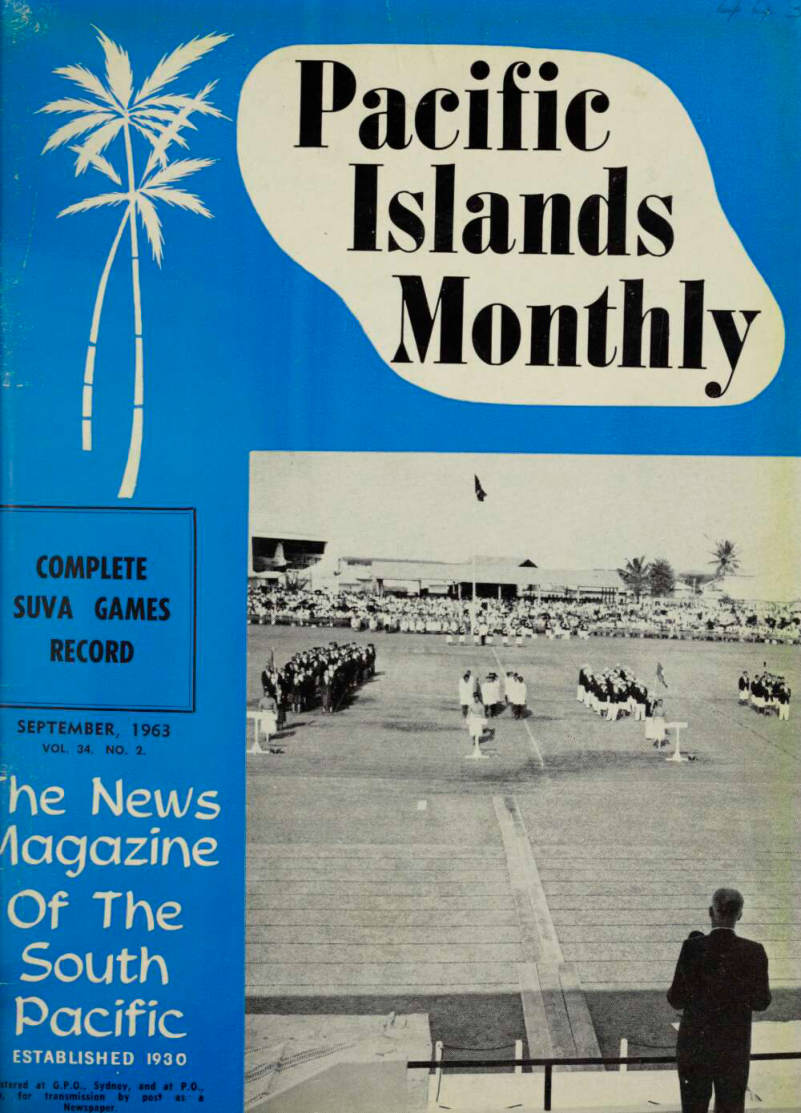 1
1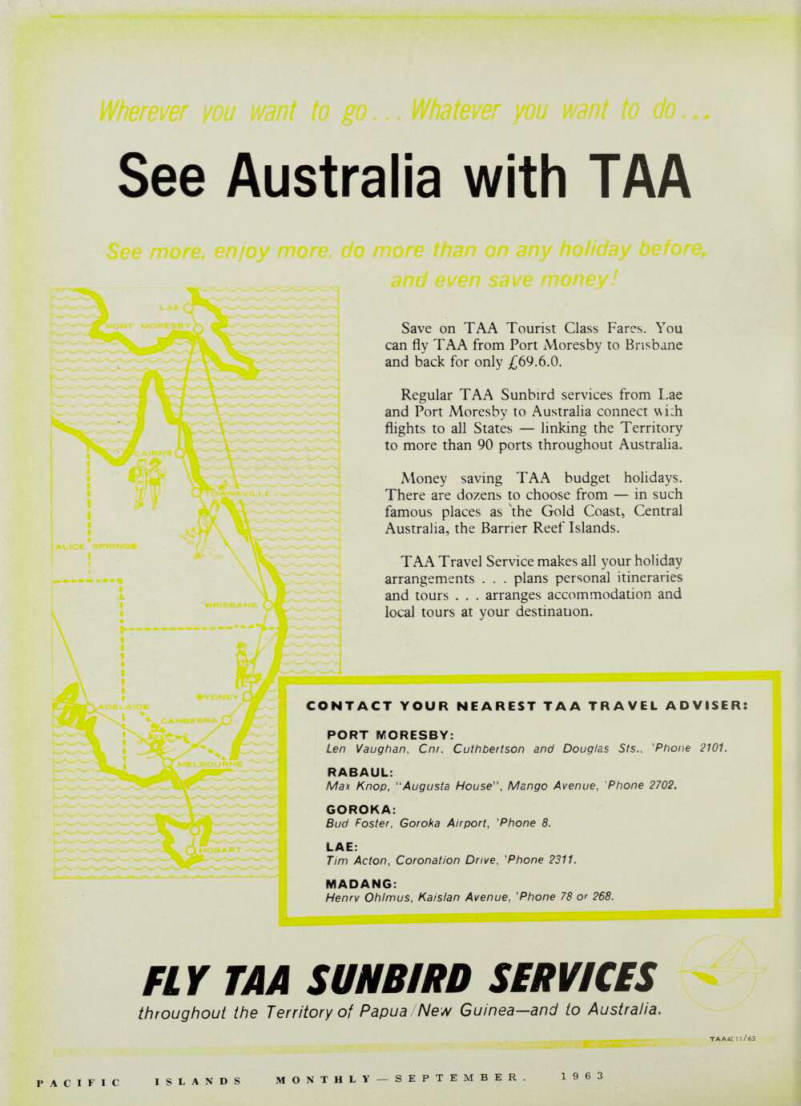 2
2 3
3 4
4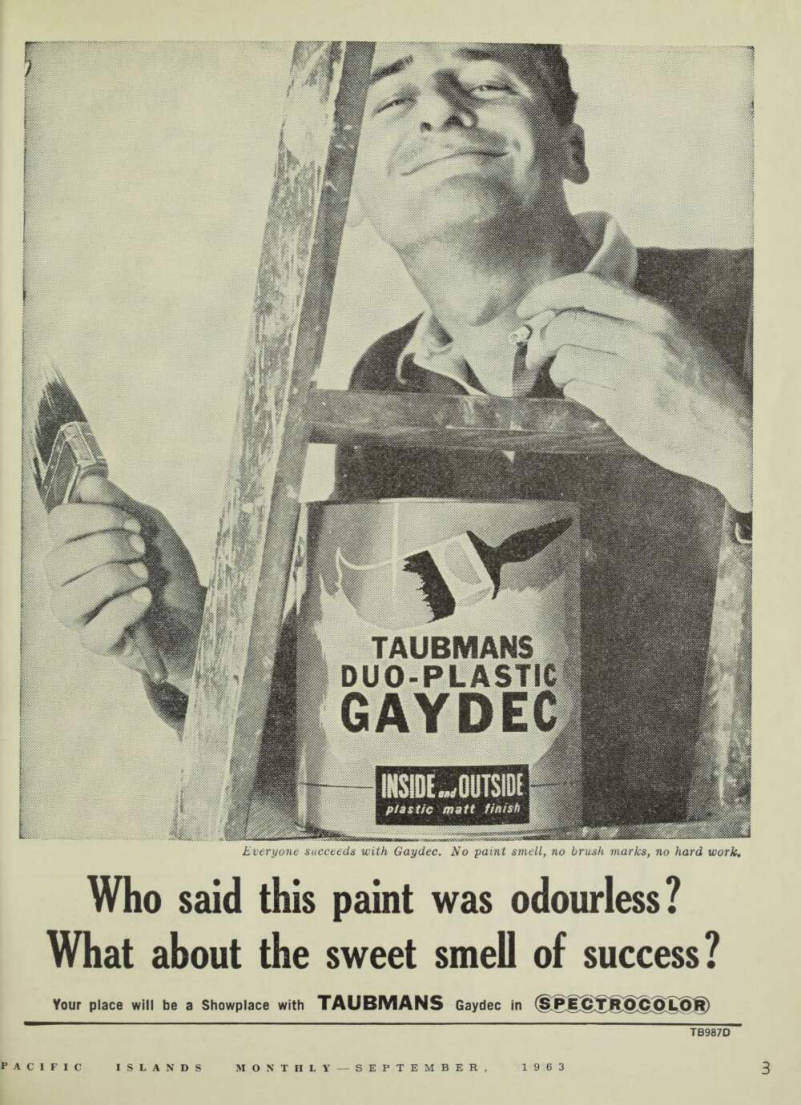 5
5 6
6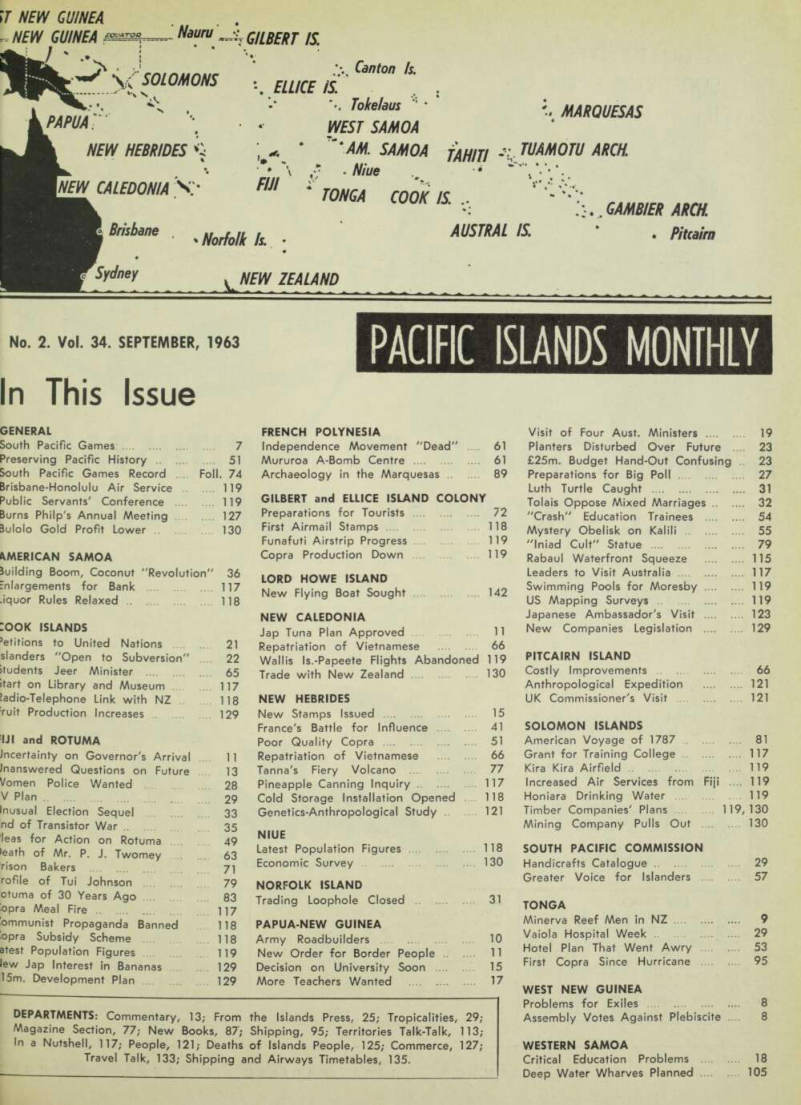 7
7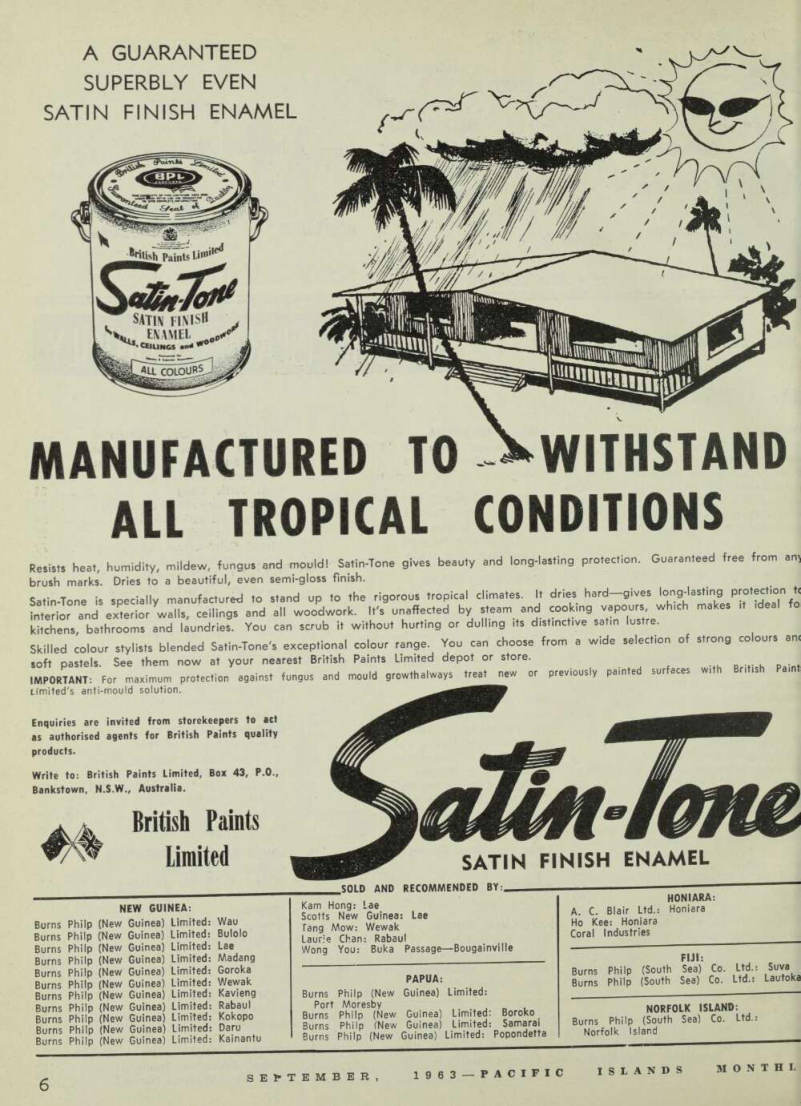 8
8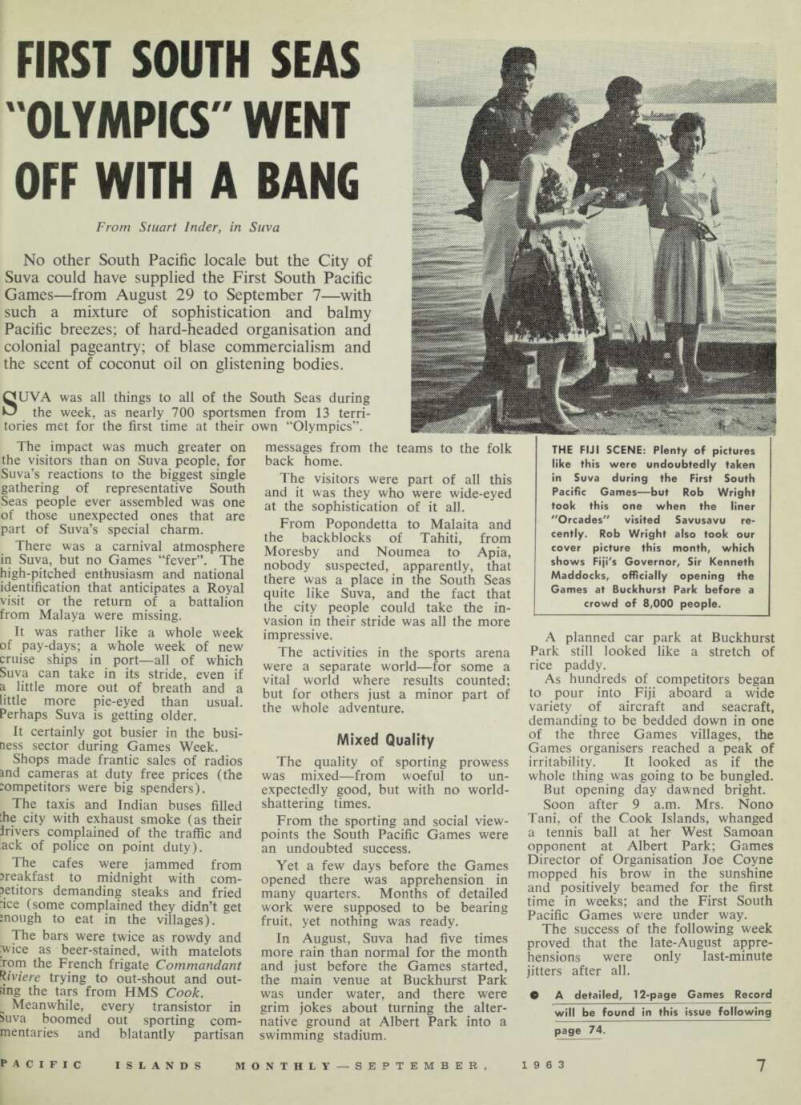 9
9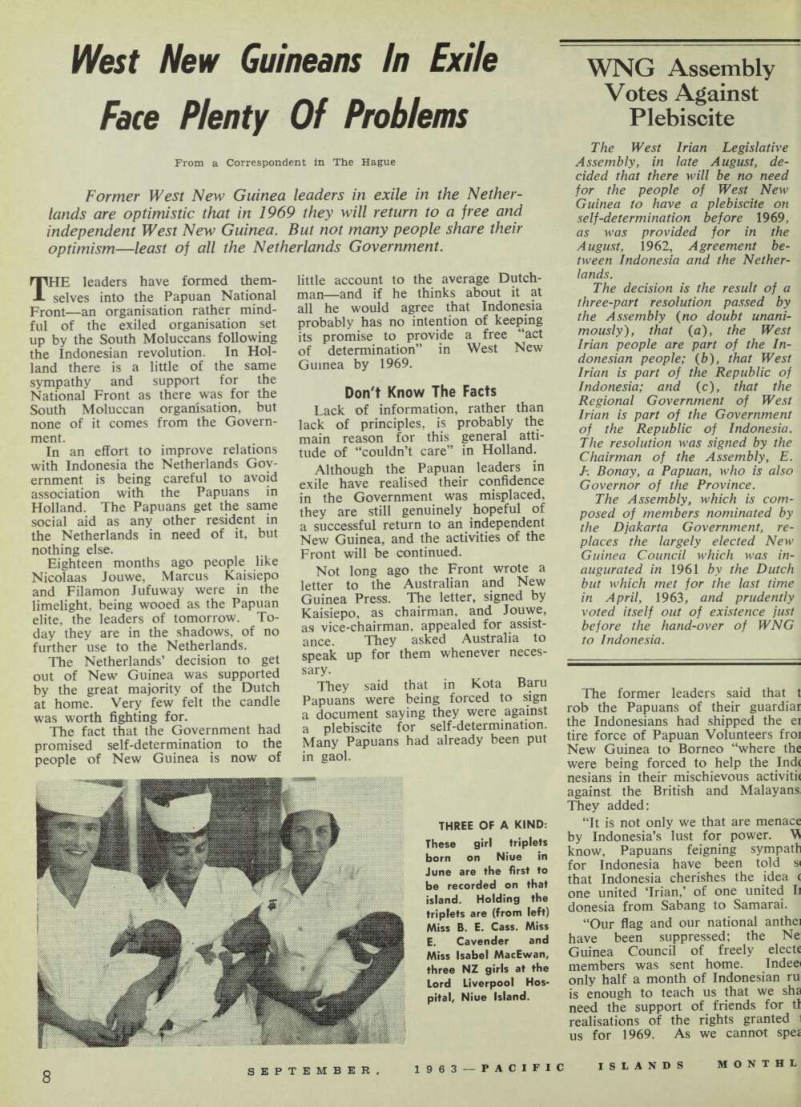 10
10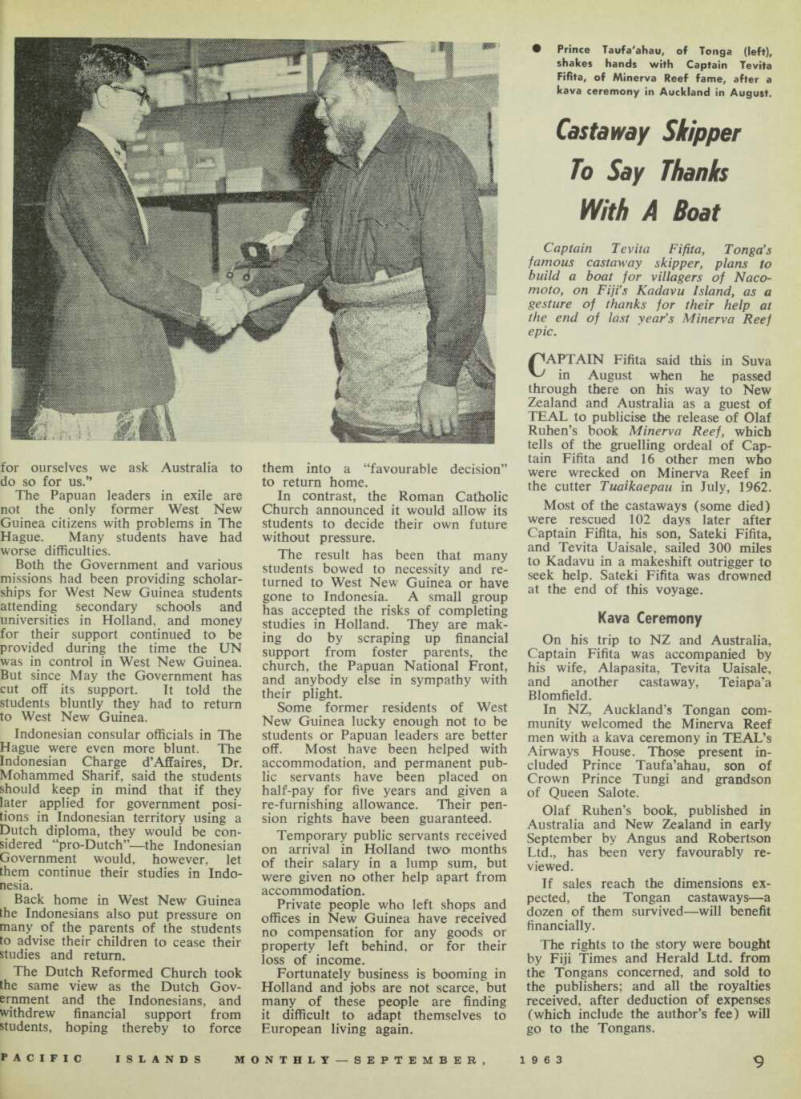 11
11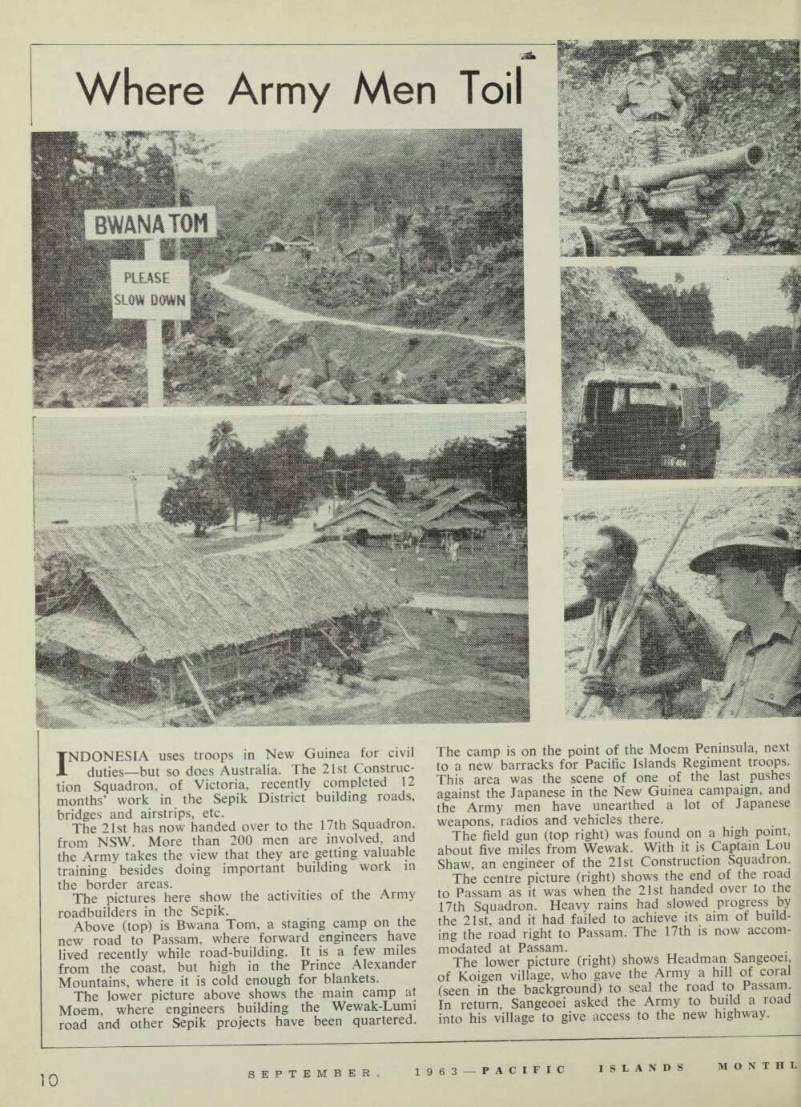 12
12 13
13 14
14 15
15 16
16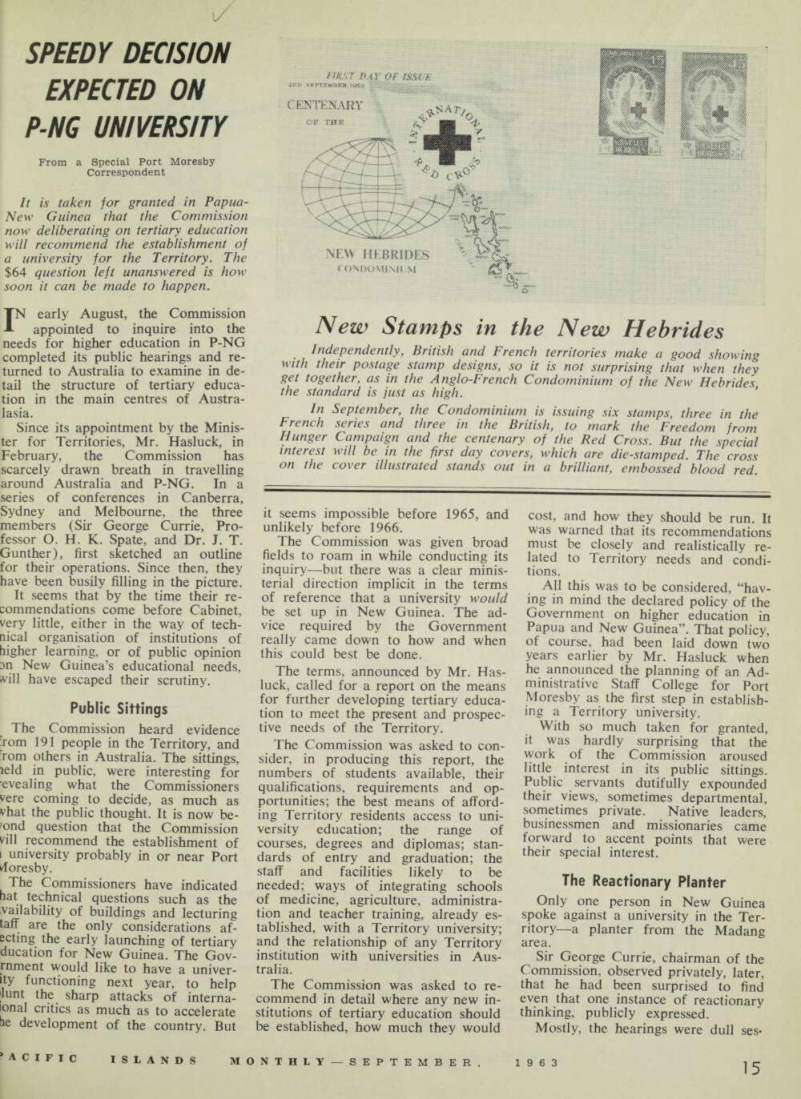 17
17 18
18 19
19 20
20 21
21 22
22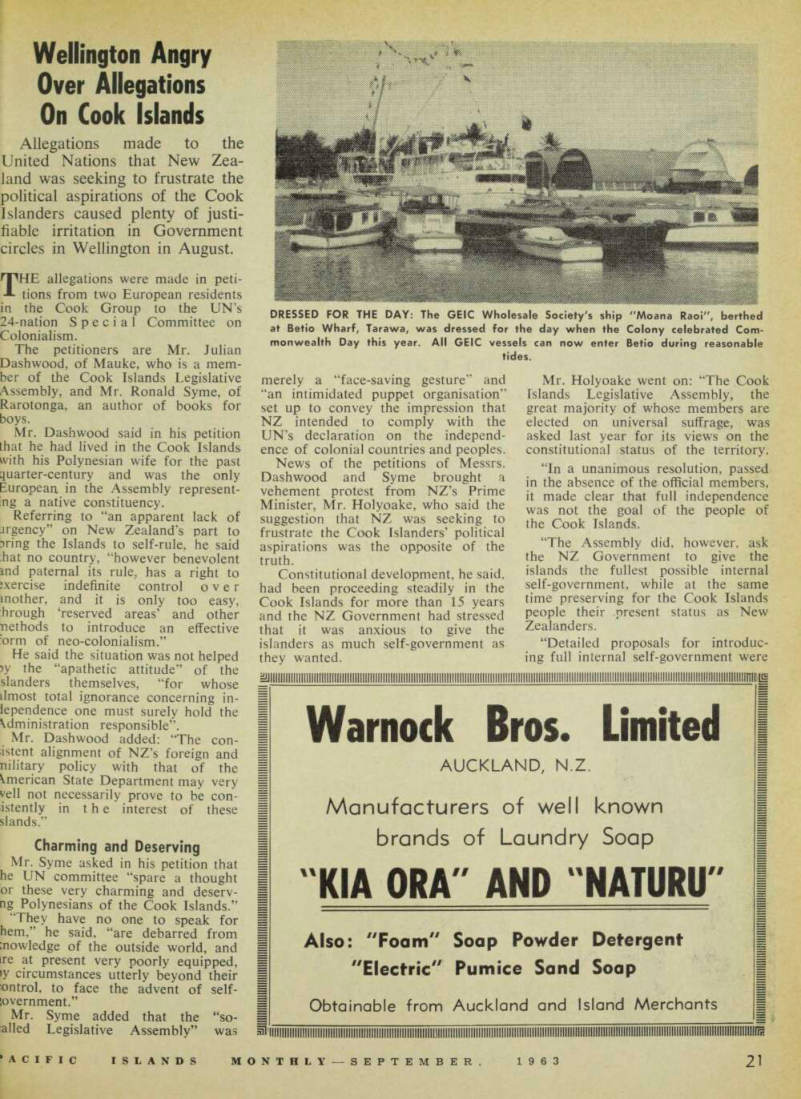 23
23 24
24 25
25 26
26 27
27 28
28 29
29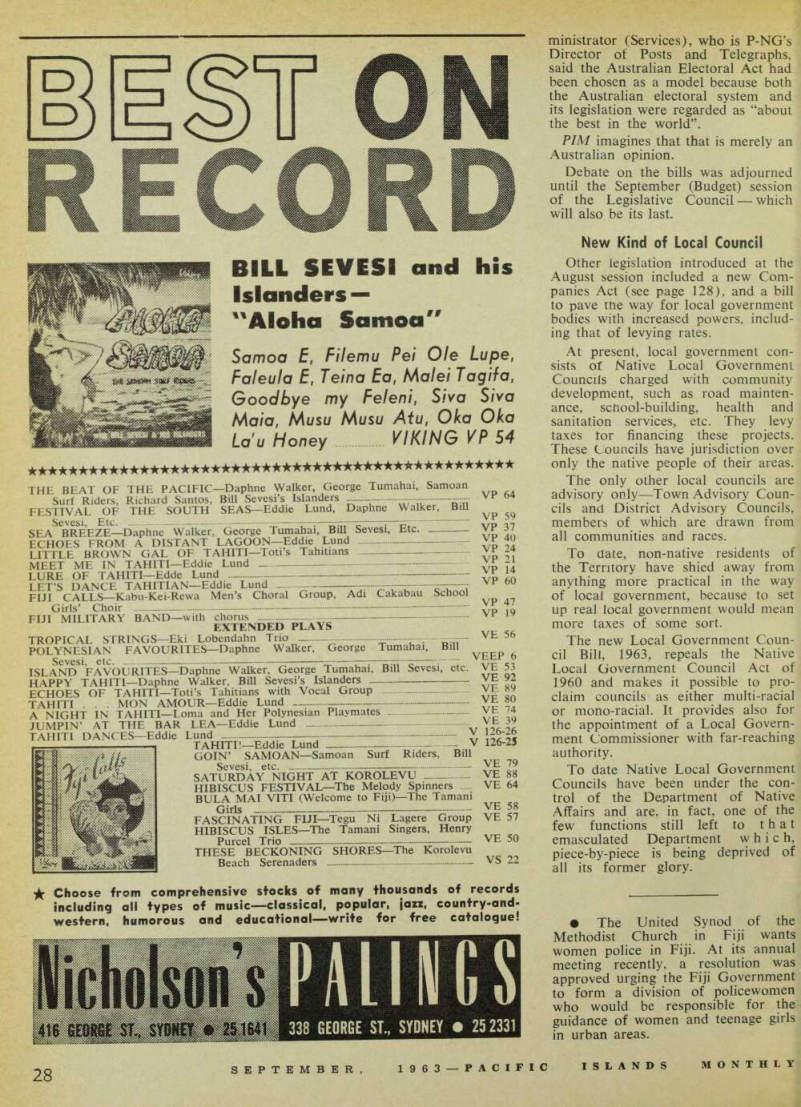 30
30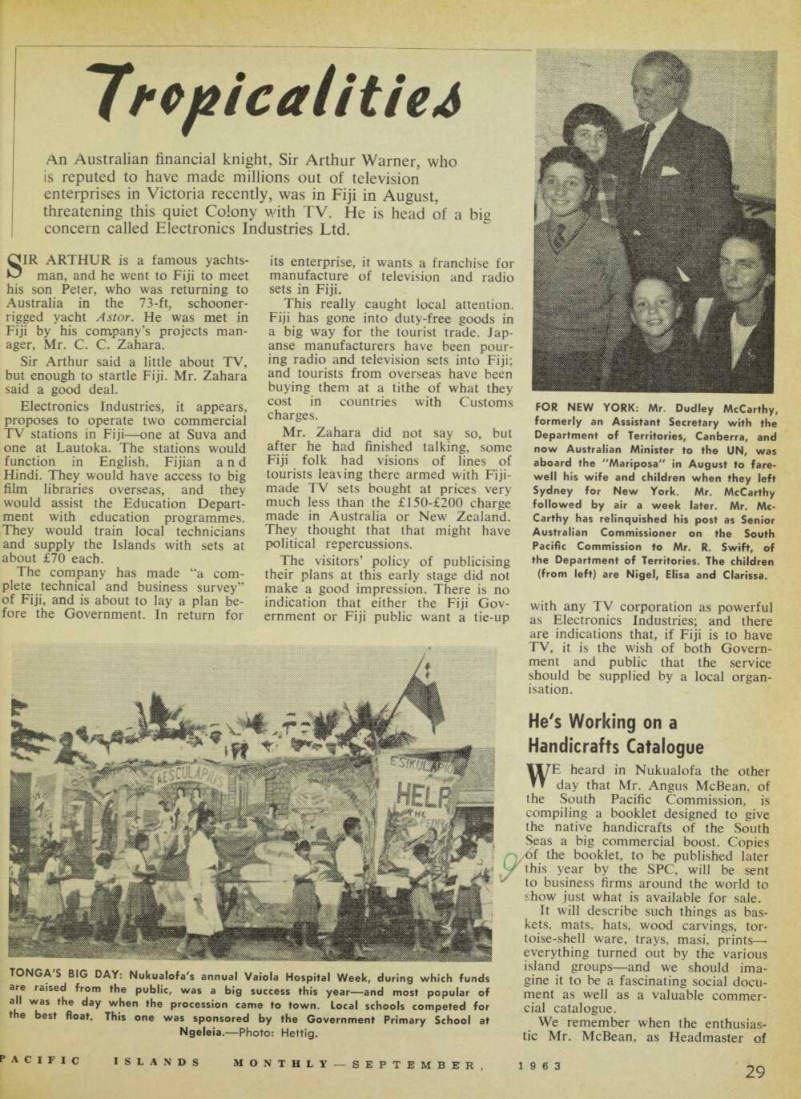 31
31 32
32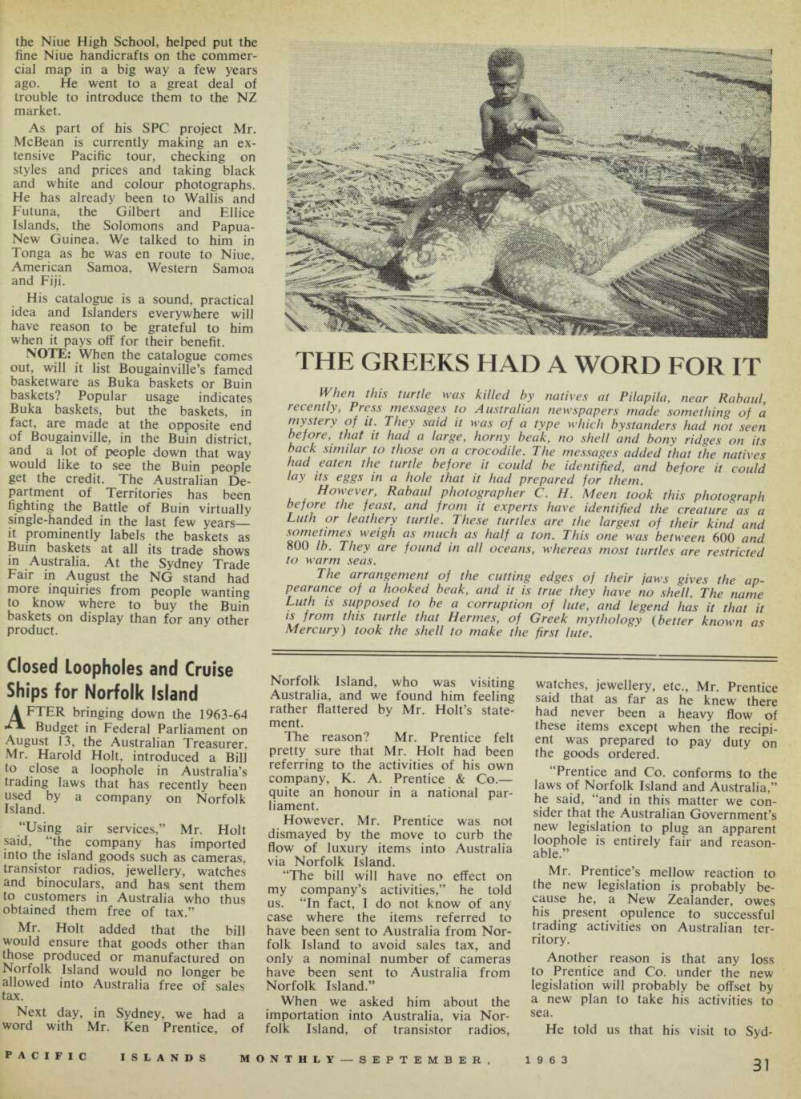 33
33 34
34 35
35 36
36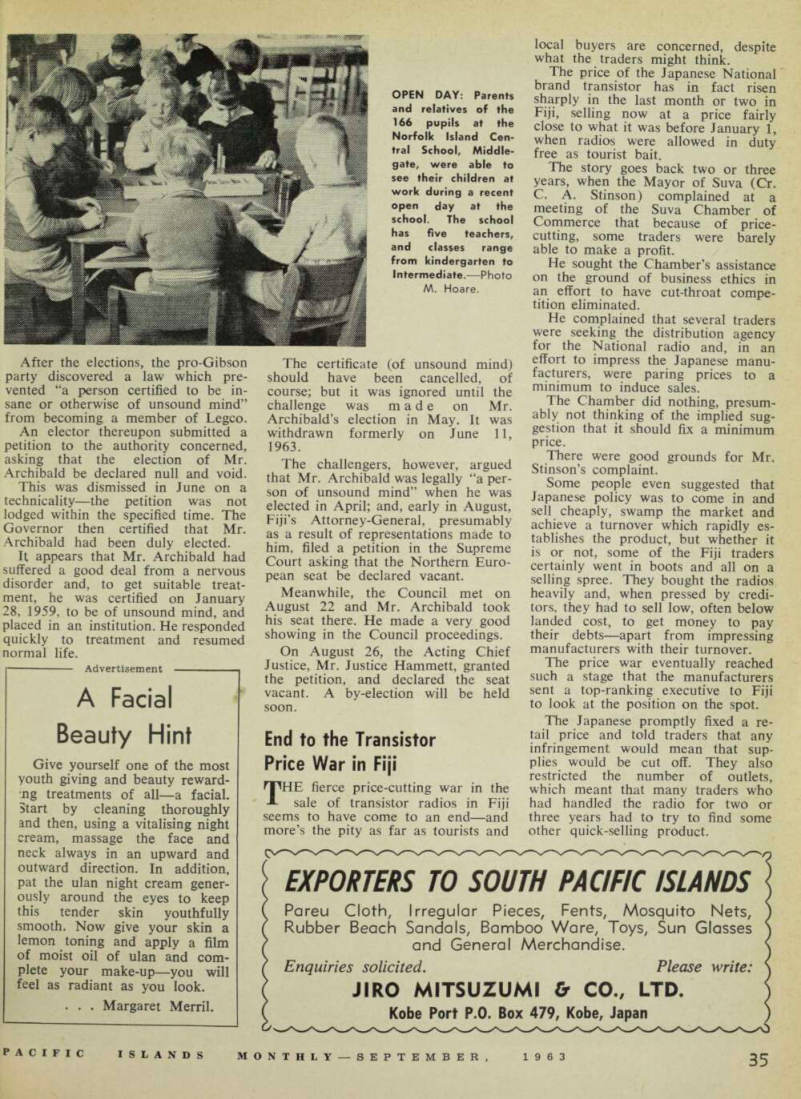 37
37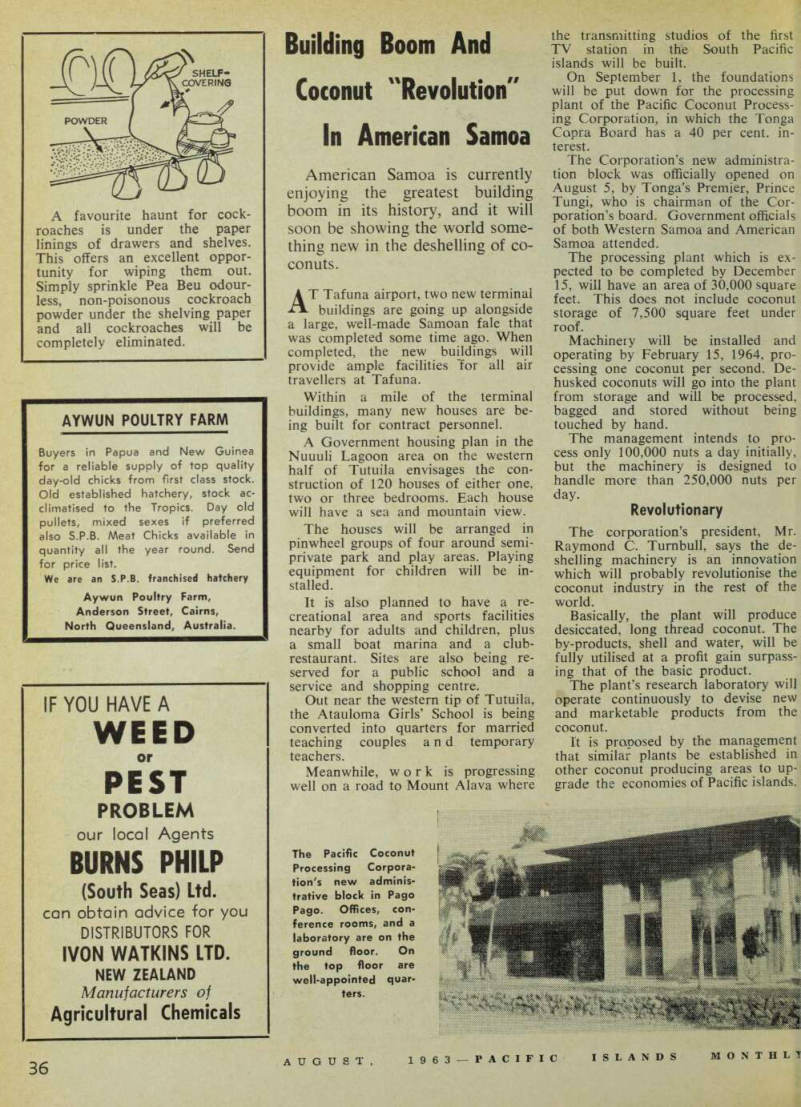 38
38 39
39 40
40 41
41 42
42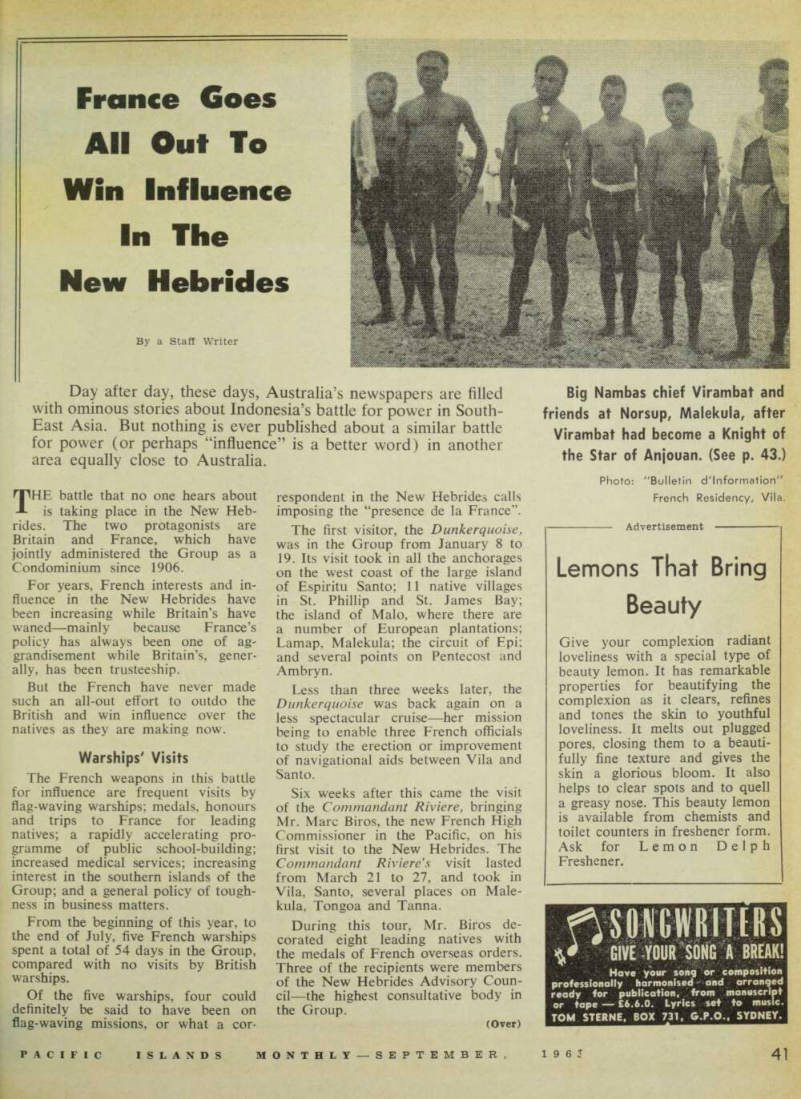 43
43 44
44 45
45 46
46 47
47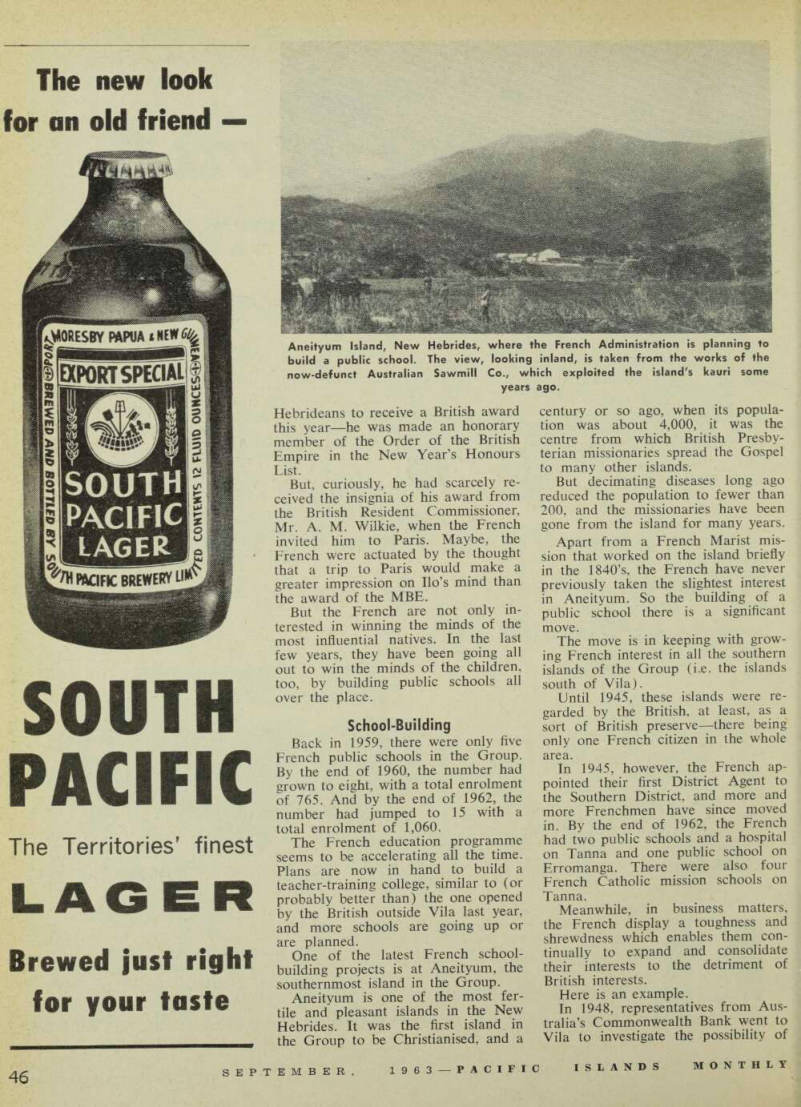 48
48 49
49 50
50 51
51 52
52 53
53 54
54 55
55 56
56 57
57 58
58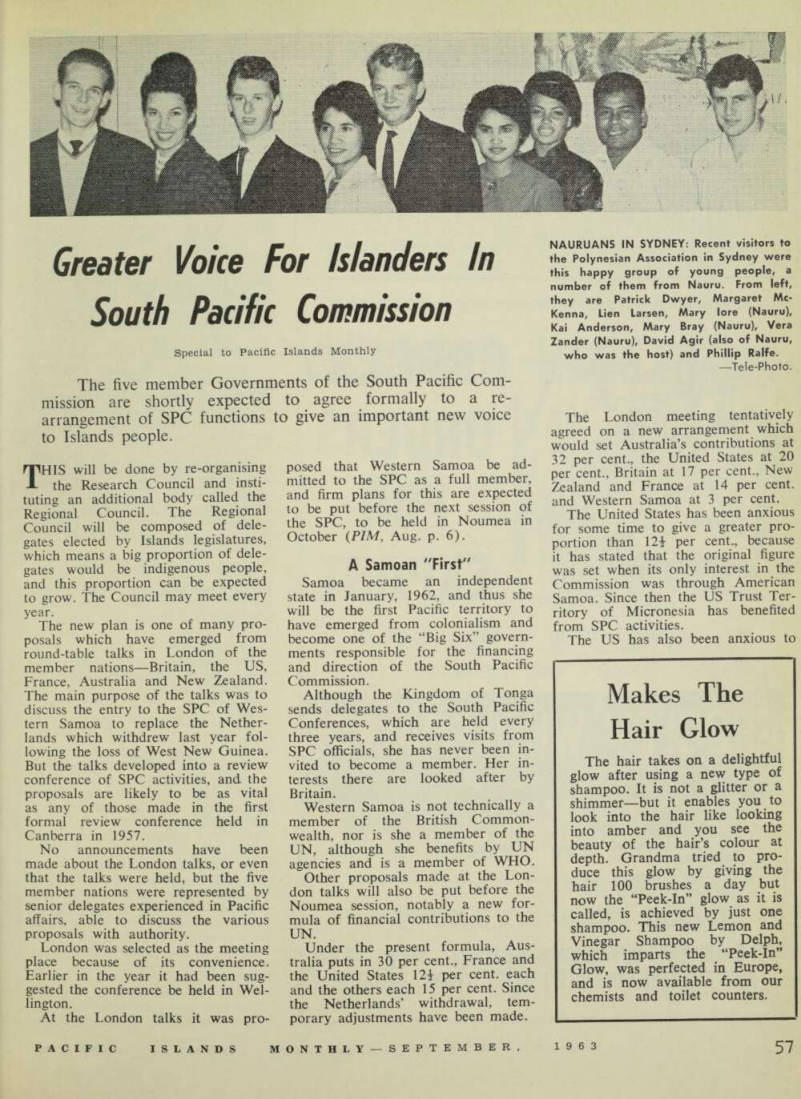 59
59 60
60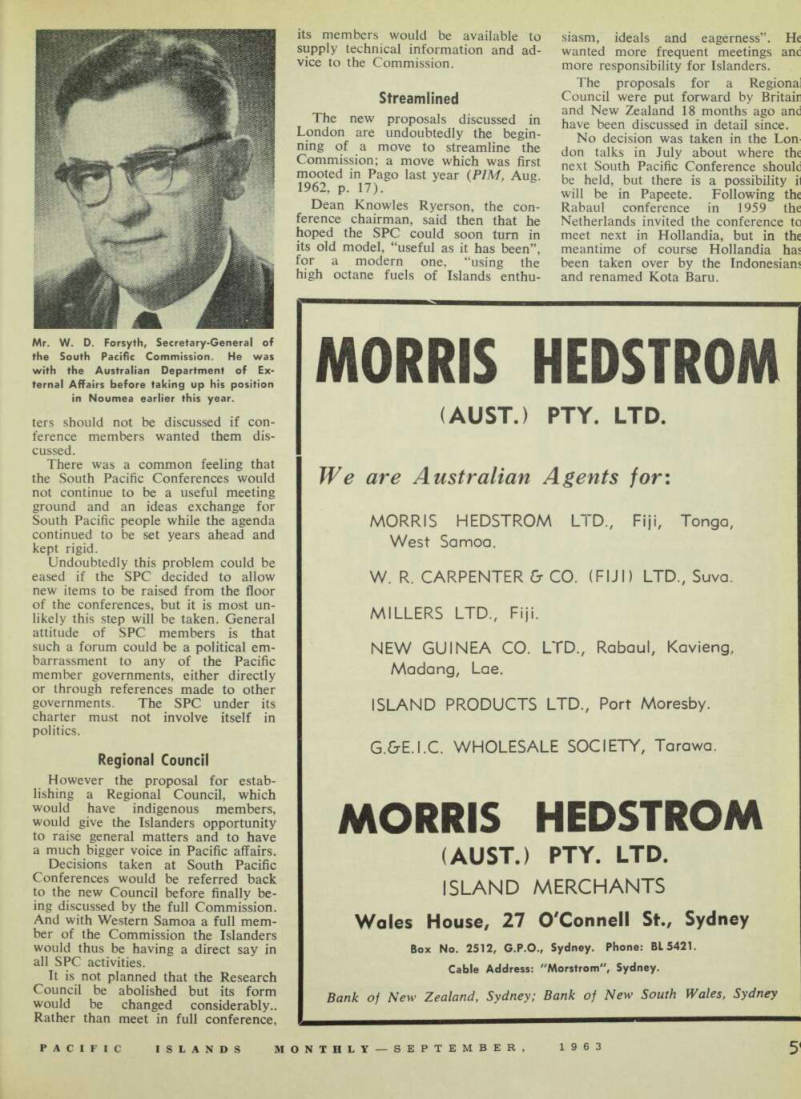 61
61 62
62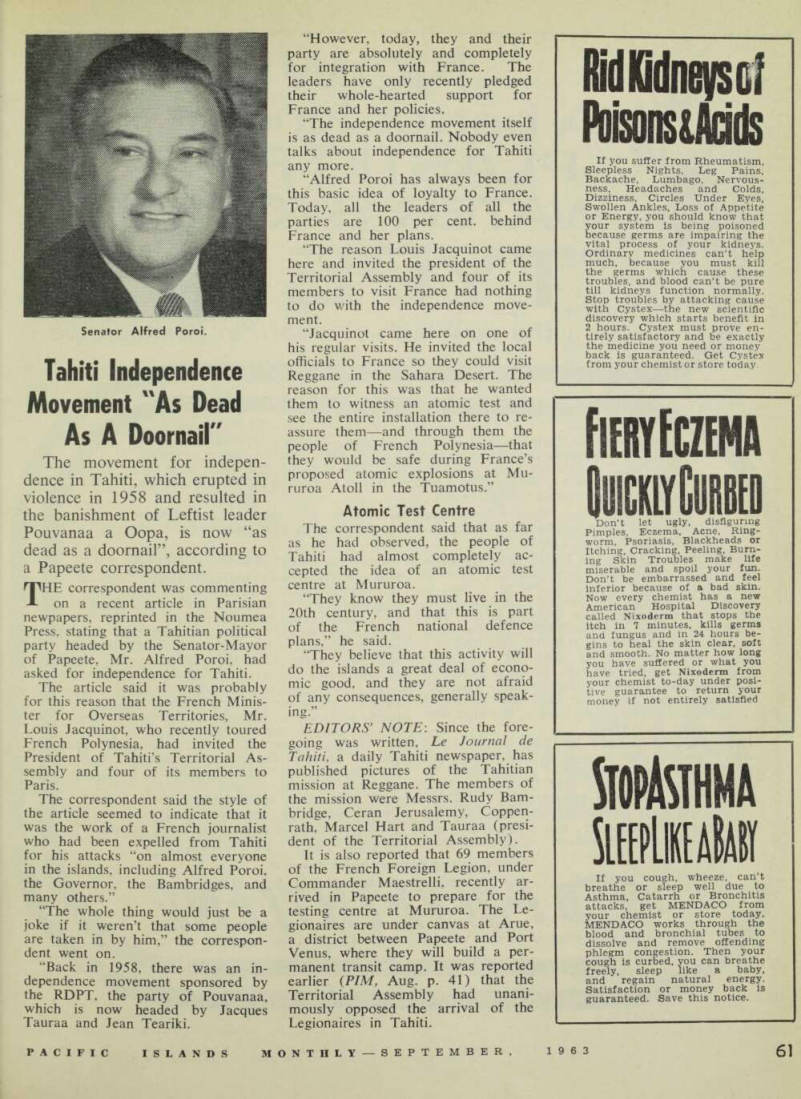 63
63 64
64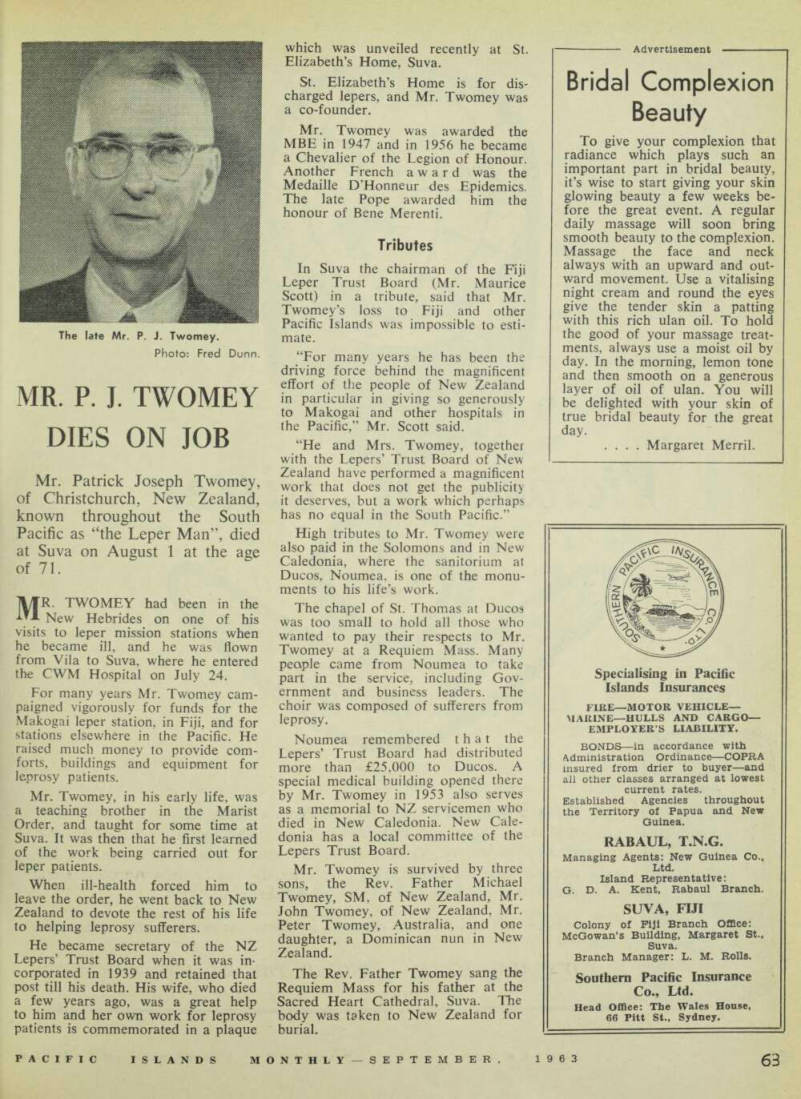 65
65 66
66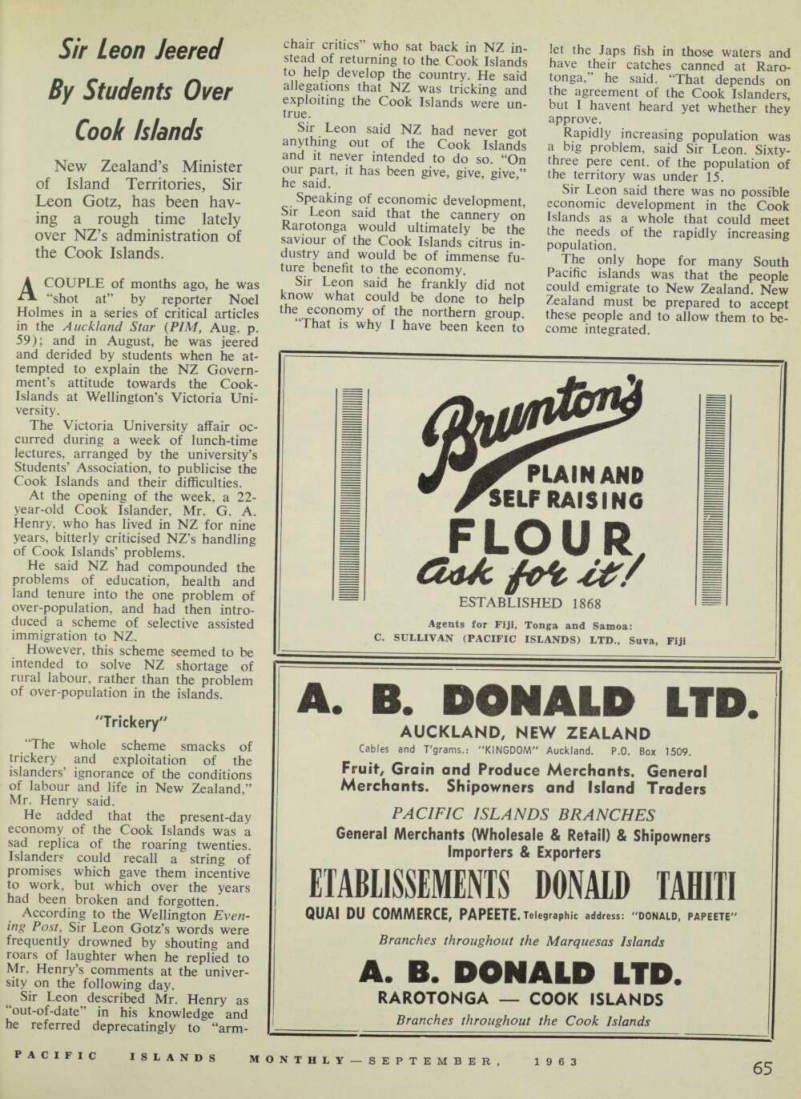 67
67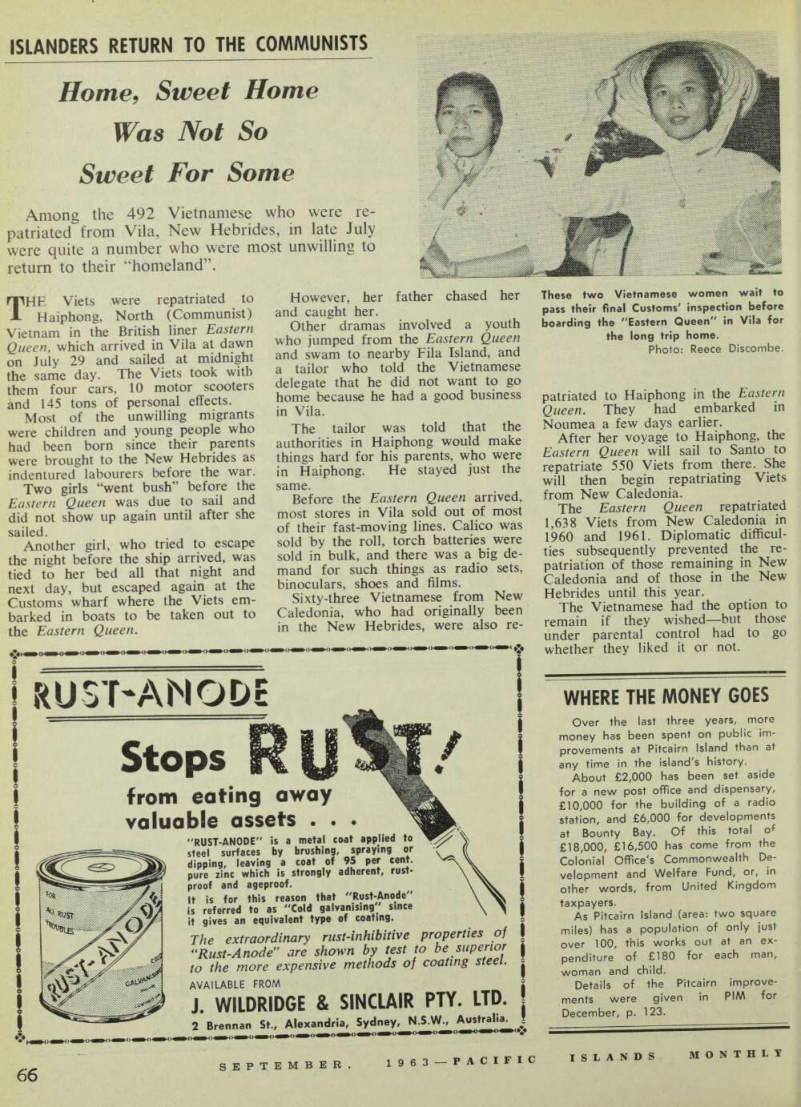 68
68 69
69 70
70 71
71 72
72 73
73 74
74 75
75 76
76 77
77 78
78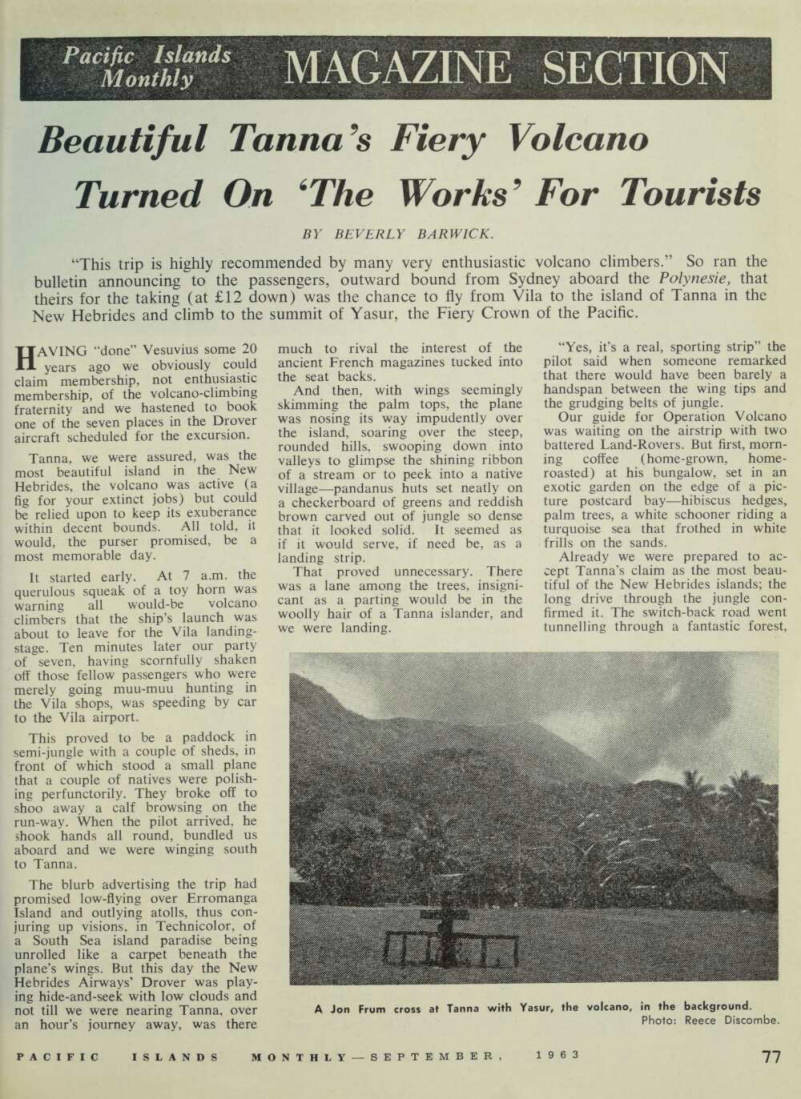 79
79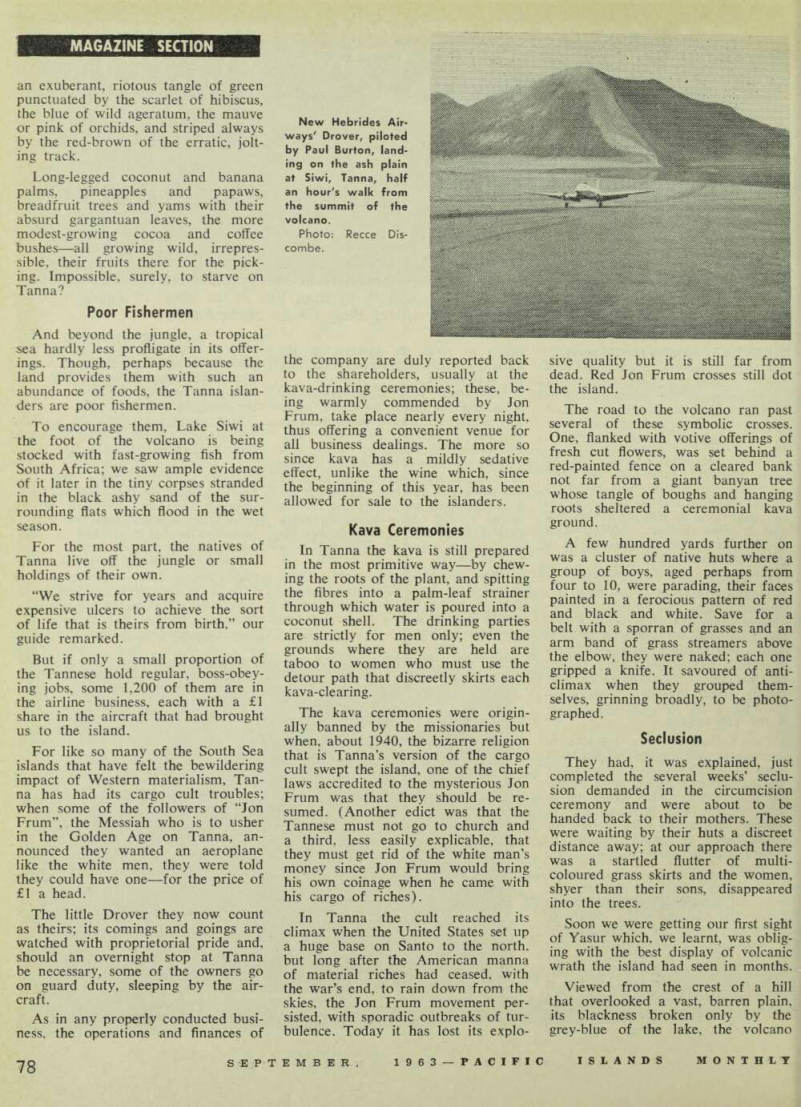 80
80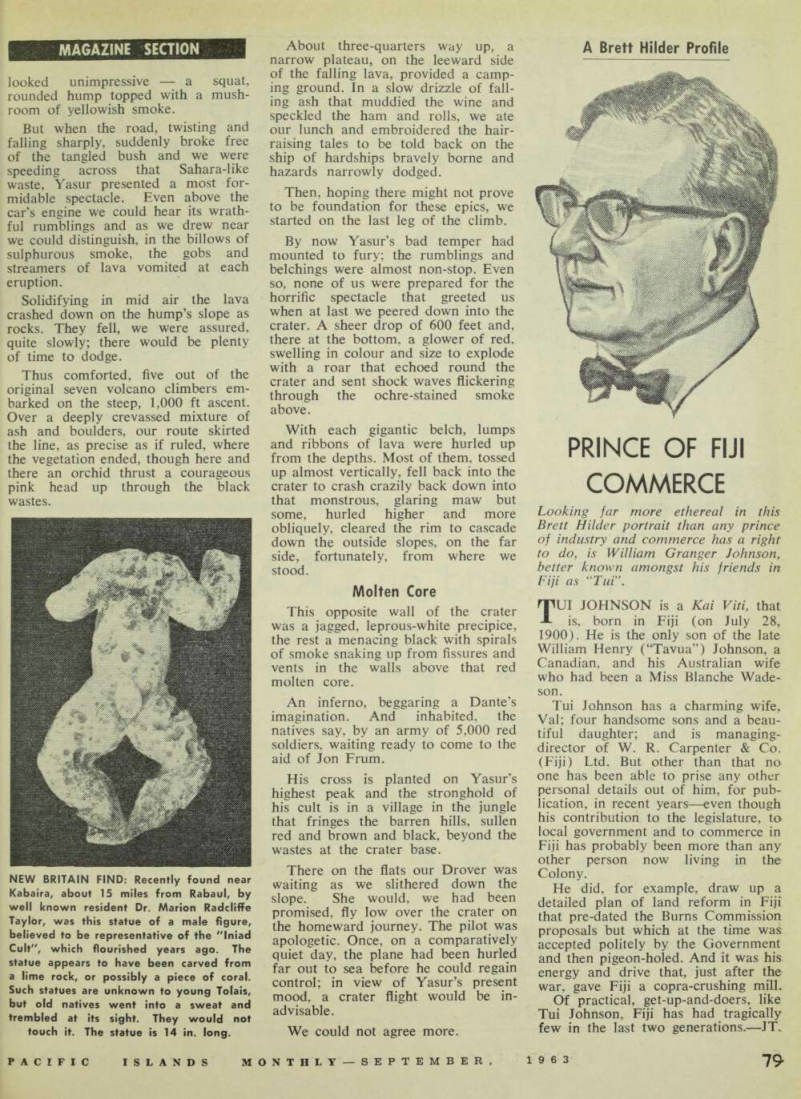 81
81 82
82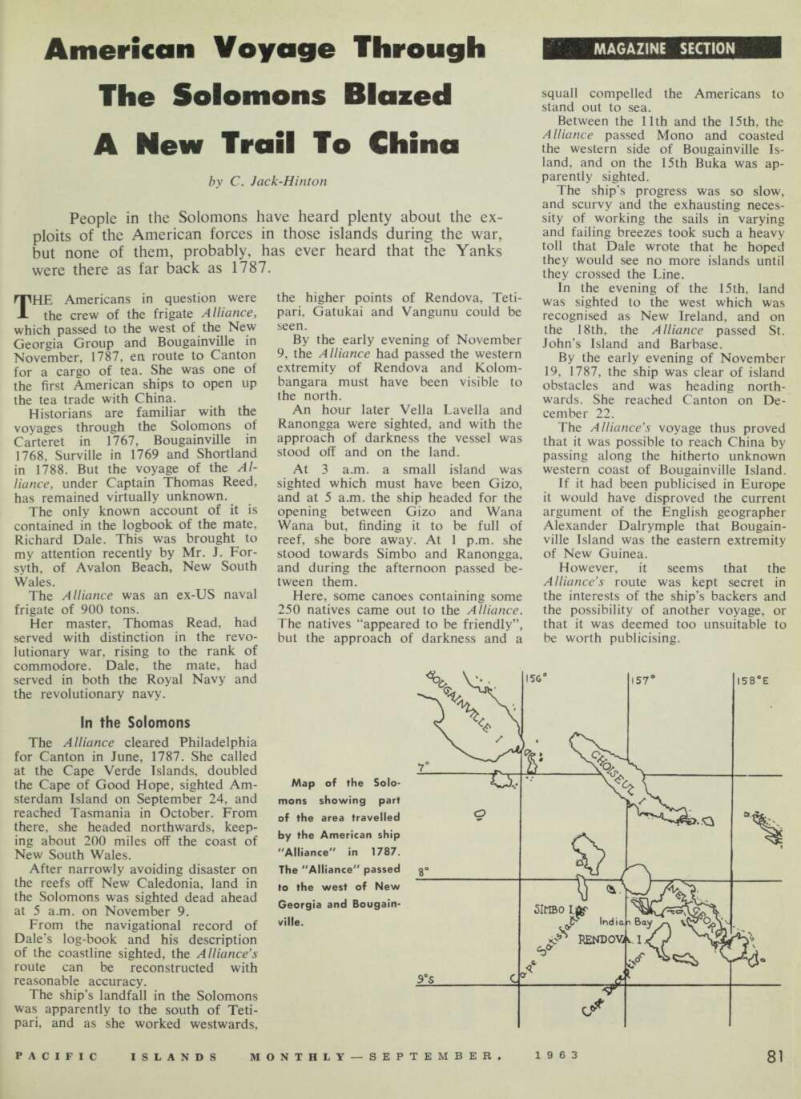 83
83 84
84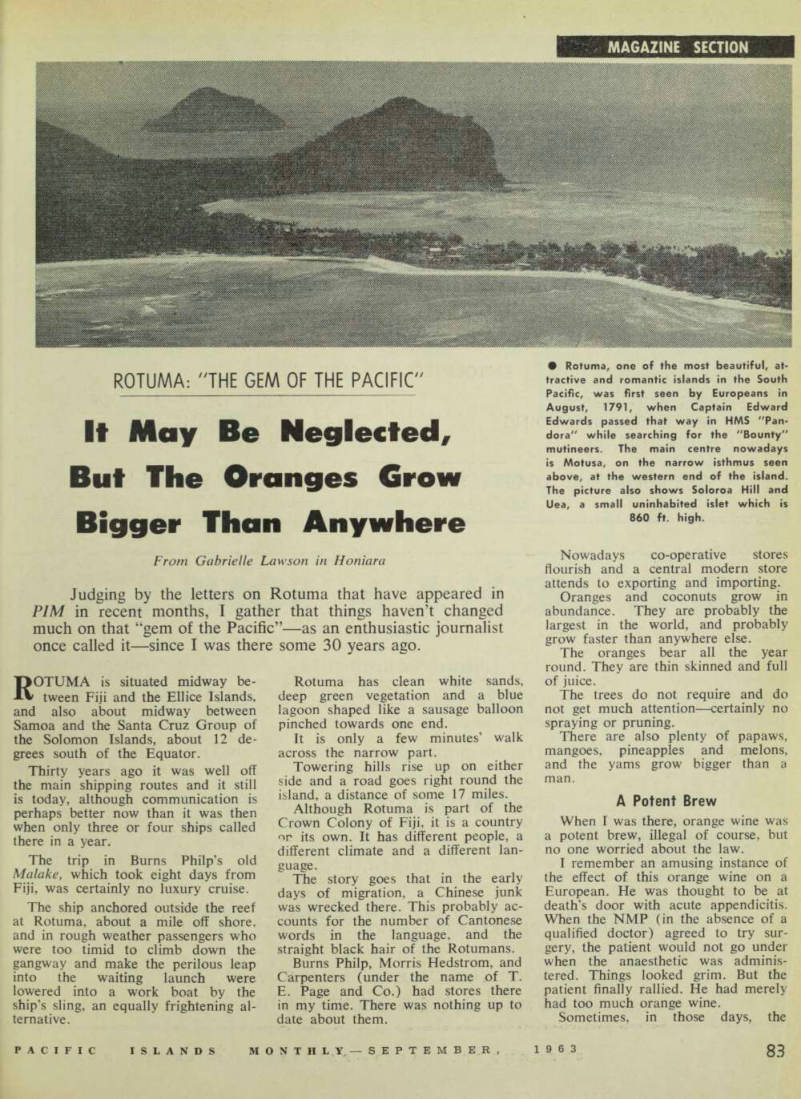 85
85 86
86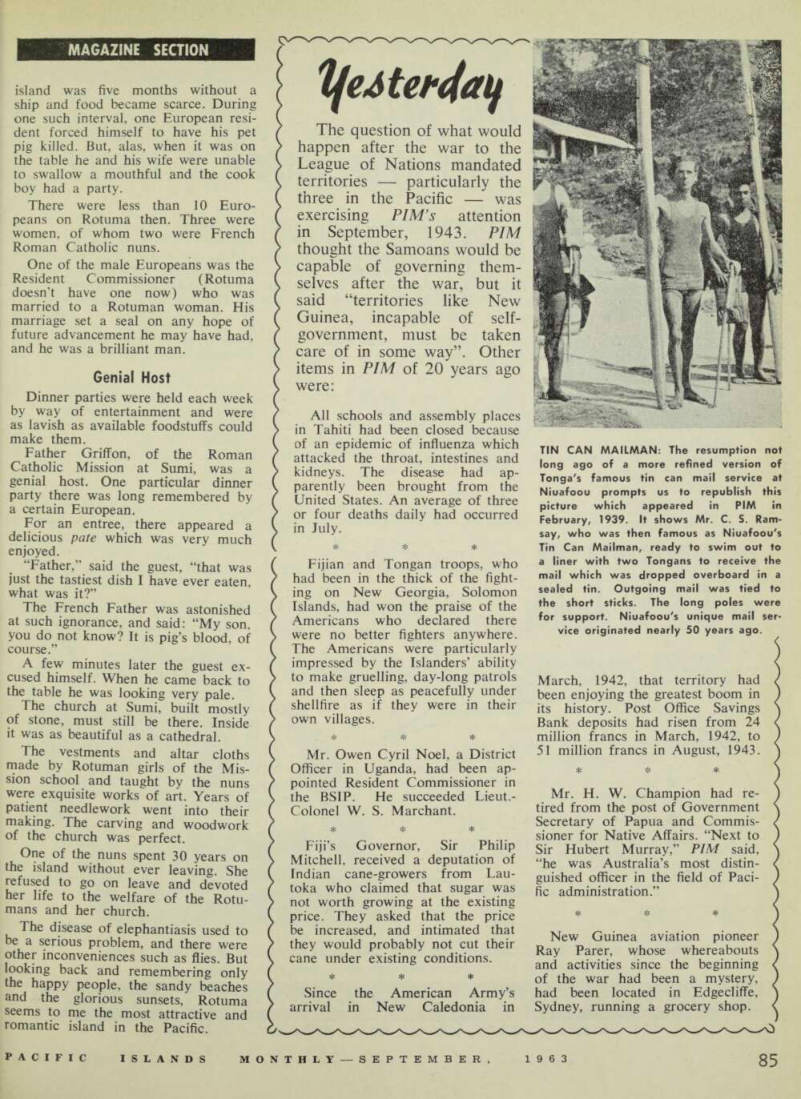 87
87 88
88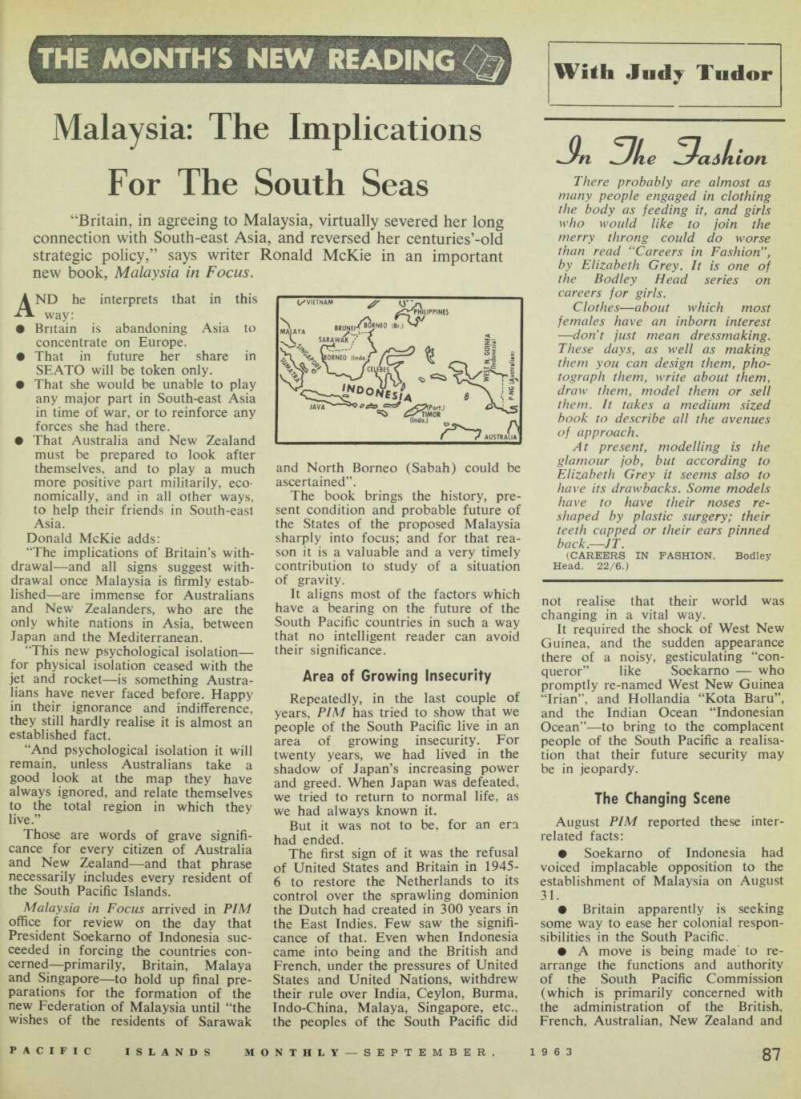 89
89 90
90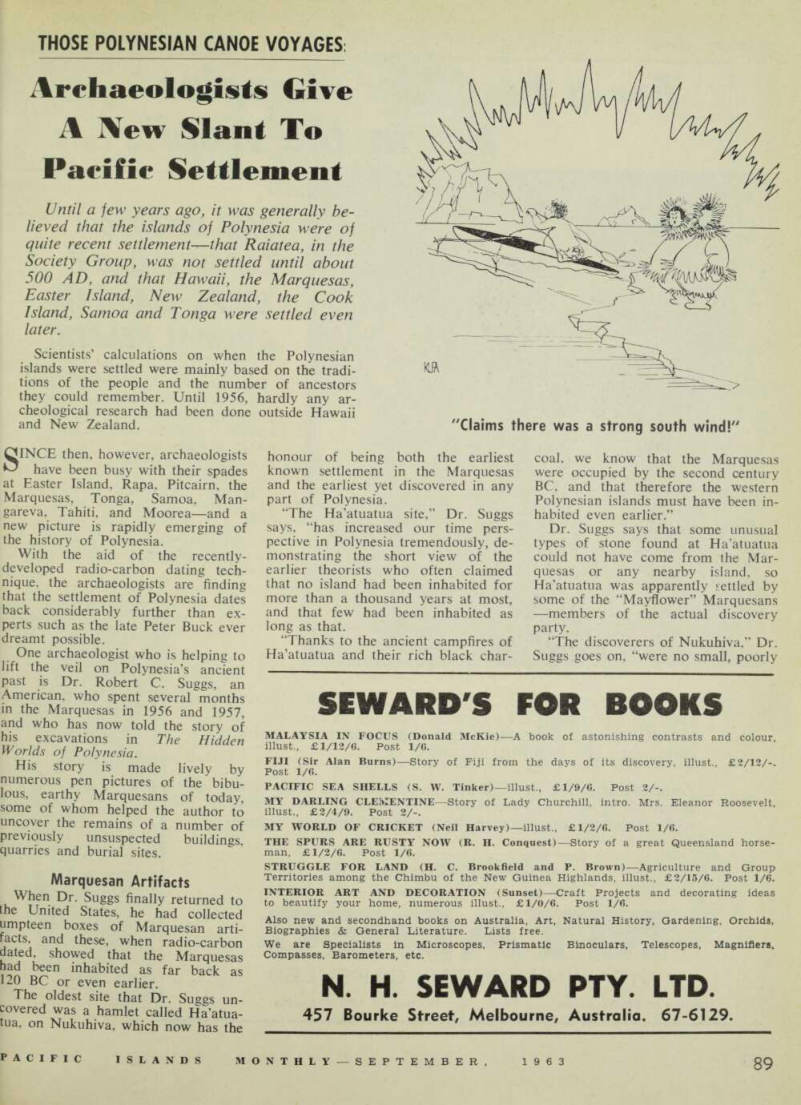 91
91 92
92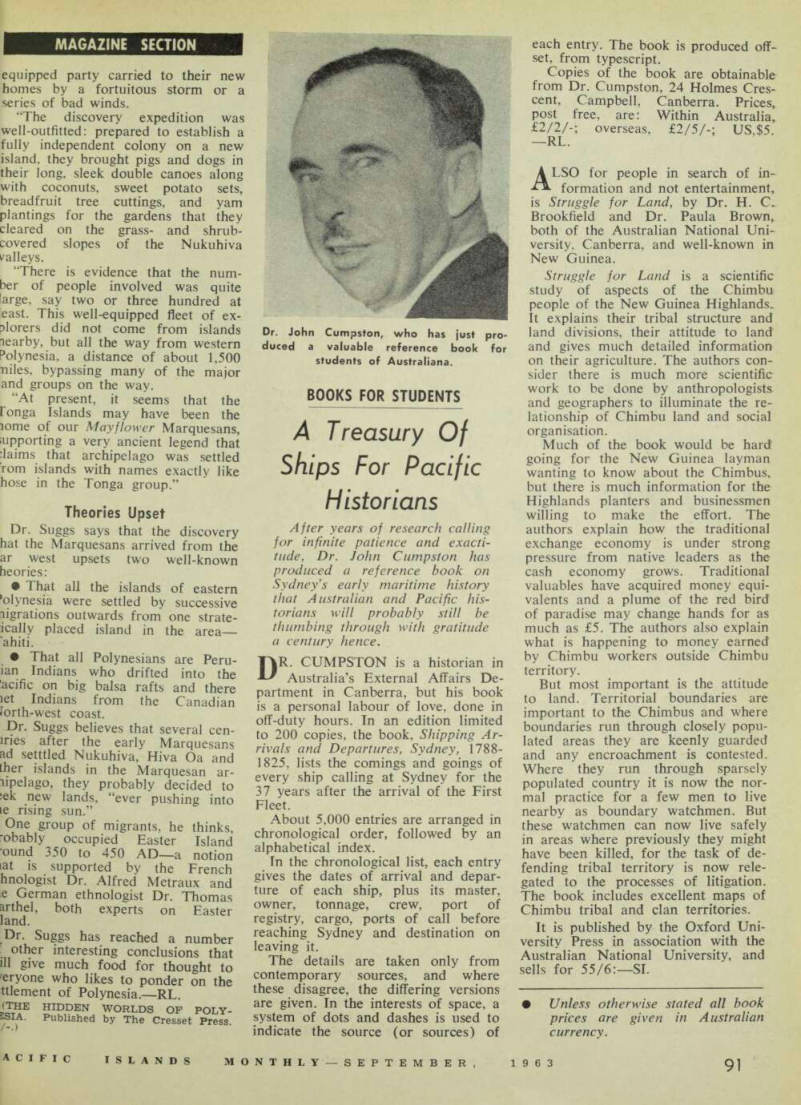 93
93 94
94 95
95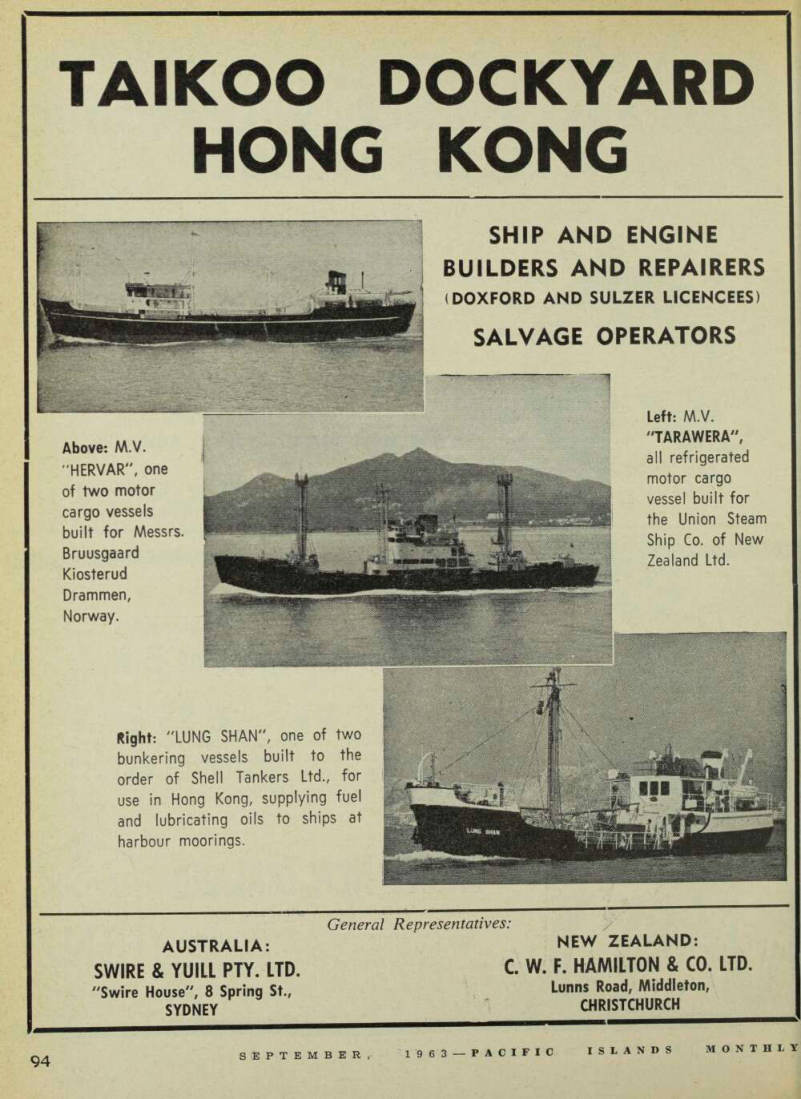 96
96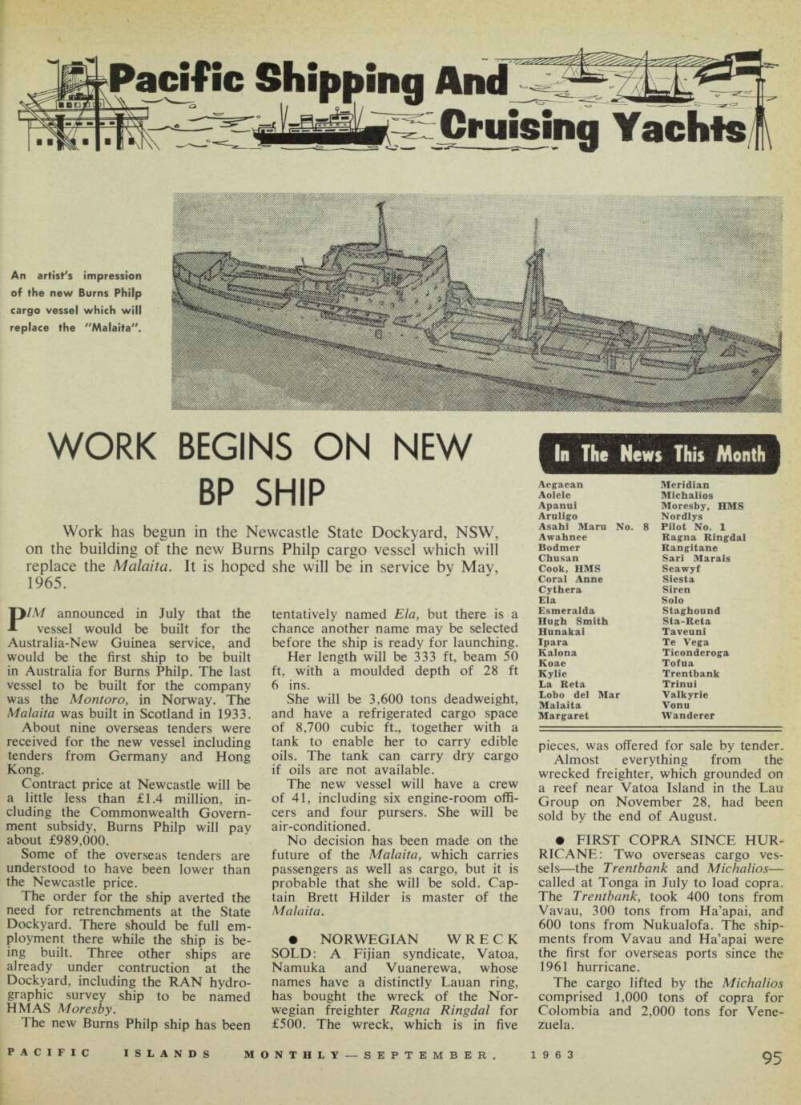 97
97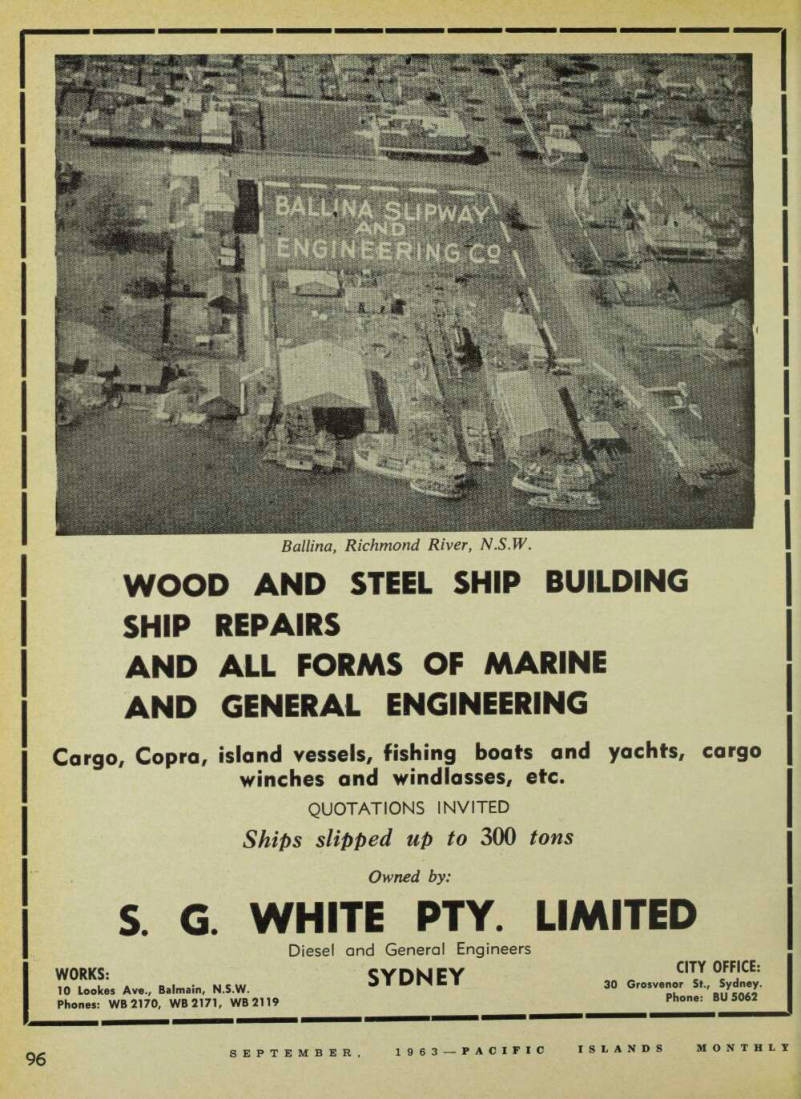 98
98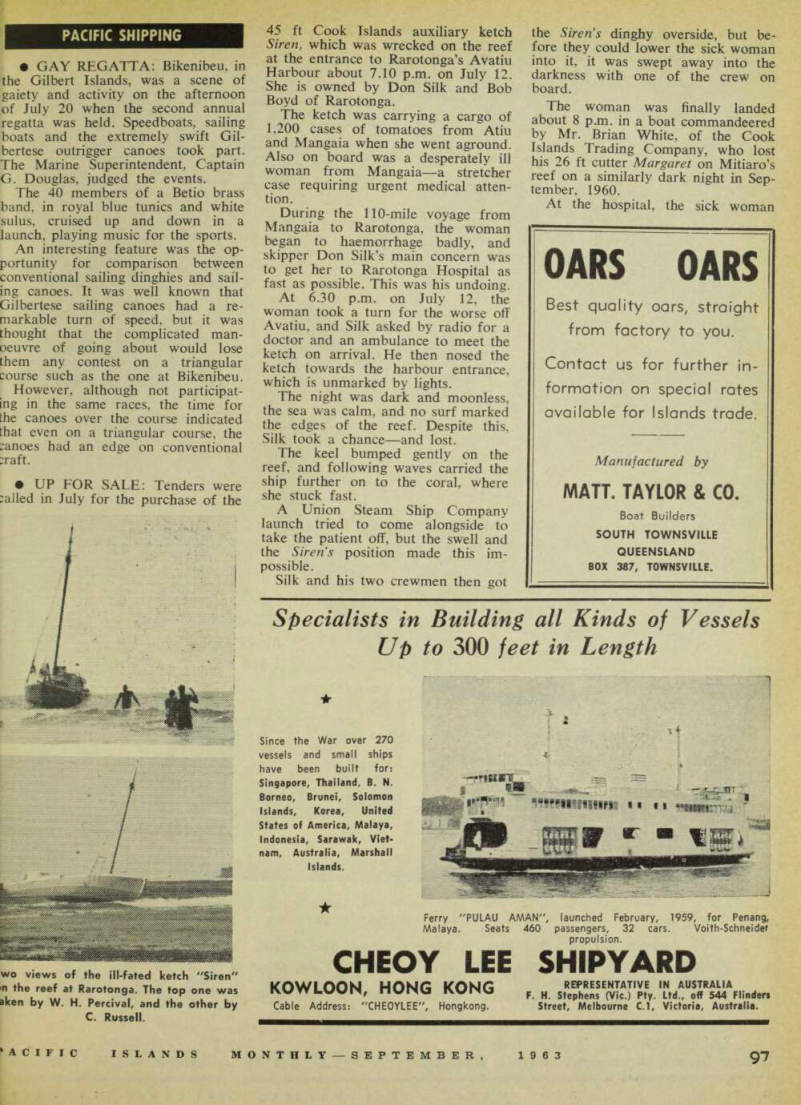 99
99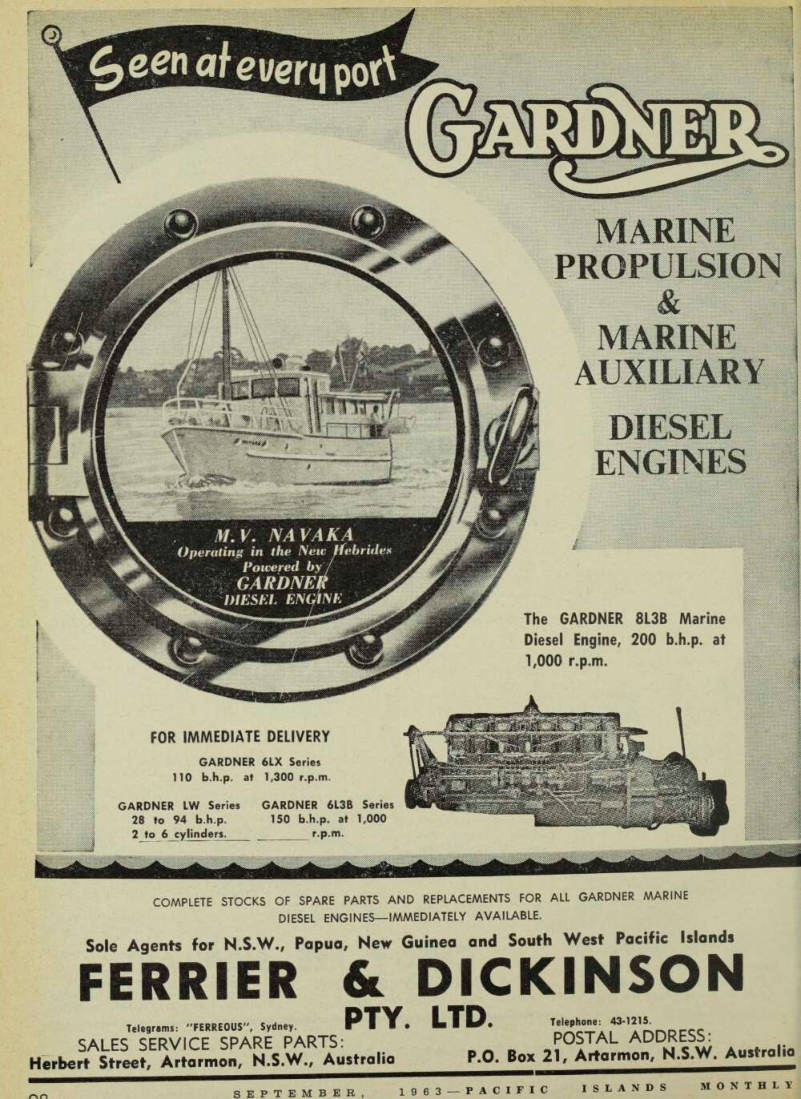 100
100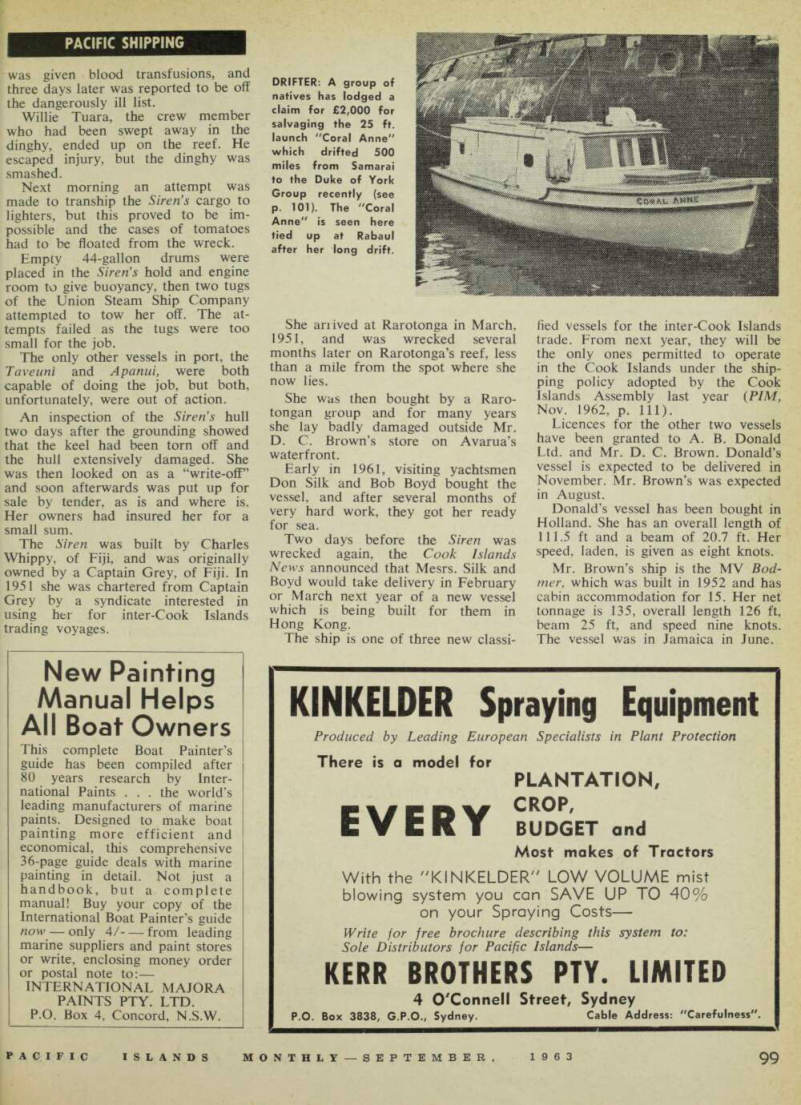 101
101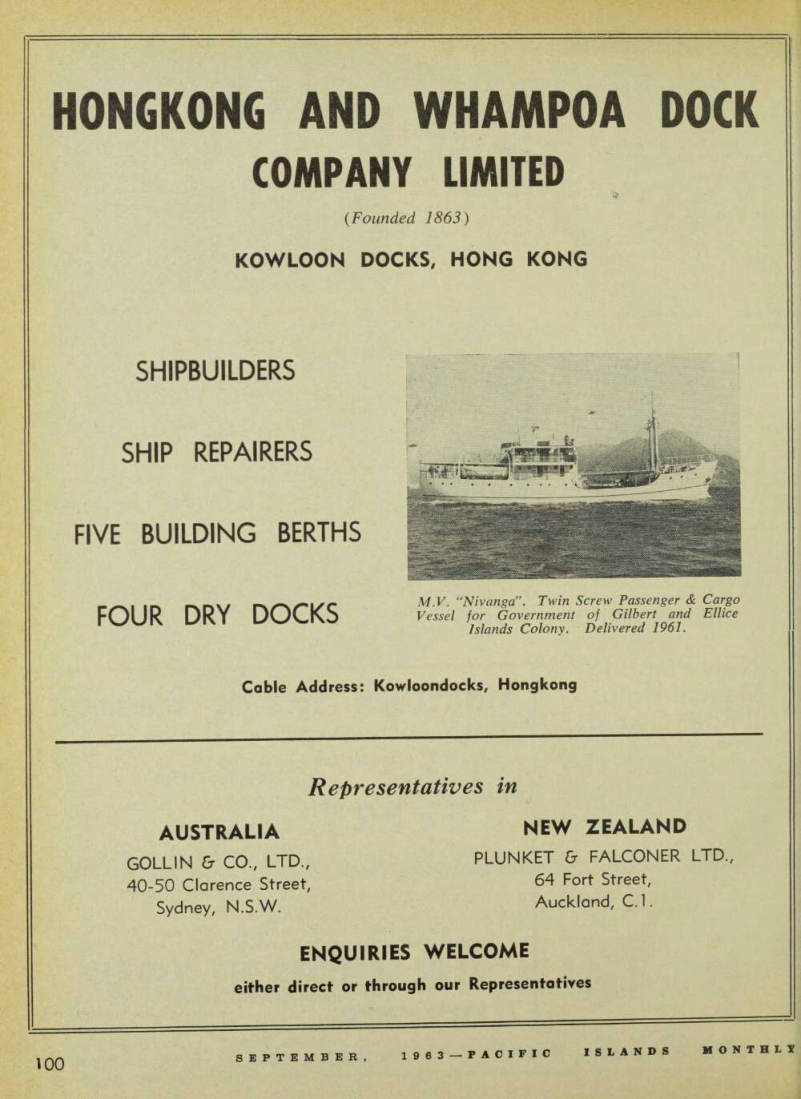 102
102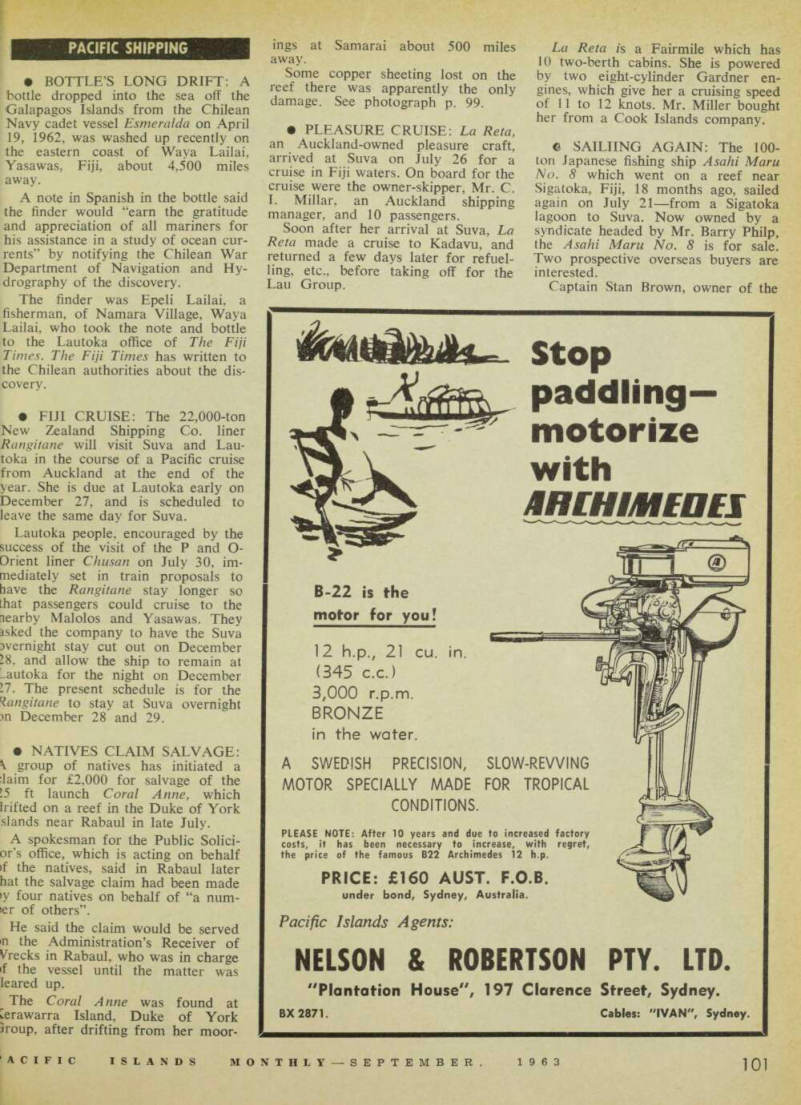 103
103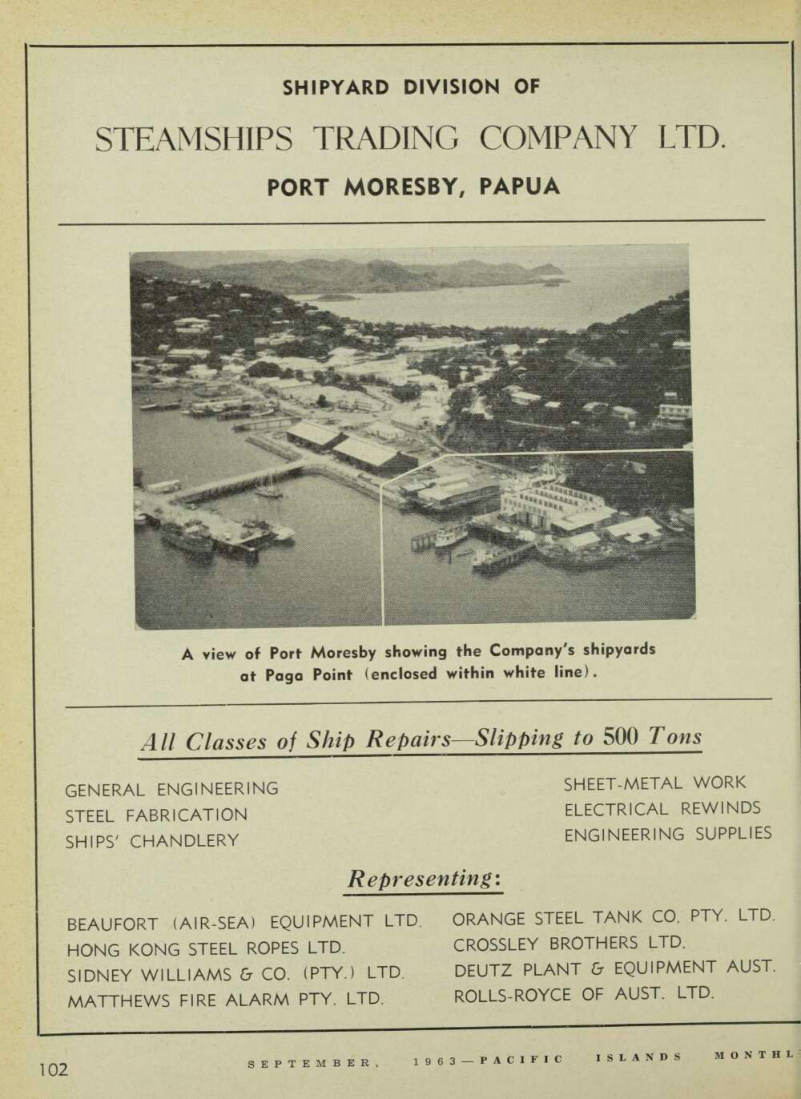 104
104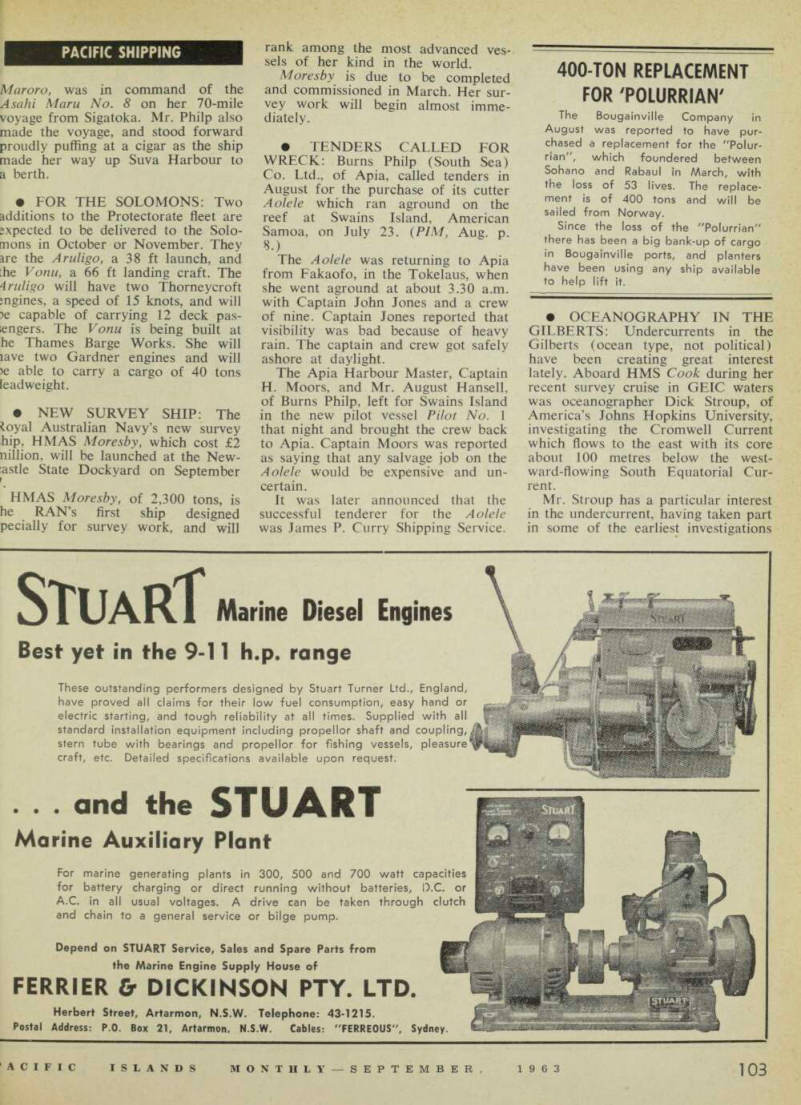 105
105 106
106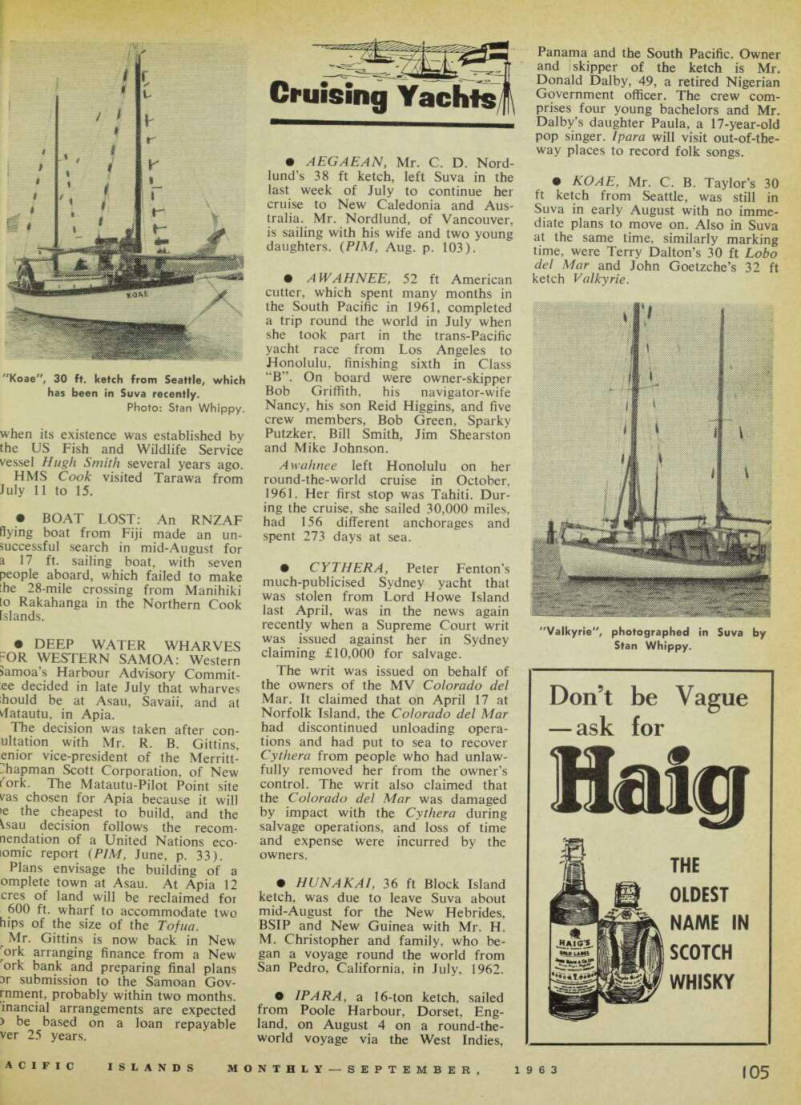 107
107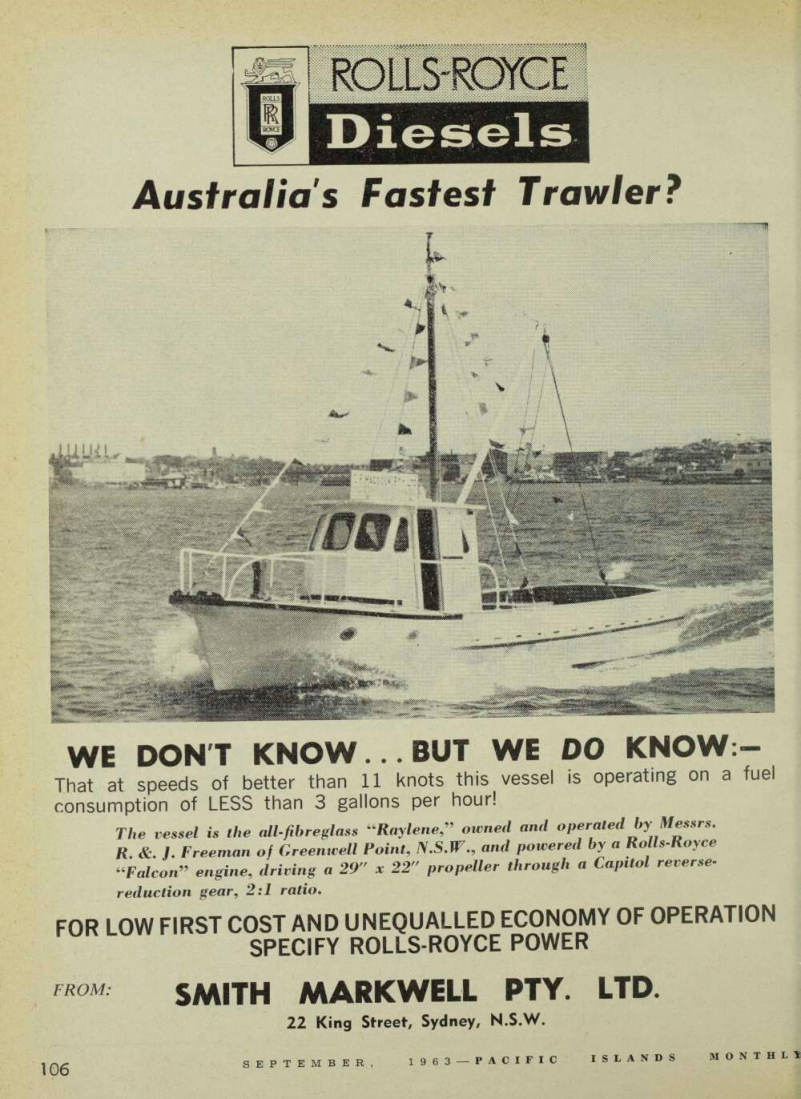 108
108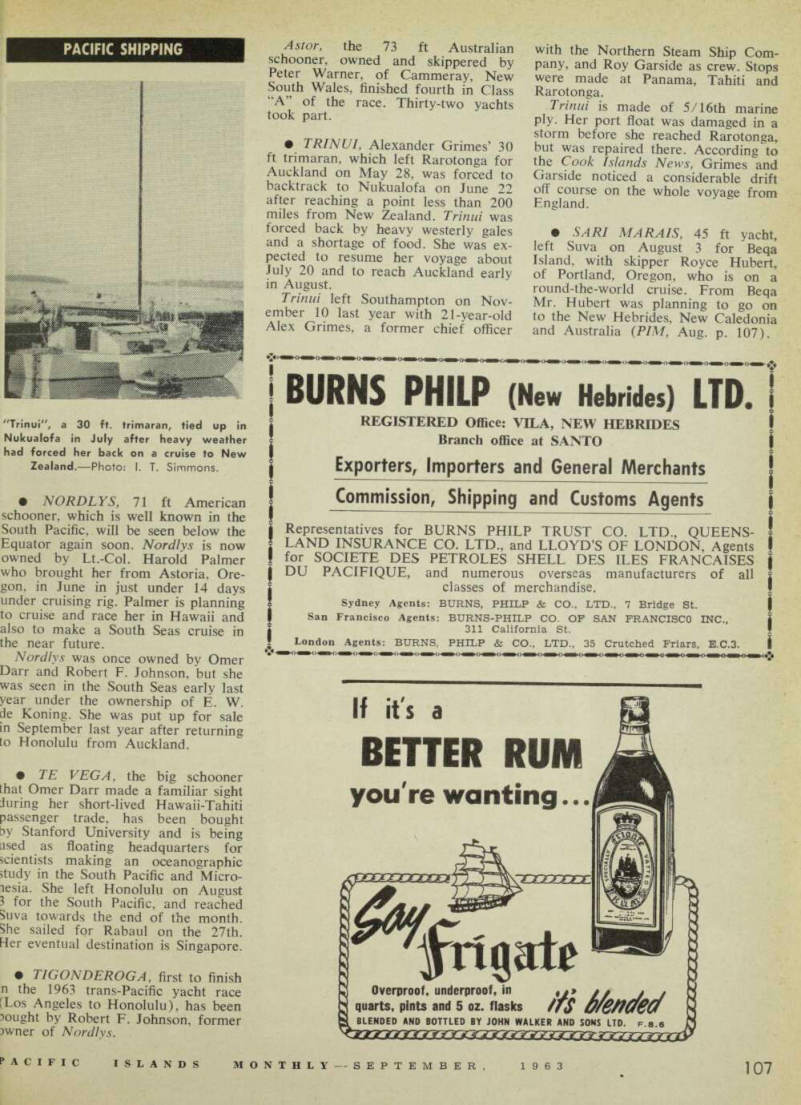 109
109 110
110 111
111 112
112 113
113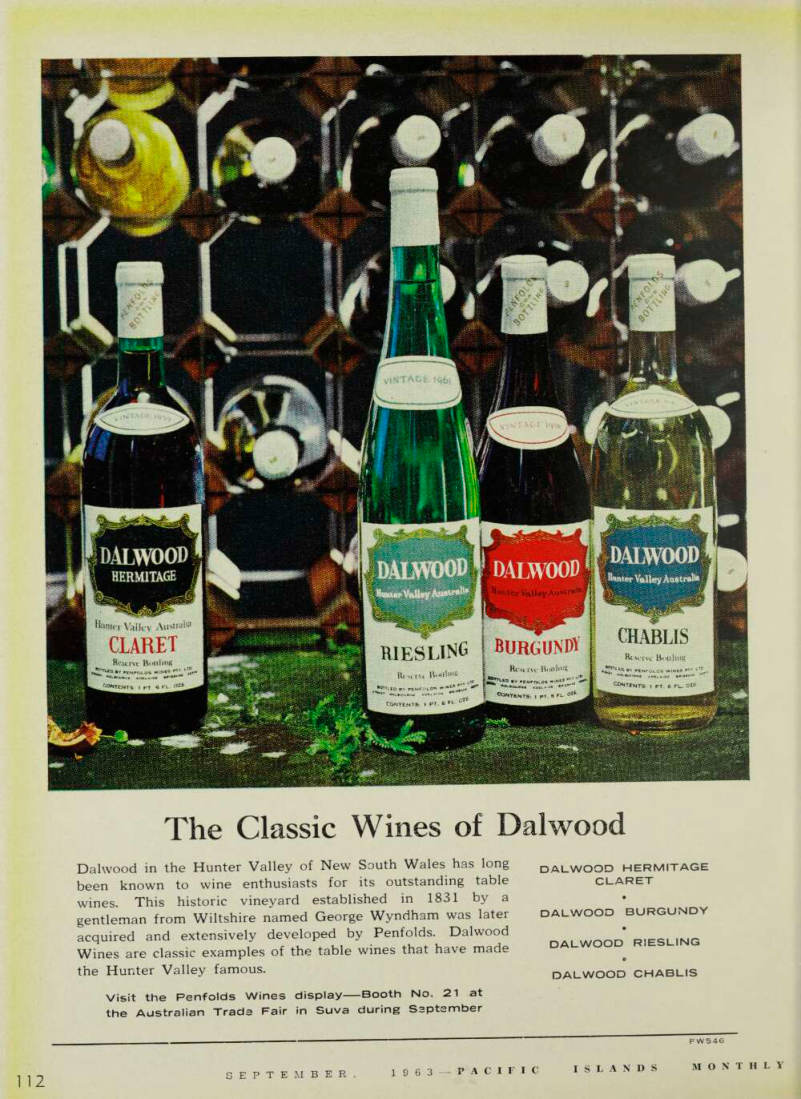 114
114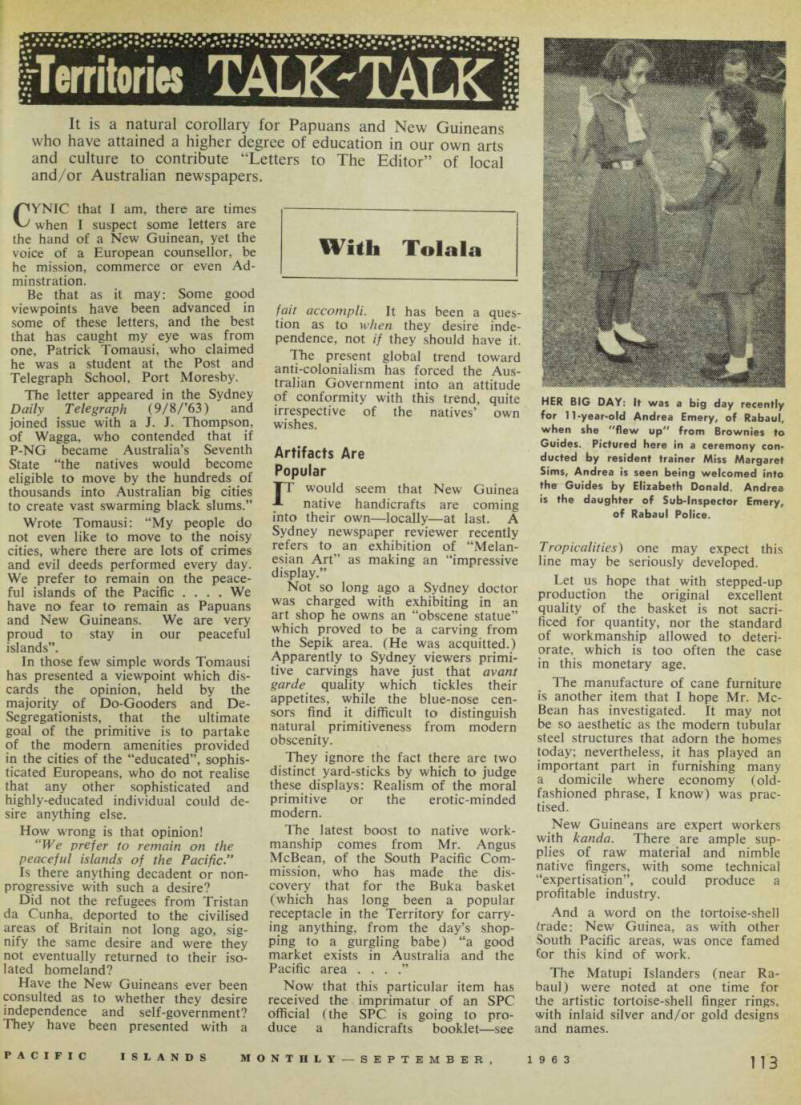 115
115 116
116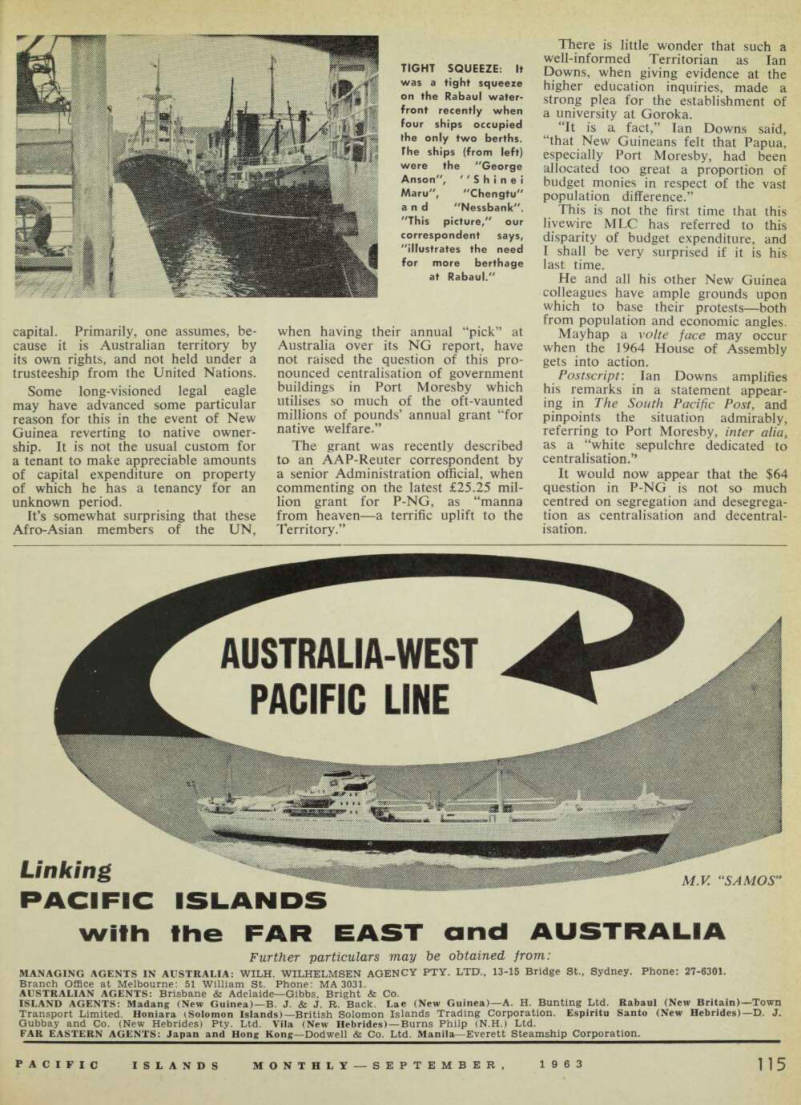 117
117 118
118 119
119 120
120 121
121 122
122 123
123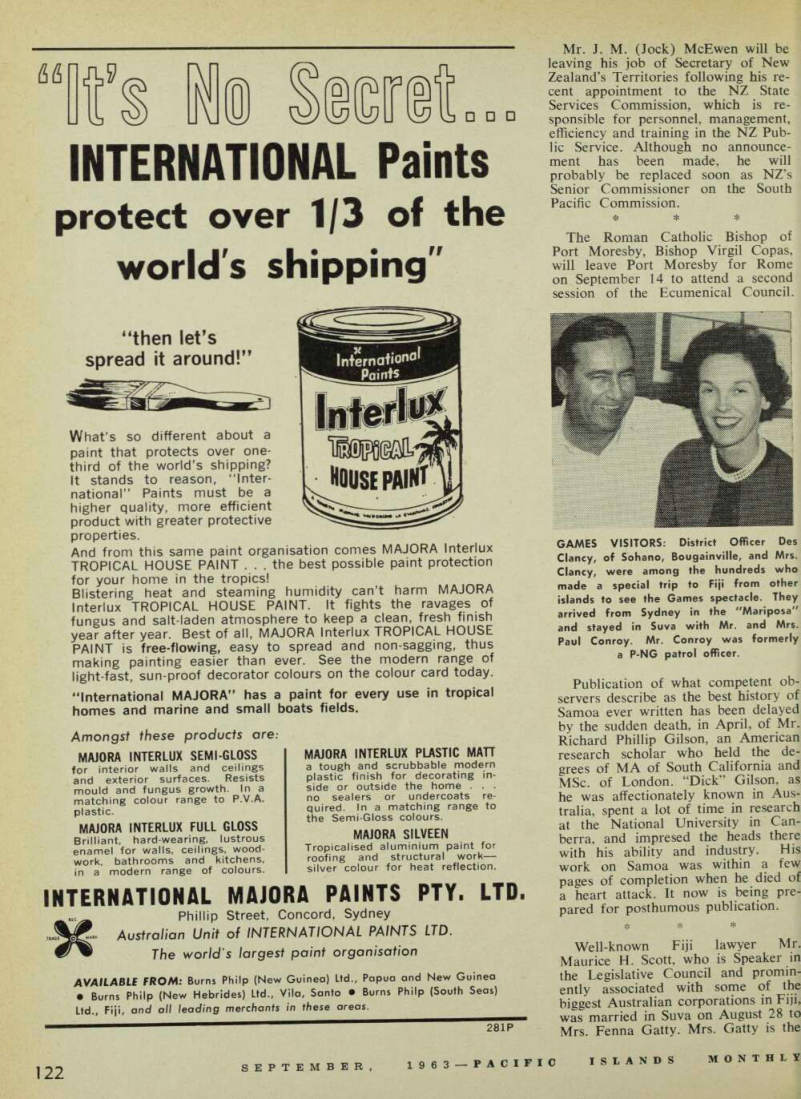 124
124 125
125 126
126 127
127 128
128 129
129 130
130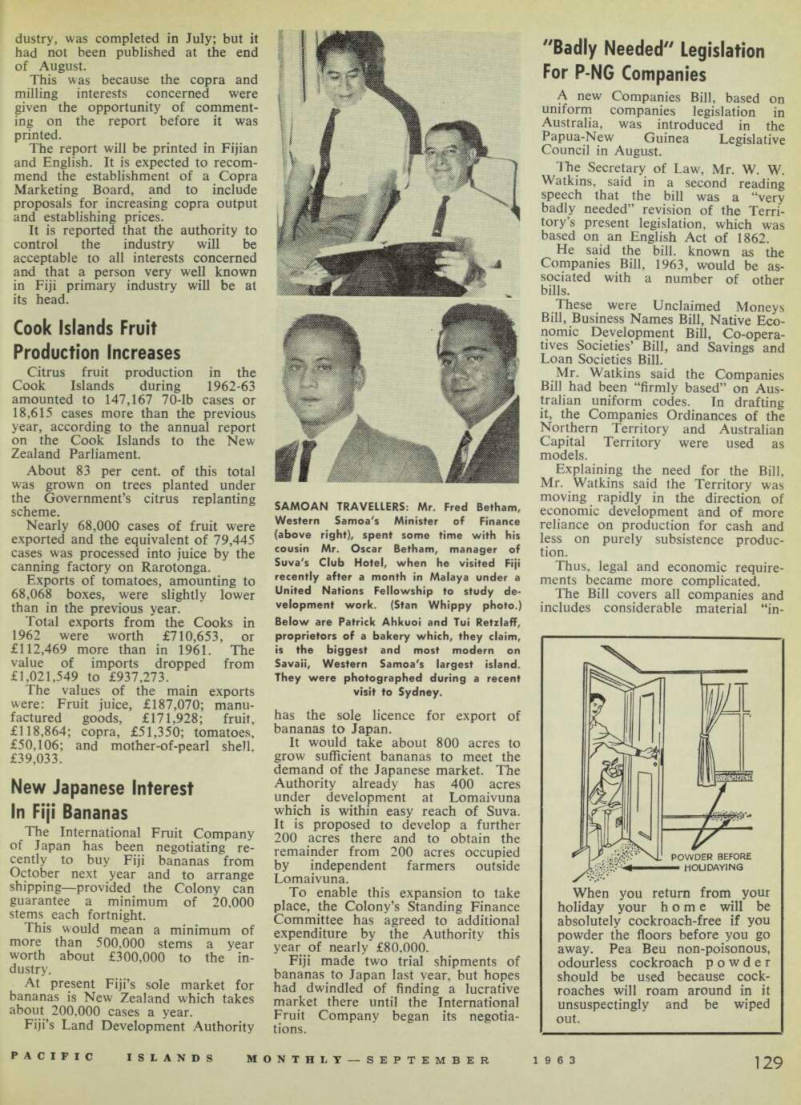 131
131 132
132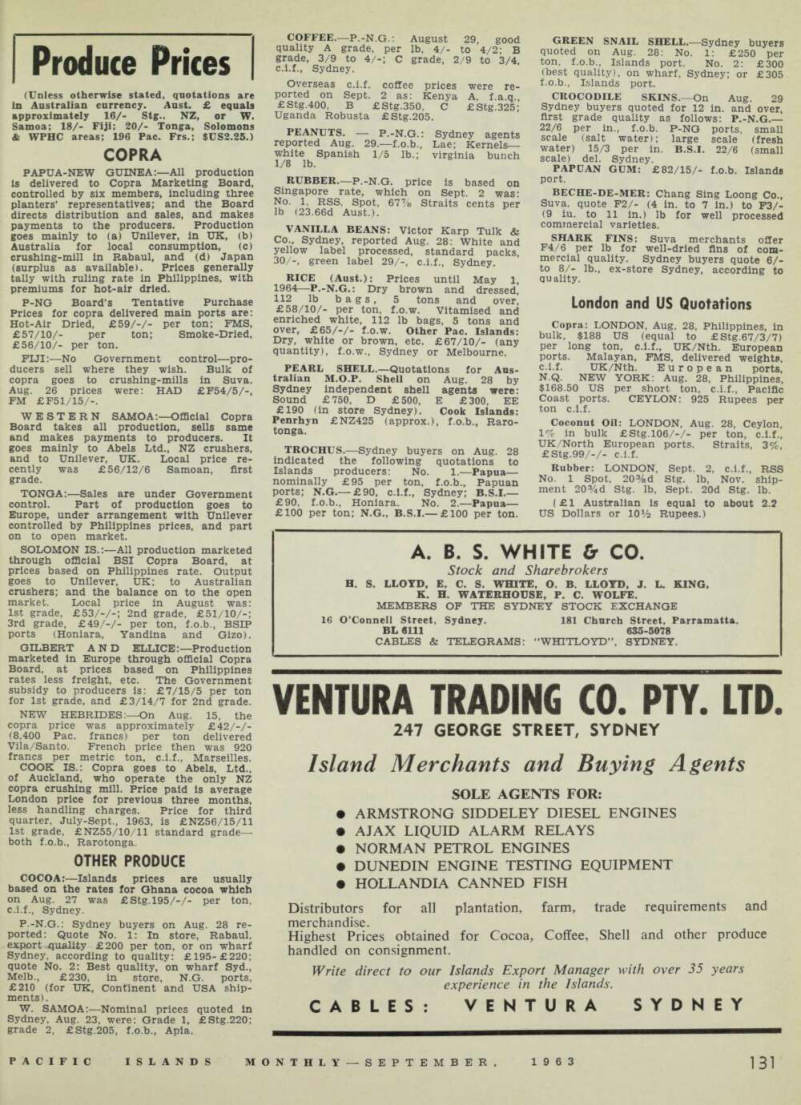 133
133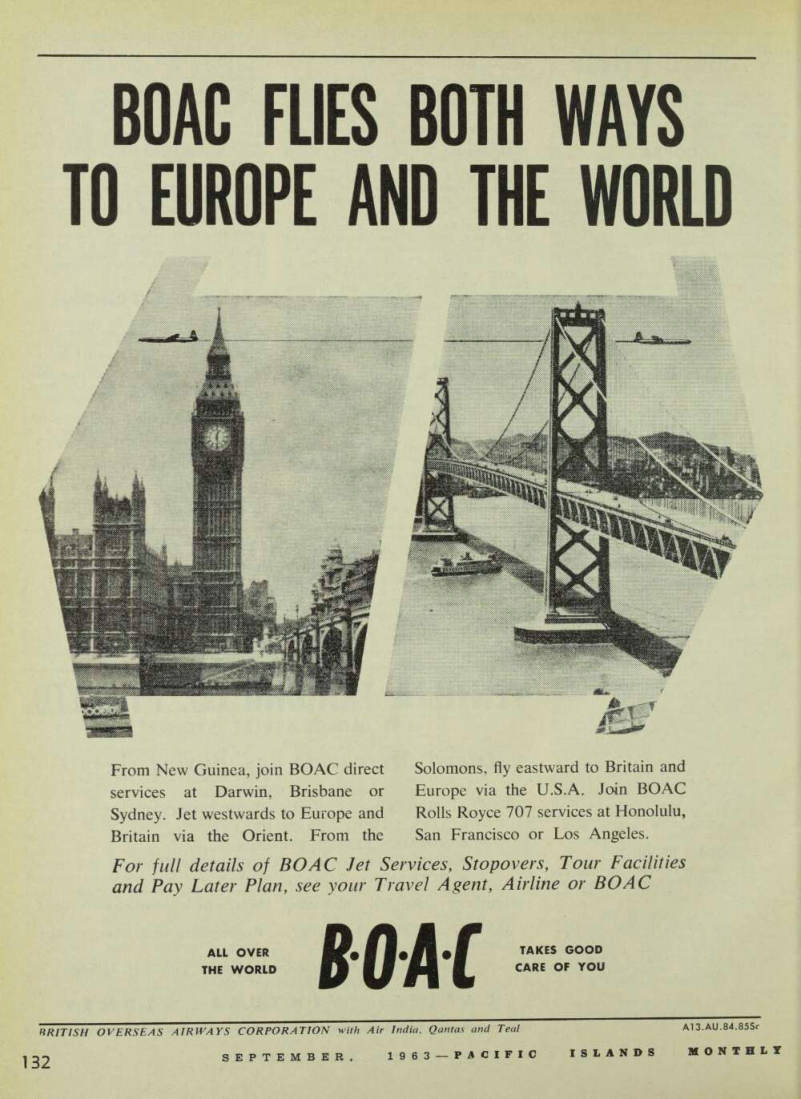 134
134 135
135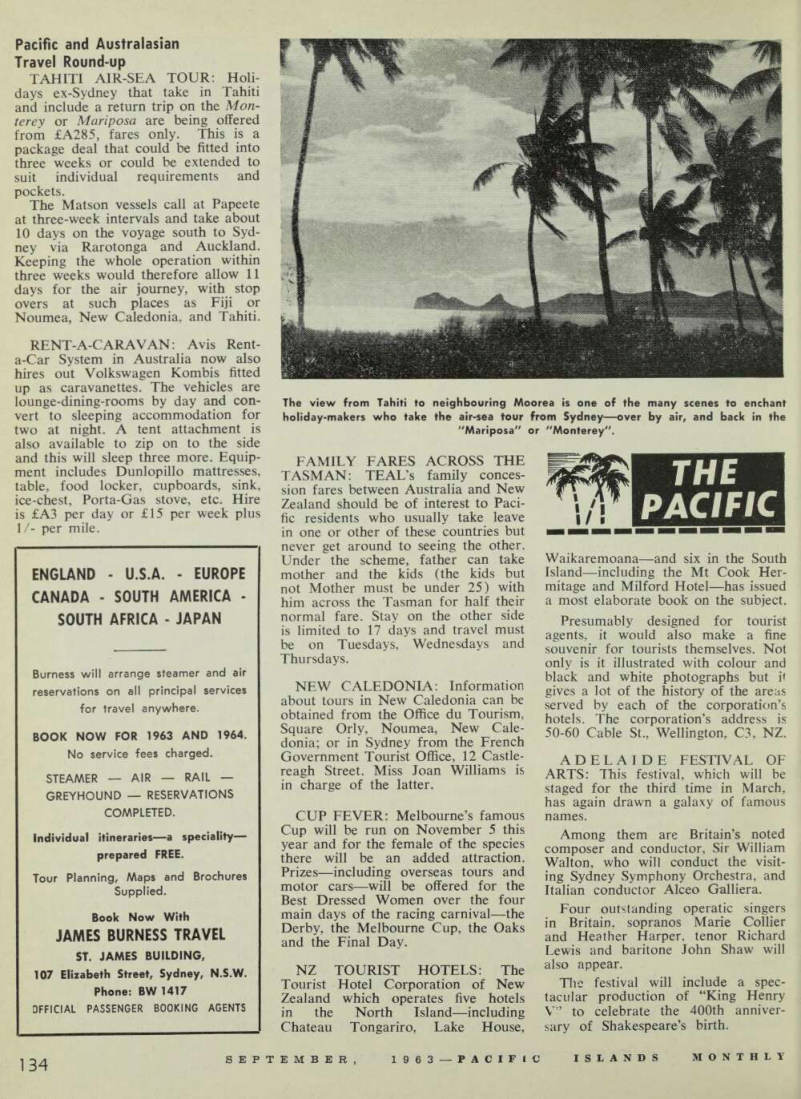 136
136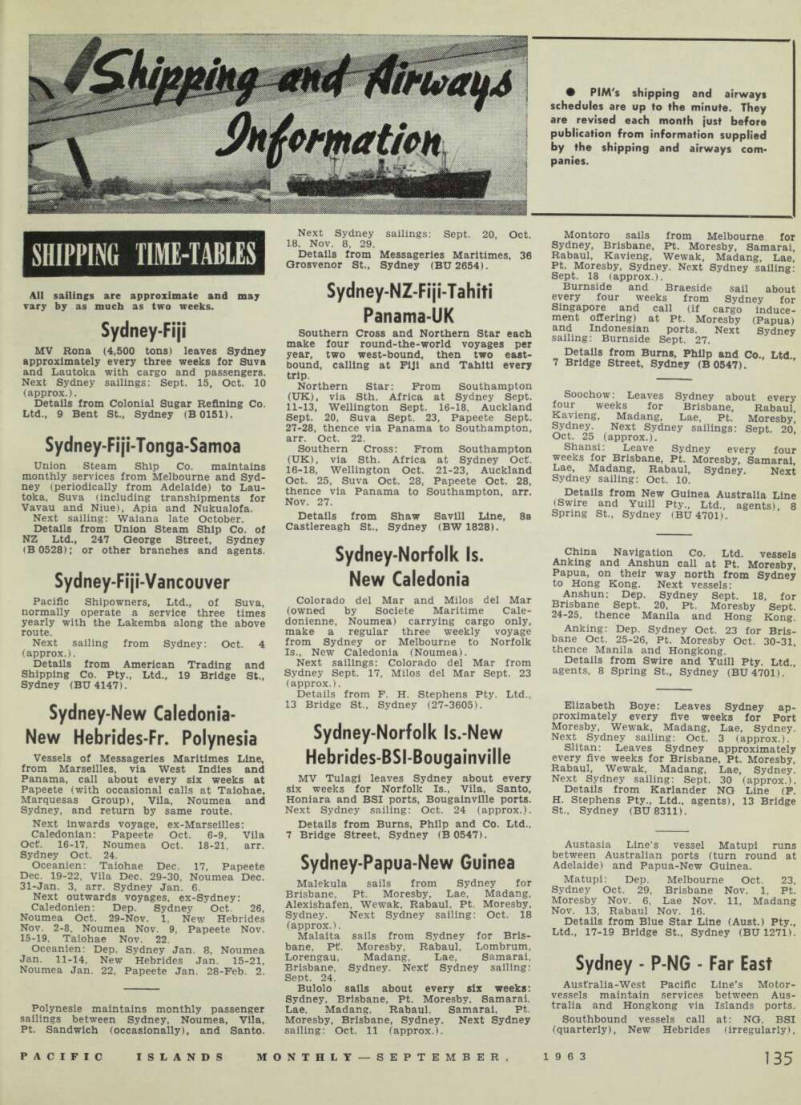 137
137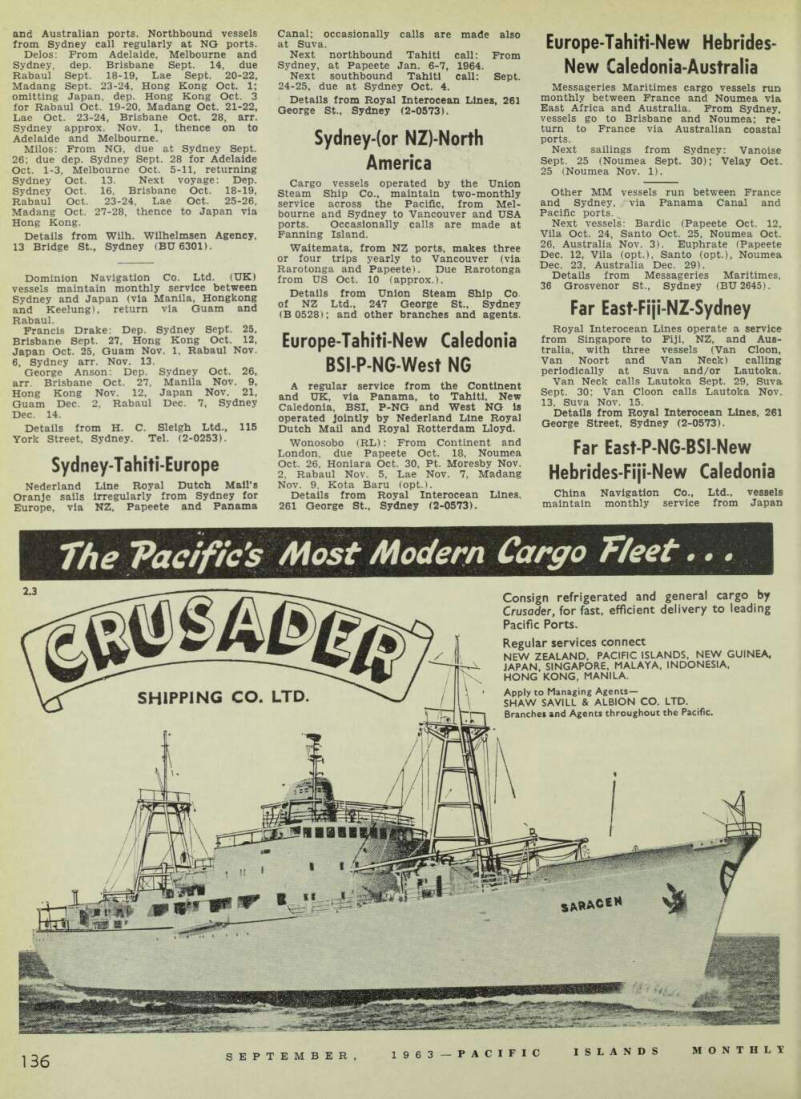 138
138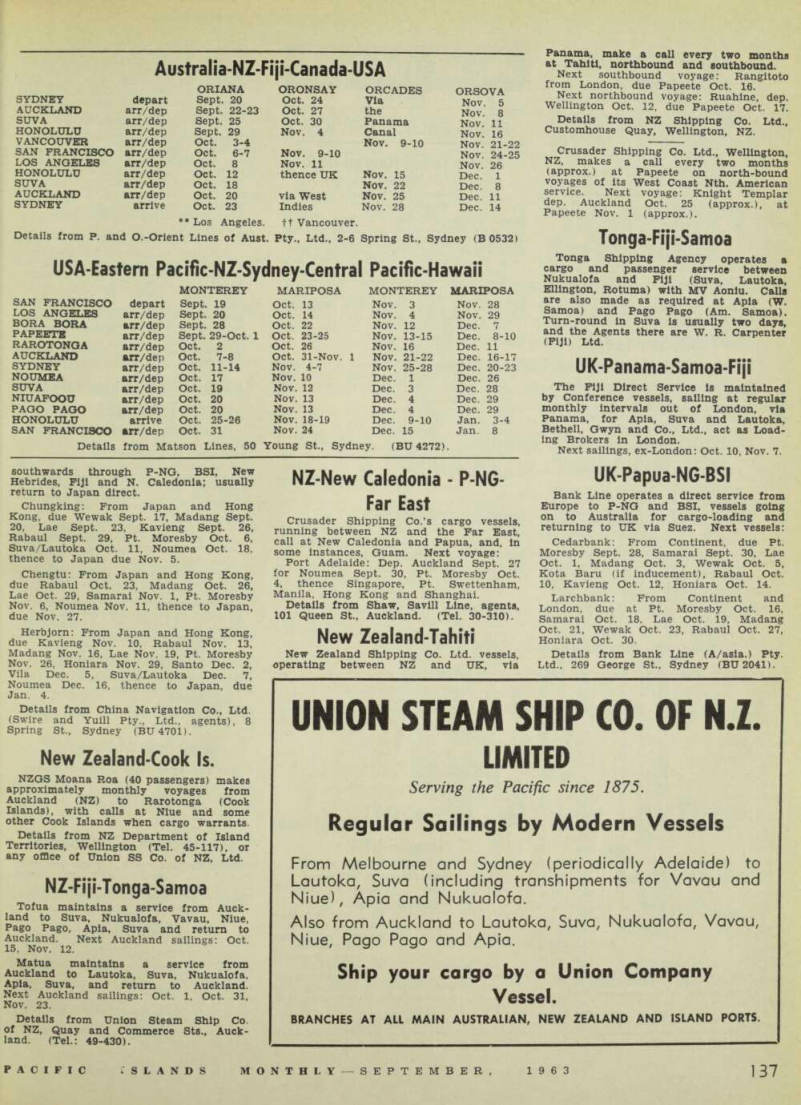 139
139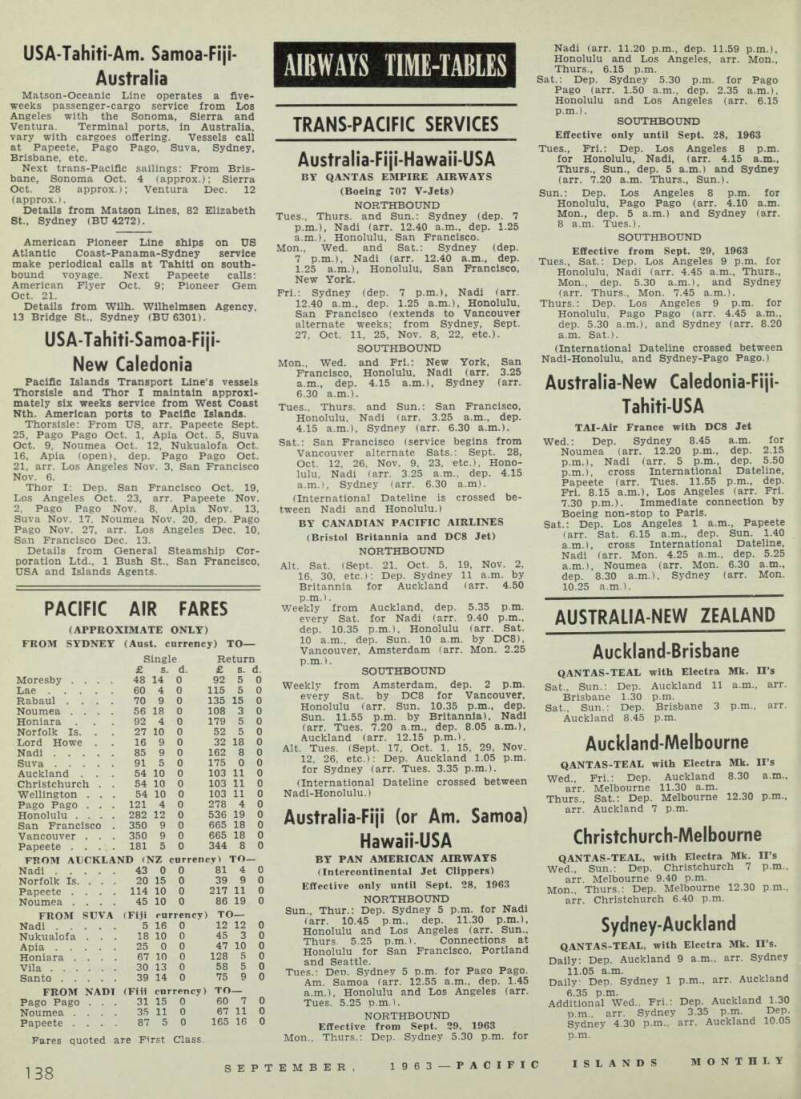 140
140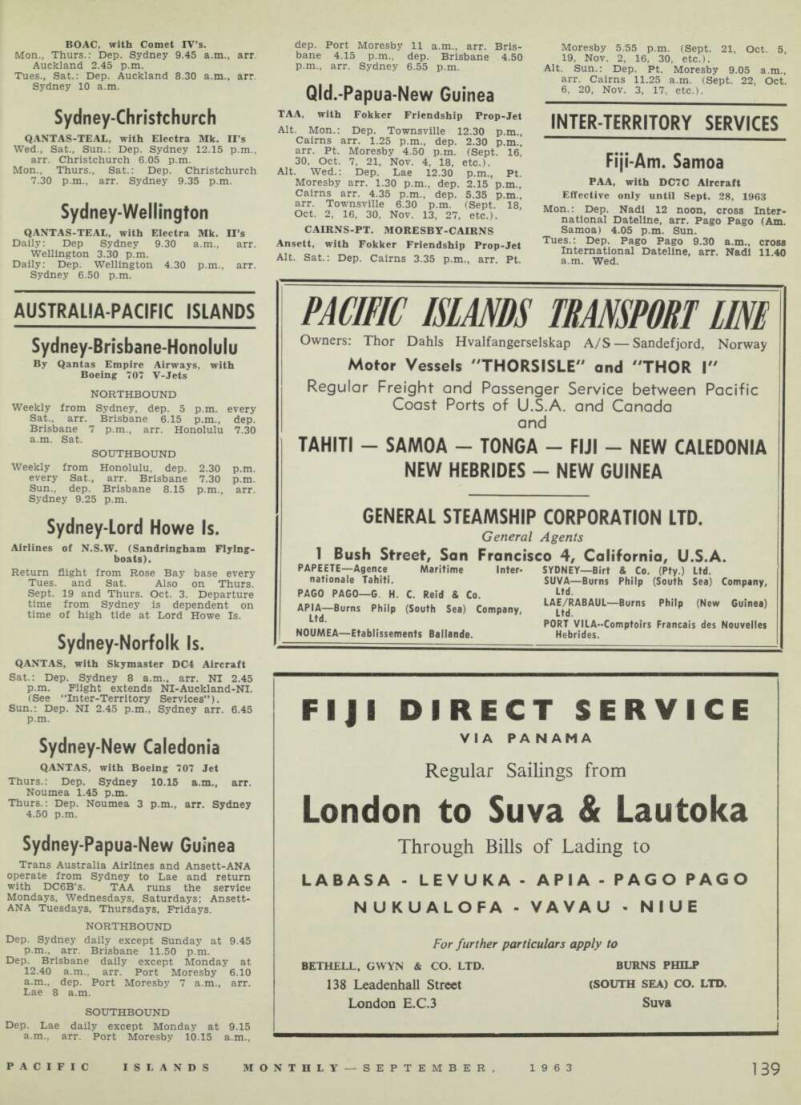 141
141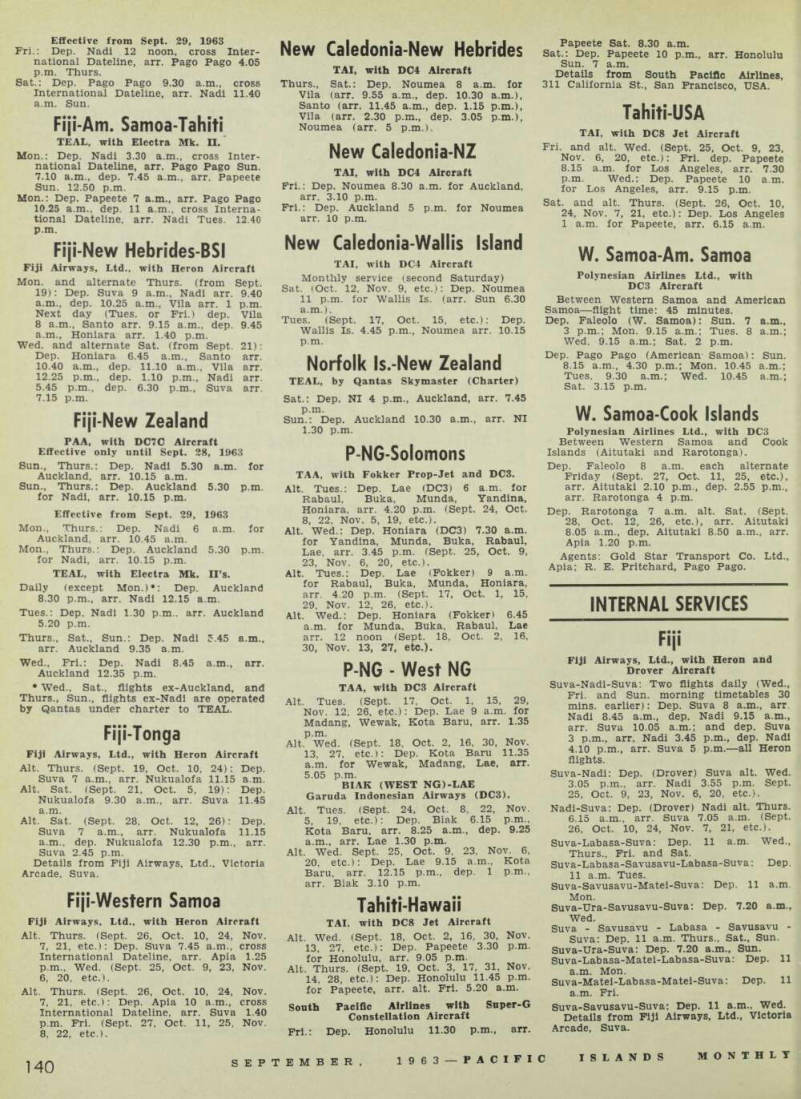 142
142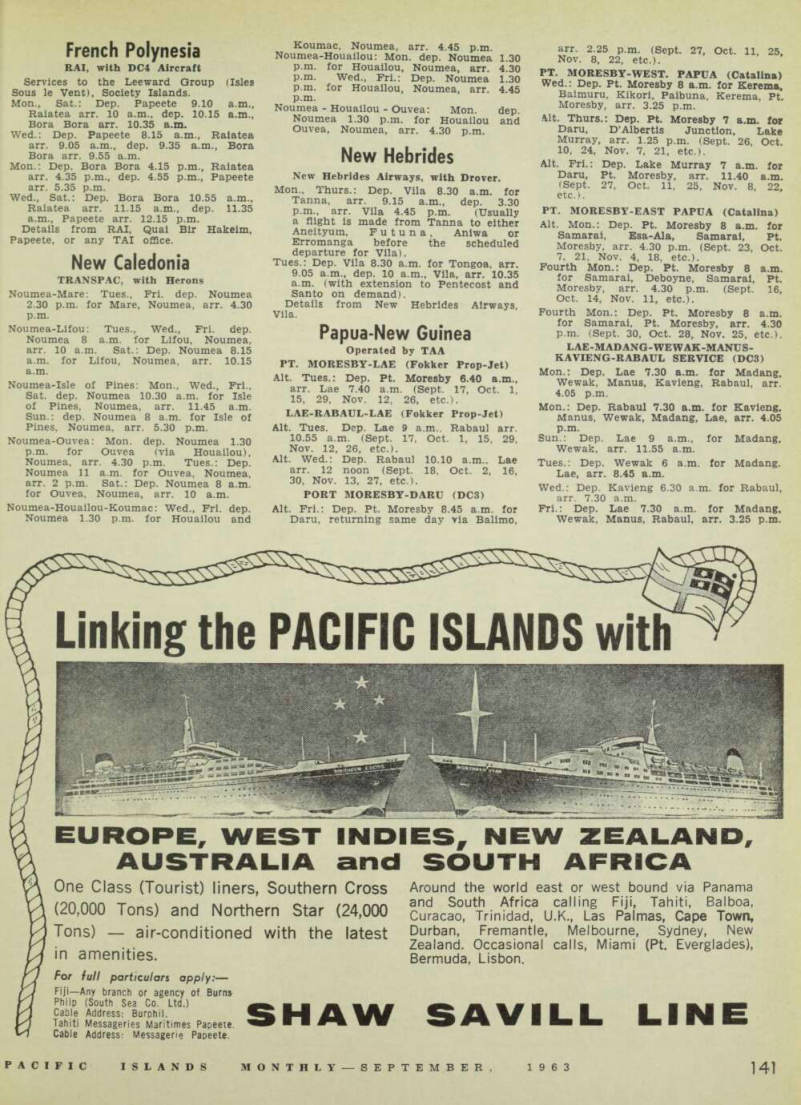 143
143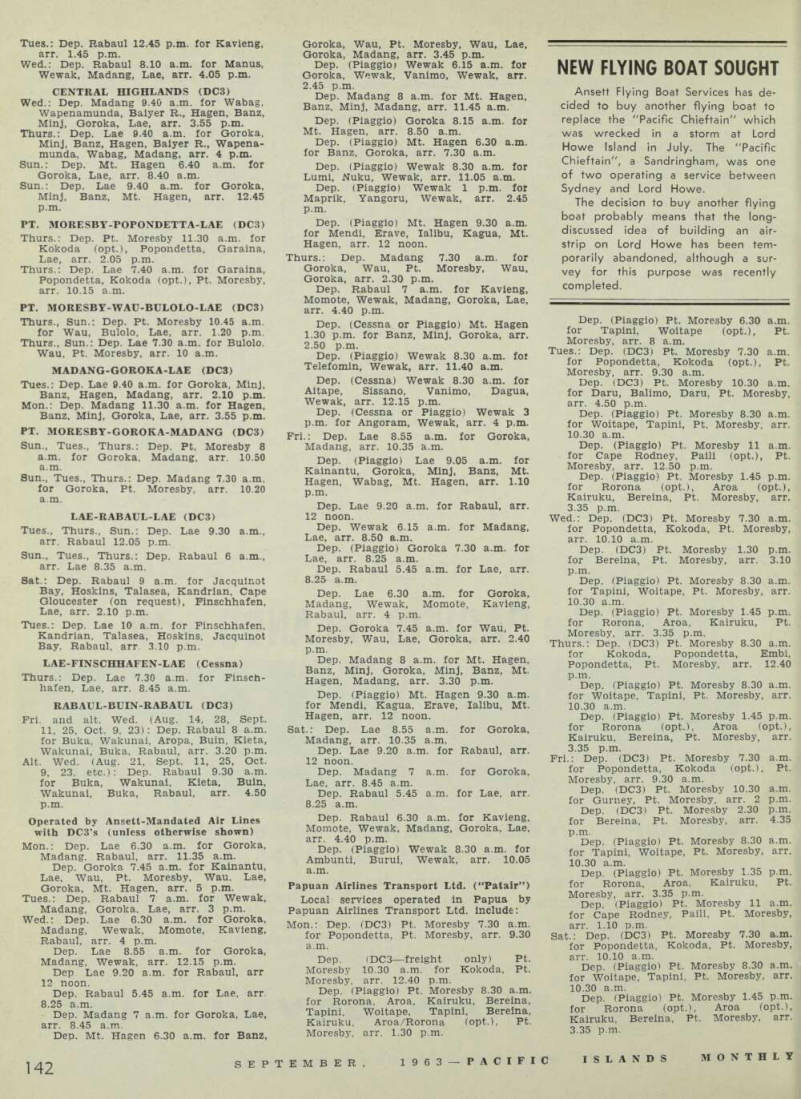 144
144 145
145 146
146 147
147 148
148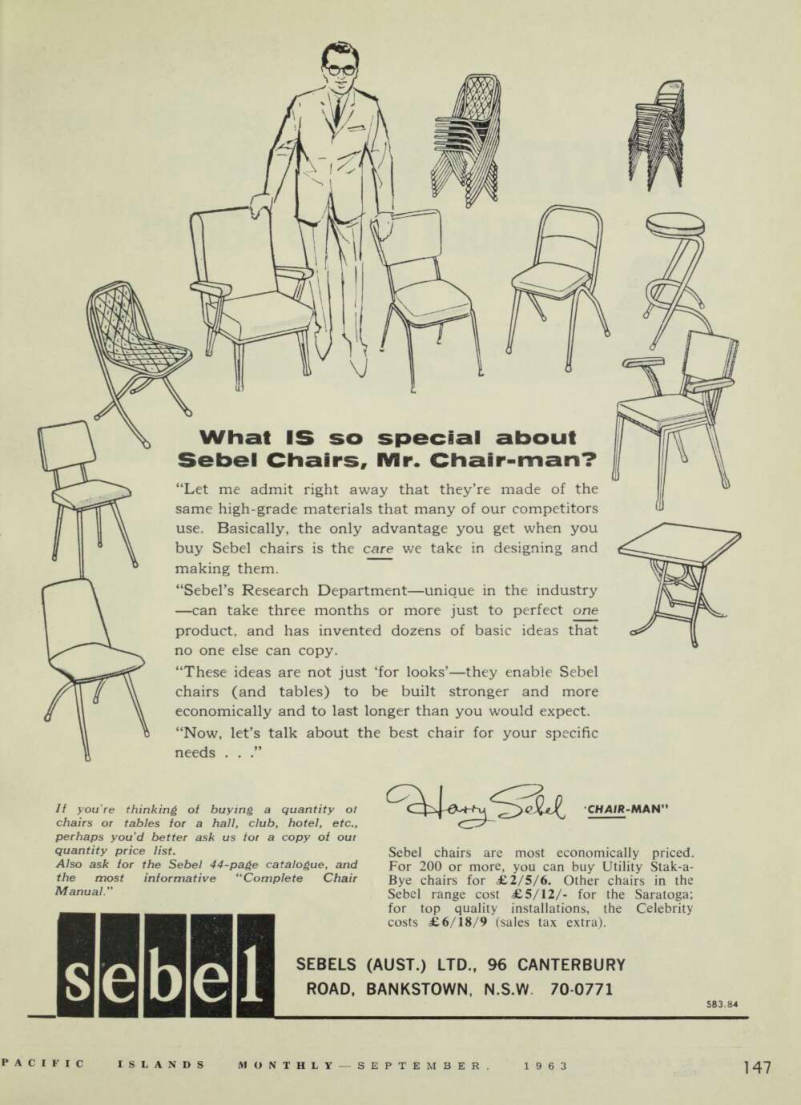 149
149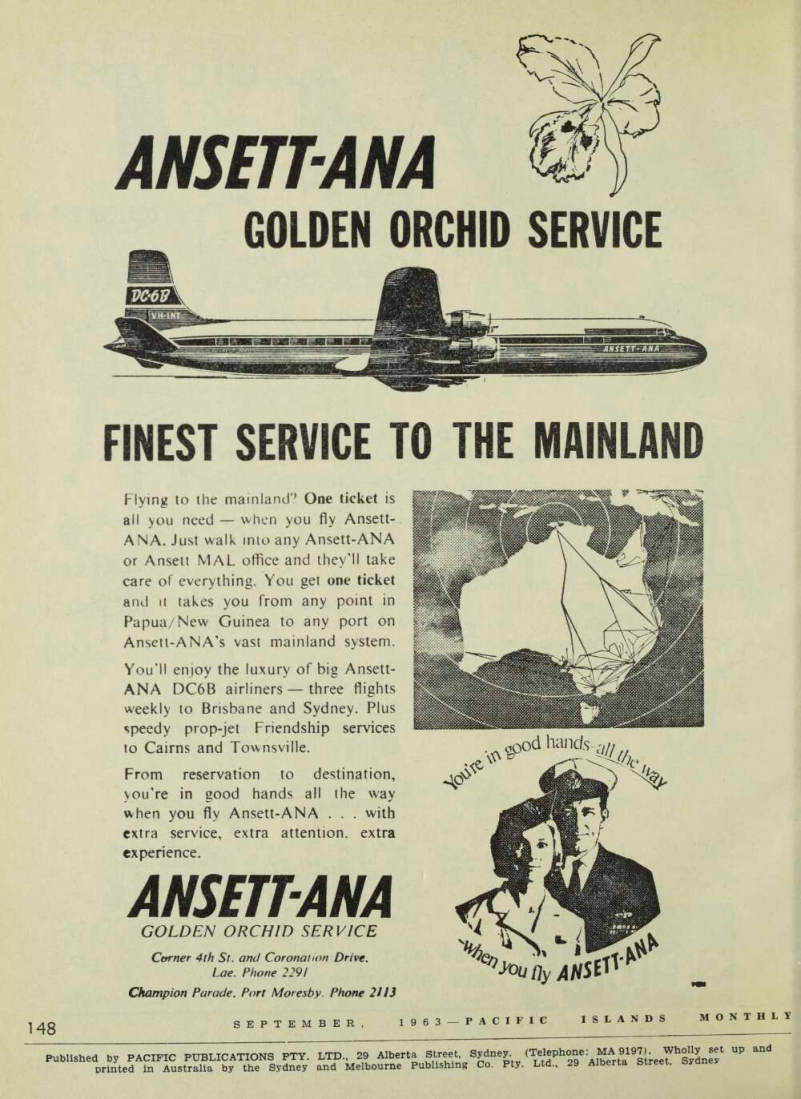 150
150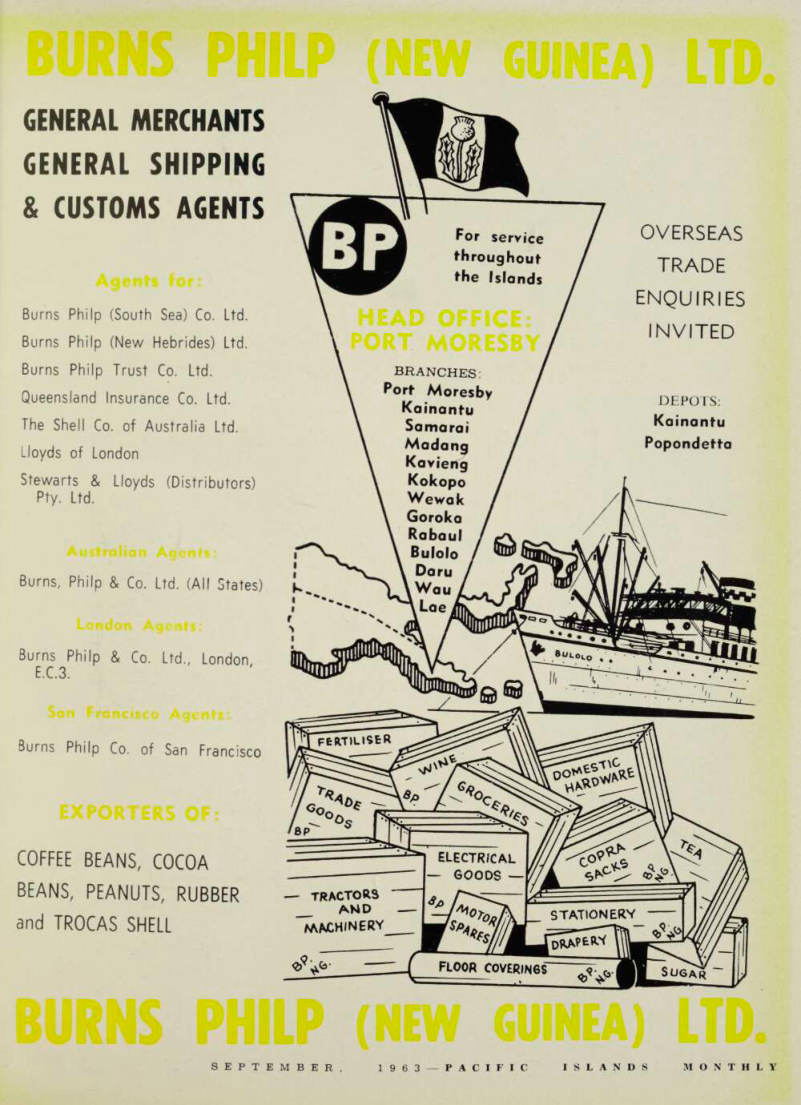 151
151 152
152