
Advertisements & other items, pp. 1-2 (2 items)
Kerosene Self-Healing IRON
Iron in comfort without
fatigue with the new . . . a
Pre-heats with methylated spirits in 90 seconds.
Burns for 2 hours on one filling.
Built-in pump and large filler opening.
Easily dismantled for servicing.
Heat is evenly applied over baseplate. 4 Model No. 615 Representatives for the Pacific Islands: ROBERT GILLESPIE PTY. LTD., ROBERT GILLESPIE (N.G.) LTD.. PEARCE & CO. LTD. 2 Young Street, SYDNEY. Rabaul, Port Moresby, SUVA.
Uso 334 Queen Street, BRISBANE. Lae, Madang.
cono£* s * >
ILK
nt nett.
I
TKc \eSi u
The Famous "ANCHOR" Family includes . . .
• ANCHOR
• ANCHOR
• ANCHOR
• ANCHOR
• ANCHOR
UNSWEETENED (EVAPORATED)
CONDENSED MILK
FULL CREAM MILK POWDER
SKIM MILK POWDER
PAT BUTTER
CHEDDAR CHEESE
Also ACORN BUTTER (in tins) and SNOWFLAKE
UNSWEETENED CONDENSED MILK
SOLE DISTRIBUTORS: AMALGAMATED DAIRIES LTD.,
AUCKLAND, N.Z.
2
FEBRUARY. 1962 PACIFIC ISLANDS MONT II I
Pacific Islands Monthly
Publisher: R. W. ROBSON.
Editors;
Y Tudor Stuart Inder
Manager: SELWYN HUGHES.
Iphones: Ma 9197, Ma7101,
MA 4369.
I.P.O. Box 3408, Sydney,
phic Address: PACPUB, Sydney.
Mual Subscription Rates:
t. currency; includes surface postage) Is. —P.-N.G., Fiji, Samoa, Norfolk, u, B.S.I., Cook Is., Tonga, G.&E.
Niue, New Hebrides, and other 'acific Is £1 4 0 Pacific Territories and Dutch Guinea £1 7 0 ia and N.Z £1 10 0 ritish Commonwealth and Foreign Stg.) £2 10 0 and U.S. Pacific Territories 0 U.S.) £3 13 Copies (postage extra) 2 6
*Nch Office In Papua-Ng
Publications (NG) Ltd., Theatre 3, Fourth St., LAE. Tel.: 2577. ss Pat Robertson, Manager.
(Ranch Office In Fiji;
iji Times Building, 20 Gordon St.
Tel.: 4043.
1Epresentative In N.Z.:
Whitcombe, P.O. Box 5179, Auckland. Tel.: 22.570.
»Resentative In Hawaii:
Spencer, 203 Yap Bldg., 3465 aialae Ave., Honolulu 16.
■Presentative In U.S.A.:
Craib, Pacific Publications P/L, 55, San Francisco 1, California.
Tel.: Mission 8-1075.
Epresentatives In U.K.:
Ashburn, 13 Rood Lane, London, Tel.: Mincing Lane 8633.
Mackenzie, 4A Bloomsbury Square, i, W.C.l. Tel.: Holborn 3779.
JRNE OFFICE: Newspaper House, Collins St. Tel.: 63.7053. 1: All main trading firms and res in the Pacific Islands.
Publications Pty. Ltd., is the ian agent for THE FIJI TIMES.
Contents
No. 7. Vol. Xxxii.
February, 1962
People 5
Fiji Enters 1962 with Two New Economic Bosses 15 Fiji Sugar Council Members 16 New Moves in P-NG Public Service 16 Christmas with Queen Salote 17 Nauruans "Won't Accept Resettle ment Offer" 17 NNG Council Discusses Dilemma ... 18 Malaspina: Forgotten Spanish Navi gator 19
Commentary 23
The Editors' Mailbag 24
Famous Fiji Melody is from Tonga .. 25 Memorial to a Famous NG Pioneer 26
Territories Talk-Talk 31
End of the Rewa Sugar Scheme 36 American Samoa Hopes for TV Station 37 Saipan Capital of US Trust Territory 37
Canberra Commentary 39
News Round-Up from West Samoa 42
Furore on Fiji Whale's Tooth 44 Cook Islands Library and Museum .. 45 Happy Scenes as Samoans Celebrate Independence 47 Fiji "Marks Time" 53
Sydneysider At Home Base 55
Americans Want to see Tafuna Busy 57 Is Darwin a Lesson for P-NG? ... 60 For a New Corner of the World, Try the Sepik 63 Samoan Economic Report Un impressive 71
Magazine Section 73-97
Pacific Shipping And Cruising
Yachts 99
Pacific Report 115
Deaths of Islands People 139 In a Nutshell 141
Travel Talk 142
Airways, Shipping Timetables 145 Commerce and Produce 153
THE COVER: The dawn of modesty in the South Seas. A piccaninny whose father is a launch boy from Lilihina Plantation, British Solomons, is not so sure that the camera isn't intruding on her water sports. But she might just as well have saved herself the trouble as far as her little companion is concerned.
The charming picture was taken in the BSIP by Paul Brown.
Advertisements & other items, pp. 3-4 (3 items)
A Product of Pacific Publications Pty. Ltd., 29 Alberta Street, Sydney
4
FEBRUARY, 1962 PACIFIC ISLANDS MONTH
Stop Bad Breath
with COLGATE while you
FIGHT TOOTH DECAY
ALL DAY!
Colgate Dental Cream CLEANS YOUR BREATH while it CLEANS YOUR TEETH To stop bad breath, to fight tooth decay all day, use Colgate Dental Cream ... its active, penetrating foam gets into hidden crevices between your teeth, removing food particles, the cause of much bad breath and tooth decay. To stop bad breath, to keep your teeth sparkling white, brush your teeth with Colgate. Children love its extra minty flavour! You will love it, too! m
WPZBT ONLY THE
COLGATE WAY IS
THE SURE, SAFE
WAY TO STOP BAD
BREATH AND FIGHT
TOOTH DECAY
That’s why more people buy A .Colgate than any other dental lai cream in the world Just one brushing with Colgate
STOPS BAD BREATH INSTANTLY FIGHTS TOOTH
DECAY as no other toothpaste can—ANY COLOUR, ANY KIND
ZIO2
People
'he Commissioner of Police in , Mr. R. H. T. Beaumont, col ed with a sudden “black-out” at ney Airport on February 4, when was on his way to a Police Con tion in Tasmania. He was taken at 2 to South Sydney Hospital for ;ialist treatment. No cause of Mr. umont’s collapse could be found, three days later he caught the le back to Fiji, apparently quite . When he fell at the airport, he red his head rather severely, and the circumstances he decided to ;el his visit and return home.
r. Richard Salisbury, assistant essor of anthropology at the Uni ity of California, at Berkeley, re ed to San Francisco in January * another field trip to study the e in the Eastern Highlands of r Guinea. On this trip to New lea, he was accompanied by his , a sociologist, and their two 11 children. A former Australian onal University scholar, Dr. ibury, 35, also studied the pre ss of economic change among the li people of the Gazelle Peninsula, is book, From Stone to Steel, is ?e published soon by the Mel *ne and Cambridge University ses. ♦ * * ts. Vida Mozzell, of Sydney, is ig to keep alive her memories of sar she spent in New Guinea 30 s ago. t the back of her Sydney home
[?]y festivities, and a flood of letters and grams from all over the world, greeted F iji veteran, Sir Hugh Ragg, last month, the attainment of his 80th birthday, try 26 is a significant date—Australia born on that day, and so was "Hughie" almost exactly 100 years later, in Fiji.
i corrugated iron and fibro shed sing relics and reminders which collected during her visit. All the is she collected are hand-made, range from clam shell bracelets eadstones, which are carved from d and bear a likeness to the head chief who has died. Most of her action comes from the Sepik. * * * r hen the committee of the Kone i Club, Port Moresby, rejected ipplication for membership from lixed-race public servant, Julius a, Mr. J. K. McCarthy, Director Native Affairs, who nominated a, resigned. The club was asked reconsider in January. Result: a was still not admitted.
ie island paradise of Moorea, 12 > across a channel from Tahiti, be home for a small group of ieologists from Auckland Uni ty for the next two or three :hs. They are, Mr. Roger Green, r lecturer in pre-history and his ly and Miss Janet Davidson, a ber of the University aeological Society. They will the beautiful volcanic valley of lohu which covers about 2,500 and contains the remains of : than 500 stone structures. Their : is being supported by the rican Museum of Natural )ry.
[?]ed from leave recently were Mr. and Ken Nizette, of Lae (top) who with their children went off to Singapore and a of Malaya. And passing through Lae the same time on their way to Aus to begin leave were ADO Alex Zweck, Mrs. Zweck, of Bougainville, but well [?]wn in Lae and other parts of P-NG.
Lower photo: Pat Robertson
nong the recent farewells to long islands residents were two of :ular interest—one in Rarotonga, ; Islands, to Mr. Maurice Baker, has retired as Director of Agri re in the Cooks, a position he leld since 1939; and another, in New Hebrides, to Dr. Knox json, Medical Superintendent of :elebrated Baton Memorial Hos since 1947. Dr. Jamieson will ring in Australia. Besides being st-rate medical man he is ac ed in the New Hebrides as a anic of no mean ability, a ;htsman, musician, actor and lawyer!
A’s New Caledonia corres :nt Fred Dunn reported in ry that Noumea was in the of an invasion of stage acts Australia—“they include Ger- Italians, Filipinos—and even alians,” he said. “There are e singers, copies of Elvis ;y, a strip teaser and a hypnotist, usly, all these artists, like Aus -1 visiting boxers, are billed as umber ones of Australia . . . le locals must think Australians weird mob. NZ and Australian riders have also been appear n local tracks.” * * * new expedition to the snow ed Cartensz Peaks in the NNG al Highlands has set out to reach
[?] ed to return to Suva from Sydney in [?] were Mr. and Mrs. William Wildin. [?] ildin is Pasture Research Officer with [?] i Agriculture Department but for some [?]e has been doing research in Australia he CSIRO. His object is to develop a which will resist the long dry as well short wet seasons of northern Viti Levu.
Tele-Photos
ore than 15,000-feet high Car pyramid. The expedition is led e Austrian alpinist, Heinrich ■ (49), a noted climber who experience in Europe, Africa ie Himalayas. In the party are 1 Kippax (30) an Australian, ; Temple (22) New Zealander, iree Dutchmen, Dr. Valk, Mr. ga and Mr. ter Laag. The ex m will also carry out observa in the ethnological and geo fields. * * * > West Samoan policemen in y found that Samoan youth taking its new found inde ice seriously. The two left police car in the street while nade a purchase in a nearby returned to hear that it had ;een heading out of town with ly-riding youths at the wheel.
: Australian long jump cham- Alan Crowley, of Brisbane, to stay in Papua and represent i-New Guinea at the Perth •e Games this year, iwley’s decision was announced mary by the secretary-treasurer e Papua-New Guinea Empire s Organisation Committee, Mr.
Townsend. Mr. Townsend said ley decided not to return to the :rsity of Quensland. Crowley, 'as born in Papua. P-NG will its own athletes competing in tames for the first time. * * * , Richard Angeloni, Senior As t Secretary with the British Ad tration in the New Hebrides for
happy about spending four months leave in India is Rabaul, NG, Police Ron Curtis. Ron was born in India served in the Police Force there.
ist six years, received the OBE e New Year Honours—shortly he had been told of his appoint as Government Secretary in the rt and Ellice Islands. Mr. R. s; who at present holds the post, been appointed Secretary for ctorate Affairs in the BSIP. * * * f. F. Donovan, accompanied by ife, has taken up duty in Nor [sland as the new Official Secre of the Administration. He is chelor of Economics, and for time he has been Administrative r at the CSIRO research station iffiths, NSW. Mr. Donovan suc- Mr. Powell who, after some in NI, now goes with his wife wo children to the Trust Terri of Nauru, as Official Secretary Nauru, close to the Equator, t as desirable a place of resid as Norfolk; but Nauru’s official , last century, was “Pleasant 1” —so named by early navigators liked the people and the climate.
ss Margaret Gunther, daughter )r, J. T. Gunther (Assistant inistrator of Papua and New ea) and Mrs. Gunther, arrived in Australia in December from ,r’s wander abroad with a friend, Jan Cullen. With three other they bought a car in London, ravelled 20,000 miles in Europe. :heir way home, the two girls d many Asian countries. ;aret Gunther plans to rejoin parents in Port Moresby in :h.
[?]ugged up for weather that isn't as kind [?]i's, Mr. J. P. Amputch, Fiji's Com [?]er of Labour, visited a British [?]um refinery in Kent recently while on leave.
Advertisements & other items, pp. 5-14 (10 items)
5
C I F I C ISLANDS MONTHLY FEBRUARY, 1962
Personalities
mm v mn a
OF THE MONTH
All the Gilbey products have distinctive personalities, much in common (quality, tradition, appeal), but some things that are unique to each.
You’ve met five of them in these pages — bland, urbane Bond 7, the quality whisky; Gilbey’s Gin, the international sophisticate; Pierre Smirnoff vodka, the fascinating Russian aristocrat who conquered America and is now a naturalised Australian; Dubonnet, the gay French newcomer (straight or mixed); and the Gilbey liqueurs in the new shapely, easy-on-the-eye, easy-to-handle bottle.
They are a handsome family. Introduce them to your customers.
GILBEYS LIMITED
TRUCKS with TRACTION
INTERNATIONAL AA-120 and aa-160 4 WHEEL DRIVE TRUCKS Where bad roads and rough tracks make work difficult then an International allwheel-drive truck is the answer. You will travel safer, too, for the 4-wheel drive gives outstanding traction and, as well, better control on wet, muddy roads.
Powerful, reliable, 6 cylinder, engines that are flexible, economical, and easy to service. The AA-120 4-wheel drive model carries one-ton payload and has a 135 H.P. engine. The AA-160 4-wheel drive model has ton capacity and a 142 H.P. engine.
Power take-off from both trucks transfer case drives pumps, generators or winches.
Buy a truck designed for rugged conditions. But an International all-wheel drive truck. ■ m ■ » ■ wm i m , m □ n To move big payloads safer, and more reliably in rugged conditions, buy 4-wheel-drive International Trucks
DISTRIBUTORS
DUTCH NEW GUINEA: H. Englebert n.v., Hollandia. SOLOMON ISLANDS; Solomon Motors Pty. Ltd., Honiara. NEW CALEDONIA; Agence Automobile, Noumea. TAHITI: Hintze & Company, Papeete.
NEW HEBRIDES: Kerr Bros. Limited, Sydney. FIJI: Niranjan's Service Station, Suva. PAPUA AND NEW GUINEA; Steamships Trading Company Limited, Port Moresby and Samarai. Dealers: New Guinea Goldfields Ltd., Wau, N.G.G. Trading Co., Lae, Rabaul Trading Co. Ltd., Rabaui.
INTERNATIONAL HARVESTER
- . ' ■ International Harvester Company of Australia Pty. Ltd. District Sales Offices in Capital Cities of Australia. Works: Dandenong, Geelong and Port Melbourne, Victoria.
9
SYDNEY
flb=
L mi* 0 0 0 0 Ml
PERSONAL
SHOPPING
BUREAU
THE BEST MAIL ORDER PLAN
for people who live a long way from Sydney. Farmer’s sells almost everything, housewares and furniture, electricals, women’s fashions, children’s clothes and menswear. All you have to do is write to Miss Nugent, describing clearly what you want, and she will send a trained shopper into the store to personally select your goods. They are wrapped and sent straight back to you.
When you come to Sydney, call on our Personal Shopping Bureau (it’s on Farmer’s eighth floor).
IRMER’S PERSONAL SHOPPING BUREAU, BOX 497, G.P.0., SYDNEY. AUSTRALIA,
/•* J
FINEST SERVICE TO THE MAINLAND
ANSETTANA
GOLDEN ORCHID SERVICE
fitcnr You'll love the luxury of the big Ansett-ANA DC6B airliners , and the delicious Golden Orchid Service meals. 3 flights weekly to Brisbane and Sydney by big DC6B aircraft. Plus speedy jet Fokker Friendship services to Cairns and Townsville. 5180 mm
ANSETTANA
GOLDEN ORCHID SERVICE
... every time
Corner 4th Street and Coronation Drive , Lae , Phone 2291.
Champion Parade , Port Moresby, Phone 2113.
THE
HANDBOOK
PAPUA
NEW GUINEA
"HANDBOOK OF
PAPUA AND
NEW GUINEA''
3rd Edition
Available
Copies Still
The Handbook of Papua and New Guinea, 3rd Edition, was published in mid-1961. Price is 15/- (posted: 1/3 extra within British Commonwealth; Foreign, 2/3) or $2 U.S. (including postage).
It may be ordered direct, or obtained from booksellers throughout the Islands and Australia.
Comprising over 300 pages, with special map of the two Territories, it contains all details of the Administration and commercial organisations in both Papua and New Guinea, plus a complete list of all European residents.
There is a description of each of the 15 Districts, with some local maps; a list of all Departmental officers, showing correct names, titles and positions,- lists of all trading firms in each Districtdetails of all communications —shipping and air services, radiophone networks, etc.,- lists of fees and taxes,- Customs tariff.
The structure of the Administration is described with an outline of the activities and responsibilities of each Department.
A section is devoted to the Statistics of the combined Territory.
There are particulars of commerce and industry and of the Missions.
Available from Papua-New Guinea stores or direct from:
Pacific Publications Pty. Ltd.
Technipress House, 29 Alberta Street (G.P.O. Box 3408), Sydney PACIFIC PUBLICATIONS (N.G.) LTD., Theatre Block, Fourth St., Lae, N.G.
IN MELBOURNE: Pacific Publications Pty., Ltd., Newspaper House, 247 Collins St. or from the Papua-New Guinea agents:
Mt - * i * it H* “
TRIPLE-WRAPPED
MOISTURE-PROOF
* 7
PACKETS
f Mm* J
! % «* % % 0 O
fir
s ♦ •A: % '■ ** ■ 1 * * * f-M * * * *:M% '* tt **u*JiM
WHEN NOT IN USE,
KEEP IN A CLOSED
TIN TO MAINTAIN
CRISP FRESHNESS
Qmott's
Biscuits
There is no Substitute for Quality
X/EXMA/I
A MARVELLOUS JOB ON A PLANTATION
/} WITH THE
/cMUX
CMtdmcv&lesi/ Ll5O
■ j 02**
ftnu*-
M A* / f & S
roS, !L /
pip
* Landmaster LISO is the 4 h.p. machine that does many dif ferent jobs from ploughing to transporting and has been developed under searching tests in the hottest climates and the toughest soil conditions in the world. Users are always writing to tell us how good Landmaster LI 50 is. For example, Capt. J. H. Bailey, Director of Morro Estates Ltd., is enthusiastic over having cultivated 175 acres of coffee in 525 hours for a fuel consumption of one gallon per acre. “A marvellous job,” he says. This machine is ready to do a marvellous job for you, too.
GARDENMASTER 580 the Landmaster *& d w fc r WISEST machine for the home garden. Perfect for ation a t>out the 21 job DIGGING, WEEDING, CULTIVATING, HEDGE versatility of the land-
TRIMMING, LAWN MOWING, PUMPING, ISo
ROUGH GRASS CUTTING.
NEW GUINEA LEONARD, GENERAL ENGINEERS, BOX 8, PORT MORESBY 9903 Island Distribution from Company's Plant , Ballarat, Victoria mßmmaiaHmmmmtammmammummmmmmmmmmmmrnmm
To FIRTH CLEVELAND PTY. LTD.,
P. 6. BOX 198, BALLARAT, VIC., AUSTRALIA W \ Please send me, completely free and FTO/nX without obligation, details of the Land- LlfW master L 150 and Gardenmaster S 80.
IT / NAME
ADDRESS
LANDMASTER Ll5O & GARDENMASTER S 1
Produced In Ballarat. Victoria; by
FIRTH CLEVELAND £
LANDMASTER DIVISION
COLONIAL
N Ho T E w.;"
A I & C<P (V e ft’'’" vi .., yy »:.v.- : «.v--.- : <-*» "•• - WiF • «»
\2 OZ\HV
CORNED MWTT^
P» o t\o ro P A VS^'' A u
BRONTE" & "COLONIAL" BRAND
SPECIALLYPACKED FOP THE PACIFIC ISLANDS
CORNED BEEF CORNED MUTTON SHEEP TONGI
CORNED BEEF with CEREAL. ROAST MUTTON OX TONGUE
MINCED BEEF LOAF CURRIED MUTTON
ROAST BEEF
CURRIED BEEF
Available in 12-oz., and 2-lh. cans.
Products of THE COLONIAL WHOLESALE MEAT CO. PTY. LTD.
Canning Factory:
STATE ABATTOIRS, HOMEBUSH, SYDNEY
N.S. W.. AUSTRALIA
TELEPHONE: 76-0397. CABLES: "WOOLMILL", SYDNEY.
LIQUID PETROLEUM
GAS WASH BOILER
operated by safe dean, non- Efficient—Economical—Safe poisonous, portable gas, this Malleys wash boiler gives efficient, economical service.
Low installation costs. Instant lighting—simply turn the tap and light. Capacity 12 gallons.
Finished in vitreous porcelain enamel in Cream, Green or White. 33£ in. high x 22\ in. wide x 25£ in. deep. Approved by Australian Local Authorities.
Suitable for all liquefied petroleum gases.
vmim
KEROSENE
WASH BOILER
Uses only 1£ pints of low-cost kerosene to boil a full copper of clothes in less than 45 minutes! No installation costs.
No moving parts to wear out.
No pressure or pumping. Approximately 12 gallon capacity. Beautifully finished in Cream porcelain enamel.
Provide gallons of hot water for only a few pence.
KEROSENE
BATH
HEATER
£*9 Easy to install, regulate and clean.
Works on high and low water pressure systems. Compact design, only 11 in. diameter. Two-tone Cream and Bronze baked enamel finish, or chrome-plated on copper. Available with or without shower.
Steaming hot water in minutes Order through your usual
islands’ Agents
BUILT BETTER TO SERVE YOU BEST
Sydney • Melbourne • Brisbane • Adelaide
Completely eliminates waxing and polishing!
British Paints Limited
FIOOR'PIASTIK
Interior Brilliant Gloss Clear Liquid Plastic Coating
THE MODERN TREATMENT
FOR LONG-LASTING BEAUTY
Floor-Plastik is not a wax or polish. It is a specially formulated liquid plastic coating for application by brush on interior surfaces such as NEW Timber or Newly-sanded Wooden Floor, New Cork Tiles, Furniture and Panelling.
Floor Plastik’s brilliant gloss provides a permanent, durable surface which stands up to the heaviest floor traffic without scratching or scuffing and Floor-Plastik requires no waxing or polishing each time the floor is cleaned Floor-Plastik’s dazzling shine gleams as if it were just applied. It does away with the continual drudgery of waxing and polishing and saves you time and money.
Ask your local British Paints Limited authorised agent for a free Floor-Plastik technical leaflet. (Warning! Floor-Plastik is not formulated for use over new or used linoleum.)
MAXIMUM RESISTANCE TO MOULD AND FUNGUS.
Manufactured to withstand all tropical conditions
FOR COMPLETE PROTECTION
OF ALL METAL SURFACES
British Paints Limited
M I - C£ V rO** 4 * Br 'tish Paints glO r 'Or application
Si&ktfc
• SILVAR BRILLIANT ALU-
MINIUM ENAMEL is easy to apply with either brush or spray and withstands tropical sun, lashing rain, dust-laden winds and salt sea spray.
Brilliant Aluminium Enamel
• SILVAR’S hard, glossy surface actually resists dust and dirt collection. When applied on roofing, SILVAR’S heat-reflective “aluminium” will reduce internal temperatures by at least 10°.
brilliant
INIUM
• Silvar is non-poisonous and is harmless to drinking water.
MAXIMUM RESISTANCE TO
MOULD AND FUNGUS.
SOLD AND RECOMMENDED BY:
Burns Philp (New Guinea) Limited: Samarai.
Burns Philp (New Guinea) Limited: Port Moresby.
Burns Philp (New Guinea) Limited: Wau.
Burns Philp (New Guinea) Limited: Bulolo.
Burns Philp (New Guinea) Limited: Lae.
Burns Philp (New Guinea) Limited: Madang.
Burns Philp (New Guinea) Limited: Goroka.
Burns Philp (New Guinea) Limited: Wewak.
Burns Philp (New Guinea) Limited: Kavieng.
Burns Philp (New Guinea) Limited: Rabaul.
Burns Philp (New Guinea) Limited: Kokopo.
Burns Philp (New Guinea) Limited: Daru.
Burns Philp (New Guinea) Limited: Kainantu.
Steamships Trading Company: Port Moresby.
Kam Hong: Lae.
Scotts New Guinea; Lae.
Tang Mow: Wewak.
Laurie Chan: Rabaul.
Wong You: Buka Passage-Bougainville.
HONIARA, 8.5.1. P.
A. C. Blair Ltd., Honiara F. C. Symes Pty. Ltd., Honiara Burn Philp (South Sea) Co. Ltd., Suva.
Burns Philp (South Sea) Co. Ltd., Lautoka
NORFOLK ISLAND
Burns Philp (South Sea) Co. Ltd., Norfolk: Island. 8231
6
FEBRUARY, 19 6 2 -PACIFIC ISLANDS MON T H L
7
CIFIC ISLANDS MONTHLY FEBRUARY, 1962
8
FEBRUARY. 1962 PACIFIC ISLANDS MONTHL
9
DIFIC ISLANDS MONTHLY FEBRUARY, 1962
10
FEBRUARY, 1962 PACIFIC ISLANDS MONTH!!
11
! I F I C ISLANDS MONTHLY FEBRUARY, 1962
12
FEBRUARY, 1962 PACIFIC ISLANDS MONTH
14
FEBRUARY, 1962 PACIFIC ISLANDS MONTHL
Fiji Enters 1962 With Two
New Economic Bosses
There is plenty of resilience in the politico-economic structure ic British Colony of Fiji. It will need every ounce of it if it is I to surmount the rigours of 1962, without acute social suffering.
2AUSE of treacherous intrigues within the Colony’s main in y—sugar production—in 1960lie Colony’s income this year is £2 million to £3 million below it should have been. The con nt obligation to tighten belts, consume less, falls directly upon lasses least able to accept it— ly, unskilled Indians and Euro is, and the detribalised Fijians, 'o agencies now are fiercely at , trying to introduce measures to er the effects of sugar-industry ganisation, and too rapid in -2 in population. They are the new Development Commissioner the equally new Sugar Industry ey are full of promise, but sadly lue. ch is a product of recommenda made by highly skilled and ex iced commissioners: Sir Alan 5, who was asked to find out Fiji is to feed a population that and is increasing in a imenal way; and Sir Malcolm ram Eve, QC, who undertook ask of putting behind the sugar try an organisation which would ct it against various disruptive nces. e great majority of Fiji’s 400,000 e sincerely support the two plans i new staffs, literally working by side, are trying to put into tion. either or both should fail, owing :ompetence without or treachery ti—or a combination of both— Fiji’s plight becomes indescrib worse.
Factors in Fiji's Problem e great majority of the people onscious —they do not know why it menace hangs over Fiji, en the minority who may under something of national eco cs—officialdom, and the top pro •nal and commercial classes—do seem to see the situation very ly. Their comments are often :yed and confused, t the causes of Fiji’s troubles, the obstacles in the way of dial action, are plain to see, and be simply stated:
• The extraordinary Indian birth rate, over three decades, and a high Fijian birthrate over two decades, have produced a population which cannot be fed through the resources now available. • Normally, an increasing popula tion is provided for by a corres pondingly rapid development of natural resources primarily, the land. But in Fiji the land is held generally by the indigenous people— namely, the Fijians—and Fijians generally live under a communal village system, which tends to pre vent the full and proper utilisation of the land.
O The responsible administering authority—the British Colonial Office —although it was warned again and again of what must happen when the irresistible force (of Indian birth rate) met the immovable object (Fijian land-ownership), failed to deal with the situation when it could have been simply dealt with. It ig nored significant reports (for example, the urgent representations
of Governor Sir Ronald Garvey, the land settlement plan submitted by W. G. Johnson in 1956, the urgent Legco warning sent to Whitehall in 1952, on the initiative of Mr. Maurice Scott). • Now, the harassed Colonial Office is trying to do in a year or two, with Fiji’s developing local troubles falling thick upon it, what it should have done, slowly and scientifically, over the last 25 years. • There are five distinct com munities in Fiji (Fijian, Indian, Euro pean, Euronesian and Chinese) and no spirit of unity between them.
The people of Fiji obviously are hanging on every word and action of the Development Commissioner and
Tajaigata , Class of ’62!
Here they are, class of ’62, Tafaigata Gaol, Western Samoa—the class that will go down in local history. These gentlemen were all behind bars for various offences, including murder, when in January it was announced all prisoners were to be given an amnesty to mark West Samoa’s independence on January 1. The men, about WU, were released on January 6 and January 8, thus leaving the guards with nothing to guard. This group was photographed outside Apia police station on January 6 just before their release. —Photo: S. A. Whippy.
the Sugar Industry Chairman, and wish them well. But it would be idle to deny that these two vital instru mentalities are embarking on their jobs under disheartening conditions.
Development Commissioner
The Development Commissioner, Mr. E. R. Bevington, was (according to the Burns Plan) supposed to be the chairman and executive officer of a Natural Resources Council; and it was supposed that the Council would include local residents of experience and skill.
But in this respect, as in some other important directions, the specifications of the Burns Plan were not followed.
There is no Natural Resources Council.
Probably, that suits Mr. Bevington very well. Top bureaucratic planners, the world over, do hate to be cribb’d, cabin’d and confined to down-to-earth advisory bodies which want to see 20/- worth of gain from each £1 spent.
Instead, Mr. Bevington has in a sense been removed from the in fluence of the Burns Report—it never was very much liked in Government circles, anyway—and he has been, instead, made Chairman of the Land Development Authority, with a Council consisting of Mr. Balgovind (Indian businessman), Ratu Penaia Ganilau (high Administration officer), Mr. G. I. Firmston - Williams (Colonial Development Fund official), Mr. J. C. Potts (Fiji head of CSR Co. interests), Mr. H. P. Ritchie (Financial Secretary), Mr. J. S.
Thomson (head of the Native Lands Commission).
It is claimed that this Land Authority really gives substance and shape to that part of the Burns Re port which urged the greater and planned utilisation of all unused native land.
"Experience"
Perhaps it does. It also, in some respects, has a singular resemblance to the land settlement plan produced by Mr. W, G. Johnson in 1956, and submitted for consideration.
That plan represented decades of experience and months of thought and planning by Mr. Johnson, who was born and reared in Fiji, and whose quality has been proven beyond question in the world of com merce. The bureaucrats greeted it with praise and honeyed smiles; but it got precisely nowhere. After all, what could a mere Kai Viti know of the highly specialised science of ad ministering a British Crown Colony!
It was noticeable that, after that, “Tui” Johnson just quietly faded out of public life, to which he had given decades of useful service, and he took his land settlement plan with him.
There may be here a clue to why the Fiji Government gets only limited help from residents with know-how.
During January, the Development Commissioner—who is one of the most industrious and tenacious Colonial Office men Fiji has seen, and who richly deserves success —has pub lished details of his plans; and of the elaborate, Colonial - Development based finance structure behind them.
Those finance plans are impressive, but they don’t look practical.
(Continued on p. 138)
Millions of pounds are to be spent.
But if, from the total, there is de ducted the huge cost of re-constructing Suva’s port, and the further cost of providing instrumentalities for edu cation, what is left is not nearly suf ficient to open up new country—by means of roads, bridges, land-clearing, housing and agricultural help—to
take care of that large section of population which simply must settled on the land if Fiji’ is to saved from social disaster.
Government planning is a fasci ing occupation, and usually is 1 in the air. Implementation of p is necessarily realistic and close to earth.
How soon can the Developn Commissioner get hundreds of • Indian and Fijian farmers gro\ subsistence crops, and hundreds n engaged in industries secondary primary production? That is the test.
As Sir Alan Burns pointed 1 additional social services—even 1 cation—and amenities like new pi buildings and reconstructed dc must await the day when all this population can be adequately fed housed.
Sugar industry Commander
Meanwhile, during January, t were events of significance on sugar front.
Immediately after he was appoi ‘lndependent Chairman of the S Industry”. Sir Arthur Sanders from the middle of London’s A winter, right into the middle of 1 January heat; and within 10 day was in hospital with pneumonias However, he was out again in other 10 days; completed his tou the sugar areas; organised the S Council (a body set up to advise Sugar Industry Board and its i pendent chairman); and by e February he was on his way bac Britain to settle his personal al and return to Fiji, to perma residence. He displayed en( initiative and thrust.
To say that Fiji watched him curiosity would be to put it mildlj Fiji watched him with its heaj its mouth, and a prayer on its li; because, if this 63-year-old Air C Marshal does not take commam the Colony’s politically-battered s industry, and prevent further ruption, Fiji will have to face s( and political troubles beyond ci lation.
Even if Development Com sioner Bevington has 100 per ( success, it will be years before o Fiji industries, primary and second can absorb the Indian popula which cannot be cared for by sugar industry.
If the sugar industry is fur torn about by the Indian poll wolves which hang around its ed in Fiji’s north-western jungles, tl will be increased unemployn among Indian cane-growers and t workers, to add to the unemployn
eady is growing from natural excessive birth-rate), immediate, and unenviable, Sir Arthur Sanders is to keep ir industry steady and stable, the mills will not be ham their plans to sell, in a world more or less convulsed by surpluses, enough of Fiji’s 1 product to keep Fiji’s y at least evenly balanced. he do it? The tricky, un part of his task lies among ans, in the field of industry. dians, Good and Bad e may judge them by their ar Press, Fiji’s Indians seem lit into irreconcilable factions, ly and socially; and this dis a handicap for Fiji, at this :ime. eeds local leaders, to check planning of the sheltered ats, and help keep their feet ground. There is a lot of al ability among the Indians, inite qualities of leadership; •e men are swamped in the
everlasting turmoil of the Indians’ petty, sectional squabbles. Out of that fact, come these deplorable re sults: • Fiji loses the benefit of what ever Indian leadership is available.
O The Indian community cannot come forward as a united community, to join other communities in making a united Fiji, • Sections of the Indians can be led by the nose into mischievous activities that are close to being sub versive and criminal—as, for example, the prolongation of the 1960-61 strike of cane-growers. • The Fijian community becomes fixed in its determination that it will not join the Indians in self-govern ment in any shape or form, and will demand the continuance of the over all administrative authority of the British Colonial Office.
Sir Arthur Sander’s task lies not so much in efficiently handling an in dustry, as in handling a community (the Indians). Necessarily, in rela tion to that, he will go to the civil authority—namely, the Governor.
The recent record of the civil authority, in that respect, does not inspire confidence.
There have been private conversa tions between the Governor and an organisation called the Indian Asso ciation of Fiji, of which Mr. Lateef, an able and trusted lawyer, is presi dent. The indications are that the majority of the Indians in Fiji, if wisely led, will show moderation and tolerance in the difficult days ahead.
But a section of the Fiji-Indian Press in recent weeks has published statements which indicate that the elements whose vendetta against the mills caused disturbance in the in dustry in 1960 and 1961 is awaiting —in fact, trying to create—an oppor tunity to upset both growers and mill workers in 1962.
So far, the impression made by Sir Arthur Sanders is not unfavourable.
The events of the next few months are awaited with lively interest.
Cynics say that an Air Force Chief Marshal could have the experience needed to put some sort of discipline into the sugar-cane industry. But why bring a Navy Lieut.-Commander, re tired, into the same picture, as secre tary? (Sir Arthur brought Lieut.- Commander Finley out with him in January, as personal secretary; and he now has been appointed secretary of the Board.) The combination of Air Force and Navy in the sugar field is a little start ling. But Fiji will put up with that if only the vital sugar industry can be kept in good shape, to produce the Colony’s life-blood.
Look For These In
Pacific Report
Fiji Pay Rise, Armadillos to Fight Snails, p. 115; NG Native Sergeant for Trial, US Samoa Reviews Liquor Laws, 117.
Oil Hopes in NG, Attack on Anti- CSR “Snipers”, 119; Puss Over Lae’s Eclipse, 121; NG’s New Industry Director, 126.
Agenda for Fifth South Pacific Conference, NNG Research Body Formed, 127; W. Samoan Tourism, 128.
No Elected Legco for BSIP, P-NG Tax-dodgers, P-NG Government at Grass Root Level, 129; BSIP Trade Scheme, 130.
Advertisements & other items, p. 15 (1 item)
15
IFIC ISLANDS MONTHLY FEBRUARY, 1962
Sugar Council
Members
The Fiji Sugar Advisory Council, set up by legislation recommended in the Trustram Eve Report, had its teething troubles.
AN election for a representative of the Sugar Employees’ Union was declared invalid, and another had to be held. Then the independent chair man (Air-Chief Marshal Sir Arthur Sanders) had a spell in hospital.
Sir Arthur, before he left for England (where he expected to have talks at the Colonial Office about the Fiji sugar industry) saw the Sugar Industry Advisory Council, com pleted, as follows; Sir Arthur Sanders (independent chairman), Ratu Edward Cakobau (independent vice-chairman), Mr. J.
W. M. Tidex (independent accoun tant); Government representatives —the Financial Secretary and the Director of Lands (posts held at present by Mr. H. P, Ritchie and Mr. D. T.
Lloyd); Millers’ representatives —Mr. J.
C. Potts (chief manager of the CSR Co. in Fiji), Mr. J. M. Aitken (manager of the Lautoka mill), Mr.
A. S. Hermes (manager of the Labasa Mill), Mr. L. M. Sherwood (the CSR industrial manager in Fiji), and Mr. Lil Ram Sharma (a CSR field officer); Growers’ representatives —Swami Rudranand, Mr. Ujagir Singh, Mr. G.
R. Bhola, Ratu Marika Latianara, Mr. Ram Jati Singh; Mill workers’ representatives —Mr.
Mohammed Ramzan (secretary of Public Works and Allied Workers’
Union), and Mr. Mohammed Tora (secretary of Wholesale and Retail Workers’ General Union); Fiji Sugar Tradesmen’s Union— Mr. C. A. Eyre.
New Guinea
A Step Towards Self-Government
New Moves In New Guinea Public Service
From a Correspondent
Port Moresh
1 Official statements made Port Moresby towards the end I January concerning the future of U Public Service in Papua-New Gum had a mixed reception although me Territorians agree that what is pr posed is another step toward eventu self-government in P-NG.
THE statement that triggered tl reaction was made by Admii strator, Sir Donald Cleland, ( January 25. It concerned the broj proposal of the Australian Goveß ment to reorganise the Territo Public Service and absorb into it t! present Auxiliary Division (for natii public servants) and about 10,0 t other natives who are at prese classed merely as “administrate servants”.
The way had been cleared for ti Administrator’s statement the pi vious day when the Public Servi Arbitrator and the Public Servi Association announced agreement relation to claims lodged by the PS on behalf of members of t Auxiliary Division.
But what Sir Donald said was,= fact, a reiteration of what t Minister for Territories, Mr. Pa Hasluck, had already said in Parli ment in Canberra on October 2 1961. This had been mixed up wi a general statement on “education; social and economic advancement Papua and New Guinea” (see PII Nov., p. 59), but was introduced the last week of that Parliamen life and failed to attract any atte tion. (Except from the Opposite which was not concerned so mu< about what he said as when he sa it—they claimed that he gave the no time to debate what he said). ' The Minister’s statement concern the five year period commencing Ju 1, 1962. The Minister said that those five years, it was expected ttr 2,000 expatriate officers and 2,5 i indigenous staff would be recruits to the P-NG Public Service. I addition, consideration was bein given to the idea of absorbing soir thing like 10,000 “administrate servants”, at present employed outsii (next page please)
PS as drivers, agricultural cers, postal workers, firemen, etc., the service in a section com ble to the Fourth Division of the iralian Commonwealth Public ice. If this were done, it was cted that the percentage of native 2rs in the PS would be over 66 :ent. by 1967. r. Hasluck did not say anything ific about the abolition of the ;nt Auxiliary Division of the PS it the Administrator did: ’he broad intention of the Gov lent was the inclusion of the ‘T Administration native servants he Public Service proper, the fion of the Auxiliary Division as , and the absorption of its mem into divisions of the new Public ice. This reconstruction would ably result in a Public Service )ur divisions, arranged according lalifications and nature of duties. objective is a unified Public ice which in due course would vithin the capacity of a self rning Territory to recruit and ce.”
(Continued on p. 138)
The Auxiliary Division of the Public Service was set up in early 1957 to allow native people to enter the service on a permanent basis.
Recruitment was by competitive
examination and there are probably no more than 500-700 officers in this division at present. Salaries range up to £7OO per annum but there was a salary bar at a little over £5O0 — advancement beyond that was con tingent on passing an examination.
One of the concessions made to Auxiliary Division officers under the agreement announced on January 24 was that this bar is now removed.
There were provisions in the regulations for Auxiliary Division
officers to qualify for the Third Division of the P-NG Service.
The people who are pleased with the new reorganisation proposals are the private enterprise group in the Territory, and what pleases them is contained in the last sentence of the Administration’s statement quoted page 17: It will eventually be within the economic capacity of the Terri tory to recruit and finance its Public Service.
It has long been a point at issue between commercial interests and the Administration that the Public Service was planned on an Australian scale and could not, without Australian aid, be supported by the P-NG economy.
Wages in private industry had to follow those in Administration, and thus a false economic climate was created.
Those who were not so happy about the statements —which are, of course, in the nature of a major policy matter—are public servants, about 88 per cent, of whom at present are
expatriates. Although supporting
what is proposed in principle, and although assured by the Minister and the Administrator that there will be no whittling away of salaries or privileges for those now in the service, they feel that the January statements should immediately be followed by some practical details of what is involved.
There is already a feeling of con siderable unrest amongst members of the P-NG Public Service—and with the lessons of Africa and other newly independent countries before them they have reason. There is no other wky for them to see the new proposals than as the preliminary to the end, which of course it is.
This affects young men coming into the service far more than it does those near the top, because whatever happens, P-NG is likely to hold together long enough for heads of departments and other VIPs to see their terms out. This, no doubt, reconciles many of them to having to toe the official line.
Advertisements & other items, p. 16 (1 item)
16
FEBRUARY, 1962 PACIFIC ISLANDS MONTHL
Resettlement Offer
Eyes on Torres Strait
Nauruans ' Won’t Accept' Resettlement Offer
Prom PlM’s Nauru Correspondent With less than two months to go before the arrival in Nauru of a United Nations Mission which will take a first-hand look at Nauruan resettlement plans, the Nauruan people have shown no signs of changing their attitude.
THEY are still adamant against ac cepting proposals by the three Trustee powers Australia, Britain and New Zealand which would result in their being moved to one of the metropolitan countries, prob ably Australia.
They still want an island of their own, where they can retain their national identity. They still feel that Australia has not done all it could in locating a suitable island.
The Nauruan leaders have several
islands in mind close to the Aus tralian coast.
One of these appears particu larly attractive to them—the large Prince of Wales Island off Cape York Peninsula, right alongside and within sight of Thursday Island.
The Nauru Council wants a small delegation sent to Prince of Wales Island to examine its possibilities for resettlement. It would also like to see some of the other islands. Until this is done, it is unlikely that they will reach a decision on the offer of the Trustees. [Prince of Wales is the largest island in the Torres Strait group— having an area of about 70 square miles. It is uninhabited, apart from oc casional hermits and weekend visitors.
The Pacific Islands Year Book quotes one writer as saying, “There seems to be enough road metal on the island to build a Prince’s Highway from Cape York to Brisbane, enough soul satisfying waterfalls, palm trees, pandanus, and tinkling and trans lucent falls to make a tourist traffic, enough fruit land (so they say) to feed Manila, which usually buys oranges from Sydney, and a climate which in winter is full of the wine of life. Fish and game abound but not humanity!”] The last UN visit to Nauru was m 1959. It was led by Mr. Chiping H.
C. Kiang, of China. The new Mission will be led by Sir Hugh Foot, former Governor of Cyprus. The Mission will also visit New Guinea. It is expected to arrive in Nauru in March, and in January the Administration was preparing the airstrip.
The last Mission said in its report that it felt that if a suitable island could not be found for the Nauruans, “earnest consideration” should be given to the community’s gradual in tegration into one of the three metro politan countries involved, or into a territory of any one of them where living standards were comparable to the high standard at present being enjoyed by the Nauruans. The
Christmas With Queen Salote
It was a great thrill for these Tongan students in Australia when they spent Christmas with their ruler, Queen Salote. The Queen was in Sydney for a month over Christmas—her first spent in Australia —and the students were invited to join in a real Tongan Christmas with her. While in Sydney, Queen Salote did some research to gather material which will be used for the first official history of Tonga. She learned for the first time —with great Interest— of the part played in Tonga’s history by the Spanish navigator Malaspina (his story is reported on p. 19). In the evenings the Queen was a TV fan, with a preference for mysteries and adventure.
Photo: "Sydney Morning Herald"
Mission suggested the South Pacific Conference might help in solving the problem [the next Conference is in July at Pago Pagol.
Australia, as the administering authority, looked at the situation, and then sent Mr. Dudley McCarthy, an assistant secretary of the Territories Department, to Nauru to outline pro posals for a resettlement scheme. The scheme he outlined at public meetings in Nauru was the one he eventually announced at the UN last June. The UN announcement was the first made publicly, for there had been a certain amount of secrecy involving the whole scheme. Some Nauruans were even taken to Canberra for discus sions, on the quiet.
(Continued on p. 137)
From Problem Territories. Buraro
Detudamo and Petrus Tangkatana were both in Australia in January, Buraro as a fine representative of the Nauruan people and Tangkatana as a fine Dutch New Guinean.
Buraro, a Nauruan leader, has been appointed buying agent in Australia for the Nauru Co-operative Store. Petrus, from Hollandia, was attending a Students' Christian Movement Conference. He currently lives in Port Moresby where he attends the Medical School —one of seven NNG students who hope to be trained as doctors. There are 29 students at the school and first graduates are expected in 1966.— Top photo by Christmas Bam.
The Australian scheme calls for a transfer of Nauruans to Australia over about 30 years. (The Nauru phosphate deposits will last about 40 years.) Children will be brought to the mainland for education and they will be eligible for a deposit on a house when they marry. Adult Nauruans will be given free passage and a house and allowances. Roughly the same scheme would be available in NZ and the UK.
When the plan was announced, Nauru’s representative at UN, Australian - educated Raymond Gadabu, said publicly that his people would not accept it, although they appreciated the offer.
The Australian Government atti tude seems to be that the Nauruans will have to accept the scheme be cause there is no alternative. A search for a suitable island, it says, has been in vain.
The UN gave special instructions to the forthcoming Mission “to ascer tain as fully as possible the wishes of the Nauruan people concerning their future”.
They will find that there has been no change from the attitude outlined by Gadabu.
The Nauruans do not wish to break the ties which bind them closely to their families. Strong family groups have existed for many years and the feeling of “togetherness” is deeply in grained in the minds of the people.
Closely associated with this is, of course, their national identity, of
which they are very proud and which they do not wish to lose. The Nauruans think the scheme will mean the virtual extinction of their own thriving race.
Many have expressed the opinion that they would not be able to com pete with the other people living in these countries due to their limited experience. Their approach to work, as it exists on Nauru, could not be altered suddenly to conform to con ditions in those countries. They can in no way be compared to European migrants who find the changeover to a new country not too difficult.
Although the Nauruans have one of the most advanced standards of living of the islands in the Pacific, they would be lost in their new en vironment despite the assistance promised by the three Governments.
Another question which must raise its head is how the mainlanders will accept the pleasant, but sensitive, Nauruans. The Nauruans are afraid that in Australia there may come to light racial prejudice which could make their life rather miserable.
They think NZ might be better. Over the years NZ has accepted numerous Islands people who are happily co existing.
The islanders realise that a generous offer has been put to them and how genuine the Governments are in their desire to do what is best for their future. Nevertheless a general feeling prevails that a new island has not been fully sought.
The Administrator, Mr. J. P. White, has completed his tour of duty on Nauru and he left for Australia in late January with his wife and family.
Mr. F. W. McConaghy, of the De partment of Territories, has been ap pointed Acting Administrator.
Advertisements & other items, p. 17 (1 item)
17
C I F I C ISLANDS MONTHLY FEBRUARY, 1962
Discusses
Ng Council
Dilemma
By F. A. Jones, of the Australian Broadcasting Commission
Hollandia.
In Hollandia, West New Guinea, in late January, the
newly created Legislative Coun
cil began the most important meeting of its short history.
THE Council was set up by the Netherlands Administration as a voice for the Papuan inhabitants of West New Guinea. Originally it was required to submit to the Netherlands Government by next April its views on the target date for self determination—the Dutch proposal is that the inhabitants should decide their own future.
However, in view of the tense situation which has developed over West New Guinea, a special meeting of the Council was called for January 22. It is expected the session will last for two or three weeks.
The opening coincided with the arrival in Hollandia of the Nether land’s Secretary of State for New Guinea affairs, Dr. Theo Bot. Dr.
Bot says the aim of his visit is to see for himself the progress made since his last visit. He hopes also to see more of the country and get the feeling of the people.
Local Reaction How do the Papuan leaders in the Council feel about all this? Among the more vocal of them, feelings seem to be running high. They say they have not until now been consulted on what their future will be if the area is handed over to Indonesia.
Herman Womsiwor, one of the most articulate members of the Coun cil, claims there is a real fear among educated Papuans that if West New Guinea comes under Indonesian con trol, there will be no possibility at all of the people being allowed to run their own affairs. He says that Indo nesia would be substituting Asian colonialism for Dutch colonialism.
Womsiwor and some other members say that Indonesia doesn’t have the “know-how” economically or tech nically, to run the country.
Although there is no party system in Papuan politics, the members of the
Legislative Council can roughly I divided into two groups—-the co? servatives and the progressives. T 1 conservative group doesn’t want ' rush into self-determination, for says that freedom before the peop are ready for it would be meaningles The progressives, on the other han: are talking about self-determinatio in five or at most 10 years.
The conservative leaders claim th< can out-vote the progressives alor with proposals for self-determinatio: It’s likely that the conservatives w; propose to the Council a scheme ft closer ties between West New Guin< and Australian Papua-New Guinea.
Some conservatives say that plau should be formulated now for future federation of New Guine Another proposal the Council w dicuss is one for over-all conscriptio to raise a force of Papuans to defer
(Continued on p. 137)
* Broadcast by the ABC on January 23 and printed by permission.
the Territory, should Indonesia try to take it by force.
The first Netherlands Government reaction to this proposal came from Dr. Bot when he reached Hollandia.
From his remarks, it is apparent that the Dutch Government at this stage does not want to stir up Indonesian anger by any large-scale military preparations.
Apart from anxiety among the educated Papuans about the future of their country, Dutch and Eurasians who migrated from Indonesia also are worried. There is a steady trickle of people leaving the country by air
for Holland, In addition, 300 families left by ship in December, and another 200 already are booked to leave by sea in February.
The feeling among the Dutch and Eurasians appears to be that a year ago they believed they could count on another 20 years in West New Guinea, as Papuans moved along the road to self-determination. As events developed over the past year, they thought they might have 10 and then five years, but now they don’t know what to expect.
The Eurasians face a particularly difficult problem. Although they are Dutch citizens, many of them have never seen Holland and have always lived either in Indonesia or New Guinea. They are not happy about starting a new life in another country.
The Papuans, or at least, those who can express their views, want the status quo maintained and to move along to self-determination as pro mised.
A Shooting
War
A naval clash between Indo nesians and Dutch off the south west coast of NNG, east of Etna Bay on January 15, brought the NNG situation back into world headlines.
When three Indonesian motor torpedo boats opened fire on a Dutch reconnaissance aircraft, one of the two Dutch naval vessels opened fire on the MTB’s, sinking one. The other two raced off. The Dutch ships picked up 35 armed survivors from the MTB, and the Dutch announced that captured documents revealed that the three MTB’s had con tained more than 100 Indonesian army men who were to be put ashore in rubber boats near Kaimana to wipe out the Ad ministration post there.
The captured men were later returned by the Dutch.
The clash led to great activity at the United Nations, but there were no later developments of any importance until February 5 when following a violent Indo nesian demonstration outside the US Embassy in Djakarta, the US withdrew permission for Dutch troop planes to land on American airfields (notably in Hawaii). The] US decision caused criticism in-side and outside America. (For the latest Australian atti-. tude on the NNG situation see] “Canberra Report”, page 93.) i
Advertisements & other items, p. 18 (1 item)
18
FEBRUARY, 1962 PACIFIC ISLANDS MONTHL
168 Years Old—
But It's News
Newspapers and magazines do not usually publish news that is more than a couple of weeks old. But this month PIM publishes a story that tJJ 8 yearS old - and s,m It is the story of how a Spanish navigator, Captain Alejandro Malaspina, visited the Vavauarchipelago of onga in 1793 and too,< possession of it for the Spanish Crown during an official voyage to the Pacific lasting nearly five years .
Although two accounts of Malaspina’s voyage have been published in Spanish, this is the first time that the story of his visit to Tonga has been told in English. Pacific histonans have apparently been unaware that the visit ever took P lace • Sydney journalist Robert Langdon (pictured) who dug up the story at the Sydney Mitchell Library, says his discovery of it was the result of a sudden flash of inspiration .
“Several years ago,” he says, ’d read of Malaspina’s visit to
Sydney in a letter from Acting- Governor Grose to the British Colonial Secretary, which was published in the ‘Historical Records of Australia’.
“Then one day recently it occurred to me that if Malaspina had visited Sydney, he had probably also visited other places in the Pacific.
“Hieing to the Mitchell Library, I found the accounts of his voyage published in Spain in 1849 and 1885.
“Since I can read Spanish following several years in Spain and South America, I soon learned that Malaspina had visited Vavau and had actually taken possession of it.
“1 felt pretty sure that noth ing about this had ever been published in English, and a check through literature on Tonga and the Pacific con firmed this.”
Langdon, who is a frequent contributor to “PIM”, is the author of a history of Tahiti called “Island of Love”, which was published by Cassell in 1959 and issued as a paper back in 1960 by Ace Books.
Vavau For Spanish Crown
Forgotten Navigator Annexed Vavau For Spanish Crown
By Robert Lang Don
Of all the island groups in the South Pacific, Tonga is the only one that has never been a >lony of a European power. Yet if the Spanish Government had followed up the action of le of its navigators in the last decade of the 18 th century, Tonga —or at least its Vavau archi dago—might now be a colony of Spain.
The navigator in question was Captain Alejandro Malaspina, commander of the Spanish ships “Descubierta” and “Atrevida”, who planted the Spanish flag in the Vavau archipelago and annexed it on behalf of his government on May 30, 1793.
FHOUGH Malaspina’s action a notable event in the annals anga, there is no mention of it ly book on Tongan or Pacific T. is, however, is not really surprisis few deservedly famous men been more forgotten than spina. ilaspina, who made the last outing sea voyage for Spain, was gned to oblivion in his own lifeand his name has never been
rehabilitated.
Like Columbus, Spain’s first great navigator, Malaspina was an Italian.
He was born in Lombardy, Italy, on November 5, 1754, and joined the Spanish Navy when he was 20.
He visited China in 1776, fought against the British in 1779, commanded the frigate Asuncion on a voyage to the Pacific and Asia from 1782 to 1784, and later commanded the frigate Astrea on a voyage round the world.
On his return to Spain in the Astrea in 1788, Malaspina and another senior naval officer called Jose Bustamente y Guerra wrote to the Minister for Marine suggesting that the government should send two ships to the Pacific in the interests of science, They said that for 20 years France and England had been sending ex peditions to the Pacific for the benefit of navigation, geography and humanity, itself, and that a Spanish
expedition should be along the lines of those of La Perouse and Captain Cook.
They said that the Spanish ex pedition should also prepare hydro graphic charts of the most remote regions of America and investigate the commerce and political situations of Spain’s American colonies.
The two officers suggested that the expedition should visit the Falkland Islands, round the Horn, run up the western coast of South America to Mexico, visit Hawaii and Cali fornia, sail up the coast of North America as far as the snows per mitted, call at Canton, the Philippines and the Marianas, sail down the eastern coast of Australia to Botany Bay, visit Tonga and Tahiti, then sail home via the north of Australia and the Cape of Good Hope.
This plan, Malaspina and Bus tamente said, would take about 3\ years, and they suggested July 1, 1789, as the starting date.
When the Minister for Marine submitted the plan to King Carlos IV, the King immediately approved it and ordered two corvettes to be specially built for the expedition.
Malaspina, whom the Minister had described to the King as the most talented and able seaman in the Spanish Navy, was given command, and Bustamente was named as his deputy.
The two corvettes— Descubierta
(Discovery) and Atrevida (Daring) —sailed from Cadiz on July 30, 1789.
The flagship was the Descubierta.
Each ship had a complement of 102 men, including two naturalists and two artists. Another naturalist and two more artists were added to the expedition in South America.
The two ships rounded the Horn in December, 1789, and spent about two years on the western coast of America before crossing the Pacific to the Philippines. From there, they sailed to Sydney passing north of New Guinea, and via the New Heb rides and Dusky Bay, New Zealand.
Reaching Sydney in March, 1793, Malaspina and his men were greeted cordially by Acting-Governor Grose and other leading officials in the five yea,r-old penal colony. Grose gave them permission to make astronomical observations and to collect botanical specimens.
When Malaspina left Sydney on April 12, 1793, he sailed for the Vavau archipelago of Tonga with the express purpose of taking possession of it for the Spanish Crown.
He wrote in his journal that the discovery of Vavau by the Spanish navigator Antonio Maurelle in March, 1781—12 years earlier—had made that archipelago a Spanish possession by right of discovery, but that it was desirable to annex it publicly to put the matter beyond dispute.
The picture above, one of the ma[?] excellent ones drawn by artists of t[?] Malaspina expedition, was publish [?] in Malaspina’s “Voyage Round t[?] World” in 1885 over the caption “Dance of the Men in Vava[?] Below—Captain Alejandro Malaspin [?] the forgotten Spanish navigator. Bo[?] pictures are from copies in t[?] Mitchell Library, Sydney.
ie Descubierta and Atrevida led the island of Vavau on May 1793, and many canoes came off em before they had anchored, nong the canoes was a large le canoe bearing “an old, fat called Tubou”—an ancestor, loubt, of Queen Salote Tubou, ;a’s present Queen. Maurelle also met Tubou. bou climbed aboard the Des rta, greeted Malaspina with a ing of noses, welcomed him to u, and presented him with a club, a fowl, and some roots— ably taro or yams ilaspina, in return, gave Tubou ngth of cloth and asked him ne at his table, which Tubou did, ducting himself with much -urn and admiring everything id him”. ;anwhile, many other natives had : aboard the two ships. They m carried arms, but if they did, were the first objects they d for the Spaniards’ trinkets, brisk trade in coconuts, bananas roots also developed so that e nightfall the Spaniards had ned fresh food in abundance. make conversation possible, the iards used the vocabulary pub i in Captain Cook’s Voyages. they soon found that the dif ces between English and Spanish aunciation exposed them to gerous and silly mistakes”, so switched to a smaller vocabulary ired by the pilot of Maurelle’s Princesa.
Pilferers Active a precaution against attack and s, Malaspina ordered all the es to leave his ships at night- But two managed to remain card—one in each ship, ie one in the Descubierta was noticed until he had opened al portholes and had escaped l canoe with several suits of ing. On being caught and ght back with Tubou’s help, he lashed to a cannon and given iste of the cat, besides being ?ht the terrors of the musket”, lis punishment, however, did not ■ other natives from pilfering, the Spaniards were plagued by nuisance for the whole of their it apart from this, the Spaniards’ irn was not marked by any un lantness. The natives helped [to water their ships. They ided dances for their entertain t. And they conducted the
(Continued on p. 140)
naturalists on rambles in search of botanical specimens.
Meanwhile, boat parties from the two ships surveyed and charted the coasts of Vavau and neighbouring islands and several officers made astronomical observations at an observatory that was set up on shore.
On May 30, 1793, two days before the Spaniards left to continue their voyage, Malaspina buried a docu ment in a bottle at the observatory site proclaiming the annexation of the “immediate archipelago” in the name of the Spanish King.
To give this act “greater authenticity in the eyes of the natives and those who should follow us”, Malaspina had the flags raised and saluted by both corvettes with seven cries of “Long live the King”.
The natives then gave seven cries of “Vavao toxa Espana” which the Spaniards said meant “Vavau, son of Spain”.
On leaving Vavau, Malaspina decided to sail for the west coast of South America instead of adhering to his original plan of visiting Tahiti and going home via the north of Australia and the Cape of Good Hope, After clearing the Tonga group, the two ships sailed well south of Polynesia and reached Callao, Peru, without sighting any more land.
From Callao, they made their way homewards via the Horn.
When the ships reached Cadiz on June 21, 1794, after an absence of four years and 11 months, Malaspina was given an enthusiastic reception.
Taken to court, he was promoted to the rank of brigadier by the King and publicly praised by Godoy, the Prime Minister. Many people predicted that he would be rewarded for his services by being made Minister for Marine.
A year after Malaspina’s return, the King commissioned a priest, Father Manuel Gil, to edit for pub lication the expedition’s vast collec tion of journals, charts, drawings and reports. Meanwhile, Malaspina
was given permission to visit native Lombardy.
While he was gone, somei occurred at court which causec stocks to drop to zero. One i was that he was the victim I* court intrigue, A more prol story was that both the King an Prime Minister were annoyec an outspoken report he had wi urging more self-government fo South American colonies.
At any rate, in November, I soon after Malaspina returne Spain, both he and Father Gil] arrested and imprisoned—first i: Barracks of the Guardias de ( and then in the Castle of Antonio de Corunna. The . also gave orders that all the p of Malaspina’s expedition wei be seized and withheld from| lication.
Malaspina languished in J until March, 1803, when he released through the interventii a friend of Napoleon, dei to Lombardy, and forbidden 1 turn to Spain under pain of dei Broken in health, humiliated, broken and forgotten, Mah lingered on for six more years the fruits of his expedition gal dust in the Spanish archives, died in Lombardy on April 9, The world knew almost n< of his expedition’s work until when a journal kept by Fra Javier de Viana, an officer c Descubierta, was published ii Spanish town of Cerrito c Victoria. The journal, whicl apparently escaped the g seizure, was published by \ sons.
Thirty-six more years passed 1 Malaspina’s own journal g edited on account of its length published in Madrid in a big of nearly 700 closely printed This volume also contains r by many of Malaspina’s officer scientists. Among these a vocabulary of the Tongan lan and a long “physical examinati the Archipelago of Vavau ai productions”.
Both Viana’s journal and volume published in Madrid an rare, but both are to be fou Sydney’s Mitchell Library.
I have not yet read the two thoroughly, but a quick surve given me the impression Malaspina was equal in s among Pacific navigators to Frenchman, La Perouse, and for patience, thoroughness \ understanding he was not far b Captain Cook, whom he g admired.
Advertisements & other items, pp. 19-20 (2 items)
19
1 F I C ISLANDS MONTHLY FEBRUARY, 1962
20
FEBRUARY, 1962 PACIFIC ISLANDS MONTHL
Story Of Buried Treasure
-With A Difference
Ever since the first Spanish navigators entered the Pacific in the 16th century, stories have been cropping up about fabulous treasures which Spanish seamen are supposed to have buried on various islands.
FOR instance, there’s the story of an enormous treasure which is reputedly hidden on Pinaki atoll in the Gambiers. This is said to comprise four tons of gold and a huge quantity of pearls, diamonds and amethysts—all in metal caskets sealed with lead and bearing the face of Father Combes.
Then there’s the story of the Spanish galleon which is supposed to have left 15 tons of gold bullion in the Tautira district of Tahiti in 1774.
Another story concerns a huge hoard of Spanish-American dollars reputedly buried on Suwarrow atoll in the Cook Group; another con cerns a fortune in loot on Cocos Island, 500-odd miles from Panama; and, as a final example, there’s the age-old tale about another Spanish hoard on an atoll in the Tuamotus.
All these stories have three things in common: (1) No contemporary documents exist to show where the various treasures are hidden, or even that treasure was buried at all. (2) No one can explain why the Spaniards would have left such valuable caches where they reputedly did. (3) Despite numerous expeditions to the various islands, no treasure has ever been found.
Now we have a story of buried Spanish treasure with a difference —the story of the document that Captain Alejandro Malaspina had buried in a bottle at Vavau to prove that he had taken possession of the archipelago for Spain.
Unlike the other stories, there is no doubt that this one is true.
And because no one seems to have bothered about it previously, there is every likelihood that Malaspina’s “treasure” is still where his men buried it 168 years ago.
I believe I know to within a few yards exactly where the bottle was buried. I have been told by a Tongan official who, with the editors of PIM, shares my secret, that no one would think of looking in this particular spot for buried treasure.
In the next few months it is hoped to organise an expedition to search for Malaspina’s “treasure”. If it is found, it will make no one rich, but it will make as interesting a museum piece as the Dirk Hartog plate, left on the coast of Western Australia in the early 17th century and now in a Dutch museum.
According to the journal of Francisco Javier de Viana, the docu ment in Malaspina’s bottle bears the following inscription: “Las Cor betas Descubierta y Atrevida de S.M.C. a las ordenes de los Capitanes de Navio D. Alejandro Malaspina y D. Jph. Bustamente y Guerra estuvieron en este puerto en el mes de Mayo del anode 1793 y reconocido todo el archipelago inmediato de Vavao tomaron posesion de el a nombre de S.M. desplegando la bandera en el parage del observatorio, y correspondiendo a este acto solemne con siete voces de ‘viva el Key’, si tambien los naturales presididos por su Eigui Buna, los cuales repitieron otras tantas veces ‘Vavao toxa Espana’, esto es, ‘Vavao, hijo de Espana’.”
Translated, this reads: “The corvettes Descubierta and Atrevida of His Catholic Majesty, under the orders of Captains Don Alejandro Malaspina and Don Jose Bustamente y Guerra, were in this port in the month of May of the year 1793, and having reconnoitred the whole archipelago around Vavau, they took possession of it in the name of His Majesty, raising the flag at the site of the observatory and accompanying this solemn act with seven cries of ‘Long live the King’, as did the natives presided by their chief Buna. The natives repeated the same number of times, ‘‘Vavao toxa Espana’, which means, ‘Vavau, son of Spain’.”
Robert Langdon.
Advertisements & other items, pp. 21-22 (3 items)
21
CIFIC ISLANDS MONTHLY FEBRUARY. 1962
22
FEBRUARY. 1962 PACIFIC ISLANDS MONTHL
Morris Hedstrom Ltd
aC o - G r L fea (Artist's impression of Morris Hedstrom's modern new store in Thomson Street, Suva.)
General Merchants, Produce Buyers, Importers and
Exporters, Ship Owners, Plantation Owners, Commission
and Insurance Agents.
HEAD OFFICE :: SUVA, FIJI
AUSTRALIAN REPRESENTATIVE:
Morris Hedstrom (Aust.) Pty. Limited,
Wales House,
27 O'Connell Street,
SYDNEY
LONDON OFFICE:
Morris Hedstrom Limited,
Barclay's Bank Buildings,
73 Cheapside,
LONDON, E.C.2
REGISTERED CABLE ADDRESS;
Deuba —Suva, Morrished —Levuka, Morstrom —Sydney, Suvamark —London, Morrisco —Nukualofa, Deuba Apia.
CODES: Ail.
SOLE AGENTS FOR:
A. B. Bahco Primus Products British Drug Houses Ltd.
China Navigation Co. ‘Chula’ Copra Dryers Electrolux Limited Ford Motor Co.
General Electric Co., Ltd.
Goodyear Tyre & Rubber Co.
Imperial Chemical Industries Ltd.
Matson Navigation Company Max Factor & Co., Inc.
Pacific Islands Transport Line Ransomes Sims & Jefferies Ltd.
Rootes Ltd.
Vacuum Oil Co. Pty. Ltd.
Yorkshire Imperial Metals Morris Hedstrom Limited are LLOYD’S AGENTS in Fiji and Samoa For Friendly Service and Complete Satisfaction it’s Morris Hedstrom Limited in
FIJI - SAMOA - TONGA
Commentary
Can Grow It—But
?re To Sell It?
M New Guinea eastward to ahiti there are at least ten and growing South Pacific >ries with a common problem, ti of them, urgently, is seeking of selling more of its primary :ts. Each has the embarrass of a growing population, or standards which are too low; :ombination of both, the publisher’s desk, at the it, are:— From W. Samoa, a Jy-compiled, forward-thinking by the Minister for Economic ipment. From New Guinea: is official documents describ epartmental activities. From Hebrides: Reports of attempts made to establish or expand ies. From the Solomons: I report of Council debates.
Fiji: Discussions of ways to age industries other than From Tonga: Indications of developmental planning by Tungi. have a common factor. All are ; new or better markets for ts now available, or being ►ed —copra, coffee, cocoa, is, oranges, peanuts—so that may be provided for raising standards, and feeding more and large, the population in rious Territories of the South has doubled in the 30 years this journal was established: e rate of increase is accelerat e are various organisations to assist the South Pacific es generally in their adminis problems. Most are based on ited Nations. The most prom s South Pacific Commission, ined by cash grants from Aus- France, Britain, USA, New i, and Netherlands. an extraordinary thing that, ill this planning, nothing has one to create a sort of central ing bureau or clearing-house >rmation, to which any South Territory—or, for that matter, ding-firm or individual—could reliable and statistics-supported ibout the markets available y Islands product or enter world markets for copra,
cocoa, coffee and similar leading crops are regularly reported on, and most Islands traders can supply a quotation.
But what of other crops which can be produced in the Islands, but the oversea buyers of which do not look to the Islands? Into that category come peanuts, beef, cotton, tobacco, forest products, mineral ores—an endless list of things. “We can produce it—but where can we sell it?” is a common cry.
There is constant liaison, and fre quent exchange of data between the various Territories’ Departments of Agriculture. It should not be diffi cult to add a marketing information section to each Department.
POSTSCRIPT: The records show that in 1959 the Commission offered to assist in the promotion of trade (including inter-territorial trade ) and industry, including tourism. It even offered to publish “guides to inves tors” and arrange inter-territorial studies of established industries. It repeated the offer in 1960 and again in October, 1961. . . . The trouble, of course, is that the development of inter-territorial (or inter-continental ) trade and industry calls for agencies much tougher and much more hard driven than anything seen these days in the comfortable planning rooms of high bureaucracy. ☆ ☆
High Finance of Some
High Bureaucracies
THE official report of the South Pacific Commission which met in late October shows that, in 1962, it is proposed to spend over £300,000; of which over £BO,OOO goes to “general administration”, nearly £200,000 to activities under the “Re search Council”, and £20,000 to cover the costs of the Fifth South Pacific Conference (which is held every three years, and this year, in July, will be held in American Samoa).
Australia provides 30 per cent, of the funds; Netherlands, New Zealand and Britain each 15 per cent.; and France and USA each 121 per cent.
In the mind of the cynical Aus tralian taxpayer, the 30 per cent, (nearly £100,000) goes into the same bin as the £l5 million allotted to Papua-New Guinea, and the many
millions given away each year under the Colombo Plan.
We have heard much about the many millions provided lately for Fiji’s help and development by Britain’s Colonial Development Fund.
A Fiji publication reminds us that the Sugar Stabilisation Fund was established in 1959, with deductions from the earnings of cane growers and millers. By December 31, 1960, there was over <£3,250,000 in the Fund—a little of it invested in Fiji, but most tucked away in London and in other Commonwealth countries.
By the end of 1961, this must have increased considerably.
The presumption that this fat Fund is available for financing by Govern mental instrumentalities outside of Fiji takes some of the glitter out of the lending of the money (over £5 millions) to Fiji by the so-called Colonial Development Fund. ☆ ☆ ☆
The Role of The
Press in Samoa
THE radio stations and newspapers of Fiji, Tonga and New Zealand gave much space and time early in January to a description of the way in which Western Samoa celebrated Independence Day (January 1) and to the fascinating story of how the Samoan community (reduced to 35,000 some 40 years ago) has now achieved nationhood with a popula tion of 115,000.
Australian public media almost ignored the event. Two or three newspapers published special, syndi cated articles about the appearance of the new nation; but the picturesque story of Samoa, which could have been most effectively presented, was practically neglected by radio and television. A notable exception was the ABC TV stations. When next Samoa organises such a celebration, it should include a massacre or two, and a couple of fights between screen celebrities, so as to capture world attention.
One commentator in an American weekly magazine reported that Apia folk crept around cautiously at mid night on December 31, fearful of an outbreak by thugs and revolutionaries; but that, strangely, Independence Day dawned without bloodshed. That’s the stuff to give them!
Western Samoa’s own Press registered a fine performance. Eugene Paul’s Samoa Bulletin’s special issue contained over 30 pages, enclosed in a cover which reproduced the red,
blue and white flag of the new nation, in colours. The special issue of Samoana, which is owned by the Nel son family and vigorously edited by Mr. R. F. Rankin, also was large and impressive. Both contained valu able material covering the history of Samoa, innumerable photographs of notable Samoan personalities, the text of many goodwill messages.
West Samoan newspapers are partly in Samoan, partly in English. It looks like lively rivalry between editors A. H. Russell and R. F. Rankin—which means good newspaper service for that community.
A strong and responsible Press can do a very great deal to help inde pendent Samoa meet the many prob lems ahead, for constructive criticism is part and parcel of democracy. ☆ ☆ ☆
The Hand in the Dyke
NOW that America has withdrawn permission for Dutch aircraft carrying NNG troop replacements to land on American airfields, and Australia seems to have decided it isn’t expedient to support the Dutch because bully Soekarno is going to grab his toffee apple, anyhow, those stupid Hollanders might just as well face the facts and leave the Papuans to their fate. The Dutch have noth ing to offer but honest principles, and they don’t count for a cupful of cold water any more.
Advertisements & other items, p. 23 (1 item)
23
IFIC ISLANDS MONTHLY FEBRUARY, 1962
The Editors' Maillag
How Do They Fix
Those Airline Fares?
A reader in Lae, New Guinea, who says that he likes travelling (and our Travel Talk section), wonders why air fares can’t be fixed on a mileage basis. He points out that the air fare from Sydney to Noumea, a distance of a little over 1,000 miles is £AS6/18/- first-class, single (£A4O/13/-, economy class); while that to New Zealand, something under 1,200 miles, is £AS3/12/-, first class, single (£A4I/3/- economy class).
We’ve been told by the airlines that all fares are fixed by the Inter national Air Transport Association and mileage is only one aspect in costing. To an increasing degree, air port charges are another.
When lATA met in Sydney for its annual conference last October its director-g ener a 1, Sir William P.
Hildred, said that the only way to get vacant seats full in international air craft was to get fares lower —but this was difficult when airport charges were always going up—an estimated 64 per cent, since 1957.
Some countries are whacking on tax more than others on the theory
that the air-traveller (like the motor of a previous generation) is amoir the new rich and always good for extra bob.
Every time a jet lands at Lono airport, its owners pay £375— highest landing charge in the wos (All outgoing passengers pay 5/- ea in addition). Sydney is amongst! highest priced airports in the work it costs £217 a time to land a there.
Maybe this answers part of I reader’s question—although he 1 still go on wondering why the fi class fare from Sydney to Noun is more than it is to Auckland,! the economy fare less.
Since 1945, we have been promi faster, better and cheaper air trai We’ve got the first but not the I and the only relief in that dep: ment has been, first, the introdud of tourist fares, and now econo fares. (Same thing, different nan First-class (it was the only class) NZ 10 years ago was £A39/| What’s more, although in those o the aircraft were slow, air travel were all pampered like VI] economy class travel today—if I happen to strike a full plane—has the austerity and discomfort o\ suburban bus ride.
Tolais "Just Bearing
The Brunt"
A little bit late (our fault) woman reader in Port More comments on Mr. J. R. Foldi’s cr ism of the New Britain Tolais the last meeting of P-NG Legisla Council. Mr. Foldi, District G missioner of New Britain, feels j the Tolais are his own partial cross, no doubt. Our correspond feels , on the other hand, that j can’t help being as they are, j more than they could help h born with lame legs. This is how '■ sums up: Mr. Foldi’s criticism (thougb could have been expressed m t kindly), is basically true, but no nr so for the Tolais than any o groups of native people, who doubtless, thankful they have Tolais to bear the brunt of it. j view that they are “unable to see; necessity for planning for the fut or for self-discipline” may be o accurate, but to criticise them for 1 is like criticising someone for b: born lame.
"You mean, they don't WANT to be liberated!"
ir way of life has never held lought of planning for the future '-discipline, as we know it. Can 3e expected to master this in meration? Or two? I can think my Europeans, with countless tions of such planning behind who are still not much more :ed than the Tolais in this re iVhat is being done to overcome fficultv? Or are the Tolais ex to “adapt” (that marvellously word, so often in use up here) e with the challenge? /ould be far more heartening ase Europeans and Tolais who muinely concerned, if a few il Members who let fly with barrage of criticism, came up some constructive criticism to 5 some hope of overcoming this rn, instead of just high-lighting tion which we all know exists.
\BC and
tivity
got ourselves in Dutch (no pun id), when we defended Aus- Broadcasting Commission’s Australia (January PIM ) as the “impersonal, unemotional, 'odied BBC approach”. A in Fiji comes back with this: lote that the PIM reply to a lint about ABC treatment of ickarno ranting says that the lews is detached, like the BBC’s, t fully agree. It always seems
to me that the ABC stuff is a reflec tion of the standards of Australian metropolitan dailies—the same sen sationalism and coloured reports.
During the war I was often horrified.
A lot of bulletins could have come from Radio Tokyo and there was obviously no discretion in the editing.
I don’t know who their corres pondents are elsewhere but here they use the staff of the Fiji Broadcasting Commission and as a result their Fiji reports are often incomplete and sometimes inaccurate because their correspondents are not trained re porters. My experience has been that there is a big difference between the objectivity of the BBC and ABC.”
That cuts the ABC, Australian newspapers and the FBC to size.
But the BBC is not blameless, either, and whatever objectivity it achieves with its overseas news services it undoes with some of its other activities—to the point where the listener and television viewer may sometimes wonder if the institution’s first duty is to provide a voice for the rat-bag element in the UK. Come the protest march —about once a week in Britain—or the sit-down strike amongst the puddles of Trafalgar Square, and the BBC is there inter viewing the duffle-coated brigade and sending its opinion over the air waves. Its treatment of more vital, British Commonwealth matters is frequently just as slanted.
Of Melancholy Poets
A letter during the month was from ex-Territorian Jos Holmes, who now lives in Dorset (and swears it has a lovely sunny climate although his wife, Florrie, in another letter de scribes how the curtains froze to the windows in the recent big UK freeze). Jos discusses Kendall, the Australian poet of last century, won ders why all early Australian poets had such a wide streak of melan cholia (probably because they were poets, and Australia in the mid-19th century was enough to give anyone the pip), then he goes on: “I see that Tolala, in December Talk-Talk has me down at Numa Numa, Bougainville—l was there, but in 1915 and not 1913 as he says. I was in the Solomons in 1913,”
He sends regards to Tolala and continues; “He had several poems published in an old Australian maga zine called Life, writing under the name of GELT. One of these began; “Did you ever chew the betel-nut Talking Pidgin-English to a chief, etc etc.”
Come’ in Tolala. Did you ever write anything like that in your mis spent youth?
Advertisements & other items, p. 24 (1 item)
24
FEBRUARY, 19 6 2 -PACIFIC ISLANDS MONTH
anto House Cost
Divided by Five
Ve said in the January issue the PIM that some of the ged salaries and the cost of ising, etc., in the New Heb ?s (page 131) seemed extra inary but they were “as plied” by a correspondent. )ne was extraordinary— incorrect. The cost of the ish Agent’s new house at to was £ll,OOO, or there uts, and not £55,000. We e the word of D. J. Gubbay Zo. ( NH ) Pty. Ltd. for this nd they were the builders.
Wen more amazing than the ged cost of the house was the re given as the salary of a idominium official £BOO - month. We are still ing to hear that this is ng. Over a year it would add to just a few hundreds short what the Governor-General Australia is paid.
Melody Is
Famous Fiji Melody Is From Tonga
From a Correspondent
Suva.
Who was the composer of Isa
Lei, the haunting Fijian farewell
melody that is known to every South Seas traveller and which grows in popularity each month? years it has been popular opinion that it was Ratu Tevita Uluilakeba, Tui Nayau (King of Lau), father of Ratu K. K. T. Mara.
Fiji basked in that knowledge till about the middle of January when a Tongan noble, the Hon. Tuivakano, on arrival at Auckland from Sydney with Queen Salote, told reporters he had written the song in 1915.
In Fiji at the time this astonishing news broke was the Premier and Crown Prince of Tonga, Prince Tungi, who supported the Hon.
Tuivakano’s claim. Tuivakano, said Prince Tungi, had written the song when his (Prince Tungi’s) father be came engaged to Queen (then Princess) Salote.
Soon after Ratu Tevita heard the song sung by Tongan visitors to Fiji and asked a forestry assistant, named Inoke Sateki, to write Fijian words to the same tune in honour of a young woman of rank who was living in Fiji.
Prince Tungi said that in Tonga the song was invariably sung with the Tongan and then with the Fijian words. Only in Fiji was it sung with the Fijian words alone.
"Wide Publicity"
The Tongan account was given wide publicity here, and as a result Ratu Tevita was contacted in Lau.
Ratu Tevita tells a different story, and claims that Tuivakano’s story told to NZ reporters was not correct.
He agrees that the tune and the Tongan words were brought to Fiji by a couple of Tongans who were accompanied by a Tongan noble.
They told him that a man named Paula had written the original music and the Tongan words.
He fell in love with the tune the first time he heard it and wrote to Tonga for the music. When he re ceived it he sent it away to be in terpreted into the international scale.
He claims he wrote the Fijian words, which are different in sense
from the Tongan. Prince Tungi’s belief that he (Ratu Tevita) had asked Inoke Sateki to write the Fijian words was not true. Inoke, in fact, had nothing to do with Isa Lei, but featured in another Fijian song.
It seems, at any rate, that the melody of Isa Lei is Tongan.
The original Tongan title is “Viola lose hina”, which means, “With a white rose”.
Footnote: The Maori farewell, Now is the Hour, was written by an Aus tralian.
Advertisements & other items, p. 25 (1 item)
25
IFIC ISLANDS MONTHLY FEBRUARY, 1962
Was Delayed
Pitcairn's Xmas Was Delayed
Christmas on Pitcairn Island was delayed. “Christmas Day” was held on December 31, when, at 5 p.m., Santa finally arrived and the children received presents.
The delay was caused by a serious influenza outbreak on Pit cairn, which struck all but only six or seven of 112 people who were on the island when the out break began. Most of the Is landers were still in bed on Christmas Day.
The medical officer, Mrs. E. M.
Davies, said it appeared Pitcairn had picked up the epidemic from passing ships (50 ships stopped off the island during the year).
One symptom was extreme weak ness which persisted long after the fever had subsided.
Famous NG
Memorial To A Famous NG Pioneer
From a Correspondent
Lae
The very expensive head, in bronze, of Morobe District’s most famous pioneer, the late Cecil J. Levien, has been set up inconspicuously in the beer-garden of the Hotel Cecil, Lae, for some time past —and scarcely draws a second glance from any one.
THE hotel expects to move the head out to the front of the hotel at some future date and install it suit ably in the middle of flower-beds so that residents and visitors can see it.
The head was done by a Melbourne sculptor called Greenhalshe and is said to have cost 150 guineas. It apparently was given to the original owners of the local hotel (the Stewart family) because they knew Cecil Levien well.
The hotel is now owned by a company and many of the present residents of Lae have never heard of Levien —which is as good a reason as any why this memorial to him should be on public view.
Levien was District Officer, Morobe, just after the First World War. He had gone there gladly be cause he suspected that in the mountains of the then wild, bush district, there was gold to be found.
At the end of 1921, W. (“Shark eye”) Park following a trail blazed illegally by Arthur Darling in 1913
(he had border-hopped into the th German territory from Papua), fou rich gold at Koranga Creek, m present day Wau. Levien was first to hear about it, and in 1U he resigned from the Administra|j and went gold prospecting hims© He took out the first Miner’s Ri in New Guinea, under the min laws then recently promulgated, I disappeared into the interior. ] found about 17 other miners est lished about Koranga, living un the most primitive conditions, w( ing fantastically rich gold and trj to keep it quiet.
Levien, too, did well, but he a man of vision who saw beyoncj lone prospector and gold-diggerJ was he who investigated the flat the Bulolo Valley, miles below. rich workings of Wau and Korai and found there sufficient allu gold to excite overseas interest! was through Levien’s efforts I those of an Adelaide syndfi formed by his wartime friends 1 Placer Development Ltd., a mil company based in Vancoii Canada, but with a great deal Australian money in it, bought Bulolo leases, tested them and in i sold them to Bulolo Gold Dredjl Ltd., an operating company in wl Placer had a substantial interest] The BGD operation in the Bu Valley was among the wo* most successful gold dredging ec prises.
But even while the prelimii financial manoeuvres were tal place, Levien was already reali that no big mining enterprise c< be established on the sort of c munications then existing. The g fields were at the end of a 100 n of heart-breaking, foot track * wound up and down 8,000 ft rai and along which native can straggled along carrying everyti that went in and out of the g fields in 50 pound packs.
At a time when the world scarcely interested in air transp* tion, Levien thought of aviation a means of solving the problem how to get anything as large i dredge into the Bulolo Valley. 1 went to Germany to the Tun factory for the only plane then able of carrying a 3,000 lb tails —the largest single item of ec ment in the making of a dredge., this way was Guinea Airways b and until the outbreak of the Pa war it was the most important) transportation company in NG.
Levien did not live to see r the first real fruits of his enterp: He died of meningitis in Melbox in 1932.
The bust of Cecil J. Levien.
Advertisements & other items, pp. 26-30 (6 items)
26
EBRD ARY, 1962 P ACIFIC ISLANDS MONT HI
Beauty Bath
Advertisement
A 10 Seconds
If you have to hurry away without time for your beauty bath, it is an easy matter to freshen up in a few seconds by simply smoothing the body over with your lemon delph freshener.
This will ensure a dainty freshness, besides the beneficial toning that your lemon delph freshener will give you.
Margaret Merril.
Ereci Ka
leith
.V \ A ry Representatives for the Pacific Islands 2-12 Carrington Street, Sydney, Australia. Cable Address: "Demkay", Sydney I mitt®
THE BEST
IAMS
in a complete range of cans not necessarily shipped by refrigerated cargo.
Conned by United Conners Ltd., Roskiide (Denmark). sented in the South Pacific by ’S> 2-12 Carrington Street, Sydney, Australia. Cable Address: "Demkay", Sydney
Ml mm j ■■M i * 2
Fas/ Towing
CONCRETE
MIXER
3i cubic feet, hand fed tilting drum model, built to comply with BSS 1305.
Compact, tough and simple to operate.
Telescopic drawbar operates brakes automatically.
Sprung straight-beam axle absorbs road vibration.
Standard machines can quickly and cheaply be converted for Fast Towing.
ENGINES
Sales Promotional Representatives for the Pacific Islands
DEMKA PTY. LTD. 212 cam
LlM ,te v Cable Address: "Demkay", Sydney Lister 'D', ID and 'DK', Pett(| 'PAzr
WIDTH
4 ft. 8 ins.
LENGTH
(drawbar extended)
HEIGHT
WEIGHT
8 ft. M ins. 5 ft. 91 ins.
Approx. 11 cwt
Better Mix with
MILLARS
ngton Street, Sydney, Ausfr
Telephone: BX 3695, BX4
( •?vV- * sS> r V 'S :n w m r > M *\ v r I
Now you can buy
this fresher, livelier tea!
f Kinkara Tea has come to the Islands. Now you can buy this fresher, livelier tea . . . famous in Australia for over sixty years. Look for the red and white pack in your store. Try Kinkara Tea and you’ll always “start the day well with Kinkara”.
best for the Tropics!
Now that you can buy Mother’s Choice Flour, your baking will be even more successful. Mother s Choice contains a special raising ingredient perfected for the Tropics. Use Mother’s Choice Flour for better baking.
TUotheM g;
Choice;
rJSS.
•/ms* *
SELF-RAISING^
TRothjeW Choke,'
LV104/62
The world’s biggest selling engines
Briggs&Stratton
Reliable power
for every purpose
*1 In the small-engine field, Briggs & Stratton has a world-wide reputation for advanced design,
quality, efficiency and reliability.
Here is the lightweight, air-cooled, portable
petrol engine at its best!
Modern four-cycle design and Briggs &
Stratton ignition system make starting easy and operation trouble-free at all speeds and under
all conditions. Choice of rewind, shock-free
wind-up, rope or electric starting.
Australia-wide dealer sales, service and parts
network now established in all city and rural communities. All Briggs & Stratton engines carry a 12-months’ Warrantv.
SO MANY USES!
PUMPING UNITS
GRAIN AUGERS
CROP-SPRAYING
EQUIPMENT
SHEEP-SHEARING PLANT
CONCRETE MIXERS
WASHING MACHINES
POWER FLOATS
ROTARY ROLLERS
HAY BALERS
COMPRESSORS
GENERATOR AND
LIGHTING SETS
ROTARY SLASHERS
PORTABLE POST-HOLE
DIGGERS
WELDING SETS
PIRE-FIGHTING EQUIPMENT
BUILDING HOISTS
PORTABLE SAWS
FIXED SAWS AND MOST
OTHER SELF-POWERED
OR PORTABLE
EQUIPMENT
iv % se % s vU*
A.N.I. PERKINS :
A DIVISION OF AUSTRALIAN NATIONAL INDUSTRIES LTD.
TY.
LTD.
HEAD OFFICE: 16 Parramatta Roao, Lidcombe. 648-29,1 Capel and Queensberry Sts., North Melbourne. FY 22 112 Montague Road, South Brisbane. 4-4141 154 West Terrace, Adelaide. 51-6074 255-267 Great Eastern H’way, Rivervale, Perth. 6-331 125 Davey Street, Hobart. 2-5566. AESSA
28
FEBRUARY, 1962-PACIFIC ISLANDS MONTH
29
I F I C ISLANDS MONTHLY FEBRUARY 1962
30
FEBRUARY, 1962 PACIFIC ISLANDS MONTH U
erritories TALK-TALK
With Tolala
“Liberator” Soekarno has certainly made world news since put up his Dutch New Guinea smoke-screen to cloud the easy issues around his own home-fires. I refrain from corn anting on future developments; much can happen in this anging world between Now and Date of Publication.
?OMMENT I will make, how :ver, is the danger of the West ating the actions of the East, aaking attempts at analysing rn thinking and logic, according e Western yard-stick of ethics tandards. must not fail to realise that, our own Halls of Learning are with Eastern students, absorb er thoughts, ideas, standards and al Know-How, we as the nant West (as we are pleased to ourselves) know nothing of rn Ways, or are unable to “think rn” as they are able to “think ;rn”, and so act accordingly, ing only too well what our re is will be. They have the “wood ” in this respect, and we should s it. s a thought tossed into the Pool eduction and one to remember estimating the value of Eastern is and words. It also applies, ally, to the evaluation of our P-NG natives. How many of us, after years of association with aative people, are capable of dng native”? after of jmics nouncements made by the Joint s of State of Western Samoa that country’s independence had proclaimed, referred to the in lacy of Samoa’s economy to the demands of its fast-growing ation, despite the generous aid ised by New Zealand, stralian Minister for Territories, hasluck, who was present at the lony, must have felt that such inouncement was a possible fore :r of what New Guinea Heads ate would remark on their inde mce when, and if, he attends :eremony. ere are several analogies between srn Samoa and New Guinea: A jered German colony, placed ■ the League of Nations; the lishment of a Public Service ic with which to administer the
area; the subject of sniping from the League and UNO, and periodically a certain amount of internal unrest.
Although, admittedly, the Samoans are of a higher intellect, their ten dency for intrigue probably is matched by the New Guineans’ primitive mode of life and reasoning.
But what will be the result when New Guinea attains its independence and starts constructing its internal budget?
To begin with, Australia, as mentor and guide, is proud of the fact that it has one of the world’s highest standards of living, and in tutoring the world’s most primitive people in the ways of “civilisation”, it accus toms them to expensive pre fabricated houses and paying some of them at the rate of £l4O a month.
How will the independent New Guinea government be able to meet such expense without colossal grants to maintain such a standard? Is the Australian taxpayer prepared, out of the goodness of his altruistic heart, to foot such a bill?
With the UNO on our back we are, at present, cutting a very fine figure (or we hope we are), but once inde-
pendence is granted will our gene rosity still continue, even prompted by the fear of Communism?
At the moment in New Guinea we have such economic machinery as the Madang Economic Committee.
Does it comprise New Guineans?
No. It consists of the District Com missioner, the District Officer, the District Agriculture Officer, the Registrar of Co-operatives and the ADO Local Government. All are officials in the higher income bracket.
Is this a coterie suitable for prepar ing a primitive people in the intricate ways of present-day economics?
As an indication of the absurdity to which native economic thought may extend —based on our tuition—one does not need to seek further than the extravagant statement by the chair man of the Hanuabada Council when he informed the meeting that the price for brides was £l,OOO in goods
Australian Minister for Territories, Mr. Paul Hasluck.
occupied Rabaul. "Tolala" refers to the date in this month's column.
and money. Fortunately Rabaul representatives, residing in not such close proximity to Konedobu, later reported that £lO was an average price for a bride in New Britain and New Ireland.
Another feature of our economy comes from the report of a Tolai who is prevented from erecting his own cocoa fermentary, owing to the fact it does not conform to the Tolai Cacao Project protective laws. Surely such restrictions do not conform with democratic ideals. Or do they?
For centuries (how many I would not venture to say) the New Guinea native has made his own simple
economy of bartering and living off the land and sea. The fact that he has “got by” with such a system is proved by the mere fact of his sur vival and the fine physique of the most primitive types when first con tacted by Europeans, And now, in this present age, we are trying to “civilise” him and thrusting on him our own method of western economy; an economy, which even the expert realises, is anything but perfect and which is changing almost from day to day, because it has become so complicated and lack ing in co-ordination, It is this with which we are re
placing the old simple system of thd New Guinea economy.
It makes one think. Or should make one think, anyway.
New Guinea Art In December a Mr. L. R. Webb who lives in Hawaii, is reported t<l have said in Port Moresby: “I havi\ been trying to convince the Adminis tration that it has a nation of nativ-, artists like nowhere else in the world) If only it realised this it would mak more out of it than coffee.”
General Cariappa, then India 1 ) High Commissioner to Australia realising the potentialities of Net Guinea art, presented a shield a fet years ago to encourage such a trend It was first won by the Sogeri Edu cation Centre under the able guid ance of Teacher K. Little. Mr. Littl did not interfere with the native idea of art.
A critic of the exhibition this yeai however, remarked that “it is a tragi disappointment. The once flourishin plant has withered and died. Only th vestige remains here and there . .
One gropes in vain for the nativ legend in the picture of the Sydne Harbour Bridge or the coastal worl boat . . . A far cry indeed froi the strange beauty of emerging it digenous art seen in the 1955 Littl paintings . . . Has the flame bee allowed to die out?”
The obvious remark is: The clas of cultures. But surely it is possibl to permit the native art and its e: pression to travel hand-in-hand wit Western education along the roa of social development?
Where are many of the old-tire treasures so patiently and proud! worked by the natives of yesteryeat The flying-fox teeth tambu-money j Buka; the white sticks of Aua, whalu bone and shark vertebrae with ii laid mother-of-pearl; the King spea| of Buin; the weaving of the Mortloc Islanders; the beetle-leg necklaces j Emirau and the tortoise-shell fingt rings with silver inlay from Matuj Islanders? And these are but a fe of the old artifacts which pleas* the eye of the pioneer, but now suppose have gone with the wind « change. i Let’s hope, at any rate, that tl exploiters are not permitted to d! nude the Territory of all its natr art objects before the local museuir have had their pick.
There was a time in TNG wh< native arts were a prohibited expo; and a close check was kept on then Let’s hope it still exists and, wfaf is more, it is well policed.
nty Years
got a shock this morning when rned the leaf of my bunch of \ calendar and read “January 23”. istant bell was ringing in the y of my memory. I paused a lent . . . and then I realised it was 20 years ago—January 23, —that the Japs occupied Rabaul. was of all the town’s dark days darkest and most tragic, and for : few who have survived a day
never to be forgotten, whether they were fighting on the beaches, shelter ing in Refuge Gully or starting out on a hazardous journey down the coast, which ended in freedom for some and for others, death.
I wonder whether there will be any formal ceremony to observe the day in Rabaul?
Postscript: A few days later came a letter from a friend in Rabaul. He wrote: “23/1/62. Twenty years later!
I am going to an RSL Service at Cenotaph at Rabaul at 5 p.m.” And, after speaking to Mrs. Foxcroft, President of the Sydney NG Women’s Club, on the following day, she told
me that about a dozen old NG resi dents assembled at the Sydney Ceno taph at 10 a.m. and wreaths were laid. The Club, she added, received a Message of Remembrance from Mrs. Una Adams in Rabaul.
The day was not forgotten.
Another
Postcript
This deals with Rabaul’s 20th anniversary of its darkest day.
I have only just now read Steve Simpson’s “Conquerors Who Squealed Like Pigs” in the NG Times Courier of 24/1/62 which was a
Kiki and his wife, who represented P-NG [?]e Western Samoan independence celebra visited Canberra in January before re [?]g to the Territory. Kiki is the President [?]e Kerema Welfare Association in Port by and works in the Pathology branch [?]e Administration's Department of Health, [?]ife is an infant welfare nurse. "Tolala" to the independence celebrations this month.
“20 Years’ Flash Back at Rabaul”.
Presumably the article entailed quite a lot of research by the writer.
It is unfortunate that his informants did not have better memories. There are several discrepancies between his story and the facts: It was, as I have said, January 23, 1942, not the 24th, when the Japs landed.
The surrender party consisted of R. L. Clark (Chief Warden), the only official remaining in the town at that time, Hector Robinson, senior remaining public servant in Rabaul, and myself.
Each of us had a perfectly good bed-sheet tacked to a pole, not a
“bit of rag”, as reported. We pro ceeded as far as the intersection of Namanula Street and Casuarina Avenue, when we faced a machine gun nest and there received our first taste of Japanese Co-Prosperity—with knobs on it!
It was not until some days after the occupation that the printing presses of the Rabaul Times churned out the proclamations, some time in the month of February, although the native dialect and pidgin ones were dated “January 23”. I should know, I have copies of them.
The wording of both the Tolai and pidgin proclamations was the work of Ron Wayne (Court Interpreter) and
E. W. Pearson (of the Methodh Mission), who personally told m about their task.
And, incidentally, the Japs nevr bombed the town with high explosive They wanted to preserve the town their base.
Nevertheless, thank you, Ste\ Simpson, for your Flash Back. An excuse me for trying to keep tl record straight. As you say, the* are not many who know what ach ally did happen during that perioi and I happen to be one of the few.!
Philatelic
Enquiries
For some unknown reason I r ceive quite a few enquiries frcM stamp collectors regarding NG stamj and I do my best to answer the questions. But, let it be understood I do not pose as being an expert c the subject.
Lately several enquiries have bee about the old German Marsha Islands surcharged stamps of Wof War I—the Yacht series surcharge GRI with values.
For general information I quo; the highest values as shown in Stanfi Gibbons Catalogue, 1961 editio; 3/- on Mk 3, £125; 5/- on Mk £225 and 1/- on Mkl, £7O and 2 on Mk 2, £4O. For the respecti] German New Guinea issues they a: priced, £BO, £l5O (unused) £l7 £7O, £7O. Unused and used spec mens are the same value, exceptii the NG 5/- as noted.
None of the NG lesser values * priced more than £5.
A War Time Incident A link with World War II and Ne Guinea came into Sydney port tl other day in the person of Germs sea-raider Capt. Adolf Herz wh during 1940, was navigator of tl German raider Orion, which did co siderable damage to Allied shippil in the Pacific during that year. t There is an interesting story to about the activities of his vessel I Sydney Sunday Telegraph (Janua; 7) and mention is made of the tin when Orion, together with its cor panion raider Komet and supply sh Kulmaland, made for TNG watei after sinking seven ships around tl Nauru Island area, and landing tl 495 survivors on Emirau (Squalh Island, much to the surprise of tl Administration.
Well do I remember the incider It was all very hush-hush so far Rabaul was concerned, but the A ministrator (Sir Walter McNicql naturally seeing no danger in lettu
t out of the bag once the sur had been landed on Emirau, me over and gave me the de ir publication, ■omptly put into type and, as tie custom at that time, sub a press-proof to the Chief r who at that time was irer Orton Townsend. He 1 the item and the press I to roll off the issue; ay through, however, an urgent rom the Chief Censor told me d been forced to reverse his »n after confirming with Aus authorities. The news item ut. e than half the issue had been 1; newsprint was at a premium se days and I couldn’t bear to e waste of so much paper so d to obliterate the censored iy overprinting. The Censor ap -1 and everyone was happy, i I did hear later that in some : copies of the paper the item uite legible. survivors landed at Emirau later taken off by one of the A. liners and the manager of antation—a Mr. Cook, I think s —was probably as much re as the survivors.
Where Due the beginning of last month the conference of P-NG Native Government Councils was held lubada and Minister Hasluck i personal message giving them
a pat on the back and a pep talk.
Amongst other things he remarked: “It is 11 years now since the first Local Government Council was formed ...”
Such a remark is liable to give the impression that there were no Native Councils functioning earlier than 11 years ago. Certainly the Hanuabada Council was established in September, 1950, and the Ealeba one at Milne Bay in November, 1951, but in the Rabaul area 14 groups of villagers had established Councils in 1936!
Post-war officialdom should not try to hog all the credit.
[?]or Bagita, P-NG's most famous police [?]roudly shows a Port Moresby visitor [?] the medals and service stars gained [?]his 45 years in the police. Bagita [?]our chevrons and a cap as well as [?]ial badge of rank. The chevrons and [?]m to be his own idea, but Bagita [?]an institution in himself, with a [?]f loyalty and service—and efficiency— [?]sed, that it is not likely officialdom [?]r draw attention to his non-regimental attire.
Advertisements & other items, pp. 31-34 (5 items)
31
I F I C ISLANDS MONTHLY FEBRUARY, 1962
32
FEBRUARY, 19 6 2 -PACIFIC ISLANDS MONTHL
Clyde "Drypak"
THE ULTIMATE IN CAR, TRUCK AND TRACTOR
BATTERIES
WILL NOT GO FLAT IN STORAGE
NO CHARGING NECESSARY IN TROPICAL AREAS
WILL ONLY COME TO LIFE WHEN ACID IS ADDED Write for particulars to Sole Pacific Islands Distributors —
KERR BROS. PTY. LIMITED
4 O'Connell Street, Sydney P.O. Box 3838, G.P.0., Sydney Cable Address: "Carefulness"
TURNERS & GROWERS LTD.
AUCTIONEERS FRUIT & PRODUCE MERCHANTS
AUCKLAND NEW ZEALAND
WE SPECIALISE IN THE EXPORT TO THE TROPICS
OF NEW ZEALAND PRODUCE, POTATOES, ONIONS,
APPLES AND FRUITS IN SEASON
All Inquiries to our Export Organisation;
Turners Supply Company Limited
Box 1370, Cables: Auckland, N.Z. “Tusco”, Auckland.
FOR A HOLIDAY
IN THE HEART
OF SYDNEY
STAY AT
HOTEL SYDNEY
Reasonable tariffs, proximity to transport, large stores, theatres and many other places of interest makes Hotel Sydney an ideal choice for your stay in Sydney. Here you will receive Pacific Islands newspapers and journals; and you'll appreciate the excellent cuisine, attentive service, quiet lounges and a comfortable single, twin or double bedroom. Convention rooms available for special functions.
Book ROW-
HOTEL SYDNEY
432 Pitt Street, Sydney. Cable: “Otelsydne.”
sav'
COMPLETE DIESEL ELECTRIC GENERATING SET
OF
500 H.P. 500 K.V.A.
The Brief Details are as follows: — ... r , A One 6-Cylinder Marine Diesel Engine of 500 Horse Power. Cycle Air Starting. Cold Start. Three Hundred Revs per minute. Maximum Speed Diesel Engine. Fitted with a solid Fuel Injection (C.A.V.) Individual Cylinder Pump & Complete with Air Starting Bottle, which is used to Start the Main Engine. Auxiliary .Air Compressor, Electric Fuel Transfer Pump, Day Tank, Storage & Water Cooling Tank, Electric Pump & Fan mtt V cr p led e ?r;he SU E r n' gi ne a9 ir-a 400 K.W. 415/240 Volt General iMIM Field Alternator. 300 R.P.M., 50 Cycle Sleeve Bearing, which is Direct Coupled to a 9 K.W. Sleeve Bearing Exciter.
V^ol't °Meter* Amp Meters, Power Factor Meters, Frequency Meter, Kilowatt Hour Meter, Manual & 'Automatic Voltage Regulators, with Various Control & Parallelling Switches.
Please A terna t or & Exciter have been completely rewound.
The Engine has been completely over-hauled.
The Complete Servicing of this Unit is still maintained by a Leading Firm of Electrical Engineers.
Th. complete unit is worth £19,000. OUR PRICE: £7,000 Aust. Currency, «J.f, any South Pacific Port.
JOHN CAMPBELL & CO. PTY. LTD.
195 Sussex Street, Sydney, Austrolio. Phone: BX 6873. Cables: "LORN", Sydney.
LANGUAGES
GERMAN FRENCH ITALIAN
Learn your favourite language by correspondence.
Studying a language with our most up-to-date method is a real pleasure.
Write for details to:
LAGODA SCHOOL OF LANGUAGES,
366 Bourke Street, Melbourne.
We also specialise in Foreign Books and language records
TRAVEL TROUBLE FREE
IN SYDNEY
RENT A CAR from a modern fleet of vehicles and know the exact cost.
Take advantage of: • DELIVERY ON ARRIVAL • COMPREHENSIVE SERVICE.
• FULL INSURANCE. • MODERATE CHARGES.
• COLLECTION ON DEPARTURE. • ACCURATE QUOTING (guaranteed).
ACADEMY DRIVE YOURSELF PTY. LTD.
110 Pacific Highway, North Sydney, Aust.
PHONE: XB 2693.
33
CIFIC ISLANDS MONTHLY FEBRUARY, 1962
34
FEBRUARY, 1962 PACIFIC ISLANDS MONTHL
Man Shortage
Pitcairn Has a Man Shortage
Population of Pitcairn Island in December was 127, including 10 temporary residents. But of this total there were only 19 men on the island under the age of 60. Of the population there were 39 adult males, 38 females, 20 boys under the age of 16, and 30 girls. 28 islanders left Pitcairn during 1961 and 10 re turned. The tally of dogs as at De cember was 19!
During 1961 50 ships stopped off Pitcairn.
Advertisements & other items, pp. 35-36 (2 items)
35
I F I C ISLANDS MONTHLY FEBRUARY, 1962
QydjMQ OA/ C(WiheMAf
UUf
STAY AT A
TfLJ
where you will enjoy superb accommodation
and cuisine in an atmosphere of distinction and comfort. Personal attention to every detail is a feature of Rex service .
REX INTERNATIONAL HOTELS
THE CARLTON-REX HOTEL, in
lh« heart of Sydney. Fully air-conditioned. All suites and bedrooms with private TV, radio and phone.
‘•THE REX AT CANBERRA”
HOTEL. In the Nation's Capital. Fully air-conditioned.
All suites and bedrooms with private bath, radio and phone.
FOR HOLIDAYS AND BUSINESS
Sirs* choice for famlllos and businessman
THE AINSLIE-REX HOTEL a*
Canberra. Spacious suites, bedrooms and lounges. Ideal facilities for receptions, ventions and weddings, at Sydney’s favourite
THE HOTEL REX, KING’S
CROSS. In cosmopolitan Macleay Street. Continental cuisine, luxury loungesnightly entertainment in the Canberra Lounge.
THE REX AT BONDI
Int KLA #%» OSJ iwi# . ; seaside resort. Superlative convention, function and entertainment facilities.
CONVENTIONS
REX hotels In Sydney and Canberra are acclaimed for ; dignified and efficient staging of conventions and f . receptions. REX provides convention facilities and accommodation for up to 400 guests.
BOOKING OFFICES
CARLTON-REX HOTEL, 56 Castle-
reagh Street, Sydney. Phone; 28-5541. Cables: “HOCAR.”
“THE REX AT CANBERRA”
HOTEL, Northbourne Avenue, Braddon, A.C.T. Phone: 4-5311.
Cables: “REXBRAD.” or through your usual Travel Agent REX HOTELS —one of the HOOKER GROUP of Compani*
CORIO
ft.
EDWD. WATERS & SONS
NOTICE
IS HEREBY GIVEN that the Label shown in the margin is the sole and exclusive property and proper TRADE
MARK of THE DISTILLERS CORPORA-
TION PROPRIETARY LIMITED, of
Byrne Street, South Melbourne, Victoria, Australia, Distillers; used by them in respect of
WHISKY
and the Trade and Public are hereby cautioned against any infringement or improper use of the same.
Legal proceedings will be instituted against any person or persons selling or offering for sale goods, not the manufacture of the aforesaid The Distillers Corporation Proprietary Limited, bearing any representation of the said Trade Mark or any colourable imitation thereof.
Patent and Trade Mark Attorneys, 422-428 Collins Street, Melbourne, Victoria, Australia
CORK)
I
EDWD. WATERS & SONS
AVIS
L'etikuette ci-contre est la propriete et la veritable marque de fabrique
de la DISTILLERS CORPORATION
PROPRIETARY LIMITED, de Byrne
Street, South Melbourne, Victoria, Australia, Societe de distillation, et utilisee par elle pour le
WHISKY
et les commercants et le public sont mis en garde par le presente contre toute contrefacon ou tout usage impropre de ladite estiquette. Des poursuites legales seront entamees contre toute personne vendant ou offrant pour le vente des produits non-manufactures par la Distillers marque de fabrique ou toute imitation.
Avoues aux Brevets et Marques de fabrique, 422-428 Collins Street, Melbourne, Victoria, Australia
Retva Sugar
Scheme Ends —At Lai
From a Correspondent I SUVA, January 30 A forlorn hope from the st£
the Fiji Sugar Milling Co., Lt
has decided to wind up its affai The company was formed 1958, about 18 months after 1
CSR Company, Ltd., planned!
close its Nausori mill.
THE farmers of the Rewa areaj by Mr. Vishnu Deo, then a le ing Indian MLC, and against the vice of expert opinion, decided ! sugar would still be crushed ini area. With a flourish of trumpet company with a nominal capital £1,000,000 was formed, with I shares at £25 each.
The company promoters, ignoi Government and CSR advice I cane growing had never been < nomic in the wet zone of Fiji, sou other advice, which led them to ahead. But capital was hard to f especially amon? the farmers, in s of determined efforts to sell sha Even had a mill been built and c growing started again the comp would then have had to fight fo share of Fiji’s quota.
Faced with all these obstacles directors in November called i, shareholders together and put ; position squarely before them. J this time the Eve Commission made a report on the sugar indu in the Colony, and their report 1 not favourable to the re-establishn of the industry in the Rewa area.] On top of that there was 1 enough capital to build a mill caps of crushing 1,000 tons of cane a ( There were two alternatives: O Wind up the company; or • Use the capital in some other dustry which might be condu to an improved financial post for Rewa farmers.
The shareholders went away consider the alternatives, and retur in January to tell the directors wind up the company.
Now the farmers can go back their rice and other crops wit! the nagging thought in their m: that the much-easier-to-grow crof sugar might some day return to Re
Advertisements & other items, p. 36 (1 item)
36
FEBRUARY, 1 9 6 2 PACIFIC ISLANDS MONTH
Has Hopes Of
American Samoa Has Hopes Of TV Station
m Ralph Craib in San Francisco lited States Secretary of the ior Stewart L. Udall told
ic Islands Monthly that
“quite pleased” with Con
ional appropriations for
rican Samoa. is the feeling of my depart ient,” he said, “that Samoa has the poorhouse of the Pacific for years. We are now getting the ients which will make possible mic development, and we be that we can demonstrate to the ess that investment in Samoa ay most handsome dividends.” igress late last year granted a mental appropriation of s4i n for American Samoa. The priation contains about s3i n for construction to replace lated structures and to meet lemands. icational requirements take the ;t priority under the supple ry appropriation. ‘ of the ideas the secretary to see come to fruition is an :ional television station capable wing both the Samoas. Some )0 has been appropriated for a ility study. am of the opinion that we 1 try to get about $1 million iblish a station,” Secretary Udall lucation is the real key to
success over the years for the Samoans. The educational system is now very, very weak. Only a handful of people have university training.
Television would enable us to do a first-rate job of schooling these people.
And it would enable us to do work in the field of adult education, continuing education, too.
“We are thinking in terms of providing schools with sets, then using a master teacher to give lessons to all those tuned in. Teachers actually in the classroom would do the followup training and ensure understanding.
“The school houses could also be
used as community centres in the evening, for classes designed for older people. And television would certainly be valuable to the Legis lature as a means of communicating with the people,” Udall said.
The school system of American Samoa is admittedly an inferior one.
Samoan Governor H. Rex Lee told a House of Representatives Com mittee last year that “we are turning down two-thirds of the students that graduate from junior high schools (seventh through ninth year of school)”. Enrolment in the one high school in the territory is currently limited to approximately 200 students, contrasted to the 4,000 youngsters attending lower schools.
Included in the special appropria tion budget were funds for expansion of the high school, funds for dock repairs, money for water service im provement, and an allocation for new power generating units. “The exist ing power system is subject to fre quent failures and is unable to meet the present demand for power, to say nothing of future demands,” an In terior Department spokesman said.
American Samoa's Governor H. Rex Lee, shown here with Mrs. Lee, has worked hard since taking up the appointment last May, in succession to the Hon. Peter Coleman. Leading citizens from all over the Pacific will have a chance to meet him personally in July when American Samoa plays host to delegates at the forthcoming South Pacific Conference, which will be held in Pago Pago.
TEAL Photo
Saipan to be Capital of US Trust Territory
From Ralph Craib in San Francisco Saipan will return to civilian administration on July 1 and will also become the first provisional capital of the US Pacific Islands Trusteeship Territory.
Saipan has been under Naval administration since January 1, 1953.
After July, however, it will return to the Trusteeship Territory headed by High Commissioner M. W. Coding.
United Nations Visiting Missions have urged that Saipan’s ad ministration be co-ordinated with that of other islands administered by the United States under UN Trusteeship. The United States told the UN Trusteeship Council last year that it agreed “in principle” with the idea.
High Commissioner Coding will now send a survey team to Saipan to make future plans for the area.
Under Naval administration, the 8,500 residents of the Saipan District have become largely self-supporting. They export both beef and a variety of agricultural products. UN Visiting Missions have commended the Navy for its health and educational programmes.
The capital of the Trusteeship Territory has been at Guam, outside the Territory, because shipping and airline connections made this advan tageous. When Saipan becomes the capital, however, the Trusteeship area will be administered from within its own boundaries for the first time.
Government spokesmen said that they hoped that the move of administration headquarters would assist the islanders toward self determination.
Advertisements & other items, pp. 37-38 (3 items)
37
CIFIC ISLANDS MONTHLY FEBRUARY, 1962
38
FEBRUARY, 1962 PACIFIC ISLANDS MONTH
mem ss?
INCREASES PRODUCTIVITY
CLEAN RICE CROPS
Lane's Nocweed M.C.P.A. is the safest hormone type weedkiller for selective use in cleaning rice fields.
KILL LANTANA
Lane's Nocweed A, the amine salt of 2, 4-D is the best and most specific chemical to kill lantana.
KILL GUAVA
Lane's Nocweed 2,4, 5-T effectively and economically kills guava and other bushy weeds.
WITH
/VOCfV££P
Shown above is Mr. A. P. Ward’s Buca Bay property which has been cleared of Guava with Nocweed 2, 4, 5-T.
Further information about Nocweed and all other Lane s weed-killers, fungicides, insecticides, fertilizers and disinfectants may be obtained from their exclusive agents for Fiji —Carpenter & Co.—or by writing directly to Lane's Pty. Ltd., Box 59, P. 0., Bankstown, N.S.W., Australia. Cable address: Harbas.
W. R. CARPENTER & CO. (FIJI) LTD.
RODWELL ROAD, SUVA G.P.O. BOX 299 TELEPHONE: SUVA 3801
Canberra
Ommentary
m our Canberra Correspondent nfucius said: “When rape les inevitable, relax and en- T seems to be the guiding inciple of Australia’s external > in 1962—and what a switch rom the Spender line of the fifties. e no mistake about it! There :en no sudden, dramatic re of policy. er it has been a gradual change udes, an adjustment of ideas its. Most thinking Australians alised that the national attitude ; Indonesian claims on West juinea has been changing, rnment statements have been so for a long time—although by their omissions than by g which was spelt out. is why for some people it > a shock when the Melbourne last month announced a ’ in Government policy.
Herald said nothing new. All said had been written in one - another, piecemeal, at some another. But stated boldly article, the old facts looked to some people, frightening, is what the Herald, and its aper the Sun News-Pictorial, : Government has accepted view that Indonesia will soon control of West New Guinea; believes that it is better to e Indonesia as a friendly ?hbour with a common front ier than to risk our security supporting what may be a rt-lived Dutch presence in \G, ;tralia may join with the US seeking to influence President karno to accept a compromise ition; h a solution would satisfy both onesian nationalism and allow Dutch a dignified retreat from •osition which can no longer maintained “except at the t of losing goodwill for the ite man throughout most of a”; itralia feared that if it sup ted the Dutch this might be ved in Asia as a form of lite colonialism”;
• There were fears that this would strengthen the cause of Com munism in Indonesia itself; • The UN debate on NNG had shown that Asian sympathy was on the side of Indonesia; and • Hopes of a compromise settle ment have been encouraged by Indonesian statements hinting at possible acceptance of a tran sitional period in which the em phasis would be on Indonesian administration—rather than on Indonesian sovereignty.
The articles caused an immediate sensation, especially as they appeared within hours of the Minister for Ex ternal Affairs, Sir Garfield Barwick, having passed through Melbourne on his way to Hobart.
Sir Garfield issued a statement de scribing the articles as “unofficial” and “speculative”—two words which said nothing, because they did not deny their truth.
He certainly said that there had been no change in Australian policy, which had been set out by the Prime Minister, Mr. Menzies, after Cabinet had spent two days discussing New Guinea early in January.
Meant Nothing
This also meant nothing, because although the articles suggested that there had been a sudden change, the real change was by gradual evolution from the Spender policies of the early ’fifties, through the Casey- Subandrio talks of 1959, through the period in which Mr. Menzies himself administered External Affairs, right up to Sir Garfield Barwick’s recent accession to External Affairs.
But to anyone with the wit to read between the lines of history, the articles presented a viewpoint which was a far cry from the not-so-far-off days when Australian efforts were concentrated on persuading the some what reluctant Dutch to remain in NNG—in Australia’s interests.
Labour men were quick to seize on an opportunity to embarrass Sir Garfield Barwick, First into the field was the Deputy Leader, Mr. Gough Whitlam, who pointed out that the stories had ap peared “on the very day that Sir Garfield passed through Melbourne”.
He challenged Sir Garfield to say
whether he had been in any way responsible for these reports of a change in policy.
Mr. Whitlam’s Leader, Mr. Arthur Calwell, was far more specific.
Mr. Calwell said that he had every reason to believe the newspaper re ports were inspired by Sir Garfield at a conference he had held with editors in Melbourne. (Over)
"Public opinion was restive...", said Australian Opposition Leader Mr. A. A. Calwell.
ir Sir Garfield to pretend the published something of its own ig instead of something inspired m was dishonest, hypocritical auseating,” Mr. Calwell said.
Calwell—still trying to gain deal point or two—went further, jggested that the articles had 1 great concern in Government h concern, he said, that he be- Mr. Menzies had ordered Sir Id to try to mollify Australian opinion, which was becoming singly restive about the issue, le observers thought that they see support for Mr. Calwell’s ition of “orders” to Sir Garfield phrasing of Sir Garfield’s state describing the articles as lative”. :h of the statement was devoted -stating principles which Mr. es had enunciated after the •y Cabinet discussion. (See te.) 1 some of the phrases used by arfield were so typically those Prime Minister that many ob > believed Mr. Calwell could ave been justified in concluding Ithough the voice was that of the hands behind the state were those of Esau—the elder al son.
Said Enough!
then, Sir Garfield apparently it that he had said enough. in the Calwell charges were it to his notice his answer was: an talk until he is red in the Calwell accused Australian lats in New York, Canberra Isewhere of “peddling a new ilian Munich line”, anxiety to take points for the f short-term political expediency >ose difficulties for the Labour when the show-down comes in il Parliament on New Guinea, lough he has presented the t policy as a sort of “Munich •longlo” and has bitterly at- President Soekarno as a dic many Labour men feel that t Government policy is much realistic than the old line, s when Caucus meets its prob ill be to decide just how far to the Government on the New a crisis. 1 in such a finely-balanced Dent that will be a delicate >n indeed.
DENOTE: In this major state of Australian policy, the Prime er implied that Australia would ) to war over NNG.
He said that: “No responsible Aus tralian would wish to see any action affecting the safety of Australia on the issue of war or peace in this area except in concert with our great and powerful friends.”
The “great and powerful friends” were clearly Britain and the United States—neither of which has given the slightest hint that it would em broil itself over NNG.
In his statement, Mr. Menzies em phasised Australia’s reliance on Indo nesian assurances that force would not be used.
Later, on February 10, Mr. Calwell
again attacked Mr. Menzies “ap peasement” policy and declared; “If Indonesia . . . seeks to use force to create a potential threat to Australia’s security then the threat must be faced,”
To this, Mr. Menzies replied that Australia would be “crazy” to declare war on Indonesia in the event of aggression against NNG.
“It is inescapable that although we have throughout recognised Dutch sovereignty, every nation in Asia supports the Indonesian claim,” he said. The Prime Minister said Aus tralia was ready and willing to pro tect its own territory of P-NG.
Advertisements & other items, pp. 39-41 (3 items)
39
FIC ISLANDS MONTHLY FEBRUARY, 1962
Tooralac
Advertisement
Beauty Lemons
Here is news of a certain type of beauty lemon that gives the complexion radiant loveliness, It refines and tones the skin, fades away sallowness, removes city grime, make-up and lipstick as if by magic. It unclogs pores and clears spots and blemishes.
Brushed on the hair it imparts the brilliance of diamonds as it helps setting.
Ask at your chemist or cosmetic counter for Lemon Delph freshener, 11/6 a bottle.
Always ask for the best...
TOORALAC
CONDENSED MILK
i
BORE PUMPS, FLOODLIFTERS, CHANNELIFTERS.
Seif containod ond portable, the I 2" Choonelifter w»U operate of ony ongie far flaws to 6 cusec ot Sifts to 8 faef tat electric motor, engine or P.T.O, drive.
Co« vi fhj«s high head J each pumping up ta 3| Imp. <5. PH. W Caewij H«w South Wales, fawn| supply and a trecter Shmef «* T a*», Qvrsmljl pumping very hat ends corrosive water from- d« e.d, artesian bores. > A typical Floodlifter engineered 5 to contend with high level, high velocity flash floods —> the t former, lower left, indicates the ; si«* of the installation. 24-*' : Floodfrfters will pump to 35 i <w&0« at heads to 90 feet. * . 17 of the 40 h«gh head Ornel sump pumps on the Snowy Mountains Mr.-'Oakcy' Bfehrn, Tunnelling Project Supt.:‘.'These pump* do the job." - - Photograph by courtesy of : Koiser-Ferini-Marrison-Raymond.
Five simitar Ornofs pumping tmp, <5,?; brine about 400' pet concentrated thait u from 140 ft, deepv, &% cosings, at Can teat Queen Sait Industries, RcehbaW Queatvsfcmf-
GUARANTEES THE GREATEST ECONOMY PUMPING
Ornel pamps used by the Electricity Cam- ! mission ot Hew South Wales, include 6“ Floodlitters, each pumping 650 imp. 5.P.M. of tidal see wofet tat spraying ashes ot ; Mascot Airport.
A 16" fioodiifter 90 feet from suction to engine pumping 5,000 Imp, G.P.M. ot 36 feet lift from the Dorting Rivet at "Currdnyolpo", Tifpo vio Bautkc, Hsw South Wales. head Horizontal spiral bovai gcor drive 1 coupled to o diesel engine's fly pumping 40,000 Imp. G,P.H. far irrigation and 30-000 Imp, 6-f.H. for i irrigation of a constant speed. ' ' (OMPAHY PtY. LTD. lIP HIGH STREET, MASCOT. H.S.W. 3
through to
success as
a qualified
ACCOUNTANT
a.
■» pays iO QUALIFY!
Spend only a short time training ... be well-paid, successful and secure for the rest of your life. . . .
Business success is frequently measured by the practical yard-stick of weekly income. A home of your own, money for emergencies, a car . . . these are some of the tangible rewards of success in business.
There is one sure, proven approach to advancement in business Accountancy qualification. In Accountancy —as in any other profession you must be qualified to rise to the senior executive positions. A few hours set aside each week for study is all you need to qualify as an executive accountant.
An Organization to help YOU For over sixty-five years the Hemingway Robertson Institute has prepared men and women for successful careers in the field of Accountancy. Every H.R.I. student enjoys a host of special privileges, including no text books to buy, one fixed tuition fee, and a guarantee of tuition without time limit, until you are successful. The H.R.I. training plan works for success in business . . . make Accountancy your future career an 1 put yourself ahead.
UNDER H.R.I. YOU MAKE NO EXPERIMENT
* Take the initiative post the coupon today for your copy of "Guide to Careers in Accountancy"
FREE!
Interested in.
Name.
Address. ■Age.
ESeininqtvaq Robertson Institute
Education for Business since 1897
126 BANK HOUSE. BANK PLACE, MELBOURNE
126 BARRACK HOUSE. 16 BARRACK ST.. SYDNEY
41
IFIC ISLANDS M O N T H L Y P E B R U A R Y , 1962
Astute Mr. Spence Looks
West Samoa Over
A Samoan News Round-up from “PlM’s” Apia Correspondent
Apia.
Following the advent of indepen dence, the most important event in January has been the visit of United Nations Regional Representative for South East Asia, Mr. Harry Spence.
Mr. Spence came as personal repre sentative for UN Secretary General U Thant to Samoa’s independence celebrations, and on behalf of the United Nations he also made a two weeks’ study of how the UN could best assist the newly independent Samoan Government.
AVERY astute person, Mr. Spence gained considerable respect dur ing the short time he was here and his observations on the state of Samoa’s economy were very much to the point. His report to Cabinet has not been made public but in an inter view he said that Samoa should ex pect to use expatriate personnel in key positions for at least 15 years; provided resources are utilised and
developed properly, Samoa can sus tain its anticipated huge increase in population; agriculture is of top priority and increased production from existing plantations first con cern; the system of land tenure will slow up development but development is still possible under the system; a better standard of living and increased production will result from the efforts of the people themselves; and a change of policy is necessary to con vince the people that the Government is a Government of Western Samoa and not just a Government of Apia.
He also did not believe Samoans were content with their present way of life and Samoan custom but that they did want the amenities of modern living; an urban area must be built up in Savaii or the people would leave that island; and that pro vided the Government does not show indecision and lack of policy, the successful implementation of a de velopment plan with set targets is
possible, provided the plan can “sold” to the people.
Mr. Spence envisaged prelimin assistance from the UN in the fc of five or six experts in fields de nated by the Samoan Governm and a similar number of fellowsl for more senior Samoans who wc be used in expanding Government tension services, particularly in field of agriculture.
He emphasised that before assistance will be given it must formally requested by the Sam Government.
Another visitor concerned ] UN assistance to Samoa was J fessor T, L. Green who spent a v surveying the educational needs Samoa. He too amazed local pei by his rapidly formed but remarks perceptive appraisal of the situal Head of the School of Educatioi the University of Malaya, Singap Professor Green has been used fore by UNESCO on similar ass ments. It is expected that follow his recommendations greater atten in the near future will be pak adult education, long neglected the Samoan education set-up.
OVERSEAS Press reports publii prior to independence, predk violence and claiming that feai
i was widespread among Enro ls in Samoa, have caused concern ng Samoans both here and in r Zealand.
MOTHER matter giving some con cern and cause for a good deal criticism has been the general esty given prisoners at Tafaigata I, Samoa’s only prison, to mark 3ccasion of independence, n interesting legal point still to decided, and apparently not ght about at the time of the ssty, is what is to happen to ! pending. The Court is well id schedule and it can be easily n that many of those facing trial d have been behind bars—so free—had their cases come up nut delay! Who is to say that i people should now go to prison use their trials were delayed?
COMMON rumour in Apia of another airline starting up be n Western and American Samoa given substance in January by cation made to aviation authori ties and in New Zealand for a service by an amphibian Sea Bee :d by former Samoan Airlines Robert Cox. It will carry four ngers and freight and it is led that their passengers will be ago Pago by the time it takes airline passengers to get from to Faleolo airport, lynesian Airlines ran into more >le just after New Year when one eir pilots was dismissed after an snt in the air.
E Miss Samoa contest sponsored by the Samoan bi-lingual weekly wna was won by 19-year-old a Fabricius with over 7,000 of 8,000 readers’ votes cast during ive weeks before independence, and her chaperone, as yet un ed, win a free return trip to ilulu by PAA.
ILIMA, home of Robert Louis Stevenson and for 42 years resi : of New Zealand administrators Western Samoa, has now been over by the Samoan Govern- A move to convert the build into Government offices was ied by Prime Minister Mataafa it has been decided that apart the setting-up there of the offices e Heads of State the building ic preserved in its present form retained for official functions, first of these functions was a ail party held by Mataafa to ime UN representative Spence, iv £20,000 residence for the New nd High Commissioner is ex
pected to be completed in another few months one-half mile above Vailima, and it will be occupied by High Commissioner J. B. Wright and Mrs. Wright shortly after their return from New Zealand where they are now on holiday with two of their sons -
Ci Tcxm/fc «• , • .
USIUMS officials in Apia are now in uniform. This is an innovation of Controller of Customs Vincent Brebner, a local appointee who is making an outstanding success of his job. It will eliminate the practice, occasionally reported, of strangers impersonating Customs officers and collecting dues off ships’ passengers at the Customs jetty.
Advertisements & other items, p. 42 (2 items)
42
FEBRUARY, 19 6 2 -PACIFIC ISLANDS MONTHL
Swallow & Aral's Biscuits that prove what
QUALITY MEANS . . .
0 \
CVvotce \
I Club Cheese —tangy cheese flavoured, ideal with drinks.
Eat straight from the pack.
The nibblers' choice! & % Butter Crunch —the family favourite —with lashings of butter and a sprinkling of nuts.
Cool Top —crisp shortbread biscuit with raspberry, lime, chocolate and banana icing —sprinkled with coconut.
S 5 N w SE-104
Pacific Tourists
US Wants to Attract Pacific Tourists
An appointment of interest to the South Pacific in January was that of Mr. C. A. (Sam) McGee, an American who has been given the new] y created post of Director for the South Pacific of the United States Travel Service. His main task will be to promote the U.S.A. as a travel area while showing that the United States is in easy reach of people within the “ordinary” income group, Mr. McGee plans to have his own headquarteis and staff in Sydney shortly and extend operations through out Australia and New Zealand.
Advertisements & other items, pp. 43-44 (2 items)
43
CIFIC ISLANDS MONTHLY FEBRUARY, 1962
Haig
don't be vague
ask for 1 HaiG’s
COLD LABEjr
** Haig a Co
Haig
NO FINER
SCOTCH
GOES
INTO ANY
BOTTLE
aig
SCOTCH WHISKY
The oldest name in Scotch—since 1627 NG.3.62
15/^ I** *
pov
ttOOH
5/23; fVfiOWi
WHO
* PiccaminNY
PRFPARFD WAX
PREPARED WAX
FLOOR POLISH
FOR UNO, FLOORS, FURNITURE, LEATHER e MOTOR CARS " Twice the shine in half the time"
Piccaninny imparts a glow of youth and beauty to floor surfaces that might otherwise soon begin to show their age. There is nothing more perfect for linoleum or natural wood floors.
Piccaninny's tough wax skin protects surfaces from tropical moisture, wear and tear —saves you hours of work and gives Twice the Shine in Half the Time!
ASK FOR
PICCANINNY
BROWN STAIN FLOOR POLISH
For Jarrah, Cedar, Stained Floors & Woodwork Piccaninny Polishes are manufactured by
PICCANINNY MANUFACTURING CO.
254 Pittwater Road, Mardv, N.S.W., Austral^
Fiji Whale's Tooth
Causes Furore
Some hundreds of persons in terested in developing and promoting tourism in the Pacific countries met in Hongkong in January.
IT was the Pacific Area Travel Association convention; and Fiji was represented there by Mr. D. P, Ragg (interested in the hotel and travel agency business) and Mr. Dor Lane (secretary of Fiji Visitor?
Bureau).
All the Pacific countries were try ing to cash in on the publicity value of the Hongkong convention. I looked as if little Fiji could be los sight of. Mr, Lane tried to think o! something—and his eye fell on ai ancient tambua (whale’s tooth) whicl he had had around the Bureau fo: a long time. He put it in his luggage In Hongkong, Mr. Lane propose! that he, as representing Fiji, shoul( present the tambua in open sessid to the Convention president, explain ing the great ceremonial significance of the emblem, and why the tambui is treated by the Fijians with sue! extraordinary respect.
Mr. Ragg supported the idea. S did the Convention president. Th Press seized on the picturesque it cident—and Messrs. Lane and Rag thus obtained, for Fiji tourism, som publicity that actually went aroun the world. In that respect, the ide certainly paid off.
On the Warpath The item went out from Hongkon in the Press agency services, an duly reached The Fiji Times. Then it was published as an announce ment that Mr. Lane made a gift c a tambua to the head of the col vention, with a demonstration of ho 1 the ceremony is performed.
Immediately, the more protoco conscious citizens of Fiji were o the warpath. The suggestion w{ that the tambua ceremony—whic goes deep into the traditional prival lives of the Fijians, and is rare] understood by Europeans—had bee cheapened. It was pointed out, wil vigour, that no tambua could be n moved from Fiji without the exprei permission of the Native Affairs D( partment.
A few days later, Mr. and Mr Lane arrived in Sydney, where I was to attend a special exhibitic of Fijian pictures and artifacts J the Qantas building, boostil tourism, before he went on leays He was horrified to learn of the ij
►relation placed in Fiji upon his licity enterprise.
But I have the tambua with me,” exclaimed. “It’s going back to . I never intended to part with m explanatory radiogram was : off at once for publication in ’ Fiji Times. t is not generally known that e is an embargo on the removal tambua from Fiji, The raw erial of the symbol (whales’ h) may be purchased cheaply by bushel in Norfolk Island. Tam are on exhibition in public places \ustralia and New Zealand—two r be seen hanging in a dentist’s ;ery in the T and G Building, in ney. lonetheless, Fijians are exceed y sensitive in relation to the dling of Tambua, and especially Tambua ceremony, by non ans. Mr. Lane has learned this hard way. ir. Michael Allen, an anthro agist who has just spent a second od of nine months on Aoba, con ing his study of social organisa , left Vila in January.
example of a Fiji tambua, or whale's tooth, in Fiji ceremonial. These were re ed into the custody of the people of in 1958 by Lady Rodwell, wife of a former Governor.
Advertisements & other items, p. 44 (1 item)
44
FEBRUARY, 19 6 2 -PACIFIC ISLANDS MONTBI
And Museum
Cook Is. Library And Museum Go Ahead
Prom Gordon Russell, in Wellington \ In the culture centres of ancient Polynesia were the Houses of Learn ing, where the hereditary leaders were nutured in the wisdom, the knowledge and the procedures that sustained the tribes in peace and war.
IN taking over the burden that was theirs we of the West have been slow in promoting equivalent insti tutions within these culture centres.
At last a tangible gesture in this direc tion is being made in Rarotonga.
Following upon some earlier but abortive efforts, the Cook Islands is to have a library and museum.
Such an acquisition has been mooted often enough since New Zea land embraced the Cook Islands with in its territorial boundaries in 1901 but the first active effort towards a museum that is on record took place in 1946 and had the support of Princess Te Puea, of New Zealand,
on her visit to Rarotonga in tha year. That attempt, a subsequent one by Dr. Tom Davis, and others by Mr Jack Morgan, now Chief Judge ol Cook Islands’ Land Court, all col lapsed for want of a suitable site.
The current development took place at a well-attended meeting ir Rarotonga, on February 27, 1961 convened by the Resident Commis sioner, Mr. A. O. Dare. At that meet ing a strong action committee, headed by Judge Morgan and embracing both Maori and European leaders, was appointed to see this matter through, and that is what it is doing.
Site first, money later, was the initial verdict, and following a thorough survey of potential sites, and just when it seemed that living room was to be the deadlock again, a handsome offer was made by Makea Nui Ariki, CBE, of a generous portion of the grounds of Taputapuatea, a straight gift gratefully accepted. It is doubtful if this site could be bettered.
In serene surroundings close to the Avarua Church and School, yet handy to the public, it is one of the most historic spots in an island rich in historical associations.
In June, 1961, the purpose of, and plans for a Cook Islands Library and
Museum were fully discussed by the people’s representatives from all islands of the Cook Group at the Legislative Assembly in Rarotonga.
As an outcome the Assembly agreed to subsidise this project £ for £ to the extent of £2,000 annually for three successive years, it being agreed that £12,000 was a minimum requirement for a suitable and permanent building. Since then no time has been lost by the committee in appealing for public support, by direct approach, through the local Press and radio, at meetings convened in villages throughout Rarotonga and on other islands, and by mail to friends and associates overseas.
In January, some £1,500 was in hand, mostly from the pockets of Cook Islanders and resident Euro peans, equivalent with the subsidy to a quarter of the initial goal. With both the Church and the State behind this project it is unlikely that the ball will stop rolling. Cook Islanders give most generously of what they have once their interest is established, This has been the case since the Eng lish missionaries first arrived in the Cook Islands in 1823 and per medium of their unquenchable appetite for social gatherings and dances their present-day capacity to raise funds astounds the onlooker from overseas, Later it is likely that worthwhile
financial support will come from c or more overseas institutions.
The late Percy S. Smith, a fount of the Polynesian Society and edi of its Journal for so many yea found a treasure of verbal traditk and genealogies in Rarotonga tl served to integrate much of j material he had gathered elsewh in Polynesia and gave form and si stance to the story of the origins! the Polynesians and their voyagii as interpreted by him in his rema able work, Hawaiki.
In spite of this the Cook Islai have been sadly neglected to date the archaeologists and other scient who are now following up the fi ings of the traditionalists. For o a century historical manuscripts] artifacts of every description hi been carried away from these islai and are now scattered over the gl< in public and private collections.!
Much of this material will trie back to where it belongs once holders are assured of safe cust( and intelligent use of their treasun
Tonga Lawn Tennis
Association Formed
Tonga has formed an Amat Lawn Tennis Association —the ni object being to conduct a natio championship—but the organh also have their eye on participat in the first South Pacific Games, be held in Suva in 1963. Presid is Mr. G. Peart of the Shell Company; and secretary is Mr.
Sayers.
Mr. A. O. Dare, Resident Commissioner the Cook Islands.
Advertisements & other items, pp. 45-46 (2 items)
45
CIFIC ISLANDS MONTHLY FEBRUARY, 1963
fans
dutch precision
i,si
P.0.80X 159
ERRES
ERRES
fans
AMSTERDAM • HOLLAND
TAHITI: Paul Conscience, Papeete PAPUA & NEW GUINEA: Global Agencies (N.G.) Ltd., P. Moresby NOUVELLE CALEDON IE: Electric Radio, Noumea NOUVELLES HEBRIDES: Agence Pentecost, Port Vila WESTERN SAMOA: H. & J. Retzloff, Apia RABAUL, N.G.: Colyer Watson (N.G.) Ltd FIJI: Kapadia & Co. Ltd. Suva; Ferko Radio - Lautoka Enquiries invited for Santo, N.H., Tonga, Solomon Isl.
Always ask for the best...
CREAMY VALLEY
CONDENSED MILK
Lr o. m T/
HELLABY’S
GROWN BRAND
canned meats
R. £•?//' HELLA LTD.
AUCKLAND
Celebrate Independence
Happy Scenes As Samoans Celebrate Independence
From a Staff Correspondent in Apia Events in Apia, Western Samoa, from January 1 to January 5, ran true to programme planning, but not to history.
It was a very happy occasion, planned and conducted most successfully by the new Samoan Government.
THE attainment of independence by Western Samoa, on January 1, when the United Nations and the Trustee nation (New Zealand) grace-
fully bowed out, and the Samoans took over the government, was cele brated with fervour over five full days.
Samoans from all over the Western Group, and a large number from American Samoa, in the east, filled Apia to overflowing. Every class, Samoans, part-Europeans and Euro peans, joined in with zest.
For a week, the century-old, bay side town echoed to the joyful noises of singing, feasting and dancing. For a week, distinguished guests from all the countries bordering the South Pacific were lavishly entertained.
Apia’s famous Beach Road was not always so happily occupied.
It is not quite 100 years since it was filled with bitter fighting, while the armies of rival claimants to king ship slugged it out on the stark shingle beaches and in the lovely valleys, and the unburied dead lay where they had fallen. It is only 30 years since the last shootings in Apia, when the dead included High Chief Tamasese, brother of the distinguished man who
[?] in Independence Week let itself [?] n an orgy of entertainment and [?] tacle that had something for [?] ybody. There was horse racing at [?] Park (a few shirts were no doubt [?] on that group above), band petitions, longboat racing, [?] des, athletics, everything. Top [?] shows the leader of one of the [?] winning bands, in traditional [?] oan costume, with the band at [?] rear. Below, crew of Limulimu from Manono Island, a place [?]in the major longboat races, show their style.
Photos: S. A. Whippy
The procession of floats was one of the highlights [?] the celebrations. Here are two of them on the mo[?] —with Apia turning on some damp weather which [?] didn’t damp local spirits. At left, some of the offici[?] quests at the unveiling ceremony at the Mulin[ ?] Independence Monument, which was built by the Goverr [?] ment Schools Ex-Pupils’ Association. Man on left [?] the picture is conducting a choir. Picture lower le[?] shows Mosese Tevita, “baby” of the Samoan Method[?] Band which voyaged from Auckland to take part [?] the celebrations. He knows how to blow that cornel [?] And below is the scene at the Independence Races after the rain had come down, turning the ground to mu[?] and making heavy going of it for both punters an[?] horses.
Photos: S. A. Whip[?]
r is one of the two Heads of State, hose dark days seem now to be ipletely forgotten. .11 Samoans, irrespective of old il differences, came together, in icings that seemed completely srnal. The present-day heads of kingly families (Heads of State, Prime Minister) co-operated rteously and amiably in showering n their guests the hospitality for :h Samoa is famous, he only sour note came from iter Pluvius. That unpredictable sent heavy showers upon the id every day. This really was not arkable—when the Samoans de d to celebrate independence he rn January 1 and 5, they asked it, because that is the very heart he wet season. ut the Samoans saw a portent in way in which the rain-god be sd. •n the Monday morning, while the r Nation was being created in t solemn ceremonies on Mulinu’u it, the assembled thousands looked asily over their shoulders and :hed the clouds creep down over lima, and a veritable downpour upon Mount Vaea, only 2,000 Is away. ut the deluge stopped there. Not ugh drops fell on Mulinu’u to ipen the proud new flag.
The proceedings began solemnly,
with prayers—nominally, at least, Samoa now is wholly Christian.
They continued solemnly to the moment when New Zealand’s Prime Minister, Mr. J. K. Holyoake, and Western Samoa’s Prime Minister, Faime Mataafa, stepped up to the old flagpole, whereon the flags of Western Samoa and of New Zealand had flown together for so many years. Both flags were lowered: This was the end of the Trusteeship—of “foreign rule”.
The two Prime Ministers stepped back. The two Heads of State— Malietoa and Tamasese, both the de scendants of Samoan kings—walked across to the flagpole; the flag of Western Samoa arose, triumphantly, alone; the choirs sang Samoa’s national anthem—and the little nation joined the ever-growing company of free countries.
Even the hardened old politicians felt the emotion of the great moment.
Many of the mature Samoans among the thousands who watched and cheered were in tears.
There were many official speeches, all brimming with goodwill towards the new Polynesian nation.
None was more important than that of New Zealand’s Prime Minister: You are no longer our child, said Mr. Holyoake, in effect—you now are our young brother and, as such, we
most since the war, when Samoa designed a flag of its own, both it and the New Zealand [?]gs have been flying side by side in Samoa. On Independence Day Prime Ministers Mataafa [?]Holyoake ceremoniously hauled down both flags (left) and the Joint Heads of State, Malietoa and Tamasese (right) together flew Samoa's flag free for the first time.
must see that you prosper and grov And thereupon he told the Samoai that New Zealand had arranged t give Samoa £45,000 per annum, fc a while, to help it over its admind trative teething period—this is i addition to the £BO,OOO per annul with which NZ subsidises Samoa education.
Kindly sentiments were expresse by the representatives of neighbourin Islands countries, Fiji and Tongs American Samoa, Cook Islands, Niu< by the larger Pacific countries—Ad tralia, whose delegation was led b Territories Minister Paul Hasluck an included a New Guinean nativ official; and by the overseas Britain, and The Netherlands an West Germany. All sent valuabl gifts.
There was another solemn momer when Tamasese unveiled the Indc pendence Monument, built at a cos of £BOO, by the Samoan Governmen Schools Ex-Pupils’ Association.
The events generally followed th programme published in Decembe PIM (page 36).
Probably, the two most picturesquj events were the presentation mad* by the Districts, and the great cana races in Apia Bay.
Some scores of Tongans, led by th< Premier, Crown Prince Tungi, witl their famous brass band, arrived ii Apia in the Tongan motor-vesse Aoniu.
When the time for District gift!
Aggie Grey's celebrated Apia Hotel was [?] important cog in the social wheels durig[?] Independence Week. Aggie herself (abov[?] published a big newspaper advertisement wis[?] ing all of Samoa well and pointing out th[?] "Samoa's work was only beginning".
some 50 Tongan men and n, with traditional songs and s, laid before their hosts a huge precious mat, long lengths of and 100 bottles of scented ut oil. ice Tungi, with his famous smile l huge red umbrella, was pro t in all proceedings. The m never will forget the friend of their nearest neighbour and ze of that umbrella. : procession of “floats” greatly •ed the judges—all the trading had spared neither ingenuity nor se in their exhibits, first prize eventually went to Nelson and Co., Ltd., with Philp (SS) Co. in second An exhibit by the Public ; Department depicting the / of Samoa in an ingenious way 'armly applauded.
'thing from 15,000 to 20,000 : gathered around the bay to the races between the fautasi tyle Samoan longboats with up rowers on each side) which had en seen since 1948. Sala’aumua 1 off first prize (£200) easily, vo boats from Manono Island ; neck and neck for second, re were some accidents. 1-known Dean Knowles Ryer- United States Commis on the South Pacific Commis and here as a most interested tor, fell and dislocated his er when visiting the tomb of t Louis Stevenson, and was to hospital. v Zealand’s Prime Minister, Mr. ake, cut his visit short and re to New Zealand, when advised 5 sudden death of one of his ers.
[?]gift to the New Samoa was this set [?]ee chairs designed in generous pro [?]s for the bigger-than-average Samoan [?]entarians. Fiji presented the desk and [?]it right. The five items were designed [?]ilt by the Fiji Public Works Department [?]a Fiji timber known as yaka, with [?]of different timber. George Griffen [?]d the chairs and Frank Smith the desk.
Advertisements & other items, pp. 47-52 (5 items)
47
CIFIC ISLANDS MONTHLY FEBRUARY, 1962
49
CIFIC ISLANDS MONTHLY FEBRUARY, 1962
Sydney?
ComtoS
then stay at the Metropole.
Wonderful service, fine food, you’ll revel in comfort.
ROOM TARIFF —Single from 40/-; with bath, 70/-.
Double from 75/-; with bath, from 115/-.
Rates that cut travel costs!
Bent Street, Sydney. 'Phone: B 0522.
Telegrams; Metropole, Sydney.
The UNITED
Insurance Co. Ltd.
(Inc. In New South Wales) mm
FIRE, MARINE AND ACCIDENT
INSURANCES EXPERTLY
ARRANGED
PAPUA AND NEW GUINEA
Branch: 18a Central Ave., Lae.
O. V. Spurrier, Manager.
FIJI
Branch: McGowan Building, Thomson Street, Suva.
N. E. Ashmore, Manager.
Choose from these elegant models
Left, right and centre, they’re all Sparklets Syphons, the sodamaking syphons, superbly designed, beautifully finished. Part of modern life in any home or bar today.
With a Sparklets Syphon and a supply of Sparklets bulbs your soda-water problems are solved you make it yourself: the purest, freshest soda you ever tasted. Just as much as you want.
Whenever you want it.
Sparklets syphons
THE BRITISH OXYGEN COMPANY LTD
SPARKLETS WORKS• LONDON Nl7- ENGLAND
NUTS?
Unlike the monkey in our illustration, whose service is somewhat whimsical, we, at Colyer Watson, offer a service which you can thoroughly rely on.
Also, unlike the monkey, we are able to offer you a complete range of first class products to satisfy your every need. So, if you do want nuts, you can have them; but, if you want a car too (Humber, Hillman or Sunbeam) it's yours—through Colyer Watson, of course.
Our prices are most competitive, tool A
IUS
*UIS
Colyer Watson for —Efficient Service —Top Quality Products
—FOR EVERYTHING YOU NEED
Distributors of: Humber, Hillman and Sunbeam Cars. Commer Trucks. Willys Jeeps and Trucks. Bentall Coffee Machinery. Coventry-Victor Diesel Engines. Metters Refrigerators. Sherwin- Williams Paints. Killrust Paints. Primus Appliances. Vaughan Radio-Telephones.
V.B.W. Tools. Rental Soaps. British Ropes Ltd. Ushers Green Stripe Scotch Whisky.
COLYER WATSON (guinea ) LTD.
RABAUL • MADANG • GOROKA • LAE
GENERAL MERCHANTS
PLANTATION PROPRIETORS
SHIP OWNERS
ASSOCIATED WITH:
Colyer Watson Pty. Ltd., Sydney, Melbourne.
Brisbane, Fremantle Colyer Watson & Co. Ltd., Wellington, Auckland, Christchurch
famous
biscuits
Crisp and crunchy, delightful to eat, Guest’s famous biscuits are available everywhere. They’re really at home in the tropics, too, because they’re kept crisp and fresh in their famous moisture-proof gravure wraps and sealed export tins. Buy some tomorrow. Once you’ve tasted them, you’ll agree that the best biscuit is / a Guest biscuit! v 6 A uuiidi a
BUmrnvr SNAPS
turns.
Export Agents Pacific Islands
S. E. TATHAM & GO. PTY. LTD.
MELBOURNE
Papua & New Guinea
BURNS PHILP (N.G.) COY. LTD.
GUEST'S 'BLUE MAGIC’ KRISPY KAN
It saves you £’s in money and lbs. of food, because it keeps biscuits, rice, cereals, etc. crisp and fresh all the time. Stop food waste with a Guest’s “Blue Magic” Krispy Kan.
THE BEST BISCUIT IS A GUEST BISCUIT
51
IFIC ISLANDS MONTHLY FEBRUARY, 1962
February, 1962-Pacific Islands Month
"Marking Time"
In Fiji
’rom a Special Correspondent lings in Fiji seem to be at larking-time stage as far as agar industry and the copra try are concerned. ,VE heard little objection to the ipra Development Bill, although r two planters have written to wspaper about it. One wonders er it really was necessary as r towards extra production— its primary purpose is to en ;e the Fijian producer to bring land into copra production.
Savusavu, I was told that one r has 300 acres of suitable land g for the “Go” signal to corn planting. so heard that a Taveuni planter i 1,000 acres 18 months ago, hat Fijians on the Macuata planted 96,000 coconuts last (Of course, these two areas not be eligible for the sub >e instances show that not all mting community are standing >ach planter, however small, o bring in a few extra acres ear. course, a great deal of copra on an overgrown plantation. *owth of weeds and jungle on plantations is amazing. One rs how the owners can ever lough coconuts for a ton of Policy and Practice e have been two very good in The Fiji Times by a Mr. ng about Fiji’s economic situa id, like Mr. Carfax Foster, he •me good ideas of how to r things. ten wonder why Government 3 follow these ideas. Is it s easier to theorise than to m into practice? What are the ing blocks? Our multi-racial mity? Does the Government 3 hold all the authority? ly the Government has its full with administration duties t trying to run the various ies as well. Surely a Board iian, European and Indian s’ representatives could man ? copra industry; other similar could manage banana, timber, fishing, rice-growing, the members of those boards, )mmittees, would not be
expatriates, but local people, chosen for their knowledge of Fiji, its people and languages, and for their know ledge of, and interest in, the various industries, and their qualities of energy, honesty and leadership. What is the use of expatriates, who are only here for a few years? This country needs continuity of policy— and practice.
Mr. T. G, Lashmar, formerly Marine manager of Thornycroft (Aus tralia) Pty. Ltd., has now joined the staff of Ferrier & Dickinson Pty. Ltd., of Sydney.
Delays Cause
P-NG Deaths
Many of the 1,413 native children who died in P-NG hospitals in 1960-61 could have been saved had they been taken to hospital earlier.
This is stated in the latest P-NG Health Dtpartment report, released by Public Health Department Direc tor, Dr. R. F. Scragg.
The report said that 40 per cent, of the 1,413, all under the age of 10, suffered pneumonia, and 12.5 per cent, intestinal infection.
Advertisements & other items, pp. 53-54 (3 items)
53
FIC ISLANDS MONTHLY FEBRUARY, 1962
or coffee!
* % 0 dtl m t'r A>
O "D CD CD £+0) (T) S3Q crq o
STEAMSHIPS TRADING COMPANY ITU
PORT MORESBY, SAMARA! and POPOHDETTA
Wholesale Cr Retail Merchants, Shipowners, Planters, Sawmillers, Slipway Proprietors, Enginee Shipping, Customs and Insurance Agents
MANAGING AGENTS for:
COCOALANDS LTD.
MARIBOI RUBBER LTD.
RUBBERLANDS LTD.
KEREMA RUBBER LTD.
AGENCIES:
NEW GUINEA-AUSTRALIA LINE
CHINA NAVIGATION CO. LTD.
LOLORUA RUBBER ESTATES LTD.
HARVEY TRINDER (N.G.) LTD.
SOLE DISTRIBUTORS for:
ARMSTRONG-HOLLAND FTY. LTD. HILLMAN, HUMBER AND SUNBEAM CARS Earth Moving and Logging Equipment. INTERNATIONAL HARVESTER CO. OF AUST. L| FOWLER ENGINEERING PTY. LTD. International Motor Trucks.
Transportation and Material Handling Equipment.
International Industrial Tractors and Equipment
WILLYS-OVERLAND EXPORT CORPORATION
Jeep Vehicles.
McCormick-International Farm Tractors and Equipr
Australian Agents:
NELSON & ROBERTSON PTY. LTD., 197 Clarence St., Sydney and Stanley St., South Brisbane
I
fresh ...
sparkling ...
cooling
RESCH’S
SPECIAL EXPORT
PILSENER
Specially brewed for tropical climates . . . never affected by even the hottest temperatures . . . refreshing . . . cooling . . . invigorating.
54
FEBRUARY, 19 6 2 -PACIFIC ISLANDS MONTH
Fountains Are
Stydneysider At Home Base
Fountains Are For Art’s Sake
Whether to fount and where to fount has been the question in Sydney since a late model Lord Mayor went overseas a few years ago and came back with the idea that our city should be turned into a water
garden.
IT was this same Lord Mayor who was carried away with those hanging baskets of flowers that festoon Oxford Street, London (or “festooned”, past-tense; they were missing from London last summer). Sydney got its baskets of petunias—great prospecting-dishes full, hanging in threes from tripods along the Elizabeth Street side of Hyde Park. The fountains took a little longer, but in 1961 the deliberations of the 1958 Fountains Committee began to bear fruit.
Unfortunately, Sydney suffers from the same dis advantages fountain-wise as London: No town-planners were present at their birth and they, Topsy-like, just grew, minus the open plazas and squares of most Continental cities, their streets long, narrow, off-square or boomerang-shaped.
Add, in Sydney’s case, the strong, saving nor-easterly sea-breezes of summer; the blustering westerlies of winter; and the cool-change, wild southerlies of any season, and it will be seen that a fountain in Sydney needs space if her citizens are not to get a bath every time they move within 100 yards of it.
The Famous Archibald Sites have to be made, searched for or simply popped into one-block-wide, four-blocks long Hyde Park, in the centre of the city. Hyde Park got its first real fountain in 1932 as a memorial to Jules Francois Archibald, founder and editor for 25 years of the Bulletin. (He died in 1919.) It is a classical piece, in bronze, depicting Apollo, Diana and a minor god, with the traditional fixings of lutes, bows and arrows, stags, turtles, hounds and other livestock, which spout in appropriate directions to give the bronze gods their water sheen. Generations of university students have played pranks with it; small boys have relieved the heat of summer by occasionally bathing in it; and country visitors have gazed upon it, slightly bemused by the allegory of it, even after reading the plaque that gives the explanation. (Over)
This silver ball of dandelion-fluff is made of over 200 discs Opened last November in the heart of King's Cross, it rates the Australian forces' part in the batttle of El Alamein.
E: Diana with bow and Apollo with lute greet each other [?]e bronze and marble of the Archibald Fountain in Hyde is the mecca of mid-day sandwich eaters, small boys and [?]: The Walker Fountain, also in Hyde Park —three strange [?]ures gaze with contemporary scorn from the under-brush, for close-up.
They may be even more bemud this year if they walk half a bl< southwards in the park and ca upon a second fountain, only c year old, and erected to the mena of one Frederic Joseph, pion member of the Walker family of \ State. It is a walk that takes 1 from the Glories of Greece, over grass and 30 centuries into a pi tree secluded nook that is press over by three, soaring, stone tot< pole figures.
After Greece a la Archibald, it the sudden impact of an sub-orbital landing on Easter Isla The fountain that goes with tl juxtapositioned figures is a moj spout of water falling into a saucer that empties itself on wa worn stones below. Its significj is dwarfed by the stone figures alo looking on from the background.] The whole thing was executed Gerard Havekes, and for those I don’t catch on immediately, ther an explanation on a bronze tablet! says: The Labours and Beauty of Pioneering Mankind are Depid by Three Figures— Water, Fire and Earth and i Flanking Font.
WATER —A Fisherman looking the sea and new horizons.
FIRE—A Woman, depicting Wot hood and Intuition, protecting Fire of Initiative and Progress EARTH —A Farmer, depicting pioneering efforts upon which country has developed. [There are other existing tri< and pools of water in Hide Pa like the ancient soot-begrimed I ber that dribbles water from a cei vase near the corner of Park St the painted pool of Aboriginal d< at the bottom of the garden to memory of Georges V and VI; the reflecting pool in front of War Memorial.] Dandelion Fluff at The Cro Sydney’s newest and most ta about fountain is El Alamein since November, has sat and water in silver circles at King’s C where Darlinghurst Road, Mai Street and Elizabeth Bay Road i It was opened by the Lord M; standing under a giant umbrelh the wettest Saturday in the w< spring that Sydney has produced century of weather recording.
But since the summer has i back, this memorial to the 2nd i Second World War North Af campaigning, has become a 2
lobe of dandelion fluff, neither il Greece nor soul-tortured, Contemporary, but happy en ng that has somehow managed duce a piece of light-hearted se in keeping with the ian spirit of The Cross, of action, El Alamein is a giant ine of metal tubes; in action, s forced through the tubes and •S from their ends at a suf y low pressure to form flat f spray before running off into s of terraced pools below, as designed by Sydney archi- R. R. Woodward and P. 3, who are now designing * water-work, reported to be revolutionary, which will com ate another aspect of Aus military history—this time a 1, Sir Leslie Morshead. When , this will grace Shakespeare the small area in front of the and Mitchell Libraries, which ent is in a state of confusion e building of a continuation of Expressway. e or four other fountains are promised or planned for the :a, including another for Hyde yhich should appear this year, st will be a “descending com i of rocks”, designed by John to mark Busby’s Bore, where Colonial Sydney got its first ted water supply. y was the fellow who piped ter from natural ponds three ■ miles away, in what is now
Centennial Park, to a point in present Hyde Park. The Water Board has adopted him as a sort of patron Saint and the rest of us do obeisance to him each July when we pay our annual water rates. Now, over a century after he was called to his Fathers, we are going further by erecting a rock composition to his memory.
of the 20 ft high stone figures that the Walker Fountain. The hollow, gentleman, left, is a Sailor, symbolising and far horizons; centre is Woman, the twin fires of initiative and pro [?]nd on the right, a Farmer, symbolising pioneering effort.
Advertisements & other items, pp. 55-56 (3 items)
55
FIC ISLANDS MONTHLY FEBRUARY, 1962
56
FEBRUARY, 19 6 2 -PACIFIC ISLANDS MONTH
Camoquin Tablets
H'lC,
PARKE-DAVIS
Effective Single Dose Treatment for
MALARIA
SPECIALLY FLAVOURED TABLETS AVAILABLE FOR
CHILDREN
Adult Dose —2 Tablets to be taken on the same day of every week.
CHILDREN;
Infants and Toddlers— Up to 2 years of age— y 2 tablet (50 mgm) of infant imanrs ai FORMULA CAMOQUIN, as a single weekly dose. —From 3 to 4 years—l tablet (100 mgm) of INFANT FORMULA CAMOQUIN, as a single weekly dose..
Older Children —7 to 10 years—l ADULT formula Tablet as a single weekly dose. —ll to 16 years—iy 2 ADULT FORMULA Tablets as a single weekly dose. —Over 16 years—2 ADULT FORMULA Tablets as a single weekly dose.
IMPORTANT:— CAMOQUIN should be taken immediately after or during a full meal.
Obtainable from all chemists and suppliers of
PARKE-DAVIS products
PARKE, DAVIS & CO., SYDNEY
See Tafuna Busy
Americans Want To See Tafuna Busy
A MERICAN aviation flag carriers “should not promote the interests of a foreign area to the detriment of an American territory”, said US Secretary of the Interior Department, Mr. S. L. Udall, recently, when re porting to the US Civil Aeronautics Board about Pacific air services.
He was referring to the possibility of an American airline using Papeete as the stop-over on a one-stop service between California and NZ or Aus tralia. Both PAA and South Pacific Air Lines have asked the CAB for authority to fly from the American coast into the South Pacific.
Mr. Udall made it clear to the CAB that Tafuna, in American Samoa, should be used as a stopping point in preference to Papeete by American airlines, or at any rate, Tafuna should also be a stopping point.
He pointed out that apart from national reasons, distances between San Francisco and Sydney, or Los Angeles and Sydney, were shorter via Samoa than Papeete (San Francisco- Sydney is 6,527 miles, compared with San Francisco-Tahiti-Sydney 6,971 miles, and from Los Angeles the re spective figures are 6,540 and 6,879).
Mr. Udall said the US was invest ing more than eight million dollars in the building of Tafuna, and more than nine million dollars this year for Samoan development generally.
Referring to recent public criticism of the US for alleged neglect of American Samoa, Mr. Udall added: “The government is now making strenuous efforts to improve condi tions in American Samoa. Any de cision of the Board that favours a foreign area over an allegedly mis treated American possession would provide added room for criticism.”
Mr. Udall also said he wanted to put his views when the CAB heard arguments on the Pacific routes from Australian and NZ carriers.
The US trans-Pacific route investi gations by the CAB have now been going on for about three years.
Advertisements & other items, pp. 57-60 (3 items)
57
1 F I C ISLANDS MONTHLY FEBRUARY, 1962
M Sthma
If you cough, wheeze, can’t breathe or sleep well due to Asthma, Catarrh or Bronchitis attacks, get MENDACO from your chemist or store today MENDACO works through the blood and bronchial tubes to dissolve and remove offending phlegm congestion. Then your cough Is curbed, you can breathe freely, sleep like a baby, and regain natural energy. Satisfaction or money back Is guaranteed. Save this notice.
RidKidnevsof
Poisons&Adds
If you suffer from Rheumatism Sleepless Nights, Leg Pains Backache, Lumbago, Nervousness, Headaches and Colds Dizziness, Circles Under Eyes, Swollen Ankles, Loss of Appetite or Energy, you should know that your system is being poisoned because germs are impairing the vital process of your kidneys Ordinary medicines can’t help much, because you must kill the germs which cause these troubles, and blood can’t be pure till kidneys function normally.
Stop troubles by attacking cause with Cystex—the new scientific discovery which starts benefit in 2 hours. Cystex must prove entirely satisfactory and be exactly the medicine you need or money back is guaranteed. Get Cystex from your chemist or store today
Fiery Eczema
OuicklyCurbed
Don’t let ugly, disfiguring Pimples, Eczema, Acne, Ringworm, Psoriasis, Blackheads or Itching, Cracking, Peeling, Burning Skin Troubles make life miserable and spoil your fun.
Don’t be embarrassed and feel inferior because of a bad skin.
Now every chemist has a new American Hospital Discovery called Nixoderm that stops the itch in 7 minutes, kills germs and fungus and in 24 houis begins to heal the skin clear, soft and smooth. No matter how long you have suffered or what you have tried, get Nixoderm from your chemist to-day under positive guarantee to return your money if not entirely satisfied
Better Equipped 1 .
LARGE CAPACITY RADIATOR
HEADLIGHTS
ADJUSTABLE TRACK
(front i back)
FUEL TANK ISOLATED
FROM ENGINE v
TRACTOR METER
WEIGHT TRANSFER AND
DEPTH CONTROL
DELUXE SEAT
REAR WHEEL
WEIGHTS
1
SELF SEALING
COUPLING “
(for rem i control) *
' TURN
BUCKLE
TOP LINK
POWER
TAKE-OFF
4 CYLINDER 35 H.P.
DIESEL ENGINE
FRONT WHEEL WEIGHTS
SAFETY STARTER SWITCH
10 SPEED GEAR BOX
DOWNSWEPT EXHAUST
DISC BRAKES
LIVE HYDRAULICS
(engine driven pump)
DIFFERENTIAL LOCK
REAR WORKING LIGHT
HAND BRAKE
ADJUSTABLE LATERAL CONTROLS
INTERNATIONAL
DUAL CATEGORY LINKAGE
(reversible)
SWINGING DRAWBAR
AUTOMATIC TRAILER HITCH
(not shown) YES, the McCormick International B-275 is a better equipped 3-point linkage tractor designed to carry out all the work you require of it.
Built specifically for your needs, the B-275’s features (shown above) are standard, not “extra-cost” optionals —you buy it complete ready for work. The B-275 is backed up by a comprehensive range of matched equipment, excellent parts availability and service.
Ask your IH Dealer for more information.
HI INTERNATIONAL HARVESTER COMPANY OF AUSTRALIA PTY. LTD.
District Sales Offices in Australian Capital Cities. Works: Dandenong, Geelong and Port Melbourne. distributors- DUTCH NEW GUINEA- H Englebert, n.v. Hollandia. SOLOMON ISLANDS: Solomon Motors Pty.Ltd-) Dealers- New Guinea Goldfields Ltd., Wau ; N.G.G. Trading Co., Lae; Rabaul Trading Co. Ltd., Rabaul.
-“.364/DPS/LHS
INTERNATIONAL
3
pi. LINK A
EQUIPMENT
i
25 POST HOLE DlG-
(ideal for cocoa ing, etc.). Digs 9", or 16" holes 36" accurately. Precimade gear drive, oad clutch.
HERE is equipment built by International Harvester and designed to cut down on manual labour —to increase capacity and productivity and give you highest returns out of your plantation or farm. Ask your IH Dealer for more information about the low-cost McCormick International equipment in which you are interested. Prove to yourself, as many other owners have, that IH equipment is not just efficient and reliable, but it’s a real asset!
I DISC PLOUGH. Strong,
t, fully adjustable, lent trash clearance. 4 furrow, 26 I" discs with or outside bevel.
GL-226 GRADER BLADE. Fo.
levelling, filling, grading,
trenching, terracing and roadmaking. Reversible for backfilling. 6' and 8' blades.
GL-325
DISC HAR-
ROW. Most versatile harrow.
S' 3" and 6' wide for open field work, easily offset for orchard or vineyard work.
A 4-1 ROTARY MOWER.
Rugged simple adjustments, triple blades for faster, more even mowing, 6' swath.
2 SPRING TINE CULTIVATOR —B'
implement for breaking down clods I for seedbed preparation and also for renovating root-bound pasture, wheels are fitted for accurate control of working depth.
HYDRAULIC
8911
TIPPING
TON TRAILER with
drop sides, doubleacting tailboard and hand-brake. Rugged channel section steel chassis and axle, together with 7-50-16 8 ply heavy duty tyres are your assurance that the 8911 is a trailer that will take all the heavy work you can give it.
GL-227 TOOL-
BAR. 7' and 8' toolbar, 5' rear bar available.
Low cost implement for chisel ploughing and cultivation. Build it to suit your requirement.
'JTERNfITIONAL HARVESTER COMPANY OF AUSTRALIA PTY. LTD. strict Sales Offices in Australian Capital Cities. Works: Dandenong, Geelong and Port Melbourne. n!?ra BUT TAmTi DU I^ H t £ UINEA: H - Englebert, n.v. Hollandia. SOLOMON ISLANDS: Solomon Motors Pty. Ltd., rwirf■ Q J/?!: ’’ c,., H ' nt n e .Papeete. NEW HEBRIDES: Kerr Bros. Limited, Sydney. FIJI: Niranjan’s ruiro Ch*i„„ n*n7i« ' "kxsis. ntii iiluhiulo; rxci i dius. umiiicu, oyuiicy. rui: Niranjan’S a| er c. GUINEA: Steamships Trading Company Limited, Port Moresby and Samarai. aiers. New Guinea Goldfields Ltd., Wau ; N.G.G. Trading Co., Lae; Rabaul Trading Co. Ltd., Rabaul.
I M . 364/DPS/RHS
HI
LOCK UP WITH
(c »Df\ W 2 J 3 IL
for top security..
Don’t take risks when your valuable
and often irreplaceable possessions are
at stake. Invest in a first class padlock—
a Lockwood—for “top security”.
Up to 78,000 different key combinations
ensures that only your key will open your padlock. The shackles are of casehardened steel or all brass, and are available in various lengths. Most
Lockwood pin-tumbler padlocks can be
“master-keyed”.
c
S7O Seri.. CYLINDER MORTICI
ifll locks.
No- -100 might latches Avmfl .
Jturdy, reliable mecnantsiii. ible with or without »mb. No*. 201 and 206 illustrated. 3 211 illustrated. No. 200 stile” also available.
Precision, dependability, security] Moving parts solid brass Over 30 applications in all.
Available a ‘master-key* system. 307 I door touch latch.
Just push door to open, puli it to close!
E«y to install and features strong snib.
NO's 300, 300/101 LATCH.
Sturdy. Attractive. Can be •nibbed from in- •ide. 300/101 nas exterior lever handles.
PNEUMATIC CLOSER NO.
401. For all doors up to 40 lbs. weight.
NO’s 403. 404 HYDRAULIC
CLOSERS.
For all doors. Brackets and arms for every installation
OGDEN INDUSTRIES PIT. LIMITED
Edward Street, Huntingdale, Victoria.
Largest manufacturers of cylinder locks in the Southern Hemisphere.
58
FEBRUARY, 1962-PACIFIC ISLANDS MONTH t
Lesson For
Is Darwin A Lesson For New Guinea?
Prom our Canberra Correspondent* It’s all quiet in Canberra a present, so this is a good time U review a little matter which is o> great importance to the people a Papua-New Guinea—the fight bein? waged by Australia’s Northern Ter ritory for a greater say in its om affairs.
THOSE New Guinea people wk might already have a generf idea of the long battle that has bees going on in Australia’s north, hav probably realised by now that it’s ? case of, “There, but for the love f Allah, go I!”
For the Darwin fight is centrs around the Legislative Council, an the man who has been most involvd in it is the Minister for Territorio Mr. Paul Hasluck. The trouble i Darwin could well be a pointer I possible developments in Pc Moresby.
The fight which has been going 0 for more political power for tl people of the NT is an example i the resentment of remote control f a paternalistic Government.
As one member of the NT Lego Mr. R. C. Ward, put it recently: 50 years of Canberra control ( the NT), the Government has n once voluntarily conceded a sfc forward to democratic control.” I Here is the outline of events the fight between Darwin and Ca berra: NT v. Canberra In April, 1958, six elected mej; bers of the NT Legco resigned] protest against the “off-hande: manner in which Territories Minisj< Hasluck had treated the Count* suggestion for political reform. I After they were re-elected at by-election, Mr. Hasluck invited Council to Canberra for a two-® conference.
The Council urged him to cc sider recommendations put forwfc by its select committee on refon It asked for a Senator to repress the NT; full voting rights in 1 House of Representatives for 1 member for the NT; establishing of a NT Executive Council coj prising three official and three elect: members of the Legco; some fo. of limited autonomy on finance
;rs; and five-yearly reviews of itutional progress. e representative of the NT can o more than a voice on Terri affairs in Canberra. :e the member for the Austra- Capital Territory he has no except on motions for the dis ance of Territory ordinances, s Minister’s reply was pretty ll —he promised that the Legco •sals would be considered ” and that the plan for a NT or would be reviewed when the -nment received the report of oint Parliamentary Committee onstitutional Review. : report has been gathering in pigeon holes almost ever because the Government felt ts proposals were too radical. • Minister pointed out that a enator would create difficulties ic evenly-balanced Chambers :ed so often by proportional sntation voting. ther, that if a vote were given s member for the NT in the of Representatives the NT iv —representing only relatively oters—could have the power fide the fate of the Govern- Hasluck’s answers clearly did isfy the Council. As he stepped a plane at Darwin a month MLC’s Ward and H. Brennan writs on both him and the Administrator, Mr. J. C. . The writs sought to compel 0 call the Council into session. y in 1959, there was a new )ment.
Hasluck introduced bills appeared to go part of the Dward meeting the Council’s by providing for a non majority in the Legco; 1 voting rights (on Territory ) for the NT member in the of Representatives; and an 'strator’s Council comprising ministrator, two official mem id three non-official members.
Legco criticised the conces is “inadequate” and several members threatened “direct Pest-Exterminators 1960, quickening interest in co was shown by 20 nomina )r the six vacant seats. Five “rebels” were returned, the w member being one of the omen who had nominated, yn Berlowitz. opriately enough, Mrs. Berio
witz was in partnership with her husband as a pest exterminator.
The Legco continued on its stormy way. At one session “Tiger”
Brennan denounced the Government for seeking to run the Legco, “not on a shoe-string but on the smell of an oily rag”. Then came the Council’s big show-down.
It passed two bills of considerable local moment, which were subse quently vetoed in Canberra.
One licensed betting shops in the Territory; the other gave magistrates power to impose fines in offences in volving the supply of liquor to aborigines- Resigned in Protest Mr. Ward and another member, Mr. L. H. Purkiss, resigned in pro test when the bills were vetoed and when Mr. Hasluck rejected bills a second time, on the ground that they were against the public interest, the Council challenged him by deferring for six months two measures de signed to raise money by rates and stamp duties.
Elected members spoke of Mr.
Hasluck’s “contempt” and said that the sooner they had a Boston Tea Party the better.
Late last year, Mr. Hasluck again called five members of the Council to Canberra for talks with himself and the Attorney-General, Sir Garfield Barwick.
The two Ministers in a joint state ment commented on the “quite strong views” submitted by the depu tation and promised to submit the case to the Government.
But the delegation claimed that it was “not quite happy” with the Government attitude. It repeated its demands for better Parliamentary representation and also sought greater freedom from disallowance of ordinances, particularly those dealing with local matters; consulta tion before disallowance; increasing and continuous self-government; and greater participation by Legco mem bers in the executive functions of Government.
Federal elections and the Christ mas recess have temporarily put the problems of the Northern Territory in the background. They are certain to be raised again, even more vigor ously, this year.
The people of the NT are not likely to be slow in seeking to use the finely-balanced Twentyfourth Parliament to their own advantage.
Advertisements & other items, pp. 60-62 (4 items)
60
FEBRUARY. 1...-PAC.F.C ISLANDS MONTH!!
61
F I C ISLANDS MONTHLY FEBRUARY, 1962
Cool,
REFRESHING-
The lager that really satisfies...
W. H. GROVE & SONS LTD.
Established 1896
Island Merchants
16-18 FANSHAWE STREET, AUCKLAND
Telegraphic and Cable Address: “Grove”, Auckland. P.O. Box 490, Auckland, New Zealand Entrust your requirements to the firm with more than 60 years' practical experience in the Island trade.
REPRESENTING MANUFACTURERS
THROUGHOUT FIJI, SAMOA, TONGA, NEW HEBRIDES, NEW CALEDONIA, SOLOMON ISLANDS, SOCIETY ISLANDS, COOK ISLANDS, NIUE, PAPUA,
NEW GUINEA, ETC.
SHIPPERS OF ALL CLASSES OF NEW ZEALAND MANUFACTURES InD PRODUCTS SPECIALLY PREPARED FOR THE ISLAND TRADE WE HANDLE ALL KINDS OF ISLAND PRODUCE IN FIJI as: W. H. GROVE & SONS (FIJI) LIMITED
New MULTI-DUTY
JUNIOR JOINER
Saws, Planes, Bores, Mortises, Sands
All Complete —NO EXTRAS
Here’s What the Rugged “Junior Joiner" Offers: 8 in. Saw Bench with in. cutting depth and rise and fall table (Blade included). in. Three-Bladed Planer mounted on ball bearings.
Boring and Mortising with built-in collet chuck. 8 in. Sanding Disc. prompt delivery Comolete with J h.p. totally enclosed motor. All necessary spanners Safety Guards over all moving parts. Tables °fi era r l e r t bv simple lever. Heavy Duty One-Inch Spindle, ball race mounted? Universal Fence with graduated protractor and an all-steel two-shelf cabinet-type floor stand.
For Performance, Quality and Price, The "Junior Joiner" is outstanding.
SEND FOR ALL the Details, NOW! Costs MUCH LESS than you d expect to pay.
H. P. GREGORY £ CO. LTD.
Engineers & Machinery Merchants. 74 Clarence St., Sydney, Australia. 2551 29
February. 1962-Pacific Islands Monts
R A New Corner Of The
Vorld-Try The Sepik
By Lillian Schoedler
Are you an anthropologist, an ornithologist, orchid lover writer? Are you an amateur photographer, a collector of ds? Or do you like to play golf, bowls or tennis? Swim, or ?r ski? Go fishing or crocodile hunting? Or discover new ters of the world ahead of the crowd?
Wewak and the Sepik District er rich and happy hunting ak, the headquarters town, has ipean population of 670 (in- Army personnel) and is still enough to absorb the visitor own life, and make him wel town’s main residential area he flat top of a hilly peninsula juts strikingly into the Pacific East of this, a wide curve of ondnues against a background i mountains, with a nine-hole urse along the waterfront, and ng green next to its clubhouse, ach here offers one of the few ) be found in the Territory, in common with most Pacific has fringing reefs that prevent leaking on the beach. Further Moem, another good bathing has shaded picnic grounds, e facilities and dressing rooms, ween the two headlands is Bay, where the water ski club
enthusiasts with their own power launch (visitors welcome) meet on Sunday afternoons. It is possible to
hire boats for fishing; the town’s small shopping centre offers some bargains in Oriental and other wares; the Sepik Club offers hospitality to members and visitors and shows weekly movies. (Over)
The gigantic Haus Tambarans (spirit houses) like this one at Maprik, and the canoes on the famous river, are points of fascination for visitors to the mighty Sepik.
ds are available for trips in town further afield. One drive with scenery and views runs around ase of the entire Wewak pen . Another extensive view over and sea is possible from a hill ookout where the Japanese had rchlight station during the war, le road to it is difficult, especi during the wet season. Other lead to native villages within rt radius of Wewak; and five out of town is the spot on the Peninsula at which, in August, the Japanese Lt.-Gen. Adachi 4,000 men surrendered to Maj.- H. C. H. Robertson. Anyone in ;d enough can reach it by native . Some day, if the bridges are inished, it will be possible to go id.
Three Hotels ivak is no exception to the Terri need for more and better hotel modation, but the area is for in having three small hotels— t Wewak, one at Angoram and t Maprik. The Wewak Point (tariff <£A3/5/- daily), is well i on the edge of a grassy tree -1 plateau overlooking the sea. oms are simple, without wash , but an adjoining modern bath md-shower unit has a Territory —hot running water! Rooms ic reserved well in advance, as s so frequently in New Guinea, are taken for long periods dministration personnel until an find living quarters of their Reservations should be verified (early specify exclusive occup -or you may find yourself with n mate. And you must be pre fer a “certain informality” in and for competition from the haracteristic of so many New i hotels). But this is no worse i pubs in countless smaller Aus mainland communities, and they are improved, are best i off to “local atmosphere”! er ships or planes can get you wak. Burns Philp’s Malekula 3,700 tons gloss, carrying 12 gers calls there irregularly er Papua-New Guinea cir ut of Sydney and Brisbane, stops also at Port Moresby, ii, Kavieng, Rabaul, Alexis- Madang and Lae. The Shansi ssengers) of the New Guinea lia Line also calls regularly, every seven weeks, on a round )yage from Sydney and Bris which includes also Port >y, Samarai, Lae, Madang, g and Rabaul.
TAA and Ansett-MAL have connections to Wewak from
anywhere in the Territory and from the Australian mainland via Lae and/ or Madang.
Wewak has easy plane connections also to and from all points in the New Guinea Highlands.
The 30,200 square mile Sepik Dis trict lies at Wewak’s back door, and Wewak is not only its administrative centre but also the principal take-off point for most parts of the area. Its main feature, of course, is the twist ing Sepik River, New Guinea’s largest, which winds so tortuously from its source near the Dutch New Guinea border to the sea that its entire 700mile course (500 of them navigable for small vessels) is contained in a corner of the Territory only 200 miles
wide.
Planes go from Wewak to Angoram in 25 minutes (£A9/18/- return), and to Ambunti (in 40 minutes, £AI3/19/return), both on the Sepik River; to Maprik (in 20 minutes, £AB/2/- re turn), with its picturesque tambaran houses, and to remote Telefomin (90 minutes). In addition, planes are avail able for charter.
Angoram, 68 miles up-river from the sea, is an attractive settlement on a low rise on the banks of the Sepik itself, with a sub-district office, a hospital, two mission stations, two sawmills, a clubhouse, a small golf course, and a good little hotel run by Peter and Meg England. Its varied and interesting residents include
Jile hunters and traders who ply yer. Trips on the Sepik in canoes >utboard motors can be arranged rious picturesque Sepik villages. >-day run up the smaller Keram a tributary, takes you to Goro and Kambot villages with their ive but picturesque jutting l houses. With an early start on cond day, a detour can usually :luded to Kamberamba, another village entirely built over water and with a life that is en aquatic. trip is made in a double -driven canoe, with a small ed shelter set on top for sun losquito protection. The canoe nned by two natives, one of runs the motor while the other, bow, wards off floating logs river grass. Crude overnight ■ is available at a reed-con d “House Kiap” on the river it Gorogopa; bedding and food be carried, but the hotel at am can arrange this. In 1960, £l5 for the two-day run.
Colourful Ambunti t)unti is 180 twisting river miles :am from Angoram, but only a air hop. Here the usual Sepik ids give way to low hills, on one of which are Ambunti’s □vernment dwellings. It is an istrative post and nothing else, w visitors go beyond. The next he patrol post at May River, ree-day boat journey upstream, little especially rewarding en Sometimes it is possible to the run between Angoram and iti in one of the small ships y up and down the Sepik from ig or Wewak, carrying supplies, schedules are unpredictable, eir passenger comfort negligible sy give the “feel” of the river, an experience are inexpensive
even if along most of the Sepik itself the natives are no longer picturesque or outwardly distinctive to the casual observer. Civilisation’s influence has brought the sloppy T-shirt and shorts or trousers in place of original native dress—or undress. Many of the tam baran houses (Haus Tambarans) along the Sepik have, unfortunately, been allowed to fall into decay. Fre quently their highly-decorated bark fronts have been embellished by photos of movie actresses or pin-up girls put up by the natives. Between Angoram and Ambunti—at Kanga naman—one of the best-preserved is still to be found, set back slightly from the river and not visible from it. It can be reached only by boat or canoe from Angoram or Ambunti.
Charming Maprik
Maprik (el. 600 ft) is one of the most charming inland centres in the entire Sepik area, perhaps in all of New Guinea. There is a dry weather, \ery rough road to it from Wewak but the usual transport is by air. An attractive Dutch-born couple, Roy and Toos Peters, run a home-like small hotel set under enormous spreading rain-trees near the airstrip (daily tariff £A3/10/-).
The best of the local Haus Tam barans is a three-mile jeep ride from Maprik, at Bainyik, where there is also a government agricultural station and a farmer-training school for natives. Maprik’s sport and com munity-minded residents have a tennis court and have utilised the airstrip as a golf course. Colourful carvings from Haus Tambarans, ceremonial and dance masks, etc., can still occasionally be found in or near Maprik, but are more easily available now from the headquarters of the Native Council, which collects and sells all sorts of native artifacts which range from the ethnologically valu-
[?]ik, "one of the most charming inland centres in the Sepik... and perhaps in all New Guinea..." Here is the Maprik Hotel.
to frankly tourist pieces. On k’s many back roads older s often still roam completely th from Maprik a road leads 30 miles to the little settlement twi on the Sepik River, This is d take-off place for a day’s run to the charming Chambri though this is not an easy trip mge. In one corner of the Lakes, om, a unique and much-sought type of pottery is made and y the natives—one of the few ; in all of New Guinea for this )f handicraft.
To Telefomin taps the best flight of all out wak, if the weather is clear, Telefomin on its 4,700 ft i in the remote mountains be he Sepik Valley. A “restricted” ntil very recently, it can now ted freely either on a day-re ight from Wewak, or for a stay if private accommodation arranged. (There are no public :s). Even during a short stop airstrip, however, you can get pictures of the natives, un xcept for the curious phallo which are characteristic of the and a photograph also of the lent and plaque in memory of young Australian patrol , Harris and Zarka, who were ed by the natives there in 1953. r trip from Wewak is rather ve (£A3I/10/- for the return but it offers some of the most /e views over the Sepik basin, redible windings of the Sepik and on a very clear day, even snow-covered tip of Mt. Juliana e border in West New Guinea.
Sepik District has over 50 strips—most of them for light
aircraft only—and there are other flights by chartered aircraft than those mentioned, for example, to Lumi, a rugged and beautiful patrol post inland; and to Aitape and Vanimo on the coast north of Wewak. Wewak is also on the regular trunk-line air service between Lae, in Australian New Guinea, and Hollandia in West New Guinea. r _, ■ • • 11 tie Administration is not pushing tounsm in the Territory, nonetheless, the District Commissioner’s office in Wewak will be glad to answer any questions about the Sepik District from visitors, either before or after they arrive in the Territory.]
II
industrial Development
n Tnnna 'unyd Work is now under way with the clearing on an area of land south present Tonga Copra Board and Construction Co. at Havelu, near Nukualofa.
This extension of the industrial area used for factories to extract coconut oil for soap manu facture and for the manufacture of tins for desiccated coconut; the manufacture of hardboard and the making of coir from coconut husks for use in mats, rope, twine, brushes etc.
[?]s interesting Christ the King Cathedral, of P-NG's largest churches, was [?]ed in 1958 by Divine Word missionaries [?]place one built from wartime scrap.
Why Not a New Guinea Safari?
Under existing circumstances. New Guinea is not every tourist's cup of tea but with some organisation some parts of it could become an attractive travel proposition for the adventurous. With reasonably simple equipment. South and East Africa have capitalised on the "safari" tour, which is basically comfortable camping, for half a century; put a new twist to it and the same sort of thing could be done in New Guinea. Africa has certain advantages—a drier climate, better road access and wild animals. New Guinea's wild animals are limited to bush pigs and crocodiles, it rains a lot and roads are inadequate. Against that it has some of the most accessible primitive natives remaining in the world, good air services and friendly people. One of the most enthusiastic believers in the tourist potential of P-NG is an American, Miss Lillian Schoedler, who went there in 1959 for a couple of weeks and ended up spending two years in West New Guinea and P-NG. She chooses the big Sepik District as most favoured for the discerning traveller, and although we don't go all the way with her and feel that one Schoedler doesn't make a tourist industry, we are publishing these notes she has made on the District. They may inspire some other traveller to tread this largely unbeaten track; or it may encourage some resident of the Sepik to or ganise his own small-sized tourist industry. It could be done with the necessary imagination, patience and capital.
Advertisements & other items, pp. 63-70 (8 items)
63
IFIC ISLANDS MONTHLY FEBRUARY, 1962
'Ememld
$ ..."
L'
STAINLESS STEEL SINKS
keep their loveliness for
Made from high-quality nickel-chrome steel, they simply cannot rust or become discoloured.
Bowl and drainer are formed in one piece, with rounded corners no ledges or corners to collect grease or to harbour germs. Flat-top fluting gives extra convenience and safety the smallest glass won’t tip over. Gentle slope towards bowl ensures positive drainage. Deep recesses prevent water spill-over. Choose a Malleys Emerald sink to make your kitchen a brighter place!
IN A FULL RANGE OF POPULAR
SIZES AND TYPES
CENTRE BOWL MODELS in 4 ft., 4 ft 6 in., 5 ft., 5 ft. 6 in. and 6 ft. lengths.
END BOWL MODELS (with choice of left or righthand bowl) in 4 ft. and 4 ft. 6 in. lengths.
DOUBLE BOWL MODELS in 5 ft., 5 ft. 6 in. and 6 ft. lengths.
Choice of 2 bowl sizes for all Centre Bowl sinks (except 6 ft.}: 18 in. x 12\ in. or 14 in. x 12i in. All other models have 18 in. bowl.
a lifetime
CENTRE BOWL
END BOWL
DOUBLE BOWL
STAINLESS STEEL LAUNDRY UNITS
ADD GLAMOUR AND CONVENIENCE
TO YOUR LAUNDRY
Spotless stainless steel tubs that will never tarnish, never mark your clothes, housed in a handsome steel cabinet, beautifully finished in full-gloss oven-baked enamel. Gives the advantage of a handy storage cupboard for soap powders, etc. Complete with chromium-plated plugs and washers. (Tubs available without cabinets).
CABINET COLOURS: Single-tub Model, White, Cream, Pink. Twin-tub Model, White.
TWIN-TUB
42" wide x 20" front to back X 34 1/6" high
MALLEYS
BUILT BETTER TO SERVE YOU BEST
Sydney • Melbourne • Brisbane • Adelaide
SINGLE-TUB
25" wide x 17" front to back X 34Vi" high
ORDER THROUGH
YOUR USUAL
ISLANDS' AGENTS
Love the fragrance of
YARD LEY
m »
YAR
BY & 1 - -t April Violets Skin Perfume.
Lavender Perfume.
Red Roses Talc.
Lavender Hand Soap.
“Bond Street’ Perfume, “Bond Street’ Skin Perfume.
YARD LEY • LONDON • SYDNEY • PARIS • NEW YORX
I wm
WORK
WONDERS Will
ARROWROOT
. . . and for even brighter taste, top off Webster’s Milk Arrowroot biscuits with your own spreads or borrow 01 ideas . . .
The only glucose-
enriched milk arrowroot biscuit.
“Hello people! I’m a WEBSTER’S Milk Arrowroot biscuit . . . full of heafl and flavour and glucose-enriched. I’m good fun, too: even butter, jam or honfl combines with me to give you a bright and exciting taste: and to be really gay? try me with buKter and honey, sprinkled with nuts. Or two of me, stuck to-< gether with chocolate icing ... or try my special party-dress honey or jam sprinkled with hundreds and thousands. Webster’s Mils ARROWROOT . . . ask for me by name or look for my pack at your store?
Webster’s MILK ARROWROOT ... my manufacturers guarantee my qualw . . . and oh yes ... I taste better.”
MILK ARROWROOT BISCUIT
If quality is important to you, insist on Webster’s quality-first biscuits from DAVID WEBSTER & S'
PTY. LIMITED, BRISBANE, QUEENSLAND.
He'd do better with a
HANOI
KERO-PET
Stormproof
LANTERN
Twice as bright as electric light!
HANOI —the handiest and most reliable lantern you can possibly buy! Its 300 candle power will give you brilliant lighting everywhere and anywhere; indoors or outdoors—and it's absolutely stormproof! Pressure operated—one filling of kerosene will last for at least 12 hours—it's simple to operate, efficient and safe.
The attractively finished, rustproofed HAND! Pressure Lantern is available in either kerosene or petrol burning models from your local store or direct from the manufacturers.
Other quality HAND! products for comfortable, convenient outdoor living include: The HANOI Portable Twin Burner Stovette and the HANOI Pumpless Petrol Iron.
Ask for them—you can't buy better! * 4 Wk \ % / I / /
HANOI WORKS
Compo Road, Rocklea, Rhone 47 2L
BRISBANE QUEENSLAND AUSTRALIA
We are specialists in all types of
FRESH FROZEN
FOODS
Amongst others we are agents for the Pacific Islands for: Danish PELICAN Fish.
Norwegian FRIONOR Fish.
Dutch IGLO Vegetables and Fruit. (in Bulk and Decorated Consumer Packs)
MEVRA PTY. LTD.
182 Collins Street, Melbourne.
Telephone: 63-2392, 63-5620.
The Pacific Islands Society
(Founded 1937) Visitors from the Pacific Islands to Sydney, or persons interested in Islands affairs, are invited to communicate with the Honorary Secretary of the above Society which was formed to constitute a social and cultural centre for those interested in the Pacific Islands.
Regular meetings and social gatherings, with lectures, are held at the Feminist Club Rooms, 7th Floor. 77 King St., Sydney, on the last Thursday of each month, at 8 p.m.
Address for correspondence:—
THE PACIFIC ISLANDS SOCIETY,
Box 2434, G.P.0., Sydney.
Introducing
CORRASCOPE FILMS
in Beautiful Colour!
50 ft (Bmm.) £Stg. 2.5 100 ft (16mm.) £Stg. 5.15
80 DIFFERENT SUBJECTS
Japan Hong Kong Macao Formosa Bali Bangkok Angkor Malaya Singapore India Suez Riviera Paris Rome Venice Spain Coronation England Switzerland, etc.
Catalogues Upon Request
FILMO DEPOT
313 Marina House, Hong Kong
AUSTRALIAN DESIGNED
AUSTRALIAN ENGINEERED
Australia's Own
AIR-COOLED DIESELS
TOUGH DEPENDABLE COST SAVING
SOUTHERN CROSS
With SOUTHERN CROSS you get FREE the Manufacturer's Advisory Service to ensure selection of the correct power unit. Owners enjoy the Manufacturer's own After-Sales Service for the long life of the engine, and the Manufacturer's own Parts Service from Cairns to Perth—for manufacturing and sales companies are all one Organisation. The Manufacturer's own Finance Plan means you get the best 'easy to meet' terms. These special SOUTHERN CROSS services ensure security of your investment.
3h H.P. MARK EF-D
This lightweight Diesel can be used with flat or vee pulley, flexible coupling or 2:1 reduction gearbox. £156 C.1.F., New Guinea ports.
6 H.P. MARK EF-E
Accessories include flat or vee pulleys, flexible coupling, 18 gal. fuel tank for wall mounting, 2:1 reduction gear, and automatic stopping fittings. £l9B C.1.F., New Guinea ports.
ED-E
MARK
H.P
12 H P. MARK EF-H
As with all SOUTHERN CROSS Air-cooled Engines, it is totally enclosed and self oiling and genuinely easy to start by hand.
Accessories as for 6 H.P. engine. £290 C.1.F., New Guinea ports.
High h.p.-to-weight ratio! ideal for mobile unit. Flat and vee pulleys, flexible coupling, 18 gal. wall tank, and electric starting are available as extras. £385 C.1.F., New Guinea ports.
TOOWOOMBA FOUNDRY
SALES PTY. LTD.
Cnr. Campbell and Ruthven Streets,
Toowoomba, Queensland.
SOUTHERN CROSS
MACHINERY PTY. LTD.
1 Grand Avenue, Granville, N.S.W.
stM
EN TE
The superior quality of Founiain
Self-Raising Flour is maintained
from the mill to your kitchen by
the special 3-individual wrap*
ping-for-the-tropics packs. 2 lb.
packets or 2 lb. and 7 lb. tins.
FOUNTAIN Self-Raising FLOUR
Fountain Self-Raising Flour is a FIRST
PRIZE WINNER at the ROYAL EASTER
SHOW, SYDNEY.
Try this Prize-Winning
Recipe for Scones
3 cups Fountain Self-Raising Flour 1 teaspoon of salt 1 teaspoon of butter, i pint of milk Sift flour three times with salt added. Rub in butter with fingertips. Mix with a knife.
Knead well and bake for 15 minutes in a moderate oven.
Other Famous
Fountain Products
Rich, Red
FOUNTAIN
TOMATO SAUCE
Vacuum sealed.
Vitamin-filled
FOUNTAIN
TOMATO JUICE.
FOUNTAIN
SOUPS, SPAGHETTI
and
BAKED BEANS
W. C. DOUGLASS LIMITED, FOVEAUX STREET, SYDNEY, AUSTRALIA. 11217
magic
AUTOMATIC
PHOTOGRAPHY
Completely automatic exposure control with filter compensation does away with all exposure worries and makes photo technical knowledge unnecessary. Black and white or color with the fully automatic ROLLEI-MAGIC requires simply: a glance, a click for a perfect ROLLEI picture. Nothing could be easier or quicker.
Every problem is solved for you. No guessing about sharpness or composition. The future picture is seen on the super clear focusing screen with bright corners, clear and full of I color. It is sharp and in full size just as itwill appear finally as it is automatically photographed by
ROLLEI-MAGIC.
AUTOMATIC
PROi ECTOR
The new ROLLEI PROJECTOR for all sizes of slides, from miniature to 6x6 cm image size.
Further ROLLEI programs: ROLLEI- FLEX T • 3.5 F • 2.S F TELE-ROLLEI-
FLEX • ROLLEI PENTA PRISM
ROLLEI MICRO ATTACHMENT
Visit your photo dealer, he will gladly advise you.
Qollei
YOU SEE WHAT YOU GET
FRANKE & HEIDECKE • BRAUNSCHWEIG • GERMANY
Bakers and Merchants!
Since the 1920 s, WHITE ROSE products have been supplied throughout the Pacific. .
Be assured of quality and uniformity . .
White Rose products: order these
if “WHITE ROSE” BAKERS EXTRA
if “SNOWSTREAM” STARCH-REDUCED
* “UNRIVALLED” —THE PASTRYCOOKS’
FRIEND
if “WHITE ROSE” WHEATMEAL
if “LILAC” SHARPS
If you have any difficulty in obtaining supplies, please write to WHITE ROSE FLOUR MILLING CO. PTY. LTD. 349 Bulwara Road, Ultimo, Sydney, Australia
BAKERS
EXTRA
S 3 & CP
WHITE RO E
FLOUR
fh) Ntx
LBS
GROSS
150
WR.329.PIMHP
65
IF I C ISLANDS MONTHLY FEBRUARY, 1962
66
FEBRUARY, 1962 PACIFIC ISLANDS MONTH I*J
67
IFIC ISLANDS MONTHLY FEBRUARY, 1962
68
FEBRUARY. 1962-PACIFIC ISLANDS MONTH I!
69
IFIC ISLANDS MONTHLY FEBRUARY, 1962
70
FEBRUARY, 1962_P A 0 I F . C ISLANDS MONTHL.
Amoan Economic
Report Is Not
Impressive
From a Correspondent APIA actically unnoticed in the excite t of the independence celebra was the report of the Economic 'lopment Committee on Economic ning.
E report was the work of an 18man committee of politicians, c servants and businessmen and ad been awaited for several bs. was a disappointment. Although ontains some interesting and re figures that emphasise the for an accelerated development amme, most of the report is a sh of everything that has been before, and deals in generalities, committee attempts to compro between modern economic xls and Samoan custom, e new proposal the report makes 3lan to form a Government De ment Corporation, s report repeats the old fear a tourist industry would spoil ulture of the people and also pt them, and also continues the that economic development in rn Samoa can be carried out i the present system of land i, despite the difficulties that been pointed out by Stace and other visiting economic expert, datai system of land tenure has seen as the greatest drawback f plan of economic development, phasising that priority be given e development of agriculture, port states, “It is clear and be any doubt that unless vigorous are taken to increase the al income, at least as fast as •pulation increases, the standard ng will decline, because an ever sing proportion of the limited resources will be required for (reduction and will not be avail br export crops.” ulation is expected to increase ,000 to 163,000 in the next 10 ire that with the rapidly in ig population it would be im le to provide an income from nd for all, the committee re snded the establishment of ary industries using locally pro materials, and that the Gov ut give incentives through legis committee agreed there were dent capital resources in
Western Samoa to implement even a modest development programme, estiat •V'Si 6 as „? ot more than 130,000 available in Western Samoa tor this purpose It suggested the Government should seek overseas aid trom established international agencies for specific developmental projects.
It was also agreed, surprisingly in VIGW , some criticism that has been expressed over the past few years, mat m the long run education was a type of investment that paid very high dividends, and that there should be increased emphasis on trade training,
apprenticeship programmes and over seas scholarships.
The committee suggested the set ting up of a Development Corpora tion charged under Government direction with the over-all planning co-ordination and operation of specific development projects, j n conclusion, the report em phasised the need of securing the co operation of the public in its develop ment plans, and recommended that the Government formulate a detailed plan for economic development and then carry out an extensive campaign to publicise it.
Advertisements & other items, pp. 71-72 (3 items)
71
FIC ISLANDS MONTHLY FEBRUARY, 1962
Thanks To Glaxo Baby Food
r S fM A HEALTHY CHILD . . .
Glaxo milk-food gave me the right •tart to a healthy, happy childhood.
It's pure, nourishing and easily digested. There's no check to baby's steady progress with Glaxu,
PERFECT MILK-FOOD FOR BABIES
1.8 GLAXO LABORATORIES (N.Z.) LTD., PALMERSTON NORTH, N.Z.
X "mvvvw w vvmvwv \
Wi
. ¥ a 3s||gpji
:/*i
COFFEE DRYING
■H 'H,
TEA WITHERING
CROP DRYING
PROBLEMS?
Ik-
RUBBER DRYING
COCOA DRYING
By new methods developed by Woods, cereals, coffee tea, rubber and other crops can be dried quicklj and economically, making you independent of weathel and climate and yielding a high quality product?
Woods warm air drying equipment cuts labour costs anc drying time, too. Let us tell you more; we haw world-wide representation. Write for catalogues?
WOODS
COFFEE DRYING • TEA WITHERING
GRAIN DRYING • RUBBER DRYING
COCOA DRYIN<
GRAIN DRYING
WOODS OF COLCHESTER LTD AGRICULTURAL Dl\
DEPT. C 4, COLCHESTER. ESSEX. ENGLAND
CRC/WDES
Pebruaey, 1962-Pacific Islands Month!
Out Again
Pacific Islands Monthly
Magazine Section
The Pearlers Are Out Again
From R. Boyd, in Rarotonga.
After four years of waiting, the people of Manihiki have been diving for pearl shell again. The Manihiki lagoon, in the northern group of the Cook Islands, was closed to divers in 1957 because shell was being seriously depleted. But it was opened at last in August and there followed three months of intensive activity.
MANIHIKI is said to be one of the prettiest atolls in the Pacific and certainly there can be few prettier sights than the pearling fleet sailing out to their selected spot in the morn ings.
White sails make a pleasing blend with the rich blue of the lagoon, while an odd dash of orange or brown from some not-so-conservative boat owner adds a delightful contrast. A backdrop of coconuts seven miles away across the lagoon adds the final touch to a fairy-tale picture.
Diving is carried out by skin divers and from machine diving boats.
Machine licences are limited to six and operate in depths over 15 fathoms. Their boats are gaff-rigged cutters with short masts and long booms and bowsprits. Crew usually comprises seven men: two divers, a captain and four seaman-pumpers.
Divers wear a helmet and waist length diving suit. Air is pumped down to them from a hand-operated pump, the seamen working in pairs to keep up the supply. Each diver spends three or four hours fossicking in his underwater world, at home with the fish.
The skin divers generally operate from outrigger canoes, still with the traditional Polynesian rig—a single triangular sail with the apex at the extreme bow of the boat. The out rigger, of heavy wood, is always carried to windward so that it is necessary to reverse the whole thing to “go about”.
Dive Deep
Their sole diving aids are diving glasses (usually made by a local craftsman), a cloth glove to protect their hands from spikes of shell or coral, and a lead or iron weight to speed them to the depths. The weight is usually about 10 or 12 lb, but some divers use weights up to 20 lb. Gen eral practice is to have an assistant on the boat whose job it is to pull this weight to the surface after each dive.
Most of the divers operate around 12 fathoms, but quite a few go down to 20. The island’s champion diver, a giant of a man called Tekake Williams, has been down to 30 fathoms and stays down for about four minutes. I thought it was im possible until I saw him in action. (Over)
Tekake possesses a sense of humour, and will sometimes scare the living daylights out of the machine divers by sneaking up on them in 20 fathoms or so, and knocking on their helmets.
Sometimes he will challenge them to a race to see who can gather two sacks of shell the fastest.
On one occasion, seeing a diver gathering shells in one of his fav ourite spots, he levelled off above him, and let out some eerie noises.
His rival dropped his shells in horror and made off for the surface as fast as he could. Thereupon Tekake carried on down, gathered the shells and surfaced again.
A lowering sun sees the boats meandering their way homewards, but the work is not yet finished. The shells have to be cleaned and chipped free of other growth before they are ready for marketing. Most of the skin divers sell their shells to local traders, where they can buy the food and luxuries that the extra income affords them. The machine crews work on a percemage of the total shell, after the owner has taken his share. The owner, generally a trader himself, disposes of it all as he sees best.
The experienced divers wish the season would last longer, and are already looking forward to the re opening next season. The rewards are rich and a good diver can make more money in a day than he would normally make in a week.
Yet it is a hazardous occuption, and this season there were two deaths attributable to diving.
A typical diving machine boat operating at Manihiki.
Fascinating Fiji
Fiji is one of the few South Seas groups where pottery is made. Top shows a Fijian water bearer, face blackened and oiled for a cere monial, with his pottery vessel.
Bottom picture is a sample of a wide dish produced from clay.
After it has been fired it is rubbed, while still hot, with a gum called makadre. Centre picture is not pottery—it shows an unusually de signed twin-toed tabili—the wooden vessel used by Fijians to pound yaqona root (kava) to pulp.
Photos: Rob Wrighl
Advertisements & other items, p. 73 (1 item)
73
IFIC ISLANDS MONTHLY FEBRUARY, 1962
All Of New Guinea
Meets In London
By Gilbert Renton
Browsing through the library of the Royal Commonwealth Society, I came across the article in the October issue of the Pacific Islands Monthly about the “51-million-to-one chance” of meeting a particular somebody from New Guinea in a door way in England. But as a man who has travelled to England six times since the war (and twice before the war) I want to say that the estimate is very much out.
BEFORE the war the chance of meeting a New Guinea planter in London was remote. For one thing, the planter’s finances were well below zero. But not today. These days most of New Guinea’s tycoons hibernate in London, Paris, New York and in Estoril, a lovely watering place on the Portuguese coast 20 miles from Lisbon, where one can live for £Stg.l a day. Maybe you can even meet more Territorians in London than Sydney!
Do you want some facts?
I remember one trip I made in 1956 when I met no fewer than 13 New Guinea people in the streets of London just by chance!
One day coming from Berkley Square I ran into Ann Page and Una
Adams; a day or two later I wjv ambling down Oxford Street and ra into Captain Jimmy Duncan and hi wife.
Travelling home one night at 12 o the London underground I was cor scious that the fellow opposite w; studying me minutely, and thei finally he came over and said: “P Peter Livingstone, from Port Moresbl I remember you at one of Peg£ Byron’s parties when you sang an gave a few monologues”. I repliee “Who doesn’t? I have had many thick head after one of her parties”'' A year or two later, walking alor Upper Regent Street, someoo touched me on the shoulder. It w a charming widow who had beenjj my table aboard the Bulolo en rob to New Guinea only a few montr before. But the real surprise car when the very next day I met] Piccadilly a married couple namr Galbraith who had also been at til
table! . I
Several days later I went into coffee bar off the Strand, and ttt sitting at a table were Dr. Salacft and his wife Jackie Sedgers. We mained at that table for three hoiti Shortly before she died in Swift; land I met old Mrs. Rundnaglei her daughter and husband mafcl down Fleet Street to have a driiw the “Cheshire Cheese”. A few® later I met Eddie Frame, very mi: a sick man, making for Auslß House. And on yet another dajf was on top of a bus passing throw Hyde Park gate when I saw Les Cl walking on the pavement.
Territory people in London are bees around a honey-pot, and can never be short of friends. Peo: from the Territory I see very ole are those anchored there permanei; —such as William Bruce Ball, > Holmes, June Uwen and Mrs. Boh Cruikshank. B In my experience, the odds couHli be 51-million-to-one.
And It Struck A Chord
Chord In Suva
Sir—Reading the “51-million to-one chance” story in October reminded me of an interesting experience I had some time ago.
I was Chief Engineer on one of the local ships, and on joining her I had been introduced to the Captain. After some minutes conversation he said, “Don’t you remember me?” I had to admit that 1 didn’t.
“Don’t you remember giving me dinner one night 32 years ago at your place in Colombo when I was a cadet on a ship passing through?”
Apparently his uncle, an old friend of mine, had asked me to look out for his nephew—a cadet on a ship calling at Colombo.
But 32 years is a long while and he had altered a lot since then!
Yours,
C. S. Simpson.
Suva, Fiji.
Advertisements & other items, p. 74 (1 item)
February, 19 6 2 -Pacific Islands Monthi
Seven Days Before
The mast!
From Captain S. B. Brown, in Suva.
The “Outward Bound” type of holiday for boys has now ead to most countries of the Commonwealth. In one form another, sea cruises or mountain climbing expeditions are hg excellent training to boys in leadership and self-reliance.
AN experiment in this type of holiday was a cruise made in December from Fiji using the ketch Maroro as the training ship. In addition to the ship’s boats, we carried a sailing dinghy. On this cruise, we took 20 boys, 18 Europeans and two Fijians, on a week’s cruise. Ages ranged from eight to 16 years—a good deal younger than the boys in most overseas groups. Instructions
were given in seamanship, yacht rig-
ging and steering. Senior boys had lectures on survival at sea and chart work while juniors were taught the rule of the road at sea, knots, and the use of the lead and heaving lines.
The boys took over the work of the ship, hoisting and setting sails and providing a helmsman. Two watches were formed, each responsible for cleanliness of bunks and messdecks in their own part of the ship.
During the week the Maroro anchored at Malumu Bay, Dakuni and Stuart Island. At these times the boys “abandoned ship”, sometimes donning life jackets and rowing
ashore, sometimes sailing independ-
cntly in the dinghy, and at other times a block and line would be erected to assist “survivors” to land, although the main use of this seemed to be in giving the younger boys a ride!
On shore the boys were taught swimming, skin diving, rock climbing, judo and how to build survival shelters and signal posts. The day usually ended with a bonfire and beach barbecue.
Never did a sailing ship have a more enthusiastic crew. The first day out from port the boys were astir and on deck by 5.30 a.m., ready, and in deed eager, to scrub decks. They actually started before 6 o’clock, the required time to “turn to”. By the third morning, however, there was noticeably less enthusiasm for rising, shining and deck scrubbing, although as the week progressed the decks achieved a startling whiteness as the two watches vied with each other to win the competition for the cleanest part of the ship.
As a first venture the cruise was a success. Although it did not achieve all that we hoped, this was due to the big difference in age groups and the necessity for altering the curriculum to suit the younger boys. At the same time this difference in age gave the older boys a chance to take charge of juniors and attend to their welfare as well as their discipline.
Similar cruises are already being planned for the future.
"Abandon ship!" was the order, and the boys put some brawn into the oars! Trying his hand at steering (above) is Robert Cameron, 12, who won the captain's prize for best junior seaman. Below, left, one of the young mariners puts on an expert performance of rock climbing during a shore visit.
Advertisements & other items, p. 75 (1 item)
75
FIC ISLANDS MONTHLY FEBRUARY, 1962
Hollandia Sweats Behind The Old Invasion Beaches
Old Invasion Beaches
The day starts early in this capital of the Dutch half of New Guinea, subject of mounting tension over Indonesian in tention to “ liberate ” it.
GOVERNMENT officials are be hind their desks by 7 a.m. and the banks are open at 7.30 a.m., housewives are out shopping by o a.m. in smart, recently built little shops near the town centre.
They have all begun work before the temperature and the humidity begin their implacable daily rise. By 10 a.m. it is possible to be bathed m perspiration by just standing still somewhere in the shade.
Physical activity for residents, and particularly for visitors, invites a torrent of perspiration, wringing of handkerchiefs and scarlet faces.
This probably explains why all work ceases for the day at 2 p.m. and it is virtually impossible to rouse a Dutchman and his family from sleep between 3 p.m. and 6 p.m. when the town gradually begins to move again.
It has been a long working stretch with only a break of 15 minutes dur ing the morning for a sandwich after a breakfast of egg, salami, cheese, fruit juice, bread and jam or peanut butter and heavy black coffee.
Lunch then reverts to Indonesian food, a memory of the days when the
Dutch ruled the Netherlands East Indies, now neighbouring Indonesia.
The temperature is in the 90’s with near maximum humidity when the
Papuan waiters in the Governmfj Hotel come in with bowls of steair ing white rice. One is set in the cenli of each table and then each perse receives a silver dish of extras li curried fish, or a kind of steam steak, with chile pickle and otf Indonesian delicacies.
Lunch ends with fruit, and abo< 2.45 p.m. the town sleeps—like It rusting tracked landing vehid:
(Continued on p. 97)
When the photograph of Hollandia, above,[?]
taken more than 30 years ago, the town [?] an important centre of the bird-of-par[?] trade. The recent photo below shows [?] Hollandia has spread inland.
1 and shell-pocked remnants of ashing allied invasion of Jap sfew Guinea in April, 1944. hidden by jungle these heavy >, in which men of the Ameri •ces died with the waves lap ic rear wheels, still dot the *irt sands of ’’lnvasion Beach”, )und the point from Hollandia IT. ng Dutch songs, little Papuan nd girls cram a school at In- Beach right beside the monu ommemorating the Allied land- April 22, after which General hur set up his Advanced Headquarters over the hill and to strike north from his new base G”, as Hollandia, decim n the landings, came to be for the time being, n they wake up late in the on the Dutch come out into
the gardens of the little homes in Hollandia. It is a town of seemingly little people. During the day the women shop and do the housework.
In the evening they can be seen with their husbands and children watering the garden or strolling in the cool.
Hollandia must be one of the very few places in the Far East and South east Asia where servants are few.
Housewives say it is because the Papuan is not inclined to work. Some girls come in to do house cleaning more out of curiosity than anything else and go off again when they have had enough. Washing machines and other work-saving machines of the house are common here.
There are few big cars. Mostly they are the small ones chosen by the family man of France or Italy. Many men and women ride around on motor scooters.
Qn Sunday they go to Church, Organ music and hymns can be heard in the streets on Sunday morning and their Christian faith extends to meal times in the Government Hotel where families sitting around their individual tables may be seen to bend in grace and cross themselves, Hollandia would seem to be a town of ordinarily decent folk rather upset at the fuss they find themselves in
volved in far from home.-
Aap.
Reuter.
Advertisements & other items, pp. 76-77 (2 items)
76
FEBRUARY. 1962-PACIFIC ISLANDS MONTH]
New Guinea
POSTCARD
I havs instructed officers to discontinue use of the word NATIVE, in correspondence or in conversation.
e, -Jv
. I * 1 ■fO But I am opposed to the word INDIGENE. The contraction, Indig, could become a diminutive. % M d W This word implies the existence of a MASTER-SERF relationship, incompatible with our role as trustees.
Now I am, as always, open to suggestions for suitable alternatives. 9 0 0 u • • J f. 7 There is, I know, always AUTOCHTHON. How does it sound? "Autochthonous Women's Protection Ordinance".
NO! f <5. 3 Q » o Then, in line with our policy of referring to Europeans as EXPATRIATES, perhaps we could use NON-EXPATRIATES or even "Patriates", You see, with the eyes of the
UNCOMMITTED NATIONS on
us we can't afford to risk Offending a particular group.
It's most difficult.
Maybe we should ask the natives? f 4 $ I 3 3 E -V * * ** S' m '/*A f) /%.
Sepik Trader
A Brett Milder Profile
Sepik Trader Of The Old School
Chu Leong, of the Sepik, is one of the oldest traders in New Guinea, and his reputation as an honest trader dates back to the German days.
BORN in Canton in 1888, Chu Sai Leong went to Rabaul in 1913, and worked for Ah Chok. In 1914 he went to the Aitape district, shoot ing Birds of Paradise, and he later became a shipbuilder at Madang. In 1922 he took charge of the schooner New Witu, and spent two years trading around Manus in this 52-foot vessel for a Chinese owner. He then bought a 26-foot cutter and went shelling along the coasts between Madang and Aitape.
In 1928 he entered the Sepik as a trader, set up three stores and built a 45-foot vessel for himself, naming her the Winon. He ran a most regular and reliable service between Madang, Bogia, Angoram and the Upper Sepik, and claims to have reached 450 miles up that salubrious river. He took oil search parties into the uncontrolled areas of the Upper Sepik.
Before the Japanese invasion Chu Leong decided to cut his vessel in half to make her 60 feet in length.
The story that he cut her in half to stop the Japs using her is a good story, but untrue.
The vessel had been requisitioned by the Government and he was very lucky to keep just ahead of the Japs as they occupied various points along the coast. He gave great assistance to ANGAU patrols in 1943, and went with Jim Taylor to the Ramu, and then returned to the Sepik. His next trip was a walk over the mountains to Bena Bena, where he was taken by plane to Port Moresby and on to Sydney.
His time in Australia was spent
partly in a factory at Waterloo, and partly running a restaurant in Oxford Street, Sydney. Then he joined the American small ships’ unit running to New Guinea.
Returning to the Territory after the war, Chu Leong bought an RAAF bomb scow from Disposals very cheaply, then found that it was full of petrol, which he was able to sell for more than he paid for the scow. He claimed £4,000 war damage compensation and completed the re fitting of the Winon, which still runs him between Madang and the Sepik.
Told as an example of his in genuity is the story of how he was a passenger in the Jaboru when it broke down at the mouth of the Sepik with flat batteries. While Bill Mason set off to Angoram for more batteries, Chu Leong got the engines going again by using a system of ropes to turn the crankshaft, and arrived at Angoram shortly after Mason.
In 1960 he visited Hongkong to see his married son, who had never been to New Guinea, and whom Chu Leong had not seen since 1913. He has had four sons and a daughter by a native wife on the Sepik, and one of these sons was killed during the war.
The children are Catholics, but Chu Leong remains faithful to his an cestors and to Confucius. He looks fit and well for all his 73 years, and while he has given up smoking, he takes a little brandy—for medicinal purposes—and this should preserve him for many Christmases to come. —Brett Hilder.
yesterday
Twenty years ago this month it was difficult to find in “PIM” a news item which did not refer in some way to the Pacifism war, which was then in its
third month.
Here are some extracts from that issue of February, 1942; The evacuation of practically all women and children from Papua and New Guinea was completed in .
January. Martial law was declared, j with Major-General B. Morris in j complete control. ♦ * * “PIM” published page after page : of names and addresses of Islands i people evacuated to Australia and 1 invited them to get in touch with i “PIM” if they needed any help..
Each evacuee was also offered a j six months subscription for the $ nominal sum of 2/- (not enough! to cover costs) in the hope, “PIM”,, said, that the magazine would helpc keep them in touch. Added!
“PIM”: “These are tough times fon Islands folk, and “PIM”, too, is? feeling the cold breeze severelm Much of our distribution and busi ness has been dislocated by thes Jap. invasion”. * * * “PIM” reported the death of NGE airman Kevin Parer, who was; killed by Japanese bullets at( Salamaua. Stories of dramatis escapes were continuing to come im from all parts of New Guinea and) the Solomons, as the Japanese con tinued their southward advance* There was no news of what had happened to the European com-j munities on Nauru and Oceant Island. * * * Sir Maynard Hedstrom, of Fiji! was recovering from a serioiai operation in America, during which his condition had been report* grave.
News sources were slow sn “PIM” was under censorship, but t finally caught up with the death ® Prince Tungi, consort of Quefli Salote and Premier of the Kingdonir Tungi was born on November 1 1887, married Crown Princess SaloW in September, 1917, and beca* Premier in 1923. “Despite social rank, his political positio* and the great influence he wielded in the affairs of the country, h remained simple, modest and um affected”, said “PIM”. ♦ * * A drought in Port Moresby which had been only temporarily had set in once more, and thl native food question in mam districts was becoming critical. 1 ♦ * * In January, Mr. Joseph Mitchea became general manager of BP’i' 1 succeeding Mr. Lewis Armstrong who had been appointed to thl post in 1928.
Advertisements & other items, pp. 78-82 (6 items)
February, 1962-Pacific Islands Month 1
79
1 FI C ISLANDS MONTHLY FEBRUARY, 1962
He China Navigation Co. Ltd
(A British Company incorporated within the United Kingdom)
New-
a’-'"Tp
Passenger Liners:
M.S. "SINKIANG"
M.S. "SHANSI"
M.S. "SOOCHOW"
Regular services between
Australia, Papua-New Guinea
and Solomon Islands.
gular monthly service with
’ modern motorships:
HENGTU"
''CHUNGKING''
"CHEKIANG'
rgo only)
meeting Japan, Hong Kong,
m Guinea, Solomon Islands, New
Drides, New Caledonia, Fiji and
iga, returning Japan direct.
further particulars please apply to Agents or refer to the weekly advertisements Mint I UL ill C I
AGENTS.
UA; Steamships Trading Co. Ltd., Pert Moresby, Samarai.
Cables: "Steamships".
GUINEA: Colyer Watson (N.G.) Ltd., Lae, Madang, Rabaul.
Cables: "Colyeram".
AVIENG: New Guinea Co. Ltd. WEWAK: lan A. Simpson Ltd.
MEA: Etablissements Ballande, Rue de L'Alma, Boite Postale 18, Noumea. lARA: British Solomon Islands Trading Corporation. ■ Les Comptoirs Francaise des Nouvelles-Hebrides.
JAPAN; Butterfield & Swire (Japan) Ltd., Tokyo, Yokohama, Osaka, Kobe. Cables: "Swire".
FIJI: Morris Hedstrom Ltd.
SANTO: Les Comptoirs Francaise des Nouvelles-Hebrides.
APIA: Morris Hedstrom Ltd NUKUALOFA: Morris Hedstrom Ltd.
TAHITI: Etablissements Donald.
EASTERN MANAGERS; Butterfield & Swire Ltd., 9 Connaught Road Central, Hong Kong. Cables: "Swire".
General Agents in Australia
6 BRIDGE STREET, SYDNEY.
CABLES; "SWIRESHIP". BU 1712
GILLESPIES’
M i s *v my^ £».« s*s*
BLACKS WHITE
SCOTCH WHISKY
"B U C H A N A M'S"
I
Ample sfc
The superb quality of ‘Black & White’ is recognised by its smooth mellow character and satisfying flavour. The secret is the special ‘Black & White’ method of blending fine individual Scotch whiskies, thus achieving the perfect balance that makes this fine Scotch the most satisfying and refreshing drink. Can also be supplied in flasks and flagons.
ROBERT GILLESPIE (N.G.) LTD.
Lae, Madang, Rabaul and Port Moresby and other resellers throughout the Pacific Islands Distribated by:
ROBERT GILLESPIE PTY. LTD
22 Young Street, Sydney 334 Queen Street, Brisbane through:
LVX B
BUCHANAN’S
SCOTCH WHISKY
4? <=£/&&e
GENERAL MERCHANTS AND SHIPOWNERS
SHIPPING, CUSTOMS AND FORWARDING AGENTS
Fiji:—
SUVA.
LEVUKA.
LAUTOKA.
LABASA.
SAVU SAVU. TAVEUNI.
BA.
SIGATOKA.
TAVUA.
ROTUMA ISLAND.
BRANCHES
Samoa: —
APIA.
PAGO PAGO.
Tonga:—
NUKUALOFA.
HAAPAI.
VAVAU.
NORFOLK
NIUE ISLAND.
Agents for:—
QUEENSLAND INSURANCE CO. LTD.
BURNS PHILP TRUST CO. LTD.
SHELL COMPANY (P. 1.) LTD.
Shipping Agents for:
THE NEW ZEALAND SHIPPING CO. LTD.
(Regular First Class. One Class and Tourist Class Passenger Services from NEW ZEALAND PORTS to UNITED KINGDOM, via PANAMA.)
SHAW SAVILL & ALBION CO. LTD.
(Regular First Class. One Class and Tourist Class Passenger Services from NEW ZEALAND PORTS to the UNITED KINGDOM, via PANAMA; and via AUSTRALIAN PORTS and SOUTH
AFRICA.)
PORT LINE LTD.
(One Class Passenger Service from NEW ZEALAND PORTS
to UNITED KINGDOM, via PANAMA.)
BANK LINE LIMITED
GENERAL STEAMSHIP CORPORATION LTD
(Pacific Islands Transport Line. M.V. "Thor I" and M.V.
"Thorsisle".)
BLUE STAR LINE
(Regular One Class Passenger Service to UNITED KINGDOM.)
CUNARD LINE
(General Passenger Agents for Trans-Atlantic Services, Canada and U.S.A., to and from Europe.)
COMPAGNIE DES MESSAGERIES MARITIMES
(Regular First Class and Tourist Class Passenger Services from FRENCH OCEANIA to MARSEILLES, via PANAMA.)
BRITISH INDIA STEAM NAVIGATION CO. LTD.
ROYAL INTEROCEAN LINES
(Regular sailings to U.K./EUROPE, via PANAMA and SUEZ.
First Class, Tourist Class and One Class Passenger Services.)
AGENTS AND REPRESENTATIVES
FOR:-
N.V. Appelton Pty. Ltd. (Naco Sunsash
Louvres).
Ardath Tobacco Co.
Bradford Insulation Industries Pty. Ltd
Brush International Ltd.
A. J. Caley & Sons.
Dunlop Rubber Co. Ltd.
General Motors-Holden's Ltd.
Hercules Cycle & Motor Co. Ltd.
Charles Hope Ltd. (Cold Flame Refrigerators).
Huntley & Palmers Ltd.
Joseph Lucas (Exp.) Ltd.
Massey-Ferguson (Export) Ltd.
S. Maw Son & Sons (Surgical Dressings).
McAlpine Refrigeration Ltd.
McLeay Duff & Co.
Mu Hard (Overseas) Ltd.
OXedar Ltd.
Robinson, Thomas & Son Pty. Ltd.
S.F. Appliances Ltd.
Slazengers (Aust.) Pty. Ltd.
Sleepmakers Pty. Ltd.
Standard Motor Co.
Stewart & Lloyds (Aust.) Pty. Ltd.
INTERNATIONAL AIR TRANSPORT ASSOCIATION REPRESENTATIVES for
QANTAS EMPIRE AIRWAYS LTD. :: TASMAN EMPIRE AIRWAYS LTD.
TRANSPORTS AERIENS ALITALIA
REGISTERED OFFICE: SUVA, FIJI
February, 19 6 2 -Pacific Islands Montfil
81
F 1 C ISLANDS MONTHLY FEBRUARY. 1962
82
FEBRUARY, 1962 PACIFIC ISLANDS MONTH
A Banquet For Shell
He Month's New Reading
With Judy Tudor
A Banquet For Shell Collectors
This month, which otherwise has been a dull one for books, least has been distinguished by providing the most expensive iume we have ever had to review—seven guineas worth, called leensland and Great Barrier Reef Shells. It is a monumental rk containing no less than 600 separate illustrations in colour, well as the text to go with them.
drawings have been done by H. Rippingale, a well-known colourist and a keen con sist. The text is provided by ). F. McMichael, Curator of Australian Museum, Sydney, though written with scientific ude, is not so scientific as to er the heads of the ranks of meed shell collectors or even of ers. the technical side, the book has )roduced throughout on a matt which gives the illustrations a one-dimensional appearance, depth could, perhaps, have been :d by using a different variety per, although the artist may >elieved that the form in which been produced is more suited medium he used. Certainly, ustrations have the appearance ;er-colours.
Shell Collecting
\ primitive and civilised man >een ardent collectors of shells. ; South Pacific Islands, shells been a medium of trade and nent down the ages; and most at some time or another, have ed shells along ocean beaches, ecent years, with the develop of swift transportation, more lore amateurs have come into lell collecting field and large of money change hands for i rare species. The first Euro to gather shells along the Great r Reef and adjacent coastlines Joseph Banks and Daniel ler who were with Captain Cook on his 1770 expedition : coast of Queensland, ly have followed in the foot of these two pioneers since, ic waters enclosed by the Barrier Reef provide a selection
of what might be found in the Pacific- Indo area and offer reasonable access at the same time.
Among the shells to be found are many specimens of the Conus family which provide some of the most sought-after shells in the world today, although, to date, at any rate, Barrier Reef country has not thrown up a Conus gloria-maris Chemnitz, said to be the most valuable shell in the world. There are only 22 specimens in known collections. [We had something about this shell in June, 1961, PIM and the fact that there was a standing offer, from an American millionaire, of £5OO for a good specimen. These rare shells are supposed to inhabit the Celebes Sea—so if Celebes, why not Northern Queensland?] Queensland’s Great Barrier Reef begins off the Tropic of Capricorn and continues north at varying dis tances from the coast for 1,250 miles until it peters out in a maze of reefs and sand cays between Cape York and the coast of Papua. The sheltered waters and inner islands of the narrow strip of sea between reef and coast provide the environment where Australia’s great variety of shell life exists.
As a general rule, says Dr. Mc- Michael, the further north you go the better the shell harvest, but north of Green Island (off Cairns) which is a sanctuary for shells as well as all other forms of life, it becomes in creasingly difficult for the amateur collector unless he goes to the ex pense of organising a private
expedition.
The happy-hunting-grounds of shell
A keen Pacific shell collector is Captain Brett Milder, who drew these samples to illustrate his recently published autobiography, "Navigator in the South Seas" in
"PIM" last September).
collectors the world over are the Capricorn and Bunker Reefs off Rockhampton and the Whitsunday and other islands between Bowen and Mackay.
In the legends to the plates, the locality is given from which the specimen actually illustrated was collected. In the text itself, the general area in which the variety of shell may be found is given additionally.
Shell collectors, who tend to be come fanatical about their hobby, will probably not so much as shudder at the cost of this book which we should imagine is close to indispensable for anyone planning an assault on the Barrier Reef or on some Pacific Island hunting ground further afield.
(Queensland And Great Barrier
REEF SHELLS. Jacaranda Press, Brisbane.
Price £ A 7.7.)
An Hour With
Australian History
A RATHER odd combination of Harold Rabling, mining engineer and oil company executive (Vacuum Oil Co.), and Patrick Hamilton, Aus tralian Rhodes Scholar and ex schoolmaster, have combined to produce Under the Southern Cross, the story of Australia’s 170-odd years.
It is given in capsule form and is not intended as an exhaustive history of the European occupation of the continent. It is something, say the authors, that can be read in a little over an hour and is designed for the swift enlightenment of would-be investors and industrialists, visitors and New Australians.
Within this limited scope, they have done the job well, placing the emphasis on the achievements of that short span of years, made in the face of the natural obstacles of Aus tralia’s climate, geography and dis tance from a European Motherland; and in the face of some unnatural ones, such as the country’s penal colony beginnings, recurring wars and depressions. In doing this, the authors have incidentally described some of the factors that go to make up the modern Australian, without becoming too didactic about it.
The text is illustrated by over 60 black and white pictures, some of historical interest; and by a couple of dozen Australian commemorative stamp issues. These latter may be historically interesting but as Aus tralia has a tradition of hideous stamps; they do nothing for the book artistically.
(Under The Southern Cross.
Macmillans. 20/9.)
Pacific Churchmen Have
New Trade Journal
Under the auspices of the Theological Education Fund of the International Missionary Council, a Consultation on Theological Education in the Pacific was held in Suva, Fiji, in May, 1961.
One of the results of this is the “Pacific Journal of Theology”, the first issue of which emerged at the end of the year.
It is a modest little production, and quarterly publication is the aim. As it is, in effect, the trade journal of churchmen in the Pacific it can have little appeal to the general reader and, in fact, the only article in the first number that at all gets away from “trade” matters, is one on the Dead Sea Scrolls from a Dutch missionary in West New Guinea.
The journal is published in Western Samoa where the editor (J. Bradshaw), and circulation manager (C. Norwood), are stationed, but it has an im pressive editorial committee drawn from all the other South Pacific Islands.
Subscription is a 5/- minimum in Samoan currency (6/3 in Aus tralian), but those who can afford it can make voluntary additions.
The address is PO Box 184, Apia, Western Samoa.
Advertisements & other items, p. 83 (1 item)
83
I F I C ISLANDS MONTHLY FEBRUARY, 1962
‘ Colonialism ' In South Seas
It has been said that the Pacific Islands, so much written about im romance and legend, have been sadly neglected by students of colonial) government.
Well, those days are gone. Rarely does a month pass without the publication of a treatise of some kind by a historian, a political scientist* or an anthropologist, who has made a special study of the way in which! different nations have fitted a Western form of government to one or other of the Pacific Islands communities.
Part of the study, of course, is an examination of the various techniques of colonial administration; and, as “colonialism” now has become a dirty word among the idealists who did not begin to grow their beards until after World War 11, these books have their own peculiar interest.
Political Advancement in the South Pacific is the work of Dr.
Francis James West, a Senior Research Fellow in Pacific History at the Australian National University. He is young—he left Cambridge only in 1952—but he has crammed a lot of study into ten years—six months in Papua-New Guinea in 1954, a couple of years lecturing in history at Victoria College, Wellington, six months in Polynesia. 1 The book’s 200 pages do not cover much South Pacific; but it is a very careful, well-written, documented and indexed comparative study of colonial practice in Fiji, Tahiti and American Samoa.
It has a special value in relation to Fiji and Tahiti, both of which! now are trying to find a new road from a benevolent metropolitan form of administration to a larger and increasing measure of self-government.* Some of the facts lined up, and the conclusions suggested, by this in defatigable scholar could be very useful to future planners.—R.W.R. 1 (POLITICAL ADVANCEMENT IN THE SOUTH PACIFIC, by Dr. Francis West Oxford University Press, Melbourne. 35/-.)
Ruth Park In Junior
And Senior Sizes
Ruth Park, one of the most prolific of Australia’s crop of post-mi writers, is now producing books in twos , published by different publishers in the same month. “The Hole in the Hill" is a childrens story’ background New Zealand: “The Good Looking Women , fully adult based on the usual lower-middle reaches of Ruth’s Sydney suburbia.
|7*OR her children’s story, the -T author has capitalised on her own early childhood in New Zealand and her later, long residence in Sydney. She whisks Brownie (aged 14) and Dunk (aged 12) across the Tasman by plane so that their father can sell an old farm that he has inherited, and sets them to finding out the essential differences between the arid brownness of one land and the green mistiness of the other.
Before long they have tumbled into a cave and a baffling lot of adventures and mysteries. The pub lishers have done a neat job of presentation and most pre-teenagers will love it.
Since Ruth Park produced her prize-winning novel, Harp in the South, just after the war no one has disputed her claim to being a creator of characters. Her good-looking women (four sisters a nun, an escapee from marriage, the mother
of eight children, and an o\ protected, after-thought) are ct acteristically well-drawn. They co be said to be typical Sydneysi(| except that they could equally J be typical New Yorkers, because Ruth Park’s books suffer from a thing they suffer from the fact 1 Ruth, like Elva, her mother of eij is a Good Catholic Woman. I Graham Greene, she lets her relig show in her work.
There is nothing wrong with! except that it perpetuates the not that while (a) life is tough; (b)l for a Catholic is tougher.
If it weren’t for the Catholic, of this novel there would be no p< to it, as the whole thing pivots the fact that Geraldine, the young over-protected daughter of the 1 good-looking daughters of Rosa!
Wally Pond, began to see Vision Our Lady, Herself. No Presbytel or Congregationalist is likely ever
;en any sort of Vision—or to een believed if she did. is, nonetheless, an excellent >f a close-knit family and its iry attachments whose diverse ers rub against each other and ; not only bonds of love but that sometimes develop into rations.
Hole In The Hill And The
LOOKING WOMEN. Published rely by Ure Smith, at 18/-; and nd Robertson, at 21/6.)
ralia's
I Heritage
coy reluctance of some pub icrs to “give”, leaves Wild one of the “Australian Out juides” sitting alone like an because no one has thought the list of the other “Guides” re in the book. ;ver, if this is meant as a of something more to come, uite good. It is written by Morris, BA (no other details I), and illustrated (colour ick and white) by Margaret author has made things easier lateur naturalists and bush by indexing the flowers by mmon names and giving their il names secondary considera d by dividing them into groups ig to colour—white and cream pink flowers, yellow flowers, as Australian animals are i pieces, so are Australian fers, many of them existing 5 else on earth except in d form. And, despite its y arid nature, the island it is rich in the variety of its g plants and shrubs, ugh some wildflowers—such Australian brown boronia NSW Christmas-bush—thrive Ted damp places, most native ans grow in the poorest, soil with the minimum of ;. Through millions of years ye developed complicated and e root systems that make xistence possible; moreover msplant very badly and do etted, domesticated surround oming of European man with sion for taming the wilder earing the land for farming rting bush-fires; and no less passion of the wandering motorist for tearing up wild by their roots, has reduced i where they grow to all but g point in some places.
FLOWERS. Angus and Robertson /-•)
Advertisements & other items, p. 84 (1 item)
84
FEBRUARY, 196 2 PACIFIC ISLANDS MONTH
The Samoans
Two Years Picnic Amongst The Samoans
Western Samoa’s Judge C. C. Marsack, whose book Samoan Medley was reviewed here last September, would be the first to take to task his rival scribe, from the other Samoa, Marie Tisdale Martin.
THE first things Mrs. Martin noticed about Samoa, and put in her book, Samoan Interlude, were the ramshackle lavatories at the end of their ramshackle jetties that disfigure the Samoan coastline; and the com petitive building of churches which is almost the chief outdoor sport of this part of Polynesia.
In his book, the Judge deplored mention of these things; he seemed to think it was the sign of a shallow mind.
Marie Tisdale Martin is a North American and at the end of 1955 went with her Doctor husband to spend two years in Pago Pago, American Samoa. Although her first, reaction to her new home (which she reached via Western Samoa) might be regarded as trivial by one who knows the Group intimately, her story improves as it goes along—so long as one does not require from it those deep, penetrating researches into Life With Primitive People that are so popular amongst the Cultural Upper Crust.
One thing to be notched up to the credit of Author Martin immediately is that although from the American Continent, her book is not called The Something or Other Paradise; nor, as she tells it, are the Samoans badly
put-upon, sadly misunderstood victims of white exploitation. It is the Eunopeans who seem always to come out on the wrong side of the bargain and who are ready-made victims for such boomeranging facets of Samoan culture as casual child adoption and family obligation.
Perhaps it is the Canadian in her that makes her see Pago Pago (and the whole of American Samoa) without scales to her eyes; and the cerise satin-and-sequin dancing costumes as poor, tawdry substitutes for the real thing of woven grass and bark. But it is a good-humoured ac count of a picnic two years amongst people whose manners and culture seem put on back-to-front, and whose actions can be either hilarious, or infuriating, according to the nature of the person at the receiving end.
As part of his medical duties, Dr.
Martin made an emergency call at Swain’s Island, one of the few re minders of real 19th century adven ture left in the Pacific. The island was settled by the original Eli Jennings and his Samoan wife in the mid-1800’s and it has remained in the Jennings family ever since. Earlier generations of Jennings lived there in some feudal state but when the Martins visited there, post-war labour
Not in polite society: Ramshackle lavatories at the end of ramshackle jetties.
s and the bright lights of Pago ad decreased the labour force once famous colonial mansion ly Jennings had built for a on homestead was falling into life that the present young Mr. ;s and his American wife were vas far from being the lotus affair that one might imagine, is one of the few accounts dern life on Swain’s Island although it came into the itrative sphere of American in 1925, still has much about he romantic Pacific of over ry ago. )AN INTERLUDE. Published by ivies. 22/6.)
non Black
he Boys
RALIAN Ivan Southall, who ; written a number of adult ional books (including Bluey t and They Shall Not Pass ), has probably got an even ollowing with his Simon Black 3r boys. e latest of these, Simon Black he has his hero in two s, in a mystery ship that is at home in air or water, revolutionary ship looks like g-boat with fins instead of Southall served in Sunderlands the war) and has been built yish of the Australian govern lt is the Prime Minister, no 0 orders Simon and his mates ith her on her first voyage into ific. happens is exciting and sus -1 enough to suit any boy. * BLACK AT SEA. Angus and a Ltd. 17/6.)
s Latest Case
forewords of dedication in e Stanley Gardner’s mysteries letimes as interesting as the themselves, although totally d to them. :xplanations about Nightmare amongst young Filipinos in has got nothing at all to do ;rry Mason’s latest Case of Bather’s Diary, but they in- Gardner and he thinks that )uld intrigue you.
Arlene Duvall lost all her while sunbathing near the Die of the golf club, she Perry Mason in to solve the hich he does with the mini rouble to himself and the m harassment of District At ftamilton Burger.
Case Op The Sun Bather’S
Published by Heinemann. Aust.
Advertisements & other items, p. 86 (2 items)
86
FEBRUARY, 1962 PACIFIC ISLANDS MONTfII
water problei
~Wft)
SINCE 1934
★ Columbine Caramels ★ Macßobertson's Confectionery ★ Lifeguard Condensed Milk ★ Keidon Canned Meat ★ Preservene Soap Products ★ Mac's Lilydale Cider ★ Twisties Cheese Krackle Snaps ★ Wing Lee Chinese Foods Available at all Leading Stores throughout the Pacific Export Agents for Pacific Islands: S. E. TATHAM & CO. PTY. LTD.
Phone: 60-1125 414 COLLINS STREET, MELBOURNE Cables: "Set", Melbourne ★ Buyers and Shippers ★ Pacific Island Traders
... but there’s a
much easier way
SOMETIMES a primitive way may be best ... But not when it comes to
handling ship-board water.
Then you need a pump Mono, of course, because Mono is the simplest and most trouble-free pump you can buy for handling fresh and salt water supply, bilge clearance, deck and well washing, sanitation, engine cooling, auxiliary firefighting, fuel oil transfer, etc.
Compact, silent and self-priming, Mono has only one moving part and handles all liquids, sludges, light weed, shell, sand and corrosive abrasives with equal ease. Accessibility is not a problem, for the Mono Pump rarely needs service, not even lubrication. Mono is the world’s simplest, most efficient, most trouble-free pump.
Agents in All States • Q’LD.: Alfred Snashall, Anthon Pty. Ltd. • S.A.
to handle th
water problei
THE HOMO PUMP
MONO PUMPS (Australia) PTY. LTD. • 132 Burwood Rd., Burwood, Vic. • 982 Rocky Ft. Rd., Kogarah, N.S.V Foxall Instruments Pty. Ltd. • W.A.: Atkins (W.A.) Ltd. • TAS.: J, R. Stephen
IMP6I/20*
Strzelecki - Myth And Mystery
Few men have been able to stir up so much controversy, living and dead, as Paul Edmond Strzelecki, Polish discoverer of Australia’s highest mountain peak, Mt. Kosciusko.
THERE have been numerous bio graphies of this man who cut a swathe in Australian life in the 1830’s and 1840’s and a swathe in English social life at a later period, but probably few have been put together with such painstaking care as that of Miss H. M. E. Heney in In a Dark Glass.
She was in a unique position to do this as she spent five years in Poland in the 1930’s and speaks the
language.
Most Australians know of the range of mountains in Victoria called after Strzelecki and that he was the first man to climb Mt. Kosciusko and name it after a hero of his own country’s struggle for independence.
Few Australians of this generation have bothered to find out much about Strzelecki the man, although the wild claims of an American citizen of the same name did something to revive interest in late 1930’5.
Early in life Strzelecki began carrying a gigantic chip on his shoulders and this seems to have influenced must of his actions and his obvious craving for recognition.
But so much of his own careful build up of himself was bogus that many of his real achievements were re
garded with suspicion also. It has
subsequently been proved beyond
doubt that neither he nor immediate members of his family had right to the title of “Count”, which he used freely, but he went to some trouble to
icate his right to it and used up to his death, expedition to what sub ly became Mt. Kosciusko, was sd and financed by James iur, one of the younger mem f the Camden family, and ki was asked to accompany Macarthur was with him in the last of the ascent but in statements Strzelecki ignored iur altogether and Macarthur, itly an extraordinarily modest lade no claims. rding to the Pole, the final vas made February 15, 1840, s is still the official version, ti subsequent information, from Macarthur’s field note suggests that the real date rch 12. made their ascent from what the town of Tumut, and it is ed that the distance from > the top of the peak makes arch date more probable, ng their descent on the Omeo the range, the Count claimed 2 discovered Gippsland and in brought down the wrath "s who had been there before He started a newspaper 2rsy that brought interest into s of residents of both Sydney Ibourne. (ho Discovered Gold? ir controversy continued for ; to whether it was Strzelecki t E. H. Hargraves, as the books have it, who first dis gold in NSW. The Pole that he had discovered gold Bathurst district in 1839 but »t quiet about it because of it by the then Governor, who that the discovery of gold in lal colony would do great In 1851, when a reward for y was given Hargraves by the overnment, Strzelecki, then in , tried to get redress, but uccessful. 2cki left Australia in 1843 > years later published The Description of New South 'id Van Diemen’s Land which Jered the culminating triumph fe, although in Australia, at , it was received critically in arters. ied in England in 1873, at of 76, leaving an estate of —a modest sum in com with the fantastic claims that de by his namesake 60 years inspired the American is’ claim in 1935 is not clear nicely filled the sensational
newspapers there for some time, as well as others in Poland, France and Australia. Among some of the more extraordinary items the American Strzeleckis put on the bill which they presented to the Australian Government were $560,000 for the cost of the expedition the explorer had led to Mt. Kosciusko (which had been financed by Macarthur, anyway); the land itself (which includes the present Snowy River Scheme) was to be returned to the family; Gippsland, y ic ( Strzelecki Province”) was also to be handed over to the family as a reserve for Polish migrants who were to flow in at the rate of 25,000 per annum; finally, $1,350,000,000
compensation was claimed for the gold taken out of the Bathurst district.
It is difficult to believe that anyone could take such claims seriously although letters exchanged between Miss Heney and the American Strzeleckis left no doubt in her mind that they were in earnest. The reception it got at the hands of the Australian Government can be imagined.
As the author points out in her book, Strzelecki is a fairly common name in Poland, and relationship be tween the American and Australian Strzeleckis was never proved, (IN A dark glass. Angus and Robertson Ltd. 45/-.) (o V er)
Advertisements & other items, pp. 87-90 (5 items)
87
FIC ISLANDS MONTHLY FEBRUARY. 1962
Book List
Advertisement
Cockroaches
Are Suspicious
Cockroaches will make a cautious approach to any suspicious object. They will even stand back a little to “sniff” succulent food and make careful prods with their feelers before feeding.
The insecticide, therefore, that spells their doom is one that has no odour or caustic effect.
This is why odourless nonpoisonous ever-proofing Pea Beu Powder is proving so successful.
They walk into it without fear and do not associate it with danger as it kills them off. Simply spread Pea Beu everywhere.
BOOK LIST
We search the world successfully for rare and out of print books.
NEW MEN OF PAPUA—A Study in Cultural Change (Maher), illustrated, £3/0/3.
Post 2/-.
THE ENGRAVERS OF VAN DIEMEN’S LAND (Craig), 44 rare plates of old Launceston and Hobart, autographed limited edn., £2/18/6. Post 2/6.
RIVER BOATS (Mudie) —The story of the rivers, boats and skippers, illust., £l/8/6.
Post 1/6.
EDWARD GIBBON WAKEFIELD—BuiIder of the Commonwealth (Bloomfield), illust., £2/11/6. Post 2/-.
THE SPIRIT OF WHARF HOUSE (Newman), Campbell enterprise from Calcutta to Canberra 1788-1930, illust., £2/2/-. Post 2/-.
Also new and secondhand books on Australia, Art, Natural History, Gardening, Orchids, Biographies & General Literature. Lists free.
We are Specialists in Microscopes, Prismatic Binoculars, Day and Astronomical Telescopes, Magnifiers, Compasses, Barometers, etc.
N. H. SEWARD PTY. LTD.
457 Bourke Street, Melbourne, Australia. MU 6129
This extra heavily galvanized
sheet lasts longer, costs far less in
the Song run I
o
ALSO AVAILABLE
In the tropics it is expensive to gamble with unproven building materials. That is why Lysaght RED ORB Steel Sheet, proved superior with its extra heavy zinc coating of 1.75 ozs. or 2 ozs. to the square foot (in accordance with Australian Standard Specifications), must be the logical choice for all your new building projects.
After all, it is the zinc coating that protects the underlying steel sheet and an inferior sheet with a lighter coating must have a shorter life must cost you more in the long run.
In addition, Lysaght RED ORB Steel Sheet is made especially rigid for roofing purposes, is completely weatherproof, fireproof and vermin proof. It can be erected quickly and easily by unskilled labour and can be re-used time and time again. Available throughout the Territory.
Lysaght BLUE ORB Corrugated Steel Sheet, carrying the same heavy galvanized coating as Lysaght RED ORB Corrugated Steel Sheet but made more ductile and especially suitable for the construction of rainwater tanks and where curving is necessary.
Lysaght QUEEN’S HEAD Flat Steel Sheet, also heavily zinc coated for maximum service under tropical conditions and essential for forming guttering, downpipes and general rainwater goods.
JOHN LYSAGHT (AUSTRALIA) LIMITED
Head Office: 50 Young Street Sydney, N.S.W . :§4 M A It ■< .Mi' » ■ it#
GN23PC
30b H
JUST PUBLISHED
Navigator
Royal Svo. 240 pages. Three-colour jacket. 87 drawings by the author, with two-colour endpapers giving a map of the area of the South Seas dealt with in the book.
South Seas
By BRETT MILDER
IN THE
■ TT'ERY few people who have had such a colourful and varied career as * Capt. Hilder have the ability of using the twin crafts of writing and drawing to bring their adventures so vividly to life. This is what the author has done in his autobiography. He is a proficient artist whose work is well known to readers of this magazine.
Brett Hilder served in the Merchant Service, the Royal Australian Navy, the Fishing Fleet and also had a distinguished career in the R.A.A.F., attaining the rank of wing commander. “Navigation” either in the air or at sea is the central theme of his book and he recalls many thrilling incidents as, at the age of 50 and a senior captain in the Burns, Philp Line, he looks back over a rich and eventful life.
"He has collected every marine certificate any sailor can aspire to; he is one of Australia's most highly regarded in the field of navigational science. ... No book written by this fellow could fail to contain something for anyone who shares even one of his multitudinous interests.
"I found it an excellent story and most interesting. That part of the world has been very little written of, especially by competent seamen."
PRICE 31/- (postage 1/6)
Obtainable from the Pursers Office, M.V. "Malaita" or from MALAITA MAIL ORDERS, P.O. Box 33, Hamilton Central, Queensland.
PACIFIC ISLANDS MONTHLY
DISTRIBUTORS WANTED for the BYRNE & DAVIDSON
GROUP OF COMPANIES’ PRODUCTS and SERVICES
ROLLER SHUTTER DOORS: “ROLL-A-DOOR” —a new type of roller shutter. This new design is more economical approach to this type of door. Available in 98 standard sizes for every application —garages, factories, shops, trucks, service stations, bars, etc. Double door arrangements with removable mullions. New de luxe model with waist-high locking and waist-high lifting. Patent No. 209922.
Manufactured by Byrne & Davidson (Manufacturing) Pty. Ltd., Marigold Street, Revesby, N.S.W., Australia. Telephone 77-0541 (9 lines).
BARBECOOL: A combination portable cooler, ideal four-in-one unit for picnic or party. It is a portable cooler, a table, a storage hamper, a party bar (ideal for barbecues). A large-capacity portable coolei converted to a picnic table for six in seconds. Attractive vinyl fabric finish in selective colour range Goes anywhere—stows anywhere. Fits into your car boot. Manufactured by Technical Units Pty Ltd., 5-11 Bay Street, Botany, N.S.W., Australia. Telephones 666-8144, 666-9642 (8 lines).
FABRICATING ENGINEERING: Specialists in the fabrication of equipment in stainless steel, monel metal, aluminium, nickel-clad metals, mild steel and other non-ferrous metals. Designers and man! facturers in all the above metals of pressure vessels, heat exchangers, storage tanks, equipment for the chemical and food industries, plant installation and metal fabrication of all types. Tenders submitted for complete package deals. Also designers and manufacturers of monorails, cranes, conveyors (all types] and general handling equipment. Byrne & Davidson Pty. Ltd., 19-25 Wilson Street, Botany, N.S.W.
Australia. Telephone 666-9642 (8 lines).
PLANT AND LABOUR HIRING: Skilled workmen and equipment hired for all types of plant installation factory maintenance and erection. Contractors to leaders in Australia’s industry. Full details of specials calculated rates on application. Contracts Division, Byrne & Davidson Pty. Ltd., 19-25 Wilson Street Botany, N.S.W., Australia. Telephone 666-9642 (8 lines).
D-2'6
THE "BRAYBON" 2 K.V.A. 240 VOLT A.C. 1,500 R.P.M. FULLY SELF-CONTAINED . . .
DIESEL ELECTRIC SET
£ Designed to give . . .
INTERFERENCE FREE OPERATION
ON RADIO OR TELEVISION, ETC.
Excellent motor starting capacity, will operate all standard domestic A.CI appliances. Available as manual start! remote start and stop, or fully automatic!
PRICE: £312/-/-/ f.o.b. (manual start) Write for further details and leaflet
BRAYBON BROS. PTY. LTD.
27-33 Washington Street, Sydney.
Telephone: MA 6853 Telegrams: "BRAYBONIAN", Sydney Distributed by:
TUTT BRYANT (PACIFIC) LTD.,
Port Moresby, Rabaul, Goroka. j
February, 1962 Pacific Islands Month
89
F I C ISLANDS MONTHLY FEBRUARY, 1962
February, Ihi-Mcific Islands Mon T If
Career Soldiers Story
1 great deal of work and a great deal of history have gone into al Sir Frederick Morgan’s autobiography, “Peace and War—a r’s Life”, but it will have more appeal to other soldiers than to neral reader.
OUGH the General was n at the right time and in the rcumstances to be amongst Brass during the last war, >k of his is in no way a on of his war in the sense se of the other War Lords, itgomery, Brooke, Eisenhower shall, were. As the title , it is a plain story of a life—with “plain” the opera d. oldier engages in no literary gimmicks and presents a life accomplishment with Public leprecation. This, while no lorally praiseworthy, is likely the general run of reader, these days accustomed to ce in his literature, occasion id. n was born in 1894—“ one quire’s relations”—and there , in due course, the right kind ratory school and the right Public School for a pre military career, and finally h. His first posting to India ?rief skirmish before being id with the Lahore Division e in 1914 to try to hold the til Kitchener could finish his army in England, he Lahore Division Artillery joined a Canadian Division still later one, the 4th Aus fivision. 9 he was back in India and was in the same class at Staff College as Captain J. Slim, who was later to Field Marshal, Chief of the General Staff, and later /ernor-General of Australia, Morgan served about 20 i India but returned to in 1934 to become part of ;rial Reserve whose task it >repare for the coming war er. ic moved in the same circles gomery, then a Brigadier, able to have a preview of personal battle with Top t was a time when mounted /ere turning into mechanised but a General Blimp held should carry on traditionally s, field-boots and riding The Brigadier did not, and
persisted in wearing trousers on all occasions. On the day that the General desired to inspect Monty’s Brigade, the iron Brigadier was mysteriously confined to his bed and they interviewed him there. A wasp had “crawled up his trousers-leg and stung him on a tender portion”— something which could not have happened if he had been “properly dressed”; the General found it a punishment that admirably fitted the crime.
In 1943, Morgan became Chief of Staff for “Overlord”, the operation that led up to D-Day in June, 1944, and handed over gracefully, and, he says, happily, in Christmas, 1943, to Supreme Commander General Eisenhower who brought with him his own Chief of Staff, General Bedell Smith. Morgan, thereafter, became Deputy Chief of Staff at Eisenhower’s Supreme Headquarters.
For two years after the war he was Director of UNRRA Operations in Germany, and finished his working life in 1955 as Controller of Atomic Energy in the UK Ministry of Supply.
This is the story of a successful life into which the purely personal is not allowed to intrude very much.
(Peace And War—A Soldier’S
LIFE. Hodder and Stoughton Ltd. 31/-.)
Two Novels About
Migrants
Both ends of the Australian
migration problem are probed in
two separate novels this month —lnto the Sun, by Gwen Mere dith; and La Bora, by Philip M.
Jones. After the theme, all re semblance between the stories ends.
Gwen Meredith, who has made a life-work out of writing a marathon radio serial for the Aus tralian Broadcasting Commission (The Lawsons and Blue Hills), chops off portions occasionally and turns them into a novel. Into the Sun is produced on this formula, although adapted for reading, and will hold no surprises for listeners to the
)f which there are alleged to 'ons. ugh this sort of thing is un » produce anything resembling e, if you attack it with an ind without any prior know : the deathless characters who through the serial in droves, 11 find it a readable story of ;tralian outback, one contains all the in s we have learned to expect story about the Flying Doctor and concerns mostly Sister Jamieson, a nursing sister ut of Glasgow who, with rian thoroughness, is deter ;o adjust to anything—even ying the man she initially slikes. Her brother Donald her along the migration trail cotland, and persuades his ; fiancee, Ellie, to follow him to find when she finally the sand and the salt-bush of hat he has got over the idea.
Australians try to avoid liv the Centre like they try to he plague. It needs no ion to conjure up the added id tribulations for Heather, and Ellie and these, with the jredith background, make the ira is a different kettle of ving as a background a camp in Trieste, and Aus :ing only at the misty end r-off rainbow—for those who to qualify for the one-way luthor worked in Italy for as an interviewing and officer for the Australian ent of Immigration and here the material for this, his 'el. The atmosphere which es is ideal for moralising, using and soul-searching, and o of the piece, George does plenty of it. depressed by the knowledge has the right to choose the refugees Yugoslav, \ustrian and others—should *sh start in a new land or they’ll be condemned to a it living death in the refugee Occasionally his heart is to rule his commonsense, nay account for the occas 1-ball migrant thrown up in t is not made any easier by native of Trieste, who while herself to be drawn into an ;h Marston, resents him be the power of yea or nay lolds over her people, e characters in this book much—which, perhaps, is
life. Most people talk too much.
Otherwise it is a competent enough novel although on a very ambitious theme for any first attempt. (INTO THE SUN and LA BORA. Both Published by Angus and Robertson Ltd.
Priced at 21/6 and 18/9 respectively.)
Bony Goes West
T*HE biggest surprise in Arthur Up “"r field’s Australian mysteries is where his half-caste Aboriginal detec tive-inspector Napoleon Bonaparte is going to turn up next.
In successive novels, Bony has leaped around from Bermagui, on the
South Coast of NSW, to Robertson in the same State, and then taken a long hop to Western Australia. But north, south, east or west, Upfield’s Australia is the authentic article and hence the charm of this writer’s novels which otherwise lack a lot of the standard equipment of the who dunnit.
For this newest number, Bony and the White Savage, the famous detec tive does his stuff on the very south west point of the Australian contin ent—near Cape Leeuwin.
Upheld tries some psychology, a bit of new-fangled sex and a lot of
tive horse-sense in a typical t will do nothing to estrange he elevated types who work Times Literary Supplement Bony stories—which does redeem them in our un eyes.
And The White Savage,
by Heinemann. Aust. price 16/-.)
New in Paper Backs
Female Of The
'» by Sapper. This was one >riginal Bulldog Drummond rst published in 1928. Sapper of the first thriller writers at a later stage the characters d seem to have been carried nother writer. (Great Pan;
’Athway To The Sun,
Timms. One in the series ustralian author covering the
pioneering period in Australia. This JJ? v f was A set in the new 1830’c f fP^fi tei p Australia in the 1830 s. (Pacific Books; 5/6.) THF canhc nnxmci: u l STnfii mS 2 F f WI J^?u EE ’ by £ irst of now famous Napoleon Bonaparte detective stories originally published well over 30 years ago. Bony, in 1924, doesn’t differ much from the Bony of 1962 and neither, for the matter of that, does his creator. It is hard to understand why, with Upfield, the badge of refinement is to make conversation with the stilted exactitude of a grammar book. (Pacific Books; 5/6.)
In Flanders Fields, By Leon
Wolff. Presumably the people of the 1917 generation believed their leaders infallible heroes. It takes the per spective of over 40 years to see them a f somethln g worse than common clay. The author of this book cuts generals and politicians down to size and shows the bloody, muddy cam paigns on the Western Front in 1917 when British armies suffered half a million casualties in four months as some of the greatest lunacy of the age. (Pan Giant; 5/6.)
Murder Of Olympia By
Margot Neville. A whodunnit by an
Australian writer with Melbo# background during the Olyn Games of 1956. (Fontana; 4/4) BLUE HILLS, by Gwen Merec This contains some of the episode complete in themselves—in the* Country-Hour serial of the |s name. This serial—first episodes \ under the title of “The Lawsonj has been taken in daily doses by tralian listeners for about 20 y and shows no signs of its author giving up. (Pacific Books; 5/6.)
Zoo Quest For A Drag
by David Attenborough. This 1 is one of the natural results of BBC television programme 1 Quest conducted by Attenboro He went to Indonesia for this! ticular quest and saw a great! more than dragons. Great I 4/-).
My Love Must Waitj
Ernestine Hill. The classic stor one of the early “greats” of Austi Matthew Flinders, whose life was long frustration. It was he whoa Australia her modern name,l charted so much of her coastliJ who got little personal happiness! life and had to fight hard for n nition. (Pacific Books; 7/6.) I
The Cattle King, By Lo
Idriess. One of the earlier st from this writer. It tells how I of 13 who left home with 5/-ii pocket and riding a one-eyed I ended as Sir Sidney Kidman, o of 100 stations, 100,000 square! of property and several millioi money. (Pacific Books; 5/6.) I CLAUDELLE, by Erskinel well. We reviewed it a coup] years ago—the story of a Sou miss, jilted by a soldier who caught in the draft, and deter* to make every other man —inch the preacher—pay in hard I (Great Pan; 4/-.)
We Joined The Navy
John Winton. A funny book! the way they have in the Roy all with recruits, their best girls andij officers. It has been a best seller first published in 1959. (Greai 4/-.)
The Enemy Camp, By Je
Weidman. This is a long-wmde count of a Jewish man’s strugf! keep the place he had won for self in his own world. Out net have the quaint idea that bet Jew is a matter of religion, p tain circles in America it’s rej as being some kind of social lei This story couldn’t have hap] anywhere else but the USA. I Major; 7/6.)
HILL OF DOVES, by Stuart One of a series about south in the days before it became \frica with a capital S. It’s n the Transvaal, with the moving in on top of the nd the Boers determined that 11 trek no further; this time lig in and fight. It was part of liminaries that led up to the ar. (Fontana Monarch; 7/6.) E’S LUCK, by Lennie Lower, John O’Grady came along nt years to give Australia 5 a Weird Mob”, this was re as Australia’s funniest book, mour of another generation— published first 30 years ago— dill funny in parts, even for Sydneysiders. (Pacific Books;
Dle By Starlight, By
hort, who seems to have the ily of Western literature these The fight between ranchers id-hungry squatters who had ven an open-go by the Home ict is the theme of this one. ia; 4/-.)
Jel To Boldness, By
1 Pape, is what the title sug i sequel to a former book by le author, “Boldness Be My . That one told what hap after his bomber was shot over Holland in 1941. The follows the fate of the people elped him then and of the who sent some of his friends deaths. (Great Pan; 4/-.)
Advertisements & other items, pp. 91-94 (5 items)
91
IC ISLANDS MONTHLY FEBRUARY, 196
Your Next
LEAVE
Modern up to the minute homes between Dee Why and Palm Beach available to Island Residents for Holidays.
Write for information to:—
J. T. STAPLETON
PTY. LTD.,
ESTATE AGENTS,
133 PITT STREET, SYDNEY.
BL 5305, BL 1737
or any of the Branch Offices located at Dee Why, Narrabeen, Mona Vale, Avalon or Palm Beach.
QUEENSLAND
INSURANCE
CO. LTD.
(Incorporated 1886 in Australia) Assets Exceed £15,500,000.
Head Office;
QUEENSLAND INSURANCE
BUILDING, 80-82 PITT STREET,
SYDNEY.
Specialists in South Sea Fire, Marine & Accident Insurance Apply to;— FlJl.— Branch Office: J. F. Drury, Manager.
Burns Phllp (South Sea) Co. Ltd.
NOUMEA.—W. Johnston.
VlLA.— Burns Phllp (N.H.) Ltd.
SANTO. —Burns Phllp (N.H.) Ltd.
NEW GUlNEA.—Manager for the Territory of Papua and New Guinea. R. D. Kennedy.
PORT MORESBY—SAMARAI—LAE
—MADANG—KAVIENG—RABAUL.
Burns Phllp (New Guinea) Ltd.
Resident Officer at Rabaul: R. P. Hiley.
Resident Officer at Lae: D. J. Granter.
HONIARA (8.5.1. P.)
Wm. Breckwoldt & Company.
PAGO PAGO.
Burns Phllp (South Sea) Co. Ltd G. H. C. Reid & Co.
OTHER SOUTH SEA ISLANDS
Burns Phllp (South Sea) Co. Ltd.
Also to any of the Company’s Offices in Australia or N.Z.
m ft? t ■jt.
H mm «* t-J as a coo^^ mi smooths out travel in the South Pacifi
with 300 m.p.h. PRESSURISED AIRLINERS
Rounding the rough edges off South Pacific neighbours.” This has been TEAL s purpose travel. Shrinking distance, stretching time. the South Pacific. It still is! Your TEAL o Turning widely separate peoples into “near or agent is on the spot to serve you.
New Zealand’s International Airline
SERVING THE SOUTH PACIFIC
mi AUCKLAND • WELLINGTON • CHRISTCHURCH • SYDNEY • MELBOURNE • BRISBANE • FIJI • NORFOLK ISLAND • TAH
" *" AP56.97.100S
Warnock Bros. Limited
AUCKLAND, N.Z.
Manufacturers of well known brands of Laundry Soap
"KIA ORA" AND WATURU"
Also; "Foam" Soap Powder Detergent* "Electric" Pumice Sand Soap Obtainable from Auckland and Island Merchants
FOR OVER
FOR OVER 50 YEARS
tough, reliable S. & L.
PIPES and FITTINGS have been specially made for gas, water, steam, etc.
STEEL MERCHANTS and
DISTRIBUTORS also of
GALVANISED IRON
plain or corrugated
ELECTRODES and WELD-
ING EQUIPMENT JOHN
VALVES and SAUNDERS
VALVES (specially suited for difficult fluids). 50
YEARS
I
STEWARTS ANS> LLOYDS
(DISTRIBUTORS) PTY. LIMITED
Agtntj for fsjcw Guinea Territory
Burns Philp (N.G.) Ltd.
Fiji Agents:
Burns Philp (S.S.J Co. Ltd.. Suvd ]
• To Islands Cordial-makers . . . Pastrycooks .
FOLLOW THE EXAMPLE OF
Confectioners . . . Canners
AUSTRALIA'S LEADING FOOD PROCESSORS
WHO FOR 30 YEARS HAVE CONSISTENTLY USED
GOLD BADGE
FINE QUALITY
BADC
n BRAND
AND
CO, LTD.
ESSENCES and EDIBLE COLOURS
Samples are available for manufacturers We are Flavouring Specialists producing highly concentrated soluble essences for the industries and invite your enquiries, either direct or through your usual buying channel
KEITH HARRIS & CO. LTD
Sefton Road, Thornleigh, N.S.W.
Cables: Kehar, Sydney 1015 Ann Street, Valley N.l Cables: Keharbris, Brisbane
GILLESPIES
Gillespie’s Anchor FloU| milled from selected quality Australian wheats is entolcted for purity. consistent high quality j made it the best-known, V asked-for brand of flour iif Islands. (Entoletion is a special purtf process which reduces of insect infection).
HCHO(
FLOUR
GILLESPIE BROS. PTY. LTD., ANCHOR FLOUR MILLS, SYDNE Cable Address: Gillespie, Sydney
92
FEBRUARY, 1962 PACIFIC ISLANDS MONTH
93
ic ISLANDS MONTHLY FEBRUARY, 1062
94
FEBRUARY, 11«!-FAC1FIC ISLANDS MONTI
Poussiquette?
Est La Poussiquette?
you are given to collecting literary pieces you might to add Le Hibou et la iquette to what you’ve got. a free translation—very -into French of Edward 5 nonsense verses, The Owl he Pussy-cat. The culprit ancis Steegmuller and the ' decorative drawings are lonique-Alika Watteau. ; Owl and the Pussy-cat, if emember, went to sea a beautiful pea-green boat: took some honey, and lenty of money ipped up in a five-pound ote” •ou and Minou, according ; French version: allerent a la mer une barque peinte en te-canari; rirent du miel roux et ucoup de sous les dans une lettre de lit.” ich is more or less the thing, with added French and sophistication, ists will be relieved to that there is no French ise at the end of it, and Hibou made Minou the quette a good, honest a in the best traditions of respectability. ied by Rupert Hart-Davis Ltd.
Advertisements & other items, pp. 95-102 (6 items)
95
ic ISLANDS MONTHLY FEBRUARY, 1962
frigate
If it s a
BETTER RUM
you're wanting..
frigate
Overproof, underproof, in quarts, pints and 5 oz. flasks 'Szxz:
its 6/enc/ed
F. 4.6 my jCxjl
A. B. DONALD LTD.
AUCKLAND, NEW ZEALAND
Cables and T'grams.: "KINGDOM" Auckland. P.O. Box 1509.
Fruit, Grain & Produce Merchants. General Merchants. Shipowners & Island Traders
PACIFIC ISLANDS BRANCHES
General Merchants (Wholesale & Retail) & Shipowners Importers & Exporters
ETABLISSEMENTS DONALD TAHITI
QUAI DU COMMERCE, PAPEETE. Telegraphic address: "DONALD, PAPEETE' Branches throughout the Marquesas Islands
A. B. DONALD LTD.
RAROTONGA COOK ISLANDS
Branches throughout the Cook Islands
MUNGO SCOTT PTY. LTD.
Established 1894
AUSTRALIAN
oc U 4 M
SYDNEY
AUSTRALIA
FLOUR MILLERS
SUMMER HILL, NEW SOUTH WALES
Cables & Telegraphic Address; SUPERB, Sydney
#<? your hands deserve the
PROTECTION of
PARKE-DAVIS
SKIN BALM
Available from Your Chemist
February. 19 6 2 -Pacific Islands Mont
Hollandia
97
I F I C ISLANDS MONTHLY FEBRUARY, 1962
Hollandia (Continued from 76)
Morris Hedstrom
(AUST.) PTY. LTD.
We are Australian Agents fori
MORRIS HEDSTROM LTD., Fiji, Tonga,
West Samoa.
W. R. CARPENTER (FIJI) & CO. LTD., Suva.
MILLERS LTD., Fiji.
NEW GUINEA CO. LTD., Rabaul, Kavieng, Madang, Lae.
ISLAND PRODUCTS LTD., Port Moresby,
8.5.1. TRADING CORPORATION, Honiara,
Guadalcanal.
G.&E.I.C. WHOLESALE SOCIETY, Tarawa.
MORRIS HEDSTROM
(AUST.) PTY. LTD.
ISLAND MERCHANTS
Wales House, 27 O'Connell St., Sydney Box No. 2512, G.P.0., Sydney. Phone: BL 5421 Cable Address: "Morstrom", Sydney Bank of New Zealand, Sydney; Bank of New South Wales, Sydney.
❖ Matt-finish Plastic Paint for inside and outside Dries in 20 minutes
can
go to
No sealers or undercoats required Scrubbable Brushes wash clean under the tap r °om j Usf n °' ee P m a
ZToeT"
. ALL THIS PLUS THE FACT THAT . . .
TAUBMANS
Duo-Plastic
\ I ,
brings
you
the
gayde^
|||p See the beautiful, ready-mixed colours on |||p the Duo-Plastic Gaydec Spectrocolor Car
of SPECTROCOLOR i
new, exciting paint colours that stay fresh year after year
TB9BOB
TESTED AND PROVED
Photo shows the 60 feet "K"
Class Copra Vessel "Keba", built by us for Steamships Trading Co. Ltd. of Port Moresby.
This is the seventh "K" boat built for this company and the fourteenth built in recent times.
Is any better recommendation needed?
These vessels and also 40 feet Army Workboats are in regular production in our yards. * ■
For all types of Island vessels
BJARNE HALVORSEN LTD.
John Street, North Sydney, N.S.W.
Cable Address: "BERRYSBOAT", Sydney
AUSTRALIA-WEST
PACIFIC LINE
SAMi
M.V
Linking
PACIFIC
ISLANDS
with the FAR EAST and AUSTRALIA
Phone: 27-6301.; Further particulars may be obtained from: MANAGING AGENTS IN AUSTRALIA: WILH. WILHELMSEN AGENCY PTY. LTD., 13-15 Bridge St., Sydney.
Branch Office at Melbourne; 51 William St. Phone; MA 3031.
AUSTRALIAN AGENTS: Brisbane & Adelaide—Gibbs, Bright & Co. j w , /XT _.. . , ISLAND AGENTS: Madang (New Guinea)—B. J. &J. R. Back. Lae (New Guinea)—A. H. Bunting Ltd. Rabaul (New Britain Trorlinfr PnmnrQfinn Fsnintn Santo (New Hebrides)—Hl Transport Limited. Honiara (Solomon Islands)—British Solomo® Islands Trading Corporation. Espintu Santo (New Hebndes)- Gubbay and Co. (New Hebrides) Pty. Ltd. Vila (New Hebrides)—Burns Philp (N.H.) Ltd.
FAR EASTERN AGENTS: Japan and Hong Kong—Dodwell & Co. Ltd.
Specialists in Building all Kinds of Vessels
Up to 300 feet in Length
★ Since the War over 270 vessels and small ships have been built for; Singapore, Thailand, B. N.
Borneo, Brunei, Solomon Islands, Korea, United States of America, Malaya, Indonesia, Sarawak, Vietnam, Australia, Marshall Islands. ★ I.f i 1 m J; MV "MOANA RAOI", Twin Screw Wholesale Vessel for Government of Gilbert and Ellice Islands Colony. Delivered July, 1958.
CHEOY LEE SHIPYARD
i/sMA/i aam ur»ki r i/nkir. representative in Australia KOWLOON, HONG KONG F H Stephens (Vic.) Pty. Ltd., off 544 Flinders Cable Address: "CHEOYLEE", Hongkong. Street, Melbourne C.l, Victoria, Australia.
--'C M V* -y - SB m d ■v ■ M H ' V Ballina, Richmond River, N.S.W.
WOOD AND STEEL SHIP BUILDING
SHIP REPAIRS
AND ALL FORMS OF MARINE
AND GENERAL ENGINEERING
Cargo, Copra, island vessels, fishing boats and yachts, cargo
winches and windlasses, etc.
QUOTATIONS INVITED
Ships slipped up to 300 tons
Owned by:
S. G. WHITE PTY. LIMITED
WORKS:
10 Lookes Ave., Balmain, N.S.W.
Phones: WB 2170, WB 2171, W 82119 Diesel and General Engineers
SYDNEY
CITY OFFICE;
30 Grosvenor St., Sydney.
Phone: BU 5062
98
FEBRUARY, 1962 PACIFIC ISLANDS MONTHL
Pacific Shipping And Cruising Yachts
The interest of the big international shipping companies the Pacific is growing—a dramatic change from the state of firs of a little over a decade ago when there were no regular senger ships on the trans-Pacific route between Australasia 1 North America.
ORDING to reports from Dndon, even the Cunard Line iking Pacific in its planned :ment of the Queens. Earlier jar it was planned to build r giant vessel for the Queen replacement, as a prestige , as it is generally conceded le day of this type of ship is Although there is some sort b value still in having crossed [antic in either of the Queens, ijority of travellers are willing ;go this honour and travel by ?lanes on the Atlantic routes *un with the frequency of an buses. use of the astronomical cost giant replacement for Queen his plan was scrapped later in When a replacement is built 11 probably be planned with to getting her through the a Canal so that Cunard can he round-the-world trade and in more Pacific cruises in the m winter. This will limit the 45,000 tons—the tonnage of ; Canberra, which is the largest date to pass through Panama.
HE BIG SHIPS: Pride of the fleet, 42,000-tons Oriana, ted her first year of service :ember 3. It was a year free able in which the big liner ust about every record in the stralasia-Pacific book. She three round voyages from upton to Australia, NZ and ; one round trip to Australia, uises—a big year’s work for P anuary 9, the same company’s southbound from US west orts, and the Orcades, north occupied the whole length of ng’s Wharf, Suva—the first vo Orient ships have been in gether. coincidence of their arrival t lost on an Australian tourist which sent a party of 104 a the Orcades and transferred t Suva to the Orsova for the journey. le liners left the wharf, Orcades , each saluted the other with ; of blasts on their sirens, jether it was a good day for
Suva traders, who are already looking forward to the next coincidence.
• Another Cruise Ship At
SUVA: Ten days after Orsova- Orcades passengers had been let loose on Suva, the port had a visit from a Dutch-owned, German registered cruise ship, Seven Seas, carrying 560 passengers from Aus tralia and New Zealand.
The vessel is owned by Europe- Canada Line and generally operates between Bremen, West Germany, and Montreal, Canada. Her January cruise included visits to Pago Pago, American Samoa, Nukualofa, Tonga, two days and a night in Suva, and a call at Noumea, New Caledonia.
Suva turned on the full treatment for visitors—including the Fiji Military Band, free hibiscus flowers handed out by two of Suva’s prettiest girls, Indian curio sellers—and some rain.
• Did Monterey Pas
Sengers Like Noumea? The
Matson liner Monterey made her initial call at Noumea, New Cale donia, on Sunday, January 14, remain ing there from 8 a.m. to 4.30 p.m.
Local tourist organisations went to a great deal of trouble to prepare a welcome for the 220 passengers, even
to the extent of making tidy the part of the wharf where the pas sengers landed.
According to Matson Vice-Presi dent, Mr. Terence Rowe, who was on board, the company was pleased with the experimental stay and so were the passengers. Local businessmen are, however, not so sure. According to our own correspondent: “Only about 50 per cent, of the passengers took an interest in the car tours arranged for them and no one was interested in the air tours organised for the ship’s benefit. Very few tourists were seen in the streets and the one or two shops which did open did no business. Indeed one would have had to be as crazy as a tourist to leave the air-conditioned ship to stroll in Noumea’s terribly hot and deserted Sunday streets.
“We are all trying to figure out why the Matson Co. sent the ship here on a Sunday, especially as it had been announced that it was a trial run and that future calls would depend on its success.”
It could be that Matson were expecting Noumea to have a Con tinental and not a Colonial Sunday.
• And Now There Are
TWO: With the withdrawal of the P & O Liner Strathnaver from service this month, only two of the five Strath-class vessels built in the 1930’5, and once some of the biggest ships on the UK-Australia service, will be left. They are Strathmore, built in 1935 and Stratheden, built 1937.
Strathaird was withdrawn in May, 1961, and has since been broken up in Hongkong; and Strathallan, built in 1938, was torpedoed four years later while transporting troops to North Africa. (Over)
This road making machine for Papua had to get ITSELF aboard the "Slagen" in Sydney Harbour. See p. 105.
laver is the oldest of the five having been built in 1931; smallest —at 22,270-tons —by of hundred tons. She was 3f the P & O vessels to come ill white with buff funnels. ’ the vessels of the line had :k hulls and stone super laver originally had three Dut after post-war refit she with one less. One of her time tasks was to transport tralian 2/4 Battalion and tops to the Middle East in to. tiled 350,000 miles on war returned to her peace-time 1948, becoming a one-class 1954 with the introduction * post-war ships like Iberia idia. s, three years older than er, and another veteran of Australia service is also being n this month.
Stralia’S Biggest: The
hip yet built in Australia inched by Dame Patty wife of the Prime Minister, ; shipyards of the Broken Co. Ltd., Whyalla, South , in January. She is a n super tanker, P. J. Adams, the order of the Ampol i Co.
'Anga Handed Over:
lis issue of PIM is in cir the new G & E Islands lip Nivanga should be safely to her home port on She left Hongkong on 11, under the command of F. Warrington-Strong and ew from the GEIC. It was that the voyage of 4,000 uld take about 20 days and vould be made at any inter ports. In specially con magazines she is carrying ad of explosives which will to blast better entrances to & E islands.
Nivanga is a twin screw cargo and passenger vessel of 137 ft over-all with loaded draft of 8 ft 3 in. She is powered by two Gardner Diesel BL3B engines and was built by Hongkong and Whampoa Dock Co. Ltd.
• French Navy Visit: Port
Moresby will entertain officers and crews of two French Navy vessels when they call there between March 7 and 9. The ships are Jeanne D’Arc, a cruiser; and Victor Schoelcher, an escort frigate. From Port Moresby the ships will go on to Yule Island to call on the Catholic Mission there. (Yule Island Mission was originally established by French missionaries).
Next call will be the Indonesian island of Bali. • AT SEA AGAIN: The 34-ton inter-island trader, Adi Maopa, sailed from Suva on January 6 for the first
time for three years. She had been out of commission all that time.
The Fiji Government sold her to the Ono-i-Lau Shipping Co. Ltd., a company formed by Fijians for trad ing in Fiji waters.
The Adi Maopa was once a ketch rigged two-master, but is now a single-masted cutter. She has under gone an extensive overhaul in Whippy’s boat yard, Walu Bay.
The company now owns two ships —the Adi Maopa and the Tui Vunilagi. It is looking for trade anywhere in Fiji.
• War Threat In W.
PACIFIC: Part of the cargo aboard the Dutch freighter Rotti which called at Rabaul on January 16 was a new jet fighter on consignment to Biak in West New Guinea.
The fighter, which was completely sheathed in a plastic cocoon, was believed to be a French Mystere.
The Rotti, which came from Europe via Panama, later sailed for Hollandia.
• Hawaiian Storm Wrecks.
JAP BOAT: Hiroshima Maru No. 2, loaded with 300-tons of frozen tuna* drove hard aground on the fringing reef two miles from Honolulu Harbour on the night of January 6.
It was at the height of the monthly high tide and at the height of the year’s worst southerly gale. There were no casualties; many of the crew were taken off by Hawaiian surfboard enthusiasts in water too rough to
The new "Nivanga" heads out of Hongkong for the GEIC. See below.
)ver a week later efforts were ag made to keep the cargo ted, but hope was fading that hip or the cargo could be Salvage operations by the US uard were seriously hampered lage problems, with all com on during the first day being an by international code flag lations as to the cause of the ig were also confused. The is attempting to enter Kewalo , a small harbour about a )m Honolulu with a poor that is impassable during 1 storms. The actual ground 'ever, was over a half mile channel. The crew is being id as Japanese vessels pass Honoluluans have noted that shima, named after the atom city, now rests close to the ulk of the battleship Arizona, tombs many of the casualties •st day of the Pacific War.
)Rmal Inquiry On
)ING: The Fiji Marine icided on January 4 that a 3urt of inquiry was necessary jdient into the stranding of Lau on a coral patch in a Balavu lagoon, Lau, on 4.
The Board announced this after a preliminary inquiry when four mem bers of the crew gave evidence. The Board gave no reason for its de cision to send the case on, but a conflict of evidence was probably one of the reasons.
The Master, Andre Vuibureta, said it was daylight at the time of the stranding, 4.50 a.m.; but the Mate, Netani Dauvere, said it was still dark.
The ship at the time was travelling at full speed.
The Yatu Lau was on the reef till 6.30 p.m. on January 9, when she was refloated. She was then towed
back to Suva by Tainatoba, arriving January 14.
According to one official estimate the repair bill to Yatu Lau will be something like £6,000 or £7,000. She is owned by the Fijian Affairs Board for Lau Province.
• Speed-Up Of Nz Ships: The
Union Steam Ship Company has de cided to increase its services to the Pacific Islands from New Zealand and Australia. The Matua, which previously operated to Wellington and Lyttleton from Island ports, will now go only as far as Auckland.
She will thus be able to operate, in conjuction with Tofua, a fort
r service to the Islands from md. To compensate for the the Matua service to southern )rts, the company will run a ■ monthly service with Tara vhich, in addition to taking in on and Wellington, will call tedin and Napier, he islands, Tar aw era will call toka, Suva and Apia.
Waina and Kawerau will main :gular monthly services from irne and Sydney to Lautoka, Apia and Nukualofa, and to Auckland, before return- Australia.
Ll Or Nothing In P-Ng:
irns Philp Line Malaita had a r of about three weeks in in January so that the sailings >s on the Sydney-Papua-New service would be staggered a Even so, six of the eight largest f this run were scheduled to Sydney northbound between ' 12 and January 31. use of this pile-up of ships, were complaints from some •y ports during the month. „ae it was reported that there I vessels in and out of port in istmas-New Year period when 6,000 tons of cargo were all added up to confusion— ertime to be worked and great put on cargo handling and facilities. The task was not ny easier by the fact that an stoms shed had been pulled jst before the rush started in tion for building a new shed, about every ship that trades the Territory visited Lae dur ; period—followed by the in lull. It is always a feast or le with Territory shipping, al with more and more shipping in those waters the famines •tainly getting less frequent, whose main job is carrying can’t stick to hard and fast “s in the face of variable conditions and the only real i to a pile-up of ships is more
and better wharves and more and bigger cargo sheds. (Which requires more and more millions from Aus tralian and Territory taxpayers.)
• Suva Business Men On
WARPATH: Members of Suva’s Chamber of Commerce were in a complaining mood at their January meeting—firstly about the “filthy wharf”, and secondly about the re pair quay at the new Government slipway.
It was suggested that as the Cus toms Department “had men sitting down doing nothing” it should be re sponsible for cleaning up the wharf instead of leaving it to the Harbour Master’s staff which “had enough work to do attending to ships”. (Cus toms Department reply not recorded.) The new repair quay at the slip way, which was also discussed, had only a depth of 10 feet alongside, members complained, although it was supposed to accommodate local vessels up to 1,000 tons. “It is ob vious,” said a C of C member, “that a 1,000 ton ship won’t go into a 10 ft. berth unless it is a flat-bottomed barge.”
The quay had been built under the direction of Wilton and Bell, consulting engineers employed by the Government. They had sent a man out to Fiji to see what was required —and this expert, in turn, had been advised by the Government what was wanted.
• BEETLE BATTLE: Proposed measures to try to keep rhinoceros beetle pest out of the main copra producing areas of Fiji will likely, if adopted, make things more difficult for local shipping.
The beetle is established only on the main island of Viti Levu and one or two small islands off the coast.
The Board has proposed the estab lishment of a series of “scheduled ports of departure” at which all vessels going to non-infested islands would be inspected before leaving.
A special effort would be made to reduce the beetle population in the vicinity of the ports.
The Board is also considering ac quiring a patrol boat to check clear ance certificates of vessels going to non-infested islands.
• They Just Drove It On:
F. H. Stephens Pty., Ltd., shipping agents, used a new method to ship a giant road-making machine to Papua recently on the 750 ton vessel Slagen.
There was no floating crane at Circular Quay, Sydney, where the ship was loading, and the vessel itself didn’t have the gear to lift the 16-ton machine on board.
The problem was solved by waiting till the tide brought the vessel’s deck and the surface of the wharf to the same level. A bridge of planks was then laid between the wharf and ship and the huge grader driven onto the vessel.
The picture on page 99 shows the machine just after it went on board the Slagen. It is now doing road making work at Oro Bay in Papua.
• Fishing Industry For
RAROTONGA?: For some time the Cook Islands Government has been considering long-line tuna fishing with a vessel based at Rarotonga. They have even considered importing
On The
Reef
High and very nearly dry is the "Koyei Maru No. 2" on the Beqa Reef, three miles from Stuart Island, Fiji. The "Koyei Maru" ran aground last November and had to be abandoned by her crew. Photo was taken recently by Capt. S. B. Brown, of the "Maroro".
Gets There
Faster
Some Bainings planters are finding it easier to travel to Rabaul now — like Sandy Kerr, pictured, who bought a fast motor boat and cut down the travelling time by as much as three-quarters.
se to teach local fishermen lethods. d Foods, Ltd., who are at canning orange, pineapple >mato juice, had stated that •e interested in including tuna ■ activities and experiments are ► commence. f in the New Year the auxiliary iren is to be put at the disposal beries Inspector Ron Powell short period of experimental the equipment for which has nported from Japan, tonga must be one of the most ved islands in the Pacific and pplying the local market could quite profitable for a small r. But first catch your fish— I the locals maintain that the t aren’t in the waters around ja and to fish further afield entail a considerable capital ent. Just how much can be by the proposed couple of fishing is debatable—while a : fish may be caught one week lay be little or none the next, versa.
L Vessels In New Zea-
Recently purchased Co e’s vessel, Dobiri, previously ?y Capt. Hugh Williams, made trip to NZ in December. She main in Auckland for the le season, probably returning tonga in March, in Auckland at present is rown’s Apanui. This vessel icky escape from misadventure when she had an engine wn off Manihiki and drifted irds the island. Fortunately ither was very calm and an was able to hold her clear eef while repairs were carried er Brown, who was Master on but who has not been taking ships to sea for some years, me trouble on the return in finding Aitutaki. Eventually ed out the sights with the aid dpper on the Taveuni, Archie g, contact being by radio.
Rwo Brothers In
LE: Christmas was late this the 15 passengers in the 45- Hebrides fishing vessel The others, and for people on Epi re expecting Christmas sup her. le way north from Pila on -r 22 she lost her rudder in :as off Nguna and passengers be landed on another island; ys before that her starter iad burned out in the same
area and she had to be towed back to Vila by the Alize.
• The Navy Dropped In:
Ziz-zagging about in the Pacific in December and January was Her Majesty’s Royal Navy frigate, Crane.
She visited Ocean Island on Decem ber 15, two of the Ellice Islands on December 20 and 21, then went on to Fiji* Tonga, the Cooks, Samoa, Christmas and Fanning Islands before heading home to England. She carries seven officers and 166 men.
• Ran And Usn Exchange:
The second RAN officer has been selected to work with the United
States Navy. He is Lieutenant-Com mander I. K, Wilson, who joined the US Pacific Fleet in January. In ex change, the RAN will get a USN helicopter pilot. It’s part of an ex change plan between the two navies —the first RAN officer to go to the USA was Lieutenant-Commander G.
J. H. Woolrych who’s been at the USN’s Anti-Submarine School at San Diego for 18 months.
• Danish Expedition
Baulked By Indonesia: The
Indonesians, who still see the Celebes and Moluccas as a jumping off place for an invasion of West New Guinea, have caused an alteration in the plans
5 Danish Expedition in their loona Dan. The vessel arrived >aul. New Guinea, on January re the leader of the Indo-Pacific ition, Dr. Mogens Koie, said ey had been refused permission rate in Indonesian waters. The n scientific team of botanists, Ists, ornithologists and a film er had intended using the s as a base for investigations ck of co-operation from the ities had resulted in a switch v Guinea. At first it had been id to go to Biak, in West New l, as planned originally but n fears had resulted in the ig Committee in Denmark g Rabaul. vessel left for New Hanover mary 11 and will stay there weeks before returning to to plan the next step in the ir expedition. details of the expedition were in PIM of July, 1961. The is schooner Noona Dan is by the Lauritzen Shipping Co., imark, and it has been made le, with Captain and crew, free t to the expedition for two The same company owns the Dan which has been made le to Australian Antarctic ions in recent years.
Ew Bank Line Ship: The
,ine recently took delivery in a, UK, of a new 12,140-tons jssel which has been called i k. is one of a number of vessels : on order for Bank Line Ltd. s are William Doxford and shipbuilders) Ltd. it the same time an older Bank jp, Beaverbank, was uplifting •d 1,600-tons of copra from , Gilbert & Ellice Islands
[Sheries Experts Meet;
vey the progress of the last s, 14 fisheries experts from 10 territories will meet at South Commission headquarters ebruary 5 to 13. ast SPC Fisheries Conference Id in Noumea in 1952 when lecided, amongst other things, ►int a technical officer. The J officer, appointed in 1954, . H. van Pel, who served with iccess. He resigned in June, md died shortly after. His will form the basis of dis at this month’s talks.
Ait Em A T A Court
N: The collision of the ata of the Union Steam Ship
Company of New Zealand with the Norwegian freighter Hoegh Cape off the Northern California Coast last October 26 has resulted in two actions being brought in the Admiralty Court at San Farncisco.
Owners of both vessels have filed suit in Admiralty of the Federal District Court seeking, each from the other, $400,000 in damages.
The freighters collided in dense fog.
Both caught fire, but none of the total of 101 crewmen was injured.
In its damage action, the Union Steam Ship Company alleged that the Hoegh Cape had “turned off its radar sometime before the collision”.
The suit also alleges that the Nor wegian vessel had no lookouts and was travelling at excess speed.
The New Zealand firm alleges that the Norwegian owners of the Hoegh Cape operated an unsea worthy vessel because “the officers and crew could not understand one another”.
Officers of the vessel were Norwegian, the suit says, and crewmen were Chinese.
The Waitemata’s owners said that their ship spotted the Hoegh Cape when it was 10 miles away on the radar screens. The Admiralty suit says that the Waitemata reduced speed, then stopped its engines.
The Waitemata, the suit says, was actually backing way when the collision occurred.
Both ships—the Waitemata in bound to San Francisco, the Hoegh Cape, outbound—were assisted to San Francisco Bay by rescue vessels.
News of Cruising Yachts
• MARINERO, American yacht, owned by the Christensons was re ported in Auckland, New Zealand, early December, just arrived from Tonga and points north. They intend to stay three or four months, finding the hospitality “beyond belief”. • NEW WORLD, owned by Gerda and Bill Graebor, who also think New Zealanders are tops, is at Whangarei, North Auckland, where they have had the yacht slipped again to try to cure a leak. (It’s a repeat of the same sort of treatment for the same sort of complaint they had previously in Nukualofa and Suva.) They may sail across the Tasman this month, but when last heard from had jobs ashore. • YANKEE, famous world cruis ing brigantine once owned by the Johnsons ( PIM January), was in Rarotonga, Cook Islands, just before
nas. She is now owned by i Mike Hurst, who operates the name of Windjammer Inc. with this and three other :rs which run out of Miami to hamas on 10-day cruises. is the Yankee’s first round id cruise under his ownership h she made seven with the is. Skipper of Yankee in the cruise is Captain Arthur Kim- He has 22 paying crew mem nging in age from 16 to 79 irried one of them en route, s one of the reasons why he this cruise is more than ly successful. After Raro- Yankee went on to Palmer md and East and West Samoa. 9 RDLYS, the American 71 ft. schooner well known in the Seas (it was originally built ister Bowles of New York), Russell, NZ, in January, from n a year’s cruise to the Pacific tarted from Newport Beach, iia, last August. It’s a two affair. Owner E. W. De (a Portland business man) is ; wife and their five children, ; brother-in-law, Del Rada his wife and three children. crew of three acquired in toll complement is 15. Crew s are Larry Nilsen, Harold > and Nigel Short. Short is ustralia; Stephens is a writer i collection of articles and tries around the world. Nilsen to Tahiti on the Phoebe, y Commander E. K. Watkins, i Africa, who sold her when ill. Larry was to sail to Los for the new owner, but she nasted 600 miles northeast of and reached the Tuamotus ry rig. She was later shipped ma. iIRWFATHER, also Ameri d arrived in NZ ex-Suva in Owner-skipper William is assisted by his wife, three laughter and two crew mem hey expect to stay around d for the next six months so inger children can go to or a while.
IMARANS—Most people by /e heard of catamarans but r e leave New Zealand (where i to be doing most-business ith), we have to report the ice there of a “trimaran”— idging by a photo, looks like more or less than three boats )gether. me was built locally in Auck
land by Mr. Vic Rogers who launched her in early January and expected to set off across the Tasman in February on the commencement of a five years’ world cruise. Named Ruvic, she is 28 ft. 6 in. long and carried 430 sq. ft. of canvas on the day of her launching—which was in gale conditions. The result of this was that the mast was soon lost. This is not expected to delay departure. • GOLDEN LOTUS, newly-built, Hongkong junk owned by New Zealanders, left Hongkong on December 2 and was in Singapore in early January preparing for next leg of
journey which is supposed to be down the Indonesian islands (Dr.
Soekarno permitting), Thursday Is land and Suva. • KALONA, 39 ft. LOA cutter was dismasted 2,200 miles outward bound from San Francisco towards Tahiti during January. The hired crew, consisting of Skipper Cliff Slater (English), Pierre Flyte (French), and Tony Carter (Ameri can), blamed a faulty spreader and lower shroud failure. They jury rigged the boat with spinnaker spars and reached Honolulu in good order, with the emergency rig showing
e of excellent seamanship, jsel’s owner, a San Franciscan, tended joining the boat in \AHINA ITE PUA, a Tahiti left Honolulu in January, towards the Marquesas and it reported putting back to i, Maui, with persistent sea aboard. George Horvath, ind skipper, had recently com milding the boat himself. His was his crew. Present plans arted uncertain, but they will y set out again.
ETUMOANA, Port Moresby ailed by Dr. E. S. Elkington . Edward Price, got to Aus >r Christmas, but not exactly way the owner had planned, ft Port Moresby on December ompany with a third Port f man, Mr. Kevin Reid, who ded for medical treatment in ;, and all went well until in ly hours of December 13 jar Cook’s Passage, 200 miles f Cairns, they hit a reef, wn they managed to pull the f into deep water and take the situation. They had the af taking the vessel out the ay they entered and chance he same reef, or of heading a Lizard Island which they e in the distance. decided to head for the is aid Dr. Elkington in Cairns ater: “At this stage our ketch ing so badly we had to travel ninutes and then bail for 20 even with the motor pump 11 speed all the time”. They Lizard Island that day and lext morning sighted a tanker aaged to attract its attention rror flashes and safety flares is time Reid was very ill and nedical attention. The tanker ifeboat off and collected the i but Elkington and Price re with the ketch. were getting her into the ain when a local fishing boat mg to investigate the obvious around Lizard Island and umoana in tow. By the time y had reached Low Woodie ae fishing boat herself had trouble and the tow was aver to another local vessel, , which finally brought the to Cairns on December 18. na’s hull is pretty badly id will need some extensive efore she is seaworthy again.
LKYR, 25 ft yacht owned
and sailed single handed by retired British Army Major Adrian Heyter, now a new New Zealander, should be Cl^C an Y hme now. He lett Balboa, Panama Canal Zone, and CX 5 eC !u ma * ce caPs at Galapagos and the Tuamotus before heading x?v th TT t 0 , home port of Nelson ’
NZ. He bought the yacht in the UK and left there last June. He hopes to be m NZ by March.
Hayter has made other lone-hand voyages—which he has recorded in his book, Sheila and the Wind. He says he prefers lone-handing because “I don’t have to worry about putting up with somebody else”. Which is just as good a reason as any—but he isn’t altogether a misanthrope, has his lighter moments and a wife and
family in Nelson, to where he migrated some years ago. The reason why he is doing the Pacific crossing i n a hurry is the restrictive currency practices of his adopted country—the yacht cost him more than half of the £Stg.Boo that the NZ Government let him take abroad. • GEIC REGATTA: The first regatta to be held at Tarawa for many years, took place at Bikenibeu on January 13. Local reports described it as “most successful”, Spectators watched open, challenge and obstacle races for sailing boats and power craft from a large canopied flat top. In the evening a string band went aboard the flat top to provide music for dancing.
In The News This Month
Arcadia Adi Maopa Arizona Apanui Alize Beaverbank Canberra Crane Dobiri Fairweather Fetumoana Golden Lotus Hiroshima Maru No. 3 Hoegh Cape Iberia Jeanne D’Arc Kawerau Kista Dan Kalona Monterey Matua Malaita Marinero Mahina Ito Pau Nivanga Noona Dan New World Nordlys
Oriana Orcades Orsova P. J. Adams Phoebe Queen Mary Rotti Ruvic Seven Seas Strathnaver Strathmore Stratheden Strathallan Strathaird Slagen Tui Vunilagi Tainatoba Tofua Tarawera Taveuni The Two Brothers Testbank Victor Schoelcher Vivarais Valkyr Waina Waitemata Yatu Lau Yankee
Advertisements & other items, pp. 99-102 (3 items)
99
IFIC ISLANDS MONTHLY FEBRUARY, 1962
100
FEBRUARY, 1962 PACIFIC ISLANDS MONT
102
FEBRUARY, 1962 PACIFIC ISLANDS MONTHI
[?]ething Nasty In The Ballast Tank
Ballast Tank
December 14, after the igeries Mari times cargo ship rais” got back to Marseilles New Caledonia via Aus and Suez, a painter found remained of a human body e of the ballast tanks. ? ship left France for the bound journey in late July s far as is known the tanks not opened until she was in France again. Before were closed in July a crew looked into each of them shouted to see if anyone present; no one answered the doors were sealed. who are investigating, e that the man must have there in July, and not any else on the ship's voyage, ank measures about 24 ft ft and there is no way of ’ now whether the man was ed when water was pumped whether he died of ation before that.
Advertisements & other items, pp. 103-114 (12 items)
103
fIC ISLANDS MONTHLY FEBRUARY, 1962
Archimedes
SWEDISH OUTBOARD MOTORS
THE ONLY MOTOR SPECIALLY DESIGNED FOR
ISLAND CONDITIONS AND REQUIREMENTS.
RANGE: 3 H.P. TO 25 H P.
Illustrating the 4
NEW A2SOA:
25 H.P. at 4,700 R.P.AA.
NEW PRICE:
£l9B F. 0.8. under Bond Sydney.
NEW POWER:
English rating.
NEW FEATURES:
Including power take off for navigation lights.
NEW ECONOMY:
H gallons per hour at full throttle.
Can be seen at: — RABAUL TRADING CO. LTD., Rabaul and Lae.
STEAMSHIPS TRADING CO., Papua.
PETER ENGLAND TRADING, Sepik River.
LUTHERAN MISSION New Guinea, Madang.
Pacific Island Agents:
NELSON & ROBERTSON PTY. LTD.
197 Clarence Street, Sydney.
BX 2871 Cable; "IVAN", Sydney
NEW —Smart - Modern - Soundly Engineered
CRAMMOND
BE SURE—WITH THE FINEST
EQUIPMENT AVAILABLE
This new CRAMMOND transceiver has been
specially designed for complete use in tropical
areas. Ship-to-ship, ship-to-shore and Inter-
island.
I i i i
P.M.G.
Approval
throughout
Australia,
Papua and
New Guinea
i i i
CTR2B
TRANSISTOR POWERED H.F.
TRANSCEIVER
I
Special Features of
CRAMMOND'S
CTR 28
1. Transmission on any of five crystal controlled channels in the tuning range 1.6 to 10 megacycles, available at the turn of a switch. 2. The CTR2B having a PI tuning network will load into all types of aerials. 3. Standby switch saves power when receiver only is operating. 4. Netting switch enable accurate tuning of the receiver to the transmitter frequency in use. 5. Switched Noise Limiter designed to suppress static, ignition and other noise of the impulsive type. 6. Provision for the connection of extension speakers. 7. Cadium plated metal work finished in blue hammerdoc, combined with the black and silver anodised front plate and contrasting dial, speaker grille and satin chromed surround, combine to make a most attractive unit.
The carbon microphone with "press and talk" switch is made of tough fibreglass and clips to a stainless steel bracket on the side of the 9. The receiver with its edge lighted dial, tunes the broadcast band 530 to 1610 Kc's., 2 to 5 megacycles and 5 to 10 megacycles. 10. Meter for efficient transmitter tuning.
The CTR2B comes to you complete with valves, crystals, microphones and input cable, spare fuses, dial lamp j and instruction book.
Designed and Engineered by
CRAMMOND RADIO
MNFG. CO. PTY. LTD.,
BRISBANE, QUEENSLAND.
Territory Distributors
AMALGAMATED ELECTRONICS LTD,
PORT MORESBY
NEW BRITAIN ELECTRONICS RABAUL.
NEW GUINEA ELECTRONICS LAB.
\£AOING CRAY BOAT RE-POWERED WITH TW
CUMMINS MARINE DIESELS
t - ; a 1 - M m
PpRTy
g U£sa W m mm 4 mi Mr. F. Correia’s 62-ft. craft now has two Cummins NHS-6M engines of 190 S.H.P. each and a speed of 10 1 A knots This 65-ton Cray Boat, after one year’s operation, was repowered with CUMMINS Diesel Engines fitted with Twin Disc hydraulic forward and reverse marine gears (MG-512). She is 17 ft. beam, 6 ft. 6 in. draft and is operating out of Fremantle, Western Australia. With 190 h.p. at 1,850 r.p.m. on each shaft, “Miss Portuguesa’s” top speed has been raised to 10.44 knots.
Here is yet another Australian example of an experienced boat owner choosing Cummins Diesels for the kind of power he needs. Cummins! build a complete line of rugged lightweight marina diesels in 24 models from 100 h.p. to 1,120 h.p.l with correctly matched power to type of boat, size, speed, and type of work. The exclusive Cummins PT fuel system ensures greater reliability and fuel economy than in any other type of engine!
Ask your nearest Cummins Sales Office for coml plete specifications of the Cummins marine engine) most suitable to your boat. CM3/61
CUMMINS DIESEL SALES & SERVICE
(AUSTRALIA) PTY. LIMITED
SYDNEY:
52-54 Phillip St., Sydney. 27-4721/22.
MELBOURNE:
Princes Highway, North Clayton. 746-8691.
BRISBANE:
Links Avenue, Eagle Farm. 68-2146.
ADELAIDE:
Cavan Road, Kilburn. 62-1936.
PERTH:
Norma Industrial Es Melville. 30-2106.
HOBART: P.O. Box 824 H.
GROCERY WHOLESALERS
PTY. LTD.
(formerly Mcllroth's Pty. Ltd.)
ALWAYS WELCOME YOUR GROCERY ORDERS.
QUALITY BRANDS AT ECONOMY PRICES.
SPECIAL ATTENTION TO EVERY ORDER.
We stock and supply a complete selection of quality groceries and provisions at competitive prices—together with leading brands of Australian ales, wines, spirits, tobacco and cigarettes at competitive "in bond" prices.
Wheat, bran, pollard, laying mash, poultry pellets, potatoes and onions also available.
All prices F. 0.8. Sydney—no buying commission or additional charges for ordinary cases or packing.
Sydney's Leading Export Grocery and
Provision House
ROSS AND HEREFORD STS., GLEBE
SYDNEY, AUSTRALIA
lift
MARINE
PROPULSIO
MARINE
AUXILIARY
DIESEL
ENGINES
>•> - I tr y\ . ■ m iill Sydney Motor Tug GOLDEN FLEECE Powered by GARDNER BL3 Diesel Engine . 8 Cylinders 132 b.h.p. at 900 r.p.tn The GARDNER BL3B Marine Diesel Engine, 200 b.h.p. at 1,000 r.p.m.
FOR IMMEDIATE DELIVERY.
GARDNER 4L3 Series 76 b.h.p. at 900 r.p.m.
GARDNER LW Series 28 to 94 b.h.p. 2 to 6 cylinders GARDNER 6LX Series 110 b.h.p. at 1,300 r.p.m.
COMPLETE STOCKS OF SPARE PARTS AND REPLACEMENTS FOR ALL GARDNER MARINE
DIESEL ENGINES—IMMEDIATELY AVAILABLE.
Sole Agents for Papua-New Guinea and South West Pacific Islands
FERRIER & DICKINSON
Telegrams: "FERREOUS", Sydney. PTY. LTD • Telephone: 43-1215.
SALES SERVICE SPARE PARTS: POSTAL ADDRESS.
Herbert Street, Artormon, N.S.W., Australia P.O. Box 21, Artormon, N.S.W. Austrc
THE
YORKSHIRE
INSURANCE
CO. LTD.
(Incorporated in England)
ALL CLASSES OF
INSURANCE
Including
Fire Accident Guarantee Motor Workers Marine
PAPUA AND NEW GUINEA BRANCH
James Arcade, Cuthbertson St., Port Moresby.
Manager, K. S. Ewing.
CHIEF ISLAND REPRESENTATIVES
Port Moresby . . , E. A. James & Co.
Rabaul A.S.P. (N.G.) Ltd.
Lae Paul Hyman Madang Roy Macgregor Manus ... Edgell & Whiteley Ltd.
Honiara, 8.5.1. P. . . E. V. Lawson, Ltd.
Suva Williams & Gosling Ltd.
Noumea R. Laubreaux Norfolk Island A. E, Martin Apia E. A. Coxon & Co.
fiLiDSIUUKO
Vigour Renewed
WITHOUT OPERATION
U you feel old before your time or suffer from nerves, brain and physical weakness, you will find new happiness and health in an American medleal discovery which restores youthful vim and vigour quicker than eland operation. It is a simple home treatment In tablet form, discovered by an American doctor. Absolutely harmless and easy to take, but the newest and most powerful Invlgorator known to science. It acts directly on your glands, nerves and vital organs, builds new. pure blood, and works so fast that you can see and feel new body power and vigour In 34 to 48 hours. Because of Its natural action on glands and nerves, your power and memory often Improve amaalngly.
And this amasing new (land and vigour restorer, called VI- -Btlm, has been tested and proved by thousands In America, and is now available at all chemists here. Ost Vl-Stim from your chemist to-day. Put It to the test. See the big improvement In 34 hours. Take the full bottle under the guarantee that It must make you full of vim, vigour and energy, and feel 10 to 30 years younger, or money back. r# n||(r| Vim and Vl*eer
Vl-Stim
TAIKOO DOCKYARD
HONG KONG
*W~ S T]
mmm .1
SHIP AND ENGINE
BUILDERS AND REPAIRERS
(DOXFORD AND SULZER LICENCEES)
SALVAGE OPERATORS
mssrnmmmm Above: M.V.
"HERVAR", one of two motor cargo vessels built for Messrs.
Bruusgaard Kiosterud Drammen, Norway.
Left: M.V.
"TARAWERA", 1
all refrigerated j motor cargo vessel built for the Union Steam Ship Co. of New Zealand Ltd.
Right: "LUNG SHAN", one of two bunkering vessels built to the order of Shell Tankers Ltd., for use in Hong Kong, supplying fuel and lubricating oils to ships at harbour moorings. ■ ■ m 118 t
AUSTRALIA:
SWIRE & YUILL PTY. LTD.
6 Bridge Street,
SYDNEY
General Representatives:
NEW ZEALAND:
C. W. F. HAMILTON & CO., LTD.
Lunns Road, Middleton,
CHRISTCHURCH
KERR BROTHERS PTY. LTD. FOR . . . ★ Blaxland Chapman marine engines ★ Famous Chapman launches ★ "8.R." pumping units ★ "8.R." engineering products Engineered for heavy sustained operation, minimum up-keep, Blaxland Rae’s products are ideal for Island service.
Sole Pacific Distributors:
KERR BROTHERS PTY. LTD.,
4 O'Connell Street, Sydney Box 3838, G.P.O. Cables: "Carefulness" Sydney
Established Cable Address:
1870 “WEYSEAS, SYDNEY "
Place yourselves in the hands of Specialists for your requirements in
FRESH FRUIT & VEGETABLES
POTATOES & ONIONS
★ We invite your enquiries WEYMARK & SON (Overseas) Pty. Ltd.
14-18 STEAMMILL STREET, SYDNEY, N.S.W.
SPECIAL
IQUNCEMENT £>£ J NL Qp
INFLATABLE LIFERAFTS
FERRIER & DICKINSON PTY. LTD.
This Company has been selected as Australian Representatives for Dunlop "Seafarer" and "Seamaster" Inflatable Liferafts.
Detailed particulars of the fully proved and tested "Seamaster" and "Seafarer" Dunlop Inflatable Liferafts for sea-going vessels, yachts and all types of fishing craft are immediately available.
Write for free literature today!
all FERRIER & DICKINSON PTY. LTD.
ENQUIRIES Herbert St., Artarmon, N.S.W. Telephone: 43 1215 TO; POSTAL ADDRESS: P.O. Box 21, Artarmon, N.S.W. Cables: "Ferrous", Sydney.
We have been providing efficient:
W. S. TAIT & CC
PTY. LTD.
22 Jamison Street Sydney . Cables: "SUCCESS" 1
I SELLINi
SERVICE
Since 1890
special occasion-
(- or (or any occasion. Under any conditions Kiwi Shoe Polish, Black or Tan, is best for yon [ shoes! Kiwi protects against moisture and gives a shine that lasts the whole day through. ..
Hr^ •e- V
PLAIN AND
SELF RAISING
FLOUR,
ESTABLISHED 1868
Agents for Fiji, Tonga and Samoa; C. SULLIVAN (PACIFIC ISLANDS) LTD., Suva, Fiji
PUT THESE
MASSEY-
FERQUSON
POWER-MATCHED
M\WT
m
TO WORK
ON YOUR PROPERTY
Here’s the team to handle all your farm jobs a Massey-Ferguson 35 diesel tractor with implements specially designed to make full use of its greater power. This MF 35 diesel tractor will do more work on a gallon of fuel than any other tractor in the 30/40 HP class.
The 3-cylinder engine with its 17.4 to 1 compression ratio delivers terrific lugging power with fewer moving parts.
Economy is outstanding on light loads, as well as the toughest ploughing.
What’s more, with the exclusive Ferguson System of implement control, you get unequalled versatility with mounted implements.
Take this 564 disc plough for instance . . . the MF 35 diesel handles the 4furrow size comfortably in medium conditions, and the 2 and 3-furrow sizes in the toughest conditions. The reason is, it’s perfectly matched to the tractor ... a real power-matched partner to help you farm easier and more profitably. It’s a member of the Massey-Ferguson team which also includes: m w m am r % *
Field tillers, heavy-duty field tillers, mouldboard
and disc ploughs, subsoiler, tandem and offset
disc harrows, front-end loader, post-hole digger,
earth scoop, multi-purpose blade, transp trailers . . . and the Massey-Ferguson line on, and on, and on!
Look, Compare...you’ll see why
MASSEY-FERGUSC
is the world leader in farm mechanisation!
DISTRIBUTORS:
Papua and New Guinea Burns Philp (New Guinea) Ltd.
Fiji, Tonga, Western Samoa jnd other Sfh. Pacific territories Burns Philp (Sth. Sea) Co. Ltd.
New Caledonia Societe Meto, Noumea Tahiti Ets. Donald, Papeete New Hebrides Condominion Agence Pentecost Santo and Vila British Solomon Isla R. C. Symes Pty.
Honiara Protectors
MFS9
104
FEBRUARY, 1962 PACIFIC ISLANDS MONTH
105
FIC ISLANDS MONTHLY FEBRUARY, 1962
106
FEBRUARY, 1962 PACIFIC ISLANDS MONTH
107
FIC ISLANDS MONTHLY FEBRUARY, 1962
108
FEBRUARY, 1962 PACIFIC ISLANDS MONX^i
110
FEBRUARY, 1962 PACIFIC ISLANDS MON T
111
IC ISLANDS MONTHLY FEBRUARY, 1962
112
FEBRUARY. 19 6 2 -PACIFIC ISLANDS MONTH
113
?1C ISLANDS MONTHLY FEBRUARY, 1962
114
FEBRUARY, 19 6 2 -PACIFIC ISLANDS MONTH
Pacific Report
The month’s round-up of news and pictures of people and nts, from PIM correspondents in the South Pacific.
some Pay Rise
ome Fiji Officers
e than 300 of Fiji’s 2,200-odd srvants received a handsome 25 ;nt. rise in salary early in y, retrospective to April 1, These “designated” officers are ates, although in many cases rm “expatriate” has been ex -1 to include the sons of officers ime to Fiji from other countries, sons have lived in Fiji nearly ir lives. increase is on gross salaries salary plus post allowance, has operated since early in and is in addition to special privileges for officers’ wives lildren, and special allowances j children. whole of the increased salaries e pensionable. Previously the llowance was not regarded as lable. system has left a number of ; anomalies, and at the best is to cause locally-born officers wistful eyes at the “designated” n the monthly pay day. Locally fficers, except those “designated” ictly the same grade as the ex es, will find the difference in s in some cases is £3OO to acally-born head of department ;s £2,400 a year, plus £3OO post nee. An expatriate in the same ment, on the same basic salary ost allowance, will now receive r 5. new award still leaves the or of Medical Services as the >est paid man to the Governor, las apparently not qualified for crease because he is not in the nated” list. The DMS will now £4,687/10/- a year, just £125 than the chief executive, the ial Secretary. il servants have the right to opt 2 new conditions, but it is hardly that any of them will knock the 25 per cent, increase. The Civil List, due for publication arch 1, should contain some re
vealing figures.
The cost of the increase will be borne by the Britsh Government. The plan had its origin in Britain’s wish to ensure that as colonies and terri tories moved towards independence they should have the best officers that money could buy.
Britain will also pay the post allow ances to designated officers. These had previously been borne by Fiji. The saving to Fiji has been estimated at <£60,000 a year, but against this will have to be offset the higher pensions which Fiji will pay to the designated officers.
The poor old British taxpayer, once again, is caught with the burden, and among the officers who will be accept ing the increase are two who have chided local people for consistently crying out for aid from Britain.
Armadillos Will
Fight Guam's Snails
Texans have an American repu tation for both flamboyance and for somewhat extravagant gestures.
And when the SS Guam Bear sailed from San Francisco on January 20, she was a 20th Century Noah’s Ark because of these two traits.
Governor Bill Daniel of the Terri tory of Guam had visited the United States last November, when he talked to his brother, Governor Price Daniel of Texas, about the need for im proving the quality of Guam live stock.
The two Governors enlisted support of their friends, including that of an other important Texan, US Vice- President Lyndon B. Johnson.
The Texas State Fish and Game Commissioner and Governor Buford Ellington of Tennessee were ap proached.
As a result, a number of thorough bred bulls were donated, as well as
BACK TO SUVA. The manager for the Bank of New South Wales, Suva, Mr. K. L. Shepherd, with his wife and two children, lan and Susan, made a happy picture as they sailed from Sydney in late January in the Matson liner "Mariposa", after home leave in Sydney.
quail, milk goats, boars, deer, stallions and peacocks.
But the prize of the unusual list of freighter passengers were two small armadillos, little three-pound armor plated animals that may take care of one of Guam’s worst pests.
Robert Fears, who went along to take care of the animals and to begin a two-year term of duty with the Guam Agriculture Department, said that it is hoped that the armadillos will eat the snails which infest Guam crops.
The snails, the size of a man’s fist, are believed to have been introduced by Japanese troops during World War 11. They were also introduced to New
Guinea. Fhey have caused huge crop damage at Guam, as well as else where in the Pacific. Armadillos like warm climates, Fears said, and should like the snails. “If things go right,” he said, “we’ll ship armadillos by the hundreds to Guam.”
Three huge trucks carried the animals from Texas to San Francisco, where they were placed aboard the Pacific Far East Lines freighter.
Guam now imports about 90 per cent, of its foodstuff, Ed Engledon, the Guam Governor’s Press secretary, said. The Governor, he said, “hopes to stop the flow of dollars outside the territory and help Guam’s people attain agricultural self-sufficiency”.
Fiji Nurses Qualify
Under New Scheme
Four nurses from Fiji (three Fi and one Indian) recently rece: their New Zealand medals! certificates. They were the first gi from Fiji to qualify under the, New Zealand curriculum.
Under the new curriculum nurses took the first part of their i wifery course, the maternity coi in the final year, and when I passed their final professi examination they qualified as ger nurses and maternity nurses.
Those who gained the medals! certificates were Sainimili Bainf (an erstwhile candidate for Fiji’s ] Hibiscus beauty contest, and I later played a special role in a made in Hawaii), Peniana Rs Pushpwati Reddy and Latu Vit v/alu.
NG Women's Club
Party Fund
The New Guinea Women’s I of Sydney held its two usual pa at the end of the year—one for children and one for adults. J were successful —also as usual. D tions from members and fri greatly assisted the Club to give children a memorable afted The following list of subscriber the party fund has been suppliei the Club: Mrs. A. M. Page, £2; Mrs. B. Perr! £10; Mrs. Pye, £1; Mrs. J. Rossi Mrs. R. Allan, £5/5/-; Mrs. Bennid Burns Philp & Co., Port Moresby] New Guinea Co. Ltd., Rabaul, £lO, Pacific Publications Pty. Ltd., £2/2 A R. Carpenter & Co., £3/3/-; B. G. E £3; Burns Philp & Co. Ltd., £3/3/-I H. Johnston, £1; Mrs. M. Melrose,j E. J. Wauchope, £2/2/-; Mrs. M 10/-; Mrs. Sturgess, £1; H. R. &1 Whiteman, 10/-; V. B. Pennell £6/6/-; Returned Sailors, Soldier Airmens Imperial League of Aust £5/5/-; A. Collins, £1; M. Nott, £'■ Lady Cleland, £l/1/-; New Guinea!
Rabaul, £lO/10/-; Miss J. Ewen, E. R. Good, £4/4/-; M. W. Laws, £1 B. Mears. 16/-: Mr. and Mrs. Di Reid, £2/2/-; Mrs. Watt, 10/-; I Thomas, £5; Mrs. L. Clark, £l/1/-| Mockeff, £1; Mrs. G. Thomas, £1 Mrs. Normoyle, £l/1/-; Mrs. Margeth Mr. and Mrs. Baldwin, £2. TO £ 107/2/6.
In Tahiti Now It's
"Gimme a Scooter"
After 26 weeks in Tahiti, j Quentin Rafferty, wife of Austri actor “Chips” Rafferty, says j although Tahiti may be a v man’s paradise, for a white wo it is “one heck of a dump”.
Mrs. Rafferty accomp!
“Chips” to Tahiti while he playe
on the Bounty. She told the newspapers those weeks for e among the most miserable ever spent. said Tahiti was now in a t stage; tourism was boom the old idyllic ways were ng with it. More and more is were becoming spoilt and try. Tahiti the Gentle Island, :ome Tahiti the Takedown with everyone trying to make ranc and prices skyrocketing, Rafferty said scores of celebrated vahines were hired ing girls for the movie, but >f them turned out to be , squabbling little minxes”, tig up house with a white still the big thing among ut instead of the traditional give me a blue-eyed baby’ iea nowadays is ‘Gimme a cooter’.” idded for good measure that number of elderly couples d settled in Tahiti told her id become disillusioned and to quit the place.
Story: Two For
in New Guinea
■NG police sergeant Gonene 37, on January 25 was com for trial in Goroka, NG, on e of attempted murder, ad been charged with the wil irder of an elderly native near the Wonenara patrol miles south east of Goroka, 2 3 last year. The magistrate re was insufficient evidence to Gonene on a wilful murder so it was changed to attempted s claimed Gonene, in an statement, admitted shooting •man while he was carrying patrol officer’s order to burn in a native village. The patrol
had allegedly been attacked by the villagers who used arrows.
Patrol Officer Otto Alder, 24 was later committed for trial on charges involving arson, and on a charge of having unlawfully wounded a native.
Violent Jap Deaths
In American Samoa
The eighth Japanese has now been buried in a graveyard in Fagaalu, American Samoa, in an area set aside by the local Shimasaki family for Japanese from the Van Camp Tuna Company chartered fishing fleet. Of the eight, seven met their death by accident or violence. The last victim, Kiyohanru Yokoyama,
aged 25, was found floating on the reef near Leloaloa Village on De cember 3. His body contained 21 stab wounds. A captain and a boat swain alleged to be implicated in the murder have been sent to Japan for trial. A correspondent says it is well known that the Japanese fishermen are seldom involved in public brawls; but have problems among them selves.
US Samoa Reviews
Liquor Laws
American Samoa will establish a liquor board to review some aspects of Samoan liquor laws.
It is hoped the board will submit a report for discussion at the March
a of the Legislature, so that be dealt with early, present beer is sold to every in American Samoa but hard is restricted. The Goat Island which is financed mainly by servants and local business is the only organisation entitled sort liquor for its members, and nor H. Rex Lee feels the pre system shows discrimination, s expected the board will com the President of the Legisla te Speaker of the House, an member, and church represen 5. is unlikely the average Samoan ake to hard liquor in quantity se it is much cheaper to drink
nmercial Oil
ew Guinea"
j head of the Geology Depart at the University of Tasmania, ssor S. W. Carey, said in ry that he was confident there sil in commercial quantities in
New Guinea. He was to fly to New Guinea in late January to begin a geological report for Papuan Apin aipi Petroleum Pty. Ltd., and Oil Search Ltd., the Commonwealth Bureau of Mineral Resources, and the University of Tasmania.
Professor Carey is an expert on the geology of New Guinea.
In 1936 Professor Carey recom mended that a well be sunk at Puri —the well in which small quanti ties of oil were later discovered.
Attack on Anti-CSR
"Snipers"
There was significance in the way that certain Indian members of Fiji Legco attacked the CSR Co. on Feb ruary 2, when the Fiji Government submitted a bill to allow the company to register South Pacific Sugar Mills Ltd. without incurring liability for stamp duty (which would have been £100,000).
The bill was passed by a large majority. The need for the bill arose out of the Trustram Eve Report on ways and means of bringing stability into the Fiji Sugar Industry. The in dustry has suffered greatly (£2,000,000 loss in 1960-61) through attacks upon it by a small section of Indian growers, led by irresponsible Indian agitators and lawyers.
One of the recommendations was that the CSR transfer all its Fiji assets to a Fiji-registered subsidiary company, so that the company’s Fijian operations would be more readily available for examination by the new authority governing the sugar in dustry.
The company complied; but quite properly pointed out that, as this new registration was not its idea, it should not be penalised by stamp duty.
Mr. J. Madhavan, Indian MLC,
Administrator
On Tour
Papua-New Guinea Administrator, Sir Donald Cleland, and Lady Cleland took a first-hand look recently at the Kairkua sub-district in Papua's Mekeo area. At one stage (top) the official party was ferried across a river on the Kanosia Road. Another time they got aboard a 60 ft double canoe powered by a 35 hp outboard. In the lower picture is a fish freezing chamber owned by a native controlled company which the party inspected.
Photos: K. Vellacott-Jones
as one of the group which led 60 strike of growers, accused ivernment of voluntarily fore -0100,000 for the benefit of the said the company was “a oly which had an assured and a guaranteed price.” It ndreds of acres of land it had ;d very cheaply and which it >w leasing at a good profit. It ade millions in the past, and ; Report guaranteed £1,000,000 rofit for each of the next eight A. I. N. Deoki, an Indian (who was against the group led the 1960 strike) supported ladhavan. He said he would een happy if there was an as j from the company that, at ght time, shares in the Fiji ary would be made available public of Fiji, and that local rs would be appointed as re ;nded by the Commission, attack by the two Indian mem ipon the CSR gave the im n that a section of the Indian s will carry on their war ; the company under the new ons. general manager of the Em- Gold Mining Co. Ltd. (Mr.
Cayzer, a nominated member Council) brought the Indian ogues back to earth. He said ad he been elsewhere than in uncil he would describe some things said by Messrs. Deoki ladhavan in a crude word of stters. ne of their remarks disclose abysmal ignorance or sheer isy, and in any case they are dely irrelevant,” he said. ; question is simply this. Does ant this company to be registered ; Colony, where there will be to its books and so on, or not? i wants this registration, then is no question of giving the ny anything. We will either it to be registered free—or it Dt be registered at all.”
Cayzer said it was time some- Totested strongly against the ual sniping which went on in Council against the CSR. He 3 interest in the company, but the backbone of the industry i. n he warned: “The sniping that n is enough, if it continues, to the company get out of the / altogether. ere are thousands of very f Indians in Fiji, and there are >f people among them who are rous,” he said. want to point out that they
Would not be here at all if it were hot for the CSR. But for the com pany their fathers and grandfathers would not have come to Fiji, but would have starved on the streets of Calcutta or Bombay, Because they have come here they have thrived— and good luck to them! They have worked hard, admittedly; but it is base ingratitude to the company and to this country, for some of them to behave in the way they do.”
That virtually ended the matter although there were other speakers, including Ratu Penaia, who confined himself to: “I support Mr. Cayzer’s observations.”
The bill was passed in one sitting.
Fuss and Bother
Over Lae's Eclipse
In Lae, New Guinea, interna tional scientists on February 5 iftade perfect observations of the fatal eclipse of the sun when cloudk' obscuring it rolled away the minute the eclipse began. Lae was chosen as the best site in the Pacific from which to watch the eclipse.
Groans of frustration came from scientists and a large party of Jap anese newspapermen as the first phase of the eclipse began with rain clouds still covering the sun.
Then the groans changed to cheers
as 10 minutes later, at 0851 local, ti precise time of the total eclipse, d clouds parted.
Darkness fell on Lae and two stai Venus and Mars, could be seen! the sky.
Many native people locked thea selves inside houses and the eeri crowing of roosters could be in the sudden hush.
Townspeople stood in small groui and traffic came to a halt.
A member of the large Japanej expedition, Dr. A. Saito, said hi party had been able successfully 1 carry out their 11 experiments.
The United States, Swiss and Au! tralian scientists also reported su( cess with their experiments.
The 14-man Japanese party, fror five institutions in Japan, had worka long hours in the previous few days checking equipment and making sur in last-minute preparations.
All the scientists and the larg party of reporters, photographers an radio men, were feverishly active be fore dawn, but as the minutes tick© by closer to the time of the eclipa and the clouds still loomed, th atmosphere was tense with frustri tion.
The moon’s shadow had covera five-eighths of the sun when tin clouds parted, allowing the success ful observation.
The Japanese interest in the eclips was particularly intense and one Jap anese photographer, who was senq ing his pictures by radio direct I Tokyo, estimated that each pictun cost a million yen (about £1,250.) bj the time it was published.
Japanese experiments included maf netic observations, polarisation o the solar corona, observation of flasl spectrum, observation of the day ai glow, the chromosphere spectruo studies of the corona and ionq spherical variations.
The other parties were mainly in terested in the corona—the flames am gases emerging from the sun whid can be observed during the eclipse] History was made at Lae two day before the eclipse when two new! pictures were radioed from Lae tc Tokyo. These were sent from La< at 10.30 a.m. and were on the street! in Tokyo at 2.30 p.m. in papers sell ing three million copies. Never be fore had picturegrammes been sen from Lae.
Japanese supplied the equipmen and they were sent by technicians o| the Department of the Posts an( Telegraphs.
Large numbers of Japanese news men representing newspapers, mag azines, television and radio, were u Lae to cover the eclipse.
eclipse caused many headaches j Administration in attempting y native apprehension, some weeks before the eclipse were persistent complaints, eventually erupted into a discussion, that members of ;hovah’s Witnesses sect were ing fear” into native workers he eclipse. The Administration in the discussion officially, but t name the sect, e plantation workers were re to have asked for repatriation to await the eclipse. They told mployers they believed “a great eligion would be formed.” this brought a reply from Mr.
Beyer, presiding minister of the Congregation of Jehovah’s Wit who said accusations had been and the Witnesses did not what they were being accused ere was no proof of anything.
Mr. Beyer added: “Jehovah’s Wit nesses are not found teaching the natives anything about the eclipse that would not be found in any re liable encyclopaedia. If there is any suspicion, let’s see the names and places involved. I would like to challenge anyone to produce proof that Jehovah’s Witnesses are using the eclipse as a means of intimidating the natives either in New Britain or elsewhere,”
Whatever the rights and wrongs of the allegations it was pretty obvious to most New Guinea people that many natives didn’t need any encouragement from anyone for be lieving the worst of the eclipse.
Repeated assurances by Adminis tration officers that the sun would be obscured for only 2i minutes (mak ing it as dark as when there is a full moon on a clear night) failed to con vince many, who prepared for a long period of darkness.
One trader at Bulolo reported that one villager purchased from him seven four-gallon drums of kerosene.
This native believed the sun and the moon were going to come into con tact with each other and would take a long time to disentangle.
Some village natives in the Mark ham Valley built very small grass huts to crawl into while the eclipse was on.
Despite warnings of damaged eye sight, other natives bought hundreds of pairs of cheap sunglasses from traders.
Official statements warned that in Australia during an eclipse some time ago there had been many cases of permanent blindness and others had lost more than 50 per cent, of
DNEY. These Fijian visitors were among the guests at a recent social evening of >lynesian Association in Sydney. They are Mr. A. Bowerman of Suva, Mr. Alex Manueli, uma, and Mr. George Valentine, of Suva, who has now gone on to the United Kingdom.
sight. More than 1,500 schools e Territory were sent special ngs. People were advised to the eclipse through two pieces oked glass, or else to watch it ihadow on the ground or walls, i total eclipse could be seen not in Lae, but in the principal s of Bulolo, Kainantu, Goroka, [agen and Finschhafen.
in American
New Guinea
m “By the Way” a daily feature ie Los Angeles Herald, by nist Bill Henry (he was a war pondent in New Guinea during ar): v Guinea would seem to be of r interest and value to arch jists, miners and fruit-growers to ambitious South Pacific >rs. The Papuans themselves no signs of being able to de their vast area but the Aus is, in particular, would not look nuch tolerance on the presence orth of their big continent of dy as grasping and trouble as the Indonesians. >ody in his right mind believes le Indonesians have any rightful to New Guinea but India’s has by his subjugation of Goa, ;d the appetite of all sorts of ■grade imperialists who always more anxious to annex a bit of louring territory than to do ling worthwhile about the ter they already control. v Guinea is an unfriendly island ie men of the Wisconsin 32nd itfit Henry was with) probably envy anybody who thinks of it Peasant place in which to em )n a military expedition though hemselves did very well down
e for Fiji-lndian
|ner in Sydney
one-man exhibition of hand -1 dress and furnishing fabrics, 1 by the Canadian Trade Com ner in Australia (Mr. S. V. at a Sydney store in January, some high praise from Sydney s for the talents of Fiji-lndian designer, Douglas Ram Samuj. mg Ram Samuj comes from a nown family in Fiji—his three Mrs. Albert Jayant, Mrs.
Narayan, and Sister Leila Ram , are all prominent in the Fiji community at Suva, icated at Scots College, Welling-
ton, NZ, he studied art at Melbourne Technical College, Victoria, then went to England, graduating from Manchester College of Art with both the National Diploma (Design) and the Diploma of Associateship. For the past couple of years, he has been teaching art and allied subjects in Sydney, as well as engaging in free lance designing.
Ram Samuj is also a water-colourist of some ability—five of his paintings were featured at a Sydney art show ing last October.
Adi Cakobau Choir
Tour Great Success
Back in Fiji in January with a host of happy memories behind them were girls of the Adi Cakobau school choir who won the hearts of thousands during a month’s tour of New Zea land.
The school principal, Miss F.
Charlton, commented: “The girls made firm friends not only on the stage but particularly in private houses where they were billeted.
“The people with whom the girls stayed were surprised by the high educational standards and the gen eral deportment of their guests. They repeatedly asked what sort of a school it was that could produce such girls.
“At every town where the choir stayed the hostesses who had billeted them went to the bus to see them off
and many of the women cried wl they parted. People frequently ca: to me and said how lovely it was have the girls in their home.” 1 When they came to leave New Z land there were so many farev calls for the girls that the 'pli bringing them back to Fiji was] layed for half an hour at When pai.
In all, the choir gave 16 cona in New Zealand.
Melbourne Man Will Direcl
Papua-New Guinea's Indusl
A Melbourne man with the big| new job in Papua-New Guinea! been squeezed into a shared office hind the “smallest desk in the Te tory”.
He is Mr. Geoffrey D. CannonJ Papua-New Guinea’s first Dire] of Trade and Industry.
“It’s a very small desk, but thi will improve,” he said. He had! reached Port Moresby in Jami following a flight from Uganda!
Melbourne and Canada.
Mr. Cannon is working on an portant job to co-ordinate Pai New Guinea’s quickly develol trade and industry. He will steer] cou n t r y’s industrial developm native co-operatives, business, 1 control migration and help iron tariff problems.
He was appointed in Septemb He is a one-man department i but he will soon acquire a 30staff by absorbing the Departmen Customs and Marine.
Mr. Cannon was born educated in Melbourne. He sei with the Royal Australian Air F in the Middle East and in Eud winning the Distinguished FI; Cross. He went to East Africa 1946 and, until he left for Papuaj month, lived seven years in Ke and eight in Uganda.
While there he was a leadei Local and Central Governn bodies, and member of var financial, marketing and comma boards.
From 1957 until late Deced last year, he represented Euroj commercial interests as a nomin member of the Uganda Legist Council.
He was for four years a men of the Uganda Coffee Marke Board and a member of the B( of Management of the Uganda Ci and Savings Bank, the Aerodri Advisory Board and the board governors of the Kampala Techi Institute.
He also was a director of sev Uganda companies.
Mr. Douglas Ram Samuj with a length of his hand-printed "Polynesia” fabric.
Africa, Mr. Cannon said, was 15 years ahead of Papua-New i politically and economically.
Papua-New Guinea we must against one thing: Allowing il development to outstrip lie development,” he said. “If ippens, the people will suffer.”
New Guinea’s exports earned 5,911 in 1959-60.
Administration’s Assistant Ad ator, Services, Dr. J. T. :r, said recently that the r’s economy was in a “pre position—caused, generally, r-supply on world markets.
Ja for Fifth
Pacific Conference
c was going ahead in Pago American Samoa, in January reception of the delegates to th South Pacific Conference, eld there in July. The date was alised in late January, but it / to be from July 18-28. New is are being erected to ac date the visitors, who will Tom every South Pacific terri id Tonga.
Conferences are held every ears, and give indigenous rep ives the opportunity to meet ;s. wing the opening by the in, the conference will hear *t by the Secretary General, . R. Smith, on the SPC’s nd receive a review of action in resolutions made at the 5 conference held in Rabaul ?. Probably the most im resolution made then, las since been put into opera one calling for the estab t of a South Pacific Games ) be held in Suva in 1963). ig the Fifth Conference dele dll discuss papers and hear on the following matters: ods of training Pacific s in business methods and s; needs for, and methods of, interest and support for steps rove the quality of agricul oduce, including standardisa id inspection schemes, and imes to increase marketing y; changing role of women in th Pacific territories; of obtaining a reasonable between social advancement nomic development in South territories with due regard ur problems and increasing ons;
The importance of organised adult education schemes in South Pacific territories; The importance of relating educa tion to the needs of a territory.
They Haven't Much Time
Left to Study the Natives
Formation of an International Committee on Urgent Anthro pological Research in New Guinea was announced in Amsterdam late in January by Dr. Jan van Baal, former Governor of Netherlands New Guinea and now director of the Department
of Anthropology of the Royal Tropical Institute of the Netherlands.
Plans for the international co ordinating groups were made last year at the Pacific Science Congress.
Representatives of 10 nations and areas have been named to the advisory committee of the group. They in clude: Dr. J. A. Barnes of Australia, Dr.
C. S. Belshaw of Canada, Dr. J. V. de Bruyn of Netherlands New Guinea, Dr. R. Firth of Great Britain, Dr. W.
H. Goodenough of the United States, Dr. Murray Groves of New Zealand, Dr. J. Guilart of France, Dr. Charles
Julius of Papua and New Guinea, Dr. C. A. Schmidt of Switzerland, and Dr. van Baal, representing Holland.
Because of the rapid spread of ad ministration and mission influence, Dr. van Baal believes that only an other 10 years or so remain to study primitive societies which have had no contact with the civilised world. This time limit is, of course, based on Dutch retention of West New Guinea.
Civilisation is “penetrating into the primitive areas of New Guinea with increasing speed and effective ness”, he said.
The committee will promote an
thropological field work throughout both halves of New Guinea with hope that knowledge of the primitive societies can be obtained before western influence changes them. It will publish a bulletin twice or three times yearly. The first bulletin con tains a comprehensive listing of pro jects recently completed, now under way or scheduled to begin.
Vila Helps Ship
In Trouble
There was some excitement in Vila, in the New Hebrides in late January when the 9,000-ton Swedish vessel
Carla, en route from NZ to Ja radioed that she was taking in v and needed help. When the mes arrived, Burns Philp, acting as ship’s agents, asked help of jl Cook, then in Vila Harbour on su work.
The Cook’s navigational ol went out to Carla in a BP lai and brought in the Carla five h later. Divers from the Cook\ local marine engineer W, Geaj discovered a 12 ft. crack in ship’s side. The ship was thei times listing almost 20 degrees! the vertical.
Cook’s pumps got to work] engineers got on to the task of ting their way through the carg heavy NZ logs to repair the I from the inside.
Cook was making her third] to the New Hebrides in eight mo She has been concentrating on veying the area near the site c overseas wharf that is to be bui Vila which at present has none The Condominium Public Department has meanwhile bu 60 ft. tower of tubular steel v is to be put on the sea bed] the site of the new wharf, and house the platform on which g gists will install drilling apparat study rock formation.
"Not Too Many"
Tourists for W. Samoa
According to Apia hotel prop] Mrs. Aggie Grey, West Samoa more tourists —but “not too m Aggie Grey and other Apia bui people want to see more done t courage tourists to visit Samoa, I has been described as a tourists! dise without tourists. The pi strict control of entry pe effectively prevents the entry ol wanted beachcomber types, 1 Grey believes.
Apia has four hotels with a of about 150 rooms. Hotel tarif eluding meals range from I £2/10/- daily for a single room] out a bath to £3/10/- for a cc with a shower.
Many Europeans consider the sent Samoan liquor laws a ban to the development of the tourii dustry. Liquor can be bought with a permit and permits are i on a points system.
One of the joint Heads of !
Tamasese, said recently, “We d< want organised tourism as they in Hawaii. We like people to j to see how we live and to enjoy 1 selves. But we do not want it| big organised scale. That can \
rime Minister Fiame Mata’afa smayed recently to find that in Hawaii was just like any lay of the week, report of the Government ed committee on economic de ent (see page 71) recommends e Government should not do g to encourage full - scale . The committee did, however, lend that the Government encourage more tourist liners at Apia. The committee’s view tourists are less likely to cause if they are living on ships.
icted Legco
SIP Yet
i unlikely that the British n Islands Legislative Council we any elected members in ir even one, as an example, as d by Mr. E. V. Lawson at :nt BSIP Council meeting.
BSIP Legco, which was inonly in December, 1960, : through a stage of evolution 1 eventually come up with a cted body—but everything is ccording to the plan and the aesn’t include elections this Lawson recommended that ould be one elected European and a European electoral : believed that this would be ning and show the Solomon s “how to run an election unified manner”.
Chief Secretary said there ther ways of teaching the about a democratic form of lent and the Government be aat the key lay in local gov first. He said it was a formid iness setting up the machinery eral elections—the constitu >uld have to be amended, >n introduced and voters d. ler member pointed out that r. Lawson was proposing was opean member elected by the n voters—and not a full-scale election at all. But the Gov . in the form of the Chief y, turned the idea down just
Patrol Goes After
Fax-Dodgers
r armed native police led by n Native Affairs officers and fficers moved into villages on and, Bougainville, P-NG, on / 6, to arrest villagers who to refuse to pay taxes.
Administrator of Papua-New
Guinea, Sir Donald Cleland, said the action followed persistent refusal by 700 natives in four villages to pay personal tax of <£2 each.
The four villages, on the north west coast of Buka, had formed their own “welfare group”, which the Ad ministration did not recognise, the Administrator said.
Attempts to persuade this group to join Administration-sponsored Native Local Government Councils had been unsuccessful. (Native Local Government Councils can levy their own taxes but where native groups refuse to join them, the Administration taxes the natives to raise funds for Local Government purposes.) Originally the Buka Welfare Society was ostensibly well-disposed towards the Administration and a nearby Roman Catholic Mission but late last year its attitude changed to one of non-co-operation.
Administration patrols into the area had been told that the people refused to pay the tax because there was not enough money in the area and because the Administration re fused to give them a medical aid-post.
In fact they have access to an Ad ministration aid-post three miles from their villages and a hospital at the nearby mission.
In spite of the efforts of the Assist ant District Officer who had “patiently and sympathetically” explained the reasons for taxation they still had re fused to pay the taxes. And additional persuasive tactics by native members of the Legislative Council, Yin
Tobaining and Nicholas Brokam, were no more successful.
The decision to send police into the area was taken after consultation with the District Officer for the area.
P NG Government
At Grass Roots Level
A conference of Papua - New Guinea Local Government Councils was held in Port Moresby between January 8 and January 12, and if the matters discussed were not of the same magnitude as those that bedevil the UN, they were of con siderable importance to the native people concerned.
Local Government Councils are a post-war growth and are set up in areas where the natives are sufficiently advanced to manage their own affairs.
They have the right to levy their own taxes and carry out local road build ing, school construction, health measures and so forth. The Councils played an important part in the elections last year that gave P-NG its first elected members of the Legis lative Council.
The Councils have given the P-NG native people their first glimmering of democratic government but some of them still have got a long way to go, as they were sharply reminded by the Director of Native Affairs, Mr. J.
K, McCarthy, during the conference.
When the Vunamami (New Britain) delegate asked, in effect, when the Councils were going to be allowed more power, Mr. McCarthy
READY, SET GO! This was the scene in the New Guinea Club, Rabaul, at Christmas when more than 250 youngsters of all ages did a rough kind of justice to their annual Christmas party. There were films, and, of course a visit from Santa.
reminded delegates that some Coun cils had been operating for 11 years, and they still had to seek the constant assistance of Native Affairs officers in the supervision of their every-day Council work. He said that when he was present at a Local Government Council meeting in the Highlands, the people had asked that a patrol officer be made available to each Council to supervise their activities.
Mr. McCarthy told the conference that before there could be any further advancement in the scope of Council responsibilities the Councils must be able to handle their own affairs at the local level. At present the Councils were still not able to prepare their own simple sets of estimates, order stores and arrange to let contracts covering capital works for the Councils.
All this had to be done by the supervising Native Affairs officers, whereas the Councils should be able to organise and carry out these re sponsibilities on their own with a minimum amount of supervision from government officers. This was what the Administration wanted, and this was essential to any further develop ment of Council activities.
Amongst many matters discussed during the conference was that of bride price. Some delegates from districts that have suffered wild in flation in this commodity were all for getting the practice of making pre-marriage payments to the bride’s family down to a standardised sum.
It was alleged that up to £l,OOO was paid for a bride in the Hanuabada (Port Moresby) community; and that even in the Highlands as much as £2OO or £3OO changed hands.
The Rabaul district seems to have got a better grip on the situation than most, and a delegate from there said that the standard price had remained unchanged for years at £lO.
A retirement benefit scheme for employees of Councils—clerks, cocoa inspectors, aid-post employees and the like—was discussed and referred to the Administration for further action.
The need for more schools was the wish of most delegates and particu larly of delegates from Highlands districts. Although Administration schools in Eastern and Western High lands have increased from eight in 1956 to 43 in 1961 demand is still outstripping the Department’s ability to keep up. The Director of Edu cation assured delegates that every thing posible was being done to bring about the desired result.
Other matters discussed included
the drift to the towns from village life; adoption of a European system of surnames; a proposal made last year that Councils should put three per cent, of their income into a fund for sending representatives to visit such countries as India and Africa; and the request that European Native Affairs field staff should be allowed to stay in the same area for at least six years.
It was decided at the end of the conference that the 1963 conference would be held in Manus District.
Trade Scheme 'Not
So Bad After All'
Bids for the purchase of the Bl Trading Corporation closed* January 31 but at date of going press the name of the succea bidder had not been announced!
The Trading Corporation stai life as the Trade Scheme after! war and at that time was regar as a socialistic substitute for I private enterprise Big Firms that! not returned to the BSIP a hostilities ceased in 1945. It 1 created during the UK’s post socialistic period when it 1 imagined that the islands would much better off if “Europ exploiters” did not return to Protectorate.
However, these ideas have I modified with time when it was] that even the European capitalist! his place in the scheme of thi The Trade Scheme has changed,!
A few years ago it becamel Trading Corporation but it contif to be the biggest retail distribute the Group and supplied o services usually undertaken by pri enterprise.
Over the years the Corporation gained friends. It was interestin hear at the recent meeting of BSIP Legislative Council, Mr. E Lawson, who represents private ei prise, backing up Solomon Is! members who said they didn’t j to see it sold.
Mr. Francis Bugotu moved! the Government withdraw J Corporation from sale. He said] the natives regarded it as theirsj hoped that some day they n run it themselves. In any event,] saw it as a symbol of help friendship from Britain.
Mr. Lawson said that there w time when the local Chambei Commerce had asked the Gcr ment to sell the Corporation but, the Chamber had changed its j and would not like to see an ou concern getting it and sending profits out of the country.
In reply, the Financial Secre Mr. A. M. Wilkie, said that Government believed that it st not engage in trade either on its account or in association with pr enterprise (which is also a chanj heart since 1945); and he couldoj its new owners exploiting anyo or if they did, the public had its weapons for dealing with it.J any event it was too late to with it from sale. Solomon Islai could get together and make a for it if they liked.
NEW GUINEA SCENE. The travelling van (top), which sells a frozen dairy food similar to ice cream, is popular with Rabaul natives these days. It travels to villages and also does very good business on Saturdays at the Rabaul market. Lower photo shows Mrs. H. West presenting a special prize for child art to Louise Patterson, 11, at the Rabaul Art Society's first Territory-wide exhibition, held recently.
There were eight prizes totalling 100 guineas.
Are Clue to
II Problem
reliminary report by the BSIP iment Entomologist, Dr. P. J. eenslade, on research into the of the Amblypelta insect, causes early nutfall on coconut ions, states that research work the last 10 years has con that two kinds of ants will palms from these insects, e ants, which live in the palms t the insects, are liable to be sd by two other species, which ) protection to the palms.
Greenslade says that work is ing concentrated on controlling ielta by modifying ant popu attempts have been made by •lantation owners to introduce the useful species into coconut but he considers that the suc failure of these experiments >ended on unrelated and spon ; changes in the ant population area. dailed programme of research aspect of ant life and ment has been planned, in the study of the relation be their surroundings and their
distribution, and the reproduction rate of each type of ant. This pro gramme is expected to take several years, and in the meantime, field trials are being carried out to find effective deterrents for the two use less ant species, and to encourage the leaf-building ant, which orotects coco nuts against Amblypelta.
Planters Carry BSIP
On Their Backs
The British Solomon Islands Pro tectorate is one of the Pacific terri tories that has the distinction of hav ing both income taxation and an ex port tax, and with the present low prices for copra this is making life economically difficult for the BSIP planter.
The matter of the 15% export duty on copra was brought up again at the latest Legislative Council meet ing in Honiara by Mr. E. V. Law son, but while sympathising with him, and the planters he represents, the Financial Secretary, Mr. A. M. Wilkie, could give no hope of relief.
The Government depends on ex port duty for a large slice of its revenue and even if the duty were reduced to 10 per cent., this would lose the Government £-80,000 in revenue, said Mr. Wilkie. This sum simply would then have to come from somewhere else.
What Mr. Wilkie says is probably true, but unless prices for copra im prove considerably, which seems un likely, it is hard to see why anyone should want to remain in the copra producing business in the Protec torate.
It was at this same meeting that the High Commissioner, reviewing affairs in the Protectorate, stressed how important it was to encourage economic development. He spoke of the commercial interest there currently is in exploiting timber re sources in Kolombangara, and other parts of the Western District. He said, too, that it was hoped to expand the cocoa industry from the 3,600 acres that are now under that crop.
Surveys of mineral resources were also under way—and there was a substantial programme of nickel prospecting on Choiseul. When and if all or some of these experimental crops and surveys bear economic fruit, the heat will no doubt be off the poor old copra industry. In the meantime it is expected to continue as the milk-cow of the BSIP, which may make bureaucratic sense but is also likely to frighten off any other enterprise that otherwise might be encouraged to establish itself there.
Queries on Rabaul
Volcanic Measures
Construction of an emergency air strip for use in the event of a volcanic eruption was urged in Rabaul, New Guinea, in early February.
Speaking at a meeting of the Town Advisory Council, Councillor R.
Darcy asked what arrangements existed for the movement of essential aircraft should an eruption occur.
The present airstrip serving the town would be out of commission in the first five minutes of an eruption, Councillor G. Kent stated.
In reply, the District Officer for East New Britain, Mr. Harry West, said a plan existed for the construc tion of a landing strip at Vunakanau, 10 miles from Rabaul. (Vunakanau is the site of a large wartime Japanese airfield on top of an escarpment west of the town.) However, chances of an eruption were slight, Mr. West said.
A report from the Government
WEDDING. Married in Rabaul—Mr. per, of Rondo Plantation, and Miss ckwell, of Sydney. The ceremony abaul Anglican Church of St. George the Martyr.
OFF TO ENGLAND. Makereta Dawai flew 18,000 miles from Fiji's Nadi Airport to London in January to join her husband, Orisi Dawai, at Rochdale, Lancashire. Orisi, a former Fijian Rugby captain, left for England last year to play Rugby League for Rochdale Hornets.
Orisi captained the Fiji team which toured Australia early last year and was also captain of the team which toured New Zealand successfully in 1957. Makereta has been a clerk in the Native Land Trust Board for the last nine years. A brother, George Cavalevu, is also a former Fiji Rugby representative, and was captain of the Fiji Rugby team in New Zealand in 1951. He was an outstanding five-eighth.—Photo; S. A. Whippy.
Vulcanologist stationed at Rabaul stated he had checked all volcano outlets and found no evidence of pressure build-up which could cause an eruption.
Jubilee of Pacific
Islands Society
Of the small group—mostly Islands residents—who formed the Pacific Islands Society in Sydney in 1937, only five still retain member ship; and it is hoped that they will have a part in the jubilee celebration of the Society’s foundation, which will
take place later this year. The five are Mrs. Olga Page, formerly of Samoa and Tonga, who was the Society’s hostess for several years; Mrs. M. K. Beasley; Mr. Fred Hennings, of Fiji, who is still an active member of the Council; Mr.
Eric Ramsden, now a resident of New Zealand; and Mr. R. W. Rob son, publisher of Pacific Islands Monthly.
The Society will hold its annual meeting on February 22, when it will wish bon voyage to its President and Hostess, Mr, and Mrs. N. H.
Foxcroft, who depart shortly on a world tour. The Society meets
monthly, and is more a social ti a cultural organisation—altho there usually is at each gathering address on some Islands subject.
They Brought the
New Year In
It was a pretty good New Ye Eve party for 22 citizens of Cristoval, BSIP. They ended in I Kira Court in January to exp away the fact that they had destrc young trees, thrown firecrackers invited the village people of B to come out and fight (an invita that the villagers declined).
The court was told that when m bers of the Constabulary went oi Ahia village to investigate the c plaint, they were insulted by soro the village people. All in all,' men of Ahia who obstructed] police were each given three mo gaol, and 22 men who played u] Hada were given gaol sentences fined.
Beetles Will
Attack Flies
The New Hebrides Departmen Agriculture hopes to import a quai of Pachylister chinensis beetles, w are used to keep down the com house fly, and were successfully perimented with by the Bu Miniere on Erromanga, last tember.
The current importation is b supplied by Mr. B. A. O’Connor, entomologist with the South Pa Commission, and will be used Tanna. The beetles feed only on larvae of the house fly, and are valuable in fairly densely popul areas like Tanna, as an aid to hyg and general cleanliness.
New Manganese Industry
In New Hebrides
A large and important installs now is operating on the east c of Efate, in the New Hebrides; ai large and growing production tl from of manganese ore is likel; strengthen the economy of the Co minium.
The face of that countryside River Forari area) has changed s June, 1955, when M. Obelliam geologist of the French Oce Phosphate Company discovered I ganese ore close to the river, company spent three years on s and exploration, and then obta a 25-years’ concession over 4 hectares of land, and proceede* plan and make the installation.
plant necessary to mine the as placed on the site of the deposit, at the head of Metensa A wharf was built. A village ise the staff, with all amenities, jilt between the wharf and the A pumping station was placed ; river Forari, and water was d three miles to a reservoir the mine, where it is used to he ore from the crushed rock ibstance in which it is found, laterial is carried from mine iher, and on down to the wharf Dn moving belts, luction commenced in January, 1 indications are that this well d industry will be of great to New Hebrides. The British rench Resident Commissioners New Hebrides on January 8 e first shipment of manganese ;ing loaded into the Japanese amaushi Maru.
ets Plenty
jblicity in Sydney
got more than its share of ty on Sydney TV, radio and Press in February when Qantas a fortnight’s display of all Fijian, by arrangement with ji Visitors Bureau. Secretary ,ane was on hand to keep the Hing. foyer of Qantas House was out Fiji style and the local ; were offered yaqona speci ported from Fiji. Films of Fiji hown, and reef fish were on mg the visitors the festivities id was Mr. H, C. Monckton, : Manly, a former Secretary of Pairs, who brought in some old raphs and had a yarn with orn Don Lane. Mr. Lane, ly, concentrated on interesting agents in the charms of Fiji.
alia's New Interest
ighbouring Condominium
e official activity has followed d of research by the Australian ment of External Affairs into lian land interests in the New es Condominium.
Australian Commonwealth iment has held land rights :or over 50 years—ever since e Sir James Burns offered the variously estimated then to be n 80,000 and 100,000 of the Jago’s best acres) to the then new Australian Government, nd, which had been acquired Burns Philp subsidiary which mt of existence, was formally
accepted by the Government, about 1906; and for many years Australia maintained, or partly maintained, a solicitor in Vila, who was expected to pursue, before the Joint Land Court, the Commonwealth’s claim to formal titles.
The solicitor was not maintained there after World War 11, and the matter seemed to be forgotten.
More recently, however, some new data has been collected; certain officials from the Department have visited the Condominium; and now it is authoritatively reported that an Australian legal man will be en couraged to settle in Vila, so that he may be available to press the Australian land claims when oppor tunity offers.
This is a rich archipelago. It is very near to Australia; and, under the peculiar system of government which it enjoys (joint supervision by British and French Colonial Office officials) it gives more freedom and opportunities to private enterprise than usually are found in this over governed age.
Ambrym In
Eruption Again
When the volcanoes on Ambrym in the New Hebrides erupted in January, volcanic clouds could be seen as high as 15,000 ft. above the island, and the eruption could be seen from as far off as Santo, The Condominium Government and the British Administration char tered the New Hebrides Airlines Drover, to enable the officer in charge of the Geological Survey, Dr. R.
Curtis, and Monsieur Priam, the Condominium Mining Officer, to make an aerial reconnaissance of Ambrym. They saw dense clouds of smoke and steam rising from Marum volcano.
Very Special
Arrangement
Perfect marriages are made in heaven, they say. And so too, ap parently, are arrangements over copyright. Recently the Sydney Sunday Mirror published an article on sharks adapted from Sir Arthur Grimble’s well-known book on the Gilbert and Ellice Islands called A Pattern of Is lands. The Sunday Mirror said the article was published “by special arrangement with Sir Arthur Grimble”. Sir Arthur Grimble died in 1956!
Advertisements & other items, pp. 115-116 (3 items)
115
I F I C ISLANDS MONTHLY FEBRUARY, 1962
February, 1962 Pacific Islands Month
Smw sm
THE
Cuts fine lown and jungle growth with equal ease!
• Instant Height Adjustor
• Foldaway Handle • Safety Ring Guard • 3.6 H.P. Victa Engine Obtainable from: SUVA MOTORS LTD., Suva, Lautoka.
ISLAND PRODUCTS LTD., Port Moresby.
NEW GUINEA CO. LTD., Rabaul, Madang, Lae, Kavieng, Kokopo.
serves Another!
[?]e Good Tern serves Another!
ry terns, locally known as i, are — or, in January, were ting on top of a radio mast e Secretariat Building on :i, Tarawa, GEIC. ? male and female were r turns in guarding the egg and the changeover tion was reportedly quick eat to minimise the risk of ng the precious egg from ip of the swaying pole!
Advertisements & other items, pp. 117-118 (3 items)
117
FIC ISLANDS MONTHLY FEBRUARY, 1962
Millers Limited,
SHIPWRIGHTS AND SAILMAKERS
ENGINEERS AND BOILERMAKERS
MOTOR DEALERS AND MECHANICS
HARDWARE MERCHANTS
JOINERY AND FURNITURE MANUFACTURERS
TIMBER MERCHANTS
BUILDING CONTRACTORS
PLUMBERS
No job is too big nor too small for
us to tackle
A KEEN PRICE AND FIRST-CLASS WORKMANSHIP
GUARANTEED
Sole Distributors for:-
Vauxhall Cars Bedford Trucks Chevrolet Cars Rover Cars Land Rovers Frigidaire Refrigerators Johnson Outboard Motors Firestone Tyres Vesta Batteries Cosley Prefab, Buildings Allis Chalmers Tractors McKinnon Rice, Cocoa, Coffee and Sugar Milling Machinery Nu-Swift Fire Extinguishers
MILLERS LIMITED,
G.P.O. Box 296, Suva Pioneer Chain Saws Telehoist Tipping Gear Cressi Underwater Fishing Gear Priestman Excavators "Coles" Diesel Electric Cranes Gallon Graders Taylor "Jumbo" Cranes Broomwade Compressors Ruston & Hornsby Engines Hoover Appliances Belling Electric Stoves B.A.L.M. Paints Arborite Panels.
S.K.F. Ball Bearings
Suva & Lautoka, Fiji
Cables: "LUMBA", Sov*
I
PAINTS
I
32 COLOURS
w
) SPECIALLY
MANUFACTURED
FOR TROPICAL
CONDITIONS
COLORAMIC GLOSS
★ A superb alkyd enamel, flows smoothly, evenly. ★ Brilliant gloss finish. ★ Outstanding durability, both outside and inside. ★ Captivating range of modern colours.
COLORAMIC SATIN
★ An outstanding satin finish. ★ Steam resistant, washable, quick drying. ★ Ideal for Children's rooms, kitchens, bathrooms. ★ Matching shades in matt and gloss.
THE WALPAMUR CO. (N.C.) LTD.
LAWES ROAD, PORT MORESBY
A MEMBER OF THE WORLD-WIDE WALPAMUR GROUP OF PAINT COMPANIES.
22 COLOURS
118
FEBRUARY, 1962 PACIFIC ISLANDS MONT
The Carefree
Life!
Anyone with first-hand know >e of the South Pacific has g realised that things in the lids are not as carefree and ipy-go-lucky as the tourist •ies would have the world eve. And here’s proof, from ecent copy of Cook Islands vs: t is regretted that a small nber of people are not paying r electricity accounts as they ome due. There is no alter ive other than to stop the ply of electric power when i-payment shows that this is ranted. If you have an over power account please pay v.
",he Police Department is king a check on unpaid vcle registration renewals and those using bicycles without 1961/62 green sticker should 2 heed. The fee is only 3/-. ’ummons are being issued inst a number of people who e not paid road rates and re will be issued. The cost of h summons is 6/- and maxi m fine for failure to pay is Why not pay your road ?s before you receive a imons?
Advertisements & other items, pp. 119-122 (5 items)
119
I FI C ISLANDS MONTHLY FEBRUARY, 1962
120
FEBRUARY, 1062 PACIFIC ISLANDS MONTH!
Blue Ark" Essences Will Produc
EXPORTERS. . . Catering to the South Pacific
C. SULLIVAN (EXPORT) PTY. LTD.
66 Pitt Street, Sydney (Corner of O’Connell and Pitt Streets) Telephone: BL 5071 (6 lines). Telegrams & Cables: CHASULL, Sydney.
C. SULLIVAN (Queensland) PTY. LTD. 318 Adelaide Street, Brisbane Telephone: B 4958. Telegrams & Cables: CHASULL, Brisbane.
C. SULLIVAN (N.Z.) LTD.
Windsor House, Queen Street, Auckland Telephone: 43-307. Telegrams & Cables: CHASULL, Auckland.
Offices at: London, San Francisco, Hong Kong, and at Suva and Lautoka, Fiji; Rabaul and Lae, New Guinea
BUYERS OF ISLANDS PRODUCE
Attention, Essence Users H
BLUE ARK" ESSENCES WILL PRODUC
A BETTER PRODUCT
Established 1882 * O iP <4.
A kj r *7 V Unsurpassed for—
★ AERATED WATERS AND CORDIALS
★ SYRUPS
★ CONFECTIONERY
★ CAKES, BISCUITS AND PASTRY
Orders should be placed through your usual Islands' Agents
ALFRED LAWRENCE
Cr COMPANY PTY. LTD.,
437 Kent Street, Sydney, Australia World-wide Suppliers of Essences and Edible Colours
Another “ Wales” Service
Travel
Wherever you go, the “Wales” can be a willing and expert companion. The Travel Department will plan your itinerary, book your passage, and assist with reservations, accommodation, passport, visas, and taxation clearances. THERE IS NO EXTRA
CHARGE.
And carry “Wales” travellers’ cheques they’re more convenient and much safer than cash.
You can bank on the “Wales”.
BANK OF NEW SOUTH WALES
FIRST BANK IN AUSTRALIA
(INCORPORATED IN NEW SOUTH WALES WITH LIMITED LIABILITY)
\ K Ml L sj I • • • because there is a glass and a half of pure, fresh, full-cream milk iu every half pound of Cadbury’s Dairy Milk Chocolate
M025/HP/9
121
IFIC ISLANDS MONTHLY FEBRUARY, 1962
122
FEBRUARY, 1962 PACIFIC ISLANDS MONTH!
Population
Latest P-NG Population
apua-New Guinea’s popula at last estimate was 6,779, according to statistics ised in January by the P-NG eau of Statistics Chief, Mr. J.
Jndsay. here were 26,453 Europeans 1,880,326 Papuans and New neans, he said. he Papua population was ,518, and New Guinea popu m was 1,386,808. r owever, the accuracy of the res had yet to be determined, Lindsay added.
Advertisements & other items, pp. 123-138 (17 items)
123
I F I C ISLANDS MONTHLY FEBRUARY. 196
Beautiful Forty
Advertisement
As long as you keep up the circulation of the skin tissues it will retain its firmness and muscles tone. Try to get into the habit of quick evening skin massage.
First, off with the make-up with a little entration cleanser and then, for a few minutes, massage with rich vitalising ulan night cream with an upward aud outward movement. Do the neck as well and add a little patting and slapping to stimulate the circulation. In the morning complete with a protective layer of oil of ulan and watch your complexion grow lovelier by the day.
Margaret Merril.
“PACIFIC ISLANDS YEAR BOOK"
BTH EDITION
Price 37/6. Postage: British Commonwealth, 2 <2} Foreign, 4/-; when ordering direct. (In U.S. Currency, $5.00 including postage.)
PACIFIC PUBLICATIONS PTY. LTD.,
Technipress House, 29 Alberta St., Sydney. (Box 3408, G.P.0., Sydney, N S W.. Aust.)
55S Ws.
Specialising in Pacific Islands Insurances
FIRE—MOTOR VEHICLE—MARINE
—HULLS AND CARGO-
EMPLOYER’S LIABILITY.
BONDS —in accordance with Administration Ordinance—COPßA insured from drier to buyer—and all other classes arranged at lowest current rates.
Established Agencies throughout the Territory of Papua and New Guinea.
RABAUL, T.N.G.
Managing Agents: New Guinea Co., Ltd.
Island Representative: G. D. A. Kent, Rabaul Branch.
SUVA, FIJI.
Colony of Fiji Branch Office: McGowan’s Building, Margaret St., Suva.
Branch Manager: L. M. Rolls.
Southern Pacific Insurance
Co., Ltd.
Head Office: The Wales House, 66 Pitt St., Sydney.
Ist Quality Electrical Equipment
designed for Tropical Conditions
Produced by Australia's leading electrical equipment Manufacturer specifically for trop conditions, at prices which compare favourably on world markets.
240 V. A.C.
POWER PLANTS
The modern "Dunlite" single unit design eliminates all belt and coupling worries, and provides a robust, permanently aligned and totally enclosed unit. Installation k simplified too.
World-famous Lister and Ruston, Diesel Engines, provide A.C. power identical with city power mains. Capacities from 1-50 K.V.A. There's a unit to suit your particular requirement.
W[ND DRIVE
POWER
PLANTS
Wind is the che source of power Dunlite Wind Plants charging in a 7 N breeze, yet are gov< to always charge teries at a safe rate Installation is sir economical —No running costs and maintenance costs nigligible. Ideal as the sole source of power, or ma used in conjunction with an existing engine plant.
Capacity from 300-1,500 watts. Models in 12, 32, 50 110 volts.
High Charge Portable
BATTERY CHARGERS
SO • Charges from 2-12 volt Batteries • High charge rate up to 10 amps © Simple to operate at low cost • No maintenance— no moving parts • Rheostat to adjust charging rate • Easily read Ammeter • Readily Portable Recharge Batteries overnight • Full range of Battery Chargers always available.
240 V. A.C. ALTERNATOR
The inexpensive solution to lack of 240 v. power—ope from your existing engine, lighting plant or tractor.
Dunlite design self-exciting, selfregulating alternator eliminates separate exciting generator or D.C. windings and brush gear.
Capacities from 1 KVA to 50 KVA Single and three phase.
Other belt driven equipment include: D.C. Generators, Motors, Pumps, etc.
Australian Manufacturers: Trade enquiries invited. Write for full particulars.
DUNLITE ELECTRICAL co
21/27 TAVISTOCK STREE
LTD. ADELAIDE, S.A.
Factory Representatives for Queensland: RURAL SERVICES PTY. LTD. 65 IPSWICH road, woolloongabba, BRISBANE, Queensland. Grams: Rur
GARBAGE BINS
SELF-LOCKING,
GALVANISED IRON
For health's sake, get a AAalleys garbage bin with the patented pest-proof 'LOX-IT-ON' lid—the lid that stays securely, firmly in place, keeping out flies and other disease-carrying vermin.
Strongly built in heavy gauge iron, galvanised and reinforced.
Sizes: 7\ gal. and Ilf gal. Also 17 gal. with standard lid only.
HOUSEHOLD BUCKETS
• 3 gal. capacity bucket finished in vitreous porcelain enamel, in white, pink or blue. Matching lids available. • 2i-gal. capacity heavy gau<-«e galvanised bucket.
IWTOTEI
GALVANISED SANITARY PANS
ENGINEERED FOR
SAFE SANITATION
• Locks securely with airtight seal to keep in odours, keep out pests. • Lid has solid clamps to lock on brass lugs of pan. • Durable heavy-gauge galvanised steel. • Strengthened base.
Model A (Also Model B, Austral, Zollner, Davis).
Order through your usual Islands’ Agents
rMina
BUILT BETTER TO SERVE YOU BEST
Sydney • Melbourne • Brisbane • Adelaide
Advertisement
Cockroach
Watcher Advises
The man who has spent years watching the habits of cockroaches to find out how best to control them says: “You must cockroach proof every nook and cranny in your home with a long-lasting insecticide. By attacking and killing those you see, you only get to a fraction of those present. To guard against night intruders, sprinkle Pea Beu Powder on sheets of newspaper and place on the kitchen floor.
This enables you to use the powder over and over again. Pea Beu Powder is the finest cockroach proofer you can use for this purpose as it is everlasting, non-poisonous and odourless.
WHITES PICTORIAL REFERENCE
OF NEW ZEALAND
A superb complete visual reference of New Zealand of over 400 pages of whole page representative aerial views of cities, towns and counties, with informative and useful text and maps. Standard binding, ENZ6/6-. De Luxe presentation, ENZ7/7/-.
Also available 10 in. x 8 in. (NZ7/6d) or larger aerial black and white prints Norfolk Island, Apia, Rarotonga, Papeete, Moorea. Coloured enlargements suitable decoration—send for full price list.
WHITES AVIATION LTD.
C.P.O. Box 2040, AUCKLAND,
New Zealand
Furnished
Serviced
Suites
In Sydney
Kanimbla Hall, 19-29 Tuscuium St., Potts Point, 5 minutes city, next Kings Cross, modern, 9 floors, harbour views, restaurant, S.C., furn. serviced suites with separate Lounge, Bed and Bath Rms. and Kitchenettes, Refrig., H.W., from £3/3/- daily for 1, plus £l/1/- extra per day for each extra person. Some leased flats for longer periods from £l7/17/- weekly. Write or Phone: PL4141 (9 lines); after hours, FL 4149.
Telegrams: ‘Kanimblahall”, Sydney.
TALLERMANI
& (0. PTY. LTD.
Sole Pacific Islands Agents for
Ibodmann
(LINDEMANS
(GUMPTION
PRODUCTS LTD.
McMURTRIES
FOOTWEAR
QUALITY TOOLS
TABLE WINES
SMOOTH PASTE
CLEANERS
"MANSFIELD"
"LOMBARD"
"HUSKIES"
Offers and catalogue on application
TALLERMAN & CO. PTY. LTD.
60-62 York St., Sydney, Austrolia.
Cables; "FRESHET" Sydney. Phone: 8X2411.
We export anything anywhere!
BURNS PHILP (New Hebrides) LTD.
REGISTERED Office; VILA, NEW HEBRIDES
Branch office at SANTO
Exporters, Importers and General Merchants
Commission, Shipping and Customs Agents
Representatives for BURNS PHILP TRUST CO. LTD., QUEENS- LAND INSURANCE CO. LTD., and LLOYD’S OF LONDON, Agents for SOCIETE DES PETROLES SHELL DES ILES FRANCAISES DU PACIFIQUE, and numerous overseas manufacturers of all classes of merchandise.
Sydney Agents: BURNS, PHILP & CO., LTD., 7 Bridge St.
San Francisco Agents: BURNS-PHILP CO. OP SAN FRANCISCO INC., 215 Market St.
London Agents: BURNS, PHILP & CO., LTD., 35 Crutched Friars. E.C.3.
j
ricE=
CcAt
Electrolux
IVEDISH
31 ly designed to give more cooling power from less icity, the new range of Electrolux refrigerators is the choice. elegant refrigerators have many luxury features and 'e fitted with the economical new Electrolux g unit to keep down running costs. there's a size of cabinet in this superb olux range that's just right for you— to our showrooms and choose it now!
Iso have available a full range of Swedish lux electric and kerosene operated refrigerators as a complete range of household appliances.
Distributed by: UP us
EW GUINEA CO. LTD.
aul, Madang, Lae, Kavieng, Kokopo 5.C.1.E., Noumea JRNS PHILP (N.H.) LTD., Vila, Santo
ISLAND PRODUCTS LTD.
Port Moresby 8.5.1. P. TRADING CORP., Honiara, Gizo F.J.R. SIMMONDS, Norfolk Island
brm
TONGUES
A 9
CANNED FRUITS
RIVERMEDE” BUTTER
PEEK FREANS BISCUITS
T mm ■r
FRUIT JUICES
J ■ > W. ANGLISS & CO. (AUST.) PTY. LTD., Riverstone Meat Co. Pty. Ltd., T
i the best in canned foods!
-*v '/ *
rim
VITA-WE AT
LJJ
TEATIME WAFER
IL SI
MOCHA
and
the
best
in
biscuits
come
from
Peek
JleariA
Always crisp, always crunchv, always a delight to cat.
Peek Frean’s biscuits are specially packed to keep their freshness and distinctive ilayout in am climate. For morning and afternoon teas, for suppers and parties, choose from Peek Frean’s exciting variety ol sweet, cream filled and tasty savoury biscuits. Peek Frean’s Vita-Weal is Australia's largest selling crisp-bread. 05 Stanley St., South Brisbane, Queensland
BOTH! THE RENAULT DAUPHINE AND PEUGEOT HAVE MORE OF WHAT MOST PEOPLE WANT! Figure u the features that make Dauphine and Peugeot the most versatile “performance” cars in the world: NEV “AEROSTABLE” SUSPENSION on Dauphine and all-round coil springs on Peugeot flatten the bumps; econom running; park and manoeuvre easily; 4 DOORS . . . easy in, easy out; RALLY-WINNING PERFORMANCE i some of the toughest tests in the world; you get trouble-free motoring; the most comprehensive new ca service; a full six months’ warranty regardless of mileage . . . including free labour and parts. Where els will you find cars that adapt so handily and handsomely to anything you want a car to do? A test drive wi prove that you can’t get as much as Renault Dauphine and Peugeot offer unless you pay a great deal mor Why not come in and see for yourself . . . today?
PEUGEOT 404
RENAULT DAUPHINE
KRIEWALDT’S
PORT MORESBY, PAPUA, NEW GUINEA. PHONES: 5388, 5256
Relief from worry
Is closer than
You think
THAT
4T*
T HE
Experience, “Know-how”, energy . . . these are the qualities that guarantee efficient handling of your financial affairs. Over the past 22 years, Burns Philp Trust Company Limited has proved its ability in this ever-changing field, and now controls, on behalf of its clients, assets worth more than £30,000,000.
The Company is ready to assist you in many ways.
It will act as the Executor of your Estate, or relieve you of the burden of private Executorship. As your Trustee, it will take over other responsibilities. As your Attorney, the Company will manage your affairs for any period that you may require.
A 20-page booklet, free on request, explains these specialised services. Ask for your copy at any branch of Burns Philp (South Sea) Limited, Burns Philp (New Guinea), Limited, Burns Philp (New Hebrides) Limited or from the Trust Company’s nearest office.
DIRECTORS: James Burns Joseph Mitchell P. T. W. Black Eric Priestley Lee MANAGER: L. S. Parker
SECRETARY: E. R. Overton, F.A.S.A.
BURNS PHILP TRUST
COMPANY LIMITED
Executor • Trustee • Attorney Custodian Trustee • Administrator Head Office: 7 Bridge Street, Sydney.
Telegraphic Address; “BURNSTRUST”, Sydney. Box 543. G.P.O.
Tel.: 2-0547 Also Registered Offices at Melbourne, Brisbane, Port Moresby (Papua), and Vila (New Hebrides). Canberra Agent: Burns Philp Trustee Company (Canberra) Limited.
124
FEBRUARY, 1062 = PACIFIC ISLANDS MONTH
125
IFIC ISLANDS MONTHLY FEBRUARY. 1962
126
FEBRUARY, 1962 PACIFIC ISLANDS MONTH
127
Fic ISLANDS MONTHLY FEBRUARY, 1962
128
FEBRUARY. 19 6 2 -PACIFIC ISLANDS MONT*
129
FIC ISLANDS MONTHLY FEBRUARY, 1962
130
FEBRUARY, 19 6 2 -PACIFIC ISLANDS MONTS
131
ic ISLANDS MONTHLY FEBRUARY, 1962
February, 19 6 2 -Pacific Islands Mont
133
Fic ISLANDS MONTHLY FEBRUARY, 19C2
134
FEBRUARY, 1962 PACIFIC ISLANDS MONTHI
135
FIC ISLANDS MONTHLY FEBRUARY, 1962
136
FEBRUARY, 19 6 2 -PACIFIC ISLANDS MONTH
Nauru Problem
137
(Continued from p. 18)
NNG COUNCIL
(Continued from p. 18)
IFIC ISLANDS MONTHLY FEBRUARY, 1962
P-Ng Moves
138
FIJI'S FUTURE
(Continued from n. 16)
FEBRUARY, 19 6 2 -PACIFIC ISLANDS MONTH
P-NG MOVES
(Continued from p. 1")
[?]eets Privately
dian Association [?]eets Privately
le Indian Association of stung by statements by • Fijian members at the mber Legislative Council ing (“PIM”, Jan., p. 17), d a conference at the end anuary to discuss the Con ion. ree Fijian members—Ratu ia Ganilau, Ratu George >bau, and Ravuama Vunivalu d said that when the time Great Britain should hand ol of Fiji, politically and nistratively, back to the is. ter some preliminary city the Indian Association, isingly, held the conference, ded by about 200, behind d doors. It later issued a nent which said the con ce had resolved to reaffirm nfidence in the UK Govern in giving just treatment to ibjects in Fiji; to appeal to Governor for assurance that itizens would be protected Fiji attained self-govern and to assure Fijian and lean communities that it no design to usurp their and wanted to work in eration and amity.
Islands People
Deaths of Islands People
Rev. Father Y. Helliat The Rev. Father Yvo Helliat, SM, who died at the Catholic Mission, Naililili, Rewa, Fiji, on January 7, was 83 years old, and had spent more than 50 years in the Colony.
Like many of his fellow Marists in Fiji he was born in France. He was ordained in the United States in 1901 and went to Fiji a few years later, where he helped to establish many of the mission stations.
For some years he was chaplain at Makogai. For the three years be fore his death he had been living in retirement at Naililili.
Mrs. Lilian Crane Mrs. Lilian Crane, 86, who had lived in Suva for many years, died on December 14 at Auckland, at the home of Mr. and Mrs. D. A.
Butler, with whom she lived in Fiji and in New Zealand.
Mrs. Crane was born in London and went with her husband, the late Mr. Harold Crane, to Christchurch, New Zealand and then to the Cook Islands and to Western Samoa, Mr. Crane became accountant for Morris Hedstrom Ltd. in Western Samoa, and was later transferred to Fiji. He died in 1958 and Mrs. Crane then went to live with Mr. and Mrs.
Butler. Mr. Butler at that time was manager of the Union Steam Ship Company in Fiji. She left Fiji with them in 1959, when Mr. Butler re tired.
Mrs. M. M. Fenn Mrs. Melanie Marie Fenn, of Suva, who died at Auckland on De cember 4, was the wife of a Fiji international sportsman and was her self a noted sportswoman.
She returned to Fiji only a few months ago from leave in the United Kingdom, but was unable to return to her milk-bar business in Victoria Arcade because of illness. She was flown to New Zealand for hospital treatment and died there.
In 1931 Mrs. Fenn toured New Zealand with a Fiji women’s hockey team, and made a return visit in 1955 as manager of another women’s team. She was president of the Suva Women’s Hockey Association, and of the Catholic Basketball Association, and was an associate member of the Albion Rugby Football Club. (Over)
Mr. George ('Kassa') Townsend
Mr. George (“Kassa”) Townsend died on February 9 at his home, near Montville, Queensland, after 12 days’ illness. He was only 65, and had enjoyed good health since he retired from the United Nations Secretariat years ago.
“Kassa” Townsend had an out standing career. He went into World War I, at Gallipoli, as a gunner; served on the Western front; and won his commission in the field. He joined the New Guinea administra tive service in 1921 and when World War II brought the Japanese invasion and evacuation he was one of the best-known District Officers.
He was closely associated with the organisation of ANGAU; served in FELO with the rank of Lieut- Commander; and was Mentioned in Despatches and awarded the OBE (Military). After the war, in 1946, Australia sent him to New York where he was a member of the Sec retariat (Advisor on South Pacific Affairs) until his retirement in 1956.
Mr. Townsend is survived by his widow (Mrs. Lynette Townsend), his daughter Judith (who lives in Te wantin, Queensland) and his son, Mr. George Barry Townsend, of Melbourne.
Advertisements & other items, pp. 139-140 (3 items)
139
FIC ISLANDS MONTHLY FEBRUARY, 1962
Malaspina
Continued from p. 21)
Milk
Advertisement
To Smooth
Elbows
Gloriously smooth elbows will be yours if you use this simple method. To a teaspoonful of oil of ulan and another of white sugar, add a teaspoonful of lemon delph skin freshener. Pour into the palm of the hand, cap the elbow and rub to and fro until the skin becomes pink and clean. The method removes the rough dead bits of skin, bleaches and tones the skin, and restores skin suppleness. After rinsing, apply a softening film of oil of ulan.
Margaret Merril,
Always ask for the best —
TOORALAC fUll CREAM
MILK
Nutshell
In A Nutshell
JOR change in the technical ning of native apprentices in 1G has been announced. The tern will be introduced during y for a 12 months’ trial. At apprentices attend classes for lay a week in the employer’s r four hours a week in their le at night. Under the new once each year apprentices nd a continuous course of 23 days at a technical school. * * * Mary Claudette, of the Mission at Tanagai, BSIP, head injuries when she fell motor bicycle. * * *
s have been disappearing
ndreds of coconut palms in
a of Fiji 'estigations lat people area have king them e brooms at the arket. An estimates the leaves to dis t the same
palms will be destroyed in ree months. * * * -NG Assistant Administrator ), Dr. J. T. Gunther, has re complaints made by private practitioners in Rabaul that ration Medical Officers were : competition against them, ther said this was “not true”, it was the Administration’s o encourage private prac- But the Administration pro general practice service, and d that members of the public ght to attend clinics if they * * * Fowler, a refrigeration en- Rabaul, NG, died instantly iry 12 when equipment on ‘ was working exploded in Fowler, who went to Rabaul 18 months ago was working his workshop when the blast != * * ican announcement in fan ned Father Michael Dar -44, Bishop of the Wallis and Islands. This is a newly post. Father Darmancier, n New Caledonia in 1952. holidaying in France when lis new appointment.
Mrs. Peter Sellars, of Lami, Fiji, in January, was the proud mother of triplets, a boy and two girls, born at the Colonial War Memorial Hospital.
They are her first children and the first triplets to be born to a European in Fiji for many years. * * * In Port Moresby the Australian Tariff Board has ended its inquiry into the P-NG coffee industry. The first session was held in Sydney in October, the second in Melbourne in November. * * * A committee set up to consider tourist problems in Fiji is to ask the Government to consider th e pos
sibility of organising a State lottery
Government to consider the pos-
jects including the development of tourism. The committee agreed that the establish ment of a casino in the Colony was not, at present, “a practical proposi tion”. Members of the Committee were appointed at
a special tourist conference held in Suva recently. * * ♦ The P-NG Administration is trying to think of a diplomatic way to con vince some Papuans they should give up village dances that last up to three years. Missionaries complain that the dancing keeps children from school for long periods, enthnologists claim that the dancing is a vital part of village life, and the Administration claims it cannot think of an altern ative—yet. * ♦ ♦ A Sydney girl, Robyn Goddard, 22, died in Rabaul Hospital in January from poliomyelitis, despite the aid of an iron lung flown from Lae. * * ♦ A check with officials of the Medical Benefits Fund of Australia has confirmed that all residents of P-NG are eligible to contribute. This information may have special value to many Asian and Mixed Race people who prefer to be treated in the paying rather than non-paying sections of Administration hospitals. * * * A low cost housing scheme at Lautoka, Fiji’s second biggest town, is well under way and the Housing Authority has invited applications for
rent of 15 houses. The rent is £7 a month and after a two-year pro bationary period the tenants are given the opportunity of buying their homes, the rent already paid being credited to their account. The Hous ing Authority already has one large estate in Suva and it plans to build more homes in Suva and Lautoka. * * * Former Sydney typist Joyce Harri son, 19, has become the first woman in P-NG to win a yellow belt for judo. She is employed at Port Moresby by the Commonwealth Audit Office. * * * A Papuan native in January saved the life of his wife by battling bare handed with a 14 ft crocodile. Gunua Kaha, 24, twice fought off the croco dile. His wife’s arm was badly mauled, and Ganua’s leg was badly cut. * * ♦ A wild electric storm, accompanied by heavy rain, hit Tanna, NH, on the night of Thursday, January 11. It caused widespread damage to gardens. * * * The BSI Financial Secretary, Mr.
A. M. Wilkie, said in a recent debate that the Government felt that pro cessing of cocoa beans should, as far as possible, remain in the hands of growers and not pass to middlemen, and it was therefore proposed to register persons rather than fer mentaries as licensed buyers. * * ♦ The busiest road in Fiji is the section of the Kings Road between Suva and Nausori. The latest traffic census showed that at a point three miles from Suva the road carries 4,395 vehicles a day and 10 miles from Suva, 1,536 vehicles a day. On the main roads between Suva and Lautoka the flow was as low as 100 vehicles a day. * * ♦ Rt. Rev. J. C. Vockler, is to be come on March 21 the new Bishop in Polynesia. It is the largest Anglican diocese in the world. He will be en throned in Suva by the Archbishop and Primate of NZ, the Most Rev.
N. A. Lesser. * * * A rugged bush aircraft made its first appearance in Sydney in mid- January on its way to Mt. Hagen in the NG Highlands under charter to Ansett-MAL. The plane, an Ameri can Lockheed 60, was specially built for outback flying and needs very little runway.
Advertisements & other items, p. 141 (1 item)
141
IC ISLANDS MONTHLY FEBRUARY, 1962
What New Caledonia Has To Offer
According to calculations made by the Pacific Area Travel Associa tion in 1961, New Caledonian tourism that year showed one of the biggest percentage increases of all the South Pacific territories.
THIS does not mean that thousands of extra tourists are rushing into New Caledonia each month—they aren’t. But figures have certainly gone up since the jet-air age dawned in the Pacific a couple of years ago and New Caledonia found itself in volved—rather at the tail of the kite, to be sure—in the tourist boom that hit Tahiti.
Any resemblance between French Polynesia and Melanesian New Cale donia is purely promotional; there fore, many Americans who follow the airline services down through Tahiti and Fiji to New Caledonia are apt to be disappointed.
New Caledonia is a different type of country, with a different type of people and its main business in life has been exporting such things as nickel and chrome. It hasn’t got so much of the Polynesian laissez faire about it, but it has sufficient of its own peculiar charm to be interesting.
After all, if all that is required is an American-type tourist hotel, a warm sea and a few palm trees, why go further than Honolulu which has all three, ad infinitum?
New Caledonia started to talk tourism over three years ago and in some respects hasn’t got past that.
There has, however, been an im provement in the number and type of hotel rooms and apartments available, particularly in Noumea, although in country districts lack of suitable tourist accommodation is still a bottleneck.
For Australians and New Zealanders, New Caledonia is the nearest foreign country—about 1,000 miles from Sydney or Auckland—and
New Zealanders are said to be the most numerous tourists to the French
territory currently. (There is one
DC4 plane per week, operated by
TAI, Auckland-Tontouta; fares
£A73/4/- (£NZSB/10/-) return.
GETTING THERE: A large proportion of the Pacific cruises that originate in Sydney include a call at Noumea. These cruises are run irregularly but usually occur in the Australian Winter months, or the Christmas-January period and are additional to the vessels’ regular schedules between Europe and Australasia.
The big Dutch, Italian and English shipping companies all operate cruises as a regular practice.
The ships of Messageries Maritimes, on their regular voyages from Europe through the Panama Canal call at Papeete,
Noumea and Sydney and return by the same route. It is possible to get a berth on one of these vessels from Sydney to Noumea and return by air.
The smaller MM vessel “Polynesie”, 2,400 dw tons, runs
a regular monthly service between Sydney and Noumea and then goes on to ports in the New Hebrides. The complete round trip Sydney back to Sydney is £AI4O; however, the return fare to Noumea is £AB4 and it is possible to leave the vessel there, spend 10 days in New Caledonia while she is away on the New Hebrides part of her voyage, and pick her up on her way back to Sydney.
Qantas, the Australia airline and TAI, the French airline, both run jet services between Sydney and Tontouta—New Cale donia’s international airport 30 miles from Noumea. Fares are £AIO2/8/- return first class and £A73/4/- economy class. (As far as TAI is concerned, this is a section of the weekly service from Paris via the Middle East, Bangkok, etc.).
From America, there is a weekly TAI service that originates in Montreal, Canada and calls at Los Angeles, USA, and Papeete, Tahiti en route.
ACCOMMODATION: There is one build ing of holiday apartments right in Noumea, half a dozen hotels in Noumea
or its environs and several country hotels in the ouside districts two of i cater for tourists.
Not all of these establishments! a dining room or restaurant althoug including the apartment house, sei Continental breakfast.
These are listed as the best bet tourists; LANTANA HOTEL, Anse Vata, No Room with bath and breakfast,! approx. £A3 single; £A4/10/- doubl night ($6.70 and $10). Bar and d room adjoining.
TRIANON HOTEL, Route d I’Anse Noumea. Room with bath and brea approx. £A2/15/- single; £A4/2/-« ($6 and $9) per night. Dining, and bar attached.
La Perouse Hotel, Rue Seba!
Noumea. Rooms with bath, a £A2/15/- single; £A4/2/- double ($ $9). Dining room and bar.
LUTETIA HOTEL, Quartier I Noumea. Rooms with bath, and bres approx. £A2/10/- single; £A3/10/-J ($5.60 and $7.80). Dining room attached.
Horizon Hotel, Mont (
Noumea. Rooms with bath, a £A2/5/- single; £A2/15/- double (5 $6).
Holiday Apartments, Ru(
Salonique, Noumea. These are room bath, and breakfast is supplied. approx. £ A2/10/- per night; £A3/10/- ($5.60 and $7.80).
The S. T. H. Bungalows, Anse
Noumea. There are about 10 units with four rooms. Each room has its room. Single approx. £A2/5/-;jj £ A3/10/- per night ($5 and $7.50).
The favourite beach resorts ( Noumea are Isle of Pines, right c SE tip of the main island, 75 mile!
Noumea: and Touho, three-quarters way up the east coast about 100 m road from Noumea.
At Isle of Pines the bungalow-typi is called Relais de Kanumera. All are included in tariff which for room with bath is from approx. £1 and double £AI2/12/- per day ( $3B). There are more expensve and some less expensive, without 1 At Touho, there is the Hotel de where rooms with bath range from t £A3 single and £4/2/- double ($5.1
$6.81). The cheaper r without bath ing room an
Transpoh
TION: The 1c Service, TRAI using Heron Rapides, regular scl to all the
centres, including the Loyalty which lie to the east of the main and to the Isle of Pines. S< schedules in the Timetables sect this issue.
For getting around in New Ca! itself, the tourist would do well a drive-yourself car for the dural his stay. There are three firm rent cars—usually baby Citroens. C are approx. £A2/10/- per day plus 6d per mile after the first 50 ($5. sc). It will be necessary for all to get a temporary driving permit is obtained on production of your driving licence.
GENERAL NOTES: New CaledoniJ well down in the Southern tropics > between 19 deg. S. Lat. and 2'.
S. Lat.) it has a very pleasant i for most of the year, being re! cool in the southern winter months hottest and rainiest months are J and February, when there is an occ hurricane. Because it lies across tl vailing wind and has a mounl
The "Pacific Islands Monthly" is a member of the Australian National Travel Association (ANTA) and the Pacific Area Travel Association (PATA), which are pledged to promote tourist travel in their areas.
It has a wet and fertile side st coast), and a dry and arid le west coast). Noumea is on t coast. Except in the extreme er it is well roaded. necessary for everyone except citizens to get a visa. Apply nearest French Consulate. (Aus are charged £AI/1/11 for three hings most tourists like to do Caledonia are (apart from g the French atmosphere), visit illages; the famous aquarium at ,ta Beach about three miles out city—where the South Pacific ion has its headquarters; visit i, the once notorious convict it right in Noumea Harbour; swim ulge in water sports; and drive e East Coast. is some work ot local natives I carving and pearl shell to as well as French perfumes and »ut the cost of living in New i is very high and bargain will probably be disappointed, are several local travel agencies iea and the Government tourist ntality is Office du Tourisme, Marechal Poch, Noumea, which you literature on request.
Advertisements & other items, p. 142 (1 item)
142
FEBRUARY, 1962 PACIFIC ISLANDS MONT
Abroad
j| Digest
month we offer you a digest current travel news. We hope h item hits the spot for some ive traveller:
Derangs Cost More:
-Orient Company has upped Boomerang excursion fares ustralia to the UK. From 1, the return fare ex Syd :nimum accommodation, for lass has been increased from to £A363; one-class Boom linimum return, has increased -A3OO to £A375; first-class mg minimum return from to £A426. sailings on these excursions en restricted also—from the m end you must sail be ugust 1 and December 31, if > or first-class; and in Oc- November, if tourist. From tourist sailings are restricted h and April; but if first-class :lass you may sail any time January 1 and May 31. ★ iEY ROYAL: The 1962 Syd al Agricultural Show—which ders reckon is the show-case lation —will open on Friday, and end on April 24. This icludes, as usual, the Easter The Show will be closed but open Good Friday,
SUMMER TIME: In the early hours of March 25—a Sunday— those living in the United Kingdom will put their clocks on an hour, and begin British Summer Time. This lopping an hour off the beginning of the day and putting it on at the end will last until October 28, 1962, when clocks will be put back to Greenwich Mean Time for the winter.
This is the second year that day light-saving has been extended to the end of October. ★ AIRPORT TOURS: Qantas Empire Airways began tours of Sydney’s Kingsford-Smith International Airport in January. Two tours are conducted each day, leaving Qantas House, Hunter Street, City, at 9.30 a.m. and at 2 p.m. Customers are returned to the same spot three hours later.
Travel to the airport (about four miles from the centre of Sydney) will be by bus. Airport installations will be inspected, including Qantas facil ities for maintenance, servicing, training and cargo and passenger handling divisions. There will also be a close-up look at Qantas aircraft.
Tours will end with a visit to the Overseas Terminal where customers can buy refreshments and souvenirs (but, alas, cannot patronise the duty free shop).
Cost of tour is 10/- for adults and 5/- for children aged 5-12, Under fives are free. Reservations by ring ing Qantas in Sydney (80-369). ★
Duty-Free In Christ
CHURCH; Christchurch airport has the distinction of introducing the first duty-free shop in New Zealand. It is hoped thereby to “attract tourists to New Zealand.”
Most of Christchurch’s international traffic comes from Australia, on TEAL and Qantas services, but one TEAL service to Fiji does originate in Christchurch. Additionally, it is a favourite hopping-off place for McMurdo Sound and points east, west and south in the Antarctic, clients be ing strictly Russian, American, Aus tralasian and other technicians and scientists. ★ SPANISH VISAS: Good news for Australians and New Zealanders visit ing Spain is that visas are no longer required for visits of three months or less. Previously, although visas were neither difficult nor expensive to obtain, they allowed for only three exits and entrances during a three months period—and these are soon used up by the tourist who has any ideas of wandering back and forth into Gibraltar or Portugal from the Spanish side of the border.
CEYLON, TOO: Australians and New Zealanders are amongst a bunch of a dozen other nationals who now can visit Ceylon for a maximum of a month without a visa. Previously Australasian tourists had to go through a complicated rigmarole to get into Ceylon for a few days. ★
Hotel And Motel Guides:
Two new 1962 Official Accommoda tion Guides are now available. One covers New South Wales and Can berra; and the other Queensland and Papua-New Guinea. They are pub lished by Mrs. D. G. Bremner, GPO Box 2231, Sydney, NSW, to whom all enquiries about distribution should be addressed. If you just want one copy for personal use, shipping, air line and Government Tourist Bureau officers in Australia will supply you.
The Motel Federation of Australia has also published its first directory of 200 member motels, each with a locality map and list of amentities.
These cover the whole of Australia, from Geraldton in Western Australia to Cairns in North Queensland. All Federation motels have the MFA sign outside. A central reservation service has been established at 219 Miller St., North Sydney, NSW, and the guide is obtainable from this address also, at no charge. ★
By Flying-Boat To The
SNOWY: A new use for flying-boats and a new use for the man-made Lake Eucumbene, right in the middle of the Snowy Mountains Hydro-Elec tricity Scheme in the Australian Alps, has been organised by Airlines of New South Wales—a subsidiary of Ansett-ANA. Two week-end tours are offered departing Sydney’s Rose Bay in Sandringhams at 8 a.m. each Sat urday in the summer months and arriving at Lake Eucumbene i\ hours later. Passengers then have a choice of a two-days coach tour of the Snowy Mountains scheme or two days trout fishing in the mountain, lake.
The first tour costs £24—air-fare, bus tour and overnight hotel accom modation included. If you fish instead of bus-touring it costs only £l5 in clusive for the weekend. Flying-boat returns to Sydney on Sunday evening. ★ CPAL IN PACIFIC: Canadian Pacific Airlines Ltd. withdrew its DC6B aircraft from the Sydney-Van couver service at end of January and are now using Britannia turbo props—right through to Edmonton, if you wish, where you can pick up a CPAL DCS jet for the over-the-Pole hop to Amsterdam.
Advertisements & other items, pp. 143-147 (3 items)
143
p IC ISLANDS MONTHLY FEBRUARY, 1962
144
FEBRUARY, 1962 PACIFIC ISLANDS MONTI
The "Pacific's Most Modem Cargo . •,
NEDERLAND LINE ROYAL DUTCH MAH ROYAL ROTTERDAM LLOYD
AMSTERDAM, HOLLAND ROTTERDAM, HOLLAND
Regular sailings by Fast, Modern, Cargo Vessels from
EUROPEAN PORTS and U.K. via PANAMA
to
PAPEETE, NOUMEA, HONIARA, PORT MORESBY, RABAUL
LAE and MADANG
Vessels are equipped with refrigerated and (deep) freezing cargo space.
Also equipped with facilities for self-loading and discharging of heavy cargo of up to 240 tons.
Most vessels are equipped with comfortable, air-conditioned, passenger accommodation.
For further particulars apply to Agents — ETS. DONALD TAHITI, AGENCE MARITIME PENTECOST, BURNS PHILP (NEW GUINEA) LTD., Papeete. Noumea. Port Moresby and Lae.
WM. BRECKWOLDT & CO., NEW GUINEA COMPANY LTD., Honiara. Rabaut and Madang.
The "Pacific's Most Modem Cargo . •, Consign reingeratea ana genera carj Crusader, tor ast, efficient delivery to l< Pacific Ports.
Regular services connect
NtW ZEALAND. PACIHC SLANDS. NEW GL
JAPAN, SINGAPORE, MALAYA INDONESIA
HONG K.ONG, MANILA
Apply to Managing Agent.
SHAW SAVILL & ALBiON CO. LTD.
branches and Agents throughout the Pacific. * * ♦
SHIPPING
LTD
CO m
mmm »/
m ? • u %
m mm
S s***“ m
PACIFIC MAMS TRANSPORT LINE
Owners: Thor Dahls Hvalfangerselskap A/S Sandefjord, Norway Motor Vessels "THORSISLE" and "THOR I"
Regular Freight and Passenger Service between Pacific Coast Ports of U.S.A. and Canada and TAHITI - SAMOA - TONGA - FIJI - NEW CALEDONIA
NEW HEBRIDES - NEW GUINEA
GENERAL STEAMSHIP CORPORATION LTD.
General Agents 432 California Street, San Francisco 4, California, U.S.A.
PAPEETE—Etablissements Donald Tahiti. SUVA—Borns Philp (South Sea) Company, PAGO PAGO—G. H. C. Reid & Co. Ltd.
APIA —Burns Philp (South Sea) Company, LAE/RABAUL —Burns Philp (New Guinea) Ltd. Ltd.
NOUMEA—Etablissements Ballande. PORT VILA-Comptoirs Francais des Nouvelles SYDNEY—Birt & Co. (Pty.) Ltd. Hebrides.
FIJI DIRECT SERVICE
VIA PANAMA
Regular Sailings every four weeks
London to Suva & Lautoka
Through Bills of Lading to LABASA - LEVUKA - APIA - PAGO PAGO
NUKUALOFA - VAVAU - NIUE
For further particulars apply to BETHELL, GWYN & CO. LTD. BURNS PHILP 138 Leadenhall Street (SOUTH sea) co. ltd.
London E.C.3 Suva
S.S. SOUTHERN CROSS
I *>>* *»«
EUROPE, WEST INDIES,
NEW ZEALAND, AUSTRALIA
AND SOUTH AFRICA
The 20,000 tons all Tourist Class liner s.s. SOUTHERN CROSS emphasises the modern trend in travel with the latest in amenities: • Every cabin air-conditioned • Two swimming pools • Unencumbered sports decks • Children's play rooms and deck • Spacious lounges • Airconditioned Dining Rooms • Orchestra • Cinema Theatre • Stabilisers.
For full particular s apply FIJI —Any branch or agency of Burns Philp (South Sea Co. Ltd.).
Cable Address; Burphil. TAHITI —AAessageries AAaritimes, Papeete. Cable Address: AAessagerie, Papeete.
Ping Time-Tables
lney-Papua-N. Guinea
Illngs are approximate and may y by as much as two weeks. ila sails from Sydney for , Townsville, Port Moresby.
Wewak, Alexishafen, Madang, Iney. Next Sydney sailings: Feb. 5 (approx.), a sails from Sydney, Bris !airns. Port Moresby, Samarai, Lombrum, Lorengau, Madang, Lae, Brisbane, Sydney. Next Sydney Mar. 20, May 12 (approx.), sails about every six weeks: Brisbane. Nth. Qld. ports, Port Samarai, Lae, Madang, Rabaul, Pt. Moresby. Next Sydney sail ar. 7, Apr. 21 (approx.). •o sails from Melbourne for Brisbane, Nth. Qld. ports, Port Samarai, Rabaul, Kavieng, Madang, Lae, Port Moresby. Next sailing: Mar. 30 (approx.). from Burns, Philp and Co., Ltd.. ! Street, Sydney (B 0547). ig: Leaves Sydney for Brisbane, resby, Samarai, Rabaul, Madang, t Moresby, Sydney. Next Sydney Mar. 9, Apr. 16 (approx.). : Leaves Melbourne about every £S for Sydney, Brisbane, Port Samarai, Lae, Madang, Wewak, Rabaul, Port Moresby, Sydney, ney sailing: Feb. 6 (will dock in ?). Next Sydney sailing: June x.). w: Leaves Melbourne for Sydney, Pt. Moresby. Rabaul, Madang, Moresby, Sydney. Last Sydney Feb. 13. Next Sydney sailings: May 4 (approx.), from New Guinea Australia Line nd Yuill Pty.. Ltd., agents), 6 it., Sydney (BU1712).
Navigation Co. Ltd. vessels and Anshun (about 7,000 tons, passengers and cargo) now call Moresby, Papua, on their way im Sydney to Hongkong. : Dep. Sydney Feb. 22, Pt.
Feb. 28, Hongkong Mar. 13. : Dep. Sydney Mar. 21, Pt.
Mar. 29, Hongkong Apr. 11. : Dep. Sydney Apr. 21, Pt.
Apr. 30, Hongkong May 12. from Swire and Yuill Pty. Ltd., Bridge St., Sydney. (BU1712). th Boye: Leaves Sydney ap sly every five weeks for Port Rabaul, Madang, Lae. Next sailings: Mar. 20, Apr. 18 Leaves Sydney monthly for isby, Lae and Rabaul (calling tve Is. en route, occasionally), ney sailings; Feb. 23, late Mar.
Leaves Melbourne or Sydney ery five weeks for Pt. Moresby, Wewak, Madang, Lae. Next lilings: Mar. 27, May 7 (approx.). from Karlander NG Line (F. ms Pty., Ltd., agents), 13 Bridge ey. (BU 8311). a Line vessels run between i ports (turn round at Adelaide) la-New Guinea, with every third Ktending to Borneo.
From Sydney, due Pt. Moresby Rabaul Mar. 1. Madang Mar. 5, 7, return direct to Sydney, Apr. mce Adelaide, Melbourne and irr. Apr. 16. Dep. Sydney next pr. 17. i: Dep. Tanjong Mani, south
wards, Feb. 28, for Adelaide direct; thence Melbourne and Sydney, arr. Mar. 25.
Dep. Sydney, northbound, Mar. 28, Bris bane Mar. 30-31, Pt. Moresby Apr. 5, Rabaul Mar. 9, Madang Apr. 13, Lae Apr. 15, return to Sydney direct.
Details from Blue Star Line (Aust.) Pty., Ltd., 17-19 Bridge St., Sydney. (BU 1271).
Sydney-NG-Far East
Australia-West Pacific Line’s motor vessels maintain services between Aus tralia and Japan via Islands ports.
Southbound vessels call at: Hongkong, Manila, Sandakan, NG, BSI (quarterly), New Hebrides (irregularly), and Australian ports. Northbound vessels from Sydney call regularly at NG ports, Manila and Hongkong.
Milos: Prom Sydney, at Lae Feb. 22-23, Rabaul Feb. 24-26, Manila Mar. 4-5, Hongkong 7-8, thence Japanese ports.
Dep. Japan (Moji), southwards, Mar. 18,
Hongkong Mar. 22-23, Nth. Borneo Mar. 26-29, Madang Apr. 4, Rabau] Apr. 7-8, Lae Apr. 5-6, Honiara Apr. 10-11, Vanikoro Apr. 13-15, Brisbane Apr. 19-24, Sydney Apr. 26-30.
Tenos: Dep. Japan (Moji) Feb. 26 for Hongkong Mar. 22-23, Nth. Beorneo Mar. 6-9, Tarakan for bunkering, Rabaul Mar. 15-16, Lae Mar. 17-18, Brisbane Mar. 22-24, Sydney arr. Mar. 26.
Samos: Dep. Japan (Kobe) Mar. 3, after dry-docking, for Sydney direct, arr.
Mar. 14.
Aros: Dep. Sydney Mar. 6 for Japan, omitting Islands ports; dep. Kobe Apr. 3 direct to Sydney.
Delos: Loading at southern Australian ports during Feb./Mar. Due dep. Sydney Mar. 20 for Brisbane Mar. 22-23, Lae Mar. 27-29, Madang Mar. 30-31, Rabaul Apr. 1-2, Manila Apr. 8-9, Hongkong Apr. 11-12, thence Japan arr. Apr. 16. Dep.
Kobe May 3, direct to Sydney.
Details from Wilh. Wilhelmsen Agency, 13 Bridge St., Sydney. (BU 6301).
Austraiia-NZ-Fiji-Canada-USA
USA-Tahiti-Cook ls.-NZ-Sydney-Fiji-Samoa-Hawaii
Sydney-Netherlands NG
Four weeks service by Dutch motor vessels carrying passengers and cargo from East Australian ports to Hollandia, Biak and Sorong (every two months), NNG: thence Manila, Hongkong and China thence West Africa and return to Aus tralia. Next Sydney sailing: Roggeveen Mar. 2 (approx.), Hautman Mar. 30.
Details from Royal Interocean Lines, 255 George St., Sydney. (BU 6771).
Sydney-Tahiti-Europe
Nederland Line Royal Dutch Mail’s Johan van Oldenbarnevelt and Oranje sail regularly from Sydney for Europe, via NZ, Suva (irregularly), Papeete and Panama Canal; occasionally calls are made at Papeete on southbound trips.
Next outward voyage: Oranje dep.
Sydney Mar. 28 (at Papeete Apr. 4-5).
Details from Royal Interocean Lines, 255 George St.. Sydney. (BU 6771).
New Zealand-Tahiti
New Zealand Shipping Co. Ltd. vessels, operating between NZ and UK, via Panama, make a two-monthly call at Tahiti, northbound and southbound.
Next northbound voyage: Rangitane, ex- Wellington due Papeete Mar. 7 (approx.).
Next southbound voyage; Ruahine, ex- London, due Papeete Mar. 6 (approx.).
Details from NZ Shipping Co. Ltd., Customhouse Quay, Wellington, NZ.
Regular two-monthly calls at Papeete and occasionally at Suva are made by Tasman Pacific Services (a West German shipping company) with its vessels Cap Corientes and Cap Domingo, running between NZ ports (including Napier) and the west coast of Nth. America.
Netherlands NG-P-NG
MV Karossa (Dutch KPM Line) operates from Singapore about every three months to Portuguese Timor, Netherlands New Guinea ports (Sorong, Manokwari, Biak, Seroei, Sarmi, Hollandia, Fak-Fak, Kaimana, Kokonao, Merauke), and Port Moresby in P-NG; return by same route.
Next call at Pt. Moresby: Mar. 5
MV’s Kaloekoe and Kasimbar, three monthly service on route as above —but omitting call at Port Moresby.
MV Sungei Bila operates from Manokwari to Geelvink Bay ports; and occasionally from Hollandia to Wewak, Madang, Lae and Rabaul, in P-NG.
UK-Papua-NG-BSI
Bank Line operates a direct service from Europe to P-NG and BSI, vessels going on to Australia for cargo-loading and returning to UK via Suez. Next vessels; Springbank: Prom Continent and London (UK), due Ft. Moresby Mar. 15, Samarai Mar. 16, Lae Mar. 17, Madang Mar. 19, Wewak Mar. 20, Rabaul Mar. 23, Kavieng (opt.), Honiara Mar. 27.
Larchbank: From Continent, dep.
London Mar. 8, due Pt. Moresby Apr. 12, Samarai Apr. 14, Lae Apr. 16, Madang Apr. 17, Wewak Apr. 19, Rabaul Apr. 21, Kavieng (opt.), Honiara Apr. 24.
Details from Bank Line (A/asia.) Pty.
Ltd., 269 George St., Sydney. (BU 2041).
Europe-Papeete-Noumea-
BSI-P-NG-Netherlands NG
A regular service from the Continent and UK, via Panama, to Tahiti, New Caledonia, BSI, P-NG and NNG is operated jointly by Nederland Line Royal Dutch Mail and Royal Rotterdam Lloyd.
Seine Lloyd (RL); From Continent and UK, due Papeete Mar. 22, Noumea Mar. 30, Honiara Apr. 3, Pt. Moresby Apr. 7, Rabaul Apr. 11, Lae Apr. 13, Madang Apr. 15, Alexishafen Apr. 16, Hollandia Apr. 17, Biak Apr. 24, Manokwari Apr. 29, Sorong May 4, thence Europe via Borneo, Far East and Suez.
Details from Royal Interocean Lines. 255 George St., Sydney. (BU 6771).
Europe-Tahiti-NZ
A joint service by Nederland Line Royal Dutch Mail and Royal Rotterdam Lloyd from Europe to New Zealand, via Panama Canal, includes a regular visit on south bound voyages to Tahiti.
Next call at Papeete: Balong (NL) Mar. 18.
Details from Royal Interocean Lines, 255 George St., Sydney. (BU 6771).
NZ-Papua-N. Guinea
Cargo vessels of Crusader Shippinj (UK), running between New Zei and Japan, call at Pt. Moresby (Pt and Lae and Rabaul (New Guinea their northbound run.
Next vessel: Torakina dep. Auc Mar. 16, due Pt. Moresby Mar. 21, Mar. 22, Rabaul Mar. 23, thence Jap ports.
Details from Shaw, Savill Line, a; 101 Queen St., Auckland. (Tel. 30-!
Far East-Sth. West. & Cer
Pacific
China Navigation Co., Ltd., v maintain monthly service from , southwards through P-NG, BSI, Hebrides, Fiji and N. Caledonia; u return to Japan direct.
Chekiang: From Japan, due V Mar. 2, Madang Mar. 5, Lae Mi Rabaul Mar. 11, Pt. Moresby Ma: Honiara Mar. 20, Suva/Lautoka Ma Noumea Apr. 1, thence direct to i arr. Apr. 19.
Chengtu: Dep. Japan Mar. 16 for kong Mar. 24, Madang Apr. 1, Lae 4, Rabaul Apr. 7, Samarai Apr. !
Moresby Apr. 15, Santo Apr. 19, Vili 21, Suva/Lautoka Apr. 24, Noumea ft thence direct to Japan, arr. May 21 Chungking: Dep. Japan Mar. 3 Hongkong Apr. 8, Madang Apr. 16 Apr. 19, Kavieng Apr. 22, Rabaul 24, Pt. Moresby May 2, Honiara IV Suva/Lautoka May 9, Noumea Ma thence direct to Japan arr. June 9.
Details from China Navigation Co, (Swire and Yuill Pty.. Ltd., agen Bridge St., Sydney. (BU1712).
Sydney-New Hebrides-B
Bougainville, Etc.
MV Tulagi makes a round trip K Is., Vila. Santo. Honiara and BSI Bougainville ports, leaving Sydney once every six weeks. Last Sydnej ing: Feb. 8. Next Sydney sailing; 29.
Details from Burns, Philp and Co 7 Bridge Street, Sydney. (B 0547),
Sydney-New Caledonia
New Hebrides-Tahiti
Vessels of Messageries Maritimes from Marseilles, via West Indie!
Panama, call about every six wet Papeete. Vila, Noumea and Sydnej return by same route.
Next inwards voyage, ex-Marseill( Caledonien: Papeete Apr. 2-6, Vili 13-14, Noumea Apr. 15-19, Sydnej 22.
Next outwards voyage, ex-Sydney Caledonien: Dep. Sydney Apr Noumea Apr. 30-May 3, Vila Maji Papeete May 18-23.
Polynesie maintains monthly pas sailings between Sydney, Noumea and Santo. Next Sydney sailings: 2, 30, Apr. 20.
Details from Messageries Maritin Grosvenor St., Sydney. (BU 2654).
NZ-Noumea-Vila
Vessels of Crusader Shipping Co. now call at Noumea and Vila (as ret on their way from NZ to the Far Next vessel: Saracen dep. Aucklanc 15, omit Noumea, Vila Mar. 19.
Details from Shaw Savill Line, i 101 Queen St., Auckland. (Tel. 30
i j
Oriana
Orsova
Canberra
Oronsay
Sydney
depart Mar. 4 Apr. 10 May 10 June 4
Auckland
arr/dep Mar. 7 Apr. 13 May 13 June 7
Suva
arr/dep Mar. 10 Apr. 16 June 10
Honolulu
arr/dep Mar. 14 Apr. 21 May 19 June 15
Vancouver
arr/dep Mar. 18-19 Apr. 26-27 May 23-24 June 20-21
San Francisco
arr/dep Mar. 21-22 Apr. 29-May 1 May 26-27 June 23-26
Los Angeles
arr/dep Mar. 23 May 2 May 28 June 27
Honolulu
arr/dep Mar. 27 thence June 1-2 July 2
Suva
arr/dep Apr. 2 UK. via — thence
Auckland
arr/dep Apr. 5 Panama June 9 to Far
Sydney
arrive Apr. 7 Canal June 11 East Details from P. and O.-Orlent Lines of Aust. Pty., Ltd., 2-6 Spring St., Sydney. (B 0532).
Mariposa
Monterey
Mariposa
Monterey
San Francisco
depart Feb. 21 Mar. 18 Apr. 8 May 2
Los Angeles
arr/dep Feb. 22 Mar. 19 Apr. 9 May 3
Papeete
arr/dep Mar. 2-4 Mar. 27-29 Apr. 17-19 May 11-13
Rarotonga
arr/dep Mar. 5 Mar. 30 Apr. 20 May 14
Auckland
arr/dep Mar. 10 Apr. 4-5 Apr. 25-26 May 19
Sydney
arr/dep Mar. 13-16 Apr. 8-11 Apr. 29-May 2 May 22-25
Auckland
arr/dep Mar. 19-20 Apr. 14 May 5 May 28-29
Suva
arr/dep Mar. 23 Apr. 17 May 8 June 1
Pago Pago
arr/dep Mar. 24 Apr. 18 May 9 June 2
Honolulu
arr/dep Mar. 29-30 Apr. 23-24 May 14-15 June 7-8
San Francisco
arrive Apr. 4 Apr. 29 May 20 June 13 Details from Matson Lines, Berger House, , 82 Elizabeth St., Sydney. (BU 4272).
jrope-Sydney-Noumea
i vessels of Messageries Marl •un monthly between France and , via Fr. East Africa and Australian From Sydney, vessels go to e and Noumea; return to Prance stralian coastal ports, sailings from Sydney for Noumea.
Mar. 9, Velay Apr. 6.
MM vessels run between France fdney, via Panama Canal and ports. Next vessel: iddy: Papeete Mar. 13, Noumea , Melbourne Mar. 30, Sydney Apr.
Apr. 8, Noumea Apr. 10, return- Dunkirk via Australian ports and s from Messageries Maritlmes, 36 or St., Sydney. (8U2654).
sIZ-Fiji-Tonga-Samoa
maintains a service from Auck- Suva, Nukualofa, Vavau, Niue, ago, Apia, Suva and return to d. Next Auckland sailings; Mar. maintains a service from d to Lautoka, Suva, Nukualofa, Suva, and return to Auckland, ckland sailings; Mar. 20, Apr. 19. 3 from Union Steam Ship Co.
Quay and Commerce Sts., Auck- Te) 49-430).
Tonga-Fiji-Samoa
Shipping Agency operates a md passenger service between fa and Fiji (Suva, Lautoka, i, Rotuma) with MV Aoniu (500 7alls are also made as required at T. Samoa) and Pago Pago (Am.
Turn-round in Suva is usually i, and the Agents there are W. R. r (Fiji) Ltd. royage: Dep. Nukualofa Mar. 12, Mar. 13, Vavau Mar. 14, tapu Mar. 15, Apia Mar. 16, Pago ar. 17, Niuatoputapu Mar. 19, Mar. 20, Vavau Mar. 21, a Mar. 22-31, Suva Apr. 2, Apr. 3, Suva Apr. 4, Nukualofa
fdney-Pacific Ports-
Panama-UK
iavill’s liner Southern Cross makes md-the-world voyages per year, t-bound, then two east-bound, t Fiji and Tahiti every trip, voyage: From Southampton, ama, due Papeete Mar. 23-24, far. 29, Wellington Apr. *.pr. 7-9, thence via Sth. Africa ampton, arr. May 14. from Shaw Savill Line, 8a gh St., Sydney. (BW 1828).
w Zealand-Cook Is.
(foana Roa (40 passengers) makes ately monthly voyages from (NZ) to Rarotonga (Cook with calls at Niue and some Dk Islands when cargo warrants, from NZ Department of Island s, Wellington (Tel. 45-117), or ' of Union SS Co. of NZ. Ltd.
(merica-Tahiti-Central
Pacific-NG
Islands Transport Line’s vessels and Thor I maintain approxi x weeks service from West Coast srican ports to Pacific Islands. : From US, at Papeete Mar. 2-5, >0 Mar. 8-10, Apia Mar. 11-12, ir. 15-16, Lautoka Mar. 17-19,
Noumea Mar. 21-23. Vila Mar. 24-25, Rabaul Mar. 28-29, Lae Mar. 31-Apr. 2, Apia (open), Pago Pago Apr. 9-11, Los Angeles Apr. 24-26, San Francisco Apr. 27-28.
Thorsisle: Dep. San Francisco Apr. 4, Los Angeles Apr. 5-7, Papeete Apr. 18-20, Pago Pago Apr. 23-25, Apia Apr. 26-27, Suva Apr. 30-May 1, Noumea Apr. 3-5, Townsville (open), Apia (open). Pago Pago May 21-23, Los Angeles June 6-8, San Francisco June 9.
Details from General Steamships Cor poration Ltd., 432 California St., San Francisco, USA. and Islands Agents.
US-Tahiti-Pago Pago-Fiji-
Australia
Matson-Oceanic Line of San Francisco operates a regular five-weeks passenger cargo service from Los Angeles with the Sonoma, Sierra and Ventura. Terminal
ports, In Australia, vary with cargoes offering. Vessels call at Papeete, Pago Pago, Suva, Sydney, Brisbane, etc.
Next trans-Pacific sailings; From Townsville, Sonoma Mar. 6; from Brisbane, Sierra Apr. 15 (approx.).
Details from Matson Lines, 82 Elizabeth St.. Sydney. (BU 4272).
American Pioneer Line has seven ships ♦ Pioneer Gem, Isle, Glen, Reef, Surf, Star Tide) on US Atlantic Coast-Panama- Sydney service with periodical calls at Tahiti on southbound voyage. Next Papeete calls; Pioneer Gem Apr. 23, Pioneer Glen May 26.
Details from Wilh Wilhelmsen Agency, 13 Bridge St., Sydney. (BU 6301).
Sydney-Fiji-Vancouver
Pacific Shipowners, Ltd., of Suva (sub sidiary of W. R. Carpenter and Co.) operate a service three times yearly with
the 10,000 ton, 98-passenger vessel Lakemba along the above route with calls at Suva, Lautoka and Honolulu. Next Sydney sailing; May 1 (approx.).
Details from American Trading and Shipping Co. Pty., Ltd., 19 Bridge St., Sydney. (8U4147).
Sydney-Fiji
MV Rona (4,500 tons) leaves Sydney approximately every three weeks for Suva and Lautoka with cargo and passengers (accommodation for eight). Last Sydney sailing: Feb. 9. Next Sydney sailing: Mar. 14 (approx.).
Details from Colonial Sugar Refining Co Ltd., 9 Bent St., Sydney. (B 0151).
Sydney-Fiji-Tonga-Samoa
Union Steam Ship Co. of NZ Ltd. maintains regular monthly services from Melbourne and Sydney, and periodically from Adelaide, to Lautoka, Suva (in cluding transhipments for Vavau and Niue), Apia and Nukualofa.
Next sailings: Kawerau from Sydney approx. Mar. 1; Waiana early Apr.
Details from Union Steam Ship Co. of NZ Ltd., 247 George Street, Sydney (B 0528) ; or other branches and agents.
Sydney-(or NZ)-North
America
Cargo vessels Waihemo and Waitomo, operated by the Union Steam Ship Co.
of NZ, Ltd., maintain a two-monthly service across the Pacific, from Melbourne and Sydney to Vancouver and USA ports.
Occasionally calls are made at Panning Island, en route.
Next sailing: Waihemo from Melbourne, and Sydney for Vancouver, via Fanning Is. She is expected to commence loading at Melbourne late Feb., and clear from Sydney on Mar. 30 (approx.).
Waitemata, from NZ ports, makes three or four trips yearly to Vancouver (via Rarotonga and Papeete).
Details from Union Steam Ship Co. of NZ Ltd., 247 George St., Sydney (B 0528); and other branches and agents.
UK-Panama-Samoa-Fiji
The Fiji Direct Service is maintained by Conference vessels, sailing at regular monthly intervals out of London, via Panama, for Apia, Suva and Lautoka Bethell, Gwyn and Co., Ltd., act as Load ing Brokers in London.
Next sailing dates from London (subject to alteration); Mar. 1, 29, Apr. 26.
Far East-Fiji-NZ-Sydney
Royal Interocean Lines operate a service from Singapore to Fiji, NZ, and Aus tralia, with three vessels (Van Cloon, Van Noort and Van Neck) calling periodically at Suva and/or Lautoka.
Next calls at Fiji: Van Neck Mar. 4-5, Van Cloon May 15-18.
Details from Royal Interocean Lines, 255 George Street, Sydney. (BU 6771).
Advertisements & other items, pp. 145-147 (3 items)
145
F I c ISLANDS MONTHLY FEBRUARY, 1962
146
FEBRUARY, 1 9 6 2 -PACIFIC ISLANDS MONT
147
FIC ISLANDS MONTHLY FEBRUARY, 1962
Airways Time-Tables
Transpacific Services
1. Australia (or NZ)-Fiji-
Hawaii-N. America
By Qantas Empire Airways
(Boeing 707 V-Jets)
Northbound
Tues., Thurs. and Sun.: Sydney (dep. 7 p.m.), Nadi (arr. 12.35 a.m., dep. 1.20 a.m.), Honolulu, San Francisco.
Wed. and Sat.: Sydney (dep. 7 p.m.), Nadi (arr. 12.35 a.m., dep. 1.20 a.m.), Hono lulu, San Francisco, New York, London.
Pri.; Sydney (dep. 7 p.m.), Nadi (arr. 12.35 a.m., dep. 1.20 a.m.), Honolulu, San Francisco, extending to Vancouver.
Southbound
Mon. and Fri.: London, New York, San Francisco, Honolulu, Nadi (arr. 4.25 a.m., dep. 5.15 a.m.), Sydney (arr. 7.15 a.m.).
Tues., Thurs. and Sun.: San Francisco, Honolulu, Nadi (arr. 4.25 a.m., dep. 5.15 a.m.), Sydney (arr. 7.15 a.m.).
Sat.: Vancouver, San Francisco, Honolulu, Nadi (arr. 4.25 a.m., dep. 5.15 a.m.), Sydney (arr. 7.15 a.m.). (International Dateline is crossed be tween Nadi and Honolulu.) Qantas Electra International Mk. II aircraft, under charter to TEAL, from Auckland, connect at Nadi on Thursday and Saturday with Qantas northbound flights, and on Thursday and Saturday with southbound flights (see Table 18),
TEAL Electra International Mk. II air craft from Auckland, New Zealand, con nect with Qantas northbound flights at Nadi on Wednesday, Friday, Sunday and Monday and Thursday (from Christchurch connecting at Auckland with chartered Qantas aircraft) and at Nadi on Tuesday and Sunday (to Auckland) and Wednesday (to Christchurch) for southbound flights.
By Pan American Airways
(Intercontinental Jet Clippers*) Thurs. and Sun.: Dep. Sydney 5 p.m. for Nadi (arr. 10.55 p.m., dep. 11.59 pm.), Honolulu and Los Angeles (arr.
Thurs. and Sun. 4.30 p.m.). Con nections at Honolulu for San Francisco, Portland and Seattle.
Tues. and Fri.: Dep. Los Angeles 8.30 p.m. for Honolulu, Nadi (arr. 5.45 a.m.
Thurs. and Sun., dep. 7 a.m.) and Sydney (arr. 9.15 a.m., Thurs and Sun.). (International Dateline is crossed be tween Nadi and Honolulu.) * PAA use DC7C aircraft on connecting services Auckland, Nadi, Tafuna (Am.
Samoa), and Honolulu (see table 21).
By Canadian Pacific Airlines
(Bristol Britannia and DCS Jet) Sat.: Dep. Sydney 8 a.m. by Britannia for Auckland, Nadi (arr. 6.55 p.m., dep 755 p.m.), Honolulu (arr. Sat. 7.20 a.m., dep. Sun. 12.30 a.m. by DCS), arr.
Vancouver 7.35 a.m., dep. Sun. 3 p.m. by Britannia for Edmonton, Amsterdam (arr. Mon 5.25 p.m.).
Sat : Dep. Amsterdam 1.25 p.m. by DCS for Edmonton, Calgary, Vancouver, Honolulu (arr. Sat. 10.50 p.m., dep.
Sun. 10.35 p.m. by Britannia), Nadi (arr. Tues. 6 a.m., dep. 7 a.m.), Auck land, Sydney (arr. 2.40 p.m.). (International Dateline is crossed be tween Nadi and Honolulu.)
Far East Service
IA. Sydney-Pt. Moresby
Manila
By Qantas Empire Airways
(Super Constellation) Thurs.: Dep. Sydney 12 noon, Pt. Mo arr. 7 p.m.. dep. 8 p.m., W arr. 4 a.m. (Fri.).
Pri.: Dep. Manila 12 midnight, Pt. Me arr. 12 noon (Sat.), dep. 1 ; Sydney arr. 7.45 p.m. [Note: This is an International si —Qantas is not permitted to I Sydney-Pt. Moresby or Pt. Moresby-S passenger traffic.]
Sectional Services I
Pacific
2. Sydney-New Guines
Trans Australia Airlines and Anset operate from Sydney to Lae and : ■with DCGB’s. TAA runs the £ Mondays, Wednesdays, Saturdays: A ANA Tuesdays, Thursdays, Fridays.
Northbound
Mon., Wed. and Sat. (TAA) Dep. A] Sydney. 9.45 p.m. Brisbane, 11.5 Tues., Thurs., Sun. Tues., Thurs.
Dep. A: Brisbane. 12.40 a.m. Pt. Moresby, 6.) Dep. A Pt. Moresby, 7 a.m. Lae, Tues., Thurs. and Fri. (Anse Dep. A Sydney, 9.45 p.m. Brisbane, 11.4 Wed., Fri., Sat. Wed., Fri., Sa Dep. A Brisbane, 12.45 a.m. Pt. Moresby, 6.C
De P- A
Pt. Moresby, 6.50 a.m. Lae, 7.5
Southbound
Tues., Thurs., and Sun. (TAA Dep. A Lae, 9.15 a.m. Ft. Moresby, 10.1 Dep. A Pt. Moresby, 11 a.m. Brisbane, 4.1 Dep. A Brisbane, 4.50 p.m. Sydney, 6.„ Wed., Fri. and Sat. (Ansett) Dep. A Lae, 9.30 a.m. Pt. Moresby, 10..
Dep. A Pt. Moresby, 11.30 a.m. Brisbane, 4.
Dep. A Brisbane. 5.30 p.m. Sydney, 7.,
2A. Qld.-New Guinea
townsville-p-ng-townsvil
TAA, with Fokker Friendship Pr Alt. Mon.: Dep. Townsville 12.40 Cairns arr. 1.40 p.m., dep. 2.4 i arr. Pt. Moresby 5.05 p.m. (Mar Apr. 2, 16, 30, etc.).
Alt. Wed.: Dep. Lae 12.30 p.n Moresby arr. 1.30 p.m., dep. 2.1 Cairns arr. 4.45 p.m., dep. 5.31 arr. Townsville 6.30 p.m. (Mar.
Apr. 4, 18, May 2, etc.).
Cairns-Pt. Moresby-Cairp
Ansett, with Fokker Friendship P Alt. Sat.: Dep. Caims 3.35 p.m., £ Moresby 5.45 p.m. (Feb. 24, M 24, Apr. 7, 21, etc.).
Alt. Sun.: Dep. Pt. Moresby 9.0! arr. Cairns 11.15 a.m. (Feb. 2. 11, 25, Apr. 8, 22, etc.).
Rns-Pt. Moresby-Brisbane
(tt, with DC4 (Air Cargo Only) )n. (Feb. 26, Mar. 12, 26, Apr. 9, ;tc.): Dep. Cairns 6.30 a.m., arrive Moresby 9.25 a.m. Dep. Pt. Moresby a.m. (same day), arr. Brisbane n.
P-NG Internal Services
Operated by TAA
Moresby-Lae-Pt. Moresby
Pokker Friendship Prop-Jet) es.: Dep. Pt. Moresby 6 a.m., arr. 7 a.m. (Mar. 6, 20, Apr. 3, 17, 1, 15, 29, etc.). ies.: Dep. Lae 6 a.m., arr. Pt. sby 7 a.m. (Mar. 6, 20, Apr. 3, Jay 1, 15, 29, etc.).
IABAUL-LAE (Fokker Prop-Jet) ;s.: Dep. Lae 8.45 a.m. Rabaul arr a.m. (Mar. 6, 20, Apr. 3, 17, May 1. 29, etc.). d.: Dep. Rabaul 10.10 a.m., Lae 12 noon (Mar. 7, 21, Apr. 4, 18, 2, 16, 30, etc.).
' Moresby-Baimuru-Kikori
(Catalina) Dep. Pt. Moresby 8 a.m. for aa, Baimuru, Klkorl, returning day via Baimuru, Kerema.
Rt Moresby-Daru (Dcs)
: Dep. Pt. Moresby 8.45 a.m. for returning same day via Balimo 9, 23, Apr. 6, 20, May 4, 18, etc.). (Catalina) irs.: Dep. Port Moresby 6 a.m. aru, Lake Murray, D’Albertis, arr. a.m., returning same day via Kerema (Mar. 1, 15, 29, Apr. 12, [ay 10, 24, etc.).
MORESBY-SAMARAI (Catalina) jrth Mon., dep. Port Moresby 8 for Samarai. returning same day 26, Mar. 26, Apr. 23, May 21, i.: Dep. Port Moresby 8 a.m. amarai, Esa’ala, returning same Mar. 5, 19, Apr. 2, 16, 30, May , etc.). irth Monday, dep. Port Moresby . for Samarai, Deboyne, return line day (Mar. 12, Apr. 9, May
-Madang-Wewak-Manus
2Ng-Rabaul Service (Dcs)
i.' Dep. Lae 7 a.m., Madang arr. a.m., Wewak, Manus, Kavieng, l, arr. 3.45 p.m. t.: Dep. Rabaul 7 a.m., Kavieng , Wewak, Madang, Lae, arr. 3.55 p. Lae 8.50 a.m., Madang 10.15 iVewak arr. 11.55 a.m. ep. Wewak 6 a.m., Madang 7.40 Lae arr. 8.45 a.m.
(Tral Highlands (Dcs)
Lae 7 a.m. for Wabag. calling at : Goroka, Minj, Banz, Mt. Hagen, River, Wapenamanda, Wabag. 1 back at Lae depends on stops
£R Highlands (Dh Otter)
ep. Lae 7.30 a.m. for Goroka, at any of: Alyura, Kalaplt, itu, Gusap, Goroka, Arena.
I back at Lae depends on stops (Note: Fortnightly calls at l —Mar. 6, 20, Apr. 2, 16, 30, 4, 28, etc.).
Esby-Wau-Bulolo-Lae (Dcs)
in.: Dep. Pt. Moresby 10.30 a.m. irr. 11.25 a.m., dep. 11.45 a.m., arr. 12 noon, dep. 12.15 p.m. r. 12.45 p.m. lun.: Dep. Lae 7 a.m., Bulolo !0 a.m., dep. 7.45 a.m., Wau arr. , dep. 8.20 a.m., Pt. Moresby 25 a.m.
Madang-Mt. Hagen (Dcs)
Sat.: Dep. Madang 10.30 a.m., Banz arr. 11.20 a.m., dep. 11.40 a.m. Mt. Hagen arr. 12 noon, dep. 12.30 p.m., Madang arr. 1.30 p.m.
Wed.: Dep. Madang 3 p.m., arr. Mt.
Hagen 4 p.m.
Lae-Goroka-Madang (Dcs)
Tues.: Dep. Lae 9 a.m., Goroka 9.55 a.m., then via Minj, Banz, Mt. Hagen, Madang arr. 1.30 p.m.
Pt. Moresby-Goroka-Madang (Dcs)
Sun., Tues., Thurs.: Dep. Pt. Moresby 8 a.m., Goroka arr. 9.50 a.m., dep. 10.30 a.m., Madang arr. 11.05 a.m.
Sun., Tues., Thurs.: Dep. Madang 7 a.m., Goroka arr. 7.35 a.m., dep. 8.05 a.m., Port Moresby arr. 9.55 a.m.
Lae-Rabaul-Lae (Dcs)
Tues., Thurs.. Sun.: Dep. Lae 9.30 a.m., arr. Rabaul 12.05 p.m.
Sun., Tues., Thurs.: Dep. Rabaul 6 a.m., arr. Lae 8.35 a.m.
Sat.*; Dep. Rabaul 8 a.m., Jacquinot Bay 9-15 a.m., Talasea 10.20 a.m . Finsch hafen 11.50 a.m., arr. Lae 12.25 a.m.
Thurs.*: Dep. Lae 9.45 a m.. Finschhafen 10.35 a.m., Talasea 12.10 p.m., Jacquinot Bay 1.15 p.m., Rabaul 2.10 p.m. * Calls at Hoskins and Kandrian on request.
Mt. Hagen-Lae (Dcs)
Thurs.: Dep. Mt. Hagen 6 a.m., then Banz, Minj, Goroka, Lae arr. 8.45 a.m.
Lae-Finschhafen (Cessna)
Tues.: Dep. Lae 7.15 a.m., arr. Pinsch hafen 7.50 a.m., dep. 8.10 a.m., Lae arr. 8.45 a.m.
Rabaul-Buin-Rabaul /Dcs)
Frl. and alt. Mon. (Mar. 5, 19, Apr. 2, 16, 30, May 14, 28. etc.): Dep. Rabaul 7 a.m., Buka, Wakanai. Aropa, Buin arr. 11 a.m.. dep. 11,30 a.m., Aropa Wakanai, Buka, Rabaul arr. 3.30 p.m.
Operated by Ansett-Mandated Air Lines Ansett-MAL DC3’s, connect at Lae with the Sydney-Lae-Sydney DC6B services as follows: Wed : Dep. Rabaul 5.45 a.m., Lae arr. 8.25 a.m., dep. 9.20 a.m., Rabaul arr. 12 noon. dep. 12.30 p.m., Kavieng arr. 1.30 p.m.
Wed.: Dep. Madang 7 a.m., Goroka arr. 7.35 a.m., dep. 7.50 a.m., Lae arr. 8.45 a.m., dep. 8.55 a.m., Goroka arr. 9.45 a.m., dep. 10.05 a.m., Madang arr. 10.35 a.m., dep. 11 a.m., Wewak arr. 12.15 p.m.
Thurs.; Dep. Kavieng 3 p.m., Rabaul arr. 4 p.m.
Frl., Sat.; Dep. Rabaul 5.45 a.m.. Lae arr. 8.25 a.m., dep. 9.20 a.m., Rabaul arr. 12 noon.
Frl.: Dep. Wewak 6.15 a.m., Madang arr. 7.30 a.m., dep. 7.45 a.m.. Lae arr. 8.50 a.m., dep. 8.55 a.m.. Wau arr. 9.25 a.m., dep. 9.45 a.m., Madang arr. 10.55 a.m.
Fri.: Dep. Goroka 7.30 a.m., Lae arr. 8.25 a.m., dep. 9.05 a.m., Kainantu arr. 9.45 a.m., dep. 10 a.m., Goroka arr. 10.20 a.m., dep. 10.40 a.m., Minj arr. 11.10 a.m., dep. 11.20 a.m., Banz arr. 11.25 a.m., dep. 11.35 a.m., Mt.
Hagen arr. 12 noon. dep. 12.10 p.m., Wabag arr. 12.35 p.m.. dep. 12.45 p.m., Mt. Hagen arr. 1.45 p.m., dep. 1.55 p.m., Minj arr. 2 p.m., dep. 2.25 p.m., Goroka arr. 2.55 p.m.
Sat.; Dep. Madang 7 a.m., Goroka arr. 7.35 a.m., dep. 7,55 a.m.. Lae arr. 8.45 a.m., dep. 8.55 a.m., Goroka arr. 9.45 a.m., dep. 10.05 a.m., Madang arr. 10.35 a.m.
Other Ansett-MAL scheduled Internal P-NG services include: Mon.: Dep. Lae 6.30 a.m. for Goroka, Kainantu, Wau, Pt. Moresby, Wau, Goroka, Lae.
Dep. Lae 6.30 a.m. for Goroka.
Madang, Wewak, Rabaul.
Tues.: Dep. Rabaul 7 a.m. for Madang, Wewak, Madang, Goroka, Lae.
Wed.: Dep. 6.30 a.m. for Goroka, Wau, Pt. Moresby, Wau, Goroka, Lae.
Dep. Lae 8.55 a.m. for Goroka, Madang, Wewak.
Dep. Lae 6.30 a.m. for Goroka, Madang, Wewak, Momote, Kavieng, Rabaul.
Dep. Madang 8 a.m. for Minj, Banz, Mt. Hagen, Madang.
Thurs.: Dep. Madang 7.30 a.m. for Goroka, Wau, Pt. Moresby, Wau, Goroka, Madang.
Dep. Rabaul 7 a.m. for Kavieng.
Momote, Wewak, Madang, Goroka, Lae Dep. Kavieng 3 p.m. for Rabaul.
Frl.: Dep. Wewak 6.15 a.m. for Madang Lae, Rabaul.
Dep. Lae 6.30 a.m. for Goroka, Wau, Pt. Moresby, Wau, Goroka, Kainantu, Lae.
Dep. Lae 6.30 a.m. for Goroka Madang, Wewak, Momote. Kavieng' Rabaul.
Dep. Lae 8.55 a.m. for Wau, Madang.
Dep. Lae 9.05 a.m. (by Piaggio) for Kainantu, Goroka, Minj, Banz, Mt.
Hagen, Wabag, Mt. Hagen, Banz, Minj, Goroka.
Dep. Goroka 7.30 a.m. for Lae.
Dep. Madang 8 a.m. for Minj, Banz, Mt. Hagen, Madang.
Sat.: Dep. Rabaul 5.45 a.m. for Lae.
Dep. Madang 7 a.m. for Goroka, Lae.
Dep. Rabaul 7 a.m. for Kavieng, Momote, Wewak, Madang, Goroka, Lae.
Dep. Lae 9.20 a.m. for Rabaul.
Dep. Lae 8.55 a.m. for Goroka, Madang.
3A. P-NG - Netherlands NG
LAE-HOLLANDIA (Neth. New Guinea) TAA, with DCS aircraft Dep. Lae 6 a.m. alt. Pri. (Mar. 9, 23, Apr. 6, 20, etc.), calls at Madang, Wewak, and arr. Hollandia 10.35 a.m.
Dep. Hollandia 11.35 a.m. same day and with calls at Wewak and Madang, arr. Lae 5.05 p.m.
Biak (Nng)-Lae
NNG Airlines with DCS Aircraft De Kroonduif NV (Netherlands New Guinea Airlines) maintains a fortnightly service between Biak, Hollandia and Lae with DC3 aircraft. It connects with KLM’s DCS service to Europe (see table 4).
Alt. Thurs. (Mar. 1, 15, 29, Apr. 12, 26, etc.); Dep. Biak 7.30 a.m., Hollandia arr. 9.35 a.m., dep. 10.20 a.m., arr.
Lae 1.50 p.m.
Alt. Fri. (Mar. 2, 16, 30. Apr. 13, 27, etc.): Dep. Lae 9 a.m., Hollandia arr. 12 noon, dep. 12.50 p.m., arr. Biak 3 p.m.
Nng Internal Services
NNG Airlines DC3 aircraft link Biak with Hollandia (see above), Sorong, Merauke, Tenah Merah, Kaimana, Manokwarl, Kebar, Wamena, Ransiki, Genjem; Twin Pioneer to Seroei, Steenkool, Manokwari, Noemfoer, Inawatan, Temlnabuan, Sorong; Beaver to Wasior, Fakfak, Kaimana, Teminabuan.
AJamaroe, Napan, Wisselmeren, Kokonao, Inawatan.
4. Aust.-Netherlands NG
KLM Royal Dutch Airlines Weekly DCS service between Sydney (dep. Fri. 10.45 a.m.) and Holland, calling at Biak, NNG (arr. Fri. 3.40 p.m., dep. 4.40 p.m.), Manila (Philippines) and Amsterdam (arr. Sat. 12.25 p.m.). Dep.
Amsterdam Wed. 2 p.m., via Manila and Biak (arr. Fri. 12.35 a.m.) for Sydney (arr. Fri. 7.30 a.m.).
DC7C aircraft dep. Biak Mon. (9.45 a.m.) and Fri. (5.15 p.m.) for Japan, en route to Amsterdam (arr. Tues. 4.20 p.m. and Sat. 11.30 p.m.). Dep.
Amsterdam Tues. and Fri. 9 p.m. for Japan and Biak, arr, Thurs. and Sun. 11,59 p.m.
5. N. Guinea-Solomons
TAA, with Fokker Friendship Prop-; and DCS Aircraft Alt. Tues. (Fokker): Dep. Lae 8.45 i for Rabaul, Buka, Munda (B Honiara arr. 4.10 p.m. (Mar. 6, Apr. 10, 24, etc.).
Alt. Wed. (Fokker); Dep. Honiara a.m. for Munda, Buka, Rabaul (1 Lae arr. 12 noon (Mar. 7, 21, Apr, 25, etc.).
Alt. Mon. (DCS): Dep. Lae 6 a.m.
Rabaul, Buka, Munda, Yam Honiara arr. 4.20 p.m. same day ( 26, Mar. 12, 26, Apr. 9, 23, etc.)| Alt. Tues. (DCS); Dep. Honiara 7 a.m.
Yandina, Munda, Buka, Rabaul, arr. 3.05 p.m. same day (Feb. 27, 13, 27, Apr. 10, 24, etc.).
6. Sydney-Noumea
QANTAS, with Boeing 707 Jet Thurs.: Dep. Sydney 11 a.m., arr. Noi 2.20 p.m.
Thurs.; Dep. Noumea 3.45 p.m., j Sydney 5.30 p.m.
7. Paris-Sydney-Noumea-I
Tahiti-USA-Paris
TAI, with DCS Jet Aircraft Dep. Paris Mon. 2 p.m., eastbounc Athens, Teheran, Karachi, Ban Saigon, Darwin, Sydney (arr. j 7.05 a.m.).
Dep. Sydney Wed. 8.20 a.m. for No (arr. 12.05 a.m., dep. 3 p.m.), Nadi 5.50 p.m., dep. 6.50 p.m.), ci International Dateline, Papeete Wed. 1.10 a.m., dep. 10 a.m.).
Angeles, Montreal, Paris (arr. 1 9.35 p.m.).
Dep. Paris Wed. 4.45 p.m. westboun Montreal, Los Angeles, Papeete Thurs. 7.20 a.m., dep. Sat. 1.40 crosses International Dateline, (arr. Sun. 4.20 a.m., dep. 5.20 Noumea (arr. Sun. 6.30 a.m., 8.30 a.m.), Sydney (arr. 10.30 a.: Dep. Sydney Sun. 11.40 a.m. for Di Djakarta, Saigon, Bangkok, Ka Teheran, Rome, Paris (arr. M p.m.).
7A. Tahiti-Hawaii
TAI, with DCS Jet Aircraft Thurs.: Dep. Papeete 11 a.m. for lulu, arr. 4.50 p.m. same day.
Thurs.: Dep. Honolulu 6.20 p.m Papeete, arr. 11.55 p.m. same da
8. Sydney-lord Howe I
Ansett Flying Boat Services Pty. with Sandringham Flyingboats Regular return flight from Rose Ba; each Tues. and Sat. (with extra Thurs. as required).
9. Sydney-Norfolk Is.
QANTAS, with Skymaster DC4 ail Sat.: Dep. Sydney 8 a.m., arr. N p.m.; dep. NI next day, 2.45 p.m. for Sydney, arr. 6.45 Flight extends NI-Auckland-NI. table 12.)
10. New Caledonia-Ne
Hebrides
TAI with DC4 aircraft Tues., Fri.; Dep. Noumea (N. 7 a.m. for Vila (arr. 8.55 a.m. 9.30 a.m.), Santo (arr. 10.45 a.m 12.15 p.m.), Vila (arr. 1.30 p.m. 2.05 p.m.), Noumea (arr. 4 p.m
N. Caledonia-Wallis Is.
TAI with DC4 aircraft y (second Wednesday), from mea on Mar. 14, Apr. 11, etc. loumea, Wed., 7 a.m., arr. Wallis 2.30 p.m.; dep. Wallis Is. Thurs. ) a.m., arr. Noumea 5 p.m. same
. Norfolk Is.-Auckland
by Qantas Skymaster (Charter) (ep. Norfolk 4 p.m., arr. Auckland p.m. Ret. next day, Sun.: dep. tland 10.30 a.m., arr. Norfolk 1.30 (See Table 9).
13. Auckland-Sydney
S and TEAL jointly, with Electra International Mk. ll’s Dep. Auckland 9 a.m., arr. Sydney a.m.
Dep. Auckland 10.30 a.m., arr. ley 12.50 p.m.
Dep. Auckland 7 a.m., arr. Sydney p.m.
Dep. Sydney 1 p.m., arr. Auckland p.m. 3un.: Dep. Sydney 12.30 a.m., arr. eland 6.05 a.m.
. Sydney-Christchurch
S AND TEAL jointly, with Electra International Mk. ll’s Wed., Thurs., Sat., Sun.; Dep. ley 9 a.m., arr. Christchurch 2.50 Wed., Fri., Sat., Sun.: Dep. Christ ch 4 p.m., arr. Sydney 6.20 p.m.
Christchurch-Melbourne
S and TEAL jointly, with Electra International Mk. II rhurs.: Dep. Christchurch 4 p.m., Melbourne 6.55 p.m.
Fri.; Dep. Melbourne 8.30 a.m., Christchurch 2.40 p.m.
6. Sydney-Wellington
S and TEAL jointly, with Electra International Mk. II Dep. Sydney 12.15 p.m., arr. ington 6.15 p.m. ep. Sydney 12.30 a.m., arr. Welling -6.30 a.m.
Dep. Wellington 7.30 p.m., arr. ley 10.05 p.m. ep. Wellington 8 a.m., arr. Sydney i a.m.
. Auckland-Melbourne
S and TEAL jointly, with Electra International Mk. II Fri.; Dep. Auckland 6.30 p.m., arr. •ourne 9.50 p.m. •ep. Auckland 10.30 a.m., arr. Mel n'e 1.50 p.m.
Sun.; Dep. Melbourne 11 a.m., arr. :land 5.25 p.m.
Dep. Melbourne 11.59 p.m., arr. :land 6.25 a.m. (Sat.).
18. Auckland-Fiji
with Electra International Mk. ll’s Thurs., Sat., Sun.: Dep. Auckland p.m., arr. Nadi 12.15 a.m. p ri.*: Dep. Auckland 8.30 p.m., arr. 12.15 a.m. ?ri. Sun.: Dep. Nadi 8.45 a.m., arr. :land 12.35 p.m.
Dep. Nadi 1.30 p.m., arr. Auckland p.m.
Sat.*; Dep. Nadi 5.30 a.m., arr eland 9.25 a.m. 1, Fri. flights ex-Auckland, and Sat. flights ex-Nadi are operated itas under charter to TEAL.
19. Fiji-Christchurch
TEAL, with Electra International Mk. II Wed.*: Dep. Nadi 8.45 a.m., arr. Auckland 12.35 p.m., dep. Auckland 2.20 p.m., arr. Christchurch 4 p.m.
Wed.*: Dep. Christchurch 6 p.m., arr.
Auckland 7.30 p.m., dep. Auckland 8.30 p.m., arr. Nadi 12.15 a.m. * Operated by Qantas under charter to TEAL.
20. Fiji-Am. Samoa-Tahiti
TEAL, with Electra International Mk. II Mon.: Dep. Nadi 3.30 a.m., crosses Inter national Dateline, arr. Tafuna Sun 7.10 a.m., dep. 7.45 a.m., arr. Papeete Sun. 12.50 p.m.
Mon.; Dep. Papeete 7 a.m., arr. Tafuna 10.25 a.m., dep. 11 a.m,, crosses Date line, arr. Nadi Tues. 12.40 p.m.
21. NZ-Fiji-Am. Samoa-
Hawaii
PAA, with DC7C Aircraft Dep. Auckland 5.30 p.m., Sun. and Thurs., arr. Nadi 10.15 p.m.; dep. Nadi Mon. only 12 noon, crosses International Dateline, arr. Tafuna (American Samoa) 4.05 p.m., Sun., dep. Tafuna 5 p.m., arr. Honolulu 5 a.m. Mon.
Dep. Honolulu 12.45 a.m. Tues., arr. Tafuna 8.30 a.m. Tues., dep. Tafuna 9.15 a.m., crosses International Dateline, arr. Nadi 11.20 a.m. Wed.: dep. Nadi 7.15 a.m Sun., Thurs., arr. Auckland 12.05 p.m.
22. Fiji Internal Services
Fiji Airways, Ltd., with Heron Aircraft and Beaver Amphibian Suva-Nadi-Suva: Two flights dally (Wed. and Sun. morning timetables half-hour earlier): Dep. Suva 8 a.m., arr. Nadi 8.45 a.m., dep. Nadi 9.15 a.m.. arr. Suva 10.05 a.m.; and dep. Suva 3 p.m., arr.
Nadi 3.45 p.m., dep. Nadi 4.10 p.m., arr. Suva 5 p.m.
Suva-Labasa-Suva: Dep. 11 a.m. Wed..
Thurs., alt. Fri. (Mar. 9, 23, Apr. 13, 27, etc.) and Sat.
Suva-Labasa-Savusavu-Labasa-Suva: Dep. 11 a.m. Tues.
Suva-Savusavu-Matei-Suva: Dep. 11 a.m.
Mon.
Suva-Savusavu-Matei-Savusavu-Suva: Dep. 11 a.m. Wed.
Suva - Savusavu - Labasa - Savusavu - Suva: Dep. 11 a.m. Thurs., Sat., Sun.
Suva-Ura-Suva; Dep. 7.45 a.m. Thurs., Sun.
Suva-Labasa-Matei-Labasa-Suva: Dep. 11 a.m. Mon. and alt. Fri. (Mar. 2, 16, 30, Apr. 13, 27, etc.).
Suva-Matel-Labasa-Matei-Suva: Dep 11 a.m. alt. Fri. (Mar. 9, 23. Apr. 6, 20, etc.).
Suva-Levuka-Suva: Dep. 8 a.m. Tues., Thurs.
Suva-Kadavu-Suva: Alternate Fri, dep. 2.30 p.m. (Mar. 9, 23, Apr. 6, 20, etc.) and alternate Mon. dep. 8 a.m. (Mar. 12, 26, Apr. 9, 23, etc.).
Details from Fiji Airways, Ltd.. Victoria Arcade, Suva.
23. Fiji-Tonga
Fiji Airwave. Ltd with Heron aircraft Alt. Thurs. (Mar. 8, 22, Apr. 5, 19, etc.): Dep. Suva (Nausori) 7 a.m., arr.
Nukualofa (Fua’amotu airfield, Tonga tapu) 11.15 a.m.
Alt. Fri. (Mar. 2, 16, 30, Apr. 13, 27, etc.): Dep. Suva 7 a.m., Nukualofa arr 11.15 a.m., dep. 12.30 p.m., arr. Suva 2.45 p.m.
Alt. Sat. (Mar. 10, 24, Apr. 7, 21, etc.);
Dep. Nukualofa 9.30 a.m., arr. Suva 11.45 a.m.
Details from Fiji Airways, Ltd., Victoria Arcade, Suva.
24. Fiji-Western Samoa
Fiji Airways Ltd., with Heron aircraft Alt. Thurs. (Mar. 1, 15, 29, Apr. 12, 26, etc.): Dep. Suva 7.45 a.m., crosses International Dateline, arr. Apia (Paleolo airfield, Upolu) 1.25 p.m. alt.
Wed. (Feb. 28, Mar. 14, 28, Apr. 11, 25, etc.).
Alt. Thurs. (Mar. 1, 15, 29, Apr. 12, 26, etc.); Dep. Apia 10 a.m. crosses Inter national Dateline, arr. Suva, alt. Fri. (Mar. 2, 16, 30, Apr. 13, 27, etc.).
25. Fiji-New Hebrides-BSI
Fiji Airways Ltd., with Heron aircraft Alt. Sun. (Mar. 11, 25. Apr. 8, 22, etc.): Dep. Nausori 8.30 a.m., Nadi arr. 9.15 a.m., dep. 10 a.m., Vila arr. 1 p.m.
Next day (alt. Mon.) dep. Vila 8 a.m., Santo arr. 9.20 a.m., dep. 10 a.m., Honiara arr. 2.45 p.m.
Alt. Tues. (Mar. 13, 27, Apr. 9, 23, etc.): Dep. Honiara 8 a.m., Santo arr. 12.45 p.m., dep. 1.30 p.m., Vila arr. 2.50 p.m. Next day (alt. Wed.) dep. Vila 8 a.m., Nadi arr. 1 p.m., dep. 1.45 p.m., Nausori arr. 2.35 p.m
26. Hawaii Tahiti
South Pacific Air Lines with Super-G Constellation aircraft Weekly from Honolulu to Faaa Inter national Airport. Papeete.
Wed.: Dep. Honolulu 8.30 p.m., arr. Papeete Thurs 6 a.m.
Sat.; Dep. Papeete 10 p.m., arr. Honolulu Sun. 7.30 a.m.
Details from South Pacific Air Lines, 311 California St., San Francisco. USA.
27. New Caledonia-NZ
TAI with DC4 Aircraft Sun.: Dep. Noumea 9.45 a.m. for Auckland, arr. 4.25 p.m.
Mon.; Dep. Auckland 9.30 a.m. for Noumea arr. 2.30 p.m.
28. Samoan Inter-Island
Polynesian Airlines Ltd., with Percival Prince aircraft Between Western Samoa (Faleolo airfield) and American Samoa (Tafuna aerodrome).
Dep. Faleolo (W. Samoa): Sun. 1.30 p.m.; Mon. 9 a.m., 2 p.m.; Tues. 8 a.m.; Wed., Thurs. 10 a.m.; Fri. 10 a.m., 2 p.m.; Sat. 10 a.m., 3 p.m.
Dep. Tafuna (Am. Samoa): Sun. 8.30 a.m., 4.30 p.m.; Mon. 11 a.m., 3.15 p.m.; Tues. 9.30 a.m.; Wed.. Thurs. 11.15 a.m.; Fri. 11.15 a.m., 3.15 p.m.; Sat. 11.15 a.m.
Booking agents: Gold Star Travel Service, Apia; R. E. Pritchard, Pago Pago.
29. French Polynesia
Reseau Aerien Interinsulaire with Bermuda flyingboat Services to the Leeward Group (Isles Sous le Vent), Society Islands.
Mon.: Dep. Papeete 7.30 a.m., Ralatea arr. 8.30 a.m., dep. 8.50 a.m., Huahine arr. 9.10 a.m., dep. 9.40 a.m., Bora Bora arr. 10.10 a.m., dep. 10.30 a.m., Raiatea arr. 10.45 a.m., dep. 11.05 a.m., Papeete arr. 12.05 p.m.
Tues., Sun.: Dep. Papeete 7.30 a.m., Raiatea arr. 8.30 a.m., dep. 9.15 a.m., Bora Bora arr. 9.30 a.m., dep. 3 p.m., Raiatea arr. 3.15 p.m., dep. 3.30 p.m., Papeete arr. 4.30 p.m.
Wed.: Dep. Papeete 7.30 a.m., Huahine arr. 8.20 a.m., dep. 8.50 a.m., Raiatea arr. 9.10 a.m., dep. 9.30 a.m.. Bora Bora arr. 9.45 a.m., dep. 3 p.m., Raiatea arr. 3.15 p.m., dep. 3.30 p.m., Papeete arr. 4.30 p.m.
Thurs.; Dep. Papeete 7.30 a.m., Bora Bora arr. 8.25 a.m., dep. 8.45 a.m., Raiatea arr. 9 a.m., dep. 9.15 a.m., Papeete arr. 10.15 a.m.
Sat.: Dep. Papeete 1 p.m., Raiatea arr. 2 p.m., dep. 2.15 p.m., Bora Bora arr. 2.30 p.m., dep. 3 p.m., Raiatea arr. 3.15 p.m., dep. 3.30 p.m., Papeete arr. 4.30 p.m.
Details from RAI, Quai Blr Hakeim, Papeete, or any TAI office.
30. New Caledonia
TRANSPAC, with Herons and Rapides Noumea-Mare: Tues., Wed. dep. Noumea 2 p.m., Mare arr. 2.50 p.m., dep. 3.10 p.m., Noumea arr. 4 p.m.
Noumea-Lifou: Tues., Wed., Fri. dep.
Noumea 8 a.m., Lifou arr. 8.50 a.m., dep. 9.10 a.m., Noumea arr. 10 a.m.
Sat.: Dep. Noumea 2 p.m., Lifou arr. 2.50 p.m., dep. 3.10 p.m., Noumea arr. 4 p.m.
Noumea-Ouvea: Tues. dep. Noumea 11 a.m., Ouvea arr. 11.50 a.m., dep. 12.40 p.m., Noumea arr. 1.30 p.m. Sat.: Dep.
Noumea 8 a.m., Ouvea arr. 8.50 a.m., dep. 9.10 a.m., Noumea arr. 10 a.m.
Noumea-Koumac: Wed., Sat. dep. Noumea 1 p.m., Koumac arr. 2.30 p.m., dep. 3 p.m., Noumea arr. 4.30 p.m.
Noumea-Isle of Pines; Mon., Wed., Fri., Sat. dep. Noumea 10.45 a.m.. Pines arr 11.15 a.m., dep. 11.30 a.m., Noumea arr. 12 noon. Sun.: Dep. Noumea 8 a.m., Pines arr. 8.15 a.m., dep. 4.30 p.m., Noumea arr. 5 p.m.
Pacific Air Fares
(Approximate Only)
From Sydney
(Anst. currency) TO— Single Return Table £ s. d. £ s. d.
No.
Moresby . 48 14 0 92 5 0 2 Lae . . . 60 4 0 115 5 0 2 Rabaul 70 9 0 135 15 0 2, 3 Noumea . 56 18 0 102 8 0 6. 7 Honiara . . 92 13 0 180 3 0 2. 5 Norfolk Is. 27 10 0 49 10 0 9 Lord Howe 16 9 0 32 18 0 8 Nadi . . . 85 9 0 153 17 0 1, 7 Suva . . . 92 0 0 167 0 0 1-22 Auckland . 53 15 0 96 15 0 13 Christchurch . 53 15 0 96 15 0 14 Wellington 53 15 0 96 15 0 16 Honolulu . 282 12 0 508 14 0 1, 7 San Francisco 350 9 0 630 17 0 1 Vancouver 350 9 0 630 17 0 1 Papeete . . . 181 5 0 326 5 0 1-20, 7 Biak . . . 103 15 0 186 15 0 4
From Auckland (Nz
currency) TO— Nadi . . . 41 7 0 74 9 0 18 Norfolk Is. 19 15 0 35 11 0 12 Papeete . . 114 10 0 206 2 0 18-20 Noumea . 45 10 0 81 18 0 27
From
SUVA (Fiji currency) TO— Nadi . . . 5 17 0 11 14 0 22 Levuka . 5 17 0 11 14 0 22 Nukualofa 18 10 0 34 0 0 23 Apia . . 25 0 0 45 0 0 24 Honiara . 57 9 0 103 7 0 25 Vila . . . 26 10 0 47 13 0 25 Santo . . 34 2 0 68 4 0 25
From
NADI (Fiji currency) TO— Noumea . . 32 13 0 58 16 0 7 Papeete . 87 5 0 157 1 0 7, 20 Fares quoted are First Class.
Advertisements & other items, pp. 148-151 (5 items)
148
FEBRUARY. 19 6 2 -PACIFIC ISLANDS MONT
149
FIC ISLANDS MONTHLY FEBRUARY, 1962
150
FEBRUARY, 19 6 2 -PACIFIC ISLANDS MONT
With Boac
FLY ABROAD
> —v * m m
MWt? 'T '•
& s- % ''
FAR-AWAY PLACES COST FAR LESS
... BY BOAC ECONOMY FARES!
From Australia, BOAC’s world-wide jetliner services speed you in superb comfort to more places in more countries than you ever imagined. BOACs vast global network offers you such a wonderful choice of routes.
Save pounds and pounds on BOAC’s low economy fares, yet stopover for as long as you like, wherever you like . . . there’s no extra air fare.
Enjoy superb BOAC First Class service—or save on Economy Class fares —to London and on around the world. 7 Comet Jet Services weekly from Sydney—3 from Melbourne For full details of BOACs First Class and Economy services , stopover facilities and “Fly Now — Pay Later" plan, consult your local Travel Agent or Airline Office.
ALL OVER
THE
WORLD
mi
TAKES
GOOD CARE
OF YOU
BRITISH OVERSEAS AIRWAYS CORPORATION in association with Air-lndia, Qantas (BOAC General Sales Agents for Australia) and TEAL.
A73AU.84
ENGLAND - U.S.A. - EUROPE
CANADA - SOUTH AMERICA -
JAPAN
Burness will arrange steamer and air reservations on all principal services for travel anywhere.
BOOK NOW FOR 1962 AND 1963.
No service fees charged Te see AMERICA travel GREYHOUND
STEAMER AIR RAIL
GREYHOUND RESERVATIONS
COMPLETED.
Itineraries Prepared Free Tour Planning, Maps and Brochures
Supplied
Book Now With
JAMES BURNESS TRAVEL
Direction; John Rigg
ST. JAMES BUILDING,
107 Elizabeth Street, Sydney, N.S.W.
Phone BW 1417
OFFICIAL PASSENGER BOOKING AGENTS
151
I F I C ISLANDS MONTHLY FEBRUARY, 1962
Exchange Rates
FlJl.—Through BANK OF NSW, ANZ BANK and BANK OF NZ. Australia on Fiji, basis £lOO Fiji: Buying, £Alll/2/6; Selling. £ All 3. Fljl-London, basis £lOO London; B. £llO/15/-; S. £ll2. NZ-Fijl, basis £lOO NZ: B. £lll/11/9; S. £llO/4/3.
SAMOA—Through BANK OF NZ. Aus tralia on Samoa, basis £lOO Samoa: T. T. B. £ A123/12/6; S. £124/10/9. Samoa- London, basis £lOO London: B. £99/7/6; S. £lOl/10/-. Samoa-NZ, basis £lOO NZ: B. £100; S. £lOO/10/-. Samoa-Fljl, basis £lOO Samoa: B. £111; S. £llO.
NORFOLK IS.—Commonwealth Bank quotes exchange rate Australia - Norfolk Island: 5/- per £AIOO.
Papua - Ng.—Commonwealth Bank
(Pt. Moresby, Lae, Rabaul, Qoroka, Bulolo, Kavieng, Madang, Wewak), BANK OF NSW (branches: Port Moresby, Lae, Bulolo, Rabaul. Madang. Samarai. Goroka; agencies: Wau, Boroko, Kokopo), ANZ BANK (Port Moresby, Lae, Rabaul) and
National Bank Of A/Asia. (Port
Moresby, Lae) quote exchange rate Australia-Papua-NG: 10/- per £AIOO.
French Pacific Colonies.—Pacific
francs (CPF) are used in New Cale donia, New Hebrides, and Fr. Polynesia.
FRENCH BANK (Comptolr National D’Escompte de Paris) in Sydney, Feb., 1962, quotes: Selling. Noumea, 196 Pac. francs to £ Aust.; Papeete 196 (nom.) Pac. francs to £ Aust.; 246 Pac. francs to £ Stg.; 88.55 Pac. francs to US $; Noumea. 18 Pac. francs to 1 French heavy franc (conversion rate: 1 Pac. franc equals 0.055 heavy franc). Parls- London: Selling, 13.731 heavy francs to £Stg.
Economic Outloo[?]
Anticipating that Prime mi Menzies, after his return to ] by a precariously slim margin in Di ber Federal elections, would set meeting Australia’s current difflc with forthright action, Sydney i Market during January and early Feb showed a buoyant trend.
By some sweeping measures anno in Canberra that day, Mr. Menzies the national economy a shot in the The programme Included: • Cut of 5 per cent, in personal • Sales tax on cars and station wa reduced from 30 per cent, to 22VS cent, (giving savings of £4O-£7 popular-make cars); sales tax on mercial vehicles down from 16-2/2 cent, to 12Vb per cent. • Rises in unemployment benefits, • States to receive an extra £lO n grant for works and an additions million for housing. Local goven borrowing will also be increased. • A new industrial investment i ance of 20 per cent, (additional to n depreciation allowance) on manufact new plant and equipment.
Commercial and industrial 1c throughout Australia generally wel« the new measures, which may or not achieve their basic purposes relief of unemployment and the rei tion of public confidence and spe power.
Sydney Sales Prices
Jan. 5, ’62 Feb.
Bali Plantations . . 4/- 4 Burns Philp . . . . 92/6 93 Burns Philp (SS) . . 48/3 49 Choiseul Plntn. . , . 180/- 180
C.S.R. Co
£59/10/- £60 Dylup Plantations . 6/8 6 Fiji Industries , . . 15/9 15 Hackshall’s . . . . 13/10 14 Kauri Timber . . . . 11/- 13 Kerema Rubber . . . 6/- 6 Koitaki Rubber . . . 15/- 17 Lolorua Rubber . . . 8/8 8 Makurapau Plntn. . 2/11 2 Mariboi Rubber . . , 8/- 8 Norfolk Is. Whaling . 2/6 2 ■1 Pacific Is. Timbers . 4/6 i Palgrave 4/3 fl Plantation Holdings . 3/9 A Queensland Insurance 112/6 112 Rubberlands . . . . 3/6 5 Sangara 2/9 2 Sogeri Rubber . . . 8/- 8 Sthn. Pac. Insurance 38/- 41 Steamships Trading . 40/- 40 W. R. Carpenter Hold. 30/3 32 Watkins Consolidated 5/3 5.
Timor Oil 4/3 4y
Oil And Mining Shares
Fiji
Dec. 4, ’58 Jan. 5, ’62 Feb. ( Emperor , . b9/s6/b Loloma . , b30/b42/b
Papua-New Guinea
Bulolo O.D. b32/b70/b N.G.G. Ltd. b2/3 bl/10 b Oil Search . b9/9 b2/4 b Orlomo Exp. — b3d b Ent. of N.G. slid s4d b Pac. I. Mines — bl05/- Si Papuan Apin. b4/6 b4/10 Si Placer Dev. b91/b225/b
Advertisements & other items, p. 152 (1 item)
152
FEBRUARY, 1962 PACIFIC ISLANDS MONT
acific Commerce and Produce
[?]pra Prices 'May over' During 1962
>resent there appears to be
oundation for thinking that
very in copra prices may
alise during 1962, said Mr.
cDonald, chairman of the
Copra Marketing Board,
monthly report, issued in
loresby on February 1.
decline in Philippines supplies, :ause of 1961’s below average is unlikely to be offset by rease in exports from Ceylon mesia. It is also likely that will be unable to supply Europe with all the oilseeds ; required, hence their require will no doubt have to be from Western sources, added to the further possi )f increased consumption in and USA should create a >ound demand situation and >rices. average monthly Philippines ce during 1961 was £59/8/9 , hence there is some room rovement on the present price, averaged £57/15/- Sterling January, general situation of the oil arket during practically the jf January was characterised rm trend, which is somewhat ling when one considers the quantity of oils and oilseeds e for world consumption at continued Mr. McDonald, surprising was the sudden i the Philippines copra price end of the month (from !\ Sterling on January 2 to Sterling on January 30). s been suggested that the pre ite of the Philippines internal y has probably had a tern effect on copra prices. Ex have been holding back on its in an endeavour to offset ;cts of the devaluation of the id this may be the answer to Iden drop over the last few E January, as dealers unload >pra holdings.
' Production Up Slightly
a production in Papua-New during 1961, as reflected by
receivals into the Copra Board’s depots and through Coconut Pro ducts Ltd., the Rabaul oil crushers, reached 108,911 tons, an increase of 3.57 per cent, on 1960.
The Board’s tentative purchase prices are being retained at the pre sent level—namely, Hotair £54/10/- Australian, FMS £53 Australian, and Smoke £52 Australian.
Western Pacific
Common Market
Mooted Again
From our Canberra Correspondent A WESTERN Pacific Common Market was urged at the annual Summer School of the Australian In stitute of Political Science, held in Canberra last month.
The proposal was put forward this time by a prominent Australian economist, Mr. Colin Clark, Director of the Institute for Research in Agri cultural Economics, Oxford. It first came up for public discussion in the middle of last year, when Britain’s move to join the European Common Market was first made public. The idea then received scant support.
Mr. Clark said that formation of a Western Pacific Economic Union would— like the formation of the European Economic Union—be “a most creative act of statesmanship”.
“It is no use trying to build a common market between countries which are potentially hostile to one another, and would therefore not be willing to make themselves dependent for vital supplies upon their neighbours,” he said. “But in the Western Pacific there is a whole range of countries on friendly terms with each other.
“They have not—except for Japan been to war with each other. All are now in good faith—including Japan—in
not harbouring any designs of going to war. These countries are Australia, New Zealand, British Borneo, Malaya, Singapore, Philippines, Thailand, South Vietnam, Hongkong, Formosa, South Korea and Japan.”
Indonesia, Cambodia, Laos, even Pakistan, might wish to enter as well, Mr. Clark added.
Economically, Japan had a great preponderance, but Asian countries might accept a diplomatic initiative from Aus tralia more readily than from her.
Mr. Clark suggested that no attempt should be made to force the pace. The Treaty of Rome envisaged 15 years for removal of all tariff barriers in the Euro pean Common Market; much longer would be needed in the West Pacific.
The important thing was that in dustrialists and traders should make their plans in the knowledge that tariffs were moving in the direction of economic union.
Mr. Clark said that an economic agree ment of this nature would not provide for unlimited movements of people between countries. Migration would continue to be strictly limited, but Australia would have to agree not to impose an absolute ban on migration from friendly Asian nations.
Pacific Studies Director Critical
The Director of the Research School of Pacific Studies at the Australian National University, Sir John Crawford, was critical of Mr. Clark’s ideas.
He said that for him Mr. Clark’s restraint meant; “Let’s explore ways and means of expanding our mutual trade interests in the region, but stop pre tending that the European Common Market offers a usable model”.
He added: “I think Mr. Clark recognises the unreality of offering free entry to all Japanese—or European—exports, but much of his paper sounds as though he doesn’t”.
New Britain Timber
Firm Taken Over
Thompson and Wright Pty. Ltd., of Rabaul, one of NG’s biggest sawmilling companies, has been taken over by Clarke Bros. Holdings Ltd., Sydney furniture makers, by the purchase of the whole of its issued capital.
A large sawmill at Cape Hoskins, New Britain, where the equipment includes one of the only two electric logging arches in the Southern Hemisphere, has been established by Thompson and Wright to enable it to cut up to 22 V 2 million log feet a year. The company holds timber rights over 140,000 acres.
Thompson and Wright’s issued capital of £129,670 consists of 259,341 fully-paid 10/- shares. To help satisfy the pur chase Clarke Bros, will issue 200,000 5/shares to rank equally with existing shares.
CSR Co. Takes an
Interest in Planet Oil
Colonial Sugar Refining Co. Ltd. has further widened its interests by backing a new oil exploration float. Planet Oil Co.
NL, which has just issued 8 million
Comparative details of grade re-
ceivals (in tons) are:
I960 % 1961 % Hotair 46.651 44.4 46,051 42.3
Fms 39,038 37.1 43,896 40.3
Smoke 19,463 18.5 18,964 17.4 Total 105,152 108,911
ordinary 5/- shares at par. Of the issue, 400,000 were reserved for CSR, which also has a five-year option to acquire sufficient additional shares to give it a 30 per cent, holding.
The shares are payable 1/- on applica tion on or before February 26, 1/- on June 13, and the balance in calls of not more than 1/- at intervals of not less than three months.
The new company is to take over Planet Exploration Co. Pty. Ltd. (headed by Mr. John Fuller, Sydney businessman and director of several oil exploration concerns, and Mr. C. W, Siller, a petroleum geologist) for £300,000 in cash, of which £250,000 will go back into Planet Oil in share purchases.
Planet Oil will have interests in six sedimentary basins spread over Queens land, NSW and Victoria.
Lolorua Rubber Pays
Interim 10 Per Cent. Div.
Lolorua Rubber Estates Ltd., Papua, on January 31 paid a steady interim dividend of 10 per cent., in line with its 20 per cent, annual rate.
Directors reported a marked lift in quantity of rubber sold during the half year ended October 31, 1961, but generally lower prices brought the value of sales to about the same level as in the corres ponding period of 1960.
Some over-all reduction in net profit also took place though profit was more than sufficient to cover the £lO,OOO divi dend, directors stated.
For the year to April 30, 1961, Lolorua’s earnings moved up £4,602 to £27,098, equal to 27.1 per cent, on capital.
Synthetics The Bogy
Market analysts recently have had rubber shares generally under close scrutiny and most agree that investors who are prepared to gamble on natural rubber’s ability to withstand the growing onslaught of synthetic rubber could be well rewarded.
The threat from synthetics, however, is somewhat blunted for Papua rubber growers because of the Federal Govern ment’s and Australian importers’ under taking that the P-NG natural rubber output must be first absorbed before im ports are permitted from foreign sources.
Territory rubber-growers are subsidised by V4d a lb for every Id a lb the c.i.f.
Australian price falls below 30d a lb (to a bottom limit of 18d). Thus mini mum price payable to P-NG growers should never go below 21d a lb, Australian ports. No Territory producer could make a profit at that low rate, of course, under the present level of production costs. In early February, the rubber price was just over 28d Aust.
BSI Survey That Did
Not Come Off
Some speculation was caused last year in the Solomon Islands by the visit of a gentleman described as a “Prospector- Engineer”, who looked over Guadalcanal for a week, then applied for a prospecting licence. Rumours, in the way they do in the Islands, flew thick and fast. Then there was silence and the thing seemed to have fizzled out.
Recently, however, BSl’s Chief Geologist, Mr. J. C. Grover, in a broad cast from Radio Honiara threw some light on the happenings—without actually revealing the man’s identity.
Mr. Grover said the prospector-engineer is the man responsible for much recent mining activity in Puerto Rico, where he found large porphyry copper ore bodies and a petroleum prospect, in a country long dismissed as haying no mineral resources of note.
The visitor to BSI, said Mr. Grover, proposed to make an air-borne magneto meter survey at his own expense, to be followed on the ground by geological, geophysical and geochemical surveys of the anomalies revealed.
In London, after his Solomons investiga tions, he called on the UK Director of Overseas Geological Surveys and obtained further information; but he finally with drew his application for a prospecting licence.
The main reason apparently was the absence of any roads on Guadalcanal away from the coast and the absence of mechanical equipment contractors.
Whereas, in Puerto Rico, it is possible for him to hire one to four bulldozers to be delivered to any point on the excellent internal road system within 24 hours, this was not possible on Guadalcanal.
Move to Liquidate Sandy
Ck. Gold Sluicing Ltd.
On February 28, when the annual report of Sandy Creek Gold Sluicing Ltd. for the year ended March 31, 1961, is pre sented to shareholders in Sydney, two extraordinary general meetings will be held designed to put the company into voluntary liquidation and to appoint Mr.
Walter John Macgregor, who has been secretary for 16 years, as liquidator.
After 25 years’ operations, Sandy Ck.
Gold ceased mining in New Guinea in March, 1960. Its only income in the year to March last was £2,098 Federal gold subsidy paid in respect of 1957 and 1959, and £9l interest on deposits; the result was a profit of £BOl.
Most of the realisable plant and equip ment in NG was sold, but as no buyer could be located for the company’s min ing property it was abandoned, along with such other fixed assets as races and roads, dams, plus the company’s share of the construction cost of the Bulolo-Watut Road and Slate Creek Aerodrome. Build ings were sold for the material only at nominal figures, as in all cases pur chasers had to dismantle them and transport the materials long distances.
It was estimated at March, 1961, the plant and equipment remaining to be disposed of would not bring more than about £700; in consequence the amount written off and shown in the Balance Sheet as “Loss on Watut Property Abandoned” amounted to £24,823.
The company’s only asset now is an investment of £13,250 in Hardware and General Supplies Pty. Ltd., a Sydney suburban store, which appears to be profitable though it has been feeling the economic breeze during the past 12 months. If the liquidation proposals are agreed to, Sandy Ck. shareholders will each receive a proportionate distribution of the Hardware company shares.
NZ Fruit Board To
Bypass Islands Agents
A decision by the NZ Apple and Marketing Board to handle the ji itself of fruit to the South Pacifi caused agitation among Islands exp in Auckland.
The Board announced in Januarj it would make its own shipping an ments and appoint its own sole ]l in Fiji, Tahiti and New Caledonia! it will organise cool storage in Fi fruit shipped at cool temperatures Union SS Co. vessels. The latter an ment would enable big shipments I released in Suva as required.
The general manager of the I Mr. D. M. Campbell, stated that 1958 NZ’s fruit exports to the I had been stagnant and declining the new proposals were aimed at bi up the trade again.
Ten main Auckland exporters s joint telegram of protest to the NZ Minister, Mr. Holyoake, and all They pointed out that they have up considerable exports of fruit produce to the Pacific Islands ov( past 70 years. The Board’s action claimed, was contrary to the G ment’s intention to foster free, j petitive enterprise. Furthermore, own representatives travel the ; constantly and have a particular ledge of what sells best in the South Orders for apples and pears le: other business, thereby making u general pattern of export trade t Islands.
Big British Firms "In
Jeopardy" in Indonesia?
British business men in Indonesi harassed by the Indonesian Govern: reported decision to reconsider the of the Shell and Unilever comj One report stated that the Indon were thinking about confiscating th UK firms on the grounds that possess “hidden capital”.
Shell Company has refineries extensive oilfields in Indonesia an practically completed a pipeline am installations near Jakarta costing million. Unilever owns the biggest and margarine factory in the Repub Representing a combined investmi nearly £ 190 million, both companies under full British control when all interests in Indonesia were exprop in December, 1957. Until then companies were jointly owned by I and Dutch interests, but were ' operated by the Dutch.
The situation was aggravated sora in January by the announcement thi supply of UK arms and military su to Indonesia would be halted. Ho Britain will fulfil her commitmeri train Indonesian officers to handle I military equipment already supplie< to train Indonesian pilots for 18 ] Gannet aircraft sold to the Republ
Plantation Holdings Ltd.
Although directors of Plantation ings Ltd., NG, had recommended i per cent, dividend for the year June 30, 1961, shareholders at the a meeting in Rabaul, recently, voted ai the declaration of any dividend. j had fallen from £20,763 to £13,324 j to approximately six per cent, on ore capital). Previous year, dividend 12 per cent.
Cook Is. Citrus Output
Production of citrus fruit in the Group increased from 15,000 bushc 1951 to 190,000 bushels in the s ended September, 1961. A typogra] error on page 49. December “1 resulted in the 1961 figure being wi shown as 100,000 bushels.
Advertisements & other items, pp. 153-154 (3 items)
153
Fic ISLANDS MONTHLY FEBRUARY. 1962
Clarence Degenhardt & Co.
Stock & Share Brokers
C. HUMPHREYS J. W. DUNCAN
MEMBERS OP THE SYDNEY STOCK EXCHANGE
Mercantile Mutual Building, 117 Pitt Street, Sydney.
Telephones: BW 1751 (5 lines), BL 3327 (3 lines) Telegrams: WARDANKO, Sydney. Cable Address: OGIANI, Sydney
A. B. S. WHITE Cr CO.
Stock and Sharebrokers
H. S. LLOYD, E. C. S. WHITE, O. B. LLOYD,
J. L. KING, K. H. WATERHOUSE.
MEMBERS OF THE SYDNEY STOCK EXCHANGE
16 O’Connell Street, Sydney. 181 Church Street, Parramatta.
BL 6111, BW 1246 YL 0478
CABLES & TELEGRAMS: “WHITLOYD”, SYDNEY.
154
FEBRUARY, 1962 PACIFIC ISLANDS MONTH
Ands Produce
is otherwise stated, quotations are ralian currency. Aust. £ equals nately 16/- Stg., NZ, or W. 18/- Fiji; 20/- Tonga, Solomons & ireas; 196 Pac. Frs.; 5U52.23.)
Copra
British Ministry of Food 9-years ;, which governed copra prices , Fiji, W. Samoa, BSI, and Gilbert ice Is. (and to some extent, in and Cook Is.) expired on De -31, 1957; since when each Terri -3 made its own arrangements for n and marketing of copra.
V - NEW GUINEA: —All production Bred to Copra Marketing Board, d by six members, including three ' representatives: and the Board distribution and sales, and makes ;s to the producers. Production inly to (a) Unilever, in UK, (b) i for local consumption, (c) -mill in Rabaul, and (d) Japan as available). Prices generally ;h ruling rate in Philippines, with is for hot-air dried.
Board’s Tentative Purchase or copra delivered main ports are: Dried, £AS4/10/- per ton; FMS, er ton; Smoke-Dried, £AS2 per -No Government control —producers re they wish. Bulk of copra goes ling-mills in Suva. On Feb. 5 were HAD £F4S/15/-; FM TERN SAMOA:—Official Copra ,kes all production, sells same and layments to producers. It goes to Abels Ltd., NZ crushers, and ver, UK. —Sales are under Government Part of production goes to Europe, irrangement with Unilever con by Philippines prices, and part ten market. lON IS.;—All production marketed official BSI Copra Board, at prices i Philippines rates. Output goes ver, UK; to Australian crushers; balance on to the open market rice in Jan. was: Ist grade, 2nd grade, £46/10/-; 3rd grade, per ton, f.0.b., BSIP ports.
RT AND ELLlCE:—Production in Europe through official Copra at prices based on Philippines s freight, etc. The Govt, pays per ton subsidy. lEBRIDES: —On Feb. 1, the copra s approximately £A33/-/- (6,600 ics) per ton delivered Vila/Santo. price then was 80 heavy :r metric ton, c.i.f., Marseilles.
IS.:—Copra goes to Abels, Ltd., and, who operate the only NZ ishing mill. Price paid is average price for previous three months, ling charges, price for last quarter was £ NZS2/13/3 Ist grade, /3 standard grade—both f.0.b., a.
Other Produce
-Islands prices are usually based ates for Ghana Cocoa which on lad fallen to £ Stg. 163/15/- per Sydney. prices generally have declined
since December, the result it appears of heavy supplies reaching UK from Ghana and Nigeria. A lack of accurate informa tion from the chief producing areas about the size of crops also has depressed the market.
W. SAMOA:—Nominal price quoted in Sydney on Feb. 7: grade 1 £ 5tg.275, grade 2 £ Stg.26o, f.0.b., Apia.
P.-N.G.: Feb. s—Quote No. 1: £2lO (top grade), £2OO (medium), £l9O (low); quote No. 2; £l9O (good quality), £lBO (medium), £l7O (low) —nominal prices.
COFFEE.—P.-N.G.: Feb. 5, good quality A grade, per lb, 4/- to 4/2; B grade, 4/-; C grade, 2/6 to 3/-, c.i.f., Sydney.
Overseas c.i.f. coffee prices were reported in early Feb. as Kenya A, f.a.q., £ Stg.4Bs, B £ Stg.43o, C £ 5tg.365; Tanganyika A £ Stg.36o, B £ 5tg.355, C £Stg.33o; Buguishu AA £ Stg.34o, A £ Stg.33o, B £ 5tg.325; Uganda Robusta £ Stg.lso.
World prices continue on an even trend, in spite of over-production in practically every country. Consumption is increasing and the demand for good quality coffee is as strong as ever.
Peanuts: P.-N.G.: F.0.B., Lae, Feb. 5
Kernels: White Spanish, 1/4 lb; Red Spanish, 1/2; Virginia Bunch, 1/7, in shell 1/1.
RUBBER:—P.-N.G. price is based on Singapore rate, which on Feb. 5 was: No. 1 RSS, Spot, 83% Straits cents per lb (28.29 d Aust.).
World rubber price has shown un expected strength lately; experts put it down to a revised method of selling UK and USA stockpiles, plus fears of a crisis in the Netherlands-Indonesia dispute.
VANILLA BEANS: Victor Karp, Tulk & Co., Sydney, reported Feb. 7: White and yellow label, processed, standard packs. 41/-, green label 40/-, c.i.f., Sydney.
RICE (Aust.): Prices as from May, 1961—P.-N.G.: Dry brown and dressed, 112 lb bags, 5 tons and over, £56/10/- per ton, f.0.w.; under 5 tons £57. Vitamised and enriched white, 112 lb bags, 5 tons and over, £63 f.0.w.; under 5 tons, £63/10/-. Other Pac.
Islands: Dry, brown, etc., 5 tons and over, £64/10/-; under 5 tons, £65 per ton. f.0.w., Sydney or Melbourne.
PEARL SHELL.—Quotations for Aus tralian M.O.P. Shell on Feb. 6 by Sydney independent shell agents were.
Sound £ A 825, D £ASSO, E £A3OO, EE £AI9O (in store Sydney). Cook Islands: Penrhyn £NZSOO (approx.), f.0.b., Raro tonga.
TROCHUS: Quote No. I.—Papua— £l3o per ton, c.i.f., Sydney; N.G.—£l4s per ton, c.i.f., Sydney; 8.5.1. £l5O per ton, c.i.f., Sydney. Quote No. 2; Papua- NG, 8.5.1. £125 per ton, but tending to recover.
Green Snail Shell.—Quote No. 1;
£290 per ton; Quote No. 2: £3OO.
Sharp fall reported to be result of neglible demand for the larger supplies now reaching both European and Far East markets.
CROCODILE SKINS: 12 in. and over, first quality: P.-N.G.—Quote No. 1 15/per in., small scale (salt water), 10/per in. large scale (fresh water), f.0.b., P-NG port; Quote No. 2 16/-; 8.5.1.
Quote No. 1 15/- per in. (small scale) del. Sydney; Quote No. 2 16/- (small scale).
PAPUAN GUM: £95 per ton delivered buyer’s store, Sydney.
BECHE-DE-MER: Chang Sing Loong Co., Suva, quote F 2- to F 4- lb for well processed commercial varieties.
SHARK FINS: Suva merchants offer P3/per lb for well-dried fins of commercial quality.
London and US Quotations
Copra; LONDON, Feb. 5, Philippines, in bulk, $163.5 US per long ton, c.i.f., UK/ Nth. European ports. Malayan, FMS, delivered weights, c.i.f. UK/Nth. European ports, £ Stg.62/-/- per long ton. NEW YORK: Feb. 5, Philippines $l5O US per short ton, c.i.f. Pacific Coast ports. (£ 1 Australian is equal to about 2.25 US Dollars).
Coconut Oil; LONDON, Feb. 5, Ceylon, 1%, in bulk, £Stg.B9/-/- per ton, c.i.f., UK/North European ports. Straits, 3%, £Stg.B6/-/-, c.i.f.
Since mid-Jan. prices have improved as a result of good business transacted in Colombo and Malaya in spot deliveries.
Rubber: LONDON, Feb. 5, c.i.f., RSS No. 1, Spot, 24 7 / a d. Stg. per lb; RSS, c.i.f., Feb., 25V4d Stg. per lb; June shipment 24 %d Stg. per lb.
Advertisements & other items, pp. 155-156 (3 items)
155
FIC ISLANDS MONTHLY FEBRUARY, 1962
Ventura Trading Co. Pty. Ltd.
247 GEORGE STREET, SYDNEY
Island Merchants and Buying Agents
SOLE AGENTS FOR:
• ARMSTRONG SIDDELEY DIESEL ENGINES
• AJAX LIQUID ALARM RELAYS
• NORMAN PETROL ENGINES
• DUNEDIN ENGINE TESTING EQUIPMENT
• HOLLANDIA CANNED FISH
Distributors for all plantation, farm, trade requirements and merchandise.
Highest Prices obtained for Cocoa, Coffee, Shell and other produce handled on consignment.
Write direct to our Islands Export Manager with over 35 years experience in the Islands.
CABLES: VENTURA SYDNEY
Classified Advertisements
Per line, 4/-; Minimum rate, 4 lines.
FOR SALE
PLANTATION FOR SALE COPRA &
COCOA. Gilalum Plantation, Kokopo, New Britain. Plantation consists of approx. 750 acres Freehold situated approx. 25 miles from Rabaul. Fully planted with approx. 33,000 coconut palms (15,000 mature and 18,000 immature from 4 to 8 years). Interplanted with approx. 98,000 cocoa trees (17,000 mature and 81,000 immature from 1 to 4 years). All necessary buildings including an owner’s Residence and a Manager’s Residence are in good condition. Vehicles include three Ferguson Tractors, two trailers and Holden Ute. All necessary equipment including McKinnon Drier. Thermo Bloc, two Power Generators and Lighting Plant, Winnower, etc. Production year ended 30/6/61, Copra 152 tons, Cocoa 32 tons. Production six months to 31/12/61, Copra 80 tons, Cocoa 43 tons. Plantation needs no further development except to bring immature trees to maturity. No immediate capital expenditure necessary. Estimated Potential Production—3Bo tons of Copra, 210 tons of Cocoa per annum To be sold on Walk In Walk Out basis price £95,000 or nearest offer. For further particulars apply :R.
H. Jennings & Co., Mango Avenue, Rabaul, or P.O. Box 169, Rabaul, T.N.G.
FIJI, 4Vs acres freehold property the whole in lawns and shade trees. Ideally situated on main road halfway Suva/Nadi. Approx, ten chains beach frontage. Excellent site for beach hotel. Ample water. Further particulars from: E. F. Corbett, Box 2, Sigatoka, Fiji.
DIESEL ENGINES. A.E.C. 130 HP, 6
cylinder, complete with all electrical equipment, 5 speed gear box and extra generator £390 N.Z., freight paid. Also G.M. 6.71 model, 6 cylinder, 2 stroke, £525. These motors are ex-Army run approx. 300 hours, many now in launches, sawmills, tractors, etc. Giltrap Motors, Mount Mounganui, New Zealand
SHIPBROKERS (AUCKLAND) LTD., offer
a wide range of craft. Consult us for your requirements. Box 1679, Cables: “Shipsales”, Auckland. Fiji representative F. B. Blakey. Phone 4850, Suva.
FLEETS 31 ft. diesel sports cruiser, big self baling cockpit, well-furnished, fully found, £4,500. 45 ft. refrigerated trawler and fishing boat, carvel, bit. Norman Wright 1958, in survey, big deck accommodation, £lO,OOO. 48 ft. carvel coaster passenger boat, bit. 1956, in survey, £7,350. 40 ton, 60 ton, 300 ton cargo boats. Fleets, Rowe’s Building, Edward St., Brisbane. Qld., Aust. Cable: “Fleets”, Brisbane.
ACCOMMODATION
SYDNEY, Eastern Suburbs, flat to let (furnished), vacant middle March.
Children welcome, linen, cutlery supplied.
Rental £l2/12/- weekly. Write; Mrs.
Worland, 137 Birrell St., Waverley, Sydney, Aust.
FURNISHED FLATS, Cremorne. Sydney Water frontage, large, comfortable, two bedrooms, linen and cutlery. 10 minutes to city. Enquiries: Nelson & Robertson PtT. Ltd.. G.P.O Box 5316. Sydney Aust
STAMPS WANTED
TOP PRICES PAID FOR ISLAND
STAMPS. Current Issues, old accumulations (used or unused), covers, collections.
Seven Seas Stamps Pty. Ltd., Sterling Street. Dubbo, N.S.W., Aust.
PENFRIENDS WANTED
FIJI—"The Crossroads of the Pacific”.
Headquarters, World’s leading Society (Est. 1933) providing world-wide correspondents interested in British Colonies and Pacific Islands study and friendly exchange of ideas and hobbles as Philately, Conchology, etc. Write for specimen copy Club journal “Island Life” and application form, to Secretary, Sooth Sea Island Correspondence Clob, Natuvu, Fiji Is.
WANTED
CASH for good examples native art, axes, flutes, tokens, suit collectors. Write details and price required before sending.
Australian and Overseas Merchants, Box 25, Ourimbah, N.S.W., Aust.
OLD COINS, currency, tokens, primitive moneys. Excellent condition only. Write details and prices desired before sending.
Mrs. J. C. Ostheimer, 811 West 7th St., Los Angeles 17, California, U.S.A.
TO PURCHASE OR LEASE homesite on Island in French Polynesia, Ellice or Cook Islands. Send details to: Claude M.
Hinkle, 122 E. 11th St., Hanford, Calif.,
U.S.A.
TRADE ENQUIRIES
WANT TO BUY: curios, native art and handicrafts, wood carvings, etc., from all Pacific Islands. H. H. Re-ech, Box 2314, Cleveland 10, Ohio, U.S.A.
MAIL ORDER, Whatever you might want from Hong Kong (Photographic and Cine Equipment, Transistor Radios, Household Appliances, Chinese Brocades, Plastic Flowers, Mikimoto Pearls, etc.) we can supply you. Right prices and personal care assured. Please write us for quotations. Filmo Depot Ltd., 313, Marina House, Hong Kong. Established in Hong Kong since 1936.
BOOKS, MAGAZINES
ALL BOOKS AND JOURNALS ON
TRALASIA AND THE PACIFIC 801
AND SOLD. Catalogues issued and free on application. Correspondenc vited. Berkelouw, 114 King St., S' Telephone: BW 7874,
POSITION WANTED
YOUNG MAN, 36 years of age, I ex-serviceman, desides position in ] Islands. Jack of all trades, thon reliable and conscientious. Will co any position anywhere Pacific Is Replies: “M.J.A.”, c/- Box 3408, C Sydney, Aust.
COMPLETE
REFERENCE 800
ON PAPUA
AND NEW GUINE
"Handbook of Papua a
New Guinea"
3rd edition.
Still on sale —order your copy n< either direct from the publisher
PACIFIC PUBLICATIONS P
LTD.,
Technipress House, 29 Alberta S (G.P.O. Box 3408), Sydney, Ai or through your bookseller.
PRICE: 15/-
(Plus postage 1/3 within British Com wealth; 2/3 Foreign) or $2 U.S. incli postage.)
THE FIJI TIMES
Established 1869 Published Every Morning Except Sunday, The Fiji Times is the o English Language Daily Newspaper in the Southern Pacific Islands, is Distributed by Fiji Airways and Road Bus Services, Every Day, over Fiji.
Details of this Effective Advertising, Medium May Be Obtained The Fiji Times’ Australian Office PACIFIC PUBLICATIONS PI LTD., Technipress House, 29 Alberta Street, Sydney, and Newspaj House, Collins Street, Melbourne.
Proprietors: FIJI TIMES AND HERALD LTD 20 Gordon St., Suva, Fiji
156
FEBRUARY, 1962 PACIFIC ISLANDS MONT
Index to Advertisers
Drive Yourself P/l 34 Industries 26, 39, 87, 123, 126, 140 lated Dairies Ltd. .. 2 W., & Co. .. 132,133 N.A 8 William, Pty. Ltd. .. 10 n National In fs Ltd 30 x (Nederland) NV .. 45 Slipway & Eng. Co. 102
N.S.W 121
27 Gwyn & Co. Ltd. .. 145 ■Rae Pty. Ltd. .. 11l
Tso
Bros. Pty. Ltd. .. 90 ’aints Ltd 14 Jnited Dairies 39, 45, 140 & Co 113 J. (Travel) Pty. Ltd. 151 82, 128, 136, cov. iii Davidson Pty, Ltd. 90 Fry-Pascall Pty. Ltd. 9 , John & Co. Ltd. 33 ■ Ltd. 131, 158, cov. iv ee Shipyard .. ..101 Palmolive Pty. Ltd. 4 Meat Co. Pty. Ltd. 12 /atson (NG) Ltd. .. 51 d Radio Co 104 Shipping Co. . . 144 Diesel Sales and f (Aust.) Pty. Ltd. 106 57 dt, C., & Co. ..153
Donald, A. 8., Ltd 95 Douglass, W. C., Ltd 69 Farmer & Co 7 Filmo Depot 67 Firth Cleveland Pty. Ltd. .. 7 Franke & Heidecke .. .. 70 Frigate Rum 95 Gardner Engineering .. 108,112 Gilbey, W. & A., Ltd. 5 Gillespie Bros. Pty. Ltd. .. 94 Gillespie, R., Pty. Ltd. 1,80,81 Glaxo Labs (NZ) Ltd. .. 71 Gregory, H. P. & Co. Ltd. 62 Grocery Wholesalers Pty. Ltd. 107 Grove, W. H. & Sons Ltd 62, 157 Guest, T. B, & Co. Pty. Ltd. 52 Haig, John & Co 43 Halvorsen, 8., Ltd 100 Handi-Works Co 66 Harris, Keith & Co. Ltd. .. 94 Hastings D'eering Ltd 6 Hellaby, R. & W., Ltd. .. 46 Hemingway Robertson In stitute 41 Hotel Metropole 49 Hotel Sydney 33 Industrial Enterprises Ltd. .. 68 International Harvester Co 58, 59 Kanimbla Hall 126 Kerr Bros. Pty. Ltd 32 Kiwi Polish Co. Pty. Ltd. .. 113 Kopsen & Co. Pty. Ltd. .. 159 Kriewaldt, E. E. & Co. Ltd. 134
Lagoda School of Languages 34 Lanes Pty. Ltd 38 Lawrence, Alfred, & Co. P/L 120 Love, J. R. & Co. Pty. Ltd. 29 Lysaght, John (Aust.) Ltd. .. 88 Malaita Mail Orders .. .. 89 Malleys Ltd. . .. 13, 64, 125 Massey Ferguson (Aust.) Ltd. 114 Mendaco 5 7 Mevra Pty. Ltd 67 Millars 28 Millers Ltd 117 Mono Pumps (Aust.) Pty. Ltd. 86 Morris Hedstrom Ltd. J. 22, 97 Mungo Scott Pty. Ltd. .. 96 Nelson & Robertson Pty, Ltd. 103 Nestle Co. (Aust.) Ltd. .. 53 N.G. Aust. Line 79 Nixoderm 57 Ogden Industries Pty. Ltd. .. 60 Ornel Pump Co 40 Pacific Islands Transport Line 145 Pacific Islands Society .. 67 Parke Davis & Co. .. 56, 96 Piccaninny Manufacturing Co. 44 Qld. Insurance Co. Ltd. 91 Qantas 160 Rex Hotels 35 Royal Castle 27 Royal Interocean Lines .. 144 Rural Services Pty. Ltd. .. 124 Seward Ltd 87 Shaw Savill & Albion Co. Ltd. 147
South Pacific Brewery . . 61 Sparklets Ltd 50 Stapleton, J. T., Pty., Ltd. .. 91 Steamships Trading Co. Ltd. 54 Stewarts & Lloyds Pty. Ltd. 93 Sthn. Pac. Ins. Co 123 Sullivan Ltd 120 Swallow's Biscuits Pty. Ltd. 42 T.A.A. .. cov. ii Taubman s Ltd 93 Taikoo Dockyard no Tait, W. S. & Co. P/L ..112 Tallerman & Co. Pty. Ltd. .. 127 Tatham, S. E. & Co. P/L .. 86
T.E.A.L 92
Tooth & Co. Ltd .54 Turners Supply Co. Ltd. 32 United Insurance Co. Ltd., The 49 Ventura Trading Co. P/L .. 155 Victa Mowers H 6 Vi-Stim 109 Walpamur, The Co. (NG) Ltd. 118 Warnock Bros. Ltd 93 Waters, Edwd., & Sons .. 36 Webster, David, & Sons P/L 66 Weymark Pty. Ltd 11l White, A. B. S. & Co. .. 154 Whites Aviation 126 White Rose Flour & Milling Co. Pty. Ltd. . . 70 Wilhelmsen, W., Agency, P/L 100 Wilson, W. L., & Co. ..128 Woods of Colchester Ltd. .. 72 Yardley of London (Aust.) Pty. Ltd . 65 Yorkshire Insurance Co. Ltd. 109
Advertisements & other items, pp. 157-162 (5 items)
157
FIC ISLANDS MONTHLY FEBRUARY, 1962
W. H. Grove
GROVE
eutioixcs
& SONS LTD.
Established 1896
P.O. BOX 490, AUCKLAND,
NEW ZEALAND.
ISLAND
MERCHANTS
REPRESENTING
MANUFACTURERS
THROUGHOUT THE
PACIFIC ISLANDS
In Fiji as:
W. H. GROVE & SONS
(FIJI) LTD.
Kerosene
Deep Freezer
Electrolux kerosene-operated deep freezer conserves up to 100 lb. dry weight of pre-frozen packaged foods for many weeks in tropical ambient temperatures as high as 100 deg. Fahr. (38 deg. Cent.) or even higher, provided there is a drop at night. Even fresh foods (meat, game, fish, vegetables, butter, etc.) may be kept for several weeks or many times longer in C 80 than in an ordinary refrigerator.
Uses no ice or electricity. The Electrolux C 80 operates anywhere by kerosene, economically and with high efficiency.
Anywhere
in the
Tropics . . 9 I % f V* • & m jr % \ i?
NEW GUINEA CO. LTD.
Rabaul, Madang, Lae, Kavieng, Madang, Lae, Kokopo 5.C.1.E., Noumea
BURNS PHILP (N.H.) LTD.,
Vila, Santo
ISLAND PRODUCTS U
Port Moresby
8.5.1. P. TRADING CORP., More
Gizo
F.J.R. SIMMONDS, Norfolk II
★ AUSTRALIA'S LEADING MARINE SPECIALISTS ★
W. KOPSEN
& CO.
PTY. LTD.
PRESENTS
The 22 foot 1
tfORKBOAT ►
ideal rugged workboat built ?dally for the Islands with
2 TONS OF STORAGE SPACE
PLUS 10 PASSENGERS
is a draught of 2 ft. and a beam ft. It can be installed with any Marine Engine and extras are available.
Write for further details ; ■ jjr fiSv
TRITON PUMPS
PLASTIC BILGE TYPE SWEDISH MADE
These imported plastic pumps are very popular with every modern feature and are so cheap. Finished in a yellow plastic, they float, are not affected by petrol, oil or chemicals and are exceptionally strong. This portable lightweight pump is a must for your boat or around the house. Sizes: 12 in., 24 in., 40 in.
FOR THE BOATMAN
7 i 1 A high capacity marine bilge pump that will shift gallons inute. Ideal for Island conditions, it is non-corrosive, self-priming and will deal any solid matter that can pass through the inlet pipe. An English patent pump eed by the Maritime authorities for all ships' lifeboats. The ultimate in pumps.
MPORTED FENDERS: Hea , y Hansen f enc jers from Norway in Foam plastic. Very soft and strong, colour orange, in three •olva fenders from Sweden. A hallow type fender made in a new rubber plastic material. Sizes in blue and white, screw cap for liquid.
URFERS PARADISE GARDENS WATERSKIS
I range of first class skis including the Olympic Slaloms, learners, trick and childs skis.
I Square back Please post further details on: f 1 Workboats r ] Triton Pumps [ I Henderson Pumps [ ] Fenders [ 1 Water Skis to:
KOPSEN & CO. PTY. LTD. I
BX 6331
376-382 Kent Street, Sydney.
Cables: "Kopsen' I Sydney
Fastest Jets in internationtM service
NEW
QANTAS
|fdets
QANTAS
AUSTRALIA'S ROUND-WORLD AIR LINS
NEPAL MERCHANTS
NEPAL SHIPPING
CUSTOMS AGENTS
is Philp (South Sea) Co. Ltd. is Philp (New Hebrides) Ltd. is Philp Trust Co. Ltd. jnsland Insurance Co. Ltd.
Shell Co. of Australia Ltd. is of London 'arts & Lloyds (Distributors) y. Ltd. s, Philp & Co. Ltd. (All States) s, Philp & Co. Ltd., London, :.3. s Philp Co. of San Francisco
FEE BEANS, COCOA
NS, PEANUTS, RUBBER
TROCAS SHELL
OVERSEAS
TRADE
ENQUIRIES
NVITED
DEPOTS:
Kainantu Popondetta For service throughout the Islands
BRANCHES:
Port Moresby Kainantu Samarai Modang Kavieng Kokopo Wewak . y Goroka / \ Rabaul / \ Bulolo /
\ Daru /
\Wou /
iff) ha Lae * Lo ©© T fertiliser ts‘ nC ; sfj' % N*.
GOrx * °o BP
ELECTRICAL
GOODS
TRACTORS
AND
machinery 4*
STATIONERY
s*::*viTk i- ”
Mtg
FLOOR COVERINGS
SUGAR
a/
EfsHLJg i
LN^I
te iM r* i
APITAL
000 000
lATED
NIES:
NEW GUINEA:
New Guinea Co. Ltd., Rabaul, Madang, Lae, Kavieng.
Coconut Products Ltd., Rabaul.
PAPUA:
Island Products Ltd., Port Moresby.
FIJI:
W. R. Carpenter & Co. (Fiji) Ltd.
Morris Hedstrom Ltd., Suva.
Suva Motors Ltd., Suva.
Island industries Ltd., Suva.
GENERAL MERCHANT
Forty-six years of Development and Service in the Pacific Islands Wholesalers and Retailers.
Buyers for Island trade of all classes of merchandise from World Markets.
Buy^SHstand.Produce: coffee-
32s7eff€B 19621
m Agents for Australi European and Ameri( Manufacturers includii Electrolux, Chrysler, Fo McCallum's Whisky, Vi Mowers, Enfield Engini buyingtnquiries LONDON: Morris Hedstrom Ltd., 73 Cheapside, London, E.C.2.
SYDNEY: Morris Hedstrom (Australia) Pty. Ltd., 27 O'Con St., Sydney.
R. CARPENTER & CO. LIE
27 O'Connell St., Sydney, Australia Cable Address:
"CAMOHE"
Telephone: BL 5421 Postal Address: G.P.O Box 168, Sy
February. 19 6 2 -Pacific Islands Mon T M
159
FIC ISLANDS MONTHLY FEBRUARY. 1962
160
FEBRUARY, 1962 PACIFIC ISLANDS MONTH!
Published by PACIFIC PUBLICATIONS PTY. LTD.. 29 Alberta Street. Sydney. (Telep:« n s : .u3^ o ii2!i* W <sl°Jllv Set UP *** printed in Australia by the Sydney and Melbourne Publishing Co. Pty. Ltd.. 29 Alberta Street. Sydney.
Page scans (162)
 1
1 2
2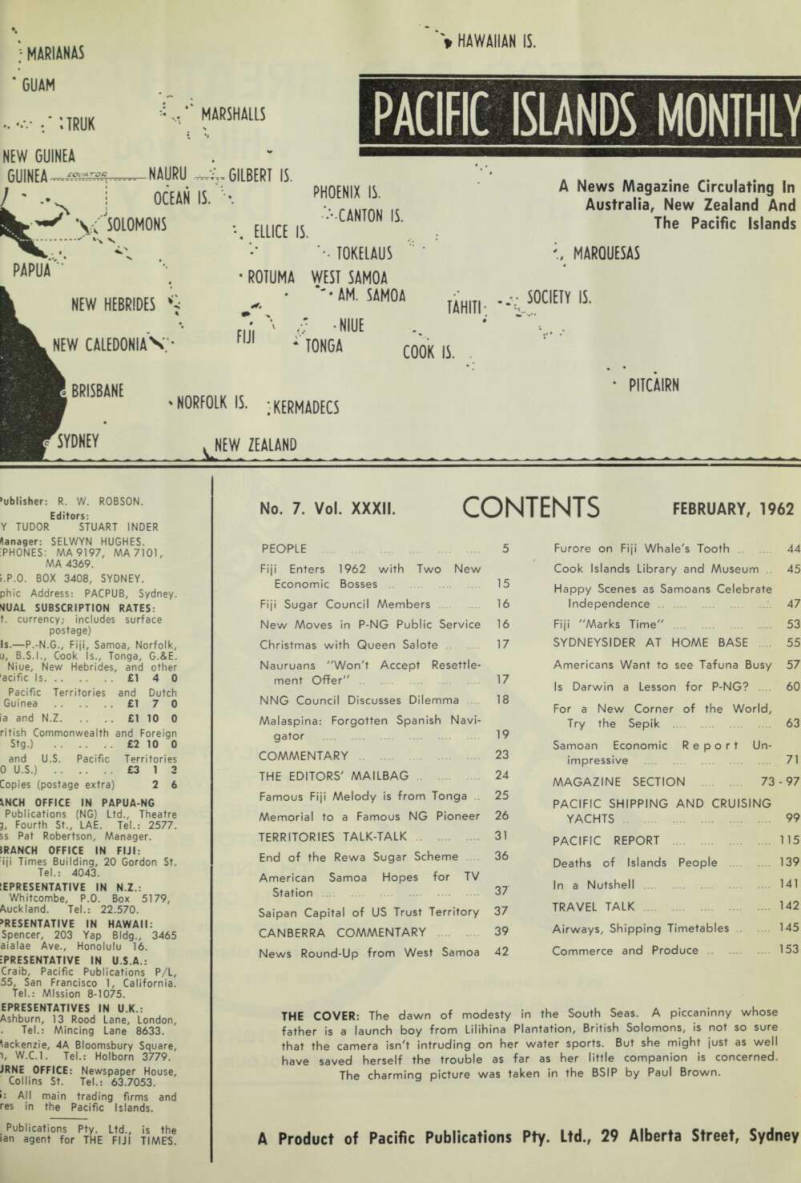 3
3 4
4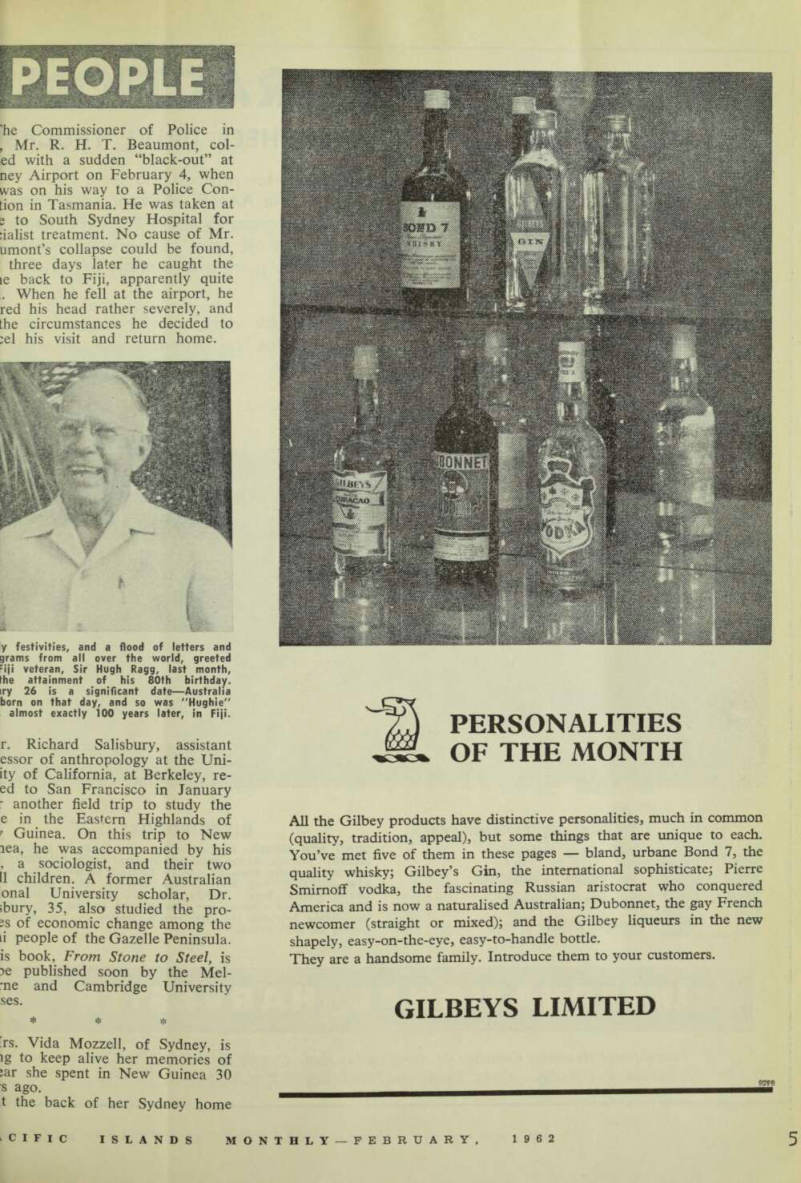 5
5 6
6 7
7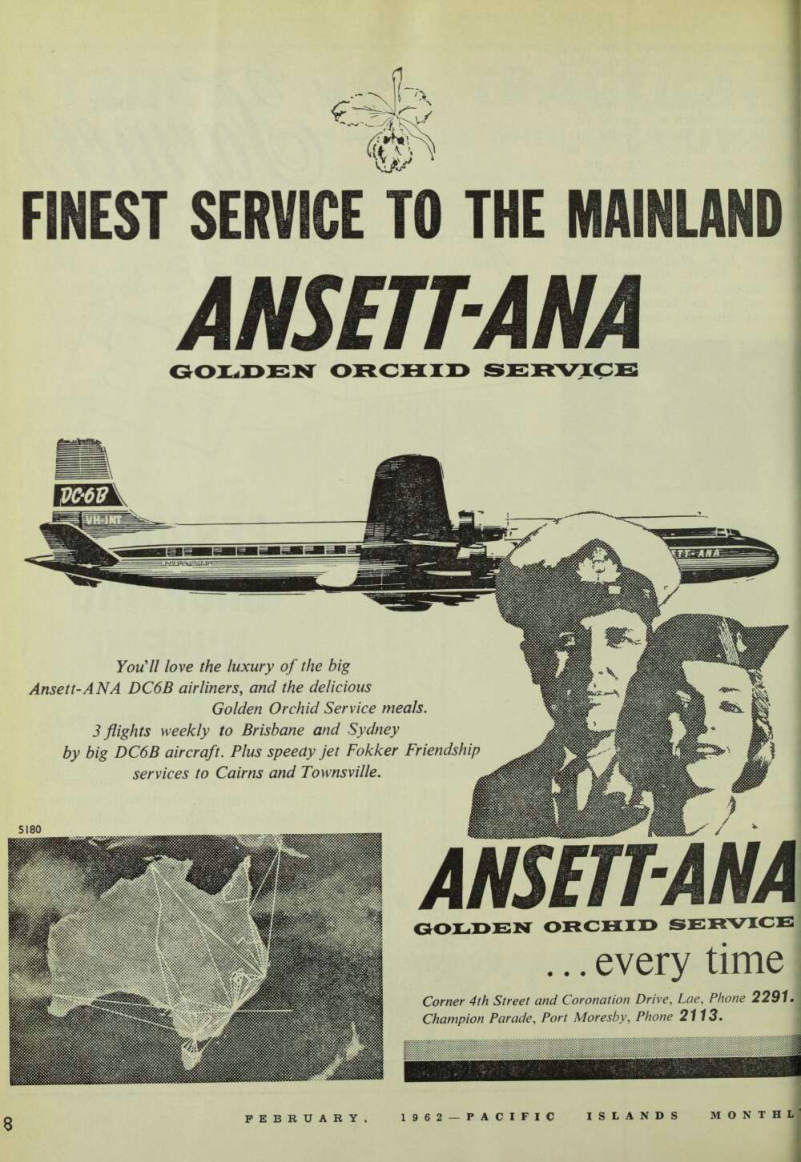 8
8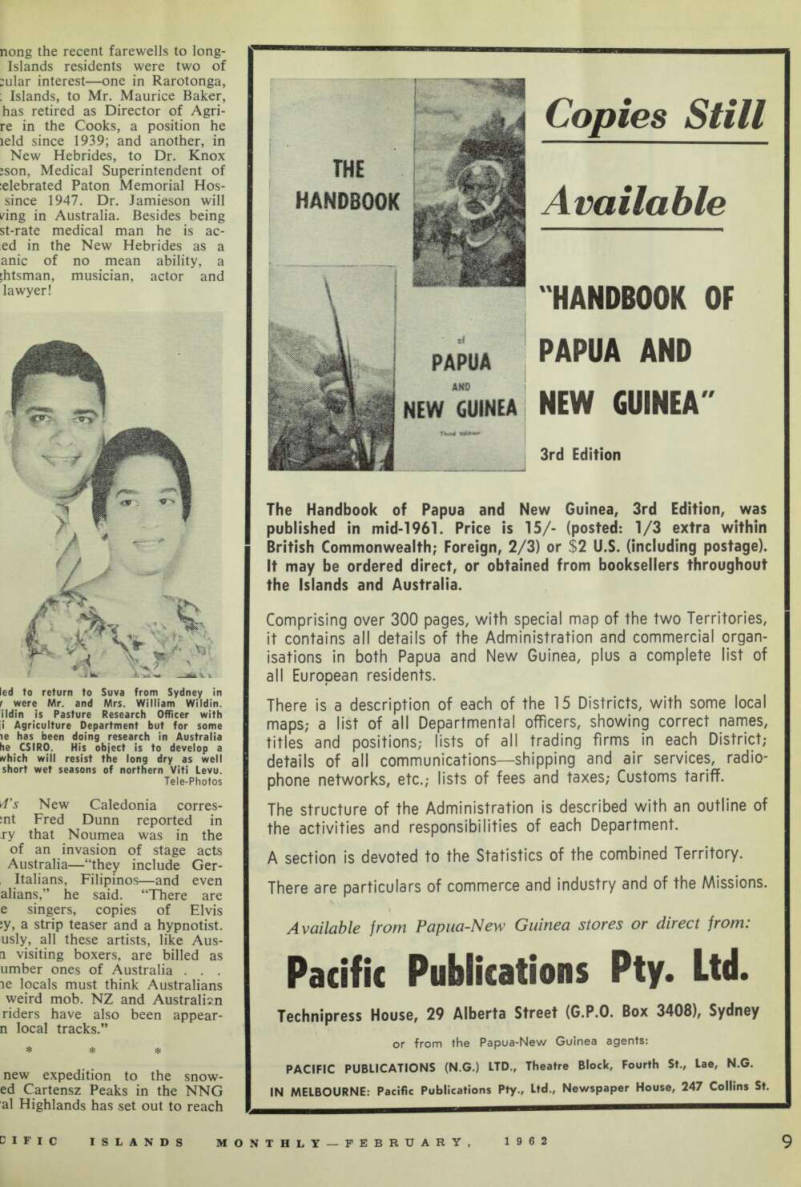 9
9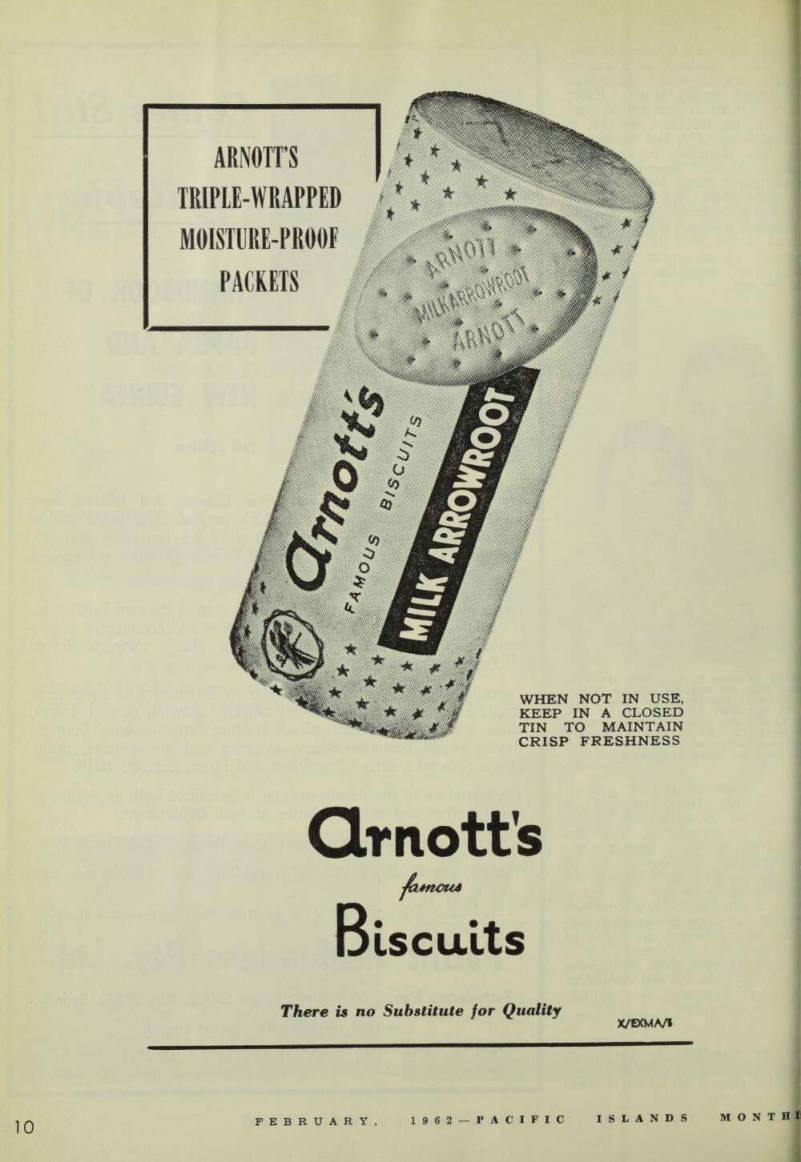 10
10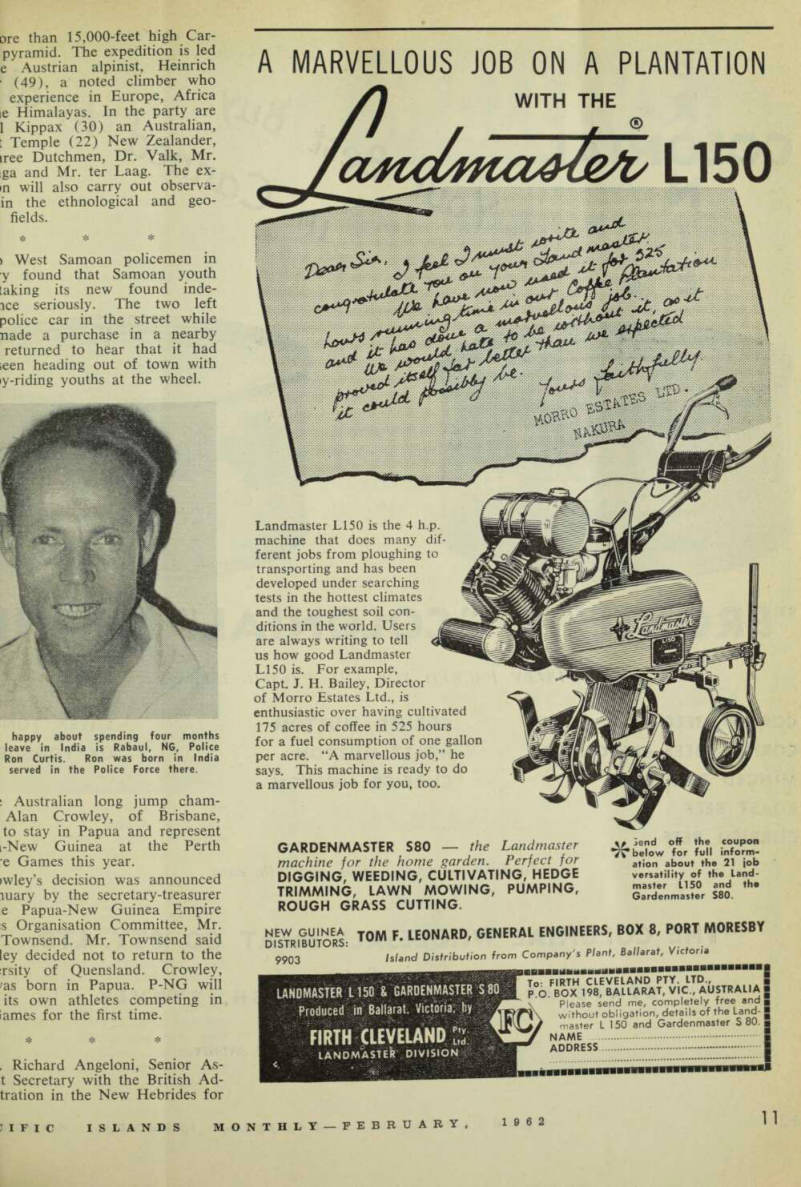 11
11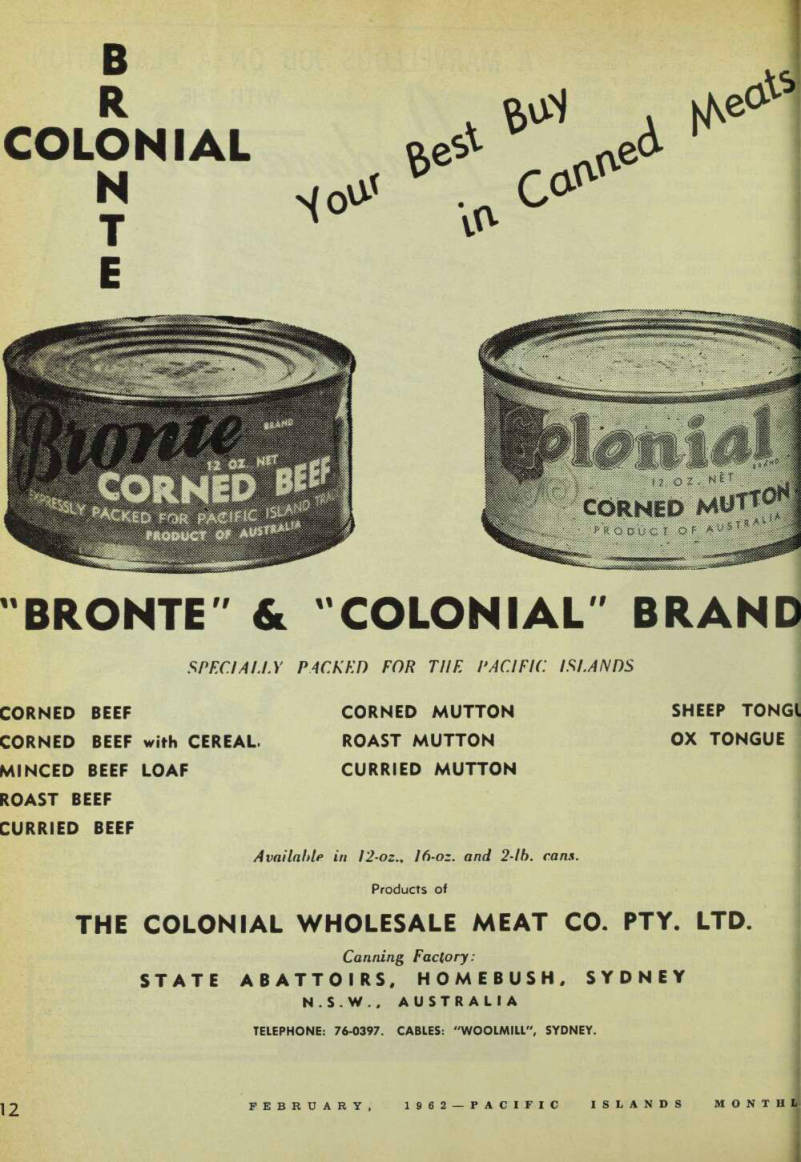 12
12 13
13 14
14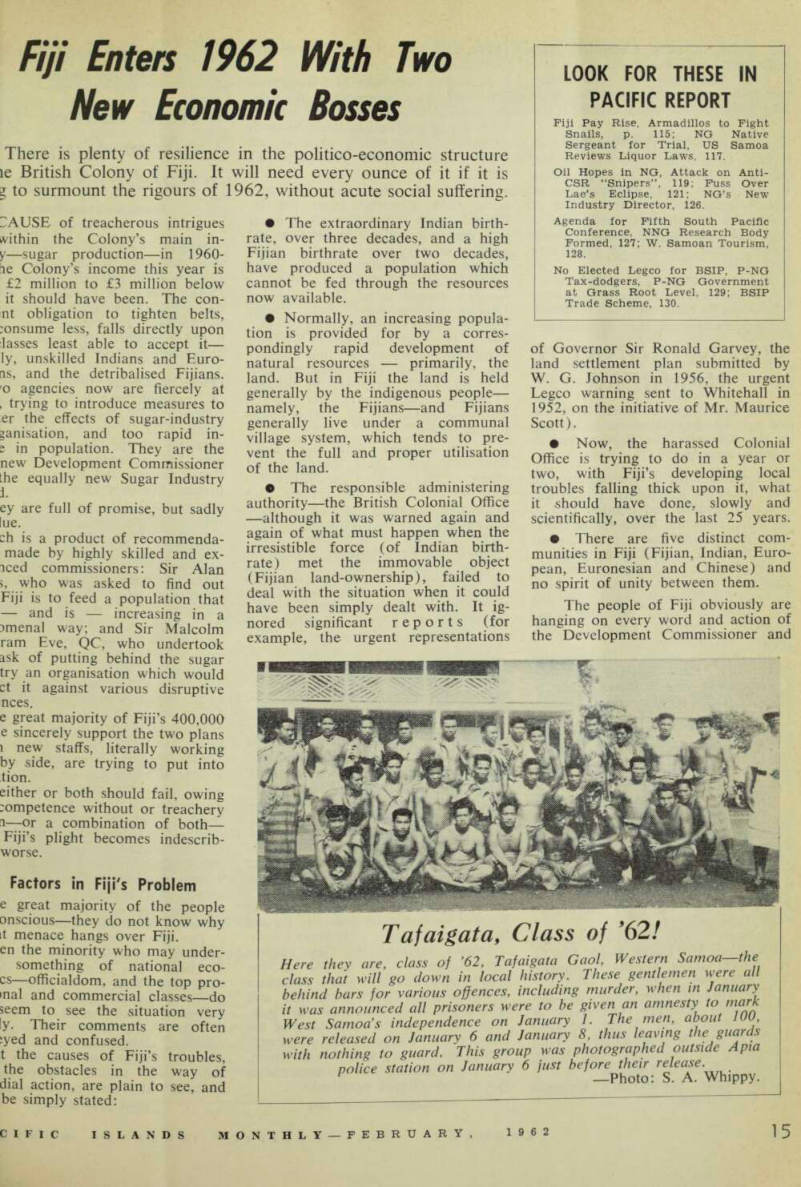 15
15 16
16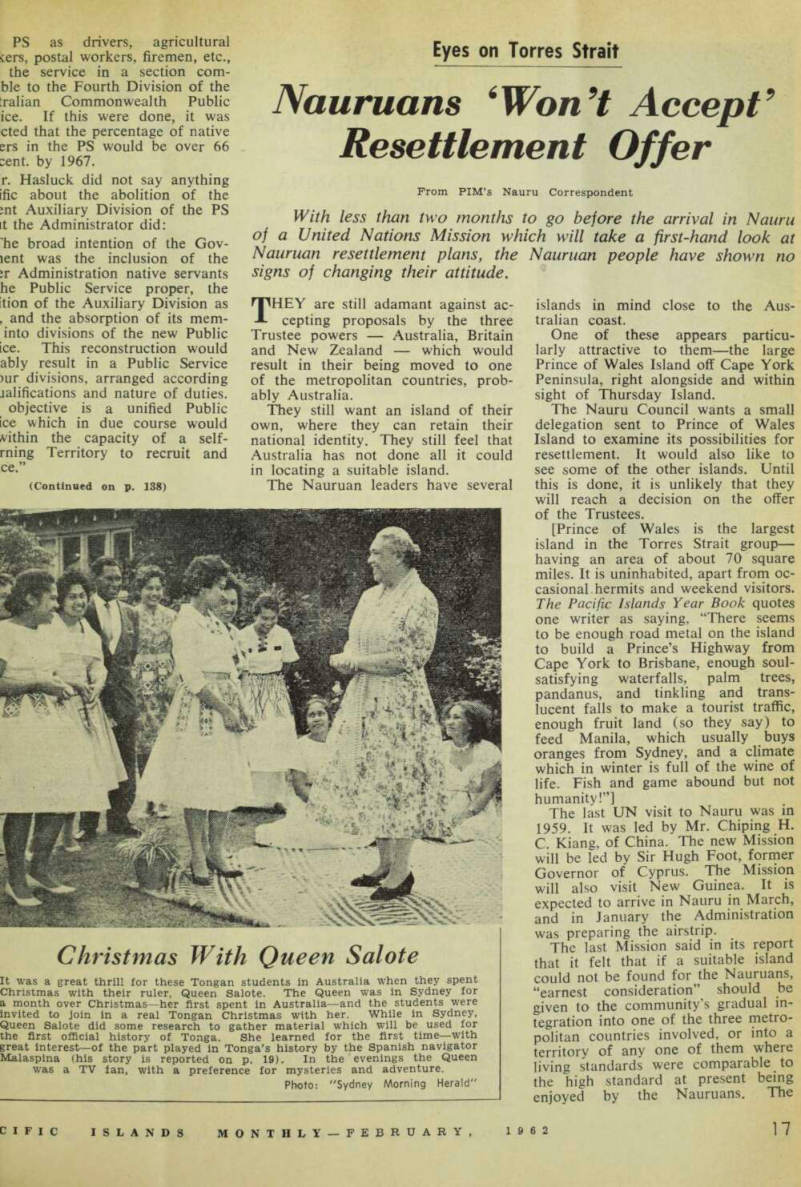 17
17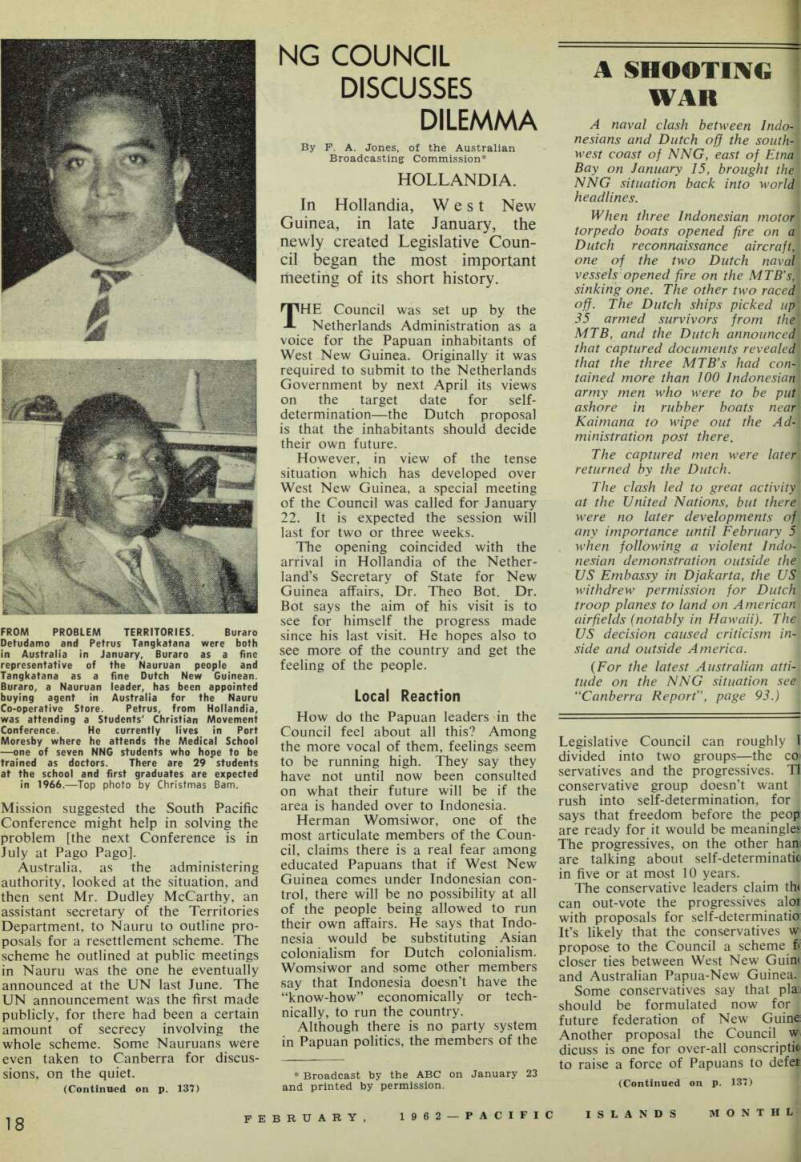 18
18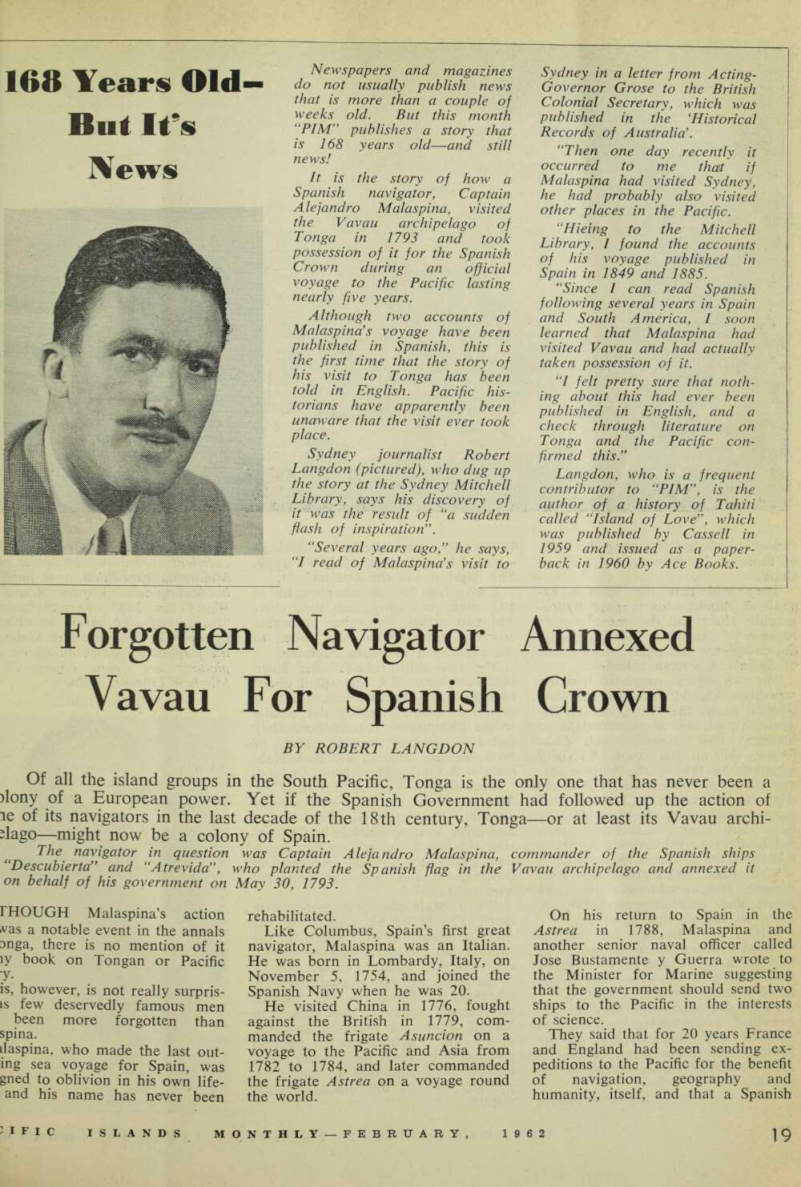 19
19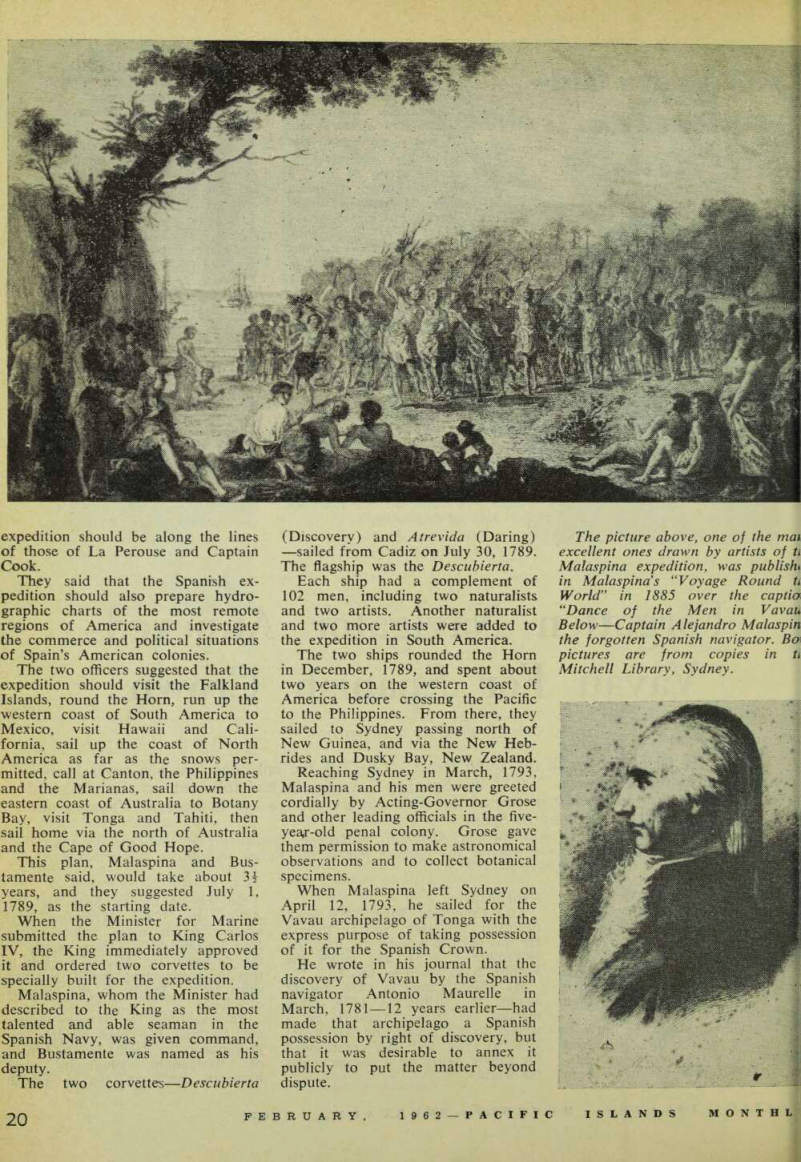 20
20 21
21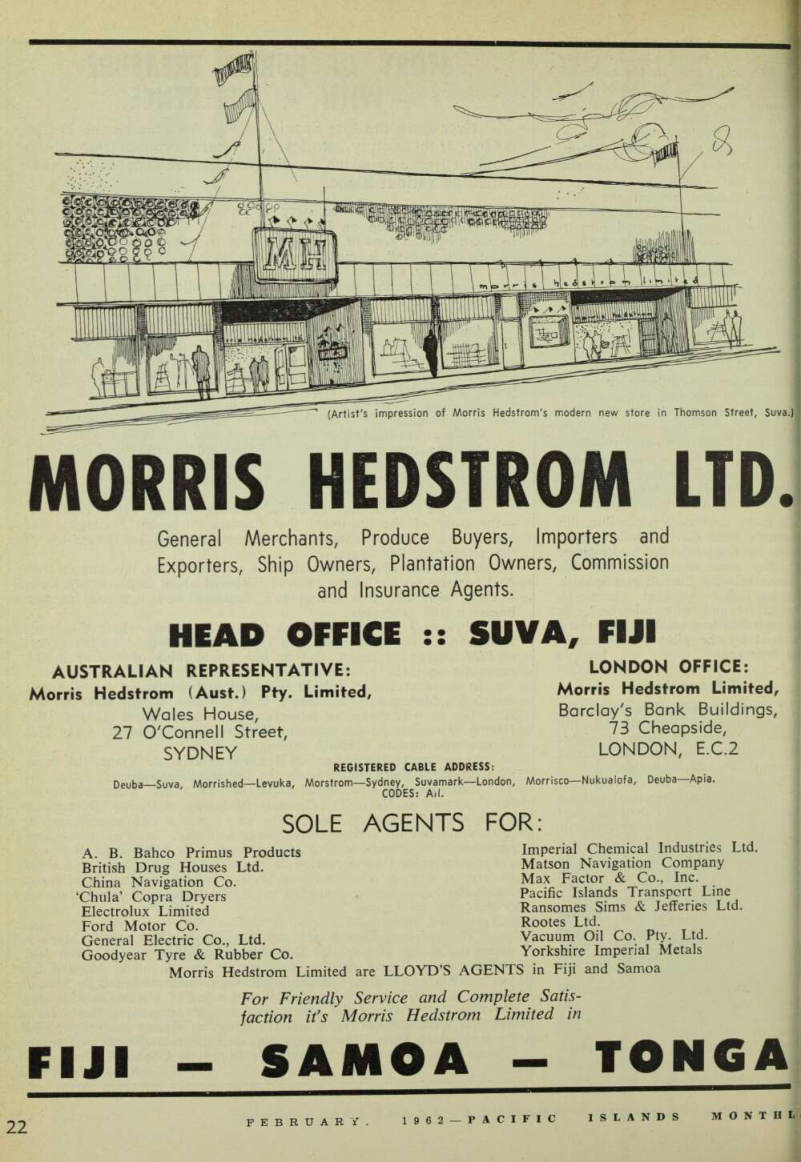 22
22 23
23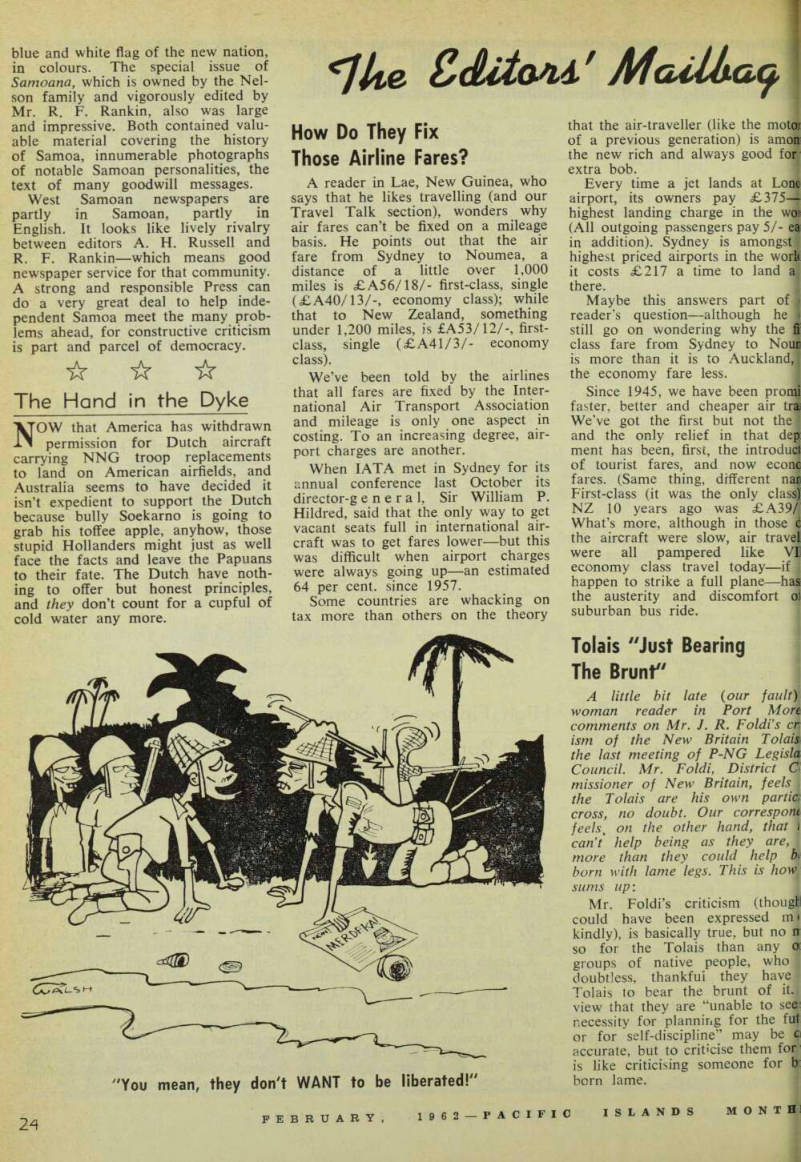 24
24 25
25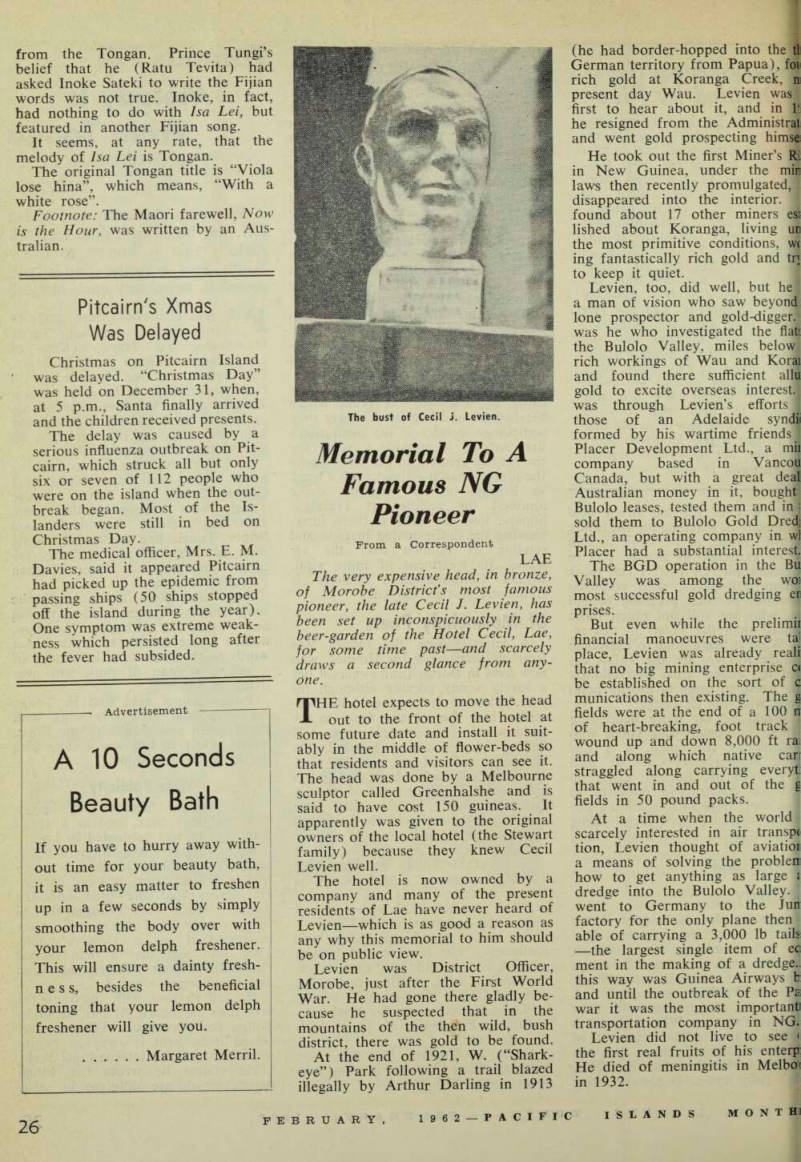 26
26 27
27 28
28 29
29 30
30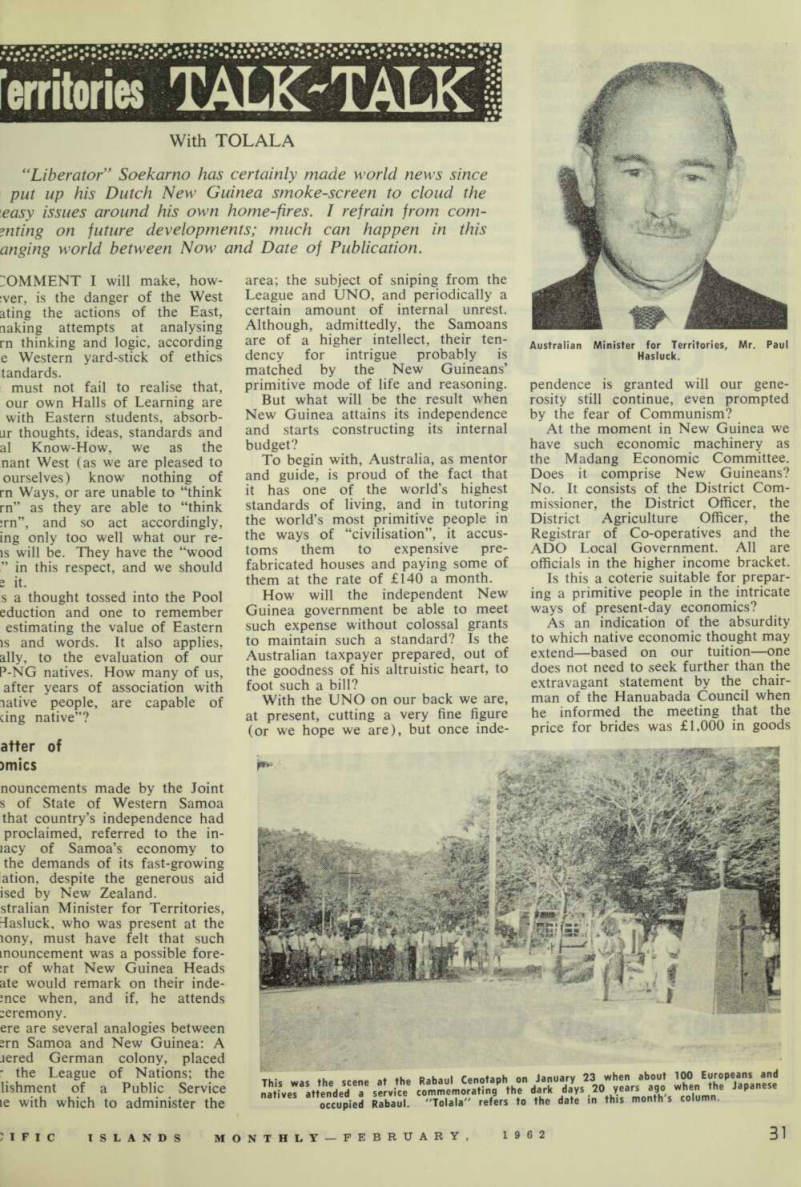 31
31 32
32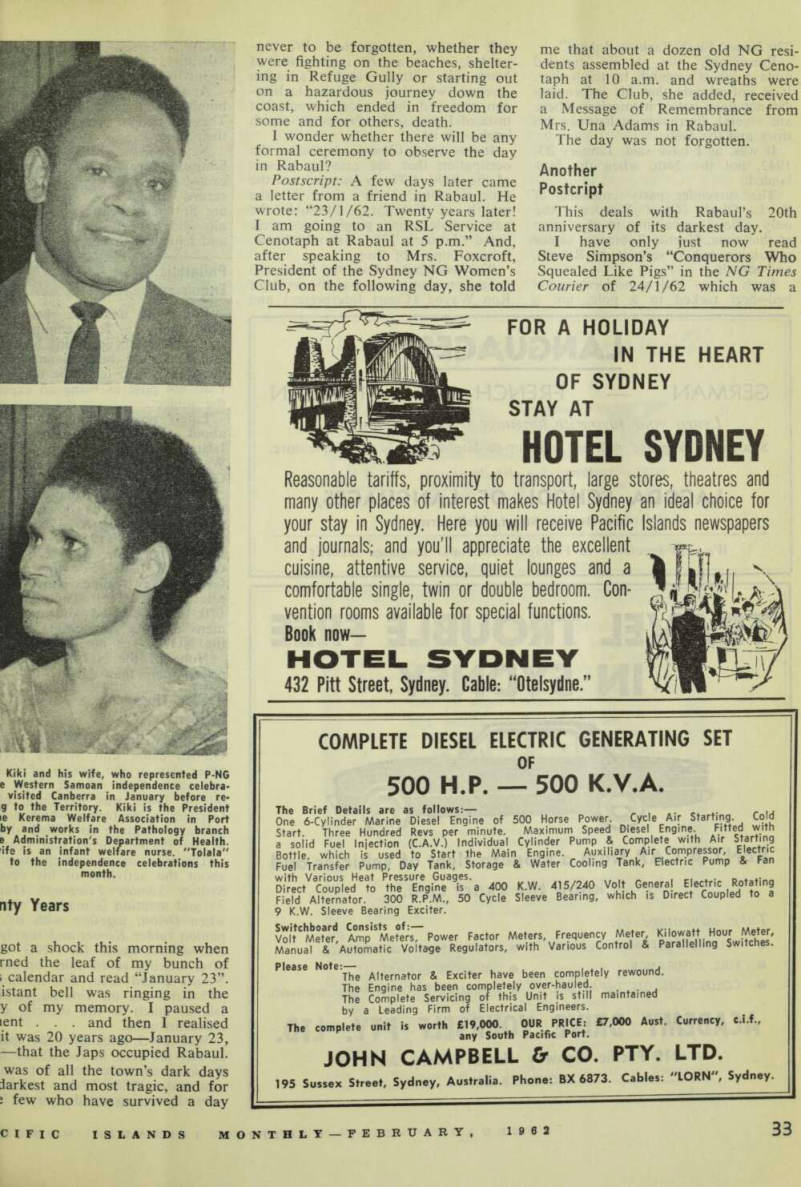 33
33 34
34 35
35 36
36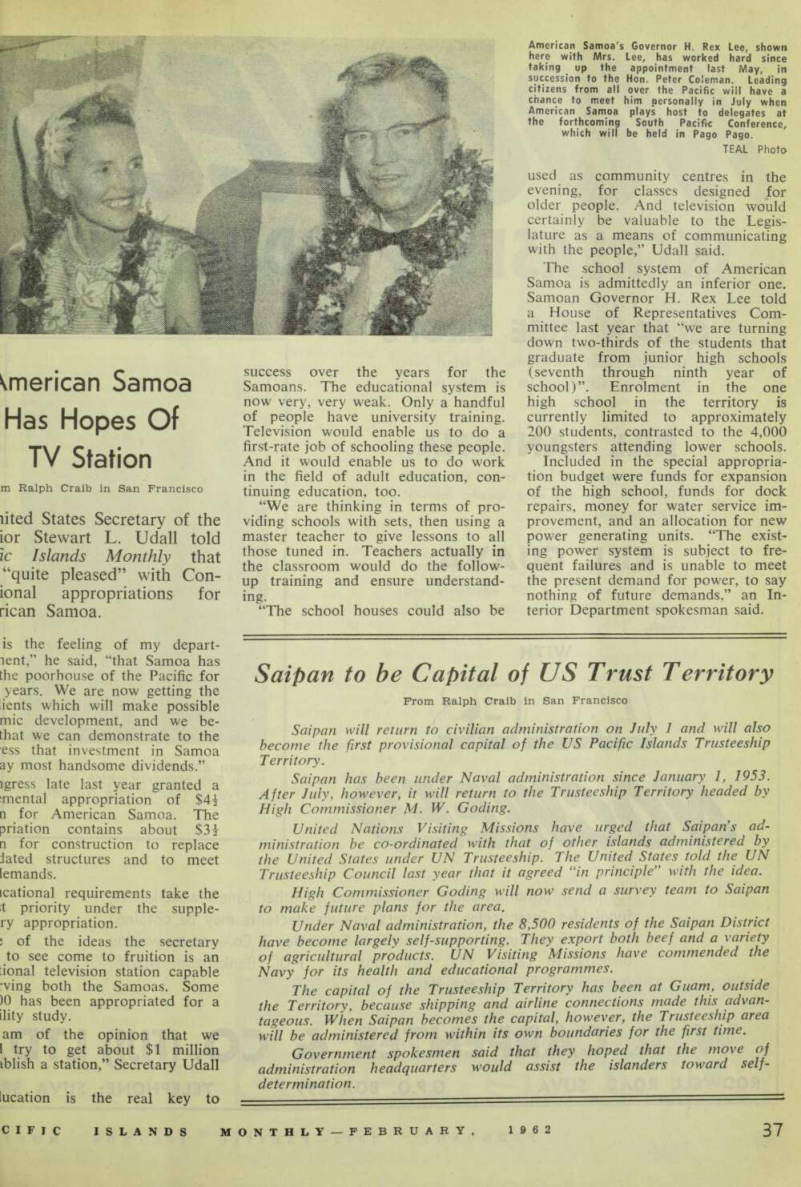 37
37 38
38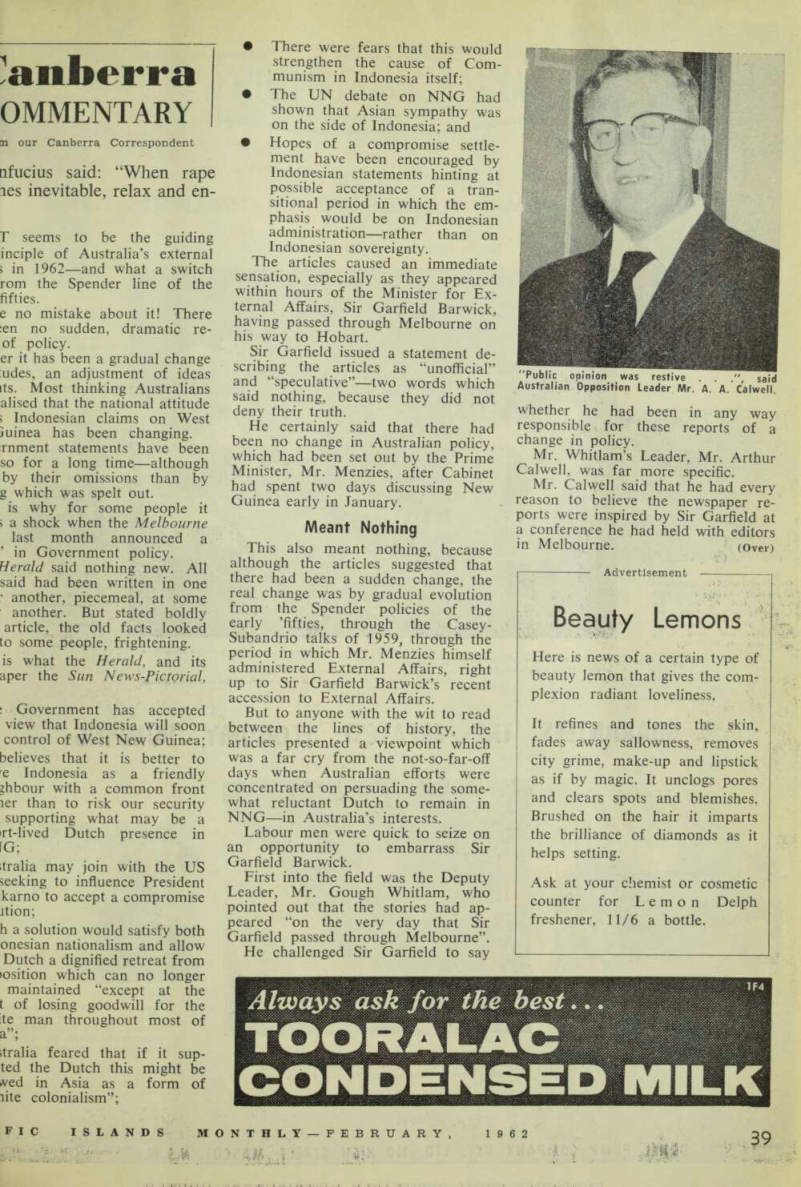 39
39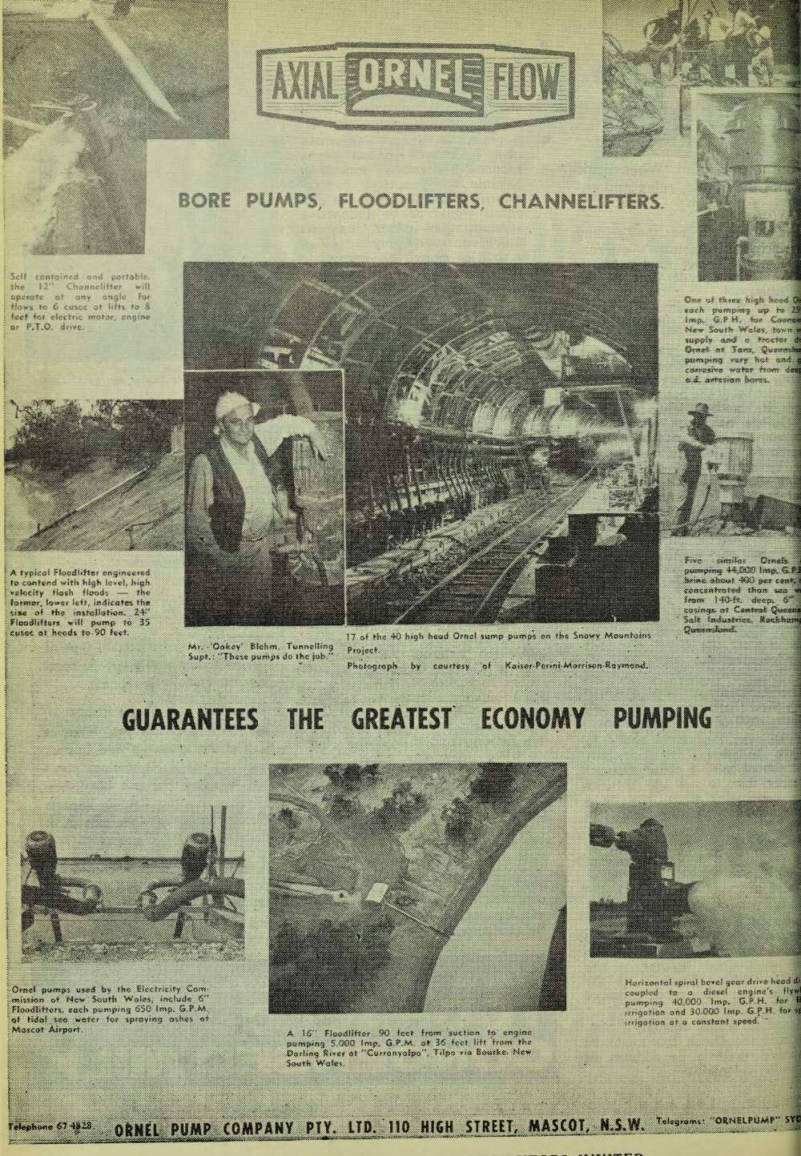 40
40 41
41 42
42 43
43 44
44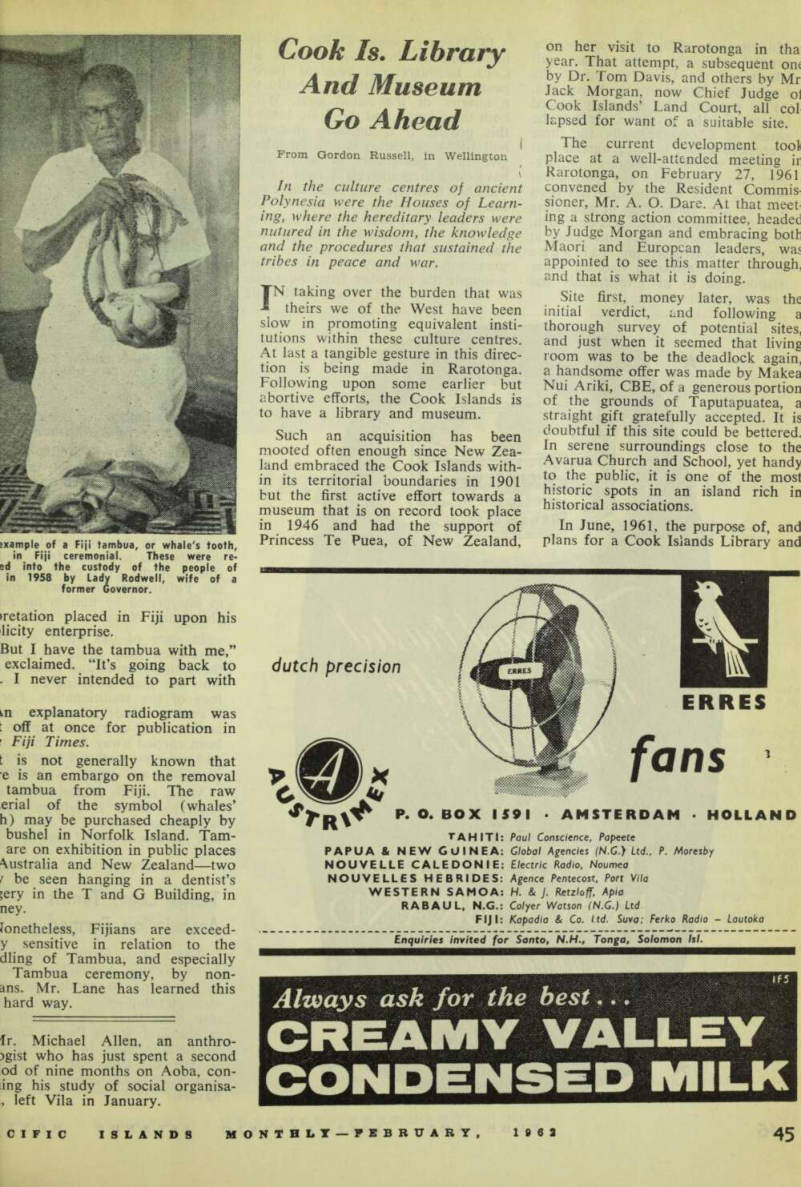 45
45 46
46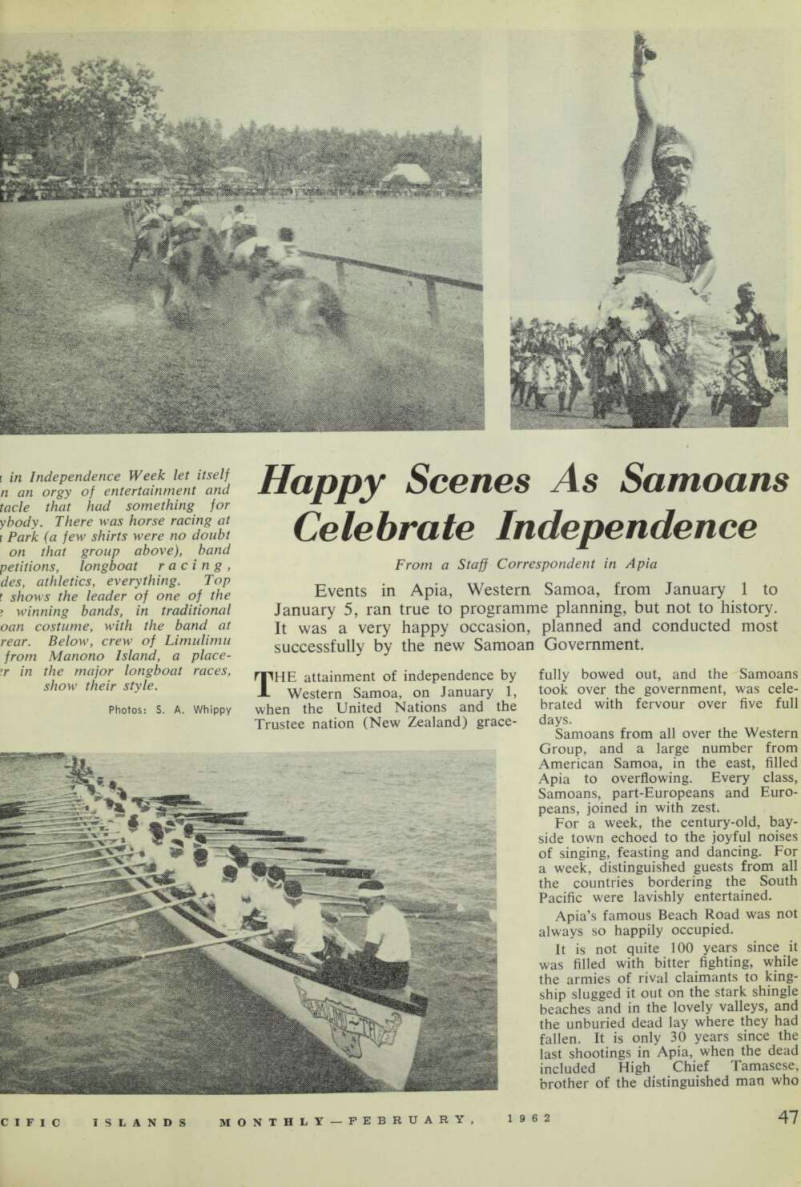 47
47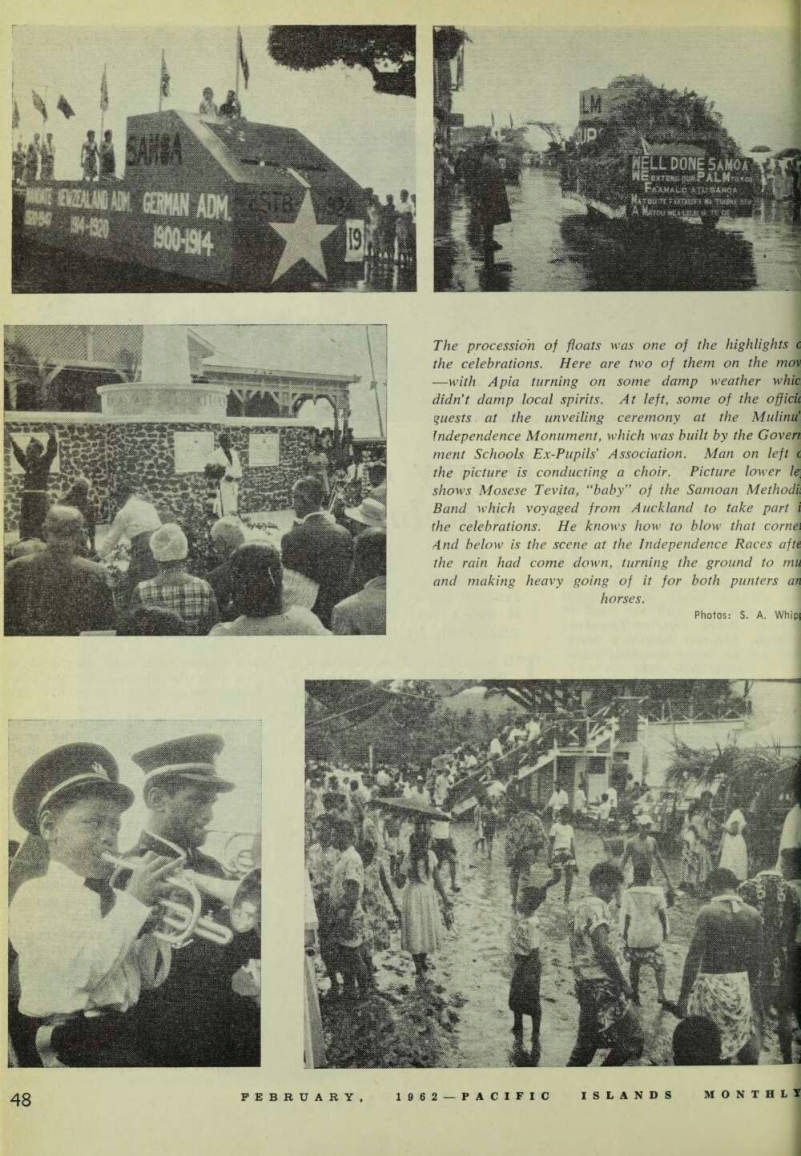 48
48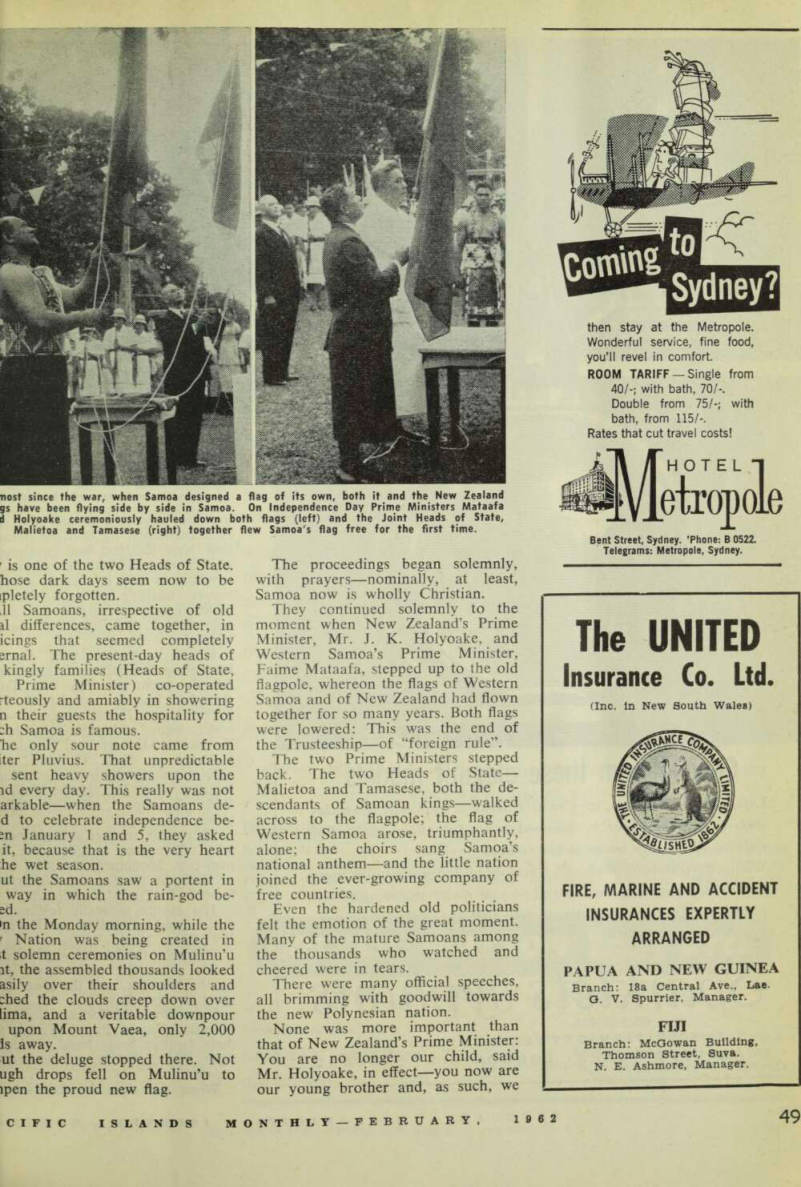 49
49 50
50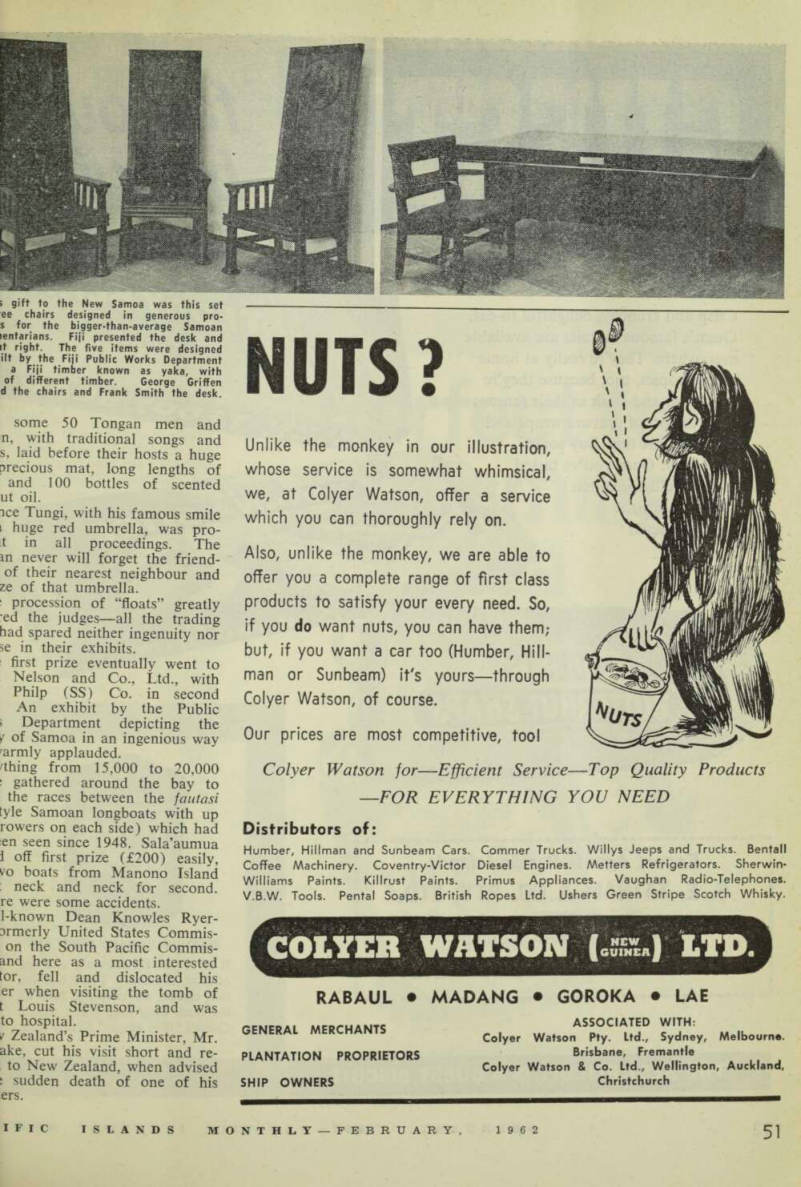 51
51 52
52 53
53 54
54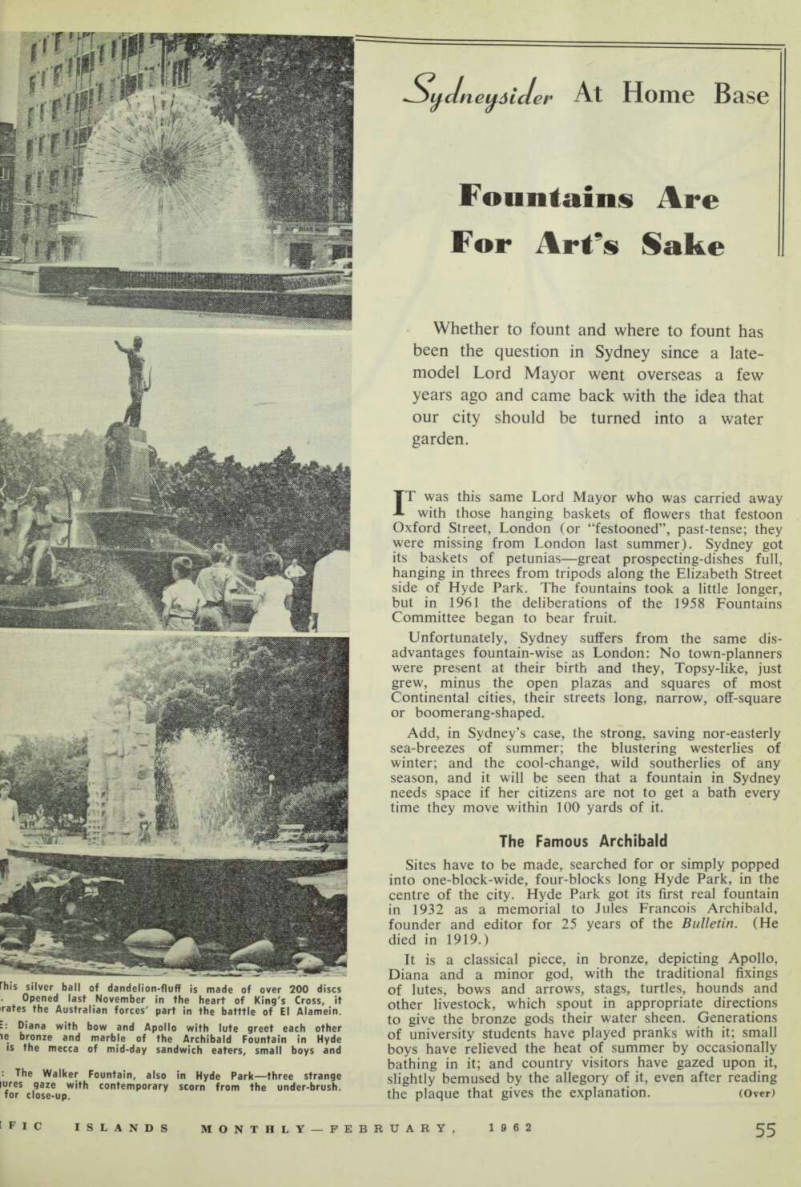 55
55 56
56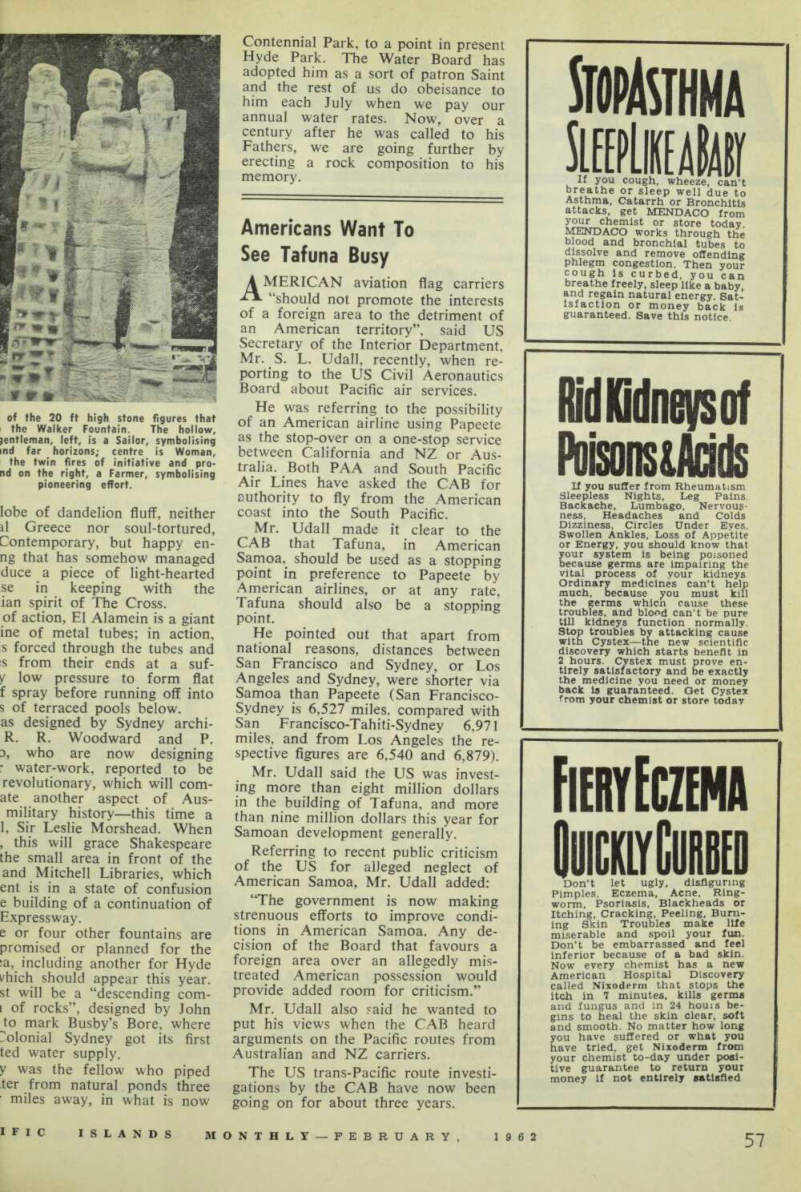 57
57 58
58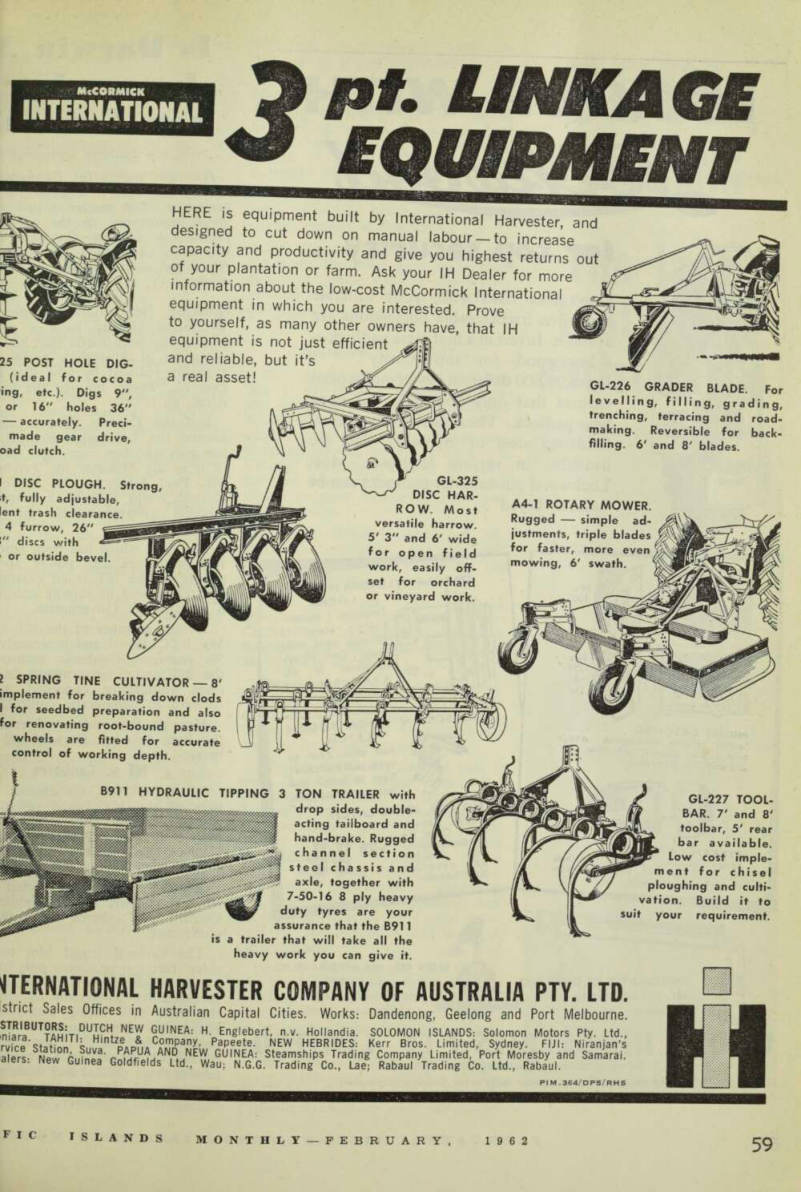 59
59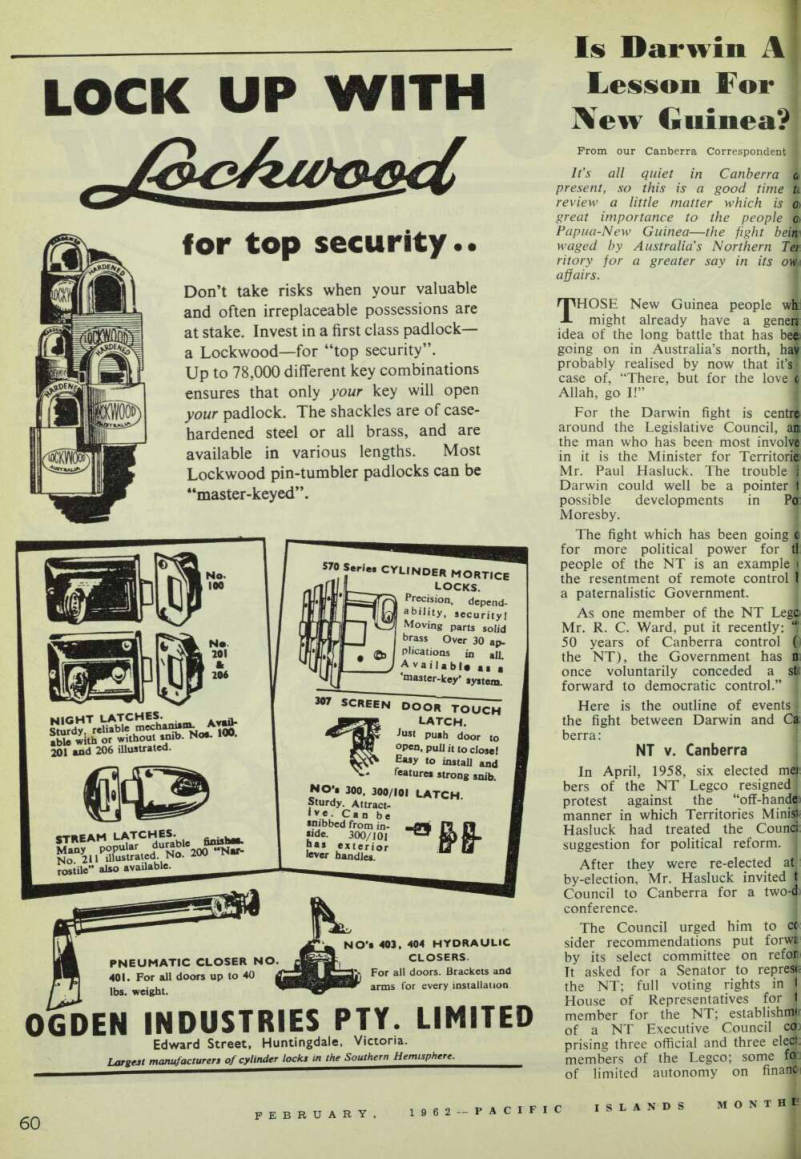 60
60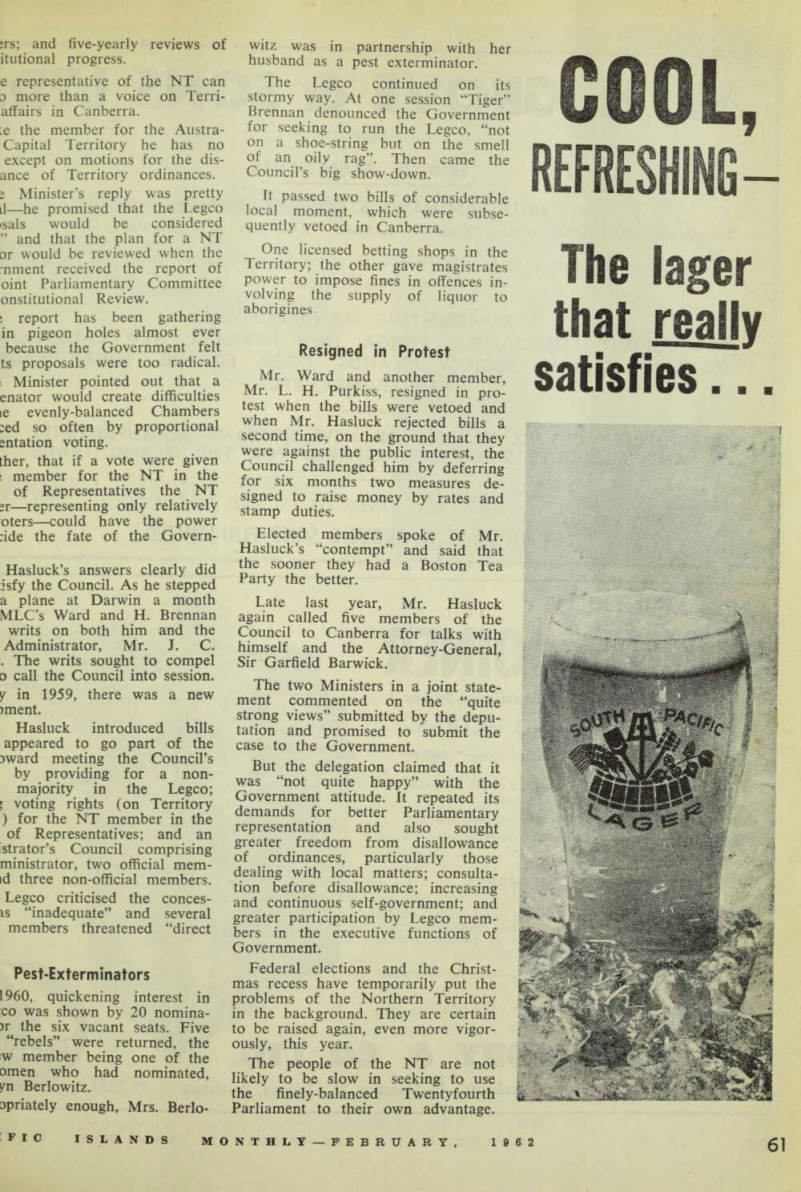 61
61 62
62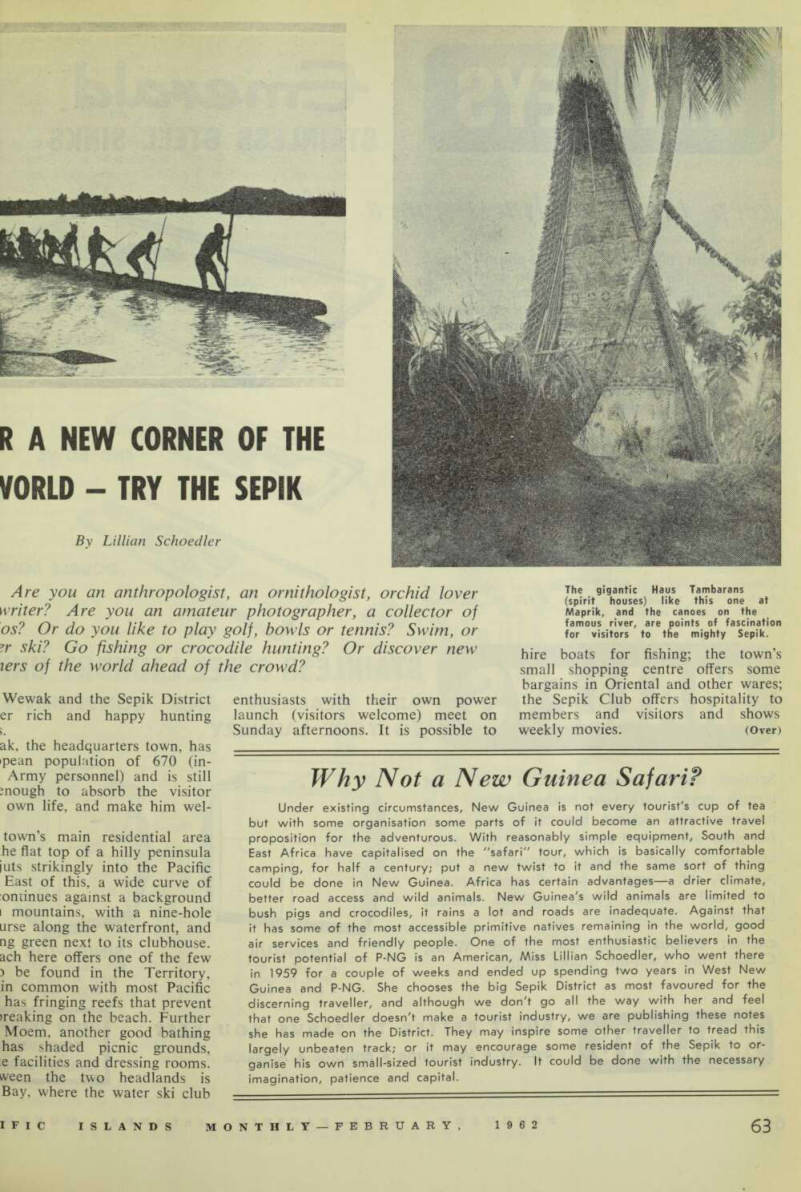 63
63 64
64 65
65 66
66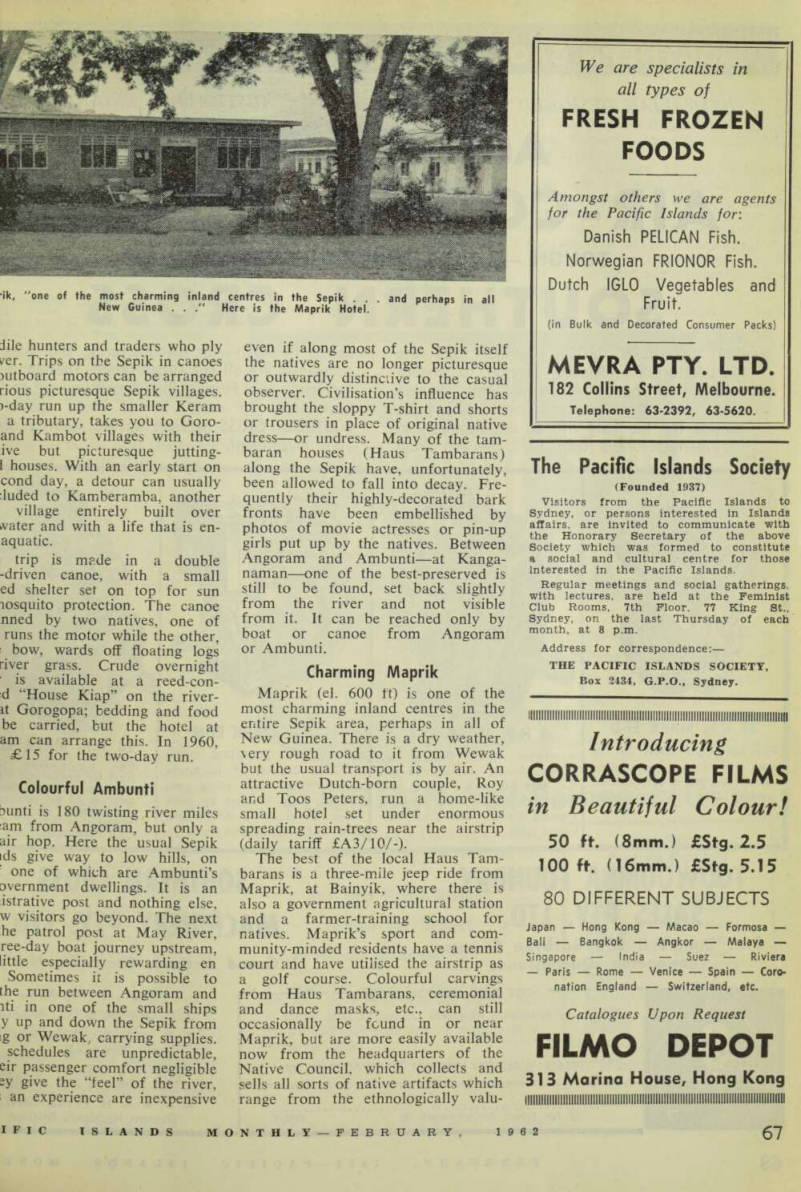 67
67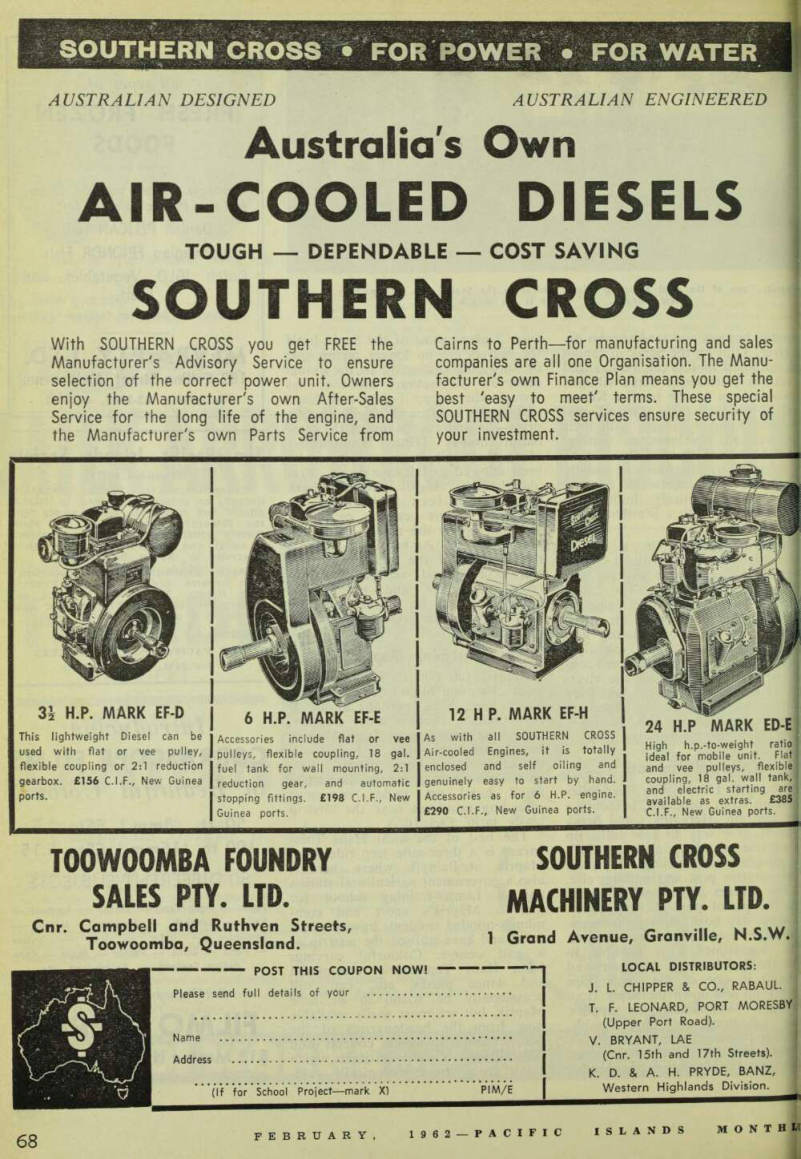 68
68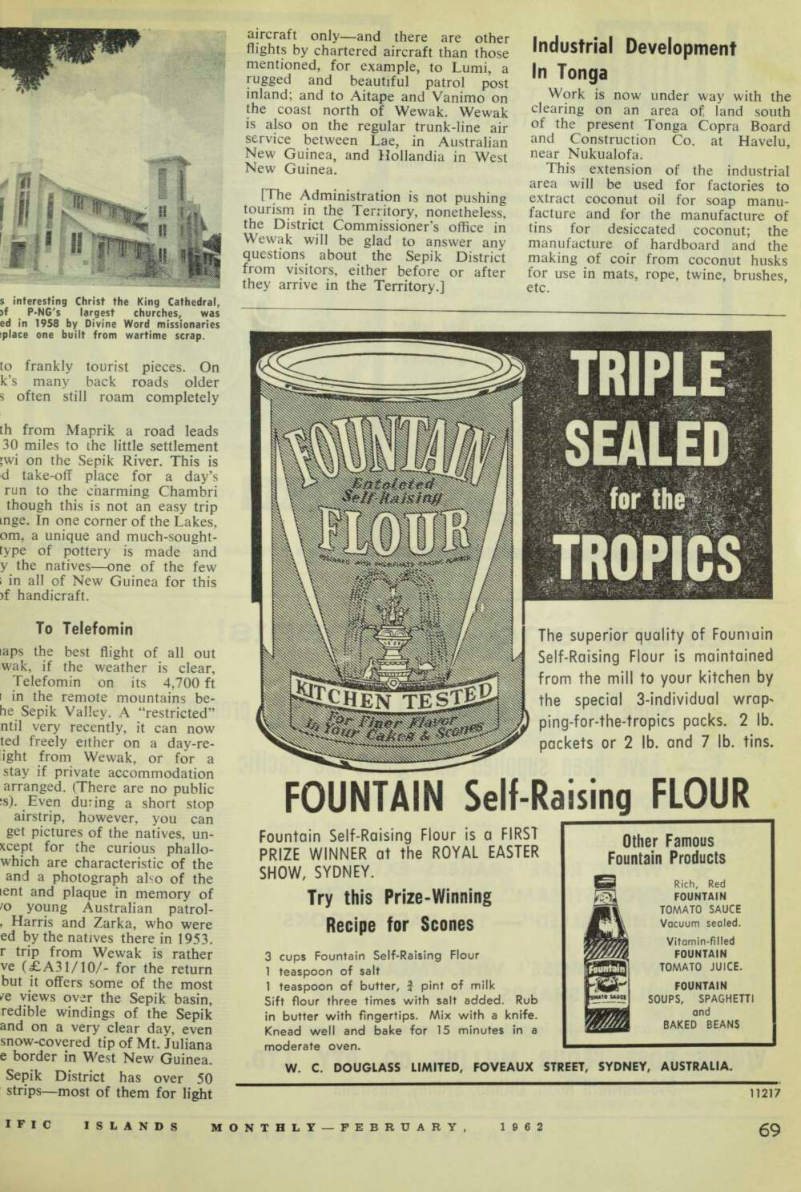 69
69 70
70 71
71 72
72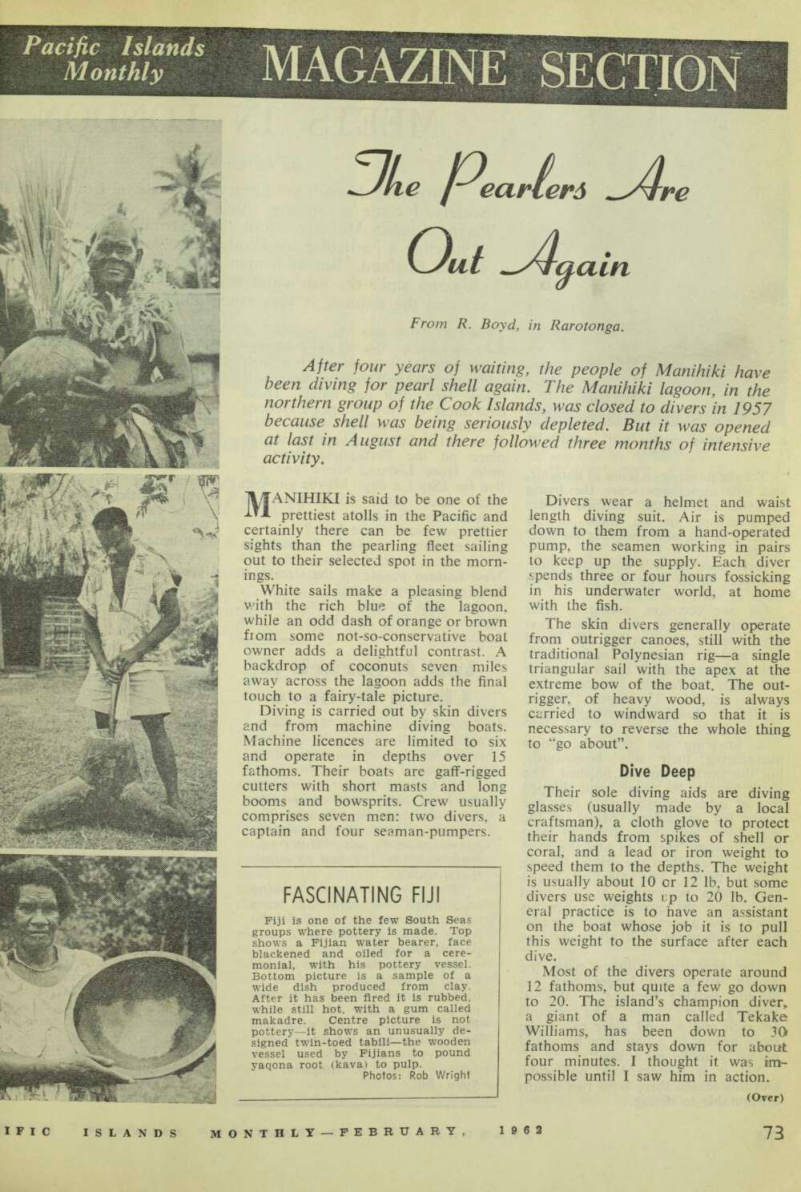 73
73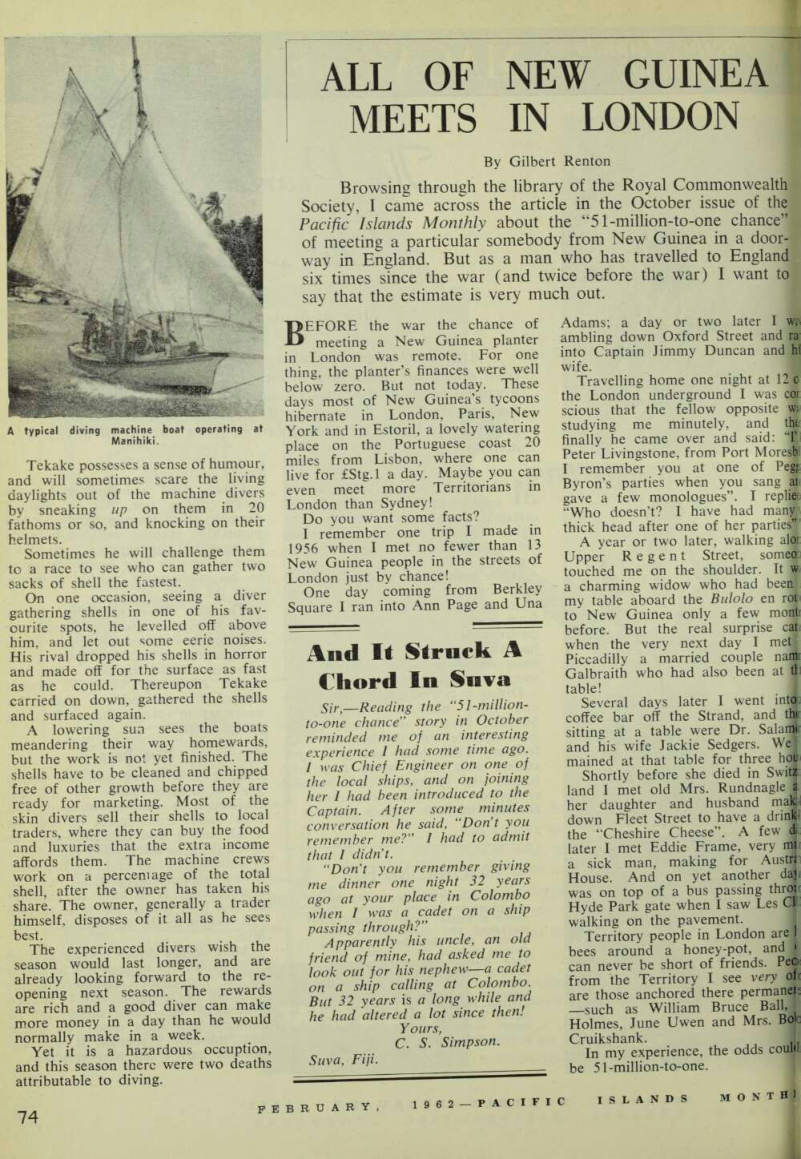 74
74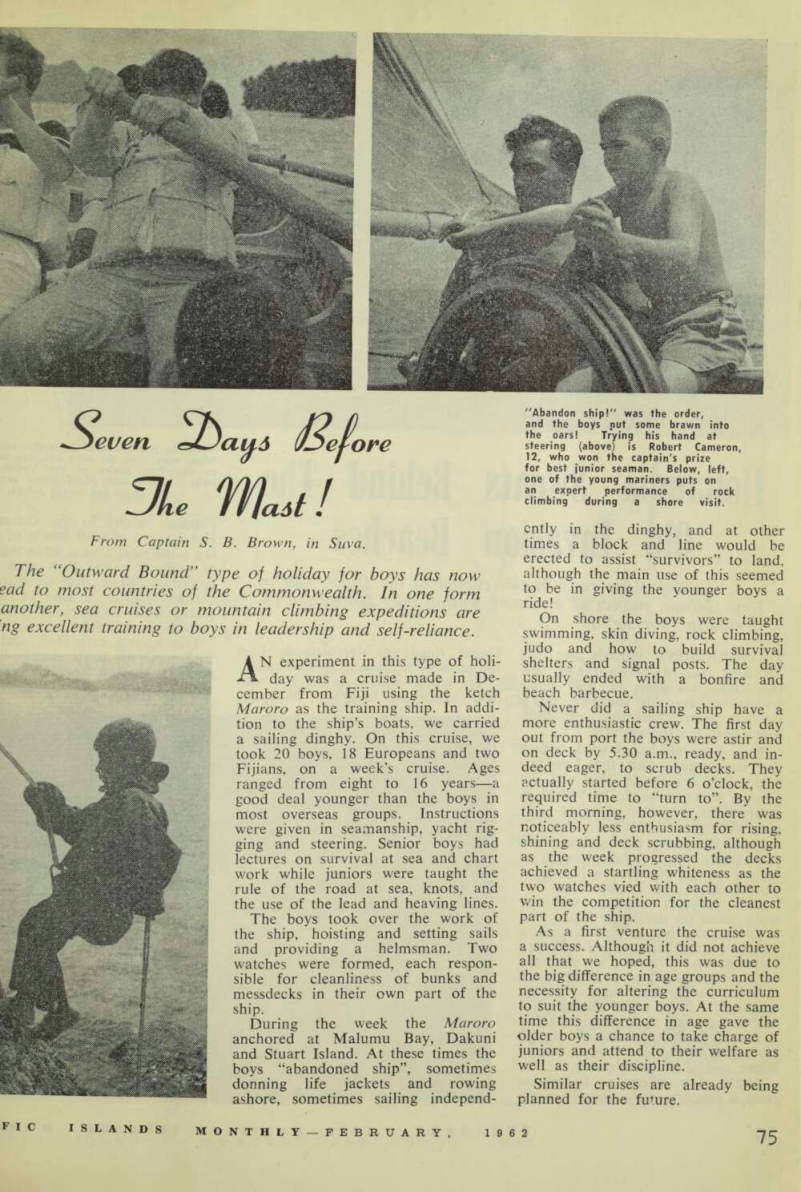 75
75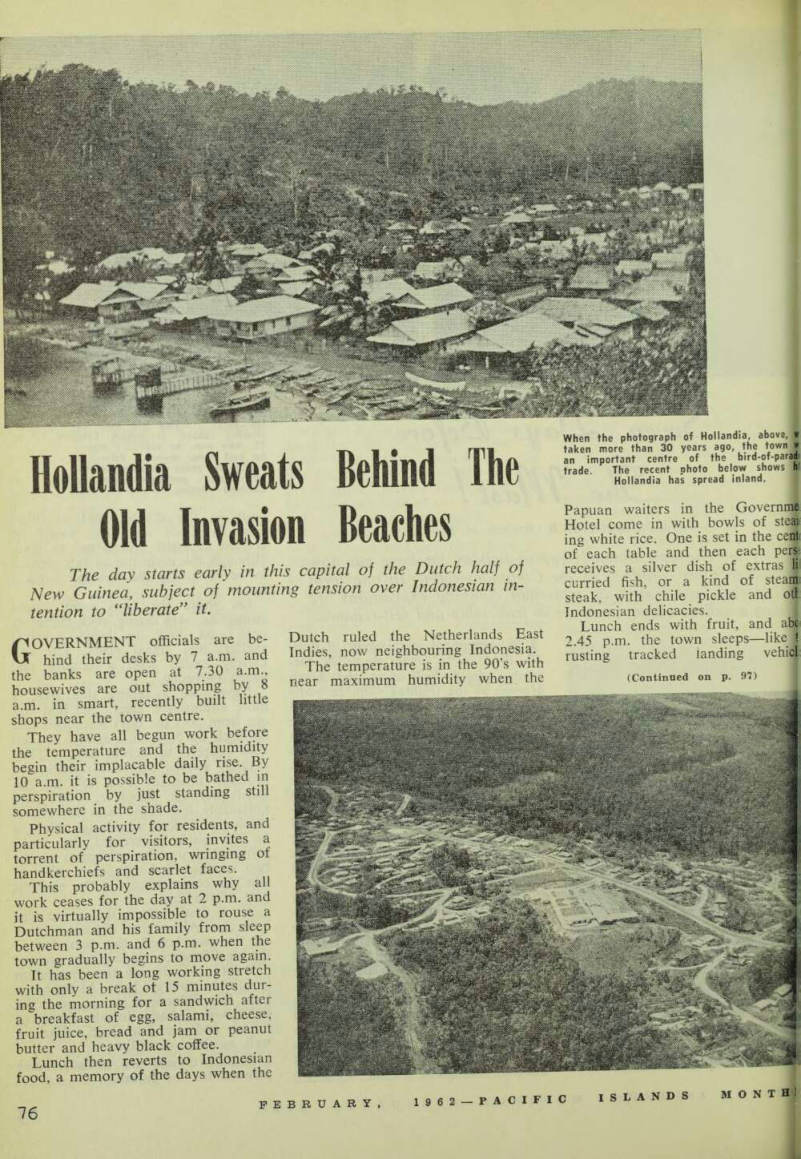 76
76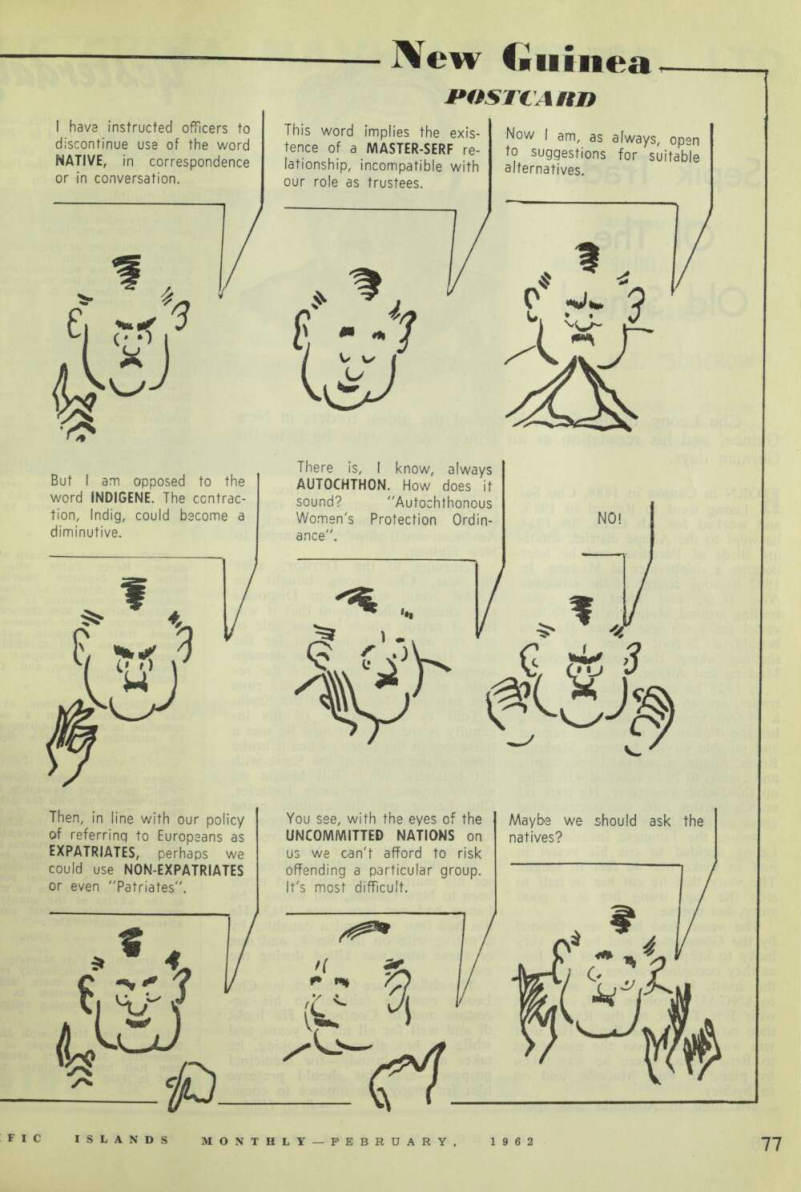 77
77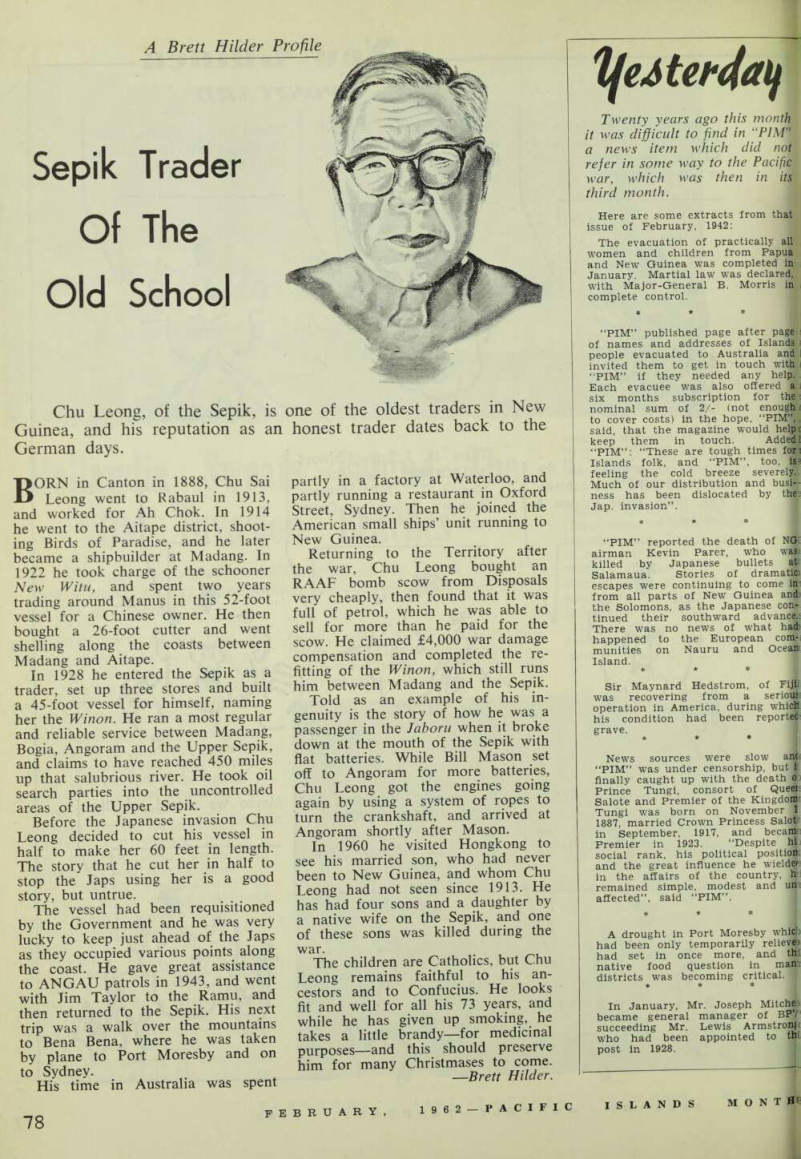 78
78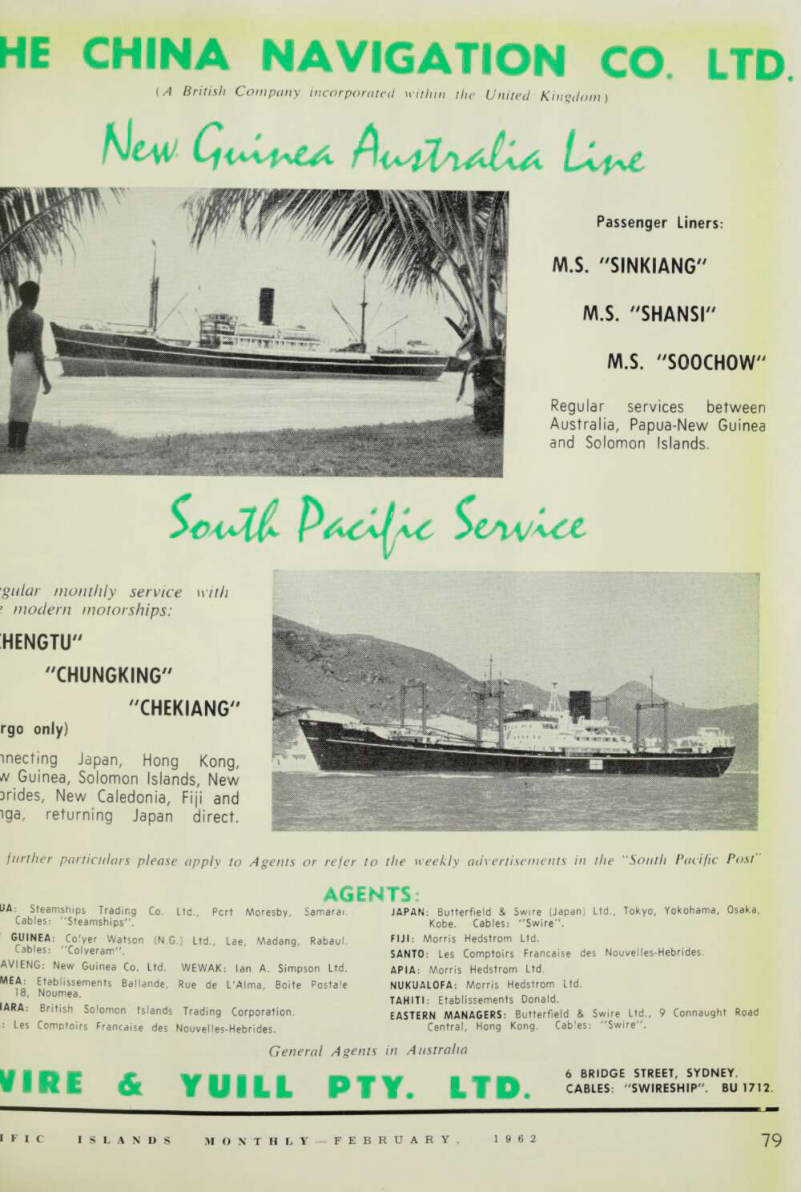 79
79 80
80 81
81 82
82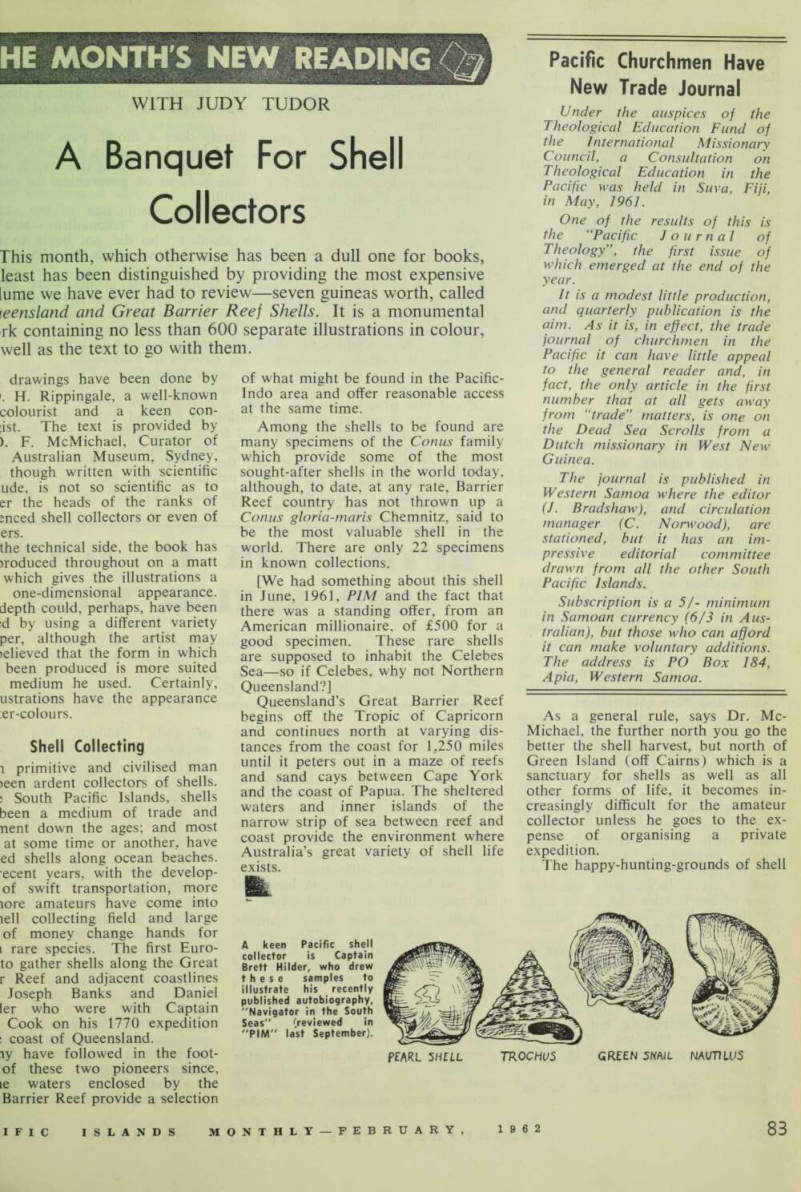 83
83 84
84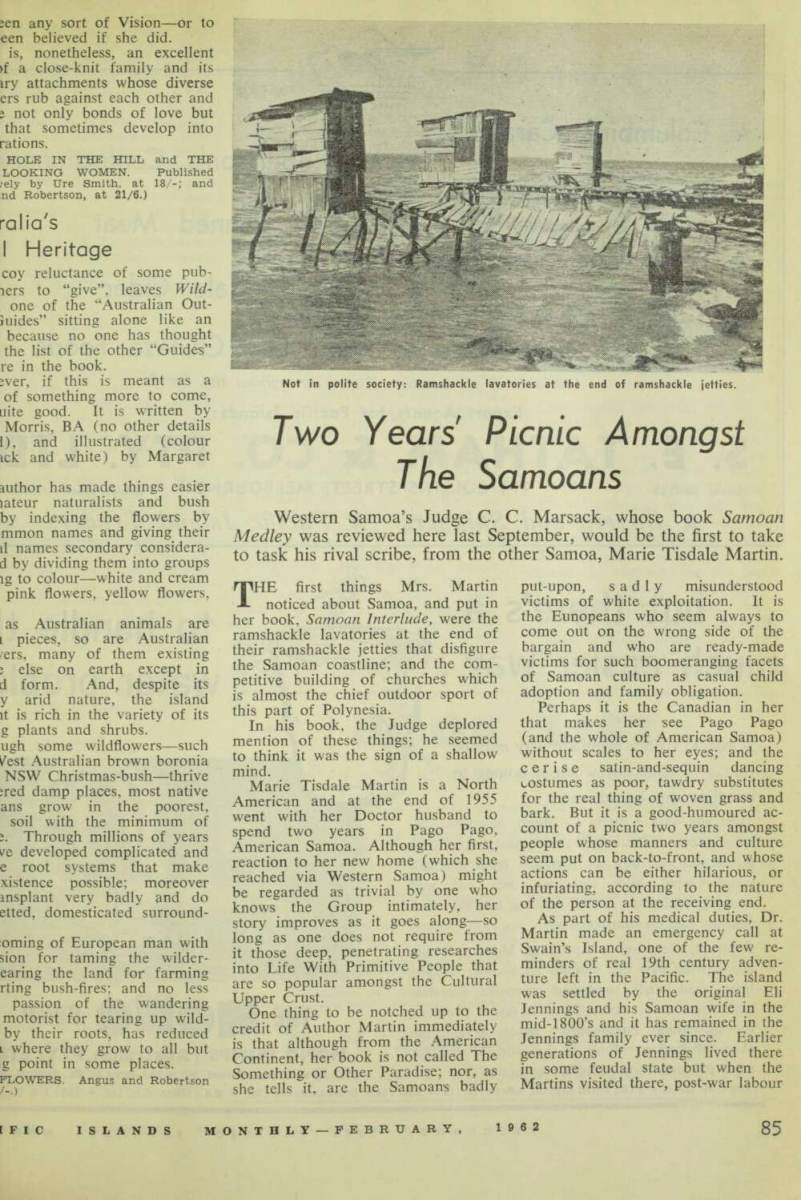 85
85 86
86 87
87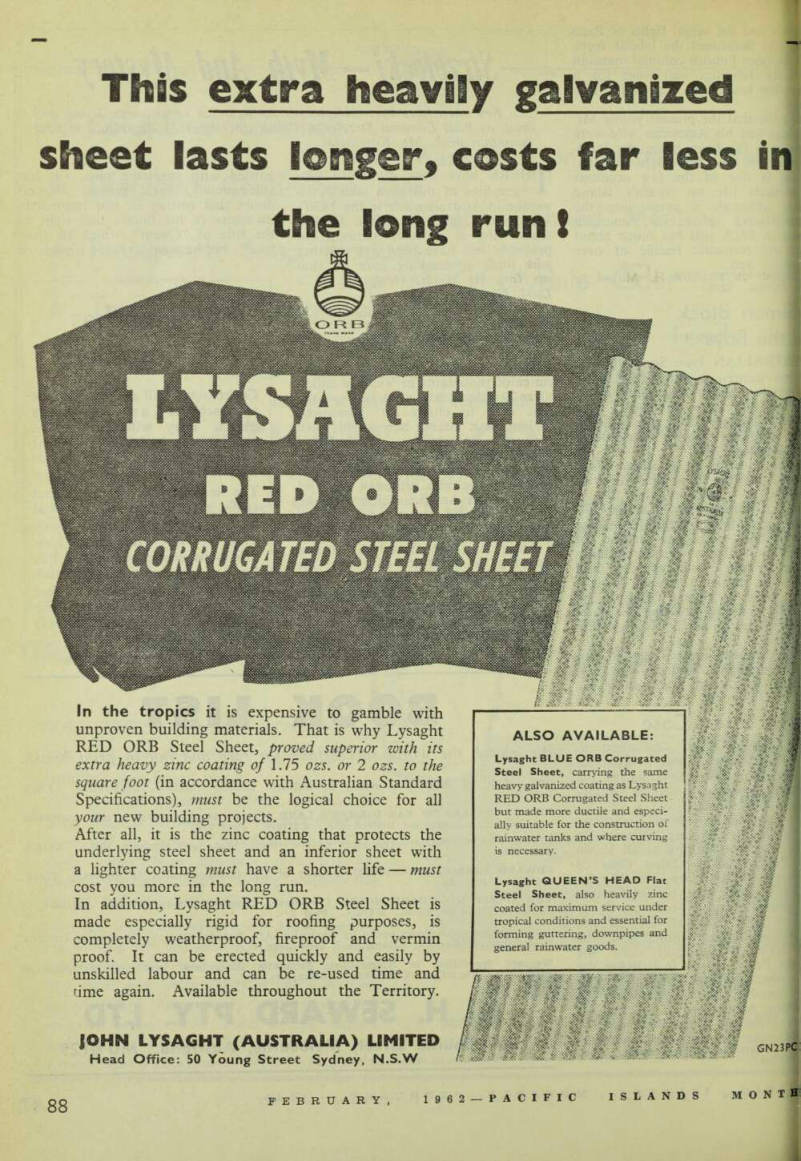 88
88 89
89 90
90 91
91 92
92 93
93 94
94 95
95 96
96 97
97 98
98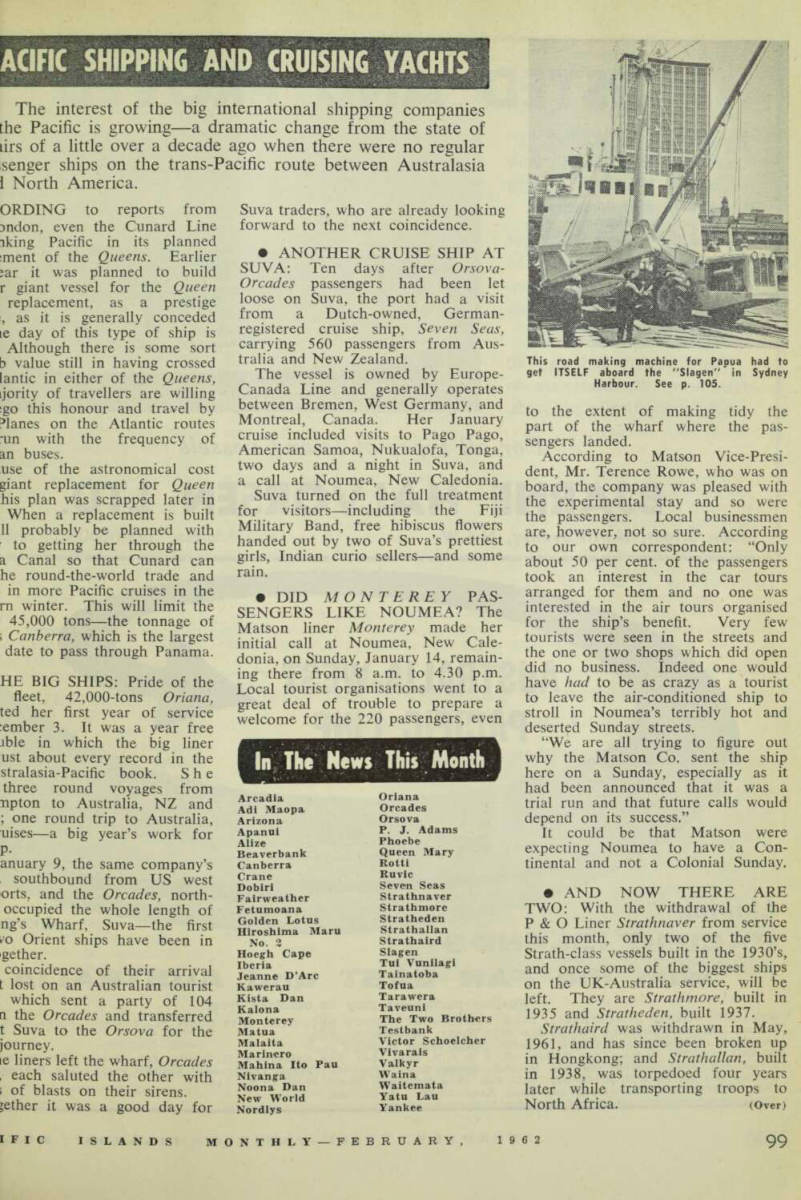 99
99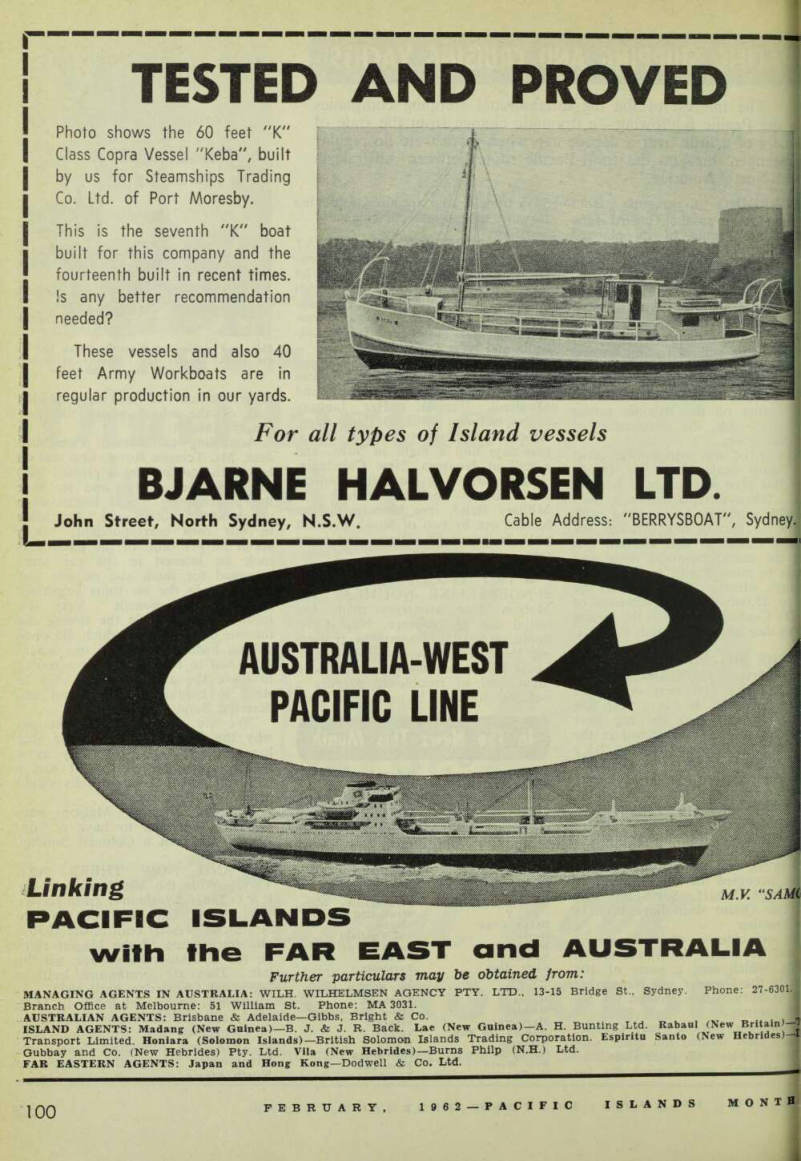 100
100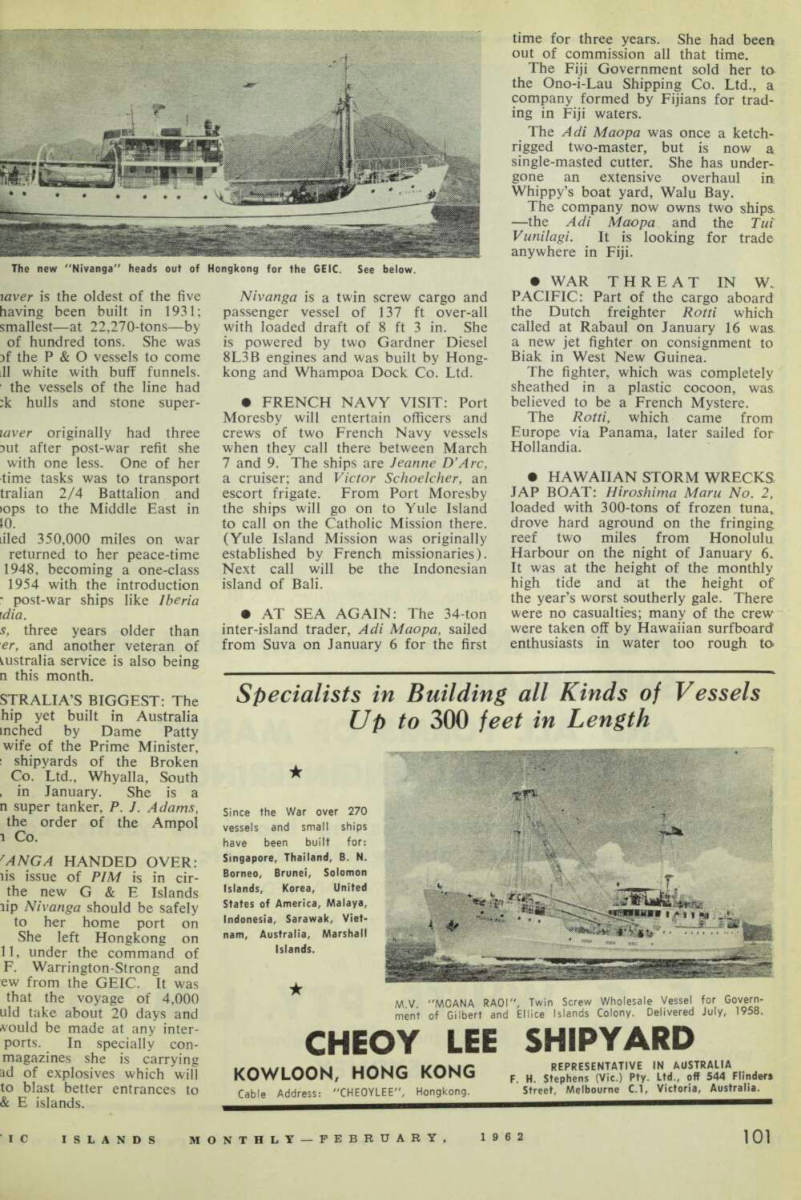 101
101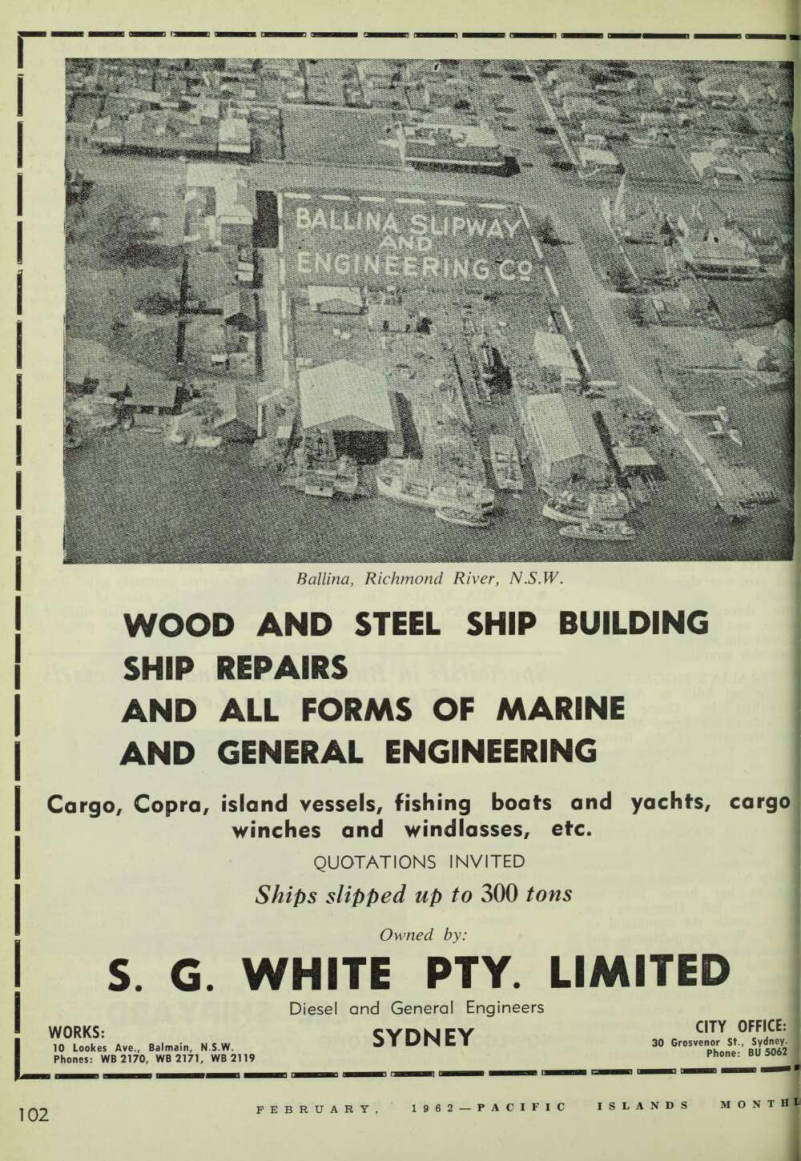 102
102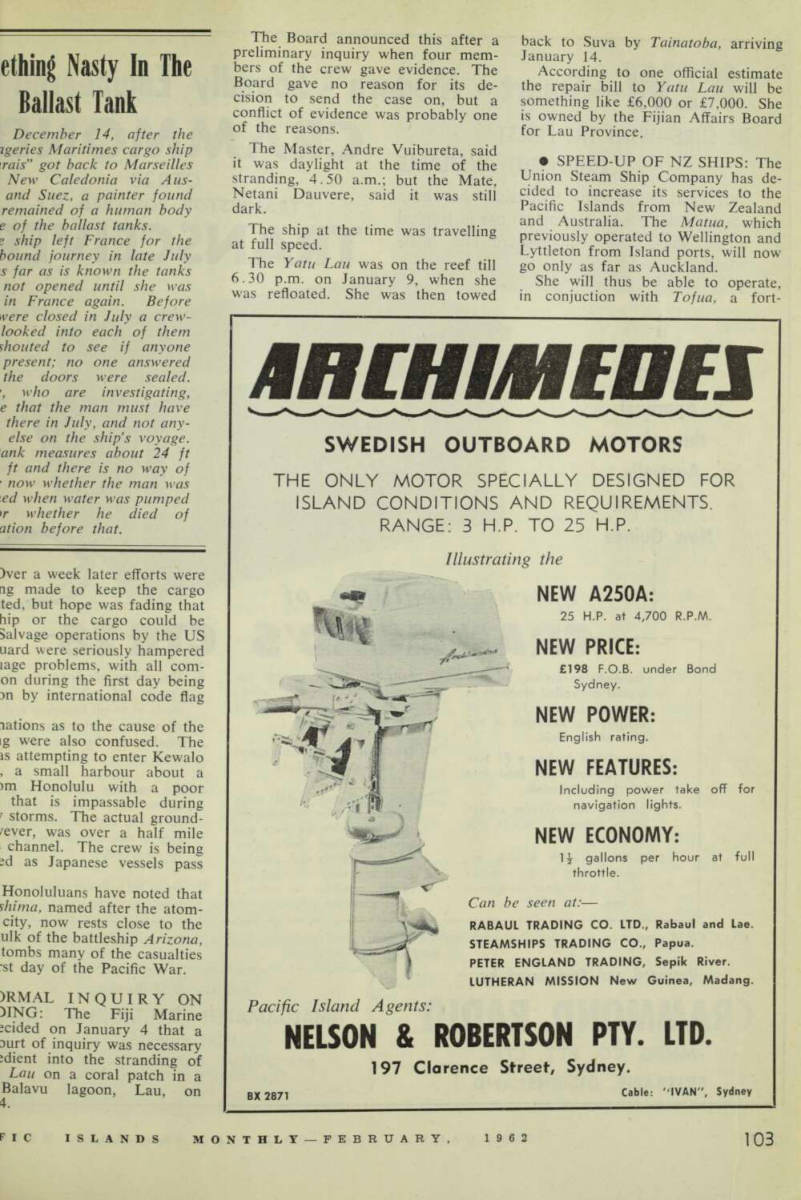 103
103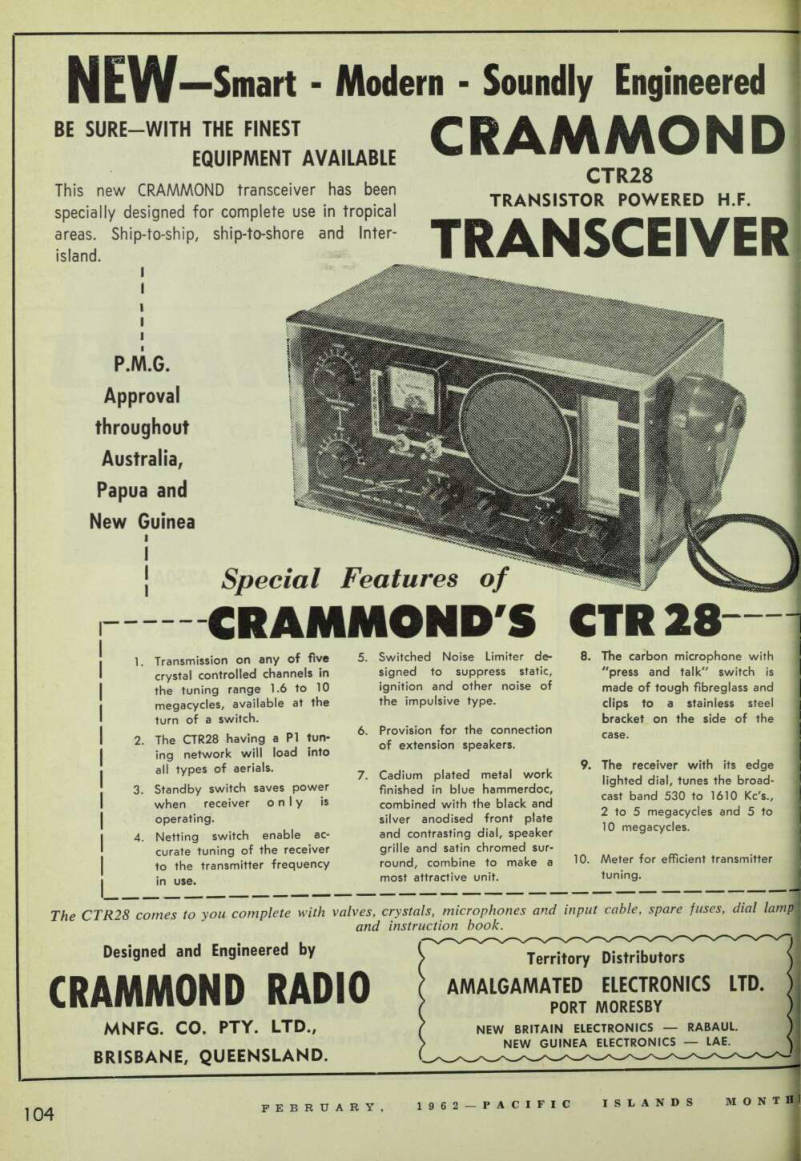 104
104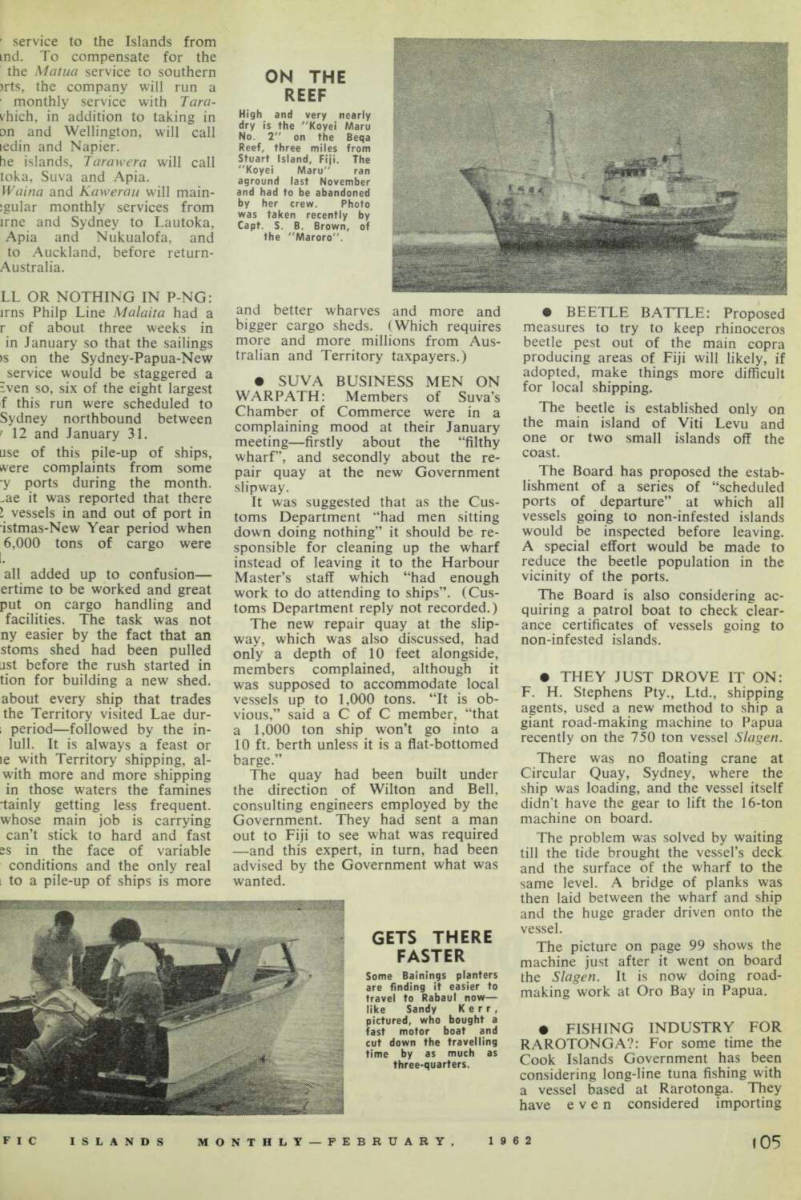 105
105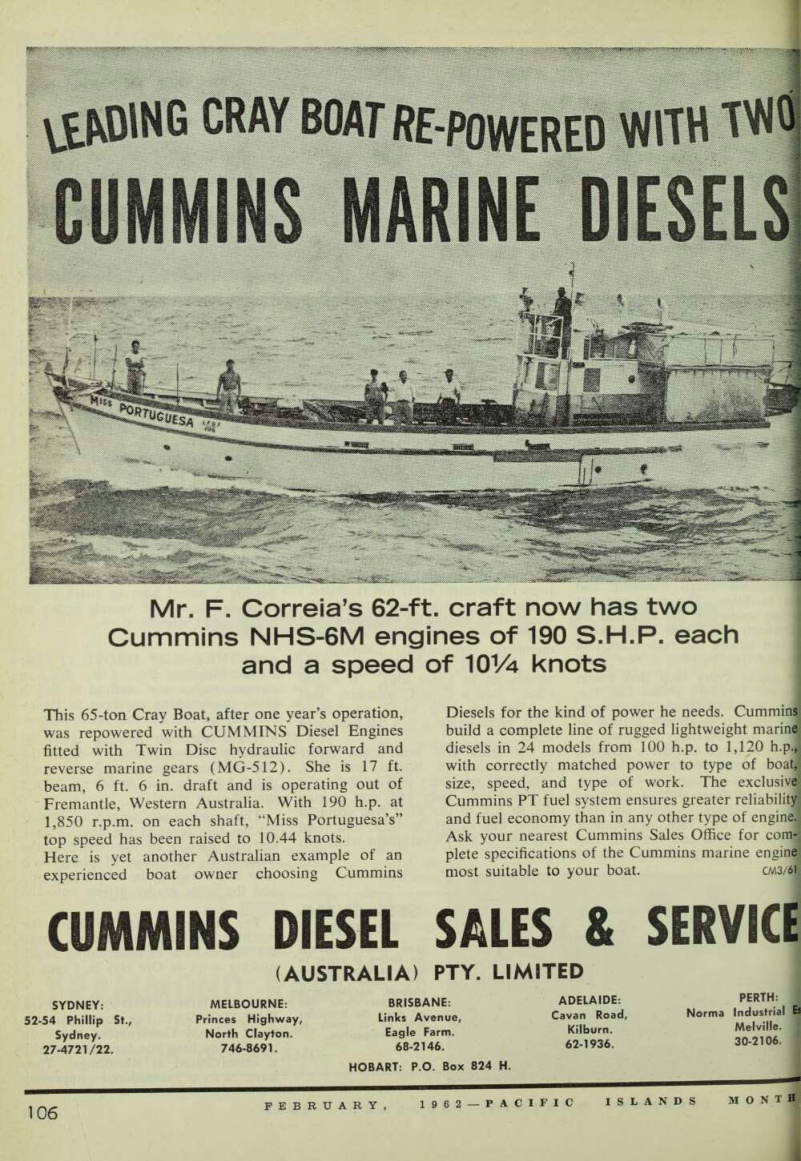 106
106 107
107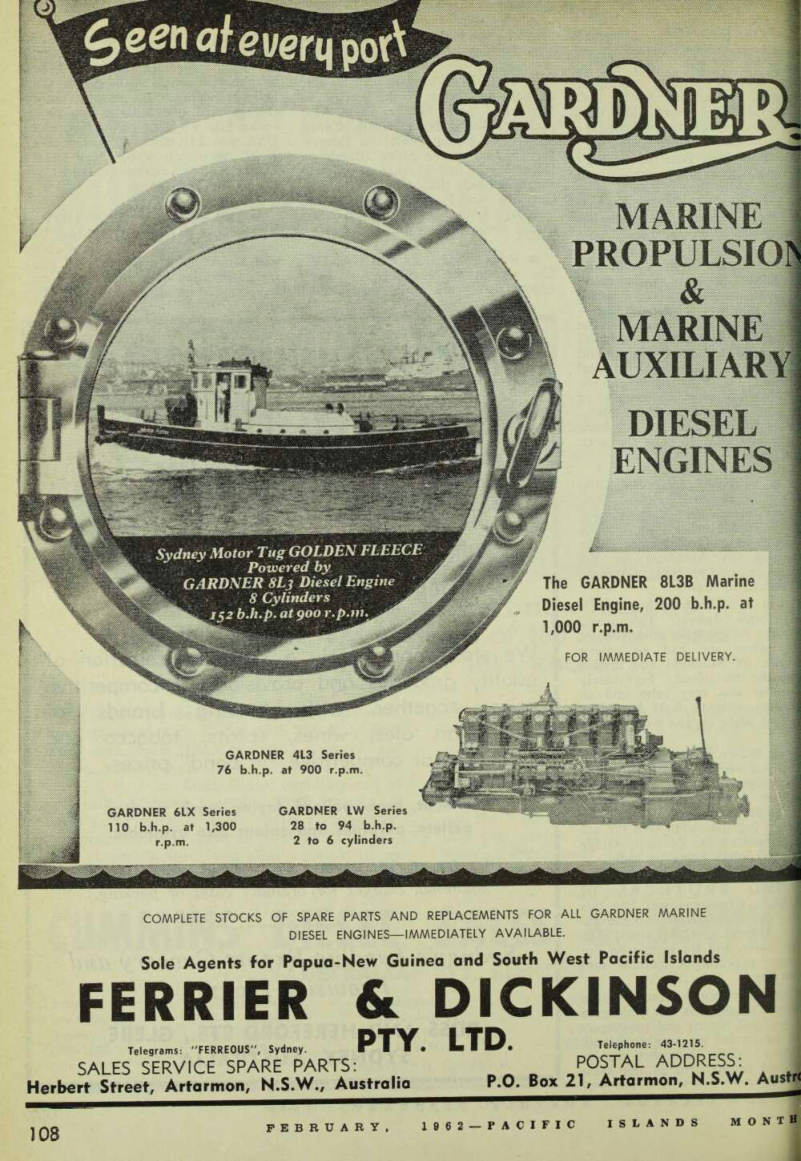 108
108 109
109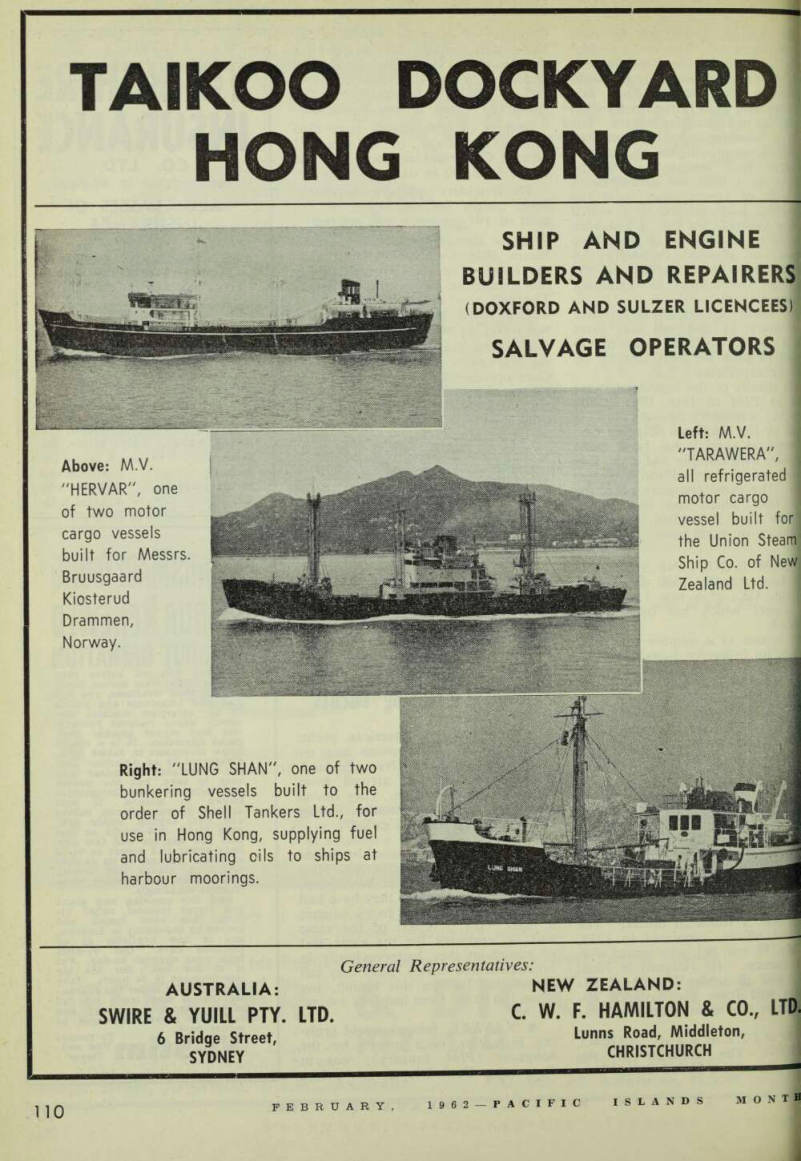 110
110 111
111 112
112 113
113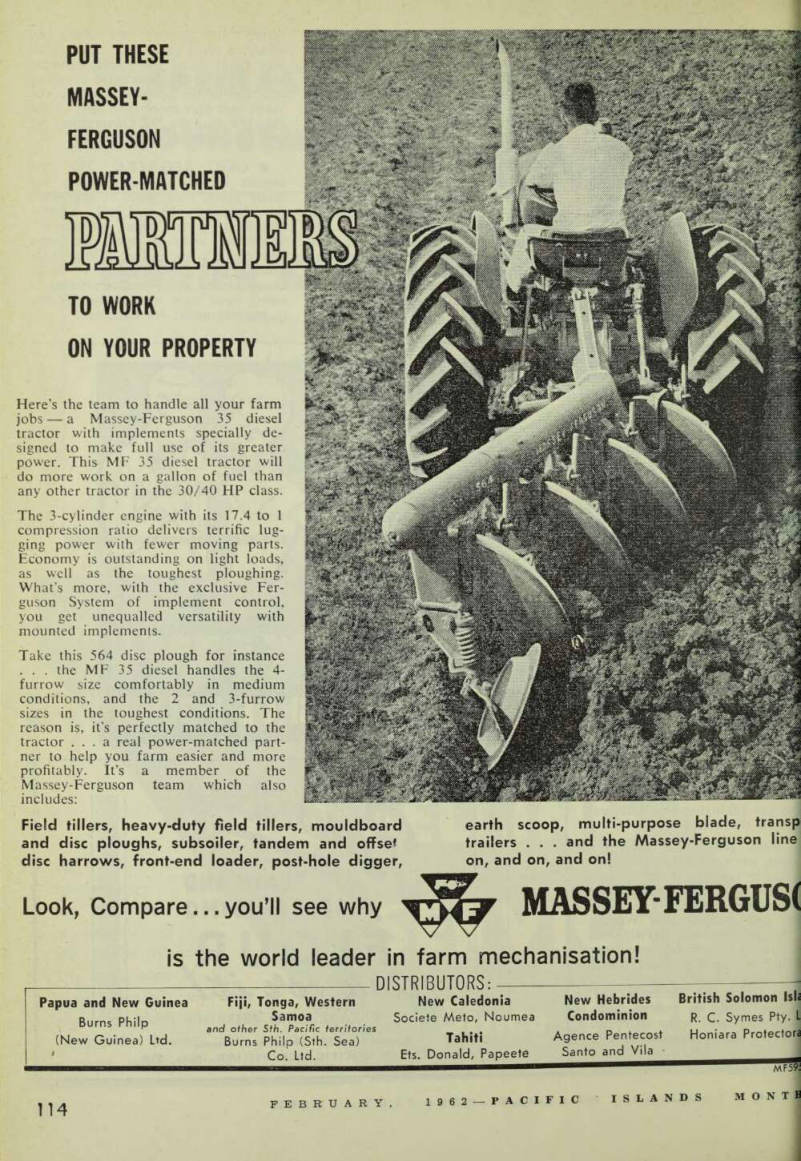 114
114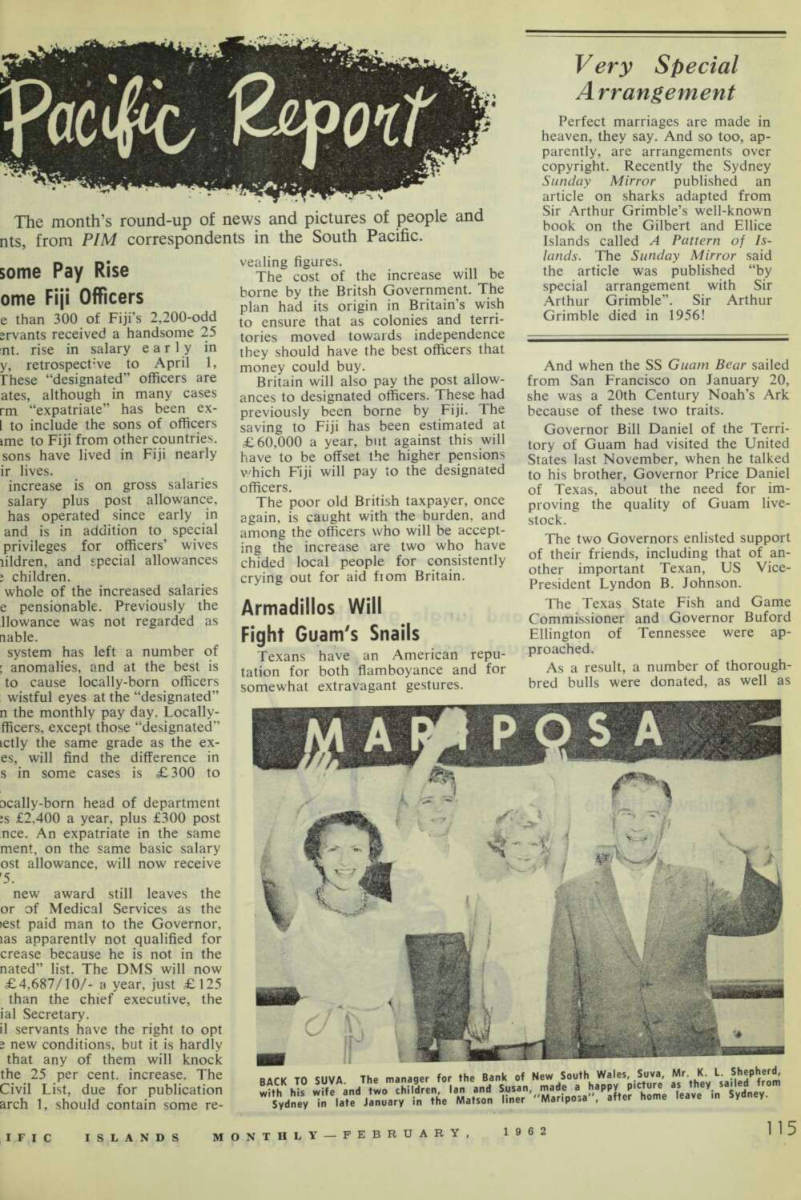 115
115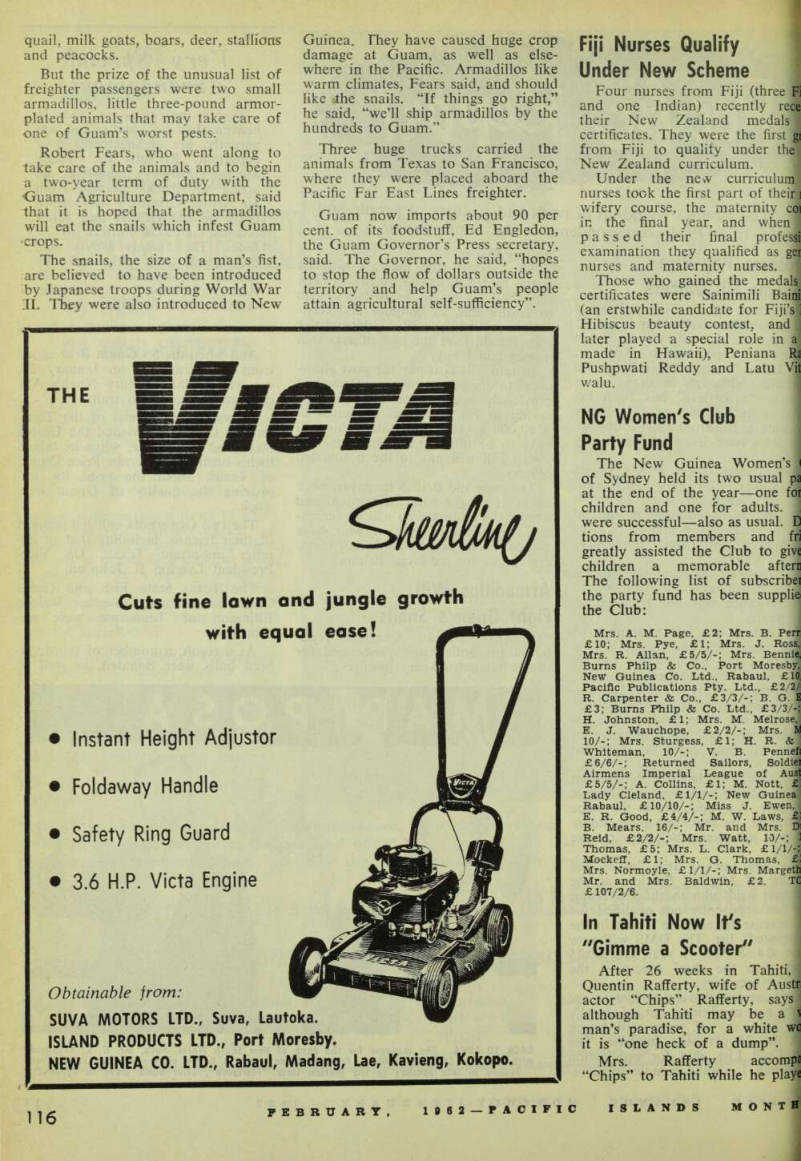 116
116 117
117 118
118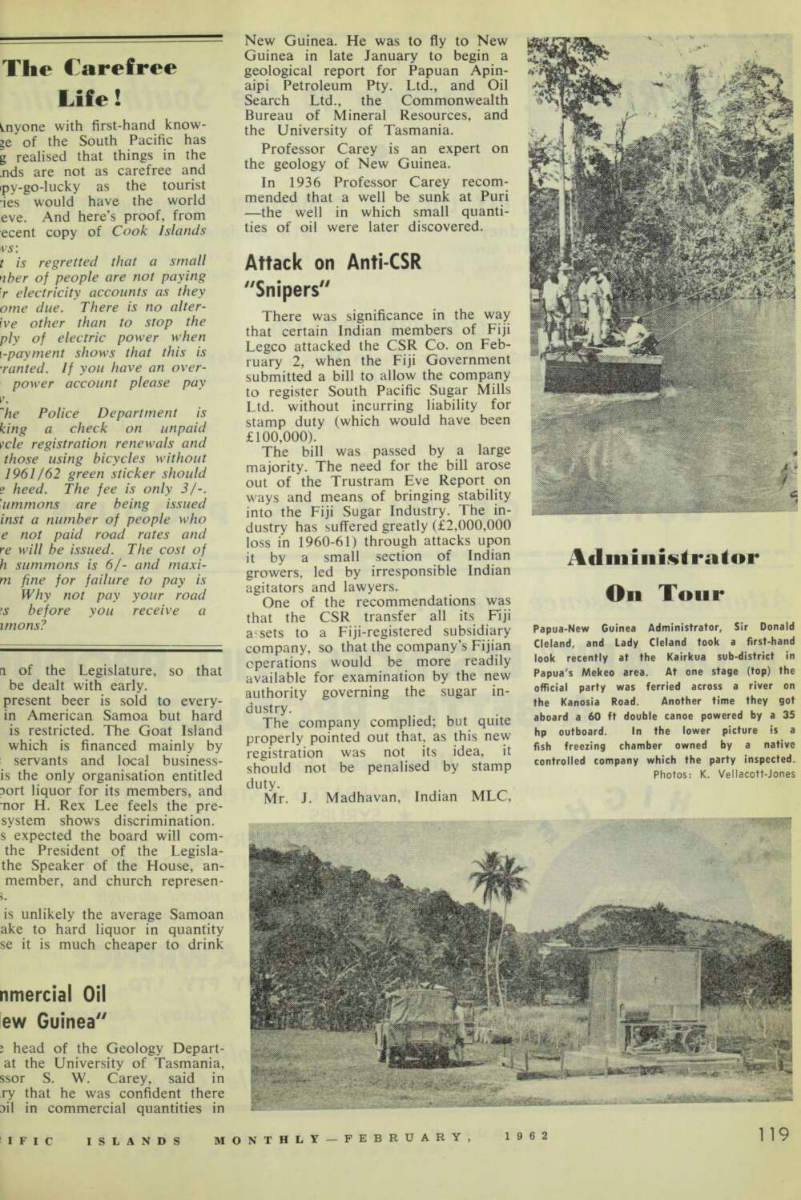 119
119 120
120 121
121 122
122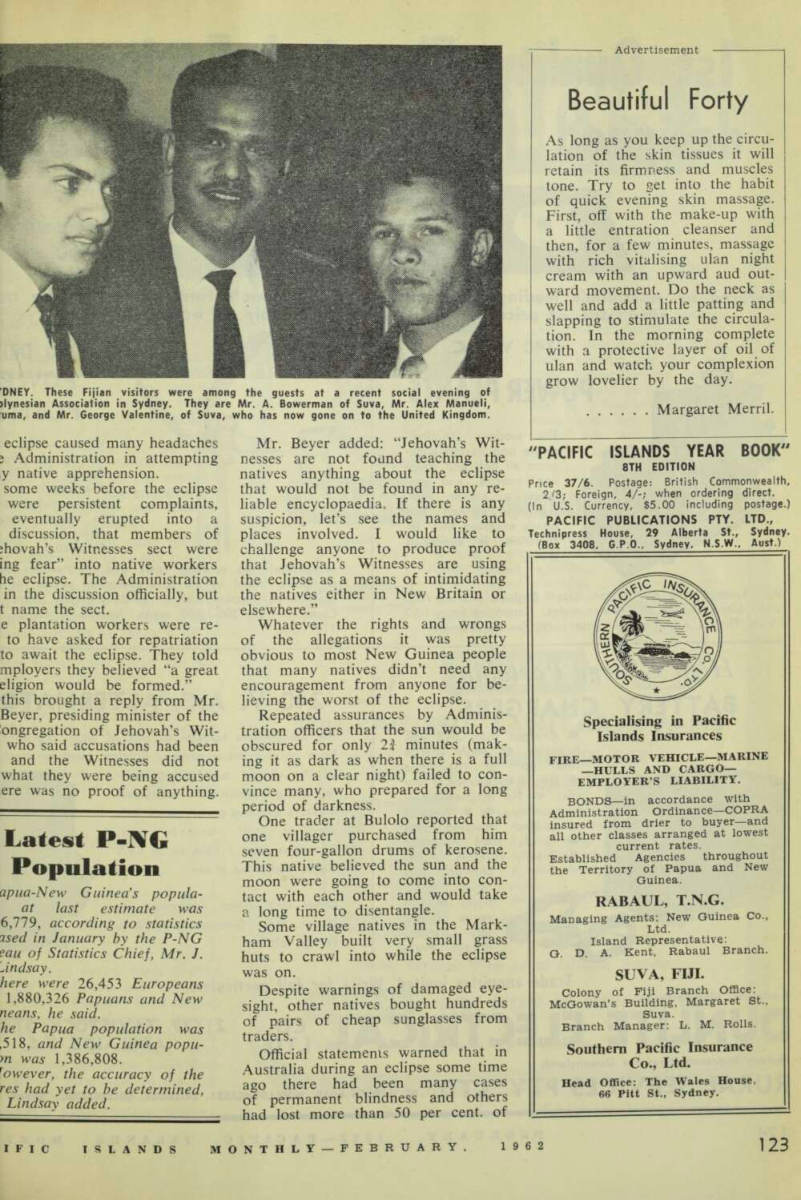 123
123 124
124 125
125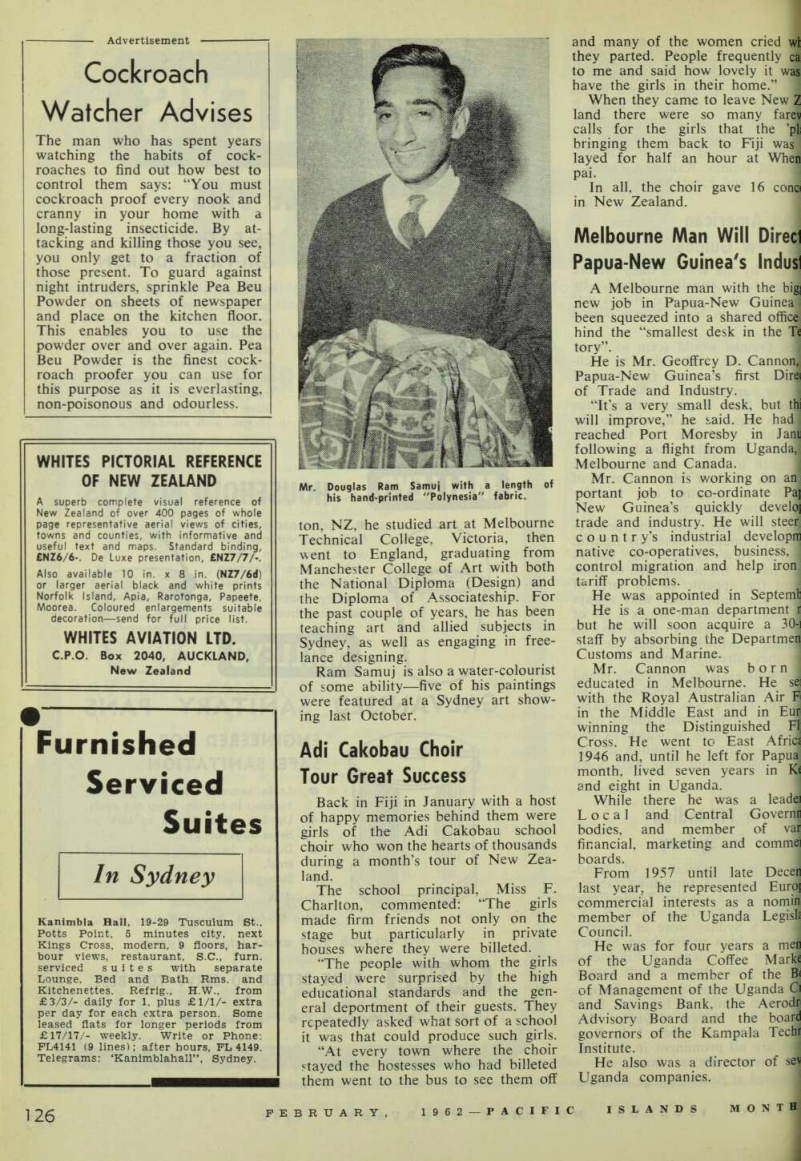 126
126 127
127 128
128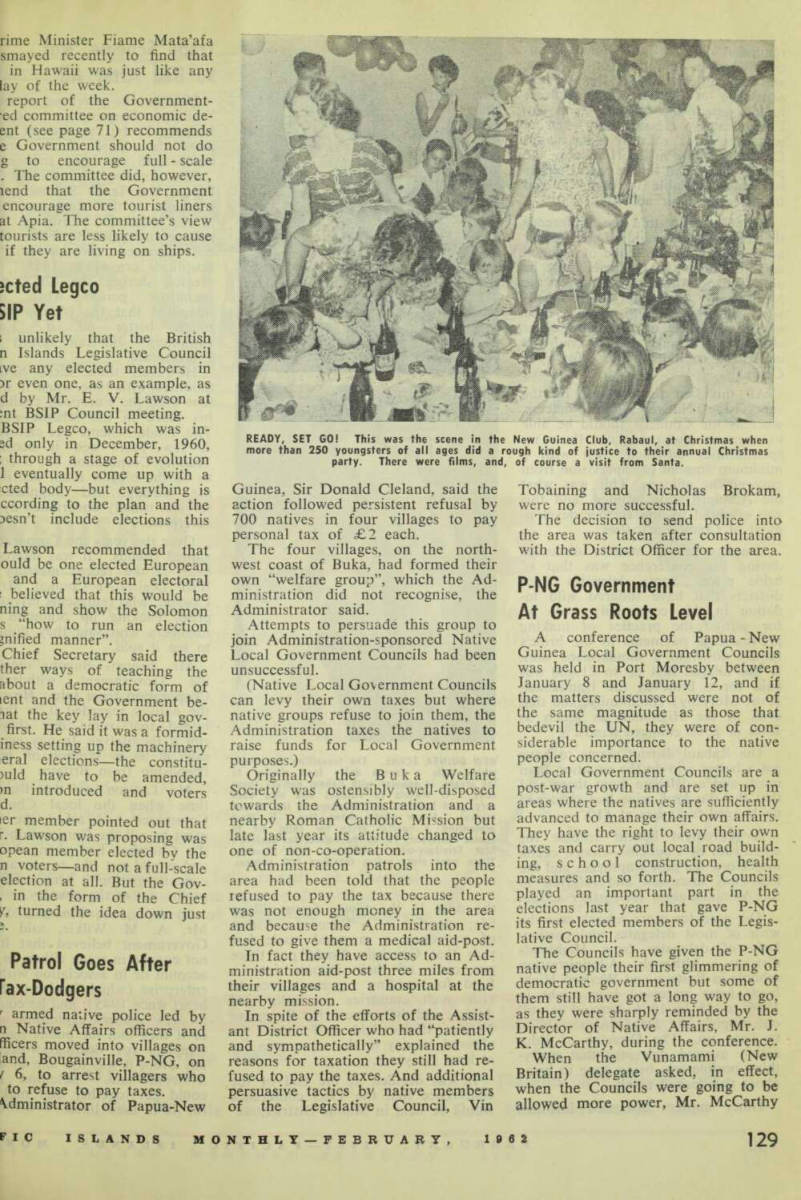 129
129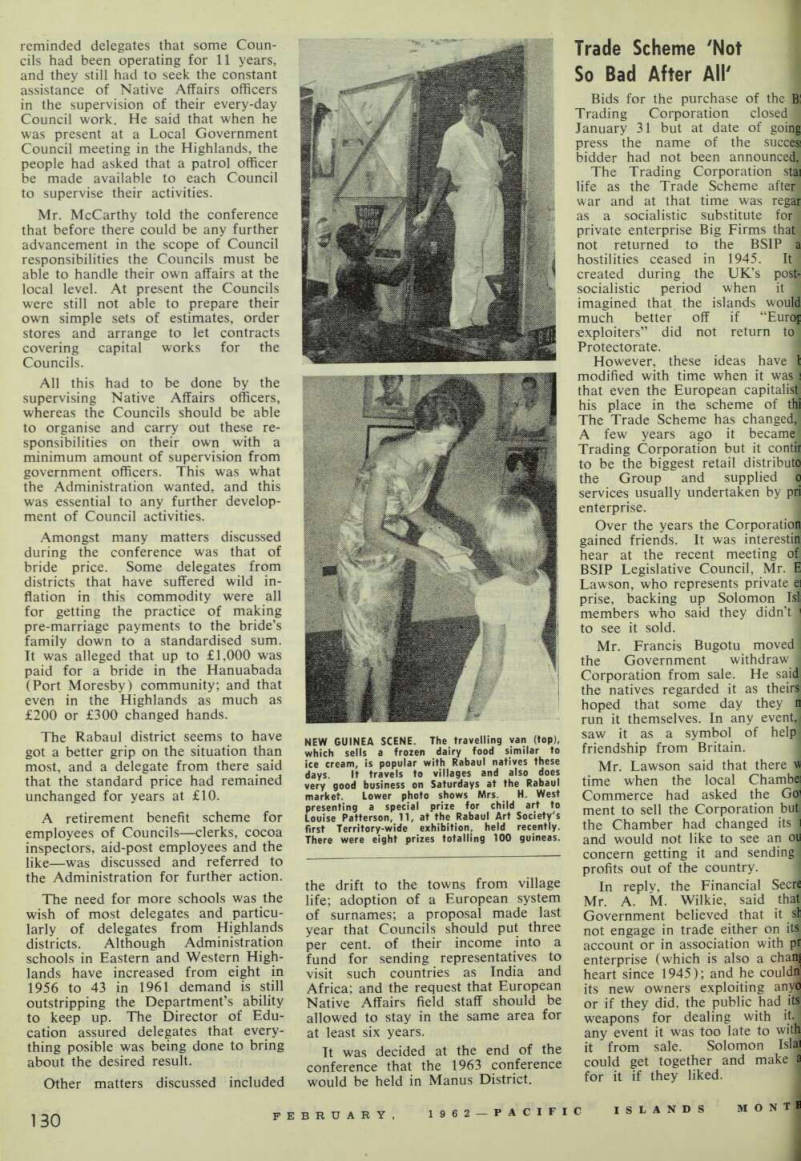 130
130 131
131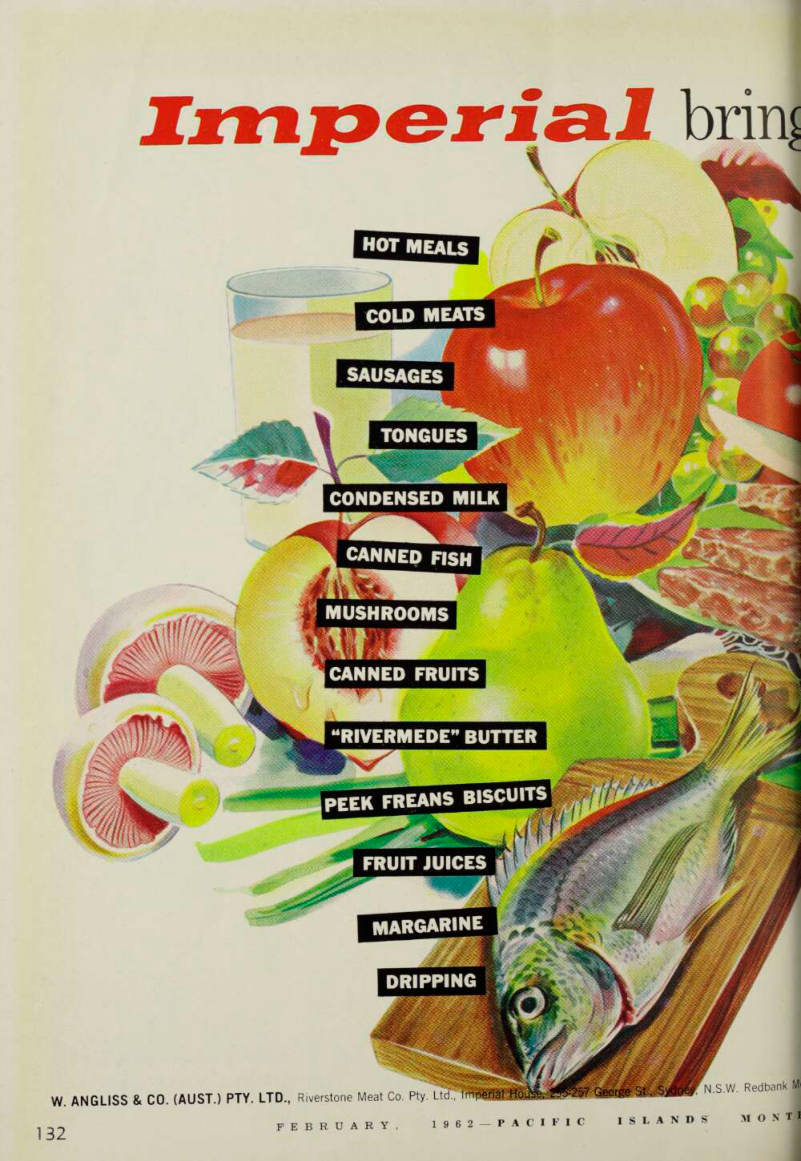 132
132 133
133 134
134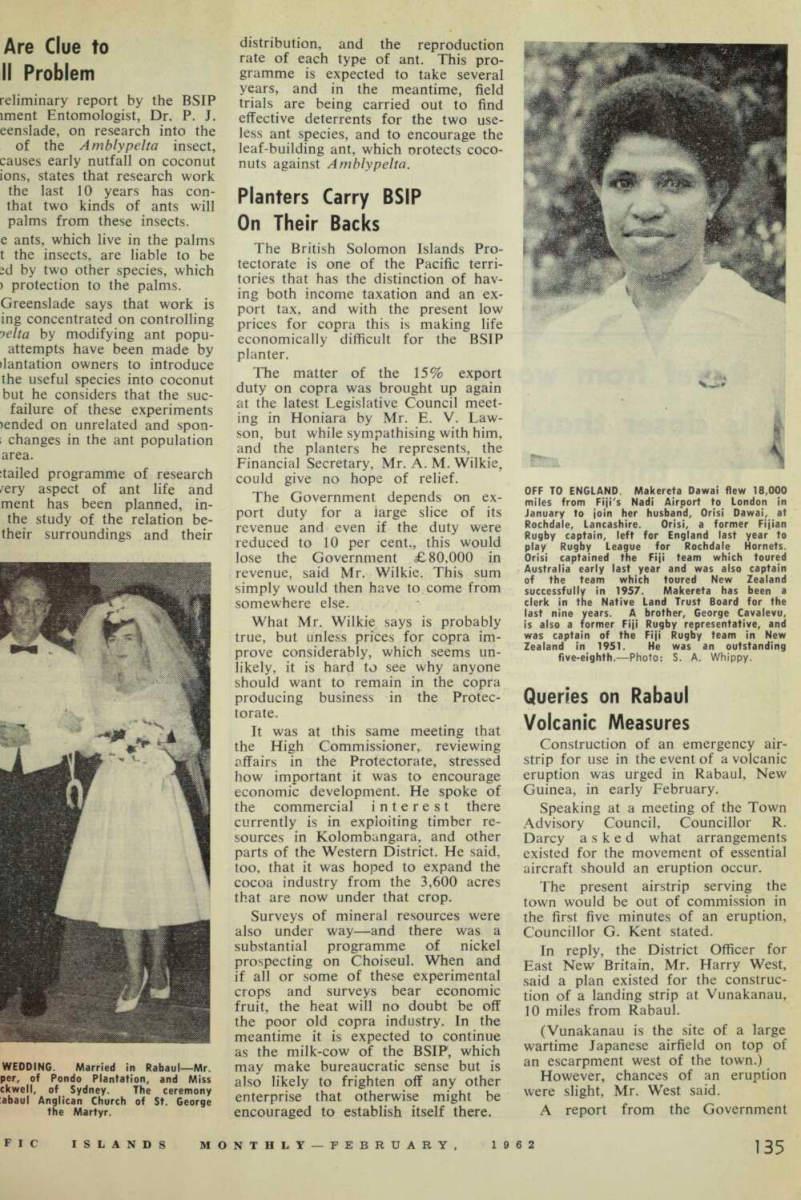 135
135 136
136 137
137 138
138 139
139 140
140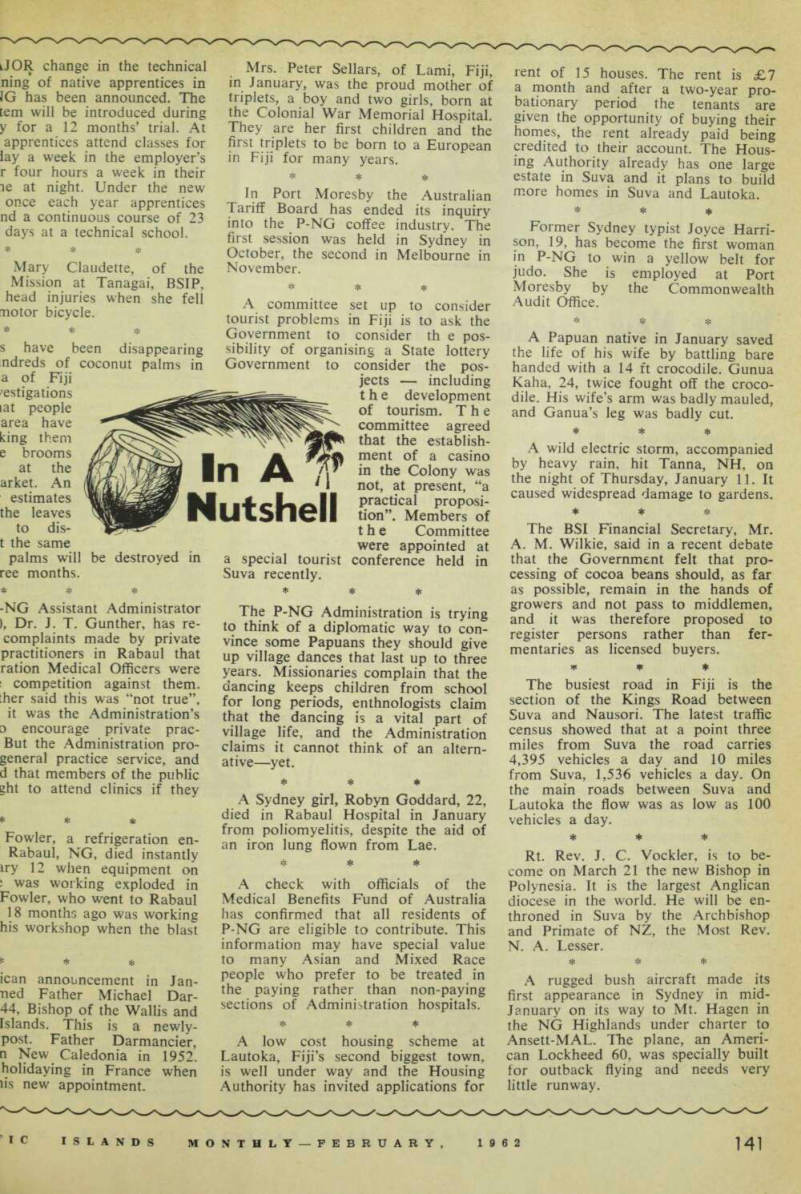 141
141 142
142 143
143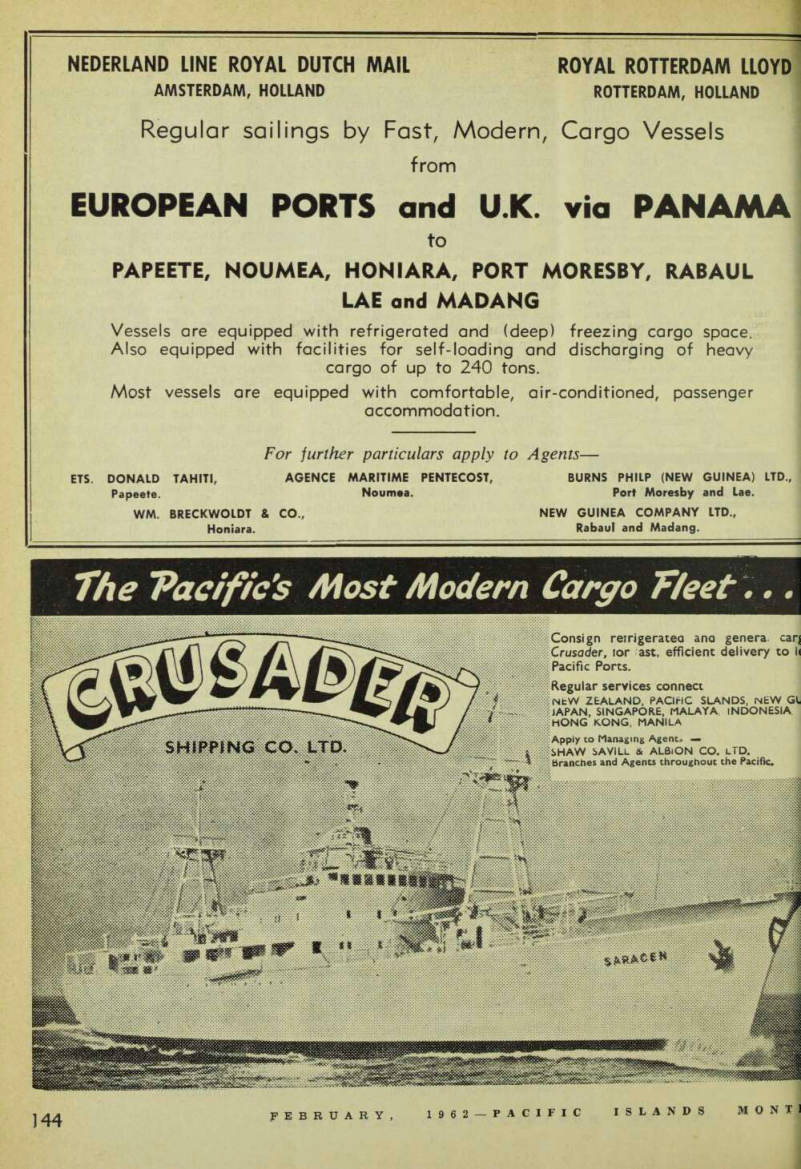 144
144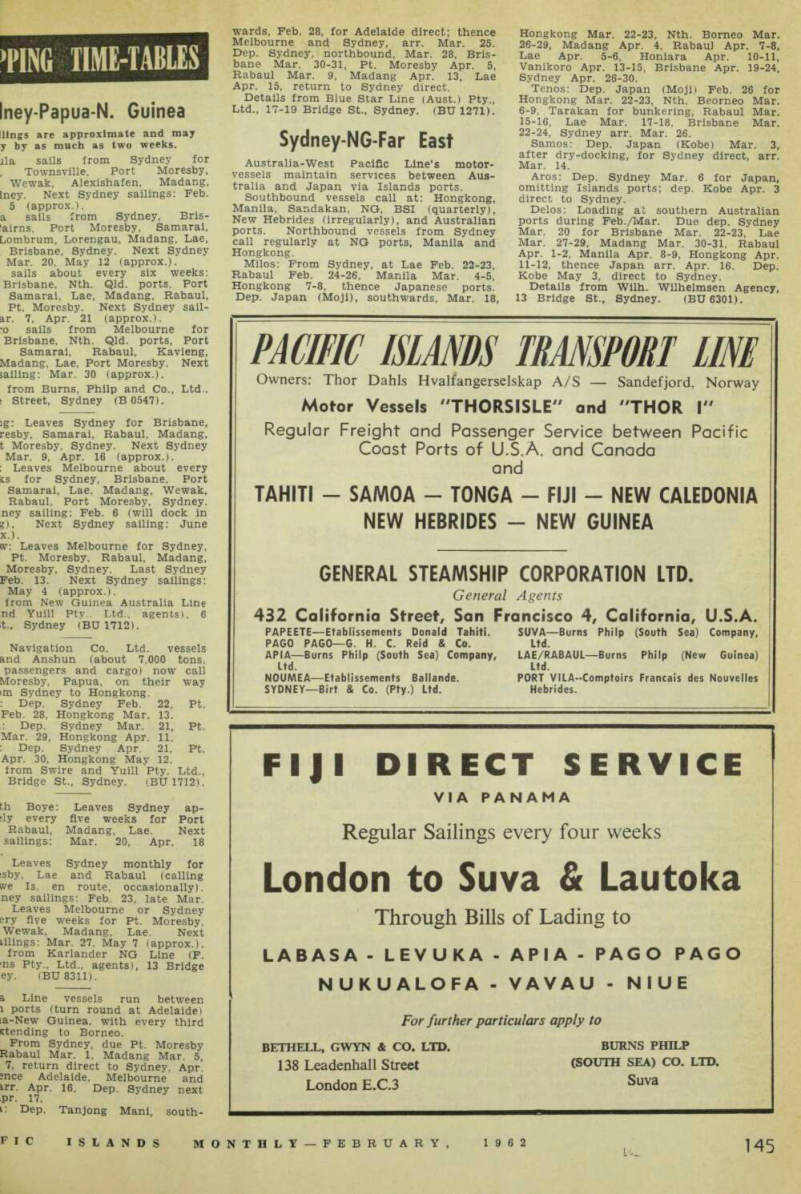 145
145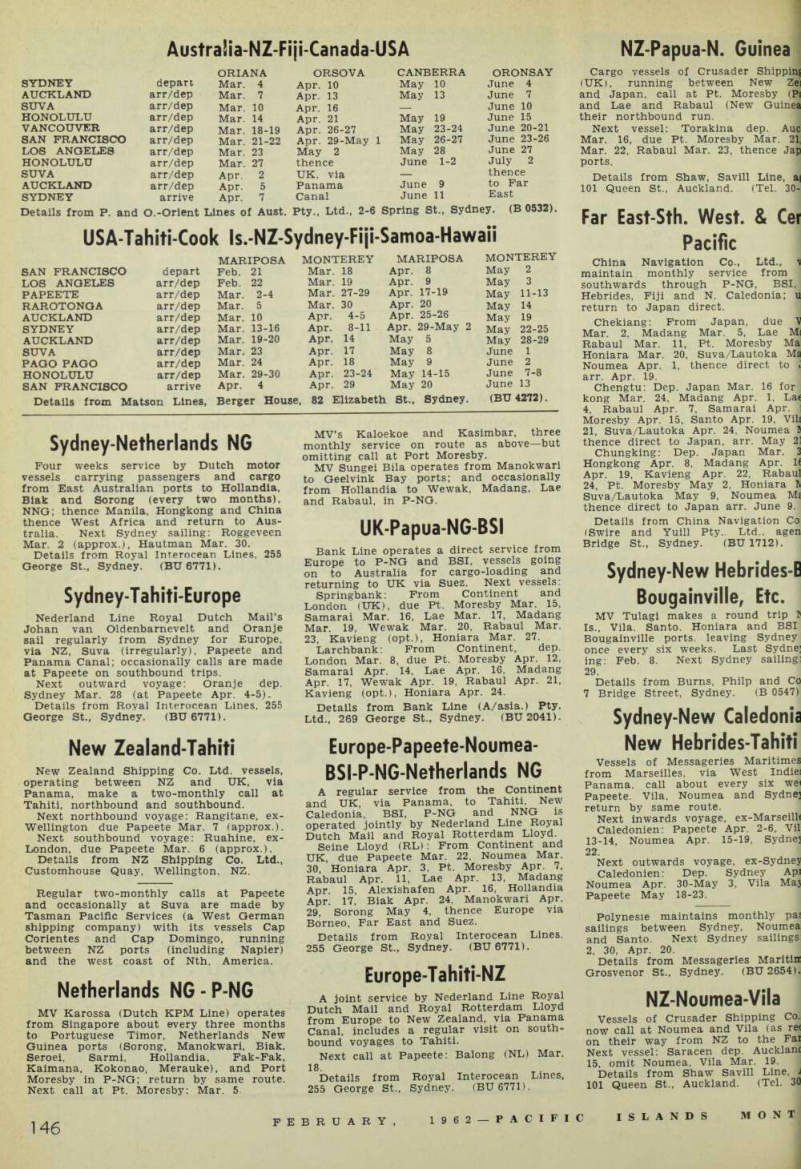 146
146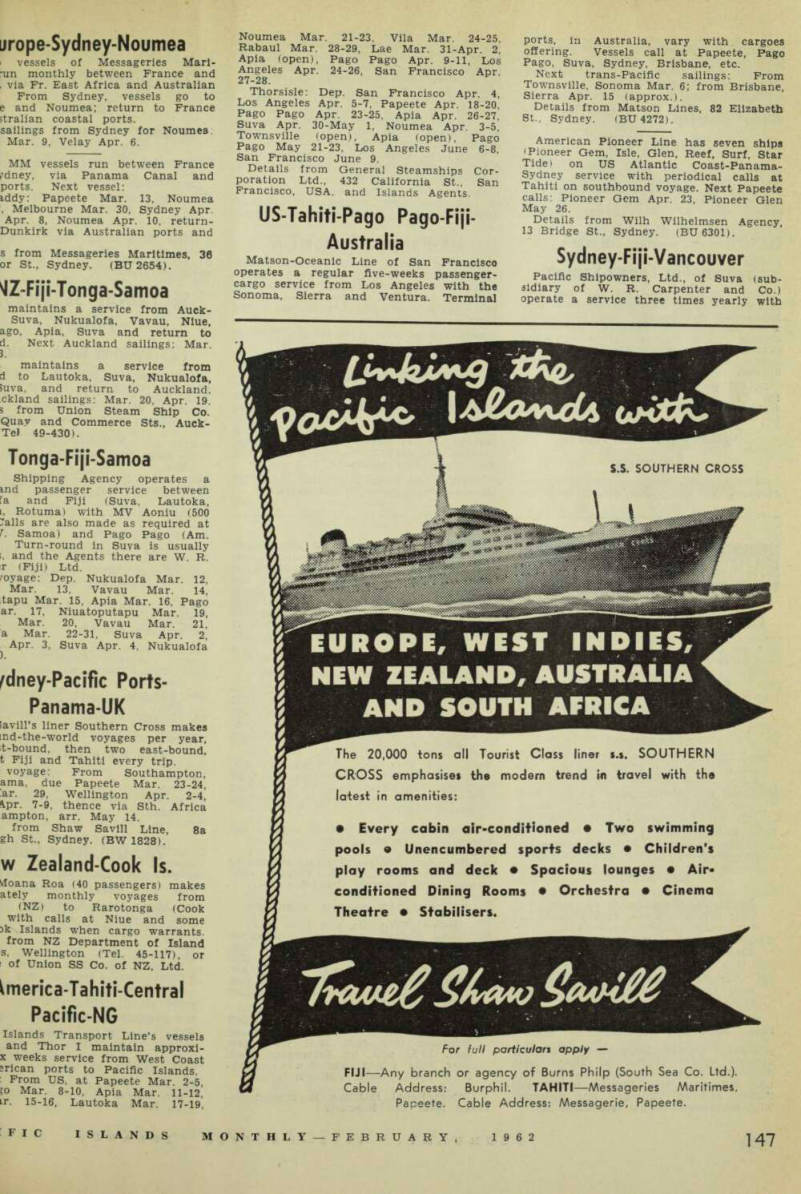 147
147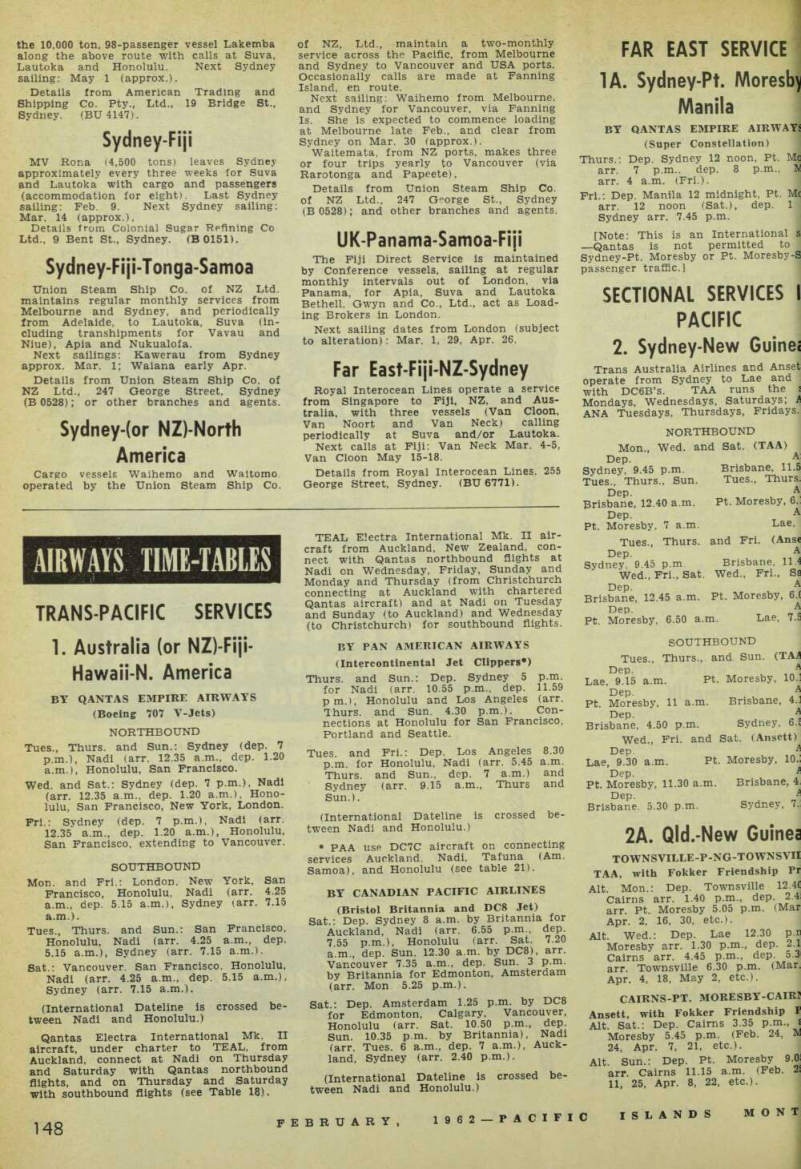 148
148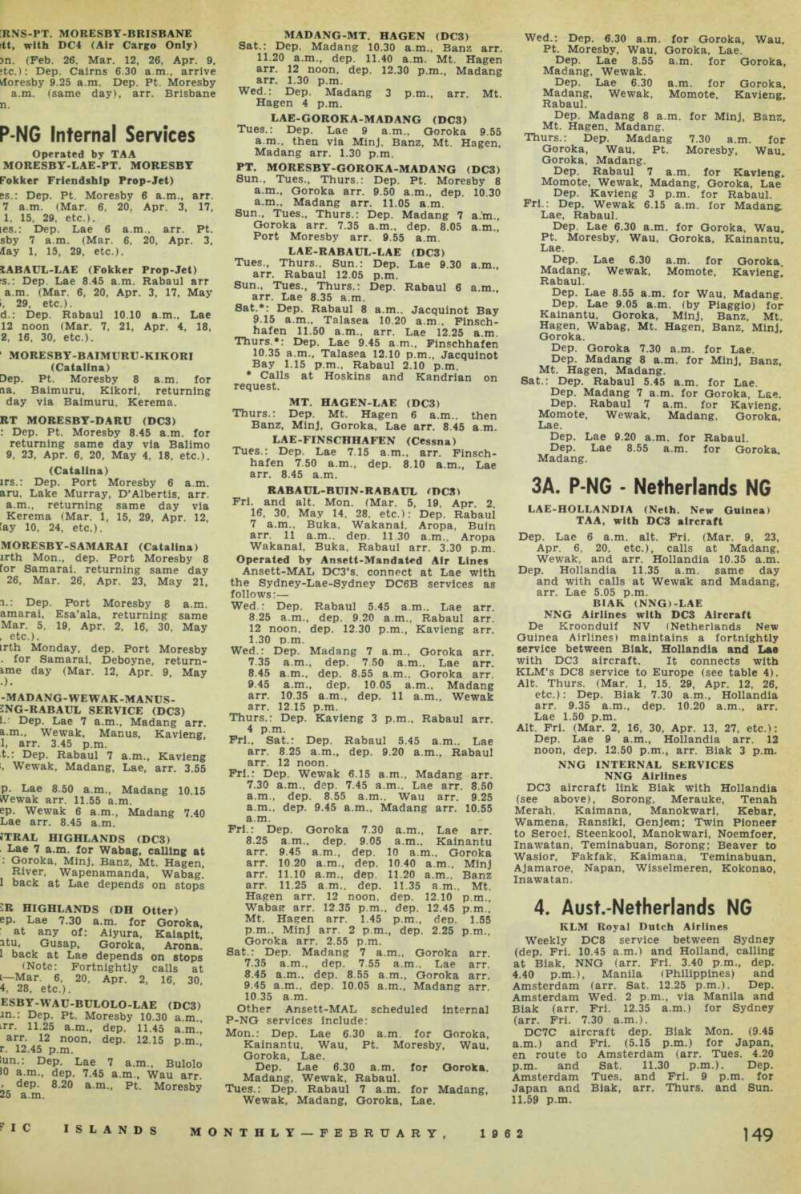 149
149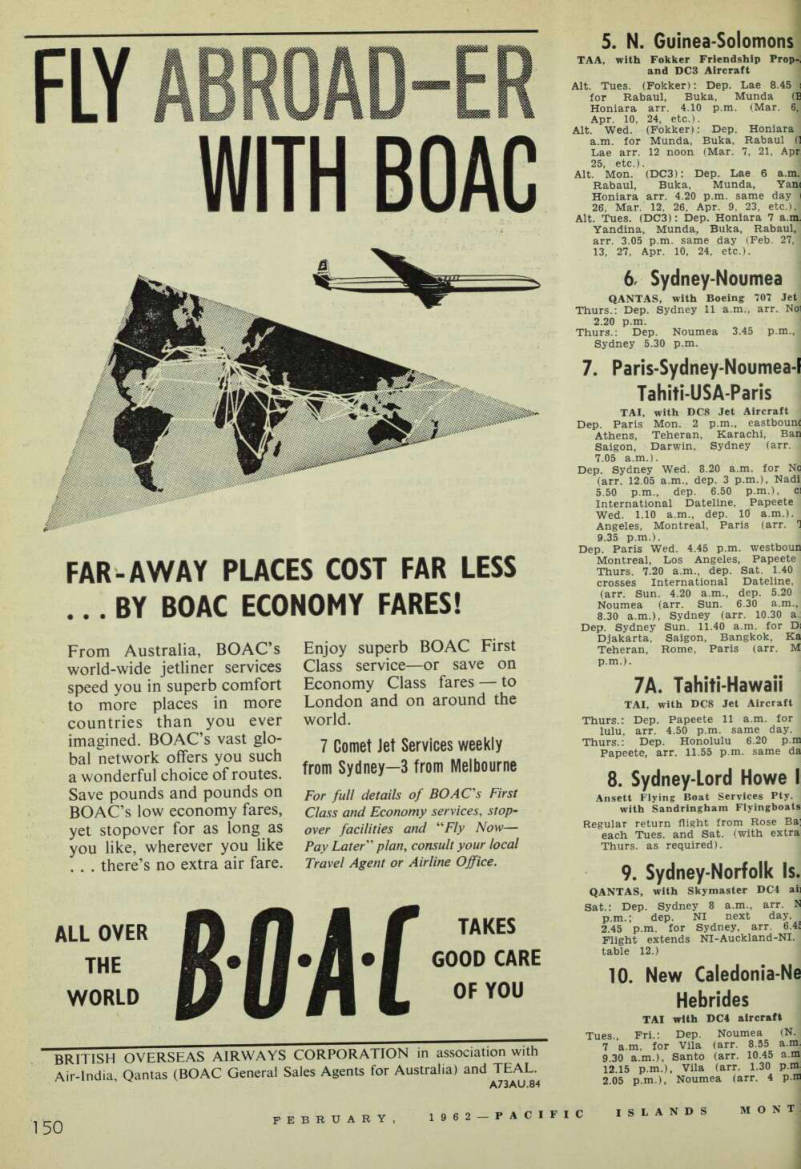 150
150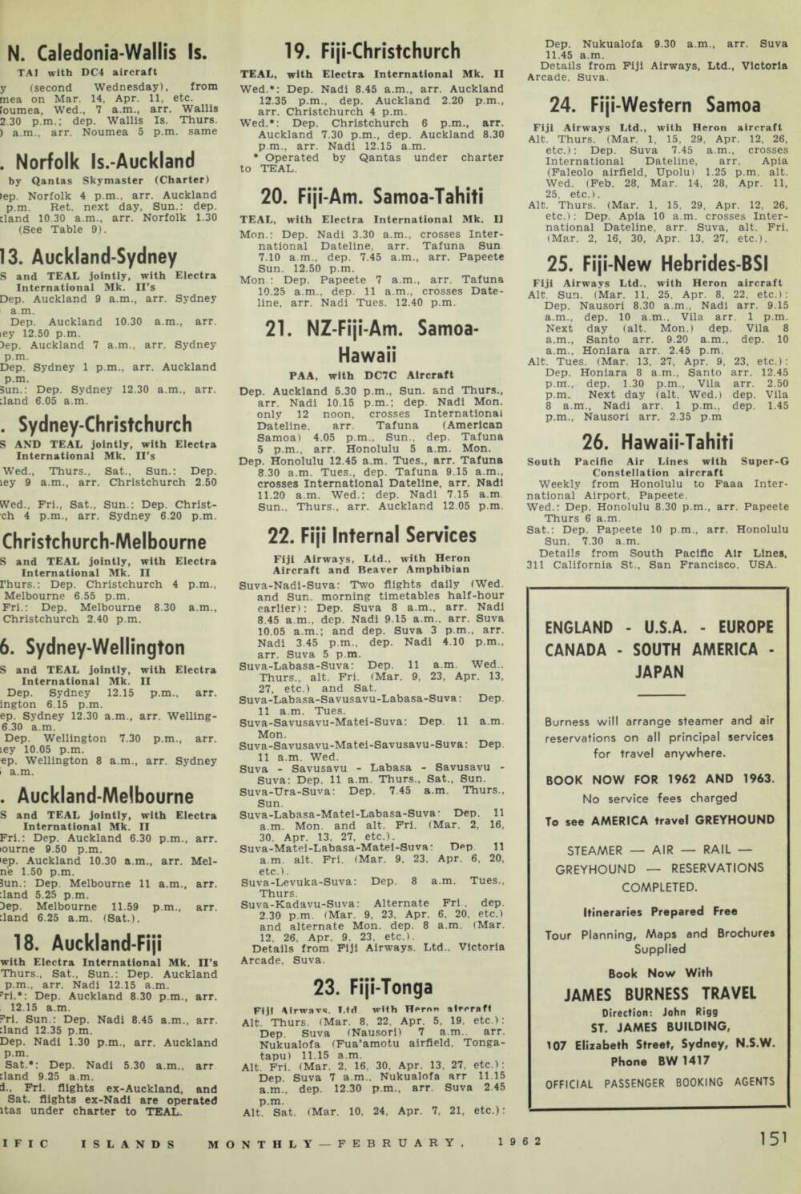 151
151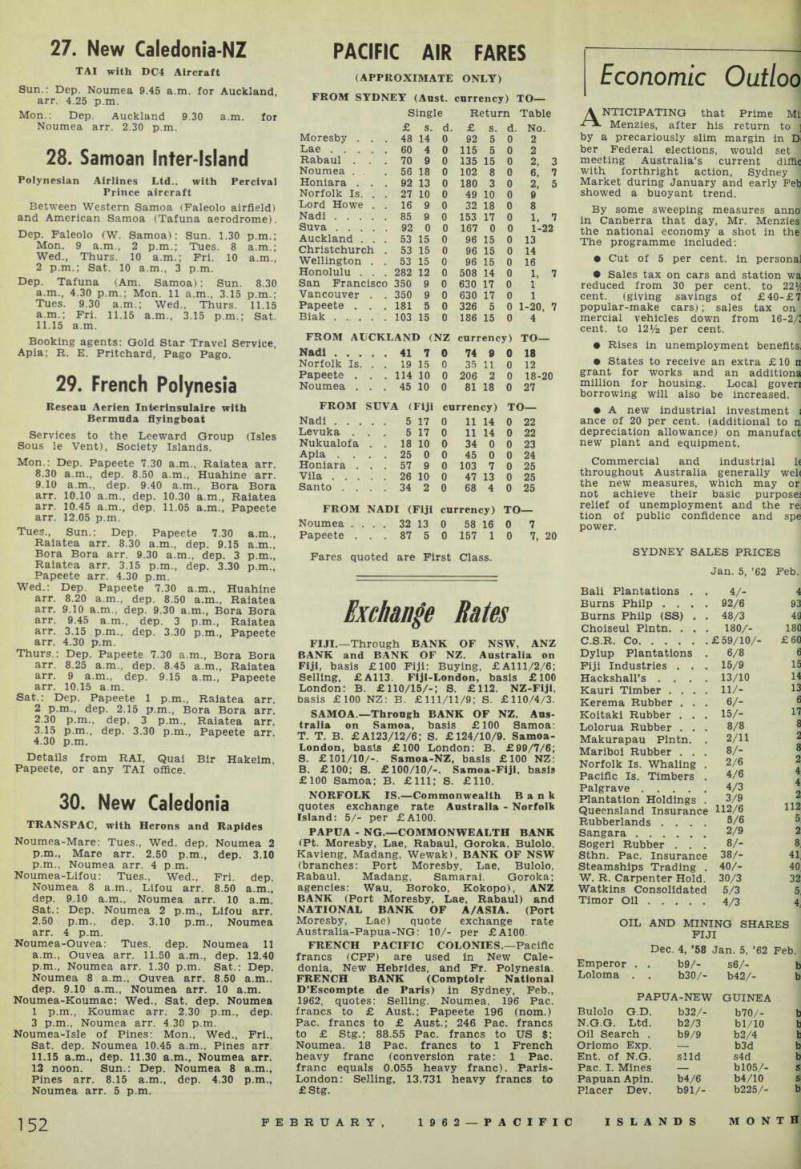 152
152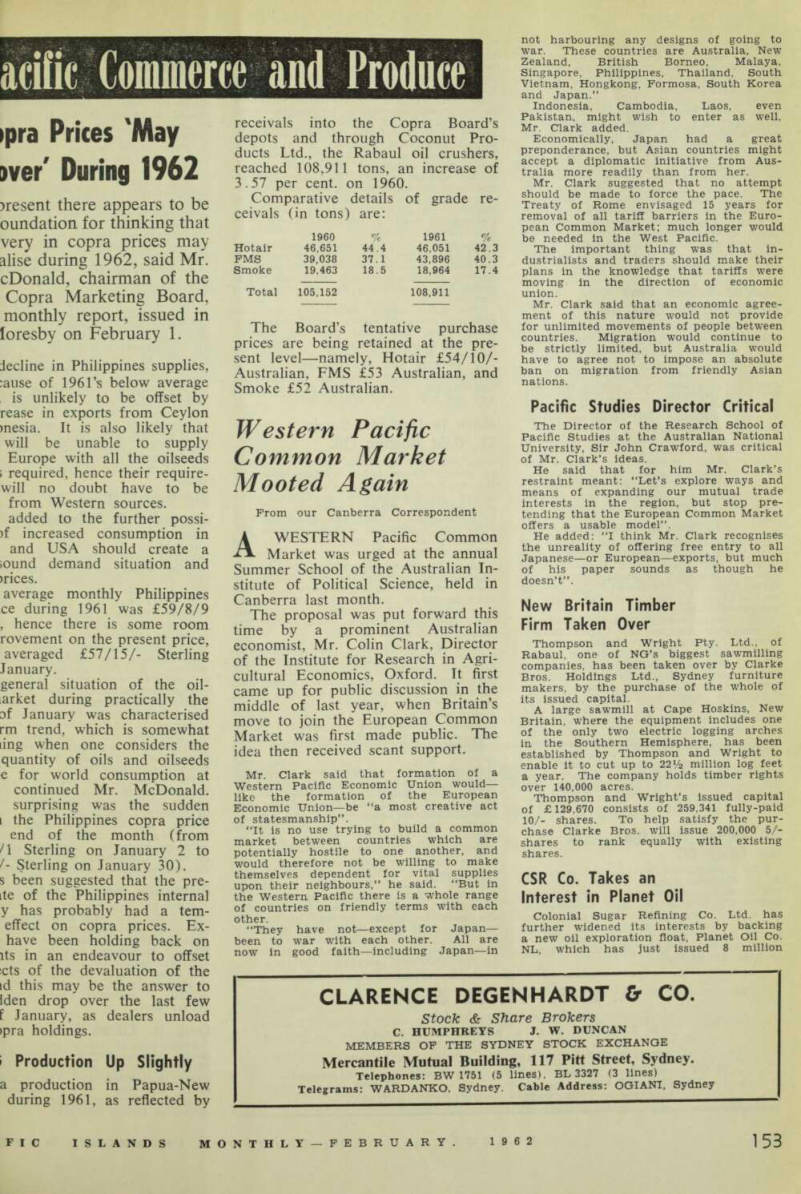 153
153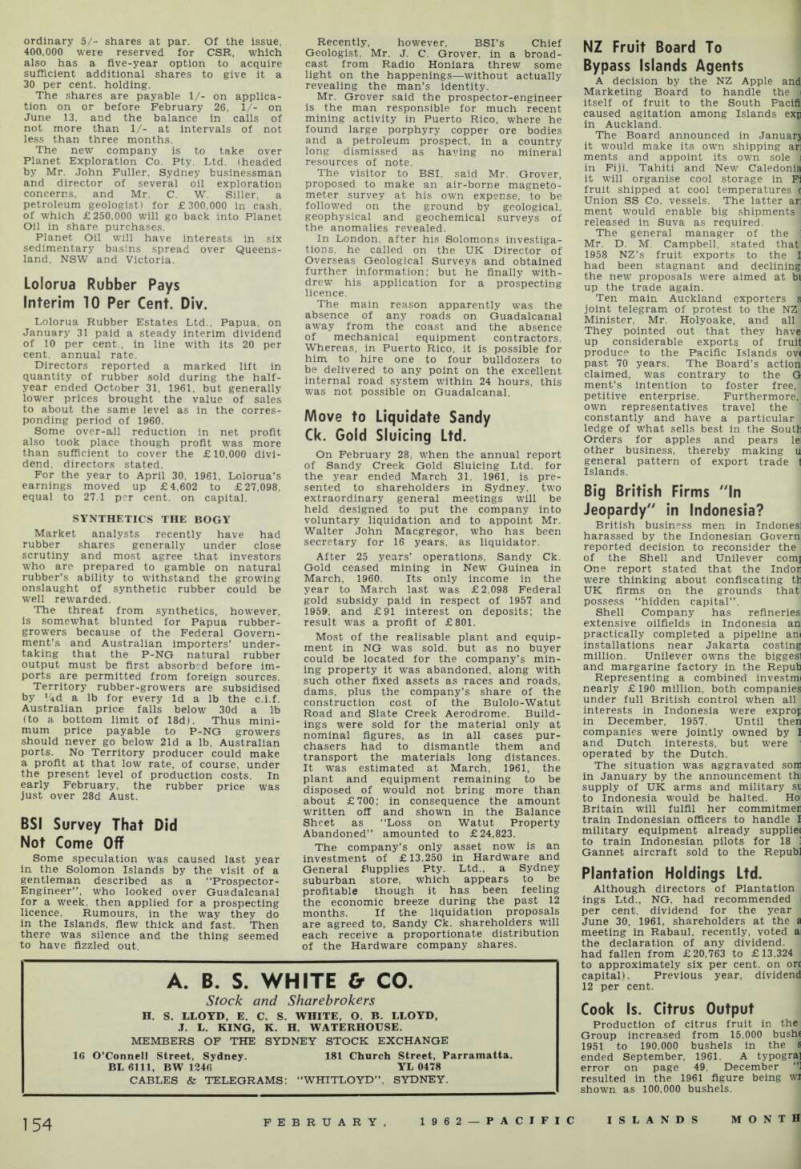 154
154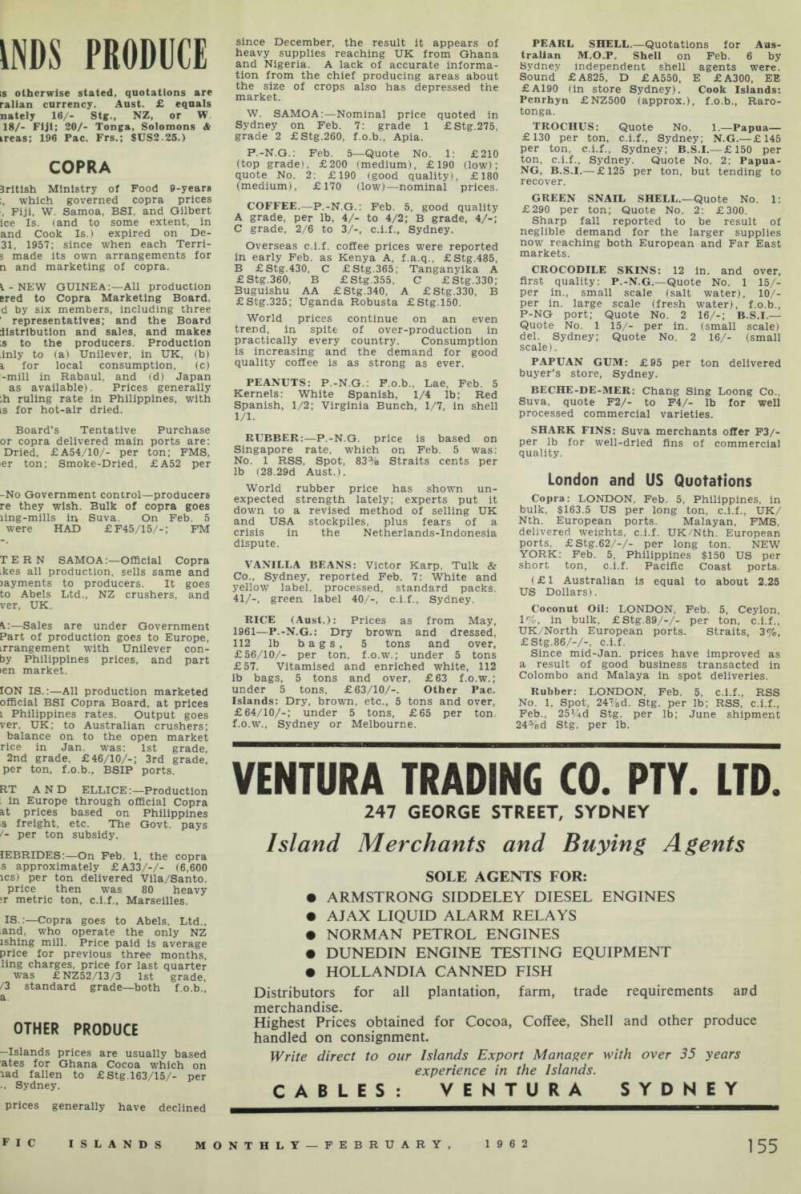 155
155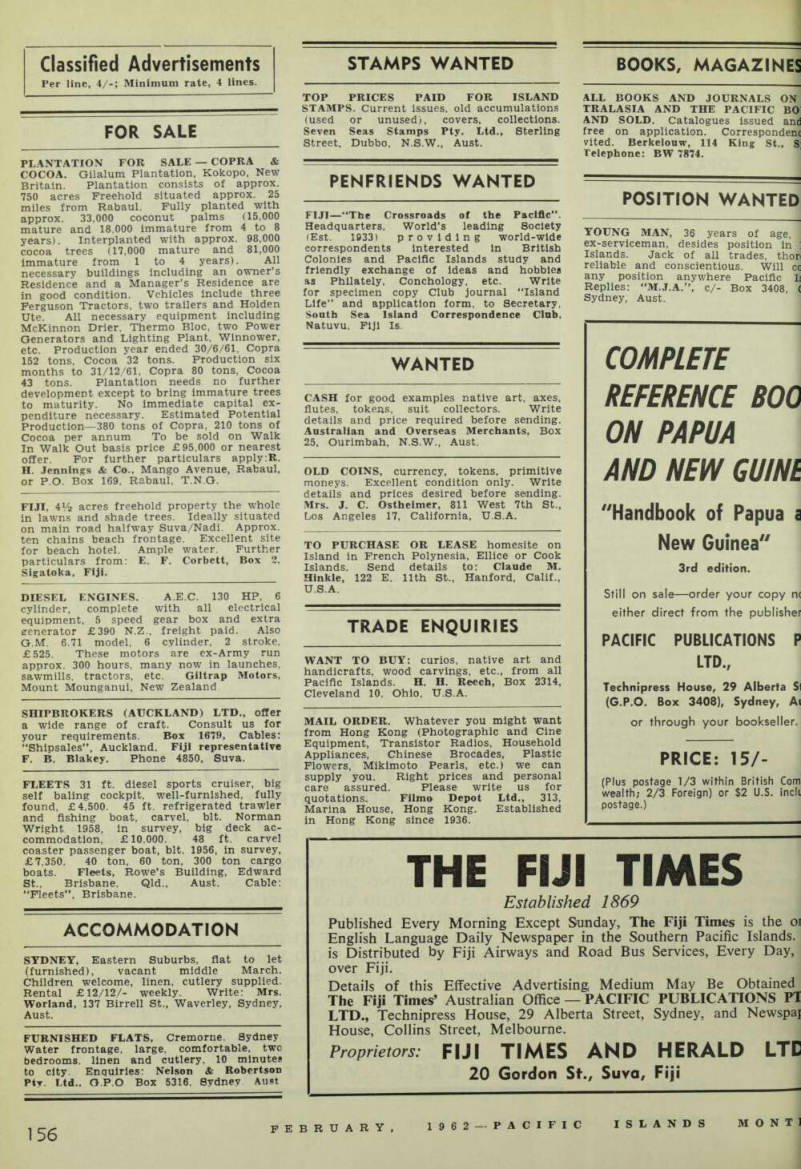 156
156 157
157 158
158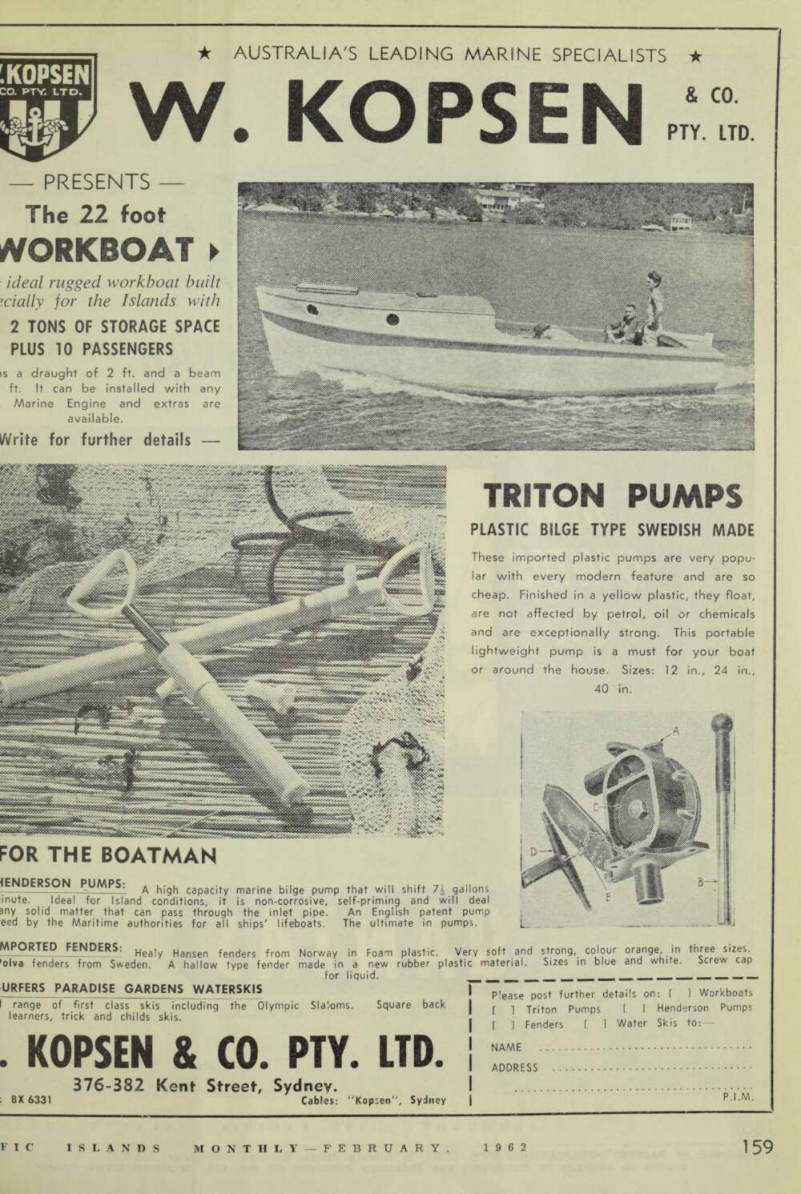 159
159 160
160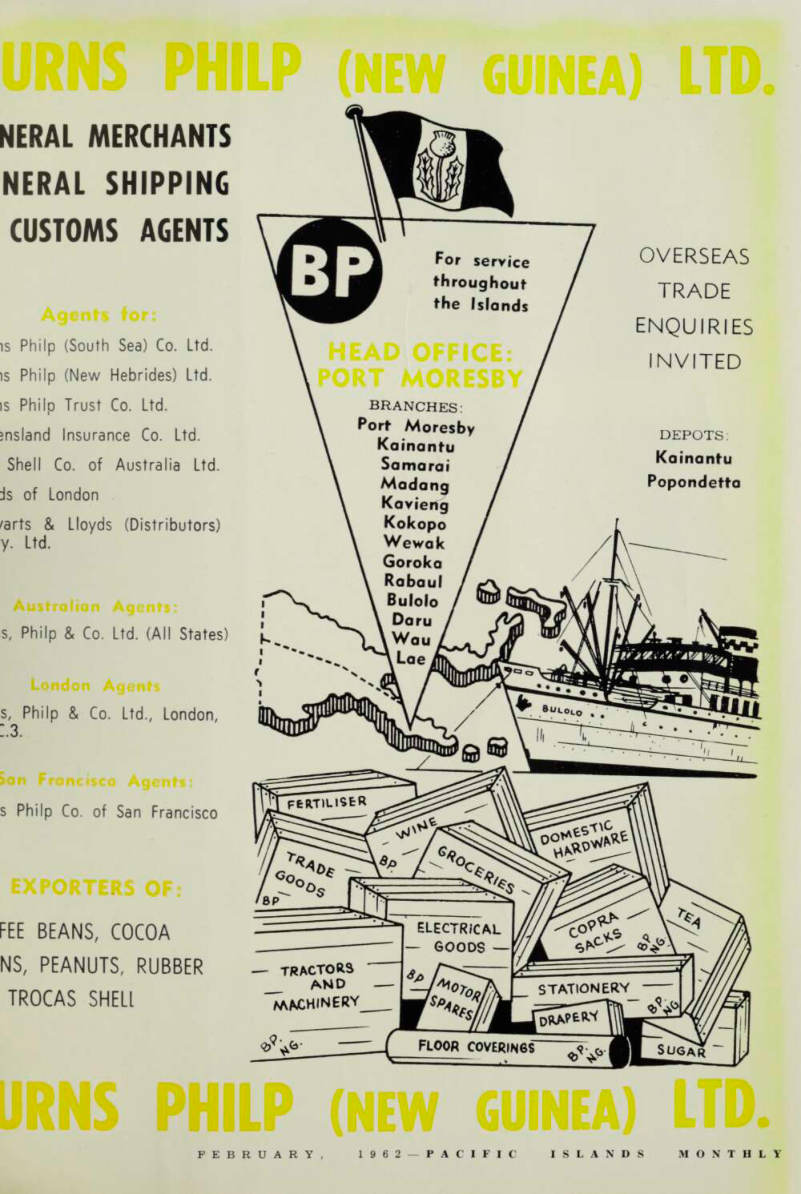 161
161 162
162