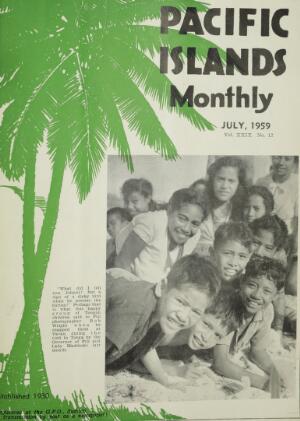
Pacific
Islands
Monthly
July, 1959
Vol. XXIX. No. 12
Established 1930
Resgistered at the GP.O, transmission by post as a newspaper!
“What did I tell you, Johnny! Not a sign of a dicky bird when he presses the button!” Perhaps that is what this happy group of Tongan children said to Fiji photographer Rob Wright when he snapped them at Vavau during the visit to Tonga by the Governor of Fiji and Lady Maddocks last month.
Advertisements & other items, pp. 2-6 (1 item)
B.O.A.C.
LONDON
PAKISTAN SINGAPORE
SWITZERLAND
TURKEY THAILAND
VISIT PEACES LIKE THESE
By tar the fastest service to London is the Qantas-B.O.A.C. “Kangaroo” route service via Singapore and Europe.
Radar-equipped Britannias and Super Constellations offer the ultimate in smooth, silent speed. Travellers with time to spare will appreciate the privilege of being able to stop
AT NO EXTRA AIR FARE
over at no extra air fare in the exciting and colourful countries of the “Kangaroo” route. Your travel agent will gladly help you with reservations and hotel bookings, and assist you in every way possible to ensure that you get the maximum value for your travel money.
B.O.A.C.
THE WORLD WIDE AIRLINE
WITH QANTAS
QANTAS EMPIRE AIRWAYS IMITED (INC. IN QLD.) IN ASSOCIATION WITH B.O.A.C., TEAL AND S.A.A.
Your Guarantee of Satisfaction Backed by Established Service
Depots Throughout the Islands
LANTERNS
Designed to withstand heavy usage exposure to all weathers these kerosene lanterns have built in automatic jet cleaning needles, ty air-seals on pumps and heat shock proof globes. They not spill and burn safely in position. Two sizes.
SOLUS STOVES
Coleman Solus Kerosene stoves are sturdily constructed with heavy brass pressure-tested tanks. The burners are of high grade brass containing a high copper content for good heat conductivity. All parts are interchangeable with similar stoves. Available in Silent and Roarer types.
KEROMAN LAMPS
Table lamps of lasting quality finished in polished brass. Burns kerosene and gives a brilliant yet pleasant incandescent white light.
Has centre draught feature with heat resisting glass chimney. No pumping or preheating is necessary.
Height 24 in. Diameter of base 7¼ ins. Weight 3 lbs.
Gillespies' for Service ... i . I Phone: BU 2221
™d»v st ROBERT GILLESPIE Pty. Ltd.
ALSO 334 QUEEN STREET,
ROBERT GILLESPIE (N.G.) LTD.
Lae, Madang, Rabaul, Port Moresby
BRISBANE, QUEENSLAND.
PEARCE & CO. LTD.,
Suva for Fiji Islands
How high ...
is your standard of living?
Left or Right Hand Double Bowl No matter what your standard of living—you’ll want a beautiful, sparkling kitchen which will give you convenience and cleanliness.
You’ll want a stainless steel sink to fit in with your kitchen plan—a sink that you can buy at a competitive price.
You’ll select wisely when you make your choice from the Wunderlich Stainless Steel Sink range.
Single and Double Bowl Models with high-shine polish — either timber-backed or unbacked as required.
Centre Bowl
Stainless Steel Sinks
Manufactured by
AVAILABLE AT
YOUR LOCAL
HARDWARE
STORE
Baptist Street, REDFERN. MX 2411 83.55.7
TRACTOR for every job!
Here s a tractor you can keep busy all year round—it's economical to operate and runs on low-cost diesel fuel. The B-250 is a versatile tractor—operating equipment from the belt pulley, P.T.0., drawbar, 3 pt. linkage, as well as front-mounted hydraulically controlled equipment. You can operate both types of 3 pt. linkage equipment with this tractor—you can work it in sticky and wet conditions when other tractors can't get traction—because it's got a "diff lock". The amazing 30 h.p.
B-250 is a comfortable tractor to drive, safe on hillsides, easy to service and features
a completely independent built-in hydraulic system.
In all types of places doing all kinds of jobs the B-250 is proving itself the tractor that sets the pace. It is available to you from Australia through your distributor— you can be sure of service, spare parts and a choice from a big range of low-cost matched equipment. Get full details and prices now! IMMEDIATE DELIVERY.
DISTRIBUTORS
PAPUA AND NEW GUINEA; Steamships Trading Company Limited, Port Moresby and Samarai. Dealers: New Guinea Goldfields Ltd., Wao and Lae. Rabaul Trading Co. Ltd., Rabaul. DUTCH NEW GUINEA. H. Englebert n.v , Hollandia.
SOLOMON ISLANDS: Mr K. H. Oal-
rymple Hay, Honiara. NEW CALEDONIA; Agence Automobile, Noumea. TAHITI; Hintze & Company, Papeete. NEW HEBRIDES: Kerr Bros. Pty. Ltd., Sydney.
FIJI: Niranjan's Service Station, Suva.
PIM
134
INTERNATIONAL HARVESTER
„ f Australia Pt\ Ltd. District Sales Offices in Capital ,ntern CiTefofZTaL woZ: Dandenong. Geelong and Par, Melbourne. Victoria.
New Guinea Australia Line
Passenger and Cargo Liners:
M.S. "SINKIANG"
M.S. "SHANSI"
M.S. "SOOCHOW"
S.S. "PAKHOI"
Regular services between Australia, Papua-New Guinea and Solomon Islands.
THE CHINA NAVIGATION CO. LTD.
(A British Company incorporated within the United Kingdom.)
South. Pacific Service
JAPAN, SHANGHAI, HONGKONG TO NEW GUINEA AND FIJI,
THENCE RETURN JAPAN DIRECT
Regular monthly service with the modern motorships:
"CHUNGKING", "CHEFOO", "CHEKIANG"
Japan, Shanghai, Hong Kong, Kavieng, Rabaul, Madang, Lae, Samarai, Port Moresby, Honiara, Santo, Suva, Lautoka, Apia (as necessary), Noumea thence return Japan direct.
For further details please apply to Agents or refer to the weekly advertisements the "South Pacific Post .
AGENTS;
PAPUA: Steamships Trading Co. Ltd., Port Moresby, Samarai.
Cables: "Steamships".
NEW GUINEA: Colyer Watson (N.G.) Ltd., Lae, Madang, Rabaul.
Cables: "Colyeram", NOUMEA: Etablissements Ballande, Rue de L'Alma, Boite Postale 18, Noumea.
HONIARA: British Solomon Islands Trading Corporation.
JAPAN: Butterfield & Swire (Japan) Ltd., Tokyo, Yokohama, Osaka, Kobe. Cables; "Swire".
FIJI: Morris Hedstrom Ltd.
SANTO; Les Comptoirs Francaise des Nouvelles-Hebrides.
APIA: Morris Hedstrom Ltd.
MANAGING AGENTS: Butterfield & Swire Ltd., 1 Connaught Road Central, Hong Kong. Cables: "Swire".
General Agents in Australia
SWIRE & YUILL PTY. LTD.
6 BRIDGE STREET, SYDNEY.
CABLES: "SWIRESHIP". BU 1712.
People
Mr. Charles Robert Harley Nott OBE, Secretary for Fijian Affairs,’ received the CMG in the Queen’s Birthday Honours. After 33 years in the Fiji Civil Service he will retire late this year; for a time he was in Tonga as British Agent and Consul. He will be succeeded by Mr. A. C. Reid, who has been in Fiji and Tonga since 1938. * * * Other Fiji Birthday Honours were: MBS to Mr. Walter F. H.
Freeman (assistant manager at SR Co.’s Nausori sugar mill, who will retire at the end of 1959 crush ing season), Ilisoni Cokanasiga (who as had 30 years’ service with the Government, mostly in veterinary clinical work), and Mr. Sadanand Maharaj (one of the best-known Indian farmers in Ra Province, formerly a nominated MLC) ; BEM Mil.) to Sgt. Isoa Vavaitamana member of No. 1 Construction Squadron of the Corps of Fiji Engineers at Christmas Island); Colonial Police Medal to Sub-Inspector Akaila Matanibukaca, of ailevu (member of the Fiji Police Force since 1932).
Assistant District Officer Bill Dwn, of Wewak, New Guinea, v to Sydney in June —to marry nera Kohn in the Congre gational Church, Rockdale. After a short honeymoon at Hayman Island, ADO Brown and his bride it back to New Guinea.
??e of the Dragon Ball in Rabaul, NG, in June was charming Miss Nancy Seeto.
Photo: C. H. Meen.
Rear-Admiral A. M. Valkenburg, Commander of the Dutch Naval Forces in Netherlands New Guinea, who was three years in Hollandia, has left for the Netherlands. Captain G. J. Platerink will act temporarily as C in C, and for the duration of that period he has been promoted to the rank of Rear- Admiral. * * * Dr. M. W. F. Schregardus, senior Netherlands New Guinea official in charge of Posts and Telegraphs and Shipping and Power, spent a couple of weeks in Pt. Moresby in June conferring with his opposite numbers in the Papua-New Guinea Administration.
Many tributes were paid to Mr.
Vishnu Deo. OBE, senior Indian elected member of the Fiji Legis lative Council last month when he announced that he was retiring from the Council and from politics, after a long and outstanding career, Except for a break of five years, he served in the Legco since 1929, as member for the Southern Division Fiji-born, he was a dominating political leader of a very large section of the Indian population in the Colony. Ill-health and failing eyesight had forced him to the de cision, he said. * * * Do-it-yourself fans are ever look ing further afield —now Mr. A. P.
Bagley, headmaster of Boroko primary school, Pt. Moresby, has just built himself a small aeroplane.
It took him three years, using plans obtained from UK, but it has been passed by the Department of Civil Aviation and actually flies at 80 mph.
Visiting Sydney from Wainunu, Vanua Levu, Fiji—Abraham Whippy, member of a well-known Fiji family. -Tele-Photo.
Mr. E. A. Craven, who was secre tary of Messrs. W. R. Carpenter & Co. Ltd., for many years, and who recently spent long leave in North America, now has joined the headquarters inspection staff. In June and July he was in New Guinea, taking an inspection of the com pany’s various subsidiaries there.
Mr. Phil Palmer, manager since '37 of Fanning Island Plantation d., Central Pacific, is now holi ying at Brisbane with his wife and two daughters. He travelled from uning to Fiji in the Cable ship 'corder and was joined there by Mrs. Palmer, who had flown from Brisbane. Their elder daughter is a nurse at Brisbane Hospital; the younger one is still at school and, later on, will go with Mrs. Palmer back to Fanning.
Captain Orme Denny, New Guinea manager for Qantas for many years, receives a gift from R. Law-Smith at a farewell function in Port Moresby last month; Mr. C. Oliver, QEA Islands manager, centre. (See page 47). —Papuan Prints.
Captain P. Miller, new Qantas area manager for ??, who takes up his new post following the retirement of Captain Orme Denny.
In brown homespun cassocks and cowls, sandal-shod feet, and white girdles knotted around their waists, three Anglican monks from Eng land presented an unusual sight in Sydney when they boarded the Qantas airliner on June 25 for Pt.
Moresby. They were Father Stephen and Brothers Mark and Andrew, on their way to join Father Geoffrey at Koki, Port Moresby, to establish the Anglican Franciscan Order’s first overseas mission. Later they will extend to the NG High lands. Roman Catholic Franciscan monks have been at work in NG since 1952.
Three top NZ educationalists re turned home in June after exam ining possible future education de velopments in West Samoa after self-government. They are Dr. C.
Beeby, NZ Director of Education; Dr. B. Lee, Superintendent of Technical Education: and Mr. J.
Leggat, Headmaster of Christchurch Boys’ High School, who will be come the new Director of Educa tion in Samoa.
Married at Taurama Chapel, Port Moresby, in June, were Mr. D. Lutterall and Miss L.
Barwick. —Papuan Prints.
Another recent Port Moresby marriage, in the Catholic Church —Mr. M. Thomson to attractive Miss B. Wilkins. —Papuan Prints.
A good many months have passed since a share-selling company bought from Messrs. Fraser and Matthews their well-planted coffee plantation in the Highlands of New Guinea .Messrs. Fraser and Matthews, with their happy families, went South last November. The purchase price was reported at the time to be in the neighbourhood six figures. Mr. Fraser paid a visit to the Territory in June, and was warmly welcomed. He and his partner were popular residents during their strenuous years in the Highlands. He has purchased a amazing property in the Tumut district of New South Wales. Mr Matthews and his family are at present in North Italy. * * * Mr. David Ernest will arrive in Suva in August to replace Mr. R. G.
Shackleton as US Consul in Fiji.
He was previously with the US Embassy in Paris, and is married with three children. Mr. Shackleton opened the Consulate in Suva after it had been transferred from Noumea last year, thus returning to its pre-war site. Older Suva people still remember the times when the Consul’s party guests did not drink liquor on the prepremises, because it was then the prohibition era and the Consulate was USA Territory.
Miss Helen Brown, 18, formerly Lae, NG, presented a bouquet to Lady Woodward, wife of the Governor of NSW, at the world premiere in Sydney of the film e Pennies” in June, and then met the star of the show, Danny Kaye. Helen was spotlighted
camp in the Star Mountains of NNG, a fist just in from a patrol (right) discusses Is with the technical leader of the Dutch ition which is now stationed there. Com er Venema, RNN (in white), and the Pacific leader Dr. Brongersma (with camera).
because her own true-life story of a fight against polio parallels that of the girl in the film. Two years ago, after completing her education in Sydney, she went back to her family’s home in Lae; and within two weeks she was stricken with polio. It has been a long, difficult fight but she now is almost re covered and soon will be discarding her iron caliper. Though she now cannot be a nurse, as she intended, she is studying orthoptics. * * * Patrol Officer Don Lindsay, with Capt. Roy McCary and Sgt. Henry Paolillo, of the US Army, set out from Lae at the end of June for the mountainous country in the Upper Erap River region of NG.
They will attempt to collect the remains of servicemen from the wreckage of a US Air Force Dakota that crashed in 1945, and which was recently found by natives.
Mr. P. J. Twomey, of Christchurch, who is secretary of the non denominational NZ Leper’s Trust Board, has been awarded a new honour for his 34 years’ work in the interests of lepers in the South Pacific the Decoration Bene merenti from Pope John XXIII. The decoration, a gold medal awarded to lay persons of the Roman Catholic, faith for outstanding service, is the fourth conferred on Mr. Twomey for his work in helping sufferers from Hansen’s disease in the Islands —he received the MBE in 1948, in 1953 the French Medal d’Or des Epidemics, and he was made a Chevalier of the Legion of Honour in 1957. * * * Mrs. M. McConnon, wife of a gold mine manager at Wau, NG, had an expensive shopping excursion while on holidays in Brisbane at the end of June —an £800 diamond fell from a ring which her husband had given her and was lost.
Splitting the kilocycles in June in places where radio amateurs are scarce, for the benefit of overseas "Hams”, Mr. Wyn McGee, loaded with the necessary permits and equipment, made a circuit of central Polynesia from New Zealand.
Dr C. V. Phipps, a Sydney ologist, has recently spent some time in the Solomons study ing the manganese deposits on inesave, in the Florida Group. Dr Phipps arranged for 30 drums of manganese to be shipped on the ikhoi. * * * Mr. John Grover, senior geologist the British Solomon Islands, married Miss Caroline Sandon, only daughter of Mr. and Mrs. C. A. udon, of Surrey, England, in Sydney, in June. The bride arrived in Australia only a week before the wedding. The two will live at Honiara. * * * Mr. J. Thompson, a New Guinea forestry officer on leave in Australia, was elated when he won a le trip to Tasmania in a radio quiz session in June, but his enjoyment turned to despair in the middle of his tour when he received news of injury to his 17-monthsold son, Bruce. Bruce had damaged his eye in a fall on a garden stake at Yamba, Northern NSW, where the family was holidaying while Mr.
Thompson took his prize trip. To reach the bedside of the baby as he was operated on, Mr. Thompson made a 1,000-mile dash by air, train and car.
Ralph Perrier, Qantas manager Port Moresby, and Mrs. Perrier e recent San Francisco visitors route back to Australia and the Territory after leave. * * * The High Commissioner for the Western Pacific, Sir John Gutch and y Gutch, visited San Francisco fly in June en route to the United Kingdom on home leave, They will be visiting three sons, all at English schools; Sir John talked l his fellow South Pacific Com missioner, Dean Knowles A. Ryerson, his one-day California stay. Mr.
Irene Thomas, of Levuka, Fiji, celebrated her 21st birthday in June. Here, from left, E. Stolz, a well known Levuka resident; Stolz,; Miss Thomas; Mrs. Thomas; and G. F. J. Thomas. Photo: Raman Lal.
M. D. I. Gass, BSIP Chief Secre tary, is High Commissioner in Sir John’s absence. * * * Mr. A. Pavitt, banana shipping manager in the Samoa Department of Agriculture, retired at the end of June after 27 years in the Gov ernment service, 20 of them as plantation manager of the former NZ Reparation Estates. He now in tends to take up planting on his own account. * * * Mr. Frederick Devenish, who was British Consul at Tahiti when the Consulate closed in mid-1958, re turned to Papeete from UK as a passenger on the Tahitien in June.
He indicated that the British Consulate property may soon be re turned to the chiefly Pomare family of Tahiti which gave the land to Great Britain nearly a century ago.
The Governor-General of NZ, Lord Cobham, with Lady Cobham will pay his first official visit to the Cook Islands and West Samoa in late July and August. * * * Mr. and Mrs. Ralph Sanft, residents of Vavau, Tonga, recently moved to Nukualofa to take charge of the cinema business there owned by his father, Mr. Otto Sanft. * * * Mr. Owen Martin, Sydney author editor and publisher of school text books (he has written more than 50 textbooks and teachers’ handbooks) will be visiting P-NG in July August to discuss problems with teachers and parents. * * * Mr. Harold Hindwood, who has been general manager of Mandated Airways (a Carpenter subsidiary) in New Guinea for many years, retired on June 30, and will in future reside on his coffee plantation at
Ian Burness, formerly of Suva, at a meeting of the Polynesian Association of Sydney, with a Sydney friend Miss Thelma Smith. —Tele-Photo.
Kainantu, in the New Guinea Highnds. He has been succeeded by Mr.
Victor Nagel, as acting manager.
Mr. Hindwood has been a pre sent and popular figure in New Guinea since before the war, and rries with him into retirement my good wishes. Mr. Doug phinstone and Mr. Brian Car nter preceded Mr. Hindwood in s management of Mandated Air Services.
Vice-Admiral Sir John Collins, N, retd., Australian High Com missioner to New Zealand, made a brief visit to Fiji-Tonga-Samoa in le-July, travelling in the Tofua from Auckland. * * * Mr. J. L. Chipper, of Rabaul, has announced that his various properties are for sale, and he plans to leave the Territory. He has been Iminer, timber-miller, shipping
transport contractor, planter,
der, in the 30 years he has been New Guinea.
Mr. Chipper is a bitter critic of the Administration, and of the conditions forced on the country by Canberra. As a timber-getter, he instrumental in opening up the e and fertile and completely un inhabited Warangoi Valley. He constructed roads and built bridges he was confident that, when timber was cut out, he would be allowed to acquire a healthy slice
this potentially valuable cocoa
itry. Instead, he received only very small area.
The Administration, in accordance the Hasluck policy, is showing some stance in opening up the Warangoi Valley. It could have been a e for a score of European planters. Only four have so far been ;ted; and three or four more are contemplated. They will be ayailable for the returned servicemen of World War II.
Puhia "Tony" Lindsay was entertained in ? by his sisters-in-law, Mrs. Selina Whit ?e (right), and Mrs. Lil Hawthorne, in July. ? in Tahiti, Mr. Lindsay left there for New and in 1924. In 1928 the silent film ?orable Outcast" was shot in Fiji, and Mr. ?say was one of a group of nine young ?ds people who toured Australian movie tres supplying the authentic Islands back ground music at each showing. In that year ?"talkies" came to Australia, too. Now employed with an Auckland freezing company, Lindsay plans to spend a few months at Papeete, his home town.
Advertisements & other items, pp. 7-17 (2 items)
1
PACIFC ISLANDS MONTHLY JULY, 1959
. . . because there is a glass and a half
of pure, fresh, full-cream milk in every half pound of Cadbury's Dairy Milk Chocolate
M025/2PC/9
Aunt Mary's
is a “must” for
tropical baking
Aunt Mary’s Baking Powder is always fresh and maintains its full strength. It never deteriorates in its airtight container, that’s why your cakes and pastries will have extra lightness, and stay fresh longer when you use Aunt Mary’s Baking Powder. You also cook with the important, and in the tropics, the vital advantage of adding the rising agent when you do your mixing—that is the right time the best time for sure results.
AUNT MARY’S
STRINGLESS BEANS
These tasty, tender, fullsize beans are picked at the peak of the season to ensure full flavour.
VENDING MACHINES
Invest with Security
in this Fast-Growing Business
Get Monthly Cheque
20%
PER ANNUM
GUARANTEED
You own a machine vending popular and fast-selling Toilet Goods lines.
You receive a monthly cheque of of Five Pounds, £5, guaranteed by Trust Fund, £60 yearly.
We site machine, re-stock and collect on your behalf.
You do no work. We operate
ACT NOW!
Send me details of your 20 per cent p.a. investment.
Name Address
VENDING SALES PTY. LTD.
Adelaide Street, BRISBANE 1488 Bris Box
So nice to go home with . . .
What's Cooking How easy to cook on the Philips’
Kerosene Gas
Range and
how wonderful that even without city gas or electricity you can now prepare in your home those delicious n.eals you tasted in town.
What is more, in cooking by this method you will save $$££ on fuel bills.
A product of The Kerosene Kitchen Range
PHILIPS
lames of Philips’ Agents/Distributors can be found on page 145.
PICCANINNY
PREPARED WAX
FLOOR POLISH
FOR LINO. FLOORS. FURNITURE. LEATHER & MOTOR CARS "Twice the shine in half the time"
Piccaninny imparts a glow of youth and beauty to floor surfaces that might otherwise soon begin to show their age. There is nothing more perfect for linoleum or natural wood floors.
Piccaninny's tough wax skin protects surfaces from tropical moisture, wear and tear —saves you hours of work and gives Twice the Shine in Half the Time!
ASK FOR
PICCANINNY
BROWN STAIN FLOOR POLISH
For Jarrah, Cedar, Stained Floors & Woodwork Piccaninny Polishes are manufactured by
PICCANINNY MANUFACTURING CO.
254 Pittwater Road, Manly, N.S.W., Australia
GLAZEBROOKS
Tanox
Tanox
only paint with
silicone “101”
Tanox Super Gloss cleans itself every time it rains because it contains Silicone "101"; which gives it the smoothest, glossiest surface to which dust and dirt can't cling. Tanox keeps the weather out, too, because Silicone "101" has amazing water repellency. And Tanox lead-free colours retain their freshness and strength for years.
Approach us direct or our Representatives for the Pacific Islands.
DEMRA PTY. LIMITED
2-12 Carrington Street Sydney, N.S.W.
LIGHT AND POWER
WHEN AND WHERE
YOU WANT IT
"EVEREADY"
HAND LANTERN
Type No. 2546
For night work or during power failures, you can have either a powerful, long-range spotlight or bright, all-round general light simply by flicking the switch of an “Eveready"
Hand Lantern. A useful combination of handle, hanger and swivel base enables it to be carried, hung or placed with the light directed in anv angle or direction.
PORTABLE 6-VOLT
POWER "EVEREADY"
BATTERY Type No. 1462 So handy to have for • Electrified Fences • Outside Night Lights * Starting Motors • Anywhere reliable, 6-volt power is needed.
Completely safe in all conditions. Totally enclosed in waxed weatherproof container.
Fitted with plastic carrying handle and screw-up terminals.
No attention required. Bounces back for extra life and recovers power between uses.
"EVEREADY"
BRAND
"Eveready" "Nine Lives", with the Cat Symbol, are registered trade marks of Union Carbide Australia Ltd., Sydney, N.S.W.
EIB9R
Industrial The
BRAYBON
240 VOLT A.C. LIGHTING PLANT
£135 Domestic Your enquiry solicited
BRAYBON BROS. Pty Ltd.
23-27 Washington St., Sydney Phone; MA6853 (4 lines) Telegrams: Braybonian, Sydney
A "forever-young" complexion is yours!
PARKE-
DAVIS
BEAUTY
AIDS
Available from Your Chemist
McNIVENS
Pure ICE CREAM
Now airfreighted by QANTAS to
the PACIFIC
Write to-day for particulars of this new air service. McNiven's famous Ice Cream forwarded to you in special airfreight containers including disposable cans for bulk Ice Cream. • ROCKETS ON A STICK • BRICKS • FRESH FRUIT SLICES • COMETS ON A STICK
• BUCKETS • BOOMERS (ICE BLOCKS)
McNIVENS "BEAUTY CONES AND WAFERS"
The largest selling Ice Cream cones in the Southern Hemisphere
McNivens "RAINBOW OR PLAIN DRINKING
STRAWS"
Quality Drinking straws in gay, attractive colours.
Thoroughly tested to withstand a lengthy immersion in hot water, fruit juices or aerated drinks.
Ask your Store for supplies or write to your agent
McNIVEN BROS. LTD.
47-51 Salisbury Rood, Camperdown, Sydney, Australia Telephone LA 3781-8
Distributed in AUSTRALIA,
NEW ZEALAND and the
following PACIFIC ISLANDS:
Australian Territories: Papua. Norfolk Island. Cocos Island.
Trust Territories: New Guinea.
Nauru. h Crown Colonies: Fiji, Gilbert and Ellice.
British Protectorate: Solomon Islands.
British Protected State: Tonga.
Territories: Cook Islands. Niue.
Trust Territory: Western Samoa. ti Territories: New Caledonia.
French Polynesia.
Anglo - French Condominium: New Hebrides.
Territories: Eastern Samoa. Hawaii.
Trust Territory; Micronesia (Caroline, Marshall and Mariana).
Duch Territory: West New Guinea.
Publisher:
R. W. ROBSON.
Editors:
DY TUDOR STUART INDER
Manager:
SELWYN HUGHES.
HONES: General Business, Editorial, Advertising, Subscriptions:
A 9197-8, MA 7101, MA 4369,
MAI 395.
G.P.O. BOX 3408, SYDNEY.
Registered Address for Telegrams, ograms, and Cables: "Pacpub", Sydney.
SUBSCRIPTION RATES:
British Pacific Islands, Australia, annual subscription (includes surface mail postage) .. .. £140 inch Pacific Islands, annual subscription (includes surface mail postage) £170 (280 Pac. frs.) ere, per annum, $5 or (Sterling) .. .. £1 10 0 Copies 2 6
BRANCH OFFICE, PAPUA-
NEW GUINEA
Publications (New Guinea) Ltd., Building, Fourth St., LAE, New Guinea. Tel.: Lae 2577.
Miss Pat Robertson, Manager.
BRANCH OFFICE IN FIJI:
nes Building, Gordon St., Suva.
Tel.: 4043.
REPRESENTATIVE IN N.Z.;
. Whitcombe, P.O. Box 5179, Auckland. Tel.: 42.384.
REPRESENTATIVE IN U.K.:
Wallis, 13 Rood Lane, London, 3. Tel.: Mincing Lane 8633.
MELBOURNE OFFICE: Newspaper House, Collins St., Melbourne, Victoria.
Tel.: 63.7053. : All main trading firms and res in the Pacific Islands.
TIMES AGENCY IN AUSTRALIA
Pacific Publications Pty. Ltd., House, 29 Alberta St., Telephone MA 9197-8), is the Agent for THE FIJI TIMES, of Suva, Fiji.
Contents:
PEOPLE: Personal Para graphs of Islands Interest 1 NG Tax Showdown: Serious Legal Threats ... 13 Burns Commission Off to a Good Start 16 More Relics of La Perouse’s Expedition 17 Fiji Sugar Industry Report Soon 17 HOME BASE: Sydneysider Reports 18 Tahiti Political Leader Still Awaiting Trial 19 The Pacific Jet Age Arrives 19
Commentary: The Pub
lisher and the Editors Look at the Pacific and World Affairs 21 The Editors’ Mailbag 23 Copra Prices Will Level Out 25 The Problem of the Stubborn Tolais 27 UN Mission Takes a Broad View of Samoa’s Problem 29
Territories Talk-Talk
With Tolala ... 37
Fiji Talanoa With
Vakatawa 43 New Guinea Farewells Cap tain Orme Denny 47 Fiji Offers Protection For Rice in the Sugar Bowl .. 49 Hurricane-Battered Niue Builds Again 53 Letter; Attitudes at the South Pacific Conference ... 56 Everything, Including Blood From Stones, in New “Pacific Islands Year Book" 59
Fiji’s Airport Building Is Bigger, Better, than Sydney’s 61 Sydney Group Plans to Cross the Pacific 65 The Talking Boards of Easter Island 69 Some New History on an Escape to the Islands .. 75 Monumental Report by Pro fessor Spate on Fiji Problems 77
Magazine Section:
Tropicalities, 81; Do You Know This Old Store? 81; Crossquiz, 82; Changing Face of Port Moresby, 83; Do You Remember? 83; Brett Hilder Profile, 84; What You Should Know About Tidal Waves, 84; All That Charm! 85; South Pacific Asians, 86; Cannery Row of New Guinea, 87; Book Reviews 88 The Month’s News of Ships and Yachts 101
Pacific Report: Round
up of Pacific News and Pictures (Index, p. 13) .. 117
Obituaries: Mrs. R. E.
Nelson; Mr. S. G.Marshall; Mr. H. B. Riley; Mr. L.
Morrisby; Mr. O. J. Atkin son 151
Sports Review .. .. .. 152
Shipping and Airways Time Tables 155 Commerce and Produce .. 165 Index to Vol. XXIX .. .. 11
Advertisements & other items, pp. 17-18 (2 items)
A Product of Pacific Publications Pty. Ltd., Technipress
House, 29 Alberta Street, Sydney. (29 Alberta Street is 10 yards from the intersection of Goulburn Street and Wentworth Avenue.)
Gloss-MASTA
test for yourself this
amazing enamel!
it wears
for years
so easily
washed!
British Paints Ltd. one coat covers
any colour!
amazingly
brilliant!
British Paints Limited
Gloss-MASTA
BRILLIANT GLOSS ENAMEL
FOR INTERIOR AND EXTERIOR
The only brilliant gloss enamel made that
covers any colour with one coat
★ THE MOST EXCLUSIVE AND EXPENSIVE
ENAMEL MADE YET THE MOST
ECONOMICAL BECAUSE IT CUTS
LABOUR AND MATERIAL BY HALF!
ECONOMICAL BECAUSE IT CUTS FUNGUS RESISTANCE
★ KNOCK-RESISTANT HARDNESS
★ SO VERY EASY TO APPLY
★ LUXURIOUS COLOUR RANGE
Gloss-Masta is manufactured to withstand the Pacific Islands' tropica climatic conditions. It is lead free, and provides MAXIMUM moul and fungus resistance.
Important: ANTI-MOULD SOLUTION Enquiries are invited from storekeepers to act as authorised agents for British Paints Ltd. quality products. Write to British Paints Ltd., Box 43 P. 0., Bankstown, N.S.W.
On new unpainted or previously painted surfaces, where mould o fungus growth is evident or suspected, always apply British Paint Ltd. ANTI-MOULD SOLUTION before paint application.
COMPANION PRODUCTS .
RECOMMENDED FOR ALL SURFACE TREATMENT
GLOSS-MASTA
Double Density
UNDERCOAT
PRIME MASTA
Primers For Wood & Metal Surfaces.
SEALMASTA
All Purpose Sealer For all Porous Surfaces.
A Constitutional Challenge
The Showdown Gomes!
New Guinea Tax Issue Leads To A Constitutional Challenge
The stubborn refusal of Australian Minister for Territories Hasluck to meet the almost unanjmous wishes of the non-official residents of Papua and New Guinea, in regard to the character and timing of his plan to introduce income taxation there, has led to a grave constitutional position which may affect the status of the Territory.
UNTIL Friday, June 26, the issue was fairly simple. If Minister Hasluck had allowed an ill wn Taxation bill to stand over another year, pending recon ation between Government and payers—and possibly some re fting of the awkward measure— s probable that the Taxpayers’
Association would have withdrawn challenge to the validity of the Legislative Council; and all would have been peace.
But the Government, from April to June 27, went on with its taxation bill plan, blindly and stubbornly; and then suddenly, on June 26, the proceedings before the Territory’s Full Court became no :er an attack on the validity of Council, but challenge to the dity of the Papua and New Guinea Act of 1949, under which the whole structure of government of the Territory has been built.
The Supreme Court’s rejection of Bunting application on July 7 not remove the danger. If Canberra insists income tax shall ate from July 1, there will be a challenge to P-NG Act, which go through to the High Court, would appear that, when the ck on the Papua and New lea Act began on June 26 be the Full Bench of the Supreme t of Papua and New Guinea, e things were called into question.
The meaning and application the Trusteeship Agreement between the United Nations and Australia, as it affects former German New Guinea.
The “constitutionality” of the a and New Guinea Act of 1949.
The character and scope of the i between the old Australian tory of Papua and the Trust tory of New Guinea.
The validity of the Legislative Council which was created under » and NG Act.
The legality of all the laws d by the Legislative Council its inauguration. . er the Tax bills were introinto Legislative Council on
April 20, a sort of politico-economic legalistic storm developed quickly in three dimensions. They are— In Legco —Government presses on with bills, despite resignation of three elected members; receives several scores of suggested amend ments; and then adjourns until July 13, so that amendments may be submitted for consideration by Min ister Hasluck.
In P-NG Supreme Court— Urgent application made for injunction re straining Council from passing Tax bills, on ground that the Council without elected members is uncon stitutional; but proceedings un expectedly develop into an attack on validity of Papua and New Guinea Act.
In Hush-Hush Section —The at tack on P-NG Act in Supreme Court causes alarm among persons in Australia concerned with mainten ance of Australian Trusteeship in New Guinea. There were significant and highly secret radiophone con versations between Port Moresby and Canberra. These were followed
by discussions in Canberra and Mel bourne.
The situation as this issue goes to press is— The Australian Government, as far as is known, still supports Min ister Hasluck in his determination to pass the Tax bill on July 13, and impose the tax as from July 1.
Supreme Court has rejected Mr.
Bunting’s challenge to validity of Legco; and Bunting refuses to appeal to High Court because this may endanger the whole Papua and New Guinea Act.
Trust Territory interests may now inaugurate new action in Supreme Court, with view to ultimately challenging P-NG Act before High Court. (Over)
Port Moresby solicitor, Craig Kirke (centre) on the steps of the Legislative Council building serves copies of the famous injunction application to Council members B. Fairfax Ross (left) and Dr. R. F. R. Scragg. In the background at right can be seen Department of Territory's Assistant-Secretary J. E. Willoughby.
To understand what had occurred —and still is going on—it is neces sary to describe all these strange events, in their sequence.
The P-NG Legco, after adjourn ment in April, met on June 22, to proceed with the second reading of the Tax bill.
Elected Members' Resign
Territorians, expecting fireworks, gathered in the Council Chamber (the Red Cross Hall) with the sooth ing waves of Ela Beach on one side, and the screaming main road traffic on the other. But all was quiet, dull and anti-climactic.
The bill did not come up, that day. Actually, the venue of the fight had changed. There were no elected members present.
At 11 a.m. that day the three elected members (Messrs. Dudley Jones, of Rabaul, E. A. James, of Port Moresby, and Ian Downs, of Goroka) who had already given notice that they would retire as soon as the bill reached a certain stage, drove to the office of the Administrator (and President of the Council) and handed in their resignations. In a joint statement they said they took this course be cause— • The Income Tax bills had been introduced without the prior inquiry demanded by all non-official mem bers and the overwhelming majority of the residents.
• The people of the Territory had not been given adequate Coun cil representation. • The proposed bills were “so complicated and full of anomalies and inequities” that it was not proper to ask the Council to accept them—that was why they had de cided not to remain in Council and consider suggested amendments. The bills should be re-drafted. • They would not accept nomin ation for re-election until the people were given a more effective voice in the Council.
Council's Status Challenged
But the sting of the announce ment was in its tail; “We have re ceived the advice of Queen’s Counsel that the Legislative Council cannot pass valid laws until the vacancies created by our resignations have been filled.”
What did this mean?
The Port Moresby-Canberra radio ran hot.
It soon was known that eminent constitutional lawyers, who had been consulted by the Taxpayers’ Associ ation, held that, if the Council was not constituted in accordance with Section 36 of the Papua and New Guinea Act (see panel) it could not pass a valid law; and that this applied to the Taxation bills.
On the evening of the 22nd, Port Moresby seethed with rumours. It was a period of huddles among lawyers, constitutional know-alls, amateur experts and others —with an eye on the two notable strangers who had come up from South with the homing Legco members on the Saturday plane Mr. J. E.
Willoughby, First Assistant Secre tary in the Department of Terri tories, who was proceeding to sit in conspicuously and watch events; and Mr. John McKellar White, top ranking taxation consultant in Syd ney, who was there to assist and advise the Territory’s hard-fighting Taxpayers’ Association.
Everyone wanted to know: What was the next step?
'Bob' Bunting as 'Plaintiff'
It came as the Council assembled on the morning of the 23rd. At 10 o’clock a little team of amateur process-servers appeared, under the direction of lawyer Craig Kirke; and two documents of formidable appearance were served on each of the 26 surviving members of the Council (except Keith McCarthy, who is absent on leave, and Robert Frederick Bunting, who appeared on the documents as “plaintiff”).
It was all very puzzling to the deeply interested spectators.
It had been thought that Mr.
Bunting, one of the nominated non-official members, and important because of his leadership of the Returned Soldiers’ League, would resign with the elected members, who carried his sympathy and
support. But the director of tactic asked him to stay in the Council to act for them there.
To him had been given the joy of challenging the validity of the Council, as constituted without three elected members.
The documents initiated an action in the Supreme Court. Mr. Bunting now was applying to the Court for an injunction, restraining the Legis lative Council from proceeding with the Taxation bills, or any other business, on the ground that it 1 not properly constituted, in accord ance with Section 36 of the Act.
Speaking from the chair, the president of the Council said that Members had been served with copies of the notice of motion, and supporting affidavits; and the Crown Law Office would “enter an appear ance” for them.
Mr. Bunting then presented a petition to the Council, praying that Mr. John McKellar White be per mitted to address the Council from “the bar of the House”, and presett Taxpayers’ Association argument against the bill.
The petition was rejected on the
Mr. Ian Downs, one of the three elected mem bers of the P-NG Legislative Council who re signed in June over the tax issue. He is former NG District Commissioner, turned planter.
jes and Council resumed the ond reading debate on the Tax ?. ed by Mr. Fairfax-Ross, all the non-official members made im passive, well-reasoned speeches, not against the principle of income tax, but against the Minister’s method pf introducing the measure, xcept for the Treasurer’s state it, not one word was said in mce of the measure by either cial or non-official members. i the back of the hall, among spectators, was Mr. E. A. James. ? other two ex-MLC’s (Downs Dudley Jones), had left by y planes for their homes.
Supreme Court Takes Over The next move in the curious ma came next day (Wednesday) the Supreme Court, high officialdom affected to treat tly the elected members’ chal lenge to the Council, in view of Section 38A; but Canberra must be been kept closely advised; because that (Wednesday) morning’s plane from South brought Mr. A. F. on, a young Sydney barrister apparently had some official ding, but who sat inconspicu ously in the back of the Court with Willoughby.
Chief Justice Mann had Judges e and Kelly on the Supreme Court Bench with him. The proceedings were brief. le Court asked Mr. Kirke to ? the application for an inter- ?tory injunction, and save time oing straight to the main point, Mr. Kirke said he could not do —he was awaiting legal aid from Australia. Meantime, Legco was g ahead, and the Tax bills could assed by an incompetent body, Mr. Watkins (Crown Law Officer) behalf of the Government gave positive assurance that the bill d not be carried past the com ee stage until the challenge had disposed of.
Mr. Kirke still wanted an interory injunction; so it was de -1 to hear his application for it next day. next morning the same Court lembled; but by now Crown Law er Watkins was sitting on the lines, and Sydney barrister on, representing the Australian of the Crown, had taken over.
Mr. Kirke stated that Mr. oney, a barrister associated Mr McFarlane (the QC who advised the Taxpayers’ Associ ation) was en route from Sydney, he sought an adjournment, ing Mr. Mahoney’s arrival, e application for an inter
locutory injunction was stood over accordingly until Friday, June 26.
By now, the Court side of these proceedings was beginning to assume a stern and forbidding appearance.
No Laughing Matter Now And meanwhile the Legislative Council was fighting for air, almost smothered under a mass of pro posed amendments.
All day Wednesday, the remaining non-official members tried to get the amendments (many of which covered similar ground) into some sort of order, and to reduce their number.
All Thursday the Council (“in committee”) took each clause of the bill separately, and considered it in relation to amendments.
As each amendment survived, the President announced that it now was “deferred for further consid eration” —in other words, for sub mission to Canberra.
Apparently, nothing could be done there without Canberra’s approval.
Watching the farce from the back of the hall, Mr. E. A. James remarked in an aside: “Do you wonder I resigned? What’s the use of the Council, in this form?”
When they adjourned at noon for lunch, the councillors had dealt with 36 clauses in two hours. There are 360 clauses in the bill.
“I thought I might get home for
the week-end,” moaned a New Guinea official. Nobody laughed. By now, Hasluck’s wretched Taxation bill—cursed by the community, challenged by scores of amendments, and now shrinking under a gather ing Supreme Court storm—was no longer a laughing matter.
Main Act Now Challenged On Friday, June 26, while Legco struggled wearily with masses of bill amendments (which achieved noth ing, because they all had to go to Canberra for vetting, anyway) the centre of interest changed sharply and definitely to the Supreme Court.
A young Sydney barrister, Mr.
D. L. Mahoney, who had received his instructions in Sydney only 36 hours before, came off the all-night plane—where he had slept in his clothes—and went straight into action in the Supreme Court.
Within an hour, official Port Moresby was buzzing with excite ment. Mr. Mahoney was not follow ing Mr. Kirke’s line of questioning the authority of Legco, under Section 36 —he was attacking the validity of the Papua and New Guinea Act itself.
It has been known, for ten years, that some experts in constitutional law express doubts about the validity of this Act. They question the pos sibility of combining the old Aus tralian Territory of Papua with the Trust Territory of New Guinea, in view of the way in which the gov ernment of the latter is defined by the Trusteeship Agreement between the United Nations and Australia, made on December 13, 1946.
The Agreement allows “a customs,
(Continued on 149)
Another who resigned is Mr. Dudley Jones, Rabaul barrister and solicitor who has been a driving force and forthright counsellor among the Taxpayers' Associations of P-NG.
Mr. E. A. James, senior of the three MLC's who resigned. He is a Port Moresby public accountant and former editor and proprietor of the pre-war "Papuan Courier".
fiscal or administrative union with other dependent territories”; but (it has been argued) it does not allow of the creation of a legislature functioning after the manner of the present P-NG Legco.
Obviously, if the Papua and New Guinea Act is successfully chal lenged, the whole of the govern ment machinery of the Territory will be thrown out of gear.
Some say it could mean that Papua and New Guinea would have to return to their pre-war status, as separate territories.
Perturbation in Both Camps
High officials, smiling confidently on Monday, were now, on this Black Friday, grim and thoughtful.
The radiophone between Moresby and Canberra, was more than busy.
Emphatically, there were responsible Ministers who did not like this de velopment. They pointed out that, even if the P-NG Act survived the Supreme Court challenge, the re percussions could reach right back onto the Trusteeship Council and the United Nations, and cause acute embarrassment.
But—strangely enough—the non official sections who had invoked the Supreme Court seemed equally embarrassed.
They were all after the hide of Mr. Hasluck, whether by Court injunction or otherwise: but they certainly did not want to upset the whole Governmental structure by pulling down the P-NG Act.
And that presented intelligent observers with another question— which has not yet been answered.
Under whose instructions did Mr.
Mahoney make his clever, wellreasoned and impressive attack upon the P-NG Act, instead of confining the challenge to the competency of the Legislative Council, as defined by Section 36 of the P-NG Act?
Mr. Mahoney’s attack on the Act, and Mr. Mason’s equally wellreasoned defence of the measure, kept the Court engaged until Wednesday afternoon, July 1. J At this stage it was learned that Mr. Bunting, evidently impressed by the general alarm caused in Papua by the threat to the P-NG Act, had announced he would not be a party to any appeal to the High Court.
Taxpayers’ officials now looked arassed, and high officialdom a little brighter.
Shock for Officials
The Legislative Council, still try ing to make the masses of proposed amendments line up with particular clauses, had struggled on until noon on Saturday, June 27; referred the last of the amendments to (as one weary Councillor expressed it)
"Hasluck, hell and high-water”; and then adjourned until July 13.
At that stage, none could guess what would happen then.
On Friday, July 3, in Port Moresby, one conscientious prospective tax payer, believing he was “liable” as from July 1, went along to the Treasury and asked for the neces sary Wages or Provisional Tax stamps, as described in the bill.
The officials stared at him as if he were a ghost.
Actually, among a number of amendments to the Tax bill pro posed by the Government (and therefore presumably approved by the Minister) is one which alters the date of operation from July 1, 1959, to “a date to be approved by the Minister”.
There are some other “official” amendments which indicate a con siderable change in favour of the taxpayers, in various sections.
But the people were in such con fusion, with one thing and another, that they did not know whether they were liable for tax, or when, or how much.
Court Refuses Injunction The Court, on July 6, announced its verdict: • That the absence of the three elected members, as pro vided for in Section 36 of P-NG Act, did not affect the validity of the Legislative Council. —Majority verdict, with Judge Kelly dis senting. • That the challenge to the validity of the Papua and New
Guinea Act of 1949 had not been sustained. —Verdict unanimous.
The applications for an in junction restraining the Council from passing the Tax bill, lodged by Mr. Bunting, were dismissed, ac cordingly.
More-or-less official announce ments then were made, in Port Moresby and in Canberra, that the Council would meet on July 13, and pass the Tax bill, with amend ments, and with tax payable as from July 1, 1959.
The verdict was expected by the Taxpayers Associations, and it was anticipated that they would im mediately give notice of an appeal to the High Court.
Will There Be Appeal?
But, on July 7, two difficulties appeared. A section of the Tax payers’ organisations was unwilling to proceed with an appeal, If it meant that the Papua and New Guinea Act would be placed in jeopardy. Mr. Bunting, who was the nominal applicant (or plaintiff) and who therefore would have to become the appellant, refused to proceed further.
This crippled the Taxpayers’ Asso ciations. Whether they wanted to appeal or not (and it was reported that New Guinea did, and Papua did not) they clearly could not pro ceed further in an appeal to the High Court without the nominal plaintiff or applicant (Mr. Bunt ing).
That was the end of the Bunting action; and the Council met on July 13, to proceed with the Tax bills.
But by then it appeared probable that, if the Tax bills were to operate from July 1, the New Guinea section of Taxpayers (at least) will initiate a new action —probably by way of
another application to the Supreme Court for an injunction and then when the Supreme Court again rejects it, the action to be carried on by the new applicant by wav of appeal to the High Court.
Meanwhile, Administration pro cedure and machinery is grinding steadily along.
There now are three vacancies in the Council, caused by three resignations of elected members Administrator Cleland announced in early July that elections to fill
these vacancies (one each for Papua, NG Mainland and NG Islands) will take place on Sep tember 12. Nominations close on August 3 and rolls are being re vised.
New Guinea is now waiting to see whether any citizen of worth will accept nomination.
What Led to Present Situation On April 13, this year, after almost 12 months of rumours, it was announced that the Federal Govern ment had decided to introduce in come taxation to the Territory of Papua and New Guinea from July 1 this year; and that the necessary bills would be introduced at the Legislative Council meeting com nencing in Port Moresby on April 20.
This announcement followed close upon a visit to Canberra of a delegation of Territorians who waited upon Mr. Hasluck and asked him to defer the introduction of taxation until a full, independent in quiry could be held in the Territory.
The taxation bills were intro duced at the April meeting of the Legislative Council, carried to the second reading stage and adjourned to the meeting on June 22.
Between April and June the people who challenged the good sense and propriety of Minister Hasluck’s Tax bill had tried in every way to halt it. They had fought it in the Council, challenged it in the newspapers, appealed by special deputations to the Australian
Government, petitioned the Gover-
nor-General.
They got nowhere. The answer in substance always was the same namely, income tax would operate from July 1; but Government would give the fullest consideration to all representations made either directly or through the Legislative Council, and would amend the bill, if con-
sidered desirable.
In spite of every effort to unseat him, Minister Hasluck sat high in the saddle.
Pacific Report
Turn to these inside pages
for more highlights of the
month’s news: Fiji’s Governor Visits Tonga 117; Boffins Tour S. Pacific—117; Australian Press Under Fire in NG 119; NNG Beef Industry Plans —121; Land Planes for RNZAF in Fiji?—123.
New Relics from La Perouse Mystery—125; In NG It’s Dearer on the Cheap; Fiji’s Education Bill Rises Sharply—127; The Manus Believe in the American Way of Life—129; Birthday Honours for WPHC; W. Samoa Makes Life Tougher for Drinkers —133; They’re Using Henderson Field Again—137.
Fijians Want Segregated Schools Retained—139; Cathay in Suva to Stay—139; Japs Will Support Levuka Tuna Industry—141; UN Mission’s Report on NG—143- Nauruans in Search of a Home -145; Samoa’s Harbour Scheme- No Solution to Viet Namese Problem—146.
Act Says
What the P-NG Act Says
Section 36 of the Papua and New Guinea Act, 1949-57, reads— The Legislative Council shall consist of 29 members, namely: (a) The Administrator; (b) Sixteen officers of the Territory (who shall be known as official members); (c) Three non-official members possess ing such qualifications as are pro vided by the Ordinance and elected, as provided by Ordinance, by electors of the Territory; (d) Three non-official members repre senting the interests of the Christian missions in the Terri tory; (e) Three non-official native members; and (f) Three non-official members. (The remainder of the Section pro vides the machinery under which the various classes of non-official members are nominated and appointed.) Section 38A (added only in 1957) contains, among other things, these words: A question respecting the qualifica tion of a member of the Legislative Council, or respecting a vacancy in the Council . . . may be determined by the Council or may be referred by resolution of the Council to the Supreme Court . . .
But Papua and New Guinea has itself been challenged on ground that Trusteeship Agreement does not authorise a Legislative Council.
Thoughts
On Second Thoughts
When the P-NG Tax bill (which has -360 clauses) reached Committee stage, the Government introduced no less than 74 amendments and eight new clauses; while more than 100 others suggested amendments were submitted) by non-offlcials.
The appearance of the Government’s numerous amendments was regarded as evidence of faulty draftsmanship.
Some represented concessions to primary producing and mining in terests; and further depreciation allow ances were conceded: but the majoriy of the provisions which are most strongly condemned by taxation ex perts apparently will remain in the bill when it goes to the Third reading and enactment, on July 13.
Advertisements & other items, p. 21 (1 item)
New Elections - But Of Whom?
15
PACIFIC .STANDS MONTHLY JULY, 1959
New Elections - But Of Whom? (Continued from previous page)
Burns Commission Off To
A Good Start
Following months of preliminary research in the UK, the Burns Commission on the development of Fiji started field work in the Colony in July.
THE Chairman, Sir Alan Burns, made many friends for the Commission right at the beginning with a sane summing up of what the Commission would and would not do.
He said that he had heard rumours that the Commission would disregard assurances given in the past about Fijian land. But any recommendation would take earlier assurances into account.
Sir Alan also warned against rumours of what he or his colleagues might supposedly say during their inquiry. Such statements should be disregarded unless they were from an authoritative source. People should remember, too, that if the Commissioners’ questions should sometimes seem pointed, it might merely mean that they were testing reaction—not that they had made up their minds on anything.
The Commission has received 500 letters containing suggestions from the public. The Fijian and Indian communities have also presented in written form their official submissions.
Main Submissions The Fijian submissions were signed by the five paramount chiefs and five chiefs representative of the commoners. The Indian submissions were signed by five Indian members of the Legislative Council and 100 other leading Indians representative of the Legislative Council and 100 Hindu and Muslim. These two groups are not always unanimous in political matters.
Broadly, the Fijian submissions cover the following points: The promises made under the Deed of Cession regarding Fijian control of land must be adhered to.
Having regard to the increasing
Fijian section of the population, there is no worthwhile land in ex cess of Fijian requirements, Lack of finance, and not the Fijian way of life, is the principal reason for failure by the Fijians to make the fullest use of their land, Finance for this purpose in the form of grants or loans from the British Government is petitioned, Because of the limited amount of good land, greater attention should be paid to the development of secondary industries. Greater oppor tunity to be provided for Fijians in commerce and industry, and greater educational facilities provided in technical colleges and universities — preferably in England “for social and political reasons”—to fit them for these tasks, The limitation of population in crease by birth-control methods and the provision of greater public ex penditure on the dissemination of birth control information, though this is “unfortunately not a cure but only a palliative for possible future ills . . . (but) essential to the welfare of the Colony.”
The Indian submissions are, very broadly; The land of Fiji is capable of great development and if full use is of it there is no danger in the near future of any over-popula tion problem. Nevertheless the Indians would support any pro gramme of artificial birth control so long as such is not directed solely at Indians as a racial group, and is entirely on a voluntary basis.
To develop the land, substantial funds be made available and terms of land-tenure liberalised in the case of leased lands. Land tax urged.
Greater diversification of agricul
ture, and better local and overseas marketing organisations.
Greater educational facilities and the removal of all fees in primary education.
It is maintained that “the Indians were introduced in the Colony for permanent colonisation, and they were given solemn promise by Her Majesty that their rights . . . would be ‘no whit inferior to those of any other race’”, and that such pledge has not been fulfilled . . . “in the matter of land utilisation and hold ings.” This should be corrected.
Greater representation for Indians in the legislature and local govern ment, and the removal of discrim ination in all spheres of their life.
Well, Blow
Me Down!
This wasn't quite part of the drill laid down for the handling of the Royal Salute for the Queen's Birthday, but none could say that the man concerned did not adopt a tidy pose as he fell in a faint just prior to the firing in Albert Park, Suva, on June 13. A moment later an ambulance crew had adjusted matters.
Photo: G. Winkelkoetter.
Young Timothy Strachan of Lae, is typical of the healthy European youngsters that New Guinea produces these days Timothy’s smile is no doubt due to the fact that he has just won the boy’s 8 years-and-under swimming race at the Morobe District Interschool Swimming carnival in June—held at Lae this year for the first time. Bulolo won the carnival for the fifth time in a row. Photo: Pat Robertson.
More La Perouse Relics
Six coral-encrusted anchors and other relics from what is believed to the wreck of La Perouse’s ship “Astrolabe” were recovered from a ?mikoro reef and arrived back in Noumea on the French Naval patrol sel “Tiare”, on July 1. Above is one of the anchors. (See story page ).
THE WRECKAGE of the vessel was located last year by M.
Pierre Anthonioz, who also saw eral anchors embedded in coral i recovered one of them. (PIM, April, 1958). The present relics were discovered by M. Haroun Tazieff, a canologist, and a team of divers, with the help of Tiare’s winches, er than the anchors, cannon s, chain, ballast and a Russian n dated 1724, were recovered.
Perouse called at a Siberian t before crossing the Pacific). > is not clear whether the ;anologist and the divers went Vanikoro on Tiare or not. One )rt indicates that this party has i around Vanikoro for some months looking for wrecks. The P Government, to which vam ) and its reefs belong, does not ear to know what is going on e; officially it knows nothing it the French expedition—or if it does, is not saying anything, eantime, the relics were re ed in Noumea with full military honours and one minute's silence the members of La Perouse’s expedition who, of course, perished years ago. The French High Commissioner and the Admiral imanding Pacific Navy Forces ; there to welcome arrived. The relics will ultim
ately go to the French Navy Museum.
La Perouse is now part of history, and belongs to the Pacific as well as to the French; it might be an idea, therefore, if some of the British in the Solomons could work up sufficient enthusiasm to collect a couple of Vanikoro relics for a British museum.
of the anchors recovered by the latest expedition to the wreck of La Perouse's ship, photo graphed aboard the "Tiare" in Noumea in July, by "PIM" correspondent Fred Dunn.
Indonesians
Happy
All 37 of the Indo nesian stowaways who were refused entrance to Holland last year, and were sent on to Dutch New Guinea in stead, have now found work in the Dutch territory, despite their earlier troubles there, which caused some anxiety for the authorities (PIM Dec., 1958). This Indonesian is working as a scooter technician in a Dutch firm in Hollandia.
Fiji Sugar Report
Plenty of Grievances Aired Fiji Sugar Report Due End of July
The inquiry into ways and means of maintaining peace in the Fiji sugar industry, which opened in Suva on May 25, was concluded there at the beginning of July. The recommendations of the Board of Inquiry are expected to be available by the end of July.
THE inquiry was the result of a dispute between one section of the sugar industry workers— the mill workers who are members of the Fiji Sugar Industry Em ployees’ Association—and the em ployers, the Colonial Sugar Refin ing Co. Ltd.
Whatever the recommendations, the inquiry was valuable in that it publicly aired a very wide range of grievances, real or imaginary, by both parties.
The Board of Inquiry permitted presentation of submissions over a very wide field, whether backed by firm evidence or not. All statements were made under privilege, and all hearings were in public except on one occasion near the end of the inquiry when the spokesman for the Company and the union’s spokes man were the only persons present before the Board, while the ability of the employer to pay higher wages was investigated.
The Board of Inquiry consisted of four members: Mr. G. G.
Honeyman, QC, from the UK, chair- (Over)
man; and Ratu K. K. Mara, Mr.
P. K. Bhindi. and Mr. D. M. N.
McFarlane, all of Fiji.
Union Argument
Beyond its many petty grievances, the main line taken by the union, through its general president. Mr.
B. D. Lakshman, was that wages paid in the sugar industry should be based simply on ability to pay, and should not be related to the inability of some other Fiji industries or employers to pay a similar amount. A fair share of the fruits of the sugar industry should be the only criterion, he said.
The CSR Company maintained on the other hand, through first its chief manager, Mr. J. C. Potts (who entered hospital on June 23 fol lowing a heart attack), and later through its Mr. L. M. Sherwood, that sugar wages must be tied in with the general ability of all Fiji employers to pay.
Mr. G. G. Honeyman indicated towards the end of the hearings that on the information which had been given the Board of Inquiry would not be disposed to recom mend a minimum rate of pay for the whole Colony, The union had submitted that on the basis of cost-of-living figures for prisoners in the Colony, the barest minimum wage should be 3/per hour as compared with the pre sent 1/5 ruling in this branch of the sugar industry. A reduction of working hours to 40 per week, and certain other improvements were also sought.
On behalf of the Company. Mr.
Sherwood said that inability to pay a just and reasonable wage had never been pleaded in these hear ings. His Company held that there should be some machinery set up for the fixing of a Colony-wide minimum wage and that any other negotiations should be based on that.
Polynesian Airlines Ltd.
Backers
Polynesian Airlines Ltd., registered in Apia recently with the primary object of establishing an air link between Western Samoa and Ameri can Samoa, disclosed the names of its share-holders in June, as fol lows: Mesdames S. Annandale, K. von Reiche, and E. F. Paul; Messrs.
P. M. Paul, N. S. Paul, D. Atoa, G. T. Jackson, K. Meyer, R. F.
Reynolds, R. P. Berking, R. R.
Barnewall, A. N. Grey, Lesatele Rapi, E. and R. Fabricius, C. and L.
Bartley, H. and J. Retzlaff, and S. V. Mackenzie & Co. Ltd.
Mr. Barnewell is the Australian Operations Manager who is hand ling the technical side.
The directors are given as Messrs.
E. F. Paul, E. Annandale, B. Cob croft, Vaai K, and K. von Reiche, with B. W. Leamy as secretary .
Home Base
By Sydneysider
Sydney is the hub of the South Pacific, and its news is your news. Here are some of the things that made June-July headlines.
Commonwealth Ministers, meet ing in early July to cook up the 1959 Budget, have found £50 million in the kitty that they didn’t know about. This, say the optimistic experts, points the way to a tax slash. (Any department will do). * * * Railway officials sitting in their Counting House figuring out how much the 1958-59 loss will be, say a lot of lost patronage is due to slow, uncomfortable and grimy conditions of train travel “a few years ago”. To which most Syd neysiders reply, whadda you mean —a few years ago? Increased use of private vehicles and air travel is also blamed for the rail way not being the popular way —although the Public Service Board of NSW is doing its best for the railways by banning public servants from air travel where a train can get them to the same place. * * *
Take Your Map: Two New
lanes on the Sydney Harbour Bridge (they used to be tram lines) are expected to ease traffic congestion for two years by which time additional vehicles will have got us back where we started from. Out of town drivers are advised to approach the Bridge between midnight and 6 a.m.— it’s now no game for the novice or uninstructed. During the month, newspapers have boosted circulation by printing diagrams and maps on How to Do It; and Transport Department is issuing pamphlets to the same purpose. * * *
Chinese Puzzle: It Was A
feather in the caps of NSW police when they cleared up, within two days, what looked like being an insoluble Oriental mystery of how two Chinese bodies got to be floating in Sydney harbour done up in calico shrouds.
They were the casualties of a party of five Chinese smuggled from Hongkong by crew members of the liner Taiyuan.
The three who got ashore are still abroad as illegal migrants.
The two whose Chinese luck ran out apparently smothered in a cupboard during a Customs search for contraband, and their bodies were thrown overboard by panicky sailors.
Happy Anniversary: July
1 was the 50th anniversary of the introduction of Australian old age pensions. Beginning at 10/- per week in 1909, the rate has risen to the present £4/7/6.
The pensioner today is slightly better off, getting something like one-third the basic wage. In 1909 he got about one-fifth the un skilled male wage rate. Other benefits go with the age pension today; and over 500,000 Aus tralians are taking it—a far higher proportion than in 1909, when there was some sort of social stigma attached. * * *
Big Divvies From Little
Investments Grow: Record
for the month, any department, goes to General Motors Holden’s for a £15.3 million profit—the biggest an Australian company has ever made in one year. Over £7 million of it goes to ordinary shareholders in the United States —giving them 425 per cent, on their investment. Australian preference shareholders get £33,696. The rest goes to reserves.
GM-H has given its American parent the best investment it ever had; the Australian public the most popular car it ever had; and in addition it contributes mag nificently to consolidated revenue —£11,000,000 in income tax in the year under review. * * *
Distinguished Guest:
Danny Kaye, here in Sydney for a four weeks’ season at a fabulous fee. He’s delighting the fans on and off the stage. * * *
Local Boy Returning:
Prime Minister Menzies, on July 8, after 10 weeks abroad, back with the happy news that the world is now more likely to talk it out than fight it out. * * *
Out Damned Spot: After
some interesting wrangling going back over weeks, the Municipal Council of the high-toned Wool lahra area (it takes in Double Bay, Rose Bay, Edgecliff, etc.), decided on July 13 to order the demolition of two, almost completed, luxury blocks of flats (value £1 million), at Darling Point—because they are too near the water. The bet is it won’t happen, but it has been one of Sydney’s more entertaining stinks.
Tahiti's Pouvanaa
The Case of the Molotov Cocktails Tahiti's Pouvanaa Still Awaits Trial
Travellers from Tahiti in June
made known the astonishing
ict that steps had just been ta en to bring to trial, before “the Criminal Court of French Poly-
nesia”, the former 64-years-old
French Polynesian Premier and
Deputy, Pouvanaa a Oopa, on charges connected with fire-raising incidents of October 10, 1958.
PIM reported in November, 1958, that following a series of political clashes—a muddled at tempt had been made in the night of October 10 to start fires in business premises: that the Governor had taken certain drastic action; and that Pouvanaa a Oopa and a number of his closest supporters had been arrested, on a series of criminal charges, apparently involving arson and assault.
Since then, there has been no rd about the Deputy or the item of government being fol lowed in Tahiti. It was assumed that the French authorities had let the whole unhappy incident be forgotten and taken no further action.
But now it appears that Pouvanaa Oopa—and presumably his as sociates—has been held as prisoner ir since October 11—over eight months—while high officialdom in French Polynesia has discussed the best way of bringing him to trial.
How Political Hatreds Led To
Terrorism
The discussions and arguments difficult to understand. French , which holds an accused guilty until he proves himself innocent, is different from English law, which s that an accused person is innocent until evidence satisfies a rt that he is guilty.
Delay has occurred because the French-Tahitian authorities insisted that Pouvanaa should have a fair trial; and it was feared that in Tahiti there would be too many per-
sons involved, with pre-conceived
ideas about the case.
The Criminal Court before which Pouvanaa is expected to appear, rtly, will consist of three magis trates (one of whom will preside) ? four jurymen.
We are indebted to M. Jacques ?vais, of Papeete, for the follow-
ing notes on this very remarkable case.
Before the leaders of the RDPT (Rassemblement Democratique Populations Tahiti), Pouvanaa Oopa and his lieutenant, J. B. H.
Ceran-Jerusalemy, got political power through the Loi Cadre elections at the end of 1957, they had developed much influence (apparently anti-European) among the Tahitian people—especially the large illiterate section.
They buttressed their influence by quoting freely from the Bible; and they were helped very much by two Tahitian pastors, formerly trained by a Protestant organisation The credulous native voters were easily persuaded that the two RDPT leaders were "the enjoys of God on earth"; and they did all that they were told to do. The majority were
quite incapable of an independent vote on political subjects, like the introduction of income tax, and an independent republican government.
When Ceran-Jerusalemy, as President of the Assembly, and Pouvanaa a Oopa, as Premier, took charge of the government early in 1958 they introduced these two “reforms”. The Rightist parties rose in revolt against the new Government on April 29 and 30, 1958, and broke up the Assembly. The Gov ernor resumed control of Admin istration.
The majority of the RDPT fol lowers were quite incapable of understanding what it was all about, The vote for or against De Gaulle and the Fifth Republic was taken on September 28, 1958. and the RDPT party worked very hard for
(Continued on page 147)
“No”. The literate and instructed people of French Polynesia were strongly in favour of continued Union with France, and tried to make the issues clear to the RDPT followers.
There were many clashes and ex treme bitterness of feeling. The vote was: For De Gaulle, 16,003; against, 3,920.
The RDPT pointed out that if 3nly 3,500 more had voted “No”, in stead of “Yes”, French Polynesia would have declared against De Gaulle and broken the present Union.
Pouvanaa a Oopa made it clear that he felt that he had been improperly and unjustly treated by the rival parties and the government in the referendum compaign.
Molotov Cocktails
It was then, apparently, that he took the extraordinary course of discussing with his followers a campaign of violence. To what extent he was responsible for the events of the night of October 10, when “Molotov cocktails” were thrown into a few premises causing explosions and fires, is for the Court to determine.
The Police had been warned, but the Police Chief could not be found —he since has been removed from his post in Tahiti.
It was later, when bottles of flaming petrol were thrown at the house of M. Herve (president of the Chamber of Commerce and former Commander of the Pacific Battalion) that the National Gendarmes came into action, alerted the town, and found that the house of Pouvanaa a Oopa was barricaded, with a party of defenders and a collection of arms inside.
"Pouvanaa Is Old . . . Pai!"
In the early morning, the Deputy was arrested and his Parliamentary privileges cancelled by special decree.
The subsequent inquiry, and the compilation of an official file on the affair, have occupied seven months.
Meanwhile, the RDPT party has split. A large section still is loyal
to “ the Old Boss”; but the more influential section has followed
Ceran-Jerusalemy, in dissociating
himself entirely from the activities of Pouvanaa in October.
There have been many changes in the preliminary proceedings, and some charges of malpractice. How ever, the Papeete barrister, M.
Richecoeur, took charge of Pou yanaa’s defence on June 3; and there now are indications that an attempt will be made to have the Criminal Court declared incom petent to handle Pouvanaa’s case, and to have the trial transferred to another Court.
Legal disputations make it all very complicated.
The great majority of Tahiti citizens show no strong prejudice, one way or another. Their attitude can be summed up thus: “Pouvanaa a Oopa is old. He has been in prison for a long time, now.
He is to be pitied. Pai!”
The Pacific Jet Age Is Here (Somewhere)
Not Aotearoa—but the Long Black Cloud. That’s what irate local aldermen thought, anyway, when Qantas’ new Boeing 707 jet took off from Mascot. Sydney, for the first time on July 6. It was the advent of the Pacific jet age. Some where in that black cloud—which Civil Aviation authorities went to a lot of trouble to explain was much worse than normal—is the aircraft, and also the spies of the aldermen from the nearby suburbs who for months have been yelling in anticipation of “jet aircraft nuisance”.
Said the Mayor of Randwick after the event; “They pulled every trick to convince people that the planes would not be a nuisance ... I enjoyed their supper [referring to the Qantas’ reception] but they didn’t pull the wool over my eyes. Jets mean noise, kerosene and smoke to a far greater extent than conventional aircraft.”
Qantas will put jets into regular Pacific service on July 29. Pan American will come in with jets a little later—which is pretty smart of them. By the time they start, Botany-Randwick civic fathers will no doubt have accepted the fact that, like amplified sound, TV westerns, pneumatic drills and motor scooters, jet noise is just another modern nuisance that we are stuck with.
Pan-Am will be introducing the Intercontinental version of the Boeing 707 to the Pacific service, although whether it will come right through to Sydney at the outset is not yet known. This version is 18 ft. longer than the current Qantas model and will carry more passengers. Pan-Am has already had nine months jet experience across the Atlantic with a version of the 707 which is slightly shorter again than the ones Qantas is using.
Advertisements & other items, pp. 25-26 (2 items)
19
PACIFIC ISLANDS MONTHIT-JULY, 1959
Morris Hedstrom Ltd
(Artist's impression of Morris Hedstrom's modern new store under construction Thomson Street, Suva.)
General Merchants, Produce Buyers, Importers and
Exporters, Ship Owners, Plantation Owners, Commission
and Insurance Agents.
HEAD OFFICE :: SUVA, FIJI
AUSTRALIAN REPRESENTATIVE:
Morris Hedstrom (Aust.) Pty. Limited,
Wales House,
27 O'Connell Street,
SYDNEY
REGISTERED CABLE ADDRESS:
LONDON OFFICE:
Morris Hedstrom Limited,
Barclay's Bank Buildings,
73 Cheapside,
LONDON, E.C.2.
Deuba—Suva, Morrished —Levuka, Morstrom —Sydney, Suvamark—London, Morrisco —Nukualofa, Deuba—Apia.
CODES: All.
SOLE AGENTS FOR;
A. B. Bahco Primus Products British Drug Houses Ltd.
China Navigation Co. ‘Chula’ Copra Dryers Electrolux Limited Ford Motor Co.
General Electric Co., Ltd.
Goodyear Tyre & Rubber Co.
Imperial Chemical Industries Ltd.
Matson Navigation Company Max Factor & Co., Inc.
Pacific Islands Transport Line Ransomes Sims & Jefferies Ltd.
Rootes Ltd.
Vacuum Oil Co. Pty. Ltd.
Yorkshire Imperial Metals Morris Hedstrom Limited are LLOYD’S AGENTS in Fiji and Samoa For Friendly Service and Complete Satisfaction its Morris Hedstrom Limited in
FIJI - SAMOA - TONGA
Commentary
N Gives "Go
Ahead" to W. Samoa
In contrast to the UN Visiting Mission’s report on New Guinea, which caused some heartburning High places in that Territory the report of the Mission that ?ted Western Samoa is as mild the Biblical asses’ milk. (See page 29).
For this reason, it cannot be led so much a blue print for lure West Samoan self-govern ment, as a grandmotherly pat on the head for a favourite grandchild, led down to a sentence, it con es the Samoans’ right to choose en and how they shall have self government; nonetheless, the rest of report that pads this basic fact to 78 pages has plenty of built warnings to the Samoans, who soon be running things, of the difficulties in which they could find themselves.
The UN Trusteeship Council ate which followed the release the report was as mild as the )rt itself. Even the Russian gate was hard put to it to find ammunition for his accustomed idsides, and contented himself by demanding “unqualified inmdence”, and the charge that New Zealand was trying to force a treaty of friendship on an unwilling Samoa.
NZ has made it abundantly clear recent years that she would be content to be done with Samoa; it seems that she will be stuck the Territory to some extent ncially, even when it has got its alled independence. an indication that the Visiting ion did not learn all the problems report dismissed public health few lines; nor was this dised in the debate, although fates (and the report) talked at length about educational policy, e most pressing public health problem in W. Samoa at present is the inability of the department to ct qualified European medical Within a short time, European medical practitioners will be re duced to two —with no resident ;on specialist—to care for the health needs of 102,000 people. The burden of the work will then fall on the 40 Samoan AMP graduates of Suva Medical School who have
the specialised knowledge and
experience of qualified European rs and specialists, d a European resident of long ing, recently: “It is practically impossible to engage medical men the niggardly remuneration
offered by W. Samoa when they are offered much more in neighbouring territories. The UN Mission and the delegates at the Council ignored this but talked endlessly of the £400,000 worth of grants-in-aid that should be forthcoming from NZ for higher-education, even after self government is established."
No one is opposed to giving Samoan children adequate educa tion although academic distinction in itself, in a Territory of only limited opportunities for this sort of thing, is useless. As the re port itself points out, the stress for years to come must be on agri cultural development if the country is to pay for the kind of life to which it has become accustomed.
There is no reason why self government should not succeed in Samoa, as it has in Tonga—except that the Tongans have always cut their suit according to the cloth.
Western Samoa, on the other hand, seems much more disposed towards designing a lavish suit and then ex pecting someone else preferably New Zealand whom they occasion ally affect to despise—to furnish the material. ☆ ☆ ☆
Spook in the
Copra Cupboard
A NEW word has entered the vocabulary of the copra in dustry in recent years par ticularly since the end of the MOF copra contract in 1957. It’s "Interchangeability" and it means that if copra can’t be produced at a reasonable price, something cheaper like soya-bean or ground nut oil will have to be substituted.
This bogey has been dusted off and brought out to frighten copra producers almost monthly in the last year since copra prices have been high—to such an extent that when, or if, it does happen that alternative oils take a slice out of copra’s traditional market, pro ducers will be likely, at first, to discount the wolf that has been crying “interchangeability” so long.
Although a switch to cheaper alternatives is an ever-present threat to copra, it is difficult against the background of the last 12 months to dismiss entirely the idea that “interchangeability" is not also part of consumers’ bargaining technique. There has been proof during the months of copra scarcity that, however much cheaper substitutes might cut into the field in some departments, in others there is no substitute for coconut oil.
But whether copra and coconut
oil have a claim on the edible-oils market to the extent indicated by the unrealistic price levels reached during the last eight months, is an entirely different proposition—and producer and consumer alike were, no doubt, relieved when in June price of copra showed a down ward trend.
Whether this is a temporary halt is too soon to say, but it would be a good thing all round if copra now stabilised at a reasonable price level.
Just what level could be regarded as reasonable is the $64 question —but it would have to be well below the freak prices realised early this year.
High prices rebounded in the Pacific a few months ago when the copra crushing mill at Rabaul closed temporarily because its owners could not see the future market trends of coconut oil sufficiently clearly. As it happened, this made no difference to P-NG copra pro ducers, because the Copra Market ing Board was able to clear all copra elsewhere. But had the mill closure been in Suva instead of Rabaul, Fiji planters, who sell almost entirely to the Suva mill, would have been in real trouble. ☆ ☆ ☆
Unity of Commercial
Interests in Fiji
IN Fiji there are now four impor tant groups of traders—Euro peans, part-Europeans, Indians and Chinese. The Fijians trade through co-operative societies, but rarely as individuals.
There is a tendency for the traders to group themselves racially. There is a European and an Indian Chamber of Commerce, and the Chinese are now moving to form a Chamber.
The president of the Suva Cham ber of Commerce, Mr. M. H. Helsen, has entered a strong plea for unity of thought and action, among Fiji’s Chambers of Commerce. He has pointed to the growing importance of Fiji’s trade, both internal and external, and the ways in which a United Fiji Chamber could help the Government in difficult days ahead.
Mr. Helsen could have added that the things which divide the Cham bers in their expressed objects are as nothing compared with the con siderations which unite them.
Some people profess to see in superable obstacles to national unity in the growing numerical strength of three or four racial communities in Fiji. There really are no obstacles there —it is mainly a matter of intelligence and tolerance on the part of the com munity leaders.
Hawaii has more races, in some ways more sharply divided, than has Fiji. Yet Hawaii has gone
ahead and prospered as a united community—an example to all the Pacific Islands Territories and Hawaii now has become the Fiftieth State of the United States.
What Hawaii has done in the North Pacific, Fiji can do in the South always provided that the communities can approach their common problems without bigotry and intolerance.
This Chamber of Commerce proposition provides a good case in point.
Let there be, if desirable, a separate Chamber of Commerce for every community and every trading centre; but a united all-Fiji Cham ber of Commerce, in which all the smaller Chambers shall have repre sentation, should be an essential part of the structure. The smaller Chambers would deal with local needs; while the all-Fiji Chamber would speak for the Colony’s traders as a whole, and co-operate with Government in every possible way.
Trading and primary production are closely linked. An organisa tion of planters, affiliated with the Fiji Chamber of Commerce, would be a good and helpful thing. ☆ ☆ ☆
The Axe of Asia for
Fiji's R. A. Hewlett
ONE of Fiji’s brightest young men, Mr. Bob Hewlett, was appointed Director of Tourism in Singapore last year. He threw himself into the job with typical Hewlett enthusiasm. His work pleased all observers —some of the publicity he arranged was most effective.
Last month, Bob Hewlett was sacked —just like that! —and given three months’ salary in lieu of notice. . . .
This month, Indonesia’s Jap trained rabble-rouser, Dr.
Soekarno, has thrown aside the last vestiges of the so-called Parlia mentary system introduced into that be-devilled “republic” after World War II, and has established himself as an Army-controlled dictator.
The two most powerful bodies in the former Netherlands Indies now are the tight-knit Chinese com munity of about 3,000,000, and the ever-growing Communist Party of Indonesia which will be in Soekarno’s Cabinet, whether he likes it or not.
Those factors, plus the economic deterioration of the “republic” since the Dutch were ousted, contribute more and more towards the creation of the Indonesian cause way, along which Asia’s hordes eventually will pass to the South Pacific Islands, Australia and NZ.
There is growing restlessness in the Philippines—our near neigh bours in the northwest; and grow
ing uncertainty about the future of Dutch New Guinea, with which we share occupation of the world’s largest island. . . .
Bob Hewlett, Dr. Soekarno, Dutch New Guinea, Philippines—how are all these connected?
They are part of the same over all picture—namely, the growing thrust of Asia against the Euro peans, and against the clean and freedom-loving nations which Europeans have established in the South Pacific.
The British built the great entrepot of Singapore out of a swamp; and then, without a fight, abandoned it to the Asians who had subsequently established them selves there. A Chinese near-Red premier has taken charge—and promptly has thrown out all the European employees he could reach, including Mr. Hewlett. The Chinese politicians will eject British business-men eventually from Singapore, just as Soekarno’s Indonesian rabble has driven the Dutch out of the Netherlands Indies.
Since 1945, we have seen it happen in Burma, India, Ceylon, Indonesia, Singapore, Indo-China.
Why do we imagine that this flood will stay west of New Guinea and north of the Equator? ☆ ☆ ☆
What Mr. Hasluck
Is Doing to P-NG
THE very intransigent Minister Hasluck must be held responsible for the danger now threatening Papua and New Guinea. It is de veloping as a result of the Minister’s stubborn refusal to meet the unanimous wish of non-official P-NG residents that the Tax bill be postponed for one year.
This is written as the Territory’s Legislative Council assembles, once more, to pass the Taxation bills.
The Supreme Court has said that the Council has the power to do this; and the Administration has indicated that the tax will be levied as from July 1, 1959.
Sooner or later after the bill becomes law—probably sooner—the validity of the Taxation Act will be challenged; and, when that happens, the matter will go at least to the High Court, in the shape of an attack upon the Papua and New Guinea Act, under which the Terri tory of Papua and New Guinea is constituted and governed.
High legal authorities always have had doubts about the P-NG Act; and it has been repeatedly attacked in the United Nations.
Most of its authority is derived from the Trusteeship Agreement between United Nations and Aus tralia; but the critics hold that there is nothing there to permit, between Papua and New Guinea, a
union which includes a law-making instrument of the nature of the present Legislative Council.
Mr. Hasluck has known this. It is known also to other Australian Ministers, and to certain high Australian officials.
Why, then, did Mr. Hasluck press on with his badly-drafted and untimely Tax bill, and stir up a constitutional challenge under the worst possible conditions, when a little courtesy and patience with the Taxpayers’ Associations would almost certainly have brought compromise and the temporary removal of a very real danger? Echo answers, why!
That P-NG Act should have] expert attention —but in a calm atmosphere, clear of bad feeling.
Now —assuming that Tax bill passes, in its present form— disaster could be just around the corner. Because, even if an attack on the validity of the P-NG Act should fail, issues will be raised which inevitably will stir up trouble for Australia at all points where the international organisations we support meet the emissaries of the Communist block, and of Asian and African anti-European countries.
This grave error in judgment and in tactics could —and should —write Finis to Mr. Hasluck’s career as Australian Minister for Territories.
In some ways, he is the ablest man who has held that portfolio in 50 years; but a series of incidents since about 1952 suggests that, in outlook and in temperament, he is unfitted for the post.
For example, it is well known that he has insisted on being Administrator as well as Minister so that the official Administrator never has been given a chance to administer, and a kind of demoralisation has spread slowly through the District and Depart mental heads.
In introducing the bill suddenly and without notice; in ignoring all pleas and arguments for de lay and review; in inducing the Australian Cabinet to push off ruthlessly with the measure—in these things, Mr. Hasluck has suggested that he regards Terri torians as an unintelligent, selfish mob, screaming against income taxation generally. . . . Well, he is due to learn something more about the character and backbone of Territorians.
Mrs. Rachel Cleland, wife of the Administrator of P-NG, Brigadier D. M. Cleland, and well-known for her personal in terest in many Territory volun tary organisations, became a Member of the Order of the British Empire in June. The citation said that the re cent development of Guiding in the Territory was largely due to her work as president of the P-NG Girl Guides’ Association.
The editors' Mailbag
Who Discovered
the NG Highlands?
A reader in Germany, writing via olala, refers to a Mailbag item in March, where doubt was thrown a the story that a man called Detzner, dodging Australians during World War I actually was the first to discover the NG Highlands.
Detzner now is living in England says our reader, and continues: It would have been only fair to t Detzner know the accusations and hear his side of the story. Why are these accusations brought to light now the missionary who made them is dead? Why did he not accuse Detzner while living”.
No one waited until anyone was dead, of course; there is ample evidence to show that the Lutherans began their war with Detzner shortly after his book was published presumably in the 20's.
If Detzner had wanted to defend himself he could have done so after publication of a long article in PIM in July, 1934, which said all at the March, 1959, item said, only more so. But so far as the present editors of PIM are aware—and ther was engaging in literary exercises in 1934—there never has been one word from Detzner publed in PIM in the 29 years of existence, although there has sn ample opportunity, In 1934, shortly after the Leahy brothers, Spinks and Taylor first explored the New Guinea Highlands, the late Mrs. Molly Lett, quoting from Detzner’s book, proved to her own satisfaction that Detzner had discovered all the country between the Purari head hunters and Mt. Hagen. In the July le of 1934, a Sheila Lane replied, part, as follows: Mr. Bergmann (of the Lutheran mission), states that Detzner himhas since repudiated his book New Guinea travels and has gated it solely to the fiction s. No longer can it be accepted authentic history. . . . This on was taken following a protest the German Geological Society the Lutheran Mission, which ised Detzner of using informa tion from the Mission to write his book. The contents were entirely to his powers of listening while was temporarily domiciled at mission.”
Miss Lane then went to to say Detzner’s description of the ;r Purari natives fitted exactly Kukukuku natives who roamed the region of Wau and the ?ut; and that there was no ntain anywhere like his description of Mt. Joseph.
For some reason, in subsequent years, PIM always referred to the Molly Lett version and it was not until the old letter came into our hands a few months ago that a search back through old PIM files revealed Miss Lane's version in the July issue of 1934.
At that time, we asked Mick Leahy — about whose explorations there is no doubt—if he thought Detzner had discovered the High lands. He said no; that he thought Detzner had never got further than
the Saruwaged.
If Mr Detzner can prove other wise, we'd be delighted to hear from him—it s something we’ve been waiting for for for 30 years.
Send Them Your
Islands Stamps!
A letter received by the Editor : Please do not think us too forward in writing this letter to you. We are two polio patients, and have been in respirators for the last six years; and during that time we have become very interested in stamp collecting. Strange as it may seem, we find that the stamps we are most short of, are those of the Islands of the near north of Australia—such as New Guinea, Solomons, Nauru, etc.
We were wondering if it would be possible for you to print a small piece for us in your paper: We will gladly pay for same if you send the account. Hoping you can see your way clear to grant us this request. BILL ROBINS,
Max Rawson.
Ward 12, Fairfield Hospital, Fairfield, Victoria.
No charge to Bill and Max.
Islanders, please send of your best!
Continuing the Story
of Humphrey Berkeley
Writing to “PIM” a week before an accident put her in hospital (June “PIM”), Mrs. Ellen von Moltke, of Norfolk Island, had a few more facts to add to the story of Humphrey Berkeley, which has almost became a “PIM” serial in the last 12 months: Mr. Berkeley was married twice and had three sons. His first wife must have died in England shortly after the eldest son was born and, presumably, was brought up by his mother’s family.
Humphrey’s brother. Sir Henry Berkeley, KCMG, was Chief Justice of Fiji, but am not sure whether he was there when his brother arrived Suva in 1892. The family came from the Leeward Islands, West
Indies— they were originally German Jews named Hartmann, but the two brothers decided to change their names legally taking that of their mother’s maiden name Humphrey had great charm.
He studied law in England, started law practice in Suva immediately after his arrival and was joined by a Mr Beddard, from England who remained only a few years in Fiji.
Some time afterwards, Humphrey’s second wife arrived with her two sons, Tom and Reginald, and a maid who looked after Mrs.
Berkeley (a recluse).
Tom was never the brilliant one of the family. “Sparrow”, the younger, started writing plays when he was in the Army in France, during World War I. After that, he practised law in England and became a member of Parliament. He died at middle age. He was married to the younger of two sisters of a man in the Civil Service in Suva -can’t just remember the date but it was about the time when a high chief died at Bau. He saw her at the huge ceremony at Bau, married her soon afterwards and they went off to England.
Humphrey Berkeley, by this time, had “gone to the pack”—he was a heavy drinker: a bottle of whisky a day man. He ended up with the local scandal of the Bua-bua logs, hard-wood sleepers for train lines for sugar plantations. These were ordered for the Punjabis at a cost £400, but were never paid for.
The Punjabis threatened to murder Humphrey and to dismember the body and destroy it, so Humphrey left orders that when he died he was to be buried at sea.
Humphrey’s eldest son (of his first marriage) visited his stepmother in Suva after his father died. He was in his early 20’s, a good-looking, fine type of Englishman. He was a good actor—it was he and not Tom who starred in The Geisha, mentioned by Mr. Chris Wager ( PIM , March).
Slould Diddiman
Be Diddima?
Mr. Harold Wickham, of Swansea, NSW, has a new slant on the Pidgin word “Diddiman” (which originally referred to the curator of the Rabaul Botanical Gardens, and now is used for anyone who does this type of job).
He says the word was not “diddiman”, anyway, but “diddima”.
Diddiman was a mispronunciation by one of the officers of the Rabaul garrison who was notorious for his inability to speak Pidgin.
"The same officer was responsible for the use of the Pidgin “Sodawater” for saltwater. The natives always called it “sollitwater” —the nearest they could get to saltwater.
But the nearest the officer could to “sollitwater” was "sodawater”.
Advertisements & other items, p. 30 (1 item)
The Perfect Flour
SNOWSTREAM STARCH REDUCED FLOUR
WHEATMEALS FOR EVERY PURPOSE
SHARPS OF HIGHEST QUALITY
STOCK AND POULTRY FOODS
CHOICE OF THE PACIFIC
WHITE ROSE FLOUR MILLING CO. PTY. LTD.
ULTIMO. SYDNEY. N.S.W.. 8A4027.
CABLES: "WHITEROSE", SYDNEY
Copra Prices Will
And What of Interchangeability?
Level Out
• Although few of the experts have committed themselves as yet, there are indications that the price of copra, which has been main ned at boom level for the best part of 12 months, will adjust itself the next six.
THE world oil and fat supply position was admirably summed up by Mr. J. C. A. Faure, of Unilever, in his address to the conss of the International Associa tion of Seed Crushers, held in nnes, France in early June, when he said that he foresaw a period “adequate but not excessive supplies”.
According to Mr. Faure’s forecast 1959, total world export of all ble oils and fats will be close the record 7½ million metric tons 1957 —and 350,000 tons more than 1958.
However, although overall ex-
ports will be up, demand from stern Europe will also be in ised considerably so that supply demand will just about balance, ut from the copra producers’ point of view, here are several other factors to be taken into consideration: The 350,000 tons increase over 5 exports is all in alternative —soya, cottonseed, groundnut, eed, tallow and lard; and it is scted that 1959 will end showing coconut oil exports to have been 000 tons less than for the same period in 1958; and that whale oil be 10,000 tons down, Nonetheless, the copra boom prices have continued long enough to ullate consumers to make the change to alternative oils and what Faure had to say on this socalled “interchangeability” is in
sting:
always takes time for a substitute to establish itself. Manufacturers are loath to change formulas and if a commodity is likely to be in short supply for only limited period, they would rather follow market than change formulae. When shortage threatens to be of long dura tion, a change in formulae becomes un able. s old English proverb “Necessity is the mother of invention” has certainly into its own, and as a result of the shortage the readiness to interchange >rt notice has been greatly stimulated. fact should ultimately result in ier markets and eliminate some fluctuations. It should help com ics in excessive supply and ease the pressure on those in short supply. ring June there was a consider able adjustment in local prices paid Pacific producing centres. Dur ing that month, the price in Suva lAD grade fell from £F82/7/6
on June 1 to £F76/2/6 on the last day of the month.
In Papua-New Guinea, the price planters will ultimately get from the Copra Marketing Board is based on the London average for Philipies copra in June - which was £Stg.91/2/6—a fall of £Stg.8/15/from the May average. Meantime, the tentative price in P-NG remains the same: £A55 per ton delivered to Board's warehouses.
During June, however, a price adjustment of £20 per ton was made to planters in respect of their de liveries to the Board during January- March this year. It is anticipated
that a similar adjustment will be made in respect of April-June deliveries, payments being made by August 15.
It is expected that adjustment will be made also to the price paid in BSIP, which last month was at a peak of £A80 per ton.
Another factor enters Papua- New Guinea copra production from July 1. It seems likely now that income tax will be introduced from that date (in spite of the best efforts of the Taxpayers’ Association to de lay matters), and at the same time, the collection of export duty on copra will cease.
Advertisements & other items, pp. 31-32 (1 item)
Just
PUBLISHERS
Issued
Price: 37/6
Add postage, packing, etc. (Within the British Empire, 1/9; Foreign, S/-) when ordering direct (In U.S. Currency, $5.00, including postage).
PACIFIC ISLANDS YEAR BOOK, 8th Edn.
The Eighth Edition of the P.I. Year Book, the South Seas’ most valued reference book, has just been published. Copies will be on sale at all the leading Booksellers in Australia in July, and at the main Pacific Islands and NZ Booksellers and Stores in July/August; or copies may be obtained direct from the Publishers.
In an attractive new green dustjacket. the Eighth Edition contains 480 pages and some 80 maps. In addition to providing authentic information relating to Administrations, Geography, History, Industries, Trade and Commerce (full statistics and lists of main Trading Firms) the new Year Book has a number of Special Sections such as: Notable Developments in the 1940-59 period; Description of the Airline and Shipping Services In the Pacific Radio Network In the South Seas: The Islands as a Resort for Tourists, Directory of Pacific Missions; Lists of Public Servants in each Territory. History and Chronology of the Pacific War (1941-45); Islands Port Facilities; General Subject Index and Detailed Index of Place Names In the South Seas. etc.
PACIFIC PUBLICATIONS PTY. LTD.
Technipress House, 29 Alberta Street, Sydney
(Box 3408, G.P.O., Sydney, N.S.W., Australia.)
Largest Fibreglass Boat built in Australia
FIBREGLASS FOR STRENGTH!
IT WILL
• Save money • Have little maintenance • Be easily repaired by unskilled labour if damaged
IT HAS
• Watertight bulkheads • Built in fibreglass fuel and water tanks • Built in buoyancy.
IT WILL NOT
• Leak one piece moulding • Rot or decay • Be subject to teredo • Need painting or preservation
IT IS
• Much stronger than timber • Most stable 40 ft. Army Type Fibreglass Workboats now going into production “Liutasi”, 36 ft. Mission Launch for South Seas Evangelical Mission, by Australia’s most experienced fibreglass boat builders.
C. F. HADDOCK PTY. LTD. Boatbuilders & Engineers MARGARET STREET, WOOLWICH, N.S.W., AUSTRALIA. Cable Address; "Glassboat", Sydney
Make YOUR Holiday a Happy One
OWN YOUR OWN CAR
Buy it from us!
Each of these selected cars is covered by a written 30-day GUARANTEE-each is mechanically perfect—your costs will be considerably lower than normal hiring rates-and there is no restriction on your enjoyment.
• Use our SPECIAL HOLIDAY PLAN-
NORMAN G. BOOTH
PTY. LTD.
(Metropolitan HOLDEN DEALERS of Mosmen)
USED CAR DIVISION
259 PACIFIC HIGHWAY, NORTH
Sell it back to us!
SAVE MONEY
Buy one of our guaranteed cars.
Drive anywhere you like.
Drive your own holiday car.
When your holiday is over
BOOTHS will buy it bade!
it will cost LESS for that fascinating Holiday
PHONES
XB 8049 XB 9232
SYDNEY
The Manoger, NORMAN G. BOOTH PTY. LTD., 259 Pacific Highway, NORTH SYDNEY.
Without obligation, please send me free particulars at your
SPECIAL HOLIDAY PLAN
NAME
ADDRESS.
Unanswered Queries In
Those Stubborn Tolais!
The Raraul District
From R. W. Robson, in New Guinea One of the minor mysteries the background of the rela tionship between the Hasluck Administration of New Guinea and the “difficult” Tolais of the Gazelle Peninsula, was the arrival and departure of Mr. Ted Taylor, veteran District Officer I a popular official of Time ore.
THE Hasluck regime in 1958 inintroduced the detested head-tax (£2 per head, paid by all Terri an males, European, Chinese or native—although some classes of natives were given reduction or nption). section of the Tolais refused to The unhappy District officials ed inevitably to their duty, and aduced force. Two Tolais were by police at Navuneram in August, 1958.
There was an inquiry by the Chief Justice (whose long and thorough report, by the way, still idden from public scrutiny by iamentary procedure). The is’ attitude towards Europeans -and still is—ugly.
"Welfare Officer"
About the end of 1958, Mr. Taylor 'ed in Rabaul, apparently with carte blanche from Minister Hasluck. He and his wife were provided with a house on Namanula a car, secretarial assistance,
an office. He travelled all over the District, and talked to innumerable people.
"What is Ted up to?" asked the intrigued Rabaulites. Some insisted that he was planning a new heaven and earth for the Tolais.
"Mr Taylor has come here as a Welfare Officer attached to the Department of Native Affairs'" announced District Commissioner Foldi.
A large sign “Welfare Office” was erected outside a small building on Mango Avenue, which Mr.
Taylor used as an office, when not out in the field.
After three or four months Mr.
Taylor departed. Nothing more of his mission has been heard. Pre-
sumably, he reported to Mr.
Hasluck on Tolai pigheadedness.
The sign is still there. I photo graphed it on June 29 and then had a look at the “office”.
Three quarters of the building appeared to be a storehouse of junk, but was locked up. One quarter was wide open. It was fitted out as an office, with two modern desks and a typewriter.
It was unoccupied, dusty and apparently unused.
Sign of the times in Rabaul.
villages and waves to them a friendly greeting.
Did they eventually pay the dis puted taxes? Officialdom does not know —or won’t say. The Tolais have received many urgent com munications from the Hasluck Administration and they have been “compensated” for the loss of the two men shot by the tax collectors’ police in August.
They Are Anti-Pegs
Their temper is not co-operative.
There have been some nasty in cidents lately in connection with the work of survey teams in this district. Officials—obviously afraid of Top Brass vengeance—will not talk; but it is known that, after
the surveyors go out and put in their pegs, the Tolais pull out the pegs and throw them away—in our Society, almost a criminal offence.
There is a dispute current in Matupi village about some land.
The Administration claimed it is Crown land, and had it pegged ac cordingly. The Matupis pulled out the pegs.
Angry officials lined up the Villagers. “Yes” said the villagers, "we pulled out the pegs. So what?” (or words to that effect).
Presumably, officialdom is still trying to find the answer.
Meanwhile, if anyone would like to be a liaison man between un happy District Administration and stubborn Tolais, he at least is assured of a nice, empty, central
office, and a fine big “Welfare Office” board which now appears to be a superfluity.
Sydney,
The United Nations visiting Mission to New Guinea speaks of the Navuneram troubles in its re port released in June—and gives a hint on what the Government ex pects to get from the work of Mr.
Taylor. The Mission said that dur ing a meeting it had with the people of Navuneram their spokes man said that many Adminis tion things were not very good, In the Government schools “no good work or progress has been taught the people”. There were no subjects that taught people how to run a business. Some local people had formed a co-operative which later “fell down” because they had not learned much about business.
The people knew that it was a waste of money because the man agers had no training. The Nayu neram spokesman ended by saying they wanted to ask the Mission to have America or England to take charge of the people.
"Weaknesses"
The Mission stated that in Can berra the Minister for Territories, Mr. Hasluck, told the Mission that the Navuneram incident revealed some weaknesses of the Adminis tration: basically it revealed the imperfect means of communication between the people and the Admin istration. The Administration “would have to examine every possible weakness which may have con tributed to the events”. He said that the Navuneram Commissioner (Mr.
Justice Mann) had found that the question of taxation was only in cidental to a much wider dispute going back over a number of years The Mission added that among the matters relating to Navuneram that the Minister said he was now giving attention to included tax ation, the problem of land shortage measures “to bring closer contact with the natives”, local Government Councils, the problem of Native Affairs officers assuming magisterial functions, the too-frequent transfer of officers, and measures to improve communication between the Admin istration and the people.
Advertisements & other items, pp. 33-34 (1 item)
Gordons”
Better have a Gin
"Better still, have a
It’s Gordon’s for choice with men and women everywhere who appreciate a better gin because Gordon’s* has that full smoothness and fine, distinctive flavour that only perfect distilling can achieve.
*ASK FOR IT BY NAME
GORDON’S STANDS SUPREME
IMPORTED FROM LONDON. ENGLAND
8713
ST. MARY’S BOARDING SCHOOL
Goroka. New Guinea
Conducted by the Sisters of Mercy, in conjunction with the Catholic Mission, Alexishafen Children, Boys and Girls, will be accepted in their seventh year.
Boys may remain until the year in which they turn eleven.
For further particulars apply to
MOTHER SUPERIOR, ST. MARY’S SCHOOL
GOROKA, T.N.G.
CURRENT BOOKS
We search the world successfully for rare and out-of-print books IMPRINTS OF THE FIJI CATHOLIC MISSION-Including The Loreto Press 1864-1954 (Patrick O’Reilly) limited to 160 copies. £2/15/-, postage 9d.
CAPTAIN COOK AND HAWAII—A Narrative (David Samwell) reprint from the original, limited edition, illust. £4/9/3, postage 1/-.
SONGS AND TALES OF THE SEA KINGS (J. Frank Stimson)-Interpretations of the Oral Literature of Polynesia, £3/14/6, postage 1/6.
ISLAND OF LOVE (Robert Langdon)-Story of Tahiti, which will bring delight to the armchair traveller, illust. £1/7/3, postage 1/6.
WILD MEN OF SYDNEY (Cyril Pearl)—A turbulent era in Australian Social and Political Life, illust. £1/-/-, postage 1/3.
EXOTIC PLANTS OF THE WORLD (Marcel Belvianes—trans. A. J. Huxley)—Beautiful colour and black/white plates. £2/10/-, postage 2/-.
Also New and Secondhand Books on Australian. Pacific. Art, Natural History, Gardening, Orchids, Biographies and General Literature. Lists Free.
We are Specialists in Microscopes, Prismatic Binoculars and Day and Astronomical Telescopes, Magnifiers, Compasses, Barometers, etc. Write lor lists.
N. H. SEWARD PTY. LTD.
457 BOURKE ST., MELBOURNE, AUSTRALIA. MU 6129
Fiji School Of Medicine Extends
The Fiji School of Medicinebetter known round the Pacific as the Central Medical School—made a further important advance in June when the new Nuffield Department of Social and Preventive Medicine was opened by Sir Kenneth Maddocks, Governor of Fiji. The building hous ing the new department was made possible by a grant of £20,000 Sterl ing from the Nuffield Foundation.
Self-government For W. Samoa
Un Mission Outlines Some Problems
Will Be To Schedule
The report of the United Nations Visiting Mission to Wes tern Samoa — the most important of this year's reports, as spanners in the works of local political ambition. Nonetheless the wide cover of the report, and it very mildness of tone, may help to crystallise for the Samoans the fact that self-government will not be the complete blessing some have imagined. It emphasises too, the tremendous amount of work constitutional and otherwise, that remains to be done if self-government is to start to function smoothly on the scheduled date — tentatively fixed for the end of 1961.
USUALLY, the same Mission visits New Guinea, Nauru, the US Trust Territory and Western Samoa. This year, at the request of the New Zealand Government, and in view of the march of political nts in that Territory, a special Mission went to Western Samoa, Members of the Mission were- Arthur S. Lall (India), chair man; Mr. Jacques Koscziuskotizet (France); Mr. Omar Loutfi United Arab Republic); and Sir Andrew Cohen (UK), Their report offers no general conditions but sums up the Mission’s investigations under various heads.
Cabinet Government
ie of the items that will be carried forward ahead of prepared schedule will be the introduction of net Government. It has been ed that this would be intro d after the general elections at end of 1960. It will now probably introduced about October, 1959, at the request of the Mission, “in ? that Samoan leaders should a longer period in which to experience in carrying out their responsibilities while the Territory 11 under Trusteeship.”
The original New Zealand pro- ? (agreed to by Samoan leaders) that the present seven elected ;ters and two officials (At torney-General and Financial Secretary resign from the Executive Council and be replaced by a Prime Minister and eight other ministers, f whom should be a European, n by the Legislative As y. The Executive Council, of Ministers and the Council of would be retained but the s and functions of the High Commissioner would be transferred i Council of State, Presumably all this will now come peration in (or about) October ear.
The question of the appointment and the future role of the Fautua as joint Heads of State, was re garded as a delicate one. Although the Mission’s comments are vague enough on the fact that the Samoans are determined that “future vacancies in the position of Head of State be appointed by the Parlia ment of Western Samoa from the two Royal families”, it is obvious that it was not entirely happy about it.
The Citizenship Tangle
The report stated that “the Mission trusts that suitable working arrangements or provisions will be agreed upon which will apply should an occasion arise in which two Joint Heads of State are unable to agree.
Under present laws, the Samoans have no national status of their own but are New Zealand protected persons. Non-Samoans mostly possess the nationality of their country of origin.
The plan now is to establish one citizenship for Western Samoa based on birth, descent, naturalisation or registration. According to these pro posals, no person over the age of 21 will be able to have dual nationality; thus persons who are by virtue of birth Samoan citizens and citizens of another country, will have to opt for West Samoan citizenship (if they want it) within a few months of attaining that age.
(Continued on page 32)
New Zealand's Minister for Island Territories,
Mr J . Mathison, has part of the big responsi bility of helping West Samoa attain self government.
SAMOA'S PROBLEMS — Cont. from p.29 The Mission urged that the legis- 1ation regarding citizenship be shaped up without delay and the whole matter clarified sufficiently long before the 1960 elections as to allow prospective citizens to know where they stood. The present frame work of citizenship was prepared by the Working Committee on Self Government, but, as the Mission report points out, under the “transitional provisions” it gives residents of Western Samoa no auto matic right to opt for West Samoan citizenship without going through the cumbersome business of natural isation.
The Mission urged that persons
who had resided in the Territory for a reasonable period be given a period after the coming into force of the legislation, to decide whether or not they wanted to opt for West Samoa citizenship. [As in other countries people who are not citizens will not have the right to vote].
Another matter to be clarified is the electoral system. At present the five European members are elected by universal adult suffrage and the 41 Samoan members by vote of the matais or heads of families. The Samoans are evidently content to let this system continue, but the Mission fundamentally is against the matai system ("open to undue influence and pressure"); and is not keen on a separate European roll
(“based on racial distinction”).
The Samoan leaders have stated that they will “consider the Mission’s suggestions”.
Land and Human Rights
The Mission found that considera tion had not yet been given to the question of including some pro visions concerning human rights in the Samoan Constitution. It, there fore, suggested that the Constitution contain provisions on the lines of the Universal Declaration of Human Rights and the Constitutions of other states.
The Mission also suggested that the Council of State should issue a statement on the land policy of the future Samoan State, as in inter views with the Mission many repre sentative groups and individuals had expressed concern regarding the situation after the attainment of self-government, particularly the security of tenure over land which they held as freehold or under lease from the Government or the Samoa Trust Estates.
Samoan leaders assured the Mission that these fears were groundless. After the departure of the Mission from Samoa the follow ing statement was issued by the Fautua with the approval of the Working Committee on Self-Gov ernment : “Land and other property rights in Western Samoa which are held in accordance with the law will continue to be respected. It is the intention to make due provision to this effect in the Constitution for Western Samoa. This applies to the land and property rights of all sections of the Community.”
Public Service and Judiciary
The Mission spent considerable time over the question of Western Samoa’s Public Service and the Judiciary. As far as the latter is concerned, it is generally agreed that the existing system of appoint ing judges from New Zealand satisfactory, for the time being.
The Public Service, however appears to be a shoal upon which Samoa’s new ship of state will strike early trouble. It is evideit from the report by the Mission, and statements from the Samoans them selves, that there is considerable ironing out to be done before Samoa knows clearly where its Public Service is going.
On the one hand, the Mission had numerous complaints from Samoa) public servants about the disparity of their salaries in comparison with those of imported Europeans. On the other hand there is an equal amount of evidence to show that Samoa might be in real trouble over the difficulty of attracting skilled personnel—such as doctors and teachers—from abroad. And overall there is the fact that at the present stage of economic develop ment Samoa cannot support a mon
pensive or enlarged Public Ser vice.
The Education Department is a case in point. Already 20 per cent, the Territory’s budget is devoted education but this is far from adequate. Samoan leaders told the Mission that the financial implications of a policy of free and compulsory education were too much for the Samoan economy to bear d that they hoped that New Zealand would continue its educational aid after independence.
The Mission ultimately “... formed the opinion that the educational iation in Samoa is not satisfac tory for a territory that is soon to self-governing or independent.”
The Mission pointed out also elsewhere in the report that the position likely to get worse rather than better in that the population is inincreasing at one of the highest rates the world. Within the next 20 years it is expected to double its present 102,000 —with a very high proportion of young people who, le they require considerable public expenditure on their behalf, themselves economically unpro ductive.
Enlisting Village Rivalry
Samoa had, said the Mission re- :, “basically a subsistence economy of abundance.” The Samoan social system is such that everyone gets sufficient to eat and the family takes care of the sick and the aged. However, the report makes it quite clear that the Mission considers that if Samoa is to survive as an independent, modern e it will have to do something r e constructive in economic ming.
The Mission attributes the poor cultural methods of the Samoan ant farmer partly to the ex ve fragmentation of holdings the small degree of security to industrious who hold their land
only at the discretion of a superior matai.
The Mission feels that Samoa needs a long-range, comprehensive programme of development and that the best way of achieving results would be to enlist the strong com petitive spirit between villages and districts-the same sort of rivalry that has directed the building of churches, schools and other community projects.
When and How It is a requirement of the UN Charter that self-government be attained through the freely ex pressed wishes of the people con
cerned — which is generally accepted to be a plebescite of all adults. This cuts across the Samoan matai system and required a considerable amount of discussion by Samoan leaders. However these leaders evidently decided that with their goal within reach, this was not the time to stick rigidly to tradition, and before the Mission had left the Territory a meeting of the Fautua and Legislative Assembly had resolved: “This meeting of the Hon. Fautua and Members of the Legislative Assembly, having now given careful consideration to the procedure for the termination of the Trusteeship Agreement and in particular to the need to satisfy the General Assembly.
This was the meeting place of the Fono of ?ipule, disbanded in 1957. The building is used these days as a meeting house for the Samoan Legislative Assembly. It's passing through some historic times.
L the. United Nations, that the request for the termination of the Agreement is in accordance “with the freely expressed wishes of the people,” recommends: 1) that a plebiscite should be held in which the people ofWesten Samoa would be asked whether or not they agreed to the termination of the Trusteeship Agreement and to the en actment of the proposed constitution, and Treaty of Friendship with New Zealand. 2) that all persons over the age of 21 should take part in the plebiscite.”
As the Mission report points out, desire for self-government is by no means unanimous in the Territory. The 3,500 people of the alealili district, for example, had assured the Mission that Samoa was not ready for self-government for at least another 10 years, and the Mission had heard similar exexpressions of opinion elsewhere.
The Mission made it clear that it as for the people themselves to decide for or against self-government; and that they should also
decide when self-government—if
that was the general wish—should come into effect. “A plebiscite would settle the wishes of the Samoan
people . . . beyond dispute.”
Samoan—NZ Relationship
Finally, the report has something say about the future relationship between Samoa and New Zealand.
Samoan leaders have always in tended that there should be a close relationship between their country and New Zealand after the attainment of self-government. This view was initially set forth in the ;ition of 1947 to the United Nations ? self-government and was more specifically expressed in the resolu tion of the Constitutional Convention of 1954.
During the Mission’s visit this aspect of affairs was discussed with Samoans and subsequently a meeting of the Fautua and the Legislative Assembly adopted the following resolution: L) This meeting believes that it is in best interest of Western Samoa to enter into a Treaty of Friendship with New Zealand. Consideration of the terms such Treaty should be undertaken be the termination of the Trusteeship agreement but ratification should not take place till after the termination of Trustee ? in order that the two parties to the Treaty shall possess equal status. ) This meeting considers that the Treaty should deal with matters of ex al affairs and defence but would pre to await a Memorandum being pre ?d in New Zealand before expressing views in greater detail. ) It is considered that the right of Government of Western Samoa to con trade negotiations on its own behalf ild be clearly stated and defined in the Treaty. ? Specific provisions for the terminaof the Treaty, if this should at any be desired by one of the parties, Id be included. ? It is recognised that there are likely
to be a number of administrative matters concerning which Western Samoa and New Zealand will continue for some time to be closely associated. Such matters should be dealt with in some manner less formal than a Treaty in order that they can be easily modified or terminated when desirable.
The Zealand authorities emphasised to the Mission on its return to NZ, that Samoa’s attainment of self-government would be in no way conditional upon its concluding with New Zealand a relationship agreement or Treaty of Friendship, as it might be prefer able to describe it.
New Zealand envisaged the Treaty of Friendship as a short document recognising the independence of
Western Samoa declaring the goodwill between the two countries and dealing with the conduct of Western Samoa's external relations by New Zealand the extent and as may be agreed upon by Western Samoa. There would be consultations between New Zealand and Western Samoa on matters of external affairs which concerned Western Samoa. === Ratu Edward Cakobau, Deputy Secretary for Figian Affairs, re turned to Suva late June after long leave in England. He called in at Christmas Island on the way home to meet Fijian servicemen stationed there.
Time Table For Self Government
The schedule for West Samoan self government, as drawn up by New Zealand, has the endorsement of the Mission “in broad outline . . . Obviously the timetable is based on the premise that satisfactory progress will be maintained through each succeeding stage ...”
Here are the steps which will lead Western Samoa to complete self government: 1959 JULY-AUGUST: Samoan Amendment Act 1959 passed by New Zealand Parliament providing for implementation of NZ proposals on self-government.
AUGUST: Citizenship Bill passed by Samoan Legislative Assembly, providing option for residents not born in Western Samoa to be exercised within 12 months.
OCTOBER; Cabinet Government (NZ pro posals) comes into effect. 1960 JUNE-JULY: Trusteeship Council asked to recommend that “Question of Western Samoa” be placed on agenda of 15th session of General Assembly.
SEPTEMBER; Elections to Western Samoa Legislative Assembly based on new citizenship law.
OCTOBER (or earlier if possible): Con stitutional Convention. 1961 MAY: Plebiscite held in Western Samoa.
JUNE-JULY: Trusteeship Council examines report of Plebiscite Commissioner and is asked to make recommendations to General Assembly regarding termination of Trustee Agreement.
AUGUST: New Zealand Parliament passes legislation authorising the issue of an Order in Council abrogating New Zealand powers over Western Samoa on terminaation of Trusteeship Agreement (after December 31, 1961).
NOVEMBER; General Assembly asked to take appropriate action in respect of Trusteeship Agreement (termination on an agreed date such as December 31, 1961). 1962 JANUARY; Conclusion of Treaty of Friend ship between New Zealand and Western Samoa.
Advertisements & other items, pp. 36-42 (1 item)
Seabelle
C. SULLIVAN (New Guinea) LTD.
Augusta House, Rabaul Cables: "CHASULL". P.O. Box 214. Phone: 2275
Agents for:
Timex Watches Sea Belle Mackerel Pike and Canned Sea Foods.
Alex Grahame Rotary Motor Mowers.
Crosley Refrigerators, Freezers, Air-conditioning Units, Bendix Washing Machines.
Blaupunkt Radios and Radiograms.
Golden Band Cigarettes.
Celnik and Power Cutlery.
Crown Bee Sewing Cottons.
Star, Planet, Galaxy, Wattle and Score Records.
Spica Transistor Radios.
IMPORTERS: See us regarding your supplies from Australia and Overseas. Associate offices in Australia, Hong Kong, London, San Francisco.
SEABELLE
MACKEREL PIKE
Mackerel Salmon Tuna Sukiyaki Squids Crab Meat Bamboo Shoots Oysters Clams Octopus Highest
Quality
Lowest Price Agents for Pacific Islands:
C. SULLIVAN (EXPORT) PTY. LTD
Cobles: "CHASULL", Sydney 66 Pitt Street, Sydney Phone: BL 5011
TIMEX
The World's most Popular Watch
Shockproof - Dustproof - Waterproof
In the United States of America TIMEX watch sales are easily first, while in England in 1957 more TIMEX watches were sold than all other makes combined.
Made in a wide range of styles from Boyproofs to mens' self winding models, also in glamorous new models for the modern miss-beautifully styled and splendid timekeepers—all with unbreakable mainsprings.
Agents: — C. SULLIVAN (Export) PTY. LTD. 66 PITT St., SYDNEY
ENQUIRIES FROM DISTRIBUTORS INVITED
Exporters Catering to South Pacific Areas with Branch Offices
in Fiji and New Guinea
C. SULLIVAN (EXPORT) PTY. LTD.
66 Pitt Street, Sydney (Corner of O’Connell and Pitt Streets) Telephone: BL5071 (6 lines). Telegrams & Cables: CHASULL, Sydney.
C. SULLIVAN (Queensland) PTY. LTD. 318 Adelaide Street, Brisbane Telephone: B 4958. Telegrams & Cables: CHASULL, Brisbane.
C. SULLIVAN (N.Z.) LTD.
20-22 Swanson Street, Auckland Telephone: 43-307. Telegrams & Cables: CHASULL, Auckland.
BUYERS OF ISLANDS PRODUCE
WE INVITE YOUR ENQUIRIES
FOR THE FOLLOWING
"EFCO" Builders Hardware "HEATH'S" Fluorescent Lightingware "LEONORA" Glass Lightingware Fittings "NITAWARE" Pottery "SUN SWEET" Fruit Juices (in small cans) "DAVID DAWN" Mattresses "GAS-TAK" Stoves
"LINDEMANS' " Wines
"WINCHESTER" Footwear "DEMA" Glassware "COOKS' " Confectionery We are sole Pacific
TALLERMAN & Co. Pty. Ltd.
60-62 York Street, Sydney, Australia Cable: "FRESHET", Sydney. Phone: BX3411
Always send your grocery order to
BLITS TRADING CO
PTY. LTD.
"Caltex House", 167-187 Kent Street, Sydney, Australia also at Melbourne, Tokyo, Montreal, New York and at main European Countries.
ISLAND BUYERS and DIRECT EXPORTERS
of all types of . . .
MOTHER OF PEARL
TROCAS
GREENSNAIL
Please address all enquiries to
BLITS TRADING CO. PTY. LTD.
"Shell Department", Box 226, G.P.O., Sydney, Australia telegrams and Cables: “Blitstrading”, Sydney Telephone: BU 5251-2-3
For all classes of
SHIP REPAIRS
in the NEW HEBRIDES
Slipping operations . . . vessels up to 150 tons.
Wooden and Steel Hull Repairs.
All Classes Deck and Engine Machinery Repairs.
New Constructions (quotations on request).
SOUTH PACIFIC FISHING COMPANY
(NEW HEBRIDES) PTY. LTD.
Palikulo Point, Espirito-Santo, New Hebrides
ECONO
ALUMINIUM
BUILDINGS
CUT
BUILDING
COSTS
• precision cut for simple, speedy erection • structural members eliminated • standardised sections give added economy • lightweight—easier and cheaper to transport • ECONO—Frameless Aluminium Store • ECONO—Frameless Aluminium, 5-room Cottage Kingstrand Frameless Aluminium Buildings by ECONO are designed for erection on any level foundation, quickly and easily, by unskilled labour—a spanner and screwdriver are the only tools required.
Specially formed aluminium sheet walls are load-bearing, thereby eliminating all columns, studs and framework. Constructed entirely of standard sections and parts that do not require painting means reduced material, erection and maintenance costs. And transportation costs are considerably less —a typical 750 sq. ft. unit packs into a single crate weighing less than 2,000 lbs. gross, measuring only 39 cu. ft. Termite proof, corrosion resistant, ECONO Frameless Aluminium Buildings are ideal for houses, stores, hospitals, garages, etc. Write for full details and prices.
ECONO STEEL COMPANY
Division of Tulloch Limited
AUSTRALIAN MANUFACTURERS OF KINGSTRAND FRAMELESS BUILDINGS
Concord Rood, Rhodes, N.S.W.-UF 1231 • 140 Robinson Road, Geebung, Q'ld.-LX 3021 DOWSETT ENGINEERING (AUSTRALIA) PTY. LIMITED, 12 Crescent St., Hunter's Hill.
Distributors for Australasia, Papua, New Guinea & South Pacific Islands.
Territories Talk-Talk
By Tolala
Wot! No adventures in these modem times? That seems to be the opinion of an official of a big Islands firm B.P. to be exact who said that the spirit of adventure was vanishing in Australia, and the number of young men applying to go to the Islands had almost dwindled away since World War II.
SAID B. P. Chairman, Mr. James 1 Burns, in his annual report to shareholders: “Nowadays we often have to wait up to five months before filling a position, unfortunately the young man in Australia is not inclined to go to the Islands as conditions here Australia] are more attractive in art and entertainment”.* It seems that the unpopularity of at “demon” Colonialism has had influence on diminishing the rit of adventure, and the present-day average male prefers the comforts of civilisation to the vations of the pioneer, This impression is underlined en one hears the present-day demands in “jungle” areas for modern “homes”, air-strips, twoway radios and refrigerators, admittedly all very nice and com fortable, but not always practical.
How much of Papua or New Guinea would have been brought to pre-War II stage of develop ment had such demands been made the white settlers?
gin—Revised
In my May Talk-Talk I made mention of Mrs. D. M. Cleland ig “eager to revise and/or idge the much maligned Pidgin English”, and her desire to call meris” women.
My comments were based on a report in The Rabaul Times. have since received a letter from Mrs, Cleland who writes: . On the contrary, I am an enthusiastic supporter of Pidgin the ‘Neo-Melanesian language’ ch I think can develop into a ? lingua franca) and love jring into arguments with its ?actors, though I think English should be taught in the schools and not think that Pidgin is a sub stitute for English or vice versa.
When “PIM” checked with the Big in June, it was stated that after Mr.
's statement was published, the any was inundated with applica tions from eager young men. This bit of paper publicity had done more to ilate interest in jobs in the Islands all their newspaper advertising in t years.
“However in my talk, the point I was making was quite otherwise.
During the course of it I made a plea for speaking of the Tolai women as ‘Women’ when using English, but said it was perfectly right and proper to use ‘Meri’ when speaking in Pidgin.”
Mrs. Cleland then goes on to describe how, after many visits to Rabaul, she has become aware of the great “difference in the social development of the men as com pared to the women. . . . The difference ... is more apparent than in most areas of the Territory and could seriously add to all the well-known existing strains in that district. The European women can help the native women so much in lifting themselves up to their husbands’ standards, even by their attitude towards them. To refer to them as ‘meris’ and not ‘women’, when speaking of them in English may seem a little thing, but it immediately seems to dismiss them as people of little account”.
An instance is then given by Mrs.
Cleland of her visit to some villages, accompanied by an Infant Welfare Sister who told her of the wife of one of the leading Rabaul natives who refused to enter hospital to have her baby, preferring to go alone into the bush.
The greatest assistance in this drive for equality would be the green light from the Tolai fathers and husbands of these native women. But will they be prepared to give it? It took the white race males a few centuries to make up their minds about the equality of the sexes—and even now they are not too sure about it.
Historical
Dates The date of the Nakanai massacre was mentioned in May Talk-Talk.
Someone had said it was in 1930.
I plugged for circa 1926. There comes a letter now from Jock Mackay, of Madang district, who writes: “To assist you in the Nakanai massacre, I will give you the correct details. In the first place I was present. A/PO, now retired.
“It was towards the end of November, 1926. Word reached Rabaul that six people, Nicholls, Britten, Page, Fischer, Marley and Collins had been killed at a village called Sananga, a few miles from Tarobi Bay and a village named Tarobi. I was stationed at Kokopo as PO; Ted Taylor was DO, New Britain, and also stationed at Kokopo. About 24 hours later— perhaps a bit more—we sailed on MV Vanapa, accompanied by Mark
When the New Guinea Muod Men came to town in their weird masks of mud for the benefit of the sightseers at the Goroka Show, they staged a pretty realistic demonstration of how to kill a man. Here is the body. It got up later and walked off.
Photo: Eric Bolton.
Pitt who was a medical assistant; Hughie Mackenzie was the captain of the ship. (Later Lt. Com. during the War and now deceased).
As we were approaching Tarobi Bay we sighted a small schooner approaching us; it had a red lap lap flying from the masthead. I mentioned it to Ted and the others, shortly we came alongside her; it was a Japanese fishing boat from Rabaul.
“The first thing we saw was rnie Britten (who was supposed to be one of the victims) sitting on the hatch. He told us what had happened, then proceeded on to Rabaul. We continued on and anchored at Tarobi.
“The next morning Nicholls (also supposed to be a victim) turned up and continued the story. Ted and Mark Pitt, the day we landed, proceeded to Sananga and discovered the bodies of the four hers (Page, Fischer, Marley and ollins); their bodies were decomposed and spears were sticking what was left of them. ... A few days later Ted went to Rabaul and reported his find. Dr. Cilento me out with Mark Pitt, collected the bodies and they were sent to Rabaul for burial.”
Three months later, so Jock writes, he built the first base camp at a place in Nakanai called ilutu. Ian Mack (later murdered by natives in Morobe) was with him at the time.
Another old-timer, Basil Challis well-known for his valuable work with the Dept, of Agriculture in Rabaul) sends along a photo of the Nakanai murderers at the time they were brought into Rabaul in 7 under escort.
In his letter Basil adds: “However you may rest assured that Department of Territories in Canberra have reliable records of such NG historical events”, ind that I firmly believe. But, with all due respect and in view this publicity-loving age, is there r special reason why an authenticated history of NG events
should not be published for public consumption? While the good dope lies mouldering in dusty Canberra files, incorrect dates are being tossed about by oft-times reliable people. And that seems un
necessary confusion to the general public.
Spleens and
Aftermath
As was to be expected, there were many and varied expressions of readers opinions published in the Southern Press following the Sear Spleen Case. And the more ignorant the writers were of territorial con ditions, the more vitriolic their comments appeared in putting a tag generally on P-NG whites as a race of native bashers. As for instance, as one writer put it: “It is interest ing to learn it is quite the usual thing in New Guinea to bash a native.”
I can never quite understand the logic of these king-size prevaricators.
Were their criticisms moderate and truthful their words might have a favourable reaction from the in telligent readers.
I was more than casually in terested in a letter, appearing in "Onlooker’s” Candid Comment column of the Sun-Herald, (June 21), from a Mr. D. G. Browne, who
The five Nakanai murderers—see below.
am that in 1913 he “was employed by the Germans in Bougainville Solomon Islands, as instructor to cadets sent out from Germany to e trained for plantation managers and overseers.”
On one occasion, he said, he found it necessary “to give a native labourer a thrashing for insubordination and insolence.” Some weeks later a German government inpector and magistrate called at his ace and the chastised native com plained.
Browne explained that such punishment was officially recognised by the British Solomons (where he had been stationed for some years) it the German official informed him that “control of public conduct, whether of white men or natives, is the sole function of the Ger an government.”
He was fined 100 Marks and warned that if it occurred again he would be dismissed and deported, appealed to the then Governor, ?Solf. . . The fine was not collected and the charge not recorded . . but I was given strictly to understand that I was not under y circumstances to take any action against a native.”
That is certainly a good plug for for German administration, which s so often been termed “harsh and unfriendly” towards the native people. have cudgelled what I am pleased call my brain and for the life me I cannot recall a D. G.
Dwne in Bougainville in those /s. I lived in that area from August, 1912 to late in 1915. There were few Australian planters there those years and I certainly never trd of a non-German planter in icting German cadets. >r. Solf (as “Onlooker” himself nts out) was Governor of Samoa il he went to Germany in 1911 become Colonial Secretary. In 3, Dr. Hahl was Governor of NG, owed by Dr. Haber.
Furthermore, in those days of sparse white population and greater ation from Government stations, plantation managers were issued ;er thorough screening) with Discplinary Permits (Diziplinar lubnis ) which permitted the ier to deliver canings to re itrant native labourers up to strokes. etailed records had to be kept these punishments and were revoked by a visiting government ial if any complaints were laid , native who had been punished, held such a permit but seldom to use it, as the mere fact of natives knowing a plantation ager held such an authority ed towards the maintenance of pline. The German Kiap in was Captain Doellinger, and
he would tolerate no mal-treatment of natives.
So, Mr. Browne's letter to me presents some anomalies.
The Ferdinand
Light
Most readers will remember the code word Ferdinand, coined by Eric Feldt when the Coast Watchers were being organised. And what a strength they were during those anxious war years! But from murmurings I hear from Up Yonder it seems that all is not quite so well organised as should be for the opening ceremony of the Coast Watchers' Light Memorial at Madang on August 15.
There have been varied difficulties to overcome: a lag owing to liquidation of the contractors; lack of publicity generally and problems of transport and accommodation for those desiring to attend the ceremony. Somewhere a shot in the arm is indicated to pep up arrange ments. If the memory of any particular body of men, who fought for our freedom, should be perpetuated then that body is the Coast Watchers Incidentally, I hear from a re liable source that a cheap edition of Eric Feldt’s The Coast Watchers is to be published by a New York firm. This is indeed news for copies of this fine record of gallant actions are as rare as hen’s teeth.
Advertisements & other items, pp. 44-48 (1 item)
Latest
ALL THE
NEWS FROM
Order now from your Nearest Supplier
HOT PACKS
16-oz. Vegetables & Steak. 16-oz. Steak & Kidney Pudding.
CANNED FRUITS
16-oz. Steak & Tomato. 16-oz. Irish Stew. 16-oz. Beef Steak Pudding. 8-oz. Irish Stew. 8-oz. Steak & Kidney. 8-oz. Vegetables & Steak. 8-oz. Vegetables & Sausages.
COLD MEATS
12-oz. Trim (Pork & Beef). 12-oz. Camp Pie. 12-oz. Corned Beef W/C. 12-oz. Taper Corned Beef. 6-lb. Taper Corned Beef W/C. 6-lb. Taper Corned Beef. 12-oz. Taper Corned Beef W/C. 12-oz. Al-Tayib Halal Corned Mutton. (2-oz. Al-Tayib Halal Curried Mutton. 16-oz. 16-oz. 16-oz. 16-oz. 16-oz. 16-oz. 16-oz. 16-oz. 16-oz. 16-oz. 16-oz. 29-oz. 29-oz. 29-oz. 29-oz. 29- 30- Peaches.
Pears.
Apricots.
Grapes.
Grapefruit Segments.
Fruit Cocktail.
Cherries.
Loganberries.
Gooseberries.
Raspberries.
Solid Pack Apple.
Peaches.
Pears.
Apricots.
Two Fruits.
Grapes.
Crushed Apples.
STOP PRESS
"RIVERMEDE" BUTTER
SAUSAGES
16-oz. Beef Sausages. 16-oz. Oxford Sausages. 16-oz. Cambridge Sausages. 16-oz. Pork Sausages. 8-oz. Vienna Sausages. 4-oz. Vienna Sausages. 8-oz. Frankfurters. 56-Ib. boxes Bulk Butter. 1- pats Butter. 2- pats Butter. 12-oz. tins Butter. 16-oz. tins Butter.
MUSHROOMS
8-oz. Sliced Mushrooms.
NOW! REAL
BREAKFAST WINNERS
Imperial Hot Meals in
8 oz. Cans
Imagine a delicious hot breakfast prepared in less time than it takes to shave. Economical, convenient 8-oz. cans are now available in the Pacific Islands.
Choose your favourite dish
from —Irish Stew, Vegetables
and Steak, Vegetables and
Sausages, Steak and Kidney.
FRUIT JUICES
MARGARINE
DRIPPING
TONGUES
12-oz. Sheep Tongues. 12-oz. Lamb Tongues. 12-oz. Calves' Tongues. 12-oz. Lunch Tongues. 2-lb. Ox Tongues.
CONDENSED MILK
14-oz. Sweetened Condensed Milk.
Unsweetened Evaporated Milk. 12-oz. Chocream. 8-oz. Reduced Cream. 14-oz. Natural Milk. 7-oz. Tubes Sweetened Condensed Milk. 16-oz. 30-oz. 16-oz. 30-oz. 16-oz. 30-oz. 16-oz. 30-oz.
"Berri" Tomato Juice.
'Berri" Tomato Juice.
"Berri" Orange Juice.
"Berri" Orange Juice.
"Berri" Grapefruit Juice.
"Berri" Grapefruit Juice.
"Berri" Apricot Nectar.
"Berri" Apricot Nectar. 56-Ib. boxes Cake Margarine 56-Ib. boxes Pastry Margarine. 16-oz. Tins Dripping. 37-lb. Tins Dripping.
CANNED FISH
12-oz. Flair Fish Cutlets.
PEEK FREANS BISCUITS
In 4 lb. Tins and 8 oz Packets.
Bourn Vita Cream, Caramel Crunch, Cheddar Crackers, City Crackerette, Custoda, Custard Creams, Digestive Ovals, Ginger Slice, Honey Snaps, Lattice, Treasure, Vita Weat, Wafers, Wilton Raspberry Cream, Dairy Milk Arrowroot, Wheat Crunch.
AGENCIES: eastern Tasmania fisherman's co-op. society, Tasmania. (Flair Canned Fish). TONGALA MILK COMPANY, Victoria ("Jersey Cow" and "Mont Blanc" Condensed Milk). PORT HUON
FRUITGROWERS CO-OP. ASSOCIATION LTD., Tasmania. ("Huoncry"
Canned Fruit and Jams). PEEK FREAN (AUST.) PTY. LTD. (Biscuit Manufacturers).
W. ANGLISS & co. (aust.) pty. ltd.
RIVERSTONE MEAT CO. PTY. LTD.
'lmperial" House, 255-257 George Street, Sydney, N.S.W.
REDBANK MEAT WORKS PTY. LTD.
154-206 Stanley Street, South Brisbane, Queensland.
'OASIS'
POLYTHENE PIPE
Can't Rust or Corrode!
Tough, Durable, Everlasting, Non-toxic, Odourless, Light, Strong, Flexible, Easy, Economical Installation, Not affected by Freezing, ith the weight and 30 per cent, better flow than iron pipe, i in. to 6 in. nominal bore.
Made to British Standard Specification Also “OASIS” Garden Hose, Lay-Flat Fluming, Mulch Film, etc.
Write for Descriptive Booklet
THERMOPLASTICS PTY. LTD.
37 Lexton Road, Box Hill, Victoria, Aust.
Cables: "THERMPLAS" —Melbourne.
Taking pictures with a ROLLEI is pure joy. With this camera, no photographic problem will leave you puzzled, you take no chances when focusing for sharpness, and framing is no problem either. At all times, the bright focusing screen renders the image of the picture-to-be in exact size and perfect sharpness: colorful, bright and brilliant as the finished picture.
You see what you get!
FRANKE & HEIDECKE • BRAUNSCHWEIG • GERMANY
We have been providing efficient
BUYING
and SELLING
WE
W. S. TAIT & CO.
PTY. LTD.
8 Spring Street, Sydney Cables: "SUCCESS". specialise in the requirements of the Pacific Islands.
The experience of 69 years blended with the vigour of youth offers YOU a worldwide buying and selling network which cannot be excelled.
SELLING
SERVICE
Since 1890
INSURANCE
Chief Agency for New Guinea
Old-established FIRE, ACCIDENT & MARINE Insurance Office with world-wide business, invites applications from persons, firms or companies of good standing and business capacity for Chief Agency representation in New Guinea and Papua.
Company representative will visit Papua and New Guinea to interview principals who should address their applications in the first instance to—
UNDERWRITER,
BOX 3408, G.P.O., SYDNEY, AUSTRALIA
All applications, which will be treated in strict confidence, should contain all background detail necessary to warrant full consideration.
As
good
as
a cow
kitchen!
your
Tooralac Full Cream Powdered Milk . . . genuine cow’s milk from Australia’s finest dairy herds . . . with only water removed. Whenever you need real milk, mix a little Tooralac Full Cream Powdered Milk . . . economical, handy, delicious for cooking and
drinking.
In 12-oz., 3-lb. and 28-lb. tins Champion Australian Jersey cow.
For milk when you want it, do this: — 1. Add two heaped tablespoonfuls to 1 pint water. Always sprinkle powder on top of water. 2. Whisk well until dissolved This takes only few seconds. 3. Milk is ready to pour. Buy the 12 oz. tin or the family 3-lb. size tin. 28-Ib, tins also available full cream
powdered
TOORALAC
FULL CREAM
POWDERED MILK
Buy also : TOORALAC SKIM MILK
POWDER . . . pure pasteurised milk with fat and water removed. Retains goodness and flavour, cuts milk bills in half. 12-oz., 3-lb. and 28-lb. tins.
Enquiries direct to BRITISH UNITED DAIRIES PTY. LTD., 33 King Street, Melbourne, Victoria, Australia. Cable Address: "HANDBURY MELBOURNE"; or through our Export Promotional Representatives for the Pacific Is.: —
DEMKA PTY. LIMITED
2-12 Carrington Street, Sydney, New South Wales, Australia.
fiji talanoa
Vakatawa Talks Of This And That
Drinking habits are changing in Fiji. And the opening of the Suva brewery rather than the abolition of the permit-system for Fijian and Indian beer-drinkers, has had a lot to do with it.
THE dire predictions that moral and social disaster would follow the freeing of beer from the permit system have not been justil by experience.
There has been no noticeable inase in drunkenness. Although rly all clubs and hotels report 'eased beer sales, a lot of this ue to the availability of draught r from the Suva brewery, which opened at the end of last year, fter years of beer only in bottles cans, local judgment is that ight is the drink, here are those who still prefer seas bottled or canned beer, but brewery output continues to eat the pile of over a million les assembled before brewing n, and the directors are a bit arbed about the slow rate of rn of empties. lough beer consumption in gen has gone up in Fiji, sales of ts have dropped, and the ncial Secretary will doubtless do i interesting arithmetic at the of the year when he comes to ice excise returns against re i revenue from import duties, ing away with permits for beer indoubtedly removed what was istant source of racial resent . Fijians and Indians of educa and standing found it humil ? to have to produce a permit time they ordered a glass of while their European (and Jse) companions suffered no restriction. jre have been some interest de-line developments in drink abits since the restrictions were id and since hotels have offered ?ved facilities. the new Club Hotel at Suva, instance, the special lounge including one which is fully conditioned, are attracting far custom than was anticipated, nge patrons in Fiji were for almost exclusively Europeans, lew lounges, with furnishings irroundings of the luxury type prices to correspond) are at ig patrons of all races. It is f those quiet social changes tend to go un-noticed but all help to reveal the pretty spirit which characterises relations in Fiji.
Duty-Free
Shopping for Tourists A tourist-minded Government has decided to open a duty-free shop in the new terminal building at Nadi Airport.
Like its counterparts at Shannon and Amsterdam and elsewhere in the world, this shop may well at tract a lot of visitors from overseas.
It should be a special attraction to people from New Zealand, where import restrictions have emptied shops of so many overseas goods.
The duty-free system is already working quite extensively in Fiji, through the draw-back facilities offered by a number of firms.
Cameras, watches, projectors, transistor radios and Scotch whisky at prices well below the ordinary retail cost are among the visitors’ favourite purchases.
The system is simple. The traveller places his order and pays for the goods, the shop-keeper arranged the custos formalities of refund of duty or withdrawal from bond, and the goods are delivered aboard the ship or aircraft at or after the time of departure.
In a Legislative Council debate on customs concessions, some members hinted at a semi-racket on the
part of the more greedy storekeepers.
Reputable firms give the traveller the full benefit of the refund of duty. Others, so it was alleged, are reducing the ordinary retail price by only a part of the amount of duty refunded. In this way, they increase their own profit, and while the visitor does get some price benefit he does not get as much as it was intended when the draw back procedure was streamlined to attract him and his fellows to Fiji.
Army is In But
Navy is Still Out
There is some suspicion that there was an element of inter-Service rivalry in the decision to disband the Fiji Royal Naval Volunteer Re serve.
The move to cut down the size of the armed forces was in line with general policy throughout the Com monwealth, but the Immediate reason for the move in Fiji, how ever, was the need to save money.
The New Zealand Chiefs of Staif, who are the Governor’s advisers on
Photographed last month by Fiji PRO photographer Rob Wright—the tiny island of Seroa, a fortress during the tribal wars of old, but today the provincial headquarters of the Roko Tui Serua - chief of this large province. It is a quarter mile from the mainland and can be walked to over the sand flats at low tide. In the background is the island of Yanuca, which lies within the confines of the Beqa lagoon.
military matters as Fiji comes withn New Zealand’s defence orbit were asked how the reduction in strength should be made.
They sent one representative, and one only, to Fiji. He was the Army head. The principal representative of the Chiefs of Staff in Fiji is also the head of the Army in the Colony All this could have had an effect on the eventual recommendation that the Army in Fiji be kept— although in greatly reduced form— and the Navy disbanded.
Nobody pretends that, if war actually came, Fiji could be fully protected by its own Army and Navy, with the help of the RNZAF from its Laucala Bay base.
There is good argument, how ever, for keeping at least a skeleton aval organisation alive in a country of many islands, and with tradition of pride in Her Majesty’s Navy.
The argument for a naval force applies also to internal security.
In an archipelago there is no more effectively mobile force than a group of trained men who are able to handle boats.
In the case of the FRNVR, there is a further argument. Under a en and enthusiastic group of ?icers a body of young Fijian and rt-European men of quite out ?nding spirit had been created. It ,s a blow to their pride when sy were suddenly told they were not wanted.
Yet another thing which made the reserve of particular value was its contribution to the job of completing the survey of Fiji waters.
This contribution has been much valued by officers of New Zealand Navy survey vessels operating in i. The Captain of HMS Cook was overcome with indignation at decision to destroy the Reserve ,t he wrote a letter to the Fiji ties expressing his views in no certain terms.
This dreadful departure from the procedure of Going Through innels left various gentlemen in h places on the verge of apoplexy I the Navy became still more un ular with Authority, ut not with the people of Fiji, he genuine regret of all com lities found expression in the ss, and later in the Legislative Conucil when Mr. J. N. Falvey introduced a motion suggesting that Reserve should be kept alive in snuinely effective form and not as a semi-social organisation.
Could Give
> Undertaking”
The Government, faced with the that its policy was obviously Dpular, paid lip-service to the Lon but the Colonial Secretary
was careful to make no real cessions.
He "could give no undertaking” that the Reserve’s headquarters building would be retained for training. The answer, he said seems to be “in some sort of vol untary association”, and he hoped that the people concerned would be able to form such an association and that it would be successful.
There the matter rests at present.
The officers and men who have built up the Reserve wish to carry on, but the officers feel strongly that unless there is a definite programme of training, and un less they have a specific part to play in the external defence or internal security (or both) of Fiji the organisation and the eager spirit of service (with all that means in a group of young men) which they have built up will gradually fade away.
They have been given an oppor tunity to state their case. Whether it will be listened to by the Gov ernor and his advisers remains to be seen.
The Burns Commission
and Birth Control
A side-effect of the Burns Com mission, which begins a full-scale enquiry this month into population
problems of Fiji, has been the stimulating of public interest in the question of birth control There has been some lively corre spondence in the Fiji Times, with views fairly sharply divided.
In general, opposition has been on religious grounds only, and that the basis of Roman Catholic views. Indian corre spondents have been firmly in favour of family planning, and women s voices have been fairly evenly divided.
One feature of the general in terest in the Colony is that it has disclosed a considerable lack of knowledge of contraceptive tech niques, especially within the Indian community. Some of the meetings to create interest in the work of the Burns Commission have turned into clinical lectures when some one in the audience has said, “What exactly is this birth control we have been hearing about?”
Merchants and chemists report a sharp rise in contraceptive sales since the general discussion began.
Meanwhile the Medical Depart ment’s family planning clinics con tinue to operate without any par ticular publicity.
The department takes the view that in these matters it is best to spread the news through advice by doctors or nurses or by getting clinic patrons to tell their friends
New Guinea's Farewell to
Popular Orme Denny
Adventurer in the
st-Hidden
mountains
The District Commissioner of obe, New Guinea, wiped a v which sweated gently at the lory of it. “I’ve been a long in Lae,” he said. “If I’m y. I’ll be there a while longer.
I shall try to get out, quick, ver they start to farewell ner Orme Denny!
COCKTAIL parties and club functions, public and private presentations—and at nearly one I had to say something Orme. He and his wife are ? our dearest old friends, but awfully tired of praising them, d then,” added Mr. Niall, tically,” I had to go across to Moresby and do it all over again." ’ch just about gives the re of the popularity of Cap tain Orme Denny, Area Manager in Guinea for Qantas Ltd., and fe. He has just retired from s service; and they have gone
to live in Australia.
Orme Denny came into Australian commercial flying via the RAAF, over 30 years ago; and in 1931, when the then small and struggling Queensland and Northern Territory Aerial Service (QANTAS) folded up their Brisbane-Townsville service, Denny was the pilot who lost his job.
That was how he came to New Guinea—a pilot for Guinea Airways.
That was where he first made acquaintance with Wau, Salamaua,
Moresby and Lae; and where he was associated with famous airmen like Bob Gurney, Jerry Pentland, Ian Grabowski, Eric Chater and Tommy O’Dea.
None was more famous than Denny—he had his own remarkable adventures among those uncharted, mist-hidden, central mountains of the big ugly island. He was among the first airmen into the Central Highlands, and he was the first man to put a plane down at Madang.
He had the usual quota of forced landings in unexpected places—on a sand bank in the Markham River, and on a Kerema beach. (Over)
At left latest photograph of Captain and Mrs. Orme Denny, taken as they left Sydney on their world tour in July. In the old photograph above, taken from an issue of "PIM" of more than 20 years ago, pilot Denny on the right , was photographed in the goldfields with a group of well-known Territory people of the day—Mr. Frank Fraser, Mr. James Stewart, Mrs. J. Spence and Mrs. McKenzie. Stewart was killed not long afterwards.
He once went down hastily at Bulwa, while carrying two Guinea Airways directors. The success of the landing, plus the tight Orme Denny grin—famous in an emergency—brought him an unexpected increase in salary.
Denny was back in the Qantas service, piloting planes between Australia, Asia and Europe, in 1938, and thus became deeply involved in the critical air operations of the early days of World War II, north of Australia.
Later, he was away out over the Pacific, helping “the gang” to bring the sorely-needed Catalinas from America to Australia. That was a famous company of fliers —Captains Lester Brain, P. G. Taylor, “Scotty”
Allan and Orme Denny.
By early 1942, the Japs were all over New Guinea, and our airmen had some difficult tasks.
Captain Denny was given charge of operations designed to rescue European refugees who had man aged to get through to Mount Hagen—they did 18 successful rescue flights in radio silence and without weather forecasts. , It was Denny who organised the great native sing-sing at Mount Hagen airfield: hours of stamping hardened the rain-soaked ground] and allowed him to take off with bigger loads!
Denny was in charge of Qantas flights into Moresby and Milne Bay during the most hectic days of the Japanese invasion. He actually got the last flight out of Milne Bay one hour before the Jap landing. He subsequently took the first flight of the “bully beef bombers” into Jim bora, and was in charge of the operation into Dobodura and Popon detta during the battles to regain the Japanese beach-heads in the Buna-Gona area. He was then posted as Chief Pilot, based on Bris bane, for the courier services to New Guinea, carried out by Qantas under charter to the US Army.
Historic Crossing
Denny was in the historic Indian Ocean crossings. He was appointed in February, 1944, Superintendent of the flying-boat operations, and he received the special Qantas Gold Star for long-range operations. In November, 1945, he opened the Syd ney-Noumea-Suva service of the
Empire flying-boats.
Captain Denny gave up flying in 1946 and entered Qantas adminis tration; he became Assistant Opera tions Manager, Line Manager for New Guinea and the Islands, and then Area Manager in New Guinea in 1952. He was one of New Guinea’s most successful operational and administrative airmen.
A small-built man, he made a few fierce enemies and a thousand friends; and he has left an indelible mark upon New Guinea aviation.
Advertisements & other items, pp. 50-54 (1 item)
The perfect combination lor COLOUR enjoyment
The RETINETTE 1 CAMERA
Coated Schneider Reomar lens. 45 mm. f/3.5 Compur Rapid Shutter Self timer, large image viewfinder, with bright line frame.
KODACHROME COLOUR FILM
Gives brilliant true-to-life pictures. Clarity, sharpness and colour makes Kodachrome the World’s most popular colour film.
(AUSTRALASIA)
PTY. LTD.
The MERIT PROJECTOR
Gives amazing screen brilliance to 72 ins. wide.
Accepts all normal 2 in. x 2 in. slides. 250 w. lamps, convection cooled lamphouse.
STARLIGHT JUNIOR TRIPOD SCREENS
Available in the following three sizes for lifelike projection of your colour slides. .
No. 1 30 in. x 40 in. No. 2 40 in. x 50 in.
No. 2A 48 in. x 48 in.
KODAK DEALERS THROUGHOUT THE ISLANDS
"BRAYBON" Fully Automatic
240 VOLT DIESEL SET
Illustrated is the 3.5 kVA 240 Volt 1 phase Automatic Start Stop air cooled diesel electric set.
Batteries charging facilities are incorporated, and the set is complete with all necessary switchgear.
Electrical components are tropic proofed and designed for Islands conditions.
Diesel sets available from 1 kVA to 60 kVA capacity.
Quotations Promptly Given
Phone.
MA 6853 (4 lines)
BRAYBON BROS. PTY. LTD
27-33 WASHINGTON STREET, SYDNEY, N.S.W.
Telegrams: Bravbonian, Sydney,
WRAP IT IN SISALKRAFT
DO IT
YOURSELF
Onr home handyman ... a roll of Sisalkraft, and look at the endless possibilities you get! Sisalkraft wraps anything protects against conditions. Take home a roll to-day!
SISALKRAFT
At leading stores everywhere.
THE GREATEST NAME IN PAINT
GLAZEBROOKS
The vast, modem Glazebrooks Factory in Melbourne, Australia . NEW SPRED SATIN presents the largest, loveliest colour range ever! Brushes or rolls on dries instantly to even finish. Tough, economical, beautiful! • SPRED GLIDE ON PVA Latex Masonry paint, resists sun, rain, smog for years. Comes in 22 dramatic colours. Dries dust free instantly to beautiful suede finish. • TANOX Super Gloss extra hard surface due to Silicone “101 .
Tanox keeps weather out and keeps its colour freshness for years.
Factory Representative for Pacific Islands:
2-12 CARRINGTON STREET, SYDNEY, N.S.W., AUST
If you buy tyres
You cannot buy BETTER QUALITY than
HARDIE
. . . the BEST TYRE for miles.
Prices are keenly competitive and the range includes passenger, truck, tractor, grader and industrial tyres in all wanted sizes.
Write for details!
Sole distributors throughout the Pacific Islands:
KERR BROS. PTY. LTD.
4 O’CONNELL STREET, SYDNEY
P.O. Box 3838, G.P.0., Sydney. Cable Address: "Carefnlness”.
She's wise ... she fights tooth
decay and bad breath
with
ipana
the toothpaste
recommended by
8 out of 10 dentists
Yes, she's following sound advice indeed when she uses Ipana tooth paste, because Ipana contains WD 9 (sodium lauryl sulphate)—the antienzyme which destroys decay-causing bacteria better than any other. And Ipana's refreshing flavour leaves the mouth clean and breath sweet for hours.
Be wise and always use Ipana, the toothpaste recommended by 8 out of 10 dentists.
A product of Bristol-Myers.
MR. PLANTER! Do you hove equipment maintenance
problems?
If SO you will find "Power Farming and Better Farming Digest" an invaluable source of helpful information. In each issue you will find over 40 questions and answers explaininq clearly and simply many of the problems which constantly arise on your planta tion. Write NOW for a FREE SAMPLE COPY.
SYDNEY AND MELBOURNE PUBLISHING CO., Box 1813, G.P.O. Sydney, Australia.
Subscription Rates: 37/6 per annum (Aust N.Z. and Pacific Islands), 43/- per annum elsewhere.
Protection For Rice In
Rive Bowl Politics Protection For Rice In The Sugar Bowl
The Colonial Sugar Refining Co.’s rice project at Nausori will be protected, by way of increased duty on all rice imported into Fiji after January 1, 1966. The protection is for an initial penod of three years with a further three years, if necessary.
THE protection is dependent on undertakings between the Gov ernment and the company to secure a fair return to padi farmers for their crops, a fair return to the company for its investment and risk, and adequate safeguards to the public on the price.
It is planned that the CSR’s new rice growing scheme—carried out in an area which from 1880 up until now has been devoted to the production of sugar—will produce :,000 tons of padi rice a year, the estimated present gap between what is consumed in the Colony and what is grown.
It is expected that the new im port duty will add about ½d per lb to the price of imported rice.
Three Years' Grace In 1957, the CSR company an nounced that the Nausori mill, the oldest established sugar mill in the colony would close down at the end of the 1959 crushing season.
The company stated at that time that the Nausori mill had been operating unprofitably for a number of years, for various reasons, including inadequate quantities of cane; low sugar content of cane; and a price for cane which was too high in relation to its sugar content.
Investigations by the company did not show any way of making Nausori mill profitable.
The cane farmers, mainly Indian, were given three years’ notice of e CSR Co.’s intention to close the mill, and the company’s specially chosen re-settlement staff went into action to determine what could best grown on the Rewa to replace cane, and how best the difficulties such a change-over could be toothed out, In March, 1957, the CSR Co. in- ;ed Dr. Harry Evans, of Trinidad, world authority on sugar cane, :oa and other tropical crops, to inspect the Rewa canelands and make recommendations on their Mr. I. T. Twyford, a Fiji Government soil chemist, also made a soil
survey of the Rewa district, sur veying the land under cane and the land fringing the cane areas, a total of about 25,000 acres.
Using these reports as a basis, it has now been estimated that half the Rewa canelands will be suitable for bananas, cocoa, coffee and vege tables of various kinds; a quarter suitable for grazing, fodder crops and maize; and a quarter for rice.
The company has set aside £90,000 from its share of the Sugar Stabil isation Fund towards the rehabili tation of the Rewa. About £14,000 of this has already been allocated to meet half the cost of the drain age survey which the company undertook to do in conjunction with the Government. Bad drainage has been one factor in poor cane yields.
The CSR Co.’s design for a new look for the Rewa cane lands is, however, based mostly on rice, and when the Co. had proceeded a cer tain distance with this scheme it asked for certain assurances from the Government.
In bringing the matter before the Fiji Legislative Council on June 18, the Colonial Treasurer, Mr. E. R.
Bevington, said the Company’s pro posal involved a great deal of cap ital —just how much was confidential, but between £80,000 and £120,000 would be needed annually just to buy rice.
He considered that this was risk capital and the Council had already given protection to other industries which had invested risk capital. The CSR did not have to re-invest its money in Fiji—it was doing so be cause it had a sense of moral re sponsibility to the farmers, Mr.
Bevington added.
Some Don't Like
The New Look
However, it is one thing for the CSR Co. to act on the advice of its experts and decide to go in for large-scale rice production; and for the Government to give it its bless ing. But it is quite another to persuade Indian peasant farmers who have grown nothing but cane
all their lives to see the proposition in quite the same light.
With six months of the three years of grace given by the CSR in January, 1957. left to go, a great many of these farmers have made no move whatever towards a change over from cane. Most cane farmers are convinced that they can make more from sugar, with less work and less risk of loss through crop diseases, than they can from rice.
The position in the Rewa has been further complicated by a scheme by a group of Indians, led by Mr.
Vishnu Deo, MLA, who more than a year ago formed a Company with a nominal capital of £F1,000,000, to build a new independent sugar crushing mill at Nausori.
As reported in June PIM (page 21) the company seems to be having trouble raising the necessary capital, and in any event even if money now begins to flood in it is unlikely that the mill will be ready in time to step into the breach when the CSR Co. finishes.
Dearer Rice, They Say
When he was introducing the pro posal for increased duty on rice, Mr. Bevington said that even if a new sugar mill was established at Nausori, it would handle only about half the area now under cane. He then went on: “Those who are pro moting the new sugar mill are tak ing a very grave responsibility. . .
They are taking the life savings of many small farmers into their hands, and, if the venture fails, those life savings will be lost, and there will be grave discontent in the area.”
Mr. Kermode (elected European member for N-W Division), went further and said that the whole pro posal was “ridiculous”.
However, these two did not have it all their own way. The Indian members, led by Mr. Vishnu Deo (elected member for Southern) were all anti-protected rice, on the ground
that it would raise the price all round; and so also was the fourth Fijian member.
Fiji already produces about 15,000 tons of rice per annum. This is grown by farmers mostly for their own use and processed in small communal mills. At certain times of the year, sari-ed Indian women
floundering around, mud spattered,
wet to the waist, planting rice in handkerchief-sized padi-fields, be comes part of the Fiji scene Most of the 4,000 tons of rice that Fiji does not grow itself comes from Australia and it is estimated that the new import duty will raise the landed cost from £F70 to £F80 per ton.
At present Australian rice grow ers supply rice to Papua-New Guinea at £A61/10/- per ton, f.o.w. Sydney or Melbourne, for lots of five tons and over. Rice is supplied to all ther islands at £A70 per ton f.o.w.
It would be an interesting situa ion if the Australian millers, in an attempt to keep their Fiji market, reduced the price to Fiji to the P-NG level.
No Monopolies Wanted It has been very carefully stated V everyone concerned that it is not desired to create a rice monopoly in Fiji, although it has been proved quite conclusively, elsewhere, that small-scale rice production cannot compete on an economic basis with large-scale mechanised rice producion.
If anyone can establish large scale production in Fiji, it should • the CSR Co., and if it could raise at present target of 4,000 tons a ar, and ultimately get the price down, it would be a very good thing, indeed, for Fiji. Rice is the staple diet of the Colony’s 180,000 Indians, and to an increasing degree Fijians are eating it, too.
It is perhaps interesting, in this context, to remember what happened to Papua-New Guinea’s great rice plan. In the first years after the war, expert after expert hit the iil north, and all came back with the tale that the Territory could easily be self-supporting in rice.
Thus encouraged, natives and Euroins were urged to grow it, and hundreds did. But little by little the at rice scheme has petered out wrecked on the hard economic t that small-scale scratching e and there just cannot compete with the huge mechanised rice industry of Australia’s Murrumbidgee gation Area.
And, due to the same economic reasoning, the people behind the big Humpty-Doo rice project in Australia’s Northern Territory still think y will eventually be able to supply Asia with cheaper rice than i grows for itself. The Humpty Doo project has had a lot of troubles including wild geese which eat young rice.
Some Grist For
The Mill
To comply with company taws, a sum of £23,000 in paid-up capital had to he registered with the Fiji Registrar of Companies by June 13, and the likelihood of this being within the capabil ities of the new Fiji Sugar Mill ing Company, was discounted in some quarters in Suva early in June.
However, on June 12. Mr.
Vishnu Deo, principal of the company, reported that he had that day registered the sum of £25,000.
This was still a long way from owning a sugar mill, hut the an nouncement caused a good deal of surprise—and congratulations.
Advertisements & other items, pp. 56-58 (1 item)
It’s beautiful
and it’s beautifully made : What I like best about my Parker “51” though is its personality. I’ve never had a pen so individual before. Ten years from now I shall still be writing with it and every time I use it I shall remember that my Parker “51” was one of the nicest presents I was ever given.
Parker “51” Rolled Gold Cap Pen: 177/6. Pencil: 103/9.; Ballpoint: 90/-. Parker “51” Lustraloy Cap Pen: 135/-. Pencil: 61/3; Ballpoint: 55/-. Parker “17” Pens from 58/9 to 90/-. Parker Lady: 48/3; Parker Slimfold: 48/3. Other Parker Pencils and Ballpoints: 32/6 to 50/-.
Distributor and Repair Service Station: Brown & Bureau Ltd., James Arcade, Port Moresby.
A PRODUCT OF THE PARKER PEN COMPANY
Pistols, Revolvers
Rifles & Shotguns
Ammunition & Accessories
(Licenses required for Handguns)
HANDGUN REPAIRS BY EXPERIENCED
LICENSED PISTOLSMITHS
Australia’s Finest Service for Firearms and Equipment
P. G. MORTON FIREARMS
Box No. 28, P. O., Port Kembla, N.S.W., Aust.
FREE LIST. Write today for Free List and your requirements.
if you are
ordering new
rainwater
tanks ..
Order a Lysaght TECT- A-TANK unit for every
tank ! Suspended inside
the tank, it releases crystals which deposit a corrosion-inhibiting film on inside walls. Will not affect water. Lasts a lifetime. Costs only a few shillings. Obtainable from all new tank suppliers. in Insist on TECT-A-TANK with every Lysaght Water Tank
you buy!
Trade inquiries to: JOHN LYSAGHT (AUSTRALIA) PTY. LTD., Offices in Sydney, Newcastle, Melbourne, Brisbane, Adelaide, Fremantle
TT7BC
FOOLPROOF "Sealeaf unit "GREASER
ONE-MAN OPERATION ★ NO WASTE GREASE
MACNAUGHT
25 lb. to 45 lb. Pail LUBRICATOR ONLY MACNAUGHT GIVES YOU ALL THESE FEATURES:
Refinery-pure GREASE
FROM PAIL TO BEARING
Complete protection of grease.
Follower disc seals out dust, dirt, water, etc.; synthetic rubber hose delivers grease direct to bearing.
NO WASTE—EMPTIES
PAIL COMPLETELY
Rubber-sealed follower disc prevents “coning,” wipes sides of pail clean, and ensures that ALL grease is pumped from pail. No airlocks.
No transferring of grease from one pail to another.
180-240 SHOTS PER CHARGE
One easy, downward push on the handle primes the pump. This provides a reservoir of 4i ozs. grease—sufficient for 80-120 nipples before re-charging.
WORKS ANYWHERE IN ANY
CLIMATIC CONDITIONS
Easily carried on the job, or strapped to tractors, etc.; 10 feet of lightweight hose allow speedy lubricating without moving or returning to the pail.
No hose kinking. One easy squeeze always gives a high-pressure shot—cold, dust, heat make no difference.
ANY GREASE, AHY BEARING, ANYWHERE
for farm machinery, cars, trucks, industrial equipment, etc.
LOW
COST
Fully
guaranteed
AVAILABLE FROM YOUR ISLAND TRADER
Niue Builds Again
It’s An Ill Wind . . .
“No project on such a scale has ever been attempted so far as I know, in any Pacific Islands Territory in peace time,” said the New Zealand minister of Island Territories, Mr. Mathi son, in announcing a vast re-building programme for Niue in June.
THE men of Niue Island are to . build their people 514 new homes under a £72,000 “aided self-help” project to restore and replace dwellings devastated in February’s hurricane.
More than half Niue’s 4,700 people are now living in tents, improvised crude shelters or houses that cannot be properly repaired.
The programme, gigantic for such an isolated island, involves • A New Zealand Government n of £24,000 a year for three years provide building materials and equipment; ► Expenditure of relief funds ascribed all over the world, to be reimbursed to all home-builders by the Niue Island Council; ► Maximum use of local timber and coral lime; and A co-operative system of age group labour under skilled New Zealand supervisors.
Niue Island Council, representing t 12 villages, will have the aid and advice of village councils in administering the Government n, allotting for each house £150 worth of the building materials shipped from New Zealand.
These individual loans will be extinguished on repayment of £100 within ten years, plus £5 towards
a group insurance fund to cover such contingencies as the extinction of the debt on the death of the head of a family.
Plans Prepared
From relief funds, the Island Council will also build several small detached rent-free units for old people, provide £3,000 by discounts on the cost of materials to all islanders, and make grants to wipe out immediately loans to widows and others who need homes but will be unable to meet repayments.
A range of house plans has been prepared by the architectural division of the New Zealand Ministry of Works. Offering a choice of designs, they incorporate adequate health and accommoda tion standards and ability to withstand maximum-force winds, while making full use of local timber and lime with simple con struction methods that can be used by the unskilled building groups under supervision.
The average cost of bought materials for each of the 514 houses (480 of which will require loan money) is estimated at £150, including a 400-gallon tank for each home plus a share of cartage and freight costs.
Two expert overseers will be seconded from New Zealand to supervise the erection of demon stration houses and superintend the scheme itself. Village housing committees are already advising the Island Council on total needs and priorities.
Building Teams
Each village will have, according to its population, several groups of six to 12 men who, in addition to building their own homes as teams, will provide houses for widows and families who are un able to share in the work. At the same time the villagers will need to cultivate their subsistence crops, and provision will need to be made for those in regular employment to contribute their share of work.
Administration contributions will include the arrangement of cartage of materials, and the use of the well-equipped sawmill and coral concrete block-making plant.
Other block-making apparatus is being bought to enable blocks to be made of coral and most build ing supplies, including asbestos corrugated roofing, will be of New Zealand make.
The New Zealand Government
The house at the right was unroofed by the Niue hurricane and is temporarily covered with thatch. At its side, one of 250 tents air-dropped to the stricken Island by the RNZAF, pro vides some relief from overcrowding.
will also face the rebuilding of administration buildings and village water catchments. At the time of the hurricane a Governmeent rebuilding programme was in progress at an estimated cost of 10,000 a year for three years. This programme will probably be doubled.
Money From Everywhere
The relief funds to be used as part of the rebuilding programme, and collected from all over the world, totalled between £NZ30,000 and NZ35,000, some of it in goods.
Between £8,000 and £10,000 of this money will be for building. It all came flooding in following world publicity for Niue’s plight after the hurricane had laid waste the small island, a New Zealand territory, east of Tonga (see stories, ctures PIM April).
There were also gifts of food and clothing, and in June the Niue Island Council reported that it was unlikely to need further emergency food supplies, and that the gifts had filled the clothing need.
The NZ Government and Niue itself is beginning to look on the hurricane, one of the South Pacific’s worst in regard to material damage there was no loss of life), as an wind blowing some good. It
means, they hope, that Niue may now be ‘rebuilt as a model for Pacific standards of living.
The hurricane wiped out many houses that needed replacing any how, but would probably not have been until they fell down of their own accord.
NZ Ministry of Works sectional architect W. F. Ponder reported in June after a thorough study of Niue’s damage:
Overcrowding
“Up to a point, the standard of house construction on Niue was high, but the hurricane revealed much overcrowding, increased to an ‘incredible’ extent by damage to so many homes.”
He referred to 251 people occupy ing 24 surviving houses of an average floor area of 187 sq. ft— -16 sq. ft a person. (The minimum in New Zealand, for bedrooms only,
Houses like this new one in Vaiea village, built of coral lime blocks, withstood the Niue hurricane without damage. All homes to be built under the new plan for Niue will also have "built-in" strength. Below is one of the choice of designs that Niue people will have for their new homes.
is 63 sq. ft a person).
Action has already been taken by the Island Council to pass a new building ordinance, establish ing certain standards for new con struction, governing the siting of houses and the space between them, and incorporating sanitation essentials.
Fiji's Pattern
Mr. Ponder added that the pattern of damage of Niue was similar to that in Fiji’s 1952 hurri cane, emphasing that soundly erected buildings received only superficial damage.
Many houses, apparently sound, were demolished because of rot in base timbers. Others were wrecked
when the wind peeled off some corrugated iron roofing and got underneath to lift the roof structure bodily, after which the walls collapsed. Asbestos roofing was not affected.
Robert Narruhn, 69, of Burns- Philp (South Sea), Suva, arrived in San Francisco in June to meet his brother, Captain Federico Narruhn, 74, formerly of Manila, Philippines, for the first time in 50 years. They are the sons of a young German who went to Samoa last century and married. The family moved to Truk and then Ponape, where the boys
became parted.
School’s
Out!
Strictly speaking, school's really in. These are the pupils of the Tufukia school, which blew away in the hurricane, having open air lessons among the ruins on a fine day. They meet in emergency class-rooms when the weather is bad.
Advertisements & other items, pp. 60-62 (1 item)
Biscuits
DOUBLE-WRAPPED
MOISTURE-PROOF
PACKETS
WHEN NOT IN USE,
KEEP IN A CLOSED
TIN TO MAINTAIN
CRISP FRESHNESS.
Arnott's
Biscuits
There is no Substitute for Quality
X/EXS/2
Established 1929
D. GOKAL & CO.
Merchants, Importers and Exporters All inquiries welcomed.
Renwick Road, G.P.O. Box 19,
SUVA, FIJI ISLANDS
Prices are cheapest
in Hong Kong
NEW ! ! BELL & HOWELL
"ELECTRIC EYE" Cameras available in 8 mm. and 16 mm. Cine AND Photo Models !
BELL & HOWELL 8 mm. and 16 mm. Silent and Sound Projectors and latest models Slide-projectors, etc.
POLAROID "Land" Cameras.
GAMI mm- Subminiature Cameras. 35mm AKAREX & ARETTE Cameras CASTLE Home Movie Films.
Please write for catalogue and prices.
Sole Agents
FILMO DEPOT
313 Marina House, Hong Kong
THE
YORKSHIRE
INSURANCE
CO. LTD.
(Incorporated in England)
ALL CLASSES OF
INSURANCE
Including
Fire Accident Guarantee Motor Workers Marine
PAPUA AND NEW GUINEA BRANCH
James Arcade, Cuthbertson St., Port Moresby.
Manager; O. S. Pudney.
CHIEF ISLAND REPRESENTATIVES
Port Moresby . . . E. A. James & Co.
Rabaul A.S.P. (N.G.) Ltd.
Lae Paul Hyman Madang Roy Macgregor Manus ... Edged & Whiteley Ltd.
Honiara, B.S.1. P. . . E. V. Lawson, Ltd.
Suva Williams & Gosling Ltd.
Noumea R. Laubreaux Norfolk Island A. E. Martin Apia E. A. Coxon & Co.
THE
VICTA Special
Cuts fine lawn and jungle
with equal ease!
• Automatic Height Adjustor
• Foldaway Handle
• Safety Ring Guard
• 3.6 H.P, Victa Engine Obtainable from: SUVA MOTORS LTD., Suva, Lautoka ISLAND PRODUCTS LTD., Port Moresby.
NEW GUINEA CO. LTD., Rabaul, Madang, Lae, Kavieng, Kokopo,
"Anti" Attitudes
Letter to the Editor "Anti" Attitudes At The SP Conference
• Some of the views expressed by “PIM” on the Fiji delegation to the recent South Pacific Conference in Rabaul are the subject of this letter from Mr. H. B. Gibson, MLC, of Labasa, Fiji. Mr. Gibson, a solicitor, was leader of the Fiji delegation to the Conference.
SIR— The article in the Fiji Times by Mr. Stuart Inder brought forward the comment, “The indigenous people certainly resented a European chairman at the South Pacific Conference”.
Mr. Inder stayed only five days at the Conference. I do not know if his article was intended to create the impression which it has.
I only know that when Mr. Inder left Rabaul his words would fully interpret the feelings I then had.
Certainly I would then have agreed, with the May issue of the Pacific Islands Monthly that Fiji did not need a European delegate.
The May issue has, however, brought forward the peculiar re action, “so Europeans are not to be beneficiaries of the South Pacific Commission”.
Of course, anything which was printed in the May issue of the Pacific Islands Monthly must like wise have been only an impression gathered in the early days of the Conference, because that issue went to press when the Conference had just begun.
When Mr. Inder left Rabaul I studied the origin and constitution of the South Pacific Commission to see if there was any bar to a European or part-European Terri torian participating in its benefits or activities, and found that there was not. Thus I stayed with the Economic Committee, determined to press forward with the matters in which I had great interest — namely tourism, fisheries, the biological control of the Rhinoceros Beetle, and a determination either to end the Commission or recom mend to the contributing Govern ments that they give it sufficient money for its proper functioning.
Was "Still Annoyed"
I think I was successful. Reuter confirms that the initiative in the matter of recommending better contributions to the work of the Commission came from the Fiji delegation.
I was still annoyed at the ineptitude of the Executive of the Commission in having divided the Conference into two Committees,
when the only Rules of Procedure it had were designed for one Committee of the whole Conference but I was fortunate to have the advice of the Hon. Semesa Sikivou, who assured me he could find no anti-European feelings amongst the other delegates, and thus we got to know one another better despite the fact that (through the kindness of the Senior United Kingdom delegate, Mr. Reid Cowell), I was living at the Ascot Hotel, and not at the Malaguna Technical School.
After two weeks we came to the Second Plenary Session, and a lengthy recommendation was tabled from which I quote only the following words: “The exchange amongst Territories of indigenous on-thepot technicians”.
I moved for the deletion of the word “indigenous”, and in support said: “Someone may think I have a chip on my shoulder about this word ‘indigenous’. I assure everyone I will leave this Conference with le warmest feelings towards every one, especially the ‘indigenous’ people.
“However, last night the dis tinguished delegate from New Guinea, Mr. George Kassi, introduced me to his wife as ‘the adviser to the Fiji delegation’.
“After I had explained how I as a delegate like himself, I warned that the delegate who, on the first day of this Conference, had appeared to say through an interpreter that he thought the holder of a certain high office should be an ‘indigenous person’, had really intended to say that he did not think a chairman of a Committee should be an adviser,”
I must here explain that few delegations sent a European, and tgat all the delgations (except the French and the Fijians) did have a European adviser and he, at the beginning, did most of their talking, although he could not himself vote.
This amendment was lost by 14 to 18, but the joy to me lies in the it that the amendment was onded by my fellow “indigenous” delegate. And the whole New Guinea-Papua delegation (including the man who had appeared to that he thought the chairman would be “indigenous”) voted with
"Eventually Enjoyed It"
eventually enjoyed the Fourth ith Pacific Conference and grew •espect even the Senior Executive ces whose sincerity and de on to a great ideal must be ured.
The Conference is worth having every three years because it brings together all the peoples of the South Pacific who have a love for locracy, for freedom of thought
and for absolute freedom to express their thoughts.
In our interview with the Fiji Broadcasting Commission (which was broadcast yesterday) Semesa made some interesting observations on the role of advisers which give deep food for thought, but these presents are written only to assert that anyone who has gathered from your articles the impressions I have mentioned above is wrong, and that there cannot and will not be any opposition to any delegation to the Fifth South Pacific Conference in cluding a European.
Yours, etc.,
Labasa, Fiji.
H. B. Gibson.
• Neither in his report in the
Fiji Times or May PIM did Stuart Inder say the indigenous people "resented" a European. He said "moves against the Europeans have not been made with any idea of antagonism, but rather in the spirit which says, firmly 'Now look you'll understand that this is our show, and we really are ready to take it over. So you don’t mind shoving off like good fellows, do you?’"
Inder spent a week at the Conference during a three weeks’ visit to New Guinea, but his report was not published, nor was PIM published, until the Conference had concluded. If Mr. Gibson is suggest ing that on second thoughts PIM's report would have taken a different view, we can assure him he is wrong. —PIM Editors.
Advertisements & other items, pp. 63-64 (1 item)
Fountain
1st Prizes
Royal Show
1957 & 1958
OTHER
FAMOUS
FOUNTAIN
PRODUCTS
sponges
& scones
won by
Rich, Red Fountain Brand Tomato Sauce is vacuum sealed to retain its freshness if flavour.
FOUNTAIN
SELF-RAISING FLOUR
The high prize-winning standard set at last year's Royal Easter Show is maintained in special triple-sealed-for-thetropics 2-lb, packets and in 2-lb. and 7-lb. tins.
Try this Prize-winning Recipe for Scones: 3 cups Fountain Self-Raising Flour 1 teaspoon of salt 1 teaspoon of butter ¾ pint of milk Sift flour three times with salt added. Rub in butter with fingertips. Mix with a knife. Knead well and bake for 15 minutes in a moderate oven.
FOUNTAIN
W. C. Douglass Limited. Foveaux St. Sydney. Australia Vitamin-filled Fountain Brand Tomato Juice, served chilled, is a delicious, thirstquenching drink.
Specify
CUMMINS
Marine Diesels
for more
PROFIT
Cummins complete line of rugged, light-
weight, compact, powerful marine diesel engines is available for use in warping tugs, draggers, trawlers, towboats, loggers, seiners, ferries, tug boats, fire boats, oyster boats, offshore haulers and pleasure boats.
Cummins engines are available in 24 models from 100 h.p. to 1,120 h.p. for correctly matched power to type of boat, size, speed and type of work.
Cummins marine diesel engines carry a oneyear warranty and are approved by the American Bureau of Shipping, Lloyd’s Register of Shipping and the Board of Steamship Inspection (Canada).
To keep your operating cost to a minimum,
Cummins engines have four-cycle operation,
wet-type replaceable liners, dirt protection, and the PT Fuel System which insures dependability and fuel economy. Cummins white marine diesels give high visibility in dark holds and make maintenance easier.
For an added margin of safety at sea, Cummins marine diesels operate on safe #2 diesel fuel.
Available in Sterling and U.S. currency.
This is the “Jorge Nelson”, a trim fishing boat that plies the waters of the South Atlantic.
The “Perola da Costa”, one of the The “Nova Leirosa”, of the ancient many Portuguese sardine boats port of Peniche uses a 200 h.p. equipped with Cummins. Cummins NH-6-M.
Sole Distributors :
CUMMINS DIESEL SALES & SERVICE
(AUSTRALIA) PTY. LIMITED
HEAD OFFICE : Ferndell St., South Granville, N.S.W. YU 7231 ASSOCIATED COMPANIES BRANCHES WORKS & AGENCIES THROUGHOUT THE WORLD MELBOURNE: Princes Highway. North Clayton. UJB69L BR w?^ E p E RTH Eagle Farm. M 3191. ADELAIDE : 303 North Terrace, Adelaide. W 5861. PERTH . Norma Industrial Estate. Melville. MJ 2406.
Everything,
A New Pacific Islands
Year Book
Everything, Including Blood From Stones
By Judy Tudor
After nine months’ preparation the eighth edition of the Pacific Islands Year Book will he available 1 the public by the time you read us. It has been completely re sed, statistically and otherwise; obsolete passages have been reaced by new material; there are any new maps and, in keeping with current practice, it has a new, resting, acid-green jacket, cal culated to stop even buyers of reference books in their tracks.
AS a gestation period, the nine months required for this edition is a record neither way: Some itions have been as long as two ars on the stocks; while one, in 42, when we were urged by a llion importunate Americans who ;med to feel they needed it in order to win the war, was produced about two months.
But the elapsed time of the fhth, from first letter to the notest Territory, to the first book the press, is regarded as reason e, as the Year Book now con ns something like 500,000 words its 480 pages, each of which has be read at least three times 'ing the process of revision and nting; and some four-score ps.
To produce it, needs the cooperation of 27 scattered Adminiitions, or parts of Administra is, from as far east as Hawaii and French Polynesia, westward r 7,000 miles to embrace Norfolk Island, Indonesia and Netherlands New Guinea. ; needs also the co-operation of rate trading and transportation companies and of dozens of mission ies.
With few exceptions the coration has been willingly given though some, naturally enough, led more urging than others, a very few cases, extracting information can best be compared i wringing blood from a stone — now that it is over for another year or so, we are prepared to et it, if our victims do likewise, thanks go to all of them, the k or the reluctant, nally, there is the technical of producing a book of this ire—the setting of the type, -drawing, printing, binding. In
an industrial set-up based on a 40 hours, 5-days week, all these de partments bring troubles of their own.
The first edition of the Pacific Islands Year Book was produced in 1932. it was a soft-cover book in form something like our Papua-New Guinea Handbook of today. It sold for well under 10/- and, on the front cover, was an advertisement for "Burns Philip Mail Steamers"— a fact that, for years, gave rise to the fable that the whole book was produced by Burns Philp & Co. Ltd.
The reason for the PIYB was simple: Mr. R. W. Robson started the Pacific Islands Monthly in late 1930, and within a few months had come up hard against the fact that there was no current Pacific Islands reference book that could give de tails of the administration, politics, geography of thousands of islands which are scattered over millions of square miles of ocean and administered by a score of different nations.
Wrote His Own Handbook The only book of the kind had been Stewart’s Handbook of the Pacific Islands, which, between 1908 and 1923, was compiled for McCarron, Stewart & Co by Mr Percy S. Allen. By the time the PIM was under way, the information in the last Handbook was already 10 years old and useless, and Mr. Robson decided to produes his own handbook which would incidentally provide all the information he himself wanted for Pacific Islands Monthly background.
Although the Handbook of the Pacific Islands had not been published for 10 years, the publishers
of that book still held copyright, and so that word Handbook could not be used in the Robson production — it became, instead, the Pacific Islands Year Book. Year Book, of course, it never has been and, due to economic and other circumstances, probably never will be; but, as use of the more suitable Handbook was verboten, that was the only alternative.
Copyright Troubles
Copyright trouble of another kind occurred during the Pacific War Due to the tremendous demand by the American services, some hurried editions and printings were made in Australia; but our wartime paper stocks were not adequate so in 1942, Macmillan, the American publishers, arranged to produce an edition in the USA.
For some reason this did not come out until 1944, and in the meantime a Cleveland outfit, by a process of photo-engraving and lithography, produced an exact copy of the 1942, Australian edition— every line, comma, map and literal mistake. The only thing that was missing was the imprint on the last page—a legal requirement in British countries, but not, ap parently, in the United States.
There is no reciprocal copyright law between Australia and USA, so there is no redress for this sort of thing; any fly-by-night US pub lisher may proceed similarly with out legal consequences, and without paying a penny. By the time Macmillans had produced their edition in 1944, the pool had been scooped, and neither they nor Pacific Publications Pty. Ltd. in Sydney made any money out of it.
A copy of the pirated edition, sent over by an American friend, has an honoured place among our other valuable first editions. Some thing of a joke now; but at the time it happened it was not cal culated to forge those closer bonds between Allies which, in 1943-44, were supposed to be so valuable.
Where's The
Ball?
The ball wasn't lost for long. The players in this first display of polocrosse in the New Guinea Highlands soon found it, with good results for the team from the Koitaki Country Club, Port Moresby, which beat Goroka 13 to 3 . The match was put on at the Goroka Agricultural Show.
Photo: Eric Bolton.
Advertisements & other items, pp. 65-66 (2 items)
59
CIFIC ISLANDS MONTHLY - JO L Y . IHI
Steamships Trading Company Ltd.
PAPUA, PORT MORESBY and SAMARA!
Wholesale & Retail Merchants, Shipowners, Planters, Sawmillers, Slipway Proprietors, Engineers, Cordial Manufacturers, Bakers and Pastrycooks, Cold Store and Ice Manufacturers, Shipping, Customs and Insurance Agents.
MANAGING AGENTS for:
COCOALANDS LTD.
ACME BAKERY COMPANY
MARIBOI RUBBER LTD.
RUBBERLANDS LTD.
KEREMA RUBBER LTD.
SOLE DISTRIBUTORS for:
ARMSTRONG-HOLLAND PTY. LTD.
Earth Moving and Logging Equipment.
FOWLER ENGINEERING PTY. LTD.
Transportation and Material Handling Equipment.
WILLYS-OVERLAND EXPORT CORPORATION
Jeep Vehicles.
HILLMAN, HUMBER AND SUNBEAM CARS
AGENCIES:
NEW GUINEA -AUSTRALIA LINE
CHINA NAVIGATION CO. LTD.
LOLORUA RUBBER ESTATES LTD.
HARVEY TRINDER (N.G.) LTD.
INTERNATIONAL HARVESTER CO. OF AUST. LTD.
International Motor Trucks.
International Industrial Tractors and Equipment.
McCormick-International Farm Tractors and Equipment.
Australian Agents:
NELSON & ROBERTSON PTY. LTD., 197 Clarence St., Sydney and Stanley St., South Brisbane
PALE ALE
Stocks available from
Hotels, Clubs and the following
distributors
PORT MORESBY: E. E. Kriewaldt & Co. Ltd.
LAE, BULOLO, WAU: Whittons, Lae.
MADANG, GOROKA: R. Bensley, Madang.
RABAUL, KAVIENG: New Guinea Exports Ltd., Rabaul.
HONIARA: Mendana Enterprises Pty. Ltd, WEWAK; Sepik Trading Co. Ltd.
Sole Agents —
NEEDHAM & CO. PTY. LTD.
40 Leichhardt Street, Brisbane G.P.O. Box 908, Brisbane. Cable Address—"Bruceco" Brisbane.
Building Gets
Bigger, Better Than Mascot!
Fiji's Airport Building Gets It's Roof On
From a Staff Writer at Nadi For some reason known
possibly to science and the high
gods of administration the
Government of Fiji is building at
the new airport of Nadi a terminal
building that, literally and meta
phorically, leaves that of Sydney’s
Mascot airport quite in the shade.
Every now and again, Sydney's newspapers go out and look at . . Sydney’s very busy airport, which has been built in fits and starts and by catch-as-catch-can methods, and then they hold up Mascot to public ridicule and shame.
Meanwhile, the Fiji Government —as Fiji’s official contribution to the new international airport at Nadi (Australia, New Zealand, Canada and United Kingdom have provided millions for the job)—is spending £300,000 on this modern concrete building of two storeys, less than a half-mile away from the present terminal.
Fiji, in 1958, undertook to erect the building in 15 months. The job is being done by the Fiji Public Works Department; and, (Over)
Above, is Nadi's vast new airport terminal building, inside and out.
At left, the last barrow load of concrete to complete the 47,000 square feet of the new terminal building is poured by Fiji's Director of Works, Mr. John Common. Below, Mr. Common (left, with pipe) with some of the men supervising construction of the £300,000 building. They are- Mr. W. J. Young, District Engineer Western (next to Mr. Common); Mr.
J. D. Wright, Works Study Officer; Mr. C. V. Price, Senior Super intendent of Works; and Mr. G. G. King, architect.
under the careful planning and vigorous drive of director John Common, it will be completed be fore the end of 1959.
The terminal building is sited at the inland side of the re constructed airfield and—listen to this, Sydney!—its roof covers no less than 47,000 square feet. The whole building, including the roof, is of concrete.
There was a public ceremony on May 29 to mark the completion of this vast expanse of roof. A small company assembled to watch Mr.
Common pour the last barrow-load of concrete; and then a dozen European executives sat down to a formal lunch with the 250 Fijian and Indian workmen engaged on the job. The workers’ mess funds, plus a modest grant from the Department, provided much cold liquor and excellent food; and there was feasting, singing, music and dancing in a celebration entirely male.
The visitors looked the building over. It is impressive in design and in space.
Already, Nadi is the centre for air services coming into Fiji from North America, Australia, New Zealand, French Polynesia and New Caledonia. The traffic, as yet, does not require anything like the accommodation and amenities proideed in this new terminal building; but —as the officials remarked— cheerfully—it is bound to grow.
In one respect, the London designers have had little regard for the convenience of air travellers and their friends.
To provide a motor-way through the middle of the building, persons moving to or from the planes, via the terminal building, must climb ) to and descend from the first storey, per various stairways, over the top of the roadway—a bureaucratic arrangement that probably would not be found in any other modern airport building. It is a ty that this big and expensive construction should — from the public’s viewpoint—be spoiled in this way, Mr. Barry Philp’s new airport hotel will be about a quarter-mile distant, on a low hill.
A suitable water supply is being bought in from the nearby hills at a cost of about £20,000.
Advertisements & other items, p. 68 (1 item)
"The reliable brand"
The Famous "ANCHOR" Family includes
• ANCHOR UNSWEETENED (EVAPORATED)
CONDENSED MILK
• ANCHOR FULL CREAM MILK POWDER
o ANCHOR SKIM MILK POWDER
• ANCHOR PAT BUTTER
• ANCHOR CHEDDAR CHEESE
Also ACORN BUTTER (in tins) and SNOWFLAKE
UNSWEETENED CONDENSED MILK
SOLE DISTRIBUTORS: AMALGAMATED DAIRIES LTD.,
AUCKLAND, N.Z.
Pleased Everyone
Fiji Film That Pleased Everyone
Few motion pictures about Pacific Islands have been received with anything more than derision in the country in which they originated— I by being one of the few ex ceptions to this rule, the Shell Film it’s Two Men Of Fiji, has created le sort of record, The film had its premiere in Fiji in April, and in May was shown to cted audiences in all Australian
capital cities, it pleased both sets of audiences—quite an achievement in itself.
The Unit spent two months in Fiji — mostly in Lakeba, in the Lau Group and in Suva-filming the story which is a simple one of present-day native life.
The two young men who take the lead roles, Jaile Ataoga and Adrui Kombale, and those who supply the rest of the cast, for the matter of that, are naturals, as actors, and
the story unwinds itself without
any feeling of artificiality.
The dialogue is all in Fijian but a Fijian interpreter tells the story in English "above” the dialogue—an experiment in technique that is completely successful.
The “two men” of Fiji are a couple of youngsters, one who goes to Suva to attend the Central Medical School, and the other who just goes.
Number two leaves Lakemba without the permission of his chief and becomes a wharf labourer in Suva, and then the off-sider to a truck driver. All this, plus technicolour allows the camera to take in many of life in Fiji today, and at the same time, point the moral that, unless they are especially chosen, most young Fijian men are better off performing their com munity obligations back in the village, than in living in the back streets of Suva at the mercy of a
low-wage economy.
The film was produced by Bern Gandy, and directed by Brett Porter; and this is the first time that the Unit has made a film out side of Australia, although it has been in existence for over 10 years and has produced excellent documentaries that have won inter national praise.
Advertisements & other items, pp. 69-70 (1 item)
Turners Supply Company Limited
DefENDer Products
DefENDer Co. Ply. Ltd., makers of DefENDer Slug and Snail Killer Sn 3 n b ’’ 1,. b ‘ cartons and bulk) which has proved so successful ” w 1 ™ ff B P ,ant Ja P anese Snai| , announce a second product which is just as effective in its own sphere: Icn Rat and Mouse Killer acetonylbenzyl—4
defender
formulated exactly to most modern standards Hydroxycoumarin .025 per cent.
Rats do not become bait shy they eat is unsuspectingly and the whole colony is wiped out. 7 oz. 2/9; 16 oz. 4/9; 7 lb. 25/6; 56 lb. £8/13/6 DEFENDER Co. Ltd 398 Pacific Highway, Lane Cove, NJS.W,
TURNERS & GROWERS LTD.
AUCTIONEERS FRUIT & PRODUCE merchants
AUCKLAND NEW ZEALAND
WE SPECIALISE IN THE EXPORT TO THE TROPICS
OF NEW ZEALAND PRODUCE, POTATOES, ONIONS,
APPLES AND FRUITS IN SEASON
All Inquiries to our Export Organisation:
Turners Supply Company Limited
Box 1370, Auckland, N.Z.
Cables: "Tusco”, Auckland.
H.R.I. Successful
Career Training
Covers:
Accountancy — Secretaryship — Cost Accountancy and Factory Organisation — Banker's Institute Examinations — Practical Banking and Securities — Local Government Examinations — Bookkeeping (all grades) — Farm, Station and Dairy Bookkeeping — Effective Correspondence — Private Secretaries (for ladies) — Commercial Shorthand (Pitman's) — Business Fundamentals —Advertising Salesmanship —Retail Practice and Selling — Wholesale Softgoods Course — Hardware Distributors' Course — Ticket and Showcard Writing — Business Administration — Merchandising Management — All Business Subjects.
Under H.R.I.
You Make No Experiment
the logical, practical step
to an assured future
Merchants, Bankers and business organisations are always seeking the fully qualified man. YOU can be that man — successful — prosperous — with an assured future, simply by studying at home in your spare time. The Hemingway Robertson Institute will gladly assist you in your ambition.
Since 1897, H.R.I. has been preparing ambitious men and women for successful positions in business. Tuition is practical, time-saving, modern and up-to-the-minute with the latest procedures to ensure a successful result.
Hemingway Robertson Institute
Consulting Accountants - Professional Tutors 126 BANK HOUSE - BANK PLACE - MELBOURNE Offices all Capital Cities, Newcastle and Launceston To H.R.I.— Please send me informative literature FREE!
Name Address.
Age Interested In
PUNLQPJ |jff your game with DUNLOP
VOLLEY 'O.C.' TENNIS SHOES
Non-slip soles, posture-corrected insoles. Available in all full and Vz sizes.
WATERPROOF FOOTWEAR
For work or play . . . Dunlop footwear makes life more bearable during wet spells.
Select the type of footwear to suit the occasion.
Precision BOWLS
Perfect, precision-built bowls with ‘live’ feel and extra grip.
Also ask about Dunlop carrying cases and bowling shoes and jackets.
Famous
DUNLOP ‘6s’ GOLF BALLS
With 32 different colour spot and number combinations for easy identification.
Used to win 13 out of 16 British ‘Opens’.
Peter Thomson GOLF CLUBS
Designed and used by Peter Thomson . . . tested and proved to add 10% to your distance.
TENNIS BALLS
The new Dunlop ‘6o’ balls, used in most major world tournaments, ensure extra wear, livelier play and controlled accuracy.
TENNIS RACQUETS
Famous ‘Maxply’ and ‘Lew Hoad’ racquets with non-split frames. Also full range of junior and senior models.
Today you’ll use a Dunlop product
Or Something
They Plan To Cross
The Pacific
All Set For Adventure—
Or Something
By a Staff Writer
• All the salt-encrusted cynics sat up and took notice, and their best-you-wait-and-sees could be heard right across the Pacific, when a team of adventurous young people, led by their skipper Leonard Gulson, nned to sail out of Sydney early y. Their ship is a 116- ft converted '-chaser, “Stardust”. The schedule calls for a “three months pleasure cruise through the Islands, on to North America. Mexico and the Bahamas”.
THE team of nine men and seven women—most of them in their twenties—each paid £200 for the ) which will take in most of the Pacific Islands. Most are not experienced sailors, but they expect ie up in the Bahamas some time round the beginning of October, then, they will all be on their own.
There are three experienced seai on board in addition to Gulson, whether they will be able to dle all departments is not known.
The betting along the Sydney
waterfront in June was that half the amateur crew will leave at the first port of call—as is usual in such jaunts. But the quidnuncs have been known to be wrong before, and maybe this will be another time.
If the vessel is run as a yacht, then the marine authorities will not be interested in Stardust’s personnel or plans. The payments of £200 are not, presumably, regarded as fares, in the normal way.
Half Share Mr. Gulson, who organised the trip, bought a half-share in the Stardust a few months ago. His partner, Dick Smith, of Sydney, has supervised the rebuilding of the yacht at C. Messengers wharf at Rushcutters Bay over the last couple of months. He will not be making the trip himself, he says, because of business commitments.
Some of the alterations have re sulted in more superstructure, with the wheel-house seven feet above where it used to be. “Imagine,” said one shipping expert, with relish, “the arc that the bloke at the wheel and the skipper are going to have to travel! And this type of craft is very ‘tender.’ ”
Stardust, was built as a sub chaser during the war, after which it was operated as a charter ship from Cairns. It was later bought by a Brisbane syndicate and used for fishing trips. Mr. Smith purchased the yacht from a Sydney man, Cliff Pickering, in May, 1957.
Stardust’s crew includes a Can
anadian Alan Bell, who will be one of the crew, and skipper Leonard Gulson, discuss plans for the trip over a cup of coffee aboard the "Stardust” in Sydney harbour.
adian, not contented with Australian life, a husband and wife team who are "skin-diving fanatics”, a Sydney publisher, and an assortment of Aussies, Englishmen and one representative of New Zealand’s fairer sex, Miss Diana Pollard.
Skipper Leonard Gulson is an Australian who has spent many years yachting in the Gulf of Mexico and off the coast of Florida, with headquarters in the Bahamas, A few years ago he spent 18 months cruising the Pacific in his yacht Yola.
Advertised For Crew Mr. Gulson advertised for his “crew” in Sydney newspapers, set ting out in detail the extent of the trip and facilities, etc., on board, and said he had no trouble in filling the 16 berths on the Stardust for the one-way trip.
An added attraction for the girls is that if they help in the galley on alternate days they have to pay only half fare—£100.
Most of the 16 aboard are just hopeful pleasure seekers. But to bearded Canadian Alan Bell, the trip aboard the Stardust affords what he hopes will be a pleasant, cheap way of returning to Canada.
After only a week in Australia, Bell booked his passage on the yacht and, although he refuses to air his views on the Australian way of life. he had apparently found it wanting in some departments.
The skin diving team comprises Edward and Marie Russell, of Coogee, who hope to get a lot of practice in Pacific waters.
Two of the Australian girls mak ing the trip are Joyce Ebbage, of Cremorne, Sydney, and Helen Dickison, of Pymble.
Trial Run Englishman Michael Carr is “see ing the world” and on the first leg of a long trip home. The other Englishmen are Brian McLeod, Derek Canty and Gordon Keeble.
Stardust is now fitted out with four berth cabin, four separate two-berthers and two adjoining double-berthers.
The yacht, which abounds with lets and bathrooms, also has a : airy lounge, a dining room and bar.
Toowards the end of June the crew took the Stardust out on Sydney Harbour for several trials so that Skipper Gulson could see if they are efficient and capable enough to e the yacht safely to the Bahamas.
It might have been an even more ing experience if he’d taken them a shake-down cruise to, say, Lord Howe, from which Sydney has mtly been getting a few in-
teresting “depressions”.
Advertisements & other items, pp. 71-72 (1 item)
If You Like Beer
YOU'LL LOVE
GOLDEN
LAGER
TRY IT FOR
7 DAYS
and you'll notice the difference
... the refrigerator
with a difference...
ELECTROLUX
the universal
refrigerator
for every
household need.
MODEL L51
• A convenient full-width frozen storage section. • Trays with easy release handles for ice cubes, ice cream, frozen desserts. • Rustless food shelves with special provision for upright bottle storage. • Vitalisers to keep fruit and vegetables fresh and dewy crisp. • Glacier blue porcelain enamel lining with oven-baked enamel exterior m Cream or Polar White. • A special compartment in the door for butter or cheese . . . racks for eggs and to bottles. Chrome plated cover strips protect the front edges of these racks. • The cabinet interior is illuminated with an electric light wh * ch c ° m “n°he off automatically when the cabinet door ,s opened or shut The light can be connoted to a 6v. or 12v. battery ... to your own homelighting plant ... or to a town supply.
Motorless, ever-silent freezing unit has no moving parts and is guaranteed
for FIVE (5) YEARS.
See your local Electrolux agent now: NEW GUINEA CO. LTD., Rabaul, Madang, Lae, Kavieng, Kokopo. ISLAND LTD_ Port Moresby. 5.C.1.E., Noumea. R. C. SYMES PTY. LTD., Honiara. F. J. R. SIMMONDS, Norfolk Island
W. R. CARPENTER & CO. LTD
THE WALES HOUSE, 27 O'CONNELL STREET, SYDNEY, NSW PHONE 8L5421
Madang’s New Hospital
Is Bigger and Better
Queensland (Australia) news papers in June made something of the fact that Madang, NG is to have a hospital "which will dwarf most of those found in Queensland country towns".
Madang's new hospital, now being built by the Brisbane firm of Barclay Brothers, who hope to com plete it by Christmas next year will consist of 75 separate buildings, and cover 15 acres. About 35 Europeans and 70 natives are on the job.
The buildings will range from
small bathroom blocks to structures 274 ft. long by 25 ft. wide and will cover about 150,000 sq. ft. All will have 12 ft. high walls.
There will be a medical school, native and European wards and staff quarters. Isolation wards, a mental block, operating theatres, x-ray rooms, nurses and matron’s quarters, separate single and married native staff quarters, laundries and bathrooms.
All buildings will be timber framed, and all roofs, ventilators, and wall louvre blades will be of cement.
The roofs, which are being supplied by the Brisbane firm of James Hardie and Coy., will total 19,000 square yards of corrugated asbestoscement sheets.
Advertisements & other items, pp. 73-74 (1 item)
Everyone admires a fine, healthy baby
fine, healthy baby And Glaxo babies are perfect specimens of health and happiness because Glaxo has all the nourishment of mother’s milk at its best.
PERFECT MILK-FOOD FOR BABIES
full cream
DAK BRAND
DANISH CANNED MEATS
COOKED BONELESS HAMS and SHOULDERS
BY APPOINTMENT TO THE ROYAL DANISH COURT
LUNCHEON MEAT
CHOPPED HAM
CHOPPED PORK
CHOPPED HAM & TONGUE
COCKTAIL SAUSAGES
VIENNA SAUSAGES
FRANKFORT SAUSAGES
READY MADE DISHES
PORK IN JUICE
SLICED HAM
DEVILED HAM
PATE DE FOIE
SLICED BACON
LUNCH TONGUES
SMOKED SLAB BACON
SMOKED HAMS
...and many other SPECIALITIES
SUPERIOR QUALITY IN ATTRACTIVE PACKINGS
APPROACH US DIRECT OR THROUGH OUR
REPRESENTATIVES IN THE PACIFIC ISLANDS
DEMKA PIY. LIMITED
2-12 Carrington Street, Sydney, Australia
Manufacturers;
DAK MEAT PACKERS LTD. Roskilde Denmark
Telegrams; DAK Roskilde - Telex: 5949 - Telephone: Roskilde 2500
6673
Keep your family FREE from PAIN
keep 'ASPRO' handy!
Without warning, in only seconds, pain can strike father, headache can overcome mother, the children can suffer painful toothache. Without ‘aspro’ the pain or headache will surely continue.
Be wise, have ‘aspro’ handy and take 2 tablets at the first sign of pain.. From headache, pain and toothache ‘aspro’ brings swift relief, relief that not just lessens the ache, but relief that is
complete, soothing and comforting.
‘ASPRO’—THE FAMILY MEDICINE
USED BY ALL THE WORLD
‘aspro’ is in the homes of happy families in over 100 countries. You’ll find ‘aspro in clinics and hospitals. To save your family from the misery of headache, pain, colds, ’flu, you should have ‘aspro’ handy, too.
BE WISE, BUY ‘ASPRO' TODAY
They're Still Arguing Their
Mystery of the Easter Island Talking Boards They're Still Arguing Their Way To A Solution
When Easter Island was discovered by Europeans in 1722 it was found to be populated by simple tribesmen not markedly different from the other Polynesians of the South Seas; and by gigantic stone statues that peered down from the cliffs. It represented then as now a complete enigma.
EASTER Island’s second mystery was not discovered for another 140 years, and then by a French missionary sent to Easter Island from Tahiti by his Bishop, about 1864, to care for the pitiful remnants of islanders left over from the blackbirding raids of Peruvian slavers.
When Father Eugene Eyraud visited the natives in their poor huts he found sticks and flat wooden boards completely covered with rows of tiny incised symbols between one-third and half an inch long.
The natives knew nothing of the meaning of the symbols and were using the boards for firewood and for canoe building. But a number of them were subsequently salvaged and have intrigued scientists and cryptographers ever since.
Ahead of Heyerdahl?
Although he paved the way in the best selling Aku-Aku, Thor Heyerdahl has not, as yet, produced the “definitive study” of Easter Island that was promised and which will, amongst other things, explain what he thinks is the meaning of the rongorongo boards that have confounded the experts since 1864.
So it might have been with the idea of getting in first, that Thomas Barthel, of the University of Hamburg, wrote an article in the Scientific American, June, 1958 issue, explaining in layman’s language that he believes the mysterious carved characters mean.
Barthel commenced his Easter Island study in 1953, and his university is to publish his magnum opus on the subject. In the mean time he has had the satisfaction of giving said his piece in a popular magazine which probably claims as many readers as Mr. Heyerdahl can command, because it is a glyph to gooseberry that the points on which the two scientists will ultimately agree will be purely coinciental.
Mr. Barthel does not, for example, think that the carved boards prove that the original Easter Islanders came from South America: while Heyerdahl, who has a fixation
about his pet theory, is scarcely likely to allow the characters to dis prove that the Polynesians couldn’t have come from Peru.
Plain or Red Indian
If they don’t agree, Messrs. Barthel and Heyerdahl will be in good com pany. The Easter Island talking boards and drawings therefrom have been going the rounds of museums and universities and have been pored over by savants and scientists for over 90 years, and no two people have yet agreed completely on what they do mean.
In the 1930’s two Frenchmen (MM Metraux and de Hevesy*) were slugging it out with scientific
abandon over de Hevesy’s assertion that he had discovered similarities between the Easter Island script and those found by Sir John Marshall in the middle Indus region of India in 1928. de Hevesy arranged symbols from the two scripts side by side (see illustration) which showed a resemblance “too good to be true”— according to Metraux. He suggested that de Hevesy had been “moved by his enthusiasm”. (However, another expert, Professor G. R. Hunter, went on record that de Hevesy had pro duced the scripts with “scrupulous exactitude”.) At about the same time a Ger man professor, Dr. Werner Wolf, proved to his satisfaction that there were points of resemblance between the Easter Island symbols and the hieroglyphs of ancient Egypt; and a Swiss professor, C. Tauber, of Zurich, declared that he had found a clue to the Easter Island script amongst a certain tribe of Indians in North America; he also thought there was a connection between the rongorongo script and the Mel-
*In his “Scientific American” article, Barthel refers to him as Wilhelm von Hevesy, Hungarian in nationality. The original “PIM” article called him a Frenchman, Guillaume de Hevesy, but as this article appears to have been based on an extract from a French publication, it may have been a fault of double translation.
In the 1930’s, a European expert said that he had proved that the Easter Island script was related to some ancient writing found in a ruined city in the Indus region of northern India in 1928. To prove his point, he arranged these symbols from both scripts side by side (the Indus script is on the left of each column). A contemporary expert said that the similarities were too marked to be true and the plain result of too much enthusiasm. “PIM”, in an article at the time, said that most of the current ideas about the Easter Is. script were “far-fetched and woolly”. And now, of course, another generation of ex perts is propounding new theories on the same old subject. All of which is in teresting—although it leaves most of us still guessing: What did the ancients really say?
Melanesian, pre-Polynesian, history of Easter Island.
In a long article on the subject at this time, PIM dismissed all the professors and their theories as "probably far-fetched and woolly” — and then the war cut Europe off from Easter Island. The subject of the island’s mysteries had a long rest until the 1950’s.
Memory-Ticklers
And, so to Heyerdahl and Barthel.
The latter, according to his Scientific American article, thinks that, fundamentally, the rongorongo boards were cues or memory-aids; and, because the symbols reverse direction in alternate lines, that they might be an elaboration of the notched and carved sticks that other Polynesian groups have also used as memory-ticklers.
Barthel was a cryptographer dur ing World War II, and thus introuced to the business side of in terpreting strange scripts, became also interested in the academic side of it. He helped to decipher the writing of the Mayas, and then, in 1953, became interested in the even bigger puzzle of the Easter Island script.
Analysed 12,000 Signs
With the co-operation of univers ities and museums around the world, ?e finally collected together in his study in Hamburg something like ,000 signs for analyses. “Under the magnifying glass,” he writes in the Scientific American, “the tiny symbols show surprising elegance and beauty—precise and complex detail yet boldly drawn. They made up a teeming world of little running men, flying birds, turtles, celestial objects and strange geoetrical forms. To reduce the multitude of signs to an orderly list that could be analysed and dealt with atistically, I identified the signs numbers. This cataloguing work is long and tedious, but by the time it was finished I was well enough acquainted with the symbols to begin to see some patterns.
"I now had to decide what the ns stood for —alphabetical letters, lables, words or ideas. . . Since e Easter Island inscriptions had hundreds of different signs, I judged what each represented a whole word idea.”
Then came the more difficult task of finding out meanings, and in this I had to follow—to a surprisingly successful conclusion —a trail that s almost 100 years cold.
Only Partly Fake
One of the earliest students of the ,rds was Bishop Jaussen, a French missionary at Papeete, Tahiti, who had four of the boards sent to him by one of his priests on Easter Island, into whose province the
mystery island then came. Bishop Jaussen learned that, then living in Tahiti, was an old Easter Islander named Metoro, who claimed to have been trained as a rongoronao man.
He hunted him up and asked him to read the tablets.
With little hesitation Metoro picked up the tablets in turn and chanted from each of them a song in the Polynesian language. Elated, the Bishop' wrote it down, but when he translated it into French it made only gibberish and although he tried to match the words sung by Metoro with the symbols on the board, he did not succeed in desciphering one of them.
Metoro was dismissed as a fake. when he took up the task in 1953, Barthel was soon convinced that the only link between the tablets and the past was the muchdiscredited Metoro and he “clutched at the faint hope that he might not have been a complete pretender”.
However, by now Jaussen's transcription of the songs had completely disappeared and no one knew whether they were still in existence. The search began in Tahiti,
continue through France and Bel
gium and ended in triumph in a monastery in the village of Grottaferrata, near Rome, where the dusty notebook bearing the four songs of
Metoro, written in Jaussen’s shaky hand, were finally found.
That notebook became Barthel's Rosetta Stone. He compared Metoro’s chants with the inscriptions on the wooden tablets and gradually a few of the signs became identifiable with consistent meanings: “As I worked through Metoro s four tablets, I began to see why his songs had turned out to be mere gibberish. Metoro had been in the position of a schoolboy asked to explain a university textbook.
Possessing only a rudimentary knowledge of the old script, he had read some of the signs correctly but guessed wrong on most of them, so that his over-all translation of the text was meaningless.”
Barthel continues "The Easter Island writing had not matured, to a phonetic system which could reproduce an entire spoken Consequently the tablets had to re duce the songs of rongorongo men to an abbreviated form, like a telegram.
"The tablet was a kind of cue card consisting of catchwords which gave the singer only the gist of his
verses: he had to fill in the missing words himself. Naturally this makes it difficult for us to reconstruct the full story epitomised in the tablets.
Nevertheless, read in the context of what we know about Polynesian folklore, they tell a great deal.”
And what do the talking boards tell?
According to Barthel, mainly they are religious and ritualistic, with no mention of the ancient historical events of the island, or how or why the giant statues were made.
They are eulogies to the deities; instructions to priests; some of them speak of mythological sub jects—such as the myth common to all Polynesia of the beginning of the world, when Tane separated earth from sky and put up props to hold heaven in place. Most of the tablets speak only of males, and females only when the tablets are strongly preoccupied with fertility...
“These texts always call a spade a spade, and a translator has to render them with delicacy.”
Then the scripts link Easter Island with other parts of the South Seas and in mentioning important food plants that do not grow in Easter Island, and in giving correctly the names of other Polynesian islands “leave no doubt that the settlers to Easter Island came from somewhere in the heart of Polynesia, perhaps Raiatea. . . They also seem to dis prove conclusively the recent theory of Thor Heyerdahl that the Easter Islanders came from Peru.”
Who invented the extraordinary script, and why it survived only on Easter Island, must remain, says Barthel, a matter of conjecture.
“We can theorise on this subject from two different points of view: One view would suggest that the script was a spontaneous, inde pendent invention by a group of Polynesian intellectuals who kept it as their own secret possession; the other concept, holding that human culture has grown only gradually by the diffusion and cross-fertilisa tion of ideas, would argue that the Easter Island writing developed from some earlier writing system.
“Speculating along the first line, we might suppose that a particular group of rongorongo men some where in Polynesia, created the script and took their private system of writing with them to Easter Island. Their invention might well have been the result of experiments with notched sticks used as memory aids...
“On the other hand, everything we know about the early writing Systems in the Old World indicates that they borrowed or developed from one another. In the Easter Island writing we can see some faint re semblances to certain ancient Chinese scripts. Possibly the Chinese and the Polynesian writing were both connected with an ancient cultural centre somewhere in southeast Asia.”
In the public mind it is Easter Island's images, and not its talking boards, that make the island famous. Here is one of the images set up on a modern base. Below is a typical group of Easter Islanders.
Advertisements & other items, pp. 76-80 (1 item)
handy cans
beer in
FOSTER’S LAGER
VICTORIA BITTER
Enjoy the convenience of beer in cans. HANDY CANS are ideal for all occasions, especially out-of-doors, because they’re light to carry, compact, and unbreakable. HANDY CANS are quick to chill, too, and retain all the world famous flavour of Foster’s Lager and Victoria Bitter. You’ll like them.
Distributed throughout the Pacific Islands by: — Burns Philp & Co. Ltd., W. R. Carpenter & Co. Ltd., Morris, Hedstrom Ltd., Nelson & Robertson Pty. Ltd., Steamships Trading Co. Ltd.
A MODERN, WATERPROOF
SAFETY MATCH -
GREENLITES
NOW! NO MORE SOFT,
UNSTRIKABLE MATCHES
—NO MORE MOISTURE-RUINED BOXES .
★ Greenlites give a quick, bright flame first strike under all conditions. ★ Greenlites match heads and striker are
waterproof.
★ Greenlites boxes are unaffected by perspiration, sticky hands. ★ Greenlites are ideal for tropical climates.
A PRODUCT OF BRYANT AND MAY, MELBOURNE, AUSTRALIA BM 121
THE CRACKER BISCUIT
exactly right in size, shape and crispness for perfect savoury servings Made by DAVID WEBSTER & SONS PTY. LTD., Annerley Rd., Sth. Brisbane. Phone: J 1253.
W. H. GROVE
& SONS LTD.
Established 1896.
P.O. BOX 490, AUCKLAND,
NEW ZEALAND.
ISLAND
MERCHANTS
REPRESENTING
MANUFACTURERS
THROUGHOUT THE
PACIFIC ISLANDS
In Fiji as:
W. H. GROVE & SONS
(FIJI) LTD.
Bank of New South Wales Chambers, Suva, Fiji.
Office and Sample Room
AIR PHOTOGRAPHS
Every city and town in New Zealand, including rural and scenic areas.
Norfolk Is., Lord Howe, Noumea, Suva. Lautoka, Nukualofa. Apia, Aitutaki, Rarotonga, Papeete, Moorea, Kermadecs, Rabaul, Port Moresby, Lae.
Size 10 by 8 Inches—7/6 (N.Z.) ea.. plus 1/- pack and post. Enquiries Invited for colour or larger sizes
WHITES AVIATION LTD.
P.O. Box 2040, Auckland, New Zealand.
The Pacific Islands Society
(Founded 1937) Visitors from the Pacific Islands to Sydney, or persons Interested In Islands affairs, are Invited to communicate with the Honorary Secretary of the above Society which was formed to constitute a social and cultural centre for those interested in the Pacific Islands.
Regular meetings and social gatherings, with lectures, are held at the Feminist Club Rooms. 7th Floor, 77 King St., Sydney, on the fourth Thursday of each month, at 8 p.m.
Address for correspondence:—
THE PACIFIC ISLANDS SOCIETY,
Box 2434, G.P.0., Sydney.
QUEENSLAND
INSURANCE
CO. LTD.
(Incorporated 1886 in Australia) Assets Exceed £12,500,000 Head Office:
QUEENSLAND INSURANCE
BUILDING, 80-82 PITT STREET,
SYDNEY.
Specialists in South Sea Fire, Marine & Accident Insurance Apply to:— FlJl.—Branch Office: J. P. Drury, Manager.
Burns Phllp (South Sea) Co. Ltd.
NOUMEA.—W. Johnston.
VlLA.—Burns Phllp (N H.) Ltd.
SANTO. —Burns Phllp (N.H.) Ltd.
NEW GUINEA.— Manager for the Territory of Papua and New Guinea, R. D. Kennedy.
PORT MORESBY—SAMARAI—LAE
—MADANG—KAVIENG—RABAUL.
Burns Phllp (New Guinea) Ltd.
Resident Officer at Rabaul: K. Johnson.
Resident Officer at Lae: D. J. Oranter.
PAGO PAGO.
Burns Phllp (South Sea) Co. Ltd.
O. H. C. Reid Sc Co.
OTHER SOUTH SEA ISLANDS
Burns Phllp (South Sea) Co. Ltd.
Also to any of the Company's Offices In Australia or N.Z.
Ammo Andy says —
“WHATEVER
YOU SHOOT
"Grand Prix"
Maximum Icil Magnum AM6372
THE CHOICE IS EASY!”
Icil Special' Blue Star"
Whether it's pests or game, for consistency and accuracy always choose ICI SPORTING AMMUNITION.
Take Ammo Andy's tip and stock up now, before your next shooting trip ICI SPORTING AMMUNITION is available in shot sizes and loads to meet the needs of every shooter.
IMPERIAL CHEMICAL INDUSTRIES OF AUSTRALIA & NEW ZEALAND LIMITED
He Escaped Through
Some New History
The Islands In 1796
Among the many who challenged the “divine right” of kings and aristocrats to exercise authority over the common people of Britain were a small group of Scottish intel lectuals, afterwards known as “the Scottish martyrs”. They were seized, charged with sedition and treason and things of that kind, and sentenced by pompous old judges of the 1700-1800 period to transporta tion to the convict settlement of Botany Bay.
AMONG them was Thomas Muir.
They put him ashore in Sydney in 1794, when the township was only seven years old; when the main settlement was on the western side of what is now Circular Quay; and when the cow-tracks which wandered off into the blue-gum forest, to provide later the general lay-out of Sydney’s streets, radiated mostly from a bridge over the Tank Stream, in what now is Bridge Street.
Muir, as an intellectual, was given comparative freedom. He settled himself on a little farm, on the North Shore (Cockle Beach, near the end of the Harbour Bridge); and from there, 18 months later, he rowed down the harbour one night and out to sea, to a rendezvous with an American ship.
Thus, he got clear away—to North America, to the Spaniards in Cali fornia and Mexico, to Spain, and to Paris. At first, he was feted by the French revolutionaries: but by January, 1799, he was forgotten, and died in Paris alone and im poverished.
First Beachcombers
The American ship was the Otter, under Captain Ebenezer Dorr, and one of her officers was Pierre Francois Peron, afterwards famous as a French navigator and writer.
Dorr, Peron and Thomas Muir were much together: and these three were about the first Europeans to land at Namouka, Eua and other islands of Tonga. The Otter carried many escaped convicts, and five of these established themselves at Eua—probably Tonga's very first beachcombers.
The Otter passed close by Niue and Samoa, and the eompany landed at Pukapuka (Danger Island) m the Northern Cooks—the first Euro peans to do so.
Mr John Earnshaw, of Sydney, and his friends. who are engaged in historical research, have been following the career of this Thomas
Muir, and they have had so much success in the archives of Spain, France, England, United States and elsewhere that they have assembled their new data in a valuable book named “Thomas Muir—Scottish Martyr”, just published in a very limited edition by the Stone Copy ing Co., of 64 Young St., Cremorne, Sydney, at 17/6. It gives us new light upon incidents in Scotland, Australia, Pacific Islands, North America and France, before the turn of the 18th century.
Burns Philp (New Hebrides) has sent a trial shipment of 330 tons of copra to South America. More ship ments will be sent later this year.
Cooks To Pep Up Copra
The Cook Islands Administration has been advertising for an agri cultural extension officer. His prin cipal function will be the develop ment of the local copra industry, which received sharp criticism in the Stace-Belshaw Economic Survey of the Cook Islands made several years ago.
Since that survey was published a good deal has been done, mainly through the newly formed Social Development Department, in stimu lating interest in copra, especially in the establishment of modern driers within the financial reach of the people, and to some extent in replanting.
Advertisements & other items, pp. 81-82 (1 item)
give sparkle to all the family drinks!
THE
LIMITED
SPANK
With a Sparklets Syphon you’re ready for anything—long drinks or short drinks—it gives you as much fresh, sparkling soda-water as you want.
SO HANDY —you can refill your Sparklets Syphon at any time—with cold water and a fresh Sparklets Bulb.
SO HANDSOME —there are two models: the new hostmaster, a design very much of to-day in a choice of four rich colours; Dove Grey, Old Gold, Ruby and Emerald—and the De Luxe streamline in gleaming chrome, with red, black or green trim.
* SEE SPARKLETS SYPHON
AT ALL GOOD STORE
syphon — s memorable gift
LONDON N.17 ENGLAND
for service
GENERAL MERCHANTS PLANTATION PROPRIETORS
SHIP OWNERS
Direct Exporters of Cocoa, Coffee, Trocas and green Snail Shell to world markets
Agents for
The China Navigation Co.
New Guinea Australia Line Ltd.
The Hong Kong New Guinea Lombard Insurance Co. Ltd.
Union Assurance Society Ltd.
Line Distributors of Chrysler Cars, Dodge Trucks Humber and Hillman Cars Commer Trucks Willys Jeeps, Trucks V.B.W. Tools Coventry-Victor Engines Bentall Coffee Machinery British Ropes Ltd.
Pental Soaps G.E.C. Refrigerators Charles Hope Refrigerators Primus Appliances Erres Radios Vaughan Radio-Telephones Sherwin-Williams Paints Robbialac Paints Killrust Paints Lodge Spark Plugs Nordex Hardboard Panelyte Ushers Green Stripe Scotch Whisky
COLYER WATSON B SSSL| LTD.
RABAUL, MADANG, GOROKA, LAE
Associated with
COLYER WATSON PTY. LTD., Sydney,
Melbourne, Brisbane, Fremantle COLYER WATSON & CO. LTD., Wellington, Auckland, Christchurch
GILLESPIES
Gillespie’s Anchor Floor Is milled from selected high quality Australian wheats and is entoleted for purity. Its consistent high quality has made it the best-known, most asked-for brand of flour in the Islands. (Entoletion Is a special new purifying process which reduces the risk of Insect infection).
ANCHOR
FLOUR
GILLESPIE BROS. PTY. LTD., ANCHOR FLOUR MILLS, SYDNEY Cable Address: Gillespie, Sydney. G. 1.97
Fiji's Problems
Monumental Report By Prof. Spate New Light On Fiji's Problems
As Fiji’s population of Fijians
md Indians increases and
both are growing quite rapidly
— there is greater conflict bet-
ween the economic systems and
the social systems of two communities.
THE Europeans, followed by the Indians, established systems based on individualism. The Fijians have an economic and social structure based on an age-old system of living in small communities, in which most property is held in common, and where individuals are guided and instructed by the head of the family group, or the village.
Today, in relation to the quantity cultivable land in Fiji, the Colony becoming overcrowded.
Intelligent people regard the future with misgiving—even alarm and finally the Burns Commission, under instructions from the British Colonial Office, has gone to Fiji to study the problem of how the Colony’s growing population is to fed. The Burns Commission began its inquiries in Fiji this month, and its sittings in Fiji probably will extend into September. (See elsewhere, this issue).
To assist the inquiry, the Fiji Government prepared a series of surveys; and the printing of one of these — “The Fijian People — Economic Problems and Prospects” was completed in June. It repre sents the work of Professor O. H. K. )ate, Professor of Geography at the Australian National University, Canberra; and it probably will be claimed as one of the most valu able compilations ever made in relation to Fiji.
The Governor Gave It Away In Fiji, for at least three decades, Governor after Governor, and Council after Council, have been ramming their heads against the apparently insoluble problem of how to maintain racial unity and harmonious progress in Fiji, in view of the apparently irreconcilable dif ferences between the European- Indian communities (which wish to establish new industries) and the Fijian community (which holds a large proportion of the available land, and is not interested in trad-
ing and manufacturing).
All seemed, eventually, to reach the same conclusion: Either the now numerically dominant and landless Indian population must be removed from Fiji; or the Fijian way of life must be changed from the village communal system to individualism, so that Fijians and Indians may go forward together, on a similar economic plane. By general agree ment, the second is the only prac ticable alternative.
But how is it to be done, quickly?
It must be done quickly, because of the rapid growth of population especially Indian.
A Job Well Done Governors and Councils have given it away. The problem is in the hands of the Burns Commission.
It is hoped that Professor Spate’s monumental report will inform and guide the Commission.
In gathering his data for this re port, the Professor spent several
months in Fiji, and visited every corner of the scattered Colony. He gives the names of no less than 52 villages where he spent consider able time, talking to the people, studying their way of life, assessing their opinions regarding the future, estimating their economic re sources.
Professor Spate began his task with a very clear appreciation of the problems which confront Fiji and the Burns Commission; and he has done his job, and arranged his report in such a way that the Com mission—and all others interested can go straight to the heart of the problem with the least loss of time and effort.
Here, set out in a most con scientious way, are all the available facts about Fijian traditions, way of life, way of thinking—and especi ally about the Fijians’ attitude towards the establishment in Fiji of a powerful society that is different
from that of the Fijians, and apparently not reconcilable with it.
Education Is Needed
Rightly, the Professor has as sembled his data most carefully, and left to the judges (the Commission and the British Colonial Office) the final decisions. But he has to present his own conclusions and recommendations—and very interesting some of them are; • Training the Fijian villagers to l better understanding of today’s needs —social and economic—is vital to the future. • Most urgent steps are needed to protect the available land from further erosion—burning, overstocking and bad cultivation already have caused “appalling” losses. • Organised effort is needed to increase productivity, diversify agriculture, seek new markets; to encourage new secondary industries based on hydro-electric power. (Development in the latter direction could provide a field for Indian enterprise and help lessen competition for land.) • Different and improved educa tional standards should be introduced, so that Fijians may gain in money-sense and personal responsibility. It is suggested that a drastic review of the whole system of education is desirable, to meet new socio-economic conditions. It is considered “unfortunate” that secondary education is geared to the New Zealand system. • The whole subject of technical education requires attention.
His Reforms Suggested reforms bearing upon the need for economic and social changes, and comments on methods to secure same, are set out in no less than 87 short paragraphs in which the report is summarised.
The report itself covers 112 printed foolscap pages.
No recommendation suggests in terference with the present governmental organisation, in relation to administration or land-ownership ' anything fundamental; but the logical deduction from the Ptofessor’s data, and from the way he has presented it, is that there must be fundamental changes in these directions if Fiji’s problems are to be solved.
It is indicated, however, that with
the sympathetic co-operation of the
European, Fijian and Indian com munities, it is possible for a strong
and competent Government-repeat
strong and competent—to build a new and sound Fiji, without doing justice to any section of the exist ing communities.
If that is done eventually, a great deal of credit must go to the
work of Professor Spate. He does not draw the plan; but he has saved perhaps years of work by so skill fully assembling the material from which the plan must be drawn.
Marama Moo Lindsay, a 26-year old male, of Rarotonga, Cook Islands, was sentenced to death in Auckland in May for the murder of Ruby Irene Foster, whose gagged and battered body was found in a vacant section in the Freeman’s Bay area of the city in April. Under the present New Zealand government it is not policy to carry out the death sentence.
Air-War On Coconut Pests
A coconut plantation, where the palms grow upwards of 20 feet tall, is not a good subject for insecticiding—unless the spraying can be done from the air. For the first time in the South Pacific, this was done recently on Ura Plantation, Taveuni, Fiji, where the trouble is an infestation of stick-insects, or mimimata, as they are called locally. These pests, while not so destructive as rhinoceros beetles, attack and skeletonise the fronds of the palms, until in extreme cases only the ribs are left. Anything that destroys the fronds weakens the tree and interferes with its bearing The aerial spraying on Ura Plantation was carried out by Air Viti Ltd with a Tiger Moth of its own and a Cessna amphibian chartered from New Zealand. The experiment was under the supervision of the Fiji Government entomologist, Mr. B. A. O'Connor.
Insecticide was pumped out in flight by a wind-driven fan fitted beneath the fuselage Although the weather was not good for spraying, a 95 per cent. kill was claimed. -Photo by Rob Wright, Fiji PRO.
Advertisements & other items, p. 84 (1 item)
builds stronger for longer
Mr. Cyclone
“Cyclone” Tubular Steel Building Frames represent one of the most significant developments in building construction!
They are not only stronger, weight for weight, than any other type of structure, “Cyclone” Tubular Steel Frames are adaptable to almost every building problem and have these big advantages: Prefabricated sections are standardised, making easy handling and sure fitting. More durable and lower maintenance costs. More readily withstand reversal of stresses and abuse loadings. Every type and size of building can be erected with “Cyclone” Tubular Steel all with a completely free entrance and floor area.
Build fast to last with
clone TUBULAR STRUCTURES
contact your nearest branch of
BURNS PHILP (N.G.) LIMITED
or CYCLONE COMPANY OF AUSTRALIA LTD.,
Melbourne, Sydney, Brisbane, Townsville.
Against Alcoholism
New Caledonia's Drive
New Caledonian schools in June observed an “Information Week Against Alcoholism’’. Special lessons were given pointing out the dangers of excessive use of alcohol and essay competitions were run.
The New Caledonian public was also brought into the drive—the biggest yet made on this subject in New Caledonia. Special radio pro grammes were broadcast, and all Noumea theatres filmed a docu mentary, “Death at the Wheel”
Advertisements & other items, pp. 85-86 (1 item)
Nestle
V.
N 446-59 It's Good
Be in Touch
ANY TIME—ANY PLACE
UNDER ANY CONDITIONS
CTR 8
CRAMMONDS
SHIP-TO-SHIP
SHIP-TO-SHORE
INTER-ISLAND
RADIO
CTR 14
COMMUNICATION
CRAMMONDS "CTR 8"
Range of more than 500 miles. Most powerful and operates under most hazardous conditions.
Twelve volt D.C. Can be supplied with 1 to 4 fixed frequencies for transmitting.
CRAMMONDS "CTR 14"
This transciever provides amazing results when used on coastal fishing boats and pleasurecraft. Most suited, too, for inter-island communication. It will receive and transmit up to and over 300 miles. Operated on 12 volt D.C.
CRAMMONDS "CTR 20"
Latest in the Crammond range is this 50 watt CTR20, the most powerful radio telephone manufactured. It is designed and built specially for the Fishing Industry. Available in 24 volt D.C., 240 volt A.C.
CRAMMOND RADIO MNFG. CO. PTY. LTD.
103 WICKHAM ST., VALLEY,
QUEENSLAND
All enquiries answered promptly
PAPUA & NEW GUINEA AGENTS:
PACIFIC RADIO & ELECTRICAL
P.O. Box 193, Port Moresby
Tropicalities
Pacific Islands Monthly
Magazine Section
Nature Calls Again!
"TAVI” Kauffman, the Danish university graduate who arrived at Tonga in the yacht Hirondelle about 1952, presented the yacht to Prince Tungi’s little son, and caused some interest by retiring to an uninhabited island, has felt the call of the wild again.
Chief Officer David Fifita, of Aoniu, said in Suva in May that Kauffman, who has been employed by the Tonga Government in several capacities in recent years, abandoned civilisation in February to return to the rocky cliff-bound volcanic island of Hunga Haapai some 30 miles north of Tongatapu.
This 400-ft high island and its nearby companion Hunga Tonga lie in a channel used by ships crossing the Tonga Group from east to west.
The island has some pockets of fertile soil on the western side where small areas of coconut palms and other vegetation are estab lished, but it is not able to sustain a human settlement of any pro portions.
On the first occasion that Mr.
Kauffman took up residence he established gardens, but conditions were too rugged and after some months he was forced to call it off and return to Nukualofa. Perhaps the present stay may be intended only as a temporary retirement from the world, or perhaps the Danish graduate is now satisfied that he can compete with nature.
If he cannot, Hunga Haapai is so located that local vessels bound from Nukualofa to points north can usually be signalled without much trouble.
"Matuku Totoya
Vatuiele!"
IN Fiji, they still tell this story of the irrepressible “Jerry” Adams, of Lautoka.
Jerry and a Fiji friend were on passenger ship, crossing the Pacific. At their table, in the dining room, were a high-nosed Englishman and his wife.
Plainly the couple disdained colonials”. On their first day out, ,t the table, they conversed in French.
Half-way through the next meal, Jerry suddenly grinned, and turned to his companion.
“Sigatoka ba,” he said. “Tavua dreketi lakeba.”
Friend caught on promptly. “Gau taveuni.” he retorted.
“Yasawa koro,” hissed Jerry.
“Matuku totoya vatuiele.”
Then they laughed sneeringly.
The overseas couple ignored the demonstration, and ate their fish without batting an eyelid. It is un likely that they recognised the Fijian words as simply the names of islands strung together; but they used English in table conversation for the rest of the voyage.
Papuan Manganese May
Come Good Again A COUPLE of decades ago, Mr. L.
J. English, of Rigo, Papua, ran a profitable little business ex porting to Australia high-grade manganese mined at Rigo. It was in demand by the big Eveready Company in the manufacture of torch batteries.
However, the deposits were not extensive and, what with the Pacific war intervening and one thing and another, Mr. English did not resume operations when civil administration was restored in 1946.
The Australian battery manufac turers obtained their supplies post war from other sources, mainly Africa and, in small quantities, Fiji.
Recently, when overseas high grade manganese supplies became more difficult to procure—and at higher prices—the Union Carbide Company, parent concern of the large battery group, sent its geologist, Mr. Hector Ward, to Papua to re-examine the Rigo deposits.
He located Mr. English and to gether, in May, they made a survey of the old manganese workings and some other deposits. For battery manufacture, the ore must contain a good percentage of manganese dioxide and samples brought back by Mr. Ward now are being thoroughly tested in Sydney.
If the results prove satisfactory, said an Eveready Company spokes man, early in June, it will negotiate with Mr. English to begin mining and shipping manganese again.
New Buildings and an Old War in Suva WHEN Carpenters’ department store was moved from the old town area in Suva into Rod well road, facing the docks and only a few yards west of the Burns Philp department store, trading com petition between the old-time rivals became keen—as reported in the battle of the zebra crossings, June
Pim.
Later, the struggle was reflected in window-signs, in which the passer-by was urged to do this and that, and one day recently some body went into the older store and,
unnoticed by the staff, pasted in the window a sign which read “Bypass Burns Philp—Shop at Carpenters”—and the horrid thing remained there for some time before an outraged departmental manager fell upon it with tooth and claw.
Suva is growing fast. A large new building is being erected in the place of the old Carpenter and Walter Horne stores, so as to enlarge the Morris Hedstrom establishment. Modern buildings now line the harbourside streets, from Rodwell Road, through Thomson Street and Victoria Parade, almost to the Grand Pacific Hotel.
Honour System isn't IN Sydney, and some other places in the Pacific, newspaper sellers have an honour system for unattended news-stands. Readers pick up their own paper and are trusted to leave the money. Somebody started a newspaper honour box in Lae, NG, not long ago, but it hasn’t been working too well. The money is always short, and the other day somebody paid for his paper with a sardine sandwich crust.
Interest in NG Gardens TOURING the visit to Australia in 1954 of Queen Elizabeth, a box of prize New Guinea orchids was sent to her from the Botanic Gardens at Lae, New Guinea. As a result, a correspondence started be tween the Garden Clubs of Aus tralia and Mrs. D. M. Cleland, wife of the P-NG Administrator. Many members said they wanted to see the country where such unusual and beautiful orchids grew.
So recently NG got its first official garden visitor—Mrs. M. Davis, Pre sident of the Garden Clubs, who founded the clubs in Australia with a small group of people who were interested in home gardens and in helping each other, and not in com petitions. She was royally enter tained at Lae. Mrs. Davis’ NG visit followed a trip which she and other members made to Japan. They chartered a plane to see the gardens there.
New Guinea garden lovers are now hoping that Australian club mem bers can be induced to make a similar mass visit to the Territory.
"John" and "Mary" Come to Fiji
FOR years “John” and “Mary” have been familiar and interesting characters to listeners to the BBC’s English by Radio sessions directed to overseas listeners. Now Fiji also has it’s John and Mary in a drive to im prove the standard of English Fijians and Indians and thus re move or at least reduce a major blockage in Fiji’s education system.
Fiji’s “John” is Mr. L. Rolls, and “Mary” is Mrs. R. Knox-Mawer.
The Fijian teacher will be Epeli Kacimaiwai and the Indian teacher Mr. V. Sudhakar. Day by day this quartet will explore and discuss the peculiarities of the English language in the course of their imaginary travels and adventures.
Surprise Parcels
Papua-New Guinea’s preschool age children are making good use of a unique mail box system set up as a result of a sug gestion by a member of the Can berra Pre-School Association. Chil dren living in out stations and re mote plantations can have sent to them from the main NG centres a “mail box” containing crayons, paints, brushes, books (with sugges tions for discussing them intelligently with the children), other hand work suggestions, and a “parent’s kit”, and guidance book. It’s quite a sur prise parcel and about 80 New Guinea families with young chil dren are currently finding them very interesting. The P-NG Pre- School Association now has 14 pre school centres scattered throughout the Territory, many with modern new buildings.
The Storck Goes Modern
A SMART white car with the words “Storck Cruise” in discreet lettering on the doors caused a lot of interest and some amusement in New Zealand recently, as Mr. and Mrs. Vince Storck, of Suva, made a motor tour of the country.
Suva residents know that the Storcks operate the tourist launch Oolooloo, but at least one New Zealand bystander, a little shaky on her spelling, had other theories.
“Oh, look dear!” the lady was heard to remark to a companion, “That must be the new maternity hospital transport!”
Do You Remember
This Old Store?
This Photograph-kindly made available to PIM through the New Britain Historical Society - is believed to be at least 50 years old. It commemorates the opening of a new store somewhere in the Rabaul area by Messrs. E. E. Forsayth and Company— E. E. Forsayth being, of course, Mrs Emma Kolbe, formerly Forsayth, and better known as "Queen Emma". This firm was sold to other interests in the early days of this century, and was carried on under another name. Can any reader say where this building was located and what happened to it?
Crossquiz
(For solution see page 97)
Across
I. —Which negro opera was the last im portant work composed by George Gershwin? 8. —What was the sacred beetle of the ancient Egyptians? 9. —ln which Highland district is Bal moral Castle? 11. —What is the name given to the pan creas of the calf or lamb used for food? 13. —What large lake does the frontier of Finland and Russia intersect? 14. —What is the religion of Mohammed called? 16. —Which world-famous classic for three-year-olds is run on the Churchill Downs racecourse?
20. —What is the term for a judge's private chamber where certain cases are heard? 21. —Which type of haircut typifies a monk?
Down
2. —Who wrote “The Picture of Dorian Gray"? 3. —Which American president was shot by a man called Guiteau? 4. —What is the term for the long white linen robe worn by officiating priests? 5. —The female of what animal is called a hind? 6. —What is the chief river of Germany?
7. —What word and gesture of salutation is much used in the East? 9. —What are per manent buildings for the accommodation of soldiers called? 10. —Which celebrated family of violin-makers come from Cremona in Italy? 12.—Which village of County Cork do you as sociate with the gift of persuasive eloquence? 15. —What call sign is used by aeroplanes in distress? 16. —Which German philosopher wrote the "Critique of Pure Reason"? 17. —What gas con stantly attracts our at tention? 18. —What language is spoken by Moslems in India? 19. —What does the French word "cherie" mean?
Advertisements & other items, p. 88 (1 item)
The Firewalkers
A thought on the Burns Inquiry, Whose problems will soon begin, If they work out a happy solution, They're smarter than I, Gunga Din!
Tui
Remember?
Do You Remember?
‘‘Pacific Islands Monthly” of 20
years ago reflected the times. On
one hand were reports of moves by
America and Pacific territories to
defend themselves against the in
evitable southwards drive of Japan,
and on the other, reports of events
of only passing consequence—such
as the Pacific epidemic of cruising
European canoeists, and the racket
of smuggling Indian hemp into Fiji
through the post, in thick magazines
whose pages had been hollowed out.
Here are other items from the issue of July. 1939: With a big splash of publicity, BP’s new motor vessel “Tulagi” entered the central Pacific service. Unfortunately she didn’t last long. She was sunk soon after the beginning of the Pacific war. * * * PO Nell Elliott and a native constable were killed by natives while on patrol about 40 miles south-east of Altape, NG.
He was the third patrol officer to be killed by natives in two years—the others being Colin Macdonald and Tom Hough. * * * “PIM” reported that there were “extra ordinary scenes” in the High Court at Apia, Western Samoa, when 34 Chinese labourers employed by the NZ Reparation Estates and 34 Samoan women were lined up and convicted of the offence of co habitating—under the law which said that Samoan women must not live with Chinese coolies on European plantations. The Chinese were ordered to come up for sentence within two months and the women, many of whom had small children, were sentenced to three days in prison, after which they were to be sent back to their villages. * * * The Suva Medical School was warmly praised at a meeting in Sydney, but there was criticism as to why Australia had so far refused to co-operate with the school, and had sent no trainees from Australian territories. Nobody was able to give the answer. (Australia was less aloof after the war.) * * * Tonga’s current boxing champion.
Soakai, became hero for a day when he captured a young armed Tongan criminal who had escaped from Nukualofa prison a month earlier, and had since led police a merry chase. Soakai tracked the criminal down, and knocked him out with a terrific straight left to the jaw. * * * Reports were still coming in of the earthquake and tidal wave in the Solo mons on April 30. It turned out that they had been more serious than first reported —and at least 10 lives had been lost on Guadalcanal coast. Lavoro Estate had been practically wiped out. * * * In Rabaul, NG. 45 natives refused to accept payment of compensation for land which the Government had taken for a native hospital at Rabaul. and insisted before the Compensation Court that they would rather have the land than the money. But they lost out, after the Court decided that the compensation proposed was fair and equitable. (Now 20 years later, in Port Moresby, there are complaints that natives are having land re sumed by the Government against their will).
The Changing Face of Port Moresby
Nothing changes the face of an Islands territory more than a building boom -and Papua-New Guinea has been having one lately. These photographs show some of the results in one area-Port Moresby. Top is the big new paint factory just opened in Lawes Road, opposite the "South Pacific Post", for Walpamur.
Centre is a new native theatre erected by Pacific Entertainments to help fill the wide open spaces at Boroko. And lower photograph shows some of the finishing touches being put to the big new trade store just erected at Koki by Steam ships Trading Company. It's on a first-class site, right on the corner opposite the native market.
Photos: Papuan Prints.
Silent Six
Member Of The Silent Six
IT’S not for nothing that J. A.
Johnstone, MBE, one of the BSIP’s most respected and popular citizens, was a member of the pre-war gold prospecting syndicate called the Silent Six — although it is toss-up whether the syndicate got its name from him, or whether he borrowed the idea of silence from it.
It is a fact, however, that he carries his silence into other realms besides gold mining—to such effect that this Brett Milder sketch of him has been held up for months, awaiting a “story”. It is now pub lished without a story, but with the few biographical details which we know.
Mr. Johnstone is an Englishman, was an original ANZAC, and arrived in the Solomons in the early '20s. He was one of the party that went to Malaita to restore order after the Lillies and Bell murders in 1925, and was interested in various pre-war business enterprises including prospecting in Guadal canal with the Silent Six.
In 1942 he escaped from the Japs to the New Hebrides, and later be came a Major in the BSIP Labour Corps. In 1953 he was one of BSPs two representatives at the Corona tion of Queen Elizabeth in London.
After the war, the Silent Six be came the Balasuna Syndicate, which owns the prospecting rights at Gold Ridge, Guadalcanal, where in 1955 interesting lodes were dis covered. Mr. Johnstone, for the syndicate, and the BSIP Govern ment both have spent a lot of time in recent years trying to interest mining companies in the deposits— and Clutha tested the area thoroughly a couple of years ago before withdrawing.
We suspect—but do not know for sure—that that MBE was awarded for all-round excellence as a citizen.
Will You Know Before A Tidal Wave Hits You?
Tidal Wave Hits You?
From J. P. Shortall, in Suva Fiji now is included in a Pacific wide network of tidal wave warning stations. It’s part of a system originally set up in Honolulu, by the US Coast and Geodetic Survey after a lot of eastern Pacific islands had been bashed about a bit by tidal waves after the war.
But how does this warning operate and how effective is it? Is the addition of Suva in the network of any significance?
FOR an answer, I went to Dr. N.
J. Guest, chief geologist of Fiji Geological Survey Department and to his assistant, Mr. Robert Houtz, who is the man most directly concerned with the warn ing system in Fiji.
Just as a navigator can only obtain an accurate fix of his position by the observation of several objects at the same time, so it is necessary for the Honolulu co-ordination centre to have a number of separate observation re ports of an earthquake before it can calculate the exact spot where it was centred.
These reports are obtained from such places as Suva. There are also seismographs at Noumea, Papeete, Apia and Port Moresby.
The Suva seismograph is located at the Laucala Bay weather station.
Many stations also have tide gauges, some with an alarm system, which gives an alert when any un usual variations in the sea level occur.
IGY Helped
The International Geophysical Year was instrumental in getting many seismographs and wave recorders into the Pacific Islands.
Some stations are able to report immediately to Honolulu when there are abnormalities, but in other places the instruments are unattended and the information is recorded on a strip of paper and inspected at intervals of a month or more.
The recordings of some of the seismographs—like the one at Laucala Bay have to be “de veloped” like a film before the in formation can be inspected.
The present Suva seismograph recordings are normally only in spected at twice weekly intervals.
However, a major earthquake any where will become known immedi ately in Honolulu, and at other stations where the recordings are constantly visible.
If a check is required from Fiji a message goes out by radio tele type from Honolulu to Nadi Aeradio station. It is passed to Laucala Bay by teleprinter, and by telephone to Mr. Houtz, who smartly heads for the seismograph, located about two miles from his office. The film is processed and examined, the information coded, and the reply to Honolulu despatched by the same route.
Time Check
The warning centre in Honolulu has made a check of the time it takes to receive a reply from various stations. In a test with Suva some time ago this was found to be 20 minutes. To that must be added the time taken to travel from office or home to the seismo graph, to change and process the recording paper, and to code the message. Provided there are no “technical hitches” this can be done in 30 minutes.
Since the Suva station joined the warning network there have been
Tidal Waves Start In The North
three requests for information. On these occasions slight delays in creased the time beyond the possible minimum—but these de lays would not have affected the warning so far as Fiji and South Pacific areas were concerned. And as a result of experience gained they are unlikely to happen again.
The fact is that most of the South Pacific’s dangerous sea waves, or tsunamis—as they have been named after a Japanese re searcher — originate in the far North Pacific along the arc of submarine volcanoes extending from Alaska through the Aleutians to Japan, or from other earth faults in that region.
The earthquake shock waves travel at roughtly five miles per second, but the sea wave—if any— travels at only about one-eighth of a mile per second.
Thus a severe earthquake off the Alaskan coast will be recorded in Suva about 11 minutes later, but the sea wave will arive ten hours later.
The exact speed of travel of the sea wave will arrive ten hours later, of ocean intervening, the topography of the bottom, and other factors, which also govern the possibility of damage along any particular coast-line.
Not Much Time For Suva The Suva station estimates that there would not be much time for any effective action to be taken by the population of a threatened area of Fiji if the wave originated at a point closer than about 1,500 miles—or 31 hours —away.
It is one thing receiving the warning in Suva, and another thing having it passed to the popu lation—especially if the broad casting stations are not on the air at the time. But, as mentioned, most such waves originate much farther away and there is ample time for warning. The situation is different in the North Pacific, closer to the primary danger area. Time for a warning is limited and com munications must be rapid.
However, this does not mean that South Pacific stations such as Suva serve no useful purpose, even though the wave might be dis sinated by the time it comes south.
The earthquake report from Suva, if received quickly in Honolulu, is a valuable aid in fixing the exact centre of the disturbance and in forecasting the time of arrival of the resulting sea wave which could follow. The Suva station will m fact probably serve distant places more than it will serve Fiji.
The warning network at present does not give warning to Fiji of sea waves approaching from the south-west, but some day there may be another co-ordinating
centre in Australia or New Zealand to cover the southern area more fully. Even from this direction Fiji has some protection in its extensive barrier of off-shore reefs which would take the first shock. Unless the source of the sea wave is close inshore—like the 1953 earthquake and tidal wave in the Suva area.
"Cried Wolf"
It’s also worth bearing in mind that residents of most of the main South Pacific centres which have good radio communications with the outside world are unlikely to be taken unawares by any sea wave from the north. Apart from some evidence that a sea wave did once strike the Yasawa Group of western Fiii from an earthquake in the New Hebrides, the records in dicate that no such waves have originated from other than the far North Pacific.
There has been some criticism in Suva that Honolulu has “cried wolf” on a couple of occasions when no sea wave has eventuated in Fiji.
The same criticism has been
directed at the meteorological office in regard to certain hurricane warnings—but, against that, others point out that it is better for a warning of possible danger to be issued rather than no warning a all.
“Pressure Jump”
Sea Wave?
An unusual tidal disturbance around Upolu Island, Samoa, re cently was due, it is suggested by American authorities, to a “pressure jump” rather than a submarine earthquake.
The sea level fell considerably at first and then rose to well above high water mark in a series of waves. Observatories at Suva, Fiji, and Honolulu ad vised that no earthquakes oc curred at the time.
A reply from Washington said that the Samoan description fitted “solitary waves associated with pressure jumps that have been reported occasionally in the Gulf of Mexico and Lake Michigan”.
He’s Got All That Charm
—And Eyelashes, Too!
If you are looking for a lovable and amusing pal, then settle for a Kokomo. A big clumsy bird from the New Guinea forests, his long curved, fearsome beak belies his gentle nature.
We threw in our lot with a koko three months ago. He sleeps happily under the house (he’d sleep in our beds if we’d let him), sits on the dog’s back, pulls the cat’s tail, peeps in the bathroom window, steals from the refrigerator, swallows bananas and tomatoes whole.
In his natural state, at nesting time he seeks out a hollow in a tree for his mate. He builds her into this hollow leaving a large peep-hole for her beak. Then, during the incubation period he diligently feeds his wife through this opening.
His body is black, his neck feathers sandy, but the Kokomo's real claim to beauty is his eyelashes. Long, curling, lushly black, they might well be the envy of any showgirl. —Nancy Curtis.
The South Pacific Now
"MAYBE THEY'LL OWN IT ALL ONE DAY"
The South Pacific Now Has 200,000 Asians
There are over 200,000 Asians in the South Pacific Islands—not very many when the population of Asia is counted in thousands of millions—but large enough in an area of naturally small populations.
All the Asian transplantations into the South Seas have interesting beginnings, including that of the present Chinese community in French Polynesia.
AT the last census in French Polynesia in 1956 there were over 6,700 Chinese in the group —about half of them in Tahiti.
How did these alien people become established there?
Few people outside of the terri tory know, and few there know the whole story, now told at consider able length in a book by an Aus tralian, Robert Langdon, called Island of Love, which was reviewed in June PIM.
The reason for the implantation of Asian communities in the Pacific Islands, with one possible exception, all had the one cause: The wish of some European or group of Euro peans, to get a supply of labour which the Islanders themselves were not enthusiastic about supplying. In no case were the Islanders —not Tahitians, New Guineans or Fijians —consulted in the matter although may of them have had something to say about it in recent years.
The fact that there are Chinese in French Polynesia today is the direct result of the American Civil War which, for four bloody years, disrupted the flow of cotton to the mills of Manchester and gave numerous communities in the South Seas the idea of getting rich quick on this crop.
In 1861, raw cotton was 7d per lb; by 1864 it was 2/6 and rising; moreover, the plant is a quick growing shrub —it is not necessary to wait seven years for it, like a coconut tree.
One of those who wanted to be in on this new notion of becoming wealthy from cotton was a William Stewart, according to Langdon, an Irishman who spent some time in Australia, learned a trick or two, and then left for the Pacific Islands one hop ahead of the authorities.
King Cotton in Tahiti
Stewart conceived the idea of growing cotton in Tahiti and in this project he was able to enlist the aid of the Governor who promised him a concession of 12,000 acres of land in the Atimaono and adjacent areas not far from Papeete.
The capital for the project was forthcoming in England—and only
the native Tahitians were unwilling.
They were finally coerced into parting with their land although nothing would persuade them to contribute their labour as well.
Because of this labour problem, Stewart got permission to recruit 1,000 Chinese labourers from Hongkong, under contracts of up to seven years, after which they had the option of being repatriated, renewing their contracts or seeking permission to remain in the colony on their own account.
The planting-up of the cotton acres went on at prodigious speed, and a year after it had all begun the first Tahiti cotton was sold and brought a record price of between 3/4 and 3/7 per pound.
By the end of that year, over 200,000 pounds weight of cotton had been exported and the future prospects looked bright, indeed.
Stewart may have been a scoundrel —and Langdon shows that in many respects he was—but he had enterprise, drive, unbounded energy, and his enthusiasm created a gigantic
asset out of the wilderness in the space of three short years.
But he had a talent for making enemies as well as for getting the ear of people in high places, and in the end his enemies dragged him down.
In 1868, he became involved in a law-suit with his own brother and the two judges who heard the case and its appeal were so biased against him that they saw to it he was financially ruined.
At the same time, the American Deep South was recovering from the disastrous years of civil war and the bottom dropped out of the South Seas cotton market.
By 1868, Stewart’s plantations around Atimaono were producing over 700,000 lbs of cotton a year, but the price fell steadily year by year and in 1874, 10 years after it had commenced, the Tahitian Cotton and Coffee Plantation Com pany was declared insolvent. Stewart soon after died of a haemorrhage.
Stewart's Legacy
“Nowadays,” writes Langdon, “all that remains of Stewart’s mag nificent enterprise is a tall mango tree which he planted on the plateau near the site of the Countess de la Ronciere’s ‘Maison de cam pagne’. [Stewart had built this house for the Governor’s lady].
“The house itself and all the other buildings have long since fallen down or been removed and most of the estate has returned to its virgin state. Even the name of William Stewart has been forgotten.
But the legacy he left Tahiti is everywhere apparent. This legacy is the island’s Chinese population.
This is Old Hongkong, plum in the centre of Old Suva. The Chinese section Suva doesn't look exactly like this, but it looked this way in 1952 when a film company decided the Suva lily needed a little gilding for the benefit of a scene in its film "His Majesty O'Keefe".
last chaotic year of Stewart’s life, officialdom conveni ently forgot that the Chinese labour ers at Atimaono were due to be sent home. So the chinese stayed on and as their master’s empire fell into rums around them, they took to growing vegetables for the Papeete market. Gradually they acquired wealth, shifted to Papeete and elsewhere, and became merchants.
“Nowadays, almost all the small stores of Tahiti and the other islands of French Oceania are in the hands of the 7,000 descendants of Stewart’s coolies. And one day— so some people think—all those islands will be entirely Chinese.”
Asians in Strange Places
That is what author Langdon has to say about Asians in Tahiti.
He does not discuss them in other places. However, of the other Asian communities which were introduced to the Pacific Islands, only Western Samoa (the Germans introduced Chinese coolies to work the coconut plantations) ruthlessly disposed of its problem by repatriating the Chinese before and after the last war. In New Caledonia, the Tonkinese (now referred to as Viet- Namese) introduced to work in the nickel mines and smelters have become a political as well as an economic problem. The same people, in New Hebrides, have been allowed to become free settlers, under French protection, and at the same time uneasy hostages to fortune that no one attempts to do much about.
The origin of the Chinese com munity in New Guinea was, again, the unwillingness of the local natives to work the coconut plantations established by the Germans. Today, the Chinese have become the merch ant and tradesman class and have graduated also to the wealthy plant ation and ship-owning class. Some European residents of the Terri tory feel that they constitute a ‘problem”, but in comparison with other problems in other Islands, they make only a half-pint-sized splash in the Pacific Ocean.
The Surprise Chinese Community
The “Indian problem” of Fiji is about the most publicised of all these problems —real, acute and growing, and seemingly impossible to solve. There are 184,000 of them now in that small group of islands -certainly not all descendants of the first Indians brought in to work in the sugar fields, but certainly .ll there because Fiji has a sugar industry and that, in the beginning, there was no one there to lo the vast amount of manual labour required for such an enterprise.
The large number of Indians
(Continued on page 99)
ays blinds the observer to the t that, also in Fiji, there is a large community of Chinese —about 00 of them at the last estimate in 1958—that is, 2,000 more than in New Guinea.
The Chinese in Fiji are generally the merchant class—highly respected, quiet, law abiding and Ltically causing not so much as ripple on the millpond, How did such a large community there? No one ever seems to have told their story, although it would be an interesting one. Of the Asian communities in the Pacific, the Fiji Chinese alone were brought in to supply cheap labour in the cotton fields, the sugar Is or the coconut plantations. for want of a better explanation, they appear just to have come as ; migrants.
It's Cannery Row, Ng
Cannnery Row in Monterey, California, is a poem, a stink, a grating noise, a quality of light, a tone, a habit, a nostalgia, a dream. ... If you look through the peep hole into it you can see saints and angels, and martyrs and holy men.
That's the way John Steinbeck pictured it in his novel.
But Cannery Row, in the Western Highlands of New Guinea, is some what different to Steinbeck’s town ship because, for one thing, the New Guinea one exists. It’s at Mount Hagen, on the other side of the airfield—and it’s “home” for numbers of Administration em ployees with a sense of humour.
The houses in Hagen’s Cannery Row are made not of rusty iron and splintered wood but of native thatch and pit-pit. From Hagen’s Cannery Row you don’t see the sardine fleet go out, but you see the planes from the coast come in.
Seen below at the door of the single men’s quarters is Public Works Department tractor driver, Charlie Equinox, who left New Guinea for Australia a couple of days later after many years there and probably he won’t be going back. But not because he has any thing against the Palace Flop House.
A good place, said Charlie.
The Month's New Reading
With Judy Tudor
Every age has its hazards; and those of our own being mowed down in a road accident or getting an overdose of Strontium 90 — seem tame in comparison with those of the 17th century: The risk of being poisoned by foe, friend or family; set upon by assassins; thrown into prison and left to rot; guillotined; burned at the stake; hanged from the nearest public gallows; plus, of course, more orthodox methods of shuffling off this mortal coil, such as being taken by the plague, or some odd fever.
SO short was the expectancy of life, so few the artificial pleasures, in these stirring times, it is probably no wonder then that the people indulged, large-scale and lavishly, in what in Biblical parlance is referred to as fornication. And as a hay-loft-by hay-loft, and bed-by-bed descrip tion of the practice, as carried out in Louis XIV’s France, Angelique (by “Sergeanne” Golon, translated by Rita Baisse) is a complete reference library in itself.
It could be that when the time comes to write the complete history of the current millenium, our century will go down as the one in which there was the most talk about sex; with the 16th and 17th centuries as those in which most was done about it. In those years, before Freud and psychiatrists who have a name for everything, if a female got herself into any sort of odd situation vis-a-vis the opposite sex, she expected to be raped, and it says much for the vigour of the gentlemen of the period that her expectations seldom went unfulfilled.
Nor were the ladies unduly put out about this state of affairs, and some, including our Angelique, appeared even to have enjoyed it.
Angelique is a huge book of over 700 pages; Cineramic in scope, it is rich in colour and swift action and in the technical perfection of the writing—carried out by what appears to be a husband-and-wife team. (“Sergeanne” is the com posite name of Anne and Serge Golon).
The novel has all the ingredients of a best-seller and critics overseas are already seeing it as another Gone With the Wind or Anthony Adverse. Angelique has many of the characteristics of Scarlett O’Hara— personality and inner strength that occasionally combine in a fictional or real character to show that the female can be more enduring than the male.
Beautiful with red-gold hair and green eyes, she was one of the numerous offspring of the im poverished Baron de Sance de Monteloup. The crumbling chateau,
perched on the edge of the northern marshes, had changed little since the middle ages. Her playmates were the local peasant children who taught her much that was to be useful later, At 18 she was married by proxy to a wealthy nobleman, the Comte de Peyrac, of Toulouse. He had been maimed and disfigured as a child, and at first filled Angelique with revulsion but later won her
completely, and became the father of her two sons.
Unfortunately Jeffrey de Peyrac’s skill as a lover was equalled by his knowledge as a scientist, and his understanding of metallurgy was so far in advance of his century that he was regarded as little better than a sorcerer.
This was the peg on which the hat was hung, and when he dis appeared into the Bastille during the Nuptial festivities of Louis XIV and the Infanta of Spain, to await the pleasure of Church and State, he emerged again only to be the central figure at the public executioner’s bonfire.
With de Peyrac’s downfall, the doors of the Louvre were closed to Angelique and a great deal of the novel is devoted to her slow crawl from the gutters and garrets of Paris back again to walk beside Louis XIV in the gardens of Versailles.
If that crawl took in a lot of the beds in Paris, then it was part of the customs of the times—customs that, if we are frank about it, pro vide the element with which modern alchemists turn a dry-as-dust school history-book into a best selling historical novel. (ANGELIQUE. Published by Wm. Heine mann, Ltd. Australian price, 31/-.)
Russian Unexplained
IN spite of a sprightly manner of writing and a large subject, John Brown’s Russia Explored leaves a great deal about himself, and the USSR, unexplained.
Brown was one of the first “dis illusioned Marxists”. After a spell on the dole in the 1930’s, he won scholarships to Oxford and Yale but emerged still a meddlesome socialist, until Lord Nuffield offered him a trip to Russia to study Communism.
Evidently Nuffield thought that he would be cured, and in this he was right.
In 1957, Brown returned to the USSR for a visit, this time with his wife. Russia Explored covers that trip, and is a sort of a cross between a travel book and something more penetrating. It manages to be not completely convincing in either de partment, but, here, are some of the more interesting angles on life in modern Russia, as Brown saw it: • Ever since the first Five Years Plan, a fantastic effort has been made to build up the engineer as the archetype of advanced humanity. The films, books, drama and ballet were brought into service, and the results were soon apparent.
The graduate engineer enjoys the prestige of a film star in the West. • Industrial discipline is far better than in the capitalist countries. Strikes are illegal, and if you are more than 20 minutes late for work three times in a month you are liable to a prison sentence . . If you are a good time-keeper
"The Mischief-makers" was the title suggested by Christopher Venning, of Suva, after he had taken this photograph of a pair of bright-eyed Fijian youngsters, who look as if they are ready to dare the photographer to chase them.
—and who isn’t—you get your paid fortnight’s holiday a year. • In the crowded tenement blocks . . . The passages are choked with wood, coal, bottles, paraffin and spirit stoves. There may be some one guarding the precious fuel and as sure as fate a quarrel will be in progress, for where people live so closely packed as this, there are feuds on every floor. The big back sides of the Russian women jam the passers-by against the walls as the struggle to prepare a meal goes on in an atmosphere of farce . . . The effect on the children is to make them want to escape, so they work hard from an early age . . . There is a family bonus, but it is paid only after the birth of the fifth child.
After the birth of the eighth child the woman gets a medal; and after the eleventh she becomes a “Hero of Motherhood” with special privileges.
She is granted paid leave from her factory or collective for a few weeks before and after the birth of her child. • The planes skim low over the ground at 300 or 400 feet. This is not only more fun for the pas sengers but helps the pilots, as they can find they way better when rivers and main highways are just below. Everyone brings his own food parcel, the luggage is piled in the aisle, there are no safety belts, and no night flying. • Pravda is housed in an enormous building and has an editorial staff of many hundreds . . . There seems to be a reporter for every comma . . . who spend their time going over articles and news items, substituting a word here, cutting a stress there . . .
The result is the dullest newspaper in the world. Russian papers eschew all sensationalism. If their latest Tsar died tomorrow there would be a bare announcement and a brief biography. Even in the case of an important speech by one of the party leaders, there is delay for editing and checking and for the omission of the bits that have been the subject of second thoughts.
Like most observers of the Russian scene, Brown makes no comment on where all this beaverlike activity is getting the Russians in the material sense. For at least 15 years, all of them, men and eomen, have been toiling in factories and farms producing goods for what amounts to bare subsistence. Does supply ever catch up with demand? Impossible as it might seem, it evidently does not.
Or, in Russia, does working in a fac-
ory—probably producing nuts for
thingamebobs—constitute an end in itself? (RUSSIA EXPLORED. Published by Hodder and Stoughton. Australian price, 14/3.)
The 2/16th
Went to War
IT'S a slow process but in the end it is unlikely that any phase of Australia's service in the Second world War will go un documented. Of the dozen official histories of the armed services, about half have already been pub lished, and there have been private accounts of phases of the fighting —such as Raymond Pauli’s Retreat from Kokoda.
But Malcolm Uren is the first to produce a battalion history, and his 1000 Men at War, the story of the West Australian-raised 2/16th AIF, breaks new ground to that extent.
He does not set out to prove that “the 16th won the war”; nor is the book concerned with battle tactics
and grand strategy, but confines itself to the exploits of individuals and units in the long war which the Battalion fought from the Middle East to Balikpapan.
Of them Uren writes: “There probably were a few swashbuckling adventurers among them but, in the main, they went to war as men go to work. While they were at war they enjoyed themselves as much and as often as they could. Like other Australian battalions, military discipline at first sat uneasily upon them. As training progressed and experience was gained they matured individually and collectively, and on all occasions that mattered, particularly in battle they displayed the discipline of elite troops”.
Originally the battalion was composed of West Australian troops but
as the war went on casualties, re placements, reinforcements, etc altered the composition and the final roll found plenty of NX, VX, QX and SX numbers mixed in with the original WX’s. After peace came, finding the Battalion at Balikpapan, surviving original members of each company were photographed, and in Headquarters, A, B, C and Don companies there were around 80 men.
The Battalion fought in Pales tine, the Western Desert and Syria; from Port Moresby across the Kokoda Trail to Gona; in the Markham Valley, the Ramu and up Shaggy Ridge; and finally took part in the sea-borne assault on Balikpapan.
The story has been pieced together from the composite memories of members of the outfit —memories which after 15 years are apt to—as Uren puts it—push the horrors and discomforts into the background and remember mostly the riotous good fellowship.
To Uren himself, a leading Wesralian journalist in civilian life, goes the credit for having woven it all together into a compact and very readable account of one Battalion’s war.
There are eight maps, and numerous photographs — which prove again that Australians can do more awful things to a Digger tat than its designer must ever have imagined possible; and that under the stress of battle, the Aussie’s disreputable appearance and his cheerfulness must both constitute some sort of all-armies, all-time, record. (1,000 MEN AT WAR. Published by Wm. einemann, Ltd. Australian price, 30/-.)
The Tax That
Didn't Take
Over - Simplification Of
events in school history books scarcely prepares the way for the wallops and disillusionments contained in more advanced tomes ir adult reading.
Any dilligent researcher these days can, at the drop of a hat, prove that Good Queen Bess was slightly less good than she was acked up to be; that Richard the Lion-Heart would have been better employed seeing to things at home than in sticking his nose into foreign problems; or even that transportation to Botany Bay was not such a bad thing as some people y to make out.
The misrepresented historical in cident which we are most concerned with at the moment is the Boston Tea Party, which, as every schoolboy knows, happened when the cked English put a tax on tea supported by the North American colonists. The colonists, very annoyed, dressed up as Red Indians, ;nt on board the ship and tossed the tea into Boston Harbour. This
led to the War of Independence and proved one and forever that there should be No Taxation Without Representation.
It was all as simple as that. But now comes British historian Brian Connell with a book called The Plains of Abraham in which he proves that it wasn’t simple at all and if anyone failed to do the right thing in the earliest days of North American colonisation, it was the colonists themselves and not the English.
The Plains of Abraham— also as any schoolboy knows—was where Wolfe beat Montcalm and captured Quebec, and so put an end to 100 years of struggle between the French and the English for the
possession of the North American continent.
With the French menace removed from behind the Appalachian Range, the whole continent was open to the English—or should have been—but it was the colonists south of the St. Lawrence who rushed in to fill the vacuum, leaving the question of their protection, as usual, to the British regulars.
The French had been vanquished at a cost of £60 million—real money in those days, to which the colonists had not contributed one penny piece—but the Indians were still very much there and when “it was considered not unreasonable that the colonies should contribute to the cost of their protection” by
means of direct taxation, the colonists begged to differ, and the seeds of the American Revolution were sown.
Connell paints the colonists as balky, unco-operative, interested only in being let alone to get richer, unable to see further than the boarish pump. But whether the reader accepts this version or not, the author manages to make his point that the battle on the Plains of Abraham was a turning point in history.
(The Plains Of Abraham. Published
by Hodder and Stoughton. Australian price, 31/9.)
Bony Goes
Out West
ALTHOUGH cosily dug in somewhere around Bowral, NSW, these days, author Arthur Up ield has his unfortunate part Aborigine detective, Napoleon Bonaparte, moving so fast around the big Australian Continent the poor bloke gets scarcely any time to sleep in his own bed —which is in Queensland somewhere.
A couple of months ago he was solving a mystery in Broken Hill (Bachelors of Broken Hill ) but for the purpose of the current epic Bony and the Mouse) he has taken a job as yardman in a one-pub town in the dust belt, north of Kalgoorlie, WA.
Someone in the town had mur dered three people—an aboriginal girl, a respectable middle-aged housewife and a garage attendant.
The crimes had all taken place while the local natives—including the police tracker—were on walkabout. It is a crime just down Bony's street, and he solves it with his usual equanimity but not before Upfield has painted another characteristic portrait of the Great Australian Outback. (BONY AND THE MOUSE. Published by Wm. Heinemann Ltd. Australian price, 15/6.)
Juvenile
Department
FOR the very small fry, Trumpet Churchdog makes his bow alongside Peter Churchmouse which appeared a couple of months ago. Again written and delightfully illustrated by Margot Austin, Trum pet is a limp-eared baby spaniel who comes to join Peter Church mouse and Gabriel Churchkitten in Parson Pease-Porridge’s church and learns to make up poems.
All children who like to play house—and there must be few children who do not—will be de lighted with The Littlest House, a special effort for the under-10's by Elizabeth Coatsworth, who has grafted some exciting adventures onto a real town and a real house. (TRUMPET CHURCHDOG. Australian
Price, 10/9; The Littlest House, Aus
tralian price, 13/3. Both published by World’s Work.)
Only The Vet's
Daughter—But
EMOTIONAL commotion affects different people in different ways but what made Alice Row lands slightly unique was that it caused her to float around the ceiling amongst the gas-lights, often with devastating effect on the mantles.
This occut gift of levitation— which went out of fashion about the same time as witchcraft—is the theme of a weird novel called The Vet's Daughter , by Barbara Comyn.
Although thick with Victorian atmosphere, complete with bullying father (the Vet), his tubercular mistresses and the assorted miseries of down-trodden Alice, it is not meant to be regarded as a serious literary exercise—and can, in fact, be polished off in a couple of hours.
This is nice timing on the part of the author: Any more would be too much, but by cutting the dose to size it is just possible to swallow the impression that Alice may have had this strange urge to float, and the talent for putting it into practice.
Alice’s undoing was when father found out, and always being a man who seized the main chance, de cided that she should put on a public turn on Clapham Common.
Alice floated alright, but when she descended the too - enthusiastic spectators trampled her to death. (THE VET’S DAUGHTER. Published by Wm. Heinemann. Australian price, 17/-.)
Whimsy Amongst
the Pineapples
ELEANOR DARK has written far far better than she does now in a would-be whimsical clutter of pieces called Lantana Lane.
Her Timeless Land and Storm of Time were historical novels of im portance that contributed some thing to our knowledge of early Australia: the current lot don’t even contribute much to the present chapter, although each item is a sketch of some character who lives in Lantana Lane, a pineapple growing community somewhere in eastern Queensland.
Supposed to be humorous and Australian, they may appear to be
o if read in Stoke Poges or Bir mingham. But read on a wet winter afternoon in Sydney, they did nothing to lift the prevailing gloom. (LANTANA LANE. Published by Collins, Australian price, 18/9.)
Whodunnit
with Atoms
AN author has to hump himself to get any new gimmick into a thriller these days but Christopher Hodder-Williams has managed it with a smart number called appropriately, Chain Reaction.
The whole shemozzle started when it was found that some hundreds of thousands of cans of a certain brand of baked beans had become radio-active to the point of causing radiation sickness . two points as far apart as Oxford and East Africa. Who or what was the culprit?
Two years previously, at a
government “atoms for peaceful
purposes” reactor in Scotland, an experiment had got out of hand, and the reactor had overheated, exhaustive tests lasting months had failed to show that any radio-active h had got loose about the country it all clues led to the conclusion at this was the source of the contamination of Mr. Sydney (igett’s canned beans.
With this as a nucleus, the author works up a swift moving )ry of suspense, human fraility, eed, a couple of love affairs and mixed-up marriage problem, and ings it all to a successful conclusion—although not before he ised the doubt in this readers mind as to whether our atomsplitting scientists are not messing about with something they don't t fully understand.
CHAIN REACTION. Published by Hodder and Stoughton. Australian price, 9.)
What's New In
Paper Jackets
SOME interesting sidelights on the
modern paper-back book inindustry - a phrase of the game that is altering the whole concep tion of book-publishing—came with a circular for the Pan Giant edition of Peyton Place, the Grace Metalious novel that took America by storm a couple of years ago, and which is still banned in the American and Italian editions in Australia.
This explosive best-seller about
American small town life, has sold seven million copies in the
American paper-back edition, and
Pan expects to ultimately produce
something like 1,000,000 for British Commonwealth market. Their first
edition was just over 400,000 copies,
with another 100,000 coming up.
Out of this little lot the author will receive over £Stg.5,000 in royalties and retailers will make
£Stg.21,000, and although the pub-
lishers’ profit is not stated, no doubt they will do very nicely.
Pan’s Peyton Place was available in Australia in June at 5/-.
MAN MEETS DOG, by Konrad Z. Lorenz, author of another best-seller animal book, “King Solomon’s Ring”. The present book tells how and why dog became man’s best friend, even though dog appears to have descended from some sort of jackal.
(Great Pan).
The Last Voyage Of The Lusi
TANIA, by A. A. and M. Hoehling. It is hard to believe that any more juice could be wrung from this incident, but possibly it is as well to be reminded again that civilisation reached some point-of-no return on May 8, 1915, when this Cunarder was sunk with the loss of over 1,000 men. women and children. This was the first real intimation that war had taken a turn for the worse, and had become Total.
(Great Pan).
THE WAY OF A SURGEON, by George Sava, one of the more famous of the doctors who tell. “Intimate case histories revealed,” for those who take an interest in operations and innards. (GREAT PAN).
THE GOWN OF GLORY, by Agnes Slight Turnbull, whose novels about parsons in recent years have done something to show that even they can be interesting and even glamorous people. (FONTANA, yellow).
Modern American Humour Col
lected works of humour are not everyone’s dish, humour being something that one catches on the wing or not at all, and not designed to be swallowed in large cold slabs. But for people who like this sort of thing it’s all here—from Ogden Nash to James Thurber. (GREAT PAN).
THE PROTAGONISTS, by James Barlow.
This one might have been called murder in three parts as it Is first recounted by the victim. Olwen. who was seduced; by her seducer, the all-conquering male; and then for Superintendent MacIndoe who is faced with the strangled body of Olwen. and begins to put the pieces together.
(Pan Giant).
Complete And Free, By Eric
Williams, turning to family travel and ad
enture in post-war Europe after a series true, war-time escape stories of which "Wooden Horse” is probably the most famous. (GREAT PAN).
TOWARDS ZERO, one of the mid-period Christies, when Agatha was at her Whodunnit best (this one first published in 1944). However, a somewhat different bristle as it contains neither Poirot nor Miss Marple and, as Mr. Treves said murder comes at the end and not the benning. (FONTANA, yellow).
GUNS UP by Charles Neider is, as the the suggests, a Western, but a slightly different Western in that the author has employed the technique of the tough American thriller writer in order to put er his story. (GREAT PAN).
Dust And The Curious Boy, By
;ter Graaf. Tough school of crime plus reasonably good characterisation. Scene: mdon —but could be anywhere in USA.
Great Pan).
From Russia With Love, By Lan
Fleming, also tough school, graduation iss —with James Bond pitting his wits against SMERSH (meaning “Death to ies”) the Soviet organisation of “inter gration torture and death”. Says the blurb on the back: Weak nerves will be shredded by it. (GREAT PAN).
The Hunted Priest—The Auto-
biography of John Gerard, a Jesuit priest Elizabethan England when to be a Catholic at all was to risk torture and imprisonment. Gerard, an Englishman, one of a family which had remained Catholic after the Reformation and when had entered the priesthood travelled >ut the country disguised as a country gentleman in order to administer in secret his flock. His was a life of priest-holes 1 hideouts and narrow escapes, and illy he was caught and imprisoned in Tower of London. His escape from the Tower was the climax of his life in England. He crossed the Channel in 1606 and from then until his death in 1637 d on the Continent—mostly in Belgium for the last 10 years in Rome. His final story was written in Latin, from which it was translated and published by her Philip Caraman, SJ, in 1951. )NTANA, black).
The Siege At Dancing Bird, By
n Le May, a story of pioneering in the
American south-west, which has recently been made into a film. (FONTANA, yellow).
THE LONG NIGHT, by Hartley Howard.
The phone rings on Glenn Bowman's bed side table at 2 a.m. An unknown voice calls him darling says she’s got trouble and her apartment is 621 Gilford St. He dresses, goes out in the rain and finds a cab which takes him to Gifford St. . . . and then it’s on! This sort of thing appears to be happening all the time in America, but, thank God, it doesn’t seem to happen anywhere else - (FONTANA, yellow).
THE NARROW SEARCH, by Andrew Garve, who, as usual, produces something unique in the way of psychological thrillers. (Fontana, yellow).
THE DOCTOR DISAGREES, by Elizabeth
Selfert, for those who like to mix stories about doctors with stories about romance.
One might imagine that Dr. Carr could have rightly expected trouble when he went off to serve in Korea leaving his practice to the tender care of another young doctor and his own beautiful wife.
But some people (including doctors) just never seem to learn. (Fontana, yellow).
BATTLE FOR THE MIND, by William Sargant. This should fill one of those “long-felt wants” caused by the vacuum of modern living—it explains how beliefs good or bad, can be implanted in the human brain (Indoctrination). And al tentatively, how arbitrary beliefs can be completely switched (Brainwashing). There is even a piece on modern evangelists.
This is a fascinating book, although slightly terrifying, particularly for those who adhere to the I’m the Captain of my Fate school of thought. (Great Pan).
Advertisements & other items, pp. 95-100 (1 item)
Guinea)
GENERAL MERCHANTS, GENERAL AGENTS
SHIPPING, CUSTOMS
Known everywhere os
DISTRIBUTORS OF:
Trucks, cars, motorcycles and all automotive equipment.
Tractors, machinery fertilisers and chemicals for production and processing copra, rice, coffee, peanuts, cocoa, rubber.
Building Materials.
Tools, radios, stationary engines, motors, lighting plants.
General hardware Photographic materials, piecegoods, drapery and native trade lines.
Wines and spirits and groceries, etc., etc.
Exporters
COCOABEANS,
RUBBER
HEAD OFFICE:
PORT MORESBY,
BRANCHES;
Port Moresby Samarai Madang Kavieng Kokopo Wewak Goroka Rabaul Bulolo Daru Wau Lae
of Island
The sign of service
AGENTS FOR:
Burns Philp (South Sea) Co. Ltd.
Burns Philp (New Hebrides) Ltd.
Burns Philp Trust Co.
Ltd.
Queensland Insurance Co. Ltd.
The Shell Co. of Australia Ltd.
Lloyds of London.
AUSTRALIAN
AGENTS:
Burns, Philp & Co.
Ltd.
All States
LONDON AGENTS:
Burns, Philp & Co.
Ltd., London House, 35, Crutched Friars, London. E.C.3.
SAN FRANCISCO
AGENTS:
Burns-Philp Co., of San Francisco, 510 Matson Building, 215 Market Street.
San Francisco 5,
Produce
COFFEEBEANS, PEANUTS,
AND TROCAS SHELL
OVERSEAS TRADE ENQUIRIES
INVITED
BURNS PHILP (New
Guinea)
LTD.
Pacific Service by New Zealand’s largest bank Whatever banking service or facility you require in the Islands whether for trade or travel—you can rely on the Bank of New Zealand.
The BNZ has well established branches and agencies throughout the Pacific Islands. It has been serving the Islands (New Zealand's northern neighbours) ever since 1876.
For complete commercial and personal banking service.
BANK OF NEW ZEALAND
Full Branches at; SUVA, LAUTOKA, LABASA, NADI, BA (Fiji).
Agencies in Fiji at: MARKS ST. (Suva), NAUSORI, NADI AIRPORT, TAVUA Represented at Apia (Bank of Western Samoa)
BANK
BNZ
FEEL REALLY WELL
better than you have ever felt before
DRINK DELICIOUS, VITAMIN-FULL
AKTA-VITE
To feel “really well” you need the right vitamin intake. You need ‘akta-vite’. ‘akta-vite’ contains the four important vitamins A, Bj, C and D which are essential to your good health and vigour. Vitamins that make you feel “really well”, better than you have ever felt before. The daily loss of the fortifying vitamins Bx and C through perspiration is a major cause of this need for ‘akta-vite’.
And the taste of ‘akta-vite’ is delicious— chocolatey, thirst-quenching and satisfying.
You’ll enjoy a glass many times a day.
TRY ‘AKTA-VITE* TODAY!
For Quality and Flavour
be sure it's
MEATS
Famous in the Pacific
for over 80 years
PUAKATORO
APINGA TIKA
PISUPO LOLOLO
TELE
RsW HtLI A BY LTD
AUCKLAND
NEW ZEALAND
BULAMAKAU
VINAKA SARA
PUAATORO
N U M ERA HOE
Looking for the best? Then invest wisely . . .
McKinnons
COCOABEAN AND COFFEE MACHINERY
Manufactured by: WM. McKINNON & CO. LTD., Aberdeen, Scotland (Established since McKINNON'S MACHINERY IS NOT A NEW MANUFACTURE Its efficiency is known throughout the main COCOA and COFFEE Producing Areas of the World. The present range of machinery is the result of many years of experience in this field and its QUALITY and DESIGN are outstanding.
McKinnon "STERLING"
Cocoabean Driers have set the Standard of QUALITY for the New Guinea Market - , For full particulars of McKinnon’s COCOA and COFFEE Machinery consult your nearest representatives: — NEW GUINEA CO. LTD. at Rabaul, Madang, Lae, Kavieng and Kokopo.
ISLAND PRODUCTS LTD. at Port Moresby.
Or the Agents:
W. R. CARPENTER & CO. LTD.
"THE WALES HOUSE", 27 O'CONNELL STREET, SYDNEY Cable address: "CAMOHE" Telephone: BL 5421
PRESSURE
irons
smoother
faster!
★ EASY TO USE.
★ DRAUGHTPROOF - USE IT IN OR OUT OF DOORS.
★ NO WIRES OR FLEXES.
★ COMPLETE AND SIMPLE HEAT CONTROL
★ BURNS 4 HOURS ON ONLY *rd PINT
OF KEROSENE.
If you have any difficulty In obtaining TILLEY Products, please contact your nearest representative for further information.
REPRESENTATIVES
Mr. K. WITHERINGTON, 2 Burns Philp Buildings. SUVA.
AUSTRALIA & NEW GUINEA:
T H BENTLEY Pty. LTD. 1092 Mt. Alexander Rd.. Esscndon. Victoria.
A. H. BUNTING LTD.
SAMARAI and POPONDETTA
Buntings
LAE and GOROKA
WHOLESALE AND RETAIL MERCHANTS SHIPOWNERS IMPORTERS AND EXPORTERS, PLANTERS SHIPPING, CUSTOMS, AND INSURANCE AGENTS
SAMARAI & POPONDETTA
LAE
Vacuum Oil Co. Pty. Ltd.
South British Insurance Co.
National Mutual Life Association.
Webley & Scott Ltd.
Ecko Radio.
Davison Paints Ltd., N.S.W.
South British Ins. Co.
Ecko Radio.
Webley & Scott Ltd.
Davison Paints Ltd.
Agents: BUNTINGS BISCUITS
GOROKA
Vacuum Oil Co. Pty. Ltd.
Mandated Air Lines.
South British Ins. Co.
Ecko Radio.
Webley & Scott Ltd.
LTD. rabaul
tjqerasyottfike *t/
How refreshing to sit at ease with a glass of sparkling cool K.B. Lager . . . truly "lager as you like it" . . . truly the favourite of men and women everywhere!
Tooth's
Lager
HEWED AND BOTTLED BY TOOTH & CO. LIMITED
KB.IBB.HP
Bibliography on Languages
Languages
The Trustees of the Public Library of New South Wales have recently issued an annotated bibliography of the languages of Nauru, Gilbert and Ellice Islands. The primary purpose of the publication is “an encourage ment to scholars”, and most of the entries have been based on copies in the Mitchell and Dixon Libraries in NSW, and on private collections, in cluding those of Mr. H. E. Maude, now of the National University, Can berra, but formerly an administrative officer in the Gilbert and Ellice Is.
Colony: and Mr. Justice J. A. Fergu son, of Sydney, one of the trustees of the Public Library, who took a per sonal interest in the bibliography.
Compilation and annotation has been a part-time duty of Dr. E. F. Kunz, of the Mitchell Library staff, who has carried out a truly monumental task.
Virtually all publications in the languages concerned have come from government or mission presses, and there Is little or no general literature.
(An Annotated Bibliography
Of The Languages Of The
Gilbert Islands, Ellice Islands
AND NAURU. Available from the Public Library of N.S.W.)
John Grover’s Valuable Book on
the Solomons
There are very few books which supply a general description of the Solomon Islands. Although this was the first South Pacific archipelago visited by European navigators (over 400 years ago). It probably is one of the Territories most neglected by highfy useful compilation by geologist John C. Grover, published last year was welcomed by most reference libraries.
Mr Grover is the official geologist on the British Colonial Office Staff in the Solomons Already he is well known for his enterprise and energy in trying to find in the huge archipelago, some mineral—gold, or manganese or phosphatic rock or anything-of sufficient value to mankind to lift this Territory from its hitherto perpetual state of economic hunger to a place in the world worthy of settlement and the attention of investors.
Grover has collected a great mass of data into book form: and his des cription of the geological condition of all the big Islands, and many of the smaller ones, is preceded by a general description of the group.
Mr. Grover has proved the presence of considerable gold in Guadalcanal, with indications of a still undiscovered field: and if the official price of gold is lifted —as it must be one day soon—and the world’s gold search is extended, the section of Grover's book covering the Guadalcanal goldfield will be much in demand.
The book comprising 150 pages, and including very many diagrams and photographs, was published by the High Commission for the Western Pacific and copies (£2) from the Commission, or from Burns Philp and Co , Ltd Sydney.
Advertisements & other items, pp. 102-106 (4 items)
Capstan
Fresh Because
VACUUM PACKED
VACUUM PACKED, your Capstan fine cut Tobacco is always fresh in the new Vacuum Sealed Tin.
TO OPEN, TWIST A COIN. The patented sealed lid is easily opened by merely inserting a coin and twisting.
CAPSTAN
FLAKE FINE CUT & NAVY CUT—FRAGRANT VIRGINIA
TOBACCO
Crossquiz Solution from P. 82
Bronchitis
STOP ASTHMA
breathe or sleep well due to Asthma. Catarrh or Bronchitis attacks, get MENDAOO from ?£^~ chemlst or store today MENpACO works through the blood and bronchial tubes to dissolve and remove offending phlegm congestion. Then your J 8 < ' urbe< l. you can breathe freely sleep like a baby and regain natural energy. Satisfaction or money back Is guaranteed. Save this notice.
SKIN ITCH
M/tans
Don’t let ugly, disfiguring Pimples, Eczema, Acne, Ringworm, Psoriasis, Blackheads or Itching, Cracking, Peeling, Burning Skin Troubles make life miserable and spoil your fun.
Don’t be embarrassed and feel inferior because of a bad skin.
Now every chemist has a new American Hospital Discovery called Nixoderm that stops the itch In 7 minutes, kills germs and fungus and in 24 hours begins to heal the skin clear, soft and smooth. No matter how long you have suffered or what you have tried, get Nixoderm from your chemist to-day under positive guarantee to return your money if not entirely satisfied
Stop Kidney
Poisoning foofly
If you suffer from Rheumatism, Sleepless Nights, Leg Pains.
Backache. Lumbago, Nervousness. Headaches and Colds, Dizziness, Circles under Eyes.
Swollen Ankles. Loss of Appetite or Energy, you should know that your svstem Is being poisoned because germs are impairing the vital process of your kidneys.
Ordinary medicines can’t help
much, because you must kill the germs which cause these troubles, and blood can’t be pure till kidneys function normally.
Stop troubles by attacking cause with Cystex—the new scientific discovery which starts benefit in 2 hours. Cystex must prove entirely satisfactory and be exactly the medicine you need or money back is guaranteed. Get Cystex from your chemist or store today
SINCE 1924
Rich Creamy
"COLUMBINE" CARAMELS
maode by MacRobertsons The Great Name in Confectionery Factory Fresh. Available at all leading Stores and Confectionery Bars Throughout the Pacific Export Agents for Pacific Islands: S. E. TATHAM & CO. PTY. LTD. 178 COLLINS STREET, MELBOURNE Cables: “Set”, Melbourne ★ Buyers and Shippers ★ Pacific Island Traders
Attention, Essence Users!
"BLUE ARK" ESSENCES WILL PRODUCE
A BETTER PRODUCT !
Established 1882 Unsurpassed for—
★ AERATED WATERS AND CORDIALS
★ SYRUPS
★ CONFECTIONERY
★ CAKES, BISCUITS AND PASTRY
Orders should be placed through your usual Islands' Agents.
ALFRED LAWRENCE
& COMPANY LIMITED
439 Kent Street, Sydney, Australia
World-wide Suppliers of Essences
and Edible Colours
YESTERDAYS WEALTH . . .
Feather patterns, or even flying fox jaws were riches in the Islands 100 years ago.
The modern way to a healthy bank account is to bank regularly with A.N.Z. Bank.
Complete commercial and personal banking
services are provided by A N.Z. Bank throughout the South-West Pacific.
A call or inquiry at any o[ the following branches will be welcome.
Port Moresby - Lae - Rabaul - - - Tuva - Uiutolca - - - Mr. F. A. S. Robertson, Manager Mr. E. N. Stene, Manager Mr. G. M. White, Manager Mr. E. B. Povey, Manager Mr. R. J. Hogan, Manager Feather money from Santa Cruz, this form of currency was a necessary part of a bridal dowry.
Flying [ox jaws used for ornamental or trading purposes by Fijian natives.
Left. Head of money flying fox fur string wound round a wooden face, was an early form of currencu in New Caledonia.
ANZ
A.N.Z. BANK w
AUSTRALIA AND NEW ZEALAND BANK LIMITED Cheque Accounts AUSTRALIA AND NEW ZEALAND SAVINGS BANK lIMITED-Saving, Account,
ANZSI S.HPSB
Ballina, Richmond River, N.S.W.
WOOD AND STEEL
SHIP BUILDING, SHIP
REPAIRS AND ALL
FORMS OF MARINE AND
GENERAL ENGINEERING
Cargo, copra, island vessels fishing boats and yachts.
Cargo winches and windlasses, etc.
Quotations invited.
M.V. "Southern Cross" built for the Melanesian Mission, 1958.
Ships slipped up to 300 tons Owned by:
S. G. WHITE PTY. LIMITED
WORKS:
10 Lookes Ave., Balmain, N.S.W.
Phones: WB 2170, W 82171, W 82119.
Diesel and General Engineers
SYDNEY
CITY OFFICE:
30 Grosvenor St., Sydney.
Phone: BU 5062.
S. Pacific Asians
99
PACIFIC ISLANDS MONTHLY-JULY, 1959
S. Pacific Asians (Continued from page 87)
Pacific Shipping And Cruising Yachts
In an atmosphere of pure farce, loading the 8,000 tons Delfino, ex Westralia, proceeded off and on in Sydney in the second half of June, and finally got going towards the United States with her cargo of 30,000 sheep (positively guar anteed not to be Merino) on July 2.
LIKE every other new enterprise in Australia, this one had to run the gauntlet of opinion of every self-appointed expert, economist, in terfering old women and, of course, all the trade unions involved. [The new company International Ship ping and Export Agency, is trying this method of shipping to America because, according to the promoters, Yanks don’t like frozen meat. These 30,000 sheep were supposed to be the advance guard of about 200,000 beasts per year.] The wharfies didn’t like the smell, and demanded and got “dirt money”; they said that shipping the animals on the hoof, instead of as lamb cutlets, was taking the bread and butter out of the mouths of poor NSW slaughtermen; that conditions for the sheep on board were terrible; that hundreds had died; and that there were at least 20 Merinos amongst them.
The ship was visited by Govern ment stock inspectors, the police and officers of the RSPCA who singly and collectively insisted that the sheep were living the life of pampered domestic pets, that only a couple had died, and there were positively no Merinos amongst the 30,000 —only a few Cross-Breds, who “looked a bit like Merinos”. (To safeguard Australia’s wool industry,
there is an embargo on the export of Merino sheep).
Other experts went to great lengths to describe the excellent quality of the fodder that would be served to the sheep en route, and how the Master of the vessel had been instructed to sail in concentric circles around the Pacific seeking smooth water for the passage so the sheep would not get sick.
What annoyed maritime unions more than anything else, though, was the employment of “low wage”
Fijian seamen and the transfer of registry of the vessel from Australia to Suva—and thus to British articles for the crew. But at a conference between the interested parties, this aspect of affairs was smoothed with so little apparent fuss, as to be one of the major mysteries of the whole enterprise.
In recent years Australian mari time unions have demanded that when a ship is sold abroad Aus tralian crews shall deliver her and be repatriated at the buyers ex pense. The subject of indemnity payments to the unions, in lieu of these trips abroad, has been the subject of numerous inquiries, of which none had any definite results.
Meantime, the people who have had less to say than anyone, are the Fijians —who are employed as crew and stock-tenders.
It was a real windfall for Suva’s
unemployed seamen—and for others, too—when W. R, Carpenter & Co., as agents for the Australian com pany, called in mid-June for 64 seamen and stock-tenders to join the vessel in Australia for the voyage to the United States. The men left for Sydney by air in several groups.
This is the first occasion for many years that any considerable num ber of sheep has been transported across the Pacific. Fair numbers
have gone from New Zealand and Australia to South America, in past years, but probably never before has a vessel wholly devoted to stock carrying been employed.
Whether it will happen again will depend on the results of the first voyage.
Unlike the 6.923-ton ex-passenger ship Catusha ex Cavina which last year made a memorable cattle run from New Zealand to San Diego and lost 110 of the 1,100 head aboard, Delfino is a motor vessel with a reasonable turn of speed. Catusha
Believed the first yacht of Jamaican ownership ever to cruise the Pacific. "Dida", lately in Suva, is here seen in Cook Bay, Moorea.
Fijians board a bus in Suva for the first leg of the journey to Sydney to become seamen and stock-tenders on the "Delfino". See story this page.
carried vast quantities of coal. Fol lowing that voyage, on behalf of James Delfino, Californian rancher who has arranged the present ship ment of lambs, Catusha proceeded empty to Hongkong and was there broken up.
• Reshuffle Of Owners:
Southern Cross Shipping Co.’s 655ton freighter BAbinda, of Suva registry, normally on the trans- Tasman trade but making her second voyage to Fiji from Australia with explosives and timber for the Vatukoula gold mines in June, was reported in process of a reshuffle of owners.
Captain Ure retains an interest in the vessel but at least two of the Auckland partners have disposed of theirs to a Melbourne firm. The ship will continue in her present trade on the Tasman.
It will be recalled that an associ ated company, South Pacific Ship ping Co., of Suva, with some of the same shareholders, made a similar reshuffle in February with the ownership of the Suva-registered 469-ton tanker Verao, which is also on the Tasman run in the molasses and whale-oil trade. o GOING SOUTH: Tonga Copra Board’s 514-ton freight-andpassenger vessel Aomu, which main tains monthly contact between Nukualofa and Suva, as well as gathering in the copra from Tonga's scattered islands, will head south for her first dry-docking in Auck land in the second half of July. On resuming service the government's passenger-tug Hifofua will follow suit. These will be the first dockings
since the vessels arrived in the Pacific from Holland.
• Gone Foreign: Mr. John
McFadyen, one of Fiji’s smartest marine engineers, who was formerly associated with vessels of the late Harold Gatty’s South Seas Marine Products and has lately been with a milling company, headed for the Persian Gulf in June. It is under stood that he has obtained a lucrative job with an American backed fishing organisation there. It may be recalled that Captain R. L.
Deskin, formerly in the Gatty fish ing fleet and more recently in com mand of Sea Pearl, which burned and sank off New Guinea, subse quently delivered a fishing vessel
from the US to the Persian Gulf, presumably for this same organ isation.
• Transferred West: The
Seventh Day Adventist mission vessel Lao Heni, which has been lying idle at Suva for many months awaiting a decision as to her future cruising ground, was on the move again late June.
Under command of Pastor A. R.
Harrison, President of the Eastern Solomons Mission these past 15 years, and with a crew of five Solomon Islanders, the sturdy Queensland-built, twin-screw wooden vessel cleared for Aore Island, New Hebrides, thence Honiara on June 21.
The Mission’s marine superin tendent, R. Masters, was to board there to supervise a general over haul of hull and engines at Rugen Harbour, New Britain.
Lao Heni was built 1946-47 and went briefly to Papua then to Tonga, where she is no longer re quired. Following survey she will replace Vinari Tokae in the Solomons, and the latter 45-ft craft will be transferred to the Milne Bay-Samarai area of Papua. • HARBOUR BUS: A 32-ft x 8ft water bus was launched from Millers building yard at Suva late June for Mr. Vince Storck, owner
of Suva’s principal harbour-cruise
launch Oolooloo. A strongly built flat-bottom craft with a pleasing sheer, with heart kauri bottom planking, dilo knees, and 3/8-inch plywood sides, the new craft will seat 38 passengers, on foam plastic seats with backs. She is undecked but fitted with a canvas awning extending the full length and is equipped with two outboard motors in line fore-and-aft. The mam unit is a 35-hp Johnson and the other is a lower powered motor for slow cruising. One of these is mounted on the normal transom and the other in a motor recess. With the main outboard fitted the water bus will draw about 15 inches and should be ideal for her job of cruis ing across shallow reefs for the edification of tourists.
• For “Worm” Read
“SNAKE”: With more and more steel craft entering the Islands trade that arch-enemy of the wooden ship owner —the toredo worm—assumes decreasing import ance, but the casing of what must surely have been the father of all toredos was recently dredged up in a piece of rotten timber from Suva's Nubukalou Creek.
Starting as a very small worm, the toredo steadily expands as it eats its way forward, and as it goes it leaves a calceous tunnel be hind. A toredo as thick as a man’s thumb is generally looked on as a whopper, but the casing found in Suva, with all the surrounding wood removed, measured a full two inches in diameter, and the tube wall was close to one quarter inch thick and very strong. The portion discovered was 15 inches long, but there was evidence that it must have been a very long tube in its entirety. NEWS QF TE VEGA . We now learn that the handsome 242-ton steel passenger schooner TeVega, which left the Pacific late last year, is operating under charter to Commander Nicholson, of English Harbour, Antigua.
Commander Nicholson arrived there some years ago in a yacht from England and has since built up a considerable charter business, catering mainly for American tourists who wish to cruise West Indies waters.
He has developed a solid reputa tion for reliability and service in this field and is now very well known. The scope for a vessel of Te Vega’s type is much greater there than at Papeete or Honolulu.
Captain Fred Klebingat recently drew our attention to the fact that Te Vega, formerly named Vega when she first came to the Pacific in 1953, and for a brief interval be lieved to have been named Te Rame before becoming Te Vega, was originally launched in Kiel in 1930 as Etak —the name of the first owner’s wife spelt in reverse. • FIRST FLEET: The first Jap anese tuna fleet of the season—36 long-liners and the mother ship Nojima Maru —was moving south in June. The mother ship transmitted a Safety Signal on June 3 request ing all shipping to keep a close look-out for the long-liner Kasuga Maru, “99 tons, hull grey, bridge white, 23 crew, missing since May 30,” and last reported about 100 miles south of Ocean Island.
• Badly Holed: The Apia
based wooden coaster Tautai, bound for Savaii, went ashore near C.
Faleula during a night in mid-May.
A Union Co. launch was sent to her assistance and dragged the 43-ft craft clear of the reef after her eight tons of cargo had been dis charged. The hull suffered a good deal of damage but Tautai reached Apia for repairs.
• Forbidden Anchorages:
Who fouled up the degrees 30 years ago, is the question which is caus ing a lot of red faces in a cer tain Suva Government Department.
But the person responsible might be dead or living in another country
The Tonga Government's new tuna long-liner "Teiko" will be almost identical to this vessel —except that the Tongan vessel will be given greater headroom for a Tongan crew, which will also call for greater beam to maintain stability. This craft, "Nakamaru No. 8", is from the same Inland Sea shipyard—Goriki Shipyard Co., Ltd., Ujiyamada, Ise Bay, Japan.
Photo by courtesy Tonga Government.
Bill Endean's "Crusader" leaving Devonport wharf Auckland, for Tahiti See page 113.
Photo: John Duder.
since the blunder was made as long ago as 1930.
The question concerns the word ing of the Fiji Quarantine Ordin ance defining the location of the quarantine and medical anchorages in Suva harbour.
The positions given are 051 degrees, distant seven-and-a-half cables, and 072 degrees, distant four and-a-half cables respectively from a certain point.
A plot of these positions places the anchorages slap bang in the middle of the Suva Gaol’s backyard, and in dense bush at the back of the suburb of Lami respectively, both several hundred yards inland —situations which, no doubt, would do little to relieve the ulcer of the most confident ship master.
The quarantine anchorage has since been abolished, but the correct position of the medical anchorage will be amended accordingly to 252 degrees, distant four-and-a-ha1f cables from the Tamavua beacon.
The question being asked at Suva is what would have happened if some ship had anchored for medical or quarantine inspection at places in the harbour other than the recognised spots? Would the master have been liable to prosecution? If so, for what?
• Tomorrow’S Masters,
Mates And Engineers: Only In
the last few years has there been any organised scheme for the train ing of locally-born boys within the South Pacific Islands area, as fully qualified Masters and Engineers to standards acceptable in foreign going deep-water ships.
With the possible exception of Dutch New Guinea, where a well organised system of training is in operation, boys still have to journey to Auckland or Sydney or elsewhere outside the area for the final theoretical training preceding their examinations.
But at least there is now some small provision for boys to gain acceptable sea-time in deep-water vessels trading exclusively within the Islands. Such vessels are those of the High Commissioner for the Western Pacific, Ninikoria, Coral Queen, and Te Matapula. the GEIC Wholesale Society’s Moana Raoi and Tungaru, and the London Missionary Society’s John Williams VI.
Last year the first of the deck cadets, Sila of Nanomea, Ellice Islands, who served his time in John Williams VI, attended a navi gation school in Auckland and subsequently sat and passed the ex amination for Second Mate.
In June he was expected in Suva to join Ninikoria as Mate, and after two more years on foreign Articles he will be able to sit his foreign going Master’s certificate. We be lieve he is the first full Islander to qualify as Second Mate. Other cadets are coming along well, in
both deck and engine-room depart ments of these ships.
Fiji has at least one qualified part-European master, Captain Henry Simpson, and before long the Gilbert Islands may lay claim to one. Mr. Willie Schutz, now serving in a British tramp, will be going ashore for final schooling and ex amination as soon as his ship, the Avishank (owned by the Aviation & Shipping Co., of London, and not a Bank Line vessel) arrives back in the UK. On qualifying, he plans to return to the Islands, if a position is offering.
• Not Like Before: What
most impresses regarding the post war steel ships in the Islands trade is the splendid standard of accom modation for all aboard as com pared with the pre-war Islands “schooner”.
Ninikoria —the ship which was lengthened by 8 ft 9 ins. following trials after launching in Hongkong last year, is an example of the best that is offering in the Islands to day—for officers, crew and for passengers.
Ninikoria, wearing the funnel colours of the Gilbert and Ellice Islands Government —buff, with a circular blue medallion on which is a red shield with a bird flying over a rising (or setting?) sun a blue and white wavy sea—came to Suva in June for drydocking.
One of the indications that she'd come from Hongkong-she was delivered in January last - are her neat, basket-type fenders, woven from rattan cane. Coming south from Tarawa, through a lot of bad
weather, Captain A. B. MacAdie said that calls had been made at a number of islands of the Colony, in cluding South Tabiteuea, where Captain Gerald Douglas, the Marine Superintendent, had been landed to carry out some charting and
beaconing work.
Captain Douglas will be bringing the Government’s Nareau south to Suva for refit about September.
Captain MacAdie said that good progress was being made on the new Betio Harbour project at Tarawa and the job should be com pleted in 12 months.
• That Tongan Long-Liner:
Prince Tungi, of Tonga, supplied further details of the 95-ton tuna
long-liner which his government has now ordered from Goriki Ship yard Co., of Ujiyamada, Ise Bay, in Japan’s Inland Sea.
To be named Teiko, she is a modified version of a standard type, of which Nakamaru No. 8 (see photo) is a recent example launched from the same yard.
The modifications call for greater head-room between decks in the Tongan vessel. This in turn has called for greater beam to maintain stability. The general standard of accommodation will also be higher.
There will be insulation against the sun’s heat, fans, mattresses, etc.
Construction will be of a Japanese kauri known as Inoki, and the power unit will be a Niigata 6-cylinder,
Cruising yacht "Celeste" called at Pago Pago, American Samoa, southbound from Tahiti, in late May. Crew members (left to right): Peter Nelson (skipper), Herbert Knot and Ron Cameron.
Photo: Pan American Prints.
320 bhp, 4-stroke diesel with a normal 390 rpm, capable of operat ing on a mixture of diesel fuel and toiler oil—though only diesel oil will ae used in Tonga. Delivery will be within five months.
Teiko will be equipped with a 300basket, long-line rig.
Each “basket” consists of a 48fathom main line, with five 18fathom drop-lines at 12-fathom intervals. The lines, steel traces, swivels, and hooks for each “basket” cost about £10—so the long-line equipment alone will cost about £3,000, in this case. Modifications to the standard design of the ship will cost an additional £3,000.
Goriki Shipyard Co. delivered a much smaller 20-ton fishing vessel to American Micronesia last year.
Prince Tungi brought back from Japan some interesting statistics on the present make-up of the Japenese fishing fleet.
Excluding small craft with no engines, there are 76,907 vessels in the industry—including tuna craft and those engaged in other types of fishing. The fleet consists of the smaller vessels averaging about 26 tons gross, which are powered with simple “hot-bulb” type diesels, and the larger full-diesel craft averaging 50 tons overall— though some are much bigger.
There are over 43,000 hot-bulb craft totalling 360,404 tons gross; and 33,700 full diesel craft totalling 09,613 tons. By far the greater portion of this huge million-ton fleet is engaged in home waters as
anyone who has approached Japan from the sea can well appreciate. • WHALING is OUT: Prince Tungi said in Suva, in June, that he did not see a commercial whal ing station for Tonga in the near future.
Whaling was much more of a gamble than fishing, and a lot more initial capital was involved. A suc cessful fishing industry does not call for any costly shore establishment in the early stages, but whaling does. It is much easier to build up a fishing industry by stages as re sults warrant.
Meanwhile, at least one primitive commercial whaling venture has appeared in Tonga in a very small way. Last season Mr. Walter Skudder shipped out of the kingdom about 50 drums of whale oil rend ered down in the old way. A lively whale meat industry, perhaps unique in the Pacific, and expanding in re cent years, also exists.
• Nice Charter Job; Maroro
Cruise and Charter Service, owners of Maroro ex Hifofua, secured a nice charter job for the 108-ton ketch in June. Although still undergoing the final touches to her remodelled
accommodation, Maroro sailed on June 19 for the Lau Islands of Fiji with Australian Government geologist, O. N. Warin, aboard.
For three months he will move from island to island in that area assessing small phosphate or guano deposits as part of a South Pacific wide, joint project of the Australian and New Zealand governments which foresee the eventual working out of the important deposits on Ocean, Nauru, and Makatea Islands and the need to perhaps reconsider small and sometimes forgotten low grade deposits elsewhere.
Mr. Warin, of the Bureau of Mineral Resources, Department of National Development, Canberra, last year made a wide investigation of similar deposits in the Papua-New Guinea area and in the Solomons.
It is possible that with Tonga Government approval, a similar search will be made in that Group on completion of the Fiji project.
Mr. Warin estimated that the Tonga investigation would take an additional two months. During the Lau operation, Maroro will act as supply and communications vessel, and at some places Mr. Warin will live aboard. (Over)
Nearing completion—the $79,000 slipway at Pago Pago, American Samoa. It was started in July, 1957, was built by the local Public Works Department and when finished will be able to accommodate ships up to 500 tons. It will be used for local vessels and also for Japanese tuna fishing boats which now operate in those waters.— Photo by Pan American Prints.
A lot of people are beginning to feel that the BSIP Government vessel "Coral Queen" was too appropriately named. Delivered to Honiara from her Hongkong builders only last December, she has already had two bites at the coral-the last time in May on a Witu Reef off New Britain, where she took a hard pounding. She was on a Rabaul slipway, where this photo was taken, in mid- June and was expected to be there for a couple of weeks having temporary repairs made. After this she will go to the Australian coast-Queensland or NSW-for a more extensive job. Several shipyards have been asked to quote, including Ballina Slipway and Engineering Co.(S. G. White Pty., Ltd.). At end of June it was still not known who would do the job. Writes a Rabaul correspondent: "'Coral Queen' seemed to me to have suffered extensive under water damage-what seemed to me to be a fair-sized hole was being dealt with when I saw it. However, Captain G. W. Sharp, who came up from Honiara to attend to affairs, told me tersely that it was NOT a big hole, so I bow to his superior knowledge. Lloyd's sent a marine surveyor from Sydney to look the vessel over."
• Remember That Costa
RICAN?; The Costa Rican flag is rarely seen in the Islands, so when 495-ton steel twin-screw ex Cornelius Vanderbilt yacht named Rican Star called at Suva with a cargo of high-freight explosives from North America for Sydney, several years ago it was news.
Arriving at Sydney minus some crew who had deserted at Honolulu and Suva, and with a broken crankshaft and a hull that was less than acceptable to the Australian authorities, this refrigerated bananacarrier was laid up for a lengthy period.
Finally, last year she was sold to Queensland prawner, apparently for service as a freezer mother-ship.
This project seems to have failed ; Rican Star, now equipped with a lir of 550 bhp GM’s in place of her original 8-cylinder Wintons, was to be auctioned as she lay at Musgrave wharf, Brisbane, on June 17 under instructions from the mortgagees in possession”. Rican Star, ex Samana Queen, ex Elena, ex Lynx, ex Ramona, ex Dolphin, thus seems on the verge of another phase in her eventful career, though she was “passed in” at the auction and private negotiations with some of the bidders is now going on. • SPECIAL JOB: Burns Philp’s 7-ton, Fiji-based Zephyr II , made charter voyage from Suva to lyau island, in the Lau Group, in time to load bagged manganese e by surf-boat from the beach where, on behalf of the Suvagistered Japanese firm of Banno Bothers (Fiji) Ltd. who have a concession on this island.
The manganese together with iron ore from elsewhere in Fiji, was trans-shipped to Kinkai Maru for dispatch to Japan in July.
• Making Hay: While A. B.
Donald & Co.’s 300-ton Charlotte Donald undergoes an extensive refit and a possible transfer to French registry, at Papeete, Captain Hugh Williams’ 135-ton Dobiri is making hay in the Cook Islands, where she is transporting all Donald cargoes, By July, when Charlotte Donald was expected to be ready for work, it is likely that agreement will have been reached with the French and that this ship will remain in French Polynesia, while the company’s 173ton sc hooner Tiare Taporo returns from there to the area where she was so well known in past years
and where she is now apparently adequate for the work offering.
Later in the year, Dobiri will head for dry-docking in Auckland. “No more hurricane seasons in the Cooks for me,” says Captain Williams; I’ve stuck my neck out long enough in four such seasons of trading in those waters.”
• Expensive Noise: South
Pacific Trading Co.’s busy two masted schooner Tiare Maori, on the regular run with petrol and passengers between Rarotonga and Tahiti—with an occasional side trip to the Northern Cooks, suffered a broken generator motor crankshaft in May, soon after sailing from Rarotonga for Aitutaki. She put back and later headed for Papeete for repairs, where she still was in June.
Meanwhile the busy Cooks coco nut-radio circuit carried an item in
The six crew members-"mostly farmers" the say-of the 52 ft. South Australian schooner, "Pavana" which will compete in the Los Angeles-Honolulu yacht race commencing on July 4.
"Pavana" and her crew lost no time in crossing the Pacific, northbound. This photograph was taken in pago pago late May; on June 7 our Honolulu shipping correspondent reported that "Pavana" had called in there but had left again before even the Harbour Office could get much information. Australia's other entry in this blue-water classic, "Anitra", went north by cargo vessel. Shown here, back row: Max Fauser, peter Nolan, Harry Bowden; front row: Wilson Hissey, George Richardson, and George Mayne (skipper).
Photo: Pan American Prints.
May to the effect that Tiare Maori’s owner had purchased a 116-ft tanker on the Pacific Coast of the US, tonnage not stated, but powered with a pair of GM’s, for the trans port of bulk petrol from Papeete to Rarotonga.
Some time ago this company, headed by American, Walter S.
Johnson, Jnr., applied to the Ad ministration for the lease of a piece of land on the Avarua-Avatiu fore shore for the erection of a bulk oil depot, and it is believed that the application was being given a sympathetic official hearing.
• Who Owned The Anchor?:
After the items we have had in this section, in the last year, showing that the Receiver of Wreck never relinquishes his claim on any odd bits and pieces strewn on the reef, we were interested in this little item, passed on to us from the SDA Missionary at Abemama, Gilbert Islands. He says: “During the westerly season here winds sometimes reach 40 knots and we need a strong anchor for the mission ship Fetu Ao. We found that the cost, including freight, would be more than our budget would allow. However, one of our ship’s crew said he thought there was an anchor on a wrecked ship on the reef at Abemama, so we went out, and sure enough, the anchor was there in about «ix feet of water, four feet at low spring tides.
“It took an afternoon to dig away the coral and get the anchor clear of the bottom. We returned later, floated it under a dinghy out to where we had the ship anchored, and then hauled it aboard with a derrick.
“It was most interesting to go down with a diving glass and look at the wreck. It was an old steamer used for trading and was on its way from Tarawa to one of the southern Gilberts one dark night in 1915, when it ran straight onto the reef.
The anchor was still in good con dition and so has saved us quite a lot of money.”
It is a pity our Missionary friend didn’t mention the name of the old steamer. Although she has been there on the reef for 44 years, no doubt she has memories for some one.
• Orient Liner May Visit
AT HONIARA: Mr. J. Stannard, a Marine Superintendent of the Orient Line, paid a short visit to Honiara recently to assess the possibilities of a visit to the Protectorate of a tourist vessel.
Although plans are only in the early stages it seems rather certain that March, 1960, will see Honiara listed as a tourist attraction for a South Pacific Cruise. The Orcades has been mentioned as the liner.
With the “Battle of the 14-day Pacific Cruises” really on, a new name may mean more passengers,
and for the Protectorate—some tourist money would never go astray!
• East Bank Visits Gizo:
After loading approximately 2,000
tons of copra at Honiara and Yandma, the MV Eastbank ran into minor trouble when entering Gizo in the Western Solomons, in June.
The vessel missed the channel into Gizo Harbour and then the
starboard anchor-chain broke; by
the time the port anchor held, the vessel was well inside the usual
Copra Ship anchorage.
Two natives, experienced in shell diving, were sent from Honiara to assist in retrieving the anchor and about ten fathoms of chain.
News of Cruising Yachts
• NEW SILVER GULL of Sydney, moving slowly back towards her home port after a 12-year gadabout, arrived at Suva from Pago Pago on June 7, just as some inquiries were being made as to her where abouts. There had been no word from Pago Pago of the yacht’s arrival there and friends in Suva felt that she was overdue as Harry Scott was known to be in poor health.
Soon after arrival in Suva Mr. Scott, aged 73. entered hospital for surgery while Mrs. Scott very capably remained in command of the yacht which joined the small-craft queue at the entrance to Walu Bay. Mr. and Mrs. W. A. Bein, who joined in the Galapagos, thought they might return to the US by commercial transport from Suva. • DIDA, believed first Jamaica-registered craft to come to the Pacific, arrived in Suva on June 15.
With Mr. and Mrs. Alistair D. Fraser aboard the 52-ft. double-ender ketch were Jack Russell of Hollywood, Cal., who had arrived in Papeete aboard CHIRIQUI last year, and Eddie Tetiki a Hutihuti of Takaroa who joined at Moorea; also Andre Mayet of Saint Laurent du Juan, France, who had come out to Papeete in the liner TAHITIEN last year.
DIDA, built in Dartmouth in 1931, was brought to the West Indies by an American couple and purchased by the Frasers last May in the Bahamas. The yacht is a centre-board type, with an 8-ton castiron keel. With a beam of 14V2 ft. she draws only 4Vz ft. with the centre-board up, and 9 ft. with it down.
The masts are in tabernacles, and the motor —a particular massive model—is a ? hp Glennifer diesel.
The cruise began at Kingston last November. After transiting the Canal, calls were made at most Galapagos islands, icnce Marquesas, Takaroa, Papeete, after which some local French Polynesian cruising was done before clearing May 19.
Calls were then made at Moorea, Pago Pago, and Apia. • KOCHAB with Dr. Franklen-Evans and crew was still cruising Fiji’s outer islands at the end of June. • MOONFLEET went on a Suva slip late June and plans were to clear for Auckland in July under Ken Mildon. However, no crew were available so Mildon transferred to DIDA, and will help crew that yacht to Sydney. • RUNDOE, of Norway with Carl Peter, son and Irling Brunberg aboard, which left Moorea early June westbound, is re ported back in Papeete repairing a leak. le is described as a 45-ft. Colin Archer pe.
* REPASADO, the U.S, motor yacht of "about 80 ft.’’ exchanged for the Auckland motor-sailer MANAWANUI at Papeete in May, and which sailed from there for westward, put back with engine trouble and leaking after reaching Borabora. She should sail again with her New Zealand owner and assorted crew in July. This craft reached Papeete from the US about a year ago. Owner Ray Kline’s wife and two children returned home by commercial transport at the end of 1958. Powered by twin diesels. REPASADO is about 14 ft beam.
MANAWANUI again changed hands in June. Ray Kline, who was preparing to sail her to Honolulu, is reported to have sold her—new owner not stated. • NEREIDES, 52-ft. Auckland ketch, was reported in Papeete preparing to move
west again in mid-June. Mr. Athol Rusden, a former part-owner of MANAWANUI was reported to have joined her. • ADIOS and the Steeles were reported at Aitutakl in June and heading towards Suva via probably Tonga. • VARUA and American W. A. Robinson, based at Papeete, were outward bound again—for Honolulu this time—in May where he arrived 31st. • CRUSADER, 47-ft. Auckland ketch, skippered by owner Bill Endean. and with Warwick Davies, John Ewing, Rex Hill and writer Major Bill Moss aboard, cleared Auckland June 14 for San Francisco via Papeete. • WANDERER of Auckland, details un known, was expected to sail for Suva in July.
• NINA of Auckland, reported last month, has now postponed her voyage to Fiji until the end of the year due to personal reasons of the owner. • DUBLOON, 40-ft. Los Angeles ketch ?th the Gladson family aboard was in a Csta Rican port in April and about to ?ear for Cocos Island and the Galapagos and maybe Polynesia. • CHIMERE of France, which we reported tward from Tarawa for Japan via ports May “PIM”, nearly ended her own career and that of one of her owners at Tarawa. The Bluches decided to sit the yacht on the lagoon beach for bottom cleaning, but failed to adequately support her on the falling tide. At low tide, while the owners were working under the yacht, she suddenly started to go over. They just had time to get clear before she lied, breaking her mainmast and narrowly missing the Bluches. • OUTWARD BOUND was reported mid tie by John Caldwell, who is sailing with wife Mary and their two young sons, to at Cooktown, bound next for Thursday and.
» Los Angeles - Honolulu Yacht
RACE: There were about 45 yachts entered in this race up to mid-June, ranging in e from a 160 ft. schooner to a 36 ft. op. They will get away from Los Angeles on July 4. Australia will have an interest in it this year in the entry of . South Australian yacht PAVAND (page ) and in Trygve Halvorsen’s ANITRA; and so will New Guinea in Des Ashton, District Officer, Lae, who will sail in ANITRA as a crew member.
At least three of the race yachts, NAM
Ng, Escapade And Queen Mab Will
be heading Tahitiwards after the race.
PUORI, ex-GOLDEN RULE, returned Honolulu in late May after an eightmonths’ cruise in French Polynesian waters. Owner-skipper Gene Bettengill is assisted by nephew Wayne and Ron Quail.
Left Honolulu for south-west US on June 9. • WHENCE, 28 ft. Bahama sloop, with owner Gordon Lopez, wife and daughter, left Honolulu late May for Tahiti. • LADY ELLEN, the big Australian yacht that was sailed across the Pacific by the Horn couple and their crew last year, was not sold in the US as hoped.
Recently they took her down to the Carib bean. • SEA DAWN, a 36 ft. yawl owned by Glen Lowden, wife and two children, ar rived in Honolulu from Acapulco, Mexico, at end of May. They sailed in company with TOREA (owned by Mr. and Mrs.
Clark Scarbora) and AGIS (owned by Mr. and Mrs. Eugene Di Maio). • Earle L. Reynolds, owner-skipper of yacht PHOENIX plans to continue his journey to Japan sometime in the future, pending outcome of appeal to US Court of Appeals in San Francisco on his Hono lulu sentence for sailing his yacht into the H-bomb testing zone. July 1, 1958. He has recently returned from a two-months’ tour on the US mainland, lecturing on radioactive fallout and the PHOENIX case. • IWA, 32-ft. ketch, departed Honolulu for the Society Islands on June 4. Owner skipper is Mr. Eugene Yatsunoff. His wife accompanied him. • The disabled yacht MORNING STAR with five persons aboard was towed into San Diego June 11. The Coast Guard said a propeller shaft bearing had burned out. • Aksel Pederson. Danish skipper-owner of the ketch MARCO POLO sailing from New Zealand to Denmark, left Honolulu alone June 17 on an expected 40-day trip to San Diego. He plans to leave San Diego in November for Panama, thence across the Atlantic to Scandinavia. He believes the trip will take approximately one year.
On board “New Silver Gull” when she reached Suva in June were: William A. Bein and wife Marjorie; Mrs. Newton-Scott, and owner skipper of the yacht Harry Newton-Scott. See story p. 113.
Photo: Pan American Prints.
In The News This Month
Anitra Adios Aoniu Babinda Charlotte Donald Coral Queen Crusader Chimere Celeste Dobiri Delfino Dida Dubloon Eastbank Escapade Fetu Ao Hifofua Iwa John Williams Kinkai Maru Kasnga Maru Kochab Lao Heni Lady Ellen Maroro Marco Polo Morning Star Moonfleet Manawanui
Ninikoria Nojima Maru Nam Sang New Silver Gull Nerides Nina Outward Bound Phoenix Puori Pavana Queen Mab Rican Star Rundoe Repsado Sea Pearl Saratoga Sea Dawn Tiare Taporo Tiare Maori Te Matapula Tungaru Teiko Te Vega Tautai Vinari Tokae Varua Whence Wanderer Zephyr II
Advertisements & other items, p. 108 (1 item)
"Silver Spray"
"SEAFOAM”
"DOMINION”
Flours
MILLED FROM PRIME SELECTED QUEENSLAND WHEATS.
QUALITY ENSURED BY CAREFUL BLENDING AND TESTING IN OUR MODERN
LABORATORY.
ENTOLETED FOR PURITY.
FLOUR AND MEALS AVAILABLE THROUGH YOUR
IN ALL PACKS INCLUDING LOCAL MERCHANT OR
TINS AND DRUMS. QUEENSLAND BUYER.
THE QUEENSLAND CO-OPERATIVE MILLING ASSOC. LTD., Sth. Brisbane
CABLE ADDRESS: "DOMINION”, BRISBANE.
HALVORSEN
FAMOUS FOR MARINe
ENGINES for EVERY type of craft...
B.M.C. (British Motor Corporation). Successor to the popular Morris Marine engine.
Vedette 4 cyl., 8/20 h.p.; Navigator 4 cyl., 12/30 h.p.
B.M.C. DIESEL. Unsur-
passed for economy and smooth running. Prices from £542.
Commander 4 cyl., 22/46 h.p.; Commodore 4 cyl., 38/52 h.p.
CHRYSLER America’s No. 1 marine engine.
Ace 6 cyl., 95 h.p.; Crown 6 cyl., 115 h.p.; Royal VB, 155 h.p.; Imperial VB, 225, 275 h.p.
Spare parts for all models; also Chrysler industrial engines. • Good selection from stock and all models available on TERMS.
Hire a Bobbin Head, Sydney. Phone JJ 1227.
Cruiser
LARS HALVORSEN SONS
PTY. LTD.
Waterview Street, Ryde, N.S.W. WY 0251 Telegrams: Halvorsens. Sydney
LH.33.HPMa
An Angel
Stand-In For An Angel
In a note from Suva in June, Captain S. E. Gaskin, Manager- Secretary of the new Flying Angel Missions to Seamen head quarters that will be opened there shortly, has something to say about our May paragraph.
“Leading Angel”, p. 107.
A bit ambiguously, he writes: “I would hesitate to sign my self as ‘Leading Angel’ as I have been at sea since the age of 15.”
His only ambition now, he says, is to do what he can for the Service in which he has spent his whole life and to show, in this way, his appreciation of the men of the Merchant Navy.
Captain Gaskin makes another correction: “My service on the London Missionary ship ‘John Williams’ should read three years as 2nd and 1st Officer, and one year as Master—not four years as Master, as your May story had it.”
Advertisements & other items, pp. 109-122 (1 item)
Chapman Marine Engines
CAPTAIN W. L. KENNEDY
(Established 1931)
SHIPBROKERS, BUSINESS & REAL ESTATE
63 Pitt Street, Sydney
’Phone: BU 3797. Cables: “CAPKEN,” Sydney.
LISTING:
CARGO VESSEL, carry around 680 tons, built 1948, diesel, accommodation aft, 2 hatches, 1 hold, 6 electric winches. £40,000 Stg.
CARGO VESSEL, 106 ft. x 23 ft., built 1948. twin diesels aft. carry around 250 tons in two holds, 4 derricks, condition generally good. £13,000.
AUXILIARY TRADING KETCH. 85 ft. x 22 ft., built 1946. wood, copper sheathed. 120 h.p. heavy-duty diesel, has carried 100 tons dwt. cargo, accommodation for crew and several passengers. £10,000.
CARGO VESSEL, 82 ft. x 22 ft., built 1941, new Gardner BL3 1953, large hatch/hold. £14,000. w NEAR NEW G.P.V., 75 ft. x 19 ft., excellent condition throughout, 120 h.p.
Atlas diesel. £12,600.
WORKBOAT, 53 ft. x 14 ft. x 5 ft., built 1958 professionally, 66 h.p., H.D.
Kelvin diesel, well designed, solidly built. £8,500.
FAST SUPPLY BOAT 22K, 38 ft. x 10 ft, 6 in., two Chrysler marine engines, 2 berths, toilet, galley, bridge and large cockpit. £5,000, consider offer.
WORK LAUNCH, 25 ft. x 8 ft. 6 in., raised deck, large cockpit, twin cylinder diesel. £850.
We shall be pleased to obtain Independent Surveys of any craft we offer and subsequently arrange delivery either on ship’s deck or sea as desired.
6/8 H P. GREYHOUND.
for over 50 years Blaxland
Chapman Marine Engines
Renowned for over 50 years for long, unfailing service in all climates and under all conditions. Nine precision built models from 2 h HP. to 20 H.P., each completely equipped and fitted with patented, vertically mounted "Bounce” start magneto.
Sole Pacific Distributors:
KERR BROTHERS PTY. LTD.,
4 O'Connell St., Sydney, Box 3838, G.P.O.
Cables: “Carefulness”. Sydney.
TAIKOO DOCKYARD
HONG KONG
Above: M.V.
“HERVAR", one of two motor cargo vessels built for Messrs.
Bruusgaard Kiosterud Drammen, Norway.
Right: “LUNG SHAN", one of two bunkering vessels built to the order of Shell Tankers Ltd., for use in Hong Kong, supplying fuel and lubricating oils to ships at harbour moorings.
SHIP AND ENGINE
BUILDERS AND REPAIRERS
(DOXFORD AND SULZER LICENCEES)
SALVAGE OPERATORS
Left: M.V.
“TARAWERA",
all refrigerated motor cargo vessel built for the Union Steam Ship Co. of New Zealand Ltd.
General Representatives:
AUSTRALIA:
SWIRE & YUILL PTY. LTD.
6 Bridge Street,
SYDNEY
NEW ZEALAND:
C W. F. HAMILTON & CO., LTD.
Lunns Road, Middleton,
CHRISTCHURCH
Fisherman?
B-22 is the motor for you ! 12 h.p., 21 cu.in. (345 c.c) 3,000 r.p.m.
BRONZE in the water. w The Archimedes is the superior motor for fishing and heavy transport -built on 46 years of experience.
Sole Agents
NELSON & ROBERTSON Pty. Ltd.
Plantation House, 197 Clarence St., Sydney Cables: “Ivan”, Sydney Tel.: BX 2871 (10 lines)
MARINE DIESEL ENGINES
We offer a range of Marine Diesels—l 2 to 145 H.P. 16 B.H.P. 2-cylinder. Robust, positive, 2-1 Reverse Reduction gear. Simple Automatic Hand Starting. Fresh Water Cooling. Very accessible. CAV Equipment.
Economical and easily operated. Accepted by Lloyds
& M.O.T.
This 100 per cent. Marine Diesel engine has been based on the design of the Worldfamous Handybilly petrol kerosene engine which has proved so successful over the past 20/25 years and retains all the most desirable features and characteristics. Ideal for Islands operation.
Type RJD2 GOOD DELIVERIES. GOOD SERVICE. AMPLE SPARES AVAILABLE.
Stuart
MARINE DIESEL ENGINE
9-11 H.P.
This unique little engine is available with diesel drive (13 in. propeller) or reduction gear (17 in. propeller). It is of compact size and reasonable weight.
Economical to run and simple to operate.
THORNYCROFT (Aust.) PTY. LTD.
Box 2622, G.P.0., Sydney. FF 4224. Cables: "Thornmotor", Sydney.
CAPRICORN CHARTERS* continue to
supply all types of vessels for the Islands trade * Established over 20 years. • Early deliveries anywhere in the Pacific Islands. • All types continually under construction. • Let us advise on all your boating needs. • Specialists in Island vessels and work boats. • Estimates prepared. • Deliveries by our own crews. • Ships Joiners. • Marine Brokers.
• MODERN PATENT SLIP,
Capacity to 500 tons. • All classes of repair work undertaken. Early delivery “WARAWI”. Recently delivered to Methodist Overseas Mission. Our of all stock vessels. * standard 56 ft. cargo vessel.
CAPRICORN CHARTERS, Maryborough, Q'LD.
CARGO VESSELS
Photo shows the 60 feet K Class Copra Vessel, built by us for Steamships Trading Co. Ltd. of Port Moresby, here carrying 420 bags of copra on a draft of only 5 feet 6 inches These vessels and also 40 feet Army Workboats are in regular production in our yards.
For all types of Island vessels
BJARNE HALVORSEN LTD.
John Street North Sydney, N.S.W. Cable Address: "BERRYSBOAT", Sydney.
Marine Propulsion
DIESEL ENGINES
GARDNER 4L3 MARINE
ENGINE ... 76 B.H.P. at 900
R.P.M. with reversing and reducing gears.
L 3 SERIES—S SIZES
57,76, 95, 1 14 and 152 B.H.P.
Prompt Delivery M.K. “ Neptune”, Owner: Mr. G. Holland, Vila, New Hebrides. Architects: Ekilin and Doherty, Sydney. Powered by Twin 4L3 Gardner B.H.P. Engines.
LW SERIES—S SIZES. 28, 42, 56, 70 and 84 B.H.P. at 1300 R.P.M.
Prompt Delivery Sole Agents for Papua-New Guinea and South West Pacific Islands
FERRIER & DICKINSON PTY. LTD.
POSTAL ADDRESS: P.O. Box 21, Artormon, N.S.W., Australia Telegrams: “FERREOUS”, Sydney Telephone: 43.1215 SALES SERVICE SPARE PARTS: Herbert Street, St. Leonards, N.S.W., Aust.
For Survival at Sea
ELLIOT
Distributors W. Kopsen Co Pty Ltd 376 Kent
SYDNEY
Factory Reps, in Australia: Maxwell King & Co. Pty. Ltd 81 York Street, Sydney.
Specialists in Building all Kinds of Vessels
Up to 300 feet in Length
★ Since the War over 270 vessels and small ships have been built for: Singapore, Thailand, B. N Borneo, Brunei, Solomon Islands, Korea, United States of America, Malaya, Indonesia, Sarawak, Vietnam, Australia, Marshall Islands.
M.V. "AKTlNA"—Lighthouse and Buoy Vessel for the Federation of Malaya, Penang. Delivered to Penang on 25/6/1958.
CHEOY LEE SHIPYARD
KOWLOON, HONG KONG
Cable Address: "CHEOYLEE", Hongkong.
REPRESENTATIVE IN AUSTRALIA
F. H. Stephens (Vic.) Pty. Ltd , off 544 Flinders Street, Melbourne C.l, Victoria, Australia
The Best Protection
—for YOUR Savings
The Commonwealth Savings Bank offers you the best protection for your savings right throughout the Islands.
No matter where you go, you will find an office of the Bank.
There are branches at the following places: Port Moresby Rabaul Bulolo Goroka Kavieng Lae Madang Wewak Norfolk Island Honiara In addition, 64 agencies operate throughout Papua- New Guinea, 6 agencies in the Solomon Islands, and others at Fanning Island, Norfolk Island, Lord Howe Island, Nauru, and at Vila and Santo (New Hebrides).
For all your savings bank needs, use the Commonwealth Savings Bank the bank that serves you best throughout the Islands and Australia.
COMMONWEALTH
SAVINGS BANK
Guaranteed by the Commonwealth Government of Australia
Established 1870 Cable Address:
“ WEYSEAS, SYDNEY".
Place yourselves in the hands of Specialists for your requirements in
FRESH FRUIT & VEGETABLES
POTATOES & ONIONS
★ We invite your enquiries
WEYMARK & SON (Overseas) Pty. Ltd.
14-18 STEAMMILL STREET, SYDNEY, N.S.W.
PIMM'S
WITH
Available: — Hotels, Clubs & Stores
Gillespies' for Service
Buying Agents for all Pacific Territories
and Authorised Agents for
LOTUSLAND
INNERSPRING
MATTRESS
The Lotusland "40"
Winker Innerspring Mattress has soft, flexible prebuilt borders which cannot sag or break down with use; attractive, uniform button tufting. The spring unit is manufactured entirely in the Lotusland Factory. Look for the "40" Winker label.
POPE
PRODUCTS
Pope products are made in the largest and most modern organisation of its kind in the Southern Hemisphere, They include: Washing Machines, Wringmaster Wringers, Refrigerators, Wimbledon Lawn Mowers and Electric Motors.
MASSE
DRY-FRESH
BATTERIES
They're One-Pak. Everything including dry charged battery, polythene bottles, each with its own pourer, containing acid of correct specific gravity ready to pour.
Springs into life immediately acid is added. Has Permassep Separators and Massaloy Plate grids.
ROBERT GILLESPIE PTY. LTD.
22 YOUNG STREET, SYDNEY
Phone; BU 2221 Cables: “Robergill”
ALSO 334 QUEEN STREET, BRISBANE, QUEENSLAND.
Associate Companies ROBERT GILLESPIE (N.G.) LTD. ROBERT GILLESPIE (FIJI) LTD.
Lae, Madang, Rabaul, Port Moresby Victoria Parade, Suva
Specialising in Pacific
Islands Insurances.
FIRE—MOTOR VEHICLE—MARINE
—HULLS AND CARGO-
EMPLOYER’S LIABILITY.
BONDS —in accordance with Administration Ordinances—COPRA insured from drier to buyer—and all other classes arranged at lowest current rates.
Established Agencies throughout the Territory of Papua and New Guinea.
RABAUL, T.N.G.
Managing Agents: New Guinea Co., Ltd.
Island Representative: O. D. A. Kent, Rabaul Branch.
SUVA, FIJI.
Colony of Fiji Branch Office; W. R. Carpenter & Co. (Fiji), Ltd., Bldg., Suva.
Branch Manager: R. W. Connolly.
Southern Pacific Insurance
Co., Ltd.
Head Office: The Wales House, 66 Pitt St., Sydney.
OUKIWOUNG
Vigour Renewed
WITHOUT OPERATION
If you feel old before your time or suffer from nerves, brain and physical weakness, you will find new happiness and health in an American medical discovery which restores youthful vim and vigour quicker than gland operation. It is a simple home treatment in tablet form, discovered by an American doctor. Absolutely harmless and easv to take, but the newest and most powerful invlgorator known to science. It acts directly on your glands, nerves and vital organs, builds new, pure blood, and works so fast that you can see and feel new body power and vigour in 24 to 48 hours. Because of its natural action on glands and nerves, your power and memory often
improve amazingly.
And this amasing new gland and vigour restorer, called VI- Stim, has been tested and proved by thousands in America, and is now available at all chemists here. Get Vi-Stim from your chemist to-day. Put it to the test. See the big improvement in 34 hours. Take the full bottle under the guarantee that it must make you full of vim, vigour and energy, and feel 10 to 30 years younger, or money back.
Vi-Stim
To restore Vim and Vigour
BURNS PHILP (SOUTH SEA) CO. LTD.
Registered Office: SUVA, Fiji
Code Address; “BURNSOUTH”
GENERAL MERCHANTS AND SHIPOWNERS
BRANCHES
Fiji:-
Samoa
Tonga
Nukualofa.
Haapai.
Suva. Ba. Apia.
Levuka. Sigatoka. Pago Pago.
Lautoka. Tavua. Vavau.
Labasa. Rotuma Island.
Savu Savu. Taveuni.
Norfolk Island. Niue Island.
Agents for:— • Queensland Insurance Co. Ltd. • Burns Philp Trust Co. Ltd.
Shell Company (P.I.) Ltd.
ALSO AGENTS AND REPRESENTATIVES FOR:
N. V. Appelton Pty. Ltd. (Naco Sunsash Louvres).
Ardath Tobacco Co.
Brush International Ltd.
A. J. Caley & Sons (Confectionery).
Dunlop Rubber Co. Ltd.
General Motors-Holden's Ltd.
Charles Hope Ltd.-Cold Flame
Refrigerators.
Hercules Cycle & Motor Co. Ltd.
Huntley & Palmers Ltd. (Biscuits).
Joseph Lucas (Exp.) Ltd.
Shipping, Customs and
Massey-Ferguson (Export) Ltd.
S. Maw Son & Sons (Surgical Dressings).
McAlpine Refrigeration Ltd.
McLeay Duff & Co. (Whisky).
Mullard (Overseas) Ltd. (Radios).
O'Cedar Ltd. (Oils & Mops).
S.F. Appliances Ltd.
Slazengers (Aust.) Pty. Ltd.
Sleepmakers Pty. Ltd.
Standard Motor Co.
Stewarts & Lloyds (Aust.) Pty. Ltd.
Forwarding A gents
Shipping Agents for
THE NEW ZEALAND SHIPPING CO.
LTD.
(Regular First Clqss, One Class and Tourist Class Passenger Services from NEW ZEALAND
PORTS to UNITED KINGDOM, via PANAMA.)
SHAW SAVILL & ALBION CO. LTD.
(Regular First Class, One Class and Tourist Class Passenger Services from NEW ZEALAND PORTS to the UNITED KINGDOM, via PANAMA; and
via AUSTRALIAN PORTS and SOUTH AFRICA.)
PORT LINE LTD.
(One Class Passenger Services from NEW ZEA-
LAND PORTS TO UNITED KINGDOM, via
PANAMA.)
Also INTERNATIONAL AIR TRANSPORT
QANTAS EMPIRE AIRWAYS LTD. ::
TRANSPORTS AERIENS
BLUE STAR LINE
(Regular One Class Passenger Service to UNITED
KINGDOM.)
CUNARD LINE
(General Passenger Agents for Trans-Atlantic Services, Canada and U.S.A., to and from Europe.)
COMPAGNIE DES MESSAGERIES
MARITIME S
(Regular First Class and Tourist Class Passenger Services from FRENCH OCEANIA to MAR-
SEILLES, via PANAMA.)
BANK LINE LIMITED
BRITISH INDIA STEAM NAVIGATION
CO. LTD.
ASSOCIATION REPRESENTATIVES for
TASMAN EMPIRE AIRWAYS LTD.
INTERCONTINENTAL
Pacific Report
The month's round-up of news and pictures of people and events, from PIM correspondents in the South Pacific.
A Look At The
Sights of Tonga
The Governor of Fiji, Sir Kenneth Maddocks, whose responsibility in cludes keeping a friendly eye on happenings in the independent King dom of Tonga, with Lady Maddocks paid his first official visit to the Kingdom in May.
The official reason was to ratify the Treaty of Friendship which was signed by Tonga and the United Kingdom Government on August 26 last year, but he also took in the local sights, carrying his camera over his shoulder like any tourist off the Tofua. They were given a typical friendly Tongan welcome.
The new treaty replaces one made in 1900 and ratified the following year—at a time when Tonga was the only Pacific state not under the control of a foreign power. Tonga has lost none of her independence under the new treaty, but has been given some wider powers, including powers to negotiate her own trade treaties. (PIM, September, 1958).
The signatures on the treaty are of Queen Elizabeth and Queen Salote. During the ceremonies, Prince Tungi handed the Tongan copy, with Queen Salote’s signature —the whole bound in tapa—to Sir Kenneth Maddocks, in the Privy Council Chamber of the Royal Palace, in the presence of mem iers of the Tongan Cabinet. Sir Kenneth in turn handed over the British copy, signed by Queen Elizabeth.
Visits to other parts of the main island followed, including a look at the sacred flying foxes of Tonga— which swarm and squawk in the iron wood trees in the village of Kolovai; a visit to the giant “largis”—large mounds made of huge blocks of volcanic stone —at Mua; a look at the blow holes on the coast at Houma; a picnic at Laulea beach and a visit to the Ha’amonga—a rilithon of volcanic stone whose age and exact purpose is not known.
There was a royal feast and entertainment in the park adjoinhe white, wood Palace, in the shadow of the great pine Tui Malila, the tortoise which Tongan
legend says was brought to Tonga by Captain Cook in the 1770’s, was on hand—roaming the nearby Palace grounds.
Later the Governor’s yacht Ra Marama took the party to Vavau, Tonga’s northern group, where Vavau’s Governor, Laufilitonga, escorted them around more of the sights, including the Swallow’s Cave and the famous underwater cave of Mariner.
Satellite Boffins
Tour South Pacific
An American Military Air Trans port Service Globemaster aircraft made a circuit through Christmas Island, Borabora, Aitutaki, Nadi, and Honiara in June on a special boffin flight.
The technical team of 20 men were apparently investigating suit able sites and local facilities for the establishment of satellite reporting
stations in connection with the American Polar Orbit Satellite Pro ject.
Unlike the various satellites that have been launched so far, a polar orbit satellite would be launched in a true north-south direction, and would thus pass over both Poles on every circuit.
Depending on its distance from the earth and its speed, it could be adjusted to pass directly over every spot on earth at regular recurring
The Governor of Vavau, Laufilitonga, and his wife, Fatafehi, wait on the jetty at Neiafu, to welcome Sir Kenneth Maddocks and his party.
Sir Kenneth and Lady Maddocks (both on the left) take their first look at Tonga's famous Haamonga arch-comprising two uprights and a cross-piece which has been mortised into them. Although Tonga's remembered history is said to go back 1,000 years, there is no indication as to when the arch was built or exactly what its purpose was. -Photos: Rob Wright, Fiji PRO.
intervals. But as it is apparently impossible to predetermine the height and speed it is necessary to check this from ground radio observations once it has gone into orbit. The more observation stations there are located round the earth, the better can this information be precisely determined.
It is understood that Aitutaki re ceived a high rating as one pos sible site.
Once the necessary arrangements are completed, the special radio equipment, almost completely self contained, can be flown in and set up on the selected sites with very little delay.
The Globemaster left Honiara on June 21 on return to Honolulu. En route is passed Nauru, Ocean, and Tarawa, making successful mail drops on behalf of the postal authorities.
Japanese Cement For
Fiji's Rebuilt Airport
Masses of men and millions of money have changed the appearance of Nadi airport, in Fiji.
A criss-cross of very long run ways, and a large terminal building with its roof already on mean that Nadi will be ready for the jet air craft, when shortly they commence coming and going between Aus tralia and North America.
An enormous quantity of cement has been used on these works, and it still is going in. The Burns Philp chief in Fiji, Mr. M. H. Helsen, told PIM that that firm alone, under contract, had supplied over 20,000 tons.
British and Australian cement manufacturers naturally were after these orders, but a large proportion of the cement came from Japan.
The Japanese price, landed in Fiji, was £7 per ton under the English quotation.
How Are They
Sleeping at Nights?
Rabaulites went without their Tuesday night picture show in June to attend instead a tax-fight meet ing.
Mr. Dudley Jones, still then the elected MLC for New Guinea Islands (since then he “walked out” with the other two elected members of Legco, and so is now the ex-MLC), chaired the meeting which was con vened by the New Guinea Tax payers’ Association.
Said Mr. Jones: No member of the Legislative Council of New Guinea is competent to deal in telligently with the Income Tax ation Bill, not even our Treasurer who, when he toured the Territory with Australian Taxation Depart ment expert Kahl, answered none
the questions himself. Why?
No one knew why, and Mr. Jones went on; “We still think it possible for some Government Members of gco to make history by voting according to their conscience against the bill. Perhaps they would like to sleep easy in their beds.”
Subsequent events showed, of course, that none of the official members lived up to these high hopes of them.
Australian Press
Under Fire in NG
Two prominent and highly regarded residents of Papua and New Ginea—Bishop Strong and Mr.
E. Fairfax-Ross—had something thing to say at the Legislative Coincil meeting in June about the ieap, sensational Press” of Aus tralia, and its treatment of news items from the Territory.
They referred especially to the y the Press mishandled matters ecting the relationship between Europeans and natives.
The ill-informed and unjustified comments of a section of Australian commentators, said Mr. Fairfax- Ross could bring about in P-NG very conditions (bad relations between races) which they now prosed to fear.
Every responsible person in this
country is conscious of the problem and obligations created by race plurality; and individuals and bodies on each side are doing much to help the natives to reach our standard of life, in a spirit of freedom and racial tolerance," said Mr.
Fairfax-Ross.
There was no exploitation of the natives - that kind of thing was as dead as the dodo. Australia, for very many years, had put far more into Papua and New Guinea than she had ever taken out.
Referring to the Sear (spleen) case (PIM, June) Mr. Fairfax-Ross said that a number of unions joined the clergy and professors in trench-
ant but uninformed protests.
However sincere their outbursts may have been, they were quite outmatched by the learned judge's long experience and his high and tolerant understanding of his judicial responsibility.
"A few weeks later another dis tinguished member of the clergy was reported to have implied that there was already a rising tide of racial animosity in this country.
“While we might expect ex aggerated comment from a political or national enemy looking for a thin red line to bait with unrest we have a right to hope for en couragement and aid in our pur-
pose from our own nationals.
“If we ever do experience acute racial animosity here, not the least of its background causes will be, though doubtless well meaning, such highly inflammatory comments as those to which I have referred.
“Too often we find a tendency to suggest racial discrimination where none exists.
“Even simple prohibitions which are accepted as part of our daily life in Australia are likely to be come misconstrued in their applica tion to our community.”
The Bishop of New Guinea very strongly supported Mr. Fairfax- Ross.
“It is extremely irritating to have members of the clergy and of the Universities theorising on matters connected with this Territory, of which they have no knowledge,” he said. “It often happens.
“In this case I am not sure that the blame lies with those who made lie statements. I think the blame lies with the Australian Press. The news was given in such a way—it gave a slant to the news that eeaders naturally thought that injustice had been done and that there had been a case of racial discrimination.
“I think the real trouble lies in the attitude of the Australian Press towards the true interests of this Territory.
“The problems arising out of plurality of races here are not well handled by the cheaper section of the Australian Press, because it does not want to do so—it wants sensation.
“Last year, I had not been three hours in Sydney when I got an urgent call from a particular news paper and I was told a most fantastic story about dissatisfaction among New Guinea native people and the imminent danger of a
rising. He wanted my opinion and I gave it.
“I said there was no truth what ever in the statement. I asked if his informants had ever been in
the Territory and he said ‘No’. I asked who they were and he would not tell me.
“He asked how long I had been there and I said 23 years—and I was certain there was no truth in the report. My statement was never published.
“The real blame lies with a cer tain section of the Australian Press which has no sense of responsibility whatever in relation to the true in terests of a Territory such as this.”
Beef Industry Plans
For NNG
The Netherlands New Guinea Administration is pushing ahead steadily with its plans for establish ing a beef and dairy cattle industry in the Territory. (Over)
Exactly a year after her arrival in Suva from a Singapore building yard under Fiji Royal Naval Volunteer Reserve manning, the White Ensign was lowered aboard the Fiji Government motor yacht "Ra Marama" on June 2. A moment later the Fiji Government's Blue Ensign was raised, as shown here. The men removed their naval uniforms and appeared on deck in the Government's marine-section uniform. This was one of the moves in the disbandment of the Fiji RNVR, due to lack of finance.
Dr. A. van Leeuwen, director of animal husbandry at Hollandia, said recently that the cattle-breeding experimental centre in Merauke, southern NNG, was running about 00 head on 600 acres; the area will be increased to 2,500 acres to carry 00 or 700 animals.
To conduct cross-breeding experi ments with local cattle, NNG authorities air freighted a Santa Gertrudis bull, three Brahman cows and five heifers from Australia; the first calves are expected this year.
Dr. Leeuwen thinks that, later on, the Baliem Valley (NNG’s isolated Shangri-la”) might be used for de delopment of the cattle industry, Three Illawarra Shorthorns, two heifers and a bull calf were flown in there last year for the American Christian and Missionary Alliance and appear to be thriving.
Air transport is the only means of communication with Baliem, but the airstrip in the valley is being enlarged now to take DC3 Dakota aircraft with larger cargo capacity than the planes that hitherto have gone in there.
Flying Boats or
Land Planes for RNZAF?
Those sleek jet land-planes and million-dollar expanses of concrete
notwithstanding, a good many people, especially in the Islands, still have a firm affection for the flying boat with its ability to land them right “in town” and its safety factor advantage on trans-ocean flights.
So a visit to Fiji by representatives of the only company in the world specialising in the construc tion of large flying-boats was of more than passing interest, The firm is the Martin-Baltimore company of Baltimore, Maryland, USA, and the representatives—who dropped in to Suva late in June — were Programme Manager Harold Greene, Chief Test Pilot George Rodney, and Chief Electronics En gineer Larry Collins.
They had been in Wellington. NZ, to try to sell replacement flyingboats to the Royal New Zealand Air Force, following which, on the way back Baltimore, they made a side visit from Nadi to Laucala Bay to inspect the existing service facilities RNZAF base.
Mr. Harold Greene said that the NZ government would very shortly be faced with a decision as to replacement aircraft for the existing British-built Sunderland flyingboats, which are no longer in production, and that Martin-Baltimore was the maker of the only possible replacement for the Sunderlands
Here is Henry V as a Fijian. He is Ratu Jone Vuiyasawa photographed during his performance of the Crispin Day speech at the Suva Town Hall concert staged in aid of the Colonial War Memorial Hospital Week. Photo: Christopher Venning.
if it was decided to stick to flying boats.
The Martin company is produc ing only two types—the PSM twin piston-engined anti-submarine type, and the jet P6M Seamaster, mine laying aircraft, the first of which was delivered to the US Navy at the end of June. The PSM is the only one likely to meet the present requirements of the RNZAF.
The PSM has been in production for some years, first exclusively for the US Navy and more recently also for the French Navy; 240 air craft have been built.
PSM has a range of 2,700 nautical miles, at an all-up weight of 80,000 lbs and a cruising speed of 160 knots, The top speed is 218 knots. These speeds are equivalent to 230 and !20 mph respectively. The aircraft is powered by a pair of Wright motors, each of 3,700 bhp.
The company’s other aircraft, the P6M, is the world’s only jet flying boat actually in production. During the development stages two test models broke up in the air. That was the price of research and development, and the trouble proved to be in the design of the tail assembly. This was corrected—and the first of 14 now building for the US Navy will be in service shortly.
Mr. Green cannot see a passenger or cargo version of this jet flyingboat—whatever the future might hold in commercial jet flying-boats, his particular design was strictly a military proposition. But he does not believe that a jet flying-boat would not be designed for competitive commercial service, or that
the essential shape of a flying-boat
hull is incompatible with a high
aerodynamic performance. The main
limitation on commercial flying boats is in loading facilities and the problem of ice in high latitudes and cold climates. For example, there
were many lakes and seaports in the United States where a flyingboat could not safely operate be cause of ice in the winter months.
On the other hand they could be ideal for tropical use and especially in these Island areas, where the use of land-planes was restricted by the scarcity of jet airfields.
The 14 P6M;s now on order will be assigned to the Atlantic area the US Navy but Mr. Greene said is was possible that a later group might be stationed in the Pacific.
New Relics from
Old Mysteries
A Belgian vulcanologist, Haroun Tazief, and a diver, travelling in a French Navy frigate that recently visited Vanikoro, BSIP, is believed to have, in June, relocated the wreck of one of La Perouse’s ships (probably Astrolabe), and to have found other relics of that late-18th century tragedy.
News of the new discoveries trickled through to Sydney in late June—and it’s a pretty fair indication of the isolation of Vanikoro, not only from the rest of the world but from BSIP headquarters, that the story came from the wife of one of the members of the party in
far-away Paris before it could be confirmed in Honiara. Details of what has been found are still lack ing.
However, the new relics are un likely to solve any old mysteries— the mystery of La Perouse’s dis appearance was solved quite con clusively 140 years ago by Captain Peter Dillon of the East India Com pany.
La Perouse, with his vessels Astrolabe and Boussole, arrived at Botany Bay a few days behind Phillip and the First Fleet in 1787.
Within a short time La Perouse sailed again—and disappeared. In 1891, D’entrecatreaux was sent to look for him, but failed, and it was not until many years had passed that Captain Peter Dillon, engaged in the sandalwood trade around the New Hebrides-Solomons area, dis covered on Tikopia, one of the small outlying islands of the Solomons, a sword decorated with the fleur de lys of France. The natives told him it had been traded from Vanikoro.
He immediately bethought him of the mystery disappearance of La Perouse, and when this was reported to his masters, the East India Com pany, the Company supplied him with a small ship to return to the Solomons.
Dumont D’Urville heard of Dillon’s
This painting of a New Guinea singsing was unveiled by the Morobe District Commissioner Mr. H. Niall in the main lounge of the Hotel Cecil, Lae, in June. It is done in oils on three-ply sheets and attached to one wall. Artist was Miss Bette Hays, here seen with Mr. Niall after the unveiling. The painting accurately portrays singsing dress; it shows head-dresses worn by the people of Leron; Bird of Paradise plumes on dancers from the Chimbu-Mini areas; the Cassowary dance being enacted by the Duk Duks, the Cockatoo Men; and men from the Middle Sepik River (waving decorative fishes around); Mr. Niall commented that many old-timers could still recall how an attractive New Guinea girl looked in a grass skirt, but that custom, like the singsing itself, was dying out, and many of the younger people would never see it.
discoveries, in France, and he too set out. Both expeditions reached Vanikoro in the same year, 1828; both men gathered relics from the reef where Astrolabe (or Boussole ) is believed to have struck. Both expeditions visited Sydney on their way back to Europe and there was a lot in the newspapers of that day about the discoveries.
In early 1958, the then French Resident Commissioner of the New Hebrides, M. Pierre Anthonioz, and a party of aqua-lung experts, arranged a private expedition to Vanikoro, and using d’Urville’s old charts recovered relics from the reef —old anchors, buttons, lead balast, etc. This story was told in PIM in the issues of April and May, 1958.
M. Anthonioz sparked a new in terest in La Perouse and his dis appearance, and revived the old stories: It is supposed that his vessels were wrecked on reefs near Vanikoro in a storm and that there were some survivors who lived for a while amongst the natives of
those parts.
The Anthonioz party was not able to prove conclusively that the wreck was the Astrolabe —although it seemed highly probable. Local legend is to the effect that the site of that wreck was North-West of where d’Urville and Dillon found their relics, but it is thought now that this N-W site may have been where the second vessel, Boussole, went up on the reef. How to be sure at this late date whether the remains of the wreck that has been found is Astrolabe or Boussole is something that will have to be left for the experts to fight out.
The current visit of the French frigate to Vanikoro was to survey
the La Perouse monument there, with the idea of replacing it with something more substantial. So far as the BSIP Government is con cerned this is the official reason for the French vessel being in the locality.
However, at end of June it was unofficially reported from Honiara that a party from the frigate had discovered more La Perouse relics; and from Noumea, New Caledonia comes the advice that the relics consist of a ship’s stern-post.
But is the stern-post Astrolabe or Boussole ? That still seems to be the only unsolved mystery. It will be interesting to see whether the latest discoveries can throw any light on the subject.
Fiji's Education Bill
Rises Sharply
Though Fiji’s population has in creased by under 50 per cent, since 1948—was then 260,000 and is now 375,000 —the number of children at tending primary schools has in creased by 653 per cent., the gov ernment education bill has risen by 665 per cent.—and there are still an estimated 11,000 children be tween 6 and 14 years of age who are not attending schools.
That is a summary of the pre sent situation regarding education in Fiji as given by the Director of Education, Mr. J. G. Rodger.
Government expenditure on education had grown from 11/2 per head in 1946 to £2/18/- per head of population in 1958, Mr. Roger said. The above figures are ex clusive of the very considerable ex penditure on education made by
non-government organisations Gov ernment schools were scattered through 53 separate islands of the Fiji Group.
Mr Rodgers said that though con siderable gains had been made in material improvements to the education system in post-war years all was far from well on the scholastic side.
“Something is drastically wrong,” said Mr. Rodger, “when out of 563 Indian children in the Western District sitting the Secondary Schools Entrance Examination, only 65 can achieve half marks or more in a very simple test in English, arithmetic and general knowledge.”
He called for greater effort on the part of individual teachers, and for their full co-operation in making a success of the radio lessons in English. The need for a better grip of the English language was paramount, Mr. Rodger said.
The Manus Believe In The
American Way of Life
American anthropologist Margaret Mead considers that the native fathers of Manus, in the Admiralty Islands of NG, are the best fathers in the world.
Writing in the American mass circulation Sunday newspaper supplement, This Week, Dr. Mead says that Manus fathers “know how to combine discipline and self-reliance” in dealing with their young.
This has enabled, she says, Manus people to come from the Stone Age to the 20th Century more easily.
When I first visited this island in 1929, [She later wrote Growing Up in New Guinea ] I found the inhabitants were still ‘savages,’ ” she wrote. “When I returned in 1953, they had become a modern people.”
Children grew up, she said, know ing how to hold to the best from the past but also able to change with the times.
Tracing the history of the island, she wrote that, after discovery, ships brought traders and missionaries and government officials.
“During World War II, the Ameri cans came —a million of them —and the Manus men watched how these strangers behaved. Because their fathers had brought them up to be strong and capable and sure of themselves and had taught them a little divine discontent, they were able to make discoveries.
“They recognised the superiority of some American things: planes, tanks bulldozers, and hospitals; the way people of different races wore the same uniform and earned the same pay; what the American Army spent to save a single life.”
“And they (the Manus people) were able to change. The young men whose fathers had taught them to be strong and to judge things took the lead. They reorganised
Manus society to make it more like their ideal of American life.”
She suggested that modern Ameri can fathers can learn a lot from the Manus people, chiefly in pre paring their youngsters for a more peaceful world and one that is
changing.
The Fish-Shufflers
Of Polynesia
Over the past couple of years, as PIM has previously reported, United States Fish & Wildlife survey vessels have been transferring a variety of sardine, peculiar to Marquesan waters, from there to Hawaiian waters.
The Hawaiian tuna industry de
pends upon a satisfactory type of small fish-bait, and the only suit able kins in Hawaiian waters have become increasingly scarce, The Marquesan sardine has proved ideal, capable of surviving for lengthy periods in the bait tanks of the tuna boats, and amenable to transplanting to Hawaiian coastal waters where it appears to be mul tiplying. The various consignments brought north have simply been emptied into the open sea in various bays and they have settled down there.
Now, apparently, the Papeete tuna fishermen are also going to try out the Marquesan sardine. Re cently, at the request of the French Polynesia government, the US F&
NS vessel Charles H. Gilbert took 40 buckets of Marquesan sardines to Tahiti, where 20 buckets were released in coastal waters and the remainder released in an enclosed lagoon to see whether they can be conveniently farmed for the use of the local fishing fleet.
Charles H. Gilbert then carried out a survey of nearby waters for other suitable bait fish and took 87 buckets of a Tahitian type of sardine at three places round Tahiti, two bays at Moorea, and a bay at Raiatea. The survival properties of this sardine in the ship’s bait tanks was also reported to be excellent.
On the return volage to Honolulu the survey vessel transferred 50 fresh-water nato —a bass-like river fish which inhabits Tahiti’s mountain streams and has sporting propensities —to a river at Taipi, Nuku [iva Island, in the Marquesas, This transfer was made at the request of the French authorities, the fish surviving the voyage.
NZ-ers Want
Better Bananas
The Cook Islands citrus growers were not the only people who received a warning on fruit quality by the New Zealand importing organisation—as reported in PIM in June.
The Western Samoa banana grow ers were also warned by Mr. C. Ross Walker, general manager of Fruit Distributors Ltd., that the New Zealand banana quota might be reduced rather than increased if the quality of the fruit—which had known a decline in recent months— was not improved.
The Western Samoa Department of Agriculture said that 348,693 cases had been exported and a further ,616 cases rejected on the wharf.
Prior to shipment up to the end of May this year. The production estimate for the July 1 -December period was given in June as about 5,000 cases.
UN Mission Reports
On Mrs. Rasch
Mrs. R. E. Rasch, a Nauru resident gets a mention in the official United Nations report of the recent visiting mission to the island, released in June, but it’s doubtful if she will appreciate it.
Here is how the report tells the story: Petitioner : Mrs. R. E. Rasch stated [to the mission] that the post of matron of the hospital should have been filled by a candidate from Australia, not by Miss Clark, the former Sister-in-Charge of Child and Maternal Welfare: Observations of the Local Authority:
The former matron had got married and her post became vacant; Miss Clark, together with other applic ants in Australia applied for the post and, being fully qualified, was selected for promotion to fill the post by the Minister of State for Territories. A fully qualified sister for Child and Maternal Welfare is being sort at the present time in Australia.
Comments of the Visiting Mission: It was learnt that Miss Clark had had occasion in the past to discipline the petitioner for being absent from her work and getting someone else to sign the attendance book in her name; the complaint thus appeared to be motivated by feminine spite.
The One-Eyed Bombs
Were Kept Hidden
The Rabaul (NG) Apex Club launched a road courtesy week in June, inviting car owners to have a road check. It appeared to get off to a flying start when it was opened at the Palms Theatre by Mr.
Dudley Jones, but a PIM corre spondent later reported that the small number of cars which lined up at the check point next morning seemed to indicate that most of the motorists who heartily applauded the opinions expressed at the Palms were mentally resolving not to get themselves involved.
Less than 10 per cent, of Rabaul’s cars, excluding Administration vehicles, were checked for road worthiness and given an orange “all clear” certificate.
The other 90 per cent, appeared to carefully keep out of the way of the check points, taking the long way round to reach the shopping centre.
The correspondent added: “As Rabaul pedestrians continue to meet the one-eyed ‘bombs’ and search in vain for tail lights that really light up, they are beginning
to feel that compulsory checks are the solution. But on the figures available that would mean Rabaul would be virtually immobilised.”
Queen's Honours in
WPHC Territories
The following Queen’s Birthday Honours and awards for 1959 were announced in Honiara, BSIP, in June:
The Imperial Service
ORDER: Thomas Henry Manning, Comptroller of Posts & Telecom munications, BSIP (Companion).
The Colonial Police Medal
For Meritorious Service:
Thomas Arthur Handford, Chief of Police, BSIP.
The British Empire Medal:
Frederick David Murdoch, Senior Foreman of Works, Gilbert and Ellice Island Colony.
Awards of a Certificate and Badge of Honour were also approved by the High Commissioner to the fol lowing people: .
Benjamin Kevu —HCO District Administration, BSIP.
Peter Sasabule, BEM— Chief Bosun, Marine Department, BSIP.
Tebao Averika —Island Magis-
trate, Island Administration, G &
Eic.
Bauro Rasieta—Assistant Admin istrative Officer, District Adminis tration, G & EIC.
Ioteba Tamuera Uriam—Copra Board Inspector, G & EIC.
The Natives Supported
The Big Show
New Britain’s third Agricultural show, held at Kokopo on a weekend of June, received higher gate takings than previous years, despite the fact that there were fewer Euro peans and Asians. The reason was the greatly increased native at tendance. In view of that, reported a PIM correspondent, the Society might like to provide more amenities for the natives in future shows.
In all other ways the show was bigger, brighter and better, with solid structures replacing last year’s make-shift shelters, and the some times spasmodic ring events of the past tightened up this year by Mr Tom Garrett.
There was wide interest in the art and antiques sections sponsored by the Rabaul Arts Society, with pictures by local artists, and rare china, silver, glassware, jewellery and books on display.
W. Samoa Makes Life
Tougher for Drinkers
Western Samoa’s peculiar system of controlling the sale of alcoholic liquors has been tightened, to the detriment of club finances, and visiting seamen.
Liquor permits, required by all wishing to consume, are issued by the Medical Department on a recognised monthly allocation—
The Rabaul (New Guinea) natives on this page were newsworthy in June.
The two on the left
were photographed
battling it out with pillows at New Britain's Agricul tural Show (the chap at left won).
In the picture be low, truck driver Boeding, of Mala guna, a former cor poral with the Papuan Infantry Battalion, stands in front of his Works Department truck not long after he had pulled a Euro pean out of a burn ing car on the Burma Road. De spite risks to him self, he extinguished the man's blazing clothing and had him taken to hos pital.
Boeding . . . made news. See lines in picture above.
strictly for medicinal purposes, and with the possibility of an additional prescription to meet the health demands of a wedding or other special celebration.
Visitors passing through the territory are also normally granted a prescription for a reasonable quantity—but no one drinks simply by right.
A large number of people in the Apia area normally surrender their prescriptions to one or other of the local clubs, together with the money required to cover the cost of pur chasing the specified quantity of liquor at normal retail rates.
The clubs, however, purchase the liquor at wholesale rates from the Customs Department which handles it, and they pocket the difference as a service charge and as a means of financing club operations.
The system has been open to abuse and there is a good deal of trafficking in permits (or pre scriptions) by persons who do not require their entire allocation of liquor.
This surplus has been sold by clubs to outsiders—odd visitors who haven’t had the time or energy to get a permit—or to club members who consume more than their own allocation: or to persons who, for one reason or another, are debarred from holding permits.
As a result of some recent court action against clubs, it is now going to be a good deal more in convenient for everyone.
As from July 1, liquor is no longer being sold on a wholesale basis to clubs. The individual members will have to make their own purchases at retail rates, then take their bottles along to the club if they wish to consume it there.
It will still be possible for liquor to be consumed illegally by non permit holders or in excess of permits, but no one will be able to make any money from such transactions except by charging in excess of the normal retail price.
At the same time, though bona fide air or sea travellers passing through Apia will be able to obtain permits, visiting seamen will be debarred “because they have a habit of taking their liquor to undesirable places, getting drunk there, and waking up to find their
money has disappeared”—according
to the Samoa Bulletin.
No Ship Yet
From Mr. Nehru A request by Fiji Indians for the provision of a “pilgrim-class” ship for contact with India, which was made to Mr. Nehru, India’s Prime Minister, had received no reply to the end of June.
The petition to Mr. Nehru, con taining some 1,200 signatures, was handed to the Commissioner for India in Fiji on May 11.
Mr. Chimanlal Patel, a Suva ndent agent and principal spokes-
man for the group, said on July 1 that a reply from India was awaited before any other action was taken on the world shipping market.
Before the war, Mr. Patel pointed out, there was a large cargo vessel which used to come to Fiji from India once a year. She brought jute sacks from India for the Colonial Sugar Refinery Co. On the return voyage to India she provided an opportunity for Fiji Indians to visit India at a cheap rate. The standard of accommo dation was low, but it was accept able to many people who otherwise could not afford to visit India.
These people remained there for a year, returning on the next sailing
Mr. Patel said that there was again a demand for such a connec tion. He thought that there must be 10,000 to 15,000 India-born Indians still alive in Fiji, and a high percentage of these would welcome an opportunity to visit India. A percentage of these, he felt, might elect to remain in India He estimated that at least 300 persons would be available immedi ately if a vessel charging a fare of about £50 in troop-ship type of accommodation was made available.
The request for the arrangement for such a ship had been addressed to Mr. Nehru, Mr. Patel said, be cause it was felt that the Govern ment of India might take a sympathetic view and make the
necessary provision. If the request was turned down other possibilities would be investigated and the group would be glad to receive inquiries from overseas ship owners.
Joint Effort in
Coconut Research in BSIP
The BSI Government and Levers’
Pacific Plantations are to under take a joint venture into coconut research in the Solomons.
Levers have already offered por tion of their Russell Islands planta tions as experimental grounds, and also to provide a research
agronomist.
In 1960 this research programme will be provided for in the Govern ment’s Development Plan.
Coconuts from Malaya, Zanzibar and Ceylon are to be imported and comparisons made with the local palms. From this research it is hoped to improve the yield of the Protectorate’s copra crop.
Can't Send Those
Invited Guests Home
Undesirables whose birth-place was any particular island in the Cook Group, could not legally be forced to return to that island from another where their presence had
proved undesirable.
This was explained by the President at a recent meeting of the Rarotonga Island Council following legal advice on the sub ject. Earlier there had been suggestions by members of the Council that such persons, con victed in Rarotonga, should be sent to their home islands for a specified period after serving their sentences.
Following the above report the Council approved a motion that legislation be introduced at the next annual meeting of the Legisla tive Council of the Cook Islands making it legal to send such con victed persons home.
They're Using
Henderson Field Again
Henderson Airfield, Honiara, which has been out of operation since January, when flood waters washed away the Lunga Bridge, is once more in commission.
A temporary bridge, using some of the materials from the damaged bridge, has been placed across the Lunga River about 50 yards further downstream.
The airstrip itself, damaged by the floodwater, has been re-graded.
The giant American Globemaster landed there in June and proved the strip in working order again.
Unfortunately the temporary bridge is by no means out of the flood danger area and heavy rains could disrupt communications be tween Honiara and Henderson Field once more. Since the January deluge, the Qantas weekly DC3 from Lae has been using Kukum airstrip.
Papeete Airport—
They Mean it Now
Well, they really mean it this time,” said a visiting travel agent, homeward bound to San Francisco after paying a visit to Tahiti in June. The agent was Muriel Myers (“never mind about the Miss or Mrs.”), who is “director of sales in centive” for the big Foster Travel Services.
Incentive Director Myers was re ferring to the long-promised Papeete international airport and to tourist facilities there. Work is now going ahead on the airfield. More en gineers and equipment are con stantly arriving, and every spare house within miles of the Tahiti capital has been taken over by staff of the airport contractors.
“As of now,” said Muriel Myers, “there is no top-line tourist accom modation, in the American sense of the word, in Tahiti; but two such hotels will be going up very soon ”
One of these will be the new Tropiques at Faaa adjoining the airport and the existing cottage style Tropiques.
The other hotel is to be erected by Spencer Weaver, operator of a chain of top-line eating houses in Honolulu, who has recently com pleted negotiations with the French Polynesia government. Work on this hotel should start soon, Muriel Myers said.
You'll Pay For
That Ride Soon
Air travellers are due for another shock in the not distant future. In the past, airlines operating in the Australasian-Pacific Islands area have stood the cost of motor trans port from city terminal to airport and vice versa.
International competition is now becoming so keen that this facility is apparently due to cease any time.
TEAL, in Papeete, is now charging extra for transport from Papeete to the new embarkation point at Faaa.
The opposition airline, TAI, is not so charging, yet.
The air passenger in UK, USA and the Continent already pays for airport-to-city terminal bus travel —usually the equivalent of a flat 5/- per trip, which in places like London, where the ride can take up to an hour, cannot be called ex
ISLANDS MUSIC IN SYDNEY. This group of young men from Noumea entertained a meeting of the Polynesian Association in Sydney last month. They are, from left, Rene Girard, Emile Galiene, Bernard Morazaki and Jean Girard. —Te'e-Photo.
cessive. [This five-bob charge is one of the lessor crosses the air-traveller in Europe has to bear, the conduct and amenities of the air services there fall far behind those taken as a matter of fact in places like Aus tralia. The wild scramble for air craft seats in a herd of excitable Italians, rude Frenchmen and push ing Prussians is something the traveller from Down Under, who is used to being issued with a civilised seat check, is not likely to forget in a hurry.] The tendency with airlines, said a TEAL spokesman in Suva in June, is for a general withdrawal of free transport to and from the airport, although as yet there is no universal agreement.
Until a year or so ago TEAL flying-boat passengers were landed by launch at the Papeete wharf, right in the city, but when the loading point was shifted to the site of the planned international airport 4½ miles west of the city it was decided to charge extra for this road transport.
Fijians Want Segregated
Schools Retained
While there is a body of opinion in Fiji that feels that multi-racial schools provide a major contribu tion to harmony and understanding between communities in Fiji, two Fijian members of the Legislative Council made it clear at the June session that they—and, they thought, most Fijians—were opposed to such schools.
The subject came up for debate through a reference made to such schools by the Governor in his opening address. The Governor said that he looked forward to the day when English was so wide-spread that all primary schools could be multi-racial, though this would not be possible for a good many years ahead.
The Governor said also that it might be a good thing if the gov ernment withheld grants from schools which were not going to be multi-racial. He pointed out that because of this racial factor, schools were often not used to best ad vantage. Children of one race and living near a school often had to travel long distances to attend another school of their own race.
Semesa Sikivou, Fifth Fijian Member, while admitting that ad ministratively and from a Christian viewpoint there was virtue in the Governor’s suggestions, said there was one point that he wished to emphasise: “The Fijian people are a minority race. If they should lose their culture —the sum total of things which go to make up their way of life, from the bure to the meke—they will have nothing.
“We must not be too hasty about mixing people up,” Semesa said. In the streets today we see people who
do not have any culture. The look like Fijians but they are really nobody! That is what I am afraid of.”
The Sixth Fijian Member, Ravuama Vunivalu, also disagreed with the Governor's ideas. "Changes in such things as tradition must come when the people are ready to change psychologically and ask for it," he said. He, too, felt that this aspect must over-ride any Christian approach to the subject.
Cathay is in Suva
To Stay
The possibility that Cathay Hotels Ltd., of Singapore, who recently took over the Grand Pacific Hotel at Suva, might pack up and return
home seemed past in July Mrs. Margaret Webb, the manageress, said that an agreement had been reached with the former pro prietors, the Union Steam Ship Co., whereby Cathay had now taken over the existing furnishings on satis factory terms.
The major bone of contention had been the question of the negotiated valuation of the hotel, which was the price agreed to be paid by Cathay. [Several bids had been re ceived for the GPH when tenders closed on March 31, but it went to Cathay Hotels, which signified its willingness to pay “what the Fiji Government had to pay the Union Steam Ship Co ”] The Union Co. had given a valu ation substantially higher than that of the Government and until this
was ironed out Cathay was in possession without having made any payment, and apparently was free to move out again if the negotiated price between Government and Union Co. did not meet with Cathay's approval.
The fact that the furnishings have been purchased seems evidence that Cathay has received an assurance of a satisfactory price for the hotel, though Mrs. Webb would make no statement on this.
Mr. Webb and her daughters arrived in Suva in mid-June to join her, and Sir Percy and Lady McNiece will arrive in mid-July, when there will be a meeting of directors in Suva. Sir Percy is head of the Cathay organisation.
Certain new furnishings are being manufactured in Fiji and Mrs.
Webb said that she had been “most
disappointed” with the standard of workmanship available there as compared with that in Singapore or Malaya.
Rumours and Globemasters
Fly in Honiara Considerable local speculation at tended the event when an American Air Force Globemaster aircraft paid a three-day visit to Honiara, BSIP, during June, With 22 Naval and Air Force per sonnel, the contingent was the biggest party of US servicemen to visit Guadalcanal since the war.
Reason for the visit has not been given officially, but rumours circu lating in the town varied between the setting up of a weather station, a guided missile establishment or
an observation station for tracking rockets and satellites —or a com bination of all three.
Rumour also has it that maybe six American families will eventu ally be posted to Honiara.
The plane flew in from Fiji, and Honiara was a port of call en route to Kwajalein and Honolulu.
When the plane was open for general inspection on June 20, offici ally only from 8-12, it was free for all, and only through the good heartedness of the crew were the queues finally eliminated at five in the afternoon.
Knowing that the plane would probably fly near the Gilberts, arrangements were made for a bag of mail to be dropped over Tarawa.
The operation was later reported successful, and the mail was re ceived undamaged.
The Globemaster also had on board, when she left, the remains of a US soldier, Homer C. Barnes, of Summerfield, Ohio. Several months ago, human bones were dug up by the Public Works Department on the banks of the Matanikau (scene of some of the heaviest fight ing on Guadalcanal) and were identified by an identity disc.
The local police kept them in their possession, pending arrangements for transfer to a US Army base at Honolulu.
Aircraft Too Fast for
Fiji Post Office
The Qantas Boeing 707 jet de livery flight from the United States to Sydney on July 2, made possible the hand delivery in early afternoon in Sydney of a letter actually written in Suva early that same morning.
However, the mail services in Fiji don’t work that fast.
Had the Qantas aircraft been carrying normal mail, it would have been necessary to post that letter by noon of the previous day at Suva, even though there was a Fiji Airways flight across the island to Nadi early on the day of the jet flight. The normal mail across the island from Suva would have travelled by an aircraft at about 3 p.m. on the previous day, and waited, at Nadi for next day’s plane to Australia.
It's Been Dry Again
In Rabaul
Rabaul, New Guinea, in June was in the midst of a dry period, with tanks empty and water tankers working over-time to supply only a minimum of water to residents. Old hands were already beginning to look back and draw comparisons between the current drought and the ones they remembered for
droughts occur every now and again in Rabaul.
With this drought came grass fires, which at times ringed the town.
One Way to Settle
The Tax Bill
The Port Moresby Rotary Club lunched frugally on June 23, and then gathered around the president to hear a short address on the new taxation by visiting expert John MacKellar White. They occupied a screened-off section of Papua Hotel’s big dining-room.
Somewhere, staff work had been bad. Ten feet away, on the other side of the screen, a score of Moresby’s brightest and prettiest matrons were conclaving about something, and talking while they lunched.
What chance had one lone tax ation voice against an excited falsetto chorus of 20! The know ledge-seekers looked pathetically at their chairman.
Chairman glared hopelessly at the screen. In male ears, it was a pleasant noise but mightly em barrassing. Everyone laughed.
Chairman turned stern, and beckoned firmly. A fair young man —probably, in the Rotarian world, the Pursuivant Keeper of Law and Order—stepped forward. One could not hear what the boss said, but his gestures were eloquent.
The young man stared in horror at the screen. He was a good looking lad; but he had not been shaped by nature to cow women.
Under the concentrated glare of 36 earnest Rotarians he wilted, and stepped around the screen. They all noise did not diminish —on the contrary, it rose to a higher key.
It could have been the dying shriek of Pursuivant Order-Keeper. He did not return.
Mr. MacKellar White went on un happily with his address. So far as most were concerned, it consisted of a series of ugly faces. But fair enough. Those expressions repre sented the general opinion of Mr Hasluck’s wretched bill—R.
Japanese Will Support
Levuka Tuna Industry
Japanese tuna fishing interests are keen to buy into a proposed Levuka tuna fishing industry in Fiji - but there are some problems.
This was learnt from Mr. A. G.
McCown, of Levuka prime mover in the proposed company, when he returned to Suva after a visit to Japan in June.
A Japanese company already engaged in tuna fishing in South Pacific waters is fully prepared to provide well in excess of the per missible 49 per cent, of the capital and would handle the marketing of the entire output.
It is believed that the Fiji government is not at present willing to provide any of the Fiji capital.
A meeting of people interested
in the proiect is planned for mid- July after receipt of a detailed statement of expected costs in volved in establishing the shore station had been received from Japan. This meeting will discuss the raising of the local portion of the capital.
Other matters still to be settled:
In Rabaul in June, tankers wait their turn for water to supply townspeople during the drought.
The terms under which Japanese key workers would be allowed in, and the charges to be levied by the Fiji government on the fish im ported and then re-exported— certain concession may be sought.
Once these matters are settled there seems little doubt that the Japanese interests can guarantee the know-how and the fish.
UN Report On
New Guinea
A United Nations Mission which took one of its regular looks at New Guinea in March-April, re leased its report in June. There was the usual criticism of its findings, although some critics weren’t as justified in their remarks as they had been following some missions of previous years. Generally, the latest Mission submitted a pretty accurate summing-up of conditions in the Trust Territory and made fairly intelligent criticism and observations on what Australia has been attempting to do there But first re-action of P-NG Ad ministrator Cleland to the report was that it had been guilty of gross and unwarranted statements. Un-
warranted, he said, was the Mission’s statement that the Administration was unduly conservative about native representation on the Legis lative Council. A gross mis-state ment, he said, was the Mission’s observation that it found too many native people expressing the view that the Territory should be run by a country other than Australia.
Nevertheless, a week or so later when the report came up for dis cussion in the Trusteeship Council in New York, Australian repre sentatives said the report was valu able, if occasionally controversial.
The representatives said the report had “generously” commended Aus tralia for the many things it had done to promote the welfare of the natives; and there were few, if any, fields of activity in the Territory in which Australia had not won the commendation of the Mission.
Here are the more critical and/or controversial sections of the Mission’s report. • There were too many expressions of anti-Administration sentiment from the natives. A leader’s com ment at Baluan was an excellent example. This man had said that the people did not feel that life was satisfying. When Europeans had arrived the people had realised that their life was not as good as that of the Europeans, and they had wanted to adopt the latter, but they did not understand why Europeans
had not helped them achieve this standard of living. They were con fused and did not know how to help themselves. • The multiplicity of religious missions was confusing to the natives and might have in it the seeds of future discords and dis sention. • The Mission appreciated the Administration’s desire for uni-
The big Dutch scientific expedition to the Star Mountains of NNG ran into trouble in May-June. Two Twin Pioneer aircraft were put temporarily out of action, one when its tail assembly was damaged and the other through engine failure. A Qantas Otter was chartered from P-NG to fly a spare engine in. As if that wasn’t enough the crew members of the expedition’s two G-2 Bell helicopters became ill with jaun dice and regular supplies to the expedition failed to get in. The oil company at Sorong air-dropped supplies from a Cata lina. Above, one of the Twin Pioneer air craft photographed in the Sibil Valley after repairs. At left is the scientific leader of the expedition, Dr. L. D. Brongersma.
formity of development in the Territory but it doubted whether it would be possible, despite the Ad ministration’s views. Uniformity of development had been impossible to attain in many areas of the world and there was no reason to expect it in New Guinea, which is noted for its great diversity. The Mission had noticed that those who had benefited most from the Adminis tration seemed to be the unhappiest. • Navuneram had focused at tention on the lack of contact be tween the Administration and the people in other places besides Navuneram. One of the most urgent tasks of the Administration was the bridging of this gulf as speedily as possible. • The Mission heard little from the natives about representation on the Legislative Council, although the president of the Vunamami Local Government Council had said they were dissatisfied with Administration native appointees on the Council and would prefer to elect i person. The Administration, the Mission reported, was unduly con servative in its view regarding the qualifications the indigenous persons should have to serve on the
Legislative Council.
• There was need for more capital to accelerate the economic growth of the Territory. The Mission felt, like its predecessor, that aid might be sought from bodies such as the International Bank. And better use could be made of existing finances if there were an integrated plan of development; the Mission was struck by the absence of such a plan. • After hearing numerous com
plaints, arguments and explana-
tions concerning land, the Mission was quite sure that, regardless of their merits, “considerable uneasiness” did exist about land. Also, the problem of population pressures in the Chimbu region was urgent.
What Offers For
The Nauruans?
Does anybody know of a spare Pacific island? Nauru is looking for one as a future home after the island’s phosphate deposits and economy—fade out.
The problems of the search are recounted by the UN visiting Mission which visited Nauru in March, and released its report in June.
The Mission found the Nauruans “a likeable, friendly people, fully Christianised, with a fairly high degree of inate intelligence. For the most part they are on a cash economy, living in European-type houses . . . many of which are sup plied with electric light, and they
subsist on imported food stuffs . . .
In no other island visited, with the exception of Hawaii and Guam, did the Mission observe such an ad vanced standard of living by the people”.
The Mission felt that it was more in professions such as teaching, medicine, law, and in electrical work and in skilled trades that the majority of the people should equip themselves for the future.
The Nauruans had long discussed their future home and now felt that something more definite had to be done. They had proposed to the Mission that the field of search for a new island be extended to wider parts of the Pacific, and that mem ber countries of the UNO might like to offer suggestions.
The Mission said it was told by
Master Ben . . .
. . . and Buka
the Nauruan Local Government Council that surveys had been made of several islands off New Guinea —Woodlark, Goodenough and Sakar —as well as in the Fiji group.
An officer had visited Rambi, to which the former inhabitants of Ocean islands had been moved.
The Nauru Administration told the Mission it had considered “practically all occupiable areas in the Pacific”. The results of the in vestigation were now being as sembled and would soon be ex amined and discussed with the Nauruans.
The Mission suggested that if an island suitable for re-settlement could not be found, consideration
should be given to the gradual in tegration of the Nauruan com munity into the metropolitan country of one of the three admin istering authorities (Britain, Aus tralia, New Zealand) or in a terri tory of any one of them where the standard of living was comparable to that now enjoyed by the Nauruans.
Govt. Reopens Honiara
Primary School
After continual representations from a very active Parents’ Com mittee, the BSIP Government has reopened the public school for Euro pean-speaking children at Honiara.
This school closed in 1957 and children have had to go to the local Roman Catholic School for primary education.
The Government has now guaran teed that the school will remain open for a period of at least three years, provided a minimum of 12 pupils are on the roll.
The school will provide education for children of any creed or race between the ages of five and ten years who have a reasonable com mand of English.
At present 15 children are in at tendance and the teacher is Mrs.
Proctor, wife of a Government official.
Samoa's £2 Million
Harbour Schemes
The team of engineers from the UK who have surveyed harbour projects at Apia and on the island of Savaii, Western Samoa, com pleted their studies in June.
They recommend that the deep sea harbour should be created on the western side of Apia Bay: while in Savaii the choice would be be tween Asau on the North Coast and Saleloga on the South Coast.
The approximate cost of both pro jects is estimated at £Stg.2 million; it will be necessary to raise a loan to cover costs which include heavy dredging at Apia. Actual cost would, however, be substantially reduced by the reclamation of large areas of land which apart from utilisation by the Government, could be sold to Apia residents and firms.
No Solution to
Viet Namese Problem
What was regarded as a test case was heard in Noumea recently when two Viet Namese petitioned the court to instruct their employer or his agent—in this case the New Caledonian Government —to apply immediately article 22 of their contract; or in default to pay to them the sum of 100,000 Pac. frs.
The two men were recruited in North Viet Nam in 1937 and article 22 refers to the repatriation clause in their agreement.
The Judge in the case was assis ted by a representative of the employers and one of the em ployees, and finally the court declared itself incompetent to judge the case between the two parties involved.
The New Caledonian Government has frequently stated its willing ness to repatriate Viet Namese whenever permission to do so is given by the government of North Viet Nam, but at the moment a solution to the problem seems as far away as ever.
A year or so ago, a delegation from New Caledonia to Honoi was instrumental in getting some sort of a repatriation agreement out of
the North Viet Nam Government, which has otherwise refused to allow its nationals in New Cale donia to return home. However for some reason that has never been explained, this agreement was repudiated by the French Metro pohtan Government when the dele gation got back to Noumea.
At the present time, the French Government is again engaged in negotiations with North Viet Nam and M. Jaques Soustelle, minister assisting Premier Debre, has announced that if these break down, his government will reserve the right to take unilateral action.
No one is sure, except presumably M Soustelle, what unilateral action, in this context, means.
Another factor has entered into the question of Viet Namese re patriation as far as New Caledonia is concerned, and this is the attitude of the Catholic Church.
The Catholic Church is against repatriation of these people—at any rate of the younger people—to a Communistic state. In the last few years this church has made great efforts to hold these people together. There is in New Cale donia a Viet Namese Catholic Church, with its own priests, and the number of adherents is con siderable.
Advertisements & other items, p. 124 (1 item)
Superior Hotels
for Sheer Pleasure
HOTEL CECIL, Lae. P.O. Box 12. Tel., 2321. Cables: "Mortel", Lae Some rooms air-conditioned and private showers.
GOROKA HOTEL, Goroka. Tel.: Gor. 18. Cables: "Mortel", Goroka • Modern and Comfortable Accommodation. • Quality Meals. • Luncheons, Dinners, Weddings, Cocktail Parties, Conventions, etc.
Inter Hotel accommodation service MOROBE HOTELS LTD., P.O. Box 12, Lae, T.N.G.
• So Well Liked
So Economical
Filtered Swimming Pool.
Rooms with Showers and Toilets.
WAU HOTEL, Wau. Tel.-. Wau 25 All Hotels are famous for: on request to
A. B. DONALD LTD.
AUCKLAND, NEW ZEALAND
Cables and T'grams.: "KINGDOM" Auckland. P.O. Box 1509.
Fruit, Grain & Produce Merchants. General Merchants. Shipowners & Island Traders
PACIFIC ISLANDS BRANCHES
General Merchants (Wholesale & Retail) & Shipowners Importers & Exporters
ETABEISSEMENTS DOMED TAHITI
QUAI DU COMMERCE, PAPEETE. Telegraphic address: "DONALD, PAPEETE"
Branches throughout the Marquesas Islands.
A. B. DONALD LTD.
RAROTONGA COOK ISLANDS
Branches throughout the Cook Islands.
It In The Bag
The Bishop Had It In The Bag
During the first “taxation” meeting of Papua-New Guinea’s Legislative Council in April, and after the elected members had stated their intention to resign, the Nominated members wrote to the Governor-General of Australia, Sir William Slim.
Just what was in the letter was top secret, but it was to acquaint him of the fact that they did not like the look of how things were shaping in the Legislative Council, and to ask for guidance.
The Governor-General answered at once; but when weeks had passed and nothing had been received, Mr. B. E.
Fairfax-Ross wrote again to the G-G and asked “Whaffor” —or as near as one can get to that when addressing a Vice-Regal personage.
Hurried inquiries were made in Canberra, and then it appeared that the G-G’s reply had gone direct to the first signatory of the Nominated members’ letter — namely, to Bishop P. N. W. Strong. The good Bishop had read the letter and put it in his bag. He had assumed that a similar letter had gone to all the signatories!
Advertisements & other items, pp. 125-130 (1 item)
Warnock Bros. Limited
The Cyclone
NOT JUST ANOTHER ROTARY BUT A
Ransomes
An ideal machine for dealing with grass areas where only infrequent attention is possible. Write for details of the keenly priced “mower with the hummock disc”.
SAFE TO USE, and being made by Ransomes . . .
SAFE TO BUY.
RANSOMES SIMS & JEFFERIES LTD.,
IPSWICH, ENGLAND.
DISTRIBUTORS: Morris Hedstrom Ltd., Suva, Lautoka and Ba, Levuka, Nuku'alofa, Apia.
Warnock Bros. Limited
AUCKLAND, N.Z.
Manufacturers of well known brands of Laundry Soap
"KIA ORA" AND NATURU"
★ Obtainable from Auckland and Island Merchants
"Next to myself I like B.V.D. best."
SIL ROHU, 143 ELIZABETH ST., SYDNEY —MA 3540 To our many Friends and Clients in the Islands. We invite you to consult us in your problems and wants in Shooting requirements—Rifles, Ammunition and Accessories, etc.
Also Fishing Tackle to tackle your fishing—large or small. Queries, etc., promptly answered.
Underwater Spear Fishermen also very adequately catered for.
Mail Orders Our Speciality Write For Our Catalogue
The Test of Time . . .
Manufacturers for over 50 years of tough, reliable “S. & L" PIPES and FITTINGS specially made for GAS, WATER, STEAM and other purposes.
Distributors, also, of GALVANISED IRON —plain or corrugated—NUTS and BOLTS,
ELECTRODES AND WELDING EQUIP-
MENT—JOHN VALVES AND SAUNDERS
VALVES (SPECIALLY SUITED FOR
DIFFICULT FLUIDS.)
STEWARTS AND LLOYDS
(DISTRIBUTORS) PTY. LIMITED
AILSA CRAIG
MARINE ENGINES
RF 1 10 H.P.
RF 2 20 h.p.
MARINE DIESEL ENGINES
NOW AVAILABLE
Solid Heavy Duty Diesels for Continuous Daily Use.
ATTRACTIVE UNDER BOND PRICES
★ Available Shortly
The New "RK" Models with Twin Disc Reduction Gear.
Models up to 70 H.P.
SIMPLEX
MARINE ENGINES
Introducing ...
THE NEW 6-7 hp
4 CYCLE SINGLE CYLINDER
MARINE ENGINE
A more powerful version of the famous 5 H.P. engine, the 6/7 H.P. engine gives you that little extra power so often desired.
MODELS 3 H.P,, 5 H.P., 6/7 H.P., 10/12
H.P., 10/20 H.P.
Are matchless for
★ ECONOMY
★ DEPENDABILITY
★ SMOOTH RUNNING
Write for Leaflets and Price Lists
FOR
LAUNCHES
CABIN CRUISERS
KOPSEN
SERVICE
RAISED DECK CRUISERS
WORK BOATS
Built of only the best of timbers and materials. Designed and constructed to give years of satisfactory service.
WORKBOATS DESIGNED ESSENTIALLY FOR CARRYING CARGO AND STORES (Write for Brochure and Price List)
AGENT FOR RENTA MARINE ENGINES
W. KOPSEN & CO. PTY. LTD.
Phone; BX 6331 (11 lines)
376-380 Kent St., Sydney
Cables; "KOPSEN", Sydney
INTERESTED IN THE DEVELOPMENT
OF NATIVE PEOPLES?
If so then you should read "Hands Off Pidgin English!' by Robert A. Hall, Professor of Linguistics at Cornell University, U.S.A. Professor Hall's small volume seeks to show that "Pidgin English" is necessary as a lingua franca in the fields of native education, mass communication and health training.
Price 10/- plus 6d posted within British Commonwealth, 1/- elsewhere ($1.50 U.S. including postage).
Copies available from Pacific Publications Pty. Ltd., Technipress House, 29 Alberta St., Sydney (G.P.O. Box 3408).
Introducing
CORRASCOPE FILMS
in Beautiful Colour!
50 ft. (8mm.) £Stg. 2.5 100 ft. (16mm.) £Stg. 5.15
60 DIFFERENT SUBJECTS
Japan Hong Kong Macao Formosa Bali Bangkok Angkor Malaya Singapore India Suez Riviera Paris Rome Venice Spain Coronation England Switzerland, etc.
Catalogues Upon Request
FILMO DEPOT
313 Marina House, Hong Kong
Furnished
Serviced
Suites
In Sydney
Kanimbla Hall, 10-20 Tusculum St., Potts Point, 5 minutes city, next Kings Cross, modern. 9 floors, harbour views, restaurant. S.C., furn. serviced suites with separate Lounge, Bed and Bath Rms. and Kitchenettes. Refrig., H.W.. from £2/15/- dally for 2, from £3/15/for 3. Under new management.
Write or Phone: PL 4141 (0 lines); after hours. PL 4140. Telegrams; "Kanimblahall”, Sydney.
LOGS TO LUMBER
AT MINIMUM COST!
All Caterpillar track-type Tractors are available with Hyster Towing Winches, for increased pull and easier logging even across hills or swamps. The further addition of a Hyster Logging Arch allows a greater volume to be hauled faster and cleaner.
CATERPILLAR
Caterpillar and Cat are Registered Trademarks of Caterpillar Tractor Co.. U.S.A.
Hastings Deering HD437 For loading logs, Caterpillar builds log and lumber lift forks, interchangeable with the buckets of its Traxcavators. The buckets are useful in road building, sawdust handling and many other jobs.
Whether powering a tractor or a sawmill, a Cat Diesel Engine is a real profit-maker. It burns non-premium fuel without fouling, and it responds quickly to load changes. Its component parts are made for the most severe duty.
The proper choice, application and maintenance of machinery help the logger to operate at minimum cost. Our equipment specialists will gladly supply the facts for your consideration.
Full information & prices from
HASTINGS DEERING
(NEW GUINEA) PTY. LIMITED
• Milford Haven Road, Lae, New Guinea Box No. 61 Telephone: Lae 2487 • Blanche Street, Rabaul, New Guinea Port Moresby, Papua Box No. 138 Telephone: Kone 4328
First Catch
Your Snake . . .
There was a rare event in Suva in June when a Forestry Depart ment Ranger found a four-foot red snake. Fijian snakes are in short supply these days, although before the mongoose was intro duced into Fiji early in the century, snakes were reported in large numbers.
In those days Fijians regarded them as a great delicacy and then fattened them before roasting them. The system was to put the snake in a big pit and feed it on grated coconut and other fattening foods for weeks or even months. They are sup posed to taste like turkey.
Fiji’s snakes can give a nasty bite, but they are non-poisonous.
Advertisements & other items, p. 132 (1 item)
Generators
Over 60 Years Experience as
SHIP OWNERS - ISLAND MERCHANTS -
IMPORTERS & EXPORTERS
Merchandise Purchased For Clients From All Parts Of The World At Best Factory & Wholesale Prices.
Cocoa Beans, Coffee, Trocas Shell and All Island Produce Sold on World Markets At Best Prices.
Original invoices supplied—Quotations on request.
SOLE AGENTS FOR;
Skandia Diesel Engines.
Archimedes Outboard Motors.
Aster Canned Fish.
El Trust Shot Guns.
Avrika Axes.
New Hudson Bicycles.
DISTRIBUTORS OF:
• Trade Blankets. • Bush Knives. • Cotton Piece Goods. • Rayon Piece Goods. • Copra Sacks. • And All Trade Requirements.
Take Advantage of Our Branch Office: NELSON & ROBERTSON PTY. LIMITED, Stanley Street, South Brisbane—Cables: “Ivan,” Brisbane. or onr N.G. Representatives RABAUL TRADING CO. LIMITED, Rabaul and Lae, New Guinea—Cables: “Ivan”, Rabaul; “Ivan”, Lae.
NELSON and ROBERTSON PTY. LTD
PLANTATION HOUSE, 197 CLARENCE ST., SYDNEY. BOX 5316 G.P.O.
Cables: “Ivan”, Sydney.
NEW
PRICE £98/10/
New Features Shielded ignition lead, shielded spark plug, shielded stop switch—Lotone muffler. Variable output, open type switch panel, improved cylinder head giving greater heat dissipation, etc.
Spare parts for Amplion and Briggs & Stratton machines available.
VITROL ELECTR/C
GENERATORS
• MODEL 500 12 volts 40ow. D.C. • MODEL 600 32 volts 40ow. D.C.
Press button start generators providing power for . . . Homes, Farms, Weekenders, Camps, Caravans, Yachts, Battery-charging, or Emergency Lighting anywhere any time.
Will operate many electrical accessories, viz.
Fans, Elec.-shavers, Vacuum Cleaners, Power Drills, etc. Light, compact, sturdy can be carried by one man.
WRITE FOR ILLUSTRATED PAMPHLET
Manufactured in Australia by
AMPLION (A'SIA) PTY. LTD.
Camperdown, Sydney, N.S.W.
It’s Dearer On The Cheap
"One of these days this Territory is going to learn that the dearest way to do a job is to do it on the cheap. And this Territory is the South Pacific's leading exponent on the do-it-on-the-cheap method."
The Territory was Papua-New Guinea. The speaker was a senior Territory public servant - but apparently not so senior that he could do anything about his complaint.
According to him, the territory has been so busy attempting to build a little bit of everything that it has built little that is substantial, except perhaps hospitals.
"We spend money on hospitals, and we have some good ones," he said. "But we can't afford to build a decent road, so we build Something that has to be continually patched and soon costs more in the maintenance than a decent road would have cost in the first place.
The bridges are the same - they're too small because we reckon we can't afford to build them bigger.
"We can't afford to build big hydro schemes, so we waste our money on alternative power sources which soon cost more than a decent sized hydro scheme that requires little maintenance, and few people to watch over it.
"And we spend thousands every year investigating better schemes for just about everything we want, before we eventually decide that we can't afford the better themes, and go back to the alternatives.
But the thousands we have wasted on the investigation would have helped pay for the better schemes.
"What this country needs is a proper planning organisation that can look at everything over-all, and see the money is spent in the way that will do most good. And not on the cheap”
Advertisements & other items, pp. 133-136 (1 item)
Mungo Scott Pty. Ltd.
Established 1894
SYDNEY
AUSTRALIA
FLOUR MILLERS
SUMMER HILL, NEW SOUTH WALES
Cable & Telegraphic Address SUPERB, Sydney
JUST ONE BRUSHING WITH
Colgate
Dental Cream
CLEANS
YOUR BREATH
while it CLEANS
YOUR TEETH
Your very first brushing with Colgate’s each morning removes up to 85% of the bacteria that cause bad breath! Yes, scientific tests prove that Colgate Dental Cream stops bad breath instantly in 7 out of 10 cases that originate in the mouth! When you brush your teeth with Colgate Dental Cream, you can actually feel how smooth and clean they are.
Scientific tests over a 2-year period show a startling reduction in tooth decay for those who brushed their teeth with Colgate’s right after eating! In fact, X-rays showed no new cavities whatever for almost 2 out of 3 people.
GET THE FAMILY ECONOMY SIZE
AND SAVE!
STOPS
TOOTH DECAY
BEST
KEEPS CHILDREN’S TEETH HEALTHY
Scientific tests showed that the Colgate way of brushing teeth right after eating stopped decay for more people than ever before reported in all dentifrice history.
Your teeth are whiter—brighter—and you are assured of round-the-clock protection against decay-causing enzymes.
COLGATE DENTAL CREAM IS AUSTRALIA’S LARGEST - AMERICA'S LARGEST —THE WORLD’S LARGEST SELLING DENTAL CRUM
INQUIRIES ARE INVITED
Concerning the Distribution and
Sale of All Types of
Merchandise in the
Pacific Islands
WE ARE AUSTRALIAN —
MILLERS LTD., Fiji.
8.5.1. TRADING CORPORATION
G. & E.I.C. WHOLESALE SOCIETY, Tarawa
MAX HALECK, Pago Pago, American Samoa.
Original Invoices Supplied. Quotations on Request. ☆
Morris Hedstrom (Aust.) Pty. Ltd.
ISLAND MERCHANTS
Woles House, 27 O'Connell St., Sydney 80. N.. 2512. G.P.0., 8,5«,. Cable Address: "MOBSTBOM". Sydney
BANKERS: BANK OP NEW ZEALAND. SYDNEY.
Enjoy COLUMBINES
-the glucose-rich caramel that gives quick energy!
Z 576
ANOTHER REASON YOU'LL SAY
Mm-m-m make mine ..
In the long, long packet.
W. H. GROVE & SONS LTD.
Established 1896.
Island Merchants
16-18 FANSHAWE ST., AUCKLAND
Telegraphic and Cable Address: “Grove,” Auckland. P.O. Box 490, Auckland, New Zealand Entrust your requirements to the firm with more than 60 years' practical experience in the Island trade.
REPRESENTING MANUFACTURERS
THROUGHOUT FIJI, SAMOA, TONGA, NEW HEBRIDES, NEW CALEDONIA, SOLOMON ISLANDS, SOCIETY ISLANDS, COOK ISLANDS, NIUE, PAPUA,
NEW GUINEA ETC.
SHIPPERS OF ALL CLASSES OF NEW ZEALAND MANUFACTURES AND PRODUCTS SPECIALLY PREPARED FOR THE ISLAND TRADE WE HANDLE ALL KINDS OF ISLAND PRODUCE IN FIJI as: W. H. GROVE & SONS (FIJI) LIMITED Office and Sample Room: Bank of New South Wales Chambers, Suva, Fiji.
“Slasher” Caught,
They Claim
Noumea’s police, in June, claimed they had arrested Noumea’s “Slasher” (PIM, June). They alleged he was a 17-years-old youth who had easy access to homes as an electricity serviceman.
Police said he had confessed to about 20 burglaries and to having mutilated female cloth ing in some of the homes.
Advertisements & other items, pp. 137-142 (1 item)
Millers Limited
G.P.O. Box 296, Suva—Cables: “LUMBA”, Suva
SHIPWRIGHTS AND SAILMAKERS
ENGINEERS AND BOILERMAKERS
MOTOR DEALERS AND MECHANICS
HARDWARE MERCHANTS
JOINERY AND FURNITURE MANUFACTURERS
TIMBER MERCHANTS
BUILDING CONTRACTORS
PLUMBERS
No job is too big nor too small for
A KEEN PRICE AND FIRST-CLASS WORKMANSHIP
GUARANTEED
Sole Distributors for: —
Suva and Loutoka
Fiji.
us to tackle Firestone Tyres Vesta Batteries Land Rovers Frigidaire Refrigerators Johnson Outboard Motors Vauxhall Cars Bedford Trucks Chevrolet Cars Rover Cars Allis Chalmers Tractors Priestman Excavators Gallon Graders Broomwade Compressors Ruston & Hornsby Engines Hoover Appliances B.A.L.M. Paints G.E.C. Radios S.K.F. Ball Bearings
BRONTE" & "COLONIAL" BRANDS
SPECIALLY PACKED FOR THE PACIFIC ISLANDS
CORNED BEEF CORNED MUTTON SHEEP TONGUES
CORNED BEEF with CEREAL. ROAST MUTTON OX TONGUE
MINCED BEEF LOAF CURRIED MUTTON
ROAST BEEF
CURRIED BEEF
Available in 12-Oz .% 16-oz. and 2-lb. cans.
Products of THE COLONIAL WHOLESALE MEAT CO. PTY. LTD.
Canning Factory:
STATE ABATTOIRS, HOMEBUSH. SYDNEY
N.S. W., AUSTRALIA
TELEPHONE; UM 8436. CABLES: "WOOLMILL," SYDNEY
MONT BLANC
MILK PRODUCTS
Yours For Quality Flavour and Value
Pasture fresh Products from one of Australia’s
most modern Milk Food Producers.
MONT BLANC and JERSEY COW Sweetened Condensed MILK.
Prepared from pure, creamy cow’s milk, keeps its wonderful flavour right to the bottom of the can.
MONT BLANC Evaporated unsweetened MILK.
It’s richer, creamier and retains all its smooth, farmfresh flavour right to the last drop.
SWEETENED condensed MILK in TUBES.
Stops waste. Just the thing for picnics, boating, camping. Keeps for a long period, stays fresh.
TONGALA MILK PRODUCTS LIMITED
MELBOURNE AUSTRALIA
MONT BLANC. Natural pure whole MILK.
Use straight from the can. Sterilised for added purity and long lasting qualities.
MONT BLANC CHOCREAM.
A delicious blend of milk and chocolate that may be used for iced drinks or as a topping for Ice Cream or desserts.
MONT BLANC Reduced Cream.
It’s rich—it’s pure—it’s wholesome—Serve it straight from its flavour-saving gold-lined can.
Associate of BERNESE ALPS MILK CO.,
SWITZERLAND
TMB/240
Hats off to
T F E
The range of “Chula”
Copra Dryers includes models to suit any sized plantation, and the machines—which operate continuously in all weathers—need virtually no maintenance.
Highest grade copra Is produced.
Write now for details of these wonderful machines, including power driven, natural draught and oil fired.
AND IF YOU GROW RUBBER . . . write for details of the latest Huttenbach Rubber Machinery.
IYNESIDE
OUNDRY Cr
ENGINEERING Co Etd
SKINNERBURN ROAD. NEWCASTLE UPON TYNE. ENGLAND
Agents : Papua: The B.N.G. Trading Co. L d.. Port Moresby.
New Guinea: Burns Philp (New Guinea) Ltd.. Port Moresby. Rabaul. Lae.
Madang and Kavieng.
Fiji, Samoa, Tonga: Morris Hedstrom, Ltd., Suva. Fiji.
Solomon Islands: Mendana Pty. Ltd.. P.O Box 73. Honiara.
FARM
FREIGHT TARPAULINS
AVIATION
MARINE
ATHLETIC FIELDS
INDUSTRY
Farm . . . Industry . . . Marine . . . whatever your covering job, you may be sure Genuine Warden Proof Duck will give you the best protection, year after year, at the lowest cost.
Genuine Warden Proof Duck is weather-conditioned against sun, rain and mildew and is guaranteed fully waterproof, rotproof and colourfast. So see your usual canvas goods supplier and he will advise the type of cover best suited to your need.
But, to be sure of long life protection specify Genuine WARDEN Proof Duck.
It's branded
WARDEN
on the selvedge! [reg'd] Manufactured by
BRADFORD COTTON MILLS LTD.
414 Collins Street. Melb., Vic. Parramatta Road, Camperdown, N.S.W,
Not So Sour
Mr. C. R. Walker, general manager of Fruit Distributors Ltd. of New Zealand makes this correction to our “Cooks Oranges Leave Sour Taste”, page 133, June “PIM”: “The statement in the last para graph ['From the above price growers have to find the cost of cases, about 7/6, and meet certain other costs’] is not correct.
“Cost of cases and other costs are not deducted from the growers' price but are additional costs making up the f.o.b. export price to approximately double the price payable to the growers. It is the f.o.b. price that Fruit Distributors pays,
not the growers’ price.”
Advertisements & other items, pp. 144-148 (1 item)
Westfield Freezing Co. Ltd.
SALISBURY", canned meats, SPECIALLY PACKED for the PACIFIC ISLANDS ARE the popular choice, ALWAYS.
CORNED BEEF
CORNED MUTTON
MEATREAT
SHEEP TONGUES
OX TONGUES
MIDGET (Cocktail) SAUSAGES
SANDWICH PASTES
SAUSAGES AND TOMATO
STEAK & KIDNEY PUDDING
LAMB & GREEN PEAS
DRIPPING AND LARD
Also "WESTFIELD" Brand KEGGED MEATS, DRIPPING AND LARD
"PALM" Brand CORNED BEEF
WESTFIELD FREEZING CO. LTD.
Postal Address: Private Bag, C.P.0., Auckland, N.Z. Cable Address: Filalora, Auckland
Sand castles are an expression of a child’s desire to build, to create something solid. Their castles in the air their dreams of the future will have much more chance of coming true if they learn to save while they are young.
It’s always easier to realise ambitions if you have some money behind you, and the surest way of achieving this is to start saving now.
BANK OF NEW SOUTH WALES
SAVINGS BANK
LIMITED
(Incorporated in New South Wales)
BURNS PHILP (New Hebrides) LTD.
Registered Office: VILA, NEW HEBRIDES Branch office at SANTO
Exporters, Importers and General Merchants
Commission, Shipping and Customs Agents
Representatives for BURNS PHILP TRUST CO. LTD., QUEENS- LAND INSURANCE CO. LTD., and LLOYD’S OF LONDON, Agents for SOCIETE DES PETROLES SHELL DES ILES FRANCAISES DU PACIFIQUE, and numerous overseas manufacturers of all classes of merchandise.
Sydney Agents: BURNS PHILP & CO., LTD.. 7 Bridge St.
San Francisco Agents: BURNS-PHILP CO. OP SAN FRANCISCO INC., 215 Market St.
London Agents: BURNS. PHILP & CO., LTD., 35 Crutched Friars, E.C.3.
Women, Too,
Must Escape
Executorship
The Old-fashioned Wills are still coming to light. A recent check on 326 probate notices revealed that 54 Wills named the widow as sole Executrix. Clearly these husbands knew nothing of the enormous responsibilities impose by Executorship. Each expected an inexperienced woman to grapple with probate taxation and property management, presumably without costly legal advice.
Fortunately these women—like any other private Executor—can avoid this trap. All responsibility can be transferred to Burns Philp Trust Company Limited.
The same holds good if you have appointed a private Executor. Instruct your Solicitor to revise your Will and appoint the Company instead. You will find an Executor’s duties fully explained in a 20-page booklet. Your copy is available at any branch of Burns Philp (South Sea) Limited, Burns Philp (New Guinea) Limited, Burns Philp (New Hebrides) Limited, or from the Trust Company’s nearest office.
DIRECTORS: James Burns Joseph Mitchell P. T. W. Black Eric Priestley Lee MANAGER: L. S. Parker
SECRETARY: E. R. Overton, F.A.S.A.
BURNS PHILP TRUST COMPANY
LIMITED
Executor • Trustee • Attorney Head Office: 7 Bridge Street. Sydney Telegraphic Address: “BURNSTRDST”. Box 543. G.P.O.
Also Registered Offices at (Papua), and Melbourne, Brisbane. Port Moresby Vila (New Hebrides)
Distinguished
A G.B. Hari suit
of course
Tailored to perfection by the Tailoring Division of G. B. Hari and Co. Ltd., Renwick Road, Suva. Whether it's lounge suit, tuxedo, dinner suit or sports wear, for tropical or temperate climate, G. B. Hari can satisfy your requirements. Even if your stay in Suva is brief, remember that G. B. Hari cater specially for visitors. You can also ordei by mail: write now for G. B. Hari's self-measurement Chart.
Vice-President
No Riots But A New
The anniversary on June 18 of General de Gaulle's call to arms in 1940 was marked in Noumea this year again with military ceremony at the war memorial—but it was in a far different strain from last year’s cere mony, which ended in near-riots in an endeavour to overthrow the local Government.
“PlM’s” Noumea correspondent says public interest was “extremely cool” and only a couple of hundred people attended. This was looked on, he said, as an indication of much greater political stability in New Caledonia.
In fact an Indigenous person charming, cultured Michel Kauma, was elected the same day to the post of Vice-President of the Council of Ministers, in place of M. Maurice Lenormand, who resigned following his re-election as a Deputy of New Caledonia. M. Kauma is noted as a first-rate orator.
Advertisements & other items, pp. 149-157 (3 items)
poets
like
GRANT’S
Stand Fast Scotch Whisky Agents for Fiji, Tonga, New Hebrides, Gilbert & Ellice Islands and Western Samoa: CORRIE & COMPANY, P.O. Box 45, Suva, Fiji.
BEREC
TRADE MARK
The longer lasting
batteries
that really save money!
FACTORY REPRESENTATIVES:-
DEMKA PTY. LIMITED
Shell House, 2-12 Carrington St., Sydney
PHILIPS
quality products
PHILIPS
designed for your country,
your home, your family.
Representatives in the South Pacific area: British Solomon Islands Trading Corp. Honiara, Soloijon Burns Philp (New Guinea) ltd.. Samara.
Comptoirs Frangais des Nouveiles Hebrides, Vila ana Logonv.lie.
Etablissements Ballande, Noumea, New Caledonia.
Fiji Trading Co. Ltd., Suva, Fiji islands.
Moresby “° d<, " s -* l - - Blok, S.roei.
See also advertisement on page 5.
All over the world Smart people —
START the day right
with a Kiwi Shine
From New York to Timbuctoo— From Birmingham to Hawaii— From London to Papua Smart people start the day right with a Kiwi Shine.
Kiwi puts a gleam on your shoes that lasts all day.
They’re well worn, but they’ve worn well, thanks to
KIWI
PRESBYTERIAN AND METHODIST SCHOOLS' ASSOCIATION
THORNBURGH
AND
BLACKHEATH COLLEGES
CHARTERS TOWERS, NORTH QUEENSLAND
For BOYS AND GIRLS— PRIMARY-UNIVERSITY MATRICULATION
Courses available:—ACADEMlC, COMMERCIAL, INDUSTRIAL, HOME SCIENCE.
MUSIC and ART OF SPEECH taught.
Excellent sporting facilities, swimming pool, good climate.
The third term commences on September 1.
Prospectus from the Principal, G. E. Thomson, B.Com., or Secretary, City Mutual Blgs., 90 Queen Street, Brisbane, Queensland.
If it's a
BETTER RUM
you're wanting...
Say Frigate Overproof, underproof, in quarts, pints and 5 oz. flasks BLENDED AND BOTTLED BY JOHN WALKER AND SONS LTD. F 8 6 it's blended
PLAIN AND
SELF RAISING
FLOUR,
ask for it!
ESTABLISHED 1868
Agents for FIJI, Tonga and Samoa: C. SULLIVAN (PACIFIC ISLANDS) LTD.. Suva. FIJI.
INTERNATIONAL TRUCKS
Proved in Operation
Throughout the Pacific Islands
There is an International truck to do your job better and at lower cost. Choose from the AA-160 series (illustrated) — the big, brawny trucks for the big jobs, or the smaller 1 ton AA-120 series or from the many medium duty models. Standard and 4wheel-drive trucks are available with a big range of body types.
DISTRIBUTORS:
P.I.M. 189-D.P.
DUTCH NEW GUINEA: H. Englebert n.v., Hollandia. SOLOMON ISLANDS: Mr. K. H. Dalrymple Hay, Honiara. NEW CALEDONIA.
Agence Automobile, Noumea. TAHITI; Hmtze & Company, Panpptp NEW HEBRIDES: Kerr Bros. Limited, Sydney. FIJI: Niranjan's Service Station, Suva. PAPUA AND NEW GUINEA: Steamships Trading Company Limited Port Moresby and Samara Dealers: New Guinea Goldfields Ltd., Wau and Lae. Rabau Trading Co. Ltd., Rabaul.
INTERNATIONAL
HARVESTER
International Harvester Company of Australia Pty. Ltd. District Sales Offices in Capital Cities of Australia. Works: Dandenong, Geelong and Port Melbourne, Victoria.
"P.I.M." READERS
Order a folder for your
Pacific Islands Monthly Copies
A folder in which you can bind 12 copies of “Pacific Islands Monthly” yourself. The folder—similar to the illustration alongside—has a dark green plastic cloth cover with “Pacific Islands Monthly” in gold letters on the back. It will keep your copies of “P.I.M.” in their original condition and make a handy reference library of Pacific Islands affairs. A handsome addition to any library.
Price 17/6 post free Place your order NOW through: Pacific Publications Pty. Ltd., Box 3408, G.P.O., Sydney. Australia.
Forged for TOUGHNESS!
HYTEST Three-Quarter Axes,
Tomahawks, Canoe Adzes, Tools..
You take no chances when you choose HYTEST products forged from Australia’s finest steel! CRAFTSMAN (Half Green, Half Bright Heads) and CHALLENGER (All Blue Heads) Three- Quarter Axes and Tomahawks are instantly recognised by their red stained handles.
In addition to the HYTEST Canoe Adze specially designed for the Islands HYTEST makes a wide range of dependable tools, including Picks, Mattocks, Wedges and Hammers.
Order now for prompt delivery from your storekeeper or Island Merchant!
HYTEST AXE & TOOL PTY. LTD.
Collins Street, Alexandria, N.S.W., Australia
Designed specially for the outside
Tested and Used
for many years
in the Tropics Dulux Hi-Gloss House Paint is the hardest-wearing, longest-lasting paint you will ever use. It resists tropical sun and rain . . . flows on easily and smoothly . . . retains its rich colour and gloss for years and years.
Ammunition!
A large public meeting in Rabaul on July 9 resolved to give all possible support to the Taxpayers’ Association’s fight against the Tax Bills in their present form, and subscribed over £500 to meet expenses.
Molotov Cocktails
147
PACIFIC ISLANDS MONTHLY - JULY, 1950
Molotov Cocktails Incident (Continued from page 19)
Supreme Court Refuses Injunction
(Continued from page 15)
Deaths Of Islands People
Mrs. Rosabel Edith Nelson
After a long illness, Mrs. Rosabel Edith Nelson, widow of the late Hon. O. F. Nelson and head of the prominent Nelson family, died at her home at Papauta, Apia, West Samoa, in early June, at the age of 71.
Mrs. Nelson was the daughter of the late Mr. H. J. Moors, a pioneer of the Samoan cocoa industry and a friend of Robert Louis Stevenson.
Educated at Mills College. Cali fornia, Mrs. Nelson married the late O. F. Nelson, who with his father founded the firm of A. Nelson & Son (later O. F. Nelson & Son Ltd. which in 1922 merged with the firm
of H. J. Moors). The firm and the members of the Nelson family have played a prominent part in the political, social and economic life of the Territory of Western Samoa.
Mrs. Nelson’s brother, Mr. H. W Moors, is a leading businessman and planter and a former member of the Legislative Assembly. Of Mrs.
Nelson’s daughters one, Irene, is married to the Hon. Tamasese, OBE, Fautua and member of the Council of State; a second, Mrs. G. F. D.
Betham, is the wife of a European member of the Legislative As sembly; while a third. Mrs. Sina (E.) Annandale, is the wife of the General Manager of O. F. Nelson & Co. Ltd.
Due to her indifferent health, Mrs. Nelson led a retired life dur ing the past few years.
O. F. Nelson became leader of the European representatives in the Samoa Legislative Council and head of the Samoan Mau Organisation.
Mrs Nelson, a leader of the Women’s Association, shared the stormy years of her husband’s political life in the late 1920’s and early 30’s. Mr.
Nelson was twice deported to New Zealand but was re-instated when the NZ Labour Government re turned to power in 1936.
Mr. S. G Marshall
The death occurred suddenly at Honolulu, Hawaii, early in June, of Mr. Stephen George Marshall, a former administrative officer in Fiji. He served in Fiji from 1938 to 1957 as a district officer and magistrate, and later in the Secretariat. Mr. Marshall, who was an MA, was promoted from Fiji to Nigeria as secretary to the Min ister of Education, in mid-1957.
Recently, though only 44, ill health compelled him to leave the tropics and he was on his way to Australia on retirement, when he died. He is survived by Mrs. Joan Marshall, two sons and a daughter.
Mr. Howard Birkenhead
Riley
Fiji’s best-known dental surgeon, Mr. H. B. Riley, died at Lautoka in his 80th year on June 10. He had been living in retirement.
Mr. Riley went to Fiji in 1904 from Sydney. He set up a dental practice at Suva, and later trans ferred his practice to Lautoka, where it was until his retirement.
Soon after arriving in Fiji Mr.
Riley married a Miss Calder, daughter of Captain Calder of the AUSN Co. and they had a son and a daughter. Following the first Mrs. Riley’s death, Mr. Riley married Miss Bessie Williams of the Rewa district and they had a daughter. The present Mrs. Riley survives her husband.
Mr. Logan Morrisby
Mr. Logan Morrisby died at Taveuni, Fiji, on June 1, at the age of 79. A resident of Fiji for 55 years, Mr. Morrisby first went to the Colony as an engineer for the long defunct Vancouver Sugar Company at Navua, later joining the Colonial Sugar Refining Co. with which concern he was stationed at Labasa for many years.
Later he shifted to Taveuni, and operated an engineering business at Nacaugai.
Mr. O. J. Atkinson
Mr. Oliver John Atkinson, late Resident Magistrate of Buna, Papua, died in Woombye, Queensland, in early June, aged 73.
“OJ” first went to Papua about 1915, from the NSW Police Force to join the old Papuan Con stabulary. He later became ARM in District Services and finally RM, Northern Division.
Mr. Atkinson was with the Allied Geographical Section in Brisbane in 1942 during the Pacific War, and returned to Buna afterwards.
He is survived by his widow and sons Kevin (in the P-NG Service) and Ron, a Rhodes Scholar, who is with Fairey Aircraft Co.
Sports Review
The Von Warmed
To His Golf
From a Rabaul Correspondent Famed Australian golfer Norman von Vida, who has been making a New Guinea tour, was pretty hot stuff in Rabaul.
Playing an exhibition nine holes with Rabaul pro., Edgar Oakman, he was enveloped in smoke from a ring of fire on Mt. Mother.
Rabaul has been undergoing a dry period.
Although it was already difficult to see The Von, just for good measure another fire started nearby in dense kunai as he hit off from the fifth, and within seconds the bush was crackling happily. The fire engine promptly got it under control as the experts continued to delight the crowd with their superb play midst smoke and cinders.
Atiu Is More Nuts
Than Anybody
Rivalry between territories of the South Pacific already exists in vari ous sporting spheres, but from Atiu, one of the more progressive of the Cook Islands, has come a sugges tion for a real Islands sport.
In celebration of the opening of the Atiu Co-operative Marketing Society’s sixth copra kiln drier, a coconut husking competition was held. The winner was Ina Anitonia,
who husked 232 nuts in one hour.
Atiu then issued a challenge for anyone, anywhere, to break this record.
A husky husker in Manihiki took up the challenge in May, and with the village pastor as official witness and timekeeper, George Karaponga turned out 260 well-husked f.a.q. nuts in 28 minutes.
Presumably then the supply ran out —or George ran out. His best burst was given as 51 nuts in five minutes.
Announcing this effort, Manihiki hinted darkly that they had women who could husk 260 nuts per hour and are now in training for another attempt on the Atiu record.
FOOTNOTE: Coconut husking is not new to New Guinea. A husking competition was thrown in among
the obstacle races and pillow fights at the New Britain Agricultural show at Kokopo in June, but times are unknown. And there was a new idea, sponsored by the Copra Market ing Board, which erected a notice on the grounds challenging all comers to “Try Your Hand at Copra Grading”.
Goroka Will Have
a Showground
From a Goroka Correspondent Goroka, fast-growing town in the NG Highlands, is to get a show ground. In June, representatives of sport, including football, cricket, the turf, the Pony Club and the Agri cultural Society met to hear opinions on how the 23 acres allotted on the western side of the airstrip will be planned. At the moment it looks as if the area will have a grand stand, permanent show buildings, a four furlong race track, two cricket ovals, a football field, basketball court, polocrosse field and an area for equestrian events. Percentage of gate takings will go into a trust fund for maintenance.
They Missed The
Big Punch
From Norman Baxter, in Suva Suva boxing fans kicked them selves on June 21, the day after Sakiusa Cawaru beat Doudie (no one knows here if he has another name, for it is never listed), of Noumea, to regain the title of heavyweight champion of the South Seas.
Sickened of boxing by a series of indifferent matches, many regular fans stayed away in droves, even though the final gate was round the 1,200 mark.
To their disgust they learned next day that the fight was one of the finest seen in Fiji for many years.
This group of Goroka, New Guinea, people, are looking out over what one day they hope will be one of New Guinea's leading sports and show areas. It's west of the airstrip, adjacent to the agricultural station, and on fairly level ground requiring very little grading. The group comprises R. Winter, D. Williams, R. Bell (obscured) and W. Edgar. Photo: Eric Bolton.
With a back ground of palms in the open air ring at Nukualofa, Fijian boxer Savanaca Komai, on one knee, fights a losing battle with Lave. Referee was U. Thaggart of Fiji.
It was the champagne of boxing with a story-book ending.
Doudie built up a big lead on points and started the 15th and last round looking as though he would run out a clear winner Sakiusa began throwing punches from every angle, but seemed as though he was leaving his run a little late.
It was only 1 min. 15 sec. from the final bell that he threw a terrific right which landed on Doudie’s jaw to send the New Caledonian down for the full count.
Those who were fortunate enough to attend were still talking about the fight a week later.
Within two days it was announced that Sakiusa was to go to Tonga to fight Kitione Lave at Nukualofa on July 18.
Meanwhile, at Nukualofa, on June 17, Lave had proved he’s still capable of dealing with some of the big boys. In a title fight for the South Seas Belt, Lave, at 13 st 10 lb, de feated the 16 st 7 lb Fijian challenger, Savanaca Komai by a tko in the 7th round of a scheduled 15 round contest. The husky 6 ft 4 ins. contractor and plantation owner from Savusavu, with the 84 inch wing span—“the same as Joe Louis” -was unable to carry on when an old back injury appeared. The Belt was donated by the late E. M.
Grant, of Fiji, in 1951. Lave won the Belt from N. Miiiano, of Ba, in 1952 and has retained it ever since.
Is He A New
Rugby Star?
Fiji has a new rugby star on the horizon bidding fair to challenge the reputation of flying left-winger, 0 Levula, hero of Australian and New Zealand crowds. Young Don Mitchell, from Qamea Island, akaudrove, now an apprentice compositor in a Suva newspaper office, is a right winger, and he would thrill the Australian rugby followers as Levula did.
Only 18, he has developed very quickly, and he has more than the average strength for one of his age.
He has given Suva rugby fans many examples of his undoubted ability this season, while opponents who have tried to tackle him have been left lamenting with sore heads.
A recent try he scored after a 60 yards’ run was acclaimed as one of the finest efforts at Albert Park for many years, and runs of 60 yards are not uncommon in Fiji rugby.
But as a part-European he may not be eligible for a touring team for the Fiji Rugby Union policy is to send only purely Fijian sides on a tour. The union could well have
another look at the atter, for on present form Mitchell would be one of the first chosen in a touring side.
Another Fiji tour of Australia has been mooted for 1960 and young Mitchell would be one to set the turn-styles clicking.
They're All For
An Olympics
From Fred Dunn, in Noumea The recent suggestion by the South Pacific Conference in Rabaul that the South Pacific should arrange a kind of "Olympic" games, has caused
a great deal of interest in New Caledonia.
Mr. N. Daly, a director of a big Noumea enterprise and a leader of New Caledonian sporting activities, is especially enthusiastic. Mr. Daly for years has been wanting to organise soccer matches between New Caledonia, Fiji, Tahiti, New Zealand and Australia with a tournament each year in one of the countries, the gates from the larger countries paying expenses of tours in the smaller territories.
Mr. Daly has already passed the idea on, without result so far, but says that the Rabaul idea could easily be grafted on to his scheme.
Advertisements & other items, pp. 159-160 (1 item)
“Dominie”
FOR ALL YOUR SCHOOL NEEDS
come to . . .
• Text Books • Library Books • Books for Prizes and Presents • Reference Books
® Encyclopaedias
• Maps and Charts • Teaching Aids
• Stationery
• Office Equipment • Classroom Accessories • Art Materials ® Framed Prints • Flags and Pennants • Musical Instruments • Educational Toys • Rubber Stamps
• Trophies
• Duplicators
• Typewriters These are only a few of the lines stocked for you by “DOMINIE”, directed by Owen Martin, a Headmaster of many years’ experience and author of the textbooks in the “Planning for Teaching” senes.
PTY. LTD.
The Supplier of All School Needs
WANGANELLA STREET, BALGOWLAH, N.S.W.
Telegraphic Address •‘DOMINIE’’. Sydney.
PUBLIC
ANNOUNCEMENT
Owen Martin, our Managing Director will be visiting the Territory from July 25, to August 15.
During that period he will stay at Port Moresby, Lae, Rabaul, Madang and Goroka, where he hopes to meet many of the teachers who already know him through his textbooks and publications.
Teachers and Parents' Associations are invited to discuss their school supply and publishing problems with Mr.
Martin during his stay. Exact details of his itinerary can be obtained from Mr. K. Goodman, Chief of the Primary Division, Education Department, Konedobu.
to and from America
5.5. MARIPOSA
5.5. MONTEREY
the Pacific’s Most Experienced Line!
Enjoy the worlds best in travel . . . delicious food, headline entertainment, sports, spaciousness and relaxation . . . all with a friendly service that’s essentially American. Comfort comes first on these yacht-like ships your living room by day is a bedroom by night, each room has adjustable temperature and its own private shower. Both ships are stabilised for enjoyable travel.
Details from your Travel Agent or 82 Elizabeth Street, Sydney 73 Queen Street, Auckland Morris Hedstrom Ltd., Suva, Fiji B. F. Kneubuhl, Pago Pago, Samoa Etablissements Baldwin, Papeete, Tahiti
NIOI
and sailings approx, every 3 weeks thereafter.
Shipping Time-Tables
All sailings are approximate and may vary by as much as two weeks.
Sydney-Papua-N. Guinea
MV Montoro sails from Melbourne for Sydney, Brisbane, Port Moresby, Samaral, Rabaul, Kavieng, Madang, Lae, Port Moresby (optional). Next Sydney sailings July 31, Sept. 25.
MV Malekula sails from Sydney for Brisbane, Port Moresby, Samaral, Rabaul, Wewak, Alexishafen. Madang, Lae, Sydney.
Next Sydney sailings July 24, Sept. 8.
MV Malaita sails from Sydney for Bris bane, Port Moresby, Samaral, Rabaul, Kavieng, Lombrum, Lorengau, Madang, Lae, Samaral, Sydney. Next Sydney sail ings Aug. 25, Oct. 6.
MV Bulolo, modern liner, sails about every six weeks; Sydney, Brisbane, Port Moresby, Samaral, Lae. Madang, Lom brum. Rabaul. Next Sydney sailings Aug. 14, Sept. 23.
Details from Burns, Phllp and Co., Ltd., 7 Bridge Street, Sydney.
MV Pak Hoi: Leaves Sydney for Bris bane, Port Moresby, Samarai. Next Sydney sailings July 28, Aug. 21.
MV Soochow: Leaves Sydney for Bris bane, Port Moresby. Honiara (BSIP), Madang, Lae, Port Moresby. Next Sydney sailings July 29, Sept. 15.
MV Shansi; Leaves Melbourne for Sydney. Brisbane, Port Moresby, Samaral.
Lae, Madang. Kavieng, Rabaul. Next sail ings Aug. 14, Sept. 4.
MV Sinkiang: On charter to British Phosphate Commissioners for six months on recruiting trip to Gilbert and Ellice Is., Nauru and Ocean Is.
Details from New Guinea Australia Line (Swire and Yuill Pty., Ltd., agents). 6 Bridge St., Sydney.
Sydney-Netherlands N.G.
Three weeks service by MV’s Sigll, Silln doeng, Sibigo and Sinabang carrying pas sengers and cargo from East Australian ports to Hollandia, Biak and Sorong, NNG (with call at Manokwari alternate trips), thence Borneo, Bangkok, Singapore, thence Australia direct. Next Sydney sailings: Sibigo July 21. Sigli Aug. 11. Sinabang Sept. 1, Silindoeng Sept. 22.
Details from Royal Interocean Lines, 255 George St., Sydney.
Far East-Sth. West. & Central
Pacific
The China Navigation Co., Ltd., vessels Chungking, Chefoo and Chekiang com menced in July a monthly service from Japan to Hongkong and thence southwards through Papua-New Guinea ports, BSI, New Hebrides, New Caledonia and Fiji, with an extension to Tonga if cargo is available; return to Japan direct.
Chungking: Departed Japan July 3, thence Hongkong, Tarakan for Kavieng July 18, Rabaul July 19. Madang July 23.
Lae July 26. Samarai July 30, Pt. Moresby July 31, Honiara Aug. 6, Santo Aug. 9.
Noumea Aug. 14, Suva Aug. 17 (then Lautoka). Nukualofa Aug. 30. return Japan direct (arr. Sept. 12).
Hn C n h crl f^: ep '. Japan Aug - thence Hongkong, Tarakan for Rabaul Aug. 18 A w g ‘ i 2 Lae Aug ‘ 25 ‘ Pt ' Moresby Aug. 29. Honiara Sept. 3, Santo Sept. 6 Noumea Sept. 10, Suva Sept. 14 (then Lautoka), Nukualofa Sept. 27. return to Japan direct (arr. Oct, 12). w £ h l kiang: Dep ‘ Ja P an Aug. 24, thence Hongkong. Tarakan for Rabaul Sept 9 Madang Sept. 13, Lae Sept. 16, Samarai on’ Pt - Moresby Sept. 21, Honiara Sept. 27, Santo Sept. 30, Noumea Oct. 4 Suva Oct. 9 (then Lautoka), return to Japan direct (arr. Oct. 30).
Details from China Navigation Co., Ltd Br7£p I U J U Pty - Ltd - agents >- 6 Bridge St.. Sydney.
The Australia-West Pacific Line motor vessels Aros, Citos, Delos and Milos main tain regular services between Australian ports and Japan. Northbound vessels call at Manila, Hongkong and Japan; south bound vessels call at any or all of the following: Hongkong. Manila. Sandakan
Madang, Lae, Rabaul. Brisbane, Sydney caurr e o.r,o^r^„ la^ 1 a^ h a„ q d U % t S 1 l!
SSH-JSJS? 1 and at Sa "'» “ vSi.
Milos: Madang Aug. 3. Lae Aug. 4 “ aU , A Sfc 7 ; H °nlara Aug. 10. Santo Aug. 13. Vila Aug. 15. Brisbane Aug. 18 Sydney Aug. 21. B Citos: Lae Aug. 15, Brisbane Aug. 19 Sydney Aug. 23.
Delos: Madang Sept. 17, Lae Sept 18- 20. Rabaul Sept. 22-23, Honiara Sept 25- 26, Vanikoro Sept, 28-30, Santo Oct. 1-2 Vila Oct. 3, Brisbane Oct. 6, Sydney Oct!
Aros; Nth. Borneo, dep. Sept. 30, will omit Islands ports on this trip; arr. Bris bane Oct. 10, Sydney Oct. 14.
Details from Wllh. Wilhelmsen Agency Pty., Ltd., 30 Pitt St.. Sydney, or Islands agents (R. Tebb, Lae; Town Transport, Rabaul; A. Strachan, Madang; BSIP Trad ing Corp., Honiara: D. J. Gubbay and Co..
Santo; Wm. Breckwoldt and Co., Vila).
Australia-NZ-Fiji-Canada-USA
Sailings of Orient and P. & O. Line Passenger Ships 1959-60
Himalaya Orsova Orsova Orcades Arcadia
+ Frnm n£ nO /r UIU ,* the t n Japan> Hongkong, Manila, arr. Sydney Sent 28 San Francisco" Vancouver' (Septan) LiSbon ' Trlnldad ' Colon - Panama.' Los Angeles, t Prom Sydney thence Yokohama, Manila, Hongkong and Kobe to Honolulu (Nov. 19).
N. Zealand-Fiji-Tonga-Samoa
MV Tofua maintains a service from kuckland to Suva, Nukualofa, Vavau, Niue, Pago Pago, Apia, Suva and return :o Auckland. Next sailing from Auckland: Uig. 11 (after survey), Sept. 8, Oct. 6.
MV Matua maintains a service from Auckland to Lautoka, Suva, Apia, Nuku ilofa, Lyttleton, Wellington, and return o Auckland. Next sailings from Auckland: Fuly 28, Aug. 28, Sept. 25.
Details from all offices of Union Steam shlp Co. of NZ.
Sydney-New Hebrides-BSI-
Bougainville, Etc.
MV Tulagi, 10 passengers, makes a round rip Norfolk Is., Vila, Santo, Honiara nd BSI ports, Bougainville ports, leaving ydney about once every six weeks. Next ydney sailings July 27, Sept 10.
Details from Burns, Phllp and Co., 7 irldge Street, Sydney.
Sydney-N. Caledonia-Tahiti
Vessels of Messageries Maritimes Line, jming from Marseilles, via West Indies nd Panama, call about every six weeks t Papeete. Vila (New Hebrides). Noumea nd Sydney, and return by same route, t present on this run are the motor ilps, Tahitlen and Caledonlen and a lartered vessel, Melanesien. Next Sydney ulings; Melanesian Aug. 14, Caledonien ;pt. 27, Tahitien Nov. 10.
MV Polynesie (Messageries Maritimes) alntains about monthly passenger sall gs between Sydney and Noumea and ie New Hebrides. Next Sydney sailings: lly 31, Aug. 28. Sept. 18.
Details from Sydney agents: Messageries aritimes. 36 Grosvenor Street, Sydney.
Sydney-S. Africa-UK-Pacific
Ports-Sydney
Shaw Savill’s one-class all-passenger ier Southern Cross makes four round e-world voyages per year, two west und, then two east-bound, calling at va and Papeete every trip. Next voyage >m Southampton is Sept. 10, via South rica, for Sydney, arr. Oct. 16. Dep. dney Oct 18, bound Southampton via ellington fOct. 21-231, Suva fOct. 27), peete (Oct. 31-Nov. 1) and Panama.
Details from agents: Shaw Savlll and Won Co., Ltd.. 8a Castlereagh Street.
y ’i£ U £w S Phllp (SS) Co > Ltd - Suva.
Fiji, Etabllssements Donald Tahiti, Papeete, Tahiti.
N. Zealand-Cook Is.
The passenger vessel Maul Pomare * regular service between Auckland and the Cook Islands.
Details on application to NZ Qoverne P a rtment of island Territories.
Wellington, or to any office of the Union oS Co. of NZ, Ltd.
N. America-Tahiti-Central
Pacific-NG
-faclflc Islands Transport Line’s vessels Thorsisle and Thorshall maintain a regular service from Pacific Coast North American ports, with sailings over 35-40 days. Some ports depend on cargoes offering.
T *l orsls l e: Dep. New Westminster Aug. ® eattle Au K- 13-14, San Francisco Aug. 17-21, Los Angeles Aug. 22-25, Papeete Sept. 5-7, Pago Pago Sept. 11-12, Apia Sept. 13-15, Suva Sept. 18-19, Noumea Sept. 21-22, Townsville Sept. 26-30, Pago Pago Oct. 8-9, Los Angeles Oct. 22-24 San Francisco Oct. 25-28. (Over)’
issf t4 " D S : s prom ’ °- 2,t a a 3SSSS& s«S'iff L «- 8SS »«.» S£S KS iSKSST 0 SgSg f 1- Panama* §£ |1 4 ‘ SK; £g g£ S3 HONOLULU fiSt*** Sept. „ §£ g SS' *J £' J fflgs$" D S £HT S : i j&J a a ra , „ arrive sept. 28 Sept. 30 Nov. 12 Dec. 17 .Ian iq From Honolulu thence Janan. Honvkorur Moriie r...o „
Thorshall: New Westminster Sept. 26- 29, Seattle Sept. 30-Oct. 1, San Francisco Oct. 4-7. Los Angeles Oct. 8-9, Papeete Oct. 20-21. Pago Pago Oct. 25-27, Apia Oct. 28-29, Suva Nov. 1-2, Noumea Nov. 4-5, Lae Nov. 9-10, Pago Pago Nov. 18-19, Los Angeles Dec. 2-4, San Francisco Dec. 5.
Details from General Steamships Cor poration Ltd., 432 California St., San Francisco, USA, and Island Agents.
US-Tahiti-Pago Pago-Fiji-
Australia
Matson-Oceanic Line of San Francisco operates a regular five-weeks passenger cargo service from Los Angeles with the Ventura, Alameda, Sierra and Sonoma.
Southern terminal ports vary with cargoes offering. Vessels call at Papeete, Pago Pago and Suva, depending on cargoes.
Last Sydney sailing: Ventura July 19.
Next Sydney sailings: Sierra Aug. 26, Sonoma Sept. 30 (approx.).
American Pioneer Line has eight ships (Pioneer Gem, Isle, Glen, Reef. Cove, Star, Tide, Gulf) on Australia - Panama -US Atlantic Coast service with calls at Papeete on southbound voyage. Sailings approx, every 3 weeks.
Sydney-Fiji-Vancouver
Pacific Shipowners, Ltd., of Suva (sub sidiary of W. R. Carpenter and Co.) operate a service three times yearly with the 10,000 ton, 98-passenger vessel Lakemba along the above route. Accommodation is entirely First Class, two-berth cabins, with calls at Suva, Lautoka and Honolulu.
Next sailing from Sydney Sept. 20 (approx.).
Details from American Trading and Shipping Co. Pty., Ltd., 19 Bridge St., Sydney.
Sydney-(or NZ)-North
America
Cargo vessels Waihemo. Waiana and Waitomo, owned and operated by the Union Steam Ship Co. of NZ, Ltd., main tain a monthly service across the Pacific, from Sydney to Vancouver and USA ports, via Suva, Lautoka, Nukualofa and Apia, as cargoes offer. Occasional calls are made at Fanning Island. They have limited passenger accommodation. Last Sydney Sailing: Waitomo July 17. Next Sydney sailings: Kauri Aug. 7 (approx.), Waihemo Sept. 6 (approx.).
The Waitemata, from NZ ports, makes 3-4 trips yearly to Vancouver (via Raro tonga and Papeete).
North America-Tahiti-N.Z.-
Sydney-Fiji-Samoa-Hawaii
Matson Line’s Mariposa and Monterey make round passenger trips from Pacific North Coast American ports to New Zealand and Australia, via Pacific Islands ports.
Monterey; Dep. San Francisco July 12, Los Angeles July 13. Papeete July 21-23, Auckland July 29-30, Sydney Aug. 2-5, Auckland Aug. 8, Suva Aug. 11, Pago Pago Aug. 12, Honolulu Aug. 17-18, San Francisco Aug. 23.
Mariposa: San Francisco Aug. 5, Los Angeles Aug. 6, Papeete Aug. 14-16, Auck land Aug. 22, Sydney Aug. 25-28. Auckland Aug. 31-Sept. 1, Suva Sept. 4, Pago Pago
Sept. 5, Honolulu Sept. 10-11 San Francisco Sept. 16.
Details from Matson Lines Bereer House, 82 Elizabeth Street, Sydney.
Sydney-Tahiti-Europe
The Italian Sitmar Line (Panama flag) iT > £m' V f SSel F * iraea ’ a passen eer liner of 14,500 tons, fully air-conditioned, will san from Sydney for Europe, via Auck land, Papeete and Panama on Dec. 23. The Sitmar Line recently commenced an irregu lar service along this route, providing a new moderately priced sea connection .i he eastbound direction only with Tahiti. Also on the run is the Line’s Caste! Felice, which sailed from Sydney in May. J Details from Navcot Aust. Ptv Ltd 58 Margaret St., Sydney,
United Kingdom-Australia-
Port Moresby
The Federal Steam Navigation Co.. Ltd., has extended Its regular quarterly UK- Australia service to Port Moresby.
The vessels sail from Liverpool via Suez to Sydney, Brisbane, Townsville, Cairns, Port Moresby.
Surrey; Due Port Moresby Aug. 29 (approx.).
Galway: Due Port Moresby Oct. 29 (approx.).
Sydney agents: Blrt and Co. Pty., Ltd., 4 Bridge St. Port Moresby agents: Burns Philp (New Guinea), Ltd.
Tonga-Fiji Shipping Service
The Tonga Shipping Agency, as agents for the Tonga Copra Board, operates a regular monthly cargo and passenger service between Nukualofa and Suva with MV Aoniu. 500 tons gross. Turn-round in Suva is usually two days, and the Agents there are W. R. Carpenter and Co. (Fiji), Ltd.
Advertisements & other items, pp. 161-164 (3 items)
155
•acific islands monthl y-jdly. 1»5»
'frawetf ffbaw
EUROPE
WEST INDIES
NEW ZEALAND
AUSTRALIA AND
SOUTH AFRICA
Linking the
Pacific
Islands with
The 20,000 tons all Tourist Class liner s.B. Southern Cross emphasises the modern trend in travel with the latest in amenities: • Every cabin air-conditioned • Two swimming pools • Unencumbered sports decks • Children’s play rooms and deck • Spacious lounges • Air-conditioned Dining Room • Orchestra • Cinema Theatre • Stabilisers
SS. SOUTHERN CROSS
'frawetf ffbaw
For full particulars apply tjf Any branch or imdcj of Borna Philo (Sooth Sea Co. Ltd.). Cable Addreaa: orphiL 1 TAHlTl—Etabllssementa Donald Tahiti, Papeete. Cable Addreaa: Donald, apeete.
Delightfully situated in magnificent grounds overlooking Suva's beautiful harbour, the Grand Pacific Hotel is the social centre of Fiji.
Specially designed for the tropics. Excellent cuisine, attentive service by trained Indian waiters and servants. Tariff: Singles £2/15/- to £3/15/-; Doubles £7/10/- to £8/10/-.
Telephones in every room.
Hotel in the process of complete modernisation.
Under the new Management of: CATHAY HOTELS LTD., Singapore
Cables: GRANPACIF SUVA
AUSTRALIA-WEST PACIFIC LINE
‘M.V. MILOS’
THE A.W.P.L. FLEET comprising the modern Motor Vessels "Aros", "Citos", "Delos", and "Milos" offers the fastest regular passenger-cargo service from Australia to Main Japanese Ports and Shanghai via Manila and Hong Kong. Southbound vessels call at any, or all, of the following ports: Hong Kong, Manila, Sandakan, Rabaul, Lae, Brisbane, Sydney, Melbourne and Adelaide, with six-weekly calls at Madang, Honiara, Vanikoro, Santo and Vila.
Further particulars may be obtained from: MANAGING AGENTS IN AUSTRALIA: WILH. WILHELMSEN AGENCY PTY. LTD., 30-32 Pitt St., Sydney. Phone BU 6301.
Branch Office at Melbourne: 51 William St. Phone: MA 3031.
AUSTRALIAN AGENTS: Brisbane & Adelaide; Gibbs, Bright & Co. ttt . , R .. . . T ISLAND AGENTS: Madang (New Guinea)—Allan Strachan. Lae (New Guinea)—R. W. Tebb. Raba ul (New IMtan)—Town Transport Limited. Honiara (Solomon Islands)—British Solomon Islands Trading Corporation. Espintn Santo (New Hebrides) —D. J. Gubbay and Co. (New Hebrides) Pty. Ltd. Vila (New Hebrides) —Wm. Breckwoldt & Co.
FAR EASTERN AGENTS: Dodwell & Co. Ltd.. Manila, Hong Kong & Japan.
LONDON-SUVA
£)\RECT S£^
VIA
PANAMA
For Sailings and Further Particulars Apply To: — BETHELL, GWYN & CO. LTD., BURNS PHILP (SOUTH SEA)
138 LEADENHALL ST., CO. LTD.,
LONDON, E.C.3. SUVA, FIJI
PACIFIC ISLANDS TRANSPORT UNE
Owners: Thor Dahls Hvalfangerselskap A/S Sandefjord, Norway Motor Vessels "THORSISLE" and "THORSHALL"
Regular Freight and Passenger Service between Pacific Coast Ports of U.S.A. and Canada and TAHITI - SAMOA - FIJI - NEW CALEDONIA -
NEW HEBRIDES - NEW GUINEA
GENERAL STEAMSHIP CORPORATION LTD.
General Agents 432 California Street, San Francisco 4, California, U.S.A.
PAPEETE —Etabllssemcnts Donald Tahiti. APlA—Morris Hedstrom Ltd.
SUVA—Morris Hedstrom Ltd. NOUMEA —Etabllssements Ballande.
PORT VILA —Comptolrs Francals des LAE—Barns Phllp (New Guinea) Ltd Nonvelles Hebrides. SYDNEY —Blrt A Co. (Pty.) Ltd.
WHEREVER IN THE WORLD YOU’RE GOING
WILL JET YOU THERE!
CHOOSE VALUE, fly BOAC
next time you travel by air !
BOAC has a world-wide reputation. That is why it builds its fleet with the world’s finest airliners-such as the incomparable new Comet 4 jetliners and the famous jet-prop Britannias on world-wide routes. That is why it makes sure that service aboard these airliners is unsurpassed offering you a unique blend of comfort, good food and truly personal attention.
Thanks to BOAC’s farreaching route network, you can enjoy this supreme air travel right round the world.
Make BOAC your link with cities on all six continents !
Consult your local Travel Agent or any BOAC , Qantas, TEAL Booking Office.
BOAC
World Leader in Jet Travel
BRITISH OVERSEAS AIRWAYS CORPORATION WITH QANTAS, TEAL, S.A.A. AND C.A.A.
AIO/AU
157
ACIFIC ISLANDS MONTHLY JULY, 1959
Airways Time-Tables
Transpacific Services
1. Australia (or NZ)-Fiji-
Hawaii-N. America
(First and Tourist Class available all Services)
By Pan-American Airways
(With Super 7 Clippers, using Sleeperettes and Berths*) Sun., Tues., Thurs., Fri.: Dep. Melbourne (2 p.m.). Sydney (4.50 p.m.), Nadi, Hono lulu, San Francisco or Los Angeles.
Mon., Thurs., Sat.: Dep. Los Angeles for Melbourne (same route).
Mon.: Dep. Seattle for Melbourne via Portland (same route). * PAA Skymasters are used on a con necting service between Auckland and Nadi (see table 18): and also twice monthly between Nadi and Tafuna.
American Samoa (see table 20). by qantas empire airways (Boeing 707 Jets) New jet service between Sydney and San Francisco will commence on July 29, from Sydney at 4 p.m., calling
at Nadi (arr. 9.50 p.m.; dep. 11.30 pm) Honolulu (arr. 8.05 a.m.; dep. 10 am) San Francisco (arr. 5.50 pm) South ll U 3o d ’n Frlday ’ir Uly 31> dep - San U. 30 p.m., calling at Honolulu (arr. 1.25 a.m. dep. 3 a.m.), Nadi (arr. 7.50 a.m ; dep. 9.30 a.m.), Sydney (arr. 12.30 p.m.).
The ! ervice will operate, at first, on Wednesdays northwards and Fridays southwards. As more Boeing Jets are de livered from USA, and crews trained, they will replace present Super Constellation services. Qantas expect to have the trans- Paciflc service fully jet-operated by the end of this year. (Super Constellations)
Northwards
Tues. and Sat.: Melbourne (9 am) Sydney (12 noon). Nadi (Fiji), Hono lulu, San Francisco, New York, London.
Frl : Sydney (12 noon). Nadi, Honolulu, San Francisco extending to Vancouver.
Sun.: Sydney (12 noon), Nadi, Honolulu San Francisco.
Southwards
Tues.: London, New York, San Francisco, Honolulu, Nadi, Sydney. Melbourne.
Thurs.: San Francisco. Honolulu, Nadi, Sydney, Melbourne.
Sun.: San Francisco, Honolulu Nadi, Sydney. Melbourne (commencing at Vancouver on Saturdays).
Mon.: San Francisco, Honolulu. Nadi Sydney. (Note: International Dateline crossed be tween Nadi and Honolulu).
Qantas Super-Constellation aircraft, under charter to TEAL, from Melbourne and Auckland connect at Nadi on Sundays with Qantas northbound flights, and on Mondays with southbound flights (see table 17).
TEAL Super DC6 aircraft from Auck land, NZ, connect with the Qantas north bound flights at Nadi on Tues. and Pri.; and on Sat. and Wed. at Nadi for the southbound flights.
Qantas Wed. and Frl. services ex- Sydney connect with BOAC London services at San Francisco (dep. Thurs. and Sat.).
BOAC services ex-London Mon. and Sat. connect at San Francisco Wed. and Mon. with southbound Qantas ser vices.
By Canadian Pacific Airlines
(With Super DC-6B Aircraft) Every Wed.: Sydney (dep. 3 p.m.), Auck land, Nadi, Honolulu, Vancouver (then on to Amsterdam).
Every Sat.: Dep. Amsterdam at 11 p.m. for Vancouver (dep. 1.30 p.m. Sun.), Honolulu, Nadi, Auckland and Sydney. (Note Crosses International Dateline en route.)
Sectional Services In
Pacific
2. Sydney-New Guinea
By Qantas Empire Airways (Super-Constellations)
Northbound
First Class Tues. & Sat.
Dep. Arr Sydney. 9.30 p.m. Brisbane, 11.45 p.m.
Wed. & Sun.
Dep. Arr.
Brisbane, 12.45 a.m. Pt. Moresby. 6 a.m.
Dep. Arr.
Pt. Moresby*, 7 a.m. Lae. 8.20 a.m.
First Sc Tourist Class Mon. c „ De P- Arr.
Sydney, 9.30 p.m. Brisbane, 11.45 p m.
Tues.
P ep - Arr.
Brisbane, 12.45 a.m. Pt. Moresby, 6 a.m.
Arr.
Pt. Moresby*, 7 a.m. Lae, 8.20 a.m.
First * Tourist Class Thurs. o Dep> Arr.
Sydney. 8 p.m. Brisbane, 10.15 p.m. „ . De P- Arr.
Brisbane, 11.15 pm. Townsville, 2.15 a.m.
Dep. Arr Townsville, 3.15 a.m. Pt. Moresby, 6a m.
Dep. Arr.
Pt. Moresby*, 7 a.m. Lae, 8.20 a.m.
Tues.
Dep. Arr.
Sydney. 9 a.m. Pt. Moresby. 4.15 p.m.
Dep.
Pt. Moresby, 5.15 p.m. (for Manila and Hongkong).
Southbound
First Sc Tourist Pri.
Dep. Arr.
Lae*, 9.10 a.m. Pt. Moresby, 10.30 a.m.
Dep. Arr.
Pt. Moresby, 11.30 a.m. T'vllle, 2.10 p.m.
Dep. Arr.
Townsville, 3.10 p.m. Brisbane, 6 p.m.
Dep. Arr.
Brisbane, 7 p.m. Sydney, 9 p.m.
First Class Wed. & Sun.
Dep. Arr.
Lae*, 9.10 a.m. Pt. Moresby, 10.30 a.m.
Dep. Arr.
Pt. Moresby, 11.30 a.m. Brisbane, 4.45 p.m.
Dep. Arr.
Brisbane, 5.45 p.m. Sydney, 7.45 p.m.
First and Tourist Class Tues.
Dep. Arr.
Lae*, 9.10 a.m. Pt. Moresby, 10.30 a.m.
Dep. Arr.
Pt. Moresby, 11.30 a.m. Brisbane, 4.45 p.m.
Dep. Arr.
Brisbane, 5.45 pm. Sydney, 7.45 p.m.
Thurs. Arr.
Prom Hongkong Pt. Moresby. 8.45 a.m. and Manila Dep. Arr.
Pt. Moresby. 9.45 a.m. Sydney, 5 p.m. • Between Lae and Port Moresby pas sengers are carried in DC4 aircraft.
Pt. Moresby-Cairns-Townsville
Pt. Moresby
Douglas DC4. Dep. Port Moresby Sun. 12.15 p.m.. arr. Cairns 3.05 p.m.. dep.
Cairns 3.50 p.m., arr. Townsville 5 p.m., dep. Townsville Mon. 9.15 a.m., arr. Cairns 10.25 am., dep. Cairns 11.15 a.m., arr.
Port Moresby 2.05 p.m.
3. P NG Internal Services
Operated by Qantaa LAE-HOLLANDIA (Neth. New Guinea)
(Dcs)
Alt. Wed. (Aug 5. 19. Sept 2. 16, 30. etc i.
Departs Lae 11 a.m., calls at Madang and Wewak. and arrives at Hollandla 3.30 p.m. Every alternate Thurs. (Aug. 6. 20, Sept 3. 17, Oct. 1, etc i dep Hollandla at 10 a.m.. and, with calls
ri: via 28, -*r) turn 1, 15, imuru: , Sept.
Kikori. uly 31, C 3) ling same ■g. 13. 27, Ved. (Aug. , returning 4, 18, Oct. (DH Otter) d each Mon., 8.15 a.m., re xmarai, depart a.m., returning g. 12, 26, Sept.
Samarai, depart > a.m., returning , Sept 5, 19, Oct. , Samarai, Esa’ala, ashy 815 a.m., re lug. 1, 15, 29, Sept.
Ewak-Manus
Aul Service
C 3) 10 a.m., Madang arr. ak. Manus, Kavleng, 3 p.m. jl 6.30 a.m., Kavieng, :, Madang, Lae, arr te 6.30 a.m., Madang, Manus, Kavieng, Rabau], oaul 6.30 a.m. Kavieng, vak, Madang, Lae, arr.
L Highlands (Dcs)
45 a.m.) to Balyer River, any of: Goroka, Nondugl, Hagen, Baiyer R., Kainantu. ck at Lae dependent on stops
Oweb Highlands
(DH Otter) (7.30 a.m.) to Goroka, calling of Nadzab, Gusap, Alyura, Rin .ainantu, Goroka, Arona. Arrival t Lae depends on stops made.
Lae-Bulolo-Wau
(DH Otter) jep. Lae 7.30 a.m.. arr. Wau 8.10 Dep. Wau 8.25 a.m., via Bulolo, arr. 9.25 a.m.
Sat.: Dep. Lae 8.30 a.m., arr. Wau .0 a.m.
Sat.: Dep. Wau 925 a.m., via ulolo, arr. Lae 10.25 a.m.
!»T. Moresby-Wau-Bulolo (Dcs)
d.. sun.: Dep. Ft. Moresby 7.20 a.m., arr. Bulolo 8.30 a.m. ed., Sun.: Dep. Bulolo 850 a.m., arr.
Wau 9.05 a.m„ dep. Wau 9.35 a.m arr. Pt. Moresby 10.40 a.m.
Madang-Goroka-Madang (Dcs)
Mo ?,; 'S lurs - : De P- Madang 10 a.m., via Mt. Hagen and Minj, arr. Goroka 12 30 P-m., dep. Goroka 12.50 p.m., arr Madang 1.25 p.m.
Madang-Lae (Dcs)
Sun.: Dep. Madang 7 a.m., arr. Lae 8 05 a.m.
Pt. Moresby-Mt. Hagen-Madang
(Dcs)
Tues. and Fri.: Dep. Pt. Moresby 7.30 am via Goroka, Minj. arr. Mt. Hagen 11 10 a.m ; dep. Mt. Hagen for Madang (either direct or via airfields as re quired) 11.40 a.m.
Madang-Pt. Moresby (Dcs)
Tues. and Fri.: Dep. Madang 7.30 a.m., via Goroka, arr. Port Moresby 10.20 a.m.
New Guinea-New Britain
(Dcs)
Wed., Sun.: Dep. Rabaul 5.45 a.m., direct to Lae, arr. 8.15 a.m.
Wed., Sun.: Dep. Lae 10.30 a.m., Finsch hafen 11.30 a.m., Rabaul 1.45 p.m.
Tues., Fri.: Dep. Rabaul 5.45 a m., Finsch hafen 8.10 a.m., arrive Lae 8.45 a.m.
Tues., Fri.; Dep.. Lae 10.30 a.m., Finsch hafen 11.30 a.m., Rabaul arr. 1.45 p.m.
Rabaul-Bcin-Rabaul (Dcs)
Alt. Thurs.: Dep. Rabaul 9 a.m., arr. Buka 10.20 a.m., dep. Buka 10.50 a.m., arr.
Buin 11.45 a.m., dep. Buin 12.15 p.m., arr. Buka 1.10 p.m., dep. Buka 1.40 p.m., arr Rabaul 3 p.m. (Aug. 6, 20, Sept. 3, 17, Oct. 1, etc.).
Rabaul-Hoskins-Rabaul (Dcs)
Alt. Thurs.; Dep. Rabaul 9 a.m., via Jacqulnot Bay, arr. Hoskins 10.55 a.m., dep. Hoskins 11.15 a.m., arr. Rabaul 12.20 p.m. (July 30, Aug. 13, 27, Sept. 10, 24, etc.).
Services By Mandated Airlines
(Scheduled flights with DCS Aircraft) Mon.: Depart Lae at 7 a.m. for Goroka, Madang, Wewak, Madang, Rabaul— remaining overnight. Depart Lae 7 a.m. for Goroka. Wau, Port Moresby.
Wau, Goroka, Lae.
Tues.: Depart Rabaul at 7 a.m. for Madang, Wewak, Madang, Goroka, Lae.
Wed.: Depart Lae 7 a.m. for Goroka, Madang, Wewak, Momote, Kavieng.
Rabaul. Depart Lae 7 a.m. for Goroka, Wau, Fort Moresby, Wau, Goroka, Lae Thurs.: Depart Rabaul 7 a.m. for Kavieng, Momote, Wewak, Madang, Goroka, Lae.
Fri.; Dep. Lae at 7 a.m. for Goroka, Madang, Wewak, Momote, Kavieng.
Rabaul—remaining overnight. Depart Lae 7 a.m. for Goroka, Wau, Port Moresby, Wau, Goroka, Lae.
Sat.: Depart Rabaul at 7 am. for Kavieng, Momote, Wewak. Madang, Goroka, Lae.
LAE-HOLLANDIA (By NNG Airlines) De Kroondulf NV (Netherlands New Guinea Airlines) commenced a fortnightly service between Hollandia. Biak and Lae in July, with Dakota DC3 aircraft. The airline is a private company operated with the assistance of the Dutch Government.
Inaugural flight from Lae. NO, was scheduled for July 18.
4. Aust.-Netherlands N.G.
By KLM Royal Dutch Airlines (Super Constellation Service) A weekly service between Sydney ( dep.
Fri. 3.45 p.m.) and Amsterdam with call
at Blak (NNG) and Manila (Philippines).
DC3 aircraft link Blak with HoUandla.
Sorong, Merauke. Tenah Merah. Manok wari, Noemfoer and Ranslkl; Beaver to Kokonao; and Twin Pioneer to Seroel.
DC7G aircraft dep. Blak Tues. and Sat. at 2.45 a.m. for Japan, Alaska and Amster dam.
5. N. Guinea-Solomons
By Qantas with DC3 Aircraft Every Monday depart Lae 6 a.m.: Rabaul Buka, Munda, Yandina, Honiara (BSD arriving 5 p.m.
Every Tuesday depart Honiara 7 a.m.: Yandina, Munda, Buka, Rabaul. Lae arriving 3.45 p.m.
6. Paris-Saigon-Brisbane-
Noumea-NZ-Fiji-Papeete
By Transports Aeriens Intercontinental!!
DC6B aircraft depart Paris every Sun. for Athens, Cairo, Karachi, Saigon, Djakarta, Darwin, Brisbane. Noumea, thence Auckland. Nadi, Bora Bora. Transfer to flying-boat for flight to Papeete.
Dep. Papeete on return flight (omitting Auckland) every Thurs.
7. Sydney-Lord Howe Is.
By Ansett Flying Boat Services Pty. Ltd. with Sandringham Flying-boats Return flight usually each Tuesday and Saturday.
8. Sydney-Norfolk Is.
By Qantas, with Skymasters Alt. Pri. (July 31, Aug. 14, 28, Sept. 11, 25, etc.). Dep. Sydney midnight, arr. NI 6.45 a.m. Sat.; dep. NI 5.30 p.m. same day for Sydney, arr. 9.30 p.m. (Flight ex tends NI-Auckland-NI. See table 12 below).
9. Sydney-Noumea
By Qantas, with Skymasters Dep. Sydney alt. Wed. 11.45 p.m., arr.
Noumea 7 a.m. Thurs. Dep. Noumea 8.30 a.m. same day arr. Sydney 2 p.m.
Service operates from Sydney on Aug. 5. 19. Sept. 2, 16, 30. etc., departing from NC the following day In each case.
10. New Caledonia-New
Hebrides
TAI with DCS Aircraft Tues. and Frl.: Dep. Tontouta (N. Cal.) at 7 a.m.. arr. Vila 915 a.m., dep.
Vila 9.45 a.m, arr. Santo 11 am., dep. 12.30 p.m., arr. Vila 1.45 pm., dep. 2.15 p.m., arr. Tontouta 4.30 p.m.
11. New Caledonia-Fiji-
Wallis Is.
TAI with DCS Aircraft Dep. Noumea 6 a.m. second Sat. each month (Aug. 8, Sept. 12, Oct 10. etc.), arr. Wallis Is. <vla Nadi. FIJI) at 345 p m., dep. Wallis 7 a m. following Mon. (Aug. 10. Sept 14. Oct 12, etc ), arr.
Noumea (via Nadi) 2.45 p.m. same day.
12. Norfolk Is.-Auckland
TEAL, by Qantas (Charter) Alt. Sat. (Aug. 1. 15. 29. Sept 12. 26, etc ).
Return flight Norfolk (dep. 8 a.m.)
Auckland (arr. 11.45 am., dep 115 P.m) Norfolk (arr. 4.15 p.m) (See Table 8 above).
13. Auckland-Sydney
Tasman Empire Airways, with DC6 aircraft Tues., Fri., Sun.: Dep. Auckland 9.30 a m arr. Sydney 1.15 p.m.
Wed., Sat.: Dep Auckland 6 p.m., arr Sydney 9.45 p.m.
Wed., Fri., Sun.; Dep. Sydney 3 p.m., arr Auckland 9.55 p.m.
Tues., Thurs.: Dep. Sydney 7 a.m., arr Auckland 1.55 p.m.
14. Christchurch-Sydney
Tasman Empire Airways, with DC6 aircraft Mon.: Dep. Christchurch 7.45 p.m., arr Sydney 11.20 p.m.
Wed.: Dep. Christchurch 9.30 a.m. arr Sydney 1.05 p.m.
Tues.: Dep. Sydney 3 p.m., arr. Christ church 10.05 p.m. 3un.: Dep. Sydney 8 a.m., arr. Christ church 3.05 p.m.
15. Christchurch-Melbourne
Tasman Empire Airways, with DC6 aircraft sun.: Dep. Christchurch 5 p.m., arr. Mel bourne 9.35 p.m. don.: Dep. Melbourne 10.15 a.m., arr.
Christchurch 5.50 p.m.
16. Auckland-Melbourne
Tasman Empire Airways, with DC6 aircraft Thurs.: Dep. Auckland 8 a.m., arr. Mel bourne 1 p.m.
Thur.: Dep. Melbourne 2.30 p.m., arr.
Auckland 10.15 p.m.
16A. Auckland-Brisbane
Tasman Empire Airways, with Super DC6 aircraft. at.: Dep. Auckland 8.30 a.m., arr. Bris bane 12.35 p.m. at.: Dep. Brisbane 2.30 p.m., arr. Auck land 9.50 p.m.
17. Melbourne-Auckland-
Nadi (Fiji)
By Tasman Empire Airways, with Super Constellation aircraft chartered from Qantas un.; Dep. Melbourne 7 a.m., arr. Auck land 2.45 p.m., dep. Auckland 4 p.m.. arr. Nadi 9.15 p.m. Return, same route, following day. (Note: This service connects with Qantas iper Constellation service from Sydney US.)
18. New Zealand-Fiji
tsman Empire Airways, with Super DC6 rcraft and Qantas Super Constellations ies., Fri., Sun.: Dep. Auckland 4 p.m.. arr. Nadi 9 p.m. on., Wed., Sat.: Dep. Nadi 10.30 a.m. arr. Auckland 3.30 p.m.
Sunday flights ex-Auckland, and Monday ghts ex-Nadi are operated by Qantas ider charter to TEAL and arrive Nadi .5 p.m. and Auckland 3.45 p.m.
'an-Amerlcan Airways, with Skymasters in., Tues., Thurs.: Dep. Auckland 5.45 p.m., arr. Nadi 1 a.m.
Mon., Wed.. Sat.: Dep. Nadi, 5.10 am arr. Auckland 12.55 p.m.
19. Fiji-W. Samoa
Tasman Empire Airways, with Solent Flying-boats Dep. Suva Thurs.. 9 a.m., crosses Date line, arr. Satapuala (Western Samoa) Wed. 1.55 p.m.
DepL Satapuala Mon. at 8 a.m., crosses Dateline, arr. Suva Tues. 10.55 a.m. ,De P- Suva July 30. Aug. 6—thence’ alt Thurs.: Aug. 20, Sept. 3. 17, etc.; dep Apia; Aug. 3. 10, 24, Sept. 7, 21, etc.)
20. Fiji-American Samoa
Pan American Airways with DC4 aircraft Alt. Fri.: Dep. Nadi 7 a.m., arr. Tafuna 12.30 p.m. (Thurs.).
Alt. Thurs.: Dep. Tafuna 1.30 p.m., arr.
Nadi 5.05 p.m. (Fri.). (Note: This all - tourist class service crosses International Dateline—the two way flight is actually made on the one day.)
21. Flji-Tahitl
Tasman Empire Airways, with Solent Flying-boats Dep. Suva 9 a.m. Thurs.. crosses Inter national Dateline, arr. Satapuala (W.
Samoa) 1.55 p.m. Wed.; dep. Satapuala 2 a.m. Thurs.. arr. Aitutaki (Cook Is.) 7.30 a.m.; dep. Aitutaki 9.30 a.m. arr.
Papeete (Tahiti) 2 p.m. Services dep.
Suva July 30, Aug. 6. 20, Sept. 3, 17, etc.
Dep. Papeete 7.30 a.m. Sun., arr. Aitutaki 11 a.m.; dep. Aitutaki 12.30 p.m., arr.
Satapuala 5 p.m.; dep. Satapuala 8 a.m.
Mon., crosses International Dateline, arr. Suva 10.55 a.m. Tues. Services dep.
Papeete Aug. 2,9, 23, Sept. 6, 20, etc.
22. Fiji Internal Airways
Fiji Airways, Ltd., with Heron and Drover Aircraft Suva-Nadi-Suva: Two flights daily morning and afternoon.
Suva-Labasa-Suva: One flight daily.
Suva-Labasa-Suva (via Savusavu); One flight—Mon., Wed., Thurs., Sat.. Sun.
Suva-Taveuni-Suva (via Labasa): One flight Mon., Wed., Sat.
Suva-Savusavu-Taveunl-Suva: One flight— Tues.
Suva-Taveuni-Savusavu-Suva: One flight— Fri.
23. N. Caledonia-Loyalty Is.
Internal Service
Societe Caledonienne de Transports Aerlens (TRANSPAC), with Heron and Rapide aircraft.
Noumea-Mare: Tues. (dep. Noumea 2 p.m.. Mare 4 p.m.) and Thurs. (dep.
Noumea 8 a.m., dep Mare 10 a.m.).
Noumea-Ouvea: Wed., Thurs. and Sat. (dep. Noumea 8 a.m., dep. Ouvea 10.30 a.m.).
Noumea-Llfou: Tues.. Wed., Sat., (dep.
Noumea 8 a.m.. dep. Llfou 10 a.m.), Thurs. (dep. Noumea 11 a.m., dep. Lifou 1 p.m.).
Noumea-Kounle (Isle of Pines): Mon., Sat. (dep. Noumea 10.30 am., dep.
Kounie. noon).
Noumea-Koumac: Mon., Sat. (dep. Noumea 1 p.m., dep. Koumac 4 p.m): Wed. (dep. Noumea 2 p.m.. dep. Koumac 5 p.m.). Note: On this flight a call will
be made at Plalne des Galacs If re quired.
24. French Polynesia Inter-
Island Service
Reseaa Aerlen Interlnsulaire with flying-boats Thrice weekly service to the Leeward Group.
Wed.. Papeete (dep. 7.30 a.m.), Huahlne, Raiatea. Bora Bora, Raiatea. Papeete (arr. 4 p.m.).
Thurs.: Papeete (dep. 7 a.m.), Raiatea, Bora Bora (arr. 8.45 p.m), Papeete (arr 11.30 a.m.), Papeete (dep. 3.30 p.m.). Bora Bora (arr. 4.45 p.m.).
Fri.: Bora Bora (dep. 7.30 a.m.), Raiatea, Papeete (arr. 9.30 a.m ).
Booking agents in Tahiti: Messagerles Maritimes, Qua! Blr Hakeim. Papeete.
25. Hawaii-American Samoa
Trans Ocean Airways Every second Wednesday, a Boeing Stratocruiser operated by Trans Ocean Airways, of Honolulu. Hawaii, makes a return flight from Honolulu to Pago Pago (American Samoa).
26. Micronesia
Trans Ocean Airways Using Grumman Albatross twin-motored amphibious flying-boats, TOA operates a service throughout the Trust Territory of Micronesia on behalf of the US Govern ment. Details from Trans Ocean Airways Agana, Guam.
Advertisements & other items, pp. 165-168 (3 items)
159
pacific islands MONTHLT JULY. 1• » »
Hotpoint
. a new design to lighten
ironing
Featherweight IRON
What woman wouldn’t like to save 20 minutes in every ironing hour. Thousands of housewives are already saving this time with the Hotpoint Featherweight. It heats fast and there’s no time-wasting switching on and off— you set the switch to the correct fabric heat and it keeps that temperature automatically.
The handle is designed for comfortable left or righthanded ironing. The “Buttonooks” let you iron right under buttons. The bright glide-easy soleplate lets you iron smooth with fewer strokes.
Hotpoint guarantees you easier ironing, quicker ironing, more dependable ironing the very first day.
Price £5/19/6
(Australian Capital Cities except Perth) Australia's leading Electrical Organisation Over 7,000,000 Hotpoint Irons have been made and sold in Australia .
AUSTRALIAN ELECTRICAL INDUSTRIES PIT. LIMITED
113 Margaret Street, Brisbane
AND AT CAIRNS, TOWNSVILLE AND ROCKHAMPTON
There's an airline in Paradise If the world is your oyster, then New Zealand is the pearl. In this Paradise of the South Pacific, there is an open season on pleasure . . . . . . in thermal regions that dwarf Yellowstone . . . snow sports in alps where Hillary trained to conquer Everest . . . 500 lb. swordfish and 20 lb. rainbow' trout . . . rugged beauty of glaciers, sub tropical forest, fiordland and lakes . . . unlimited deer and wild boar hunting . . . the charm of the colourful Maori folk and the
quiet hospitality of their
white fellow-New Zealanders.
All this in a genially temperate climate, fever-free and without noxious insects or reptiles, among a pleasant English-speaking people.
And nil within an hour or two of the nearest airport.
For although our islands have an area only the size of Colorado, it’s a thousand miles from the Bay of Islands to Invercargill, and that’s why so many visitors travel by N.A.C. N.A.C.’s fleet links 20 principal cities, towns and tourist resorts, and connects with other airlines servicing many more centres.
NAC
NEW ZEALAND NATIONAL AIRWAYS CORPORATION
161
AC . FIG ISLANDS MONTHLY JULY, .98.
Pacific Air Fares
(Approximate Only)
NOTE: To obtain the equivalent of Australian currency in other currencies (Sterling, Fiji, New Zea land, French Pacific francs). See exchange Rates page 172 this issue
Fares quoted are First-Class. Cheaper Tourist Class fares (approx. 20 per cent, lower) are available to most ports. Fares to points east of Nadi Include air con nection to Suva by FIJI Airways. Ltd. • Tourist class service only.
From Sidney (Anat.
Single £ s. d. currency) TO— Return Tablt £ s. d. No.
Moresby . . . 51 5 0 92 S 0 a Lae . . 62 15 0 112 19 0 2 Rabaul . . 72 9 0 130 9 0 2. 3 Noumea . . - 42 4 0* 76 0 0* 6. 9 Honiara . . . 94 5 0 169 13 0 2. 8 Norfolk Is. . . 27 10 0 49 10 0 8 Lord Howe . . 14 15 0 29 10 0 7 Nadi 85 9 0 153 17 0 1 Suva 92 0 0 166 19 0 1, .7 Auckland . . . 52 10 0 94 10 0 13 Christchurch 52 10 0 94 10 0 14 Honolulu . . . 282 12 0 508 14 0 1 San Francisco 350 9 0 630 17 0 1 Vancouver . . 350 9 0 630 17 0 1 Apia 118 14 0 214 14 0 1. H Papeete . . 178 2 0 320 12 0 1. 21 Altutakl . . . 155 12 0 281 2 0 1. 21 Biak 103 15 0 186 15 0 4
From Auckland (Nz
currency) TO— Apia 62 0 0 111 12 0 18. 19 Altutakl . . . 93 10 0 168 6 0 18. 21 Nadi 39 7 0 70 17 0 18 Norfolk la. . . 19 15 0 35 11 0 12 Papeete . . . 114 10 0 206 2 0 18. 21
From Suva (Fill
currency) TO— Apia 25 0 0 45 0 0 19. 21 Altutakl . . . 57 15 0 103 19 0 17. 21 Nadi 4 0 0 8 0 0 22 Papeete . . . 82 14 0 148 18 0 17. 21
Advertisements & other items, pp. 169-170 (2 items)
163
acific islands monthlt-jdly,
Cahill's
Classified Advertisements
Per line, 3/-; Minimum, 4 lines.
FOR SALE
BOOT REPAIR BUSINESS, for sale in Port Moresby, P.-N.G. Address genuine enquiries only to; E. Loder, Hunter St., Port Moresby, or ’phone 2503.
LAUNCHES, MUST BE SOLD! 60 ft., 120 h.p. Grey diesel. 48 ft., 40 h.p. Grey diesel. Both licensed passenger, in survey.
Easily converted cargo and passenger.
Langsford, c/o Box 3408, G.P.0., Sydney, Australia.
FLEETS. 42 ft. bridge deck cruiser, carvel, coppered, built 1946, near new 90 h.p. marine diesel, 9 berths, toilet, galley, polished furnishings, refrig., power winch, £6,000. 49 ft. launch, fitted for tourist cruises, 72 h.p. Gardner diesel, £7,500.
Fleets, 525 Stanley St., South Brisbane, Queensland, Australia.
ISLAND VESSELS under construction. 40 ft. army-type workboat, wheelhouse and accommodation fwd., and large open cockpit. 40 ft. raised-deck workboat wheelhouse, and large hold for cargo below decks. 45 ft. raised-deck workboat, for cargo and personnel. Above vessels are of sturdy construction, built to rigid specifications. Delivery at short notice.
Specifications, price, etc., will be supplied on request. Builders: Wynne S. Breden Pty. Ltd., “Phoenix Shipyards”, Newcastle,
N.S.W.
DRIVE YOURSELF CARS
FIJI HIRE - DRIVE LTD. Modern cars accommodating 5, 6 and 9 passengers.
Minimum formalities. Rates Include insurance and free mileage plan. Aircraft and ships met. Queen’s Road, Walu Bay.
Suva (P.O. Box 299). Cables: “Hiredrive”, Suva. Also at Lautoka.
DRIVE YOURSELF CARS.—At your service in Brisbane. Lloyd-De Laurier Pty.
Ltd., Rowes Cafe Lane. Edward St., Brisbane, Queensland. Phone: FA 1091.
Enquiries invited.
AGENTS WANTED
THIS IS HONG KONG CALLING, offering
you the opportunity of building sound relations with established exporting house, handling all Hong Kong products. We wish to appoint agents, samples supplied free. Write: P.O. Box 3446, Hong Kong.
PENFRIENDS WANTED
FIJI—“The Crossroads of the Pacific”.
Headquarters, World’s leading Society (Est, 1933) providing world-wide correspondents interested in British Colonies and Pacific Islands study and friendly exchange of ideas and hobbles as Philately, Conchology, etc. Write for specimen copy Club Journal "Island Life” and application form, to Secretary, Sonth Sea Island Correspondence Clnb, Natuvu, Fiji Is.
STAMPS
COLONY AND ISLAND STAMPS used.
Highest prices paid, minimum 500 one time, preferred on part envelope. J.
Nobles, 1903 Arendell, Morehead City, N.C.,
U.S.A.
TO LET
A VERY DELIGHTFUL HOME to let With accommodation for six people, five miles from Gosford, in an area that is unsurpassed. Handy to beaches, The Entrance, Wamberal, Gosford, Terrigal, Cameron’s Bay, Toukley, half-way between Sydney and Newcastle and has all the benefits of living in the South-in-Central Coastal areas of N.S.W. This property is made available for people who are requiring accommodation from Territorial areas at a cost of £10 per week. For an additional £10 per week a Holden car will be supplied with a mileage limit of 100 miles per week; handy to transport facilities. Property has electric light, sewerage and all modern conveniences that are required to have a very happy holiday. Conditions are for lease for 10 or 12 weeks, car optional. For further detailed information write to: G. Cowan, P.O. Box 628, Newcastle, N.S.W., Australia.
ACCOMMODATION
FURNISHED FLATS, Cremorne, Sydney.
Water frontage, large, comfortable, two bedrooms, linen and cutlery, 10 minutes to city. Enquiries: Nelson & Robertson Pty. Ltd., G.P.O. Box 5316, Sydney, Aust.
EDUCATIONAL
BARKER COLLEGE, HORNSBY, N.S.W.—
Church of England school on healthy site near Sydney. Boys boarded 5 to 18 years.
Particulars from J. G. Dewes, M.A., Headmaster, Barker College, Hornsby, N.S.W.
ARTIFACTS WANTED
AN EX-NEW GUINEA RESIDENT wants
to buy native artifacts —figures, masks, etc.—particularly from the Sepik. “Artifacts”, c/o Box 3408, G P. O., Sydney.
SERVICES
WATCH REPAIRS to all brands of watches. Send your repairs directly to the only Swiss watchmaker giving service to the Pacific Islands. Rapid service—all work guaranteed. Swiss - Clox Watch Service, 9 Garner Avenue, French’s Forest, Sydney, Australia.
BOOKS, MAGAZINES
ALL BOOKS AND JOURNALS ON AUS-
TRALASIA AND THE PACIFIC BOUGHT
AND SOLD, Catalogues issued and sent free on application. Correspondence invited. Berkelouw, 114 King St., Sydney.
Telephone: BW 7874.
READERS OF ENGLISH are invited to apply for a free book entitled “Preaching the Truth” which makes clear the teaching of the Bible. Write to: Room “P”, Bible Mission, 21 Glamis Avenue, Northbourne, Bournemouth, England.
POSITION WANTED
YOUNG MAN, 23 years, seeks position in Pacific Islands. G.P.S. education, four subjects in matriculation. Three years service with armed forces, two years jaquerooing. Now employed on sheep stud. Fairly extensive knowledge sailing, general boat work; some knowledge mechanics. Willing to undertake any position requiring initiative and enthusiasm, preferably plantation work. For references write: R. D. Herbert, “Ulah”, Walgett, N.S.W., Australia.
BOOK FOR SALE
PRIMER OF POLICE
MOTU
BY PERCY CHATTERTON, LCP
New Edition Now Available — For Use in Papua and New Guinea Price, Postage Paid, 4/6 From Bookshops in Port Moresby and Lae or from the Publishers Pacific Publications Pty. Ltd., 29 Alberta Street, SYDNEY. (The Dialect of Motuan which was adopted for use by the Papuan Police is extensively used in Papua instead of Pidgin English; and this Primer, by the Rev. Percy Chatterton, contains an outline of Grammar and Sentence Construction, with lists of the commoner words).
CAHILL'S
DRIVE VOURSELF CARS
93 GEORGE ST., BRISBANE
B 0505—8 0506—8 4132
1958 HOLDEN SEDANS
Unlimited Insurance Cover Available.
Open Sat.-Sun. 8 a.m. to 12 noon.
AFTER HOURS, PHONE NOS.
38.1596—98.3414 91.4323 6.2476 Write or Phone for Price List.
Pacific Commerce and Produce
In NG Individual
Planters Move Out
A NOTICEABLE number of Euro peans in the New Guinea Islands area appear to be getting rid of their plantations and “going South finish”. • Most of the well-established planters have in recent years—de spite export taxes—reaped a com fortable reward from prevailing high prices of copra and cocoa, and now think longingly of retirement in a cooler climate. • For a long time, owing to the anti-European-enterprise policies of Socialist Ministers, there was limited new planting and re-planting by individual Europeans—only by the European companies and the native co-operative societies —so that there is not a post-war corps of young planters now moving in to take the places of the older planters, moving out. • The older brigade are not in clined to leave their money in the country, or encourage their sons to stay there. This was a natural result of the Hasluck policy of the ’Fifties; and it has become sharply accentu ated since the income taxation plan was produced. • Since they acquired post-war riches and Australian citizenship, the Rabaul Chinese have become very eager buyers of established plantations. The retiring planters know that the market is there and the cash is prompt.
One old hand, making the usual sweeping generalisation, says that “within a very few years, most of the plantations in New Guinea Islands area will be owned by either the European companies or the Chinese”.
Companies Take Over Mr. Dyson Hore-Lacey’s Garua Plantation, copra and coconuts, for long years one of the show places of the Talasea district, has been sold to Carpenter interests for an undisclosed sum. A newly-formed company, Garua Plantations Ltd., took over the property in May Messrs. Hopper and Co., of Rabaul, have promoted an Australian com pany to take over Mr. H T Cold ham’s well known freehold planta tion of 1,175 acres on Unea Island, in the Witu group (off the north coast of New Britain). It is called Bali Plantations Ltd., and an issue of 400,000 10/- shares has been underwritten by the Sydney stock brokers, Messrs. Wolff Dunlop and Co.
The prospectus indicates that the
price being paid Mr. Coldham is £240,000, of which £50,000 remains on mortgage for five years.
The area is planted up in coconuts and cocoa, and the promoters, bas ing their calculations on prices current in recent years, expect the company to show a profit of be tween 20 and 30 per cent. The first Directors are Messrs. Jack Dunbar Read, of Kabanga, Kokopo; Alfred Alex Hopper and Harry Neville Green, of Rabaul; and E. A. Davis, solicitor, and Nevill Charles Ryrie, sharebroker, of Sydney.
Other Properties Named It is reported—but not confirmed —that Mr. Wally Allan, of Kokopo, has sold his Kokopo cocoa planta tion to Mr. Shew Loon, for some thing over £60,000; and that Dewau, in the Sohano area, has gone to a Rabaul Chinese buyer for £8,000.
Other smaller plantations appear to be in the market, with Chinese buyers interested.
Deos Plantation—the only post war-planted property in Bougain ville—appears to have been sold by Mr. A. T. Best to a Rabaul syndicate for something over £50,000.
Mrs. Good’s Kessa Plantation and Mr. Fred Archer’s Jame and Bei Plantations are believed to be in the market, with prospective buyers looking them over.
The tendency in quite clear— transfer of plantations from the small European individualist to the big company or to the Chinese. How ever good it may be economically, it is not good for the future of the Territory.
The only settlement policy which really would help the native peoples to become producers and go on to better standards of life would be one of establishing carefully-selected Europeans as independent planters in selected places among the natives, and encouraging them to make their permanent homes there. But the Hasluck policy has had the reverse effect.
The BP Furphy
Ridiculed
SYDNEY Sun-Herald of July 5 re ported a “rumour” that “some very interested parties, local and overseas, have been prospective bidders for the undertaking”—the “undertaking” being Burns Philp & Co. Ltd.
Well-informed circles ridicule the report.
There lately has been phenomenal buying of first-class Australian
shares by overseas investors, especi ally London. The Burns Philp shares, being regarded as Number One security, have had a lot of attention and prices have risen steeply; and there have been substantial sales.
But no one suggests that there has been sufficient transfer of shares to alter the structure or character of the great South Seas company.
Bali Float—Demand
Exceeds Supply
Issue of shares in Bali Plantations, Ltd., officially opened on July 1—but requests
before that date exceeded 1,000,000 shares.
Issue however, is 397,448 shares of 10/each of which 150,000 have been taken up in New Guinea.
Underwriters are Wolff Dunlop and Co., of Sydney. (For details of company see lead article, this section).
Oil Search Issue:
Modest Left-over
Oil Search, Ltd.’s, four-for-five issue, which opened in mid-April, closed in June undersubscribed by 525,000 shares. This represents about 5 per cent, of the total issue of 11.340,000 5/- shares and is regarded as highly satisfactory.
The underwriters, lan Potter and Co. and Hordern, Utz and Bode will provide subscriptions for the shortfall.
According to Oil Search’s April an nouncement, £1,700,000 of its new funds will be used to increase Oil Search hold ing in APC from 10 per cent, to 15 per cent.; the remaining £1.100,000 being used for development.
In spite of lack of information from Australasian' Petroleum Co. in recent weeks. Oil Search shares are regarded as having maintained reasonable levels. Latest quote for old issue is 6/6 with the new issue about a Id below that.
Plantation Holdings Ltd.
Offers 5/- Shares
Prospectus .for the issue of 256,942 5/shares in Plantation Holdings, Ltd., was filed, on July 8, by Roland Walton and Co., of the Sydney Stock Exchange, who have underwritten the issue.
Paid up capital will be £150,000 divided into 600,000 shares of 5/- each. Of these 256,942 are offered for public subscription at par to proyide cash for the part payment of four plantations and the business of Mr. G. B. Black at Rabaul.
The balance, 343,058 shares, will be allotted to the vendors to complete these pur chases.
The new holding company will take over Matala, Tobera and Kurrajong plan tations on New Britain, Mageh plantation, on New Ireland, and the trading business carried on by Mr. Black at Rabaul.
During the first year of the new com pany’s operations, copra production is estimated at over 500 tons and cocoa production at 110 tons. Ultimate annual cocoa production is estimated at 300 tons. The company proposes planting a further 50,000 cocoa trees during its first two years of operations and considerable areas of land are already prepared for this purpose.
The total purchase price of the planta tions and Mr. G. B. Black’s store, subject to any variation in stock, current assets and liabilities at the time of takeover is £160,570.
The prospectus forecasts a 10 per cent, dividend after making provision for the proposed company income tax and adequate reserves.
There is an impressive line-up of direc tors, all residents of or known in the Territory: F. N. Warner Shand (chair man), J. C. Koefod, D. N. Gow, Bernard Chan, Dudley F. Jones, H. V. Quinton.
Whaling Co. Will
Fill Quota
The Norfolk Island and Byron Bay Whaling Co., Ltd., announced in early July that it anticipated no trouble in fill ing its quota of whales by the end of the month.
Norfolk Island quota was raised this year from 120 to 150.
Oil Rights in
Gulf of Papua
Oil rights of 9,500 sq. miles of the Gulf of Papua have been granted Camelot Nominees Pty., Ltd., in which company, Murphy Corporation of Arkansas, USA, is mostly concerned.
Seeking a US
Partner
Associated Australian Oilfields (with which is associated Papuan Apinaipi and Freney) is hoping to affiliate with US in terests. This was announced at the annual general meeting in mid-June, when it w’as also announced that a call of 6d per share would be made July 8.
Big Profit
For CSR Co.
The Colonial Sugar Refining Co. an nounced in June that a profit of £2,539,284 was made on all activities in Australia and Fiji in the year ending March 31.
A dividend of BV2 per cent, takes £1,591,200 and £1,000,000 was added to general reserves.
Anticipating P-NG
Income Tax
The introduction of income tax in Papua-New Guinea on July 1, brought a few minor rearrangements in Territory company accounting.
Steamships Trading Co., Ltd., has changed its accounting date to June 30 which will mean that the balance sheet for the current period ending June 30 will be for 11 months only.
Choiseul Plantations, Ltd., anticipated by 11 months the dividend (30 per cent.) for 1958-59. paying this on June 30 “in the interests of shareholders in view of impending taxation in New Guinea”. The company paid a 30 per cent dividend for 1957-58 only on June 10.
Choiseul is a Burns Philp subsidiary.
NGG Production
Production from New Guinea Goldfields, Ltd., for May and June was as follows; Golden Ridges mill, 1,063 oz fine gold, 1,580 oz silver (May); 893 oz fine gold. 1,332 oz silver (June); Golden Ridges alluvials, 50 oz bullion: 63 oz bullion; Koranga alluvials, 445 oz bullion; 320 oz bullion: tributes, 75 oz bullion, 73 oz bullion; timber, 185.384 su. ft., 197,063 su. ft.
Advertisements & other items, p. 171 (2 items)
165
PACIFIC ISLANDS MONTHLV-JULY 1969
Gold, Silver
YOUR NEXT
LEAVE
Modern up to the minute homes between Dee Why and Palm Beach available to Island Residents for Holidays, Write for information to:—
J. T. STAPLETON
PTY. LTD.,
ESTATE AGENTS,
133 PITT STREET, SYDNEY.
BL 5305, BL 1737
or any of the Branch Offices located at Dee Why, Narrabeen, Mona Vale, Avalon or Palm Beach.
Purchasers at Full Market Prices on Assay Value of
GOLD, SILVER
and PLATINUM
Also Platinum Group Metals Some of Our Services:
ASSAYERS & ANALYSTS.—Assays
of Bullion. Ores, etc. Analyses of Metals, Minerals, Alloys, etc.
SCIENTIFIC AND INDUSTRIAL
METALLURGISTS.—Our range of precious metal manufactures covers all industries Gold and Silversmiths. Electrical Trades. Dental Profession, Glass Silverers. Electro- Platers. etc., etc.
REFlNERS.—Purchasers and Re flners of Bullion. Scrap. Mining By-Products, and Trade Residues of every description carrying Precious Metals.
GARRETT, DAVIDSON &
MATTHEY PTY., LTD.,
824 George St., Sydney. Works: Surry Hills A Chippendale. N.S.W.
Official Assayers to Bank of N.B W.
Gazetted Agents of Commonwealth Bank, under the Gold Regulations of the National Security Act
Economic Outlook
IF stock exchange business is any indi cation of the prosperity of a country, Australia has never been better off than in the first week of the current financial year. Trading reached boom proportions on July 8, when price index for all ordinaries ended the day at a record 267 - 55.
The boom is attributed to various reasons—reaction after the end of the financial year; continued high company profits in spite of a fall in export in come; and high overseas investment in Australia.
July 8 activity, however, was only the culmination of an upsurge in prices that beean some weeks ago when General Motors- Holden’s announced the highest profit ever made by an Australian company— £15,300,000. There were the usual post mortems after the announcement, due
to the fact that over £7,000,000 of the profit goes to pay a 425 per cent, dividend to US shareholders and only £33,696 to preference shareholders in Australia, (The rest is listed under “Retained in the business”.) The reply to this is that when the parent US company backed the production of an Australian car to the tune of £1,750,000 over 10 years ago, no one knew that it was going to turn into the bonanza that it has.
It is calculated that in the last year GM-H has got slightly over 50 per cent, of the new car market in Australia— really a fantastic percentage. There have been the usual public demands for a re duction in price—which on the figures, the company could well afford —with the counter blast that it would highly em barrass GM-H competitors.
The man-in-the-street, of course, is not interested in who is embarrassed so long as he gets a cheaper car—and there is no sign of that at the moment.
Sydney Sales Prices
June 5 July 8 Burns Phllp ... 83/6 92 - Burns Philp (SS) . . 57/- 55/- £ 58/5/- £ 59/2/6 Dylup Plantations 27/6 25/- Hackshalls 51/- 52/6 Kauri Timber ... 18/41/ 2 20/- Kerema Rubber . . . 17/- 8 / 6 Koltaki i5/iy 2 21, ny 2 Lolorua 9 8/4 Mariboi 7/6 7/9 Norfolk Is. Whaling 4/1 4 1 Queensland Insurance 73/6 76/- Rubberlands ... 6/3 6/6 Sthn. Pac. Insurance 18/9 18 - Steamships Trading . 54/- 58/9 W. R. Carpenter Hold. 18/- 20/- Timor Oil 6/4 9/7
Oil And Mining Shares
Fiji
July 9, ’58 June 5, ’59 July 8 Emperor . b5/fl b7/6 b7/9 Loloma . . — b34/b33/-
Papua-New Guinea
Bulolo . . . b35/s40/b31/- N.G.G. Ltd. bl/9V 2 b2/5 b2/4 Oil Search b2/6 b6/ll b6/5 Ent. of N.O. b7d b6V 2 d b3V 2 d Papuan Apln bfid s4/3 b3/9 do. opt. . b6y 2 d b2/l bl/10 Placer Dev. b86/6 b98/6 blOO/- Sandy Creek b4d s6d b3d
Islands Produce
(Unless otherwise stated, quotations are In Australian currency. Aust. £ equals approximately 16/- Stg., NZ, or W.
Samoa; 18/- Fiji; 20/- Tonga, Solomons & WPHC areas; 168 Pac. Frs.; SUS 2.20-2.30.)
Copra
The British Ministry of Food 9-years Contract, which governed Copra prices in Papua and New Guinea, Fiji, Western Samoa, Solomon Islands, and Gilbert and Ellice Colony (and. to some extent, in Tonga and Cook Islands) expired on De cember 31, 1957; since when each Territory has made its own arrangements for collection and marketing of copra.
PAPUA-NEW GUINEA:—All production is delivered to Copra Marketing Board, controlled by six members, including three planters’ representatives; and the Board directs distribution and sales, and makes payments to the producers. Production goes mainly to (a) Unilever (under con tract covering 1959), (b) Australia (for local consumption) and (c) crushing-mill
in Rabaul. Prices generally arranged in accordance with ruling rate in Philippines market, with premiums for hot-air dried From April 1, 1959, P-NG Copra Board announced “Tentative Prices”, for copra delivered main ports: Hot-Air Dried £A55 per ton; FMS, £A54 per ton: Smoke-Dried £A53/7/6 FIJI:—No Government control—producers sell where they wish. Bulk of copra goes to crushing-mill in Suva, whose price on wharf, Suva, is announced each week.
On July 6, prices were HAD. £F73/17 6
Fmi. £ F72/10/-; Fm2. £F7I/2/6.
WESTERN SAMOA:—Official Copra Board receives all production, and sells same and makes payments to producers.
Large proportion goes to Unilever, at Philippines PM grade rates, plus pre miums up to £Stg.3 per ton for hot air dried. Prices announced in March, 1959, to operate till further notice; Hot air dried, £867/13/8 per ton; sun-dried No. 1, £ 565/3/8; sun-dried. No. 2. £S6l/13/8.
TONGA:—Sales are under Government control. Part of production goes to Europe, under arrangement with Unilever con trolled by Philippines prices, and part on to open market.
SOLOMONS:—All production marketed through official Copra Board, at prices based on Philippines market. Price de clared in June: Ist grade, £A80; 2nd grade, £A7B; 3rd grade, £A6B per ton. f.0.b., BSIP ports. July price unavailable but most certainly has fallen from June.
GILBERT AND ELLICE:— Production marketed in Europe through official Copra Board, at prices based on Philippines rates, less “stabilisation fund” charges, etc.
E. SAMOA:—Producers receive 4 cents lb. (SUSB9.6 or £A4O approx, per long ton).
Periodic bonus, if average proceeds exceed Govt, buying price and expenses NEW HEBRIDES:—On July 2. local buying price was £A4S per ton, de livered Vila/Santo. On same date, price was 106,000 Metrop. francs per metric ton, c.i.f. Marseilles.
COOK IS./NIUE/TOKELAU: Price fixed for first half of 1959. by Abels. Ltd . of Auckland, who mill it, was announced in February as follows: Standard Grade: £ NZ66/15/6 plus £1 for bags, plus £1/5/- premium. totalling £NZ69/0/6.
First Grade: £NZ66/15/6 plus £1 for bags, plus £1/5/- premium, plus £1/5/special premium for hot air dried, total ling £ NZ7O/5/6, f.0.b., Rarotonga.
Other Produce
COCOA: —Islands prices are based on the rate for Ghana cocoa which, on July 9. was £Stg.276/5/- per ton. c.i.f., Sydney.
W. SAMOA: —Nominal price quoted in Sydney on July 9: £S2BS, f.0.b.. Apia.
P.-N.G.; July 8, £A335 ex-wharf.
Sydney.
COFFEE:— P.-N.G : July 9. 4 5 per lb, c.i.f., Sydney, for good quality A grade.
Early July, price quoted for Kenya, c.i.f. Sydney, was: A grade. £Stg.slo per ton; B grade. £StgABO; C none available. Undergradings: £Stg.22s-285.
New crop prices expected late July. Tan ganyika: A grade. £Stg4oo per ton ci f Sydney. Uganda Robusta, c.i.f.
Sydney, £Stg.215-230 per ton.
Peanuts:— P.-N.G.: July 9. No. 1
quote, Kernels. White Spanish 1/9 lb. ex wharf; Virginia Bunch. 1/10 lb No. 2 quote; Hybrid. 1/6 lb. No sale in Sydney at present for nuts in shell. bi rrfk- p-N G price is based on Singapore «fe. which July 8 was: No. f IST spo t 97'/. Straits cents per lb.
(33.76 d Aust.).
BEANS: Victor Karp. Tulk & Co., Sydney, reported on July 9: No Tahiti
beans available at present; new crop prices expected August.
RICE (Australian):— Price from May 1, Dry brown and dressed! 112 lb bags, 5 tons and over, £6l/10/per ton, f.0.w.; under 5 tons £62 per ton. Vitamised and enriched white, 112 lb bags, 5 tons and over. £6B per ton, f.0.w.; under 5 tons. £6B/10/- per ton.
Other Pac. Islands: Dry, brown, etc.. £7O per ton f.0.w., Sydney or Melbourne.
Fiji.— Locally-grown rice has been retail ing in Suva at lid Fijian per lb, with Saigon imported rice at lOd Fijian per lb. Suva people regard the imported rice as inferior to the Fiji product.
PEARL SHELL.—Quotations in July by independent M O.P. shell agents were- Sound £ A 750, D £ASSO, E £A225, EE £AISO (in store Sydney). Penrhyn £ Stg.4oo (nominal i. f.0.b., Rarotonga.
Manihiki lagoon will remain closed this year. Unless the reported plan to trans fer Manihiki divers to Suwarrow atoll to dive for black-lip M.O.P. eventuates, only limited quantities of pearl shell will be on offer from the Cook Is. this year.
TROCHUS.—Revival of interest in Sydney during the month pushed the spot price up, one P.-N.G. parcel selling for as high as £300; but Sydney agents in dicated that, during August, it might drop back to below the May-June rate of £2BO. In Fiji recently, trochus was being bought at from 1/6 to 2/6 Fijian per lb. depending on quality (equal to £FI6B to £F2BO per ton, in store, Suva).
GREEN SNAIL SHELL.—Because of a demand from Japan, price has risen to £365 per ton. P.-N.G. and 8.5.1. shell is in short supply—Sydney agents say they can now place any stocks coming for ward.
London and US Quotations
Copra: London, July 8, Philippines in bulk, $245, July/Aug.. c.i.f. UK/Nth.
European ports, Straits/Borneo, FMS del. weights, c.i.f. UK/Nth. European ports. • £Stg.B3 July/Aug. New York: July 8, Philippines $230 c.i.f.. Pacific Coast ports. (£1 Australian is equal to about 2 25 US Dollars.) Coconut Oil:—London, July 8, Ceylon in bulk, £Stg.l3l, per ton, c.i.f., UK North European ports. Straits, crude c.i.f., in bulk, £Stg.l26 per ton.
Rubber; London, c.i.f., July 8. RSS No. 1, spot. 28 Vzd Stg. per lb; Oct. Dec. 28> 2 d Stg.; July, 1960, 28%d Stg.
Nh Copra Price Slumps
T>HICE in store for New Hebrides copra -I reacted sharply to the European mar ket trend during June by two falls total ling £ 18/15/- Aust. per ton—from £63/15/- Aust. in early June to £45 Aust. in July.
The Marseilles c.i.f. price dropped from 123.000 Metrop. francs per metric ton to 106.000 Metrop. francs.
Merchants regard the steep drop as "a return to sane levels” after the highly inflated rates prevailing in recent months when copra was in short supply. Indo nesian and Philippines copra now is coming forward, they say, to fill the de mand, and the threat by the US Govern ment to release some of its stock-piled coconut oil, if high prices continued, had an immediate reaction.
Advertisements & other items, pp. 173-174 (1 item)
Ventura Trading Co. Pty. Ltd
RALPH W. KING & YU ILL
Members of the Sydney Stock Exchange
113 PITT STREET, SYDNEY. BL 5771-2-3
Cables and Telegrams: "Ralphking" Sydney and Melbourne
406 COLLINS STREET, MELBOURNE. 67-5089, 67-5080
Branches at Grafton and Armidale
VENTURA TRADING CO. PTY. LTD
247 GEORGE STREET, SYDNEY
Island Merchants and Buying Agents
SOLE AGENTS FOR:
• ARMSTRONG SIDDELEY DIESEL ENGINES
• AJAX LIQUID ALARM RELAYS
• NORMAN PETROL ENGINES
• DUNEDIN ENGINE TESTING EQUIPMENT
• HOLLANDIA CANNED FISH
Distributors for all plantation, farm, trade requirements and merchandise.
Highest Prices obtained for Cocoa, Coffee, Shell and other produce handled on consignment.
Write direct to our Islands Export Manager w ith over 35 years experience in the Islands.
CABLES: VENTURA SYDNEY
RARKE-DAVIS
CAMOQUIN
Effective Single Dose Treatment for
MALARIA
SPECIALLY FLAVOURED TABLETS AVAILABLE FOR
CHILDREN
SUPPRESSIVE DOSE—
For Adults: 3 tablets to be taken as a single dose once weekly, or 1 tablet three times weekly.
For Children: 1-2 years, one INFANT FORMULA TABLET once weekly or half-tablet twice weekly.
TREATMENT DOSE—
For Adults: 3 tablets taken as a single dose. A second dose of 3 tablets may be given in from 24-72 hours if fever has not subsided completely.
For Children: 1-2 years, one INFANT FORMULA TABLET as a single dose. 3-5 years, two INFANT FORMULA TABLETS as a single dose. -5 years, two INFANT FORMULA 'ABLETS once weekly or one INFANT ’ORMULA TABLET twice weekly.
IMPORTANT; — CAMOQUIN should be taken immediately after or during a full meal.
Obtainable from all chemists and suppliers of
PARKE-DAVIS products
PARKE, DAVIS & CO., LTD., SYDNEY
Index to Advertisers
A.E.I 160
Agent Wanted . . 41 Akta-Vite ... 90 Amal. Dairies . . 62 Amplion P/L . . 126 Angliss, W. & Co. 38 A. Bank ... 99 Arnott, Wm. ... 54 Aspro 68 Ballina Slipway . 100 BALM Paints . . 150 Bank of NSW . . 139 Bank of N.Z. . . 90 Berec Ltd. ... 144 Bethel I, Gwyn . 157 Blackwood Hodge 58 Blaxland-Rae . . 103 Blits Trading Co. . 34 Booth, N G. . . . 26 B. 158 Bradford Mills . 136 Braybon Bros. . 9, 44 Bristol Myers . . 48 British Paints . . 12 British United Dairies ... 42 BVyant & May . . 71 Brunton & Co. . 147 Bunting, A. H. . 94 E.P. 89, 116, 140, 141 Cadbury 1 Capricorn Charters 108 Carlton Breweries 70 Carpenter Ltd. cov. 4, 66, 92 Cheoy, Lee ... 111 Colgate ... 128 Colonial Meat . 132 Colyer Watson . . 76 C wealth Bank . 112 Crammond Co. . . 80 Cyclone Co. . . . 78 Cystex 97 D.A.K. Meat Packers ... 68 Defender Co. . . 63 Dominie ... 153 Donald Ltd. . . .118 Douglass, W. Co. 57 Dunlop Rubber . . 64 Econo Steel ... 36 Eveready ... 8 Filmo Depot . 55, 123 Franke & Heidecke 40 Frigate Rum . .147 Garrett, D. & M. 165 Gardner E'ng. . . 110 Gillespie Bros. . . 76 Gilbey, W. & A. . 4 Gillespie, R. . i, 114 Glaxo Lab 67 Glazebnooks Paints P/L 46 Gokal, D. & Co. . 55 Gordon's Gin . . 27 G.P.H. (Suva) . . 156 Grant's Whisky . 143 Grove Ltd. . 72, 130 Haddock, C. F., P/L 26 Halvorsen, B, . . 108 Halvorsen, L. . . 102 Hari, G. B. . . . 142 Hastings D'iesels . 124 Hellaby Ltd. ... 91 Hemingway Robert son Institute . 64
Hytest Co. . . . 150
I.C.I 74
International Harvester . iii, 148 Kanimbla Hall . . 123 Kennedy, Capt. . 103 Kerr Bros. ... 47 King, M. & Co.
P/L 11l
King, R. W. . . 16: Kiwi Polish . . . 14 Kodak 4 Kopsen & Co. . . 13 Lysaght, J., P/L . 5 Lawrence, A. ... 9 Macßobertson Pty. Ltd. ... 13 Mcllrath's ... 3 McNiven Bros. . . 1 Matson Line . .15 Mendaco ... 9 Millers Ltd. . . 13 Morobe Hotels . 11 M. H. Ltd. . 20, 12 Morton, P. G. . .5 Mungo Scott . .12 Natham & Wyeth 11 Needham, F. J. .6 Nestles 7
N. & R 1C
N.G. Aust. Line . i Nile Products . . 12 Nixoderm ... 9
N.Z.N.A.C. ... Id
Parke Davis . 9, Id Parker Pen Co. . d Philips . . . 5, lz P. I. Line ... Id P. I. Society . . 7 Piccaninny Wax .
Qantas ... cov.
Qld. Insurance . . 7 Qld. Milling Co-op. 1( Ransomes, Sims & Jeffries Ltd. 11 Robertson, D. J. .
Rohu, Sil , ... i: Seward Ltd. . . .
Shaw Saviil . . li Sisalcraft ...•' Sparklets Ltd. . . 7 St. Mary's School : S.T.C. Co i Stapleton, J. . . 1< Stewarts Lloyds . li S. P. Brewery . . < South Pacific Fishing Co. . . !
Sthn. Pac. Ins. . 1 Sullivan Ltd. . 30, i Tait, W. S. . . .
Taikoo Dockyard K Tallerman & Co. . i Tatham, S. E. . . 1 T. . . . cov.
Thermoplastics Pty. Ltd. . . . : Thornburgh College . . . . 1 Thornycroft Co. . H Ti I lock & Co. . .
Tilley Lamps . . . 1 Tooth & Co. . . ( Tongala Milk . . H Turner & Growers . . . . < Tyneside Eng. . 1 Vending Sales Pty. Ltd. . . .
Ventura ...!' Victa Mowers . . • Vi-Stim 1 Wall McNaught .
Warnock . . . . 1 Weymark P/L . 1 Webster, D. . . . ' Westfield Freezing Co 1 White Rose Flour Co Whites Aviation . ' Wills Ltd 1 Wilhelmsen, W. . 1<
Wrigley's . . • 1
Wunderlich . . • J
Yorkshire Ins. . . •
Index to Vol. XXIX
Aug., 1958 To Jul, 1959, Inclusive
(First numeral indicates number of issue, second numeral gives page.)
Volume XXIX is indexed under:
Asia and Asian Affairs.
Aviation.
Banana Industry.
Christmas Is. (Pacific).
Coffee.
Cook Islands.
Copra.
Deaths.
Easter Is.
Fanning Is.
Fiji.
Fishing, Pearling, etc.
Gilbert and Ellice Is.
Health.
Inter. Geophysical Year.
Marshalls, Marianas, etc.
Missions.
Nauru and Ocean Is.
New Caledonia.
New Hebrides.
New Guinea (Netherlands).
Norfolk Is.
Organisations.
Pacific (General).
Papua-New Guinea.
People.
Pitcairn Is.
Samoa, American.
Samoa. Western.
Ships and Shipping (rough alpha betical).
Solomon Is.
South Pacific Com mission.
Sport.
Tahiti, etc.
Tonga.
Trading and Other Companies.
UN Trusteeship Council.
A
Asia And Asian Affairs: China. 2-
25; Indonesian Claim to NNG. 2-43, 3-25. 5- 5.E.A.T.0., 9-20: Asian Communities in Pacific, 12-86: Singapore Independence, 12-22.
Aviation; T.E.A.L., 1-17, 2-53, 2-133,
3- 3-137. 5-119, 6-122; Biak Airport, 1- 119; Nadi Airport. 1-125, 1-133, 3-119. 5- 45, 8-37, 11-143. 12-61, 12-118: Dove Air craft at Lae, 1-131: Qantas. 1-142, 2-55. 4- 6-137. 7-17. 8-23. 10-22, 12-19: New Services. 2-53. 11-61; T.A.1.. 2-53, 5-126, 6- 6-122, 9-123. 11-18; Pan-American. 2- 30th Anniversary Southern Cross Flight 2-84; Tontouta Airport. 3-23; Electra Aircraft. 3-129; TRANSPAC, 3-141, 7- RNZAF Service for Chatham Is., 5- Papeete Airport. 5-127. 12-137; Samoan Airlines. 6-29. 7-33, 8-19, 9-145, 11-65, 11-137; Fiji Airways. Ltd., 8-141, 11-65; Canadian Pacific Airlines, Ltd.. 8- 144: Jet-age. 9-25. 10-22. 12-19; Air Viti, 3- 9-139; Trans Ocean Airlines. 10- 145. 11-61: Polynesian Airways, Ltd.. 11- 136; RNZAF Re-equipment, 12-123.
B BANANA INDUSTRY (see also under In dividual Territories): 1-18, 2-117. 4-21, 7- 23, 9-134, 12-131.
C
Christmas Is. (Pacific): 4-121, 10-
49.
COFFEE (see also under Individual
Territories): 10-51.
COOK IS : NZ National Film Unit Film. 1- Stray Dogs. 1-123; Speed Cops Intro duced 1-125; Tomato Control Board, 1- U 8 Eclipse. 2-121, 4-67; Oil from Papeete. 2- import Duty Increase. 2-137, Niueans in NZ. 2-139; Legislative Assembly. 2 139 5-14- Maui Pomare Replacement. 2- »»"i p i r ‘ t »* “t eei ; a 0 n s : Denarts 2-143; New RA. s, 2-145. Rose RakeS etc 2-148: Pioneer Missionaries mr and Mrs W. G. Lawes), 3-83: Bulk n?i 3-125 LoWry Case. 3-135; Mr. Willie Watson iVtri vokotini), MLA, 4-31: New "c at Niue, 4-150. 5-127; Le e islat.ve
Assembly, 5 - 14 ; Re-housing Scheme, 6- 67, Niue Care of Aged. 6-115; NZ Trade Unions and Clothing Factories. 6-119- Origin of Local Oranges, 6-129; Hurricane Damage 7-14, 7-123; MOP Industry, 7-29; Radio Activity. 7-65; Recorded Music 7- 137; Radio Station Staff. 7-143; Niue Drought 7- 143: Niue Hurricane Damage. ■2U 9-84, 10-21, 12-53; Co-operative Union, 8-118; Manihiki Still Closed 8-119- Exports, 8-119; Basketware Industry, 9-75- Citrus Industry, 9-H9, 11-133, 12-137; Herman-Abera Wedding. 9-126; Travel ™ to NZ. 10-125; Mangaia Harbour, COPRA (and Alternative Oils); 1-17 l -31, 1-33, 1-126, 1-148, 2-19, 4-153. 5-19 6-13, 7-19, 7-23. 7-79. 7-141. 8-145. 9-137 10-23, 11-148, 12-21, 12-25.
D DEATHS: Robert McKegg, 1-59: Rev.
Mother Mary Alphonse, 1-153; W. E.
Goodsir, 1-153; The Rev. K. D. Grove. 1-153; Sir Brian Freeston, 1-155; Mr.
Maxwell Wendt, 1-155; Pastor N. A.
Ferris, 1-155; Eric de Bisschop 2-37; Mrs.
E. L. Leembruggen, 2-151; Mr. Robert Walker, 2-152; Mr. J. H. Netzler, 2-152; Father Alphonse Schaefer, 2-152; W.
Maidment, 3-27; J. P. K. van Eechoud, 3- Mrs. Sarah Giblin, 3-151; Mrs. Tilly Williams, 3-151; D. Young-Whitford, 3- 151; Jim Gallln, 3-151; Otto Hukman Hornung, 4-143; R. R. Haviland. 4-159; Norman Lee. 4-159; Percy H. Edmunds, 4- Maud Forman, 4-159; Lilyan Harper, 4-159: Capt. R. R. Kane, 4-i59: J. S. Neil, 5-151; Henry W. Kinney, 5-151; W. A. Smith, 5-151; James Yarnton, 5- 151; Vernon Rule, 5-151; Robert Cromp ton, 6-15; Bill Cash. 6-147; Mrs. H. L.
Murray. 6-147; J. S. Stubbs. 6-147; W. C.
Gee, 6-147; Harry Penn. 7-153; R. C. G.
D. Higginson. 7-153; Rev. M. van Stijn, 7- Mrs. E. Gosnell. 7-153; Mrs. Alice Marsh, 7-153; G. G. Smith, 7-153; Luluai Golpaik, 8-20; J. B. McAdam, 8-45; Walter G. Smith, 8-151; David Simpson. Snr., 8- Sister M, Irenee, 8-151; Sister M.
Felix. 8-151; J. F. Stimson, 8-151: Wilfred Wise. 8-152; E. W. Hardwick. 8-152; Rev.
Father J. B. Poncelet, 9-151; Rev. Father Eugene Choblet, 9-151; Mrs. O. Hennings, 9- Capt. J. L. Lumsdale, 9-151; Henry Robinson, 9-151; Bishop Andre Sorin. 10- 151; B. McKenzie, 10-151; Sister Clara Mueller. 10-151; W. Gibson, 10-151; Rev.
H. Bergmann, 10-151; Mrs. R. Duncan, 11-151; S. H. Yeoman, 11-151. T. Robin son, 11-151; A. L. Byrne, 11-151: Father W. Connors. 11-151; B. W. Crookshanks, 11- W. J. Hart. 11-151: Rev. Father Meyer. 11-151; Dr. W. N. A. Paley. 11-151: Mrs. Rosabel Nelson, 12-151: H. B. Riley, 12- L. Morrisby, 12-151; S. G. Mar shall. 12-151; O. J. Atkinson; Arthur Schulke; A. Seo.
E
Easter Is.: 8-75, 10-27, 12-69
F
Fanning Island: 11-37
p-rii- Iron Ore Exports. 1-13; Low-cost Housing. 1-15, 8-53; Fiji Governor 1-16, 4-23; Malaria Risk 1-22: Rcwa Sugar. 1-19, 4-121. 6-125. 7-45. 11-21. 12-17 12- 49; Hotel Position. 1-33, 2-23. 6-15, 6-129, 10- Fiscal Review Committee.
Hibiscus Highway. 1-69. 5-21: Radio
Licences, 1-77; Humphrey Berkeley. 1-84, 2- 5-77, 8-27; Refresher Courses at CMS 1-119; Taxation. 1-21. 1-119, 5-17, 6-17- Nadi Airport. 1-125. 1-133. 3-119, 8-37, 12- 61, 11-118; NZ Wants More Fiji Trade, 1- 123; Hibiscus Festival, 1-126, 3-37; Fiji’s Fly Menace, 1-131; Overseas Loans 1-168- Finances, 2-18, 5-49, 10-25; Burns Com mission. 2-21, 4-23, 8-18, 9-26. 11-19, 12-16. 12-77; Agricultural Survey, 2-41; Levuka s Problems, 2-69; 3-125. US Consulate Re established. 2-78, 2-125; India Inde pendence Day. 2-146; Gold Industry, 2- 165; Polio Epidemic, 3-51. 4-125, 5-67; Hindu Firewalkers, 3-53; Hot Springs. 3- 55; Rotarians Meet in Lautoka. 3-85: De portation of Davis, 3-117; Vehicle Regis tration, 3-120; Balance of Trade, 3-121; Rock Carvings and Glyphs, 3-123: Pro gress With Leprosy Treatment at Makogai. 3- "Annette” Mystery, 4-18: Banana Industry, 4-21. 6-140, 9-31; Whitehall Inertia 4-125; Housing Authority, 4-119; Credit Unions. 4-129; Professor Spates’
Survey. 4-139, 12-77; Sugar Industry, 5-22 7-61, 8-20. 10-61. 11-21, 11-133, 12-17; Suva Brewery, 5-23, 6-23, 12-43; New Club Hotel. 5-23: "Fiji Times”, 5-23; Abortive Attempt at Starch Industry, 5-75; Ports of Entry, 5-115; Sale of GPH, 5-135. 6-23, 8-19 9- 20, 10-69, 11-18. 12-139: Tourism, 6-15. 7-35, 8-61, 9-51, 10-65, 11-51; Civil Service Leave Privileges, 6-17, 6-47. 6-113. 7-29; New PWD Site. 6-69; Cattle Industry, 6- 23; The Simpsons of Savusavu. 6-83; Bayly Clinic, 6-113; Fiji Museum. 6-113; Port Charges Curtail “Matua” Visits. 6- 118; Entry of Fiji Bananas to Aust., 6- 140, 9-31; Fiji Development Fund, 6-142, 7- Hurricane. Damage, 7-13: Small ship Overloading, 7-19; Copra, 7-19, 10- 23, 12-25; Immigration Policy. 7-43, 9-134. 11-135: Fijians Rescue Mother and Child ' from Drowning. 7-45; Indian Land and Population Problem. 7-53; B. D Laksh man. 7-61, 10-61; Legge’s Book on British Policy. 7-69; Philp Farm, 7-77; Newspaper on Tapa, 7-144; CSR Rice Project. 8-41, 8- 10-125. 12-49: Colonial Medical School. 8-59. 8-131: Banno Mining Co.. 8-117; Copra Pest Conference 8-131; Levuka Tuna Industry, 8-133, 10-133; In ternational Date Line. 9-27: Society for Crippled Children. 9-35; Late Sir Lala Sukuna, 9-121: Rhinoceros Beetle Cam paign, 9-133; Postage Increased, 9-140; Fiji Development Loan. 9-165; Honey Production. 10-75; More Taxes for Fijians, 10-117; Lautoka Wharf. 10-117, Aust.
Trade Drive. 10-128: Pre-Cession Coins, 10-133; Whaling Station in Doubt. 10-142; Sugar Price Stabilisation Fund. 10-145: New WRC Building. 11-73: Arts and Crafts Industry. 11-77: Cut in Defence Forces, 11- 105: Manganese Mining. 11-118: Shell Button Industry, 11-119: Lotteries. 11-119; Rhinoceros Beetle. 11-135; Street Crossings "War", 11-137; Water Rates. 11-139: Teler vision. 11-141: Rice Disease. 11-143: "Illegal” Export Tax on Sugar. 11-149: Duty-free Shop at Nadi, 12-43; High Cost of Education. 12-127; Indian Pilgrim Ship. 12-135; Segregated Schools. 12-139.
Fishing, Pearling, Marine In
DUSTRIES, ETC: Fishing 'inc. Tuna). 1- 7-49. 7-126. 8-55, 9-59. 10-131. 12- 129; Pearl Shell, 2-125, 7-22. 8-118. 10-86; Pearl Culture. 2-127. 8-119; Whaling. 4- 123, 9-125; Market for Clam Shells. 5-119; Beche de Mer Caught With Rabblt-traps.- 6-140; Crayfish, 8-138.
G
Gilbert And Ellice Is. Colony:
2- 2-125. 4-57 7-67. 7-121, 7-147. 8- 26. 9-18, 9-127. 10-133, 11-129.
H HEALTH; Leprosy, 3-37, 3-127; A Mosquito-killing Fungus, 3-71; WHO. 4- 131; Hookworm. 10-115; Kuru, 10-139.
I
International Geophysical Year:
I- 2-121.
M
Marshalls, Marianas, Carolines;
II- MISSIONS: Methodist. 3-123, 4-139, 9- 127; Roman Catholic, 3-123, 4-47, 4-121, 4- 5-126, 6-142; Salvation Army. 3-141: Seventh Day Adventist, 5-121; Melanesian Mission, 6-135.
N
Nauru And Ocean Is.: 2-129, 7-83,
12-145.
NEW CALEDONIA: Political Troubles, 1- 14 1-151 2-19, 2-131, 3-19, 9-23; Flour Imports. 1-117; Nickel. 1-121, 2-127, 4-133, 5- 7-133, 11-133; Suggested Tuna Fishing 1-142; Tourism. 1-145; US Con sulate Closes, 2-78; Multiplicity of Small Shops, 2-117; Student Exchange, 2-131, 5- 145- Yate Dam, 2-144, 8-21; Servicemen by Air 2-144; De Gaulle Referendum, 3-19; Tontouta Airport. 3-23; Loyalty Is. Wed ding. 4-73; Projected Call of Matson Ships, 5-61; New Governor. 5-125; Elections, 5-131, 6-14, 10-143, 11-23; Hurri cane Damage. 7-13; Broadcasting, 7-79; T R A.N.S.P.A.C.. 7-115; Chrome Industry, 7-141; Cost of French Administration. 7- 140; Home-leave Case. 7-147. 11-135; Noumea Water Supply, 7-147; Newspaper Reports Cause Annoyance, 9-61; Educa tion, 9-144; Flu Epidemic, 10-119; Bread Dearer. 10-143; Viet Namese, 11-23, 12- 146- Potato Imports, 11-129; “Slasher”
Caught, 12-131; New Vice-president, 12- 143.
NEW HEBRIDES: Drought. 1-117; 1913 Eruption on Ambryn. 4-88; Santo or Luganville, 5-57, 8-27; Visit of Jap.
Scientists, 5-123; New French RC, 5-125; Segond Channel Salvage. 5-135; Shell Poaching, 7-23; Economic Inquiry, 7-115; Aneityum Rock Carvings, 8-75; Tuna In dustry, 9-59; Sulphur Deposits, 10-77; Fiji- Indian Interest in Land. 11-21; Santo Ex-servicemen, 11-127; Cannibalism. 11- 144; BP’s Santo Store Destroyed by Fire, 11-150.
New Guinea (Netherlands): Yaws
Campaign, 1-43; Biak Airport. 1-119; Future of Territory, 2-43, 3-25, 9-139; Governor Visits Aust. NG, 3-21; Dutch- Aust. Co-operation, 3-21, 4-17; Anti malarial Salt, 3-65; Taxation, 3-129; Star Mt. Expedition, 3-139. 9-129, 10-49; Early Bronze Discovered, 4-26; Post-war Develop ment. 4-55; Exploration, 5-129; New Hollandia Hospital. 5-131: Oil Industry, 6-41; Wallis Is. Feud, 6-117; Shangri-La.
Wartime Victims, 6-121; Diptheria, 6-129: Cocoa Industry, 6-141: Hollandia News paper, 8-148; Manokwari Earthquake, 9- 117; Manokwari Slipway. 9-117, 11-105: Hollandia Advisory Council, 9-119; 1955 Plane Crash, 10-131; Dr. J. Bierdrager Retires. 11-118; Dr. J. V. De Bruijn in US, 11-123; Sago Industry, 11-125; C. R. Lam bert’s Visit, 11-149; Indonesian “Refugees”
At Work, 12-17; Beef Industry, 12-121.
Norfolk Is.: 1-137, 3-140, 3-145, 5-57,
6-123, 7-139. 8-147, 9-143, 10-115, 11-127,
o
Organisations And Associations:
Primary Producers’ and Trade Association, BSIP, 1-135; NG Horticultural Society, Lae. 1-135; New Guinea Women’s Club of Sydney, 1-143, 5-147, 6-135, 7-139, 11- 148: Pacific Islands Society, 2-145, 6-135. 8-33; P-NG Association of Melbourne, 4- 29; P-NG Public Service Association, 5- 129; NG Planters’ Association, 5-133; NG Women’s Association, Melbourne, 6-135; Queensland-NG Association, 6-137; P-NG
Rssaila, 9-139.
P PACIFIC (GENERAL); “First” News paper in the World, 1-35, 5-29, 5-65; La Perouse Wreck, 1-49. 3-63, 12-17, 12-125; Marine Phosphorescence, 1-73; Turnbull Library Wellington, 1-125; Ocean Deeps, 1- 8-79: Control Over Christian Sects, 2- Disaster Ends “Tahiti Nui’s” Drift Voyage. 2-37; Jet Age in Aviation, 2-53. 10-22; 30th Anniversary Southern Cross Flight 2-84; Wallis Is. Affected by H- Blast, 2-137; SW Pacific Federation, 3-25, 3- 67, 10-26. 10-29; A Mosquito-killing Fungus, 3- “When Ships Are Sold East”, 3-73; Weather Broadcasts for Ships, 3-105, 5- 111 6-99: Rock Carvings and Glyphs, etc., 3- 4-27 8-75, 10-27, 12-69; Mysterious Island Called “Nibi-Nibi”. 3-127: “Delos”
Trade-ship. 3-141, 4-23; “Annette Mystery. 4-18; Shipping Slump, 4-22; Boyds of Boydtown, BSIP and London, 4- 27- Boyd’s “Wanderer”, 4-27; Louis Becke, 4- 6-79. 8-83; Resettlement of Gilbertese at Gizo. 4-57; Eclipse of Sun, 4-67; NZ After Islands Tax-dodgers, 4-119, 7-125; Islanders in NZ, 4-133. 9-69; Pacific Trade boosting. 5-53, 7-67, 8-144; Tourism, 5-59. 8-61- S. Seas Music Recorded, 5-63. 7-l.w, Heyerdahl Theory of Pacific Migrations, 5- 12-69: What Followed “Bounty Mutiny, 6-49; NZ’s Trade Drive, 6-55; Pan- Pacific Scout Jamboree in Auckland. 6- 118- Distilled Sea-water, 6-1.27; Proposed Federation of Pacific Planters, 6-131; Aust.
Flour Trade, 6-134; TB Conference in Pago Pago. 6-135; Havoc from New Year Weather, 7-13; Banana Industry, 7-23; Theodore Weber’s Influence on Early Copra Trade. 7-79; Old Explorers Gave Names in Quadruplicate. 8-138; Capt.
Bligh’s Grave, 9-27; International Date Line. 9-27; Basketware Industry, 9-75; Future of Britain’s Pacific Colonies, 10- 29- Going Native in Mediterranean. 10- 73- Ham Radio, 10-121; Pirate Mortel mans. 11-87; Birth Control, 11-131: Per forming Rights, 11-145; Pacific Islands Year Book, Bth Edition. 12-60; Escape of Thos. Muir, 12-75; Tidal Wave Research, 12-84; Asian Population, 12-86; Satellite Tracking, 12-117.
PAPUA-NEW GUINEA: Navuneram In cident, 1-13. 1-21, 2-26, 3-17, 4-147 5-145. 6-142. 10-35; Copra. 1-17, 3-20, 4-128, 4- 149. 5-121, 7-141. 9-20, 10-23, 12-25; Native Charged With Double Murder. 1-18: Aust.
Grants, 1-19. 2-144, 9-29; NGVR’s Place in Pacific War History, 1-23; Names of NG Civilian War Victims in Abbey, 1-29; Aluminium Project. 1-33. 4- 4 5, J‘ 4 ] : Search for Oil, 1-35, 2-165, 4-18, 4-25. 4- 173 5-43 7-55, 8-165, 9-143, 10-27; Labour Party Policy, 1-43; Fuzzy Wuzzy Angels Remembered, 1-47; Bena Bena Incident. 1-61, 3-27; Twist Tobacco, 1-79, 2-145; New BP Store in Lae, 1-117; Thos. Mc- Neill on Misima. 1-127; Nondugl Sheep, 1-127; Brown River Bridge, 1-129; Lae Pet Show, 1-129; Ex-servicemen’s Loan Scheme, 1-137. 3-45, 4-63, 5-127, 12-18; In vestment Opportunities, 1-137; Linguistic Work 1-141: PNGVR, 1-141; Otter Air crash’ at Tapini. 1-142; Waria Syndicate, 1-147; Co-op. Conference, 1-149; Lung Cancer Among Natives, 1-149; Coffee Con ferences, 2-20, 4-151, 6-18, 7-37, 10-22,
Morobe Floods, 2-20; SP Conference in Rabaul, 2-23. 6-121, 8-17, 10-17, 11-53; Papua’s Steam Train, 2-27, 4-27; Auto mobile Association, 2-29; Cocoa Industry, 2-35. 4-131, 9-133, 10-51; ABC Broadcasts. 2-61; Rubber Industry. 2-65, 6-130; Food Shortage in Goodenough Is., 2-77; Tolais Visit Sydney, 2-123; Financing Bowling Greens ' With Peanuts, 2-125; Coast watchers’ Lighthouse, 2-131, 4-135, 8-121. 11-123; Lae’s Wharf, 2-133; Goilala Trouble, 2- 5-127; Gibbes’ Airways Sold, 3-18; Visit of NNG Governor. 3-21; Education. 3- 4-52, 4-144. 8-137. 9-71, 9-127; Kinjibi Coffee Plantation, 3-23; Health Director Appointed, 3-29; Canned Beer. 3-43; Sir H Murray Memorial. 3-48; Trade With India. 3-67; 1958-59 Budget, 3-69; Duty on Trade Tobacco, 3-67; NG Mud-Men, 3-73; Smuggling in Port Moresby, 3-77: P-NG "Agricultural Journal”, 3-79: Pioneer Missionaries (Dr. and Mrs. W.
G. Lawes), 3-83; Old-time Lakatoi. 3-87; Sogeri Show. 3-133; Death Penalty for Rape Abolished, 3-137; Kevin Parer Grave, 3- Present Members of Coe Family. 4- Aust. Election. 4-26. 5-26; Wewak RC Church, 4-47; Undisciplined Native Crews. 4-71; Reafforestation in Highlands, 4- NG Head Tax. 4-81, 7-14, 7-74. 8- 151; Legislative Council, 4-83, 9-129, 10- 53, 10-57, 11-18; Giant Snails, 4-128; Bulolo Reafforestation, 4-133; Coast watchers’ Light, 4-135. 11-123; Young- Whitford Appeal. 4-143; Shortage of Surveyors, 4-150; Copra Mill Fire, 4-151; Taxation, 5-18, 5-25, 6-17, 7-15, 7-33, 8- 19 9-20. 9-77, 10-20, 10-25, 10-36. 10-45, 10-53, 10-135, 10-137, 11-17, 11-25, 12-13, 12-141; Discovery of NG Highlands, 5-27, 8-27. 12-23; Native Recordings, 5-63; Port Moresby Brewery, 5-82; Bill Cameron, 5- 85: Registered Trademarks, 5-117; UN Mission. 5-127, 9-21, 9-25, 11-50, 12-143; Beer Varieties. 5-139; Leahy Tick Case 5- 6-140, 7-21. 7-51. 10-138. 11-141 Warangoi Land, 5-143; The Hasluck NG Policy 6-19; Bravery Awards for “Bell bird” Crew, 6-20; Cutch Industry Ends 6- Sydney Royal Show Exhibit, 6-57 8-25. 9-53; "Milking” Papuan Taipans etc., 6-81; Trade in BOP Plumes, 6-115 Graduates from ASOPA, 6-119; Inspect©; McNaught Case, 6-127: Tolai Cocoa Pro ject, 6-130; Sogeri Plantation Riot, 6-133 Qantas Super-Constellation Service, 6-137 7- 8-23, 8-39; Catching Beche-de-Me with Rabbit Traps, 6-141; Peanut In dustry, 6-145, 9-144; P-NG as 7th Aust State, 7-16; Bismarck Ranges Patrol. 7 19 9-57; Jap Interest in Settlement. 7-21 Coffee Industry, 7-37, 7-129; Rowley’s 800 l on German NG, 7-69: Tea Growing, 7-119 Desiccated Coconut Industry, 7-122; Loca Meat Supply, 7-141: Gold Industry, 7 169: Lae Left Behind by Air Services, 8 23; Visit of Low Priced Housing Expert 8- Cargo-Cult, 8-69; Rock Painting Dis covered. 8-75; Batts and Leans of Nort, Western Is.. 8-121 “Kungsholm” Visit. 8 125; Training Ship for Native Sailors. 8 127; Passion-fruit Industry, 8-127; Rabaul’
Unofficial High School. 8-139; Menyamyai Reformed and Otherwise, 8-147; Copra Mi Shuts Temporarily, 9-20: Minister Pai Hasluck, 9-26, 11-27, 12-22; New Archbol Expedition, 9-35; Echo-6 Influenza, 9-ll£ Annual Expenditure £l7 Million, 9-121 S A. Lonergan Retires, 9-125; Minj Clul 9- Rabaul DC Change. 9-135, 10-141 Salvador! Ducks, 9-140. 10-143: Troubl Over Mendi Airstrip. 9-141; Chimbu Lan Disputes. 9-141: Jeep Industry, 9-14.
Hagen Monument, 10-27; Drain-pip House, 10-43; Rossel Is. Cannibalism, 1( 83; P-NG Copra Stabilisation Fund, K 123- Rabaul Cenotaph unveiled, 10-12' Kuru, 10-139: Highland’s “Last” Sing Sing,’ 10-143, 11-134; Sear Case. 11-19, 1. 25. 12-39; “Busama” Explosion. 11-2 11-117; Laughlan Islanders Blown Awa: 11-41- Official War History (McCarthy 11-45 : War-time Sepik Tragedy, 11-4!
Amess Case. 11-143; Goroka Show, 11-141
Position of Mr. Ted Taylor, 12-27; Nakanai Murders. 12-3 J; C apt. 0 Denny Reties 12-47, Lae s Pet Kokomo. 12-85; Cannery sow5 ow - 12 '® 7: Aust. Press Under Fire, 12-119- ?o F q M^a^ s l l , deas on Manus Islanders, 12- 129 Rabauls Apex Car Check, 12-133' ?2°-ho° ’ 12 ‘ 133; Rabaul Drou e ht > PEOPLE: Sir Ronald Garvey, 1-16 10- W ?. Groves. 1-16, 2-49; Francois Rossi, 1-82; Father Rougier, 1-84; Humphrey Berkeley. 1-84. 2-27, 5-77. 8- 27, Nino Culotta (John O’Grady), 1-80 2-27, 5-137; Harold Gatty (the late), 1- O; T Hoscoe, 2-20; Superintendent R. Hicks, 2-63; Father Patrick O’Reilly 2-73; Miss Ola Reeve, 2-81; Sgt. Maigugu’ 2-125: Dr. Tom Davis. 2-142; Miss Ivy Rodan. 2-146; Peter White, 2-148; D R A. Eden. 3-22; Dr. R. F, Scragg. 3-29 ’
Lolohea Waqawairi. 3-39; Sir Kenneth Maddocks. 3-129, 4-23; M. Stobo, 3-143- B D. Lakshman, 3-146, 7-61; John Mac- Gregor, 3-147; P/Con»table Tagai of NG. 4-22; Rev. and Mrs. A. H. Voyce. 4-29 William Watson (“Viri Vokotiri”), MLa! 4- Coe Family of NG, 4-33; P. K Bhindi. 4-49; Capt. E. W. Harness. 4-51, 5- Jock McLean, 4-90; Stan Jones, 4- 91; Emile Mercier, 4-147; G. A. V. Stanley. 5- Prince Tungi, 5-69; Joe Bourke, 5- 83; Bill Cameron, 5-85; A. J. Black. 6-14; Eugene Paul. 6-21; K. R. Lambie, 6-59; Ken Slater. 6-80; Mrs. E. A. Simpson. 6- 83; J. N. Falvey. OBE, 6-143; John Amputch. MBE, 6-143; C. S. Israel. MBE, 6- Isimili Racika. MBE. 6-143; J. H.
Allan. OBE, 6-143; Dr. John Burton. 7-22; Dave Butler, 7-115; Terr. Minister Paul Hasluck. 9-26. 11-27. 12-22; Michael J.
Leahy. 9-73; S. A. Lonergan, 9-125; Dr.
Jacques Barrau, 11-5; Maurice Lenormand. 11-23. John Cox, 11-66; Mrs. Margaret Webb, 11-75; Alvin J. Blum, 11-85: Mrs.
Ellen von Moltke. 11-142; Capt. L. V.
Rowe. 11-103; J. A. Johnstone. 12-84; Capt. O. Denny, 12-47.
Pitcairn Island: 2-127.
S
Samoa. American; 1-148. 4-109, 6-65.
6-83, 6-135, 8-55, 9-145, 11-103.
SAMOA, WESTERN; Banana Industry. 1-18. 4-21, 7-117, 8-67; Matai System. 1- 37. 3-19; John O’Grady (Nino Culotta) Likes Samoa, 1-87: Public Service Ap pointment Test-case. 1-119; Automatic Phones in Apia, 1-127; Population, 1-126; Tokelau Reef Blasting. 1-129; Trade, 1- 146. 1-147; Observing Eclipse. 2-121; PS Salary Cut, 2-131; Finances. 2-147; Self- Government, 3-19. 5-37, 6-19. 6-31, 7-129. 10-37, 12-21, 12-29,; R.L.S. Tomb. 3-145, 5-84 9-25; Trust Estates Grant to Govt., 3-146: Eclipse. 4-67: Land Titles, 5-19; Three-year Development Plan, 5-21, 5-117; Bank of Samoa. 5-41. 9-126; Retirement of K. R. Lambie. 5-125, 6-59; UN Mission. 5- 9-21, 12-29; Samoa Airlines. 6-29, 7- 133: Education 6-59; Agricultural Dept.. 6- New Book about R.L.S.. 6-125; Coffee Industry. 7-37, 10-134; NZ Grant. 7-41: 1889 Hurricane. 7-84. 9-27. 9-81; Library, 7- Dr. J. W. Davidson’s Appointment, 7-136: Desiccated Coconut, 7-139: Snakes, B-57' Tualaulelei Mauri, 8-125. 9-61; News paper Reports Cause Annoyance. 9-61: Harbour Development, 9-117. 11-103, 12- 146; Copra, 9-123; Professionals Needed, 10-143; Liquor Laws, 12-133.
SHIPS AND SHIPPING (rough alpha betical): Ambon, 1-101; Aoniu, 1-103 1- 135 2-101. 3-135, 6-107. 9-109. 12-103; Arthur Rogers, 1-109, 2-113, 4-107, 5-107, Annette 1-113, 3-113, 4-18, 4-117. 5-103. 5 105 5-112 9-113; Agnes. 1-113; Amonea ?ex Wainui), 1-113. 6-103: Astrolabe, 2- 103' Albatros, 2-103, 5-111; Adios. 2-115, 1-115.11-115. 12-113; Argentinian Reefer, 3-161: Altair, 3-113, 4-115, 10-107. 11-115.
Ai Sokula, 5-117, 9-113; Atom. 5-115 Arawa. 6-111; Aoba. 9-103; Ai Savu Wifp a ’i A nitra ' 12 ' 115 : Bachelor’s Wife, 1-113; Brilliant. 1-113, 2-113, 5-115- ?. e , tua - 2 ; 101: Beulah - 2-103, Babinda. 3- * 03 l 12-103; Brown Shipping Line, in 7 i'n B ' lo7 ’ Bottle Messages. 5-147, 8-105, Ik . o, BrUannia - 9 ' 103 - 9-U1; Burns Philp Skippers (about 1920) 9-111 11-27- Blue Lagoon, 10-109; Busama. 11-23. 11- 101, 11-117; Cape Nelson, 1-103; Coongoola 1- 6-111; Chimere, 1-113. 8-113 10- 113, 12-115; Castle, 2-103; Colville. 2-108; 2-108; Caledonien, 2-109; Chelan! 2- China Navigation Co., 2-129 Cab rilla. 3-107. 4-107, 5-107. 6-107; Cheng-ho. 3- Carla Manus. 3-115, 4-109; Castle Felice, 4-113; Coral Queen, 4-139, 6-108- 7-107, 8-101, 11-113, 12-109; Chitose Maru, 5- Cook, HMS, 5-97. 9-86; Claradale, 6- Crusader, 6-111, 8-113, 10-111 12- 113; Cagimaira. 6-101; Charles H. Gilbert, 7- Catamaran in Port Moresby. 7-135; Charlotte Donald. 9-109, 12-111; Current (USN). 10-101; Chehalis (USN), 10-101- Cheriqui, 11-114; Celeste. 12-107; Dana Rescuer, 1-115; Dobiri, 2-109, 4-107 6-103- Delos, 3-140, 6-130; Degei 11, 3-107. 4-10?' 7-111; Diana, 4-115, 6-111; Dirigo 11. 5-103! 5-107. 5-113; Degei, 5-107, 9-105; Dumont d’Urville, 5-111: D’Vara, 6-111. 10-111; Davara, 8-101: Darega, 8-101; Duali, 8- 107; Delflno, 12-101; Dida. 12-101, 12-113; Dubloon, 12-115; Endeavour. HMNZS, 2- 107, 3-101; Egyptian Reefer, 3-101; Edeevee, 4- Eos, 7-111; Enterprise (USN). 9- 105; Elpetal, 9-107; Eolo, 9-115; Elenoa. 10-109; Escapade, 12-115; Fauabu Twomey. 1- Fengning, 2-113, 6-108; Fairsea, 4- 113; Fiesta, 4-115; Fleetwell, 4-117; Fiona, 5- 9-101; Flag of Convenience Vessels, 5- Francoise (ex Rose Pearl), 6-105; Flying Walrus, 6-111, 10-113; Four Winds, 6- Fort Cadotte, 9-105; Fantome. 9-107; Flying Cloud. 9-109; Faith. 10-113; Fetu Ao. 12-112; Golden Green. 2-109; Gemini, 3-113, 11-114; Gona. 5-103; Ginyo Maru. 7- Gaicha, 10-103; Huia. 1-115; Hifofua 11. 1-136. 2-113, 6-107, 8-101, 9-109, 11-109, 12-103; Himalaya. 1-146; Hugh M. Smith, 2- 7-113; Horizon, 2-105; Hifofua. 5-112, 6- 9-111; Holmdale (later Pacific Pearl, now Pacific Maru), 6-107; Halcon Rojo, 9- 115; lan Crouch. 5-20. 6-97, 7-103, 7-113. 8- Isobel Rose. 5-103; Inglls, 5-107; Inspire, 8-105; Intrepid, 8-115, 11-115: Iwa. 12-115; John Williams V. 2-107: John Williams VI, 2-107. 2-111. 3-103: Jinni, 2-115, 4-115. 7-113; Joylta, 3-101, 4- 109; Johan van Oldenbarnevelt, 4-113, 9- 109; Jopeda, 5-113; Jada, 5-113; John and Mary, 5-115; Janis. 6-111. 9-115; Jellicle. 7- Kochab, 1-113. 6-111. 10-113, 11- 115, 12-113: Kakawai, 2-115, 3-115: Kowa Maru, 4-105; Kin Kai Maru, 4-109; Koyo Maru, 4-109, 5-103; Kulu, 5-107, 8-107: Kurimarau, 7-105, 8-105, 11-107; Koel Maru. 7-111; Kibuli, 8-112; Kungsholm, 8- Kehua. 10-113; Lurline, 1-105; Lehi IV. 1-113; Les 4 Vents, 2-115, 5-115; Lady Ellen, 2-115, 4-115, 5-115. 6-111. 12-115; Lachlan, HMNZS. 2-141, 3-109, 9-101. La Confidence. 3-107, 5-111: Lotus. 3-111. 5- 111; Lady Stirling, 3-113; La Cantuta 11. 10- La Cle de Sol. 11-114; Lorna D. 11- Lao Heni, 2-103: Melanesian. 1-65. 1-101, 2-101, 2-135. 3-105, 3-143. 4-105; Melbourne (Aircraft Carrier), 1-103; Maui Pomare, 1-105. 2-139, 3-105, 8-107, 11-101: Matua, 1-107. 5-109. 7-113; Moana Raoi. 1- 2-105. 3-103. 5-109; Malohl, 1-113: Marco Polo, 1-113. 2-115, 3-115. 4-115. 5-115, 6-111, 8-115, 12-115; Meridian. 1-115, 2- 4-115. 9-115; Milos, 2-108: Maureen. 2- 8-103, 9-107; Morwak. 2-115: Marechal Foch. 3-101: Morna. 3-105; Matson Line. 3-79. 3-109. 5-61: Moturina. 3- Manawanui, 3-113, 5-107. 6-111, 9- 10-113, 12-113; Mamuri, 3-115. 4-117, 8-113; Monowai. 4-111; Moonfleet (ex Kona), 4-115. 5-113. 6-111. 7-113. 8-115. 10- 11-115. 12-113; Miranda. 4-115, 5- 113, 6-111, 7-113; Mary Ann. 4-117; Moni que, 5-103; Mala Twomey. 5-109, 6-103;
Manua Tele, 5-111; Maranatha, 5-113. 8-115- Makai, 5-113: Mariner. 6-111; Mary K (ex Wayward., 6-111. 7-113, 10-111. 11-115 Matai, 8-111; Maroro (ex-Hifofua). 9-111 J?', 1 ??’ * 12 ‘ 109; Moala - 10-105; Melanesia! i Star 12 ' 115: Nellie Brush -- 6-111, 11-115; Norfolk Whaler, 2-108 Negera, 2-109; Nivana, 2-115, 3-113; New Golden Hind. 3-113; Ninakoria, 4-107 5- 109 6-109. 7-105. 12-106; Novla, 4-115; Ngaloa. 4-117; New Silver Gull, 5-113, 10- 113. 12-113; Natone (ex Wyatt Earn. 7- 111; Nikau. 10-109; Nerides. 10-113 ’ 11- 113. 12-113; Nina, 11-115, 12-115; Nojuna Maru, 12-105; Nam Sang, 12-115; Ozami Twomey, 1-107; Outward Bound, 1-115 10-67. 10-113, 12-115; Oshoro Maru. 2-107' Oliver Mac (ex Ai Sokula-Manum-Hotii Maru., 6-105; Orsom 111, 10-107; 00100100 12-105; Phoenix, 1-115, 2-115, 3-113 4- 177, 12-115; Piri, 2-109; Pterodactyl. 2-115; Pak Hoi, 3-105; Penguin, HMS, 3-109; Philante 11. 3-113; Puori, 4-117, 10-113 12-115; Petunia, ,5-111; Primavera, 5-113- Pacific Maru (ex Holmdale-ex Pacific Pearl., 6-107. 9-105; Patsy Jean. 6-111- Port Halifax, 7-105; Pagan, 9-115; Pavana! 12-111, Quebec. 2-108; Rongamau, l-lis! 2- Romayne. 2-115; Rainbird, 2-115; Rai Reva, 3-113; Rosalie, 5-103; Rundoe, 5-113, 6-99. 12-113; Ra Marama, 6-105; Rose Pearl (now Francoise), 6-105- Ranginul, 6-111, 10-111; Rannah. 8-107 Readwell, 8-113; Rubia. 9-113; Rang! 9- 115; Recorder, 10-103; Ratanui, 10-109 Revel, 10-111; Rican Star, 12-111; Repasado, 12-113; Satsuma Maru, 1-109; Southern Cross VIII, 1-111, 2-101 Sea Chanty. 1-113, 3-113, 4-115, 8-115, 10-113; Staghound. 1-115; Santo Maru. 2-108- Soochow. 2-113; Solquest, 2-115; Sinkiang, 3- Shipping Slump, 4-22, 4-113, 5- 147, 8-73; Southern Cross (liner), 4-113; Sibajak. 4-113; Stylehurst, 5-109; Shiralee, 5-111, 6-111; Staghound, 5-113; Skaal, 5- 113; Soncy, 5-115, 6-111; Slocum Society, 5- Spray. 5-115; Salmo, 6-111; Solace. 6- Slevic, 7-101, 8-109, 9-111; Sorong. 8- San Miguel, 8-112, 10-111; Sunrise (ex Viking), 8-113; Shemara, 8-113, 9-107, 10-113; Santa Maria, 8-115; Santo Wharf, 9- Stanley Anguin, 10-103; Southern Maid, 10-111, Saratoga. 11-113; Stardust. 12-65; Sea Dawn, 12-115; Tahoe, 1-105, 1- 4-115, 5-111, 11-115; Tofua, 1-107, 9-107, Tahiti. 1-113, 5-113, 11-114; Tahitl- Nui 11. 2-37, 3-111; Tui. 2-107. 3-101; Te Vega. 2-111, 6-71, 7-103, 12-105: Tiare Maori, 2-111, 6-108. 12-111; Te Rapunga, 2- 8-113, 9-113; Te Matangi, 2-115, 4- 5-115, 6-111, 8-115, 11-114; Treva lyan, 3-103; Tarawera. 3-107: Typee. 3-113, 4-115. 5-113, 11-114: Tangarie, 3-113: Tri ellis. 3-139. 7-109; Taveuni. 4-105; Tagula. 4-112; Thor I. 4-113; Thorshall, 4-113; Thorsisle, 4-113: Tiare. 6-97. 10-107; Tahltlen, 7-103, Tainatoba. 7-111; Takuyo Maru. 7-111; Te Matapula, 7-113, 8-109: Tlburon Too, 8-103; Two Brothers. 8-111, 9-111; Tovata, 9-105; Tui Kanaua, 9-105; Tuiagi, 9-107. 10-101; Telko, 11-109, 12-107; Tautai, 12-105; Tiare Taporo, 12-111; Utopia. 1-113, 2-111. 3-115, 4-117 5-113, 8-113; Umitaka Maru. 6-103, 7-107: USS Co.
Papeete Office Closed. 7-107; Ulufonua, 11- 109; Verao (ex Ransdorpi. 2-107, 7-105: Vltl. HMS. 3-109: Venturer. 5-111: Vixen, 7- Vanato, 9-115; Viking Ahoy, 11-111; Vlveka. 11-115; Viking 11. 11-115; Vlnari Tokae, 12-105; Varua, 12-113: Wewak, 1- 113: White Seal. 1-113. 3-113. 9-115: Wlndsong. 1-115, 2-105. 5-115. 7-113. 9-115; Wooree, 2-109: Waltemata. 2-111: White Hart, 2-115; Weather Broadcasts. 3-115. 5- 111, 6-99. 9-101; White Squall. 8-111; Wanderer, 7-113. 8-113. 10-113. 11-115. 12- 113: Whither, 8-115: Wiltsle. UBN. 11-105; Wallach, 11-107; Westward Ho. 11-114; Whence. 12-115; Yacht Race, Sydney- , Noumea. 1-113: Yacht Race, Trans- I Tasman. 3-113. 5-112, 6-111, 7-113: Yacht Race, Auckland-Fiji. 3-113; Yacht Race. , Los Angeles-Honolulu. 11-114. 12-115; Yankee. 2-103, 4-115, 4-141. 9-115 Yasme
11. 8-101: Yanawai. 11-111; Zinnia, 5-111: Zonda 111. 6-111; Zarya, 10-109; Zephyr 11, 12-111.
Solomon Is.; Hms “Cook". 1-41; La
Perouse Wreck. 1-49. 3-63, 12-17, 12-125; ■Melanesian” Disaster. 1-65. 2-135, 3-143; Resignation of Manager of Trading Corp., I- 6-141; Solufou Fire, 1-145; PS Salary Increase. 2-142; Royal Visit. 2-143, 5-26 7-121, 8-27, 9-18; New £1 Stamp. 2- 146; Japan Buys Copra. 3-145; Gilbertese Settlement, 4-57: Taxation, 4-17 6-16. 7- 32: Polio on Rennell, 5-21; Surplus Land, 5- 6-20; Bellona Is. Phosphate. 5-143, 6- Native Wharfies Strike. 5-143; Jap.
Interest in Settlement, 7-21; Improved Broadcasting, 7-63; Imported Bees 7-117; Copra Industry. 7-122, 9-65; Cyclone Damage, 7-123; Henderson Airfield, 7-123. 12-137- Native Songs Recorded, 7-u<, Timber. 8-127: Cocoa. 8-127, 9-65: Radio telephone. 8-135; Influx of Anthropologists. 8-141- Honiara Wharf, 9-55; Airmail Post age Rises. 9-117; Relaxing Native Liquor Regulations, 9-127; Bishop Rescues An thropologist. 9-129; Britain’s Colonial Dev. Fund, 10-141; SPC Printing Press, II- WPHC Birthday Honours, 12-133, Coconut Research. 12-137; Primary School Reopens, 12-146.
South Pacific Commission: 2-23. 2-
127 3-120. 4-53. 6-121, 7-141, 7-144. 8-17, 8- 8-29, 8-131, 10-17, 10-25, 11-20, 11-27. 11-53, 11-135.
SPORT: Boxing, 1-156, 2-153, 3-153, 4- 160, 5-153. 6-148, 7-155 8-153 9-153 11- 153, 12-152; Rugby Football. 1-157 2-153, 4-161, 8-153. 10-152. 11-152; Baseball. 1- 157; Soccer. 2-153, 6-148, Racing 3-153. 7- Cricket, 3-153, 6-149, 7-156. 8-153, 9- 11-152; Bowls. 7-157; SP Olympics, 10- Golf (von Nida Visit to NGi, 12- T
Tahiti And French Polynesia:
Political Troubles. 1-14, 2-57. 4-19, 9-23; Disaster Ends “Tahiti Nui” Drift Voyage, 2- Makatea Phosphate, 2-67: Fishing By Nights of the Moon, 2-83; “Oui” Wins, 3- Pouvaana a Oopa Arrested, 4-19, 12- 19- New Governor, 5-125; Papeete Airport. 5- 9-123, 10-120, 12-137; Scrap, 6-131; Origin of Pomelos. 9-141.
TONGA: Broadcasting Station, 1-139; "Treaty of Friendship, 2-17, 11-43, 12-117; Geological Survey, 2-133; Budget Surplus, 2- Mail Order Debts, 2-141; Polio Epidemic. 3-51, 5-67; Banana Industry, 4- 21 5-139; Prince Tungi, 5-69, 11-43; Royal Tortoise, 5-71: Price of Local Copra, 5- 133; Resettlement of Niuafo’ou, 6-117. 11- 129; Radio-telephone, 6-129; Road Regu lations 6-131: The Shirley Baker Incident, 6- 9-83, 11-27; Tonga Trench. 8-79; Typhoid, 8-135; Tuna Fishery, 10-79, 11- 43- Tongan Bible, 10-115; Flu Deaths. 10- 123; Hospitals Jubilee, 10-146; Tourism, 11-
Trading And Other Companies;
Australasian Petroleum Co., 1-35, 1-168. 2- 165. 3-165. 5-165. 6-162, 8-165, 9-143. 9-165. 10-165, 11-166. 12-166; Burns Philp (NG) Ltd.. 1-117. 12-165; BSIP Trading Corp.. 1-133; Enterprise of NG Gold and Petroleum. 1-168. 2-165, 2-166, 3-166. 5-165, 6-162, 7-170, 8-166, 10-166, 11-165; Lolorua Rubber Estates, 1-168; Byron Bay and Norfolk Is. Whaling Co., 1-169, 5-166, 6- 162, 7-170, 8-166, 12-166; Southern Pacific Insurance, 1-169; Sandy Creek, 1-169, 2- 166. 3-166, 4-175, 8-166, 9-166; G. B. Hari and Co., 2-87; Monier (NG) Ltd., 2-166, 3- New Guinea Goldfields, 2-166, 3- 166, 4-173, 6-161, 7-169, 8-166, 10-166, 12- 166; Papuan Apinaipi, 2-166, 3-166. 4-174, 5-166, 6-161. 9-166, 11-166, 12-166; Kerema Rubber, 2-166; Oil Search, 3-165, 4-173, 5-
165. 8-165, 9-143, 9-163. 12-166: Garua Pltn. Float, 3-165, 12-165: Maraboi Rubber. 3- Bulolo Gold Dredging Ltd.. 3-165, 4- 5-167, 7-170, 8-166, 9-166; Air Viti, 3-166; Steamships Trading Co.. 3-166, 4- 173, 9-166. 12-166: W. R. Carpenter and Co. Ltd.. 4-173, 8-166; Dylup Plantations Ltd. 4-174, 10-166; Morris Hedstrom Ltd., 5- 10-165: Pacific Entertahiment Ltd., 5-165; Camelot Nominees Ltd., 5-166, 12- 166; Timor Oil, 5-166, 10-166; NG Re sources Co.. 5-166; Carlton Brewery (Fiji) Ltd., 6-162, 10-166; Emperor/Loloma, 6-162; Guinea Brewery Ltd.. 6-162, 8-166; Goroka Holdings, 7-139; BP Trust Co., 7-170; Banno Bros., 8-117; Rubberlands Ltd.. 8- 166: Kerema Rubber, 9-165; Robt. Gillespie Pty. Ltd., 10-125; Burns Philp (SS) Co., 10-165; King Is. Sheelite, 10-165; Burns Philp and Co. Ltd., 11-165. 12-165; Placer Dev. Ltd.. 11-166; Choiseul Plantations Ltd., 11-166. 12-166; Bali Plantations. 11- 166, 12-165: Colonial Sugar Refin. Co.. 12- 166; Plantations Holdings Ltd., 12-166.
U
United Nations Trusteeship
Council: 1-141, 5-126, 7-18, 9-21, 11-51,
12-21, 12-143.
Advertisements & other items, p. 176 (1 item)
170
JULY, 1959-PACIFIC ISLANDS MONTHI
Exchange Rates
Fiji. —Through Bank Of Nsw. Anz
BANK and BANK OF NZ. Australia on Fiji, basis £lOO Fiji: Buying, £Alll/2/6; Selling. £AII3. Flji-London, basis £lOO London: B. £llO/15/-; S. £ll2. NZ-Fljl, basis £lOO NZ; B. £lll/11/9; S. £llO/4/3.
SAMOA.—Through BANK OF NZ. Aus tralia on Samoa, basis £lOO Samoa: B. £ A123/12/6; S. £124/10/9. Samoa- London, basts £lOO London: B. £99/7/6; S. £lOl/10/-. Samoa-NZ, basis £lOO NZ; B. £100; S. £lOO/10/-. Samoa-Fijl, basis £lOO Samoa; B. £111; S. £llO.
NORFOLK IS.—Commonwealth Bank quotes exchange rate Australia - Norfolk Island: 5/- per £AIOO.
Papua - Ng.—Commonwealth Bank
tPt. Moresby, Lae, Rabaul, Goroka. Bulolo, Kavieng, Madang, Wewak). BANK OF NSW (branches: Port Moresby, Lae, Bulolo, Rabaul. Madang, Samarai, Goroka; agencies: Wau, Boroko, Kokopo), ANZ BANK (Port Moresby. Lae, Rabaul) and
National Bank Of A/Asia. (Port
Moresby) quote exchange rate Australia- Papua-NG: 10/- per £AIOO.
FR. PACIFIC COLONIES.—Pacific francs, most valuable of the three franc groups in French Union, are used in New Cale donia, New Hebrides, and Fr. Polynesia.
FRENCH BANK (Comptoir National D’Escompte de Paris) in Sydney July, 1959, quotes: Selling, Noumea, 195 Pac. francs to £ Aust.; Papeete, 194.75 Pac. francs to £ Aust.; 243.75 Pac. francs to £ Stg.; 89.05 Pac. francs to US $. Selling 13.76 heavy fr?ncs (1,376 ordinary Metrop. francs) to £ Stg.
Handy Sydney Addresses for Islands Visitors
Islands Visitors
Australian Territories Depart
MENT, Commonwealth Buildings, Circular Quay West (B 0537)—a massive brown stone building on the right side of lower George Street, Millers Point.
PAPUA-NG COPRA BOARD Representa
tive (Mr. Winn, B 0537, extension 59A>— located in Commonwealth Building, above,
New Zealand Government Offices:
Colonial Mutual Building, 14 Martin Place, opposite GPO. Tourist Bureau on ground floor. Trade Commissioner’s Office and library elsewhere in building.
FIJI GOVERNMENT Representative: Dalgety and Co., Ltd., 15 Bent Street. (B 0524, extension 342, Mr. Menzies).
Bent Street is an extension of Spring Street.
South Pacific Commission; City
office for publications, etc.: 115 Pitt Street (Tels. BW 3409/BW 5487). West side of Pitt Street between Martin Place and Hunter Street.
Australian School Of Pacific
ADMINISTRATION. Middle Head Road.
Mosman. (XMIQ3S): Located on Middle Head, past the Balmoral Naval Depot.
Take Spit, Spit Junction or Mosman Junction bus in Carrington Street, City, Alight at Spit Junction, North Sydney.
Take a blue “Naval Depot” bus (every 25 minutes) and alight at the school.
Pacific Islands Society; Contact
President (Mr. N. H. Foxcroft—LX 1778).
Meetings at 77 King Street, 7th floor— near George St.
Polynesian Association Of Sydney:
Contact President (Mr. Len Moran— FW 4661, 6-7 p.m.).
Pacific Islands Monthly—Tei,
MA 9197-9198: At 29 Alberta Street. Take bus in Pitt Street from Circular Quay, Alight at corner of Pitt and Goulburn Streets, walk east along Goulburn Street to corner of Wentworth Avenue. PIM offices are round corner, in Alberta Street
Advertisements & other items, pp. 178-180 (4 items)
172
JULY, 1959 PACIFIC ISLANDS MONTHLI
Published by PACIFIC PUBLICATIONS PTY. LTD., 29 Alberta Street. Sydney (Telephone. up and printed in Australia by the Sydney and Melbourne Publishing Co. Pty. Ltd.. 29 Alberta Street, sya y
The Fiji Times
Established 1869 Published Every Morning Except Sunday, The Fiji Times is the only English Language Daily Newspaper in the South Pacific Islands. It is Distributed by Fiji Airways and Road Bus Services, Every Day, all over Fiji.
Details of this Effective Advertising Medium May Be Obtained at The Fiji Times’
Australian Office PACIFIC
PUBLICATIONS PTY. LTD.,
Technipress House, 29 Alberta St., Sydney, and Newspaper House, Collins St., Melbourne.
Proprietors:
FIJI TIMES AND HERALD LTD.
Gordon Sf., Suva, Fiji
EXOCOETUS VOLITANS
\\ COVERS THE SAME GROUND!
EXOCOETUS VOLITANS, the flying fish; in the Polynesian tongue “Maroro.” A familiar sight in South Pacific waters.
Familiar also are the airliners of TEAL, covering, in a sense, “the same ground” but in a more regular and predictable fashion, bringing the blessing of modern transportation to the Pacific Islands.
Significantly the “Maroro” is the TEAL emblem symbolising the airline’s function of serving the South Pacific.
TEAL
New Zealand's International Airline
SERVING THE SOUTH PACIFIC
„ mrnmm - r,..„ Mm . mm* 4*. !. mmm. ... g— m,
GENERAL MERCHANTS
CAPITAL £2.500.C00
ESTABLISHED 1914
GENERAL MERCHANTS
cssid
PROVIDORES
TRADE THROUGHOUT THE PACIFIC
OVER FORTY YEARS OF PACIFIC ISLANDS DEVELOPMENT AND SERVICE
WHOLESALERS AND RETAILERS
BUYERS AND EXPORTERS OF ALL KINDS
OF ISLAND PRODUCE, COPRA, COCOA,
M.O.P. SHELL, TROCAS SHELL, ETC.
AGENTS FOR AUSTRALIAN, EUROPEAN
AND AMERICAN MANUFACTURERS.
DISTRIBUTORS OF EVERY DESCRIPTION
OF MERCHANDISE.
Through our Sydney office, branches and agents, we distribute a wide and comprehensive range of general merchandise
W. R. CARPENTER & CO. LTD
Head Office THE WALES HOUSE, 27 O'CONNELL STREET, SYDNEY, N.S.W.
Cable Address:
“CAMOHE.”
In London: Telephone: BL 5421 Postal Address: G P. 0., Box 168, Sydney.
W. R. Carpenter Cr Co, (London) Ltd., 13 Rood Lane, London, E.C.3
ASSOCIATED COMPANIES THROUGHOUT THE PACIFIC:
IN NEW GUINEA: IN PAPUA: IN FIJI: New Guinea Company Limited, Rabaul, Island Products Ltd., Morris Hedstrom Ltd., Suva.
Lae, Madang, Kavieng, Kokopo.
Port Moresby.
W. R. Carpenter & Co. (Fiji) Ltd., Su
C „ „. R , F I R Islands Month Li
JULY. 19 5 9 PACIHt 1 ® "
Acific Islands Monthly July, 1959
Page scans (180)
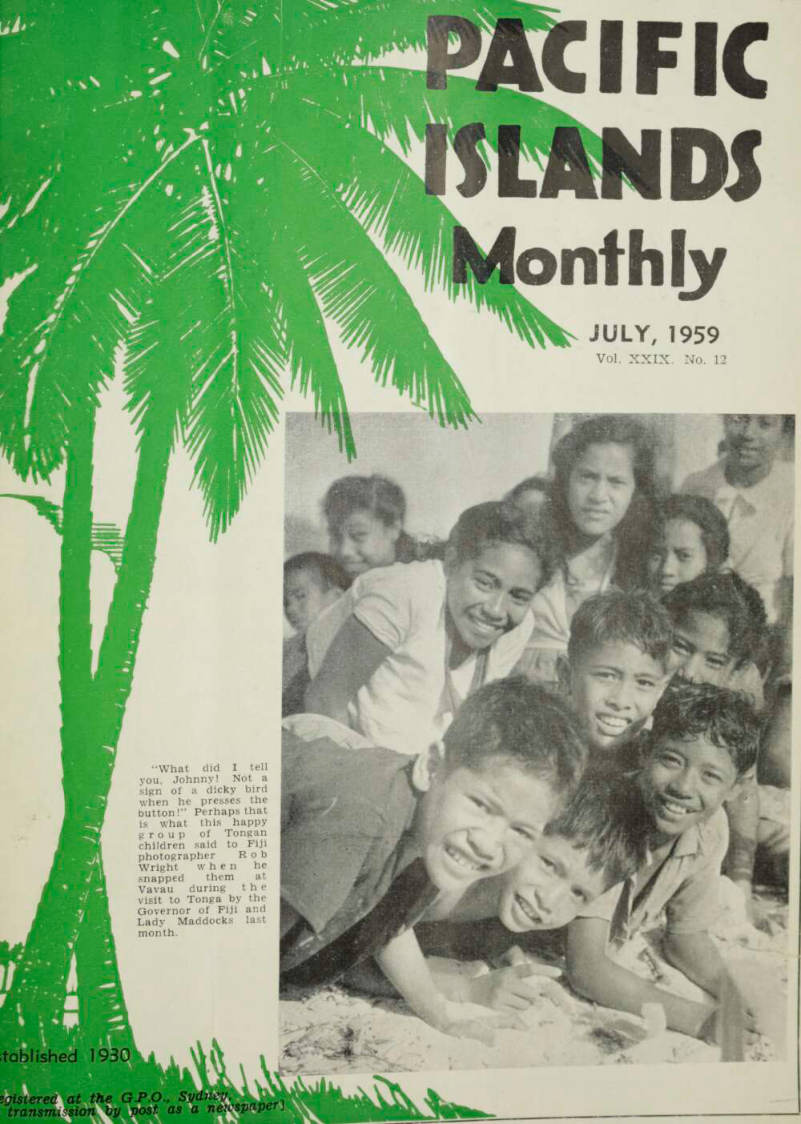 1
1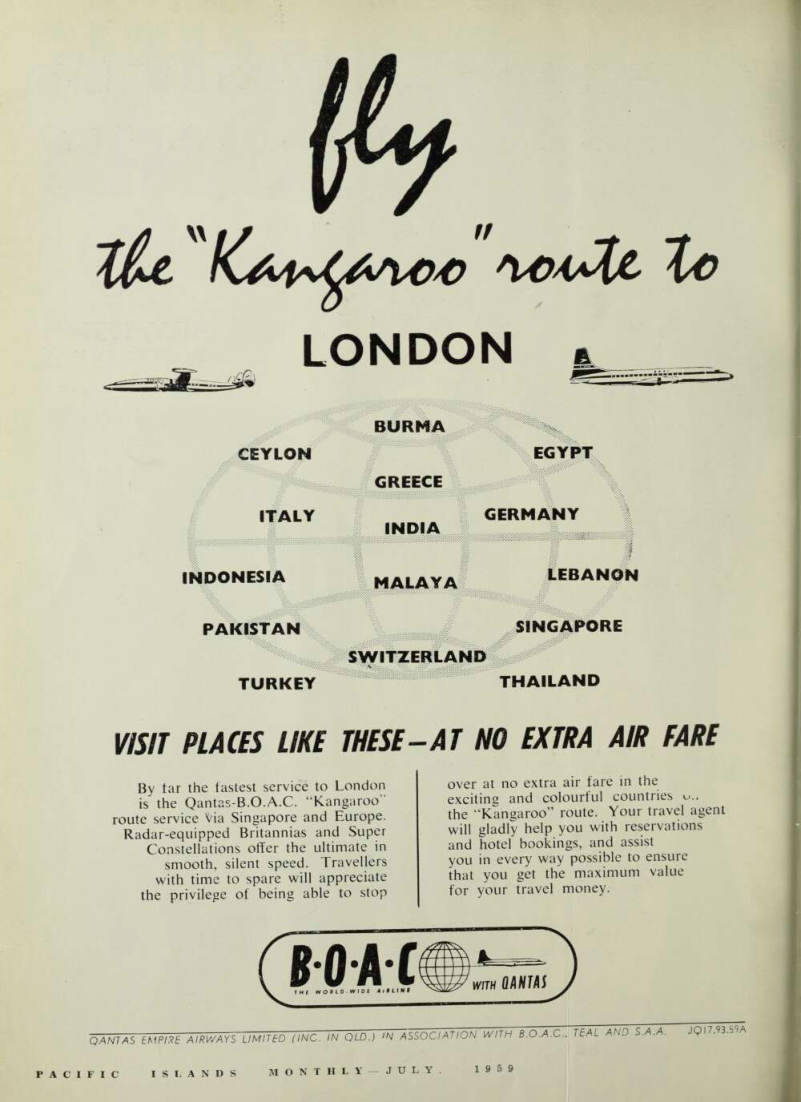 2
2 3
3 4
4 5
5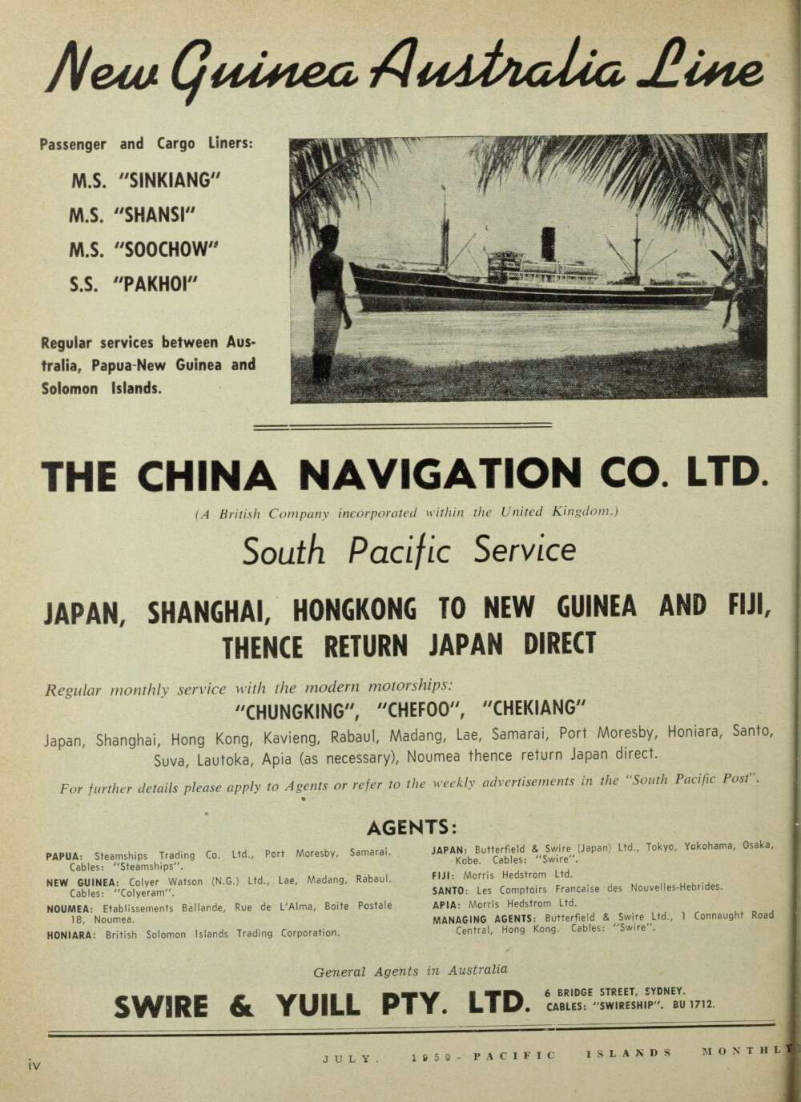 6
6 7
7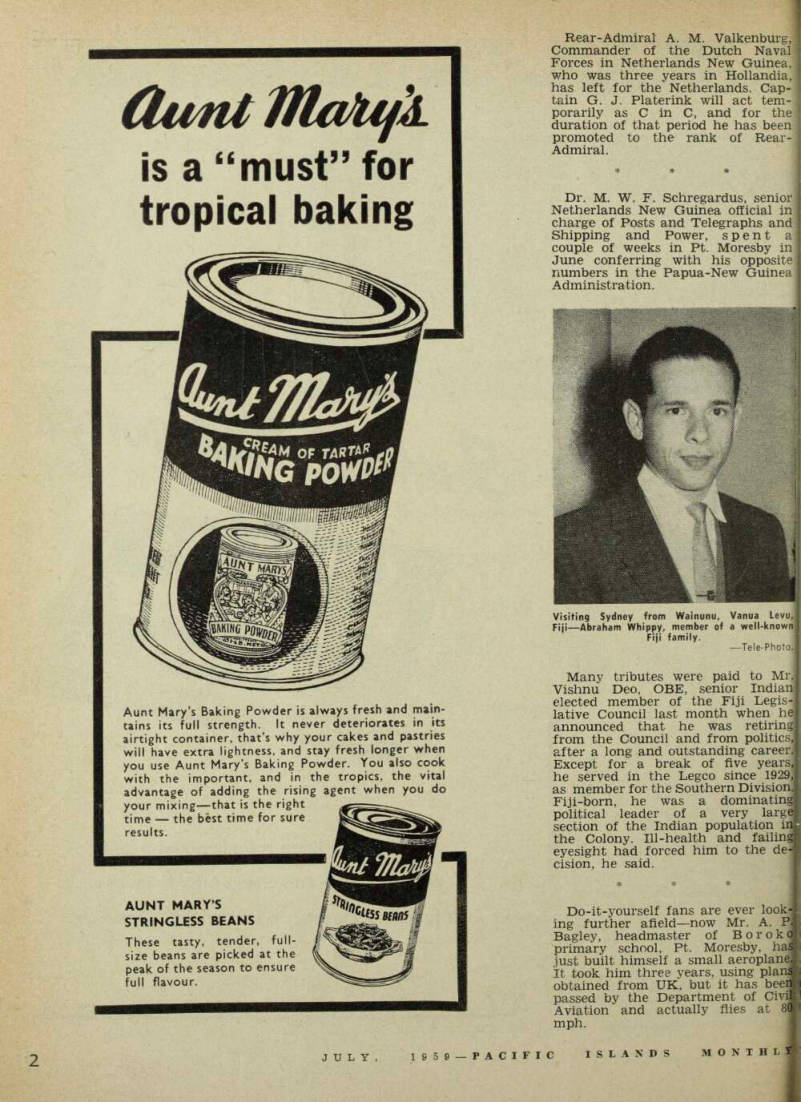 8
8 9
9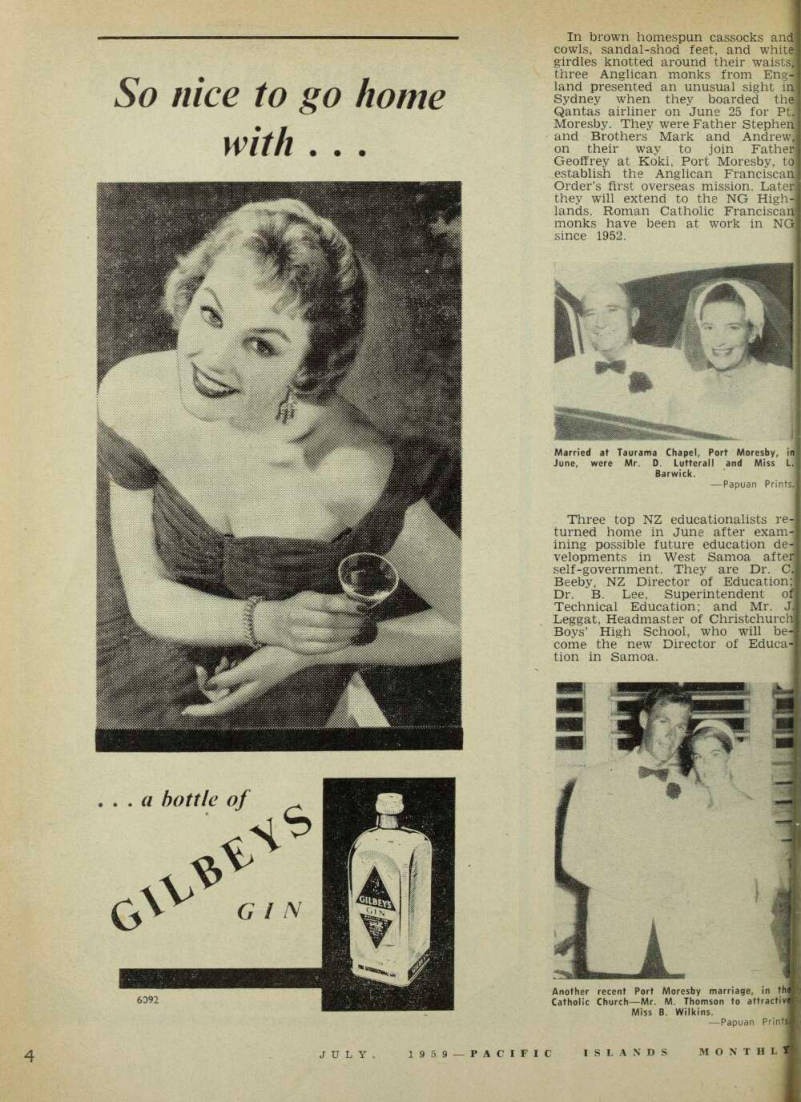 10
10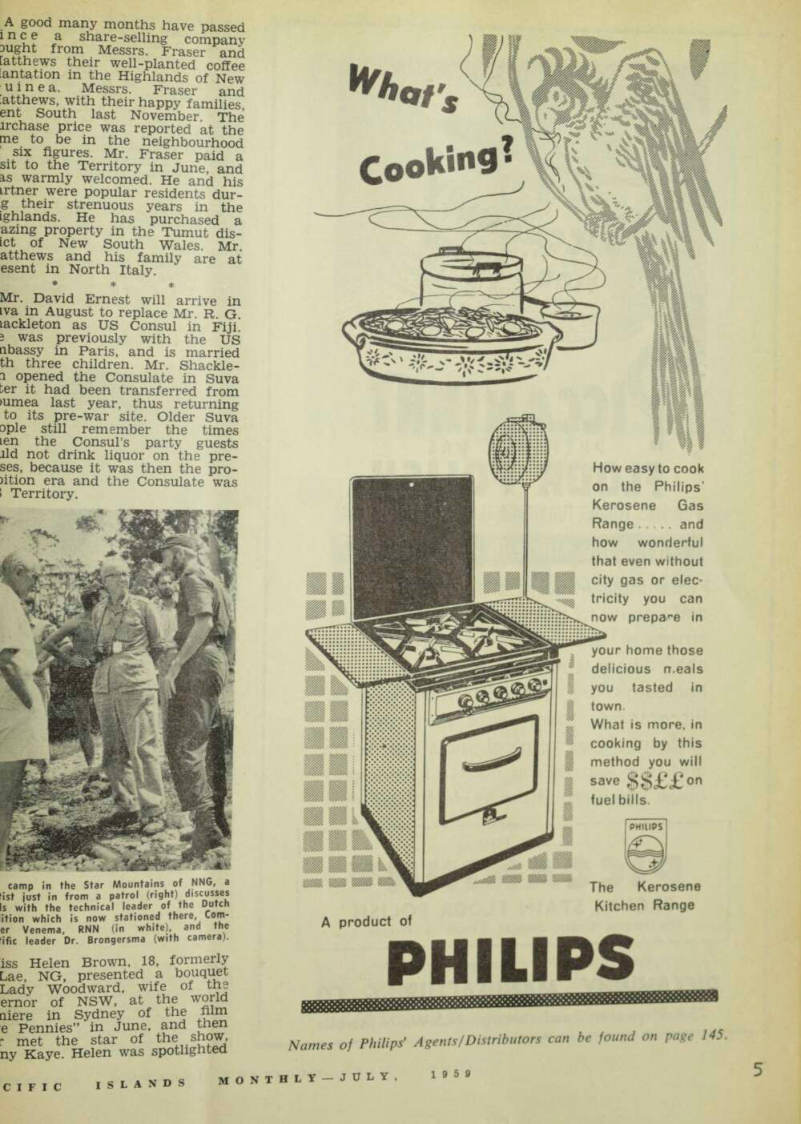 11
11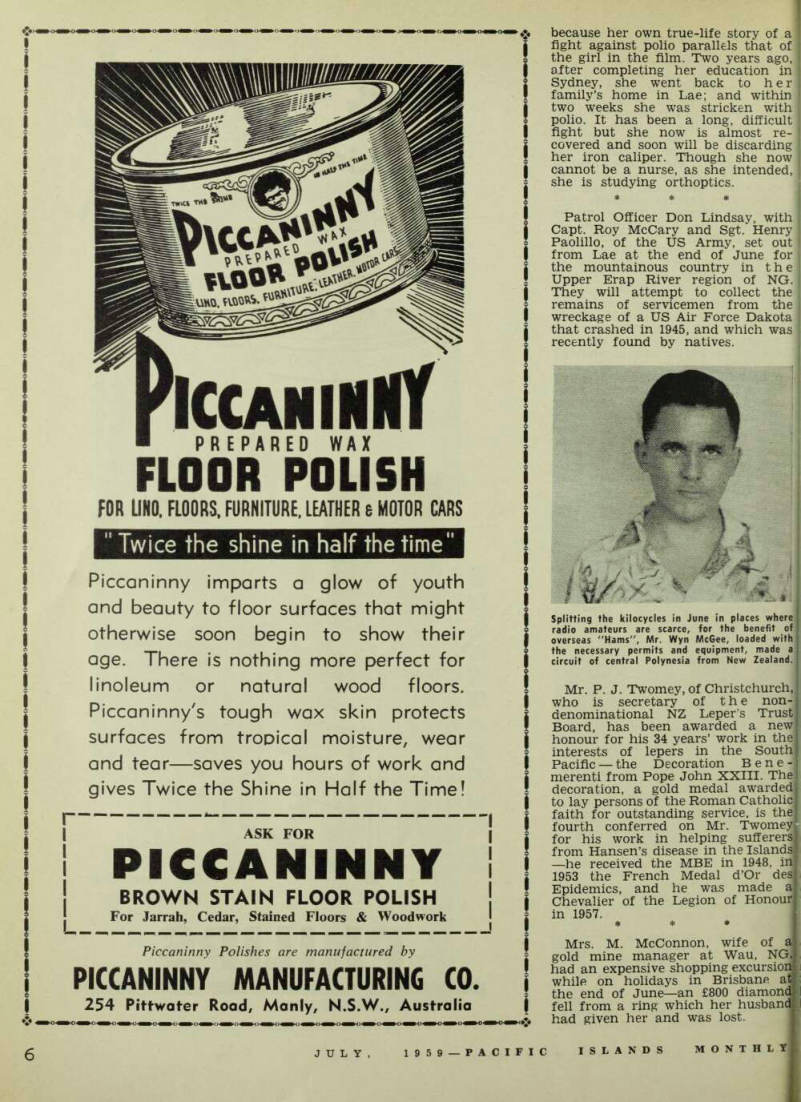 12
12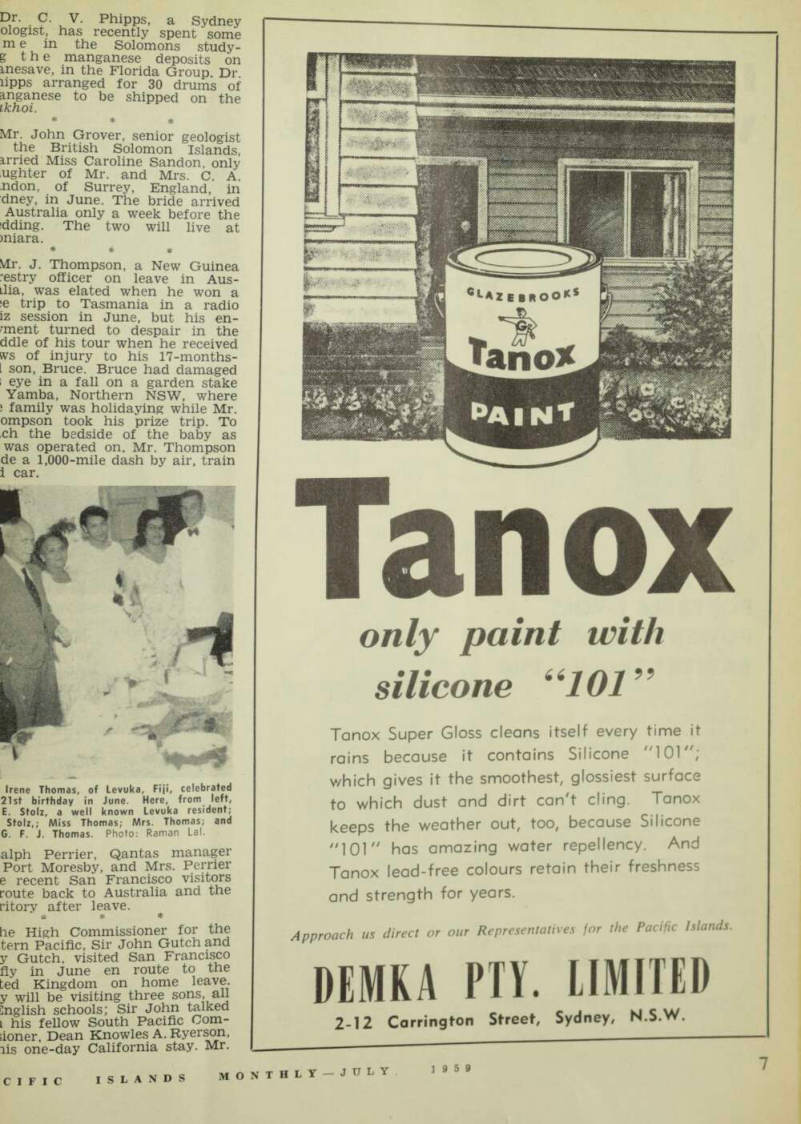 13
13 14
14 15
15 16
16 17
17 18
18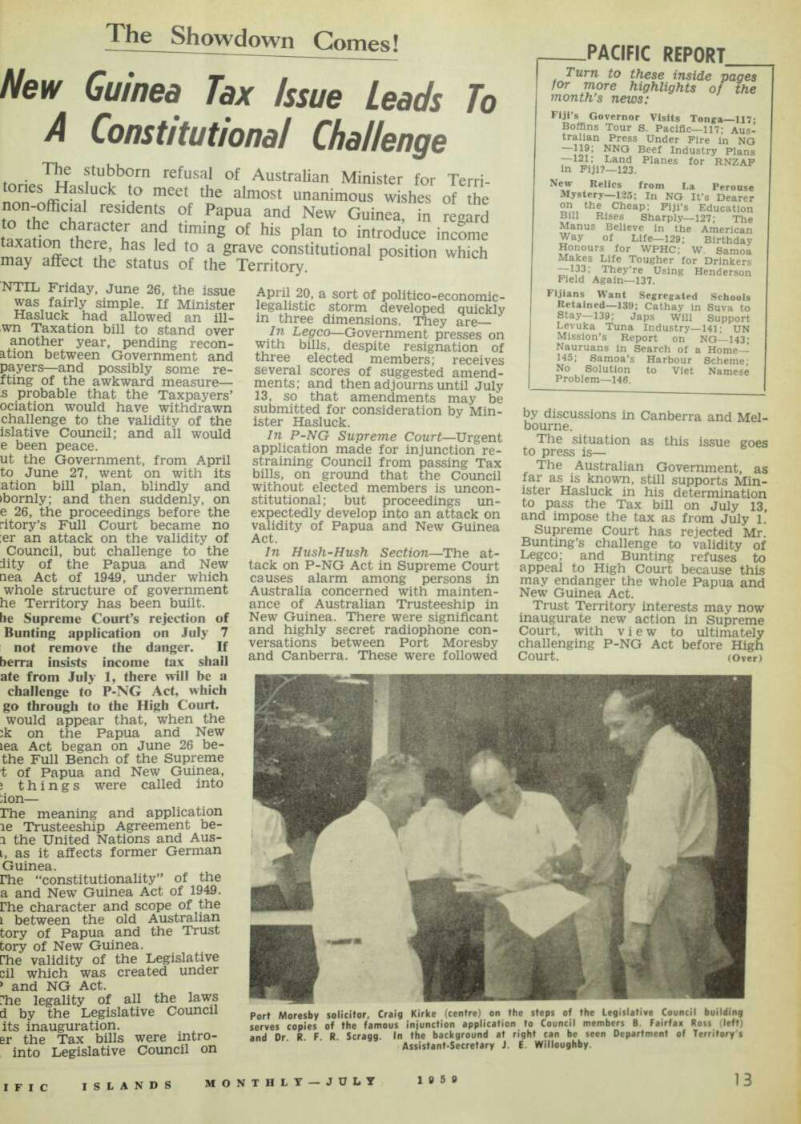 19
19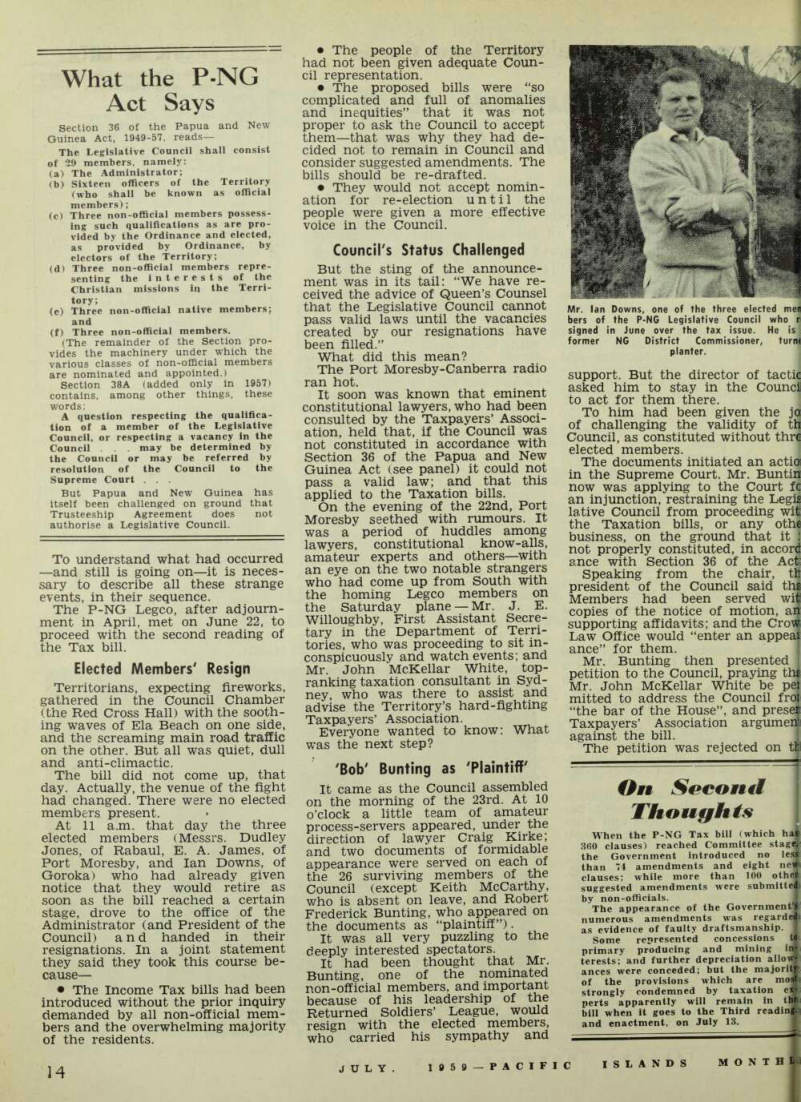 20
20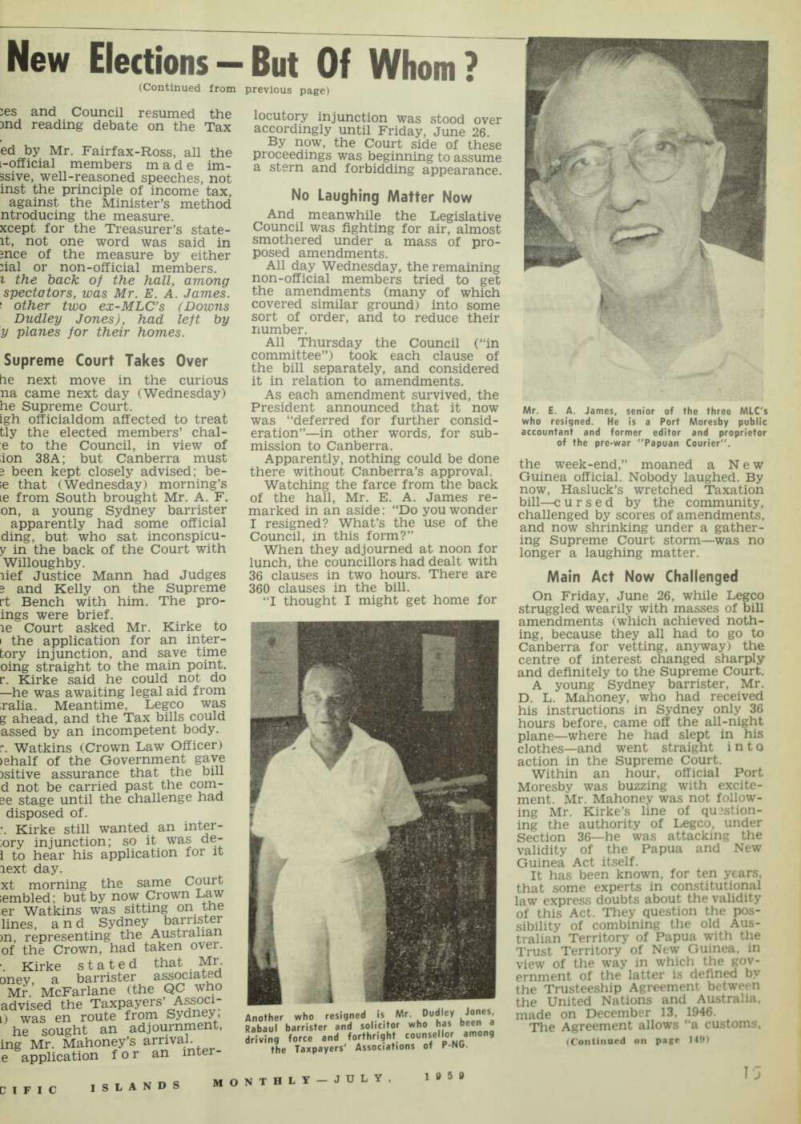 21
21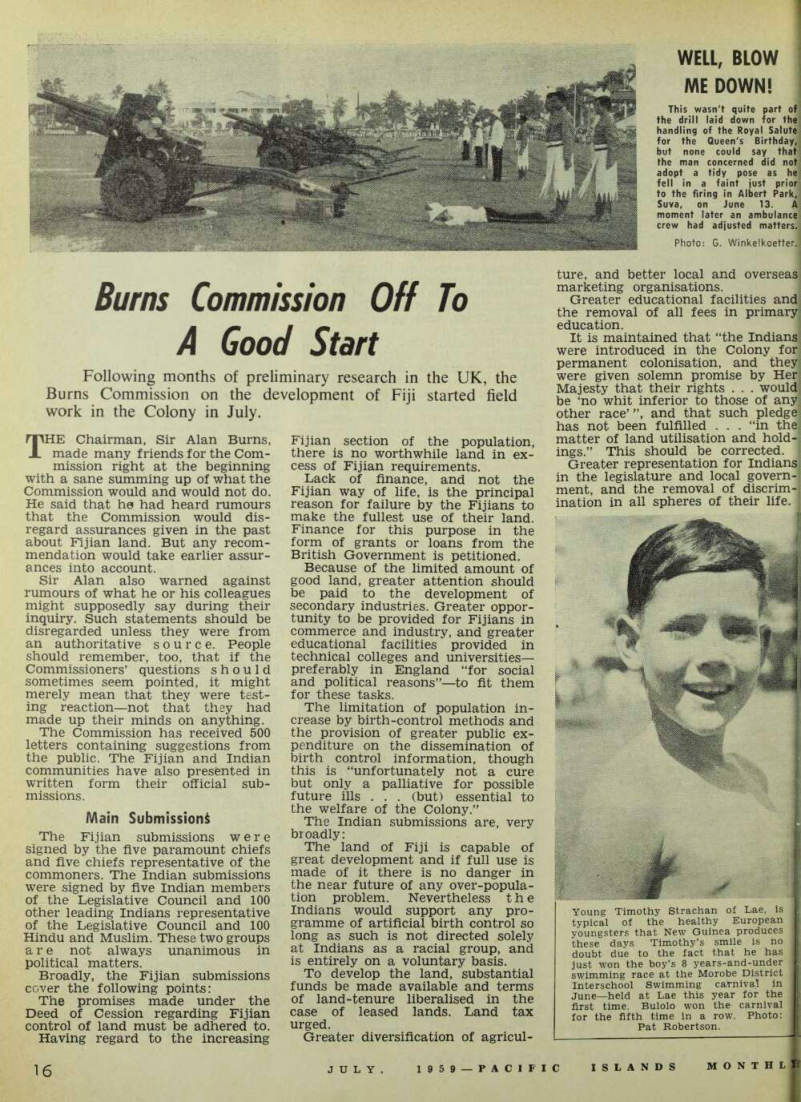 22
22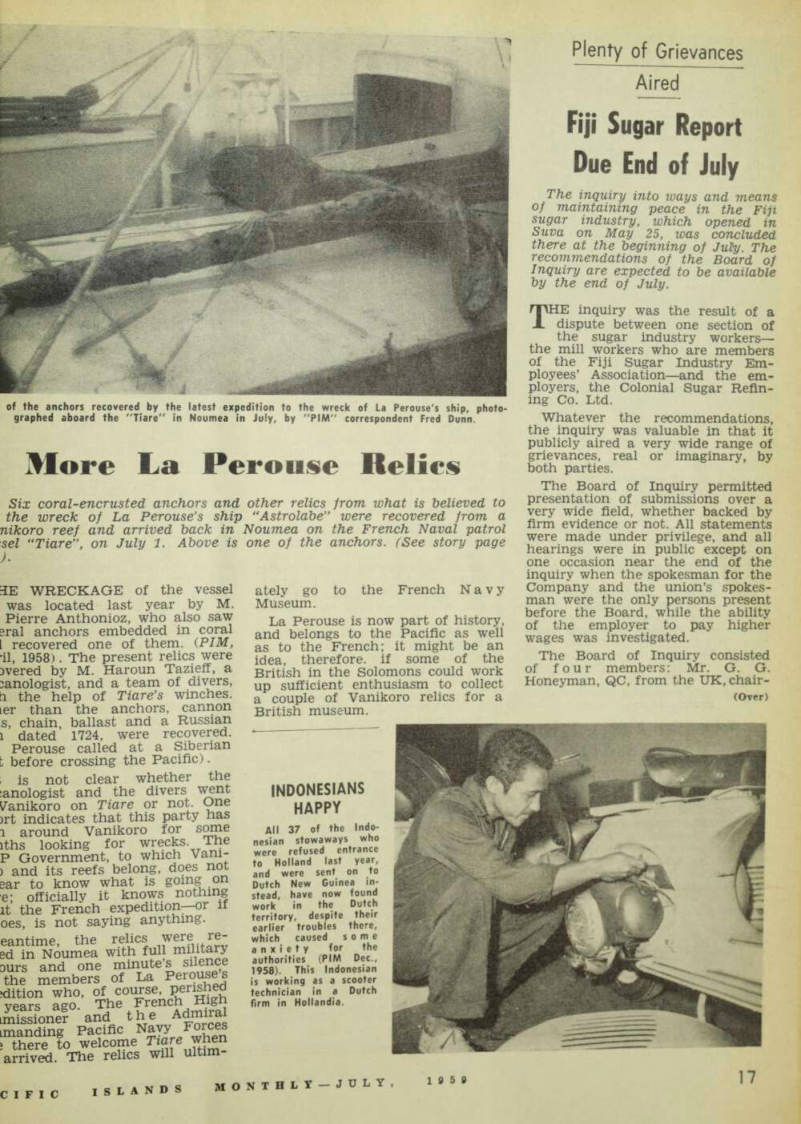 23
23 24
24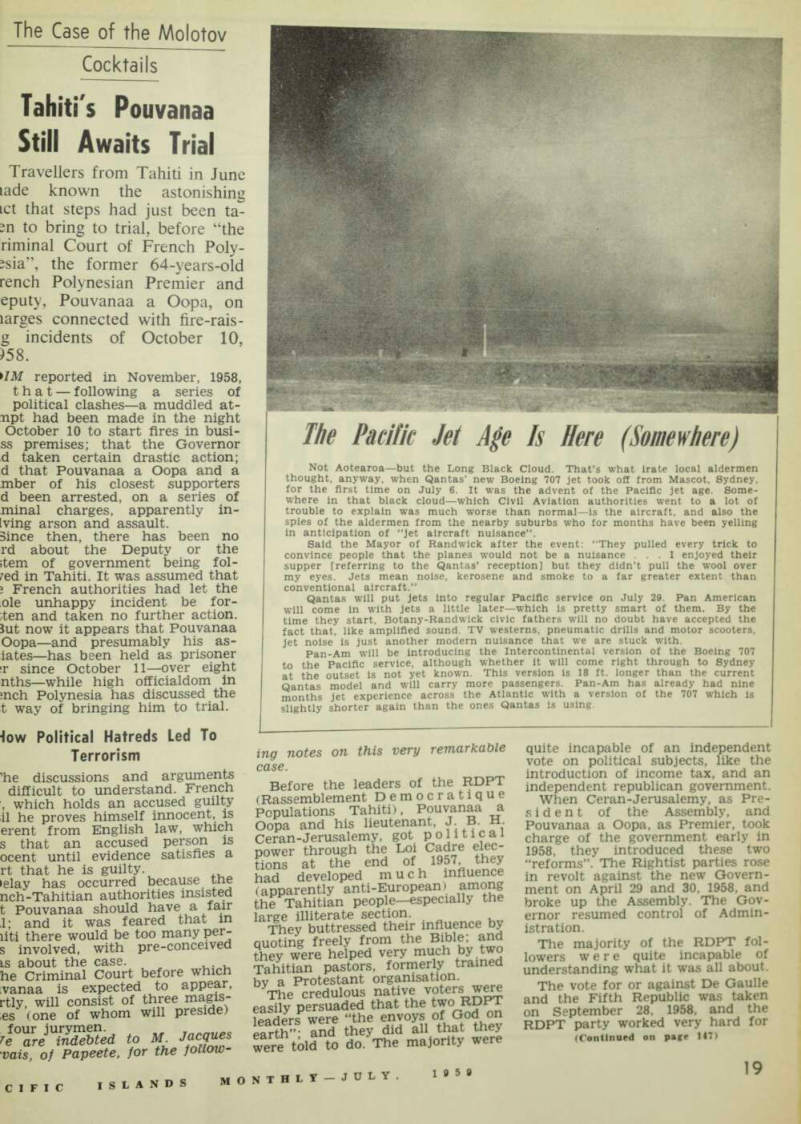 25
25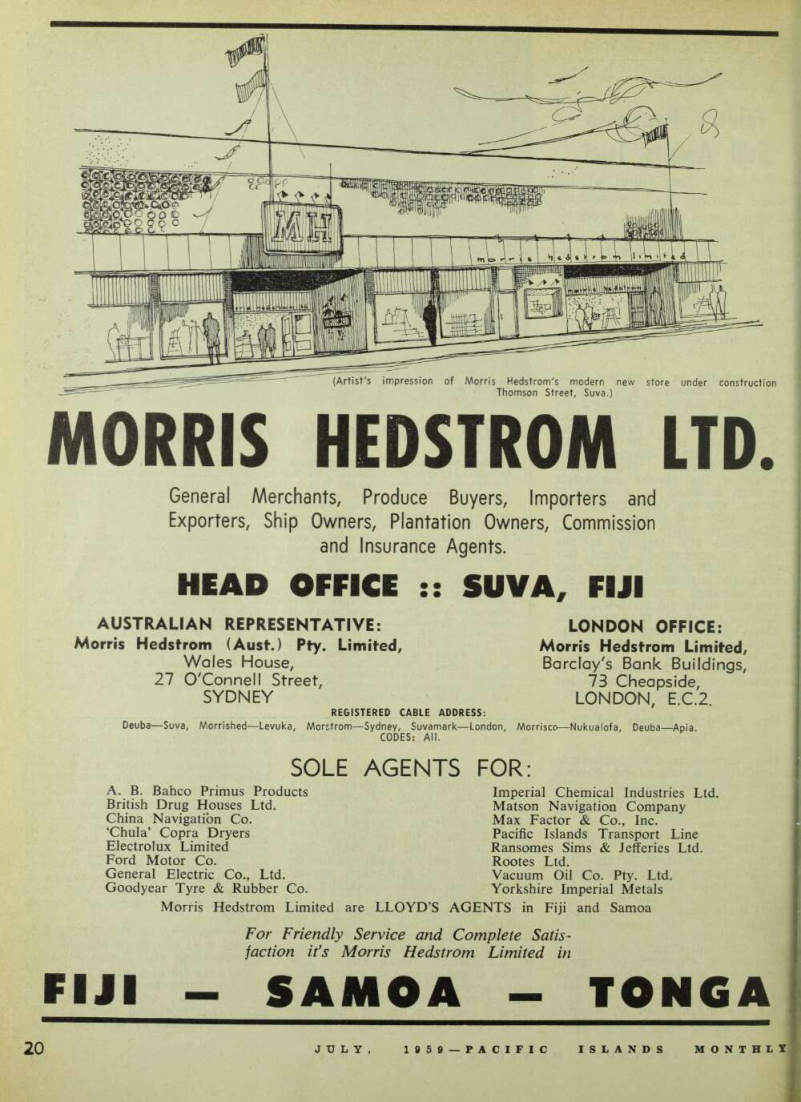 26
26 27
27 28
28 29
29 30
30 31
31 32
32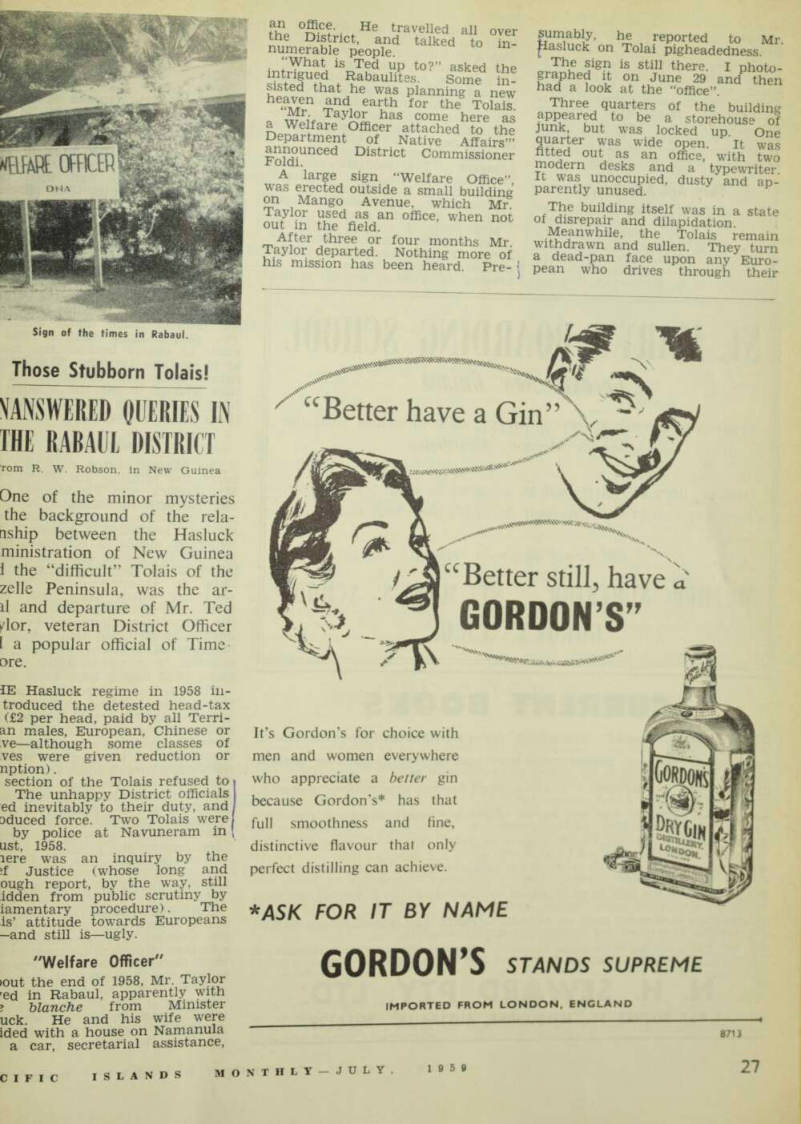 33
33 34
34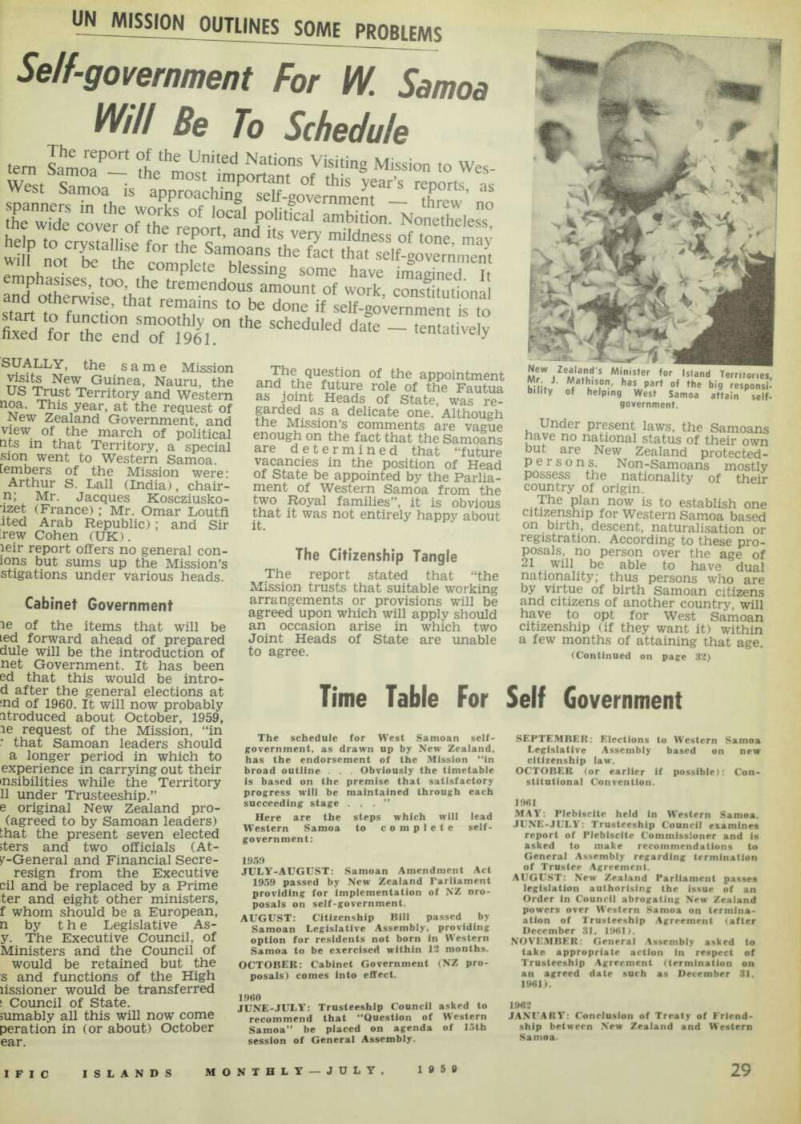 35
35 36
36 37
37 38
38 39
39 40
40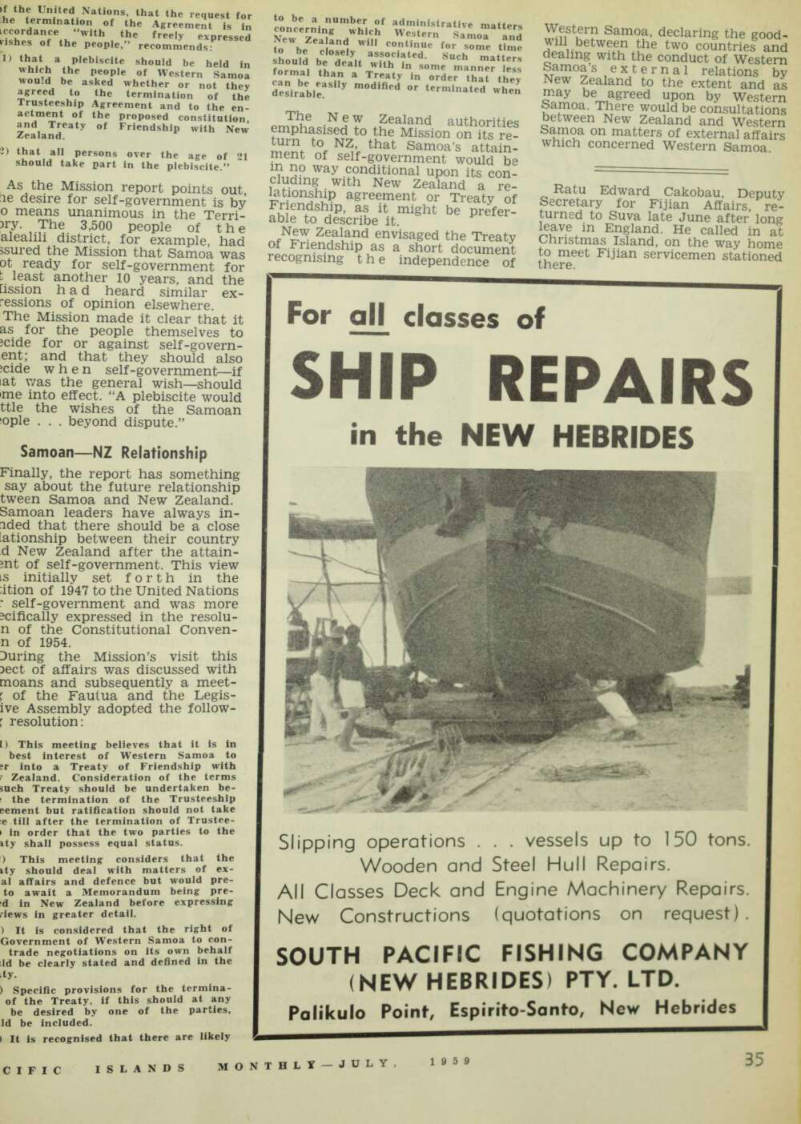 41
41 42
42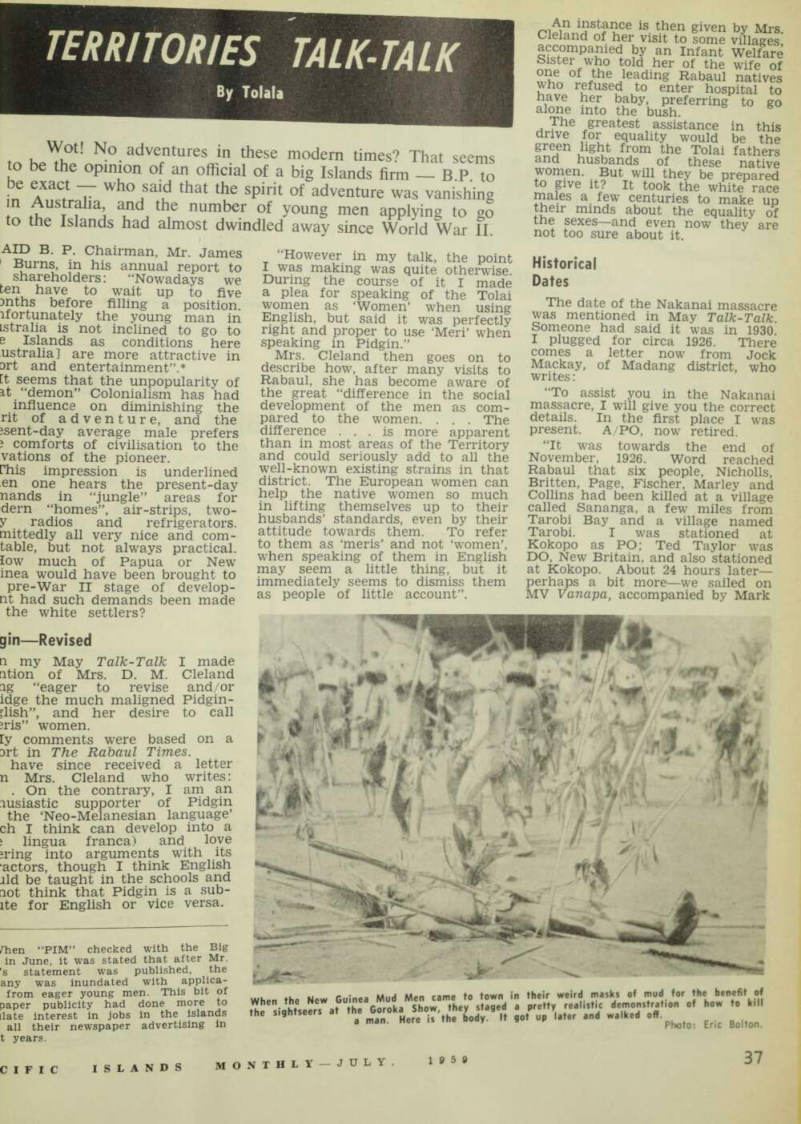 43
43 44
44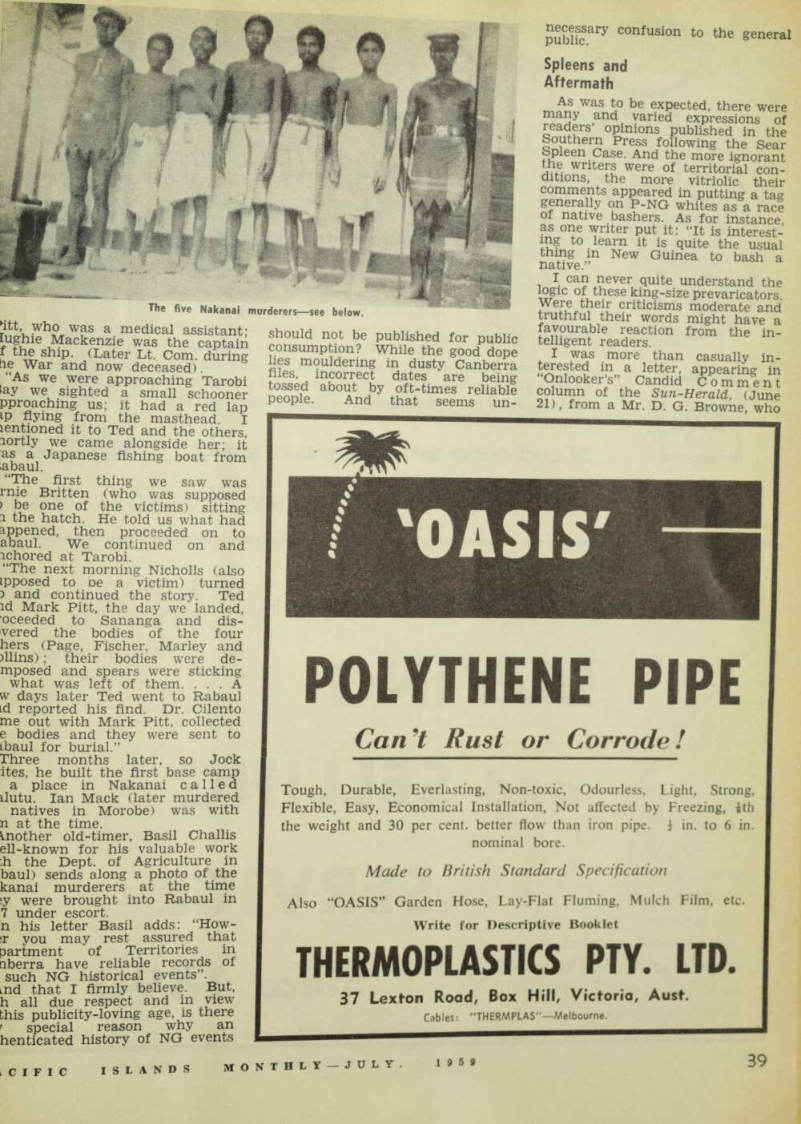 45
45 46
46 47
47 48
48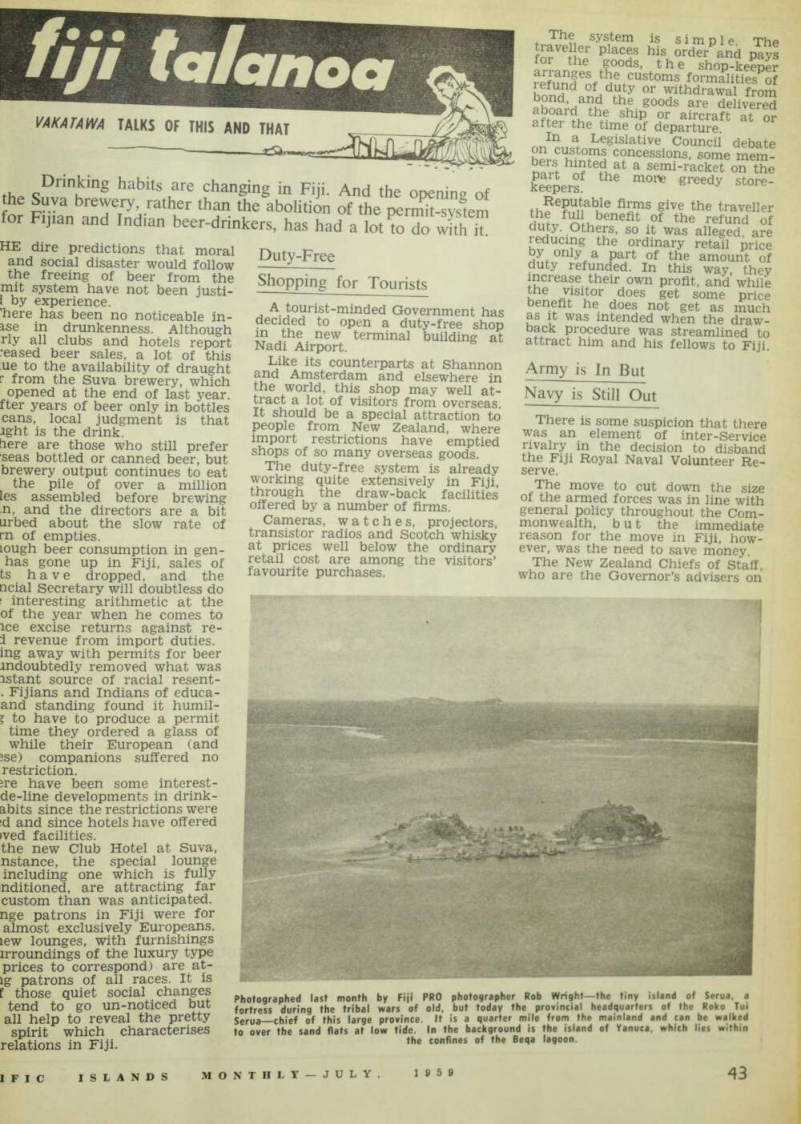 49
49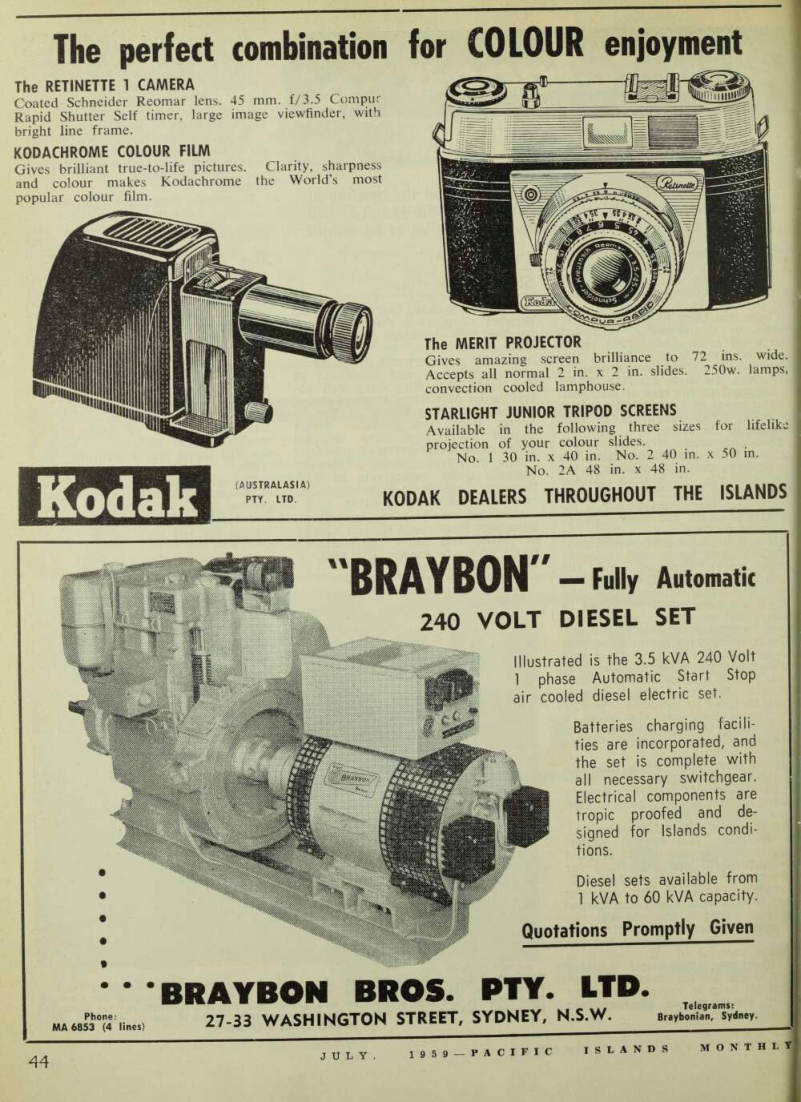 50
50 51
51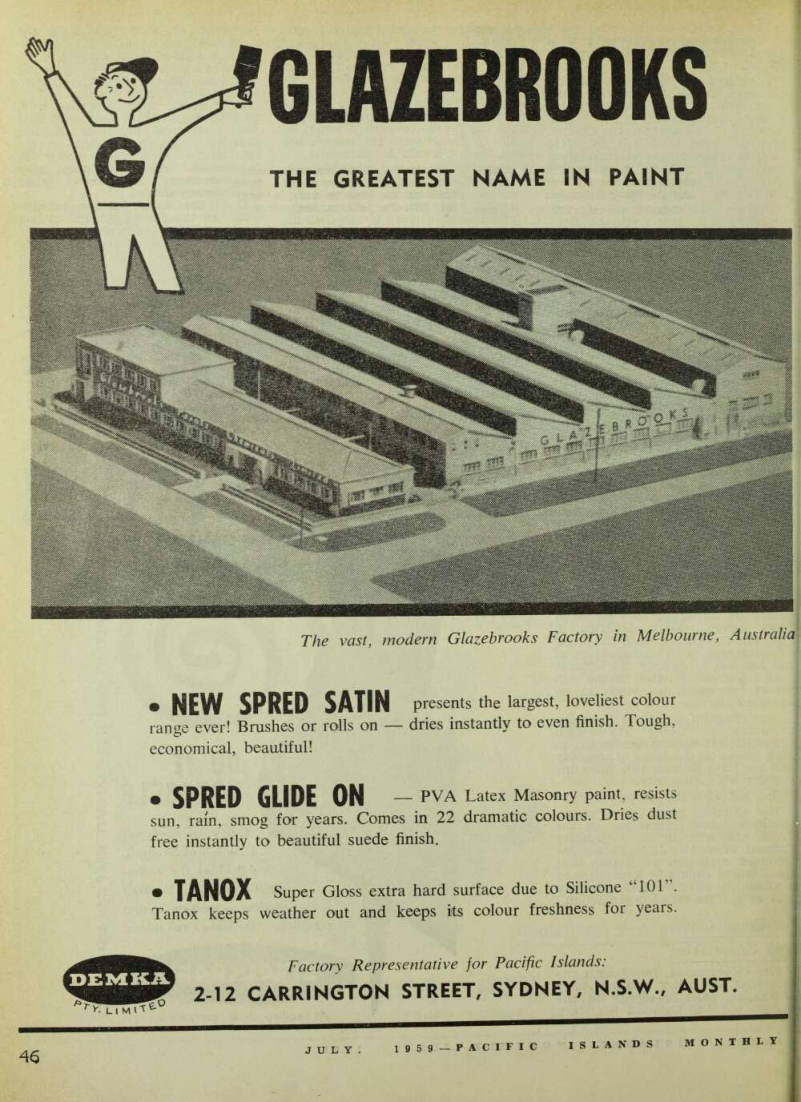 52
52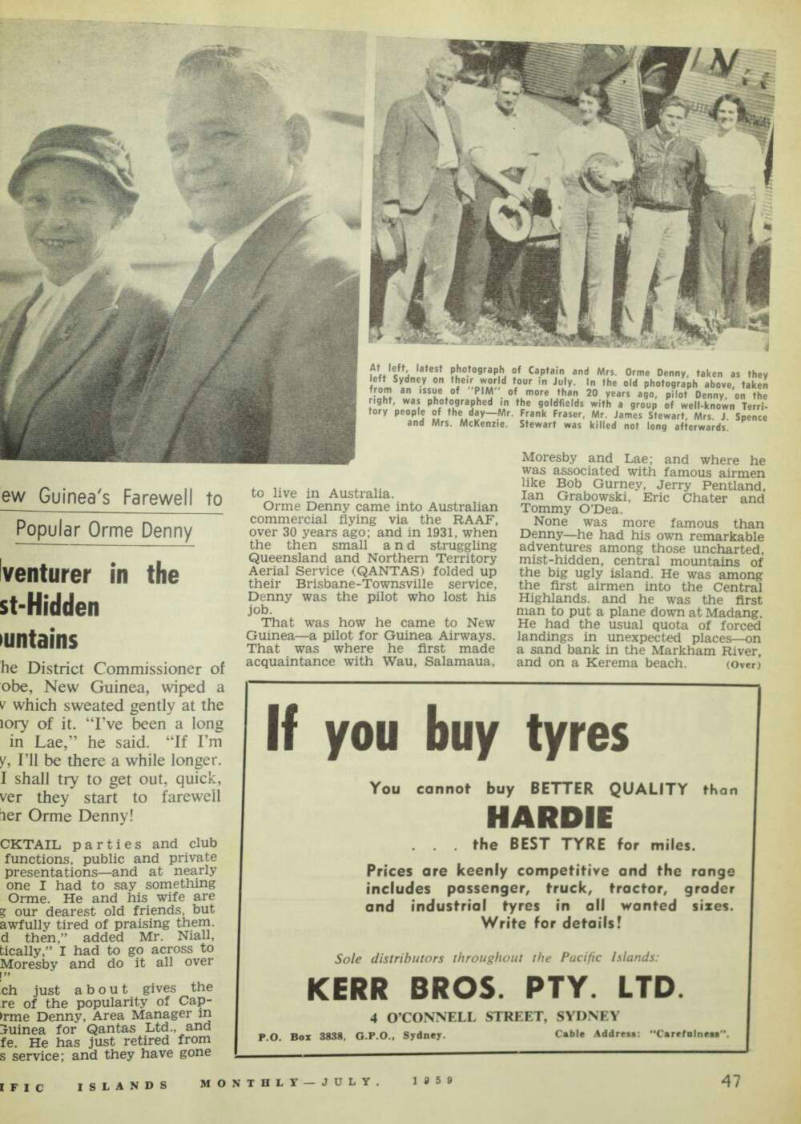 53
53 54
54 55
55 56
56 57
57 58
58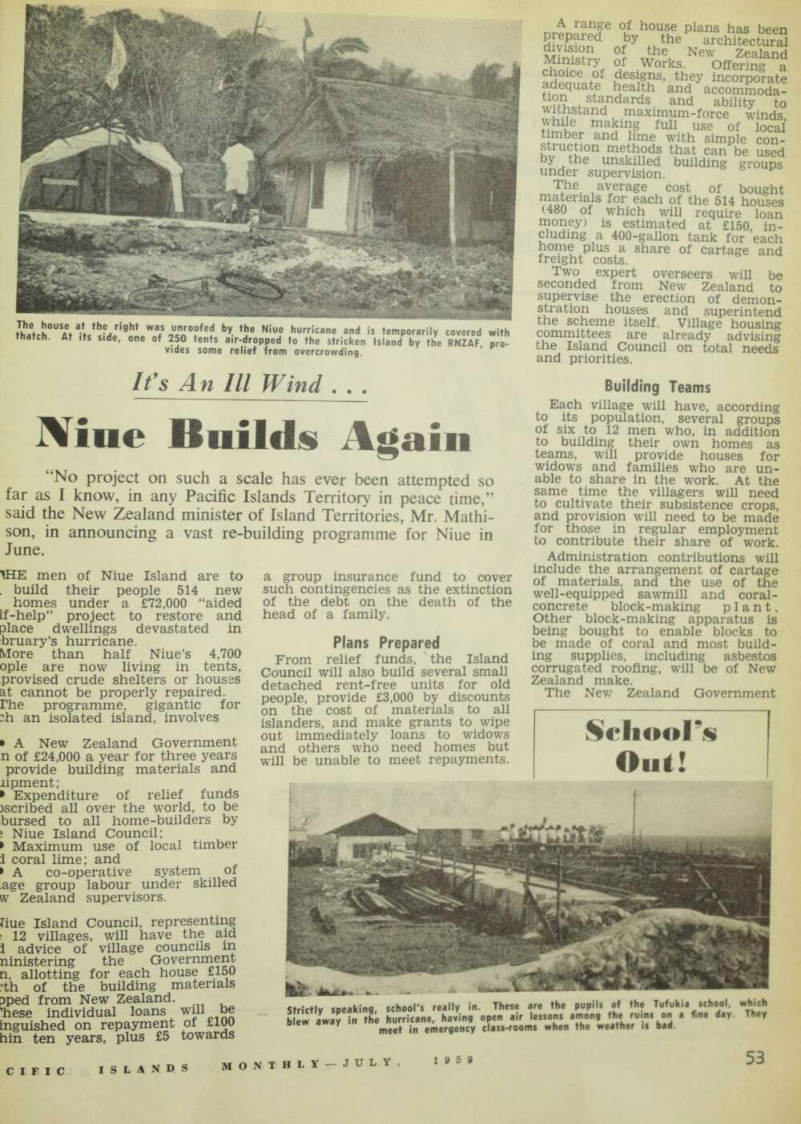 59
59 60
60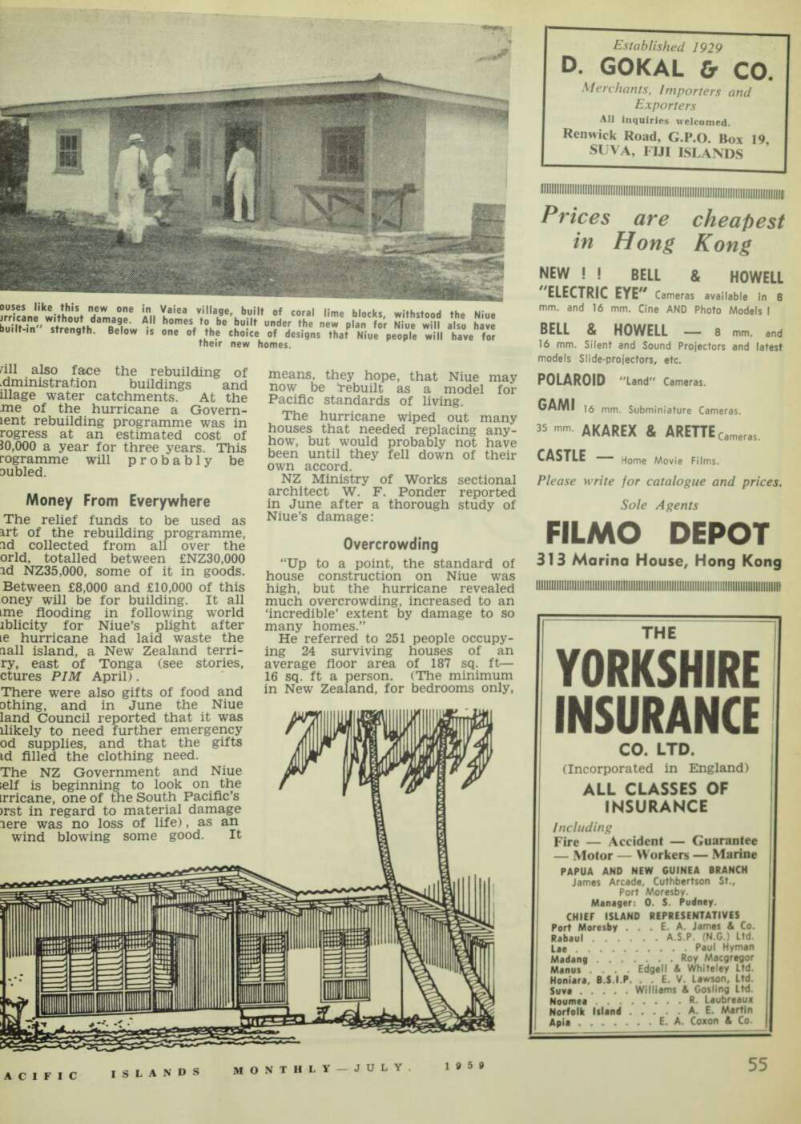 61
61 62
62 63
63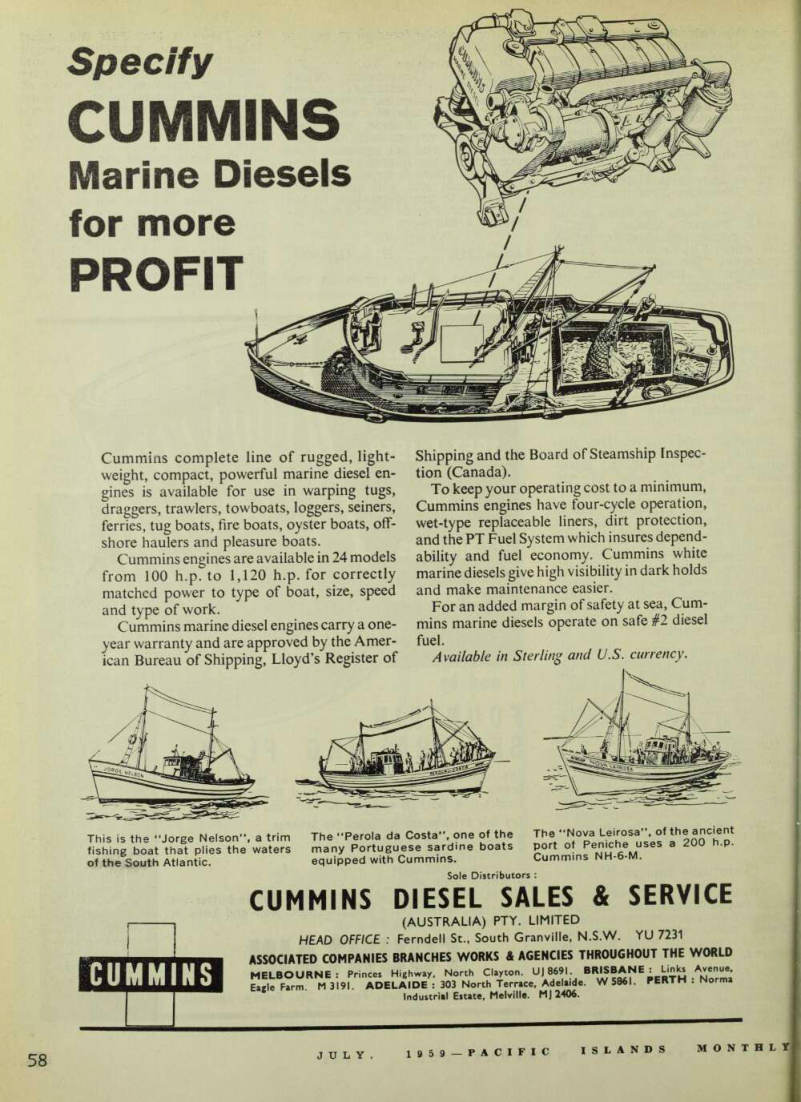 64
64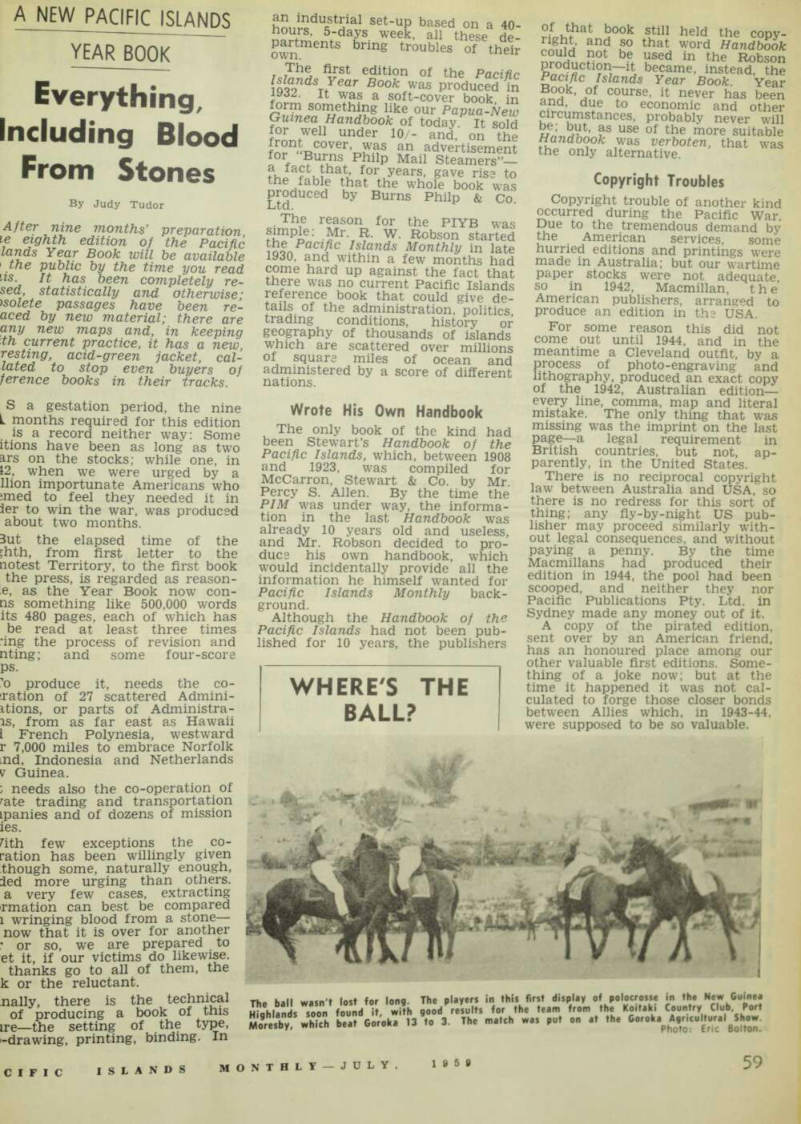 65
65 66
66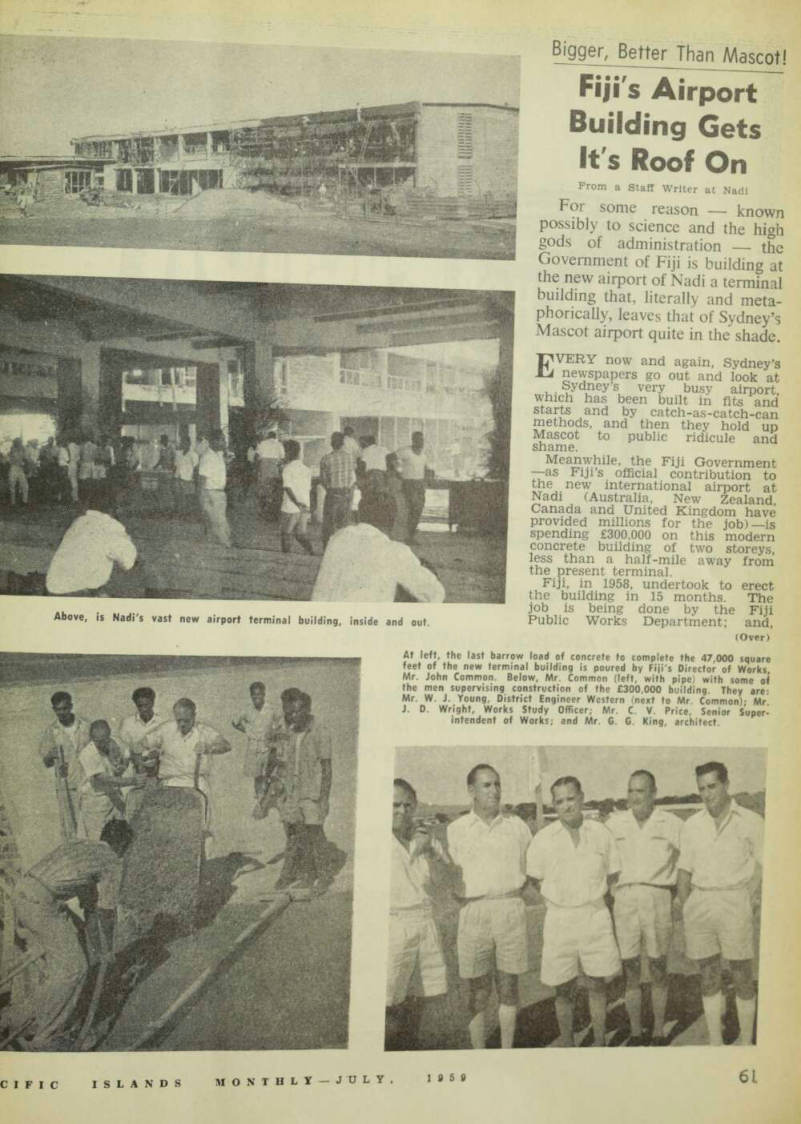 67
67 68
68 69
69 70
70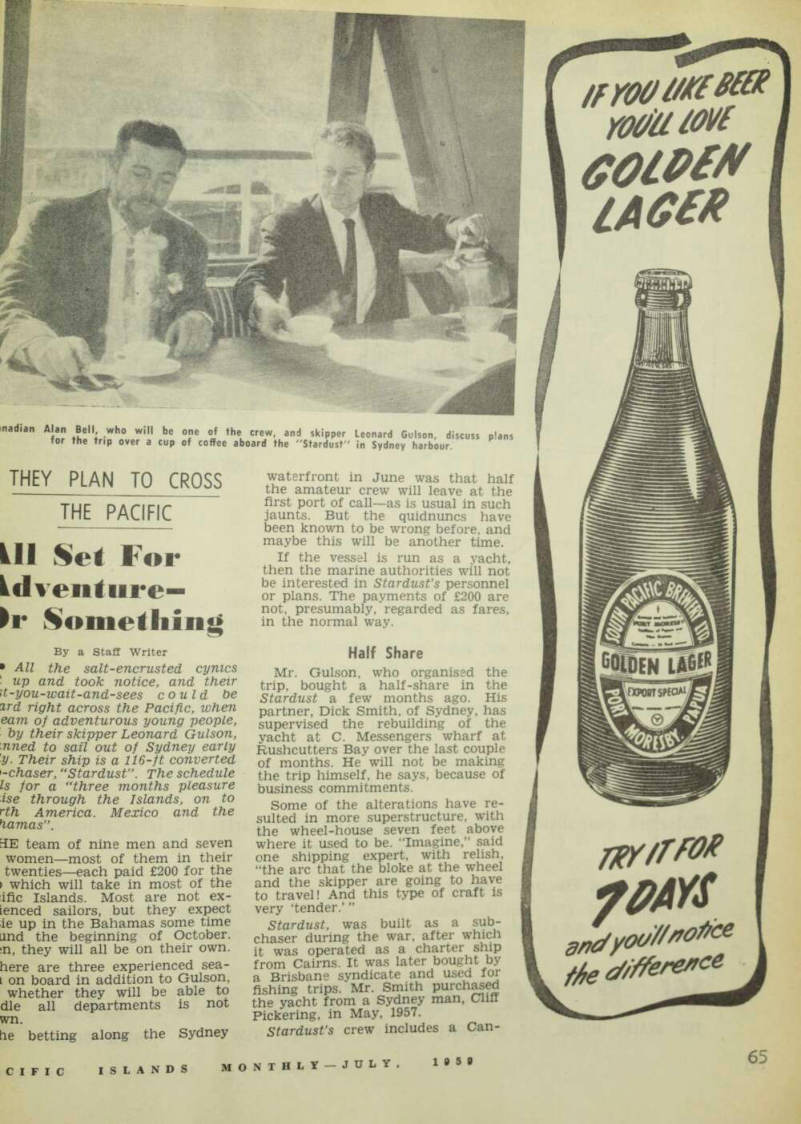 71
71 72
72 73
73 74
74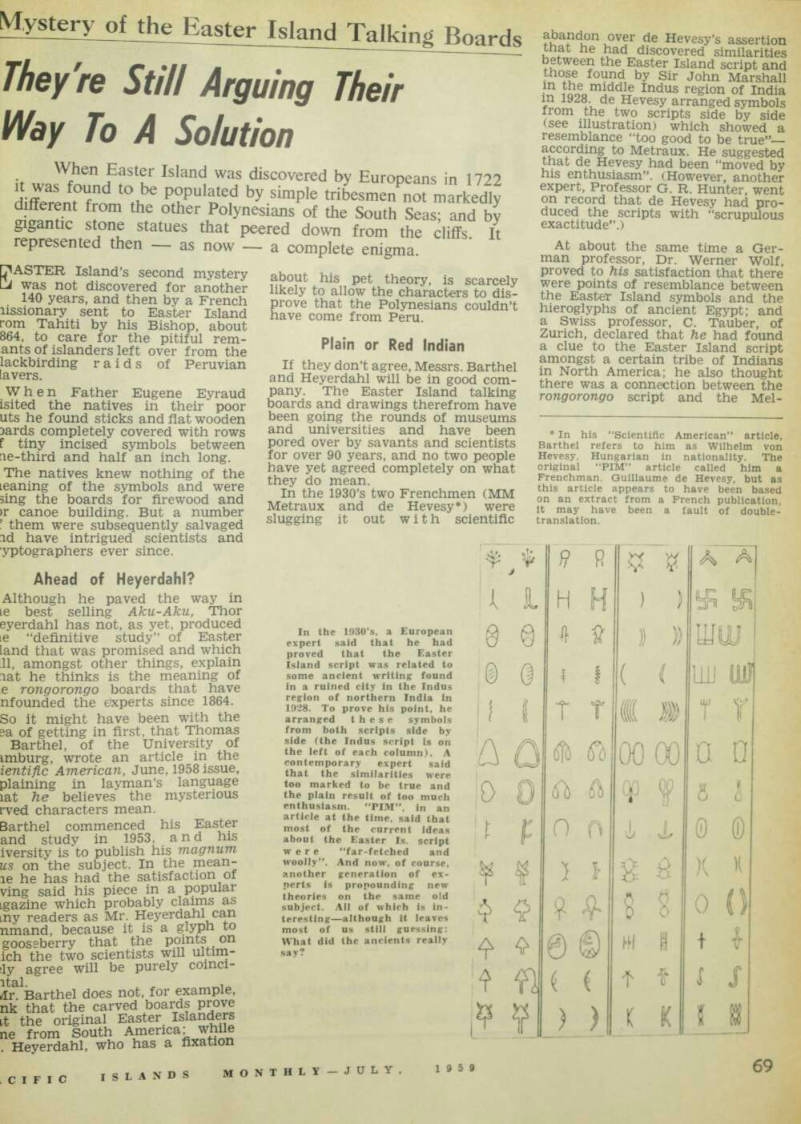 75
75 76
76 77
77 78
78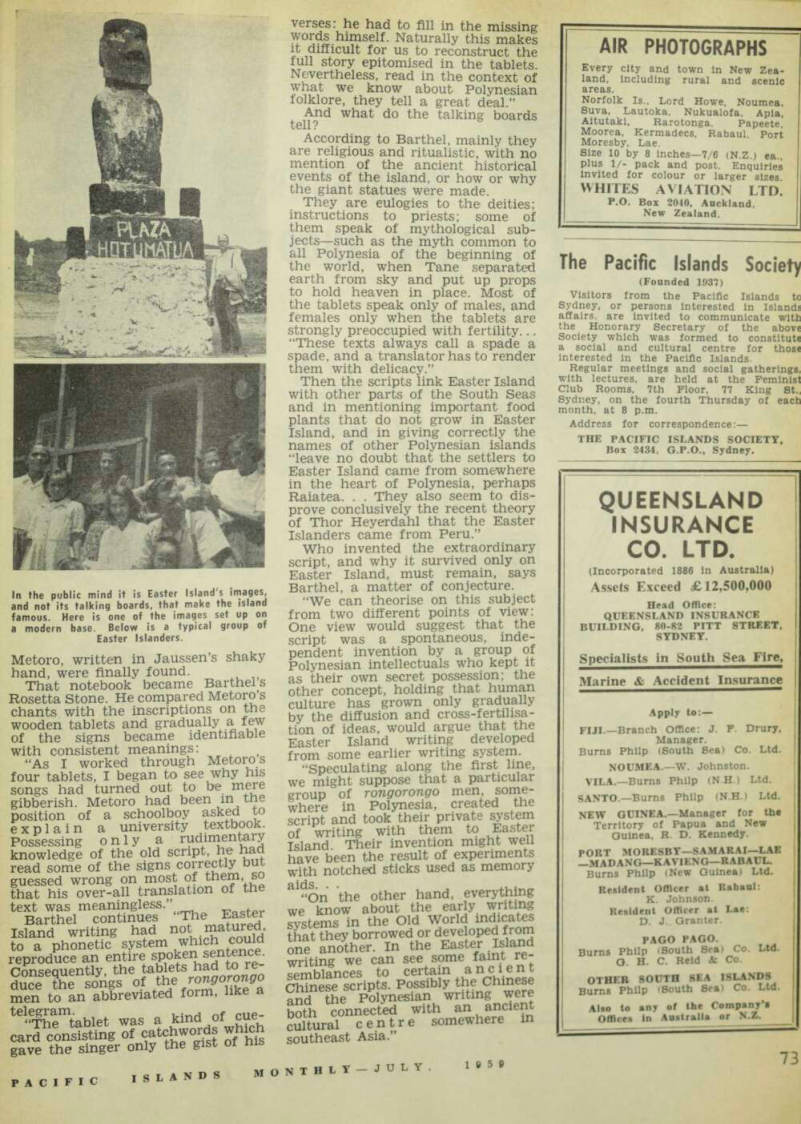 79
79 80
80 81
81 82
82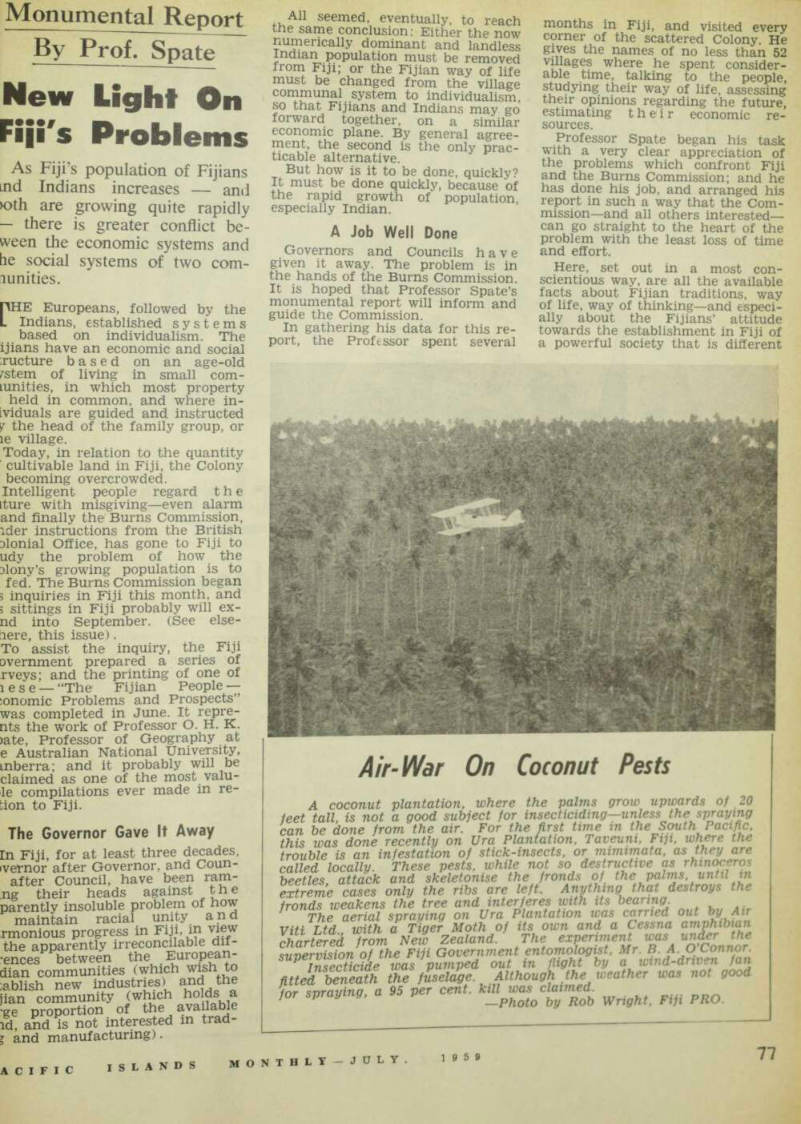 83
83 84
84 85
85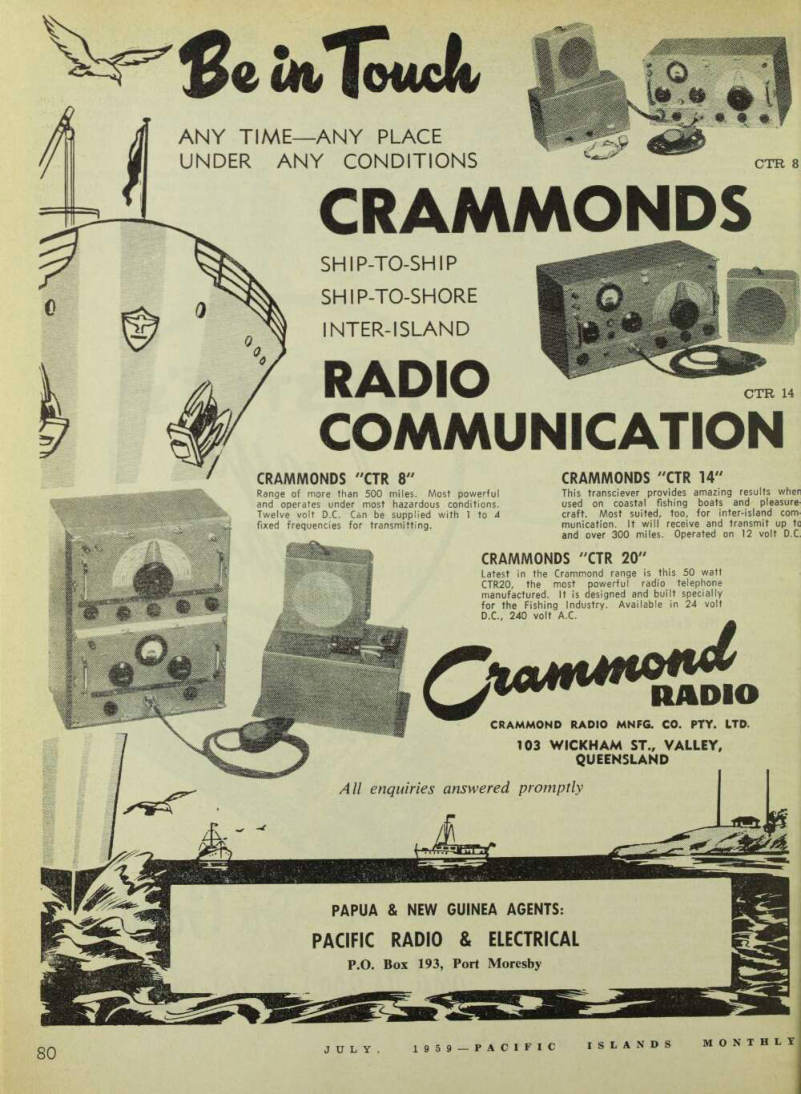 86
86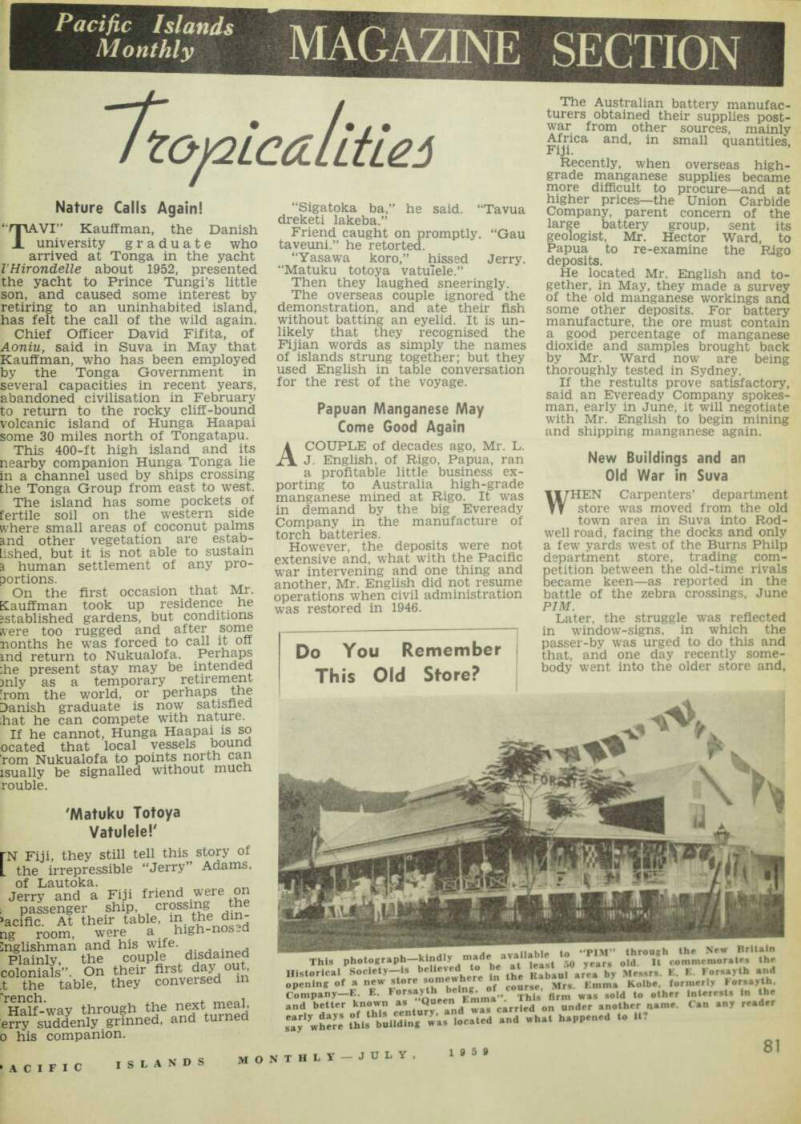 87
87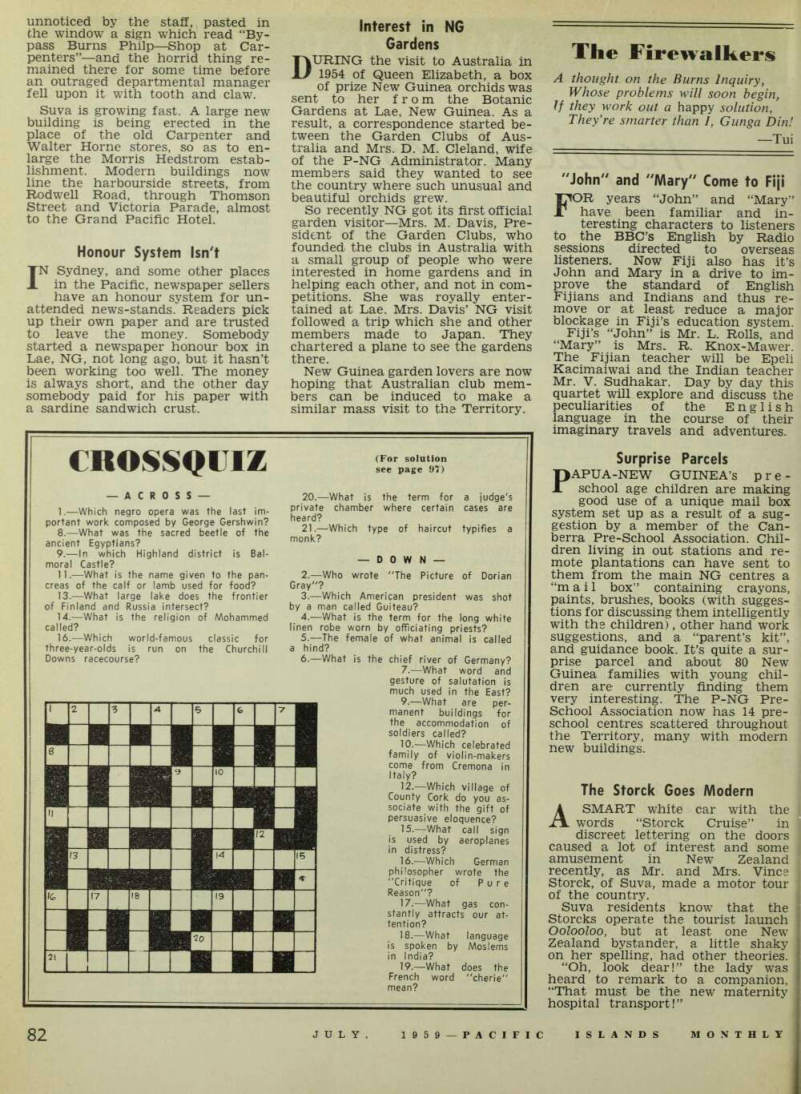 88
88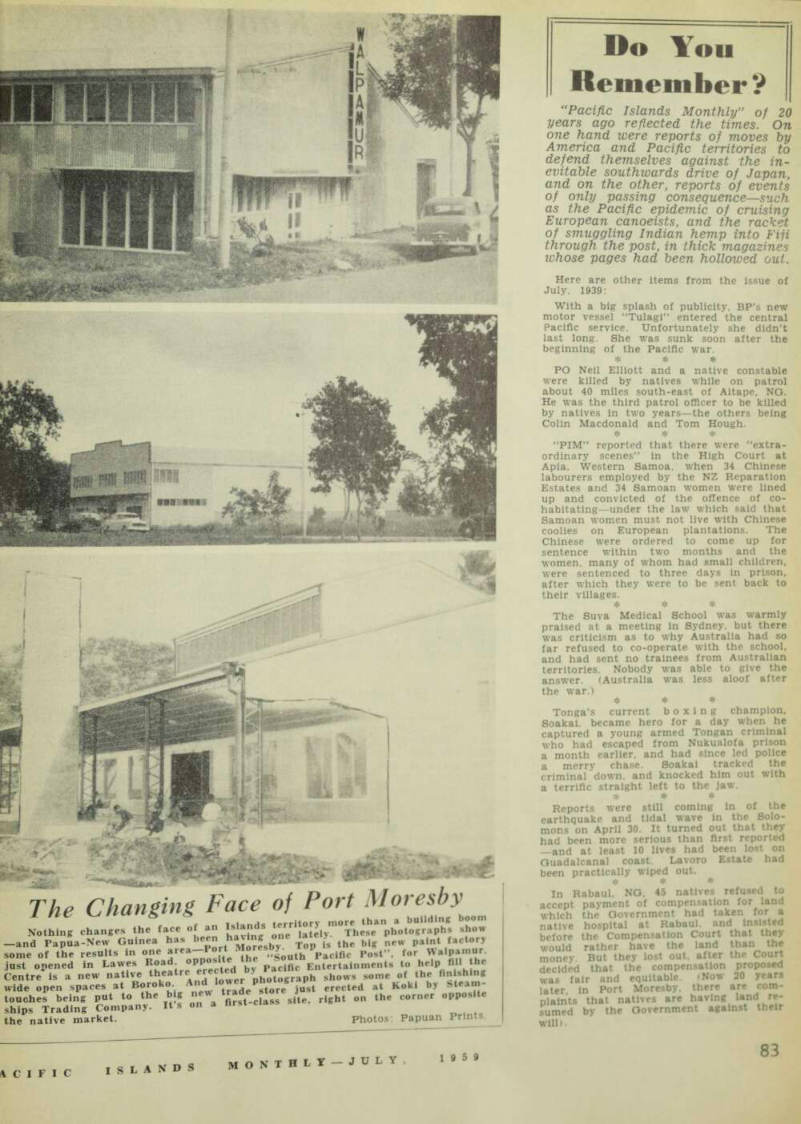 89
89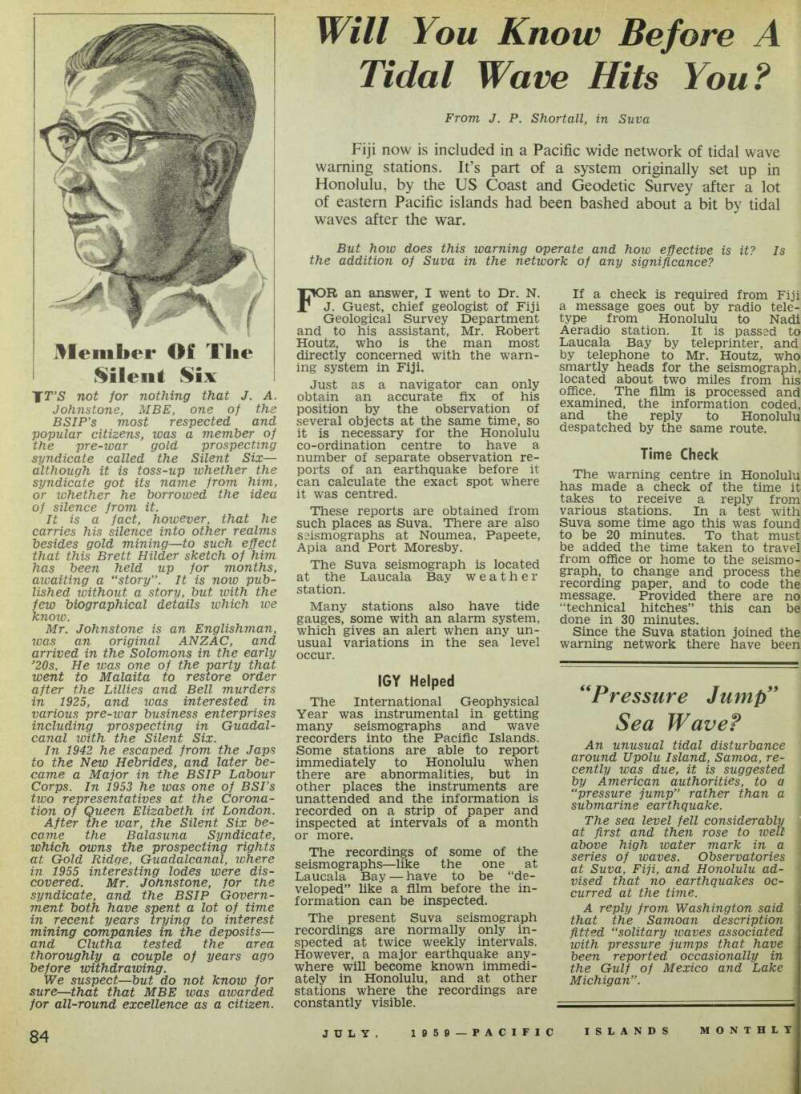 90
90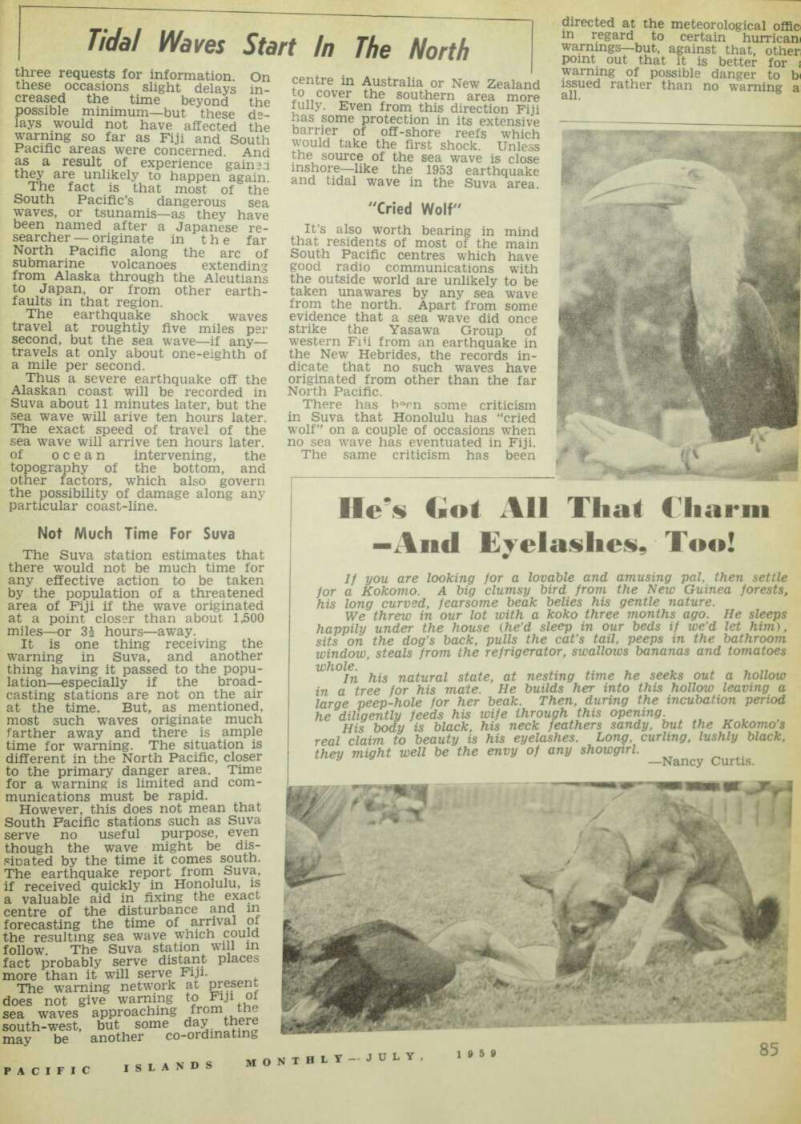 91
91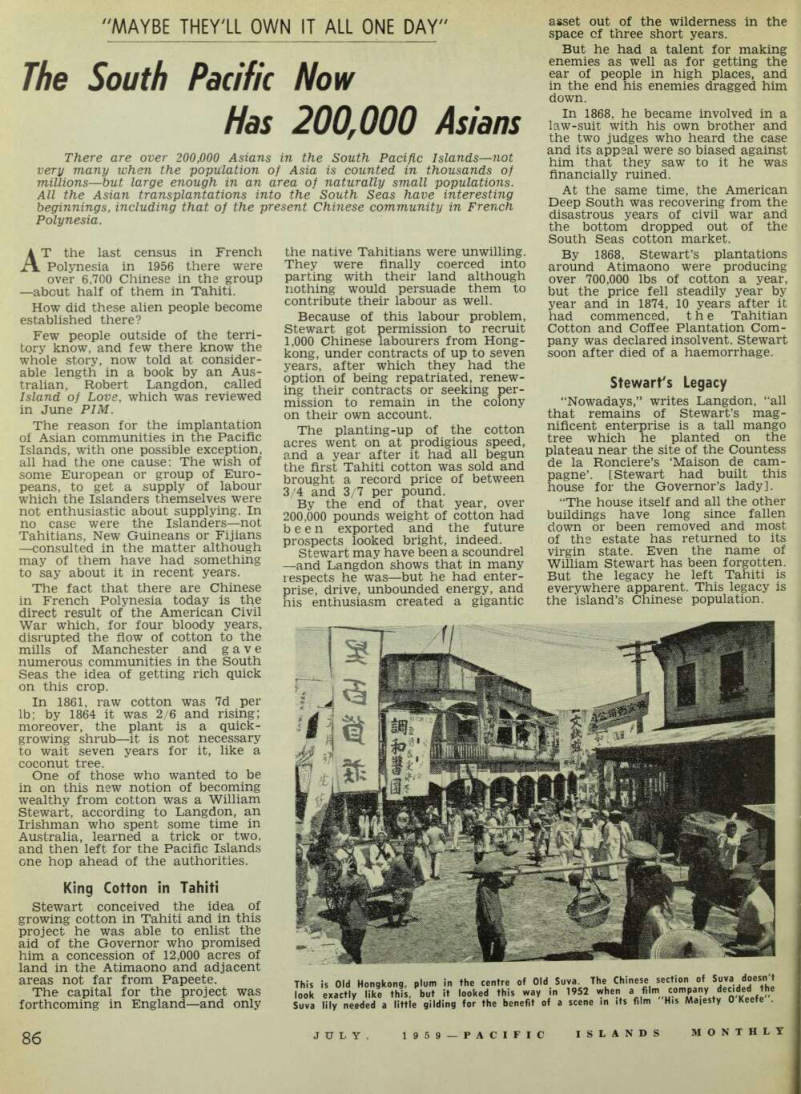 92
92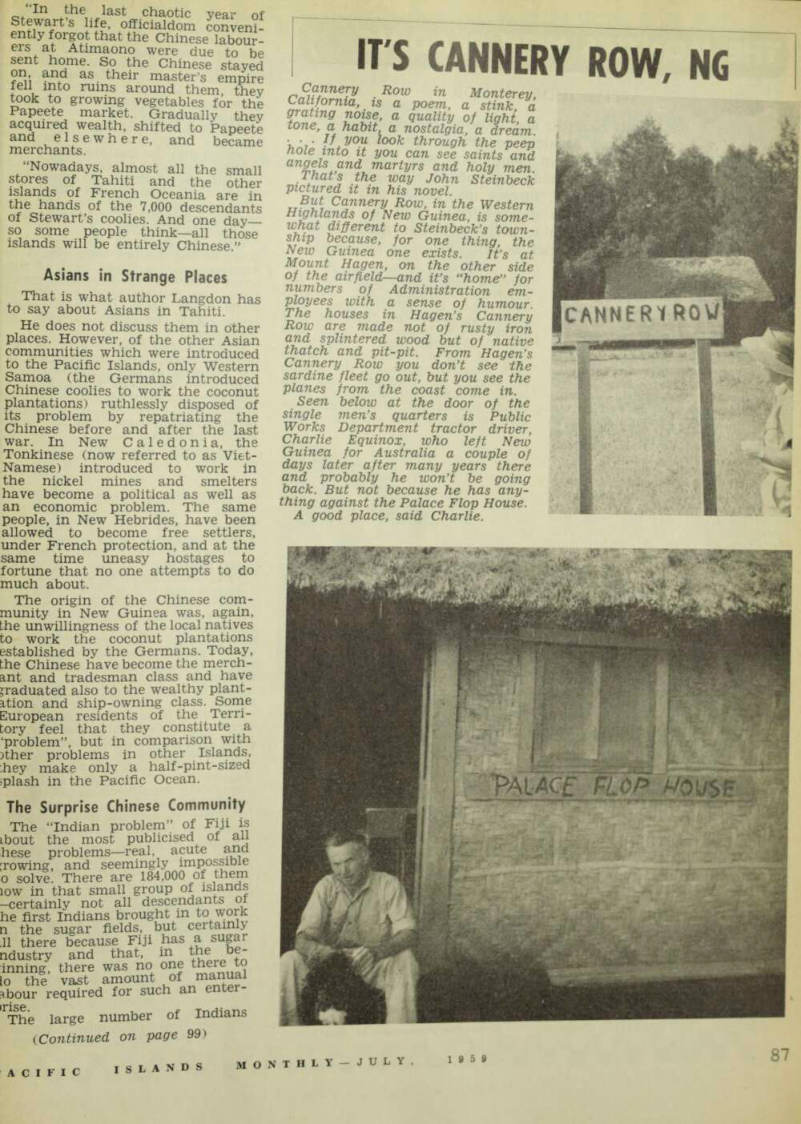 93
93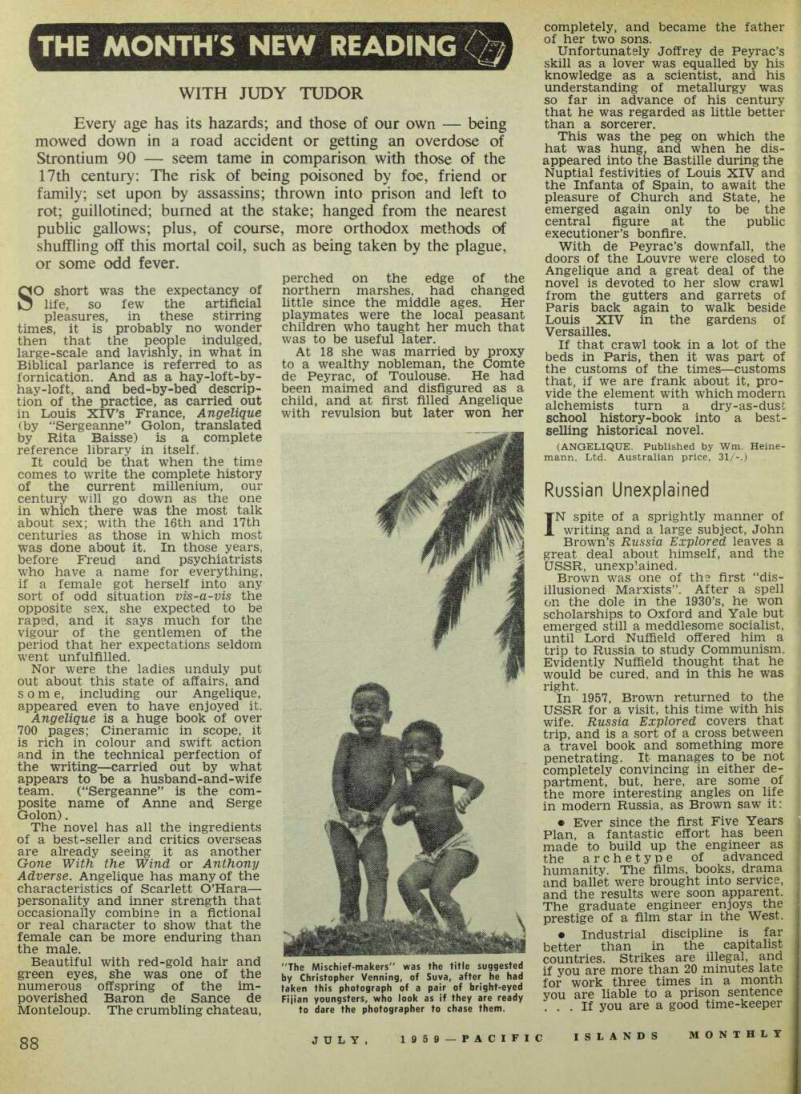 94
94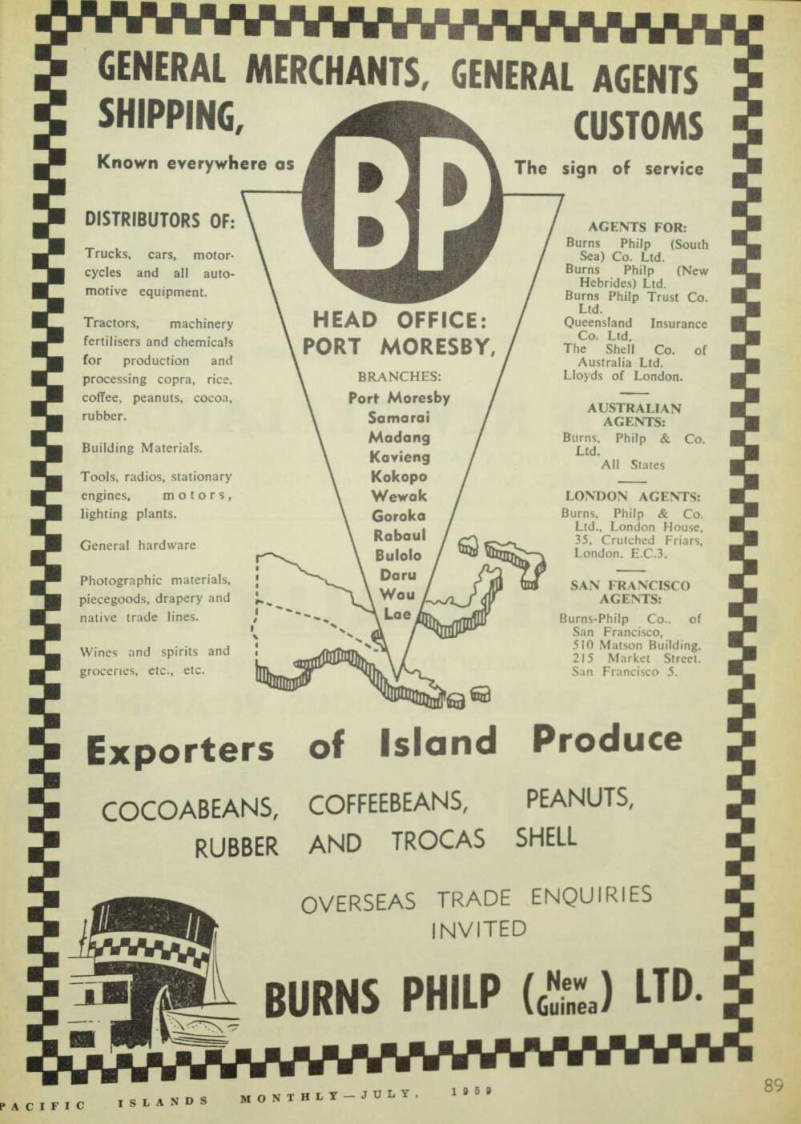 95
95 96
96 97
97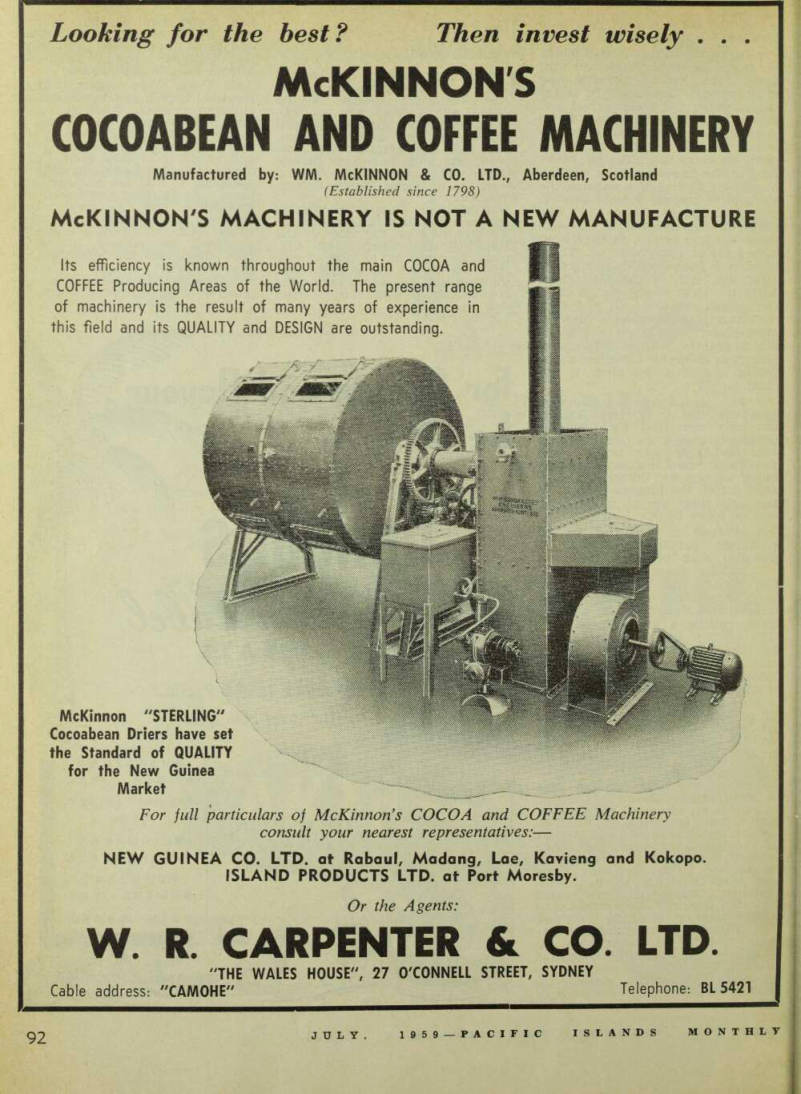 98
98 99
99 100
100 101
101 102
102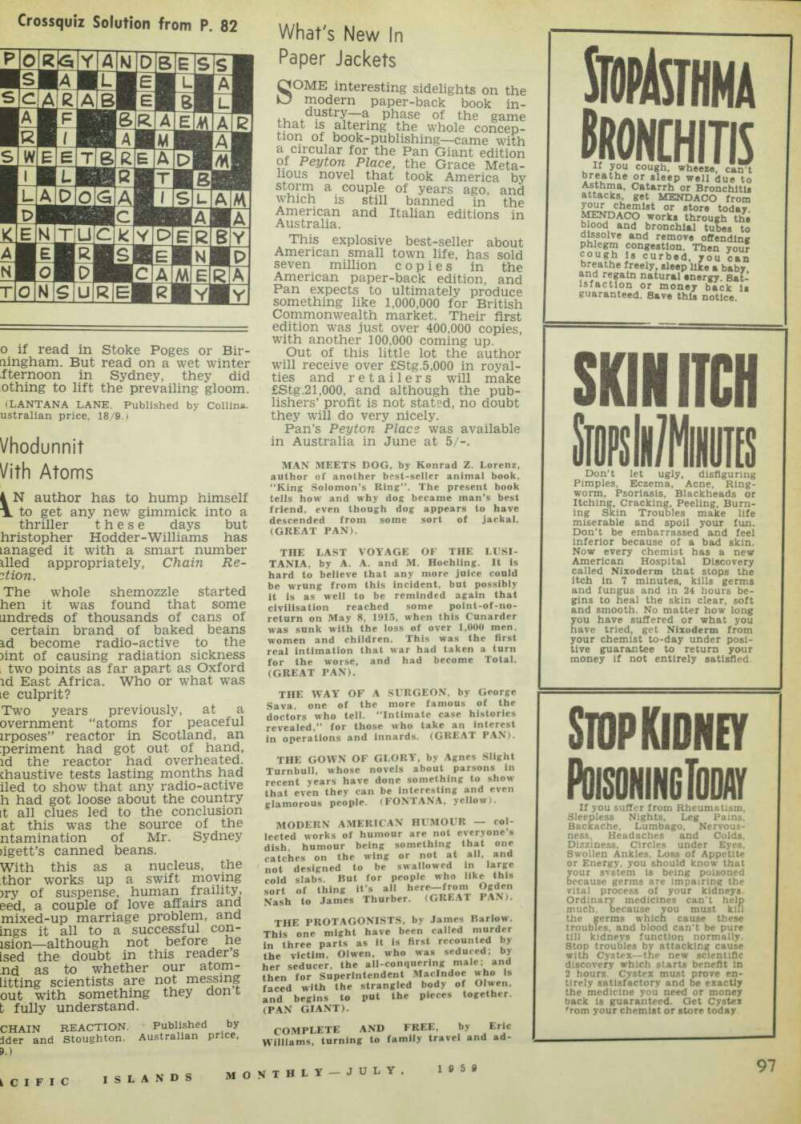 103
103 104
104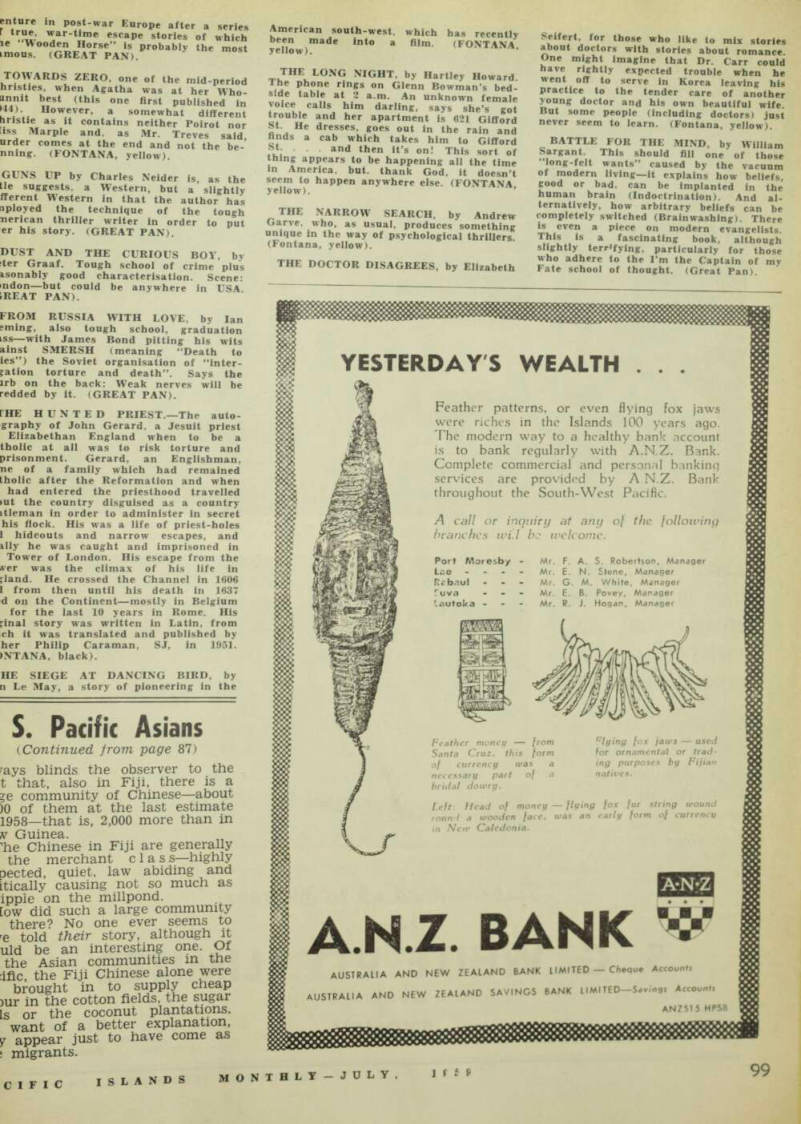 105
105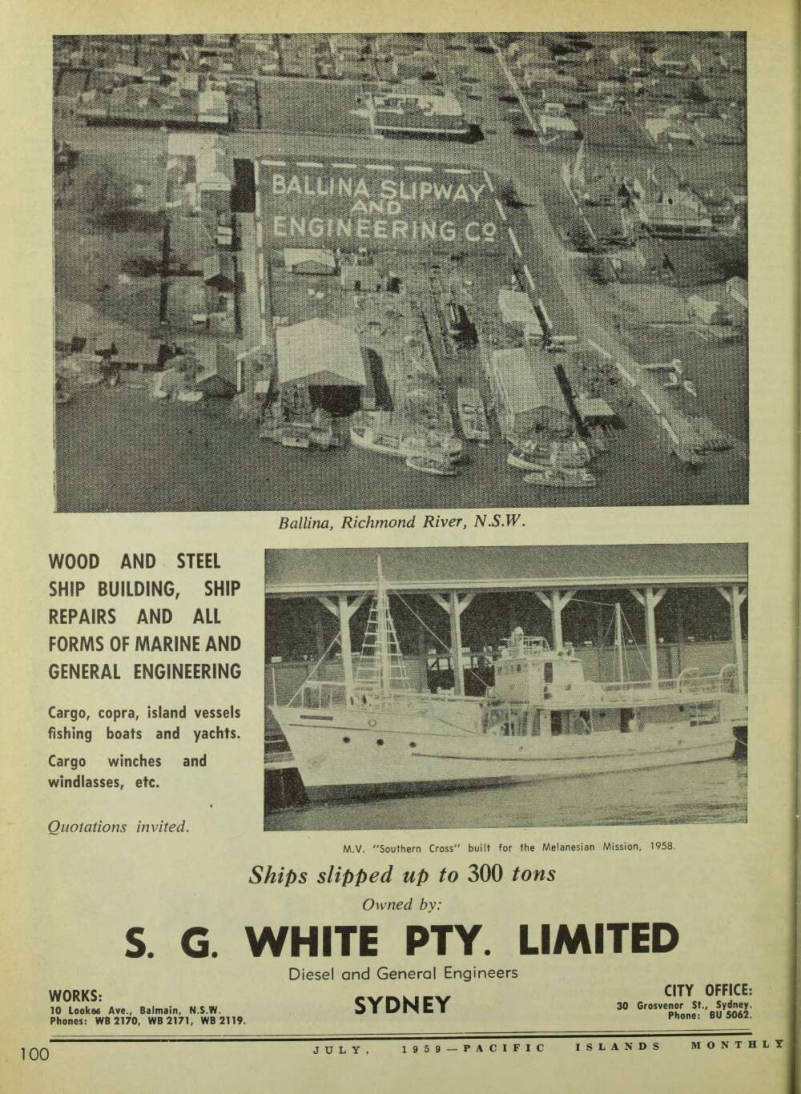 106
106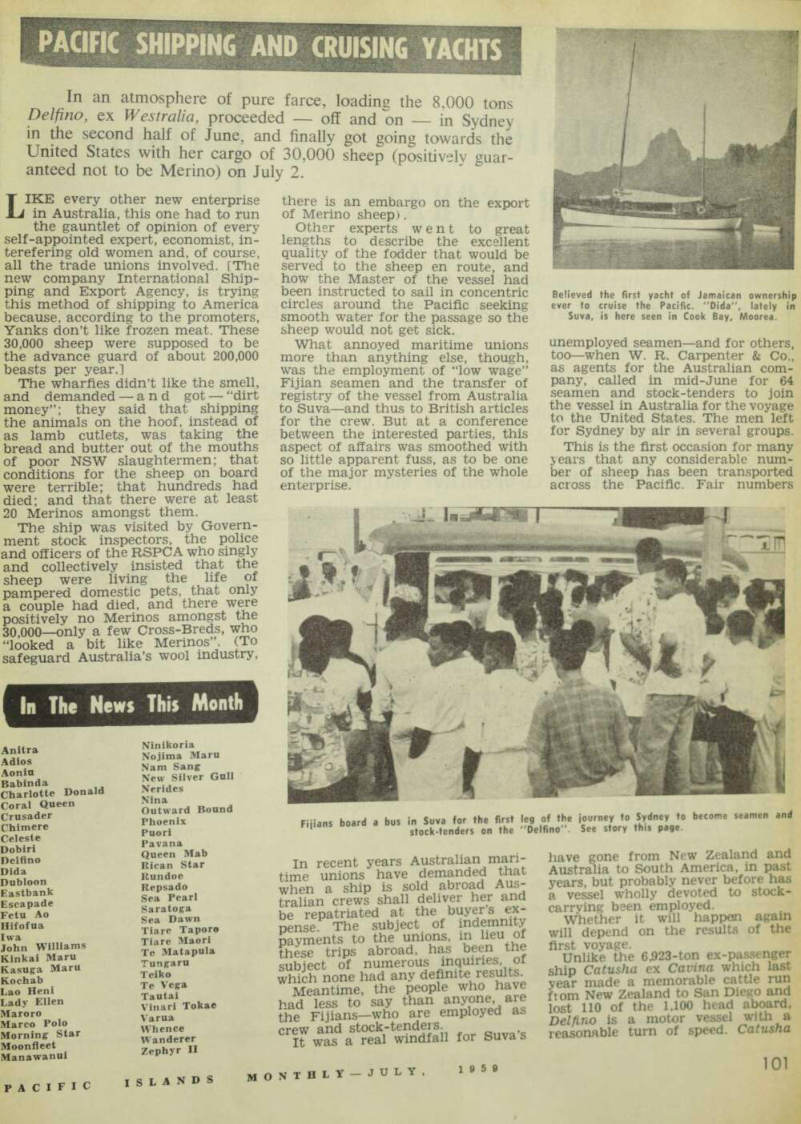 107
107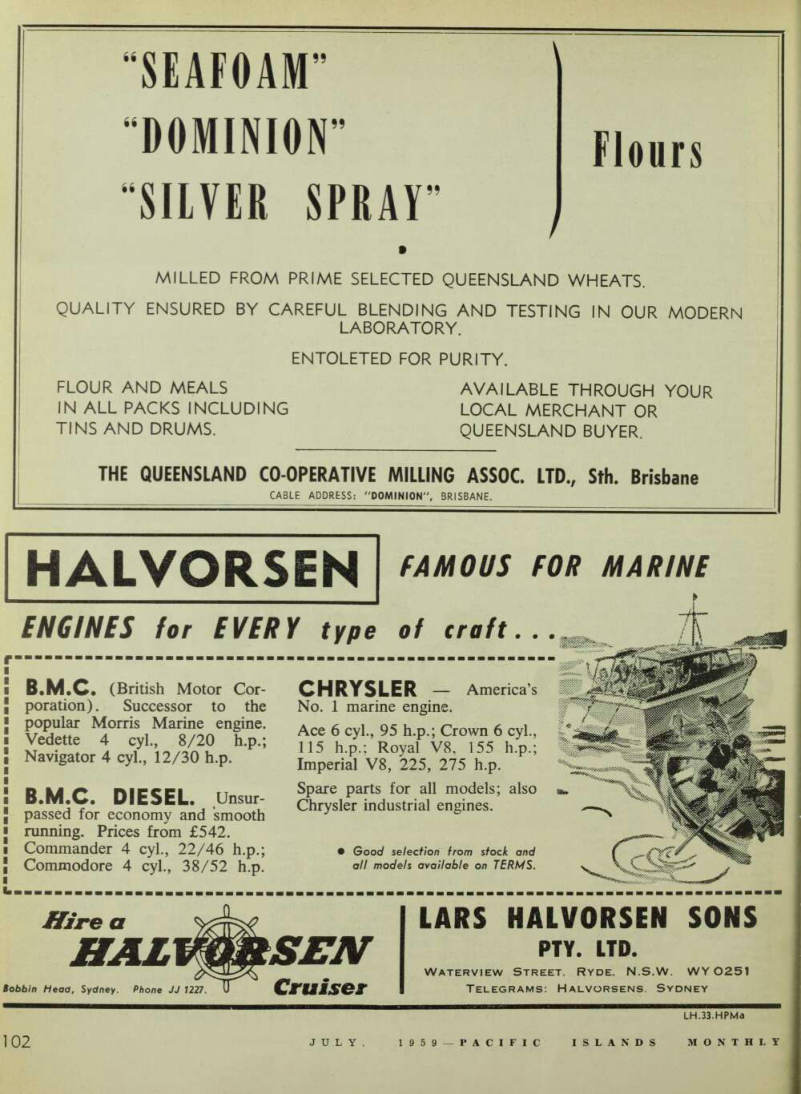 108
108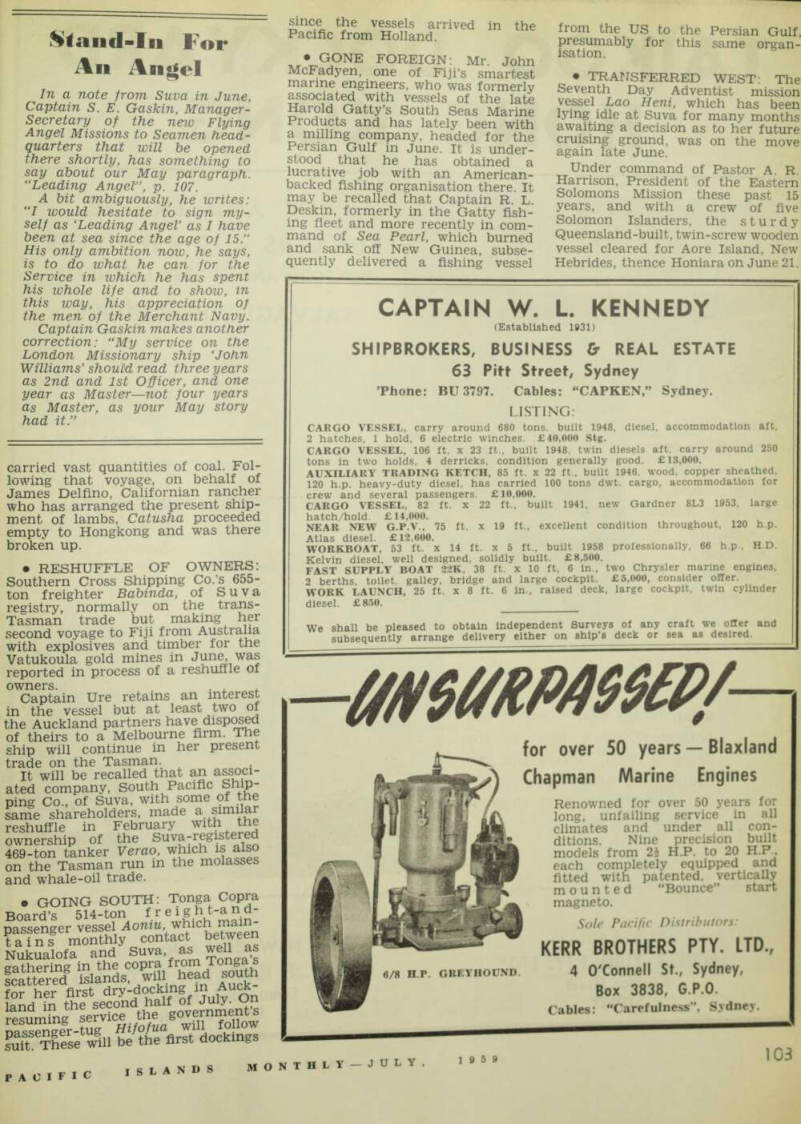 109
109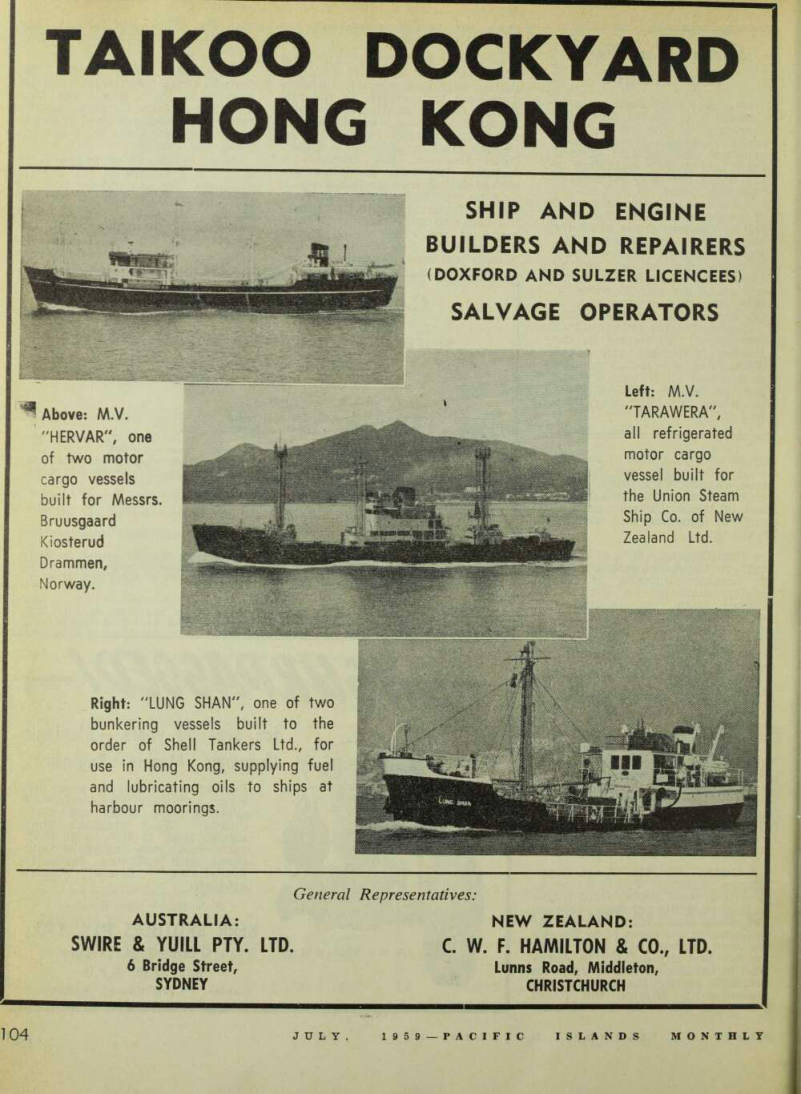 110
110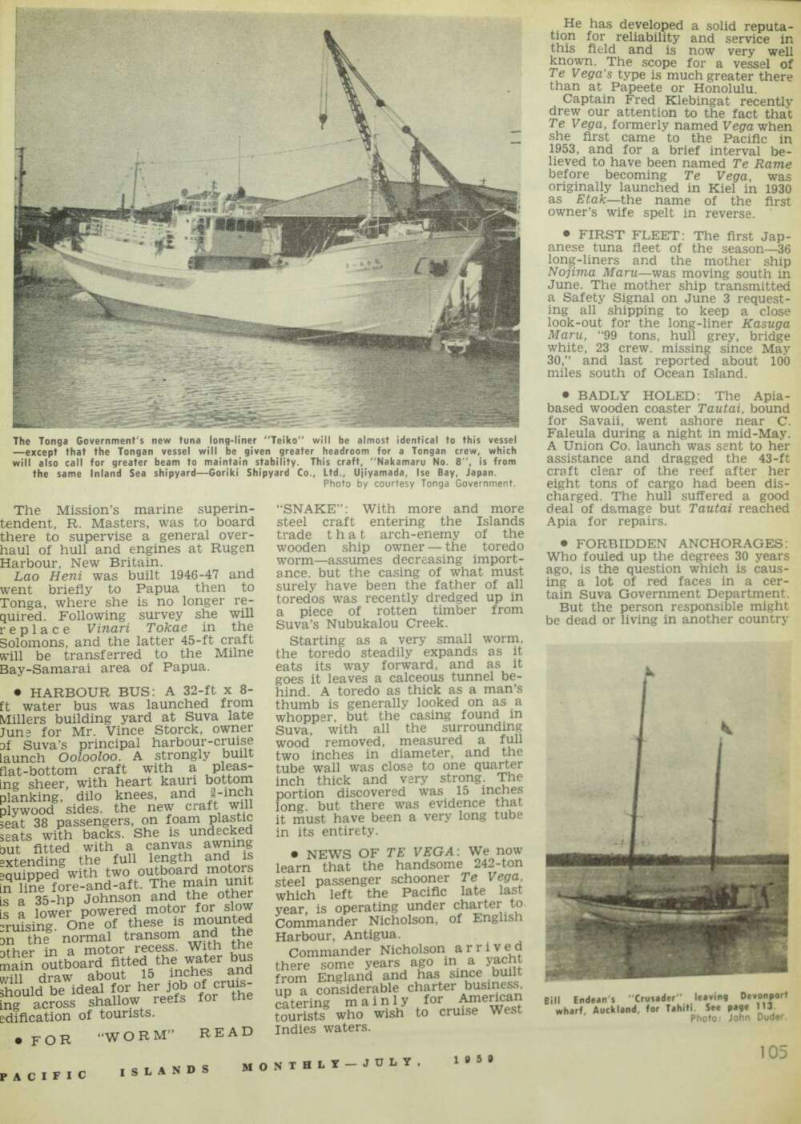 111
111 112
112 113
113 114
114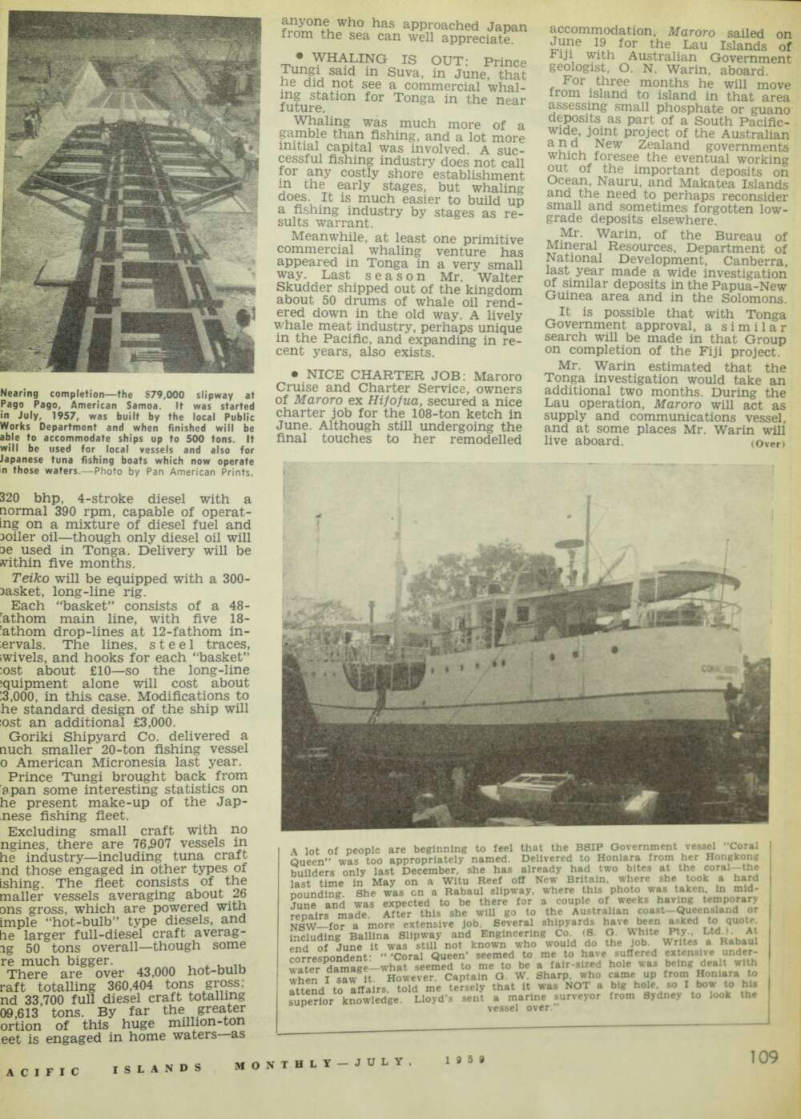 115
115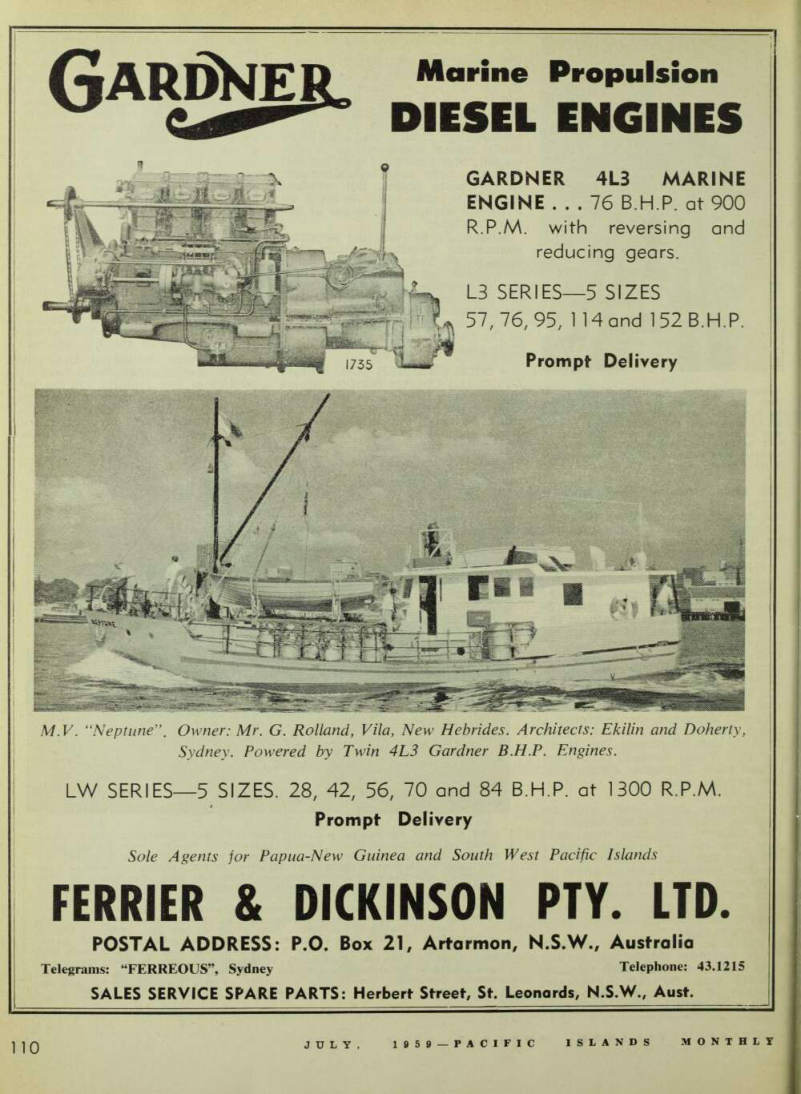 116
116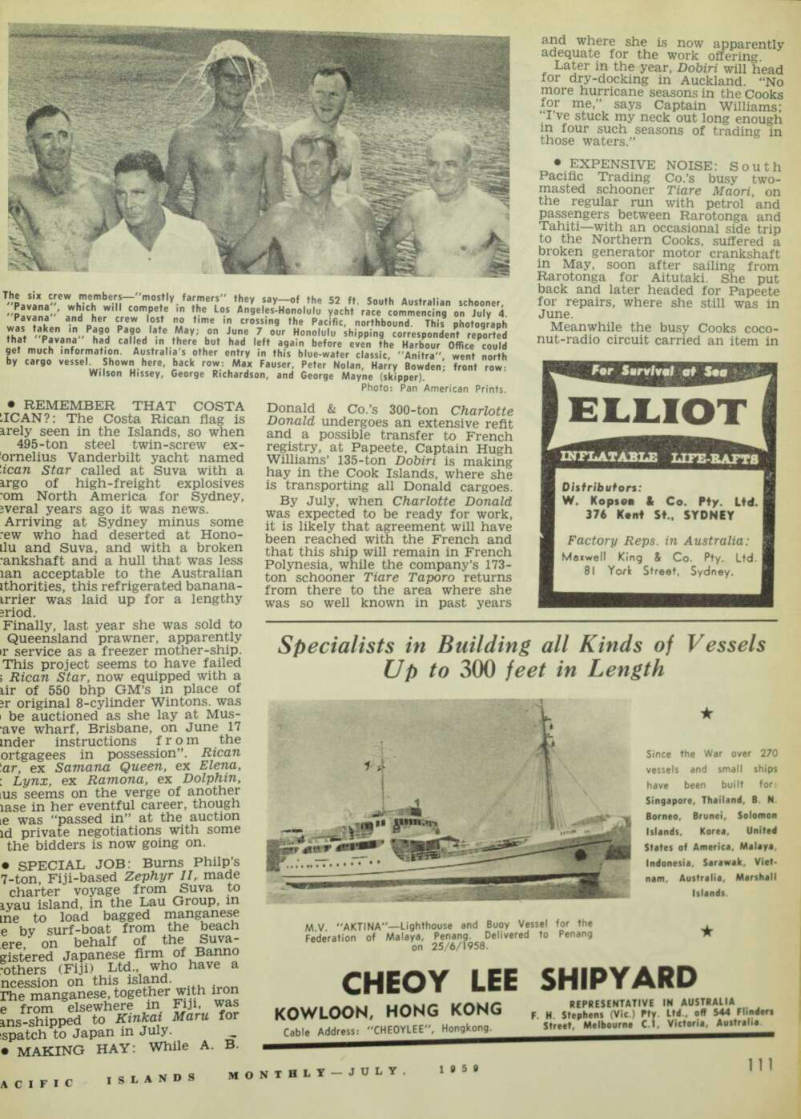 117
117 118
118 119
119 120
120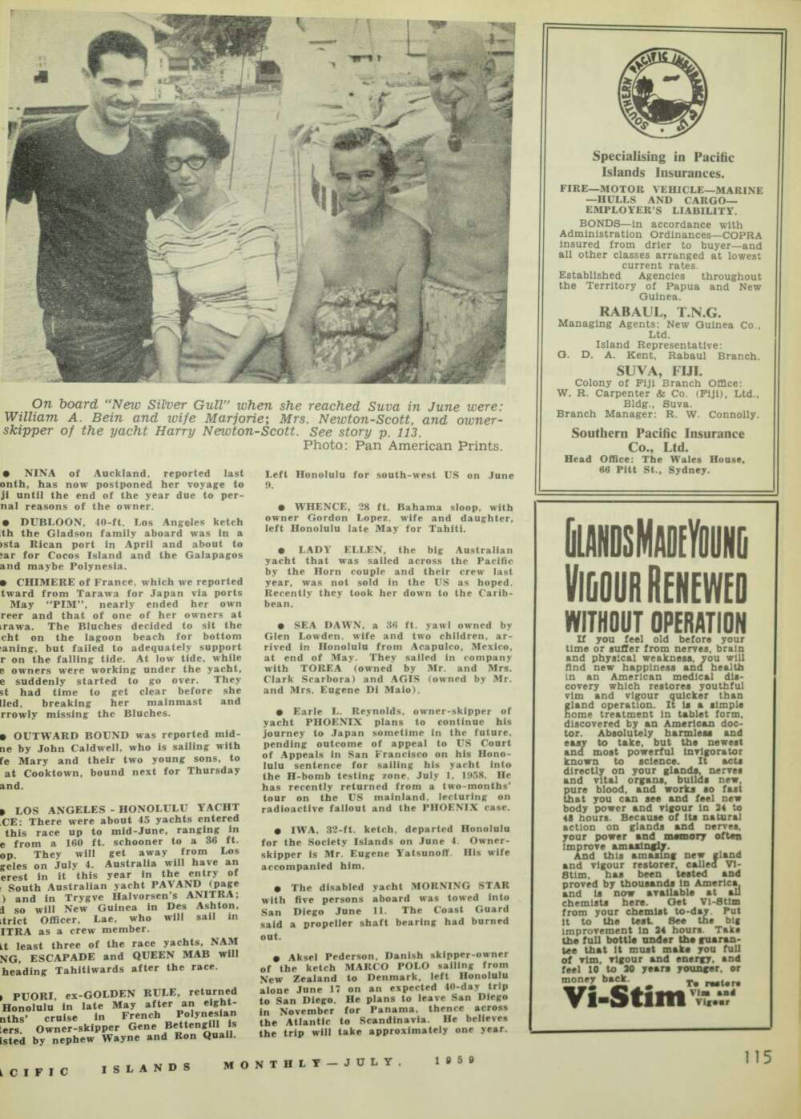 121
121 122
122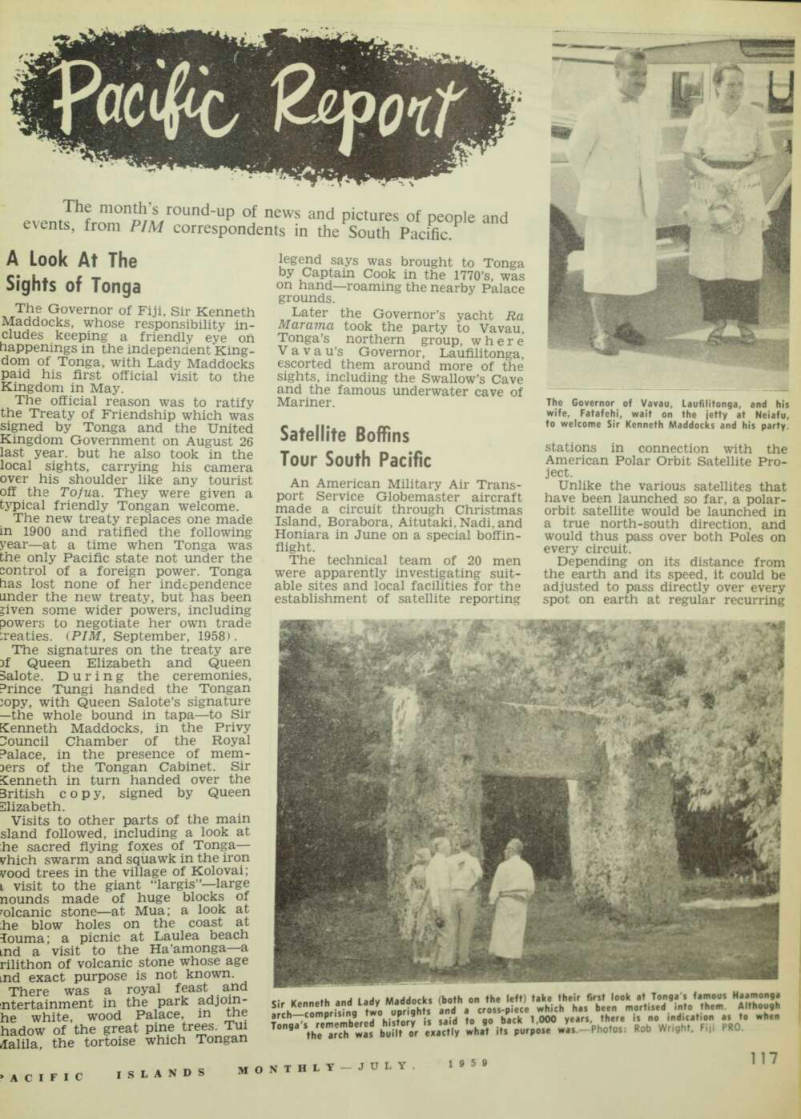 123
123 124
124 125
125 126
126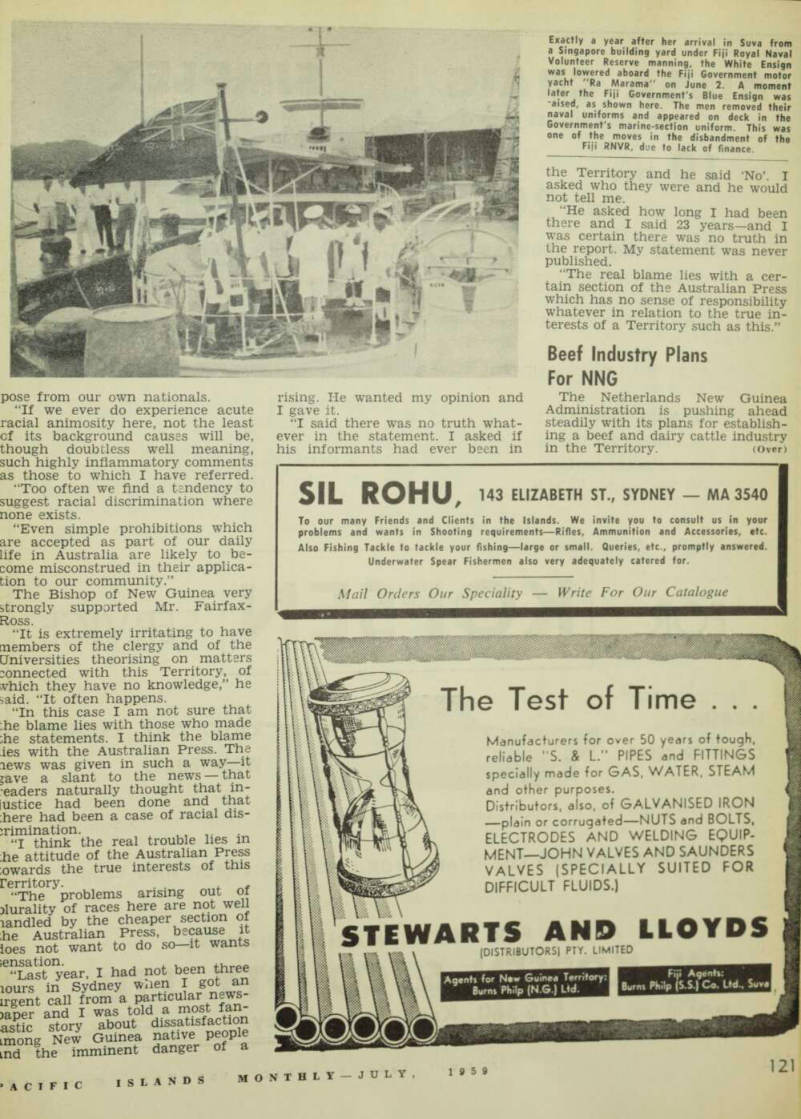 127
127 128
128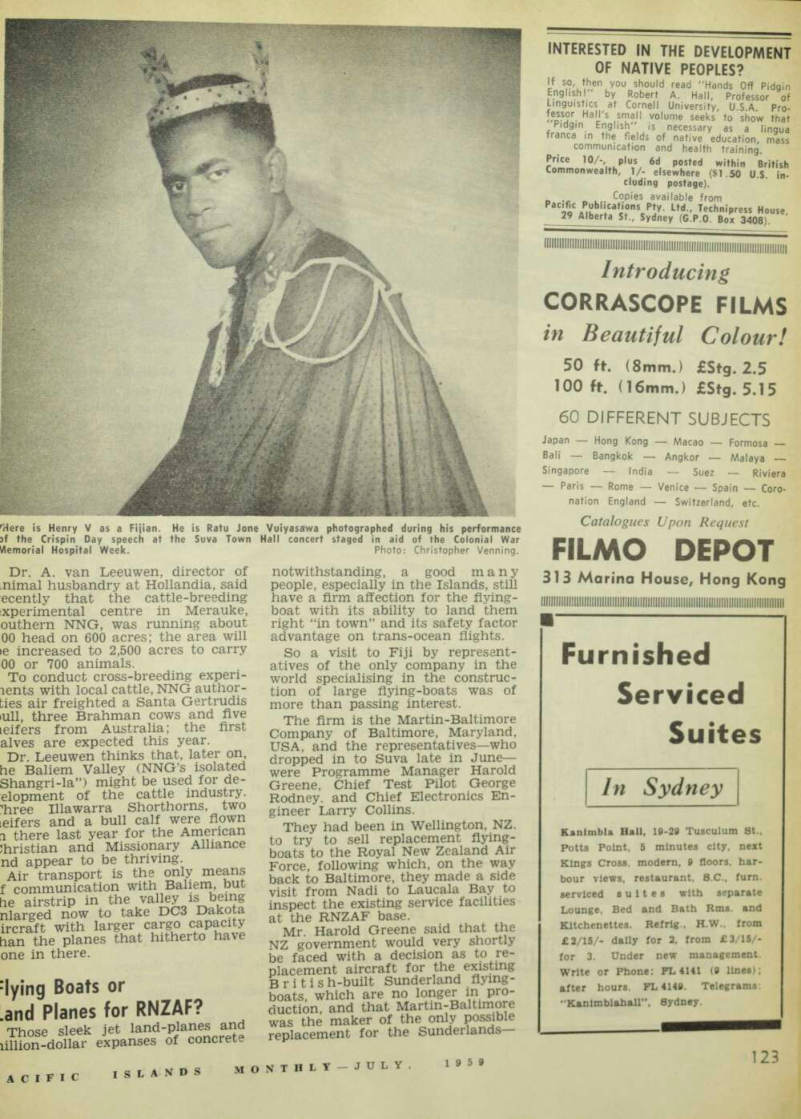 129
129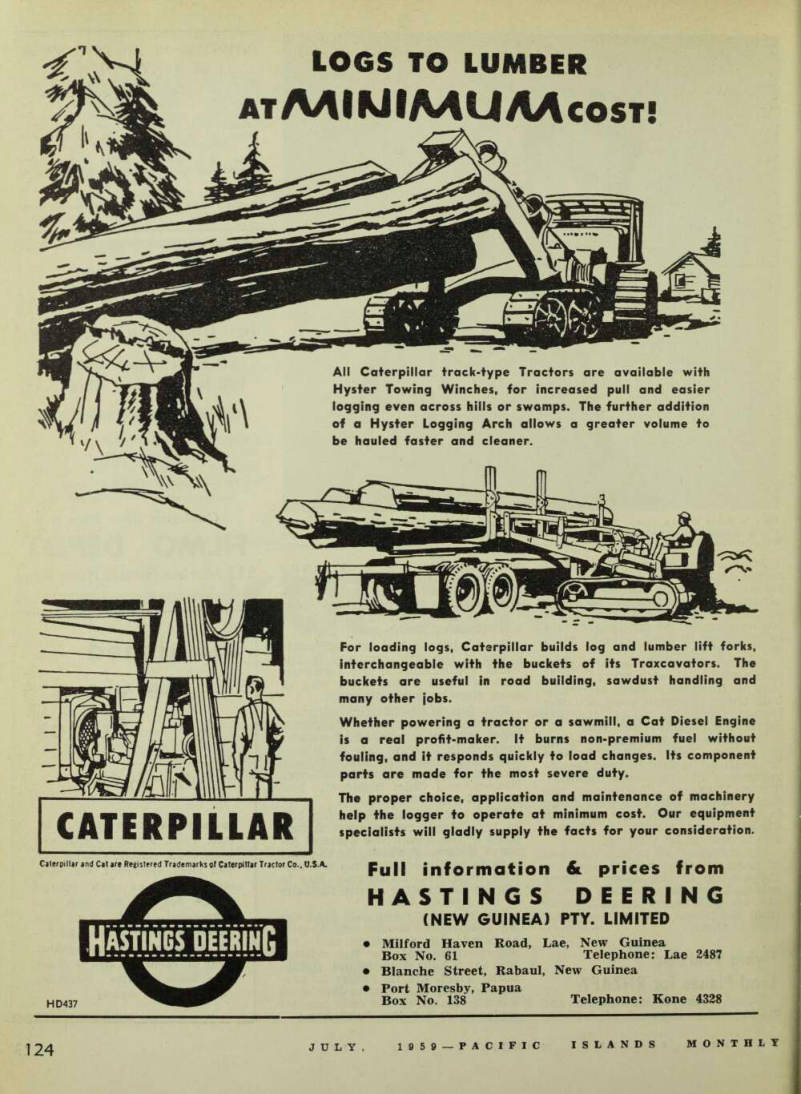 130
130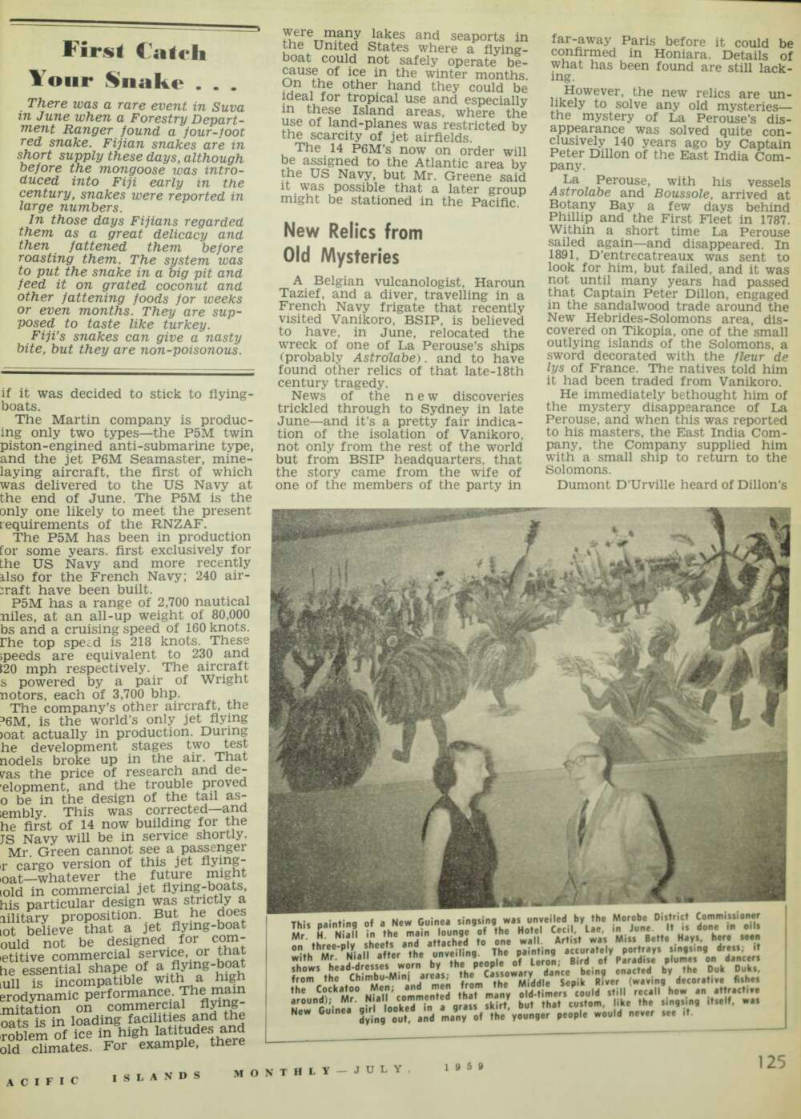 131
131 132
132 133
133 134
134 135
135 136
136 137
137 138
138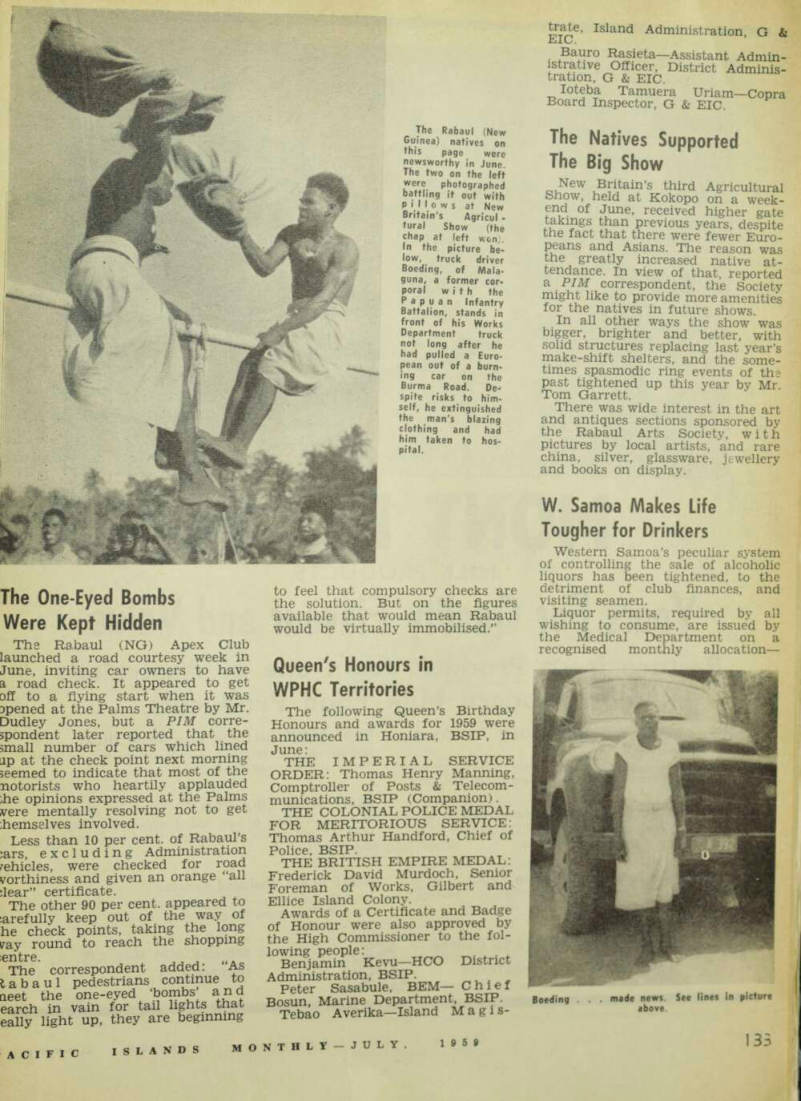 139
139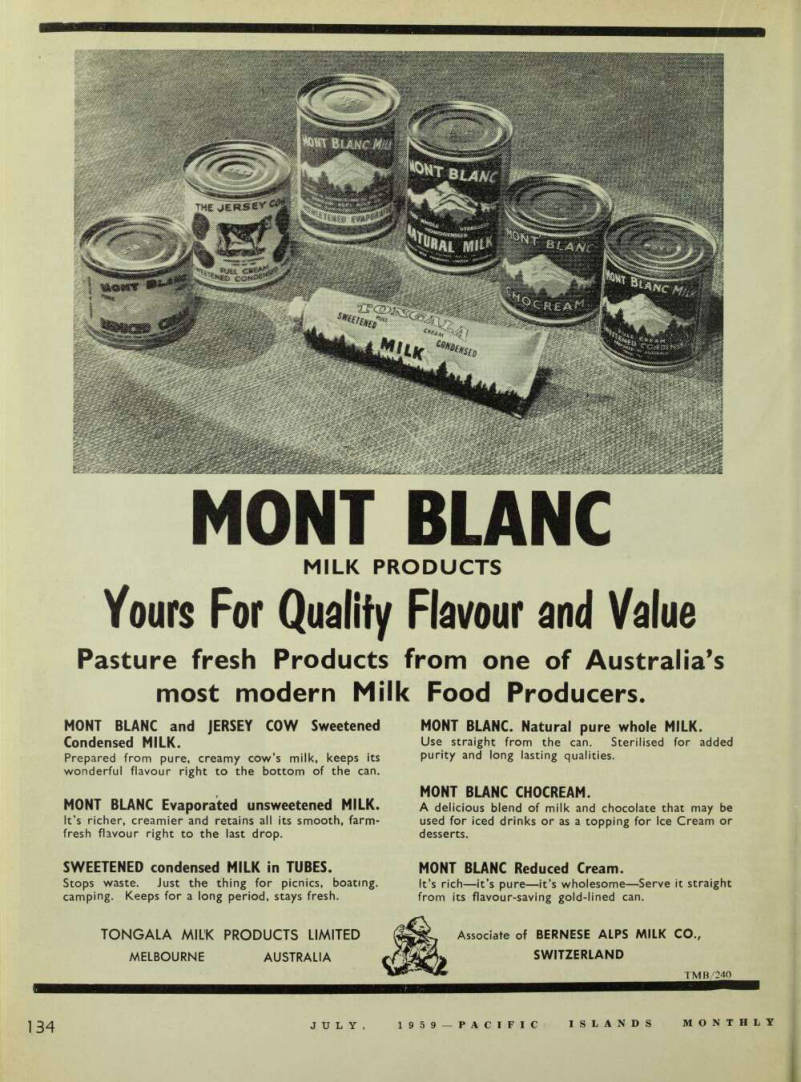 140
140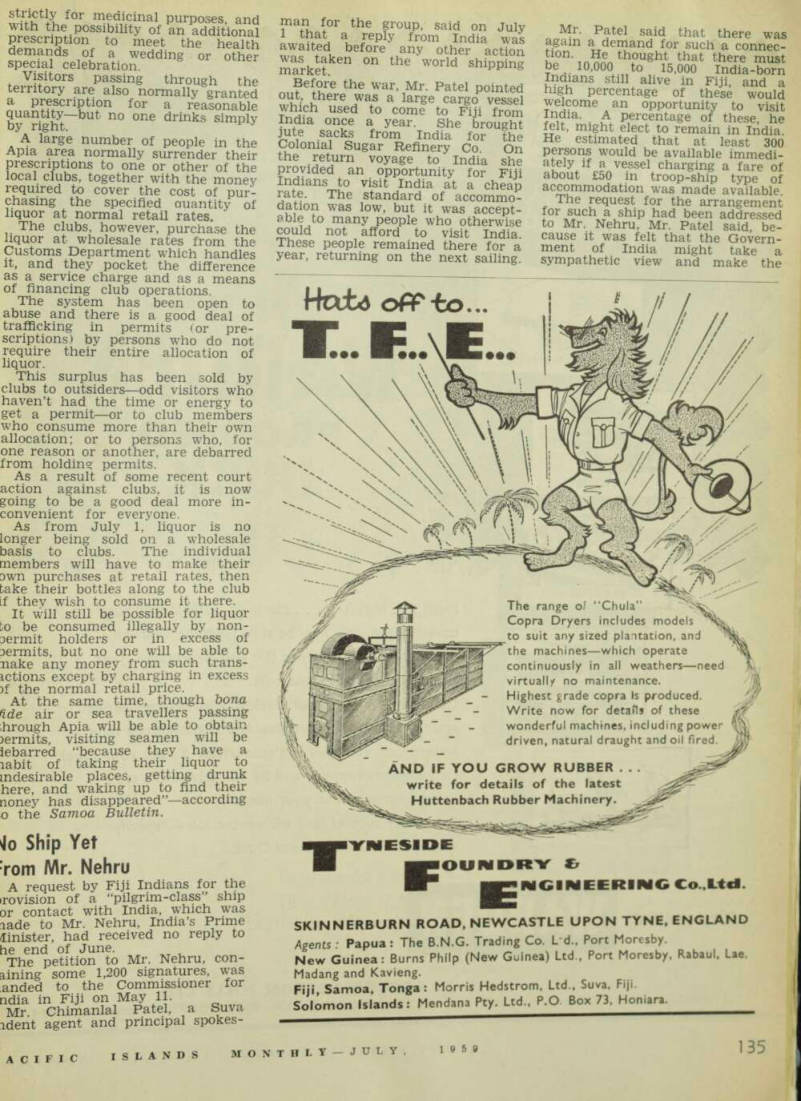 141
141 142
142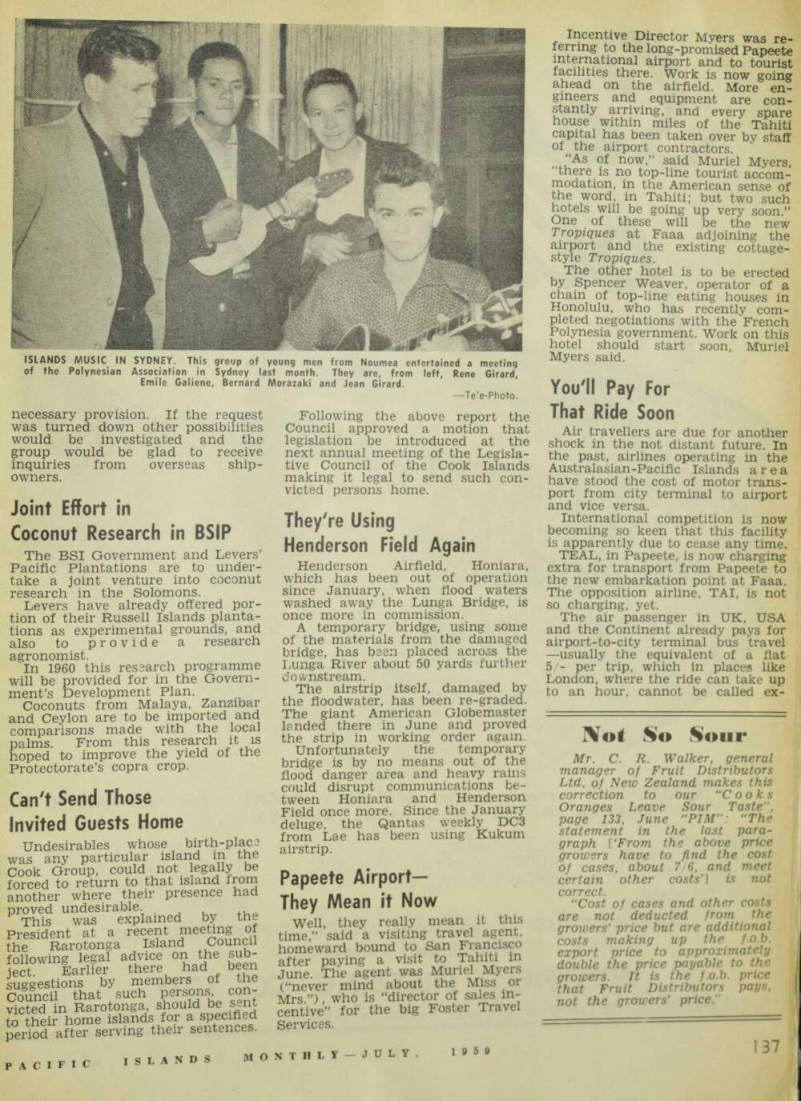 143
143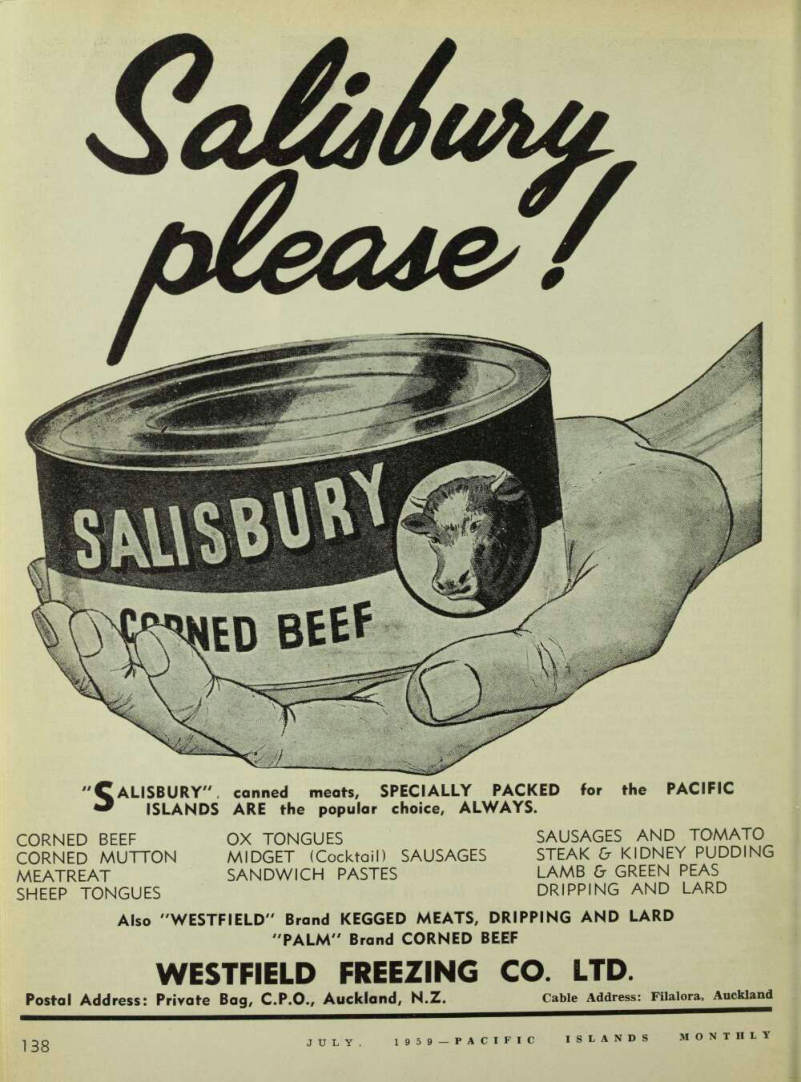 144
144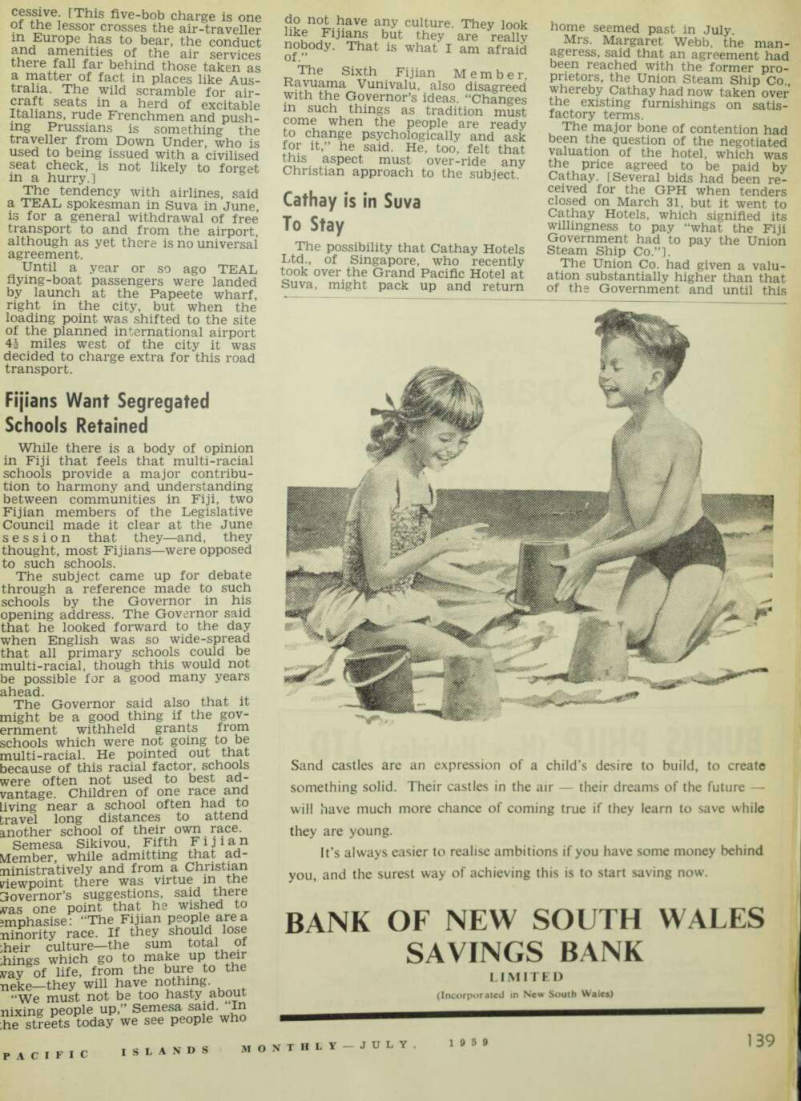 145
145 146
146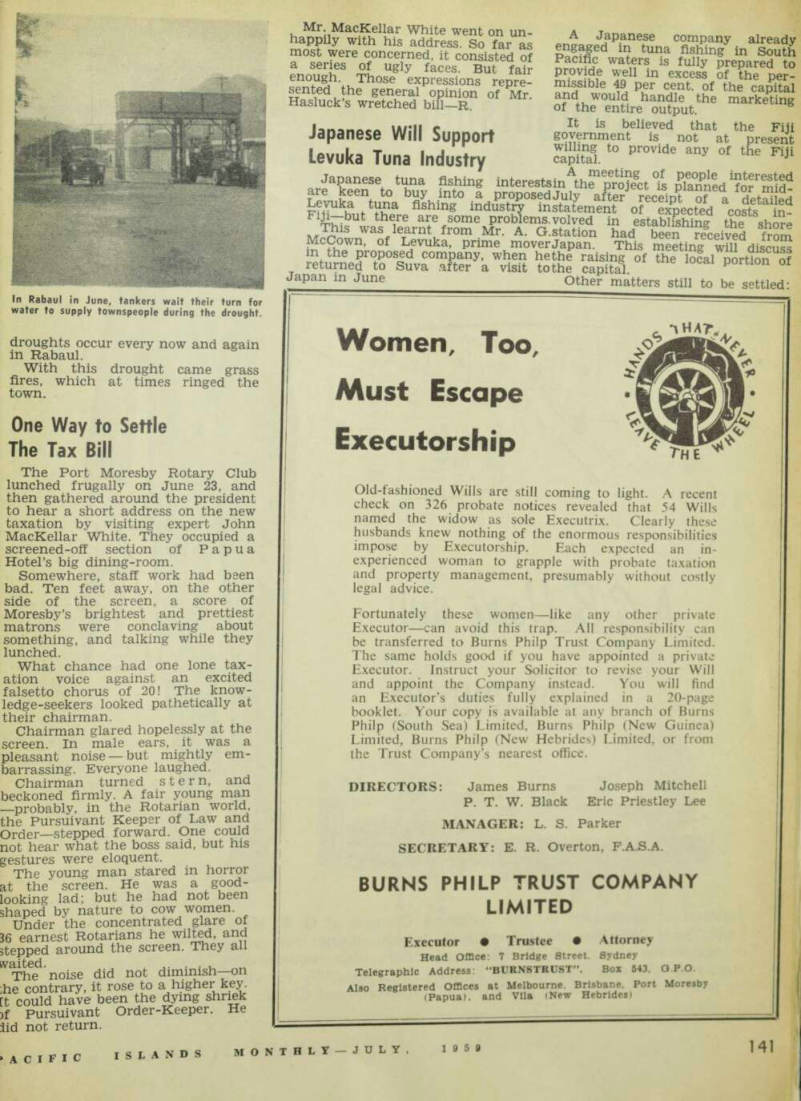 147
147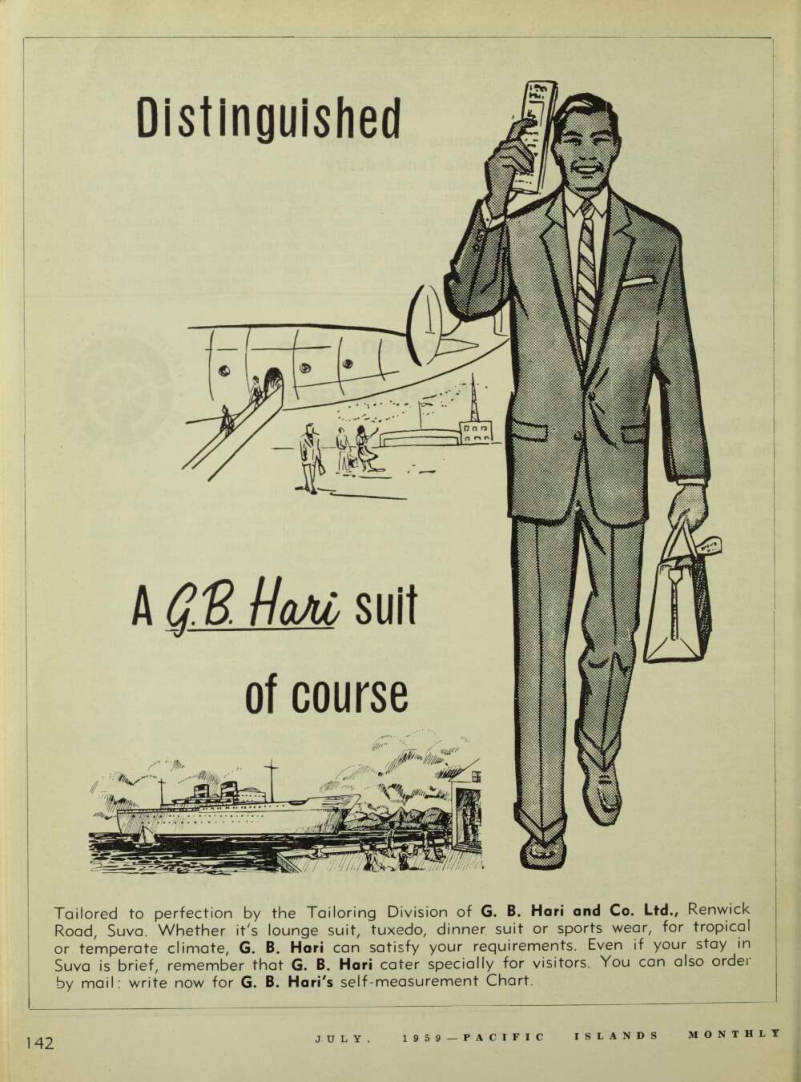 148
148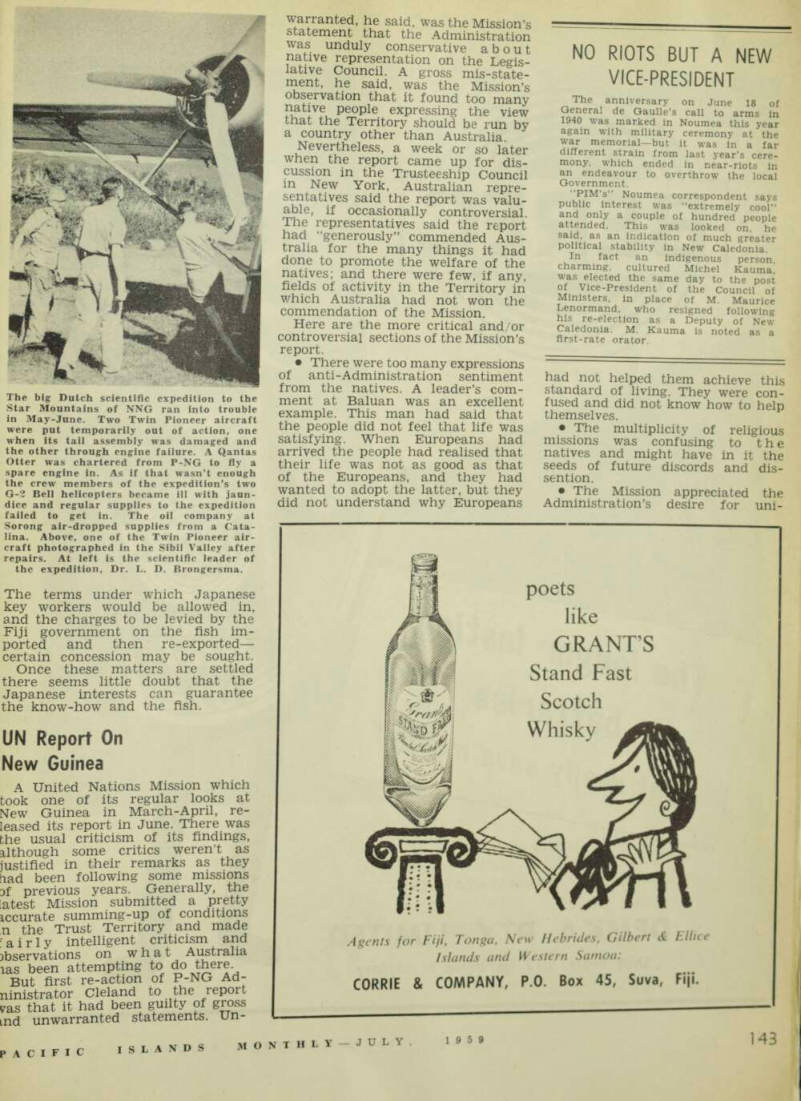 149
149 150
150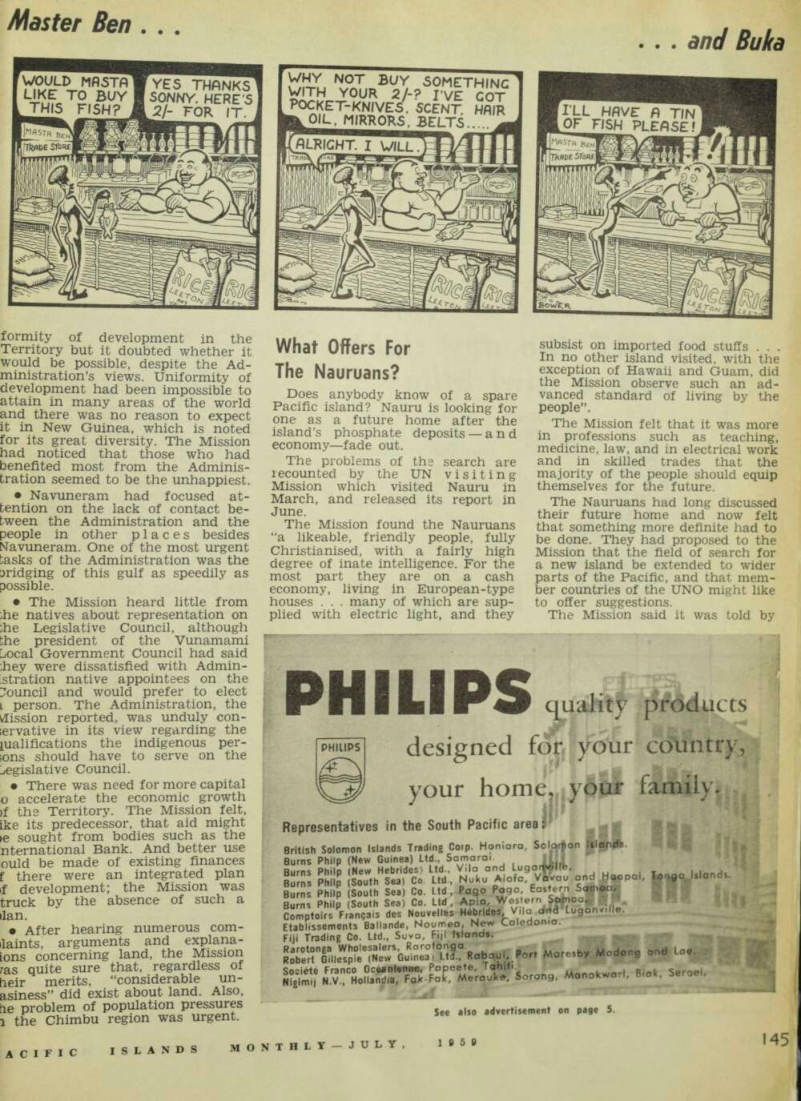 151
151 152
152 153
153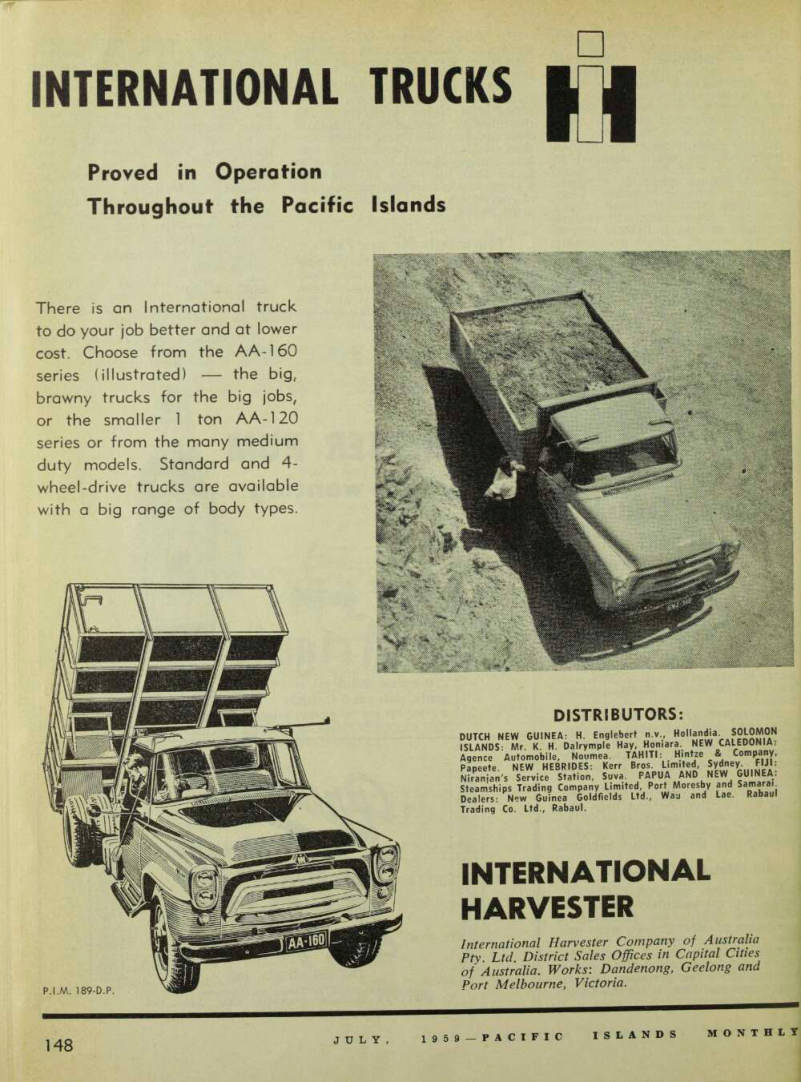 154
154 155
155 156
156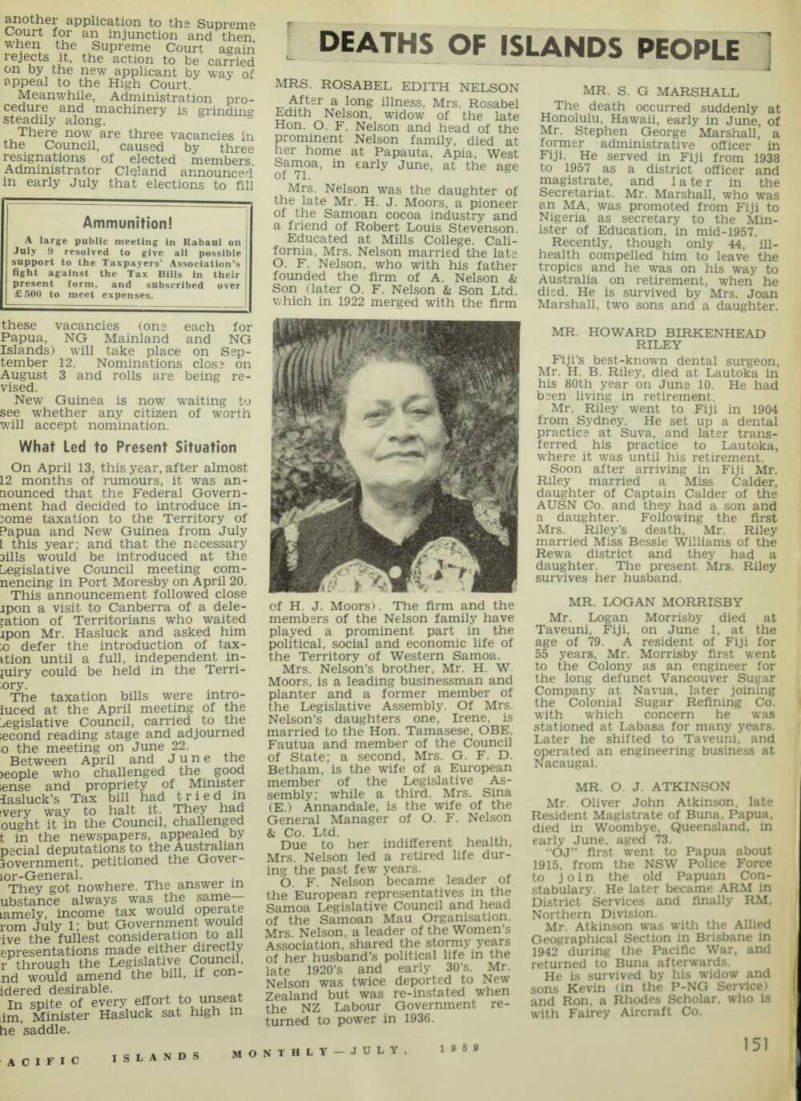 157
157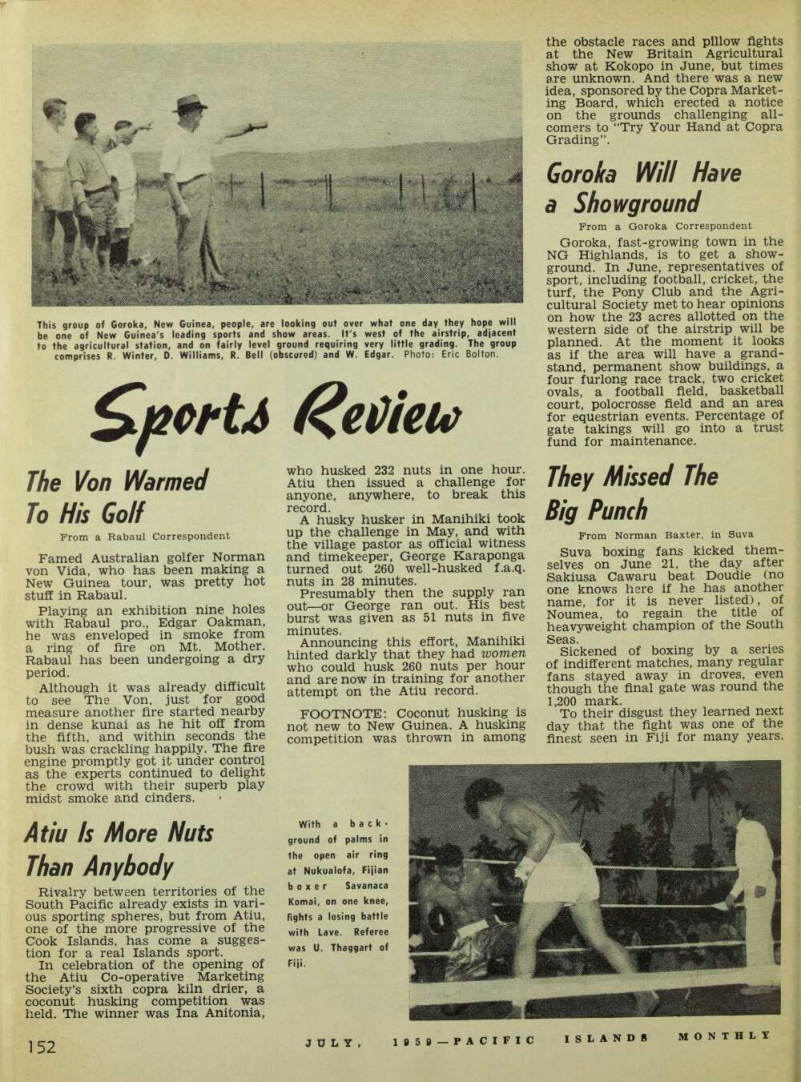 158
158 159
159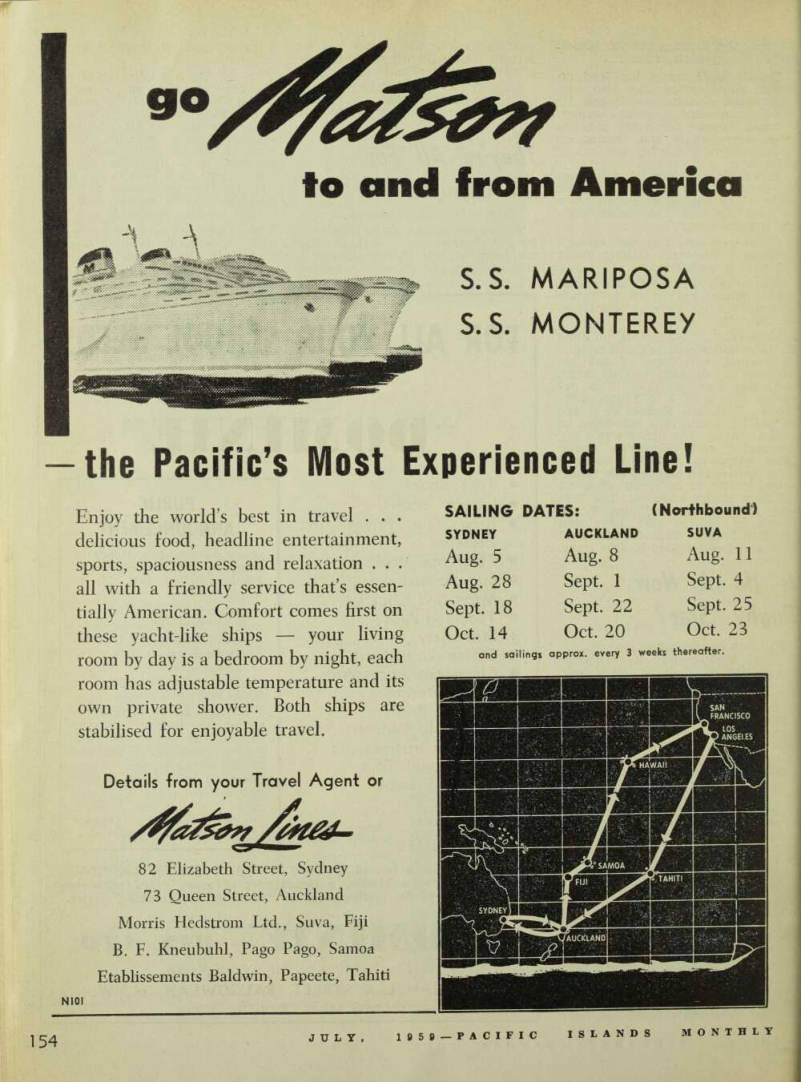 160
160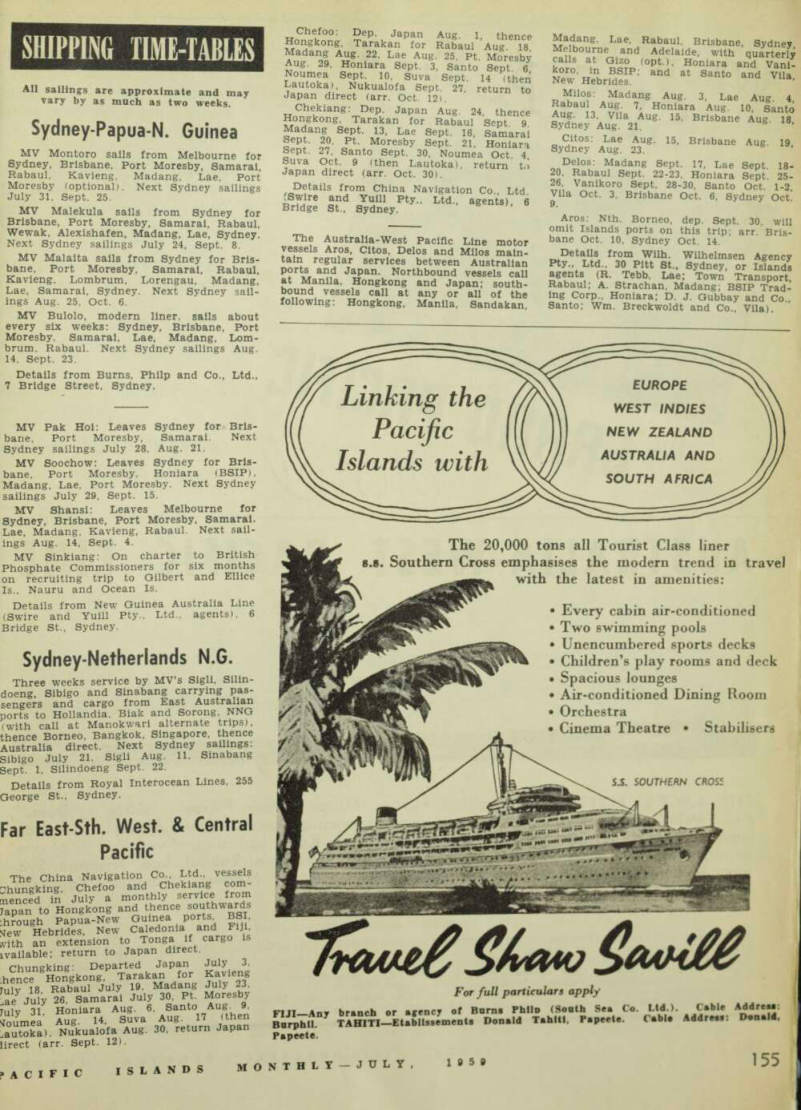 161
161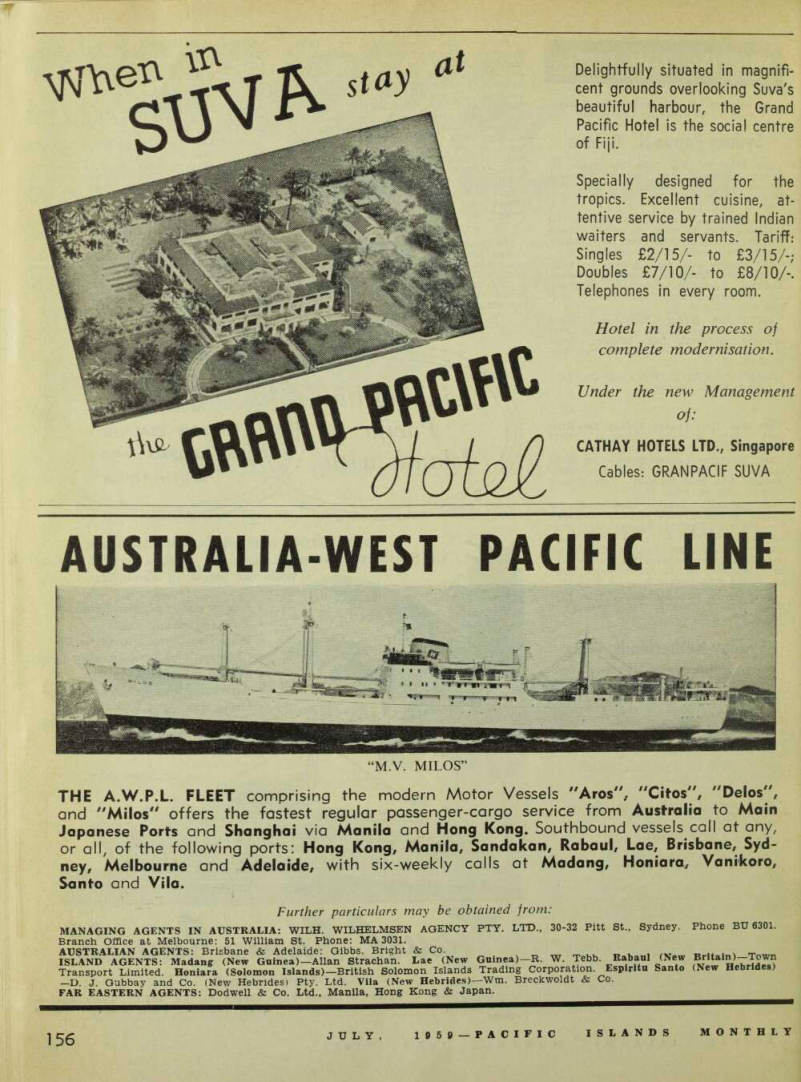 162
162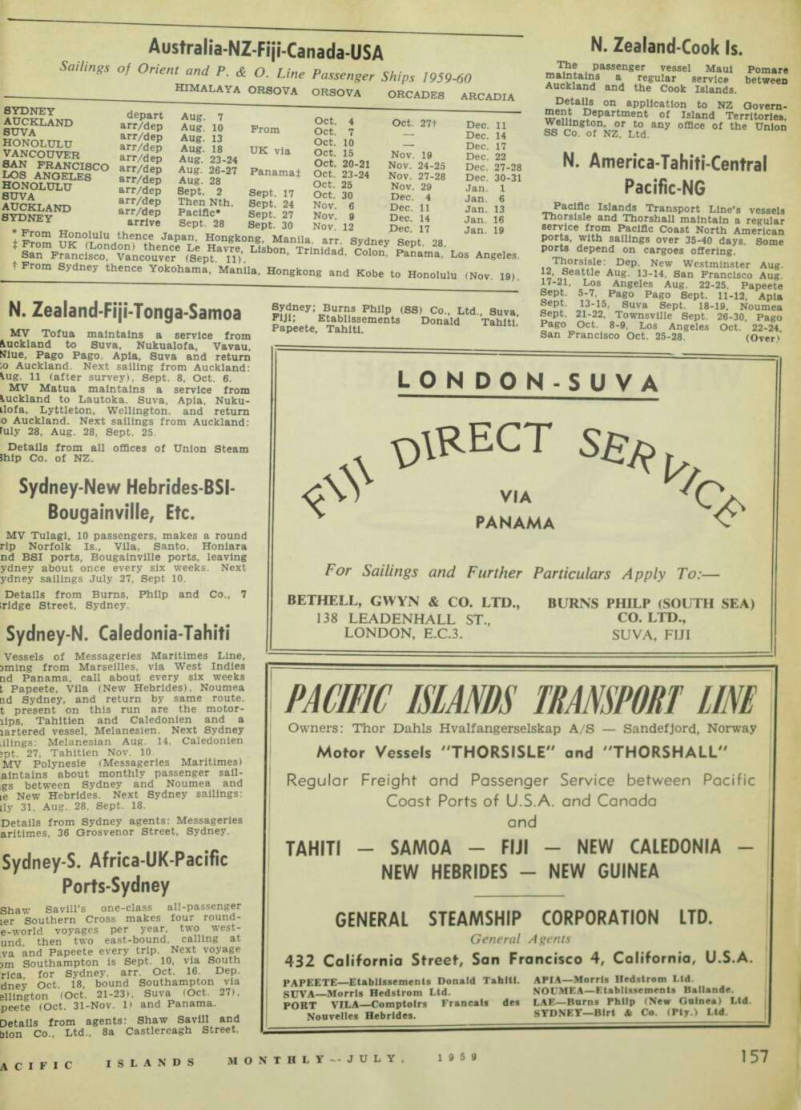 163
163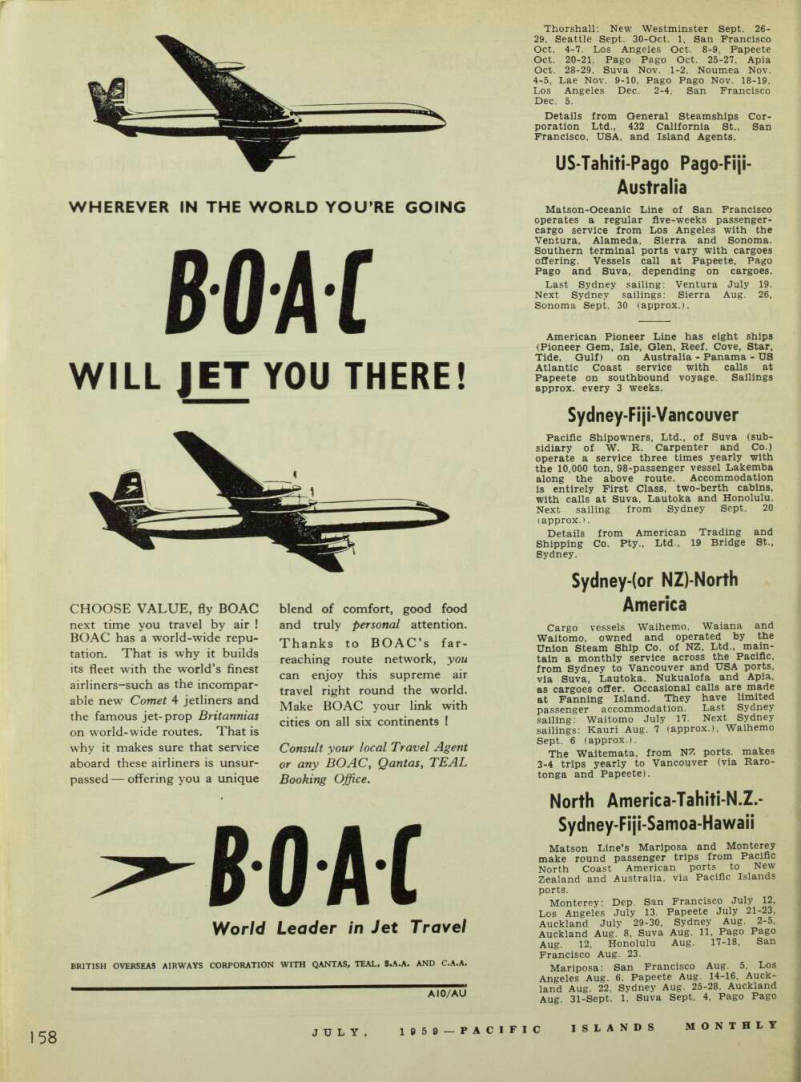 164
164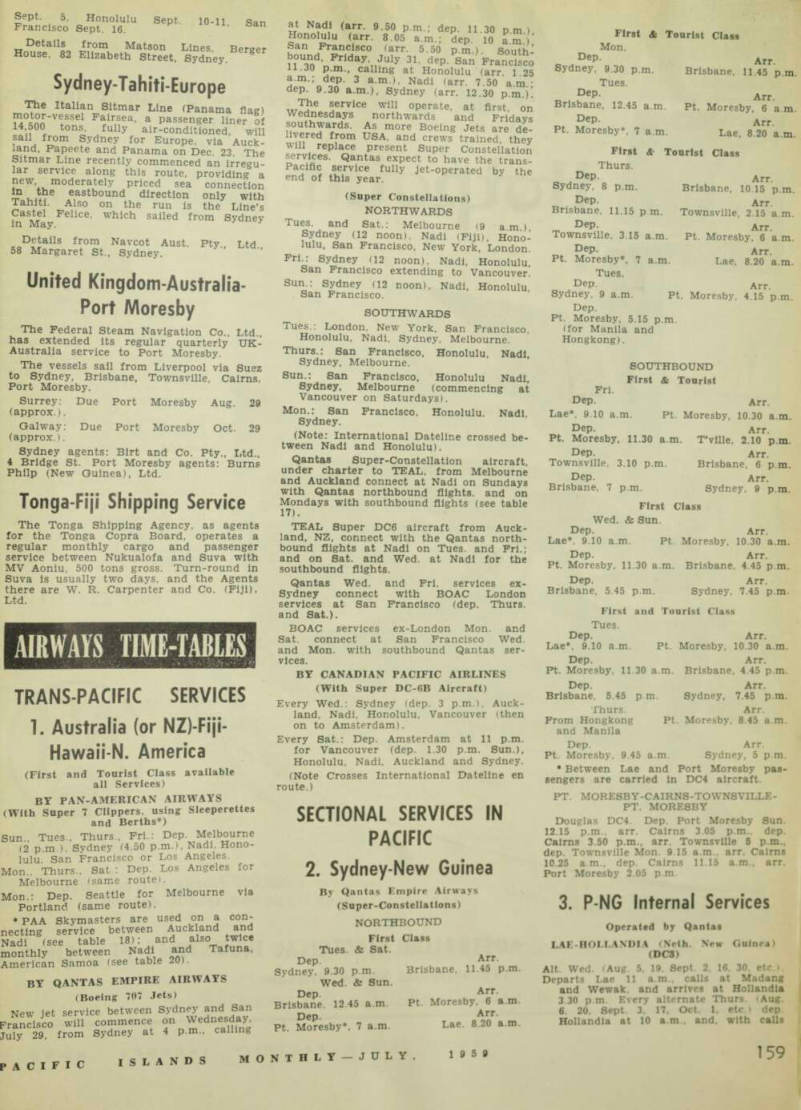 165
165 166
166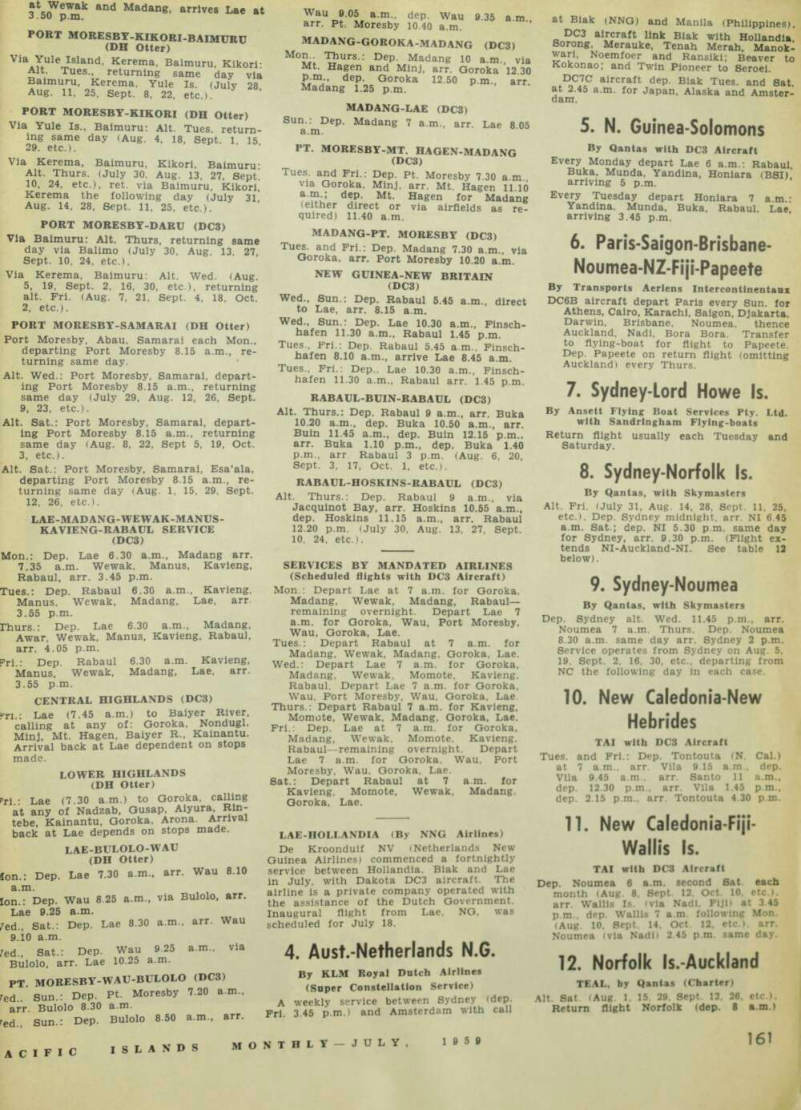 167
167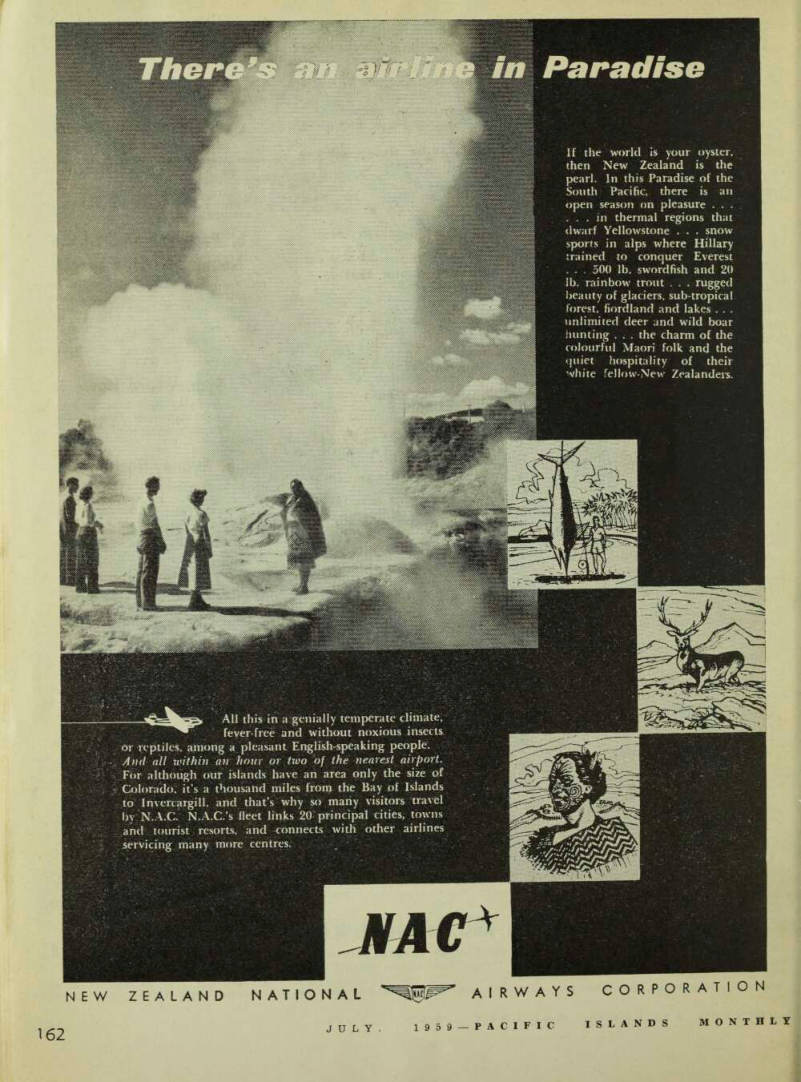 168
168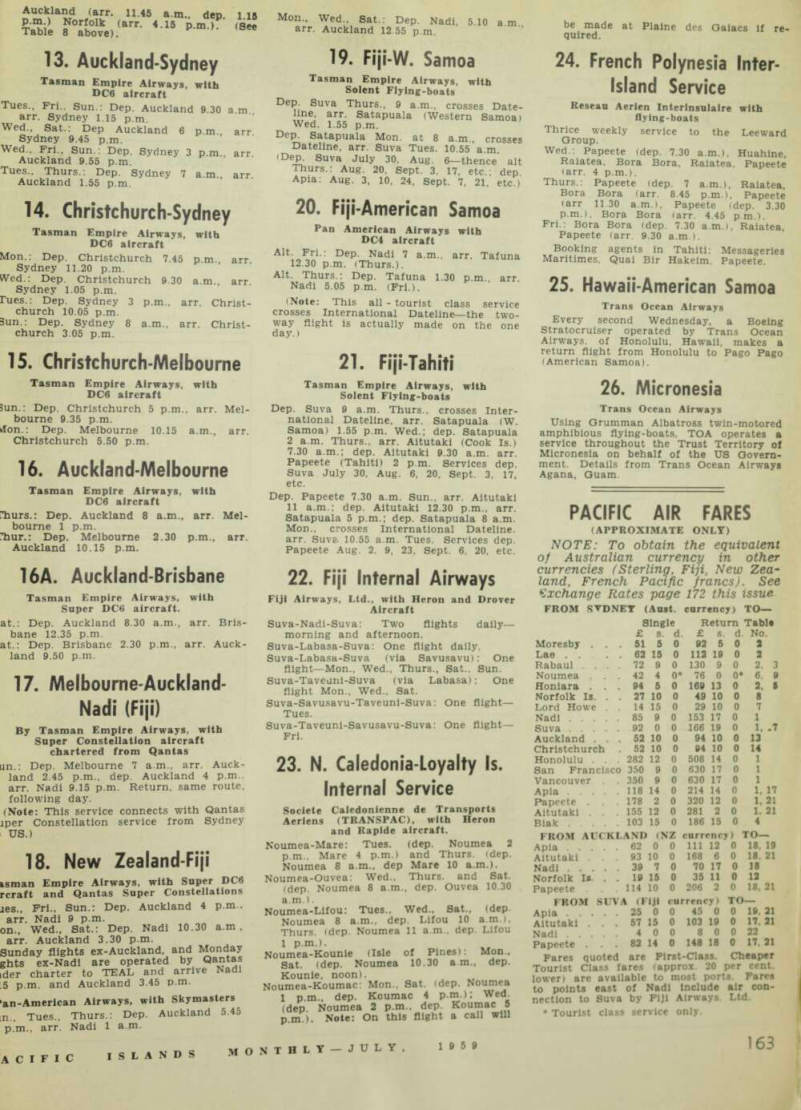 169
169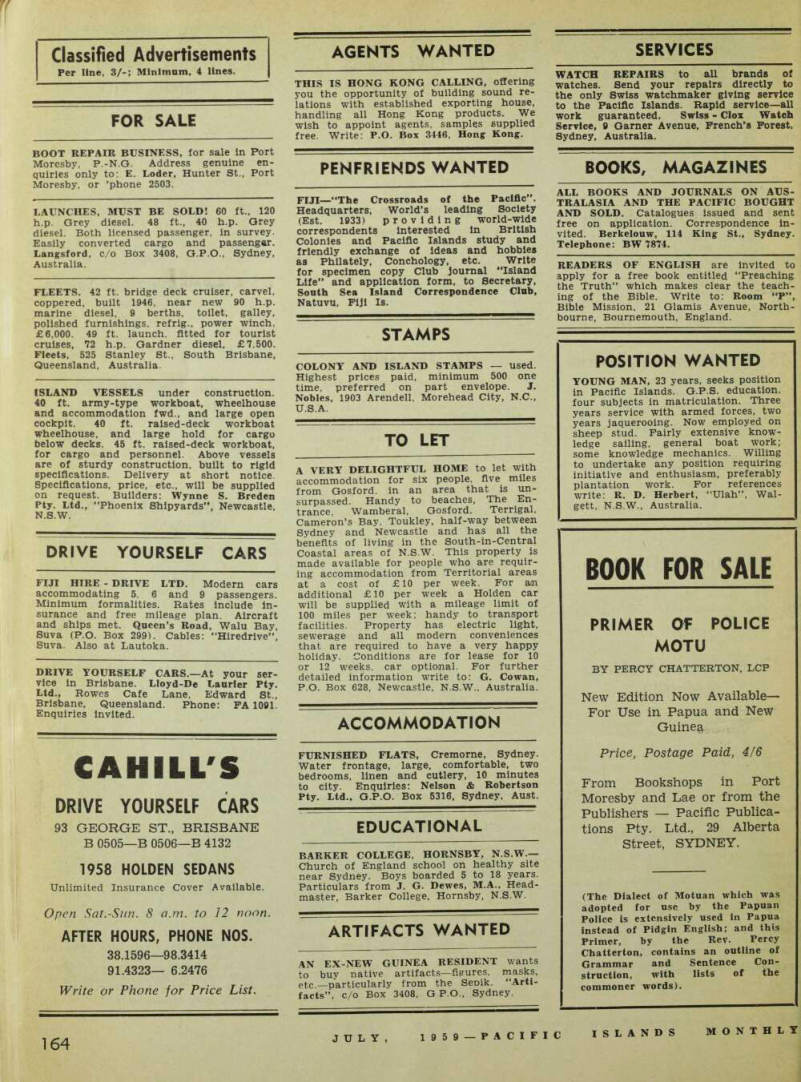 170
170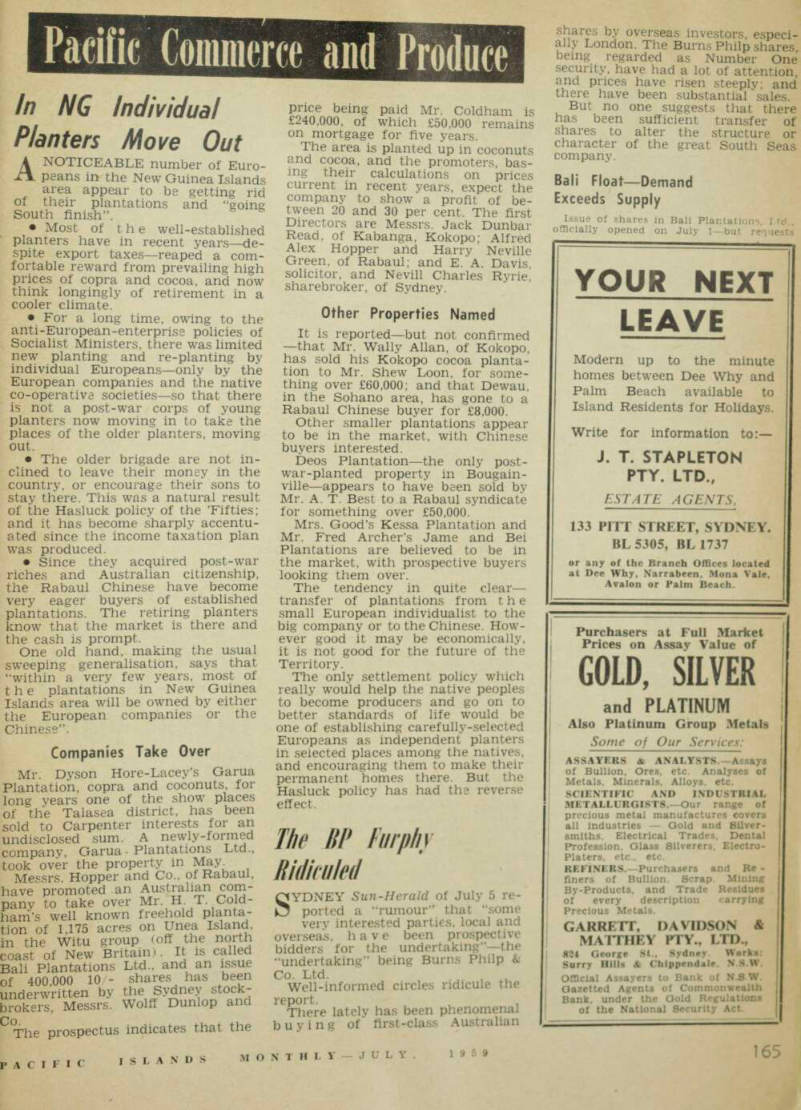 171
171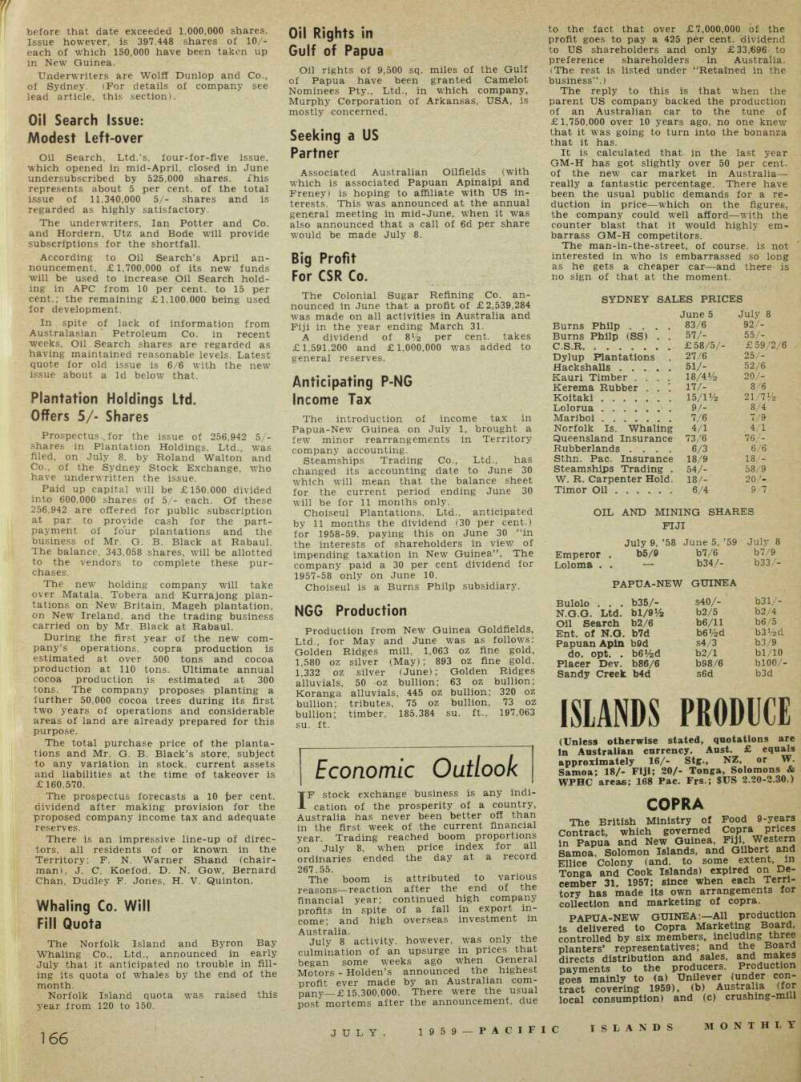 172
172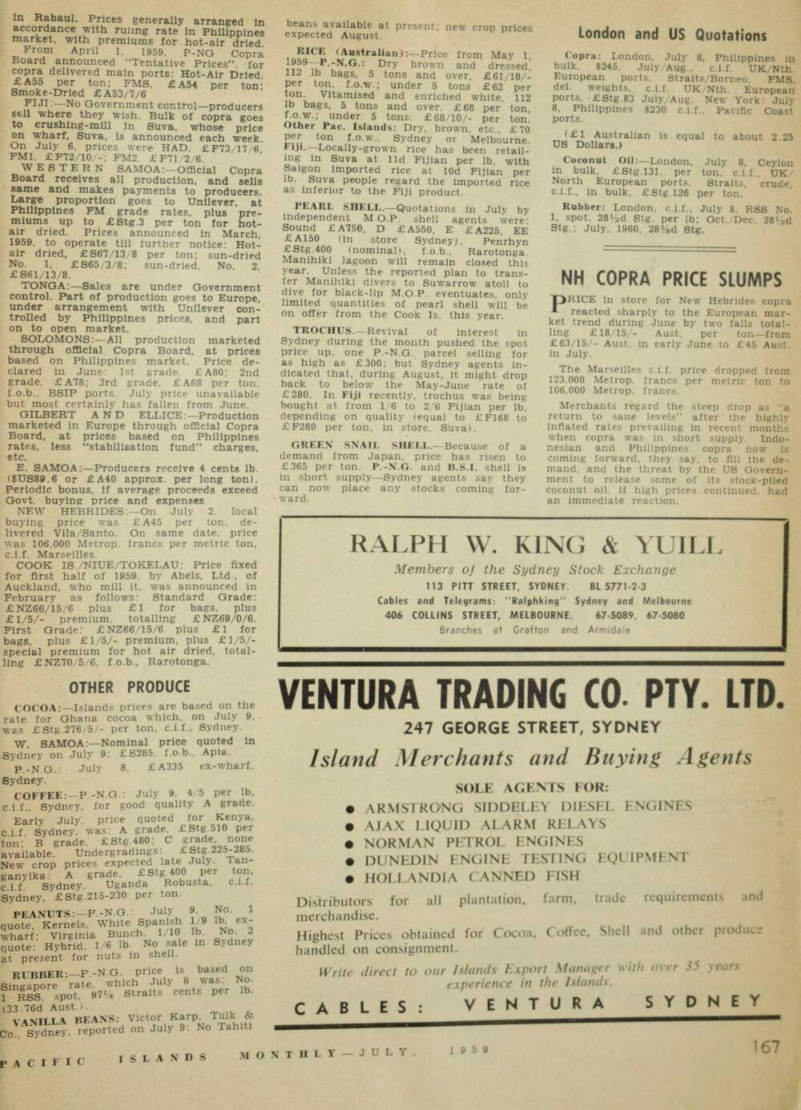 173
173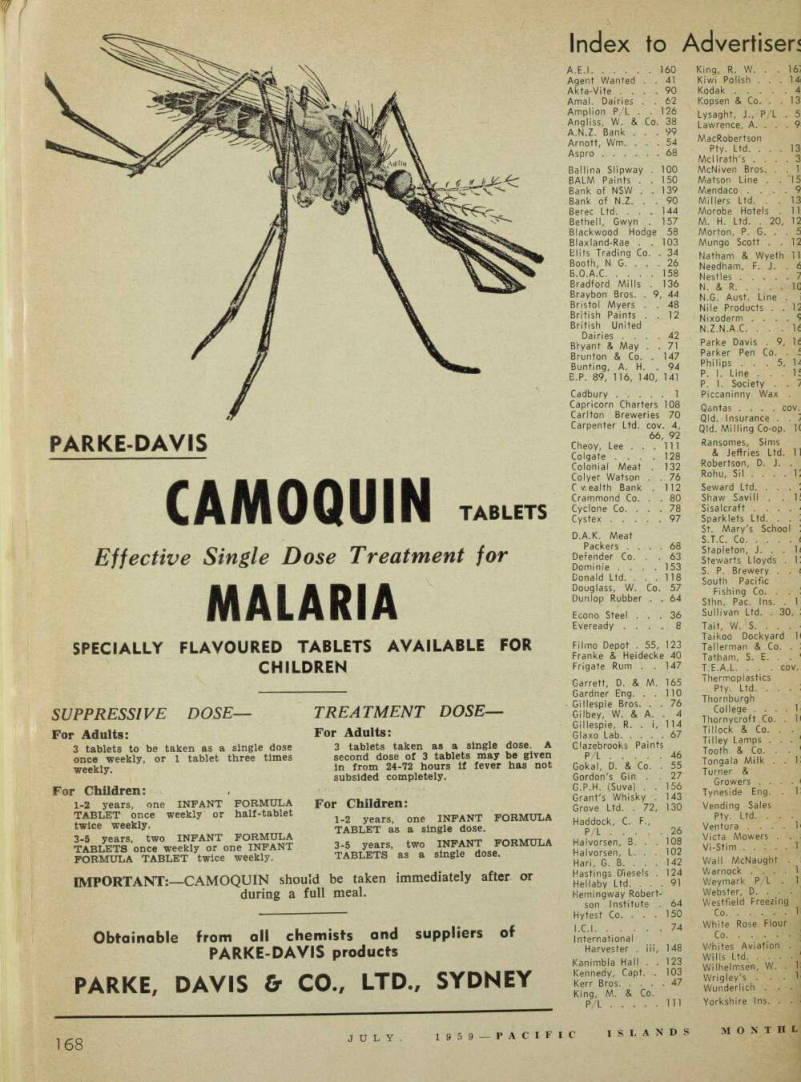 174
174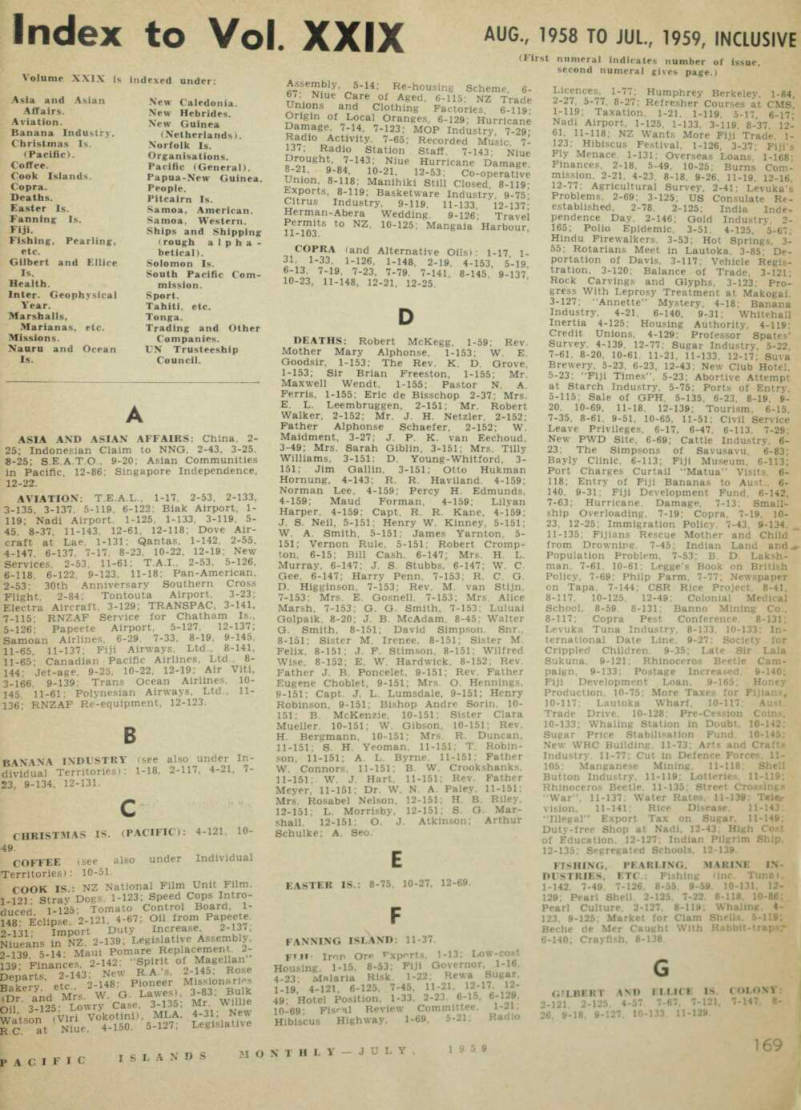 175
175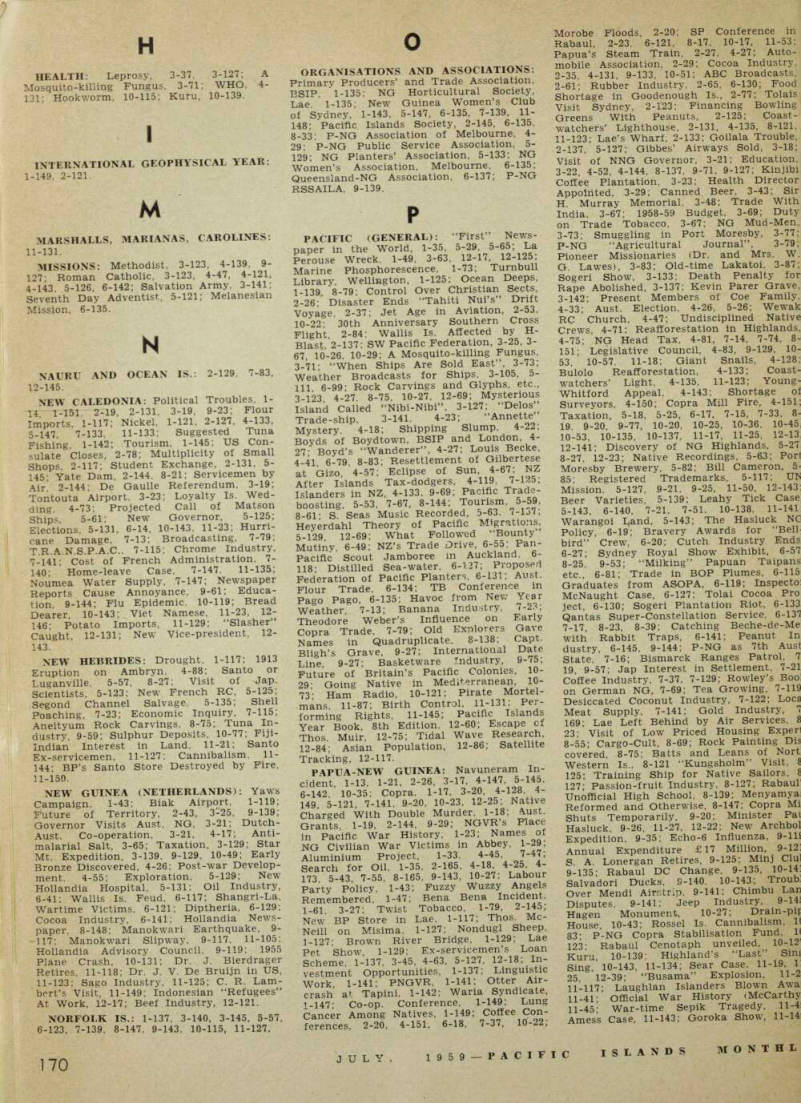 176
176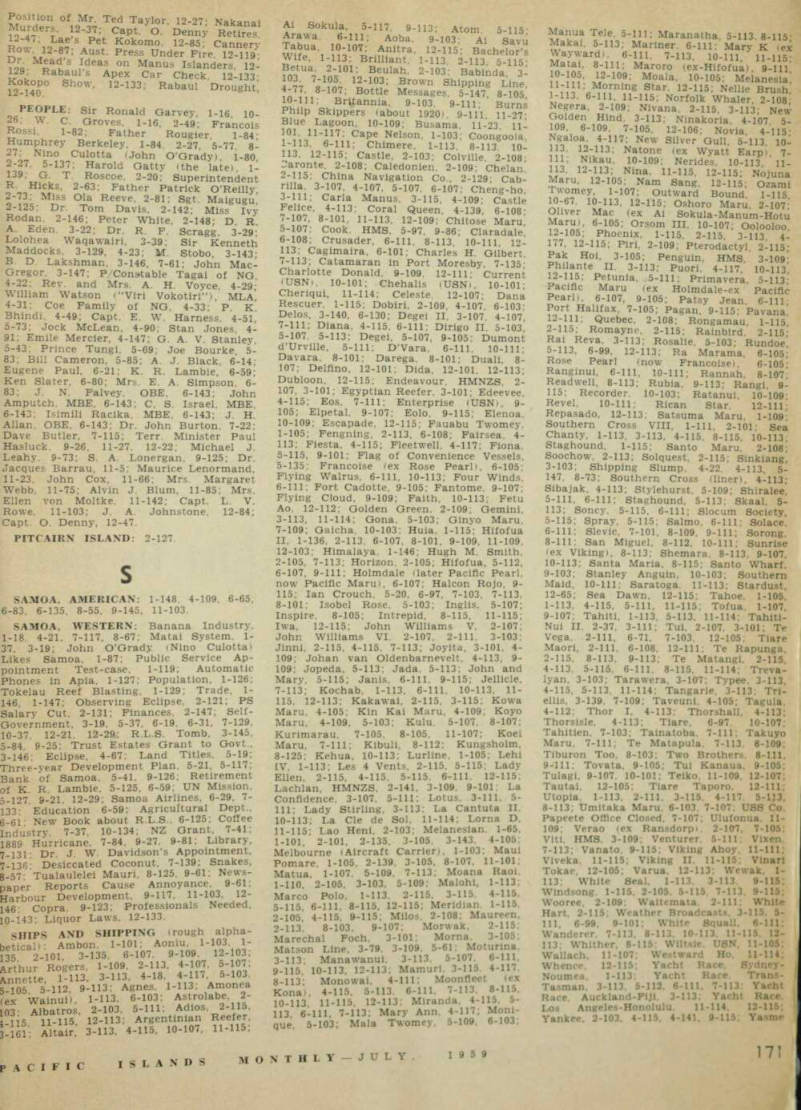 177
177 178
178 179
179 180
180